
Preface
As I have tried to grasp Elden Ring‘s cosmology, I find myself once again faced with the mystery of death. Maybe it is because the dominion of the dead is antithetical to our own existence, but I seem to always struggle to wrap my head around it in these medieval fantasies. That does make the learning process rewarding, but in this case, it also highlights to me just how massive and interconnected this setting is. Between the history and mythology, death has never felt so personal even when it is so fantastical. This is only a single slice, but I hope this thesis gives a taste for the rich story being told about a world ever teetering on the edge of demise.
What Could Be
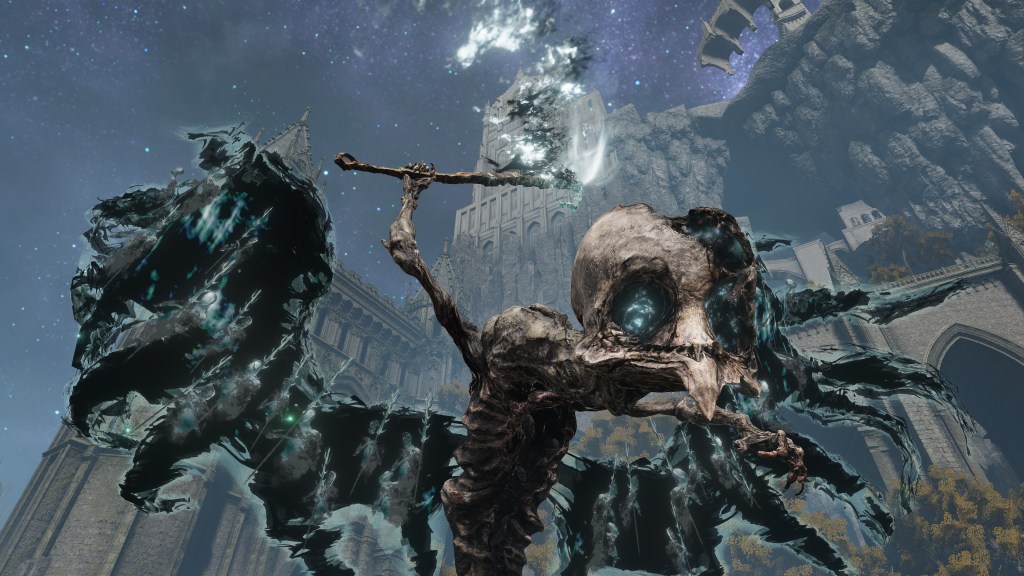
Many things were different before the Erdtree, including death, but there are also constants through every age, even when it comes to the dead. For one, there is the nature of dying itself. Even when the body perishes, the spirit persists, though it no longer has a place to belong in this world. Spirit ashes are the prime example, bodily remains still inhabited by the spirits of their owners. This doesn’t require the full body either. The Chrysalids’ Memento holds only a smattering of blood, yet that is enough for “spirit forms” (霊姿) to take shape from it. Just as life permeates organic material, so does the spirit, and it will linger, in full or in part, even after that living matter ceases function. Under certain circumstances, the spirit can take greater form, even reconstructing a whole “spirit body” (霊体) with their appearance and abilities from life. This body lacks substance but can still cause physical harm and be harmed in turn, though “killing” the figure doesn’t necessarily kill the underlying spirit. The spirit’s memories, however, are more fragile, and those of insufficient renown generally lose their identities in time.
Keepsake of the chrysalids’ who became grafting offerings. A brooch wrapped in a red velvet cloth. It is stained with just a little blood.
The faintly visible spirit forms seem to be saying something, but their voices cannot be heard.
Some spirits never achieve complete consciousness and manifest only minisculely partial memories, as exhibited by ashes of war. The burnt-up remains recollect a specific skill but nothing else, and even this can decay with time, leading to lost ashes of war emptied of any distinct memory. This is useful for someone trained in both smithing and spirit tuning, duplicating other ashes of war by splitting some into the base material. However, war ash in general is only useful for folding into existing equipment, granting the weapons a magical affinity and knowledge of unique skills to perform with them — the spirit won’t ever regain awareness from life. For that reason, spirits themselves don’t necessarily need to be a singular entity. Even one person seems capable of producing multiple spirits, though it may be more accurate to call them a fragment of the spirit possessing simple emotions or memories. This allows us to draw out spirits repeatedly with no imminent loss to this wellspring of power.
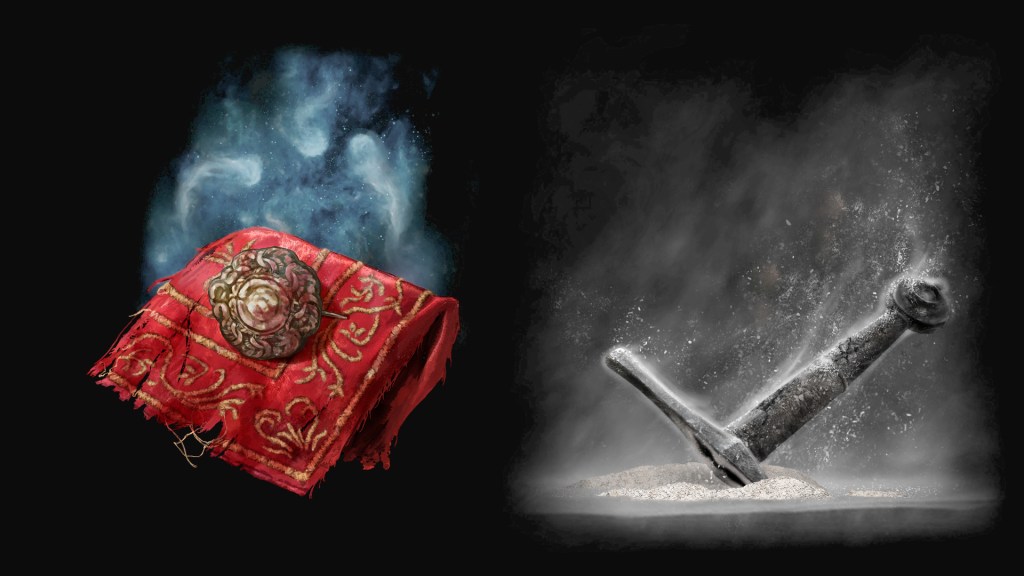
Empty ash of war that lost its memories of battle.
Cannot bestow anything as it is, but becomes a reproduction of any ash of war at the hands of the Round Table’s master blacksmith Hewg.
And the reproduction becomes another of the genuine article.
All of these fundamentals seem to be decided by willpower. Even summoning spirits requires the summoner dedicate focus to the ceremony, and we are at least limited by the presence of a “Soul Return Stela” (還魂碑) which appropriately puts an “epitaph icon” (碑文アイコン) on our screen to communicate the spirit’s readiness to fight. Outside of summoning, the spirit might manifest on its own as a “ghost” (幽霊) where it can also retain personality, though its actions tend to be tempered by the purpose to its existence. An old commander, a disturbed grave, just lingering regrets — all of this can bring about a haunting. In most cases, the spirit’s only wish is to leave a message or thwart a threat, after which it disappears. It may be those very limits that make the beckoning both narrower and more potent. After all, unlike summoned spirits, ghosts aren’t as tethered to the bounds of their old reality, teleporting short distances in the second it takes the body to fade away then reappear. They only remain attached to their living self so far as they have personal desires to fulfill on this earth.
As a more extreme example, we occasionally come across spirits who don’t manifest complete sentience even as a kind of ghost. These dead souls remain trapped in their final moments, endlessly repeating the same sentiments while frozen in place — not reacting to anything we do. This spirit body seems to replace the physical corpse, the flesh missing even when the person looks to have been killed in more immediate circumstances. That sort of “decay” from physical to spiritual would go a long ways to explain the spectral mushrooms growing at their feet. But for them to die and instantly become a spirit focused solely on the moment, their minds must be entirely consumed by whatever thoughts plague them — not unlike how a ghost is produced. The spirit’s desire in the moment, in life and death, can hold lasting consequences. It is the strength of those desires, the spirit’s will, which causes these phenomenon.
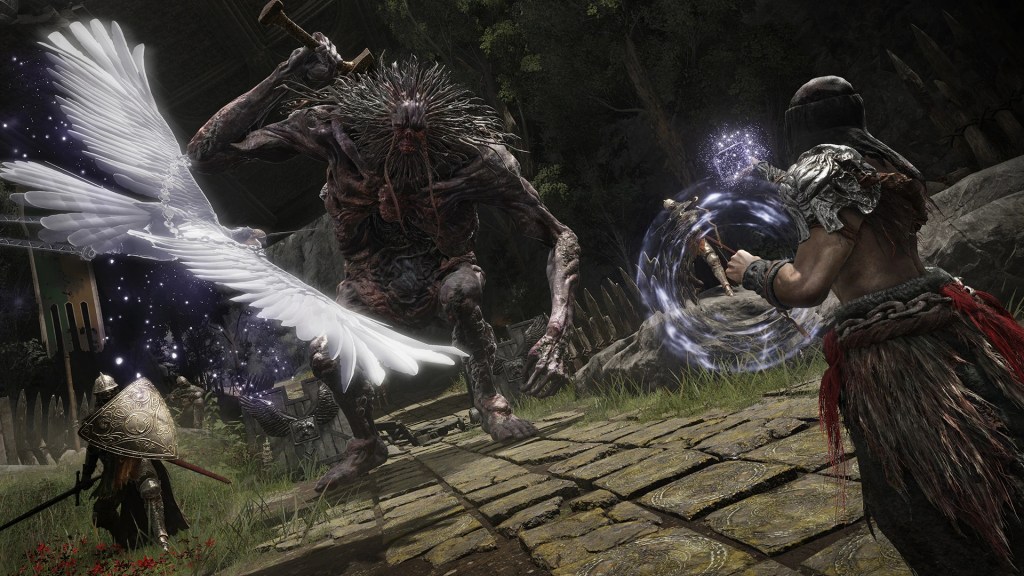
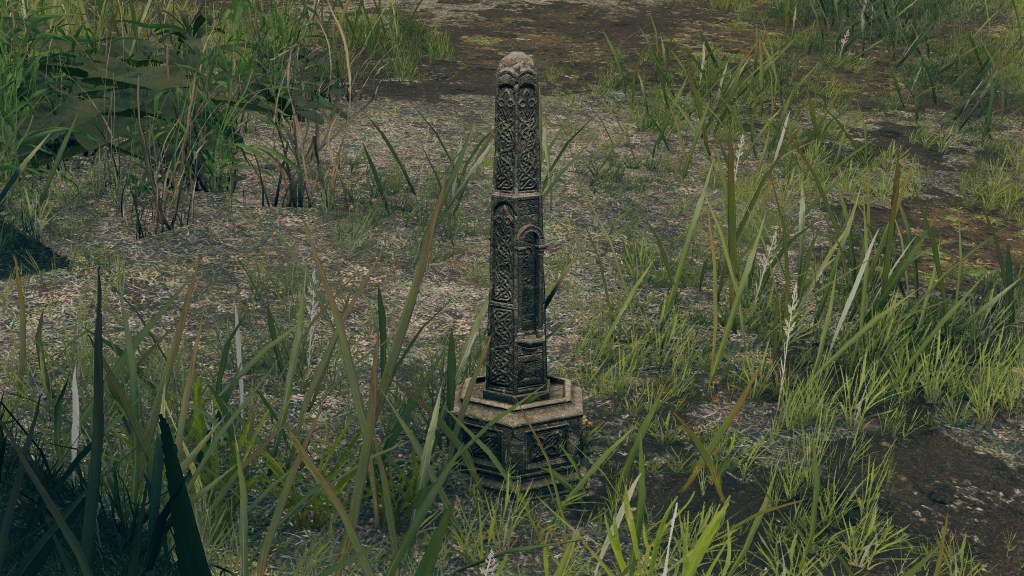
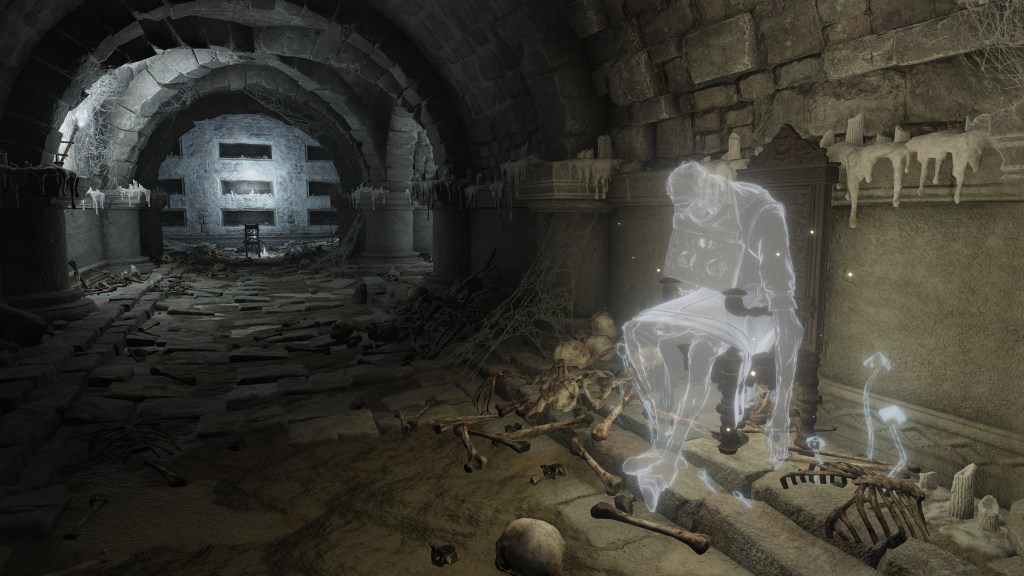
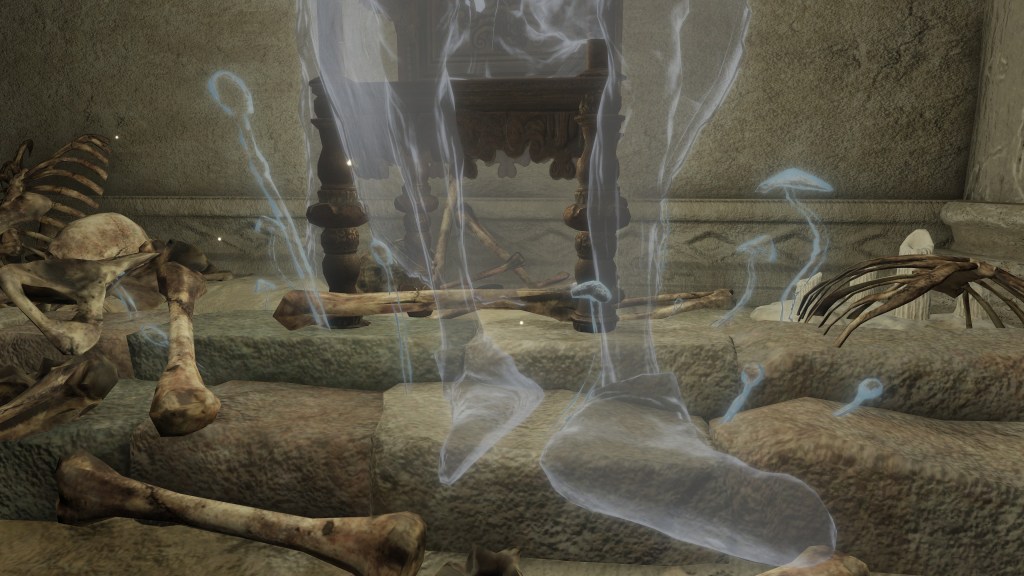
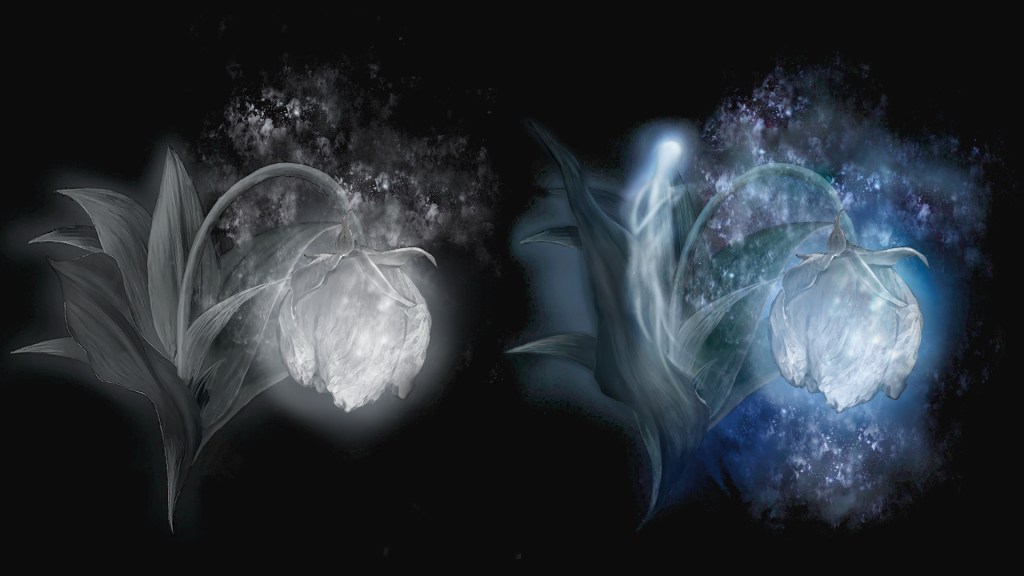
This aspect has factored into nature’s evolution. Grave glovewort, naturally, grows in catacombs. True to glovewort’s perception in European folklore, these plants call to the dead with the “bell” flowers that make no discernible sound. Apparently, their ringing can only be heard by the spirits, something spirit tuners use to capture their interest. By regulating the rhythm of progressively larger, stronger, and more numerous bells, the tuner can establish a sort of dialogue with the spirit which teases out its own strength with the musical inspiration. This same sound is what causes spirits of the catacombs to nestle close to the flower in vague wispy form, which gradually takes the shape of a person in prayer as the bells strengthen in their menu graphics. It is the wills of these ghost forms that grave glovewort appears to normally feed upon to continuing growing in size and power; the stronger the spirits, the faster they grow. For that reason, spirits with the strength of will to retain their identities in death as they were remembered in life, can only be empowered with this ghost glovewort.
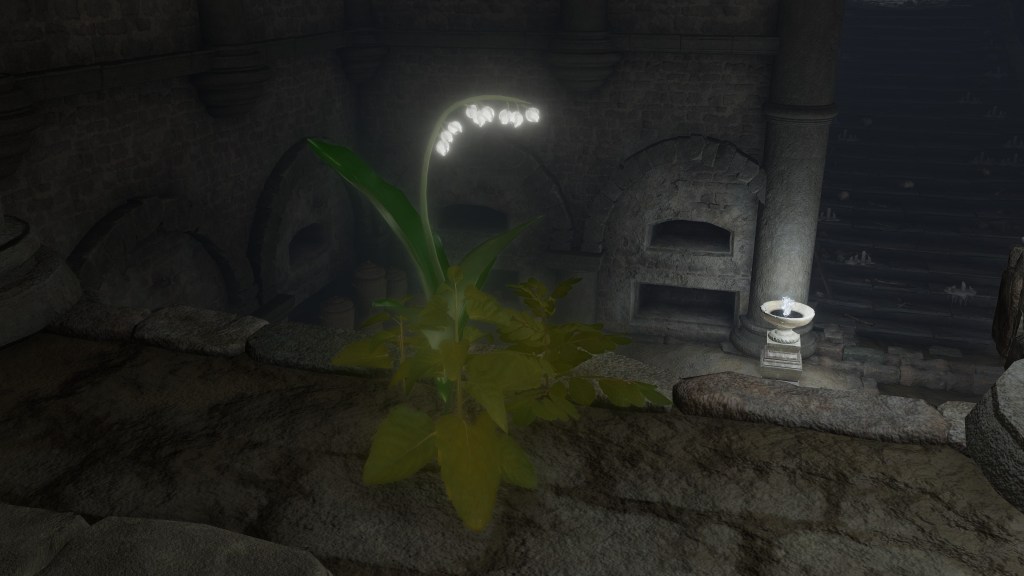
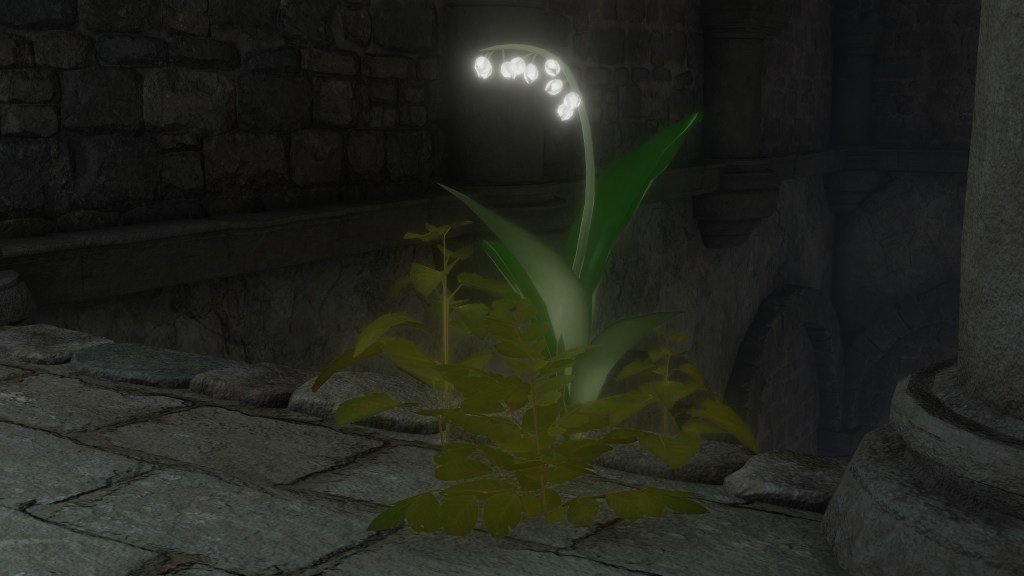
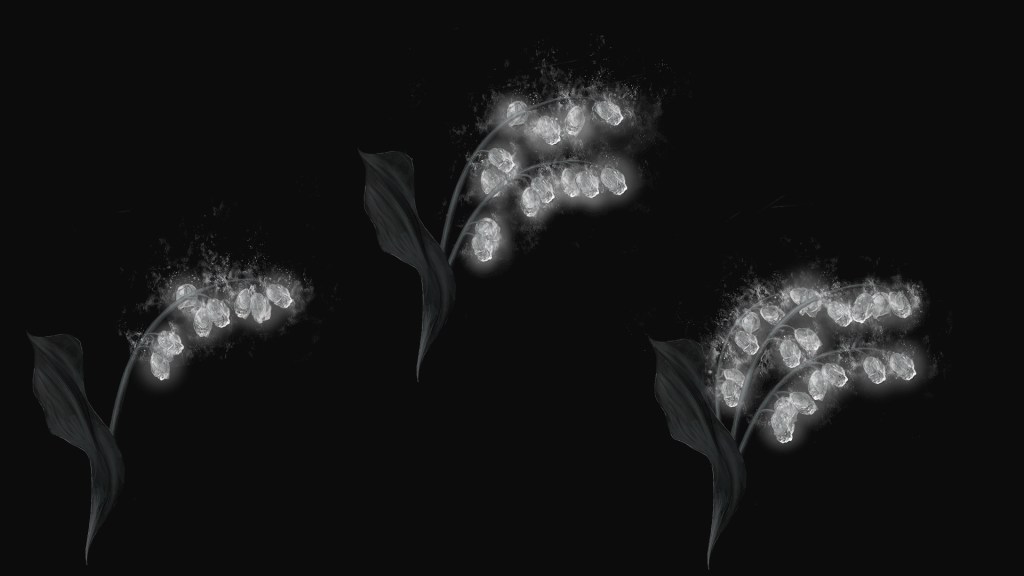
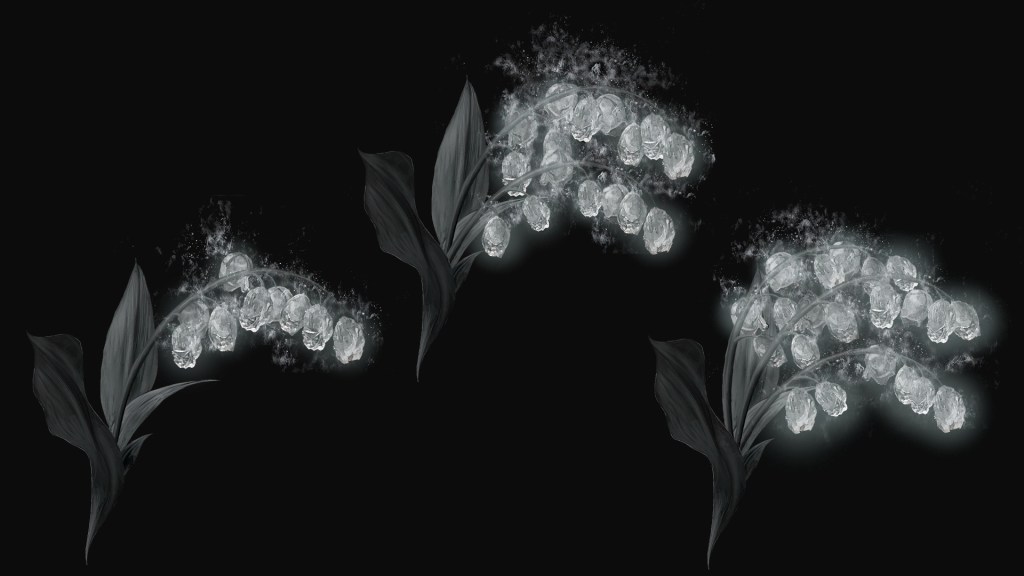
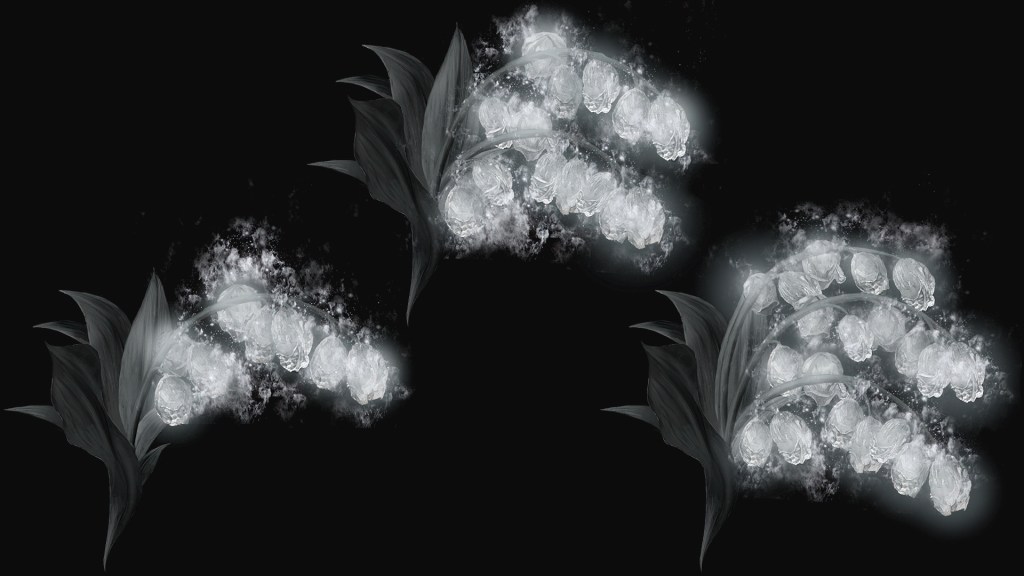
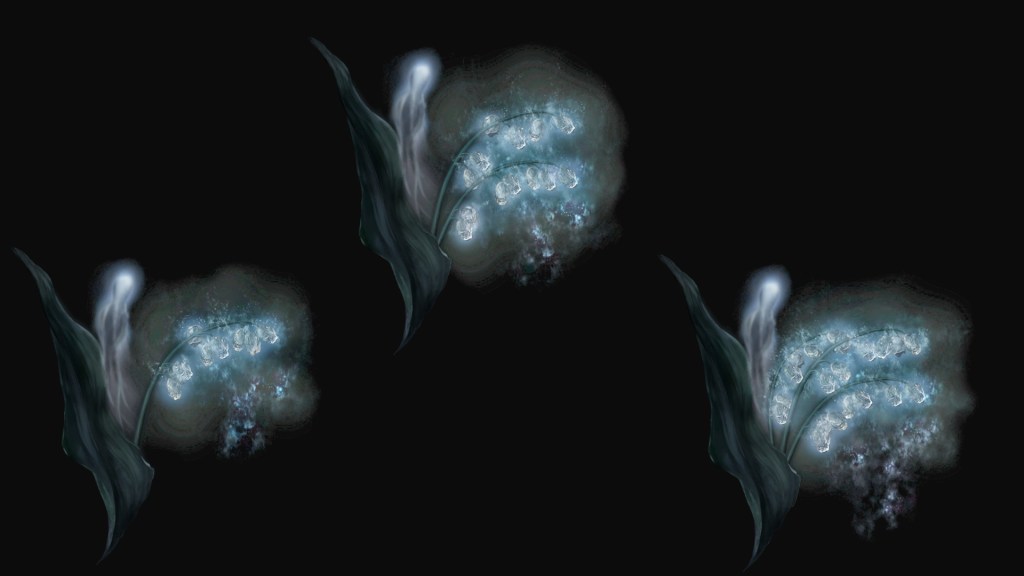
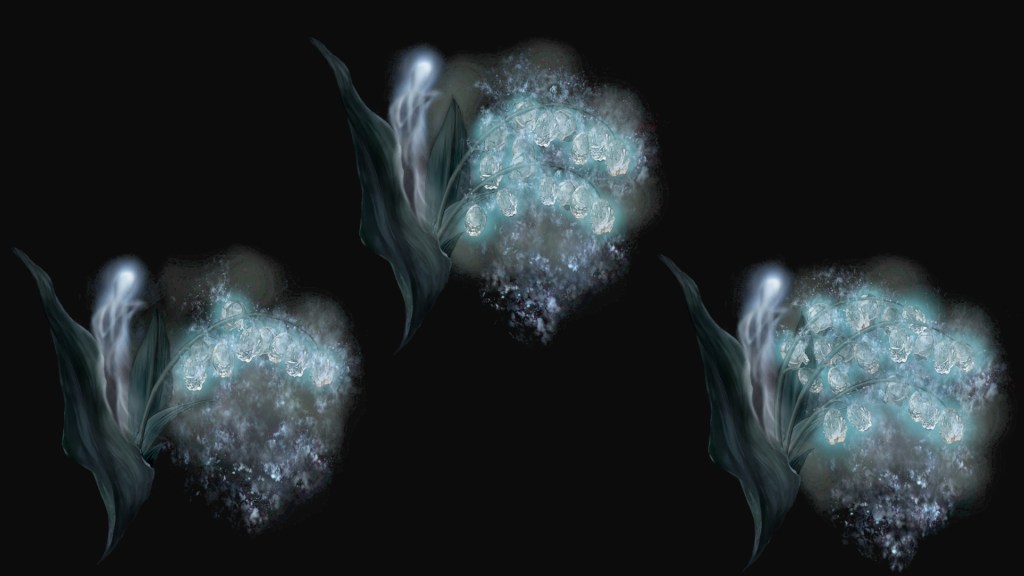
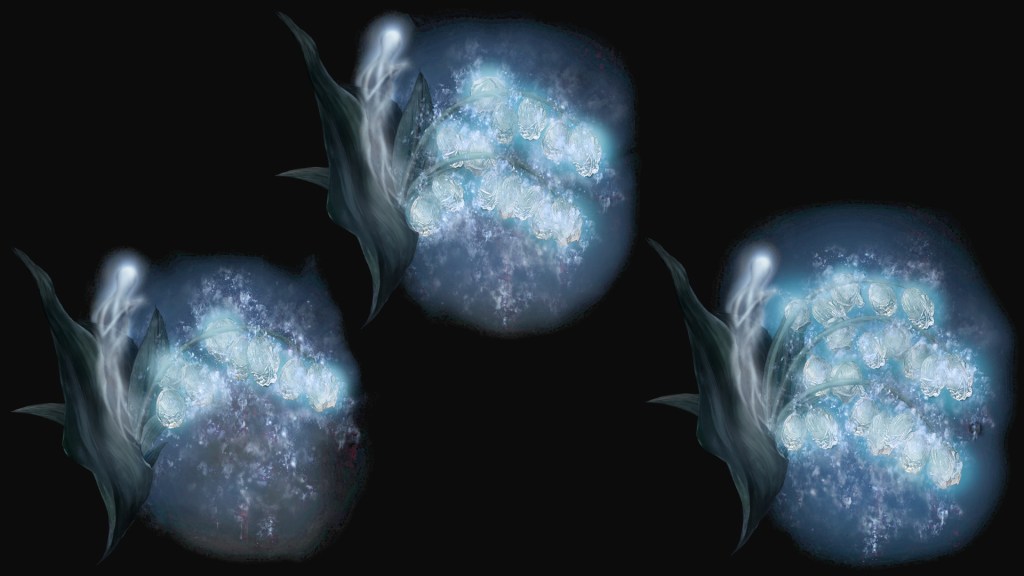
White flower that blooms in catacombs. Soundless bells considered to call spirits.
Can enhance ashen remains to +1.
Ashen remain enhancement is called spirit tuning, so only spirit tuners can use it.
… Lately, I have finally understood the job of spirit tuning. How spiritual immortality exists under the Regulation, and what they desire and are drawn to…
White flower that blooms in catacombs. Soundless bells considered to call spirits.
Can enhance ashen remains to +2.
Spirit tuning is, strictly speaking, a far cry from enhancement. It is a dialogue, a rhythm regulation, and a mutual inspiration.
White flower that blooms in catacombs. One where spiritforms nestle close to it.
Can enhance named ashen remains to +9.
Ashen remains which haven’t lost their name even in death cannot be enhanced with spiritformless glovewort.
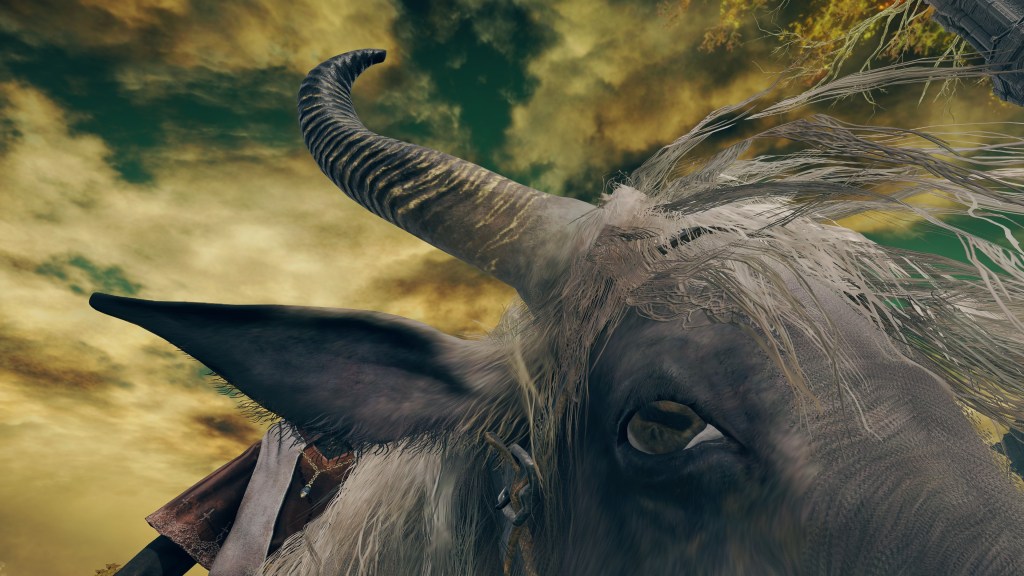
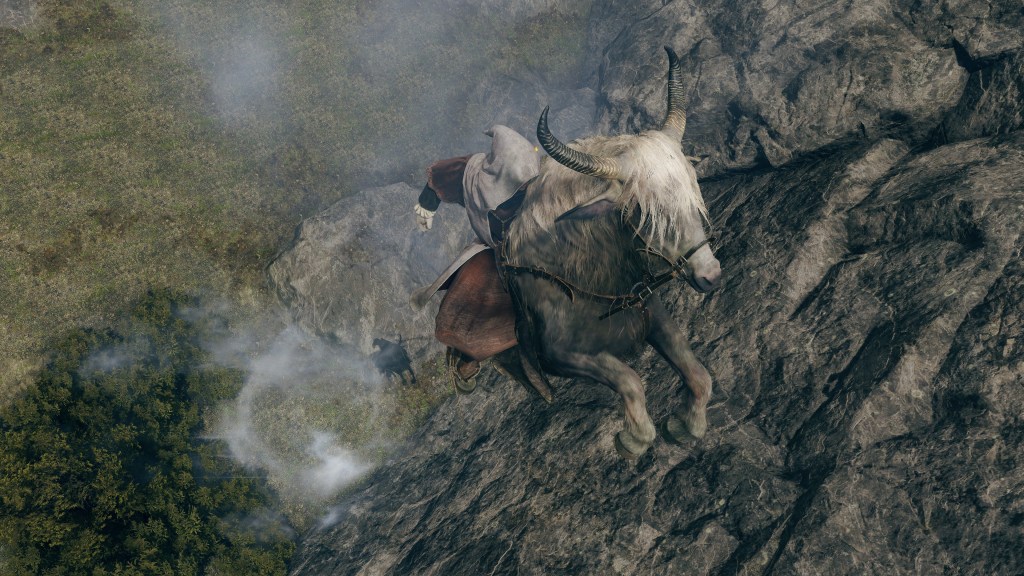
The power of the spirit is clear when considering the existence of a spirit world. This realm maintains an ecosystem much like our own, with its own plants and animals. The most prominent is Torrent, a “spirit horse” (霊馬) who appears part mountain goat with his horns and high jumps; even capable of a second leap while midair. More importantly, our steed doesn’t appear like a spirit at all, having substance which can eat, bleed, and suffer permanent scarring like any other creature. Even so, it remains a spirit. When so-called dead, Torrent persists, the physical body simply evaporating like a ghost. He can be resummoned in body after some proper healing, though retaining the scars. Even then, it is merely a skin suit, apparel designed for such spirit steeds changing the body’s form as well. Their existence is far more transient than true beasts of this mortal coil. Nonetheless, Torrent is a fully independent and conscious being, contrast to the dead who don’t originate from the spirit world.
Soft gold ring. Used as a finger whistle.
Calls out and mounts the spirit horse Torrent. (if used while mounted, will dismount from spirit horse)
The spirit horse can be called out again even after dying but a “Crimson Drop Holy Grail Bottle” will be consumed.
What this other plane proves is that the physical and spiritual are somewhat convertible, which may be why we see some overlap. Across the lands exist “spirit air flows” (霊気流) that open additional paths to navigate on Torrent, the horse synchronizing with the flow to leap high into the sky and then gracefully descend far exceeding a regular horse — torrents do refer to overwhelming flows. Our steed is likewise always there with us, ready for when we whistle for him to manifest. Melina displays a similar ability to follow us invisibly, at one point even leaving and moving about freely in disregard of physical barriers in that unmanifest form. Even the ghosts’ teleportation implies a degree of crossing dimensions while anchored on this side. The world of men and spirits appear to exist in parallel, with a gradient level to how physically they manifest in one world or the other, like crossing a border marked by a river versus land divide.
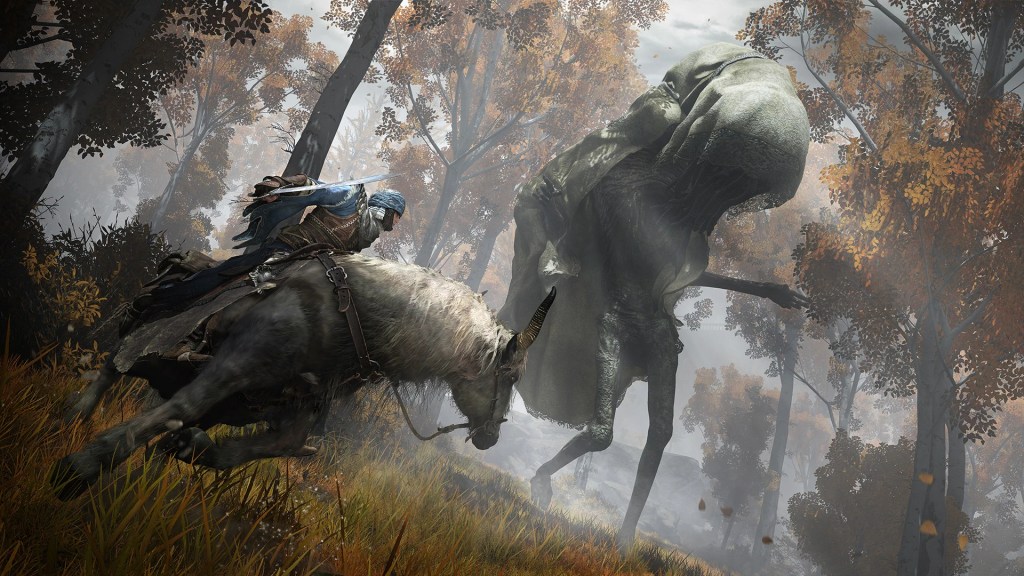
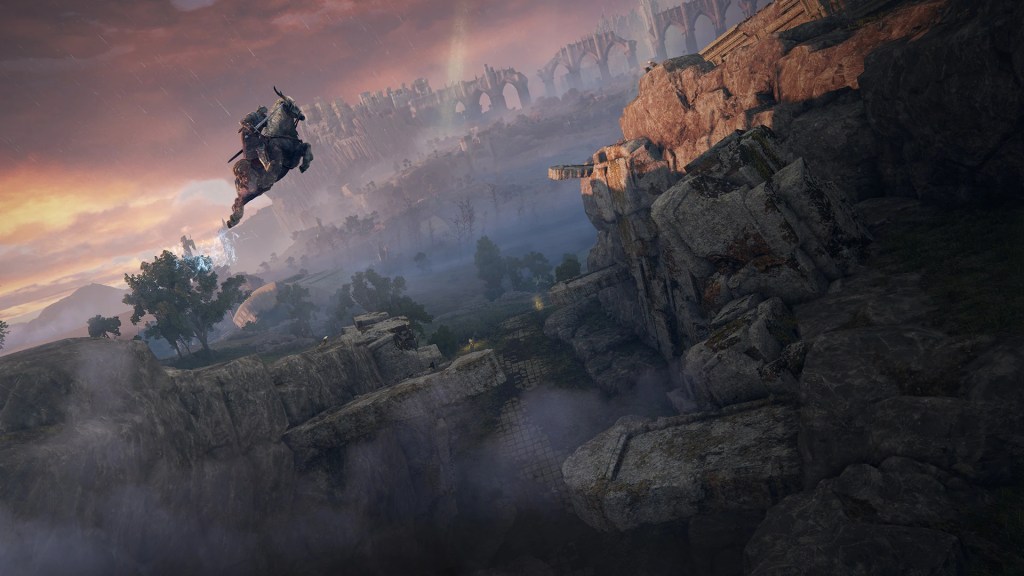
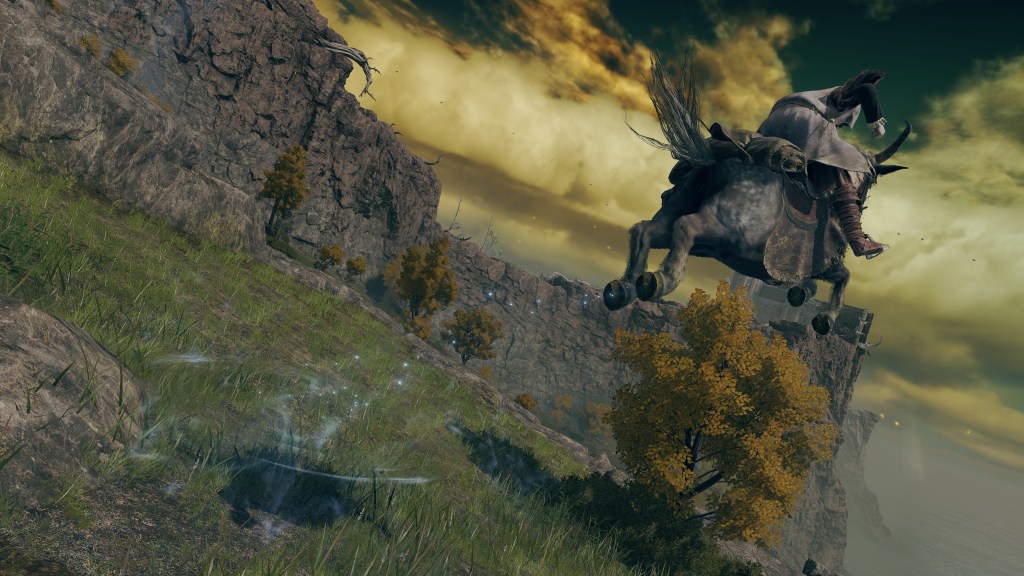
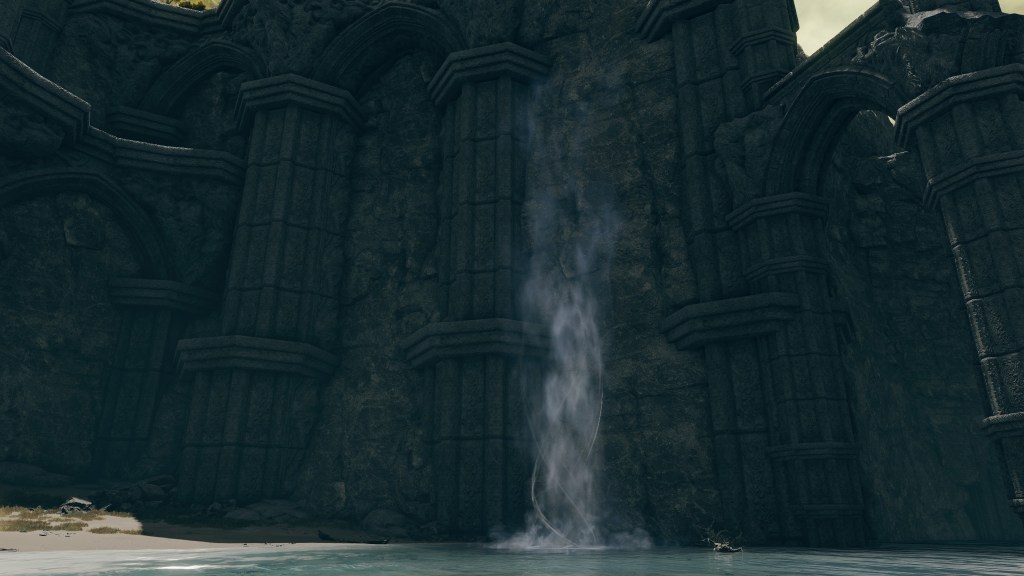
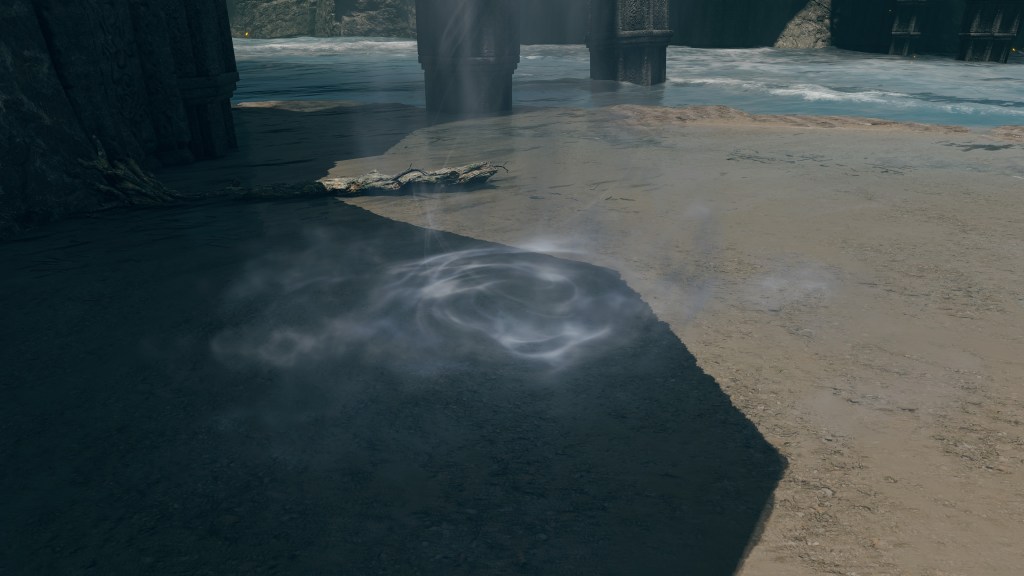
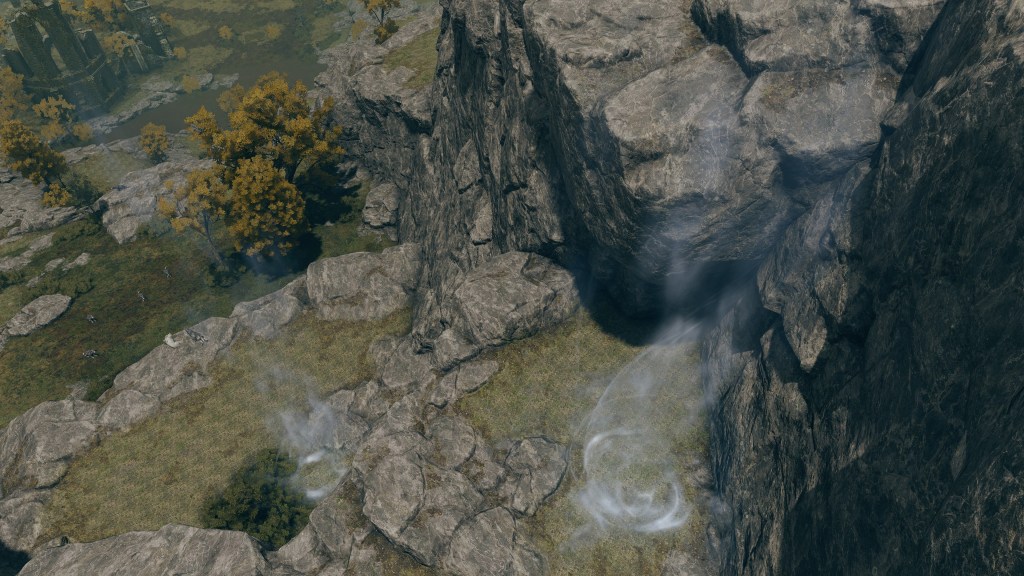
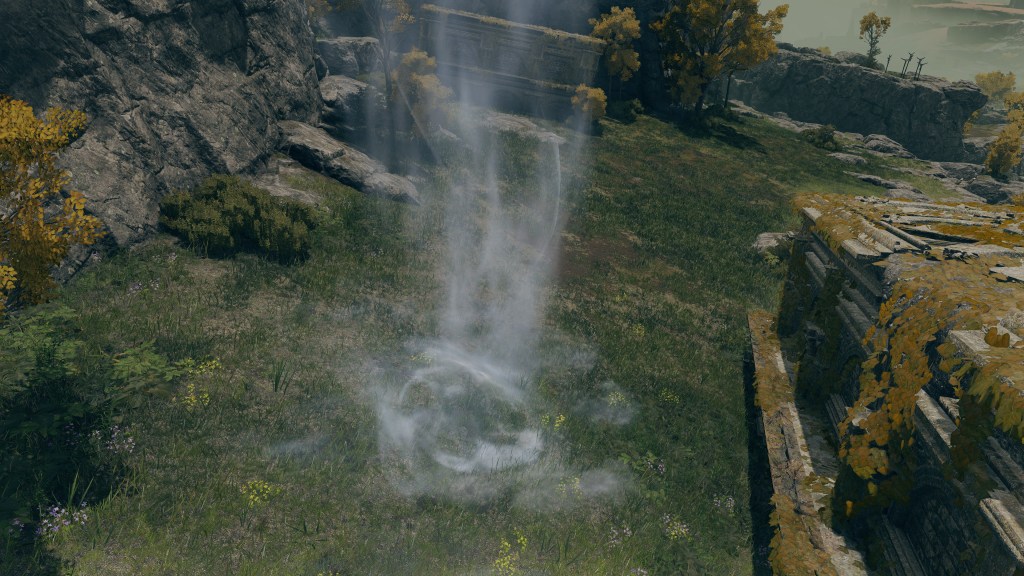
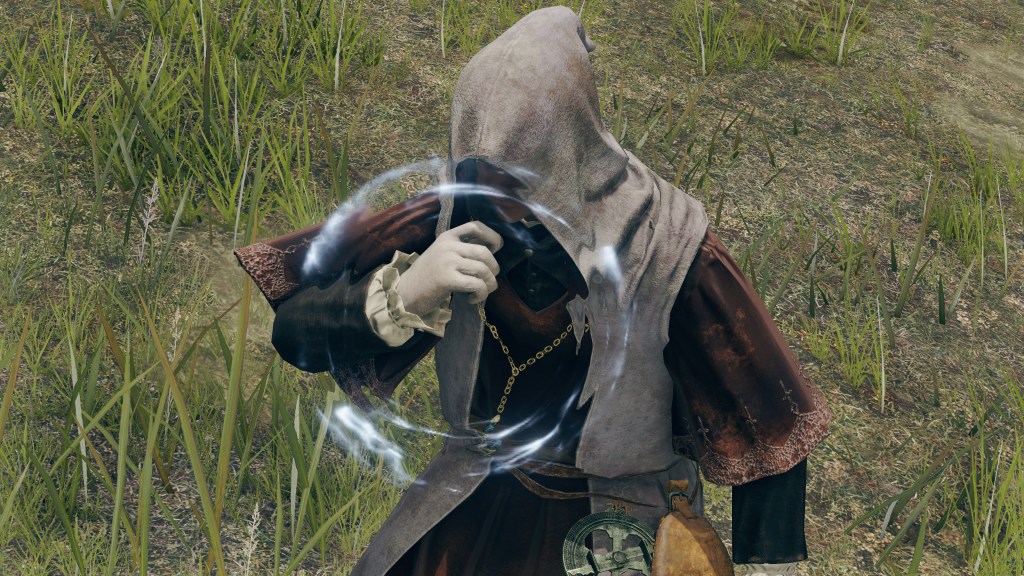
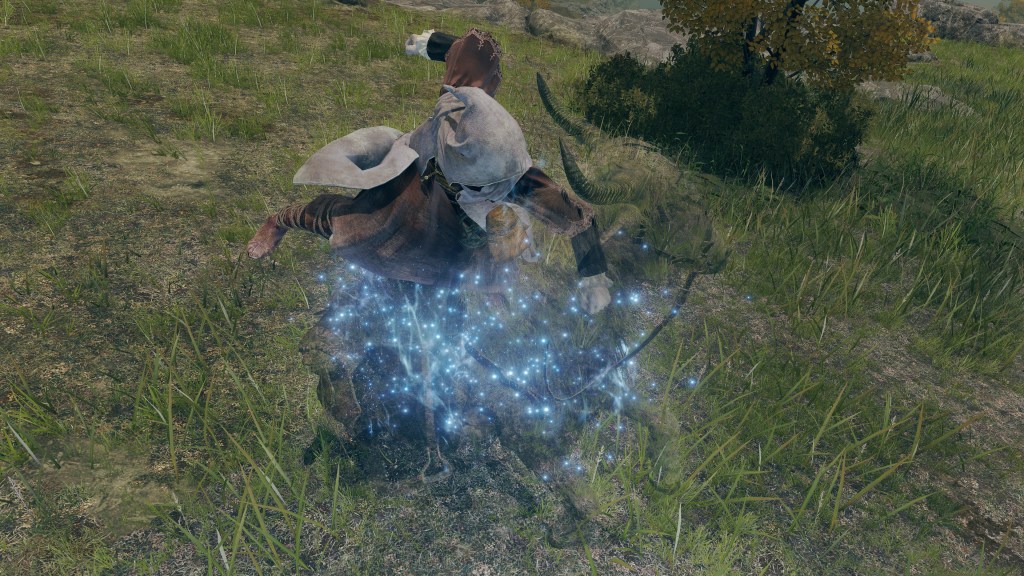
That is an appropriate analogy, considering how Buddhism conceives of the lands of the living and dead as the near and far “shores” (此岸 vs 彼岸) of the Sanzu River in Japanese mythology. Over on this shore, only part of spiritual existence crosses over from that shore, many existing somewhere in between on the river flow. But a boat travels both ways, and a spirit’s presence is also dependent on the living’s perception. Spirit tuning is premised on people possessing a certain sensitivity to spirits. We own some of this sensitivity, but not with full clarity. In many cases, we only see the vague spirit form, or the spirit flickering in and out of visibility, and can’t hear intelligible words. Only truly talented individuals like Roderika can consistently sense the spirit’s true form and communicate without more effort on its part. Most people implicitly cannot interact with the spirit world at all, probably only able to perceive ghosts or similar entities firmly anchored to the physical realm. It is thus up to the dead to make themselves known to the living, usually.
… That girl you brought… She’s heartbroken, doubtful she’ll ever wield a weapon again, but she has a talent for spirit tuning. I have seen it a long time ago. That’s the sort of color in her eyes.
… I’m not like Roderika. I can’t see or feel spirits.
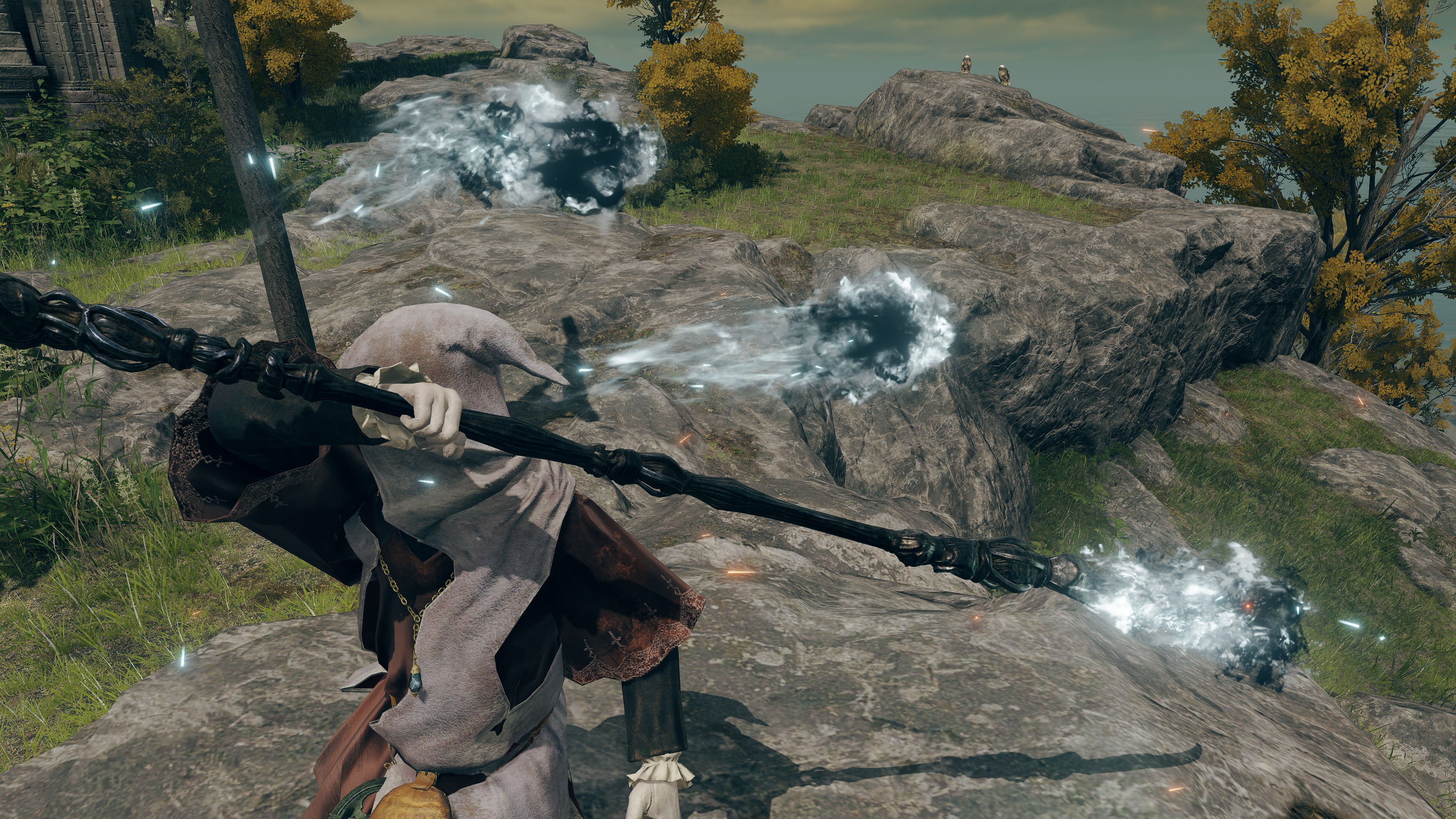
However, such spirits’ default seems to be resting in place. Proof can be found when burning raw bones of the dead, which creates no ordinary fire but ghostflame. Unlike when sacrificing wood or other organic matter to create red-hot licks out of life, a “spirit” flame (霊炎) hues black and white and remains cold to the touch even as it supposedly burns the living, to the point their flesh freezes instead. Moreover, that cold fire appears to be somewhat alive. When casting Explosive Ghostflame, the explosion causes the fire to spread across the ground in every direction, forming five trails of blaze — as if the explosion freed them to instinctively escape from their source. Indeed, in the hands of a proper wielder, these trails of ghostflame can often wind and move about almost as if they have a life of their own. As the final nail, the freezing flames burn eternal just as spirits are considered to be, true to the name. Without a doubt, there are spirits lingering within the bones, and they retain the sense to not appreciate being burned.
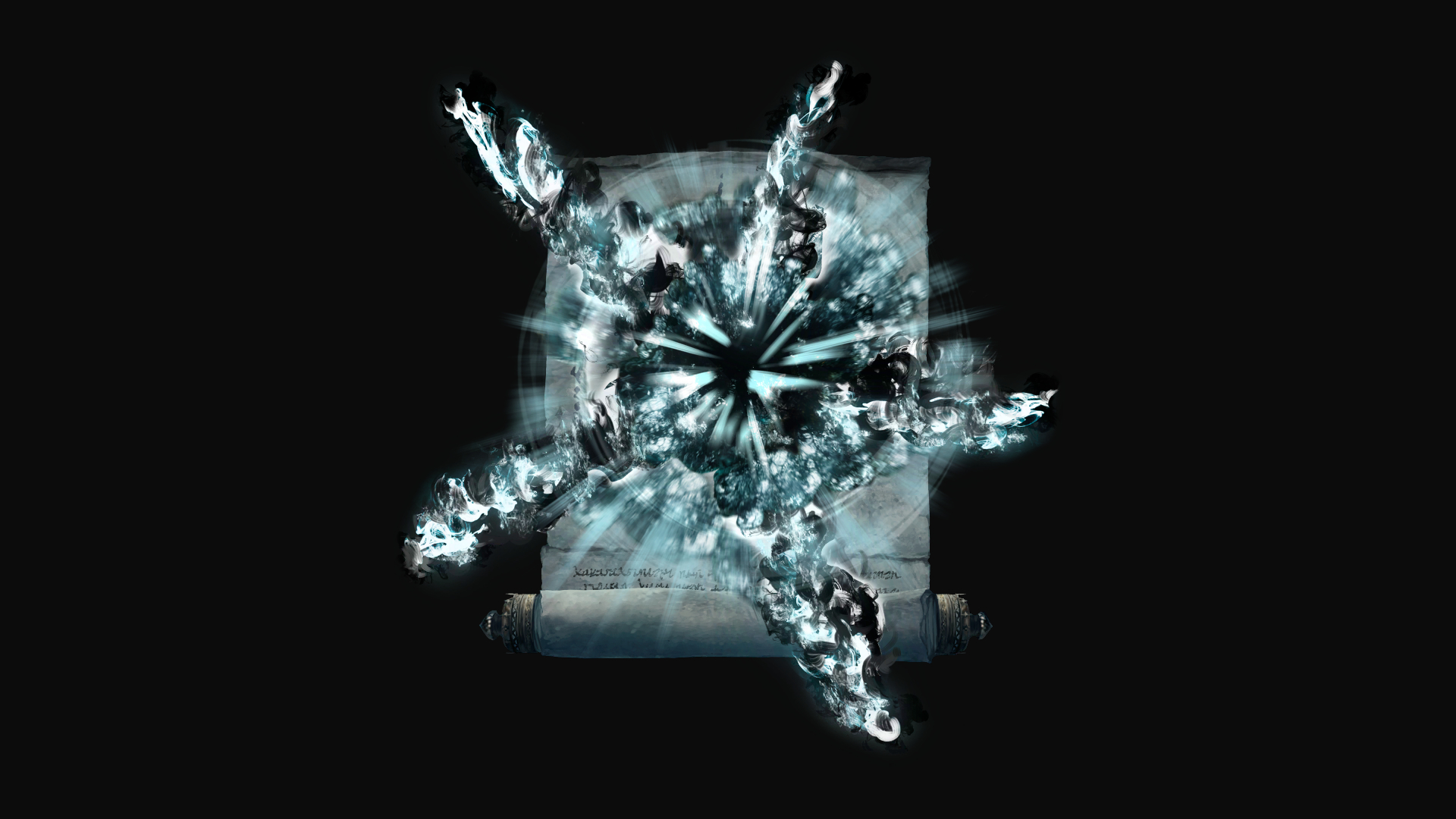
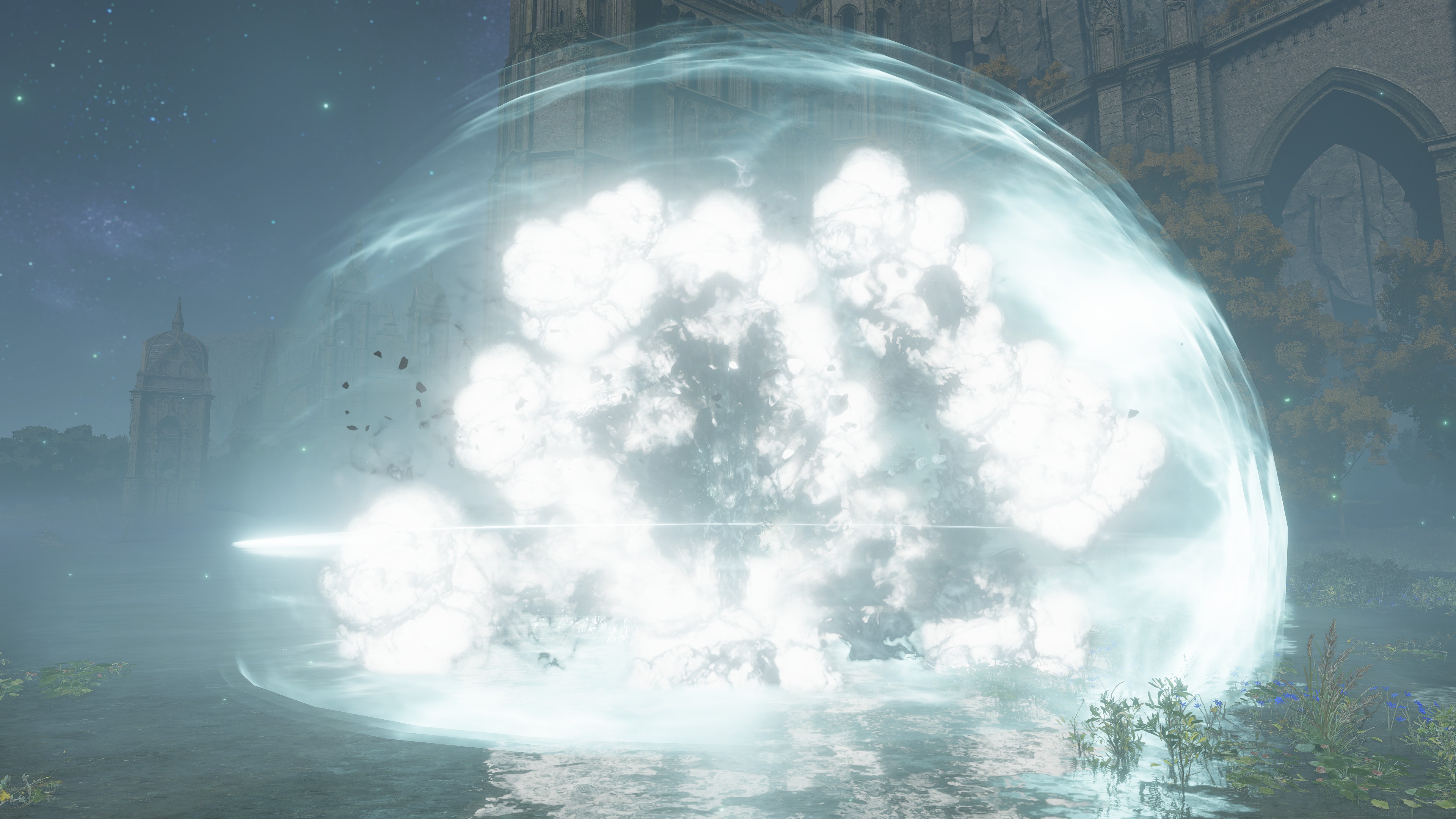
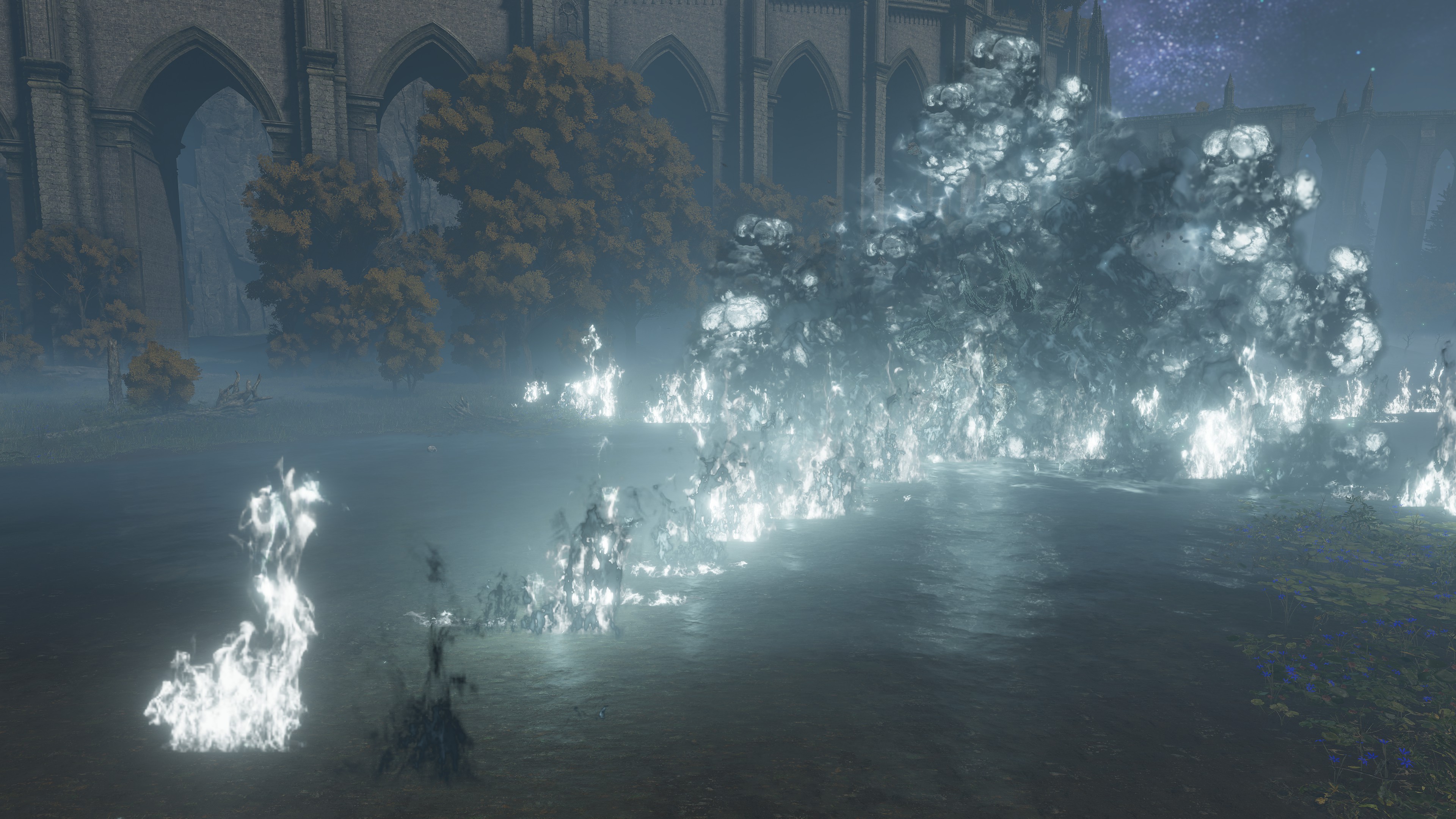
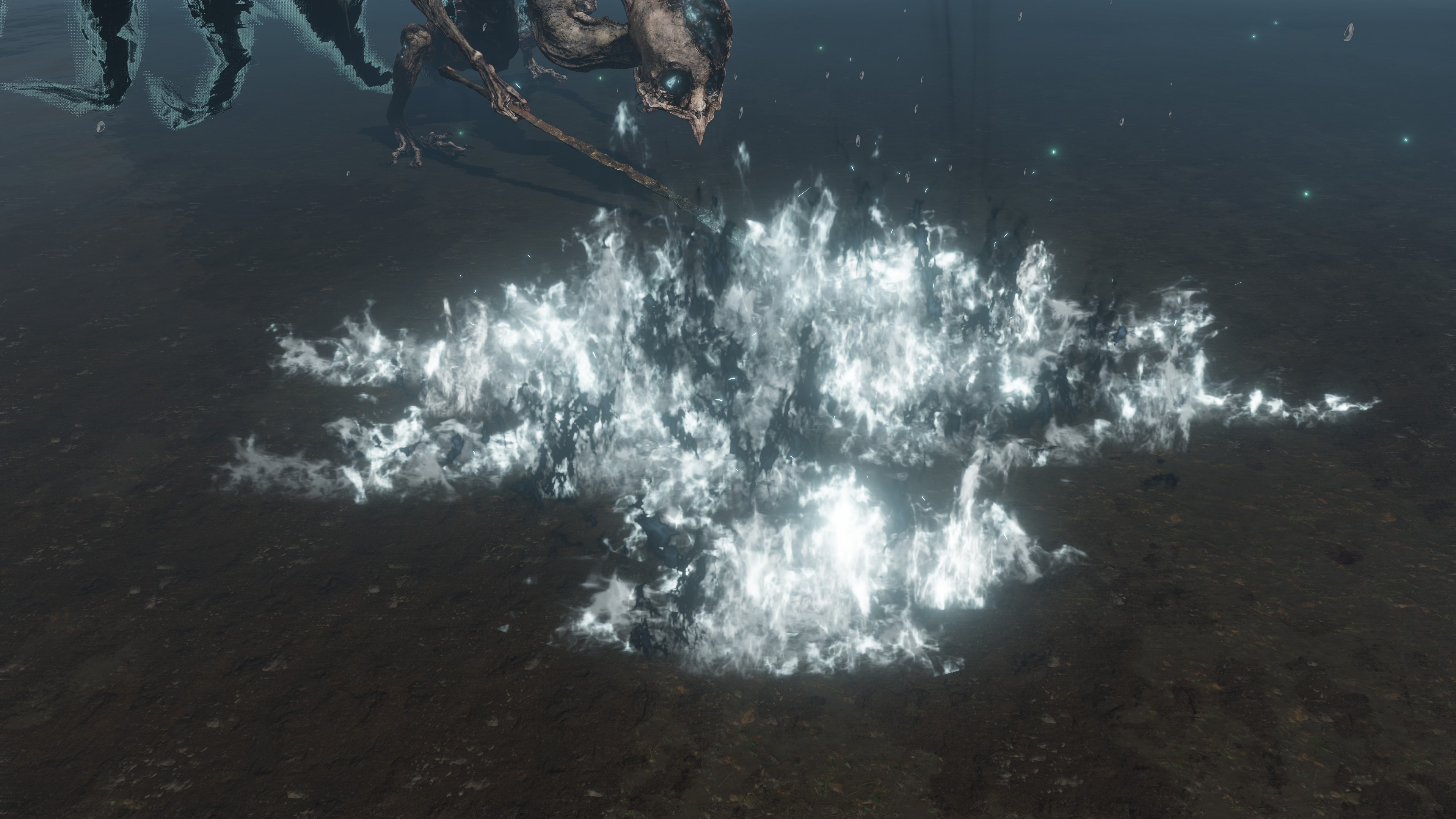
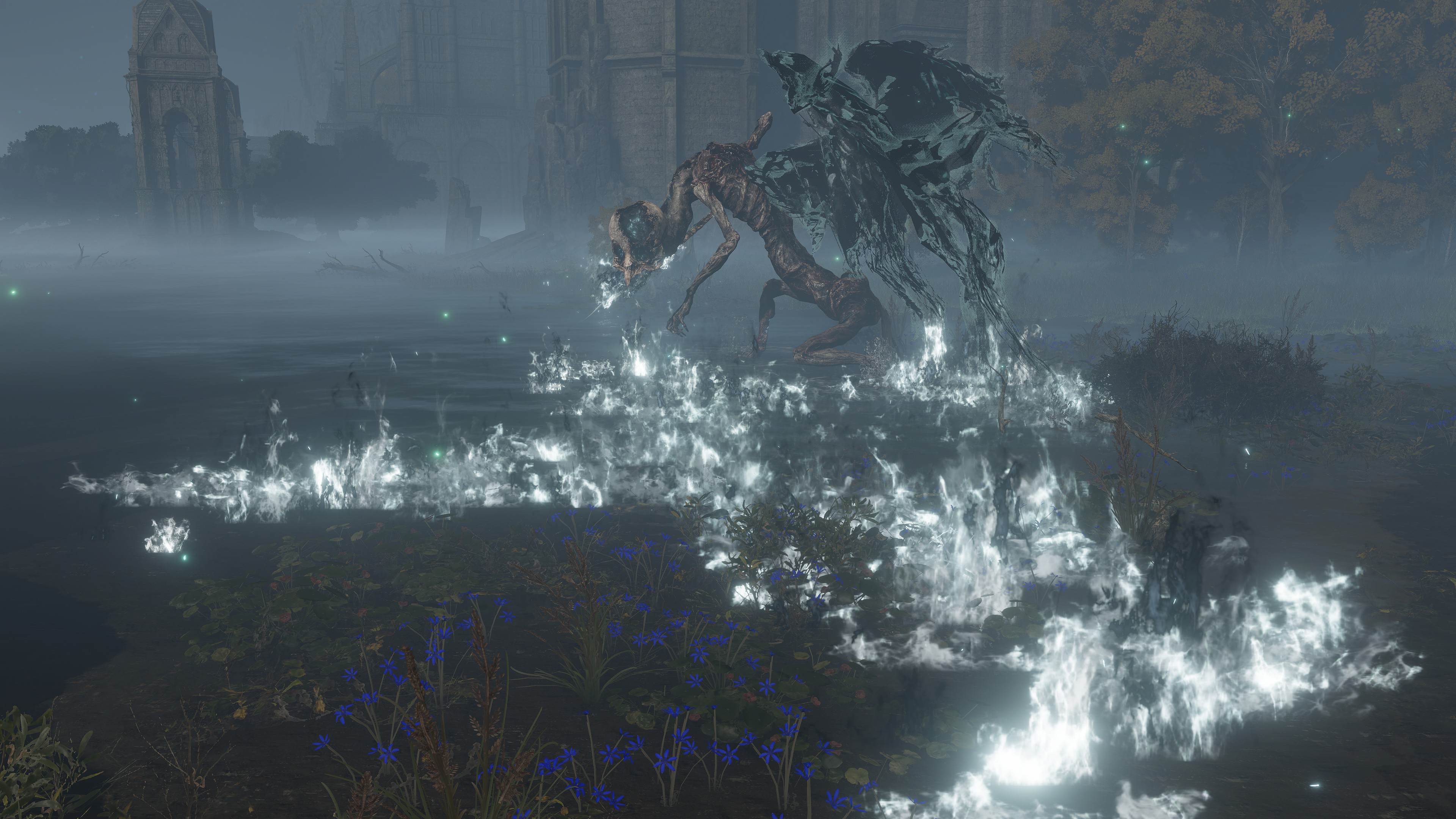
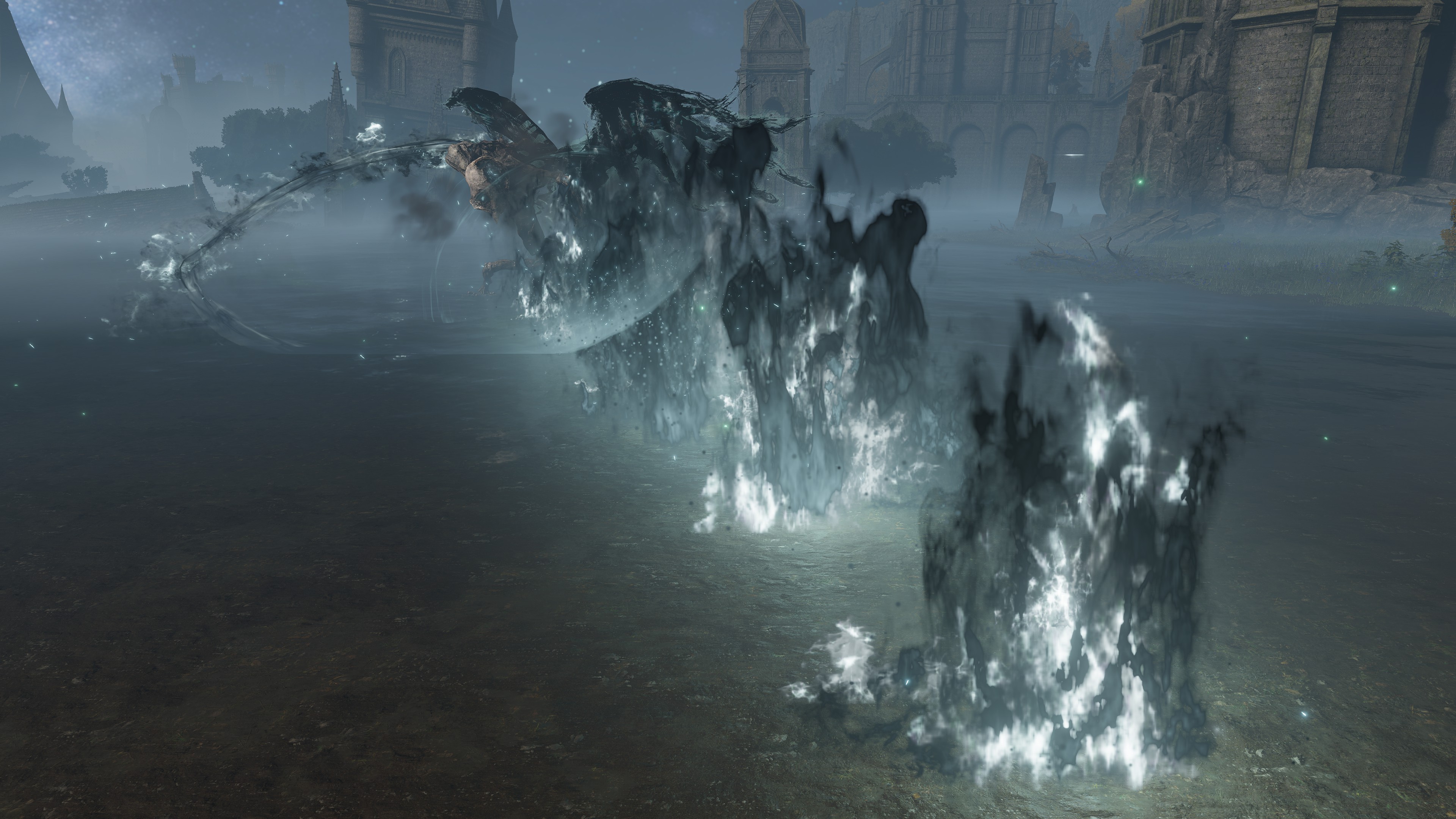
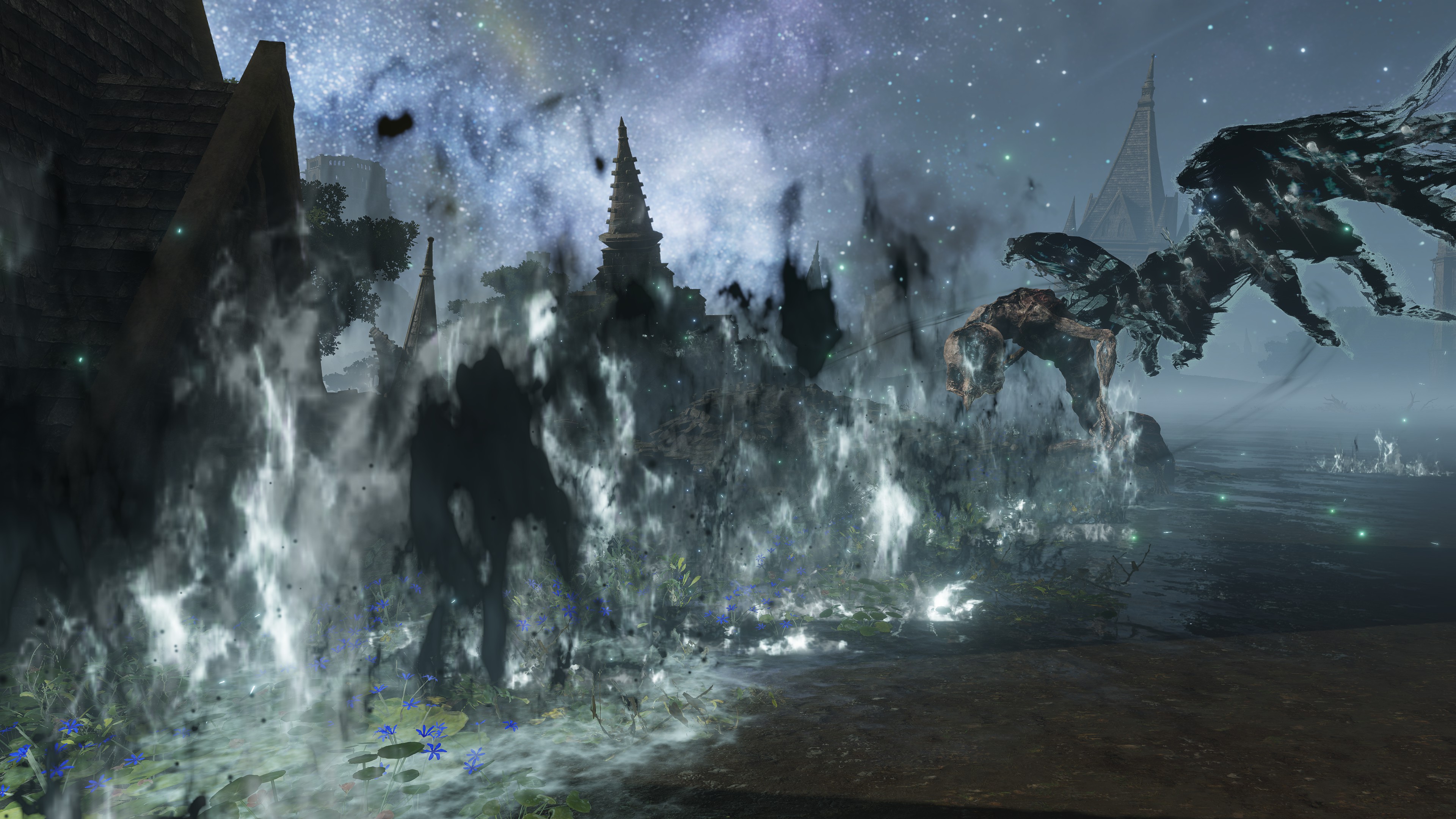
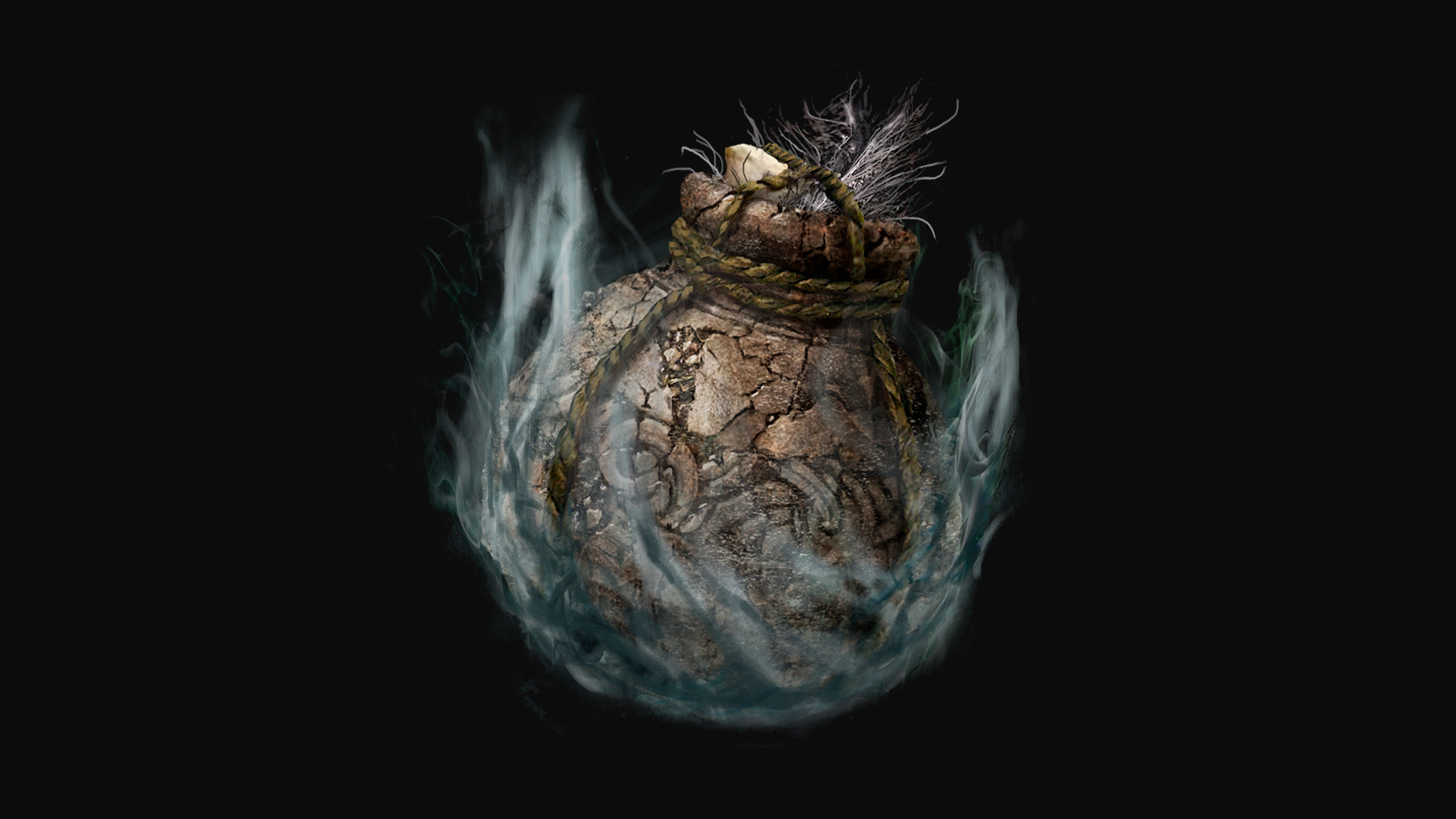
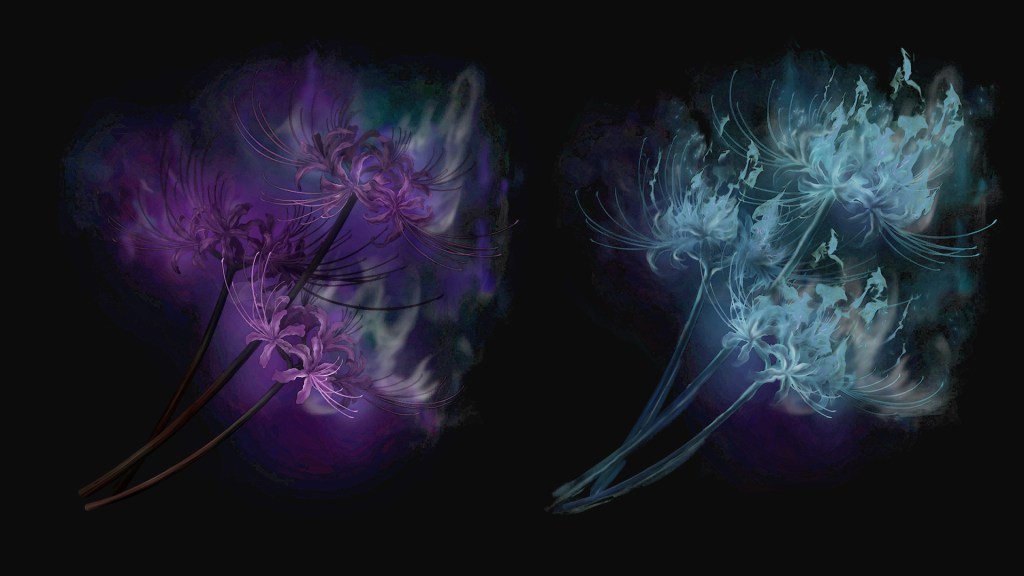
Stuffing a human bone shard into a jar with grave violets produces a “Rancor” Pot, onryou (怨霊) denoting vengeful spirits animated by a grudge. In this case, their resentment is caused by the purple flower, which evokes ghostflame according to its description. This is likely in reference to the fact that the violet actually resembles a red spider lily, a flower closely associated with death in Buddhism but also with flame due to its appearance. There may be some merit to both, as the violet gets its name from growing in graveyards, befitting a mourning flower — and thereby sprouts from death in the same way ghostflame does. Close inspection of the menu graphic reveals how spectral vapors emanate from the petals, so that is what sustains it. The fiery shape of life feeding off spirits causes the spirits in the bones to burn themselves with fury, relentlessly pursuing the living to their own destruction for blind retribution. Clearly, burning reflexively repulses the dead, if only because of the pain to the spirit.
Purple flower that blooms in graveyards. One of the materials used in item crafting.
It is considered to call spirits as a spiritflame flower.
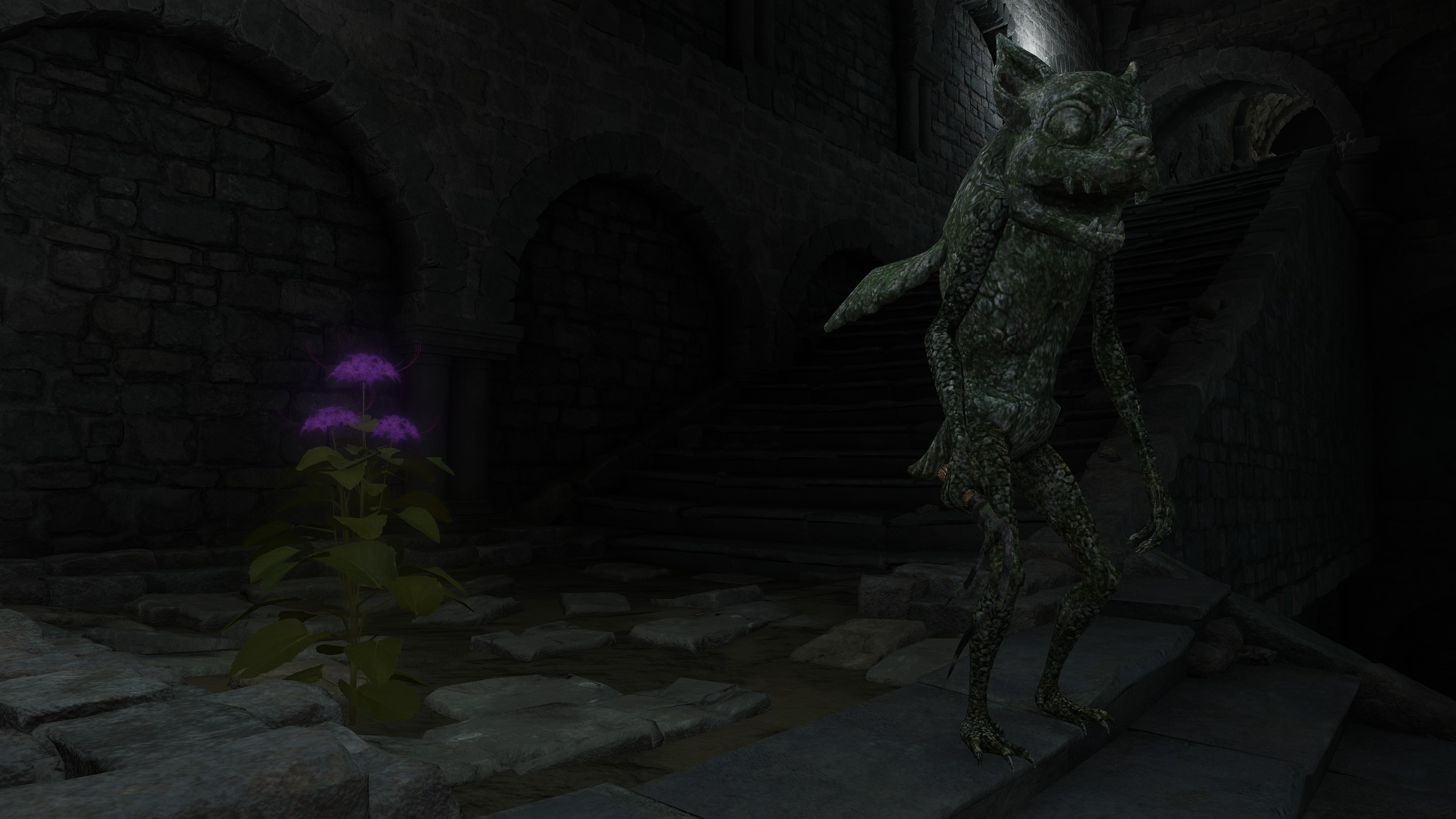
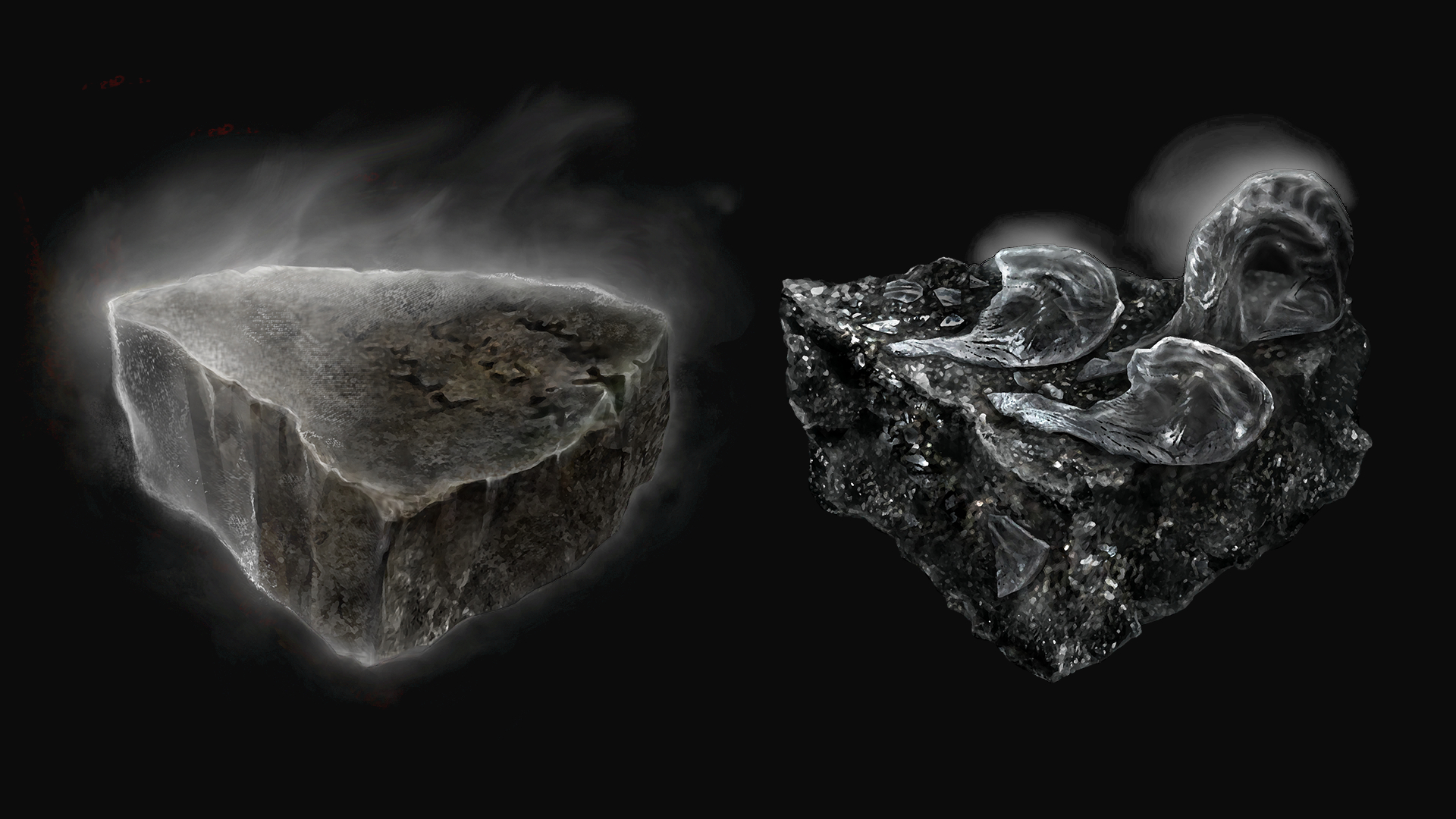
Even still, old bones often have to tolerate such parasites as grave violets. We typically only see these grow underground like grave glovewort, but more do appear in Caria Manor’s royal graveyard, with some additionally looted at a Church of Vows tomb; they aren’t limited to dark catacombs. If the grave violet is a natural flower, it is uniquely adapted to drawing on spirits as fuel, though not the only one. Purple flowers can be commonly found growing in graveyards above ground, some violet and others lavender. Both varieties even grow amongst the corpses piling up in the unsurprisingly “murky river” (曇り川) in Limgrave. The colors seem to simply be how mild spirituality manifests in flora, which will feed on it if available. And yet, the spirit’s instinct is never to leave their grave, but violently lash out. Their tendency is to otherwise remain dormant despite the ever-present risks in the living world. Perhaps it is lingering attachments to life, but the nuisance isn’t enough to move the dead to depart this world for the next.
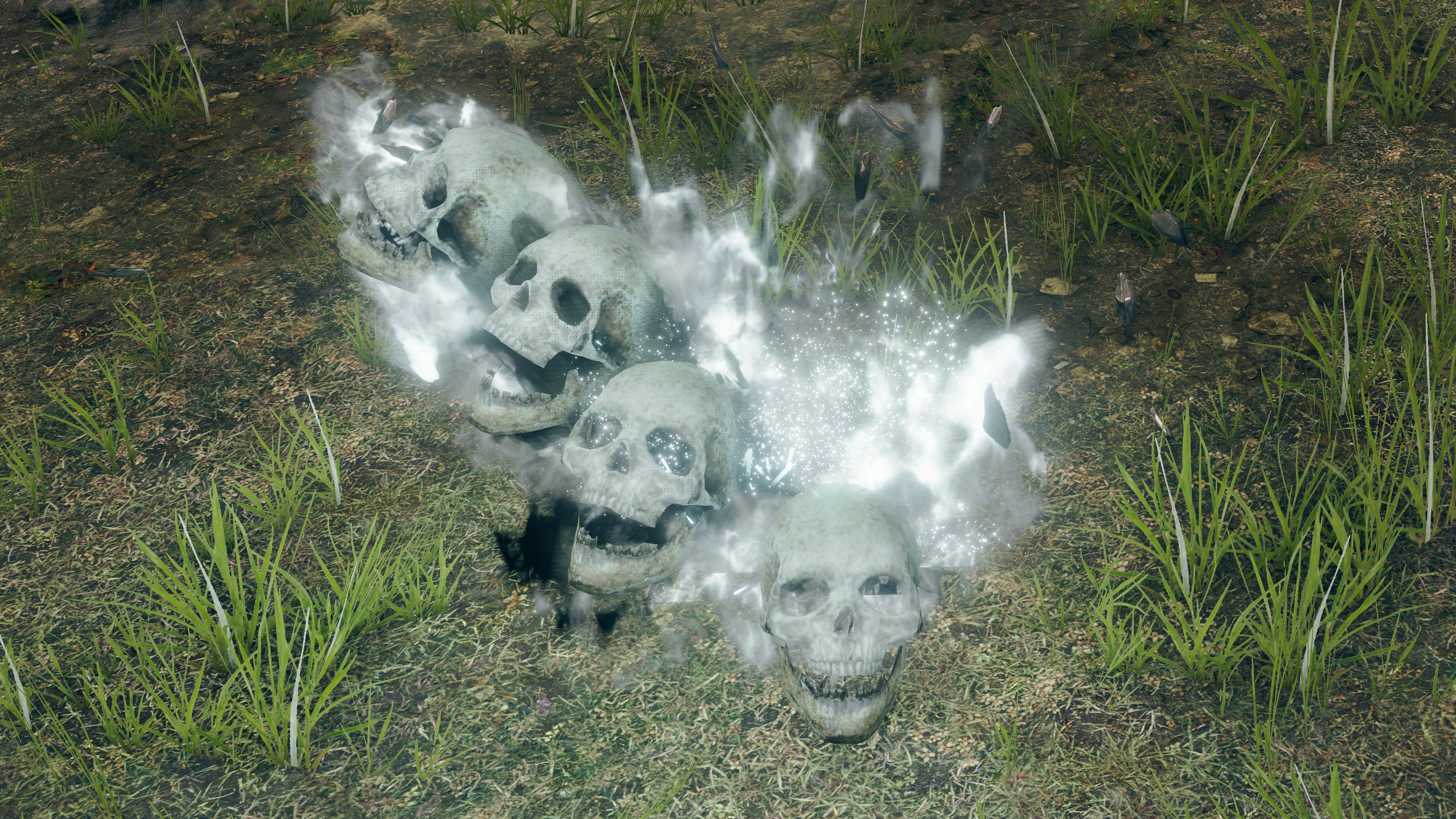
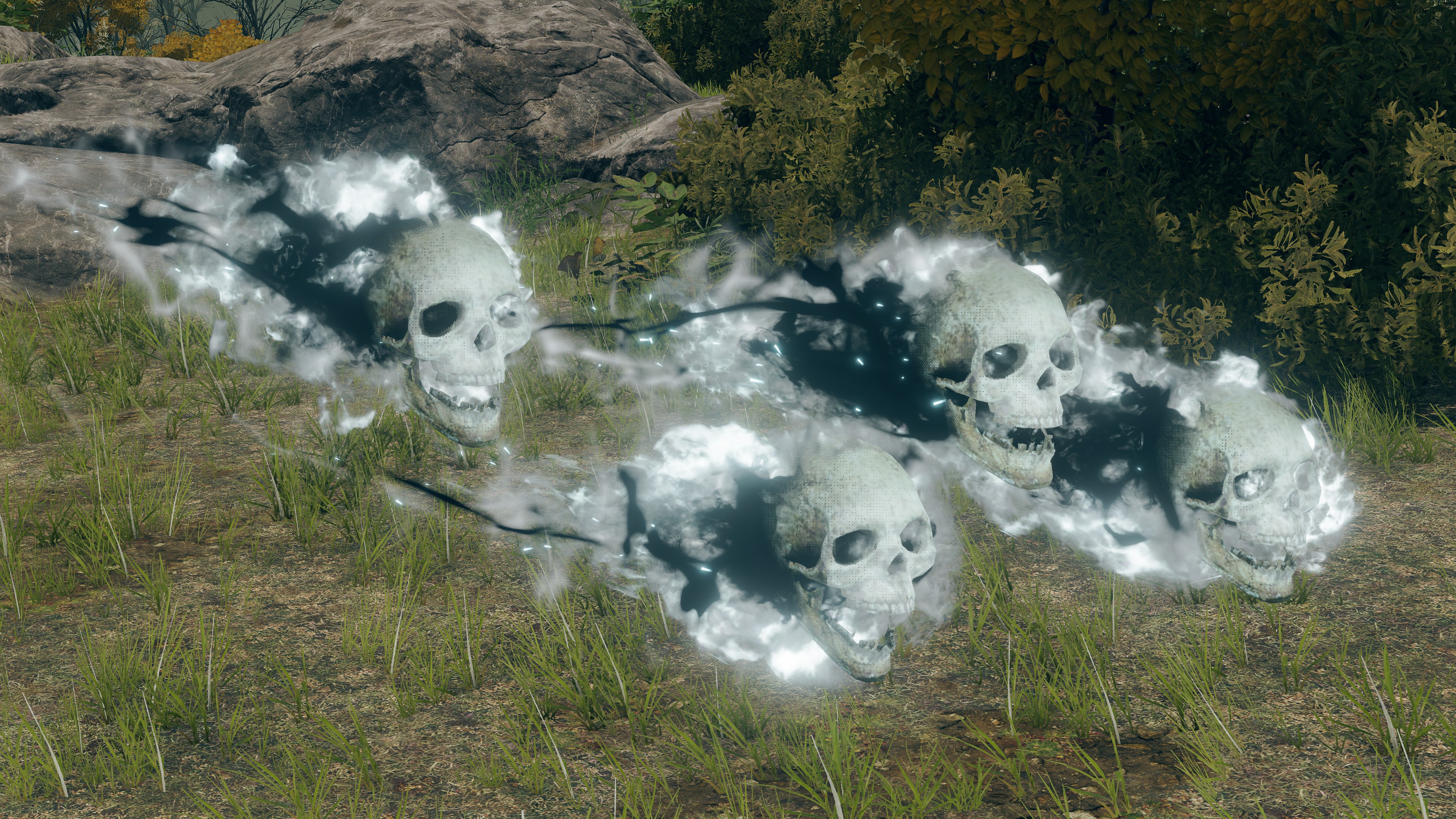
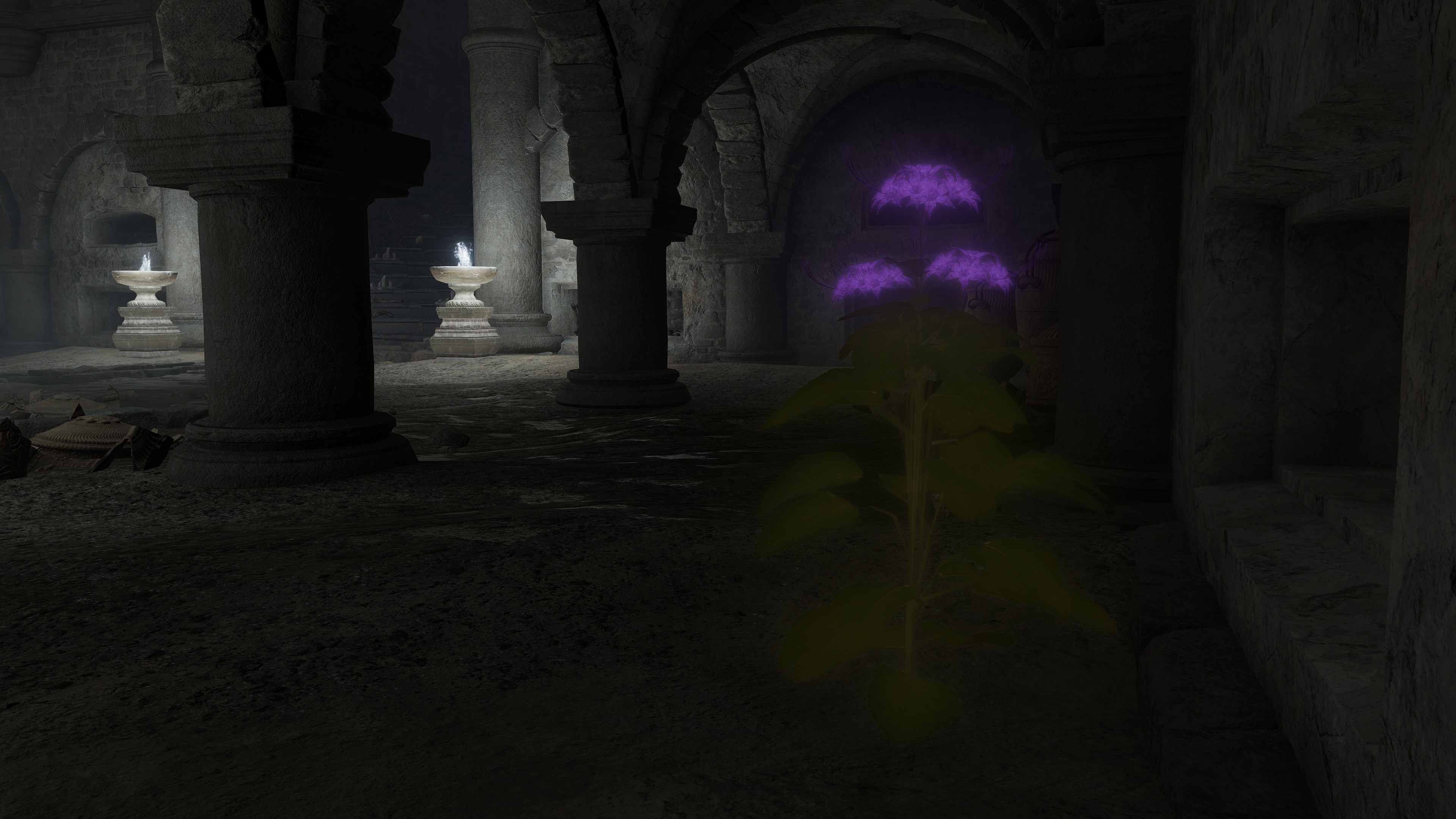
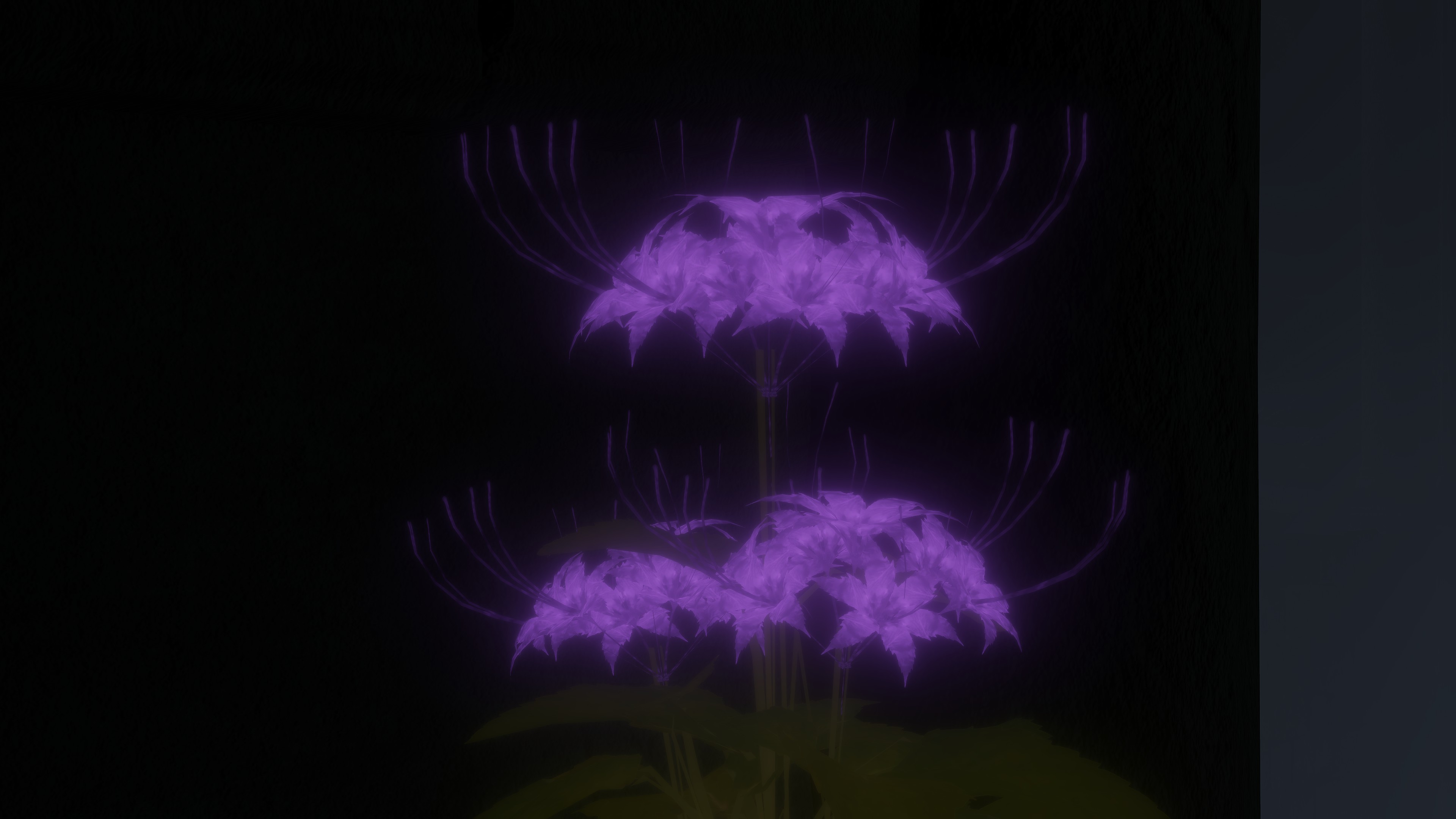
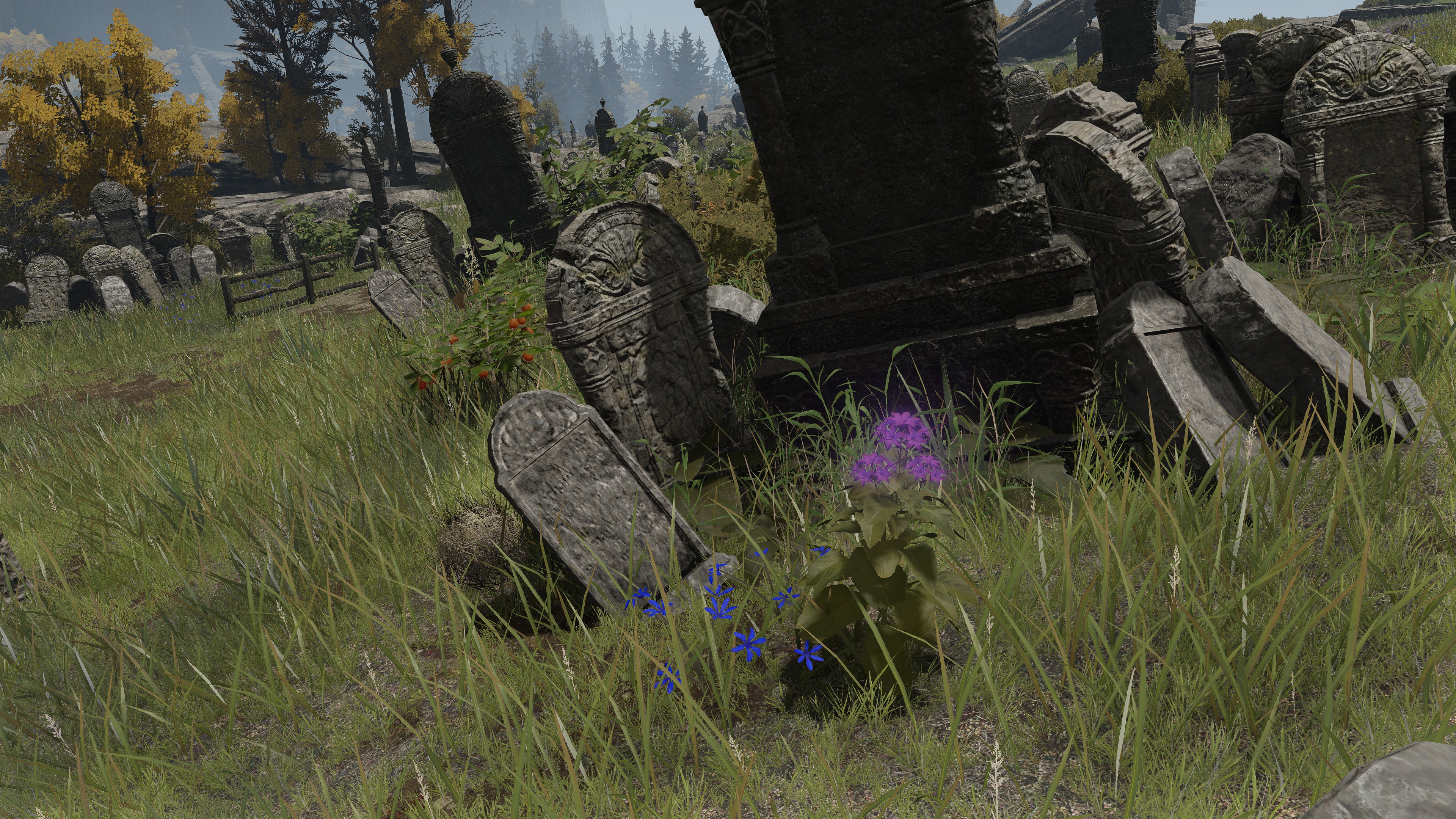
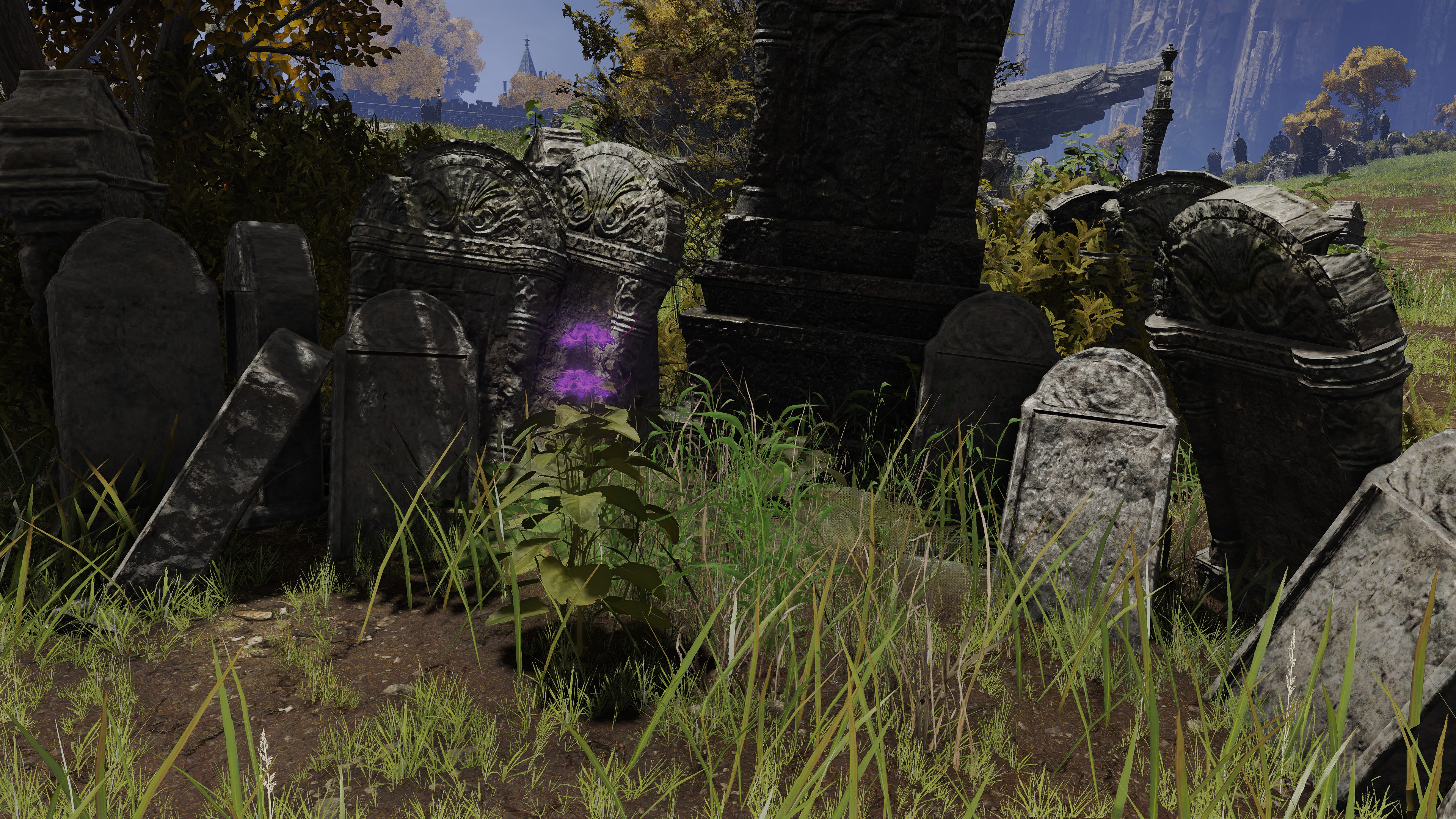
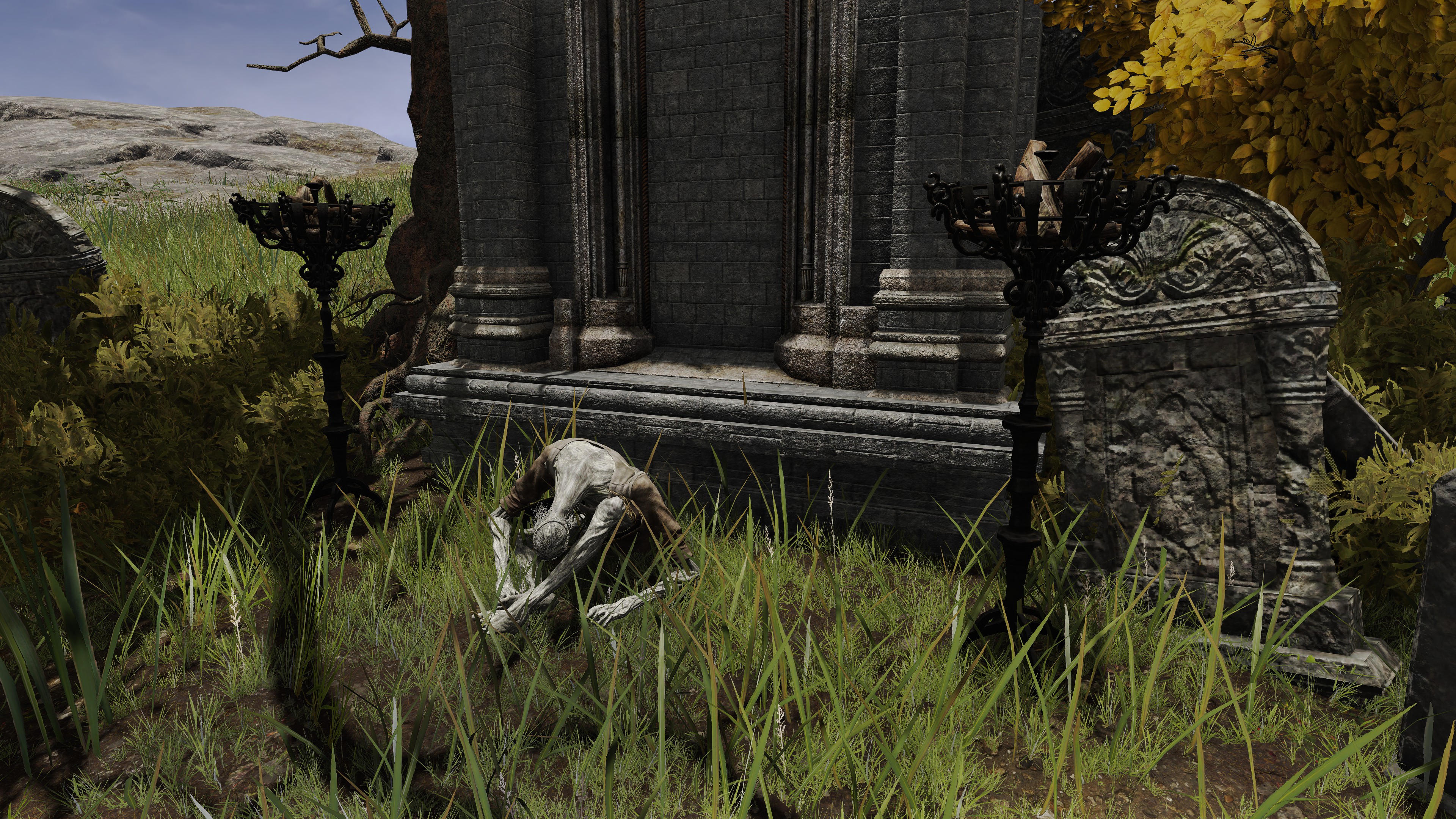
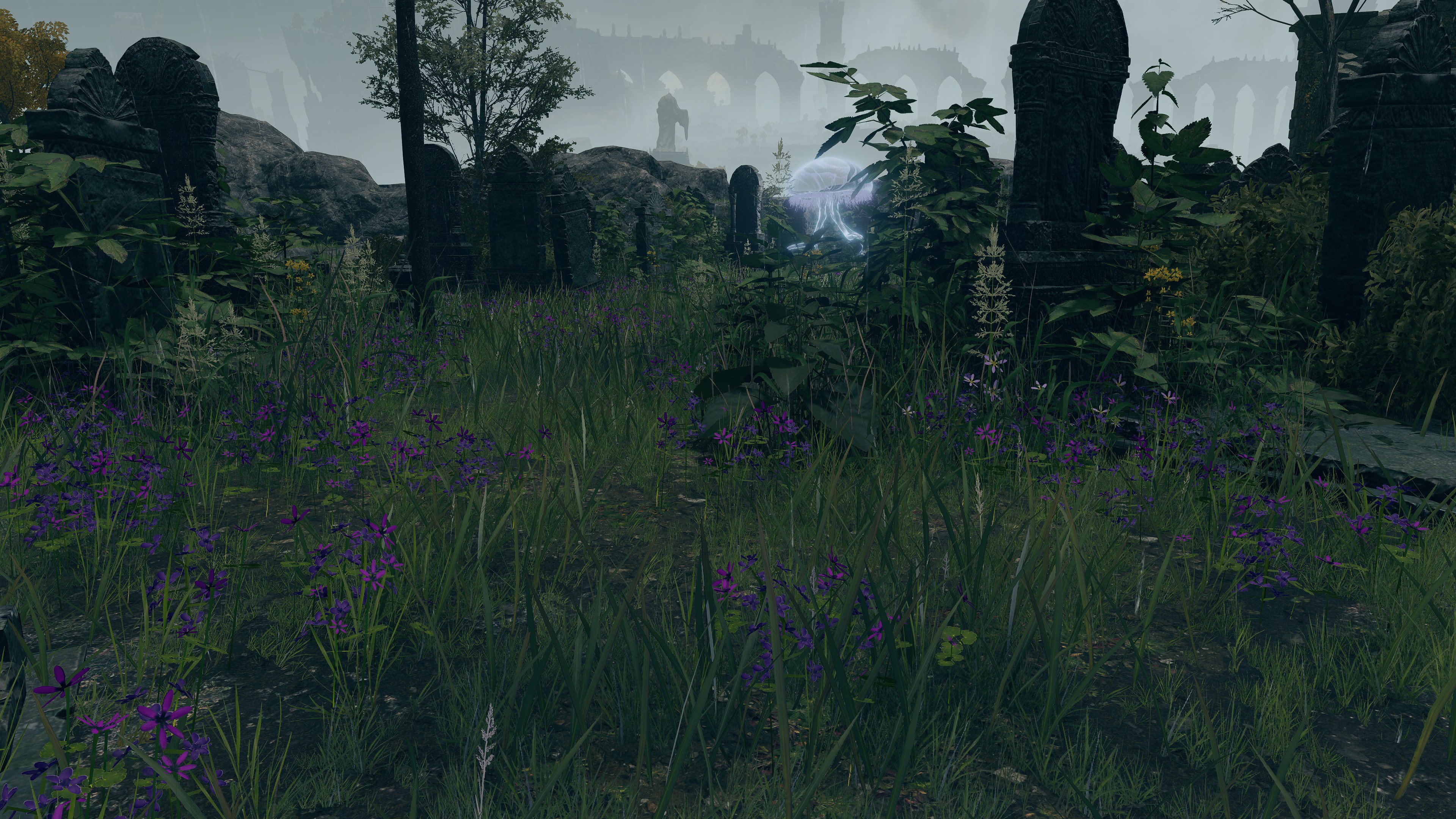
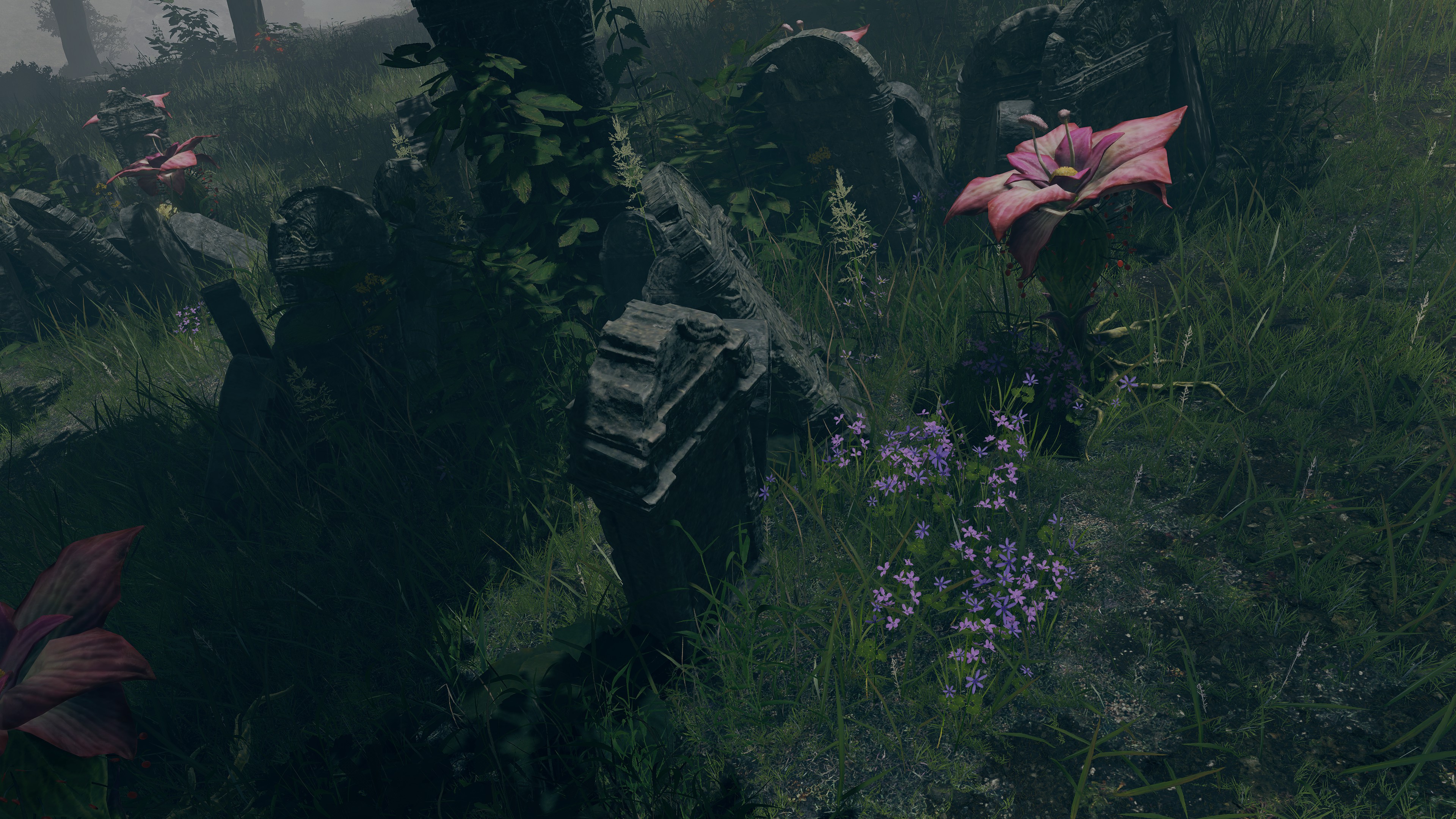
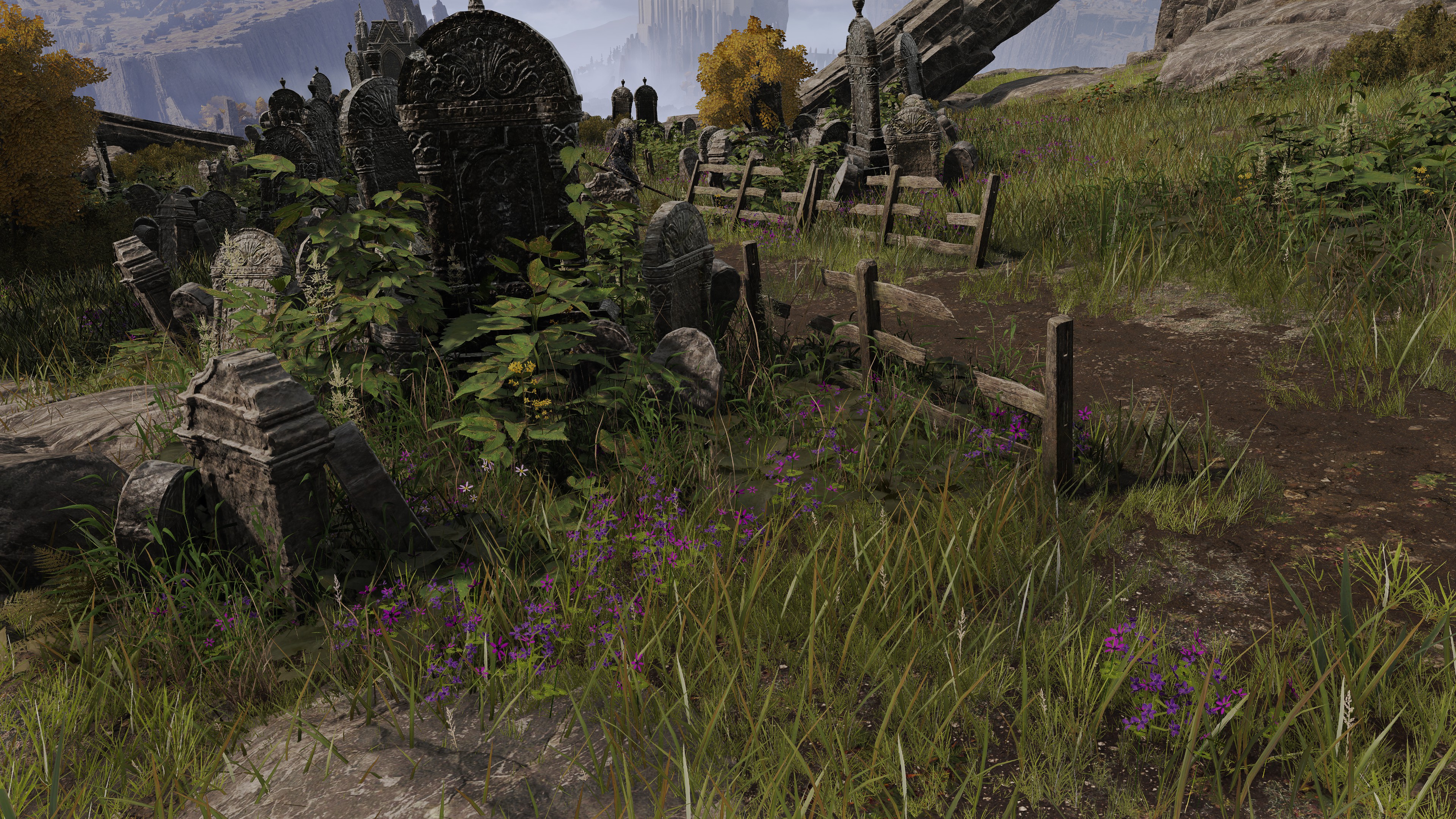
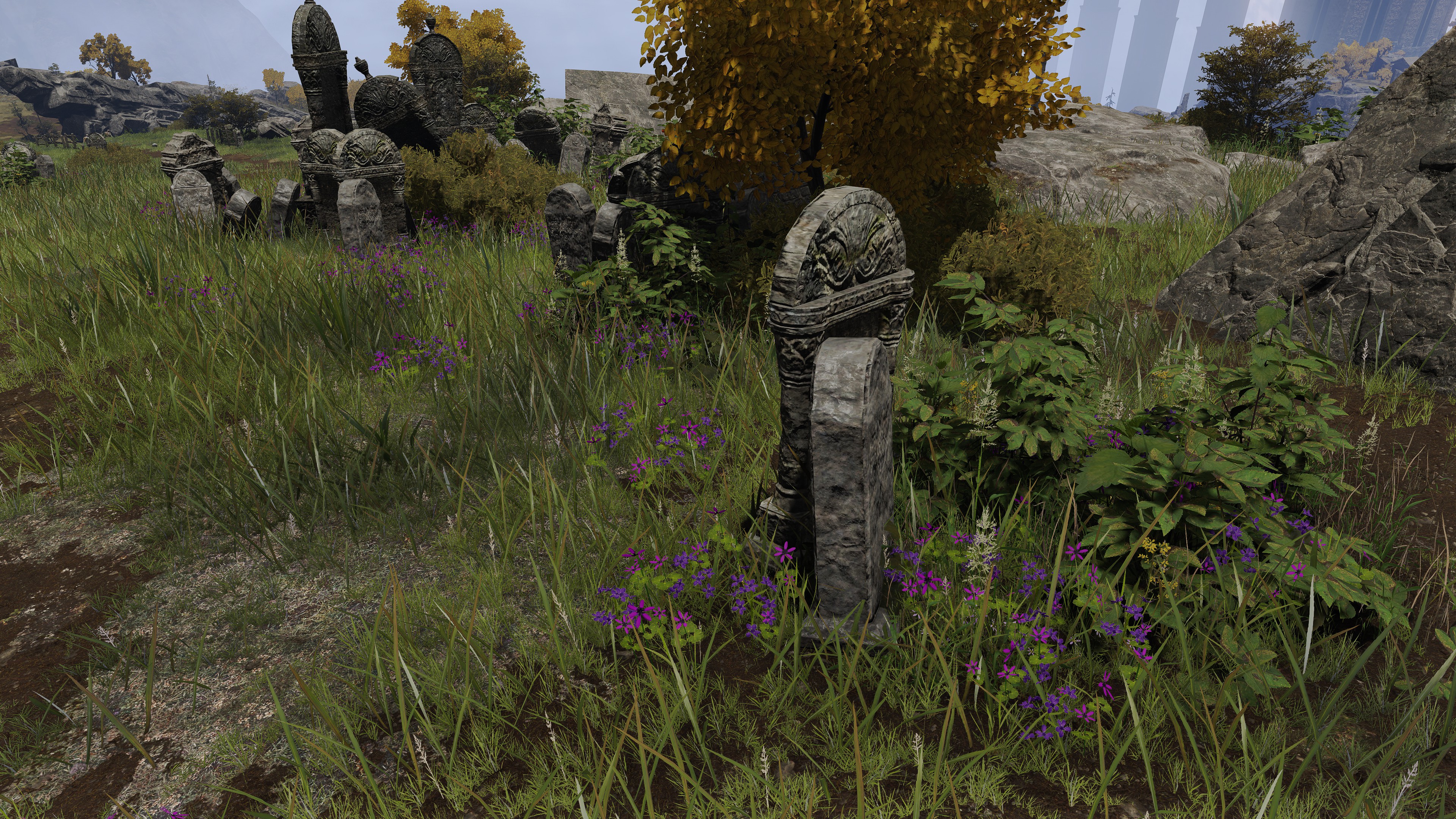
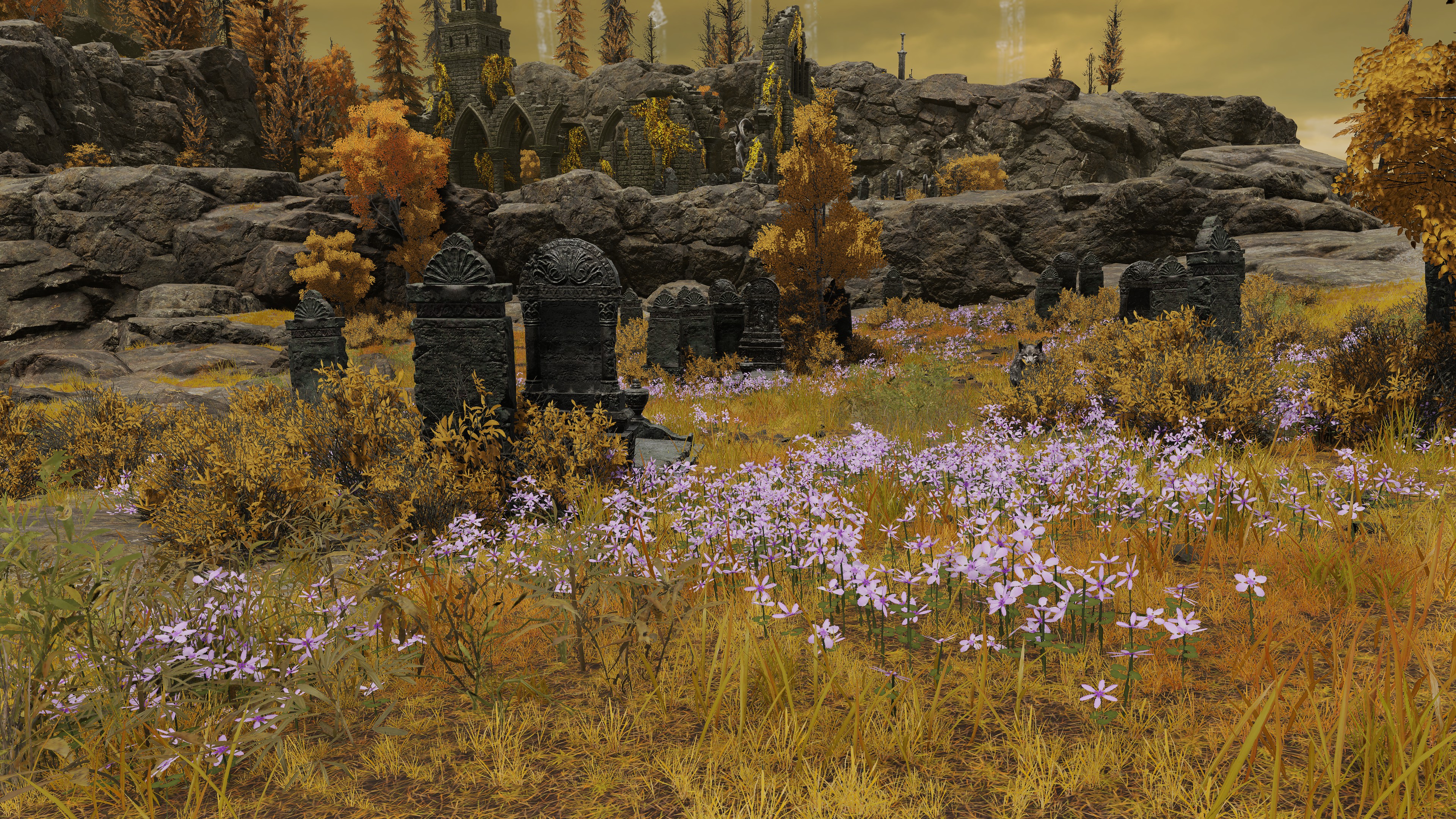
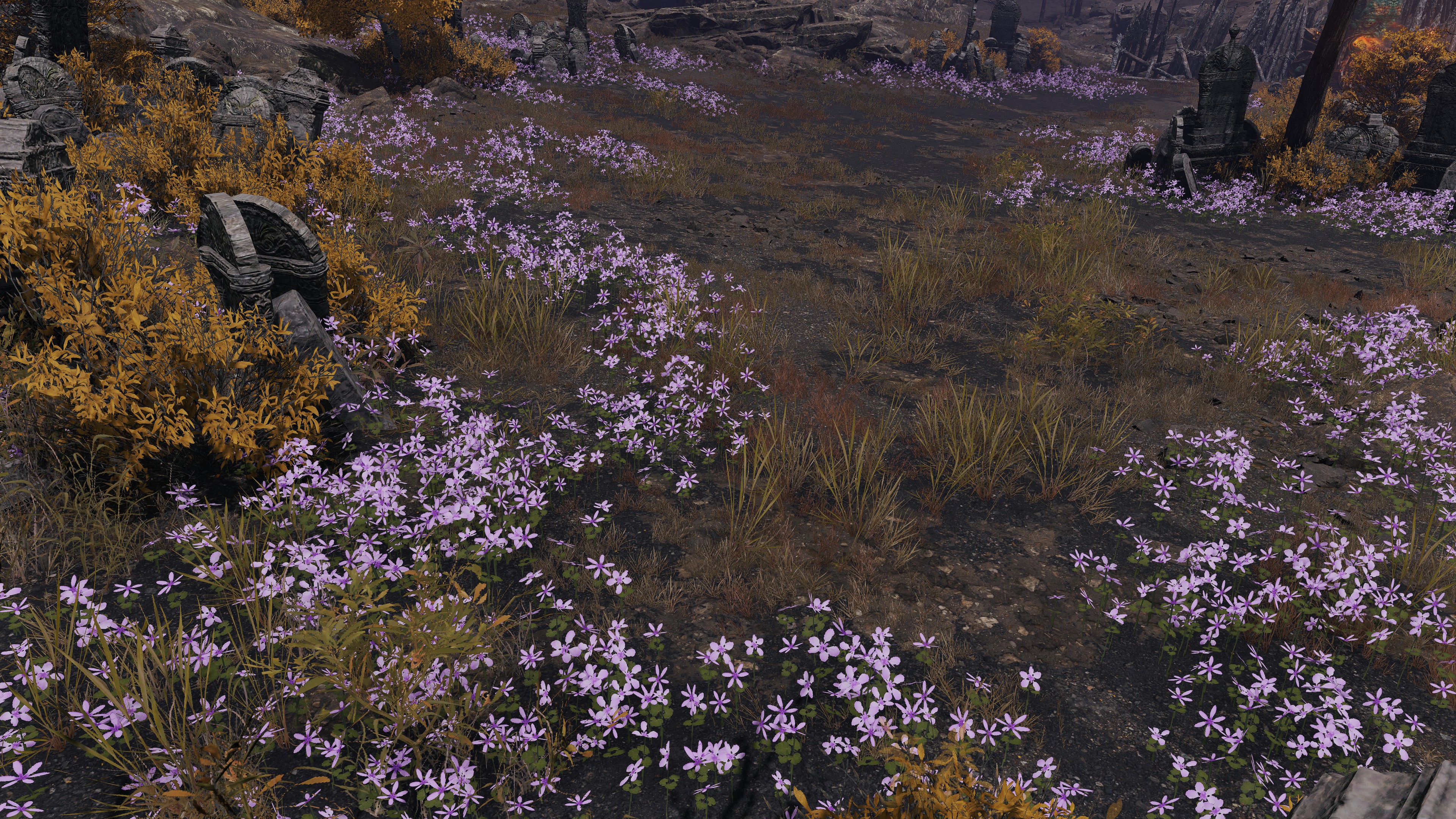
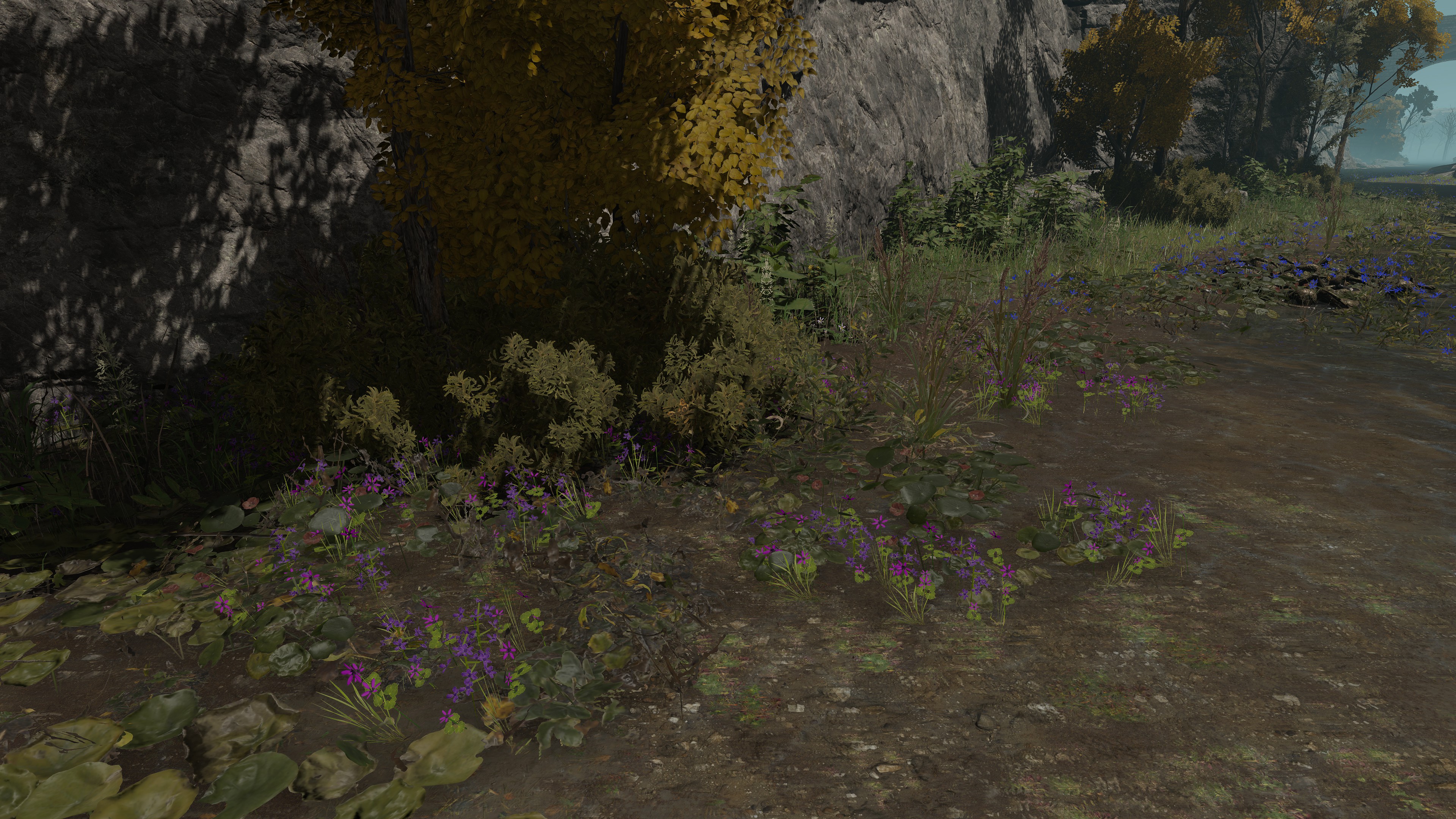
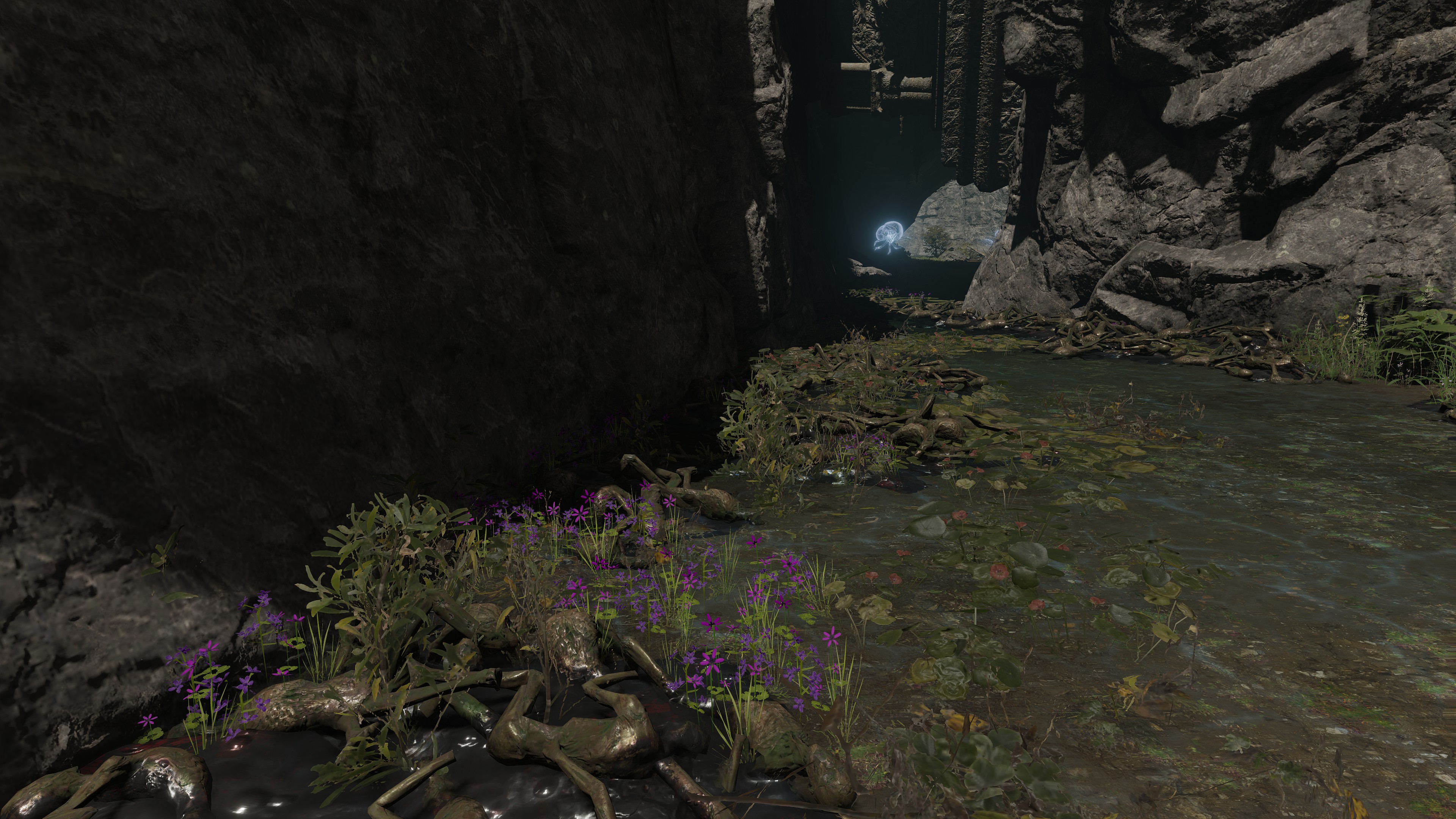
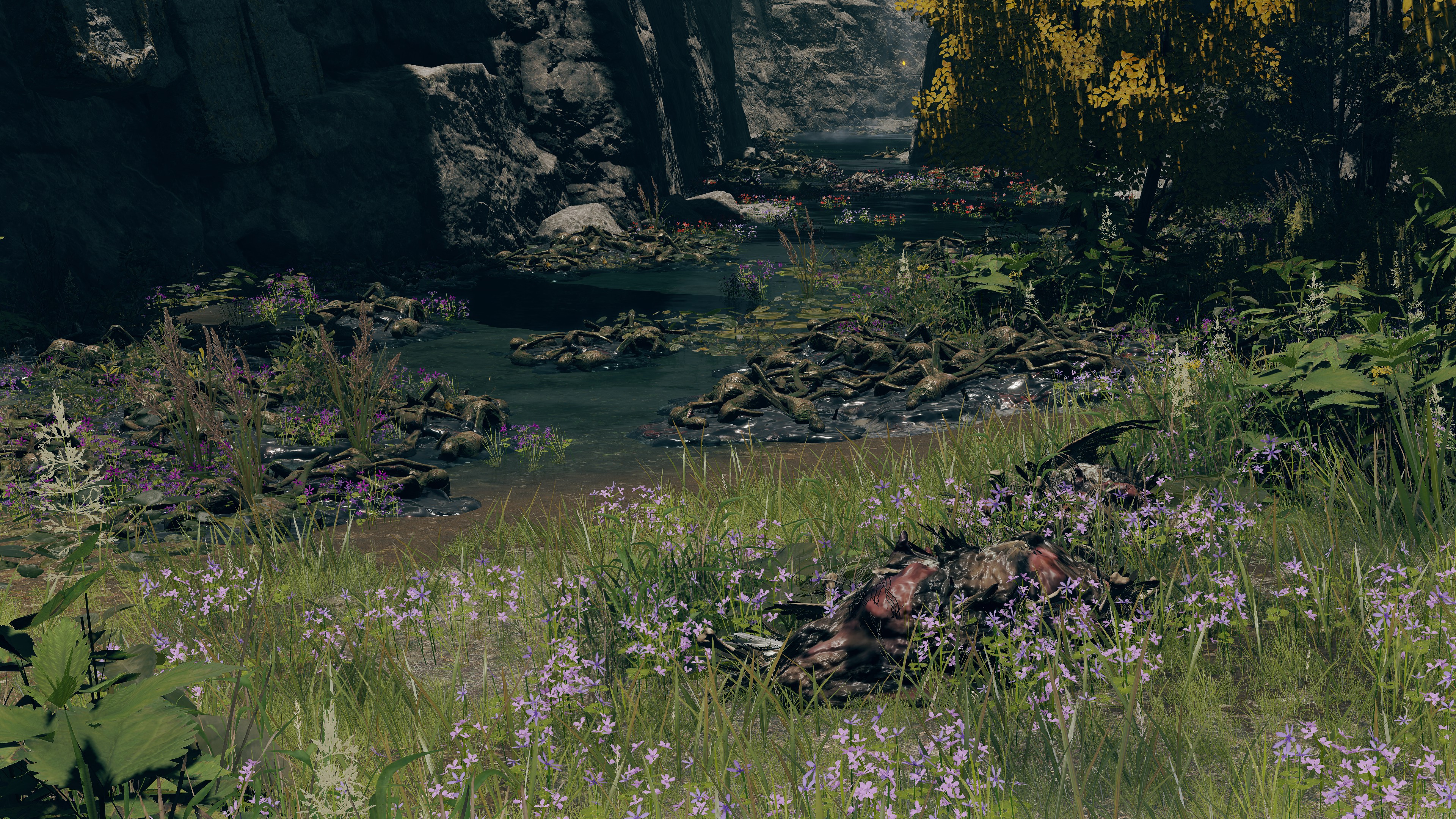
In fairness, how are personalities of a living realm expected to know about reaching the spiritual one? The description to human bone shards, colored by their time buried beneath the earth, makes a point of their fragility, acknowledging how the dead are as easy to pity as to break. Various other item texts note these dead people to be lost and in need of leadership, or “guidance ahead” (先導) more literally. It is unsurprising that they don’t navigate across the divide, their emotions only letting them intuit so much as they wade through the proverbial shallow waters. That may be why they are so attracted to sound, with summoners often using bells to call for the spirits the same as grave glovewort. When lost in the darkness of their situation, they follow its lead, drifting along the flow of the timbre. Another path through darkness is a guiding light, which is much less subtle and so more direct in drawing attention. Although arguably rarer, it too sees use in attracting the dead to their intended destination.
Fragment of bone with dun-colored stains. One of the materials used in item crafting.
Can be acquired if hunting Those Who Live in Death.
It is very fragile, as easily pitiful as it is broken.
Sorcery of Those Who Serve Death.
Calls upon Those Lost in Death. Three are called upon in distant places and will disappear after collectively attacking with the summoner.
The dead have been the lost since time immemorial and require leadership.
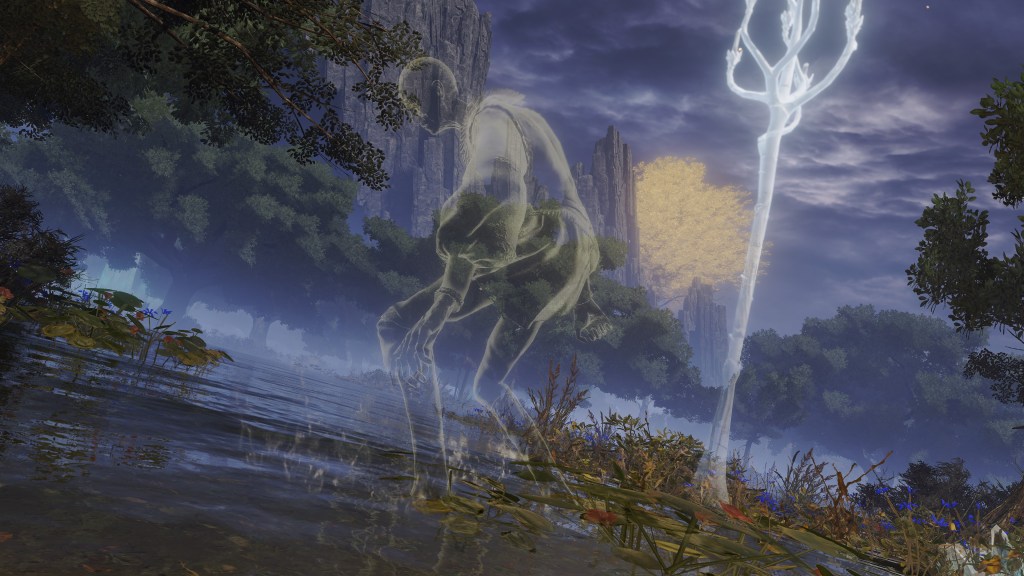
The Helphen’s Steeple is a greatsword modeled on an actual black spire belonging to the Helphen, a tree in the spirit world. Given that such spires tend to be associated with churches, this may indicate it to be some kind of religious building, like a belltower. The steeple may also serve as a means to reach the top of the tree, which would speak to its sheer size. Both functions definitely tie into the Helphen’s underlying purpose. According to the greatsword’s description, the Helphen is a “lamplight” (灯火) tree that serves to guide the dead, hence bearing a name like helfen (ヘルフェン) meaning “to help” in German. The wood burns bright as a guidepost for the lost as they find their way to the spirit world, Similar to a lighthouse — which requires that the tree both be very tall and burning from the canopy. In that case, a tower that helps summon the dead and honors, or even facilitates, the lamplight is a natural outgrowth of such a tree’s existence. We probably even know its exact form.
Greatsword modeled on the black steeple of Helphen, the lamplight tree which serves as a guidepost for the dead in the spirit world.
That lamplight is similar to grace, so it is said that only heroic spirits are able to see it.
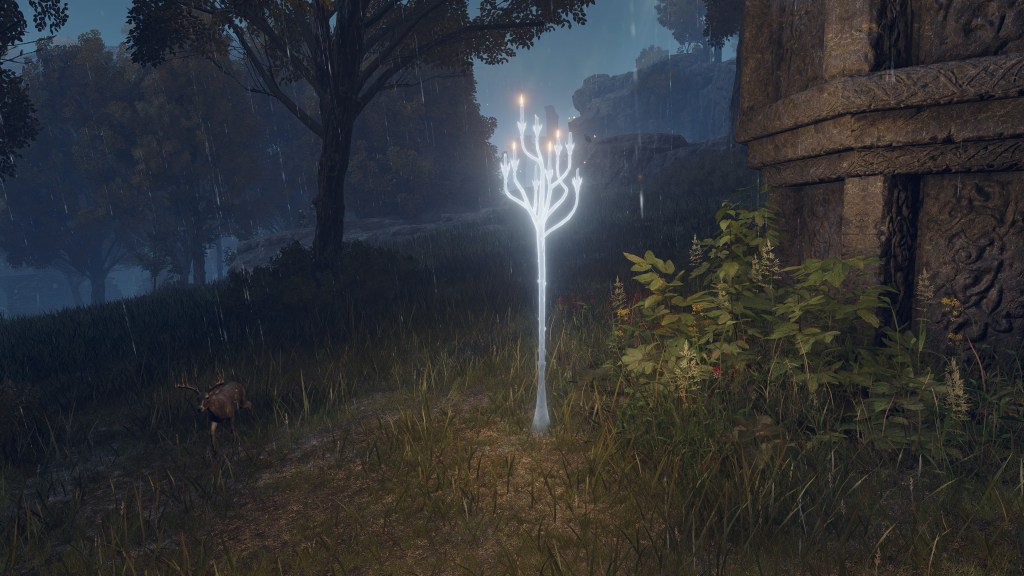
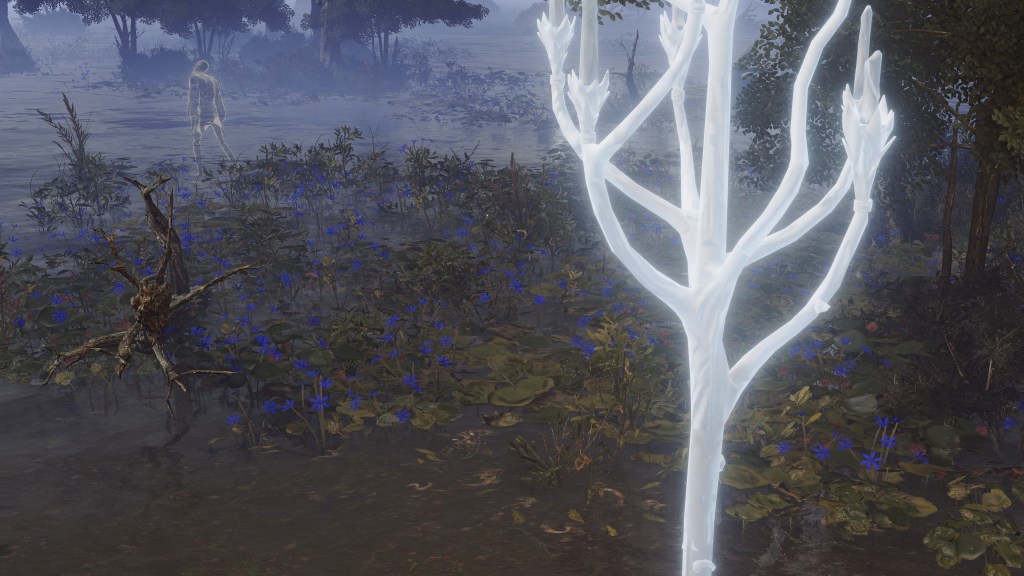
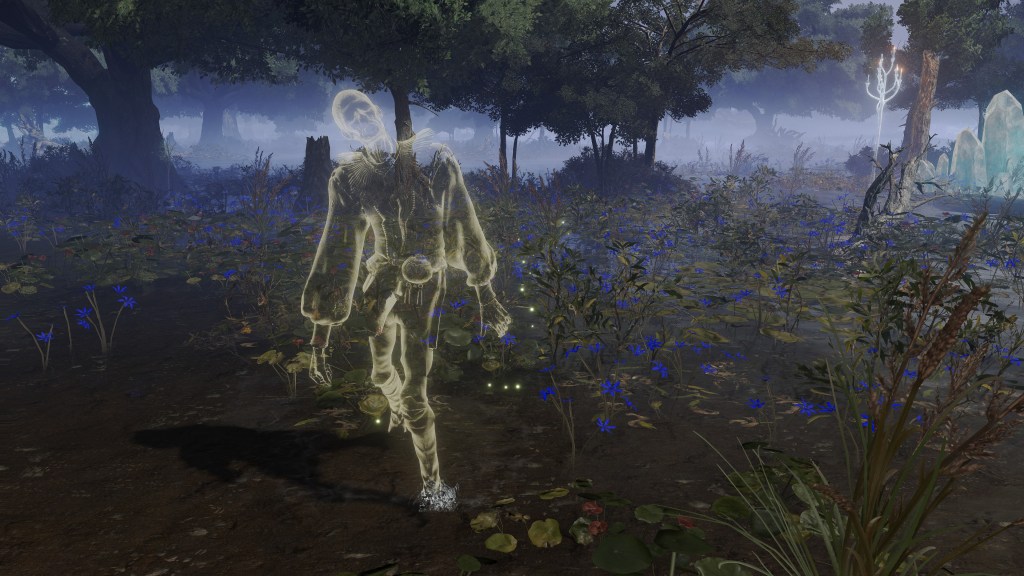
The Candletree Wooden Shield depicts a “fire-lit” (火を灯す) tree with the ends of its branches burning like candles on a stand. With the terminology sharing the same kanji as the Helphen’s lamplight, this white candletree may well be the Helphen in question. Adding to this is how the dead use the candletree’s image. Throughout our journey, we come across spirit forms of the tree in the field. Interacting with it summons a spirit who then walks to a nearby area that we might otherwise miss, the person’s connection to the place in life typically denoted by items inside a unique chest found quick into our exploration. We are led to this place of death to help give the spirit closure, presumably by slaying his killer. And similar to how the guidance of grace can only be seen by Tarnished heroes like us, so does the Helphen only guide more literal heroic spirits. The dead thus appear to use the candletree’s image to attract strong warriors because they know it as the Helphen’s form.
If the Helphen is a candletree, then all the more reason to have a spire to approach its burning branches. It also explains why spirits are so enamored with the sounds of grave glovewort, as it builds up their strength to the heroic level. For those already achieving the power of true heroes, their spirits have long been consoled by the sound of the largest, single bloom of those bell lilies; the same for renowned heroes retaining the memory. According to the descriptions to these great gloveworts, the flowers were laid at the graves to the greatest of deaths for that reason, with the intention that these former living legends will become myths — “mythology” referring to “stories of god” (神話) in a more literal sense. In other words, visitors to heroes graves offer more strength to the fallen so that they might one day achieve the level of gods in at least mourners’ minds. And when the dead reach such power as a spirit regardless, these equally lost souls can be guided to a world for them by the light of the candletree.
White flower that blooms in catacombs. A single large bloom of it.
Can enhance ashen remains to +10.
The great flowers have been considered to console heroic spirits and offered to the greatest of deaths since time immemorial. So that they will eventually become myths.
White flower that blooms in catacombs. A single large bloom where spirit forms nestle close.
Can enhance named ashen remains to +10.
The great flowers have been considered to console heroic spirits and offered to the greatest of deaths since time immemorial. So that they will eventually become myths.
While outwardly benign for entities which no longer have a place in the realm of the living, the firelight might give way to a more ominous reality. The skill for Helphen’s Steeple is Ruinous Ghostflame, the greatsword enveloped by its latent cold magic with a single swing. Despite the utility of such destructiveness in battle, it suggests that the real black steeple produces flame from spirits, or that even the light of the candletree itself burns with it. And if that is the Helphen’s true nature, then it justifies the appearance to only the greatest of spirits. Like a moth to a flame, heroes are drawn to the realm where the tree resides so that it might feed off them and continue burning. The steeple would therefore exist to help the Helphen with this, the glowing red “window” near the top of the greatsword potentially representing the fire produced as offerings to the candle branches to help keep the fire lit. Factoring in the tree’s appearance, and it can be considered a giant grave violet, fueled by the most death.
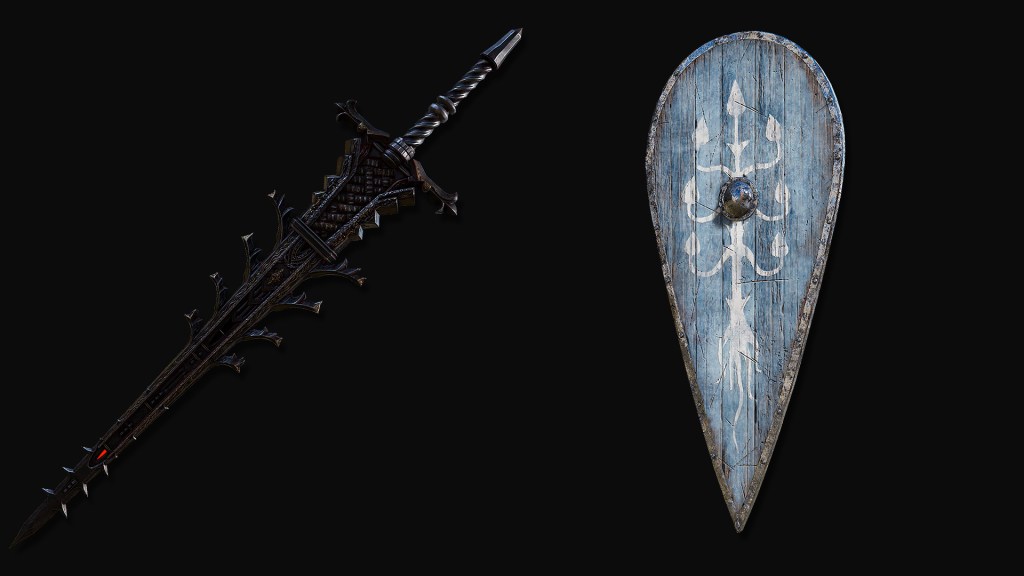
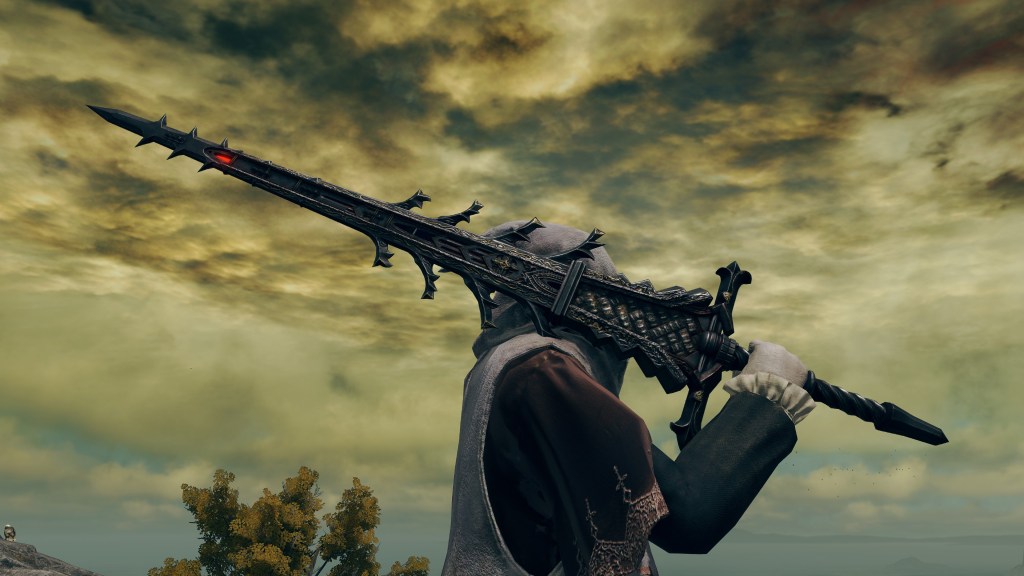
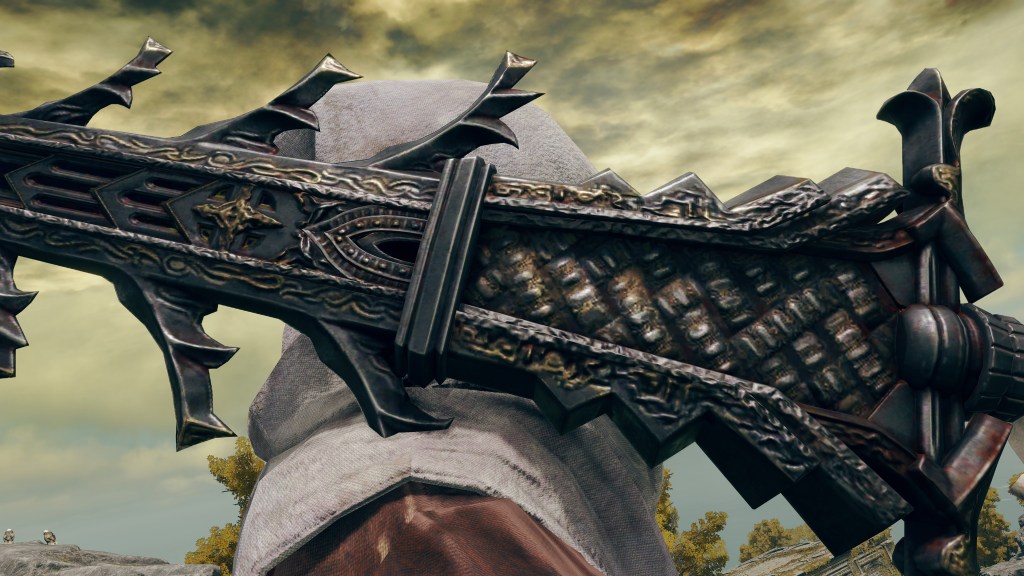
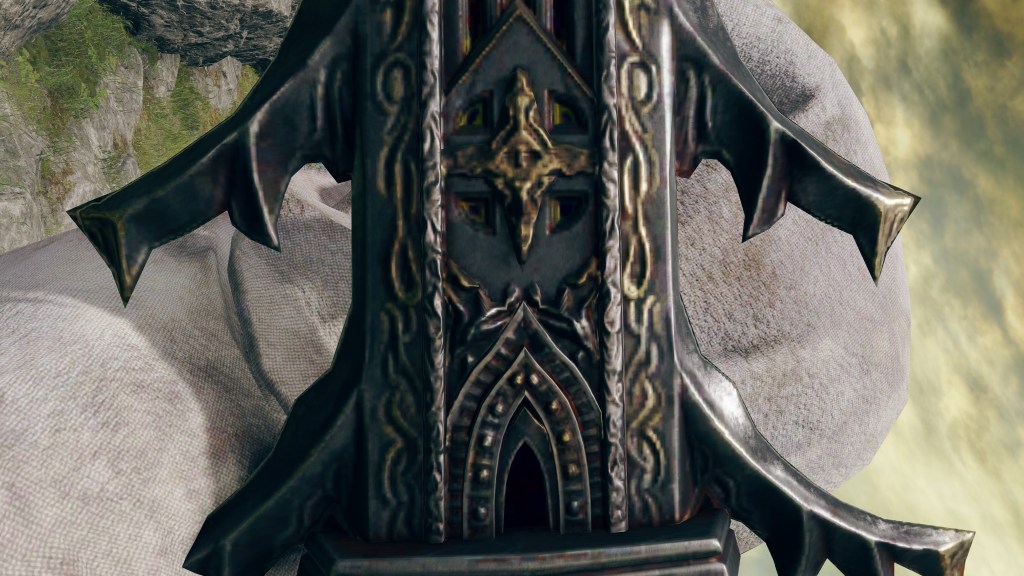
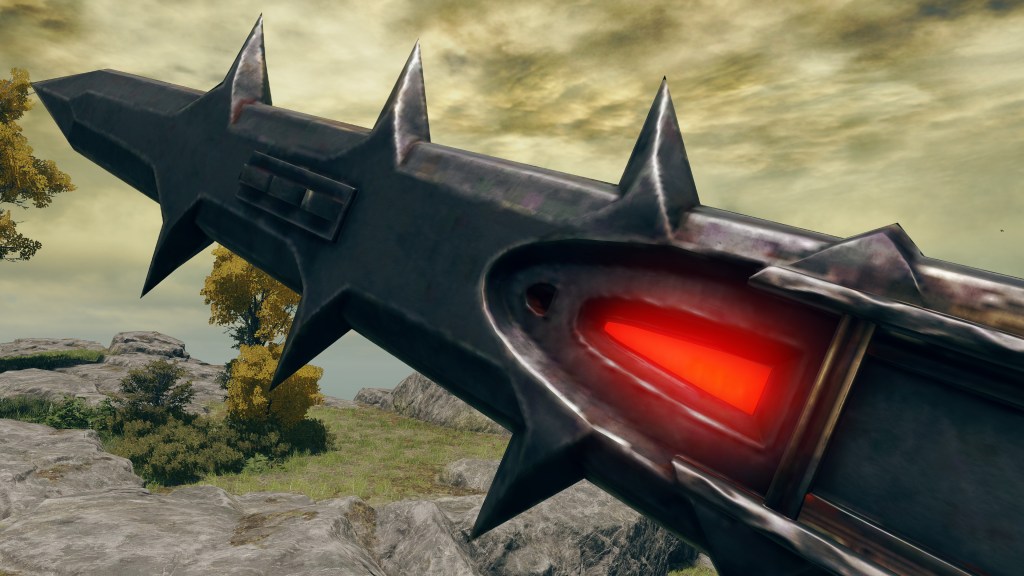
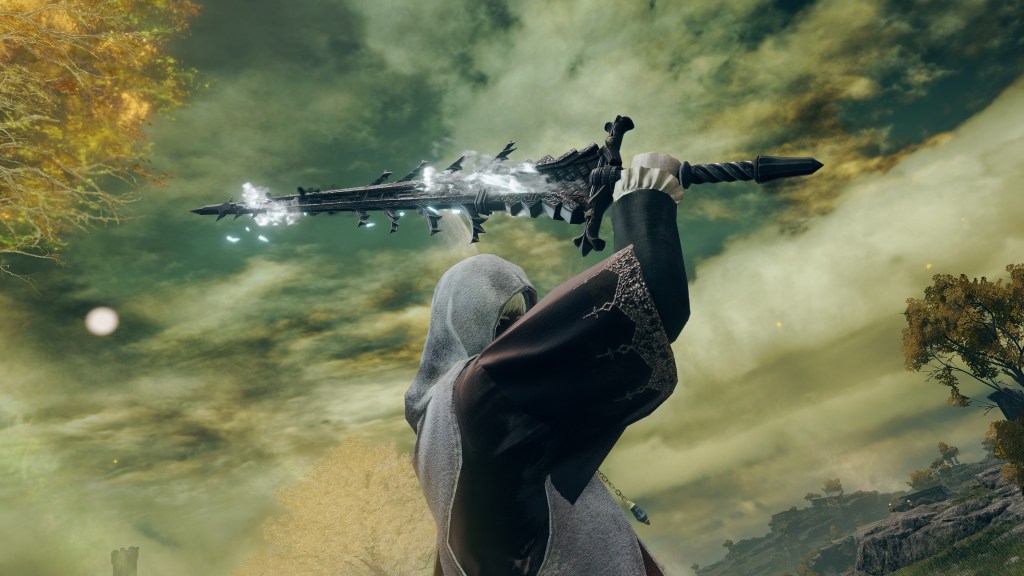
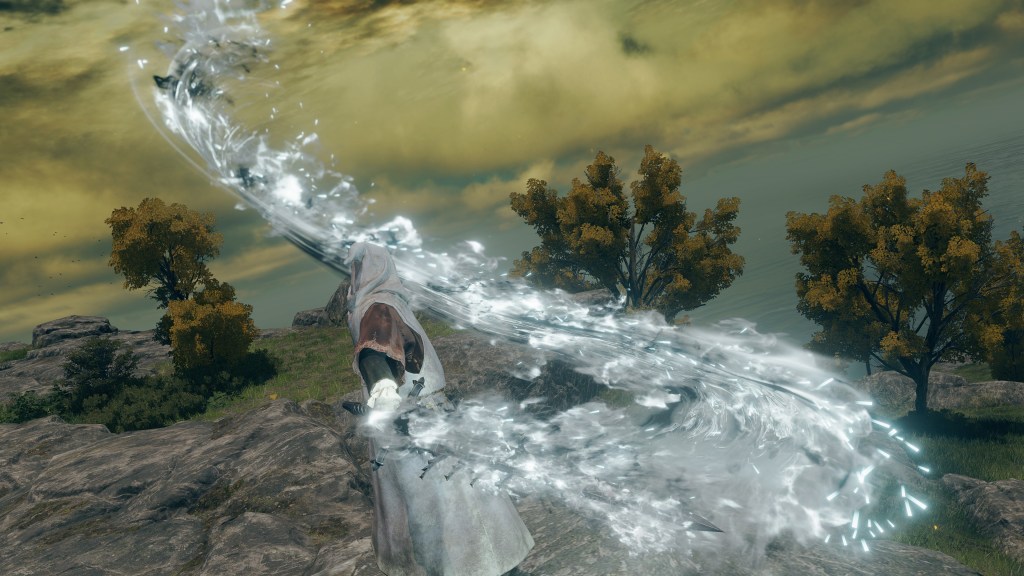
Battle art that swings the sword and clads its blade in spiritflame. Spiritflame deals damage of the magic attribute and is also very cold.
But if there is a society built around fueling this candletree, the natural question is what for? Why does such a plant exist in the spirit world? Perhaps to help maintain it. A tree has not just its branches but also the roots. While the branch tips burn bright like the lure of an angler fish, what do the roots do besides keep the beacon standing strong? Perhaps they additionally absorb more “nutrients” from the ground, but if so, then no offerings to the tree need to be made. Maybe they instead do the opposite: distribute the power of ghostflame to the grounds they permeate. True, if spirits burn eternal, then the tree shouldn’t require a regular supply of heroes to keep lit. If the candles accept more fuel for the fire to siphon into its trunk, then it may not all settle inside of there but filter out into the spirit world itself through the root system. Flame won’t destroy the spirit, but it will put it under mental strain, enough to maybe erode its identity over time. Heroic spirits then become just giant masses of proverbial putty, base material with which to give continued form to the tree as well as the land it towers upon.
In that sense, the Helphen can be equated to Yggdrasil, the world tree keeping reality together. With the candletree at the center, death is recycled to birth an entire new ecosystem, indistinguishable from the living one. All the creatures and plants of this world are liable to spring up because of the Helphen turning spirits into the next building blocks for spiritual life. Feeding not just itself but the entire world may even explain why its resident spirits appear physical, the density of spiritual energy for such manifestations sure to demand high upkeep. Actual flesh and blood creatures do spontaneously generate from the power of death in some cases, so the same likely hold true for raw spirituality. The spirit world is thus dependent upon the earthly world for its existence, one life cycle siphoning energy from another like a parasite. For that reason, those who come to the spirit world and aren’t burned built a spire to help facilitate the heroic sacrifices, wanting to preserve this place made specially for the dead. And due to this inexorable dynamic, Death will remain invested in the fate of life.
Rise to the Ashes
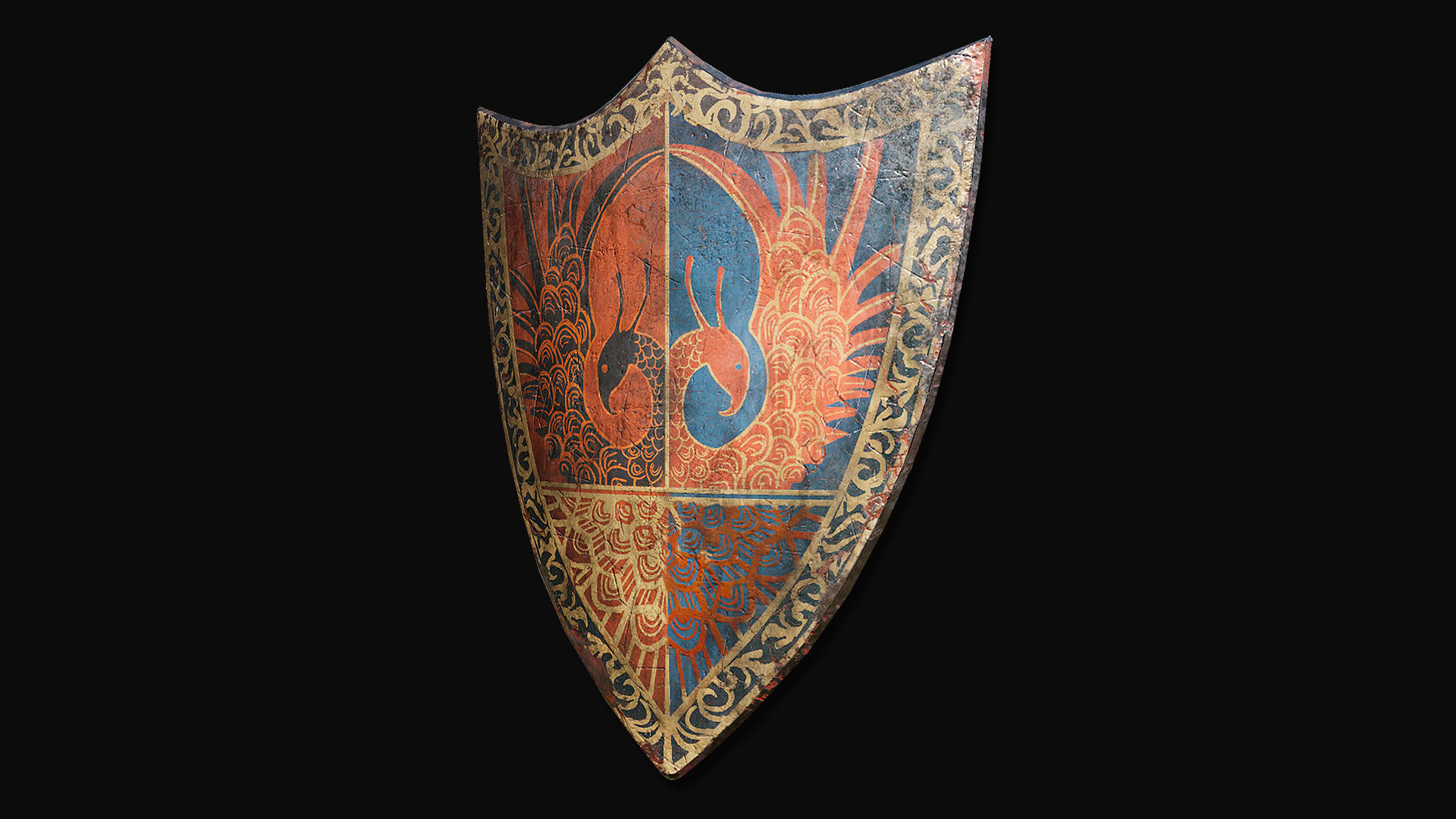
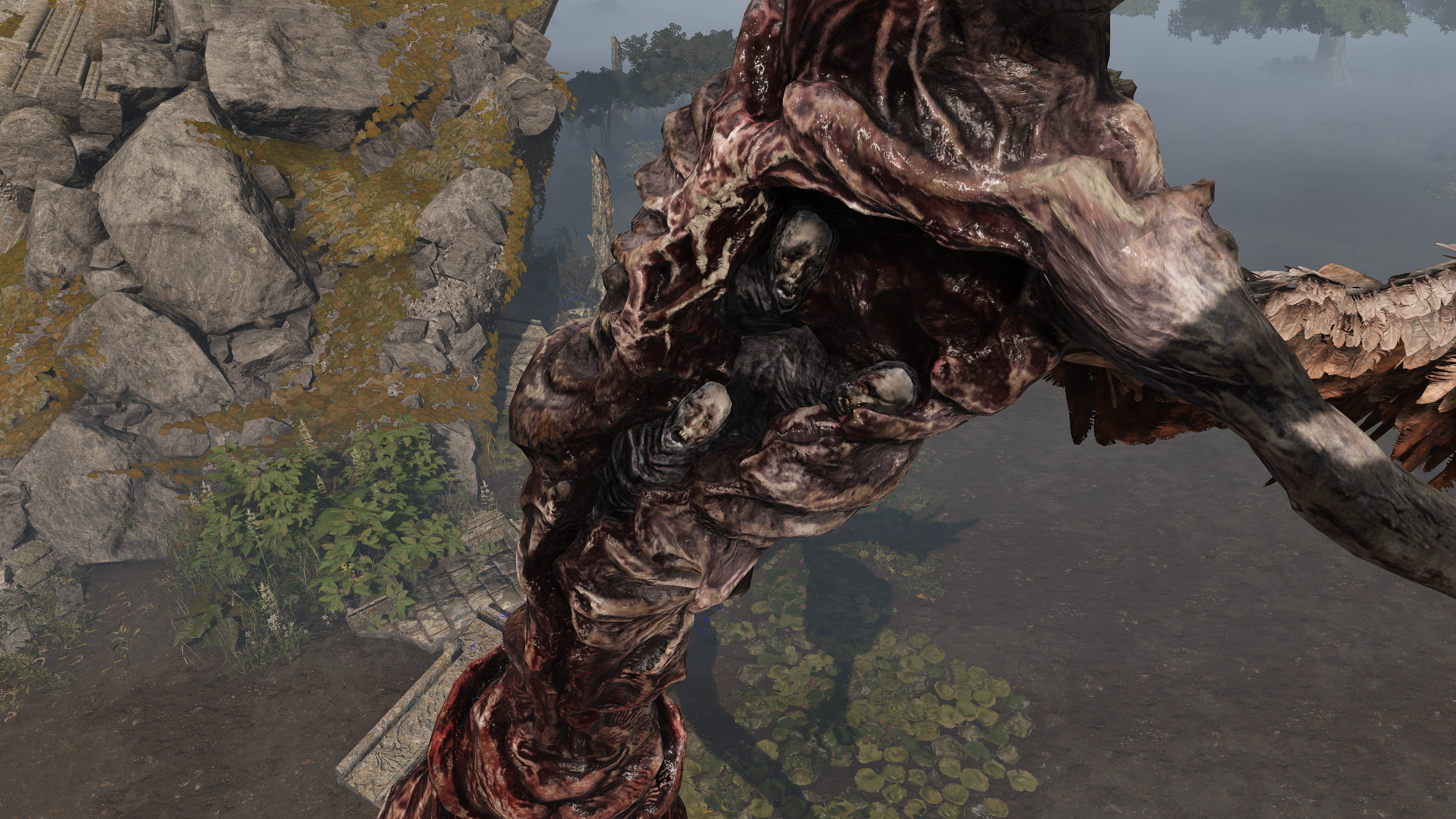
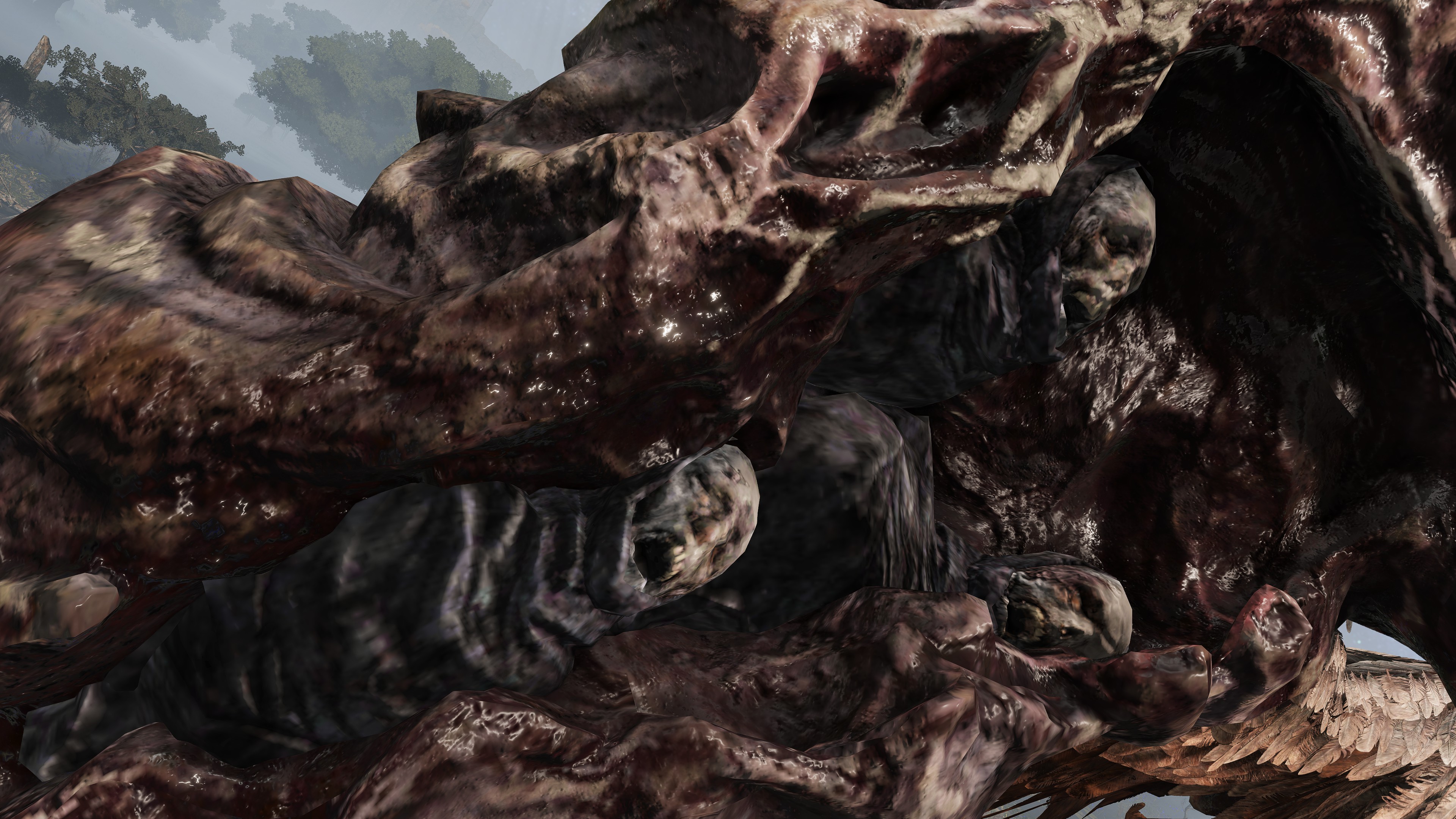
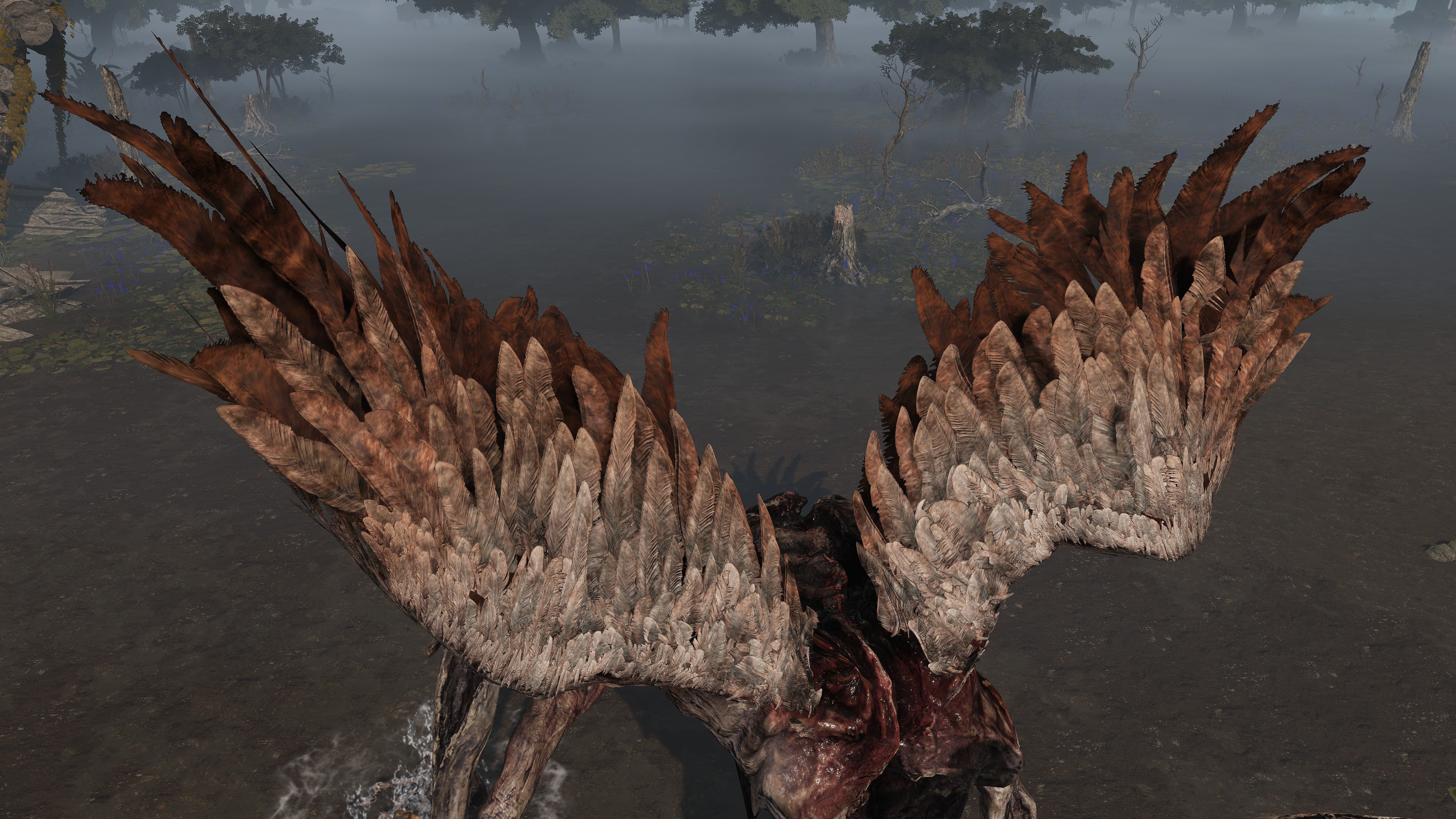
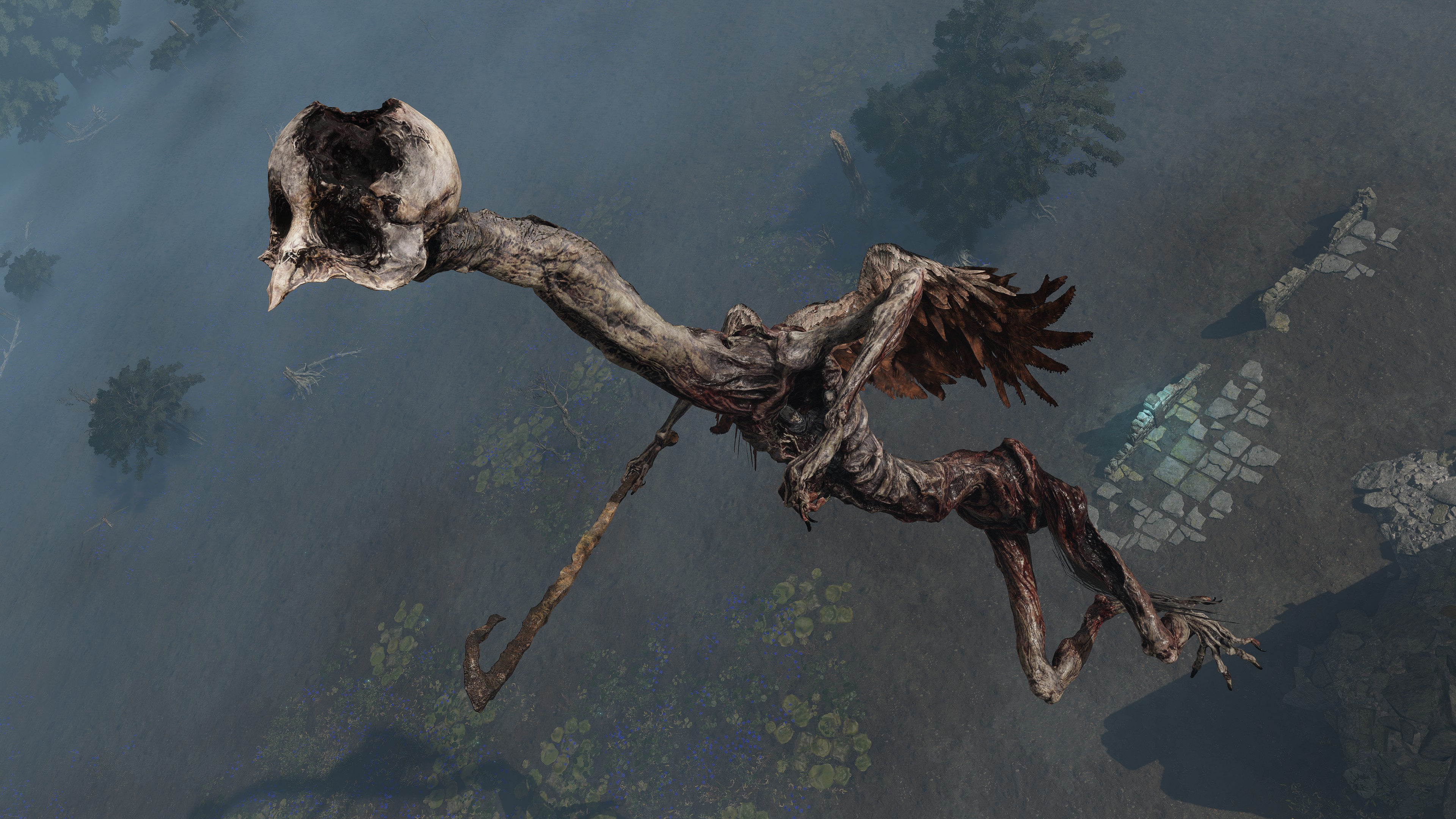
At some point, an outer god sent out a messenger. Based on the Twinbird Kite Shield, this envoy came in the form of a bird with two heads, resembling those of the Chinese phoenix. Although befitting its divine origin, the associate peace and prosperity the creature brought the Lands Between has little to do with life, as both the emissary and its outer god seem to root their nature in death. The Twinbird is mother of the Deathbirds, avian humanoids whose bodies appear to exist in a perpetual state of decay save their small feathery wings. Naturally, their vulnerability to holy spells put them in the same category as Those Who Live in Death. With just their ear-piercing screeches, they emanate the power of Death, which accumulates within us. It is obvious that any child of the Twinbird inherited this power from her, and the messenger in turn must have received the power from her sender. As to what this outer god of Death’s message was, we need only see the actions of its agents on earth.
Shield vibrantly depicting the Twinbird. It is said to be messenger of an outer god and mother of the Deathbirds.
Slightly boosts attack power and defense power when HP is decreased.
Twinbirds arm themselves with Death’s Poker (死かき棒) named in reference to Japanese fire irons, (火かき棒) only what this “death” iron stokes isn’t just any flame but ghostflame. Several arts derived from the Deathbirds either conjure ghostflame or the vengeful spirits which emerge from it. The description to Ancient Death’s Rancor confirms that the birds would rake such “cinders” out of the old death they burned, and quite a lot of it when compared to the modern recreation in Rancorcall. These modern spells are sorceries, but originally, they existed before sorcery itself did, taking the form of hexes. This refers more literally “spell arts” (呪術) in contrast to sorcery’s “magic arts” (魔術) and associate it more with primitive conjury than the academic formula of “civilized” society. Clearly, Deathbirds were appearing to undeveloped peoples of long ago, inspiring them to faith which were apparently required for their old hexes; hence the stat requirement alongside intelligence for the sorceries. And those primitives of faith would become the Deathbird’s priests, assistants to the divine.
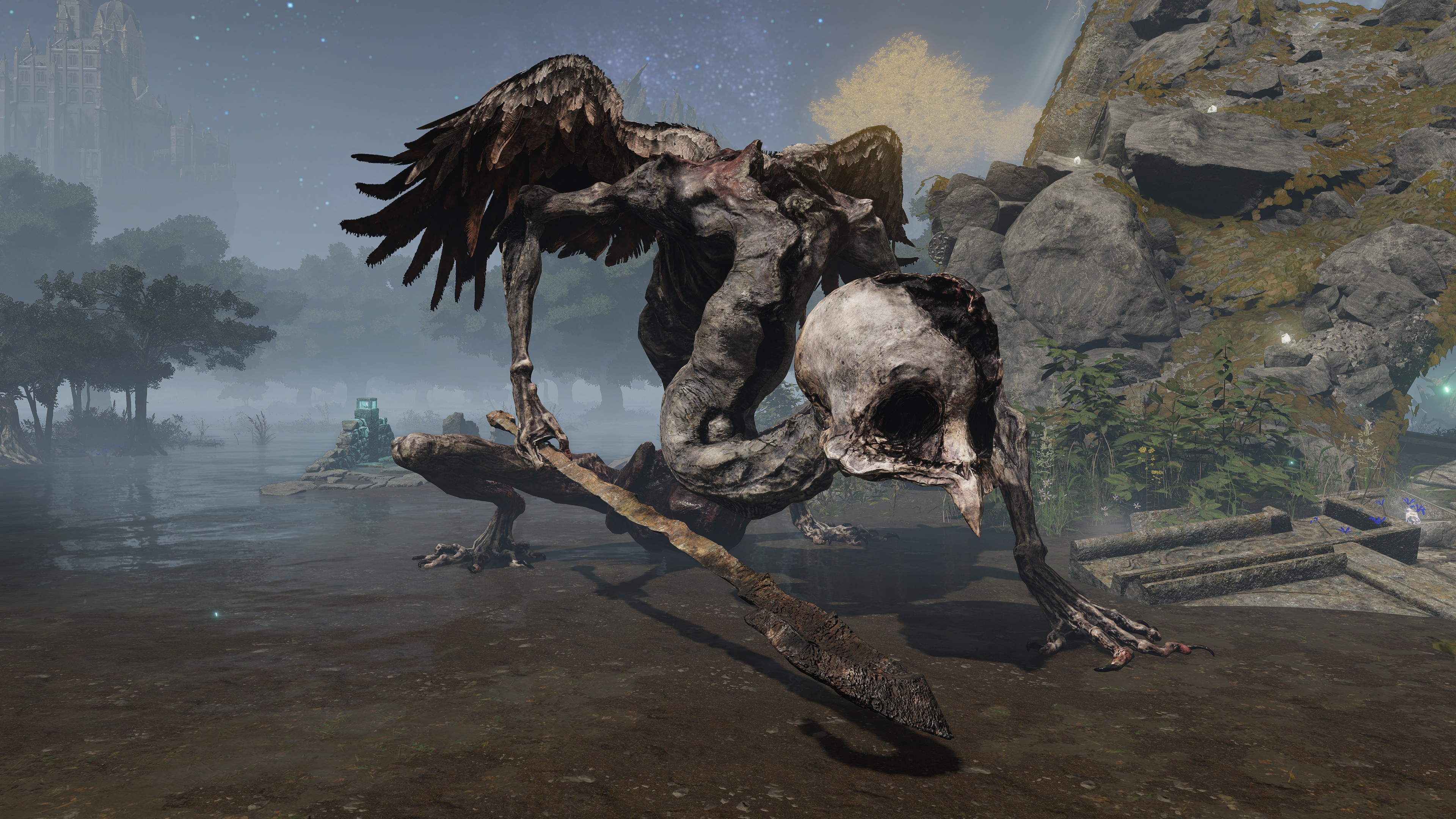
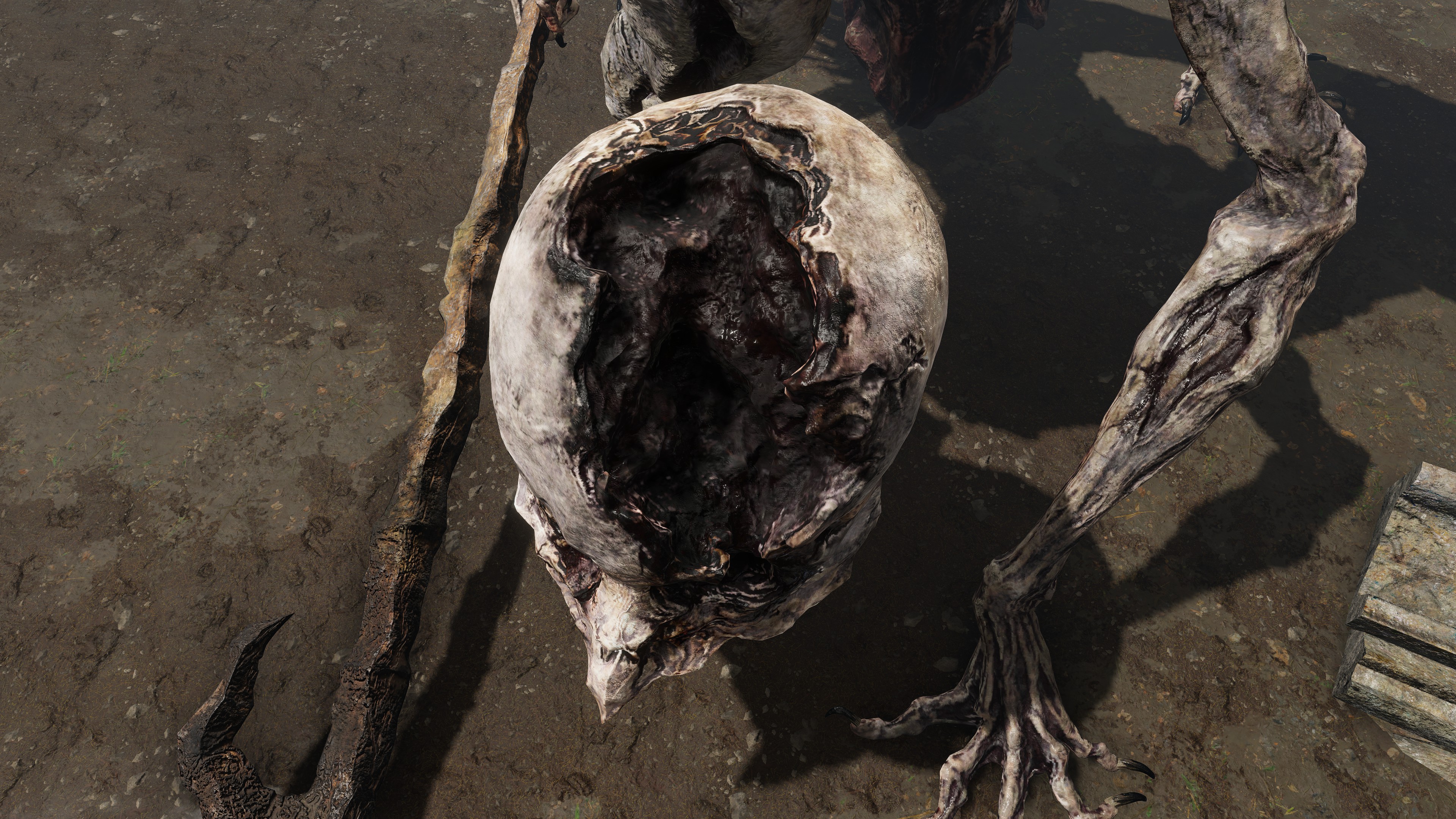
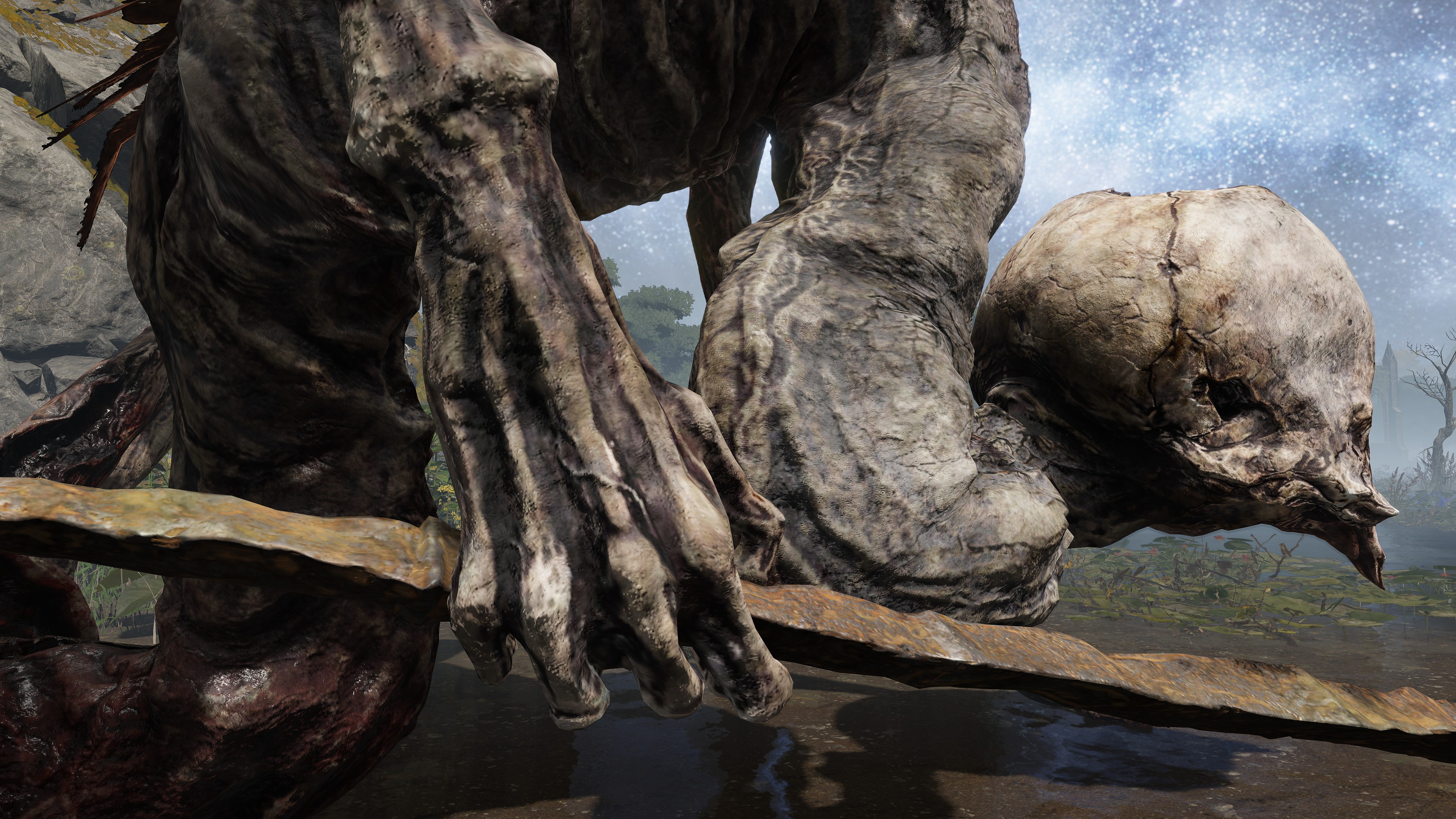
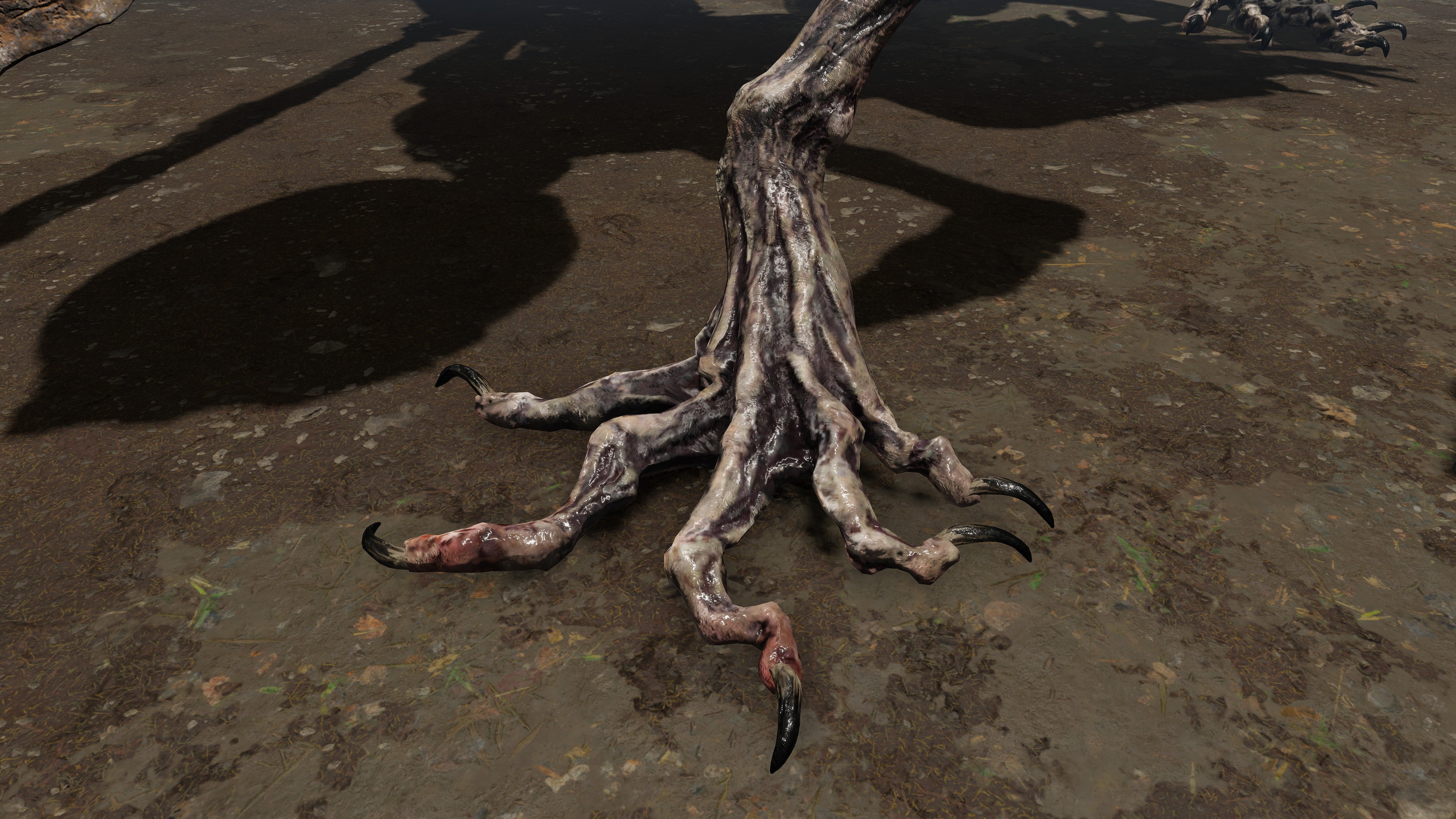
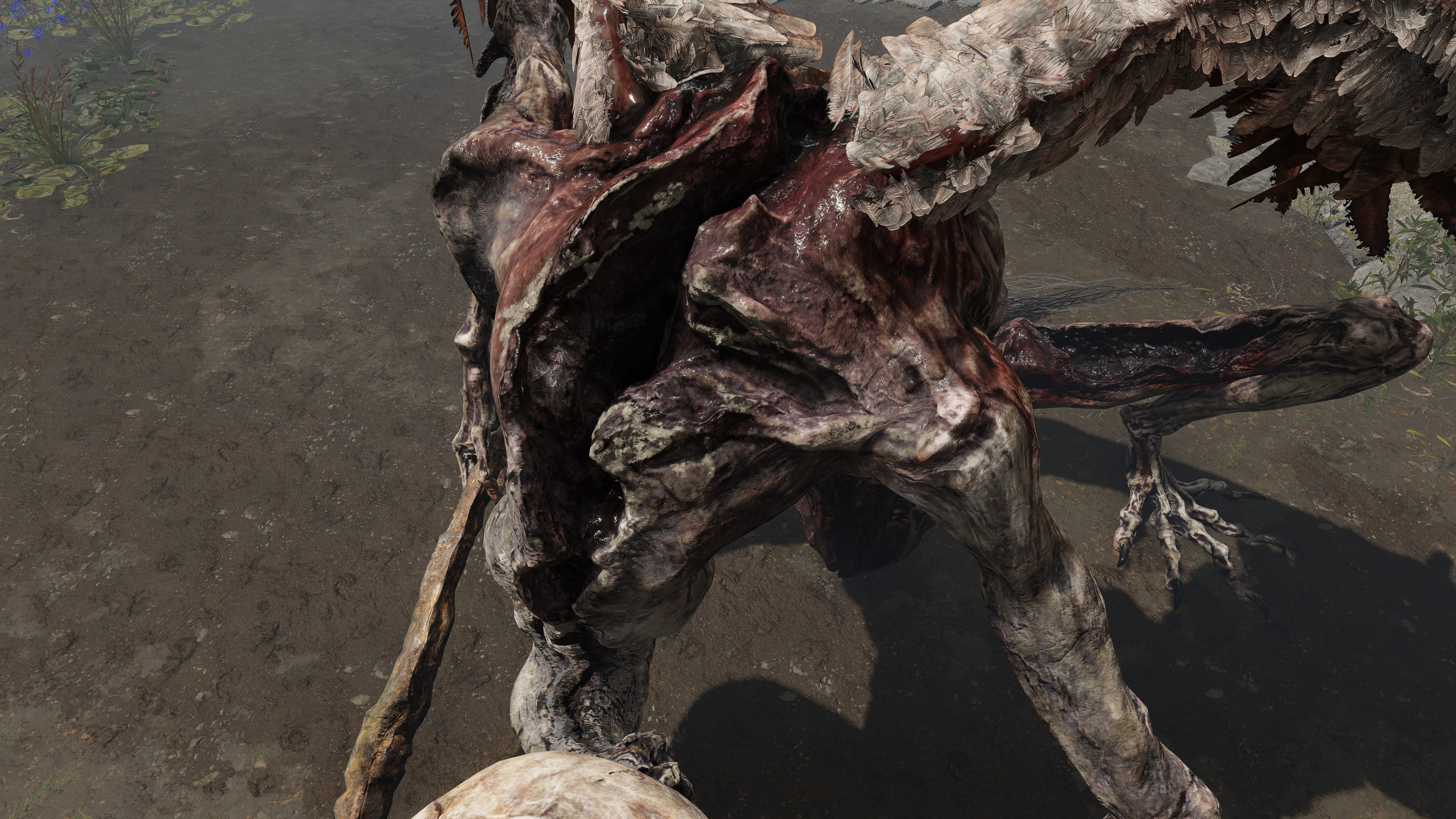
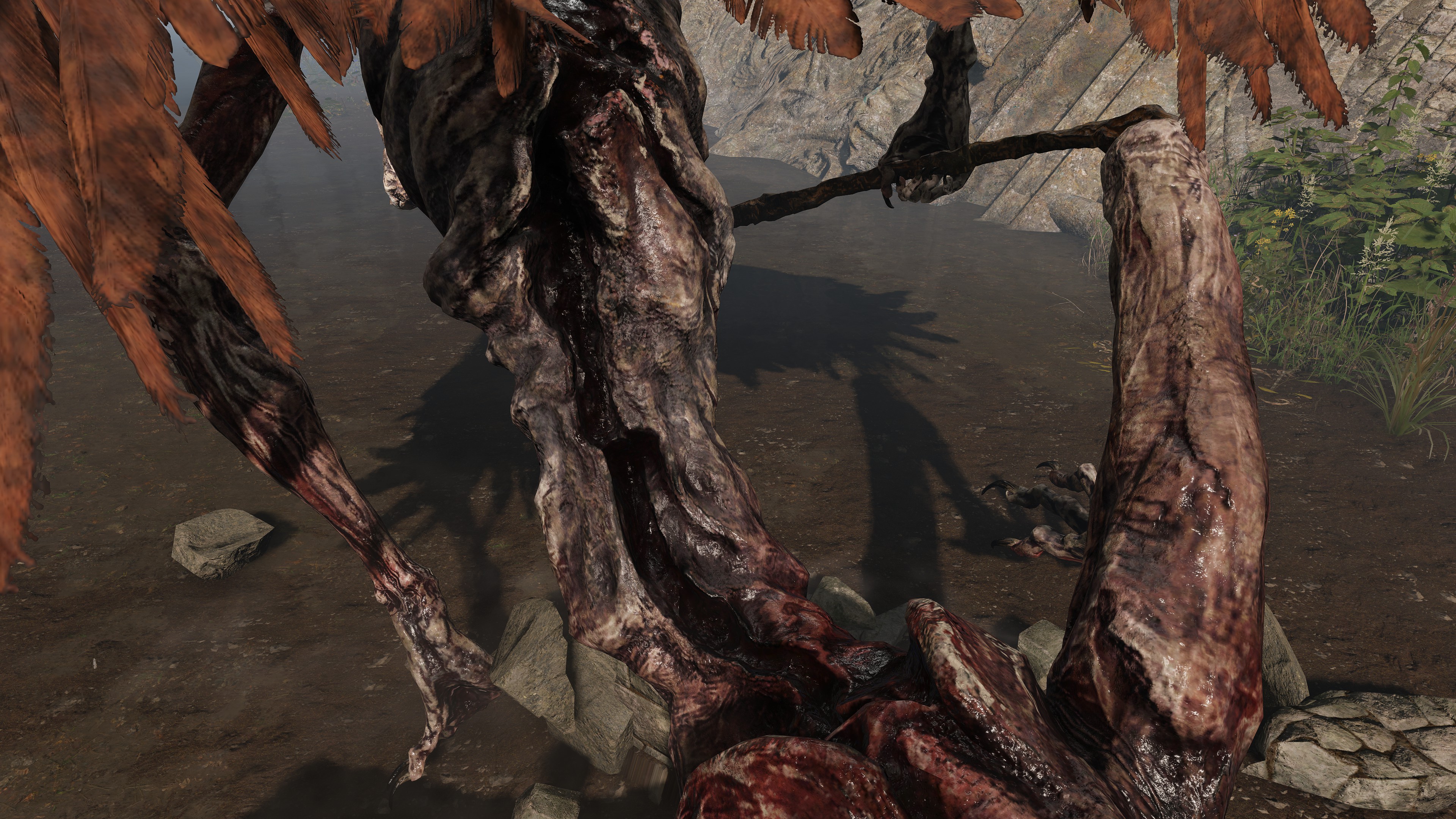
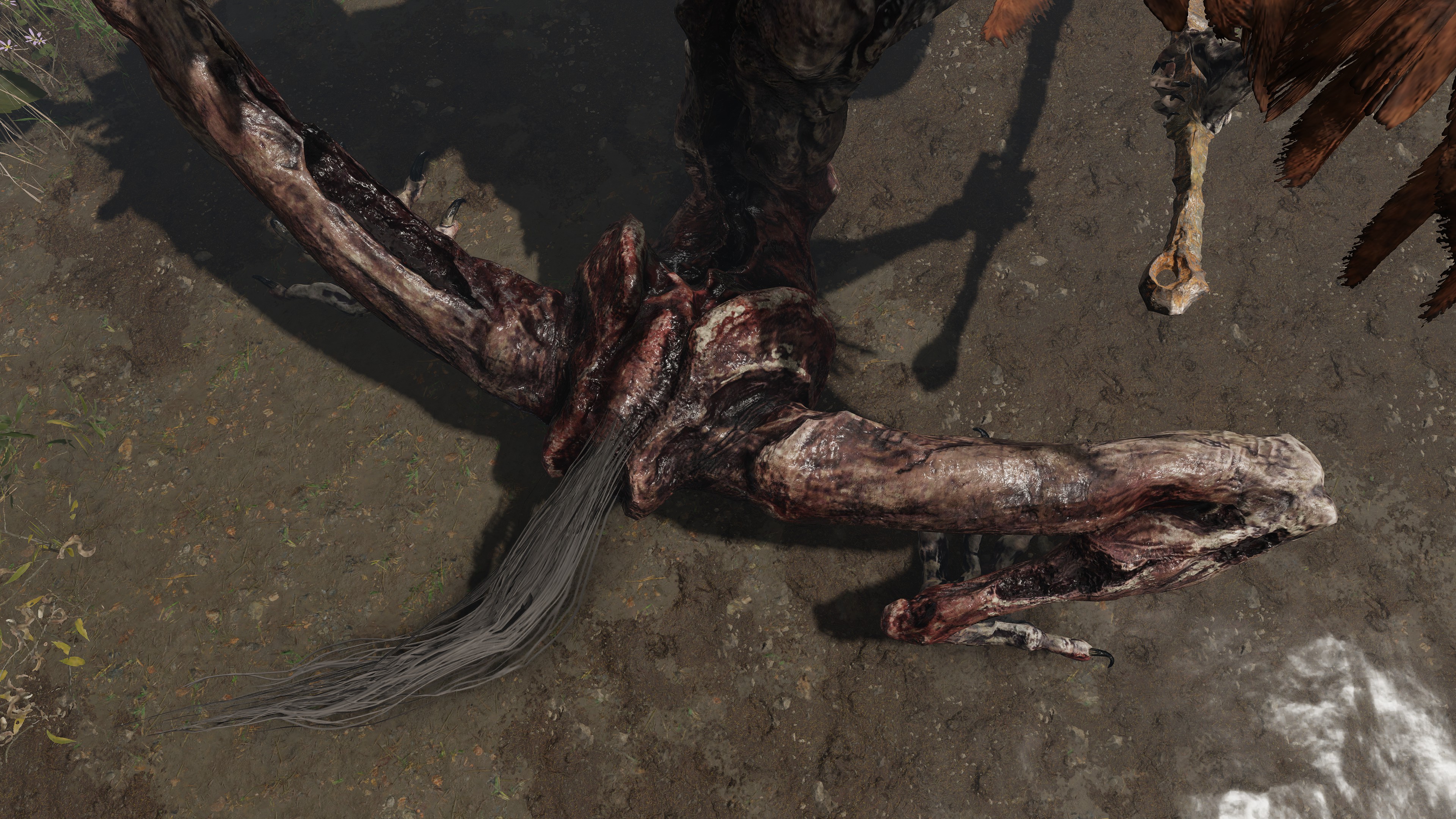
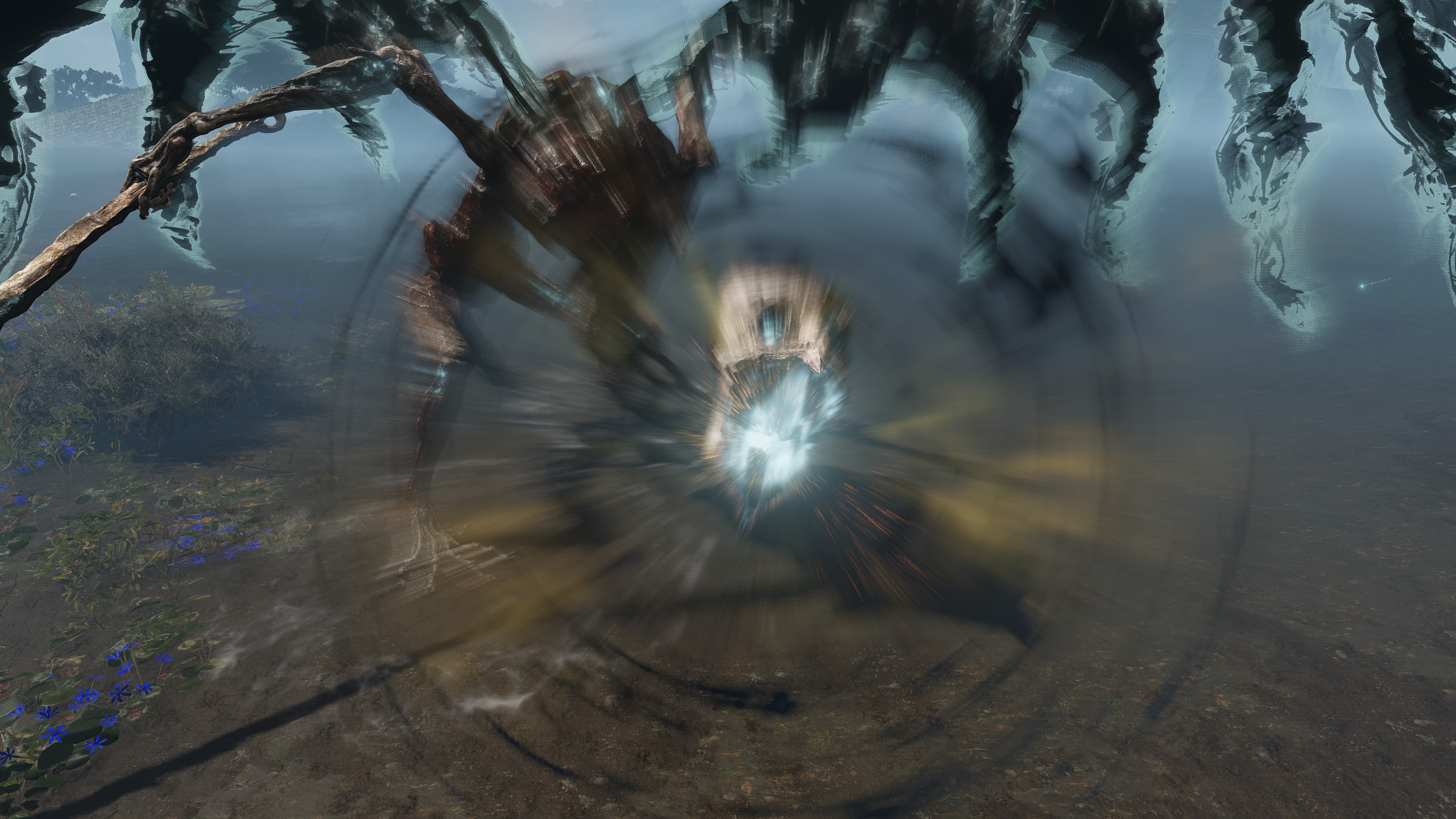
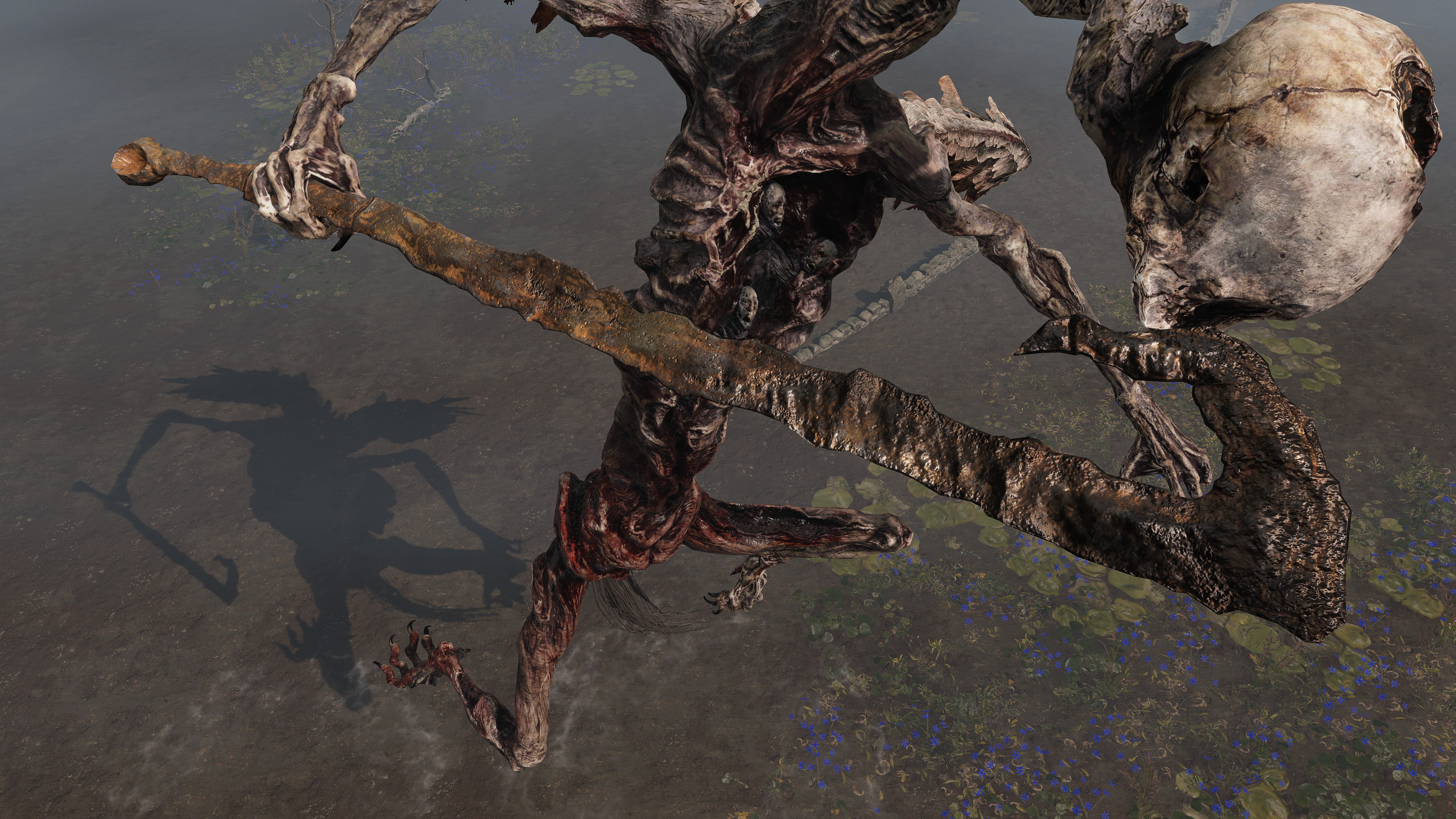
Hook rod that Deathbirds possess.
It is said that the birds are graveyard fire protectors and rake out corpse cinders from within their kiln.
Sorcery of Those Who Serve Death.
Thrusts staff to the ground, generates spiritflame explosion, and burns wide range of surroundings to ashes.
When there was still no Golden Tree, death burned in spiritflame. The Deathbirds are its protectors.
Sorcery of Those Who Serve Death.
Calls large amount of pursuing vengeful spirits. Enhanced with charging.
They are the cinders of old death that Deathbirds are said to rake out from within spiritflame.
Sorcery of Those Who Serve Death.
Calls pursuing vengeful spirits
It is an old death conjury resurrected by the death caster Garris.
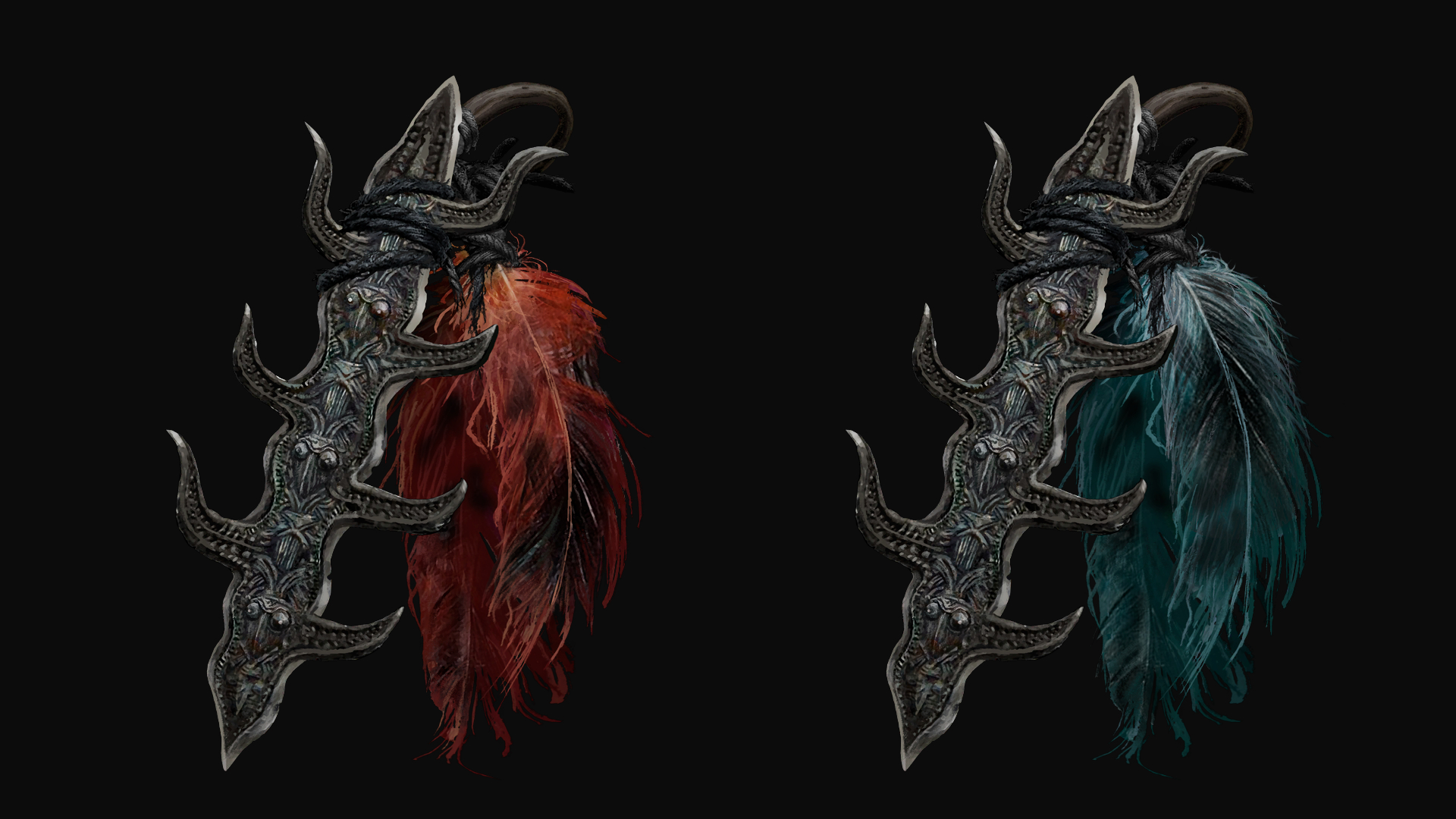
The nature of this assistance came in several forms. For their standard duties, we can acquire talismans derived from some of their ceremonies and in conjunction modeled on the spears used for those ceremonies. Following the death rite, the metal token empowers a low-HP owner’s attack or defense, reflecting how the living feel uplifted as death approaches — nothing quite gets your blood pumping and makes you feel more alive like viscerally knowing you are close to losing it all. The talisman promotes the desperation to cling to life in warriors right as they are about to die, all to make the potential death more brilliant. That “fervent” high from such a high-stakes gamble, literally to “risk life” (懸命) as you put all your effort into the act, makes the cosmic spirit in men burn as bright as the stars they came from. It is exactly what makes the spirit better fuel to burn when the dead are offered to the Deathbirds. In fact, the Twinbird on the kite shield induces the effects of both talismans, the red and blue feathers attached to each mirroring the backgrounds for the two halves. They thrive as more death nears.
Talisman which originates from old-time death ceremonies.
The red-feathered one boosts attack power when HP is decreased.
To approach death is uplifting. That is exactly why, with so fervent the cling to life, the later death is more brilliant.
Talisman which originates from old-time death ceremonies.
The blue-feathered one boosts defense power when HP is decreased.
That is exactly why, with so fervent the cling to life, a death worth offering is born.
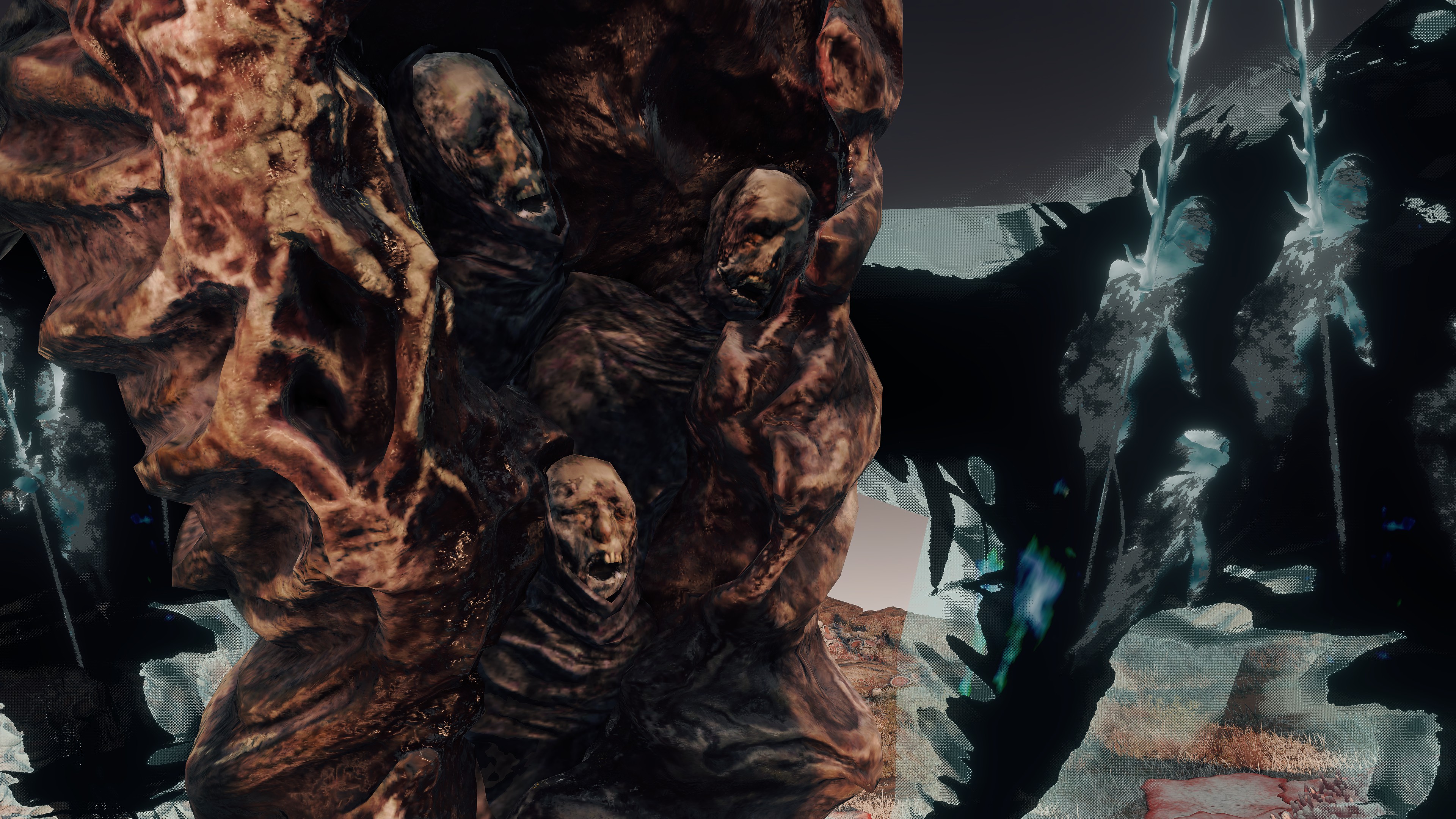
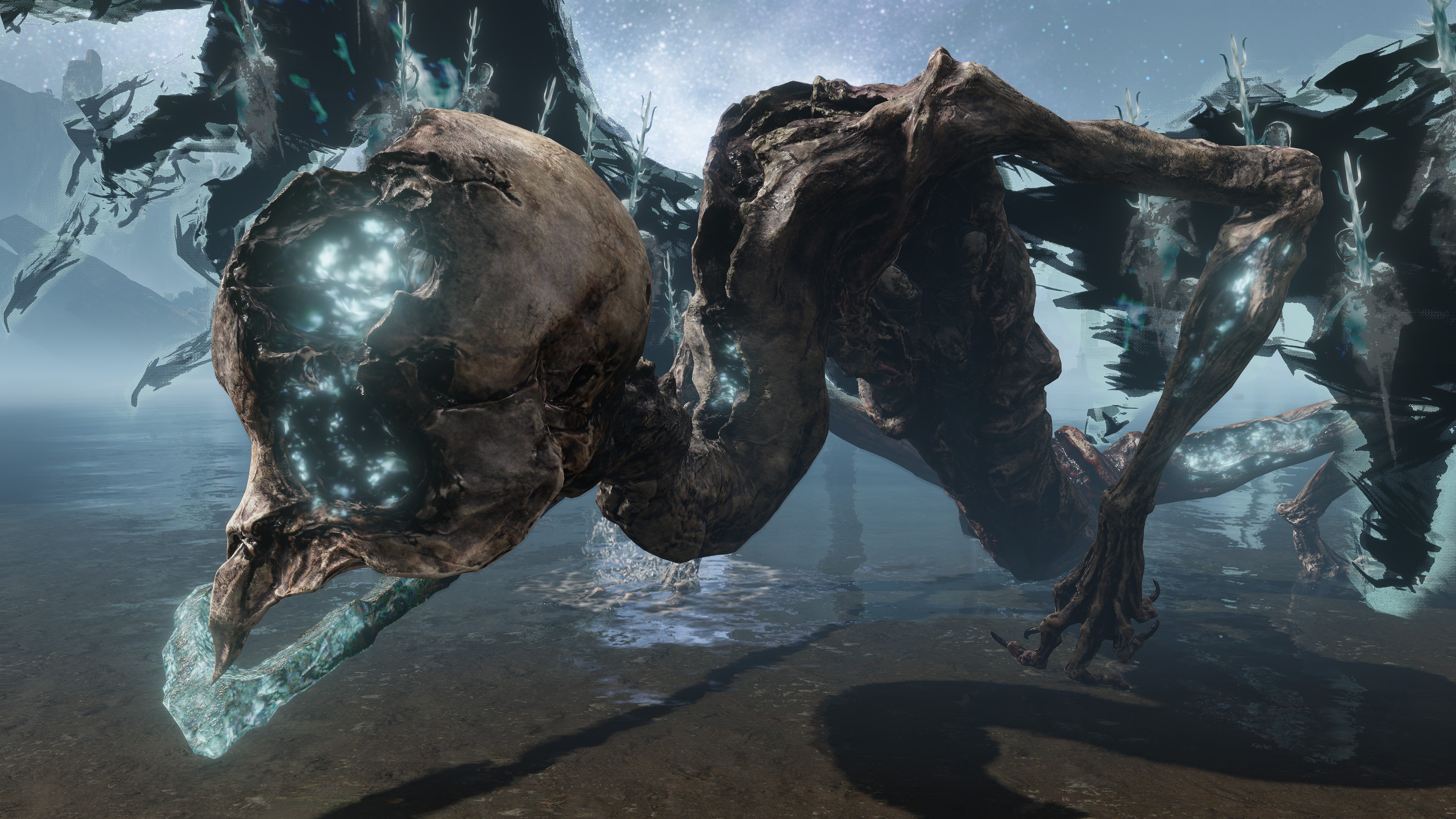
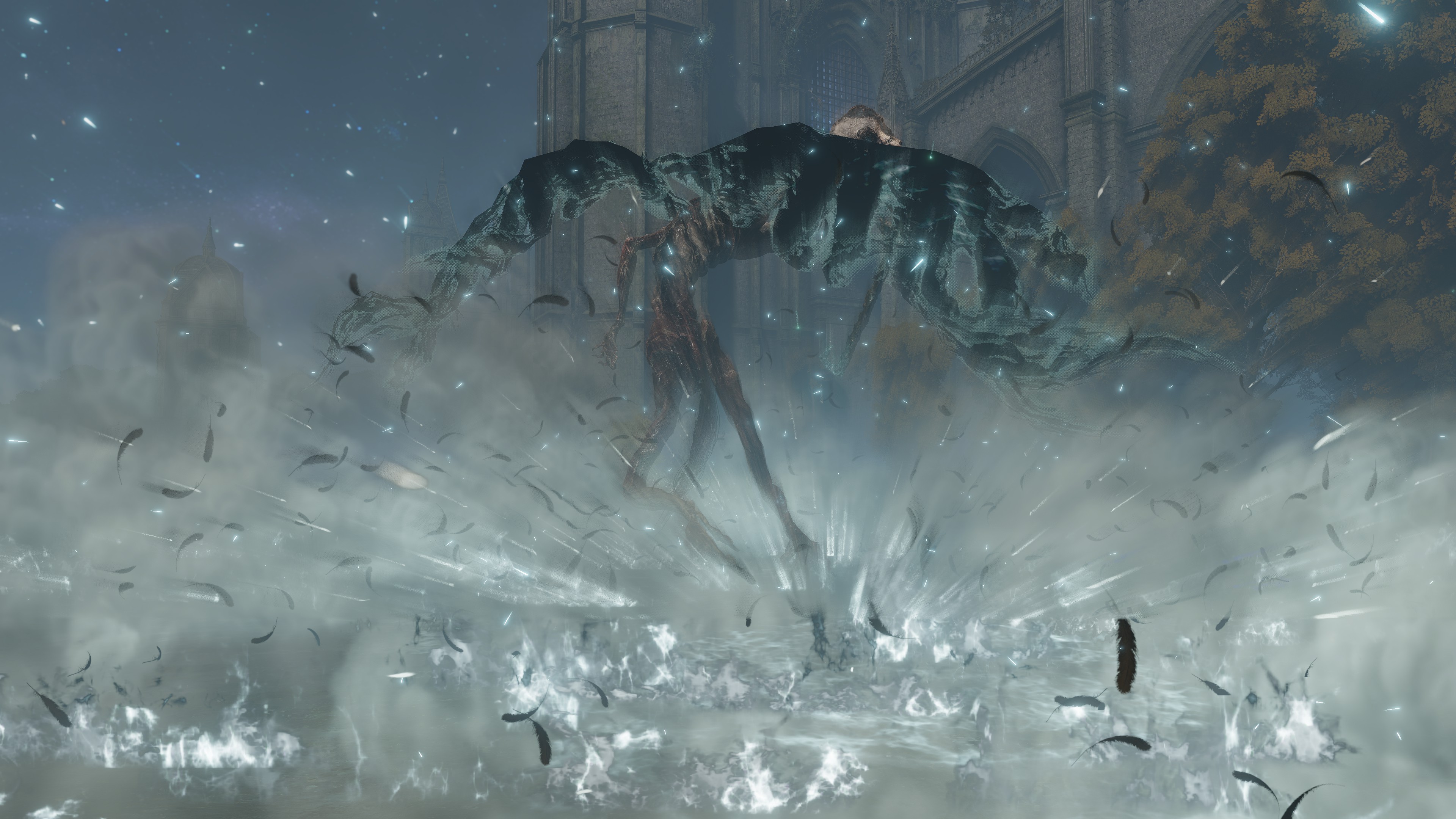
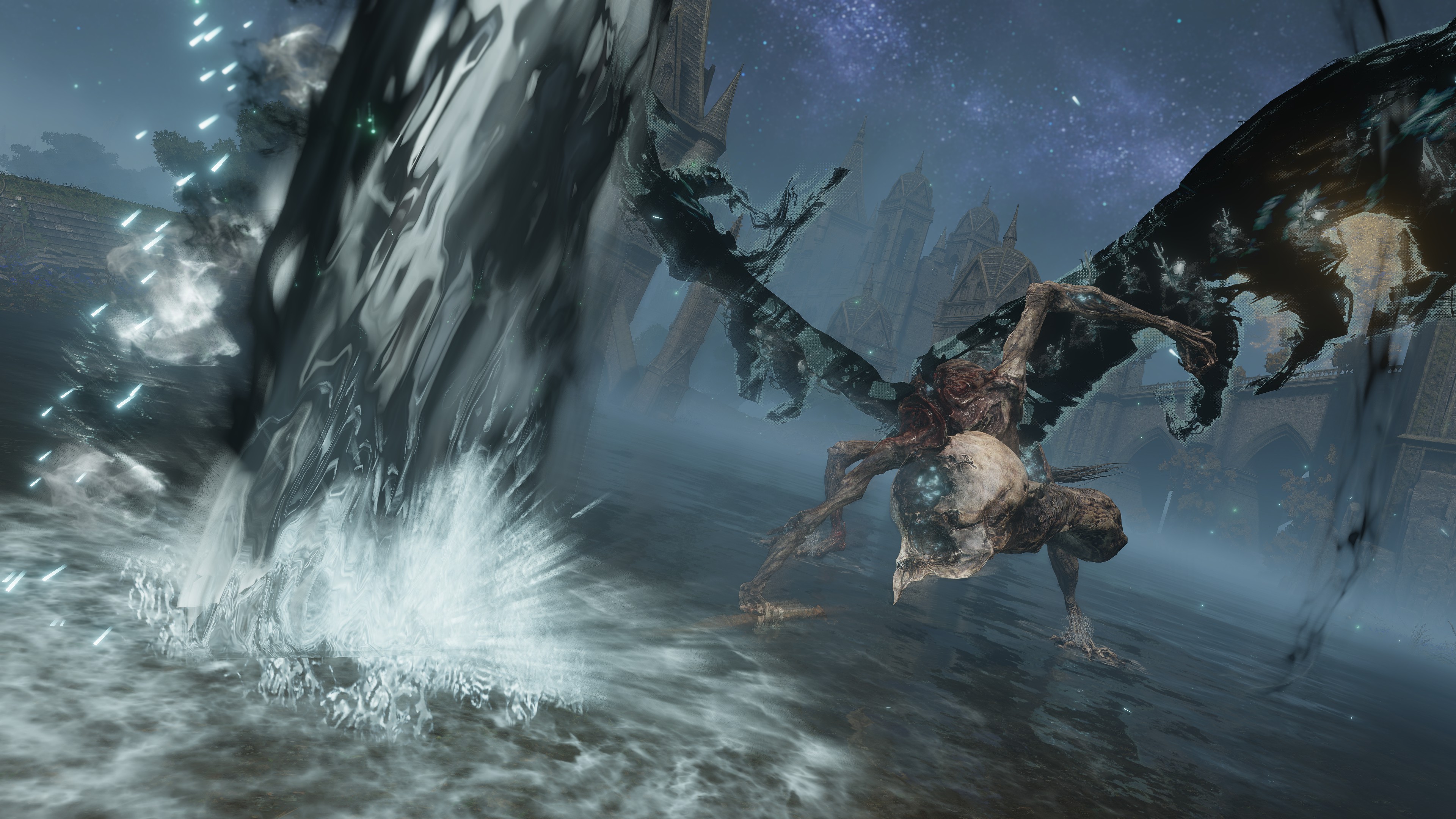
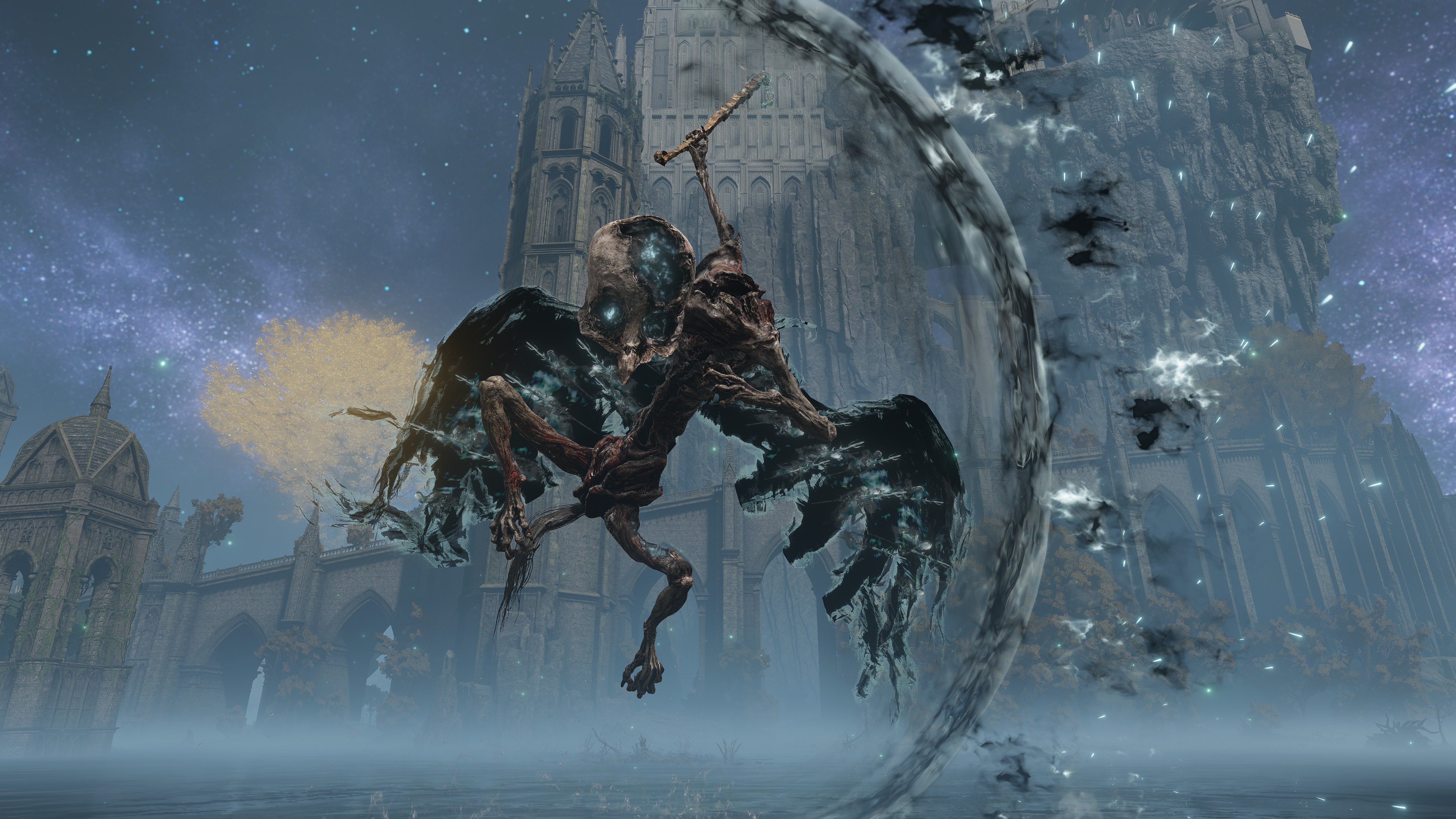
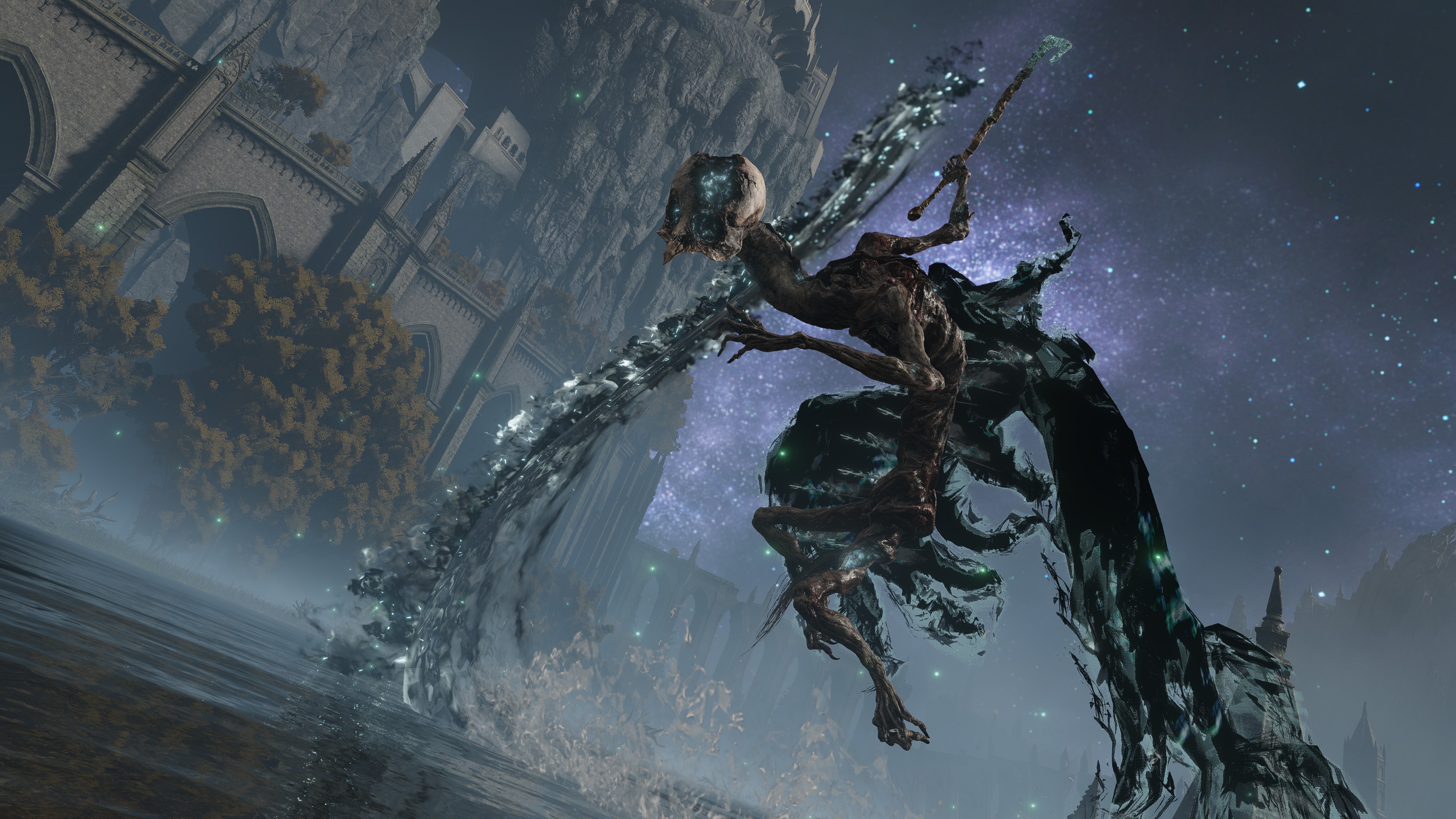
In the end, the priests themselves will become that same fuel. As reward for a life of service, the clergy are subject to another death rite turning them into the birds’ guardians. This is apparently a pact to be reborn in the distant future. Close inspection of every Deathbird does reveal a number of preciously wrapped corpses stuffed inside of them. Death Rite Birds additionally have their small wings replaced with giant spectral black wings lined with priests as they hold up their spears, the body’s visible insides glowing with ghostflame which is channeled through their poker. Evidently, the corpses incubate inside of the bosses until enough partake of the ritual, their spirits collectively burning to become the new wings supporting the bird. As guardians, priests serve not only as an independent source of ghostflame, but also as agents in various arts. One resembles Ancient Death Rancor but without the typical skulls, meaning no actual rancor — why hold a grudge when it was their choice? Another is a Spearcall Ritual, shooting out countless spectral spears to rain down on the bird’s enemies. In short, they receive a new life in death performing ceremonies for their revered birds for eternity.
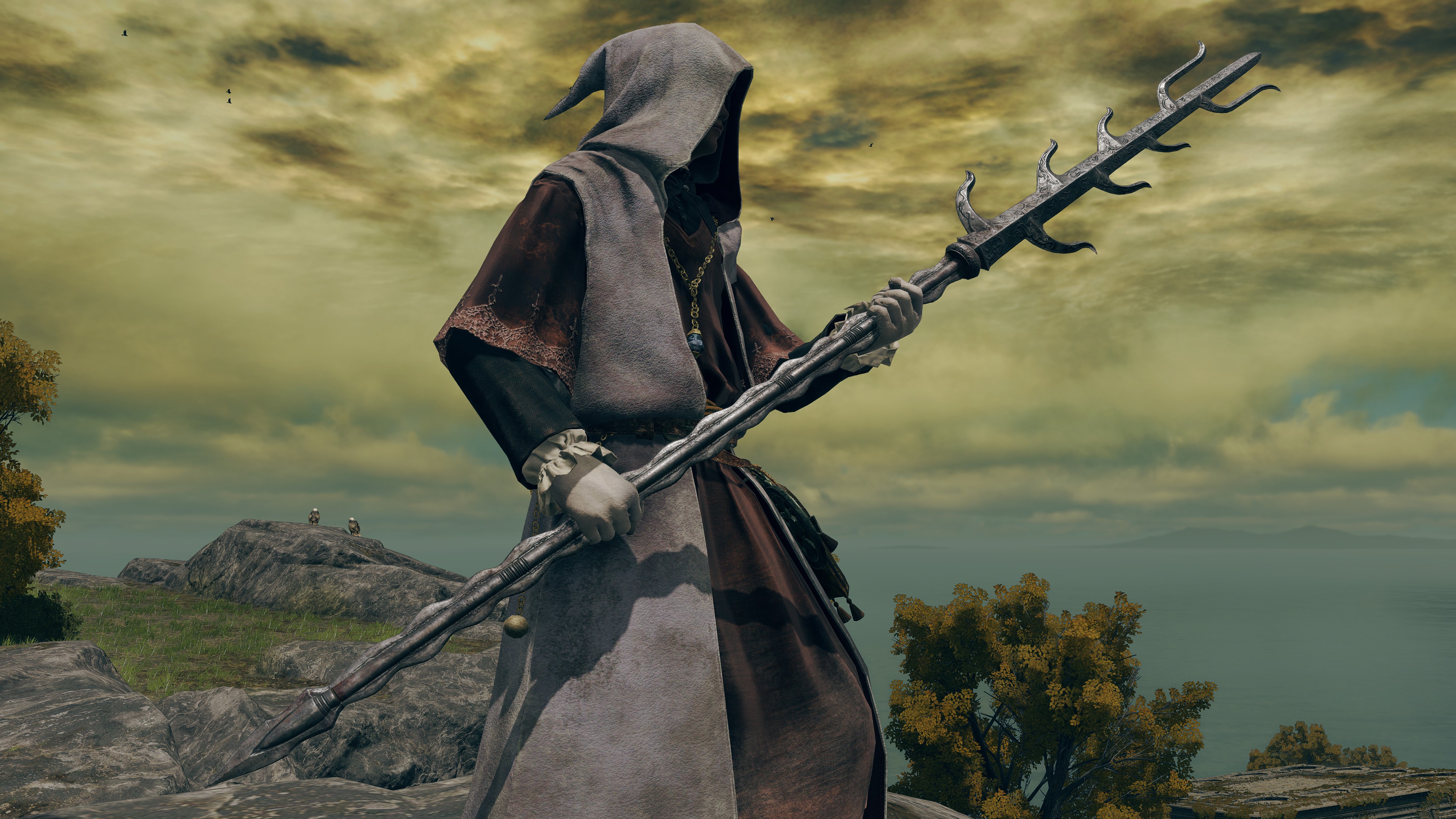
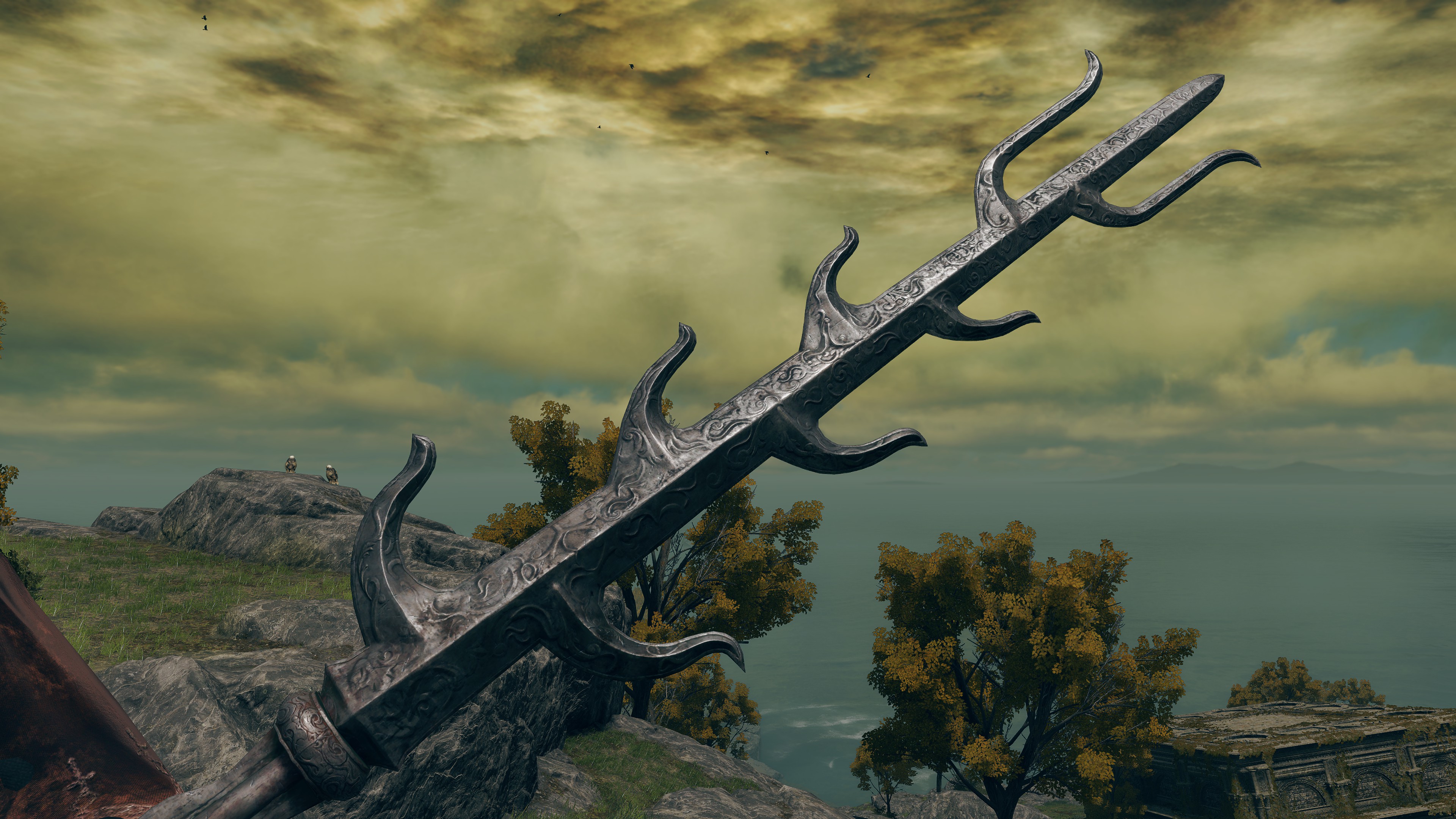
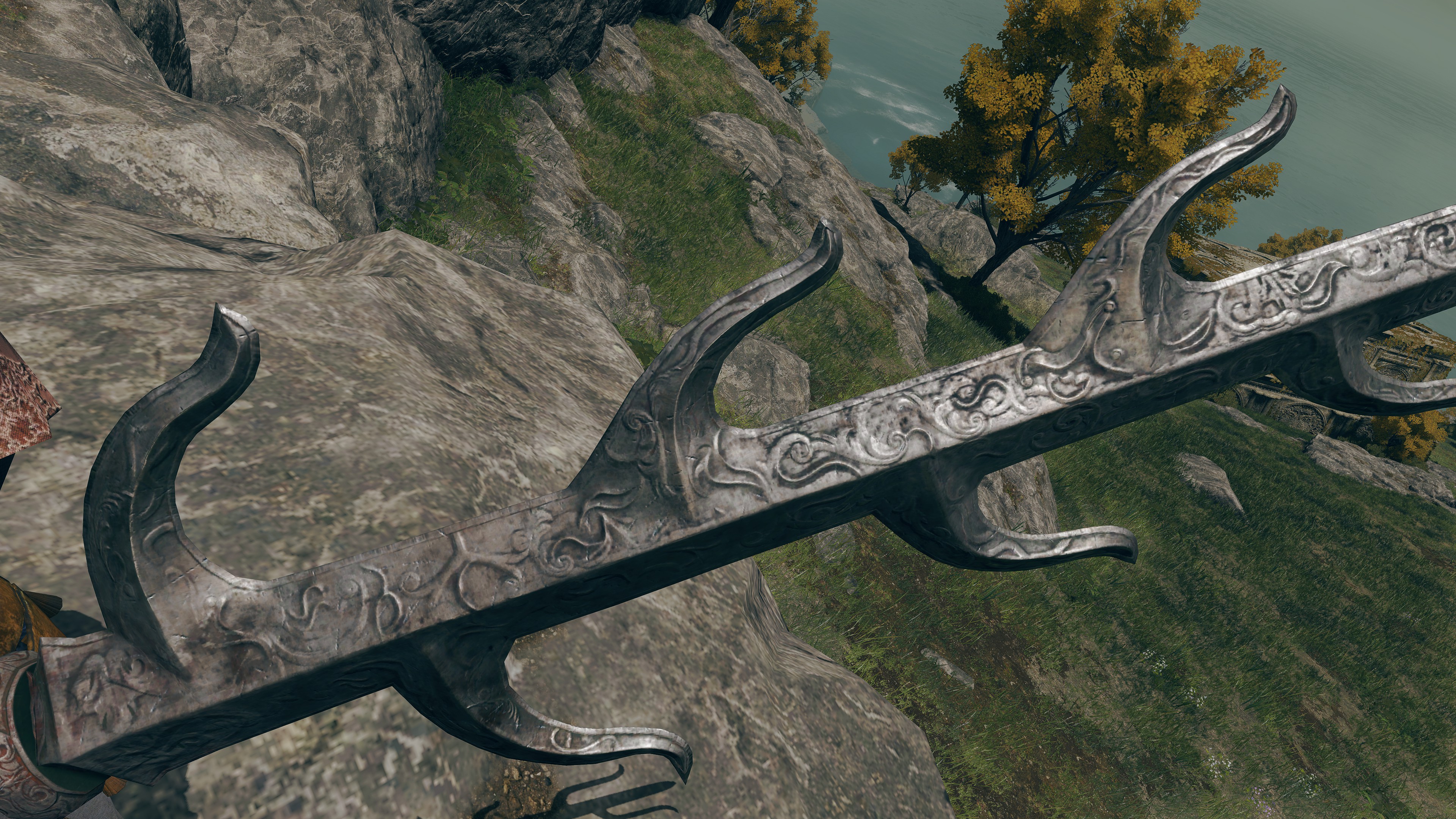
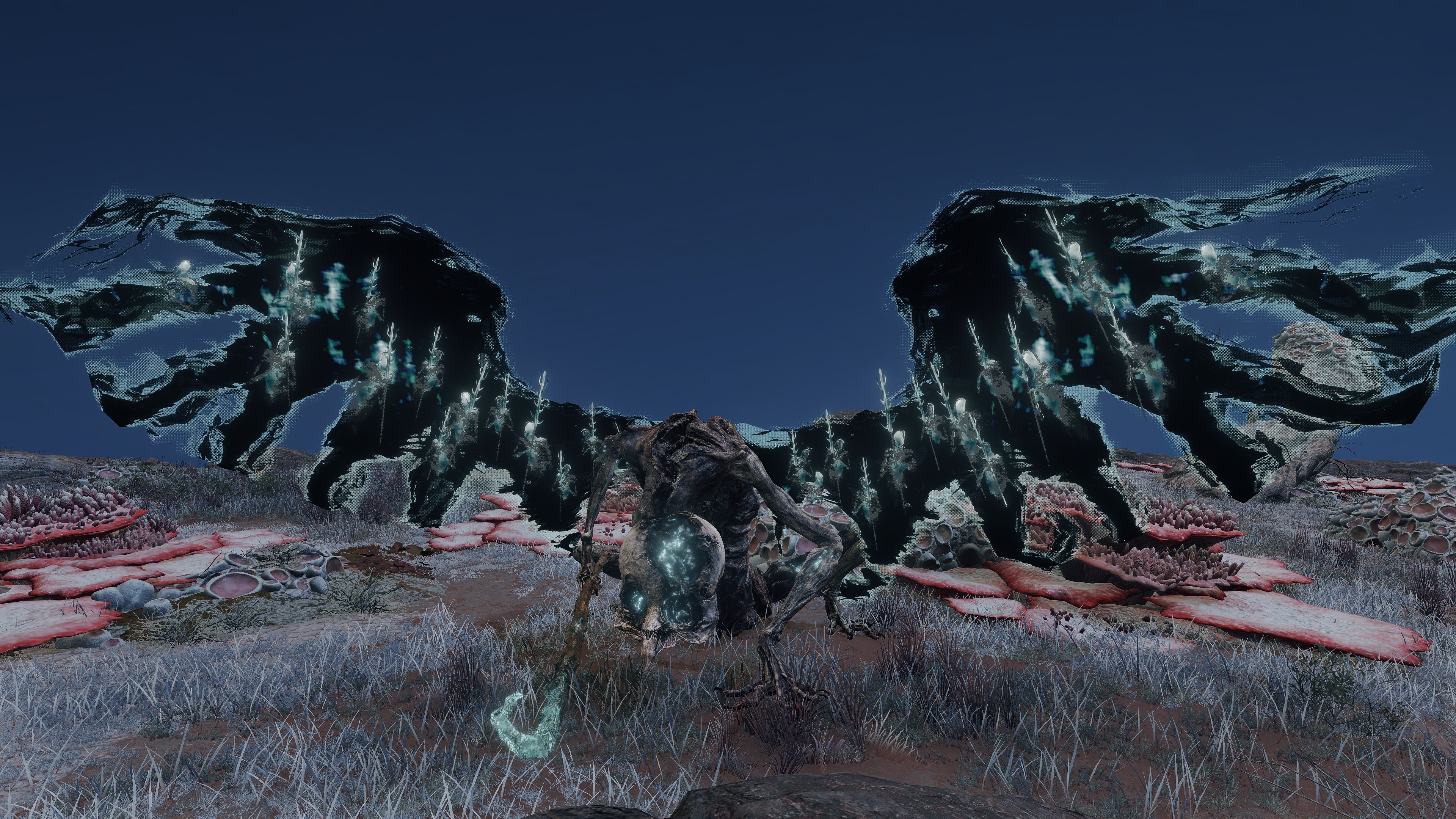
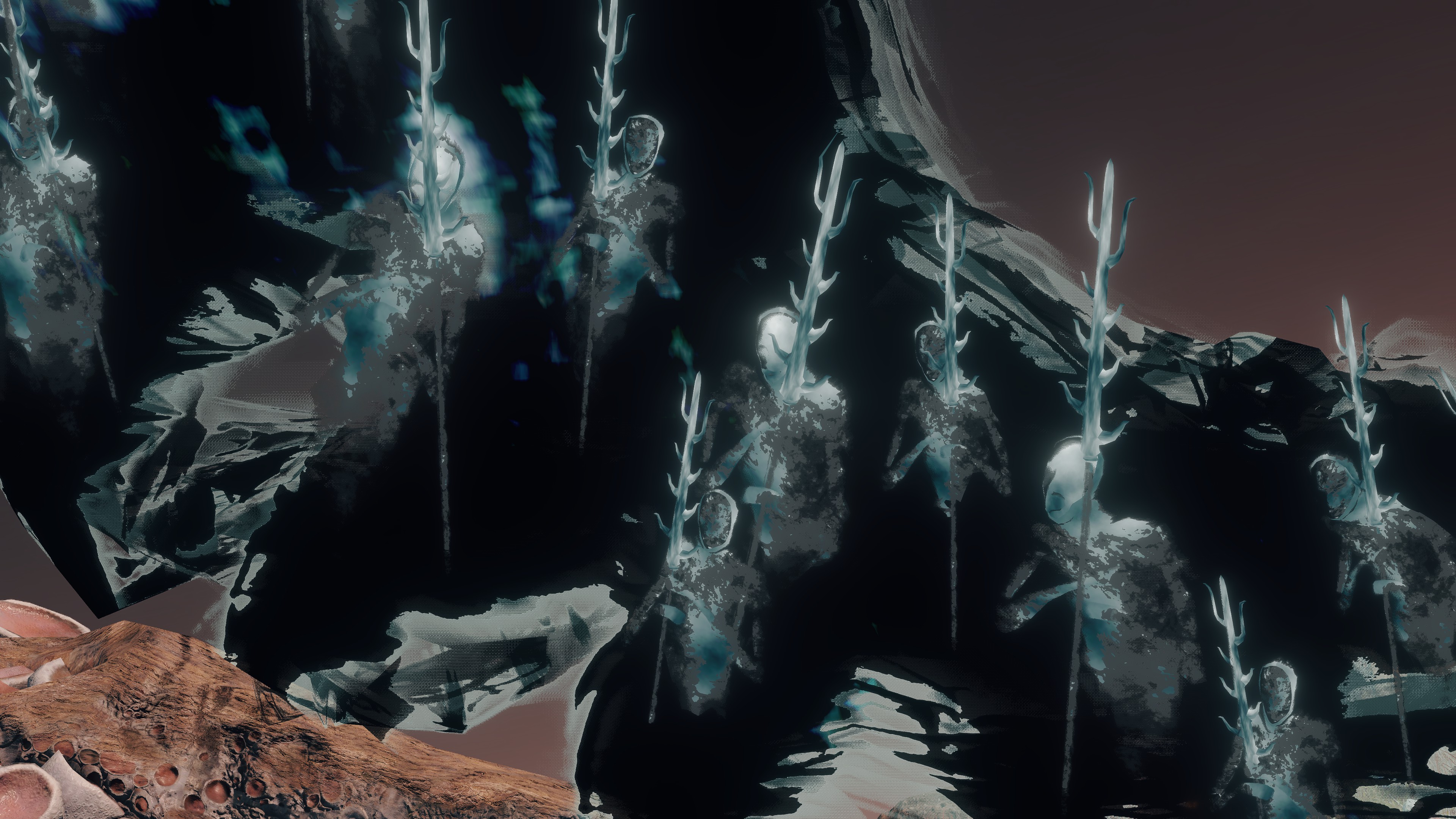
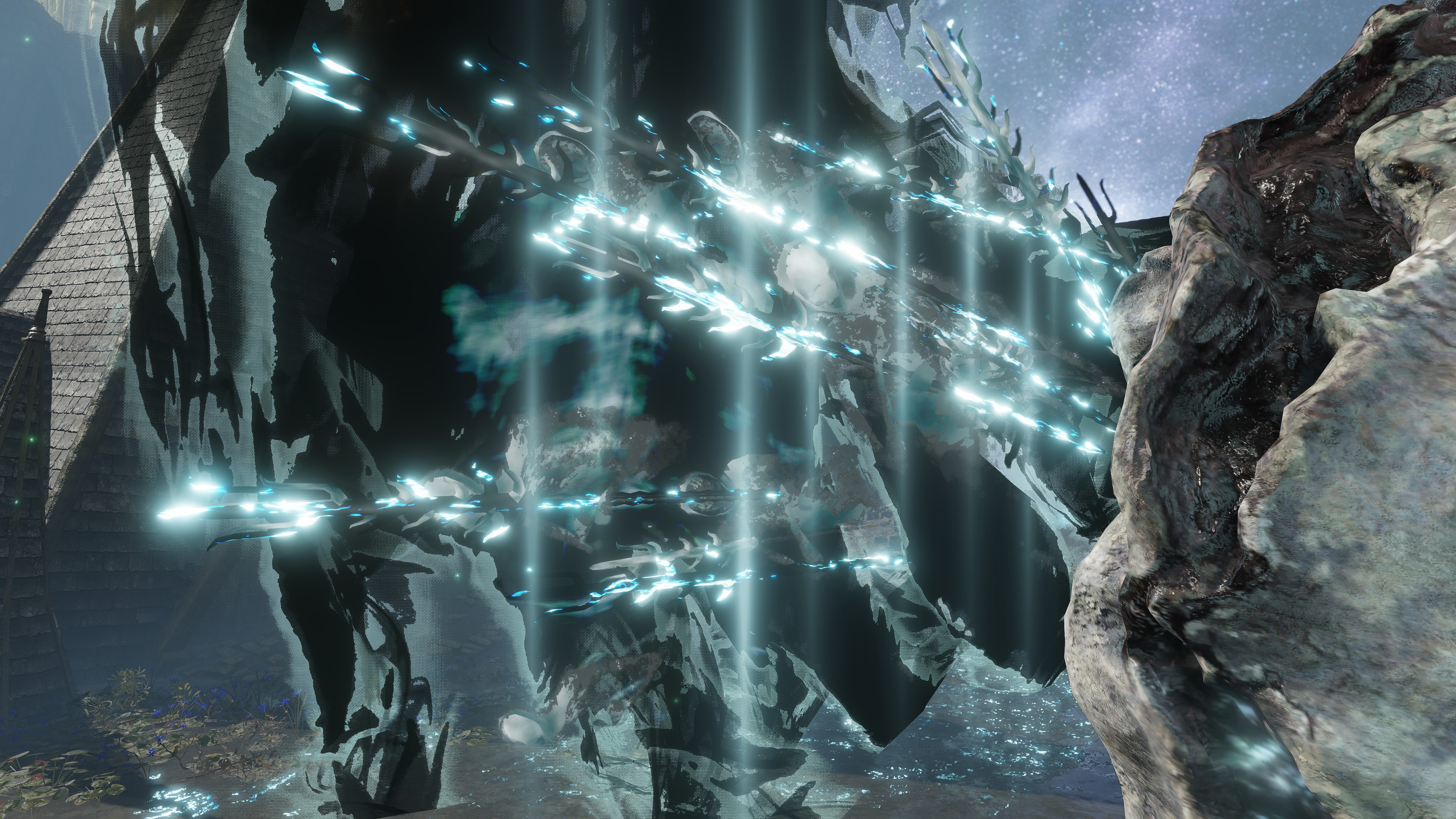
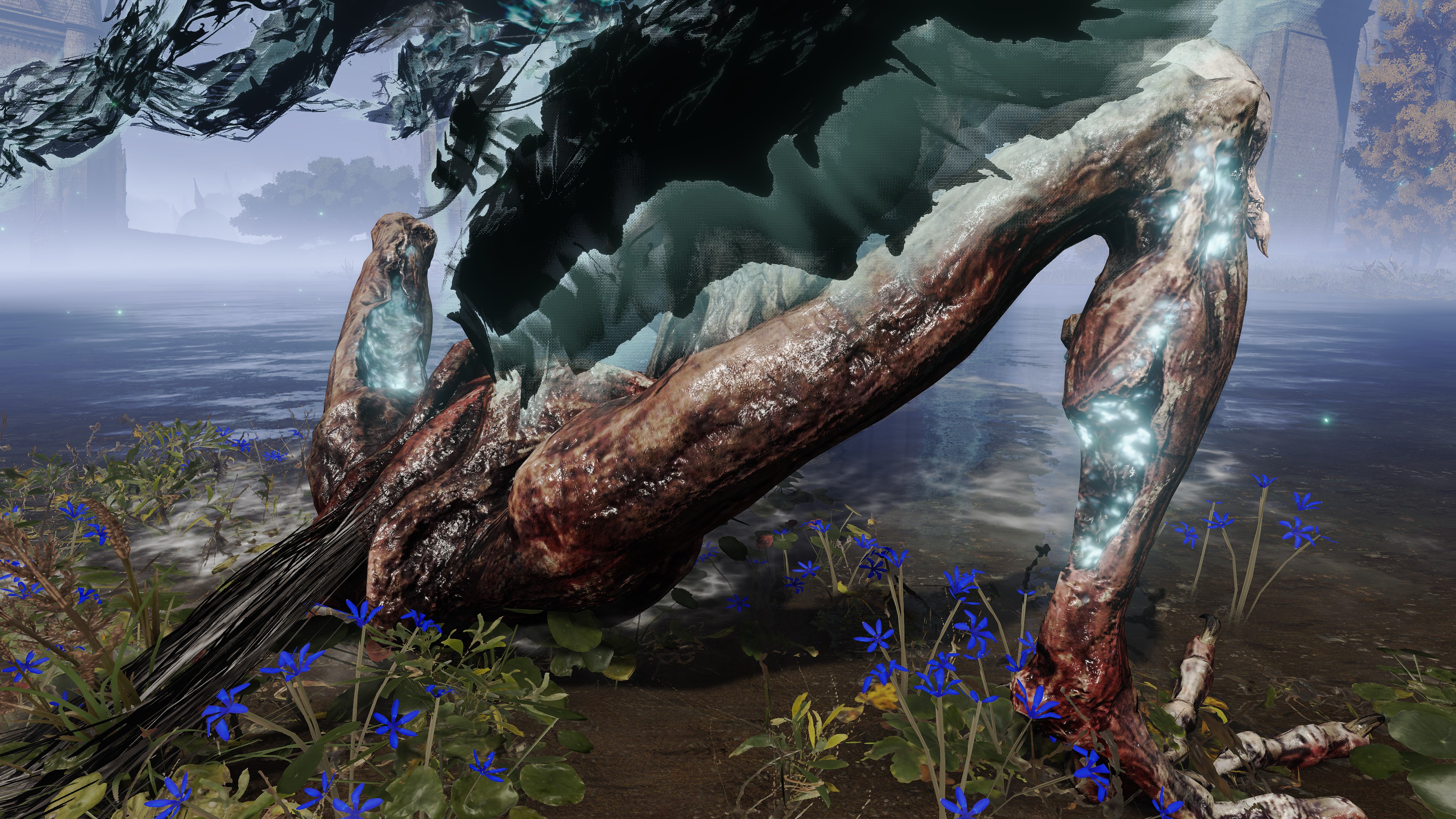
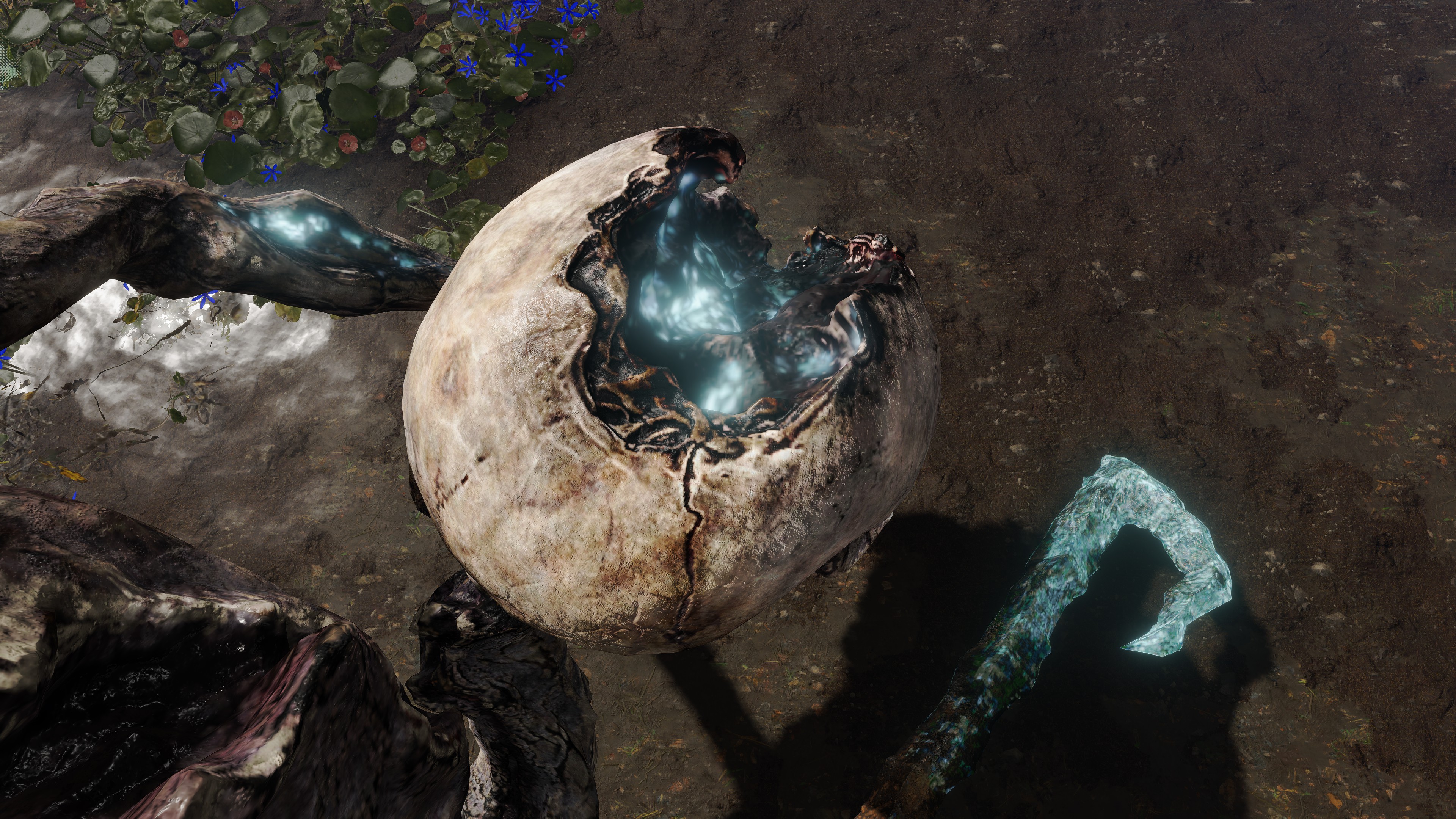
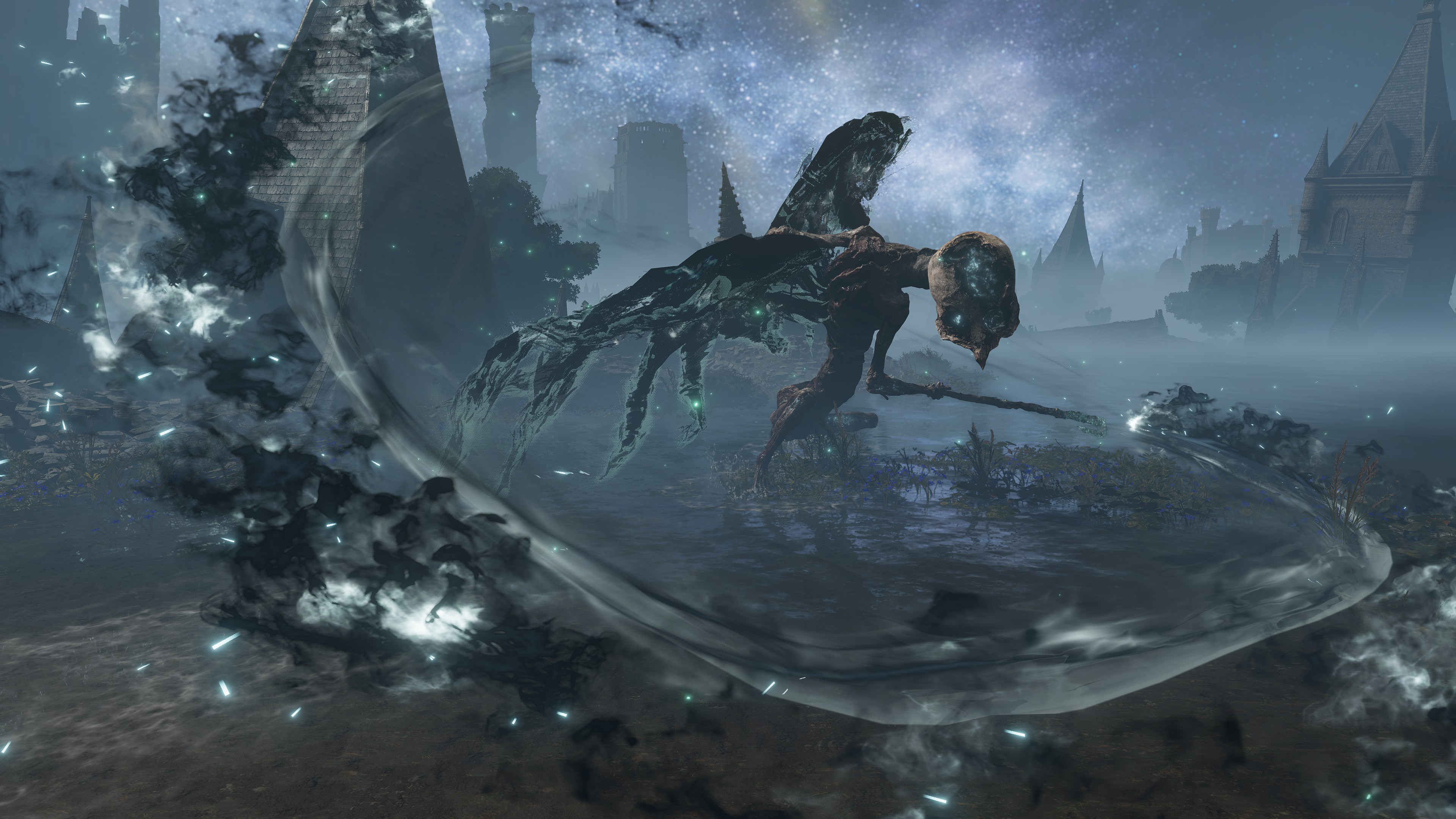
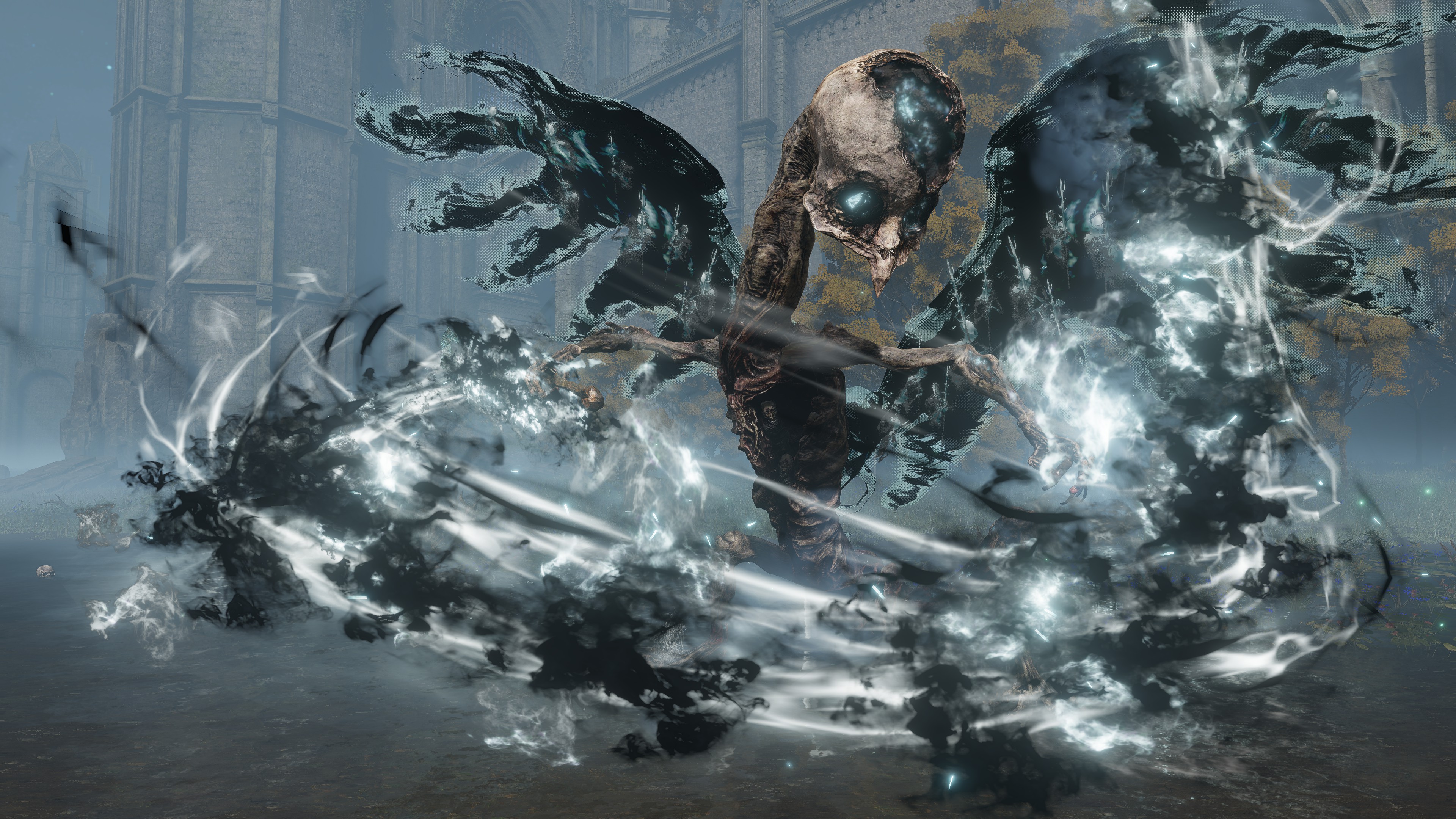
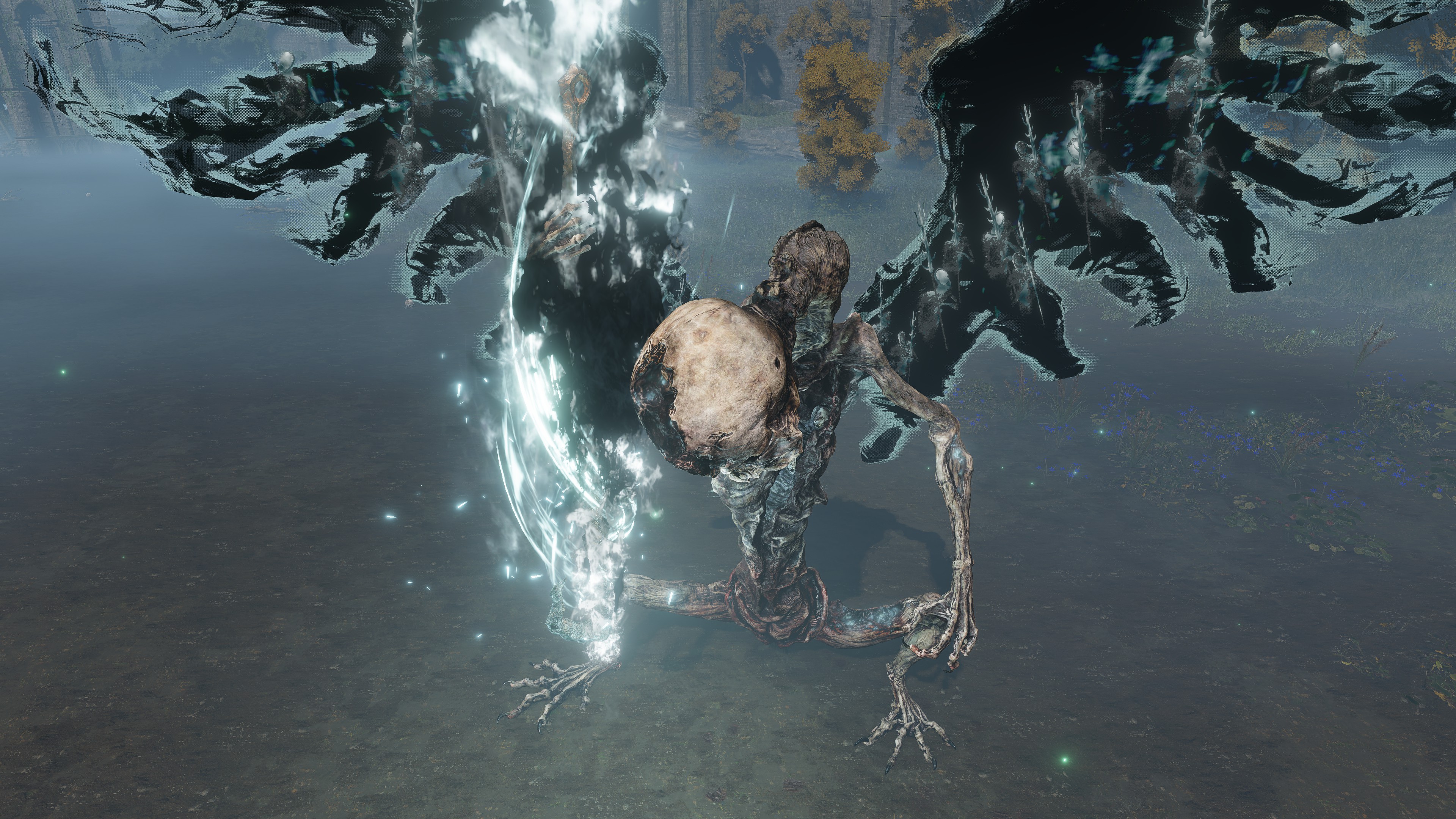
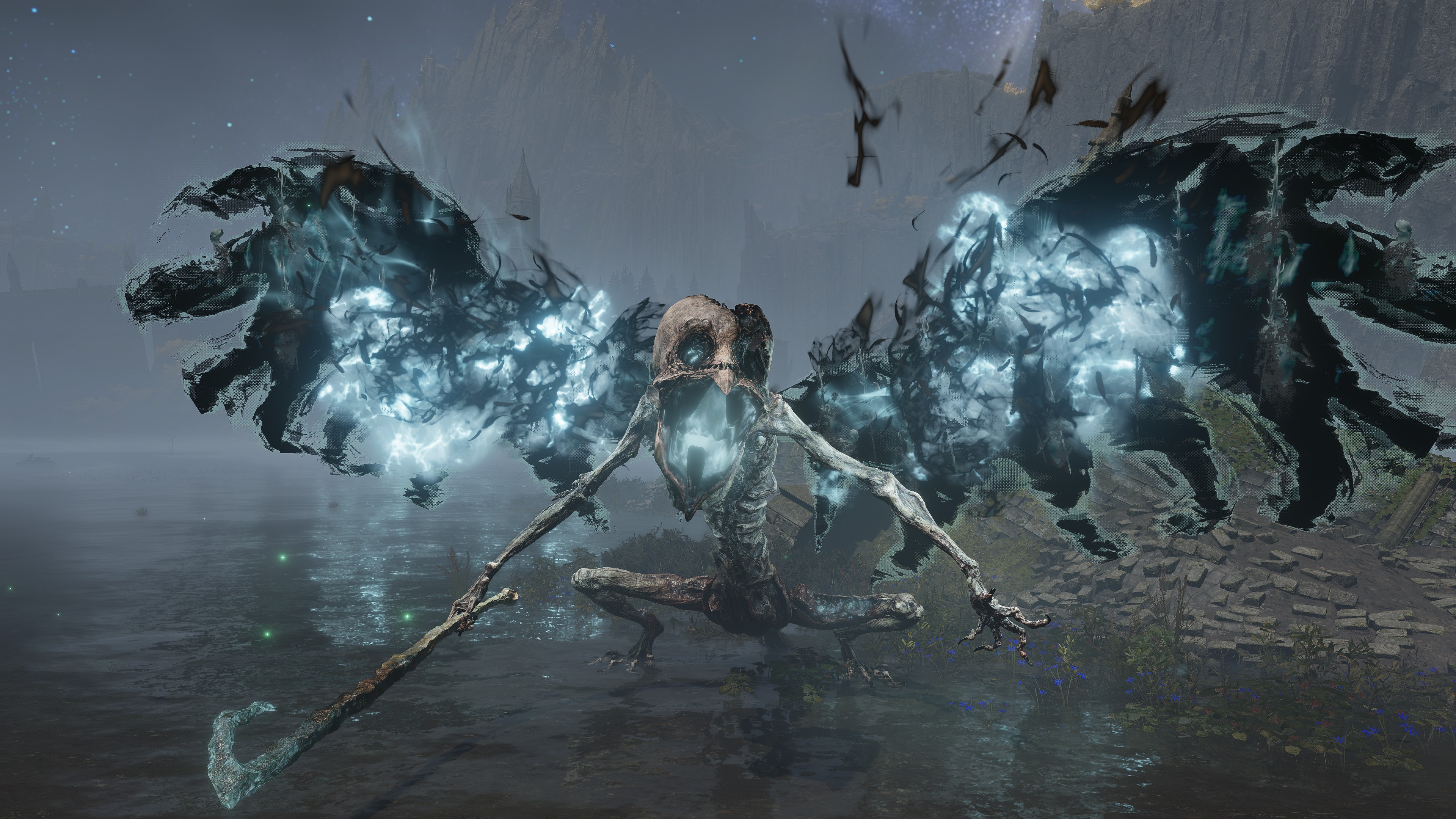
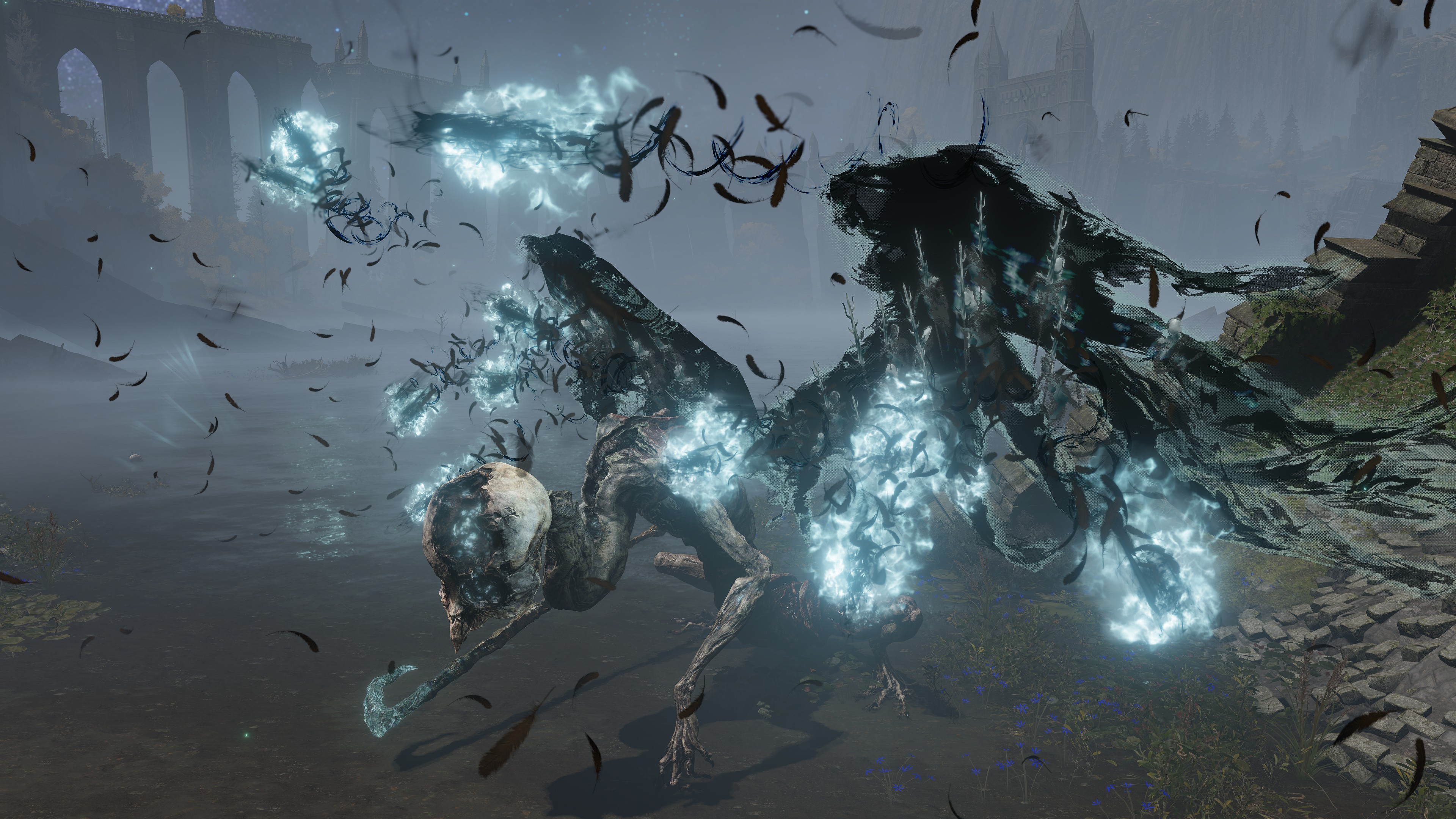
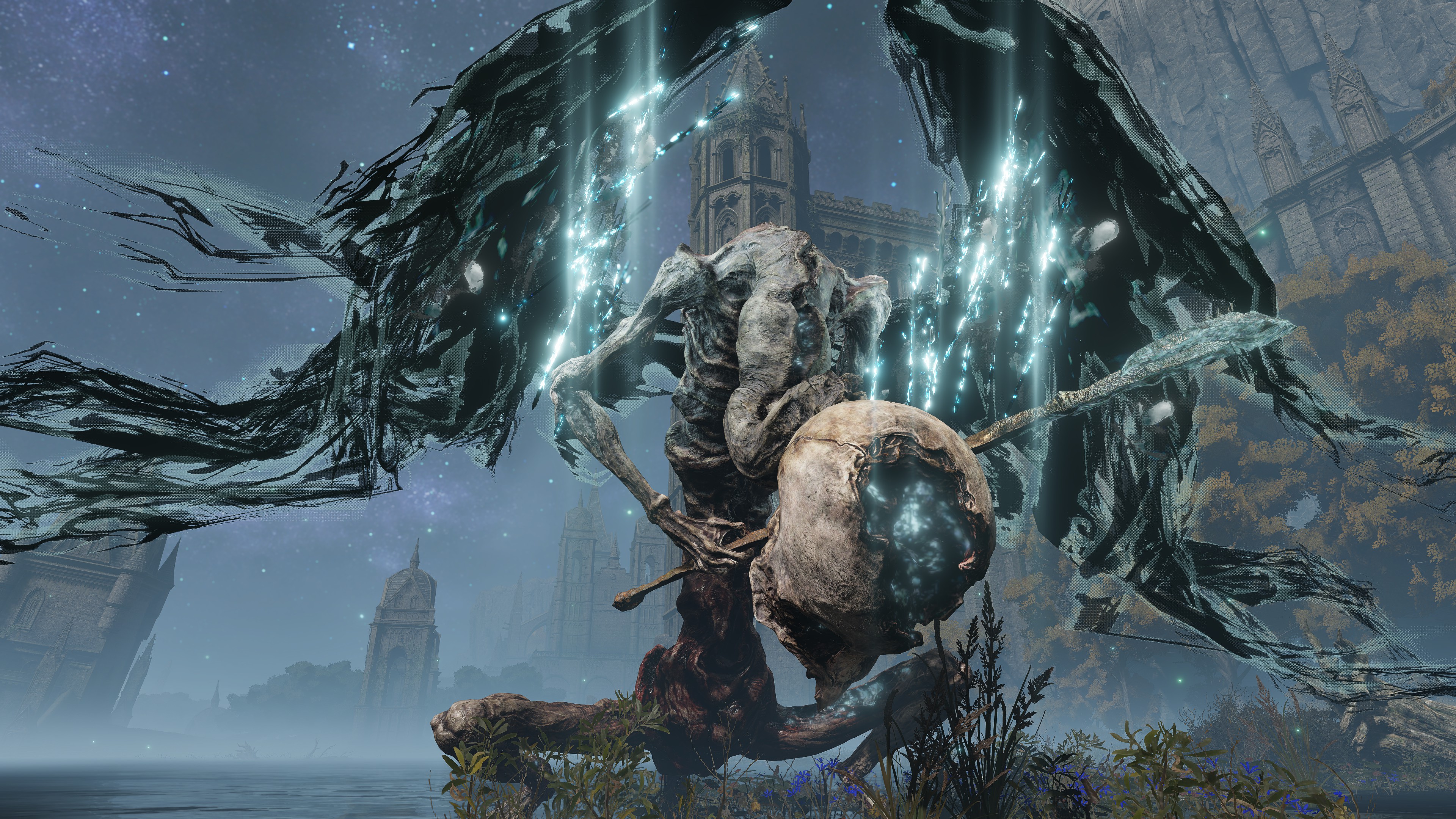
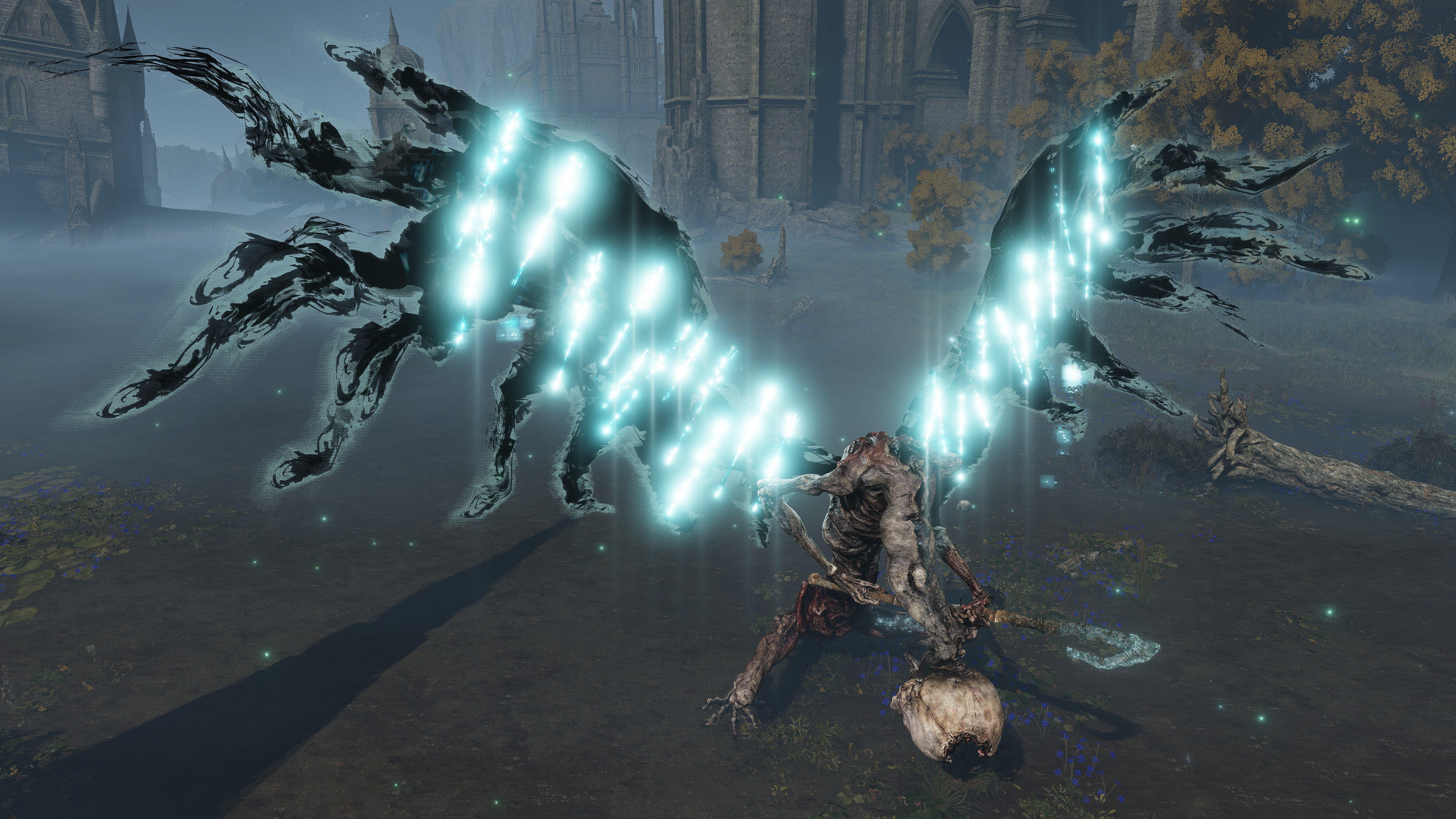
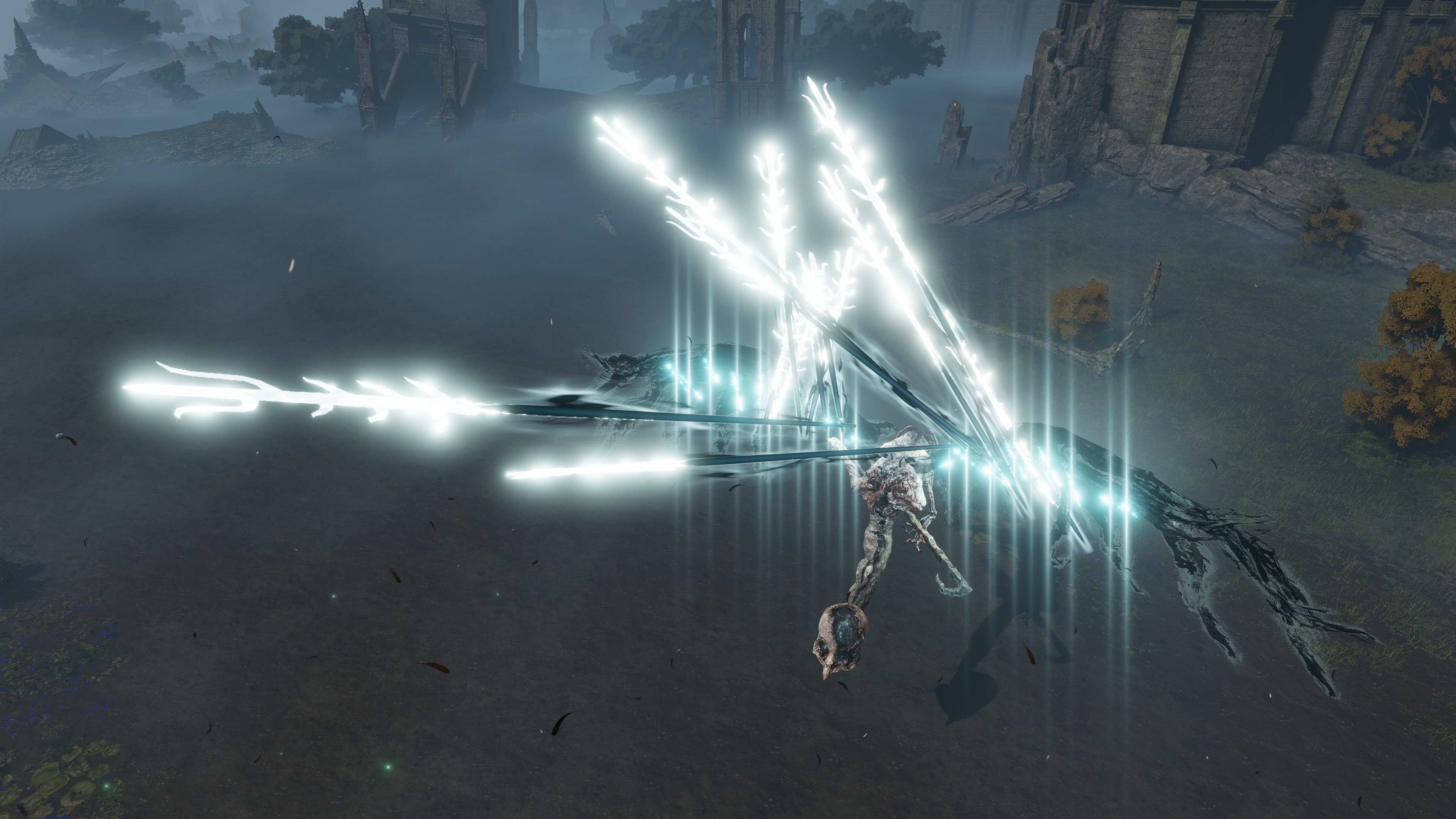
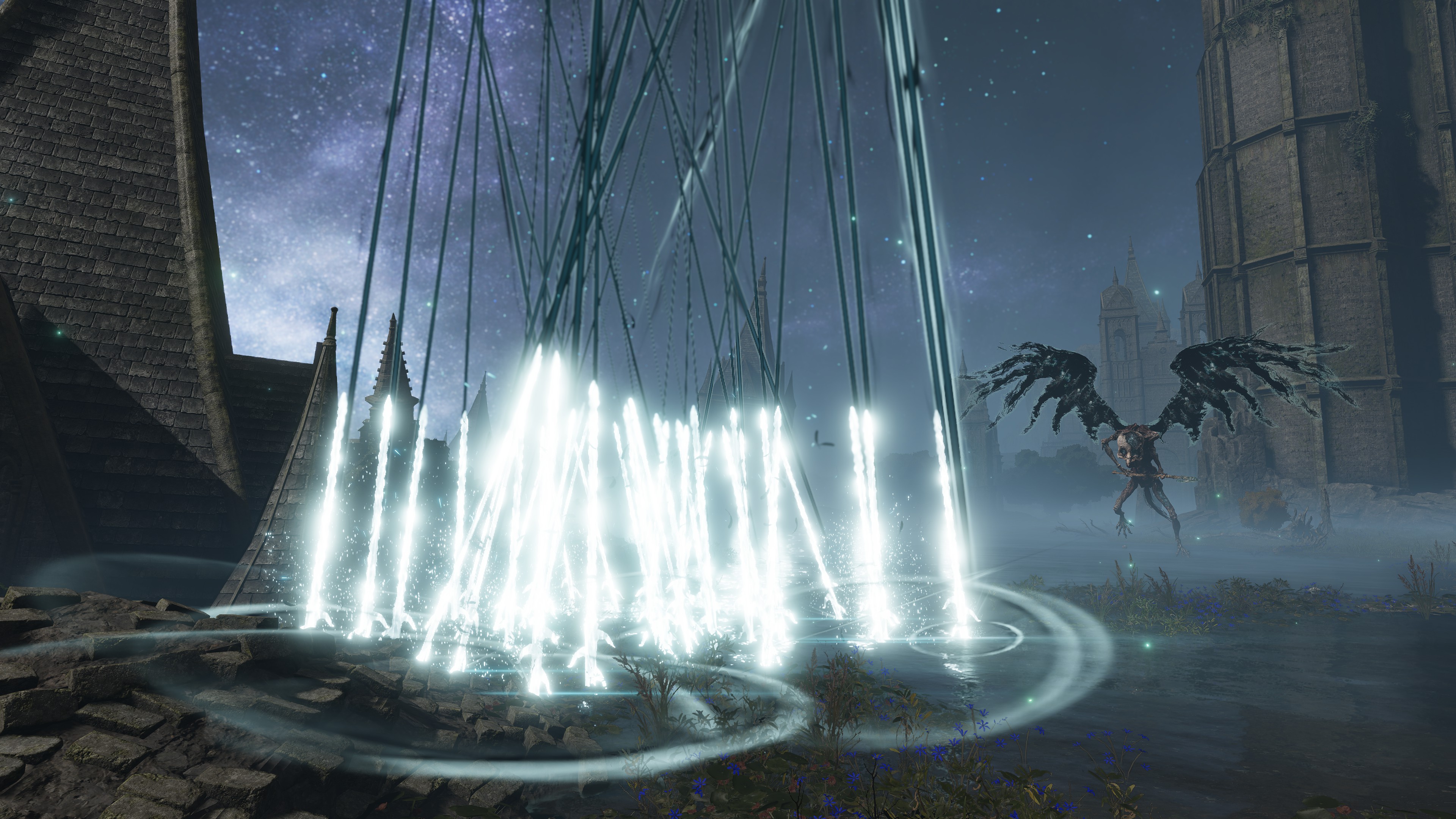
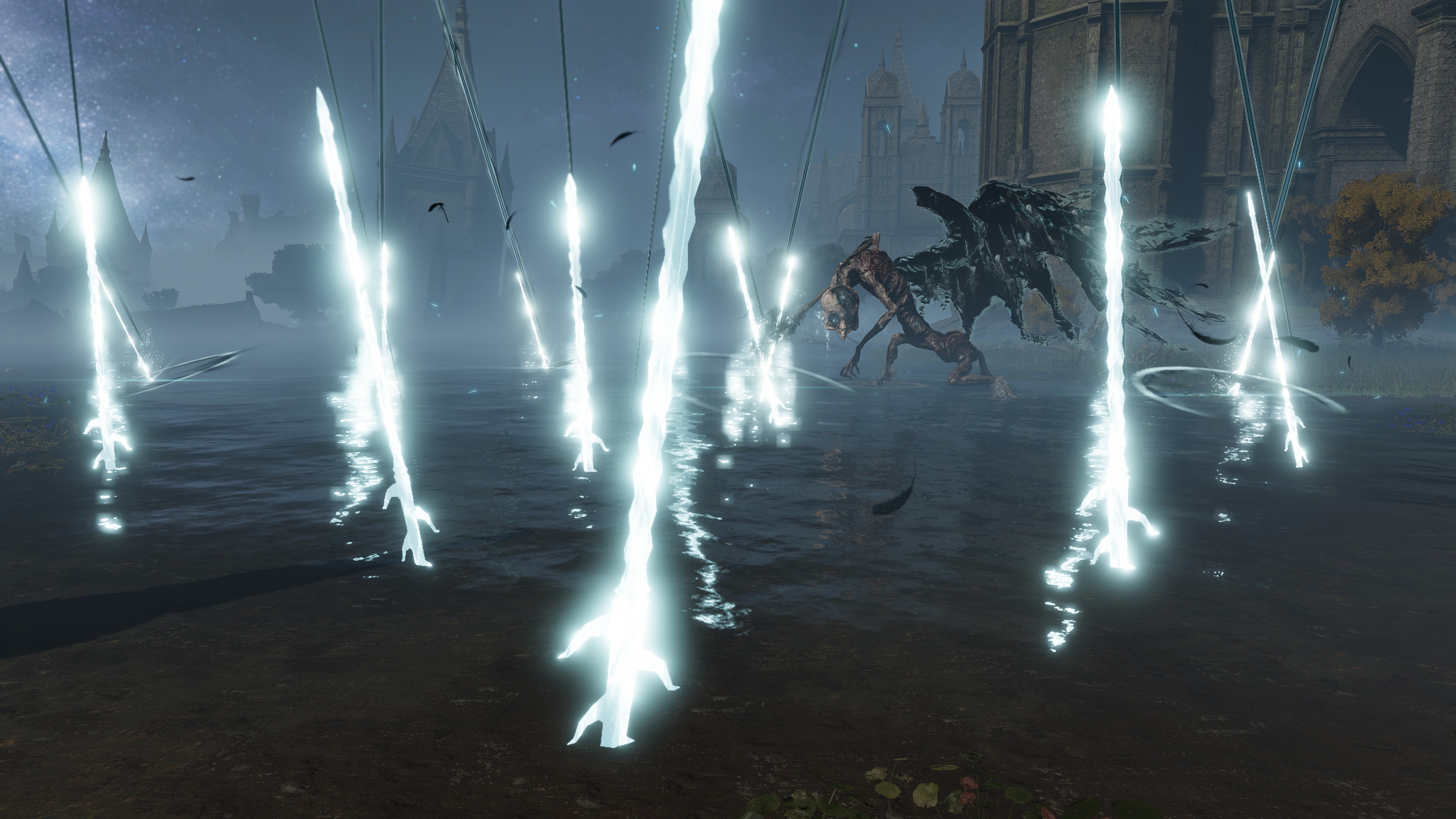
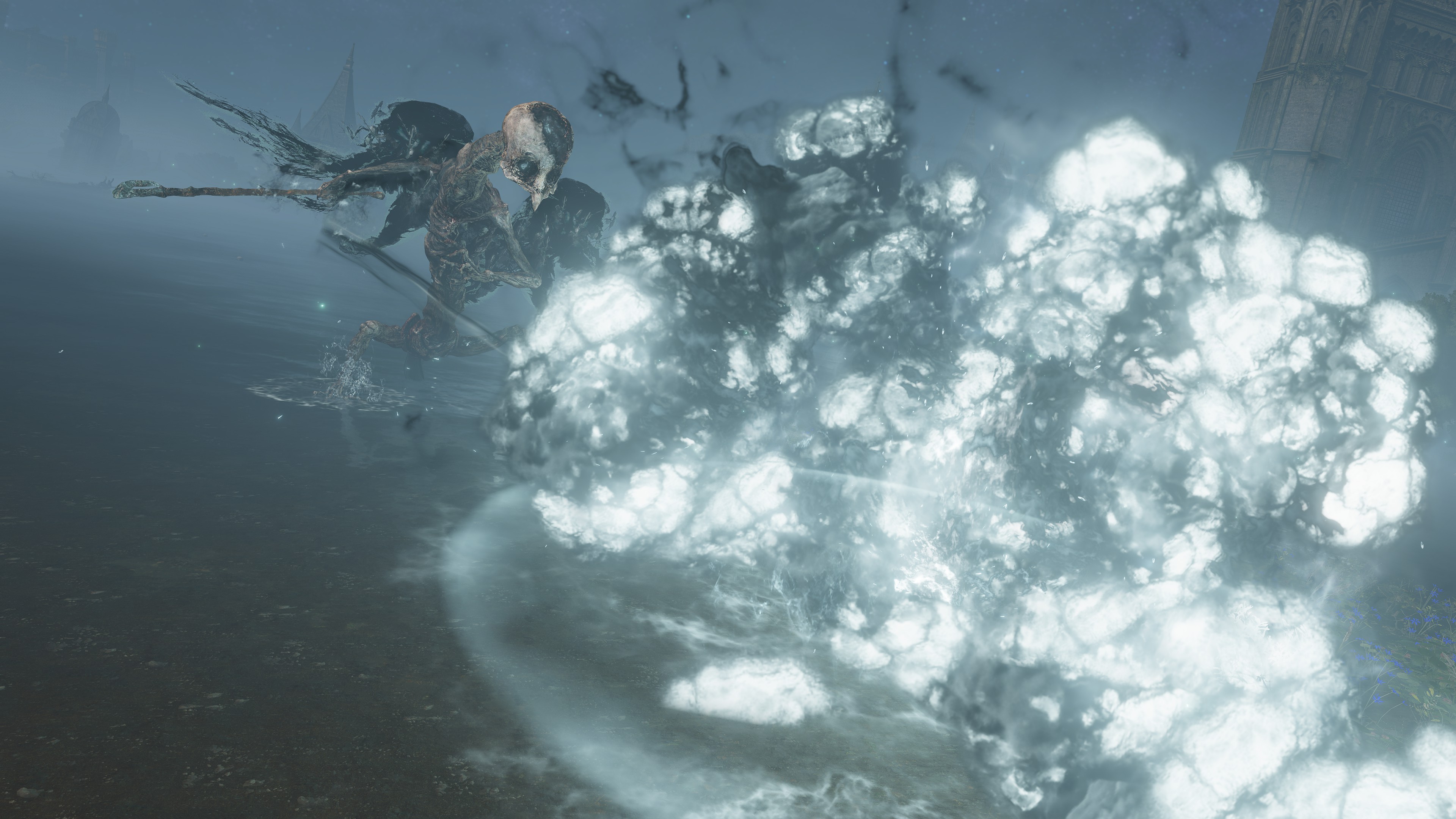
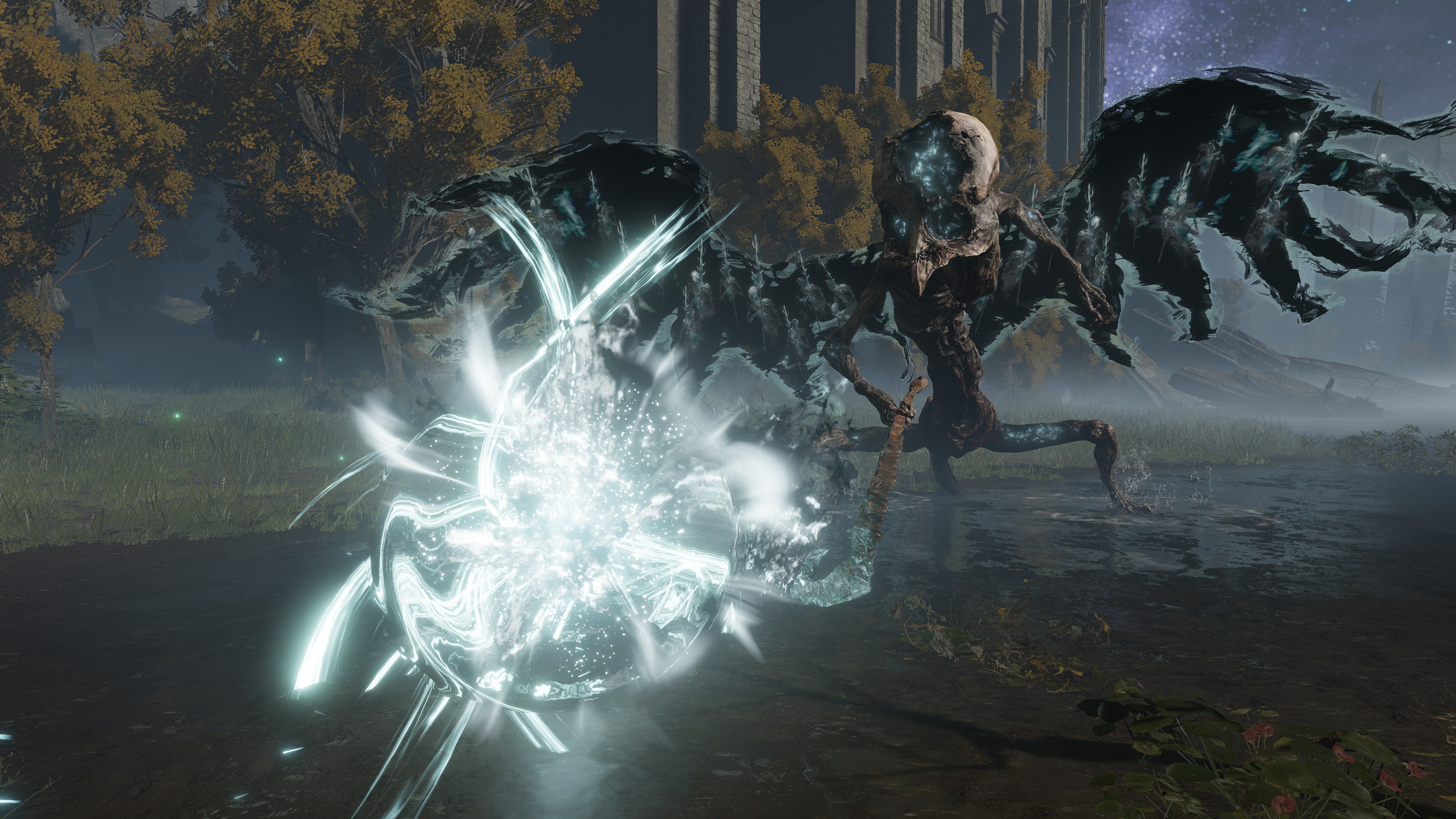
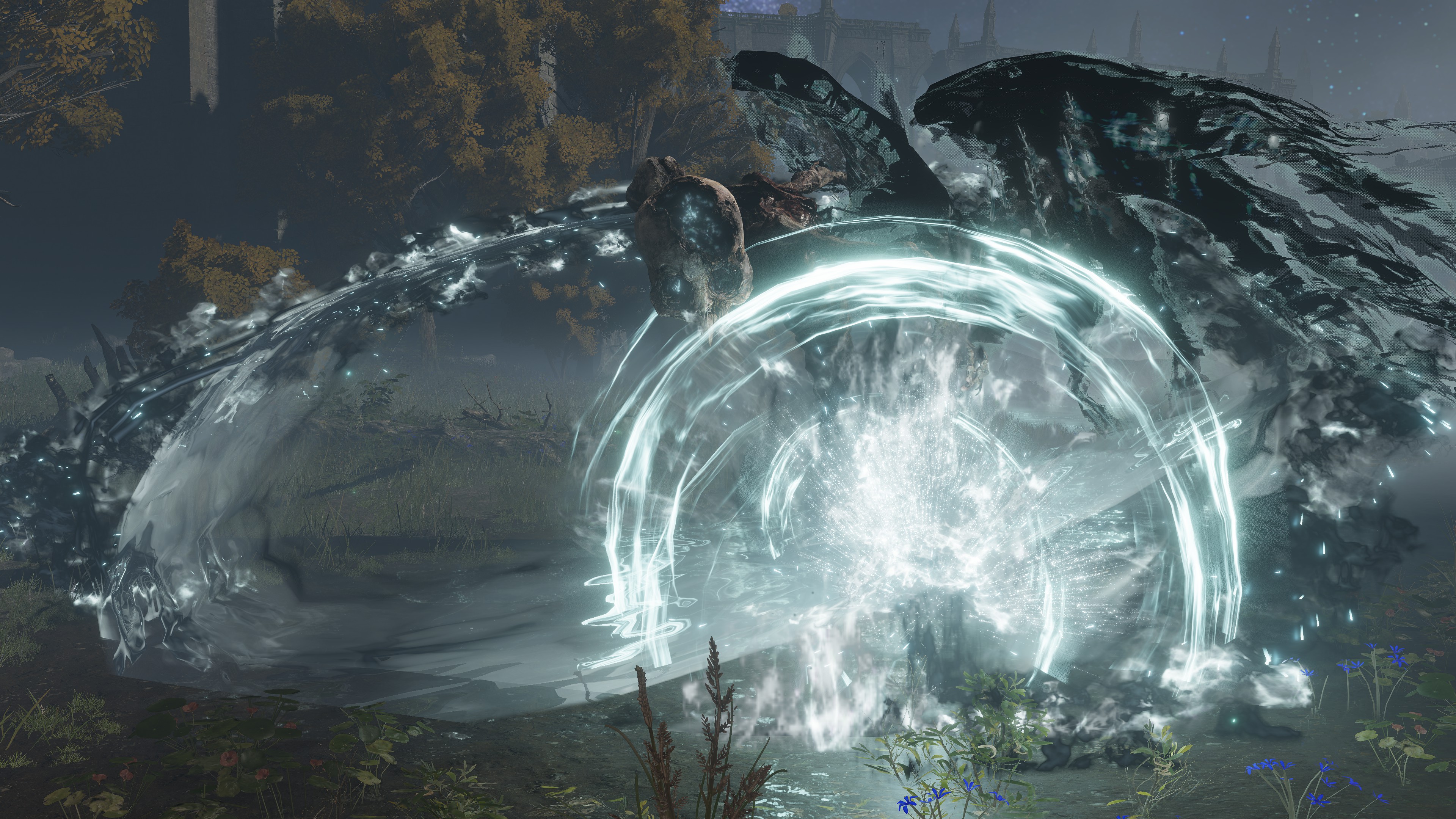
Battle art that thrusts spear up into the sky with a supplication and calls countless downpouring spirit spears.
From all this, the outer god’s message for humans was straightforward: bring out your dead so that they might be cremated. Many eagerly devoted themselves to preparing the fuel for the divine envoys, granted a special place among it when their own time came. But to what end? Perhaps the Candletree. The Red and Blue-Feathered Branchswords more accurately refer to a “seven-branched blade” (七支刃) in obvious reference to the seven-branched sword (七支刀) of Japanese history. The ceremonial weapon is shaped to represent a tree and associated with the divine in popular media, kept in a shrine long linked to secret rites of death and resurrection. With the sword itself possessing a charm against evil, it is an appropriate inspiration for the spears of priests performing their own death ceremonies. But what of their shape? The spears possess more than seven branches, the sword talismans only counting that number if we ignore the points at either end. This is much like the candletree, which is depicted with exactly seven branches on its wooden shield. The weapon with foliage patterns may thus capture that tree’s image.
If the spears do represent the Helphen, then it is telling that all rituals performed with it tie back to the tree’s fuel. The outer god of Death appears to have sent the Twinbird on a mission to supply the spirit world’s guidepost with more ghostflame, recruiting her offspring and even humans to facilitate this. The Deathbirds aren’t gravekeeper so much as fire keepers, protecting the flame lighting the candles. The religion they begot is centered around guiding the dead to their ultimate fate as kindling, the priests defending against any who might interrupt this journey to the Helphen. And at the center was the mother bird, who presumably counted among the living dead as much or even more so than her children. Certainly, the Greek phoenix is typically rendered as an “immortal” or “undead bird” (不死鳥) in kanji, the Chinese phoenix conflated with it as a “fire bird” (火の鳥) in the popular imagination despite bearing no relation to either. Perhaps the mother appeared more alive with her feathered depiction, but doubtless she too lived in death, enabling her to perform her duties in perpetuity like her children.
If her children only existed to assist her as divine messengers, then how were they conceived? In all likelihood, it was self-assisted. After all, the mother bird has two halves with two heads and potentially other body parts. Why would an outer god send, feasibly even create, a messenger combining two birds into one unless it somehow contributed to the end goal of cremation? And what purpose would that be if not allowing the undead birds to multiply if needed? While the Chinese phoenix came to be a female symbol opposite the male dragon, its original name fenghuang represented a separate male and female pair mirroring the yin and yang, their combination and blending into one concept creating the ultimate symbol of marital bliss, harmony, and fertility. And much as how the latter was embodied in the unified Chinese phoenix birthing nine children, the Twinbird may have mated with itself to birth the Deathbirds, nine of which we encounter in total. Thus would a new race of Death enter the world of the living, and the work to safeguard the Helphen could truly begin.
Quoth Nevermore
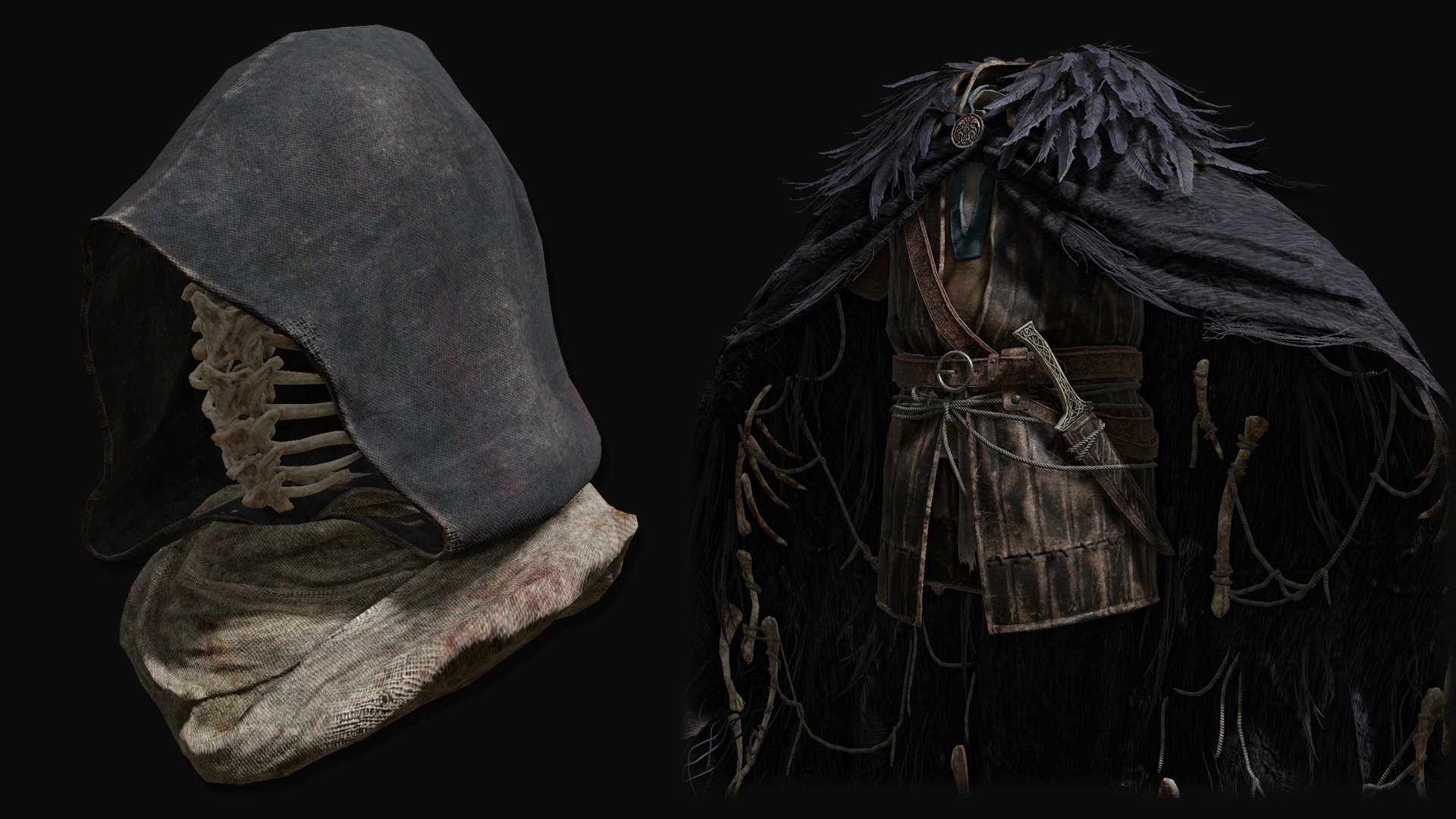
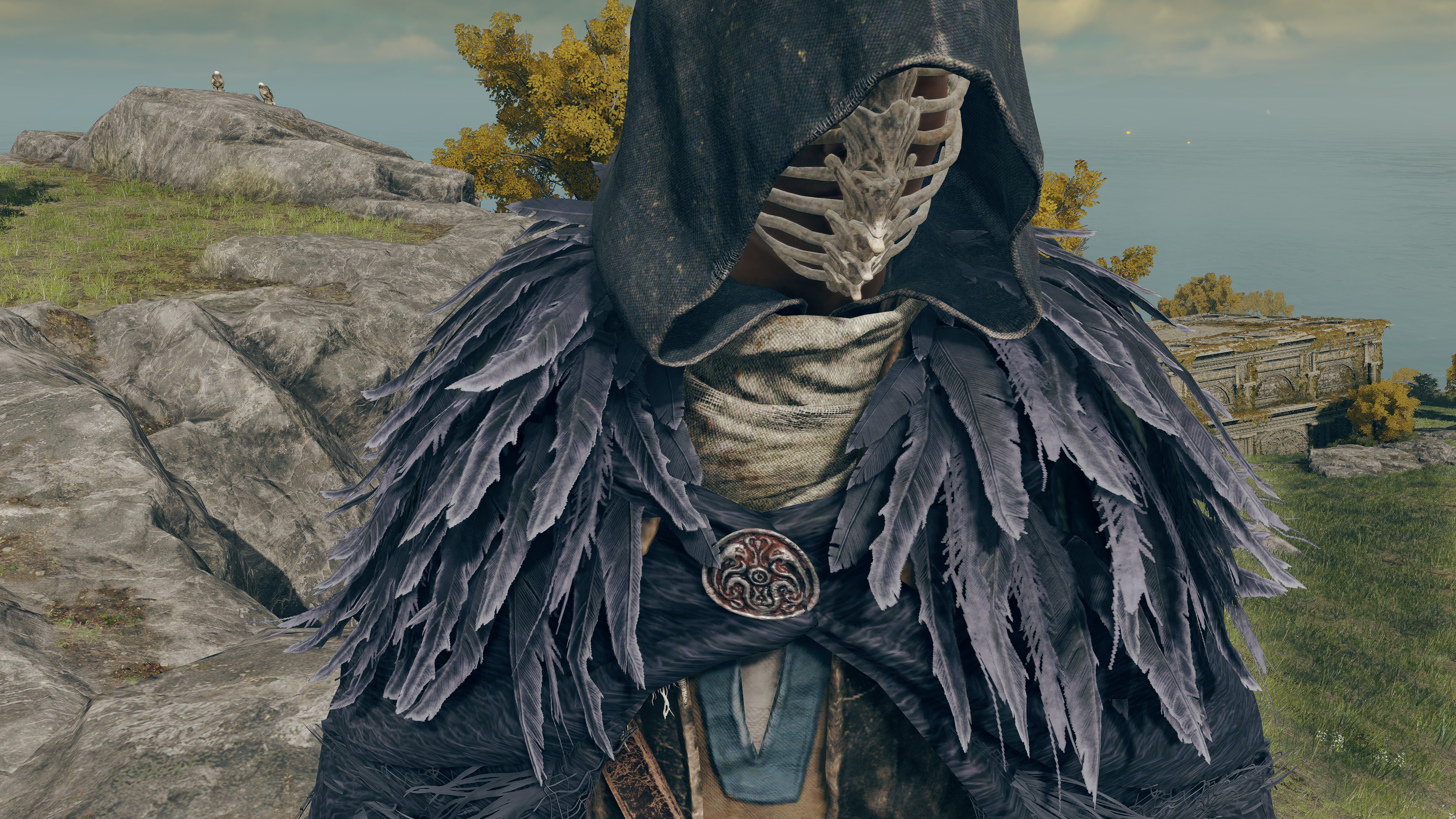
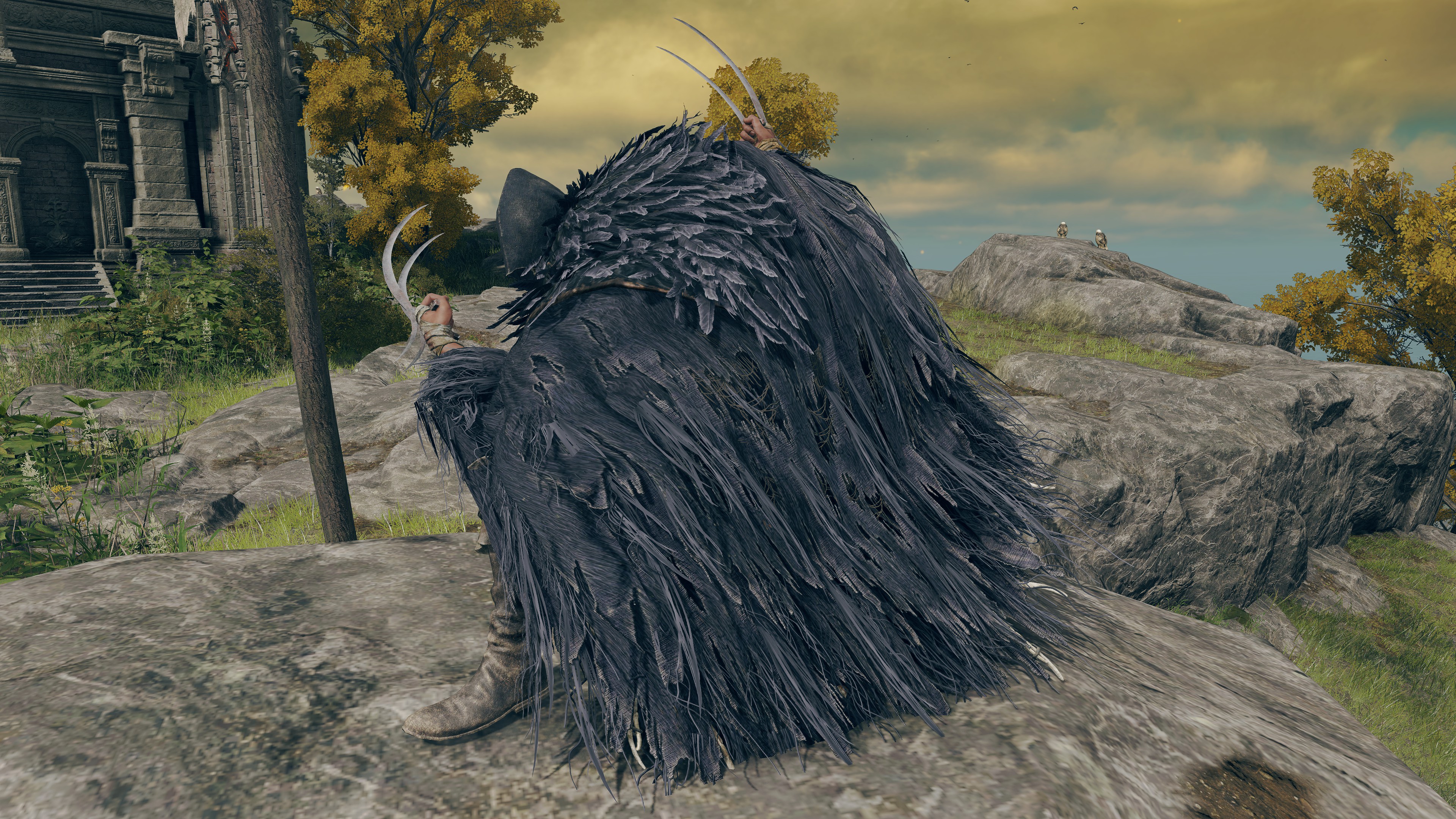
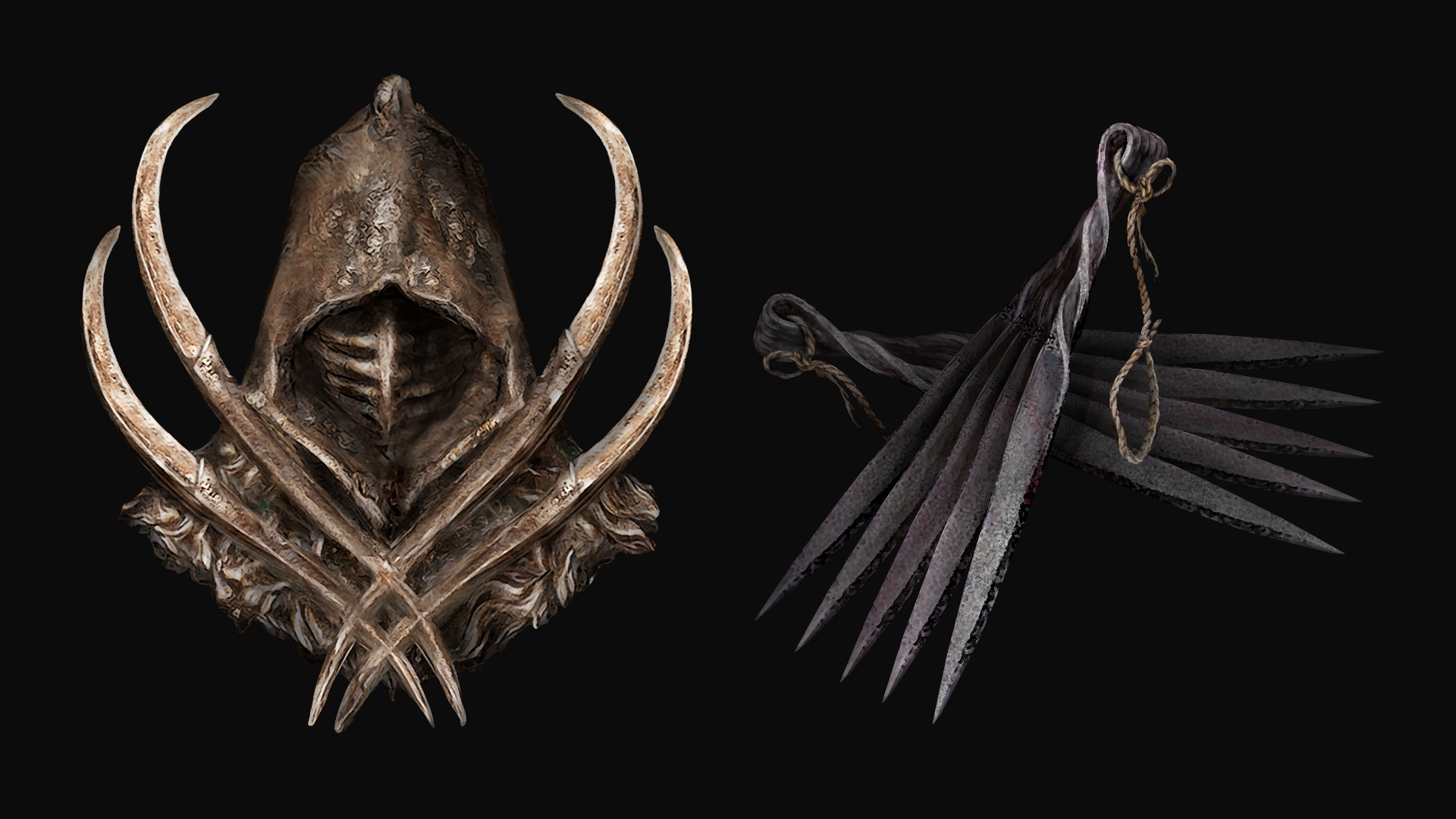
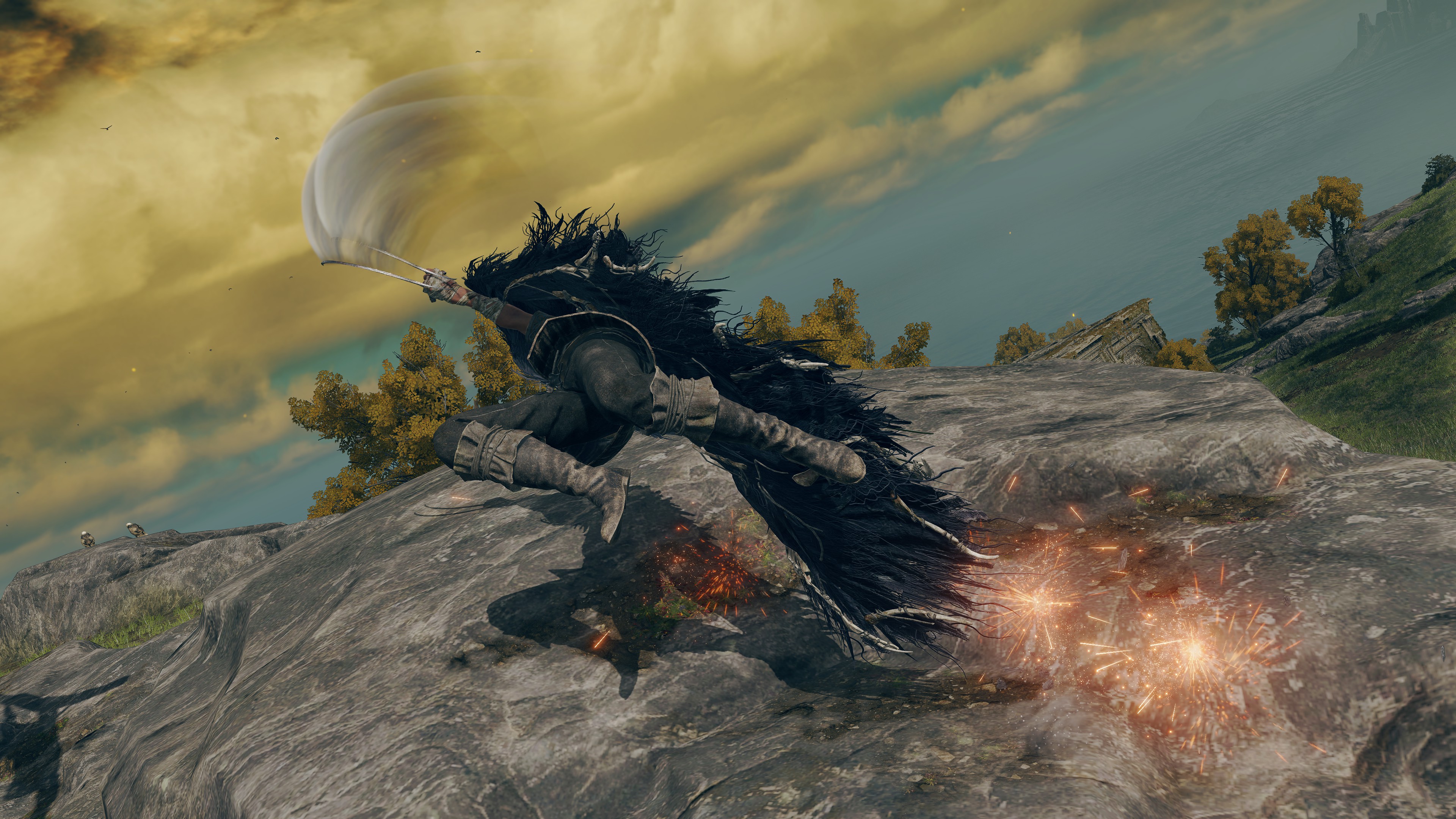
The Deathbirds inspired awe in more than just their cult’s priests. The assassins of Ravenmount style themselves after the birds of death; though descriptions for most of their items refer to them instead as “raptors” (猛禽) denoting more specifically birds of prey, or “fierce birds” in the literal kanji. Regardless, their dress is meant to mirror the Deathbird, from the bone mask like their skeletal heads to the black feather cloak akin to a Death Rite Bird’s spectral wings. This might seem odd for people of a “Crow Mountain” (カラス山) when death’s envoys look little like a crow, their long necks especially evoking their mother. However, crows are considered ill omens as “birds of death” in their own right, being carrion birds. Moreover, the spectral black wings do produce physical feathers when flying around or invoking arts. This is consistent with the Hidden Feather, a cut item to be found inside of wings — a frayed, black feather symbolizing the bearers of death in bird form. Even one of the feathery Twinbird’s halves is depicted in black, equating them all with crows.
Mask of dead bones that covers the face as if eating into it. Apparel of assassins of Crow Mountain.
It is a charm for leaving the sense of being human when making yourself a Death Raptor, so continually tightens around the one wearing it.
Robe made with a raptor’s black feathers. Apparel of assassins of Crow Mountain.
It is a charm for you to imitate a Death Raptor, so enhances jump attacks. I am become Deathbird.
Black feather seldom found inside of wings.
One of the materials used in item crafting.
Death’s bearers are said to have existed in bird form once. Black feathers are their sign.
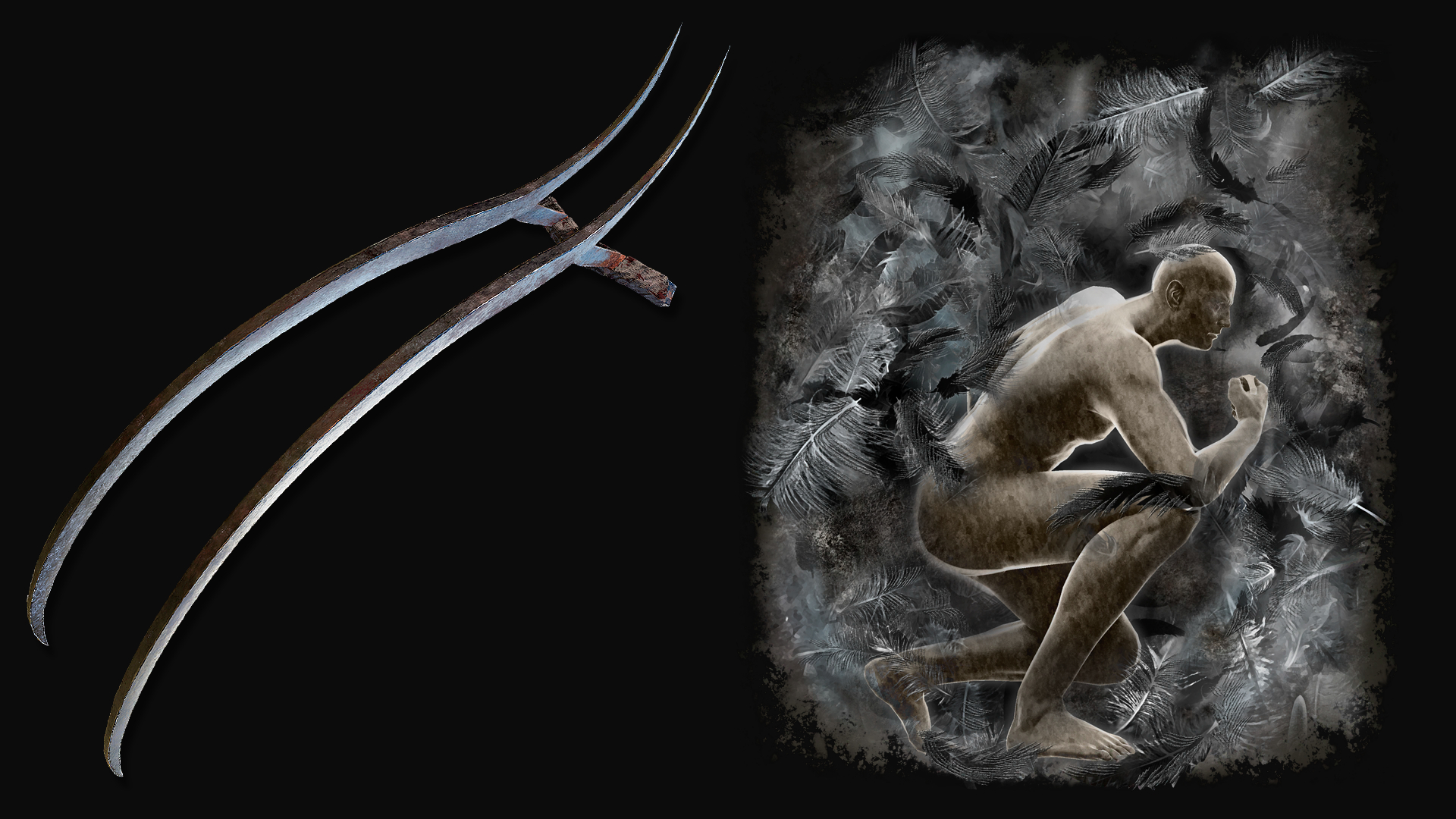
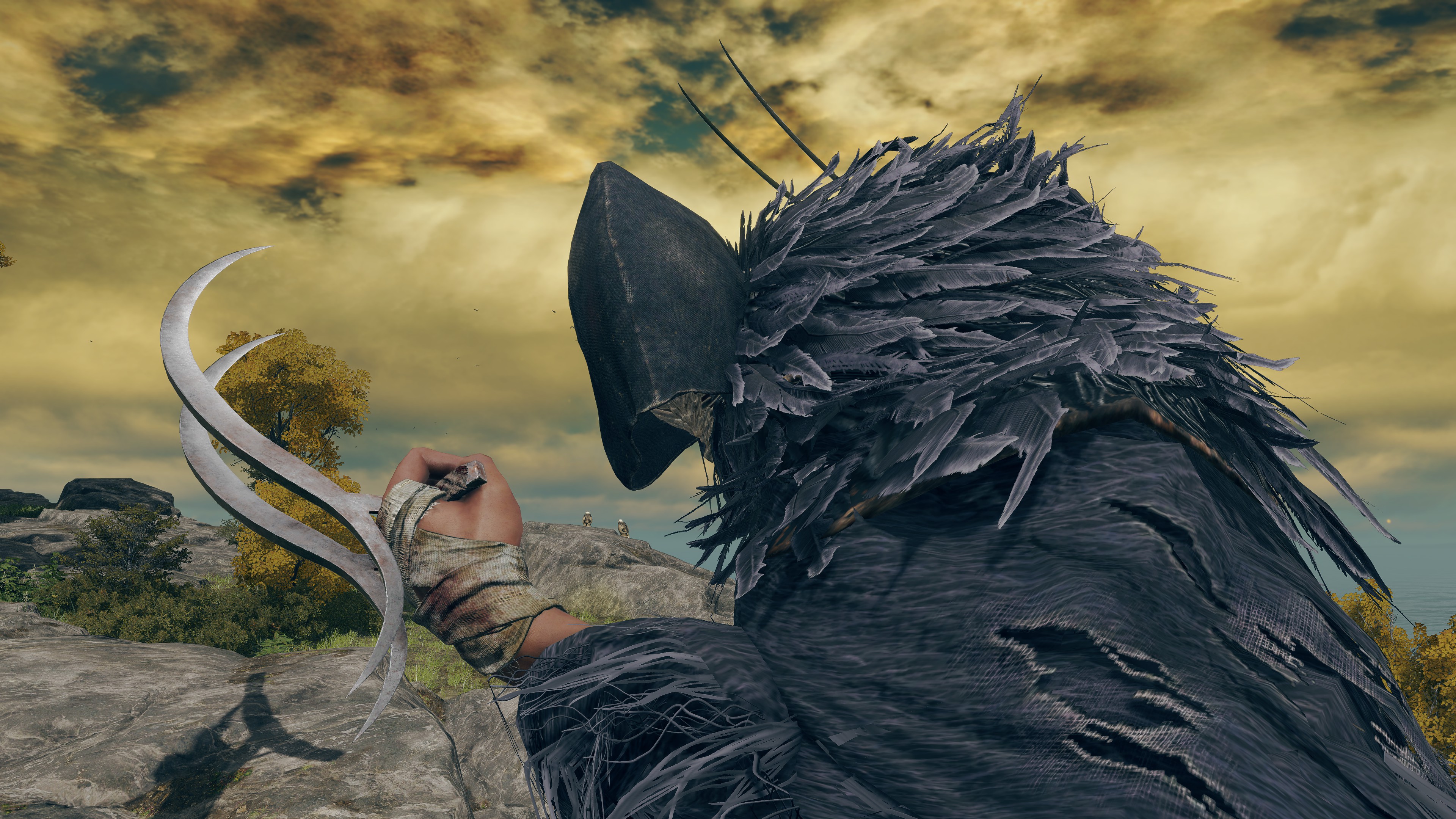
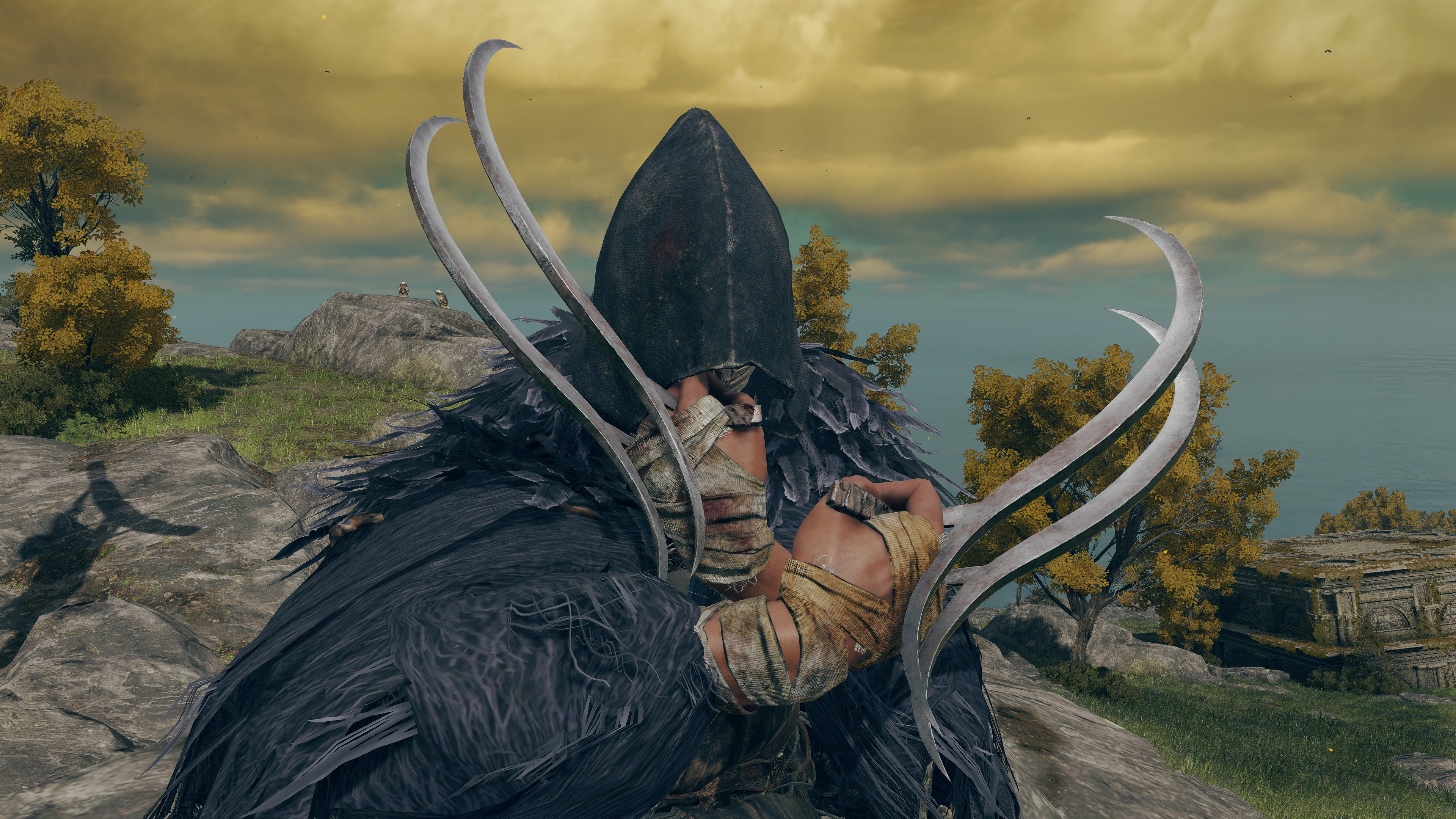
It was the way these birds of death fought that truly informed the assassins. The Raptor Talons they wore on each hand gave them two sharp claws to slash with, complemented by the Raptor of the Mists skill they learned to gain the wings needed to clutch those “nails” down on the heads of prey desperate to stop their demise. Certainly, the talons’ charged attacks capture the flow of a Deathbird’s battle, leaning in with the assault before pulling back with the follow-up. The bosses also commonly use their wings to quickly swoop down from midair, leading raptor assassins to excel in getting the literal jump on prey as captured in the Claw Talisman. Another inspiration from the wings were Fan Daggers, bundles of throwing knives mimicking folding fans. The blades’ damage isn’t great, but the spread on their trajectory makes for excellent diversions as the assassin closes in, not unlike the utility to Spearcall Ritual. Overall, the residents of Ravenmount have made themselves intimately familiar with the ways of Deathbirds, a step up from simple bandits as the attire worn underneath would suggest. If they were to be hired thugs, they wanted to be the elite.
Two thin, sharp claws. Choice weapon for assassins of Crow Mountain who imitate Death Raptors.
Besides excelling in attacks from the air, its charge attacks are also akin to a raptor’s assault.
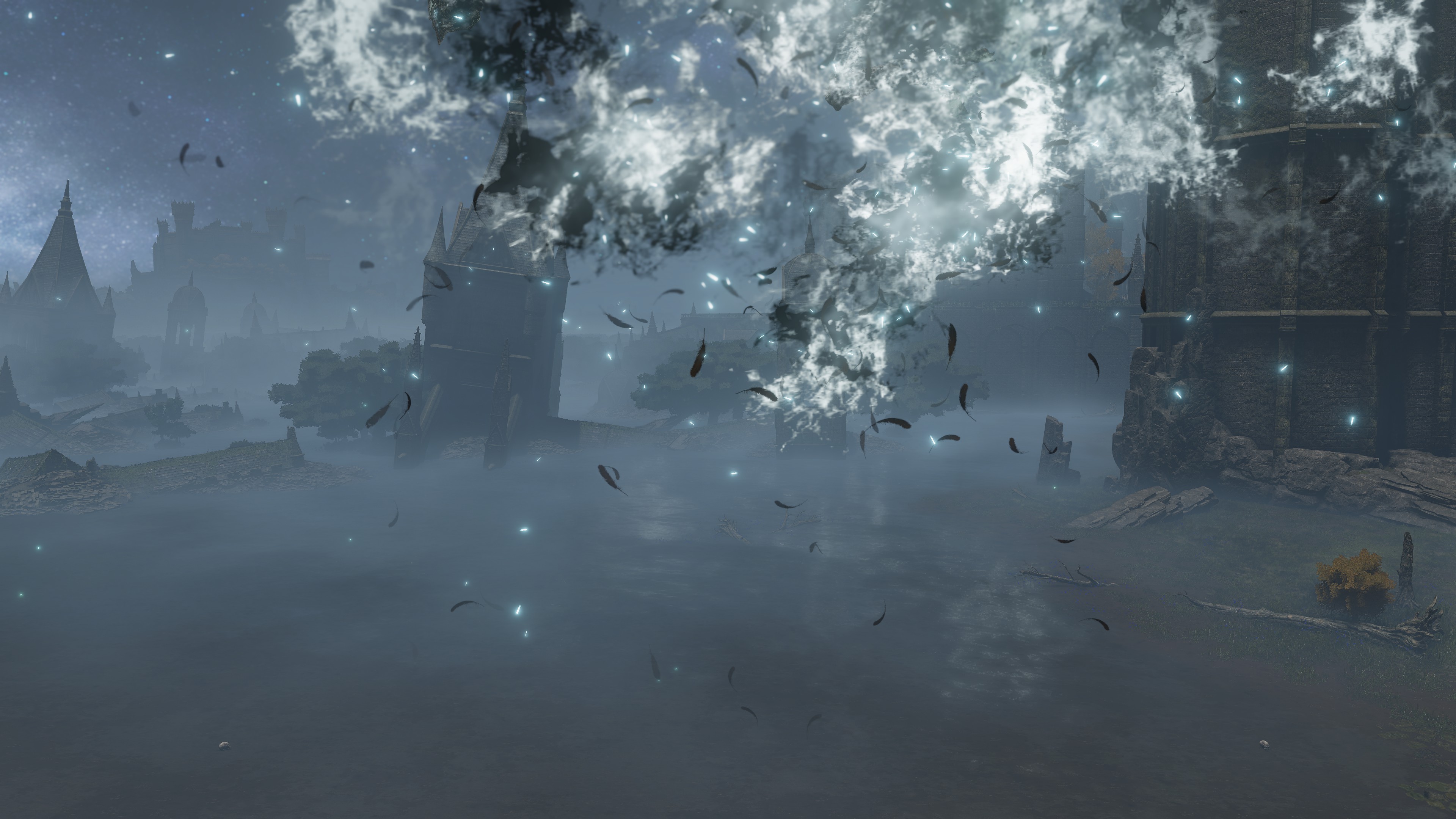
Battle art that lowers body and momentarily vanishes. If receiving an attack, generates raptor feathers and instantly flies to the sky.
Talisman modeled on an assassin with claws. Enhances jump attacks.
The assassins of Crow Mountain, who make their living with assassination, imitate Death Raptors and swoop down on prey.
Throwing blade bundling five in one. Concealed weapon raptor assassins favor.
Throw in a folding fan shape and deal damage.
Each one’s damage is small, but has wide attack range, so is good for diversions.
This firsthand experience begs the location of their Crow Mountain. Assuming that Deathbirds limit themselves to the Lands Between, there are only so many mountains where a group of imitators might be based. Among them, the most likely candidate is Mt. Gelmir. For one, we acquire the raptor set from the Sage’s Cave located at the foot of the volcano. Patches similarly holds a large inventory of fan daggers as an affiliate of Volcano Manor. On top of that, we hear crows caw as countless black birds circle overhead. That may be because the land is currently a battlefield littered with innumerable corpses, but it is still the only place where we can witness so many crows, appropriate for a crow mountain. We don’t observe any Deathbirds on Gelmir, but that could be due to the land since becoming the territory of a great snake — and snakes are known to prey on birds. One bird does appear in wider Altus, over on the far eastern end of the plateau in the Capital Outskirts. Back during the days before the Erdtree, Gelmir might have been where Deathbirds once congregated, a true Ravenmount.
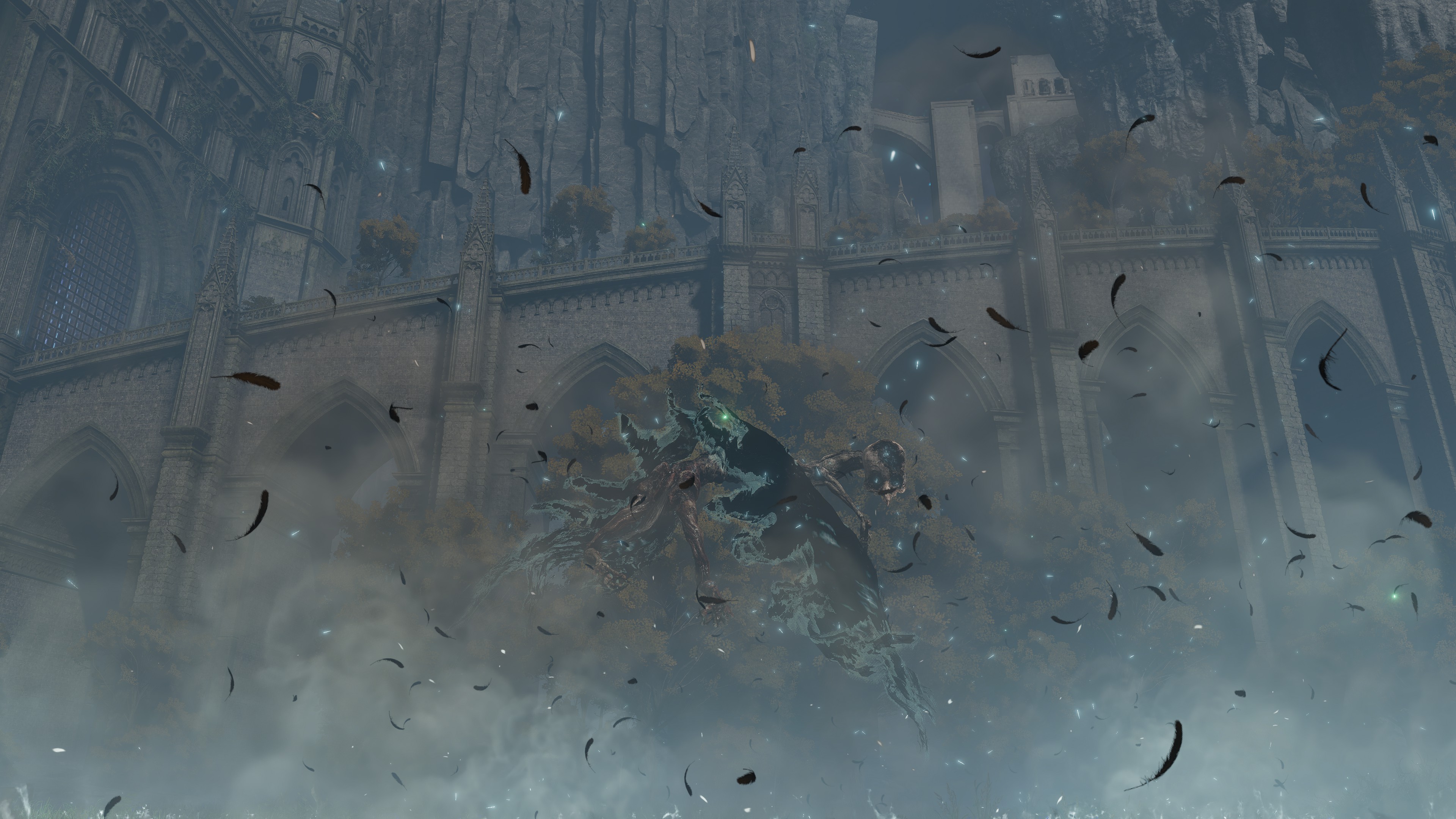
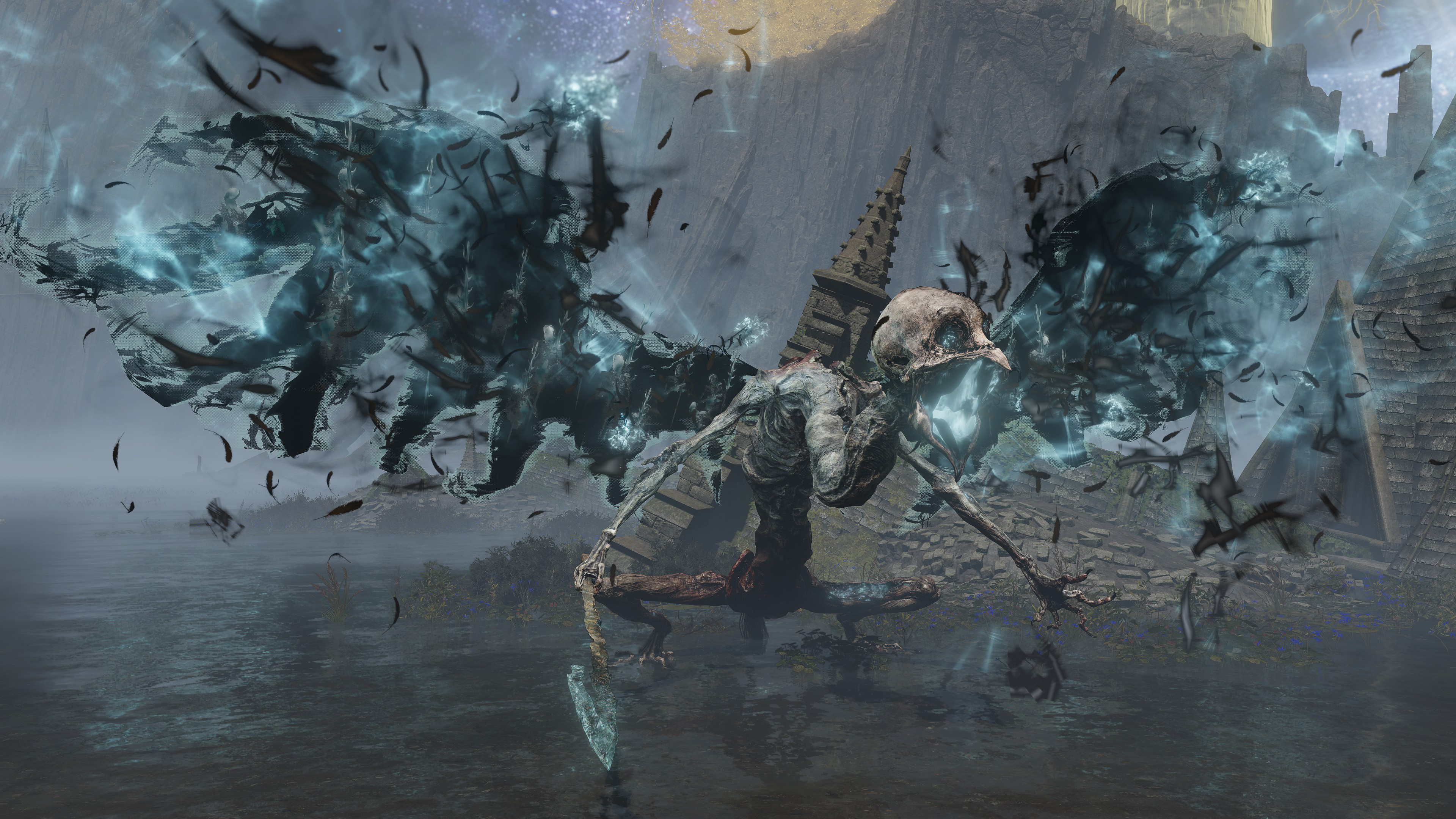
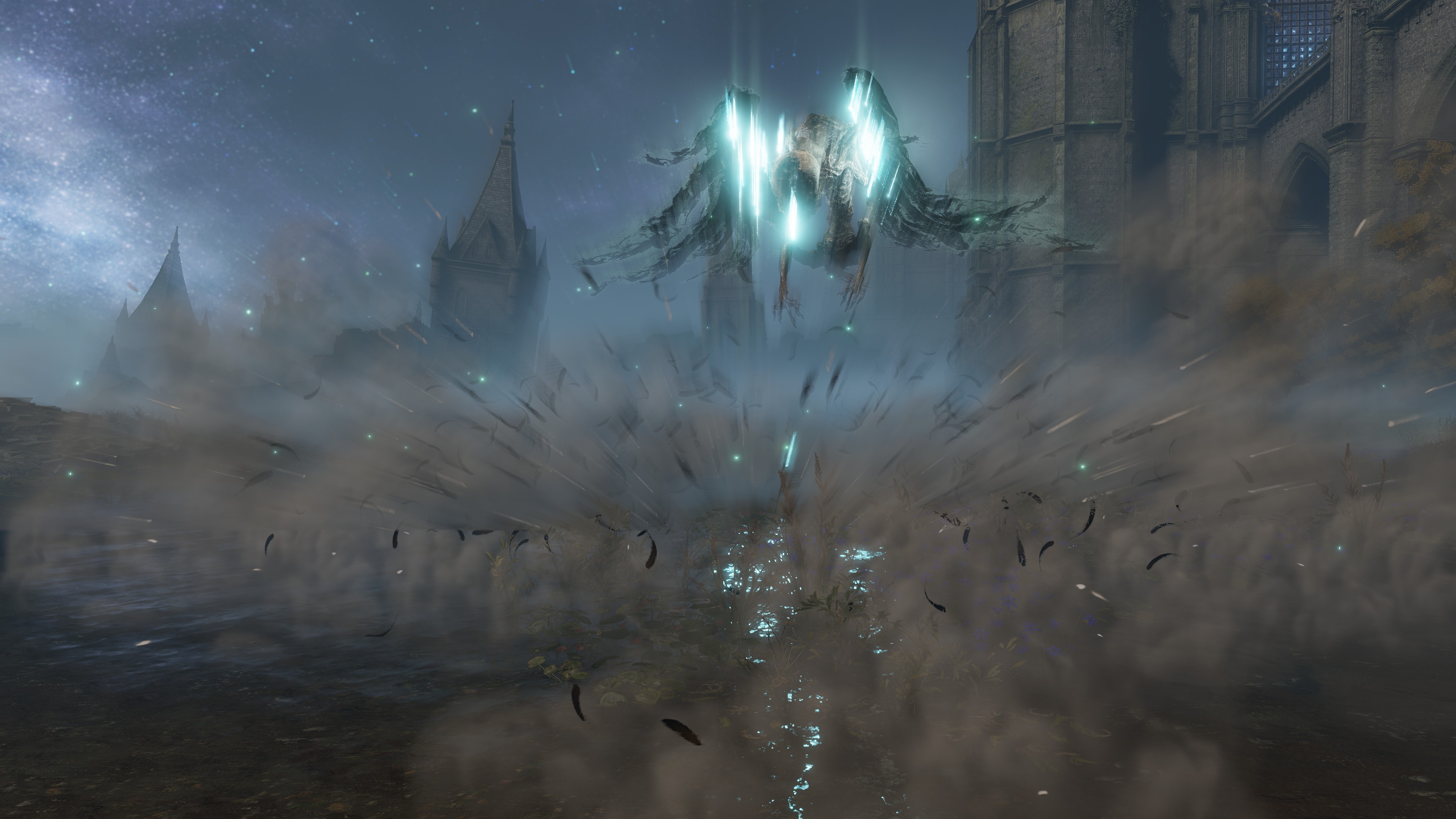
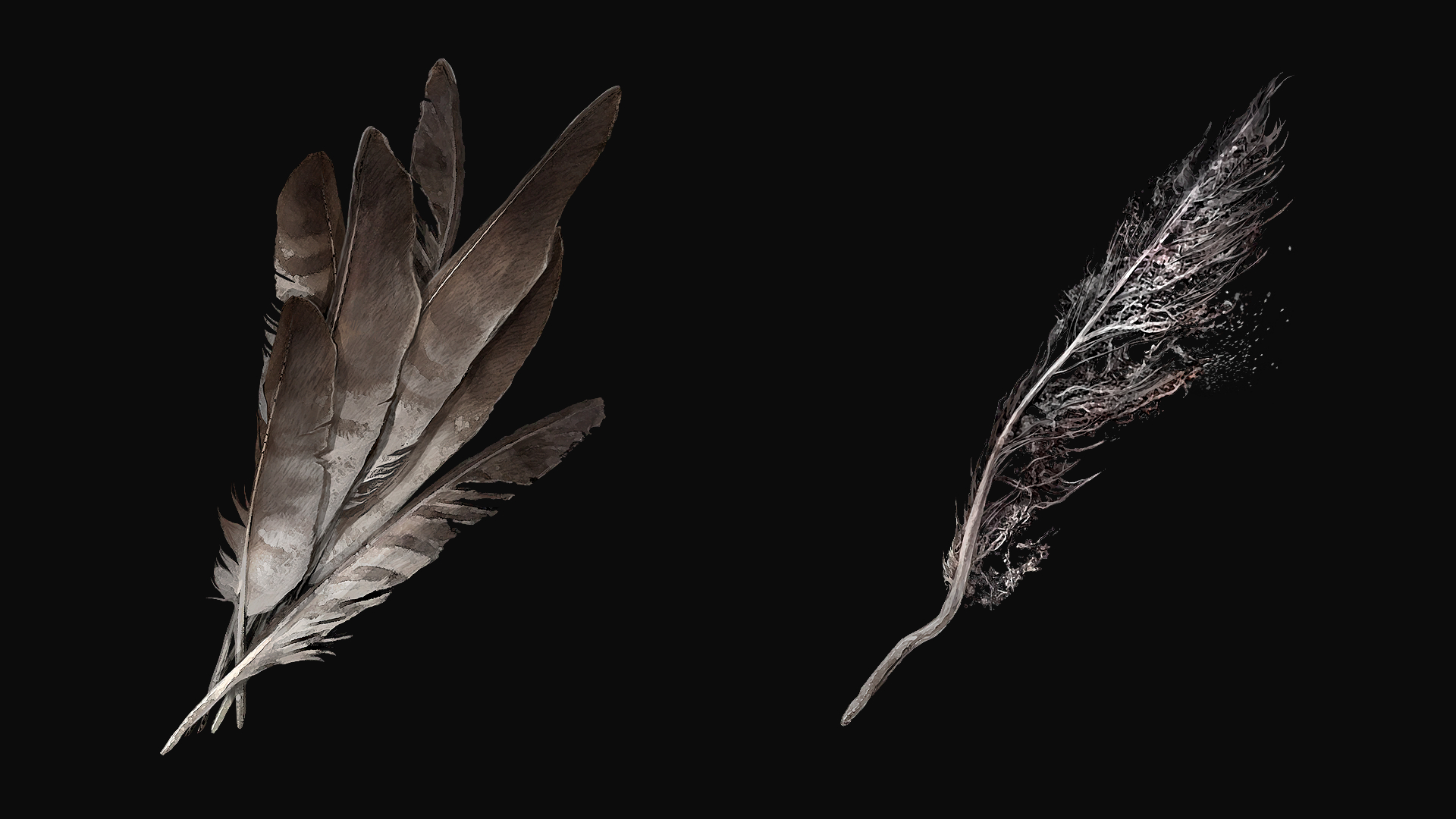
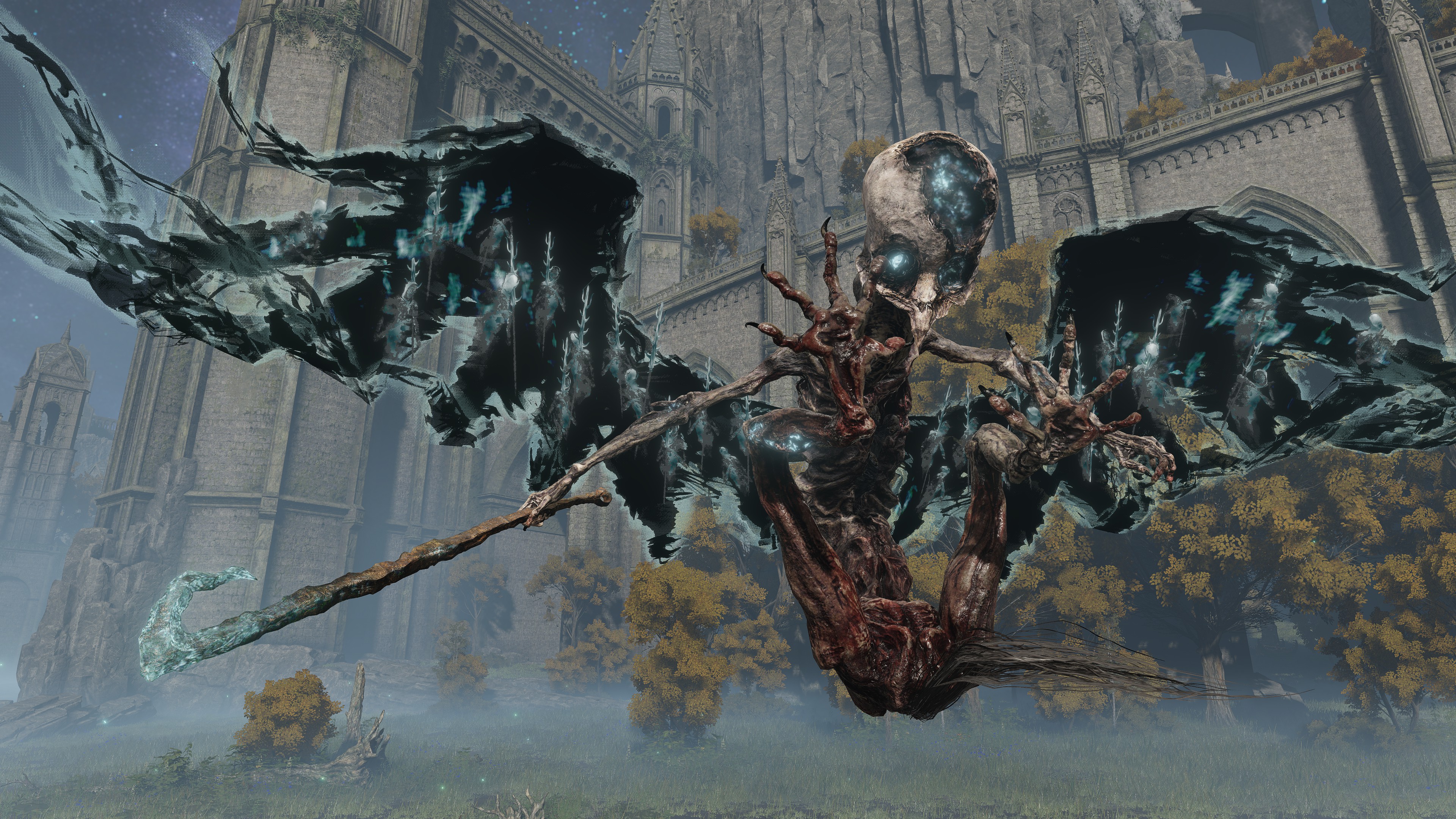
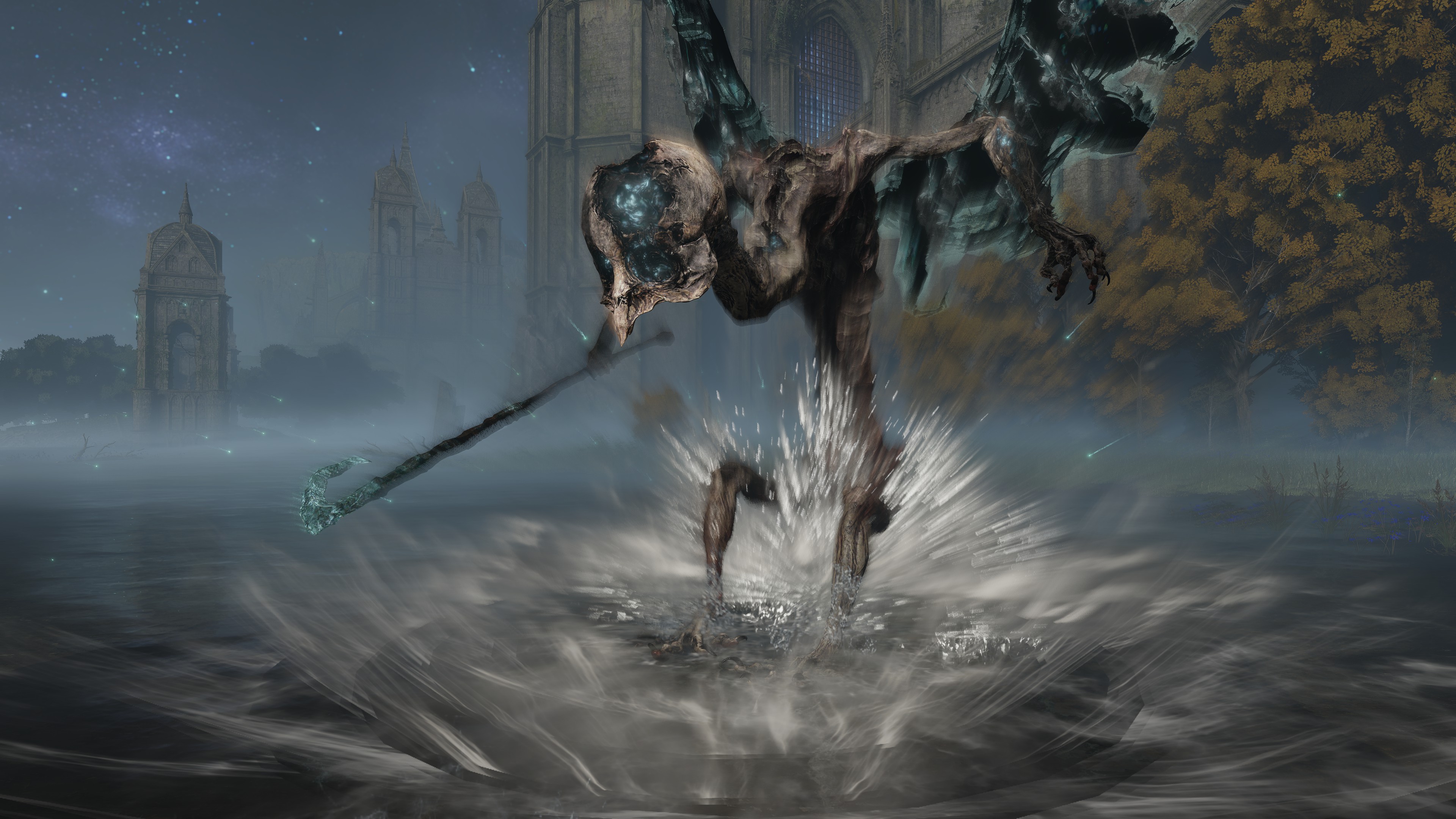
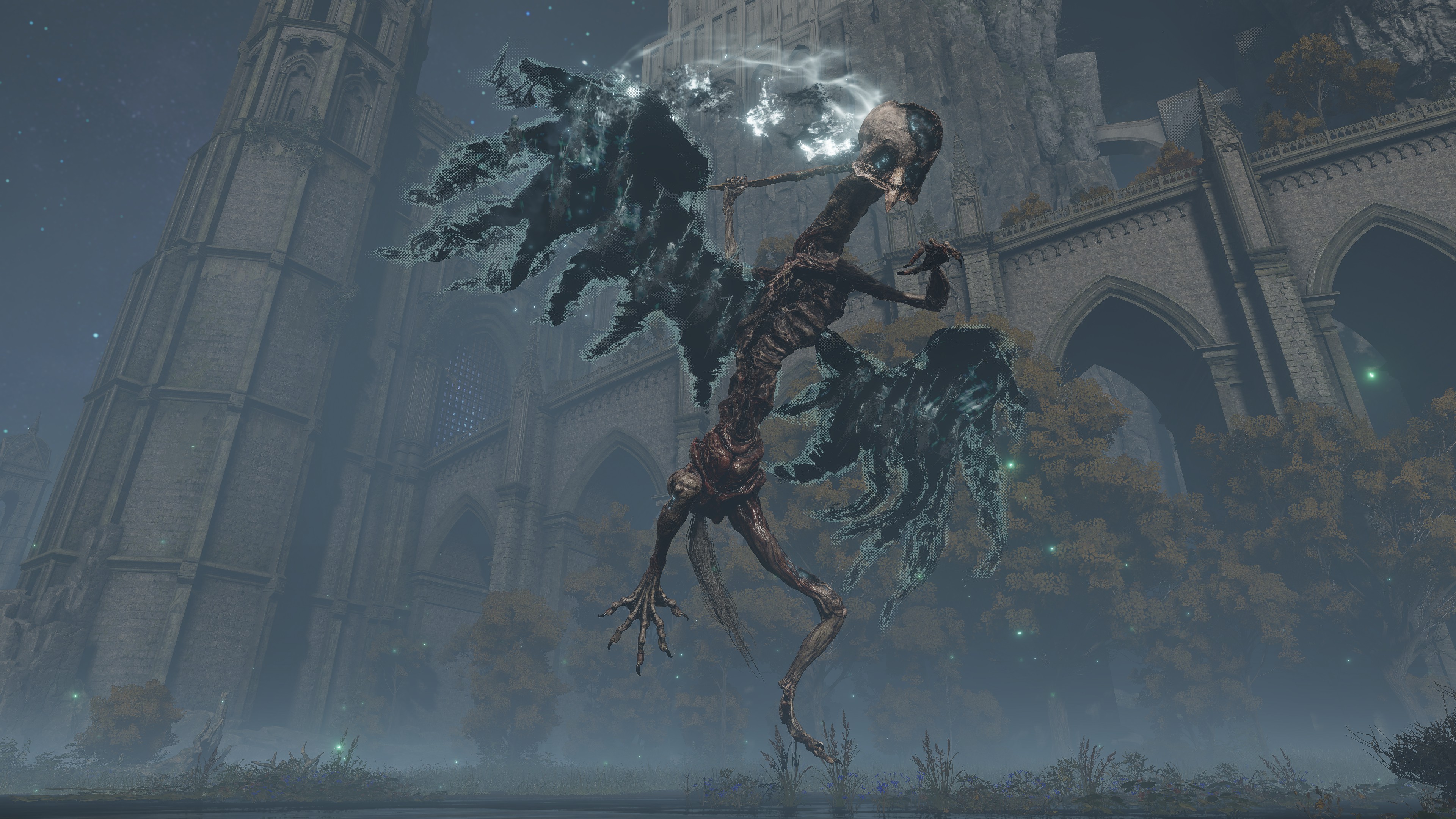
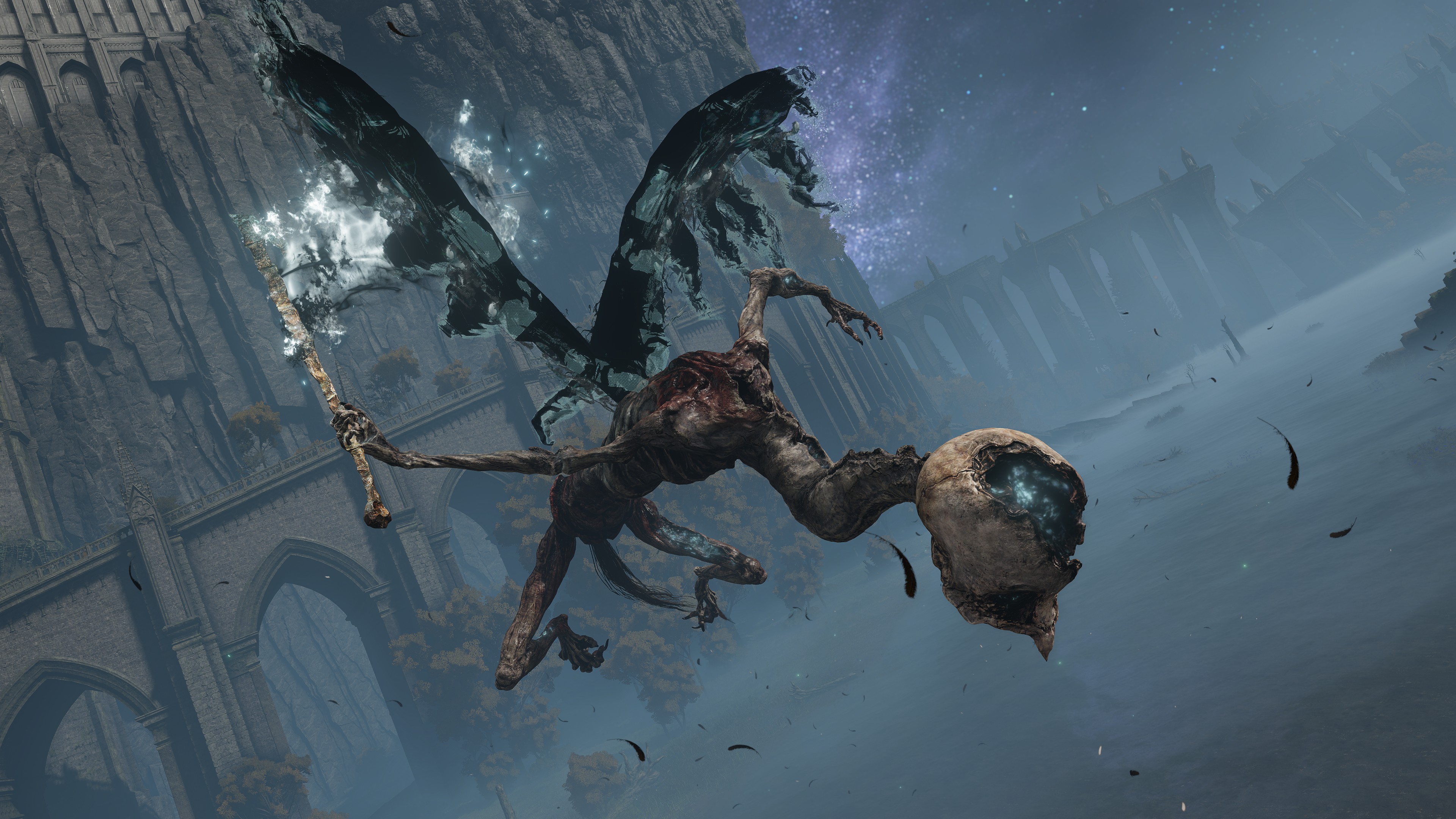
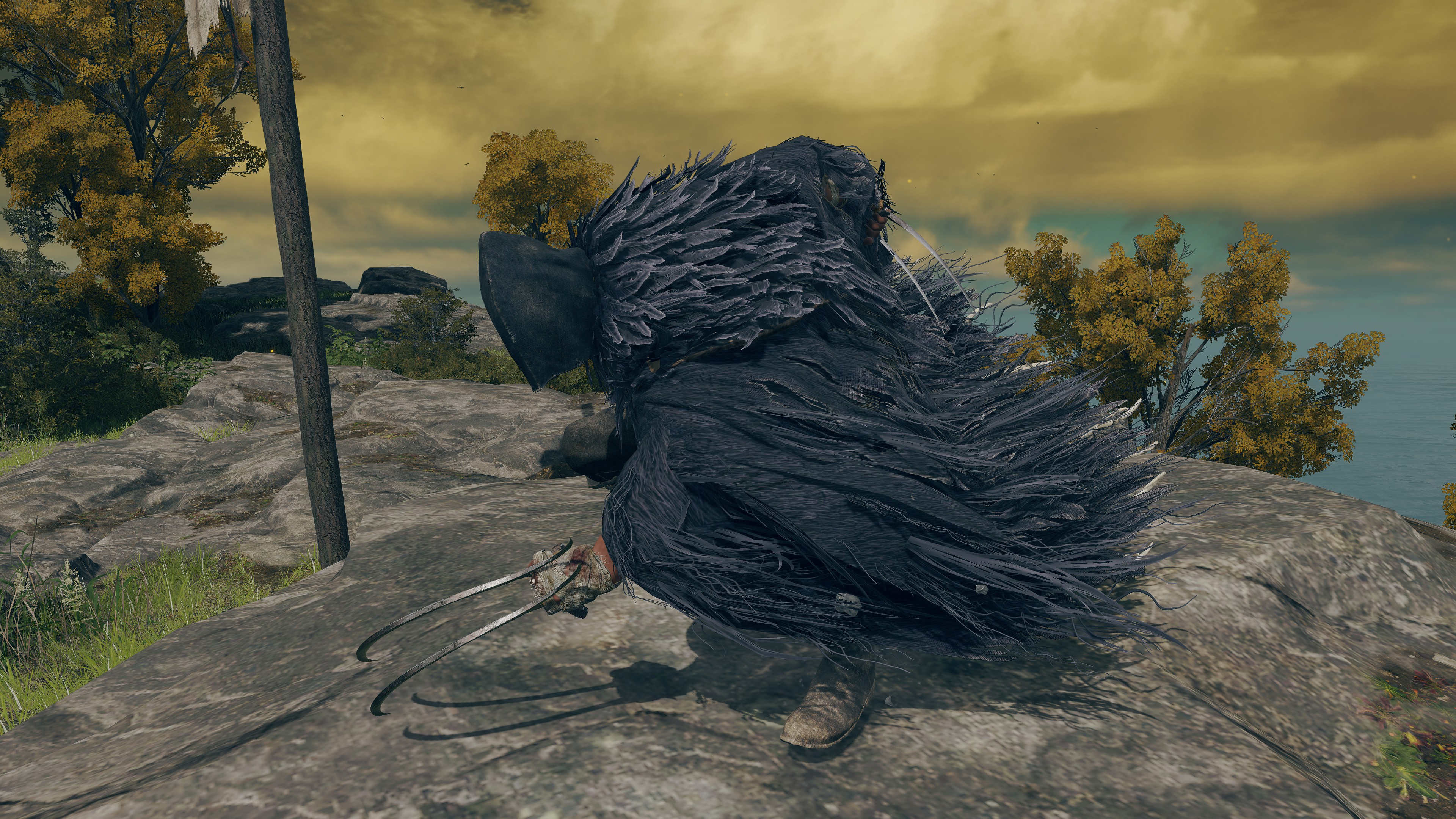
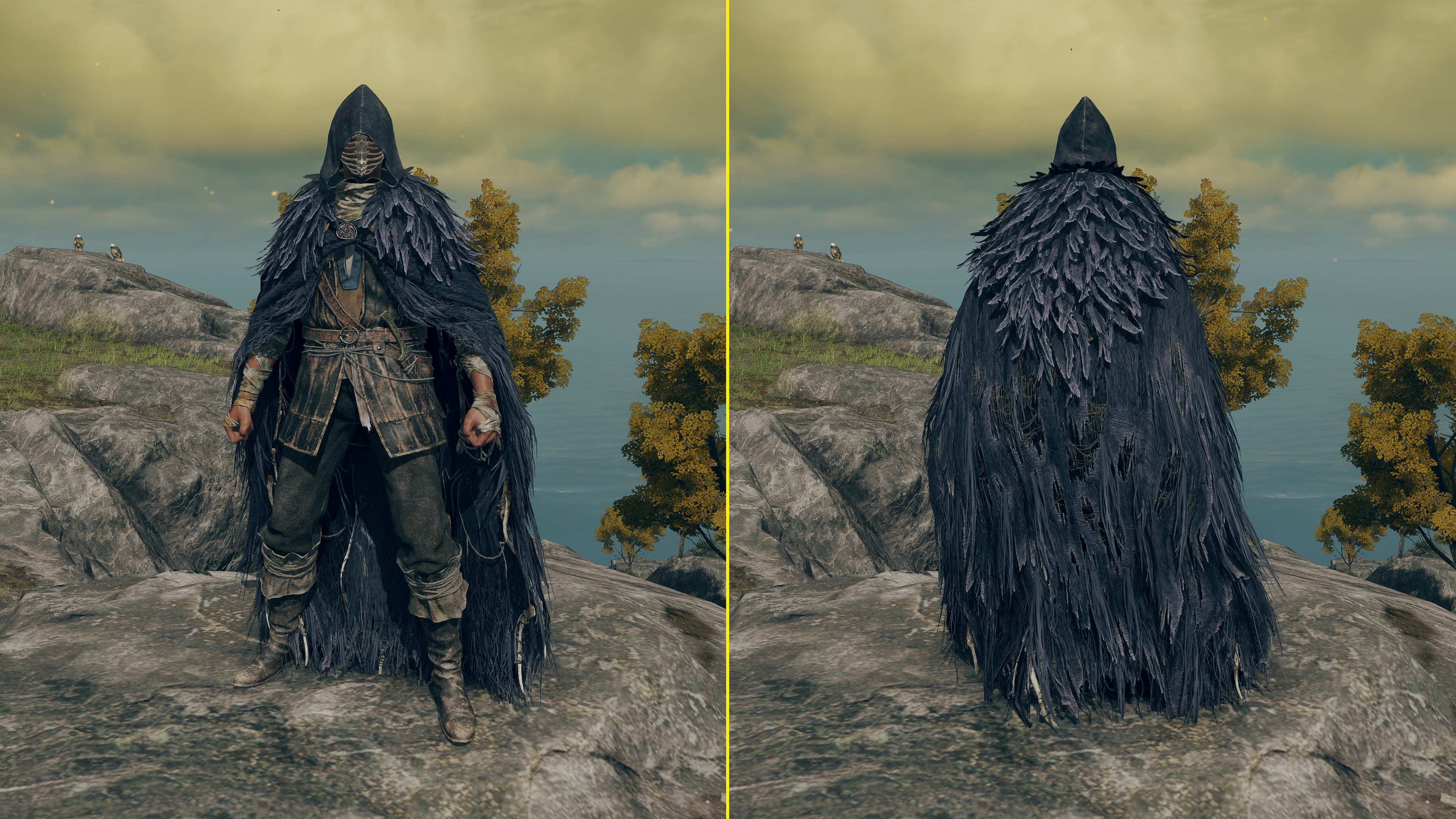
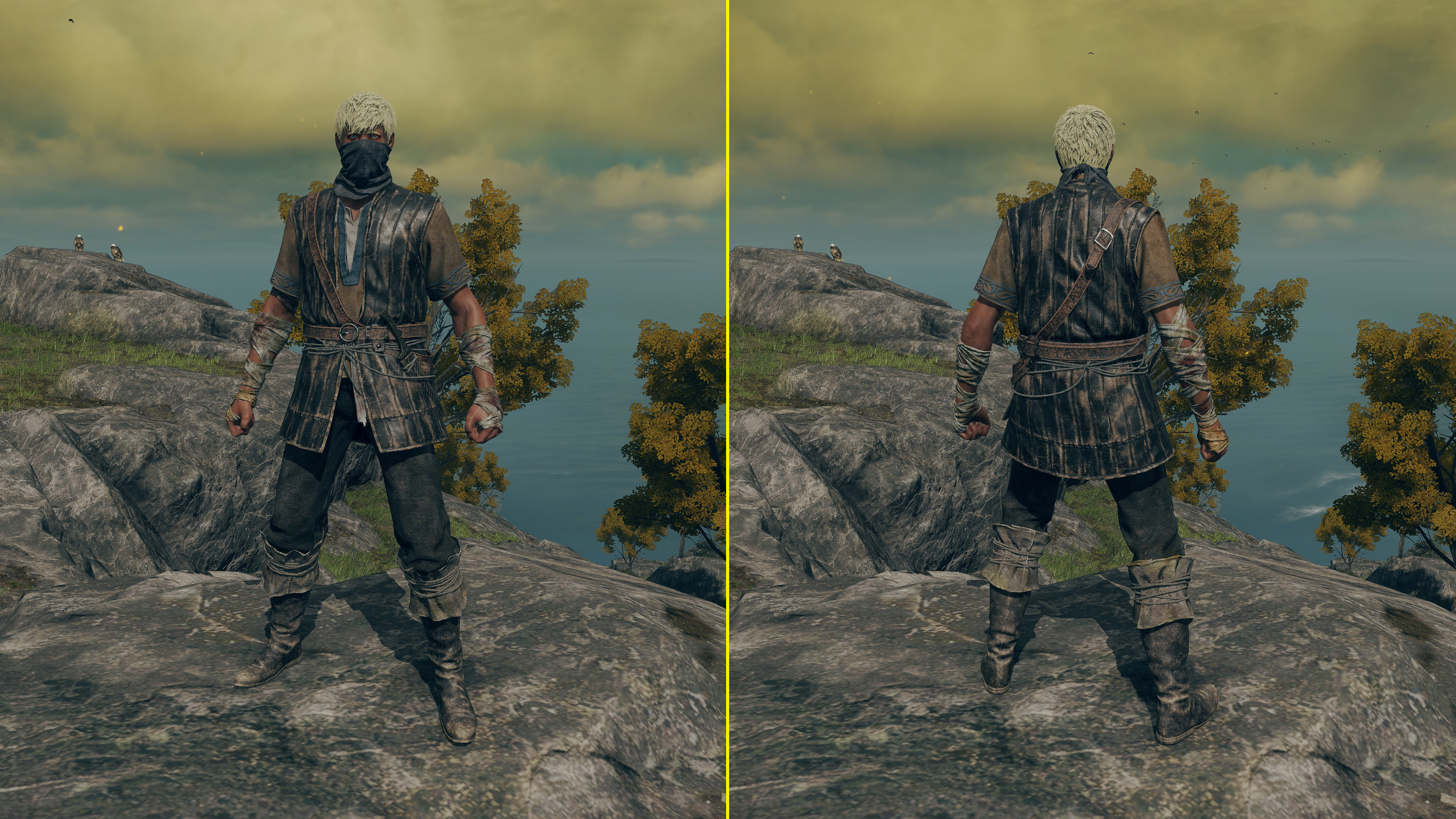
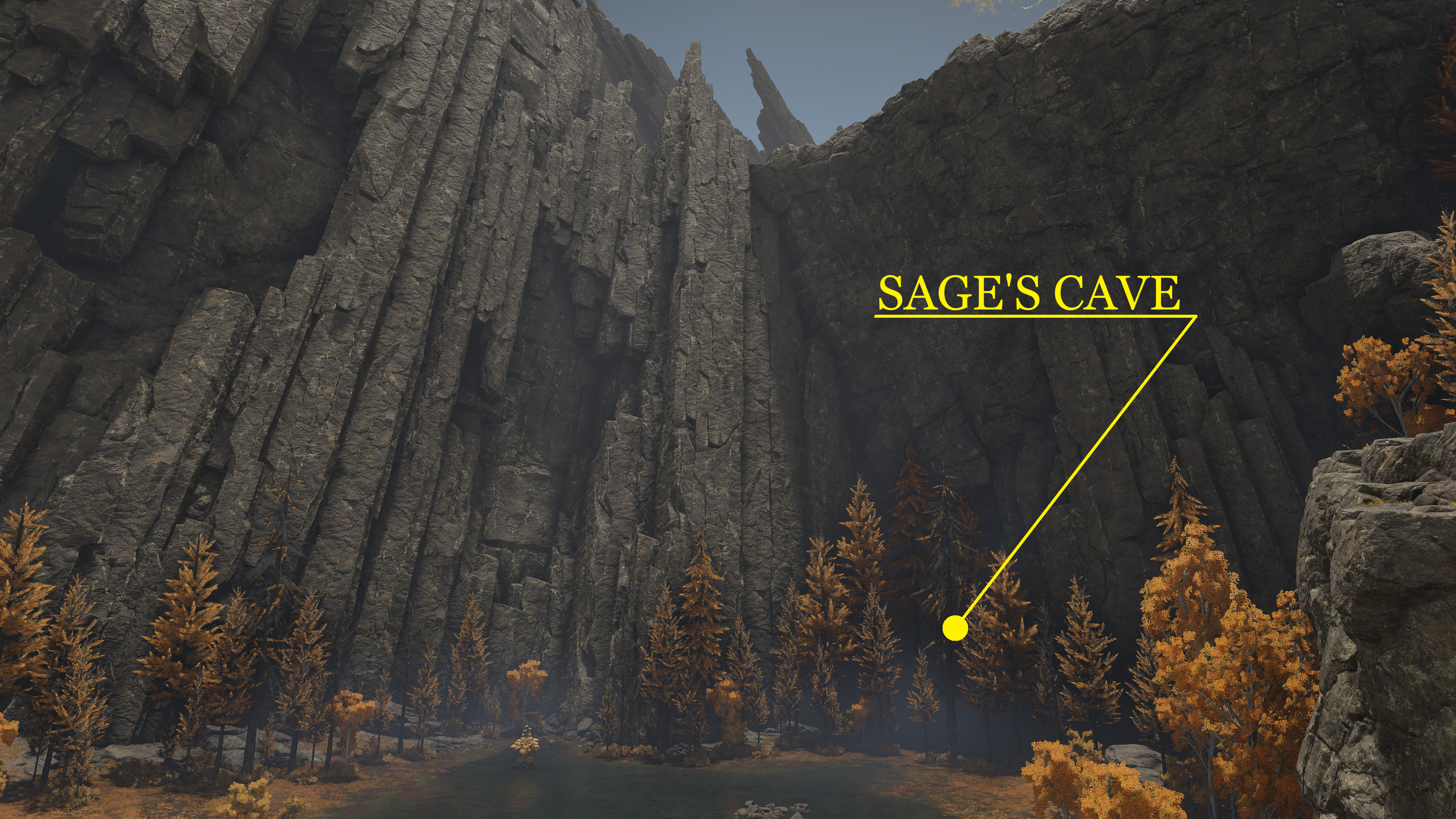
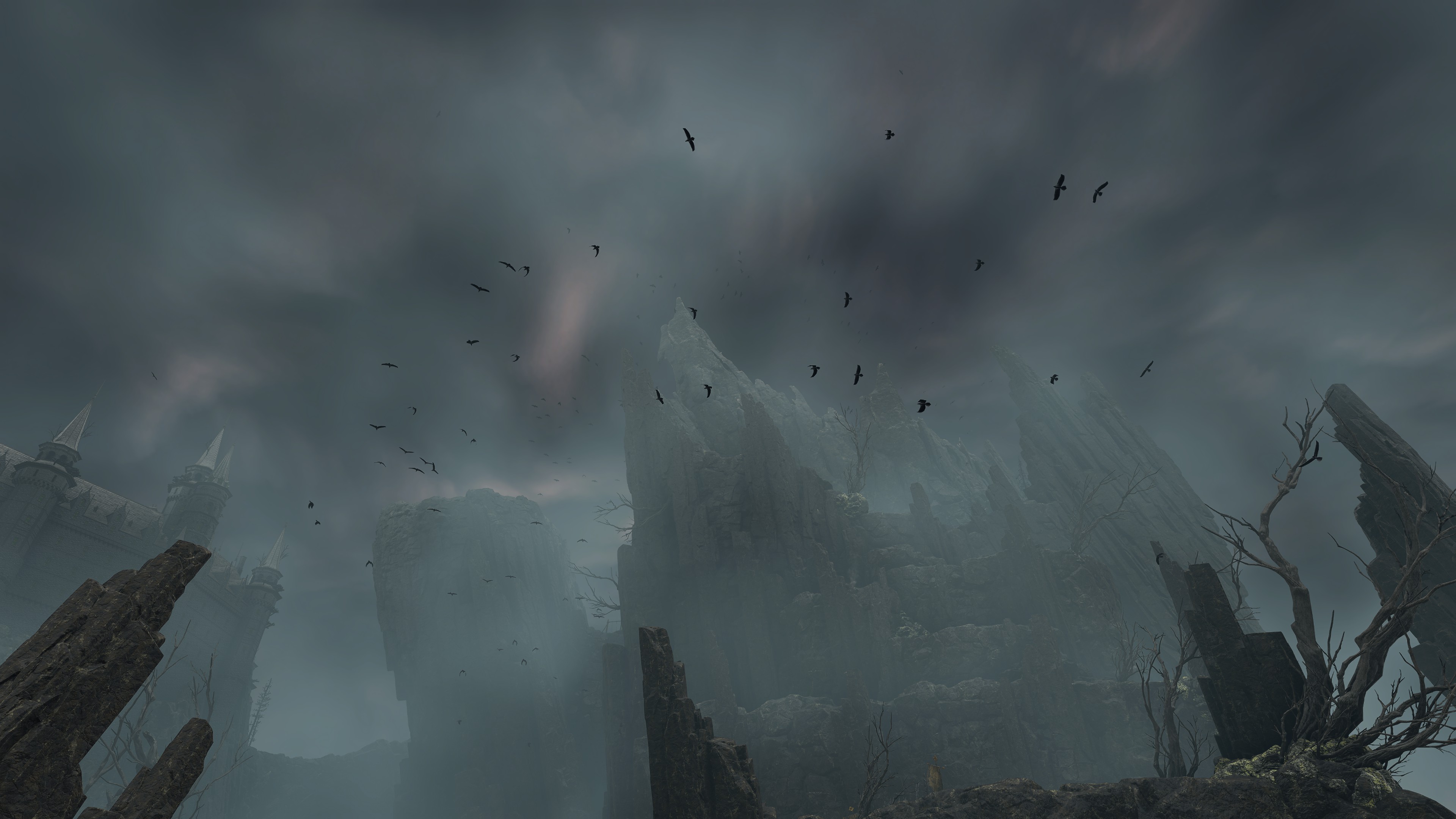
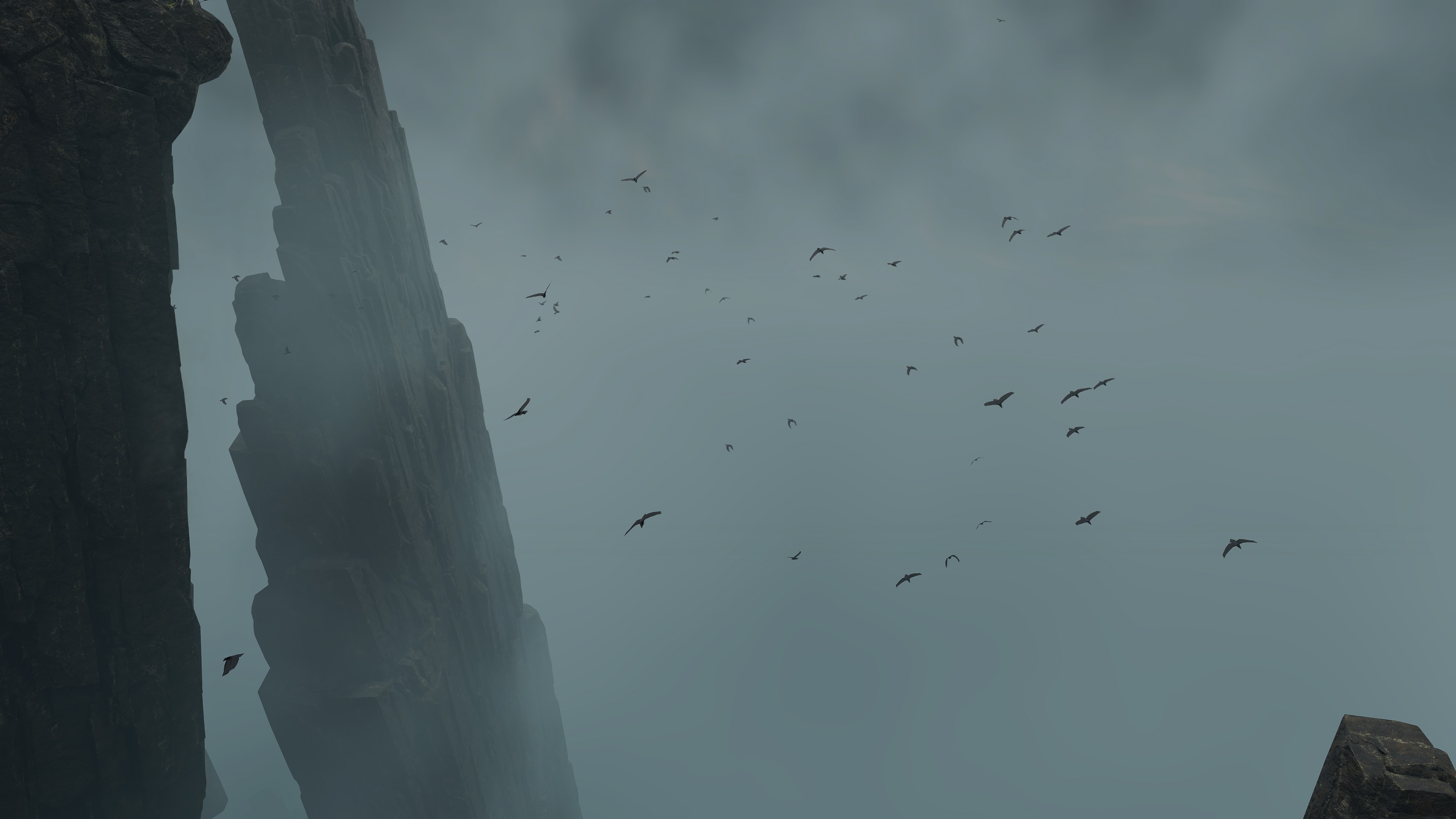
The region probably held particular importance to Death’s worshipers. Defeating the Deathbird in the Capital Outskirts is how we acquire the Twinbird Kite Shield, opening a possible connection between the mother bird and Altus in particular. The plateau is also home to unique flowers with succulent petals, these Altus Blooms predating the Erdtree as a native plant and offered to the dead during their sendoff in those days. Why did locals leaves these specific flowers with the dead at their funerals? Because of their unique properties. In perfuming, Altus Blooms appear to be used as an igniter, best demonstrated when combined with just Miranda powder to craft Spark Aromatics. Their ripened petals contain the power of flame, thus the ancient funerary practice assists the Deathbirds with cremating the body. That Altus earth produces a firestarter was therefore known to the birds, making the land a natural location for them and their mother to perform their cremations. And where better to start that fire than on a veritable “fire mountain” (火山) on the west side?
Succulent plant which has ripened to gold. One of the materials used in item crafting. It blooms on Altus Plateau.
It is said to have been a flower to escort death in the age before the Golden Tree.
Indeed, the volcano isn’t a natural phenomenon. We find no lava mantle hiding beneath the earth’s crust or signs of plate tectonics. The magma comes from within the mountain itself, otherwise it would be no volcano. And reasons for its present volcanic activity aside, it is viable that fire was first introduced when the Twinbird descended upon the mount. The description to Death’s Poker acknowledges that they raked out cinders from within a kiln, the Japanese text never clarifying if it was singular or plural. If the former, then what more natural kiln for them to use then a mountain they could hollow out with flame? By burning corpses atop it until they melted its insides, the Deathbirds could create a natural furnace that they then continued to stoke as more bodies were thrown into the flames. This fits with the traditional use of Japanese irons in hibachi bowls, which burn charcoal in a bed of ash to heat their immediate surroundings. In this case, it was spirit charcoal in bone ash, a mount for a bowl heating itself. Perhaps it was even ghostflame which first made “Ravenmount” into a volcano.
On that final point, we do see peculiar rock formations all over Gelmir. They bear similarity to columnar jointing seen in natural geology, but they are unnaturally large and cubic in shape. Nonetheless, large parts of the volcano consist of these cubic formations, with more randomly scattered across the grounds around it. Some of this stretches a little east as far as neighboring Shaded Castle, but most extend to the south and west, formations covers huge swathes of Liurnia all the way down to Stormhill around Stormveil Castle before finally ending at the northern tip of Limgrave’s west coast. This continuous string of columnar jointing is consistent with the results of massive lava flow, though on a scale far surpassing everyday occurrences. And since the formations seem to concentrate around Mt. Gelmir at the highest point, it was most likely the source of the magma. Considering that this proposed magma surge outstrips the volcano’s current outflow, there must have been an unparalleled flame on the mountain in ancient times. But when exactly? Perhaps in the days it was still a kiln for all death.
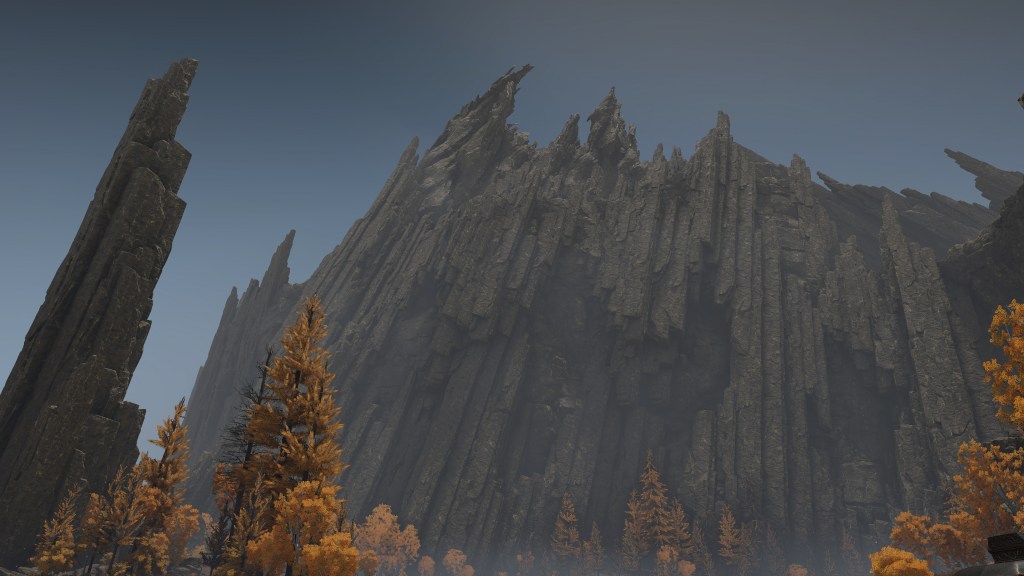
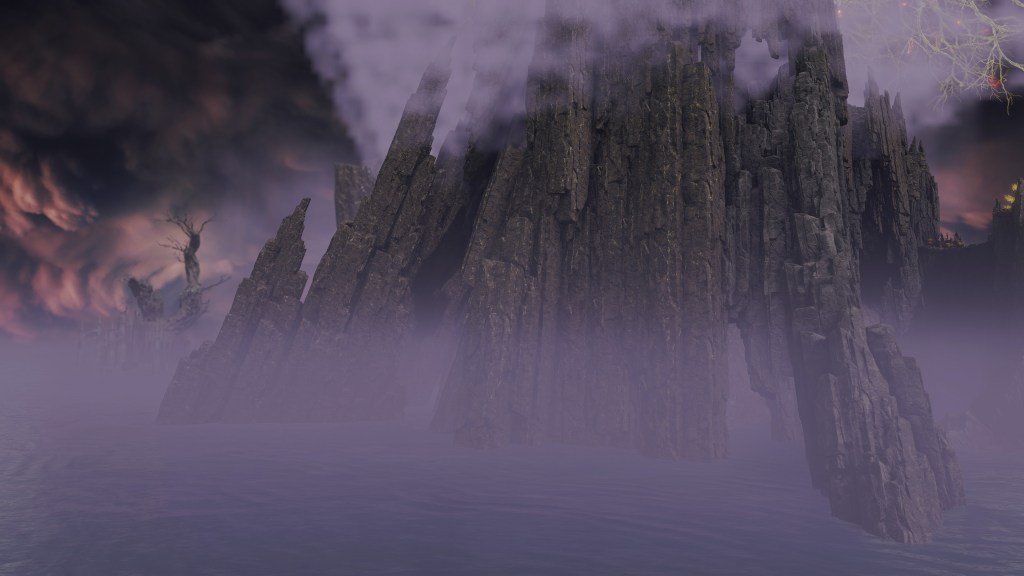
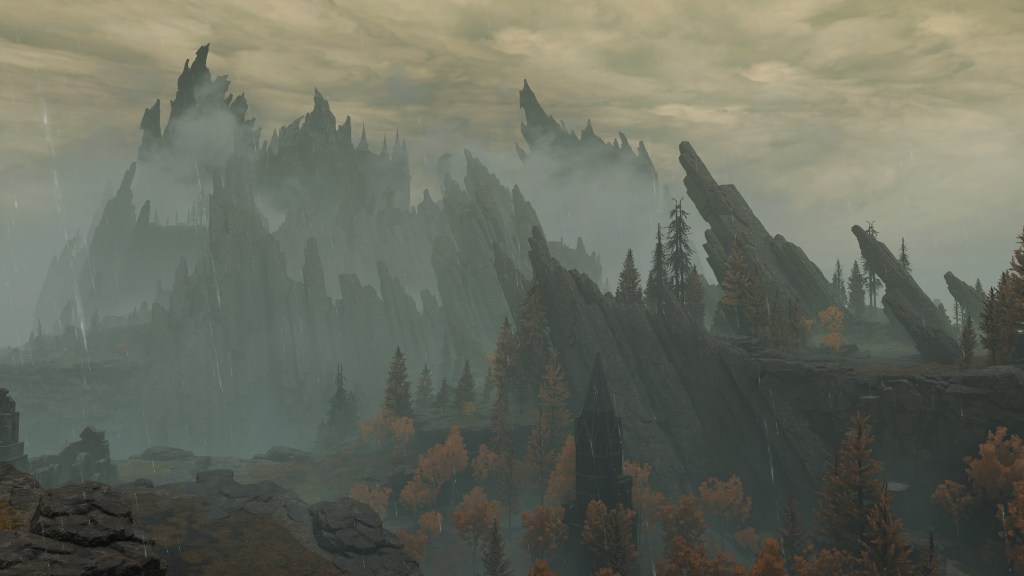
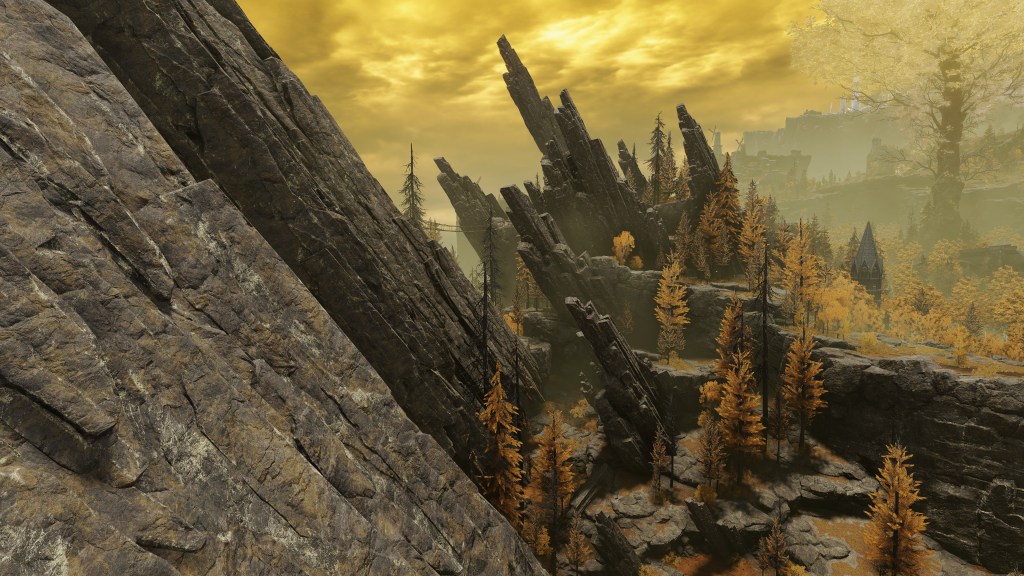
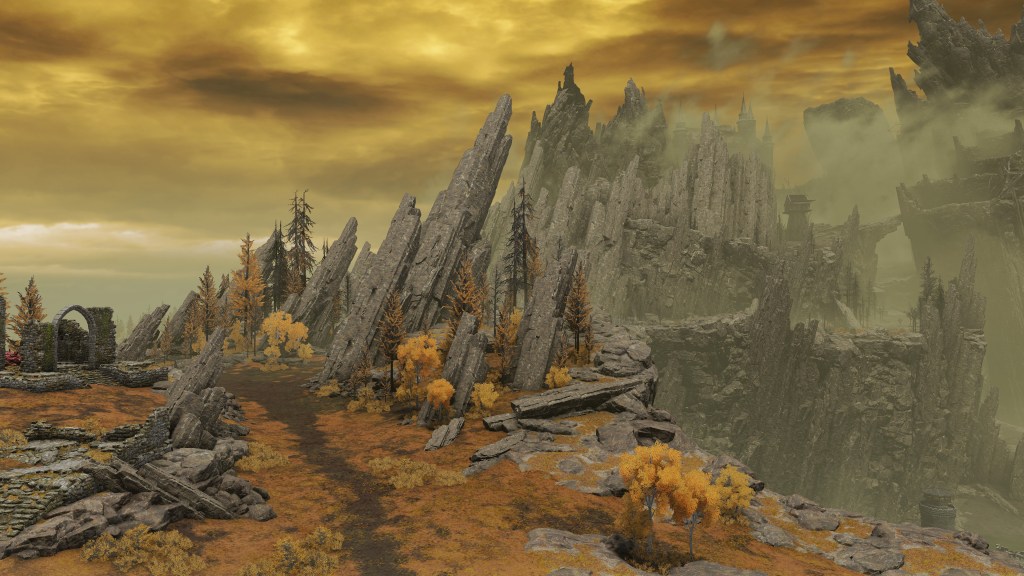
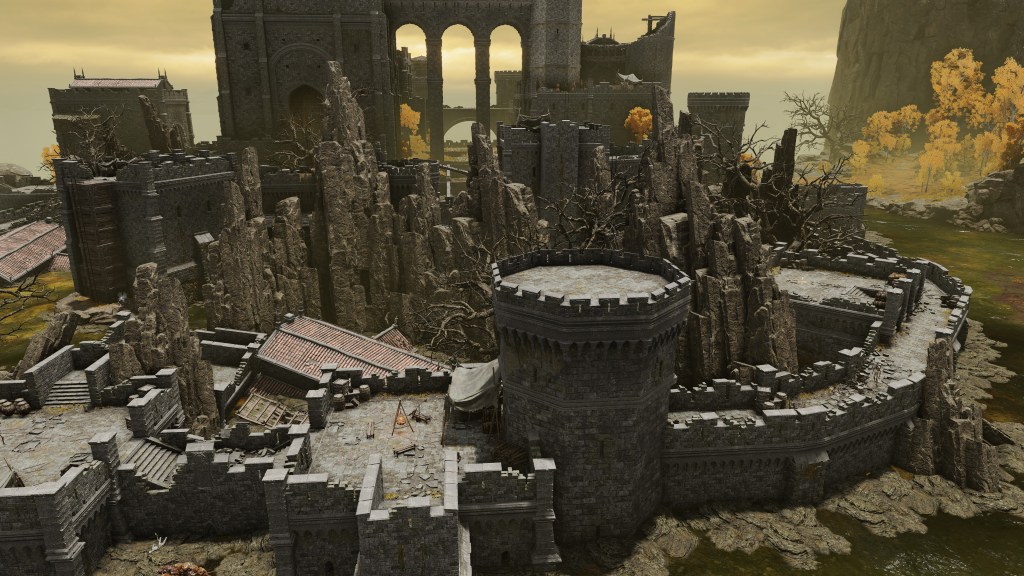
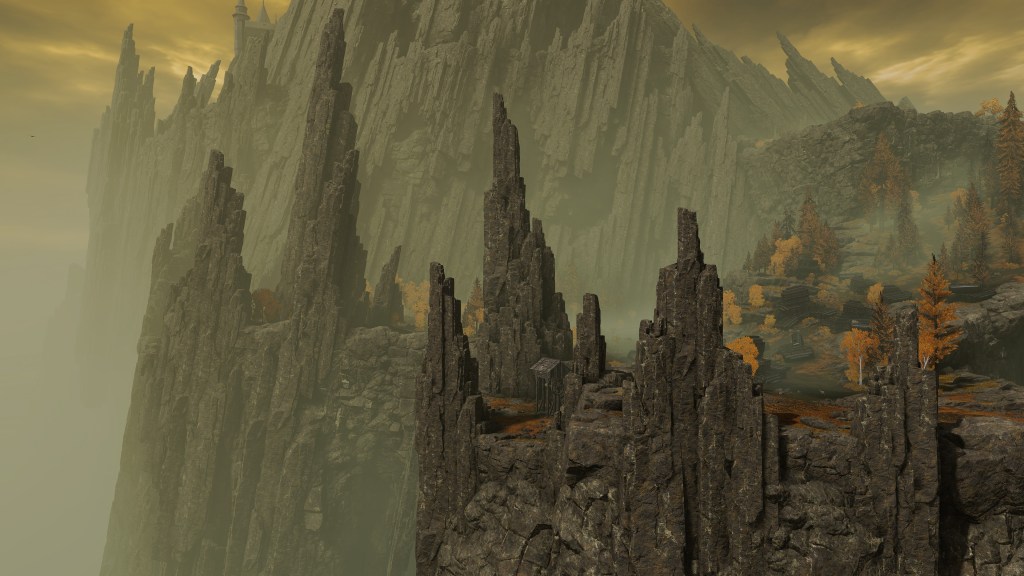
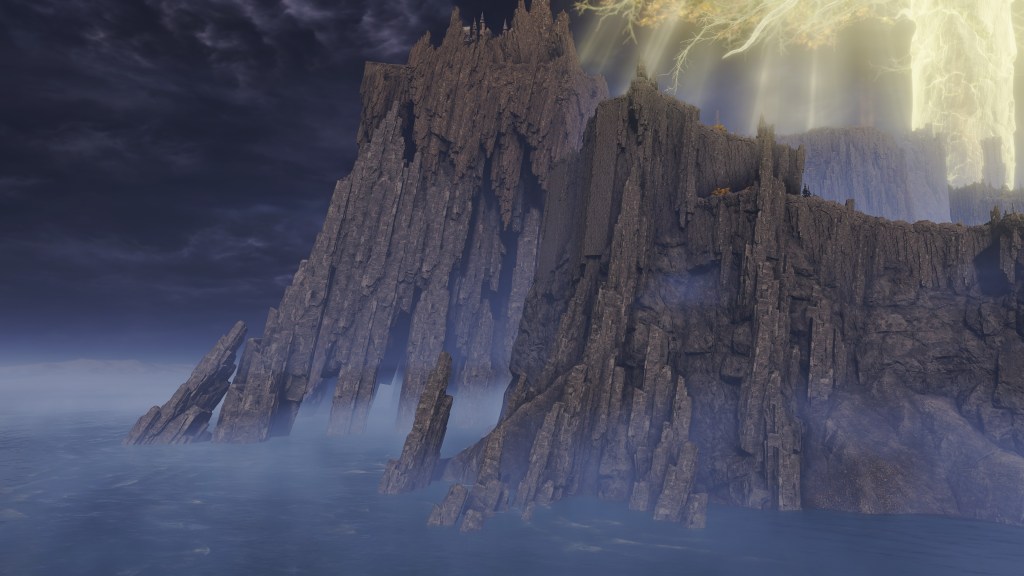
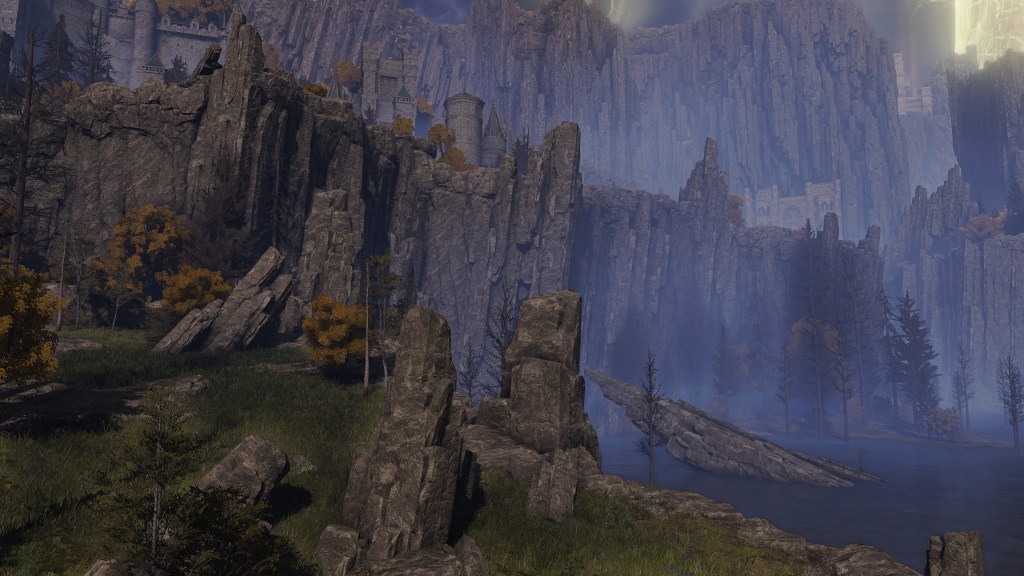
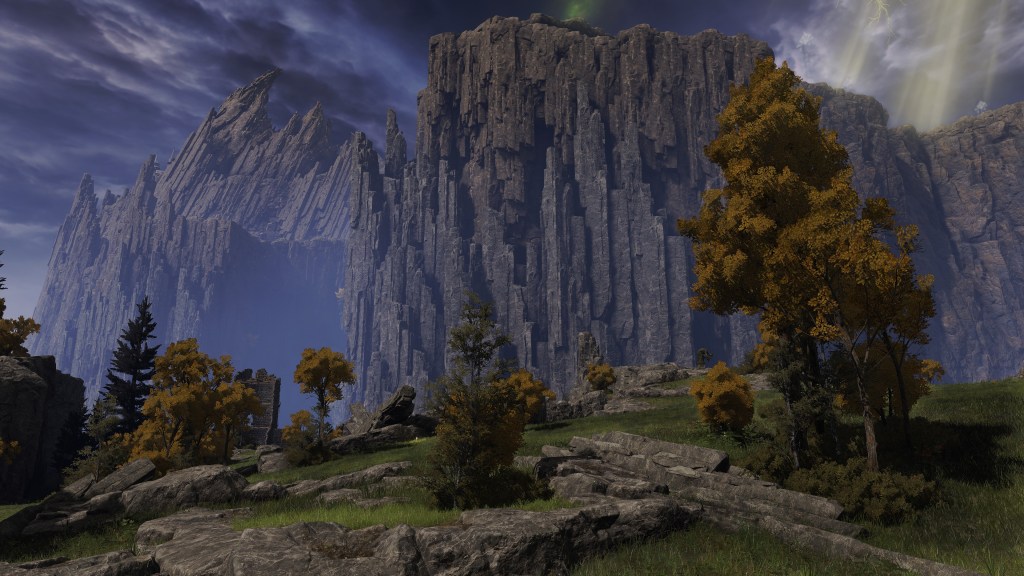
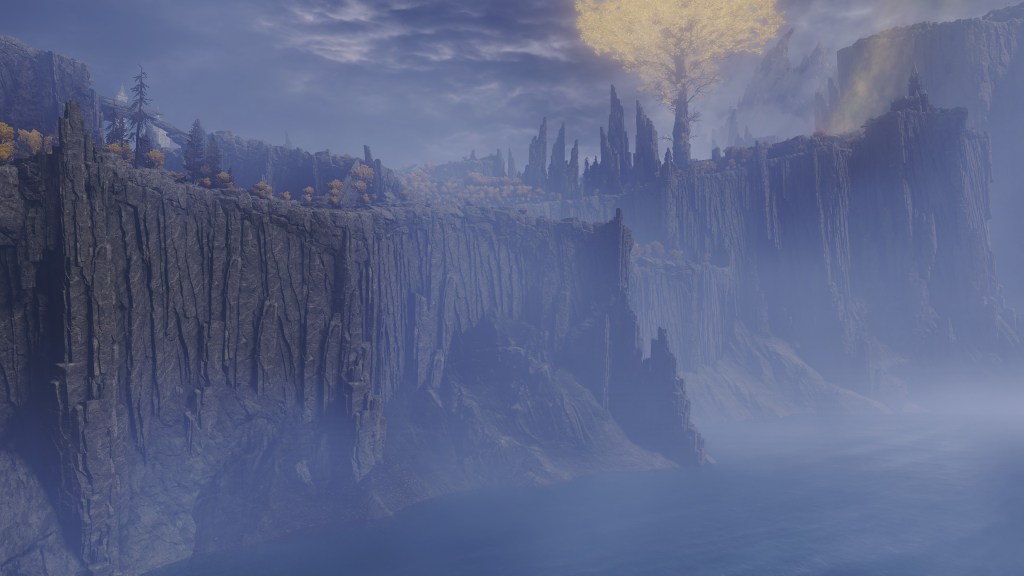
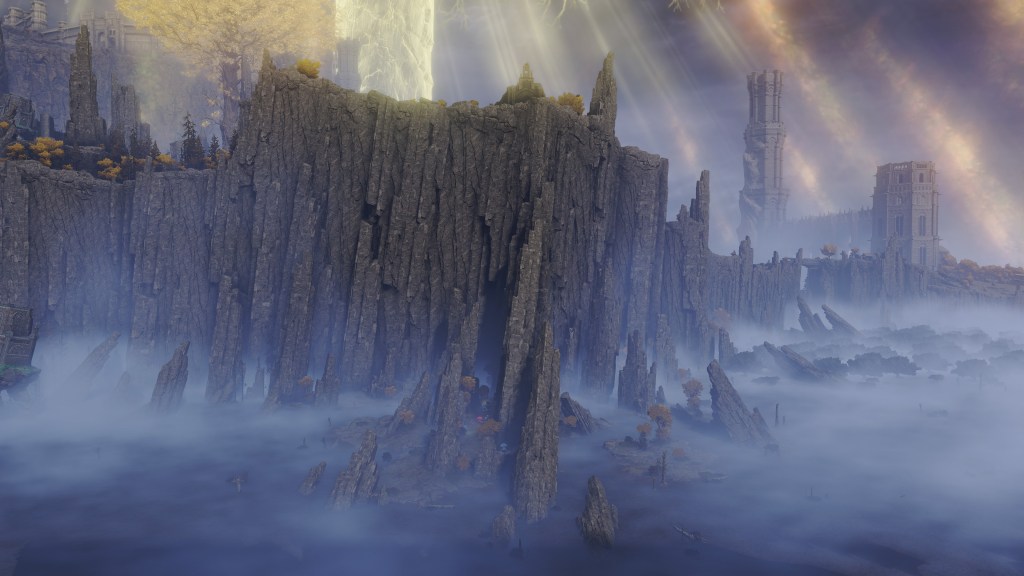
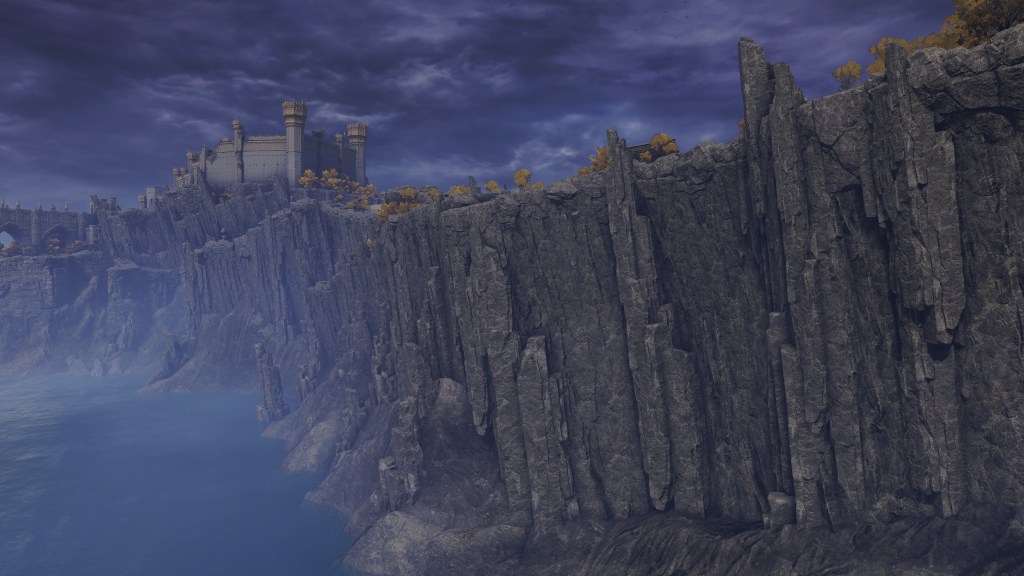
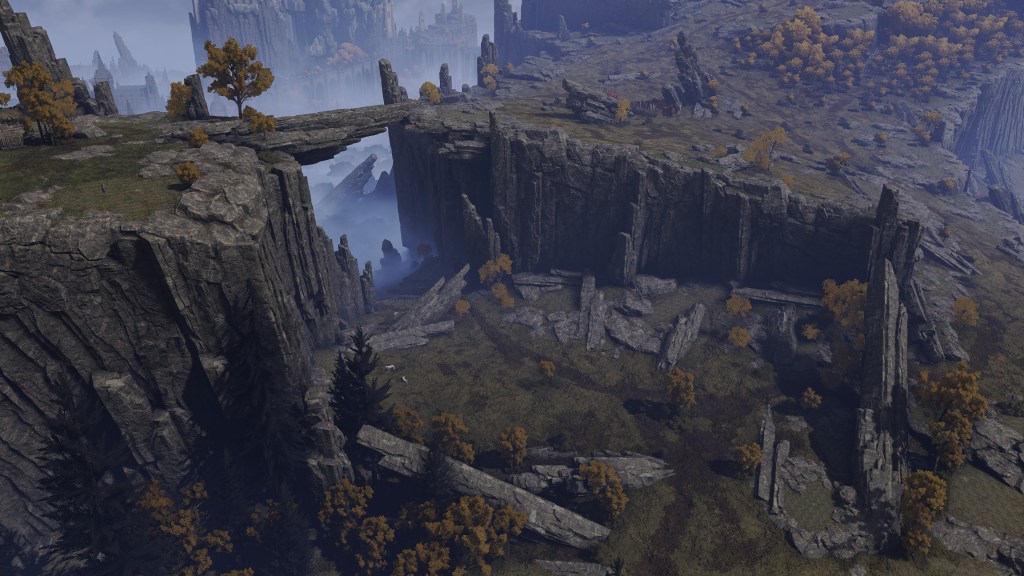
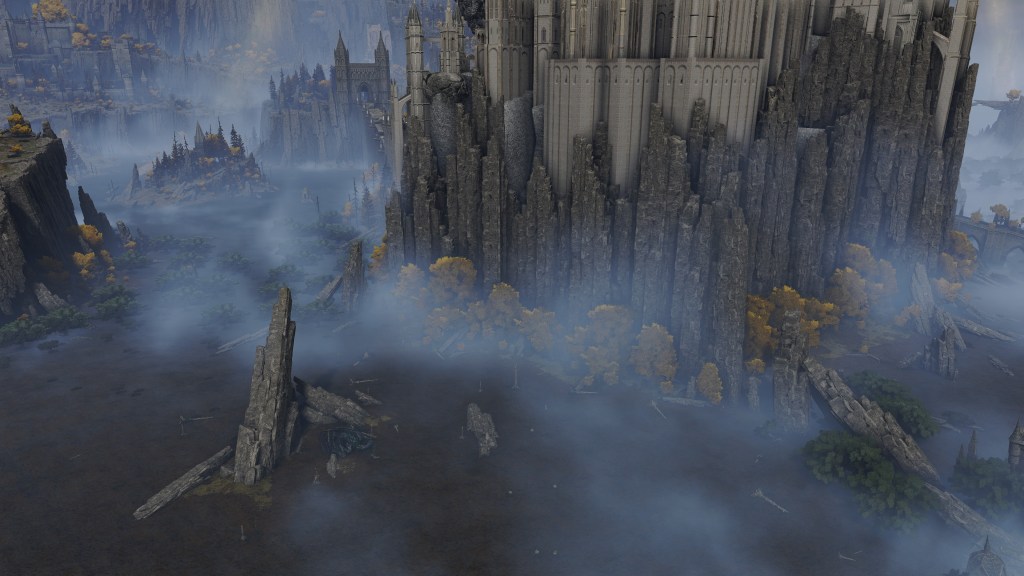
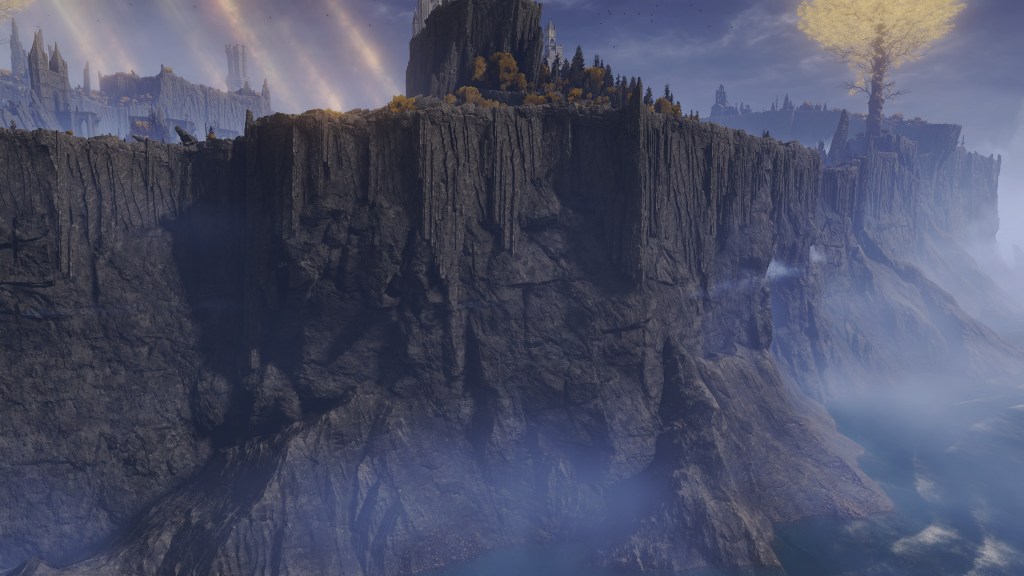
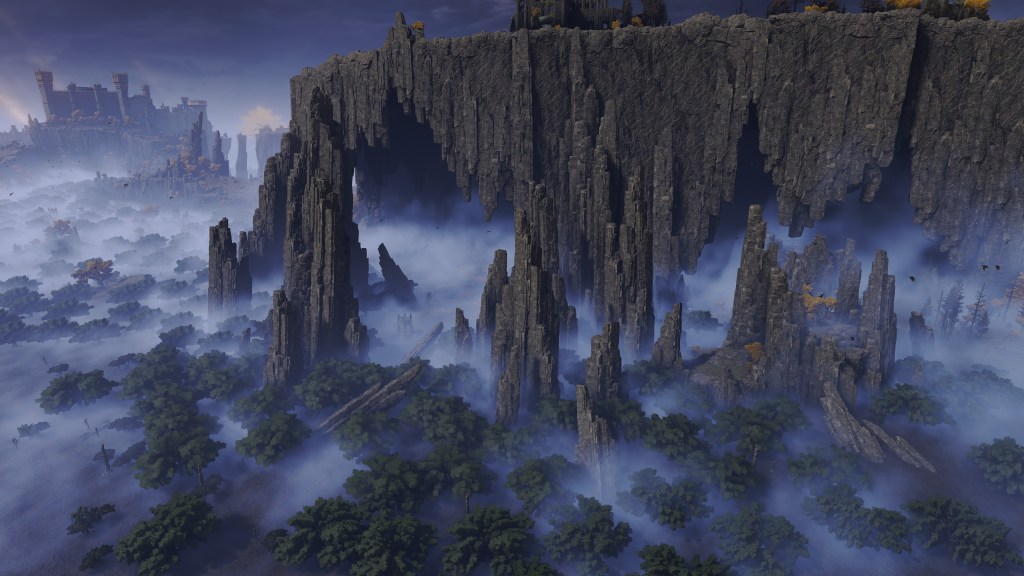
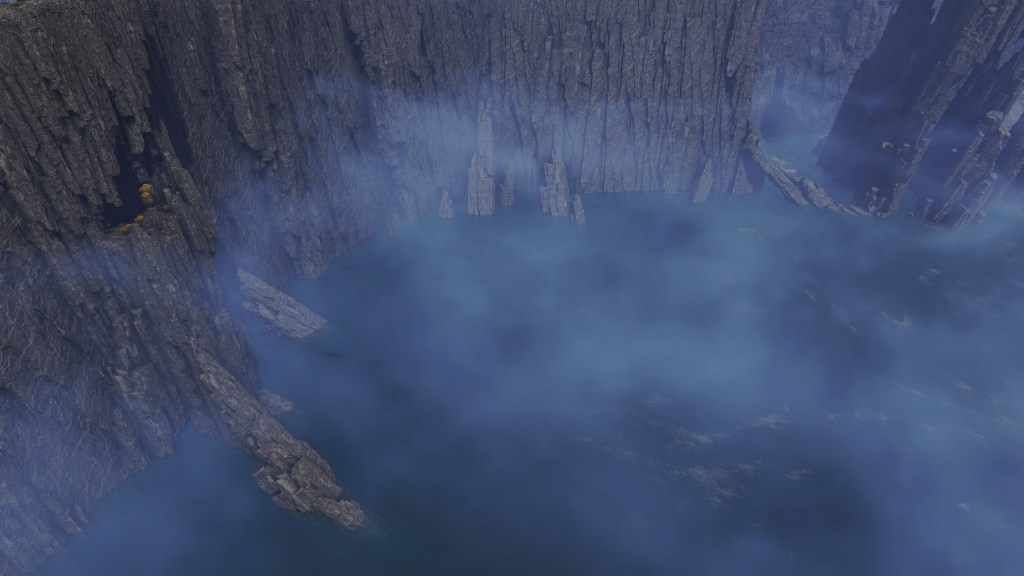
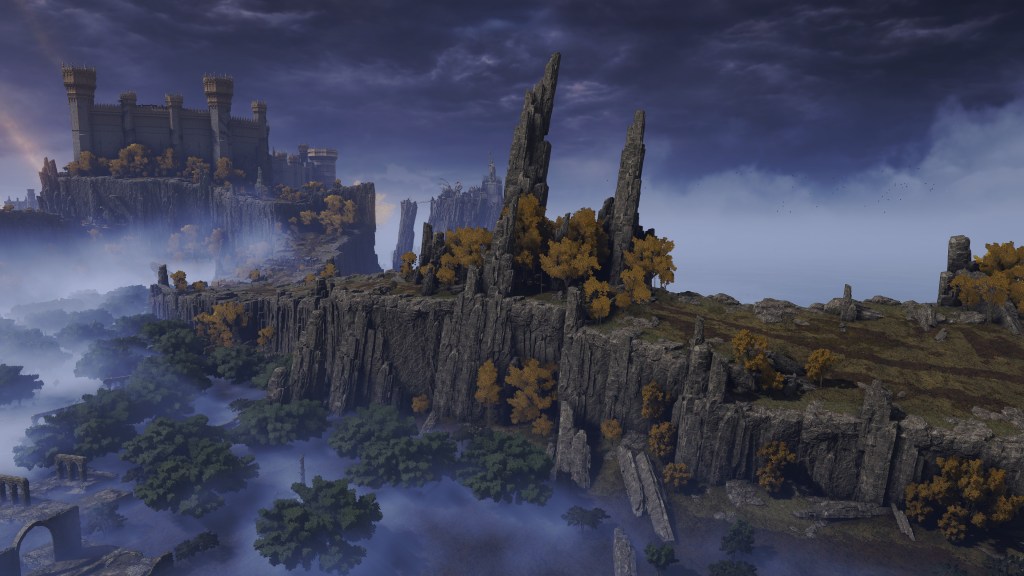
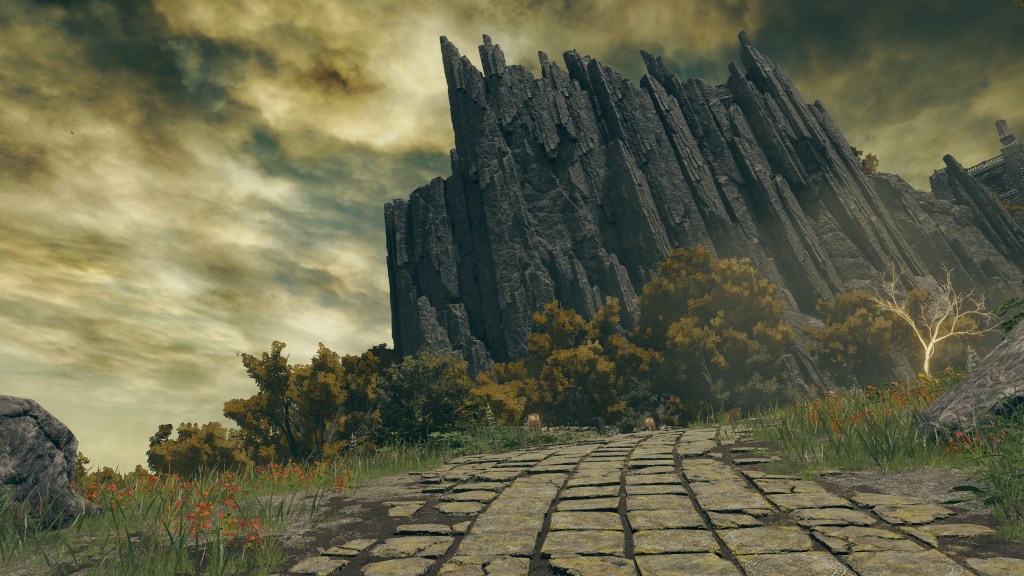
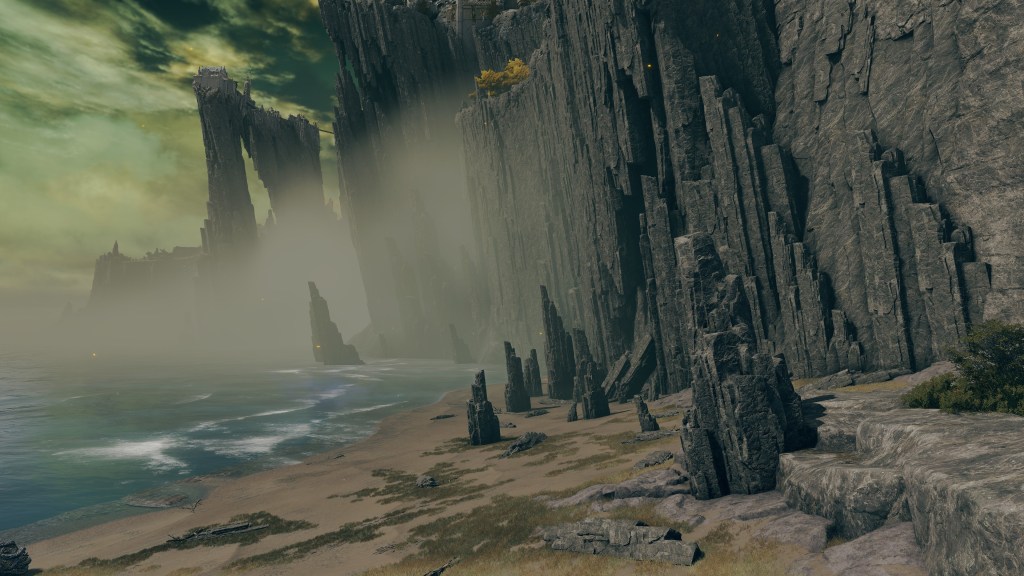
Taken together, it is conceivable that the Twinbird made Gelmir her perch in this northern land, operating out of “Ravenmount” as their giant crematorium. Her children helped their mother rake out the vengeful spirits as they brought all the dead from across the Lands Between to be dumped into the flames. This attracted a population of crows that continue to hover around the area to this day. Bandits hiding out on the mountain no honest man dared approach learned from observing the birds of death fiercely defending their kiln, identifying a connection between them and the carrion birds. They then began adopting assassination as a profession, in part, to show their reverence — that was one way to contribute to the “crows’” mission. Meanwhile, the ghostflames became so large, molten rock spilled over, a consistent stream eventually pouring out of one side and reshaping the entire western land. Being uncharacteristically cold, this molten spirit rock created unprecedented formations which remain Ravenmount’s legacy.
All of this, of course, is premised on Altus Plateau serving as the ideal starting point for the Twinbird’s cremation practice. If native flowers containing literal firepower to spark chemical reactions influenced the mother bird’s choice of this land, then what was the preceding source of the flame inducing this adaptation? For one, it appears to be inherent to the earth. When we first arrive on Altus, we are greeted with light-colored particles gently rising up from the ground, day or night. This phenomenon only extends to the initial areas we explore, stopping by the time we approach the northern and eastern parts of the plateau. If nothing else, it indicates that the developers wanted us to witness this element of Altus before anything else specific, presumably because it is fundamental to understanding the land. And in terms of geology, the phenomenon closest resembles ash entrainment, the mineral particles radiating heat to the air underneath to create thermal uplift. In other words, something in the ground is subtly burning the surface and superheating the resulting ash, foliage adapting around this latent flame.
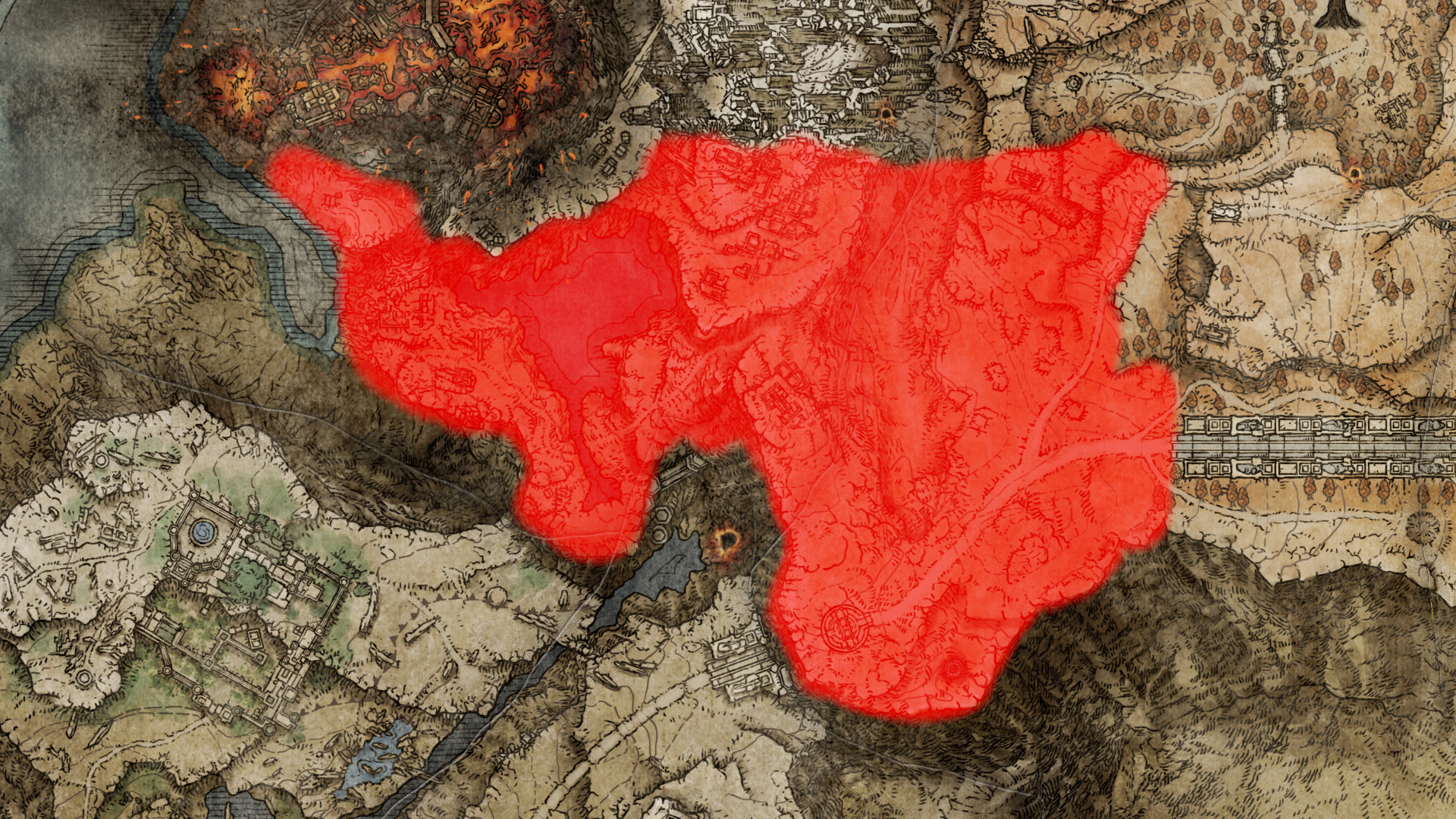
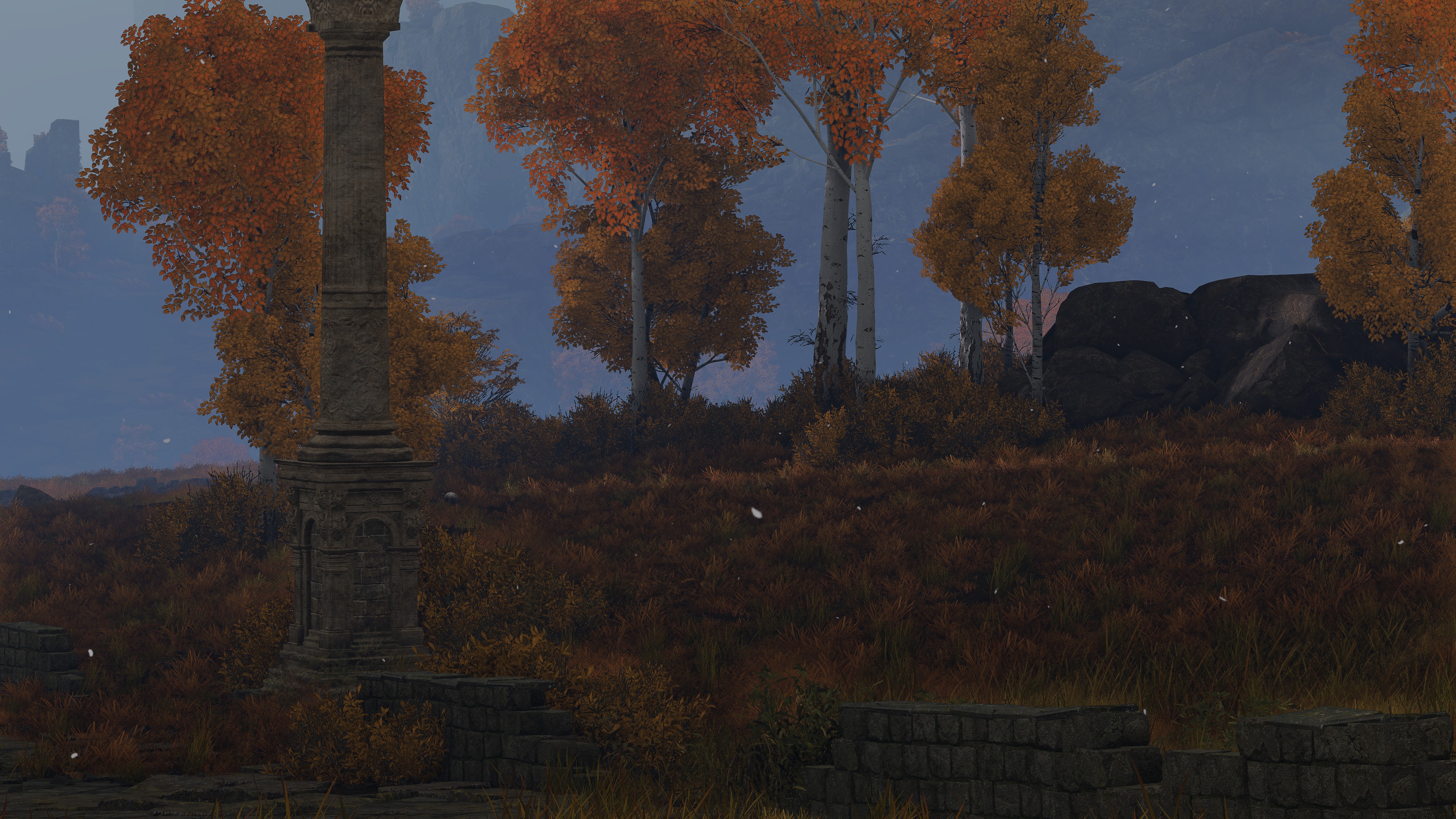
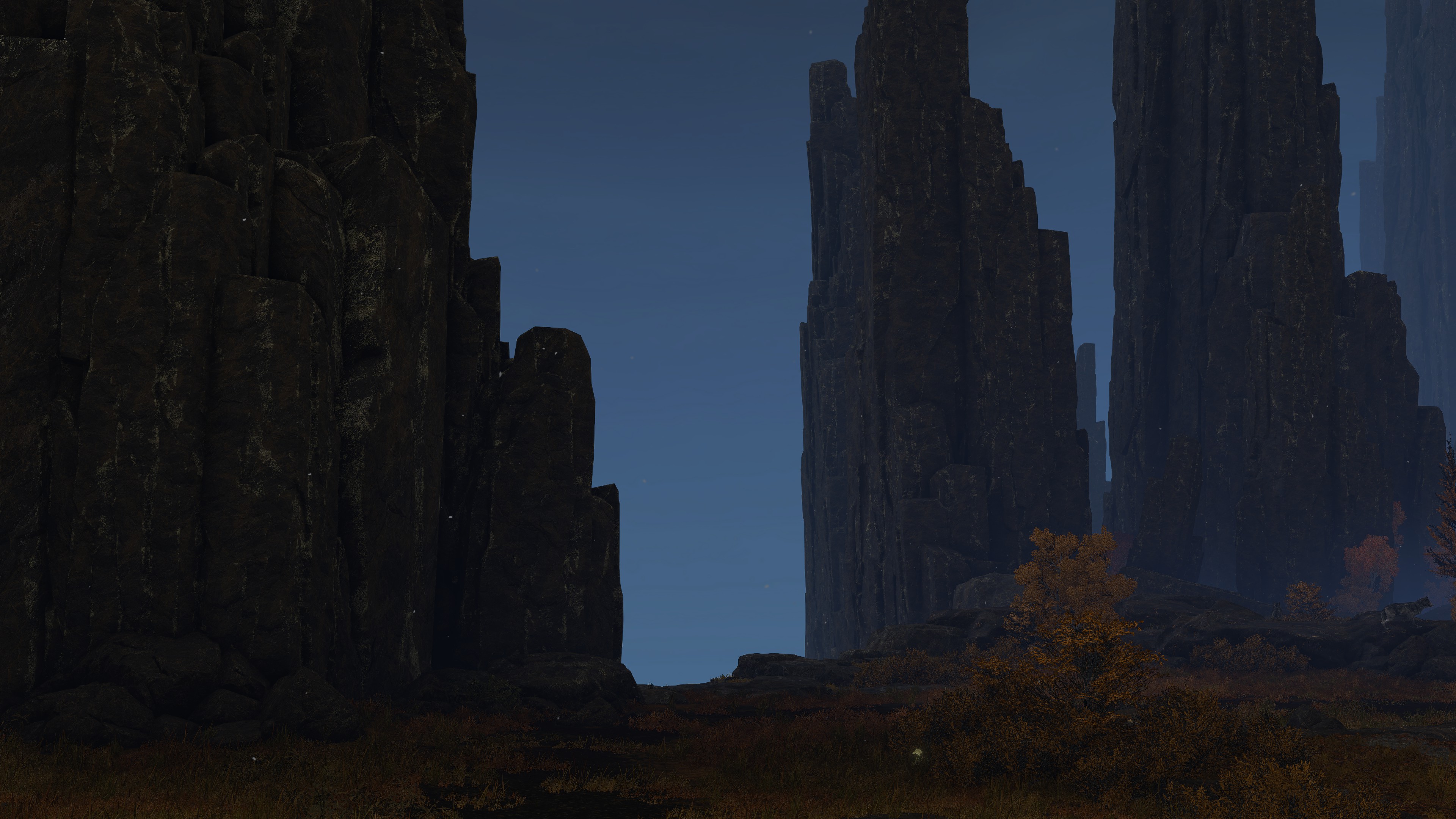
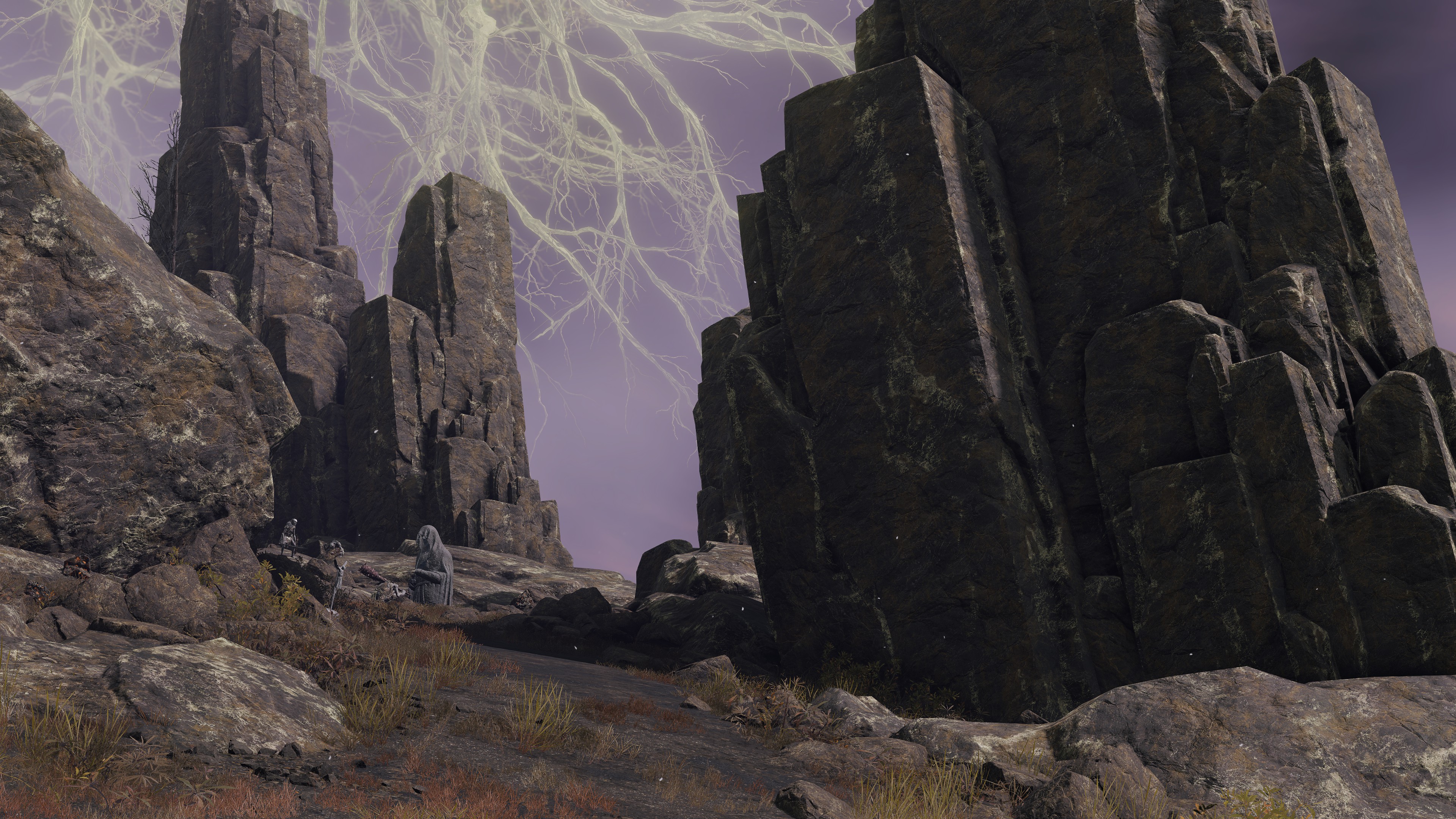
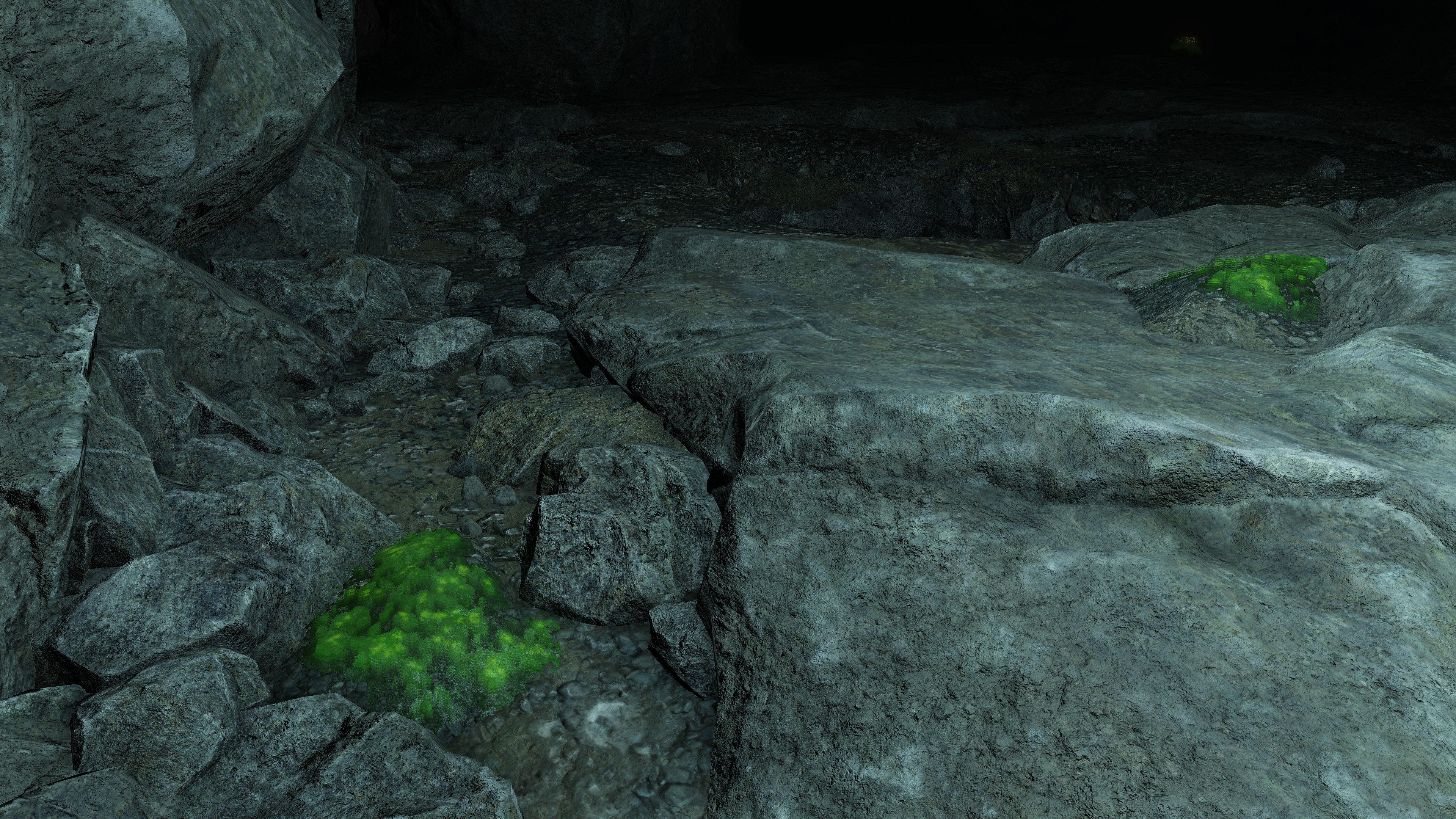
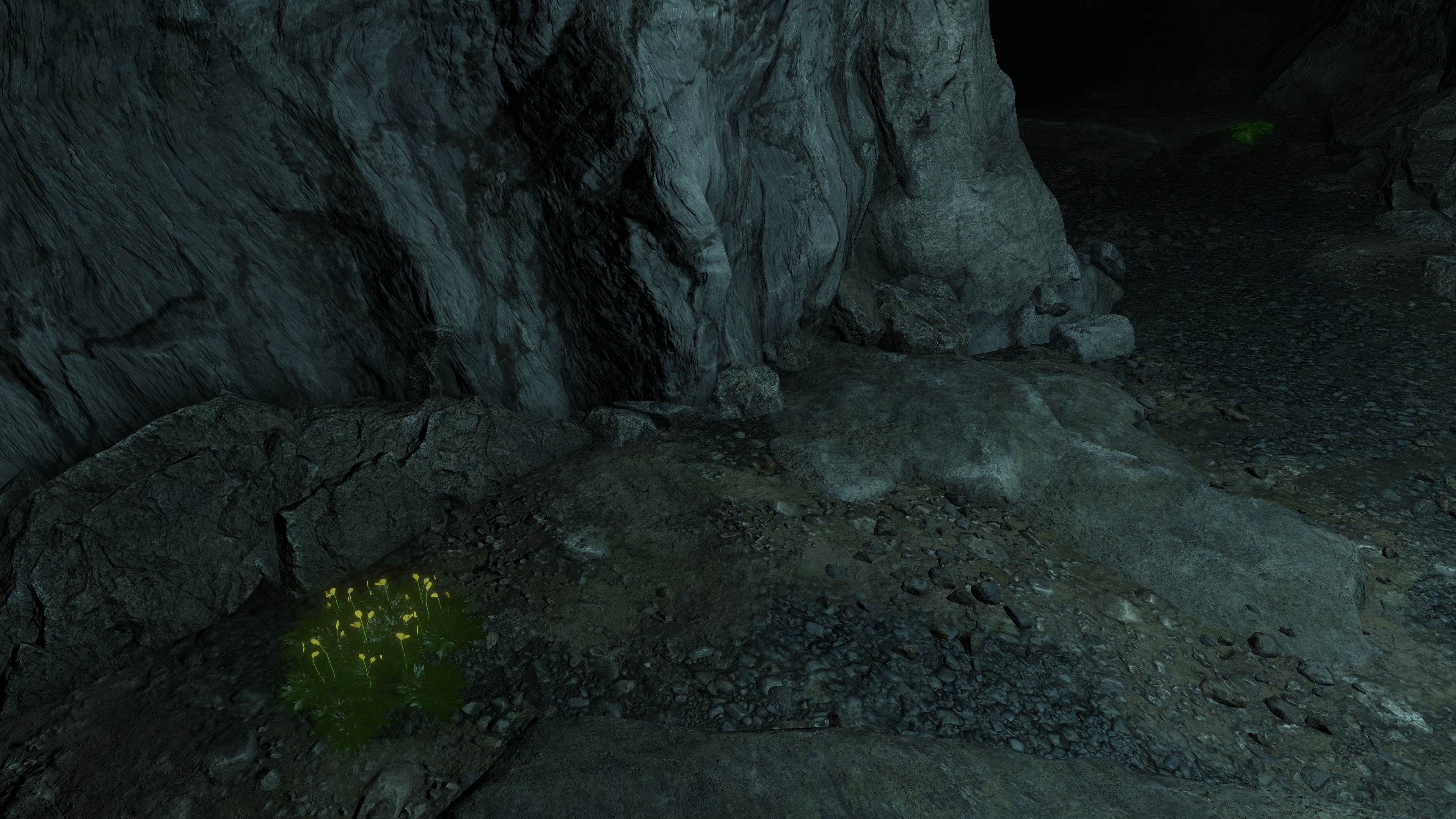
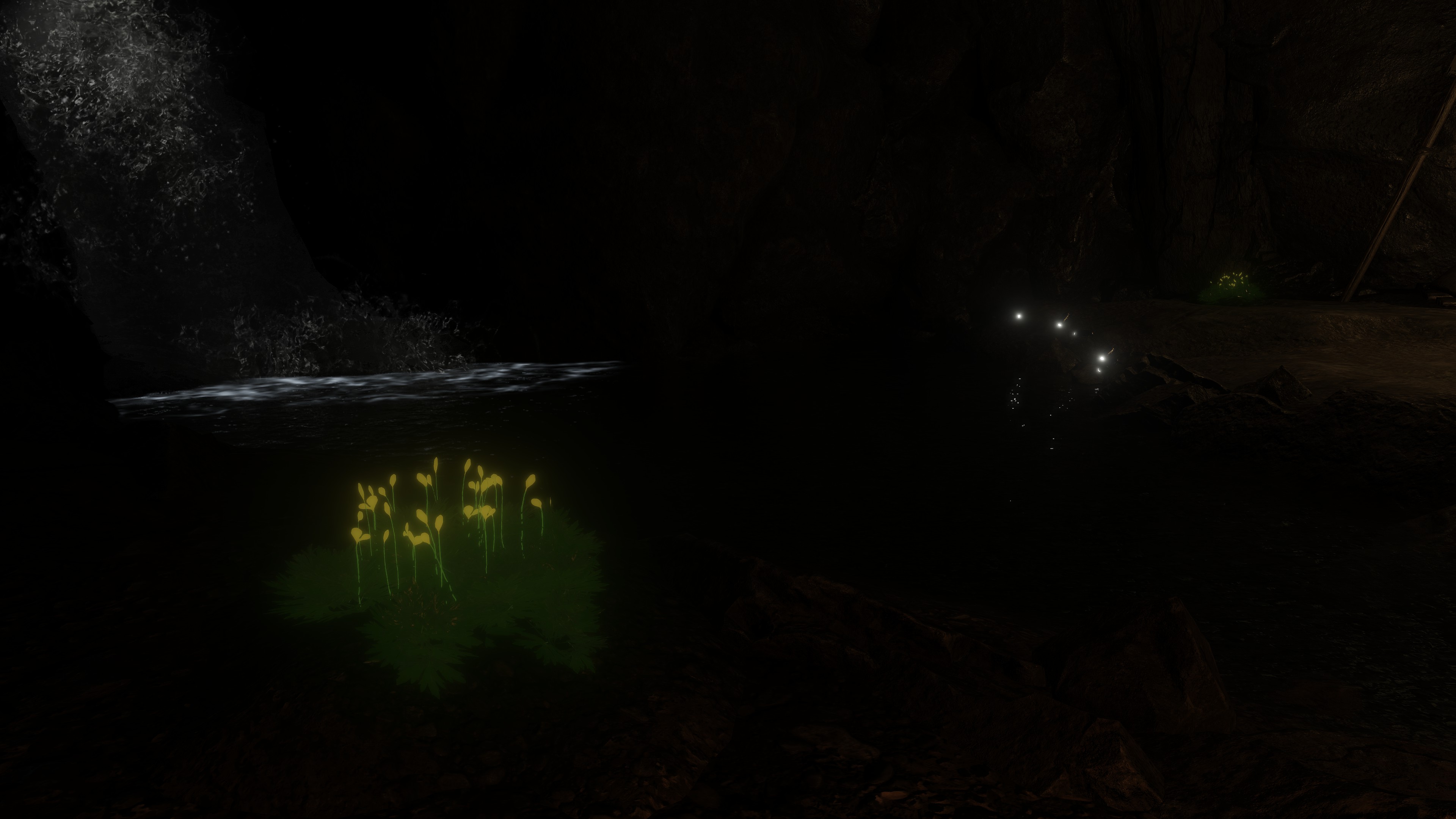
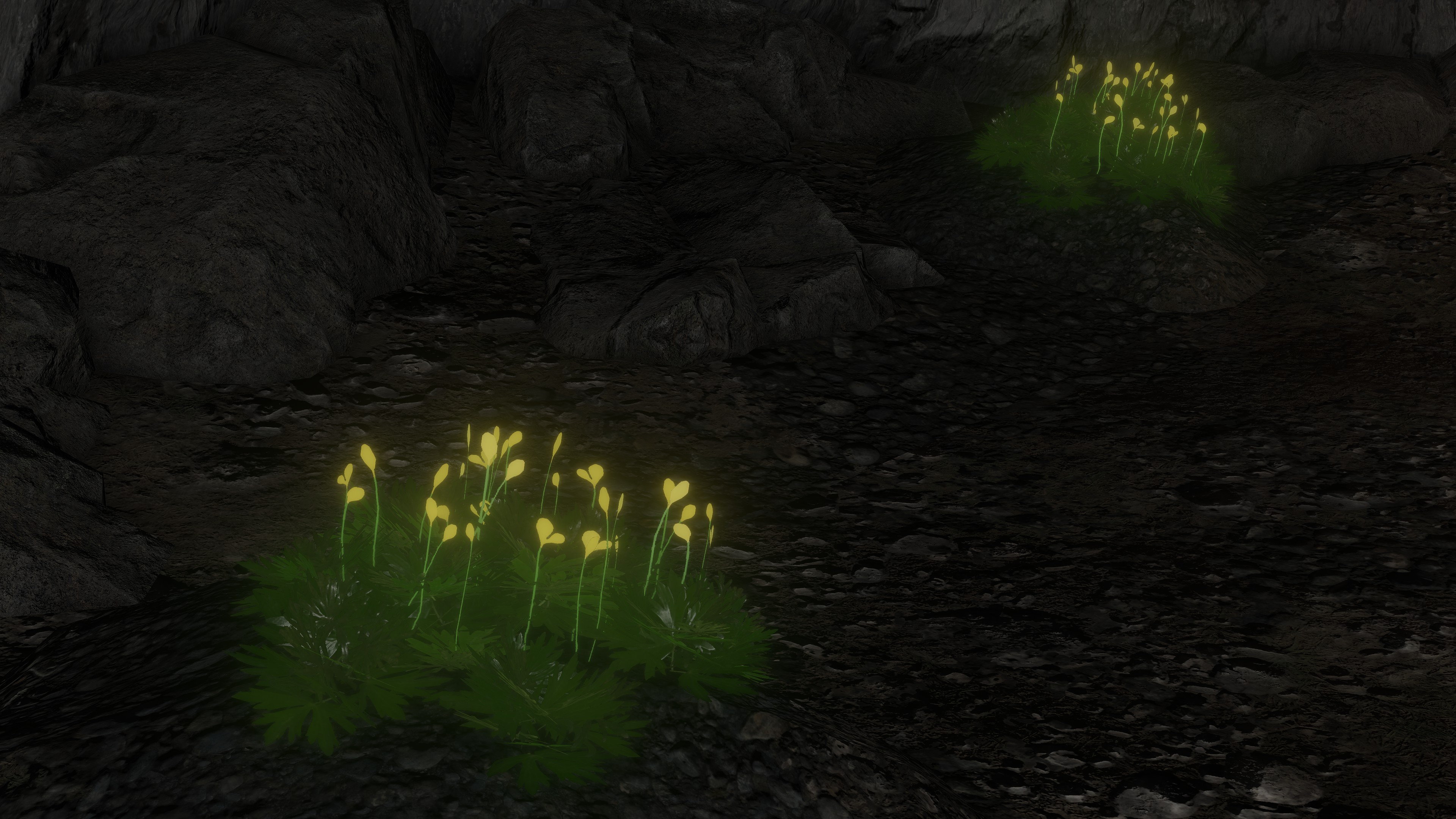
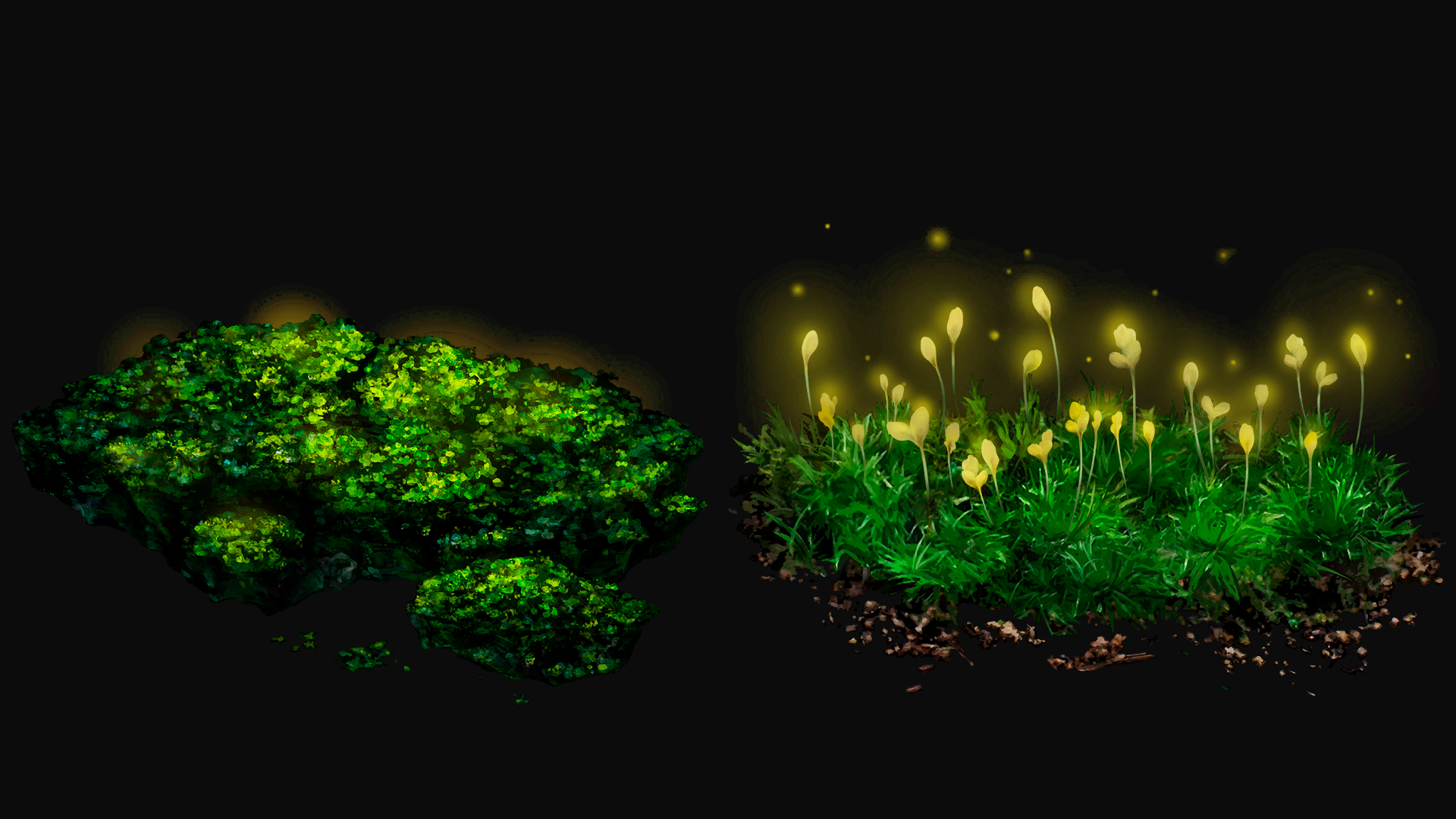
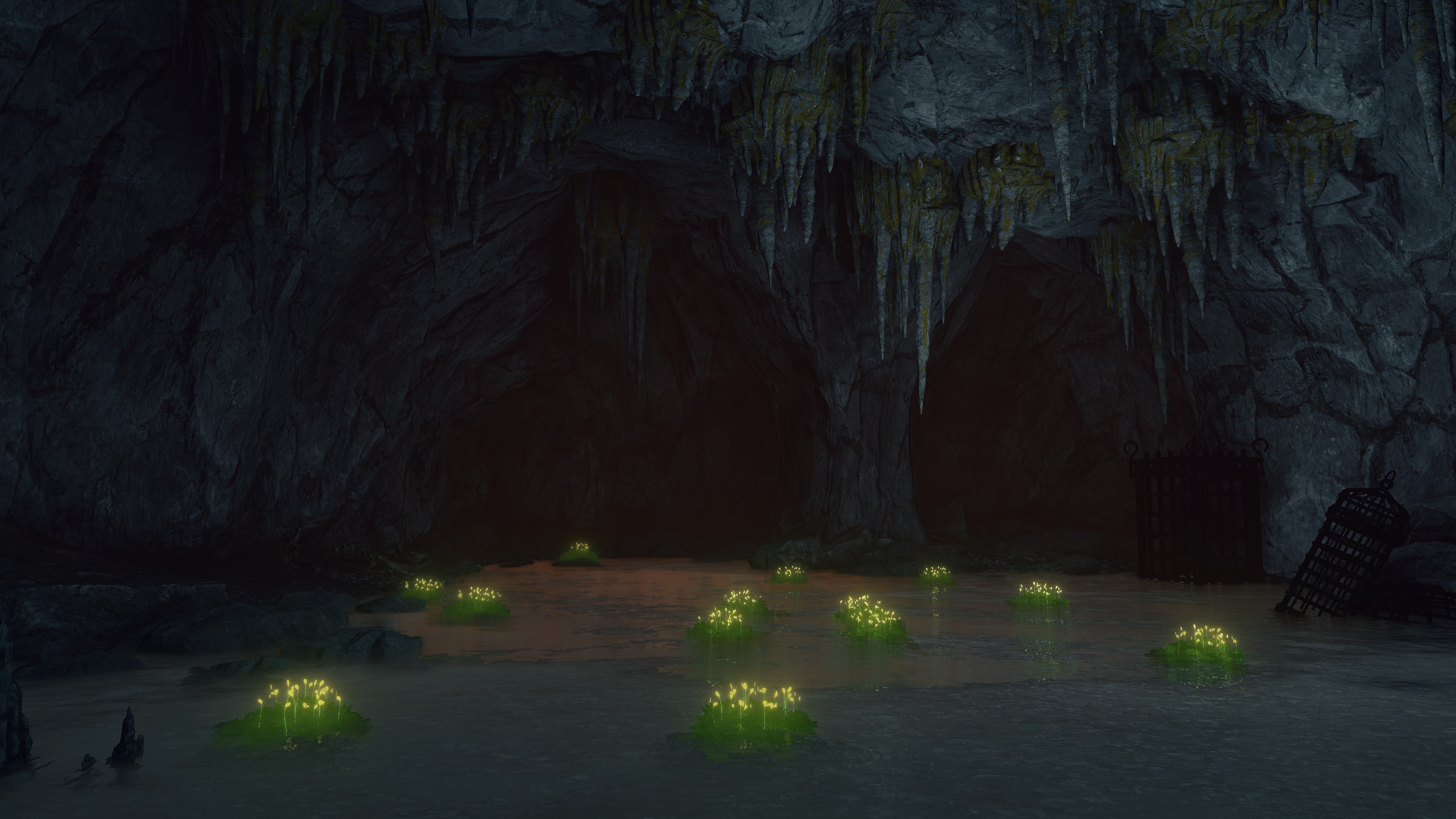
This can’t be Mt. Gelmir, since the phenomenon extends far past the volcano and doesn’t include the mount itself; the only exception is a small slice above an affected area of the plateau, which may be an oversight. It also can’t be the Deeproot Depths, since nothing in the cavernous underground is burning on such a scale. Rather, this flame element seems to permeate the entire plateau at a more superficial level, hence the consistent growth of Altus Blooms. In that case, the source probably seeps in from outside, something consistent with Cave Moss. This species of luminescent moss can’t be absorbing the power of its faint light from the dark caverns it grows in, and yet it grows in practically every one of them. On occasion, this cave moss will even sprout small yellow flowers emitting a similar glow. These flowers bud in the bare rocky passages of every region except Limgrave and the Weeping Peninsula — one with overcast skies and the other with constant rainfall. Put simply, the common factor is a deficiency of sunlight, making the sun the liable source of flame in the ground.
Type of moss that emits faint light in dark caves. One of the materials used in item crafting.
Basic ingredient of pill cures called moss medicines.
Type of moss that emits faint light in dark caves. One of it that blooms small yellow-colored flowers.
One of the materials used in item crafting. It is mainly used in perfuming.
For sure, the sun has historically been imagined as a giant golden ball of fire, bringing the planet light and heat with each day. Some of that light and heat might theoretically be absorbed into the ground, traces which well-adapted species like cave moss then draw upon. This would explain why we find the most Budding Cave Moss within Altus and Gelmir, specifically the Perfumer’s Grotto and a separate cave entered from Volcano Manor. The former might be cultivated since budding moss is mainly used for crafting perfumes, but it does sit at the foot of a hill constantly struck by lightning thanks to fulgurblooms. The latter sits beneath the volcanic lava flow. Both thus flourish in an environment with plenty of light or heat contributing to their luminescence. But at their core, all cave moss absorbs its power from the sun’s rays imbuing the land with so much heat, it creates pockets of actual flame imbued into the soil. Those smolders are too trivial to have larger effects on the ecosystem, but they might accumulate enough to create infrequent ash and compel the vegetation to adapt at a closer proximity.
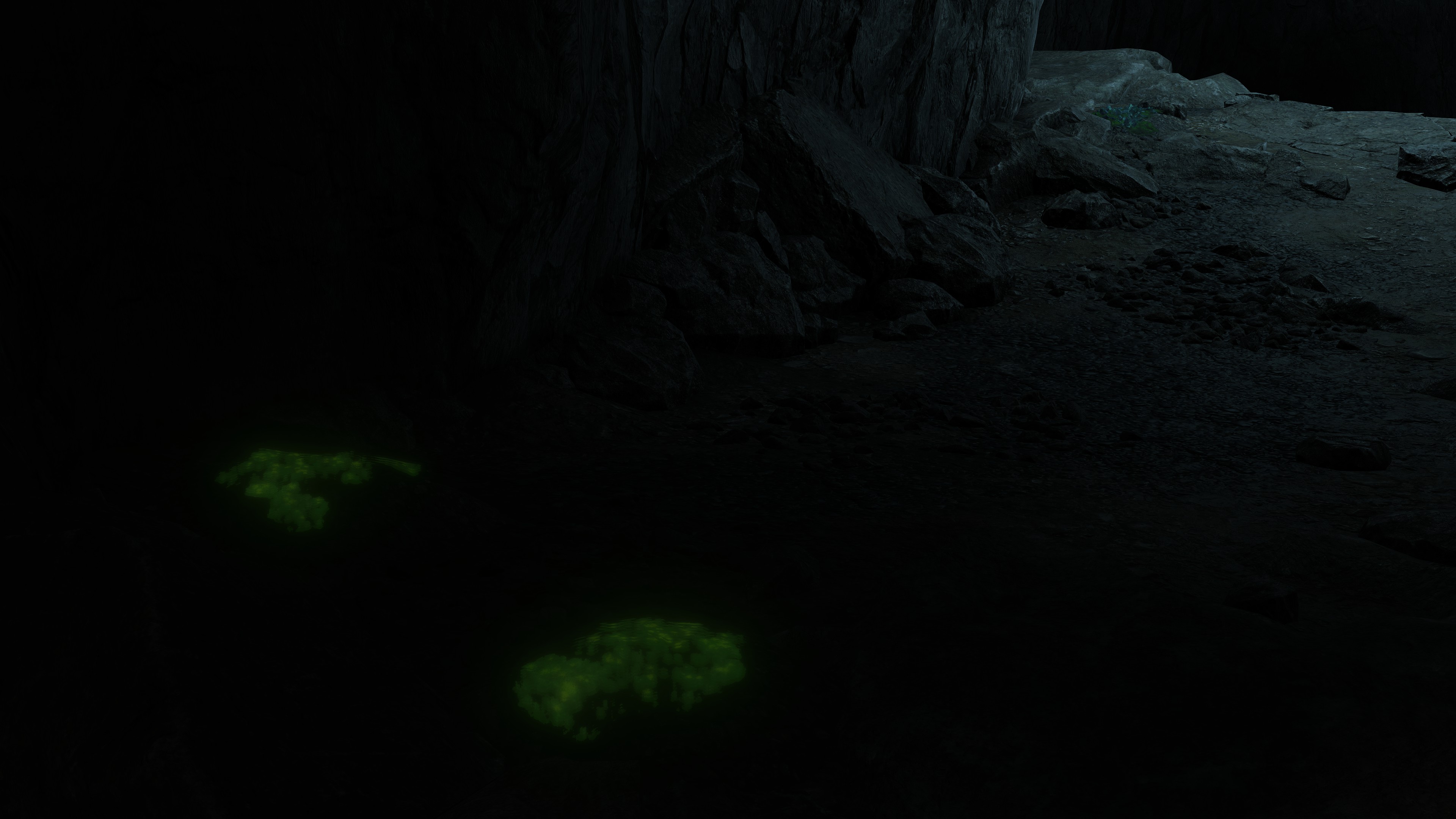
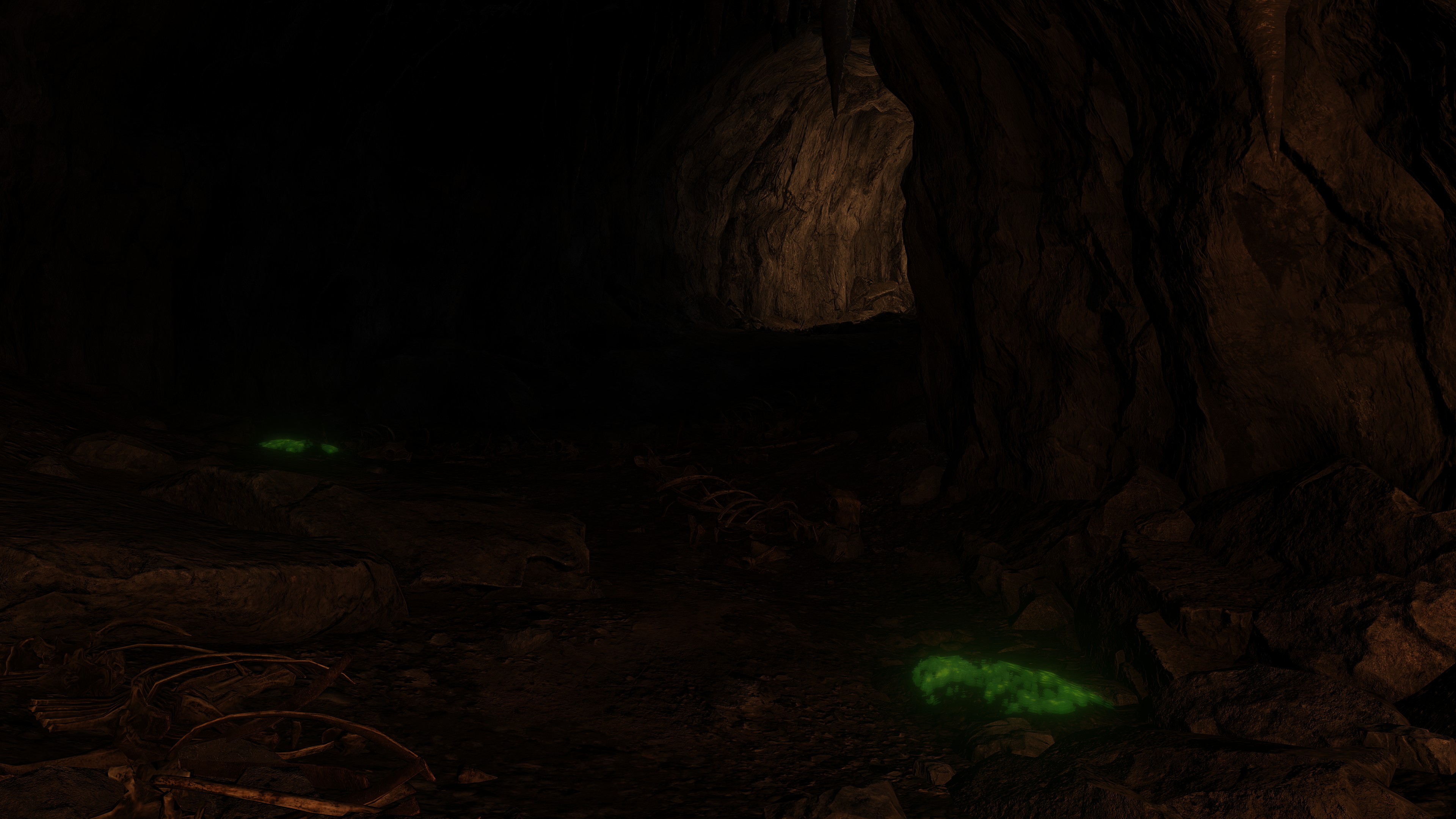
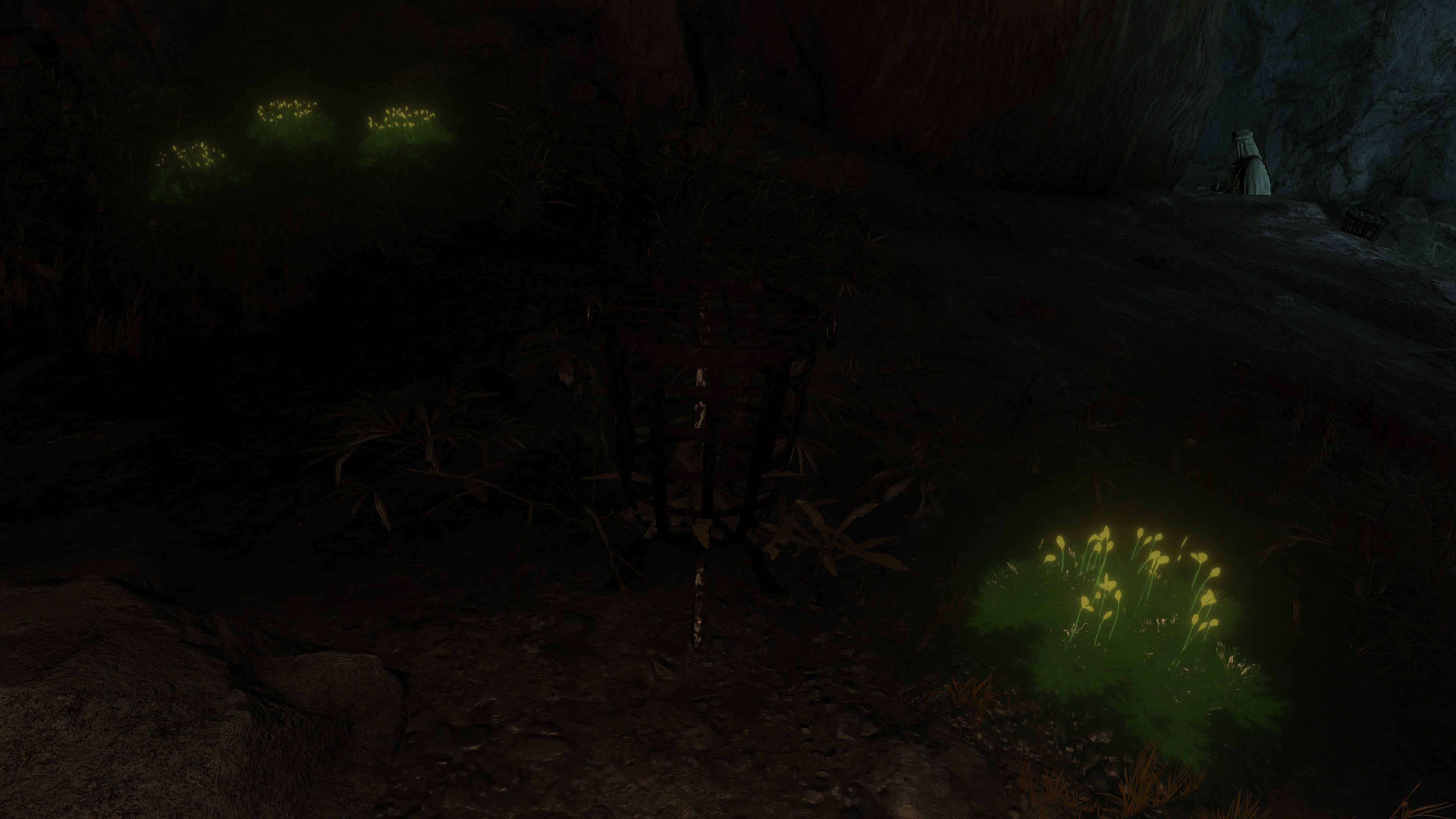
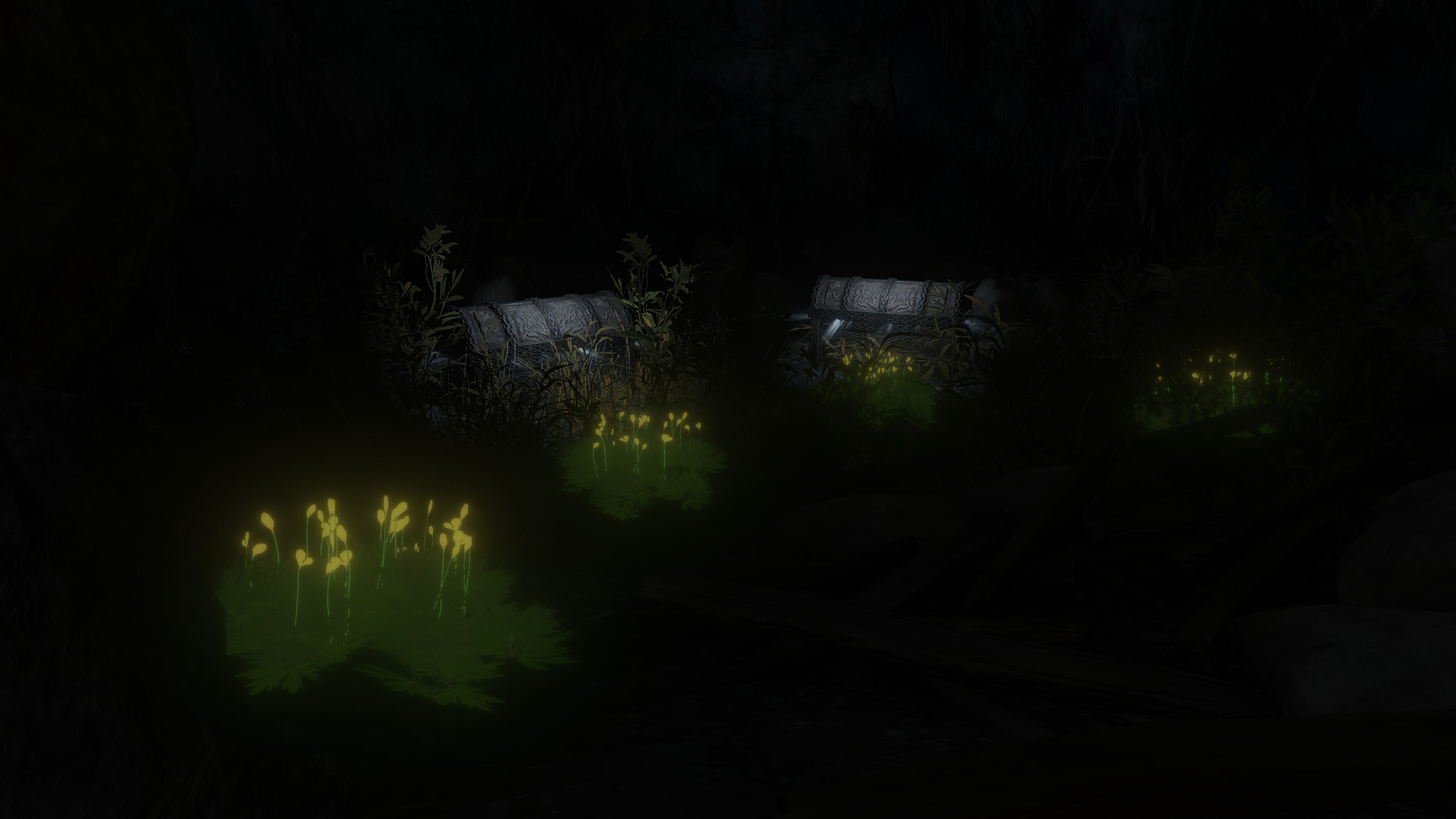
Put another way, Altus seems to be a land which has historically received the most amount of sunlight closest to the actual sun, before the Erdtree came to block much of its view. Undeniably, the temperate plateau lies closest to that warm body of light, ignoring the surrounding snowy or volcanic mountains. Without snow coverage as a counterbalance, it stood alone in absorbing the raw sun. Then there is the name scheme to various areas across the region. The Lux Ruins are named the Latin for light, whereas Fort Laiedd makes a similar reference — the similarities between “Lighdd” (ライード) and the English “light” (ライト) are obvious. Conversely, the Shaded Castle specifically uses the term hikage (日陰) evoking shade from the sun during the day. Even the present-day royal capital of Leyndell at the base of the Erdtree is more accurately called “Lowdayl” (ローデイル) for the “low daylight” from the tree shining closer than the sun ever could. With the names of so many locales alluding to sunlight, it is clear that the blazing celestial body holds a particular importance to the land of Altus.
In summary, the Twinbird deliberately chose the mountain on a highland regularly bathed in the sun, knowing that it ease the process of starting and maintaining an inferno. This is fitting, since both the Chinese and Greek phoenixes bear a close association with the sun; crows are likewise associated with the solar body in Chinese and Japanese mythology, depicted with red or black feathers respectively. From its perch, the emissary create a beacon of the west to setting souls, throwing bodies and Altus flowers alike into the natural kiln to light a blaze at the peak. Helping it along were its children and soon human worshipers, leading to this western “sun” to overflow with cold lava and turned much of the region beneath the plateau into a kind of hellscape. The Twinbird was then responsible for taking some of the fire burning in the mountain and bringing it to the spirit world so as to offer it to the Helphen.
How this was accomplished is simple to deduce. When encountering Deathbirds, we often see them phase into being, “hatching” mid-air from a nonexistent egg before touching ground. Death Rite Birds do the same, but with the additional flourish of ghostflame thanks to their wings. Both varieties suggest some form of higher dimensional travel, warping between our world and the spirit world to visit. As an emissary, the Twinbird herself presumably possesses similar abilities, so could easily cross between planes to deliver the fire. As to the means, it is possible that the mother consumed it, regurgitating flames back to the candletree as a bird feeds her young. The Twinbird Kite Shield defends best against magic and fire, hinting that she did internalize ghostflame — the immortal phoenix becoming a true fire bird. The ritual for Deathbirds likely mirrors this process, both mother and child controlling the flames inside them. This might also add another benefit to the two halves, one suffering the burden of the melting ghostflame while the other remains healthy and hearty.
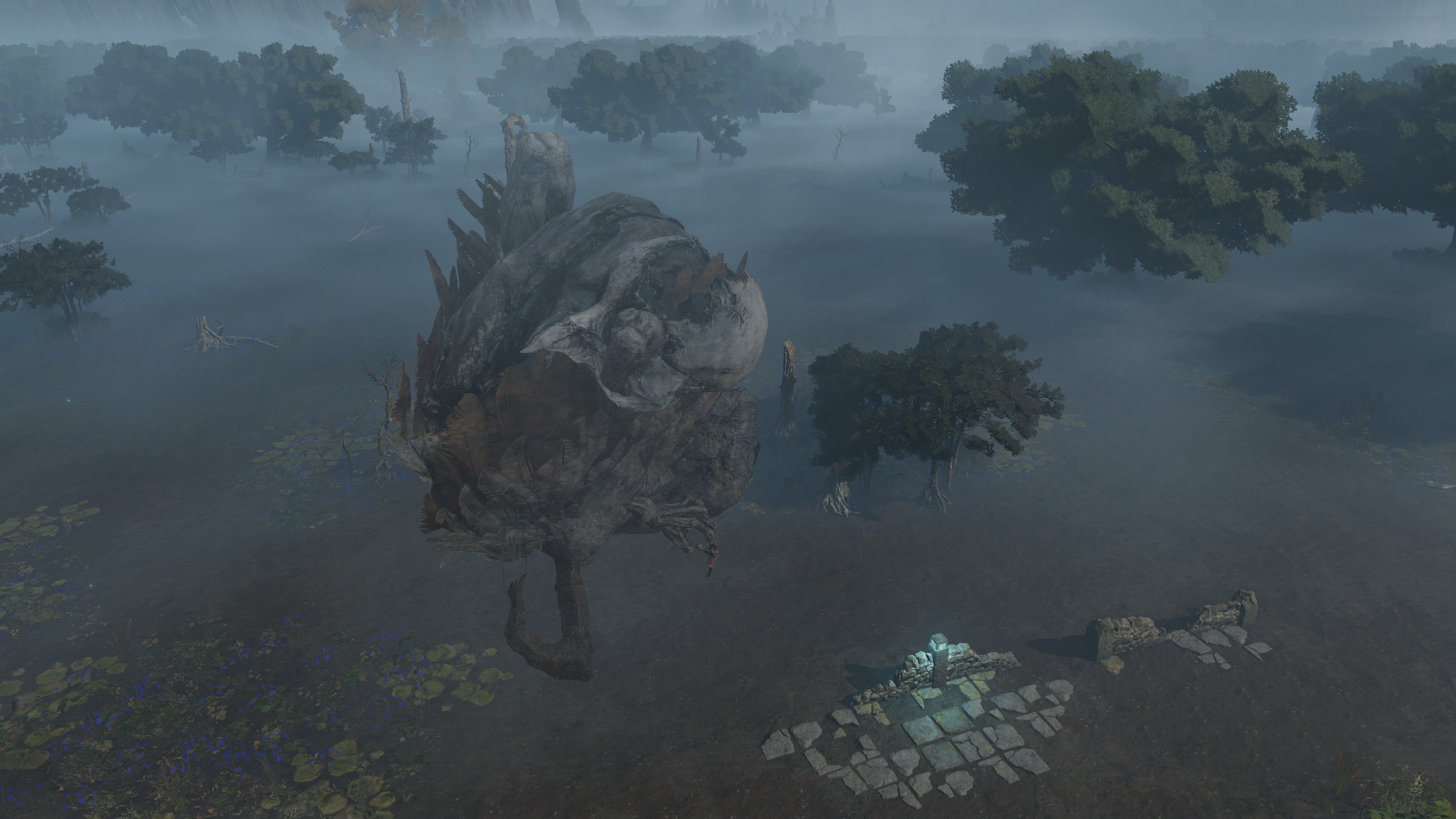
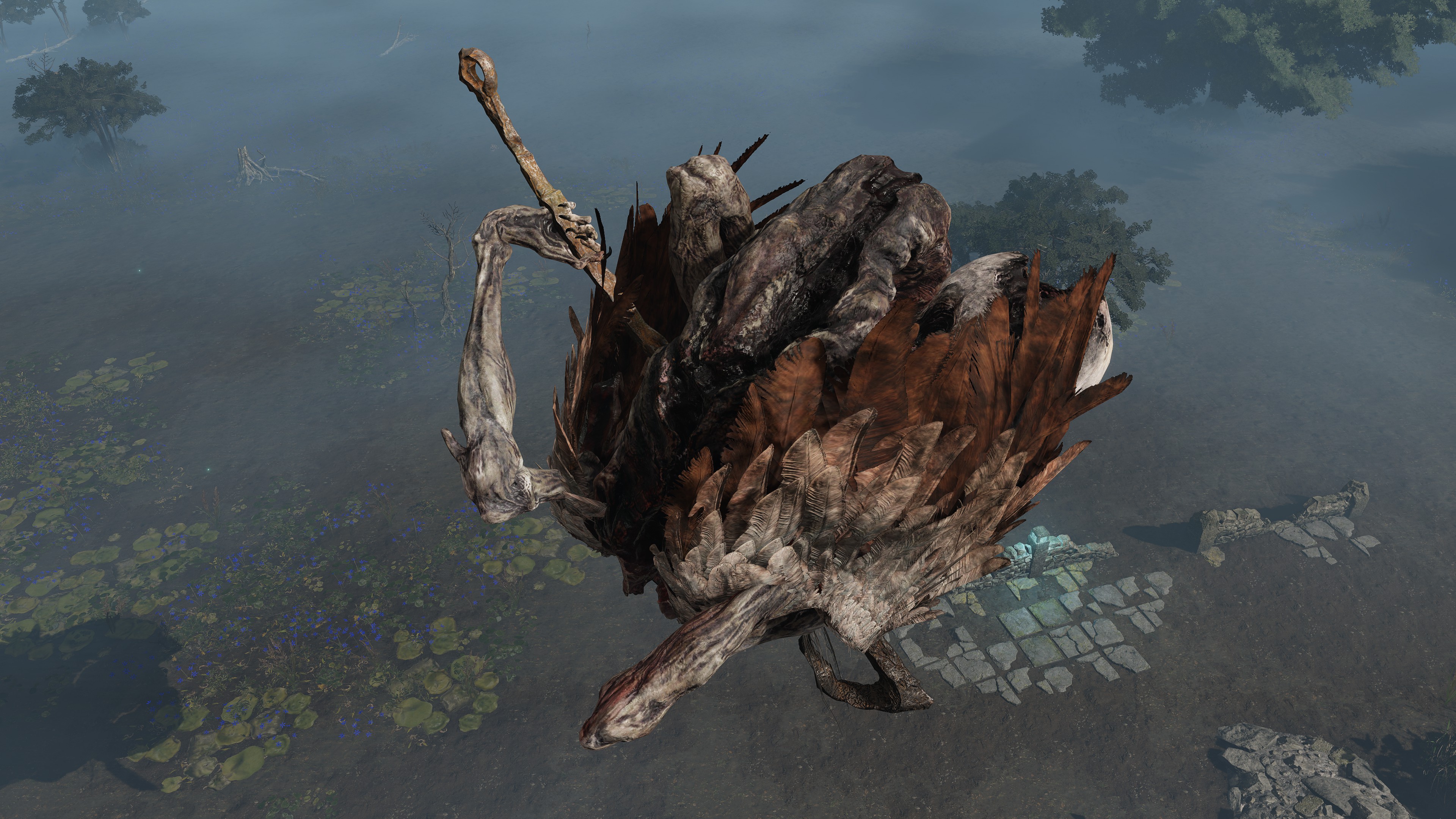
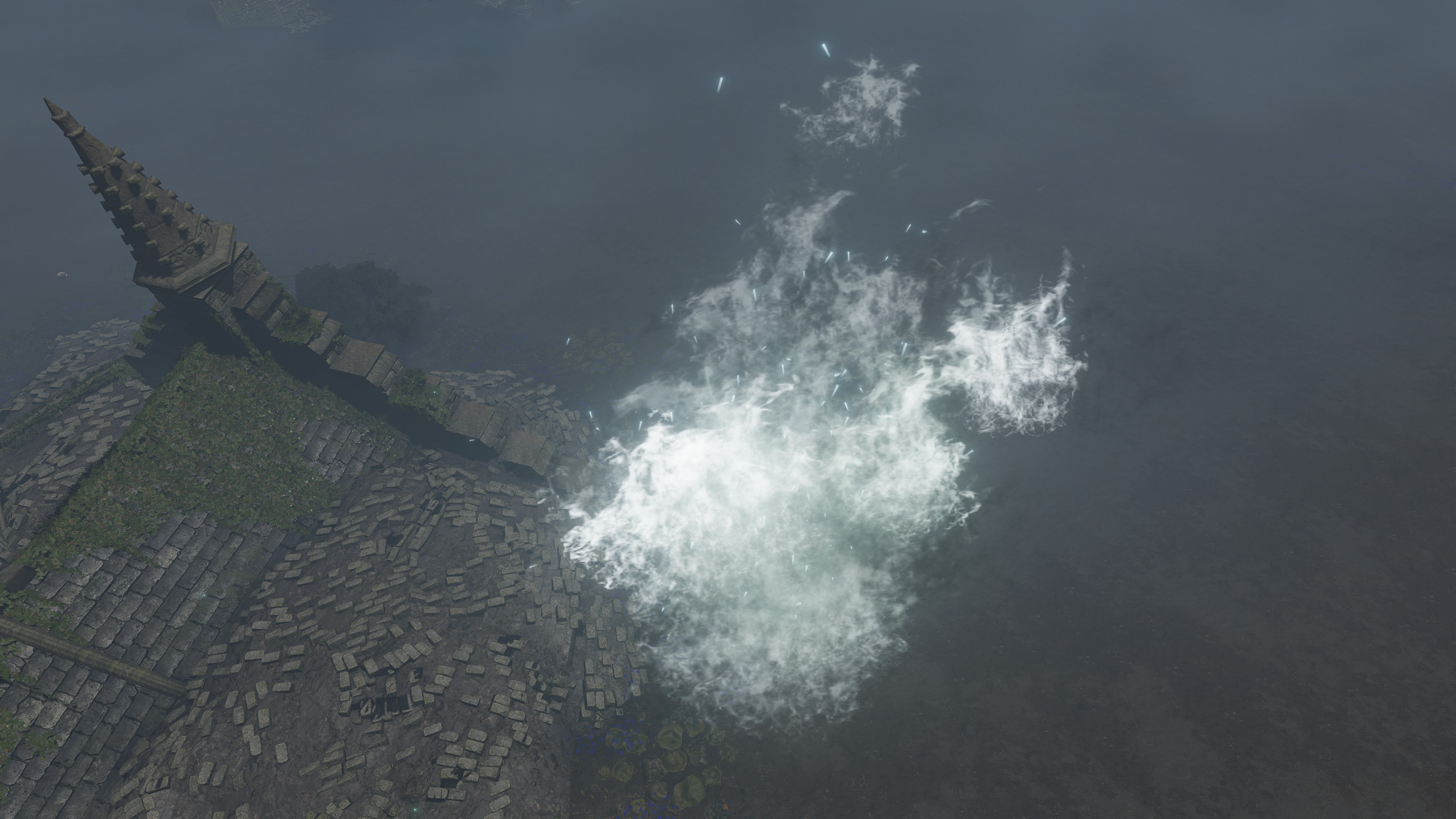
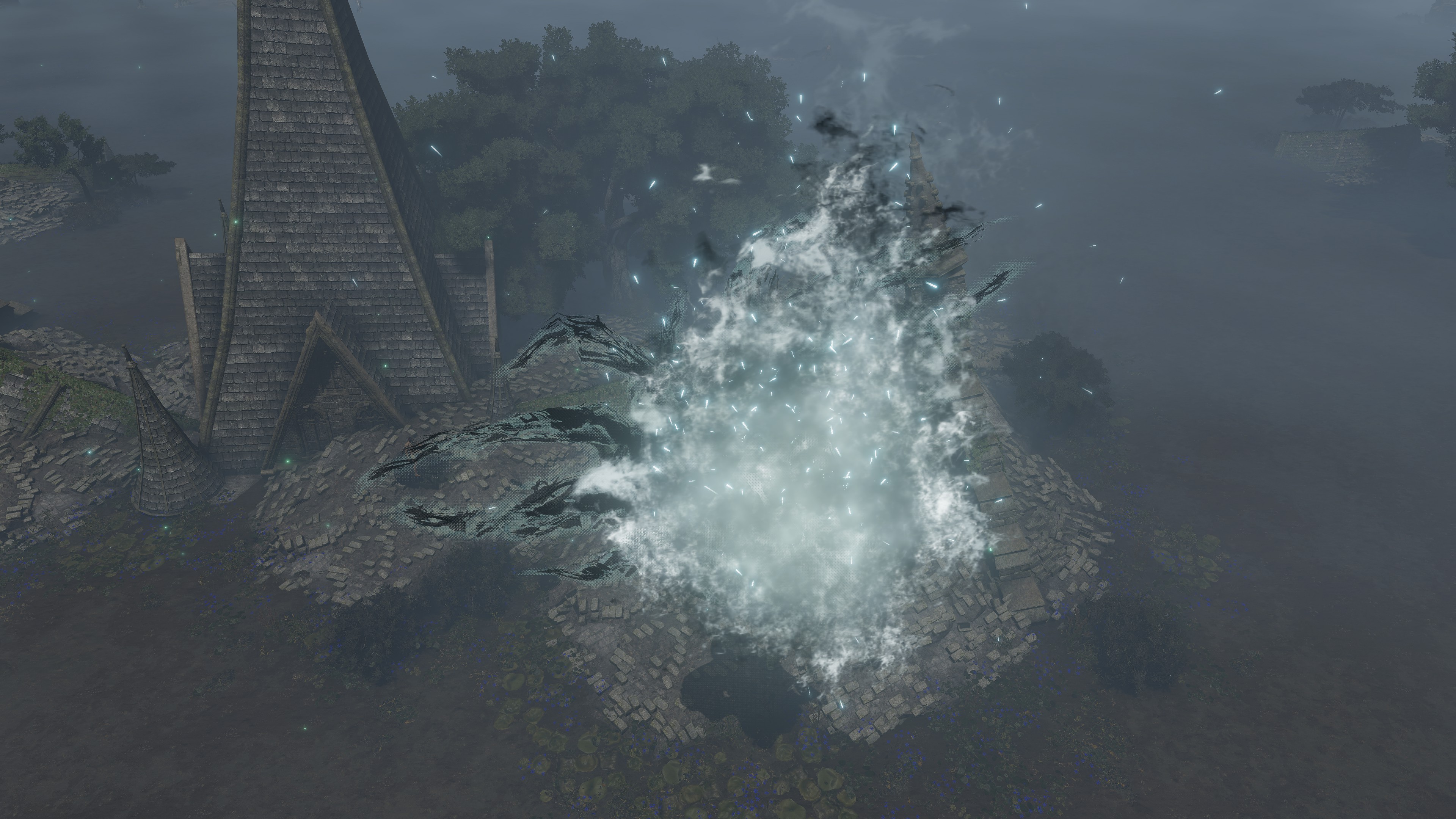
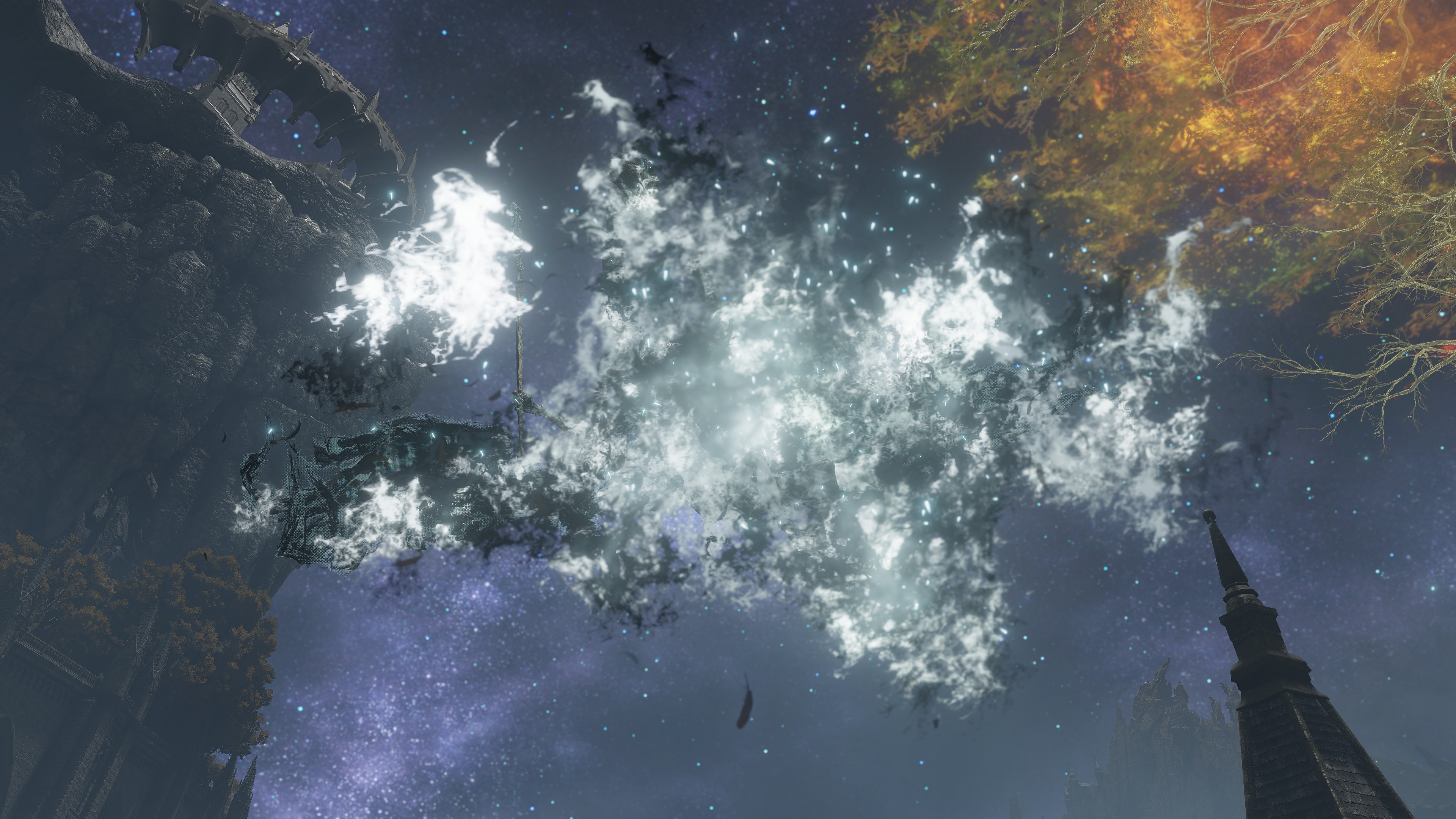
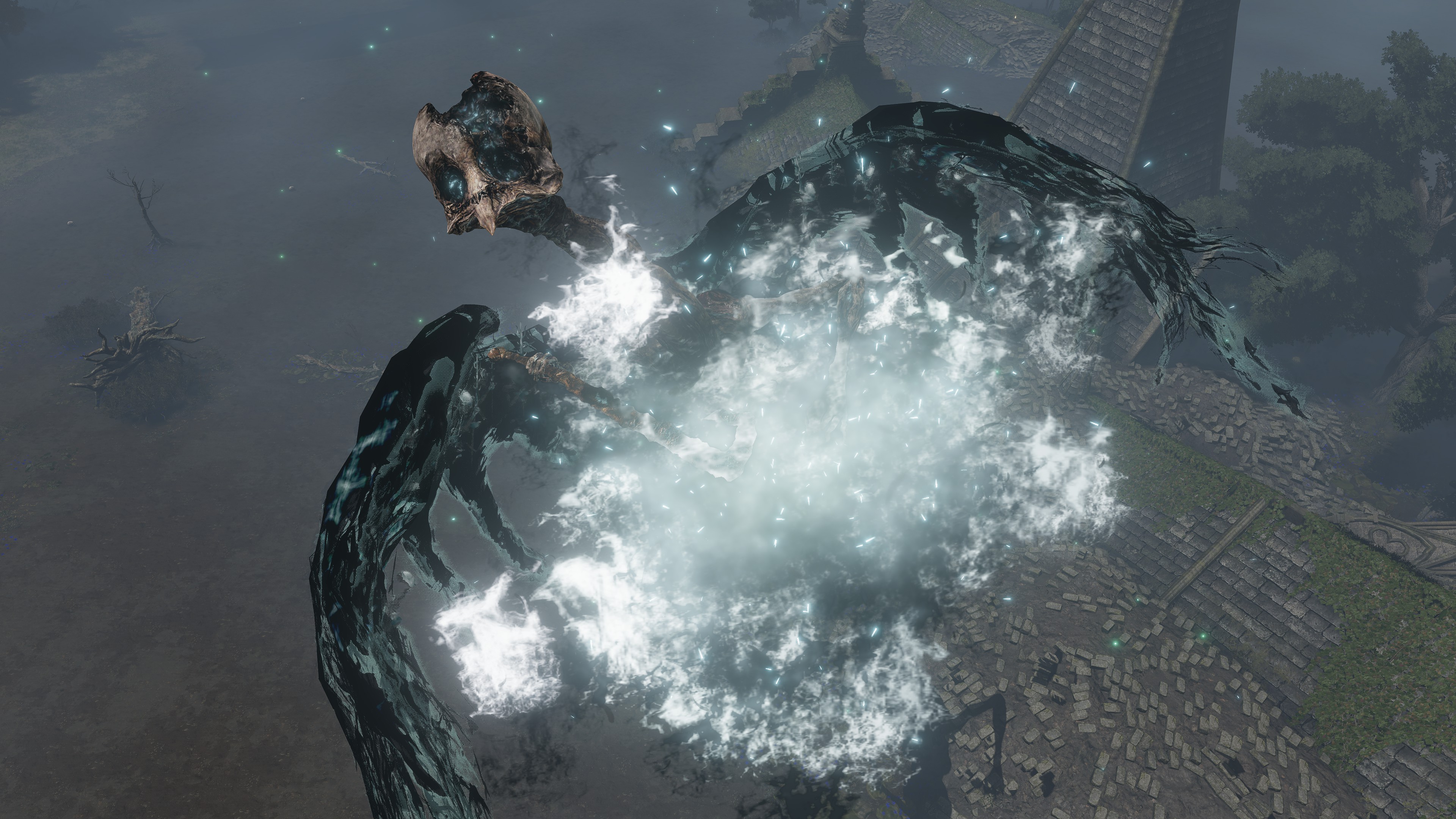
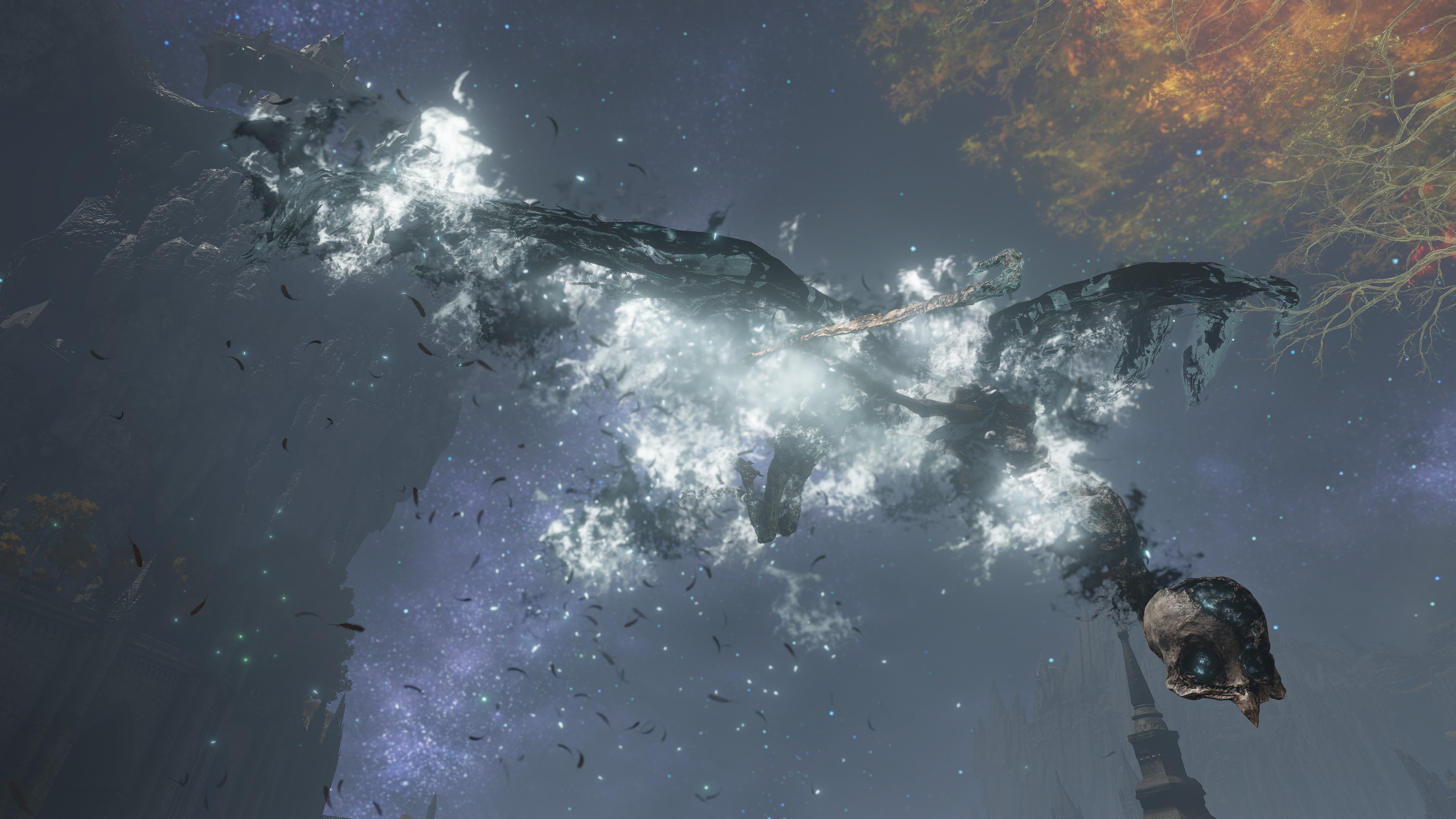
Essentially, the outer god gave its emissary everything she needed to secure the line of ghostflame to the Helphen. With the help of her derivatives and the humans they recruited, burnt offerings were constantly churned out of the mountain, the Twinbird replenishing her rock-melting heat whenever she returned from the spirit world. When not making deliveries to the Helphen, she was monitoring the process in anticipation of potential obstructions and responding accordingly. To say that the dead were running a well-oiled machine would be an understatement. If anything, the process was still in its infancy with the volcano starting small and the cult of Death first developing. There was room to improve the system as operations expanded into a larger and larger scale, and god’s envoy was there to make sure it was all implemented.
To the Eternal Shades
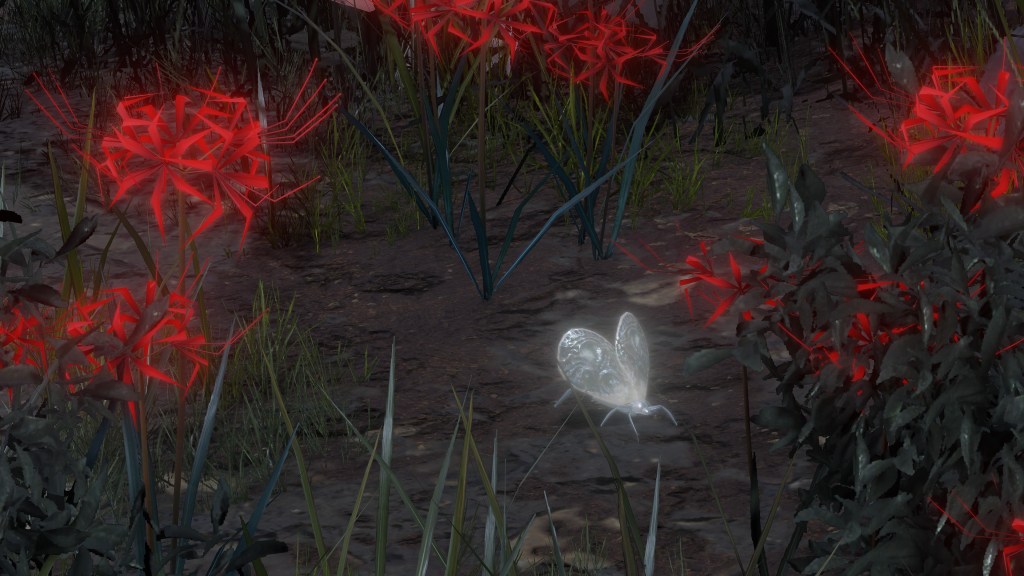
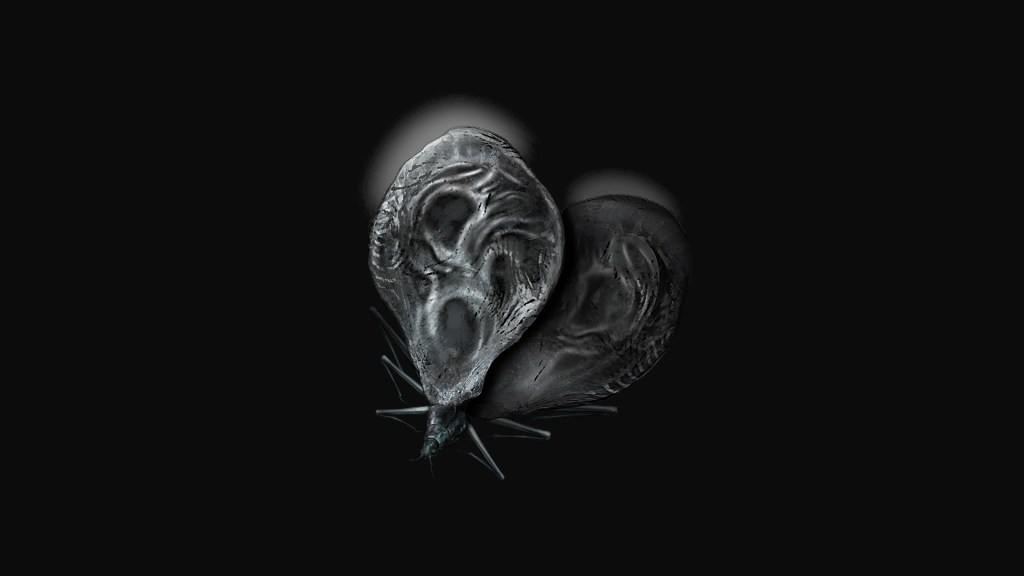
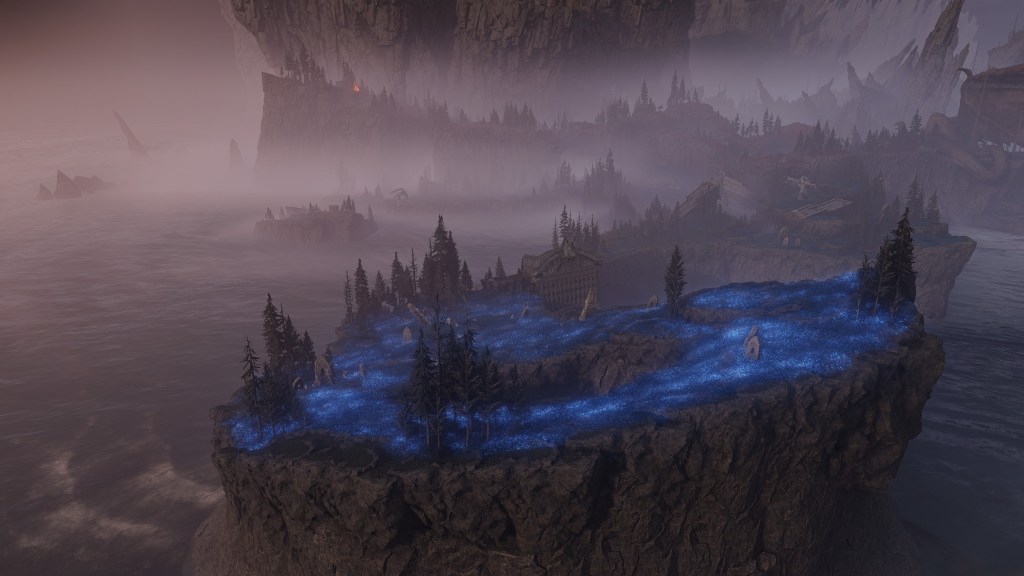
To feed the ghostflames of Ravenmount, the Deathbirds needed to regularly bring in more bodies as offerings. For the human cult emerging around them, it would help their divine emissaries to streamline this process. So, if the birds need to collect the dead from every corner of the Lands Between, the worshipers could shorten their average journey by amassing all the corpses at the center of those lands. That appears to be the logic of Charo’s Hidden Grave, a graveyard stretching from the highlands south of Gravesite Plains down to the Cerulean Coast below. According to the Spiritgrave Stone’s description, death has long gathered in these places at the center of Between — for so long, in fact, the bell crickets with “ears” for wings have evolved to mimic the sounds of the dead who refuse to rest as they squirm or call to others. Granted, this only applies to some of the graves.
Map fragment of the coast that lies to Graveyard Plains’ south.
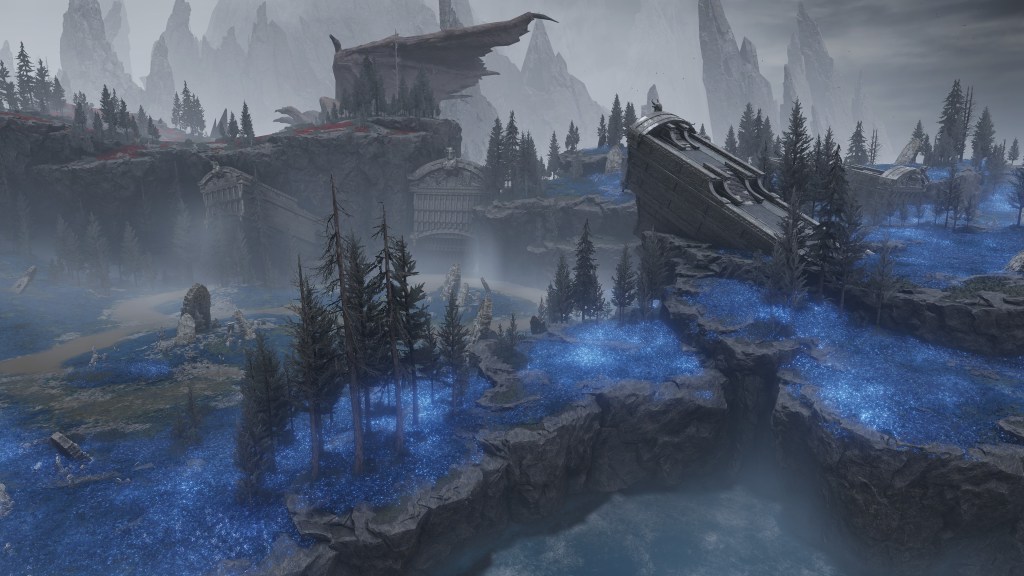
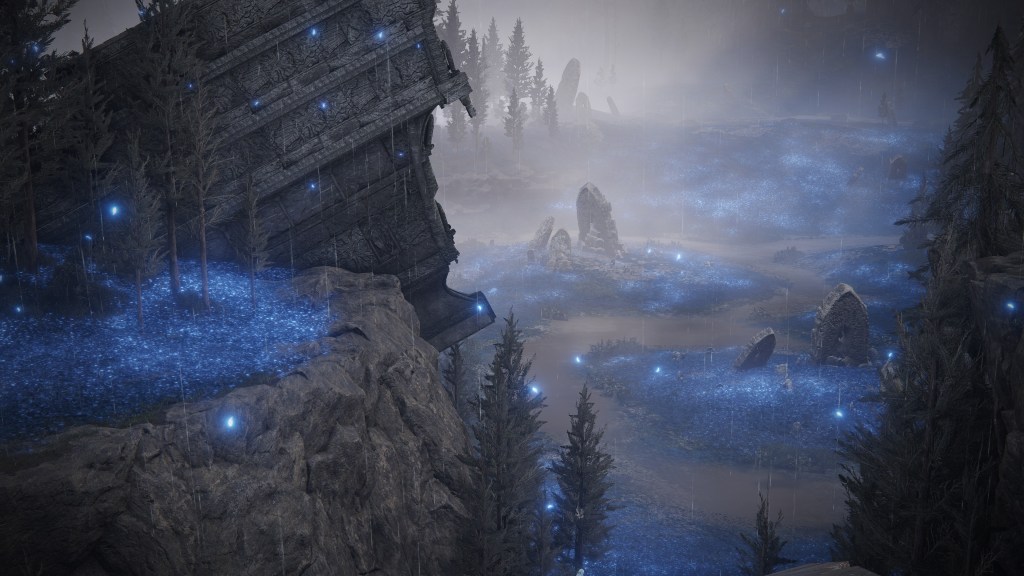
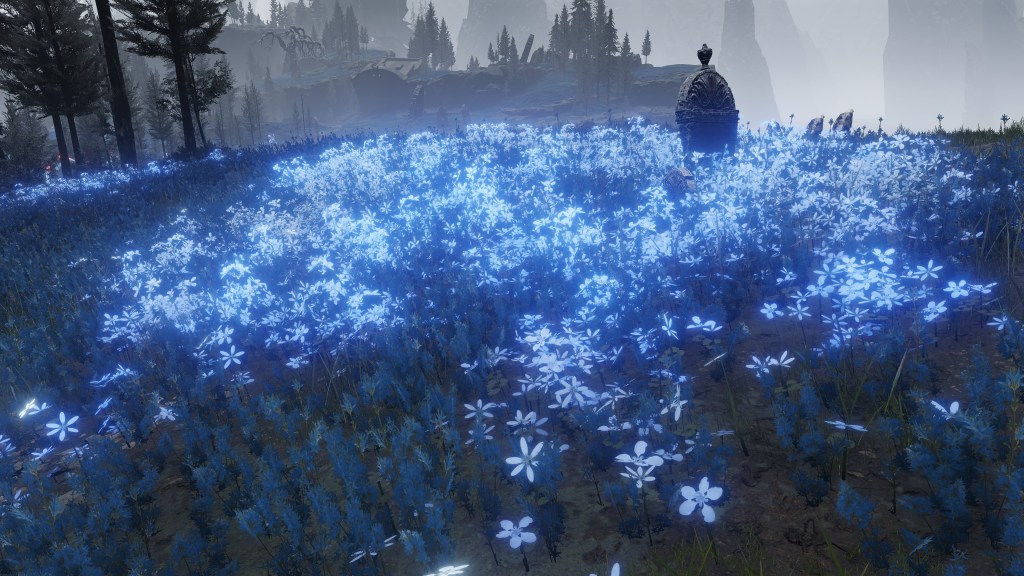
A fantastical coast covered in blue, radiant flowers, giant stone coffins that drifted in from somewhere piling up, and the Jagged Mountain that tears the sky to pieces in the east.
Fragment of gravestone about to become a spirit. One of the materials used in item crafting.
Acquired mainly in Gravesite Plains.
Old gravestones have become spirits and faded away in the places where death gathers since time immemorial.
Bell cricket that chirps with a hoarse sound. One of the materials used in item crafting.
Mainly found near stone coffins.
It is said that its chirping is the sound of the restless dead squirming and also their voices calling.
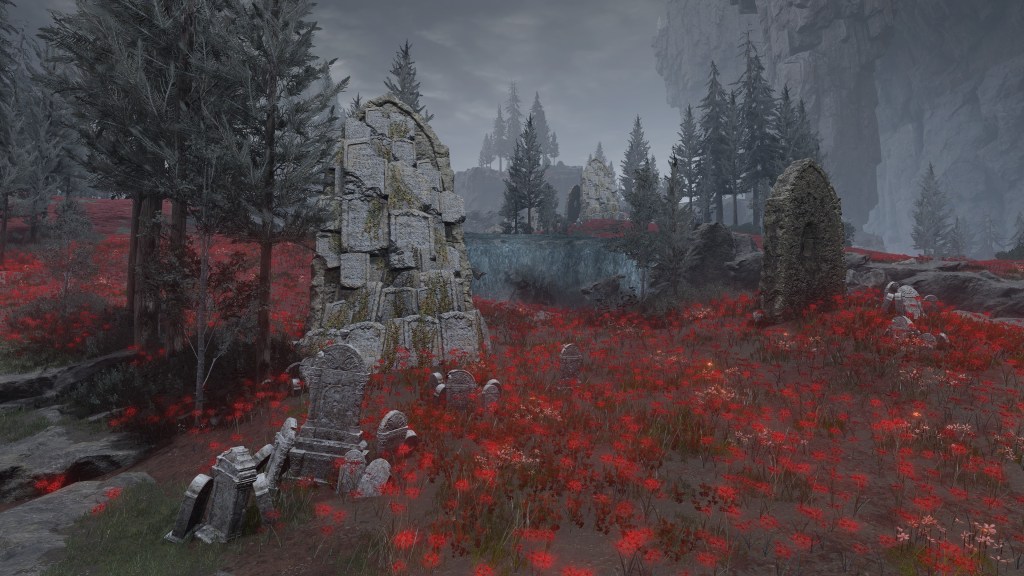
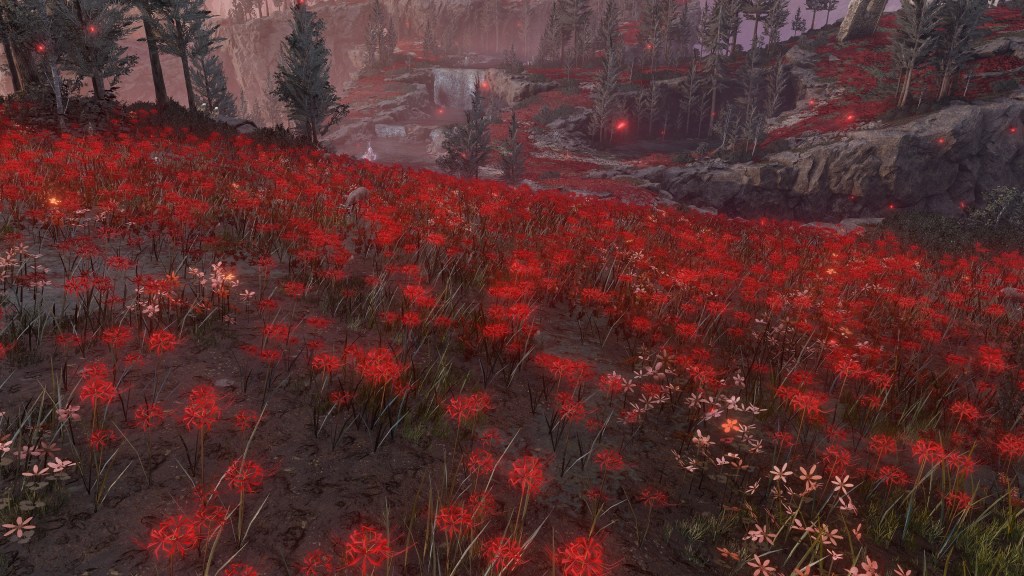
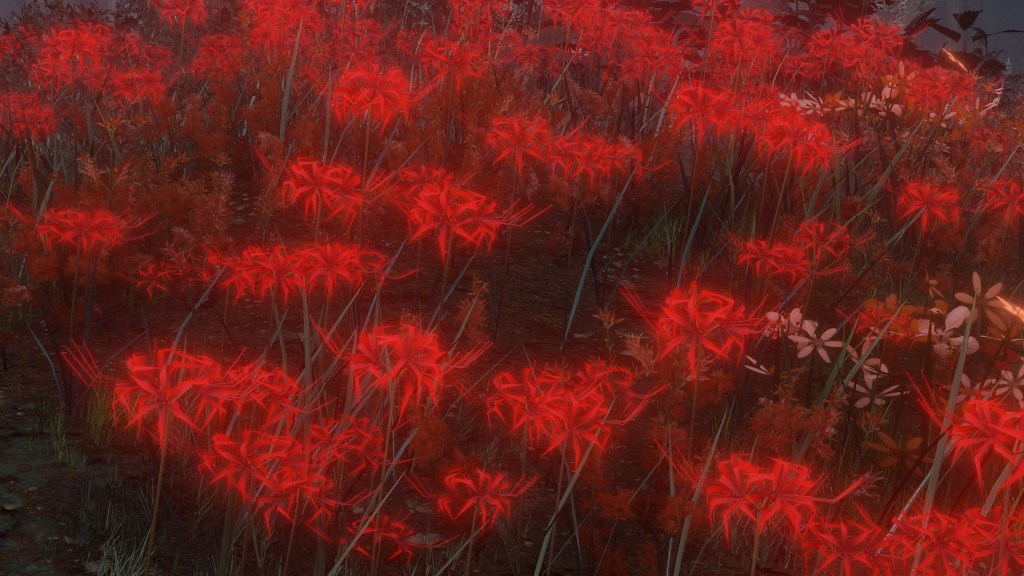
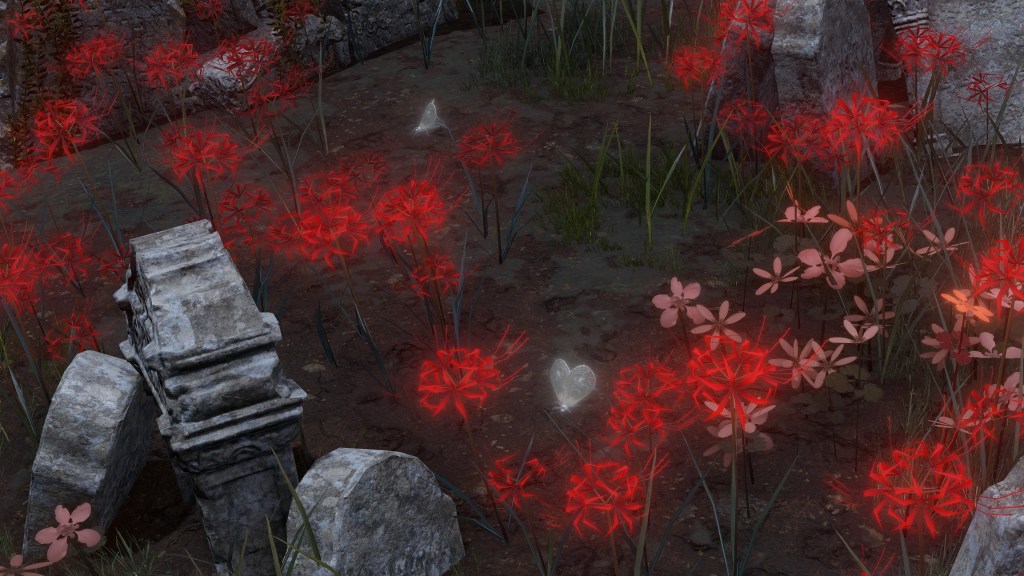
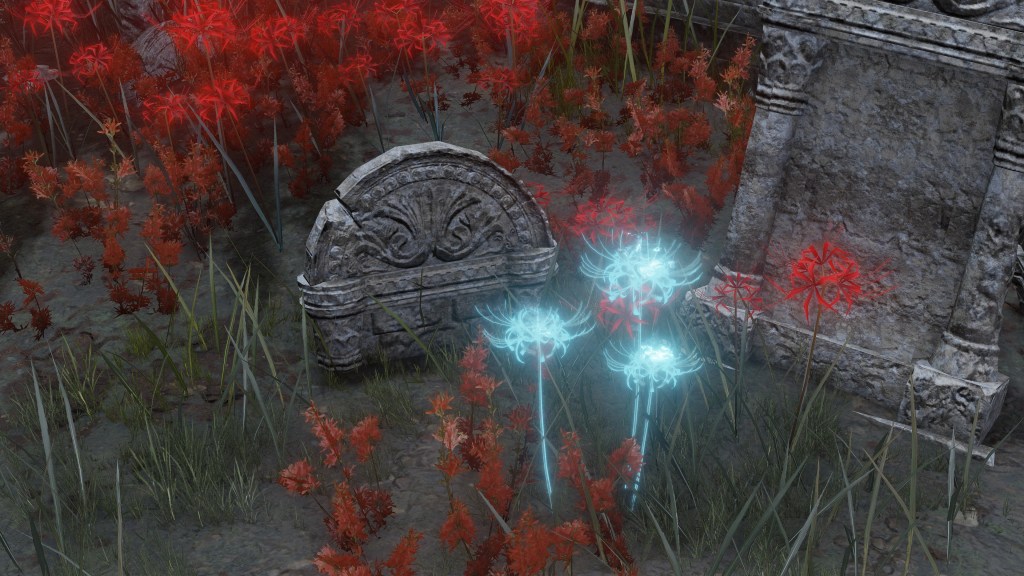
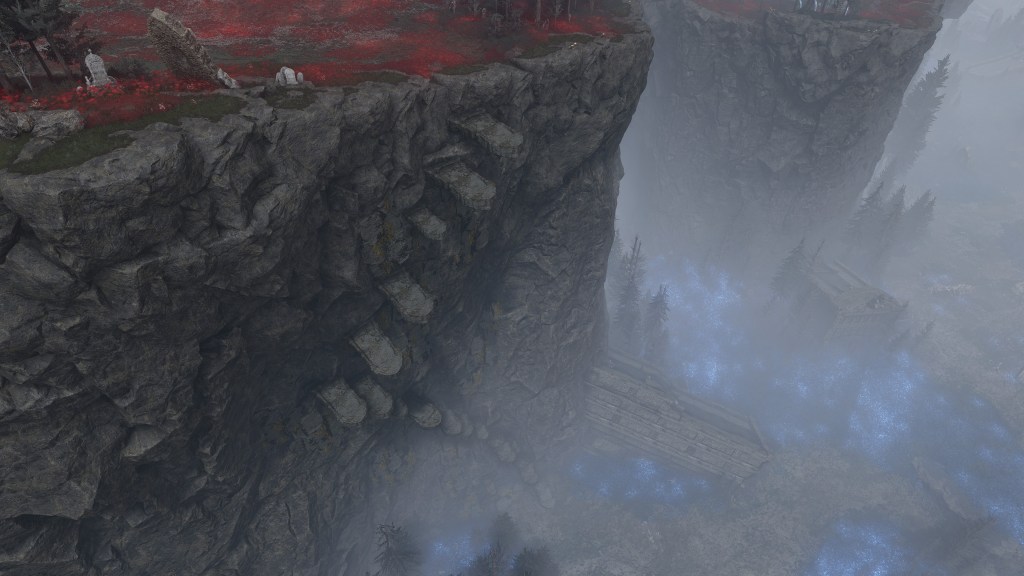
The Charo Graveyard is divided not just by elevation but also by flower fields, one red and one blue. In the upper half, the flowers glow a passionate red, primarily the grave violets allowed to cover so much of the area. We cannot pick these red violets, but we can take the occasional Ghostflame Blossom, a violet that has begun to turn spiritual. This spiritualization of matter is common to the region, so is presumably a byproduct of the dead’s own spirituality. The text for Rings of Spectral Light confirms that this spirit element holds the same properties as ghostflame, which the blossom has produced in its petals. Clearly, the grave violet has fed off so much death, so many spirits, that the fire-like flower’s very being loses substance as it bursts into real flame. A field full of these violets with the occasional burning blossom betrays the sheer density of death in this graveyard, as well as the anxiety that begets grave crickets amongst the gravestones.
Spiritflame flower that blooms in graveyards. One of the materials used in item crafting.
Blooms in Charo’s Hidden Graveyard.
It is the same species of graveyard flower called a grave violet, half-lacking in substance and burning without even a sound.
Sorcery of watchmen of the spirit graves, the place where every death drifts to.
Generates multiple spirit rings of light and fires them all at once. Enhanced with charging.
The rings of light possess the same properties as spiritflame, so deal damage of the magic attribute and accumulates chill.
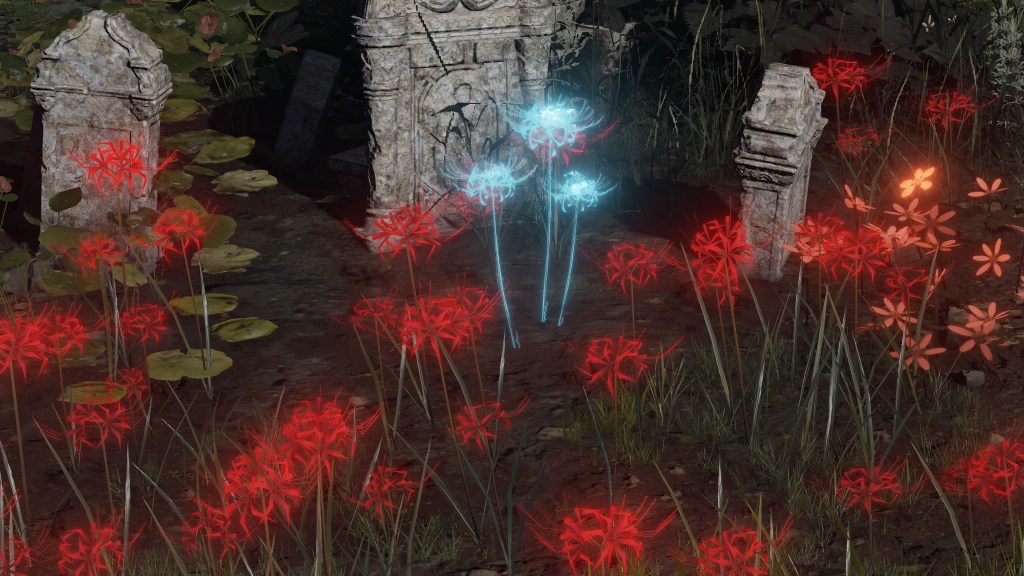
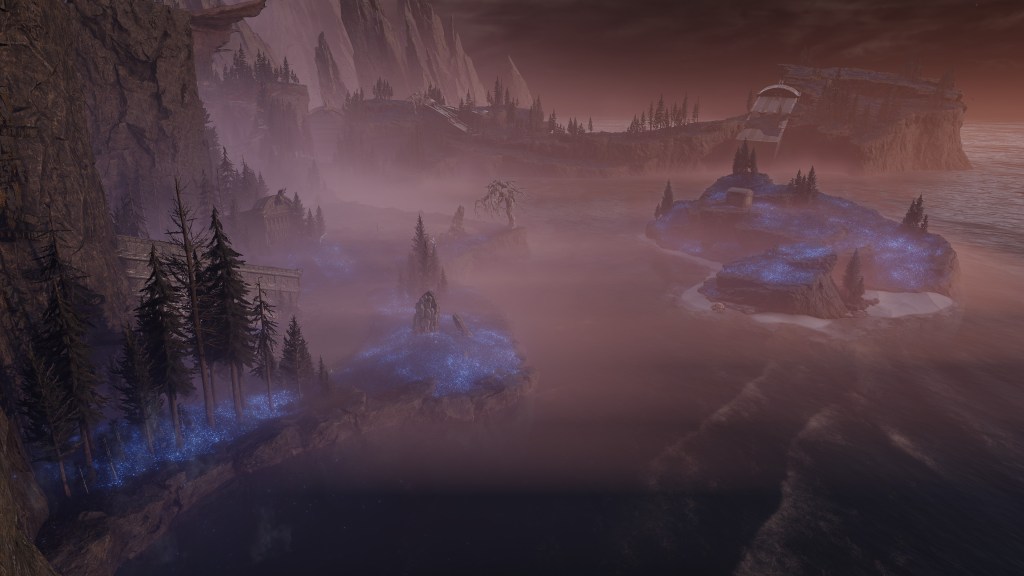
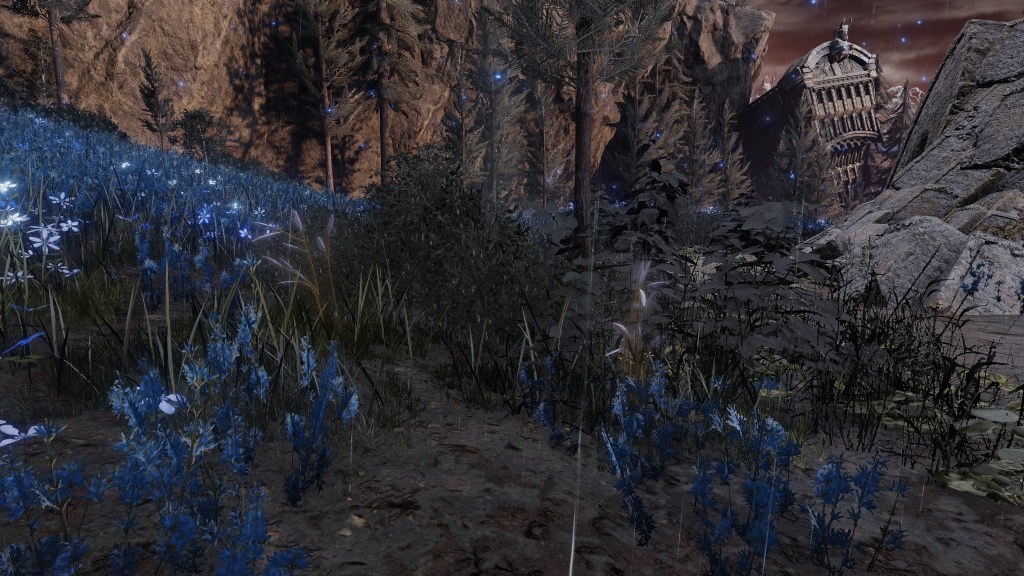
Contrast this to the lower half of the graveyard. Whereas the flowers above match the traditional fiery red hue of spider lilies, the Cerulean Coast below is covered in flowers glowing blue as the adjacent sea, none of which are grave violets. Grave crickets don’t appear amongst the tombstones in this area either, painting this section of the graveyard as more serene for the dead. There, the spirits rest in peace, allowing the grass around to grow Rada Fruit. Compared to the Rowa Fruit growing on bushes everywhere else in the Lands Between, rada remains exclusive to the central lands and is far too bitter for human taste. Only spirits seem to delight in it — in large part because it boosts the consumer’s spirituality, no doubt. If rowa flourishes in most lands because of their overwhelming vitality, then rada likely flourishes in the one because of its overwhelming spirituality. And that spirituality must be produced by the dead resting peacefully in their graves, contrast to those fed on by grave violets.
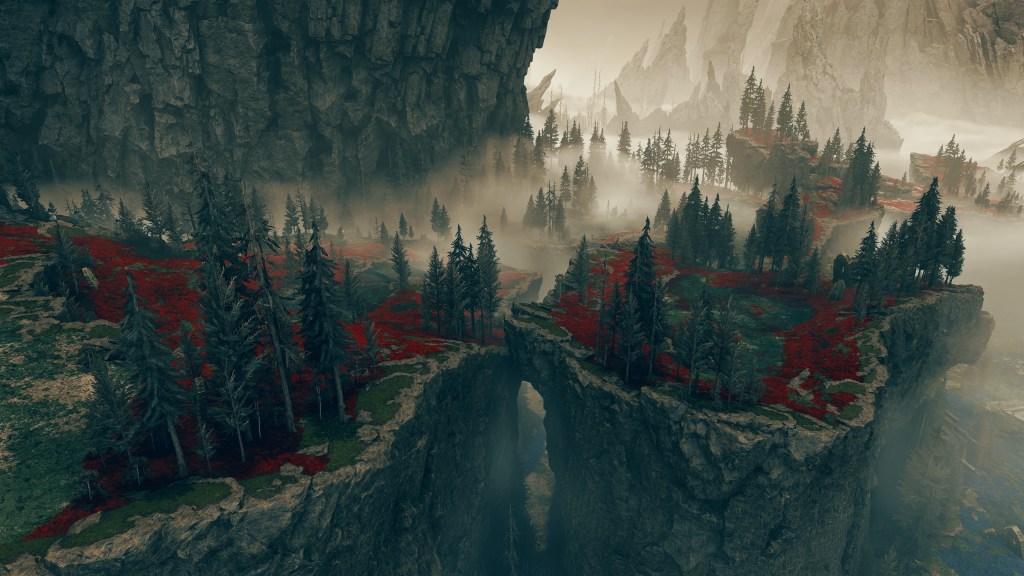
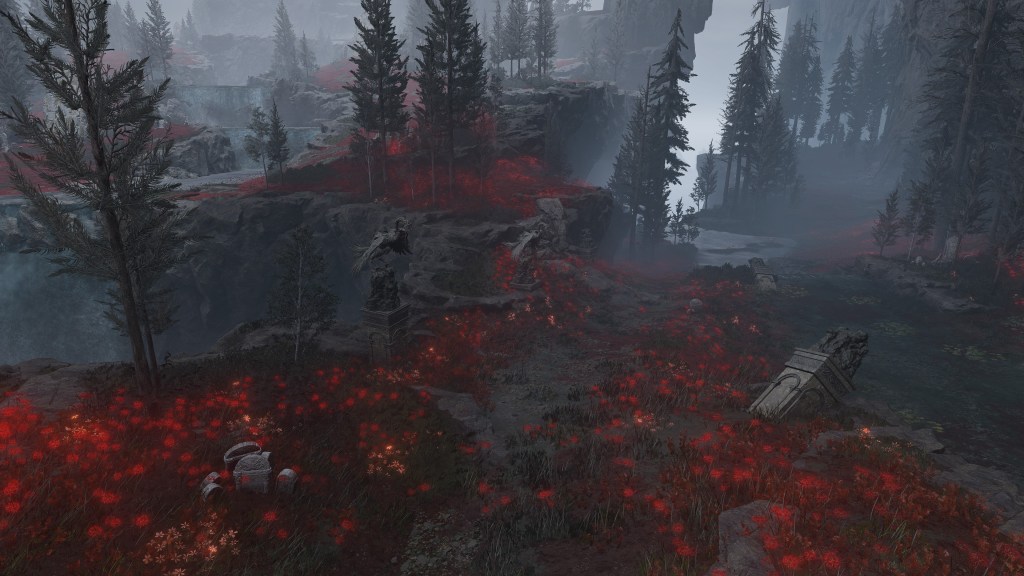
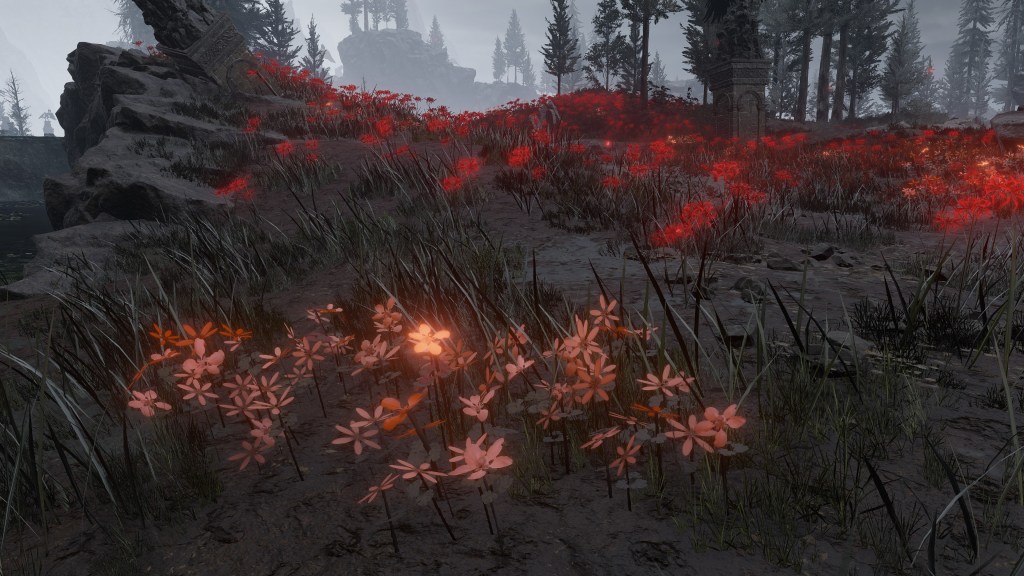
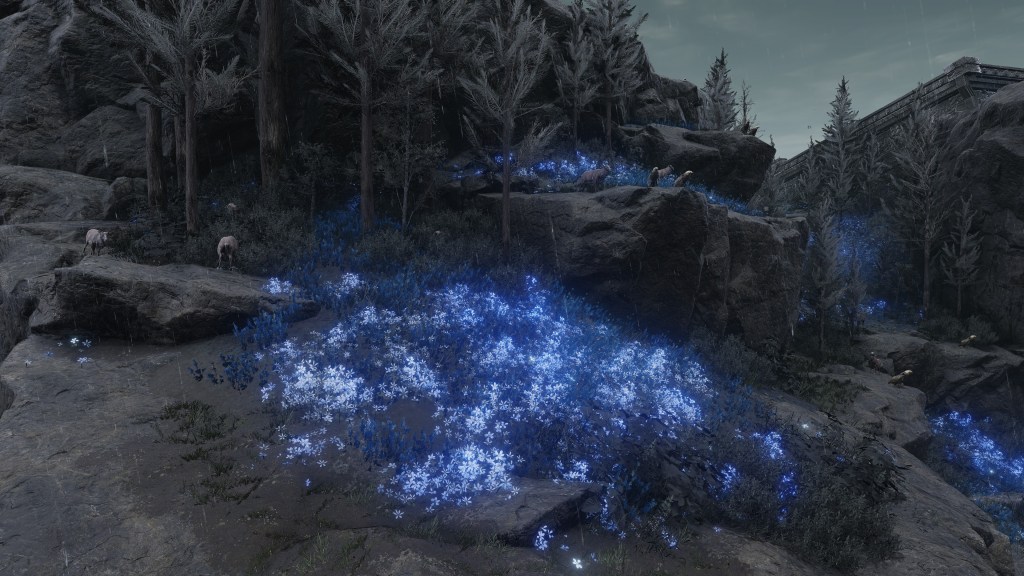
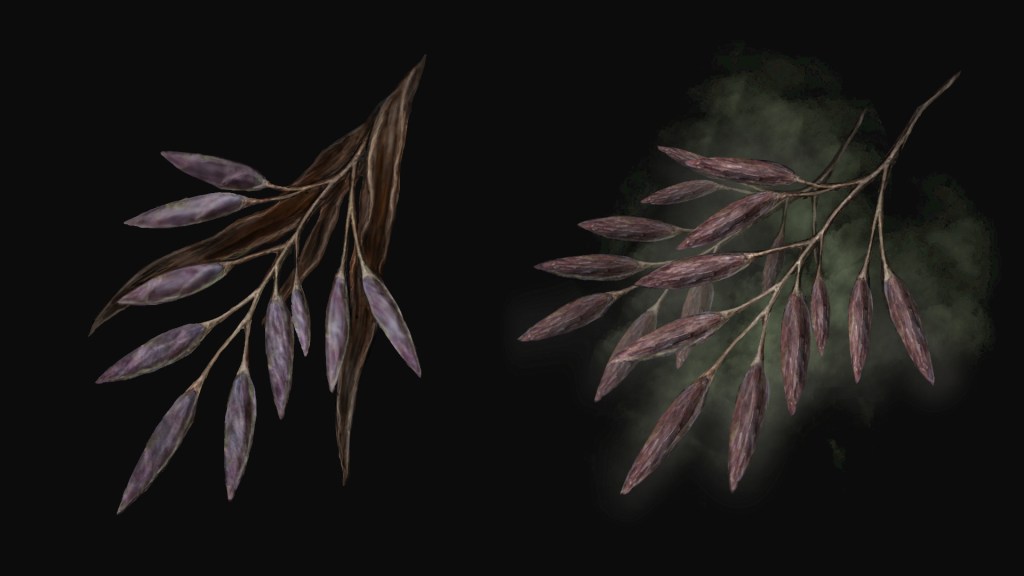
Small fruit growing on the grass of spirit graves. One of the materials used in item crafting.
Can be easily acquired in the various lands of the Land of Shadow, but has a strong bitter taste, so is unfit for human consumption.
Thing which drained and dried rada fruit. One of the craftable items.
If given to the spirit horse Torrent while mounted, he becomes able to push aside enemies when breaking into a dash. That effect expires at a fixed time.
It was originally a bitter medicine considered to boost spirituality, but Torrent seems pleased with it.
This divide in graves is meant to mirror the Twinbird. The color coding follows the division between the emissary’s two halves, with the red and blue backgrounds. The fields thus mark the Charo graves as Deathbird territory, but the shield takes this a step further by additionally invoking the double-headed eagle, a symbol of imperial rule and dual dominion as the heads look east and west — though in this case, it might really cover north and south. Indeed, the feather colors to the branchsword charms seem to associate each half of the Twinbird with a specific response to death’s approach. The black on red boosts attack, whereas the red bird on blue boosts defense. Perhaps this reflects an actual division of duties between the two heads, one in charge of burning and offering the dead to the Helphen; the other, protecting their rest as burnt offerings were selected. This fits with a red flower field burning spirits as a blue flower field preserves them. It also indicates that the Charo graveyard may have seen the presence of the genuine Twinbird, much like at Ravenmount.
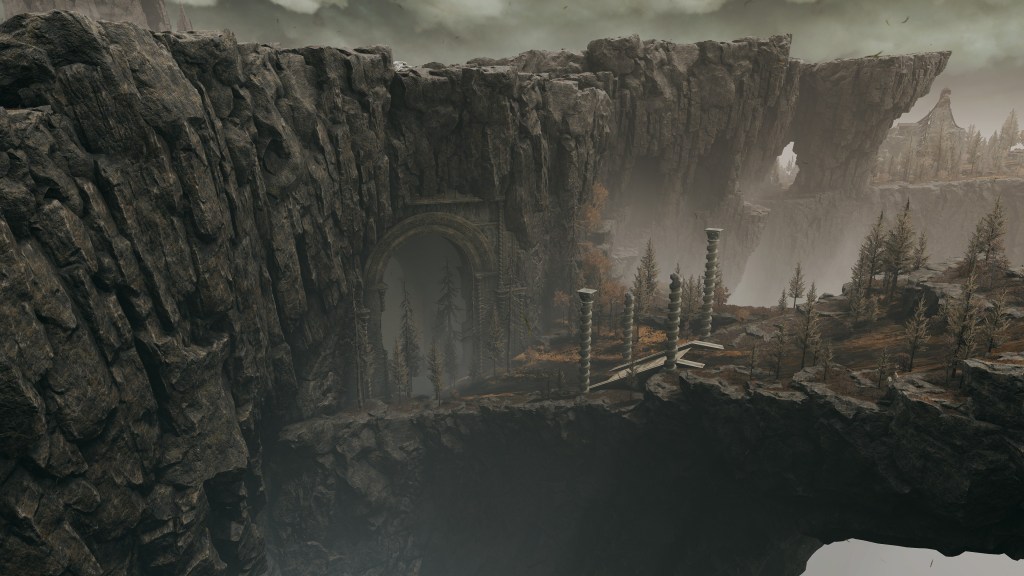
Put another way, the Twinbird may well have migrated south for the proverbial winter, escaping the flames of her kiln on Ravenmount to oversee this gathering of death at the center every so often. The Jagged Peak to the east is the perfect place for the emissary to perch when visiting, even included as part of the map fragment for this area. Part of that mountain’s serrated nature may even be due to the mother bird building a nest. Close inspection of Gravesite Plains to the north reveals similar cubic formations lining the perimeter of this region. Their formation is especially obvious in the Ellac River, where they jut out similar what we see from Gelmir’s spillover. The obvious implication is that a comparable lava flow helped sculpt this land above the Charo graveyard, but from where, and why? A hint might arise from the trail of jagged rocks wrapping around the sea surrounding the plains, ultimately leading to the large mountain on the east side. Perhaps the Twinbird used some of her ghostflame to melt off pieces of rock it could carry over, stripping the edges of a nearby land until the pile created a peak.
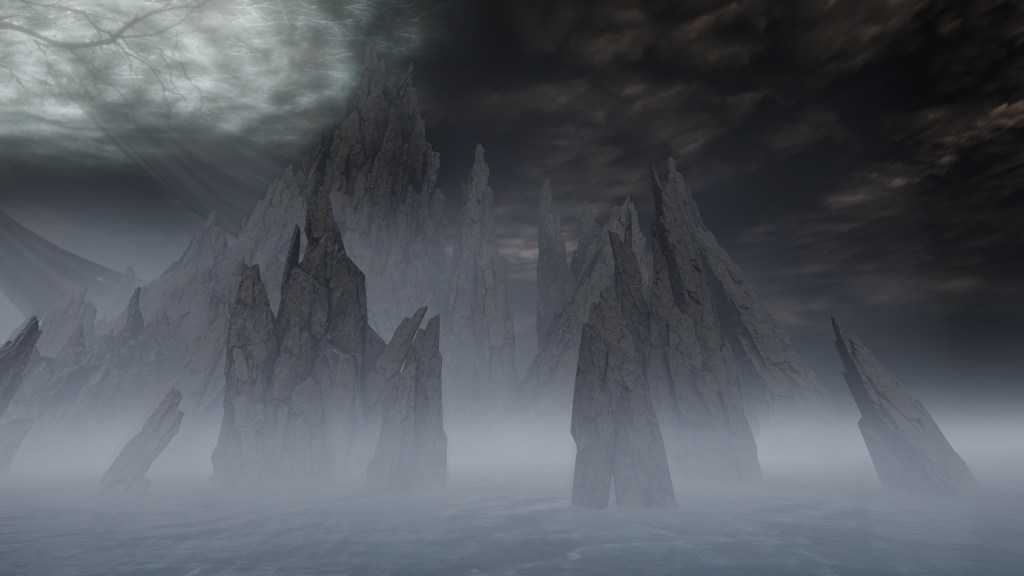
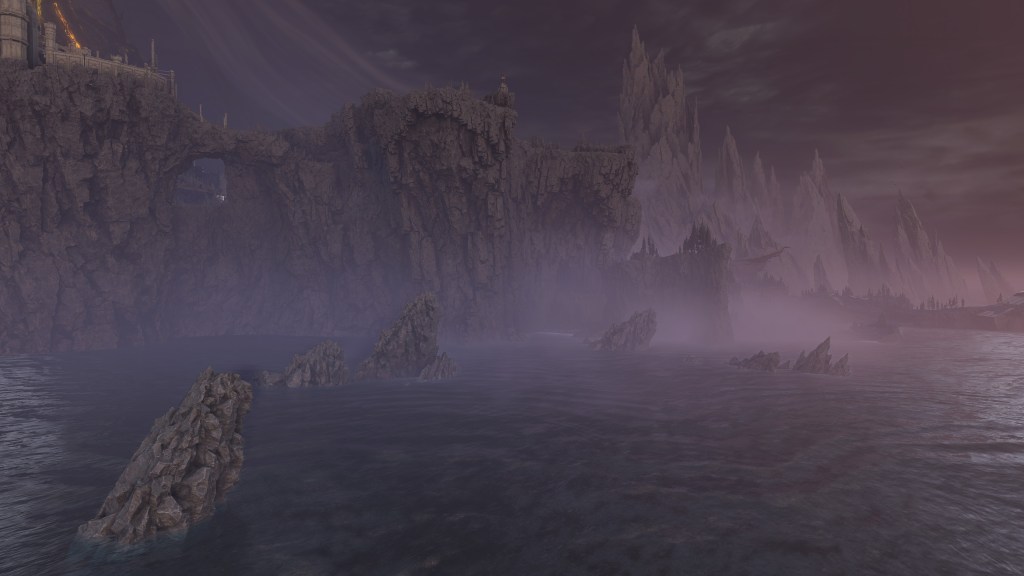
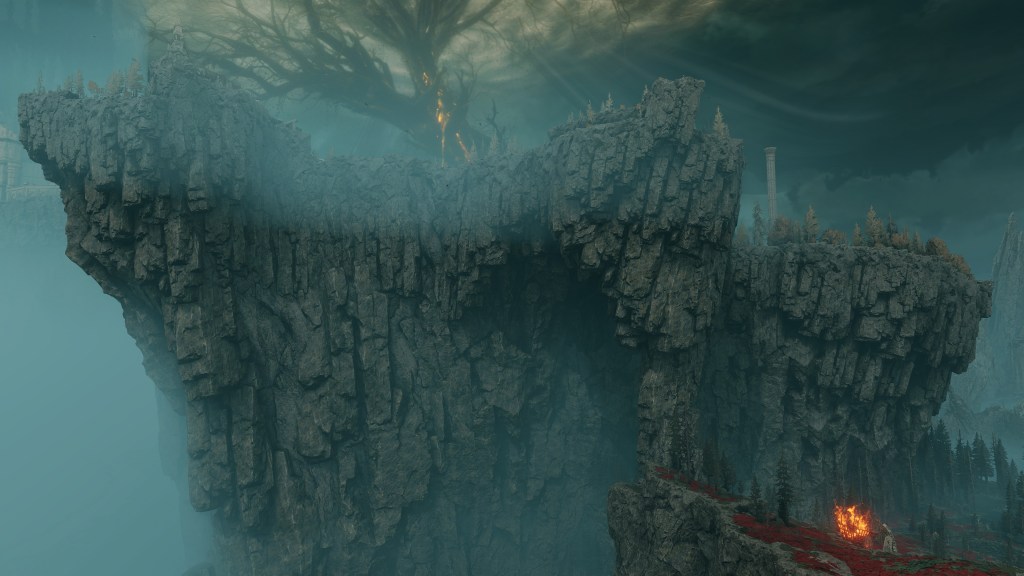
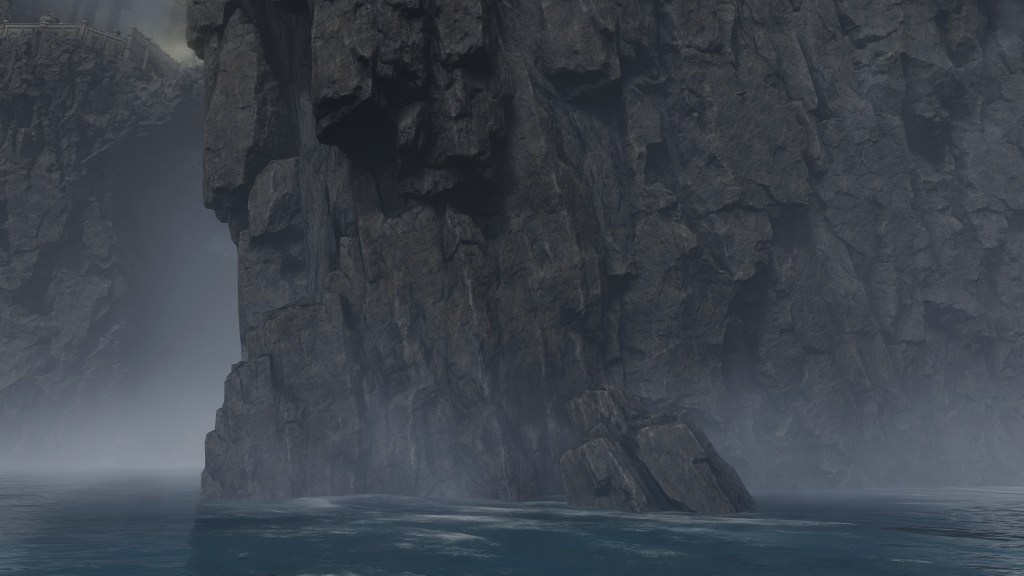
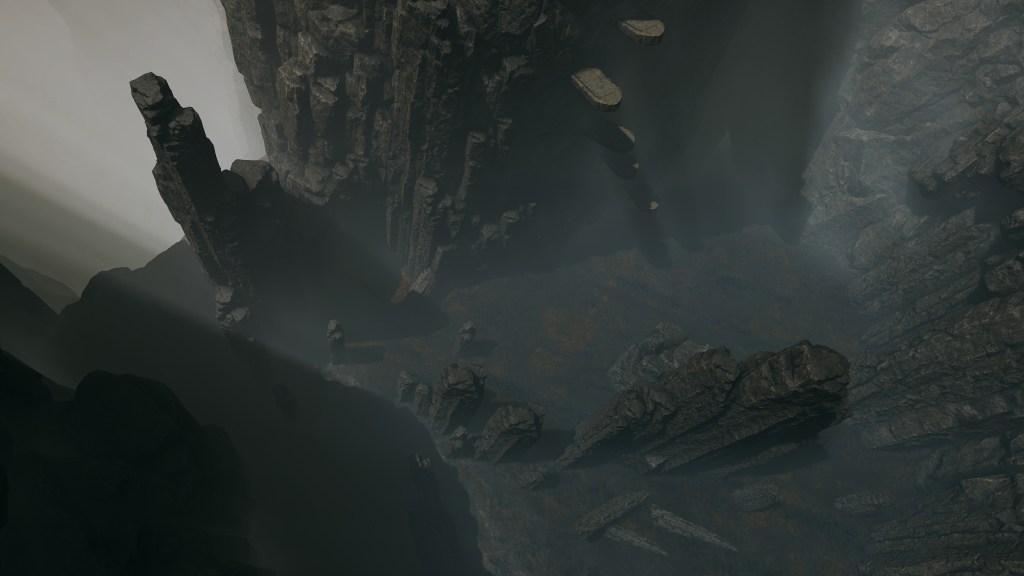
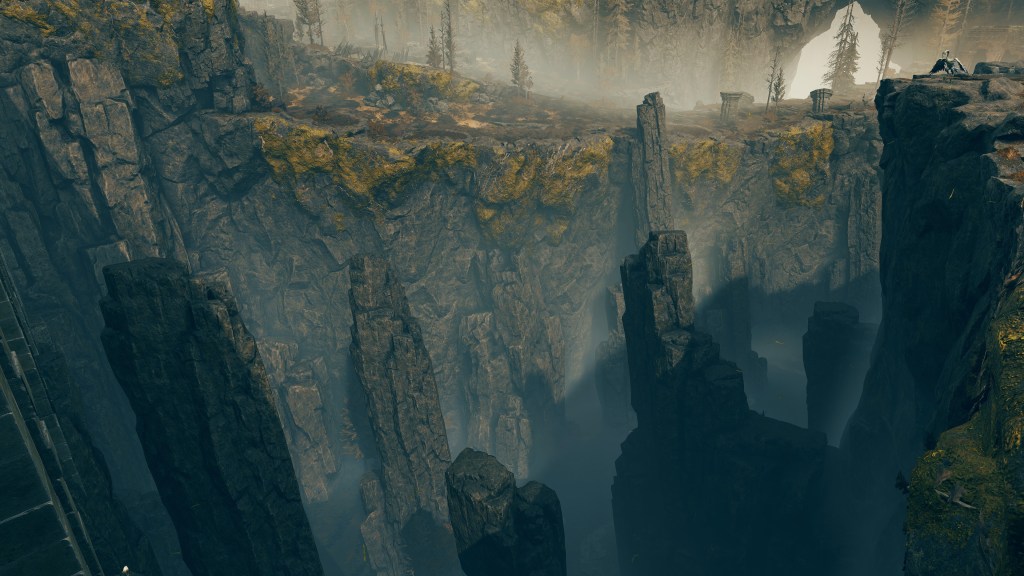
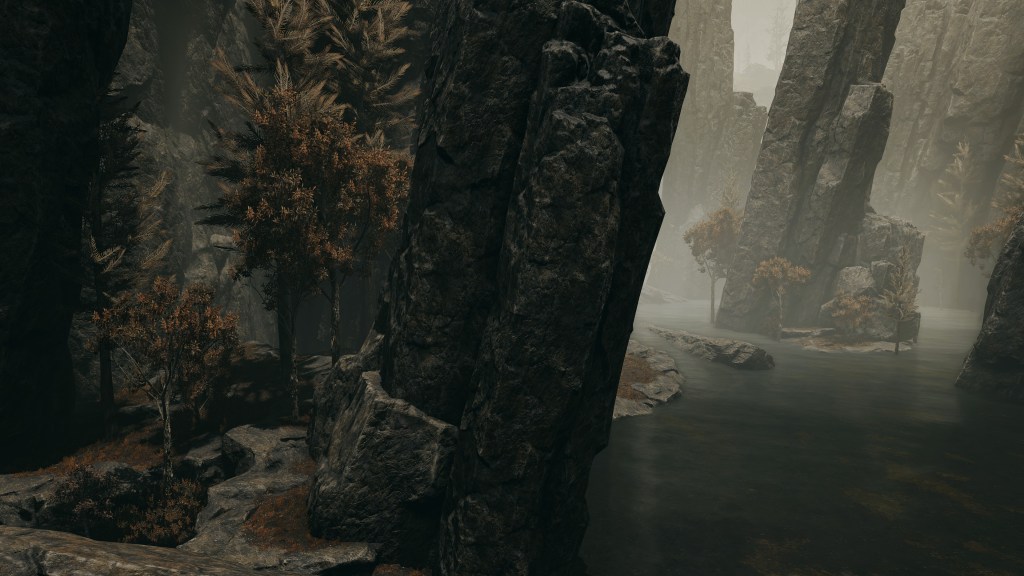
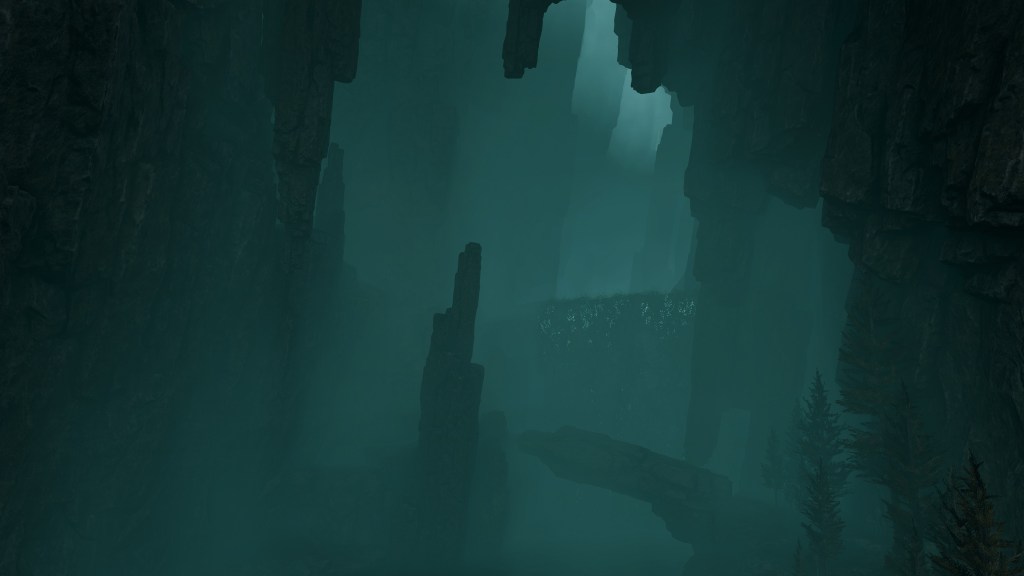
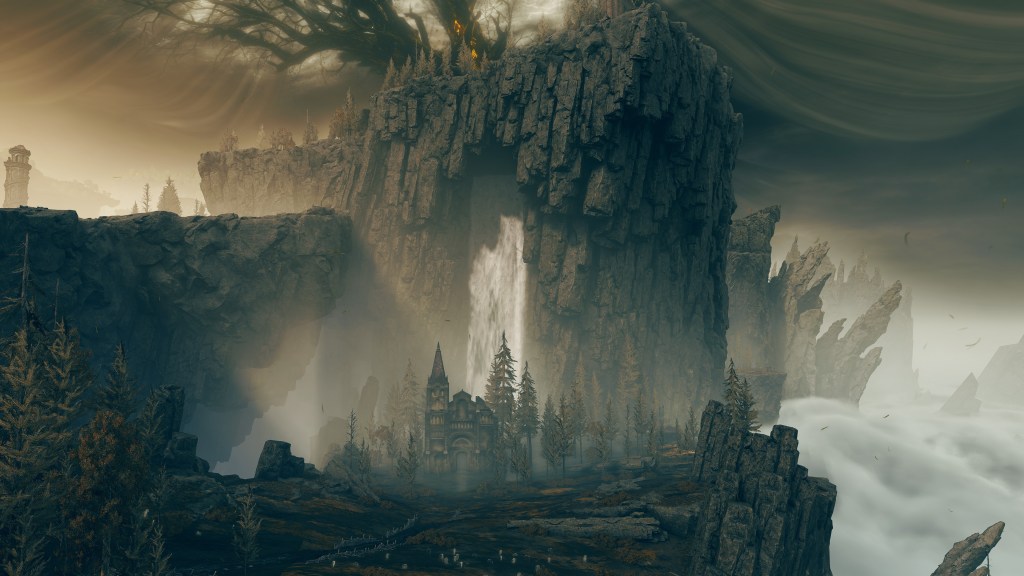
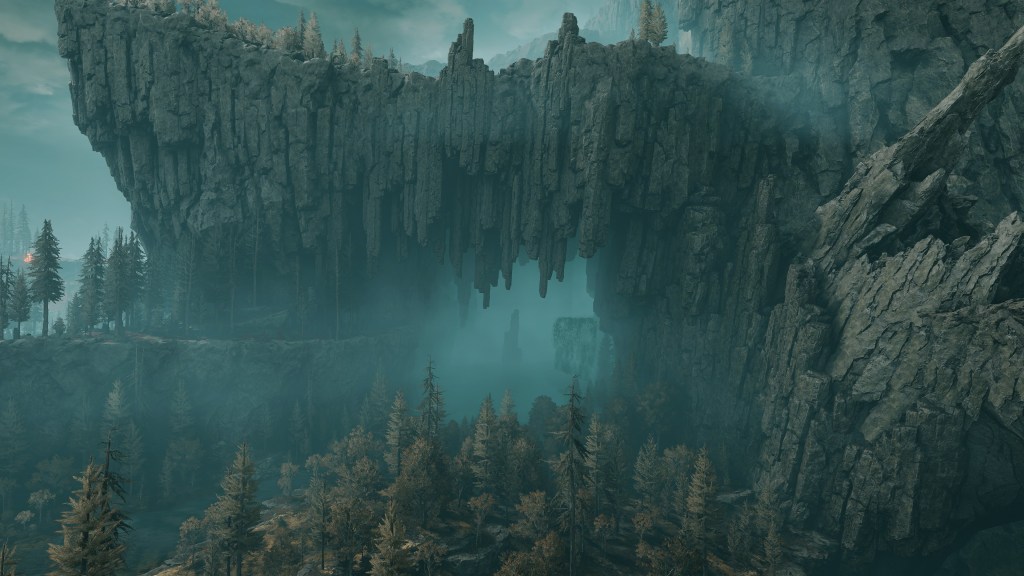
If this is the case, then the graveyard exists because of divine mandate, not human initiative. The Deathbirds wanted this collection zone for all the dead carried to the kiln, so the mother created a place for their followers to facilitate it under their supervision. Seeing the possibilities with the water, she constructed Jagged Peak to watch over the dead as they “drift” along the currents to the Cerulean Coast, ensuring none mistakenly flowed out to sea. Like a lighthouse, the ghostflame bird on her mountain perch drew death to its proper destination. Once the lost souls made it to safe harbor, the bodies were taken and kept quiet until the visiting Deathbirds finally chose them for fuel. The stela atop the Suppressing Pillar clarifies that there, at the heart of the Lands Between, every death drifting in is suppressed, the verb shizumeru (鎮める) holding the same nuance as when “appeasing” souls of the dead. The point of burial was to keep the spirits in place, using whatever means to prevent them from going astray again. And it wasn’t just the birds leading them onto the right path.
At the heart of Between, every death drifts in and every death is appeased.
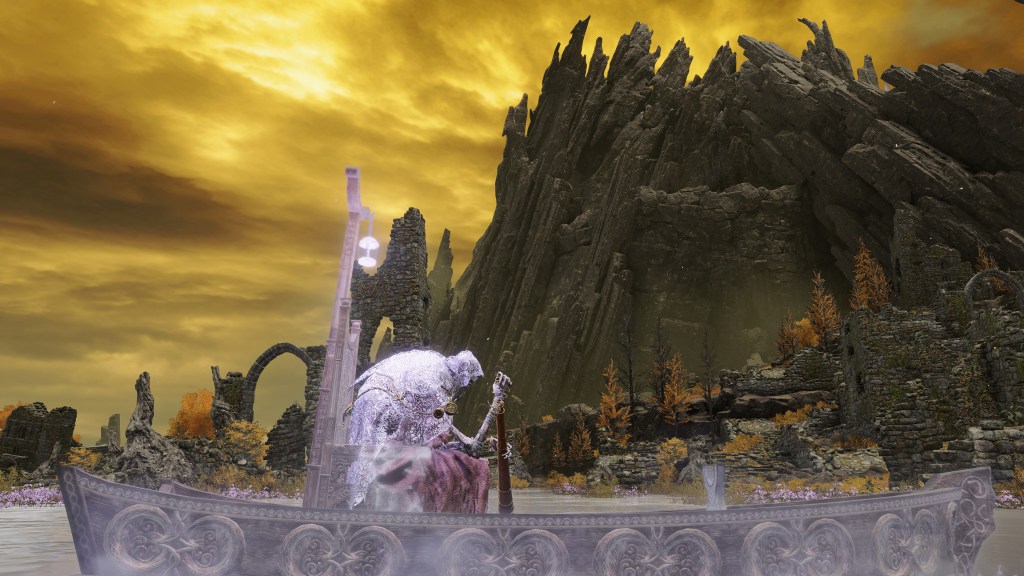
Tibia mariners are the oldest gravekeepers, rowing boats with their large horns through places like the Charo graveyard. For those who have perished, their rotted skulls remain scattered about the graves, leaving every indication that the center lands was where they concentrated. It is plausible that Charo (カロ) refers to the first of these gravekeepers, since Charon (カローン) is the name of the ferrymen for dead crossing the River Styx in Greek mythology. Either way, the boatmen as a group are named after Tibia, which may be the land of the spirit world or simply hold some other meaning to servants of Death — the term does reference the shin bone as well as a Roman pipe instrument, much like the skeletal mariners’ horns. In the end, those of Tibia hold a special duty to be leaders, blowing their “oars” to call out to the dead. Like a grave glovewort’s “bell” flowers, they attract spirits with their sound, summoning their aid in battle. It is why they are dubbed “calling boats” (ティビアの呼び舟) and critical to guiding the dead to their proper place, which originally was the heart of Between.
Skull bone of the old gravekeepers. One of the materials used in item crafting.
Acquired mainly in Charo’s Hidden Graveyard.
The old gravekeepers are boat rowers and call the dead even if completely perished.
Besides the reference to Charon, the Tibia gravekeepers probably did sail the waters between the Cerulean Coast and the rest of the Lands Between. As the oldest, they were the first humans to help bury and protect the dead, flocking to Deathbirds in the hopes of delivering salvation to spirits left astray in the world of the living — possibly even before there was a formal clergy. They brought the first corpses in their boats, buried them in the earth with tombstones, and watched over their rest as they ferried more; some might have even helped the Deathbirds bring offerings up to Ravenmount, since defeating the mariner at the Wyndham Ruins at the foot of Gelmir awards us with Tibia Summons for leading the dead. By the time the land from the seashore to the clifftops became a giant graveyard, the cult of Death had built enough of a following for peoples across the lands between to send their own boats, letting them drift along the shore. It was at that point that their duties likely shifted to mostly protecting the dead, the graveyard becoming the place where Tibia lived and died.
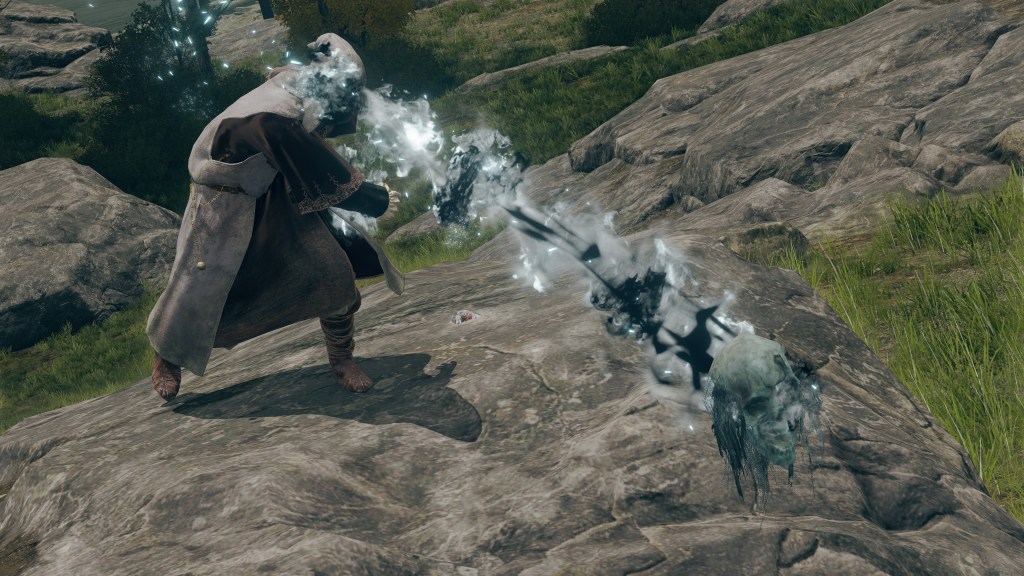
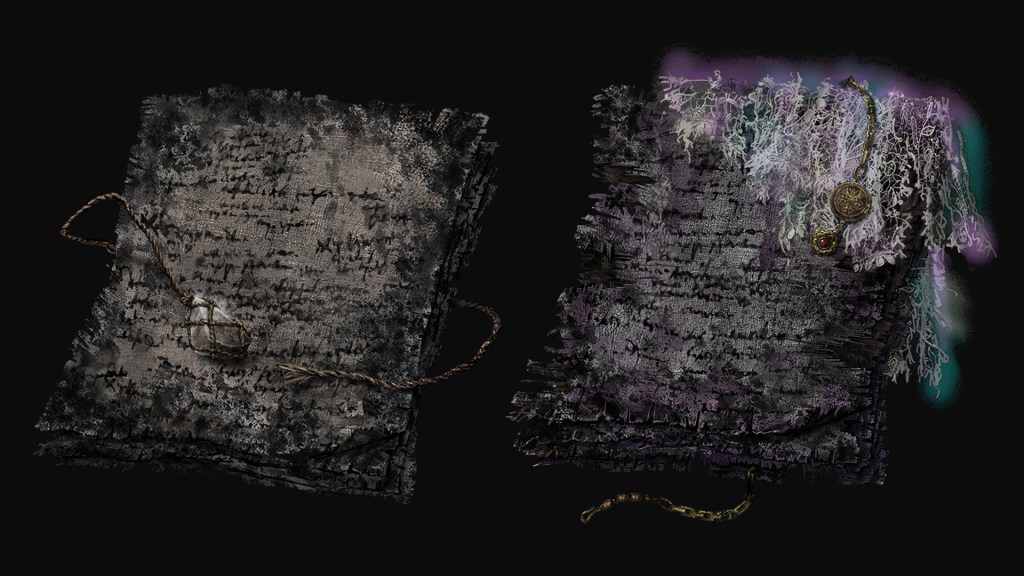
With their skulls, they also left their knowledge. Slaying the mariner in Charo’s Hidden Grave nets us a book detailing the old ways of calling death, including a recipe for the Call of Tibia. Sharing the same name as the Tibia Summons spell, (ティビアの呼び声) the spell tool invokes three lost spirits to appear and attack, the main difference from the simple spell being the manner and catalyst. The tool is really the long-deceased mariner’s head stuffed with grave crickets in the mouth and a human bone shard in the eye sockets. Even in death, their spirit in the skull naturally calls out to the dead, with the crickets’ help to be their voice; their old ways goading out the spirit in the bone shard to appear those three times once freed, when the thrown skull shatters. There were generations to the first gravekeepers, their secrets passed down as the old hands perished, whether it be in the form of hexes or tools utilizing predecessors’ remains. As a result, the ways of the mariners survive to this day, though passing the torch ended long ago.
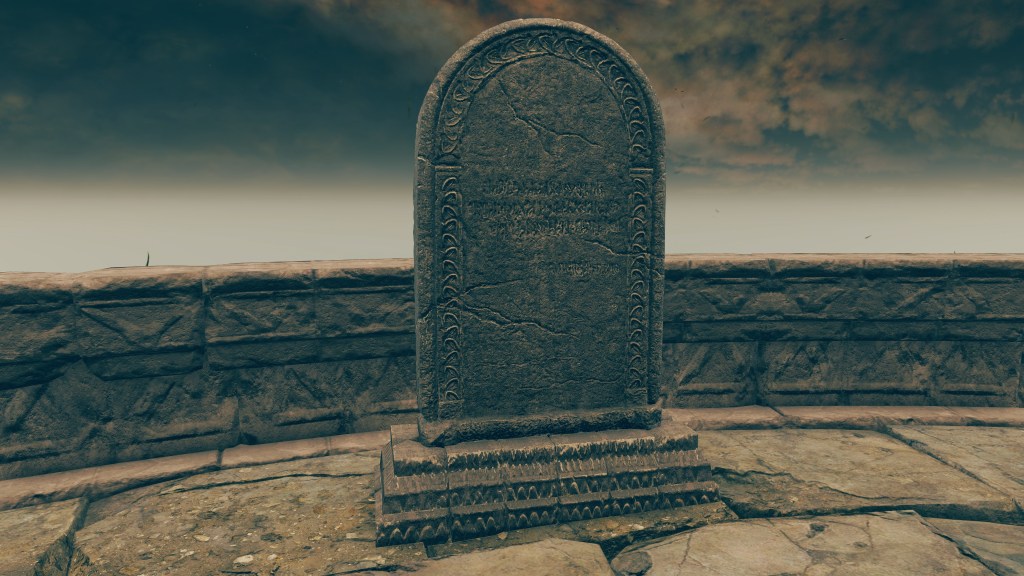
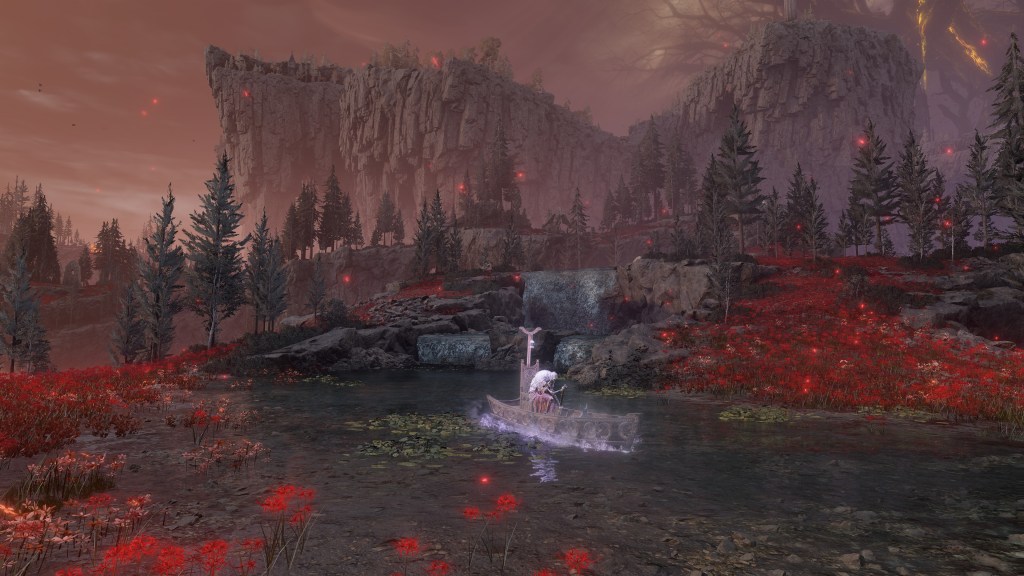
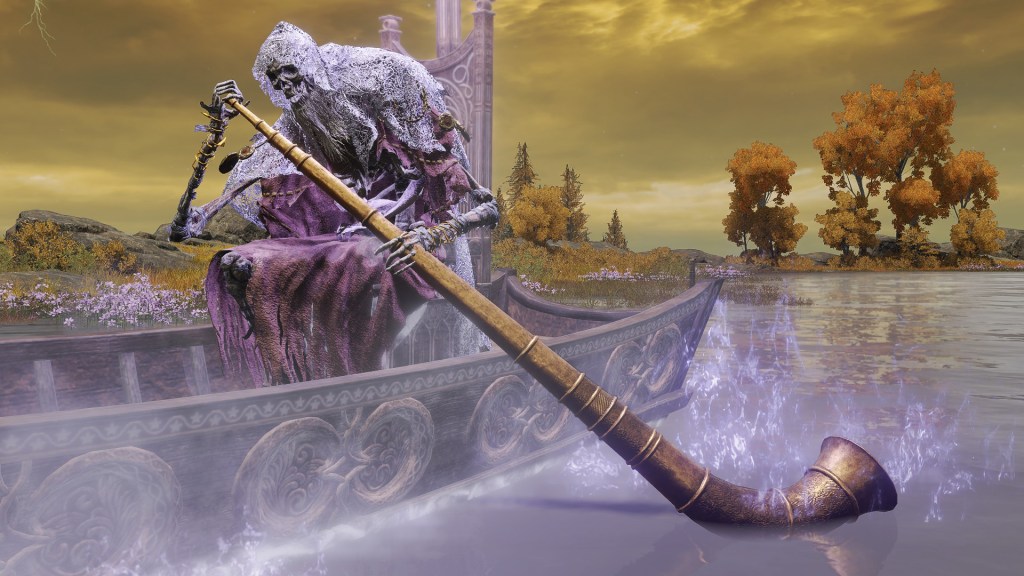
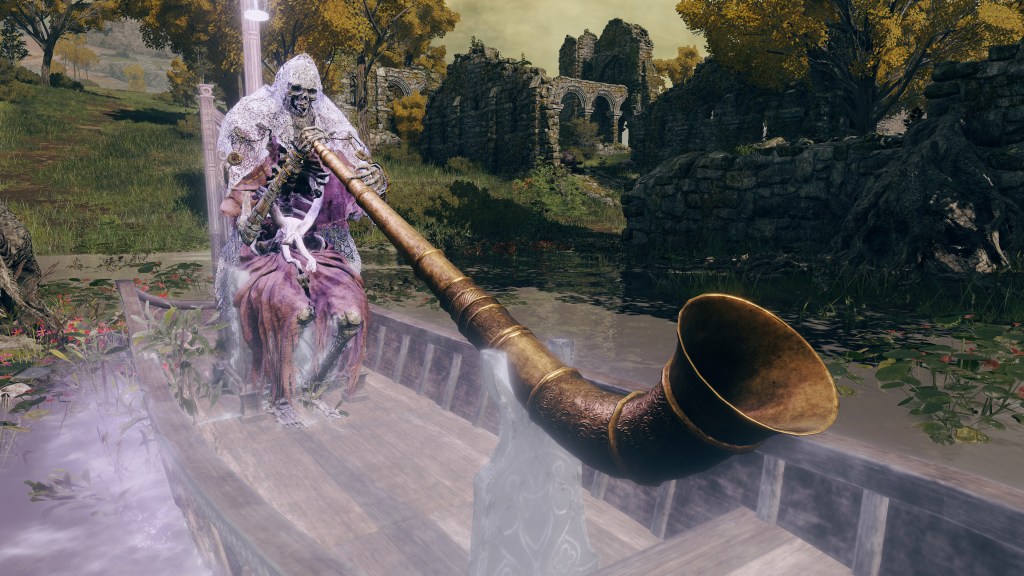
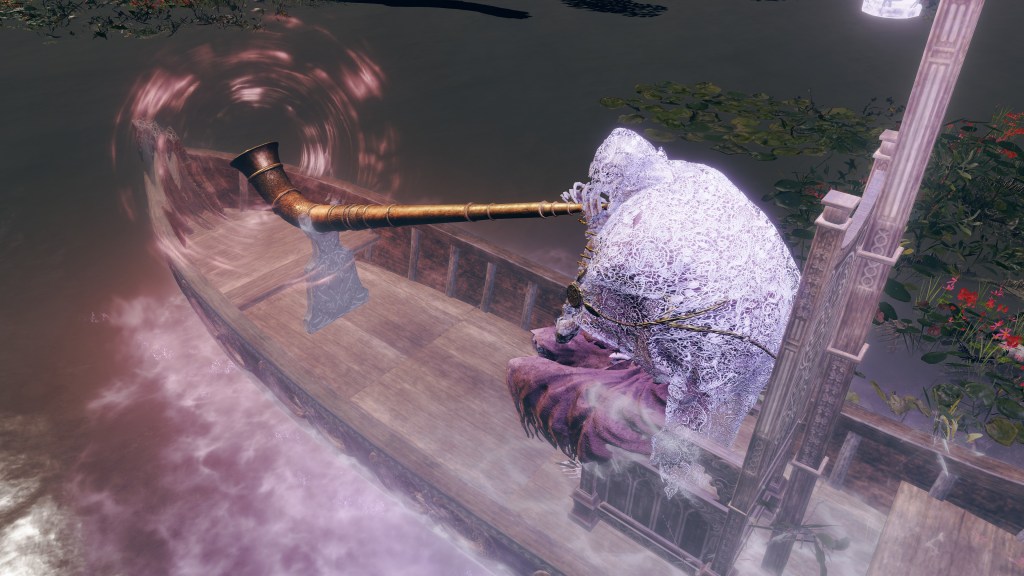
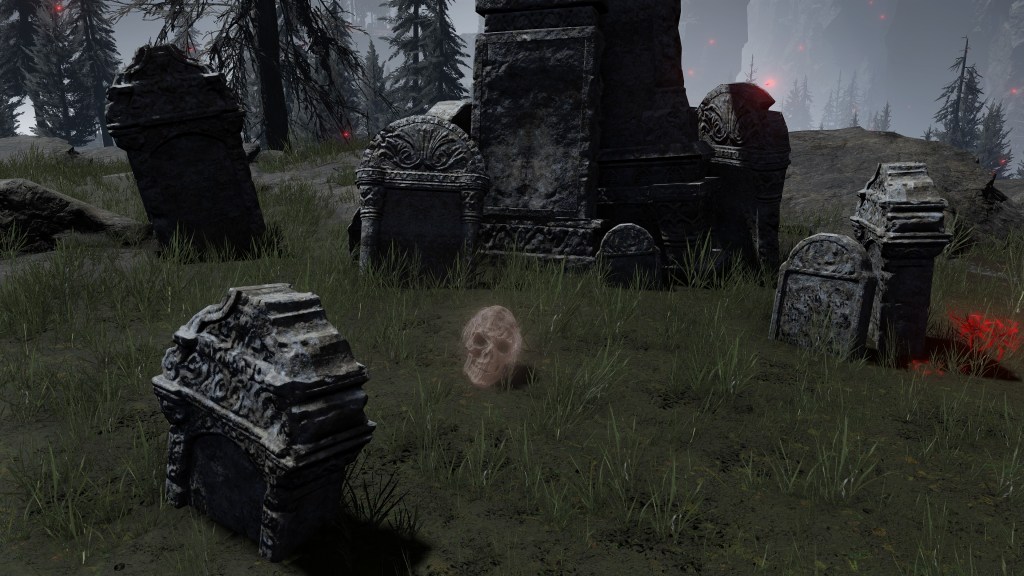
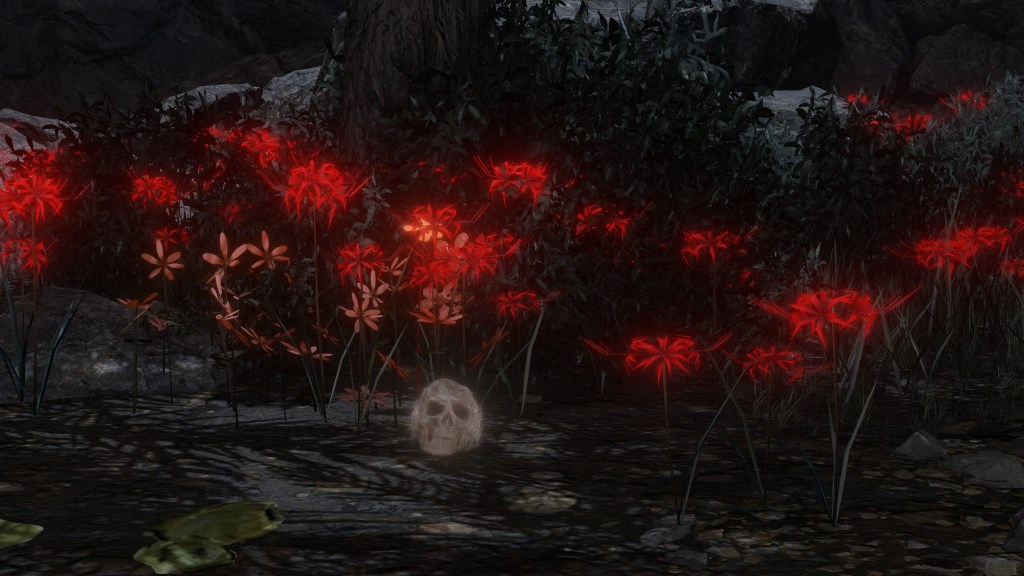
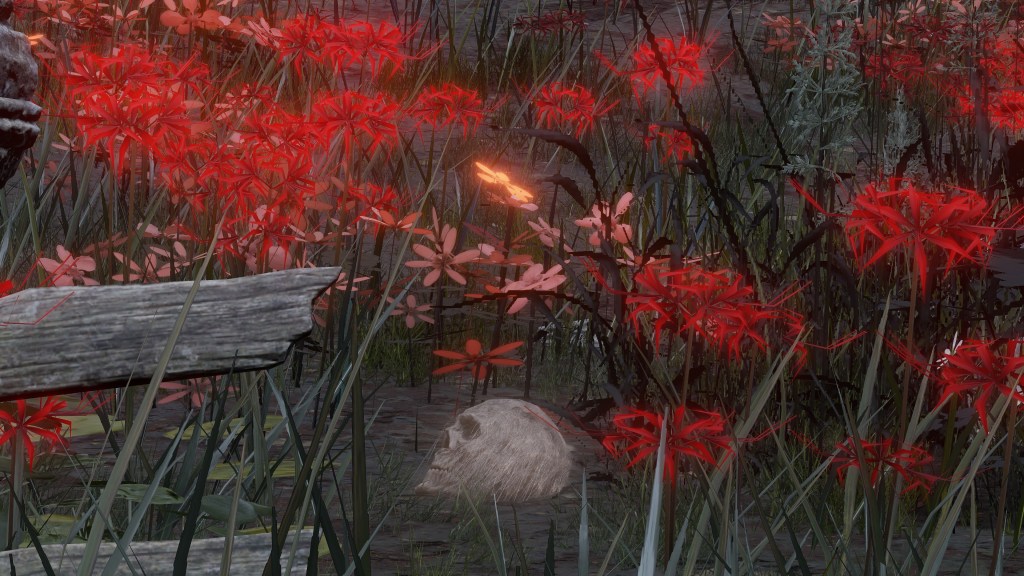
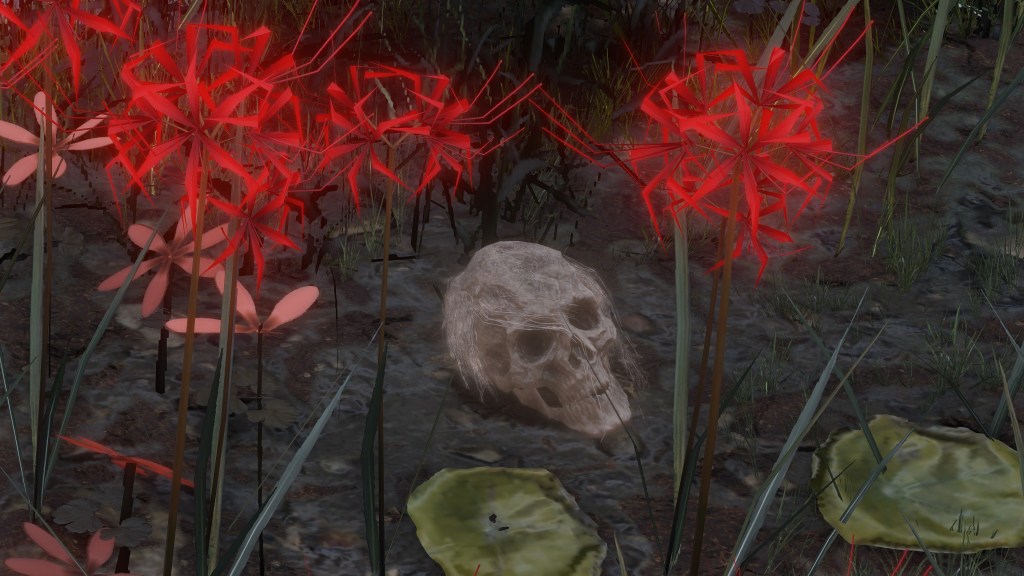
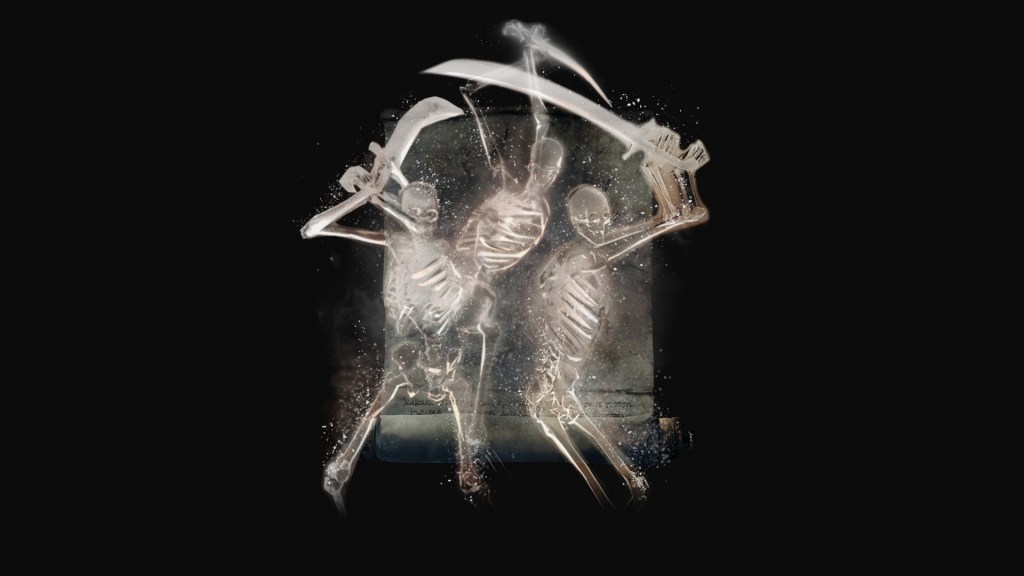
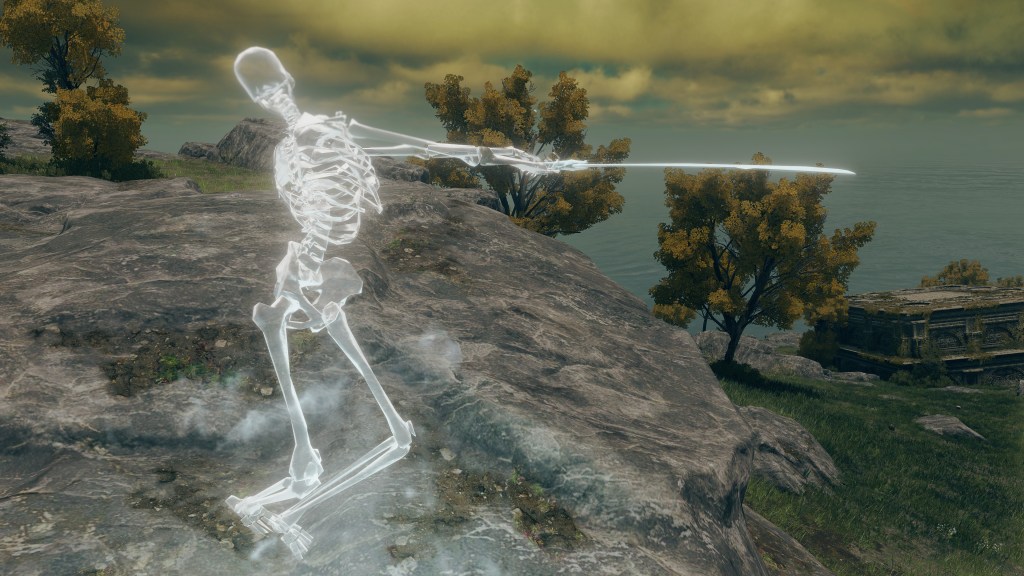
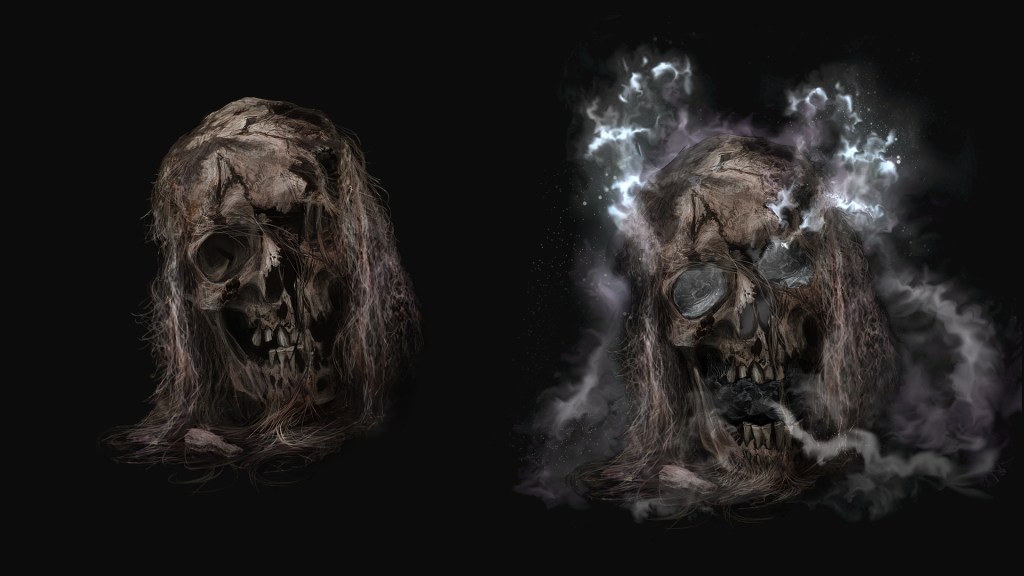
Recipe book of the calling boats, who are the oldest gravekeepers. The old ways of calling death are written.
Old spell tool which made a gravekeeper’s skull its catalyst. One of the craftable items.
Consumes FP to call upon Those Lost in Death at the point it is thrown to. They sweep away surroundings while spinning and will disappear after doing so three times.
The dead have been the lost since time immemorial and require leadership.
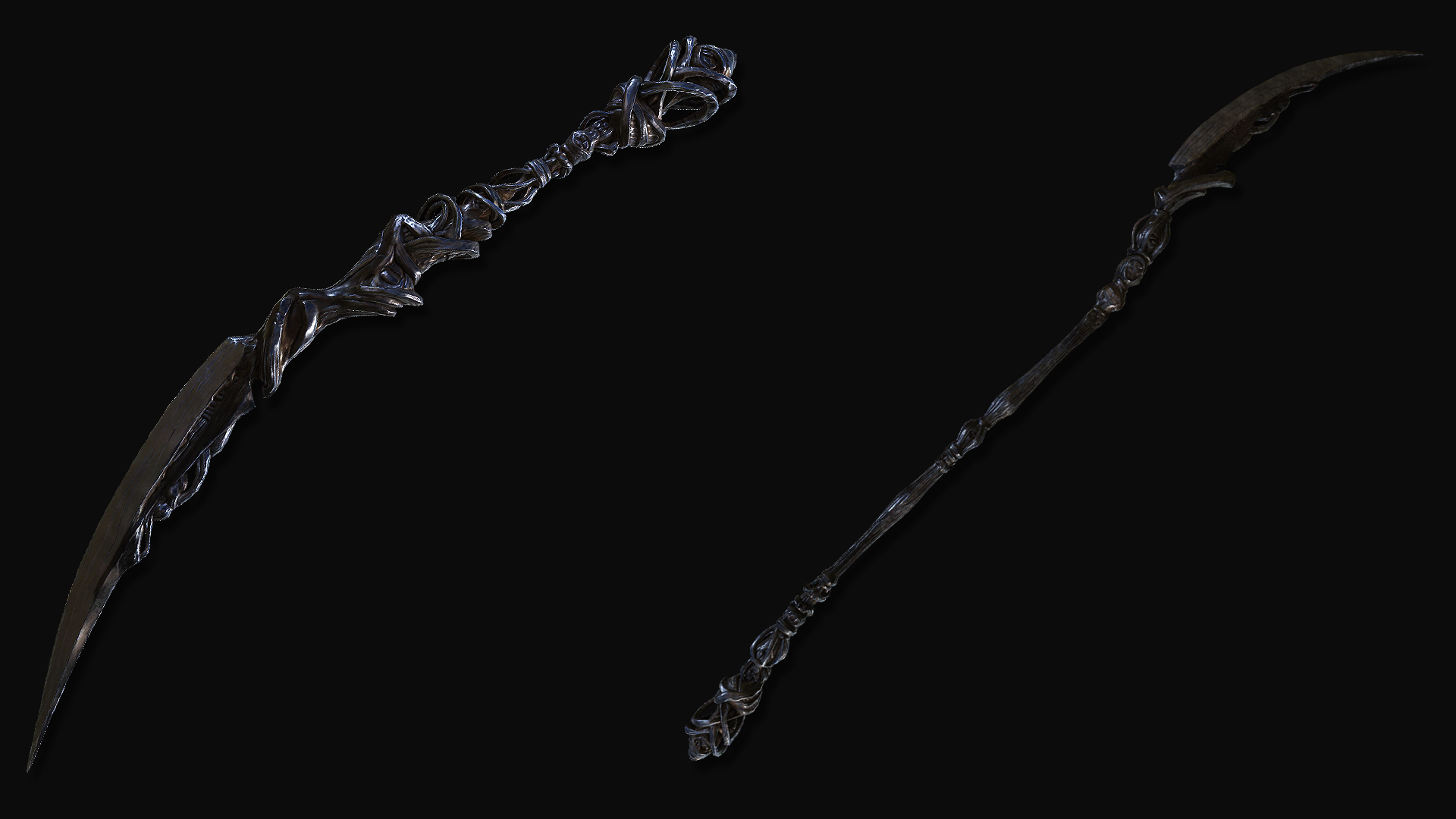
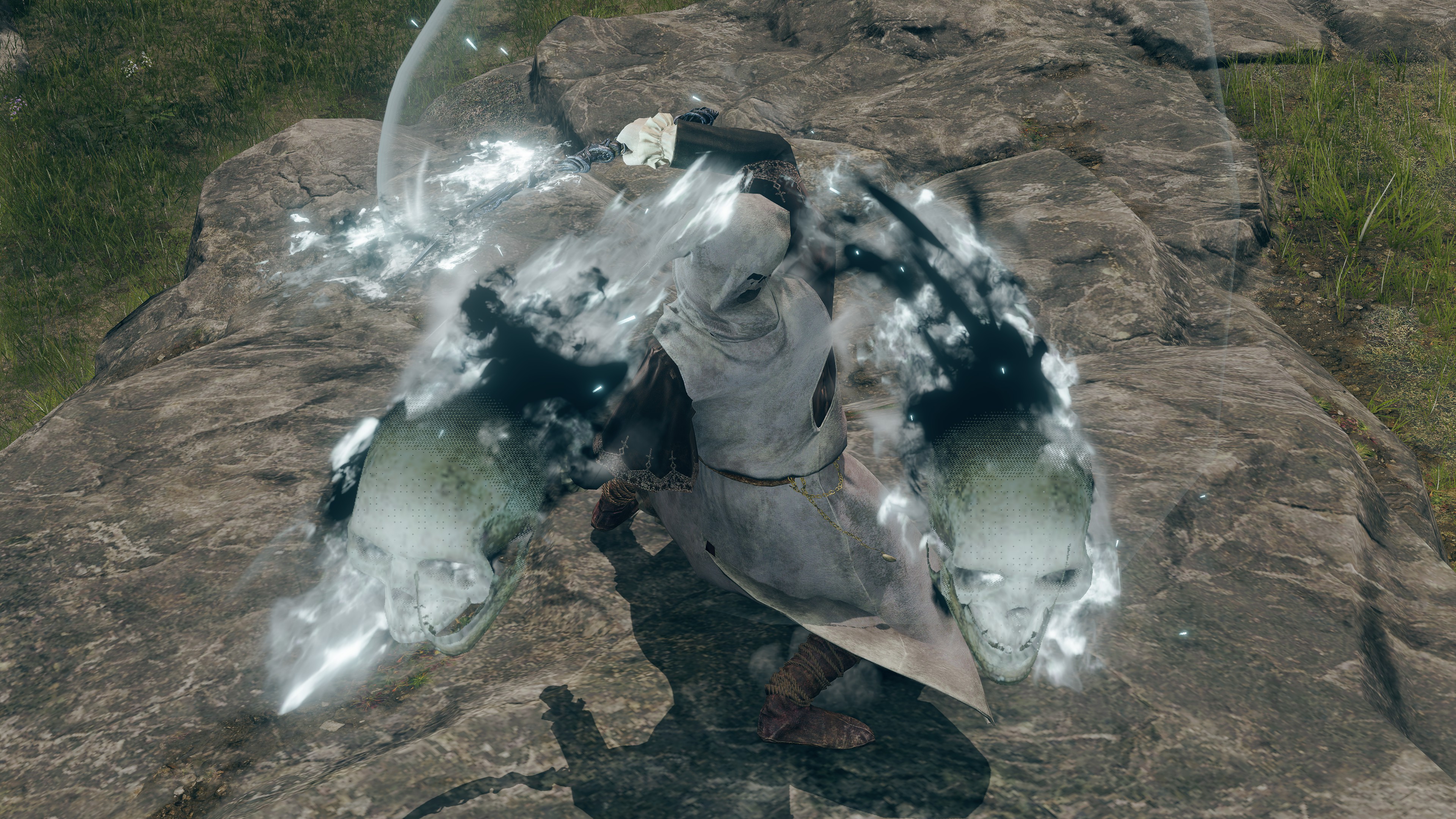
Later gravekeepers haven’t learned these old ways, instead crafting their own tools and arts for summoning the dead. Proof of this are the Spirit Sword and Glaive, old weapons left around both sides of the Charo graveyard. Despite being engraved into a rather twisted shape, their magic blades remain sharp and they can be employed to commune with spirits imbued within. The spirits summoned with their Rancor Slash skill, however, are the vengeful type, dissatisfied with their supposed protectors’ call. They aren’t as zealous either. Some take the time to craft Polter Stones, covering spiritgrave stones in grave crickets to imbue it with the power of a “man-ringing stone” imitating the sounds of the living. We don’t see any graves turning spiritual in the Charo graveyard, but they most likely do exist, since item descriptions associate the “spirit graves” with these center lands collectively. Nonetheless, their use to distract the keepers from their loneliness reveals the weaker dedication from subsequent generations. They have yet to cultivate the secrets which inspire the faith, contrast to their precursors.
Recipe book of the gravekeepers of graveyards of the Land of Shadow.
Sharp blade applied with a twisted engraving. Sword used in graveyards since long ago.
It is said to be a catalyst for communing with spirits.
Battle art that rotates body and calls pursuing vengeful spirits while slashing enemies. Chains follow-up attack with additional input.
Gravekeeper’s tool make manufactured with spirit gravestones. One of the craftable items.
Throw ahead to make a sound as if a person is there at the place it falls.
It is said that the solitary gravekeepers used them to distract from their longing for people.
In the land of the spirit graves where every death gathers, the dead dragons also drift in. And some, as a result of their inborn strength, remain unable to die even in death.
The reason the mariners haven’t simply passed on their ways, both nautical and necromantic, seems to be just selfishness. Although we see how many of the boatmen rest with the other old bones, those who survive look little different. Besides the long beards showcasing their lifelong service, their bodies have rotted away to just the skeleton. At the same time, they aren’t treated as the living dead, so something else is causing them to persist long after the rest have expired. It isn’t difficult to imagine what; concept art depicts their boats as solid material, yet the model in-game appears spiritual. The mariners do prefer rowing through authentic bodies of water, but land is no hindrance — for they actually row through spirit fluid which follows their vessel wherever they go. The keepers show an ability to control this miniature sea, creating splashes or rising tides capable of harm with the force of their horns and the magic in their hands. These capabilities extend to their own bodies, the mariners teleporting no different from ghosts when the need arises. It as if they and their immediate surroundings spiritualized.
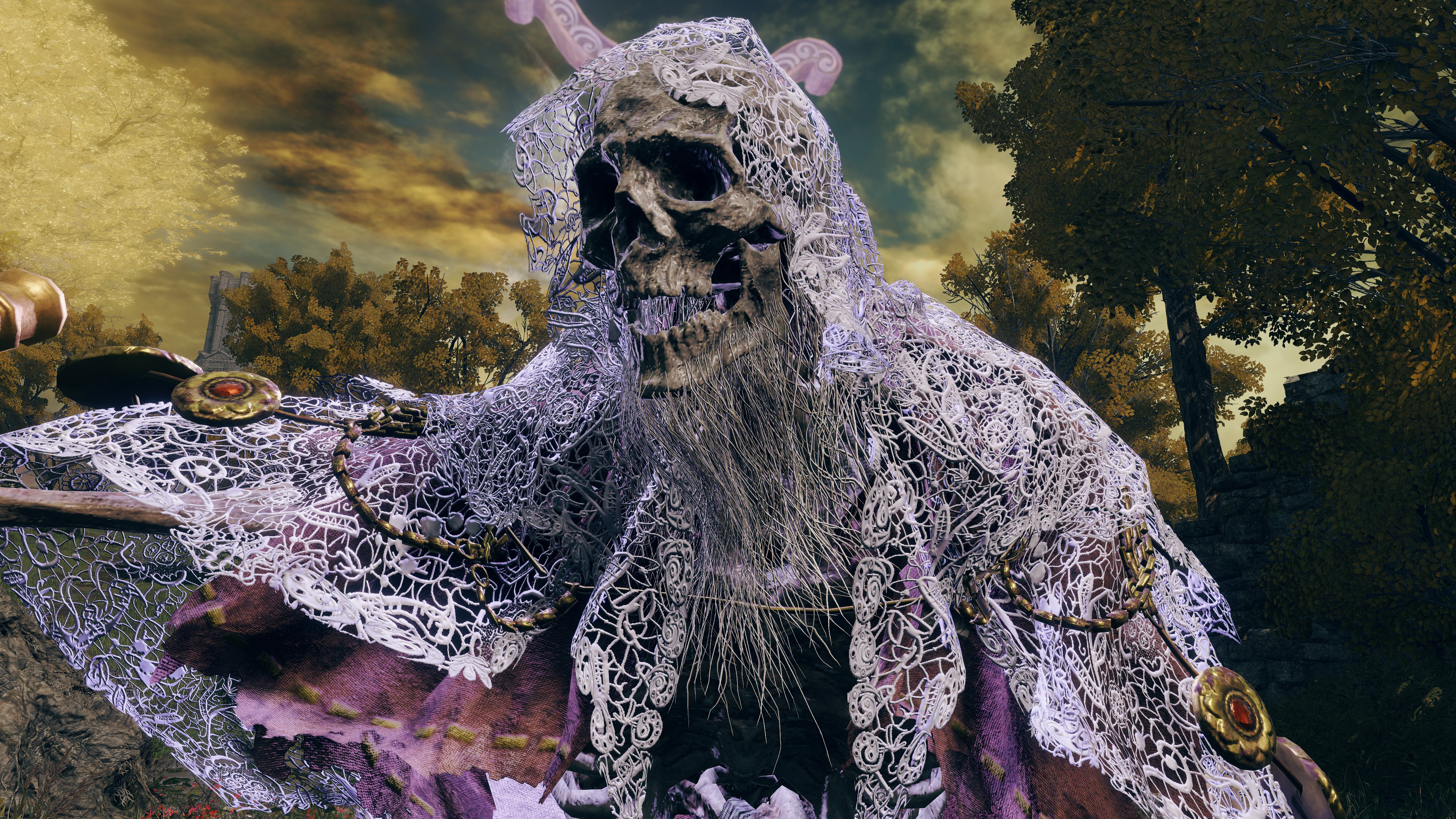
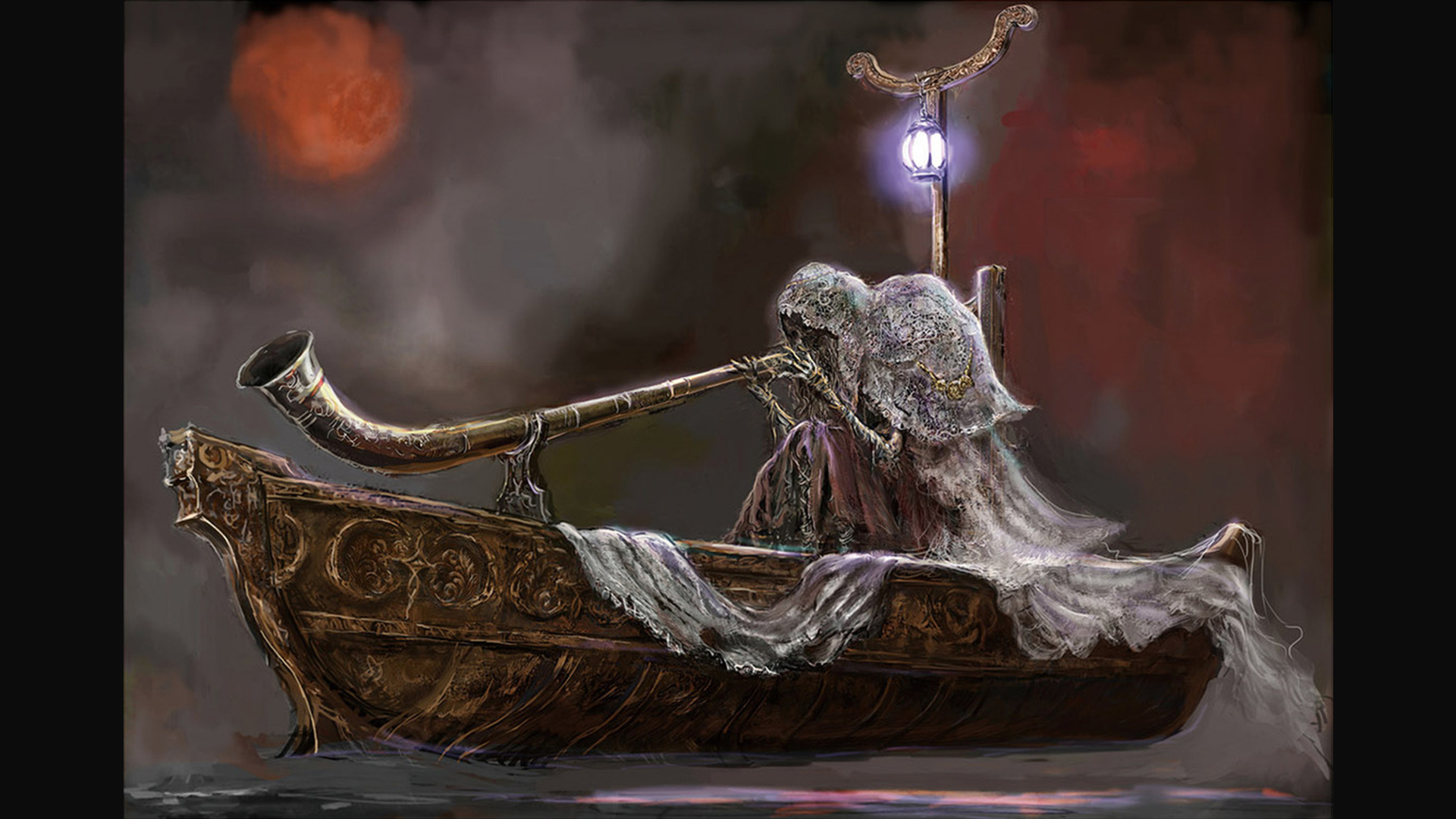

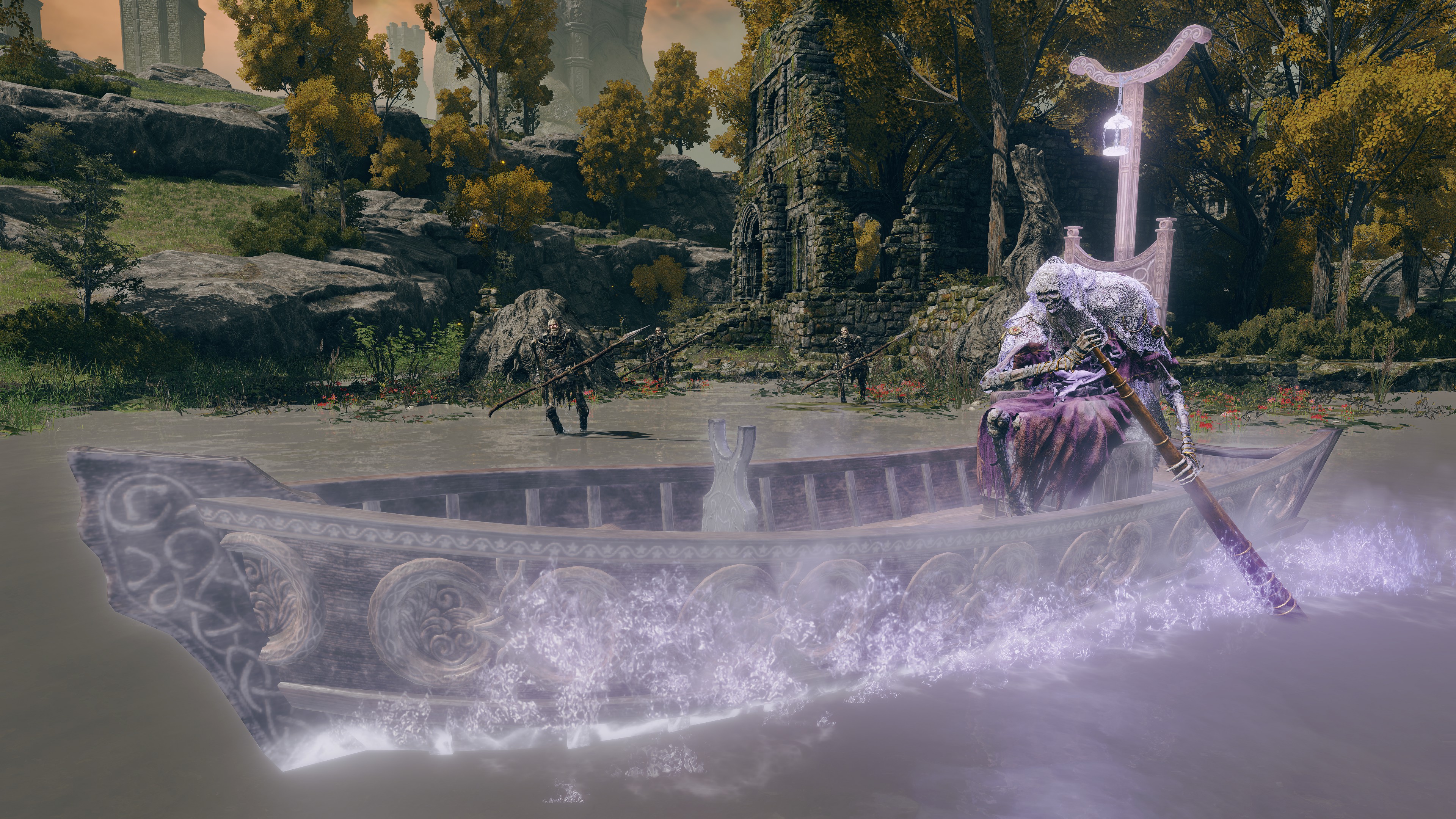
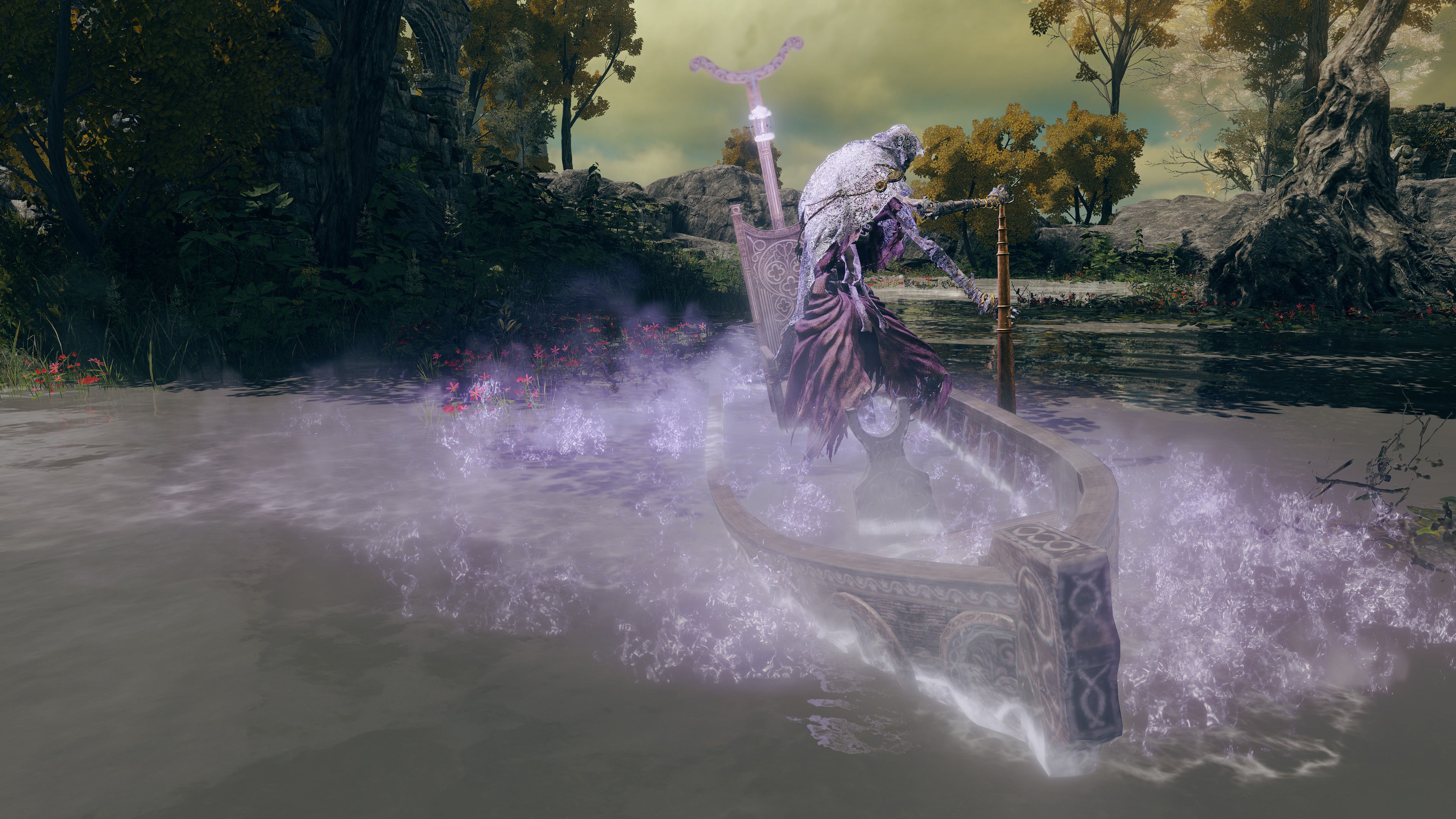
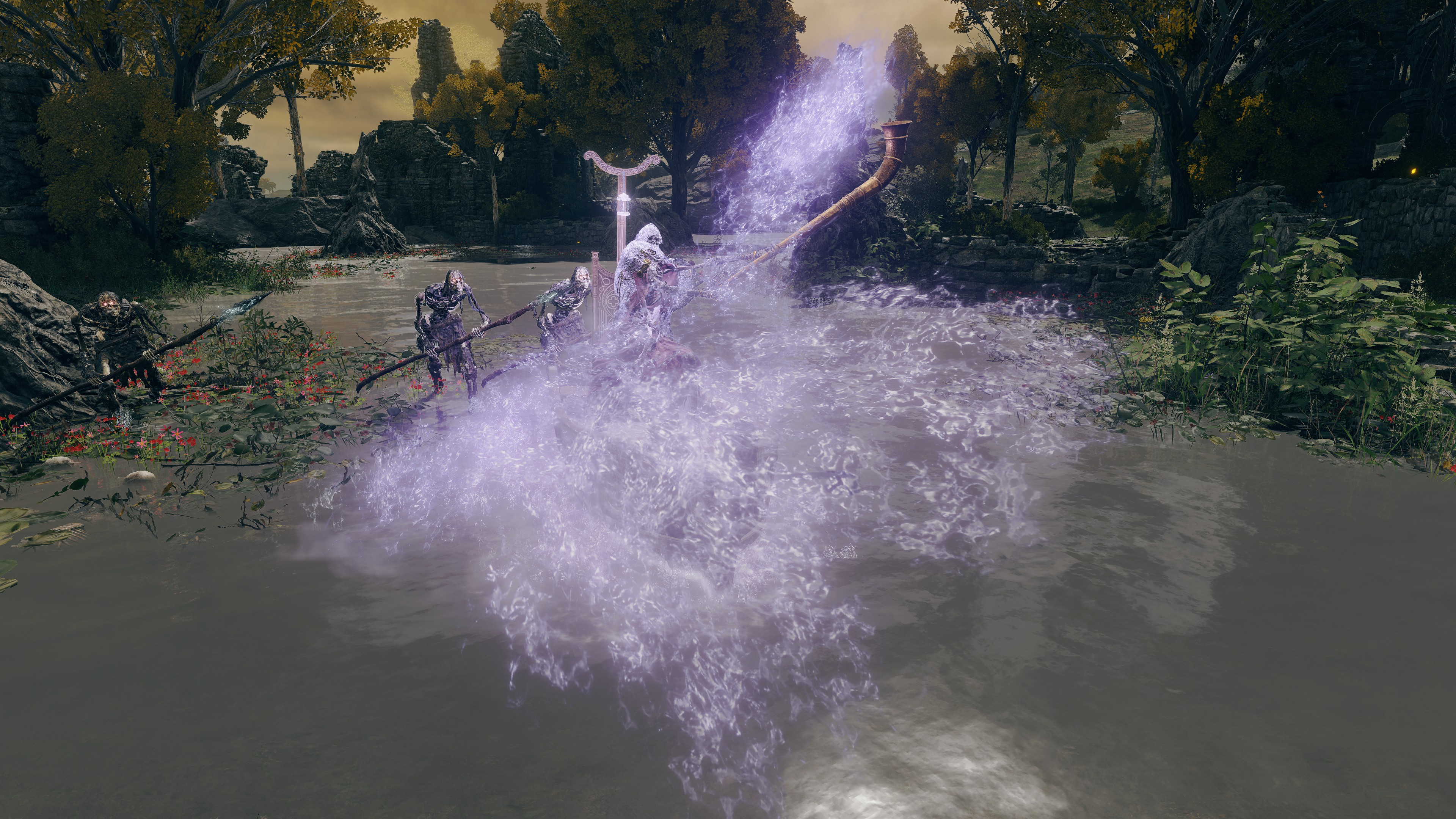
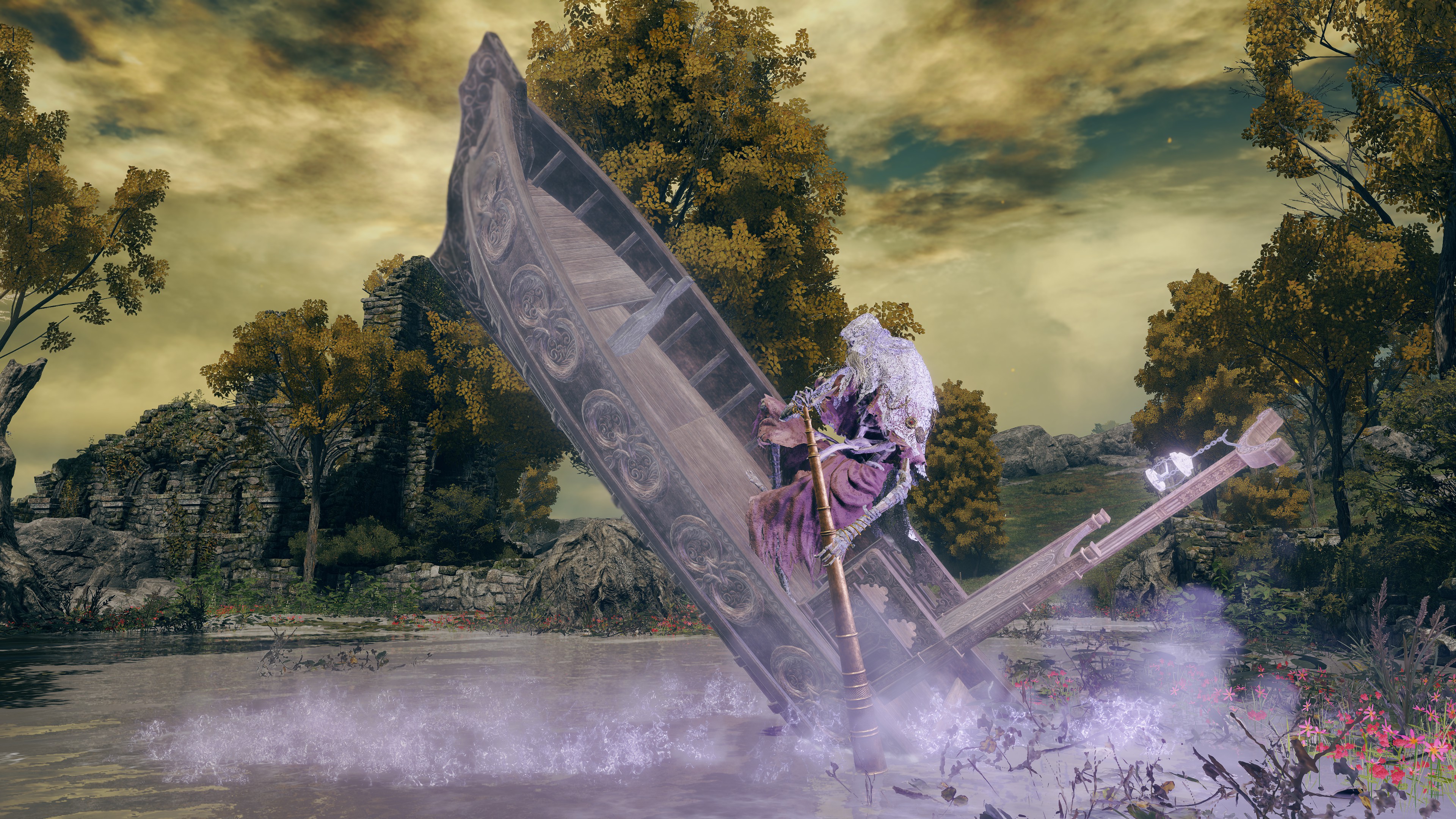
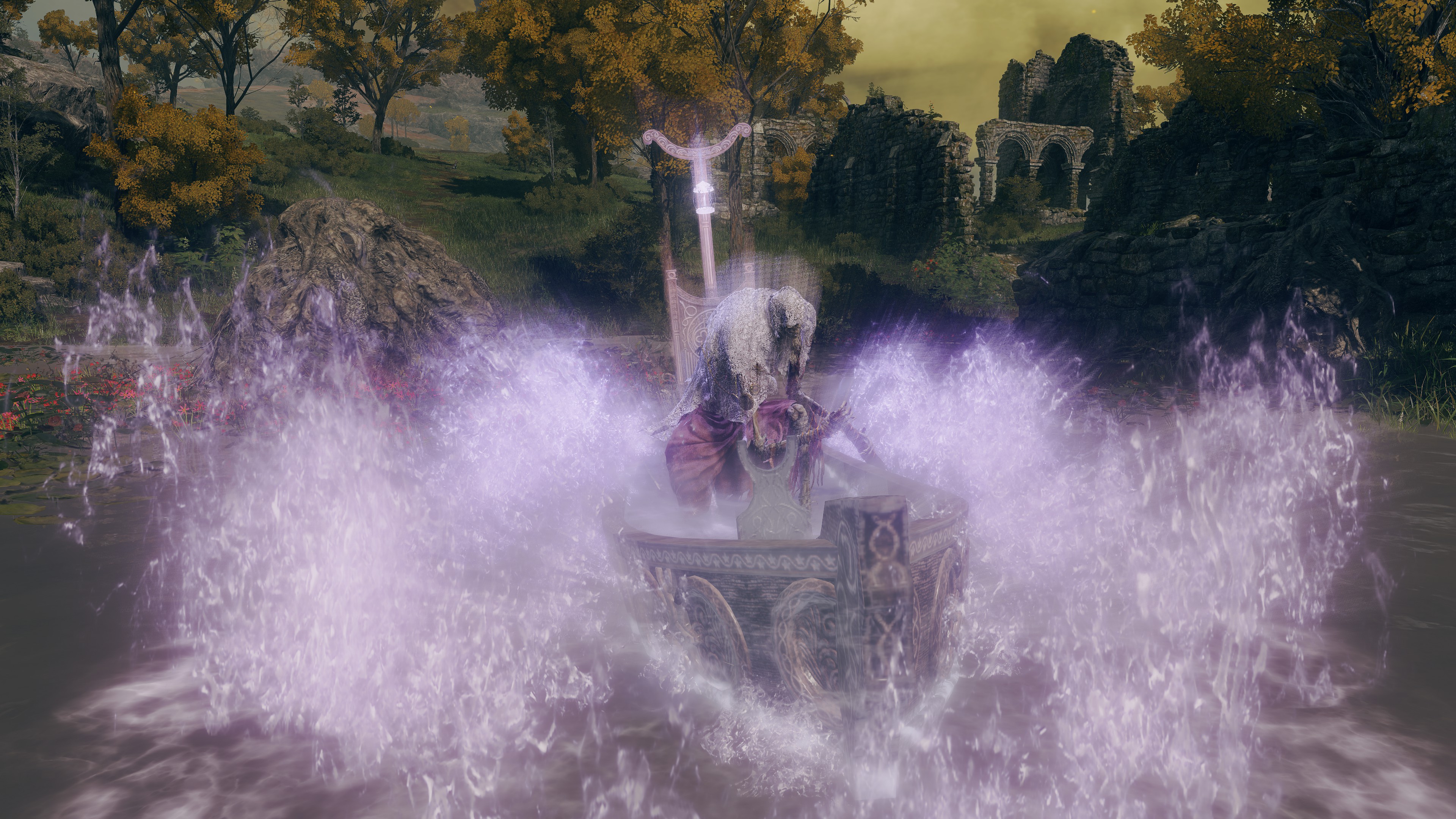
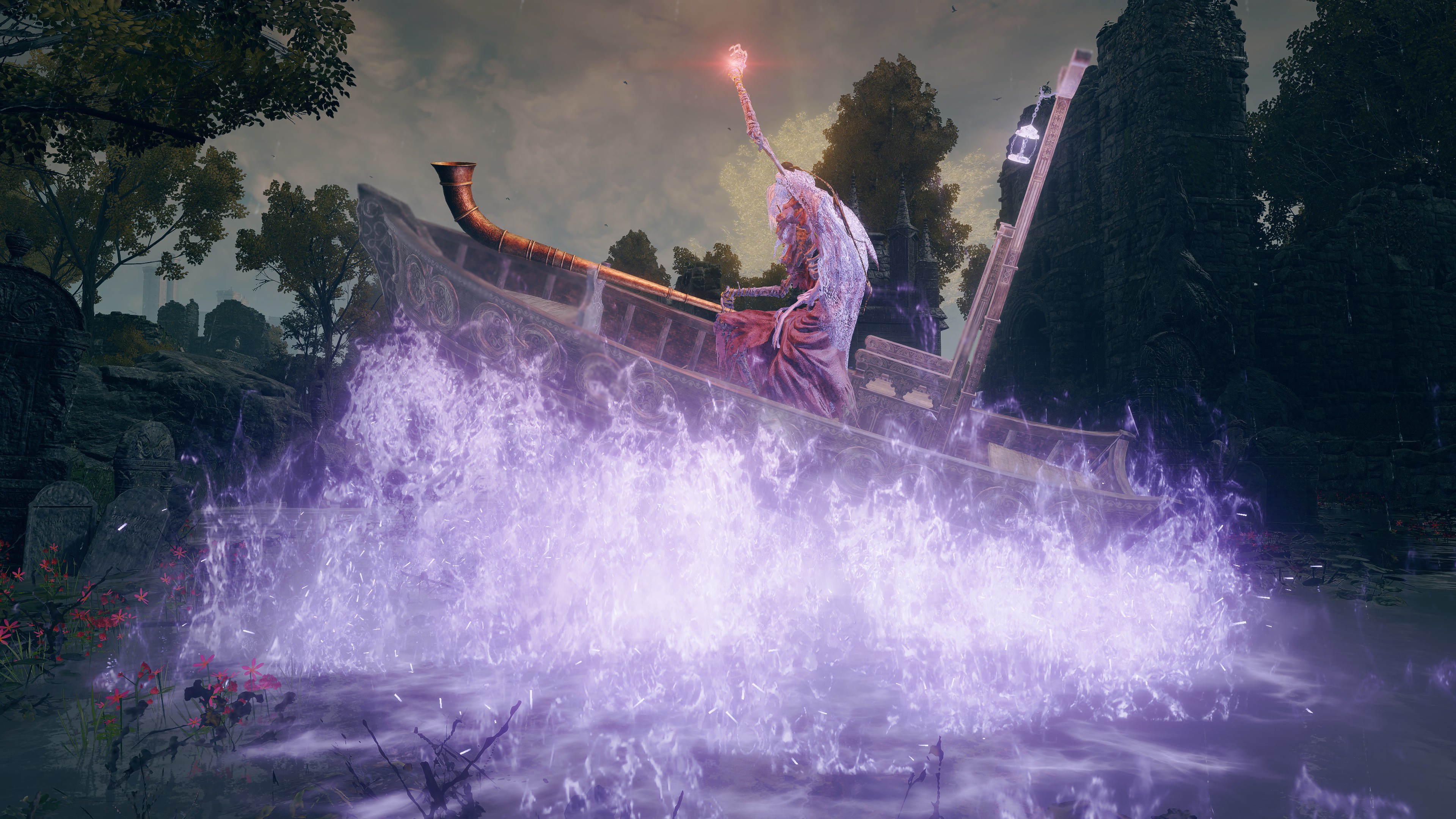
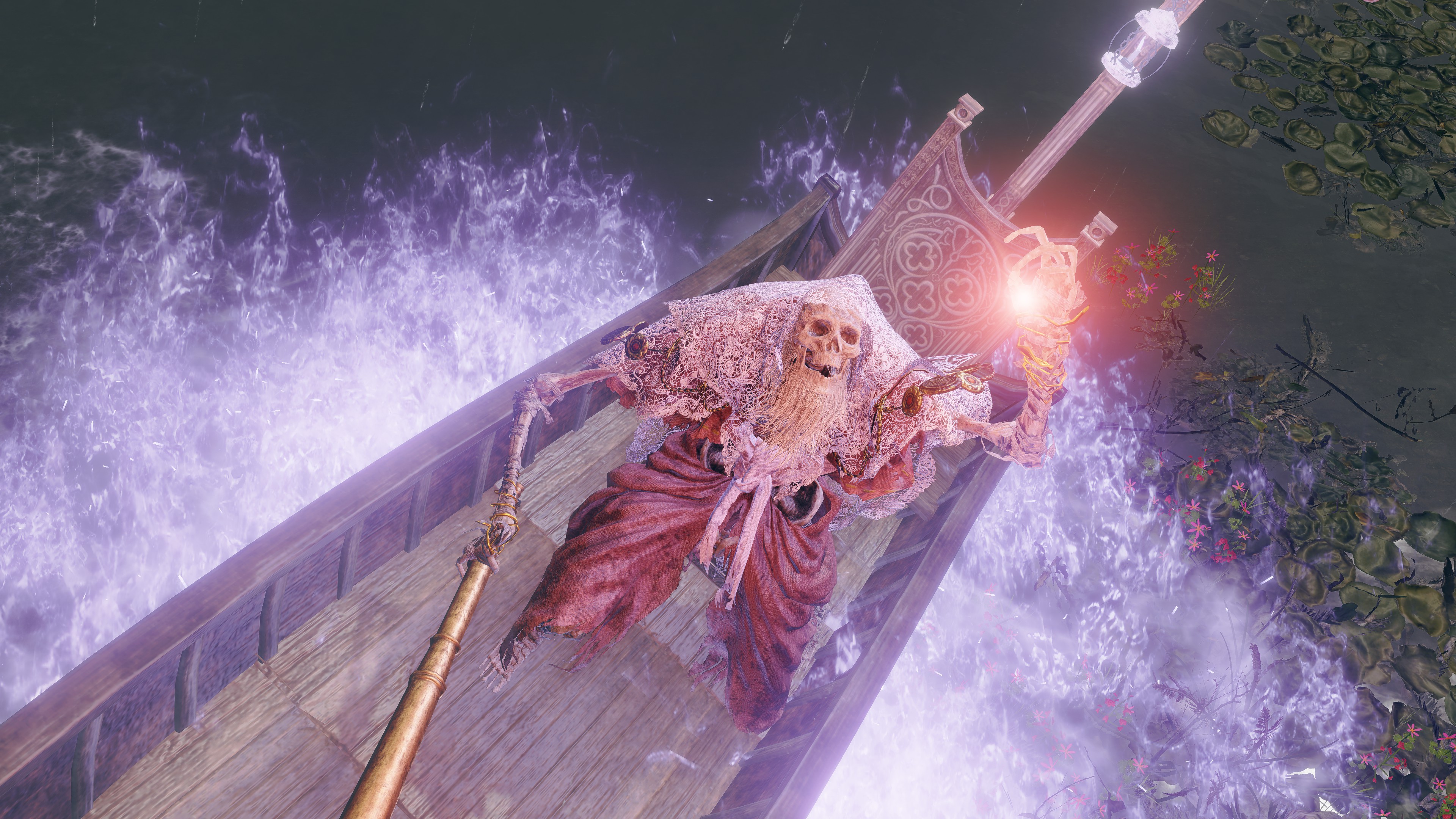
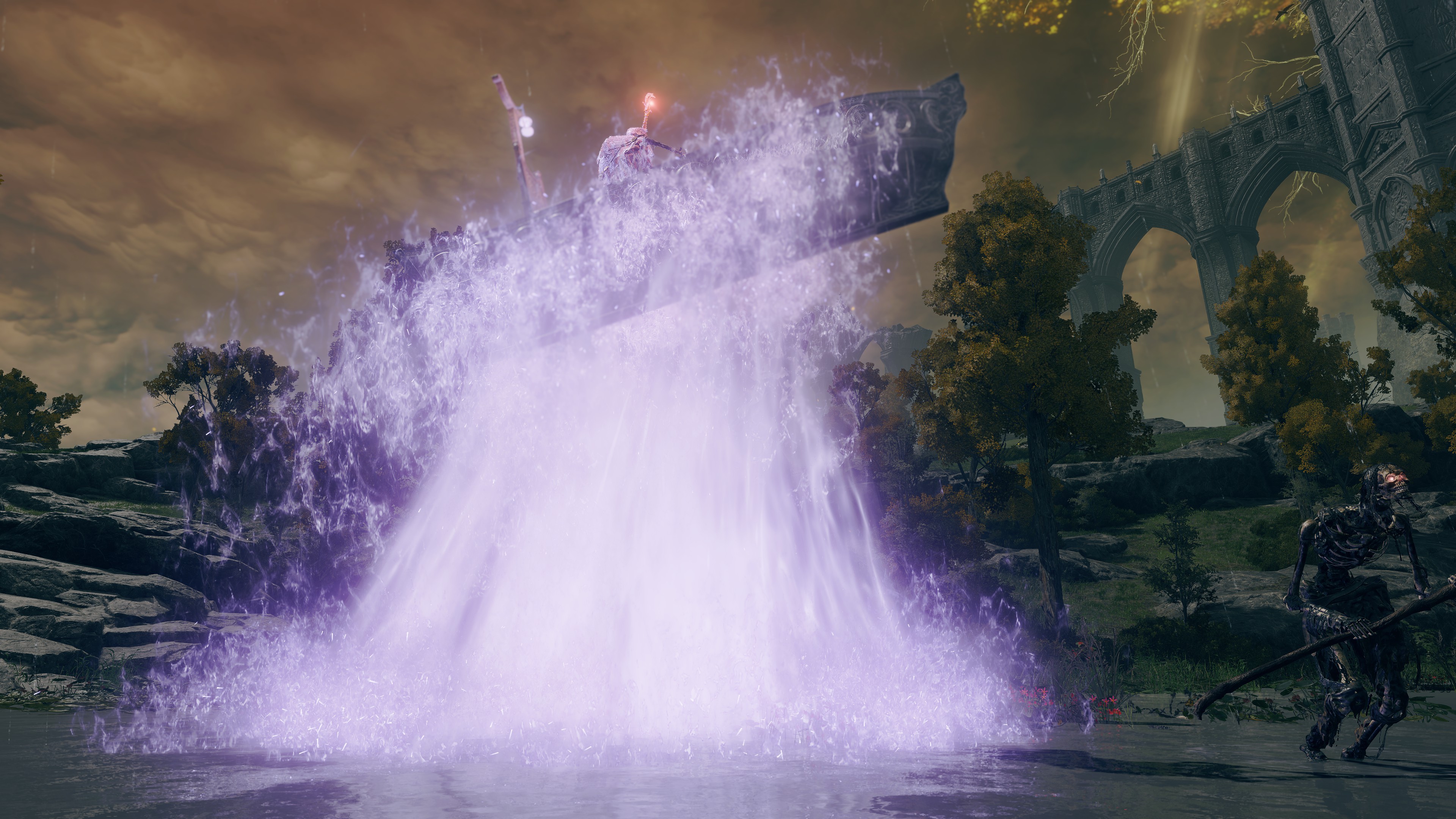
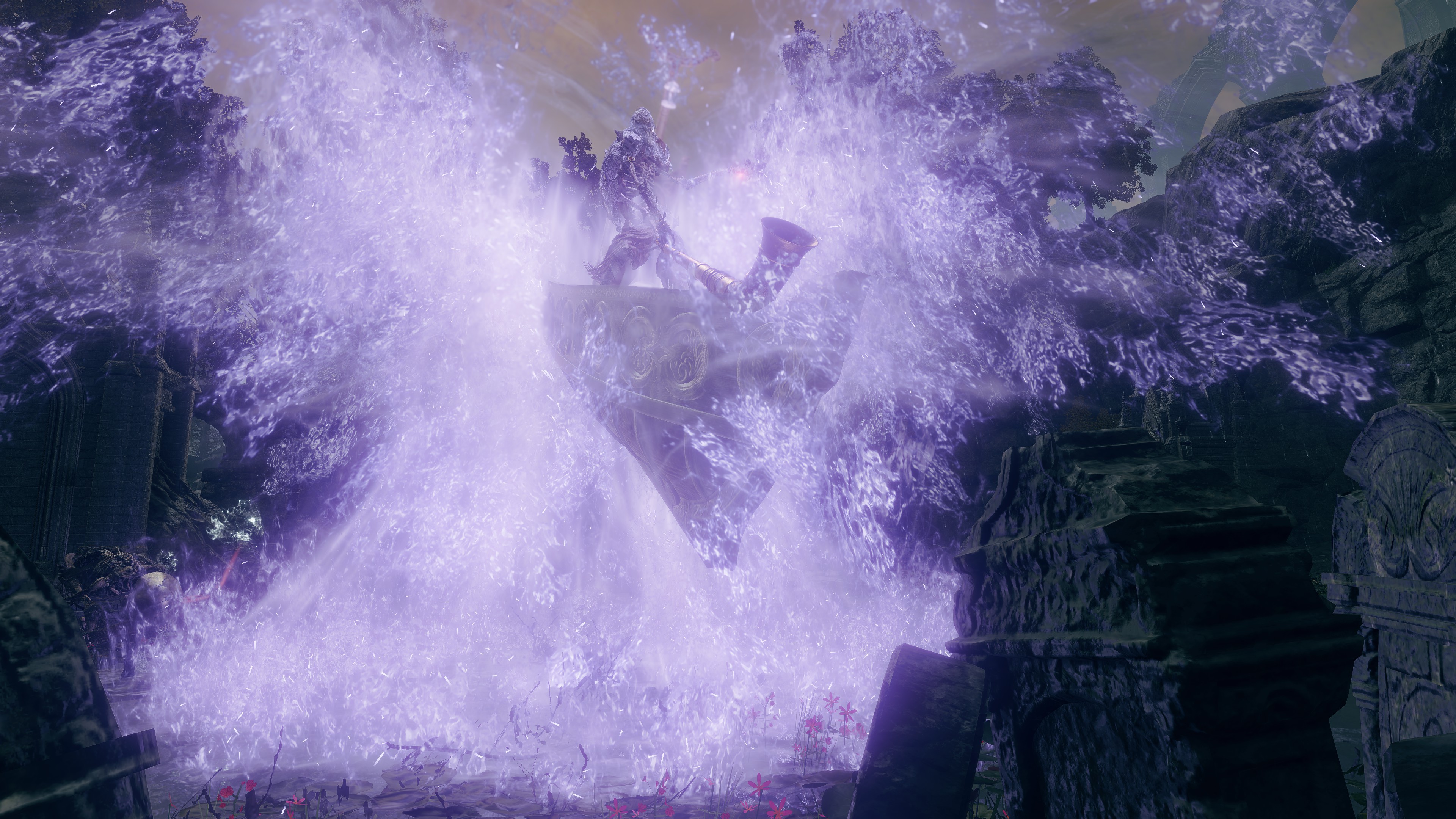
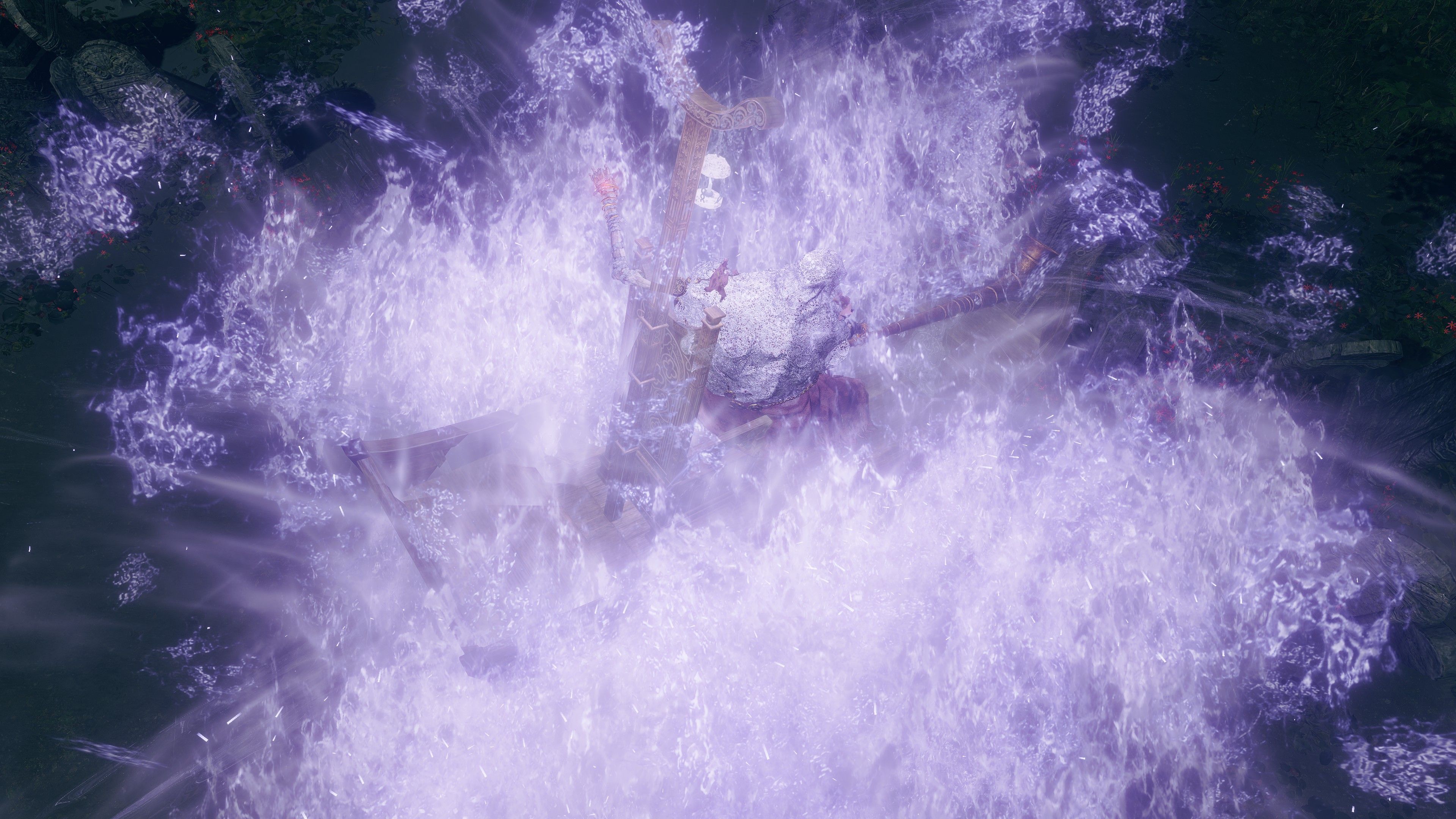
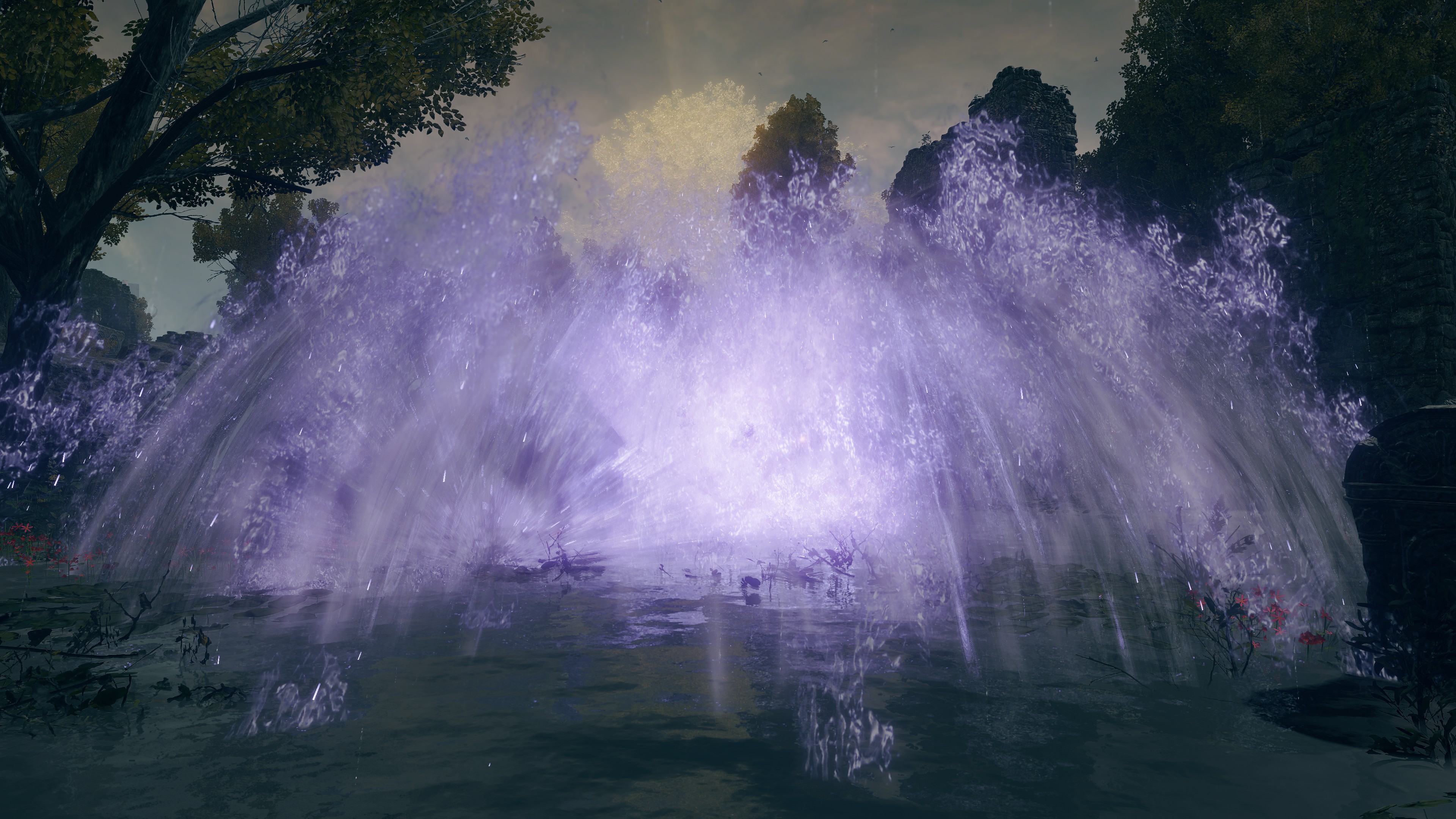
The most likely explanation for this is exposure to spirituality, like the spirit gravestones. The mariner’s internal name pegs the enemy as a Lord of Night’s “servant” (夜の王の眷族) instead, suggesting that the group were originally planned as gravekeepers for the Nox’s failed experiments along the underground rivers. Given the prevalence of grave glovewort along those rivers, aging boatmen absorbing spirituality isn’t a surprise. And in the final game, they have spent basically their entire lives around similar concentrations of spirits. It appears that, over a lifetime immersing themselves in spiritcalling, these men of Tibia absorbed spiritual energy and became pseudo-spirits, which naturally spread to their boats and the waters they constantly rowed through. After that they applied their skills to controlling these spirit elements too, freeing themselves to navigate land as they continued their duties. That alone speaks to the mariners skill, hence why only a select few have escaped death.
In short, the remaining boatman cultivated their skills to the point of achieving a kind of immortality, separate from Those Who Live in Death. And without the pressing need of a legacy, these elite survivors stopped passing down their knowledge, monopolizing the power reaped from their ancestors. Why wouldn’t they? The future gravekeepers left to start from scratch lack the same lavish silk draping the mariners and their cookbooks, and the same can be said of their jewelry. The early adopters gained much status for their efforts, and they wouldn’t want to devalue it with more and more keepers reaching their level. Death may come equally to princes and paupers, but the living still demand reasons to stand above one another. As far as these zealots are concerned, the outer god of Death needs only their support as the oldest, strongest, and wisest of their lot. The young can languish in mediocrity, doomed to never enjoy the fruits of their position.
What was the lingering appeal of Death worship then, enough to still attract gravekeepers? Maybe a moral dimension. If the purpose of the Charo graveyard was appeasing the dead, then why allocate one half of the cemetery to agitating the spirits with a mock inferno? This is obviously the more difficult side to manage, or we wouldn’t find all the mariner skulls there. What then prompts the servants of Death to suppress them this way? If they don’t care for these lost soul’s well-being, then it is likely because they are lacking in some capacity. Either they aren’t worth even burning in the kiln, which is improbable, or prior behavior merits disrespect. Put another way, the dead might be divided by moral character in life, the good receiving a peaceful rest until it comes time to burn while the evil know nothing but torment. Certainly, the red spider lily is believed to grow in hell in Buddhism, justifying its one name as the “far shore flower”. (彼岸花) Much as the greatest sinners suffer in hellfire before returning to the cycle of reincarnation, temporary suffering in Charo’s graves seem to precede villains’ final destination, recycled as ghostflame.
With this, the merits of revering the Deathbirds become clear-cut. Priests and gravekeepers may enjoy special privileges, but everyone could accept offering their dead to Death’s emissaries if it rewarded their loved ones and punished their enemies. This was an acceptable compromise for a human race destined to all suffer the same fate in the crows’ kiln, and that is assuming such a detail was known to the peoples living outside of Altus Plateau. Many communities would willingly participate in this system for the afterlife, and no doubt its value would entice some to help facilitate it as gravekeepers. The Twinbird periodically flew between mountains, monitoring as more and more dead came drifting in with the help of her children and their followers. All the while, gravekeeping lost some of its prestige for latecomers, yet the overall course held steady. This cult of Death became a universal fixture in human society, and would define the age until the Erdtree, come what may.
You Hold Us Back
As the migration of death continued in the central and northern lands, so did culture continue to evolve across the wider landmass. One commonality between regions is the emergence of gravekeepers for the dead who, for whatever reason, weren’t immediately sent off to the Charo cemetery. Among the skeletons rising from the various graveyards, one type dresses in black robes with small bones hanging for decoration. In their hands, they wield a Grave Scythe, the description indicating that these wannabe Grim Reapers are actually lifelong gravekeepers dead of old age. That would explain how they use their mundane scythes as an amulet for warding away evil, summoning vengeful ghosts to pursue — or just explode on — intruders. They too lack Tibia’s finesse with calling death, but their techniques suffice for reminding graverobbers why they shouldn’t mess with the dead. In a sense, those wizened individual still carried on the “old ways” by creating a cultural continuity with their ancestors, their hexes keeping memory of burning death alive when applied to crafts like rancor pots.
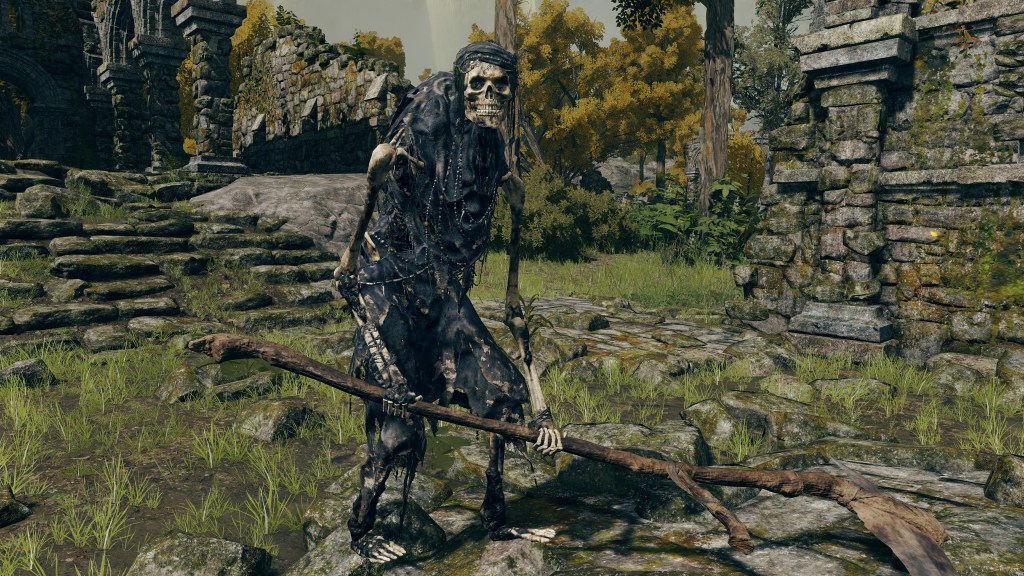
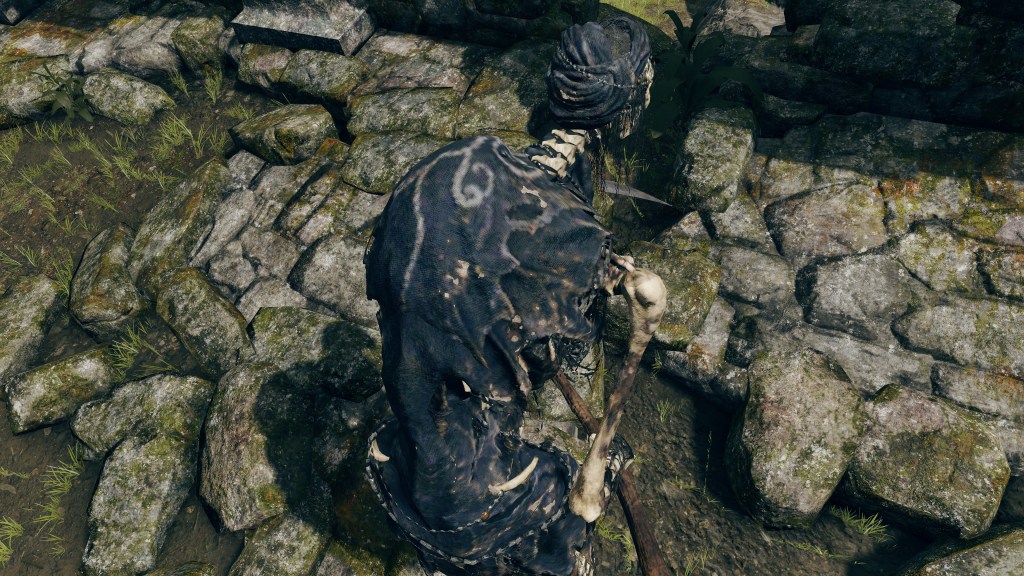
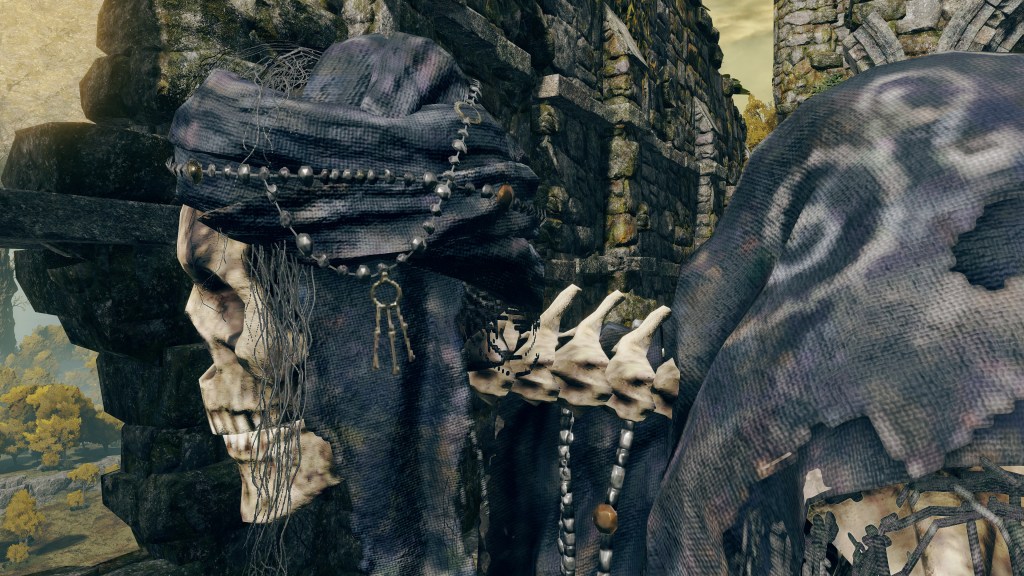
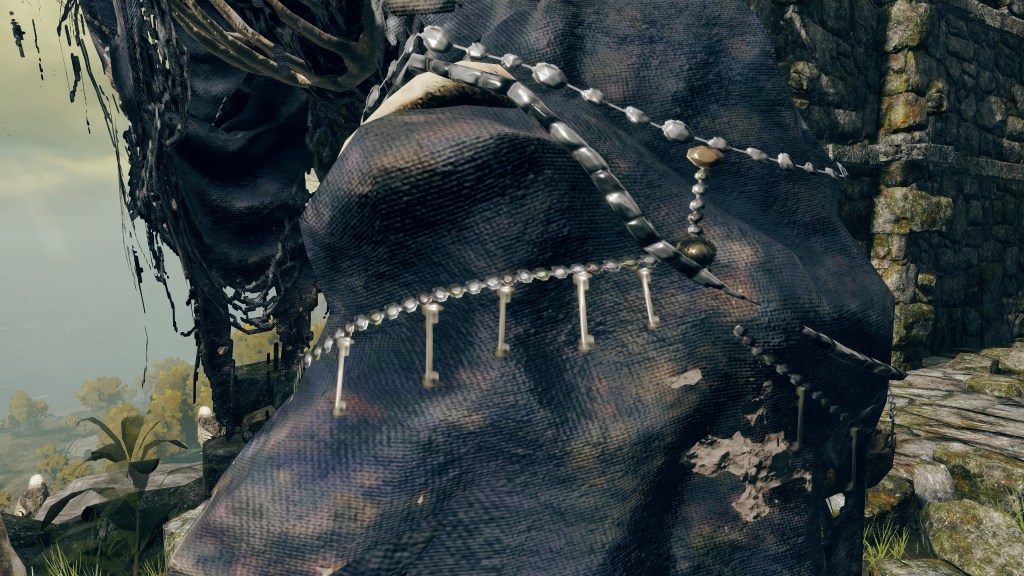
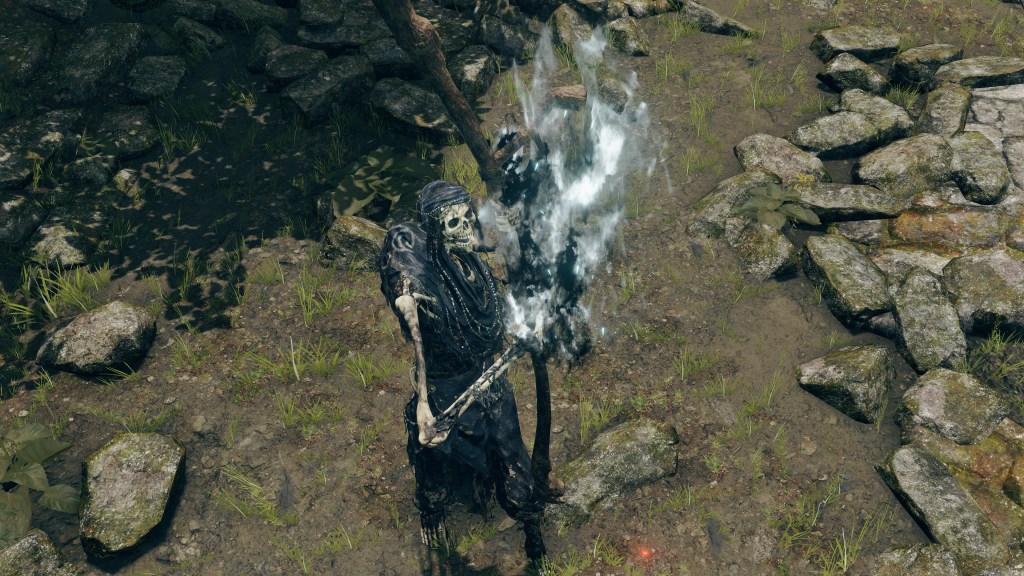
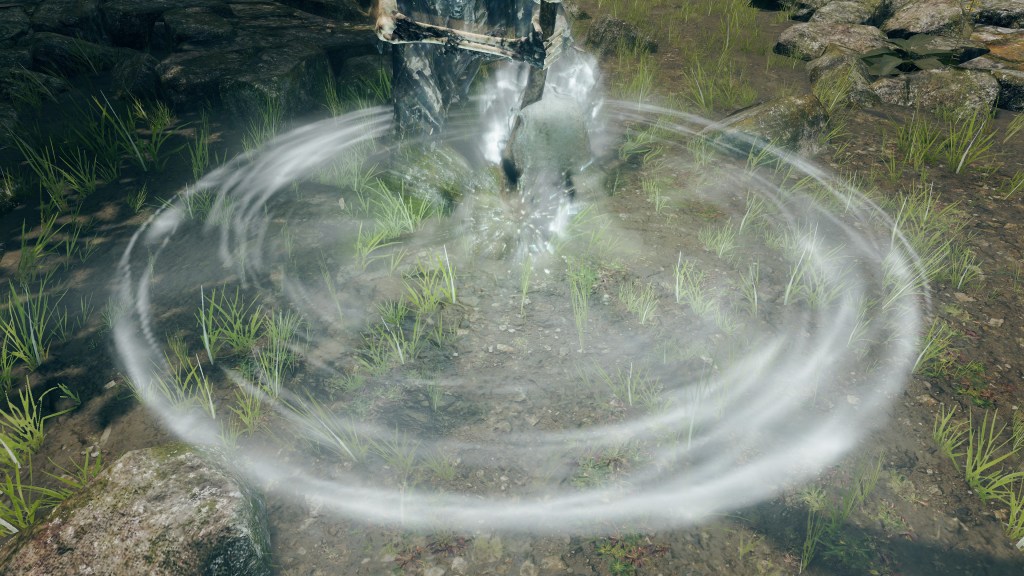
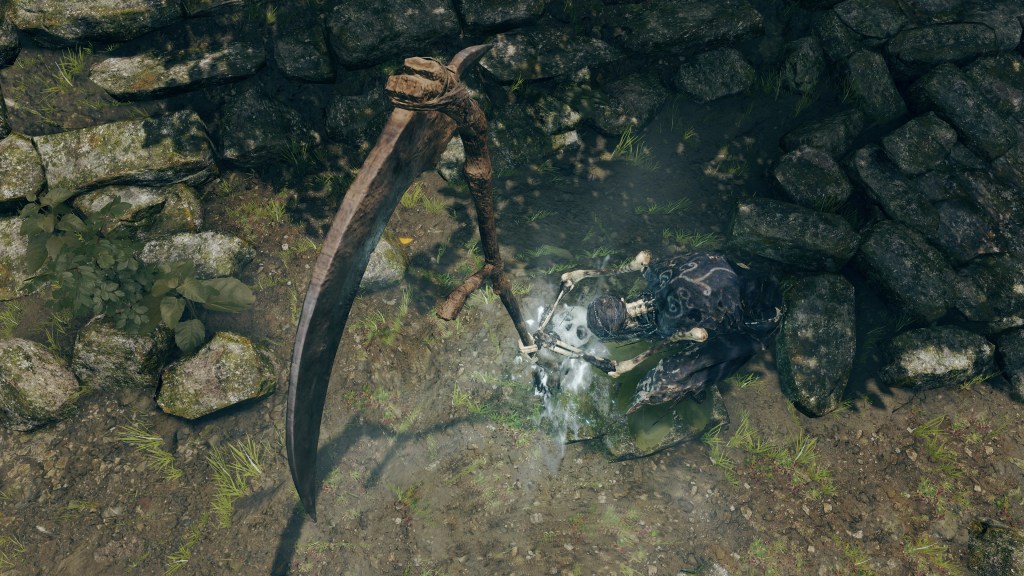
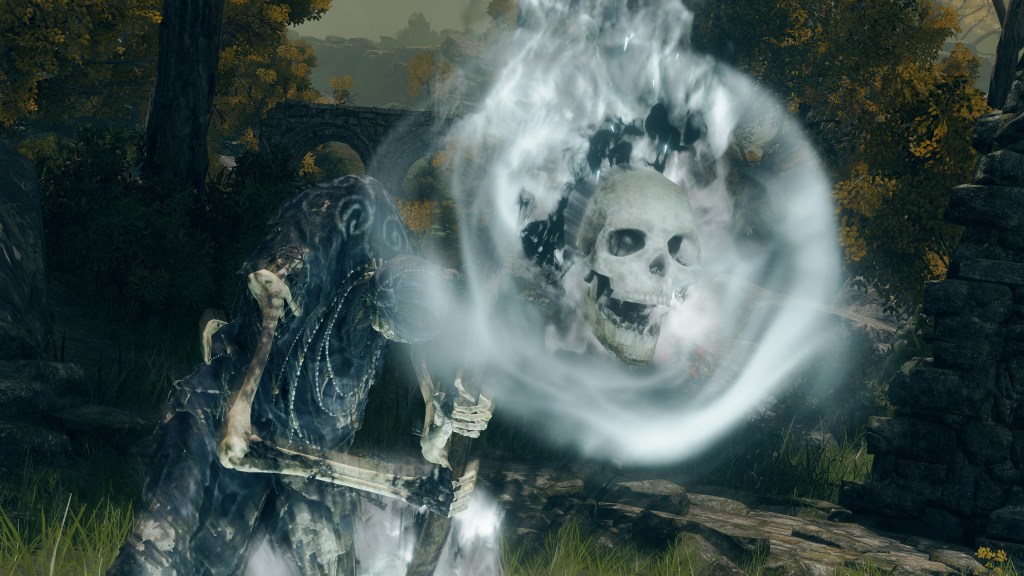
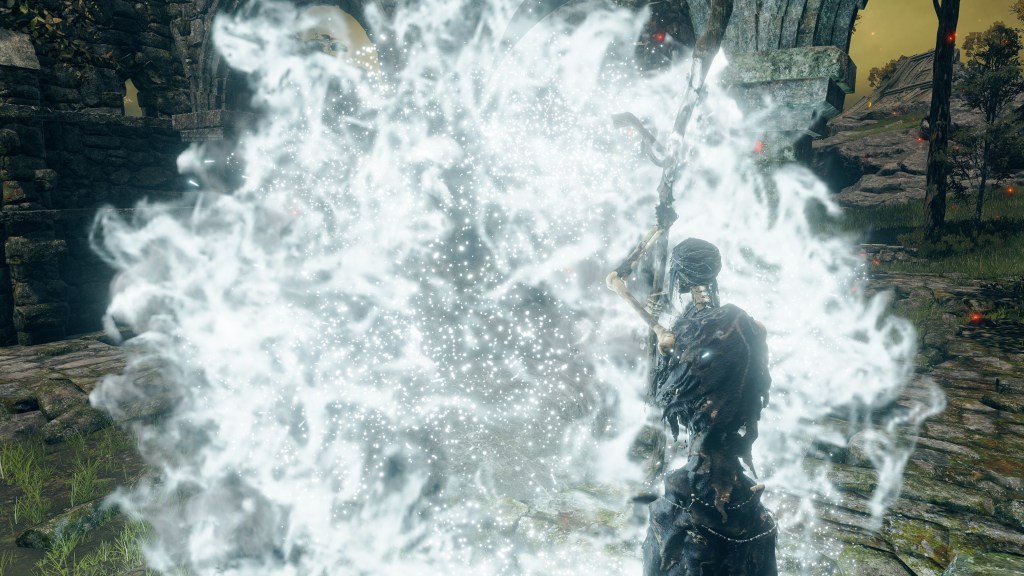
Great scythe attaching a large blade to a curved staff. Choice weapon of the aged gravekeepers of the abandoned graveyards lying in the various Lands Between.
It is said to have also had the meaning of an amulet long ago.
One of the crafting items using a cracked pot. Applied with an old death conjury.
Consumed FP to throw at enemies and generate vengeful spirits that chase them down.
In the Old Age, death was burned in spiritflame. It is said that the vengeful spirits are their cinders.
Despite all this, not all of these spellcasting skeletons are necessarily gravekeepers. We can encounter a disproportionate number of spellcaster types in the land of Liurnia. Even accounting for area size, this is oddly high, especially for the scope of most of the graveyards; who needs that many people tending so few graves? However, the ratio of spellcasters is sensible when factoring the historic population of sorcerers in Liurnia, which is currently the effective capital of sorcery. Like how militiaman and bandit skeletons can just as easily fit among the mix of sword and crossbowoman skeletons as soldiers of proper armies, so too can spellcaster skeletons stand in for sorcerers. Therefore, many of those we encounter probably weren’t gravekeepers in life so much as students of magic, applying their experience to arts of death now that they have joined the living dead. While some do carry on the legacy of death worship from their forebears, they are few and far-between across all the cemeteries.
Another ancient custom is eating bird feet for wealth, which draws clear inspiration from Chinese cuisine. Just as “phoenix foot” became a euphemism for various bird feet eaten under the auspices of acquiring the heavenly creature’s good fortune in China, people across the Lands Between likely came to associate bird feet with the Twinbird “phoenix” and developed a similar superstition. After all, meeting the mother of the Deathbirds is a blessing for the afterlife, so if the divine escort brings such fortune to the lost in death, why not the same for those struggling in this life? For those desperate for the happiness that comes from material possessions, it is easy to believe such nonsense. This is also comports with the hidden feather, which would also have been a universal material collected from hunting the eagles and guillemots living all across the Lands Between. With how rare it was to meet an actual Deathbird in person, the people’s minds naturally gravitated toward thinking some semblance of them could manifest in the closest equivalent of raptor.
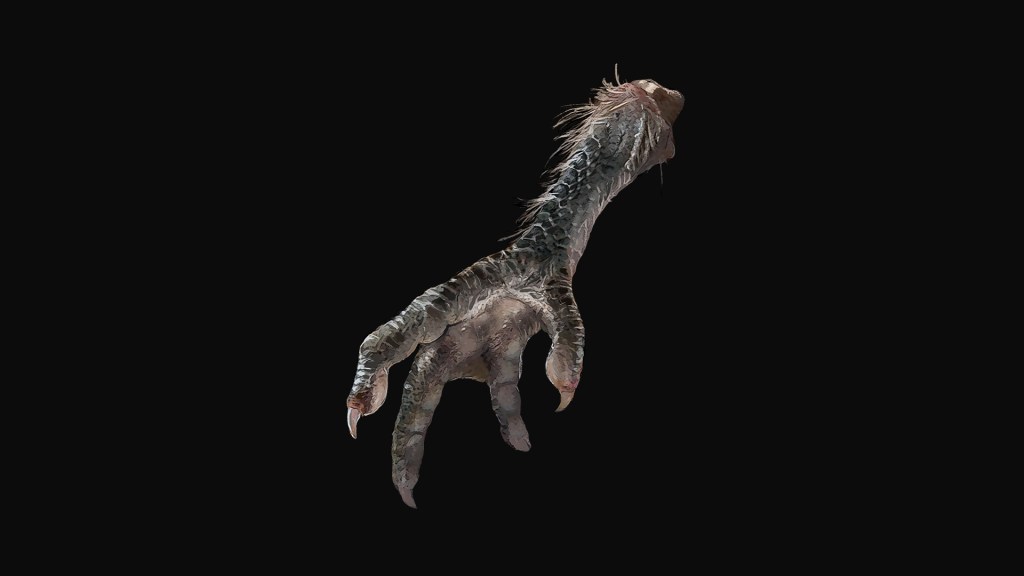
Four-toed bird foot pickled in white-silver medicinal fluid. One of the craftable items.
Temporarily raises discovery power.
Those who try to be wealthy have chewed on even birds feet since time immemorial.
Four-toed bird foot pickled in golden medicinal fluid. One of the craftable items.
Increases runes acquired when defeating enemies for a fixed time.
Those who try to be wealthy have chewed on even birds feet since time immemorial.
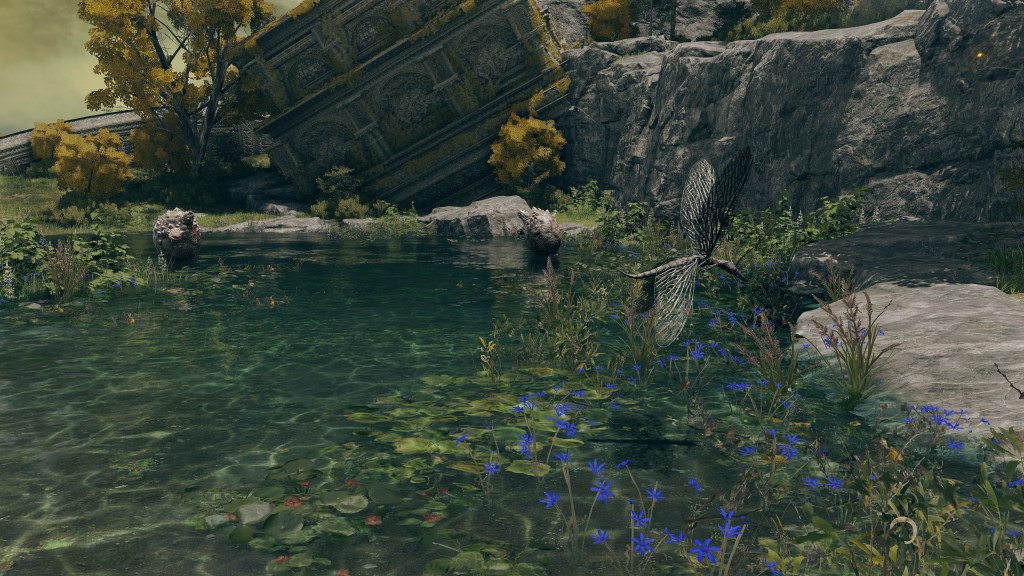
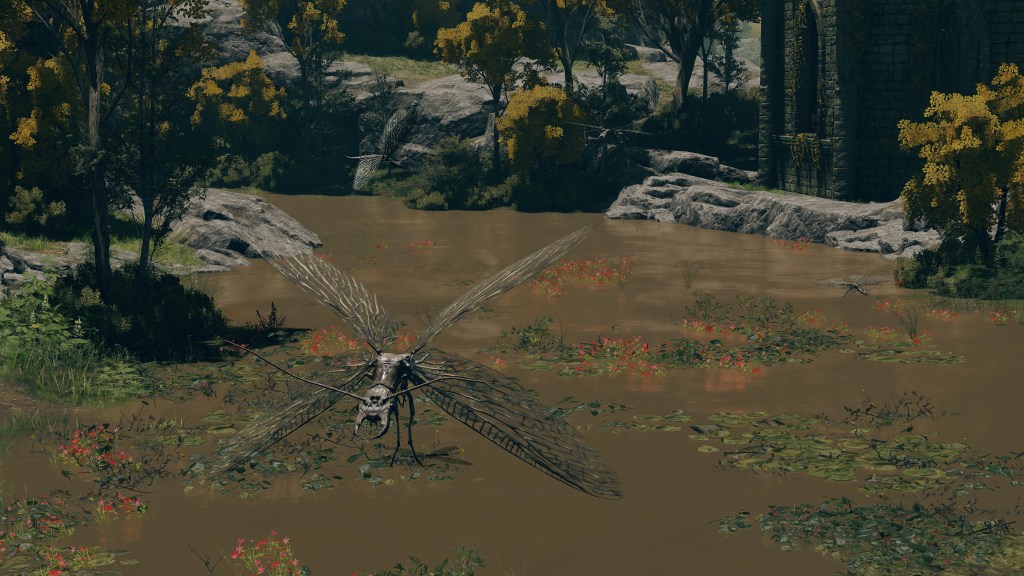
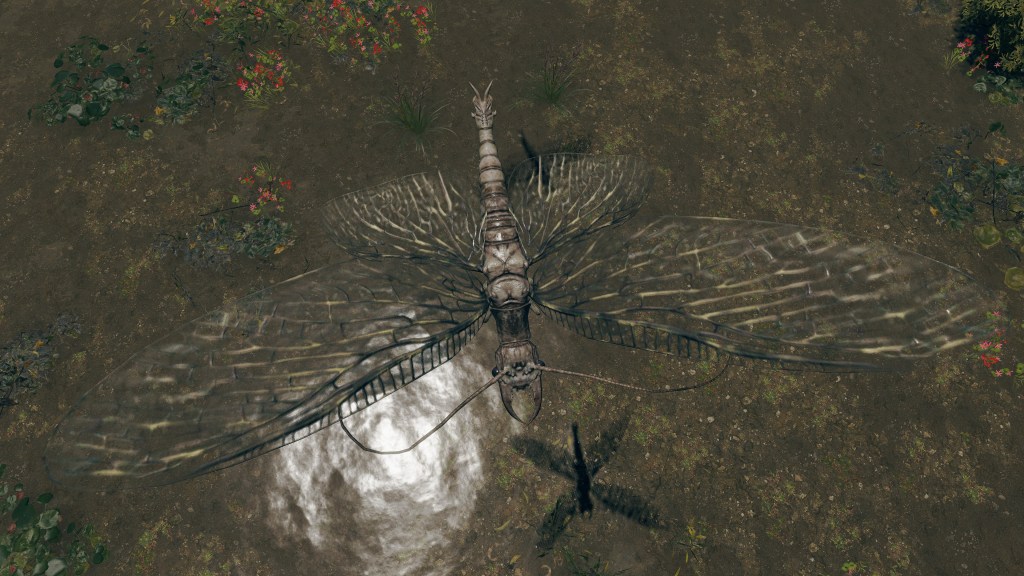
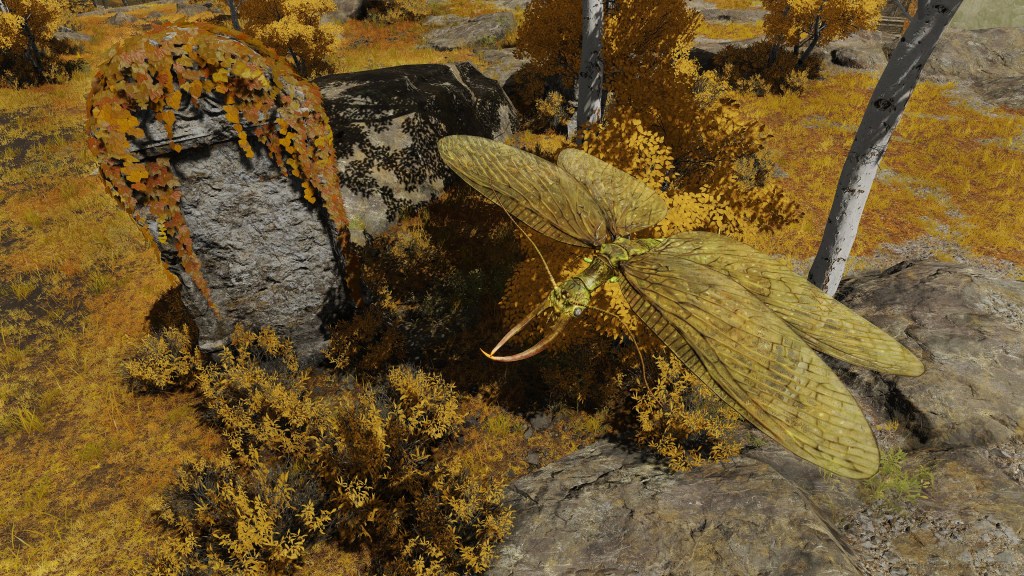
Not everything was strictly folk tradition. The heads of large dragonflies have been known for their detoxifying benefits since similar times, a fact proven when crafting immunizing meats or neutralizing boluses. The obvious reason for this is because of their unique pincers used to collect food from the waterfronts they normally buzz around. The predators hunts seem to consist of quickly picking off scraps as they fly by, such as when sporadically attacking us. These scraps are liable to be poisonous in their environment. We do see this from filter feeders like the land squirt, which takes all the trace contaminants from the water and siphon it out of its excretory ducts as a defense mechanism when not overloaded. Each has small chunks of its tough flesh scooped from their bled sides, dragonflies zipping by too fast for them to react with a poison cloud. That makes just the poison retained in the bitten flesh a concern, something the bug evolved to detoxify before the food is even swallowed. And observable as this ecology is in lakes and ponds, humans in all likelihood learned this detail due to death worship.
Head of a large dragonfly. One of the materials used in item crafting.
It has been known for its detoxifying benefits since time immemorial.
Note of a wandering people merchant. The information is written succinctly.
Land squirts have soft flesh underfoot. Also, the bastards explode if afflicted with poison.
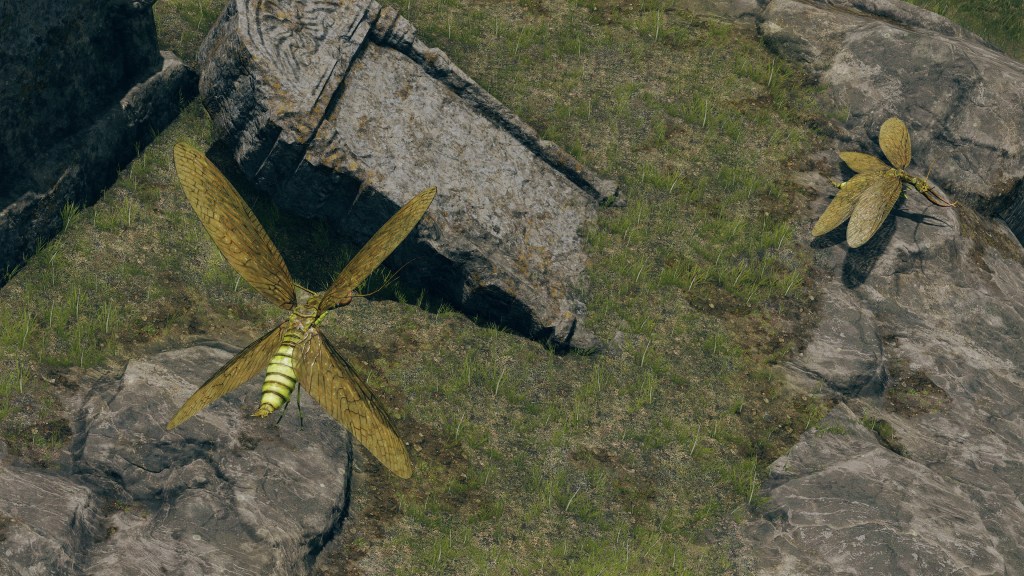
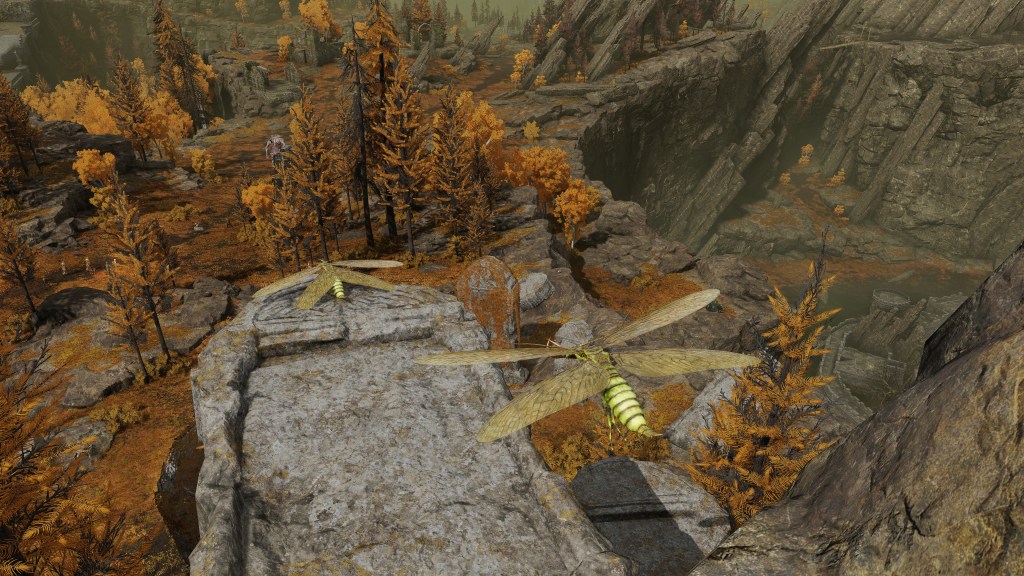
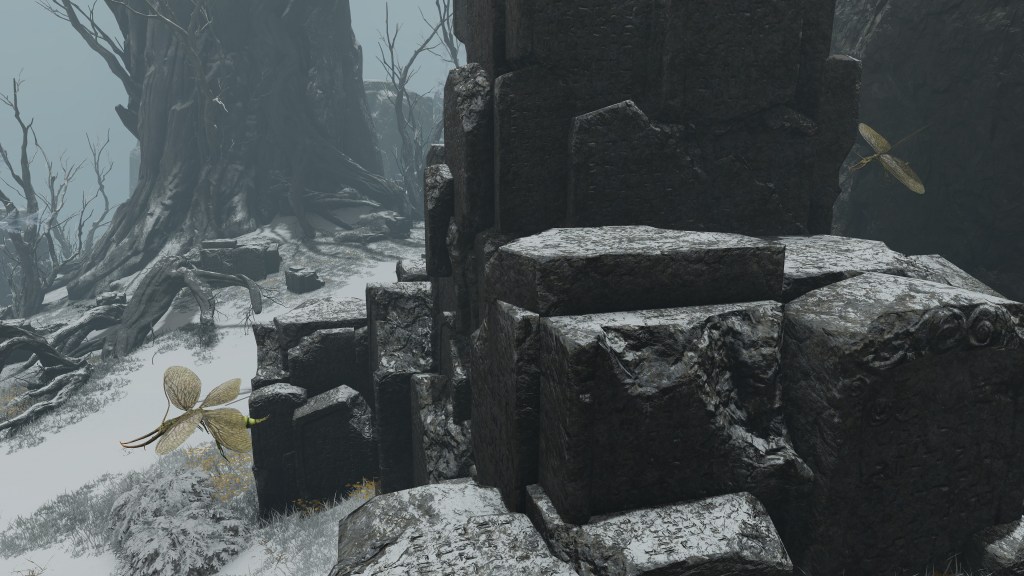
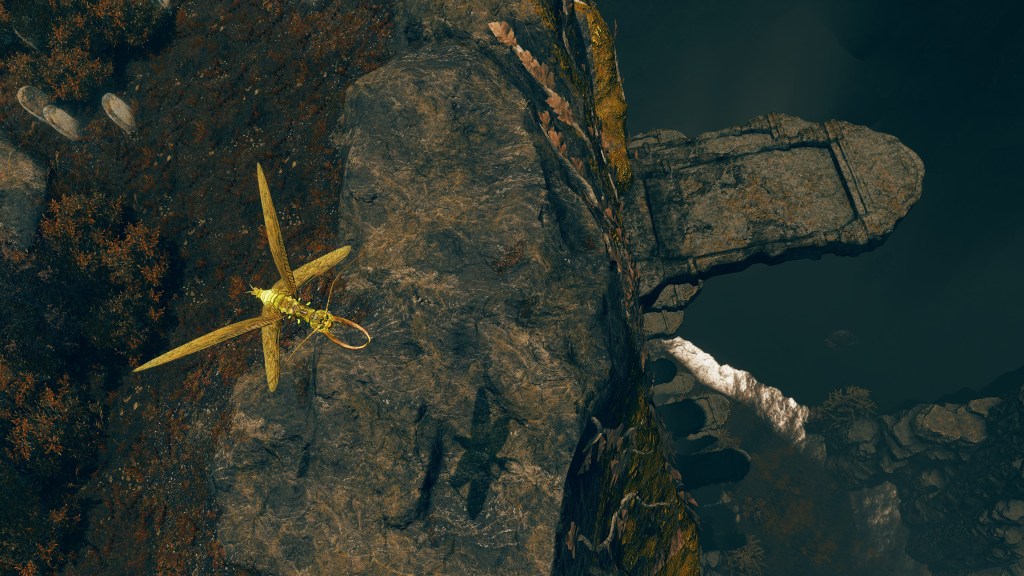
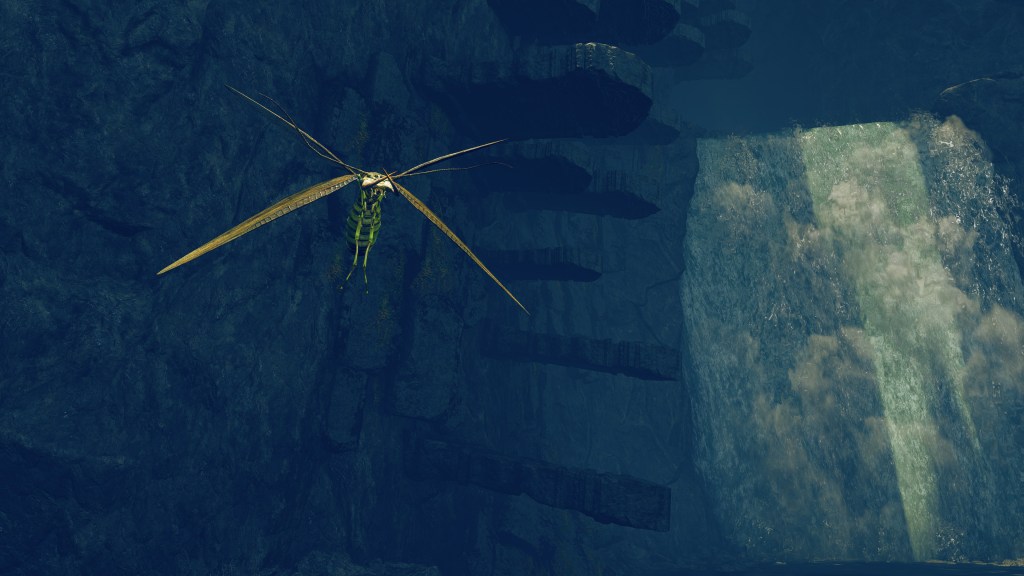
Even larger dragonflies linger around graveyards, especially cliffside graves. These bugs have longer mandibles and a bright green color, potentially to reflect more poison they ingest. Poison in-game does generally hue dark green, which even remains true for Poisonblooms. The pink flowers grow in lands mired with toxicity, mainly taking the form of poison swamps. They absorb the contaminants with the water, resulting in bulbs dripping with poison; traditionally, dokueki (毒液) refers to venom, but the kanji doesn’t distinguish between animal venom and other poisonous fluids. Some of that poison might thus pass onto the dragonflies, turning their brown exoskeleton green. And if they hover about graves, then the only poisonous things those longer mandibles can be digging into is the buried corpse flesh. We do loot poisonblooms at watery parts strewn with corpses, namely the Murky River and open-air catacomb in Stormveil Castle. For the river in particular, we even purchase the recipe for poisonbone arrows and bolts from a merchant on the valley’s north end. Rotting bodies become no less toxic with time, so dragonflies are suited to scavenging them.



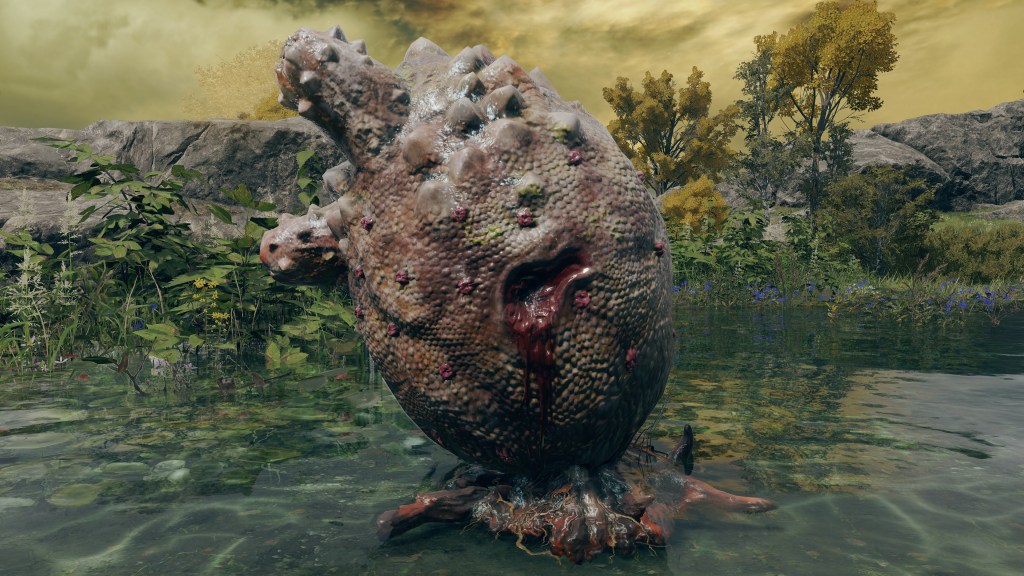
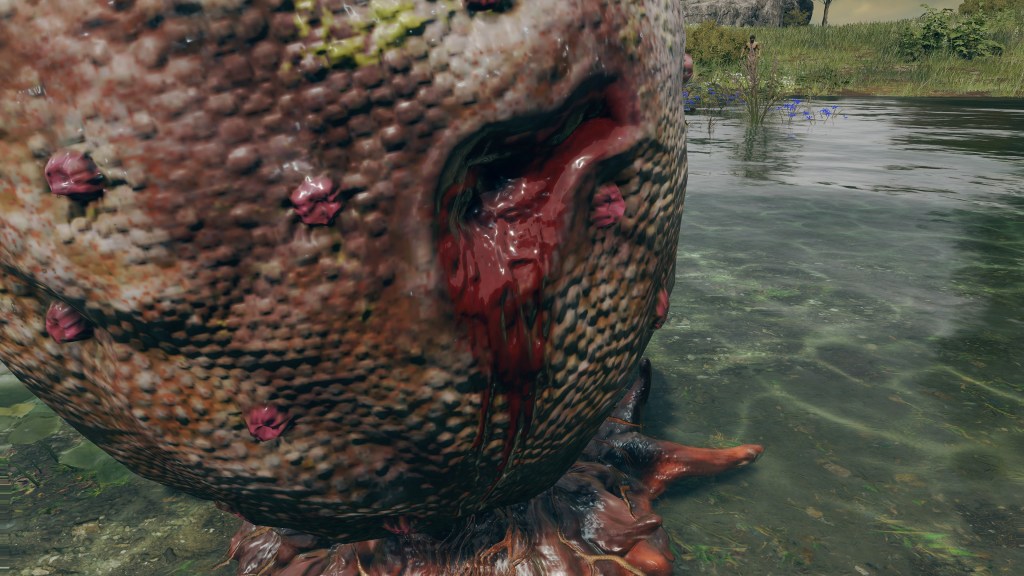
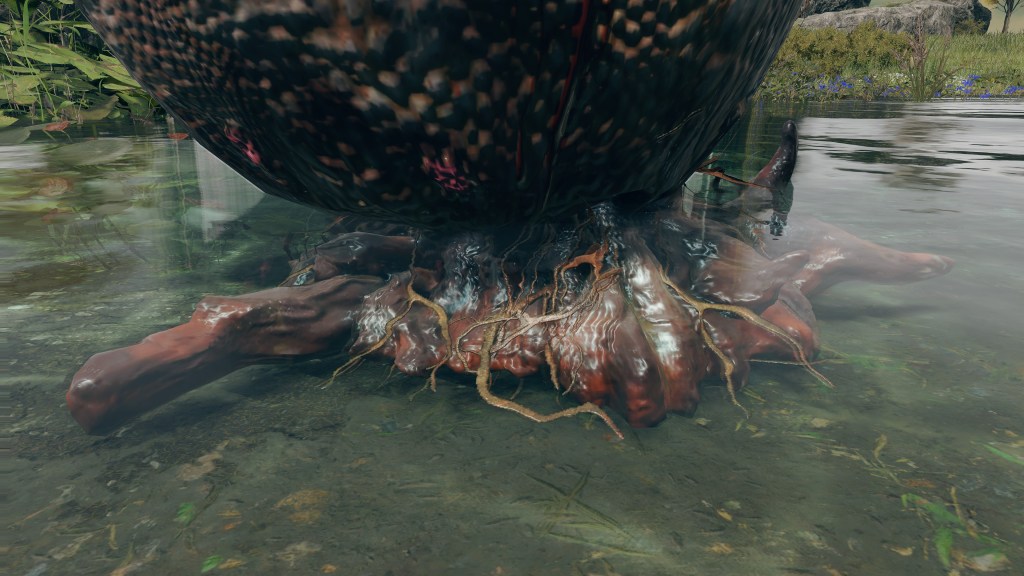
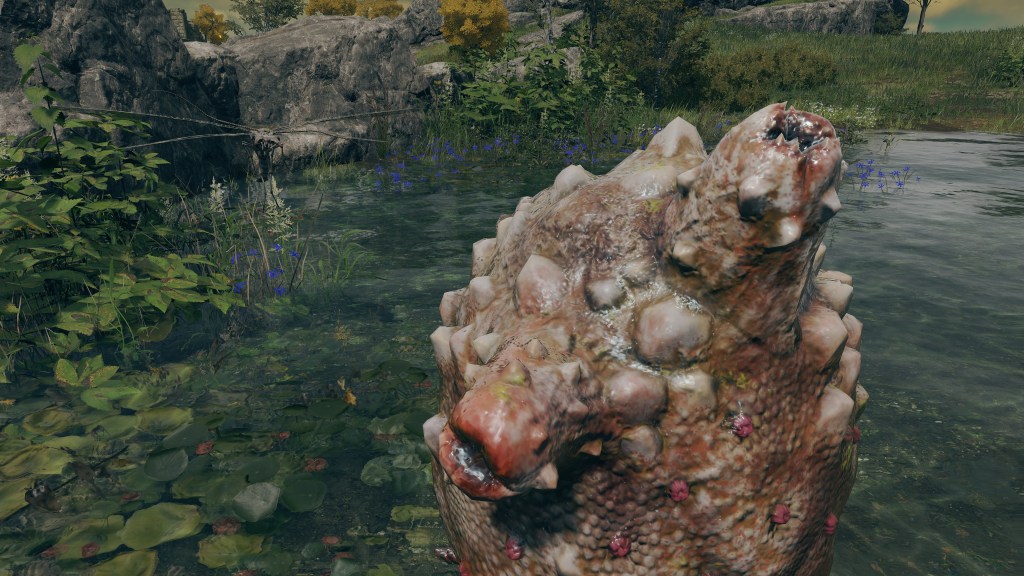
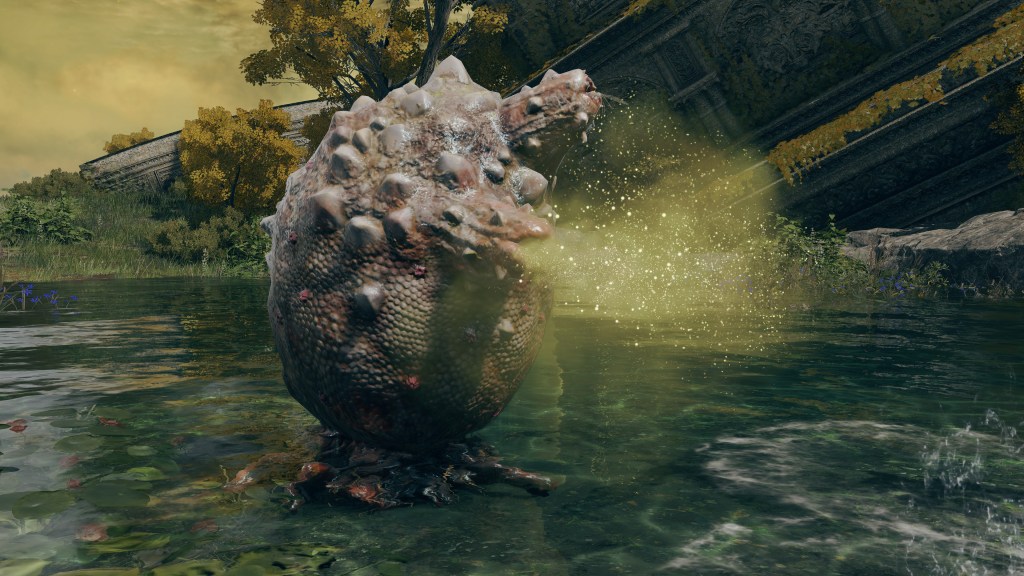
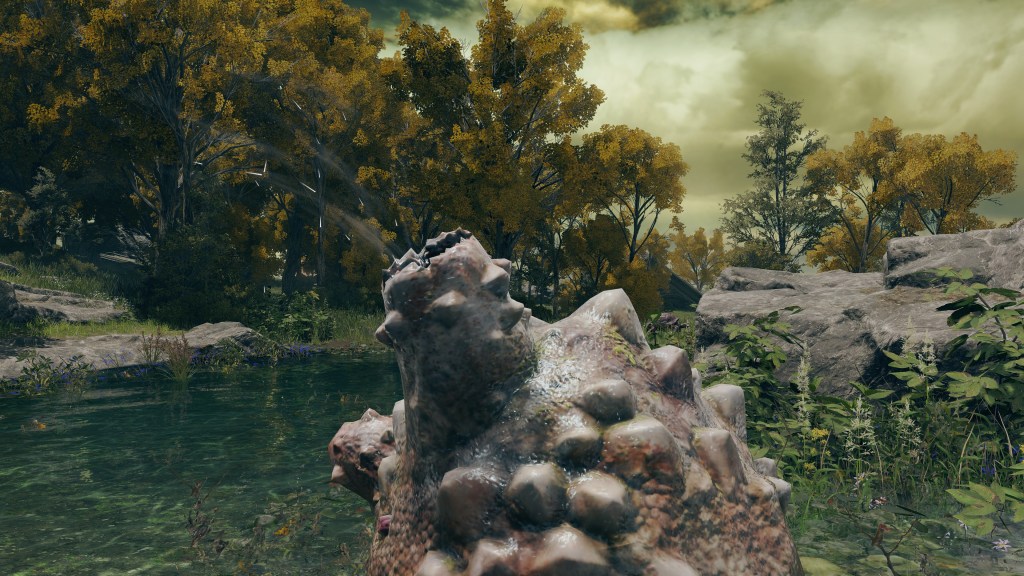
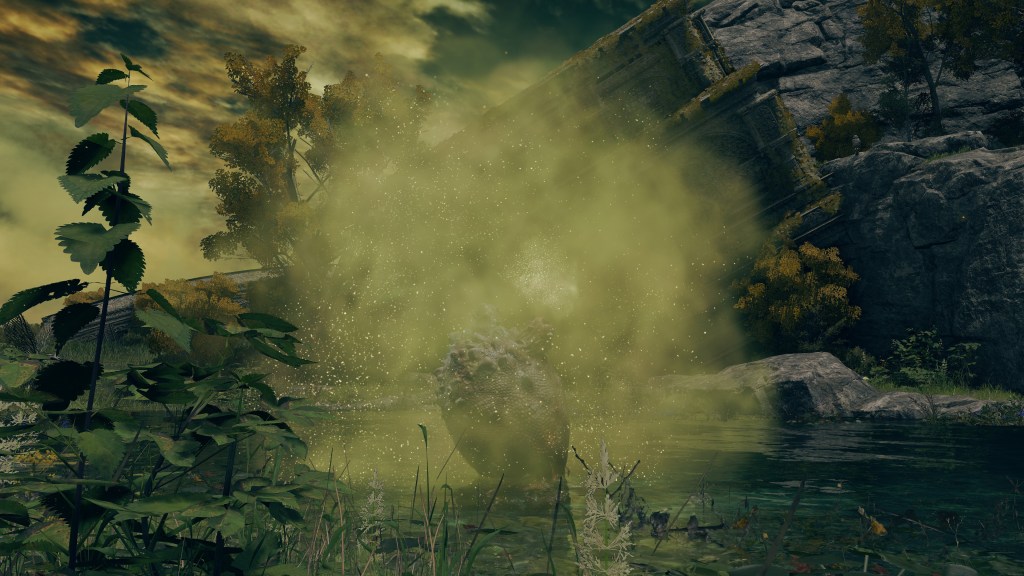
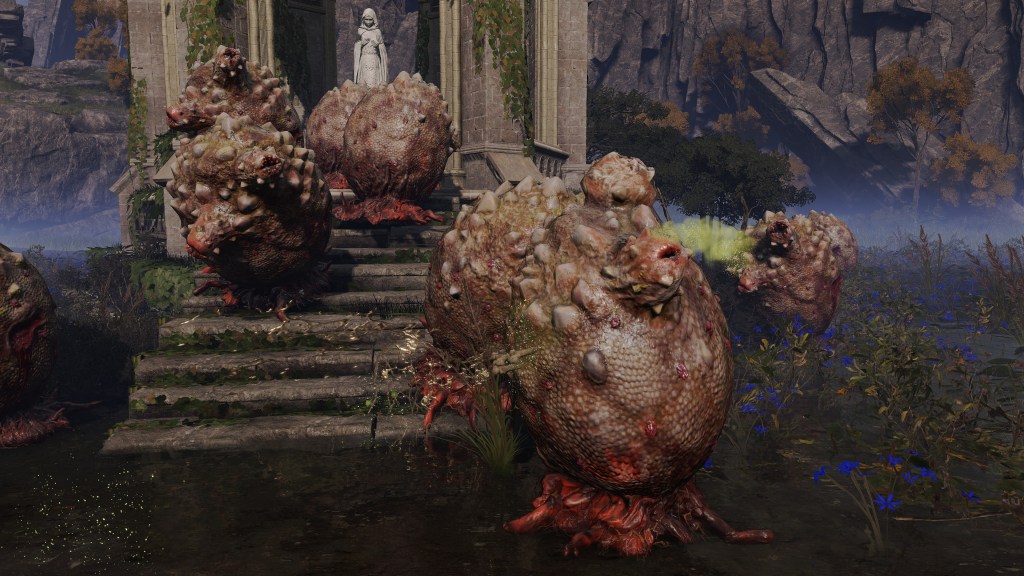
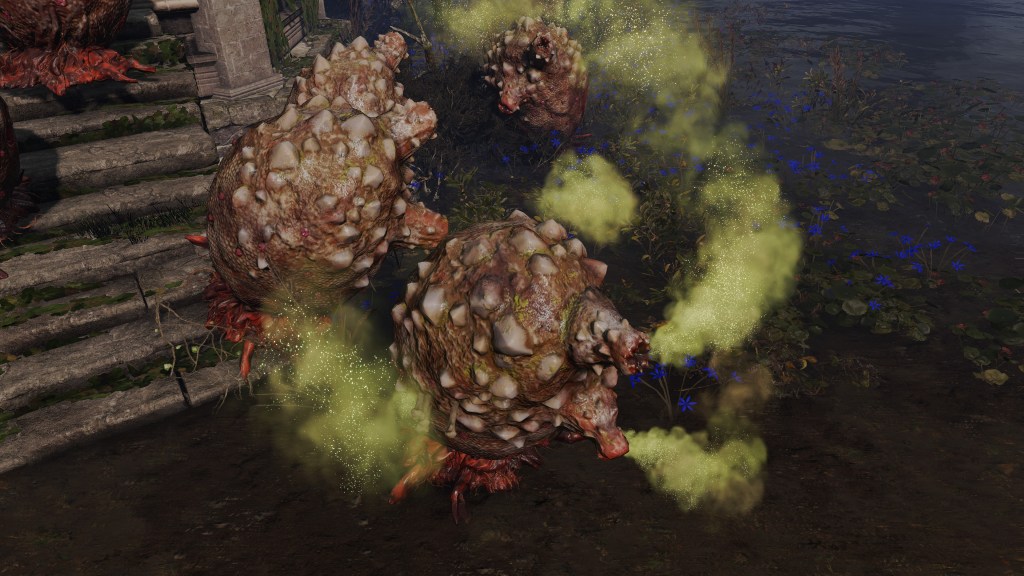
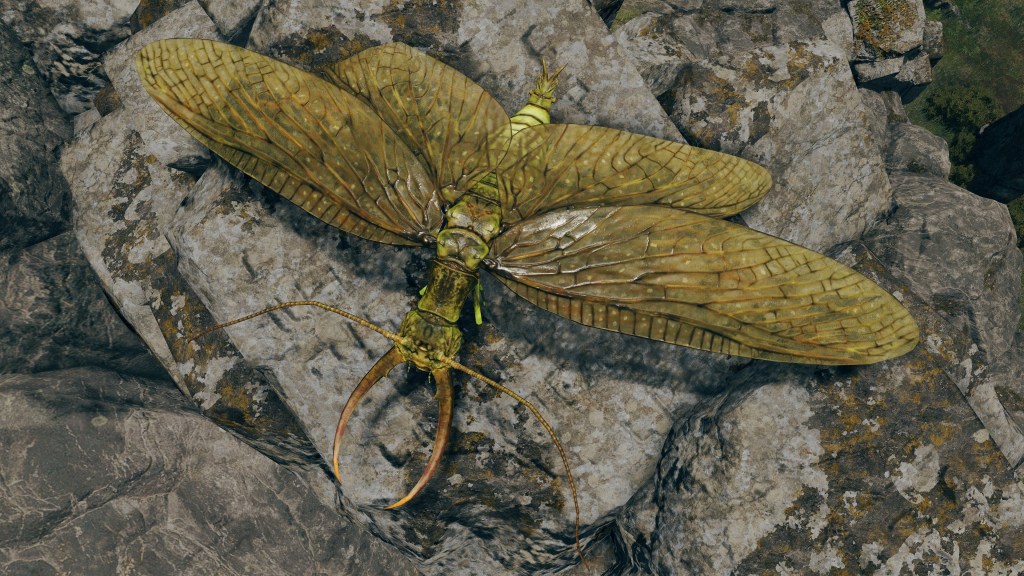
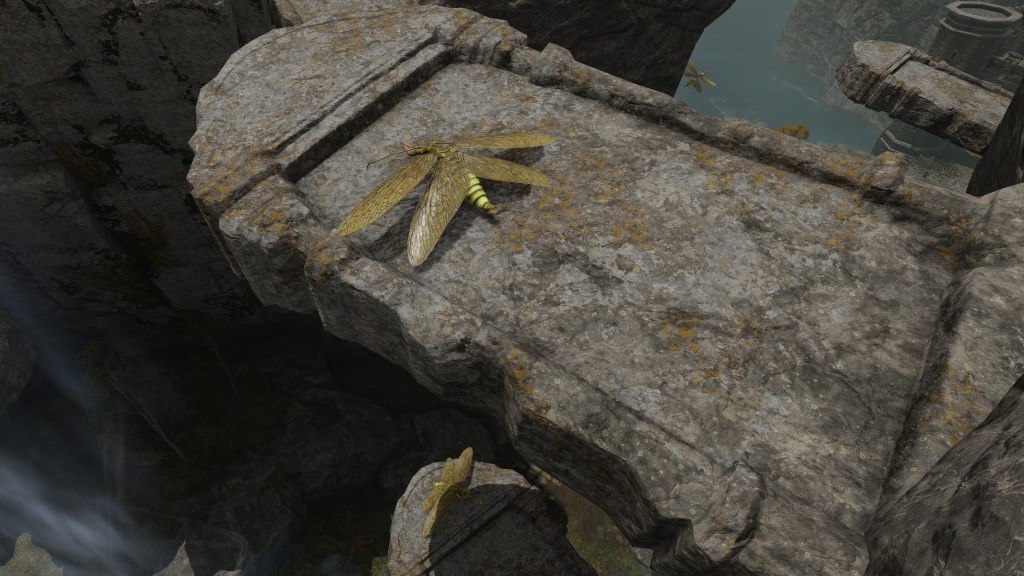
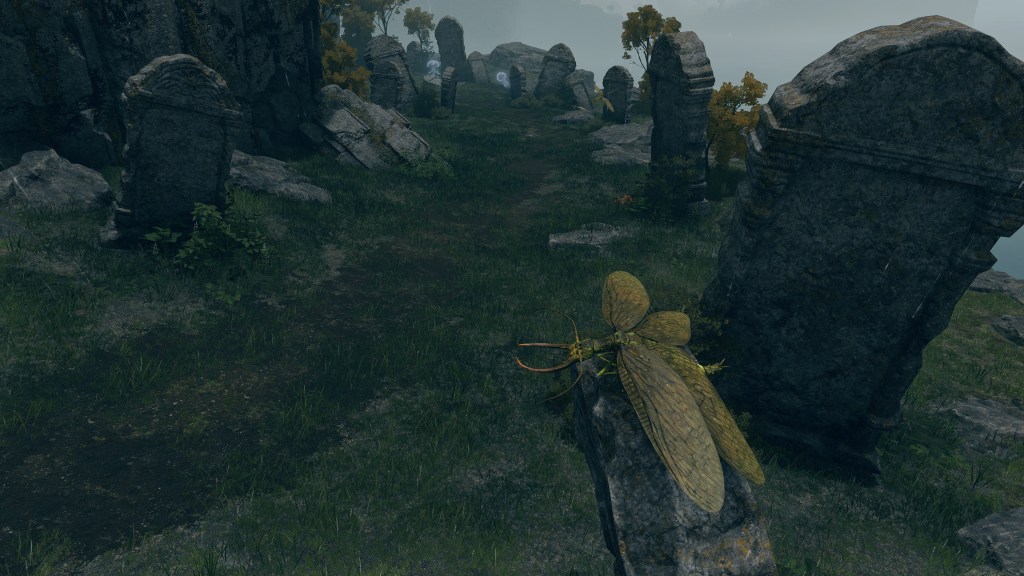
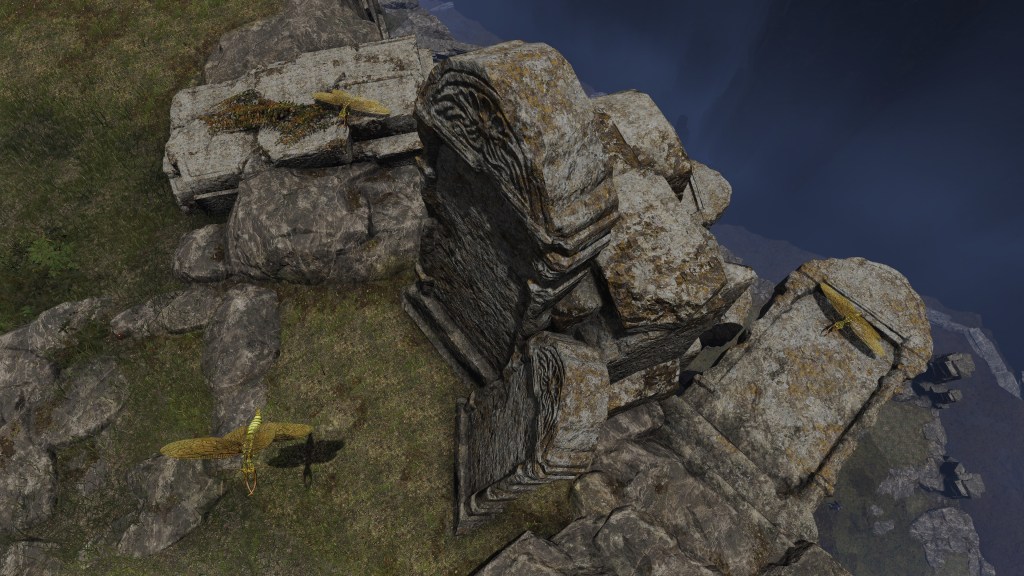
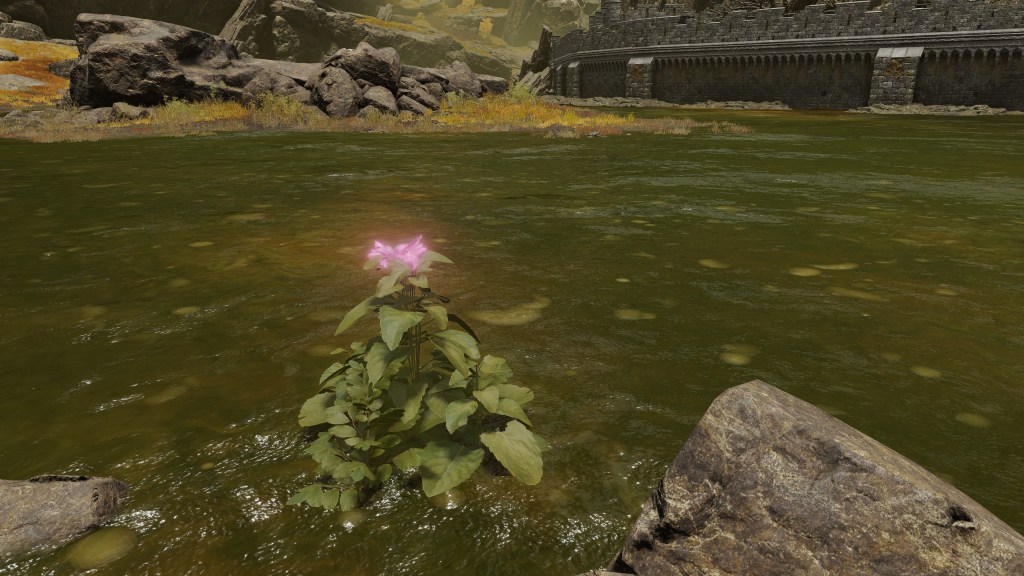
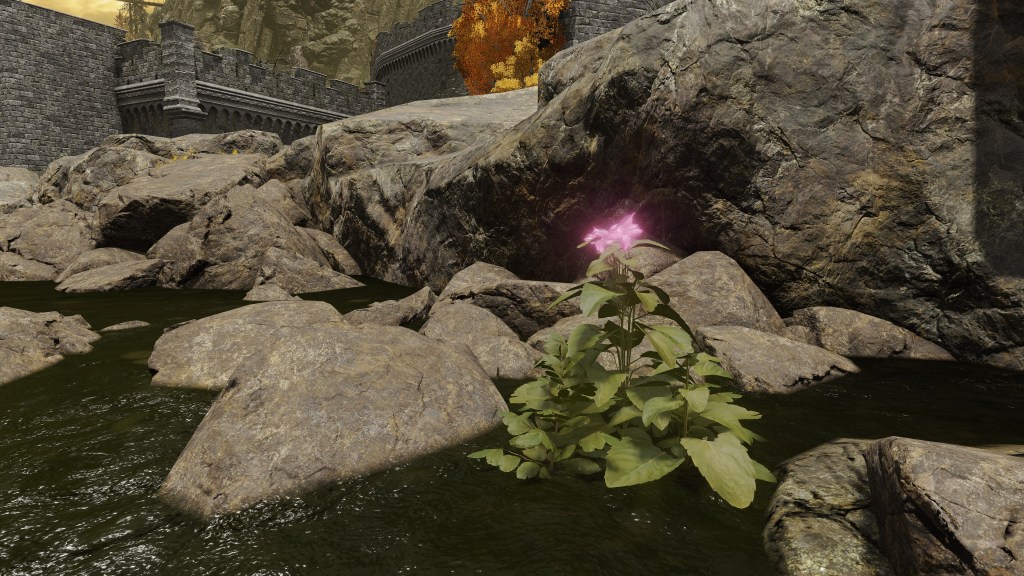
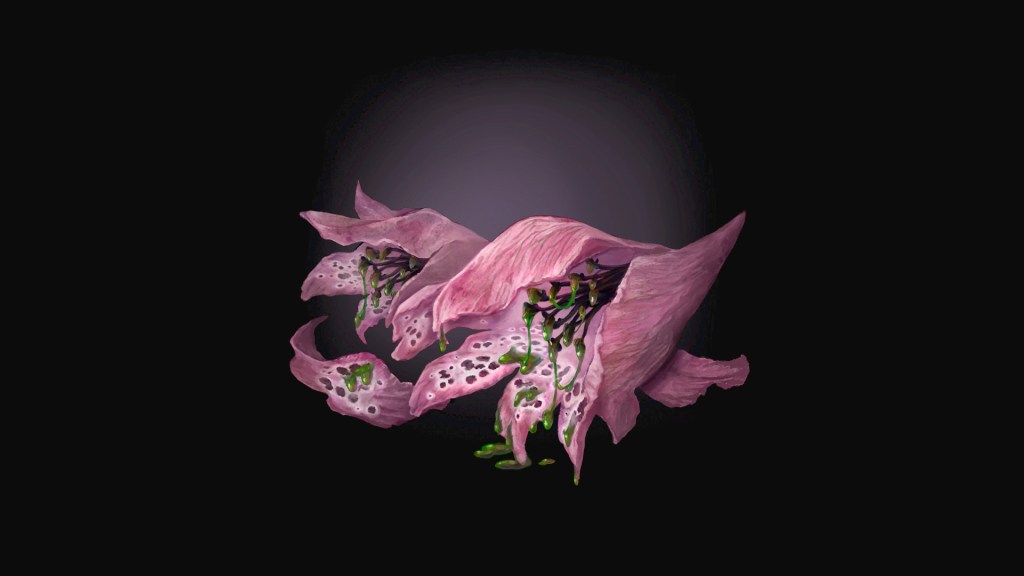
Flower that blooms in toxic lands. One of the materials used in item crafting.
It drips with dark-green poison fluid.
Beast bone arrow with poison fluid smeared on the arrowhead. Has poison status abnormality effect.
One of the craftable items.
Put simply, it was likely fending off these pests desecrating their ancestors’ graves that led to society discovering the detoxifying ability of their heads. Although tangential, it was another benefit of this culture of death taking the Lands Between by storm. Even so, not everyone looked at death worship in a positive light. Slaying the Deathbird on the Weeping Peninsula rewards us with the Sacrificial Axe, used in an old rite for offering up the living. The weapon depicts the Deathbird as a wicked god swooping down on the sacrifice as the blade falls and presumably beheads the body — the edge is perfectly curved to match the roundness of the human neck. Clearly, the tribe on that southernmost island offered up their own community to the emissaries. Given their remote location, they could hardly participate in sending their dead to the center lands over water, and probably weren’t even aware of the larger cult. For that reason, the birds came to collect in person, where the natives might be cowed into presenting offerings they otherwise lacked in their humble isolation.
Hatchet that was used in an old sacrificial rite. It is modeled on the Deathbird as a wicked god.
The rite’s power remains even now, so it recovers just a little FP when defeating enemies.
Basically, the Deathbirds can be viewed as bringers of misfortune, to appease rather than celebrate. The distaste of trading some lives for the many more is why a ceremony was required, the Sacrificial Axe’s power restoring the wielder’s focus with each person felled. Such peoples needed a boost of willpower to go through with this mad custom. Granted, this practice may have been limited to just the Weeping Peninsula. No other land is so far removed from the rest, and the axe’s Wild Strikes skill conveys the baseness of the tribe performing the sacrifices. The natives’ fear of Deathbirds is likely due more so to ignorance, lacking access to the wider culture on the frontier of the frontier. The cult’s following was assuredly small enough in Limgrave, so the chances of the peninsula having any prior priests is close to none — hardly a surprise to see no Death Rite Birds in these places. In other words, this culture of death was more popular and better known to peoples living nearer toward the center. Beyond the link via the inland sea, it also begs a separate question: why had death become so important to these tribes?
Indeed, queries emerge about why the outer god only sent out Death’s emissary when it did. Some fans postulate that the Twinbird existed even back during the rise of Farum Azula on account of a specific wall relief vaguely resembling the kite shield’s image. However, a bird motif is already common to the architecture, and this particular depiction portrays two separate birds. Even assuming that the image is meant to invoke the double-headed eagle, that ancient symbol wouldn’t be out of place in a royal capital. While residents do leave glovewort on their graves, a harvester of the best of it leaving behind a bell bearing, there is little indication that the Deathbirds held a place in beastmen religion and burial practices. The birds only appeared after humans had seemingly spread out across the world. In that case, why bridge the physical and spiritual worlds when the Helpen was already attracting heroes to burn? Why the sudden need for not just the strongest spirits, but all possible spirits? The obvious answer is that the heroes either weren’t enough or were suddenly in low supply.
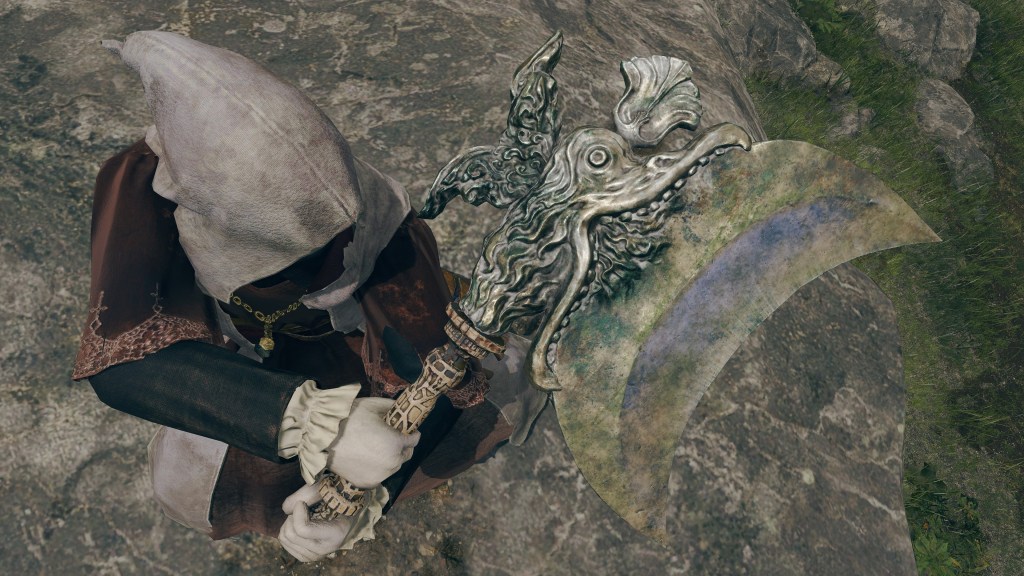
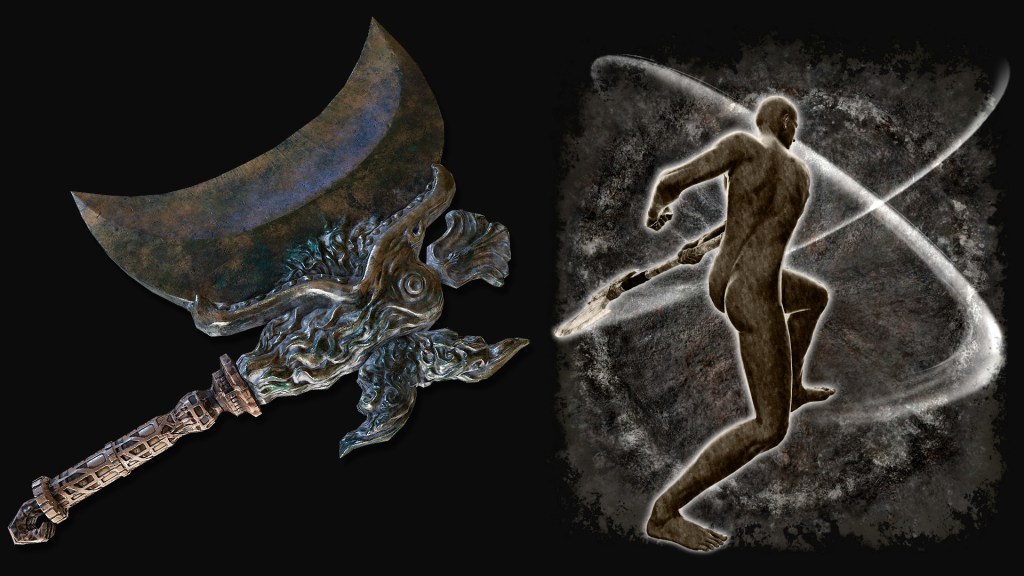
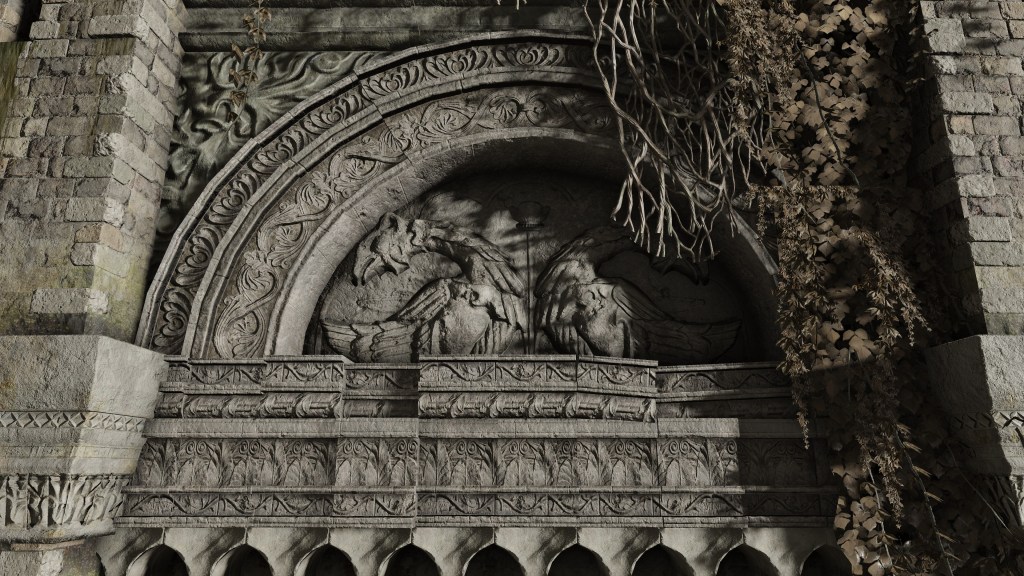
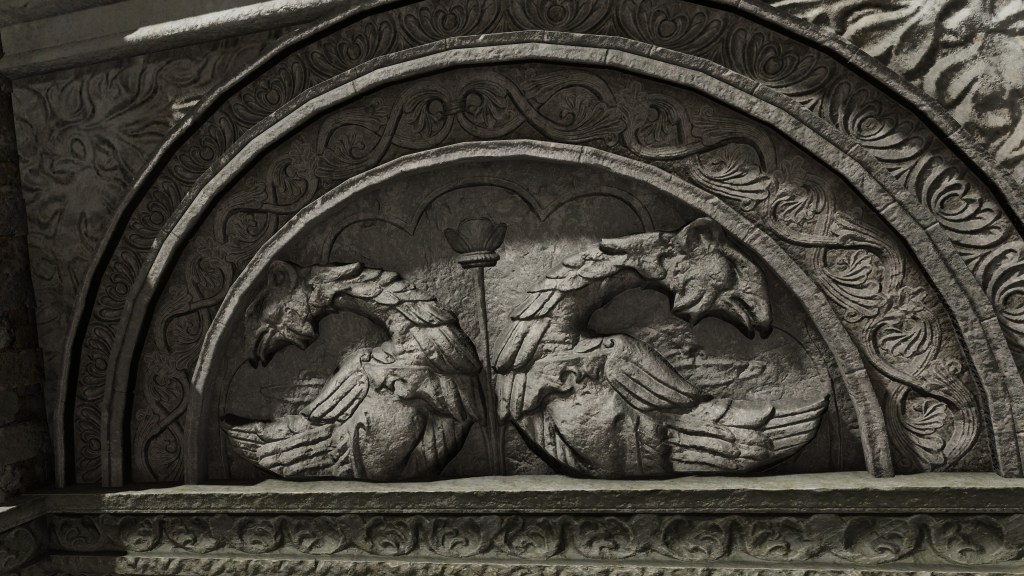
Faced with these two options, it is less likely that the candletree needed dramatically more ghostflame when the natural inflow of heroic spirits evidently sufficed for the initial trend. Supply must meet demand, so if Deathbirds were sent out to gather more dead, something in the human realm caused a deficit in output. Perhaps there was some sort of mass causality event afflicting humans across the Lands Between, setting back any civilizational development. Whether caused by destruction or disease, such a momentous event might initially create a glut of death for the Helphen to guide, but would soon be followed by a long drought as countless would-be heroes’ lives were cut short. When a population of fuel’s consistent growth and development sharply declines, it is easy see the concern about a disruption to the steady flow of death the outer god enjoyed up until now. If they couldn’t guarantee a regular flow of heroes, then gathering everyone to supplement the numbers becomes necessary.
Adding to that point, humans left to return to their primitive ways would be made aware of their own mortality more than ever — what of the fates of their lost family and friends, of themselves? When prospects in this life look dire, it is natural to look to the afterlife for a better hand. Mankind after civilization’s collapse were therefore primed for new leadership from Death, with countless lost souls in need of guiding and they themselves rudderless in those uncertain times. The Deathbirds were thus meeting the demand of the humans, and the humans were thereafter meeting the demand of the Helphen. Meanwhile, societies which were never touched by civilization, the primitives still living isolated on the farthest fringes, never suffered the same demographic collapse and thus met the Deathbird’s appearance with only fear and revulsion. All told, the circumstances line up perfectly with this kind of sudden collapse of society and population in the major regions circling the center. As crows flock to death, so did the Deathbirds.
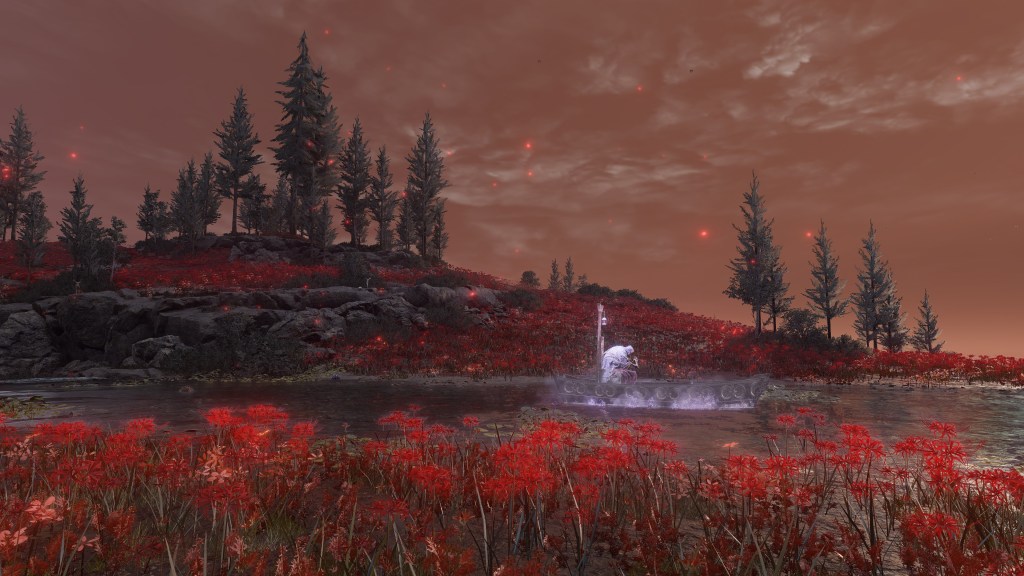
But that was long ago. Now, in the age of the Erdtree, the cult of Death is withering on the vine. Graveyards across the Lands Between lie abandoned, not because there is a shortage of death, but because no one celebrates it. The use of a reaper’s scythe as an amulet is antiquated, carried on only by old codgers soon to have both feet in the grave. Bodies continue to be defended at Charo, but to no fanfare. There is not even a point to the burials at the center anymore, as Gelmir’s days as Crow Mountain are long forgotten. Raptor assassins remain, with fan daggers still lootable from presumably their corpses as the last try to get by. A good half have even lingered in the Altus area, ducking through the alleys of Leyndell, beneath the bowels of the Auriza Hero’s Grave, or behind the defenses of army camps. One goes so far to appear at the battlefield on Gelmir, mayhaps a fool still hoping to one day reclaim the volcano for their kind. But the rest are scattered, resigned without the Deathbirds there.
And why shouldn’t they? The Twinbird is absent, and her children just search aimlessly for new death to bring in their respective areas. But if the Sacrificial Axe is any indication, not even the fringes are scared into making offerings for the wicked raptors at this point, leaving only the axe’s owner for them to dedicate to Death. Without humanity’s support, their only hope is to pick off individuals foolish enough to get too close to them, and that is mainly the odd student of their abilities; the Death Rite Bird in Charo’s Hidden Grave holds the ash of war for Ghostflame Call, which more or less mimics the Ghostflame Ignition skill of their poker. The one Deathbird not warping around in a fruitless quest we see roam the infested grounds of Caelid by nightfall — the reward of Death’s Poker reminding us of the flames being stoked there to clear out the detritus. So desperate are these fledglings for purpose, this one Rite Bird is willing to help stem the Scarlet Rot with its ghostflame. The divine envoys have undoubtedly fallen on hard times.
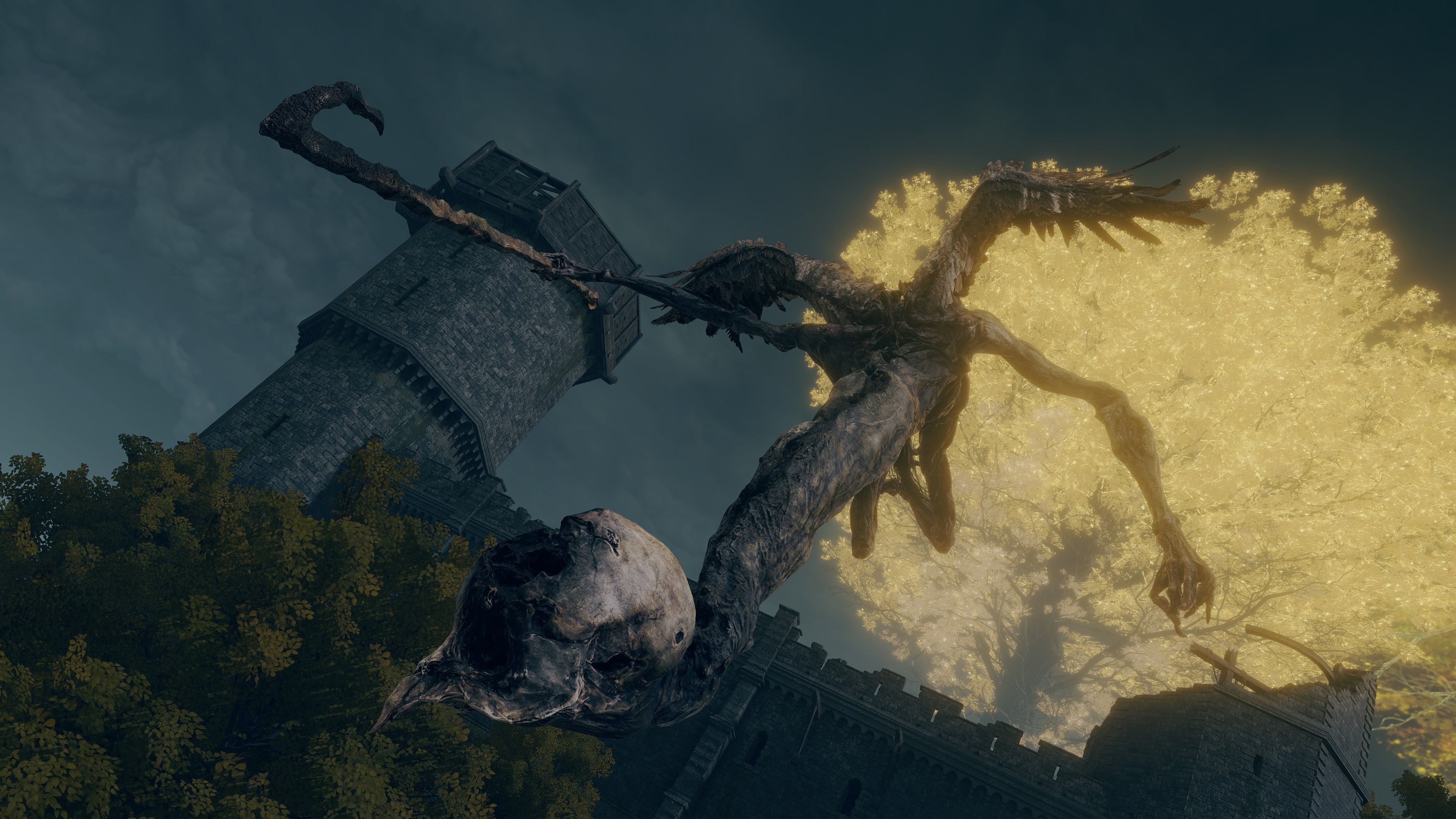
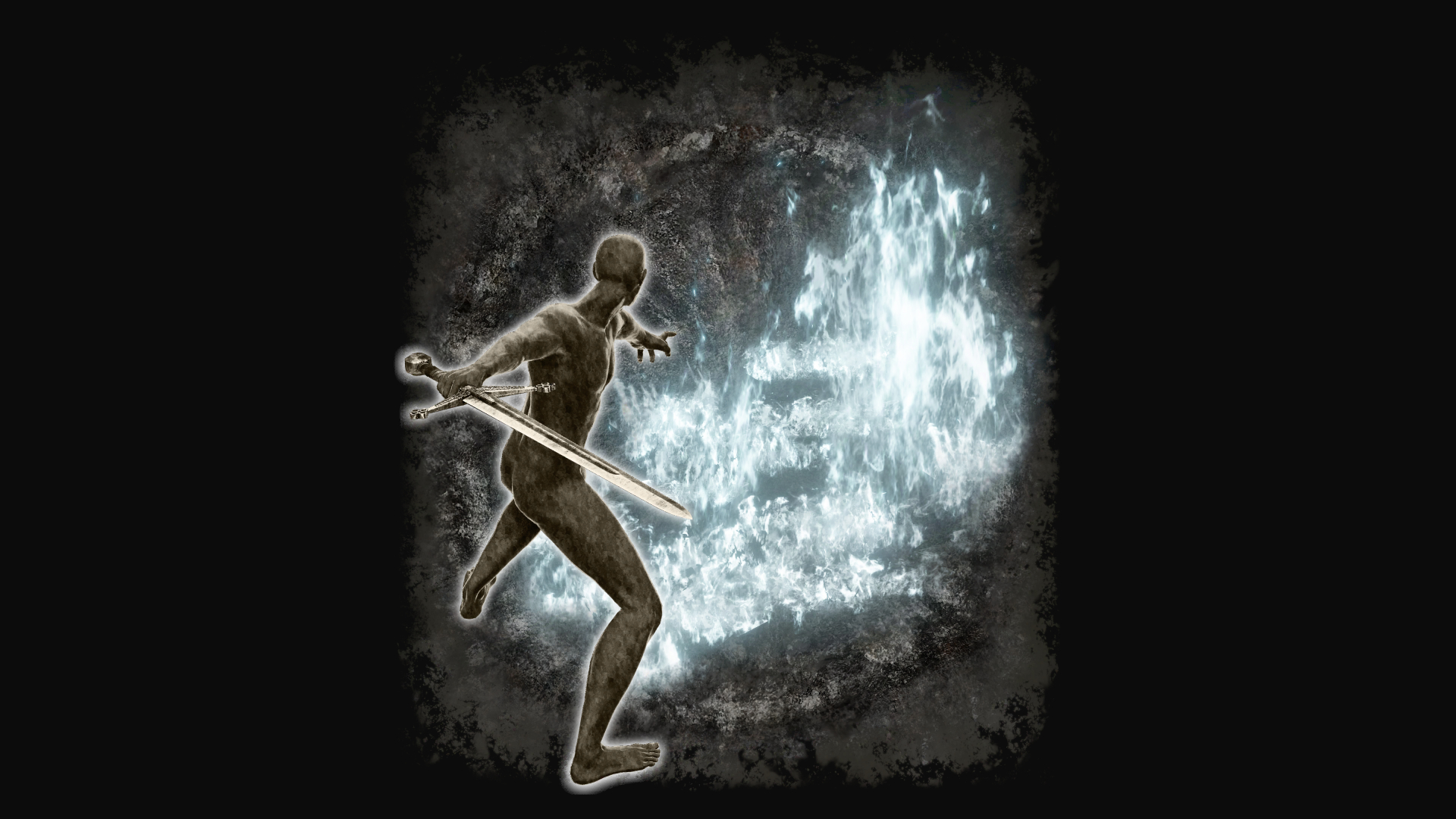
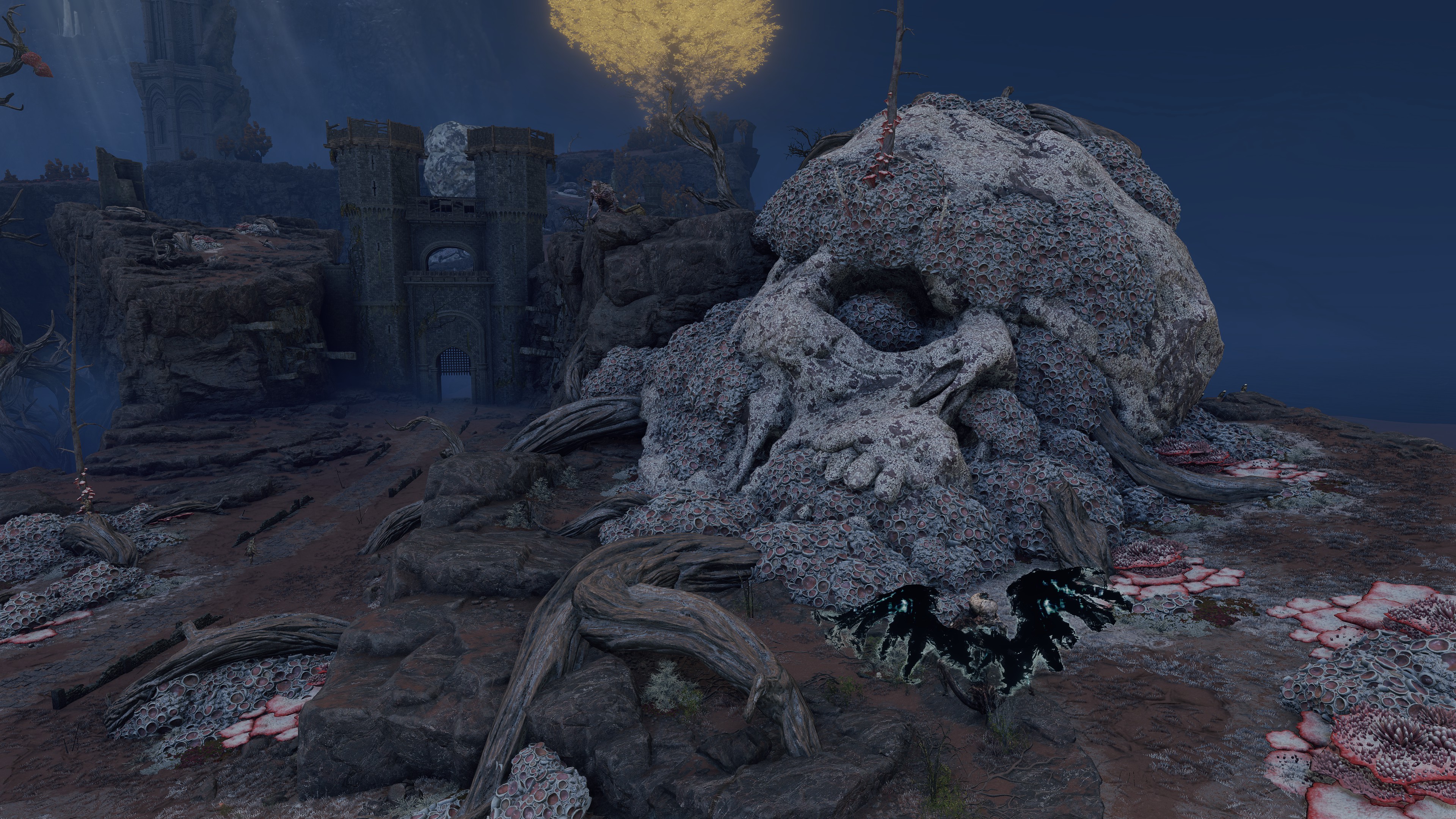
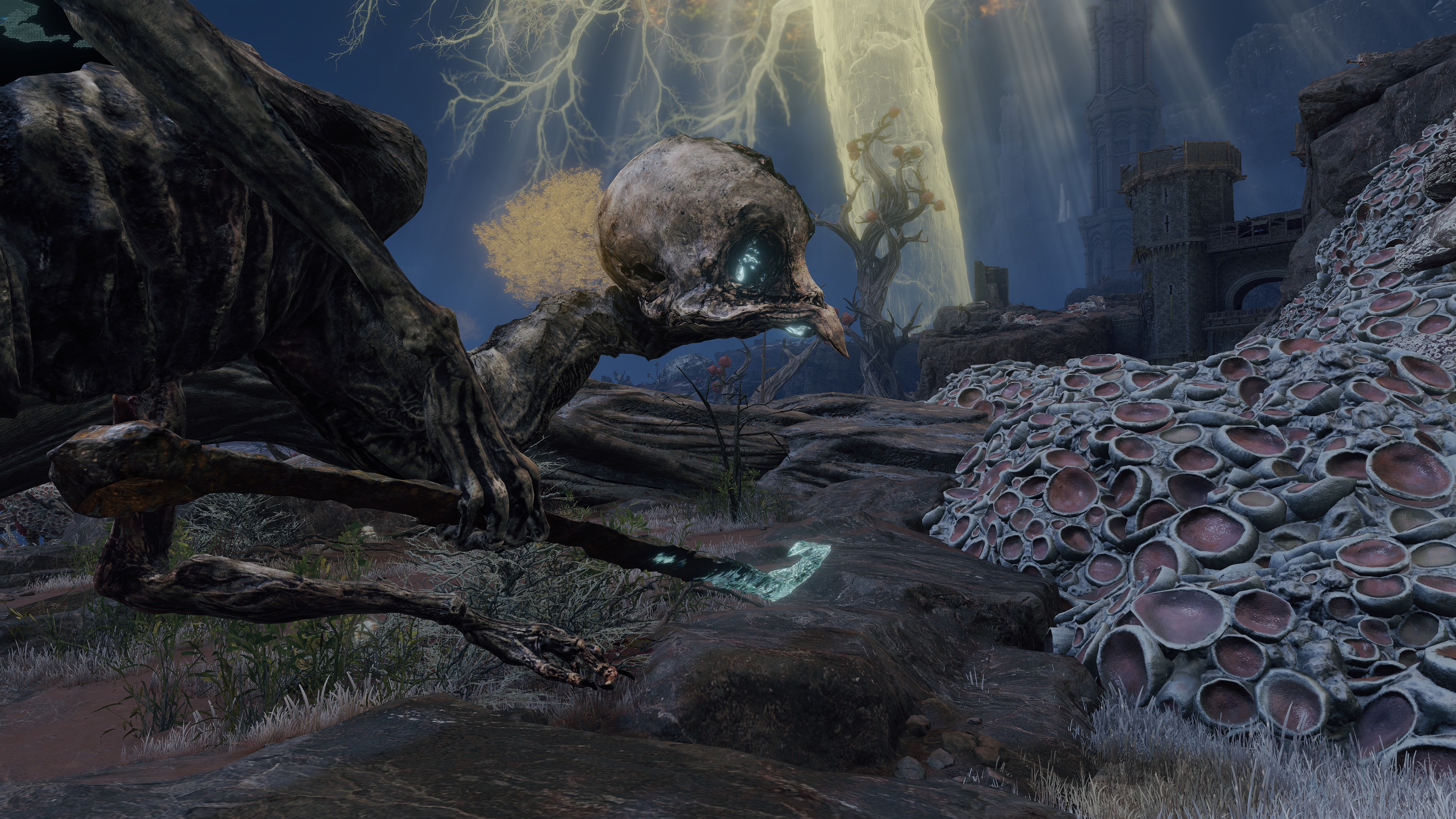
Perhaps it was inevitable that death would gradually lose its value as humans rebuilt civilization. When life becomes a glorious thing, so easy it is to forget its inevitable end. And when death does come, far easier it is to fear and revile for robbing men of that wonderful existence. Admittedly, the Deathbirds were merely a stopgap to keep the cycle with the Helphen running smoothly. Once civilization returned to provide a consistent flow of heroes once more, their presence was no longer necessary. The alliance between the living and the dead was arguably doomed to be fleeting from the start. Even so, death still needs life, and life cannot avoid death. The Deathbirds may be old and outdated, but the Helphen still attracts heroes, and the outer god will respond if there is another possible disruption to that system. If anything, it goes to show that for those existing in between both life and death, they are the most disposable, wanted ultimately by no one.

