
Preface
I have seen far too much attention placed on Godwyn. While it is a shame when a major character is dead before we are able to meet, we don’t need any more of this one. As is, the character has an invasive presence felt throughout the game. If you know where to look, you can learn plenty about him and the multiple factions he spawned. It is appropriate for the man lying at the root of the narrative’s events. Still, I find myself annoyed at just how much Elden Ring inserts a simple man with a simple life story into so many places. I suppose that, too, is appropriate. In the end, this is his death story, one which — from the moment we walk out into that new world — tells us how demise has come to these Lands of life. My only hope is that fans will realize how it is better to let the dead rest.
The Prince is Dead
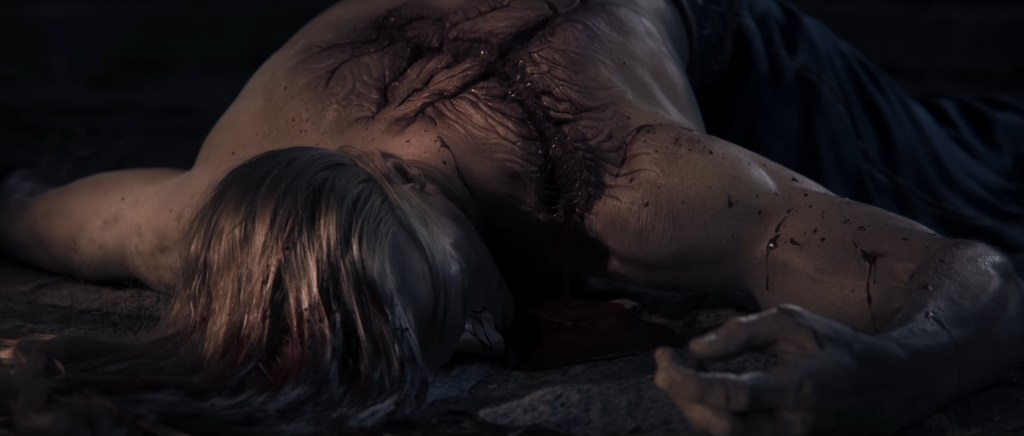
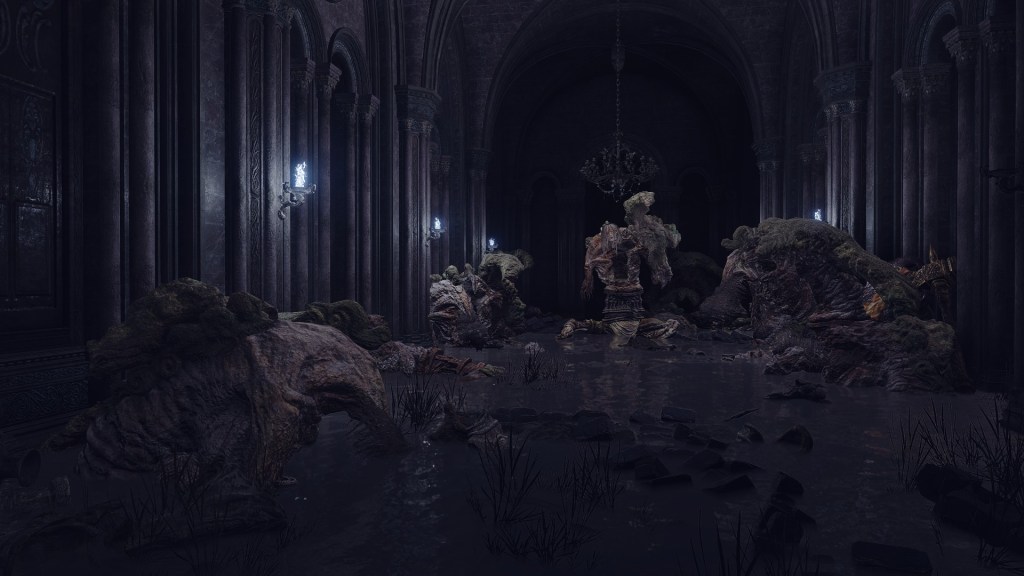
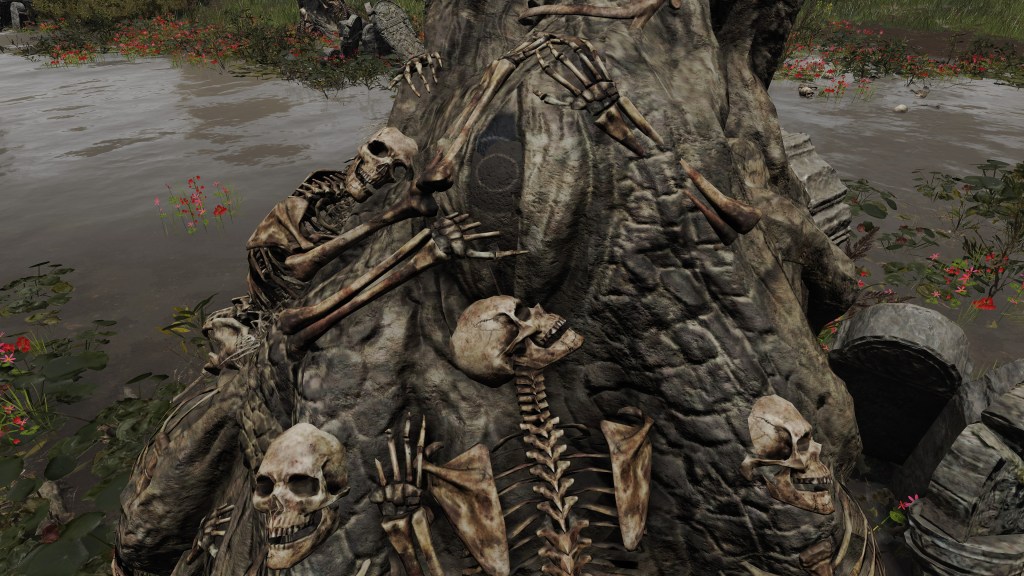
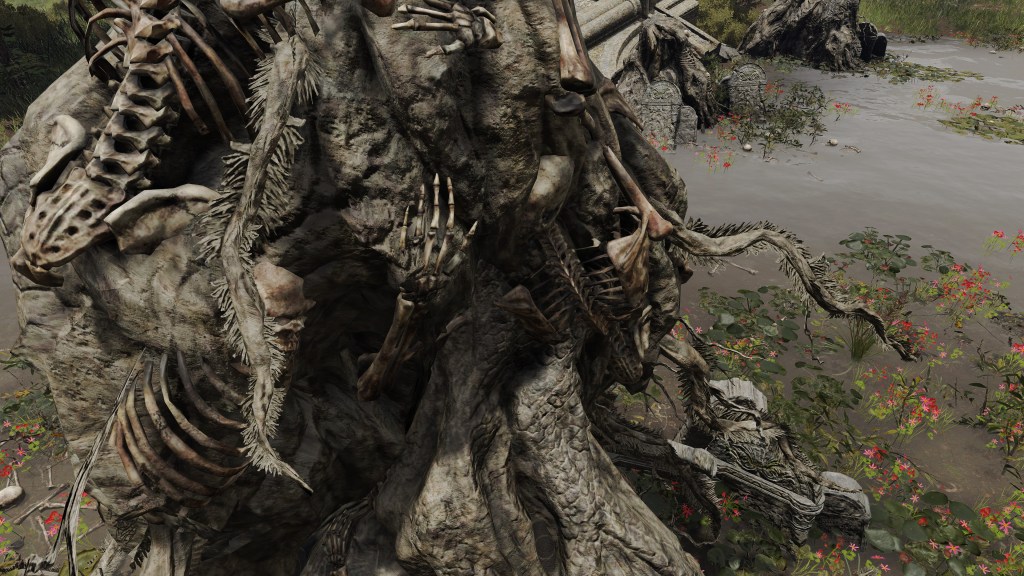
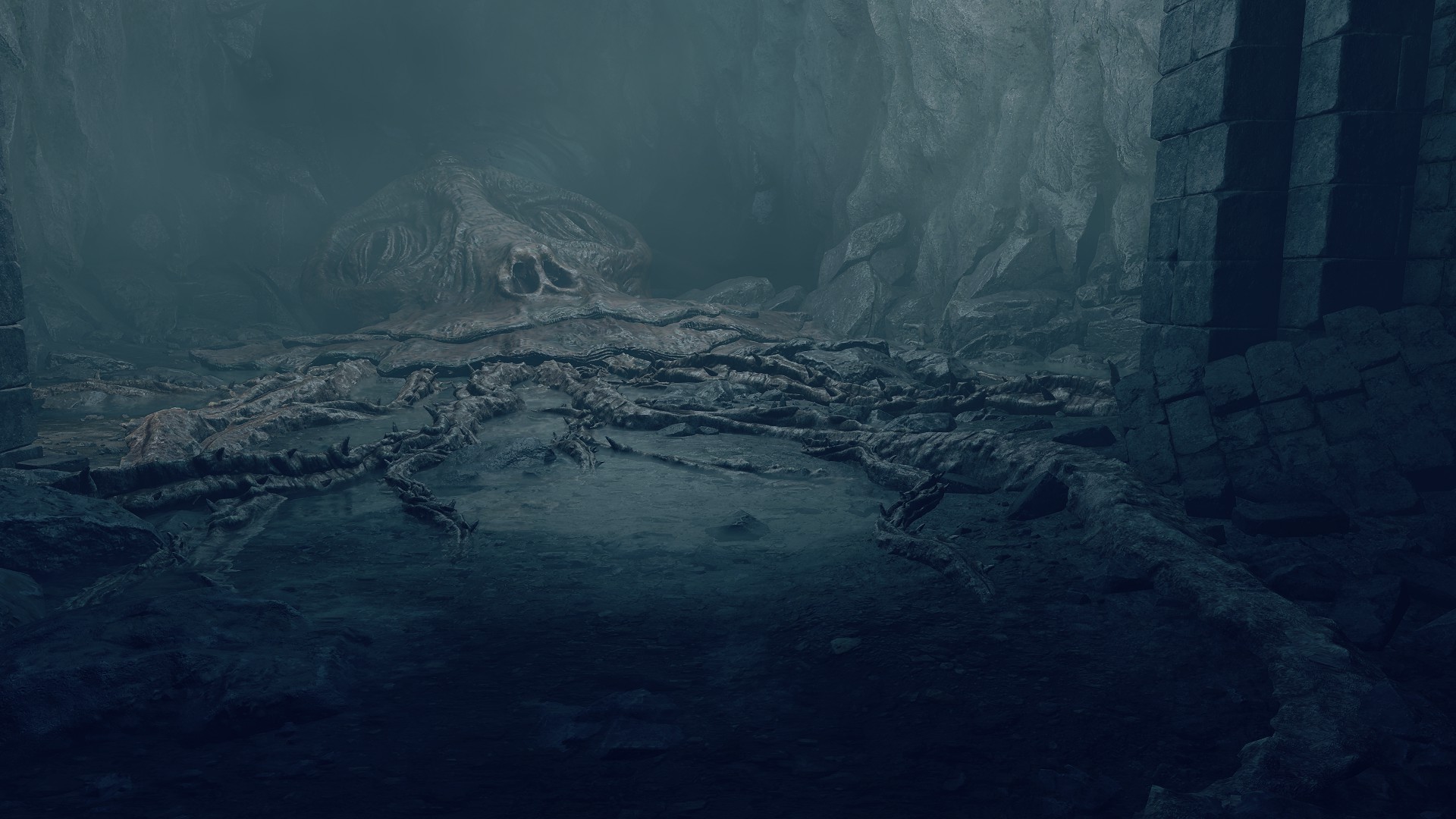
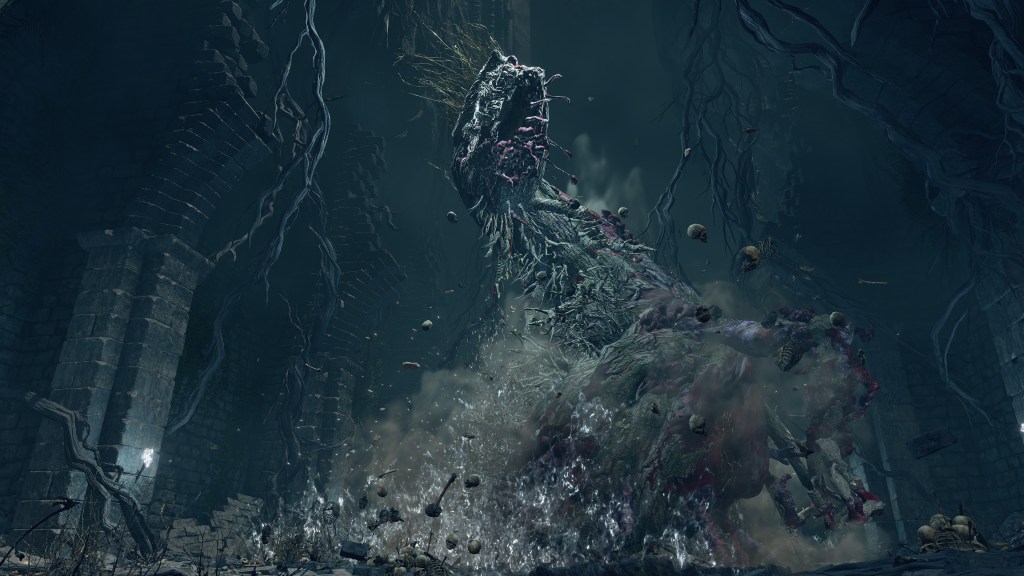
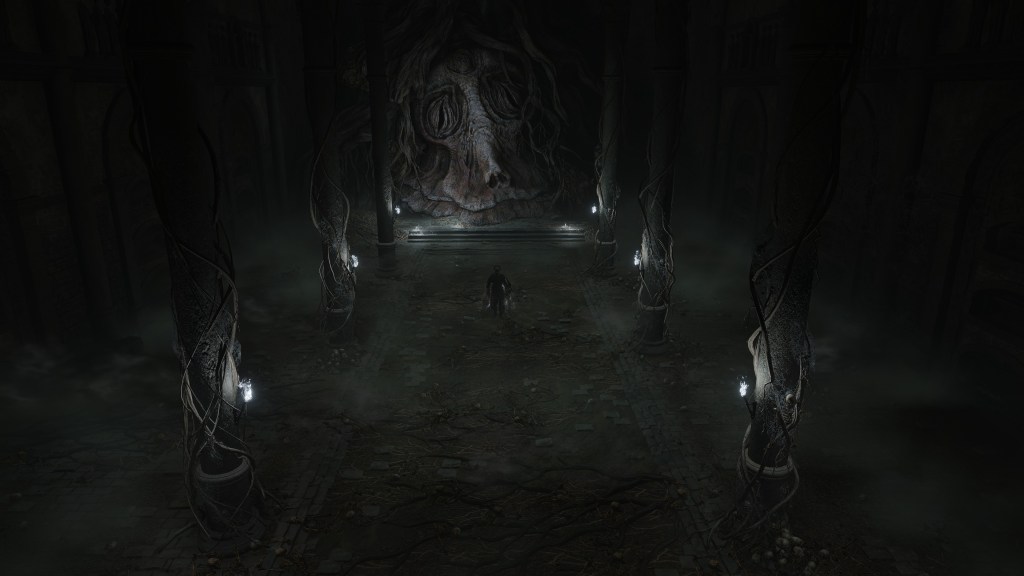
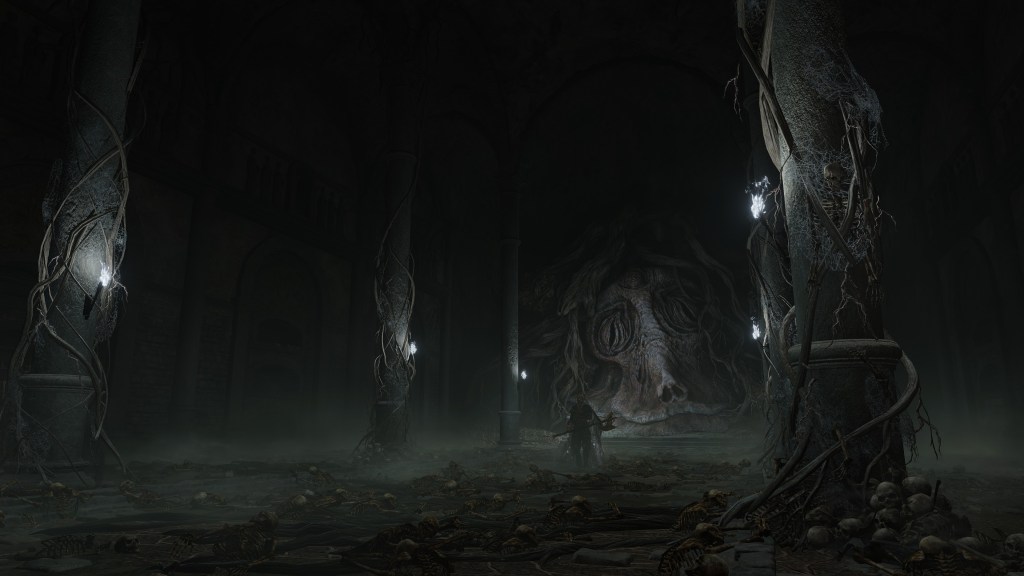
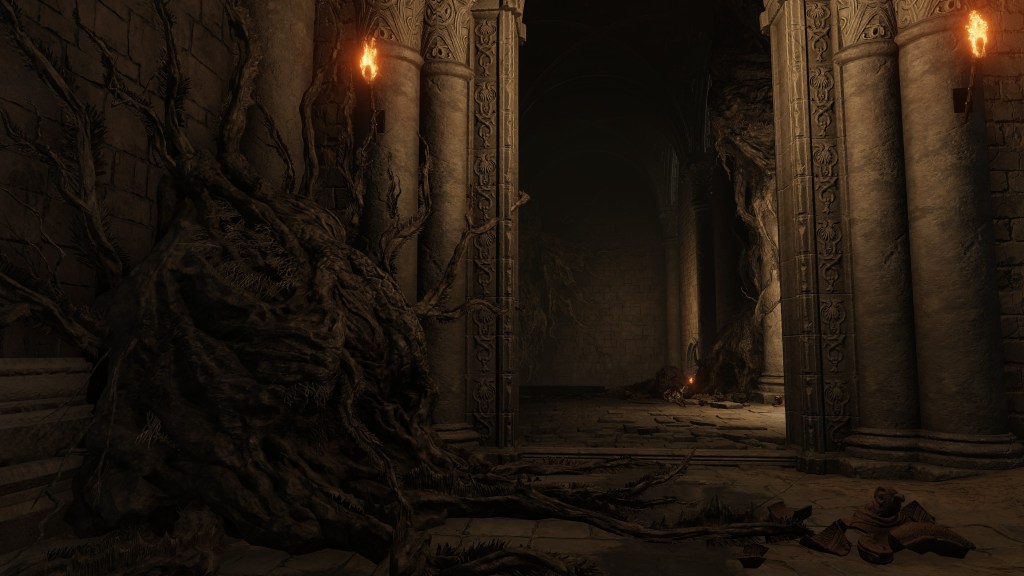
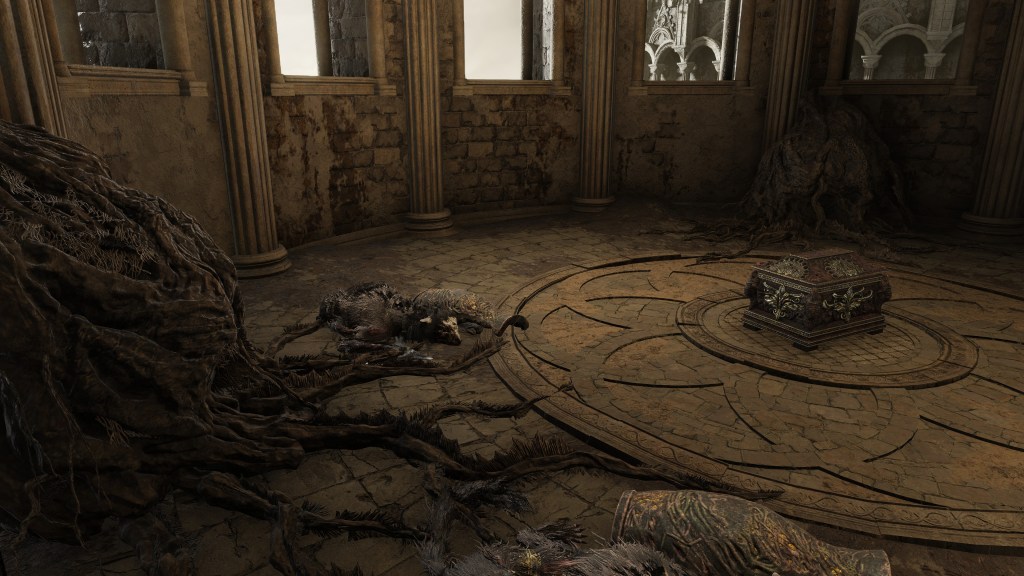
After the assassination of Godwyn, his body was inevitably prepared for Erdtree Burial. We see it laid to rest in the Deeproot Depths beneath Leyndell, nestled above the Eternal City. The corpse remains exposed, without even the hint of a tomb complex, so no time was devoted to construction. Even so, observing so many gargoyles and Crucible Knights caught up in the city’s destruction betrays the number stationed underground, presumably just to protect him. Siluria wouldn’t complain, and the gargoyles can’t, with even the two who managed to escape the destruction intact continuing to guard the territory from the fringes past the Siofra Aqueduct per their programming. It is still curious why nothing was constructed if disturbing the dead was a concern. Perhaps this speaks to Marika’s mental state. Losing so many children, the mother may have been too exhausted emotionally to care for ceremony — she wanted her golden boy returned to the Erdtree as soon as possible, and that was final. It explains placing him at the core of the root network, and it only took a garrison in the city to keep visitors out.
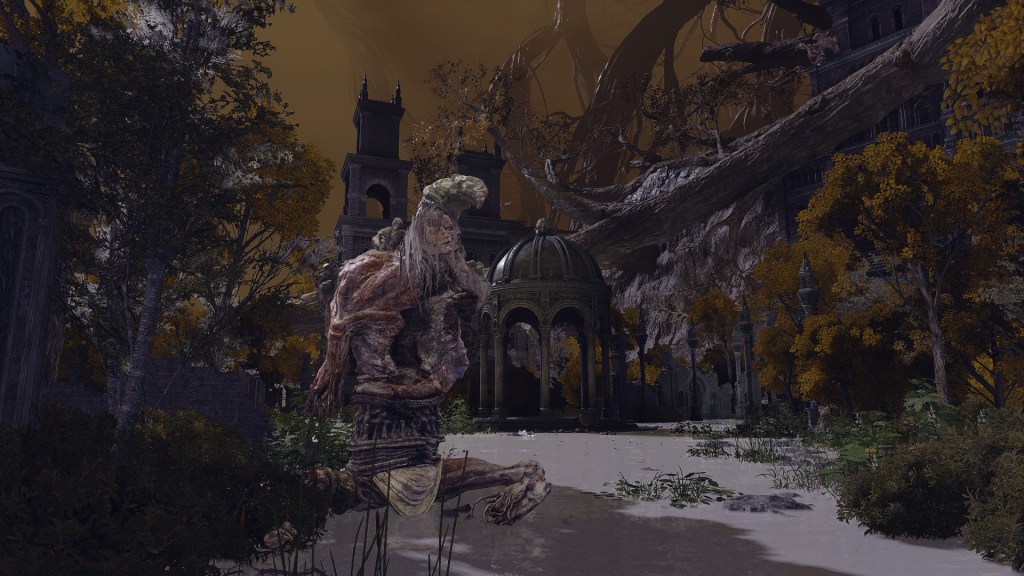
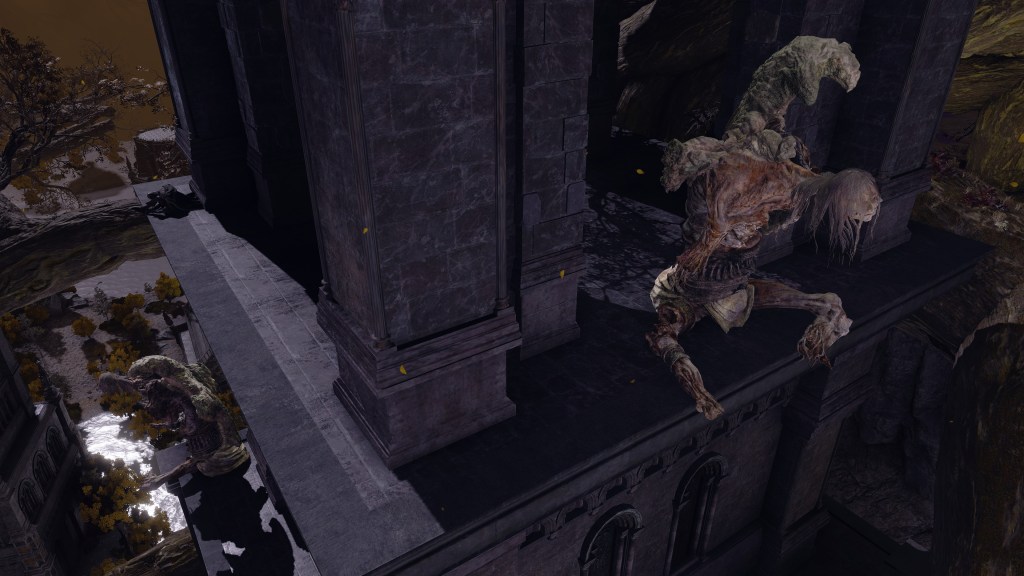
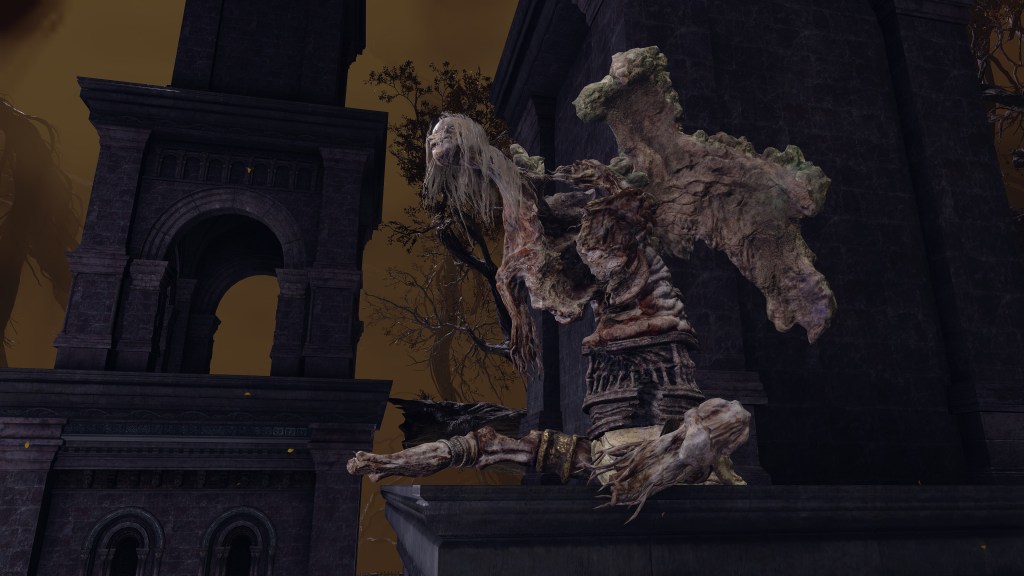

Indeed, Godwyn’s funeral was sure to be a momentous event. All across Marika’s empire, word would spread of the assassinations rocking the Lands Between. In the ensuing days, Leyndell would confirm just how extensive the Night of the Black Knives truly was. And while they were still pursuing the killers, decisions needed to be made about the bodies. Ultimately, the demigods were buried locally in wandering mausoleums, but Godwyn clearly received special treatment for his renown. The Golden was the first to be lost and the first to be mourned by a great many, including within the military. As a result, he would be the first to receive a sendoff, with countless guaranteed to express sorrow in the streets of the royal capital throughout the following days. Even the most well-intentioned mourner might desecrate his body with emotions so high, so a swift yet secure burial out of reach of even the resident Nox would be logical. If a noble was burdened with Marika’s Scarseal in the Eternal City before its destruction, his mission was most likely to safeguard this Erdtree Burial. It was that important to the god.
Of course, this ignores the fact that Godwyn, like all the assassinated demigods, was soulless. There was nothing for the Erdtree’s roots to assimilate, making any burial a pointless affair. Even if the great tree did one day take the Golden’s body, there was no golden life to recycle. This makes the decision to bury Marika’s son peculiar, to say the least. It is also unlikely that anyone in her kingdom was unaware of his state. The Rune of Death was stolen from Maliketh and then used to kill her children — the deaths of their souls was a foregone conclusion. Surely, everyone handling the body knew this, hence why none of the other victims seem to have received their own Erdtree Burial. It may just be a grieving mother in denial, Godwyn’s simple interment reflecting the desperation to salvage something left of his essence. However, this ignores another factor for the Eternal Queen to consider.
Godwyn’s back was marred by a cursemark, the form of a “centipede” engraved into his soulless husk. This already draws attention when it is absent from the other victims, but Rogier implies that the existence of two centipedes forming a complete wheel is common knowledge. Apparently, the sorcerer’s research indicated that another body should possess the other half of the wheel, which he identifies as Ranni after discovering her part in the plot. This means that people familiar with curses were able to recognize how the centipede mark was actually split between bodies well before the present era. It may have been impossible for them to identify the purpose or owner of the other cursemark, but Leyndell with all of its priests couldn’t just ignore the brand either. Someone cursed Godwyn, beyond a simple demise by Destined Death. And from that perspective, something needed be done to lift it.
In short, burying Godwyn might have been less about saving his soul as much as cleansing his body with the Erdtree’s blessing. Seeing how he was already defiled beyond measure, it was important to lay “him” to rest before any further damage might be done by this unprecedented curse. The Golden prince may never return his gold to the tree, but he could at least be honored with a burial worthy of his contribution to the Order. His wet nurse further alludes to him becoming a martyr, standing as testament to life’s triumph over Destined Death. That would also give Marika some peace of mind, even if it didn’t amount to much. Just as well, a curse by the Rune of Death was still a form of that same rune — shouldn’t that power return to the tree the same as a soul? And so, the body was fortified against desecration and left to be absorbed into the roots as consolation. The desperate hope would be that the shadow curse would drown in golden grace. Only, that wasn’t how circumstances played out.
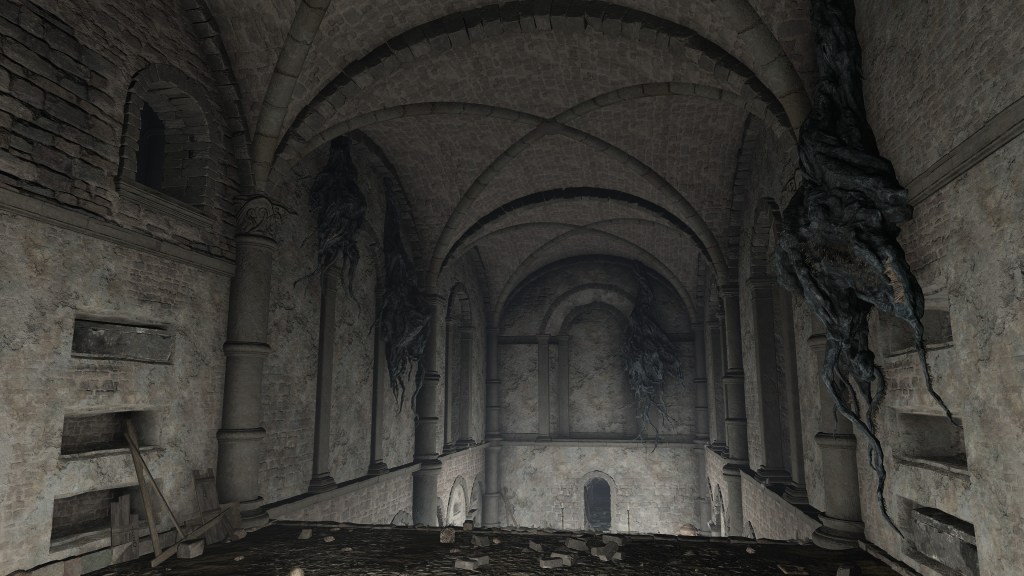
Rather than return to the Elden Ring or circulate through the arboreal system it was piloting, the Rune of Death corrupted the root network. Root resin notes how the great tree roots “once” connected to the Erdtree in its description, and we can see why this is no longer the case from the state of Deeproot Depths. Although roots are still growing there and throughout the depths of Altus Plateau, many at the bottom have turned white and defoliated, which is a common symptom of disease in trees. Their affliction becomes obvious when compared to the offshoot branches on these roots yet to succumb, each retaining their brown bark and yellow leaves. This isn’t healthy, and the infection is spreading. Many other deep roots are whitening to varying degrees, larger ones occasionally breaking apart. Even those superficially healthy are sprouting white branches. Not even the largest roots directly beneath the Erdtree’s trunk have avoided infection. The hub of the root network can hardly be receiving the dead assimilated from the various graveyards when the relays are this dysfunctional.
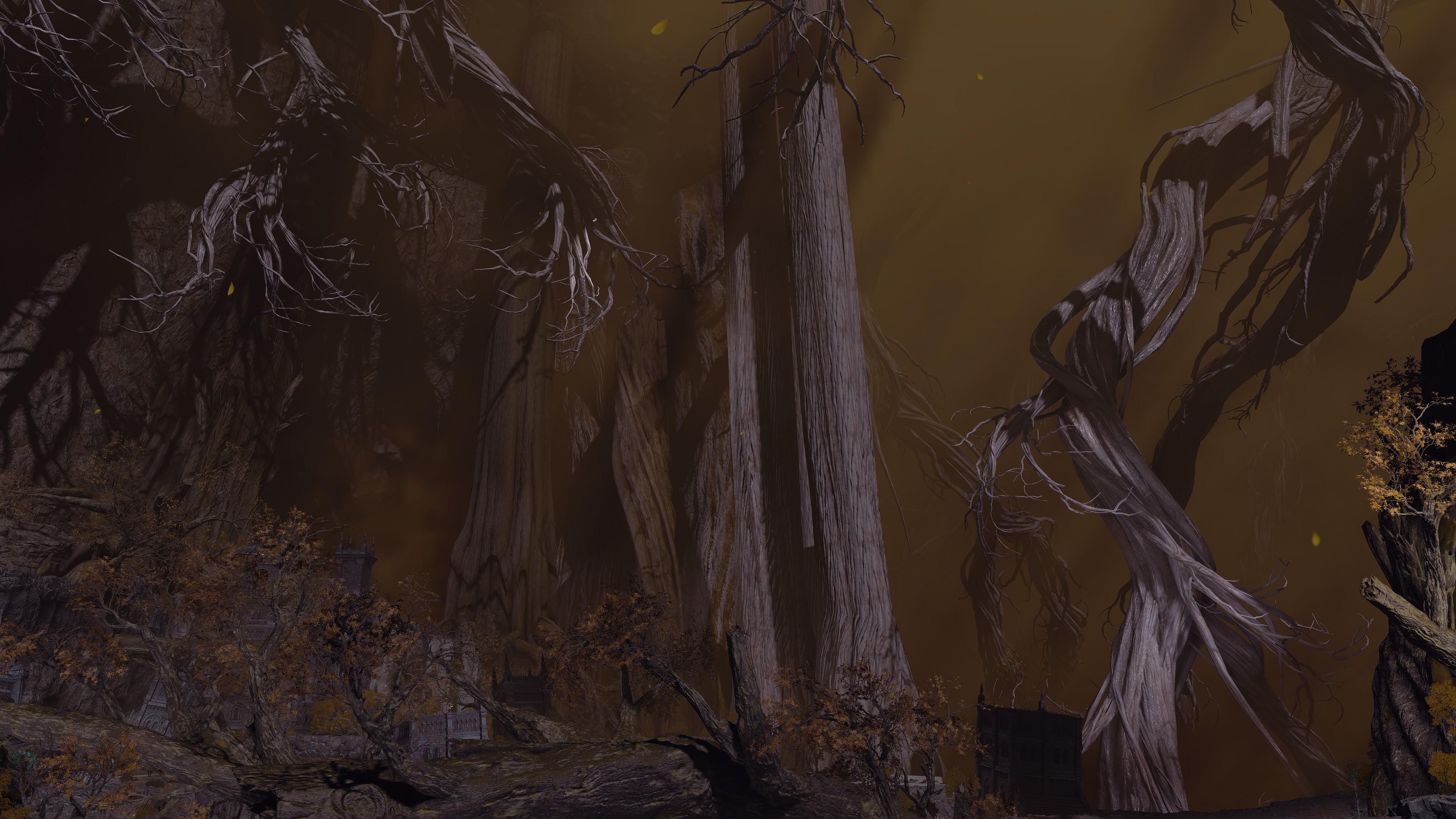
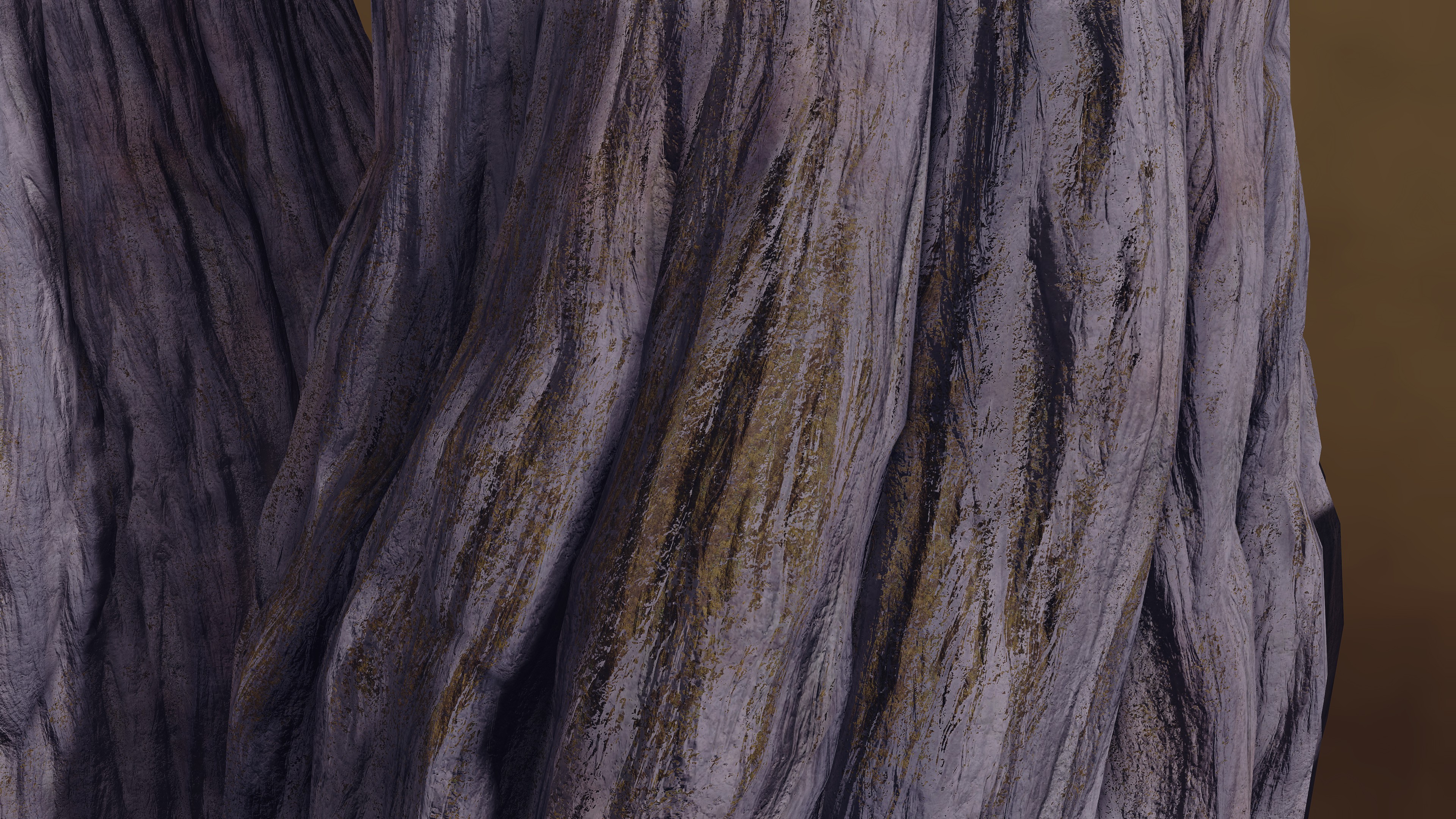
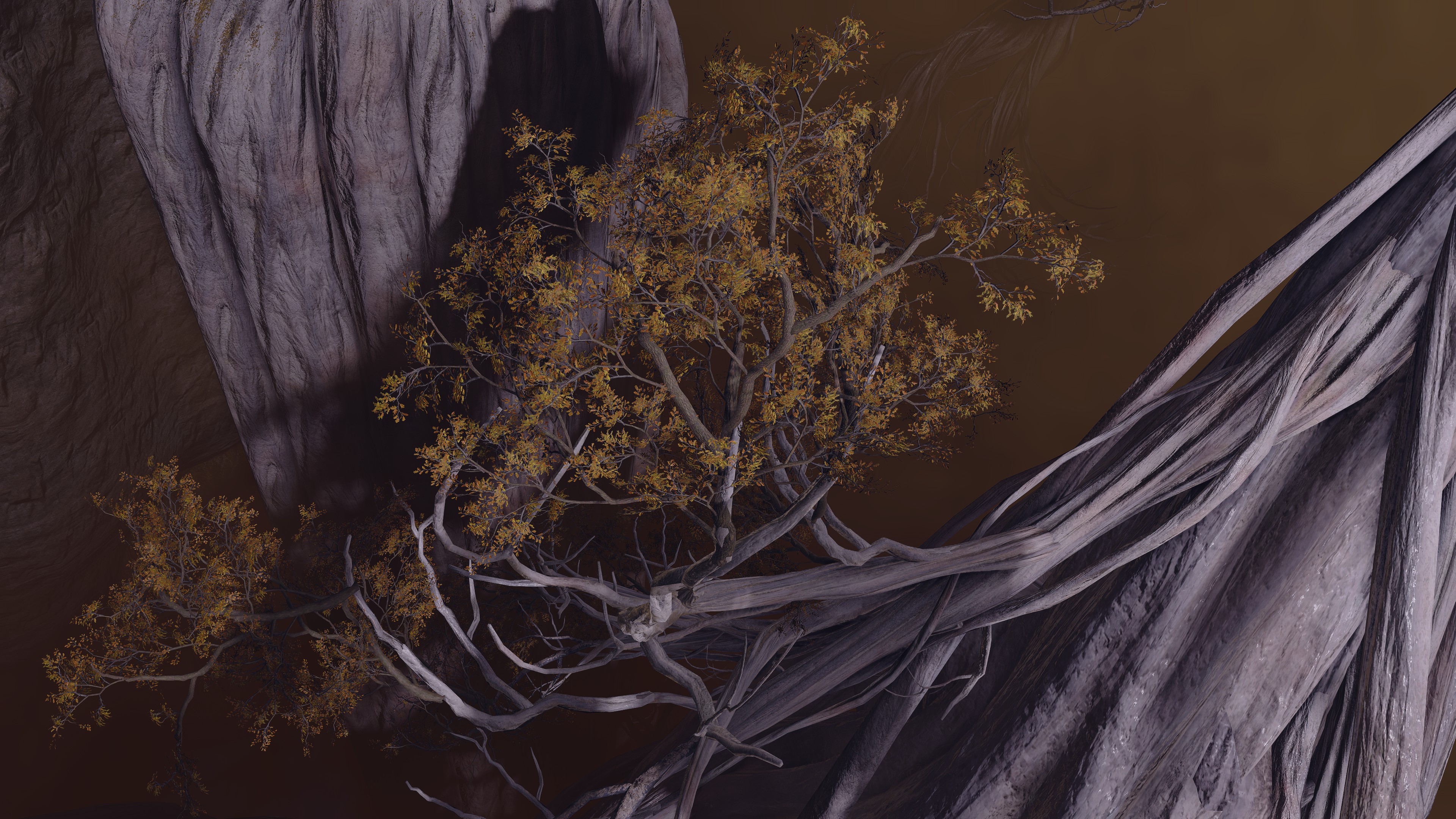
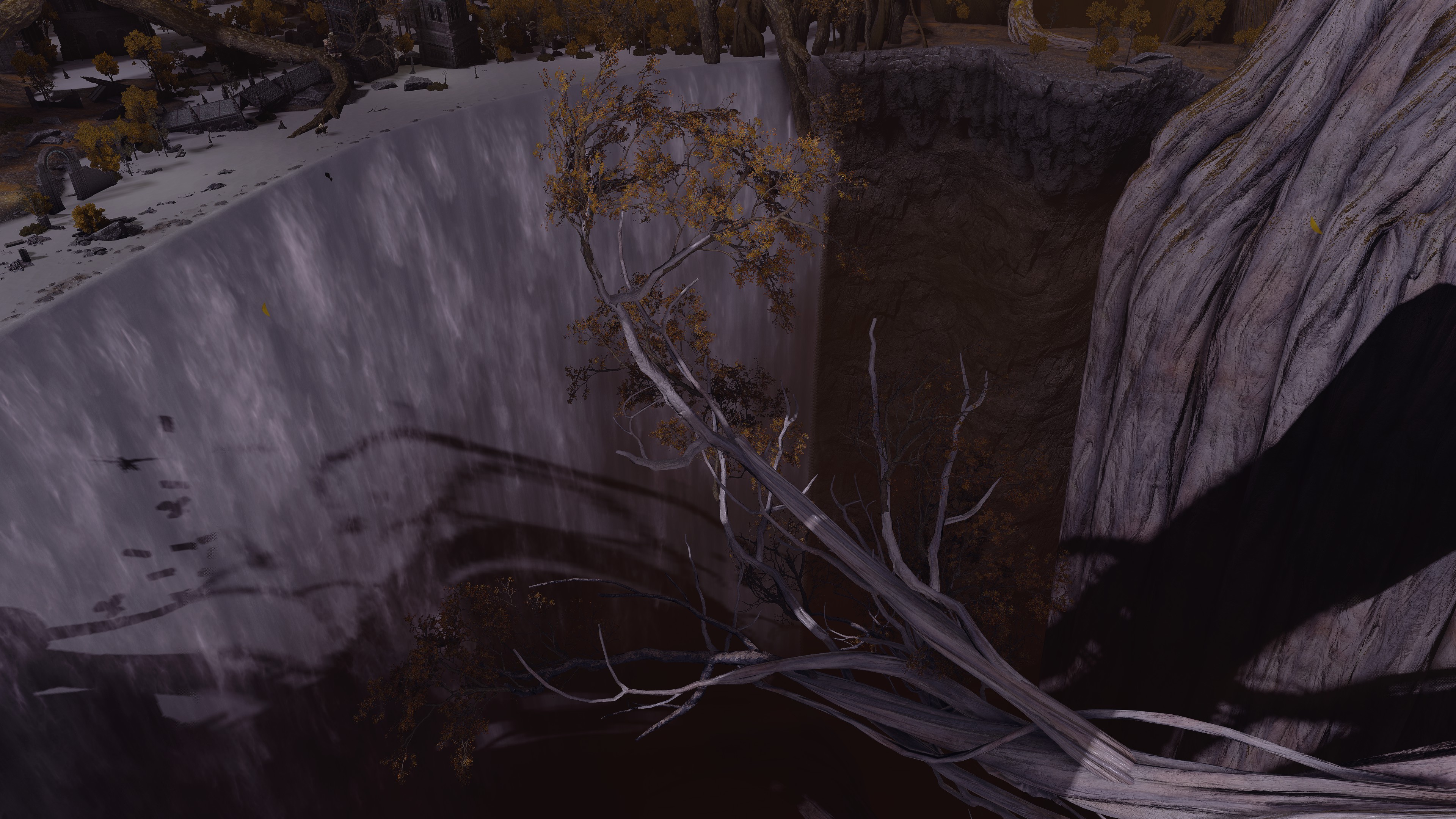
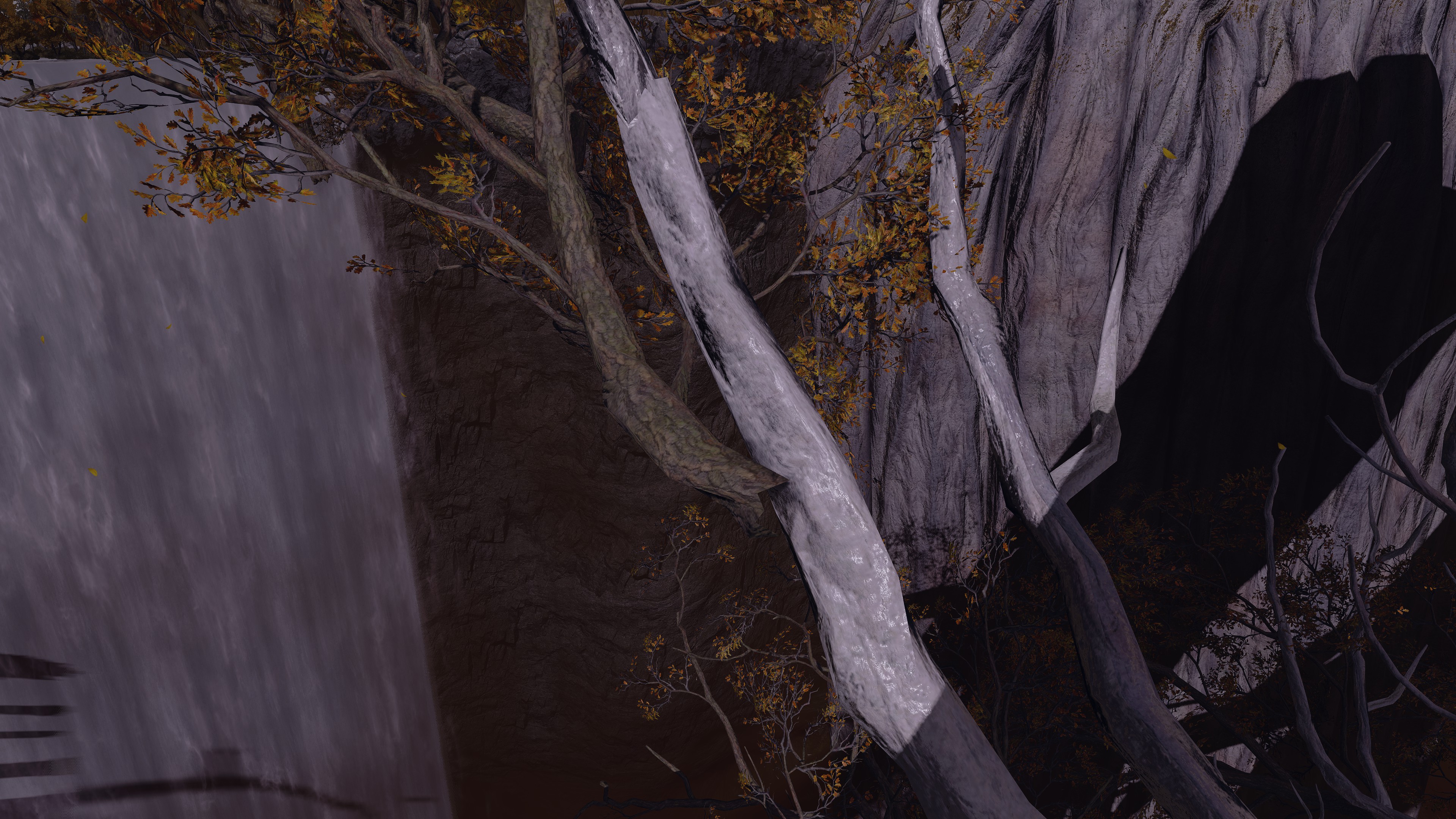
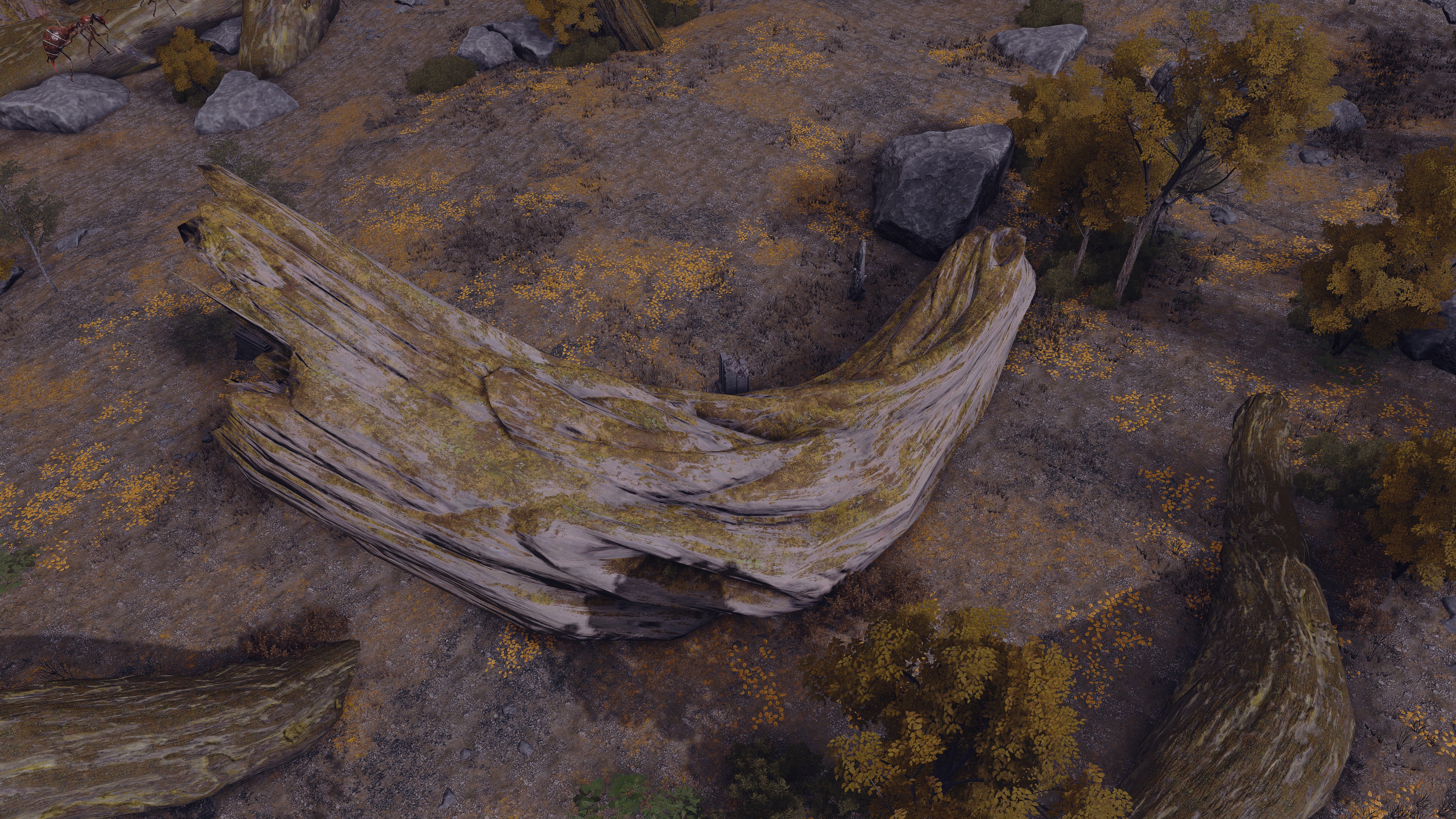
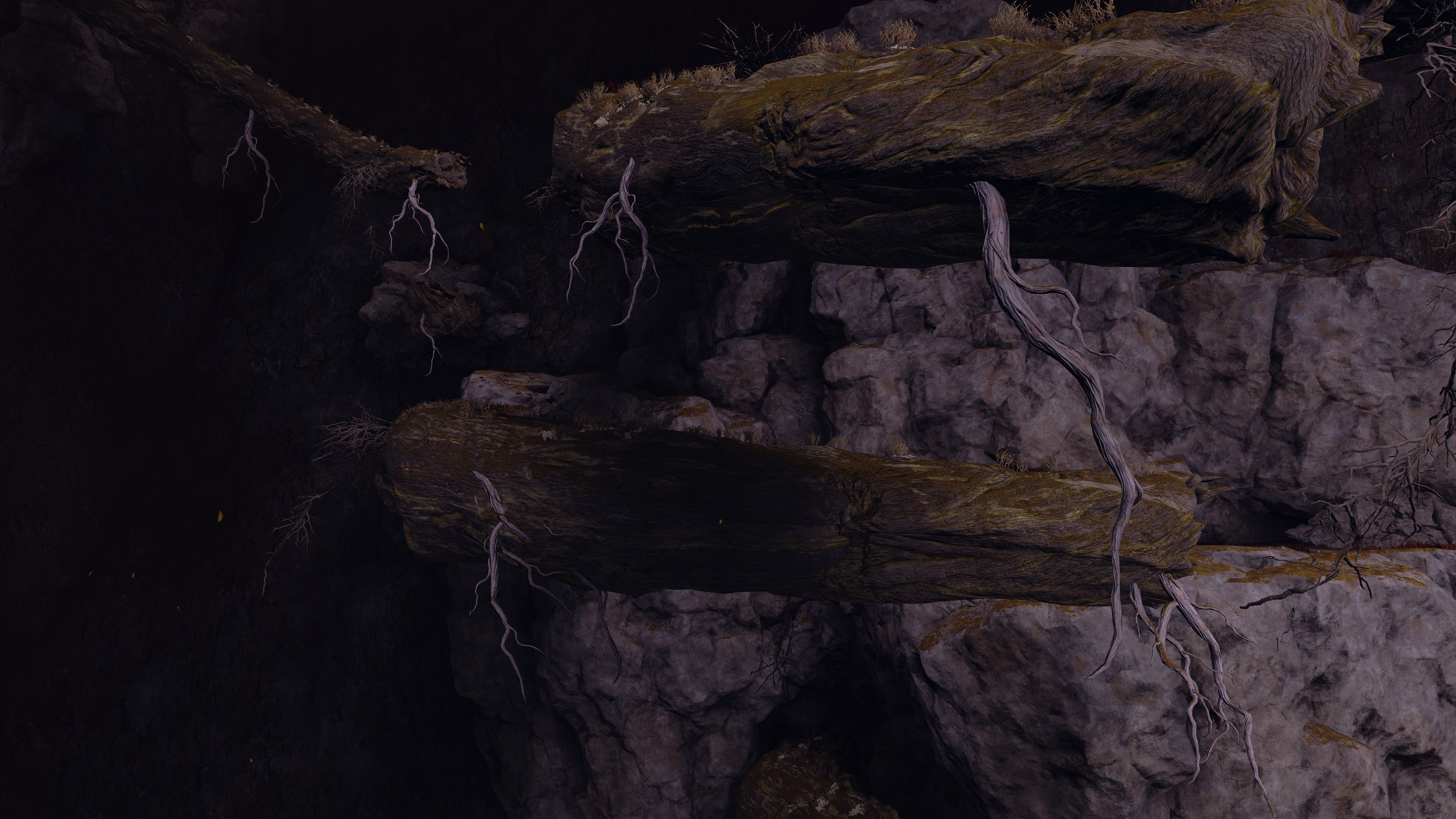
Natural tree resin that can be harvested mainly from the great tree roots underground. It is also found in the vicinity of trees above ground and the like. One of the materials used in item crafting.
Those roots are said to have been connected to the Golden Tree once. Thus, catacombs are made by selecting lands with the great tree roots.
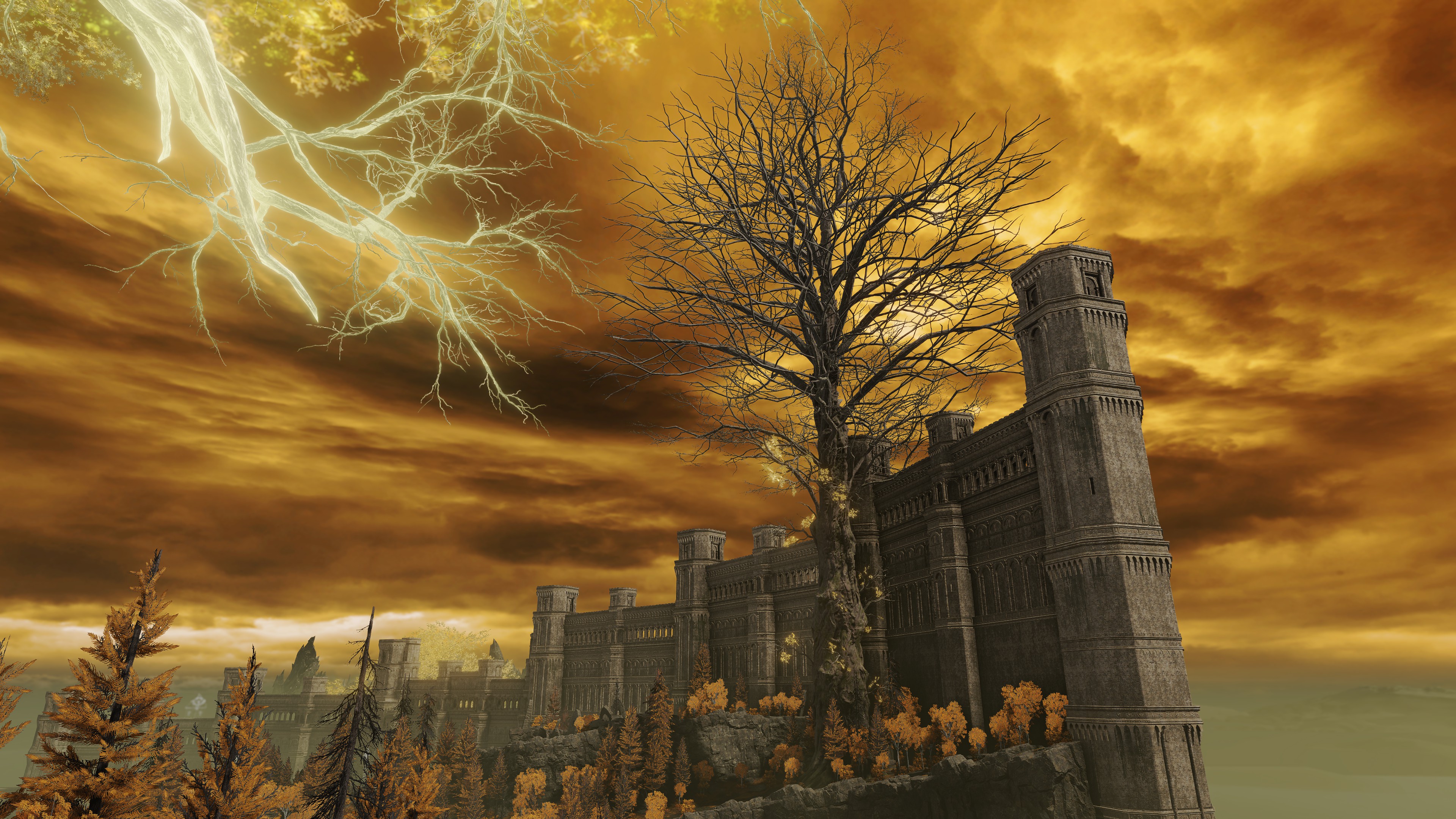
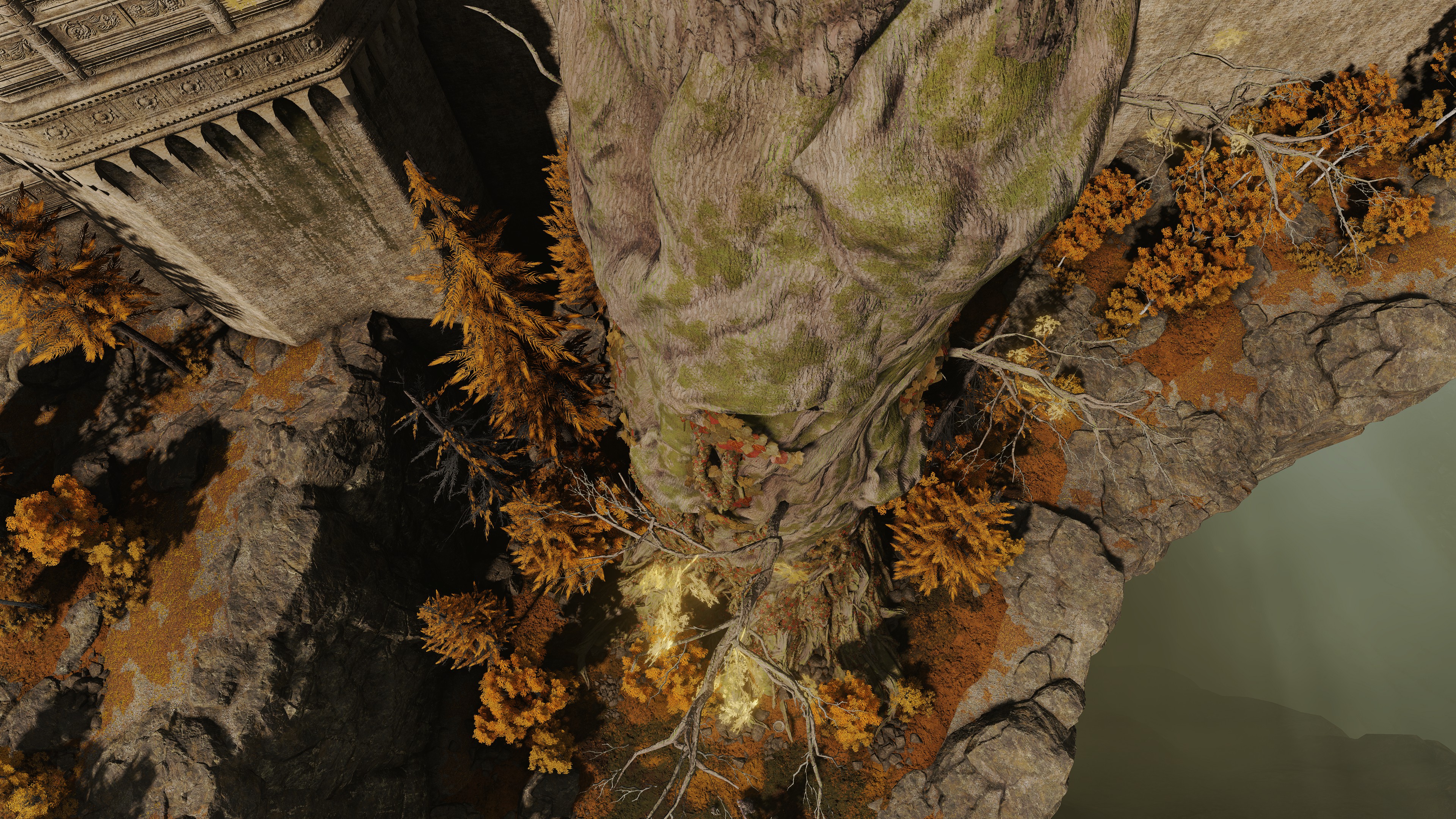
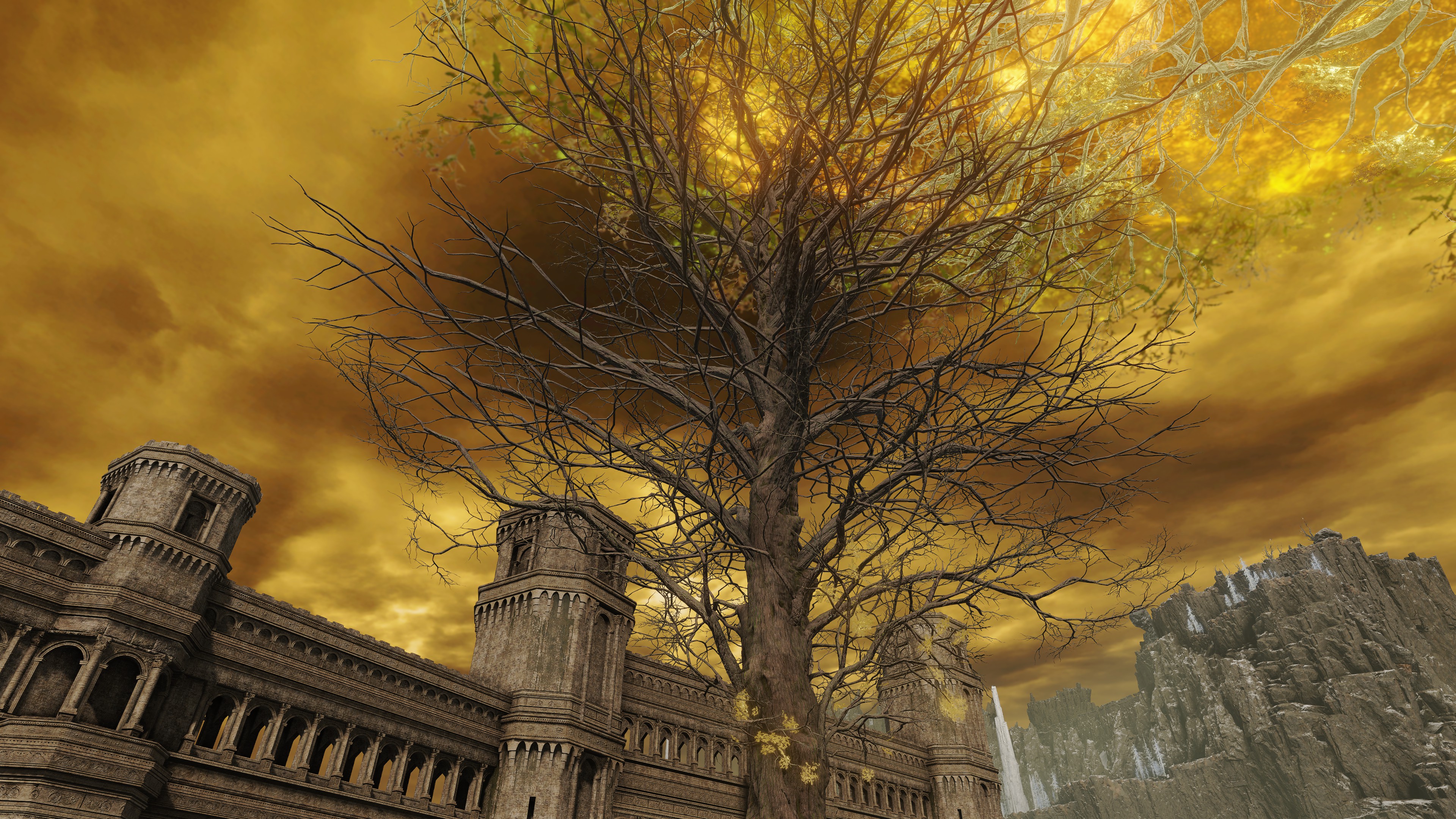
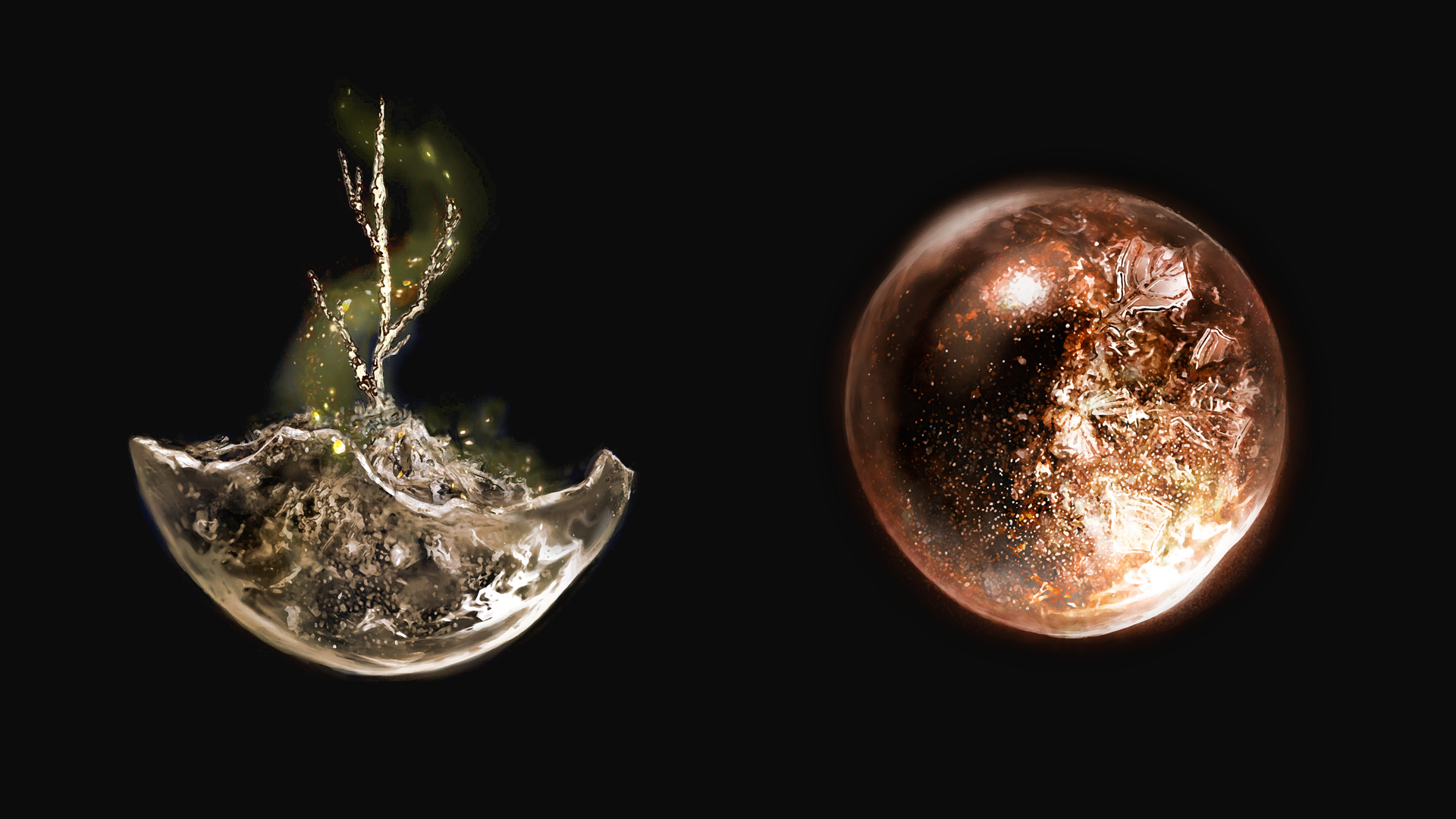
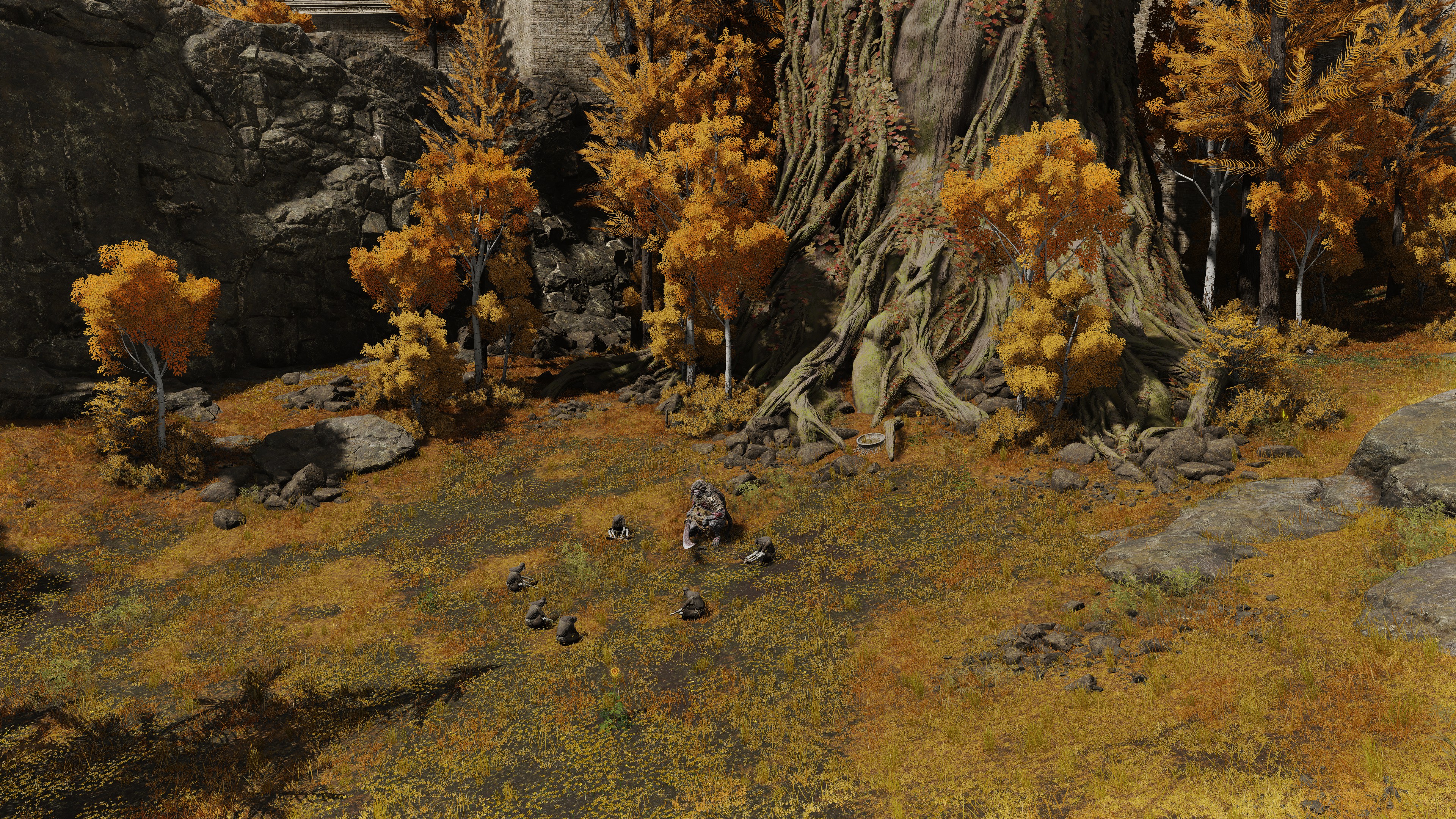
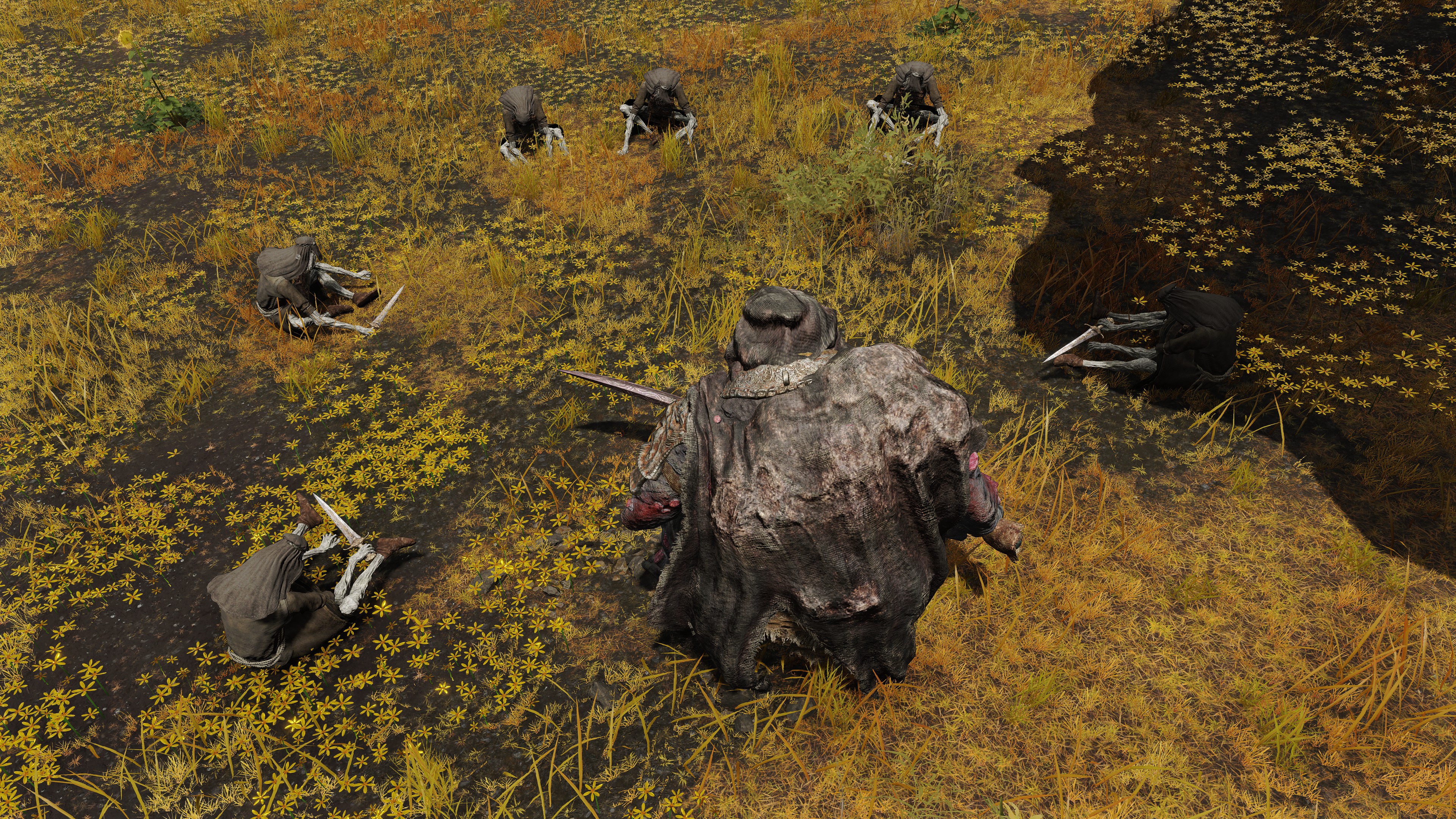
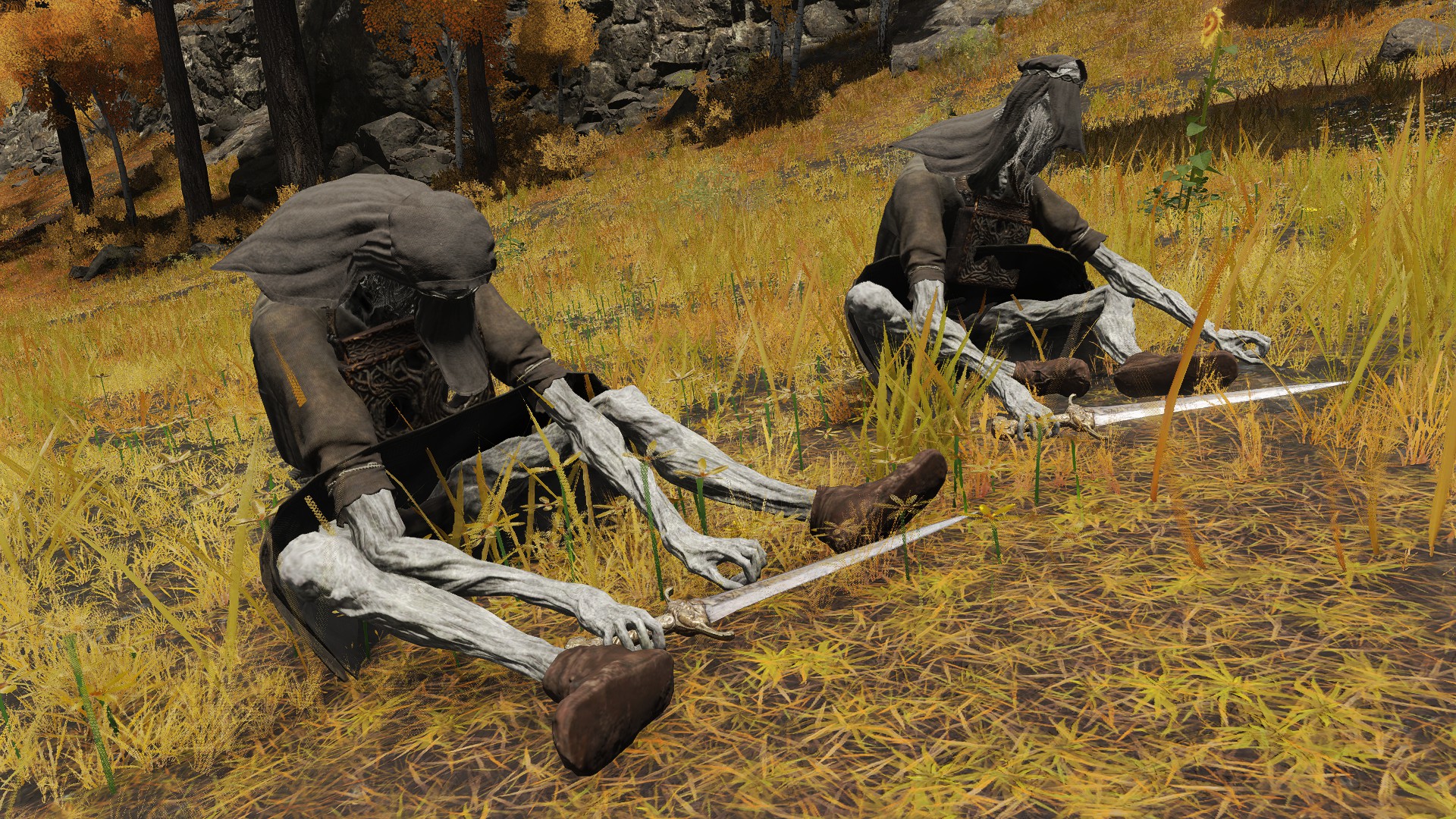
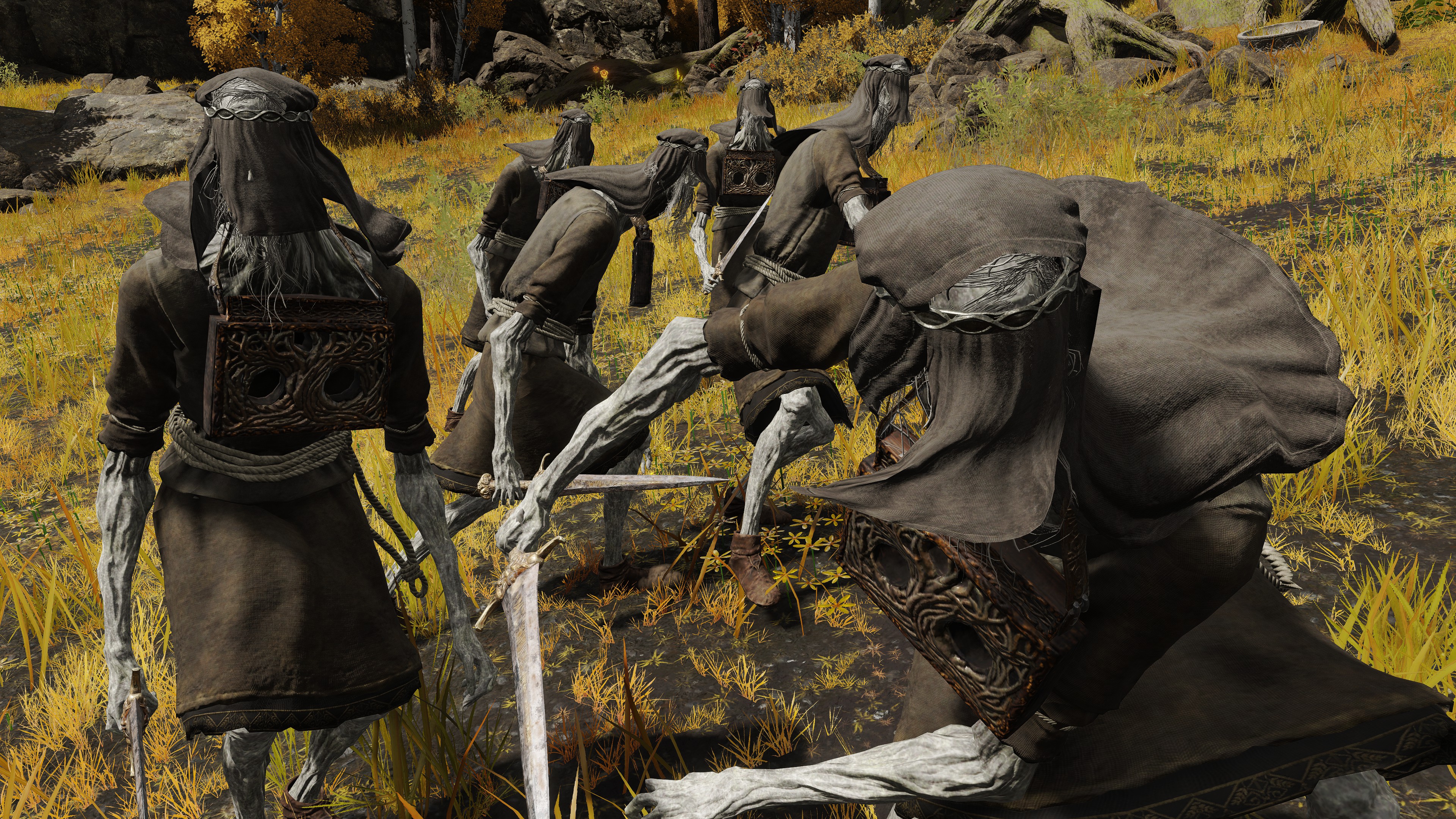
Naturally, all of this damage to the great roots traces back to Godwyn. The roots closest to his corpse remain lathered in a black sludge as they reach up the infected network to the cavern ceiling where so many of the other roots sprout down from. From the blood splatters, this undeniably comes from his body. The source is just as obvious above ground. The Minor Erdtree located almost directly above Godwyn’s corpse, in the Capital Outskirts, is unique in how it has lost almost all of its leaves. Its struggle to survive is likewise reflected in the crystal tears collected in the basin at its foot. One is a Crimson Crystal Tear full of life; the other, a Twiggy Cracked Tear preventing loss of runes upon death. Assembled in front of this tree is what can only be described as a death cult. Dressed in all black, commoners under their hooded leader gather beneath the barren canopy to learn how to wield its power, casting arts like a fog of death with the half-wheel centipede as their sigil. To be sure, the Minor Erdtree’s roots are entangled with Godwyn’s deep roots, spreading the disease from parent to child.
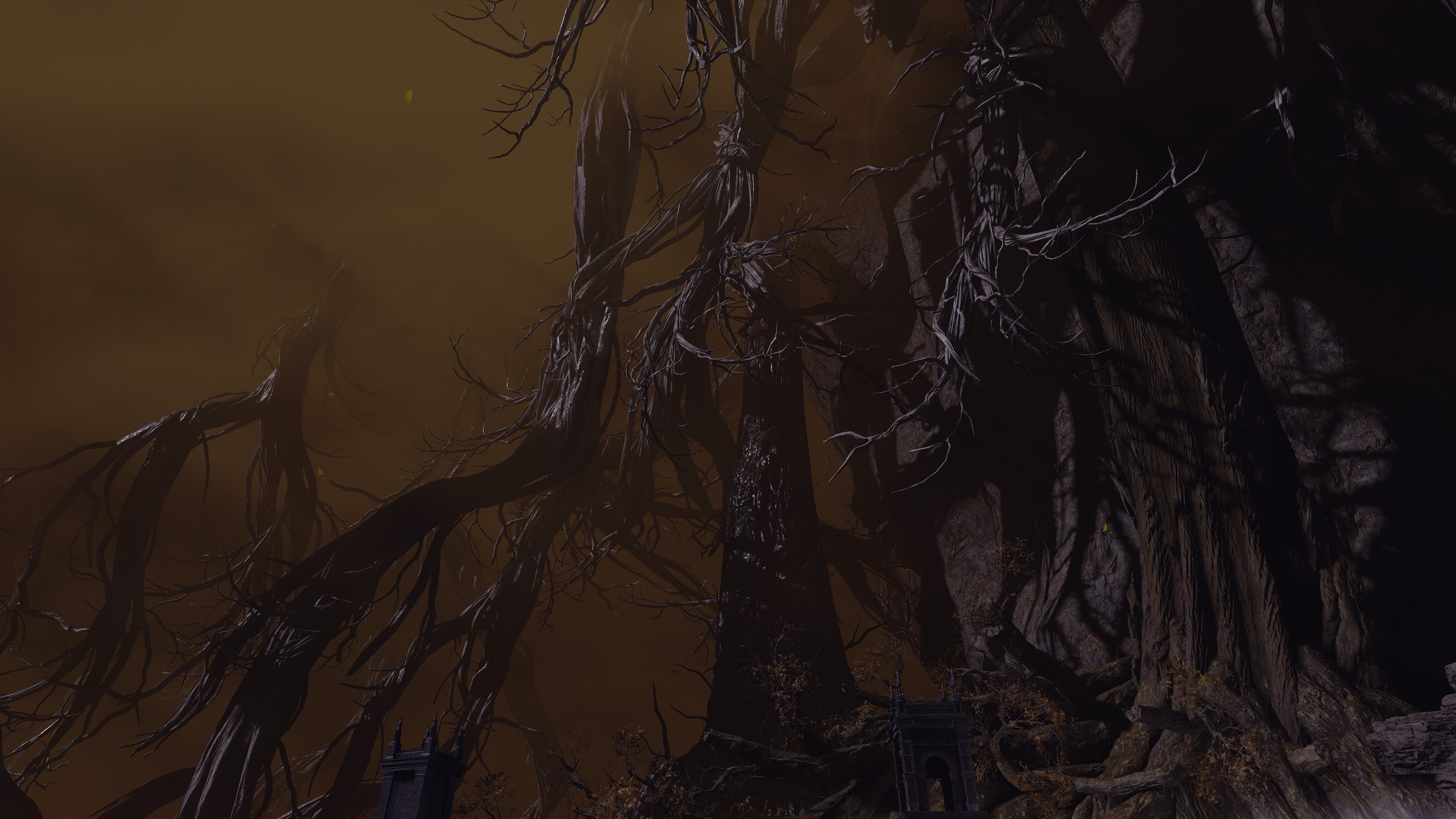
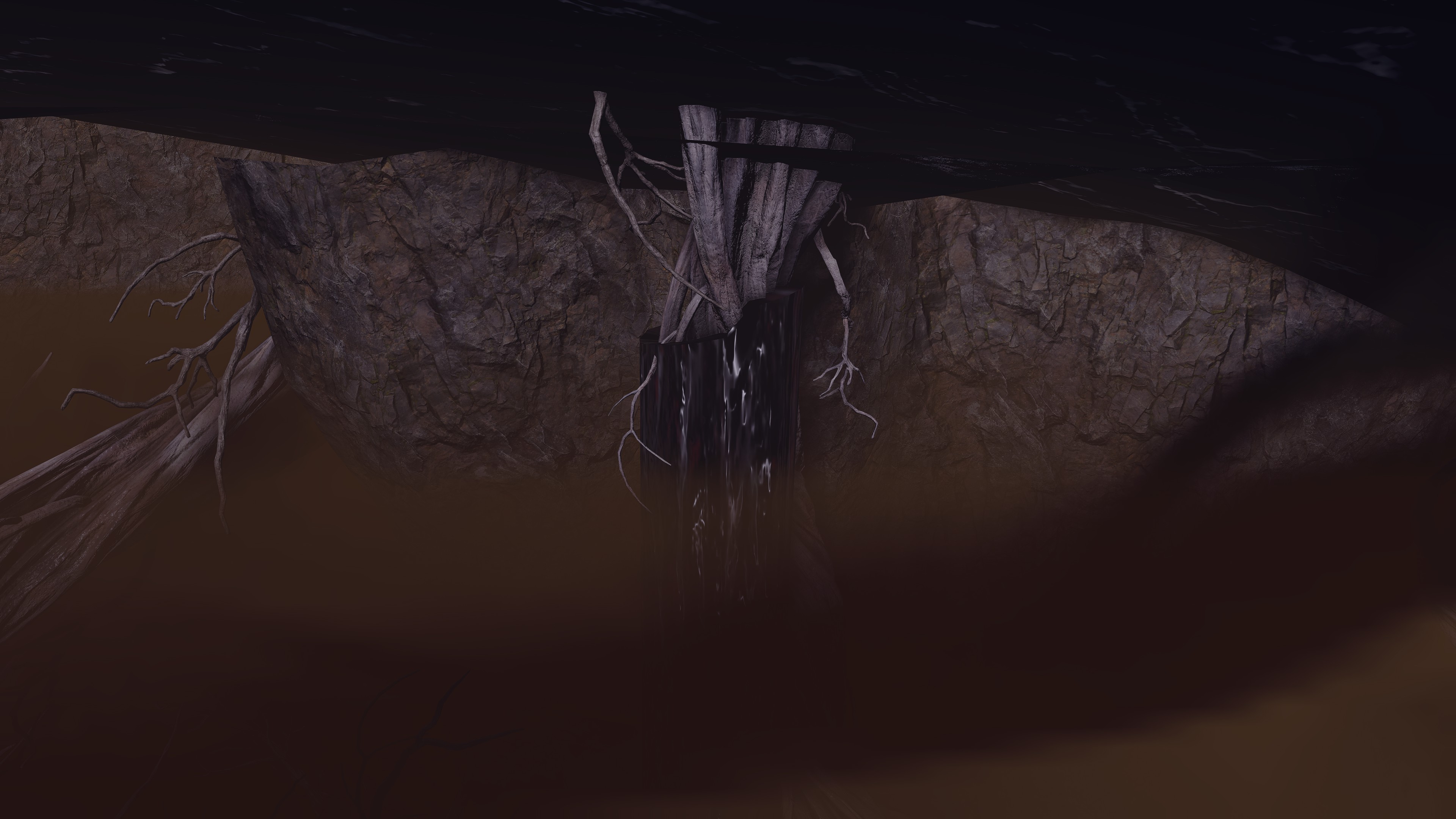
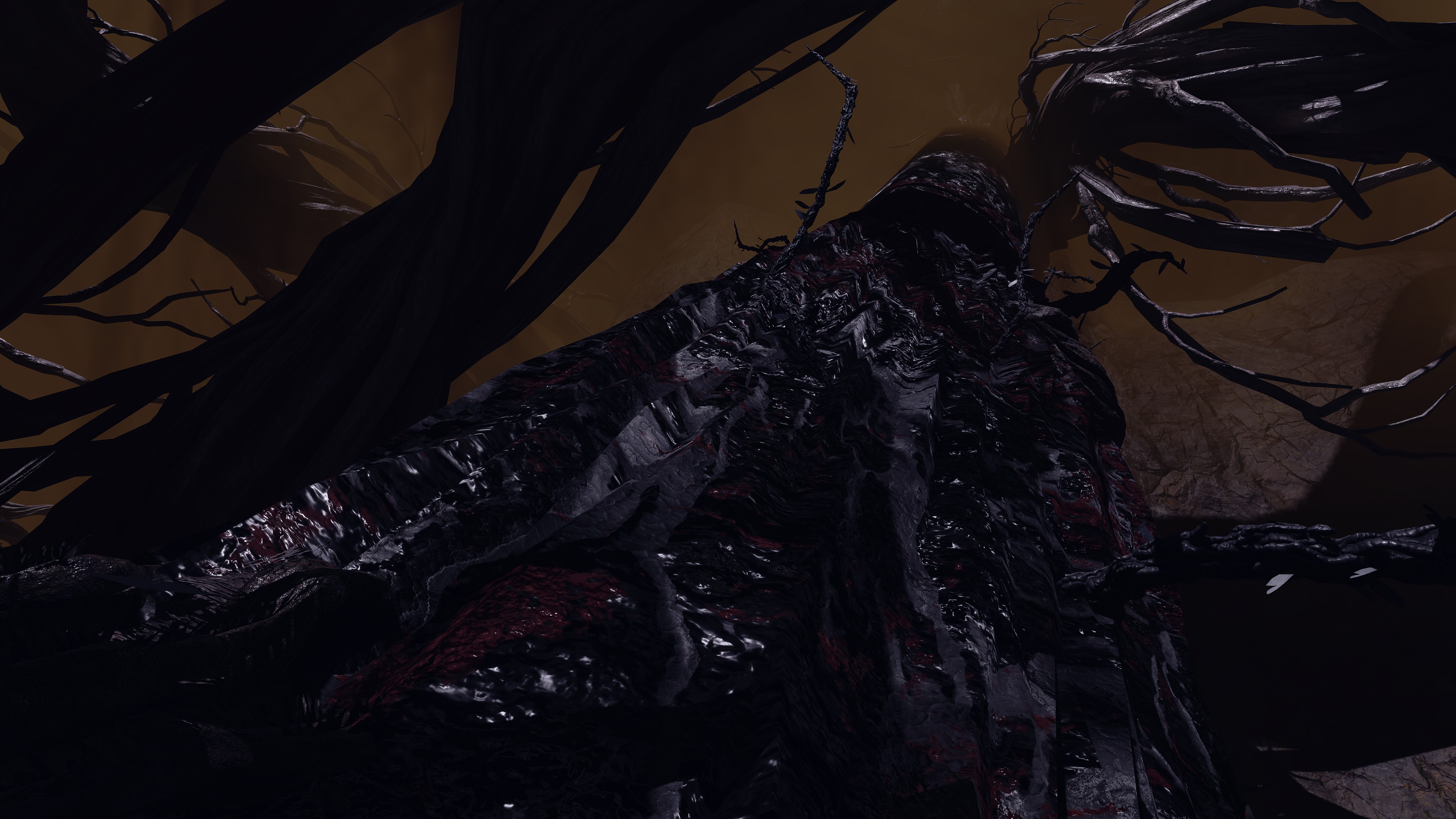
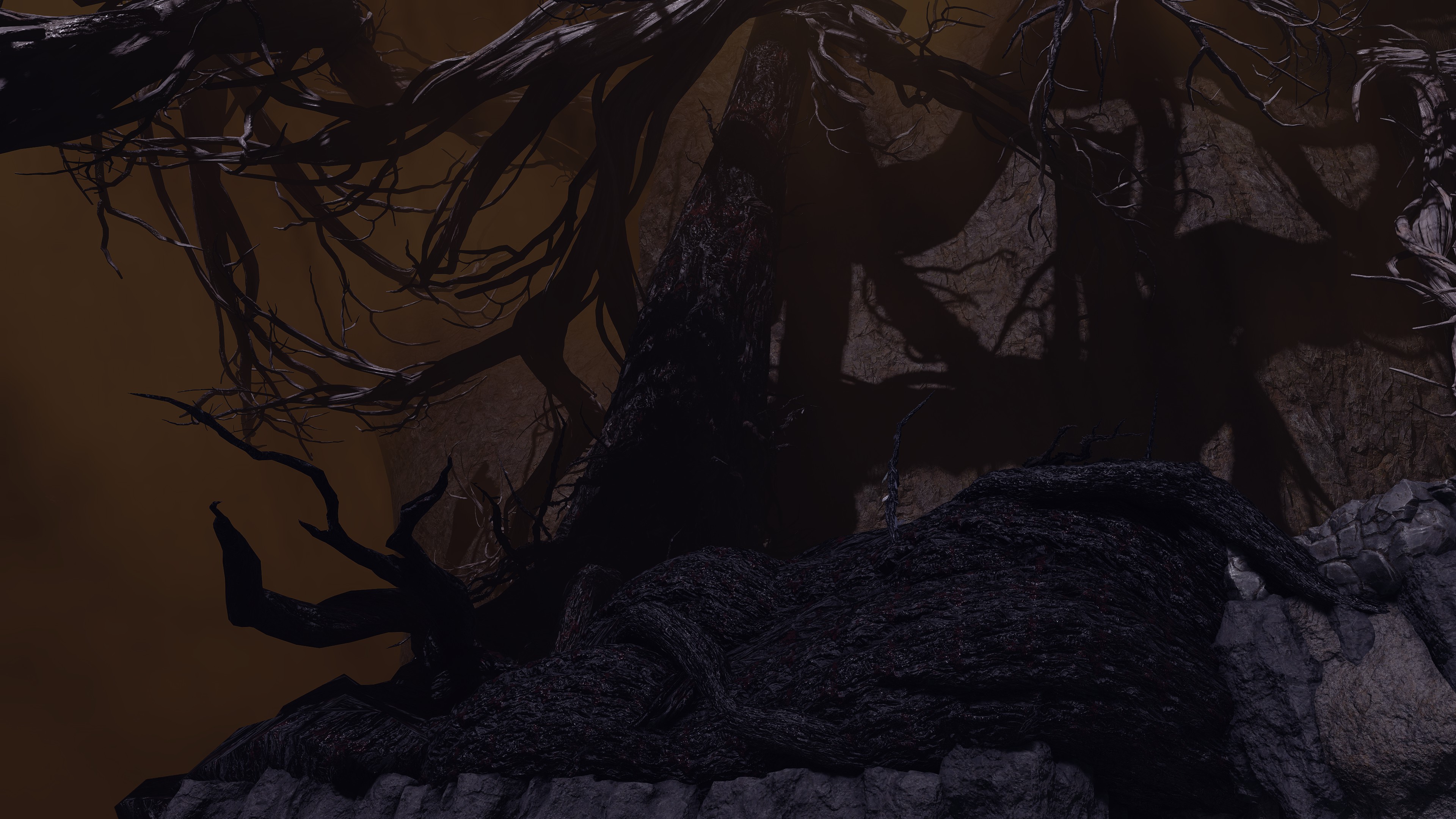
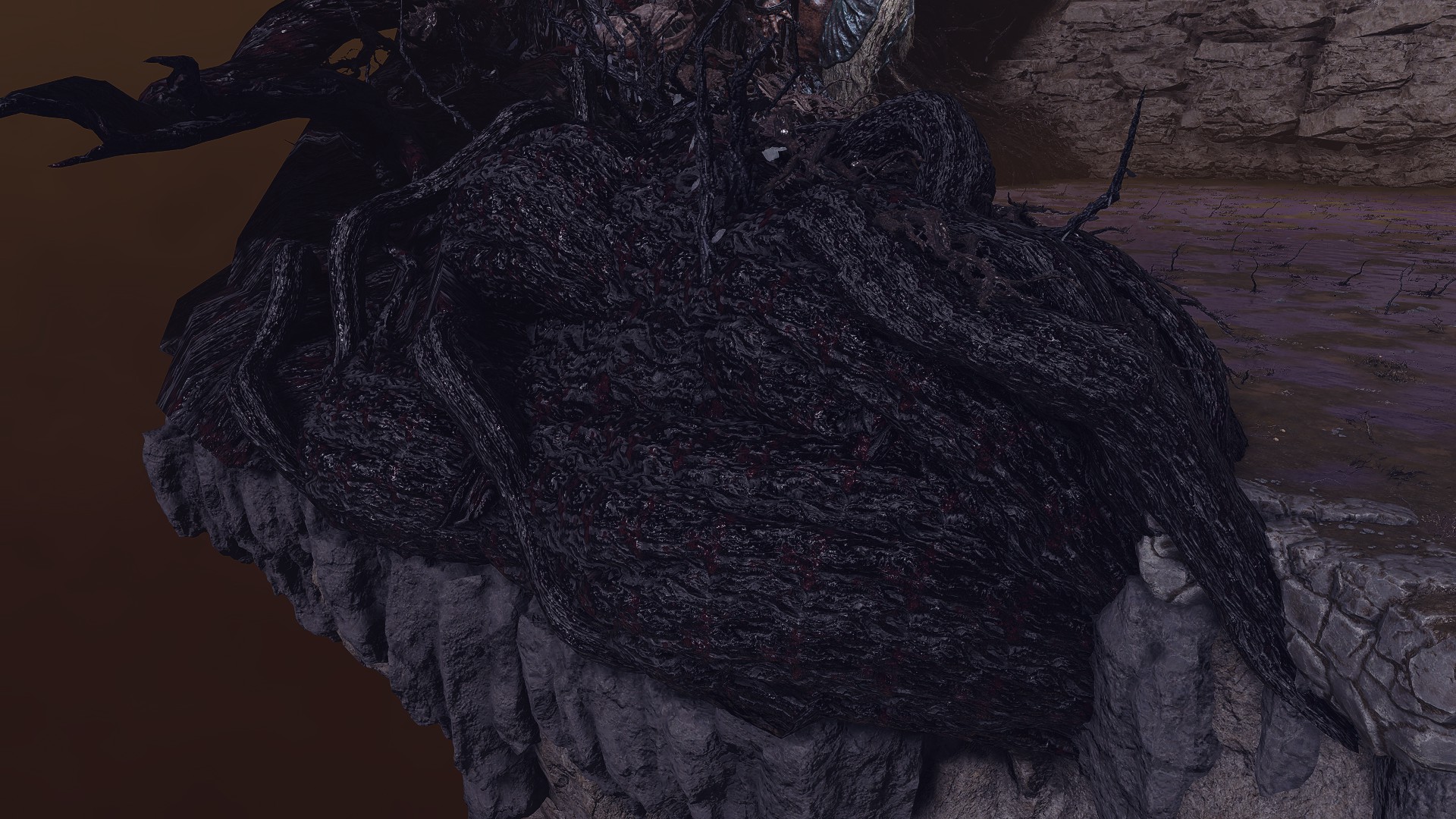
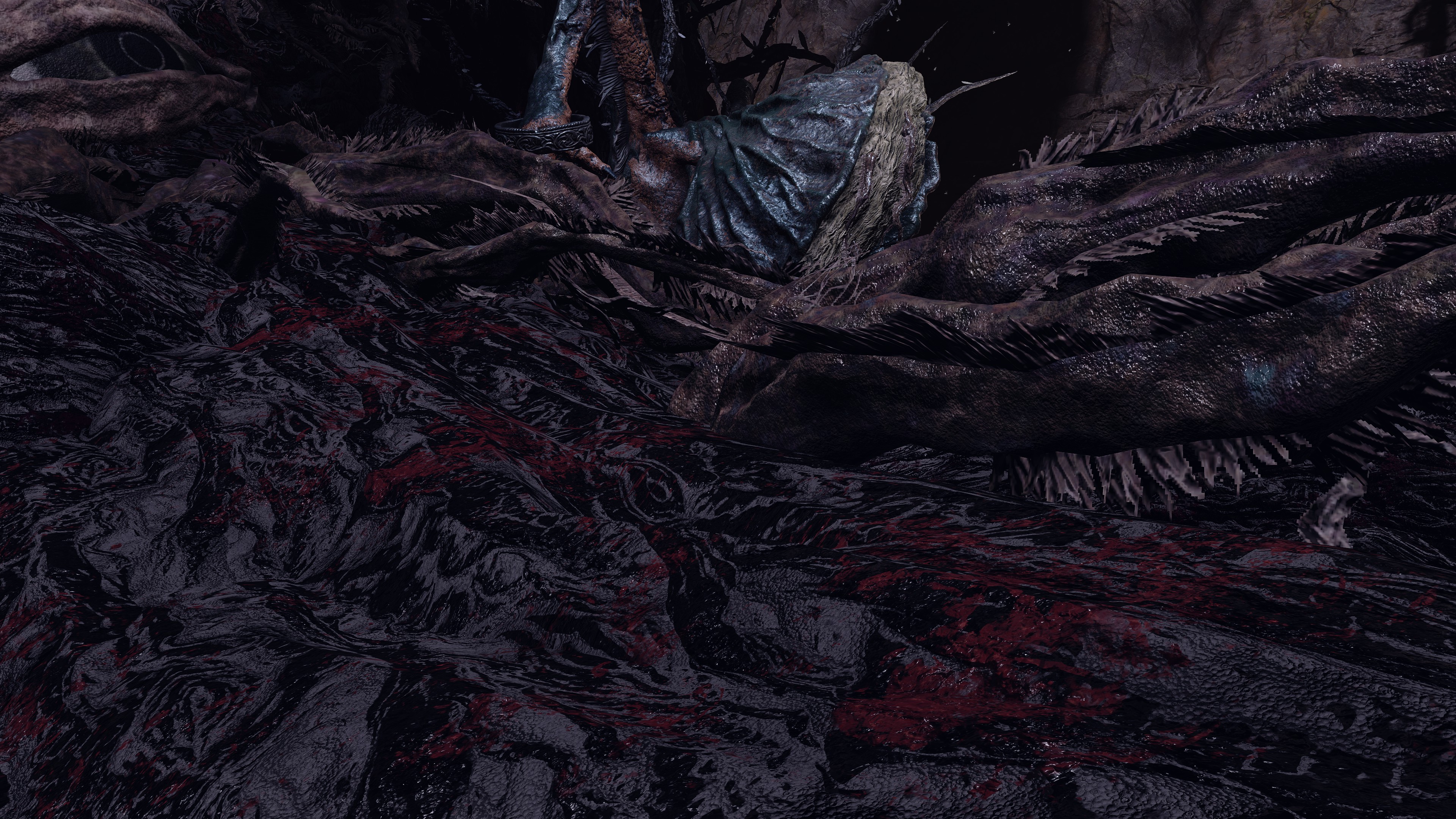
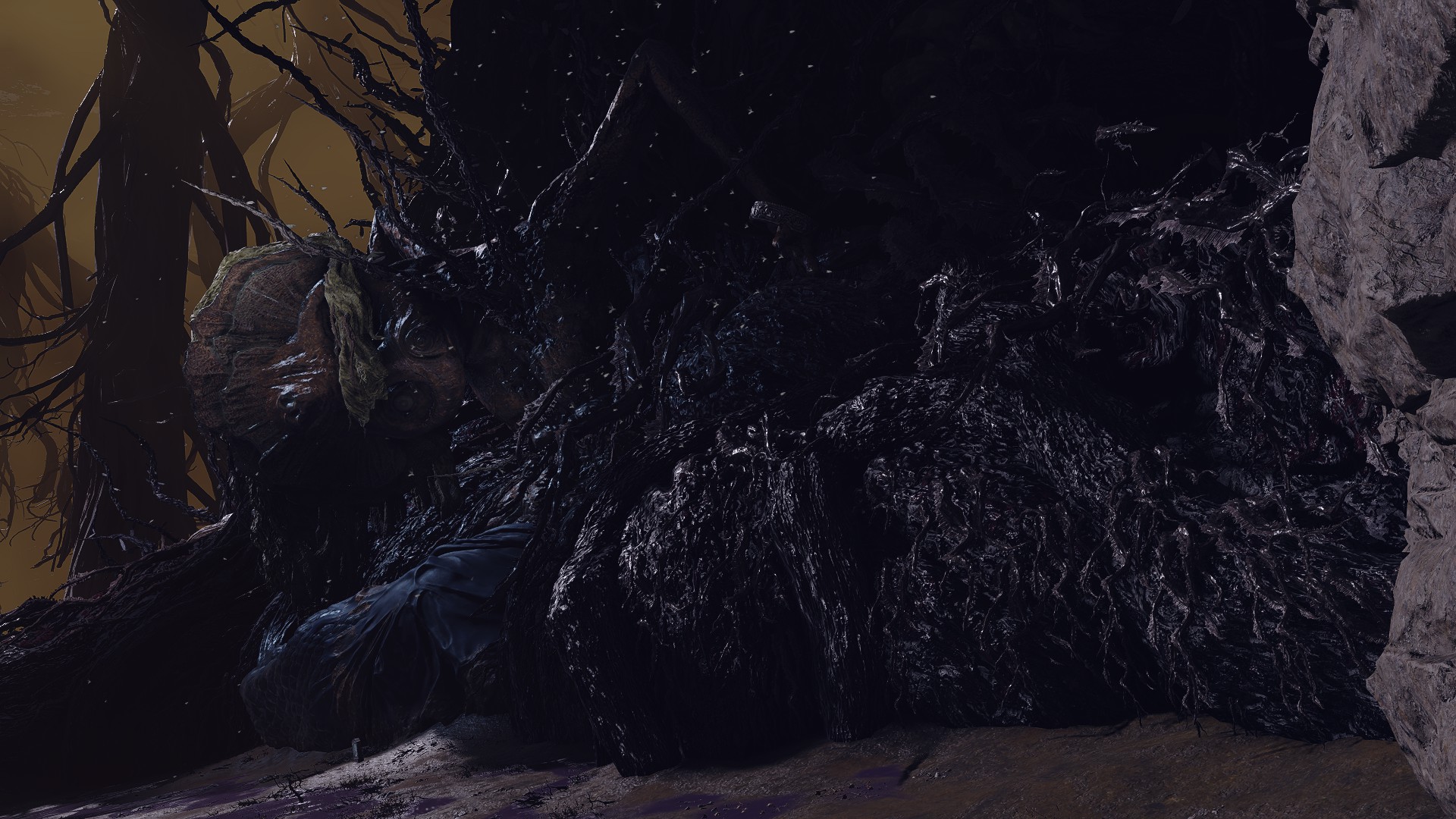
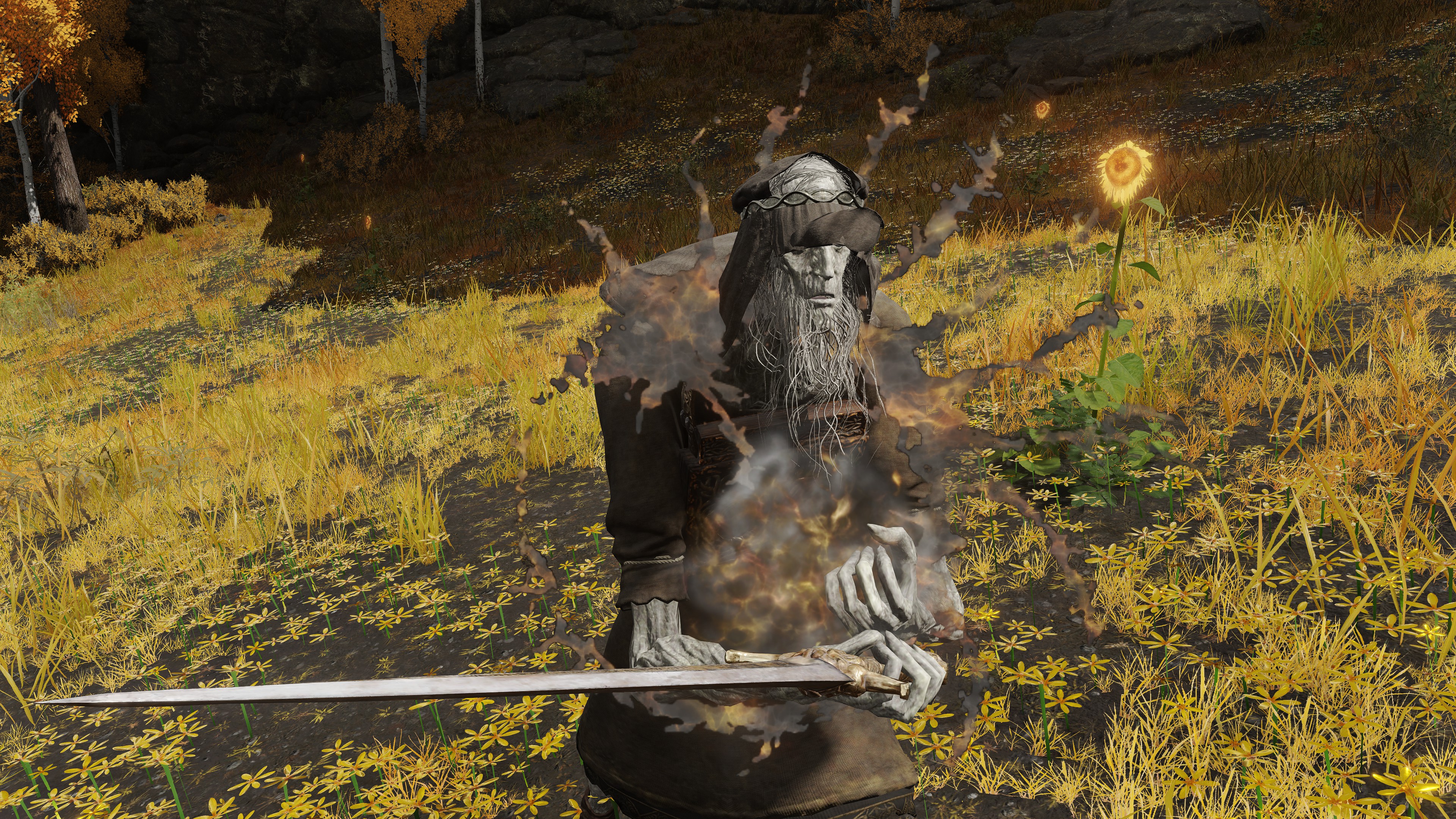
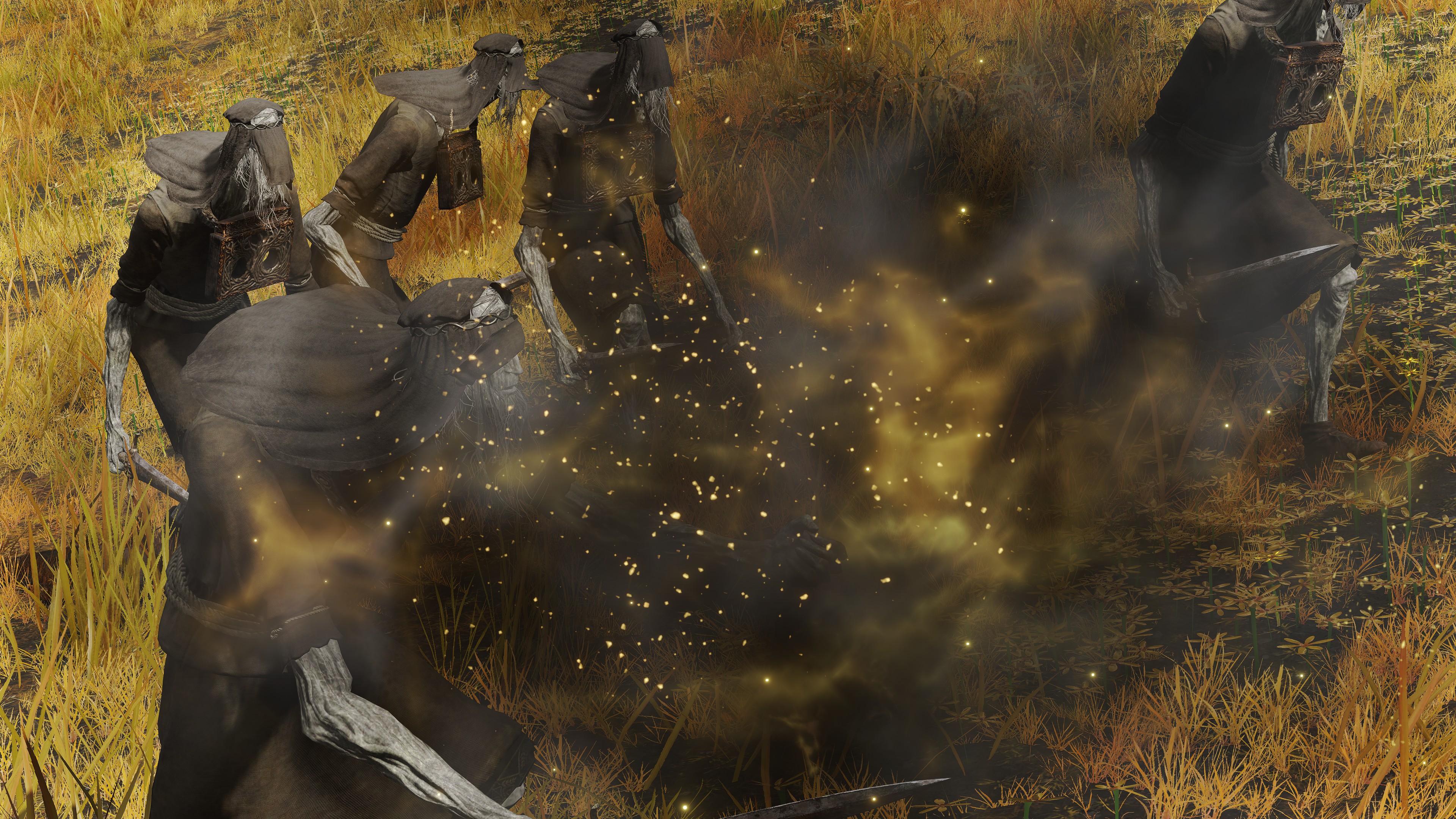
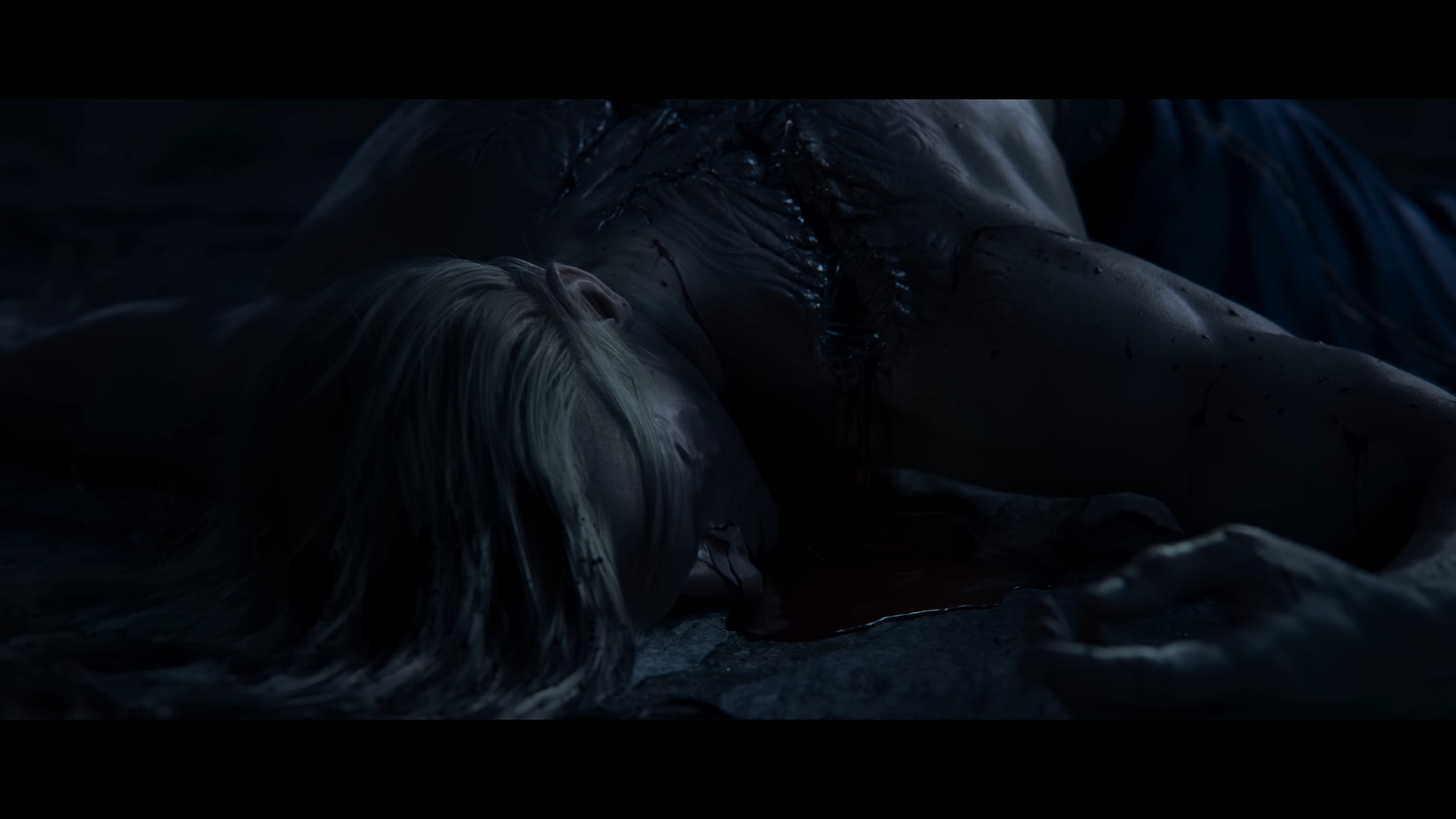
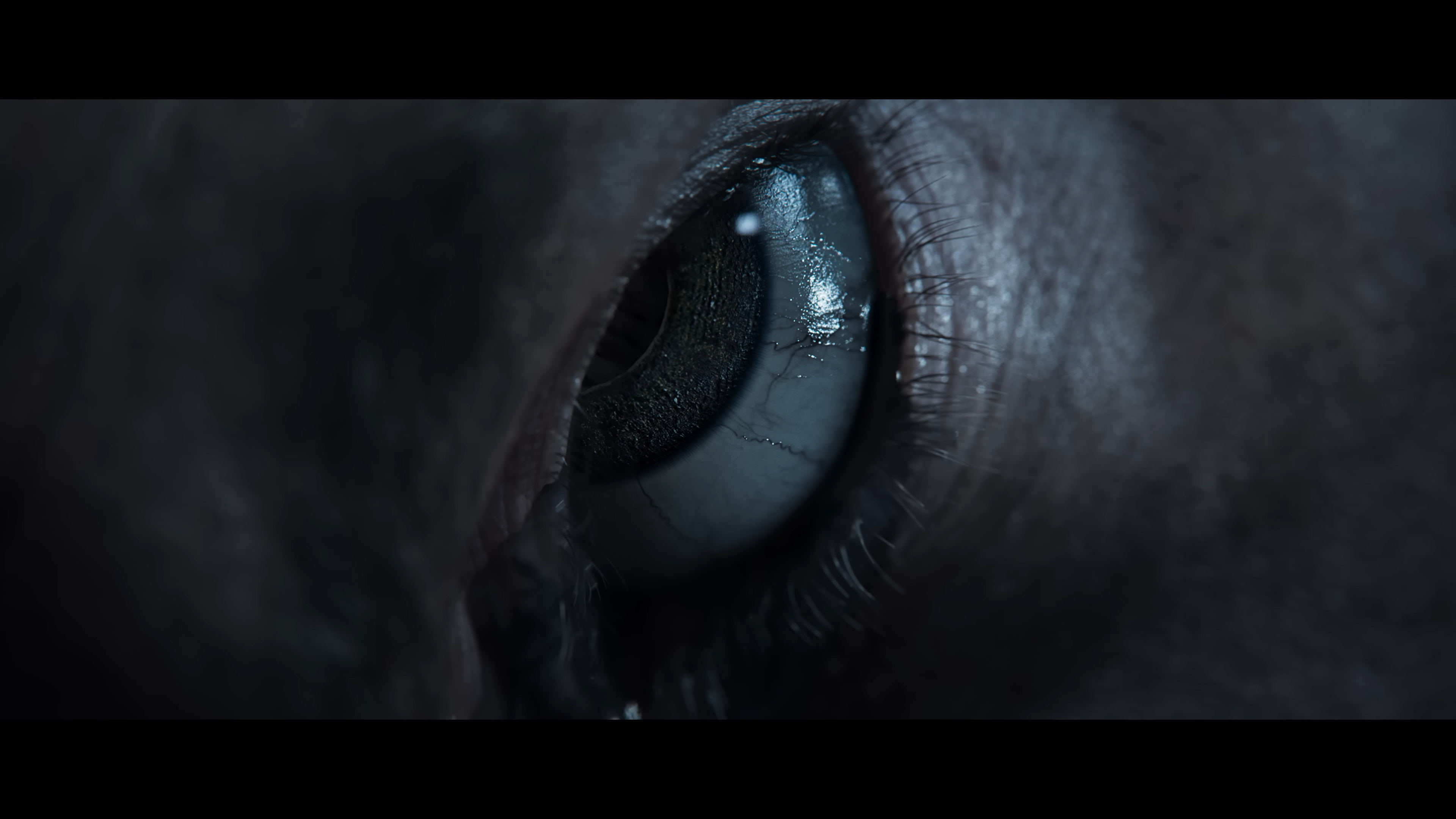
Put simply, the Golden’s curse has overshadowed any latent grace within the Erdtree. The corpse will neither be assimilated nor purified of its condition. The underlying reason for this, as the man’s wet nurse laments, is because the dead body yet lives. Thanks to Ranni’s manipulation of Destined Death, Godwyn became the first of Those Who Live in Death. The Black Knives may have destroyed his soul, but the body could still theoretically function; it just needed new life to pilot it. And that is exactly what the story trailer shows happened. Immediately after the assassins left, some things wriggled from the cursemark on his back, beneath the skin. Those somethings squirmed all throughout the cadaver, causing the head and fingers to jerk and jolt. Finally, they enter the eye just before it reopens, the demigod’s once golden pupils now by and large blackened. The curse produced entities which infested the fresh corpse, the power of Death effectively replacing his soul to return it to life.
Boo hoo…… Lord Godwyn. Isn’t it so unsightly? The young master should have died. As the first dead of the demigods. He should have martyred himself to Destined Death. Why make a shameful display of it? For a golden scion to live in death. Is it not so unsightly?
As to what this new life piloting the body is, in the trailer, Godwyn “cries” a maggoty mucus, and in the current day, the corpse has entire tendrils of maggots springing out of the body and surrounding black tar. These maggots appear to mature into the flies buzzing around the Golden, their wings sticking out amongst the stringy clumps of larvae. These are the same tendrils which impale us when we finally succumb to the “Death” status ailment, normally accumulated from a mere fog. Like how maggots eat into corpse flesh to mature, these worms eat away at the life force to become flies and must themselves be born from Death eating away the same. And much as how maggots in corpses were historically attributed to spontaneous generation, Godwyn’s cursed cadaver has become a self-sufficient breeding ground for similar fly spawn. The insects born of the centipede brand permeate his physical essence inside and out, becoming the force killing and then animating his corpse.
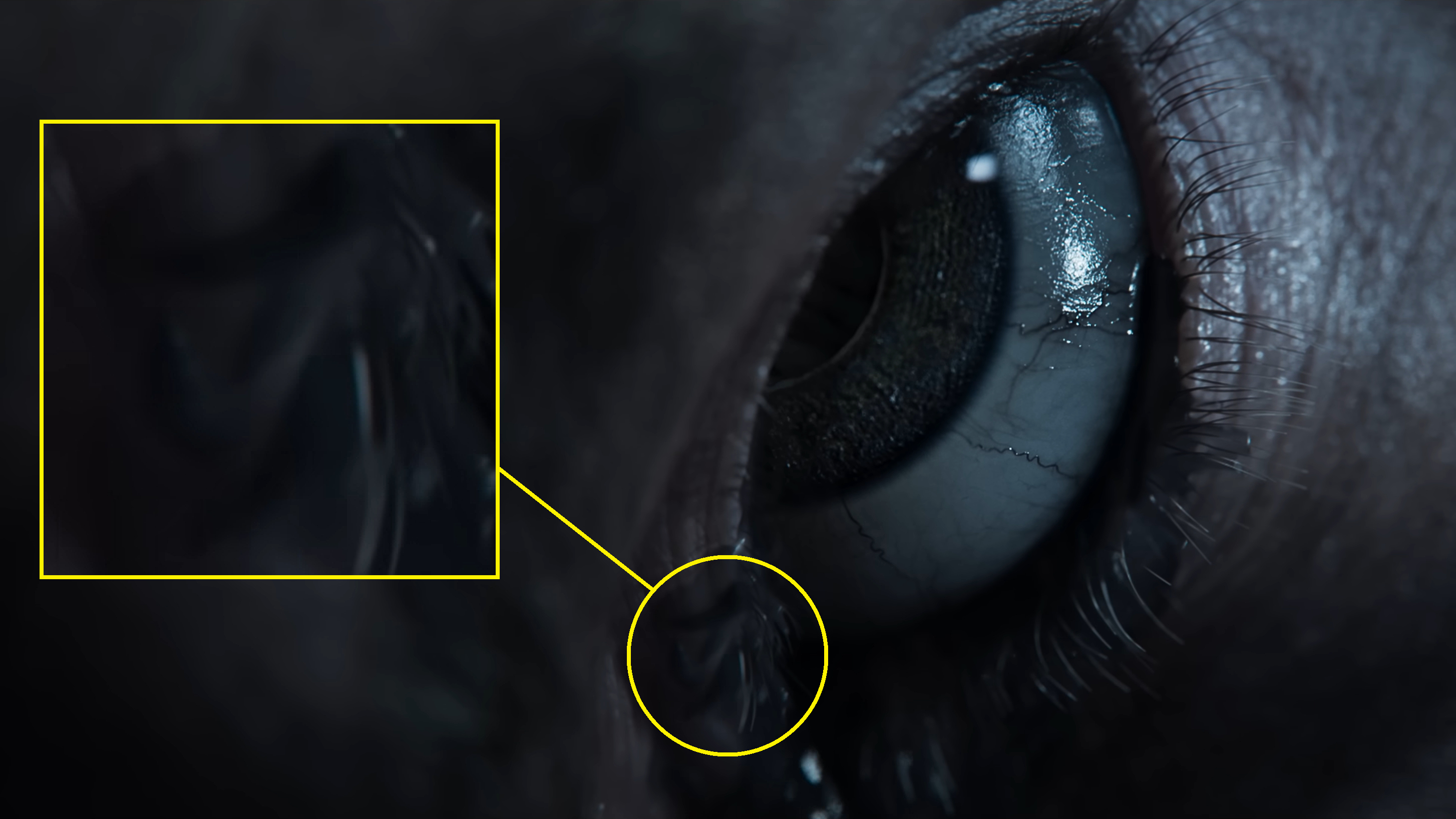
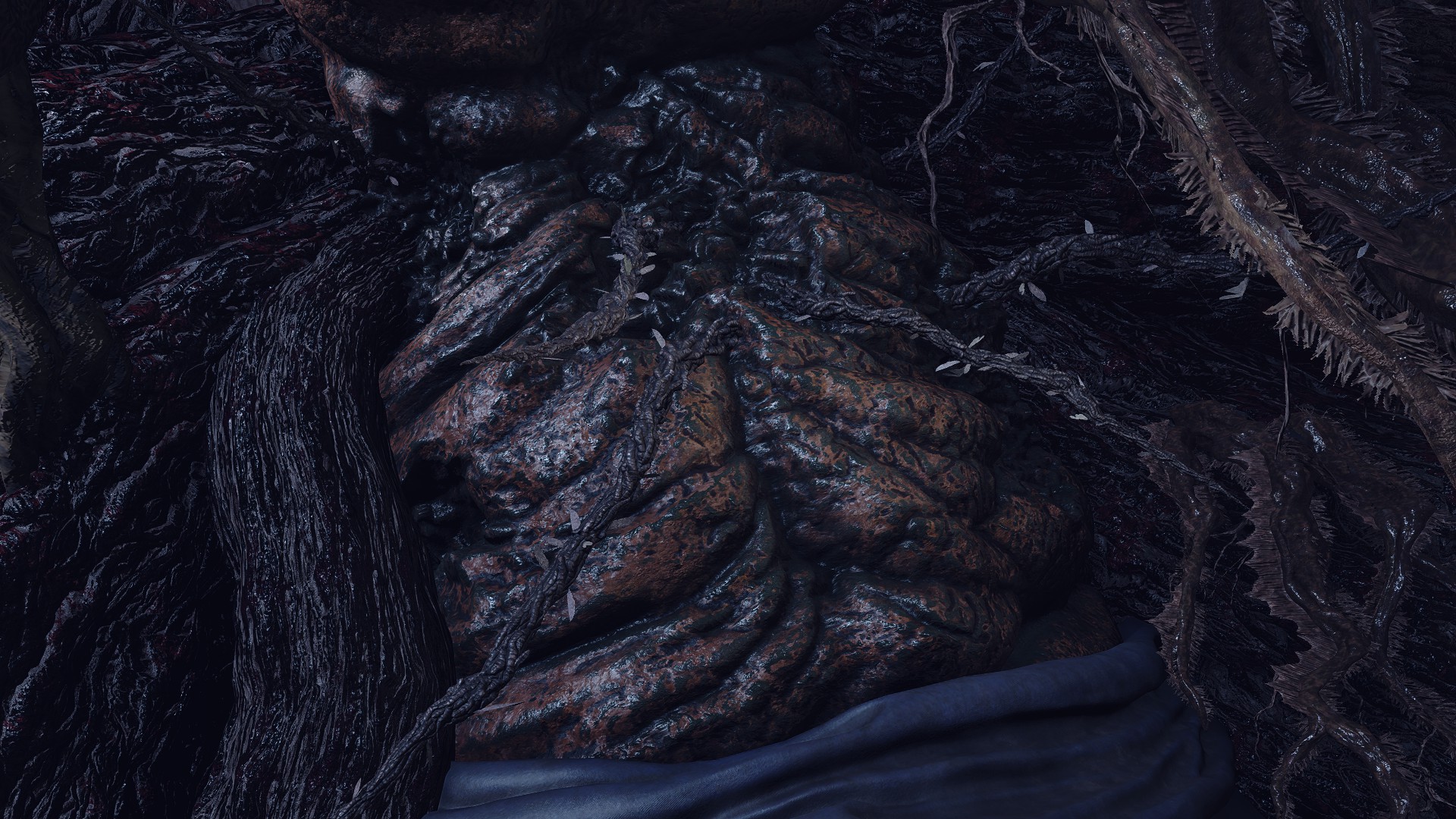
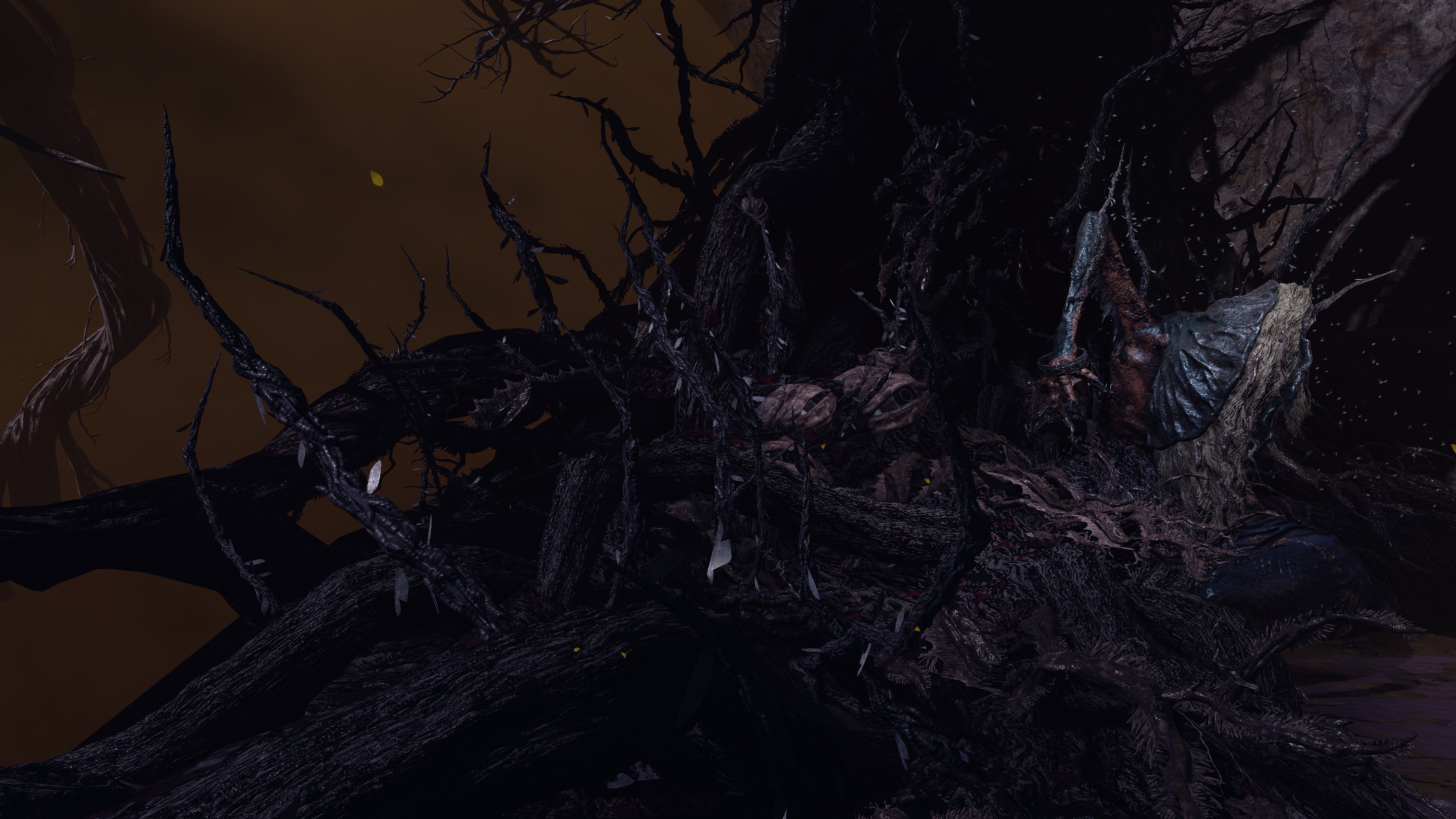
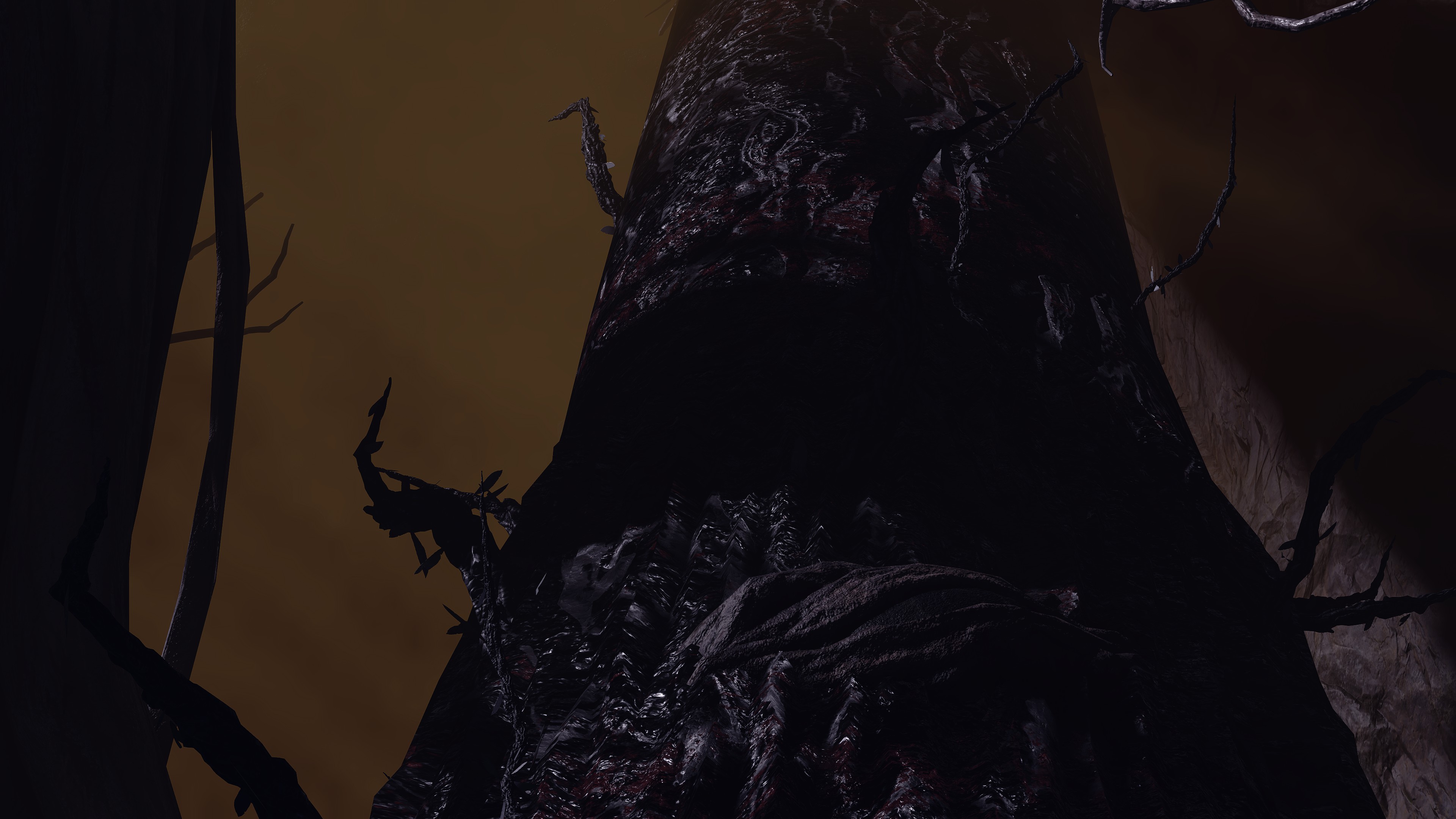
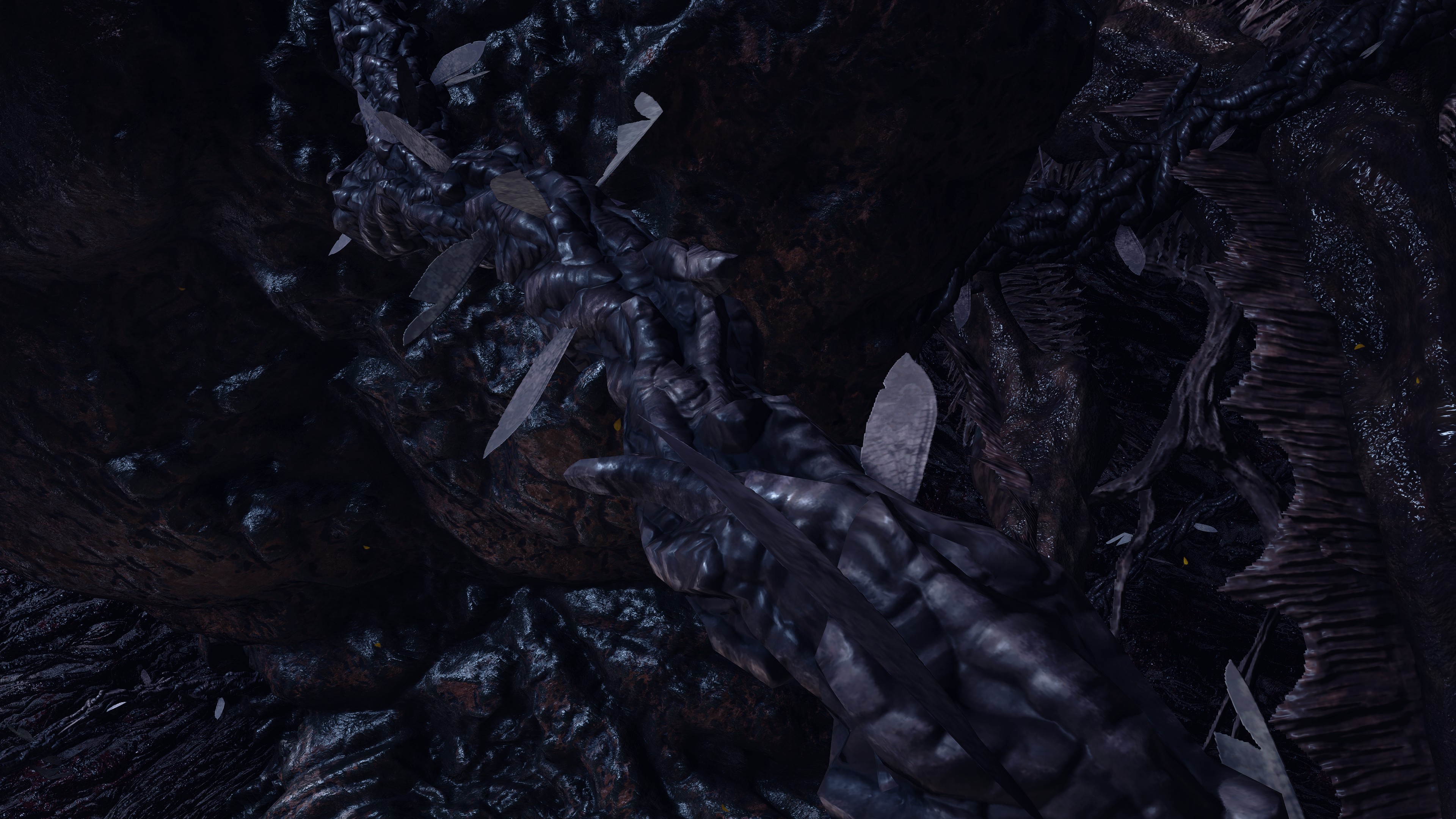
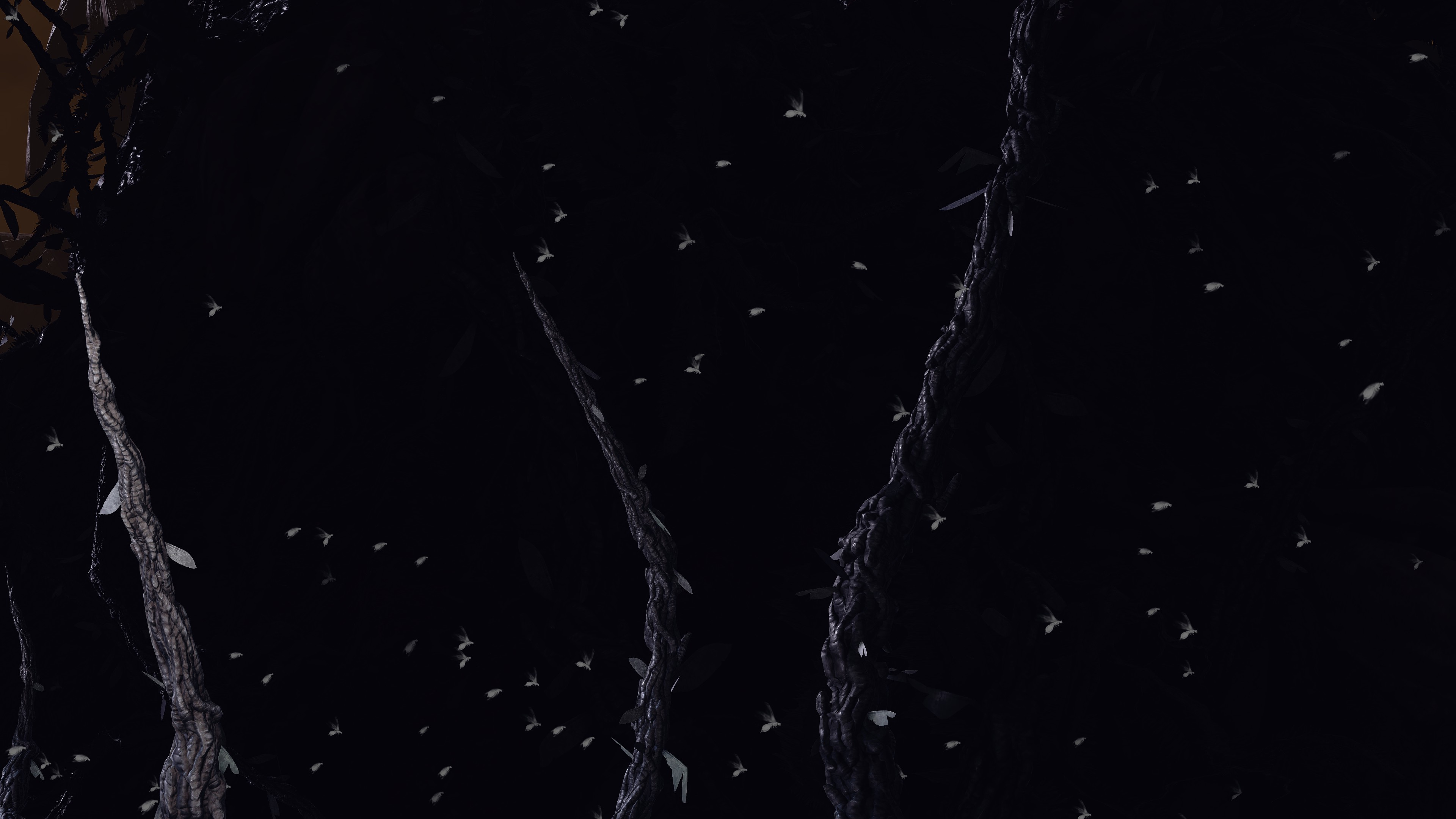
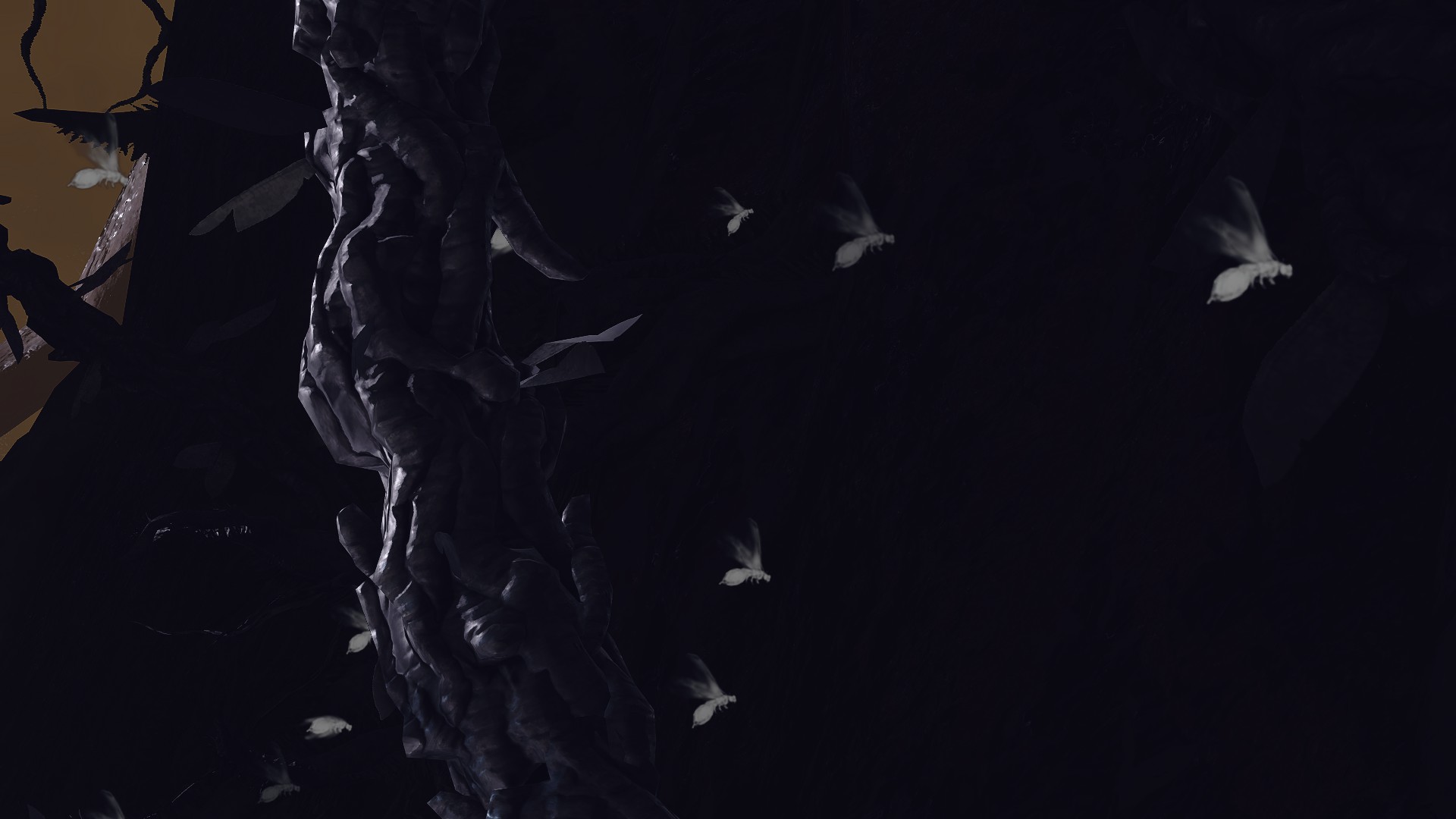
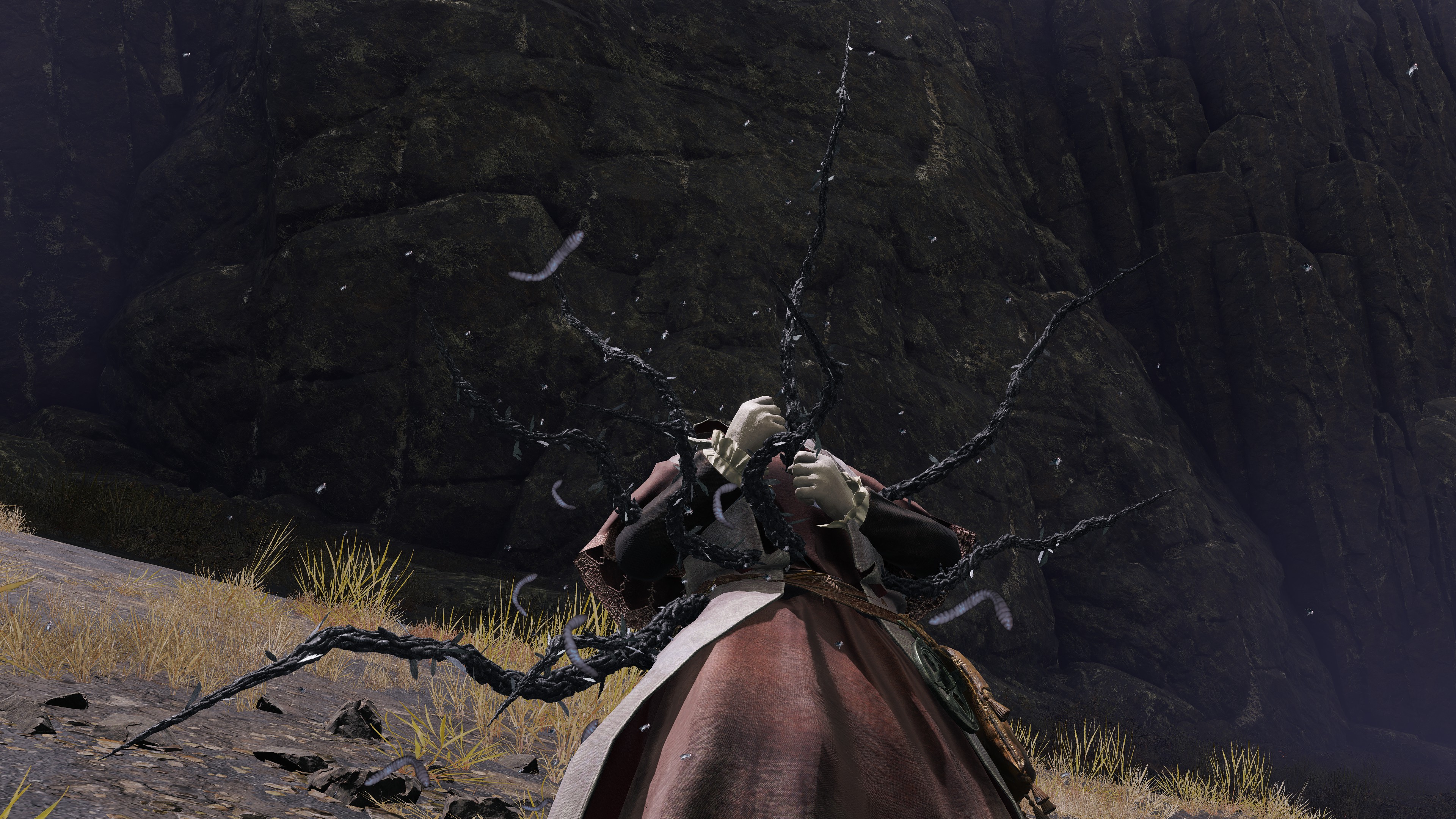
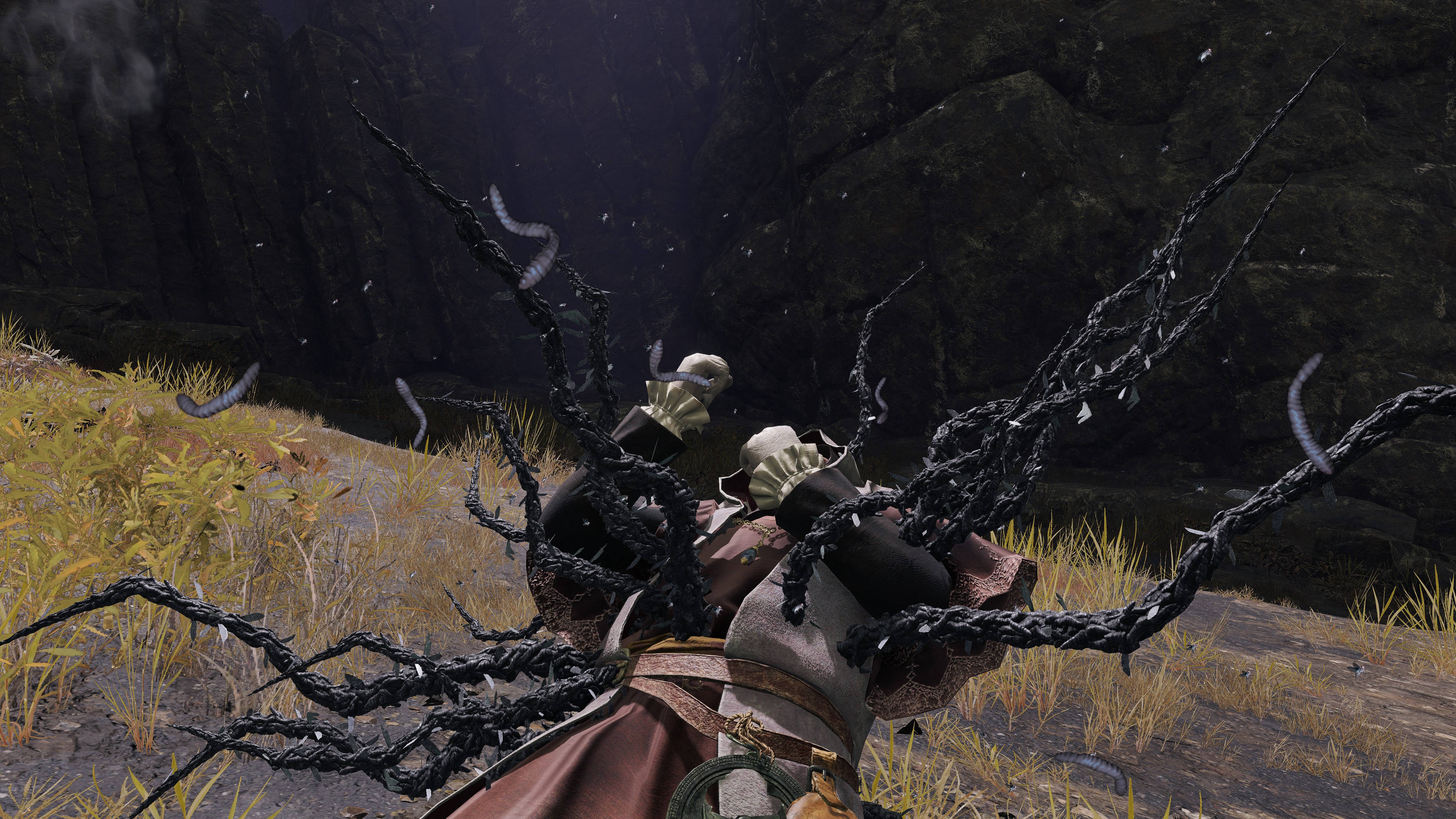
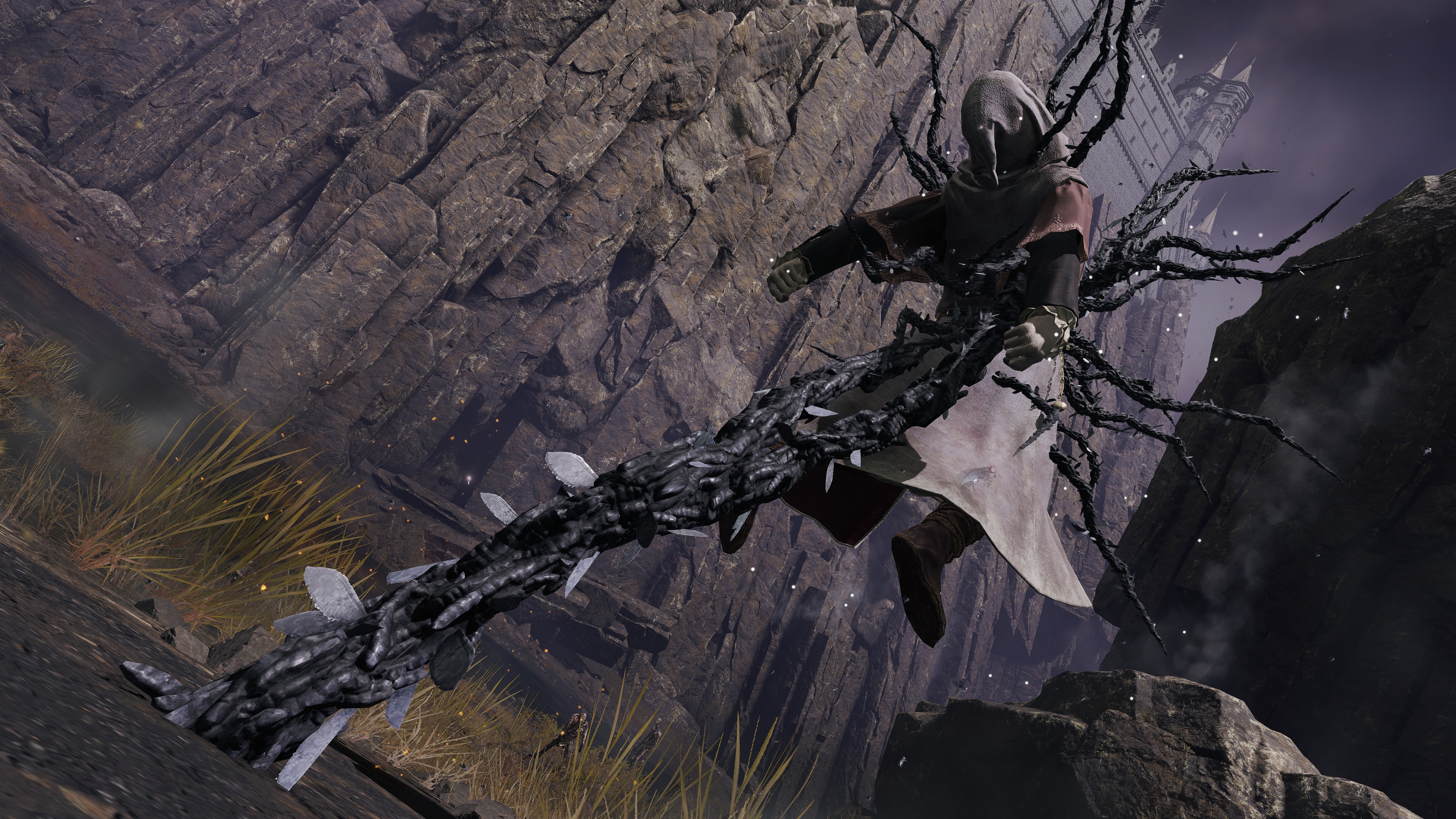
There is some irony in the power of death producing life, but it is arguably because of the nature to the Golden Order. If Marika oriented the Elden Ring toward overflowing life, then it is only natural for life to fill every gap. While a shadow, the Rune of Death is still a rune, replete with that golden life energy. Even removed from the Order, it isn’t odd that its power automatically reacts to the opening which it itself left, creating life of a Death nature. Normally, this wouldn’t occur, since Death kills body and soul. But because of Ranni’s curse, there was a loophole. This is why Rogier considers living in death to touch upon a flaw of the Golden Order, a grey zone in the rules because no one, least of all Marika, could conceive of such a niche scenario when formulating her Order. The result is soulless Godwyn nonetheless returning to life, only in body fueled by Death and its spawn.
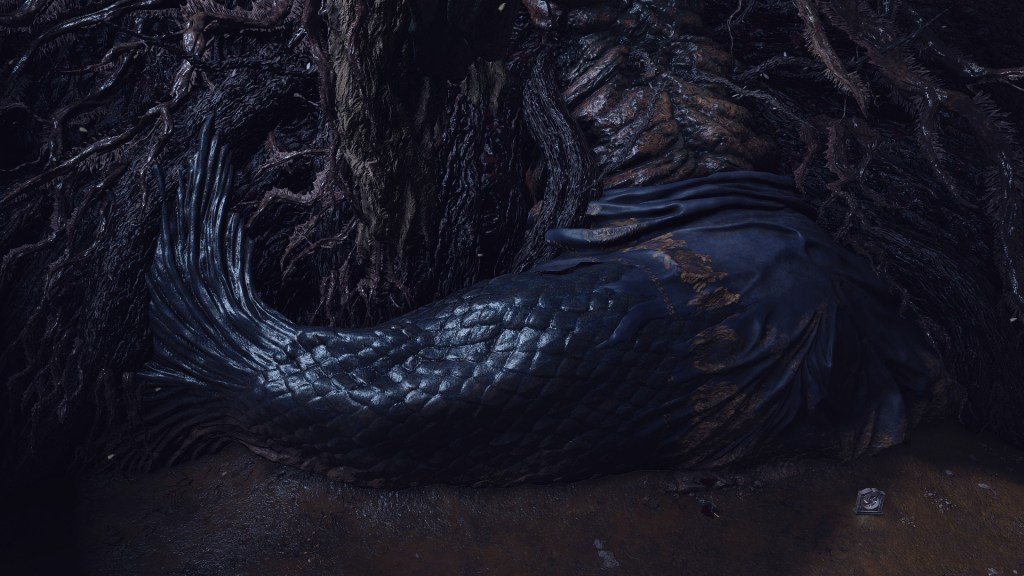
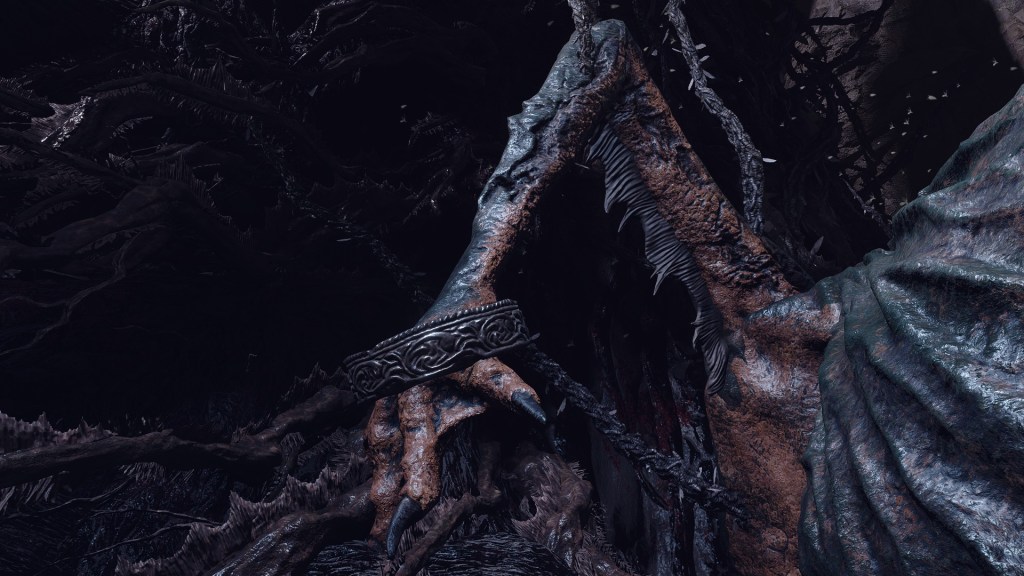
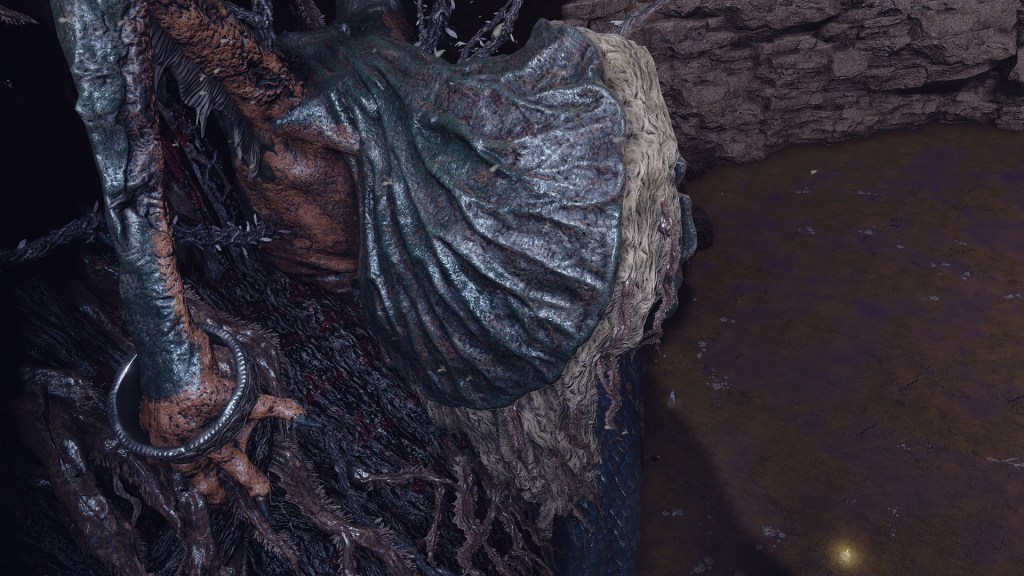
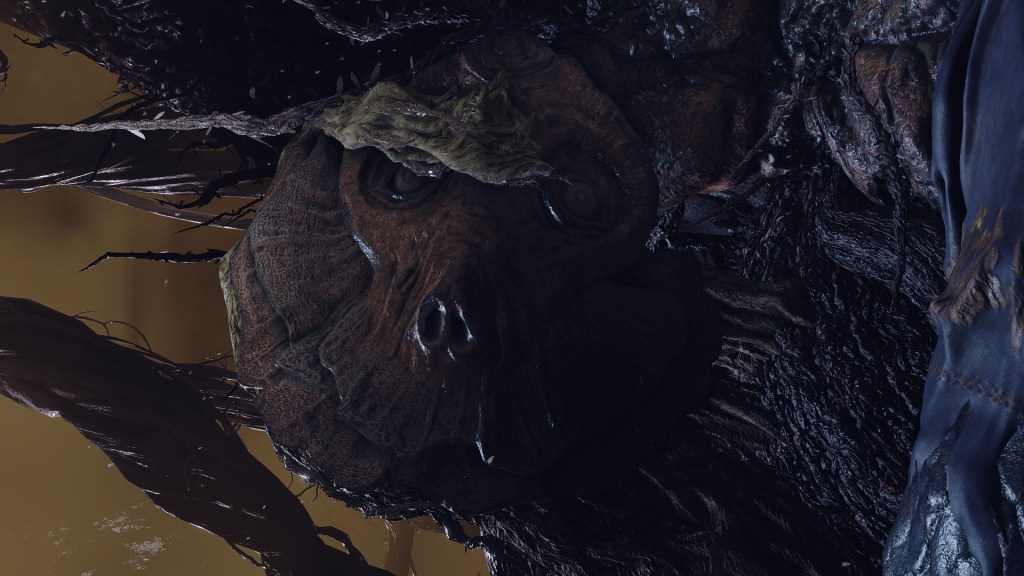
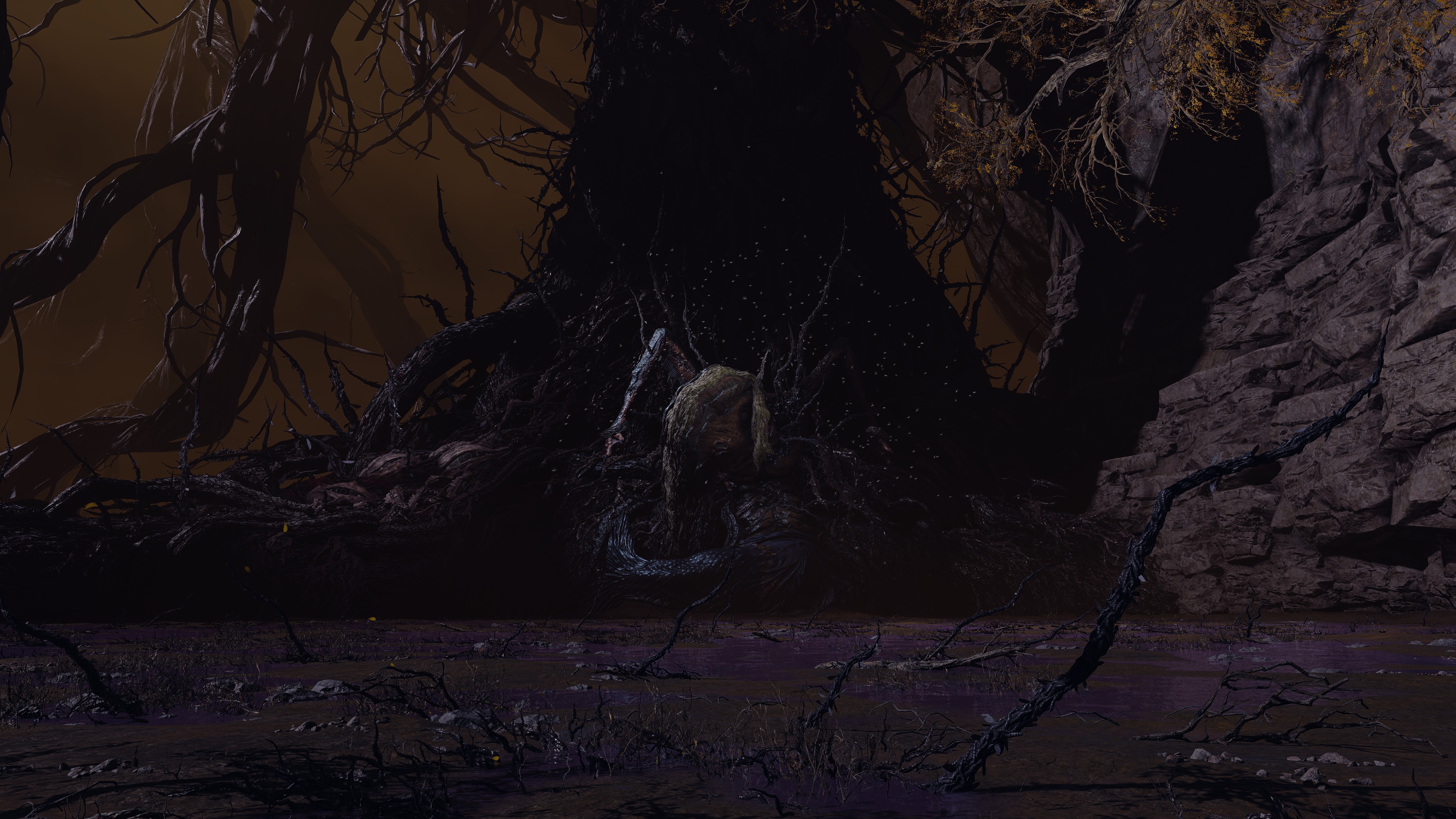
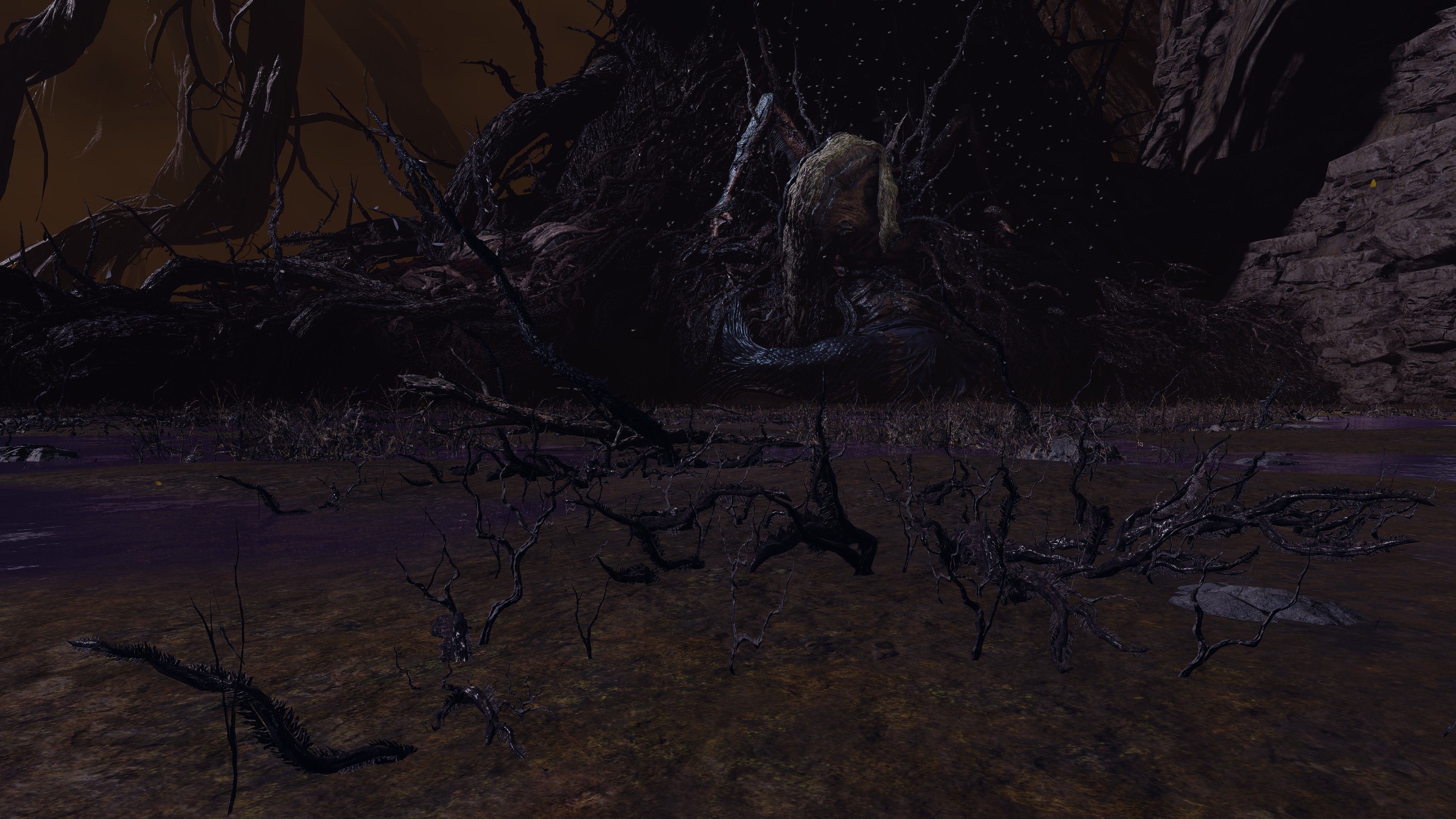
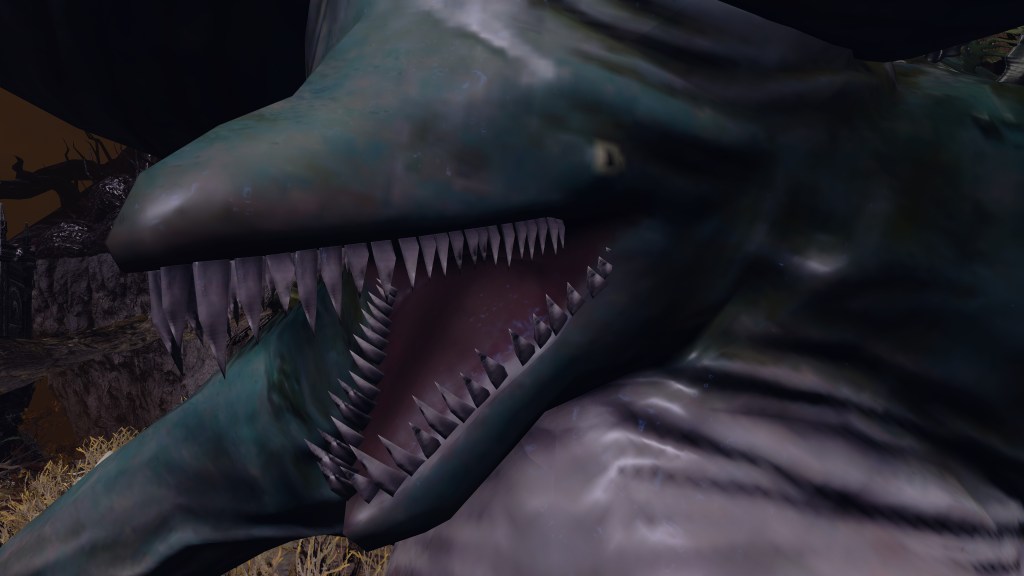
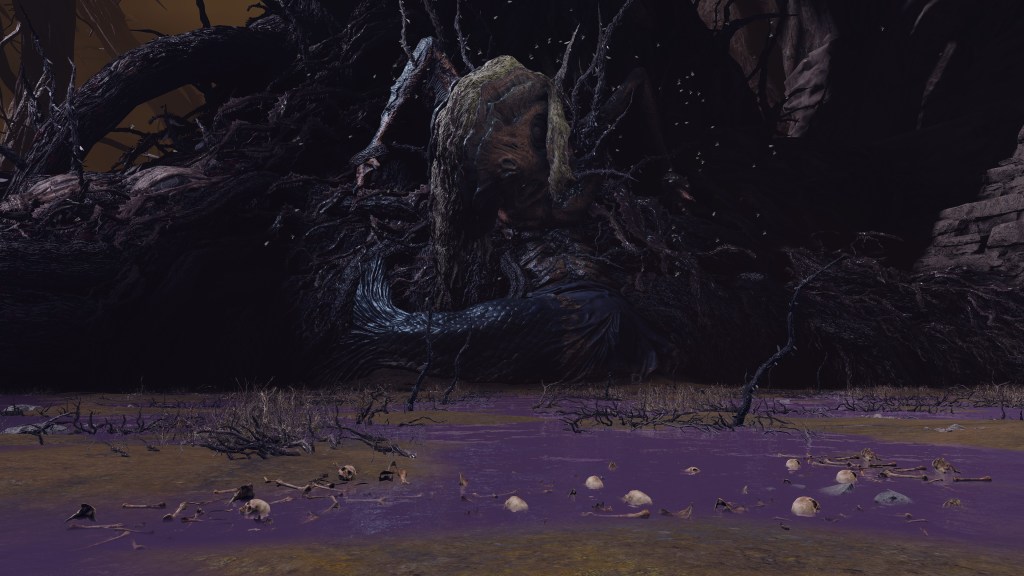
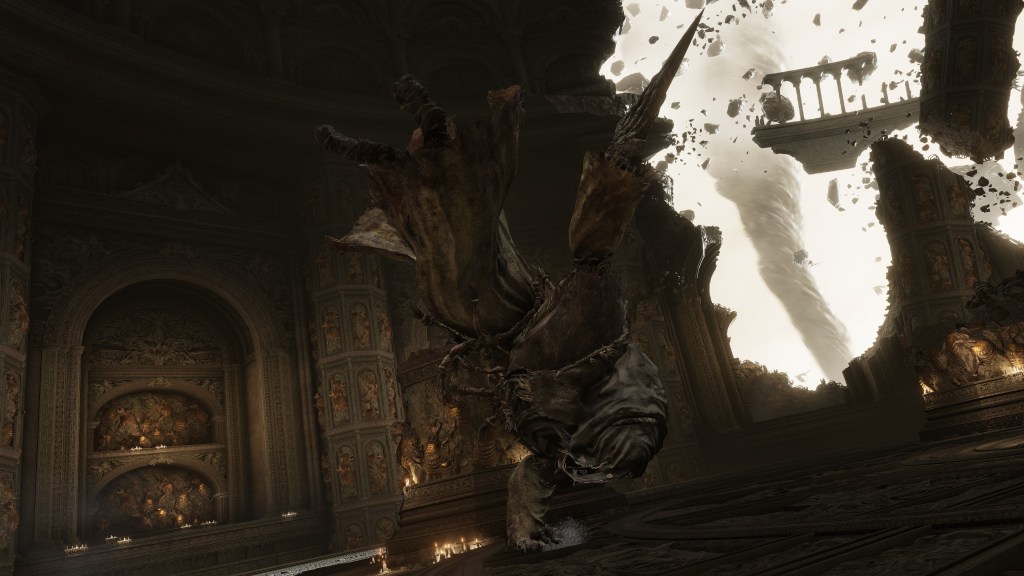
It was seeing these symptoms of life in death which assuredly prompted Godwyn’s hasty burial. The royal court couldn’t have possibly comprehended exactly what they were witnessing in this unprecedented scenario, but they made the connection to the curse and immediately worked to cover it up. The Golden was given a prime platform to return to the tree, and everyone was kept away so that they wouldn’t see what had become of him. Never could they imagine what hooking it up to the deep roots would do long-term. In the time since, Godwyn has transformed into a gargantuan monstrosity. Legs merged into a fish tail, arms grew fins along their lengths, shoulders dislocated to match spider crabs, head twisted around into a clam shell, eyes adding a third mirroring Triops shrimp. Resembling more so some twisted mermaid, the only element left of “Godwyn” are his golden locks and attire from the night of his assassination. All the while gaining the traits of various sea creatures, the demigod began expanding his essence to the greatroot network, and nothing has been able to stop him.
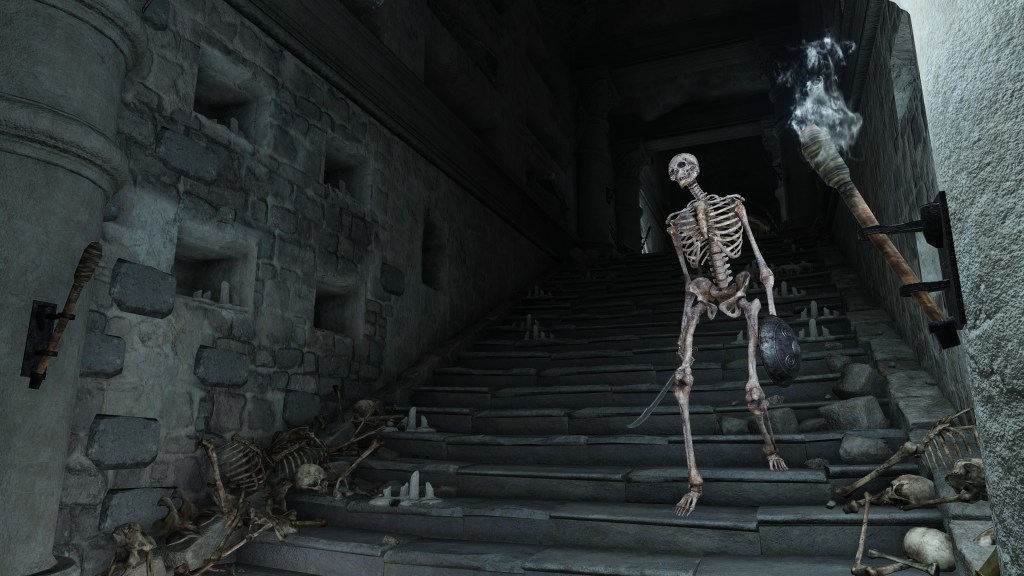
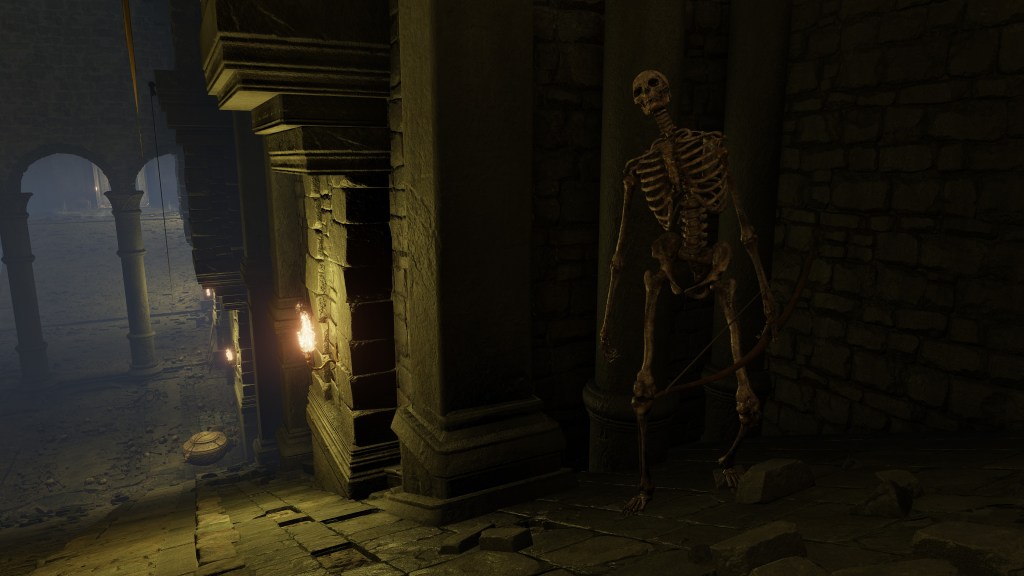
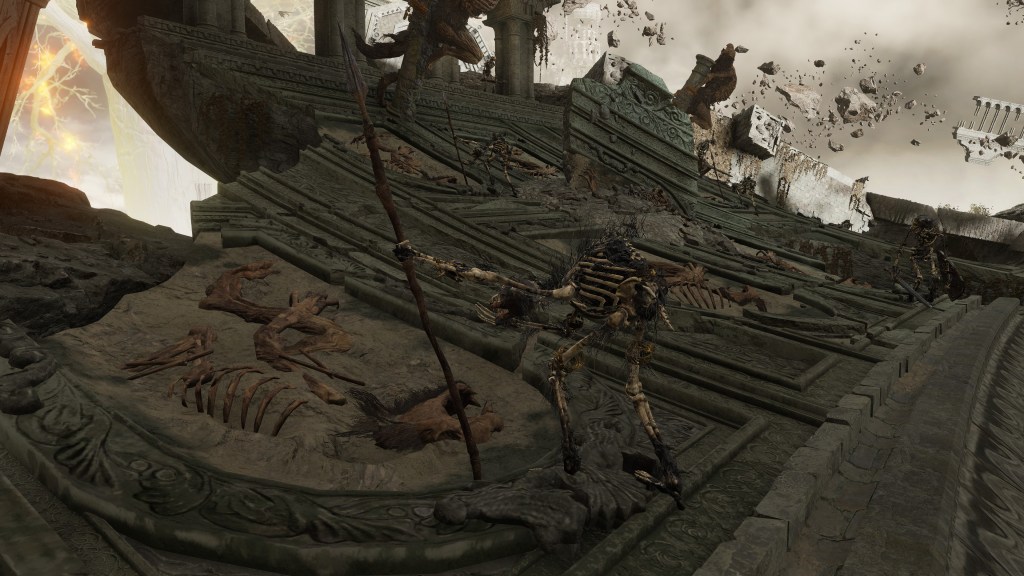
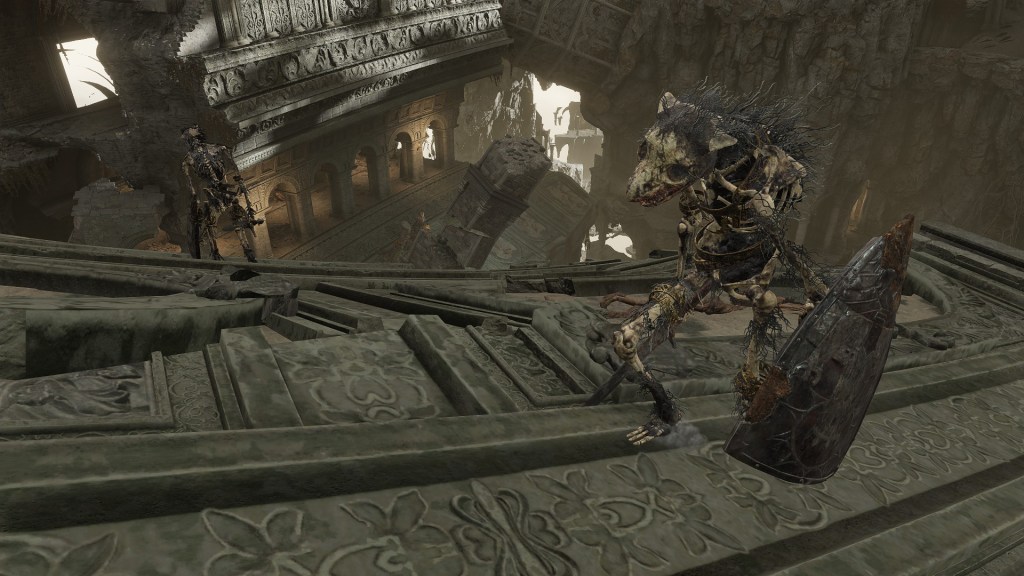
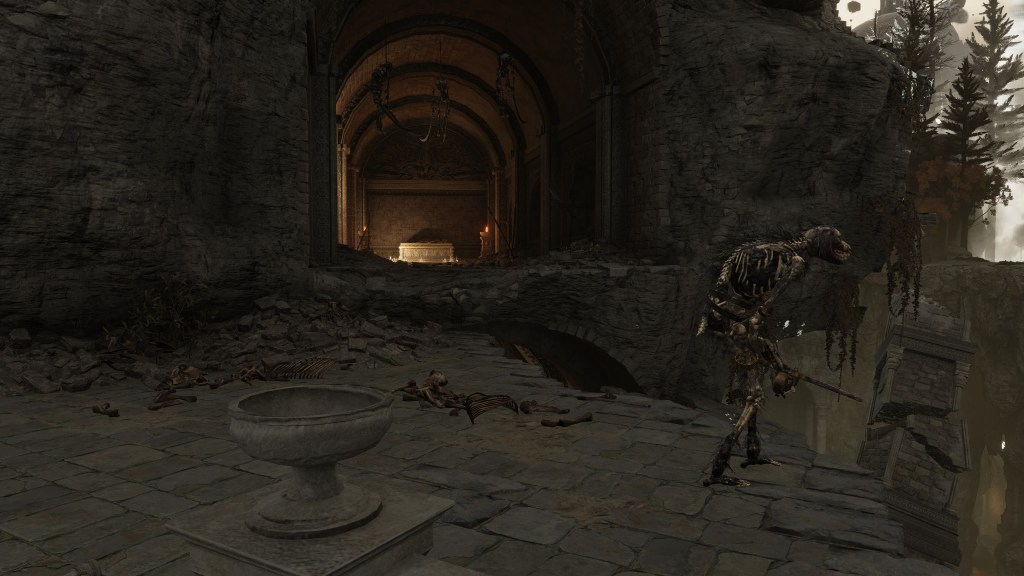
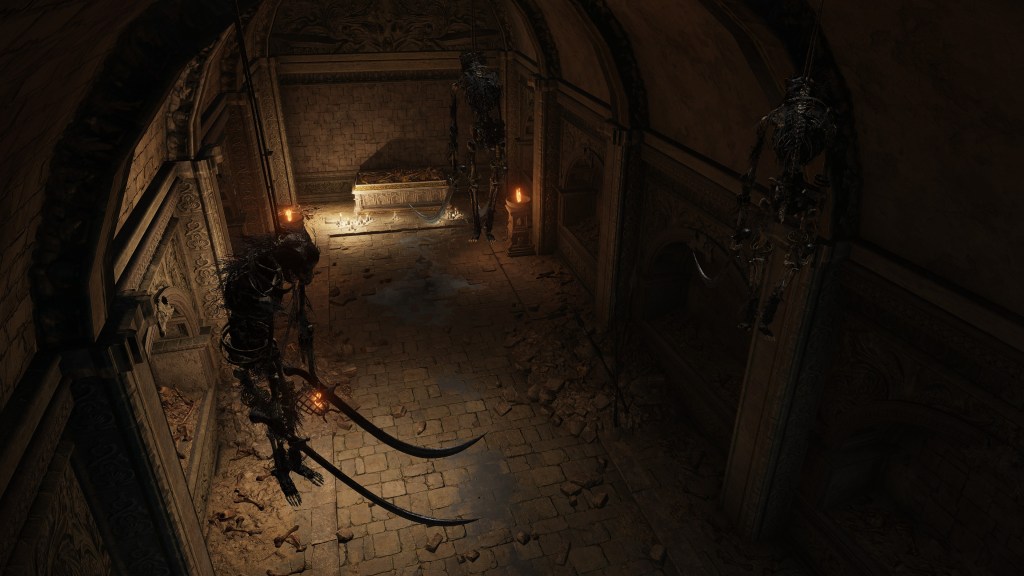
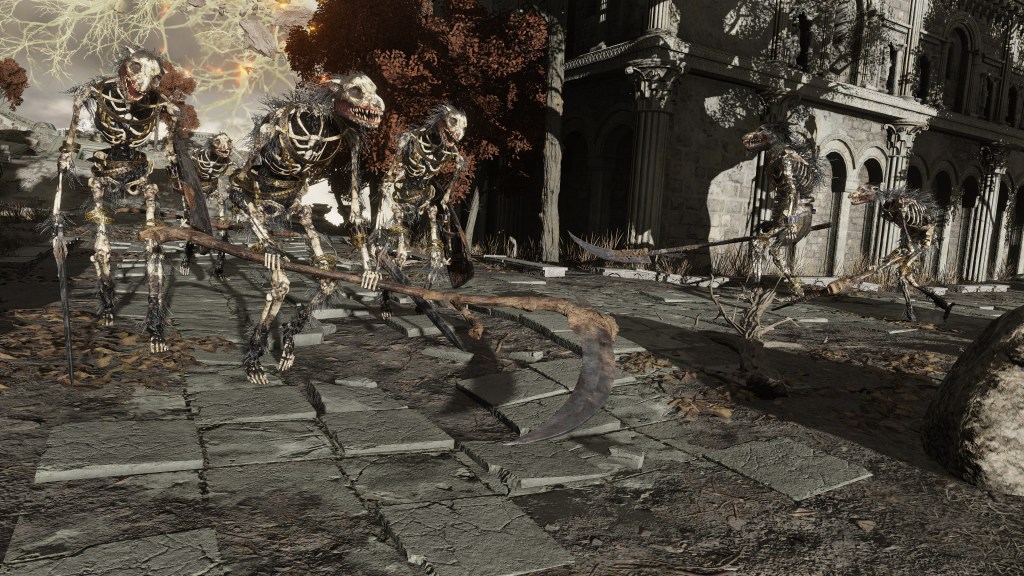
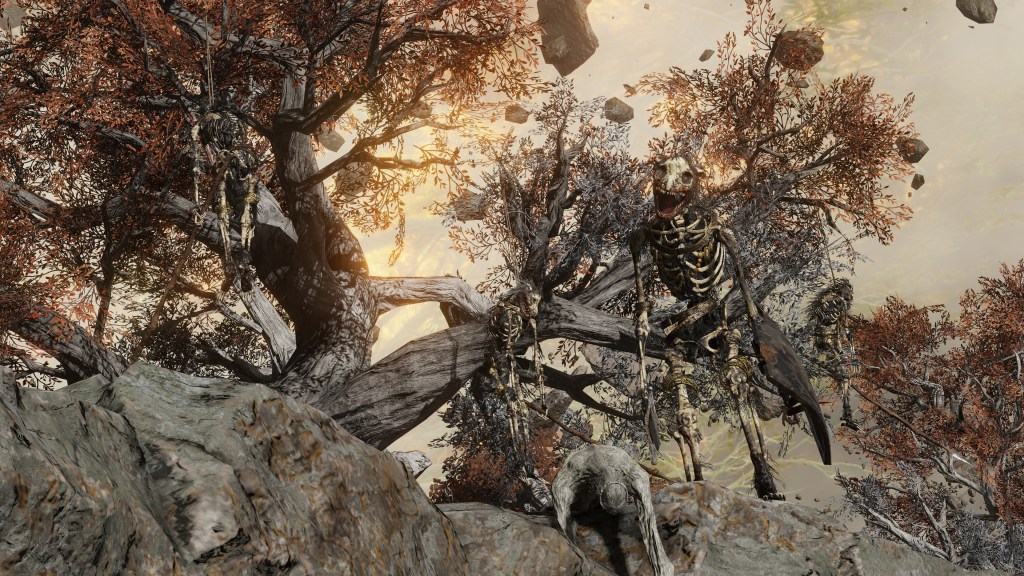
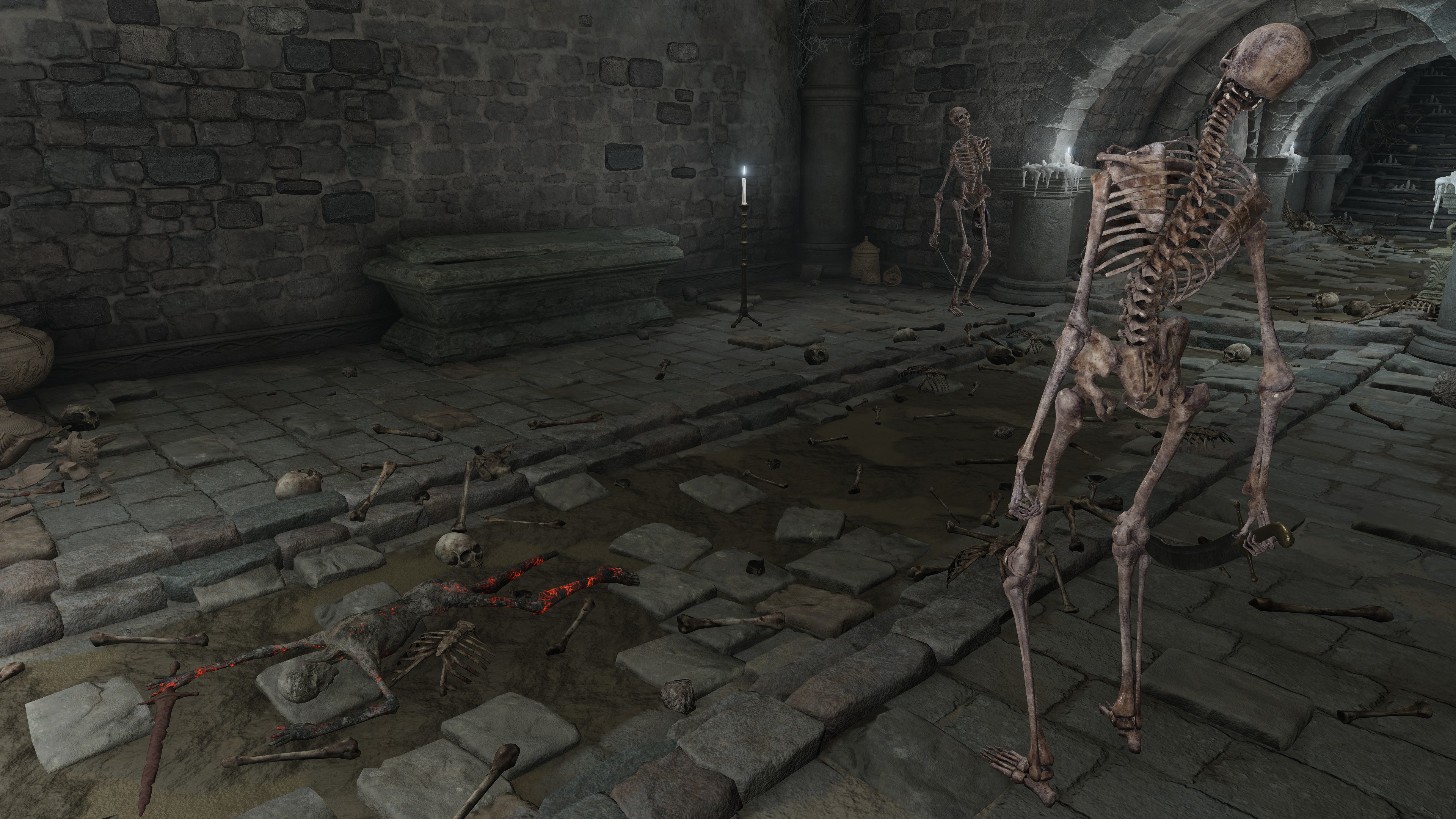
The Rune of Death dispersed throughout the roots has sprouted back up in the form of Deathroot. Whether because of the Erdtree’s influence or just because it is the most natural expression of Death’s power in the circumstance, this phenomenon has occurred consistently across the Lands Between, proliferating like a weed. In many cases, the spread of Deathroot reaches the surface either above ground or in catacombs, forming large clumps of growth. Visible or not, however, its presence can be felt by those touched by it. This mainly refers to skeletons, bones reconstituting into familiar form despite the lack of flesh to hold them together. Outside of catacombs, we see the black tar infesting the body, proof of the root exerting power over them. And regardless, a spiritual energy exists to drag the bones into place. These may not be the only form the living dead may take, as seen with Godwyn, (and Elden Ring: Nightreign later introduces an organization of their kind able to pass off as human) but they are the most common, in light of death’s long history in the Lands Between.
Source to producing Those Who Live in Death.
In the Beast Temple lying at the eastern end, the beast priest collects and devours this.
For after the Rune of Death that was stolen on the night of the conspiracy became the first death of the demigods, it appeared in various Lands Between through the underground great tree roots and budded as Deathroot.
Ashen remains inhabited by spirits. Summons mountain bandit skeleton spirit.
A spirit who will revive over and over unless finished off. For after the night of the conspiracy, Deathroot appeared in various Lands Between and Those Who Live in Death were born.
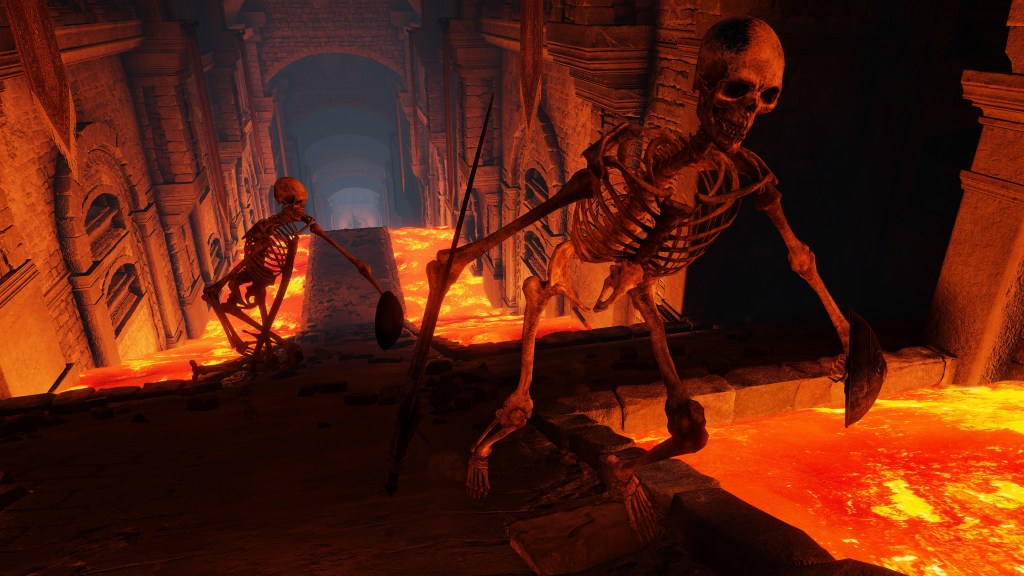
Granted, the appearance of Those Who Live in Death in itself is irregular. Although they do have a tendency to cluster, such as in the Leyndell area, it is ultimately random where the curse will infect the great roots. There doesn’t even need to be a graveyard in the vicinity for the dead to rise, as Deathroot touches the skeletons washed up on Limgrave’s western shore with the debris from their presumed shipwreck. If the great roots pass through the area, there is a chance of the curse spreading. And once it does, it digs in. Like Godwyn, those touched by Death are rendered soulless and can no longer return to the Erdtree, but in its place, they receive eternity. When defeated, the skeleton immediately begins to revive, bones returning to the torso burning with spiritual energy. The living dead are exceptionally robust unless killed in the cradle, and their lifespans aren’t subject to mortal limitations. Mermaids in Japanese legend are known to grant immortality to those who ingest their flesh, and Death’s “mermaid” absolutely shares a piece of himself to give the dead new and enduring life.
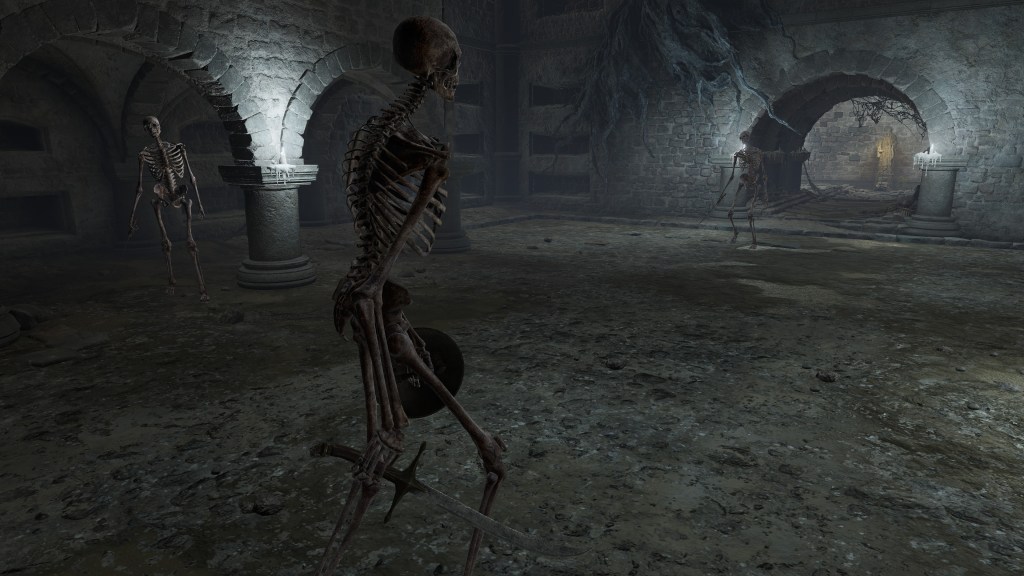
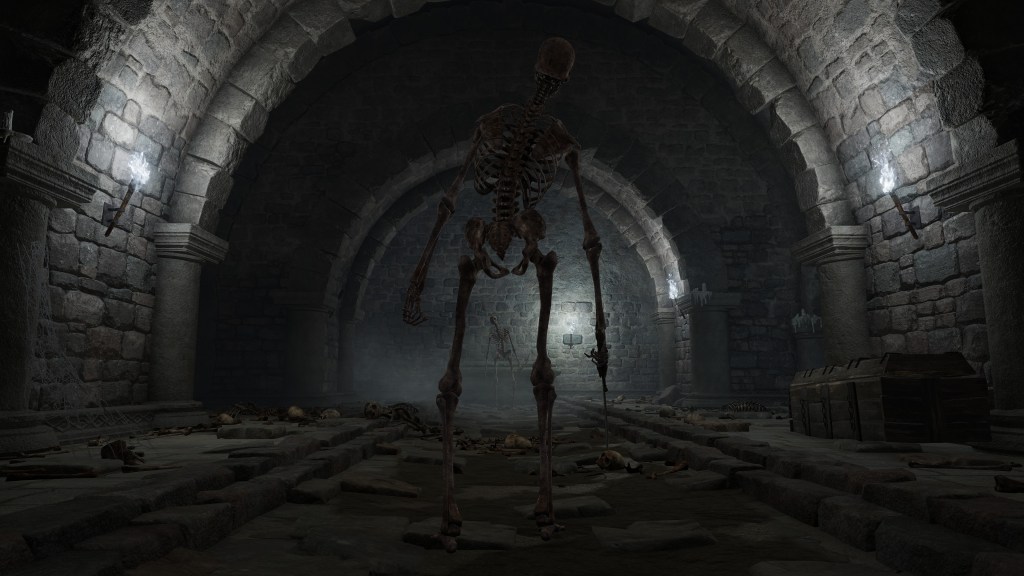
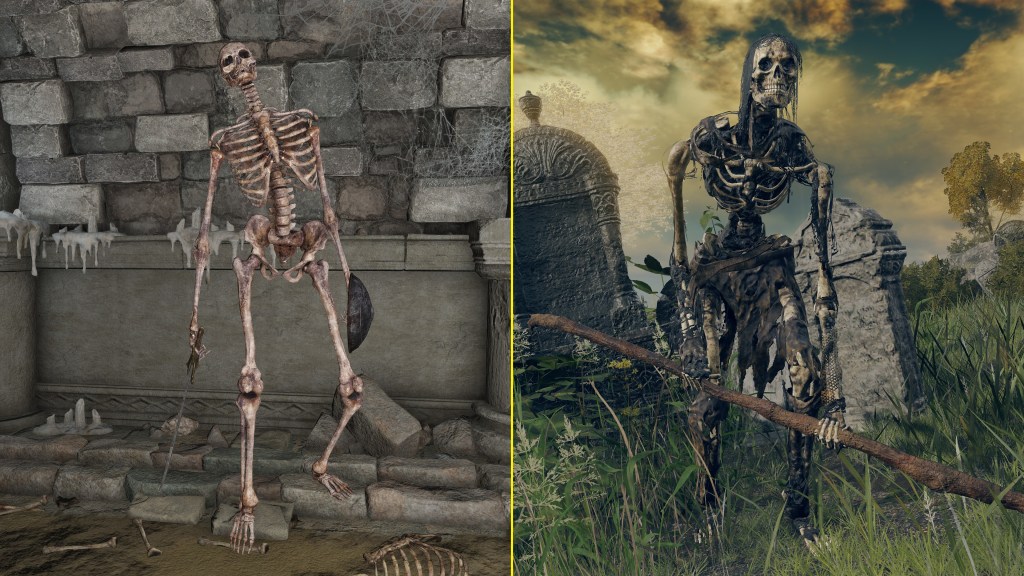
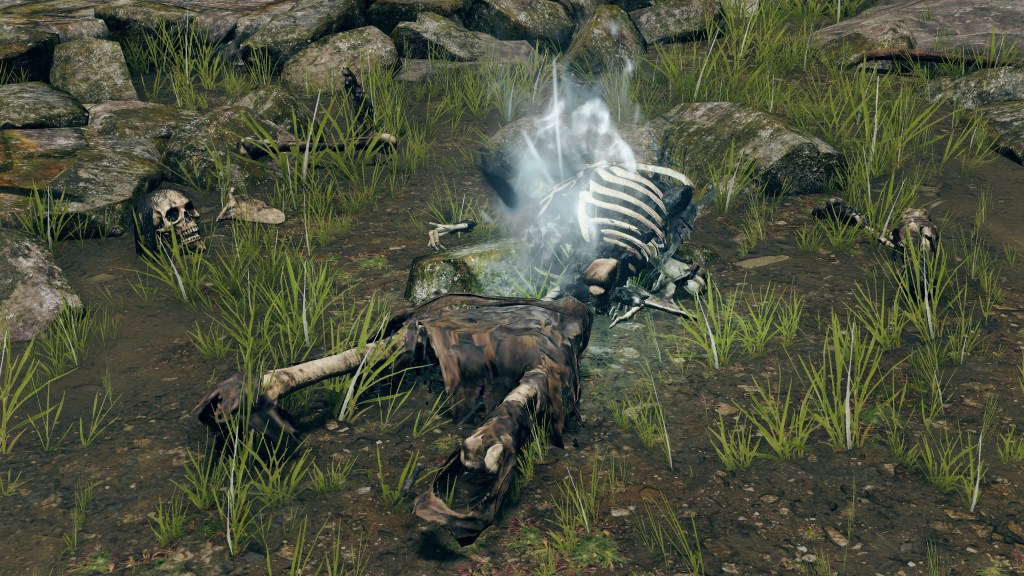
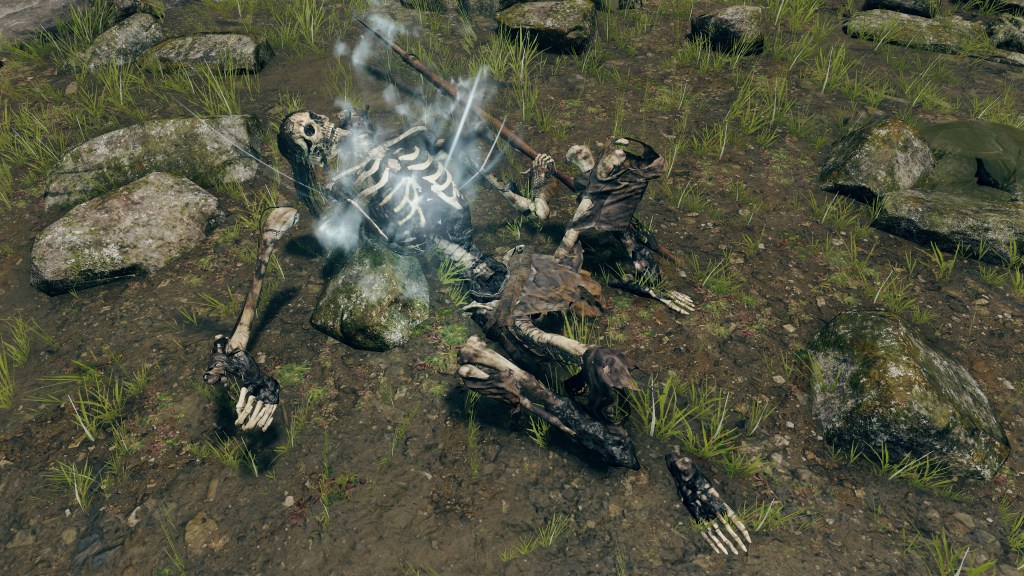
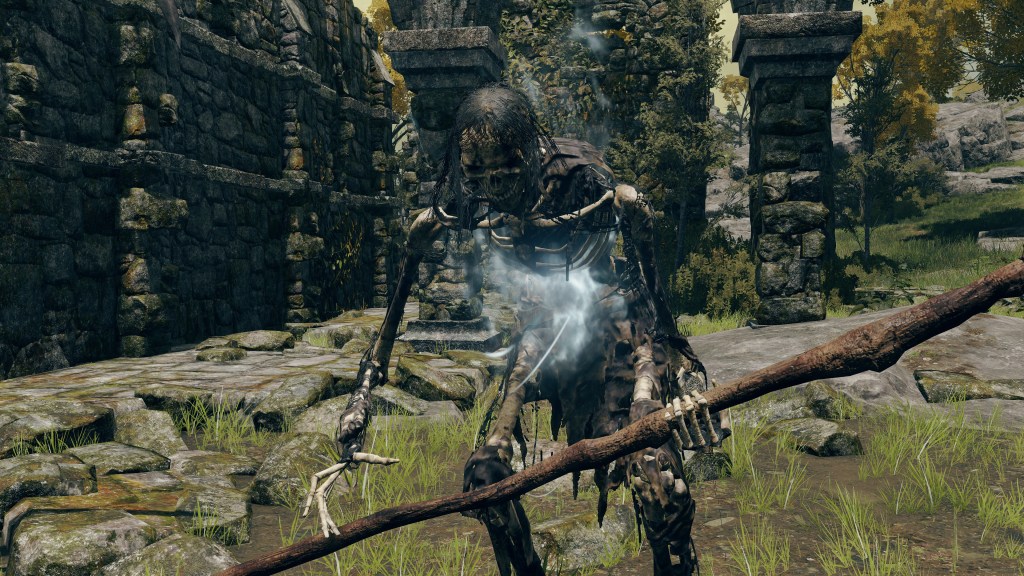
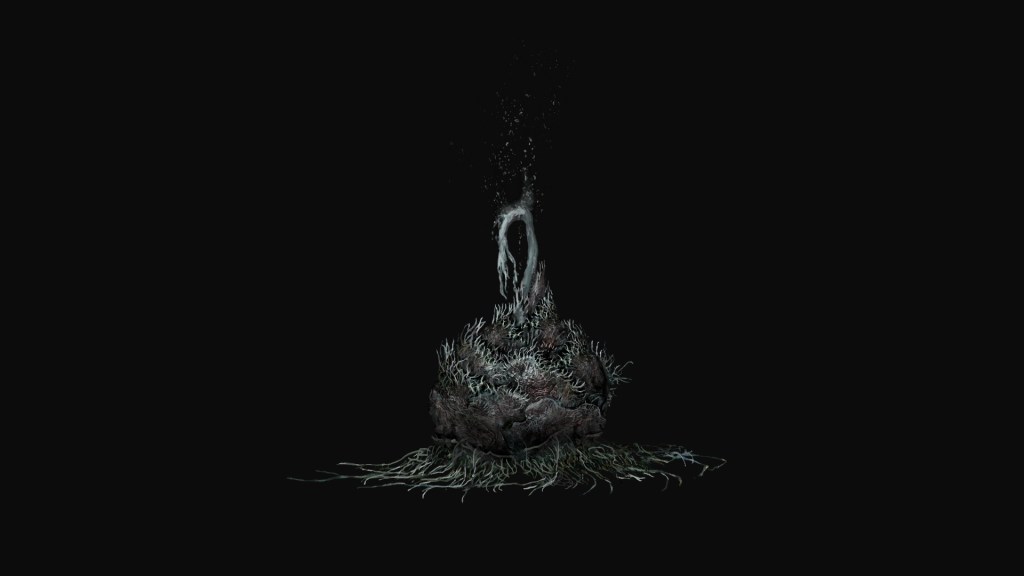
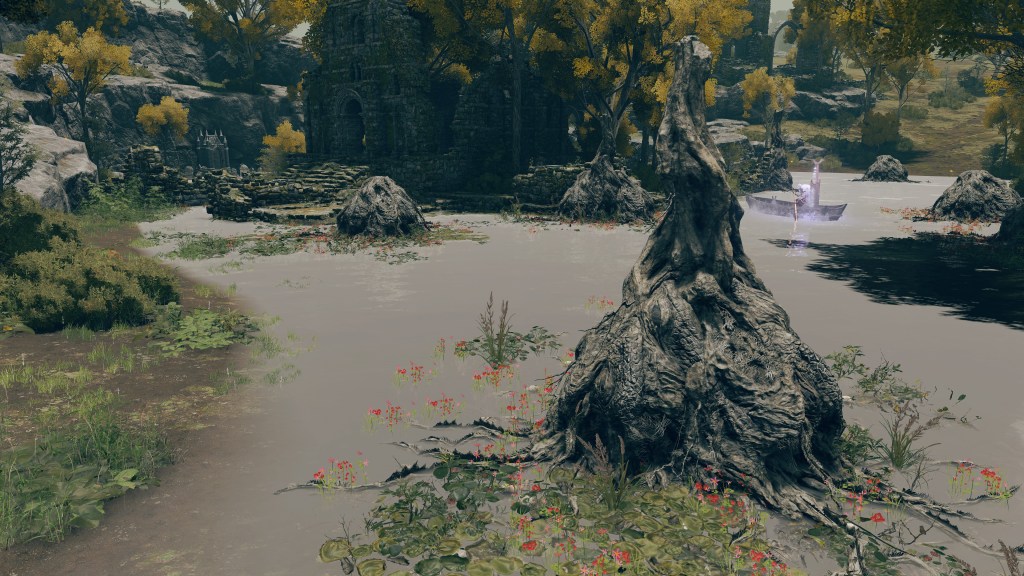
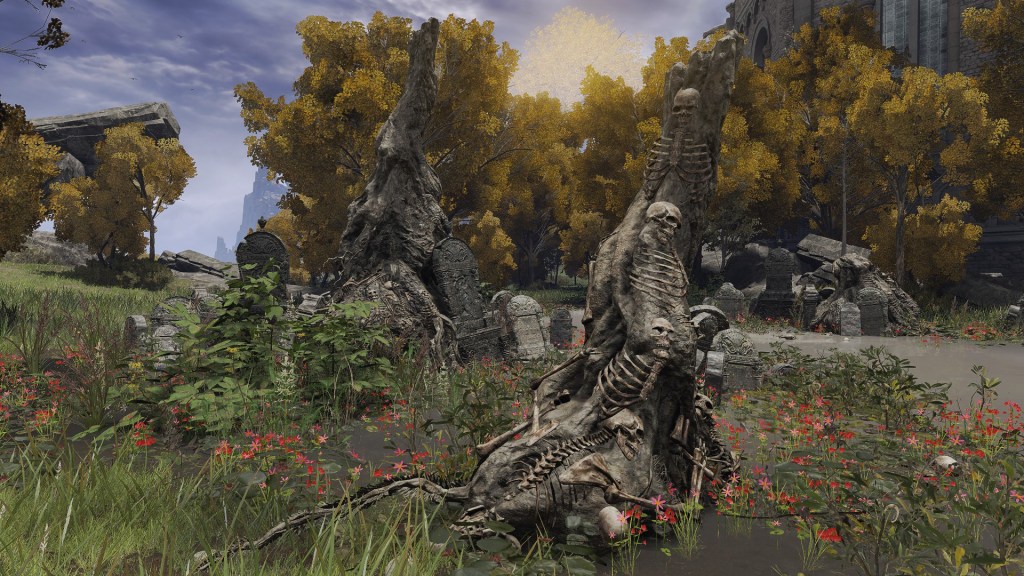
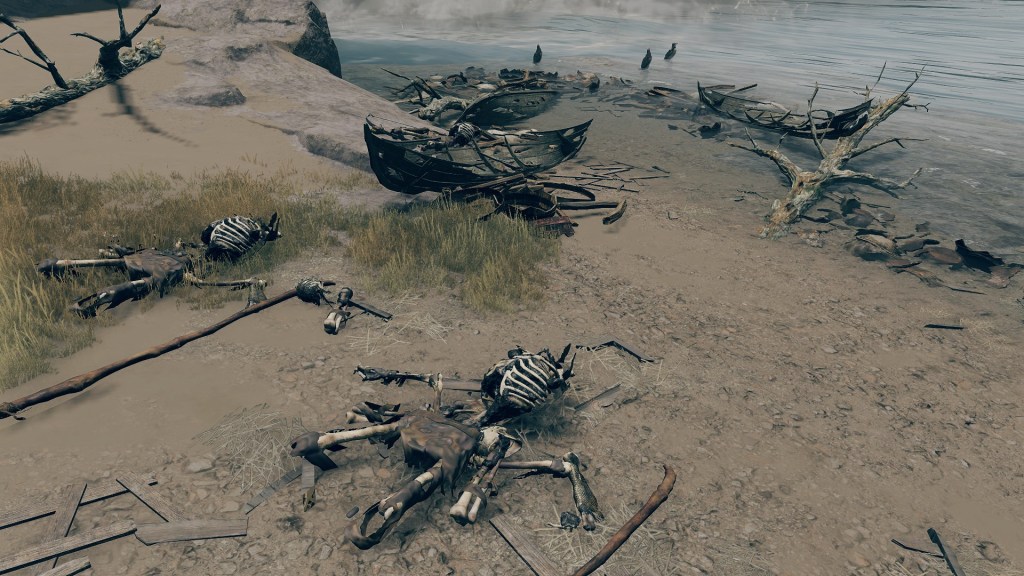
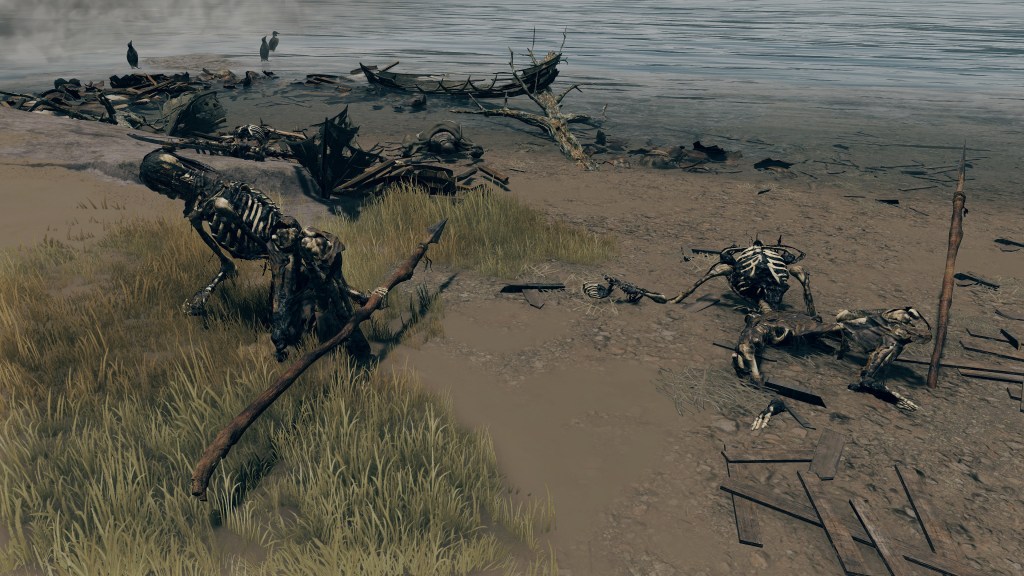
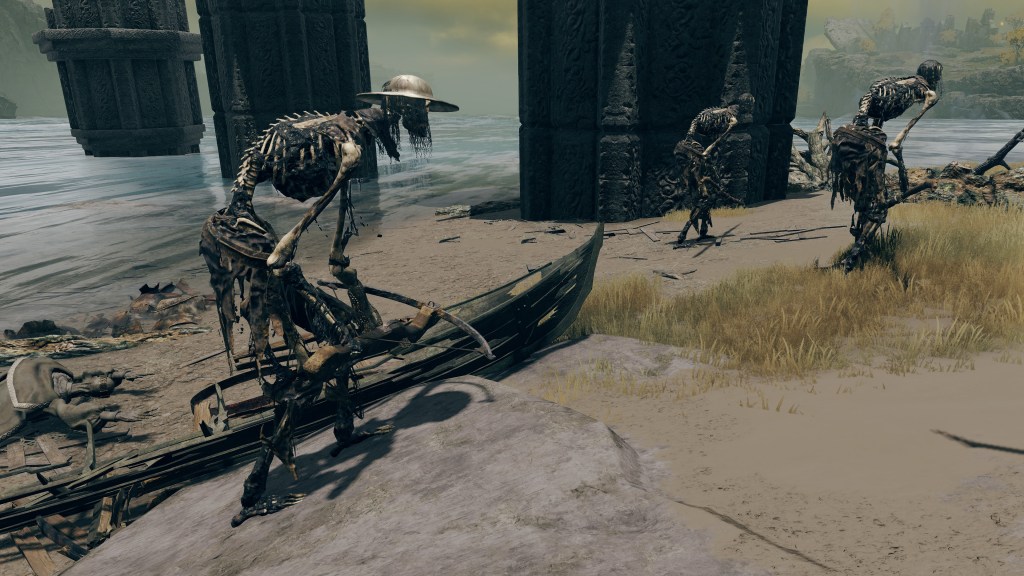
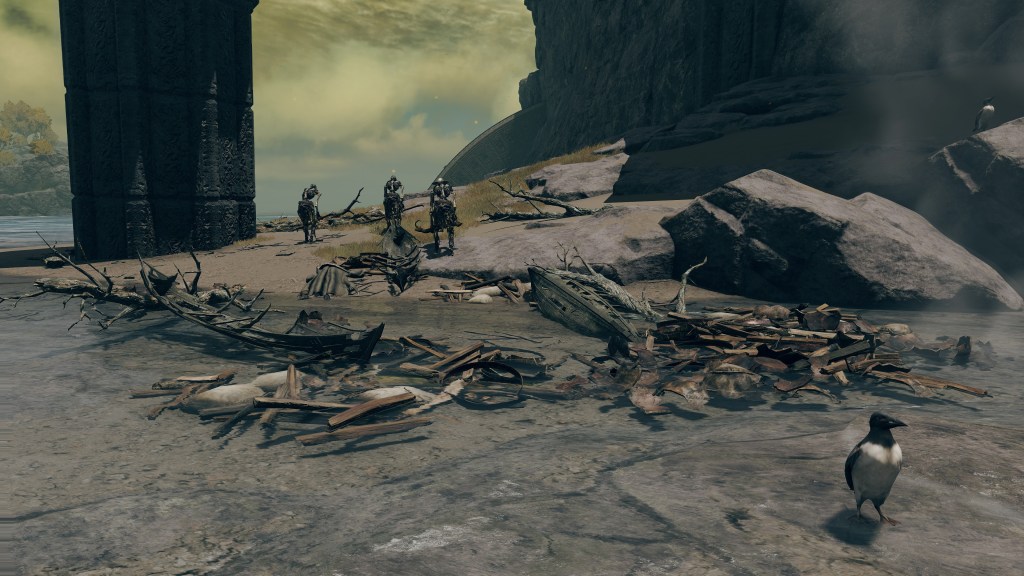
Ashen remains inhabited by spirits. Summons two militia skeleton spirits.
Spirits of Those Who Live in Death, who will revive over and over unless finished off. The corrupted end of the road for those who touched Deathroot.
Indeed, it is because Godwyn and Death have become one that his black eyes manifest in the ooze behind him. This won’t remain limited to just eyes either. Alongside the maggots, the cadaver grows tendrils with fins like his own. Those eyes can likewise result in full faces, as demonstrated by the “Cyst” acquired after defeating a runebear in the Deeproot Depths. Gyousou (業瘡) is an archaic term for severe skin diseases, the macrocysts manifesting karmic retribution for misdeeds in a previous life according to Buddhism. Godwyn’s only “misdeed” was allowing himself to die cursed, of course. But still, this festering pustule with the odor of fish indisputably shares his current features, down to the dulled golden hair. It is without a doubt the consequence of the Golden living in death. Moreover, growths of Deathroot elsewhere have manifest his eyes and finned tendrils. And in certain areas, Godwyn’s veritable face has emerged to replace the greatroots of the underground graveyard, his “other selves” (分け身) separate from the main body per various item descriptions.
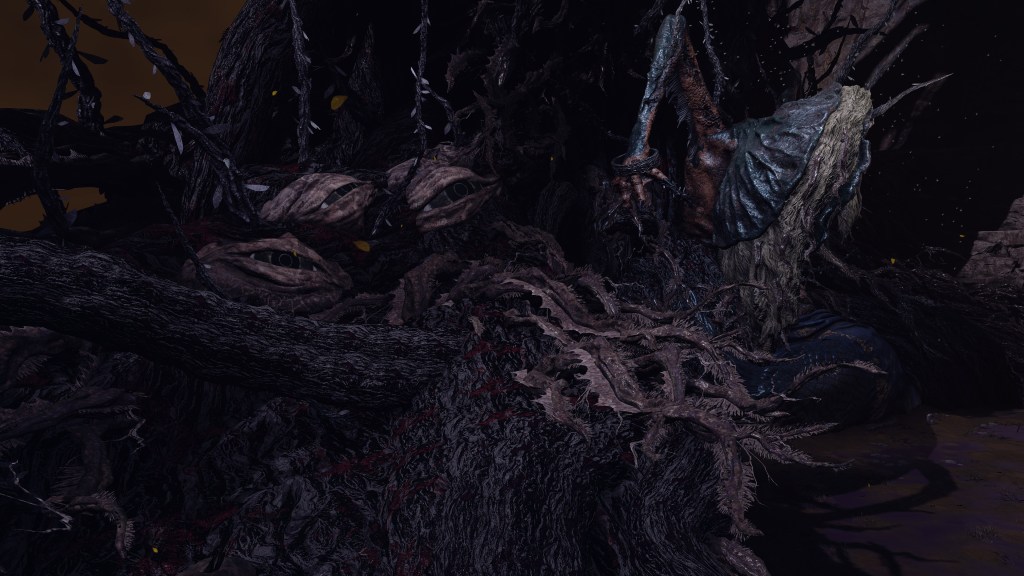
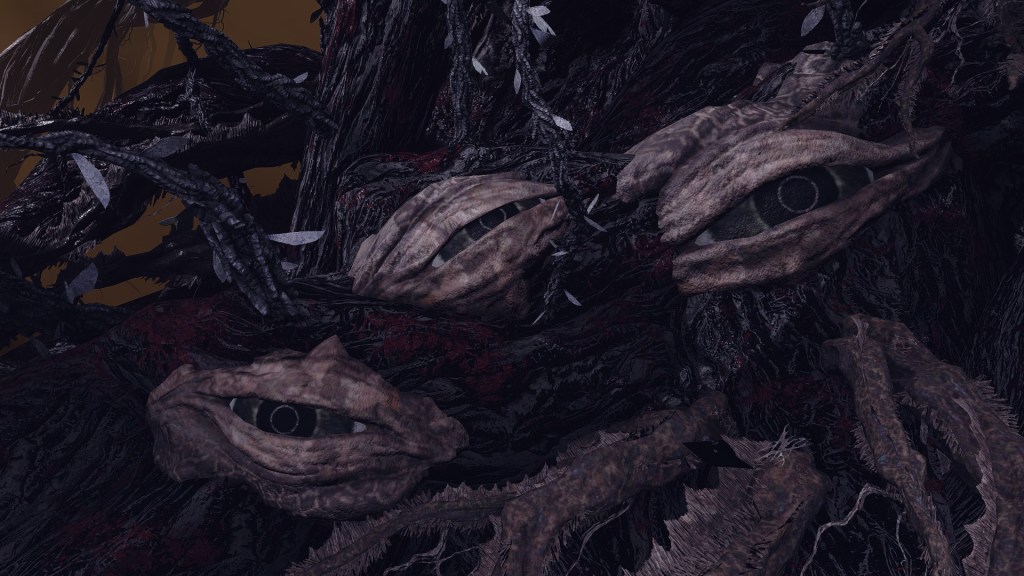
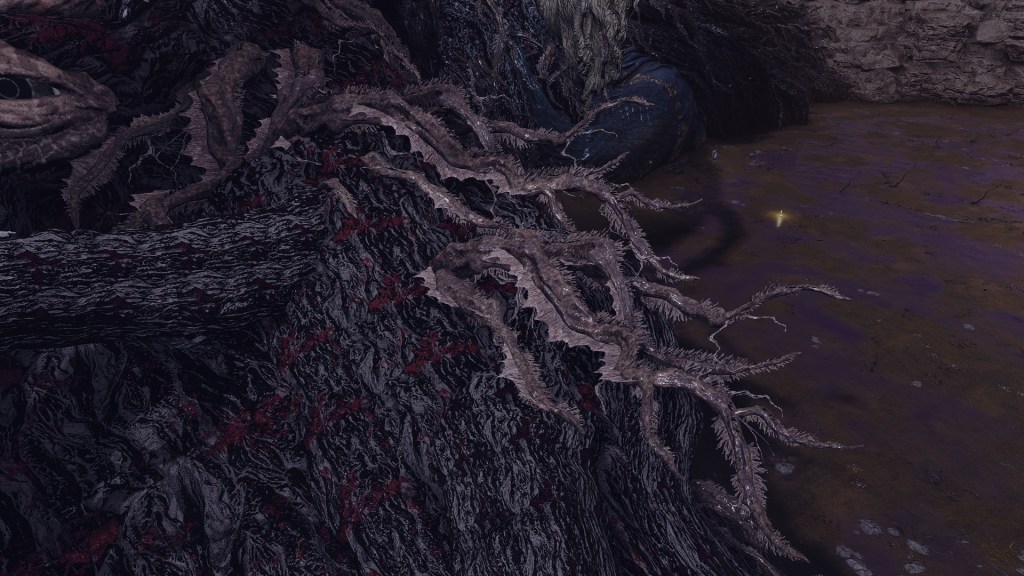
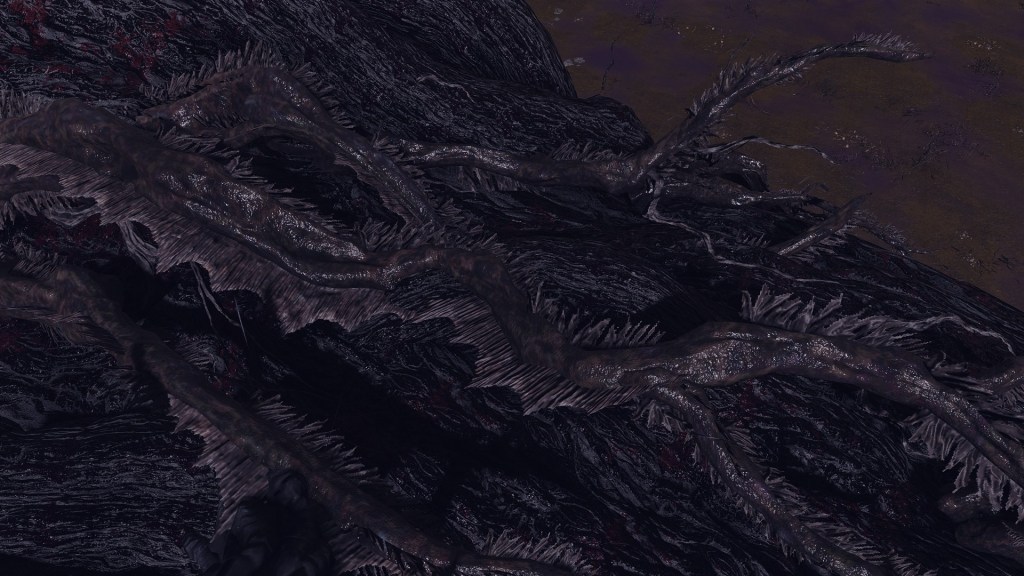
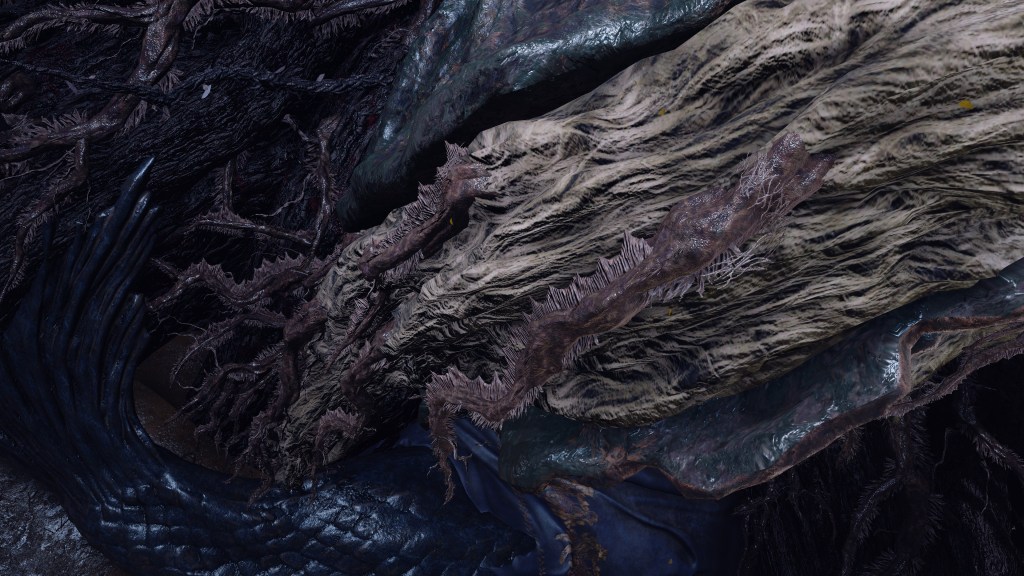
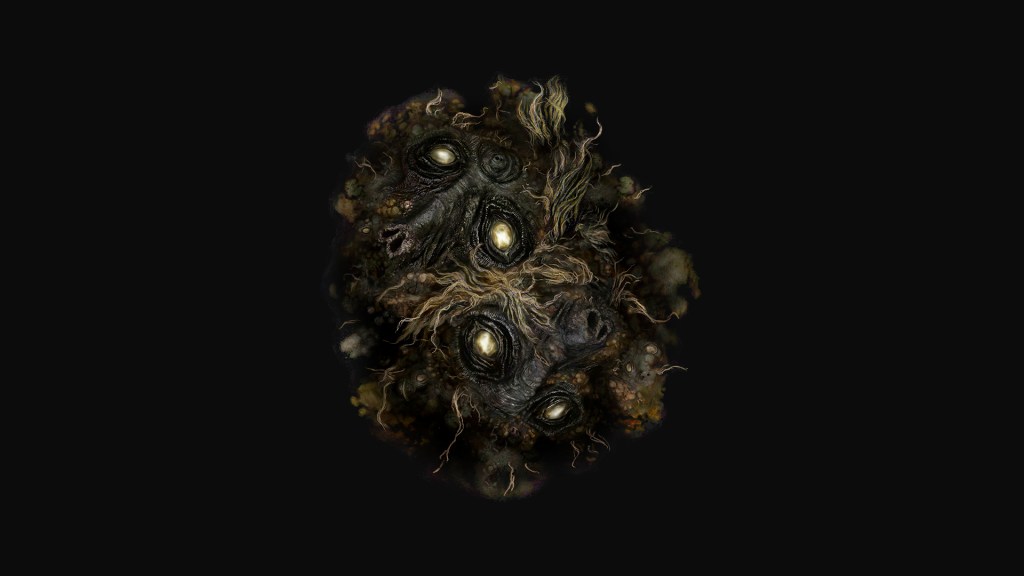
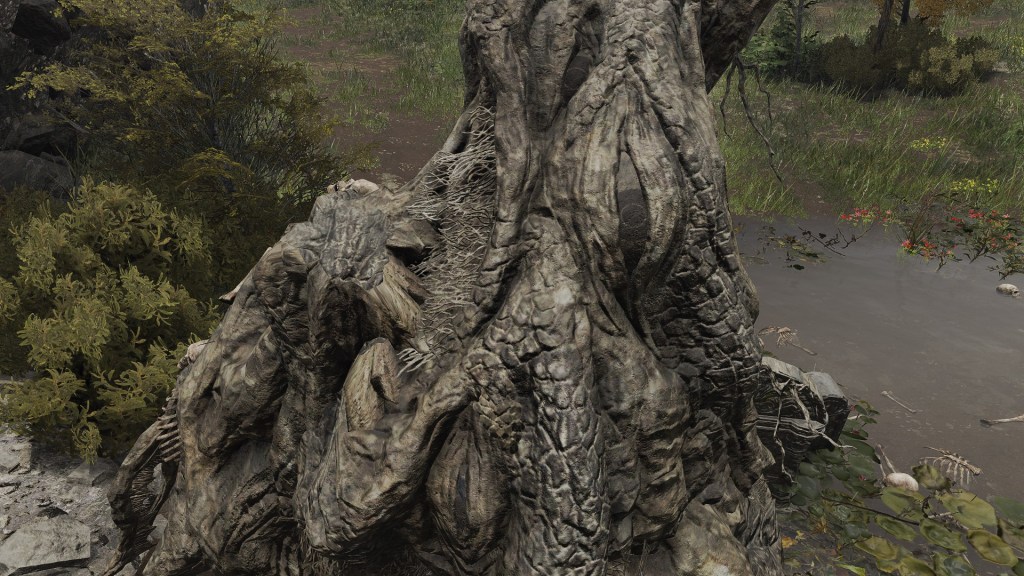
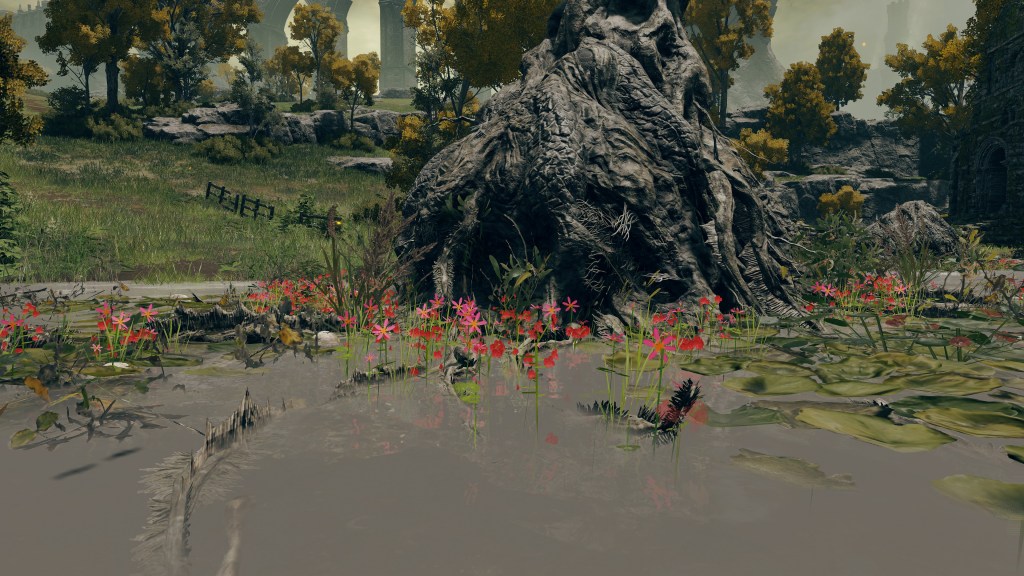
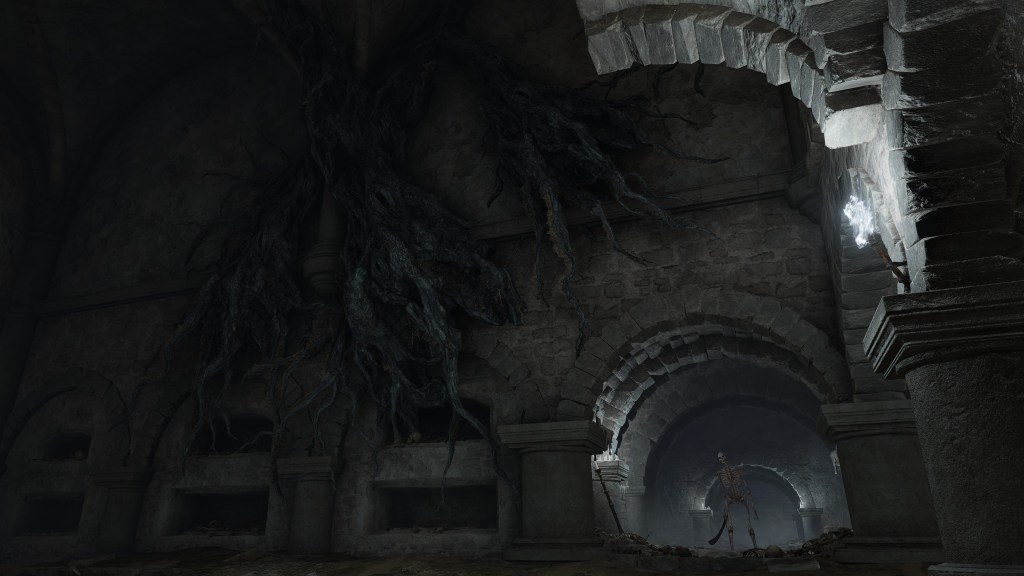
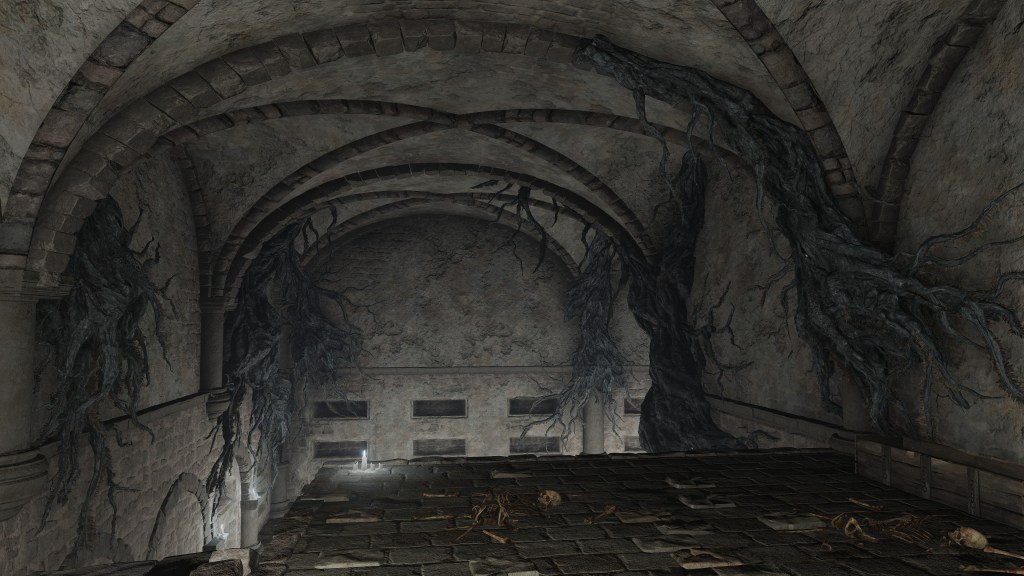
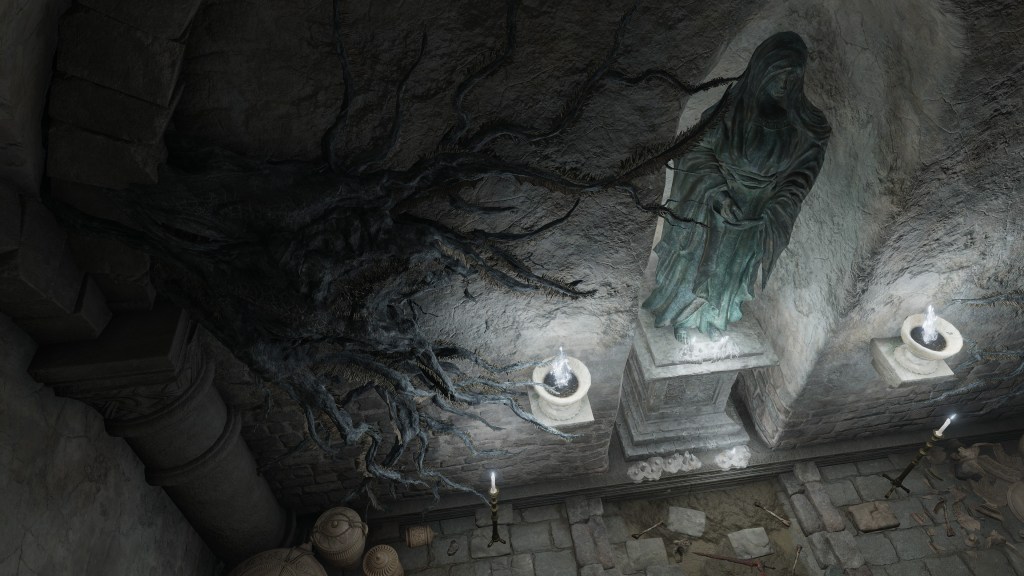
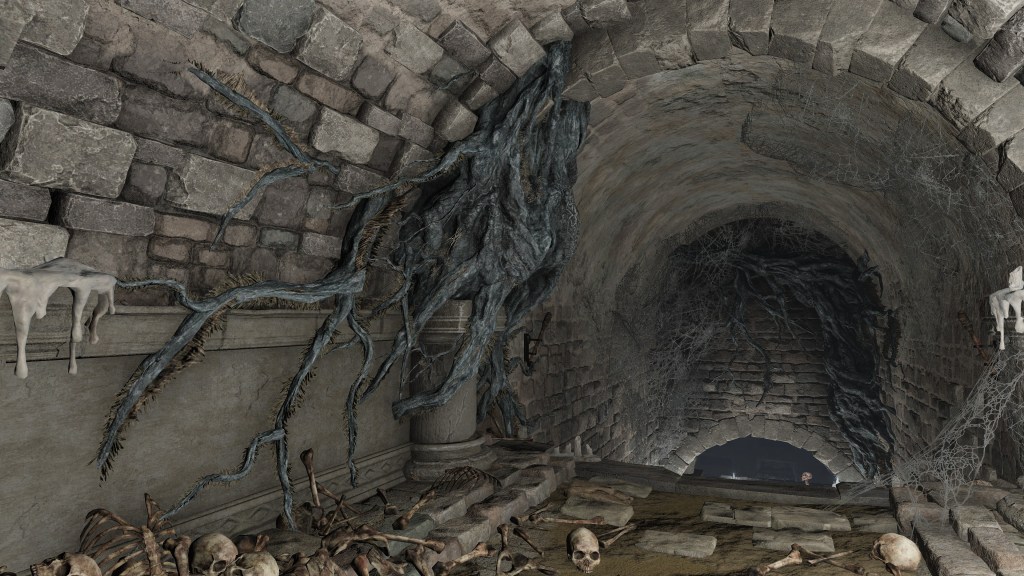
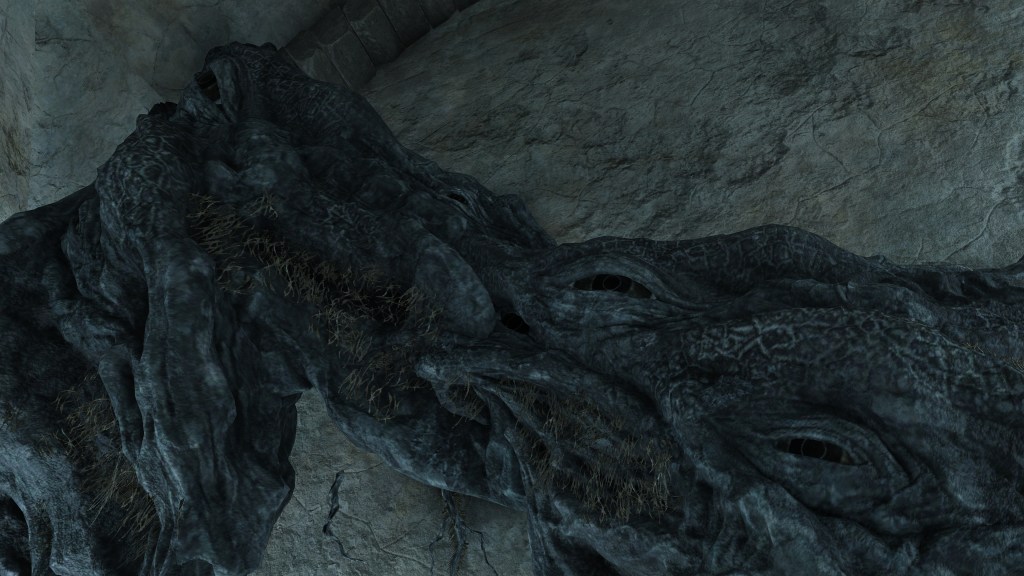
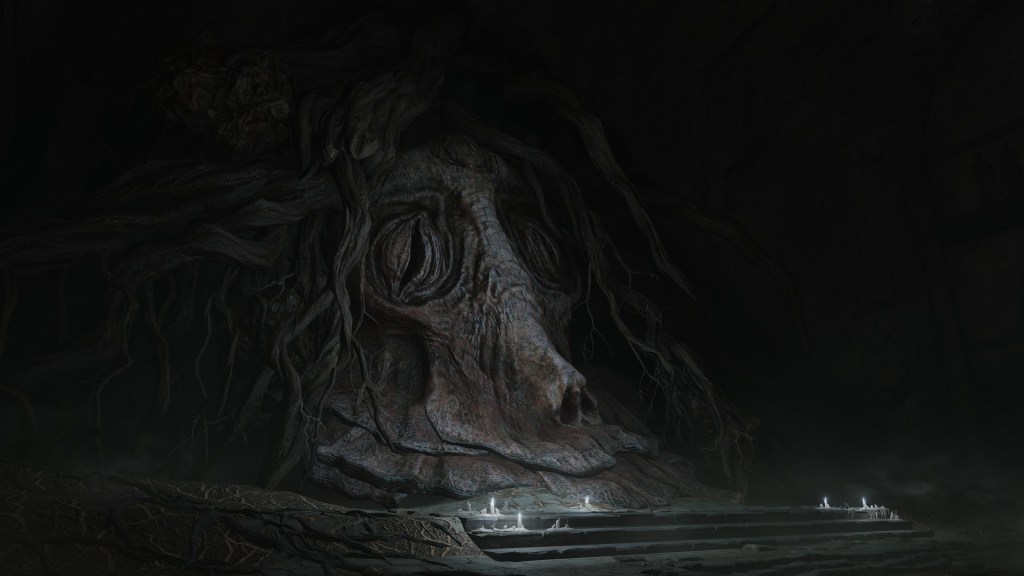
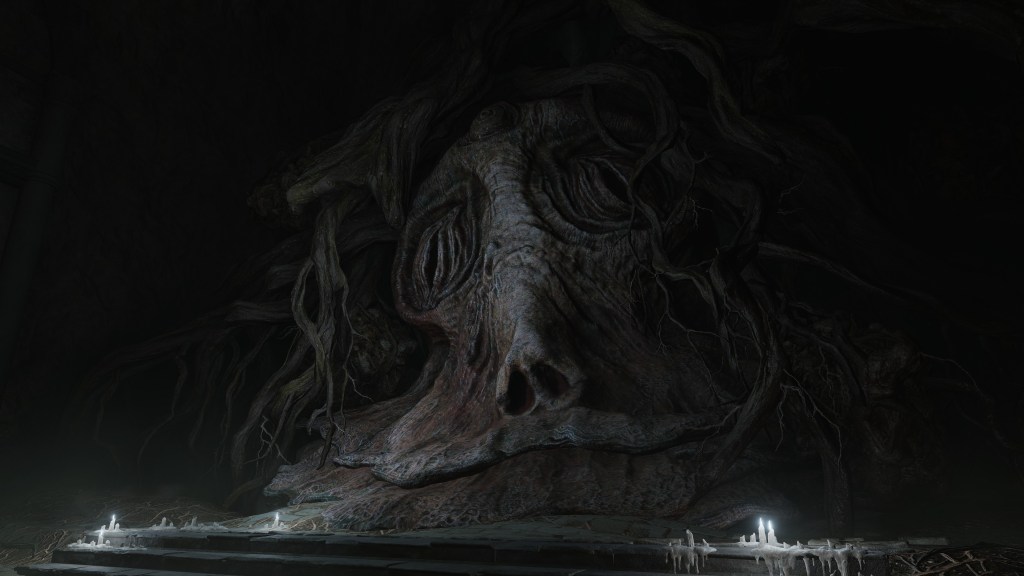
Fishy, festering karmic pustule with human faces. Greatly boosts anti-death resistance.
It is said that the owner of that face is the Death Prince. It is said to be the unable to fully die, corrupted, dead face of the golden scion who is first dead of the demigods.
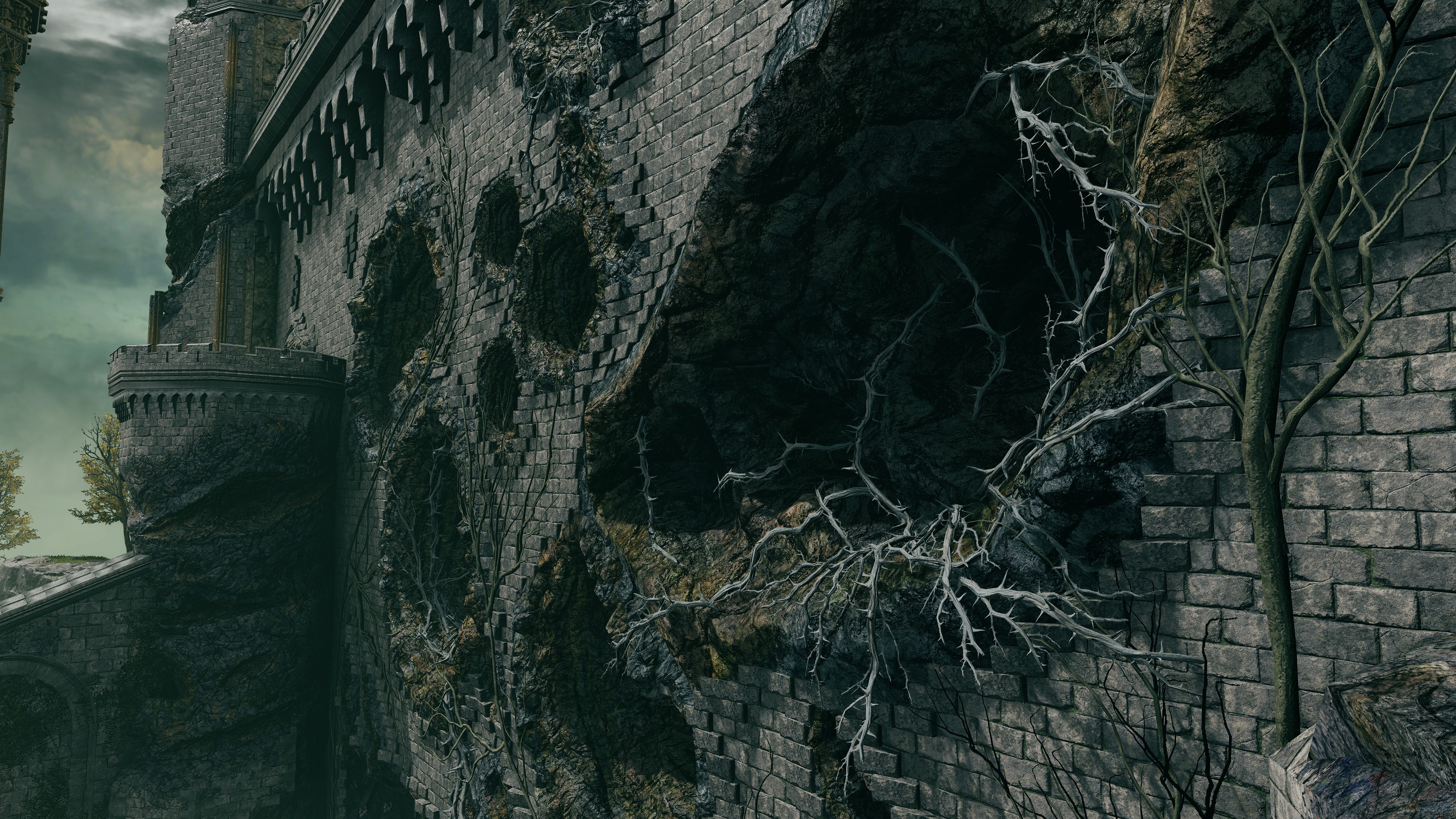
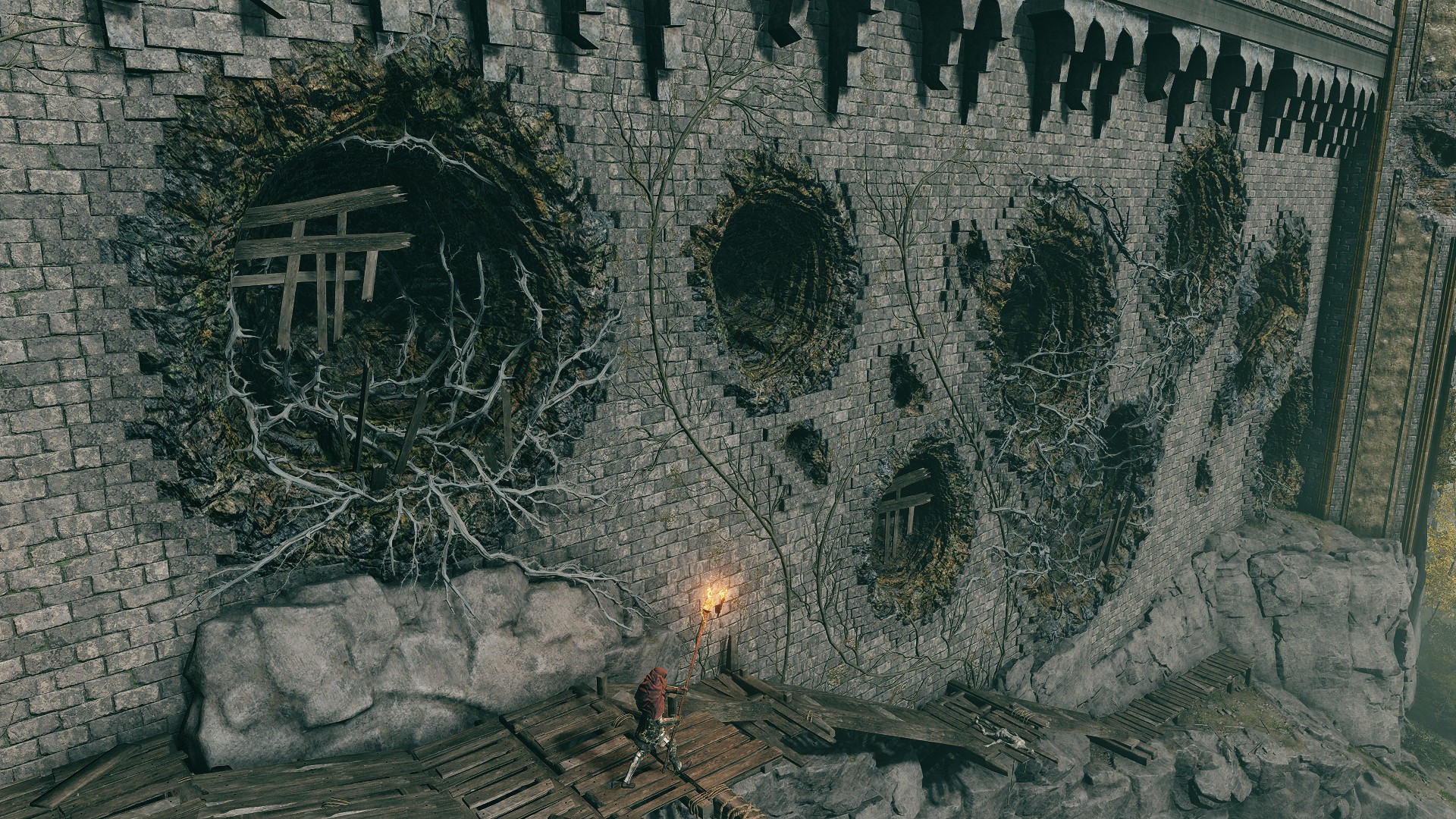
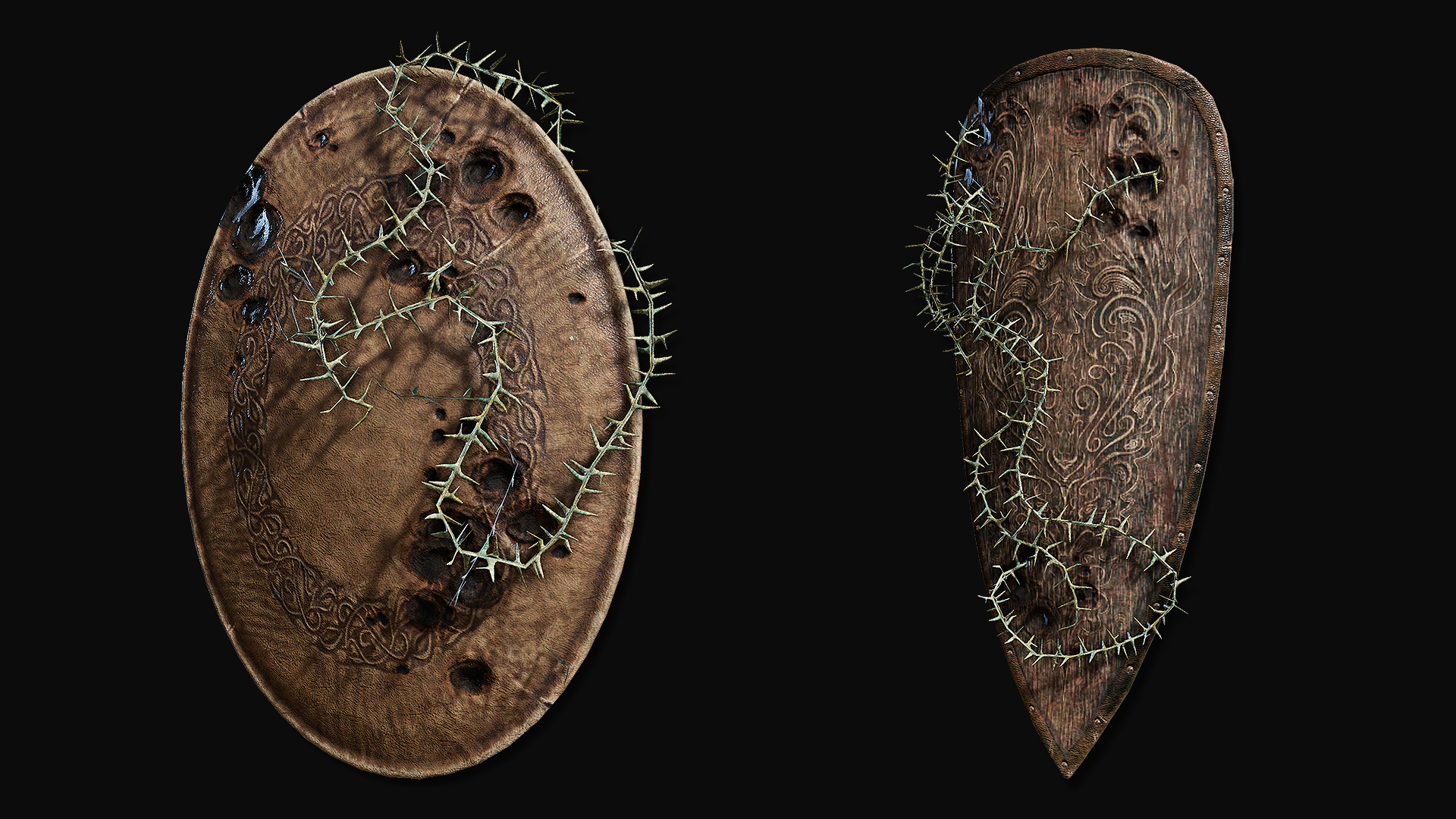
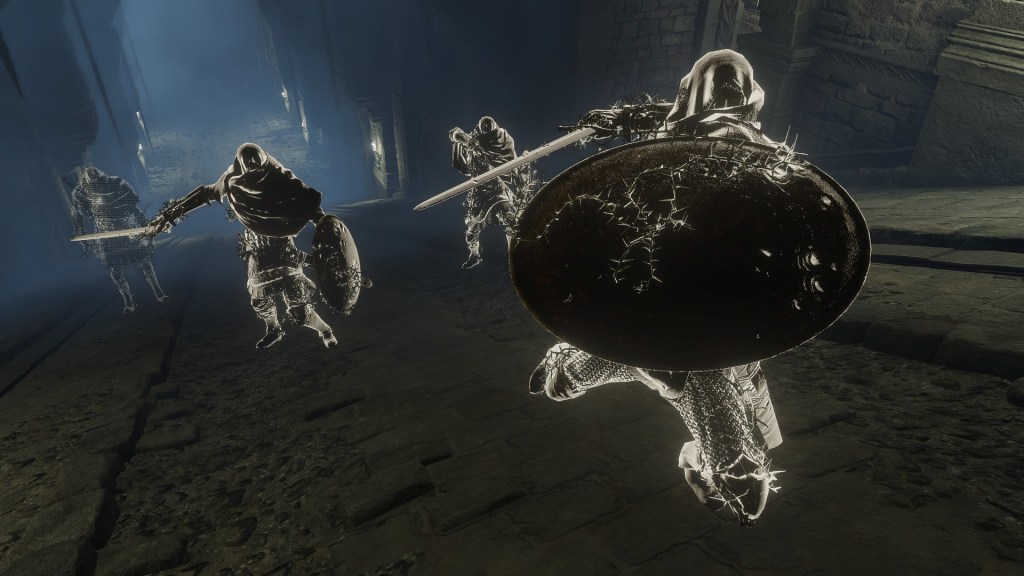
These relics of the Night of the Black Knives are effectively clones of Godwyn, fully capable of reacting to stimuli and spreading their own influence. Stormveil is the prime example. The castle’s west side suffers from a sort of pox, massive holes emerging from black spots and gashes in the ramparts. With it comes the growth of pale briar thorns which are tearing the very stonework apart, the garrison stapling the top with metal bars to keep it holding together. This pox of thorns has spread to the equipment of all the exile soldiers, their “marred” shields holding the connotation of being “eaten away” at (蝕まれた) by insects — earlier iteration of their spotted gauntlets and greaves’ descriptions even made the direct comparison of their crumbling state to bugs. This might have killed some of Stormveil’s best based on their ghosts haunting the Fringefolk Hero’s Grave. Rumors around the castle apparently infer that these thorns emerged from deep down below. And down in the “catacomb” on that west side, Godwyn’s face spreads the largest vines like a jellyfish or nautilus.
Leather shield of the soldiers of Stormveil. It has been eaten away by black spots and briar, same as the castle.
Everyone is whispering. Is it the curse of grafting? Or is there something more repulsive hiding in a deep place somewhere in the castle?
Iron gauntlets damaged by war and sea breeze. Equipment of the soldiers of Stormveil.
They have begun to crumble as if eaten by insects.
Some fans question this appearance of briar thorns, since they aren’t closely related to Death. However, the tendrils of maggots do resemble briar vines, with the fly wings as the thorns. And when investigating the face in Stormveil, Rogier is impaled by these maggot briars, so Godwyn’s other self is capable of producing them. The pale briars are thus probably intended as a stand-in for the maggoty “vines” eating away at the castle. The inconsistency in the model is potentially because of cut content. Briars are the Erdtree kingdom’s way of marking criminals, after all, so it is fitting that the penal colonists be covered in thorns. Furthermore, a “curse” would supposedly manifest if they exposed their faces beneath their dark red hoods, per cut descriptions of their equipment. The idea was so universal, the “pox” model on the soldiers’ armaments remains used in every instance, with or without Deathroot in the vicinity. Put another way, the developers lacked the time or resources to radically change the models after scrapping the original concept, hence the two kinds of briars.
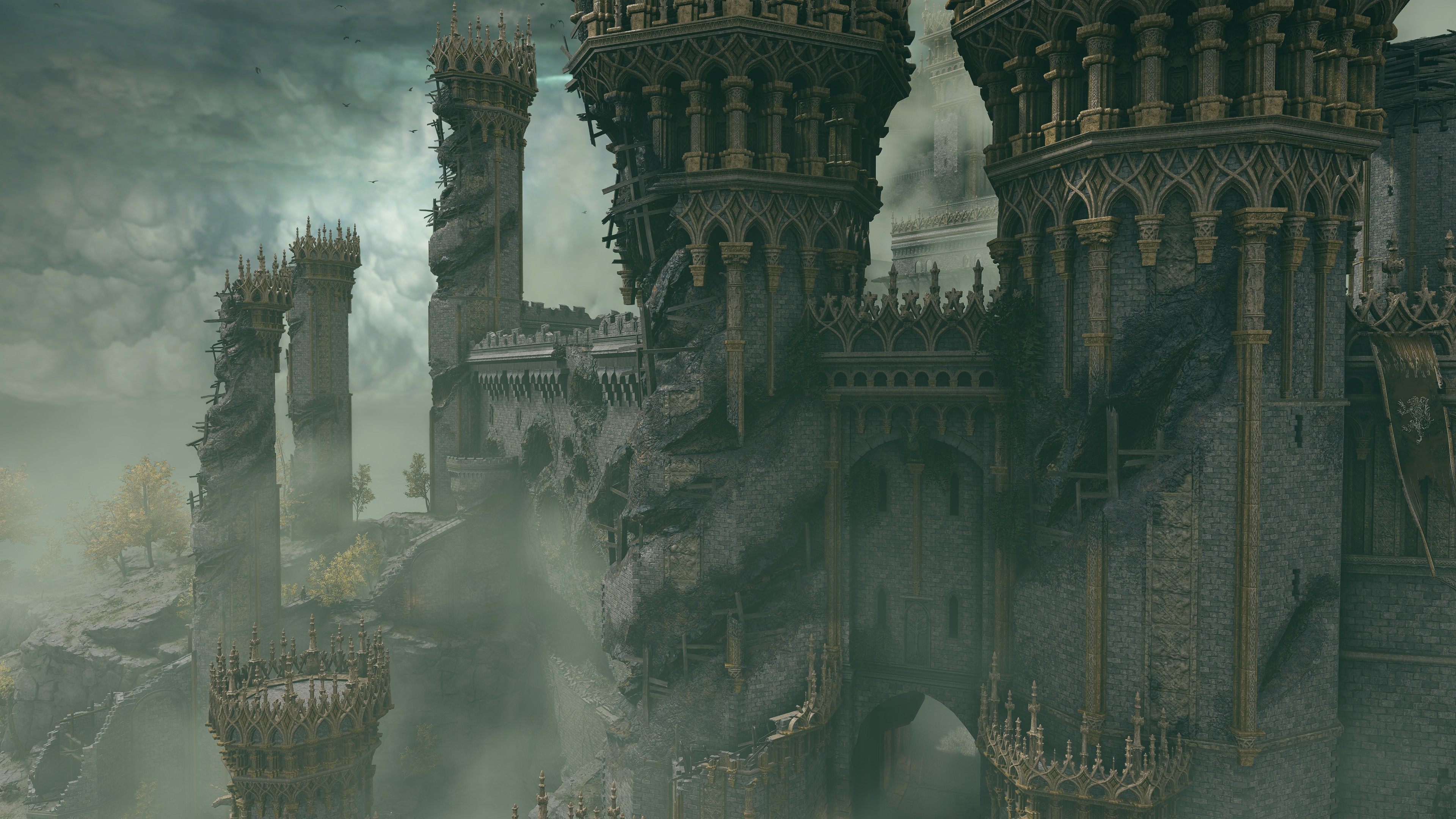
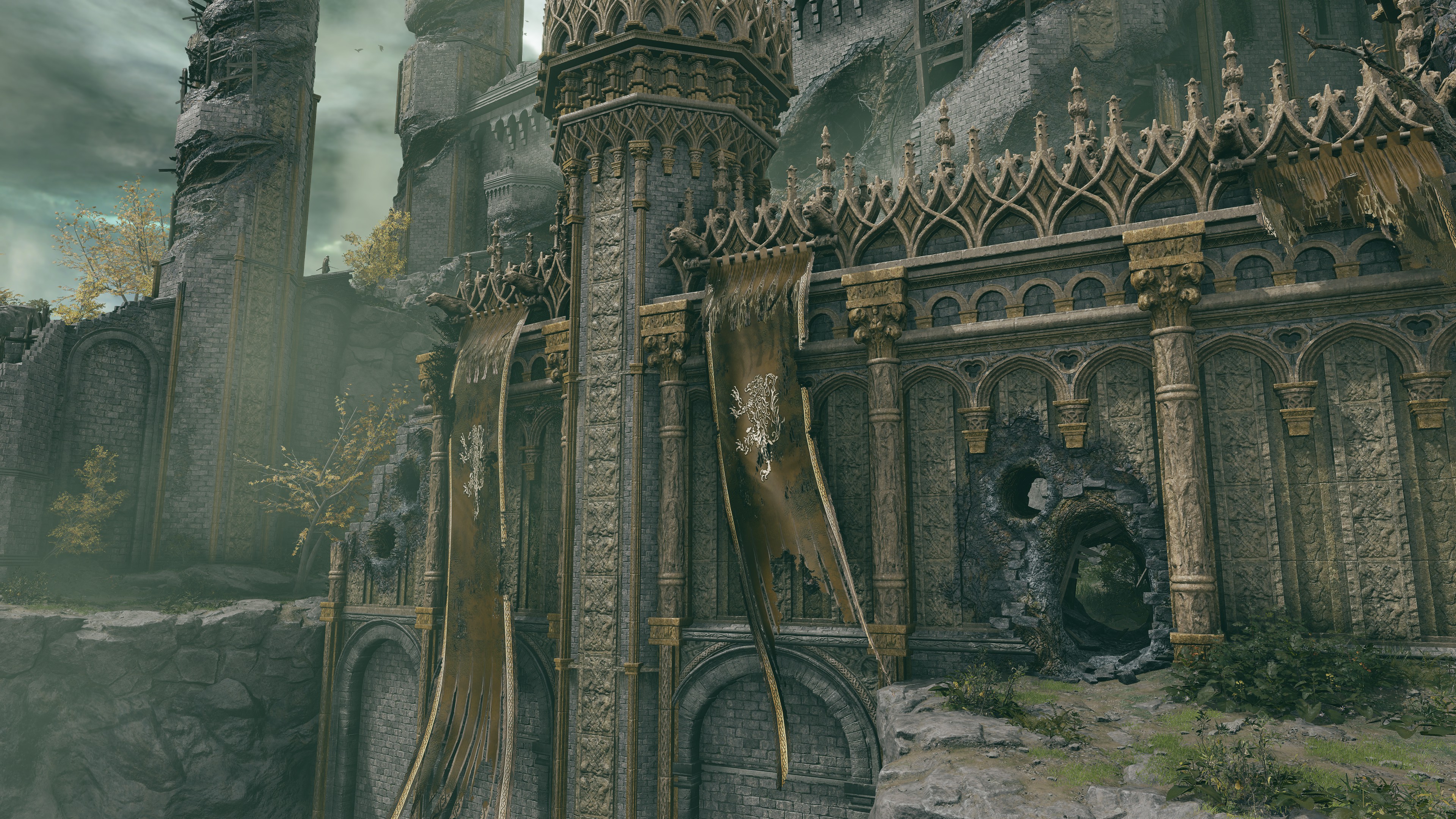
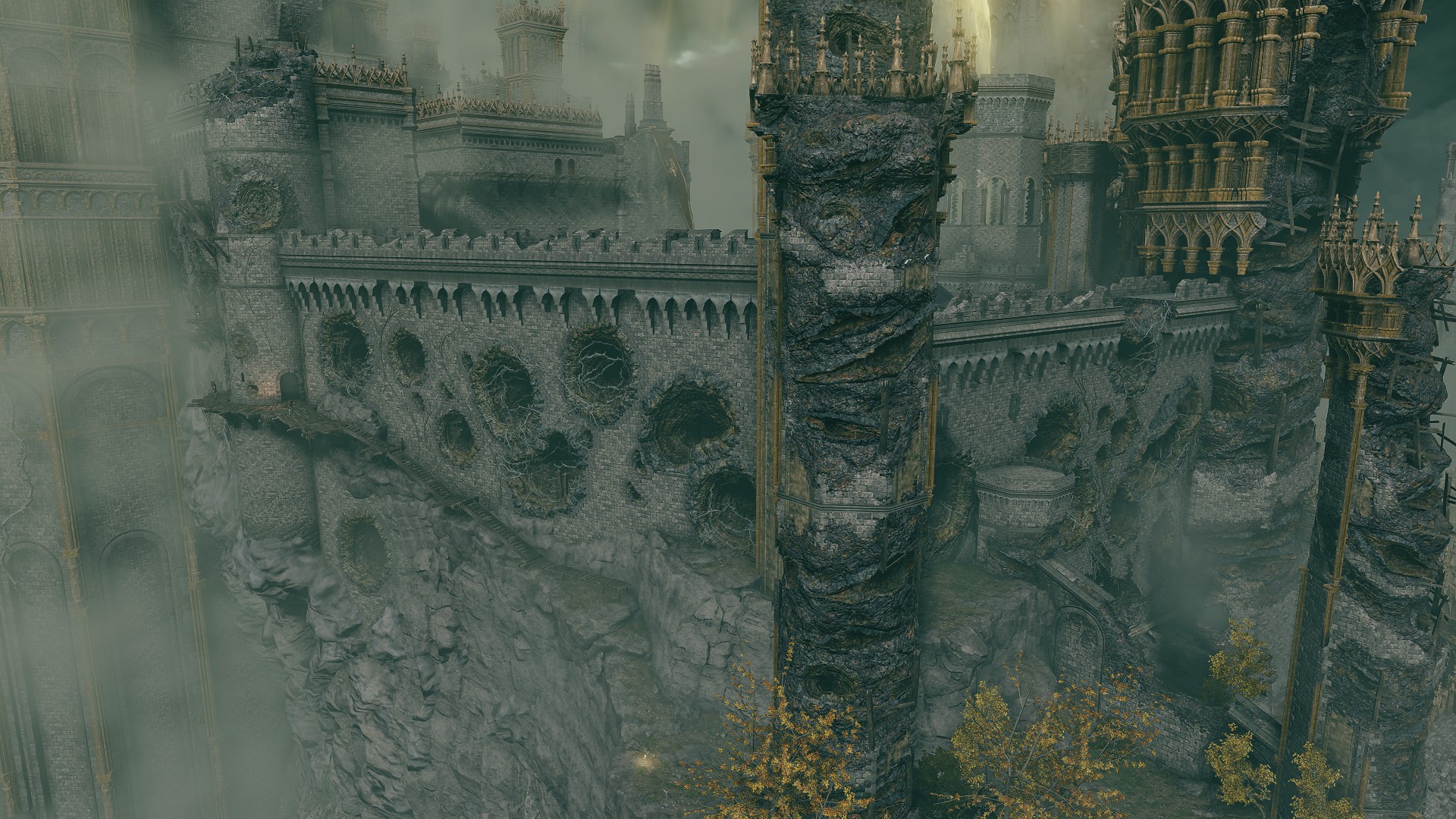
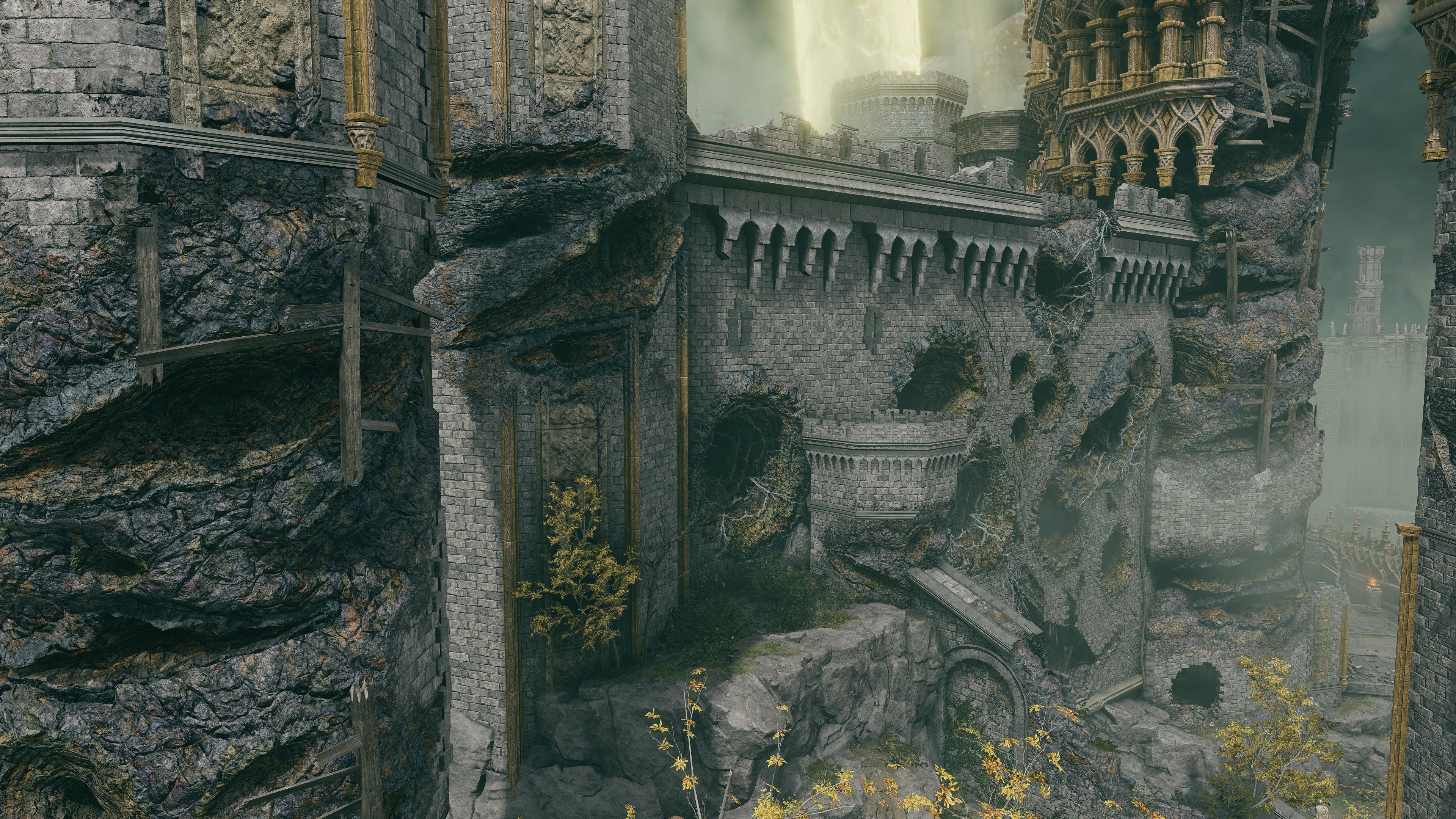
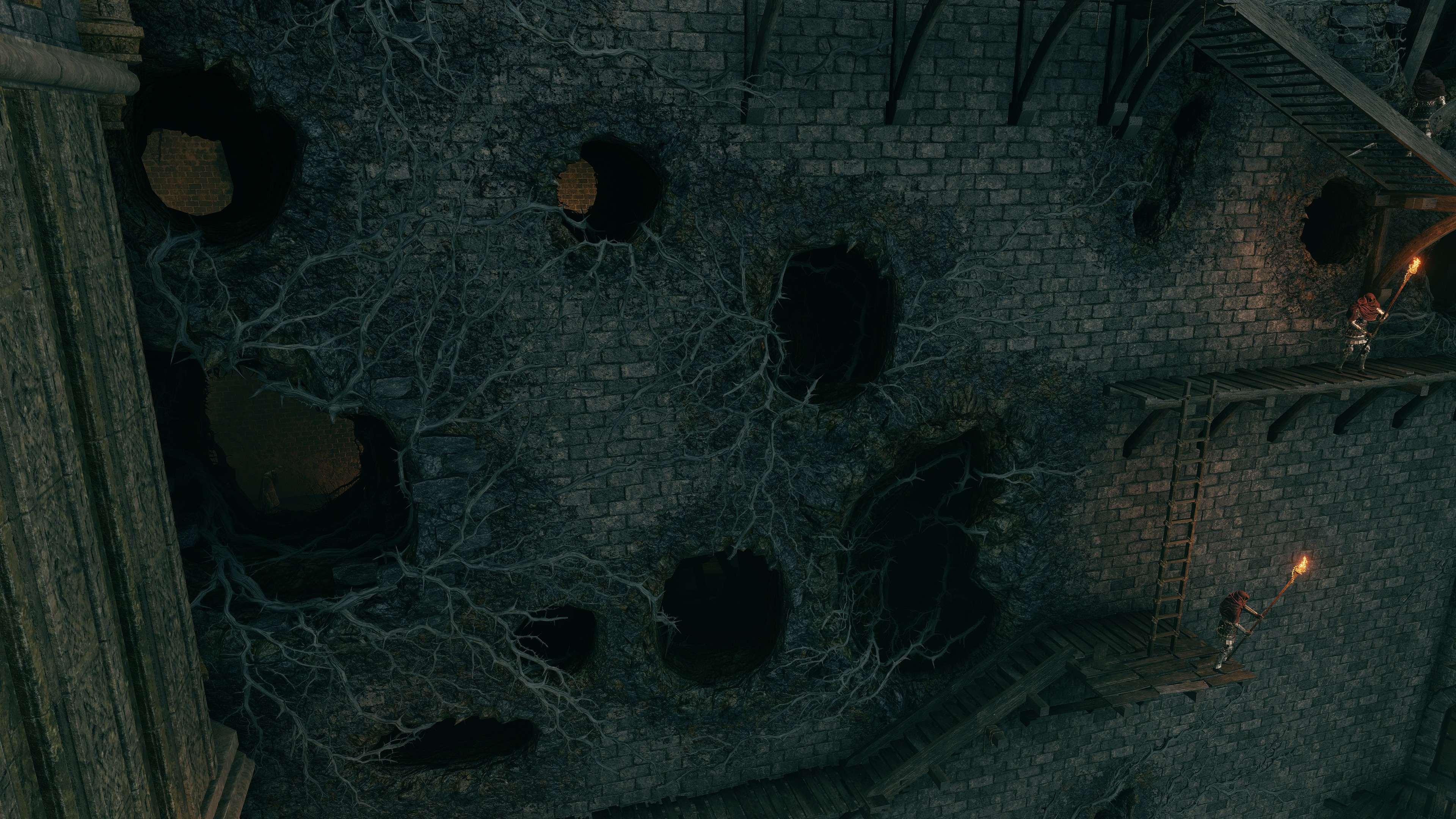
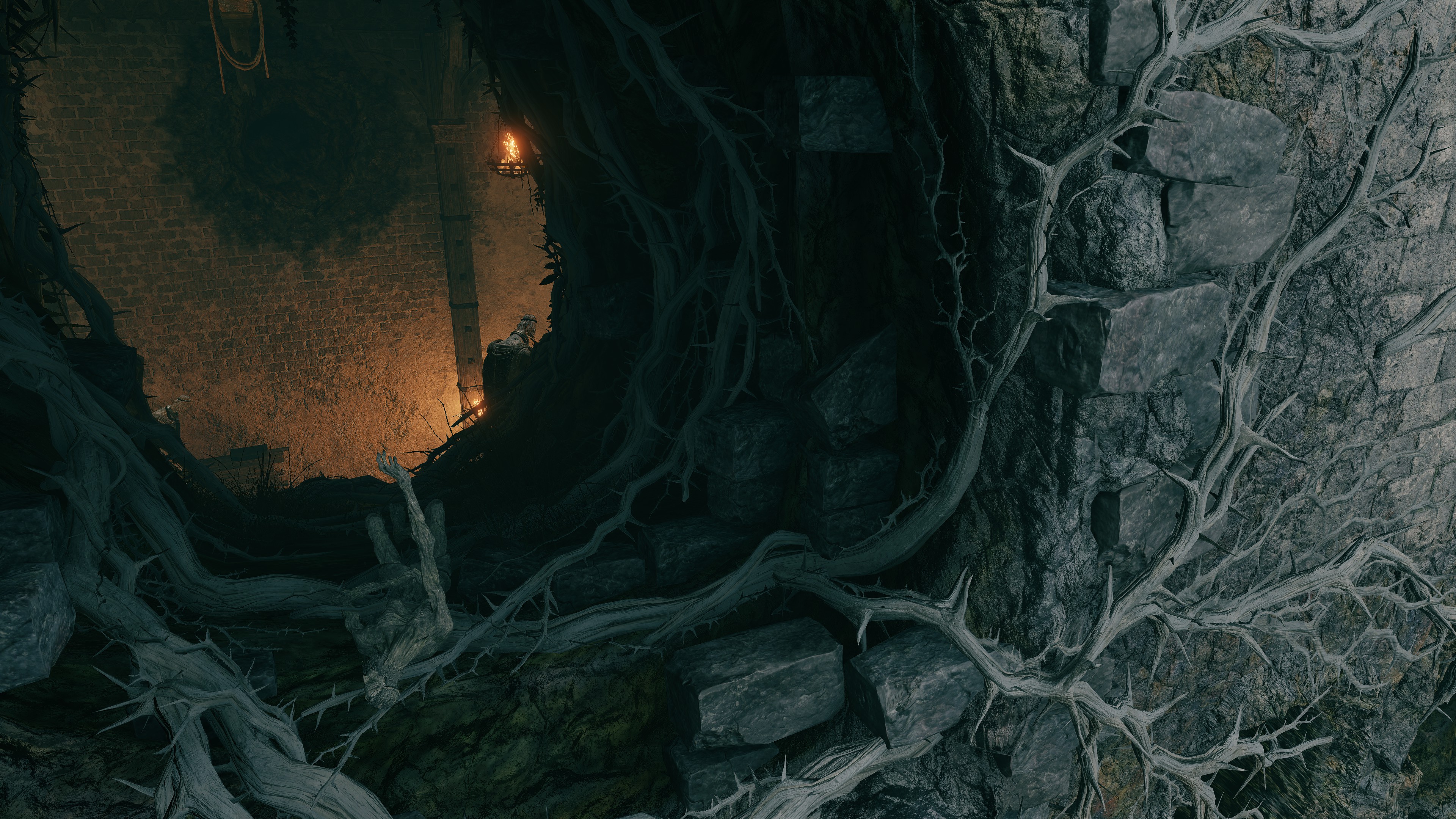

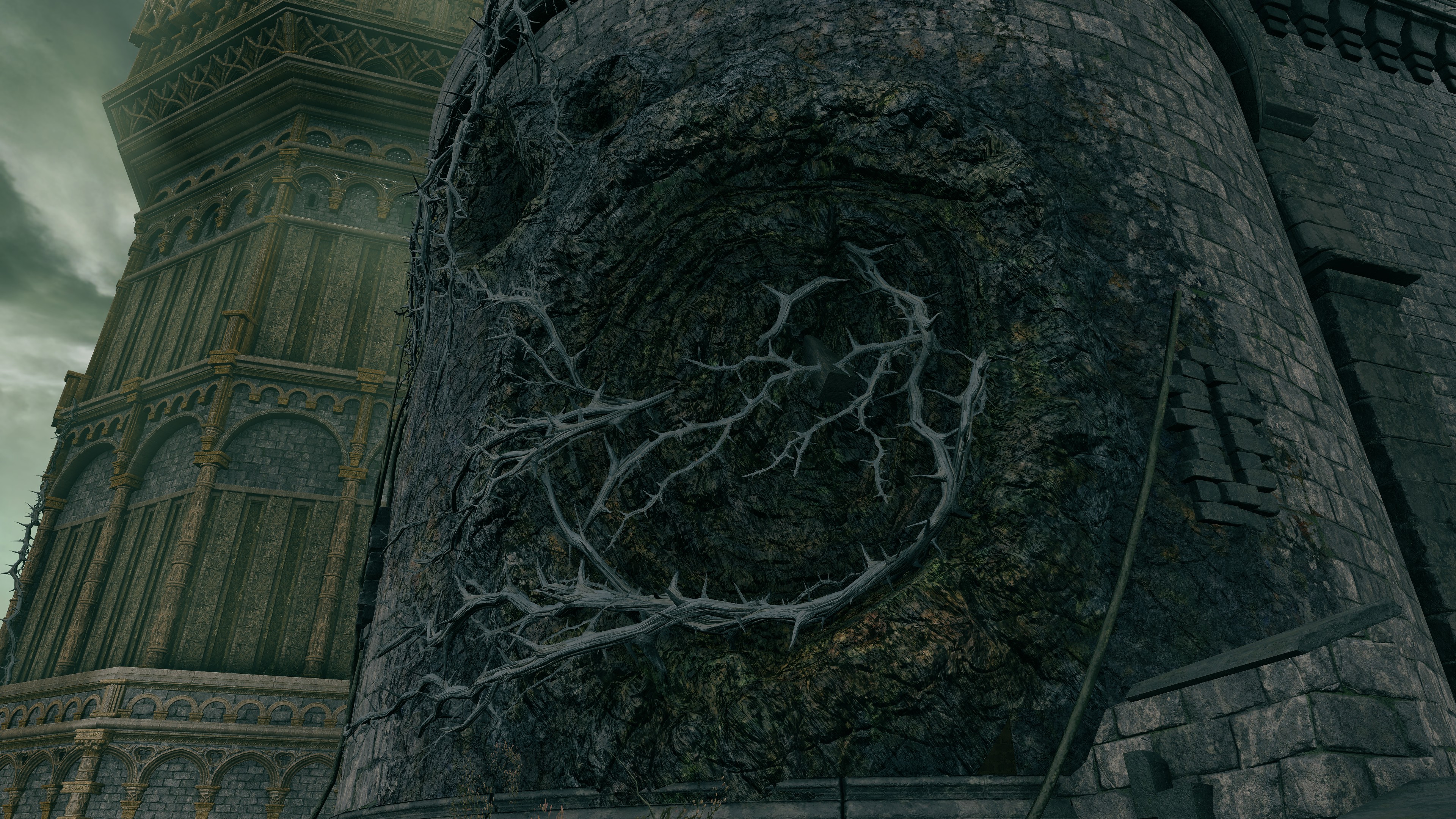
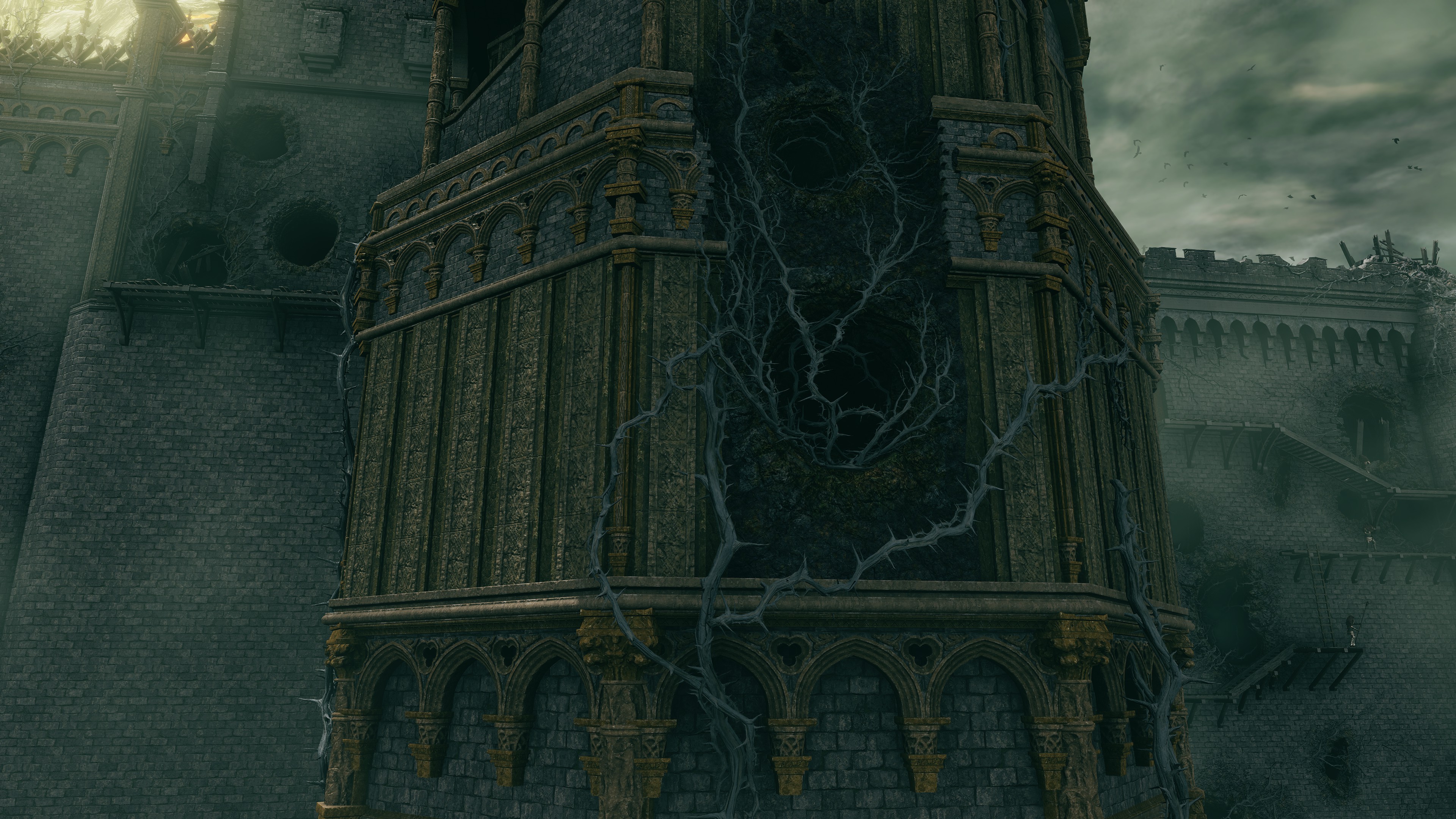
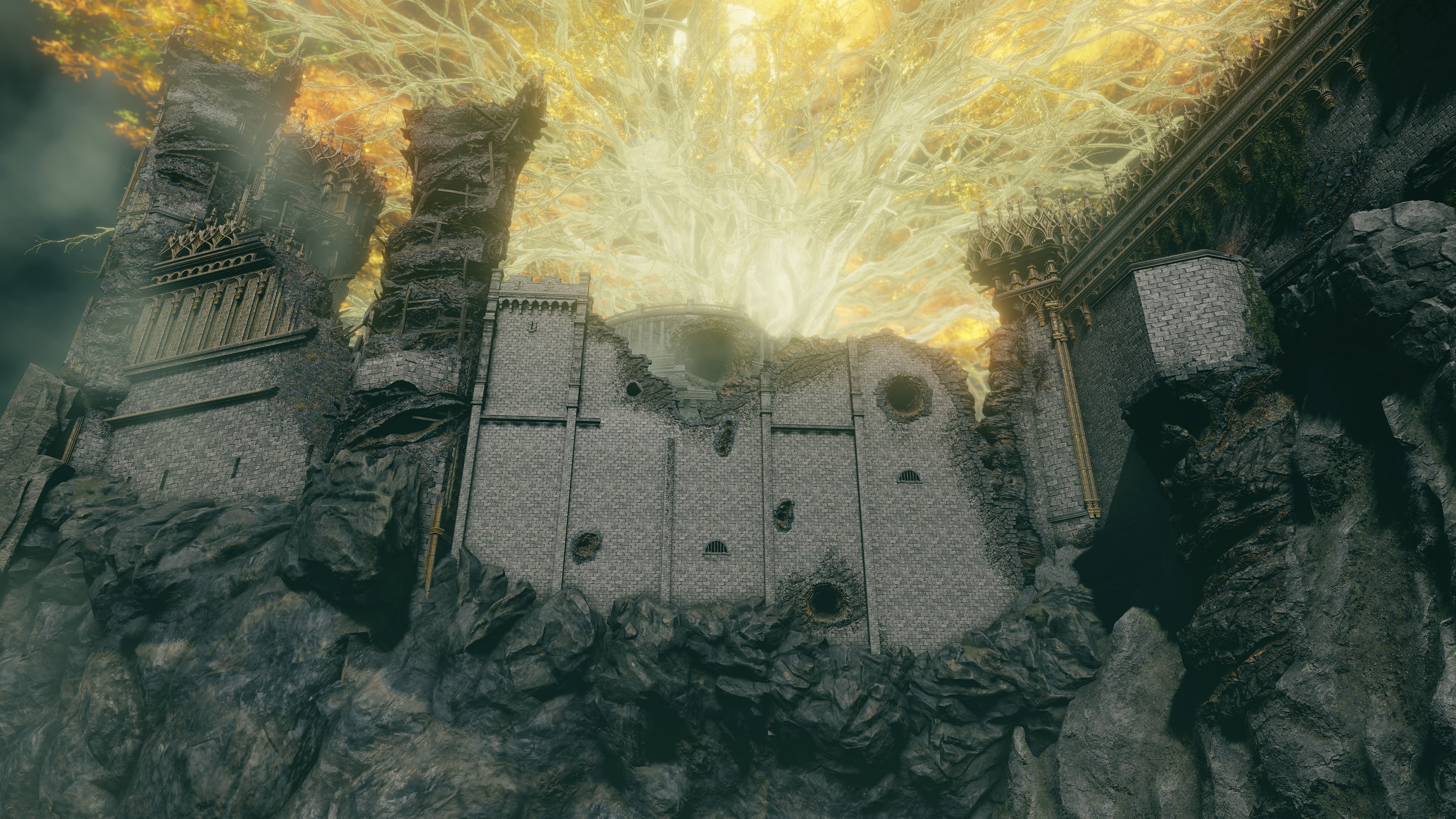

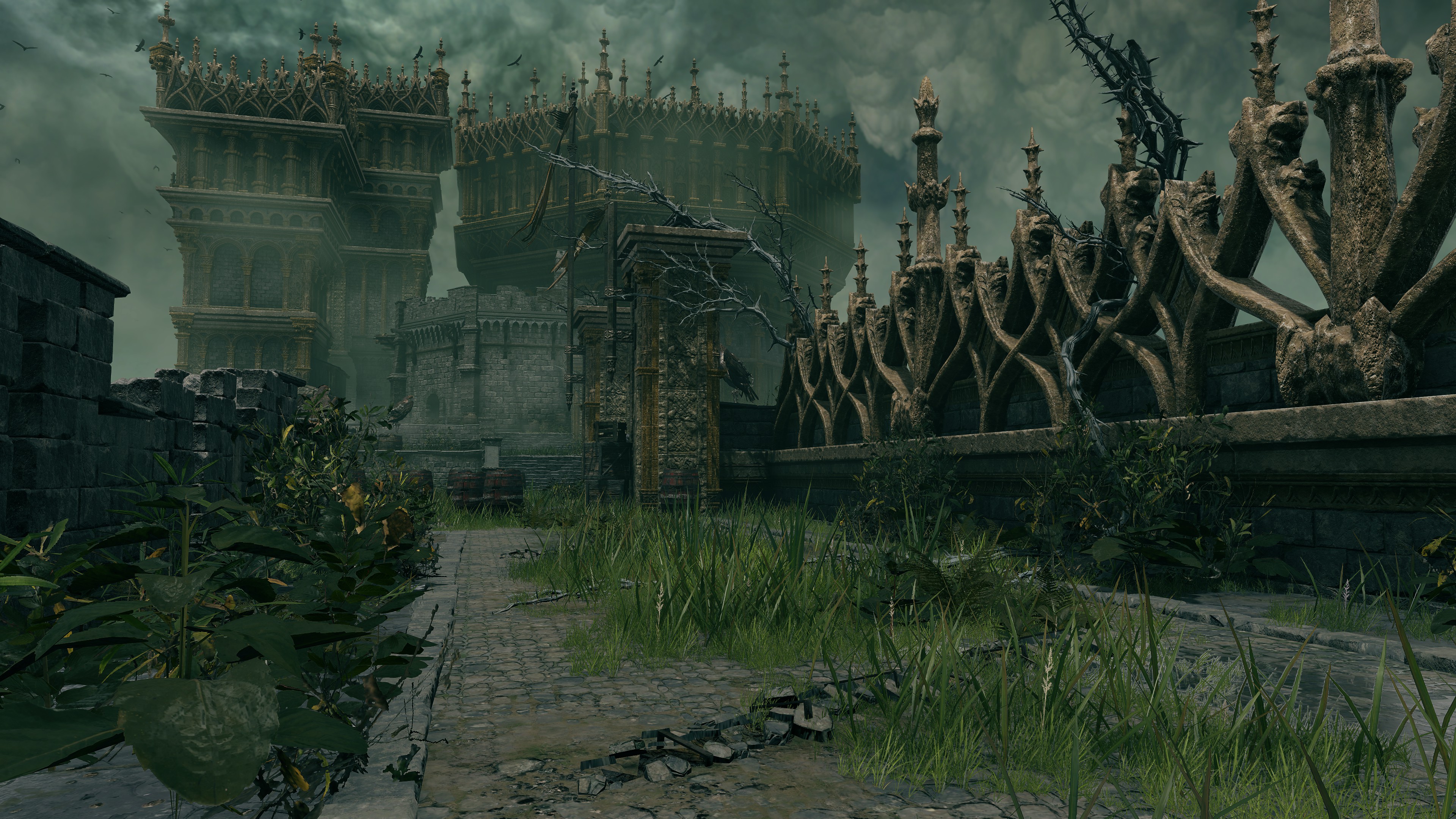
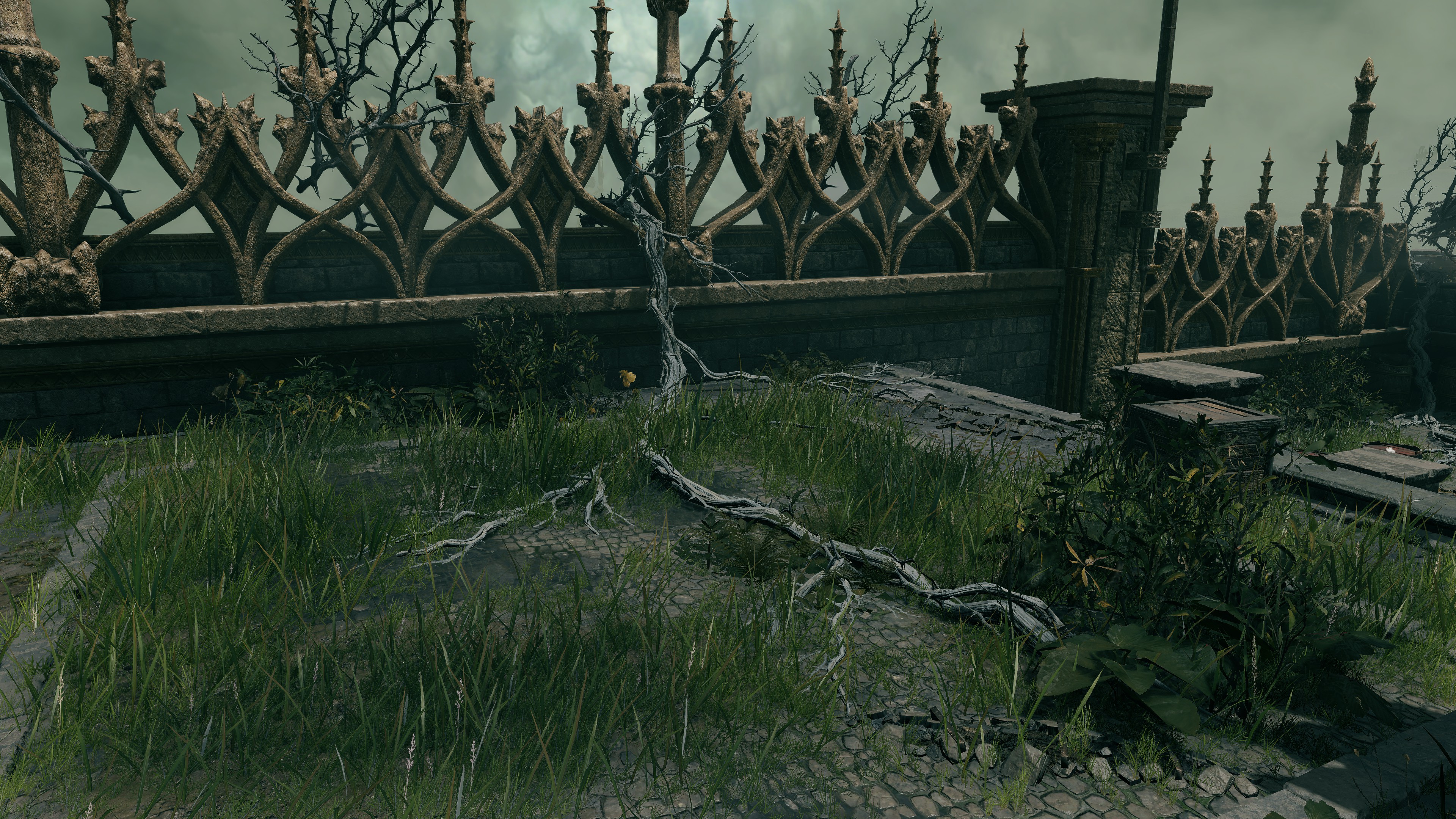
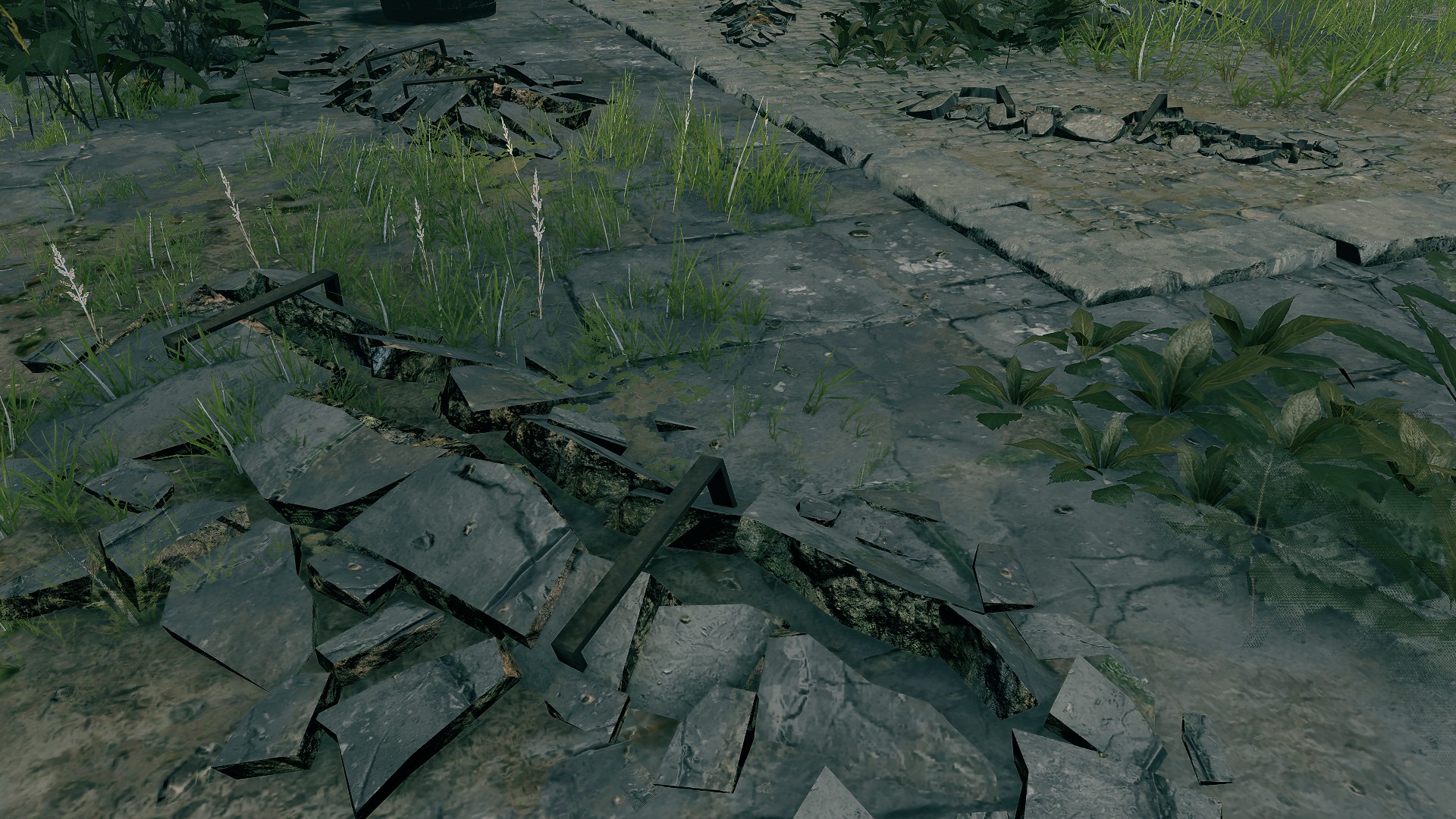
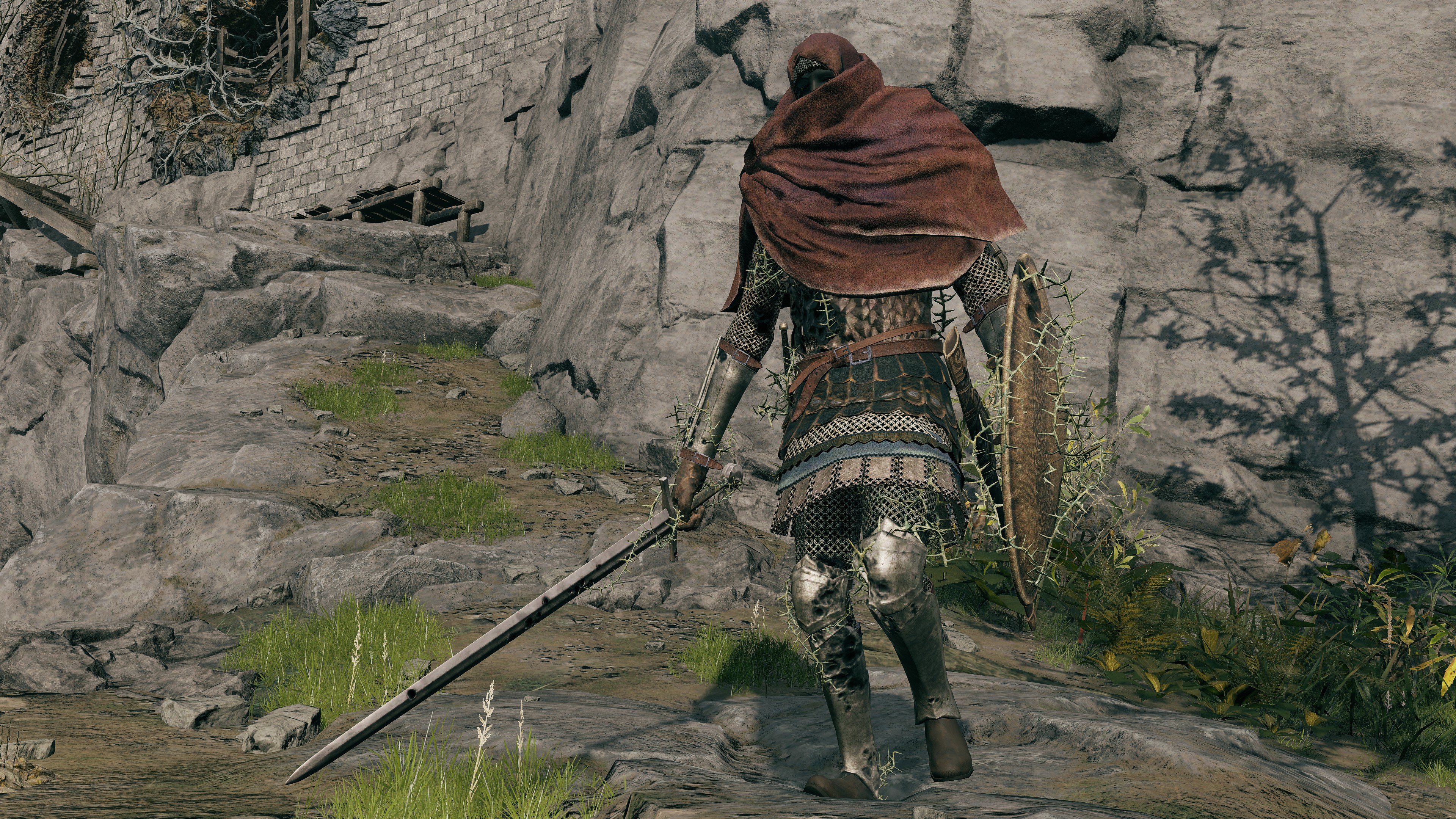
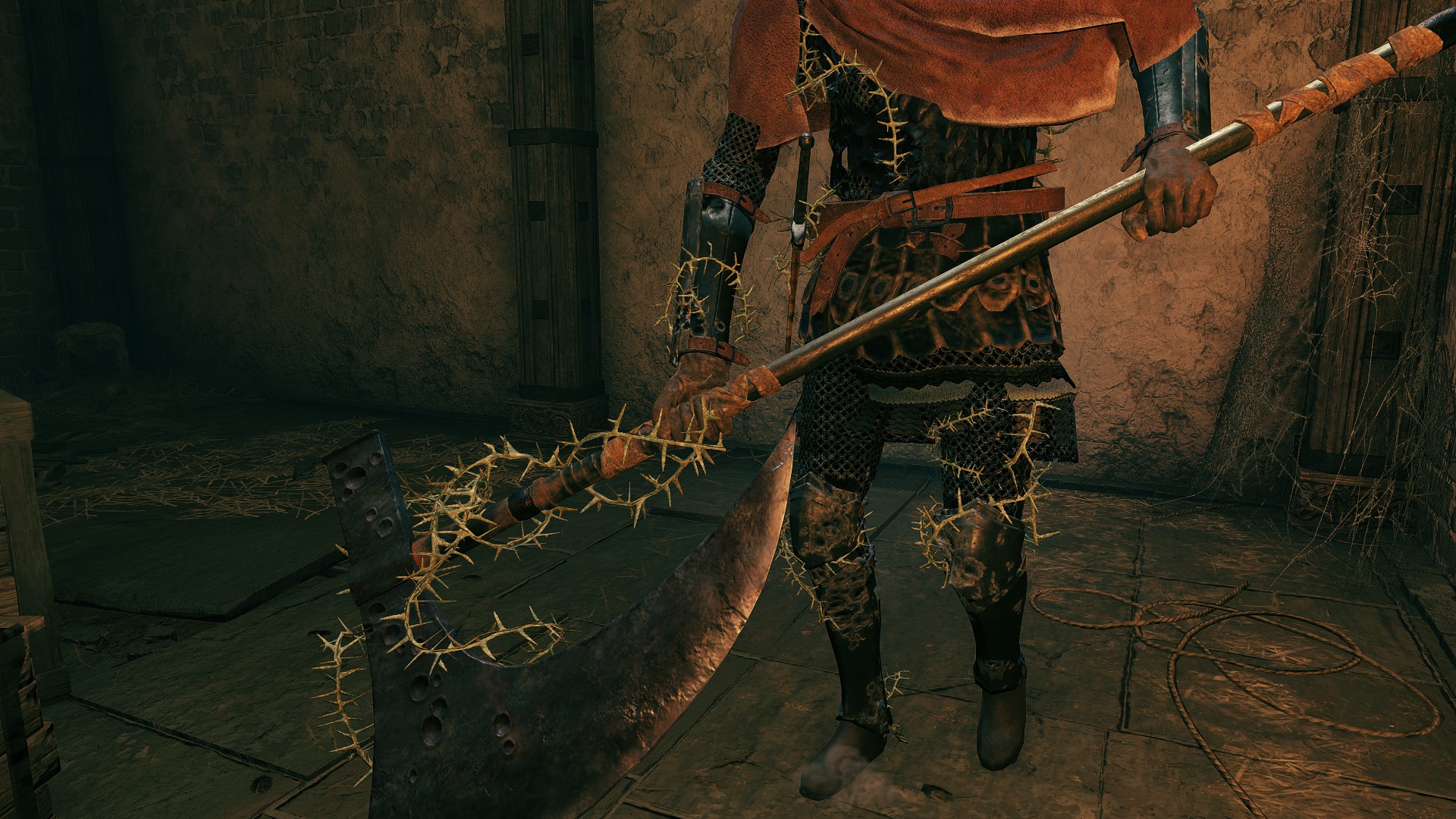
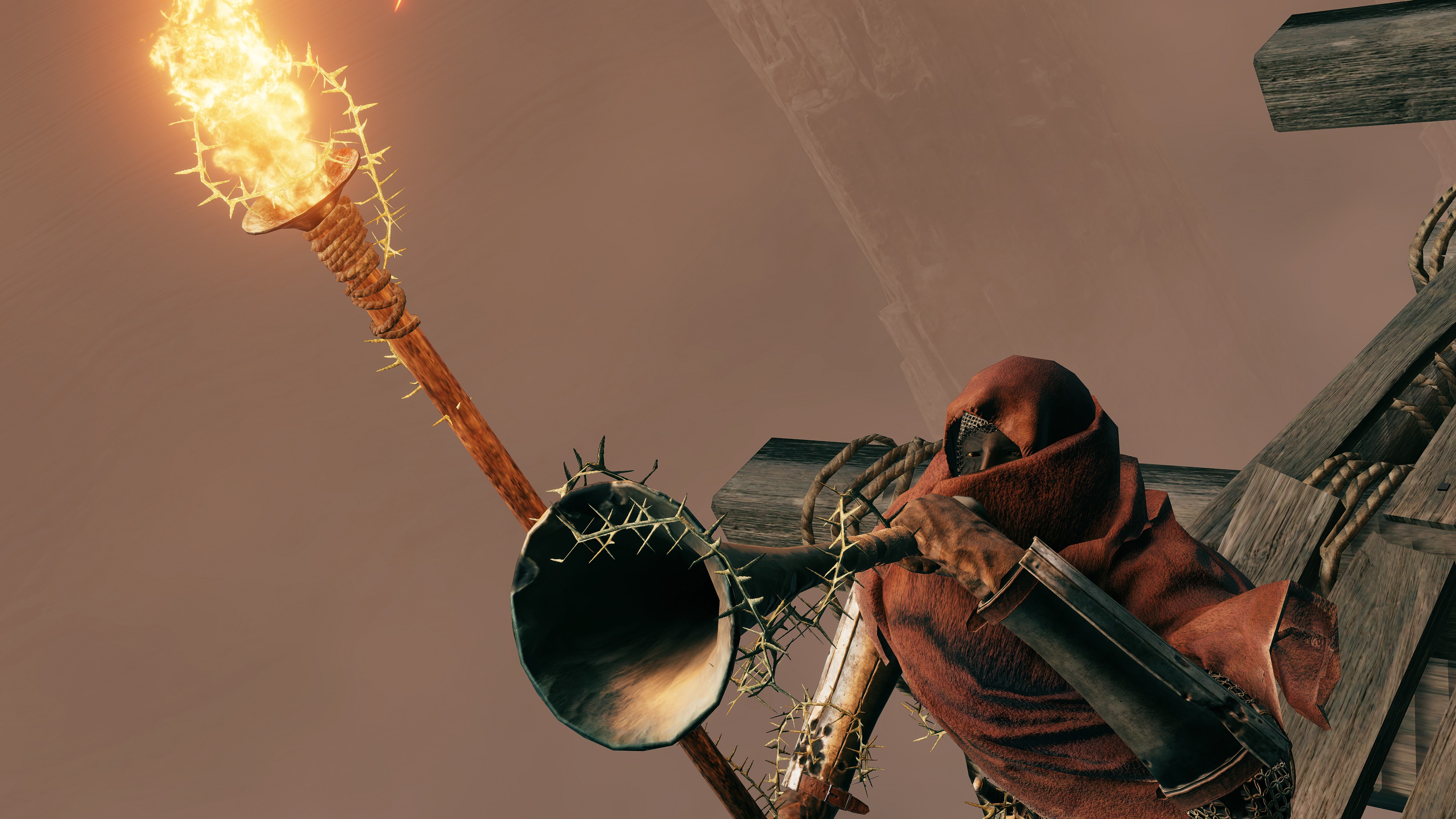
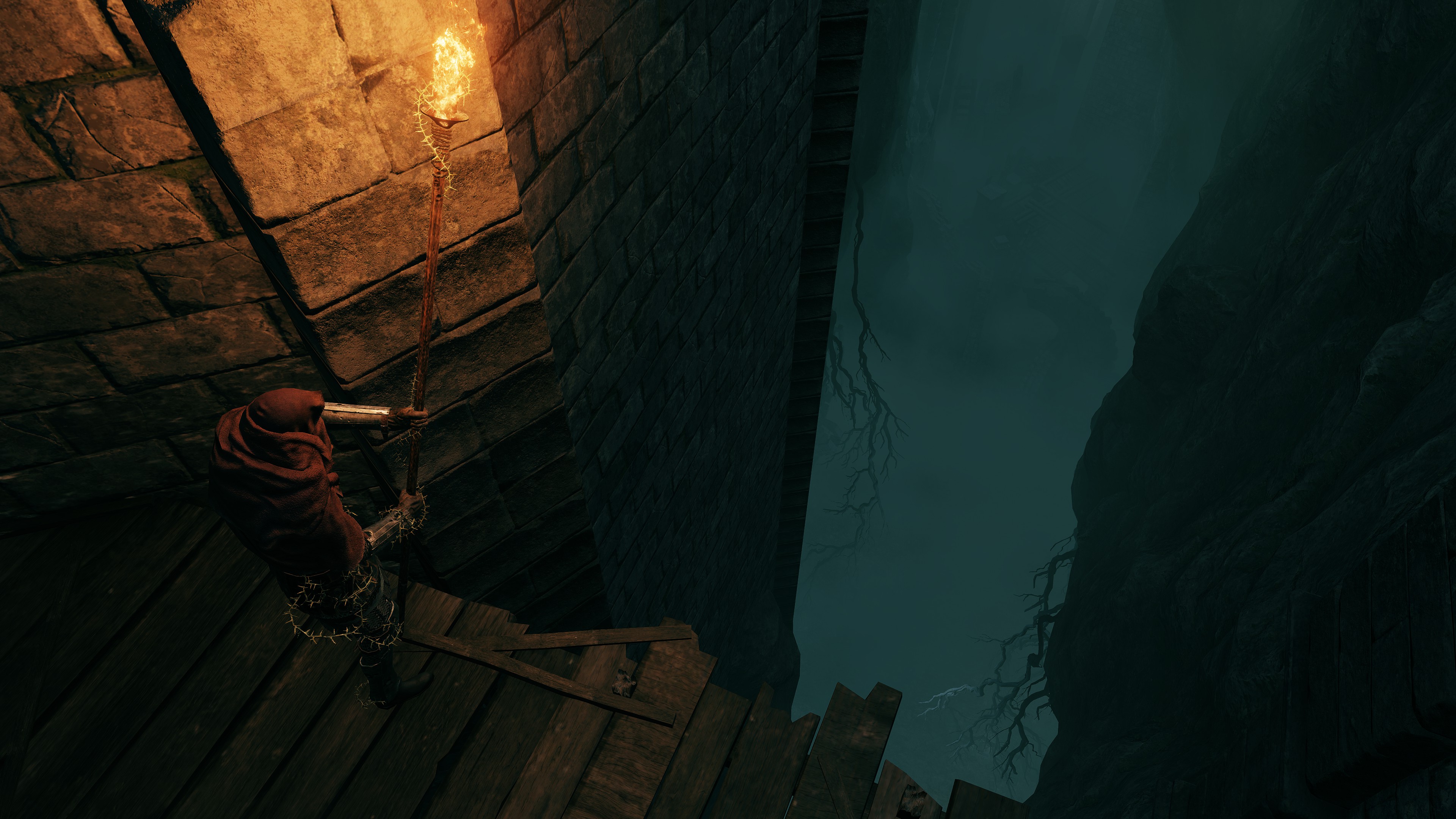
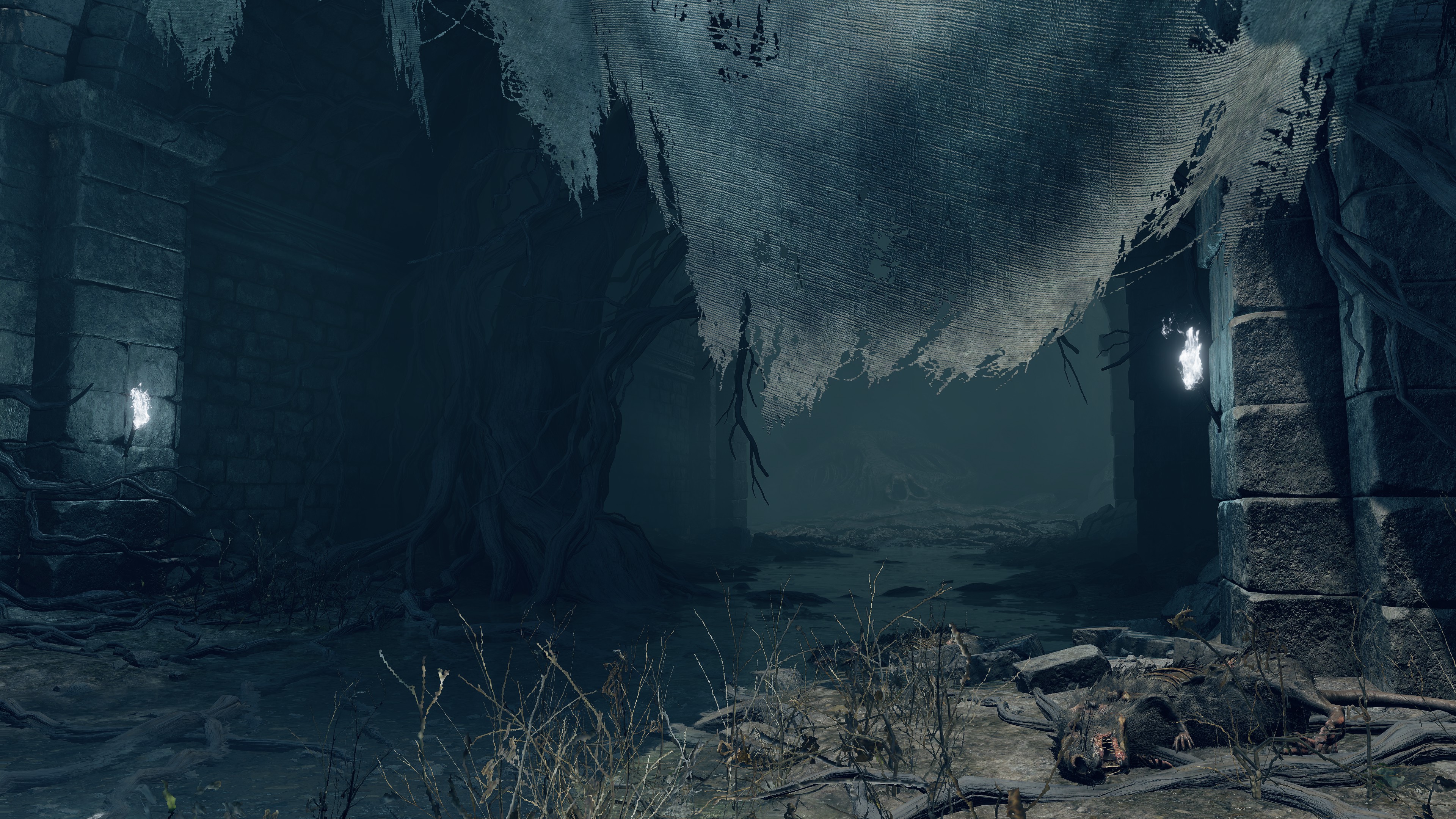
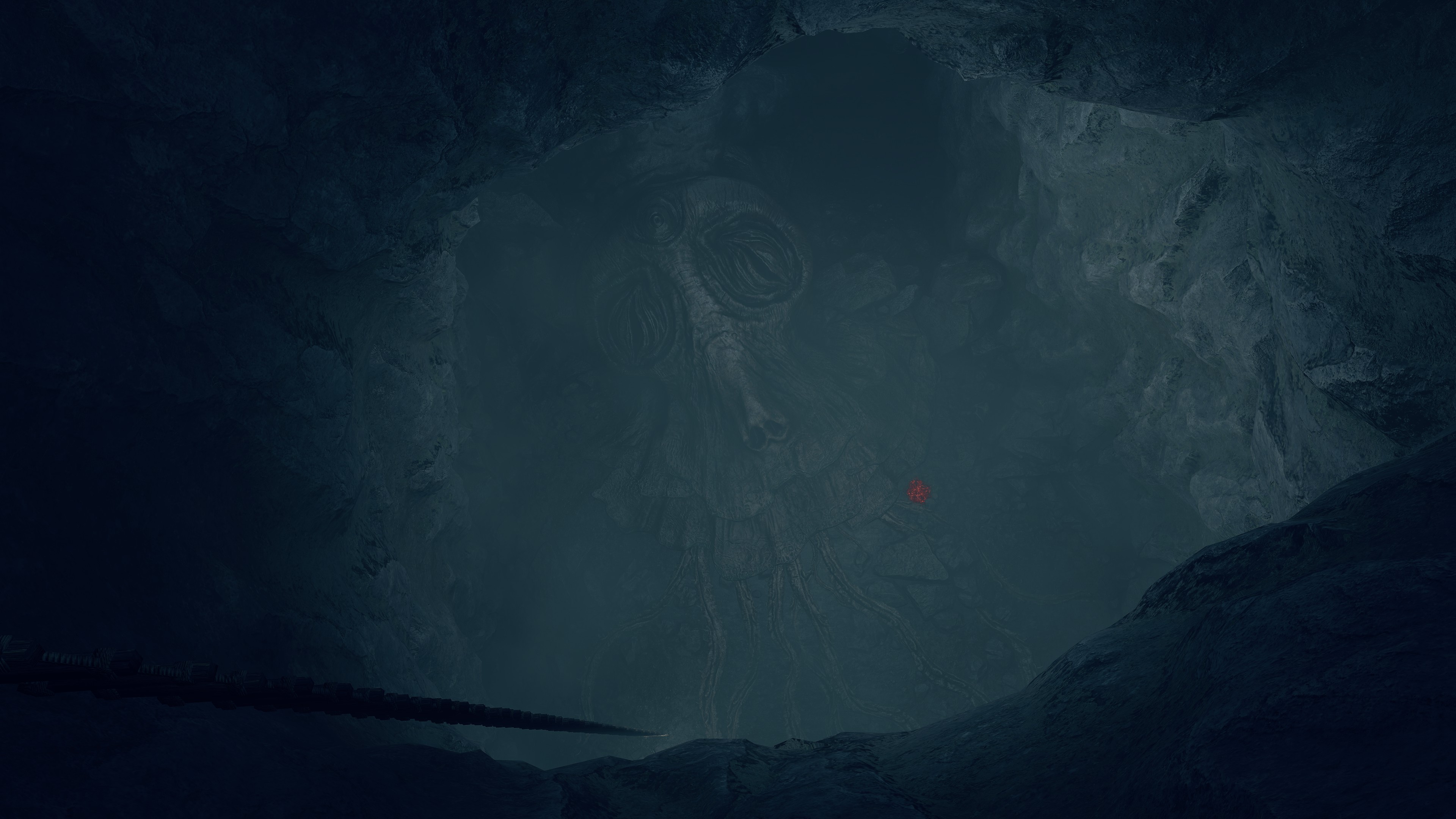
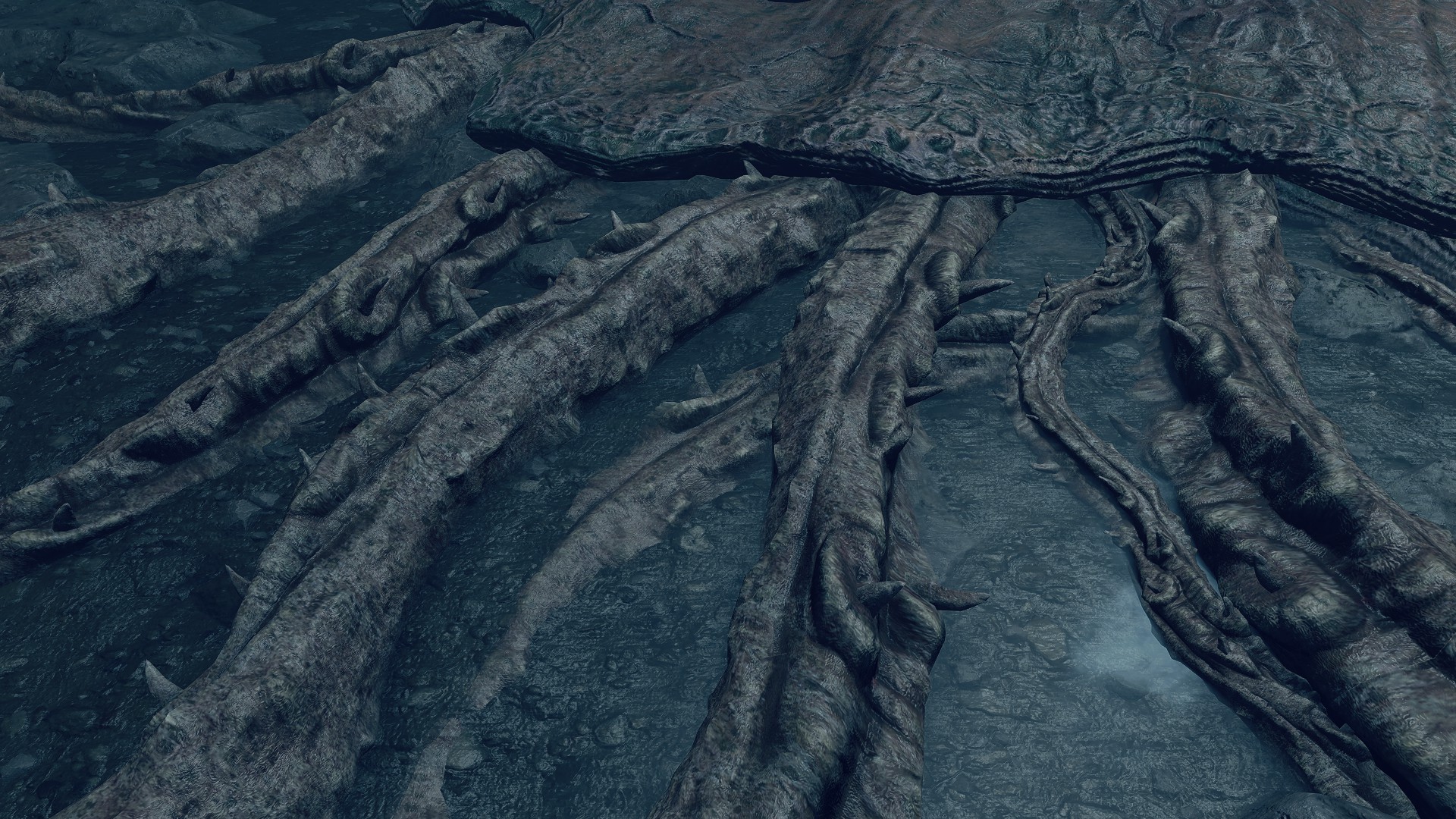
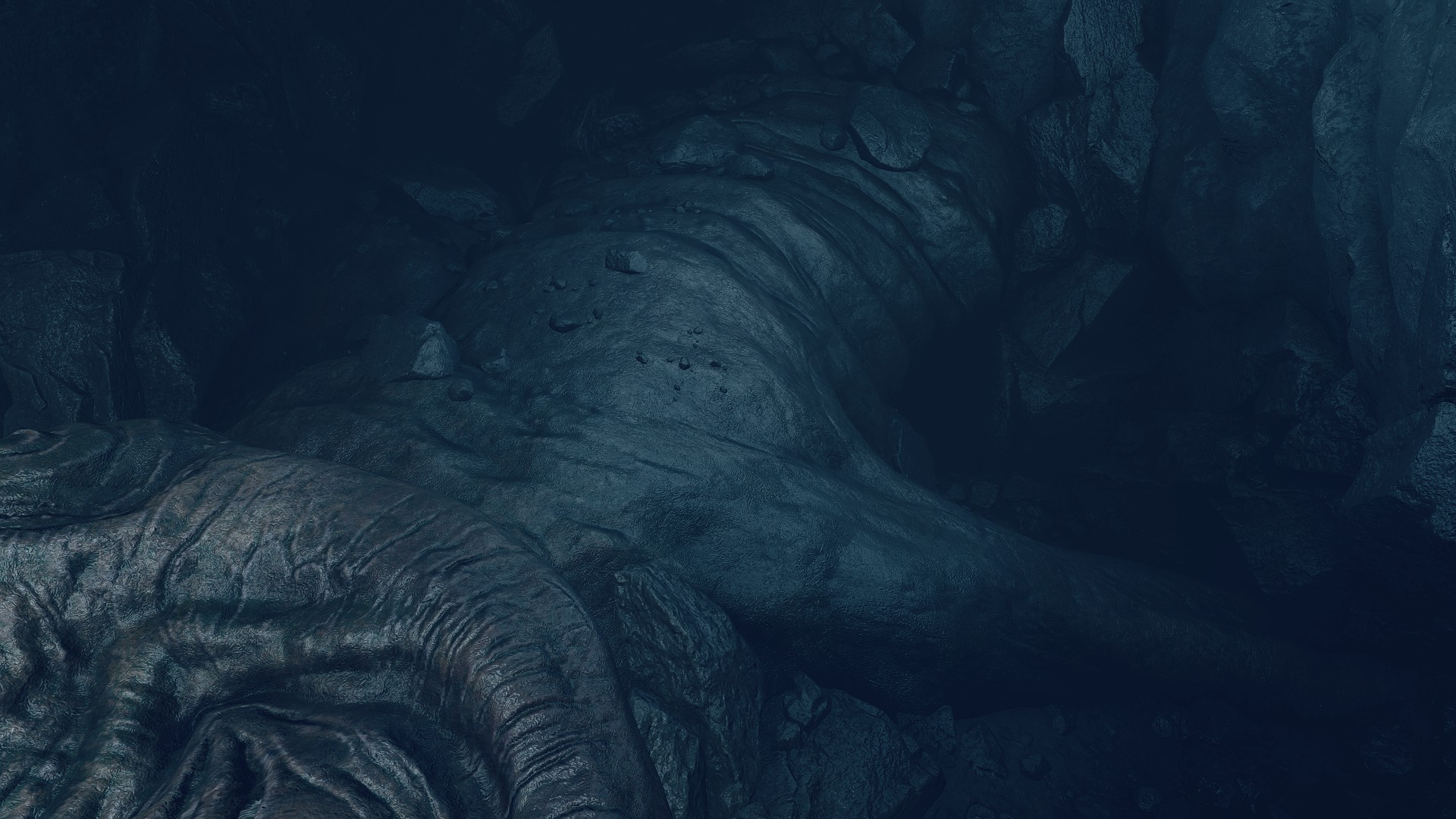
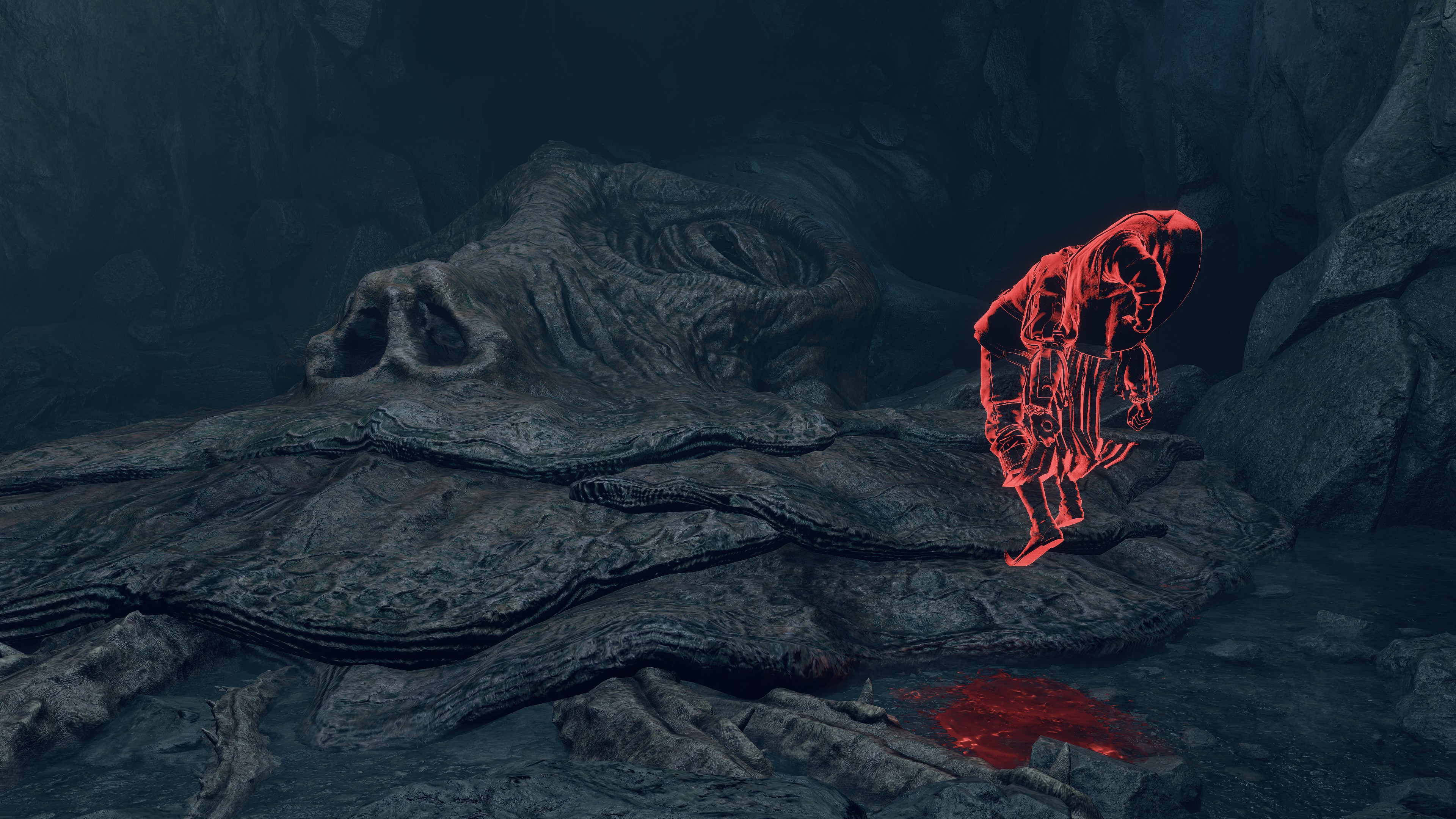
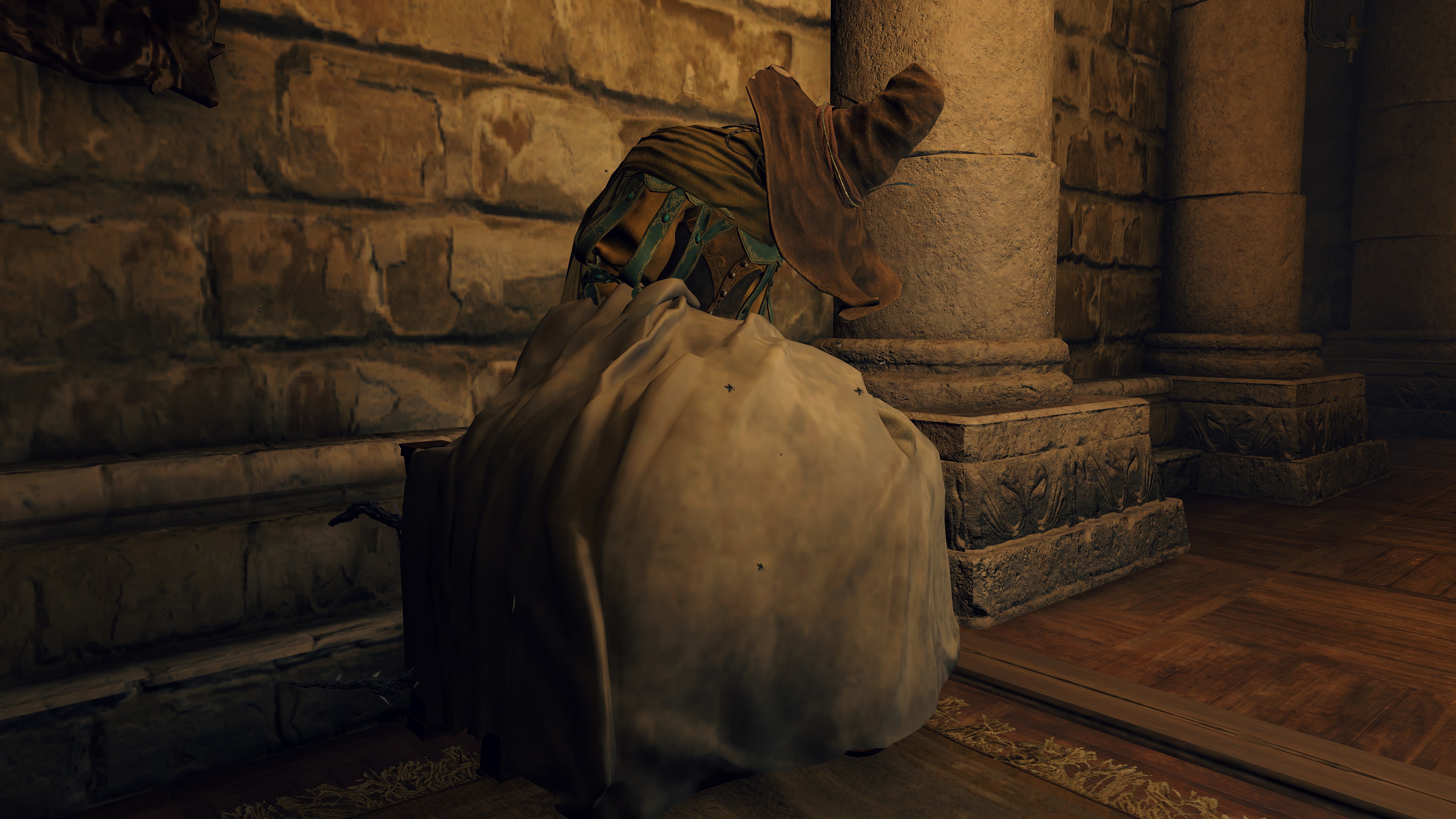
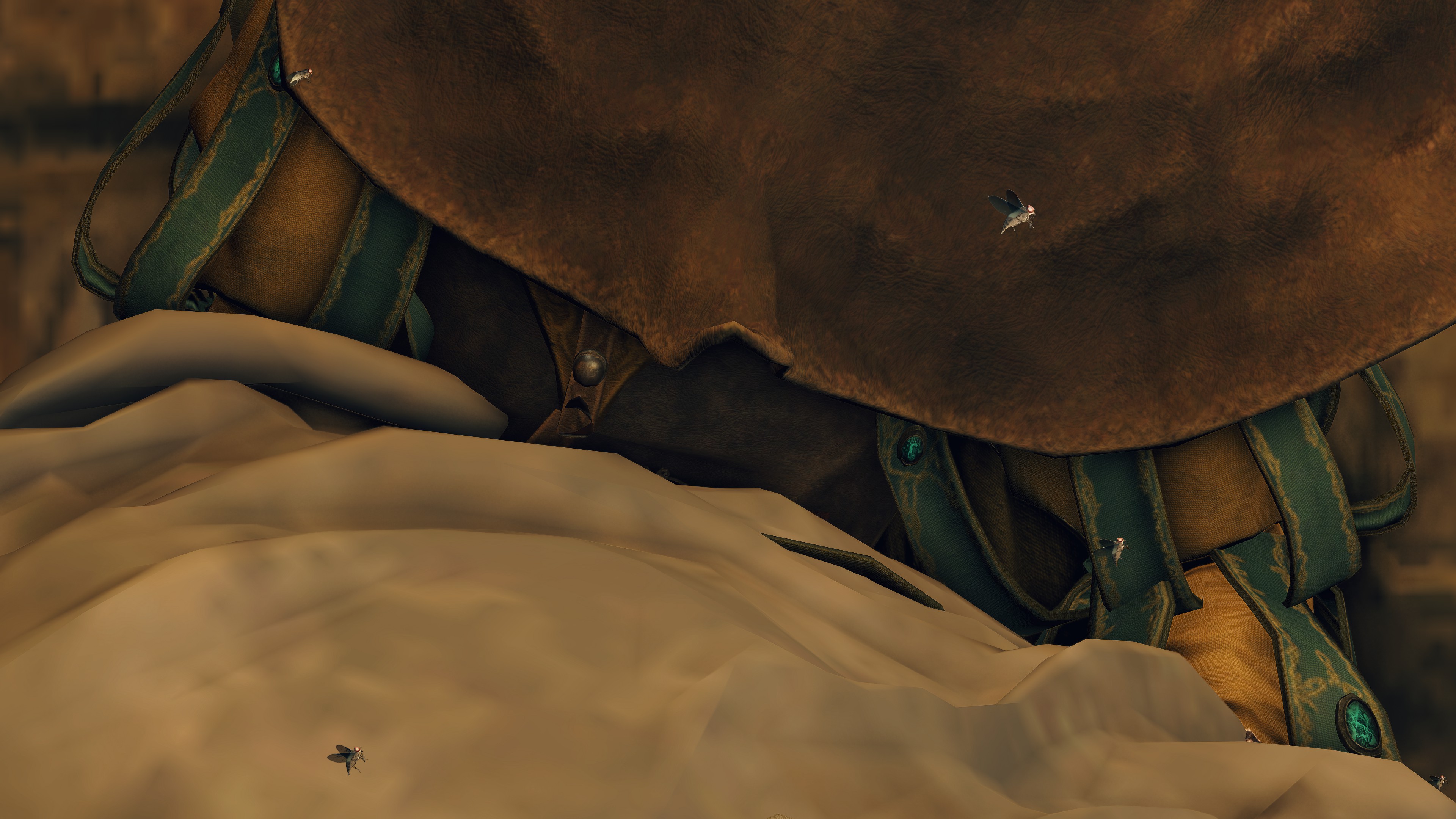
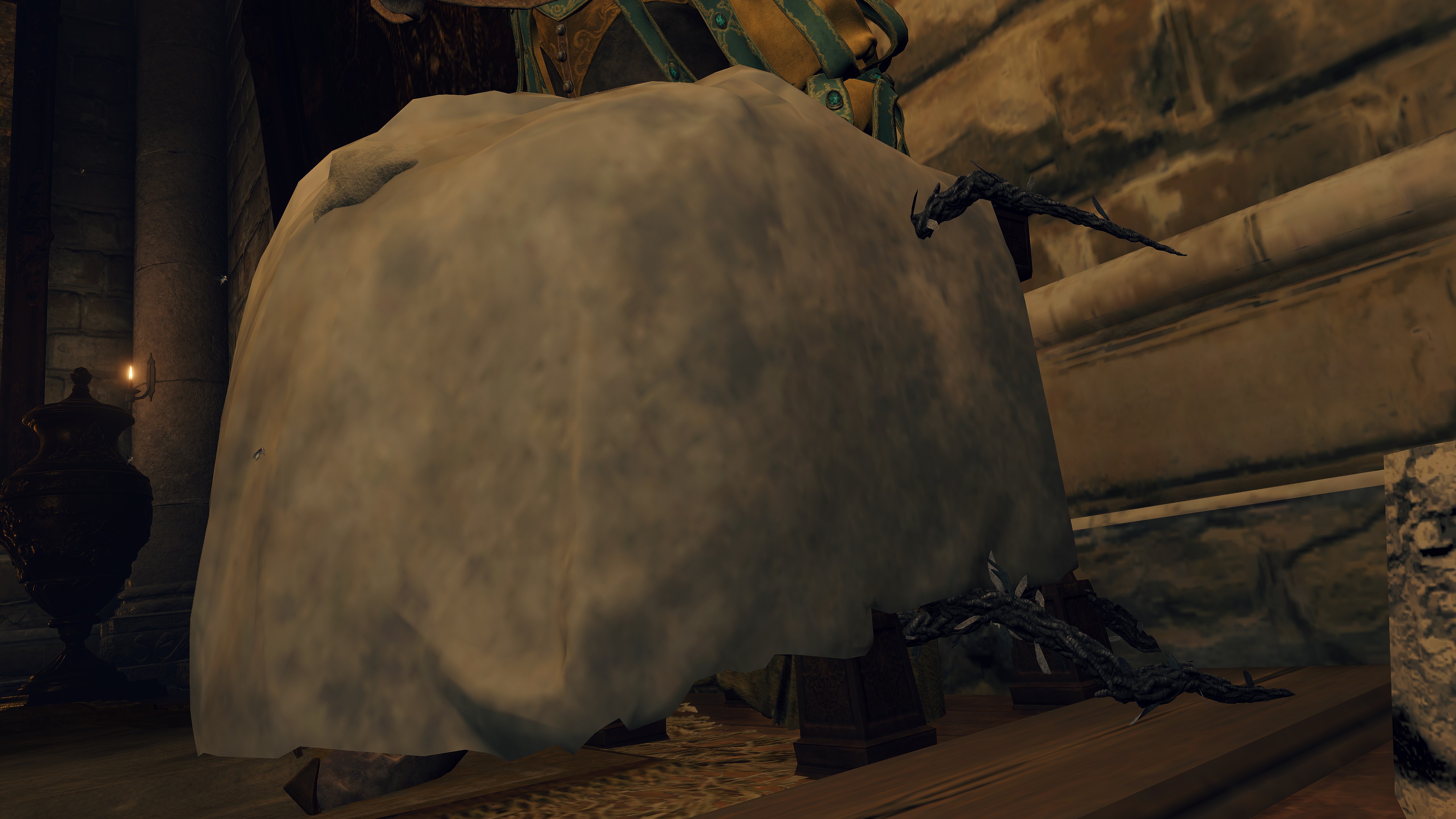
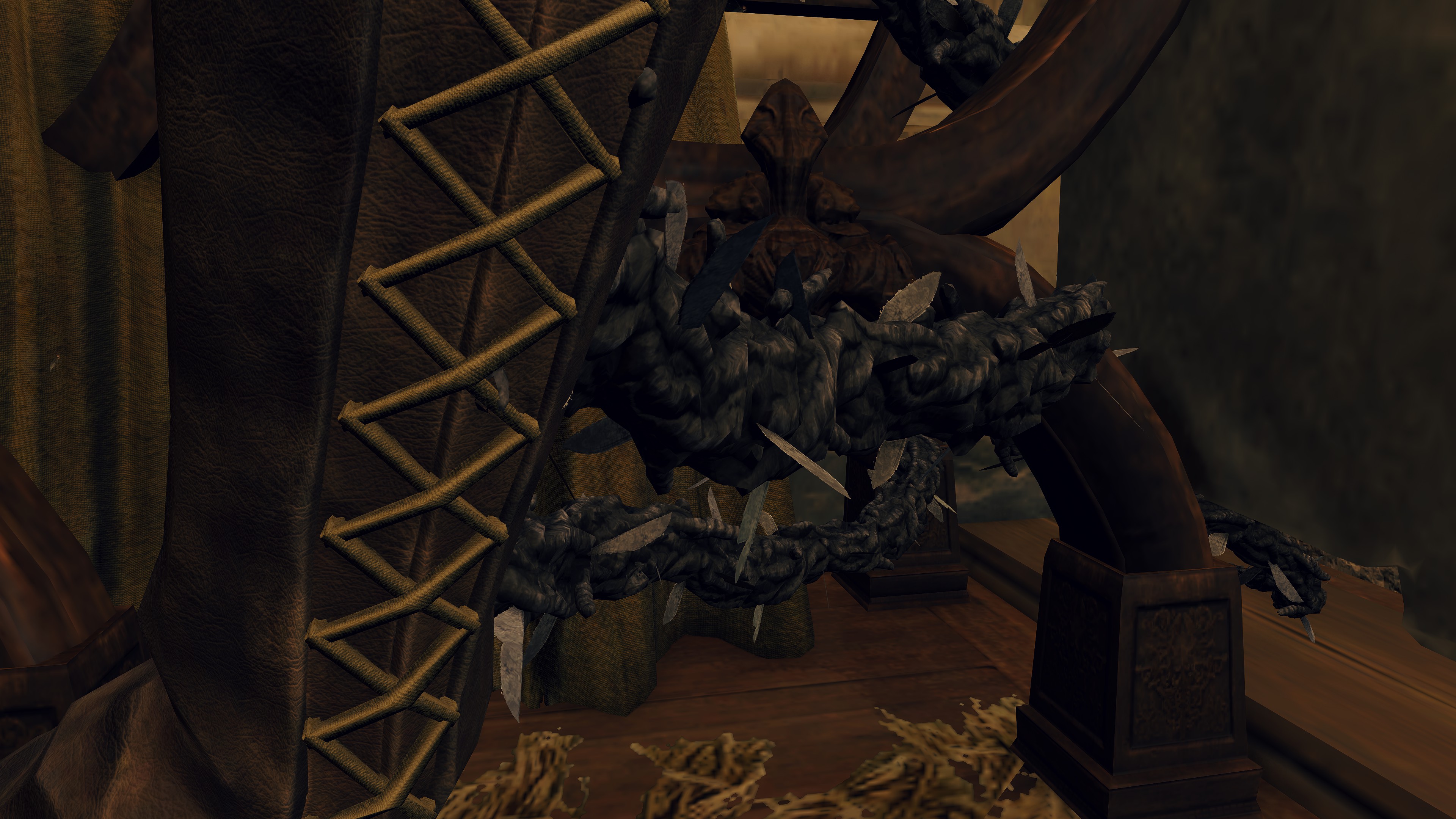
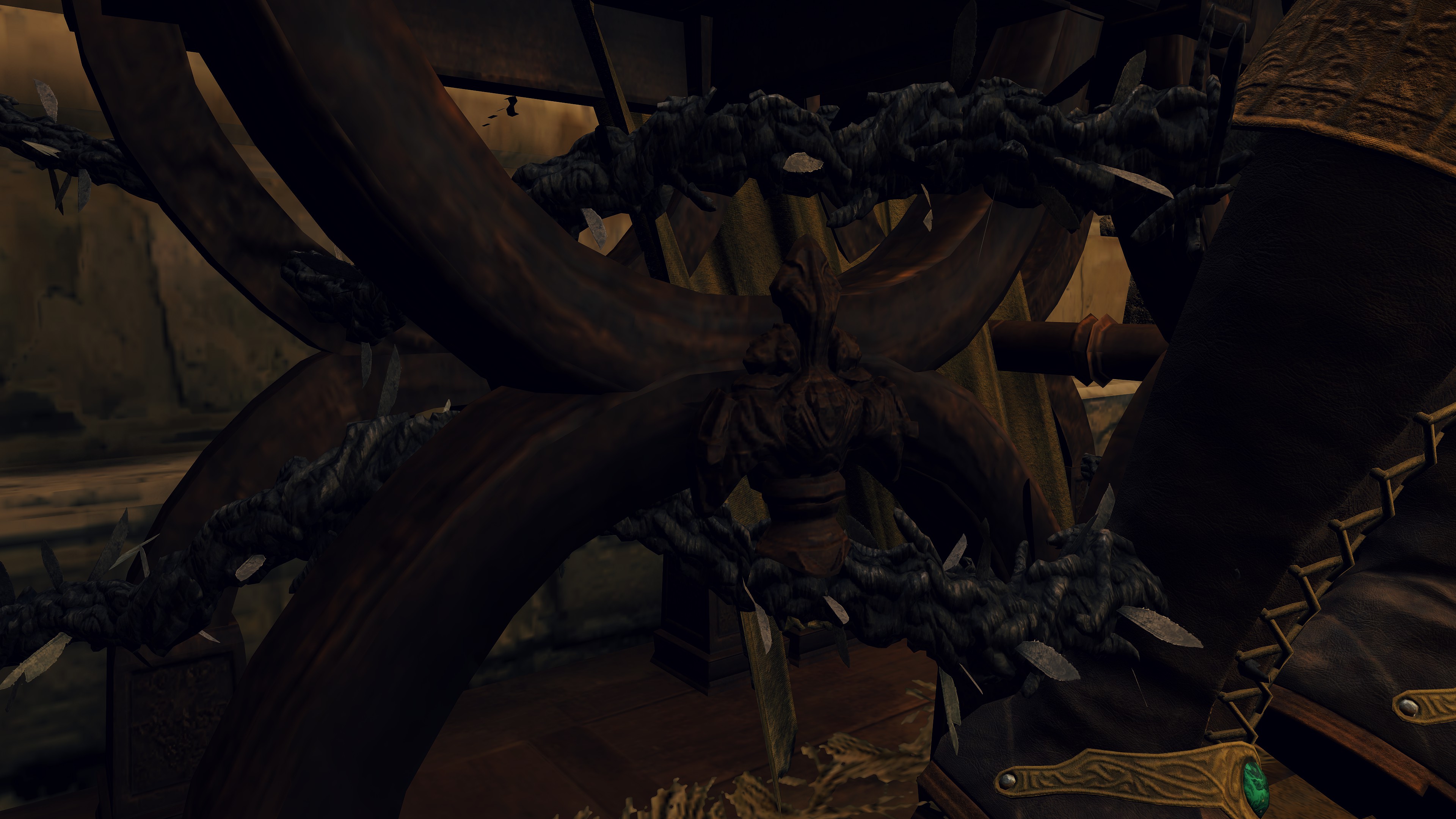
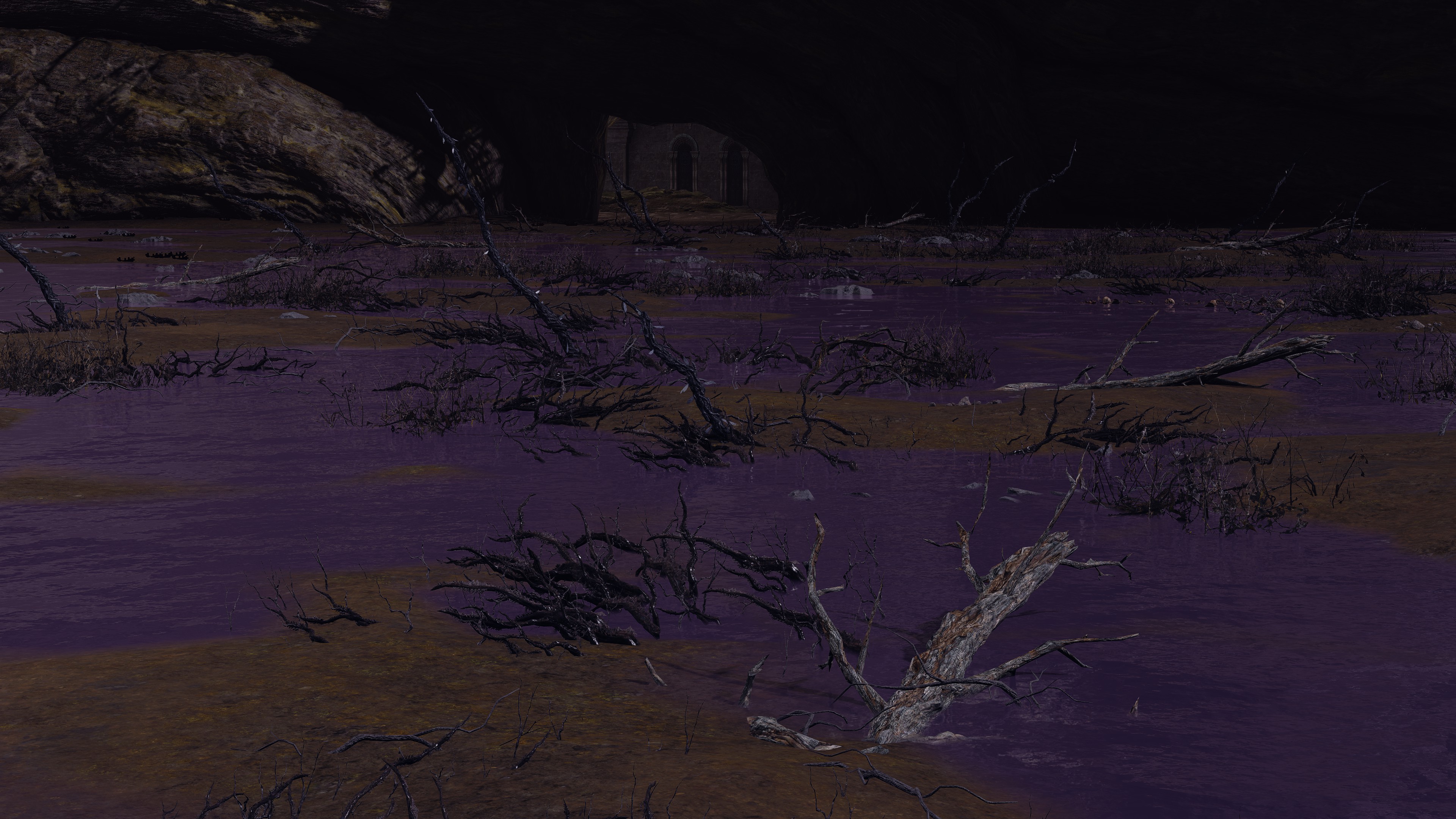
Discontinuity aside, the pale briars do possess a similar effect to Deathroot, with skeletons rising from the graveyards both in front of and behind the castle on that west side. This corresponds with the pox of briars extending around the back of the castle and up the Chapel of Anticipation across the sea. Clearly, the Deathroot which produced a second Godwyn seems to infect all roots in the zone, with that living dead face as the focal point of the spread. Death can also definitely affect the nonliving as well as the dead. Several villages lie in ruins for being located too close to the infested graves, growths covering the buildings. One of the demigod’s allies, Fia, similarly hands over a dagger crumbling to pieces due to the black gashes. Even water turns milky white in its presence at Summonwater Village, Wyndham, Liurnia’s southeastern graveyards, and the nameless Eternal City; around Godwyn and his various kinds of tendrils weaving through the earth, it hues purple. In short, Stormveil’s situation is neither unprecedented nor uncommon, even if the shape of its specific thorns is atypical.
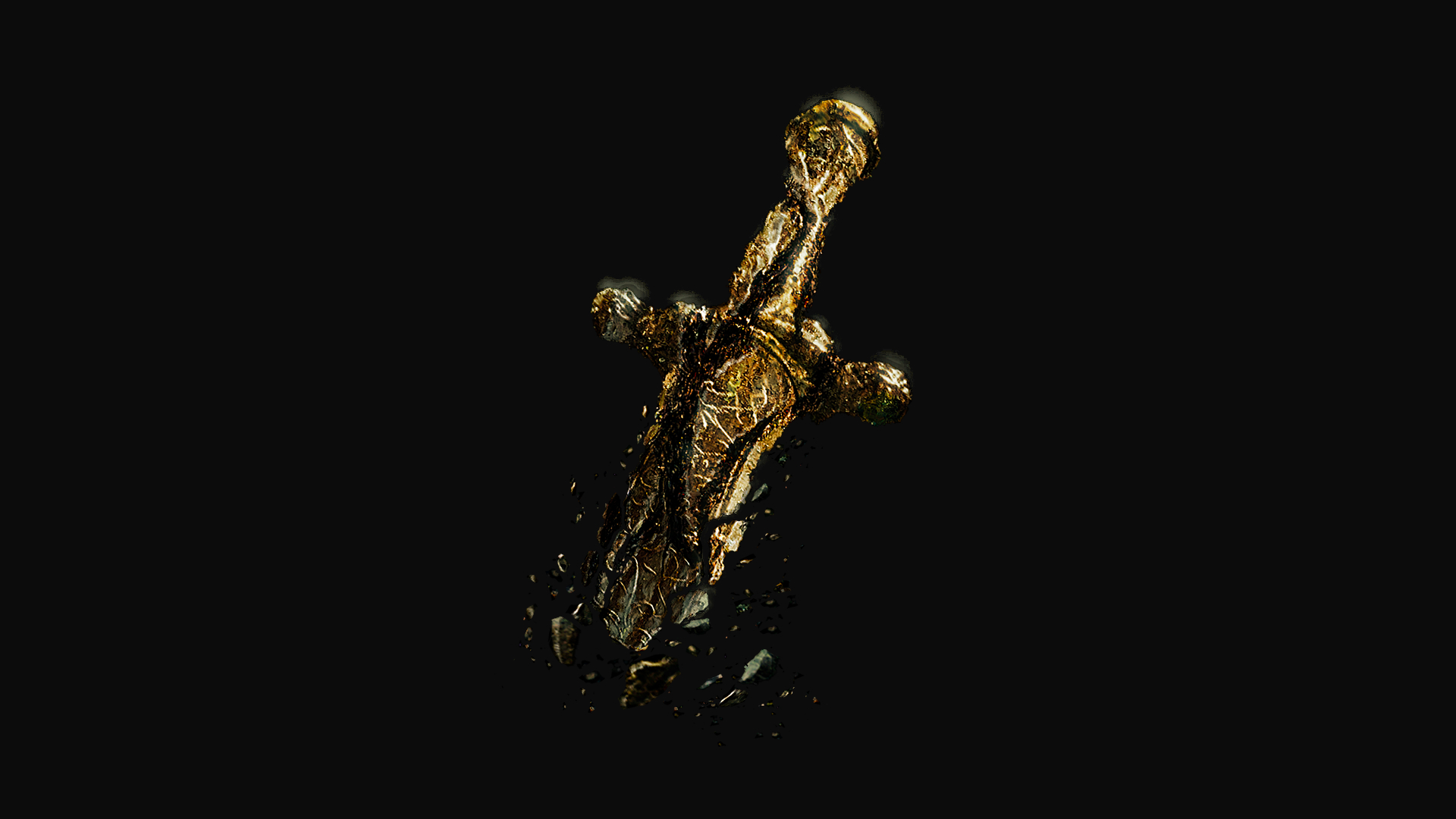
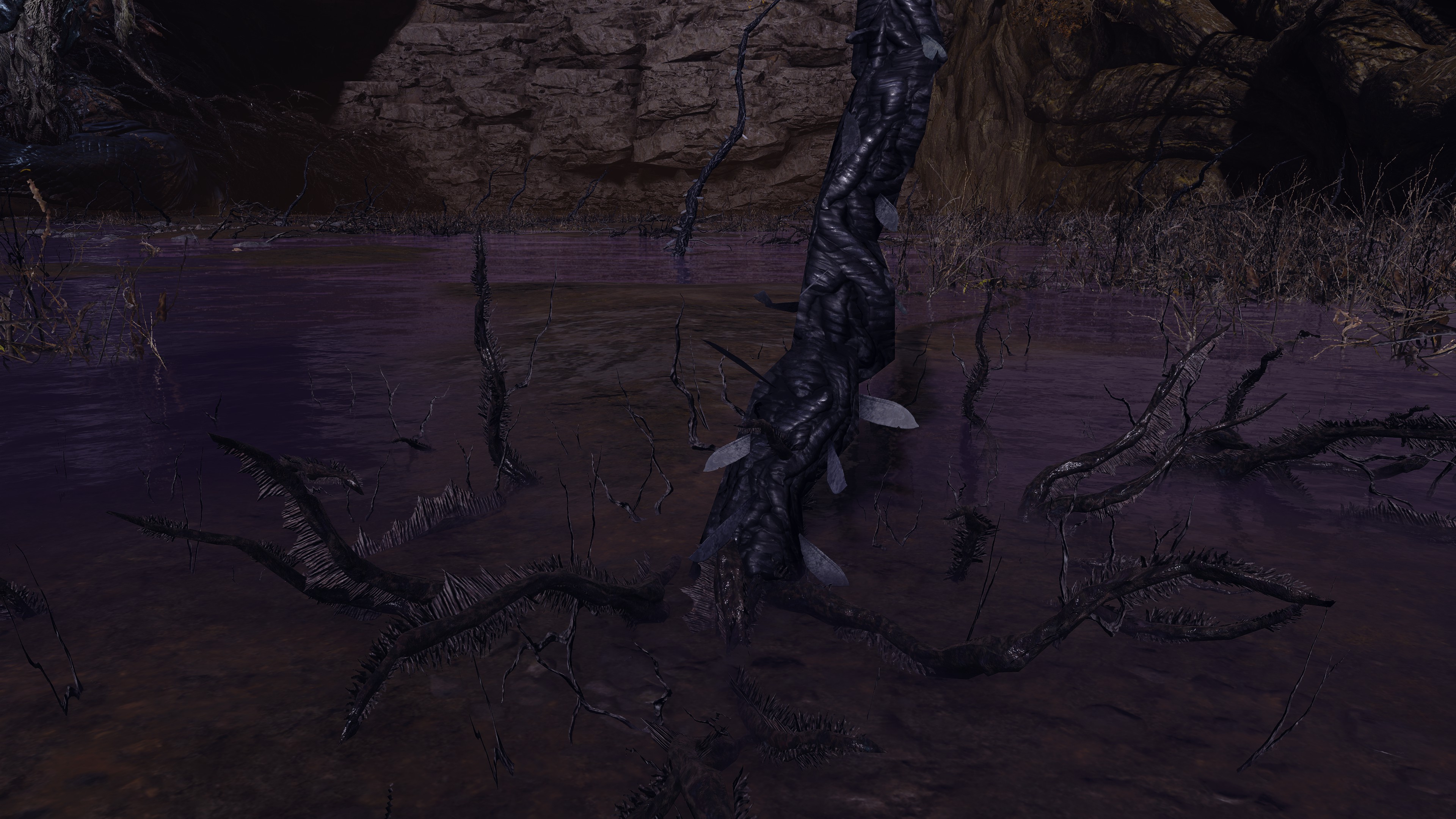
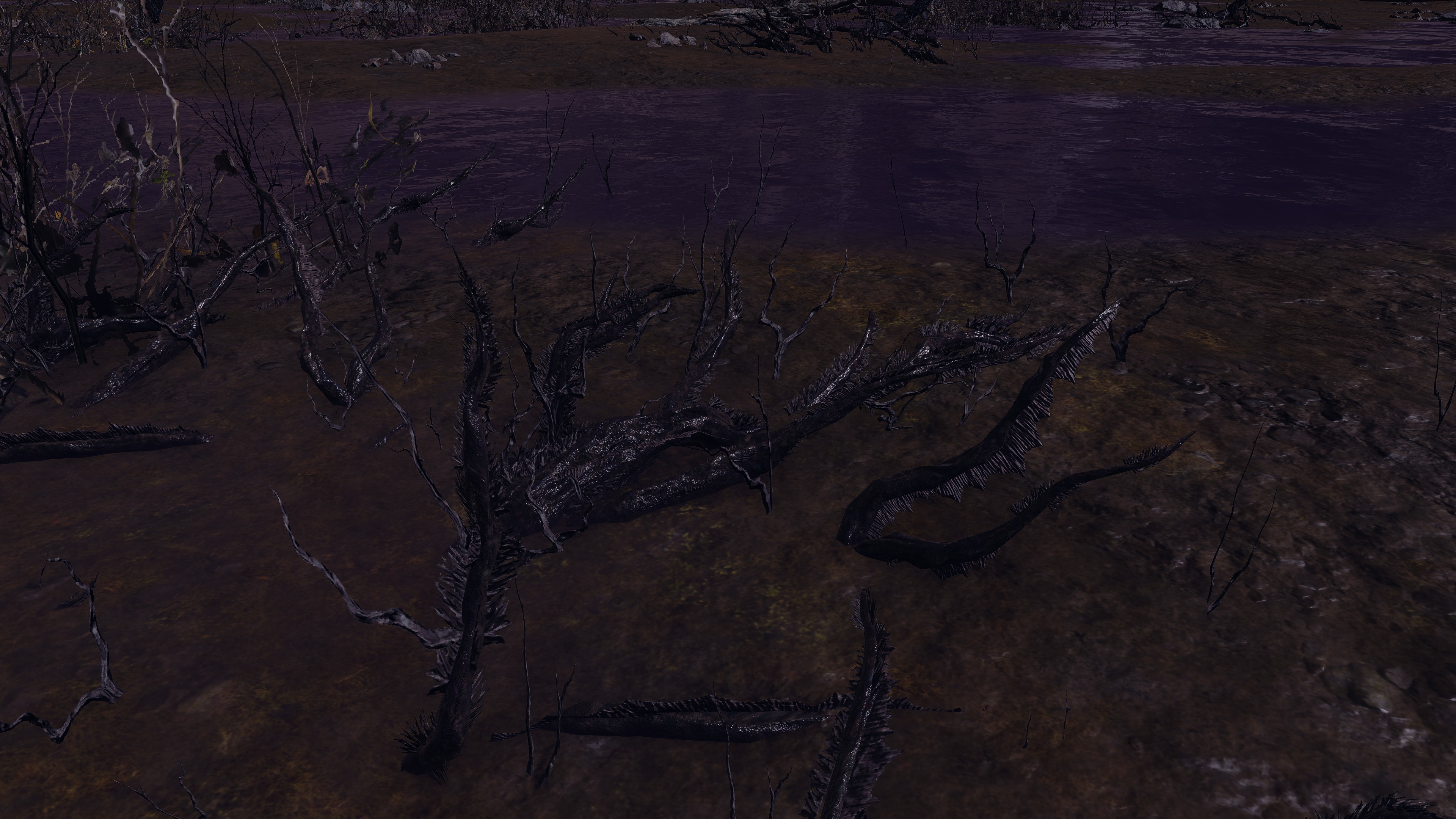
Dagger entrusted by Fia, Deathbed Maiden.
She wishes this returned to its owner.
It seems to have been a special weapon entwining gold and white silver originally, but it is now eaten away by black gashes and crumbling to pieces.
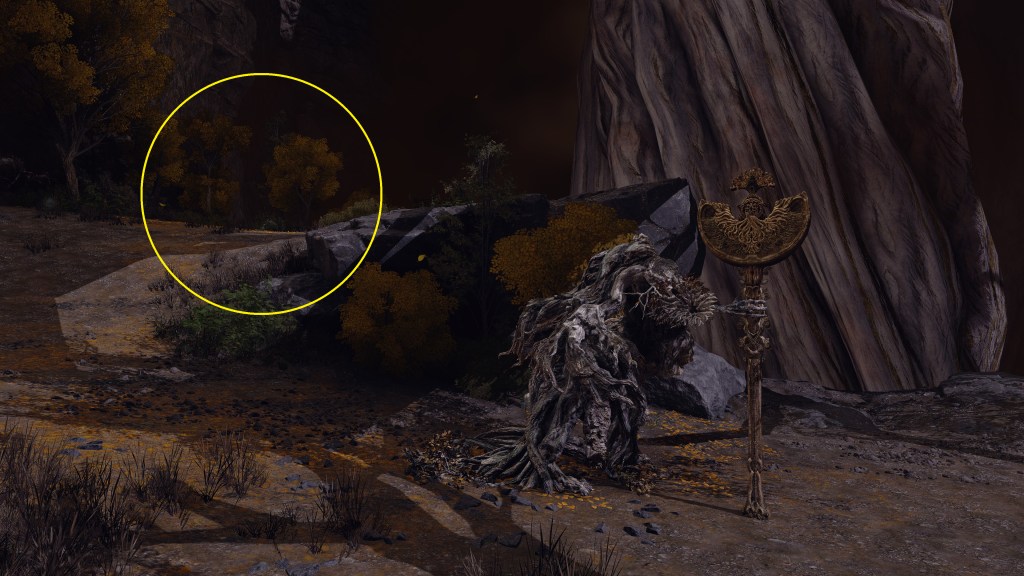
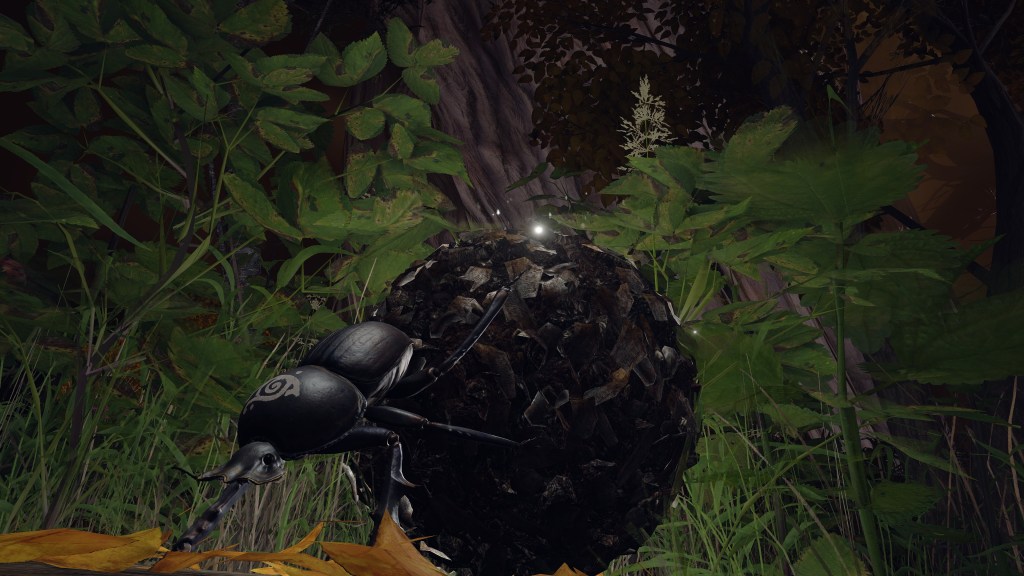
The damage these faces may cause cannot be understated. The Fringefolk Hero’s Grave has spawned an ulcerated tree spirit despite no overt threat to the greatroots. However, another spirit bursts from the ground near the root sanctum replaced with Godwyn’s face in Stormveil, and the ghosts of exile soldiers include the briars. In other words, the castle unwittingly spread its calamity to another part of the root network in burying their heroes. It is only the beginning stages, but the long-term dangers can be seen with the original; the ash of war for Golden Land is acquired from a scarab near an Erdtree Avatar in Deeproot Depths, a sign that it wasn’t the first to patrol the infected roots as a guardian. The tree ultimately has no way to defend against Death when these inflammations achieve critical mass. And once the cancer metastasizes, it becomes its own nexus to threaten everything beyond the roots. Worse, a corpse sitting next to the face in Stormveil carries its Pustule, bearing fewer faces with weaker power but nonetheless proving that this other self is still spreading.
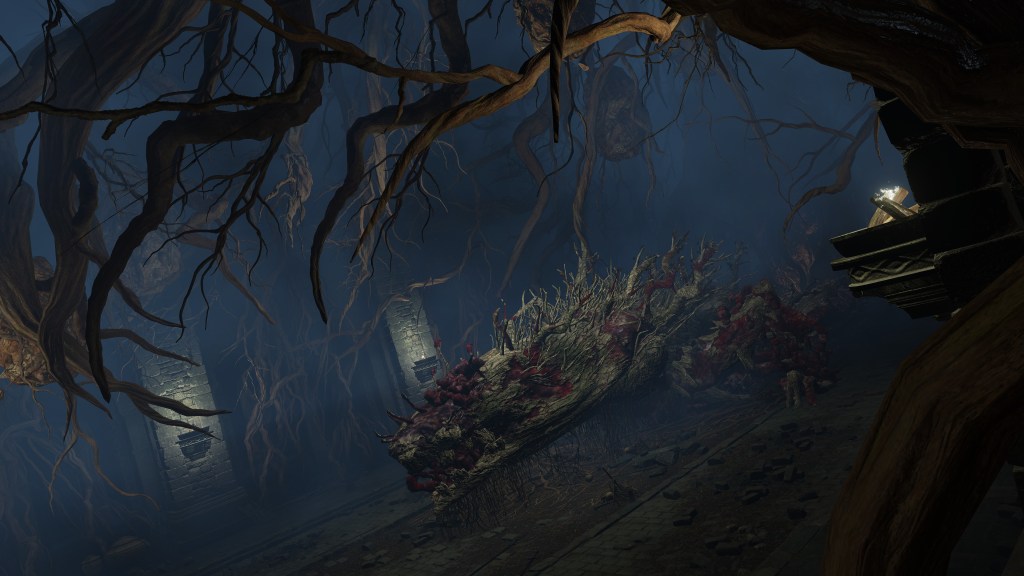
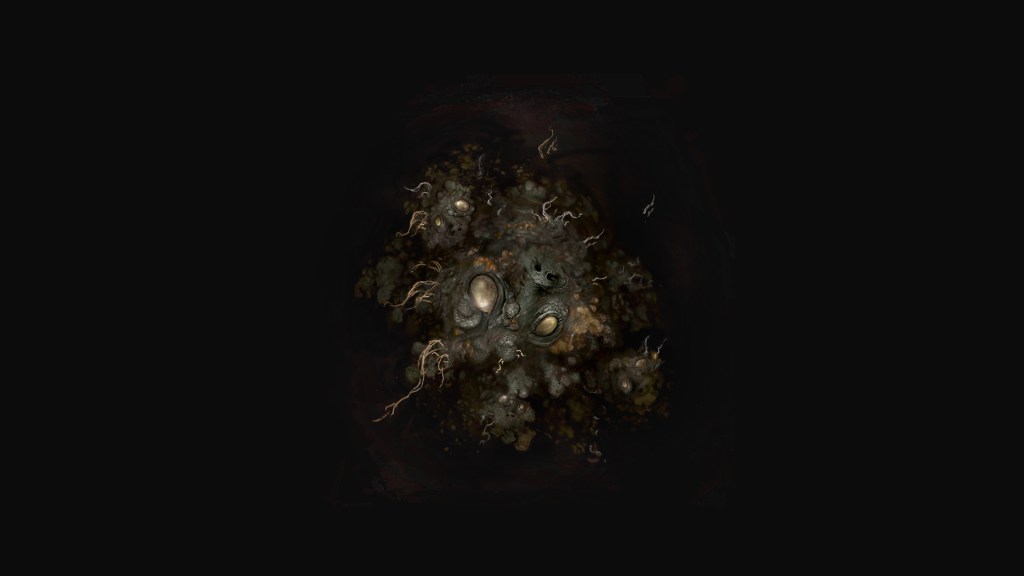
Fishy, festering pustule with a human face. Boosts anti-death resistance.
It is said that the owner of that face is the Death Prince. He was once called Godwyn, and it is said that he was buried at the Golden Tree’s root origin, deep underground of the royal capital, as the first dead of the demigods.
The way that the cursed demigod hijacks the root system to multiply, he is truly like a virus. There is also no way that this viral infection can be prevented conventionally. For example, we can see the growth of Deathroot and Godwyn’s other selves in the graves of the Realm of Shadow and Farum Azula, both of whose Erdtree roots have been physically disconnected from the Lands Between since long before Godwyn died. If the greatroots don’t need to remain physically connected to operate, then Death’s infection likewise will spread across the gaps, using whatever magical highways gold facilitates. These areas are proof that nothing short of destroying the roots wholesale may stem this blight. Alternatively, one may eradicate this plague at its source, but if any have tried, none have succeeded. By all indications, his cursemark has made his body indestructible, an eternal living dead.
One might question if this reanimated corpse can still be considered Godwyn. True, the soulless monstrosity he has become is commonly identified as the Prince of Death instead. But while a living individual is often defined by the union of soul in body, the spirit by itself is also considered as constituting the unique persona. If so, why not the flesh? Both are parts comprising the whole, equally as unique to the person. The body certainly isn’t lacking for individuality. The Death Prince in Stormveil reacts negatively to Rogier’s snooping, and the original beneath Leyndell reacts similarly to attacks on Fia, casting Rancorcall with his own wheel centipede sigil to showcase his anger. Without question, Godwyn retains some degree of awareness and thought. His actions aren’t passive but deliberate manifestations of his will. Several living skeletons become spirit ashes, reinforcing this point about individuality for the soulless. Arguably, in becoming liberated from his soul, Godwyn’s existence has transcended the limits of his former mortality. He no longer needs to be just one, but Legion.
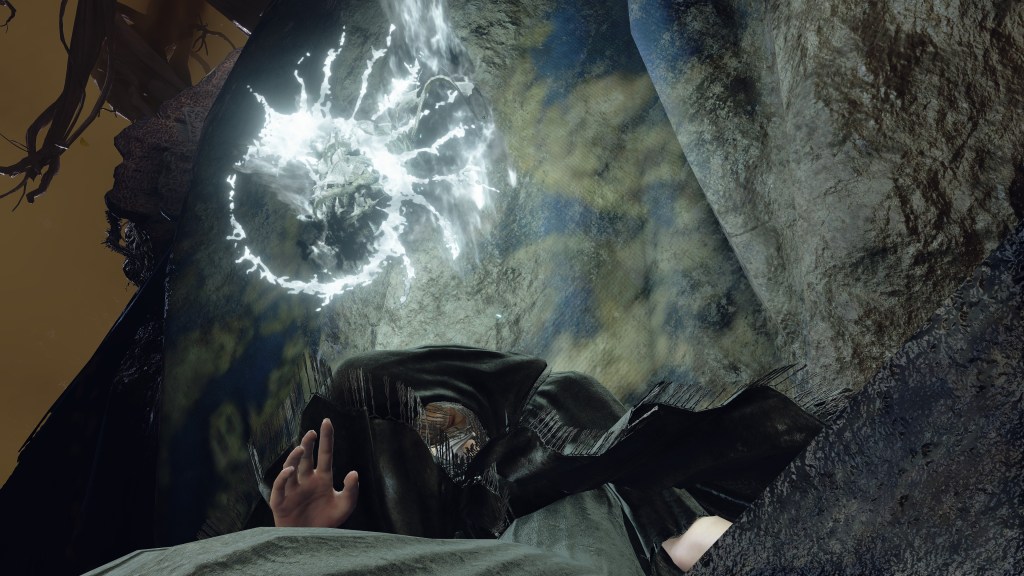
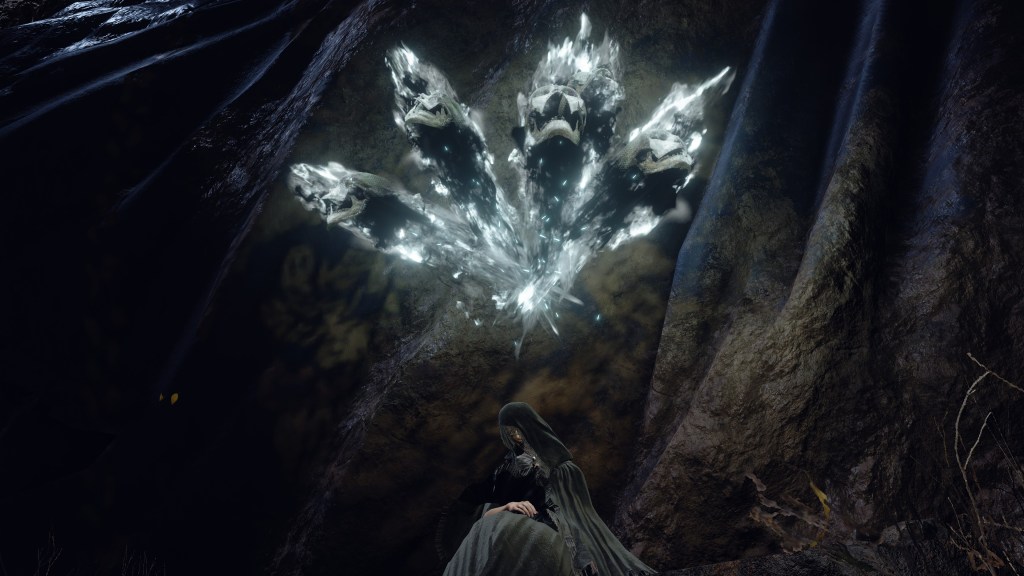
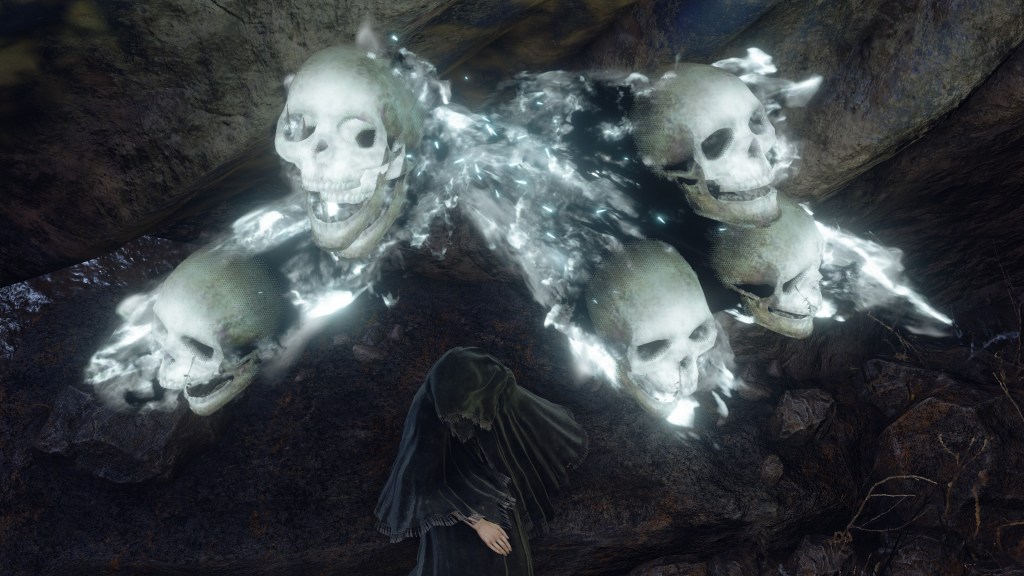
… This is… Godwyn, is that you?
A Colorful Death
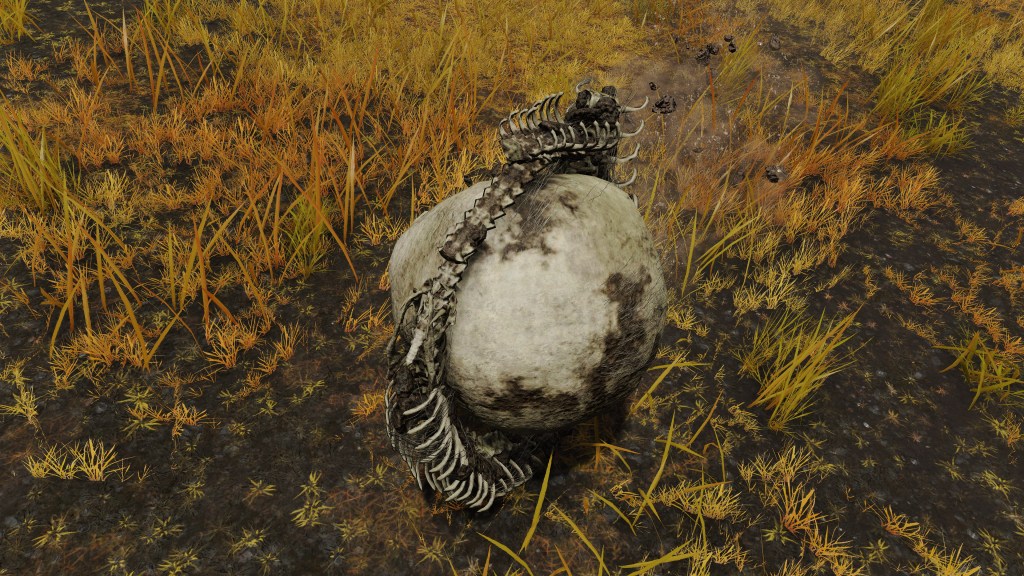
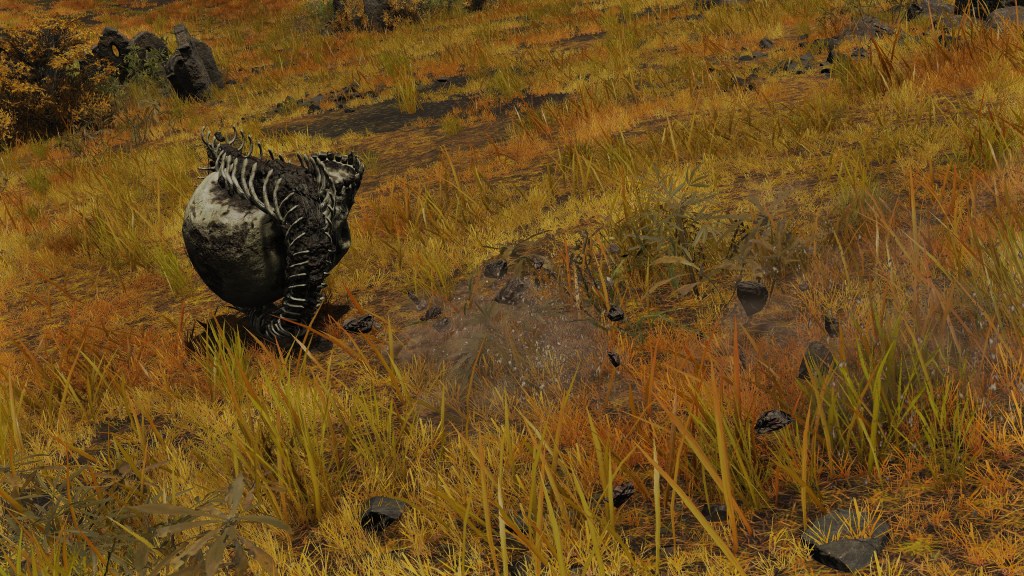
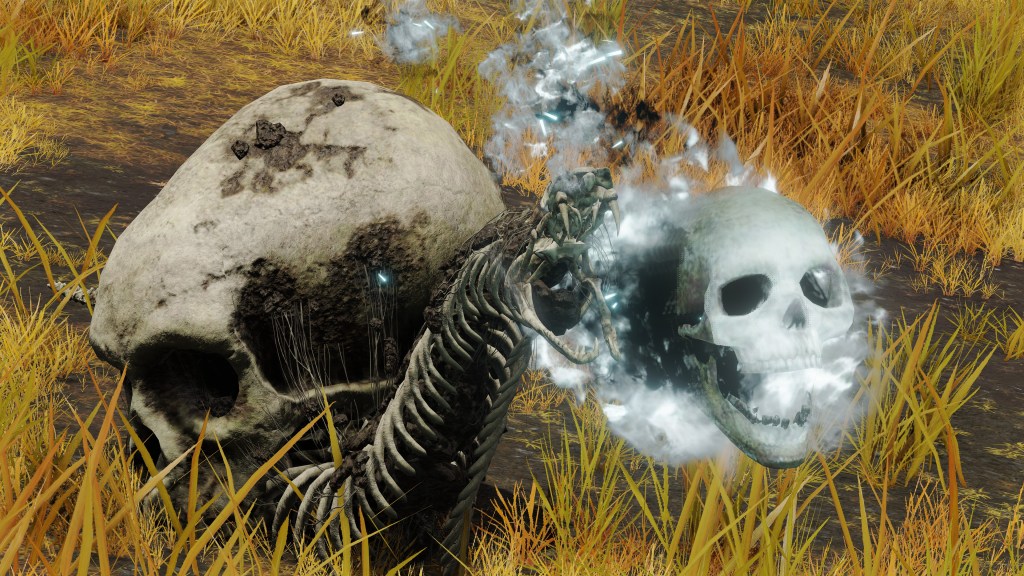
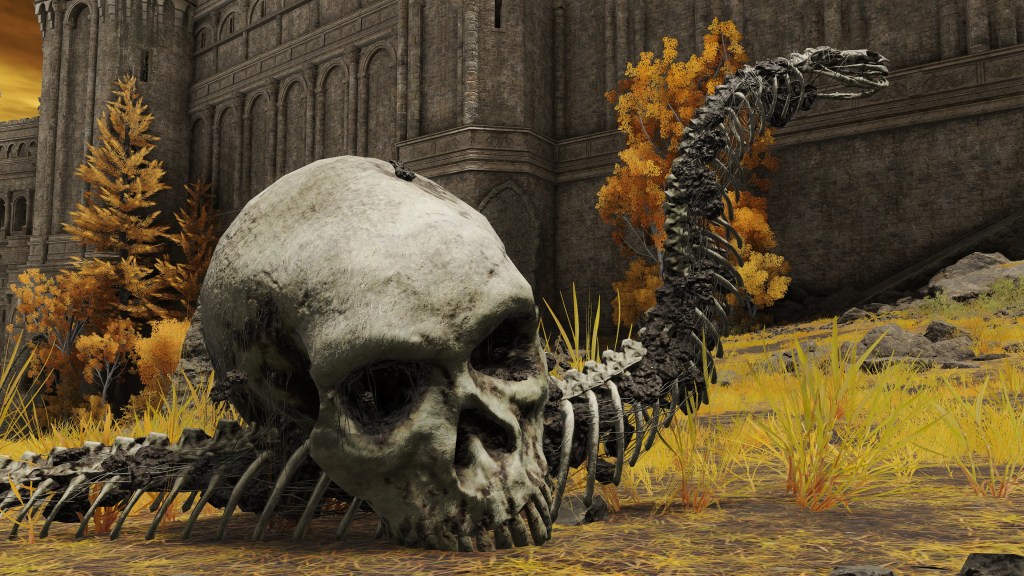
The Prince of Death has brought many changes to the Lands Between. While human skeletons are perhaps most affected, other animals like the serpent snails are just as vulnerable to the curse. In their specific case, the body doesn’t reconstitute itself upon defeat, though it can perform other benefits. Similar to sheep, the skeletal snail can humorously roll at targets by biting its own tail — a veritable ouroboros capturing the consequences of this perverted cycle of life and death. In place of venom, the reanimated reptiles spit death rancor, the spirit in the form of a humanoid skull probably derived from the giant’s skull the soulless creature uses as its new shell. Despite all these differences, it is still one of Those Who Live in Death. Like the Deathbirds before them, the living dead need not take a single form, and the curse of Death does more than add living remains to walk the earth.
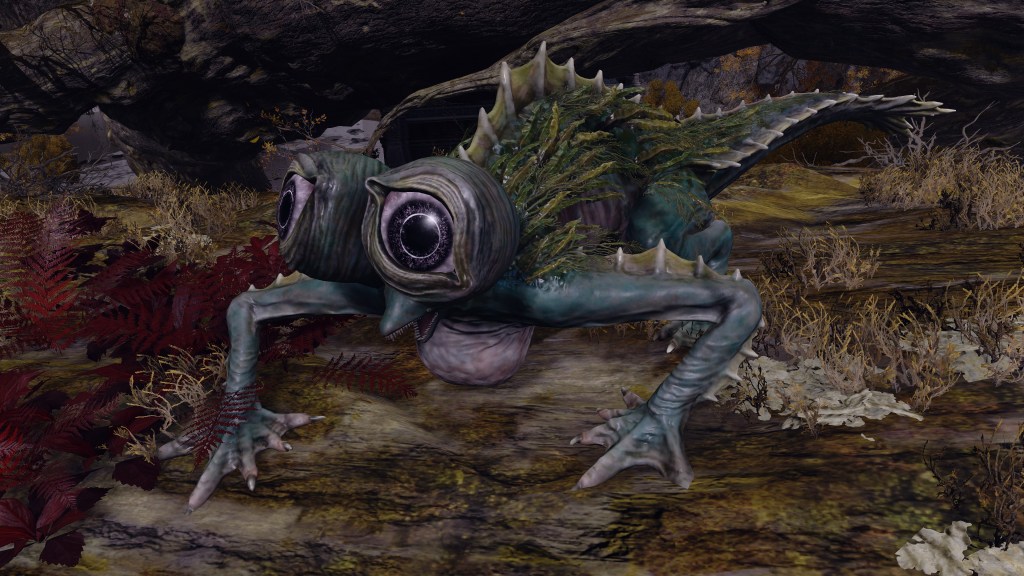
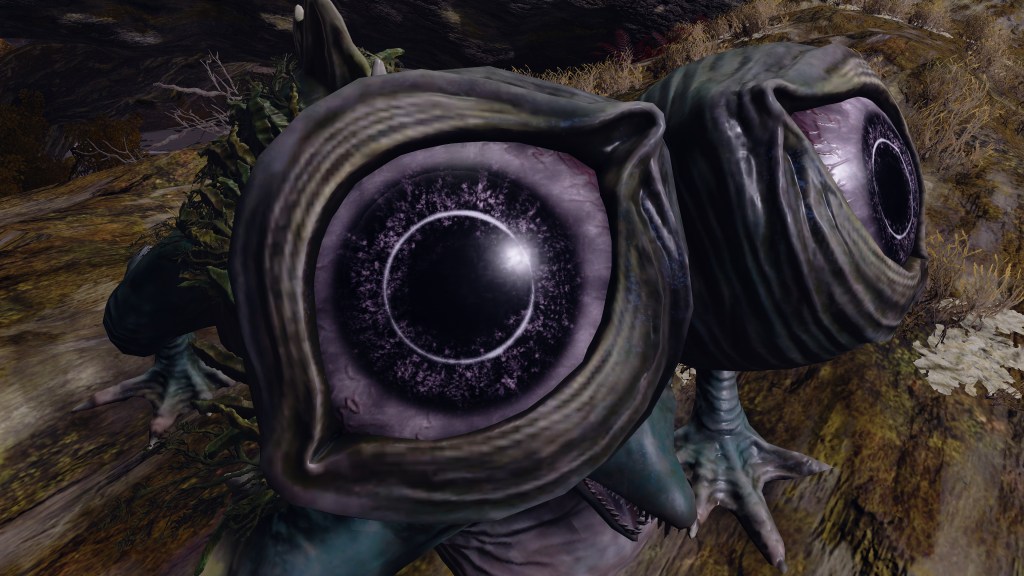
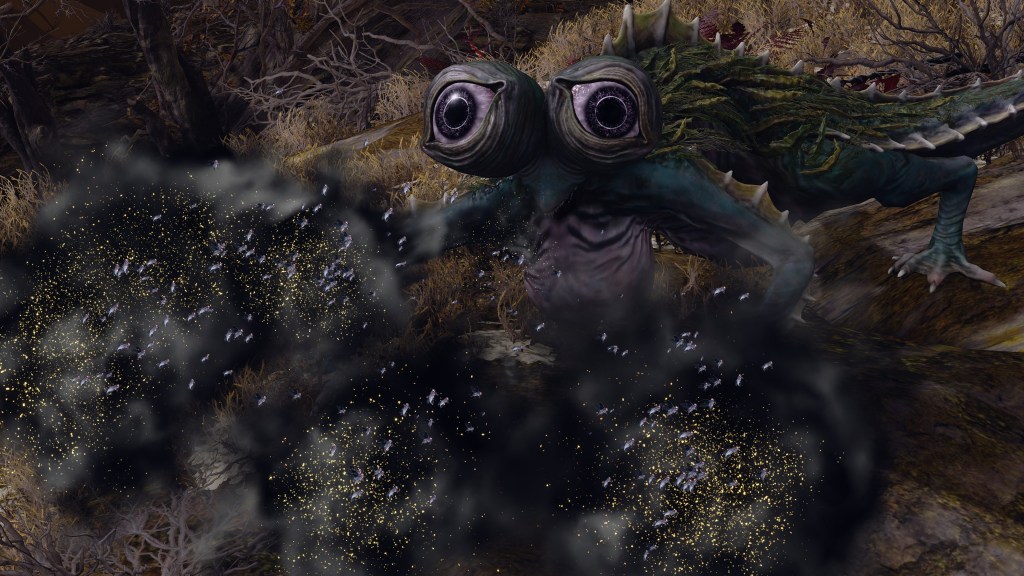
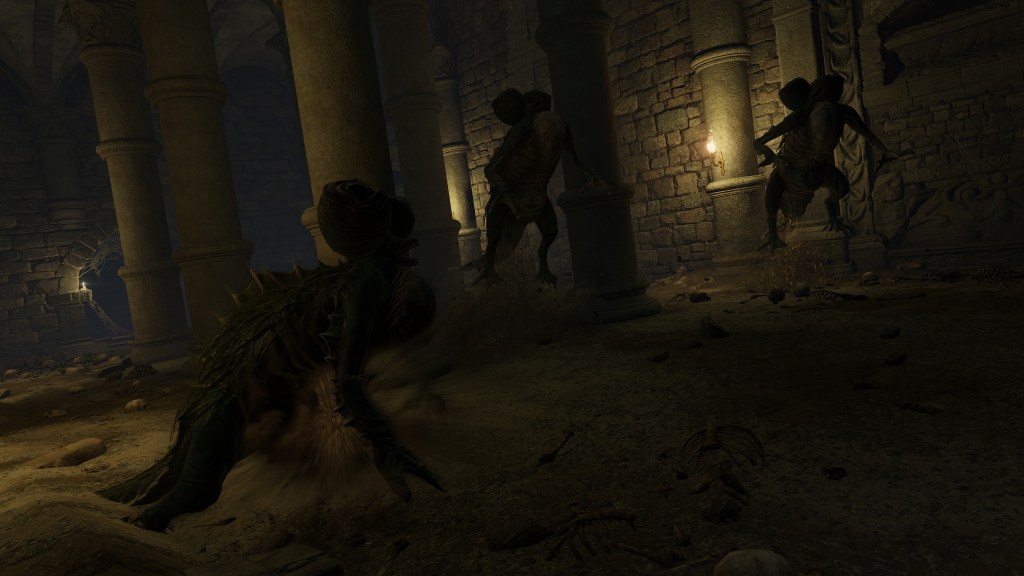
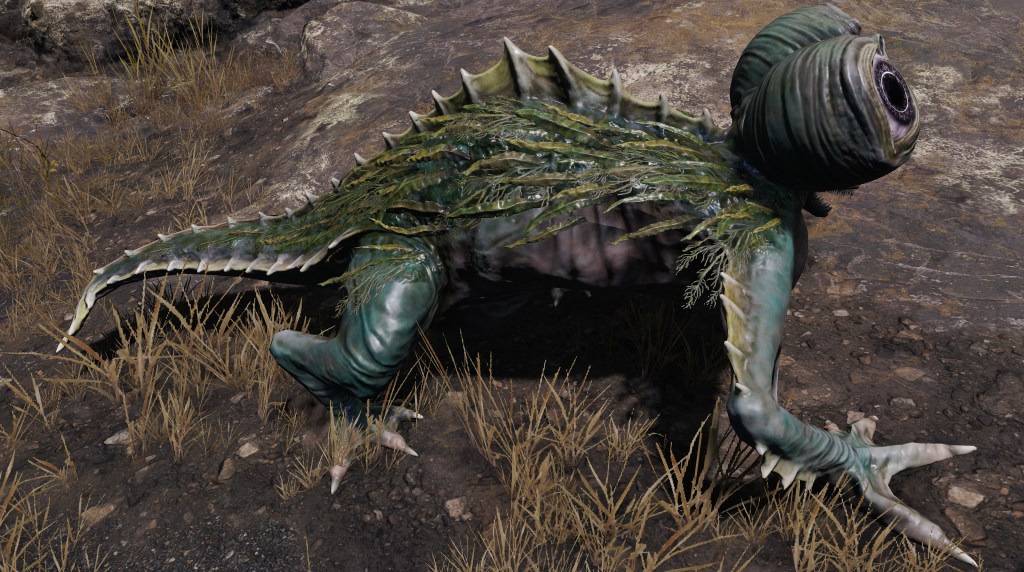
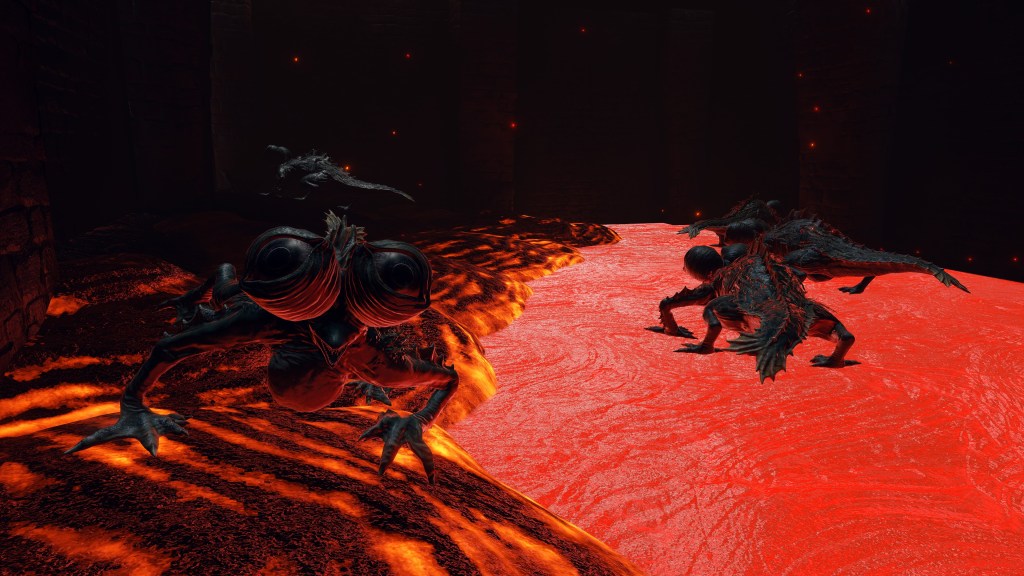
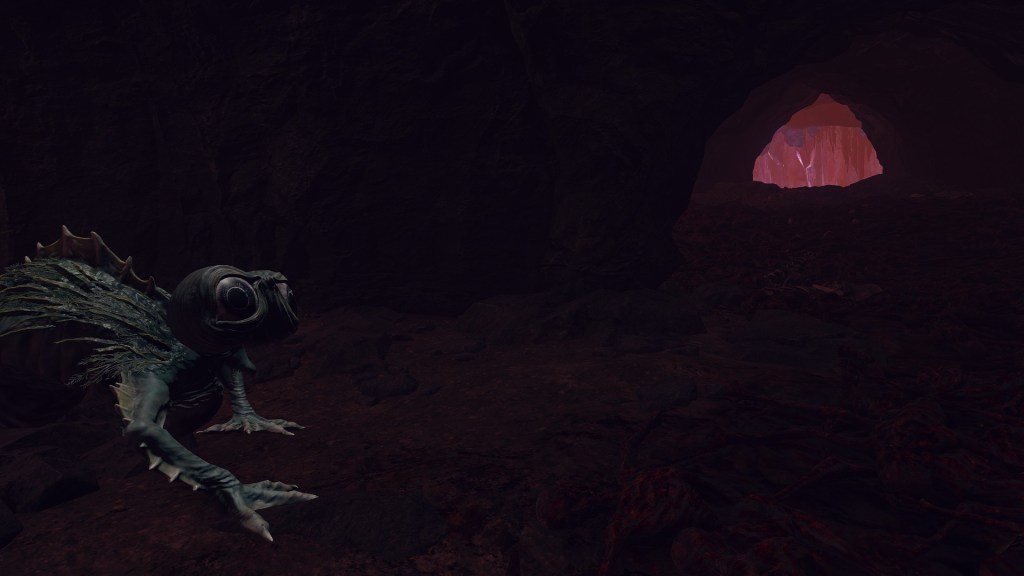
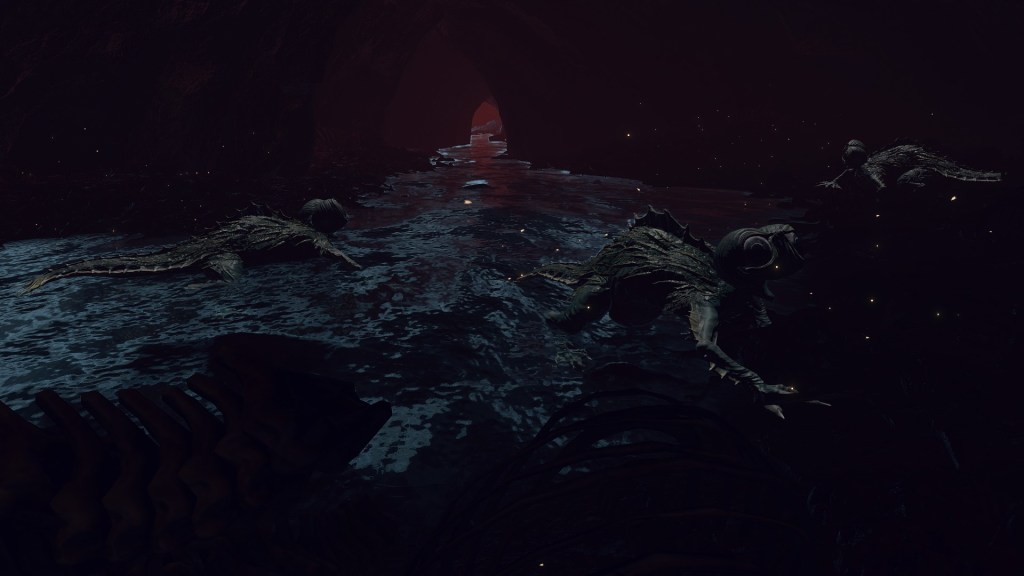
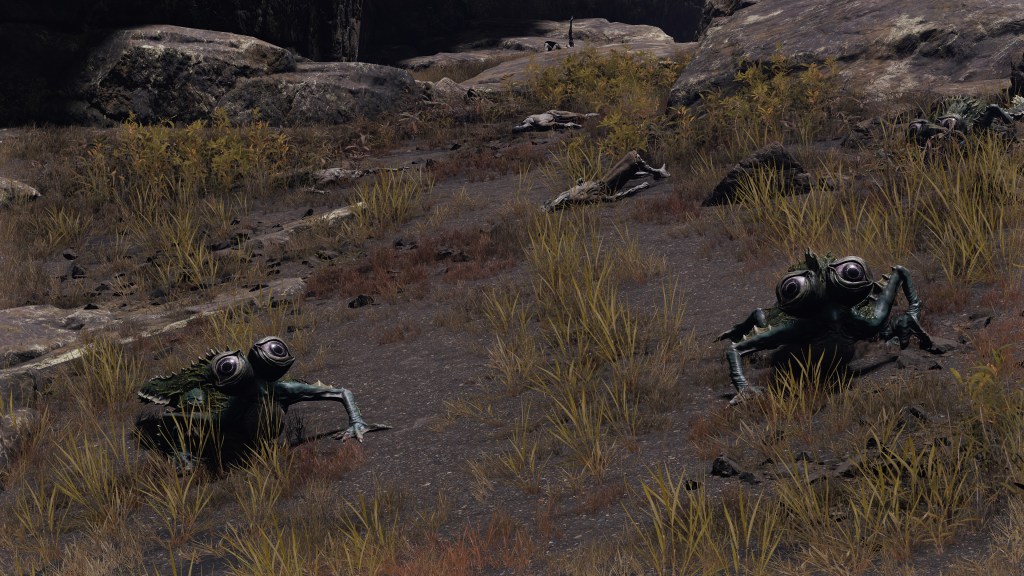
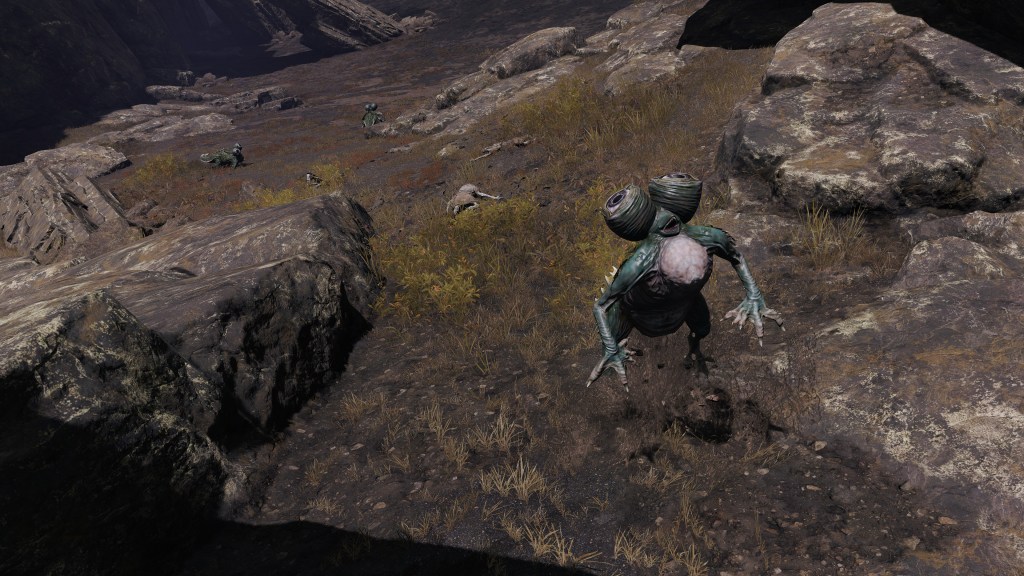
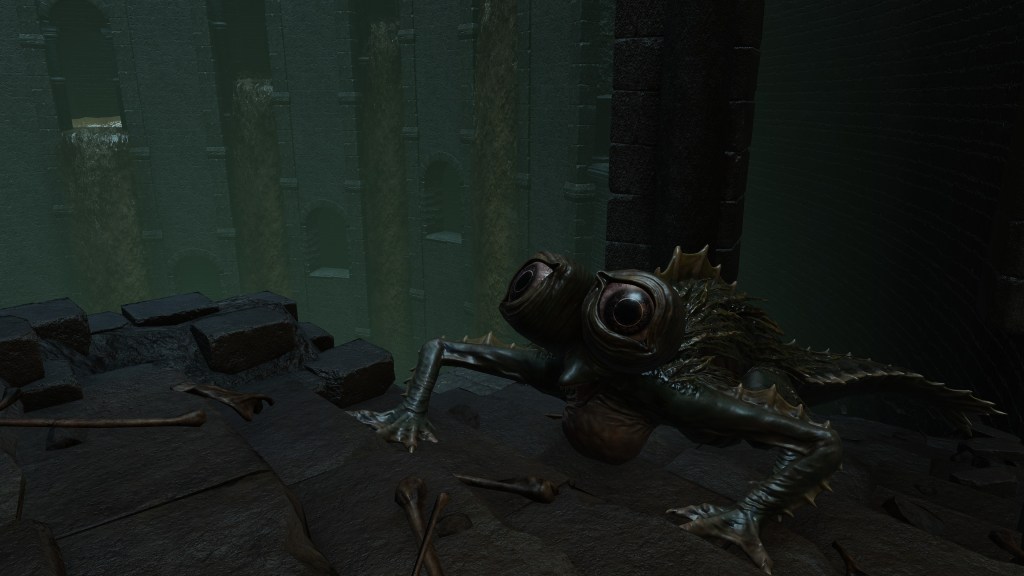
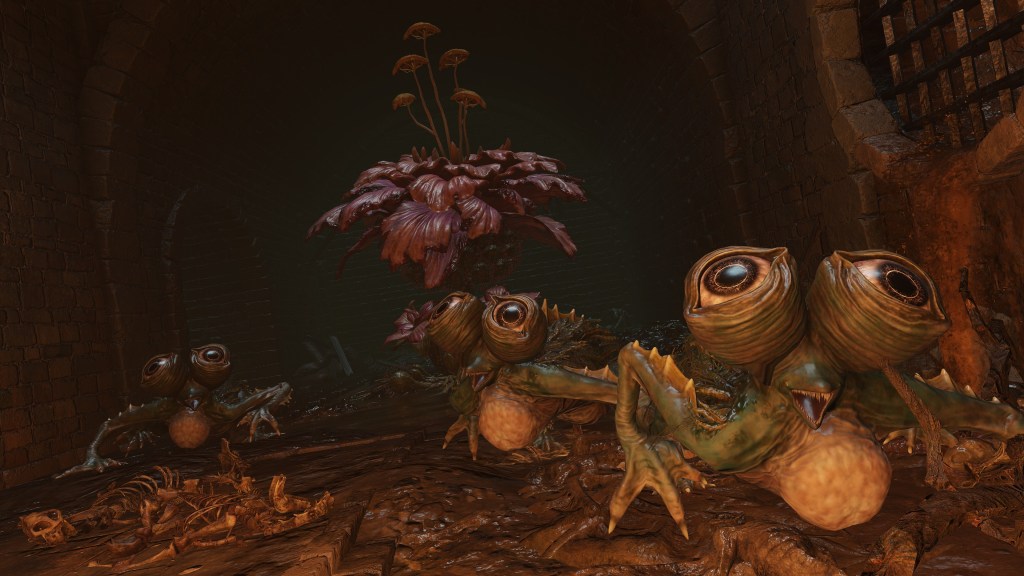
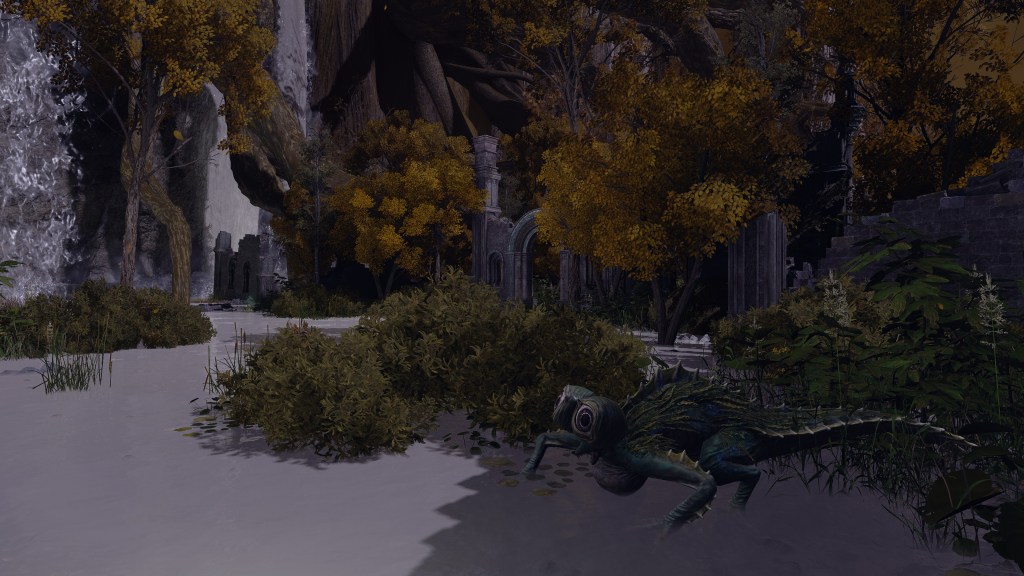
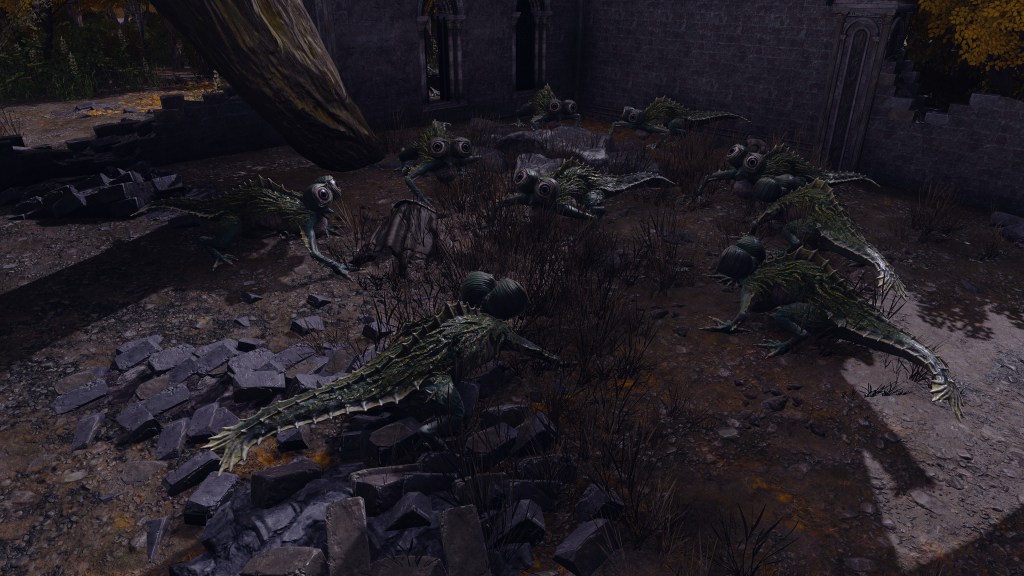
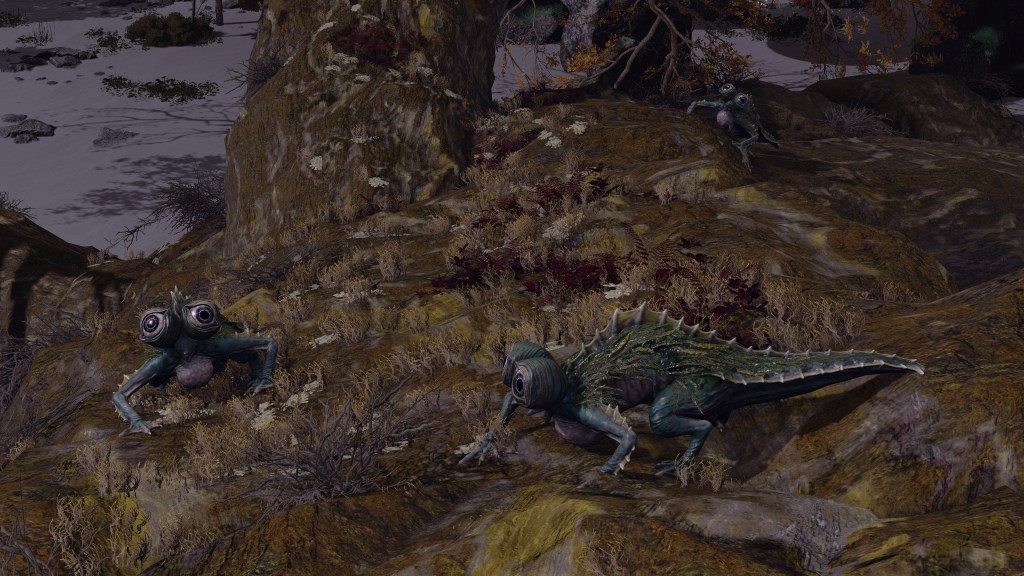
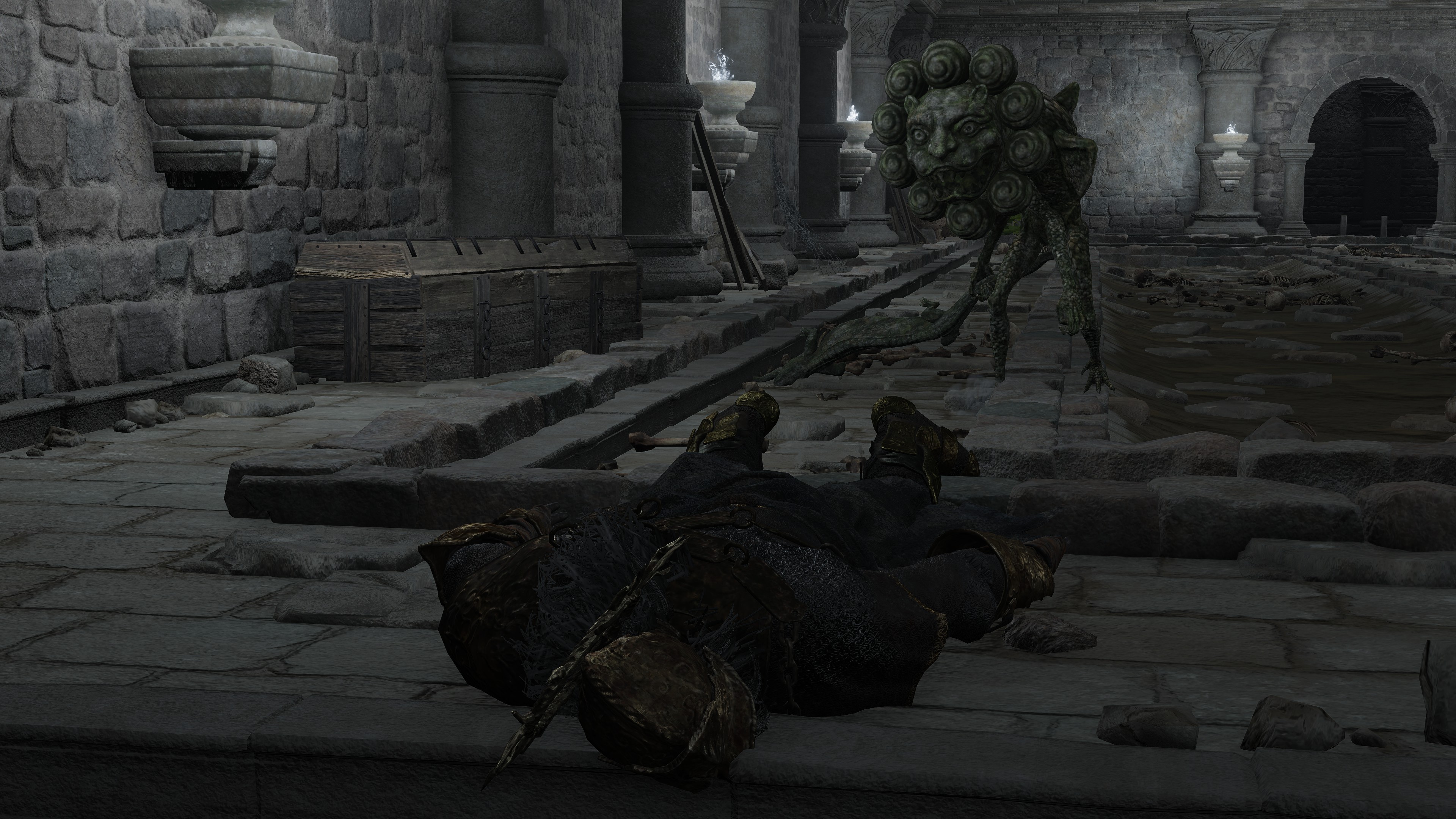
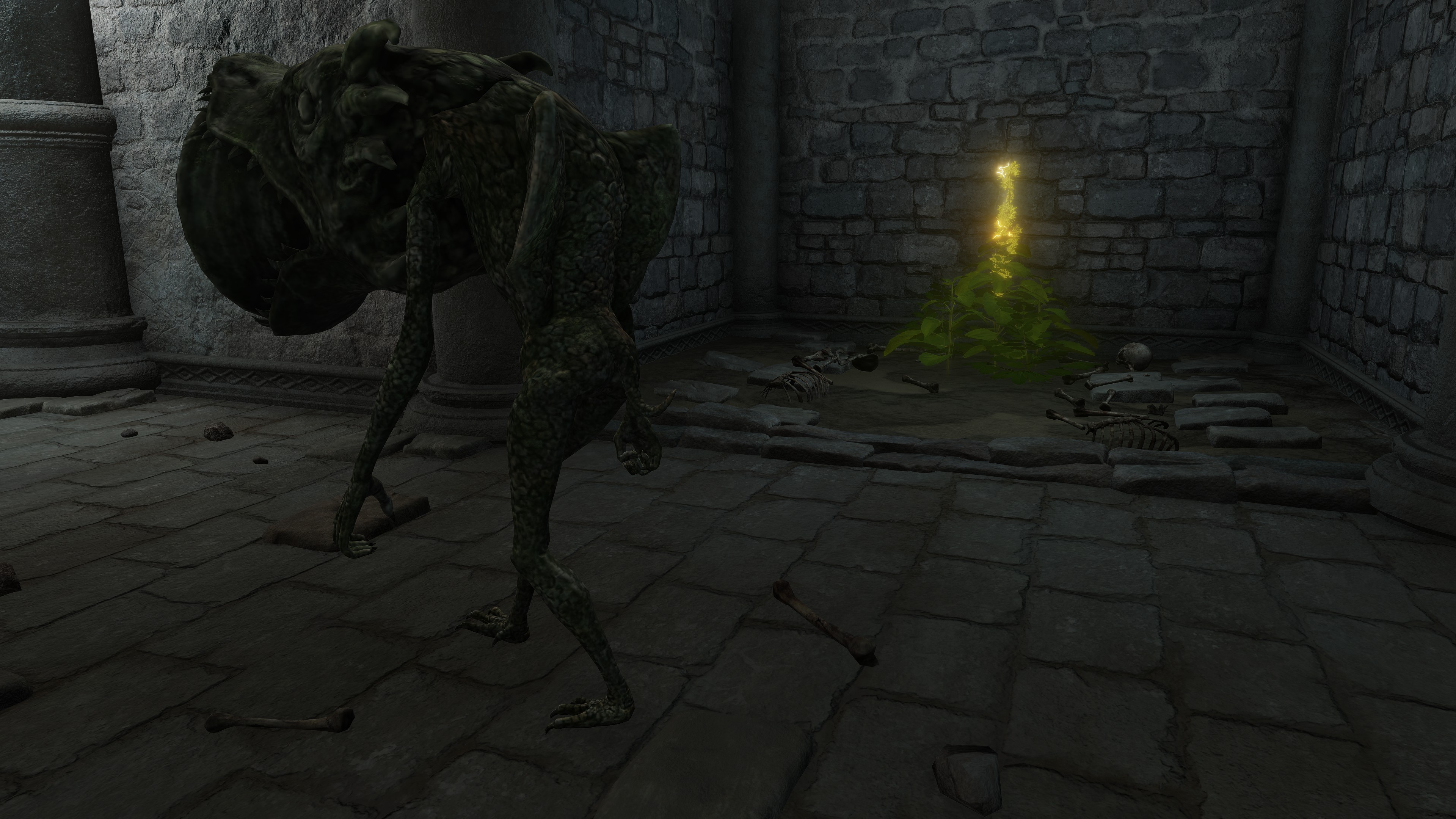
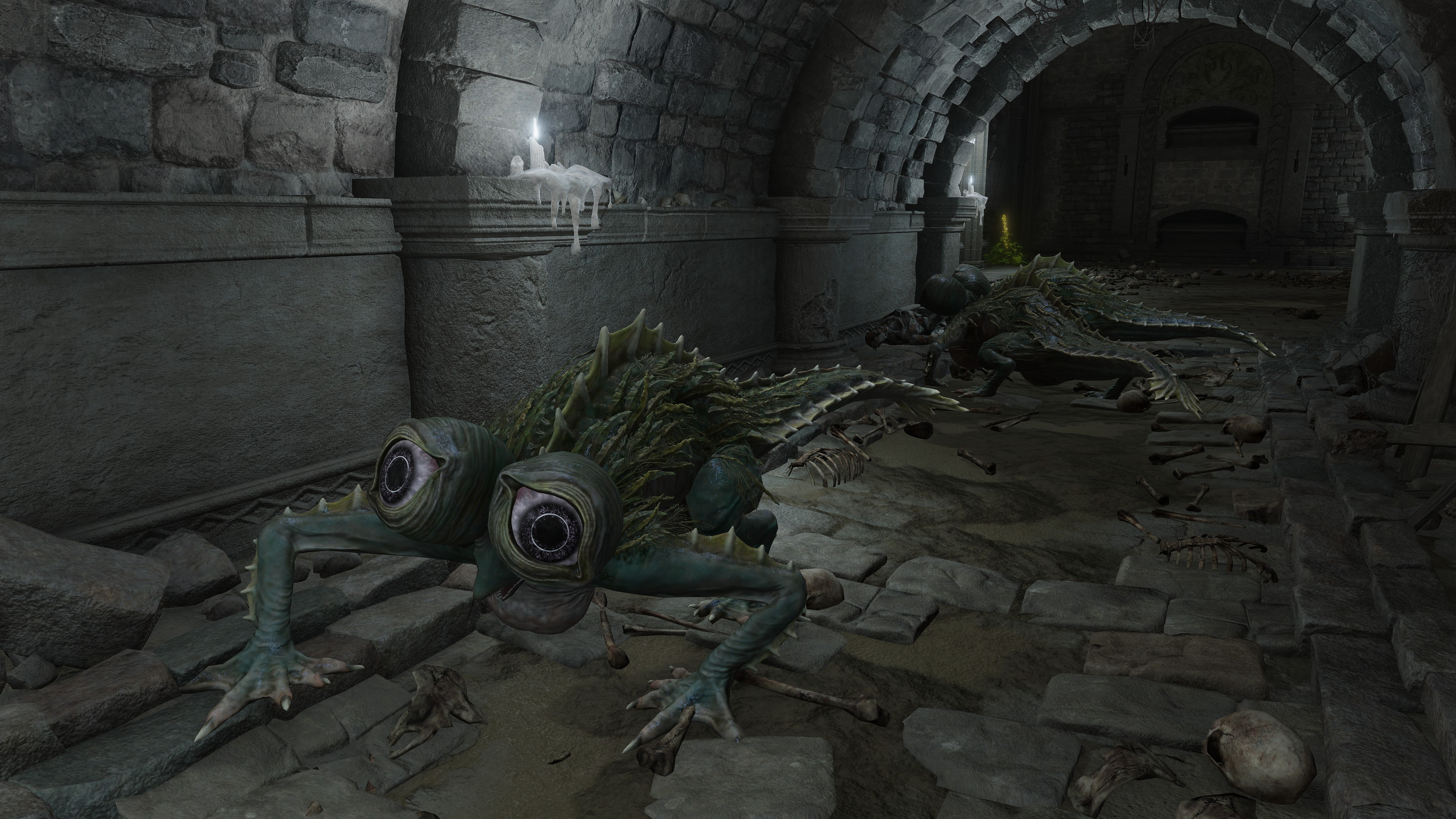
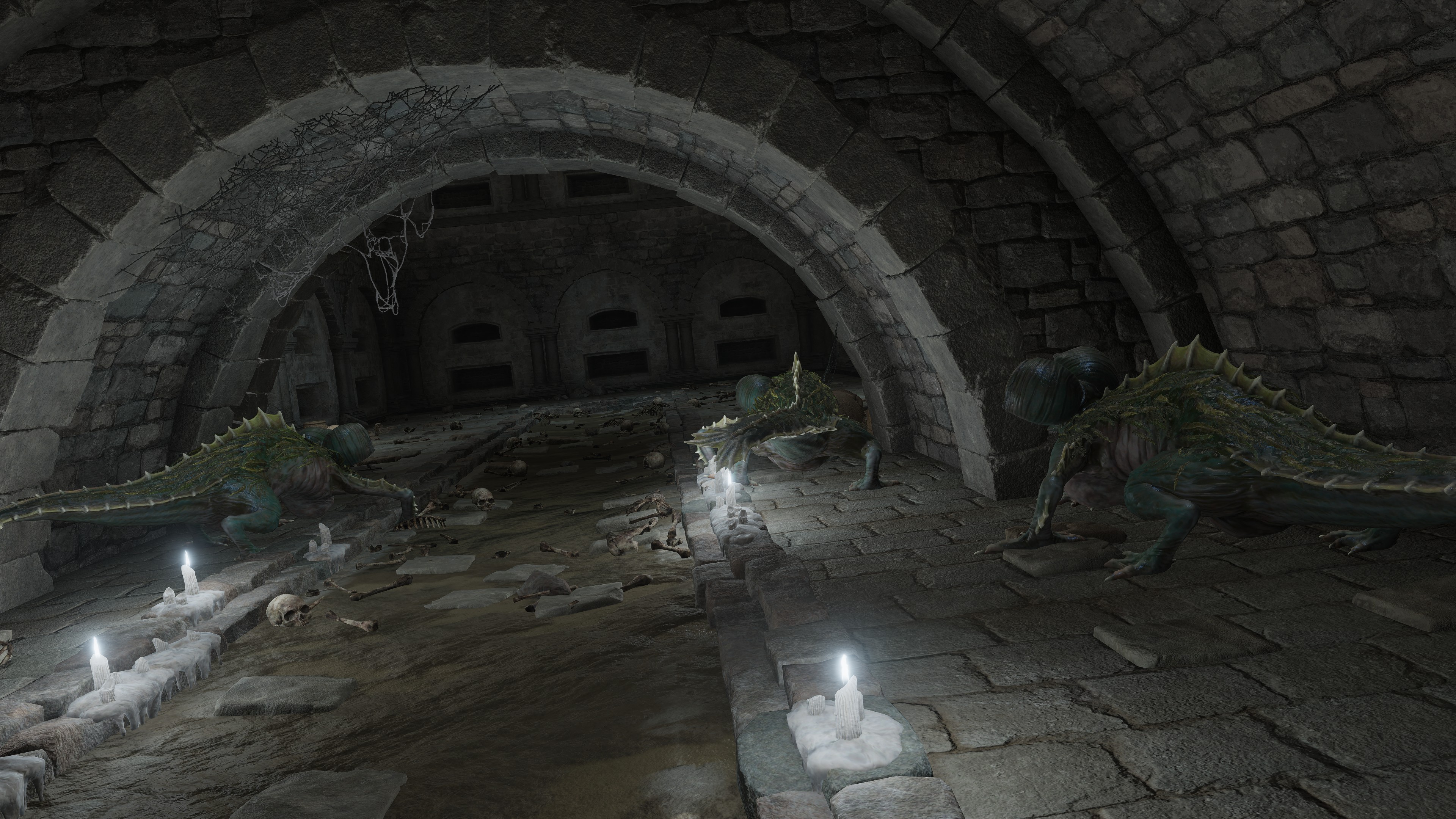
When it comes to the ecosystem, the basilisk stands out as unsettling. Like its Dark Souls counterpart, the giant lizard’s real, tiny eyes are hidden beneath giant “dead” ones bobbling atop its head. In this case, the pupils look to be filled with actual Death, black as the Prince of Death’s own. Add in the fly-laden mist it spits, and the creature appears to be touched by Death in its own way. Skeletons and basilisks are generally exclusive across areas, but they do overlap in the Auriza Hero’s Grave, reinforcing the connection. In fact, a few burrow up from inside the hero graves, giving the impression that they spawn from the Deathroot. Perhaps actual small lizards come in contact and transform, or perhaps Deathroot spawns the basilisks from nothing, like with the flies. Their diet appears to be the ghost glovewort we loot from their corpses, unconventional to say the least. This makes it unlikely for them to be a natural creature, though the species has behaviors like any living animal.
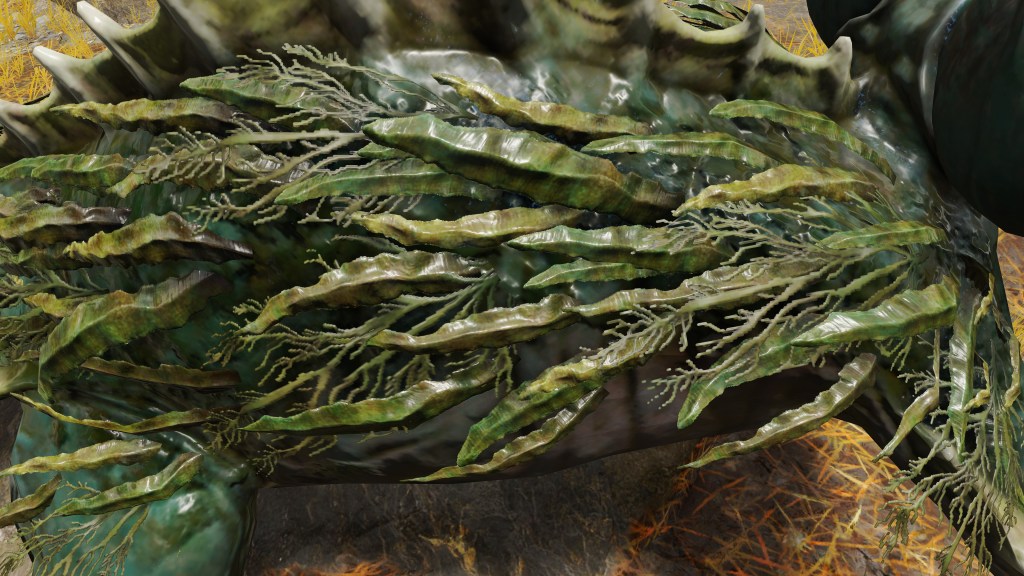
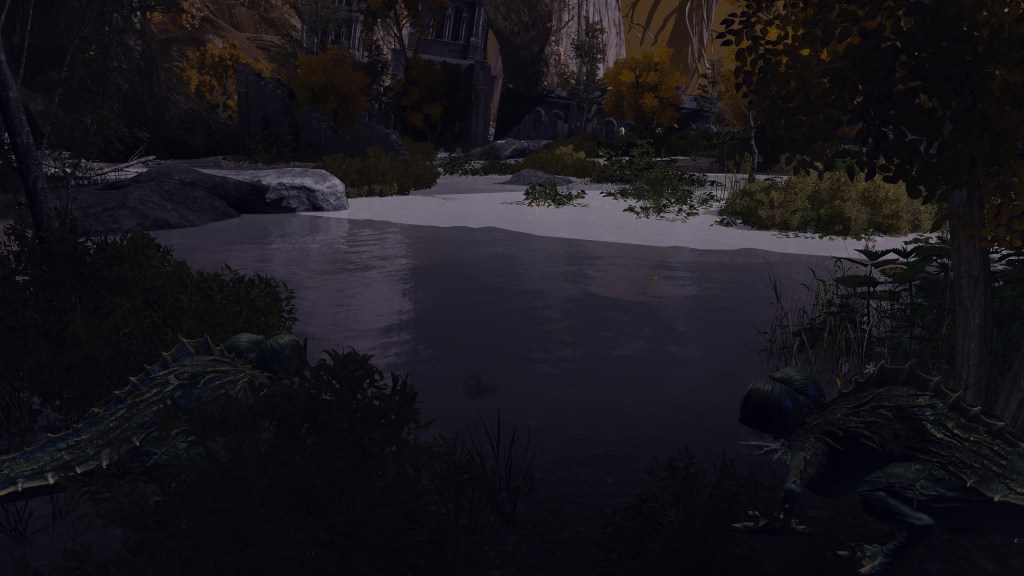
Given how it has fins and a tail fluke, the basilisk seems built for the water much like Godwyn, to make no mention of the kelp growing on the body. This amphibious nature also presages its odd bent for “wet” environments. This includes the poison swamps of Shaded Castle, the magma rivers of Volcano Manor, and even the Lake of Rot. We do see basilisks burst up from the earth along the banks of the Seething River, but those grounds are located near Death-touched catacombs; the former lying close the Gelmir Hero’s Grave passing beneath the river valley. Their appearance in the Subterranean Shunning-Grounds can likewise be justified by proximity to the Deeproot Depths, where they appear in abundance. Overall, the basilisks seem to thrive in damp habitats, crawling through dirt to reach more of it, such as in the Seething River, or because they are attracted to Death in the area, such as the Dancing Lion in Rauh. From there, they spread more spawn.
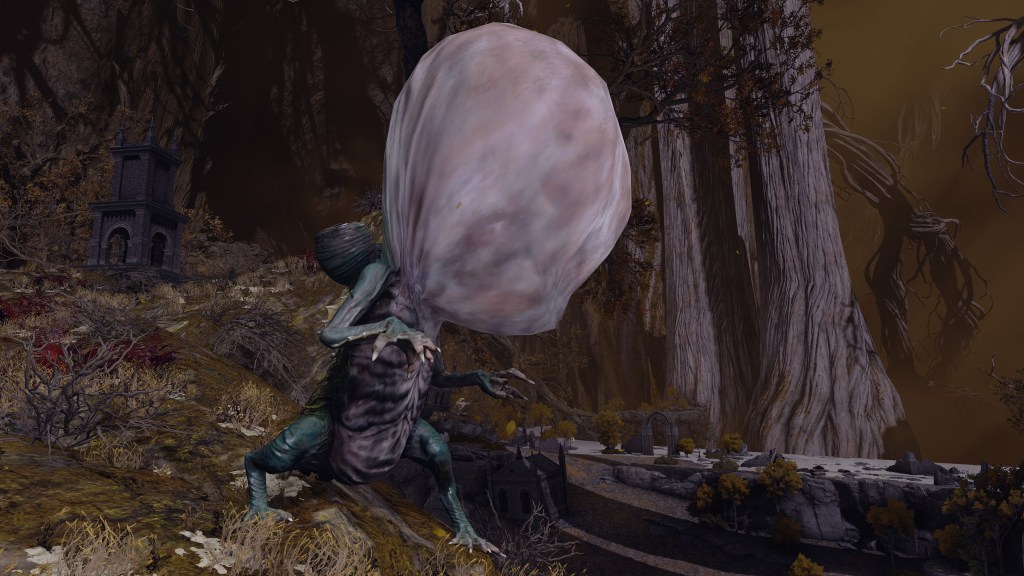
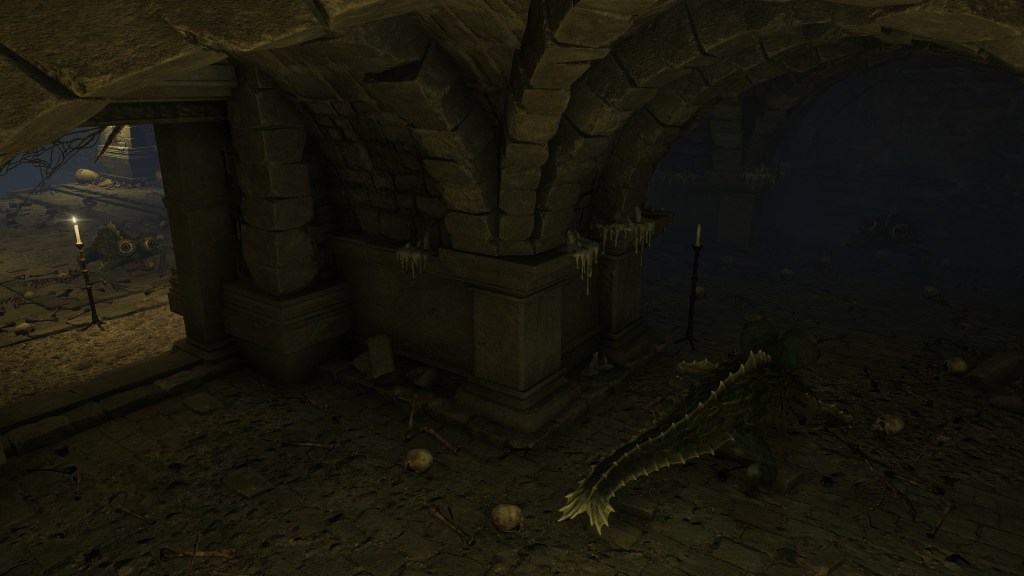
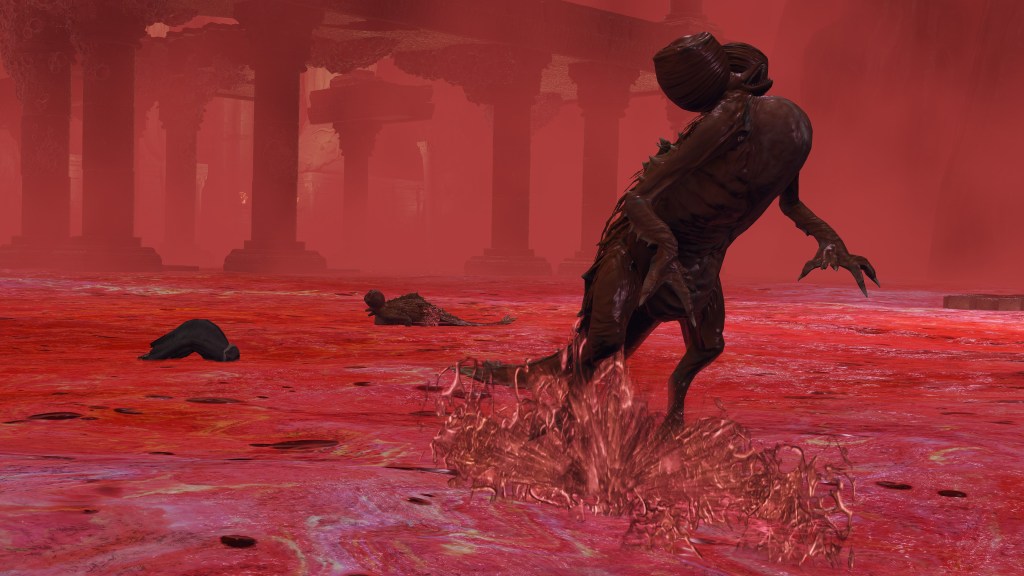
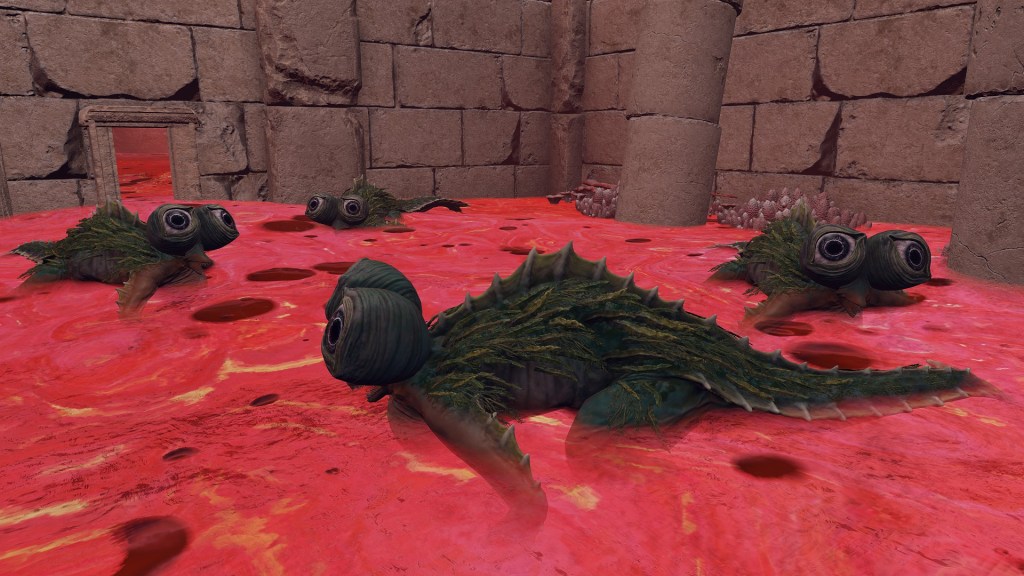
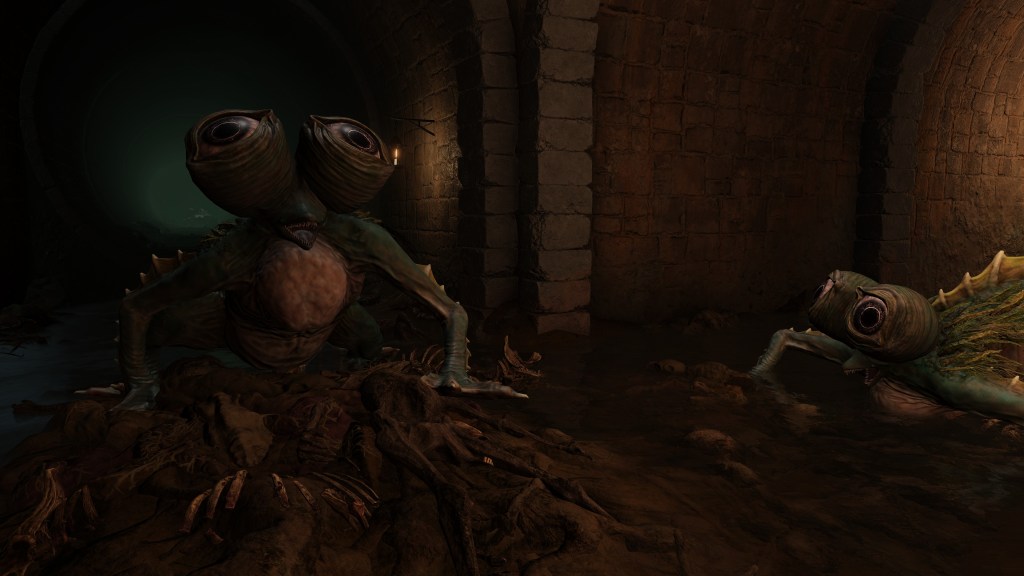
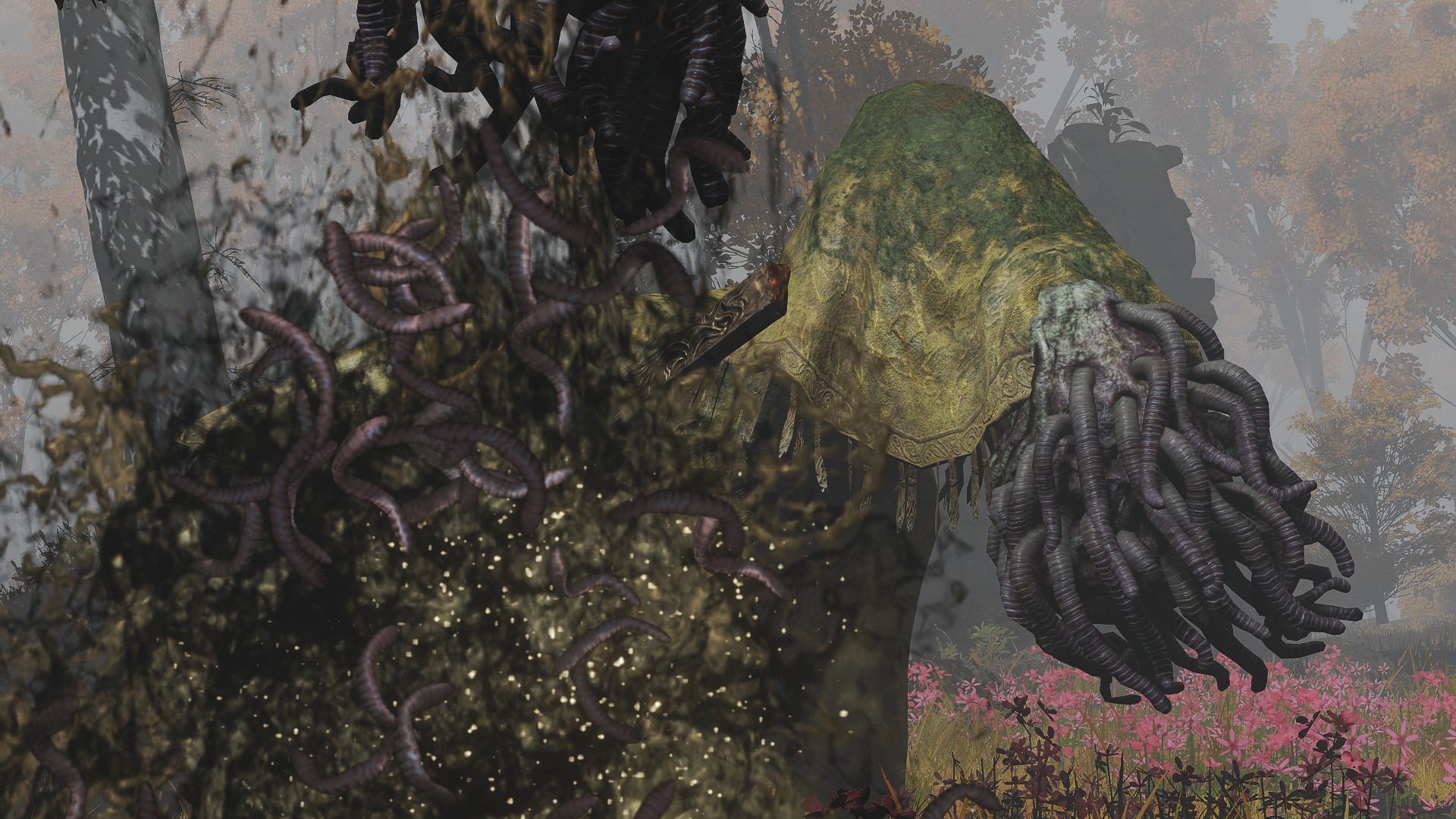
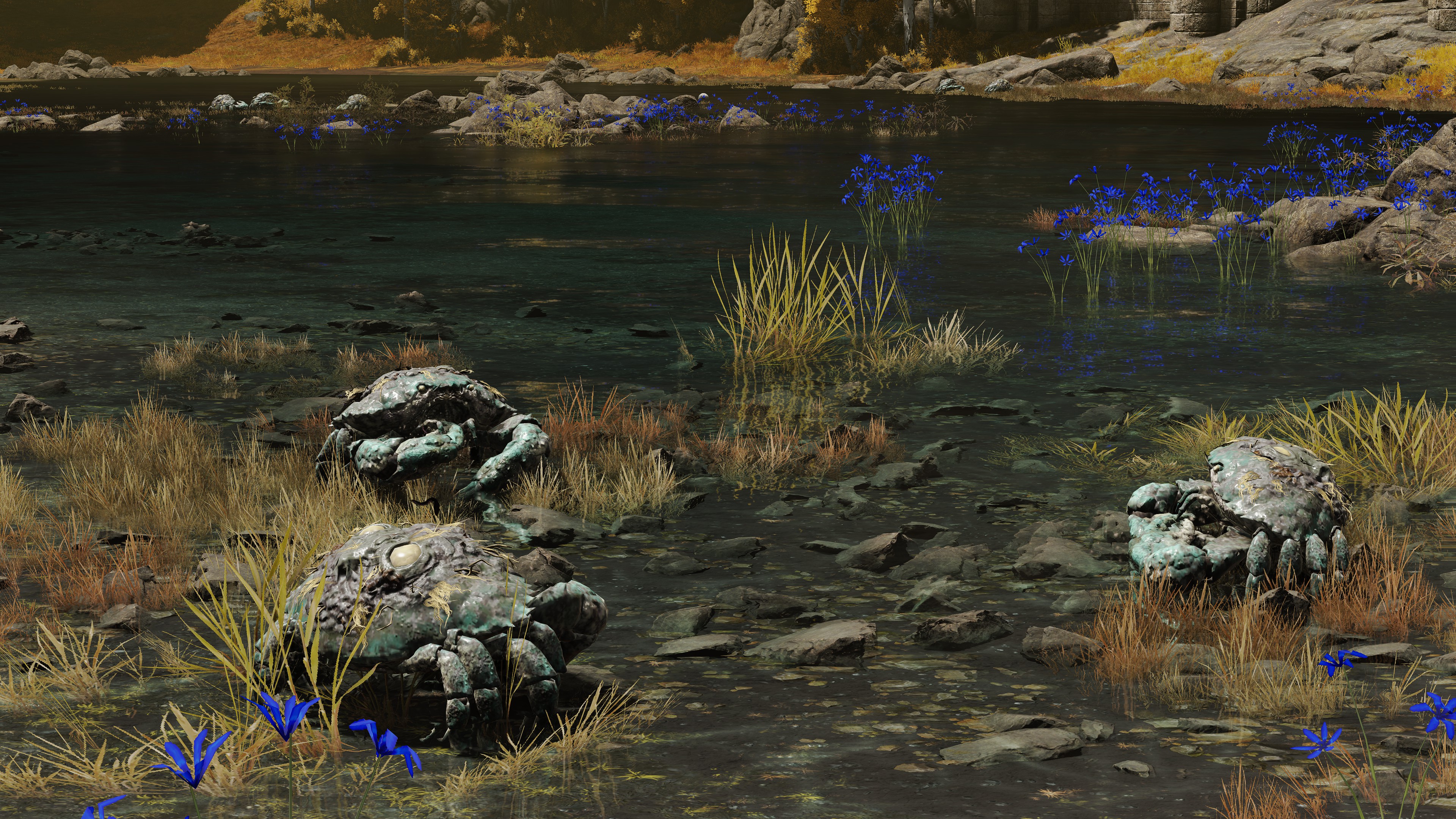
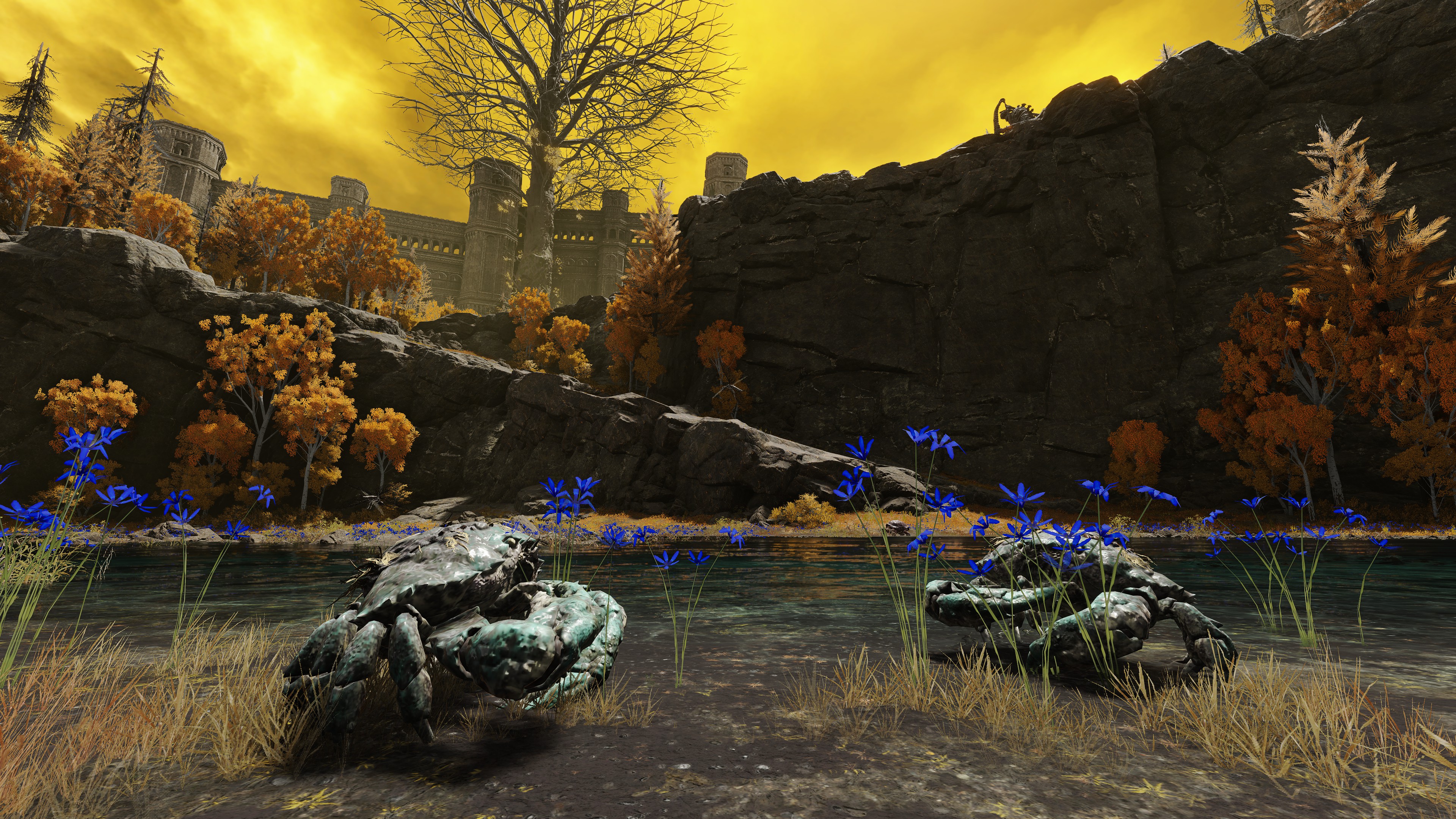
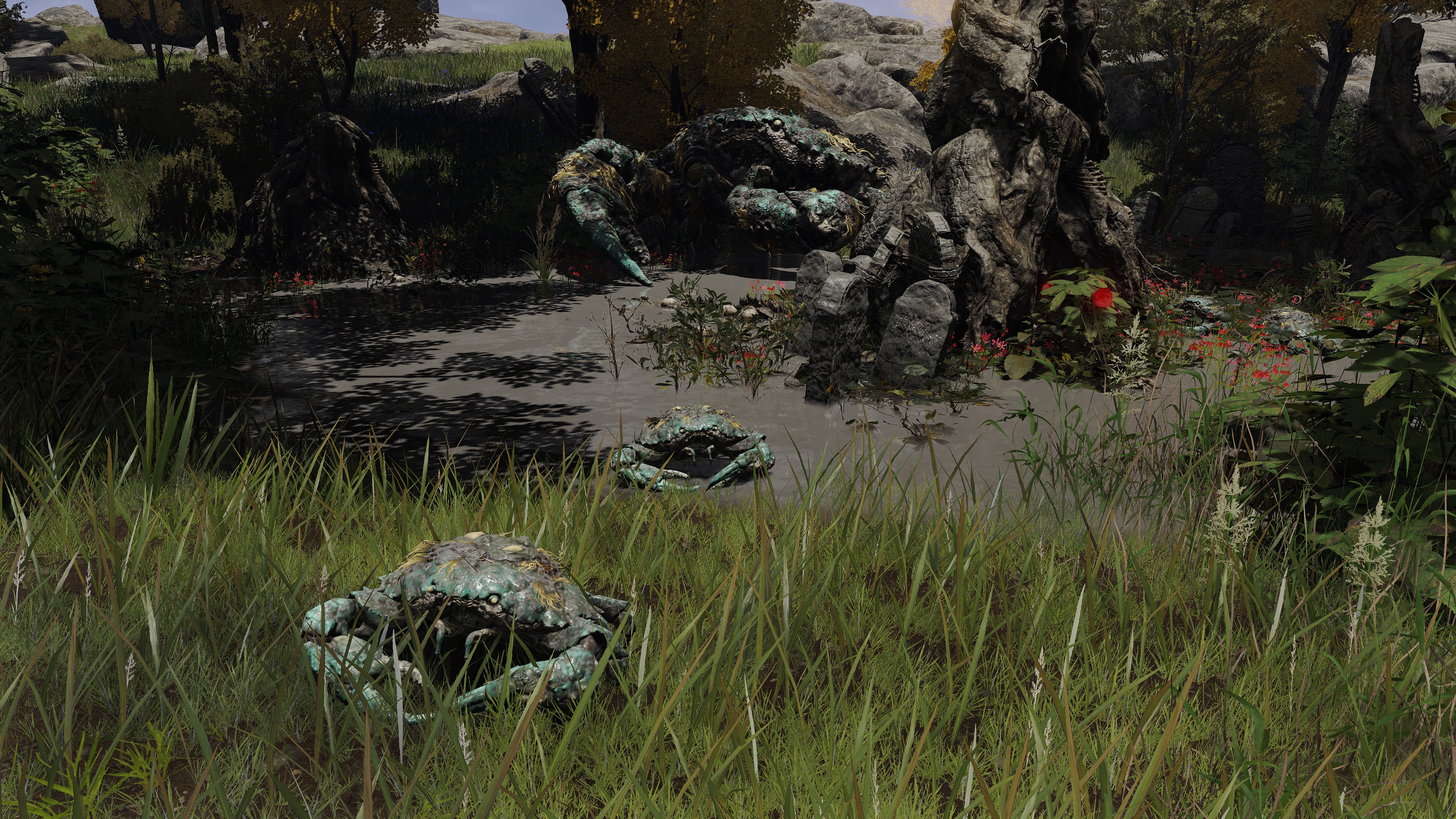
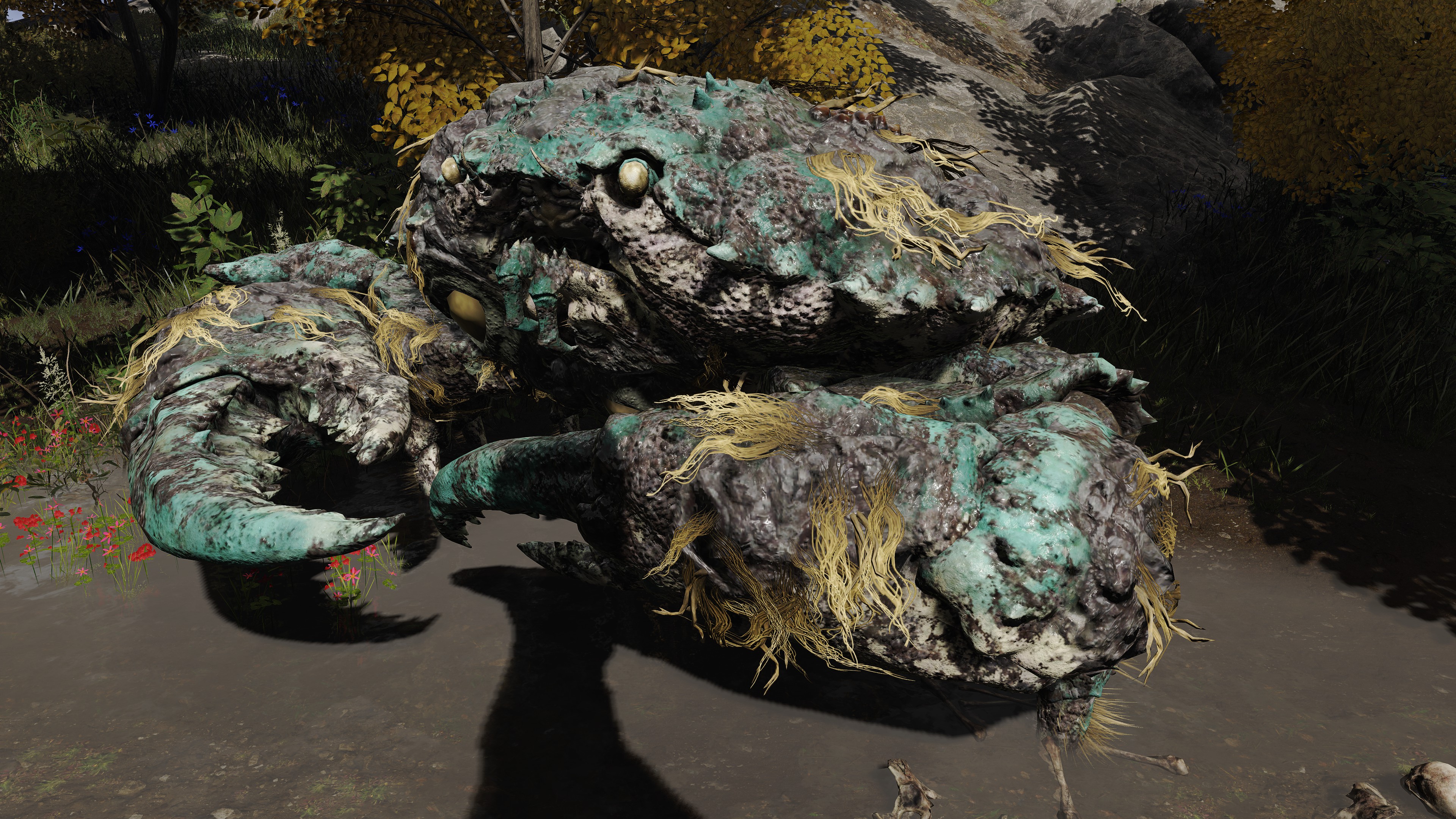
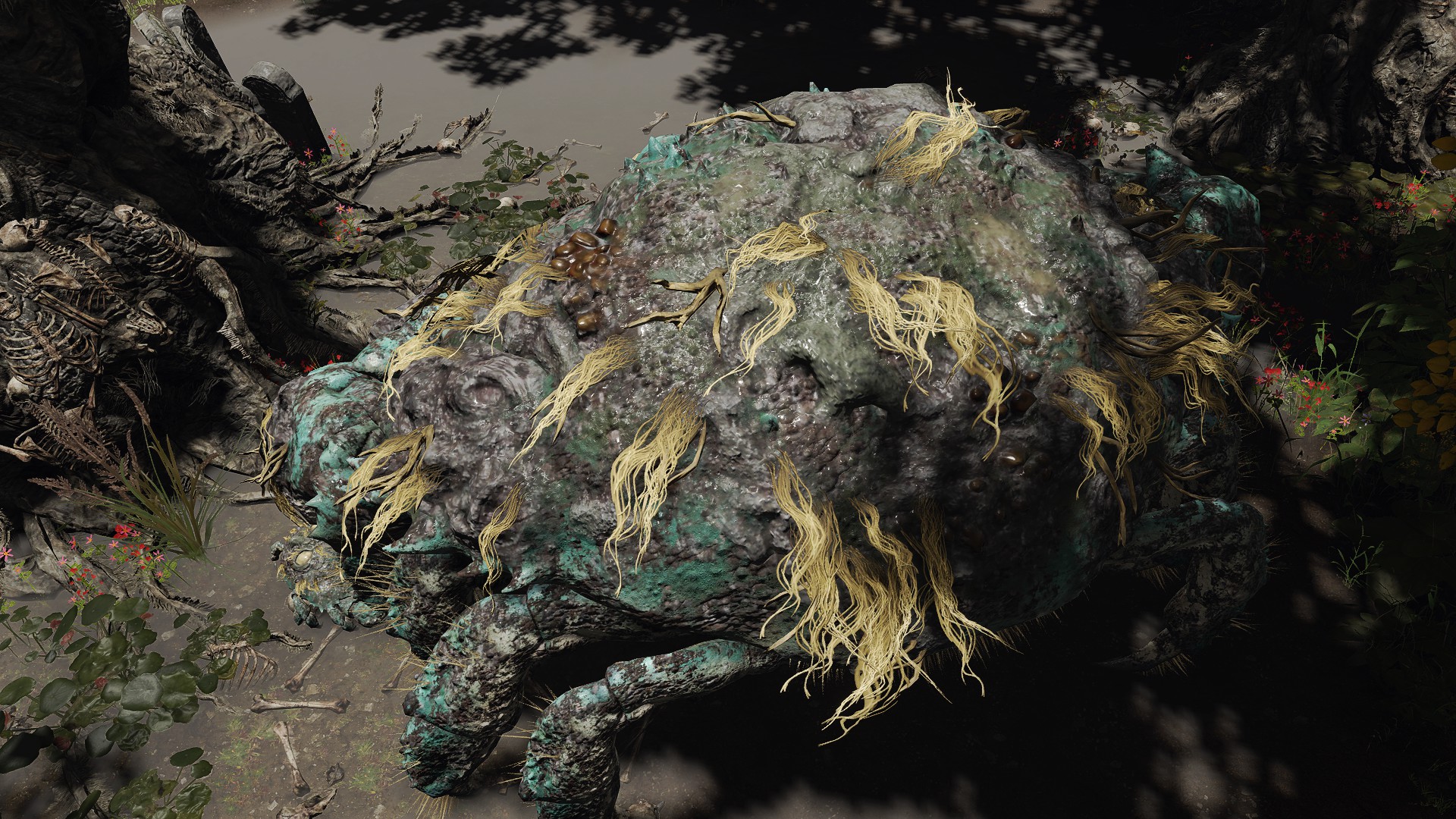
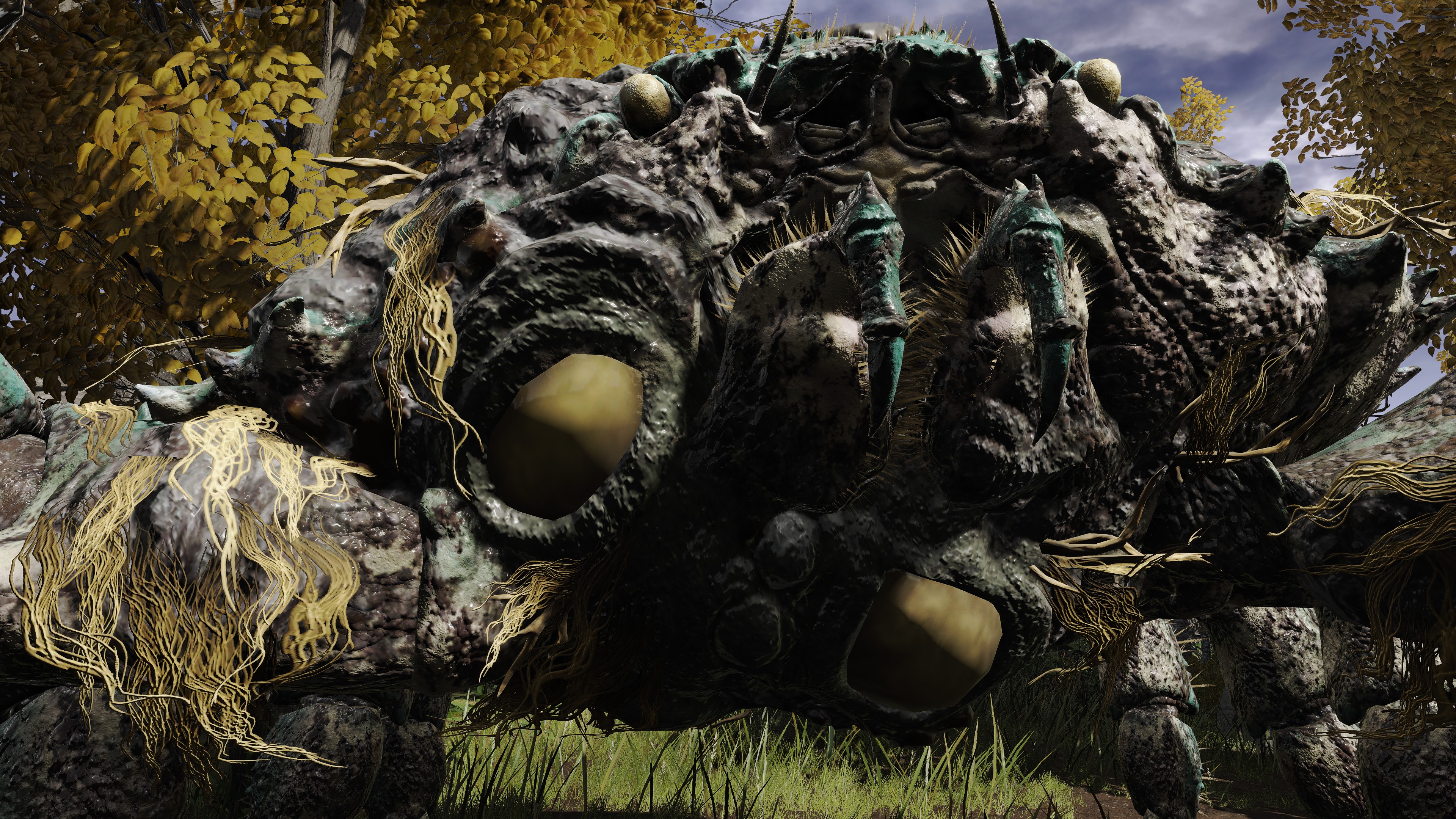
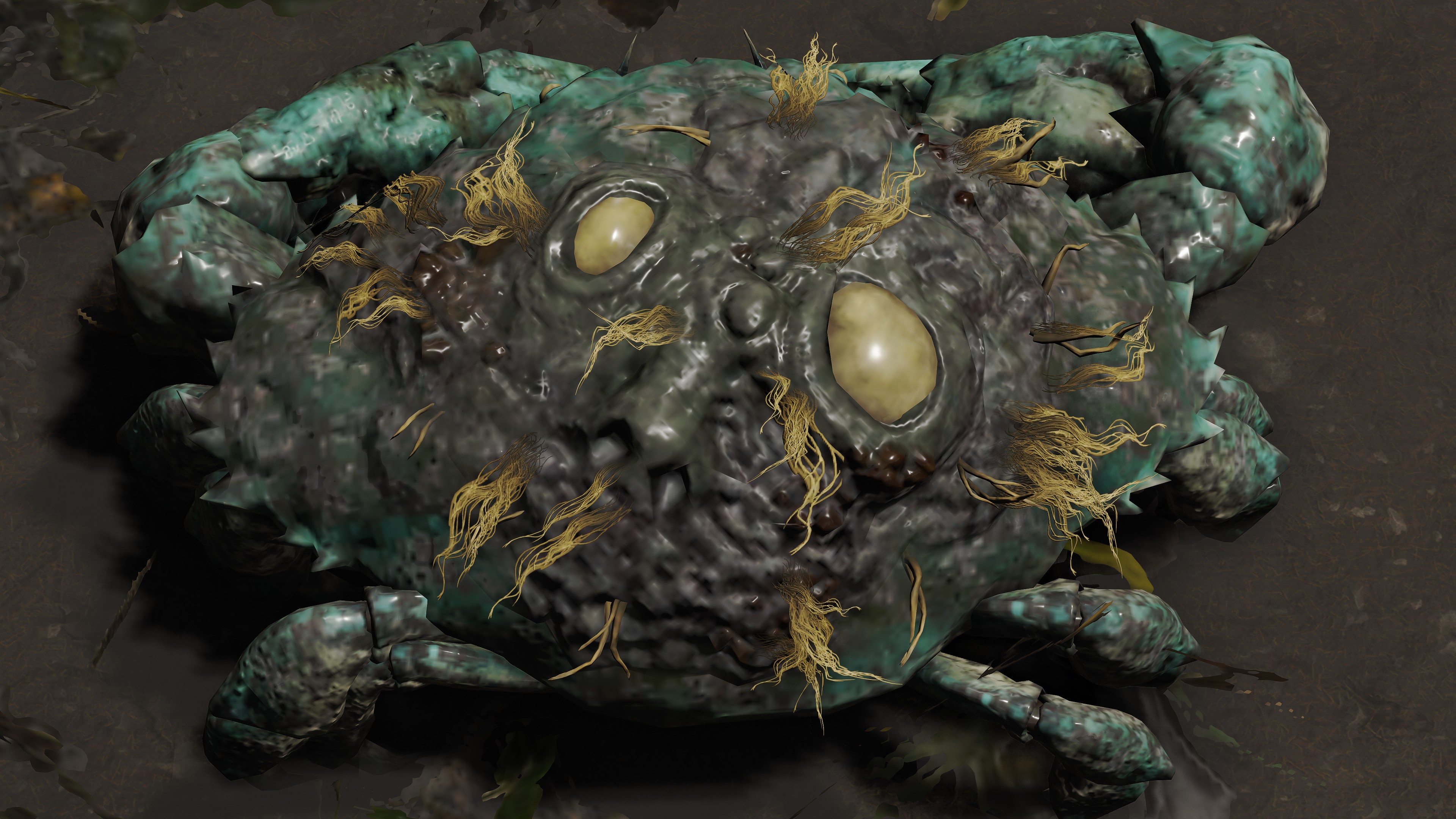
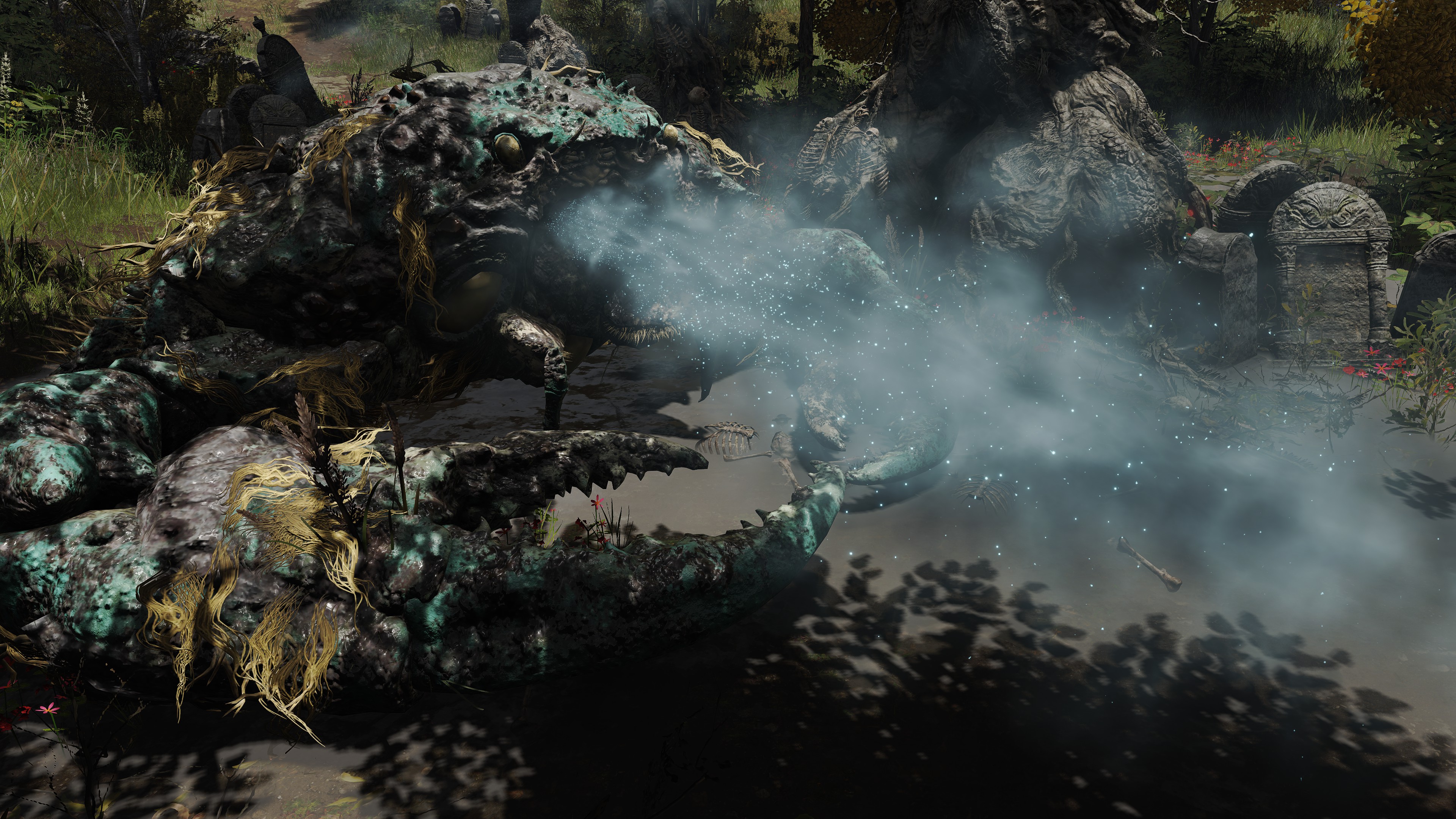
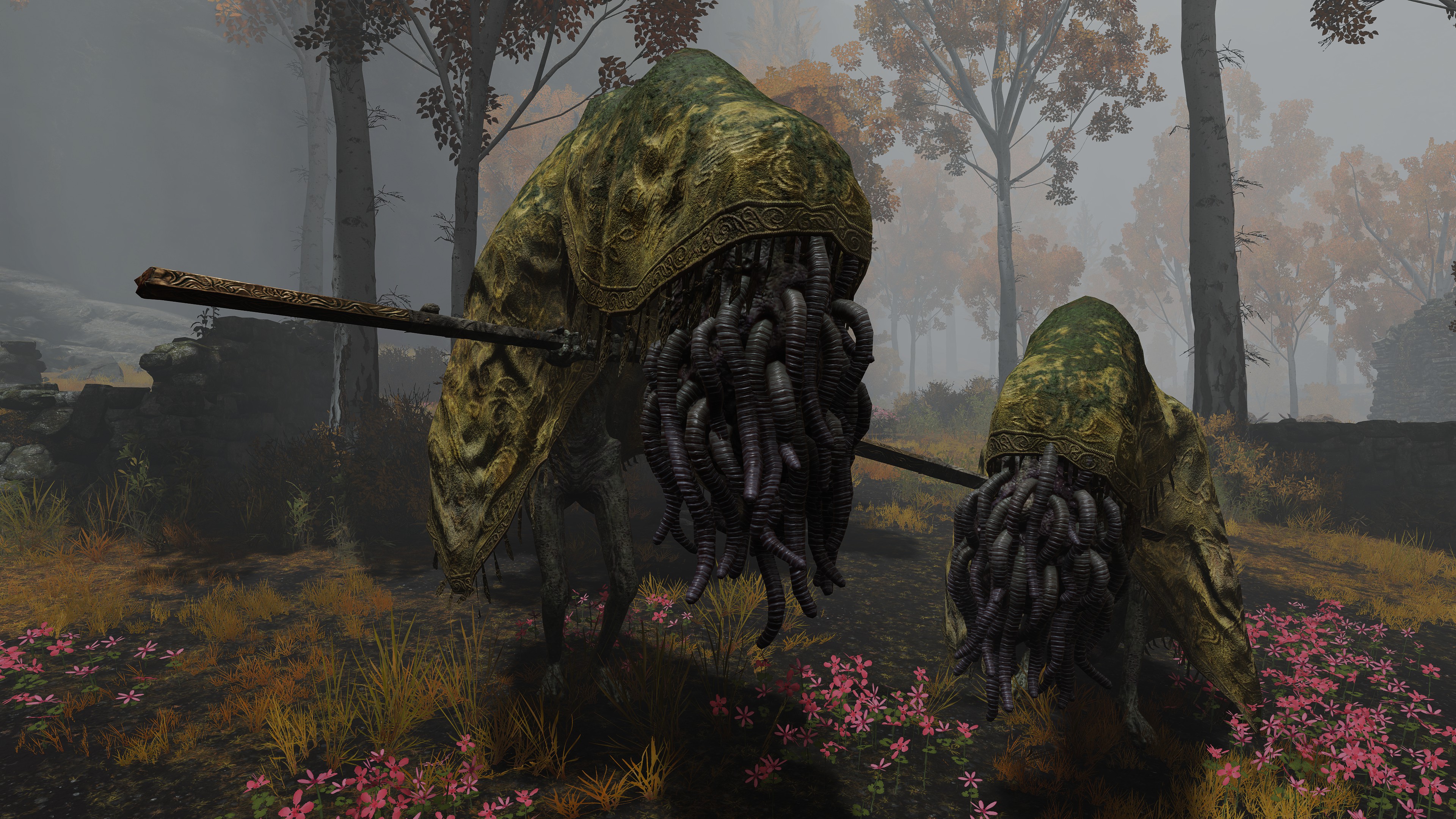
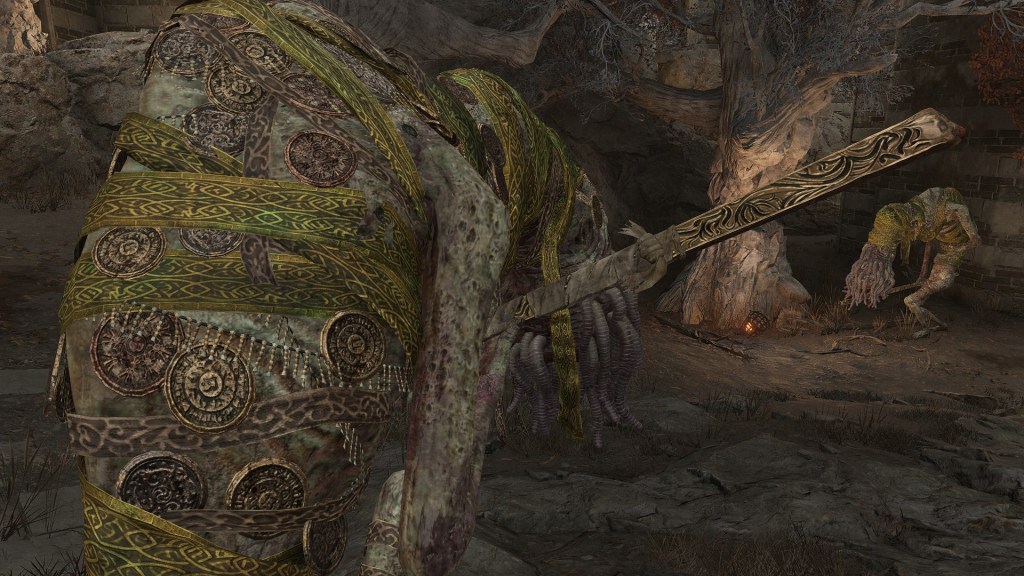
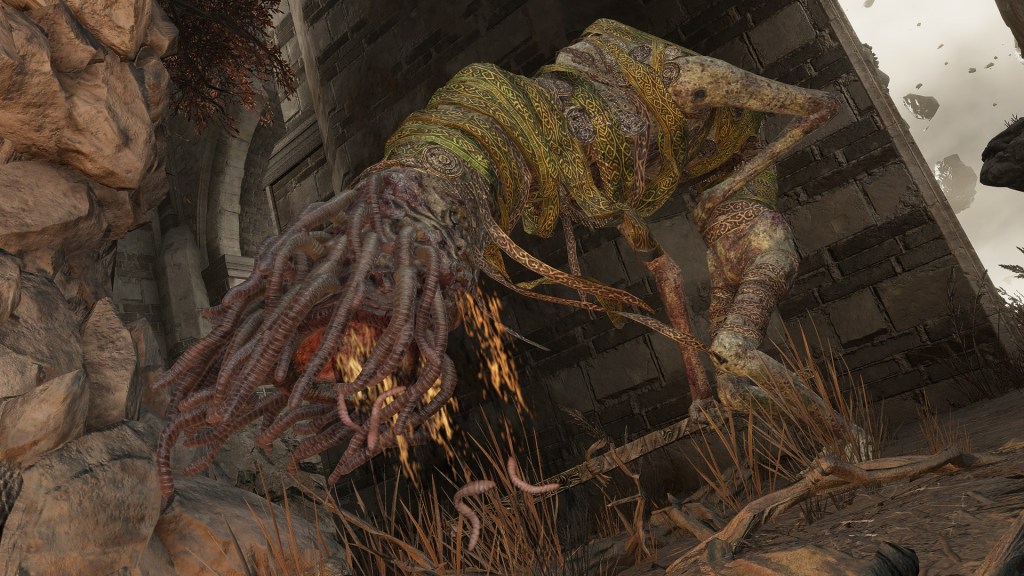
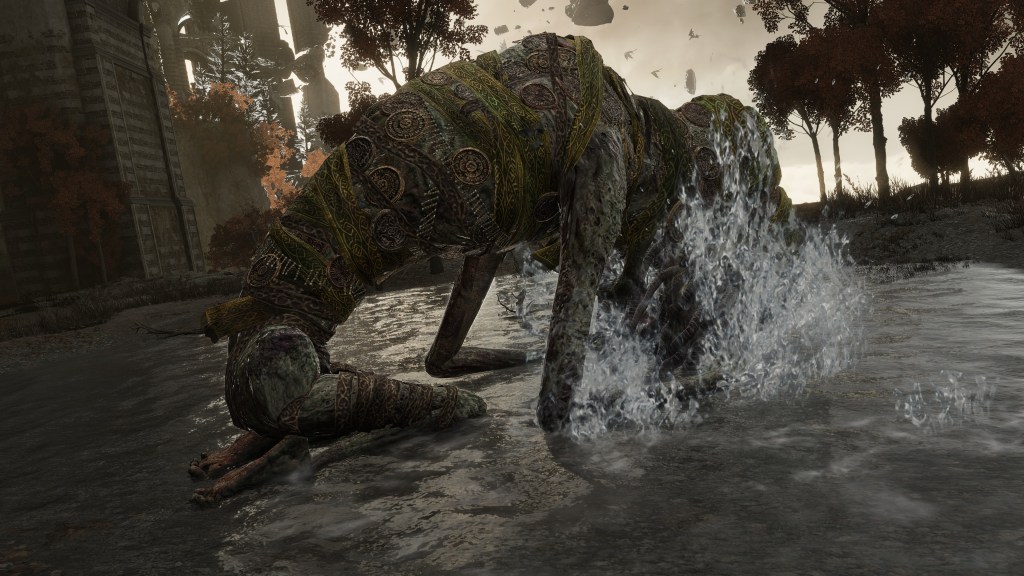
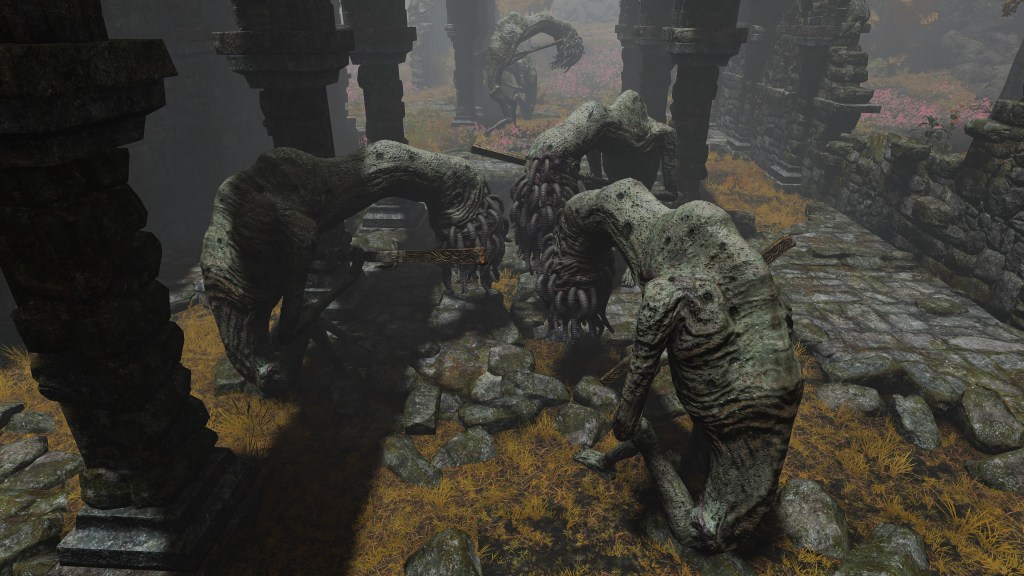
Although simple-minded, basilisks prove that Death can remained harbored in larger organisms. The towering wormfaces look vaguely human, save their namesake. Buried beneath those worms dangling from their heads is still a mouth, but no sign of eyes; maybe because worms burst through the eye sockets, too. Regardless, we can infer from their black-spotted skin that they suffer disease. What kind? The bile they cough up along with more worms emits the toxic fumes of Death, making the worms no doubt maggots produced from Godwyn. But given that these enemies don’t share the unique vulnerabilities of the living dead, these maggots are more likely infesting the bodies of the living. This isn’t unprecedented. Crabs feeding from waters at graveyards contaminated by Deathroot have manifest Godwyn’s face on their shells, a large individual spewing a similar worm-generating fog. Clearly, trace amounts of Death exist in the earth, and the living are just as susceptible to contact as the dead. Wormfaces are thus humans who have had the misfortune of Godwyn’s spawn burrowing through them, inside and out.
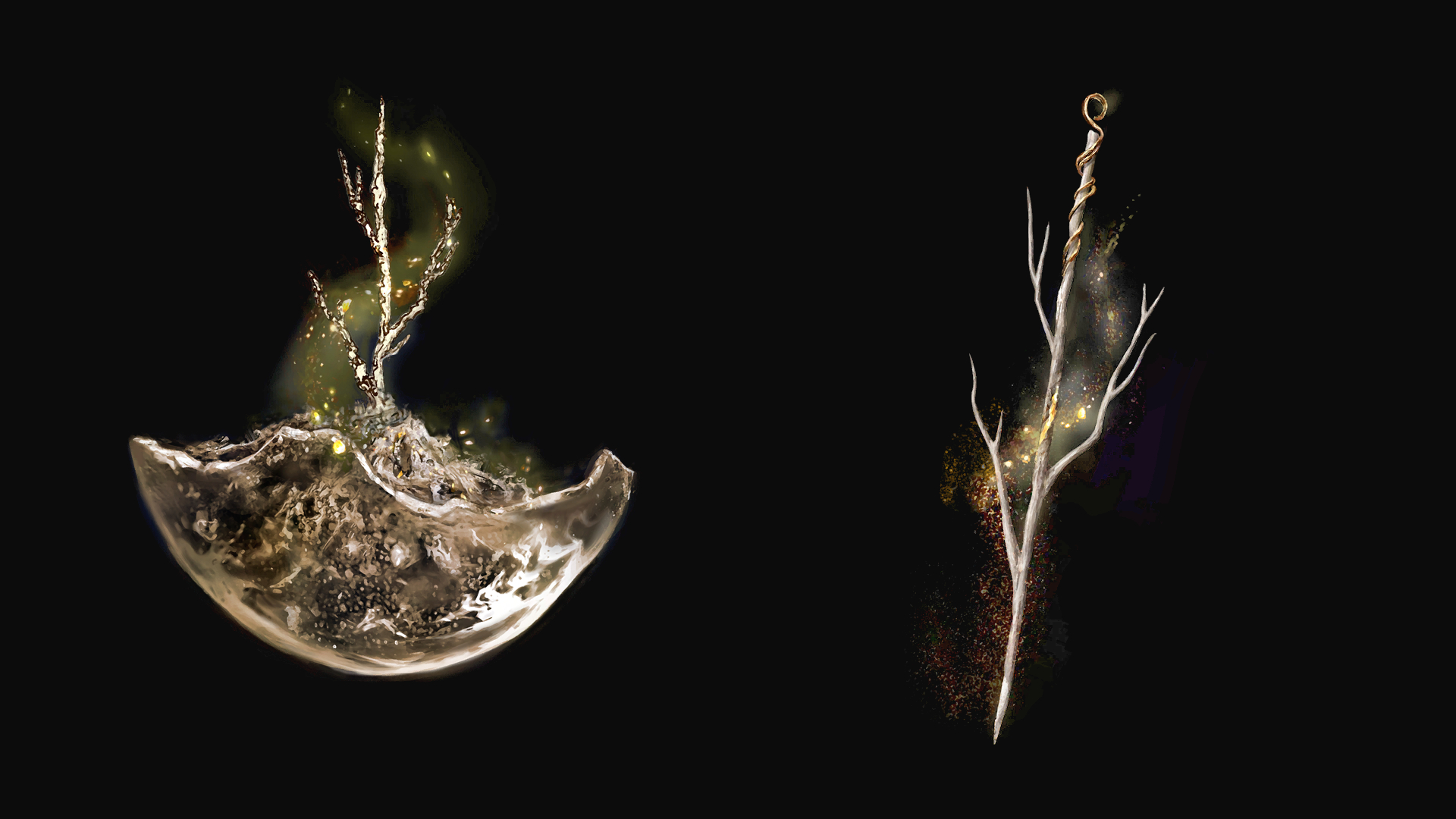
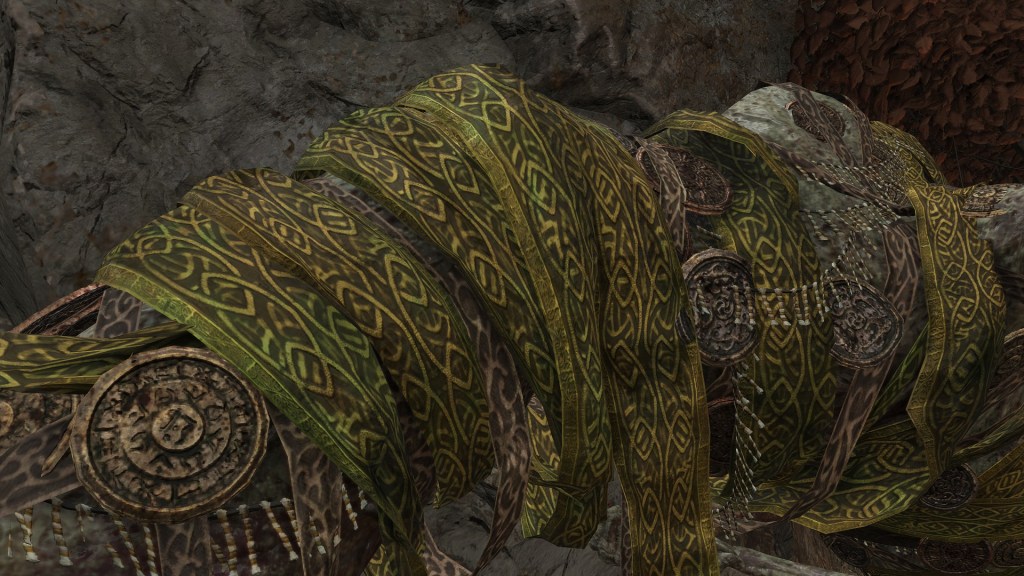
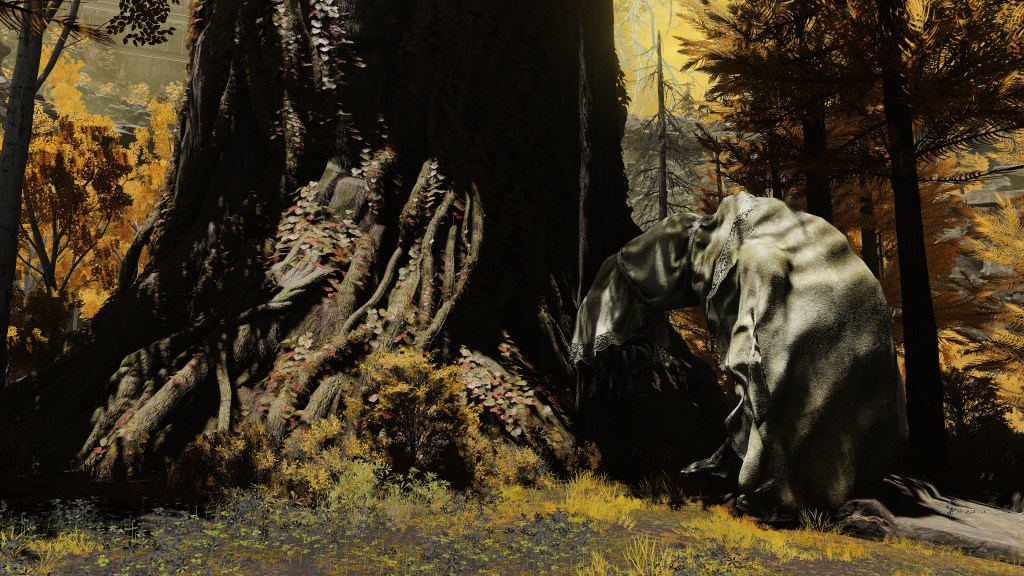
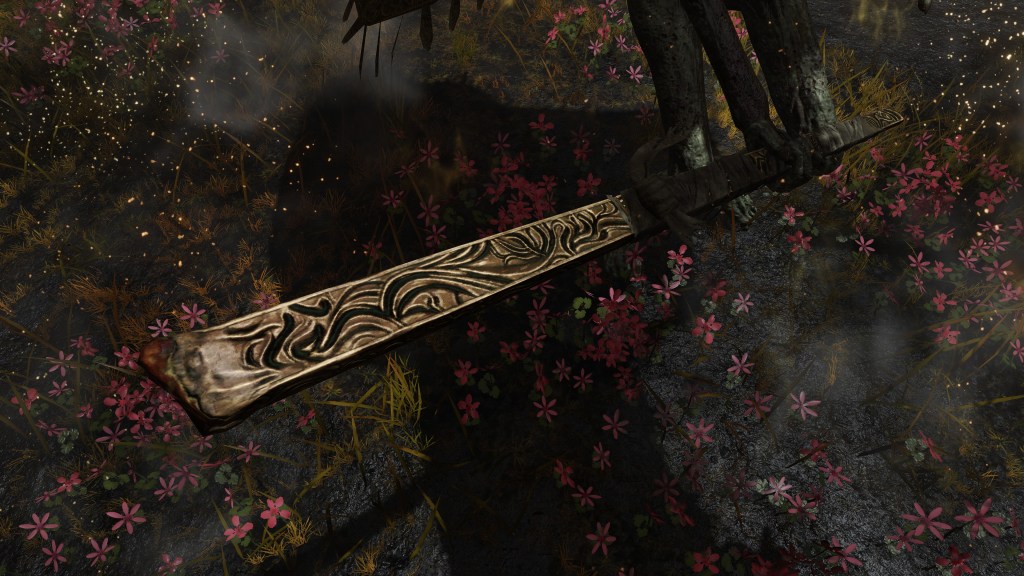
As to how this has occurred, that depends on the location. Our earliest possible encounter is in the Bower of Bounty, wormfaces roaming or loitering especially around the Woodfolk Ruins. (Site W) The green cloaks with golden floral patterns which many wear in a vain attempt to hide their affliction signals their identity as the locals, which is conducive with the talisman they carry. The Sacrificial Twig is a small branch of the Erdtree pruned back during the time before Radagon. Like the Twiggy Cracked Tear, the talisman acts as a protective charm, at the cost of the delicate twig. It is a reminder of a more romantic age gone too soon for Marika’s subjects, and the last bit of gold for Farum Azulans to cling onto. It is also easy to imagine the community settling beneath the Minor Erdtree in the dying days of the Crucible holding onto these charms in a prayer to retain some of that historic gold being drained away, especially when the wormfaces are resistant to holiness. Therefore, the entire population of Site W has been infected by Godwyn’s worms.
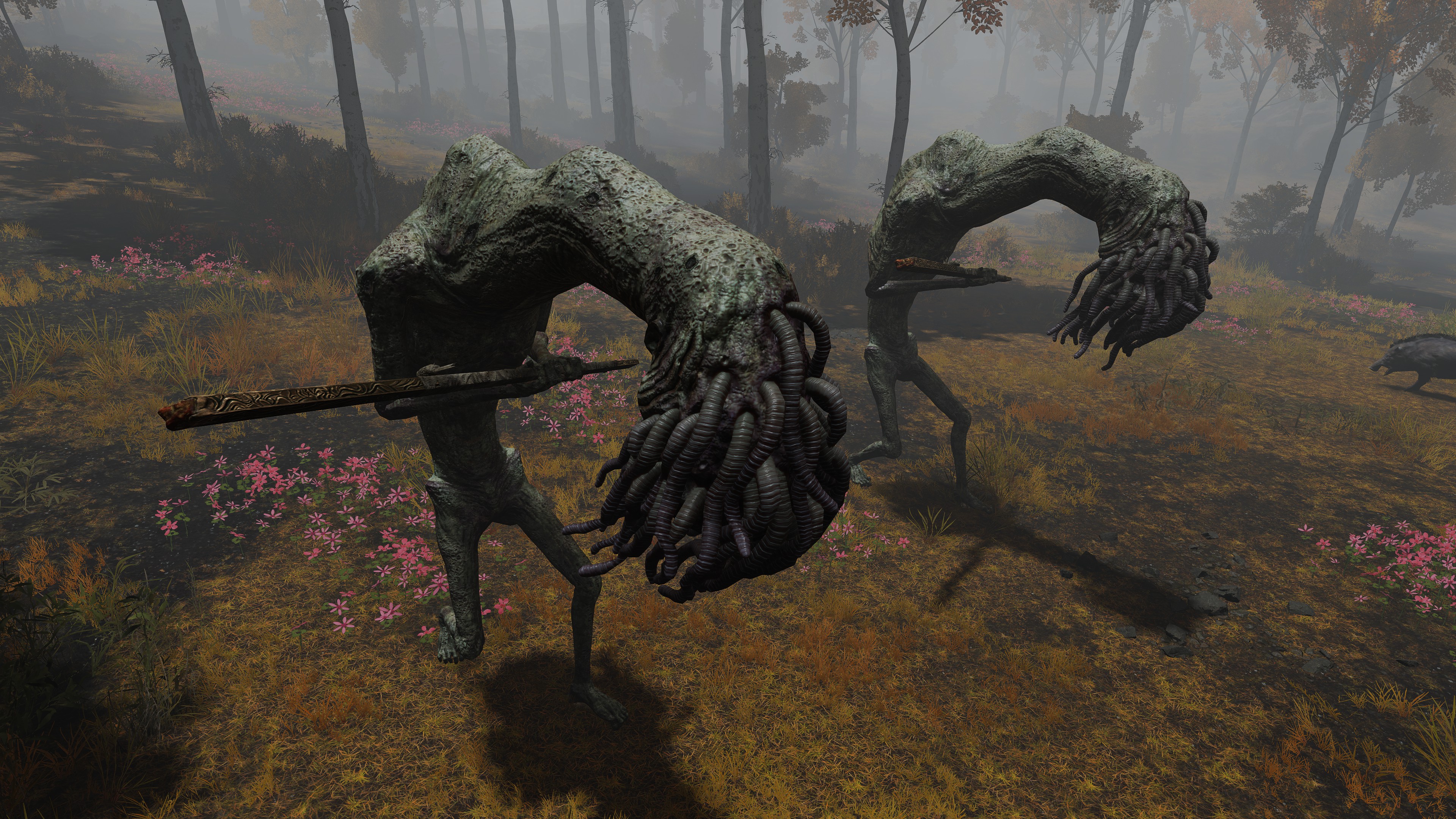
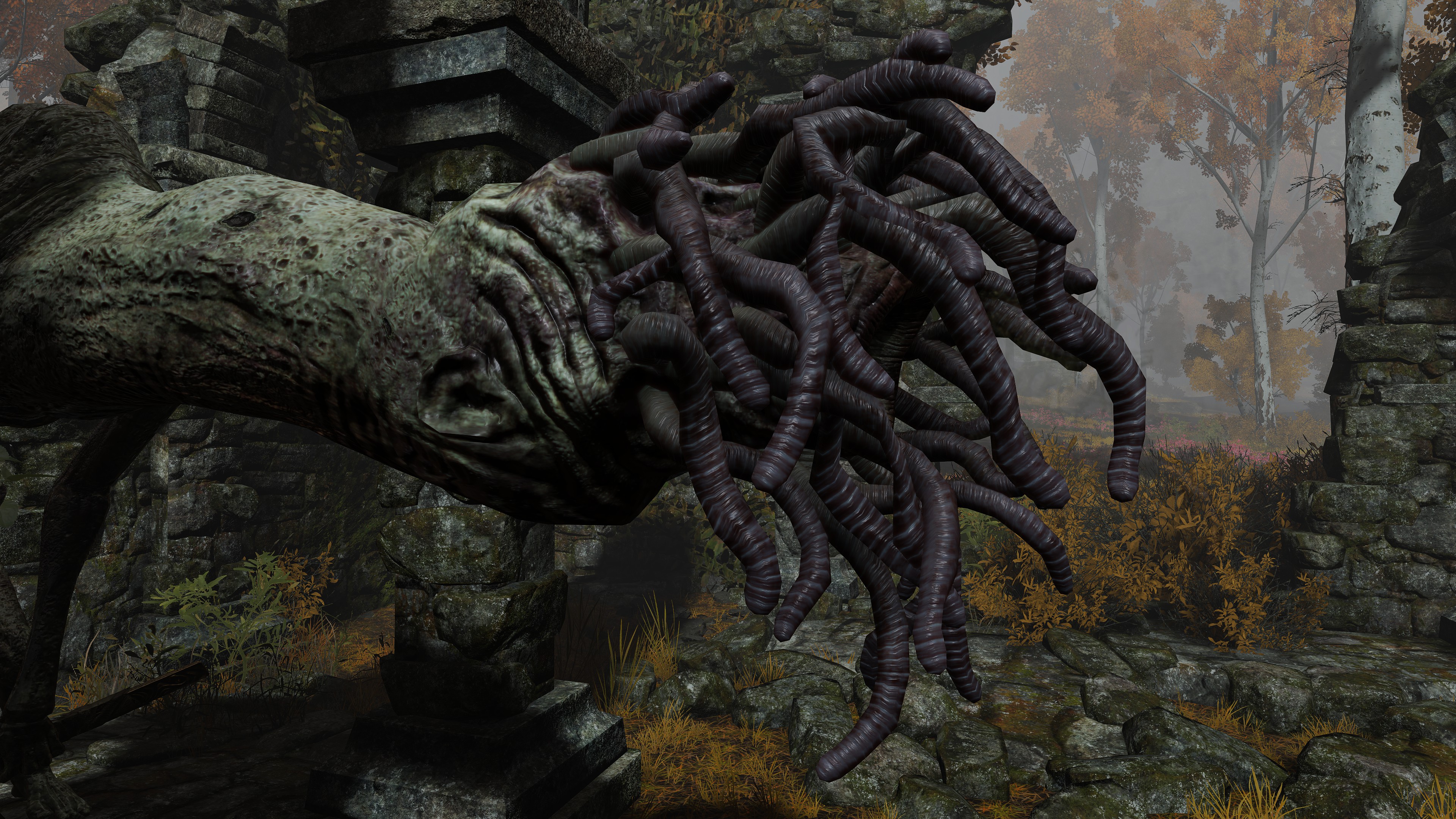
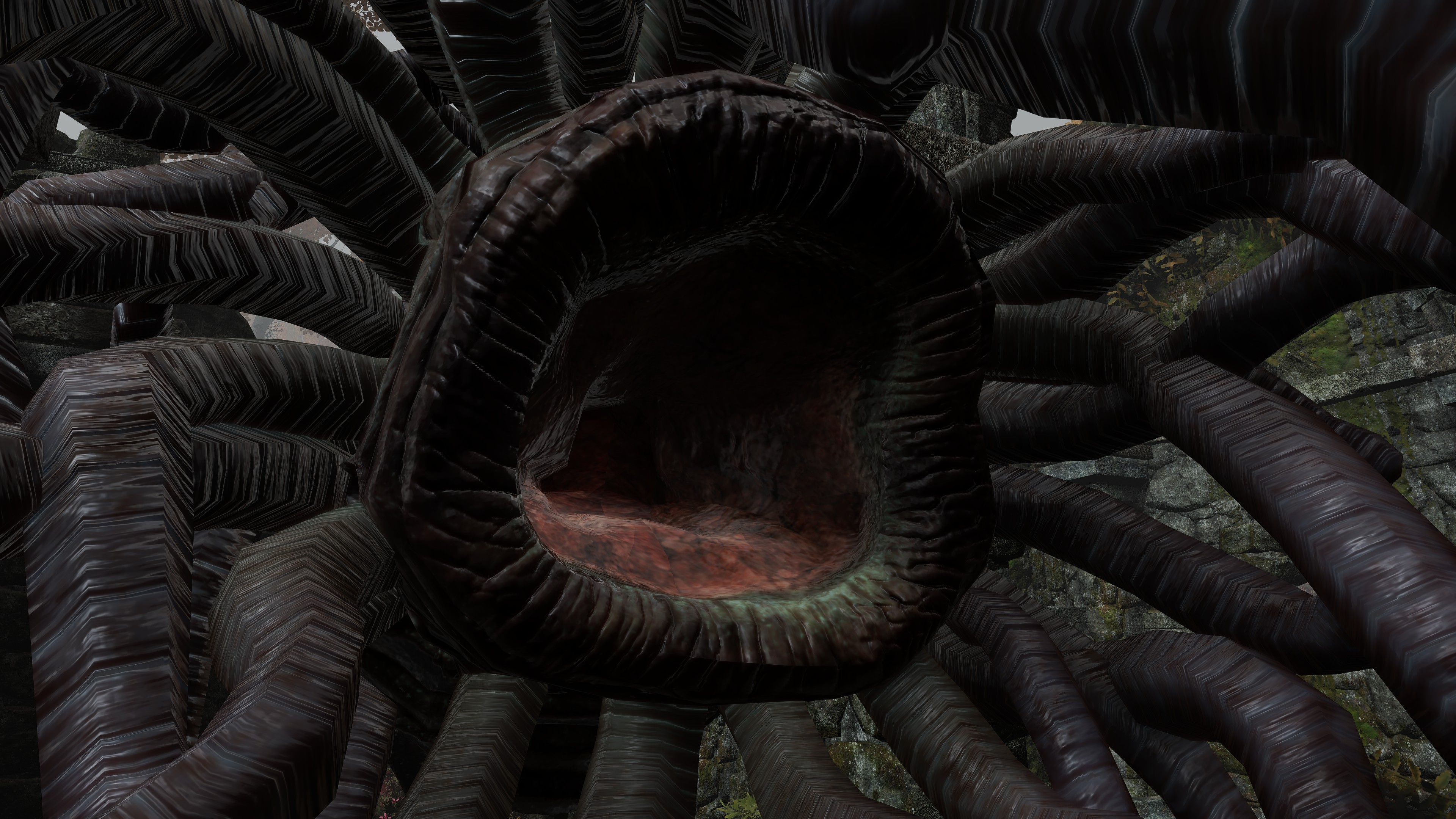
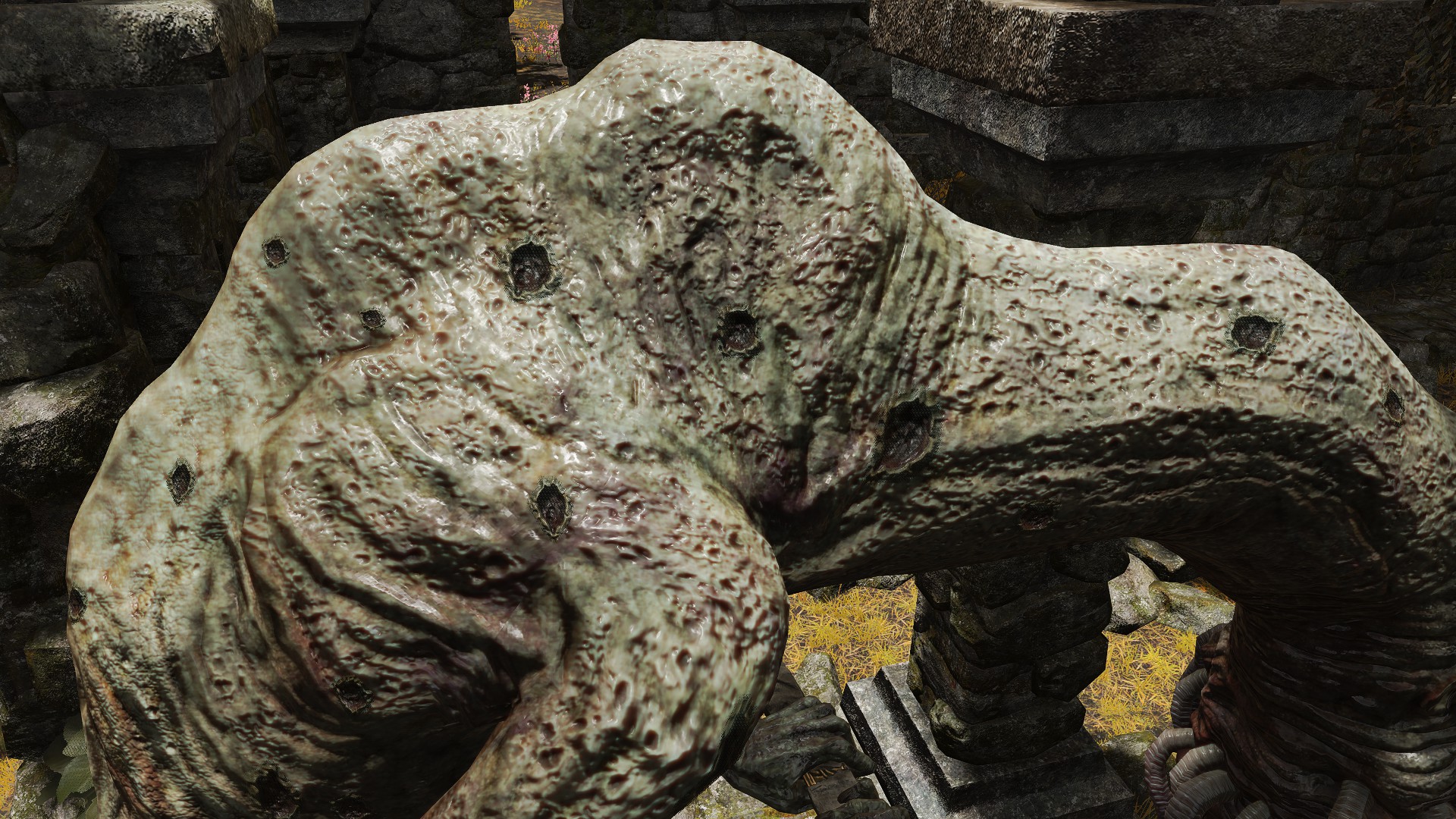
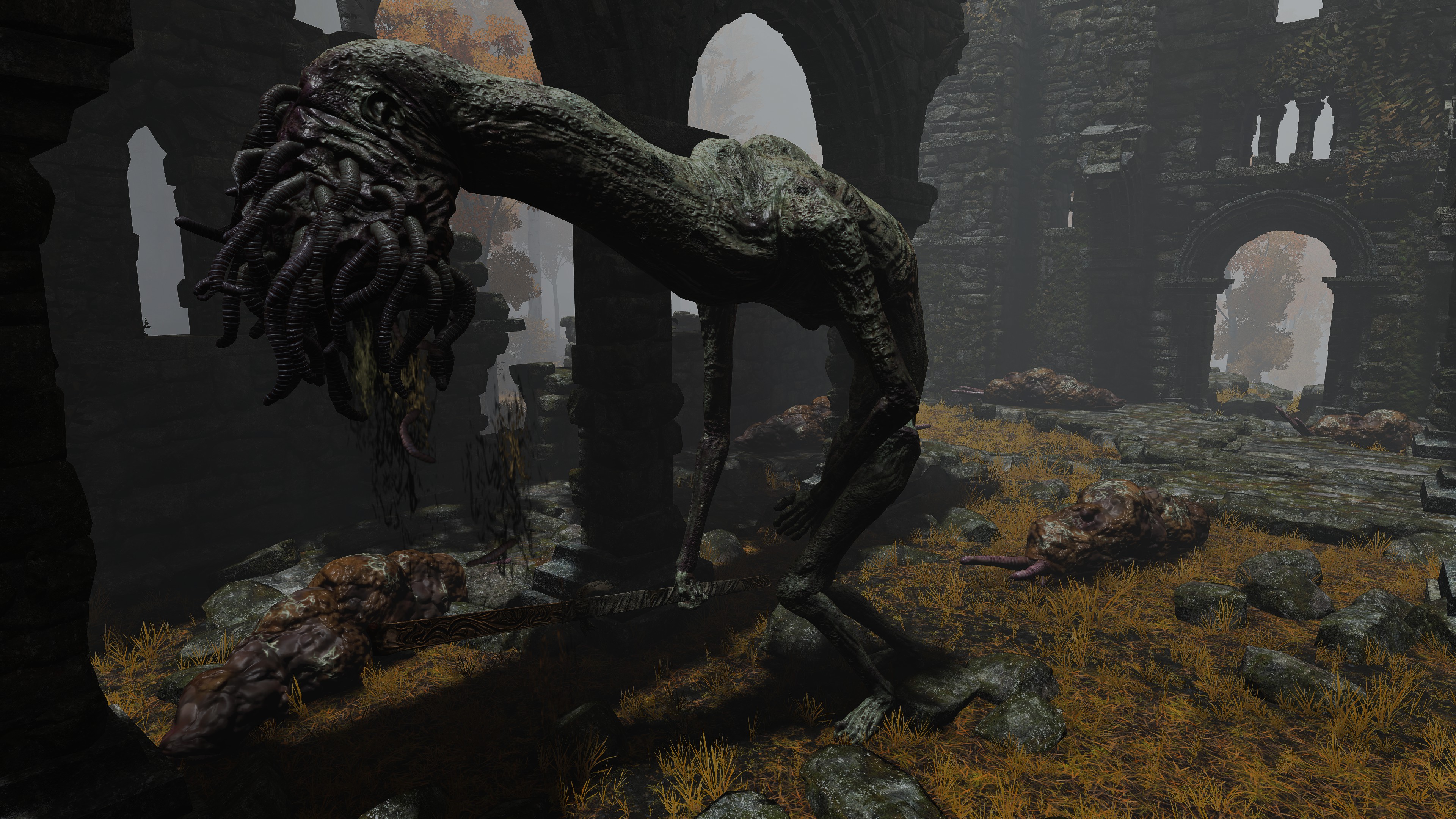
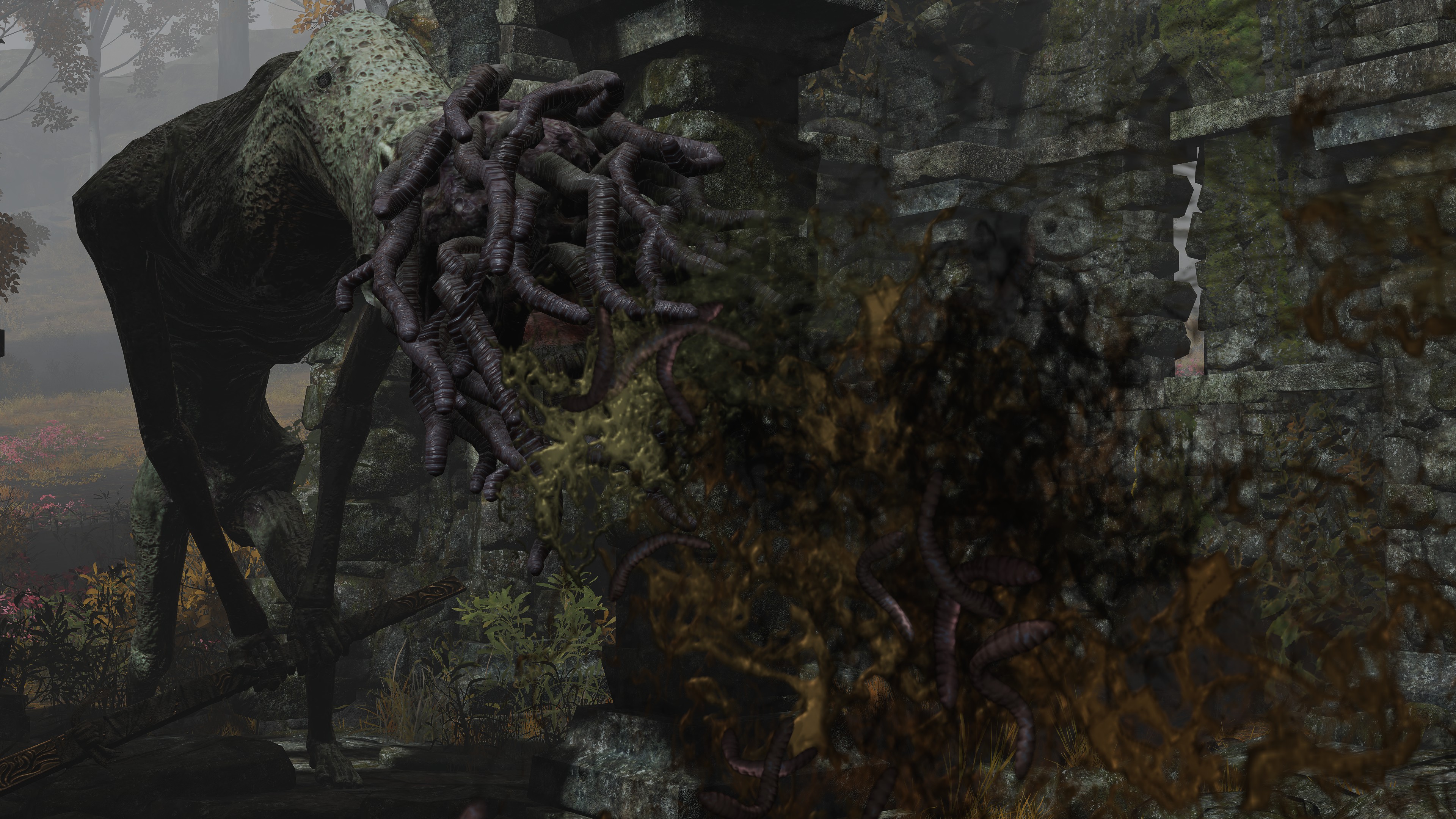
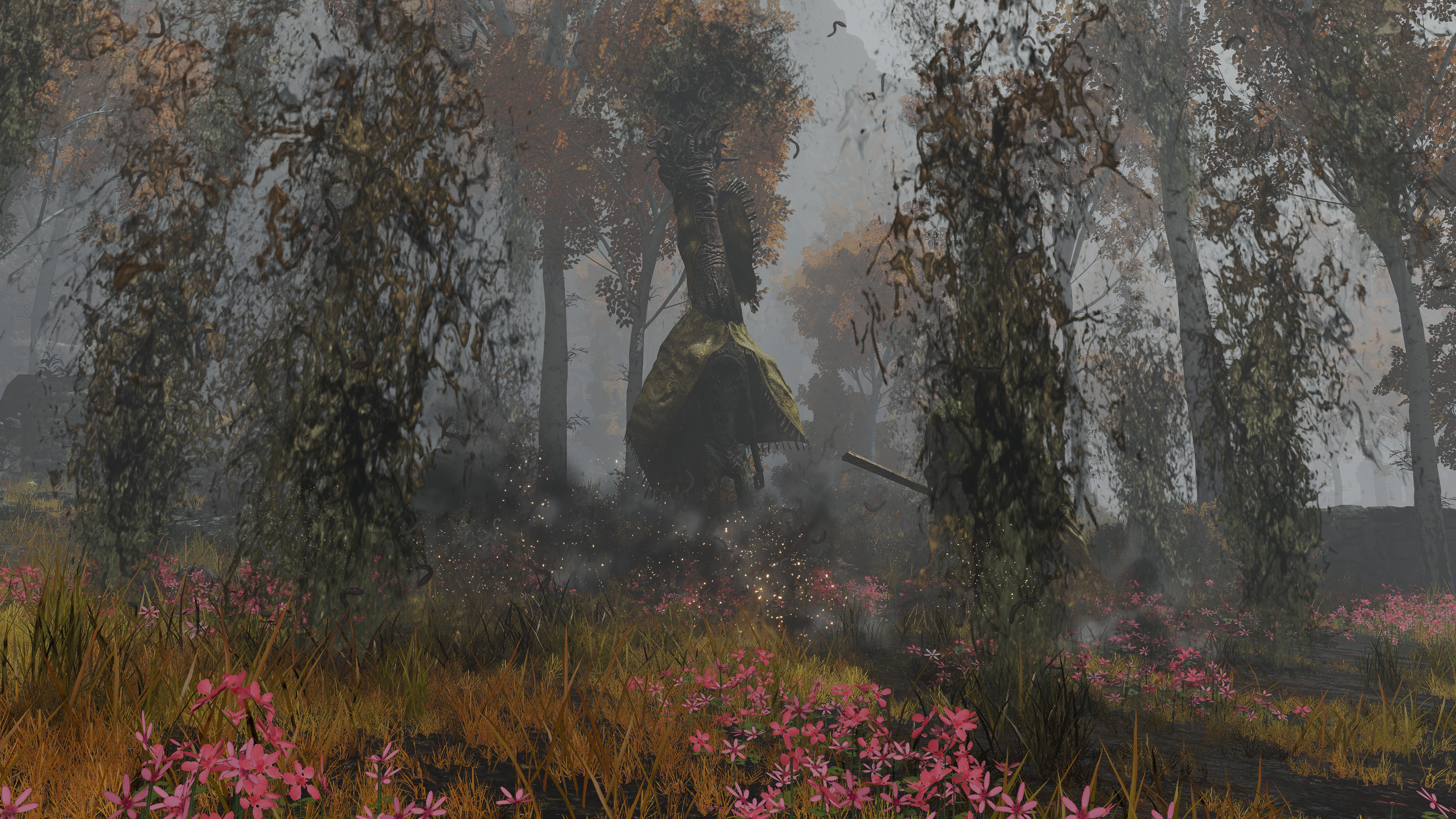
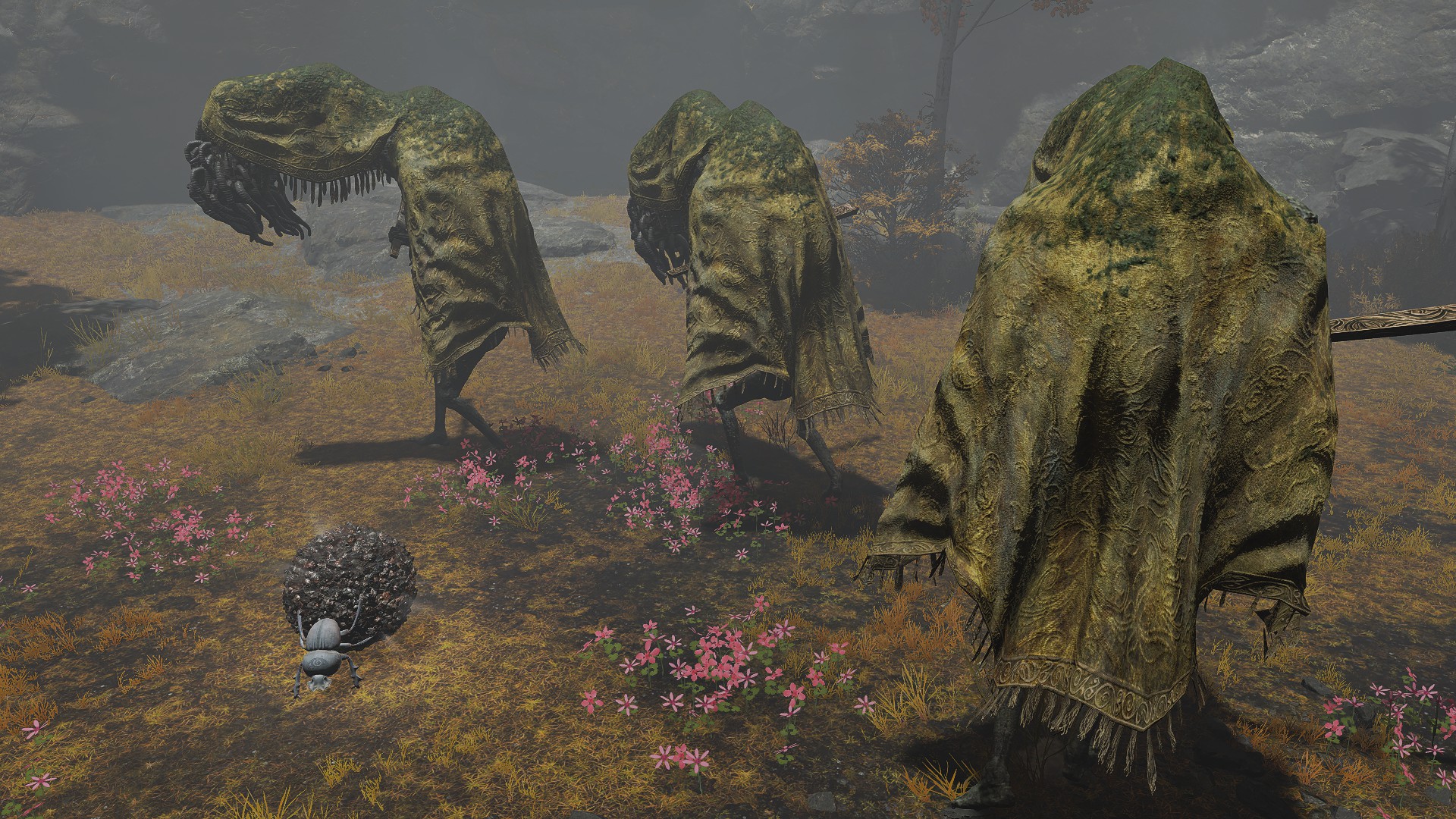
We may later encounter more wormfaces in Farum Azula, seemingly expelled from the crumbling city by how they loiter in obscurity outside the mausoleum walls. The ornate wraps and medallions covering these enemies do bring the beastmen to mind, leaving the impression that these were the capital’s human residents once upon a time. If so, then it is only natural to force them so far from town, to save any other survivors. And as we continue to explore the ruins, we come across numerous beastmen among the living dead, especially in the residential streets. Sections of the Dragon Temple underneath town have likewise been overtaken by Deathroot, even as warriors patrol the halls. This makes it all the more feasible for survivors to contract the “illness” of maggots, prompting their expulsion before the worms spread. If so, then Deathroot should be a viable medium for transmission. And yet, Site W’s graveyard shows no signs, so how did the maggots reach the isolated community down in the gorge? The answer is by accident.
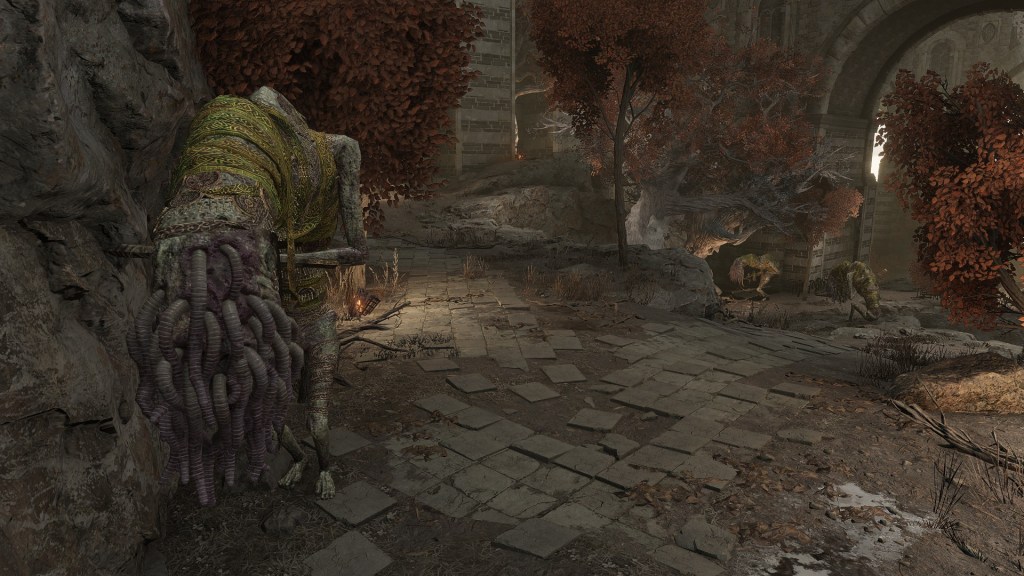
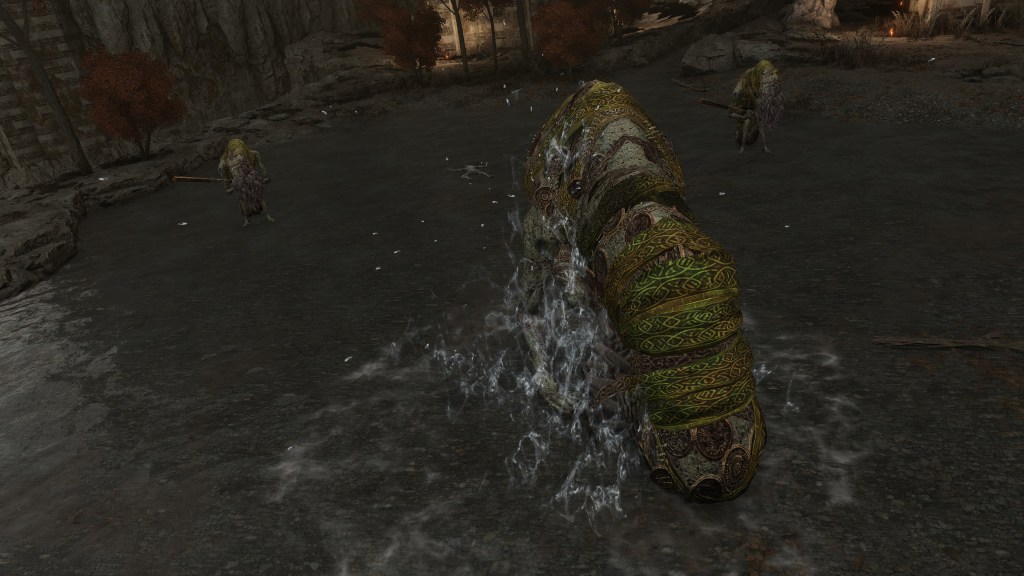
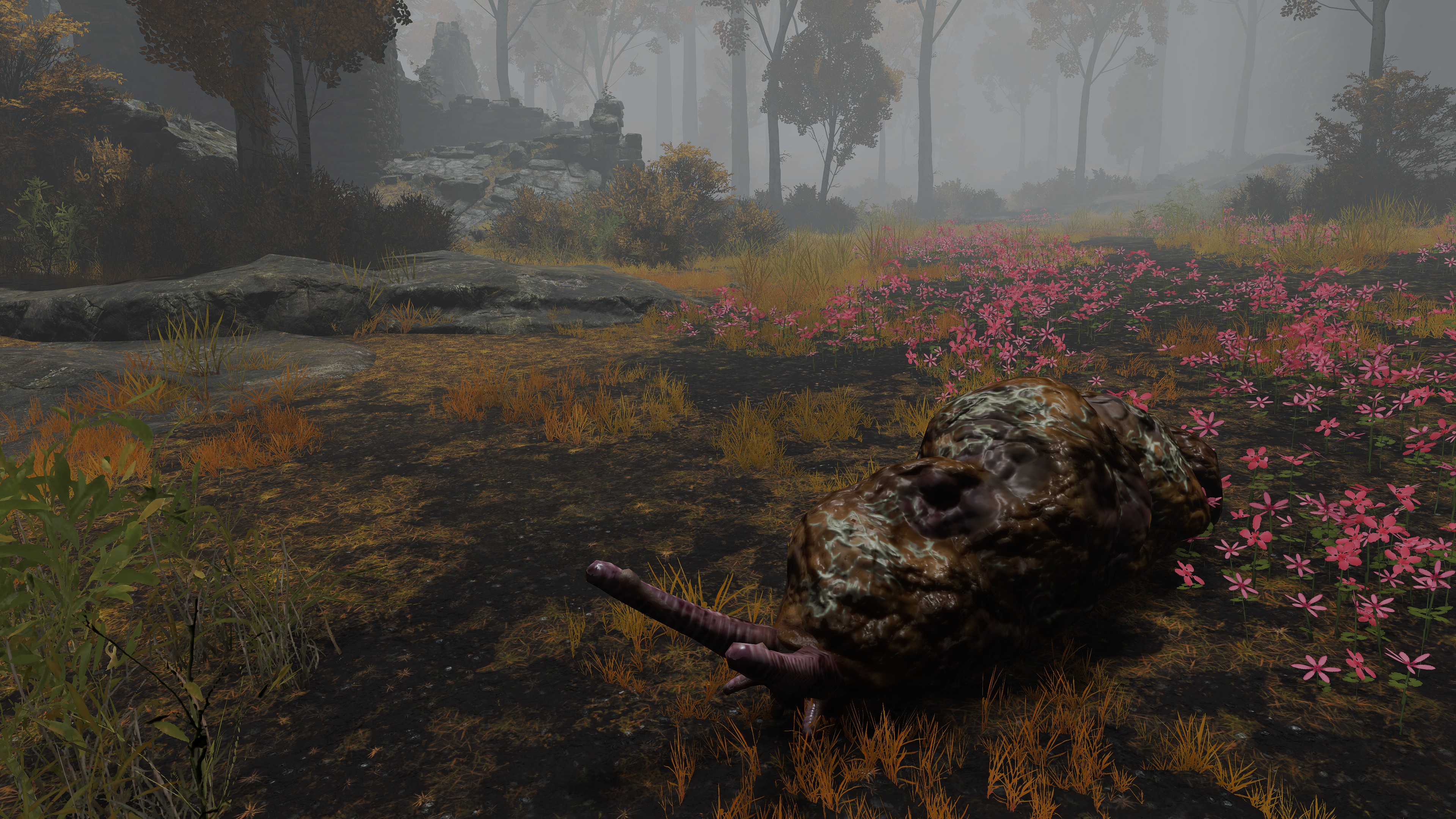
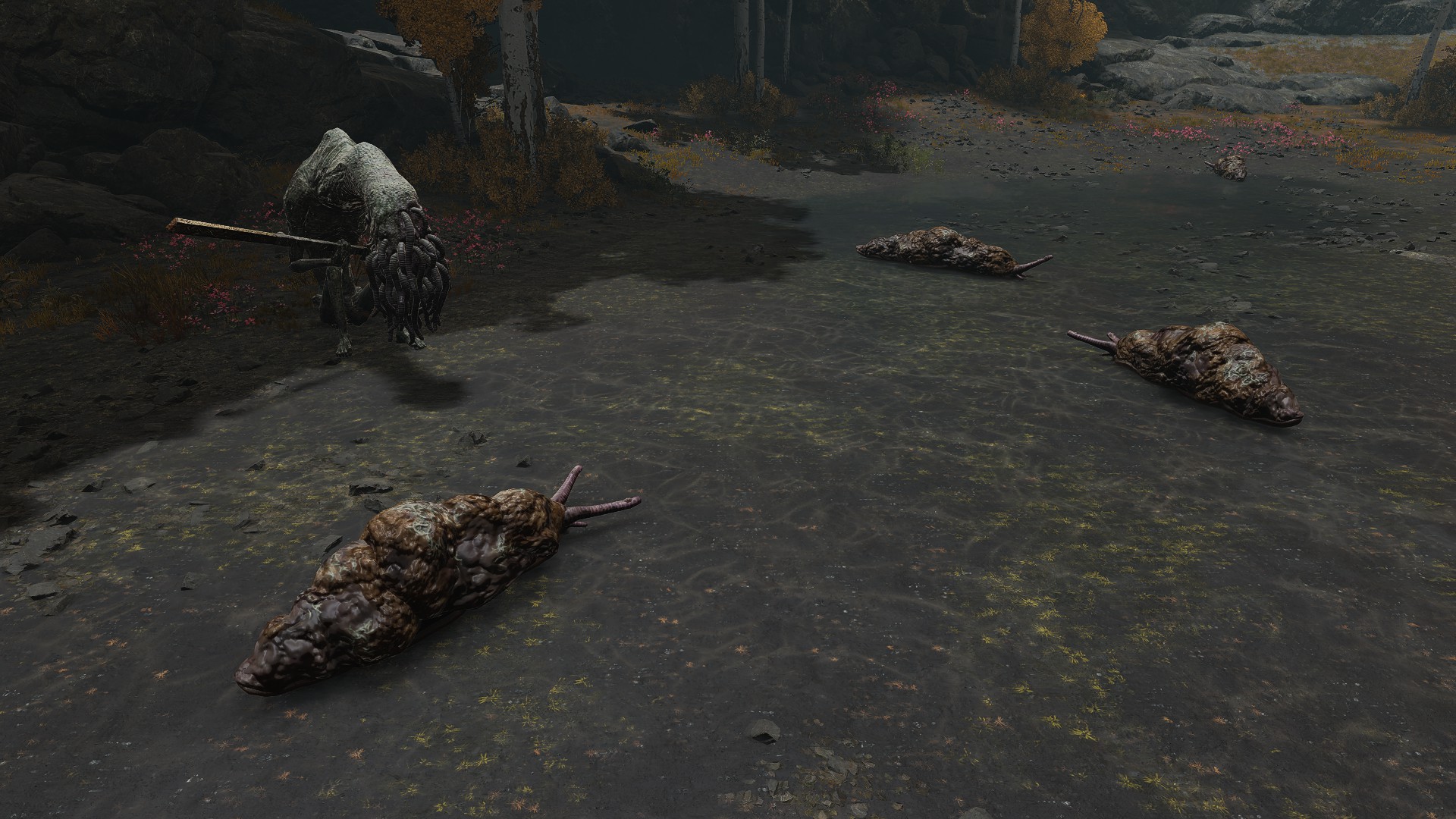
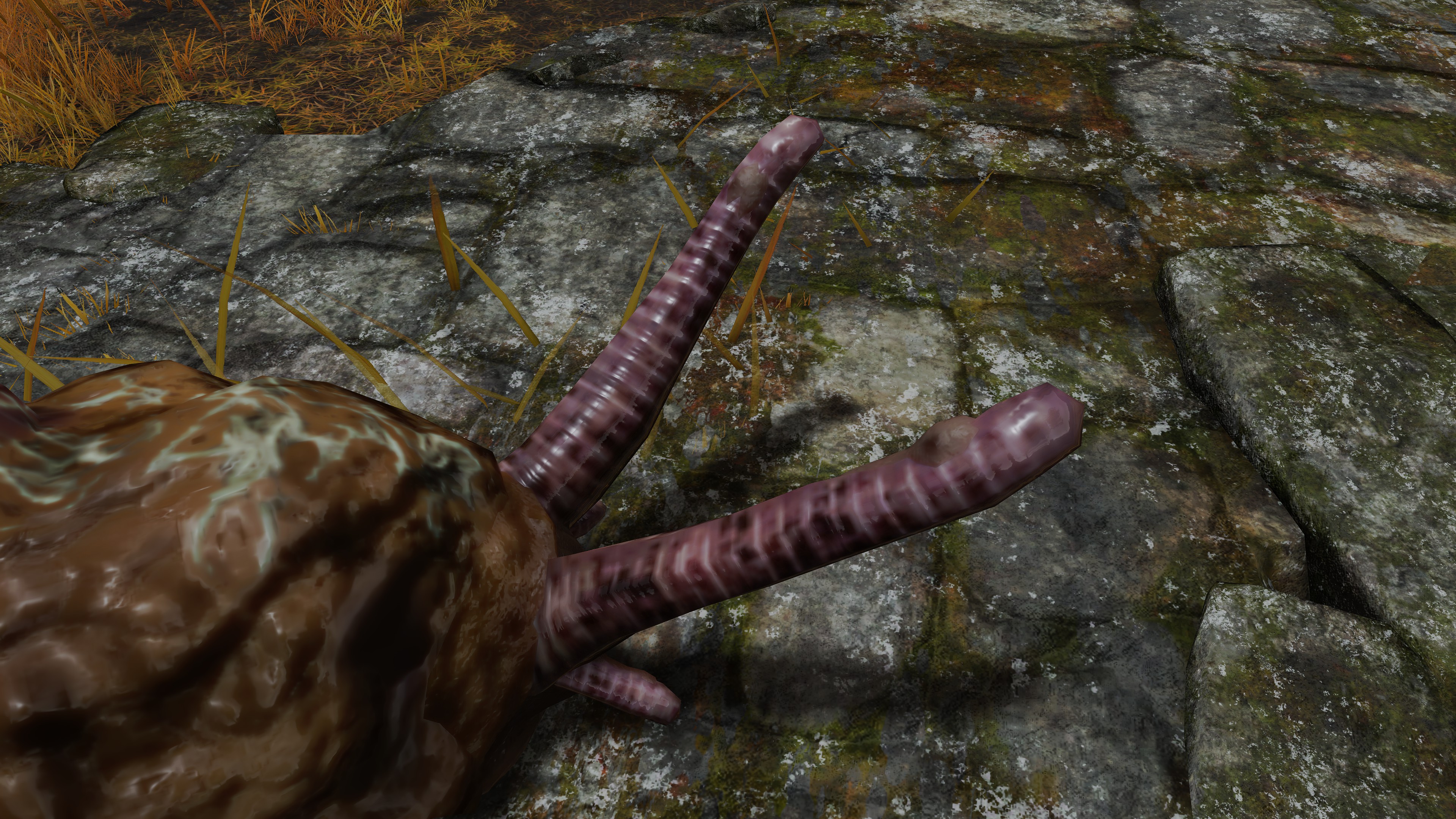
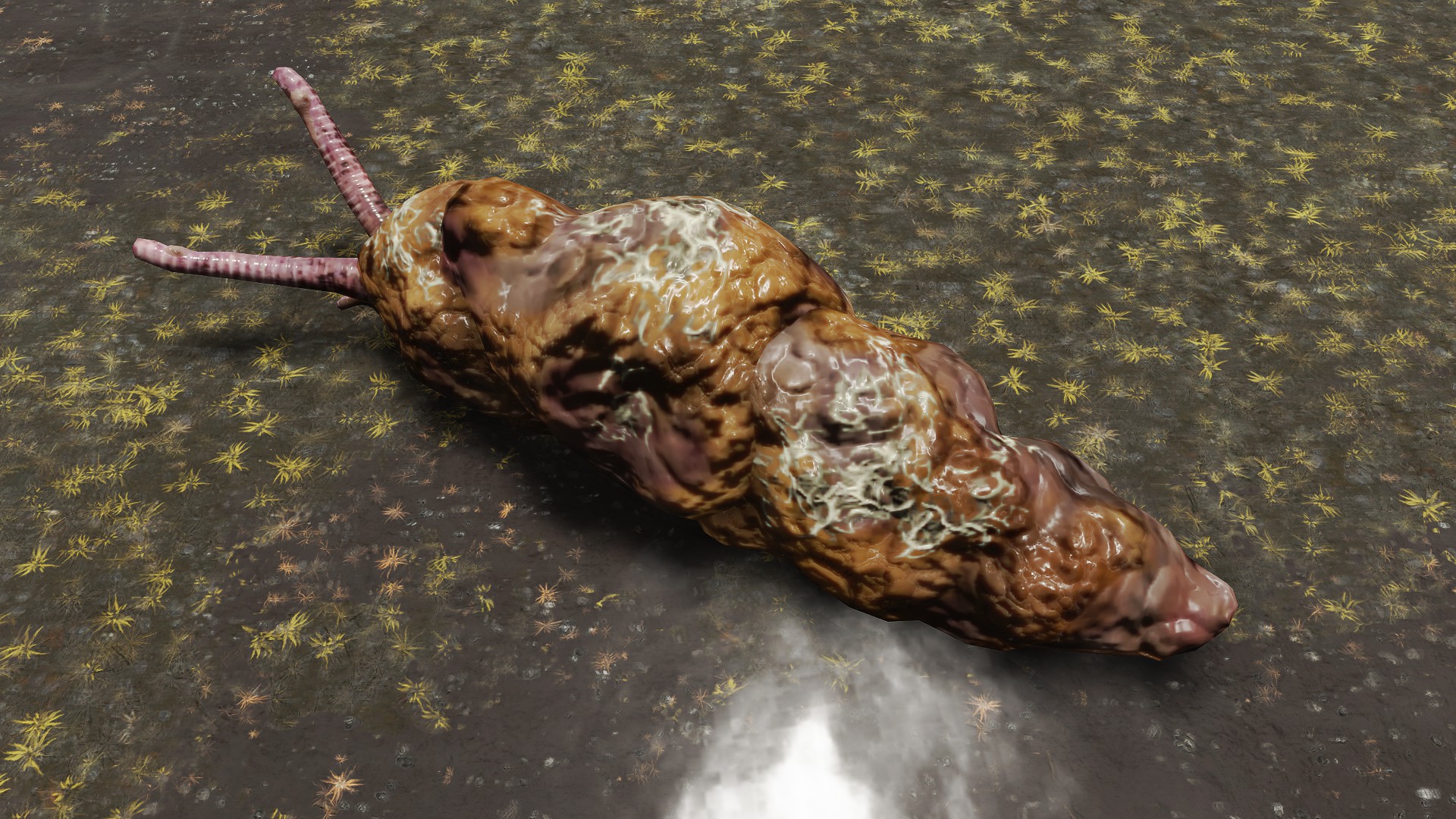
Amidst the wormfaces in Site W and the nearby pond crawl giant slugs. Unlike in other areas, these slugs have their eyestalks replaced by worms, meaning that they are suffering from the same infestation. But who was afflicted first? As corpse feeders, slugs are infamous carriers of parasites, which is why we see the vermin always have maggots sticking to their coat of mucus. In this case, they have also picked up the maggots spawned from Godwyn, which can unquestionably be considered parasitic by how the wormfaces suffer. In all likelihood, then, they were the vector of transmission for the citizens of Site W, vermin carrying a “wormface” disease the same as rats with the Frenzied Flame. The slugs proliferated in the woods’ particularly humid environment, the constant fog turning the gorge into a damp paradise for multiplying. The only question then is how this invasive pest found its way to the forest with Death’s maggots in tow.
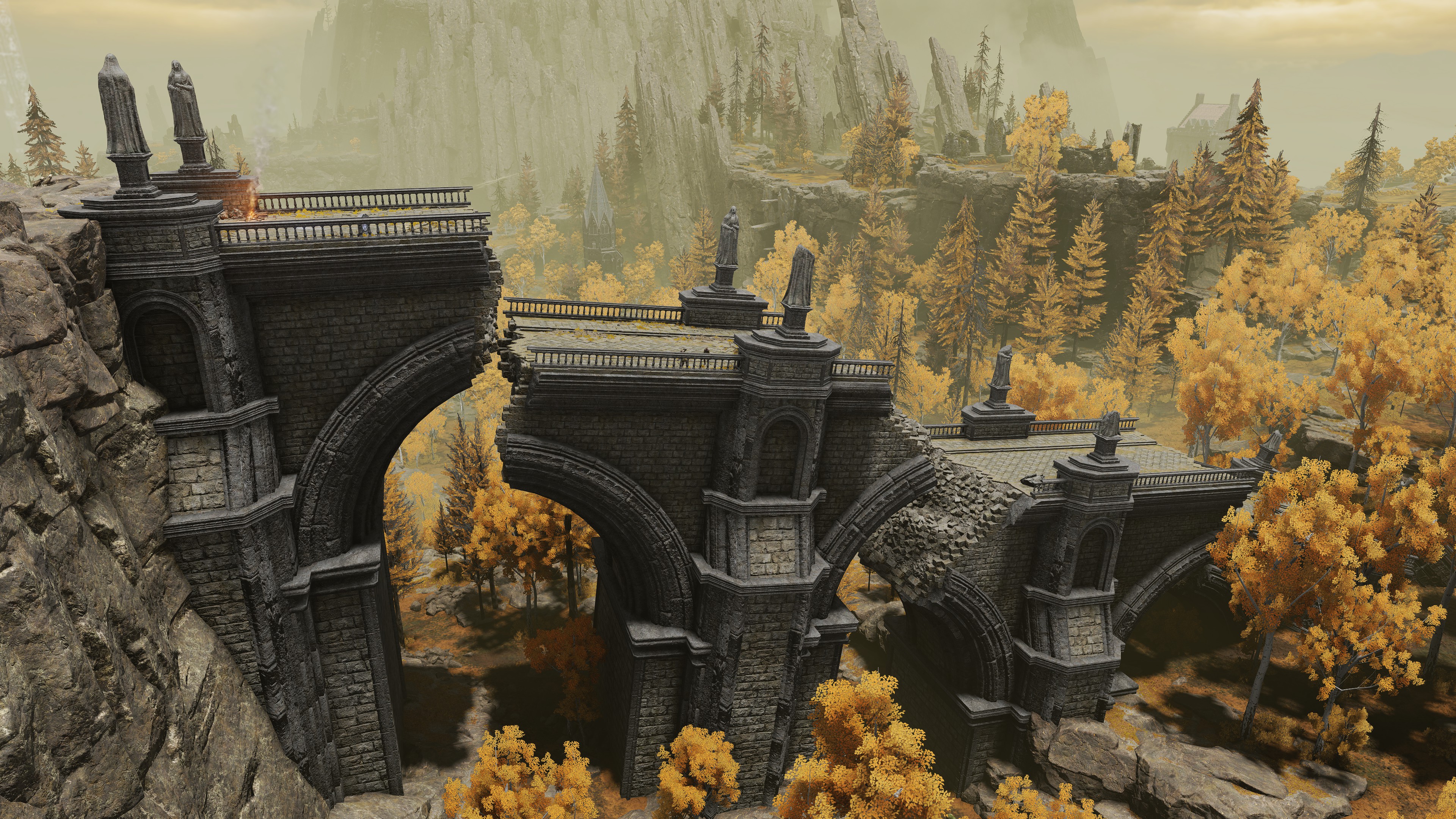
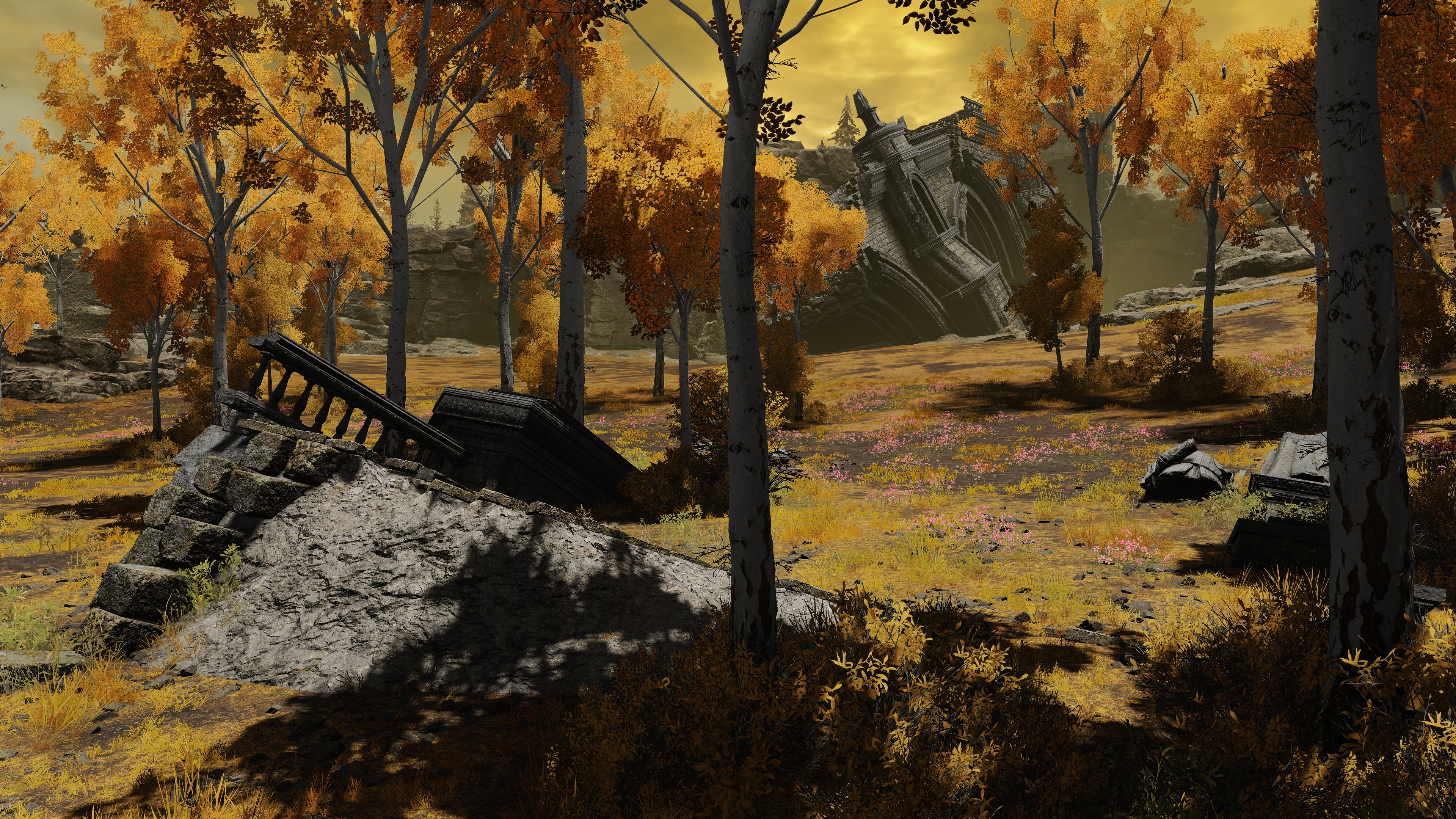
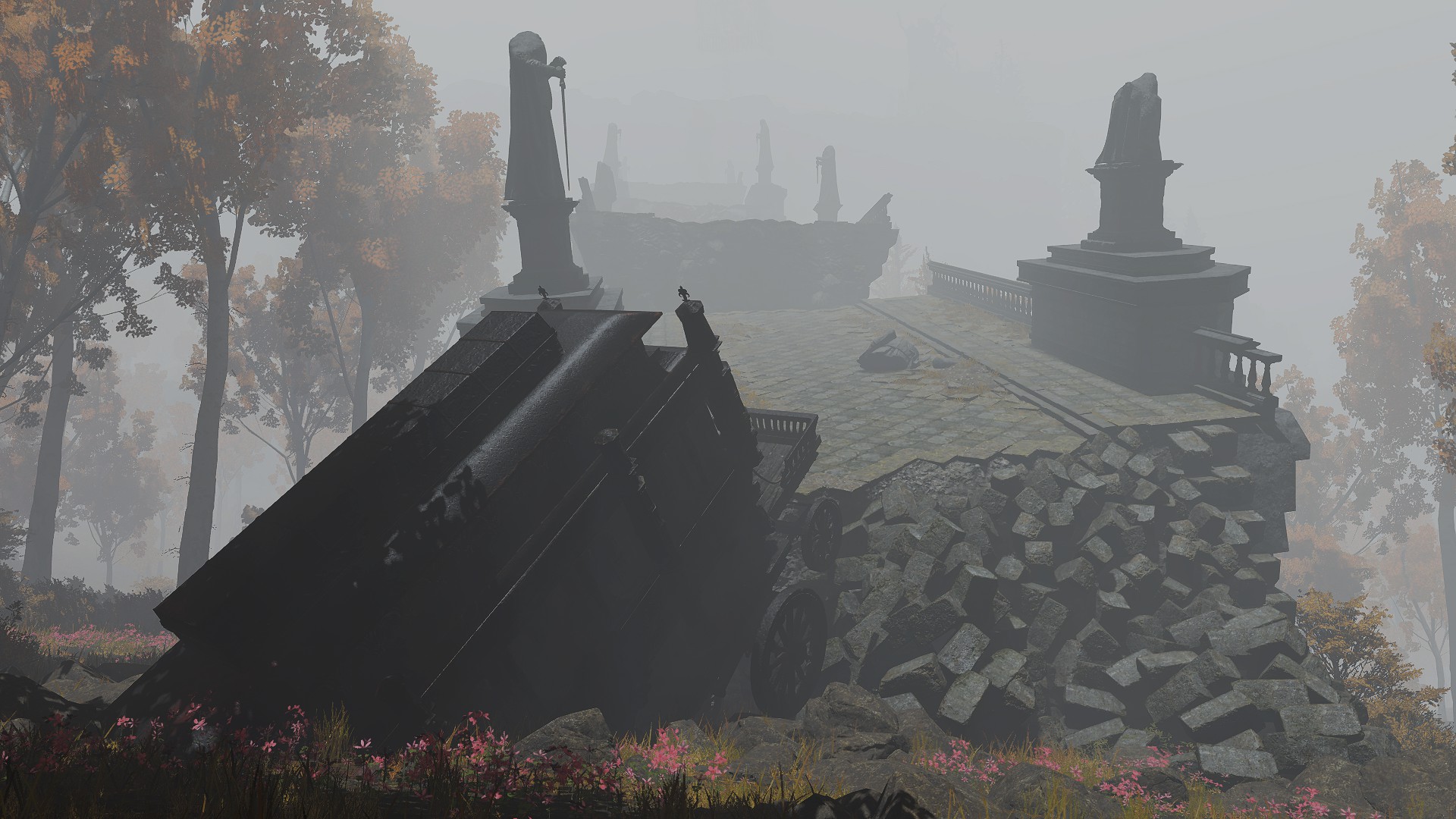
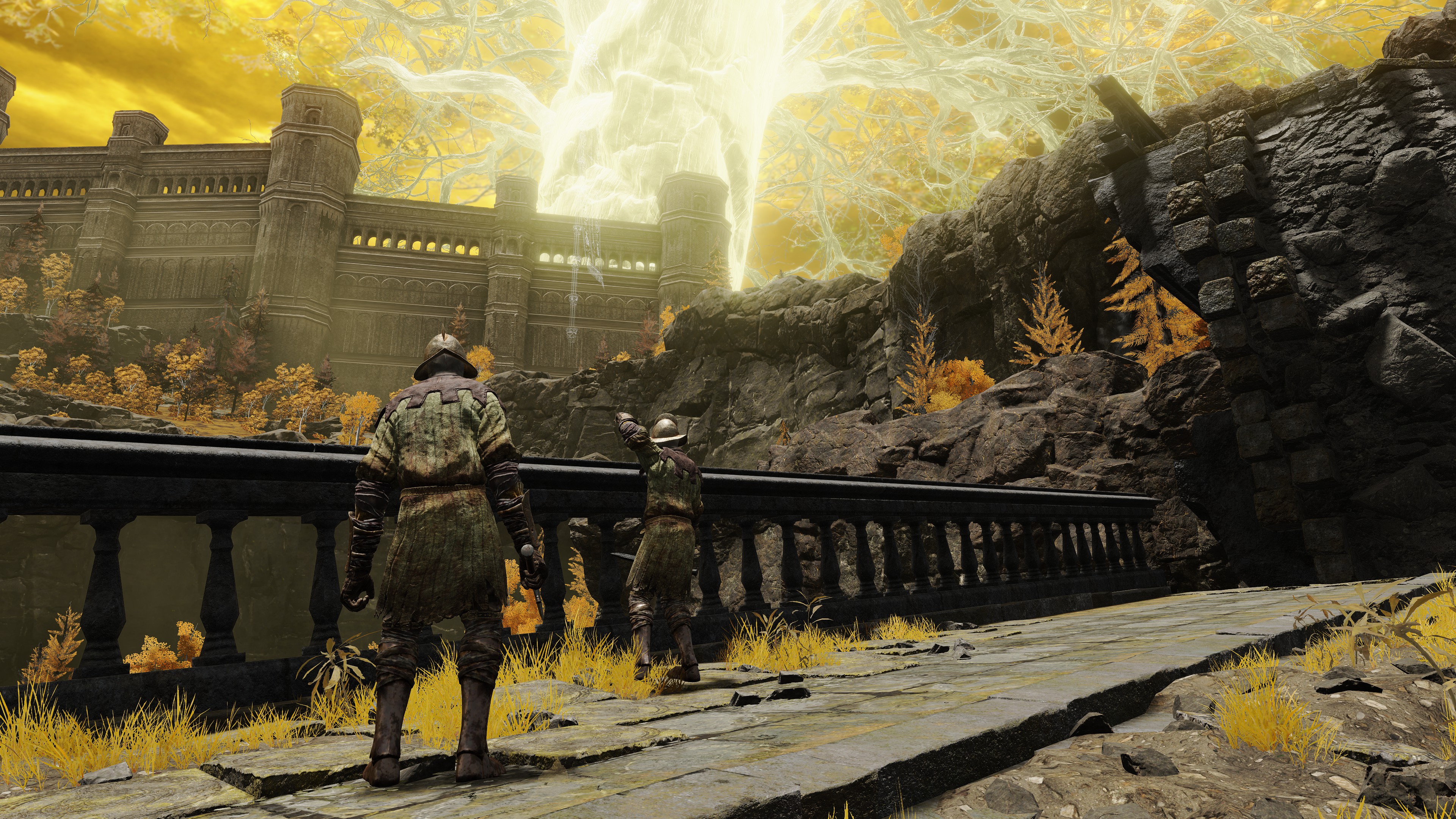
The Forest-Spanning Greatbridge has collapsed with sections half-buried in the gorge. This was more recent, as we find a coffin carriage among the rubble on the south side near the Minor Erdtree. Several Leyndell soldiers have been stranded atop or beneath this broken section, the latter ambushing passing wormfaces to survive. Apparently, one of the convoys observed north was crossing the bridge when it collapsed, trapping the scattered survivors with the wormfaces as the carriage they were escorting rolled down the crumbling infrastructure. A coffin full of corpses would be a buffet for slugs, who might stow away on the carriage only to later hop off for a cozier habitat beneath the bridge. It might not be that specific convoy, but the slugs were sure to infest the town as soldiers strolled past on the highway with their war dead, and we can infer from where. Not only do soldiers with a similar carriage sit in the Capital Outskirts, it is the one area with Deathroot accessible along the highway. We also find slugs in Leyndell’s moat, just as they find their way into the city’s sewer system.
Taken altogether, the likely scenario is that slugs in the Outskirts picked up Death’s maggots from the Sun Capital graveyard, similar to the crabs in the northern moat, before hitching a ride on the coffin carriages setting out onto the highway. The mollusks then got off at the Bower of Bounty, began to multiply, and soon started spreading the worms to unsuspecting Site W, like any other invasive parasite carrier. The only “tell” for outsiders, besides the replaced eye stalks, is that the mucus these carriers spit actually sticks, gumming up our movements briefly — nothing that would stand out to your average forest dweller, even assuming that this wasn’t just game mechanics. By the time the village noticed the plagued transforming in their midst, it was a full-fledged outbreak.
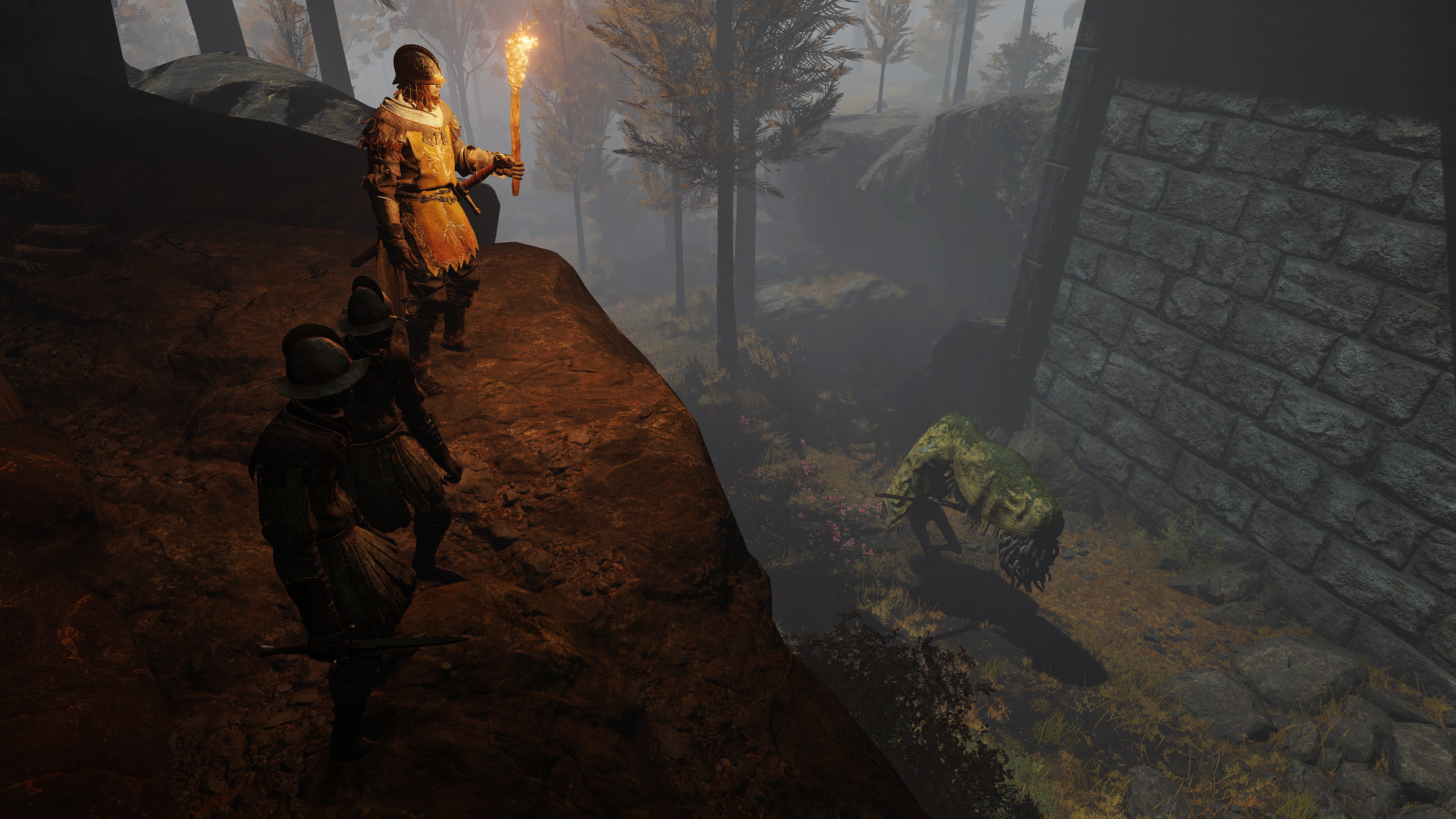
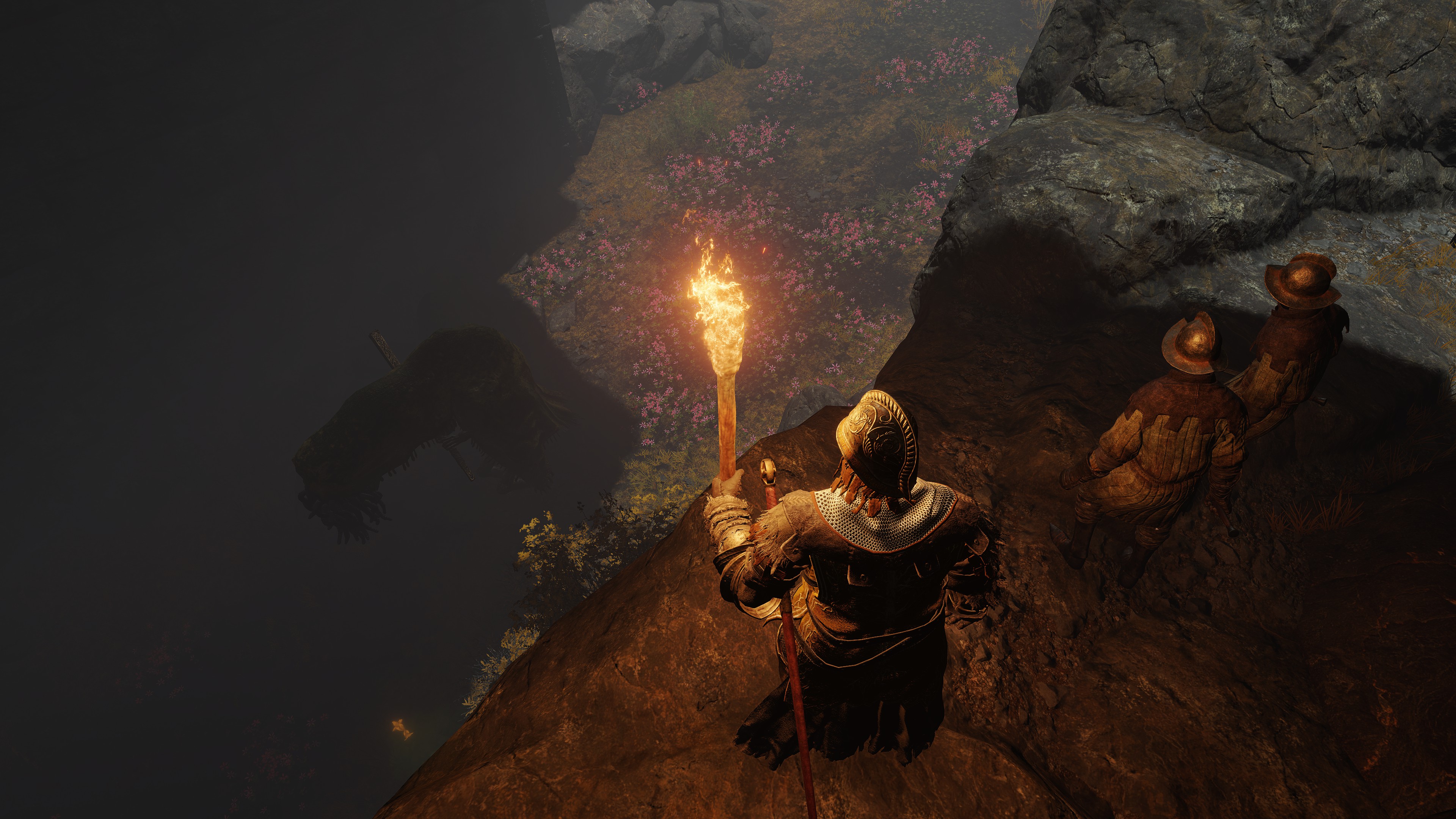
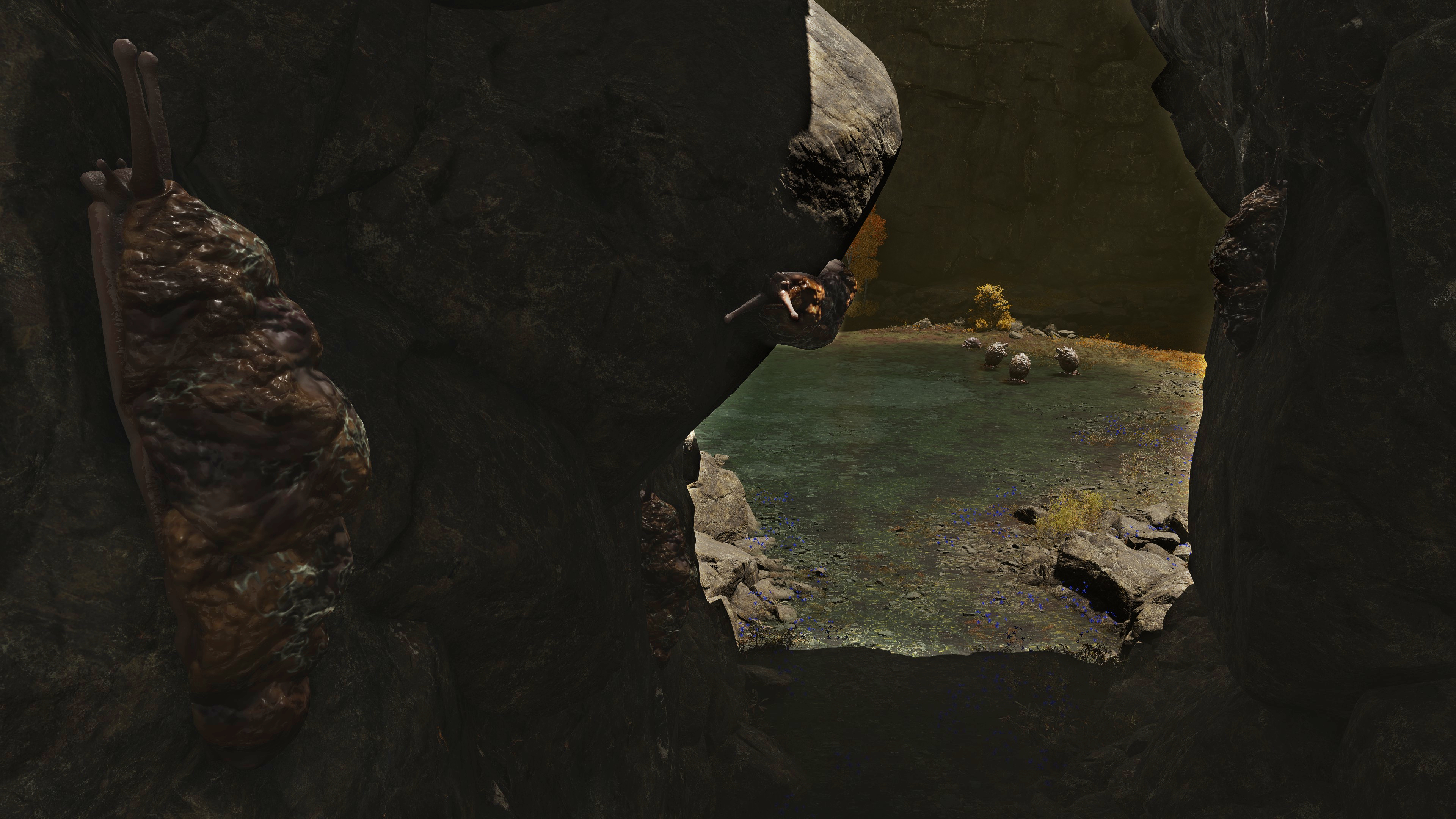
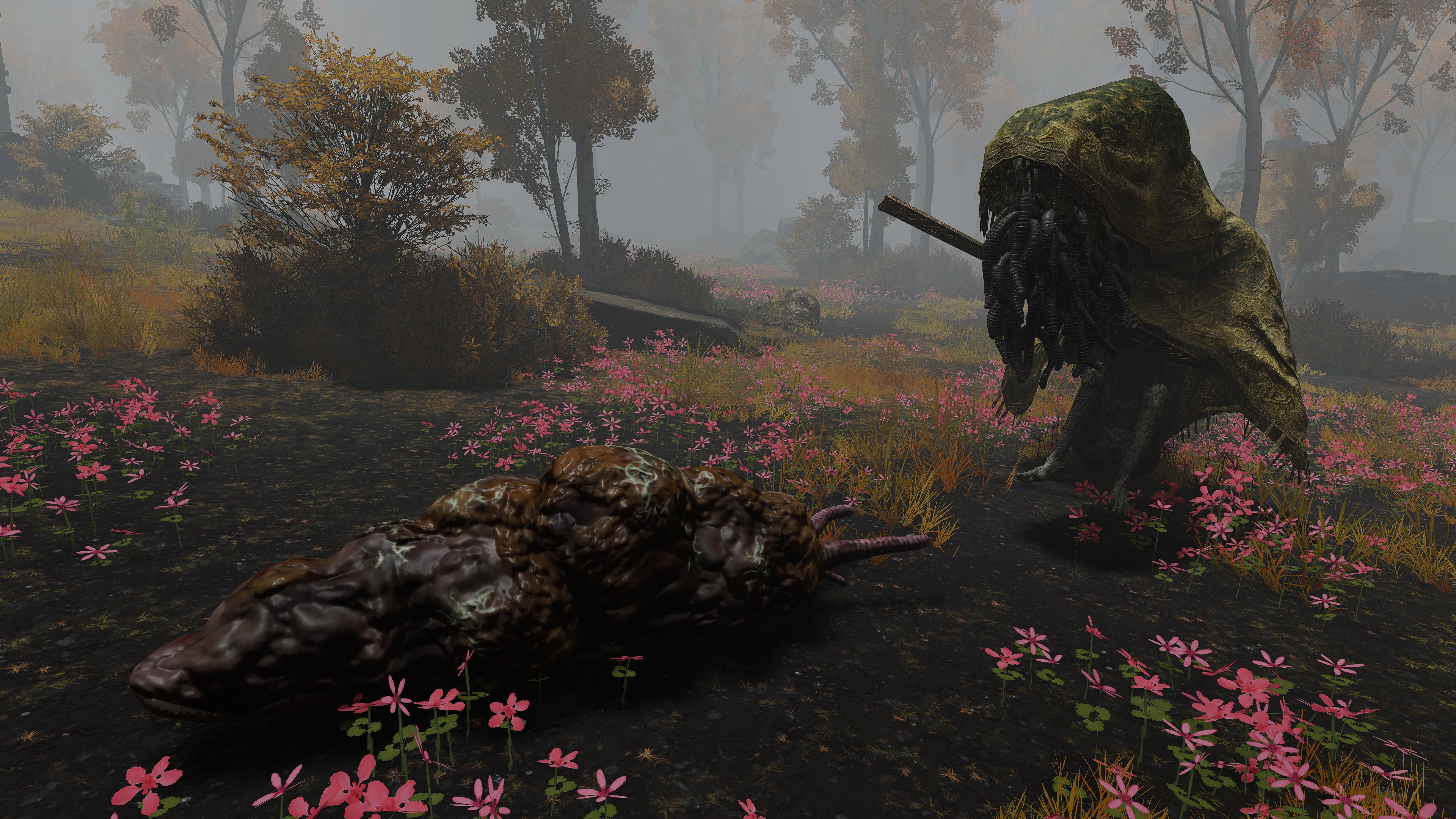
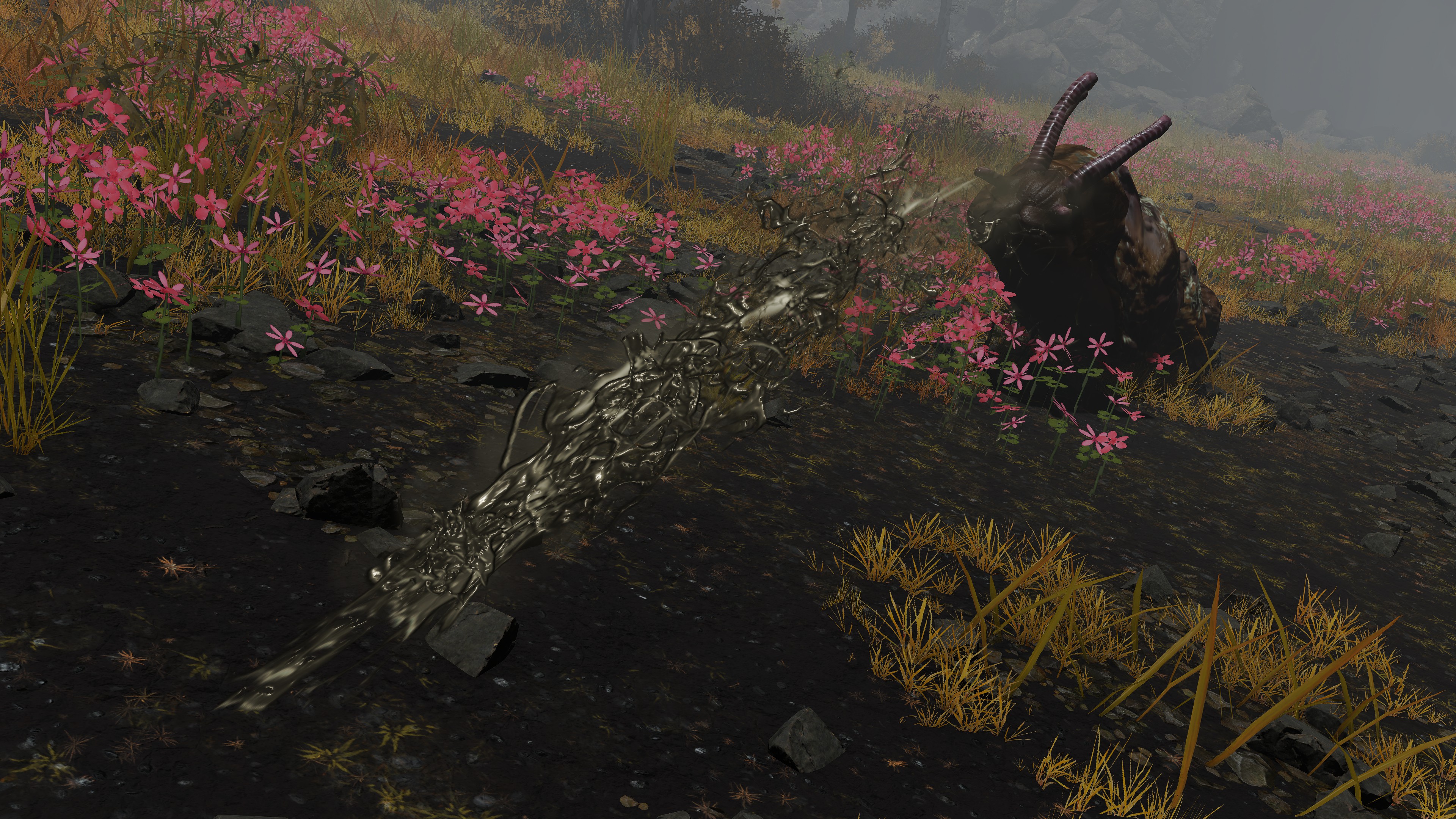
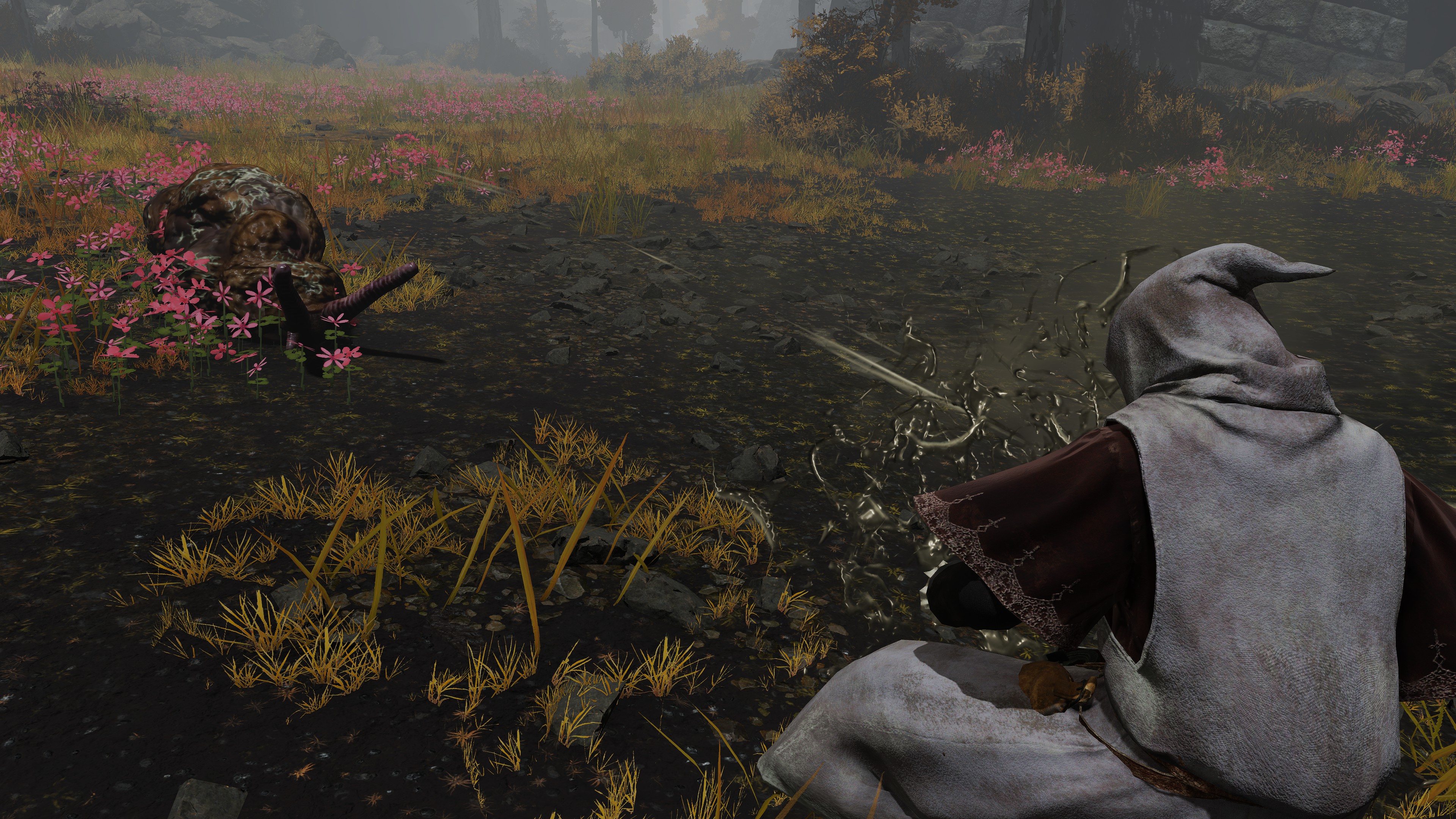
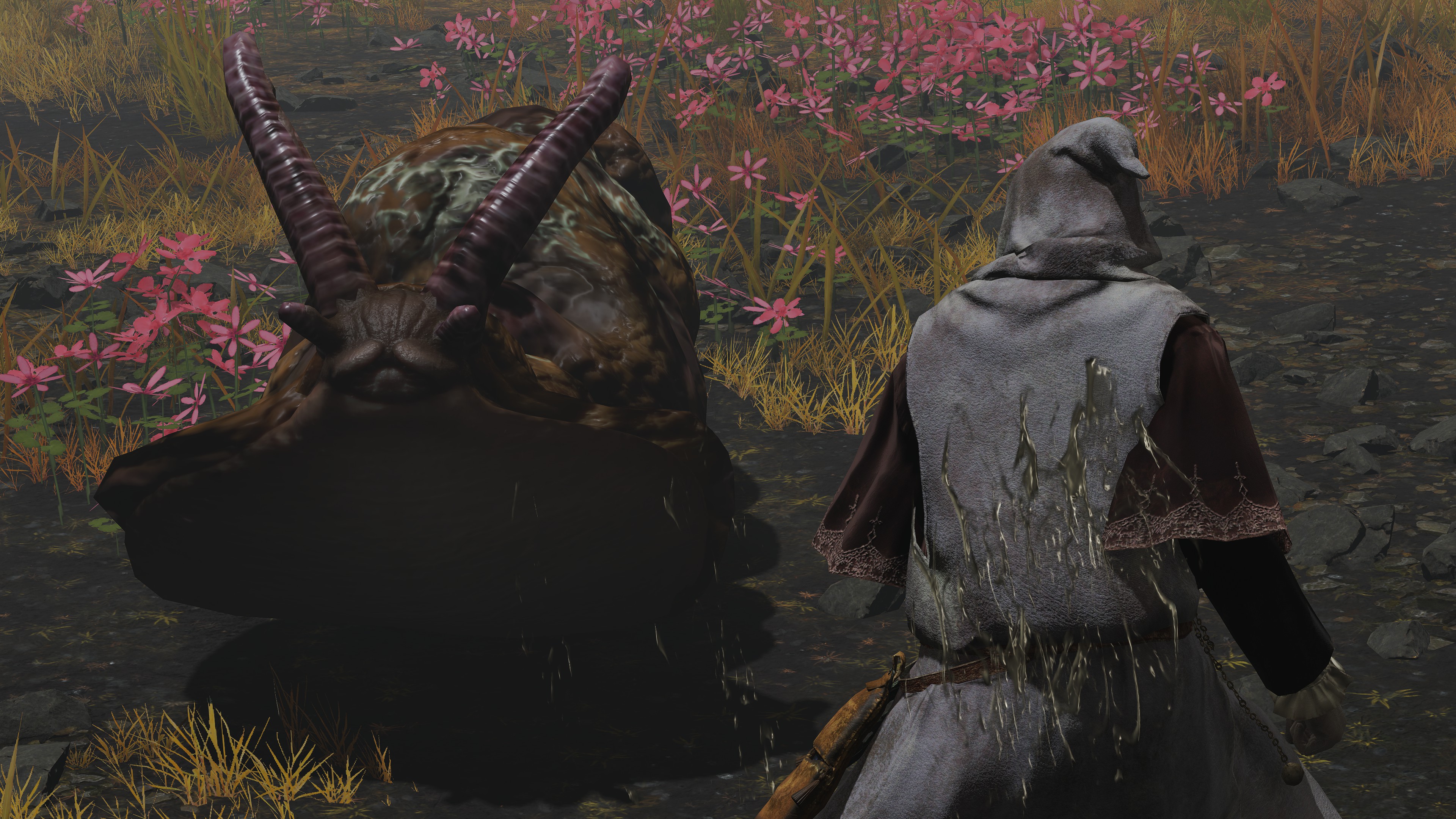
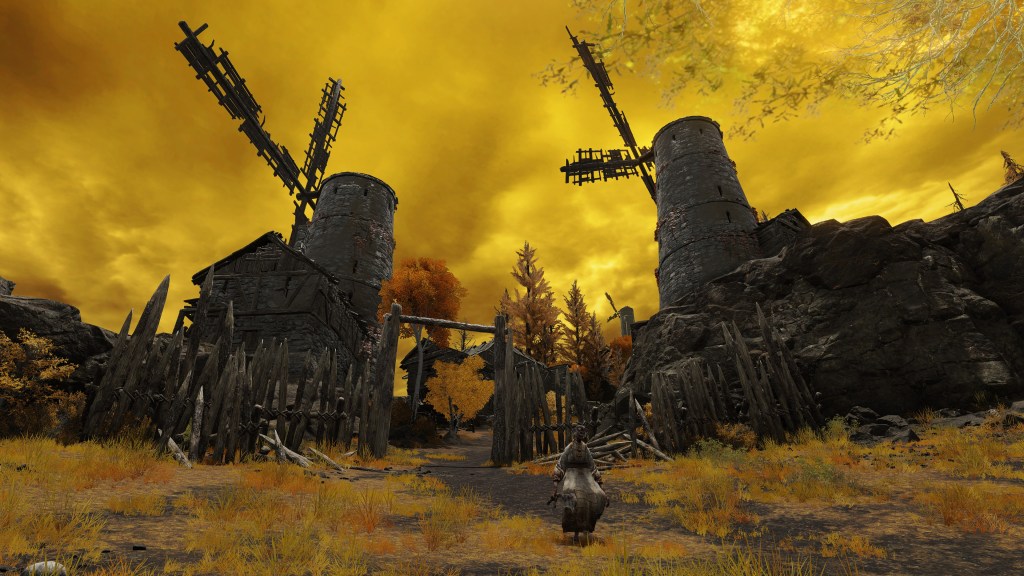
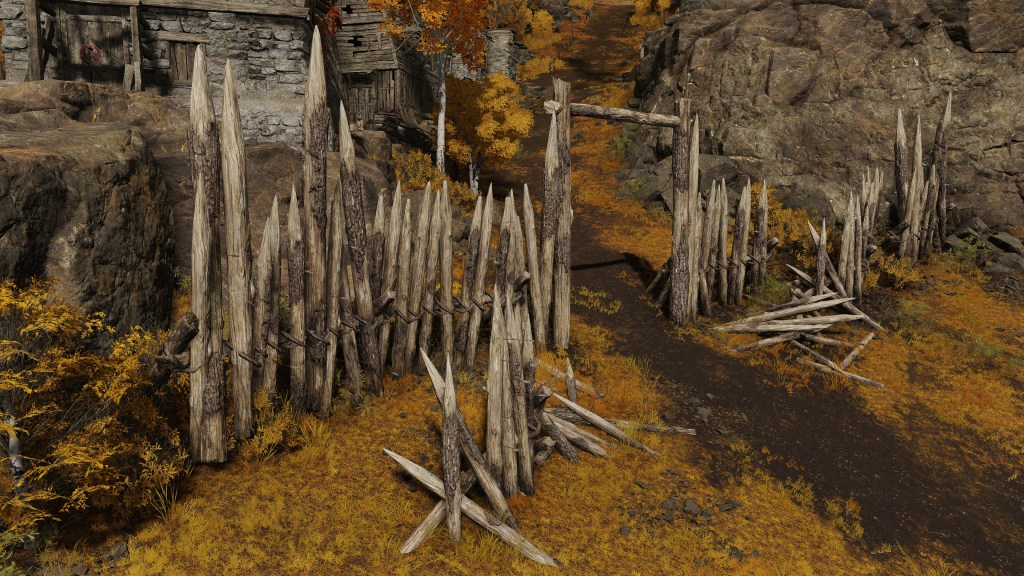
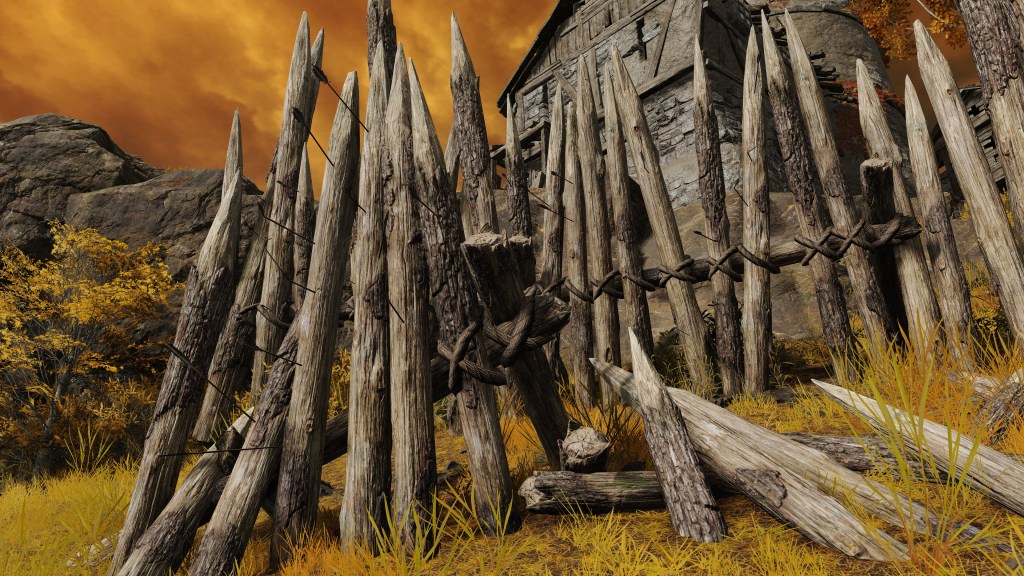
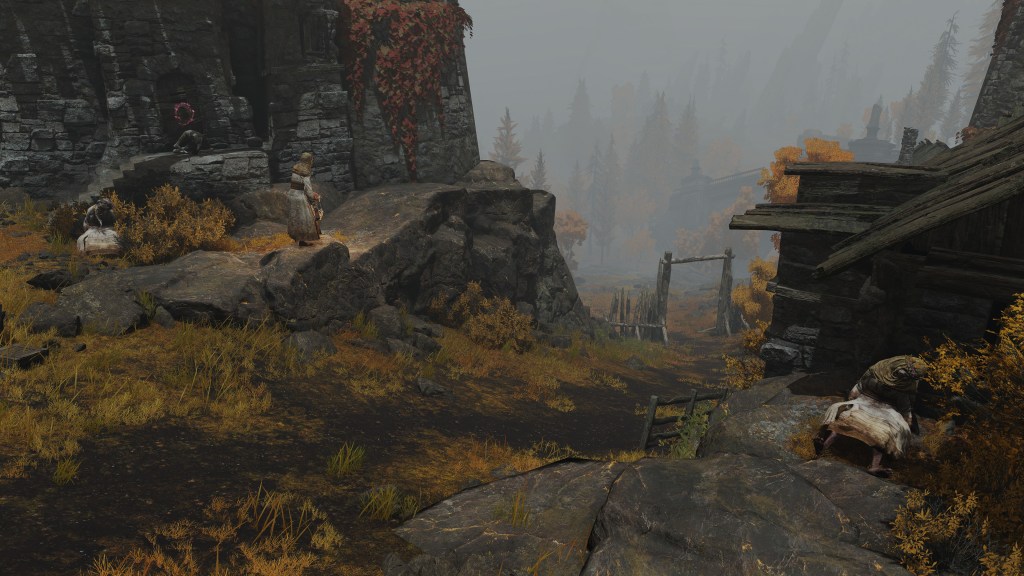
Some turned to their faith for a solution. The wormface boss beneath the Minor Erdtree rewards the Crimsonspill Crystal Tear and Speckled Hardtree. The former provides overflowing life increasing maximum HP, countering death, while the latter cures all ailments, blotched like their pox. These drops of amber were ineffective, but it affirms how the tree reacted to the residents praying for salvation from their affliction. Their gold-tinged excrement likewise showcases that overreliance on holiness has simply passed through without purging the parasites. Others tried to escape this wormy pestilence, but the abatis betrays how Dominula worked to contain their obvious disease in the gorge. If the women on guard duty let anyone healthy pass, it was to capture them for their festival. With nothing but sticks to arm themselves with, Site W had no hope of breaking the blockade. The rest refusing to resist have suffered in quarantine, their homes falling to ruin as they became fearsome monsters. The largest among them has even killed their Erdtree’s avatar, a scarab rolling up Golden Slam’s ashes next door.
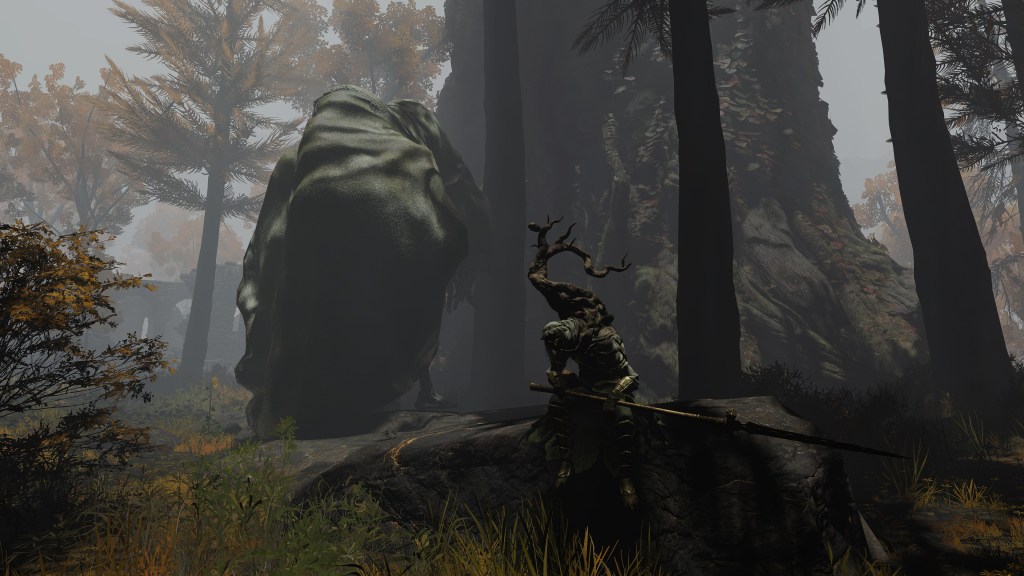
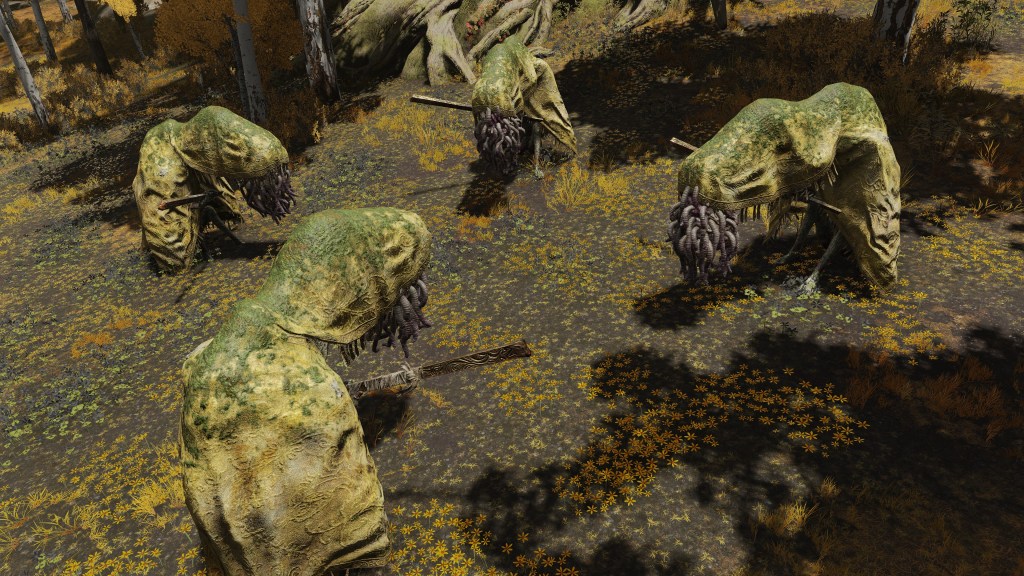
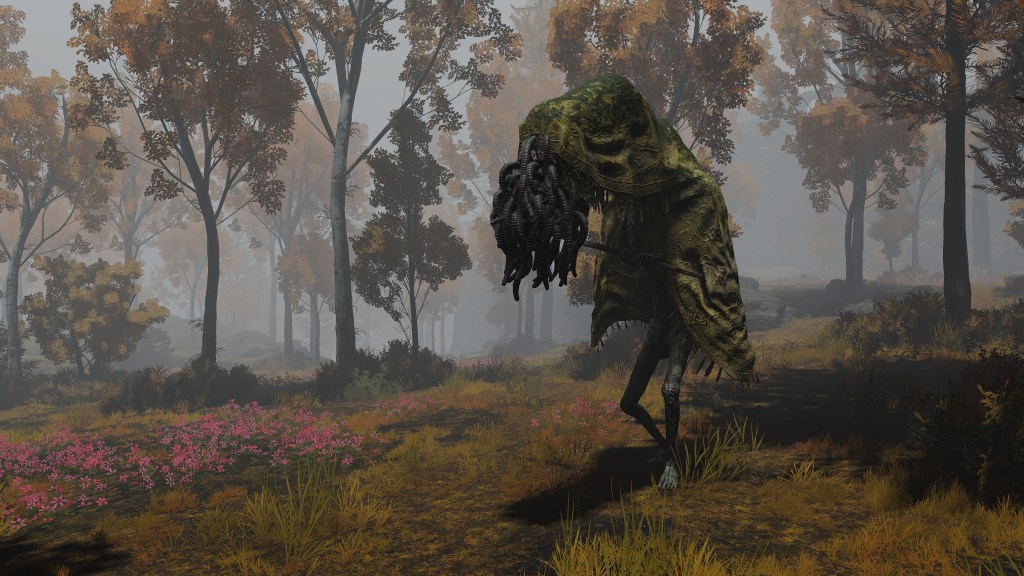
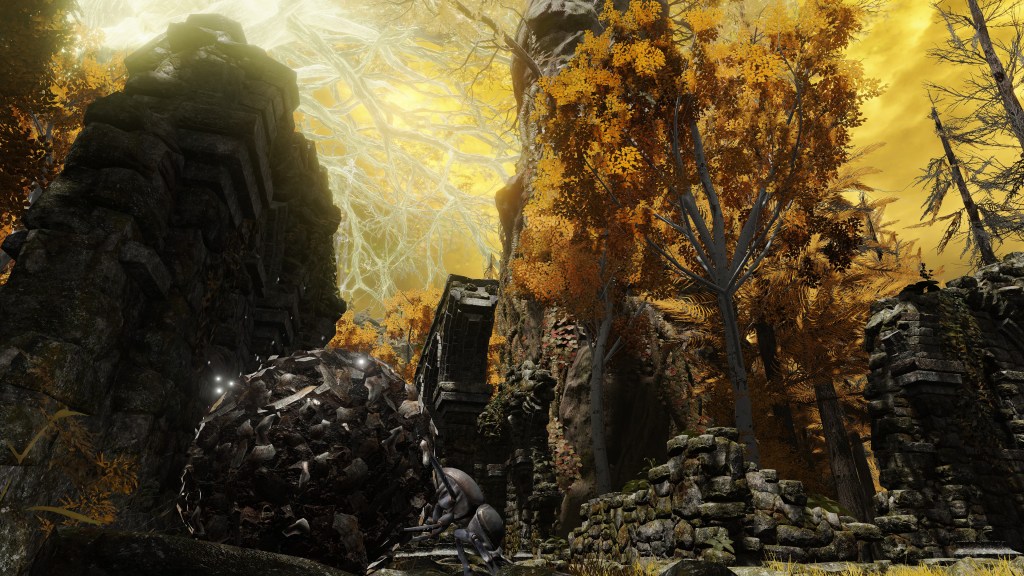
While the wormfaces aren’t yet widespread, it is easy to see how Deathroot can become another pandemic like the Frenzied Flame. Various factions retain large brutes among their soldiers, iconic from their pumpkin-shaped helmets. The description to one’s spirit ashes reveals them to be former gladiators, and the contrast is stark. Flabby muscles, dry skin, straggly hair, glacous boils, bloody nether regions — these professional fighters have slipped far from peak physical condition. Even underneath the helmet, pussy fluid leaks out whenever they bash their heads against the ground with a mushy squish. Never have they the arena’s grandstanders been so unhealthy, and they receive little more than rags and scrap to armor themselves with. More than likely, this is because they are, as of now, incapable of taking care of themselves or their equipment. Despite retaining immense physical ability, the pumpkin heads are considered broken, insinuating a problem with a mind rather than the body. In plainer terms, these duelists have become mental invalids.
Such a tragic state naturally begs questions about the cause. According to the ashes’ description, using the dark space of the helmet to calm their panicking. This assumedly works because that quality is shared with the catacombs they spent so long guarding as gravekeepers. In that case, the cause of their evident trauma must also originate in those underground graveyards, disturbing their former peace and quiet. When hearing bugs buzzing or seeing blood hemorrhaging, the duelists rage like madmen despite the helmets. Although this makes them useful as berserkers, it also makes them unpredictable; we can witness one rampaging through his ally encampment on Altus Plateau. Perhaps just a random trigger sets them off due to their psychological regression, but it suggests that it was bugs in the catacombs that bled and ultimately broke them. But what bugs could be so terrifying as to drive hardened warriors previously beaten into submission mad down there? Death’s spawn.
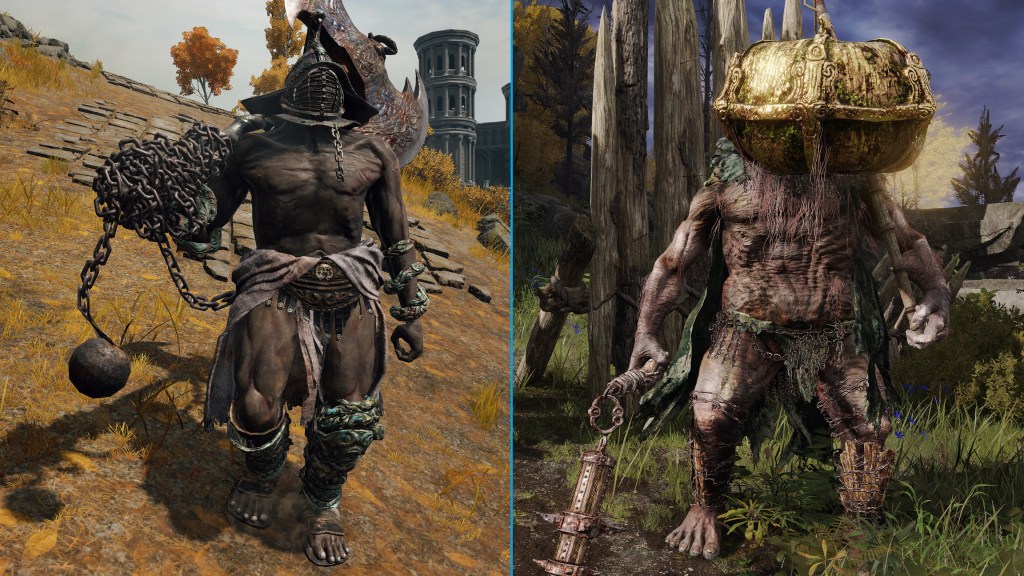
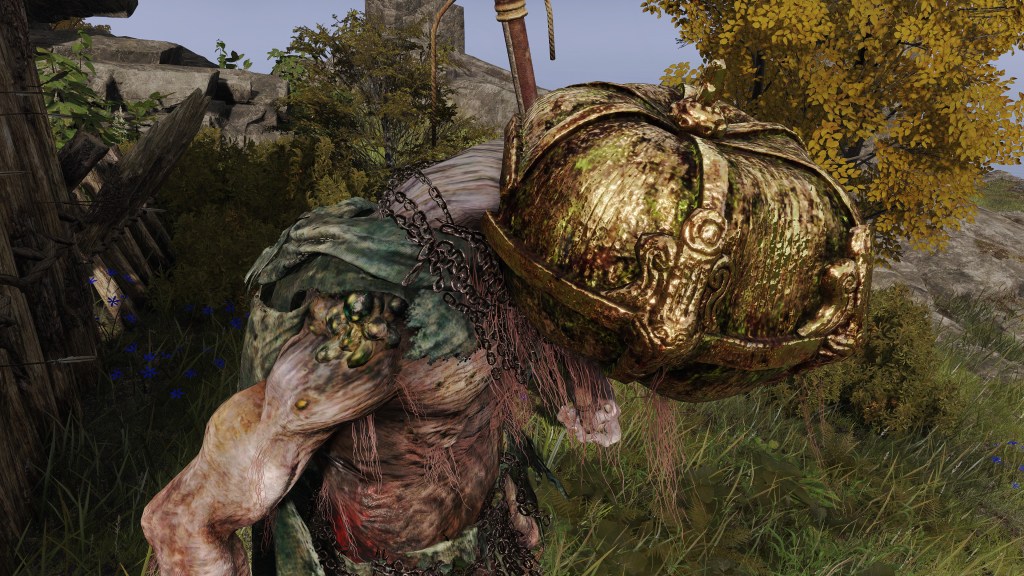
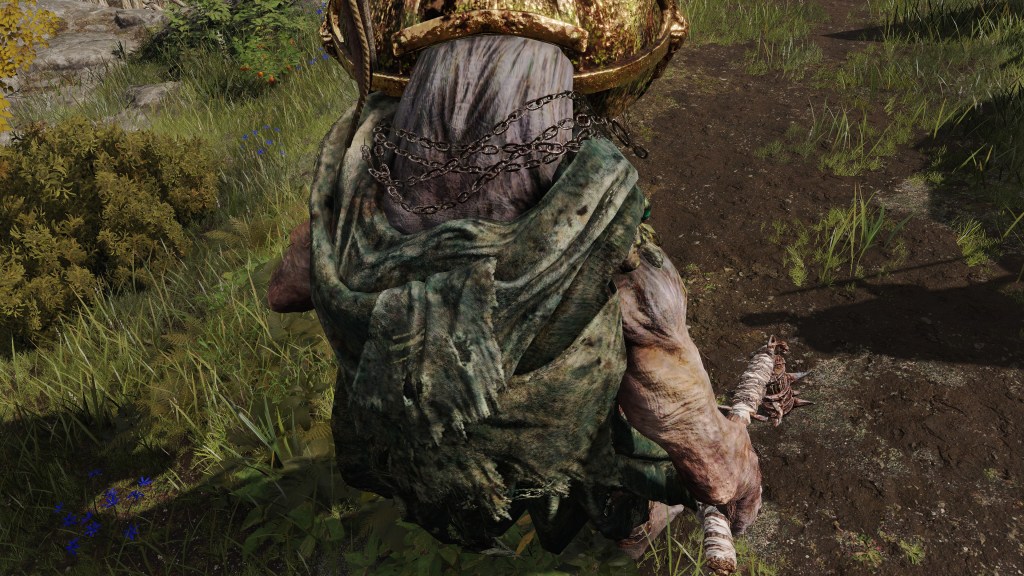
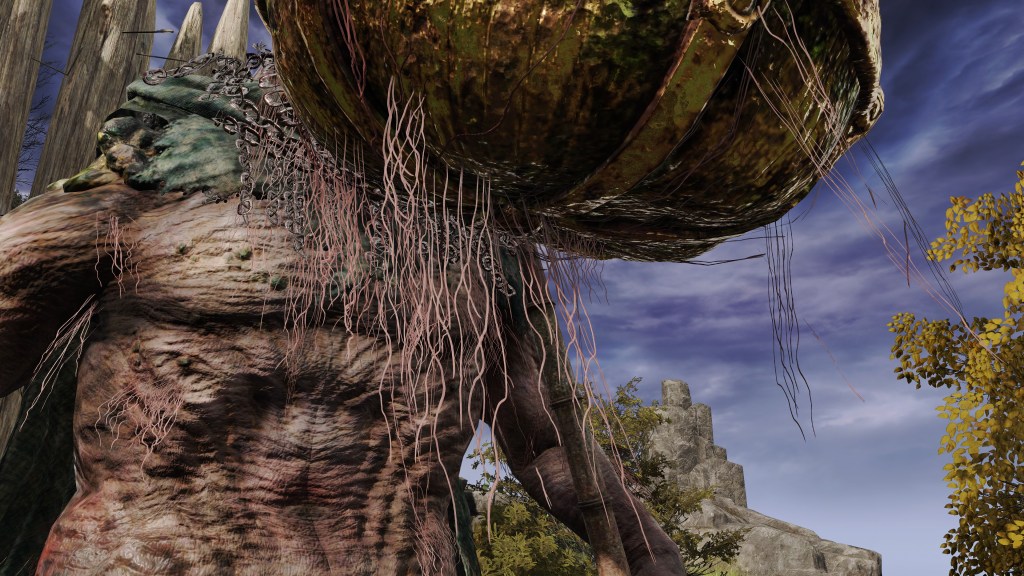
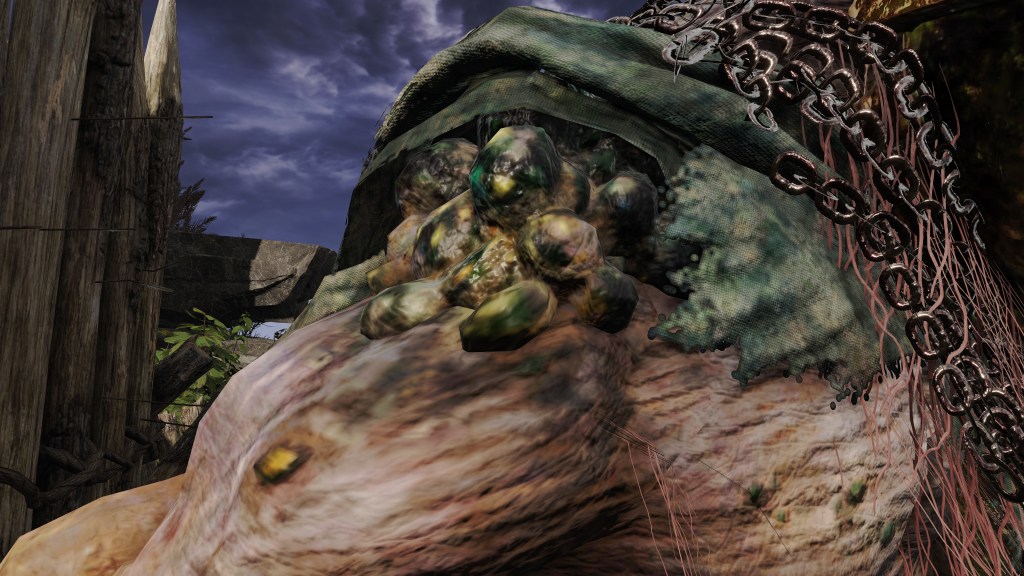
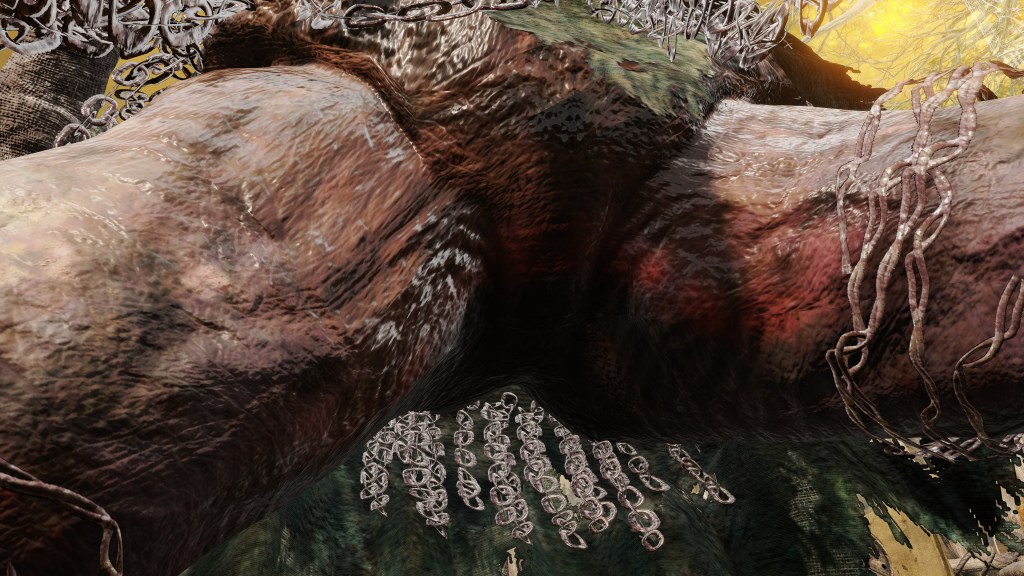
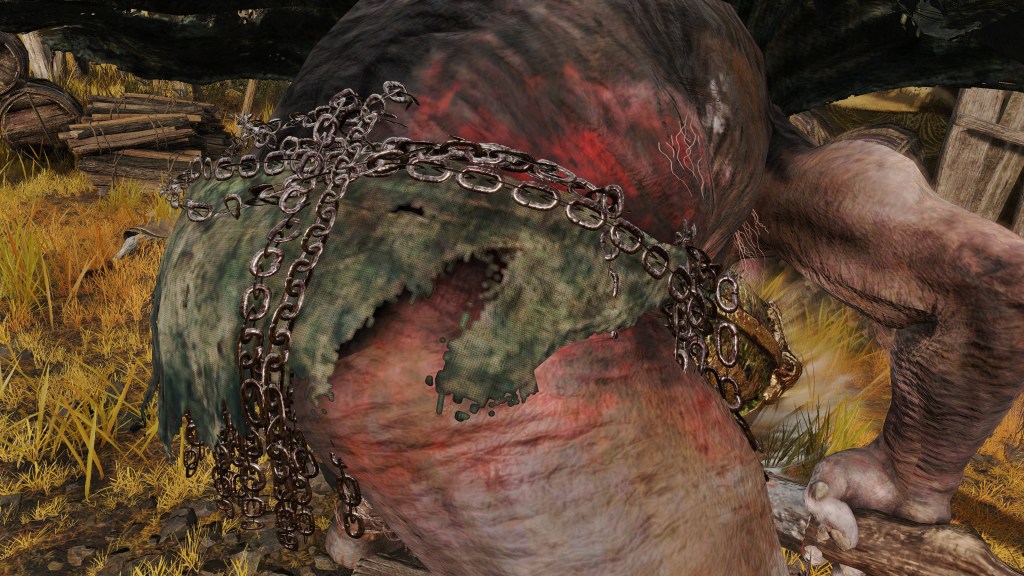
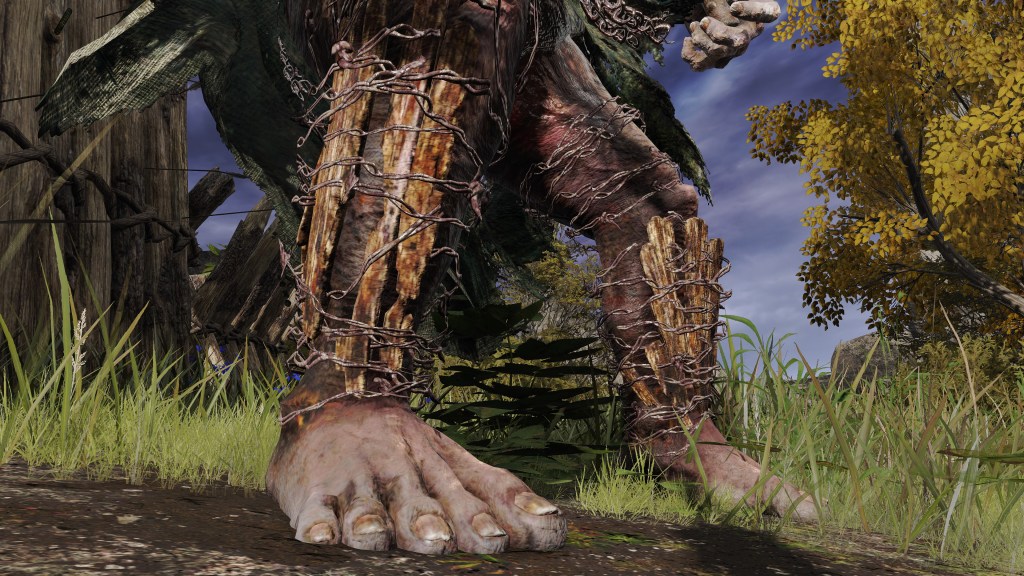
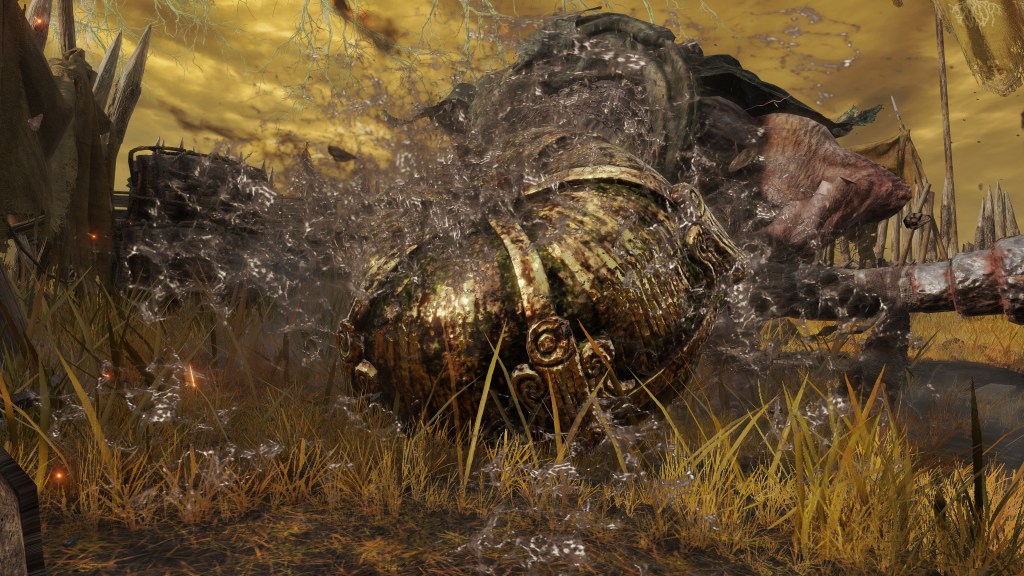
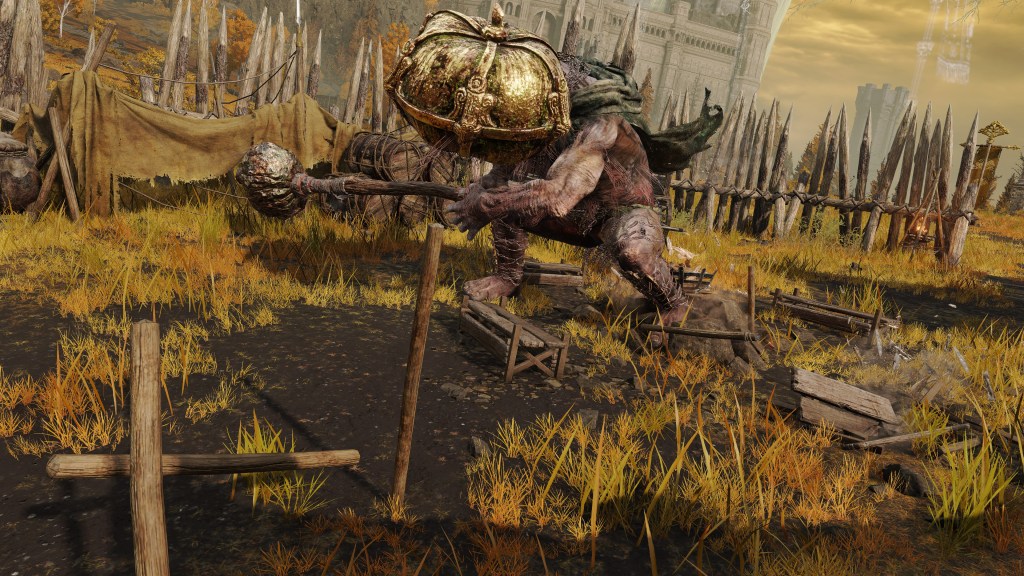
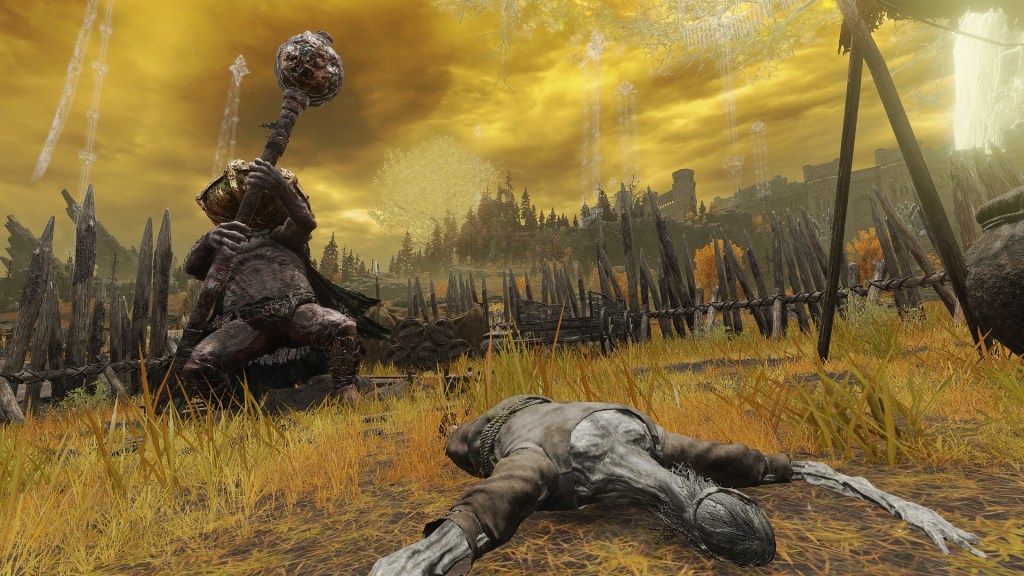
Ashen remains inhabited by spirits. Summons Pumpkin Mad Soldier spirit.
Spirit of a mad soldier strong in large build and power. The mad soldier, who completely quells his panic with the darkness of the helmet but rages as if gone mad with bleeding and bug buzzing, is the mere shadow of a broken gladiator’s former self.
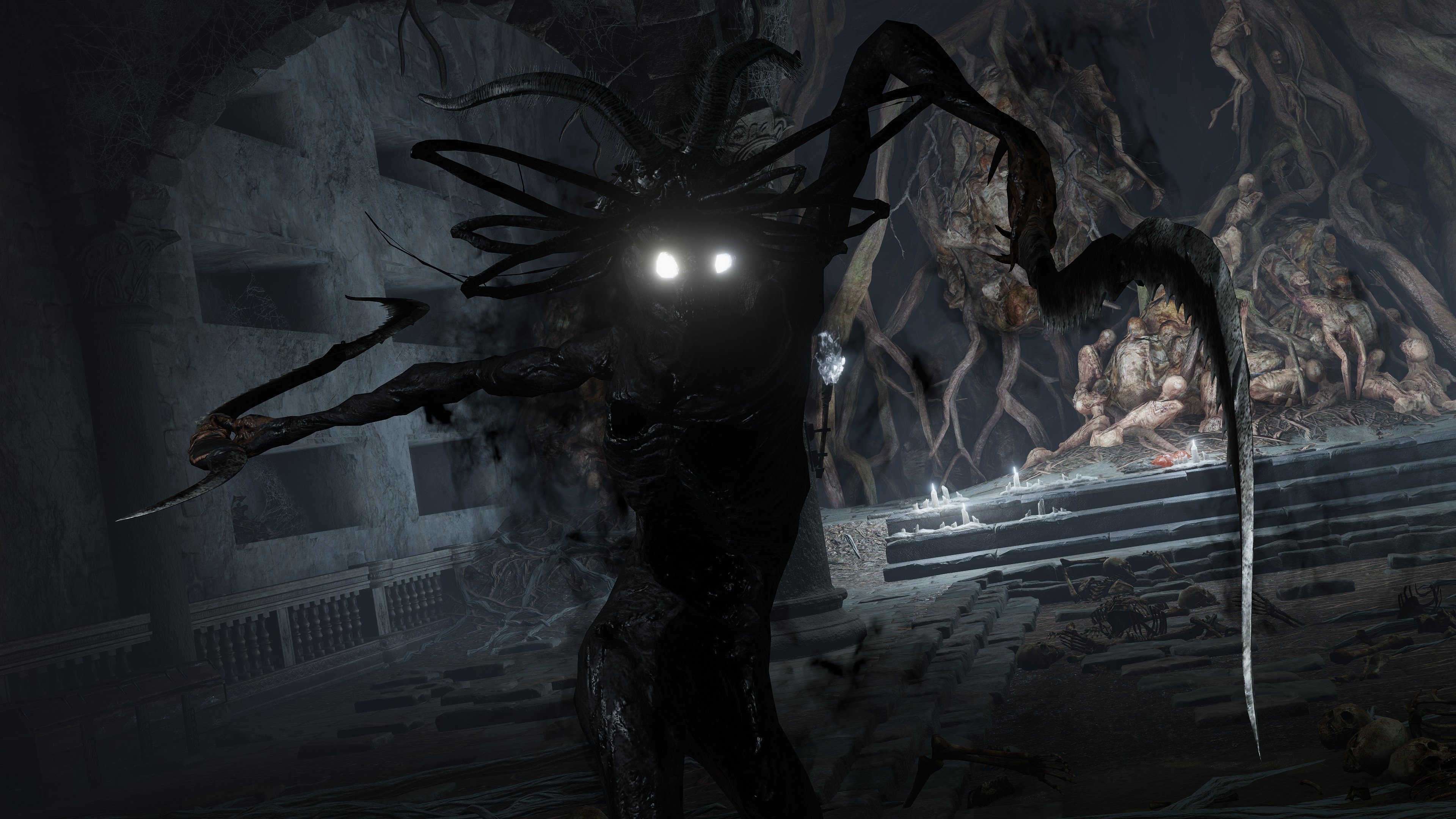
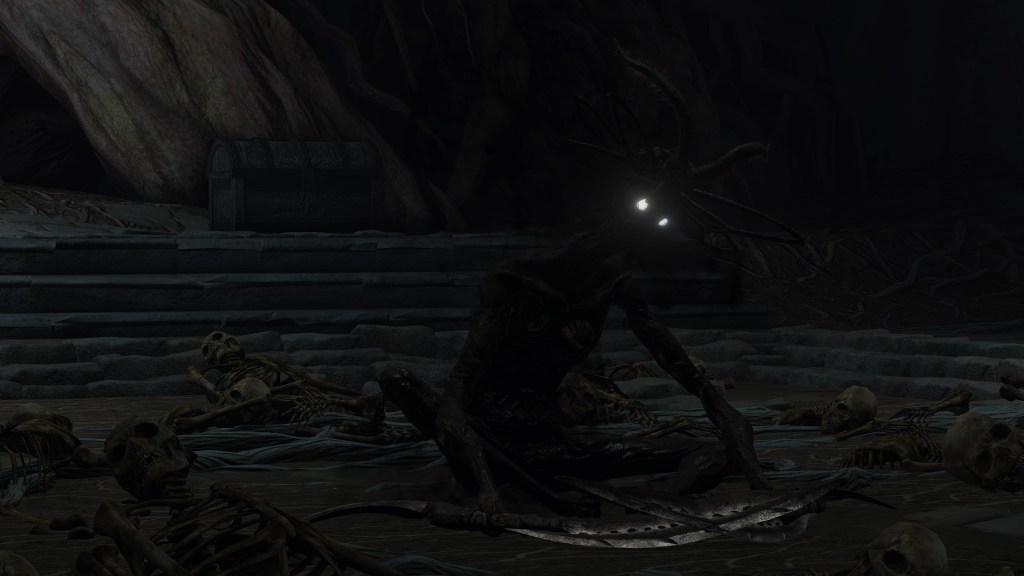
The specifics lie with the cemetery shade, the gravekeeper serving since before the duelist entered the catacombs under King Radagon. True to their name, these shadows of the graveyard appear pitch-black as their bodies radiate a wispy smoke, glowing white eyes reinforcing the eeriness — as does the insect sitting atop their craniums. A cross between a spider crab and Baphomet moth, the bug helps the shade in battle, immobilizing targets with the mass of green webbing it whips up. Combined with the shade’s ability to move them both around in the form of black smoke, the creature can easily grab caught prey to devour. However, this apparent symbiosis may be more parasitic in nature. The association with shadow plus consistent appearance in areas with living skeletons implies that the gravekeeper gained its power from the Rune of Death. With two clean holes through the torso and its head twisting 180 degrees while performing spinning slashes, it certainly seems more ghoulish than anything, and what does that say about the bug benefiting from this twisted state?
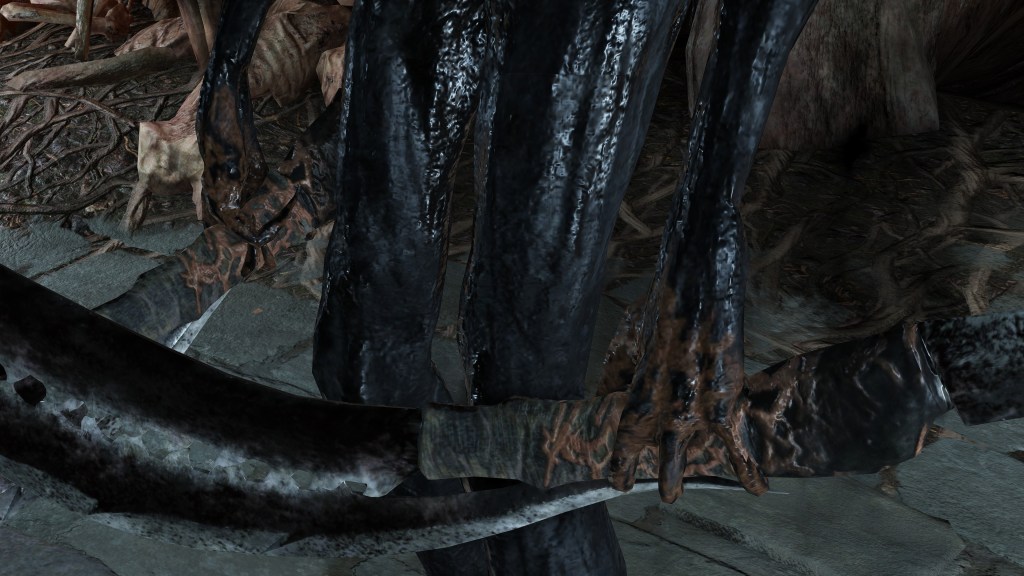
Put simply, the gravekeeper has most likely been transformed by another spawn of Godwyn. Strands of black ooze hang from the insects legs and, seldom, the shade, who has said ooze dripping from his mouth and recently exposed guts. Guzzling down the raw shadow of the Golden Order would unsurprisingly transform someone into a shadow, not quite dead or alive. Add the way the bug comes to sit on the shade’s head, and it may be controlling the keeper as its mindless drone through a shared connection to Death. The Mantis Blades they dual wield add to this impression. The daggers gets their name from their extendable blade folding like a praying mantis arm. The mantis is commonly associated with both courage and merciless death in Japanese culture, especially when it involves challenging a much stronger opponent. This perfectly comports with its wielder facing the Prince of Death’s influence head-on as the gravekeeper.
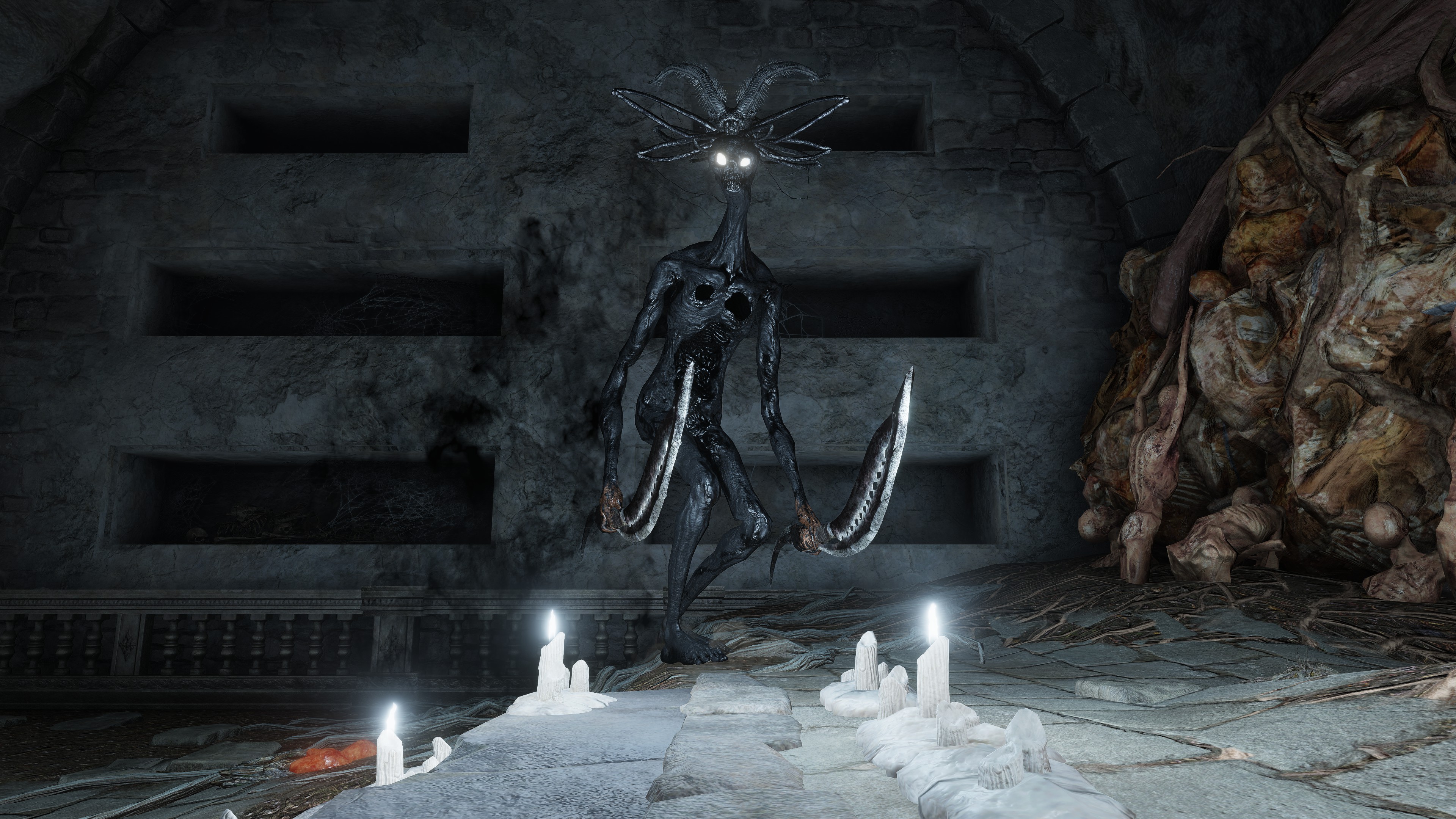
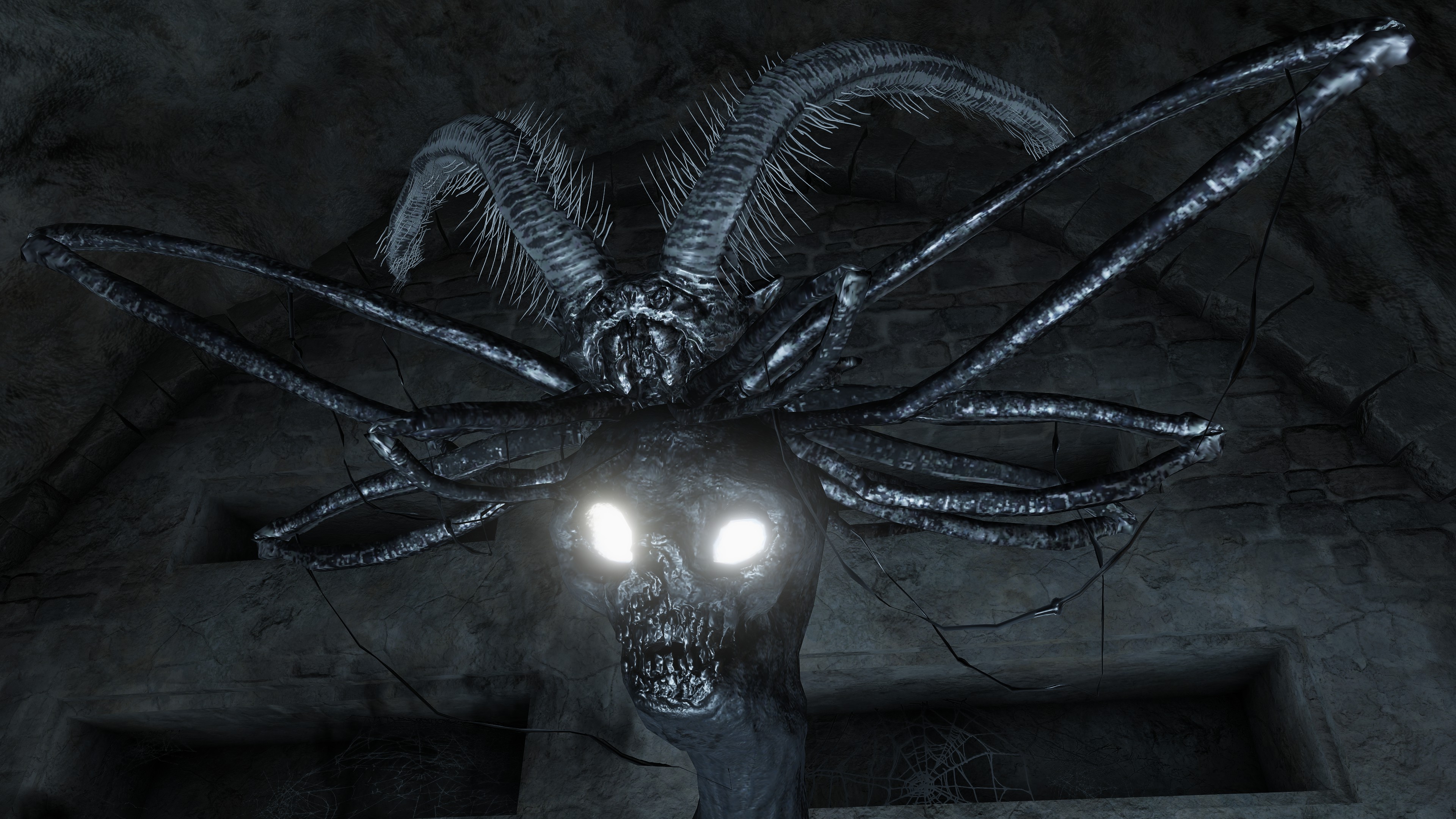
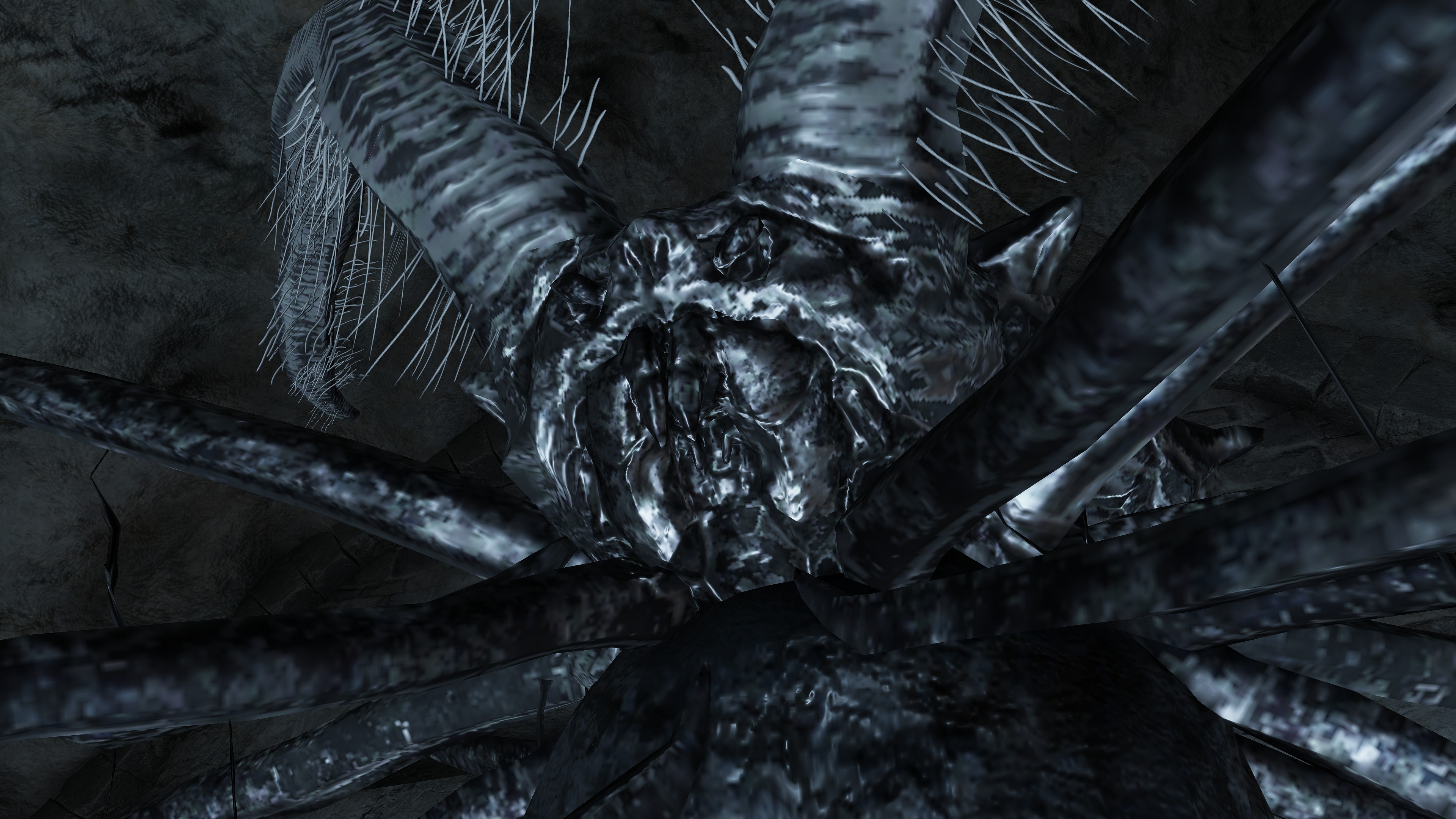
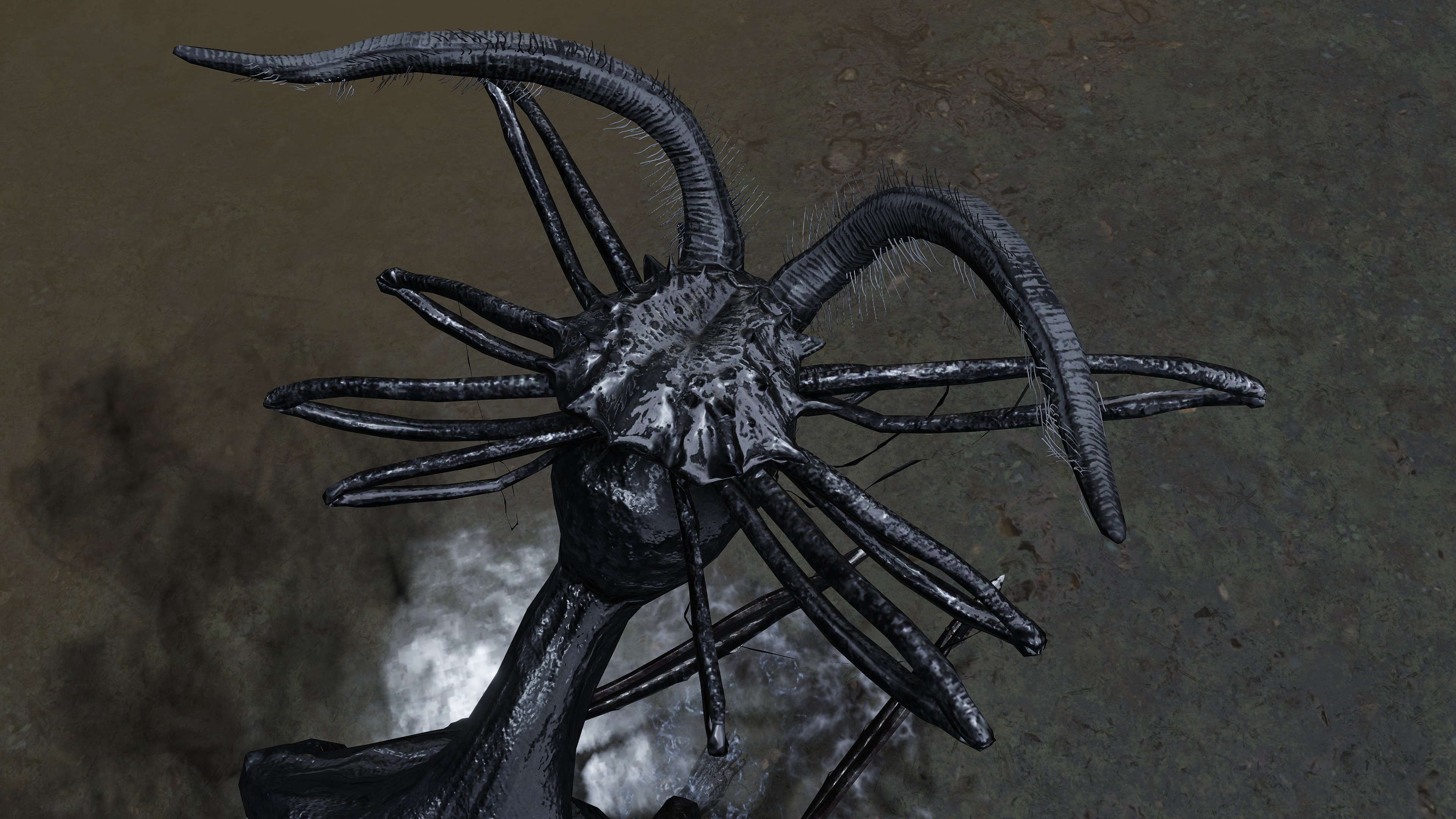
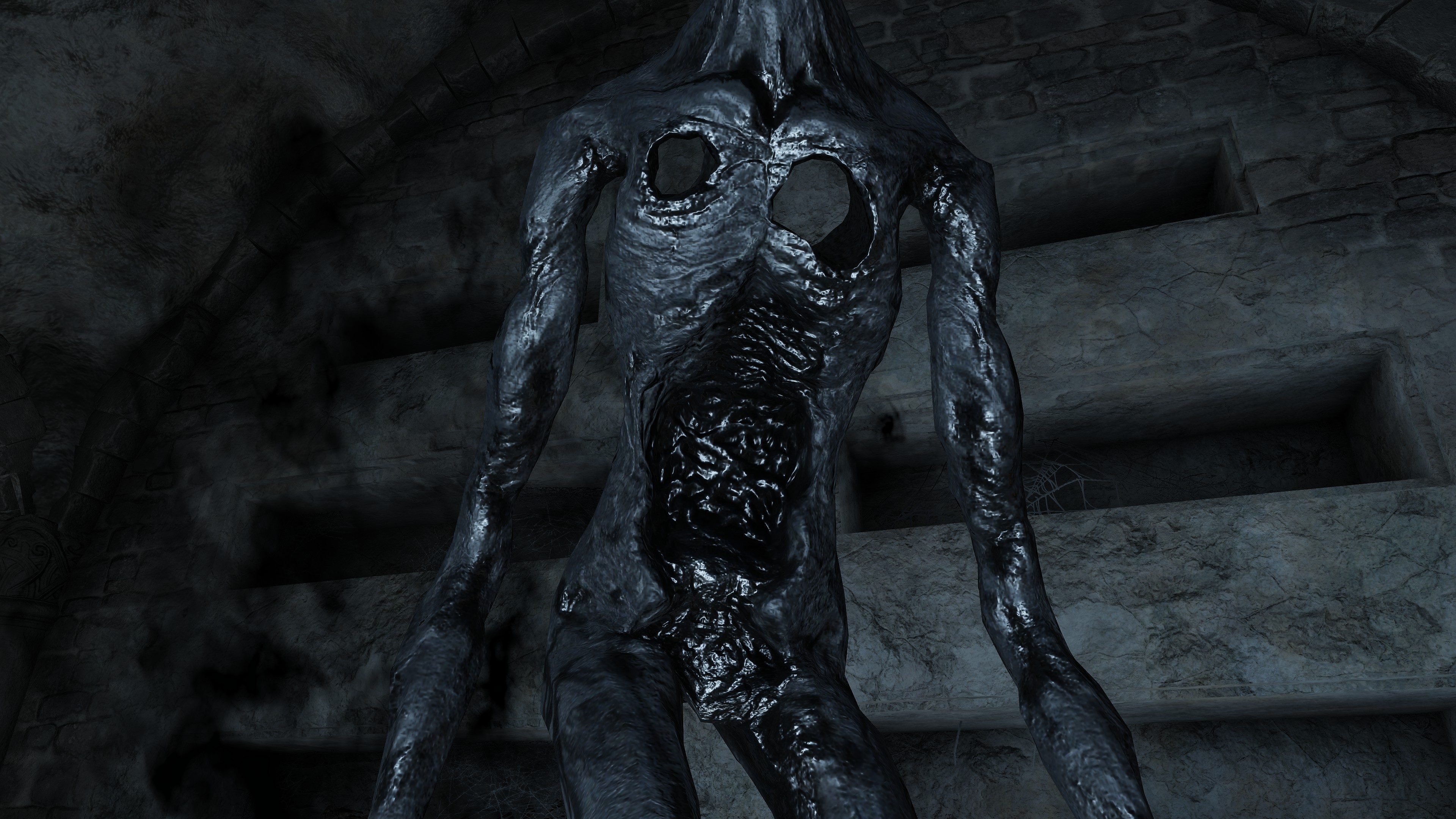
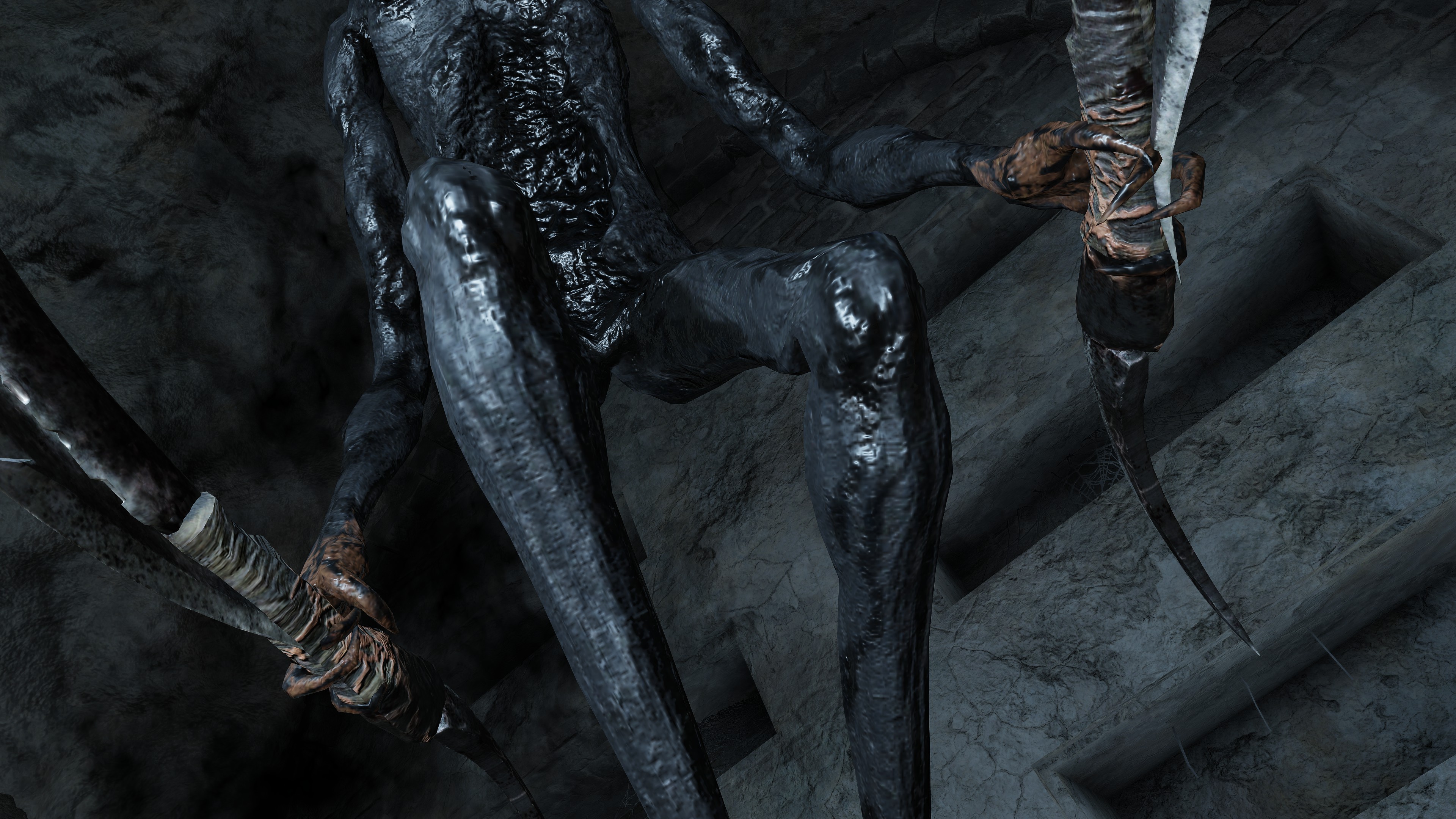
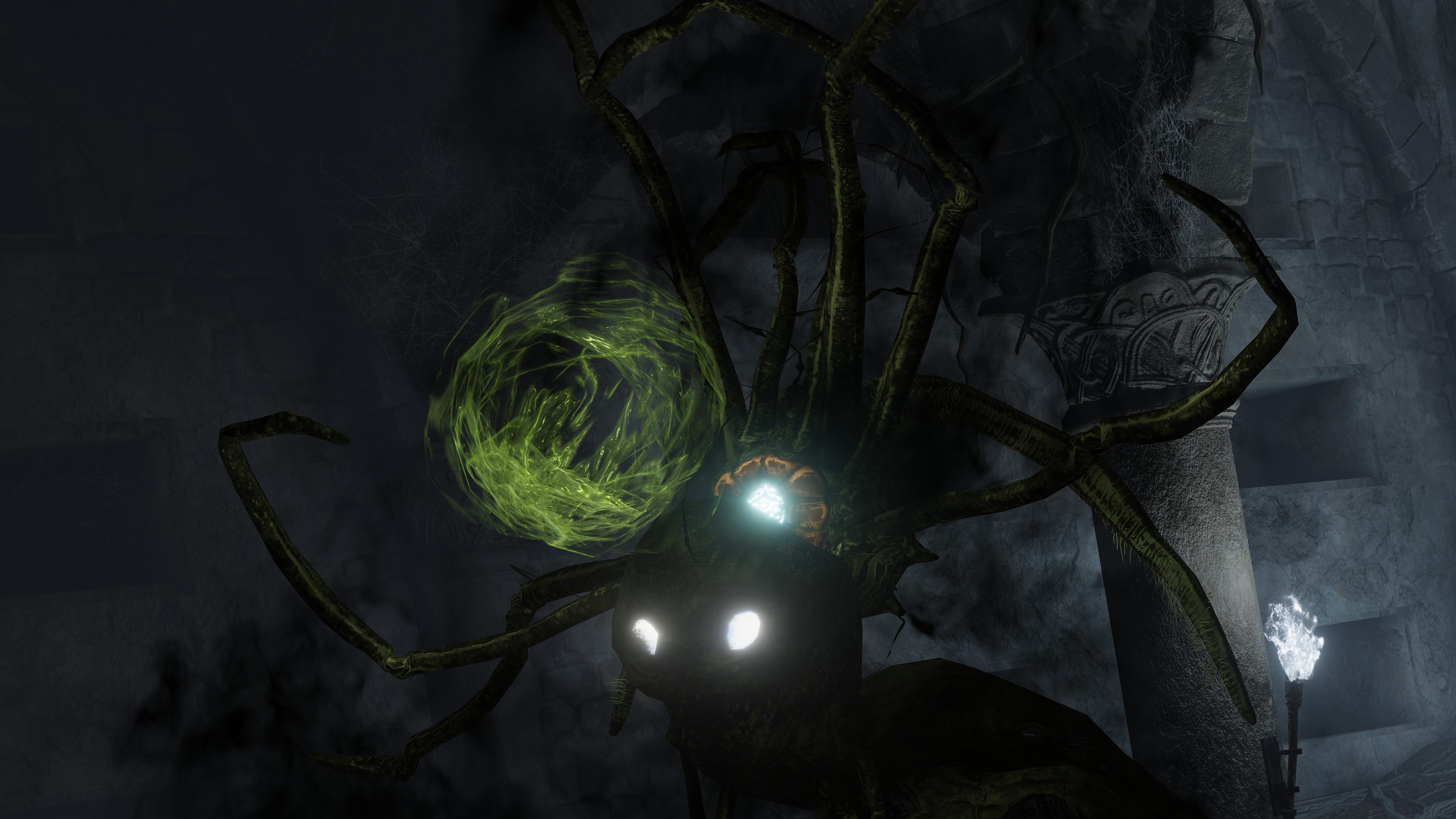
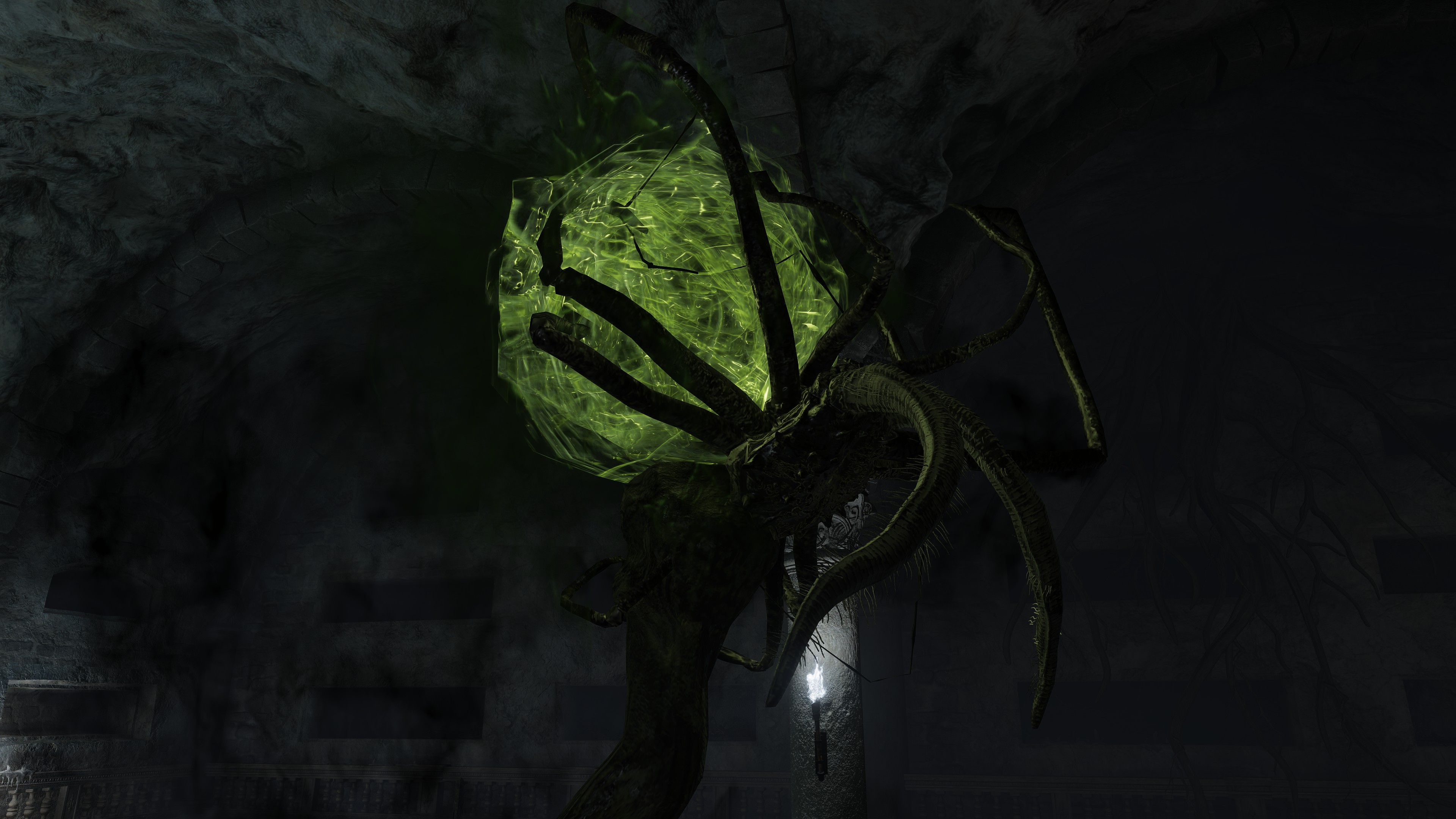
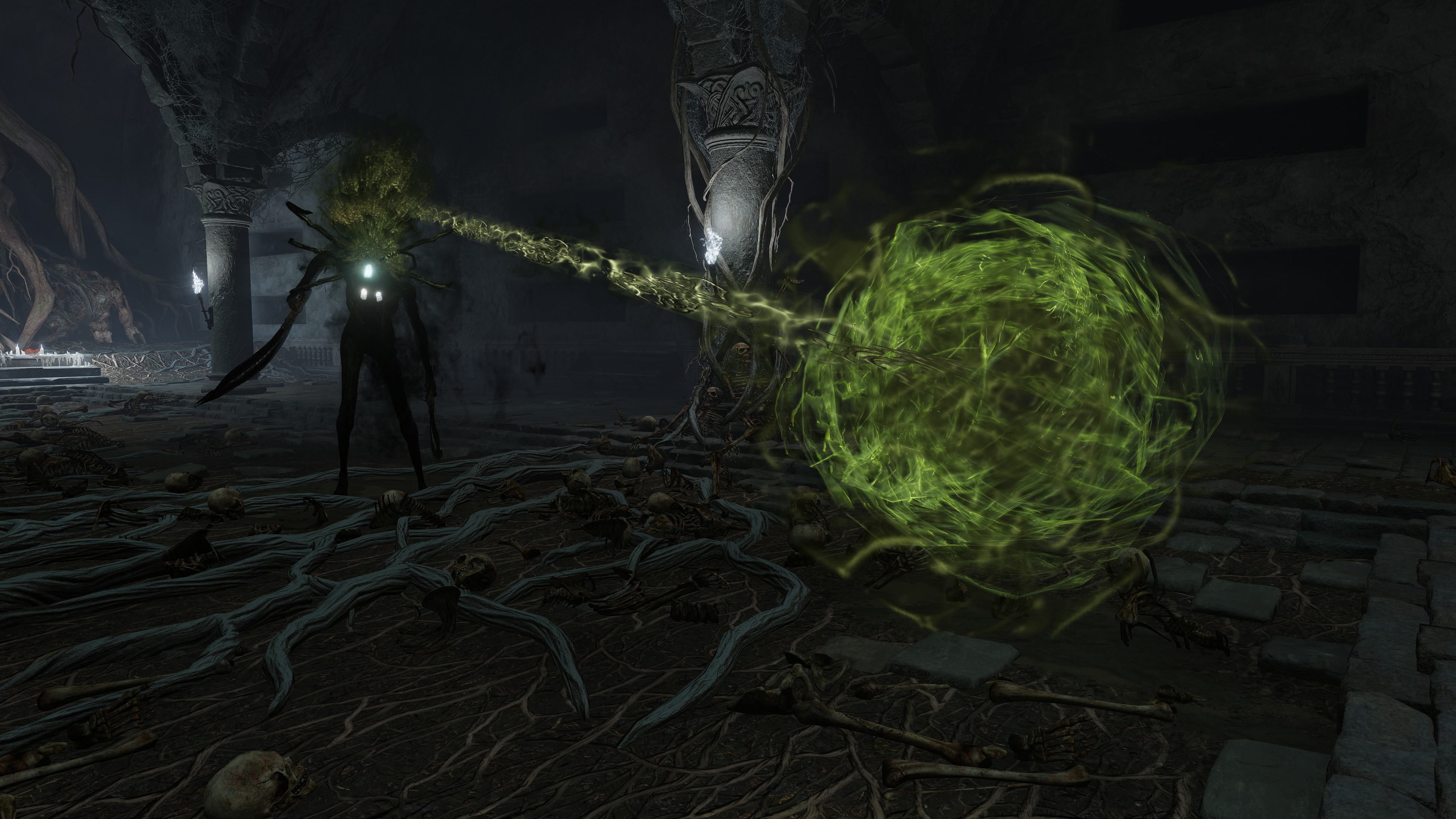
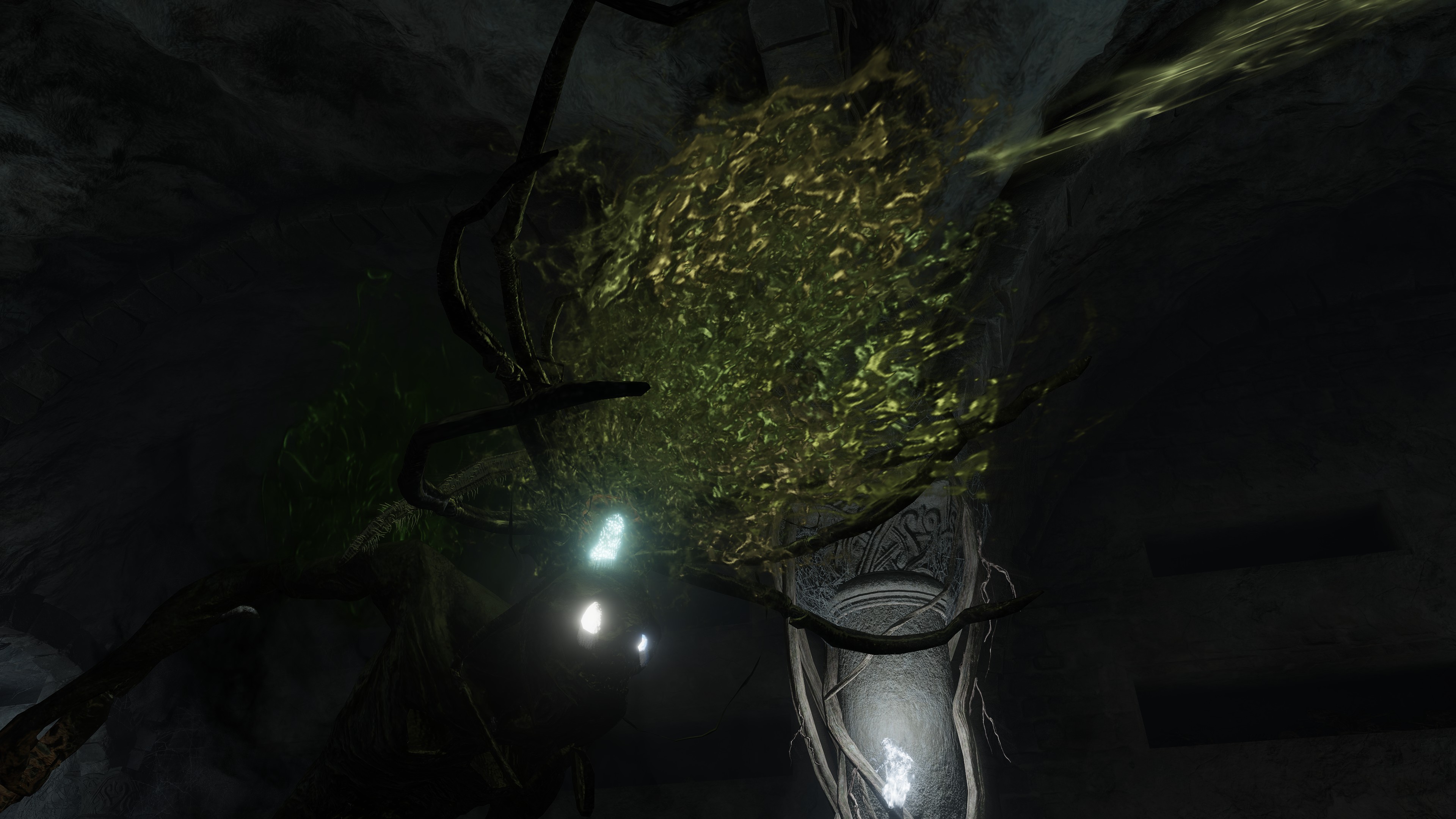
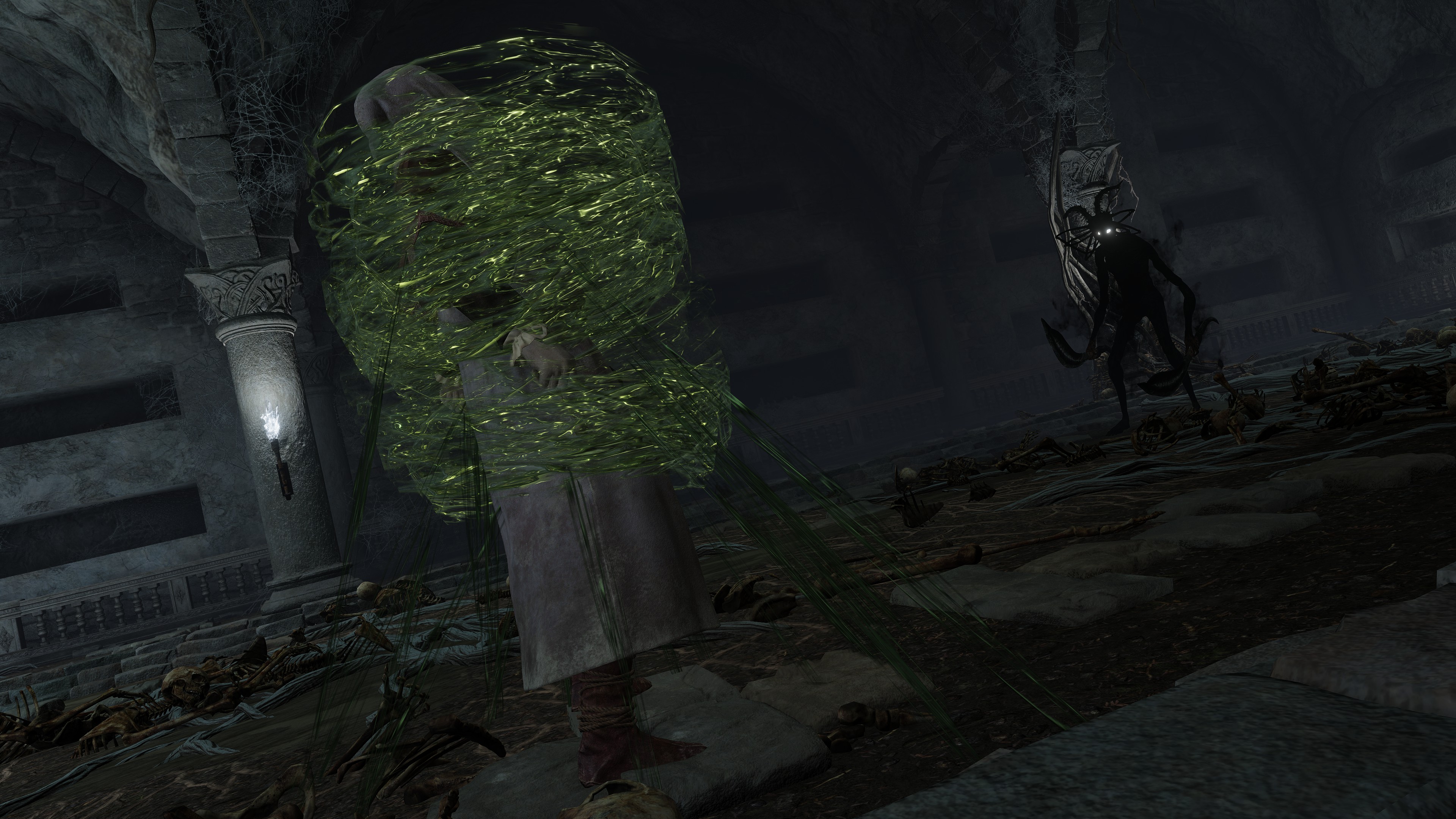
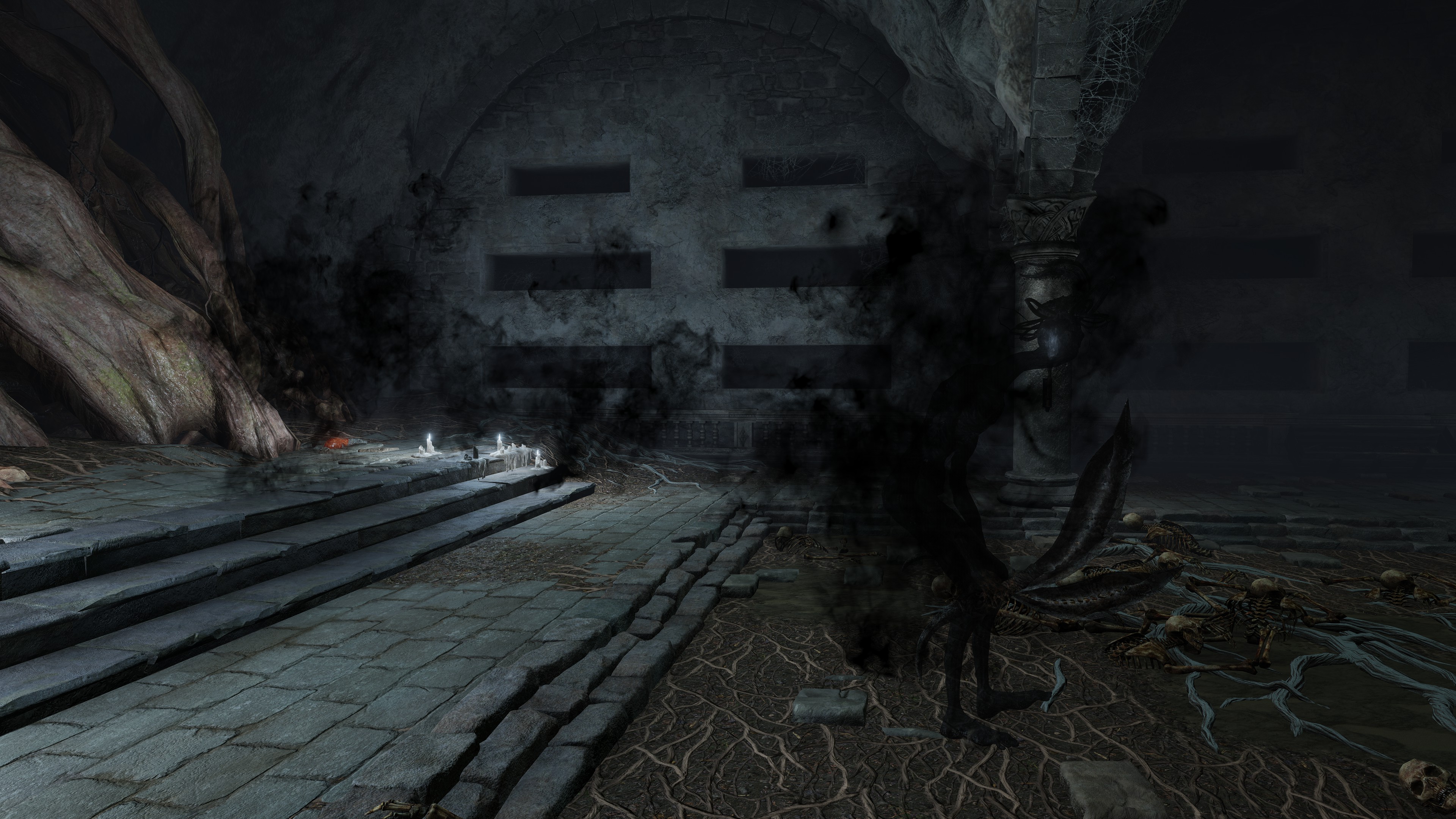
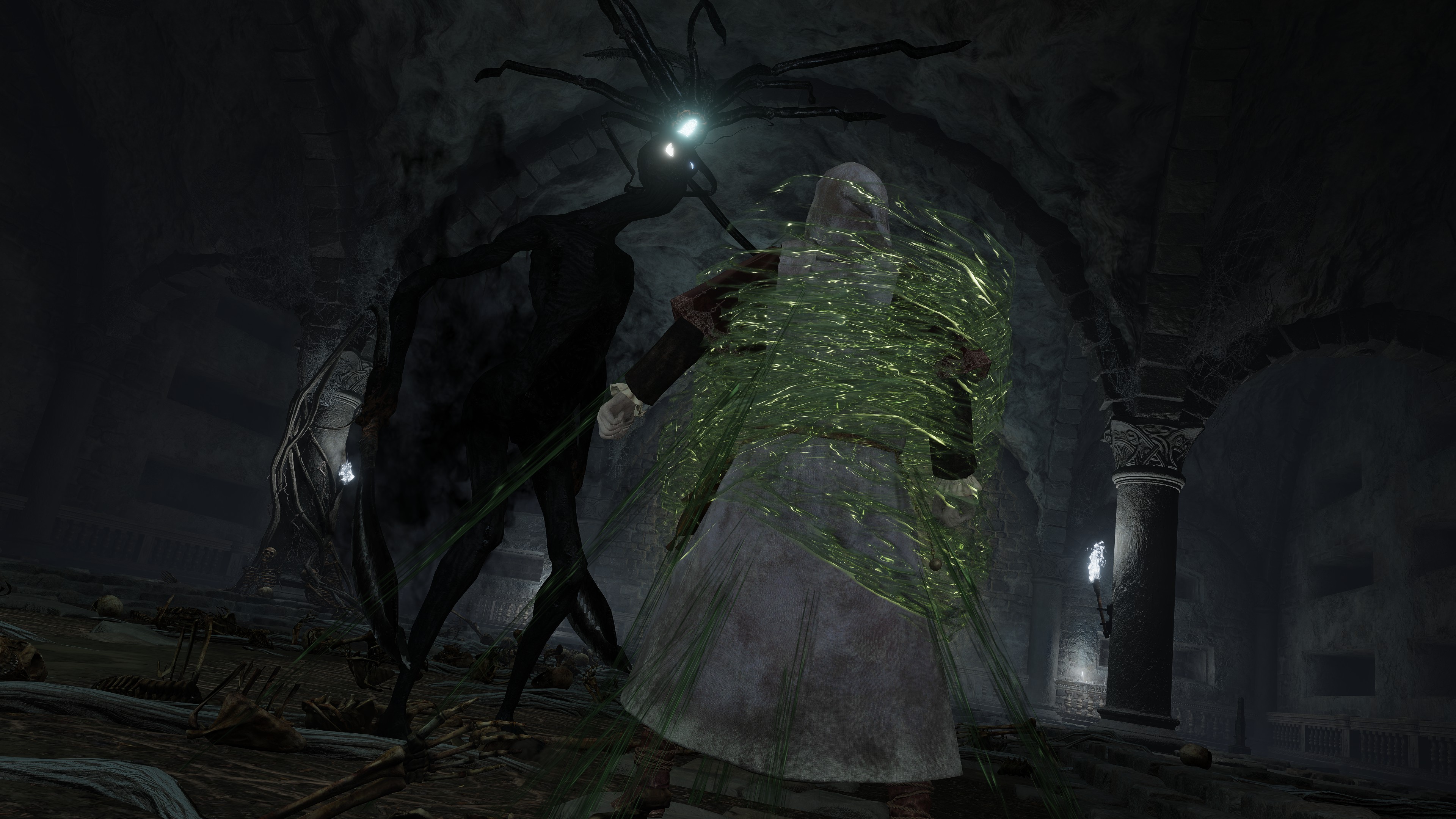
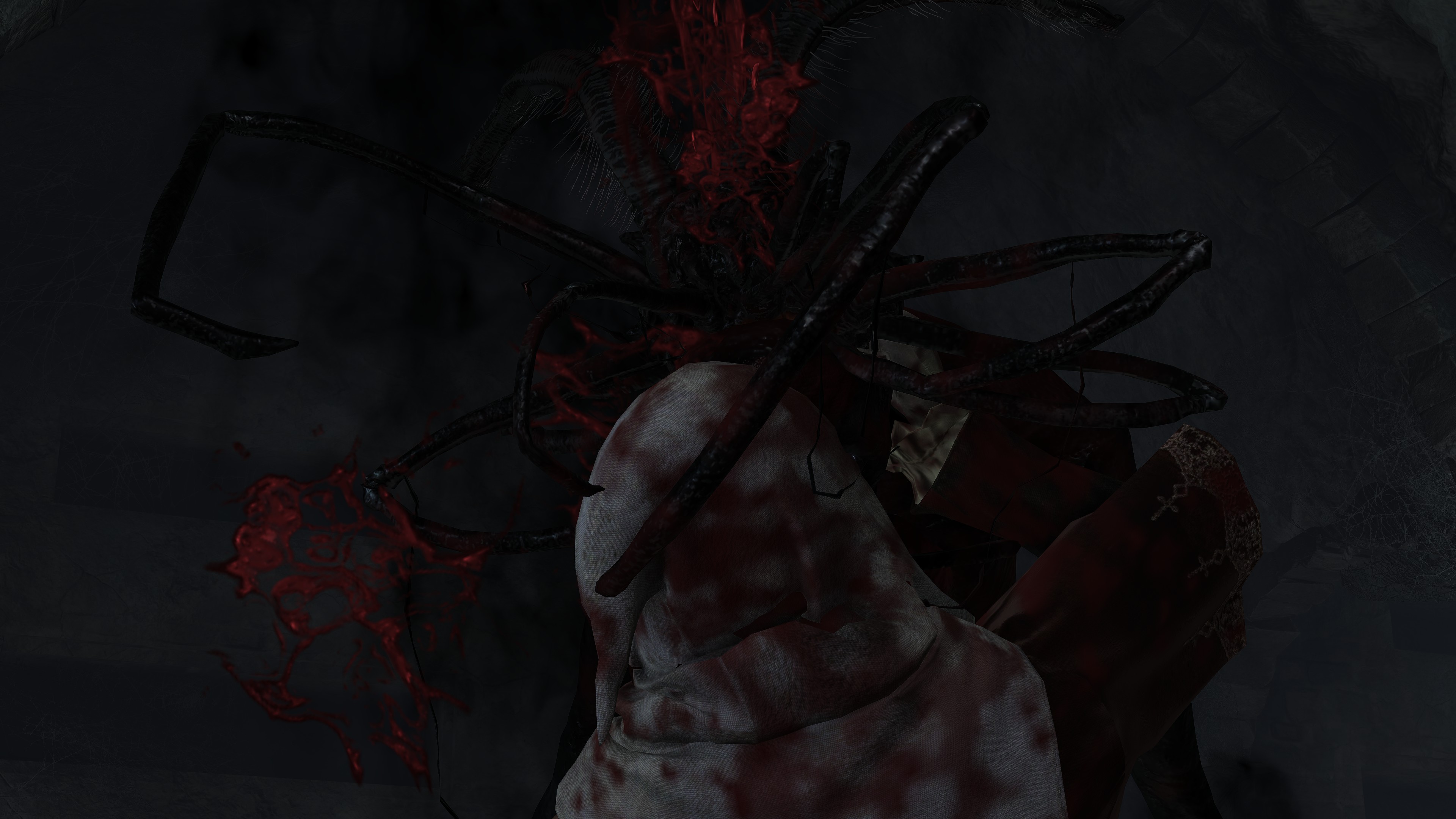
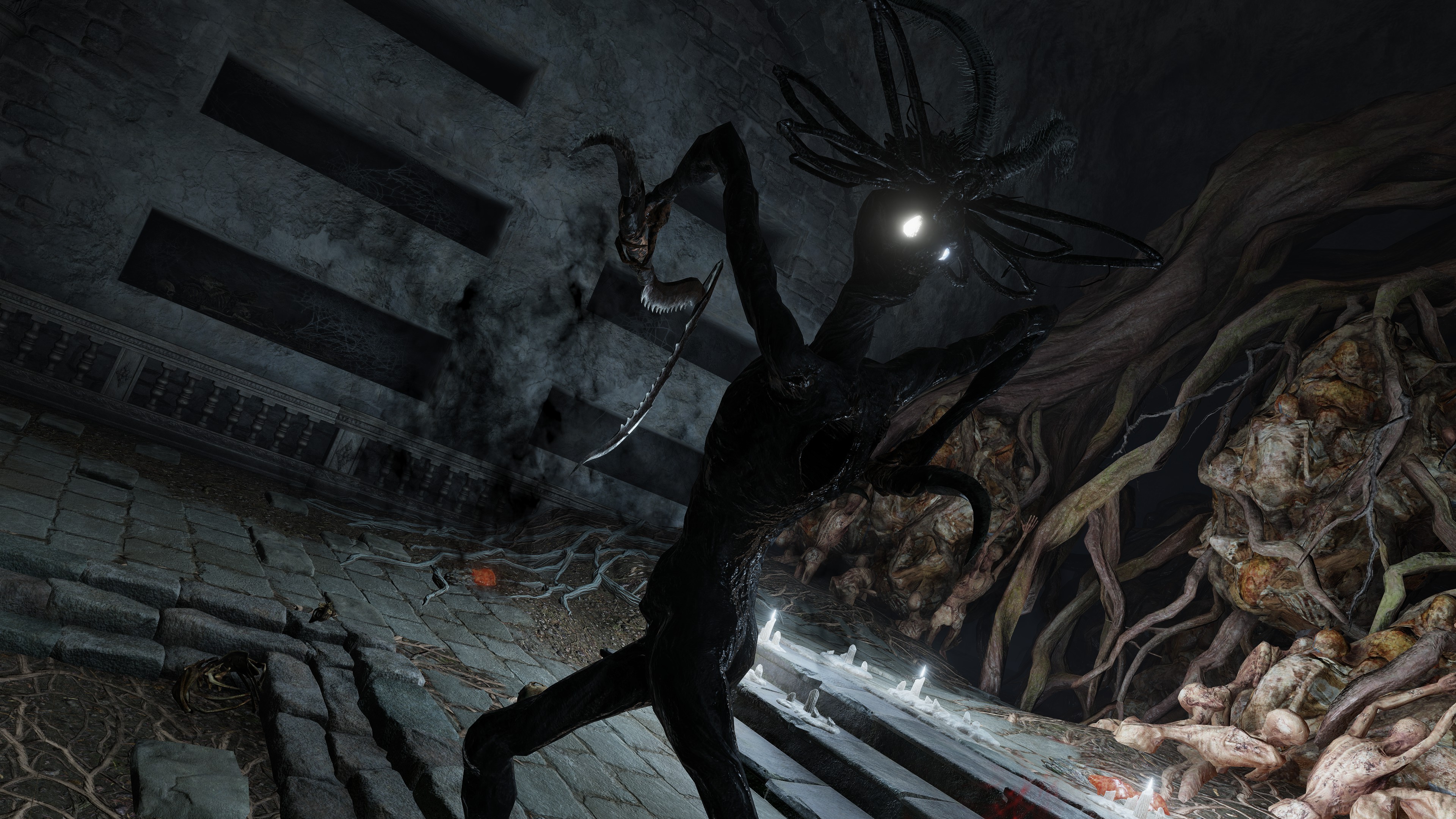
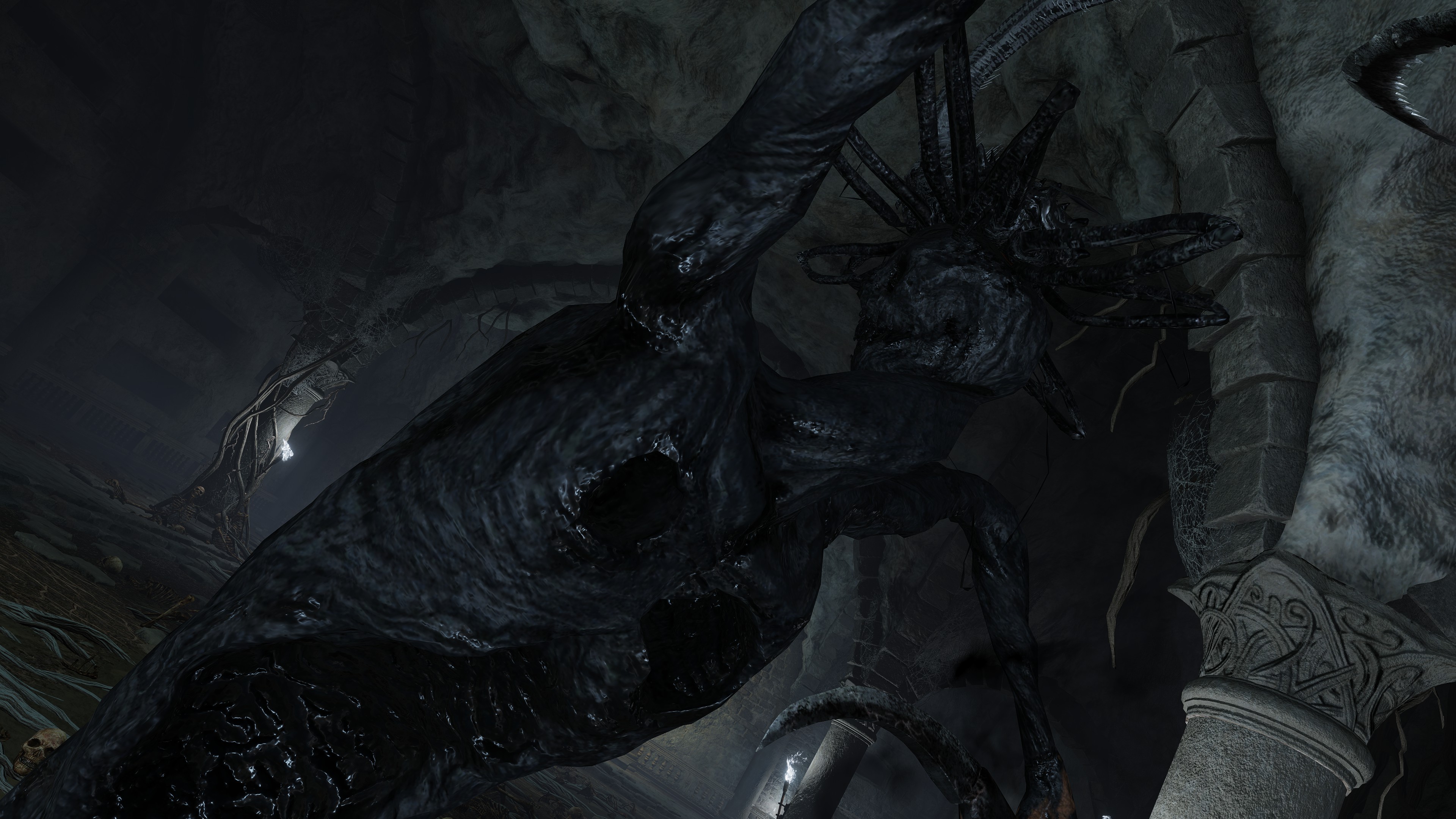
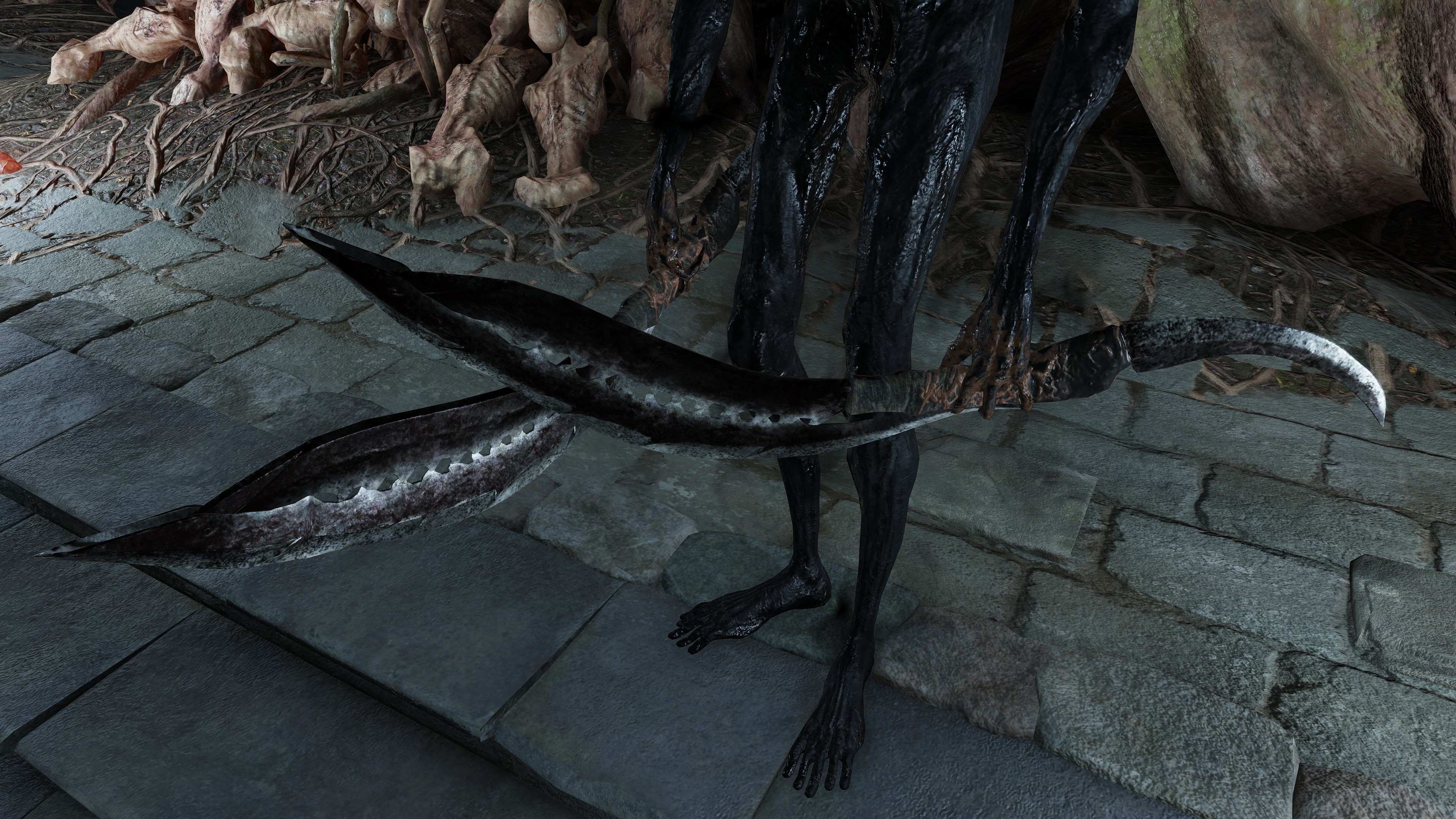
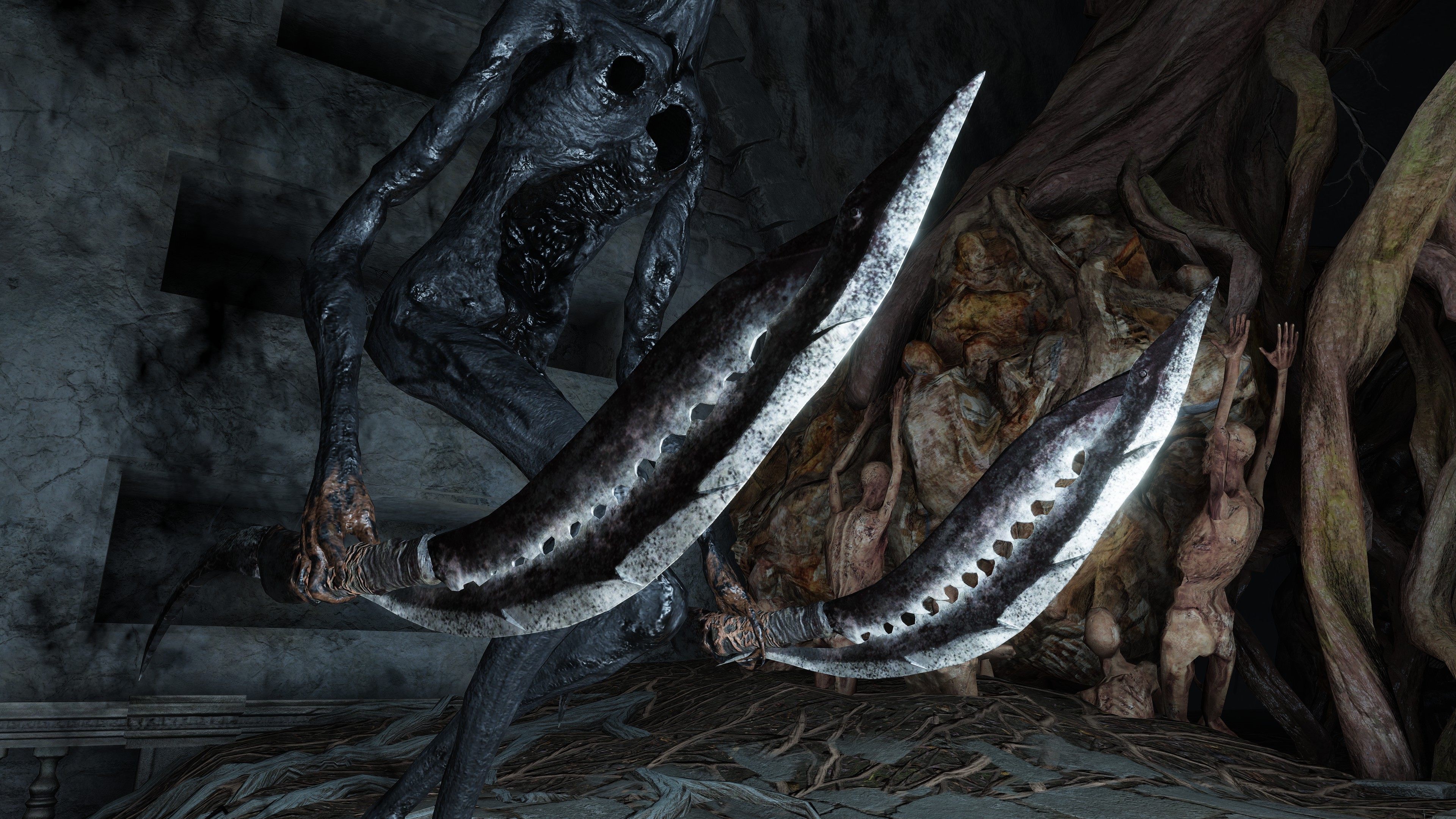
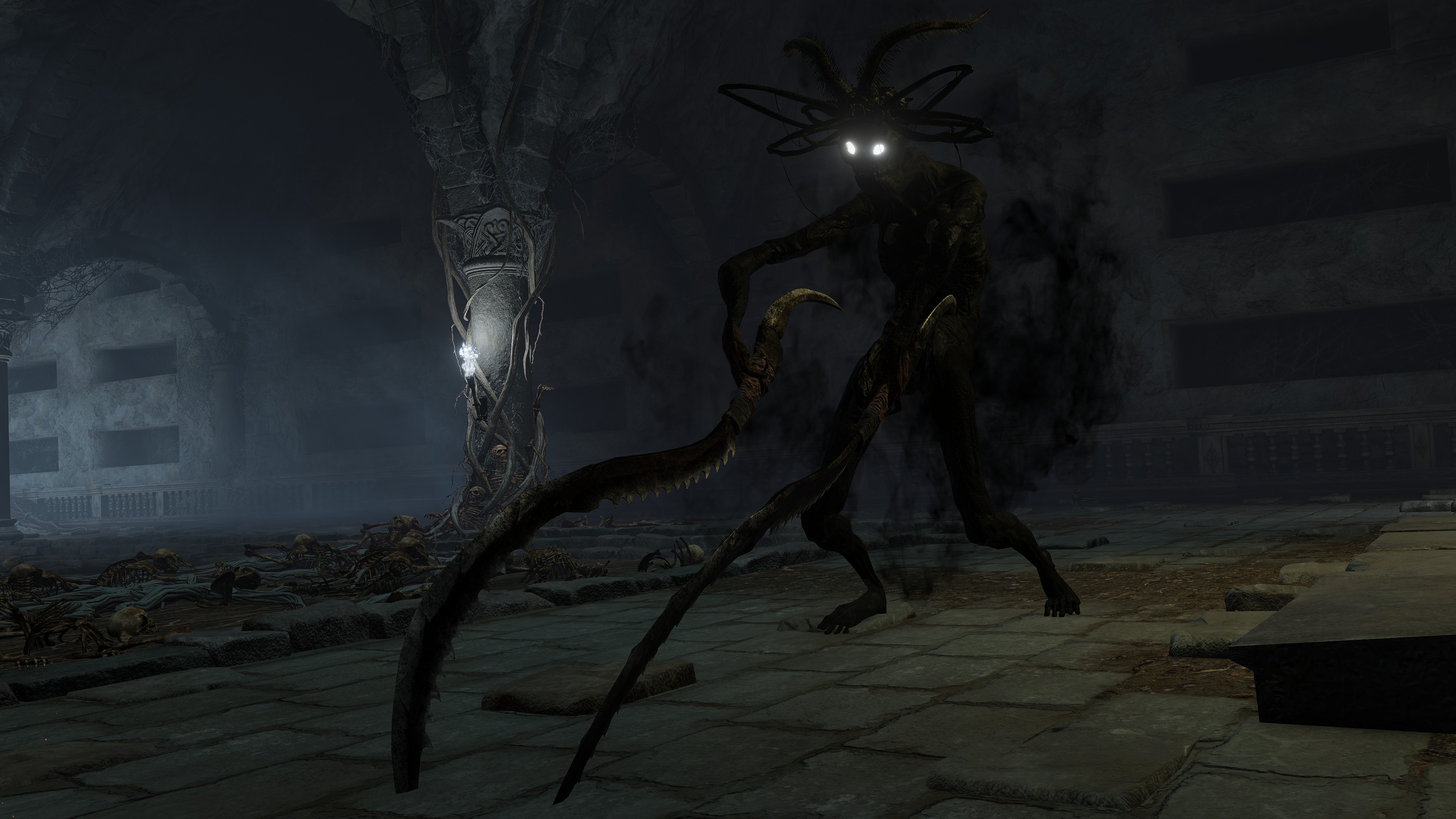
Crammed curved sword possessing folded double blades. Choice weapon of the graveyard shadows, bug-harboring gravekeepers.
Its blades are thin and sharp, extend with the strong attack, and fire a long-reach slash attack.
A diligence to duty is undoubtedly what led to their downfall. From the mud on the shades’ hands, the gravekeepers spent time digging up something in their graveyards — Deathroot, in all likelihood. We discover the root stored in chests within the Black Knife Catacombs and Gelmir Hero’s Grave, both home to cemetery shades. This doesn’t hold true in other cases, but there are mitigating factors to explain the shade’s absence. For the Hidden Path to the Haligtree or Giants’ Mountaintops Catacomb, they may have perished to the resident bosses; a stray mimic tear and ulcerated tree spirit, respectively. Taken into consideration, the gravekeepers are probably responsible for uprooting the disease plaguing their cemeteries at their source. And if they got so close to the source of the living dead, then it is almost expected for them to encounter the Rune of Death’s insects.
The scenario for the duelists is straightforward. While bravely attempting to remove the source of skeletons rising up, the bug latched onto the senior gravekeeper’s face, like it does to us during battle. But instead of just tearing the head apart, it forced the black tar down his throat, shadow consuming the body wholesale. The bug then came to sat on his head, Death turning him into its drone — holes tearing open the body right before the eyes. Seeing what became of the old hands, the gladiators were understandably horrified. The veteran fighters may have been able to put down their former coworkers in most cases, but the experience left them scarred. Fans might object on grounds that the insect doesn’t buzz, but its chirping like a cricket is also a “wing sound” (羽音) and so this is probably just an oversight. The shades do cause hemorrhaging with their blades, which is absent from the Mantis Blade we obtain, so they do seem to deliberately invoke the pumpkin heads’ fears. Overall, the cemetery shade, with all its body horror, is the most liable cause for breaking the arena’s champions.
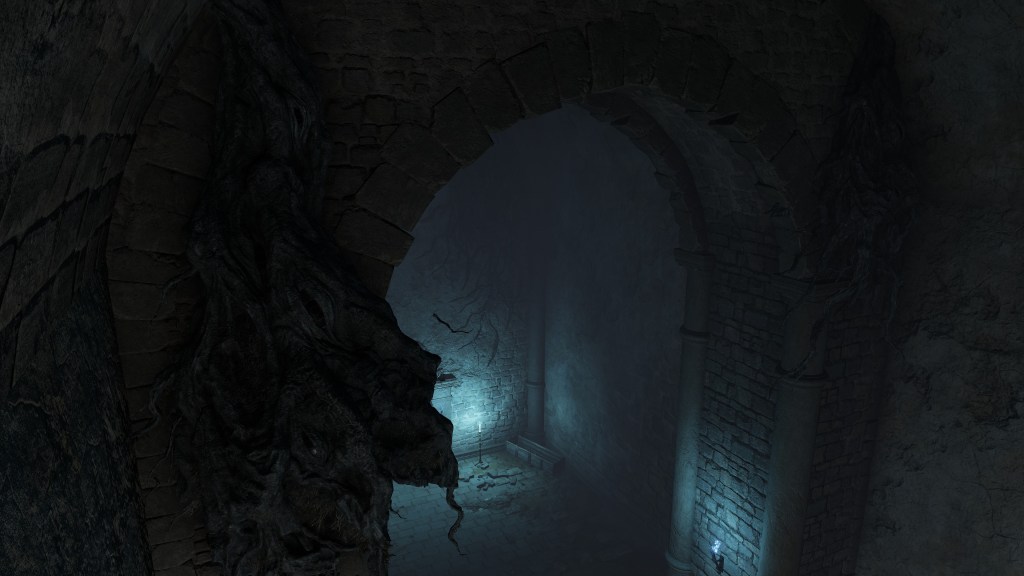
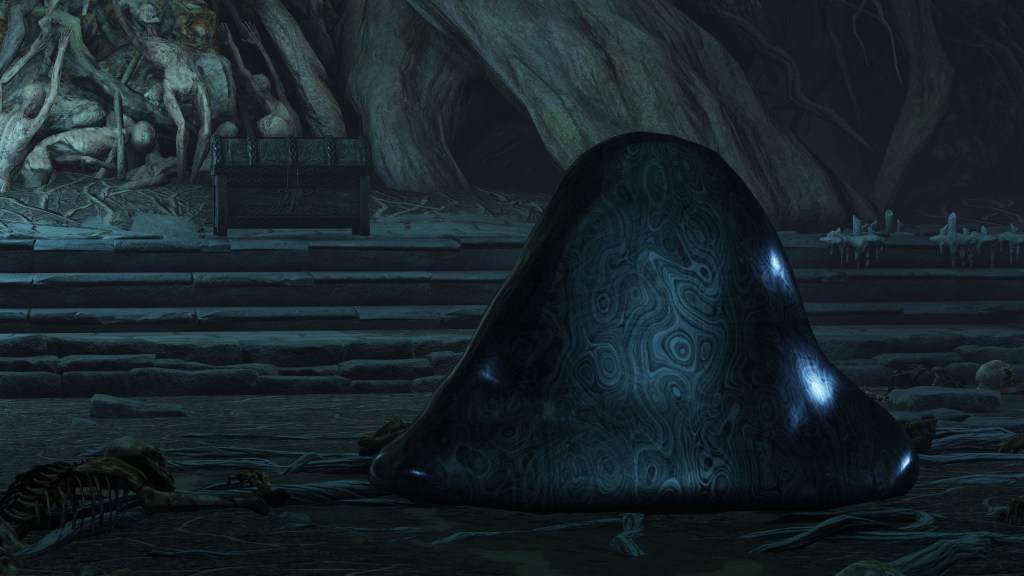
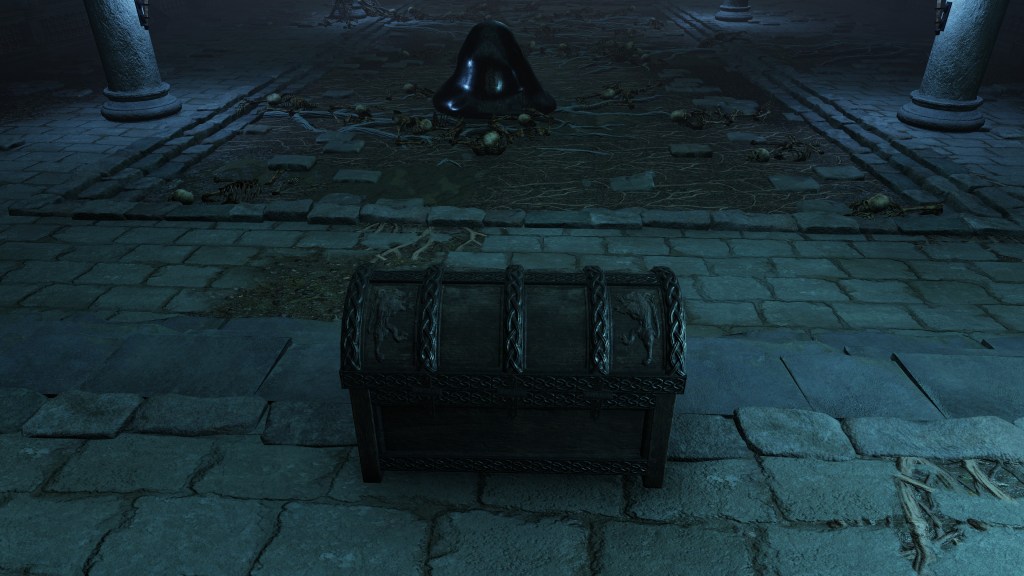
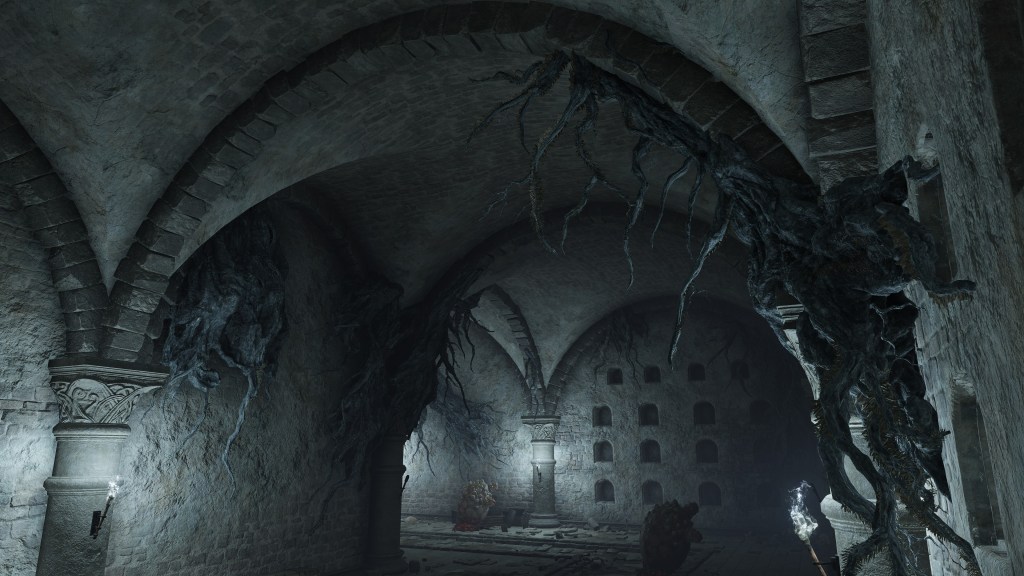
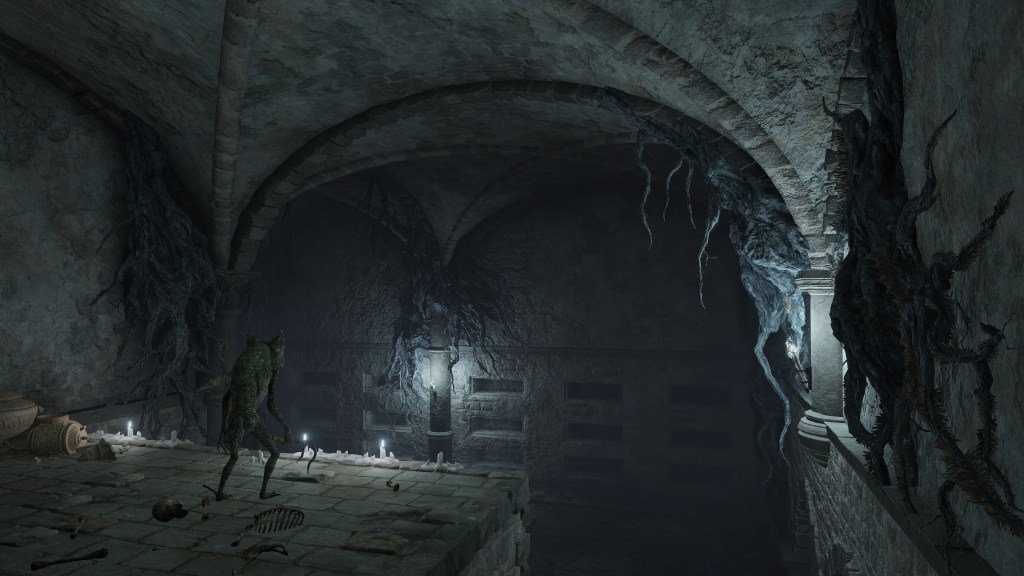
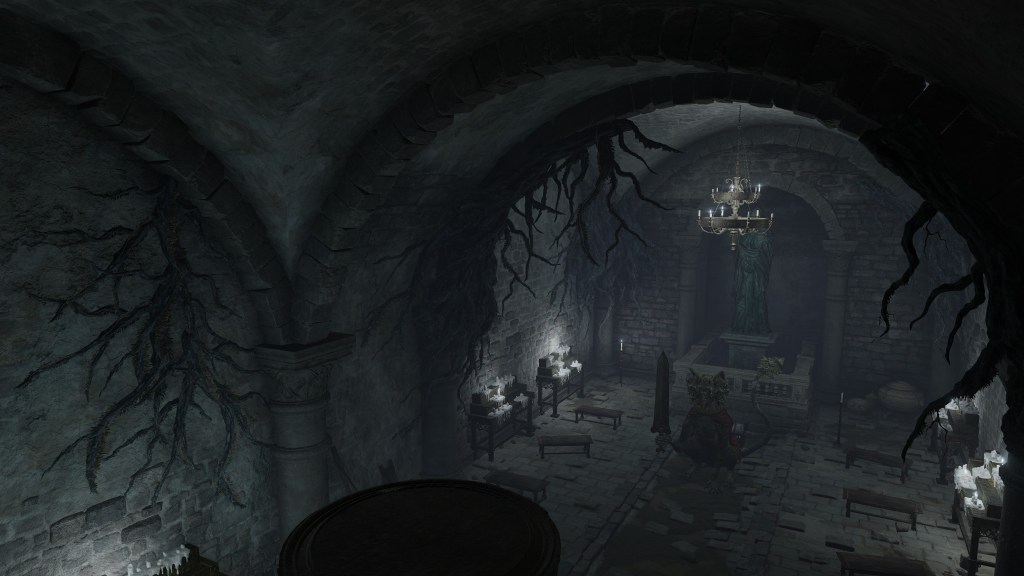
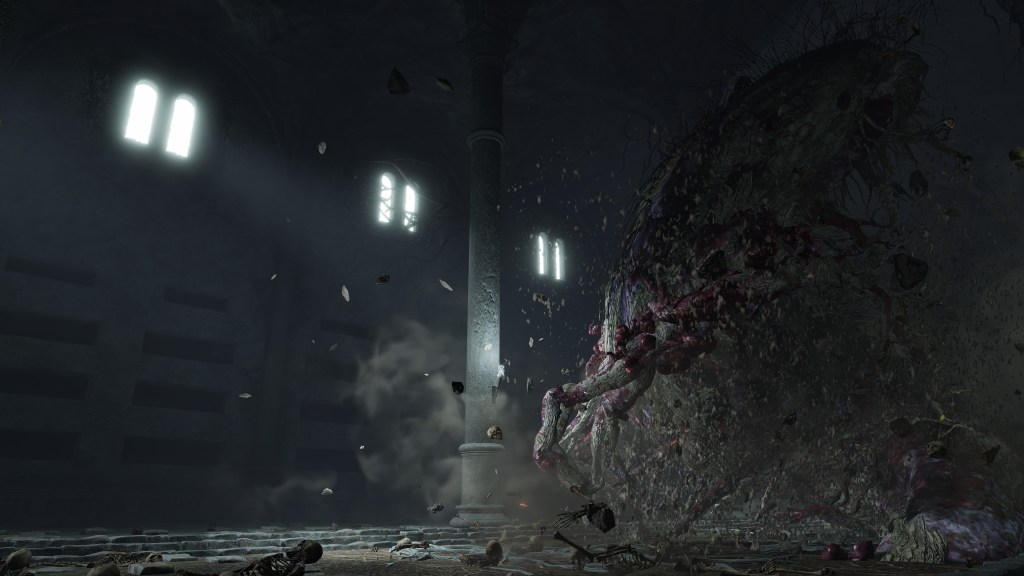
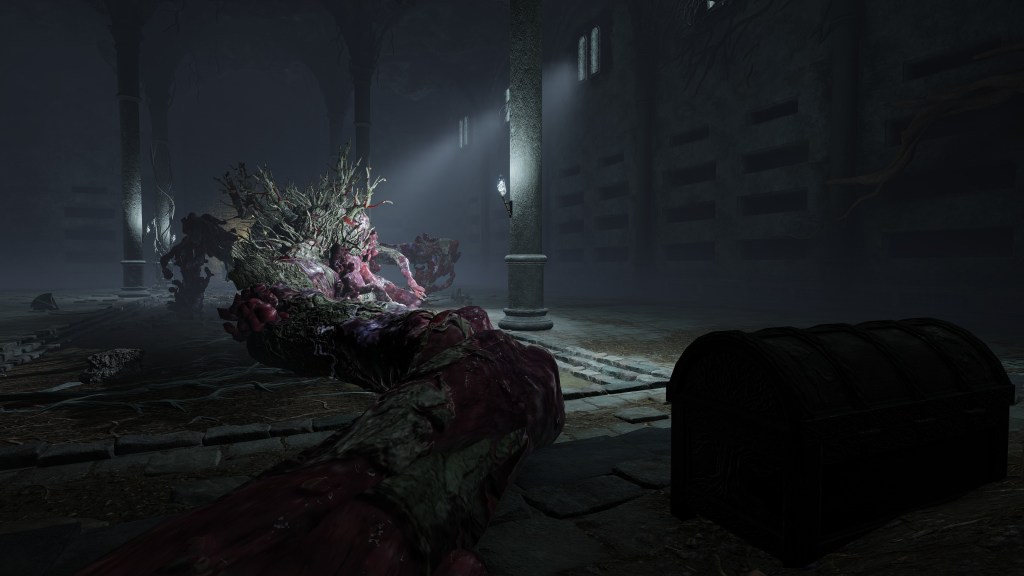
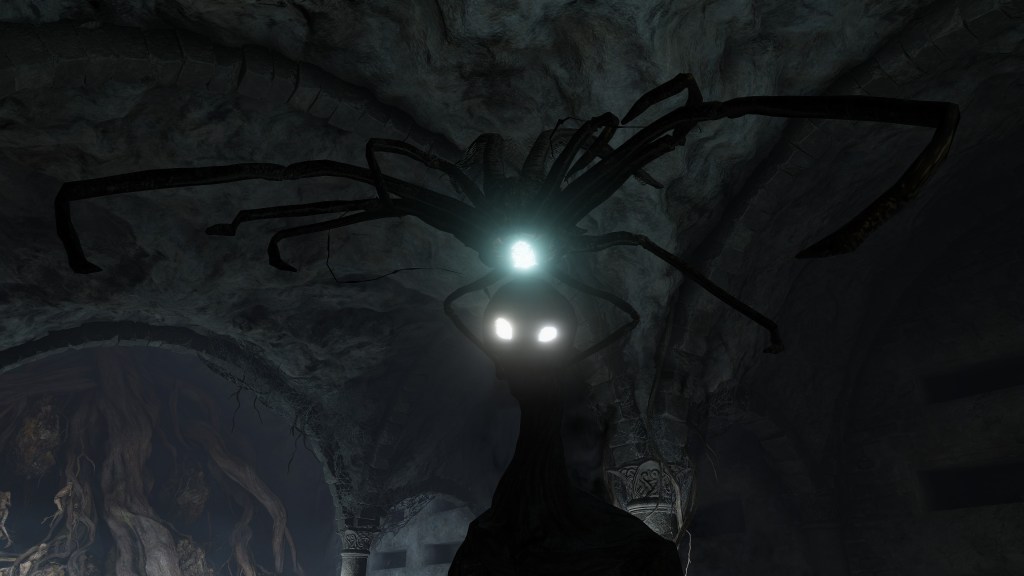
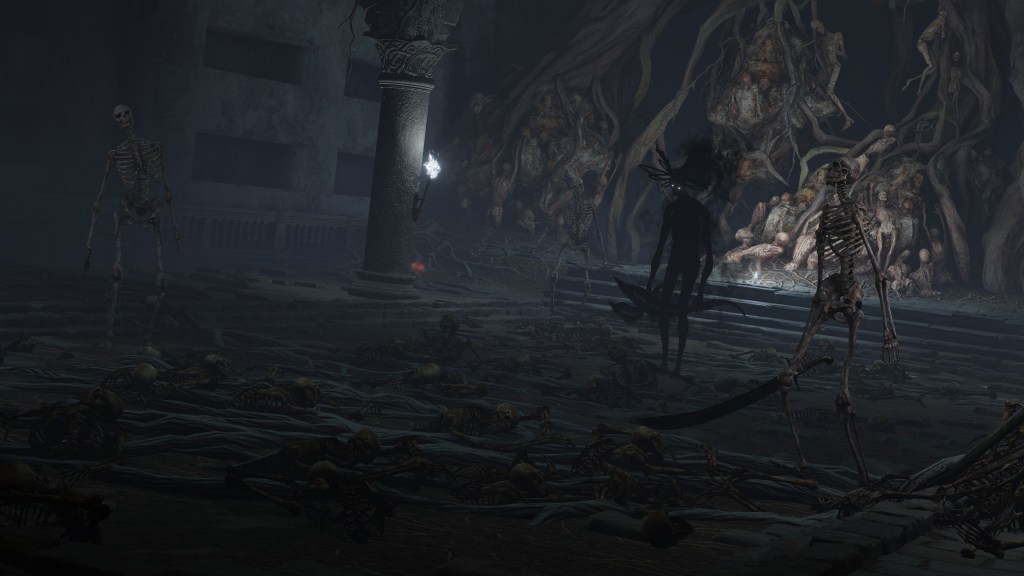
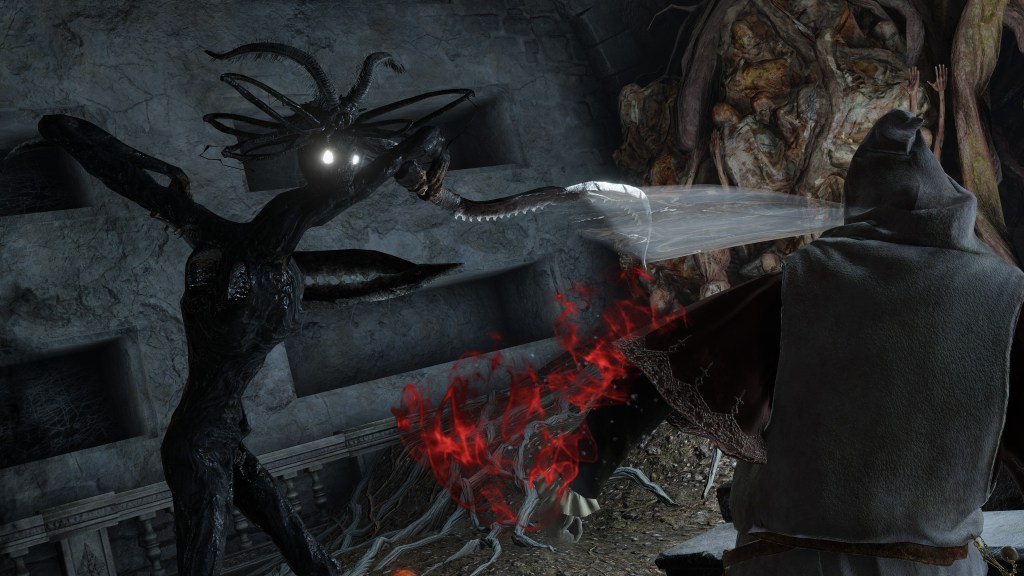
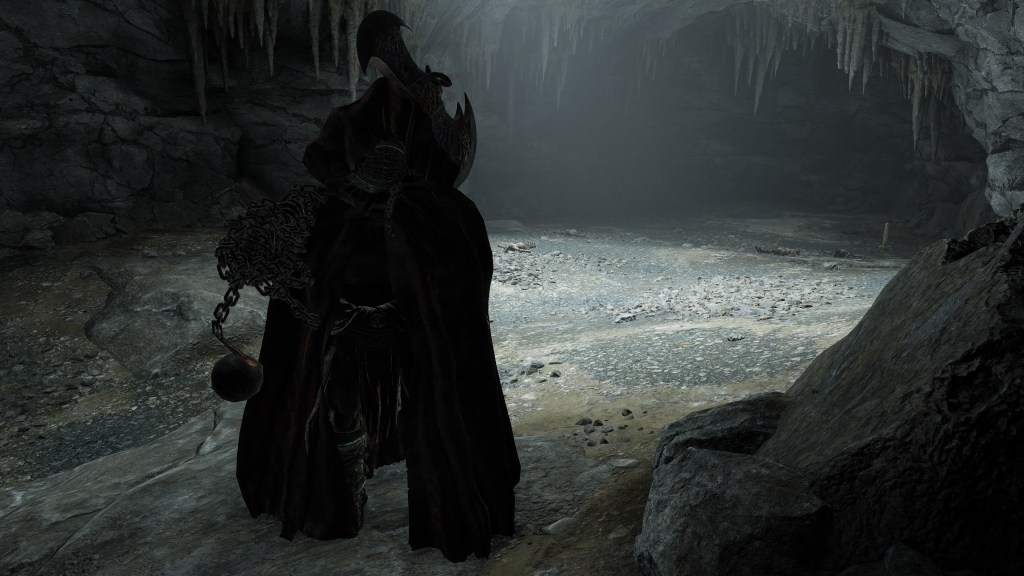
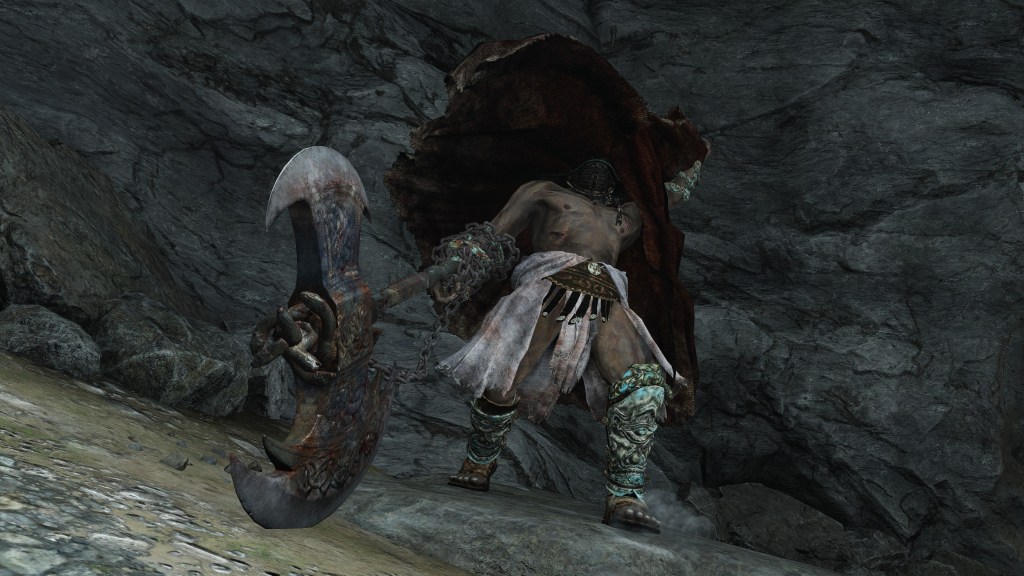
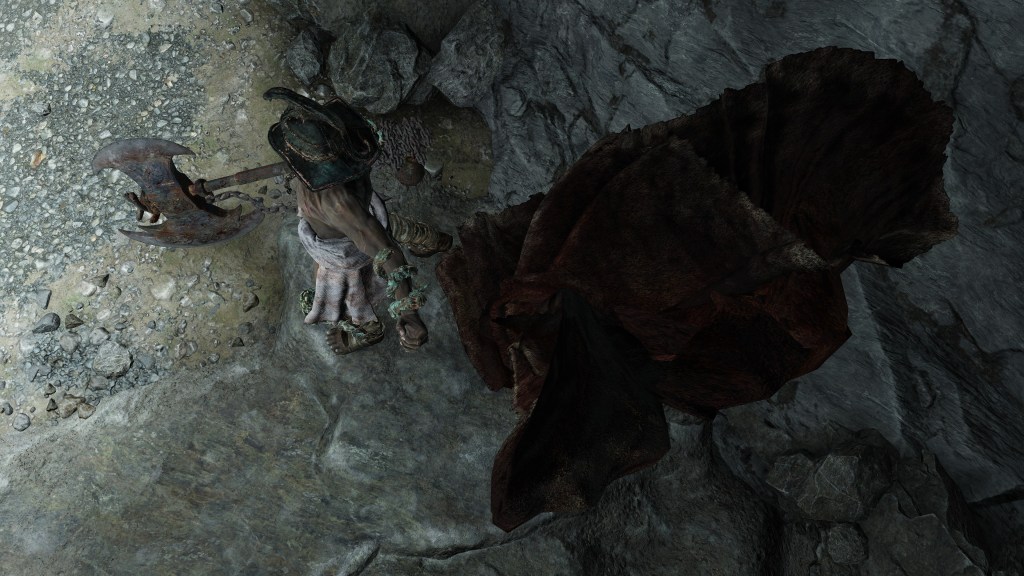
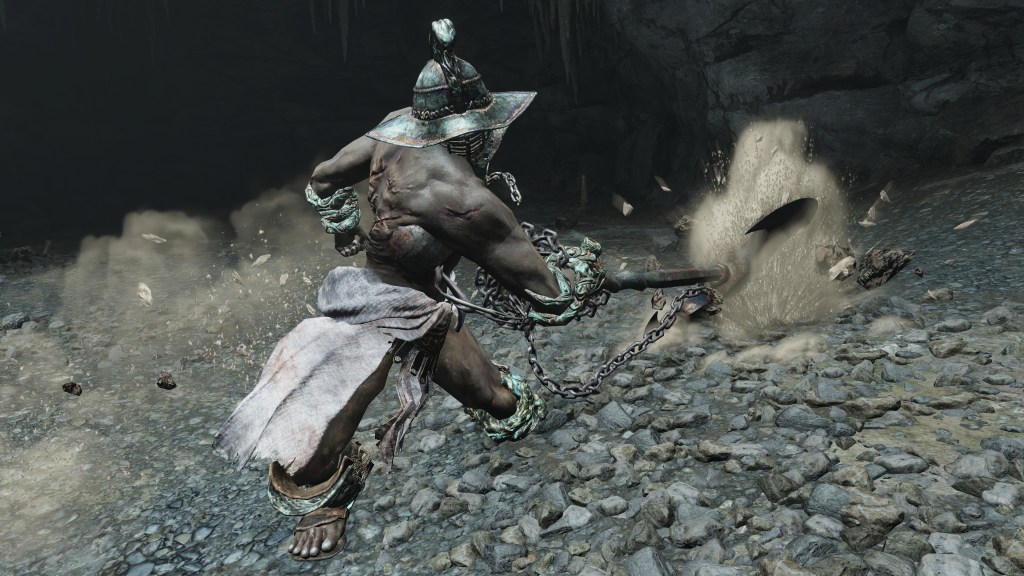
Unable to continue performing their gravekeeping duties without suffering a panic attack, it is no wonder that the madmen were taken out of the catacombs and made soldiers. However, this only applies to gladiators who remained at their post. The Frenzied Duelist is the boss encountered at the bottom of Gaol Cave. Despite the name, the axe-wielder fights exactly like his non-boss counterparts — he even performs the same theatrics before the fight. His supposed madness must therefore relate to why he is in the cave. If he is one of the gladiators broken by Death, then it is possible for him to cowardly flee his catacomb. But because they seek the darkness of the underground for security, this runaway lunatic eventually sought refuge deep in a cave, where he has remained. He isn’t alone either, since we can acquire other gladiator weapons in caverns, the Venomous Fang in the Abandoned Cave and the Coil Shield in the Volcano Cave. They probably ended up dying to the resident Scarlet Rot and demi-humans, respectively, but it still indicates a number who lacked the bravery to stand firm against Death.
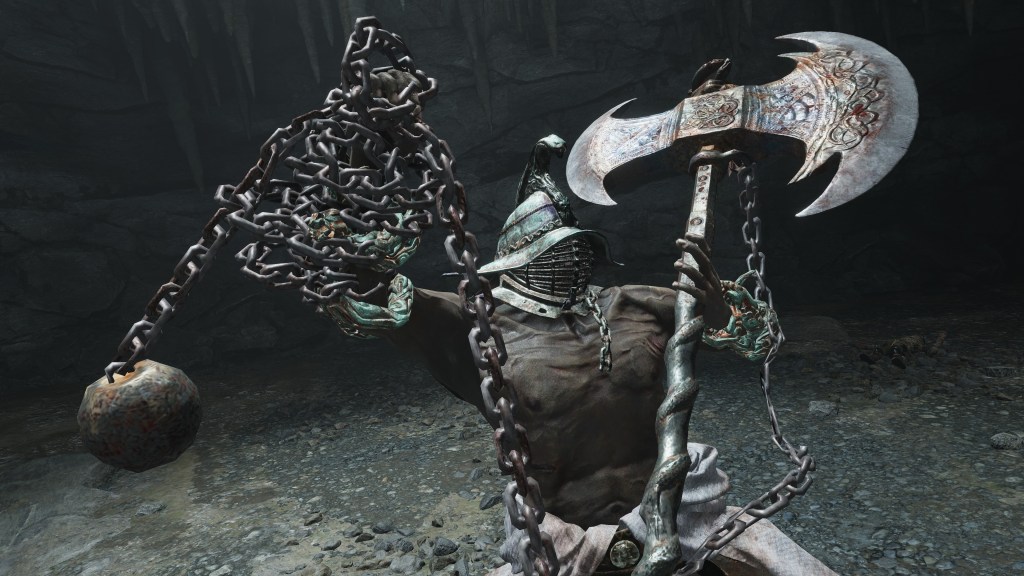
What this, of course, highlights is that the threat of Godwyn exists in more ways than bringing the dead back to life. Whatever the Prince of Death’s intentions with spreading like a virus, his new nature makes him incompatible with the world of the living. As true of all entropy, Death will slowly eat away at you. Desecration of the dead aside, society might have been able to ignore the curse if its victims were just their ancestors, minding their own business in graveyards. But with all life able to be victimized, through no consequence of their own, it is impossible to leave this development unanswered. It eats away at the dead, the living, even the nonliving. All civilization in the Lands Between might come crumbling apart because Godwyn happens spreading to the roots underneath — the briars of Death became the punishment to an Order of Life, Marika’s sin. The moment the Erdtree kingdom began to notice, it was time for its people to decide their reaction.
Corpse of the People
Even though most find Godwyn and his works horrific by nature, there were inevitably those who looked at them only with curiosity. The Prince of Death’s Staff exists to cast death sorcery with part of Godwyn’s essence, and it can be found in the ruins of the Deeproot Depths. Whether before or after the Eternal City fell, people began to see the cursed demigod’s potential for power. And because death sorcery still requires faith, this naturally meant a renewed worship at the heart of the kingdom of life. The earliest converts were likely the Golden’s own personal guard. All the knights have found their way to the Realm of Shadow, pursuing Godwyn’s other selves. One guards each of the two corpse faces hiding in the Fog Rift and Scorpion River Catacombs, with another having already met his end fruitlessly searching the Darklight Catacombs for more. We can presume that they had already searched the Lands Between, but failed to find any — the corpse in Stormveil probably had yet to manifest. And so, his royal guard left for hidden lands where Godwyn’s influence can still be felt.
Golden chest armor of the Death Knights. Applied with an old design of the Golden Tree.
Enhances royal capital ancient dragon faith battle arts and prayers.
The knights who were once Godwyn’s royal guard sought after the corpses of their completely changed master’s other selves. For the coming Age of the Dark Ones.
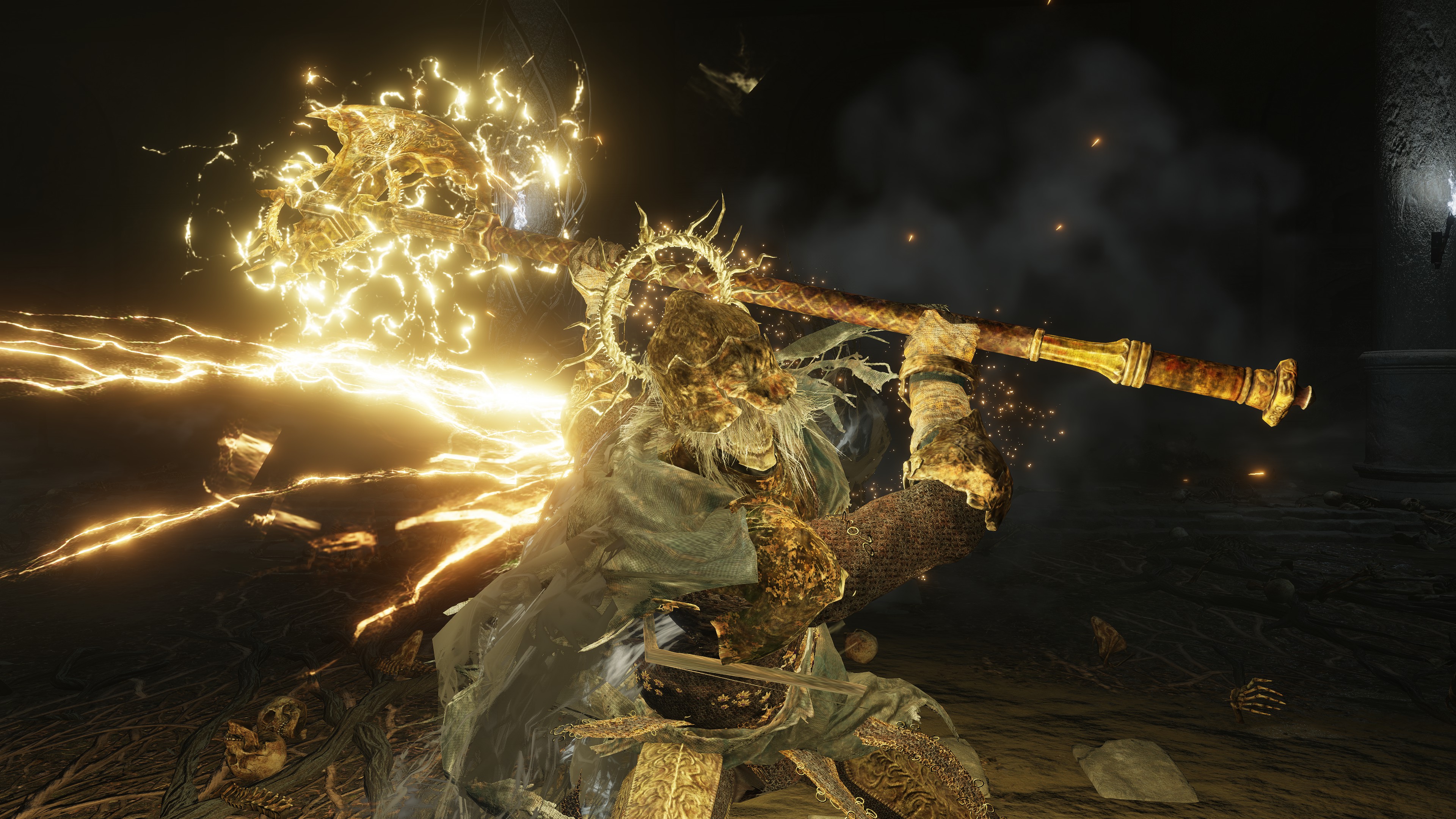
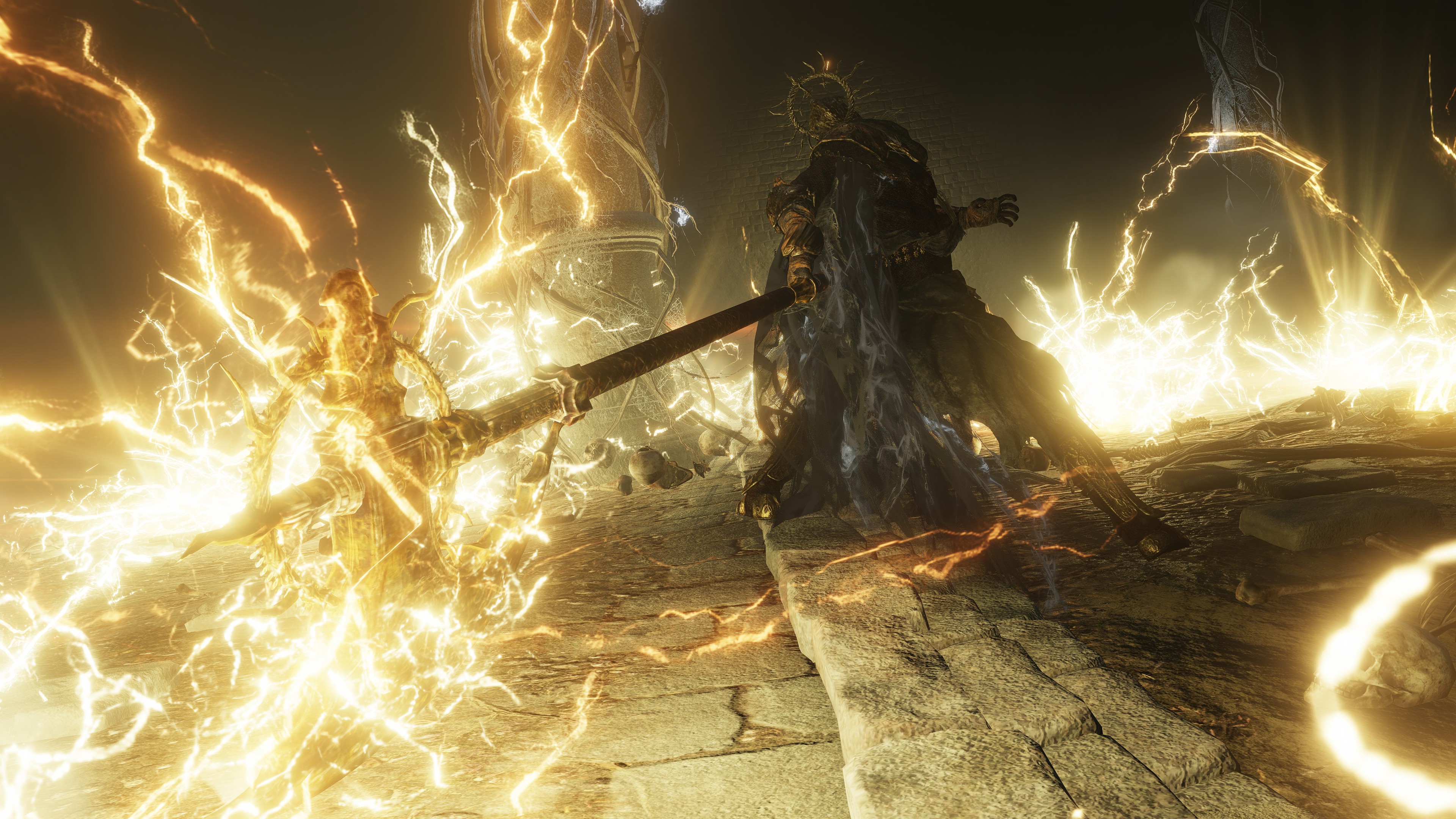
They do this for the Age of the Duskborn they predict will come. We bring about this age by adding the Mending Rune of Death, which combines the two centipede marks to form a complete wheel. That ring becomes a “second life” for the first dead of the demigods, a rune of shadow and gold which permits both to coexist in the Order — essentially, makes living in life and death equally part of the Elden Ring’s regulation for the world. It is why these “Death Knights” adorn their helms and weapons with the centipede wheel as a halo, them acting as the holy messengers of a new Order heralded by their Death Prince. The golden ring looking eaten away by insects is their vow to continue serving Godwyn even if he violates life with his spawn. Their black capes and skull death mask are proof of solidarity with Those Who Live in Death like him. Perhaps they feel guilty for failing to prevent the Golden’s assassination, but these royal bodyguards now devote themselves to defending him in all his iterations as the corpses spread life in death for the new Order.
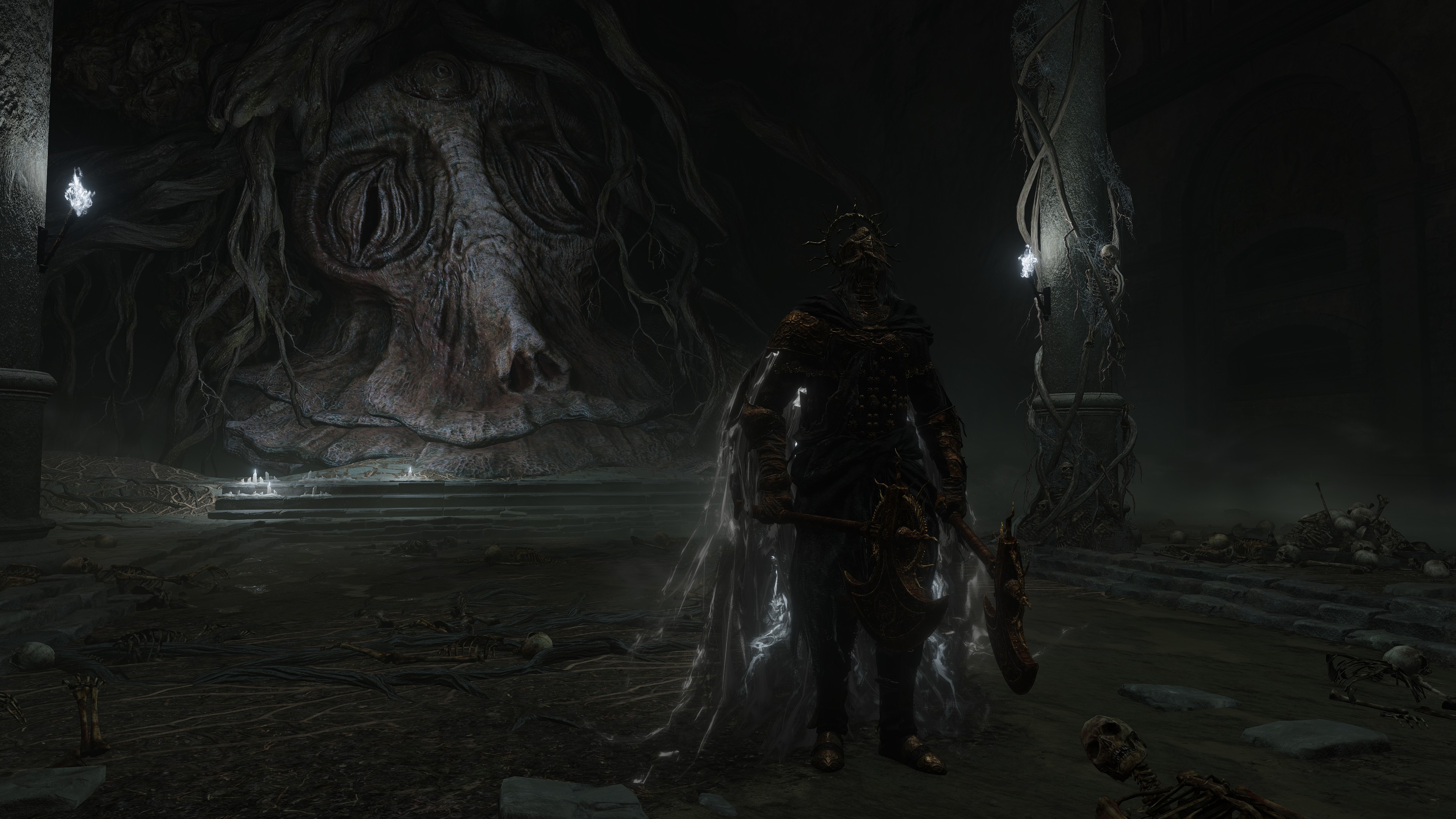
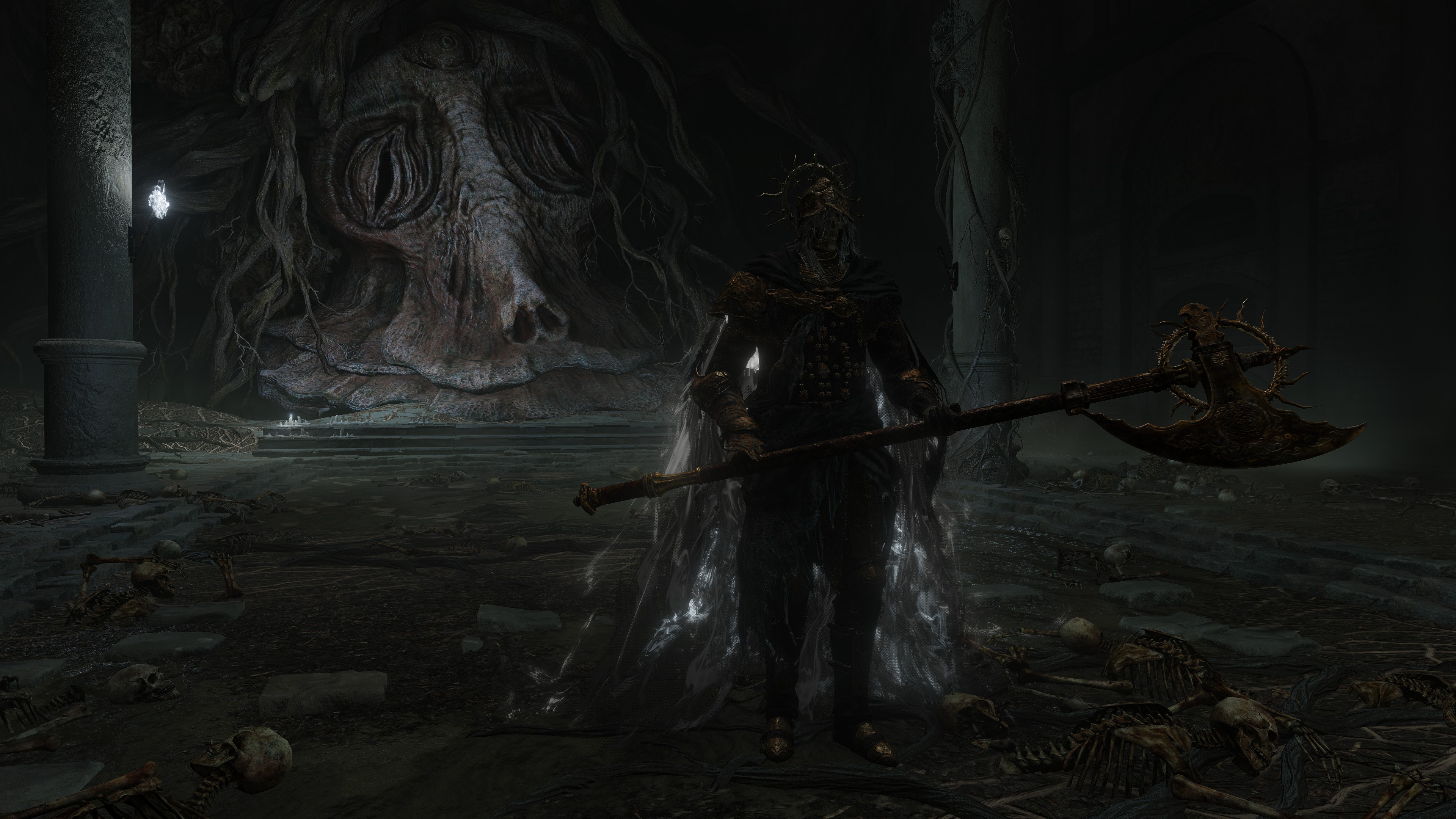
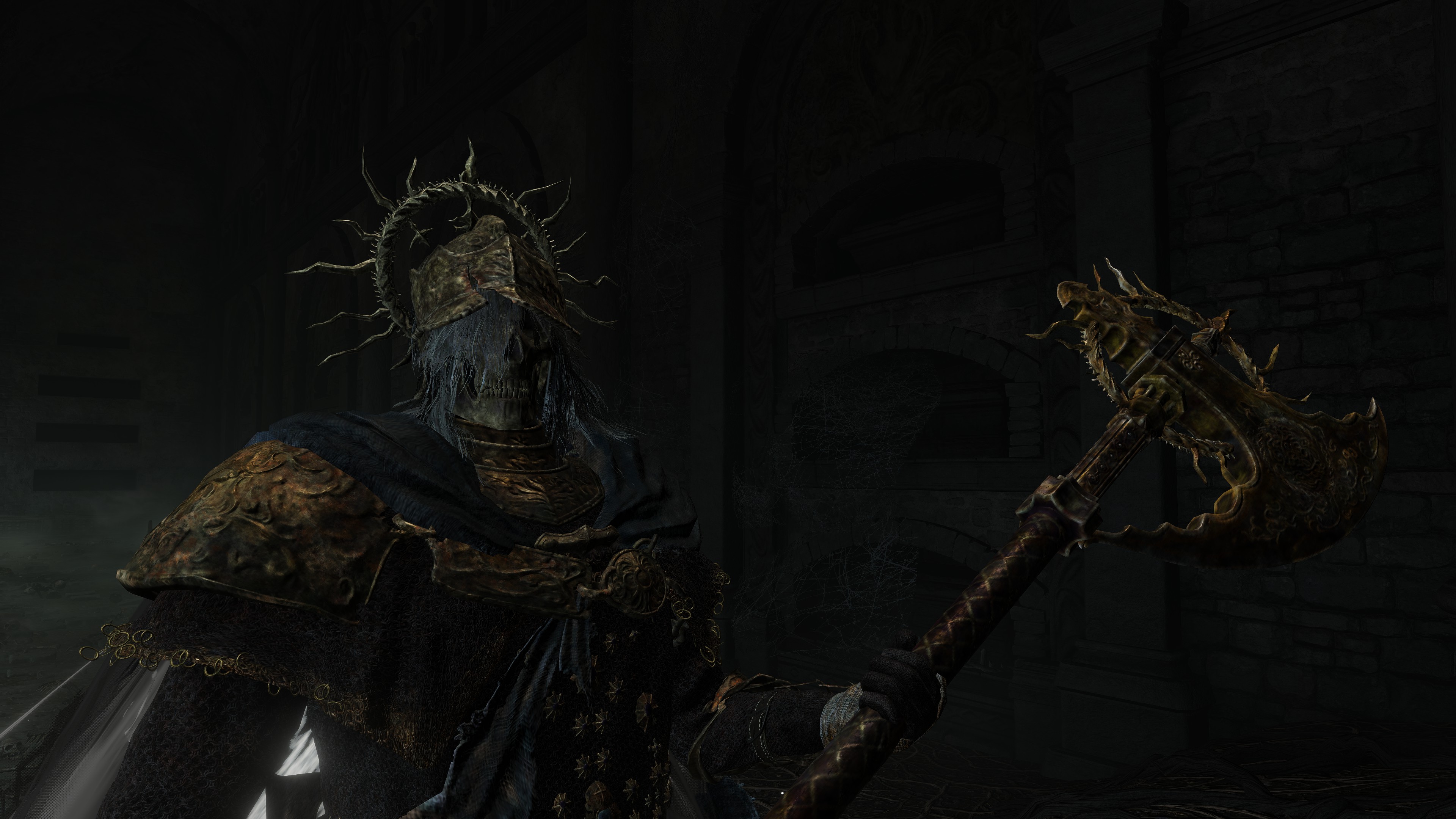
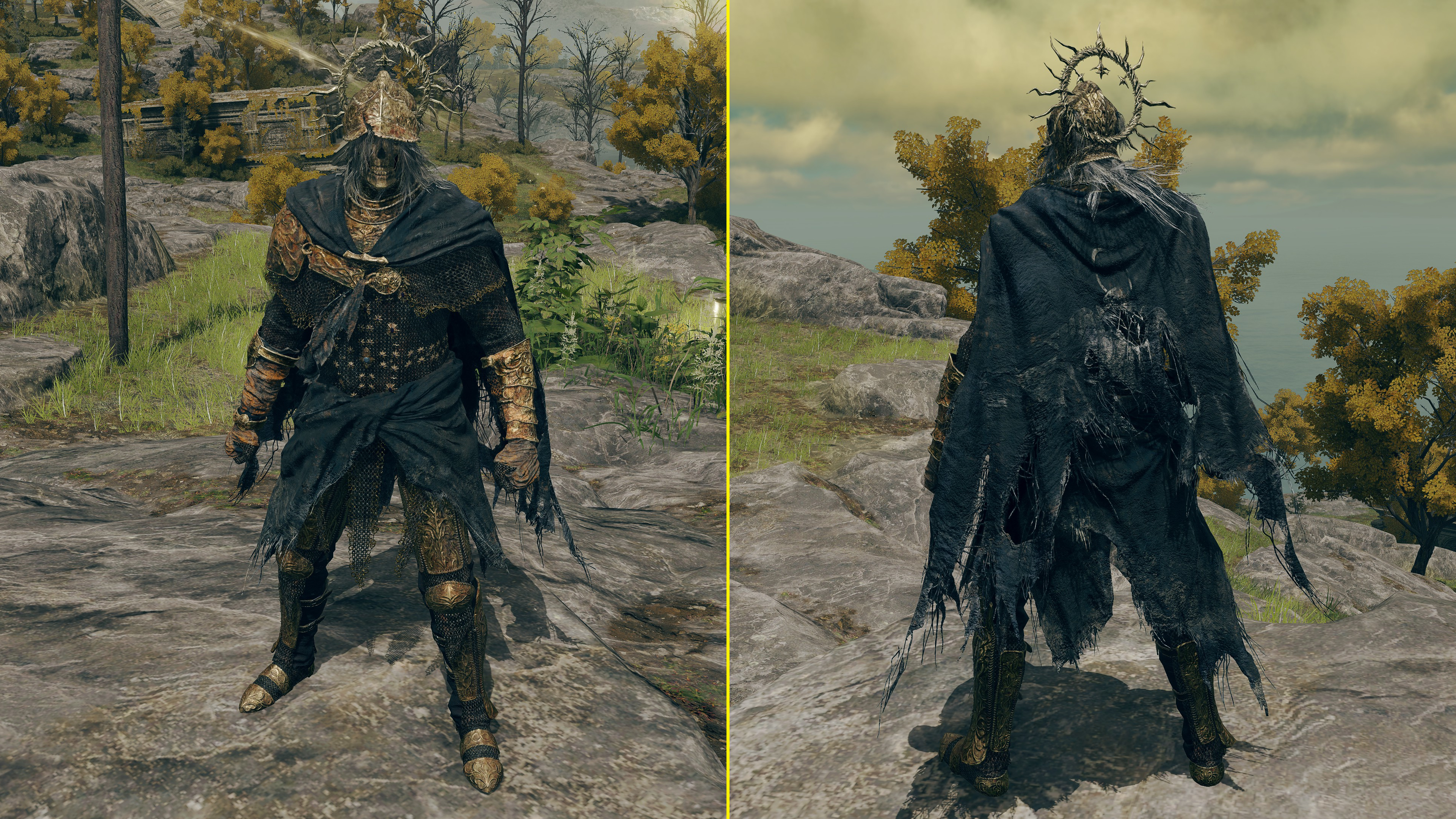
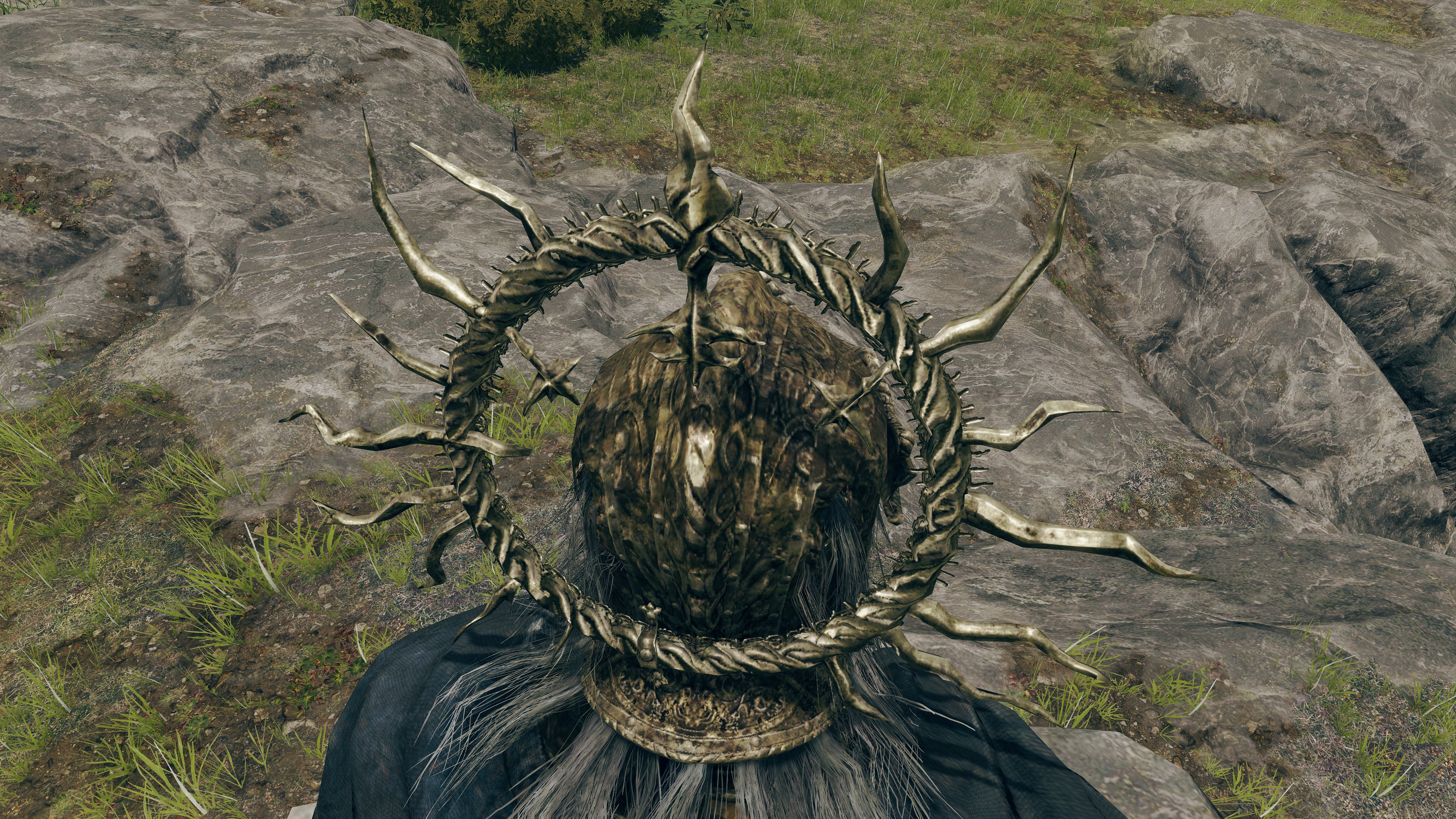
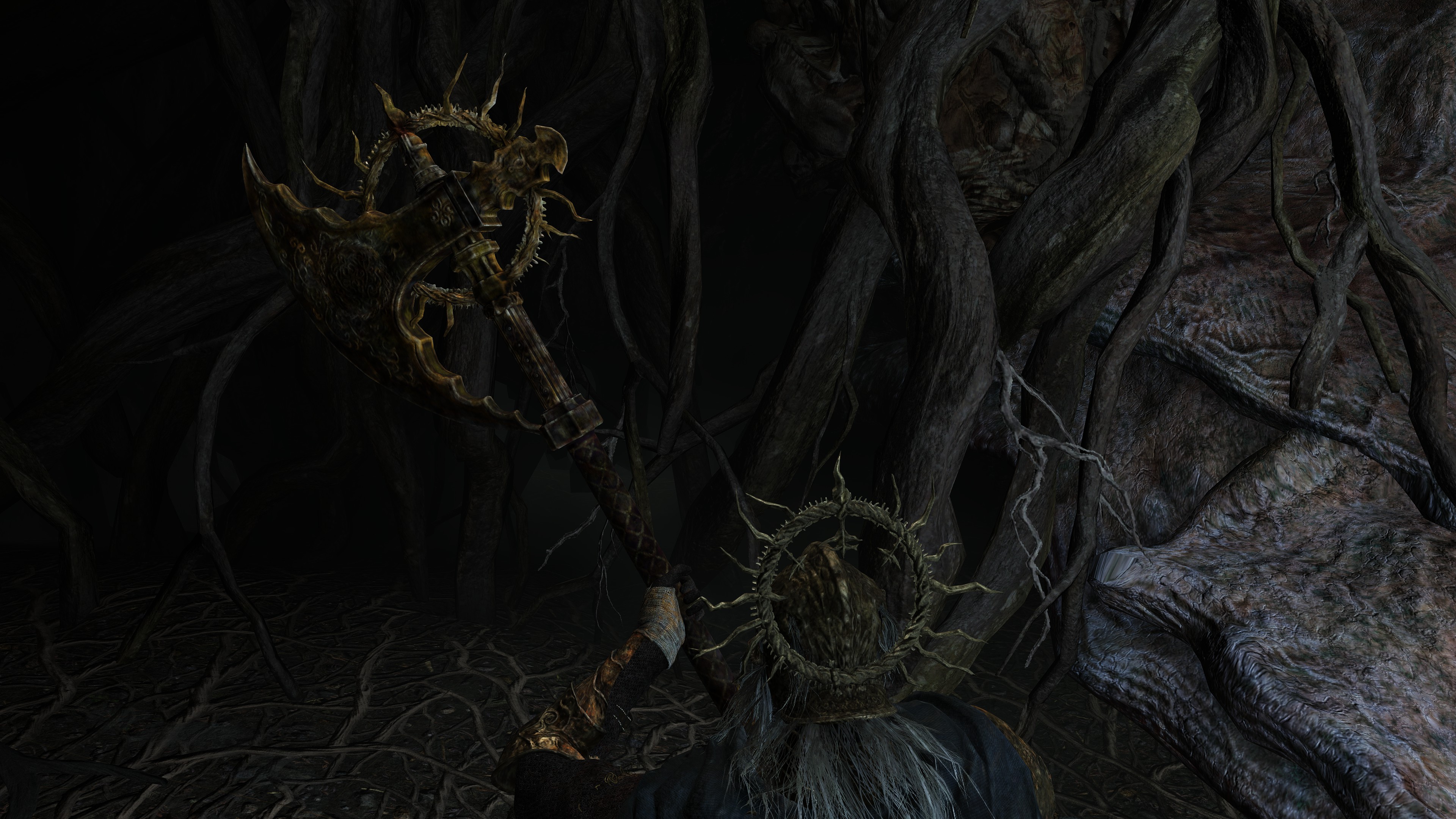
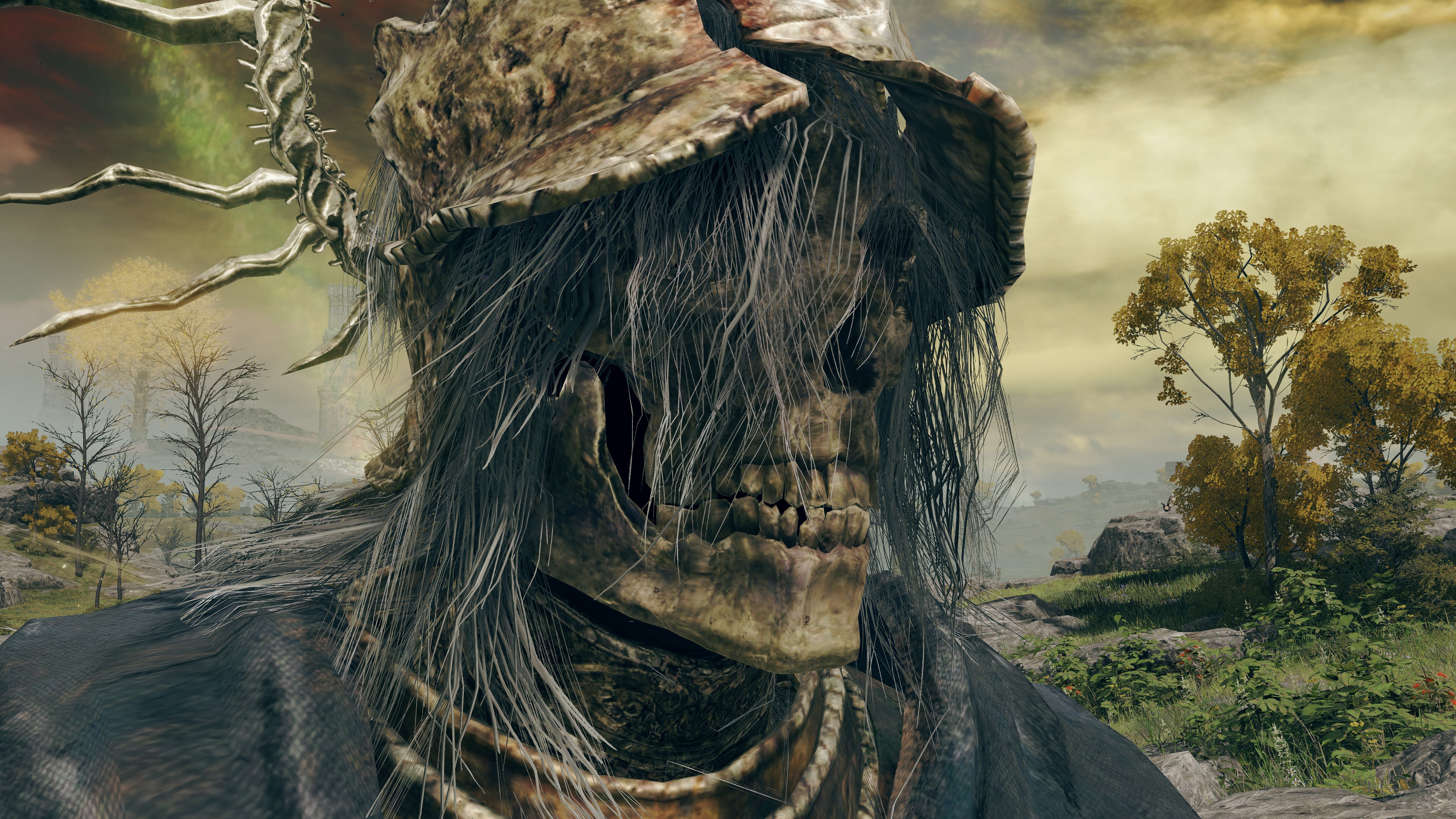
Golden helmet of the Death Knight. Also wearing its death mask as a mask.
Enhances royal capital ancient dragon faith battle arts and prayers.
The eaten-away golden ring adorning the back of the head is a vow to serve Godwyn, who became the Death Prince, nevertheless without change.
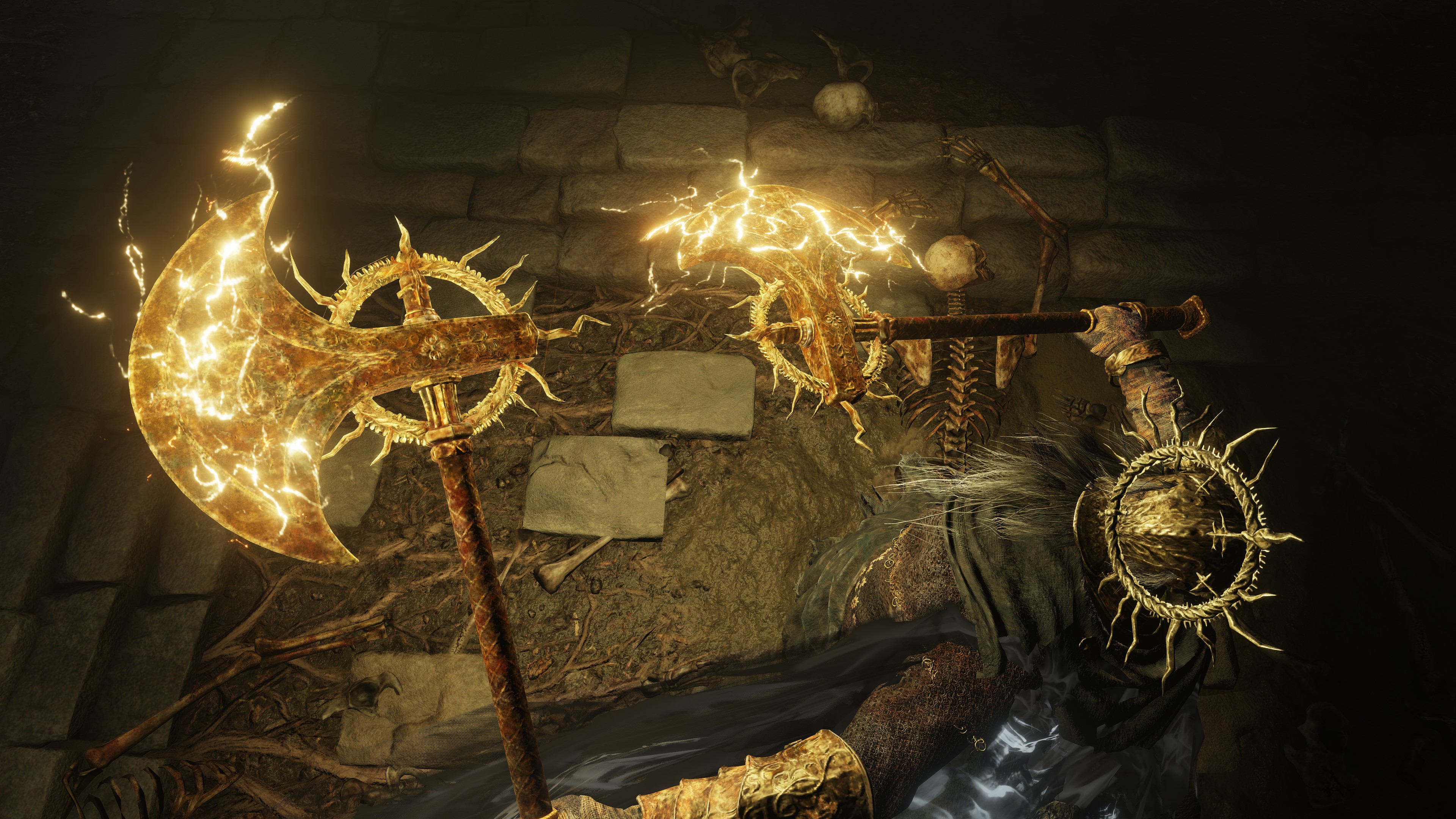
Golden war axe of the Death Knight. Pair of choice weapons that becomes two blades with two-handing.
Tinged with lightning, which is the power of the royal capital ancient dragon faith.
The knight who was once Godwyn’s royal guard was the defender of a corpse of the Death Prince’s other self.
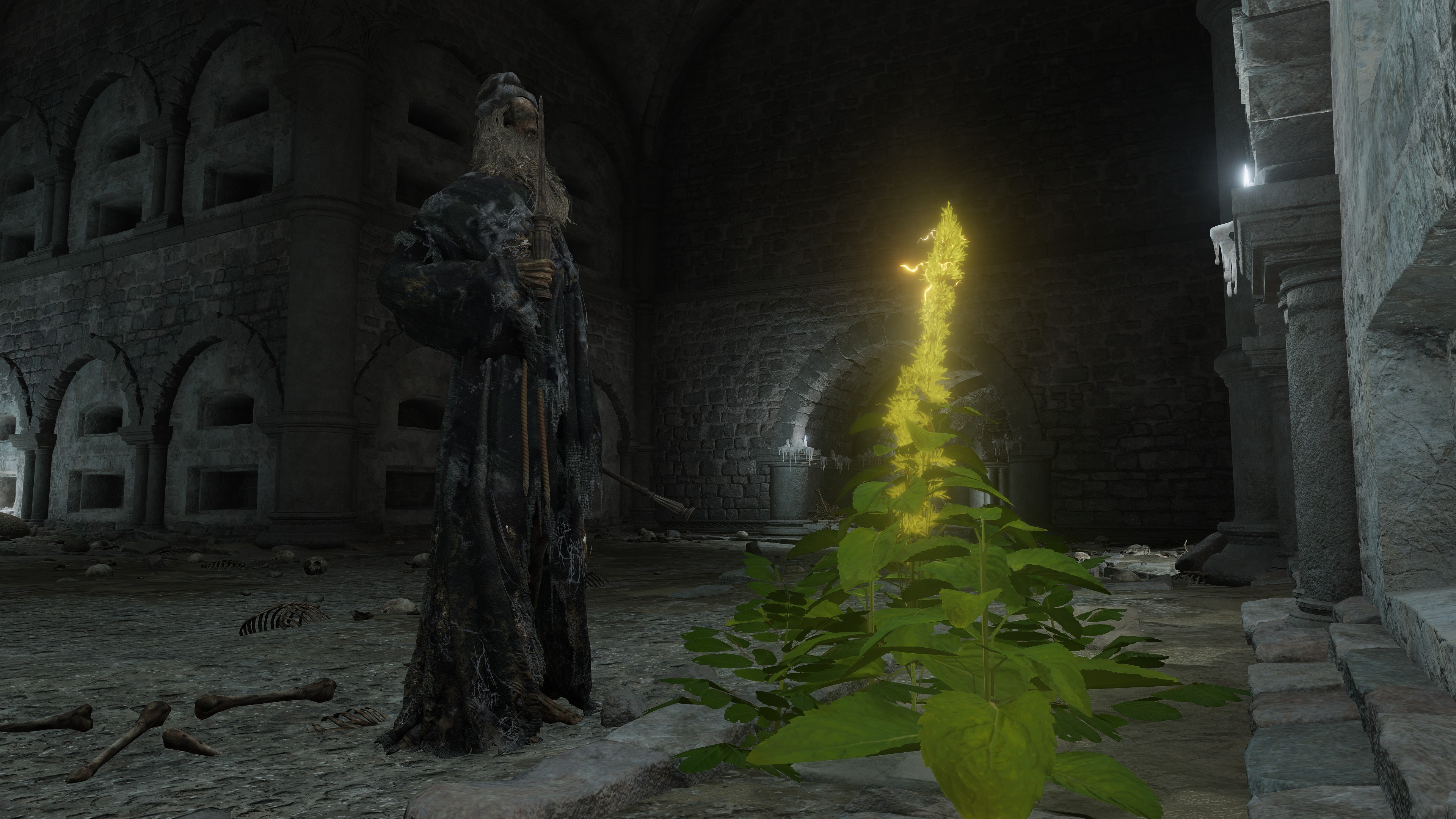
They aren’t alone. Joining the knights in the catacombs are sorcerers. Despite their corpse-like appearance, these men aren’t counted among the living dead, though they definitely bear a deep association with death. Cradled in their robes, clinging to their chests, rests a dead baby, the face practically a skull. Wherever they retrieved it from, the symbolism is obvious. Fia refers to the Mending Rune of Death as Godwyn’s “child”, so harboring a dead baby signifies their own solidarity with the planned Age of the Duskborn. To that end, the sorcerers have followed the Prince of Death’s guard into the catacombs, living an ascetic’s life with their simple dagger and wand as they become covered in cobwebs and fungi. Asceticism is guaranteed the comparison, since their staves lack any glintstone at the tip like the Staff of Loss. And yet, the death sorcery they devote themselves to learning in their lengthy seclusion has been nothing like the invisibility sorceries of Sellian ascetics.
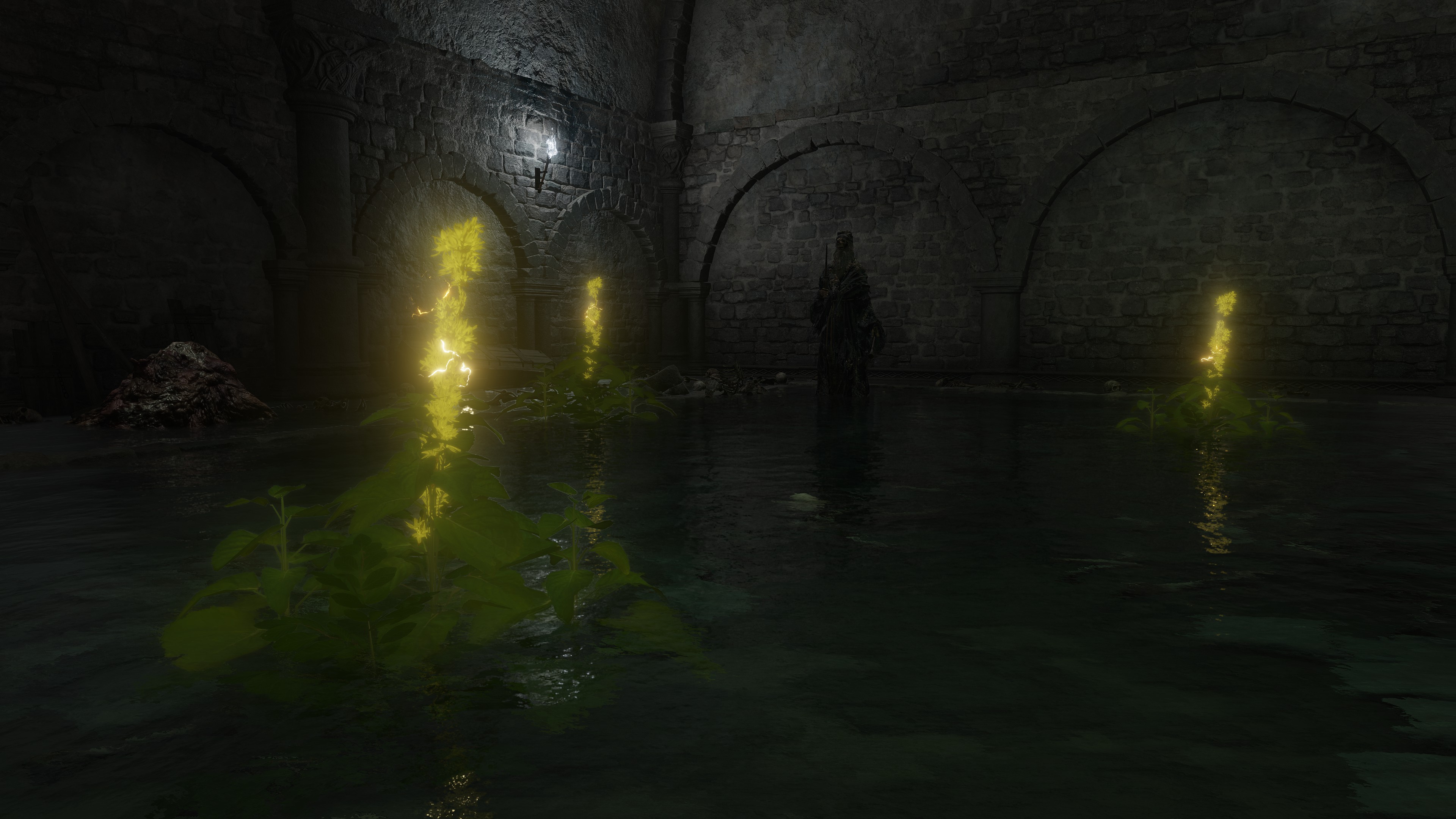
The spells produced with the wheel centipede sigil function similar to Glintstone Nails, only exhibiting pale gold crystal and ghostflame. The latter can be explained from the glovewort the sorcerer carries on his person, but the crystal is more curious. The combination of gold and death undeniably mirrors the state of both Godwyn and his sought-after child, but why channel it with a simple metal wand lacking crystal? The Prince of Death’s Staff empowers such arts with golden amber sullied by his black ooze. However, it may be because the catacomb sorcerers rely on an alternate source. Several surround themselves with the yellow fulgurblooms the Death Knights left in their wake, fighting through imps with their old tricks. Dressed like stereotypical medieval alchemists as they are, perhaps the sorcerers extract the gold from lightning, which conducts through metal. The sorcerers are likely erstwhile subscribers of Golden Order Fundamentalism, maybe even former Erdtree priests. Leveraging that expertise in intelligence and faith, they may work with plants to pioneer new death sorcery, arts of gold and shadow.
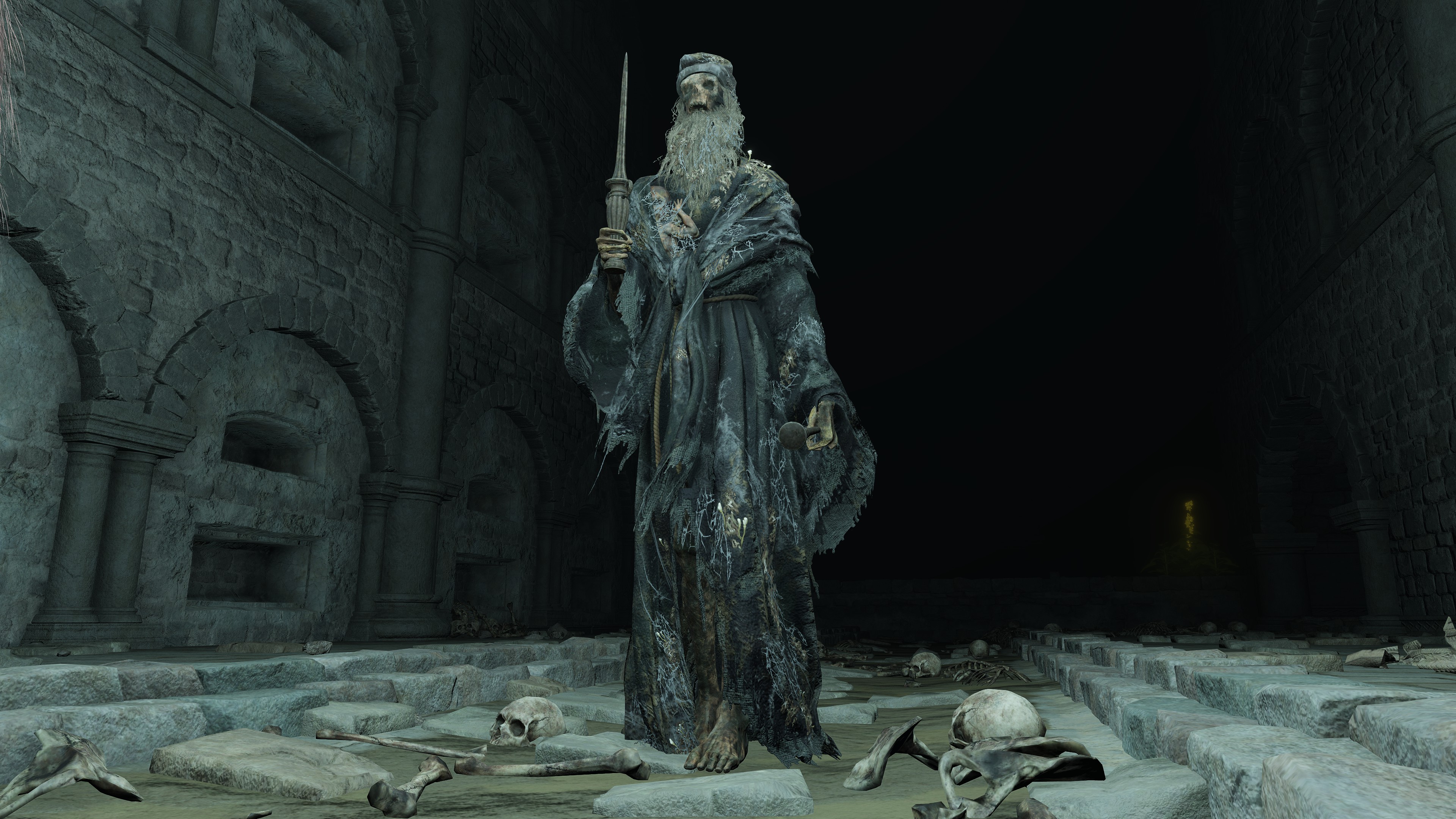
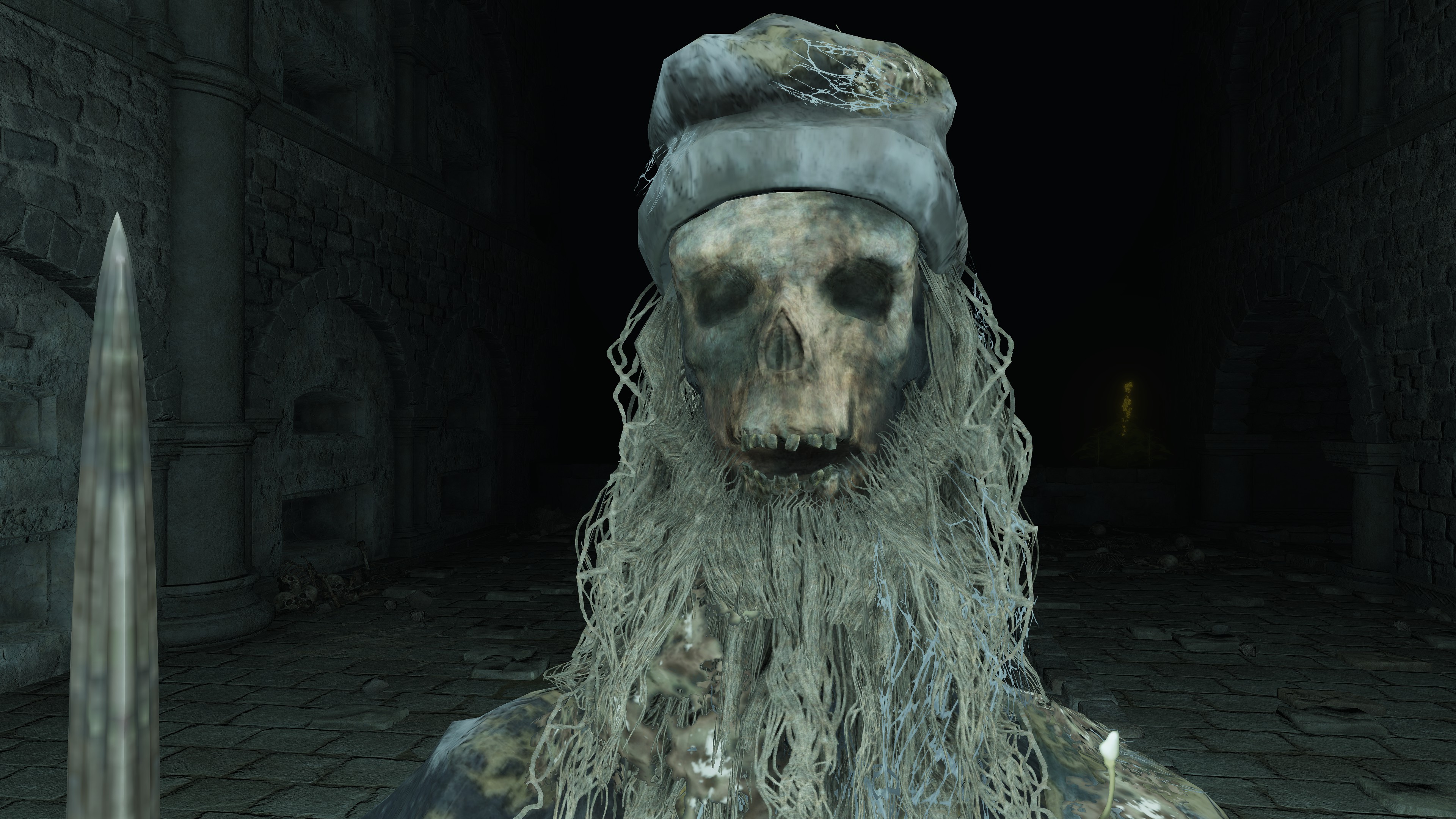
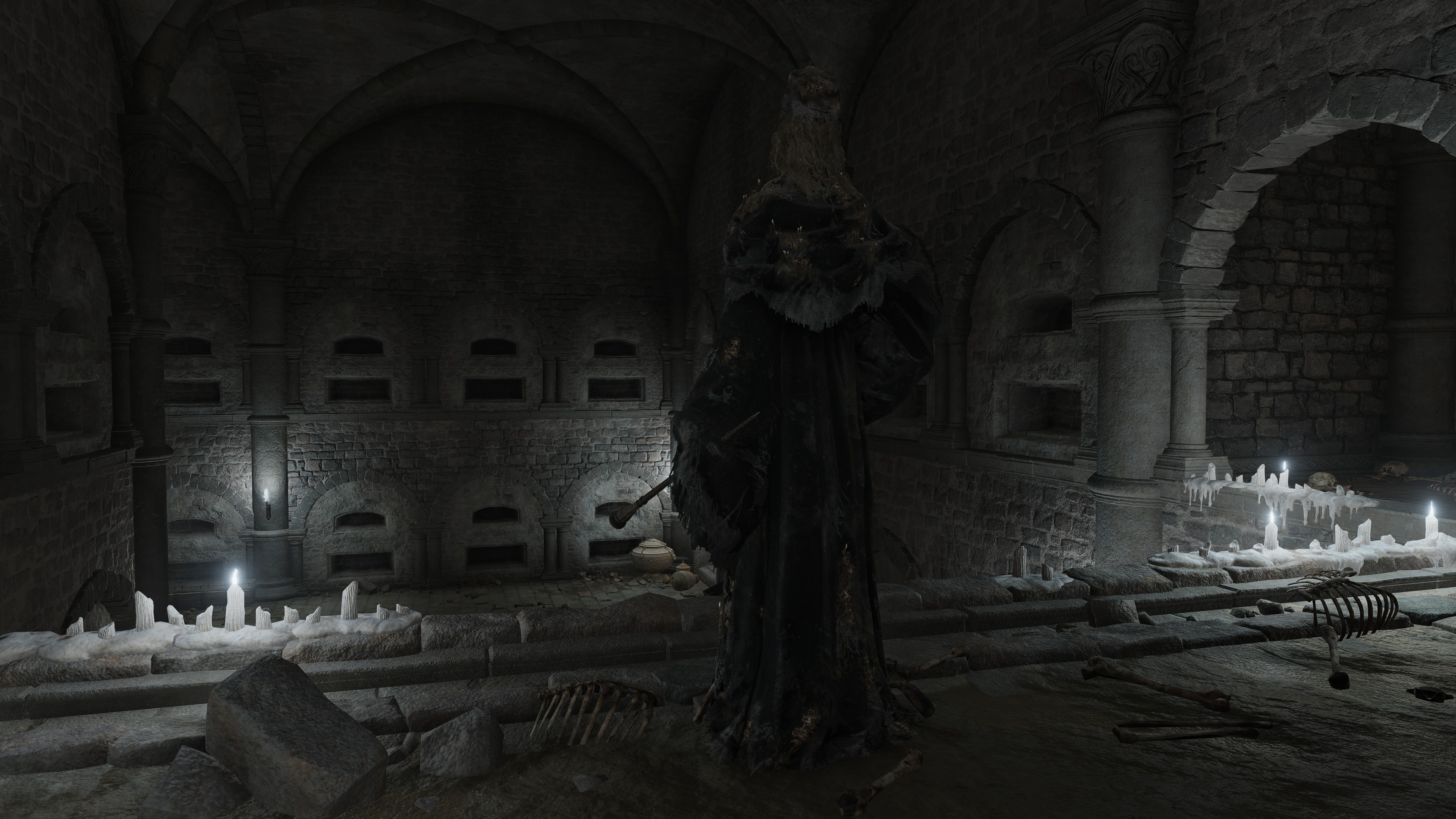
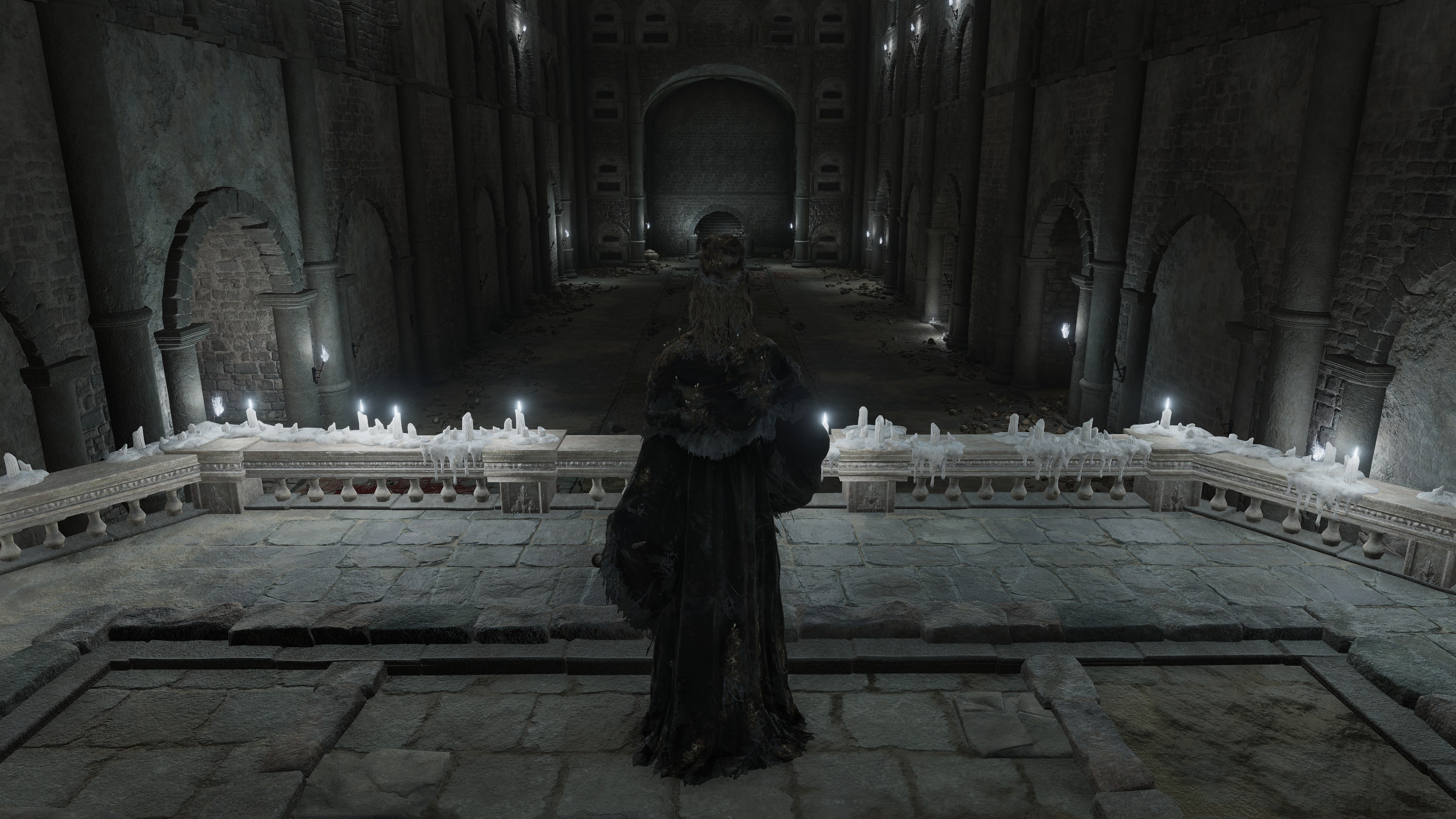
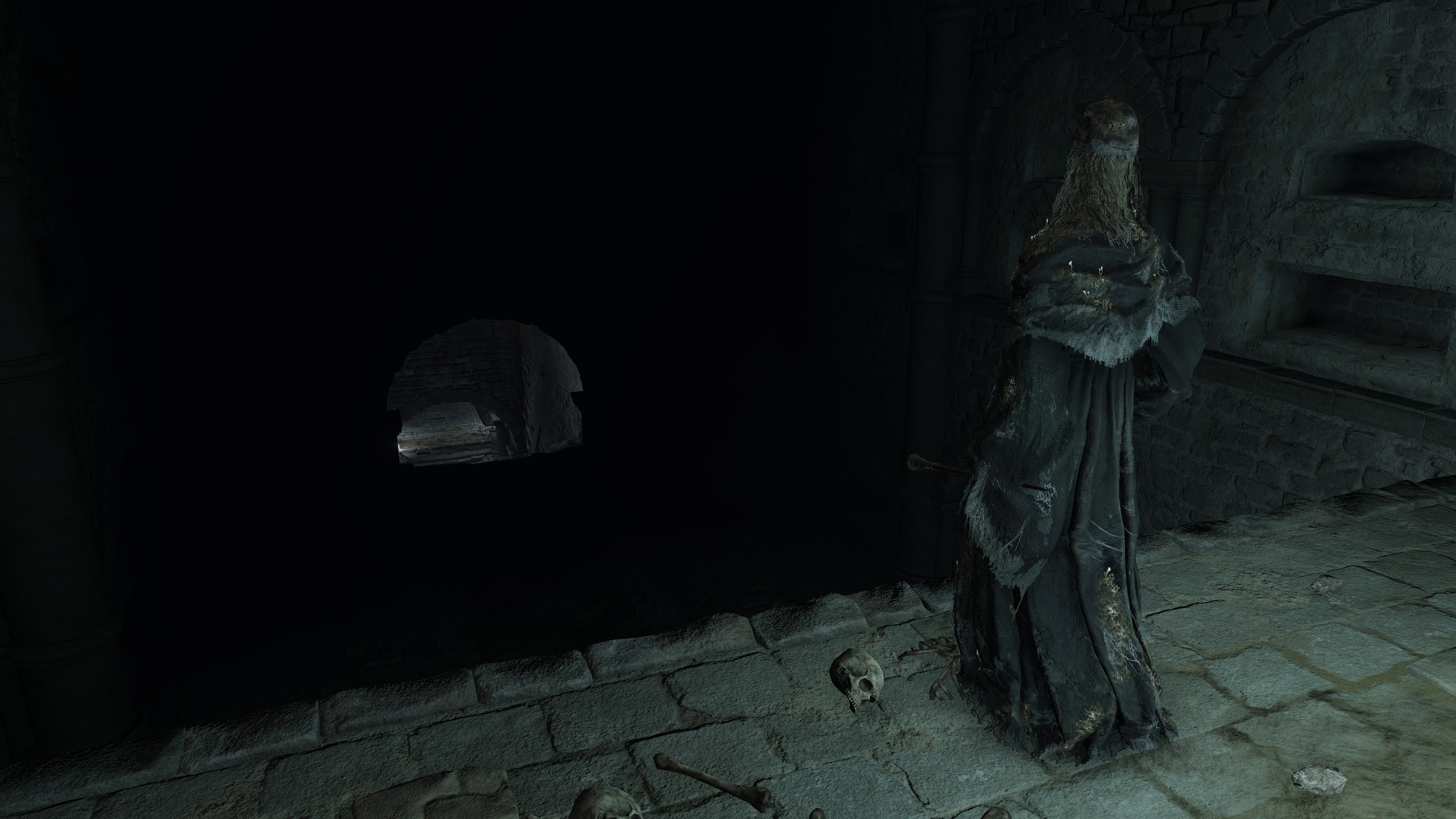
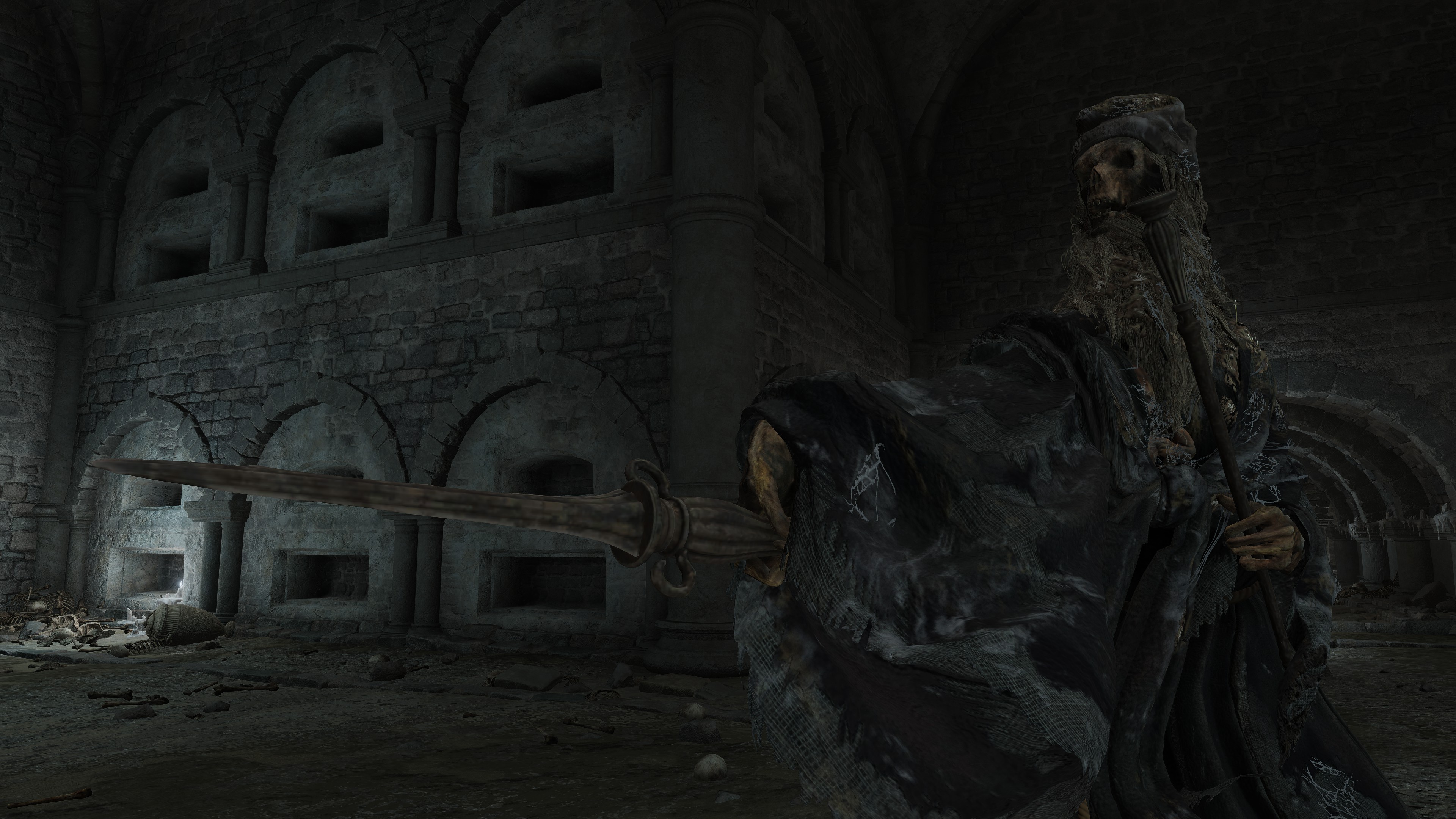
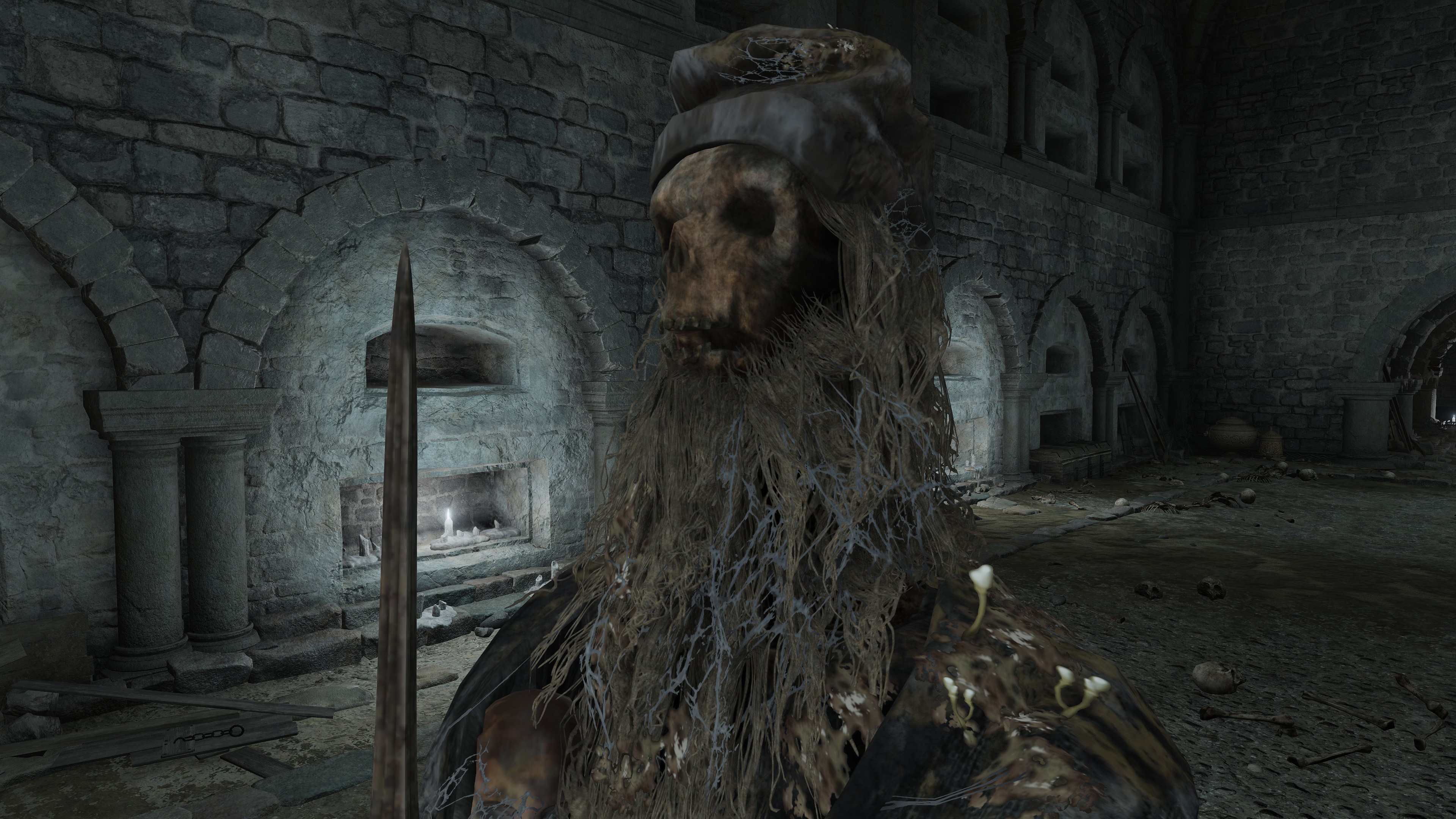
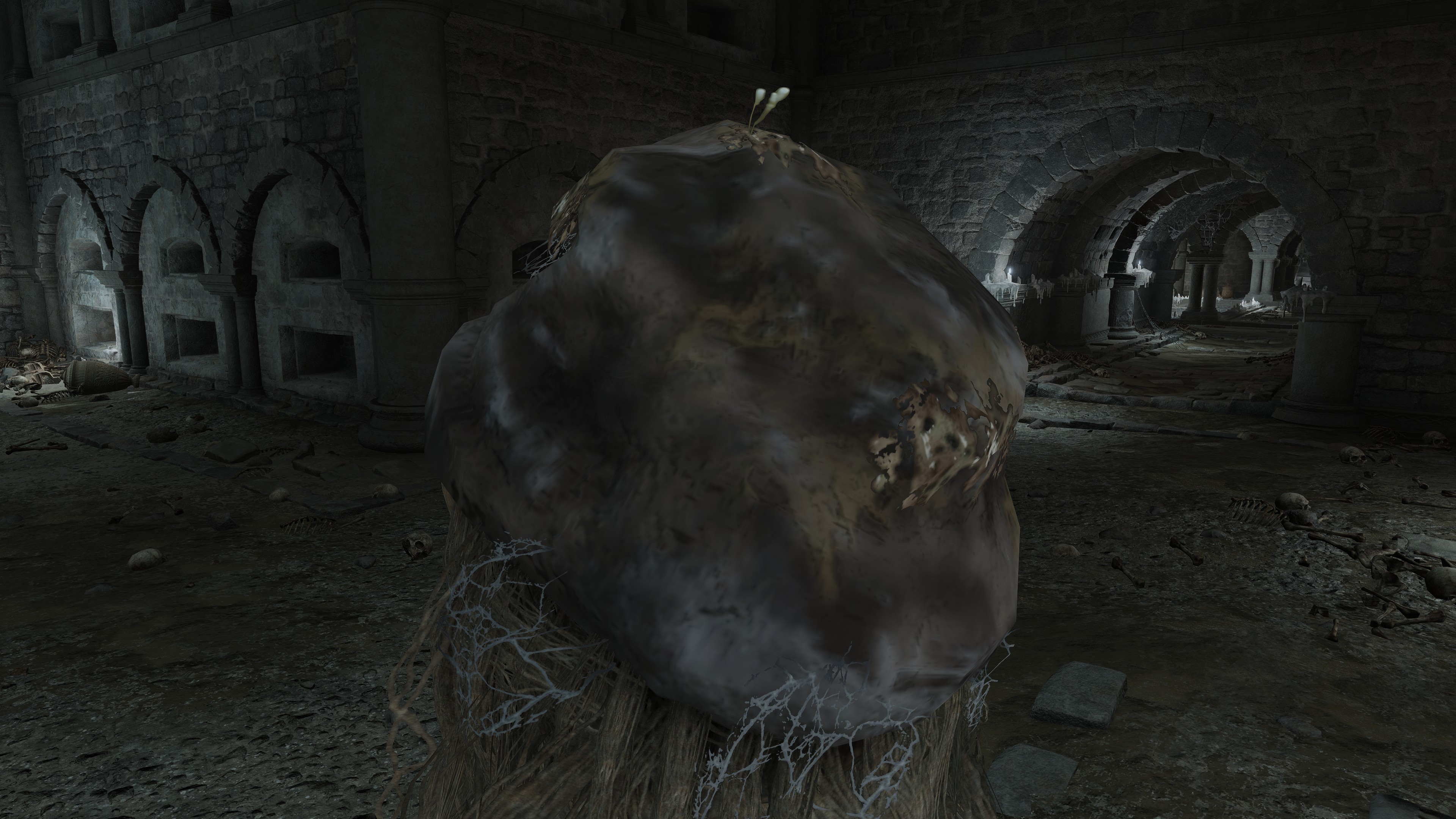
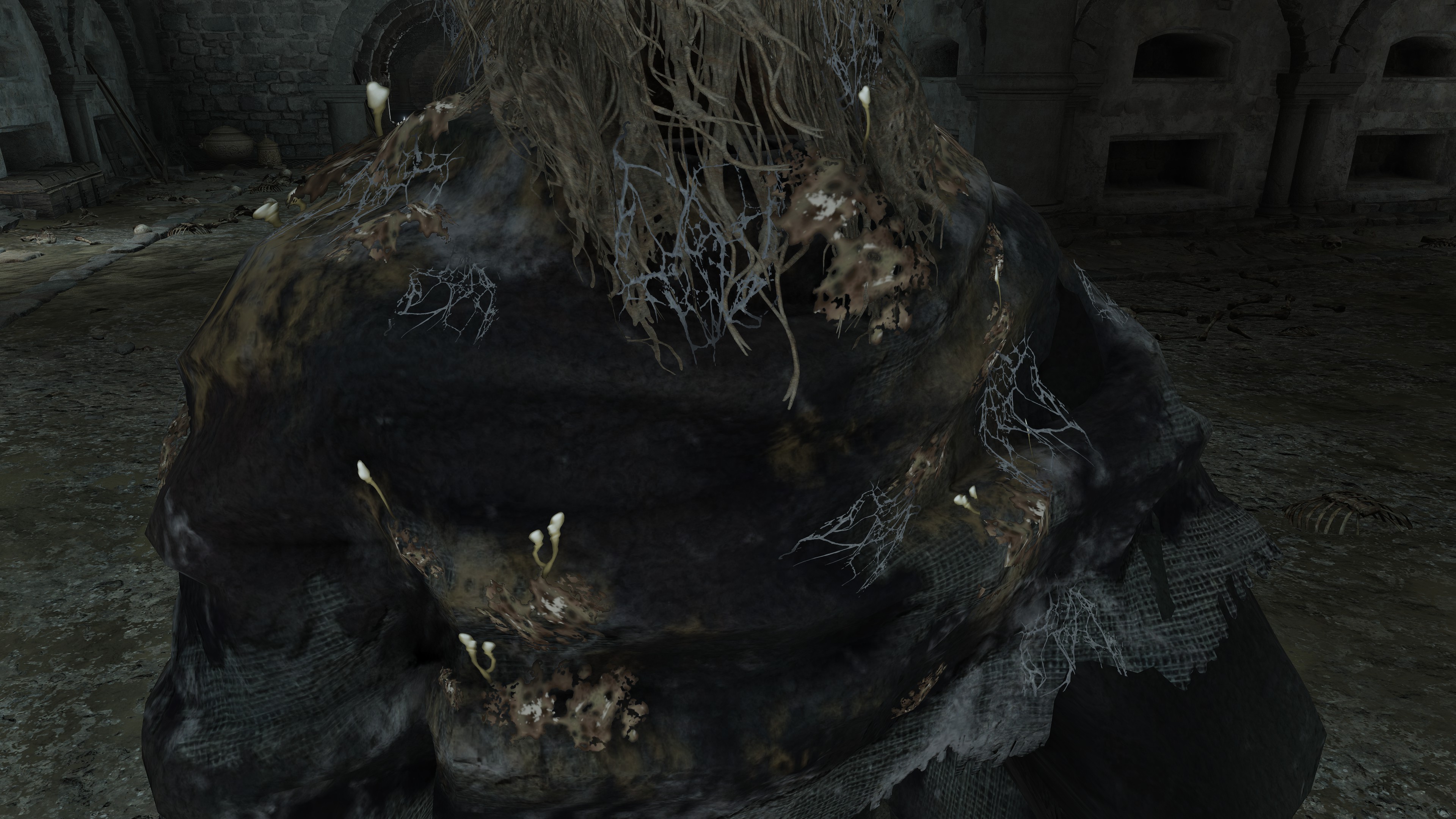
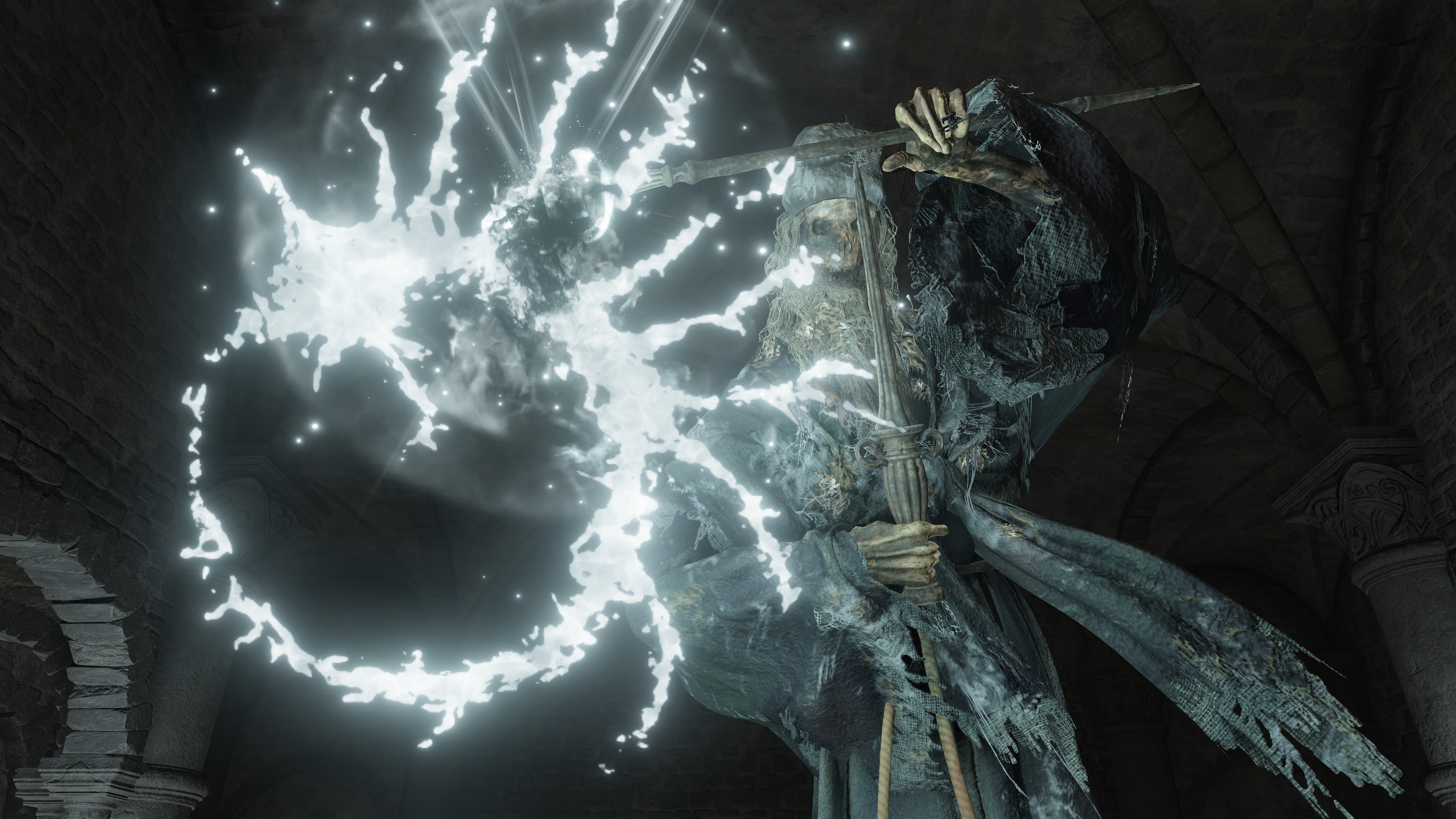
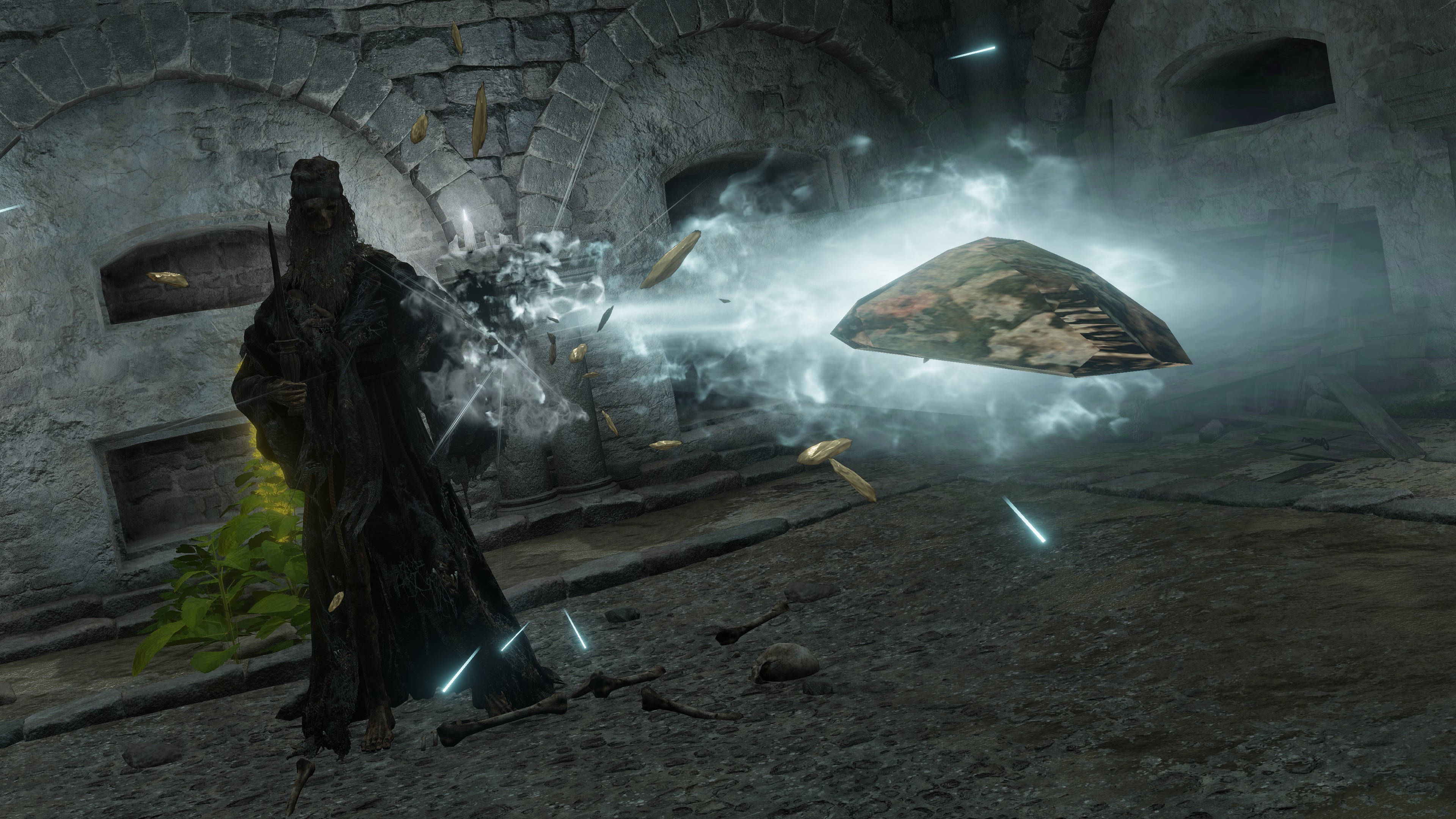
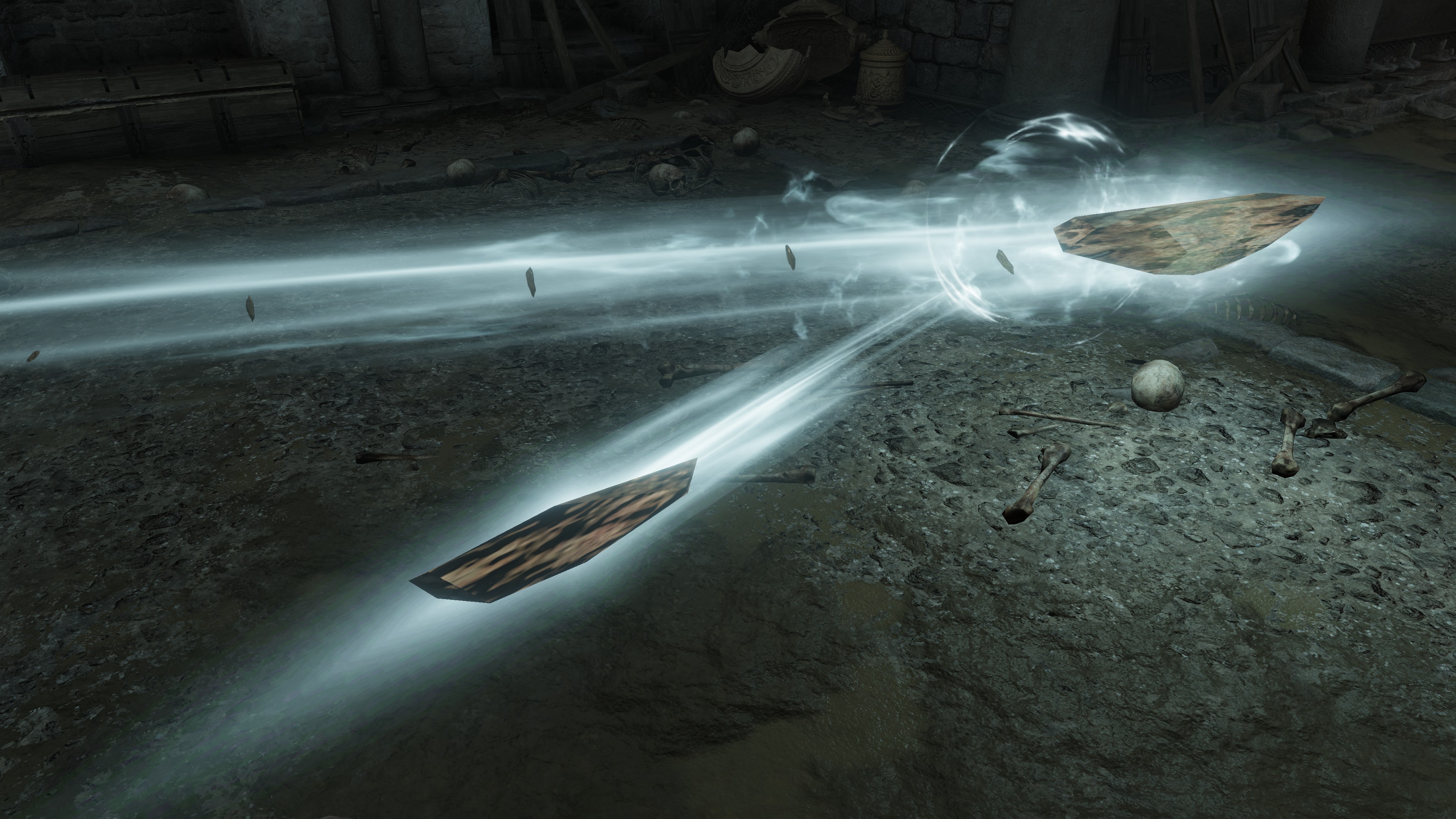
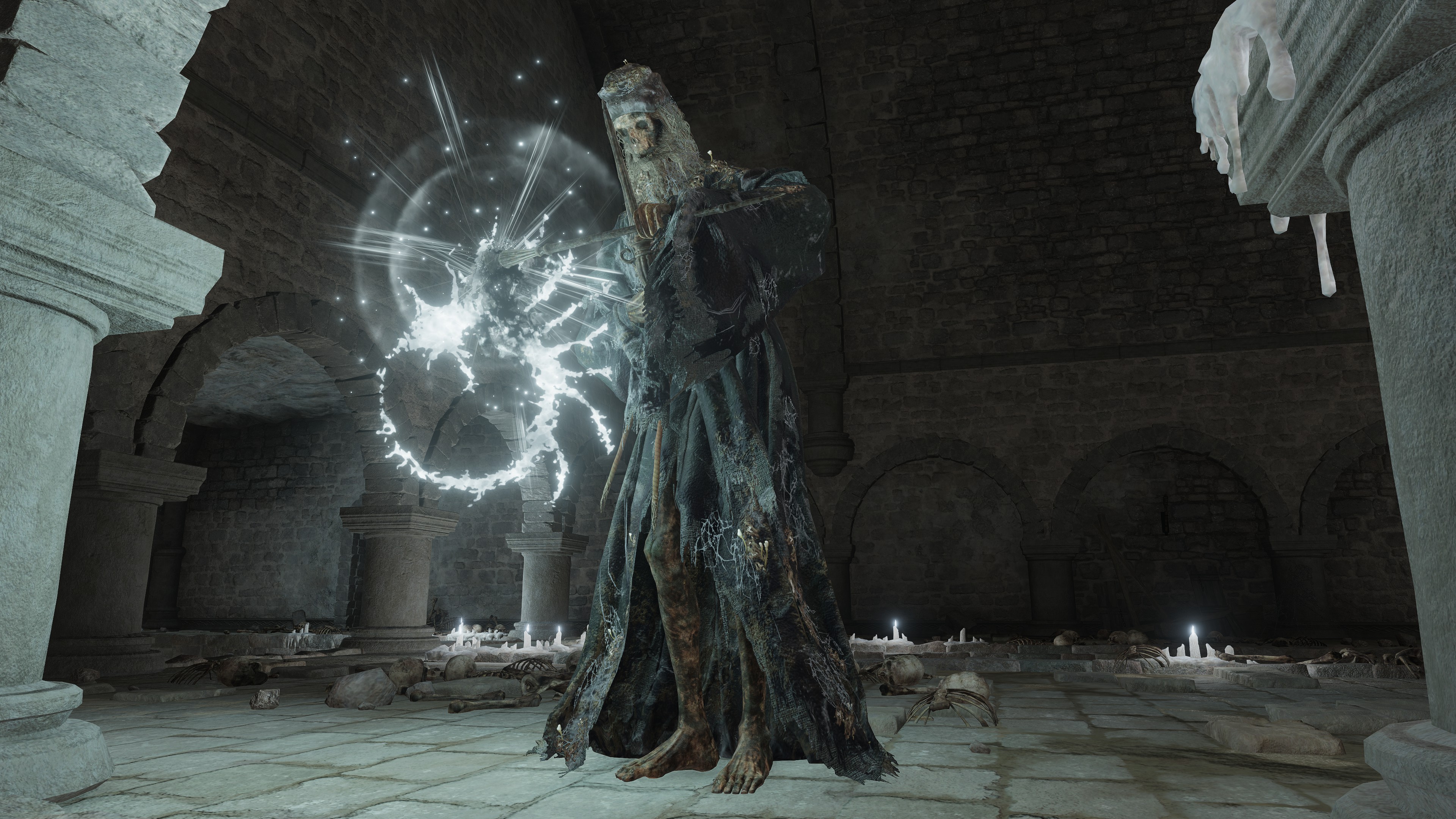
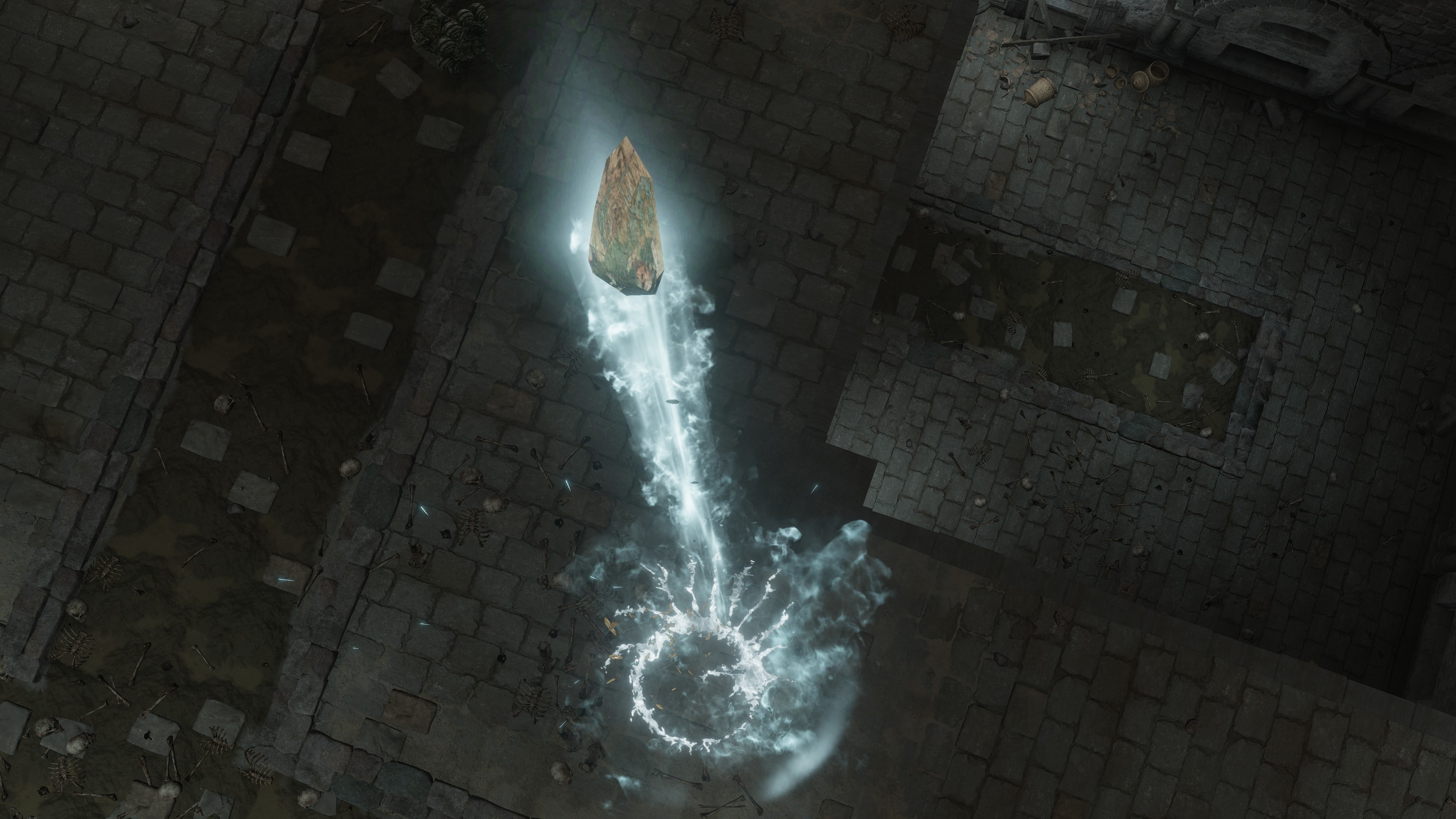
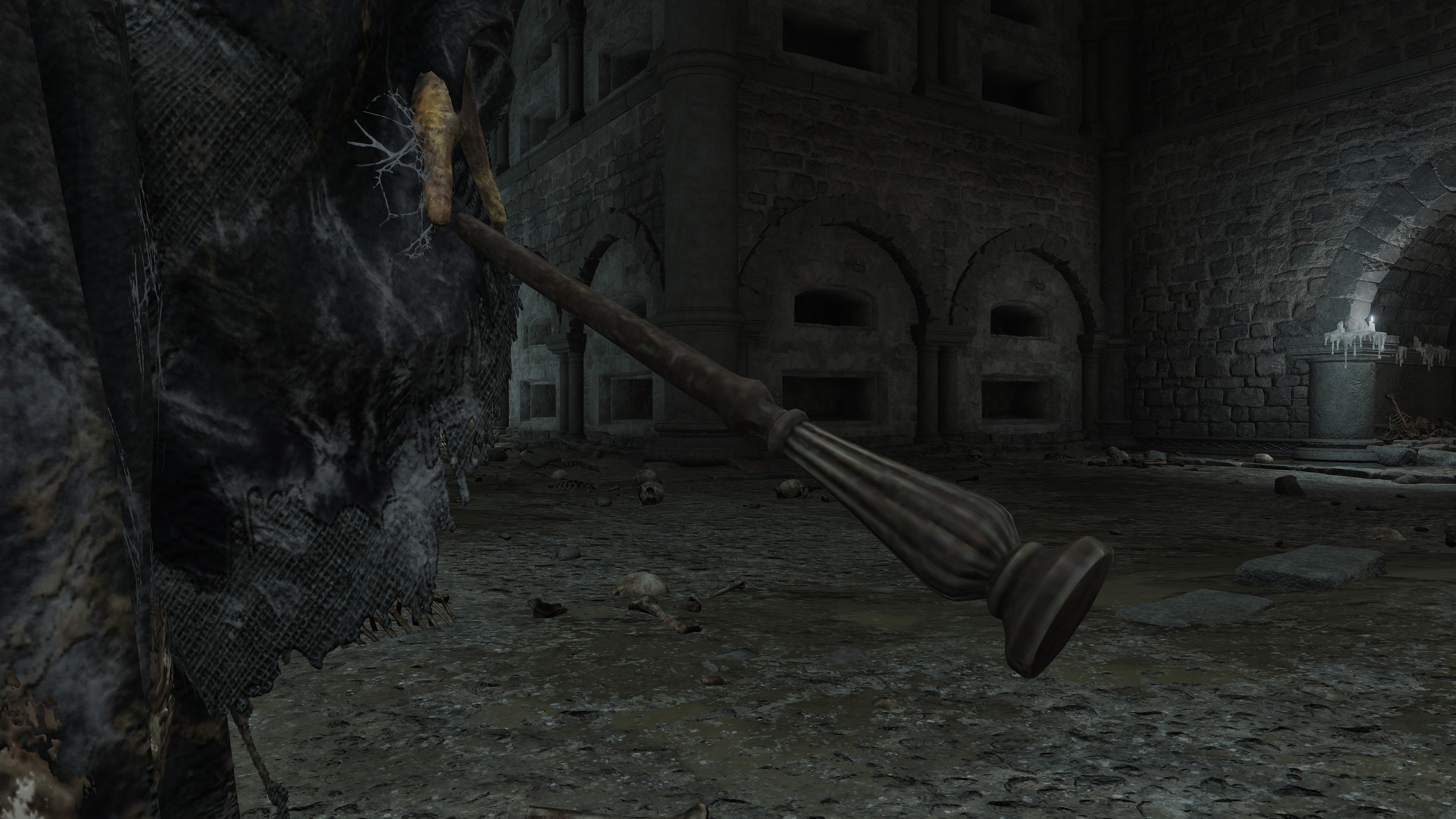
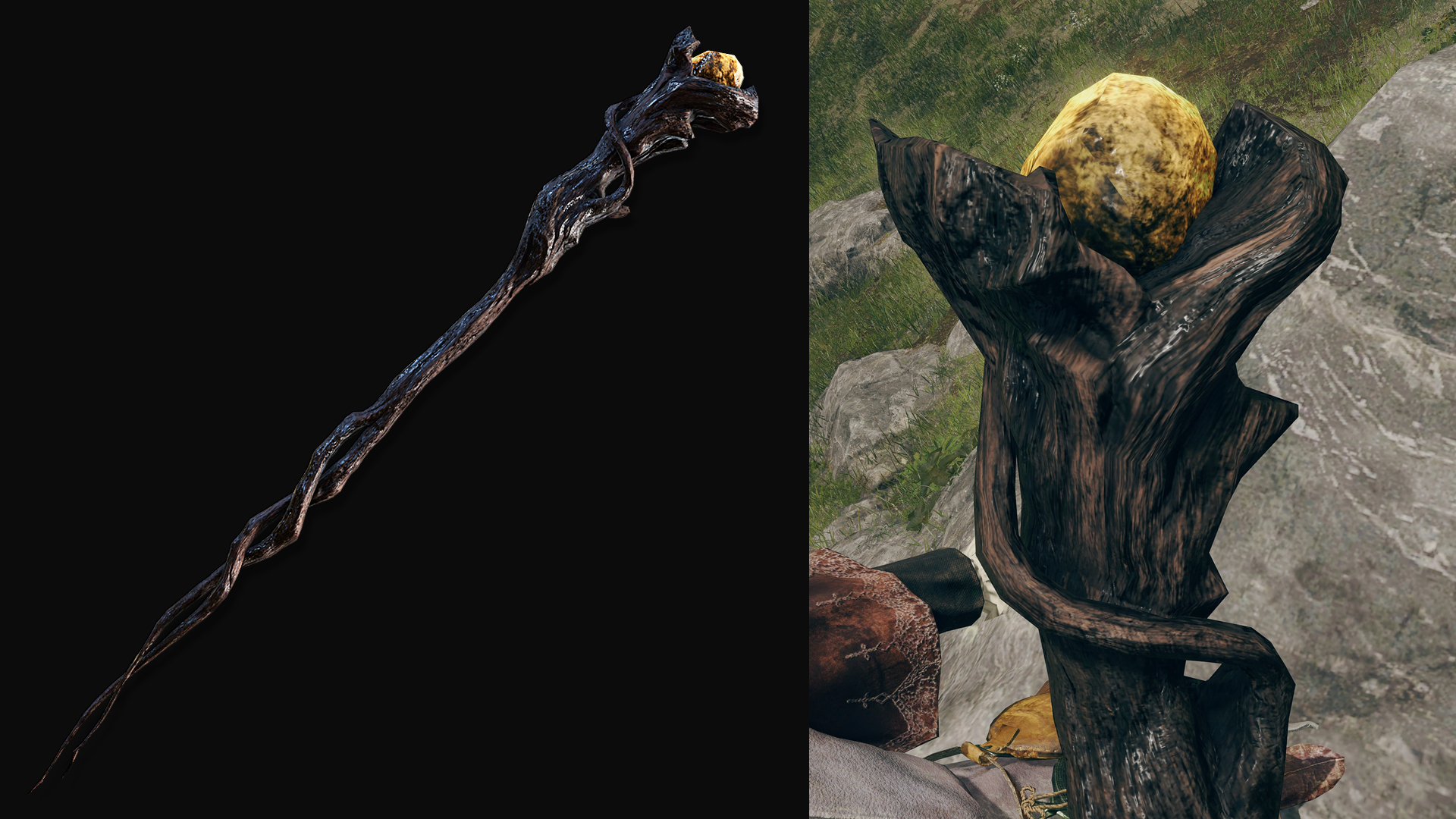
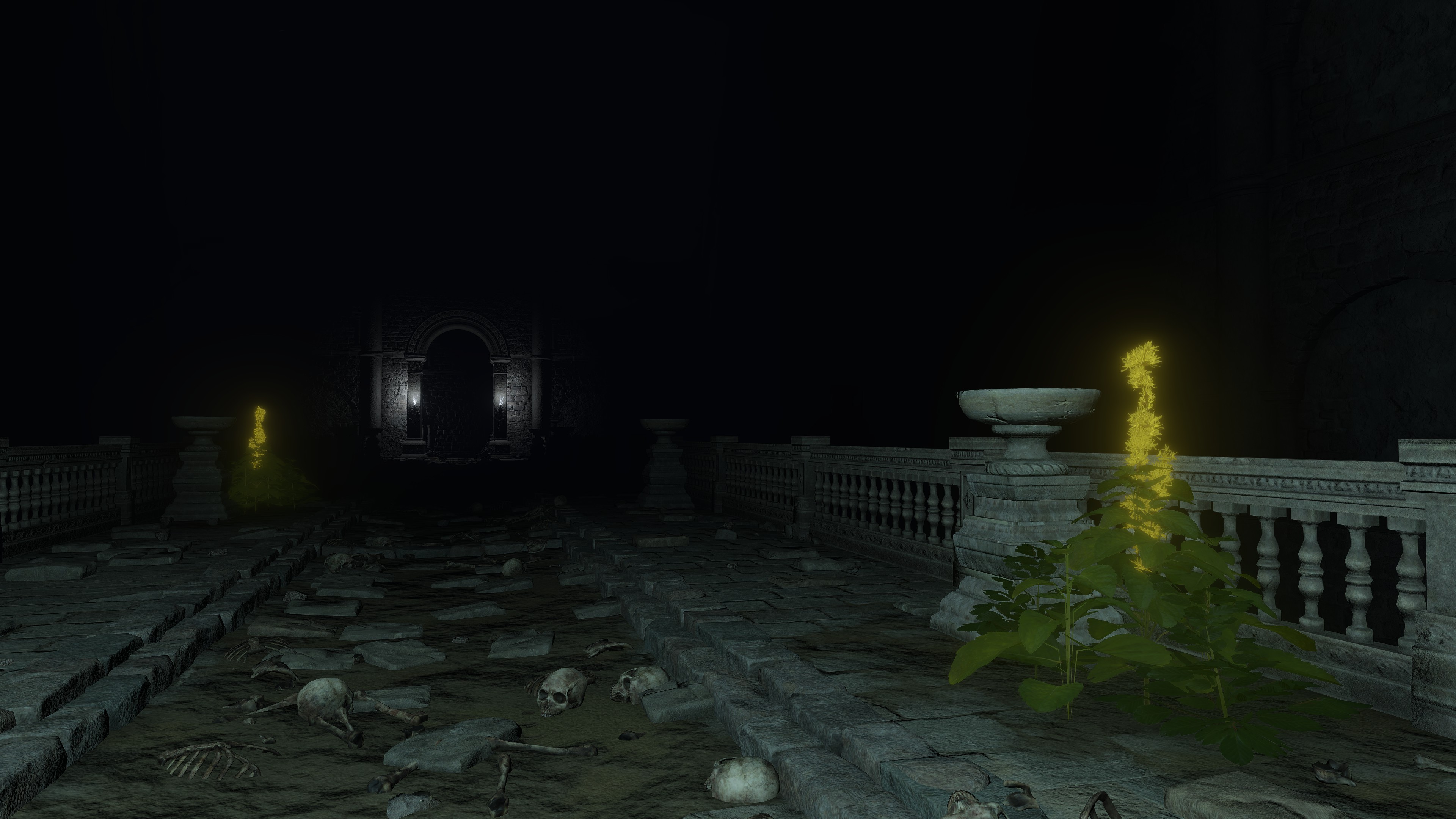
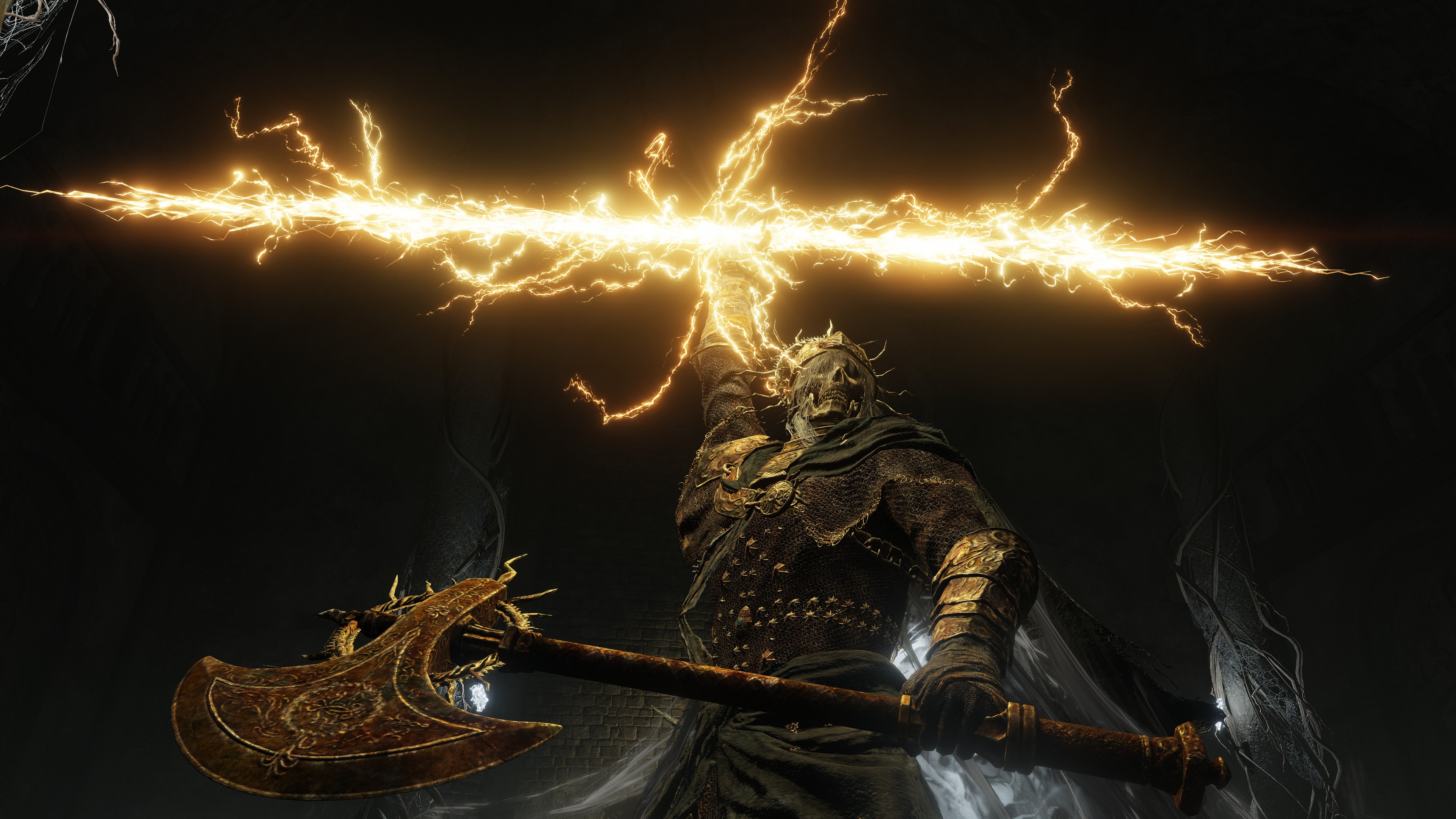
Staff embedded with dirtied amber. It is said to be part of the Death Prince. Enhances death sorceries.
It is one of the heretical sorcery staves which the academy doesn’t recognize, so boosts the might of sorceries with not just intelligence but also faith.
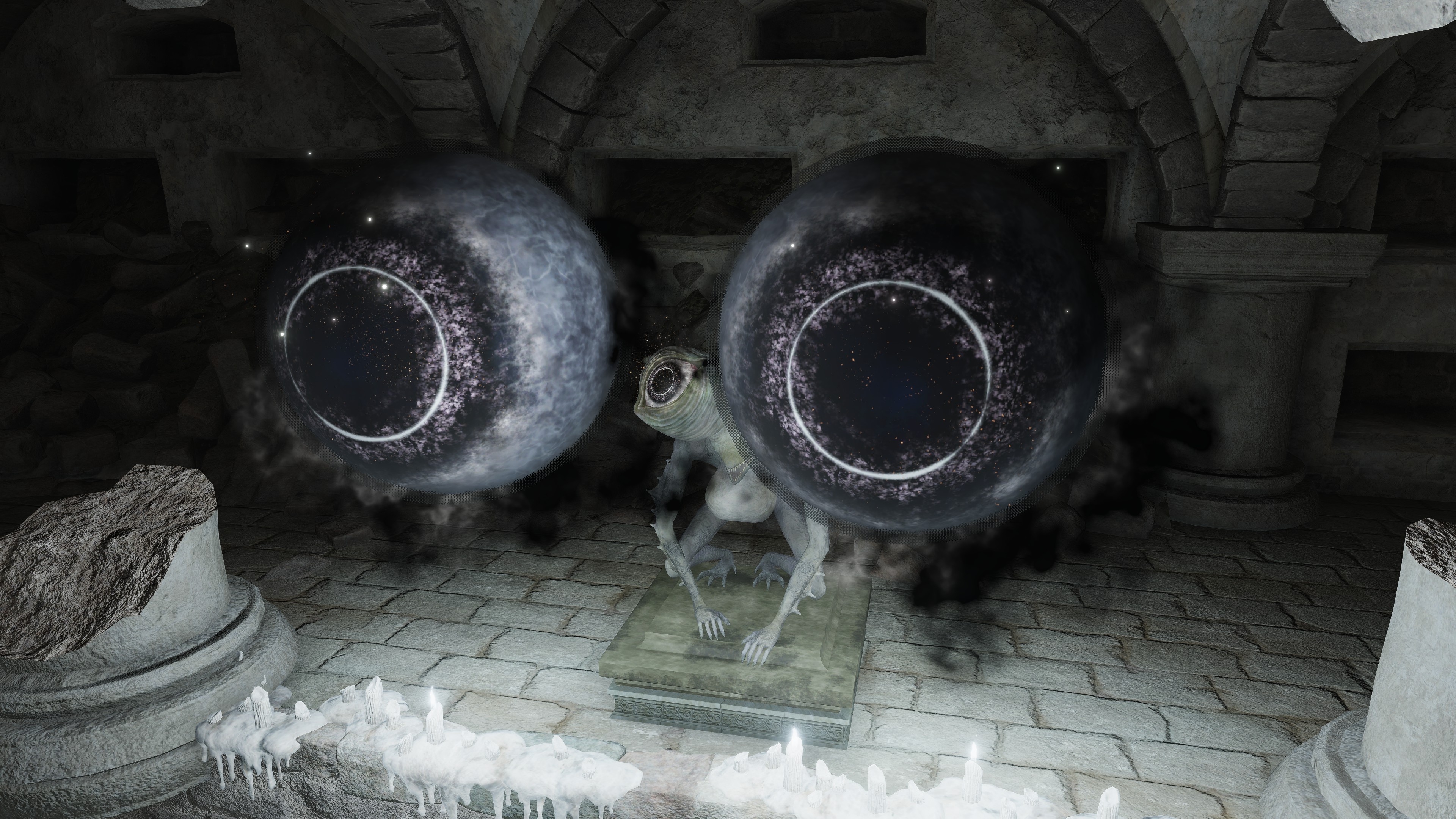
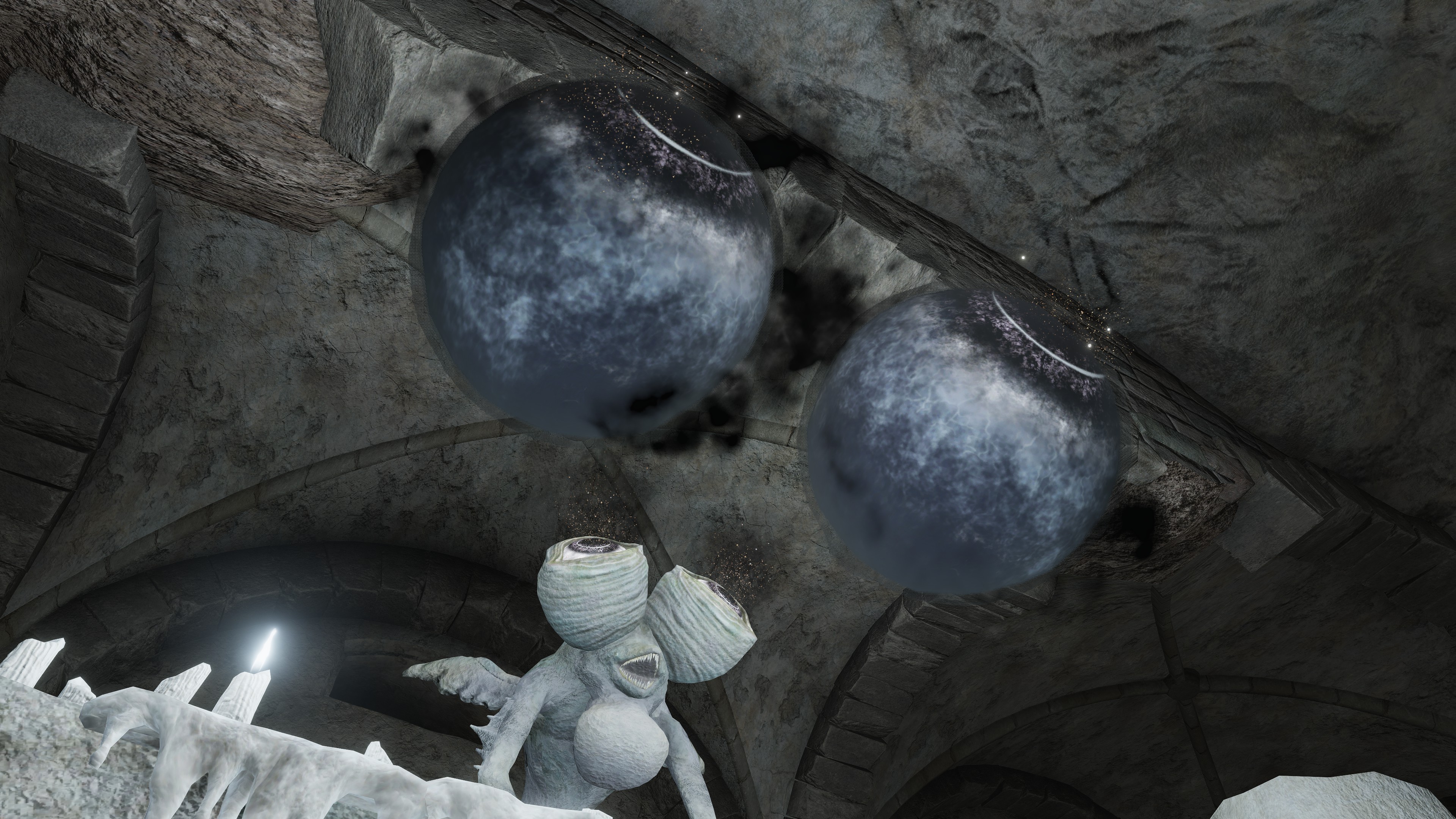
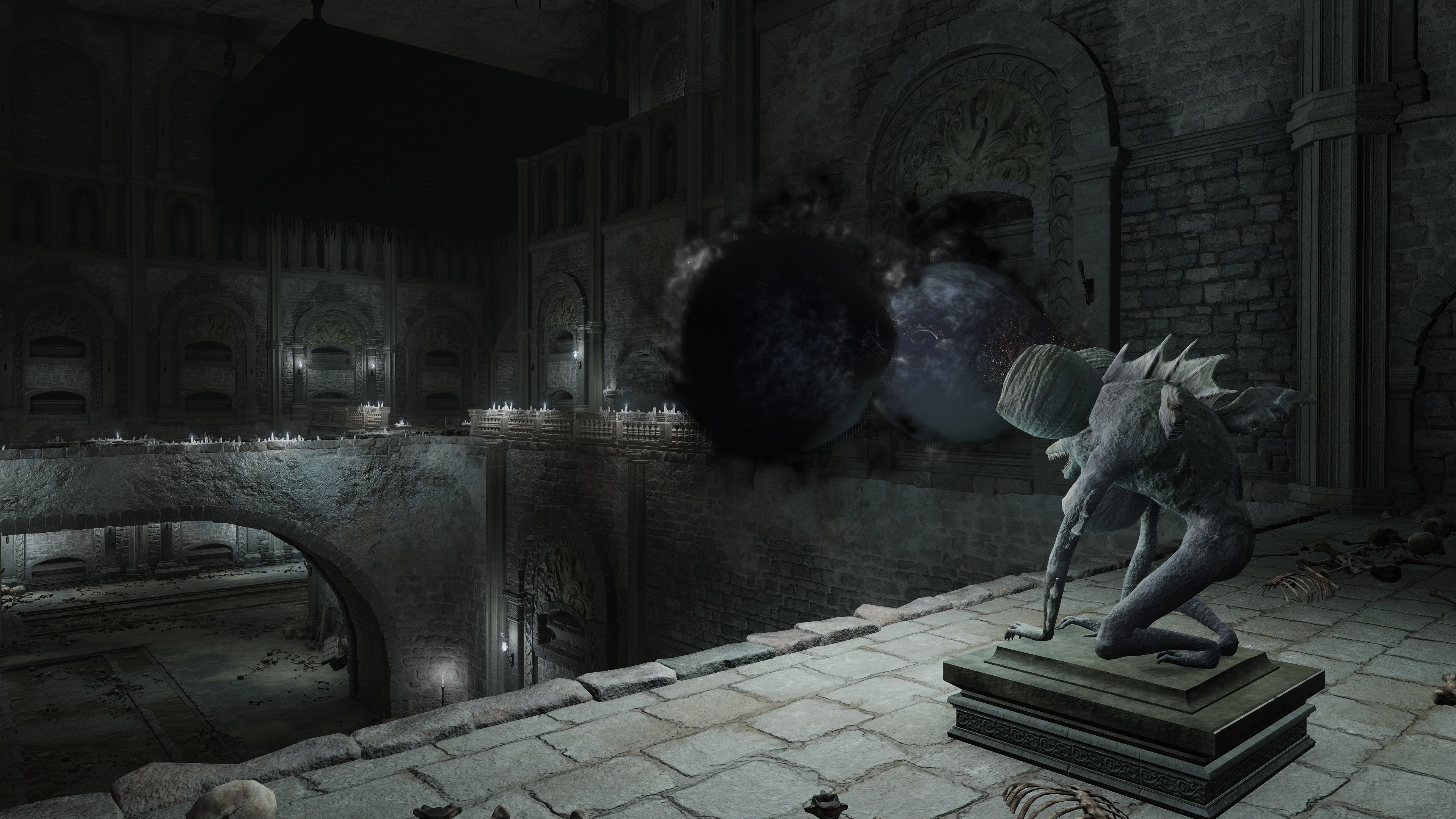
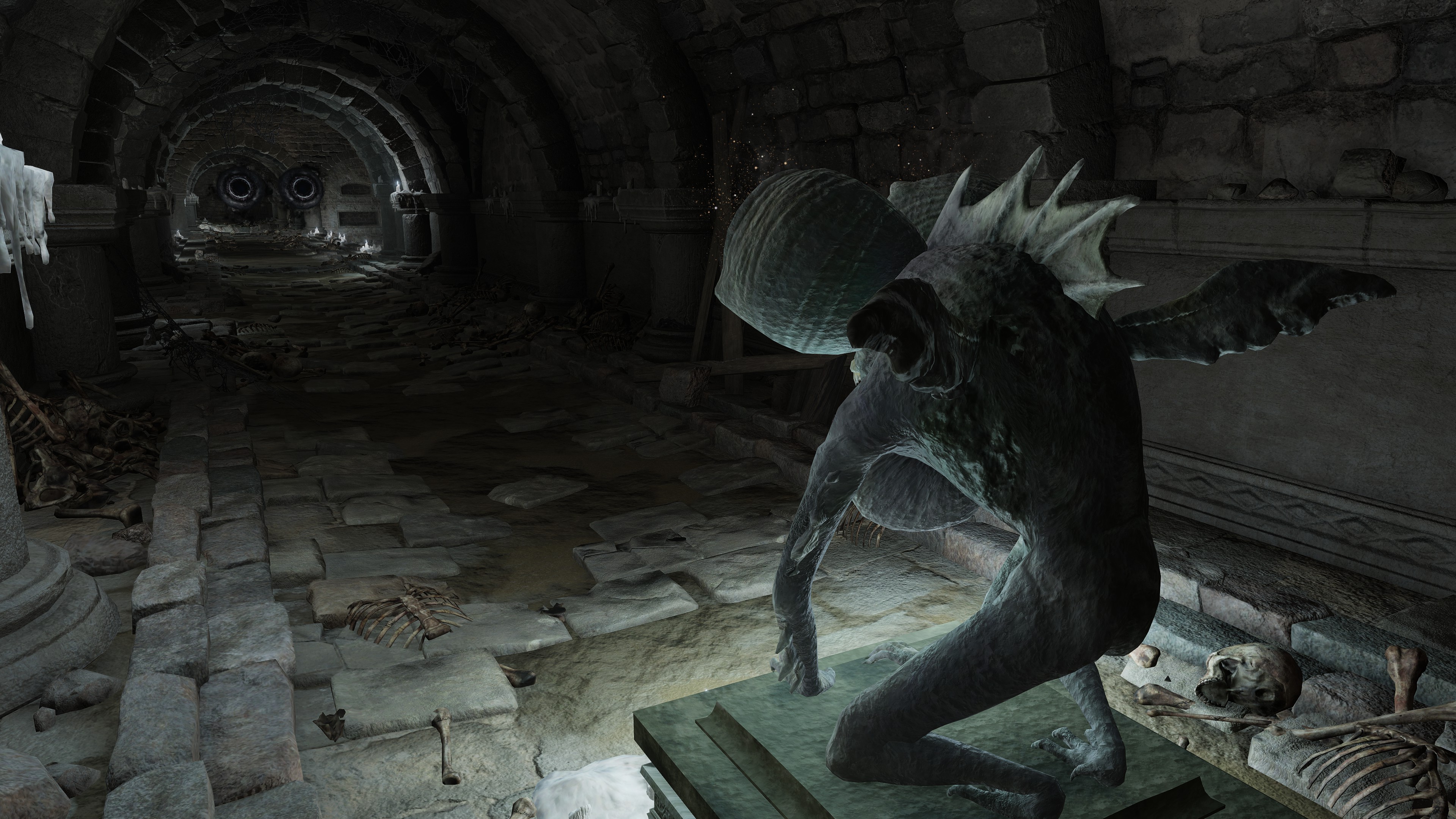
The need for golden lightning explains their choice to follow the Death Knights into the Realm of Shadow, no doubt. And from there, they have spent their time studying death in whatever form they find it. In their case, it mainly involves conjuring golden crystals which break apart as they are consumed by the flames of Death. However, there are also other points of study, like the basilisks. In the Scorpion River Catacombs, traps have been set up, retrofitting an imp statue with a basilisk head and fins. This comes complete with eyes that project actual eyes of Death, spreading the ailment to anything within the path of their “vision” as the floating black messes patrol back and forth through the chambers. The local sorcerers are the only party with the interest and skill to create such a trap, and there are a handful of live basilisks in this specific catacomb to harvest eyeballs from. Studies like this may also be why Knights have learned how to channel the Death flowing from their cloaks, even gathering it in the hand to drain life from those they grab — revitalizing them as they hope the other curse mark will for Godwyn.
Also following them were the ancient dragon knights hoping to learn their technique as part of their former cult. The recipes they compiled can be collected from corpses in the Fogrift and Scorpion River Catacombs, and those say much about their journey. The knights of Leyndell were able to learn how to craft better lightning grease, but also the Red Lightning Pot, which requires the party travel as far as Jagged Peak to observe Farum Azula’s traitorous kindred. Clearly, they have learned much from the Realm of Shadow as Godwyn’s personal guard searched for catacombs across the land. At the same time, they evidently care not for the knights’ new dedication to the Prince of Death, and would ironically meet their end in the catacombs. They were just along for the ride, the Golden’s bodyguard perhaps hoping to convert them from the experience or just sympathetic to their fervent love for lightning.
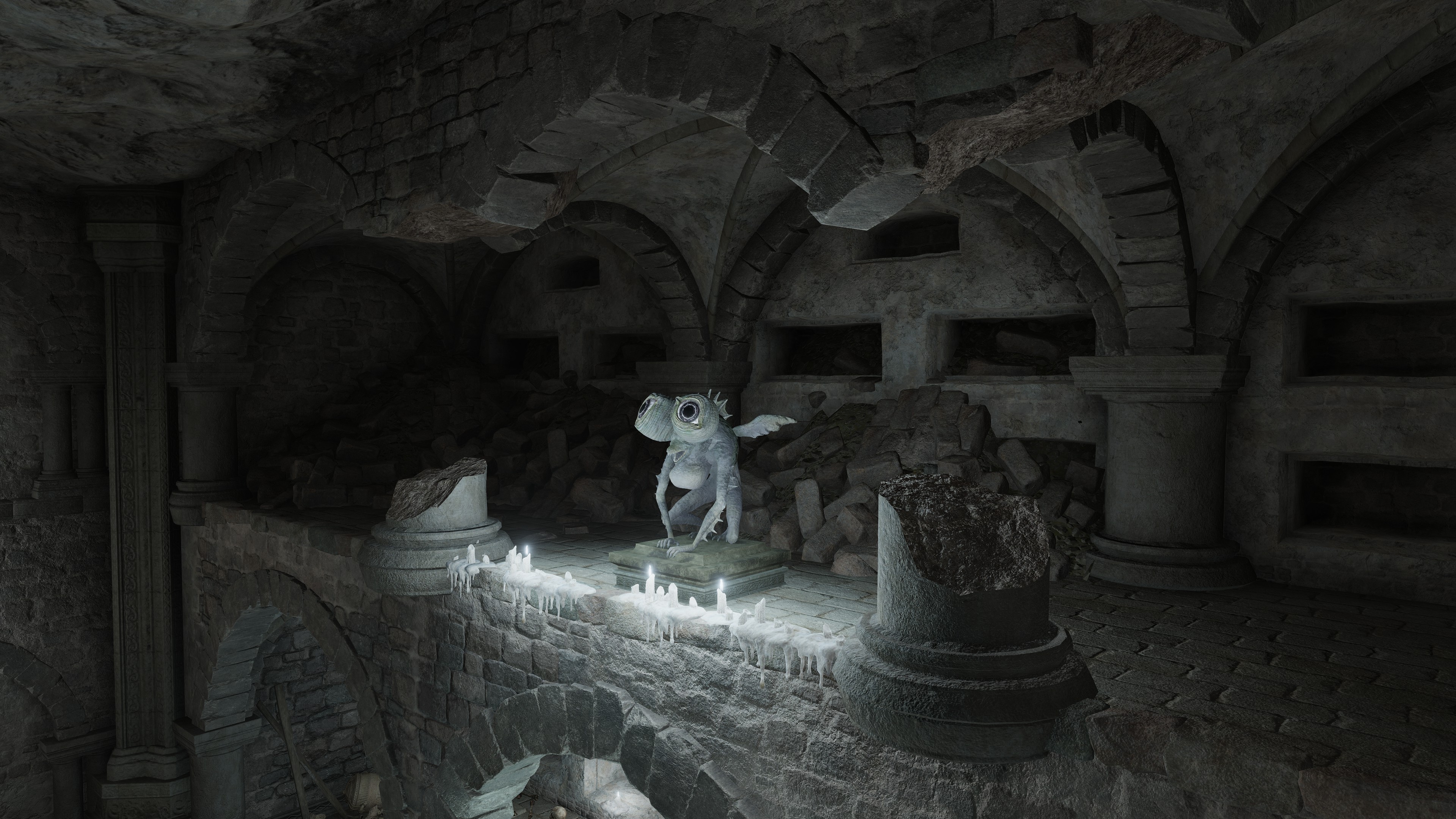
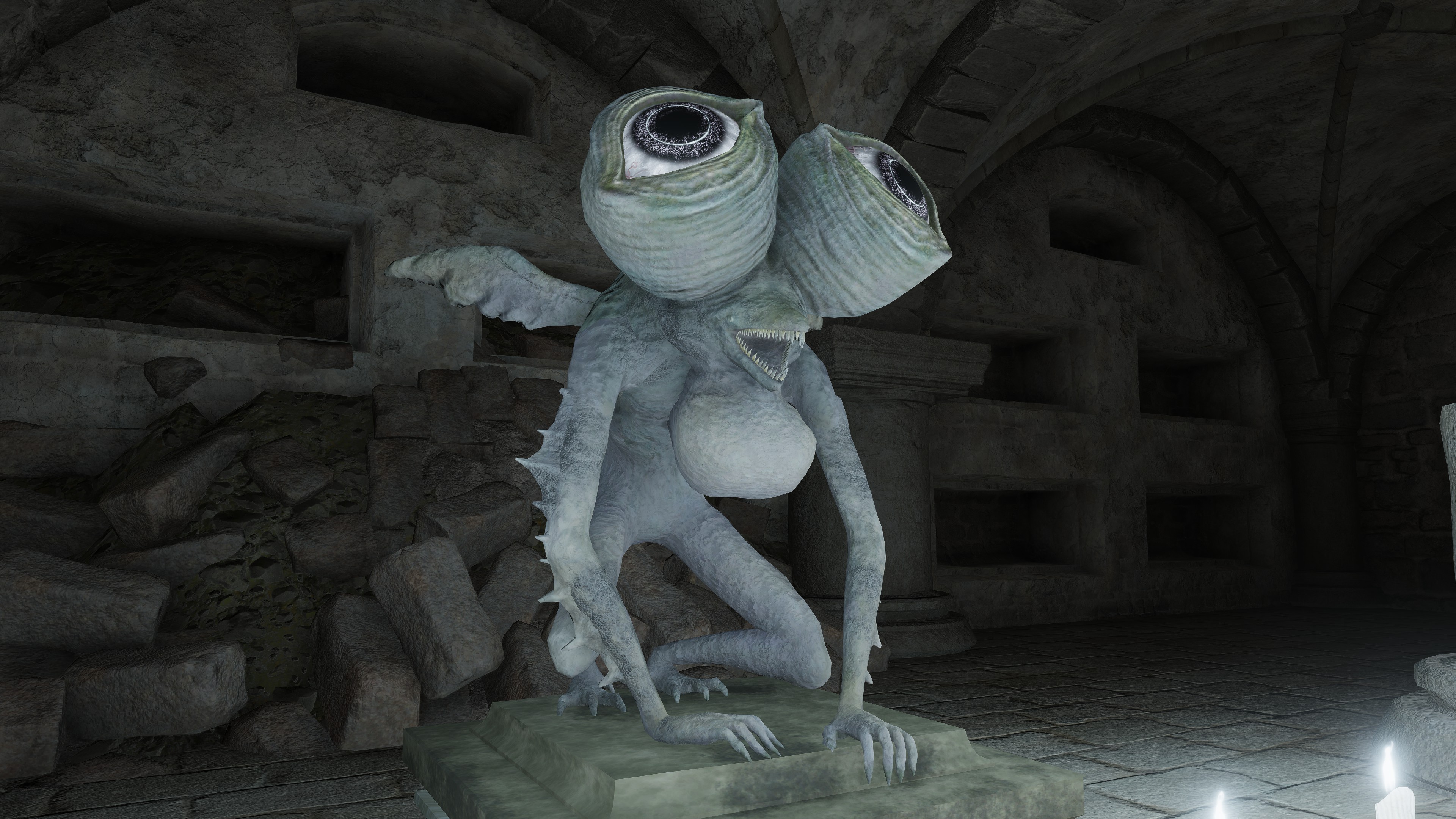
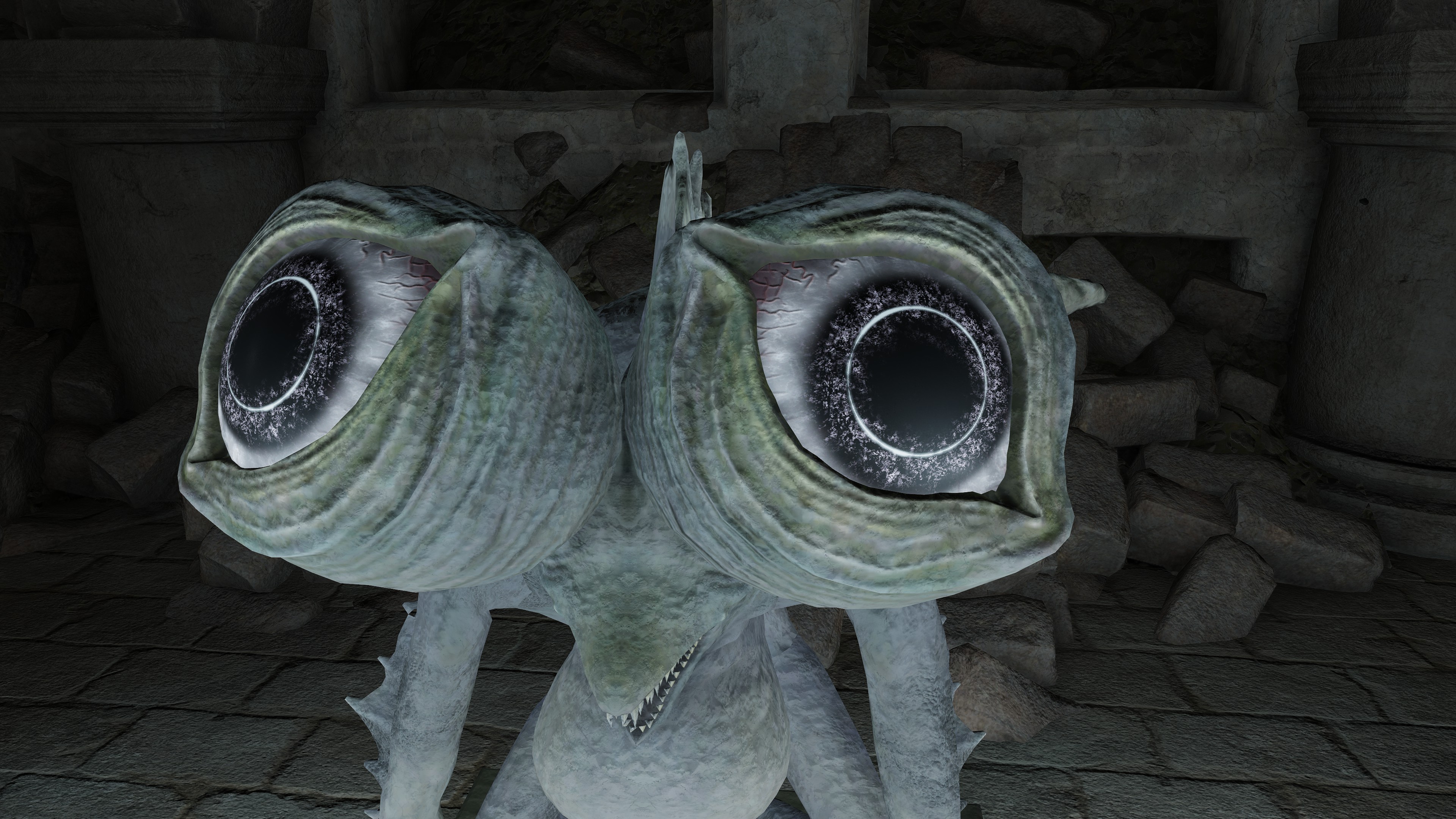
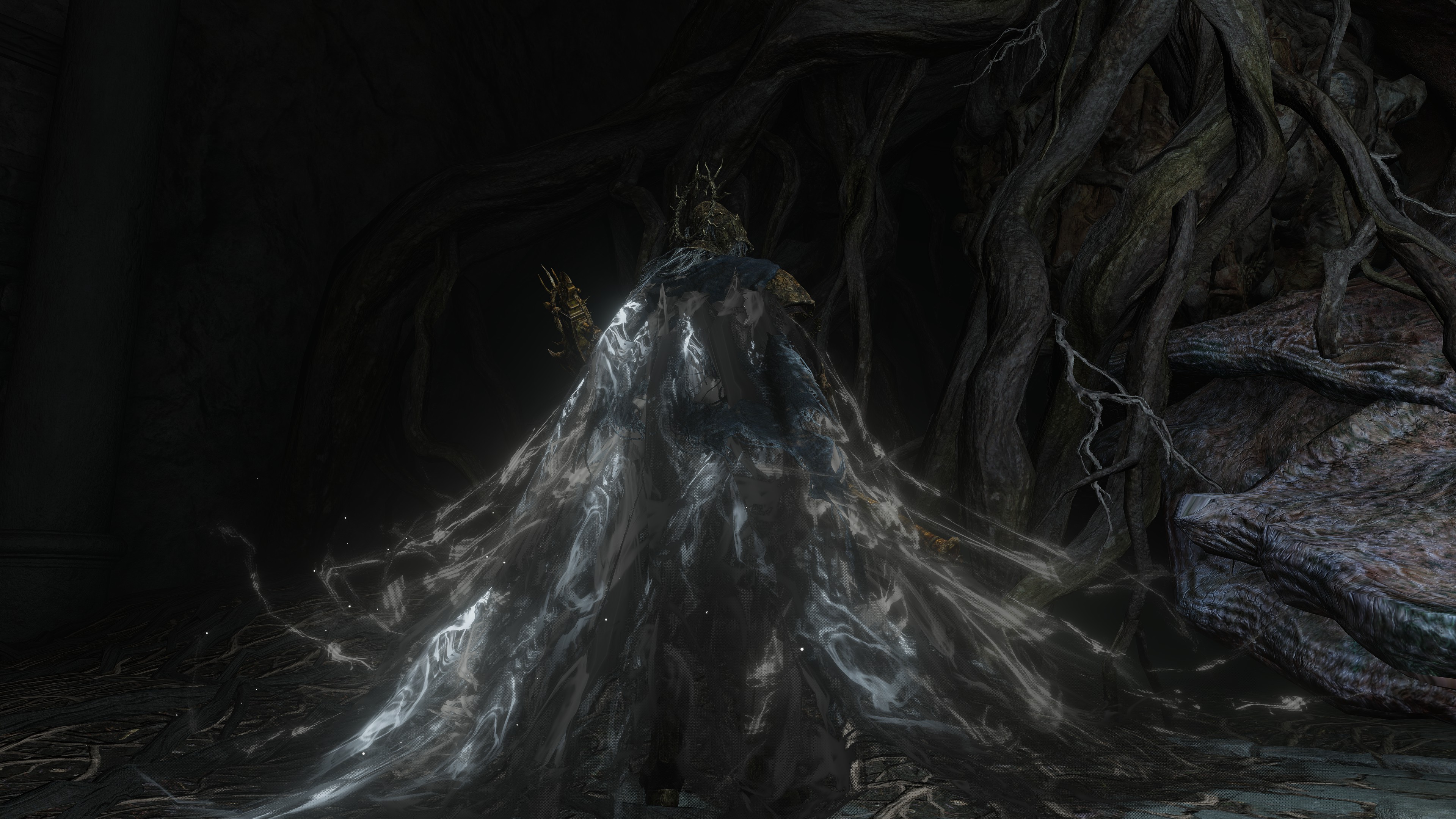
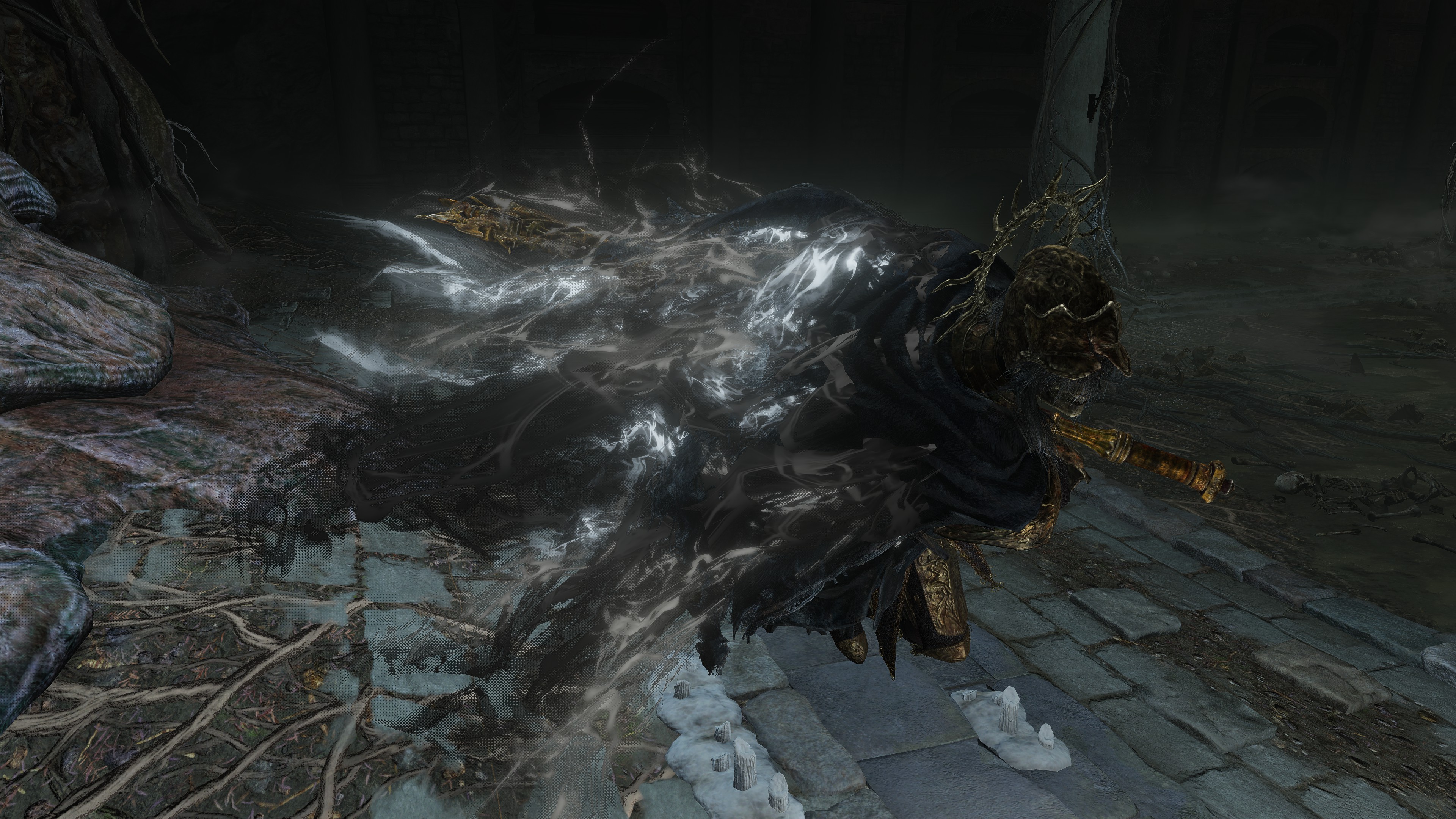
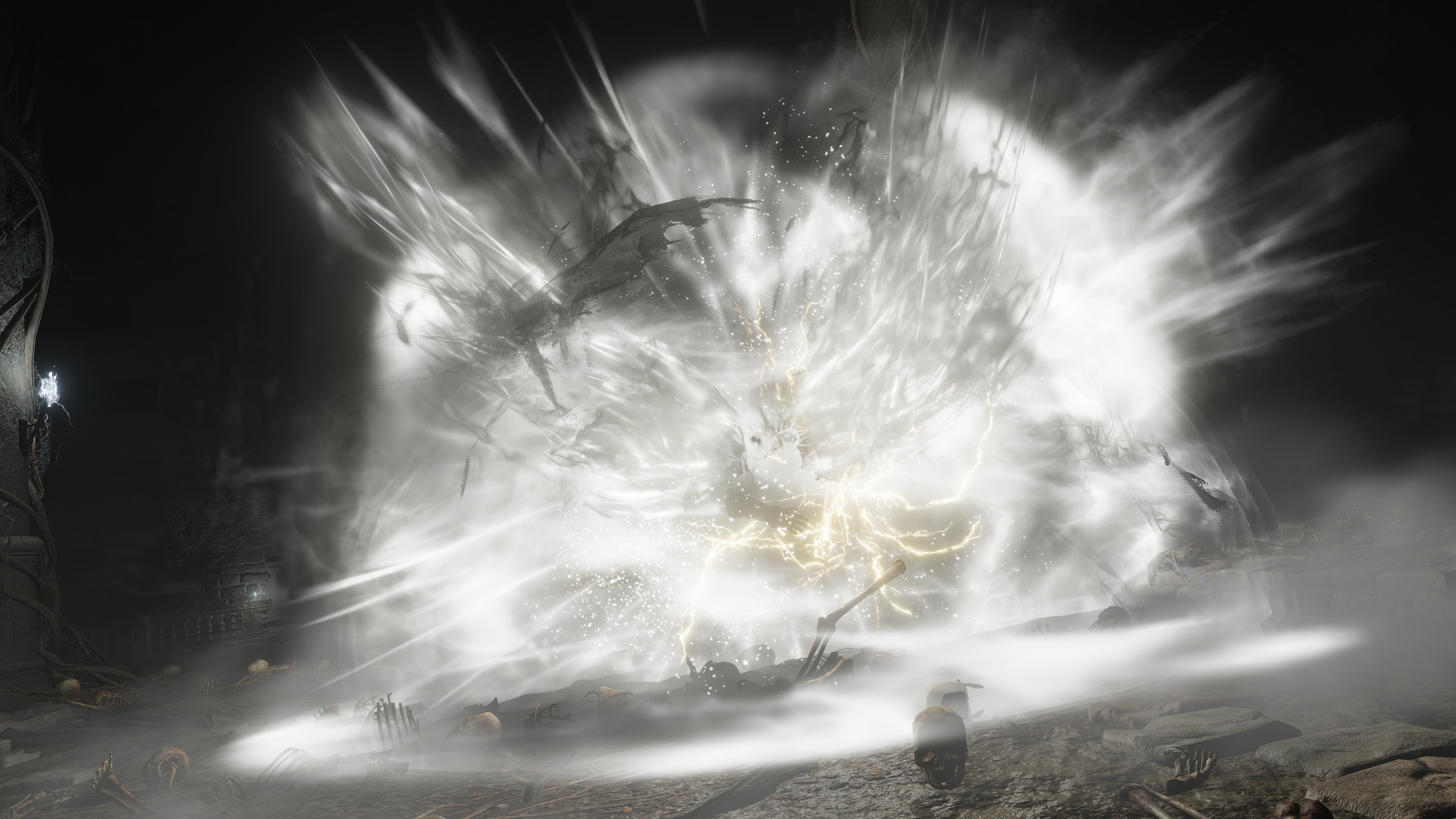
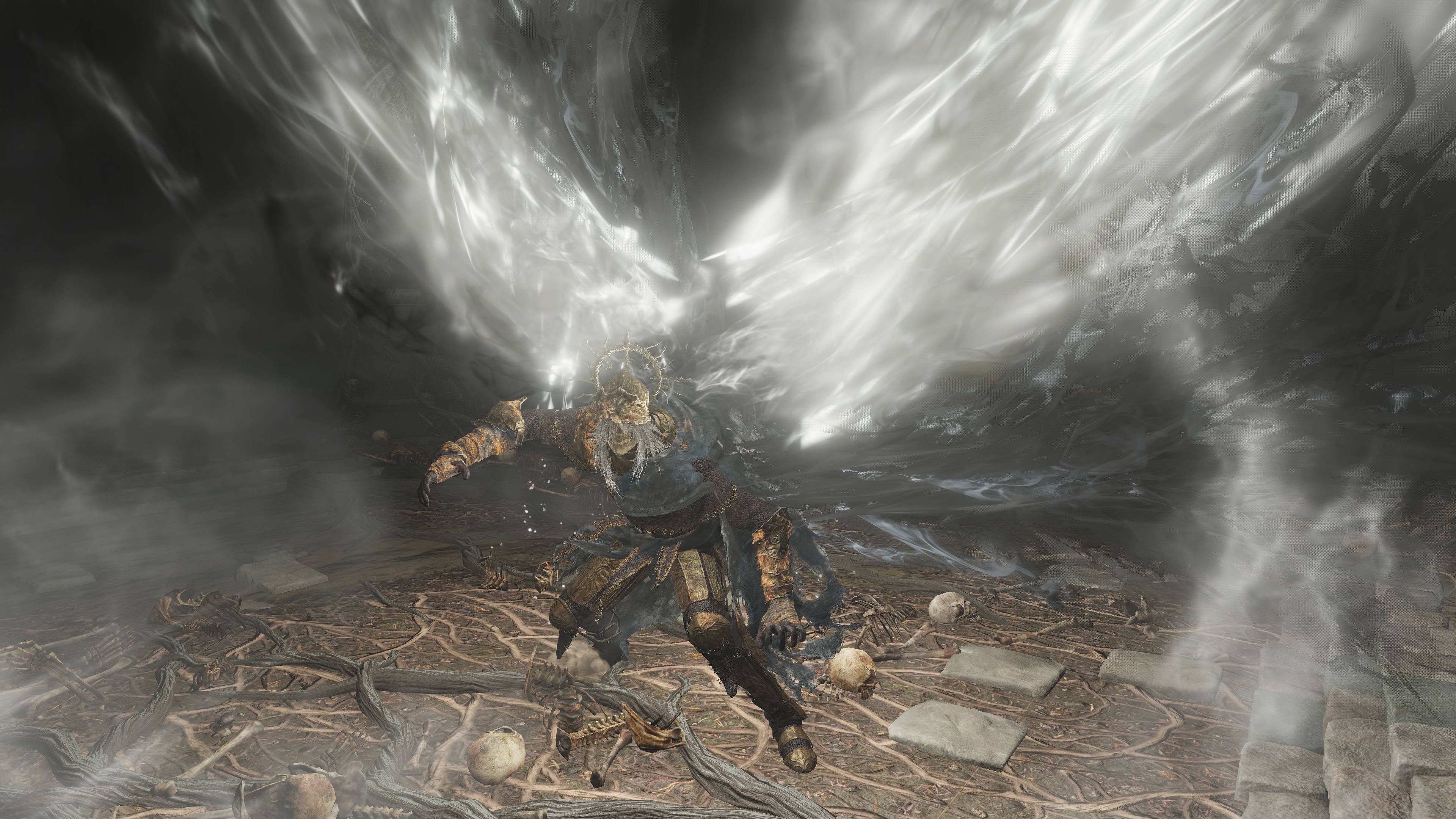
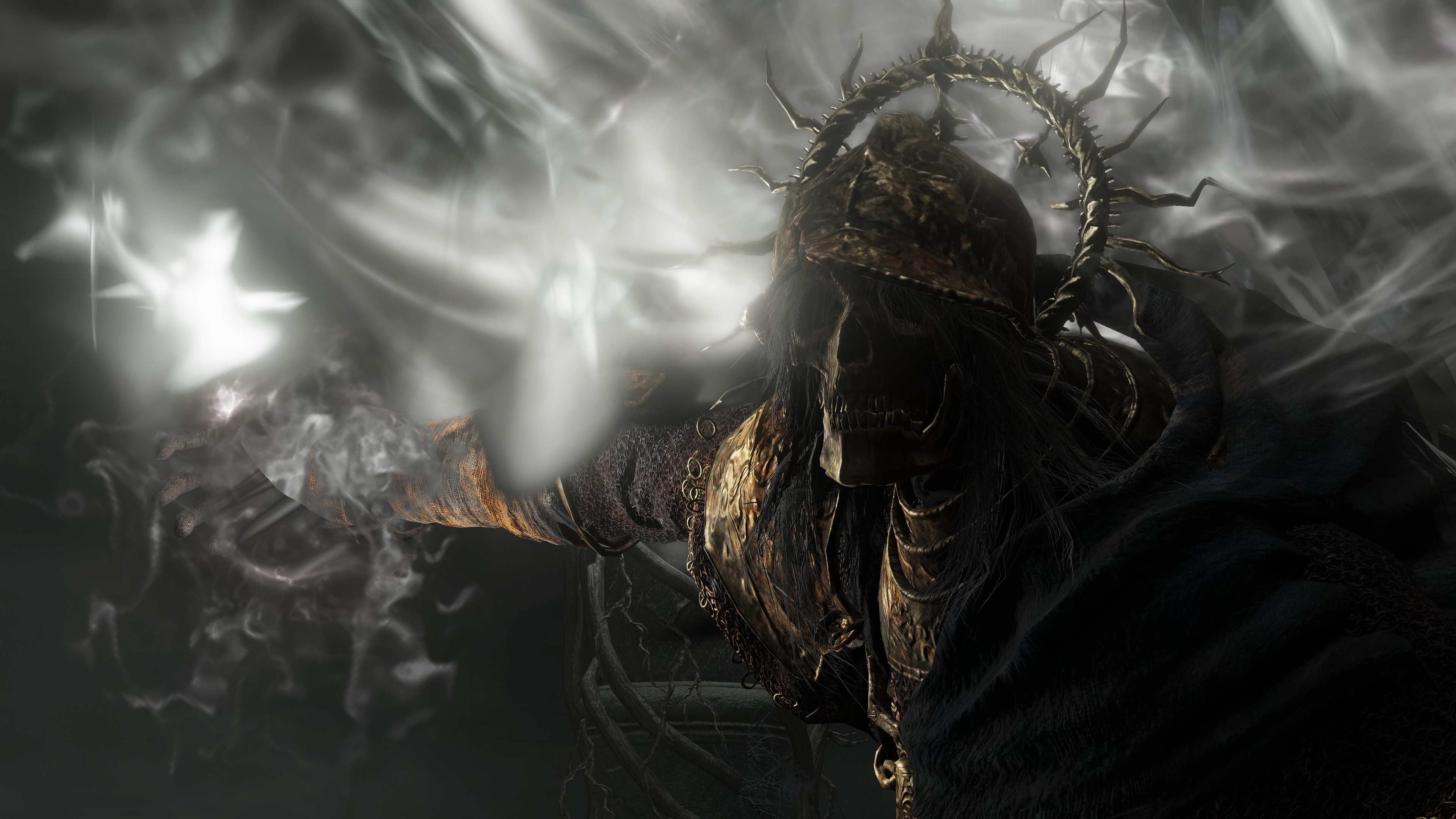
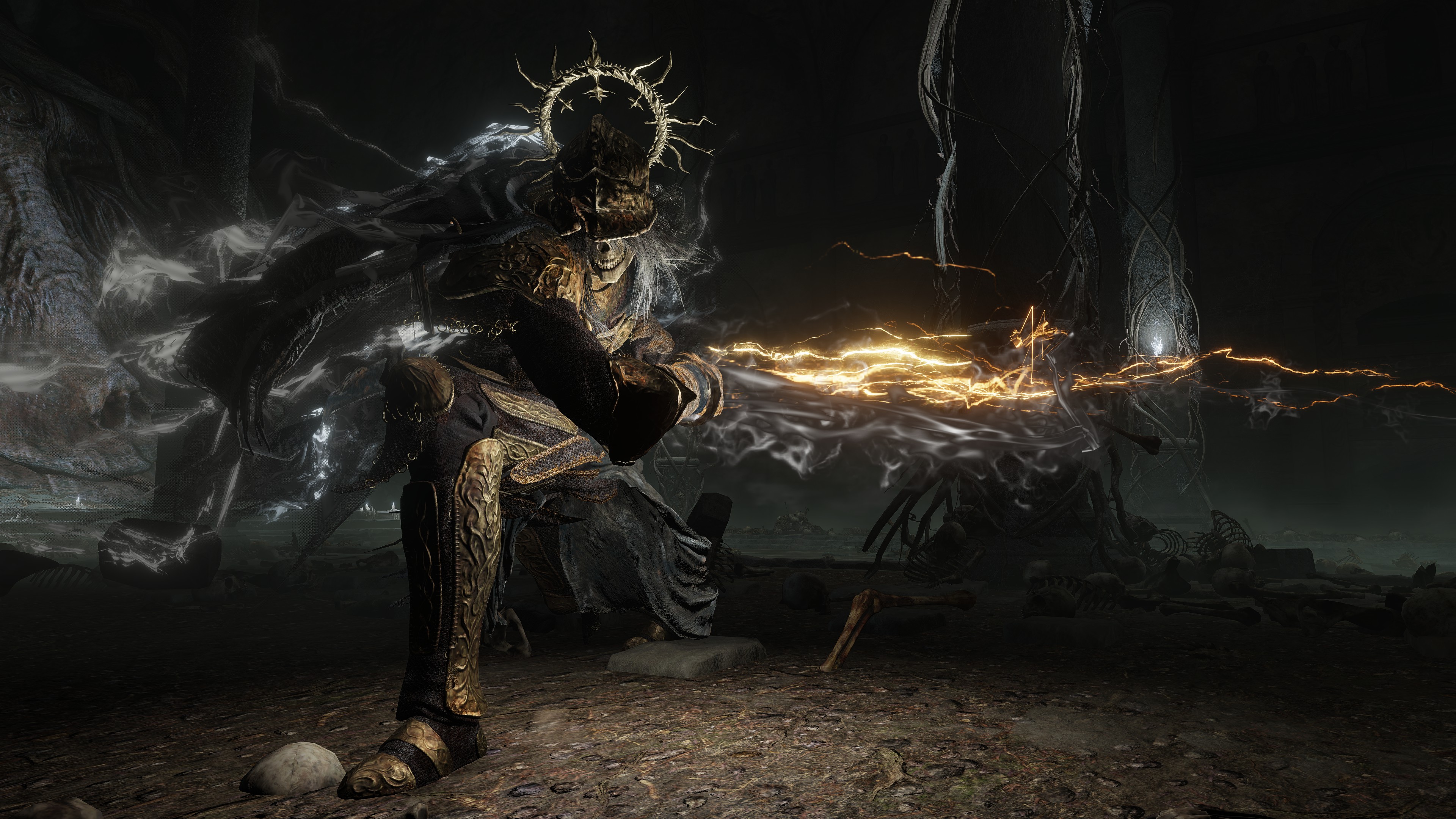
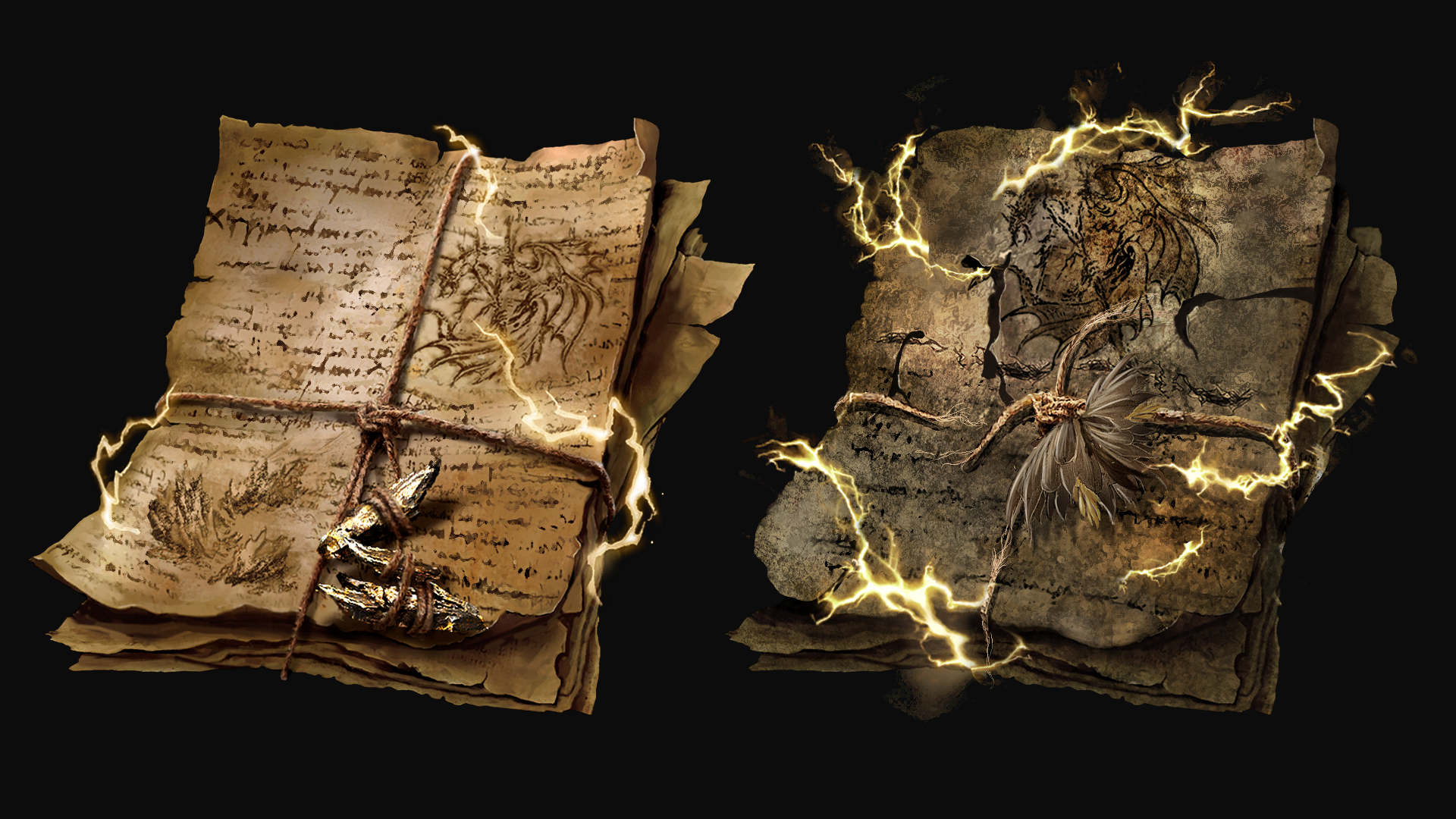
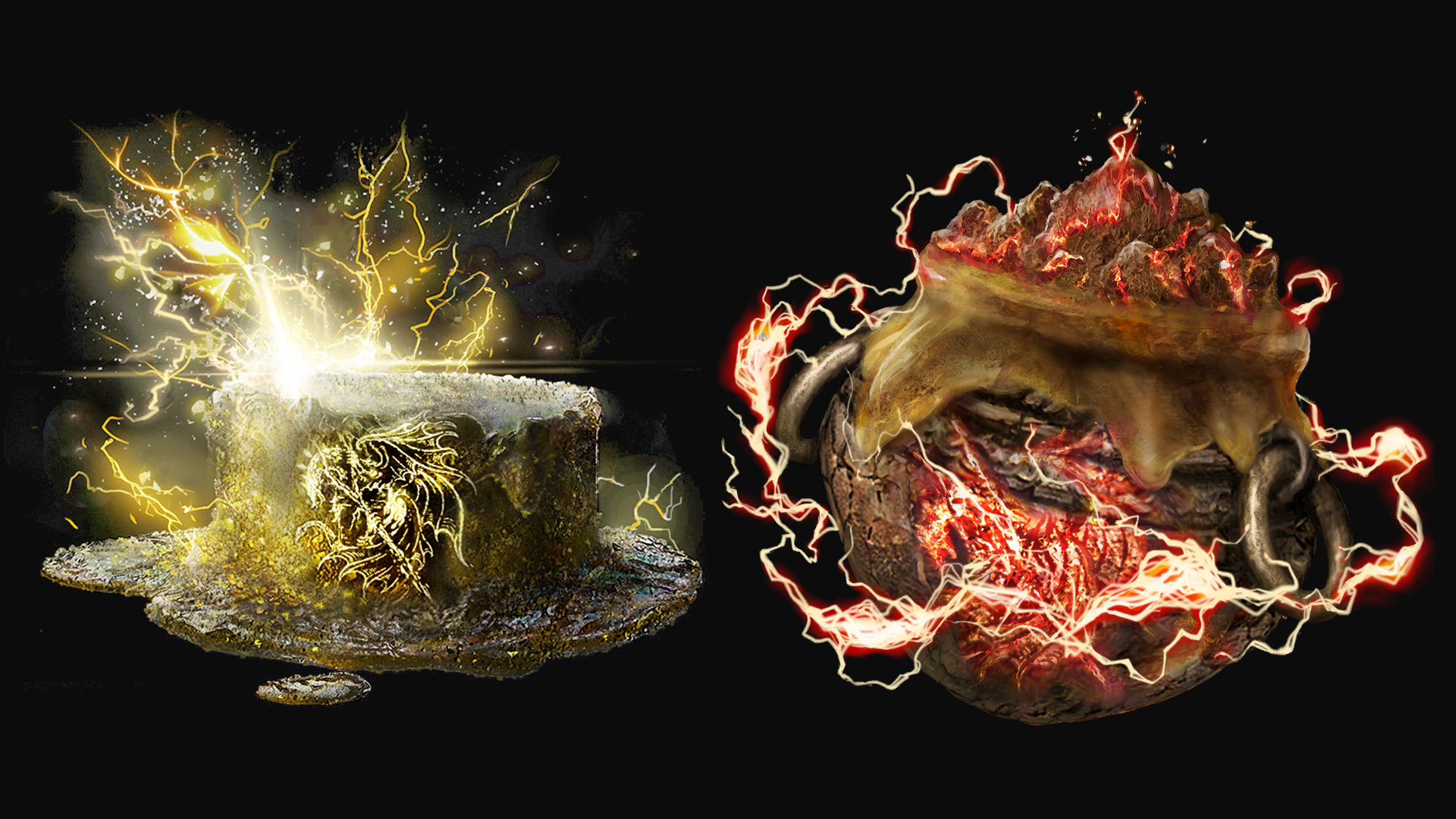
Although the Death Knights may have failed to turn more than priests to their cause, the cult of Death has expanded on its own alongside Godwyn’s influence. Besides the devotees meeting beneath the dead Minor Erdtree, another group have retreated into the Black Knife Catacombs. These townsfolk apparently studied how to burn the power of Deathroot, creating a black flame which they use to raise some of the dead. Unlike those touched by Deathroot, the skeletons burning with this deathflame cannot be put to final rest until its source is snuffed out — in other words, until the necromancer holding the torchpole is killed. This invincible army seems to have been the last straw for the gravekeepers. Already a cemetery shade sits with the Deathroot in the root sanctum, and then there is the owner of Rosus’ Axe, lying dead in a side chamber behind an imp statue seal. Failing to realize the infiltrators’ intentions to “help” with the skeleton problem until they were too late, they were overwhelmed, the last backed into a corner and left to perish to Deathroot’s own creations sharing the refuge while the cult took over.
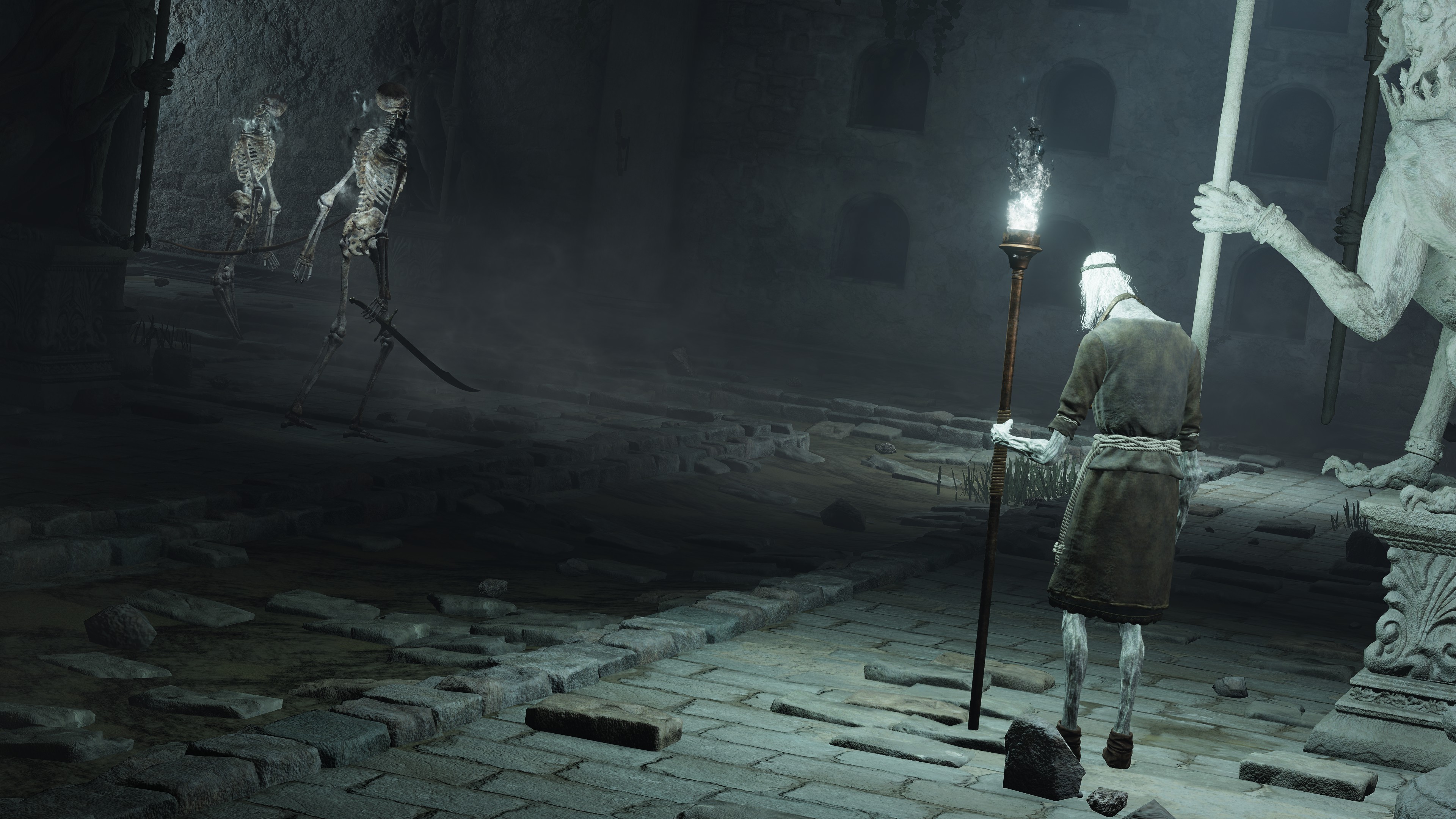
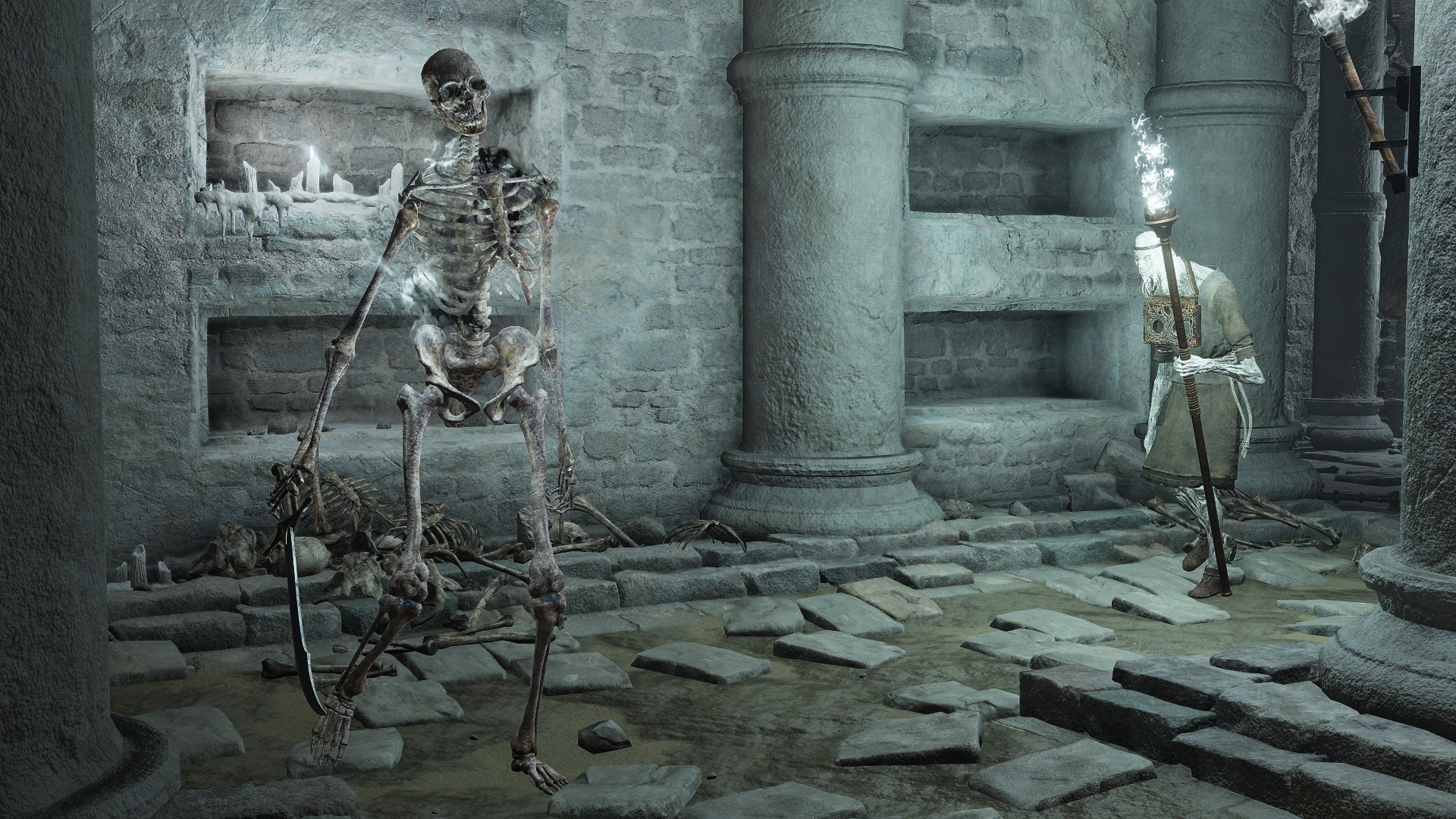
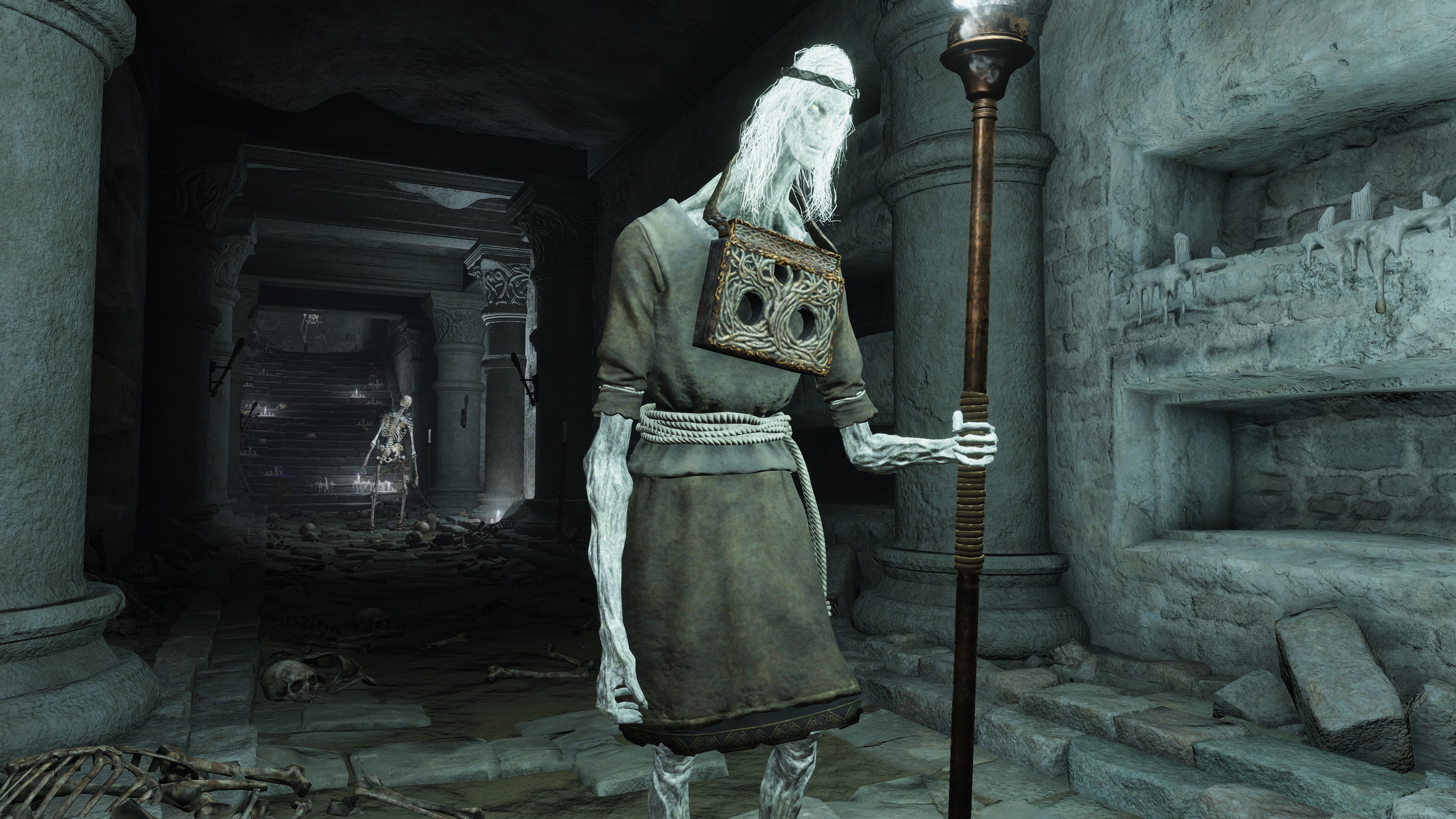
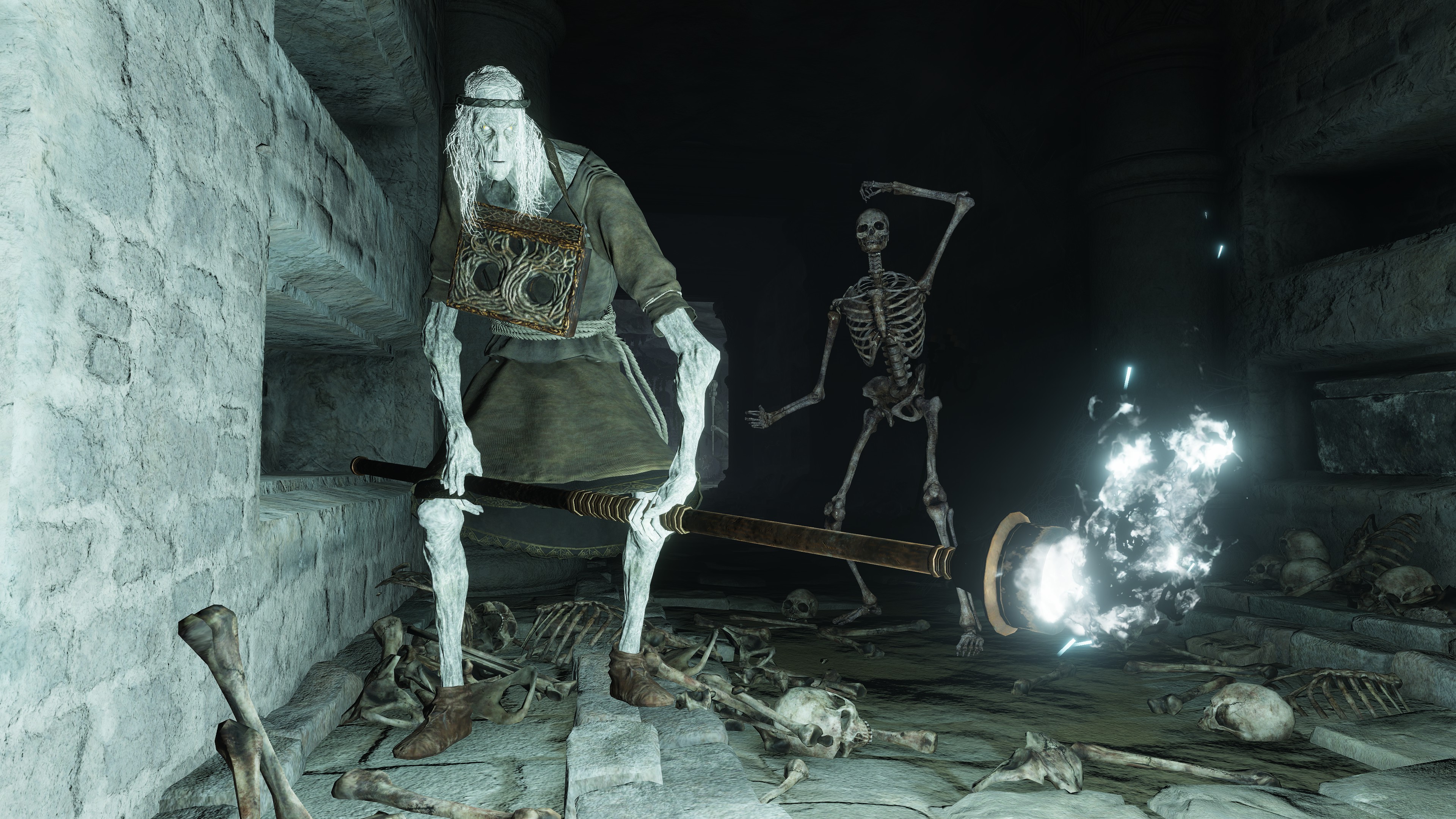
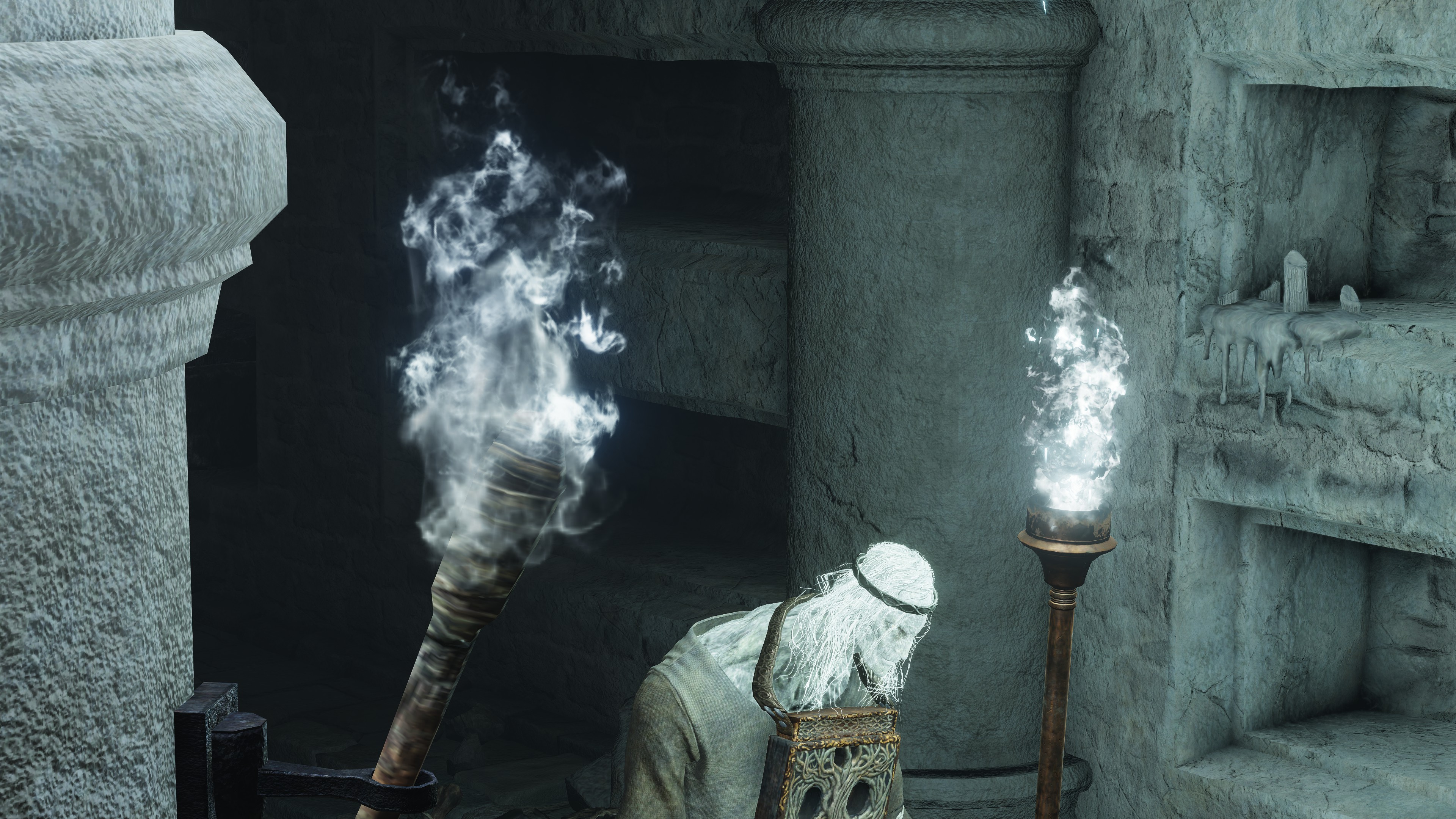
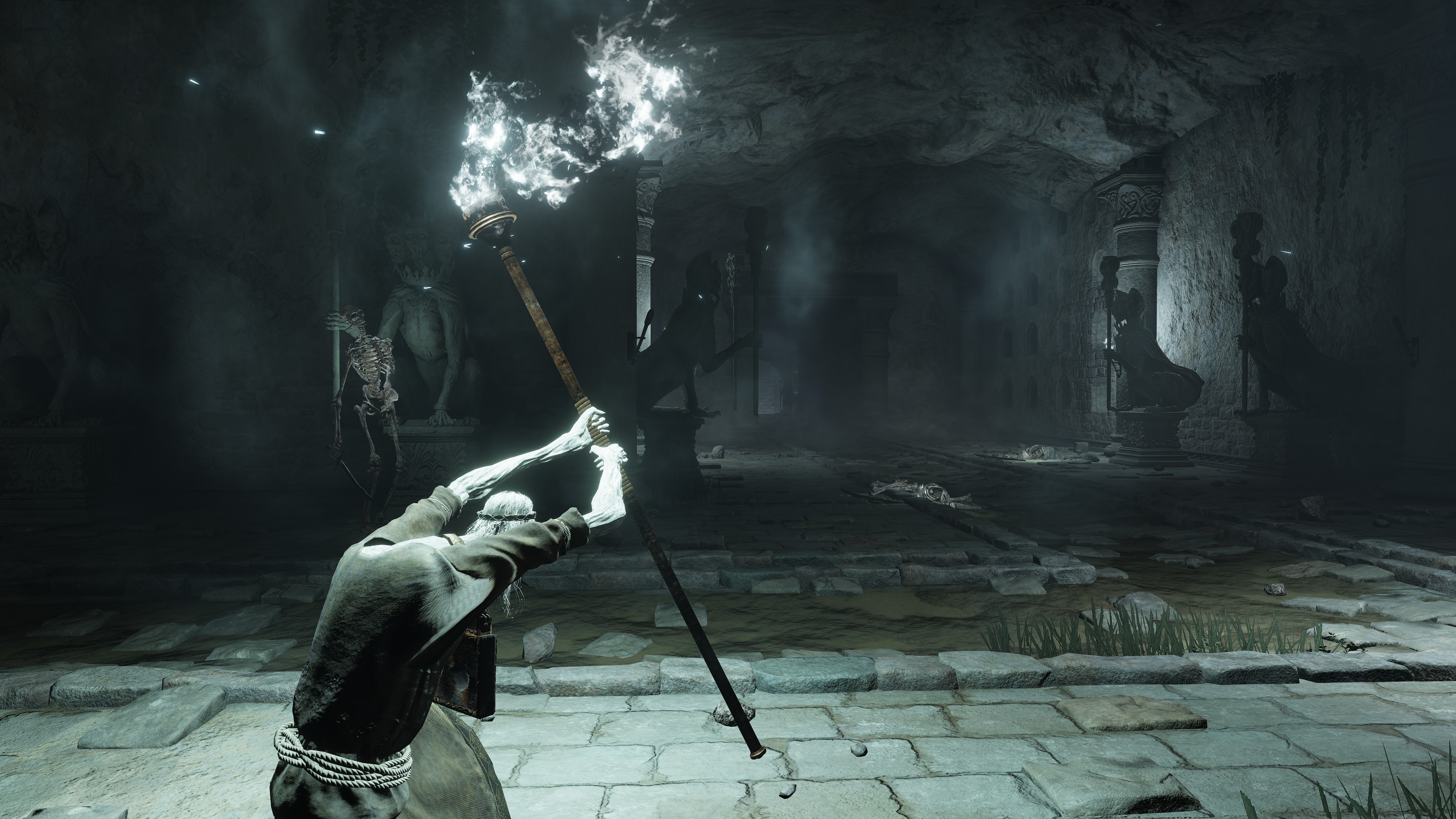
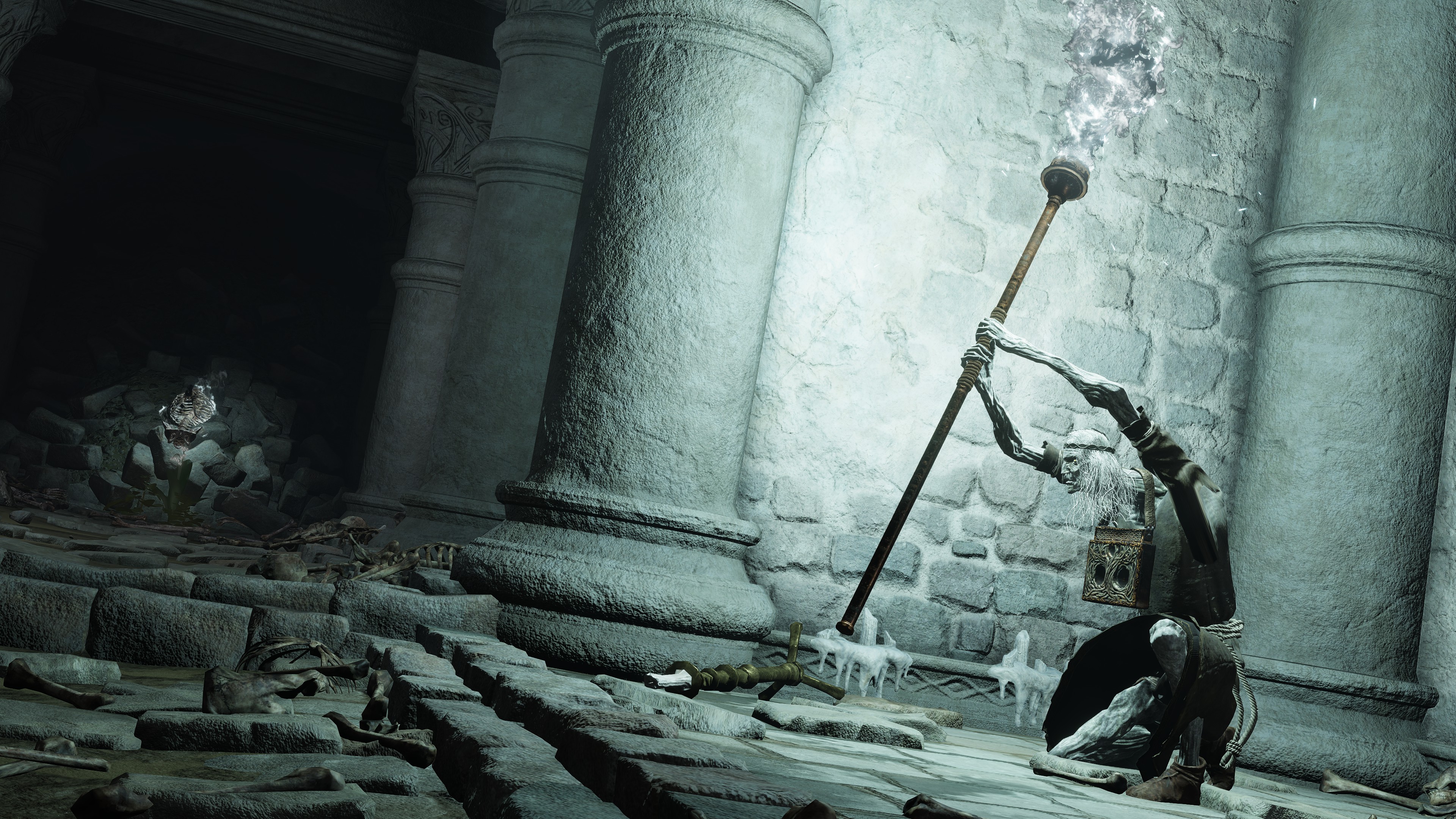
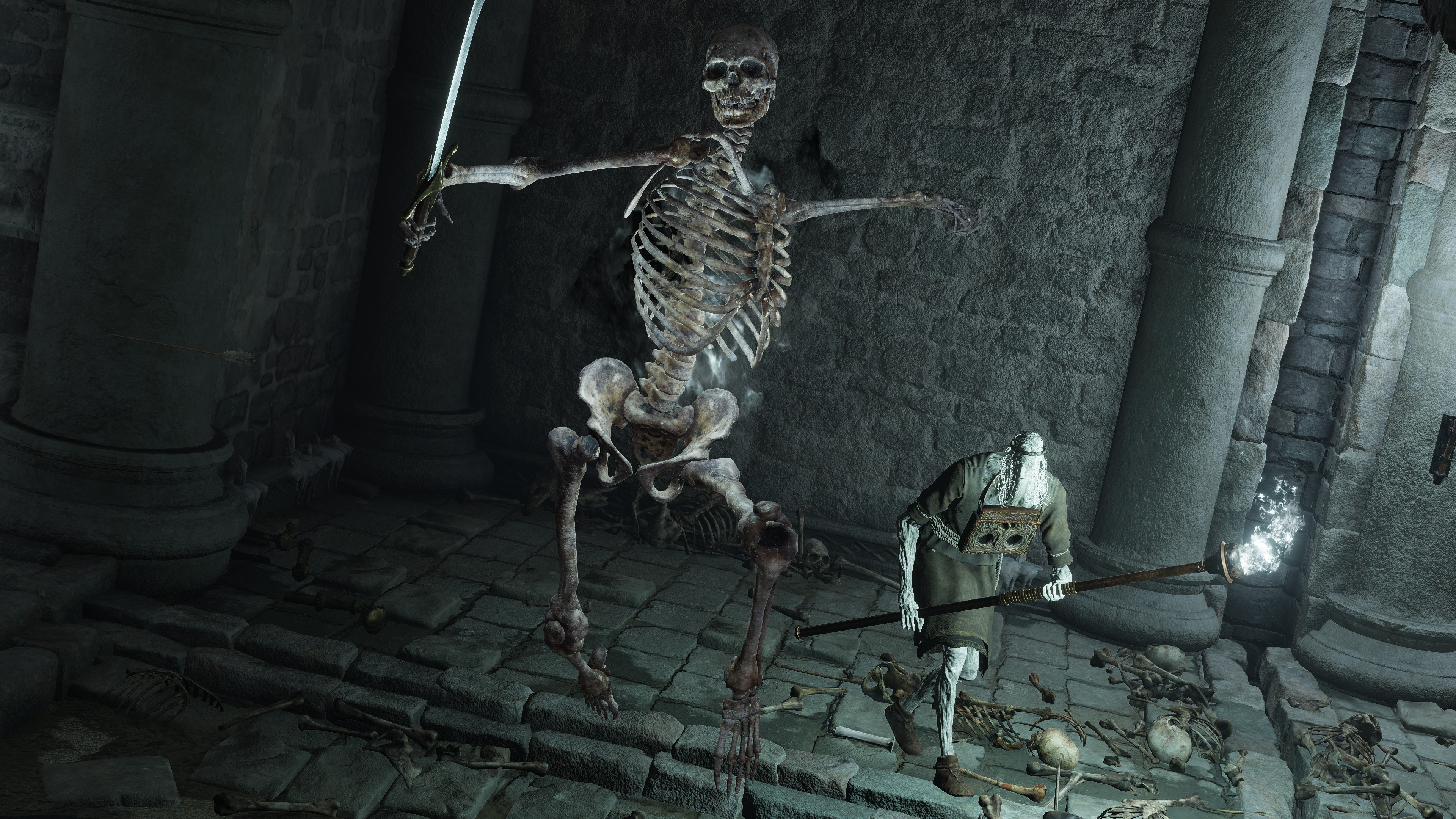
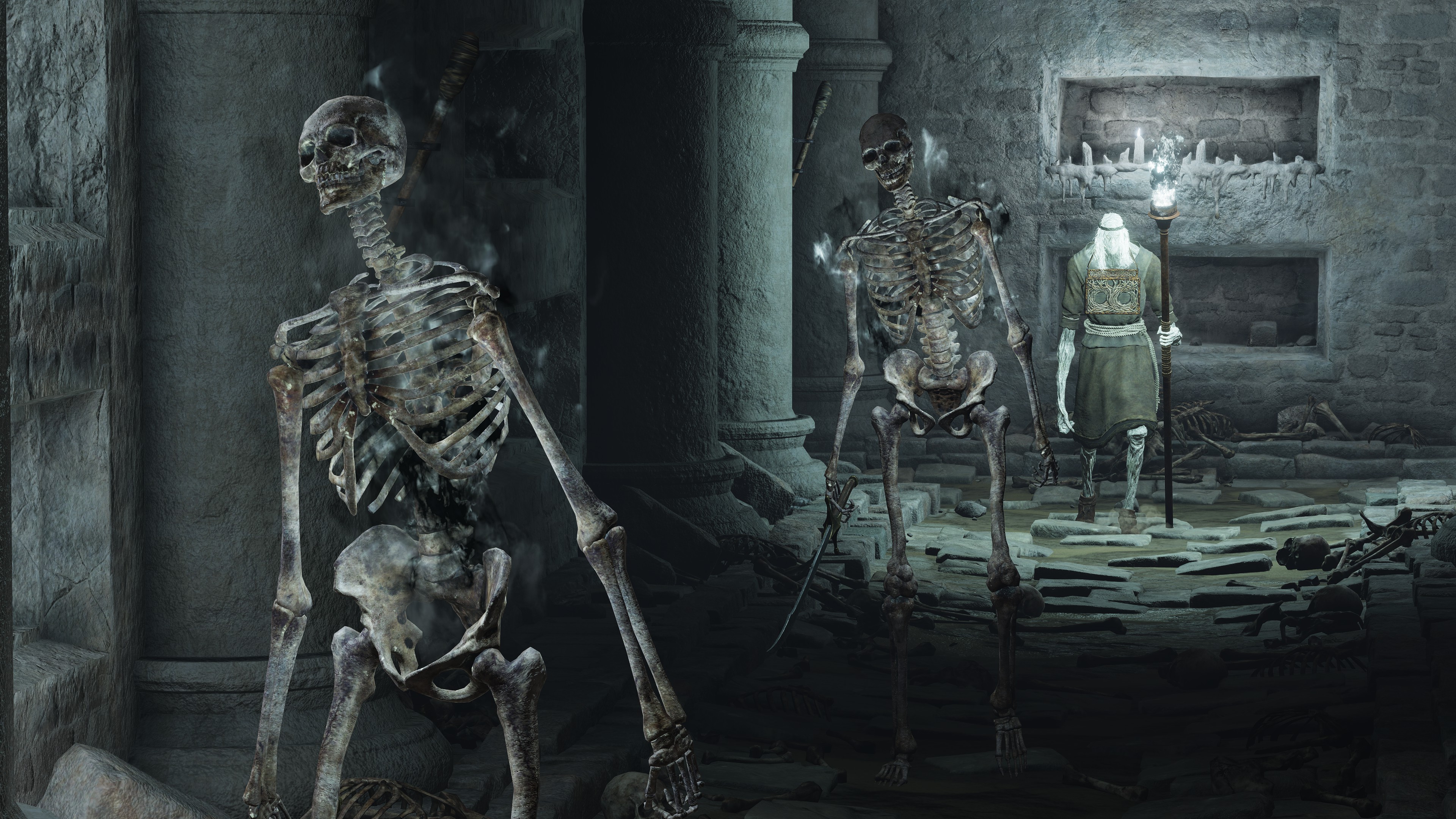
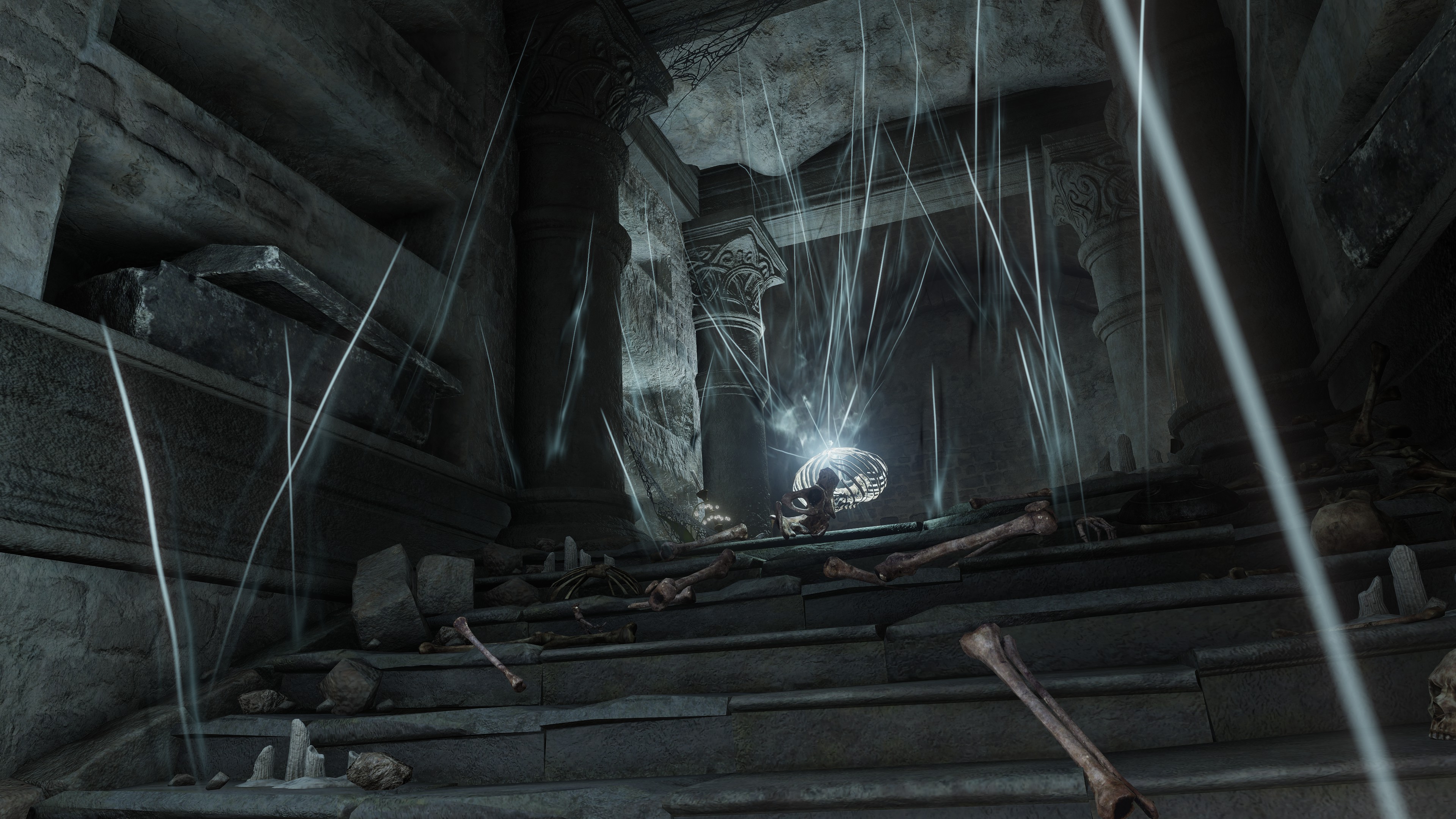
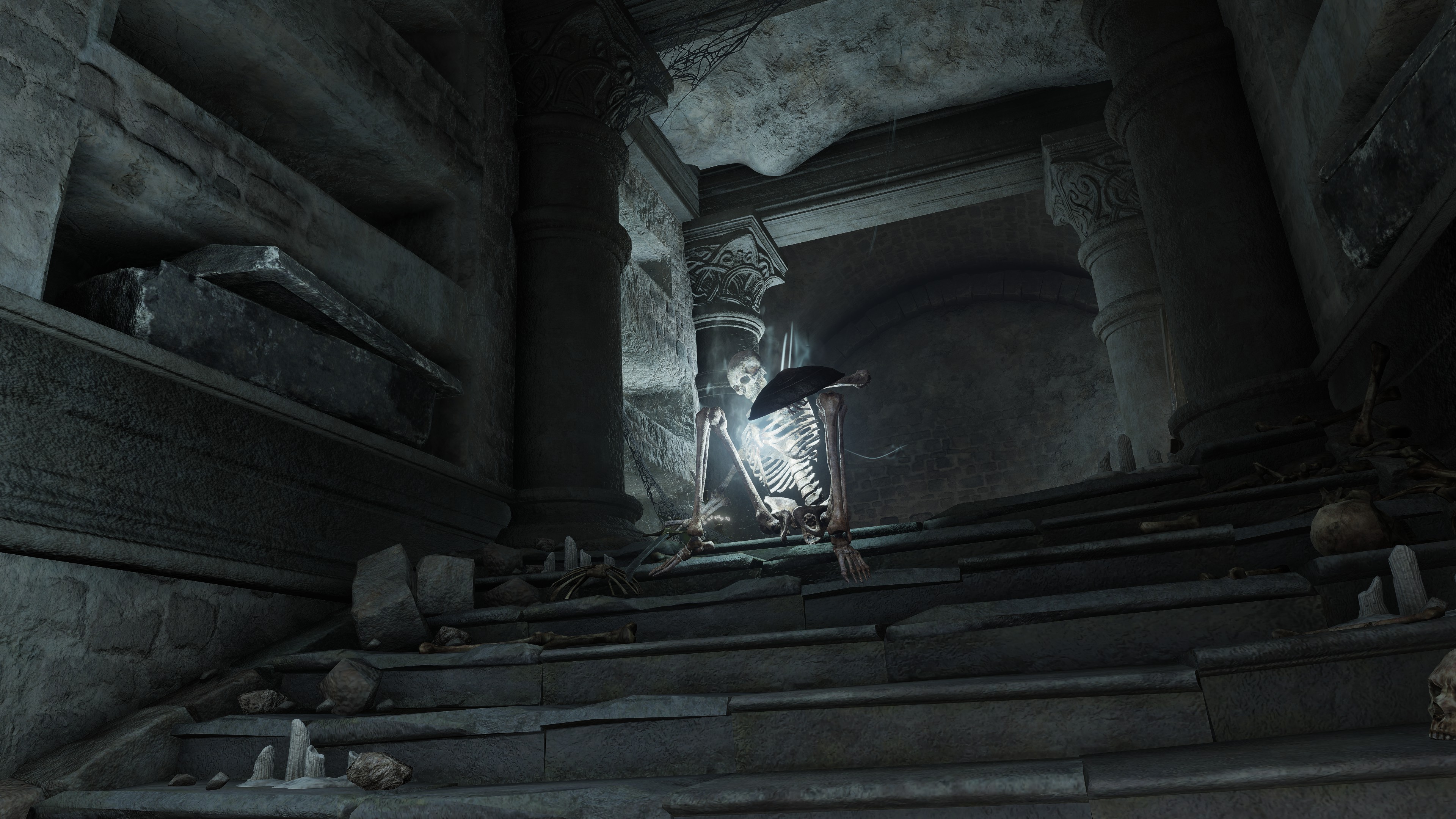
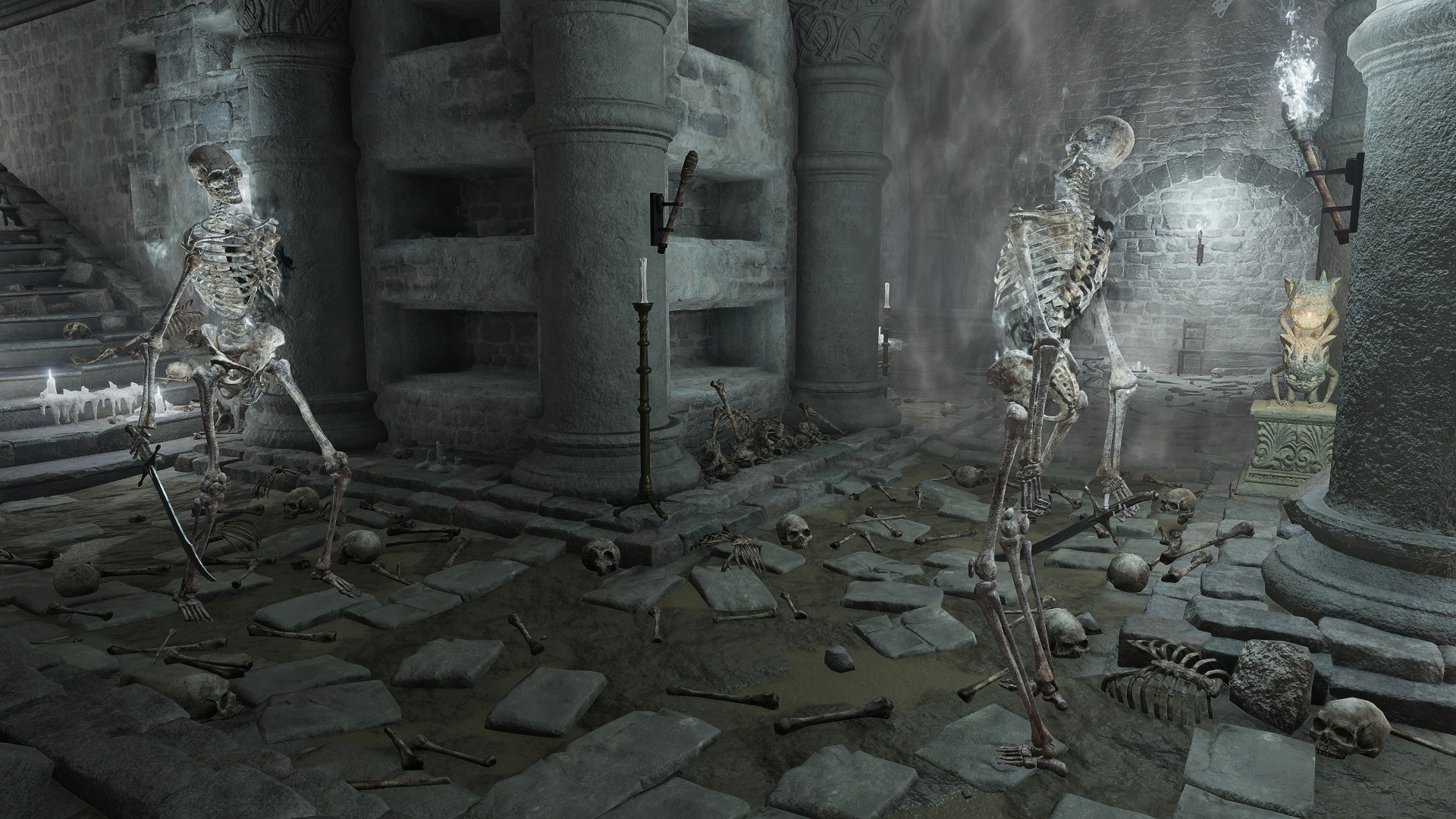
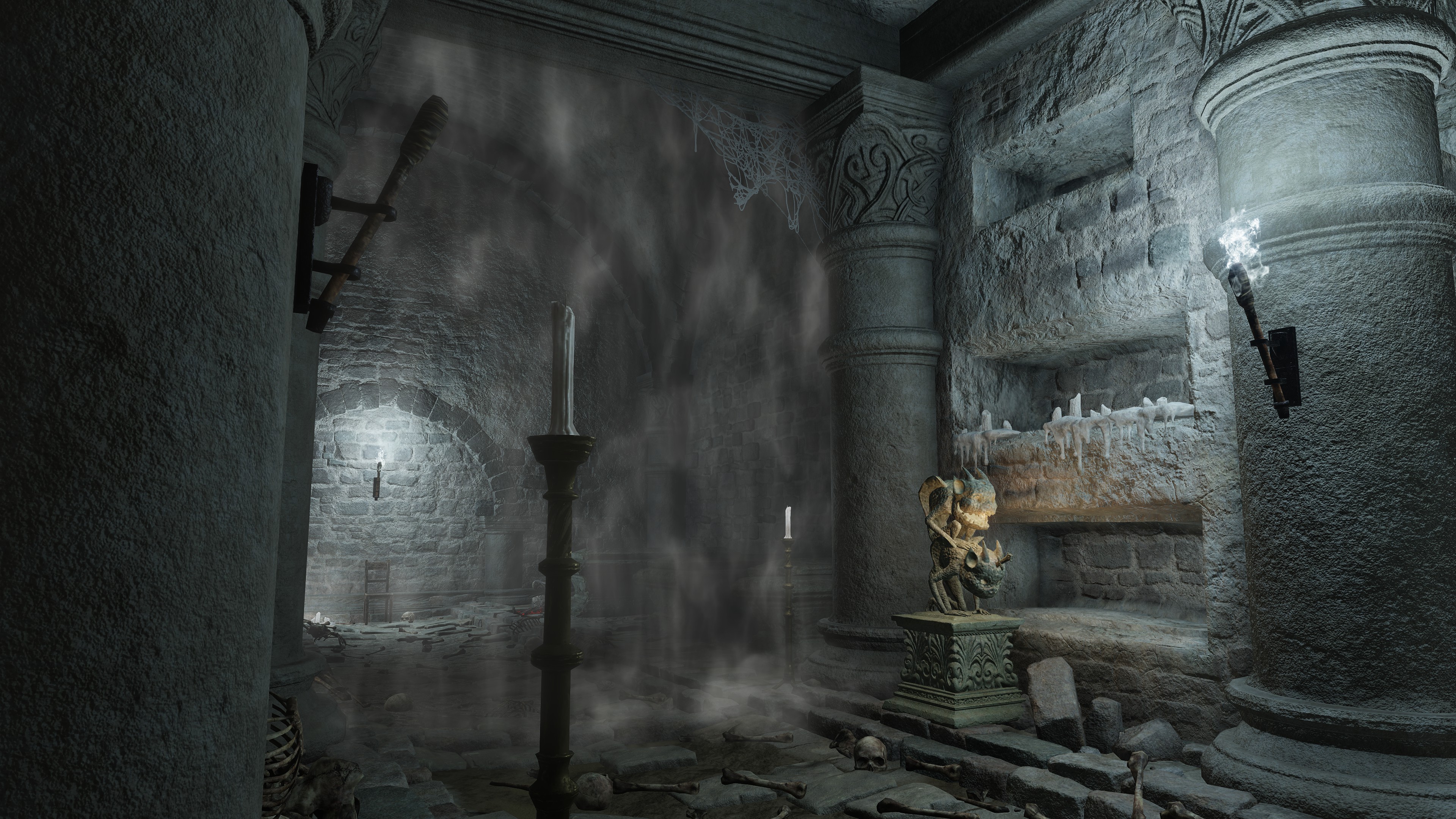
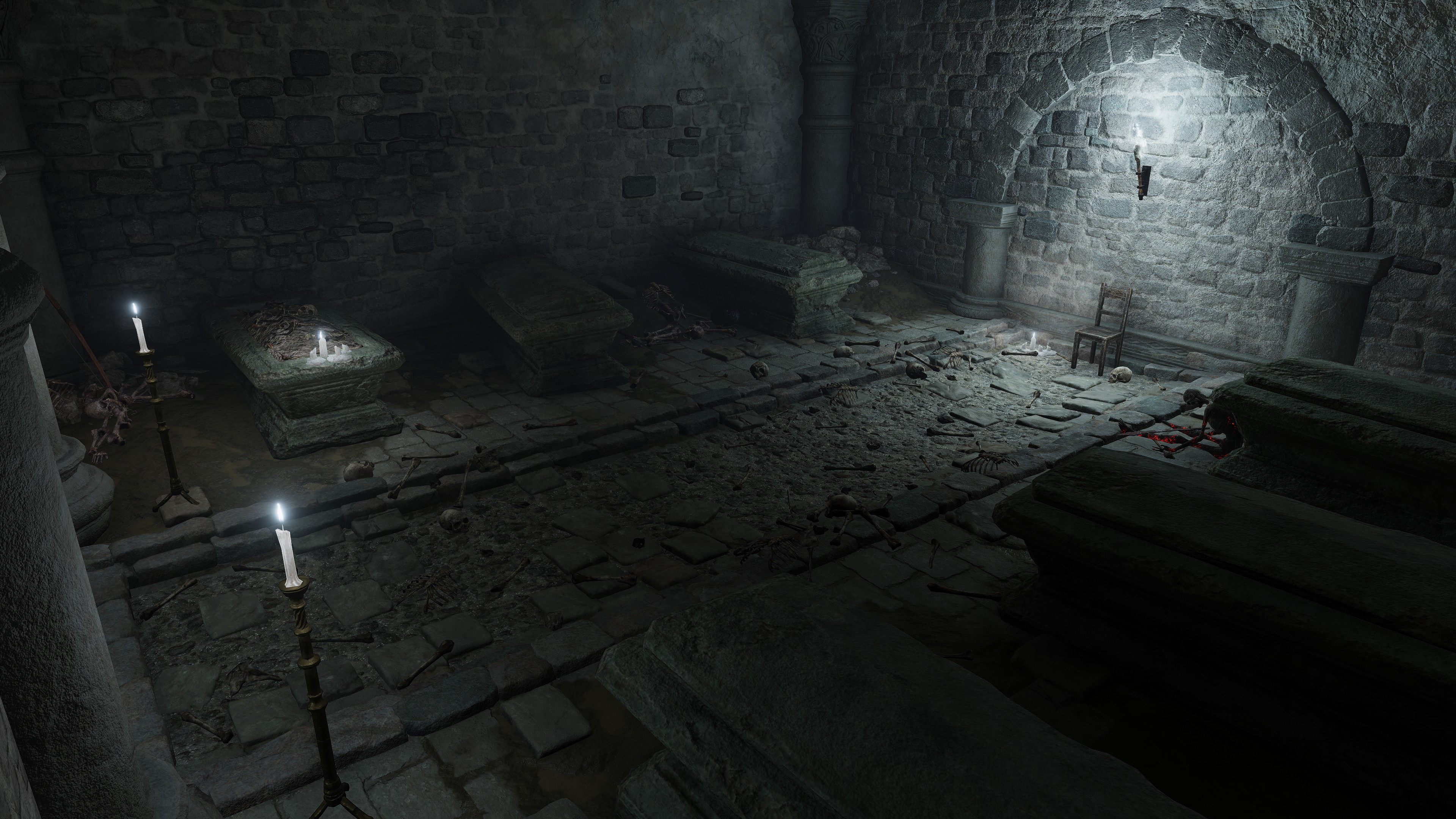
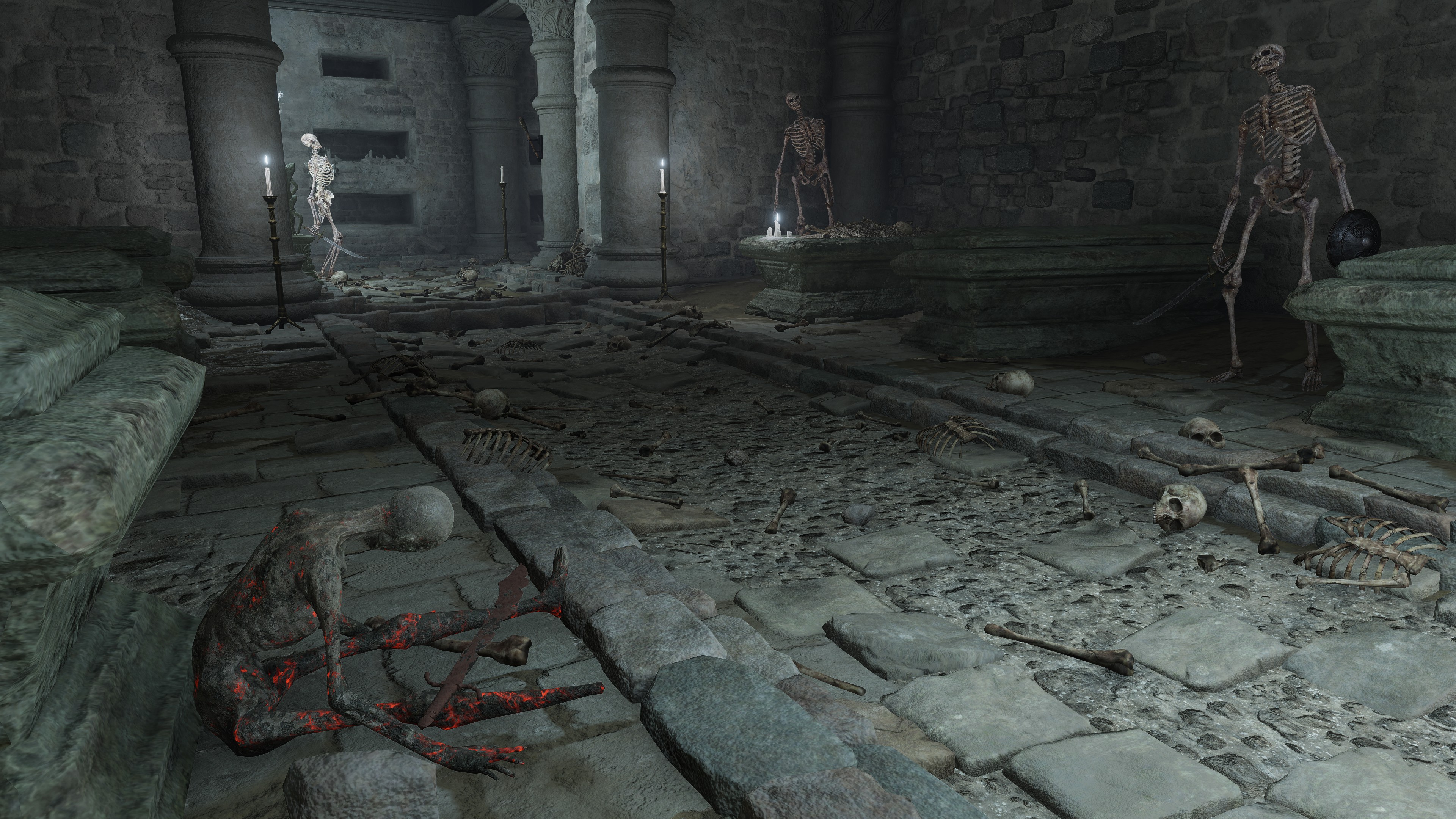
The two groups in black are clearly separate sects, one wearing hoods over the face and the other mere headbands. Much like Godwyn, his faith has been decentralized, with common people across vast distances independently gathering together to study the mysteries of the Prince of Death. Skeletons rising from their graves alone is sure to pique random individuals’ interest. The nomadic warrior’s cookbook instructing how to craft Rancor Pots manifesting the wheel centipede sigil, for instance, is looted from a corpse laying behind an imp statue seal in Tombsward Catacombs. The nomad on the furthest fringes of the frontier thought he was safe to sate his curiosity for the old death heresy through Deathroot, retreating to the sealed chamber if things ever got too dangerous for his skills. What the warrior didn’t realize was the skeleton already come to life inside, turning that sealed chamber into his own tomb. Slowly but surely, the death worship is seeing a revival in the Lands Between, brought on by Godwyn.
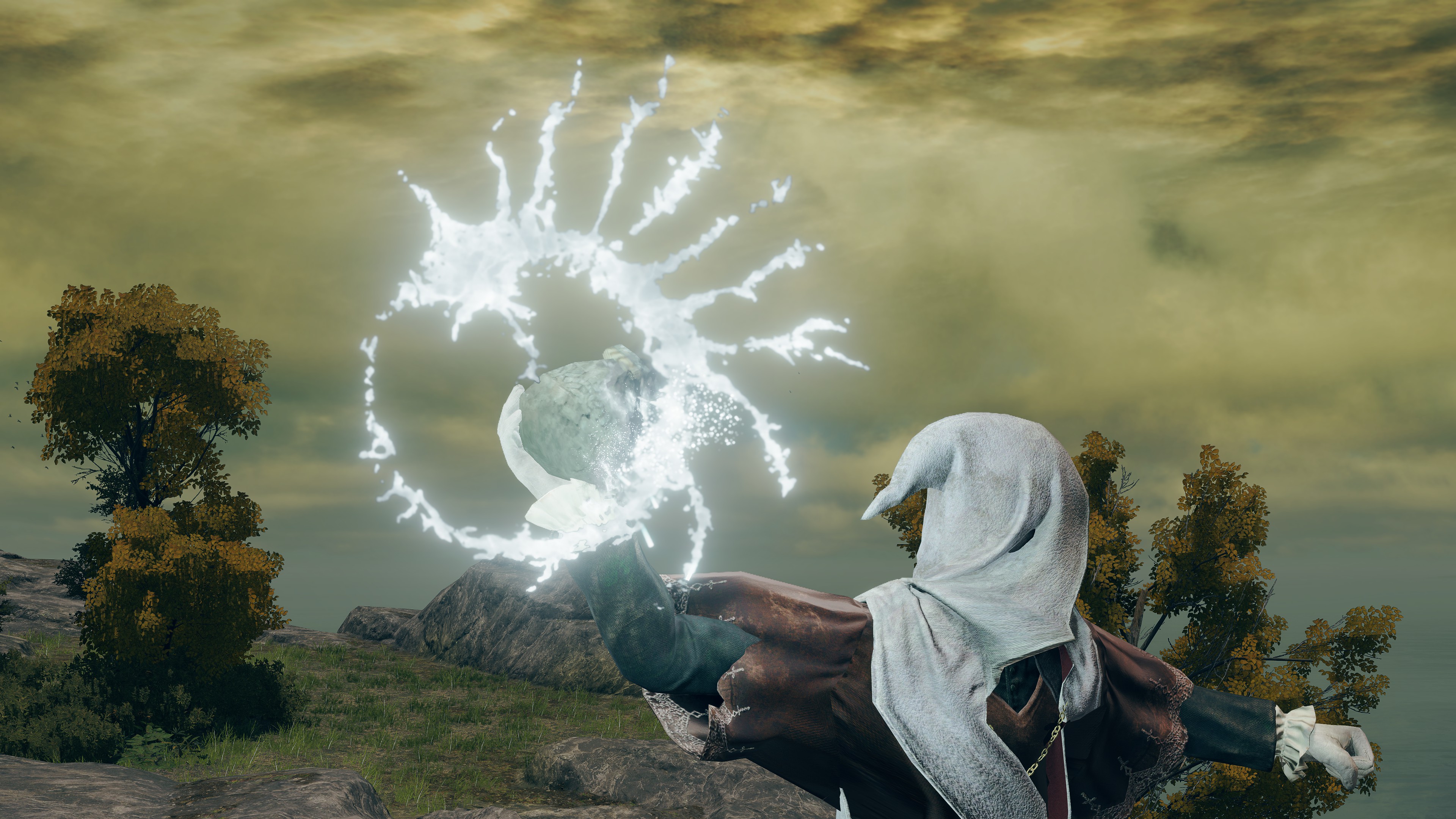
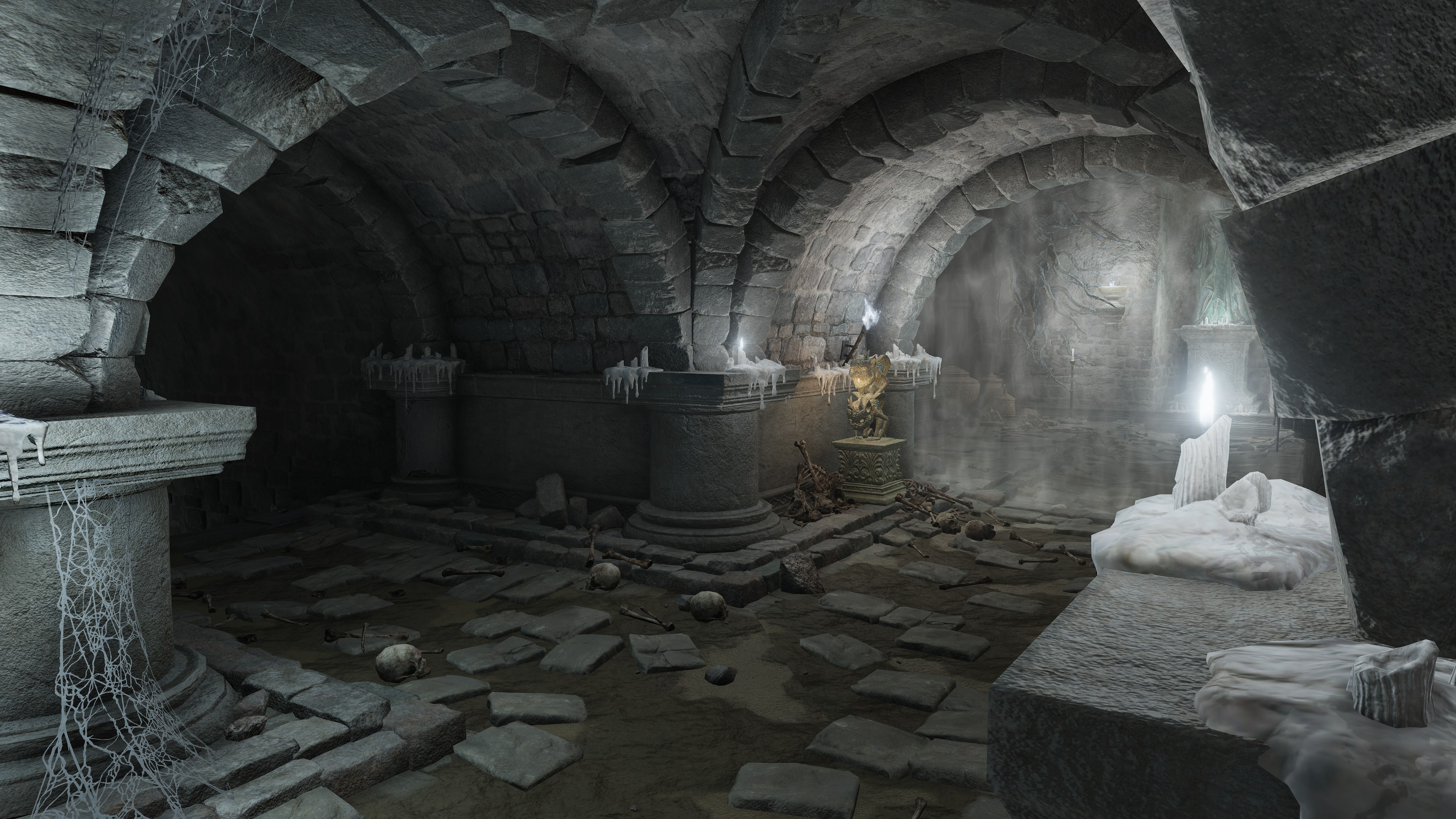
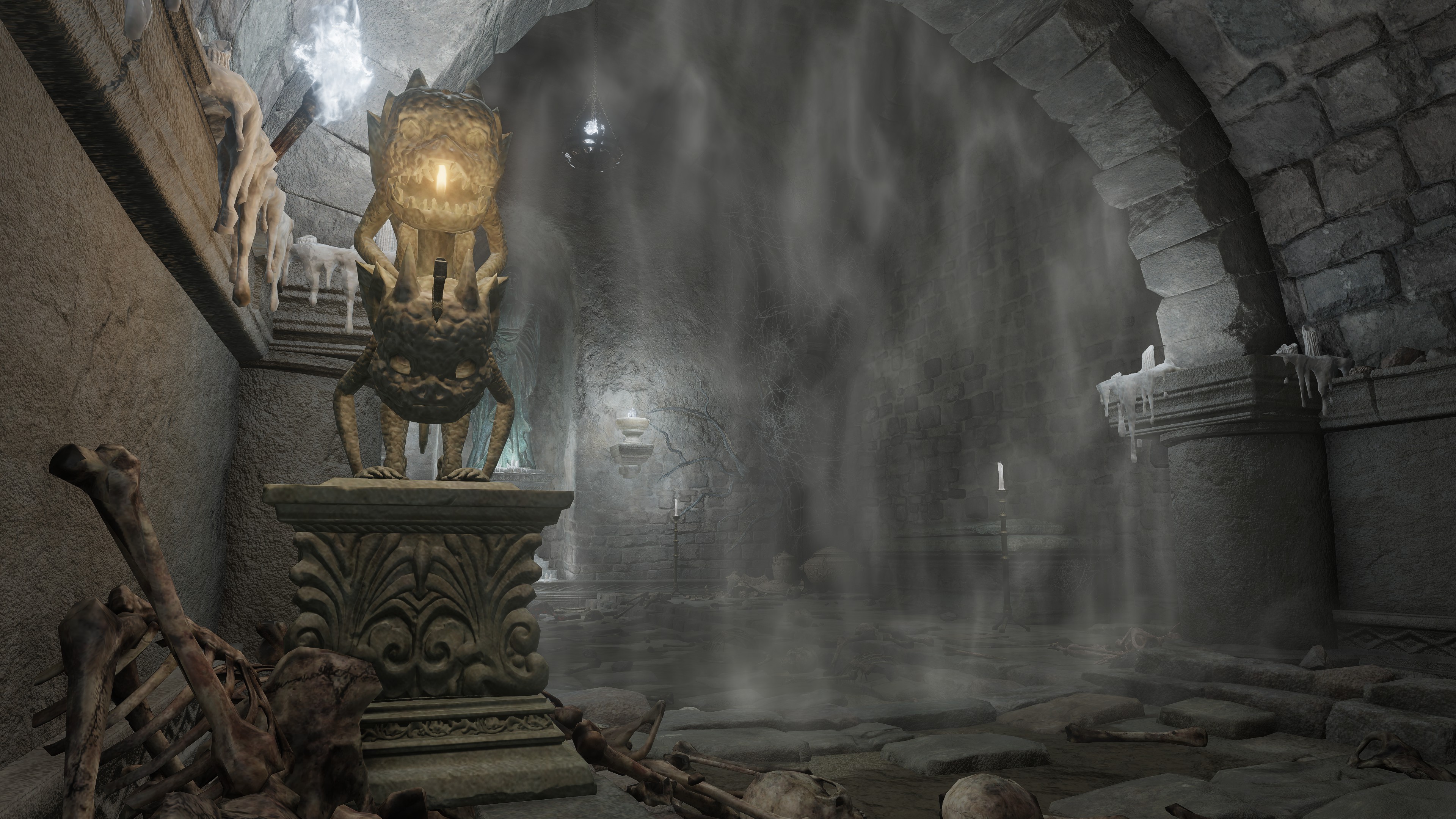
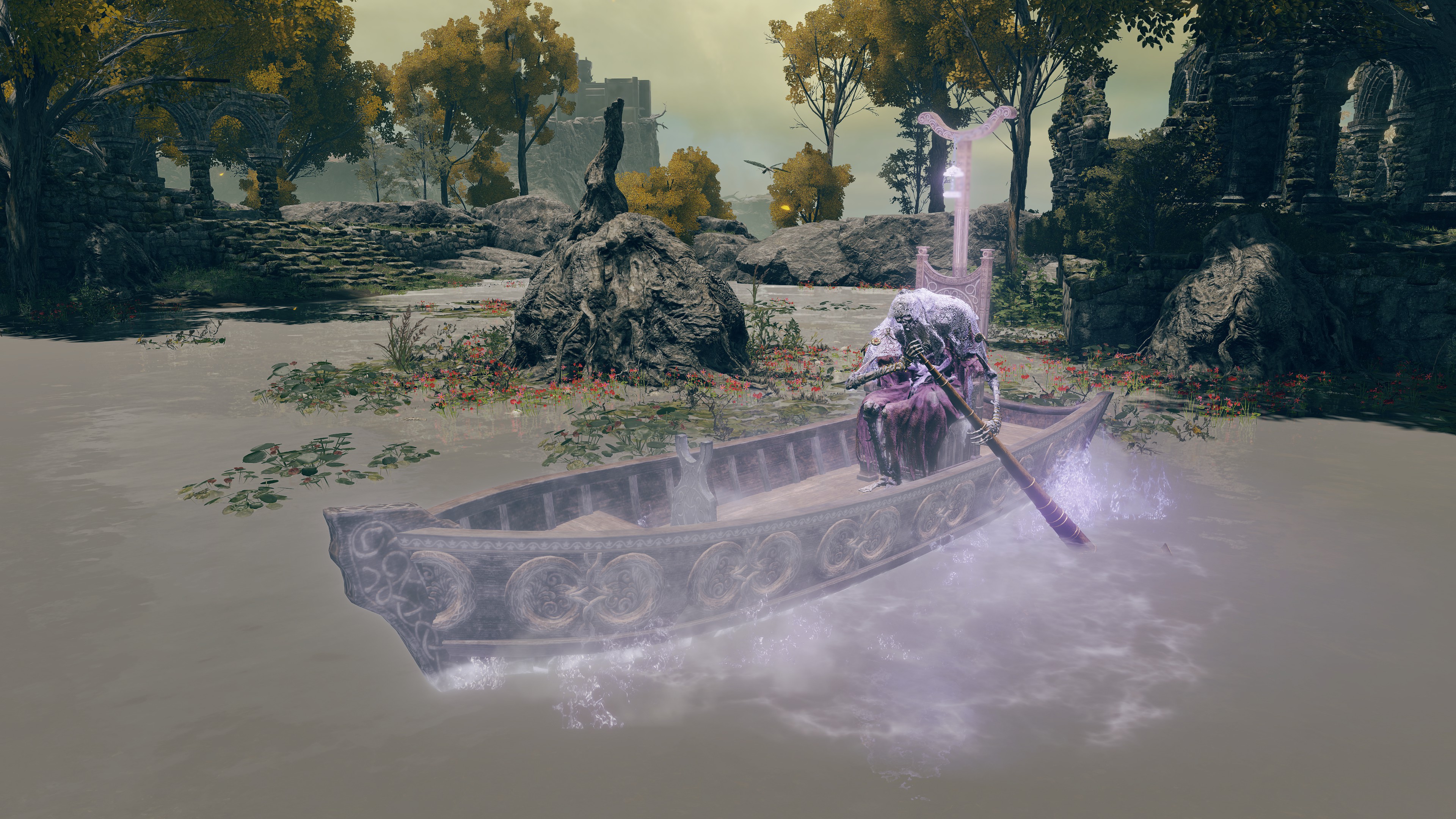
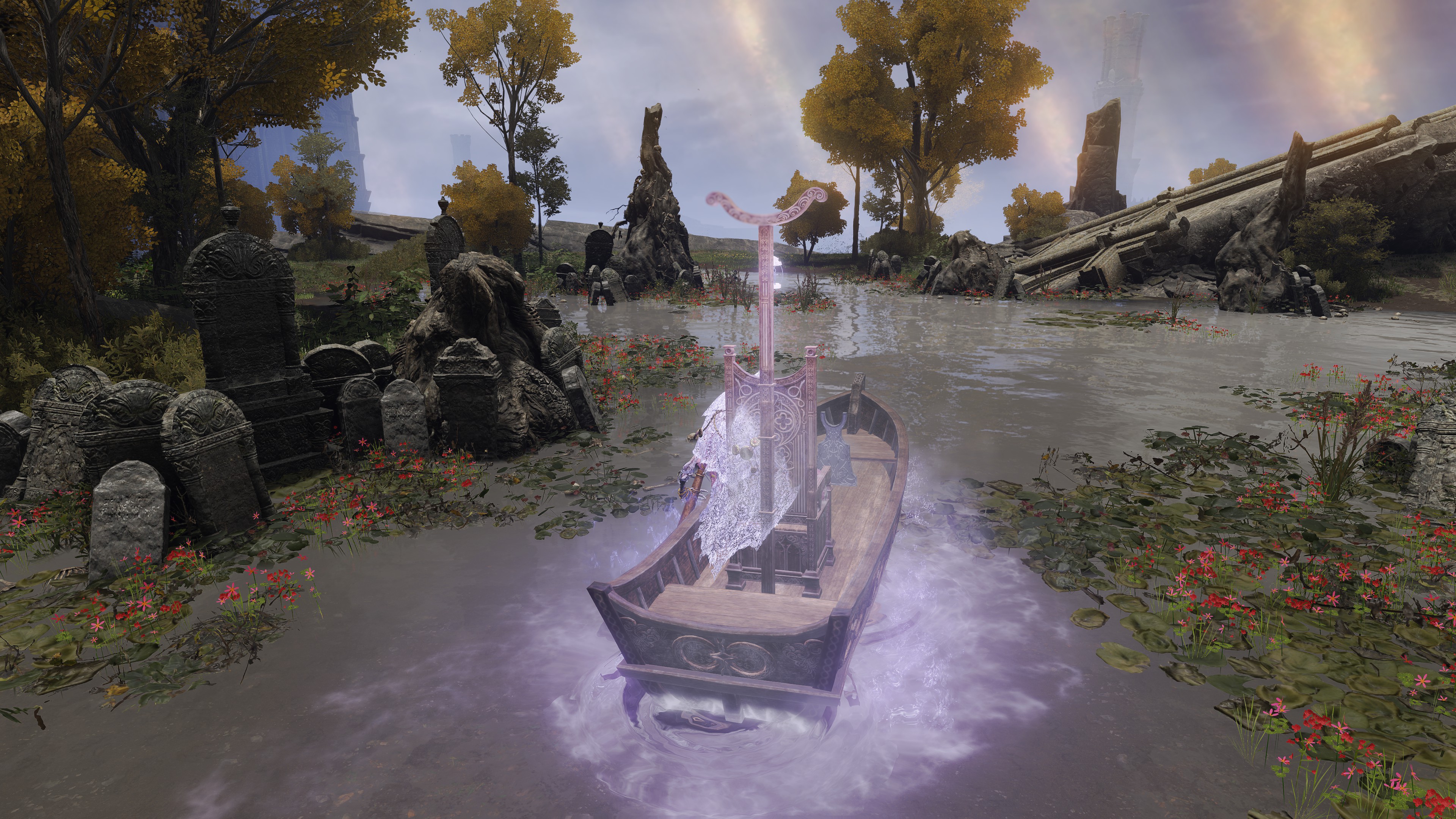
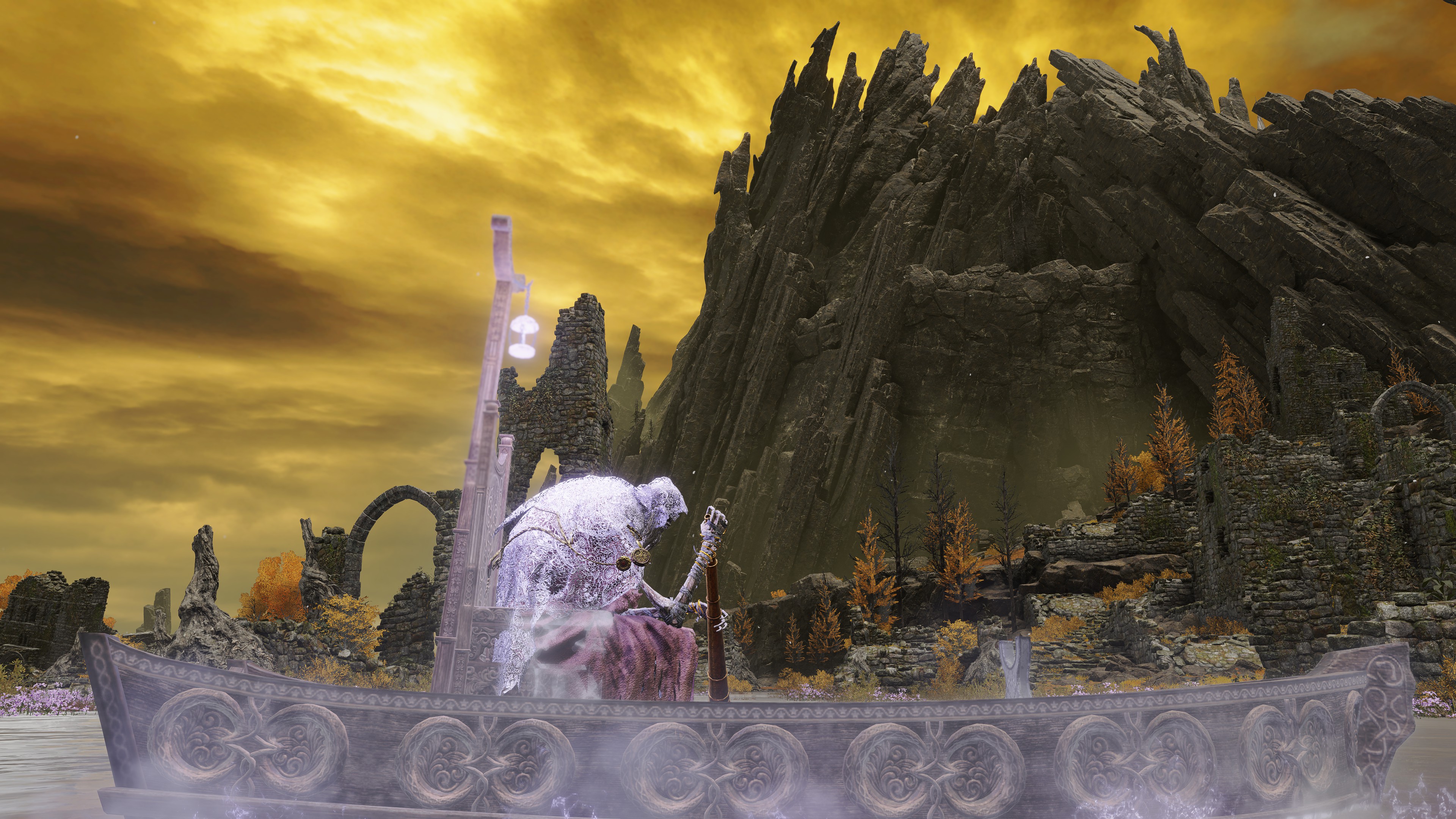
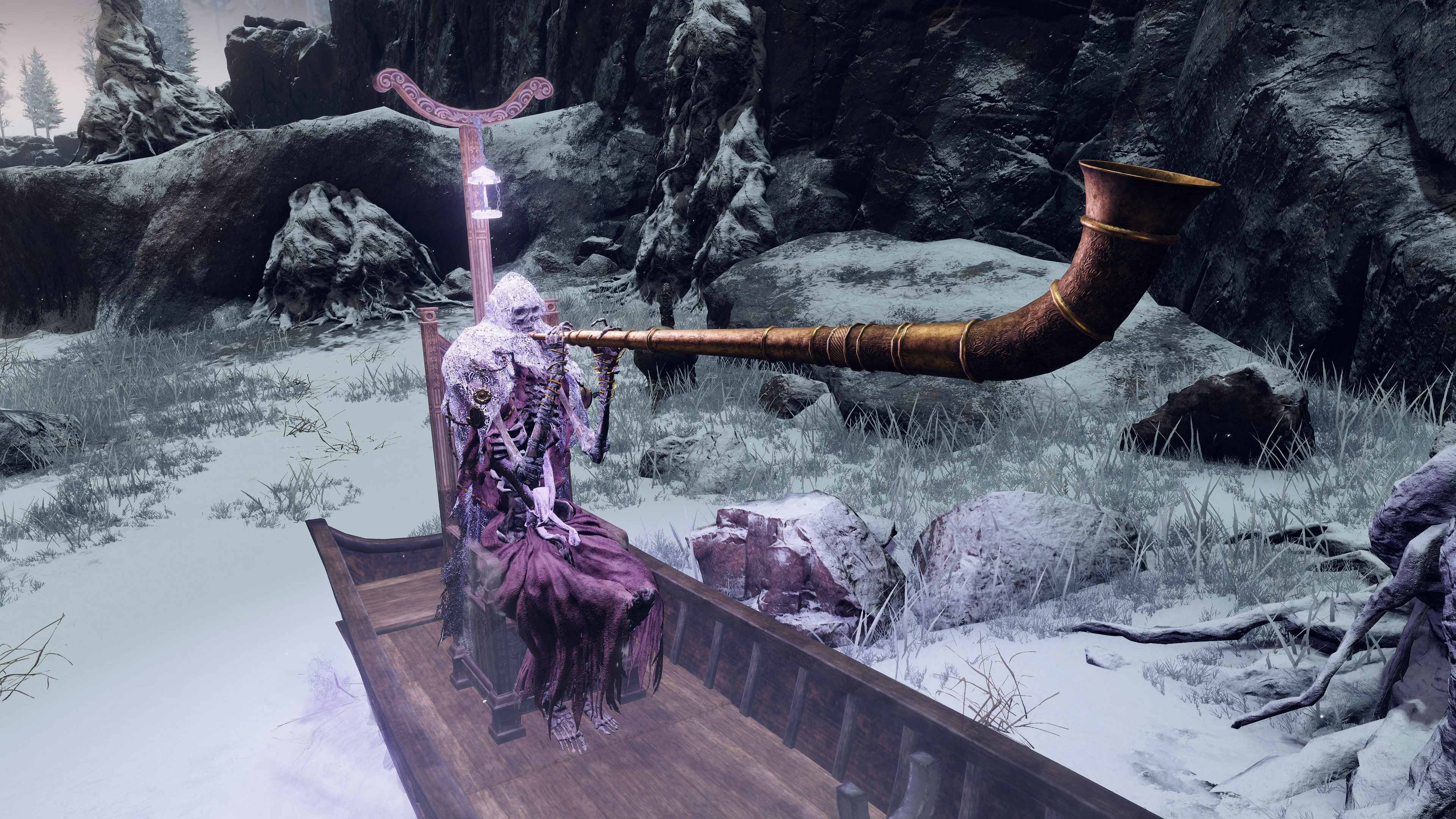
The Tibia Mariners are certainly thrilled with these developments, their boats heading to every corner of the Lands Between where the living dead appear. In all these instances, they seem to have harvested the local Deathroot, planning to spread the power of death on their own terms. In the Prince of Death, they see a renewed rise to their prospects — the dead do always need someone to guide them on the path ahead, which the ferrymen are happy to facilitate. With the Deathroot and their old ways of calling the dead, these spirits of Tibia have rallied the armies living in the shadow of Order. Their actions aren’t entirely detached from the emerging Death cult, as Darian finds the wheel centipede’s seal in the Summonwater Village where a mariner roams free. Whether collaborating directly or simply complementing each other, the oarsmen and cultists work in concert to proliferate Deathroot.
This alliance is assuredly driven by Godwyn’s takeover of their old haunt in the Realm of Shadow. It is the hidden graveyard of Charo where risen skeletons and cemetery shades have become most widespread, the Prince of Death already infesting every corner of the Deathbirds’ territory. While the now shadowy gravekeepers didn’t choose to be corrupted, some did embrace the curse of Death with curiosity. As proof, the Rancor Slash performed with the Spirit Sword and Glaive acquired in the graveyard generates the wheel centipede sigil. The Hefty Rancor Pot similarly manifests the sigil, and the greater potentate recorded its recipe in the Charo graveyard where we loot it. Seeing the prince’s unstoppable rise, it is no surprise that Tibia’s oldest gravekeeper choose to join in. The Deathbirds might still roam the various lands in search of offerings on a dark night, but they have long since become relics of a bygone age. It was time for a new way of guarding the dead and promoting a culture of Death, one consistent with the Erdtree instead of the Helphen.
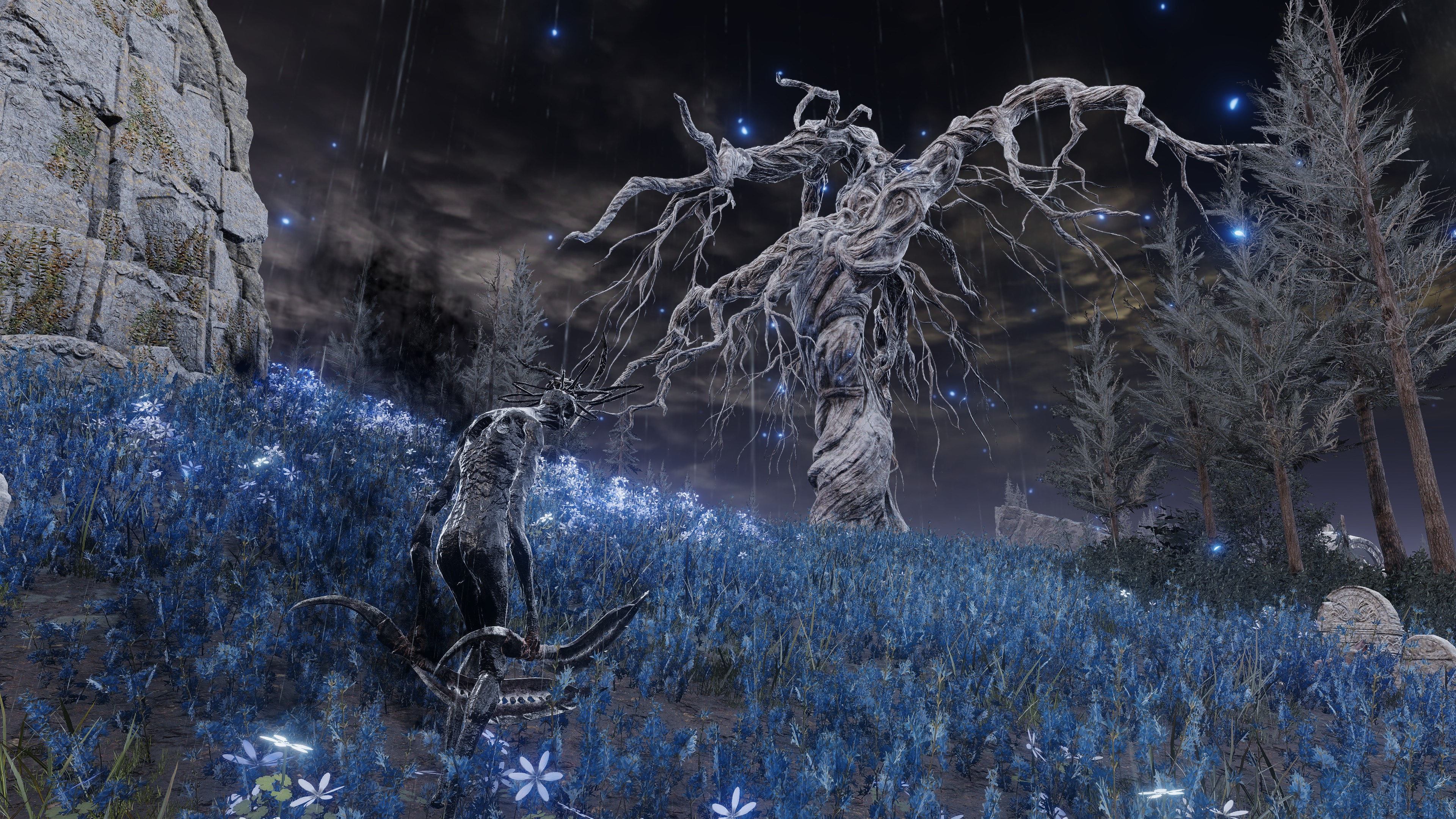
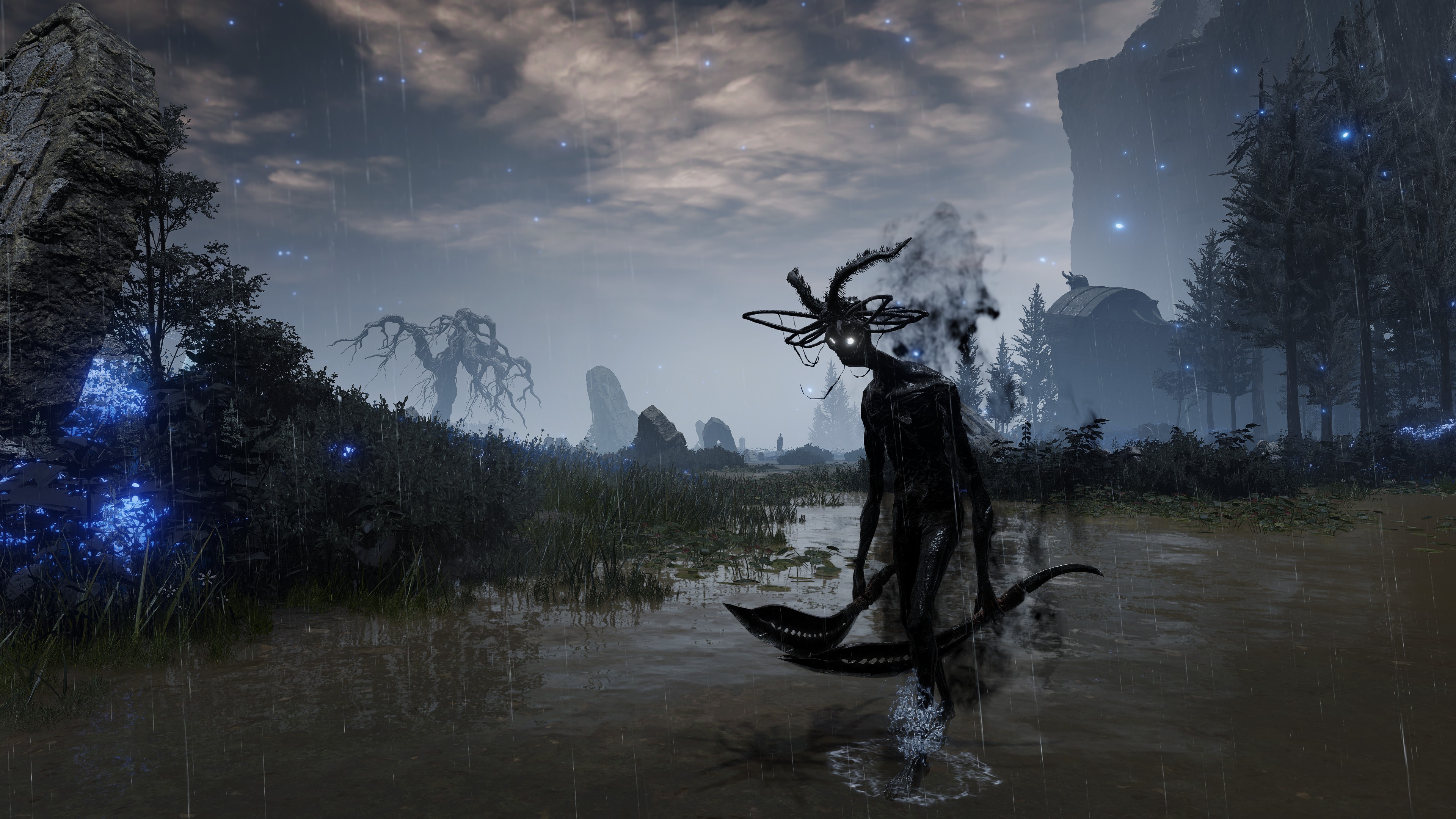
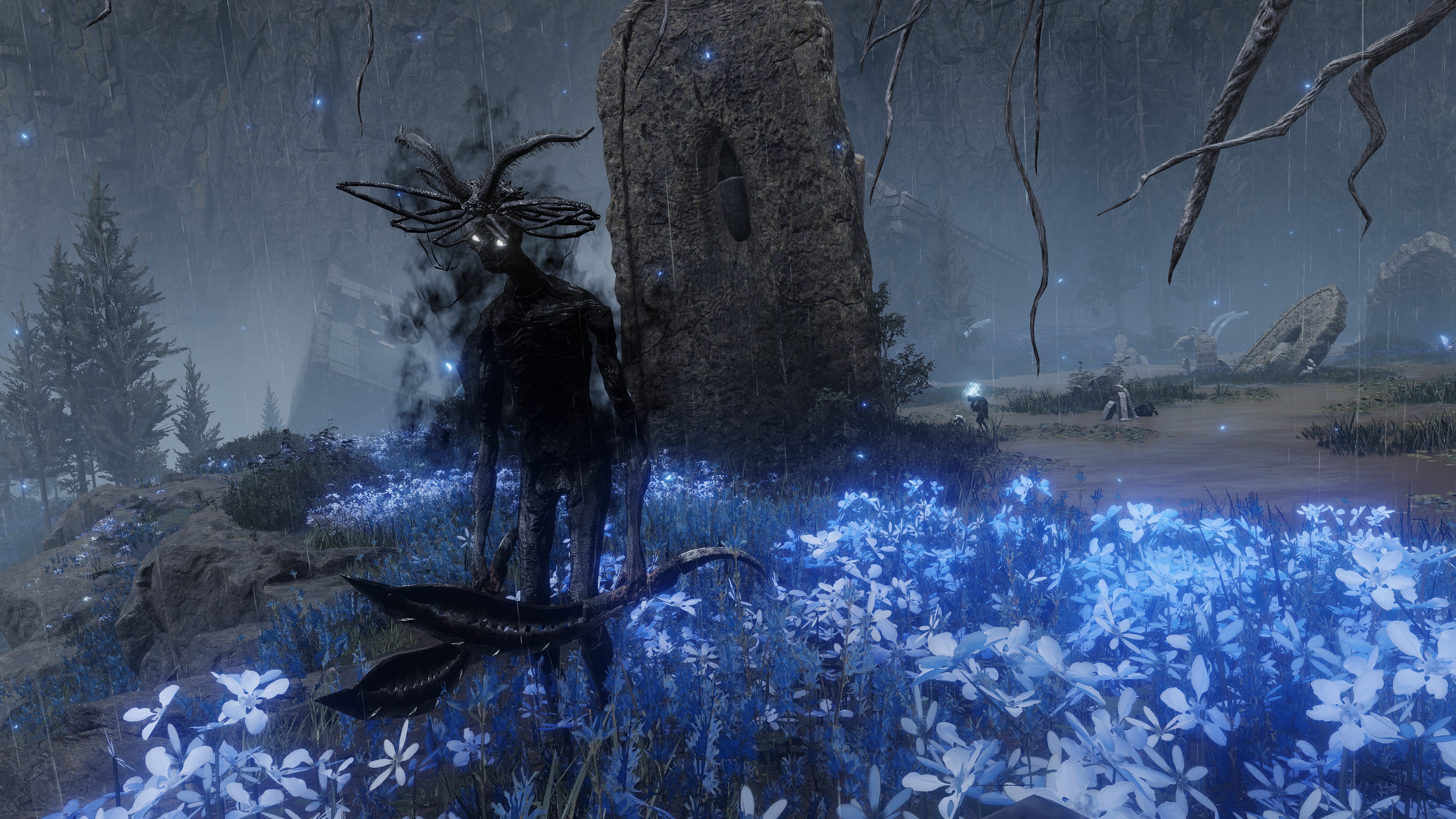
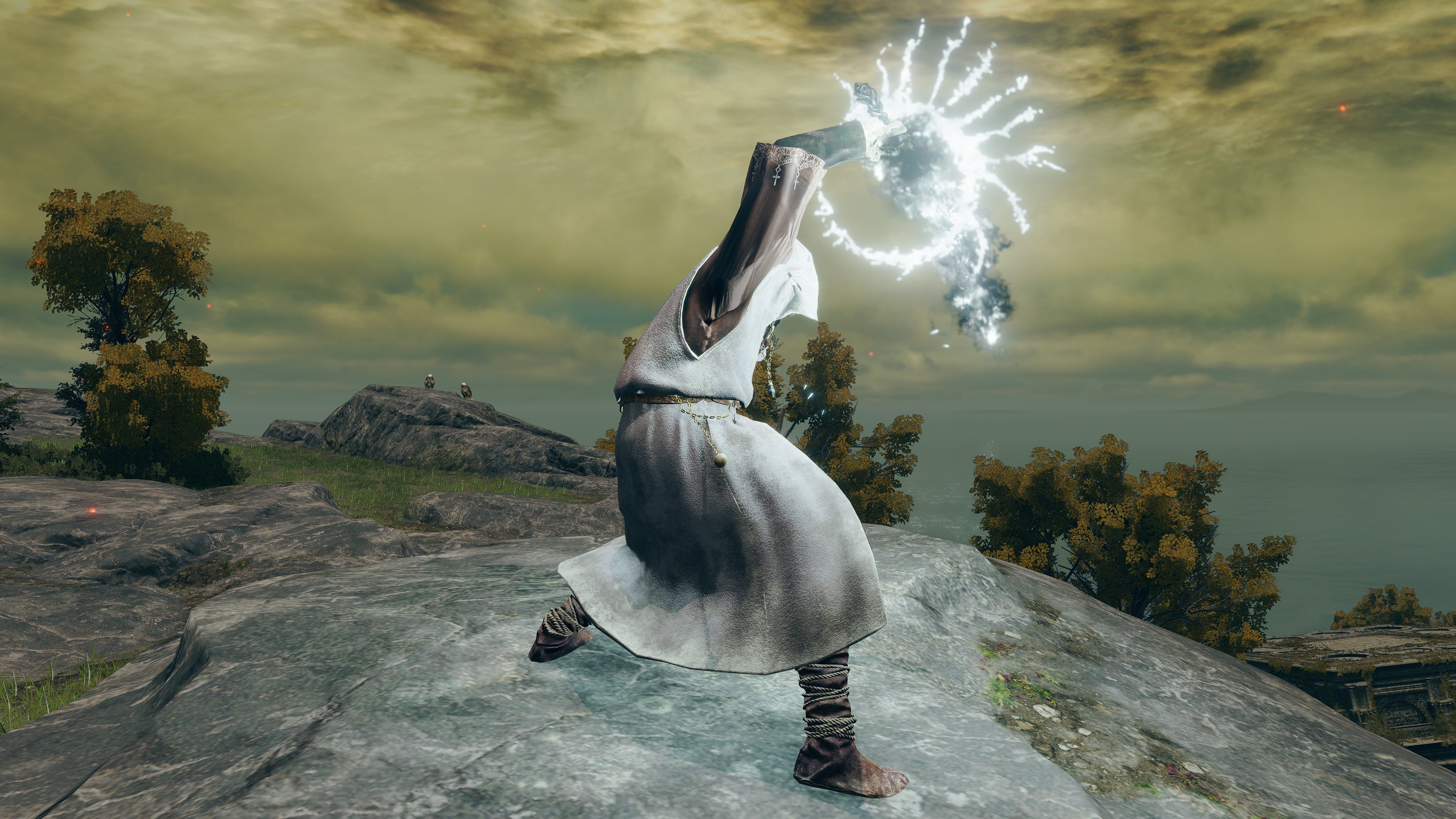
That said, none of it matters for the demigod’s followers unless the Age of the Duskborn officially comes to pass. Adherents of this cult to the Prince of Death consider the two curse marks to be stigmata, literally “holy marks” (聖痕) which prelude the resurrection of the living dead’s savior. Until the other centipede mark is found, defending their prince’s corpse takes top priority, but it still the end goal. The benefits of Godwyn finding new life in a Rune with which to return Death to the Golden Order isn’t as obvious for the living. The only immediate effects of the Age we witness is downpour of rain and mist, with Death’s flies buzzing close to the ground. Besides increasing the spread of Godwyn’s power, the major benefits appear to only be recognizing the living dead as valid within the regulation. As a result, proponents tend to be highly sympathetic to those with life of death through no fault of their own, whether it be Godwyn or the various dead dragged into his curse.
When absent that personal stake or empathy for the living dead’s plight, the pursuit of Death becomes far more self-serving. A few Black Knife assassins have gravitated toward the underground graveyards, presumably to extract more power from Destined Death. One rests with the chest of Deathroot in the Deathtouched Catacombs, doubtless responsible for digging up the source of contact. Another sits exhausted in front of the Sainted Hero’s Grave, likely having finished a fail excursion in search for the same from that untouched graveyard. A third hides behind an illusory wall in the Black Knife Catacombs chapel, plainly choosing not to contend with the indomitable horde of skeletons and await a better opportunity despite earning the place its namesake. None of them demonstrate any affinity for the living dead or the cult springing up around them. They simply wish to shore up their strength before recommitting to revenge on Marika, the reclusive catacombs providing these fugitives the perfect hideout. For them, Death is just a tool, which only widens the threat.
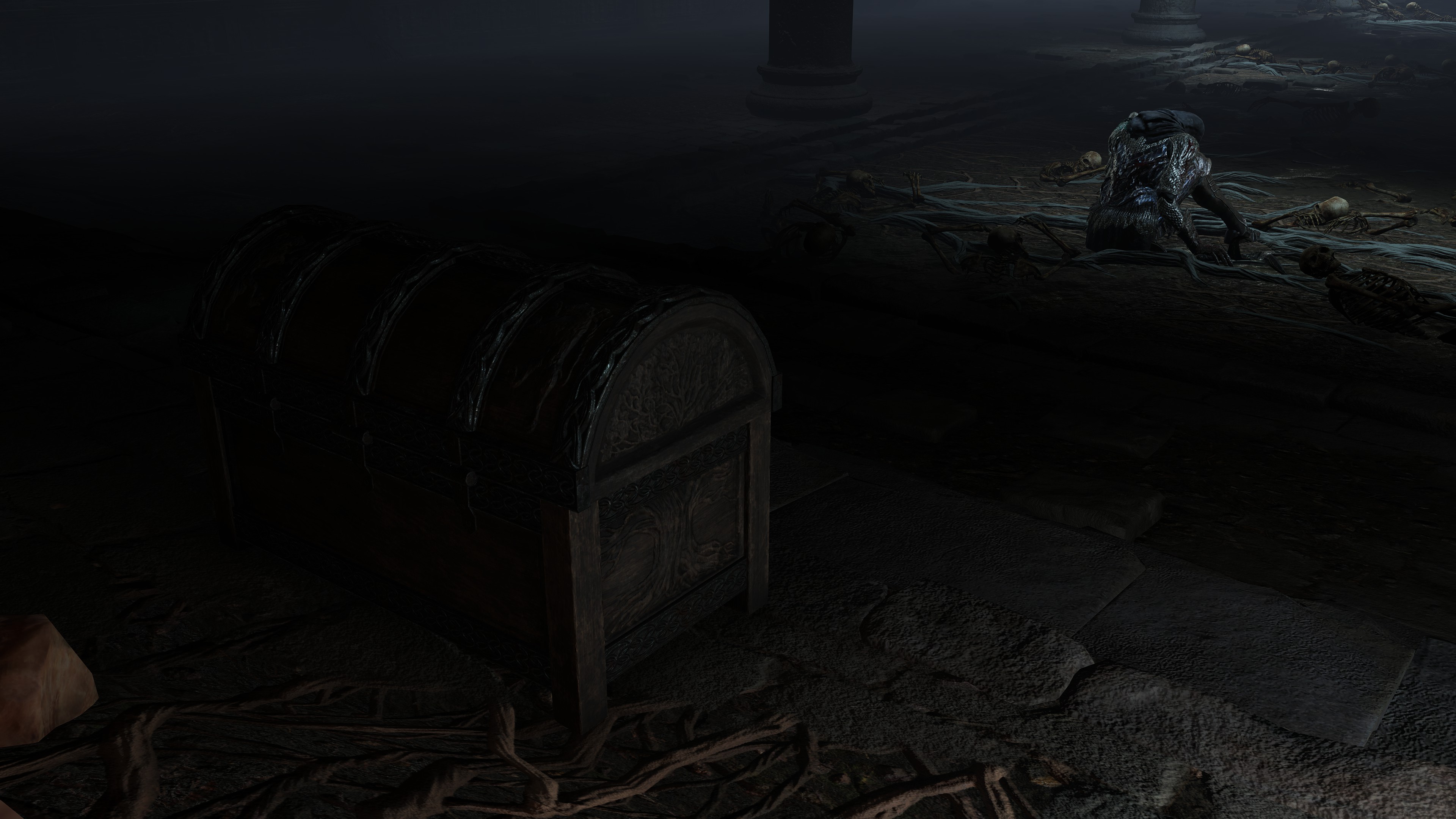
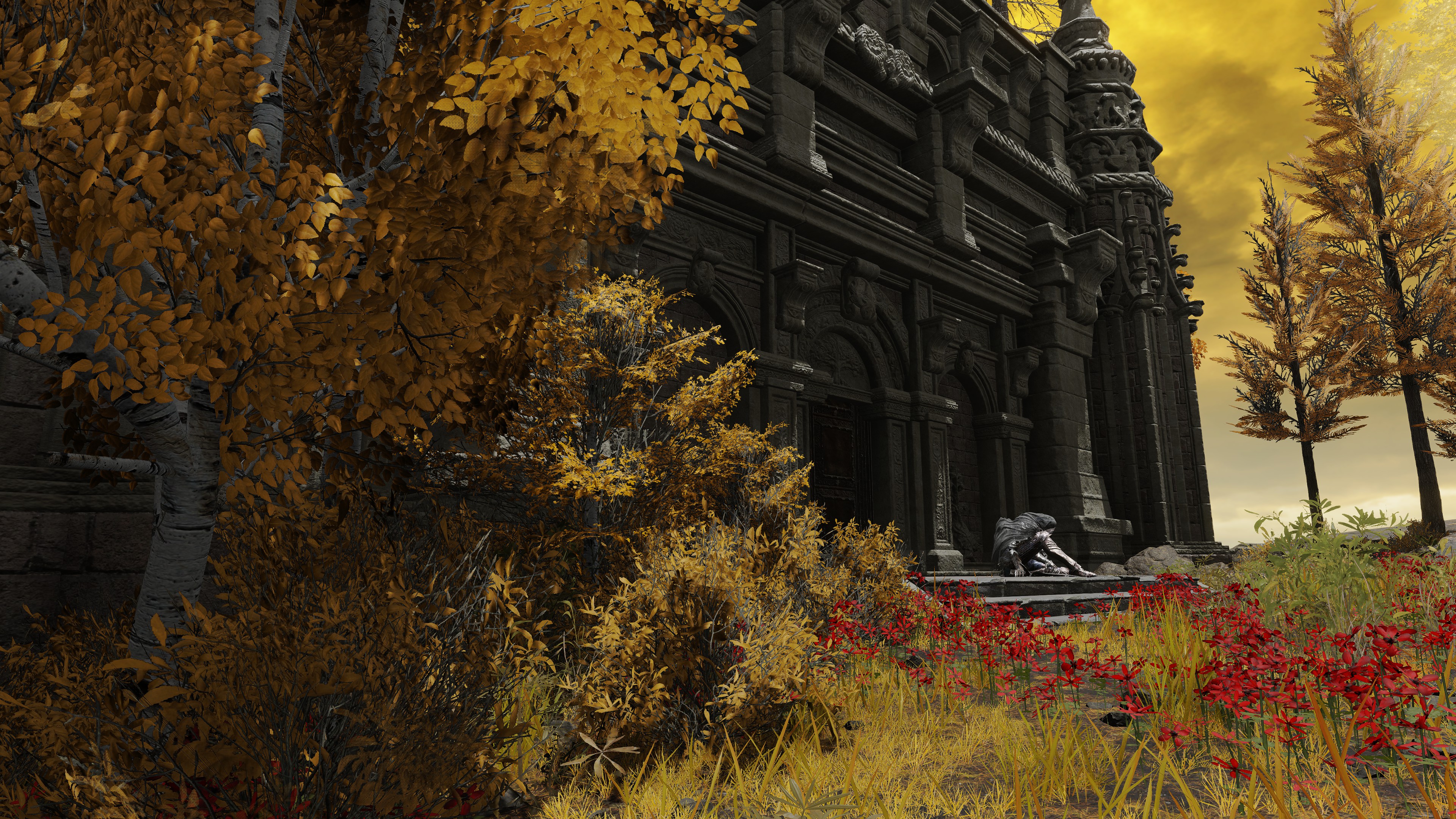

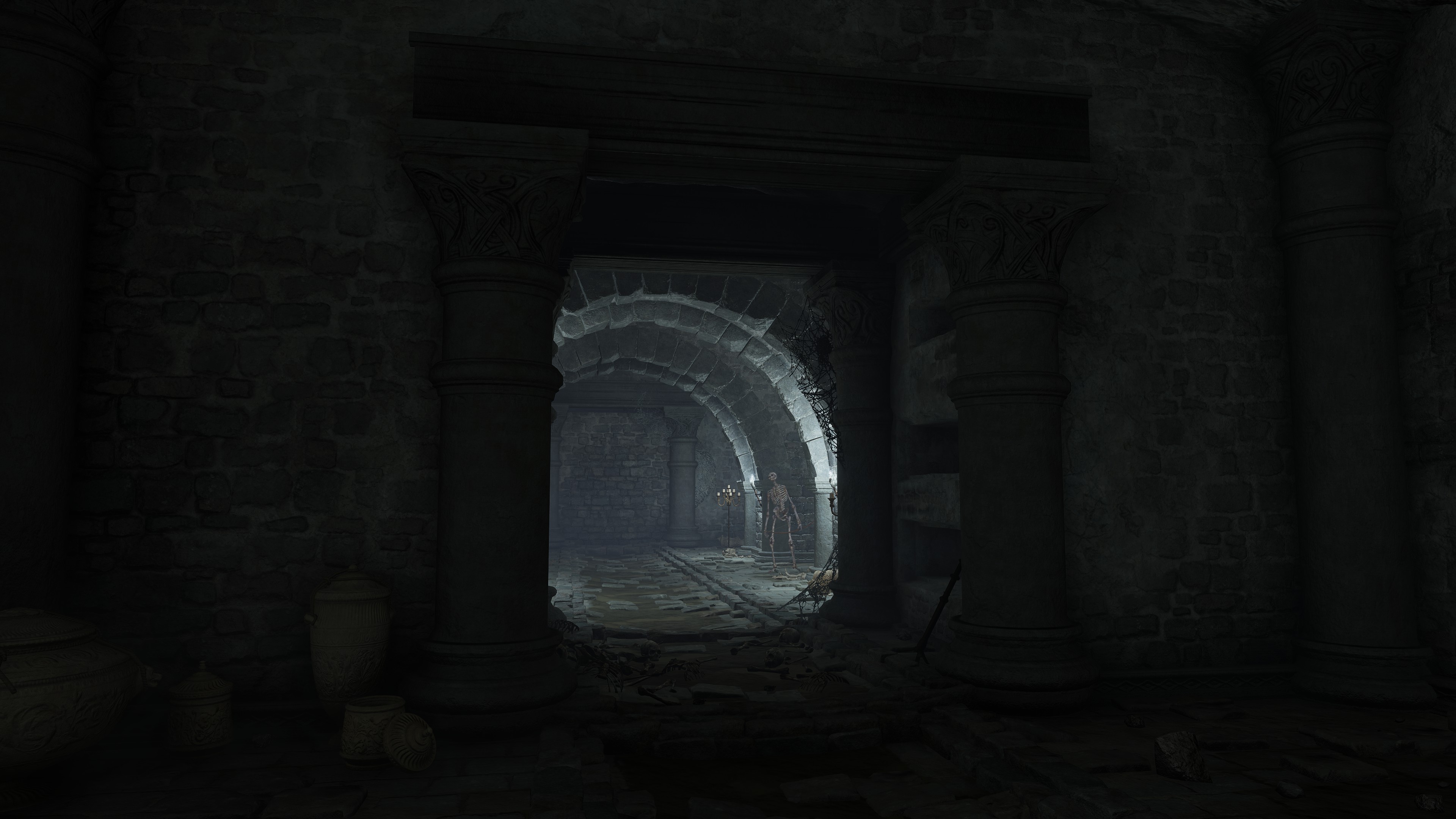
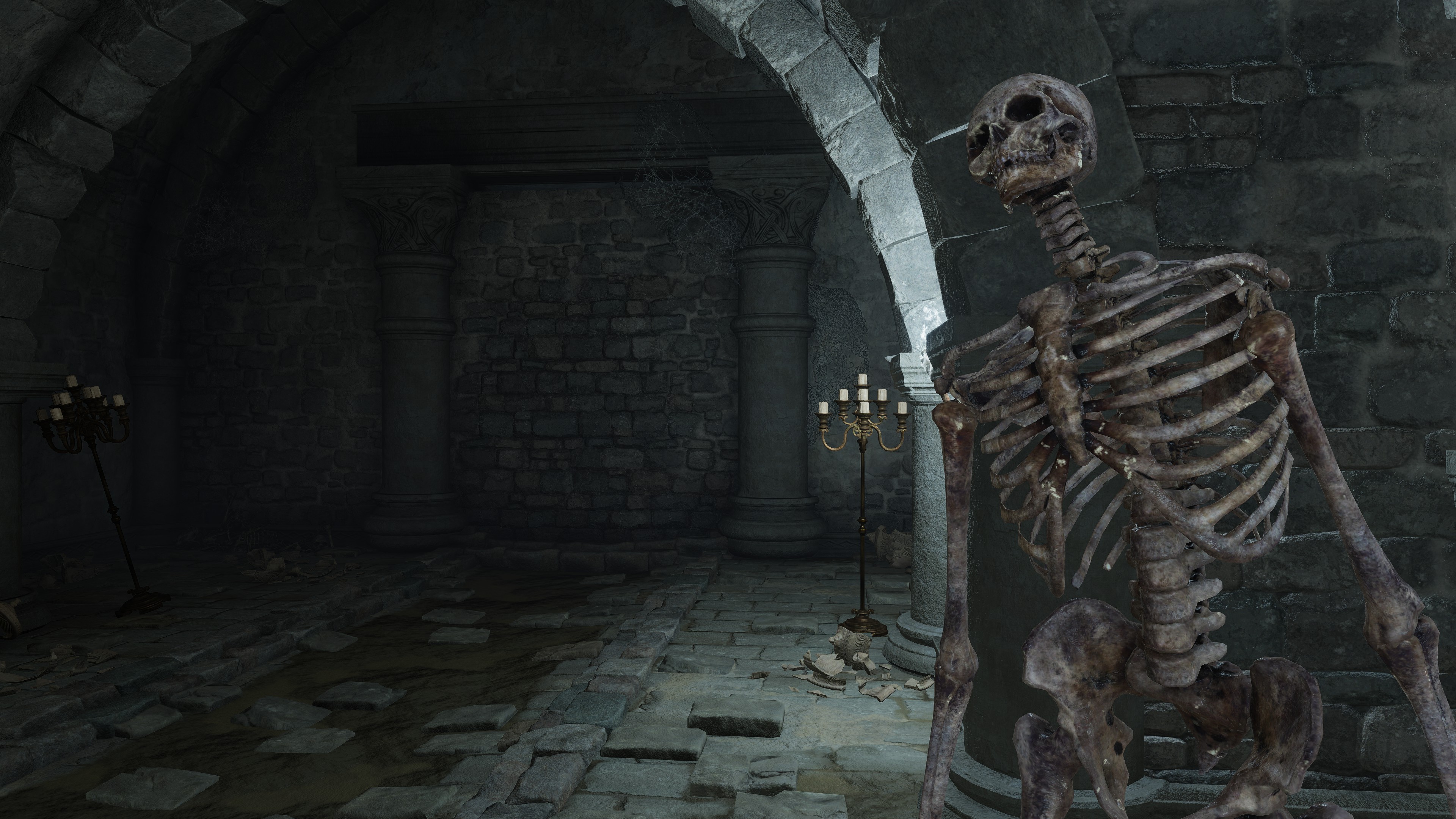
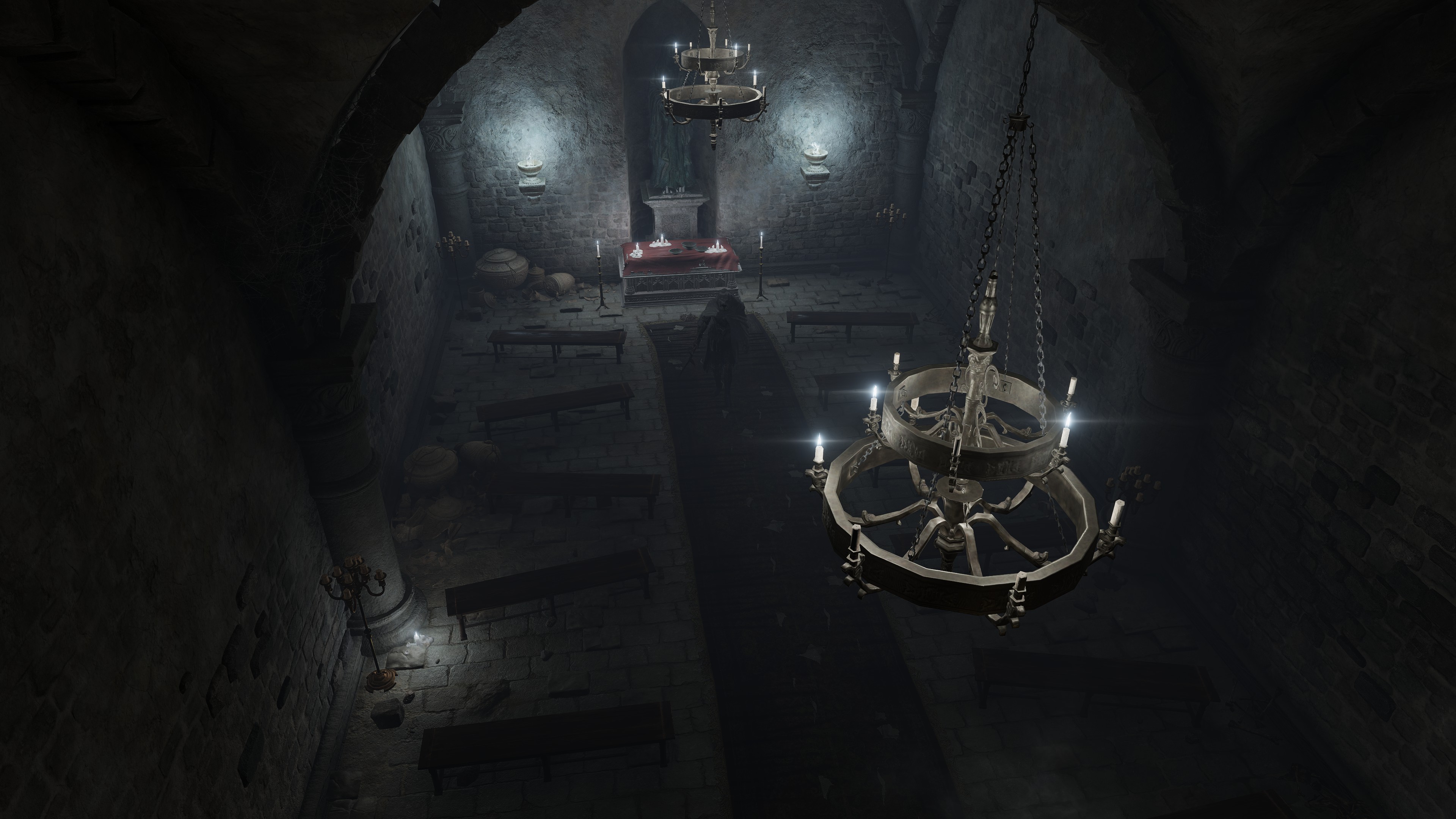
Indeed, many who came to Destined Death as cultists might have started out as people with the ill intent to inflict its curse upon his fellow man. Others, like Rogier, might just possess the curiosity to approach the subject due to forces entirely unrelated. In either case, the result has been a wide variety of the living in the Lands Between seeking after the power. Someday, the living dead and their supporters might even cross the sea of fog. (In Nightreign, one such organization “takes in” and “raises” so-called “centipedal scions” as disposable assassins) It may be gradual, but more and more will be brought into Godwyn’s orbit, guaranteed to benefit from the Age of the Duskborn they are sure is to come. At least, that is the trajectory so long as nothing hinders the Prince of Death any further.
No Road Between
The resurgence of Death hasn’t gone over well with Golden Order Fundamentalists. Stringent adherents perceive living in death as another corruption of Order, Godwyn and his ilk requiring a “proper” death to be brought back into line. It doesn’t help that his cult’s symbol is a centipede, making it easy to point to their fetishes for answers to the living dead’s contradiction. If the golden centipede symbolizes the reconciling of corruption within Order, then they need to do their part and drown Death’s centipede in gold. To be sure, the power of golden life can counter the life in death, holiness cancelling the corrupted skeleton’s immortality at its source before they can revive. Darian further argues that such fanaticism is the natural conclusion of following the Elden Ring as your guiding light. Those Who Live in Death distract from the proper guidance of Order, so must be exterminated without exception. For proof, he points to Rogier, who continues pursuing the subject even after being mortally wounded by Godwyn. In the end, Death eats away at humans until they are destroyed, body and soul.
… My goodness. Our proper place to die has been corrupted. How repulsive. To refuse to return to the Golden Tree and live even in death, they say.
… I serve the Golden Regulation. In order to mend this broken world, I make the great Elden Ring alone my guidance… And Those Who Live in Death are beings outside the logic of the Golden Regulation. By just them existing, guidance is corrupted and its properness darkened… That is exactly why they must be eradicated first. Every single one, without exception…
… Do you know Rogier? The pitiable man hiding out on the Round Table’s balcony?… He was once an excellent sorcerer swordsman. He was intelligent, and even if aloof, had an unwavering core no matter what. But look at him now. Pierced by a corrupted briar and repeating nonsense. A half-corpse, unbearable to behold… Remember this, friend: That is the fate of being seduced by Those Who Live in Death. The corruption of guidance eats away at man… and destroys him.
For that reason, fundamentalism has given rise to living dead hunters, using Order’s Blade to strike down those who corrupt gold’s logic. Fundamentalist missionaries further support them with new tools for the hunt. For defense, they invented rejuvenating boluses, combining golden centipedes with crystal cave moss and dewkissed herba to counteract Death with the added power of the arcane stars. For offense, they fashioned a better holy water pot, adding a golden centipede to a ritual pot with an untarnished golden sunflower before sealing it with twice the mushrooms. Thanks to these crafts, the hunters safely confront the living dead and their allies with the divine always available. It isn’t just for them; the bolus recipe is sold by the merchant camping in the Mountaintops of the Giants, the missionary probably once heading to Castle Sol to share the hunters’ protection in light of all the Deathroot surrounding the place. However, the hunters have definitely been the most effective in using the works of gold to push back against the corruption, writing a Litany of Proper Death and Order Healing to be the end and not ended.
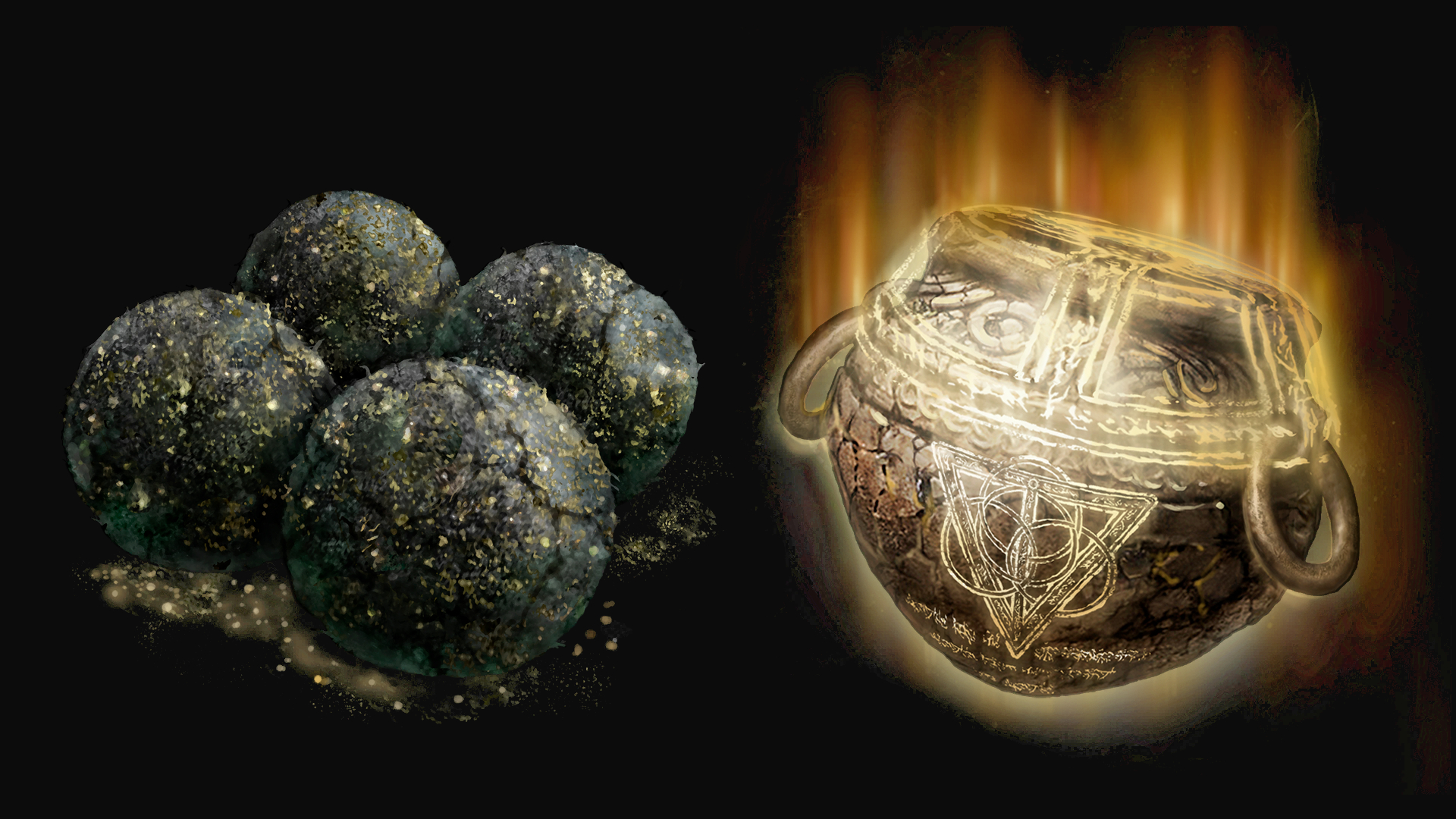
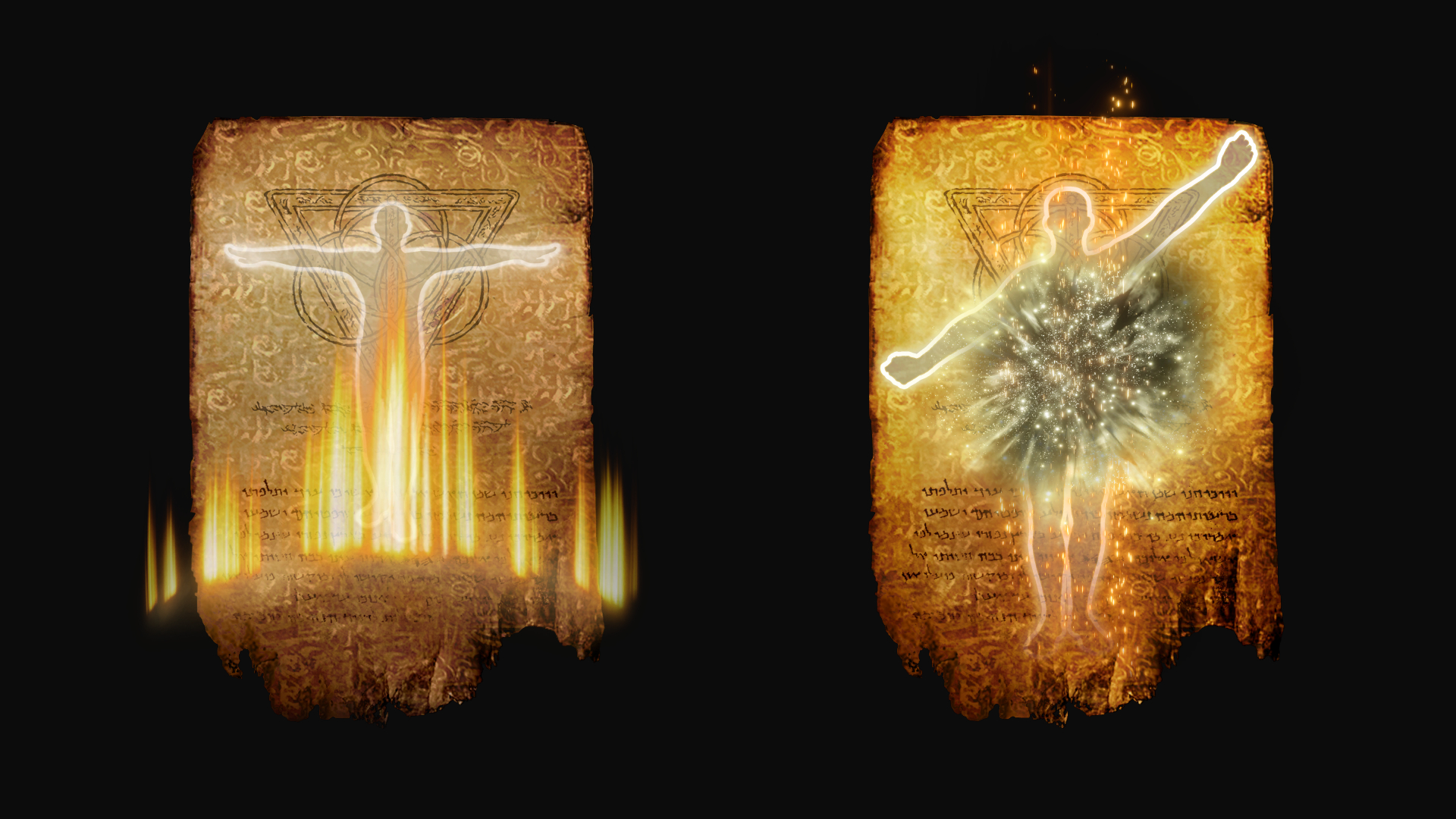
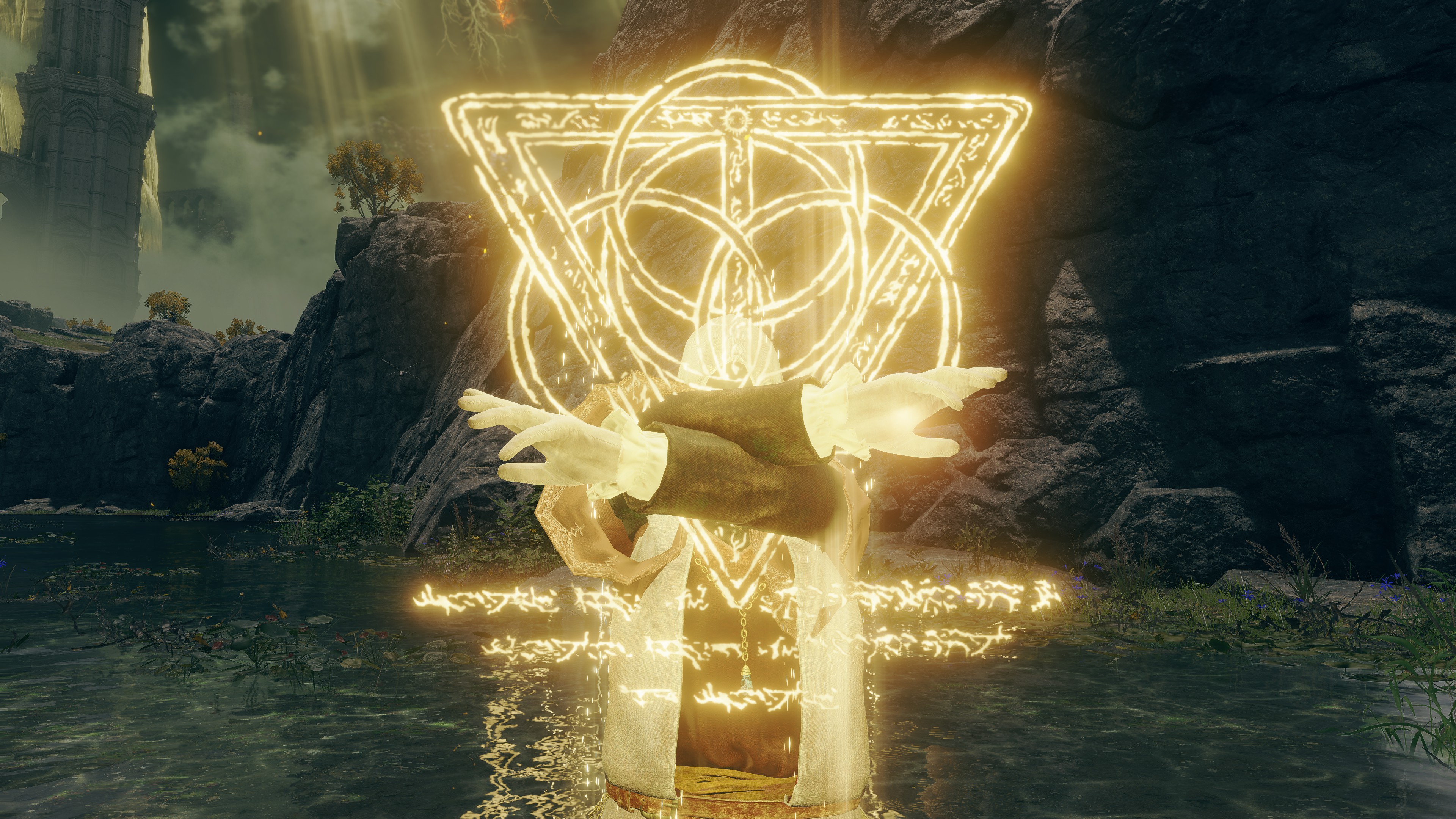
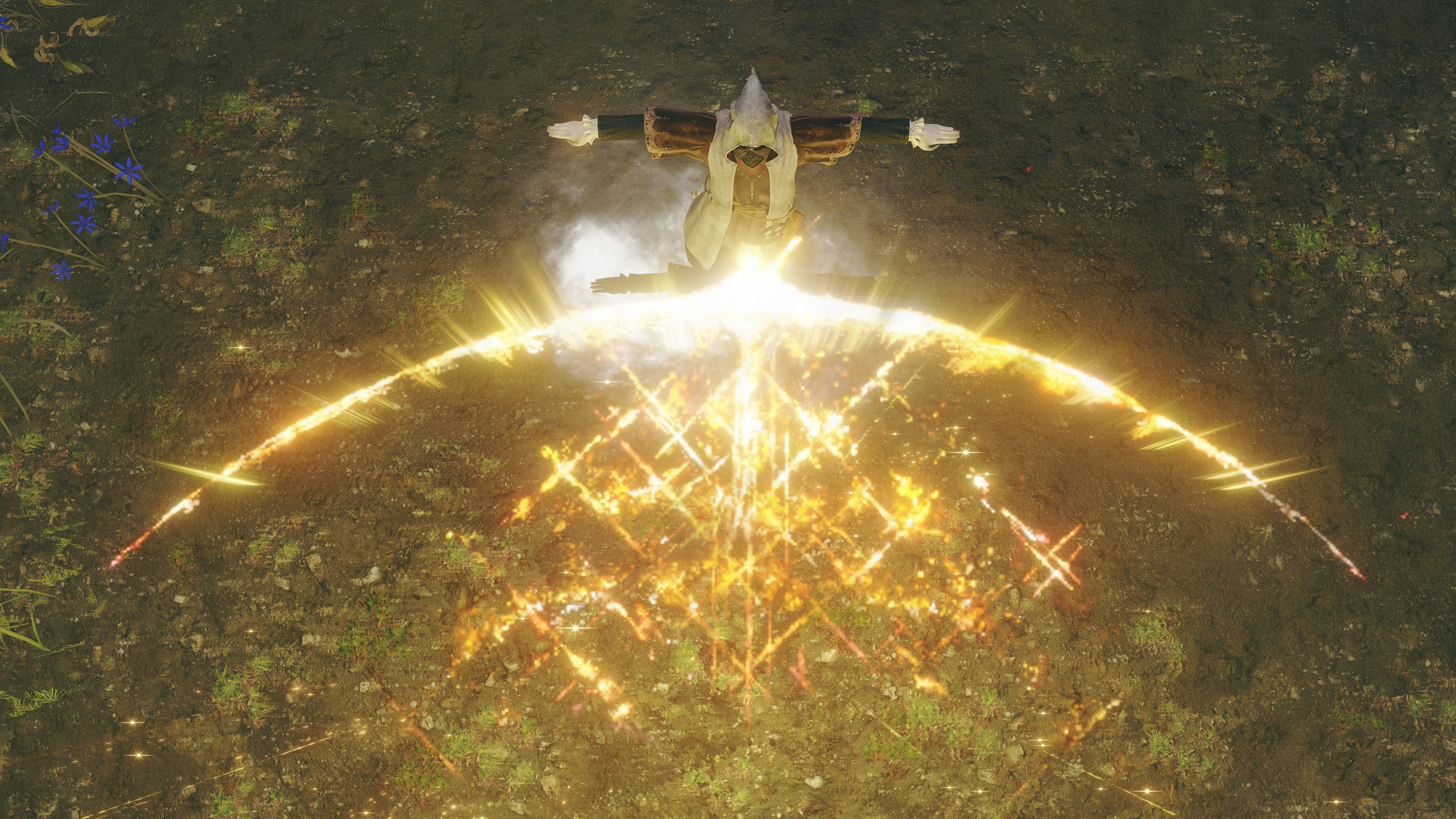
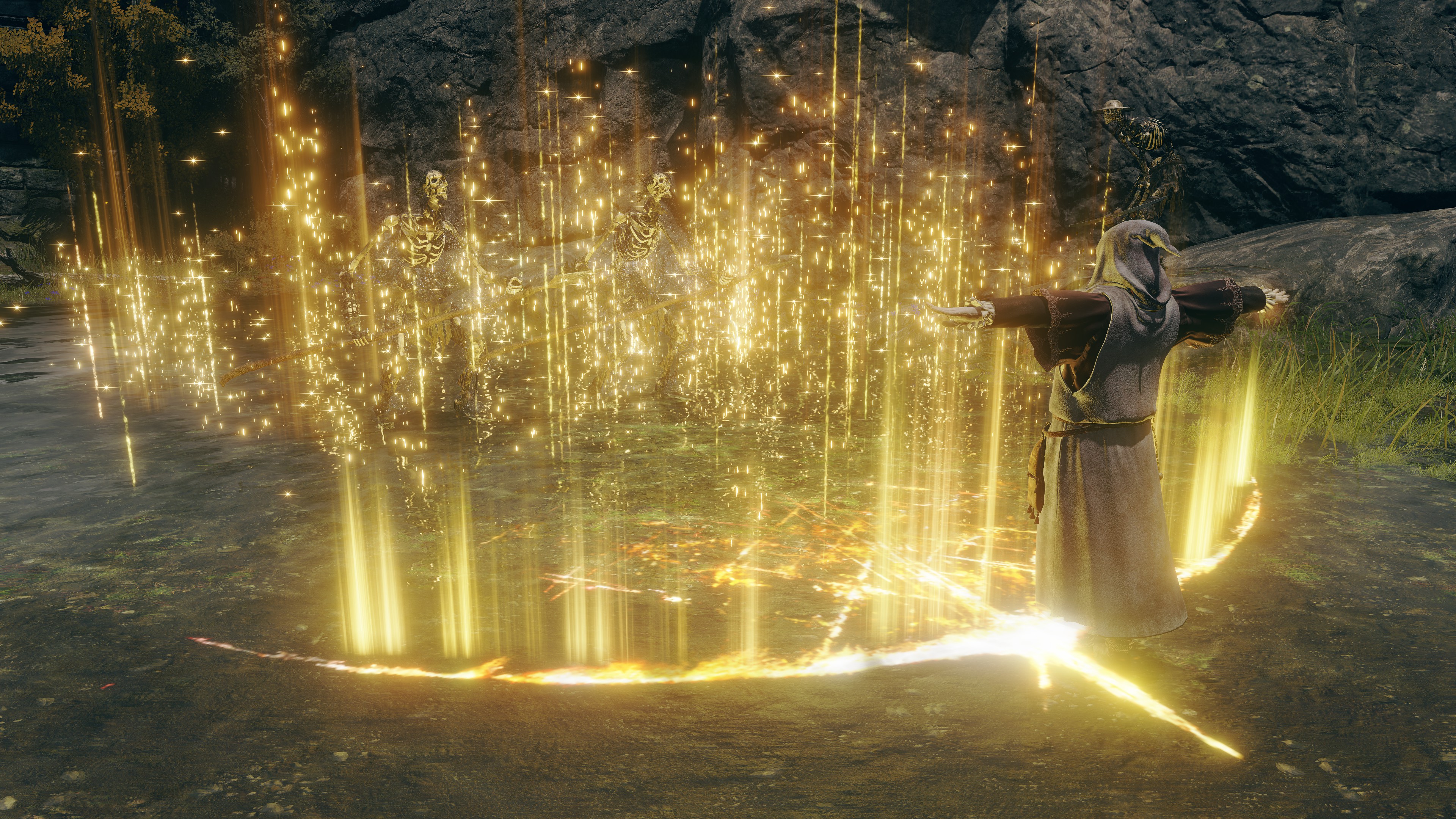
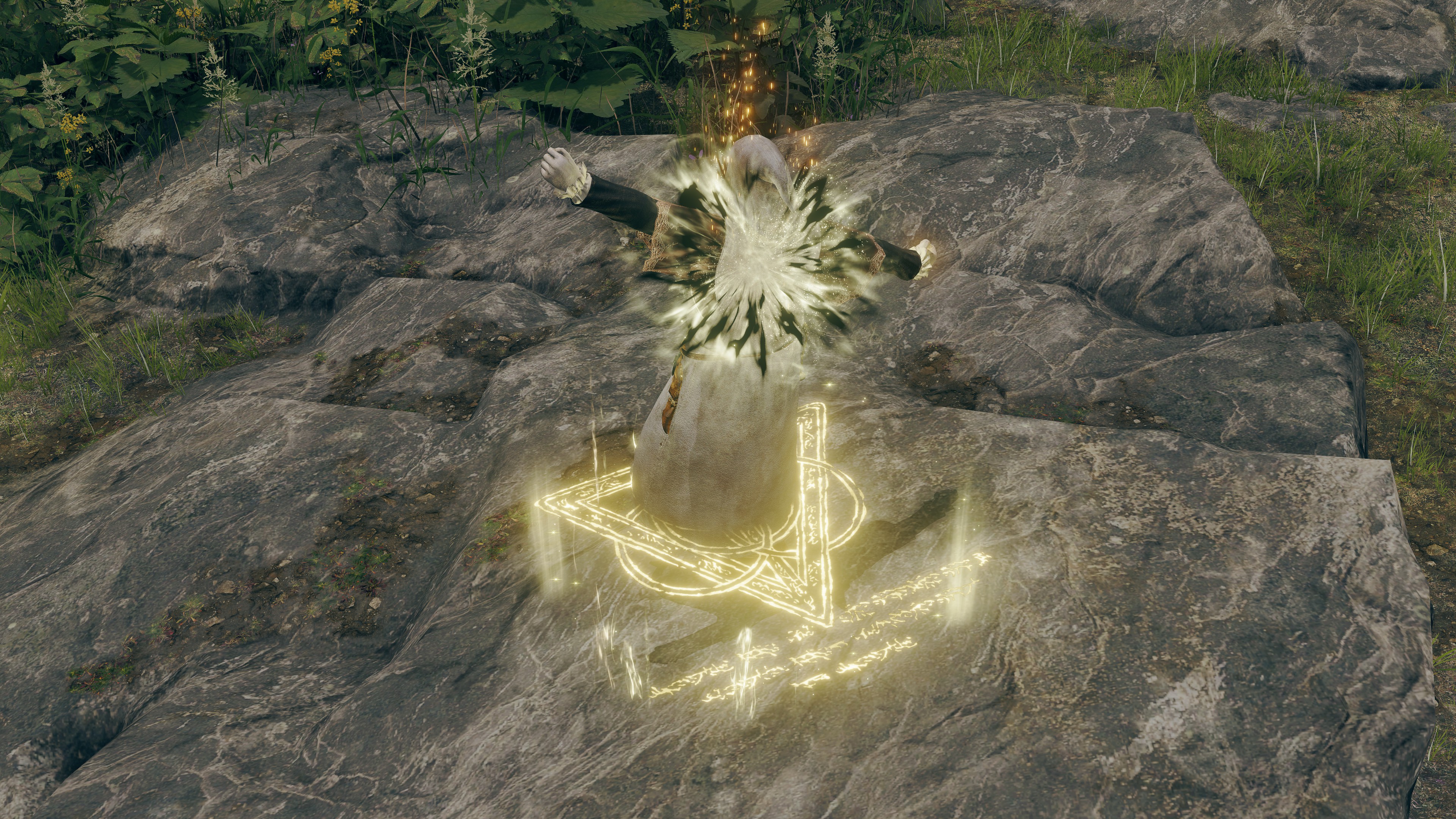
One of the Golden Regulation Fundamentalism prayers. Hunters of Those Who Live in Death use it.
Endows right-hand weapon with attack power of the holy attribute. Highly effective against Those Who Live in Death in particular. If defeated, they will not revive.
The hunters are exterminators of corrupted logic. All for the perfection of the Golden Regulation.
In the context of Erdtree religion, Death’s hunters think of themselves almost like gardeners. They “pick” (摘む) Deathroot like one would a weed, and Darian notes how death is “running rampant” (蔓延る) with the literal meaning of a vine spreading. Their job is to prune gold’s Garden of Eden so that it remains paradise on earth for the living. If the Lands Between is the Garden, the Erdtree is their Tree of Knowledge of Good and Evil, and those living in death are decidedly evil. Hunting Those Who Live in Death is thereby pruning the leaves to get at the root, eradicating them literally meaning to “cut at the root” (根絶) or root out. All their language paints their work as necessary to bringing order to nature and thus preserve its beauty for the world. The soulless are unsightly weeds growing on the vine. Can these pruners provide a proper death if they have no souls to return to the Erdtree? Perhaps not, but ending their life in death is as precise as it can get within the bounds of the Golden Order.
… You’re Tarnished? I am D. I hunt Those who Live in Death and pick Deathroot… Let me advise one thing. Death runs rampant in this village ahead. There will likely be a “boat” as well. Unless needlessly exposing your corpse is a hobby of yours, don’t go near it.
… I see, so this is… another case of death running rampant…?
The Prince of Death at the heart of this defilement was therefore the ultimate prize to uproot. Once the Erdtree kingdom became aware of Deathroot, it was inevitable that they would trace it back to the cursed demigod unwisely embedded deep below the royal capital — word may have even first come from his monitors stationed down there as the deep roots’ corruption spread. Everyone must have recognized the threat he posed when gravekeepers in the various catacombs reported similar incidents. But by that point, it seems that there was little the fundamentalists could do. When one is neither alive nor fully dead, it already isn’t easy to kill, and Godwyn has become a massive mass with the curse at his disposal. With how he and his other selves are willing to defend themselves, meddling with the body was also risky. And yet, stopping the Death Prince’s plans for an Age of the Duskborn remains a worthy goal, so the hunters should have been concocting the possible means to purge the root of Deathroot.
… Oh, it’s you. The witch of corruption is dead. The Golden Regulation is uncorrupted… I can finally face my older brother, Darian, too. O Gold, regulate my soul.
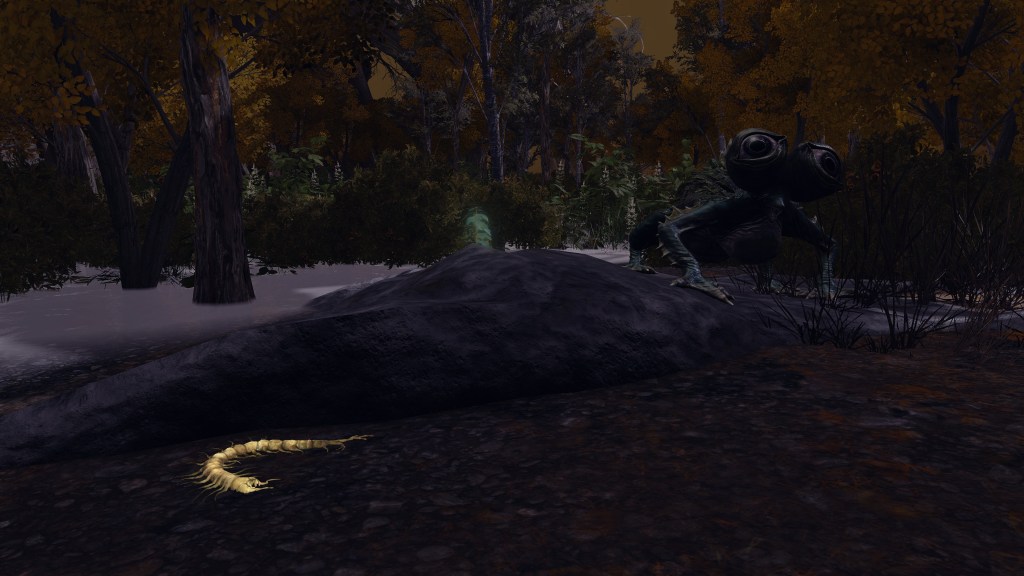
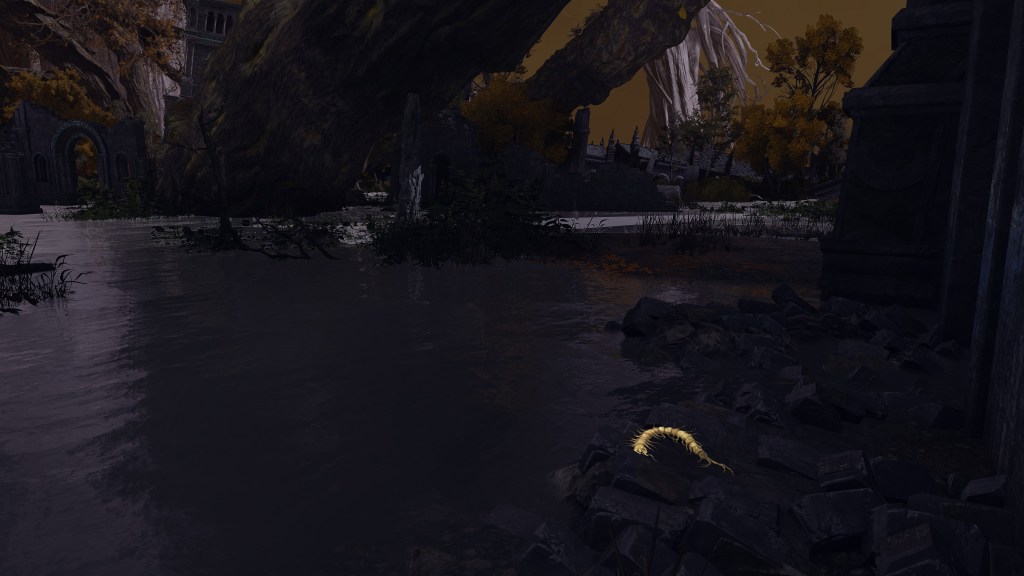
Ever since the destruction of the Eternal City, however, Leyndell’s access to the Deeproot Depths has been cut off. This hasn’t stopped Death’s hunters from pursuing it to the source. Normal firelight illuminates the Lake of Rot sluice plus the Siofra and Ainsel Wells, contrast to the Deep Wells which use magic lighting. This posits that non-sorcerers were making use of these routes to the rivers from Limgrave and eastern Liurnia, and we do find golden centipedes lying around in these areas and beyond, signs of the hunters exploring Eternal Cities and more. Alongside the fetishes, we can loot gold smithing stone from corpses in Nokron, the Siofria River, Nokstella, the Ainsel River, and even the Lake of Rot. Siofra and Nokron likewise retain golden runes for Altus citizens, whereas Nokron keeps those of Erdtree founders; the Lake of Rot has both. Then there are items like the dragonwound grease and gold or silver-pickled fowl feet found in Siofra, or the lightningproof dried liver in the Lake. One of Nokron’s silver tears likewise mimic a troll with his golden sword while crimson tear scarabs loiter about the whole vicinity.
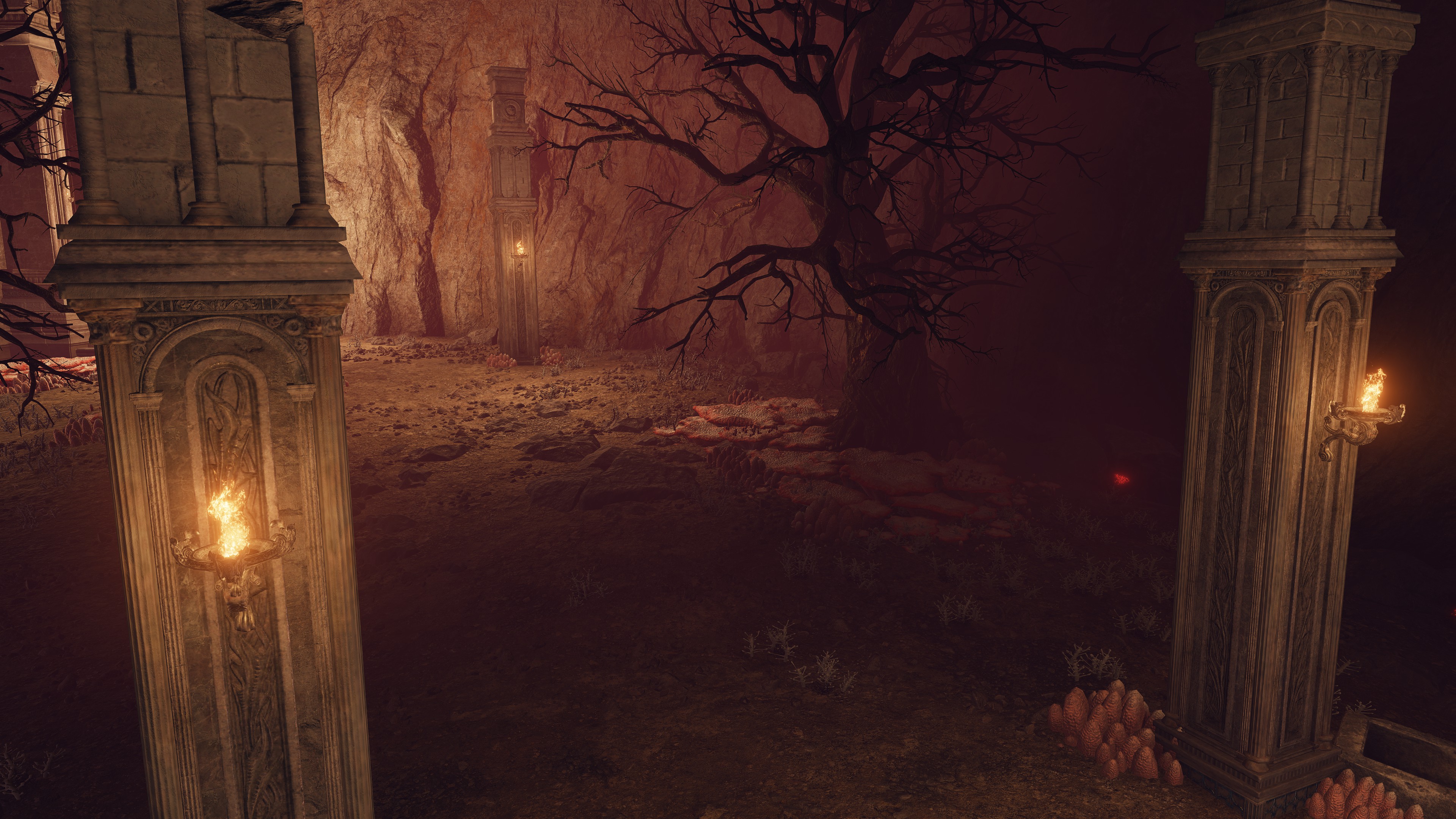
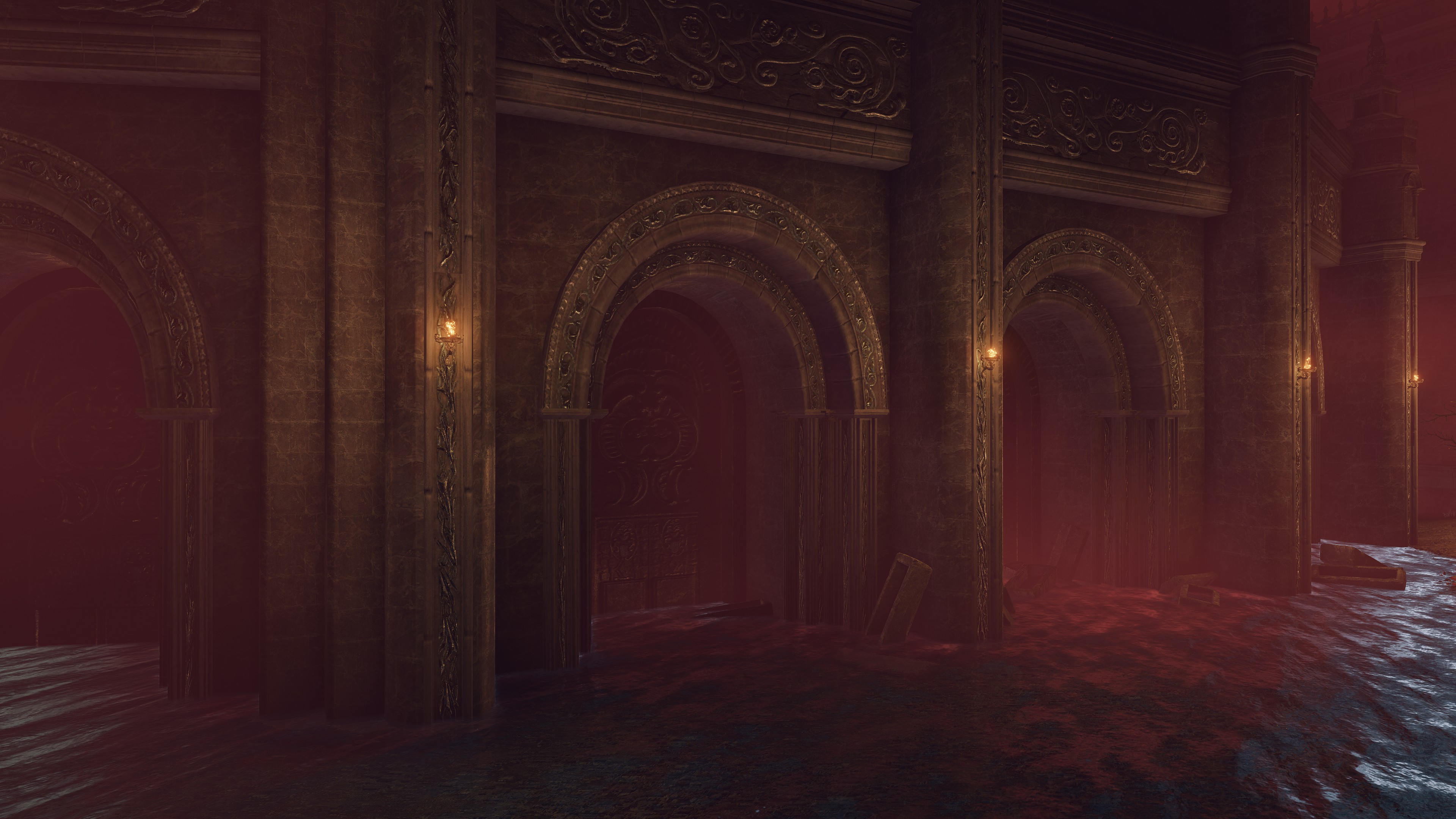
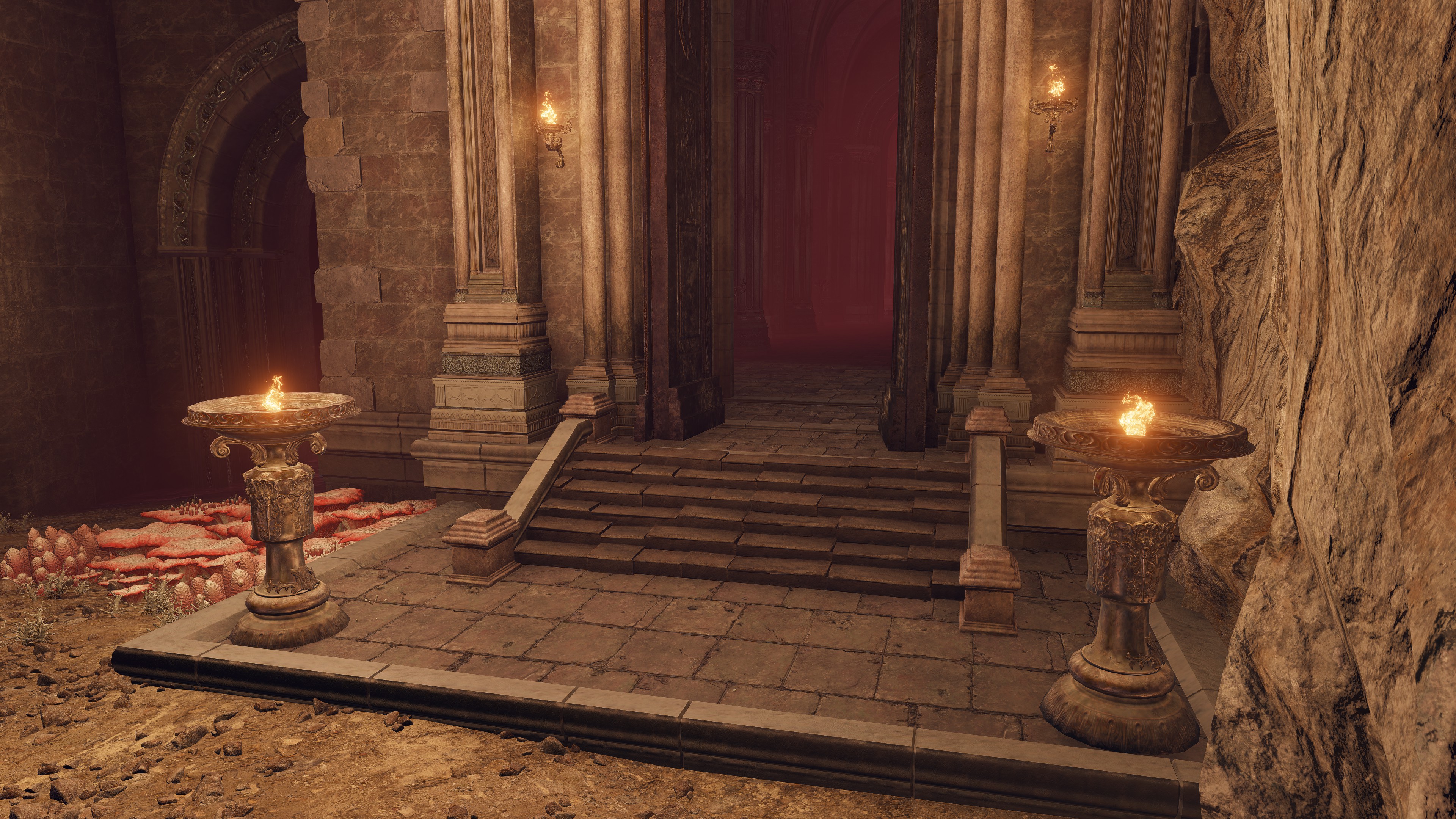
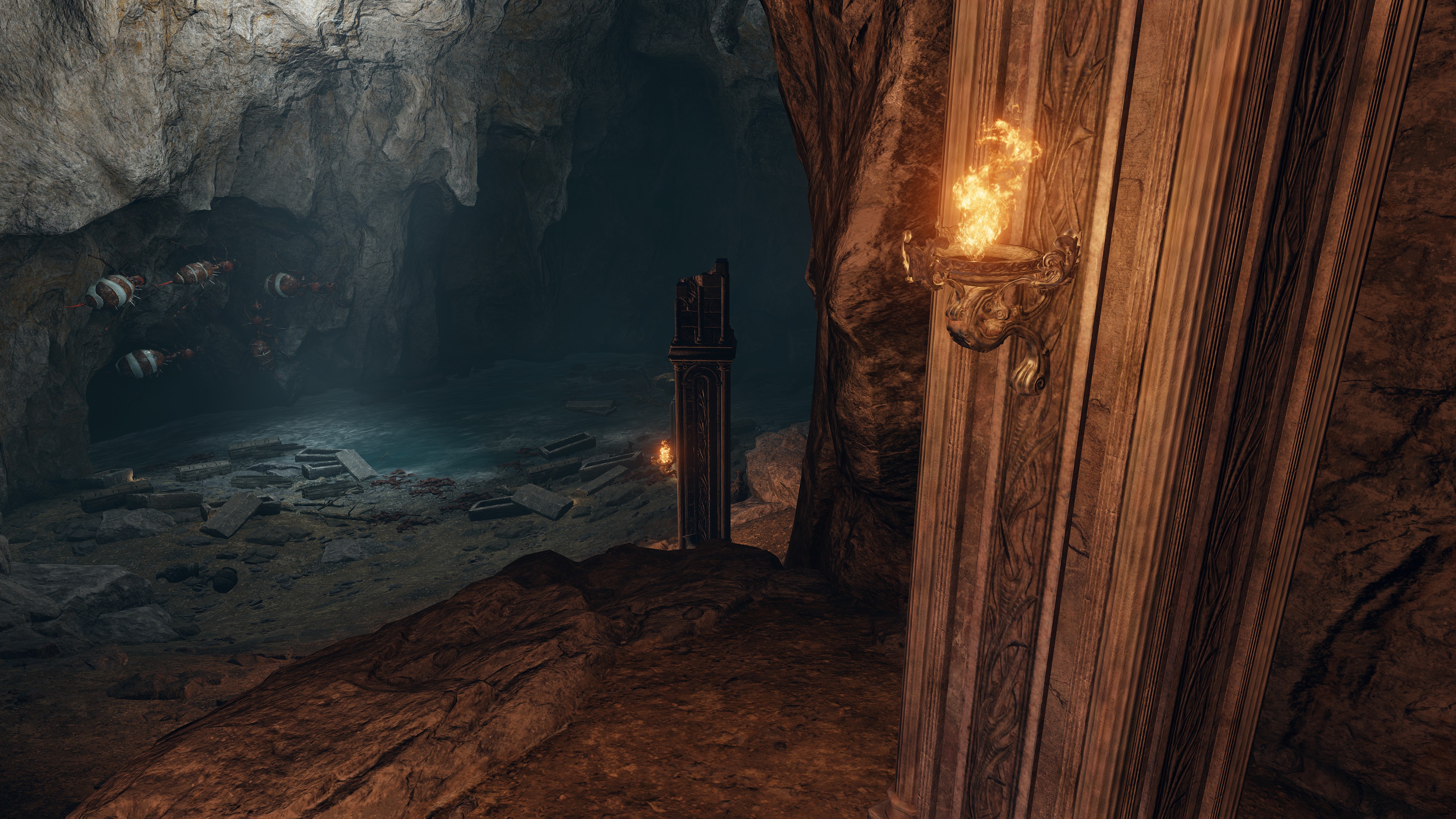
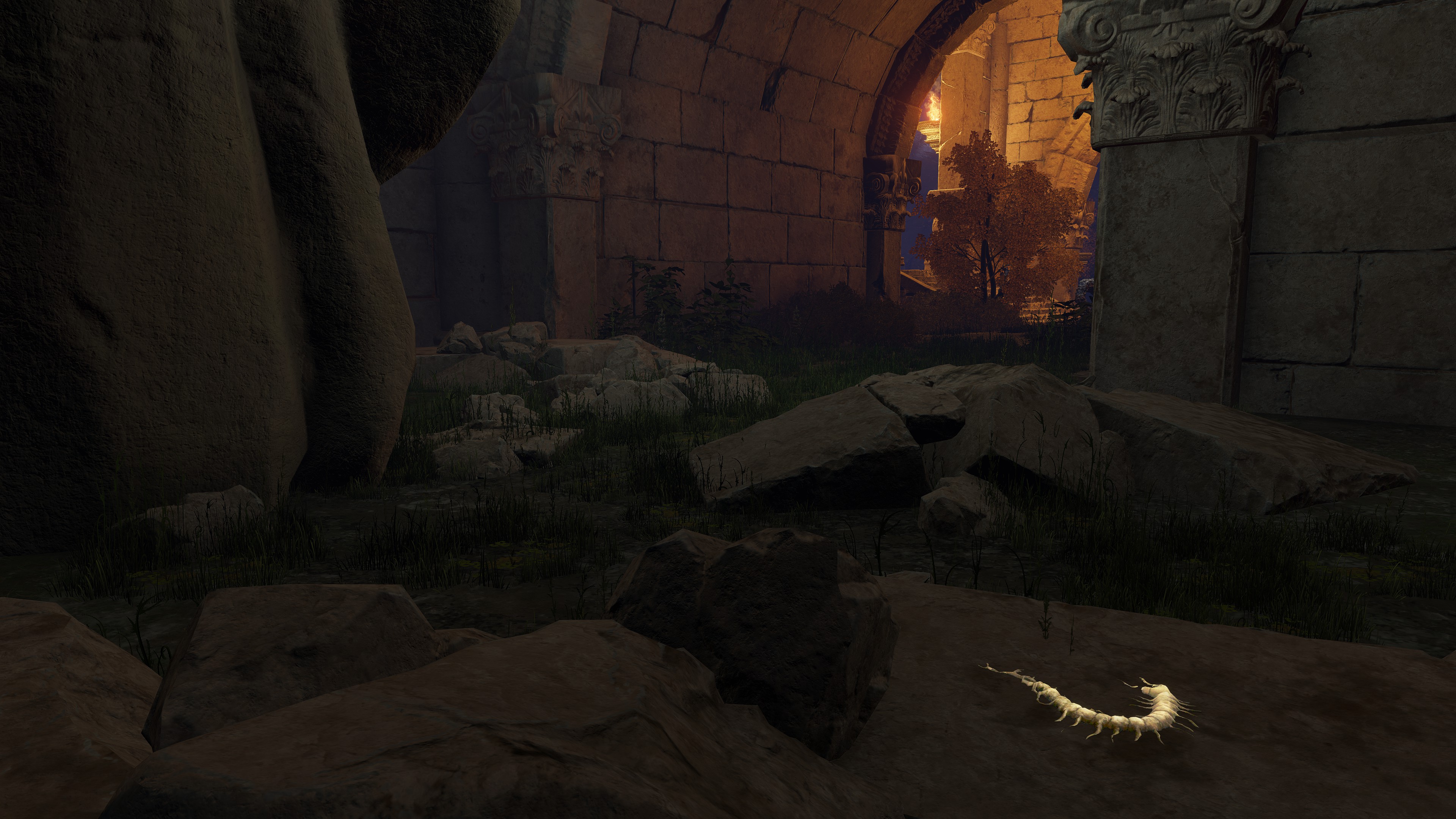
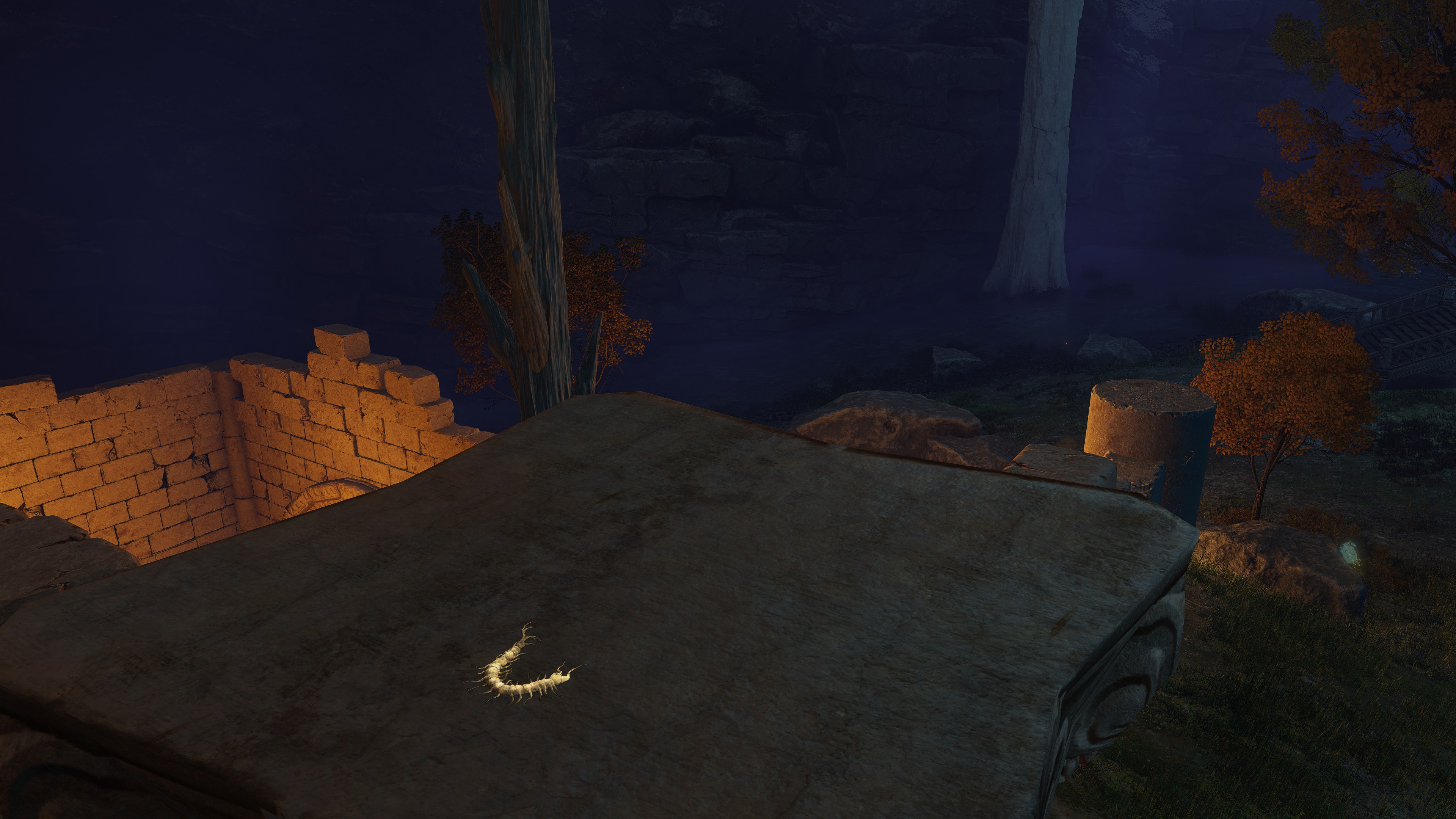
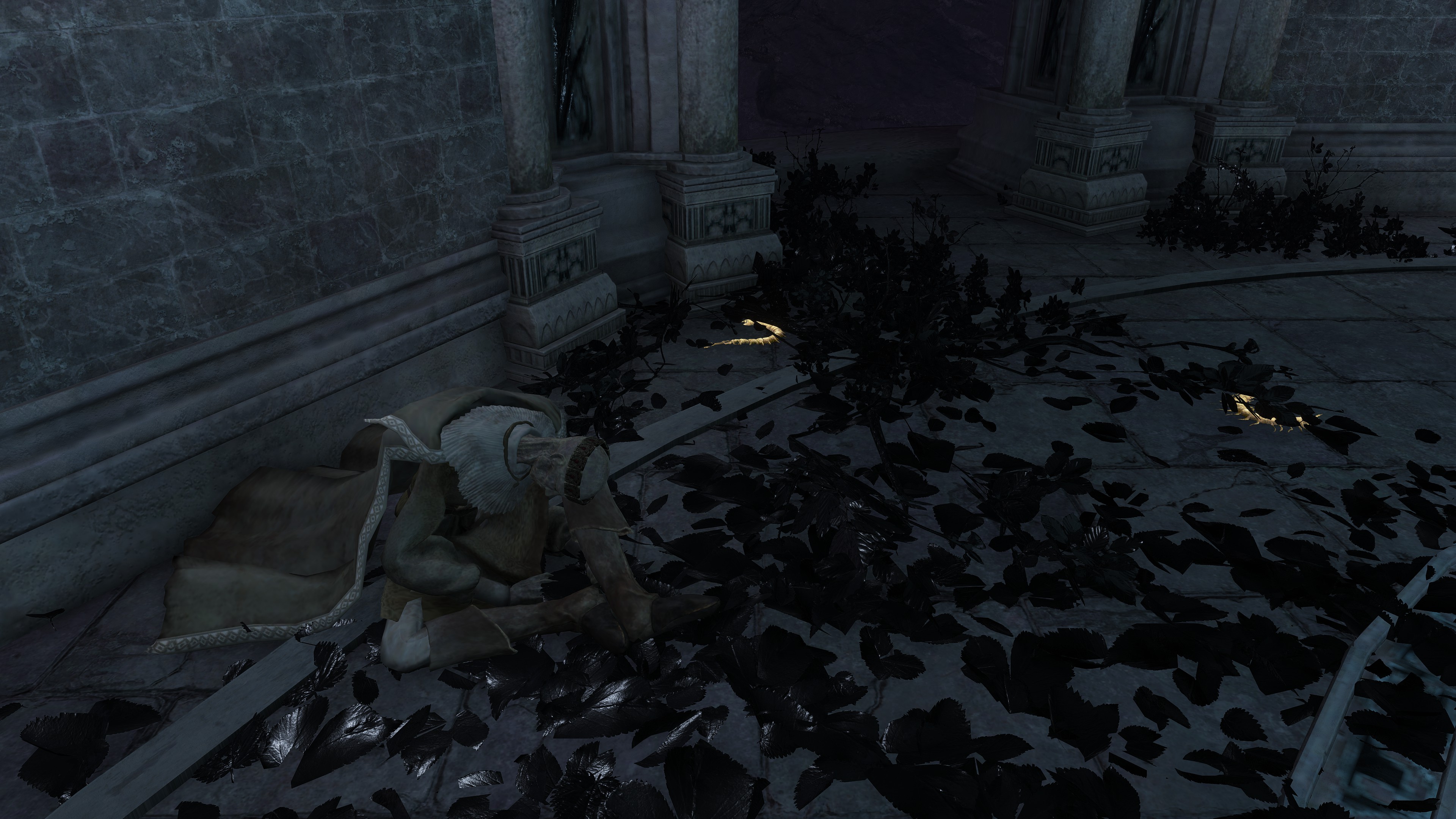
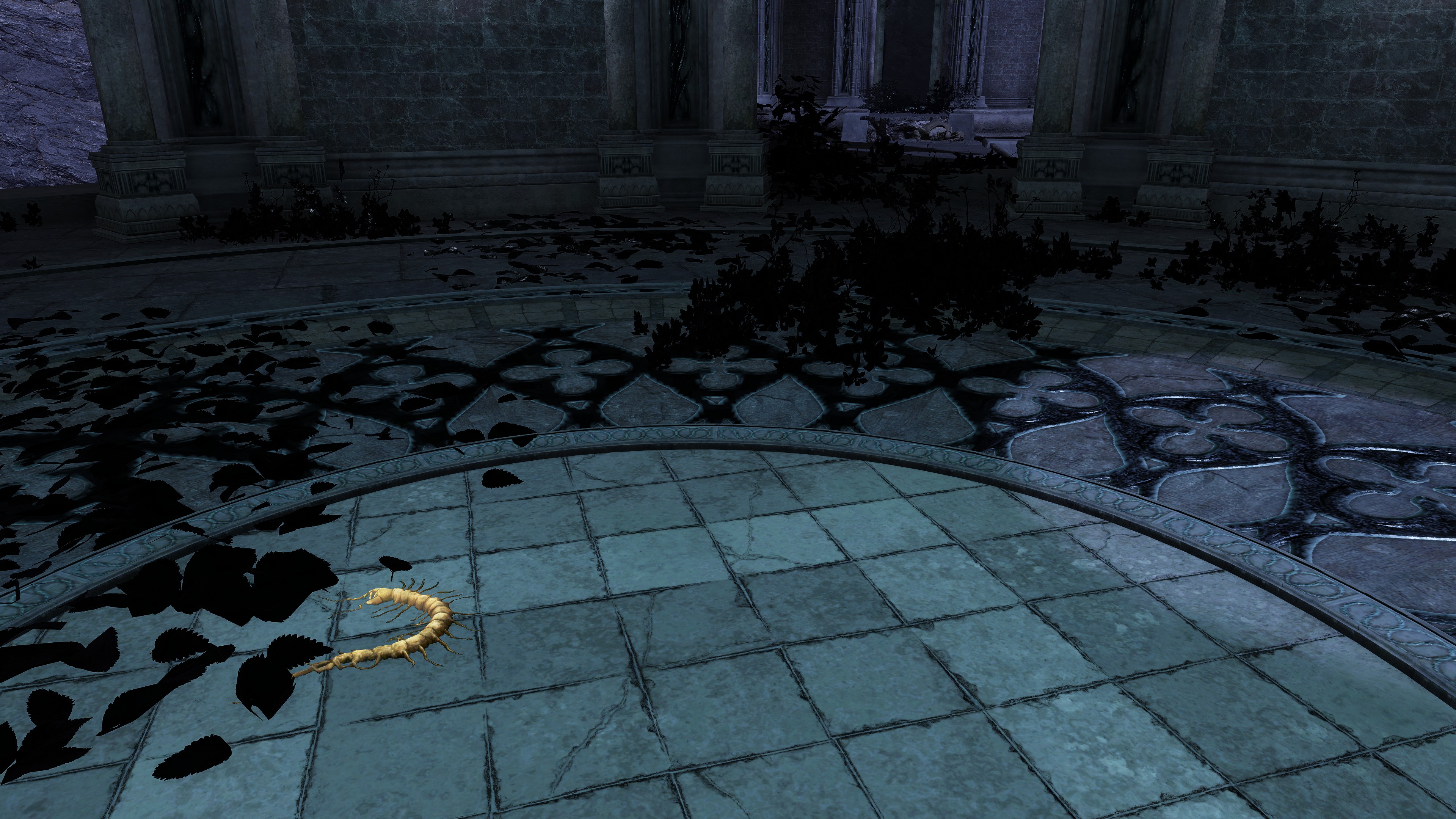
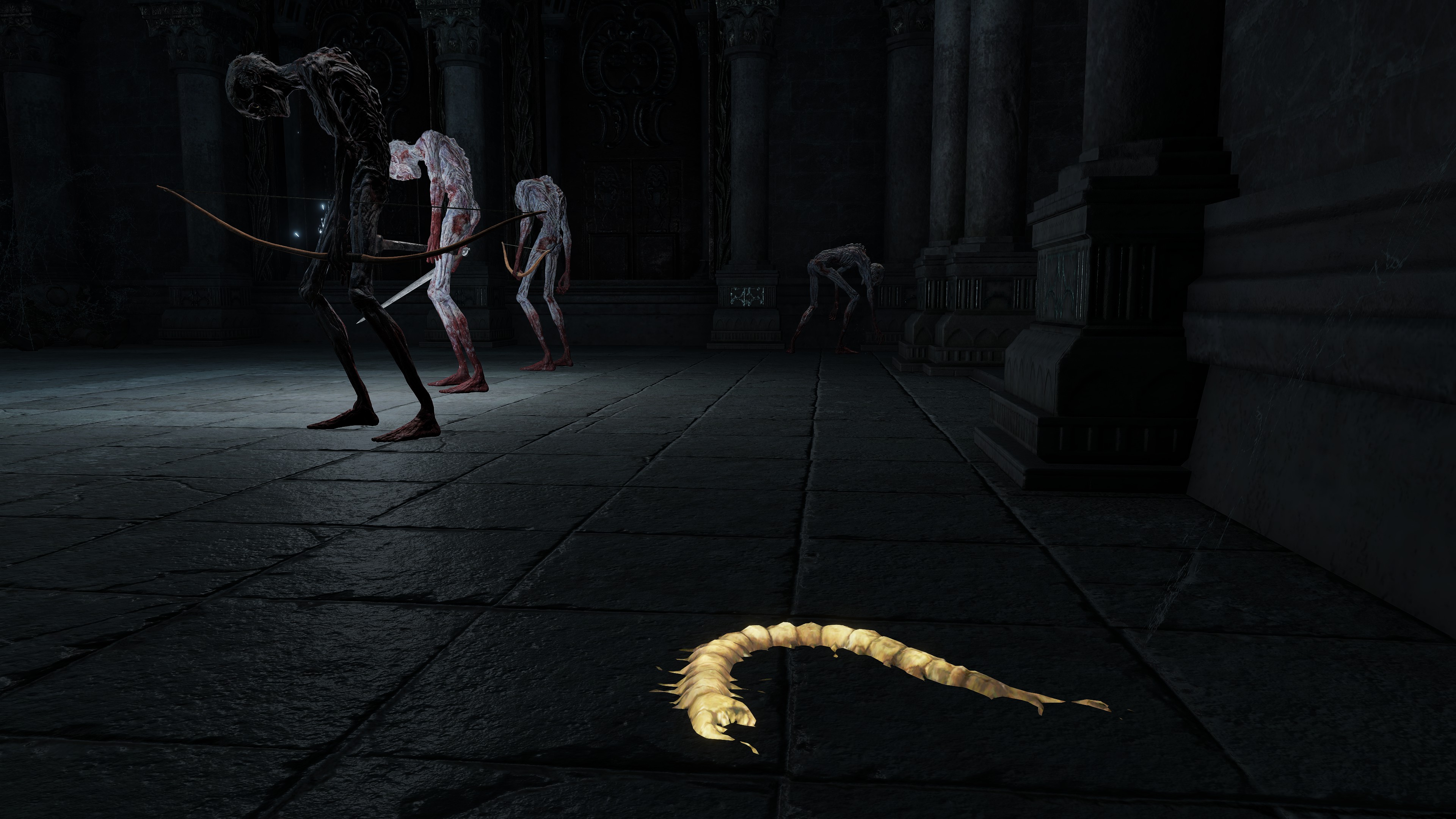
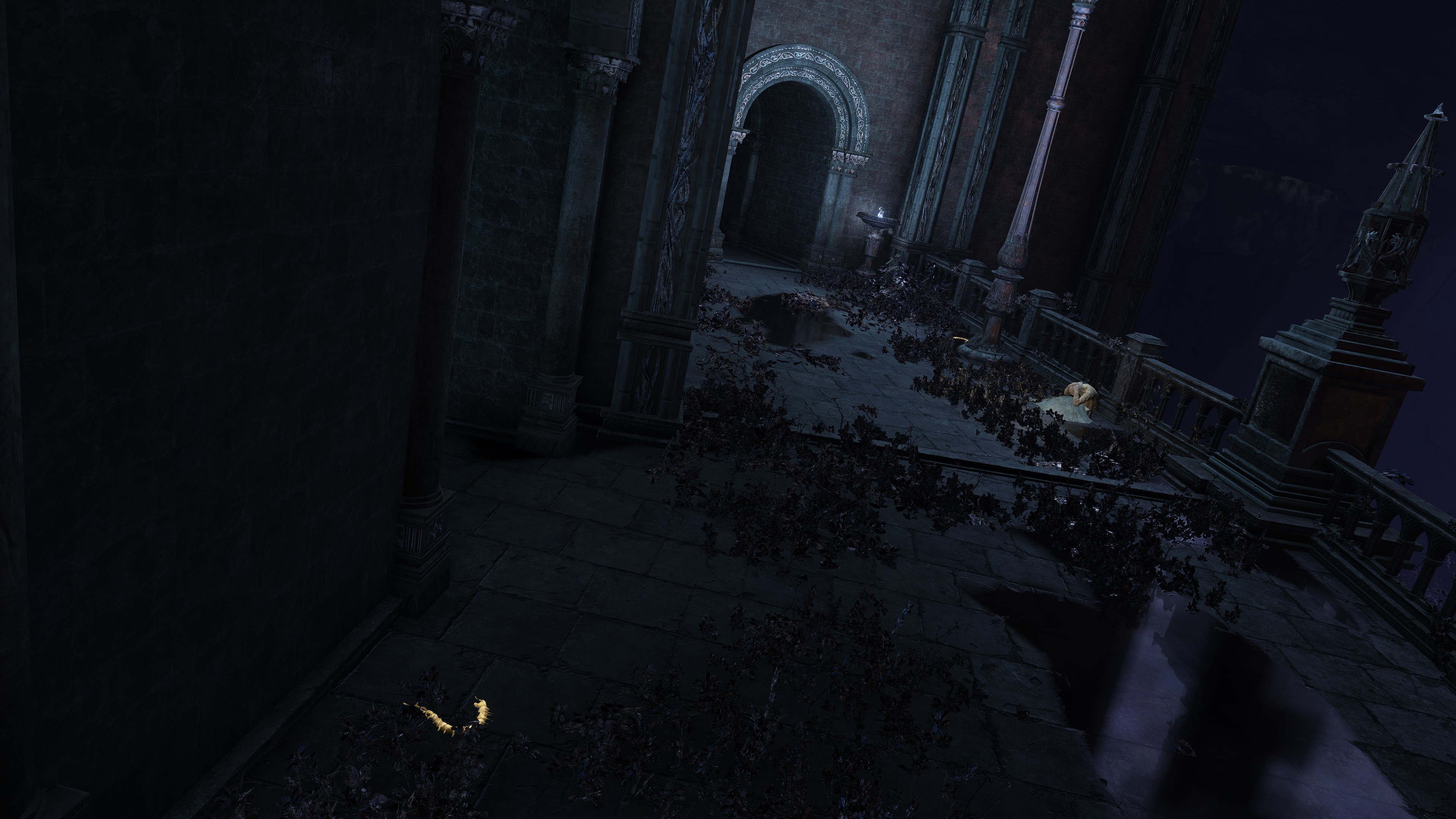
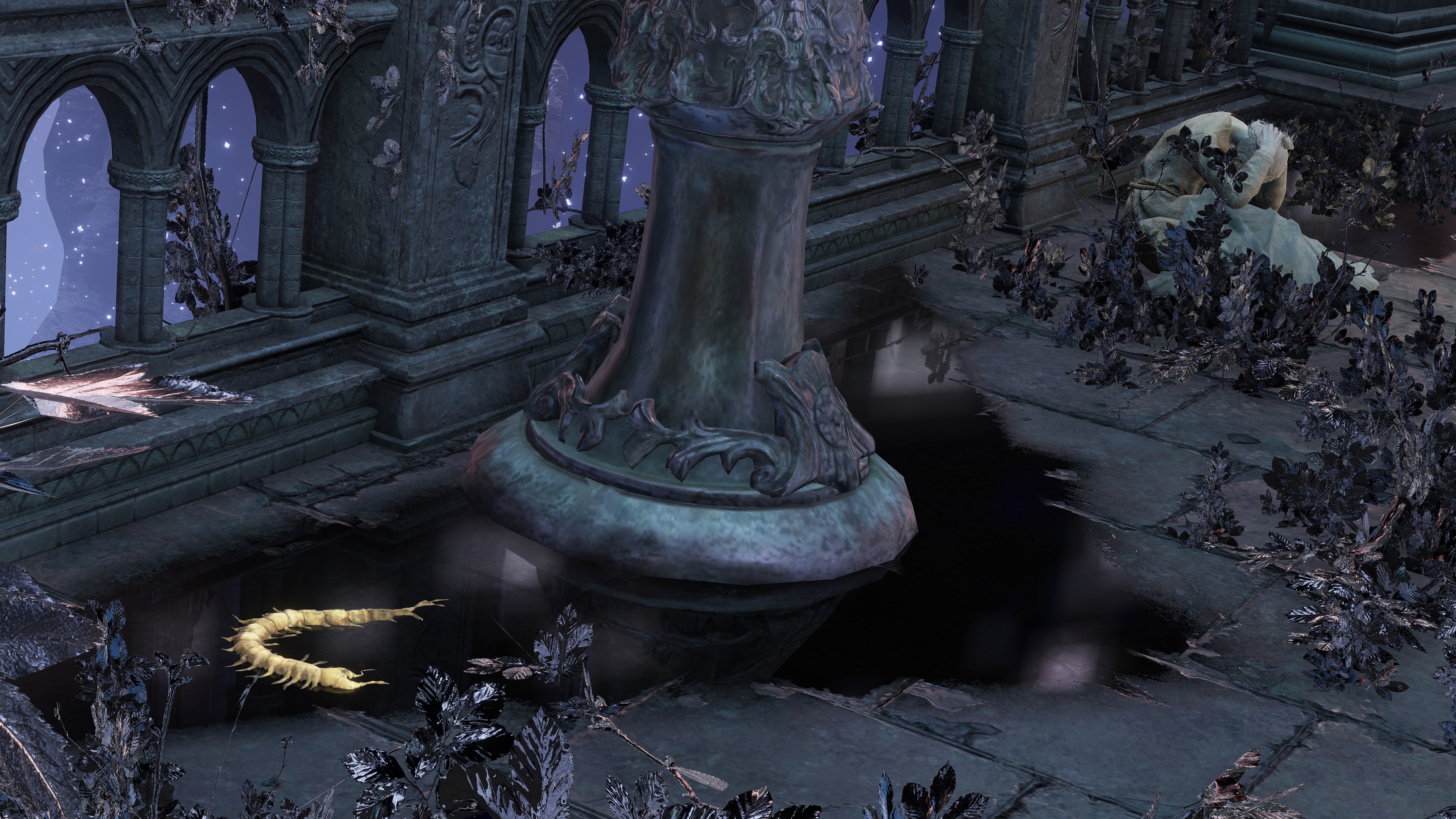
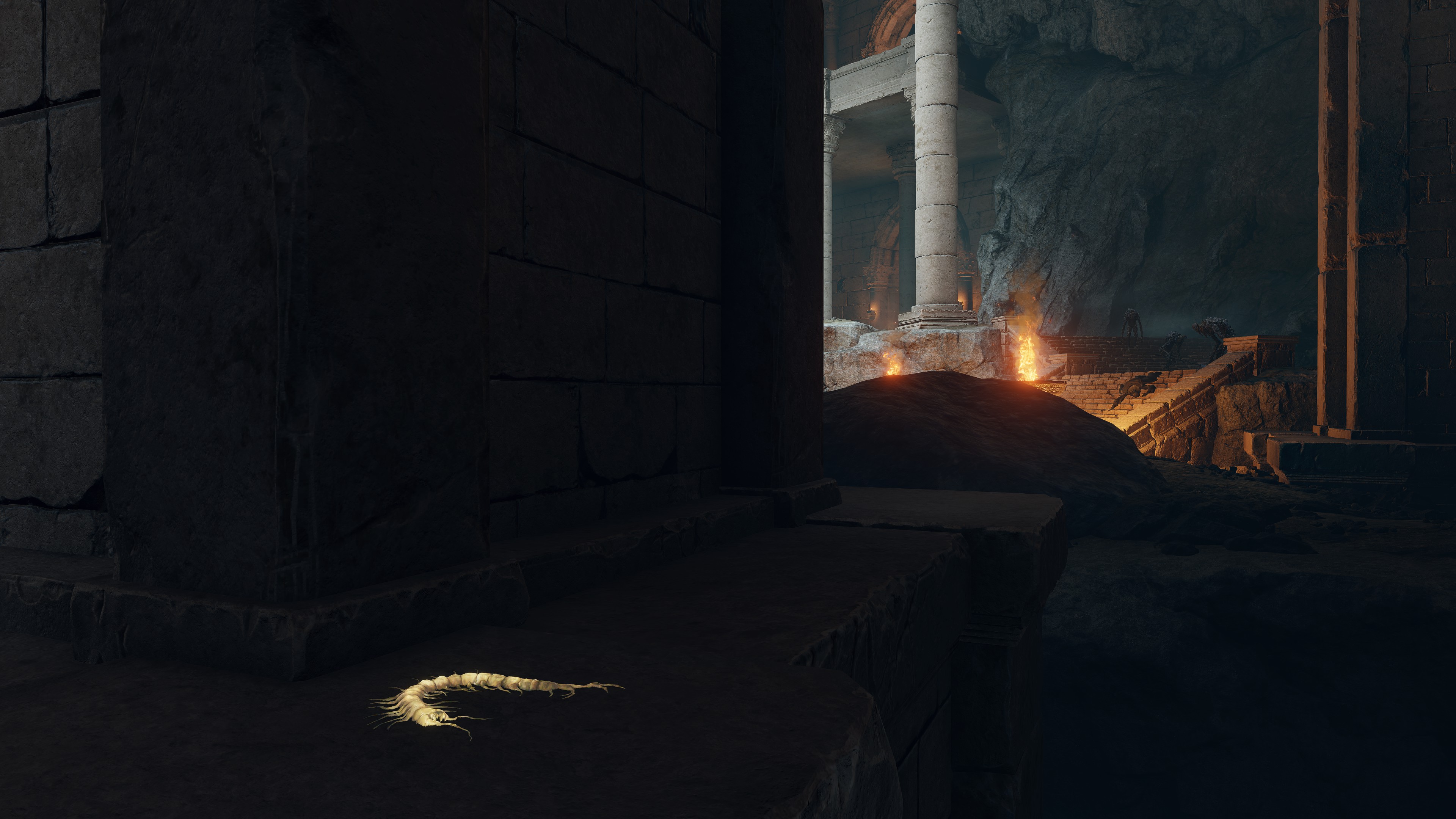
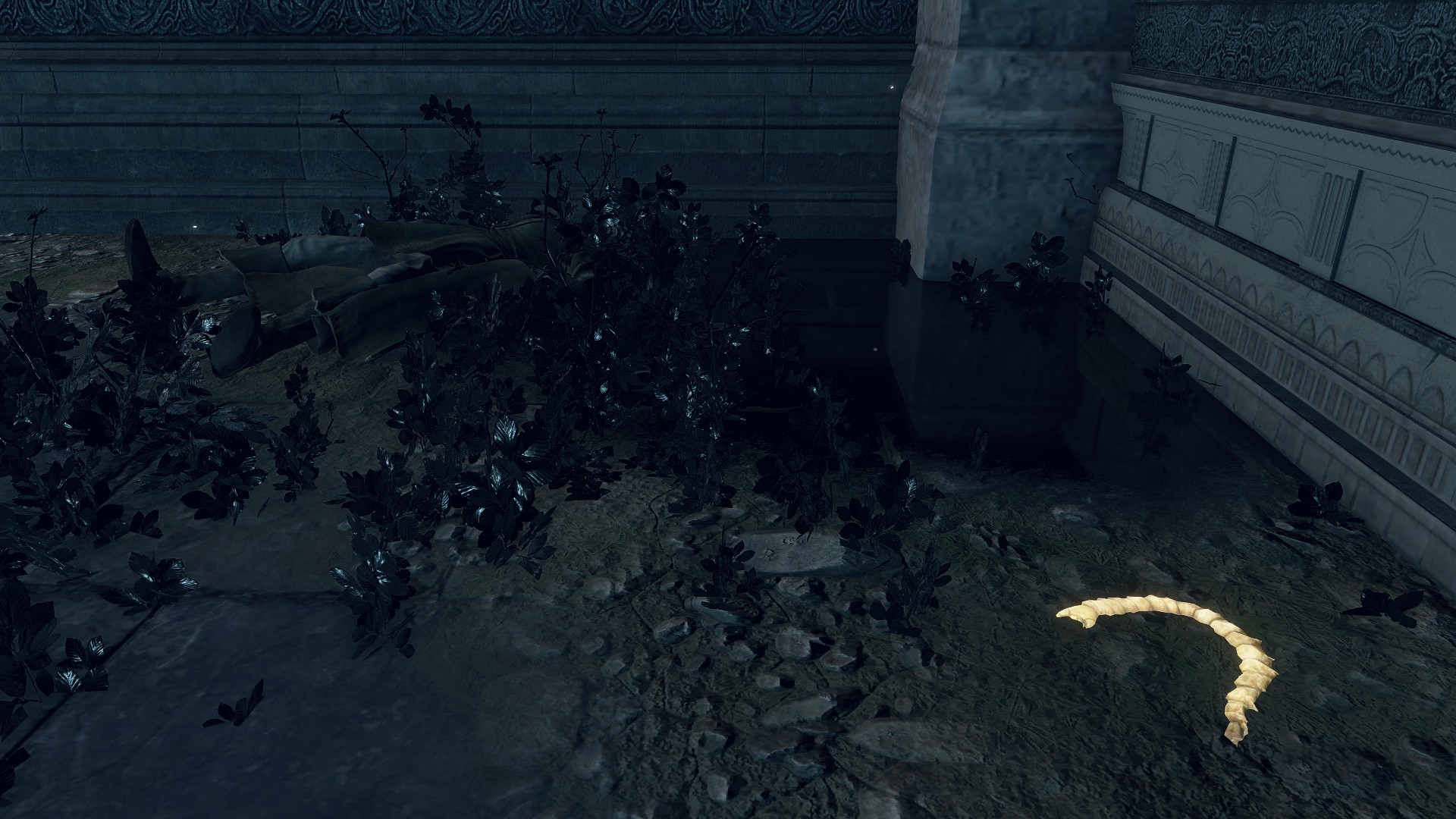
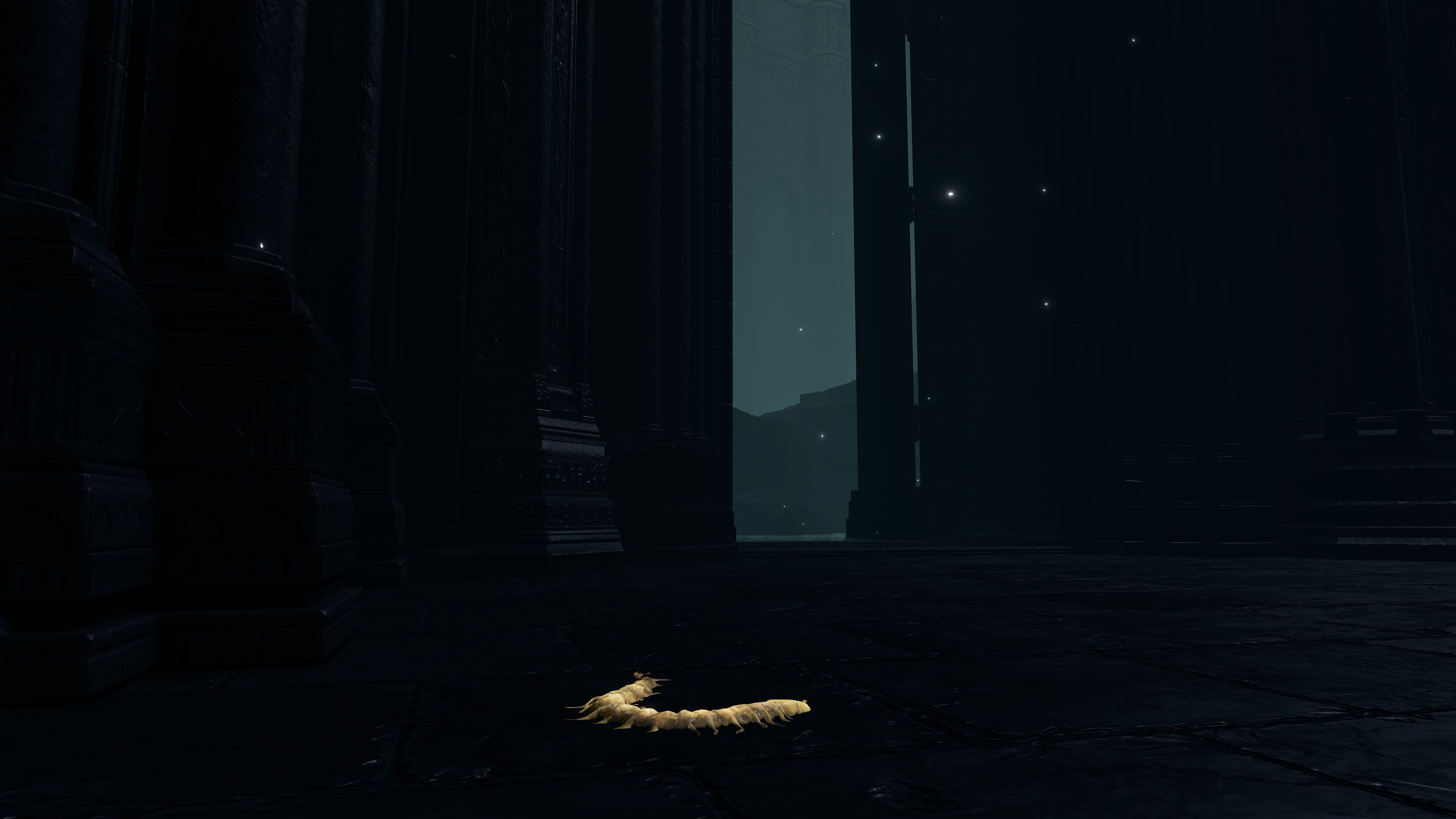
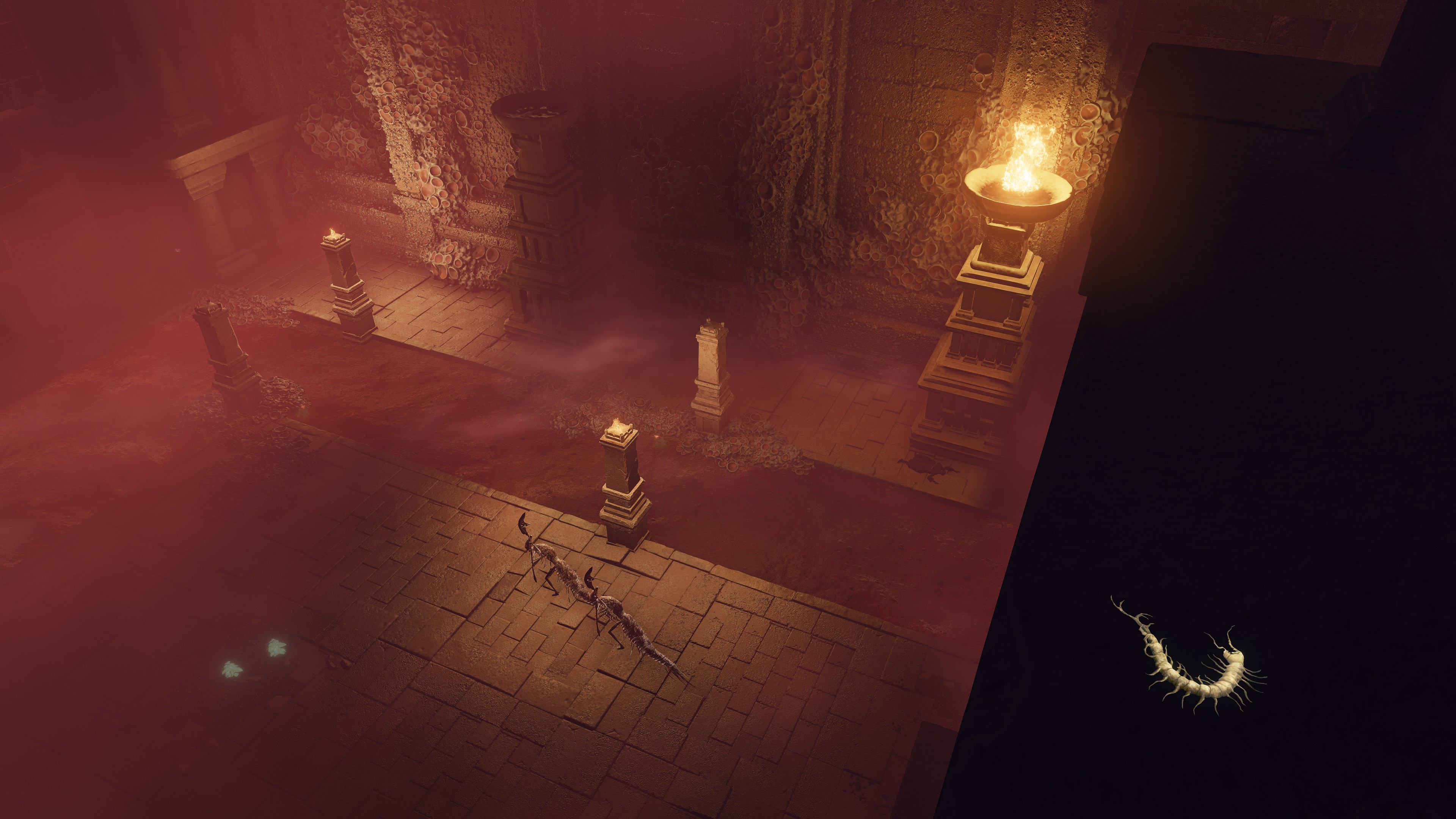
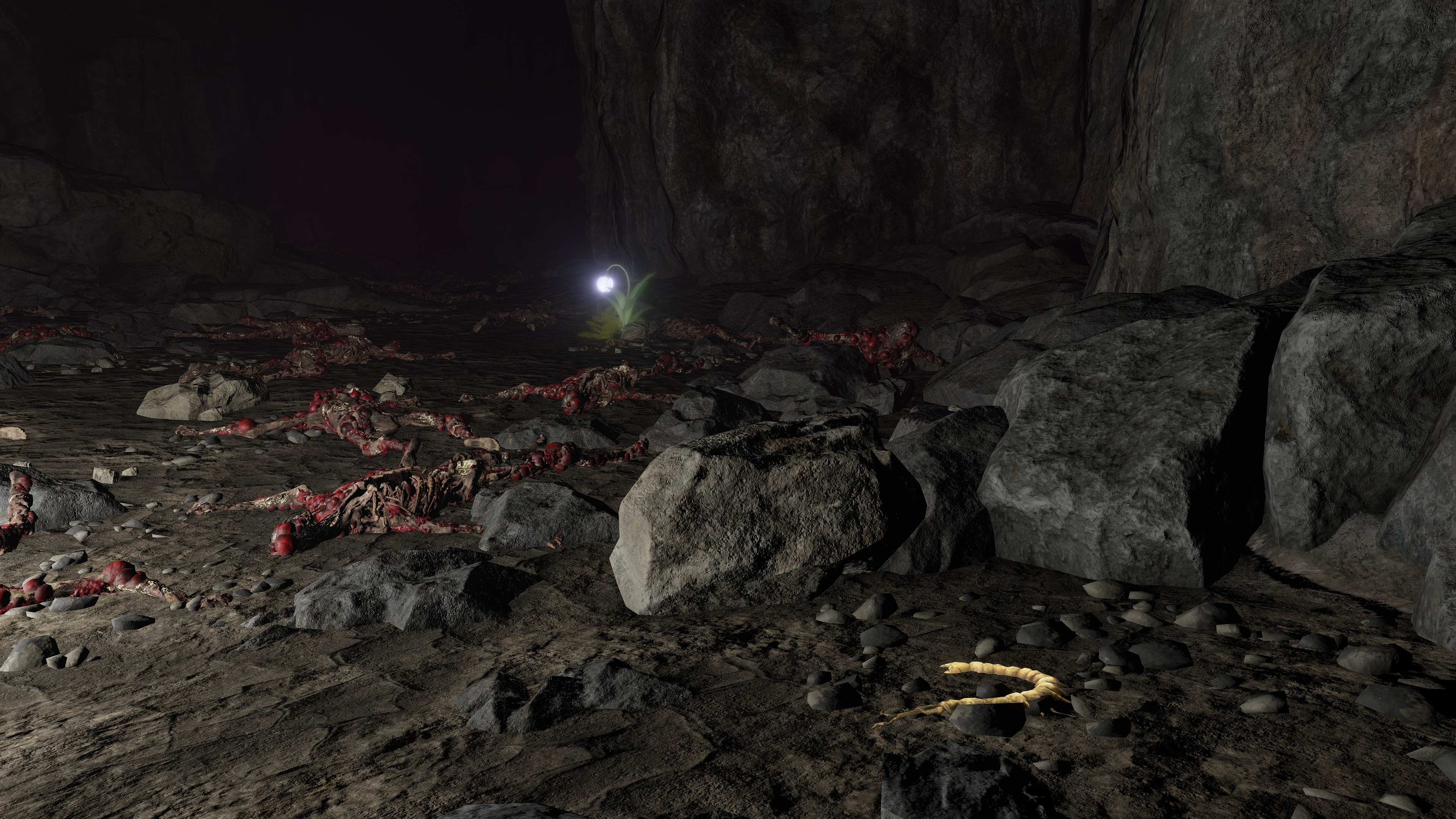
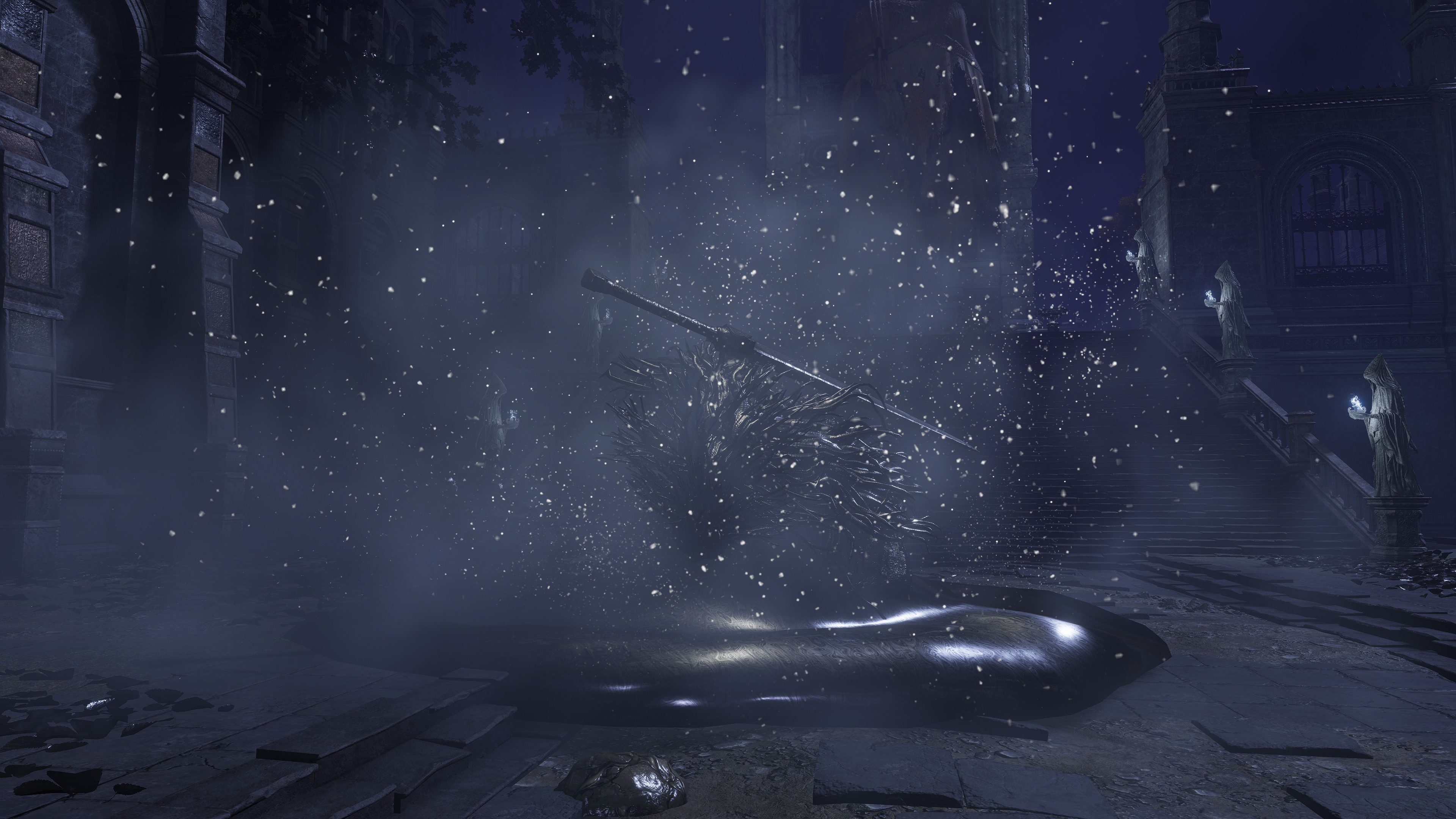
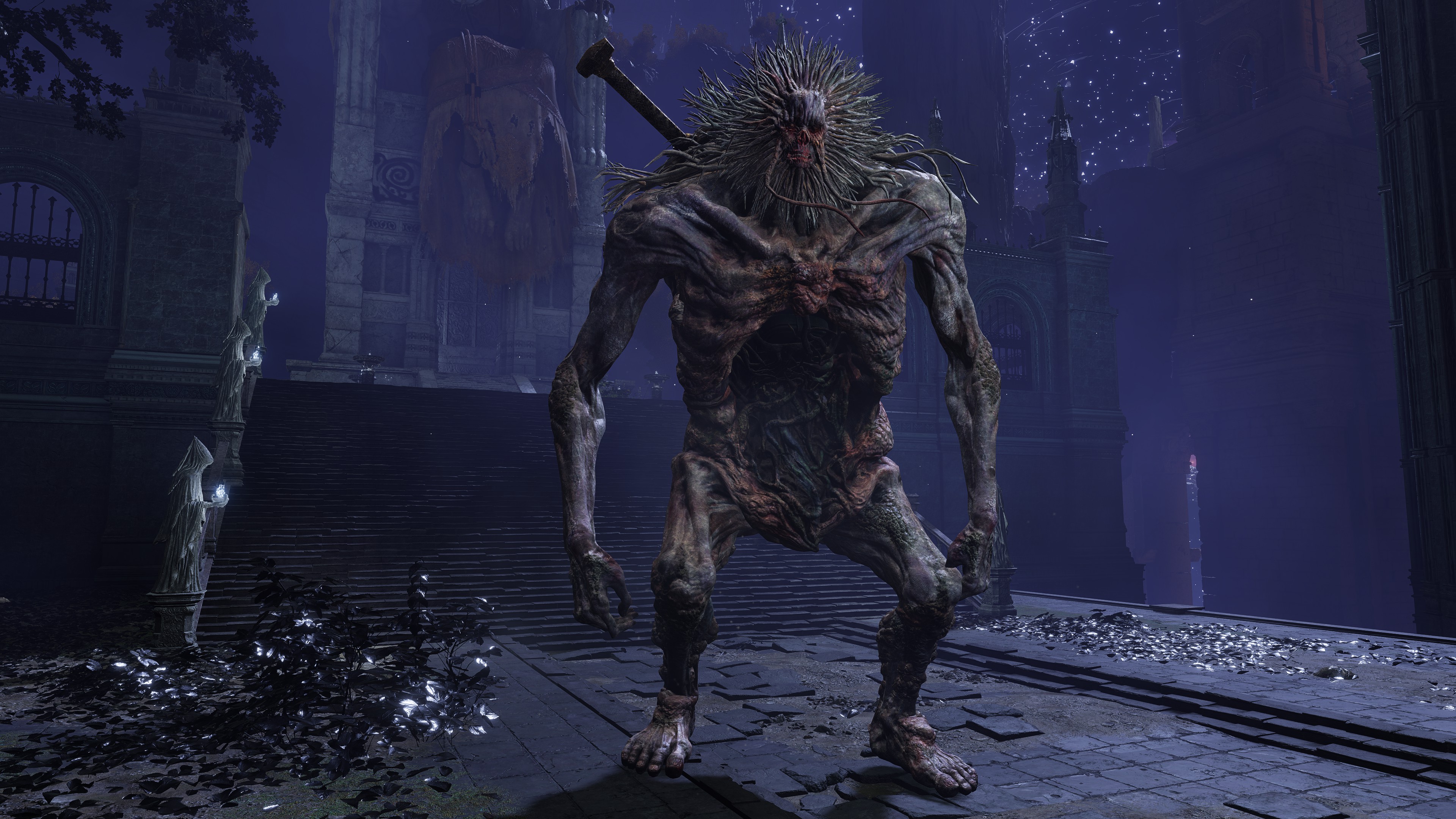
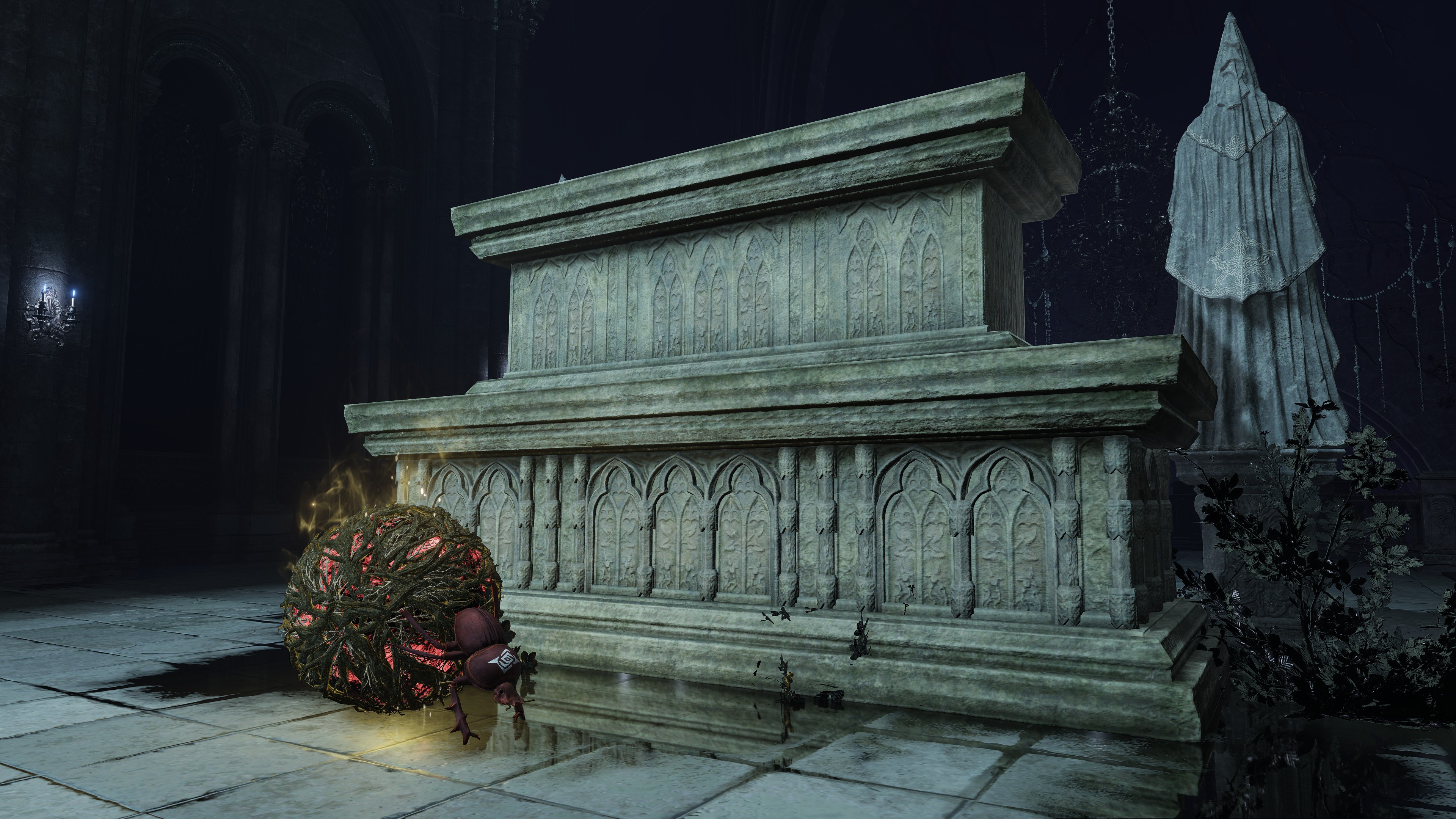
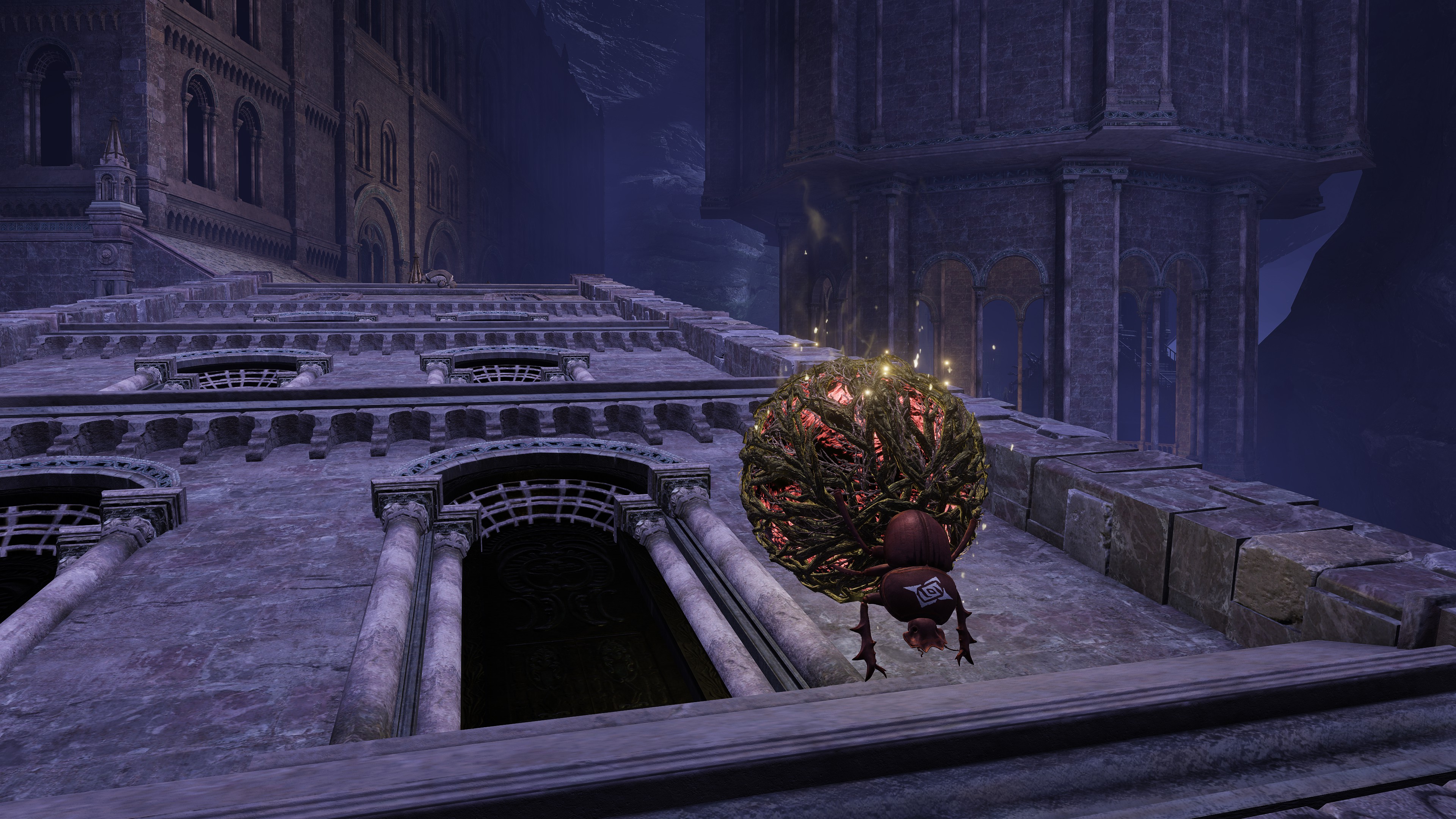
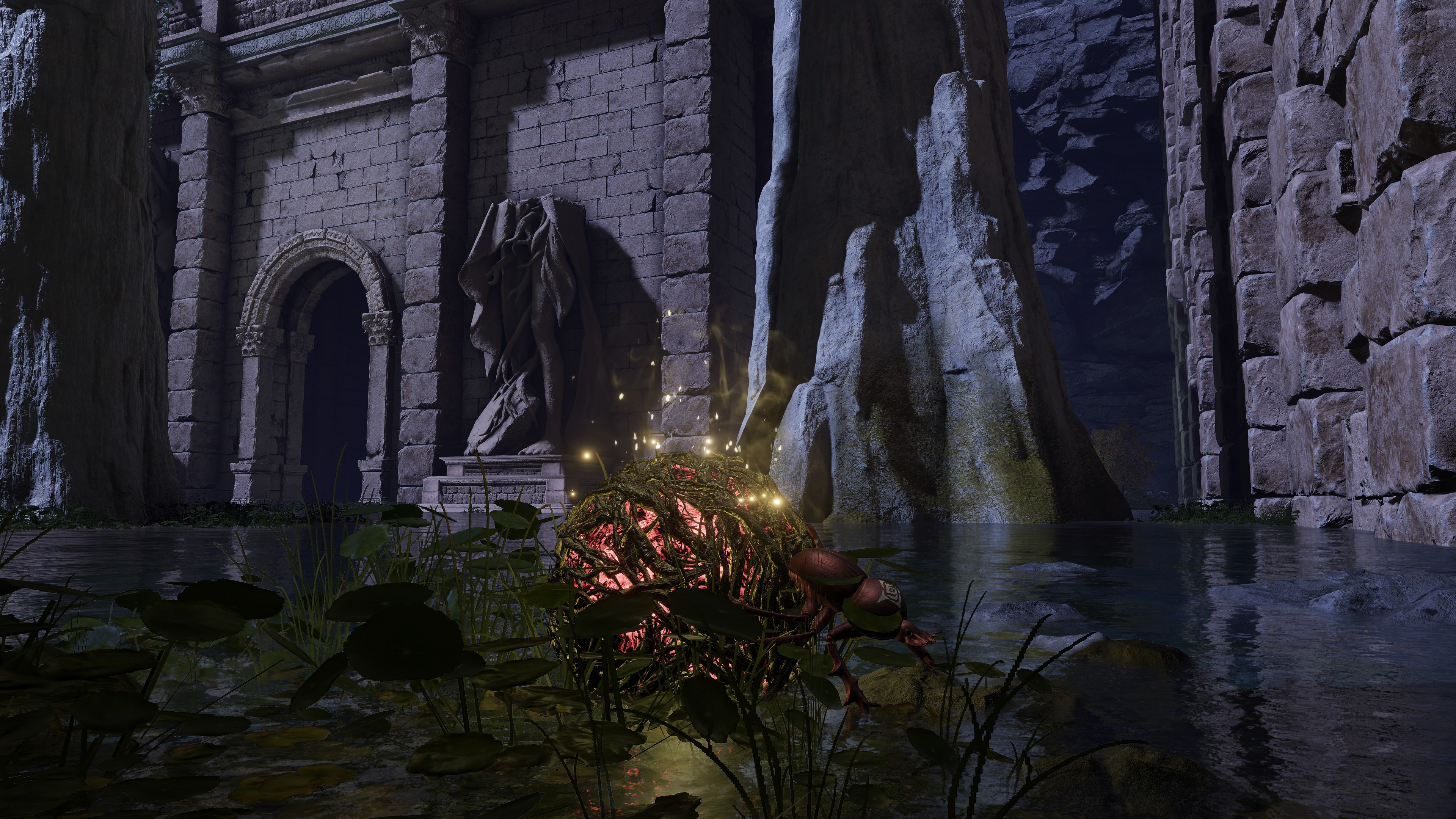
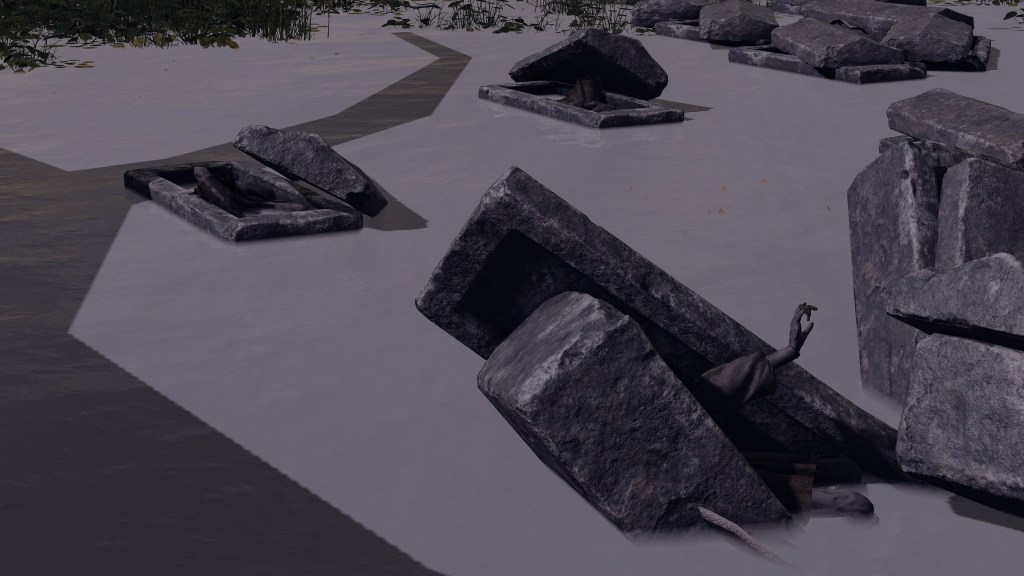
Combined, these details indicate a concerted presence of the Erdtree faithful, humans and trolls, descending from the plateau to search the underground. The obvious reason for exploring is because members of Golden Order Fundamentalism and the Ancient Dragon Cult both seek Godwyn. The latter might have their own motives to see the cult’s pioneer, but there is little doubt to the former’s intent to purify his corruption; finding the missionary’s cookbook for Sacred Order Pots and a scarab rolling up Order Healing in the Siofra Aqueduct suggests as much. The parties in question did eventually climb all the way up to the Erdtree’s roots. Some of the gold and glass smithing stone might predate the Eternal City’s destruction, the same for Altus citizen and Erdtree founder runes — several of which hide on corpses resting in the abandoned coffins for burying the nameless city’s dead. However, the addition of holy grease, lightning greatbolts, a warming stone, and the golden centipedes gives reason to believe in the hunting parties’ presence.
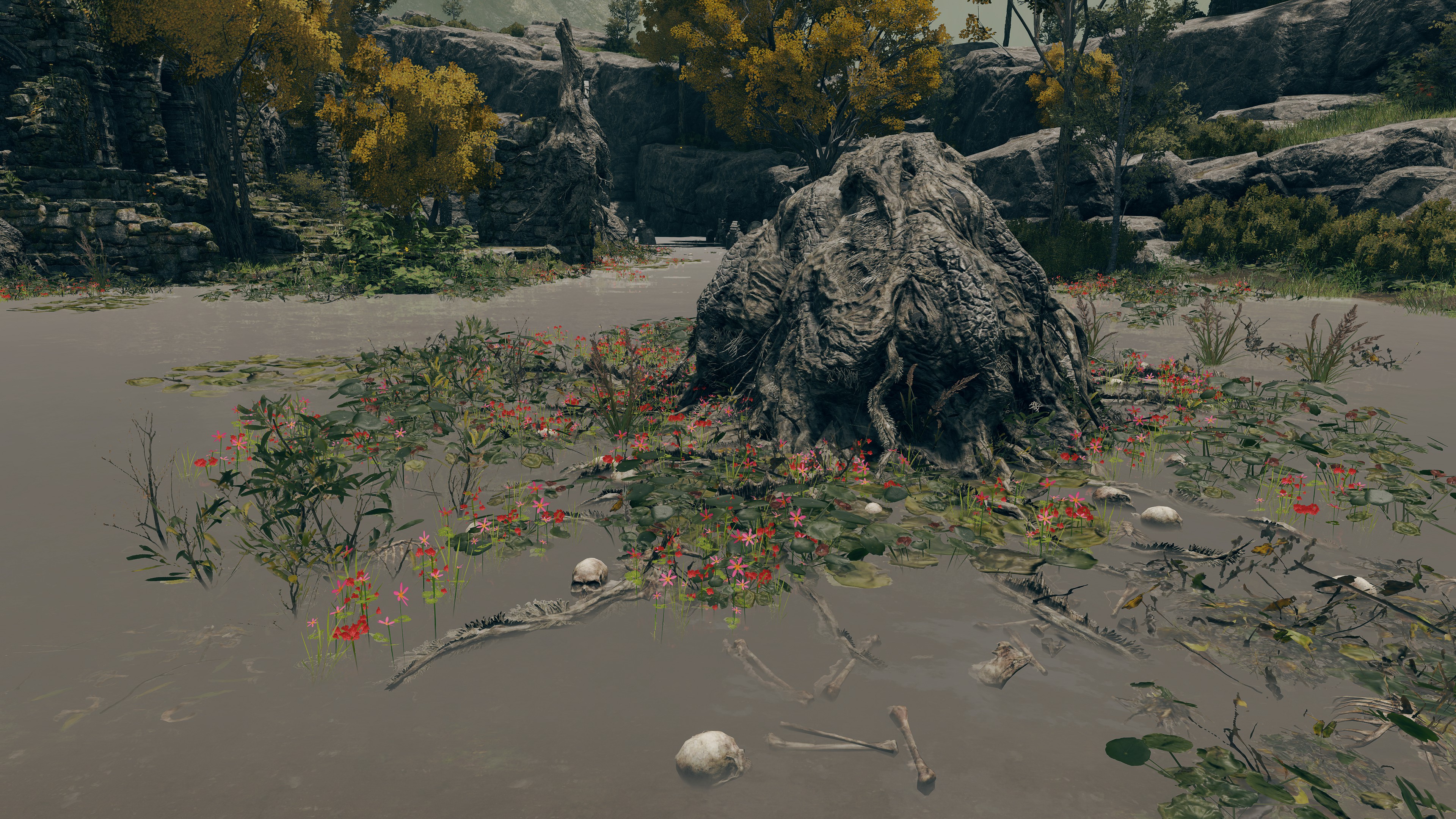
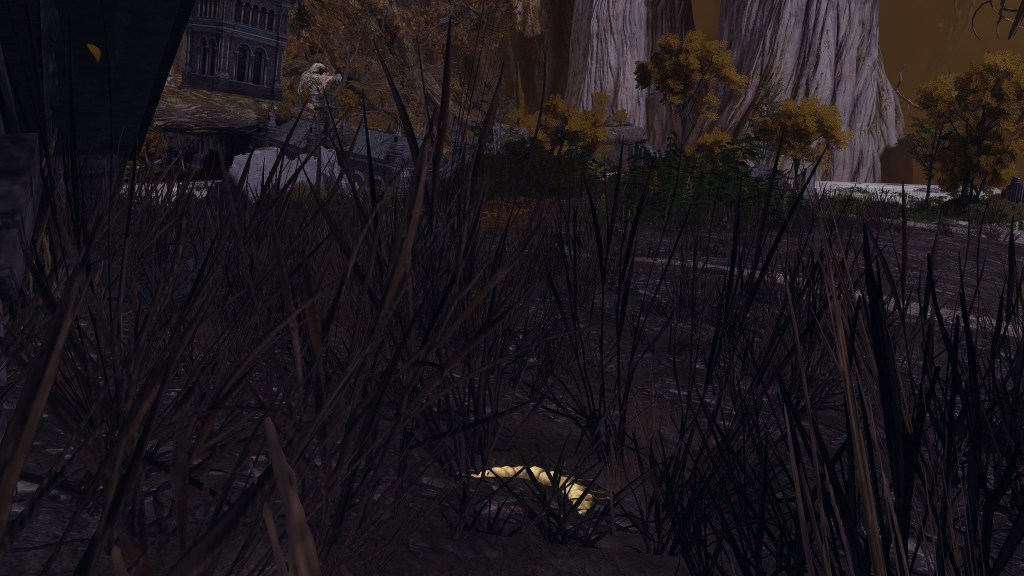
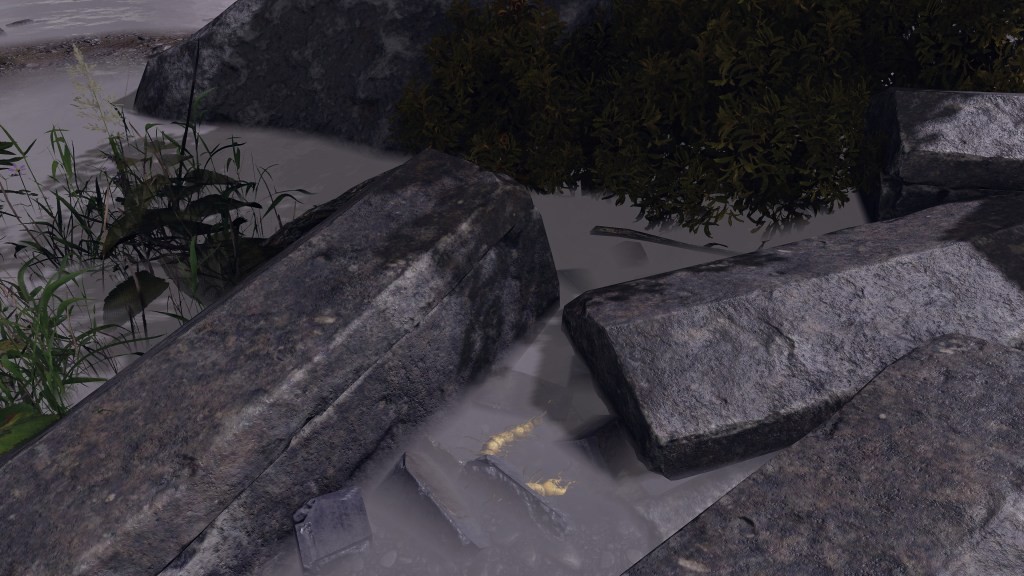
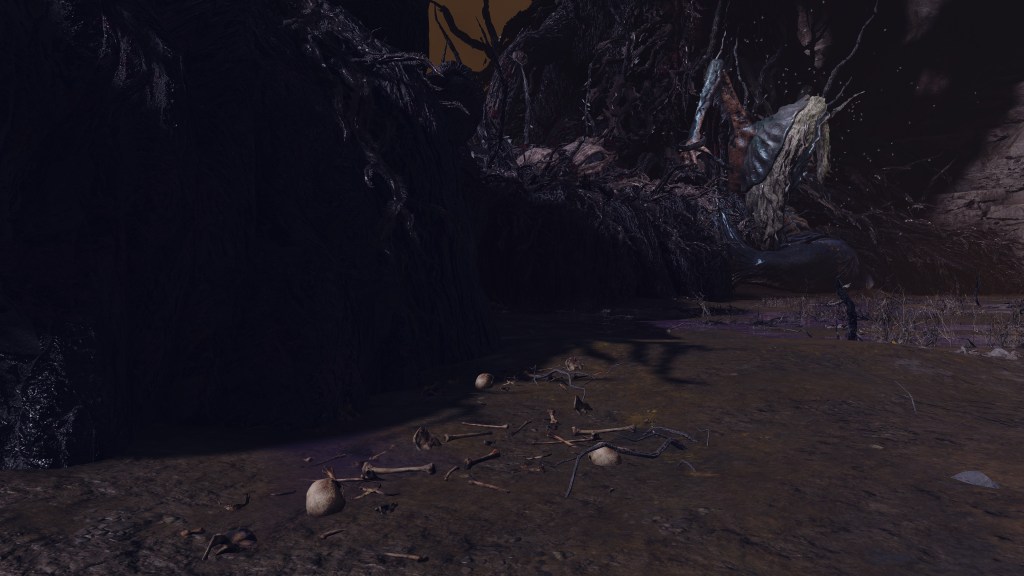
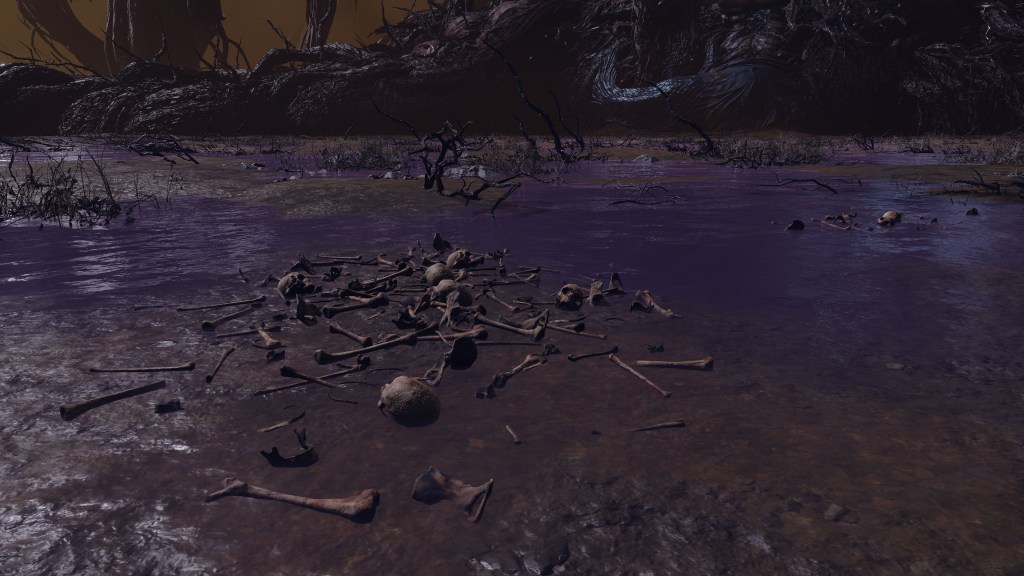
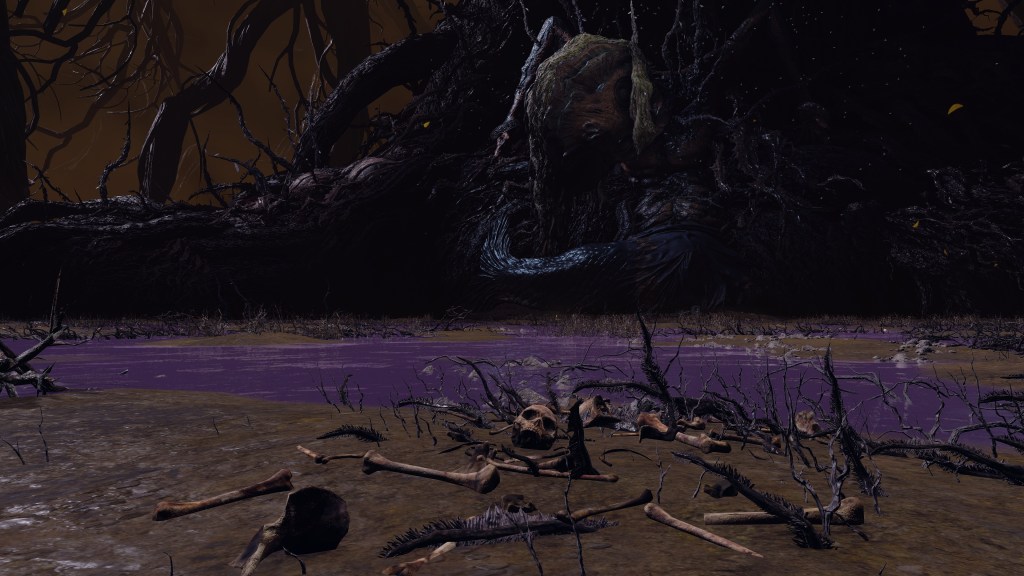
Godwyn persists, of course, but so do the fundamentalists. So long as they can reach the body, they will investigate new ways to put the soulless monster to rest for good. And so long as he lives, the corpse of the Golden will continue fighting back with his newfound power. Theirs is a potentially endless struggle between life and Death. It also comes at great cost, as seen with the countless bones littering Godwyn’s sullied gravesite. No noble cause is without sacrifice, but fundamentalism asks the hunters be willing to give their lives for the chance to change what has, up until now, been a forgone conclusion. Even so, those who love the Golden Order deem it necessary for a better world. They are removing the temptation of Death for humanity’s own good. It may be a thankless job, but if not them, who else would have done it? Having come so far, only they can be trusted to keep going. Only they can be saviors, for the old Order and so many clinging to its banner.
Futility in Finality
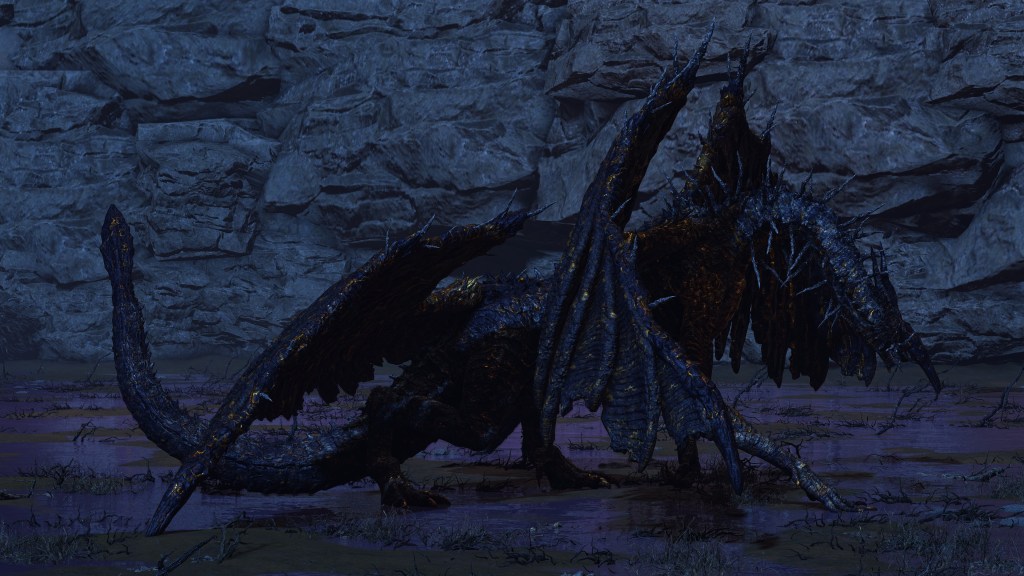
Even as fundamentalists were looking for new ways to reach the Prince of Death, others were combatting his threat in their own ways. Fortissax has spent all his time battling the corruption from within Godwyn, us encountering the dragon in Fia’s dreamscape as she lays with the corpse for the birth of the Mending Rune of Death. As the demigod’s corpse has a brain, it most certainly has a mind to dream, and it is that corrupted mind’s continued activity that gives spirit to the first of the living dead. Therefore, rather than fruitlessly try and destroy the decentralized main body, Fortissax’s efforts have gone to purging the curse from Godwyn’s core. His friend’s dedication is easy to understand. At his lowest moment at the Erdtree’s mercy, Godwyn extended a hand and saved his life. Now, the ancient dragon does the same, willing to throw everything away if it means freeing the body from this curse defiling what the Golden stood for. It is the ultimate proof of their lasting friendship.
But despite the never-ending battle inside a soulless mind, it has yielded no victory for Fortissax. His stone scales have been mostly eaten away, exposing the gold beneath all the black tar now corrupting him. Maggot briars spring up across his body, including one eye. Even the golden lightning he calls down has the unmistakable mark of Death upon it, unleashing clouds with each strike. Although the name “Forsax” (フォルサクス) evokes the Latin fortis meaning “brave” in line with a hero’s friend, it also brings to mind the number (フォア) heavily associated with death in Japanese culture. In his current state, “Death Dragon” (死竜) has earned the epithet even as he remains resolute in stopping the Death Prince. And yet, the curse body in the dreamscape rests untouched, the “sky” an unsettling mix of black spots and eyes. Meanwhile, his sister’s cult has been coming along, perchance to put him down for her peace of mind. The dragon is sacrificing everything for nothing. At best, he has slowed Death, but its spread through the Erdtree roots continues unabated. His one hope is that someone on the outside helps stem the tide.
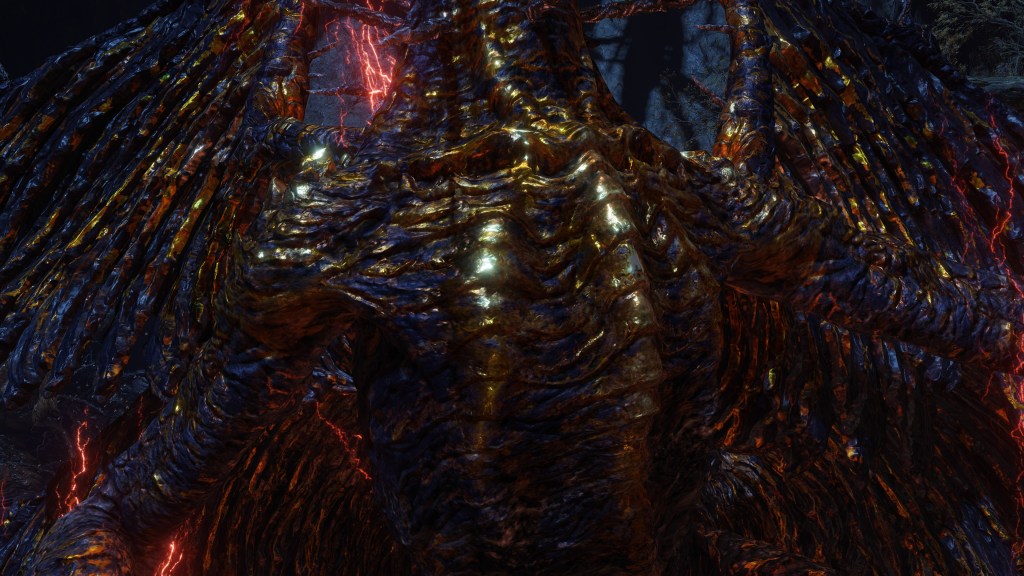
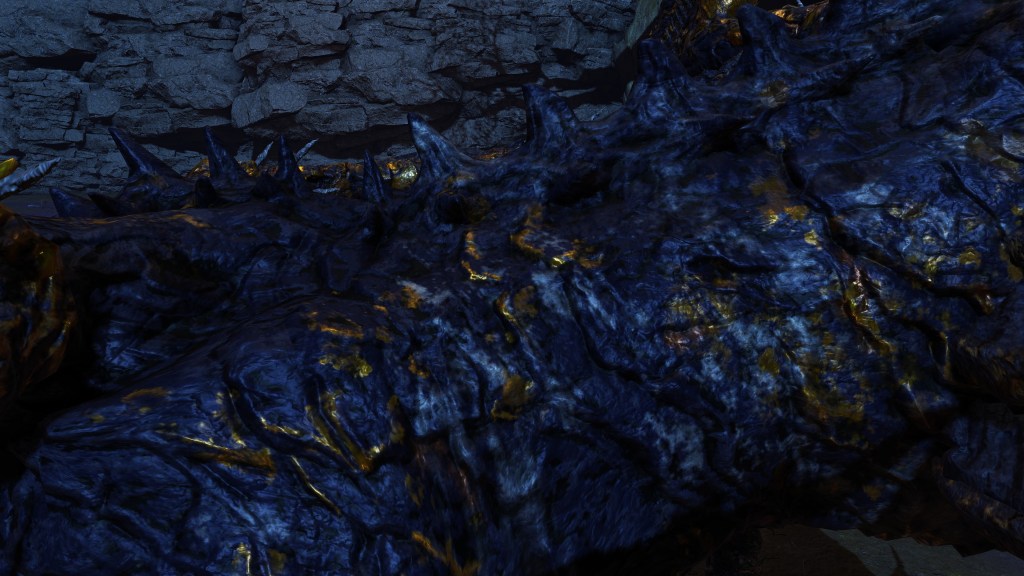
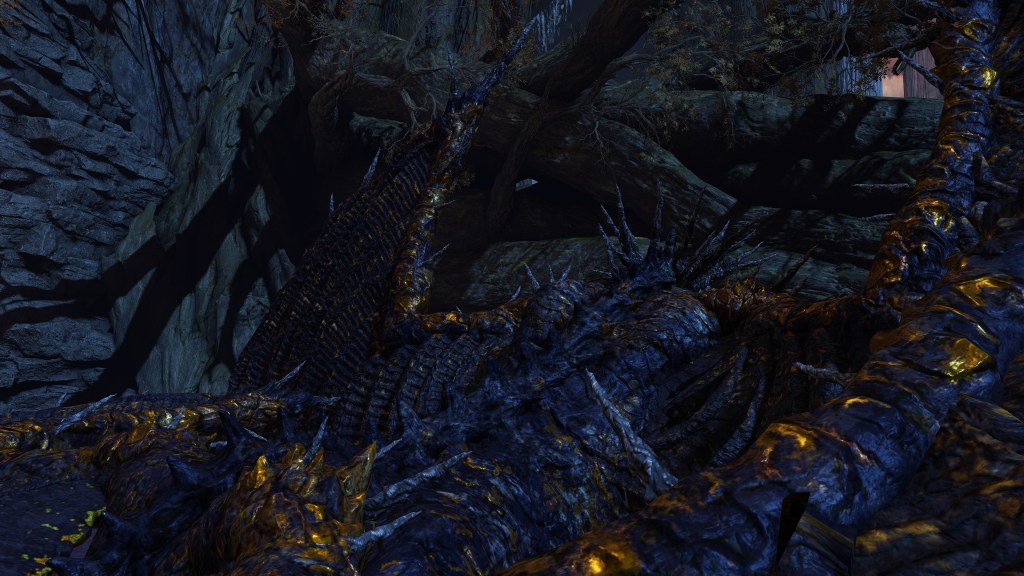
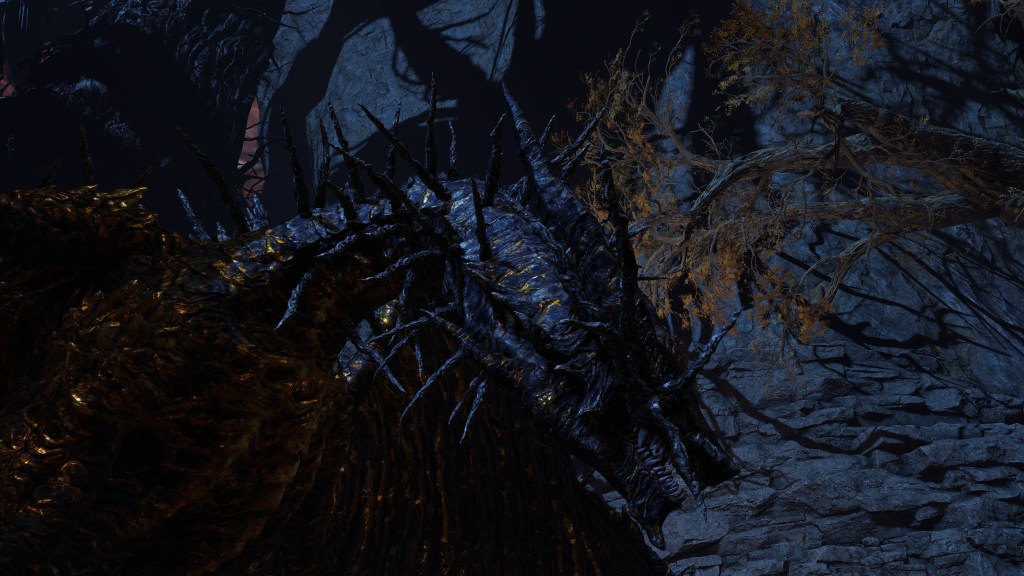
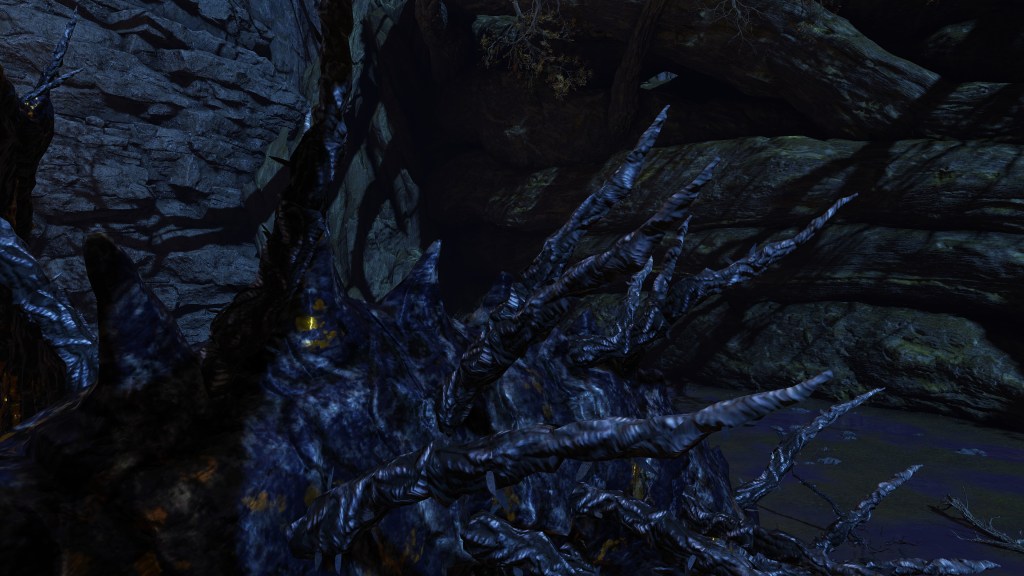
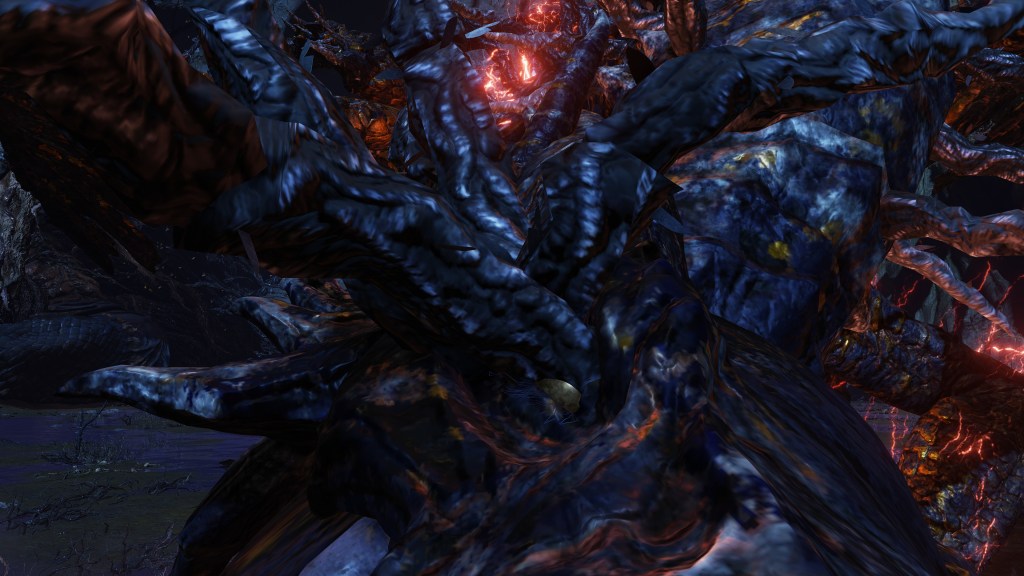
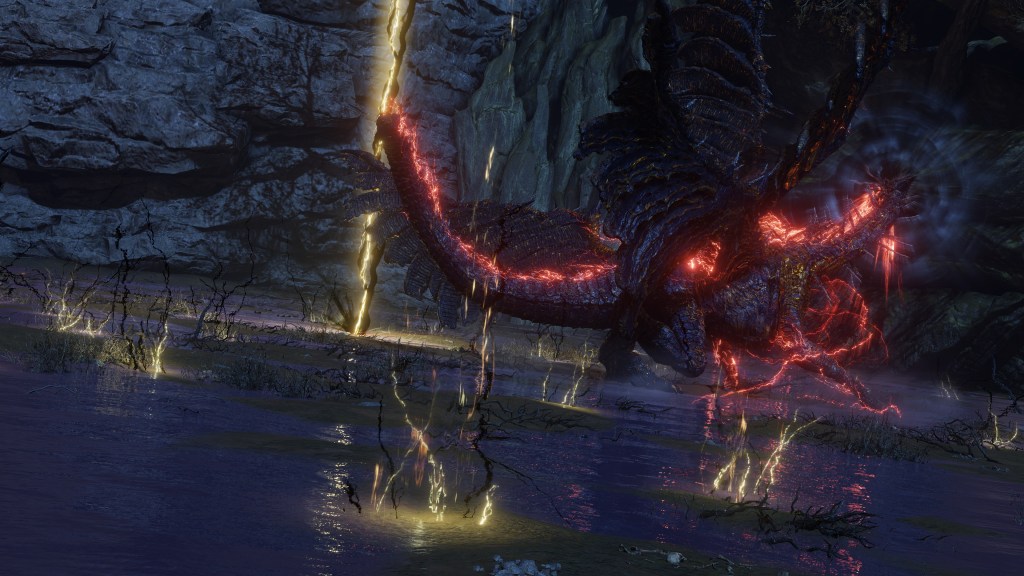
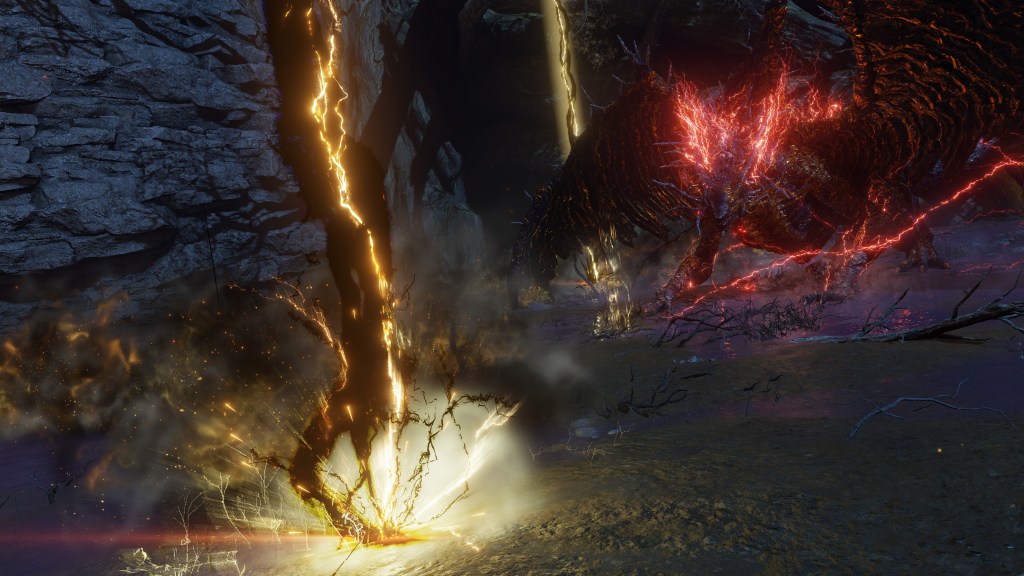
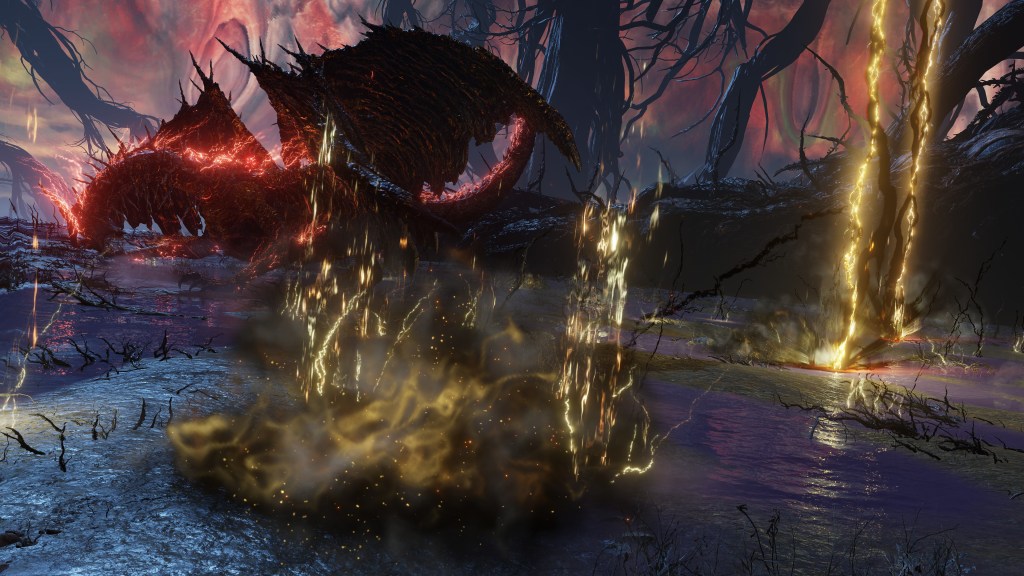
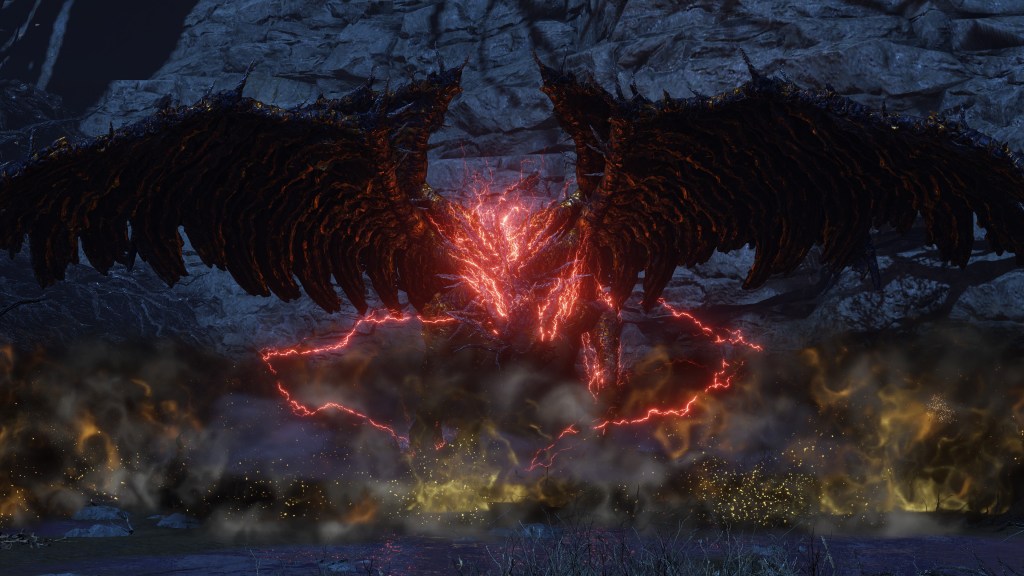
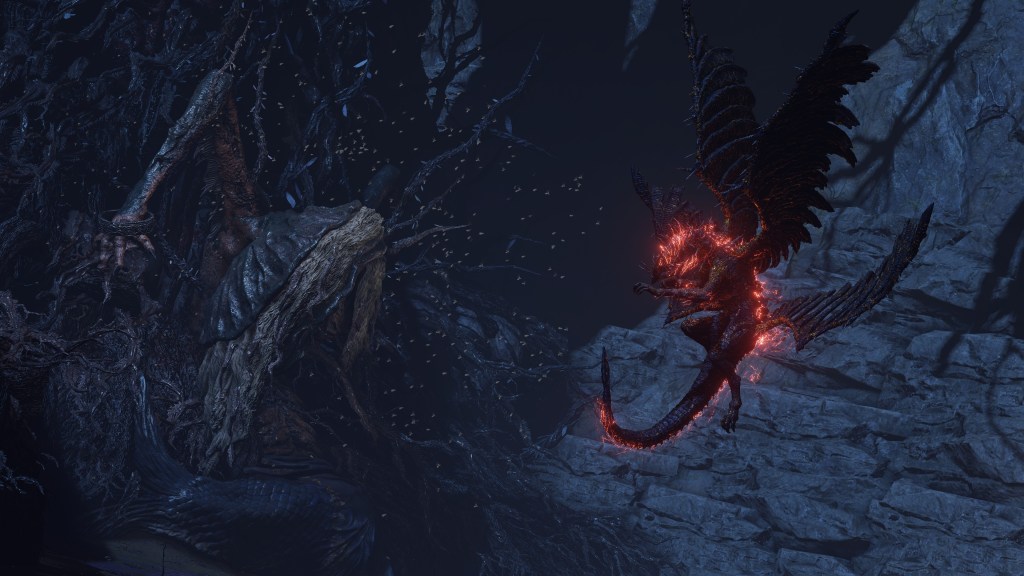
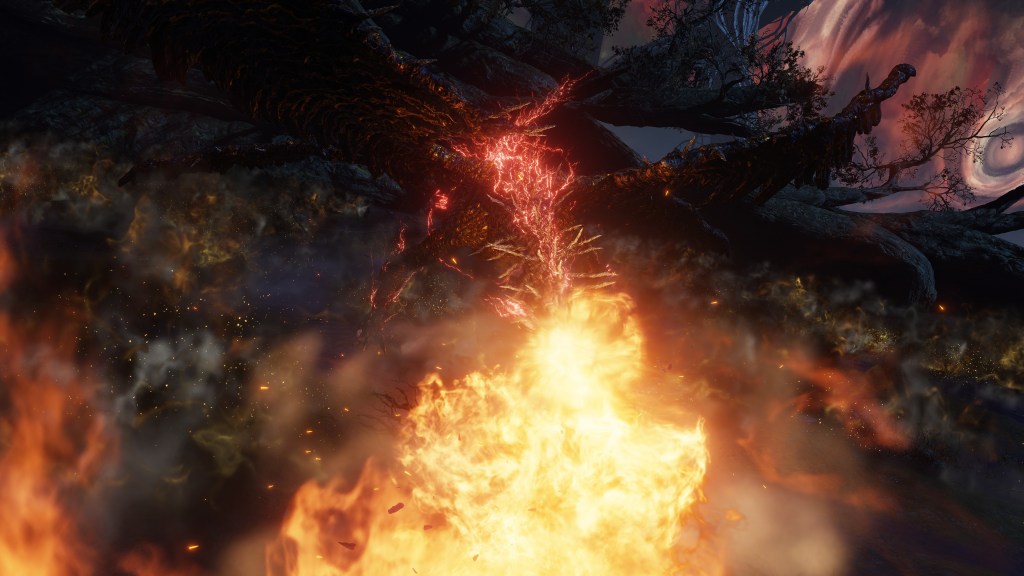
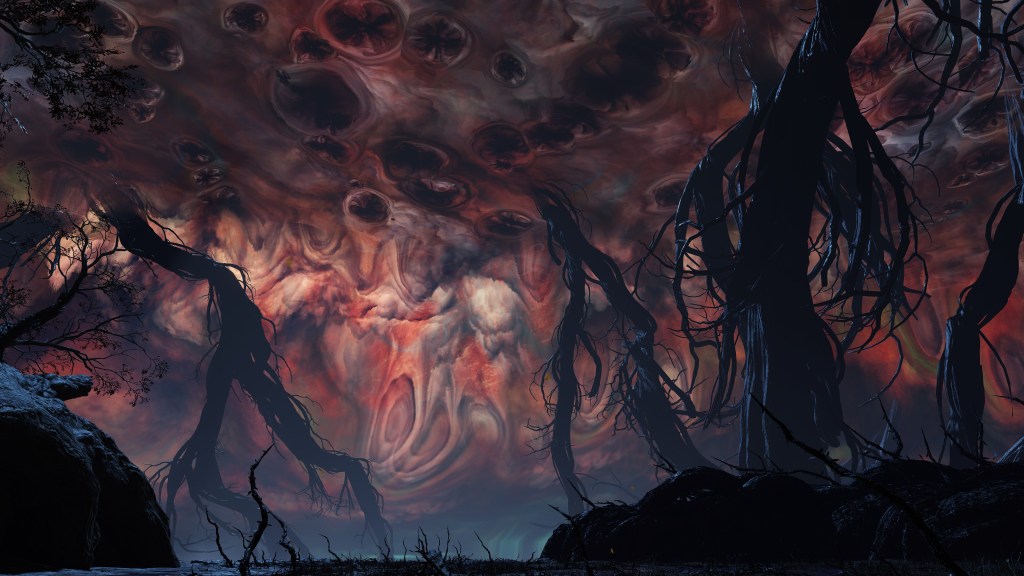
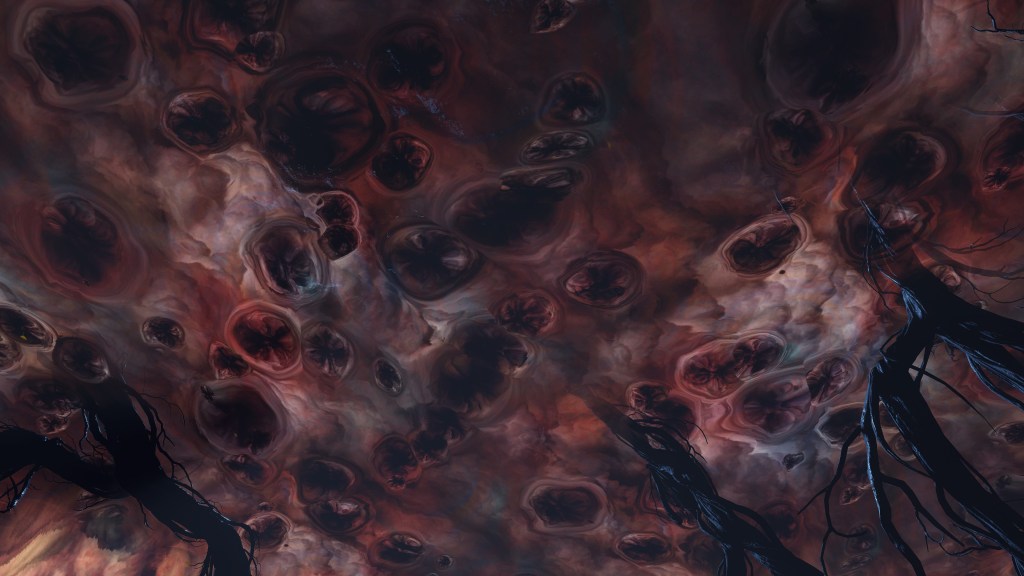
Recollection of the Death Dragon Forsax engraved in the Golden Tree.
Can acquire the owner’s power via the Finger Reader. Also, can use to acquire vast runes.
After Godwyn the Golden became the Death Prince, the ancient dragon continually battled the Death within his friend. There was no victory in that battle, only being eaten away at.
Prayer brandishing the Death-eaten power of the ancient dragon Forsax.
Calls violent death lightning strikes in surroundings. They possess the death status abnormality effect. Lightning strikes continue longer with charging.
It is the golden lighting that Godwyn, who became the ancient dragon’s friend, is considered to have brandished.
On that front, Maliketh has stepped up to the plate. For his failure, the Death of the Demigods has retreated from the public eye, becoming a ranking priest of Farum Azula. It might seem odd that he chose to join a broken society literally falling apart, especially as their enemy responsible for the country’s current state. But there is some logic to the decision. As a beast priest, Maliketh practices incantations which draw upon strength on top of requiring faith, disciplining the body as well as the mind. If the shadow vassal believes that his weakness is responsible for losing shards of his sword, then the answer is to hone his strength and faith, recall the basics to beasthood and civility. Rather than act the terrible beast too uncontrolled to avoid clever plots, Maliketh restrains his wild instinct as a humble cleric, no longer jumping around with his absurd acrobatics that leave him open to such ploys for the most part. This is especially important since he no longer would have his sword to rely upon either.
Thing considered superior to the prayer that the beast priest Grang bestows.
Flings a large rock ahead. Can be used continuously.
It is said that Grang was once a horrifying beast. Reason being that his old name means Death of the Demigods.
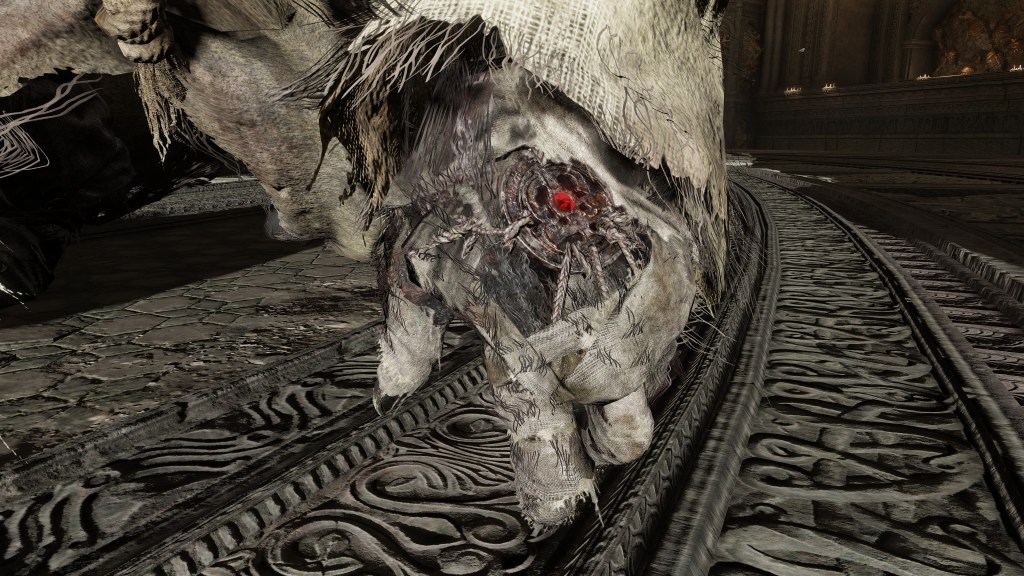
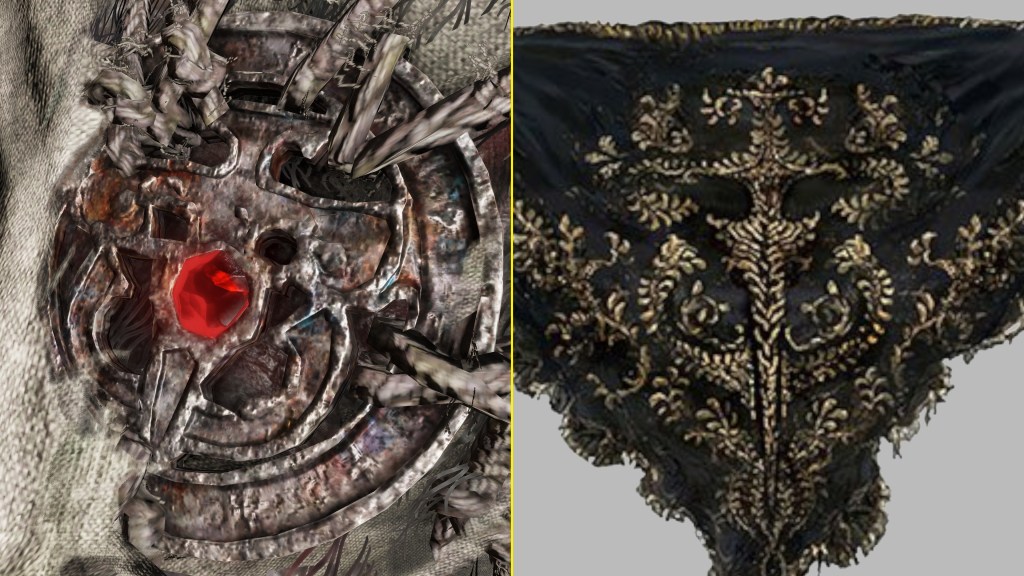
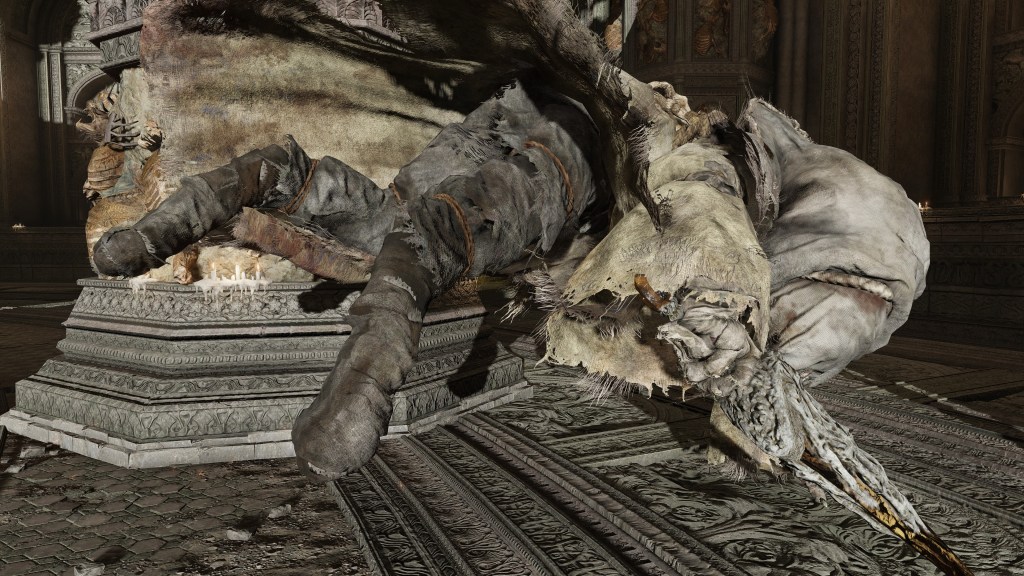
After the loss of Destined Death to the Black Knives, Maliketh resolved never to let Death be stolen again. The rune in his possession was sealed along with the sword inside his own body through a talisman bearing his crest, a red crystal at the center representing the hidden power. It is tied into the rope glove he wears as part of his priest attire, so it likely got its origin from there. The shadow beast went to Farum Azula to contain the Rune, then bundled up his entire armored body. With this method, he removes the possibility of someone stealing the sword, at least until utterly forced to unleash it again in a mortal struggle — can’t well keep them from taking it as a corpse. Still, unless his life is threatened to that extent, the Cinquedea he wields in its place serves as a constant reminder to maintain discipline, as does the Beastclaw Greathammer in his care. And if the vassal beast was so dedicated to leaving his old life behind and start anew with them, who were the struggling priests to judge? After helping seal his sword, they rechristened Maliketh as Gurranq, or “Grang” (グラング) in obvious reference to “grand” like with Gransax.
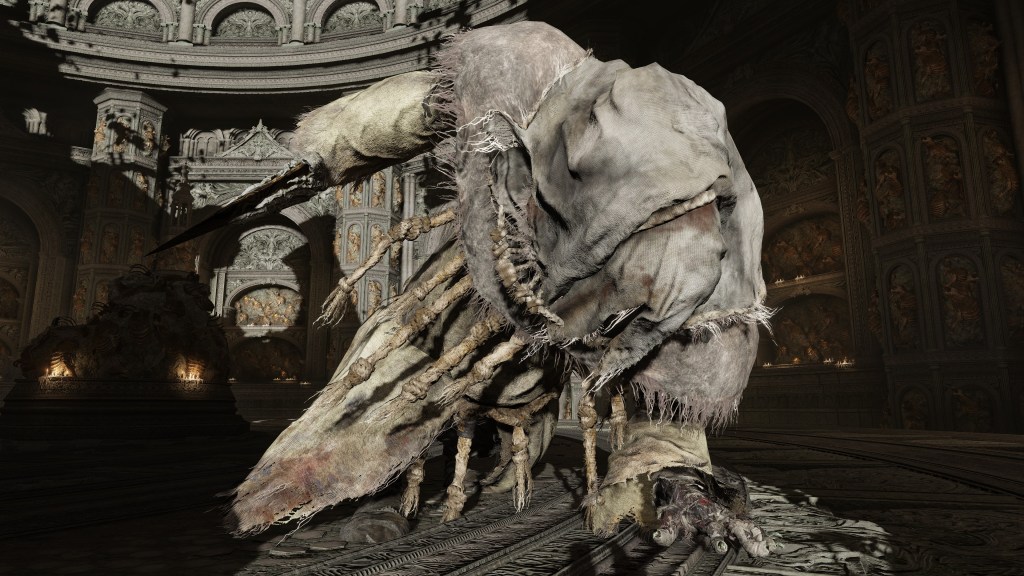
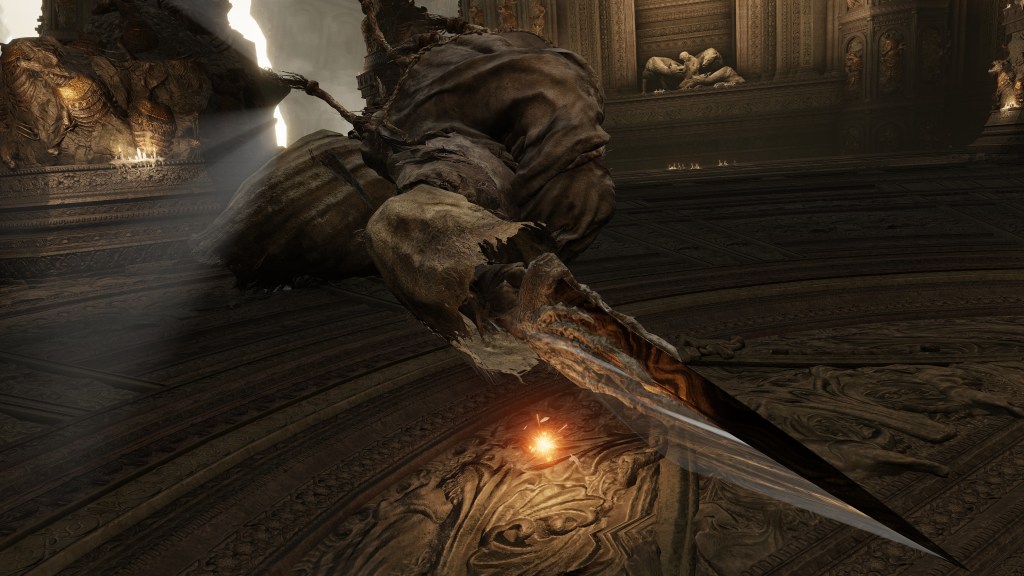
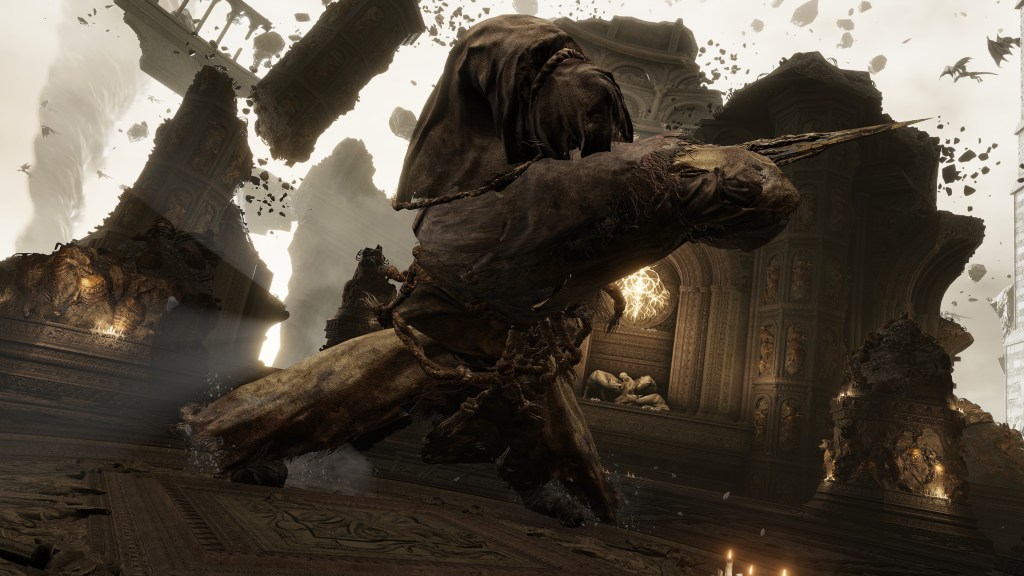
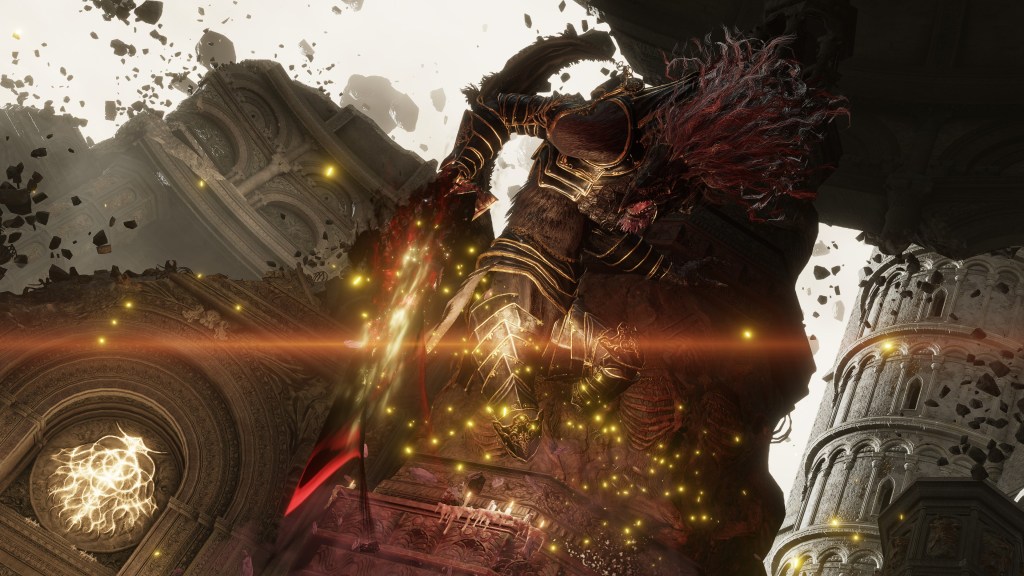
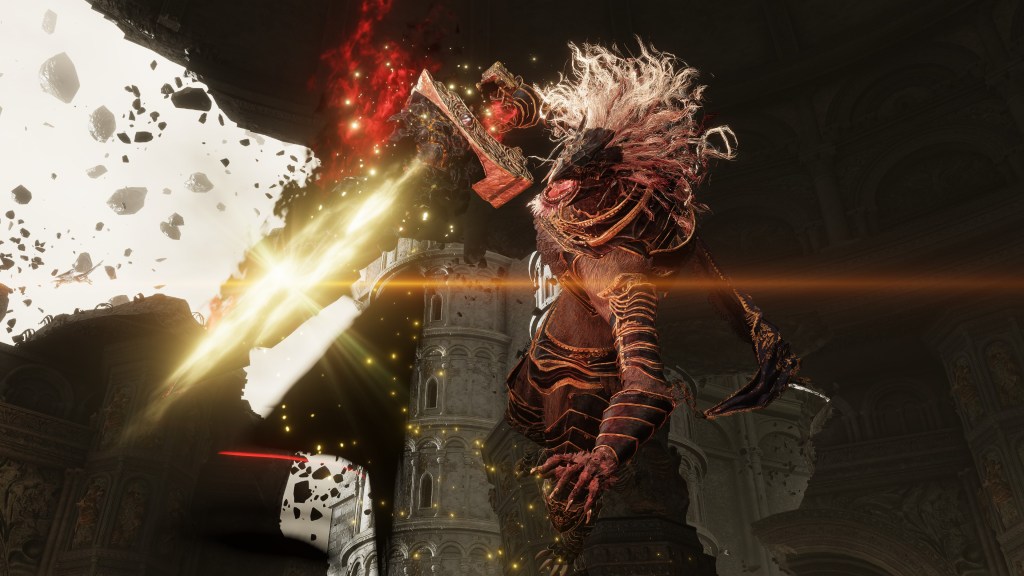
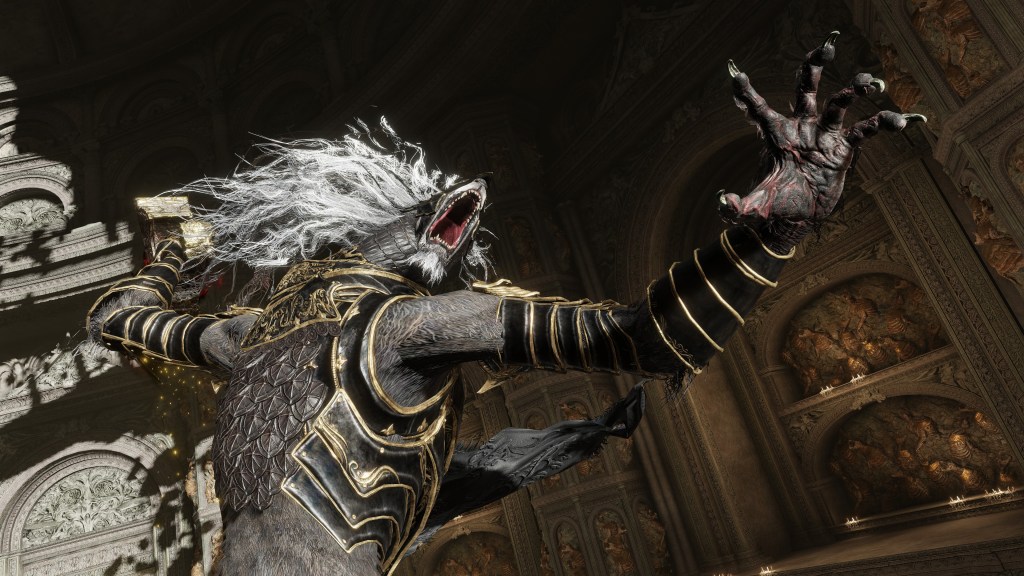
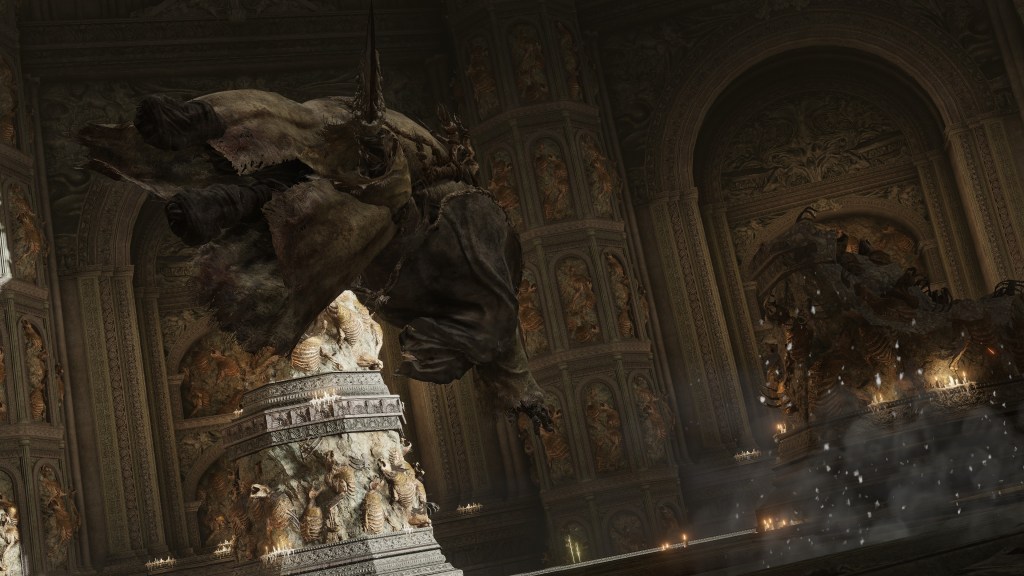
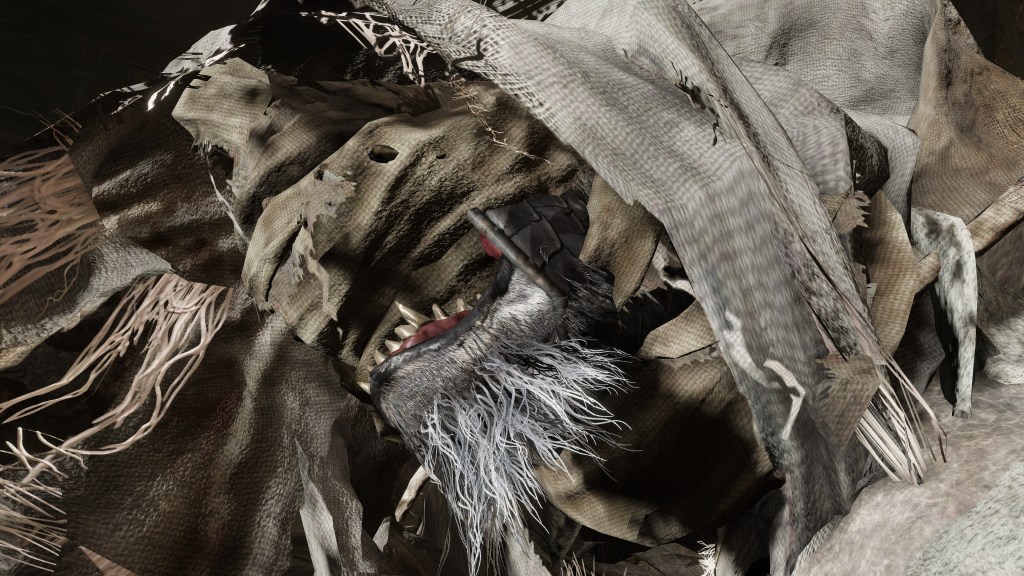
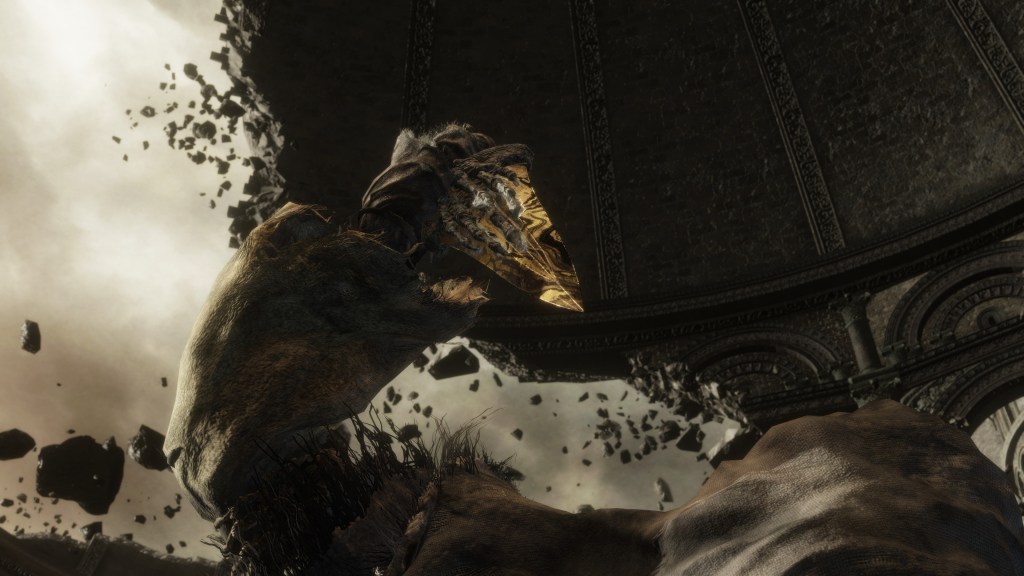
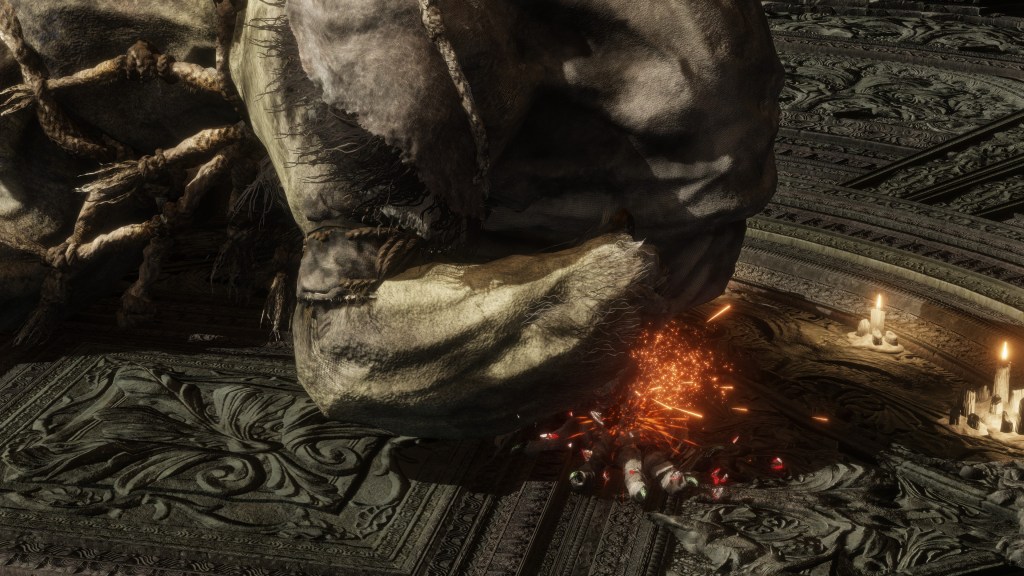
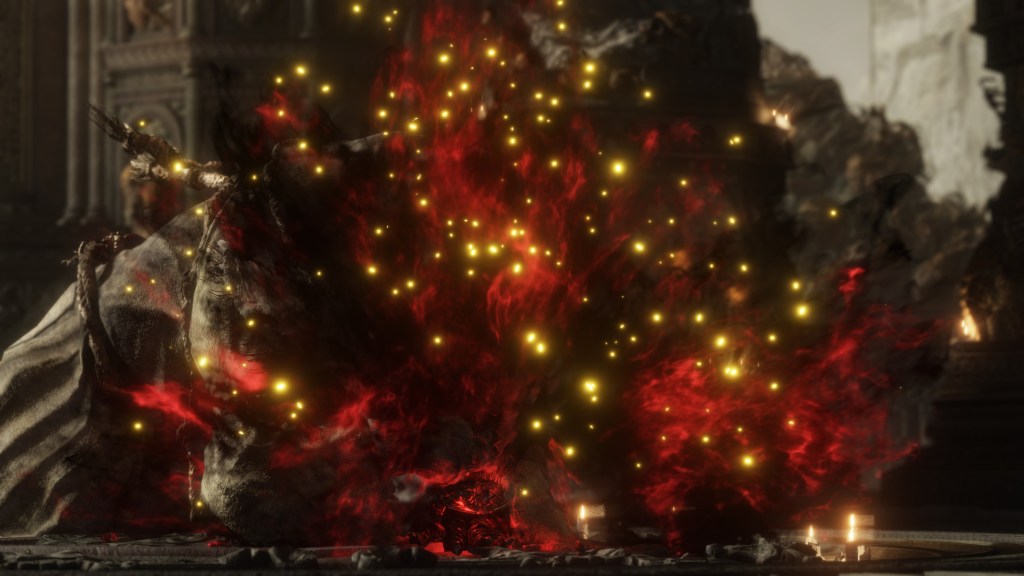
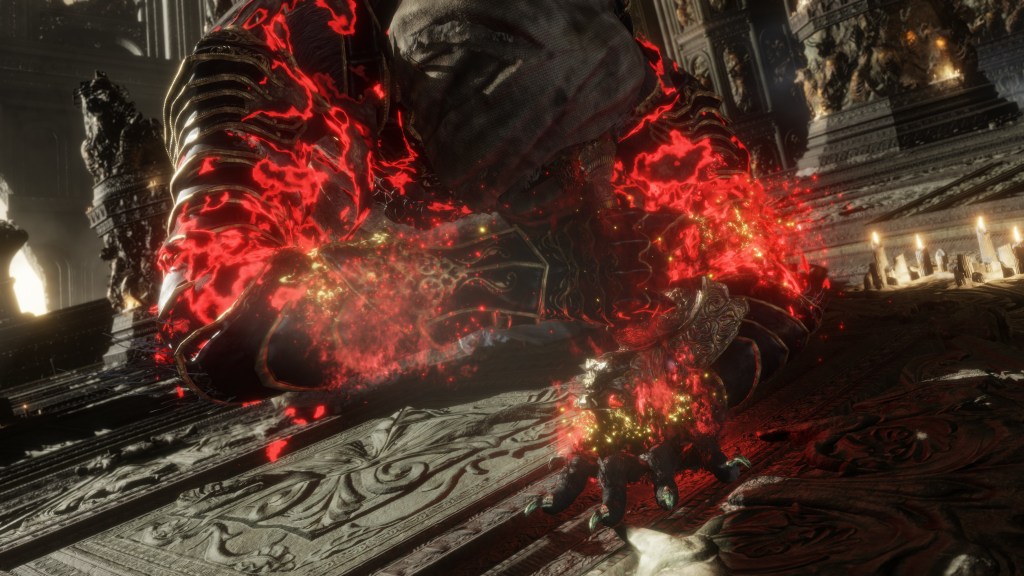
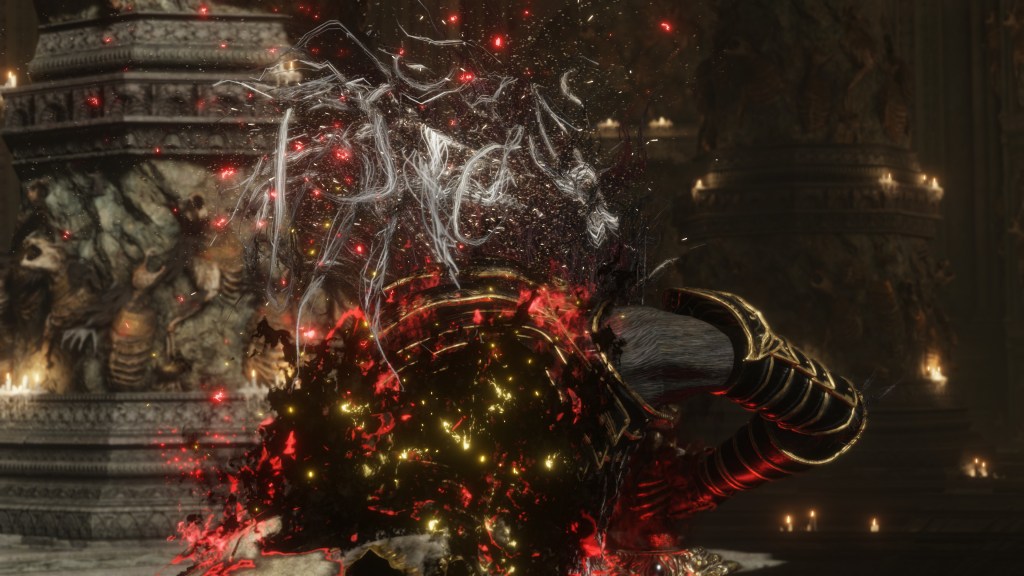
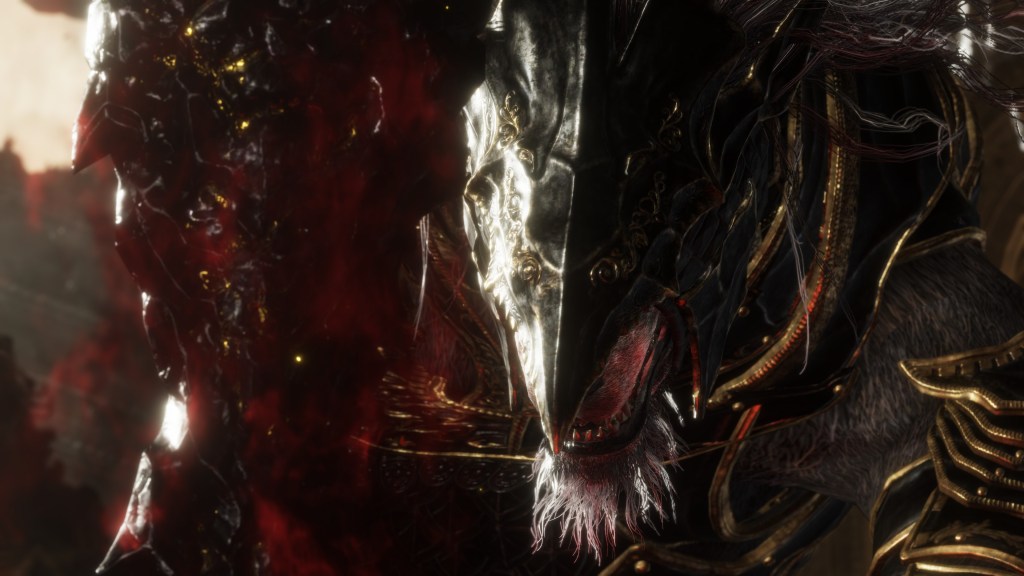
One who approaches Destined Death, I won’t allow anyone to steal it a second time.
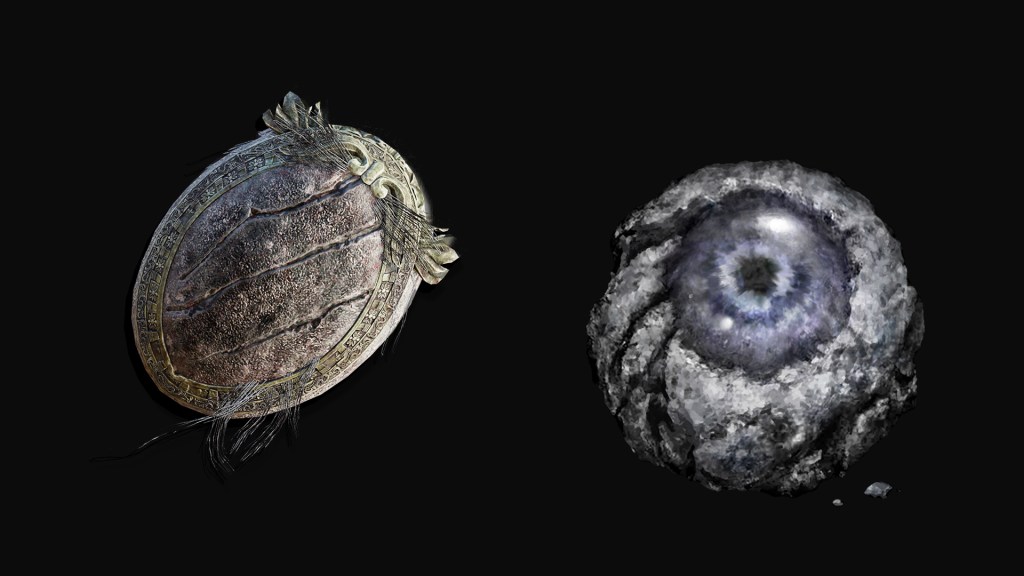
As part of his new ascetic life, Gurranq lives with constant thirst. This is because, now that his sword is part of his body, red splotches staining the sealed hand, his senses have synchronized with the fragmented Rune of Death. It apparently feels its pieces missing and gravitates toward regaining the whole, leaving Gurranq with that same emptiness in his gut. Fortunate for him, Destined Death also resonates with its disparate pieces which have coalesced in the form of Deathroot, allowing the beast to smell them out in the wider world. The priest has thus made it his mission to reclaim the lost fragments of Death as a sort of penance for his “sin” of losing them in the first place. To that end, the sinner projects a body double to the Bestial Sanctum in Caelid and cooperates with living dead hunters like Darian to feed him the Deathroot they collect. In exchange for their assistance, the beast gifts the Clawmark Seal and teaches his bestial incantations, even providing a stone “eye” infused with his essence to locate nearby root for them. However, such help is still unreliable, so he is looking for a replacement for Darian.
… I smell… Death… Feed me… Tarnished… Bring me more Death… I give you my eye, and claw. Feed me more.
… So you are a fool who cannot heed advice?… But, it does seem you have the power to pick Deathroot… Do you have an interest in the power of beasts? If you are planning to hunt Those Who Live in Death and pick Deathroot, I’ll introduce you to the beast priest, Grang… I could be doing other things. Grang also probably wants a replacement. What do you think?
Stone eye wounded by claw marks. It was handed over by Grang, the beast priest.
It is said to tremble violently if approaching Deathroot.
The dark purple pupil squirms as if alive. I thirst… Feed me more Death…
Tarnished… My thanks… Death… something not to be touched by man… My sin… I give you my claw.
One might question why Maliketh doesn’t collect the Deathroot himself if it is so important to do quickly. The problem for this sinner is that he cannot go out and explore in his current condition. At times, Gurranq succumbs to beasthood, attacking us unprompted even after helping feed him plenty of Deathroot. As he himself acknowledges, he forgets his thirst and sin in this feral state and needs some sense knocked back into him before he can calm down. The underlying cause of this is his thirst, however. The claw marks on his seal, stone eye, and ground slashed by his incantations encapsulate Gurranq’s wrath and frustration, losing patience as he endures the pain of missing Death. No matter how much Deathroot we feed him, it is never enough. He doesn’t even care that he tastes Godwyn’s corpse mixed in, he just needs to feel the least bit sated to maintain sanity. With all the priest’s willpower devoted to his discipline, he can’t afford to leave the cloistered life. The best he can promise is to no longer lose himself, suppressing the wild beast wanting to rampage until he receives the next Deathroot.
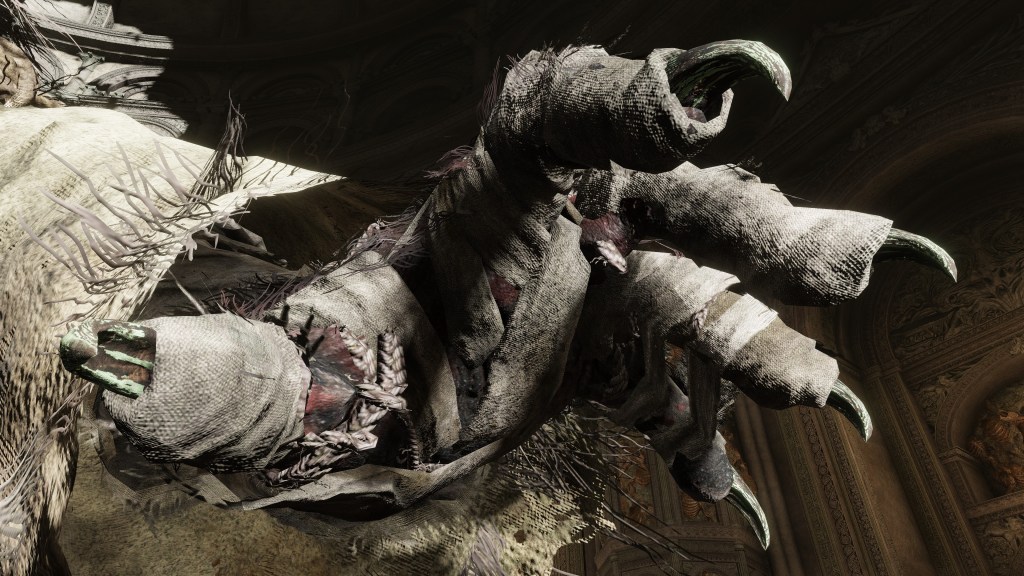
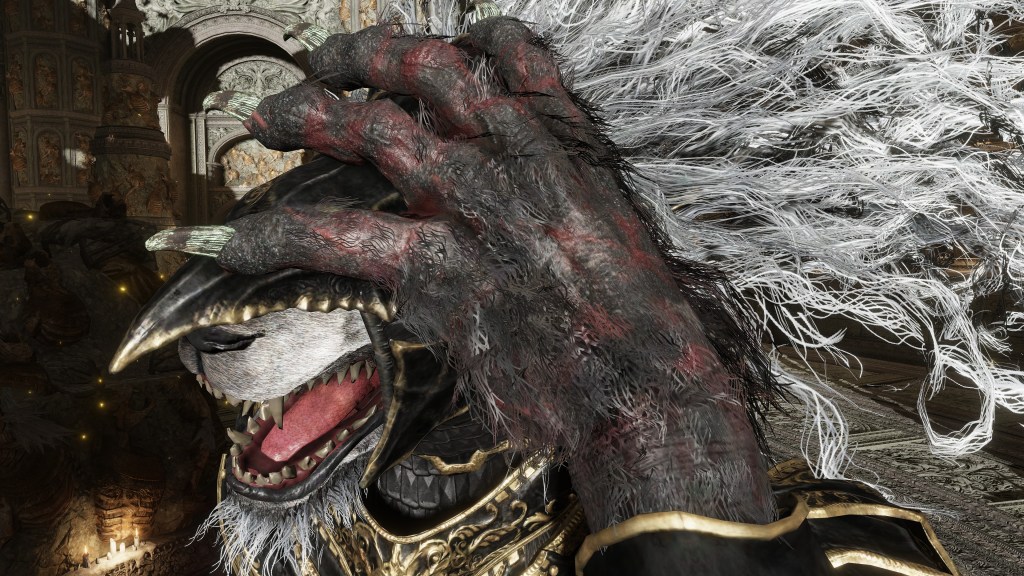
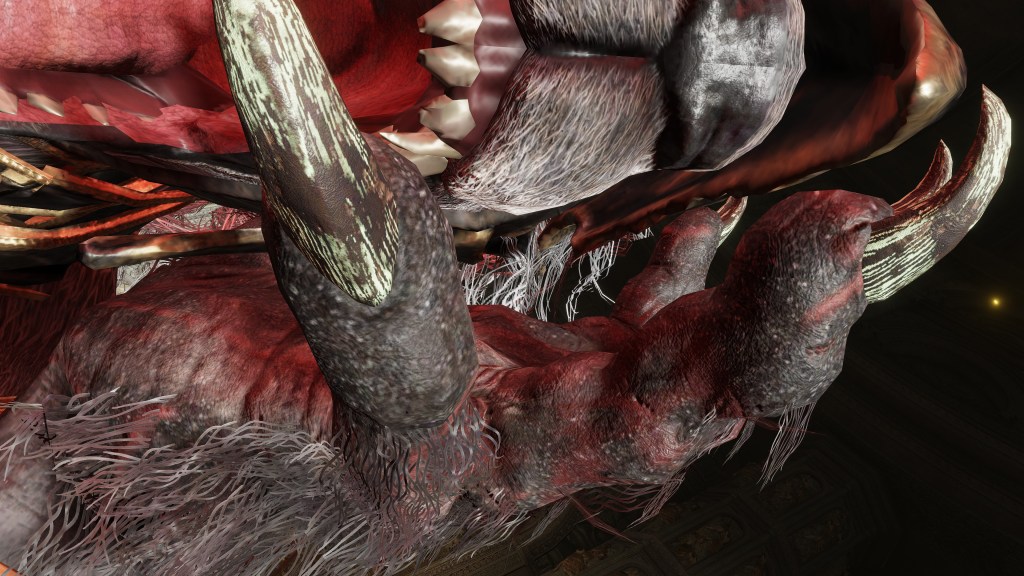
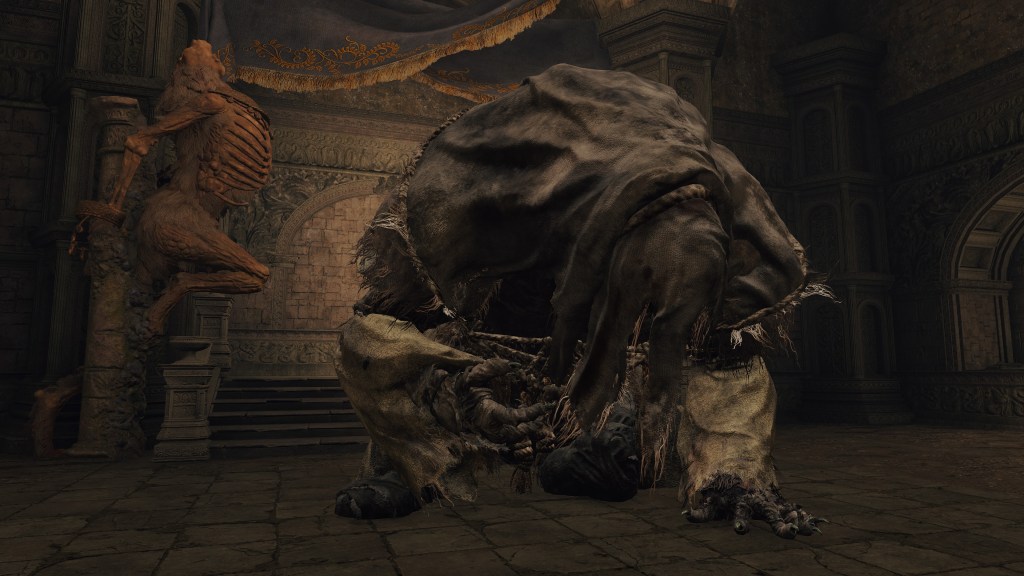
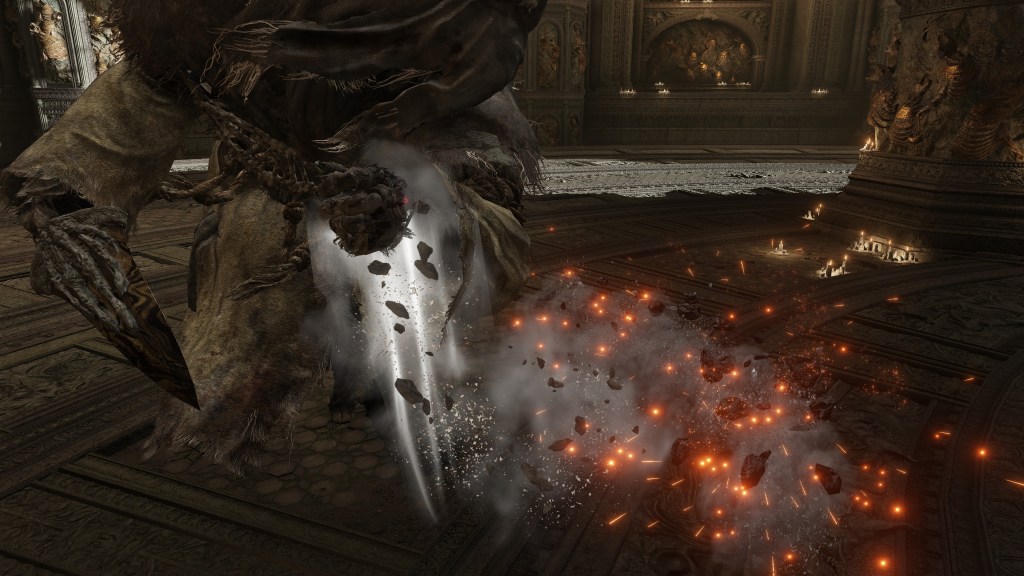
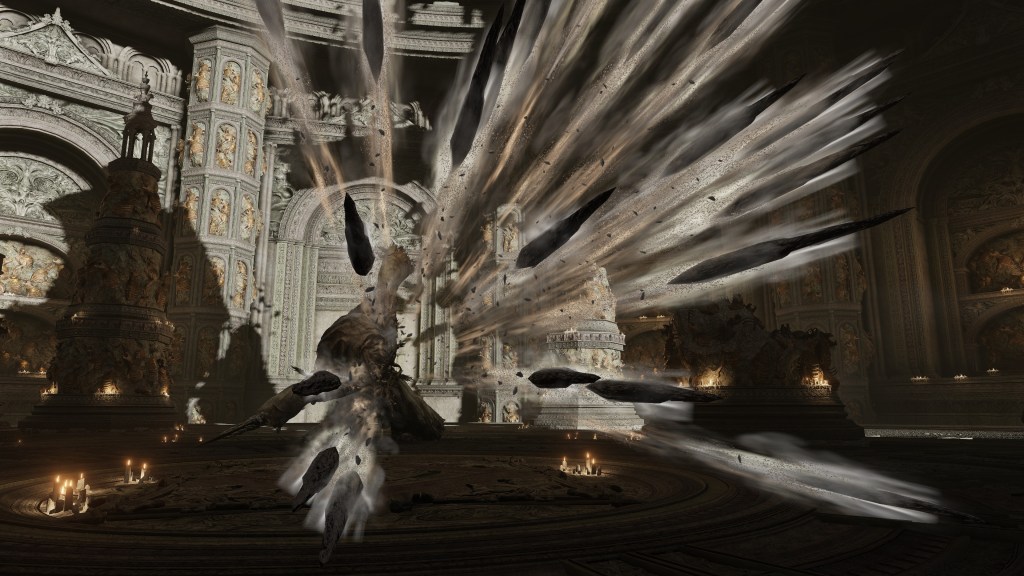
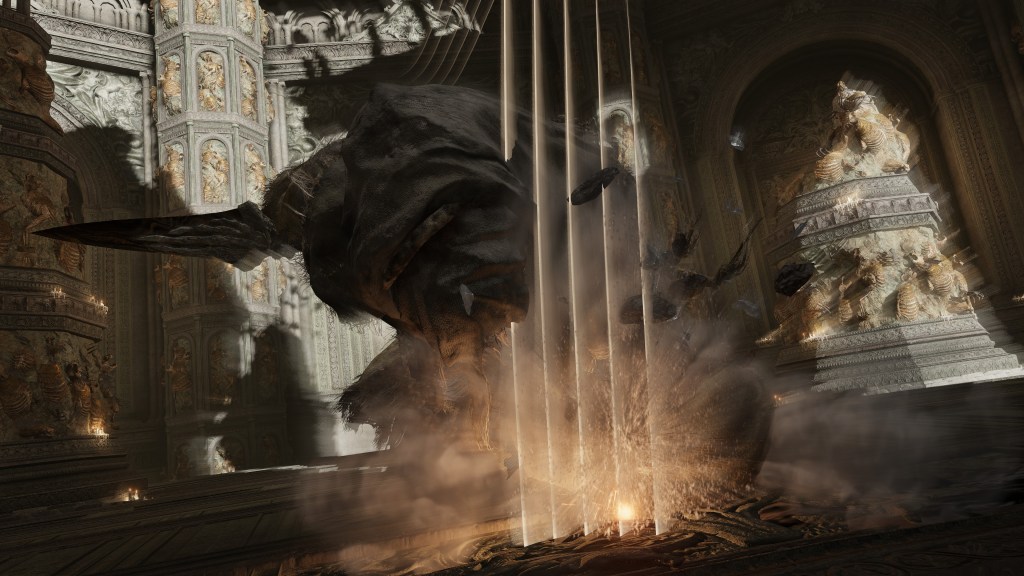
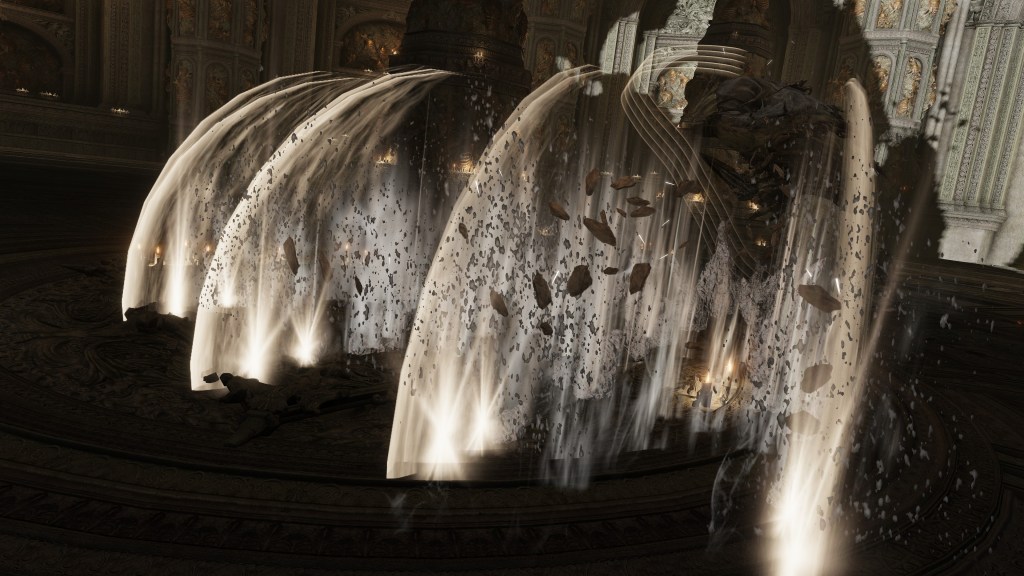
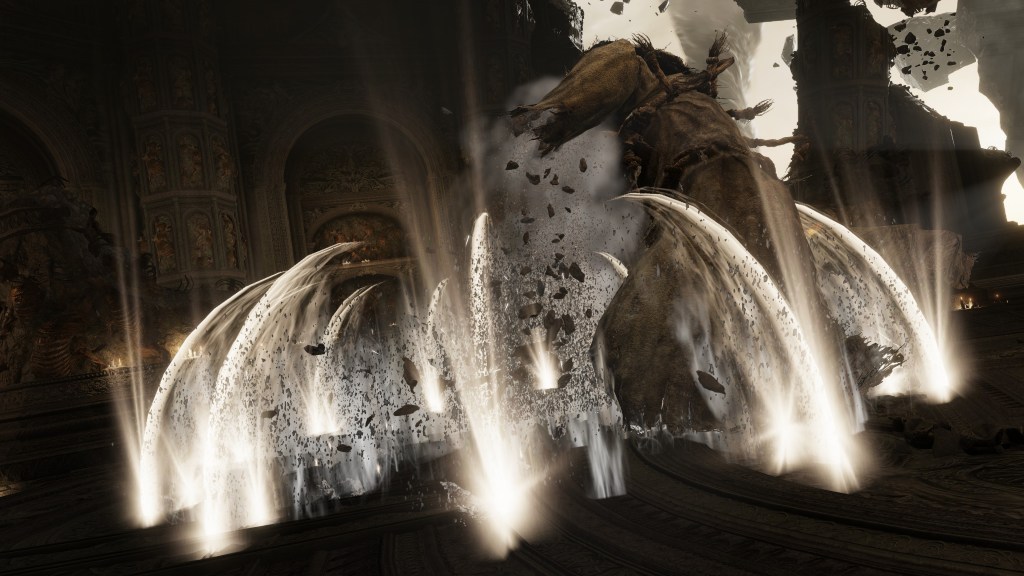
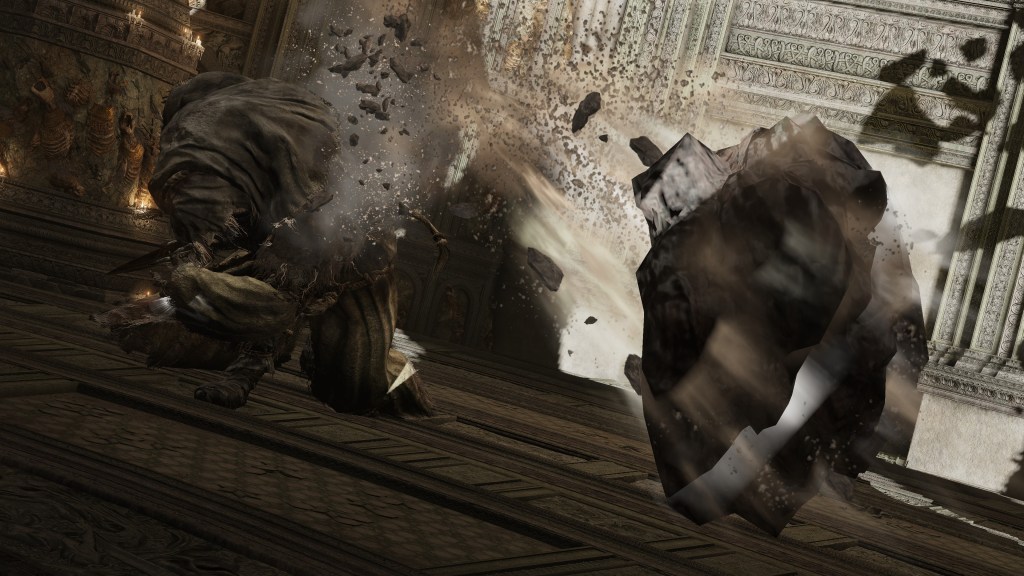
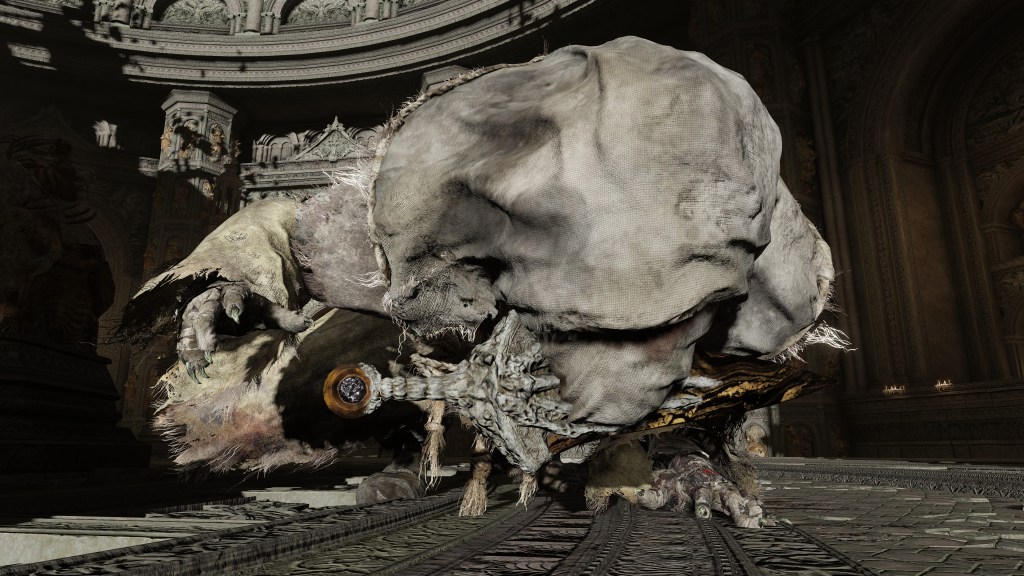
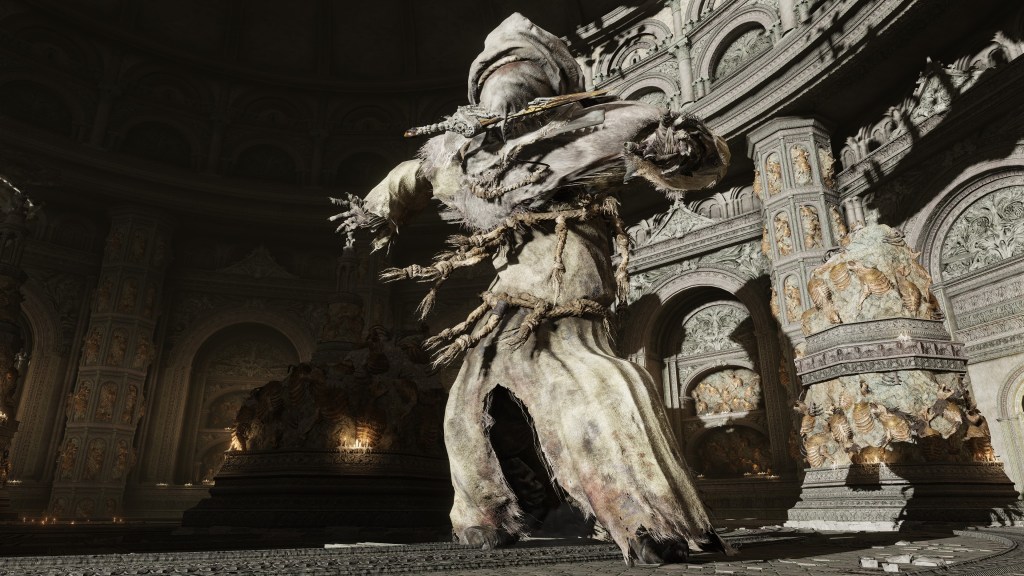
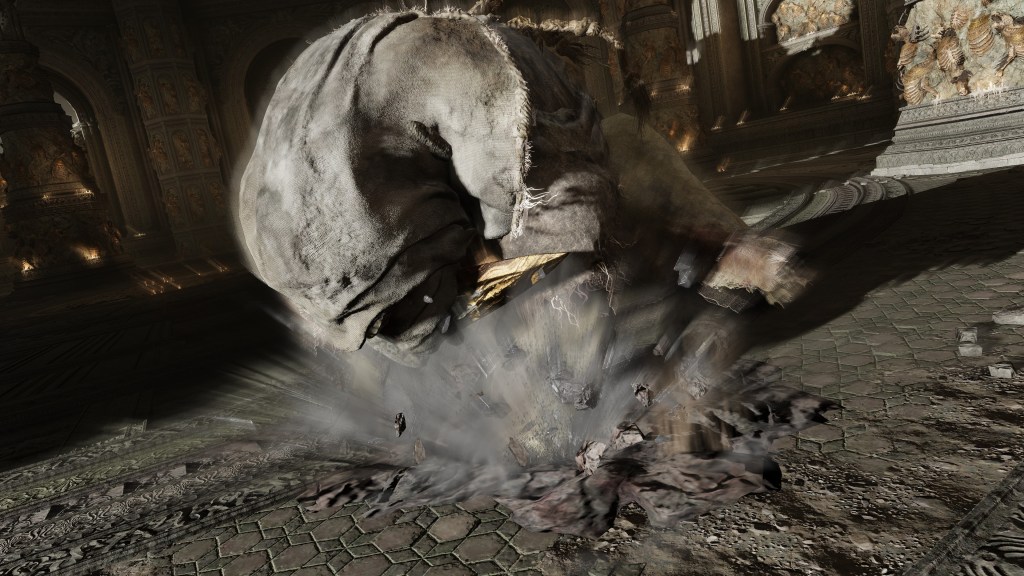
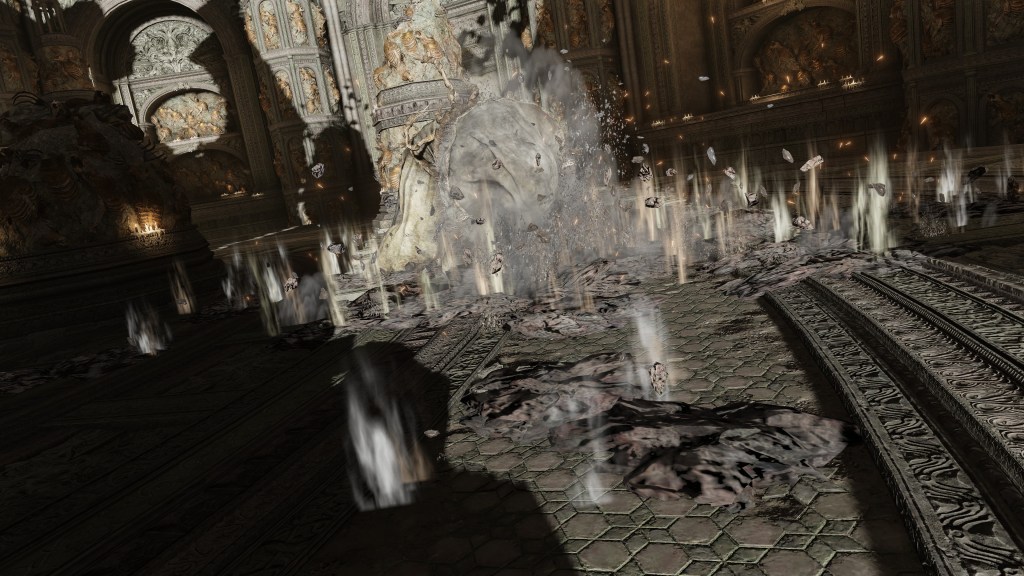
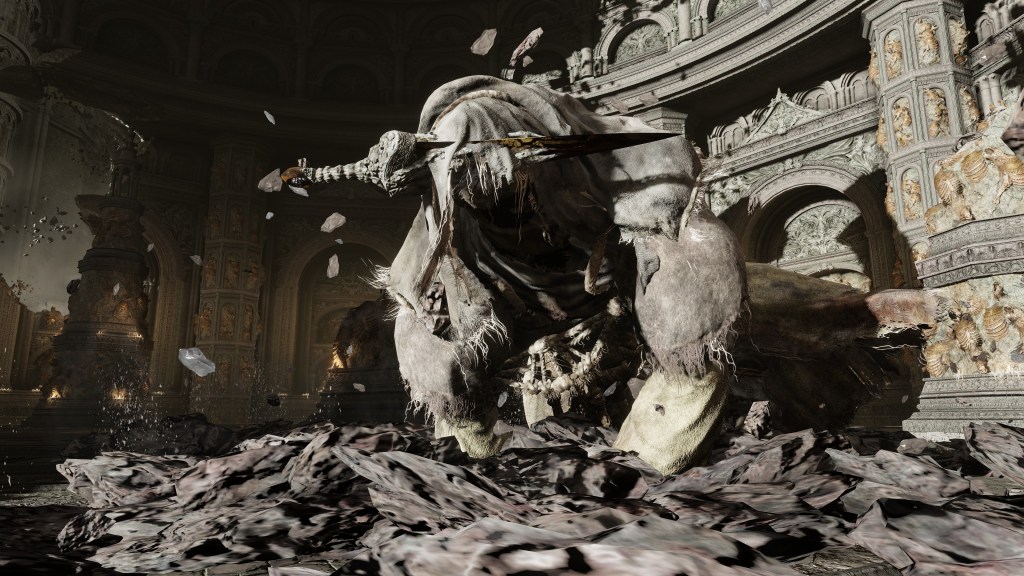
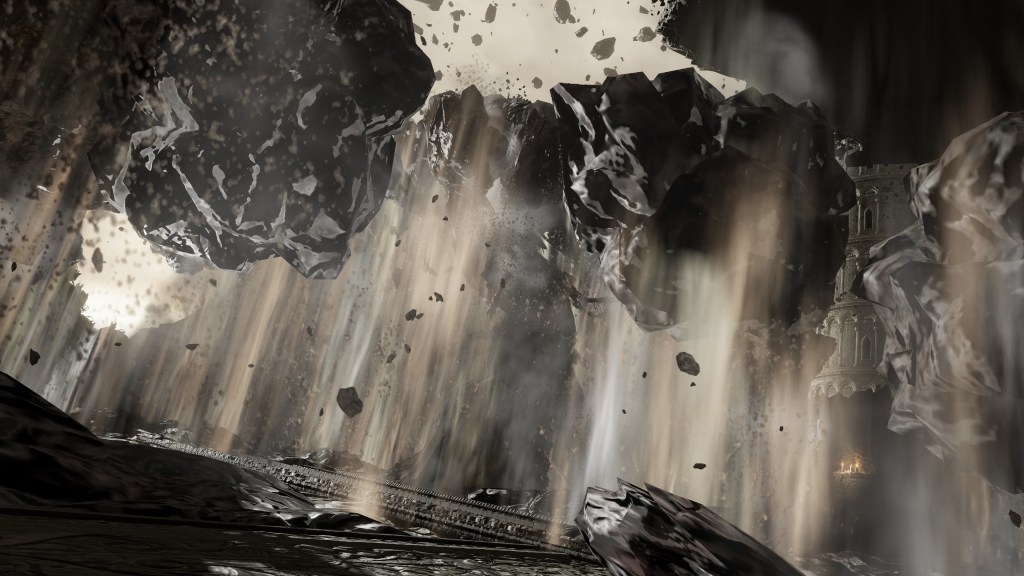
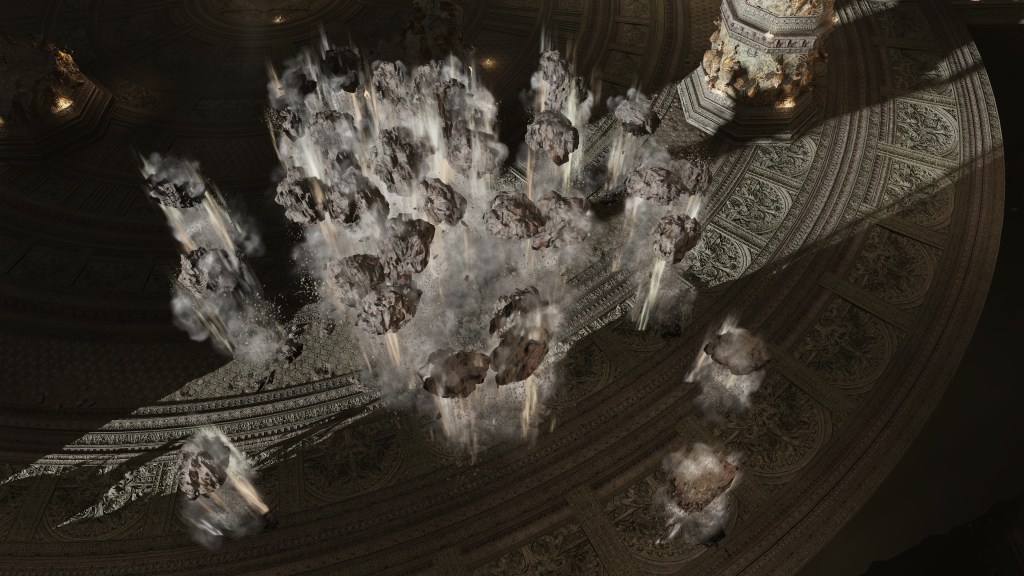
… Stop. I won’t forget anymore. My sin, or thirst… So, stop…
One of the prayers the beast priest Grang bestows.
Generates beast claws and tears up the earth with impact. Enhanced with charging.
They are probably the wrath, and impatience, of Grang, returned to beastliness.
… Not enough… I thirst… Feed me more death.
… Strange, it is mixed with something… But it’s Death, so no matter. Feed me more.
… I won’t forget anymore. My sin, thirst…… Feed me. Feed me more…
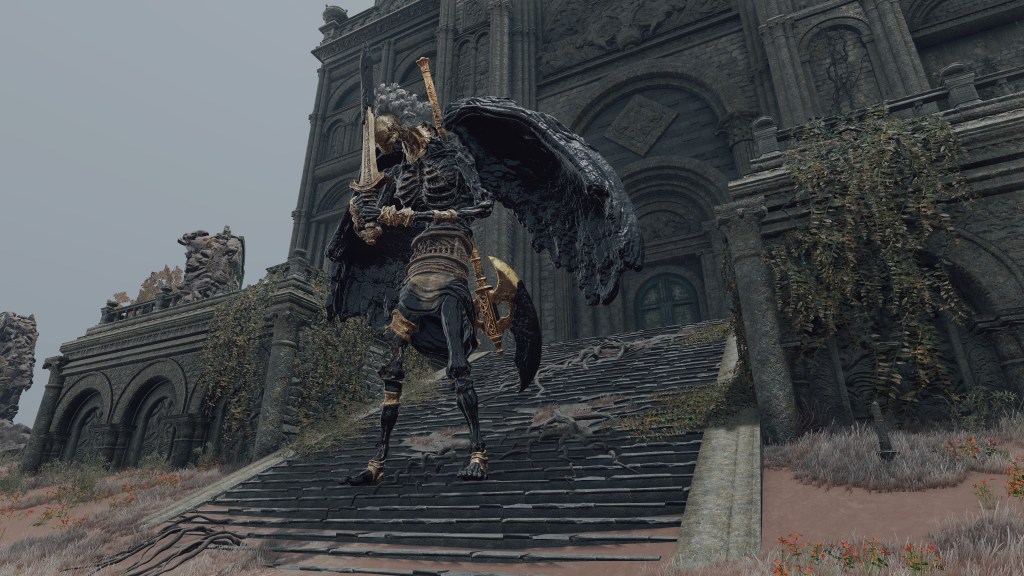
In this helpless state, the clergyman relies on his Blackblade Kindred now more than ever, Maliketh’s old bodyguards blocking the path to him at both the Forbidden Lands and Greyoll’s Dragonbarrow. He also brought with him to Farum Azula a grotesque Tree Sentinel, letting the draconic guard learn more of red lightning’s power as the beast enjoys peaceful sequestration in the grand temple. None of them can alleviate the pangs, a constant reminder of his failure; stoking the beast’s rage only to earn him yet more irritation. This self-hatred reaches its peak after finally smelling no more Deathroot despite continuing to thirst. The priest’s projection departs Caelid, consigned to a life of suffering constant deprivation. It is his cross to bear to keep Destined Death safe under seal, and his punishment for failing to do it the first time. If not for our intervention, that may well have been his fate, though he refuses to relinquish Death even if we help tide his craving beforehand.
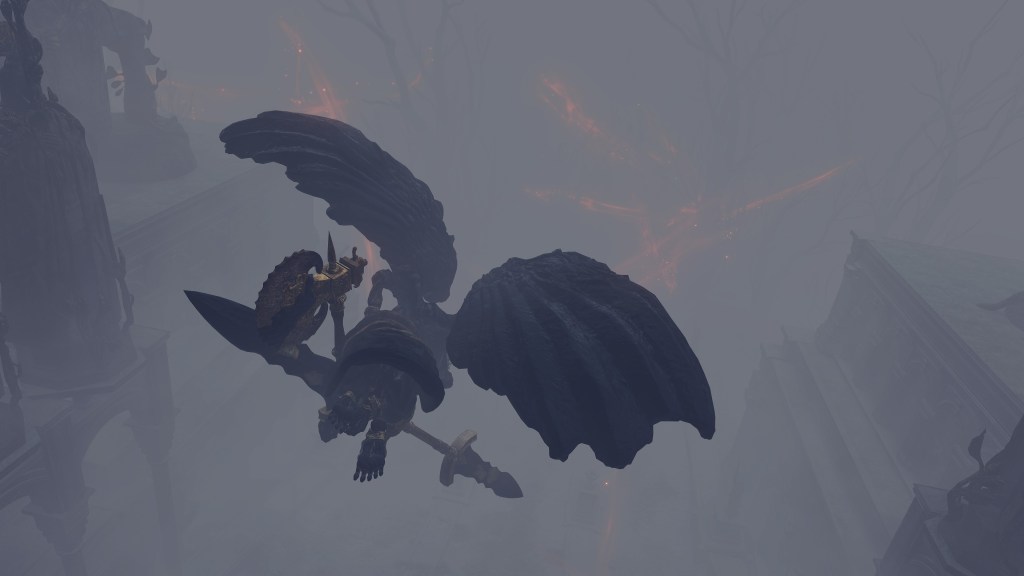
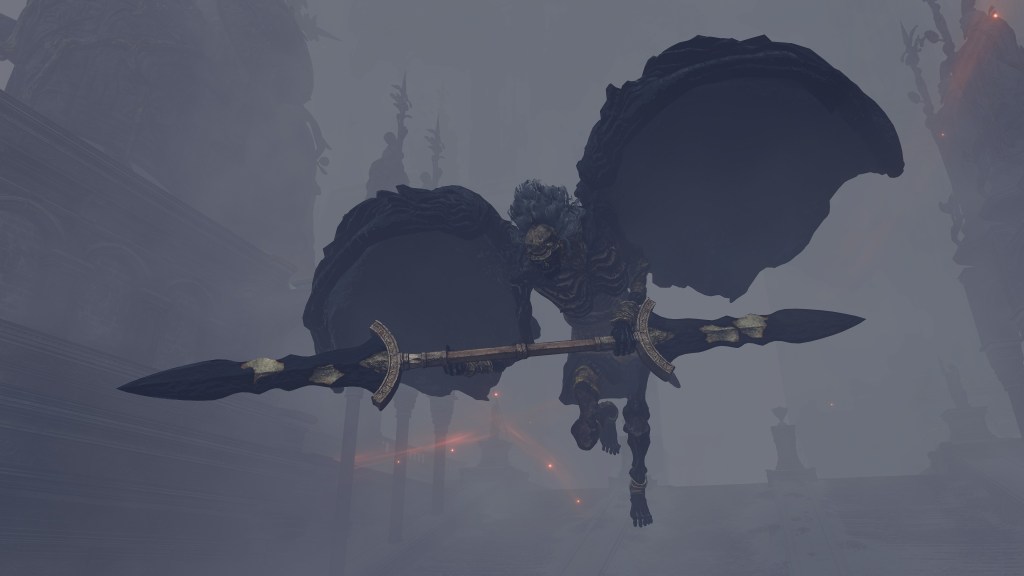
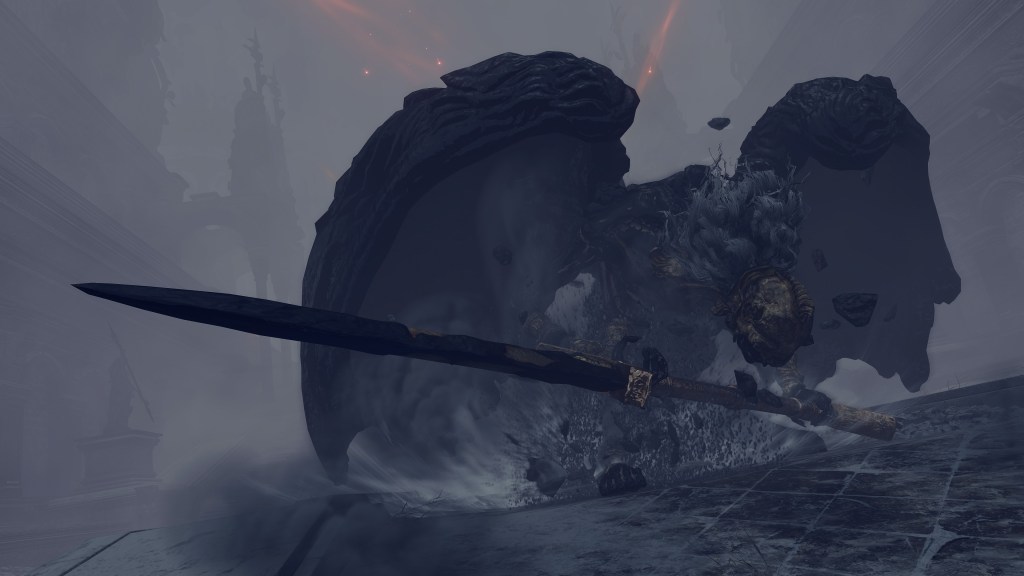
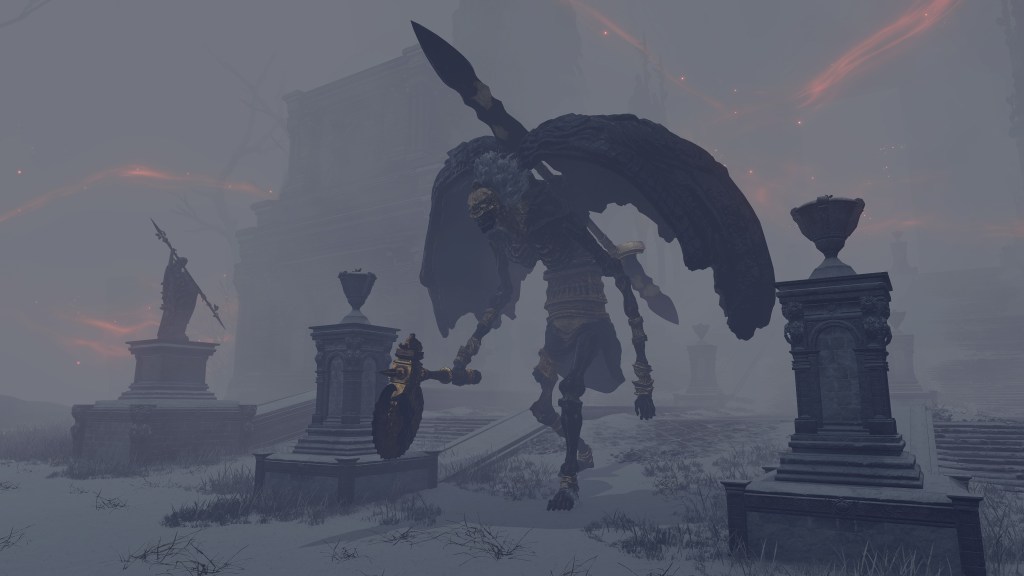

Everything… I have devoured everything…But still I thirst… terribly thirst…
… Tarnished, my thanks for your long labor. But there is nothing more that can be done in these lands. I shall live with my thirst. Farewell.
Tarnished… It can’t be, you would… Why…… But, I won’t allow anyone to steal Destined Death a second time.
The fact that Gurranq ignores the Prince of Death shows that even the Death of the Demigods has no idea how to solve the problem of Godwyn at its source. Even assuming that he knows about the faithful’s continued access to the Deeproot Depths thanks to Darian, what can the beast do that they or Fortissax haven’t already attempted? He possesses the remains of a shadow, hardly the power that can purify a corrupted cadaver. Even if it is the last piece the priest needs to consign the curse to oblivion, past experience tells him that he is better off just keeping the problem from becoming worse as the seal. He can’t fathom what anyone would want to kill with Destined Death by this point, but neither can he apparently conceive of someone with the amount of gold to give the Golden scion a true death. Perhaps Marika would have possessed the power to exorcise her son with the proper preparations. But by the time the royal capital realized the full consequences of their demigod’s curse, their god queen had already vanished.

