
Preface
There isn’t much to say when the good times are good. More often than not, these eras of peace and prosperity are the prelude to inciting incidents and great tragedies. Rarely do we see them carry a tale, yet it is always when those peaceful days are no more that we long to have them back. Elden Ring is much the same way, with many looking back on times like the golden age of Radagon and the Age of Plenty with nostalgia even though there is relatively little to say about them. Rather, it is their principle figures, the drivers of such peace and prosperity, who deserve our undivided attention. When things are supposedly so good, the real story is why what they created couldn’t last. Sometimes, the seeds of doom are sown from the start.
Stitching the Truth
When Radagon returned to Leyndell with Marika, having seen off the Tarnished, they quickly announced their marriage. This might have come as a surprise to the royal capital. Ostensibly, Radagon was already family, hence his ability to unite Altus and Liurnia’s royal houses with his first marriage. But whatever his public relation to the Eternal Queen, there was no obvious opposition from accusations of incest. At worst, the discourse would have surrounded news of Godfrey’s sudden departure and the choice of a mere “hero” to replace him — a hero who was already wed to another. Miriel, at least, hasn’t heard an explanation despite learning about the incident from his place in the Church of Vows. Radagon seems to have simply abandoned Rennala without a formal annulment; one might argue that god taking him as her consort was formality enough. Marika likewise didn’t offer much justification, beyond possibly what had transpired on the Weeping Peninsula. God wills it, so her other half became the new Elden Lord for a new age.
… However, when the first Elde King, Godfrey was exiled from Between, he abandoned Lady Rennala, returned to the Golden Tree royal capital, became Queen Marika’s king consort and second husband… and became the second Elde King. And no one knows. Why did Lord Radagon abandon Lady Rennala? No, to begin with, why was he, who was nothing more than a mere hero, chosen as Elde King?
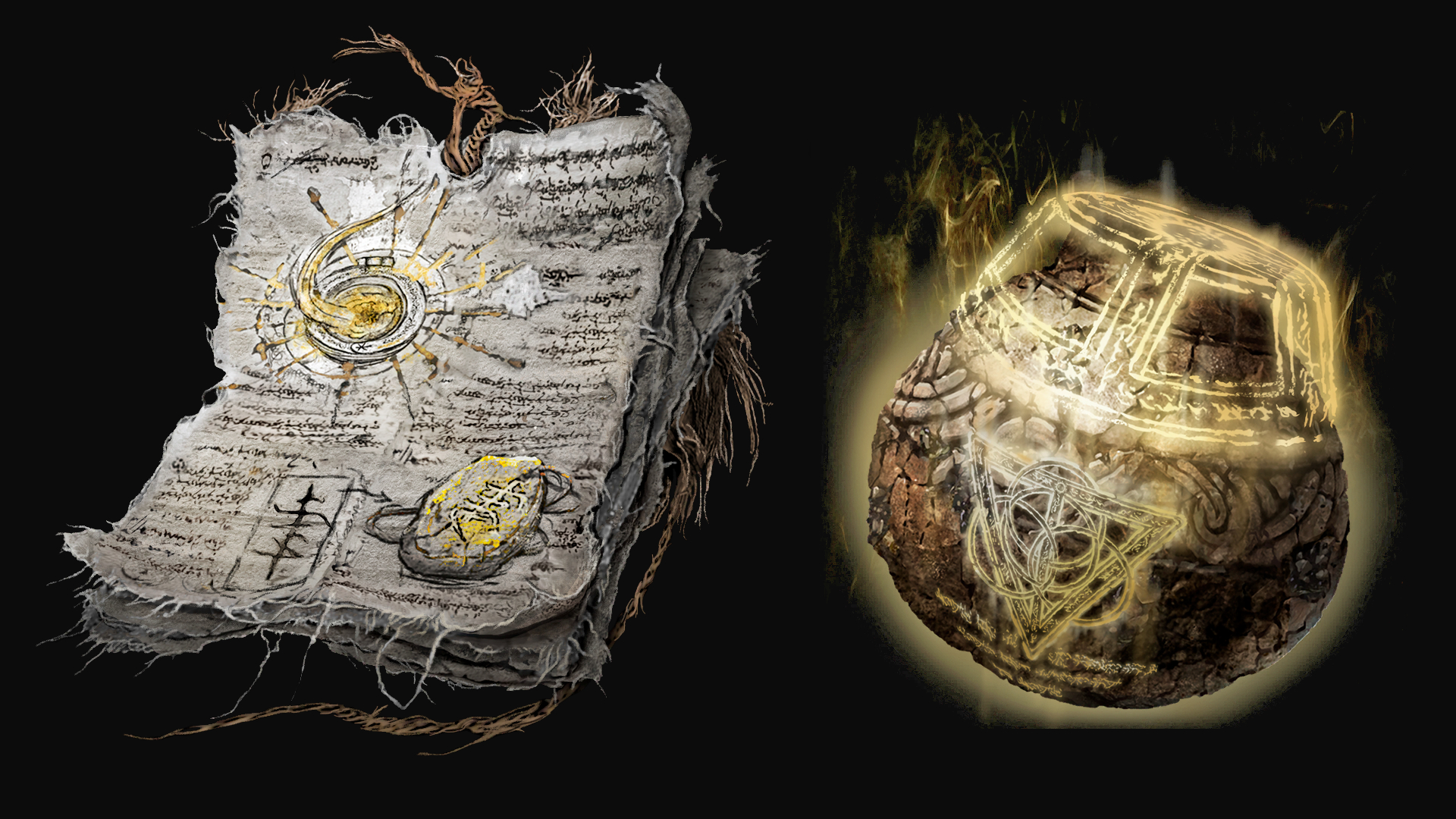
Radagon’s most outstanding achievement is his formulation of Golden Order Fundamentalism. Although still classified as prayer, fundamentalist incantations are part of an academic school of magic requiring both faith and reason to cast, not so different from theology. Indeed, their prayerbook is titled the Golden Order Principia, or Principles (原論) in reference to intellectual treatises of great thinkers like Euclid or Aristotle. Fundamentalism itself refers to the “doctrine of fundamental truths” (原理主義) where the basic logic to the universe, its principles, are codified. The world has its laws, abstract though they may be, and they can be derived, at least in part, through observation. Those observations are then recorded as academic theories, discourse of the truth, (理論) in works like the Principia, the fundamental discourse. Fundamentalism essentially works to isolate the means with which Order is established, to know the laws even the golden rule must follow.
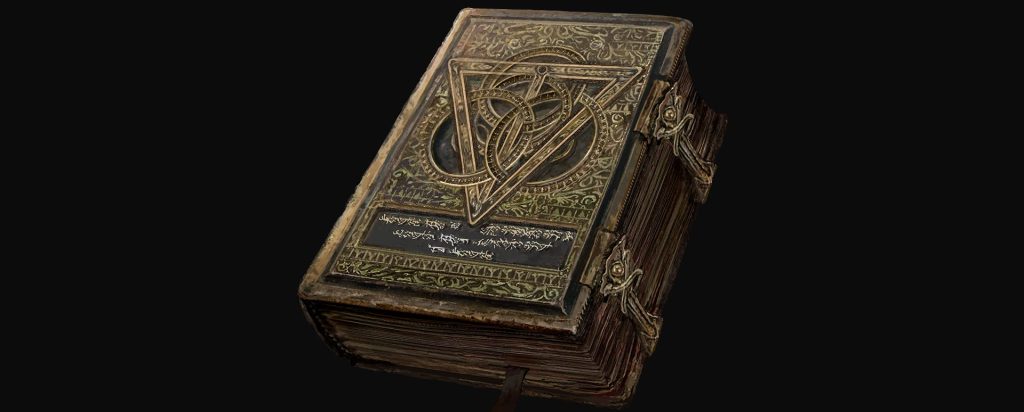
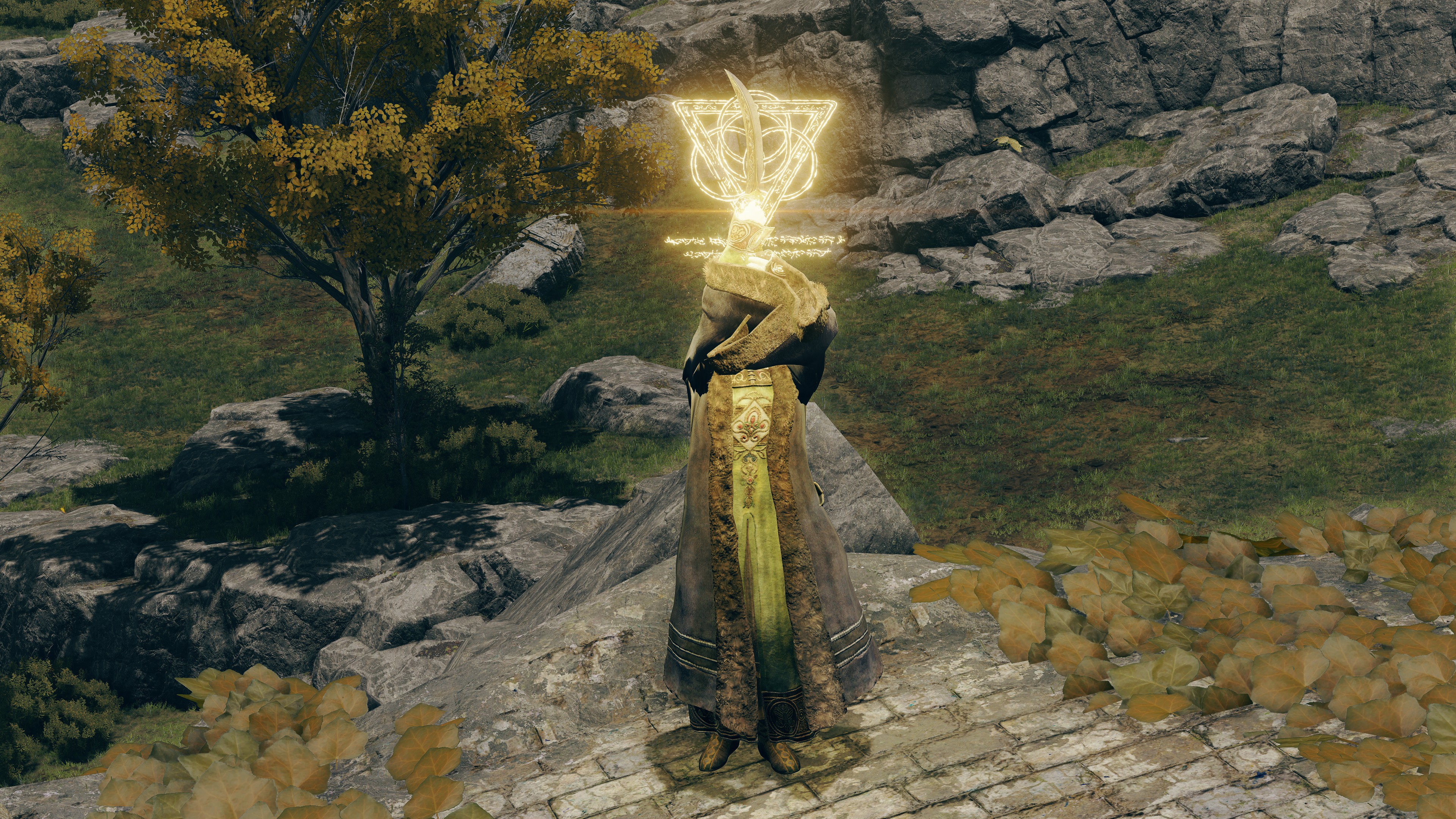
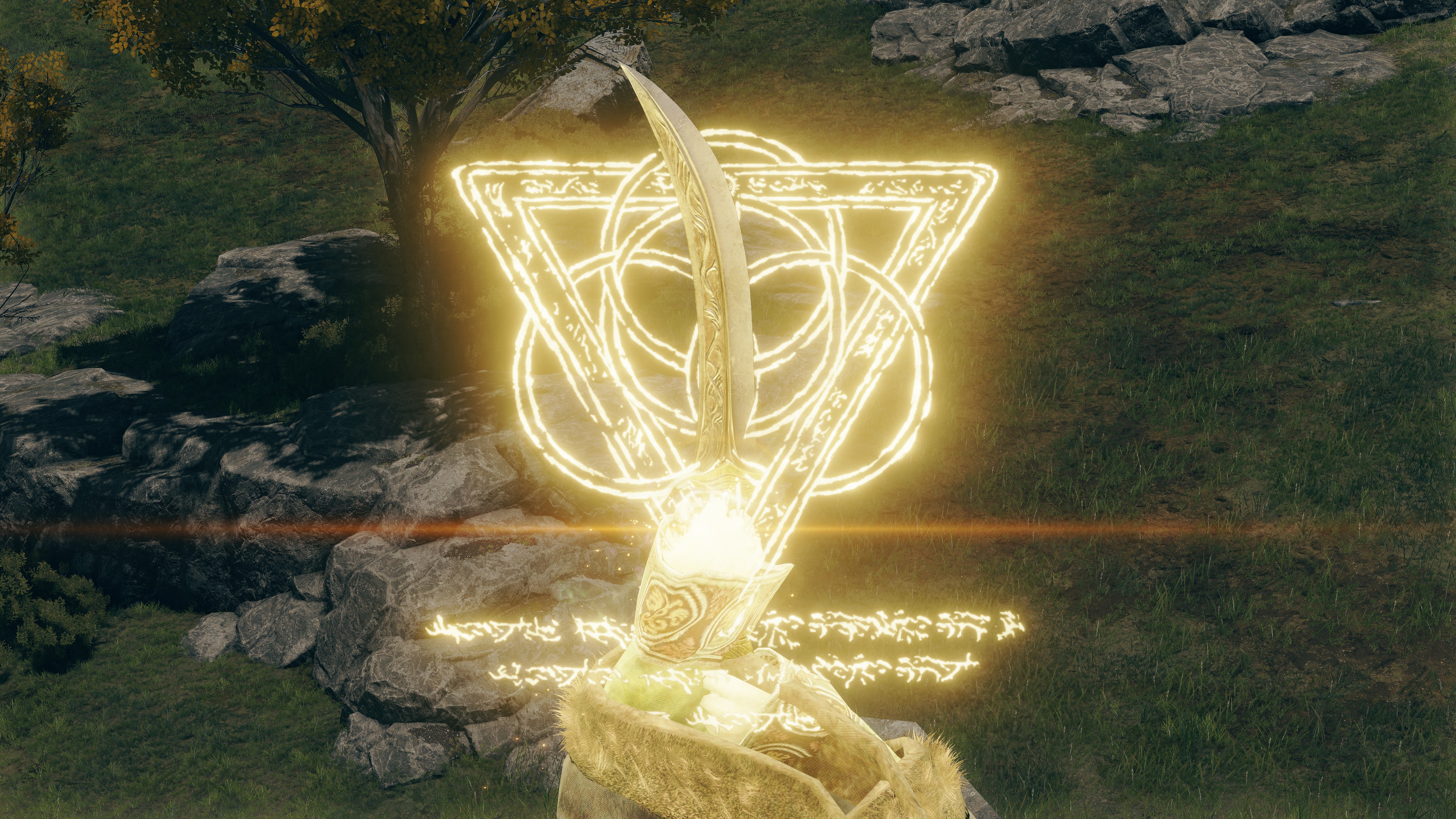
Phantom holy seal modeled on an observation ceremony of the Regulation. Enhances Golden Regulation Fundamentalism prayers.
Fundamentalism is, in other words, also scholarship, so scales prayers with both faith and intelligence.
Golden Regulation Fundamentalist prayer book. Abstruse academic book detailing the theories which are its foundation.
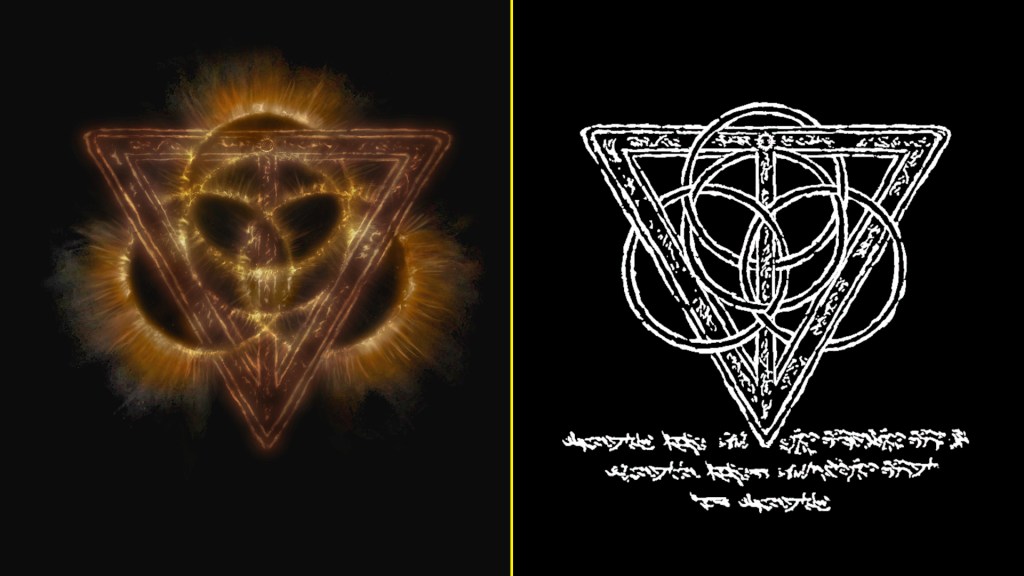
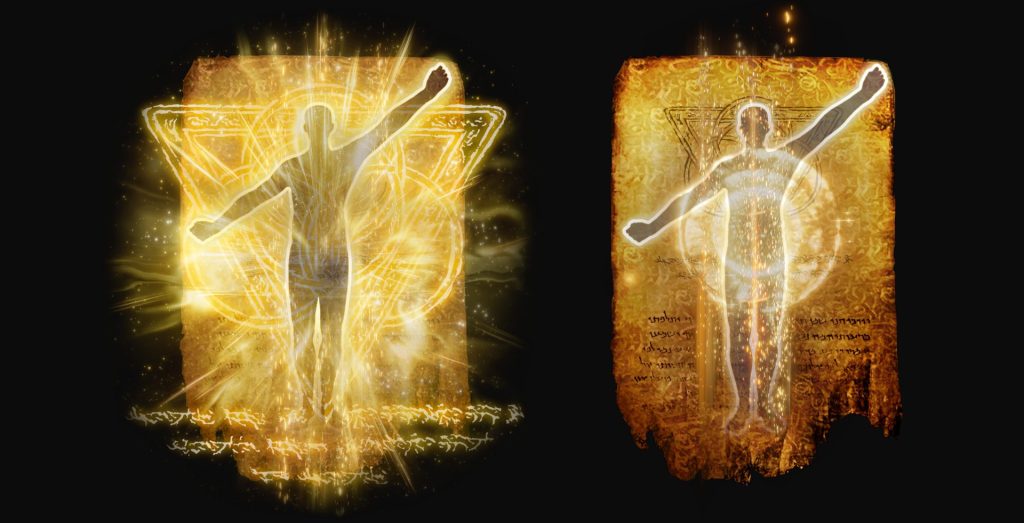
This is, of course, the same truth Marika had been pursuing since the final days of the Age of Plenty. She and Radagon together had also explored sorcery in Liurnia to this end. The result is the Golden Order Seal we acquired in the Minor Erdtree Church, depicting an Elden Ring held together not by the anchors and arcs of its runes but by a triangular frame composed of written boundaries — regulations. The Elden Ring lies at the heart of the Erdtree and its Order, its shape deciding the course of history. But from observing how these all interact, the fundamentalist realizes the underlying structure. Those observations are then translated into formulae which ease comprehension for future fundamentalists, explaining the sigil for their incantations always including a paragraph beneath the Golden Order’s observed form. Marika was the first to speak of this as what is “proper” for faith, the kanji (正) denoting something that is true and exact; straight and original. And so, while the second Elden Lord might take credit for codifying the foundation, his work was the result of both halves’ tireless research under Godfrey’s protection.
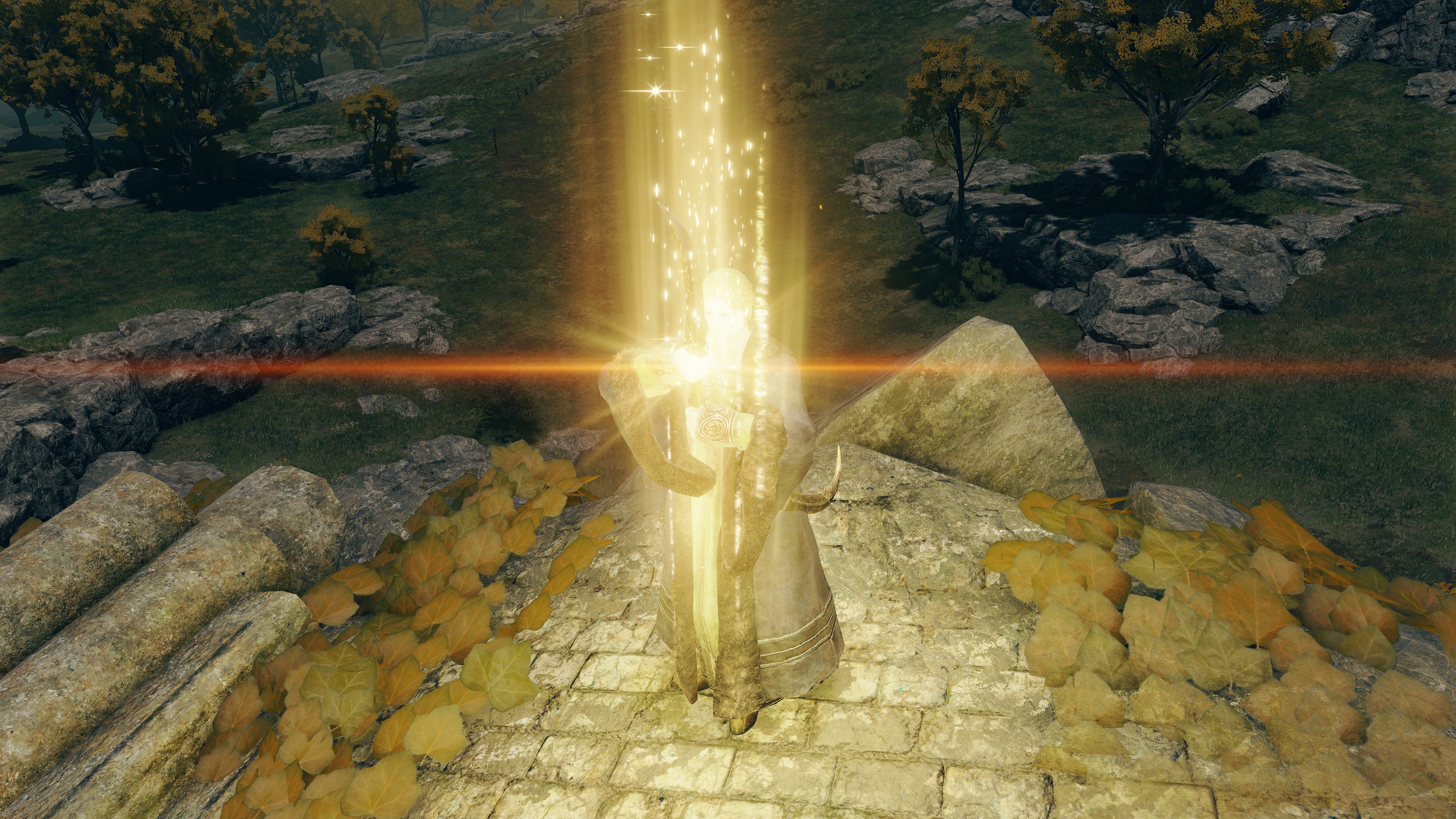
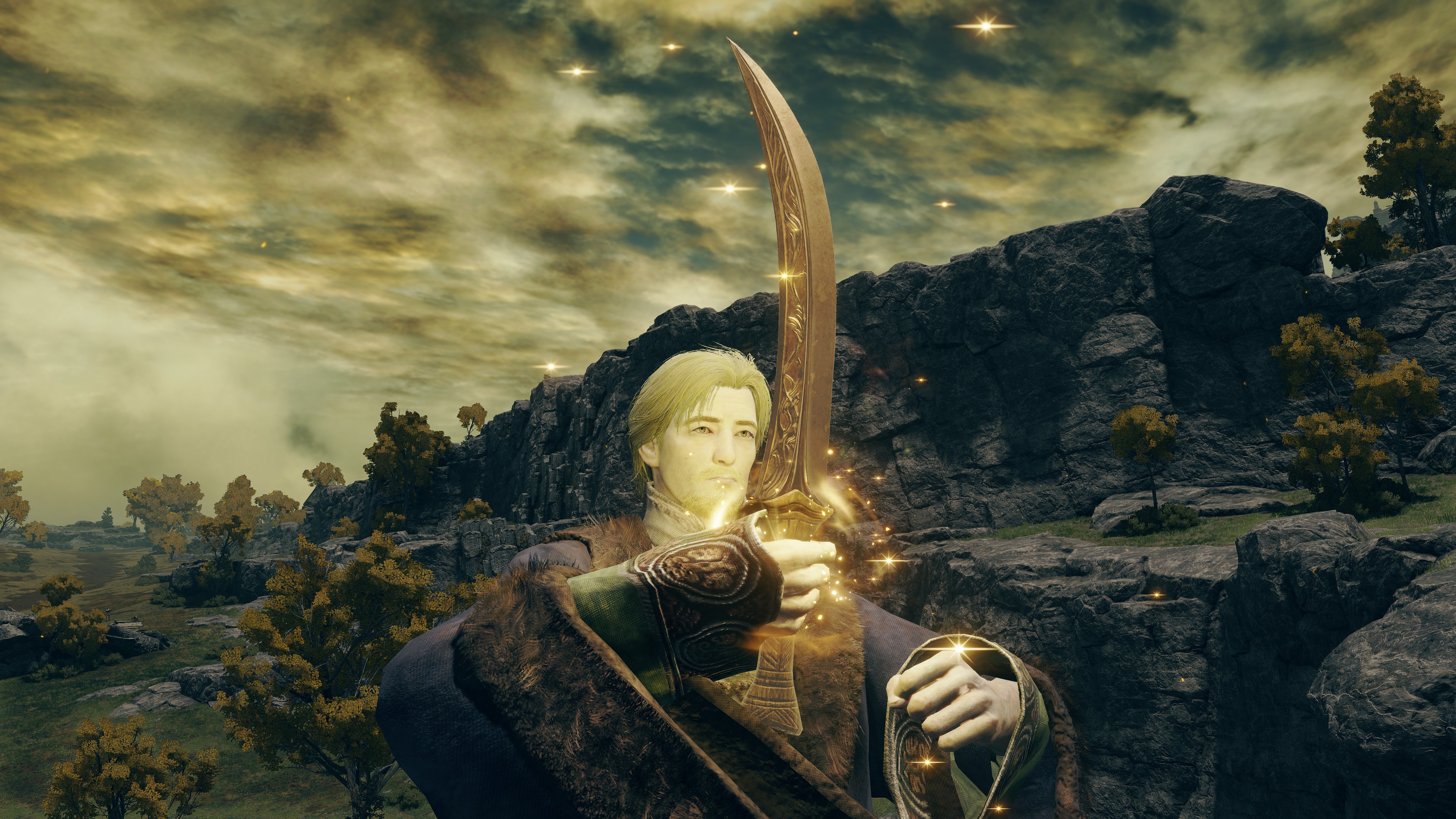
Nevertheless, the god queen did leave those final touches to Radagon. Marika isn’t associated with a single fundamentalist incantation, yet her second husband owns several in his name. So core to his identity as king was it, the man turned his first wife’s gift sword into the Golden Order Greatsword resembling the Elden Ring, its skill “Raising the Golden Order” (黄金律掲揚) having the wielder perform the Inner Order gesture before unleashing waves of gold instead of moonlight. Nothing could better convey Radagon’s dedication to his new spouse, bringing the secrets of the Ring to light. The lion’s share of the studies clearly fell to him following their wedding, and for reasons just as obvious. By letting Radagon become the public face of this new Fundamentalism, Marika’s choice appeared more farsighted. Radagon was ushering in a new Golden Age, driven not by an abundance of resource but scholarship — while no Crucible, its “foundations” (根幹) were their own roots and trunk from which all might flourish. That alone would quiet any dogged questions about her second marriage.
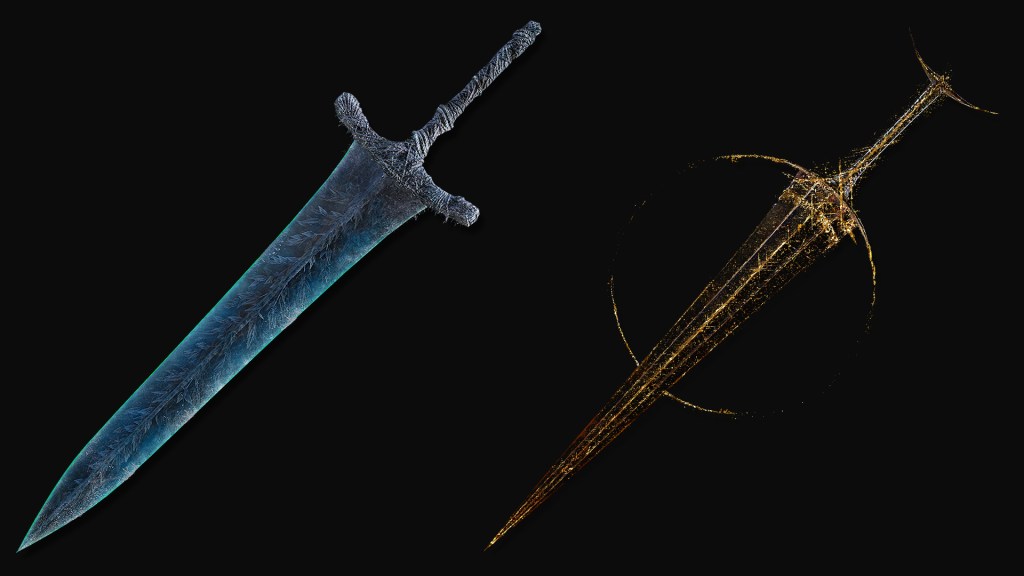
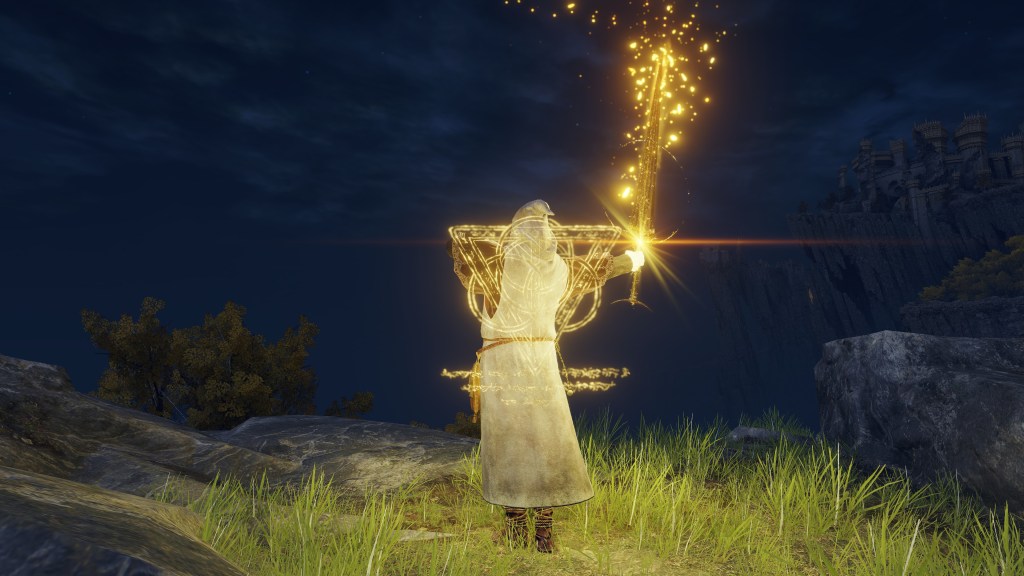
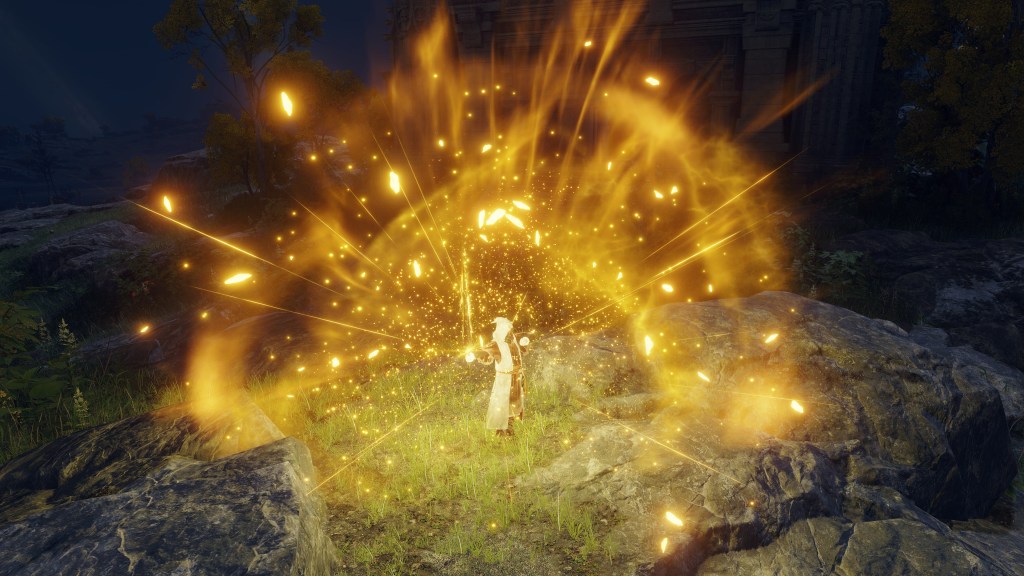
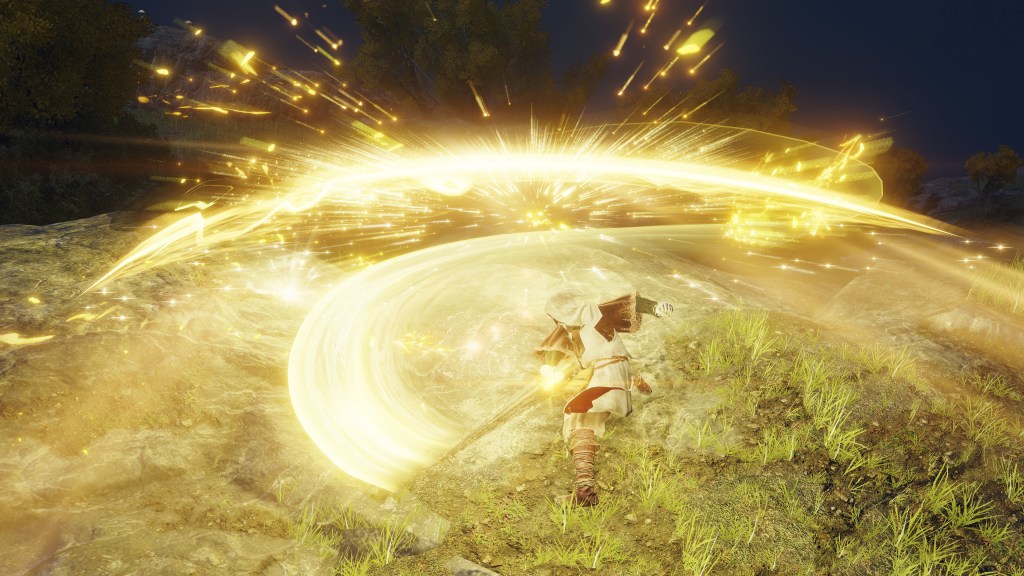
Greatsword of light modeled on the Elden Ring. One of the “legendary weapons” that King Consort Radagon, who touted Golden Regulation Fundamentalism, forged as a symbol.
It is said that there are traces of the greatsword bestowed by his first wife Rennala there.
But none of this happened overnight. The Golden Order Greatsword requires no intelligence to wield, only faith. One might infer that this was Marika delivering on her promise that studying Order would strengthen their faith. Nonetheless, it highlights how Radagon didn’t immediately integrate scholarship into their new discoveries. All the research in the world was worth naught if it didn’t aid the god in acquiring greater control over gold. For that, they needed to test their hypothesis about the shape of Order as it applied to holiness they were yet to observe. In other words, the king and queen couldn’t formulate the principles until they had first explored the power of faith. Only when they understood the relation between the believer and prayer could they truly incorporate reason into conviction. Radagon’s greatsword was promising to draw out grace’s full power through Fundamentalism, and the Elden Lord possessed the self-motivation to see this through. There was simply a process to him arriving at the destination.
According to the Radagon Icon’s description, Marika’s new King Consort studied incantations, having finished his studies into sorcery with Rennala. Some fans have questioned this assertion, considering that the queen’s other half should already be intimately familiar with prayer. However, this misunderstands the verb “study” (修める) to imply no knowledge beforehand. One can “learn” math in primary school and still “study” math in college. One denotes that you have gained some understanding of the topic, the other signifies that you are pursuing that topic until you have achieved a sufficient level of expertise — to complete a course in that subject. And as the icon’s description relates, Radagon’s goal was to be “complete” in making those pursuits. Therefore, the verb is better understood to mean “study completely”, or “master” like the localization renders it in most other examples. After gaining a mastery of sorcery, the second Elden Lord also worked to master the art of prayer, which ultimately resulted in formulating Golden Order Fundamentalism.
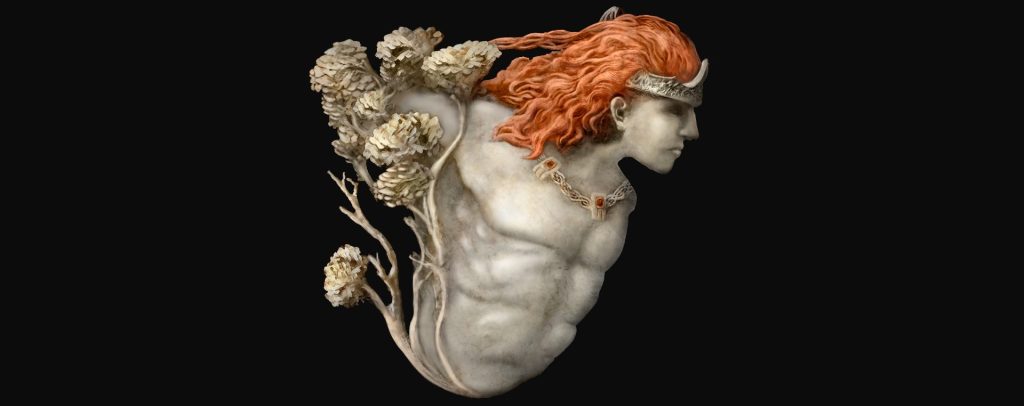
Talisman modeled on Radagon, Elde King. One of the “legendary talismans”.
Hastens sorcery and prayer cast speed.
It is said that the red-haired Radagon mastered sorcery as the husband of Rennala of Caria and mastered prayers as the husband of Queen Marika. For the hero aimed to be complete.
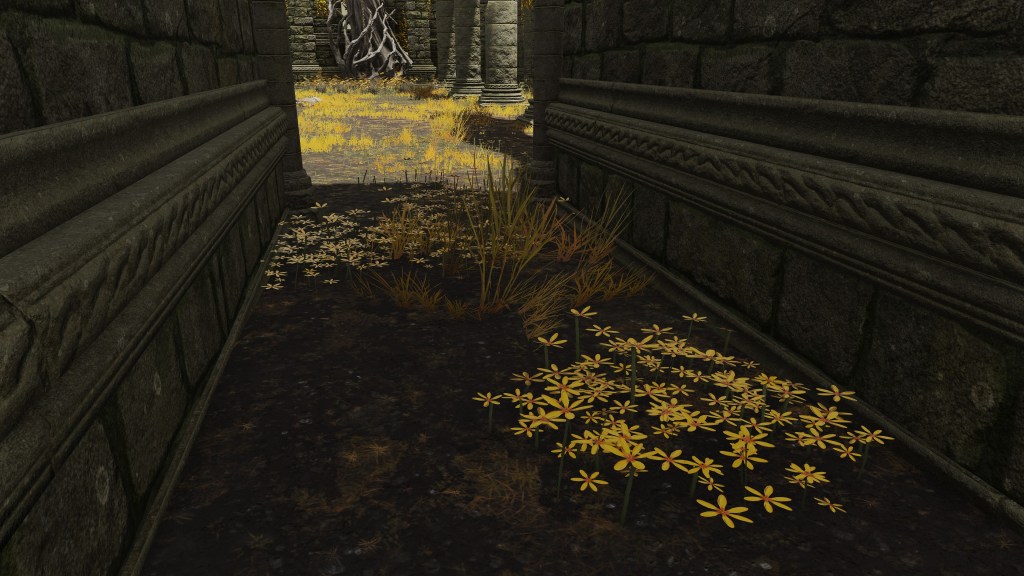
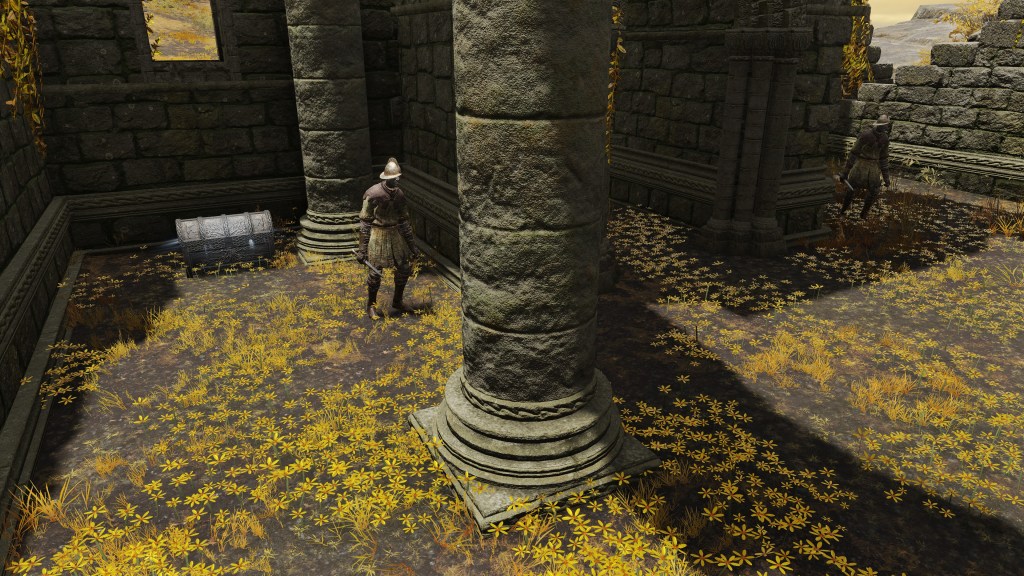
The question, then, is what area of incantations was Radagon pursuing which Marika had neglected? There were many sects of prayer outside the Erdtree chants the queen was familiar with. One of these might have been the Ancient Dragon Cult which had more recently emerged in her capital. Past the Ancient Dragon War monument lies the Stormcaller Church enshrining Radagon’s statue. This implies that the man was present on that battlefield at some point. But it is Godwyn, not Radagon, who distinguishes himself in the actual battle, and there is otherwise no indication that the red-haired hero participated in that clash between demigod and ancient dragon. Why then build a church of Radagon on the site? For research. Although the building is nowhere near as extensive as the Minor Erdtree and Third Marika Churches, it does grow the small golden flowers across its entire floor in similar fashion. It may have thereby served as another, smaller laboratory for investigating gold on the plateau. Specifically, this hill is the perfect location for independent research into the ancient dragons’ powers.
Currently, Leyndell’s army men squat within the ruins, a commoner corpse in front of them carrying a bundle of lightning greatbolts tipped with gravelstone — presumably taken from the adjacent collection littered among the Sacred Tear’s golden flowers. This in itself isn’t odd, since the merchant beneath the church sells the smaller lightning bolts on top of a cultist’s instructions for crafting simple lightning pots. Many visitors to the old battlefield have probably experimented with the leftover gravelstone or vast field of fulgurblooms, especially after the Shattering; from spirit ashes, Leyndell’s troops even explore the Sainted Hero’s Grave for power. But why place it around the Erdtree’s blessing in a chalice? Another curiosity is the chest in a corner containing Dragonbolt Blessing. Whether this incantation was already stored there or collected by the soldiers, it begs the question: what is it doing there, disconnected from Leyndell? After all, it is a prayer belonging to the royal capital’s ancient dragon cult. But if it is somehow linked to Radagon, then he might have played a role in creating the prayer.
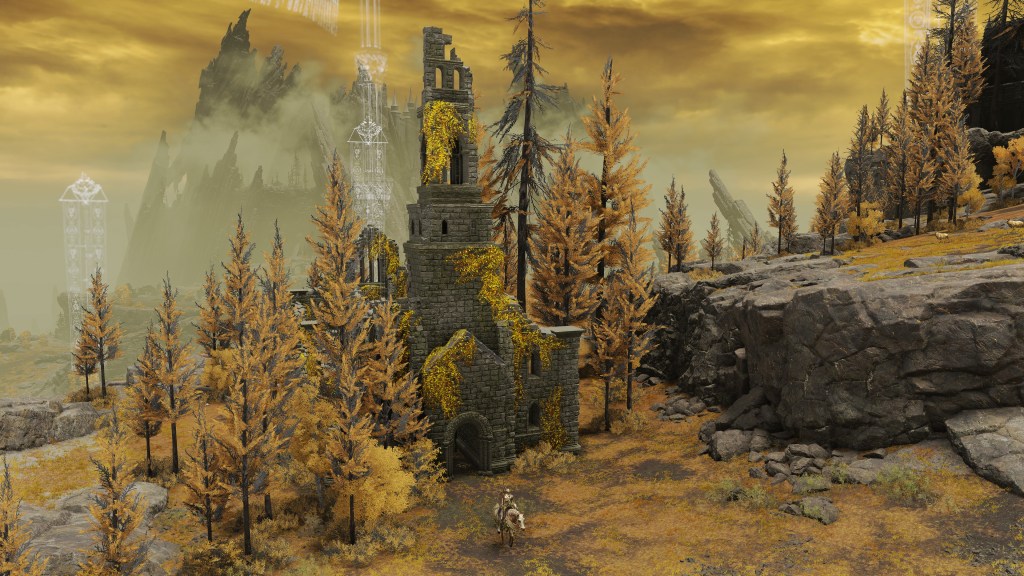
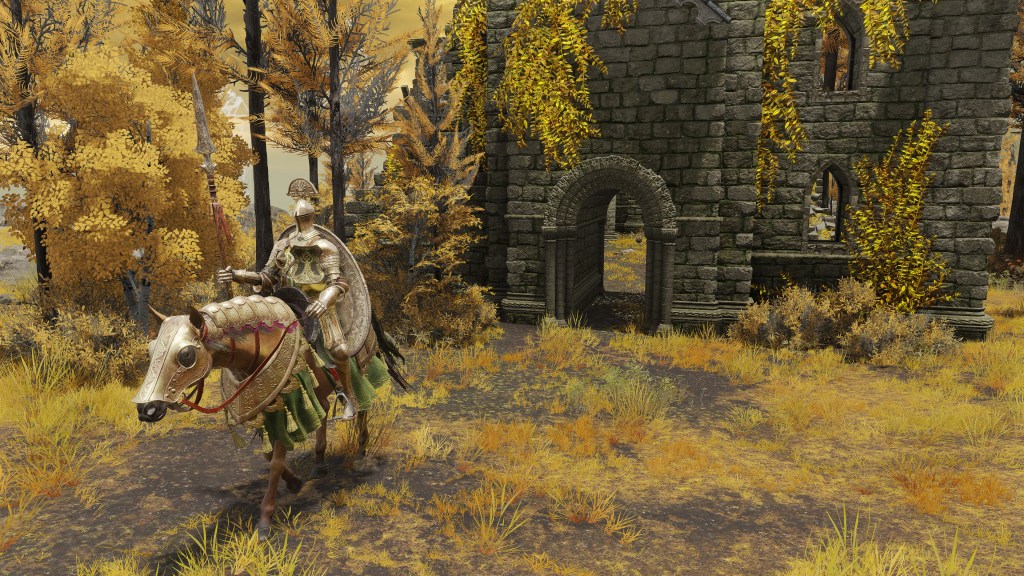
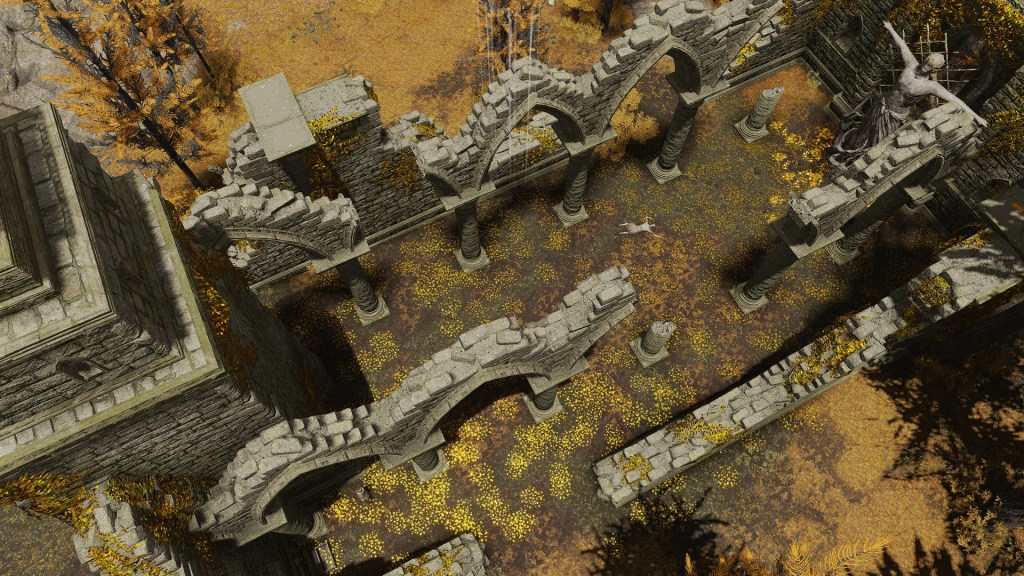
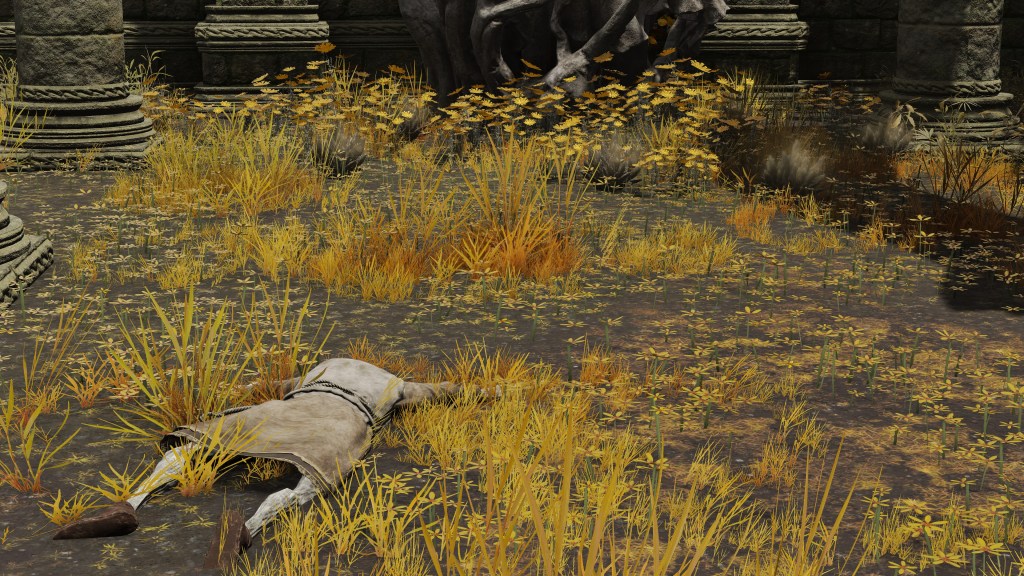
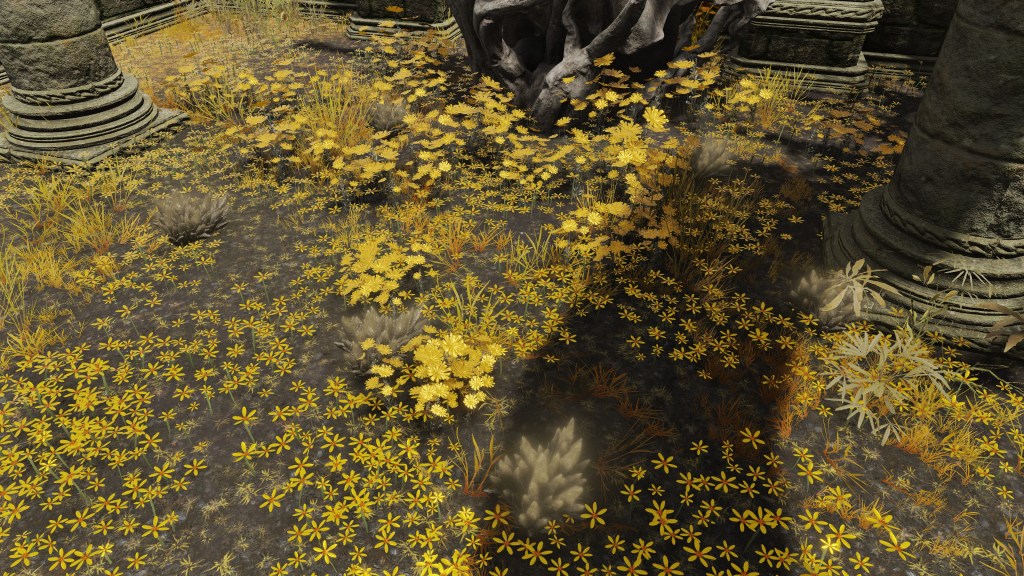
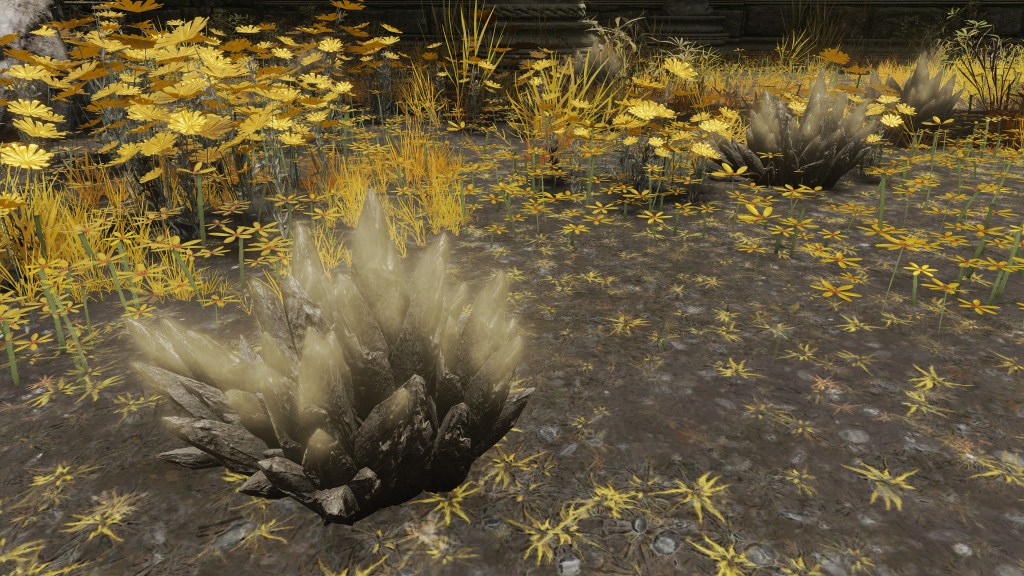
“Stormcaller” Church is designated after the golden lightning which continues to rain down upon the battlefield thanks to the fulgurblooms. Paralleling those flowers, Dragonbolt Blessing calls lightning to envelope the caster’s entire body, granting the eponymous “divine protection of dragon lightning” (竜雷の加護) to the person. This electric field better keeps out various threats, though it also makes the user all the more vulnerable to similar bolts of light. Strangely, it is the only incantation of the cult to be considered “superior” despite demanding less faith than more standard prayers like Honed Bolt or Lightning Strike. Not even more powerful incantations using primordial red lightning benefit from such a descriptor. In that case, what makes this “blessing” stand out from the rest? It conjures lightning which does no immediate harm to the person struck. Just like fulgurblooms, the caster becomes a lightning rod with which to channel the draconic power. Someone masterful left that text behind.
One of the royal capital ancient dragon faith prayers. Thing considered the superior of them.
Calls and clads the caster’s body in lightning. Makes deflecting attacks with the whole body easier and increases all status abnormality resistances. However, lightning cut rate will be lowered.
Only those who are loved by dragons can wrap their body in lightning.
This safety to the caster is why the art is apparently only possible for those favored by dragons. Certainly, chosen knights could safely and easily learn if Lansseax was controlling the strength of the bolts falling upon them. But the existence of a prayer text proves this redundant — anyone with the words and the proper conviction could obtain this “favor” from the lightning if not the dragons. Moreover, the presence of such a text outside the capital belies it as just a closely guarded secret within the cult. A more appropriate example would be Electrocharge exclusive to Godwyn’s royal guard, the knights’ ability to electrify themselves serving as the origin from which flowed arts like Dragonbolt Blessing. In fact, Electrocharge demonstrates more power and requires more faith than any successor with exception to the Dragonbolt of Florissax, who has never used the art before meeting us because there was no one she loved. And yet, the guards’ now lost prayer couldn’t have been known to Lansseax, who does teach a stronger red Dragonbolt to those she favors most. How did the original develop then?
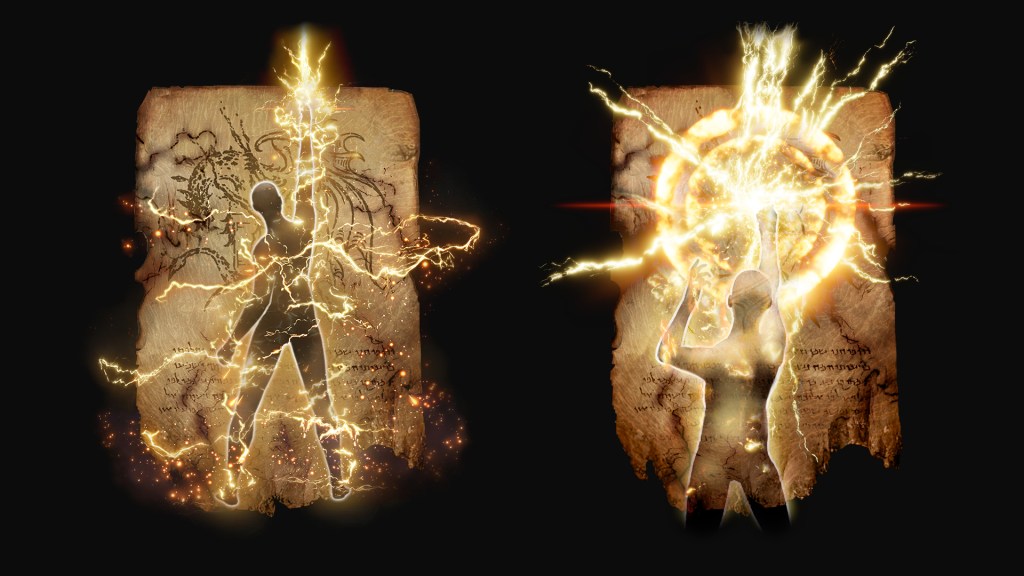
Put simply, Dragonbolt Blessing is probably not the work of Lansseax or Fortissax but Radagon following his second marriage. The Elden Lord came to this historic hill to study the fulgurblooms calling lightning down with no harm to the plants. Inspired by this and the example of his new son-in-law, the king created an advanced incantation mimicking the lightning flowers’ abilities, which was passed onto Lansseax to pass along to her favorite followers. Although the art itself was relatively meager, the Stormcaller Church commemorated his achievement on the road to discovering Fundamentalism with a statue after popularizing the sect, and any possible further inquiries led to his mastery of incantations. The reason behind his choice of subject is easy to imagine. As embodied by the gravelstone amongst the golden flowers, Radagon was there to comprehend the connection between the primordial rock beasts and the gold they manifest as lightning. Now that dragons were the Erdtree’s friend, what easier aspect of Order to explore which his other half hadn’t yet?
The Elden Lord apparently learned much from the cult, since he has incorporated some of the dragons’ concepts into his fighting style. Although utilizing holy power instead of lightning, Marika’s other half still conjures one large spear to hurl at enemies while in midair, alternating with five smaller spears thrown. Even if the latter is not too similar to Knight’s Lightning Spear, there is also his ability to teleport short distances, which brings to mind the Blinkbolt skills of Godwyn’s guard. Admittedly, some aspects of these attacks resemble glintstone sorcery, the fan of spears and warping comparable to Crystal Burst or Miriam’s Vanishing. But such inexact parallels are to be expected. Just as Radagon’s Icon increases the speed with which we cast sorceries or incantations, Radagon himself quickly learned how to use the respective arts for his ends. He previously completed his studies into sorcery with Rennala, and now he pursued mastery of the school of faith with Marika. The end goal was always to blend both into one perfect art reflective of a perfect Order.
This I Say Unto You
Combining that lightning inquiry with his Carian studies and Marika’s own research, the incomplete man mastered the arts of both faith and reason, then applied the principles to formulate new spells for Golden Order Fundamentalism. The foundation was laid with the Laws of Causality and Regression. One incantation conjures a ring of causality which responds to attacks upon the caster’s body it encircles to showcase the gravitation between meanings; the other dispels every negative ailment or positive special effect to showcase the gravitation of meaning. All things in Creation have a core identity defining them from each other, yet all disparate concepts possess a relation causing all things to interact — these were the key fundamentals to Radagon’s theology. With these as the roots, the ideological tree could branch off in any which direction. A prime example is Immutable Shield, which increases the performance of shields with light from the Law of Regression. There are no end to the applications of Fundamentalism for those with the dedication to study.
One of the root origins of Golden Regulation Fundamentalism prayers.
Harbors small ring of causality in body and automatically counterattacks after receiving fixed amount of attacks.
Fundamentalism explains the Golden Regulation with two powers. Those are, namely, regression and causality, and causality is the gravitation between meanings which makes all things a web of relations.
One of the root origins of Golden Regulation Fundamentalism prayers.
Dispels every status abnormality and special effect and reveals every mimicry’s true form.
Fundamentalism explains the Golden Regulation with two powers. Those are, namely, regression and causality, and regression is the gravitation of meaning which tries to make all things converge to the immutable.
One of the Golden Regulation Fundamentalism prayers.
Harbors light of regression in left-hand shield to boost all attribute cut rates, except physical, and all status abnormality cut rates.
Prayer that follows the regression principle, which is one of the two concepts making up the root origins of fundamentalism.
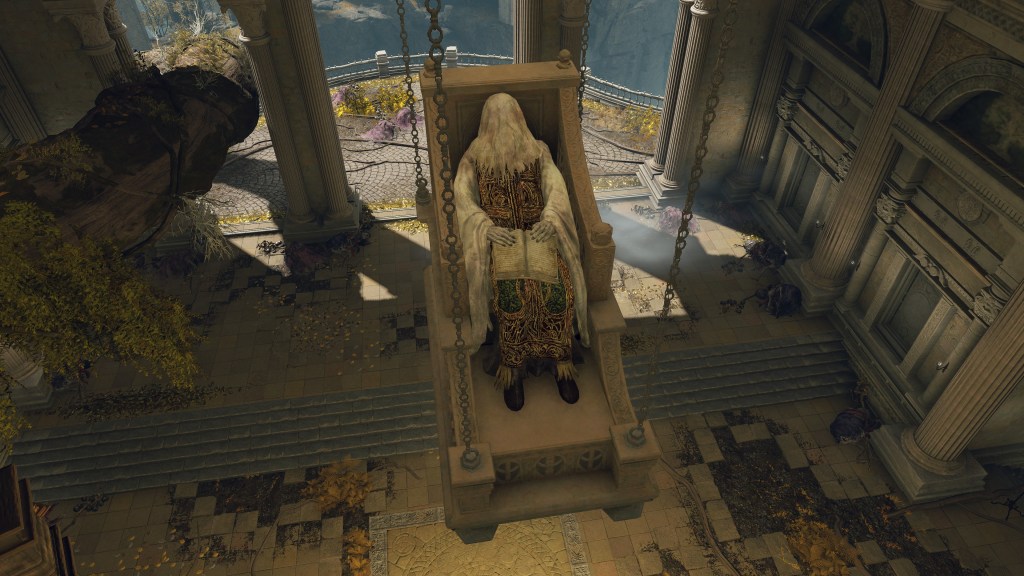
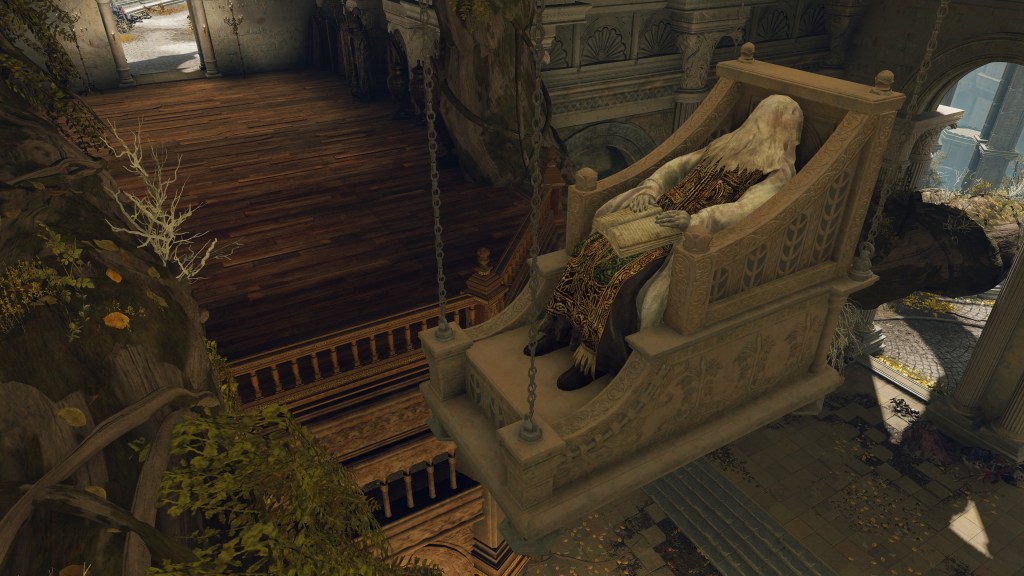
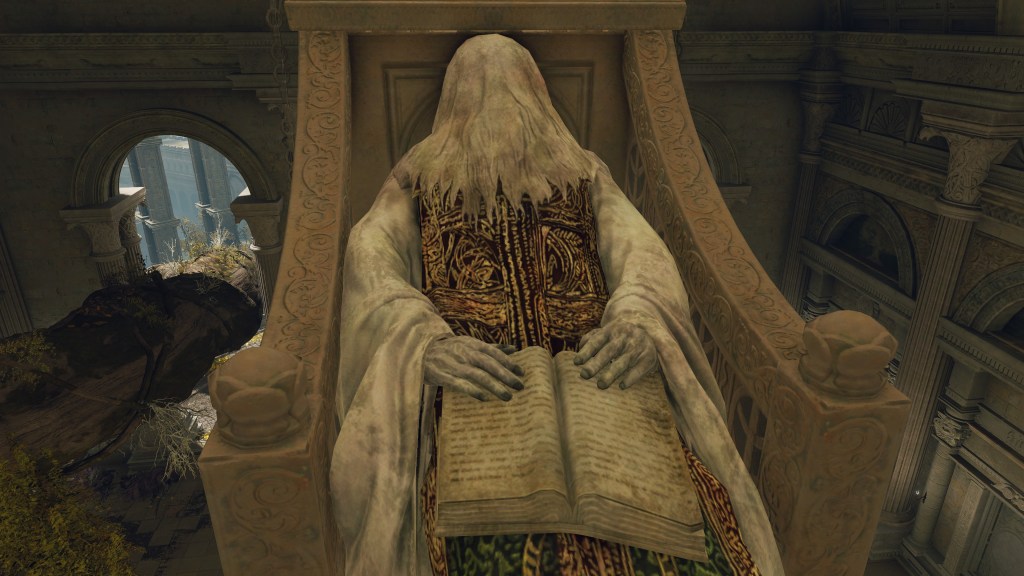
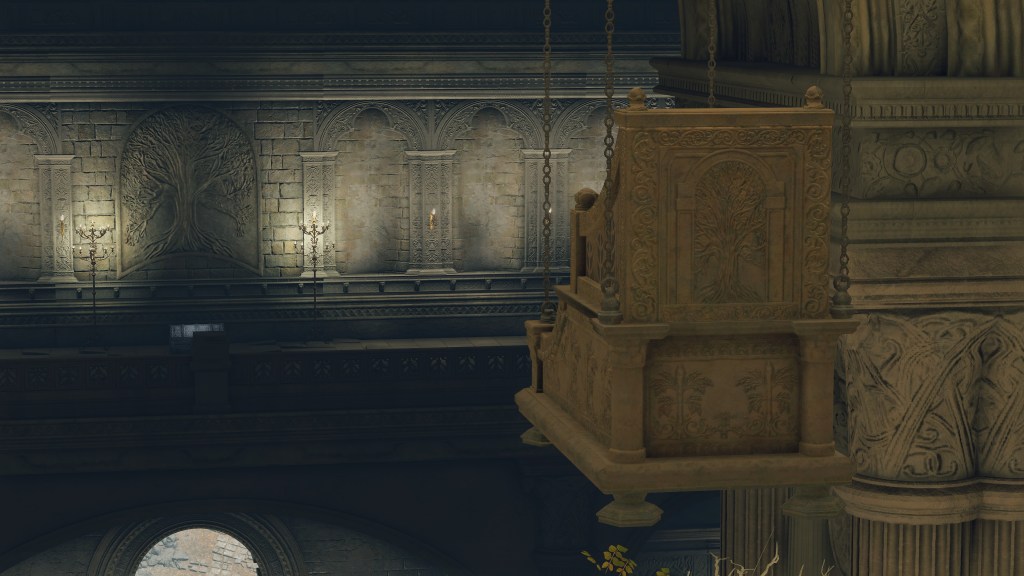
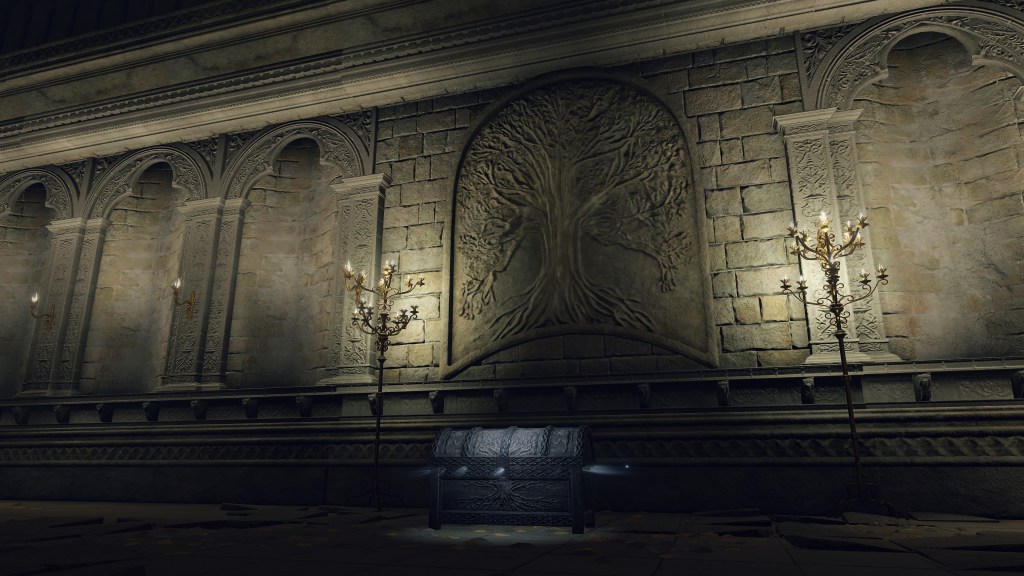
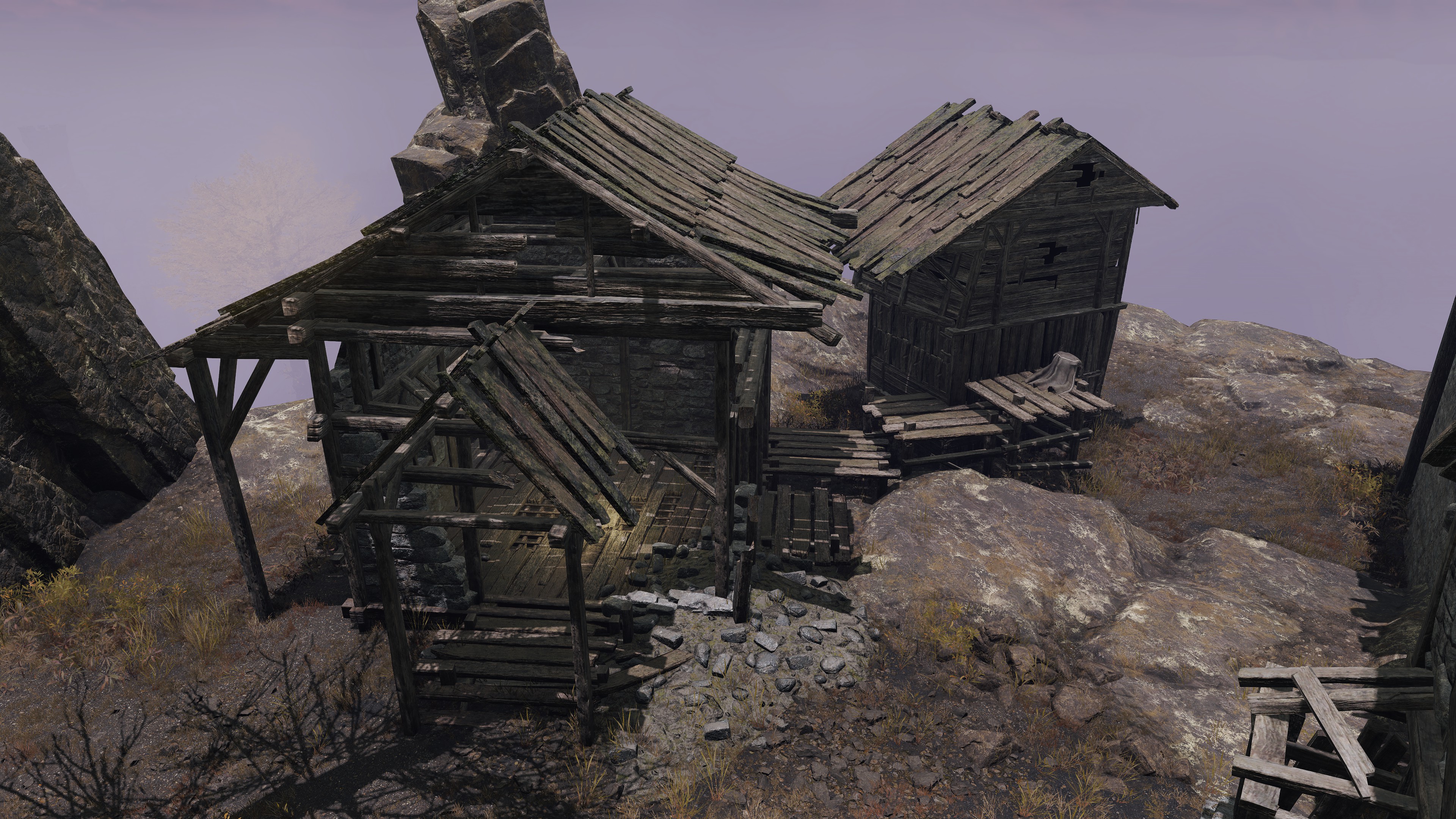
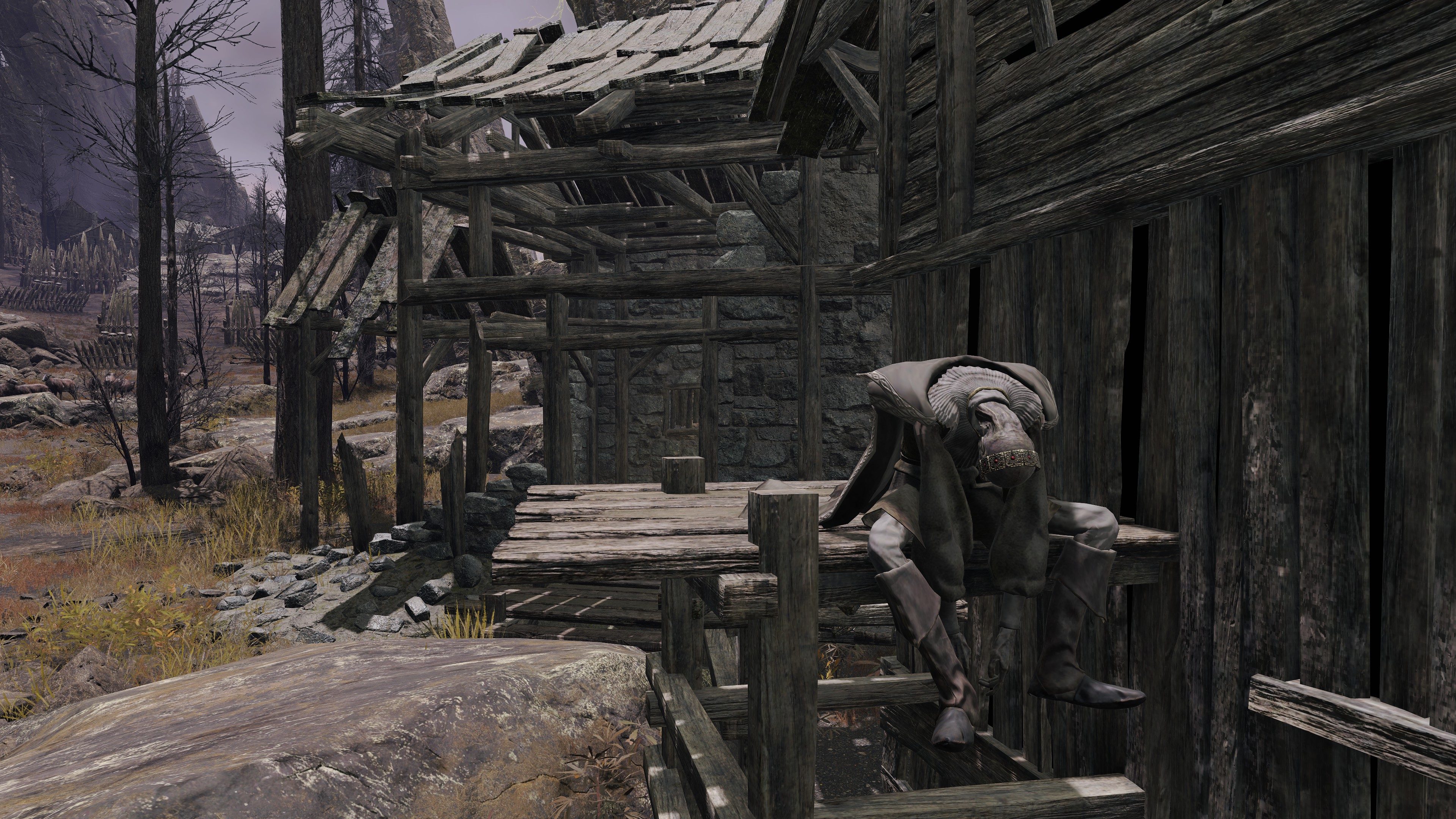
Naturally, the priesthood was the first to be enlightened with these teachings. We acquire the Golden Order Principia from a corpse suspended within the Erdtree Sanctuary. Although a cloth obscures the face, the apron confirms the person seated to be a priest in the midst of reading the open prayerbook detailing the Law of Regression. The hanging chair is oriented toward a chest on the second floor containing the Erdtree Bow beneath a relief of the tree in question. The meaning is clear: the cleric looks upon the Erdtree’s past left to rot whilst embracing the flourishing future of the faith. Godfrey’s war is the “old age”, and it was time for Marika’s ministry to put those unruly times behind them — Radagon had, literally, elevated the golden above such childish ideas of Order. Chaos regresses to the immutable, thereby civilization must graduate from base thinking to achieve a high-resolution perspective on the world. And circulating that message fell to the clergy.
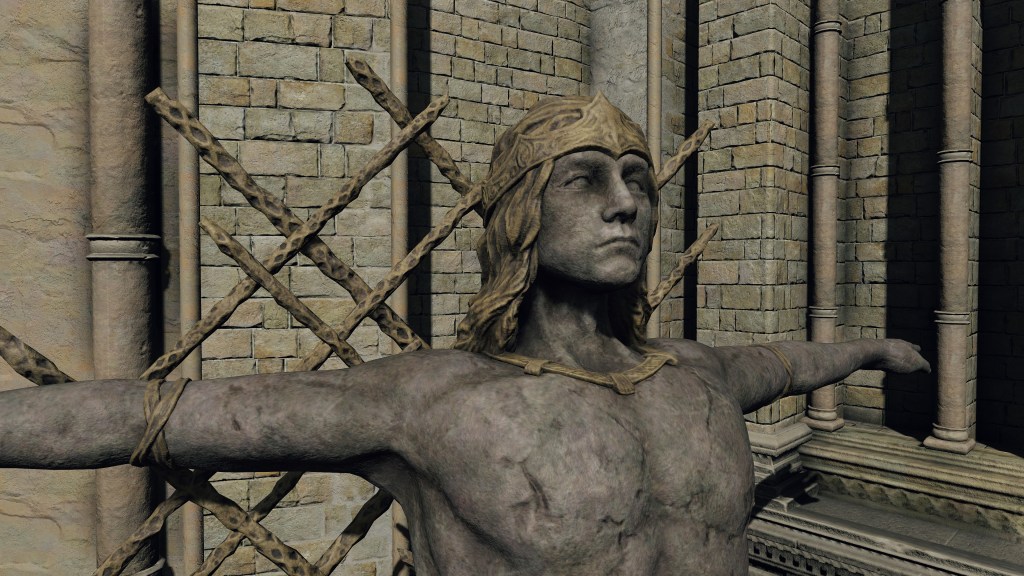
In short, to be an agent of Marika meant discarding any influence from Godfrey and embracing Radagon. To that end, Miriel reveals how a famous sculptor of Leyndell was summoned to make the great statue of Radagon erected in the residential block for every priest to see heading to and from the cathedral each day. Backdropped by his Elden Rune, the Lord stands in stark contrast to Marika — whereas she stretches out her arms with a slight lurch, he extends them straight out whilst perfectly upright. This pose of a perfect cross is the image of Order in totality, clearly evoking the triangular frame of the Fundamentalism sigil. Based on gestures, the right and left arms represents Inner and Outer Order — rules within yourself and the world around you, like Causality and Regression. It is no surprise that it became counterpart to Marika’s statue in churches. In fact, given their similar style, the artisan may well have been responsible for sculpting those prior statues of the queen, hence the renown. Now that her other half became king, it was only appropriate to call the sculptor back to recapture “her” image.
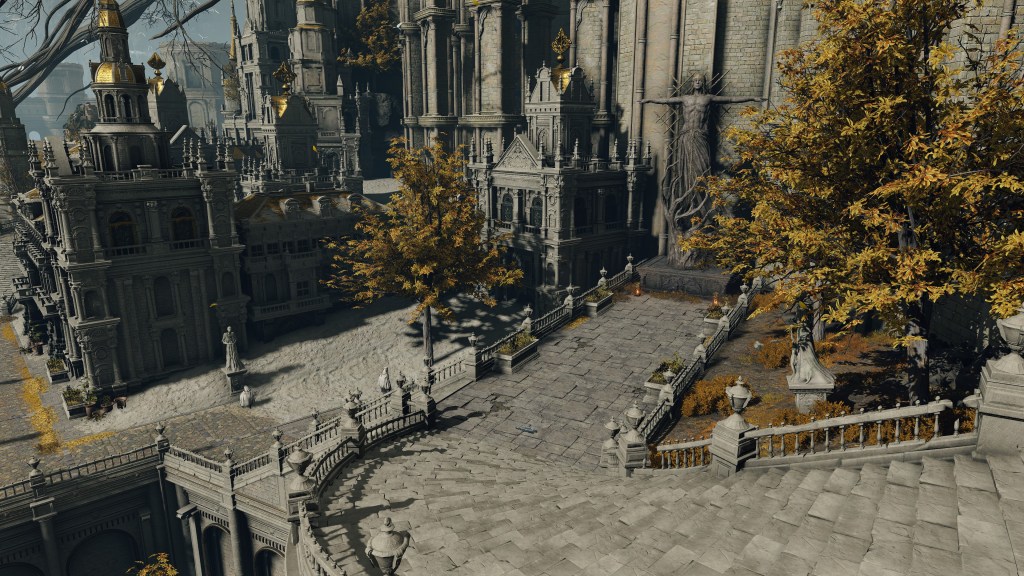
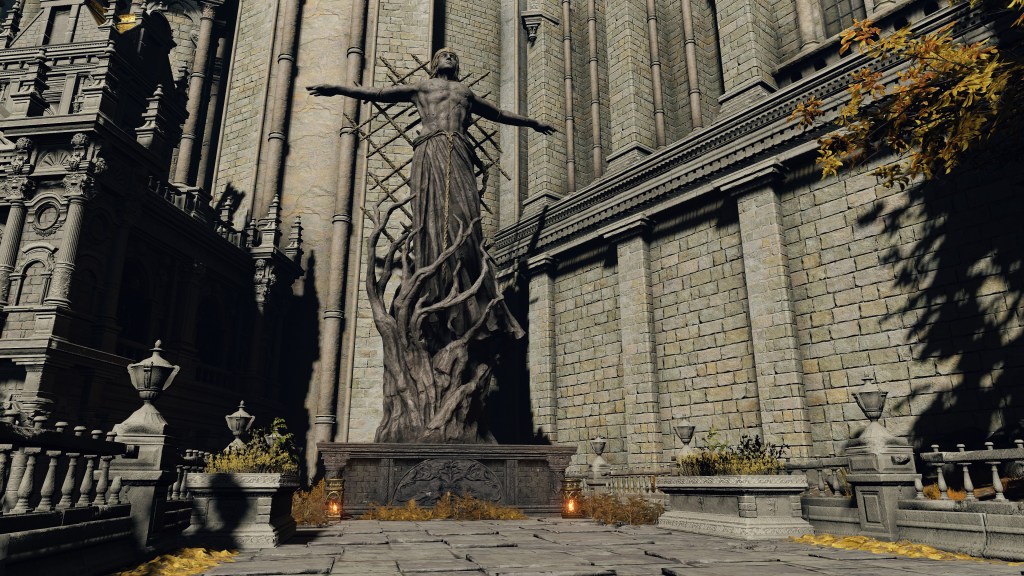
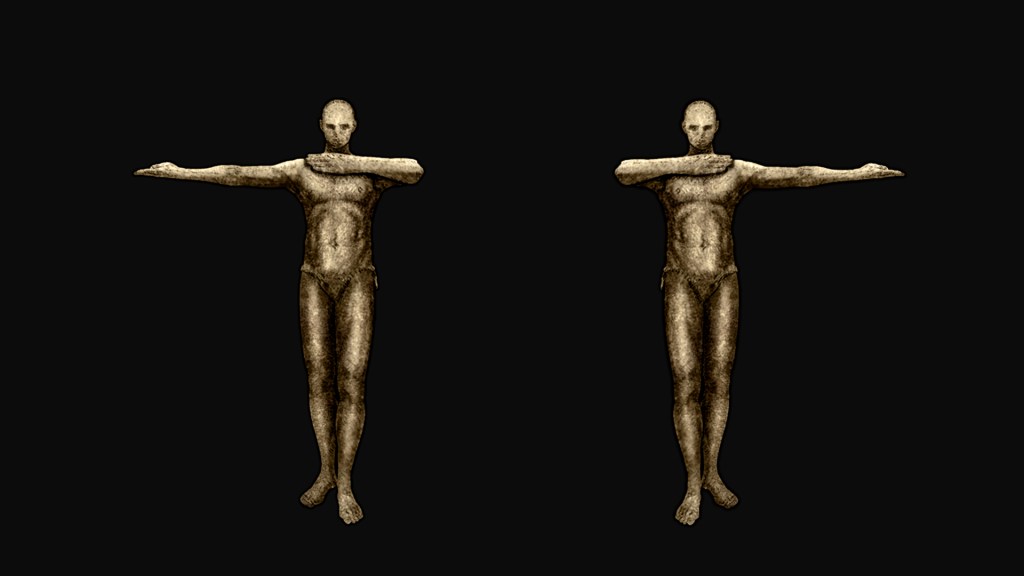
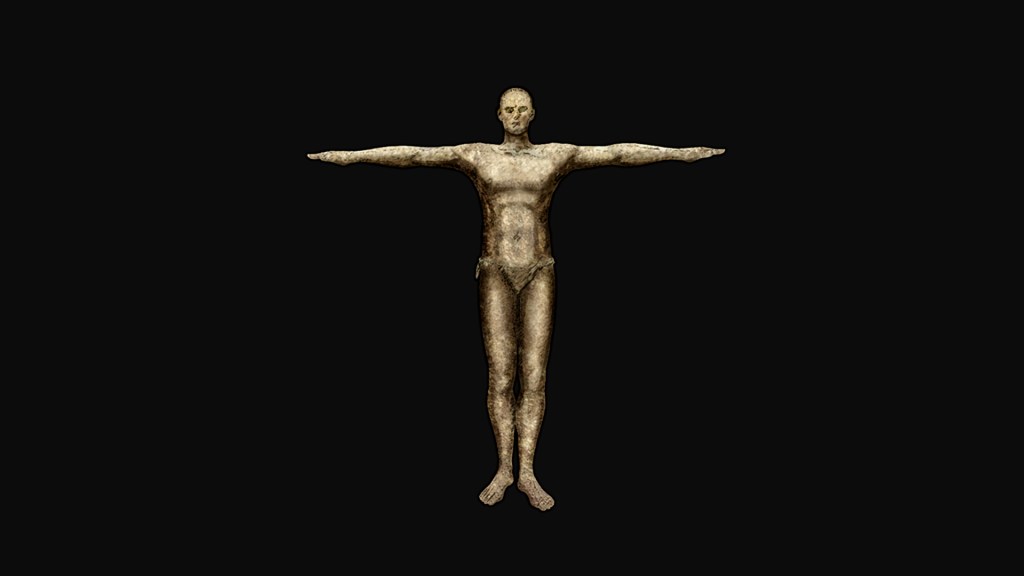
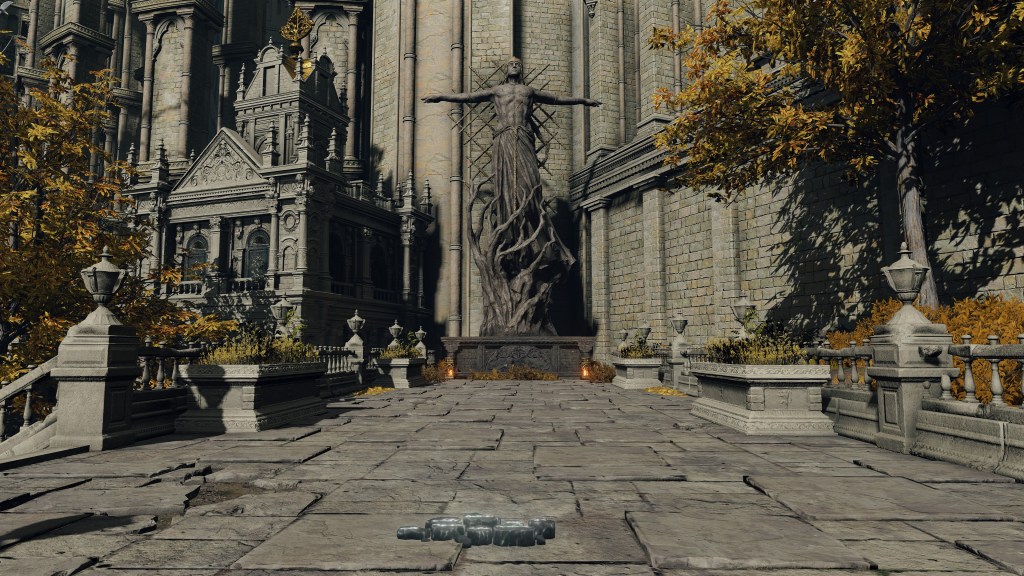
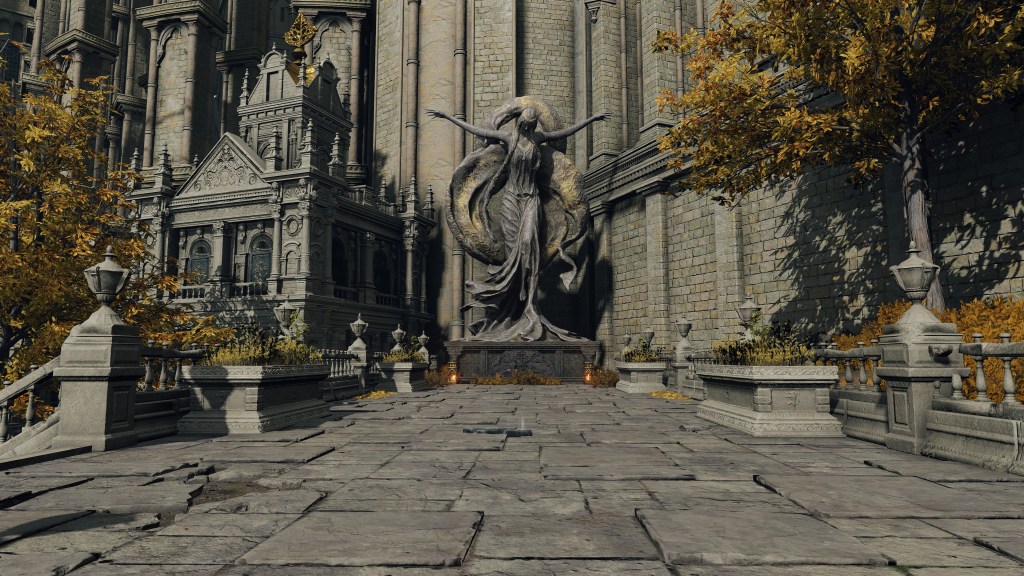
… Still, I have heard… that Lord Radagon had a secret. Some famous sculptor of the Golden Tree royal capital was summoned to make a great statue of Lord Radagon… and caught a glimpse of the secret, apparently. And so hid that secret in the great statue, they say.
As if to reinforce that implication, performing the Law of Regression before the Elden Lord’s statue reveals the secret it hides: the figure is actually the Eternal Queen. In the course of the job, the sculptor glimpsed the truth about Marika and Radagon, subsequently imbuing their secret into the stone masterpiece. This could hardly be an accident. In typical prankster fashion, Marika uses mimicry to hide the statue’s true form, just like with her Mimic’s Veil. Requiring the Law of Regression to dispel it is her cheeky challenge to the priests passing by. If they studied the Principia and the keys to Fundamentalism, then they could easily unveil the truth about their god. The fact that Miriel has only heard rumor of a secret existing betrays the public’s failure to realize this truth hiding in plain sight. One wonders what became of the sculptor after designing Radagon’s figure for the mimicry and future churches — a curse of silence or untimely death both seem equally liable. Regardless, it shows how Marika was holding her priests to a high bar, impressing the importance of her other half and his revelations.
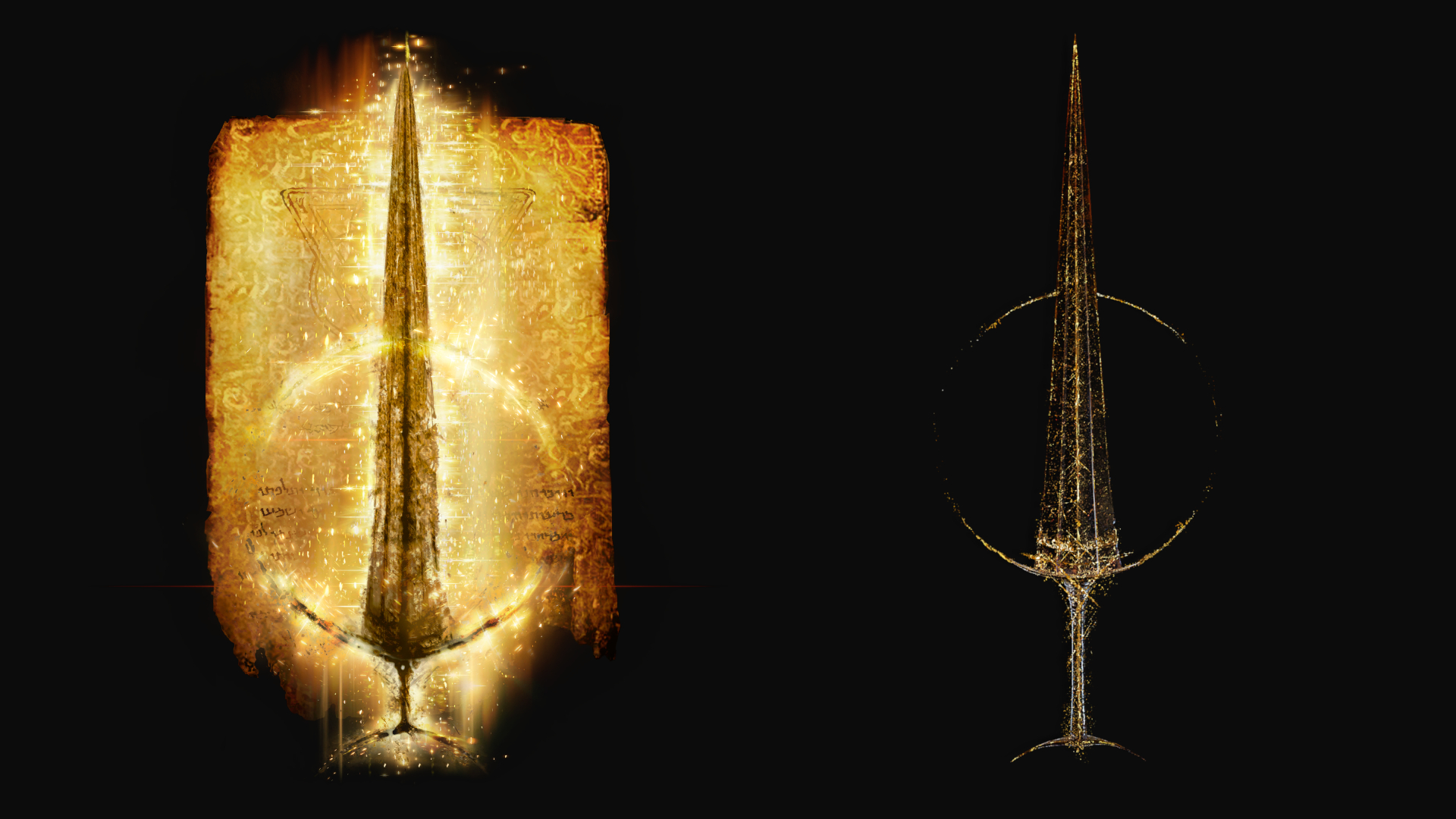
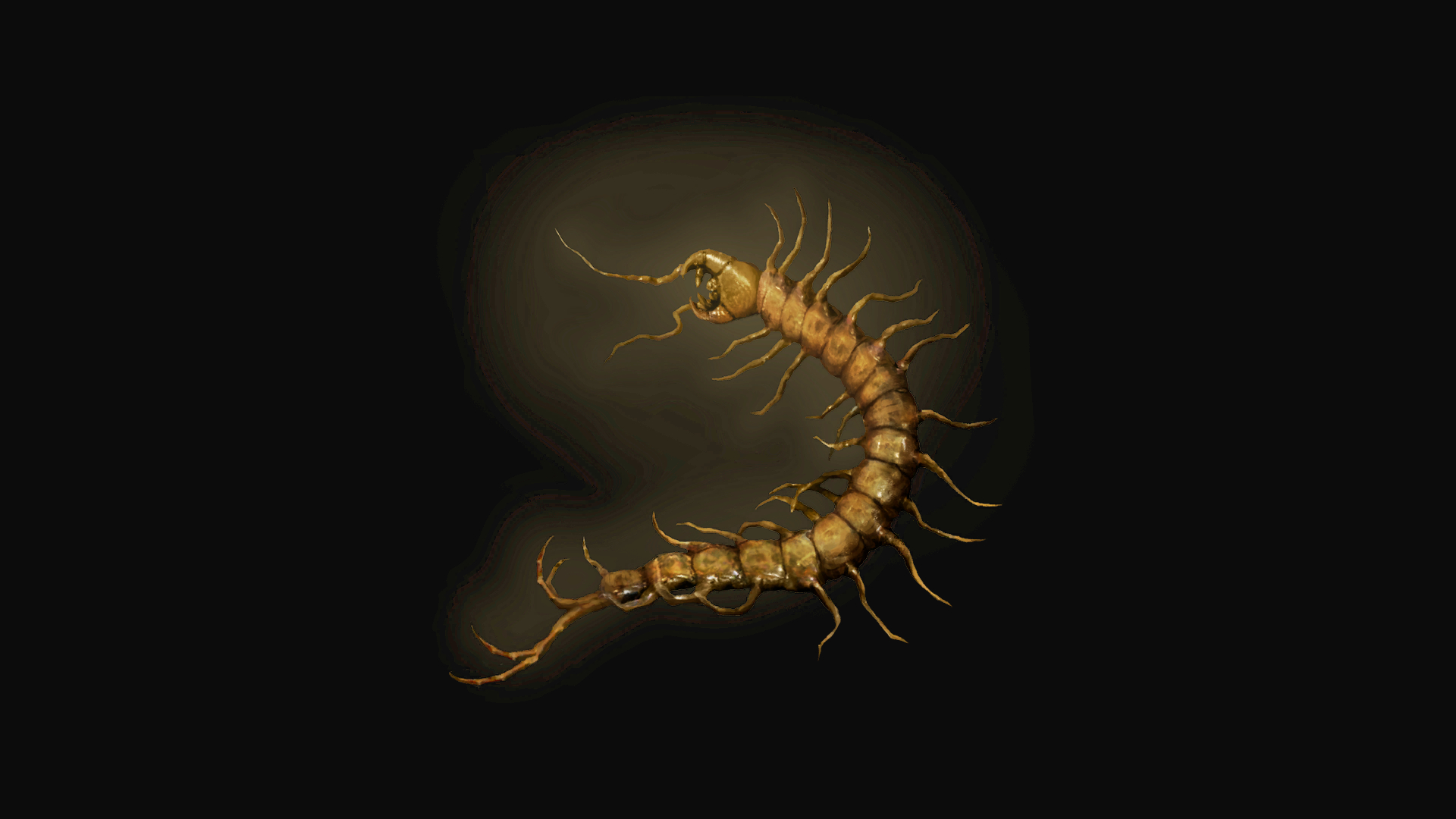
Proselytization became the next step. Erdtree missionaries have compiled recipes for holy water pots emblazoned with Fundamentalism’s sigil, these ratty manuals existing as far out as the frontier. Their teachings have found currency among the nobility, Kenneth boasting about following the proper “order” (秩序) and rationality while using a holy seal to perform Order’s Blade; another fundamentalist incantation, with the menu graphic evoking Radagon’s greatsword. Champions of the Golden Order far and wide appear happy to hear the second king’s insights, at least among the educated elite. As for the rabble, the missionaries might struggle to earn widespread adoption beyond the odd tool which doesn’t require reasoning to craft. The golden centipede, a fetish for fundamentalists, is a rarity outside select churches for presumably that reason. It is simply easier for a rural village to cultivate faith, which explains why so many cling to the old ways of Erdtree worship even on Altus. When it came to swaying the public toward Radagon and his revelation, narrative was more important than analysis.
… Someone!? Isn’t someone there!? Someone to help I, Kenneth Haight!? One who dethrones the irrational and serves the proper order!? Ohh, Golden Tree! Bring them to me!
The Bellum Church is built in the place of Radagon’s first major achievement: heroism in the First Liurnian War. But if that is the reason for its construction, then it is odd that it differs from many of the standard churches. It does have the golden flowers scattered about inside, stretching all the way to its front step. But unlike the previous examples, this church doesn’t just proliferate the smaller species; the larger ones also dot the patches within its walls. This discourages the notion of the church being used for research like those other cases. Rather, the addition of the large flowers implies a great deal of fanfare. Adding to the implication, the church is connected to the highway not by dirt road but more highway — as if part of some major route. Based on the golden centipedes lying around, the place once attracted fundamentalists. Moreover, the nomadic merchant camping behind the church sells various cured meats, including the invigorating white cured meat crafted with golden rowa from Altus Plateau. This suggests that passers-by mainly come down from the Grand Lift of Dectus.
Why would Altus types be gathering at this specific church of Radagon, prompting all the added pizzazz? To start on an important journey, of course. The last to enshrine Radagon’s icon is the Church of Pilgrimage commemorating the hero “saving” his future wife down on the Weeping Peninsula. To reach this one, pilgrims must take dirt roads off the highway. This isn’t a surprise, given that the church is farther removed from the main road. The terrain is also rockier, even requiring a rope bridge to cross the valley situating Morne Tunnel. The royal government wasn’t going to engineer more reliable infrastructure for travelers in the farthest reaches of the frontier. Still, golden centipedes inside betray how the Church of Pilgrimage also welcomed fundamentalists. But why a pilgrimage to this particular church, and from where? Factored in with the Bellum Church, the answers are obvious: Fundamentalists, with their fetishes, follow their founder’s journey from hero to king. They set off from the Bellum Church, then travel along the highway before taking the backroads in the remote countryside to their final destination.
This set up finds further support in the graveyard exclusive to the Church of Pilgrimage. The glut of flower-top graves leaves no doubt that the churchyard buries the faithful. Why were so many dead brought to a church out in the boonies, especially when there was a Minor Erdtree down a branch in the road just a short walk away? The answer is because the deceased would want to be buried at the church. Why? Because they were pilgrims. Even if mostly on the highway, it was still a long journey. Disease, accidents, or highwaymen were sure to threaten a pilgrimage. While pilgrims commonly travel together as groups, that only mitigates the risks. And should one of them perish midway, was it not neighborly to help the brother or sister in faith complete the journey at least in body, whether the fellow be family, friend, or stranger? That love and respect for kindred is what likely brought about the Church of Pilgrimage’s extensive cemetery.
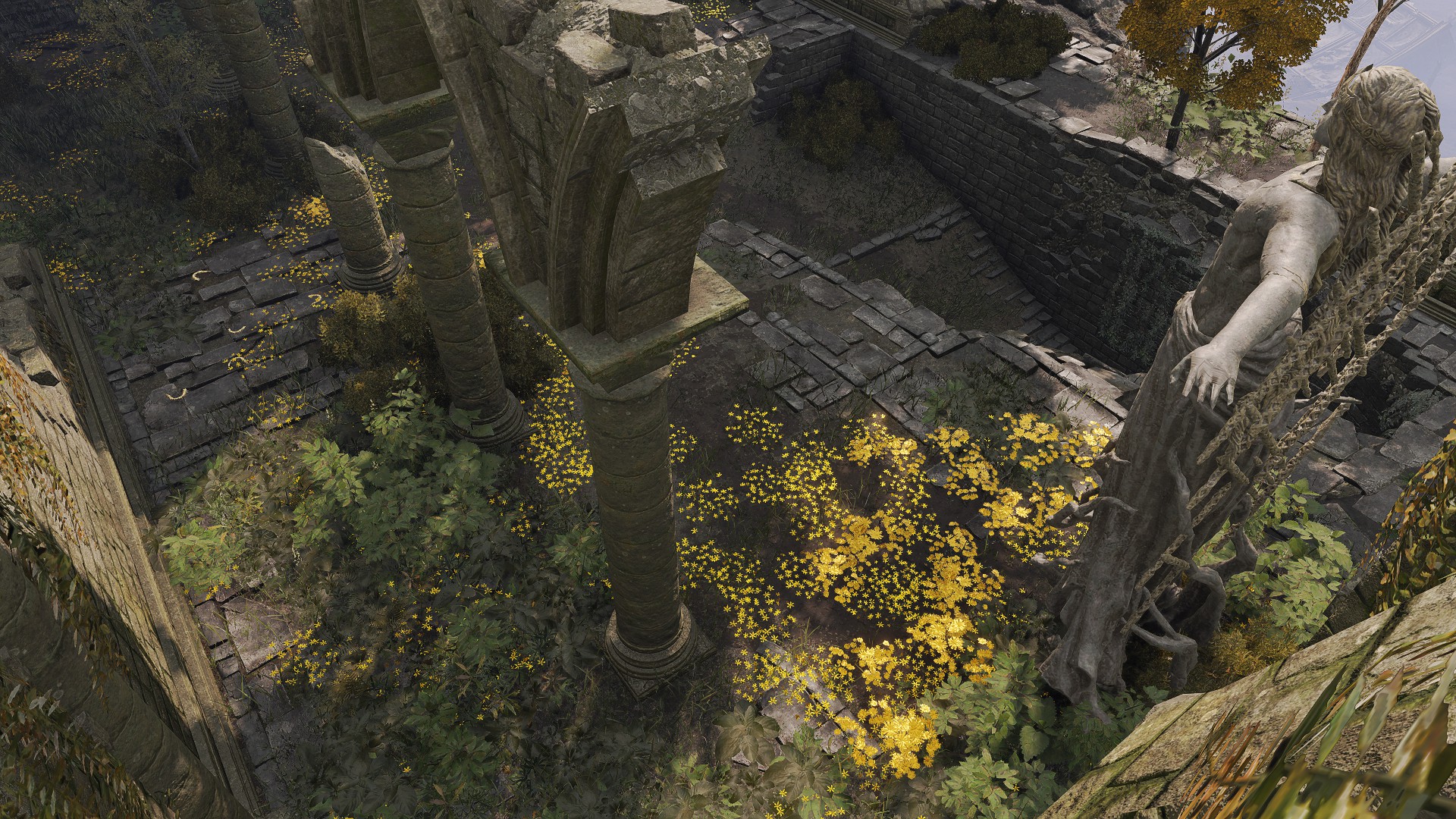
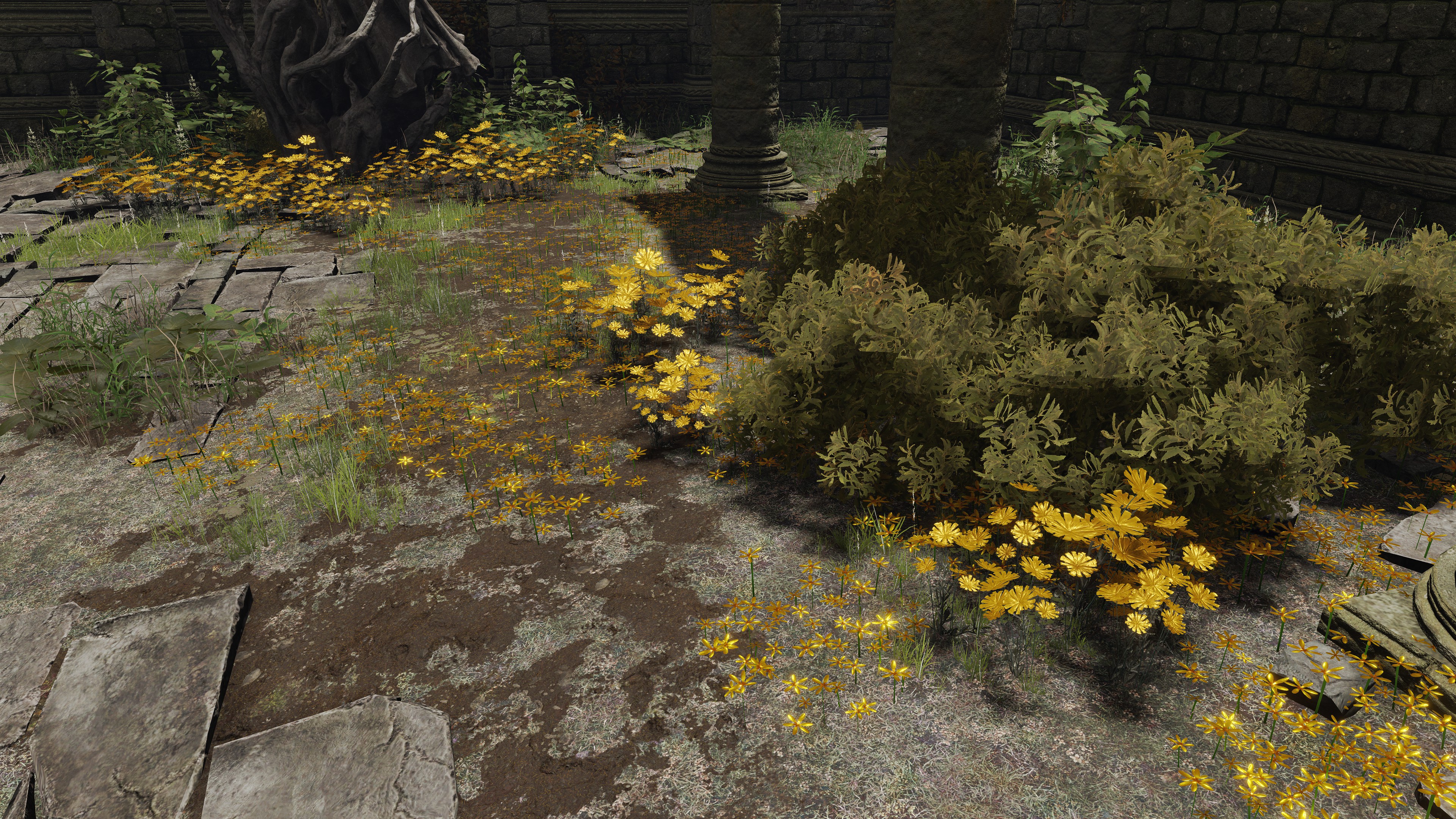
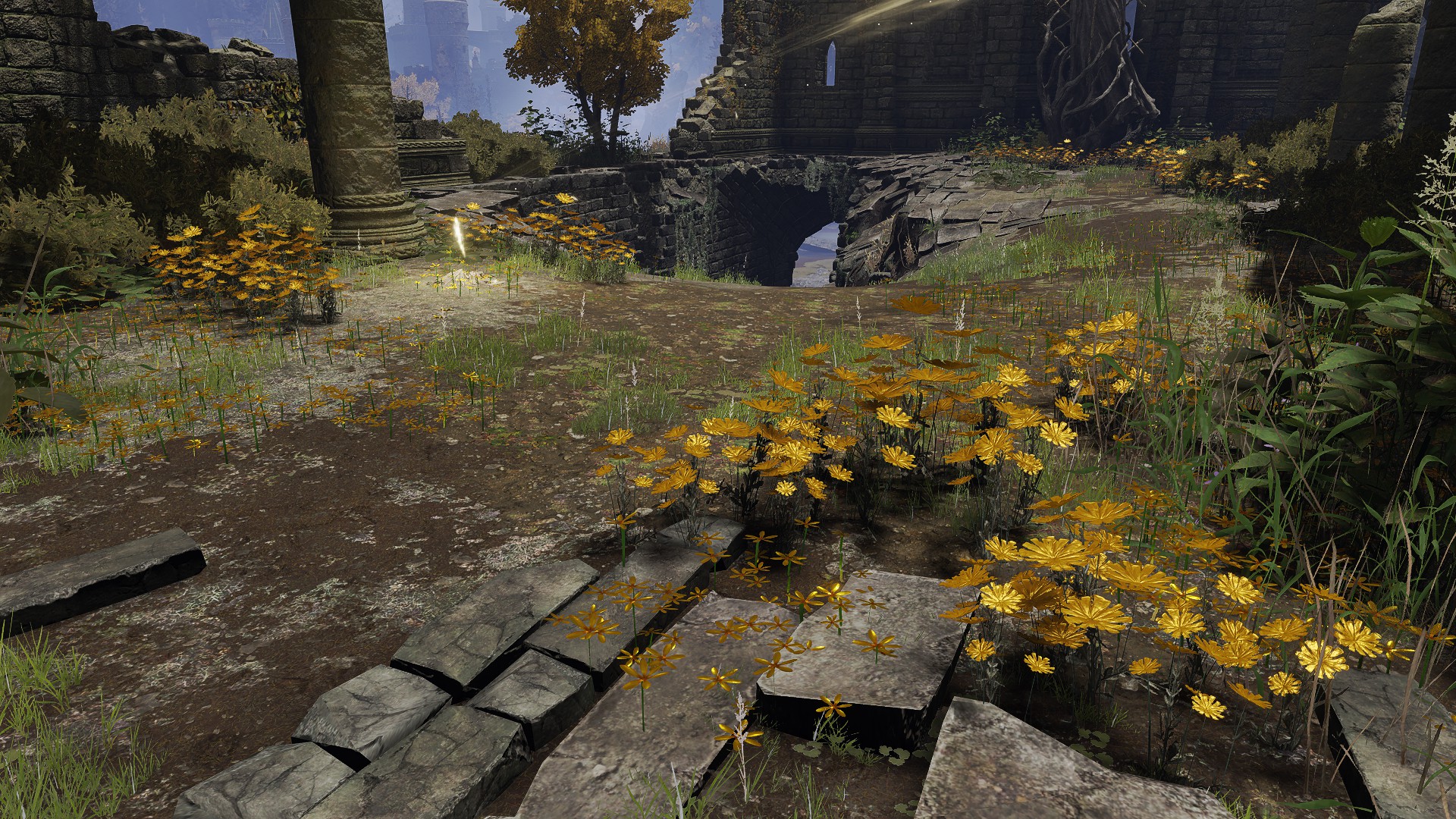
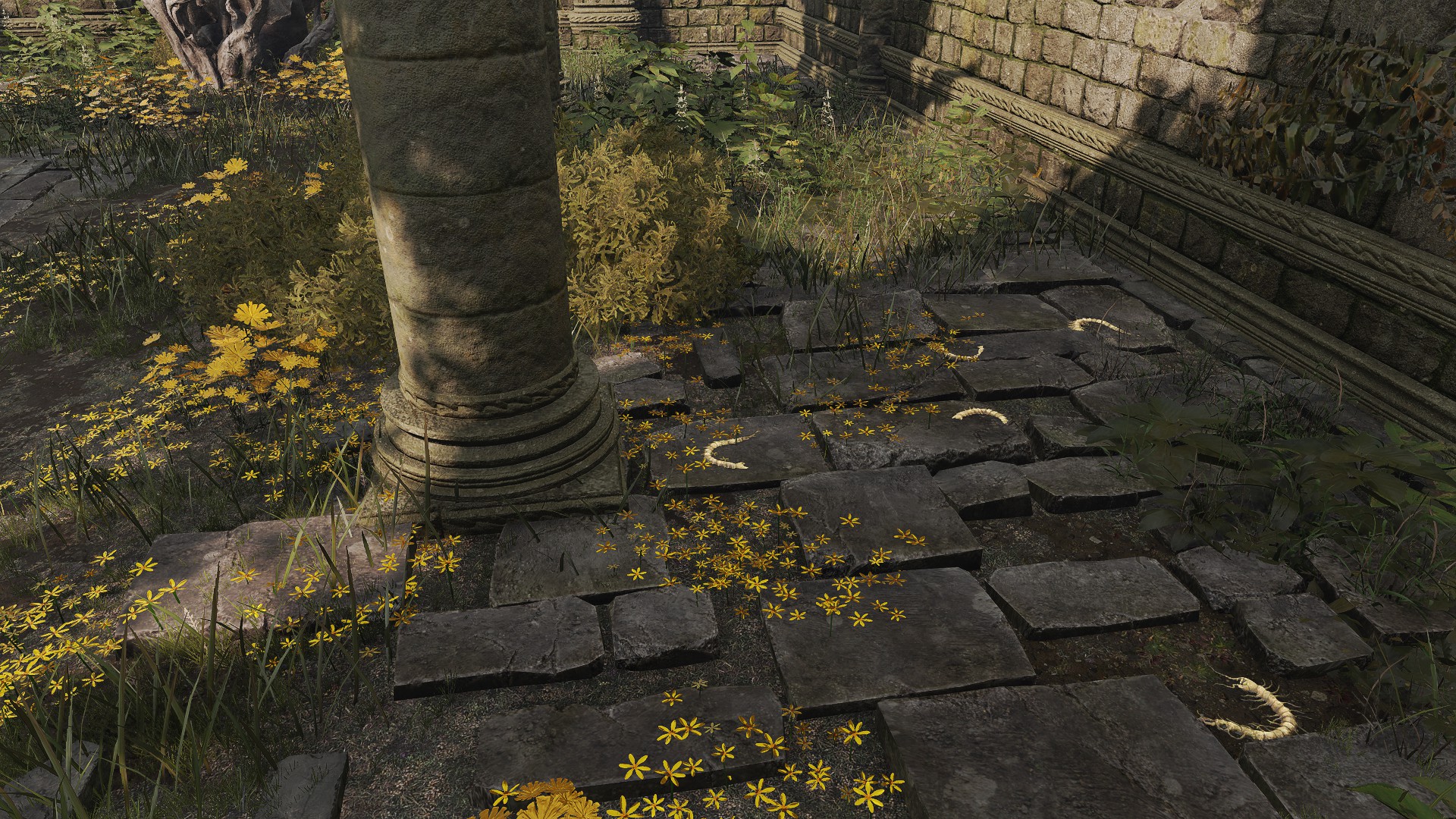
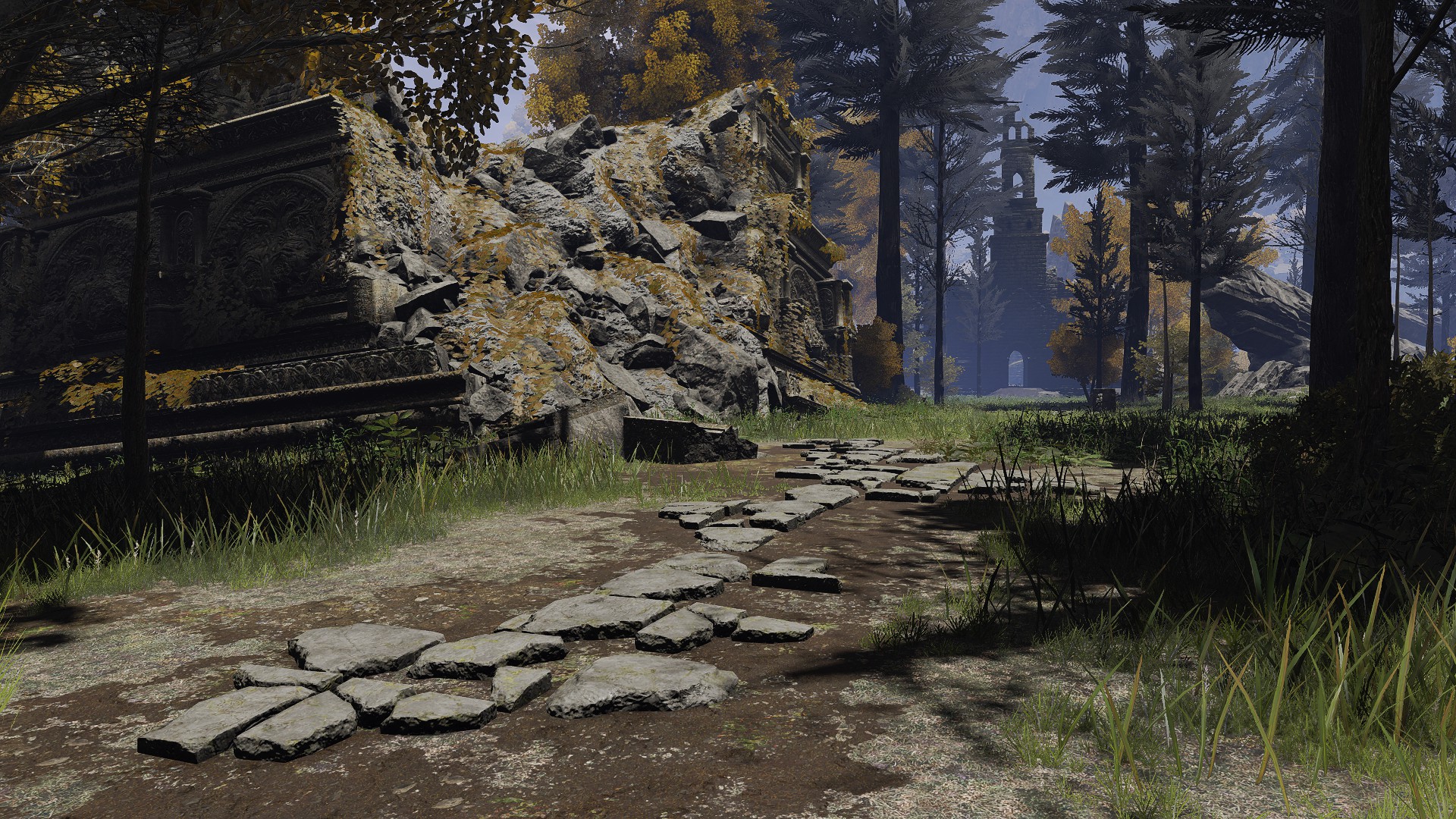
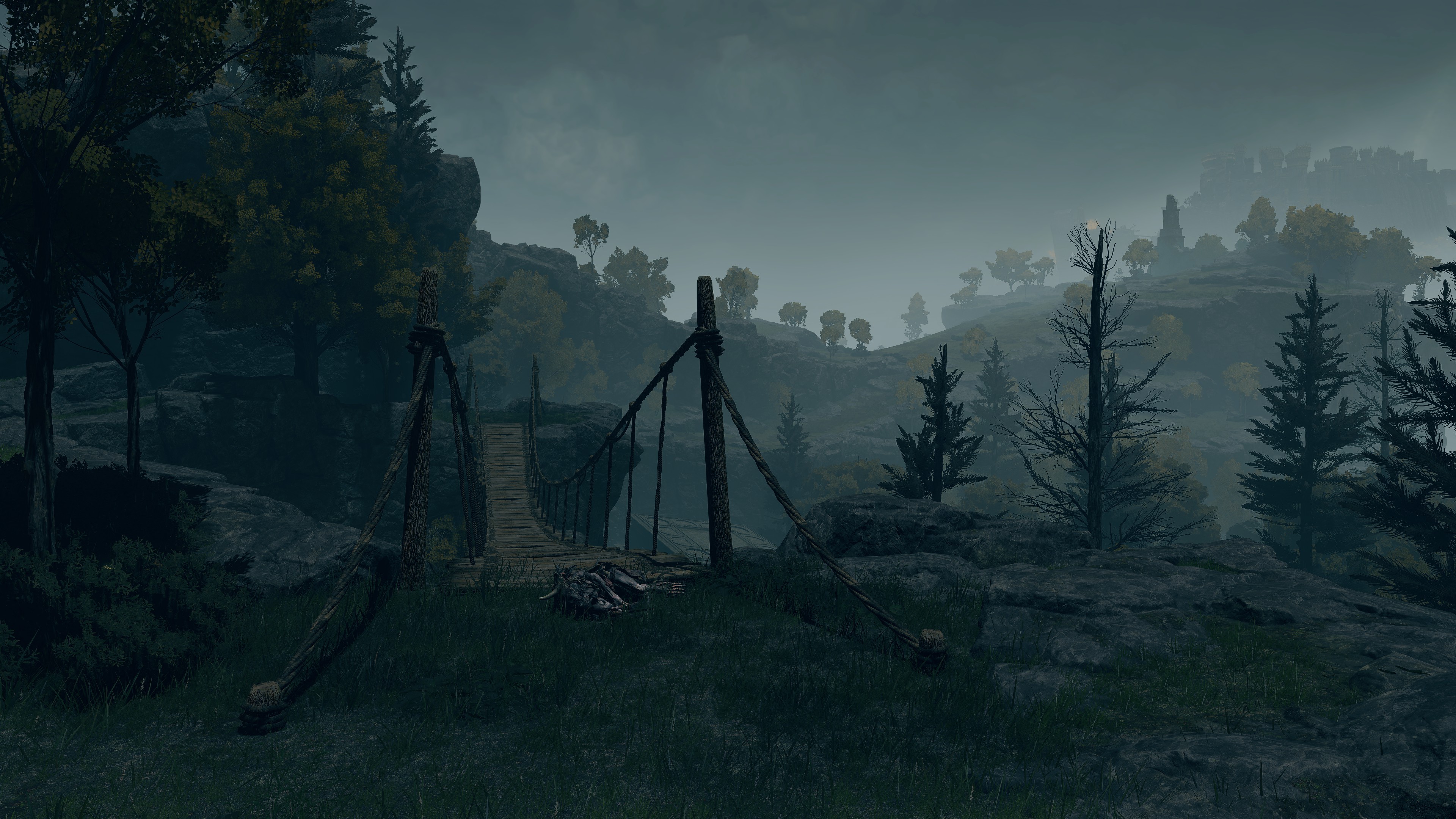
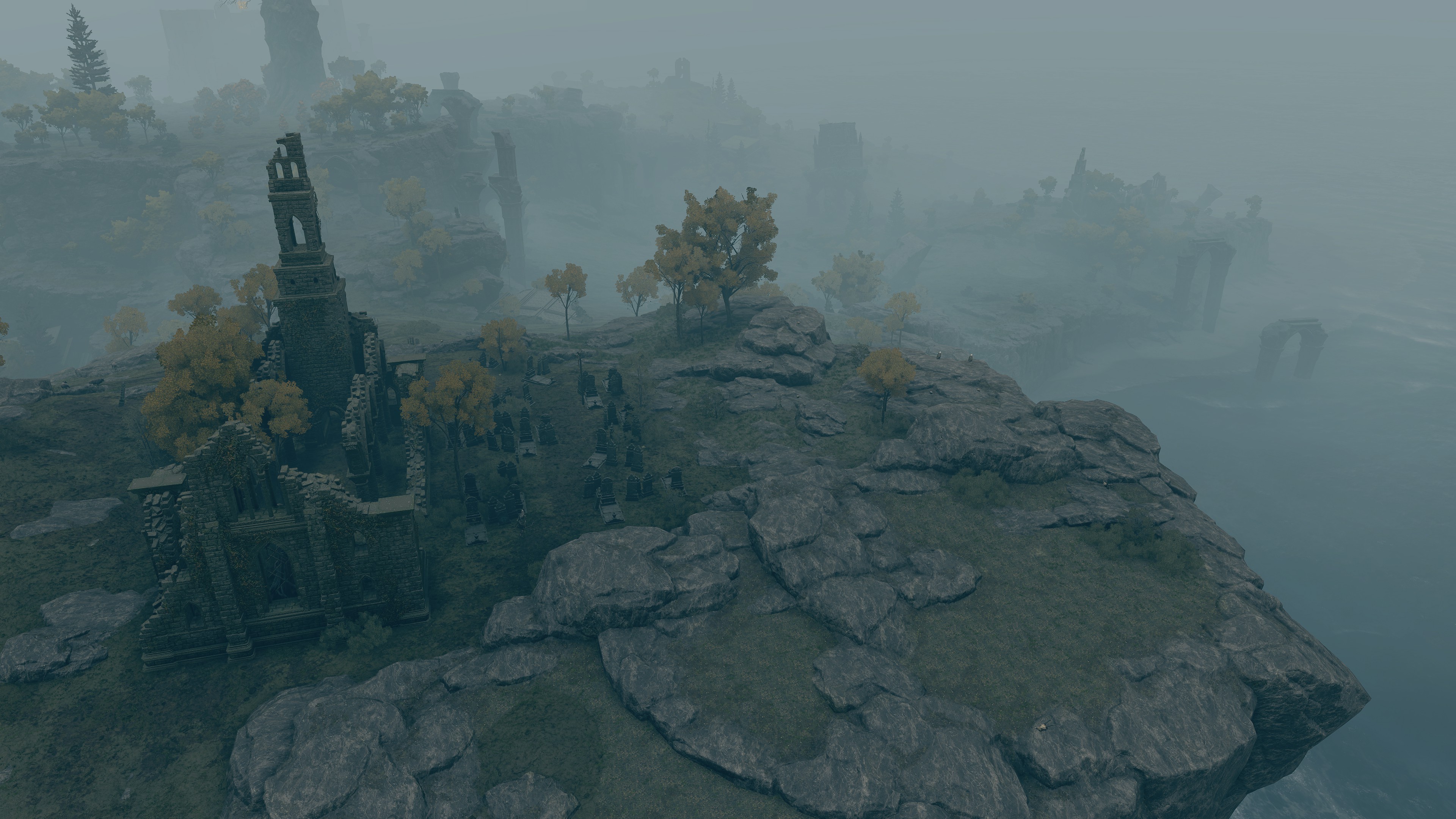
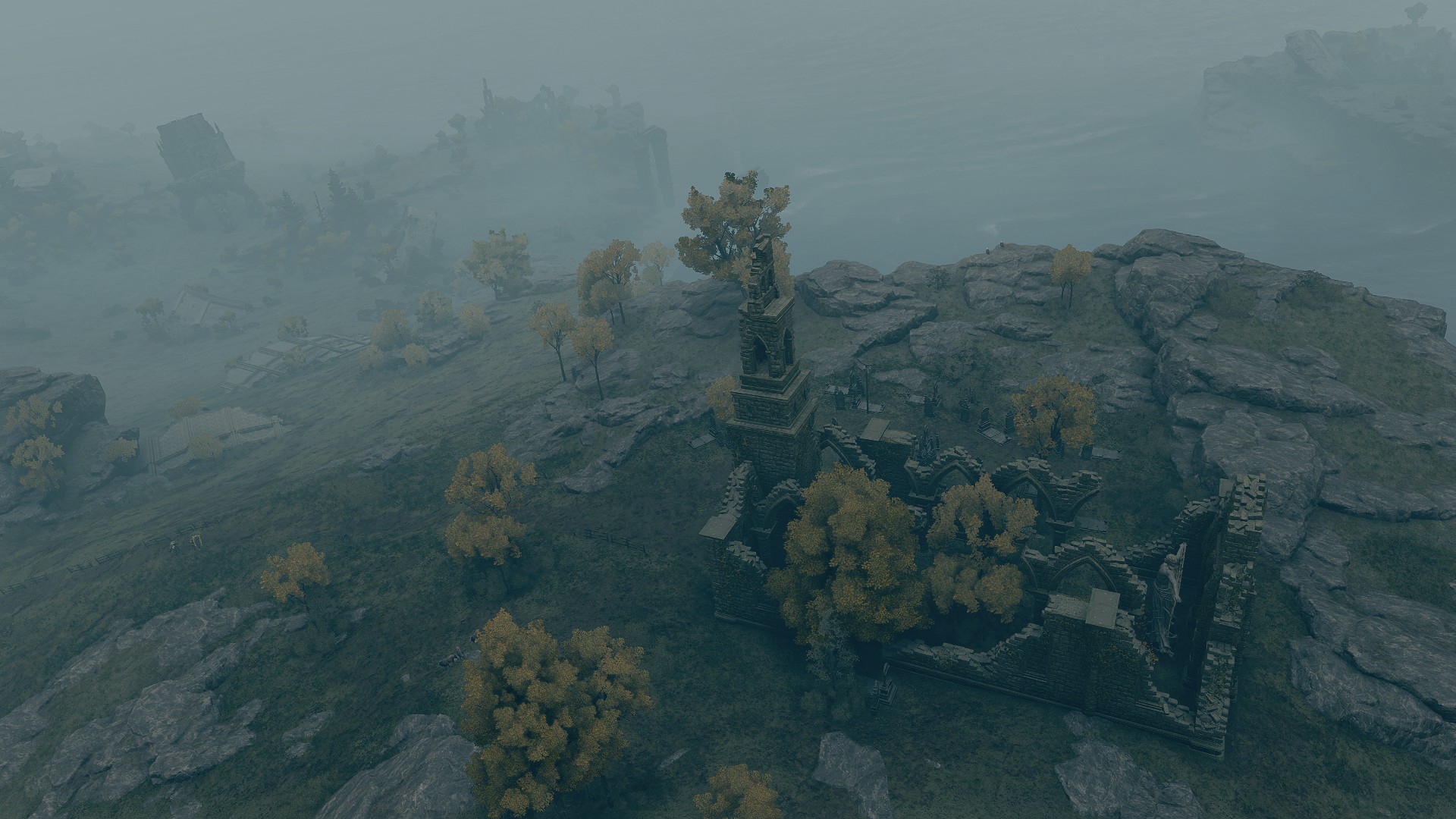
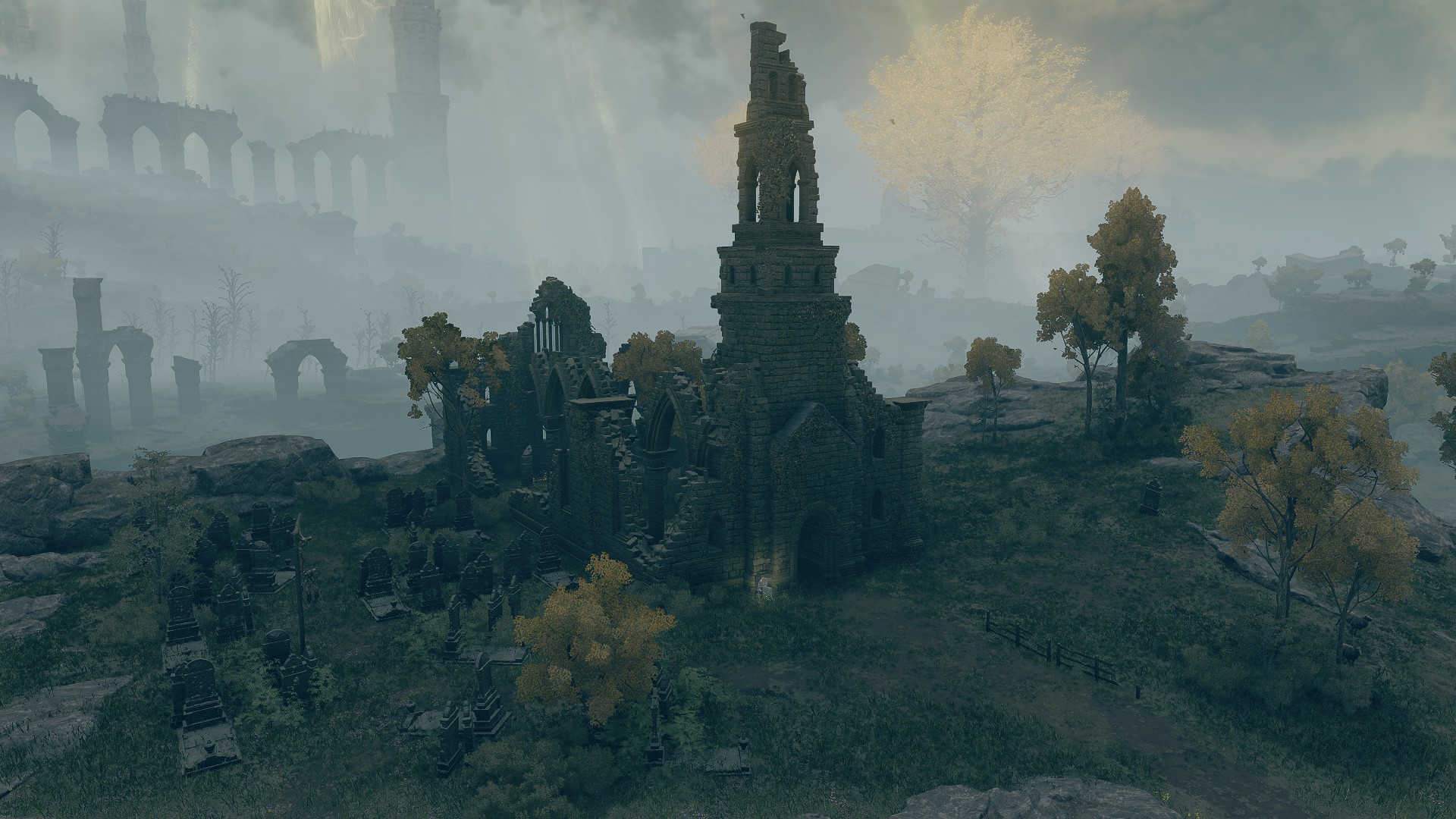
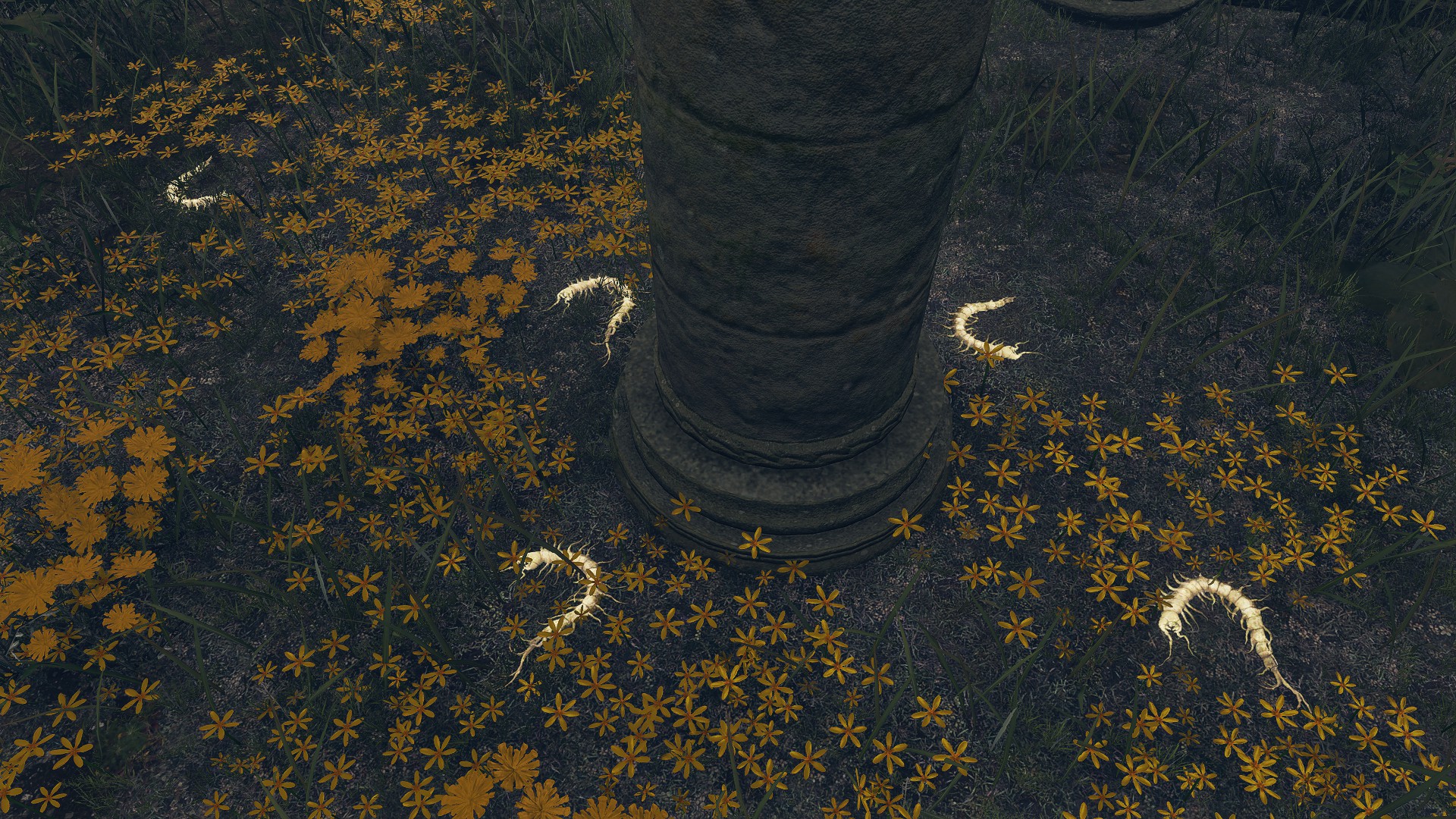
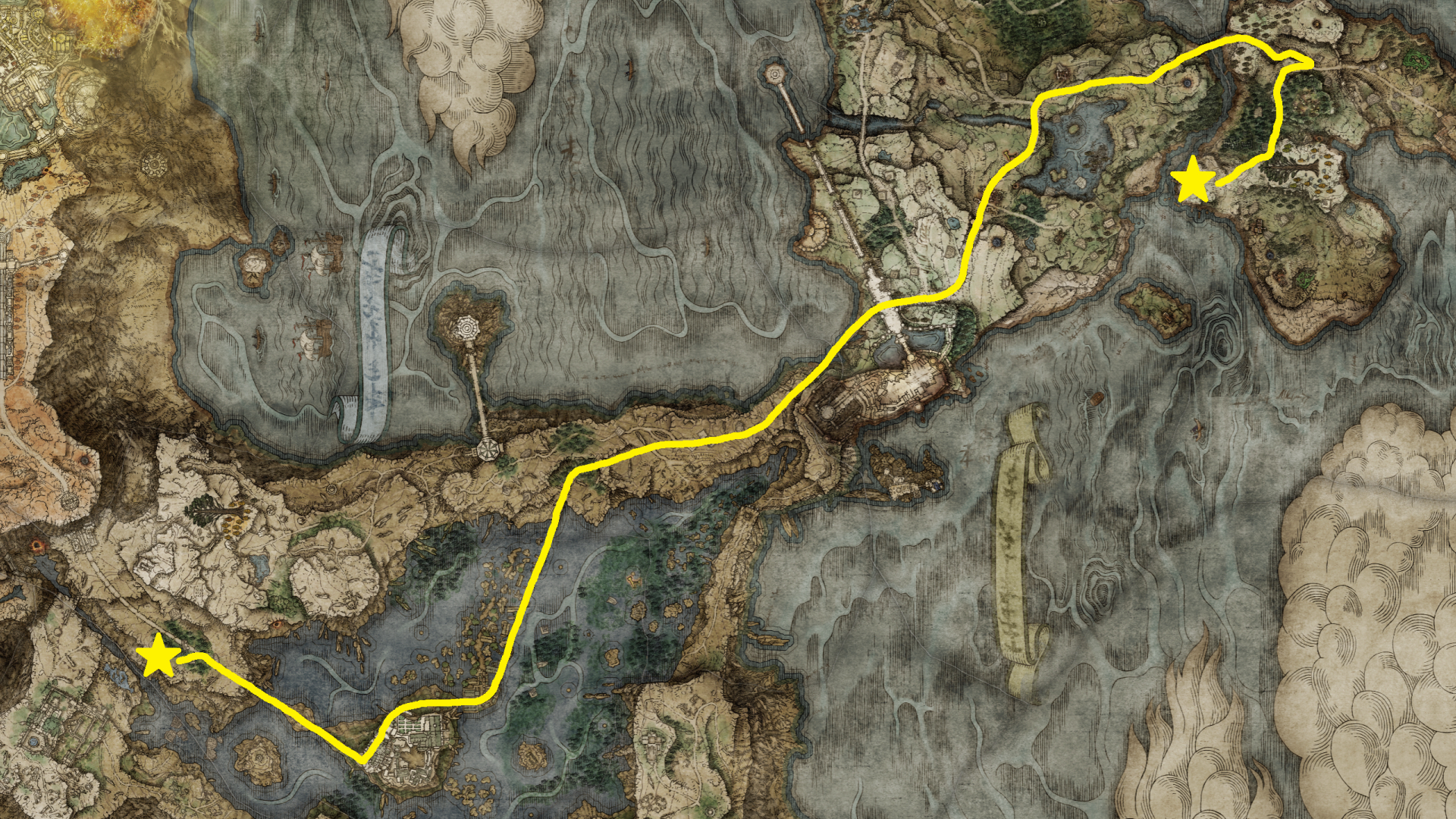
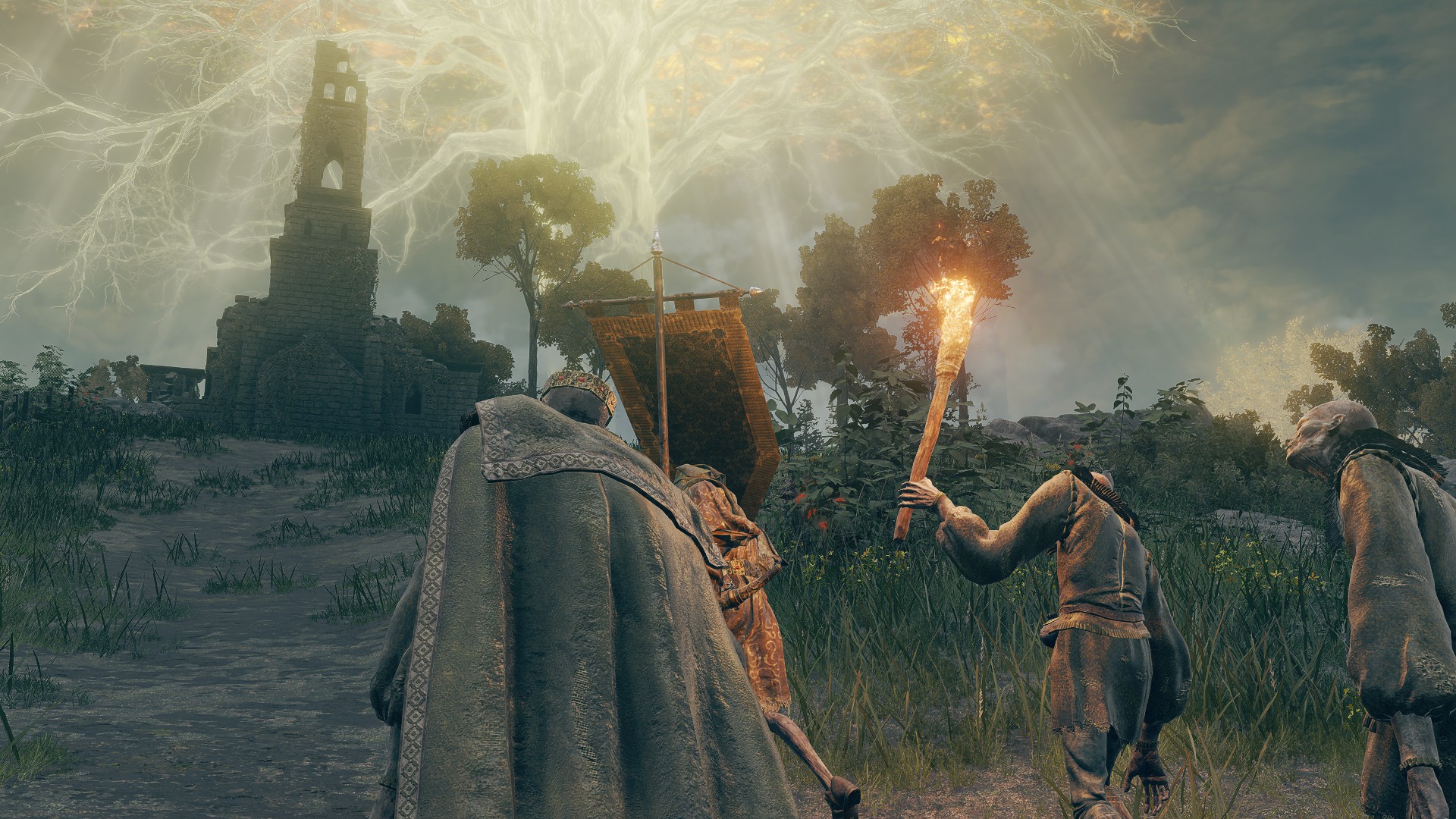
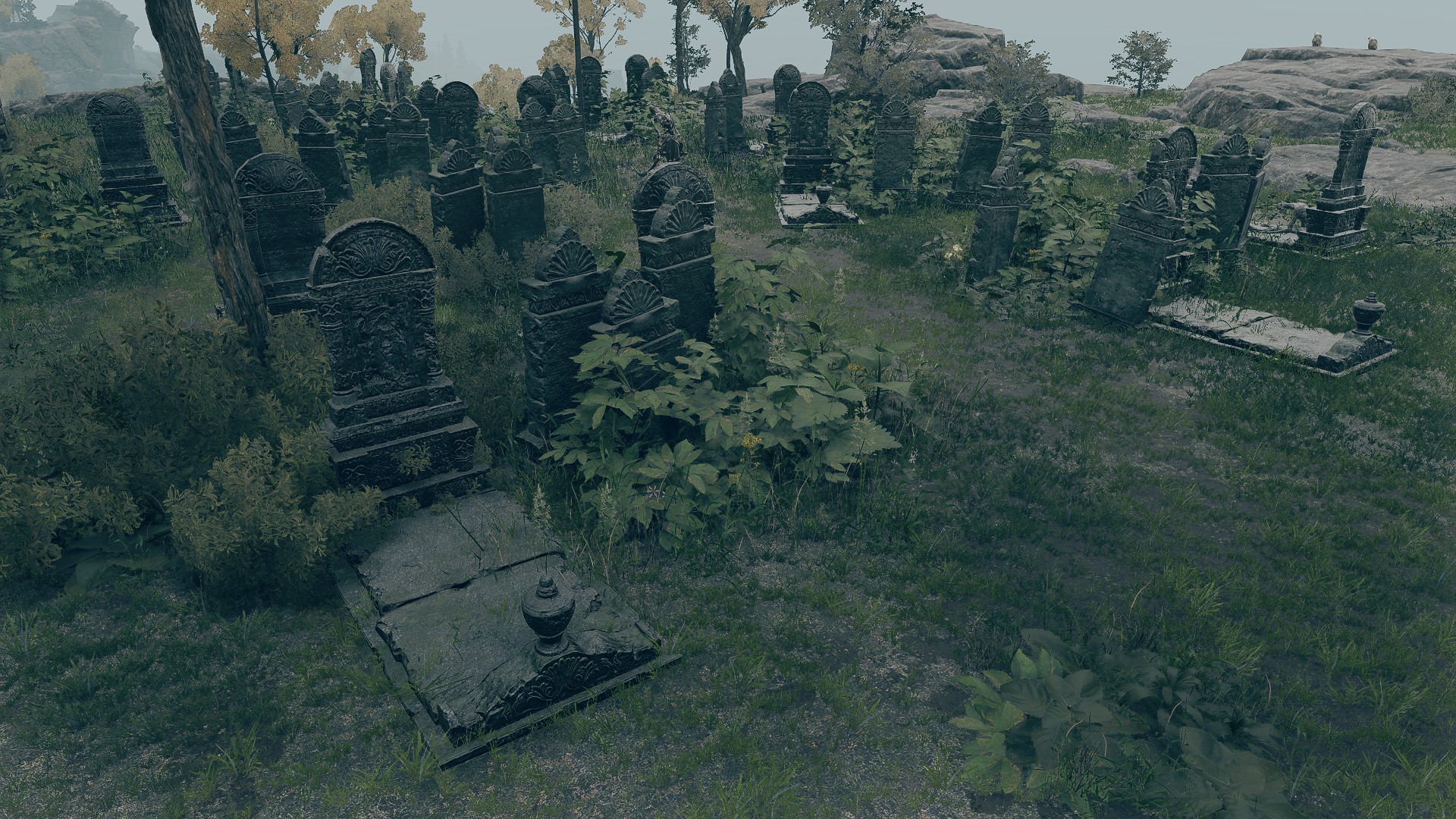
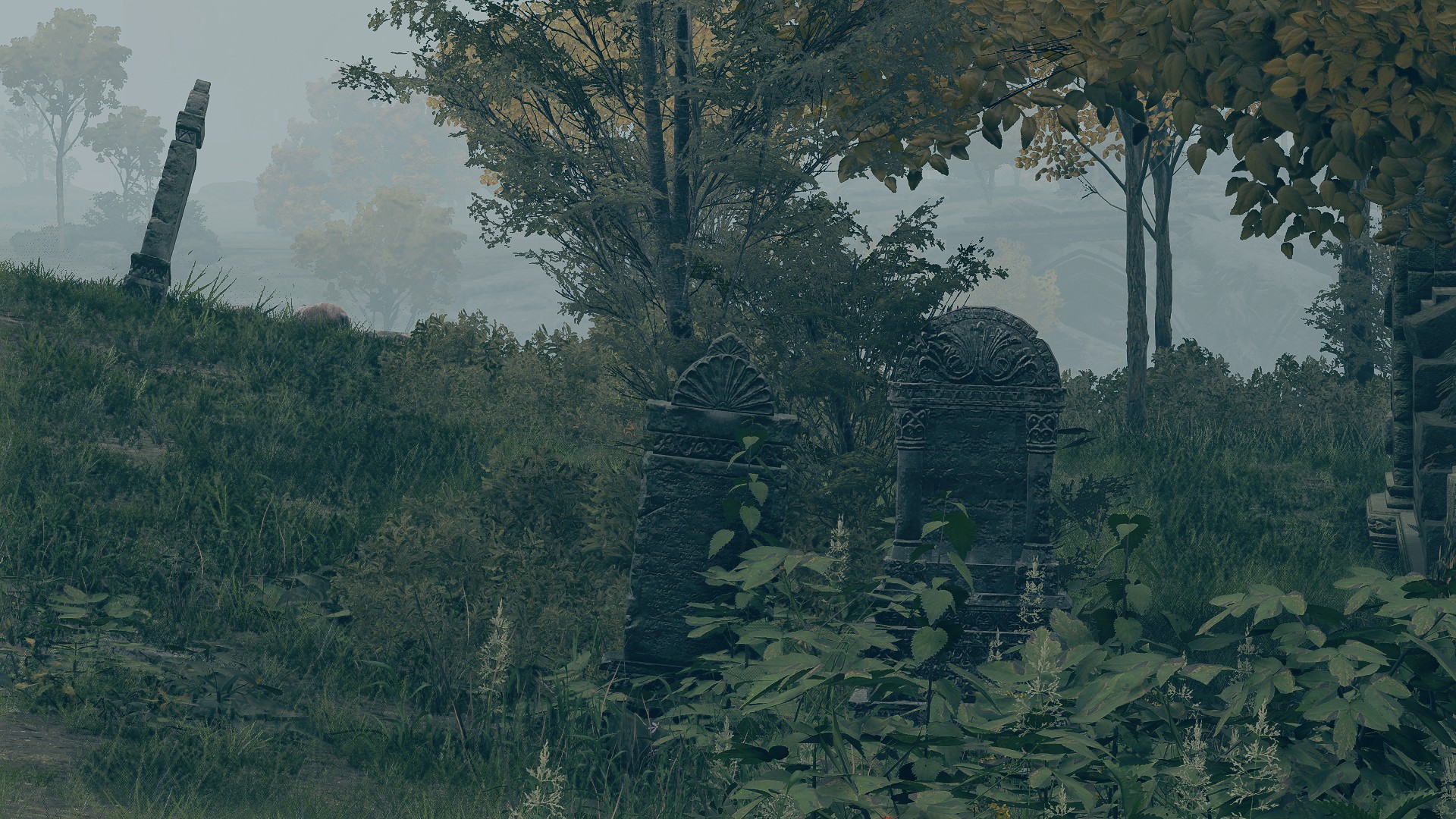
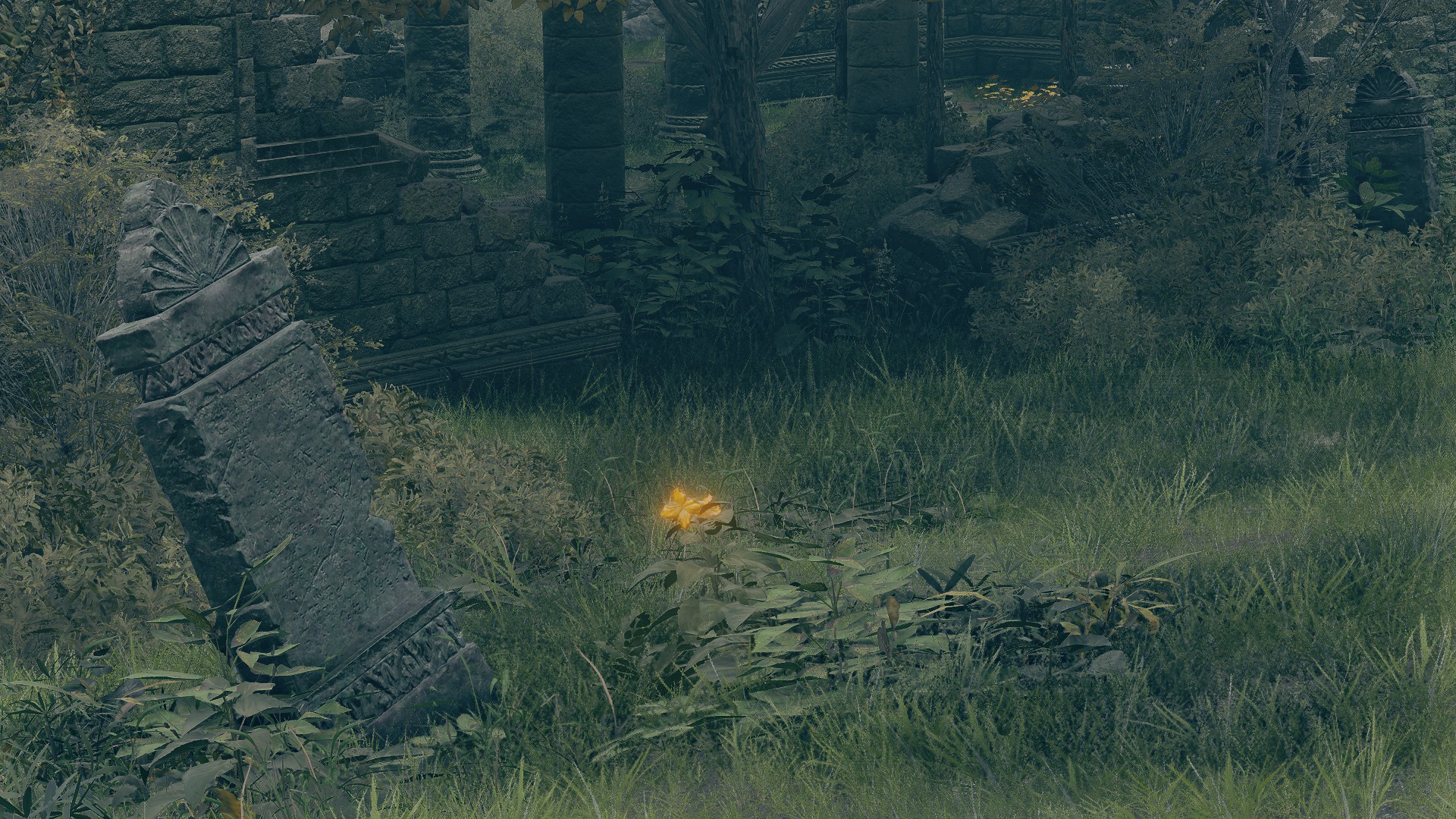
This spiritual act of devotion displays believers’ dedication to the man whose distinguished life led him to the divine revelation of the modern faith. For fundamentalists, the symbolism held great significance. As they tread from his start and end points to becoming Elden Lord, they hoped to follow his same path — not to being king, but to reaching the enlightenment which seemed to come with him ascending the throne. If Marika was their god, Radagon was their patron saint, their prophet, their messiah. Only through him could they fully interpret the divine law. He revealed the proper way, so they need only trace his steps to uncover the truth for themselves. These simple yet profound layers of meaning gave form to the abstract process that budding students of Fundamentalism were surely working through. Add the gravity to standing in the place where Radagon once did, and it is no wonder the pilgrimage came to be. With grasping both the philosophy and the history, the neophytes’ trek helped their minds along as they adapted to this religious revolution.
Even if anyone could embark on this pilgrimage, it was still easiest for residents of Altus coming down the Grand Lift of Dectus. This was perhaps inevitable, since all roads led to Leyndell, but the heartland would be most receptive to Radagon’s gospel. This holds true even ignoring the blue bloods. Although all living knights of Leyndell we encounter are ancient dragon cultists, a portion did embrace Fundamentalism. Such fundamentalist knights temporarily imbue holiness to the weapons of themselves and others through skills like Sacred and Shared Order. Their ashes of war are acquired from a Night’s Cavalry along the Altus highway or a scarab on the outskirts of the plateau, so they do seem spread among the ranks. Naturally, Fundamentalism took the greatest hold of the royal guard in the capital, with their Treespear we acquire already possessing the Sacred Order skill. Even amongst the lower ranks, Immutable Shield features the soldiers’ kind in its menu graphic. Leave it to army men to see the practical applications of the message they had the privilege of hearing right there at ground zero.
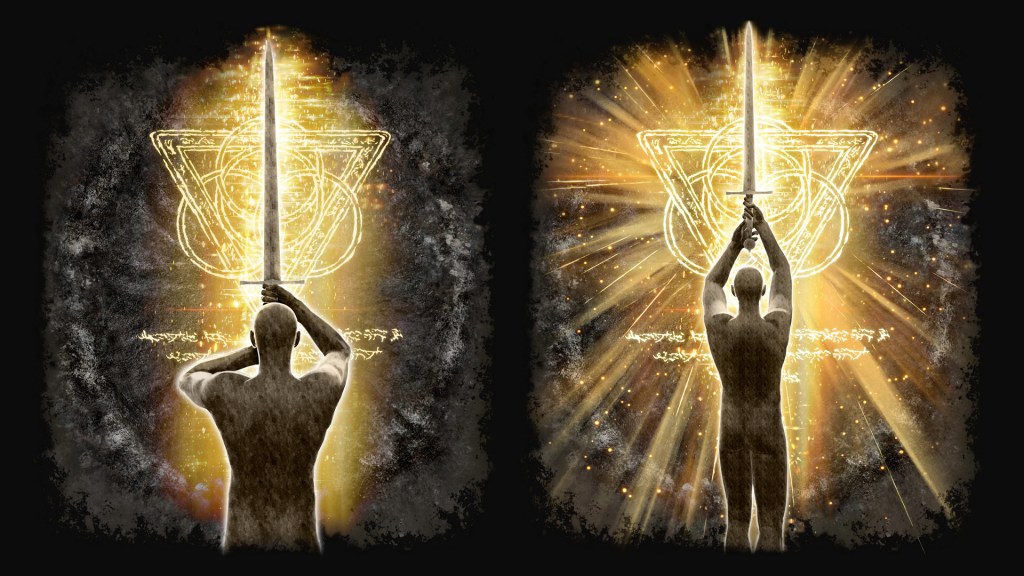
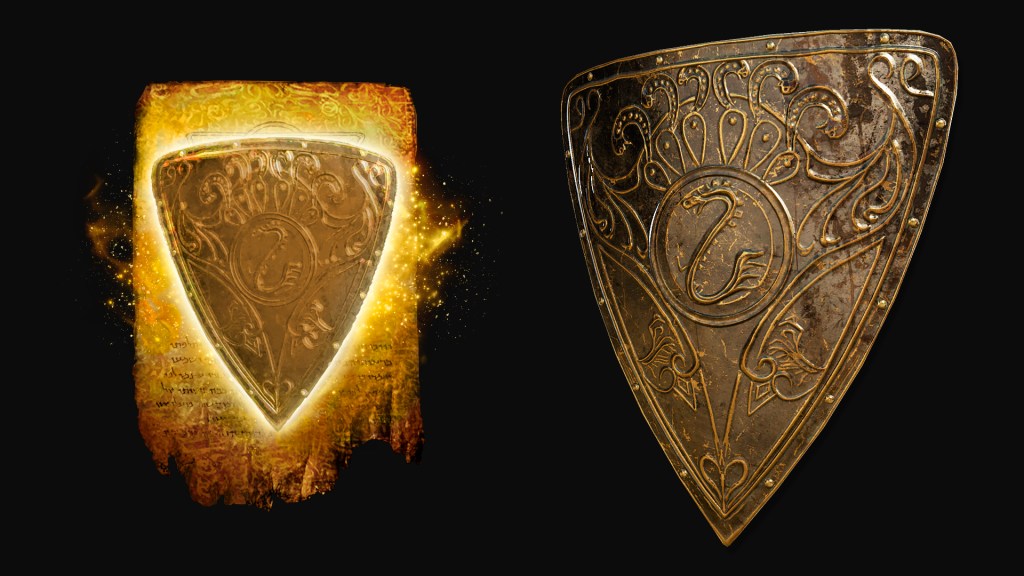
Battle art of Golden Regulation Fundamentalism knights.
Endow weapon with holiness with a salute. Highly effective against Those who Live in Death in particular.
Battle art of Golden Regulation Fundamentalism knights.
Endow holiness to weapon of yourself and surrounding allies. Highly effective against Those who Live in Death in particular.
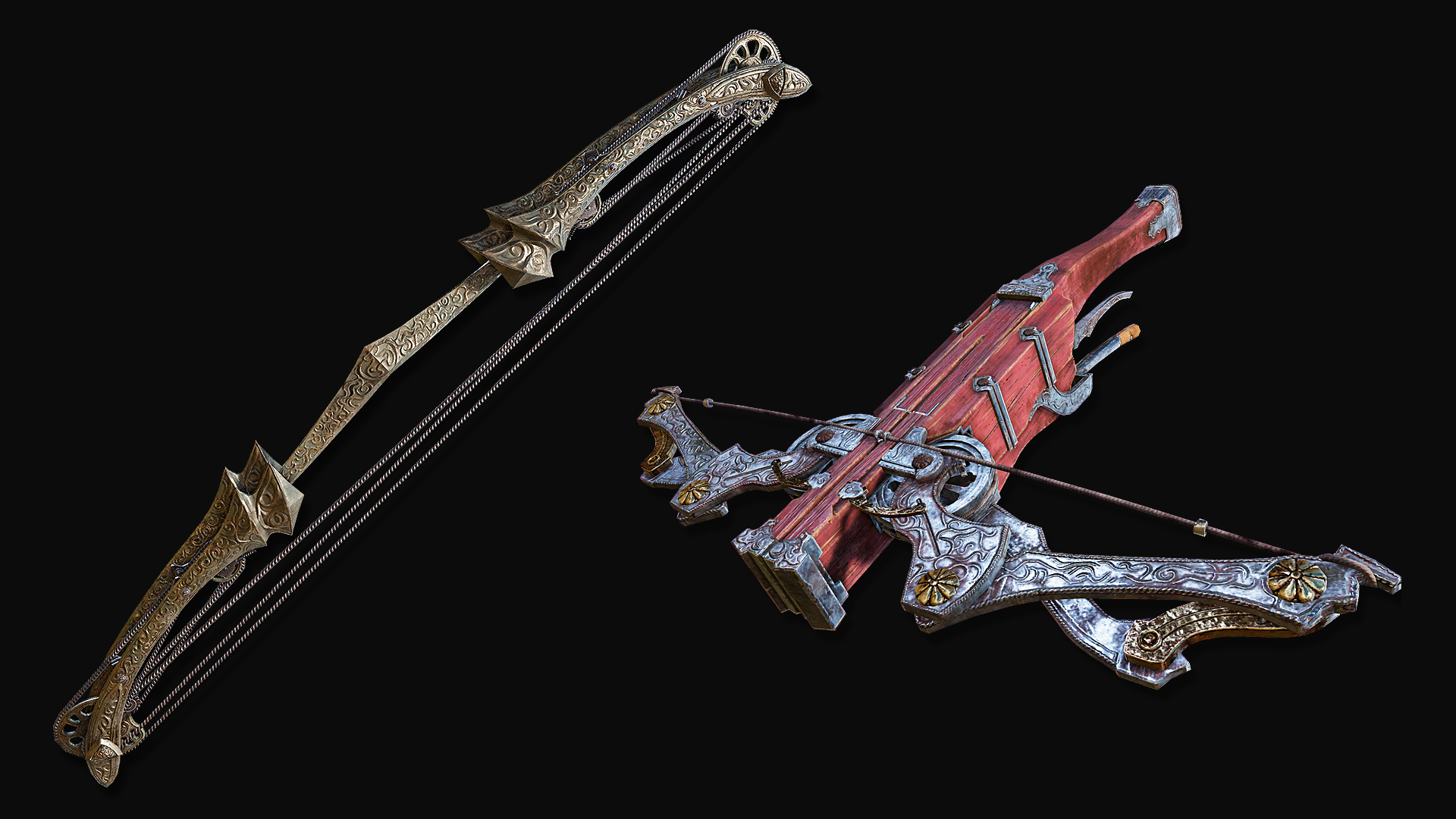
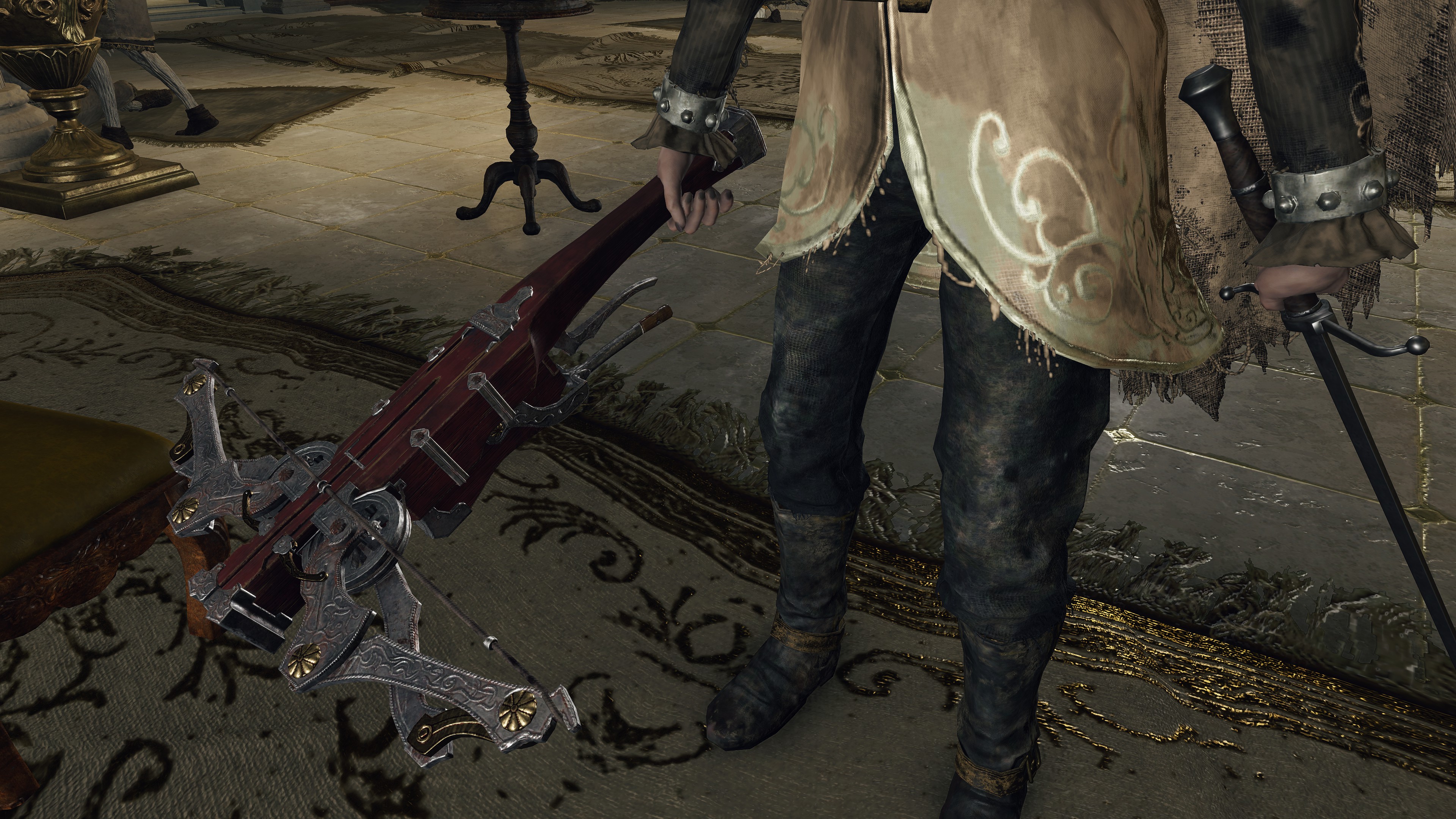
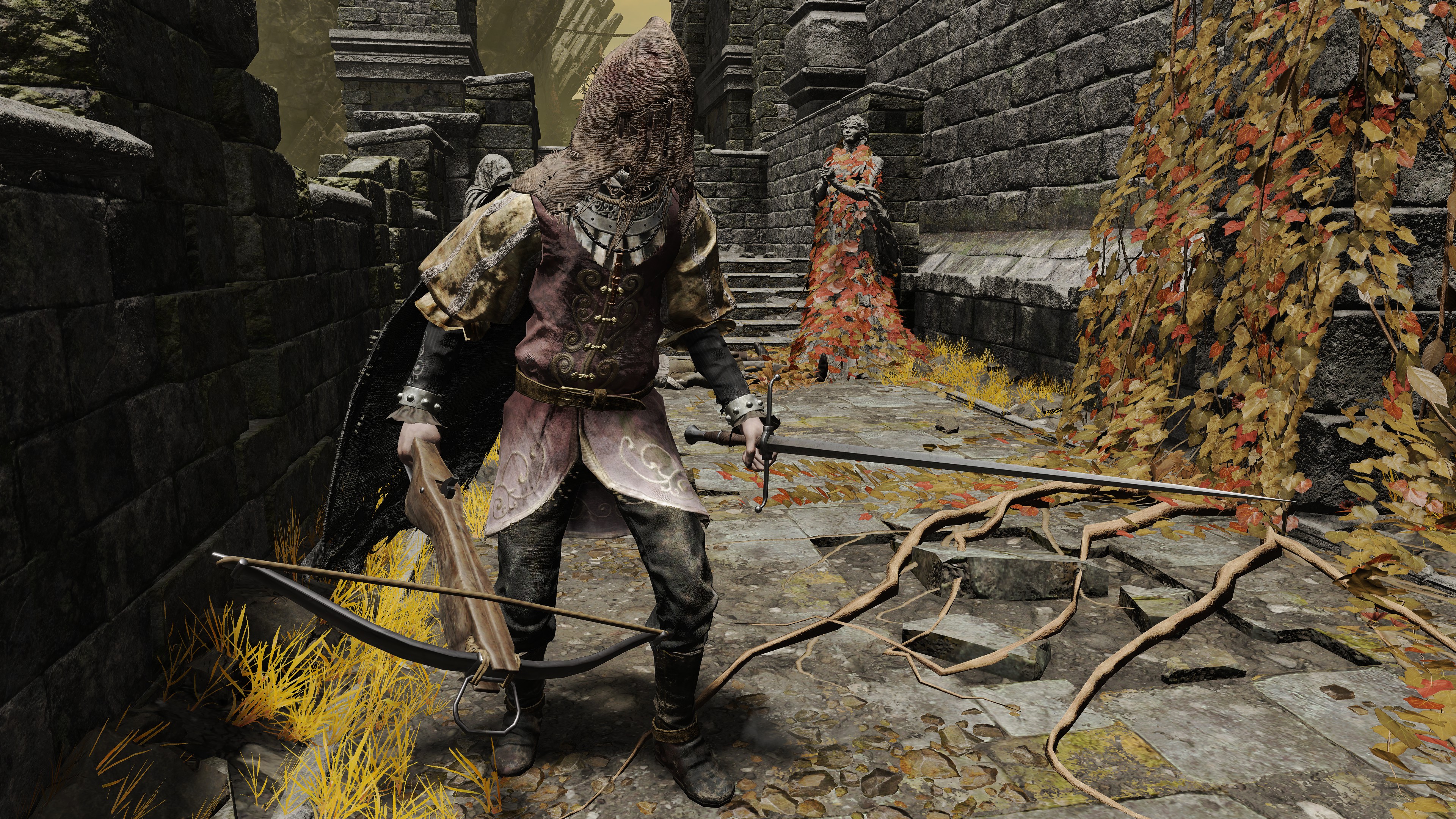
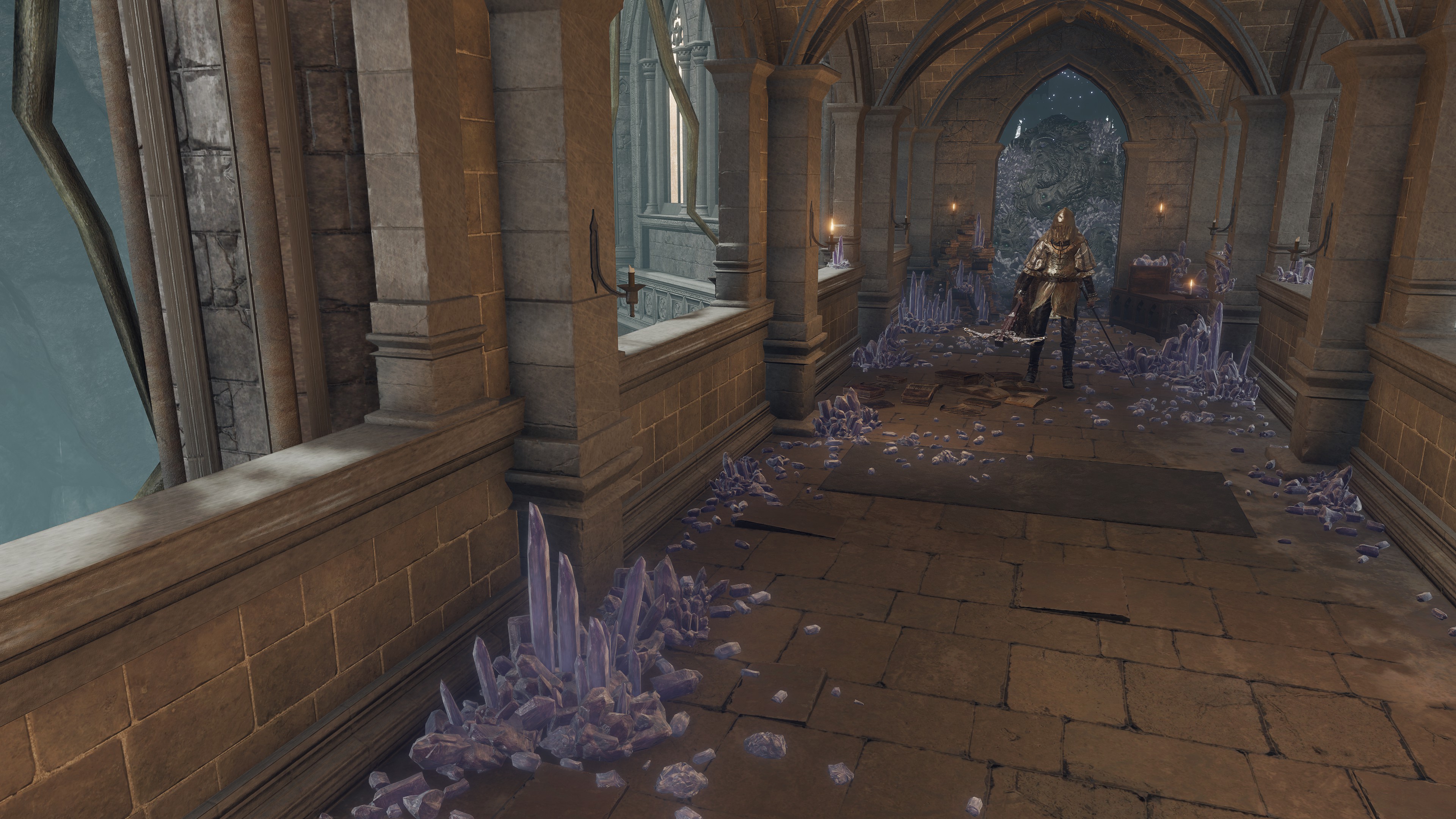
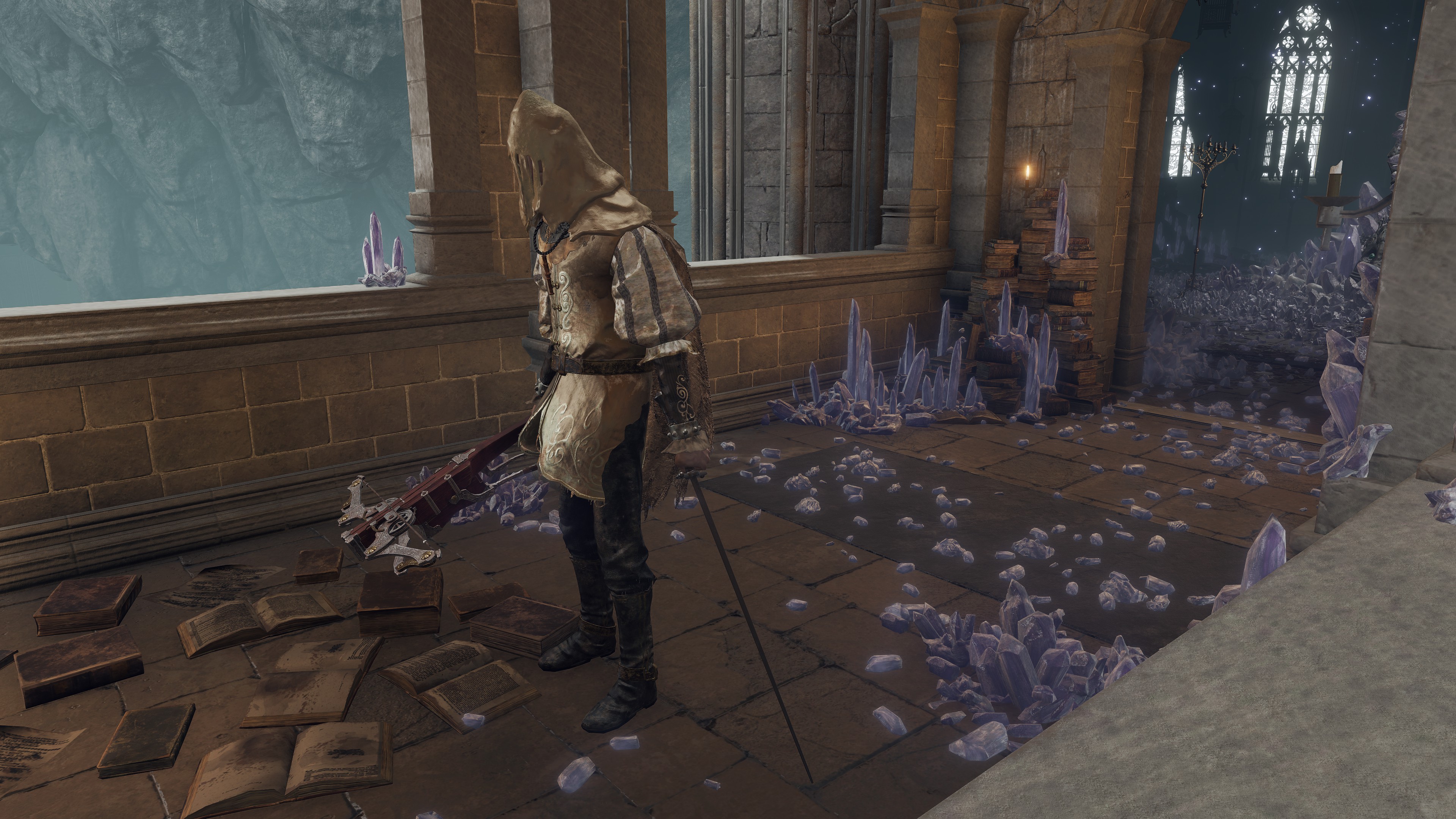
Golden Order fundamentalists supported the military in other ways. A certain genius and student of Fundamentalism applied advanced mechanical and mathematical knowledge to range weaponry. The complex pulley and springs this craftsman implemented made a bow shoot both farther and more precise and enabled a crossbow to fire a string of bolts in a single pull of the trigger. The latter became especially prized by the high-ranking nobility, their pages all replacing their Red Branch Shortbows with the Pulley Crossbow. Phasing out the bow may have begun as far back as the Crucible’s decline, since we see pages to even low-rank nobles using basic crossbows instead. But this would be because of their ammunition, every page shooting explosive Perfumer’s Bolts. Fire should have remained prohibited to the Erdtree’s servants until the Shattering — but leave it to the rich and powerful to make themselves the exception. Now those in the highest echelons of power were wholeheartedly embracing the latest trend from the king to stay relevant, upgrading their guard’s crossbows in kind.
Longbow combining a pulley and spring. It is said that the complex mechanism according to advanced mechanics and mathematics is the work of a certain genius who learned Golden Regulation Fundamentalism.
Succeeds in boosting arrow shooting precision and extending range.
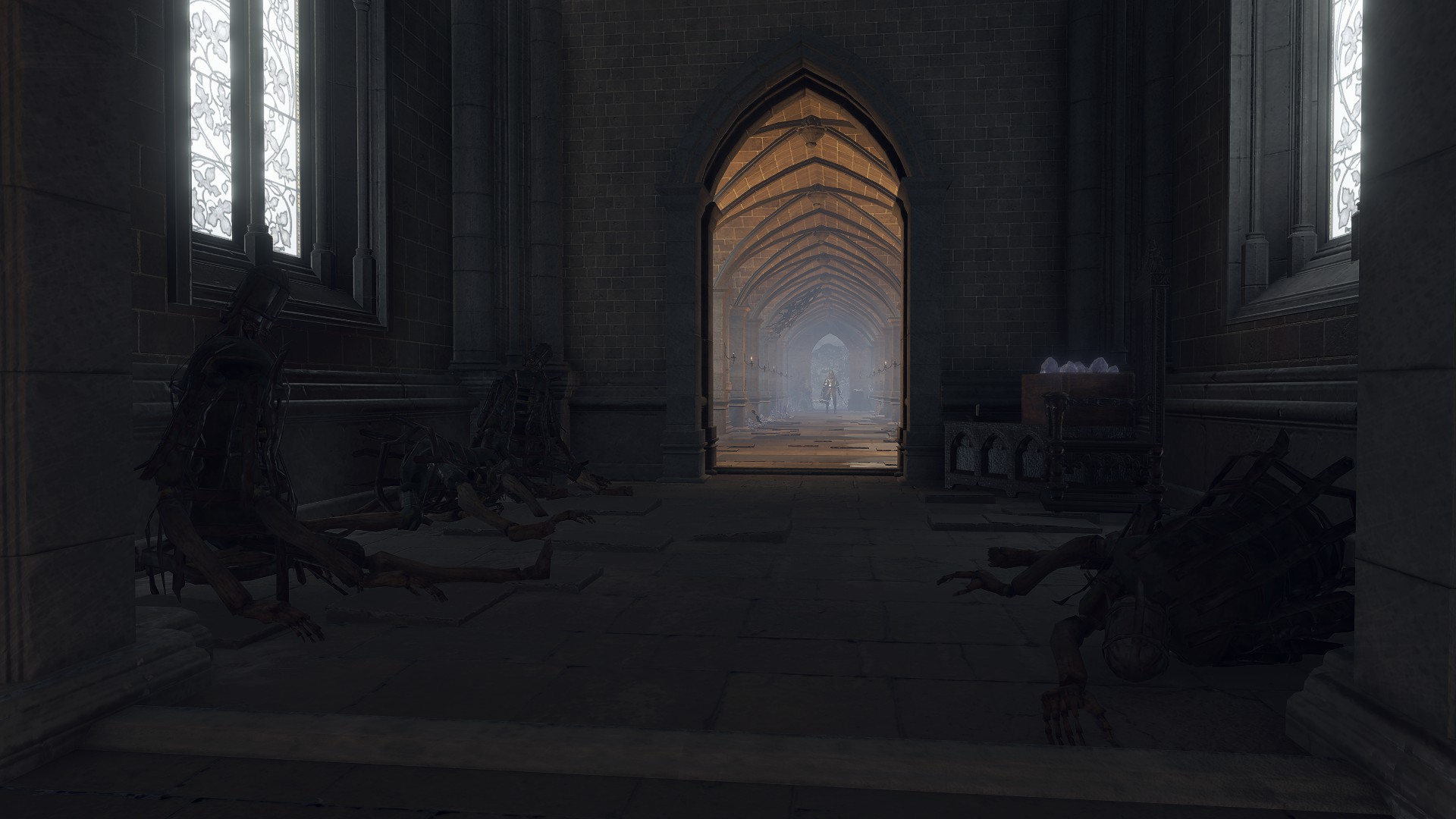
That didn’t necessarily mean that the elite’s hearts weren’t in it. Over in Raya Lucaria, we can collect Azur’s Glintstone Staff from the graven school formed in the Church of the Cuckoo’s private tower. The catalyst’s appearance suggests that the student responsible for continuing Sellen’s work previously met Azur after he began to crystalize in the Hermit Village. What’s more, standing guard outside the chamber is a high page, meaning that this was a fundamentalist noble. But seeing the village, it isn’t that odd. The Craftsman’s Shack has a corpse carrying the Pulley Crossbow, affirming that Fundamentalism’s genius artisan resided there. A secluded village full of sorcerers is perfect for academic discourse. Fundamentalists must come and stay to advance their reasoning and brainstorm, one aristocrat taking Azur’s Staff before attending Raya Lucaria to secretly study more about primeval sorcery. The lack of a body betrays how the staff was left behind when the noble joined the resulting ball of sorcerers, but it still exhibits the sincerity to learn as a person of faith and privilege.
Overwhelmingly, we see that Golden Order Fundamentalism was a top-down movement, with little to no appeal among the grassroots. Radagon himself may have gained popularity thanks to his legend, but his ideas were only fully understood by a small circle who could afford to learn. The concentration of minds in the capital did make Altus a fertile ground for advancement, as seen with the genius craftsman. But as a result of the insularity, much of the culture across Marika’s new empire was shifting according to dictate.
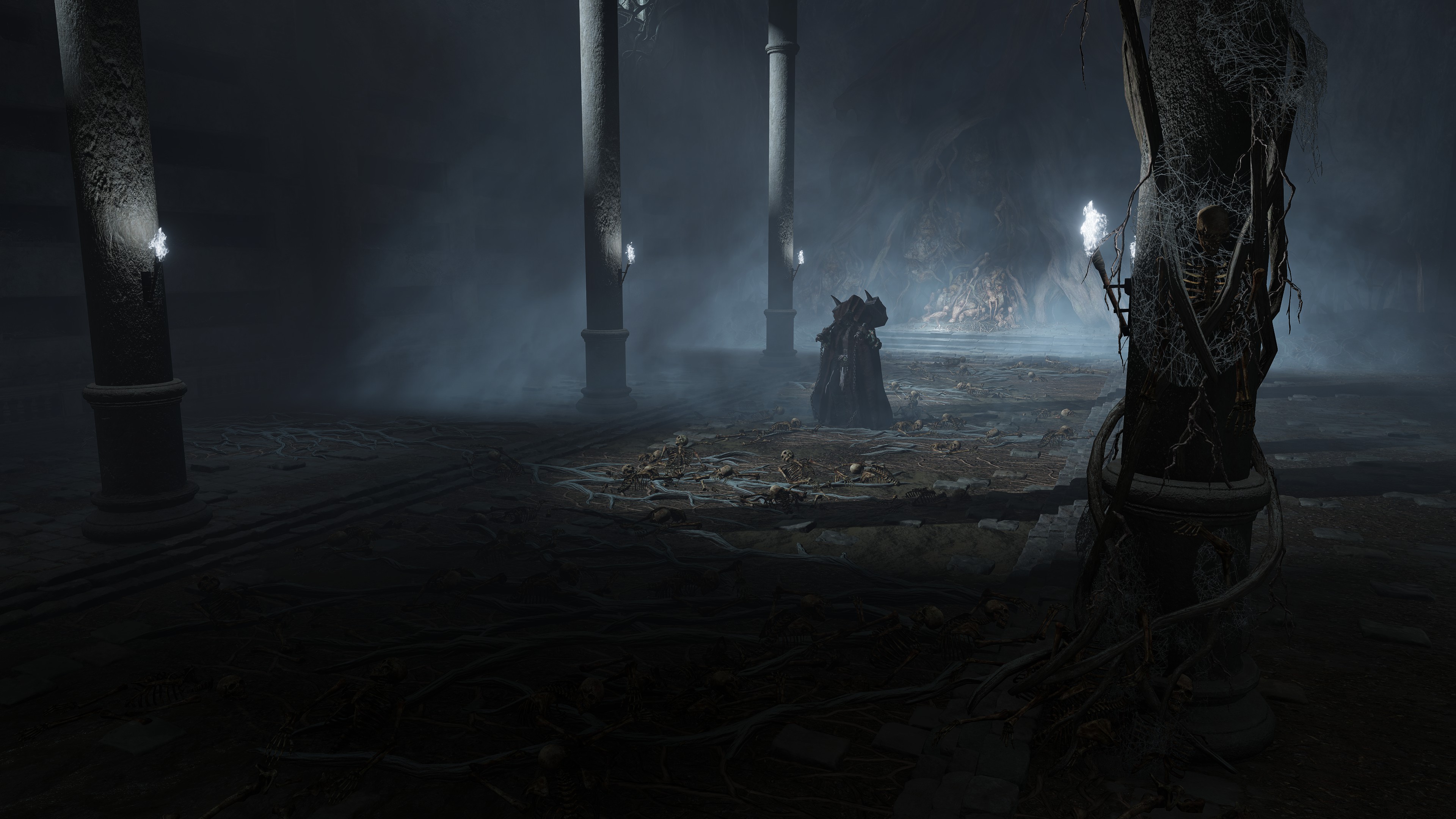
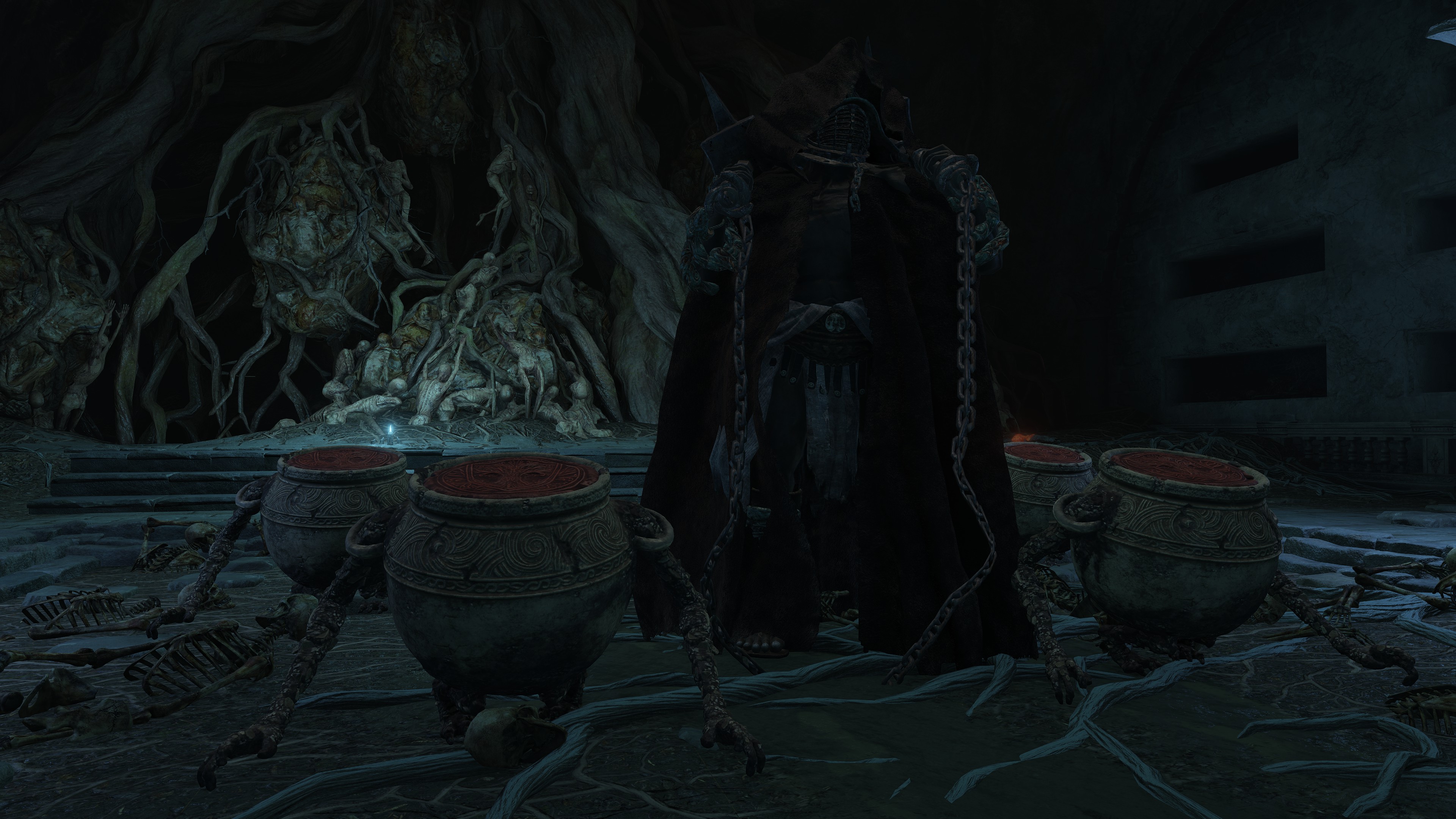
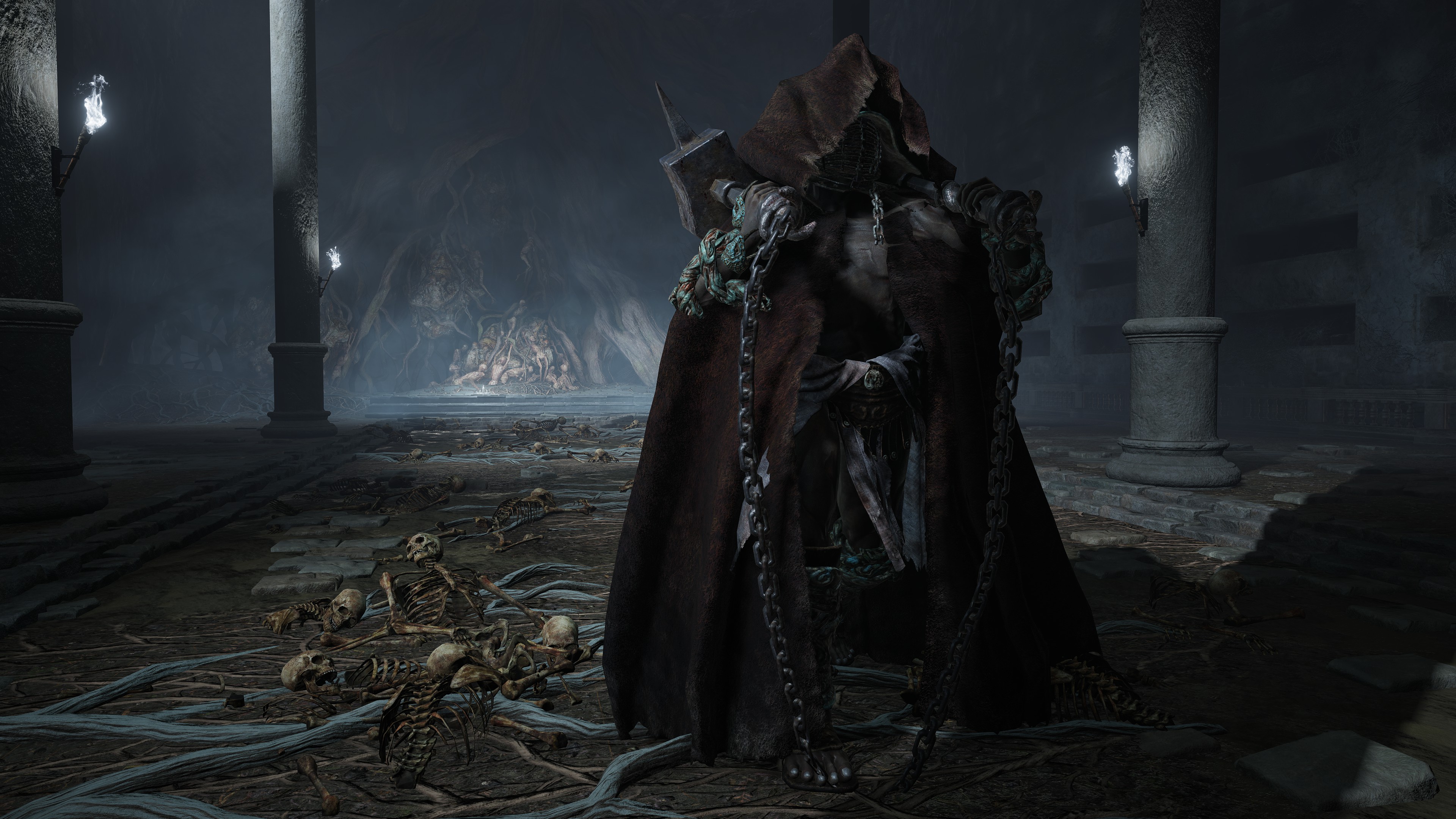
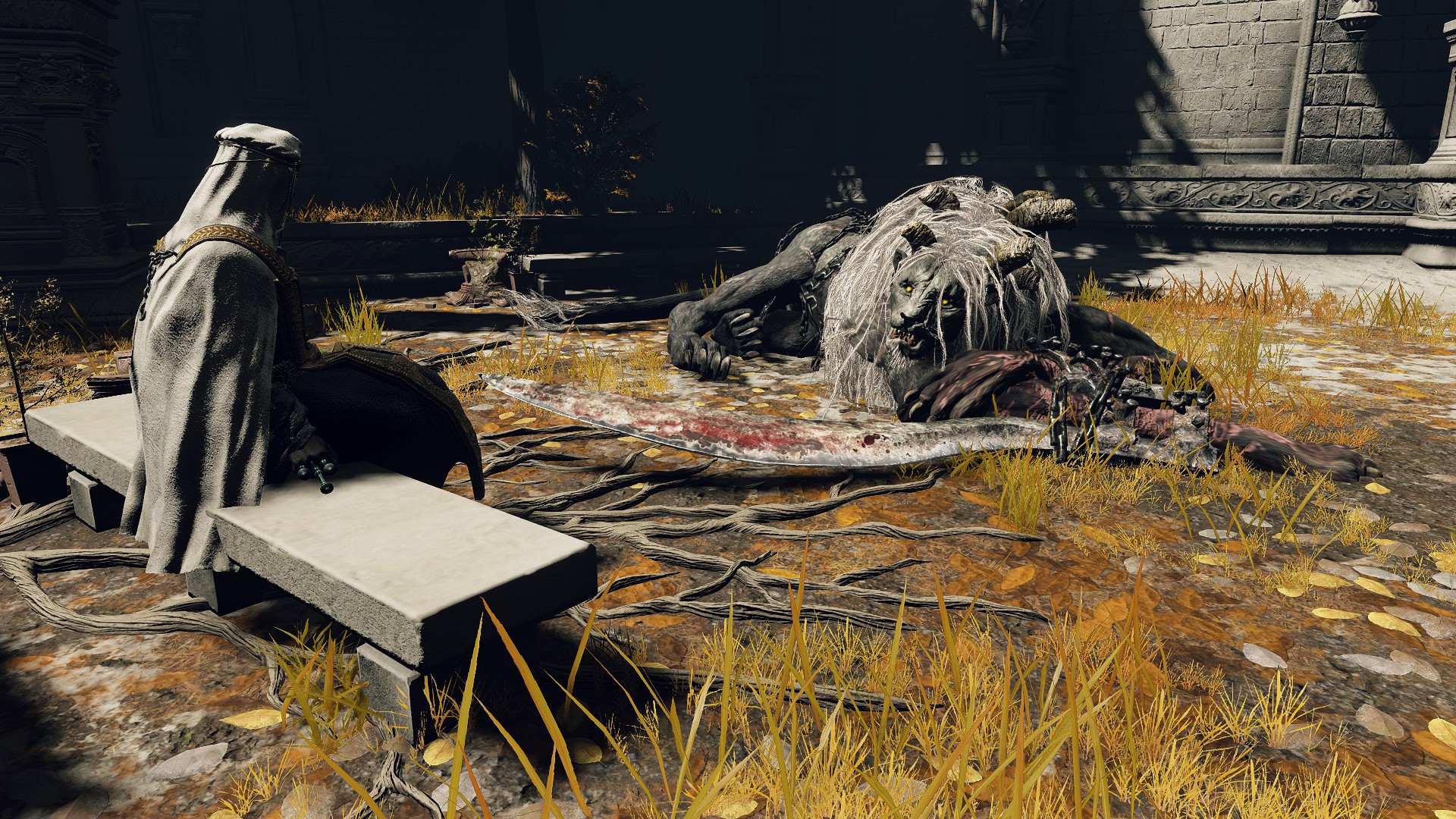
This drive for higher learning is what ended the ritual duels dedicated to the Erdtree. In Radagon’s new age of peace and prosperity, reminders of their violent past were to be discarded. Bloodsport was thus no longer in vogue, seen as barbaric, boorish, and base. Even if the arenas still had an audience, it seems that they were eventually closed down regardless, left standing as a remnant to a bygone era. The duelists were reassigned to the various catacombs across the Lands Between where their gladiatorial skills could still be put to use, and that was the end of it. As for the beasts those gladiators so often fought against, the elder lions of each arena look to have been repurposed as guard dogs of fortified locations in their local area, with the few in Castle Sol presumably gifted by Leyndell. The emphasis was being placed on security, necessary self-defense, not superfluous entertainment.
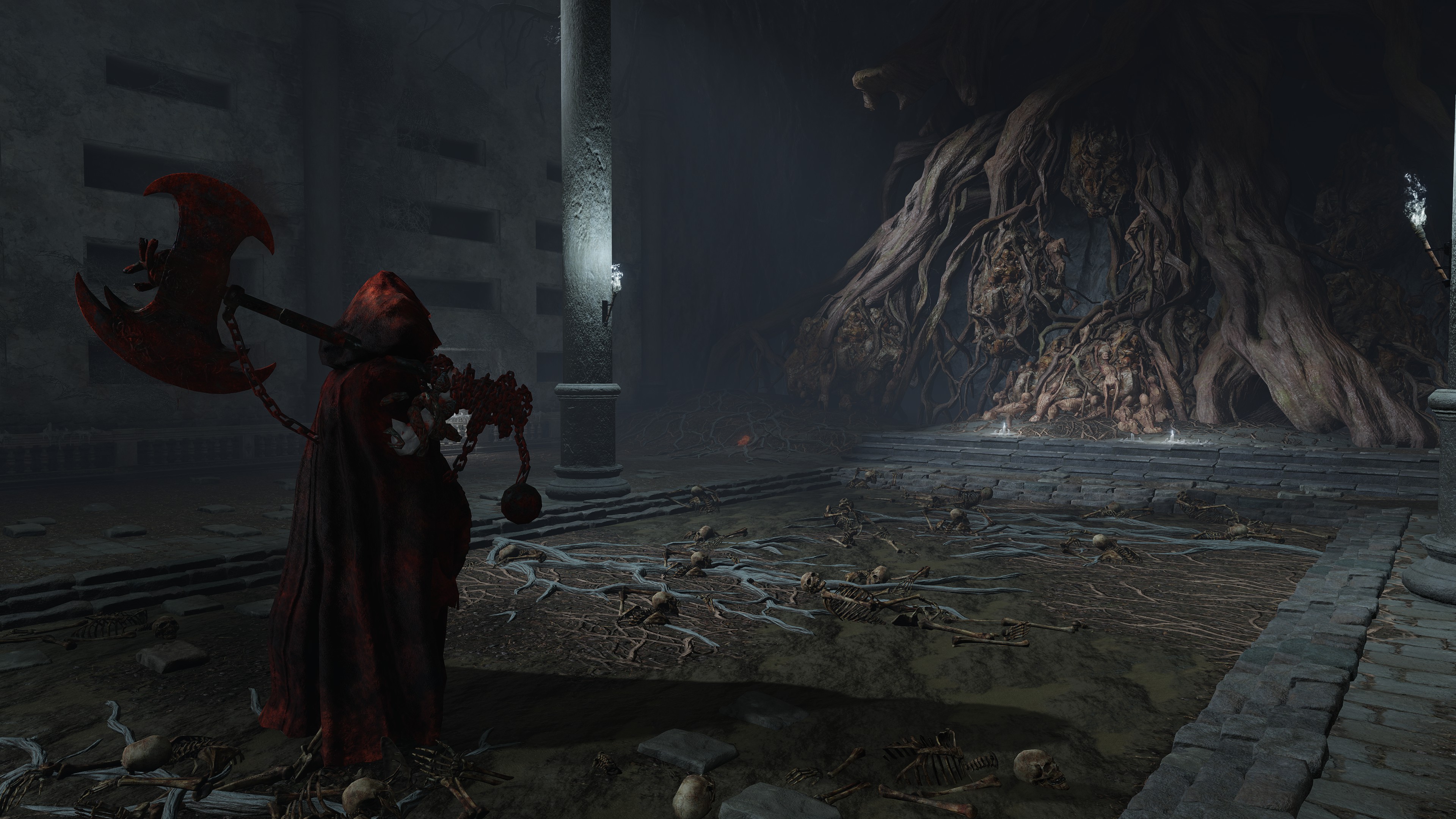
Talisman modeled on the ceremonial sword of fights once dedicated to the Golden Tree.
Boosts attack power when HP is at maximum.
The dedicated fights were obsolete in the age of King Consort Radagon. The arenas remaining in various lands are remnants of them.
Bristly, heavy cloak. Proof of an underground gravekeeper.
Those who once engaged in fights were driven out of the arena and became Tree Return watchmen.
The sentiments of the period are reflected in Leyndell’s trash. Exploring the Subterranean Shunning-Grounds, we are able to scavenge a whole host of fire grease, a fireproof dried liver, freezing grease, and a multitude of glass smithing stone far surpassing any gold stone down there. Combined with the golden runes of the Erdtree’s first servants, and it appears that elements associated with the war against the fire giants on the snowy Mountaintops have fallen into the sewer and flown right into the garbage pile. Despite helping establish this Erdtree Age, veterans of those days don’t receive the same respect and accolades anymore, some left to fall into hard times. War was their bread and butter, but now that wasn’t fashionable. The downstream effects of this were palpable — the description to Giant-Crusher acknowledges the weakness in modern men compared to their counterparts in the previous age under Godfrey. Peace was degenerating overall military readiness, but Fundamentalism under Radagon didn’t care. It put scholars above soldiers and catered accordingly, reflexively almost.
Indeed, Goldmask, Fundamentalism’s greatest devotee, lamented how easily the scholarship behind it devolves into fanaticism. The description to Order Healing reveals that he went so far as to recognize it as inherent to the Golden Order. Certainly, many incantations invoking “Order” refer to it as specifically a “Holy Regulation” (聖律) that is automatically sacrosanct — there is no questioning the form the Elden Ring took under Radagon, only meanings to the mechanisms. And when there are clearly defined labels between desirable and undesirable, it invariably invites those unwilling or incapable of seeing nuance to seek the simple eradication of the outliers. Despite their education, the elite are no less susceptible to generalization and groupthink. Those who fail to achieve a complete and perfect understanding of Causality and Regression ironically reduce the laws to moral dictates. A system doesn’t posit good versus evil, but it allows for that moral interpretation because the controls are, by their nature, superficial.
Put simply, the Golden Order permits the good to be stupid, and stupid fundamentalists seek an absolute evil to define their good against — and what could be more good than to cleanse Order of impurities? After all, there is a philosophical beauty to Fundamentalism, where everything in the ordered system is smooth, refined, straight, structured, shining, and immaculate. Before the lordling of Leyndell was scrapped from the game, Shanehaight emphasized this expectation for aesthetics; even his name “Schoenheit” (シェーンハイト) translates to “beautifulness” in German. The essence of that character has carried over to Kenneth Haight, whose full name (ケネス・ハイト) translates to “handsomeness” when additionally factoring in Gaelic. Both nobles are put off to see a Tarnished, yet reluctantly accept our aid for their personal endeavors. The rational mind recognizes our ability to help. Their prejudice is simply because our eyes lost grace, an “ugly” truth in theirs still brimming with gold. Such adherents equate looking good to being good in spite of their better judgment, apparently all too often.
Not helping matters was the behavior at the very top. Queen Marika had always been willing to punish any who defied her orthodoxy harshly, and her other half was no different. Arguably, Radagon’s first act as “king” was to curse a Tarnished who refused to remain in the outgroup, and this wouldn’t be the last time he did so. A commoner corpse in Fort Faroth possesses Radagon’s Soreseal, the golden pupil burdened with an especially strong curse just as the person is implicitly burdened with a particularly long mission. Clearly, this person earned King Radagon’s wrath, subsequently stationed at a remote outpost in the farthest reaches of the Erdtree empire where he was left to die in obscurity. If this was how the king and queen were treating their own subjects, it is no wonder that fundamentalists from nobles on down developed such extremes on the rigid Golden Order they espoused. Staying within the law almost demands blind obedience to popular opinion, which is so often slave to baser impulses. Bloodsport? Icky. That was the simple framework for Radagon’s followers to operate within.
Cast the First Stone
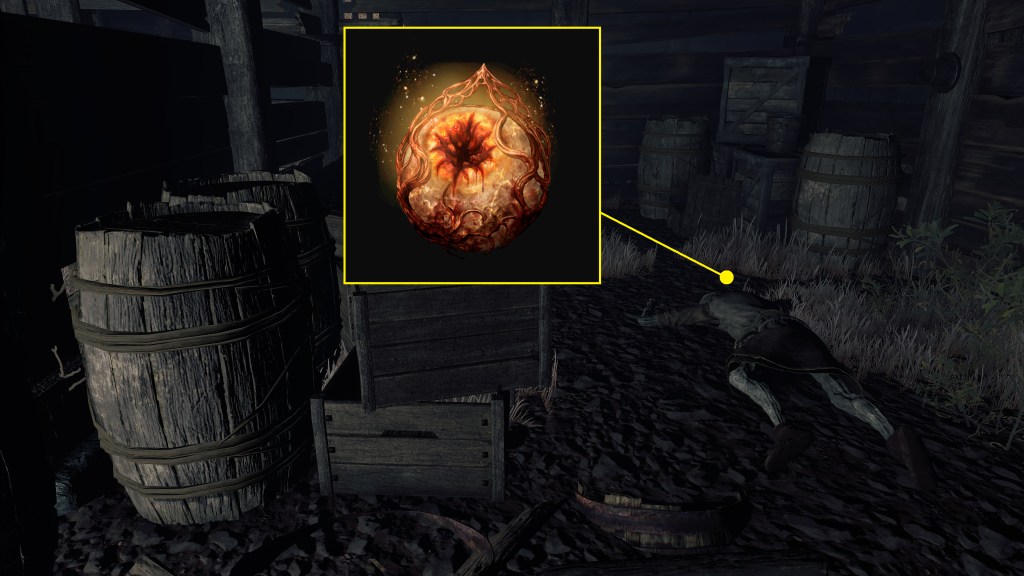
By this point, Leyndell must have also crystallized its stance concerning corruption. Like so much of the sect, the golden centipedes which fundamentalists revere appear to have been first conceived at the Minor Erdtree Church. Not only do we find the bugs laying around the tree enshrined at the apse, but even the tree guardians patrolling outside carry them on their person. In all likelihood, Marika’s research into Order led to their invention. In that case, how does turning a dead centipede golden relate to Fundamentalism, enough for fundamentalists to treat it as a powerful sacred item? Because, at its core, the bug is symbolic. The centipede is a common symbol of corruption in Japanese culture. Desiccating one in golden fluid therefore conveys a straightforward message: bring corruption in line with Order. Beyond its inherent holiness, the fetish embodies the crux of Marika’s research, informing the faithful to refine all impurities until they finally existed within the bounds of their perfect Golden Order.
This had already begun back in the waning days of Plenty with aspects of the Crucible, such as the Misbegotten hybrids both at home and on the frontier. However, Erdtree civilization was now taking aim at their own. Descriptions to the Crucible Knights’ gauntlet and greaves note how their power and appearance were later scorned as “disorderly” (秩序無き) in direct reference to the orderly system mentioned by Kenneth. Although Godfrey’s most trusted warriors seem to still be welcome in Leyndell and held in high standing, they obviously lack the same prestige enjoyed during Godfrey’s day — Radagon’s statue, in fact, portrays him rising above the chaos of trees with his total understanding of Order. The royal court assuredly started to voice criticisms with the advent of Fundamentalism. Just as the colosseums had been shut down, the remaining Crucible Knights were being sidelined for standing by the holiness which brought those nobles to power in the first place. Without the great wars to justify their existence, they stuck around as relics of a less civilized age.
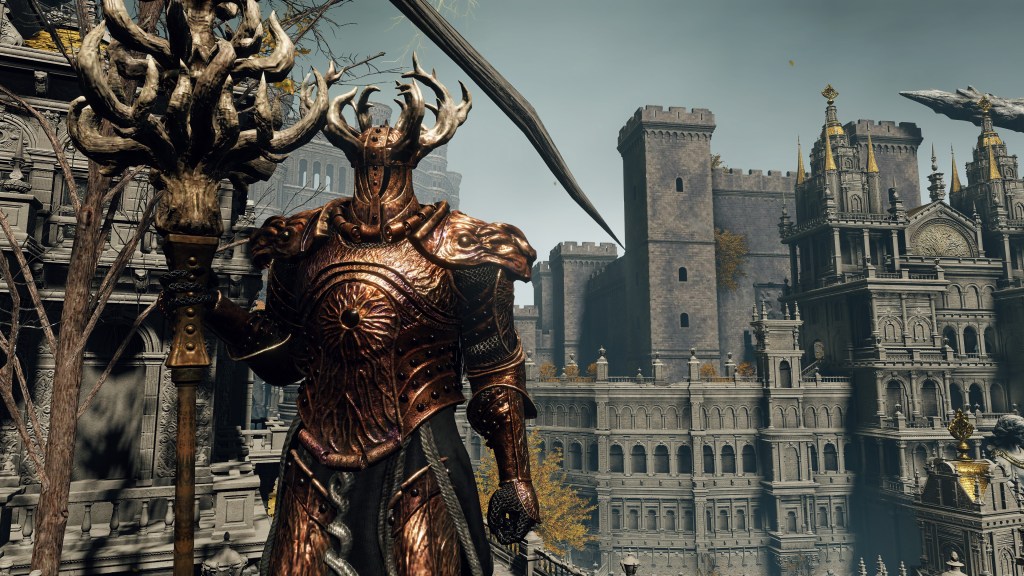
Perhaps because they had trouble adjusting to the times, the oldest Crucible Knights appear to have retreated from public life. A Siluria knight joins Ordovis as gravekeepers in the Auriza Hero’s Grave, ensuring the clan his Lord Godfrey led during their glory days remain honored. Meanwhile, we can encounter Siluria in the Deeproot Depths, no doubt attending to the nameless Eternal City because it brought her that much closer to the tree which she cherished. Devonia departed the Lands Between entirely. Perhaps the founding king’s longest-serving knight claimed intent to help the crusade in order to gain access, but once inside the Realm of Shadow, the old hero left everyone behind to pursue the origins of the Crucible — this solitary journey ultimately leading to Rauh where we may cross paths. The Erdtree was no longer the one which Devonia or the others had sworn to protect.
In fairness, not everything animalistic was considered corruption, per se. Kenneth asserts that isn’t just “noble” beings like him who serve this world system, later clarifying neither does that system forsake the “base” among them. This is justification for relying on demi-humans for his private army. Although currently all hostile to him and others, the minor lord reveals lasting relations with the local tribe, led by their mother who dons a chain mail hood in her commanding position at Fort Haight. Perhaps his views are shaped by his position out on the frontier, lacking the same resources to manage the territory as the royal capital. Nonetheless, Kenneth espouses a kind of noblesse oblige which includes the “nonhuman” races in the Golden Order. It didn’t matter if you were human, animal, or somewhere in between. Everyone had their role to play, even if it was subservient to those graced by gold. Each royal, noble, commoner, and outsider must operate accordingly for the hierarchy to function.
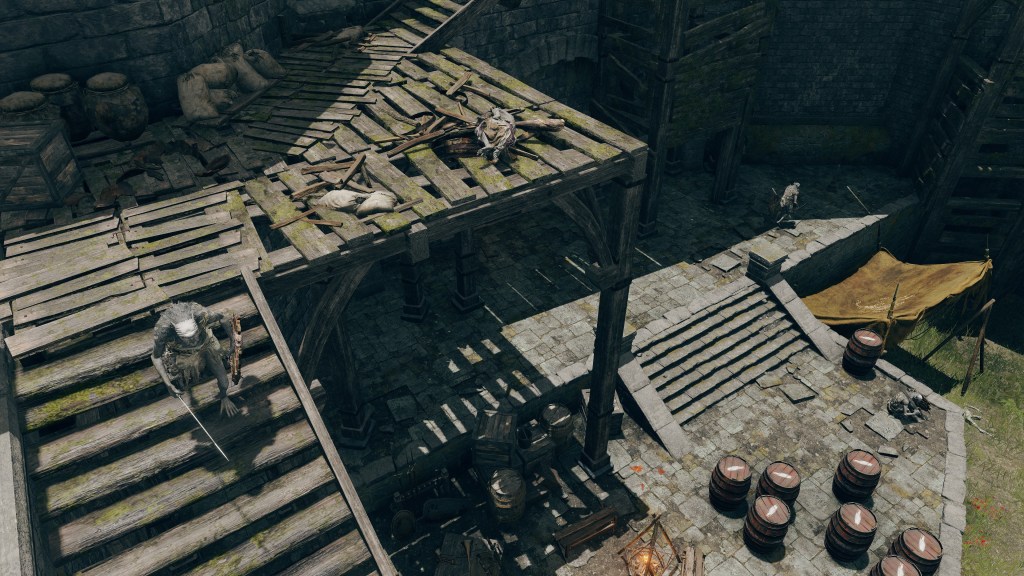
… Oh, so you have come? But… No, Even a Tarnished is welcome. Because it isn’t just the noble ones serving the proper order.
First, I must resume relations with the demi-humans… You look like you don’t believe me. But, under the Golden Tree, even demi-humans like that can become neighbors to associate with. Because the proper order doesn’t forsake the base ones. And that is the mission of Kenneth Haight, rightful ruler of Limgrave. You best watch closely also.
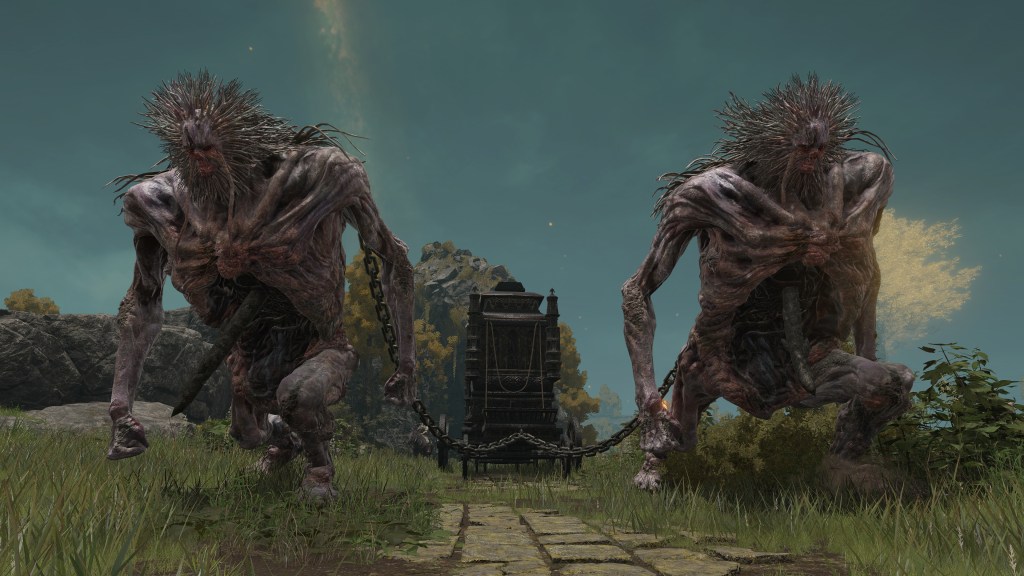
Overall, this notion of “corruption” remained limited to the excesses of Order brought about by the Crucible rather than things strictly agnostic to it. The Misbegotten were made slaves because there was no reversing their transformation and no converting their paganism. The trolls, by contrast, were free of their Fell God and happy to be of service to Gold. It is for that reason that they have allowed themselves to degenerate to dumb labor, likely replacing golems in pulling coffin carriages for the Erdtree’s people by this point. Admittedly, this may be more due to Marika’s bias — impaling them with harpoons through their hollow belly certainly seems needlessly cruel when a more conventional yoke would suffice. Without Godfrey there to remember their valor, Marika had gained free reign to exploit the giants as she saw fit. There was no need to educate them so that they could be inducted into Fundamentalism. Like the demi-humans, they just needed to act for the benefit of the system.
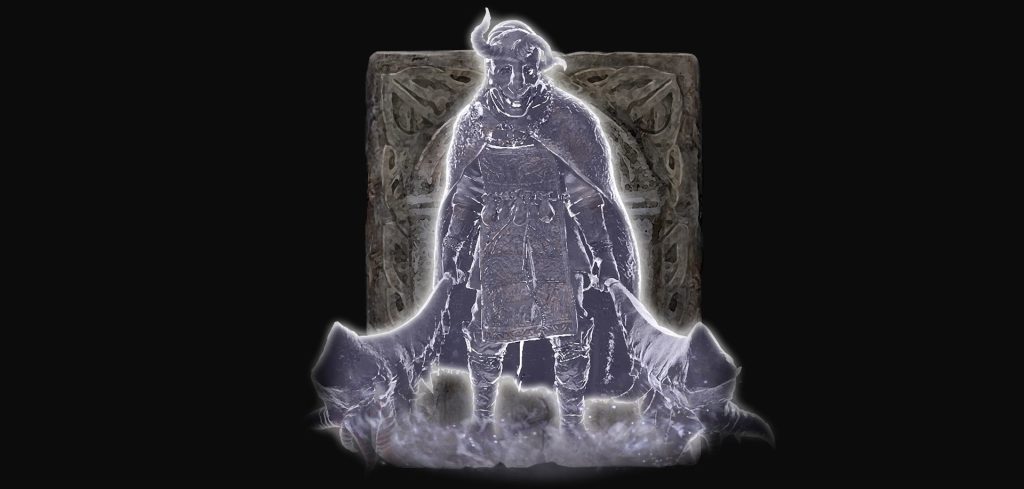
It was most likely at this time that the Omenkillers emerged. Each wears a thick apron like the clergy because of their founder Rollo, who earned his reputation as a perfumer before adopting the menacing occupation. This fame implies a long time passing for the clergy without anyone performing the eponymous Omen killing. Indeed, Rollo and his imitators wield two oversized machetes lined with sizable horns presumably claimed from their victims, indicating that they slay adult Omen. After murdering only a handful, every new exterminator would have covered their blade with the lacerating barbs adding “color” to future targets’ agony. This means that the first Omenkiller couldn’t have begun this grim duty for decades or more after the first Omen birth, possibly as late as after Radagon’s ascension to the Elden Throne. With fundamentalist discourse codifying Order’s notion of corruption, it was the perfect time for the priesthood to consider final solutions to the problem.
Robe of the Omenkillers, slaughterers with hearts broken.
Rollo, who is their founder, is an old perfumer, and the thick apron is derived from that.
Grotesque great machete closely lining curved horns cut off from omen children along its blade. Choice weapon of slaughter that Omenkillers wield.
The unsightly horns have a bleeding effect and probably add color to the agonizing screams.
Taken in total, Rollo had probably become famous as a healer like Tricia, exploring possible remedies to Omens’ corruption. But the old perfumer apparently lost hope in ever finding a cure, concluding that the only mercy to be granted to those living corrupted lives was a shorter life. And when it came to death, Omen didn’t need a soothing hand to ease their pretty little heads but an iron fist to smash those skulls in. Omenkillers, for that reason, practice swordplay instead of perfuming, the closest thing being their inexplicable ability to breathe fire through their mask and face wrappings. However, the term for “killer” (潰し) evokes connotations of slaughtering livestock, so it is only fitting that these butchers still wear an apron — though, naturally, they don’t let corrupted blood stain an image of the Erdtree, with the more abstract design. The mask of the evil spirits which haunt Omens’ dreams are an obvious tool of intimidation, appropriately boosting their strength with which they then flatten the cowering horn-men. In general, Rollo set the brutal standard for the extermination of Omen.
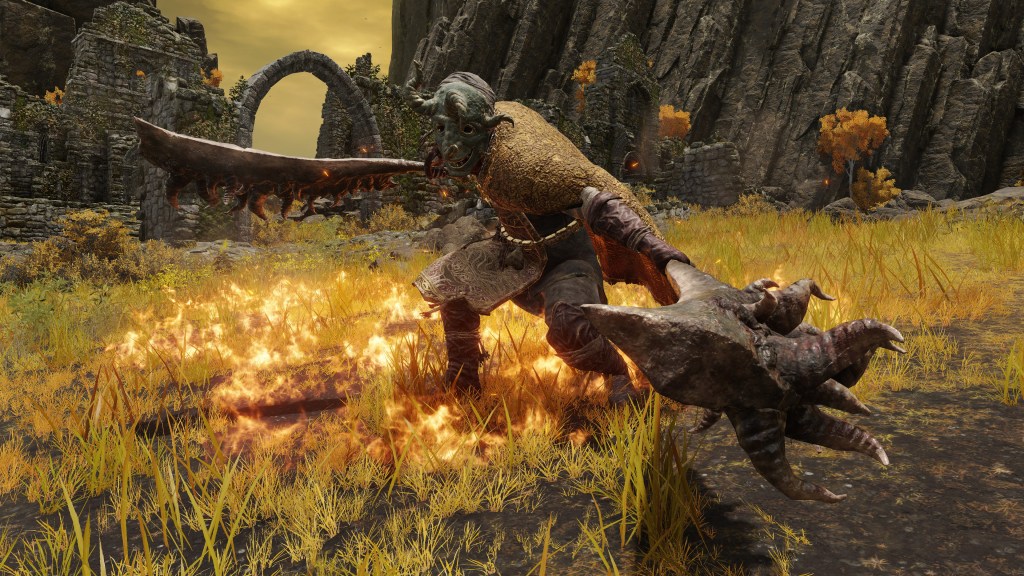
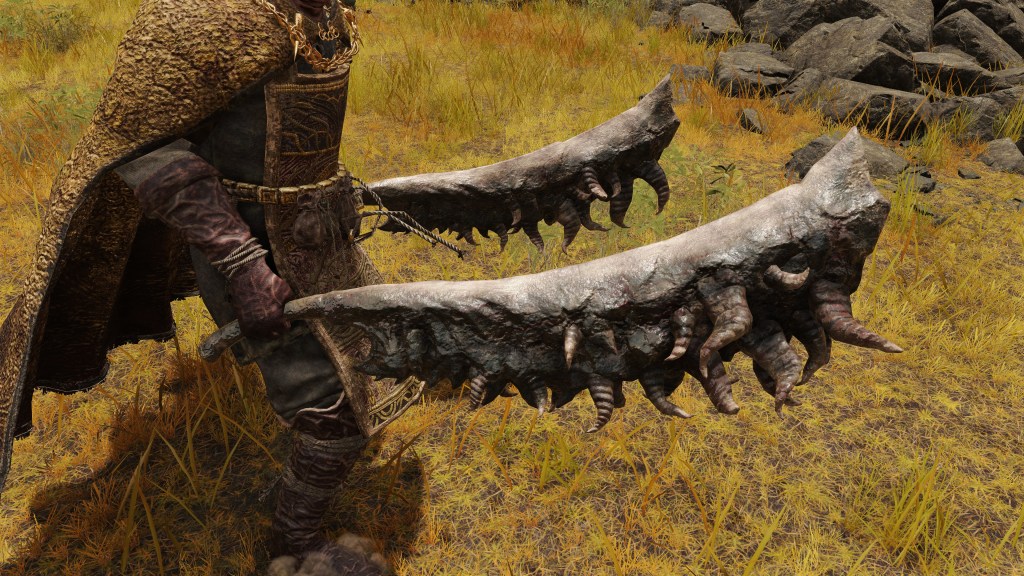
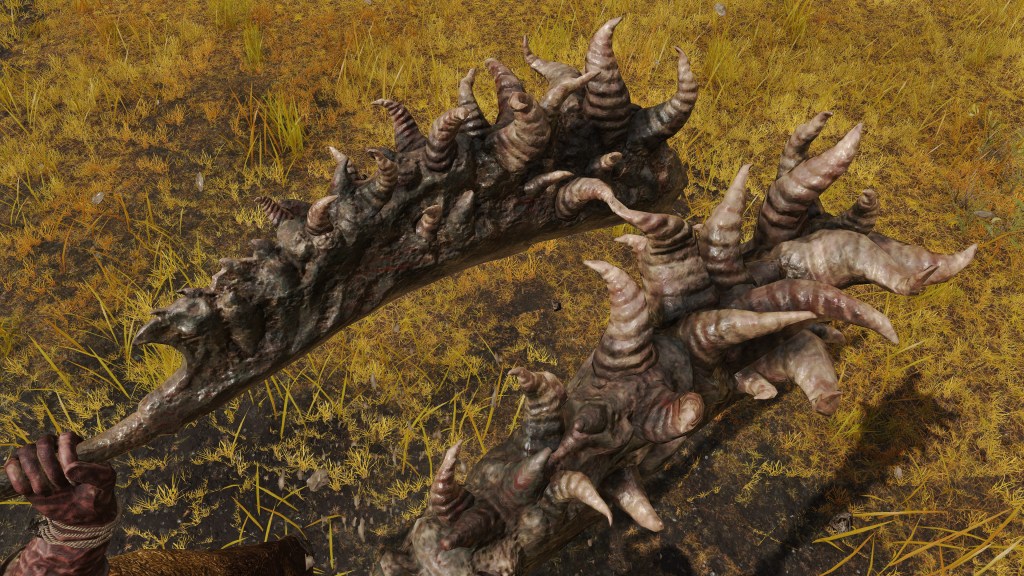
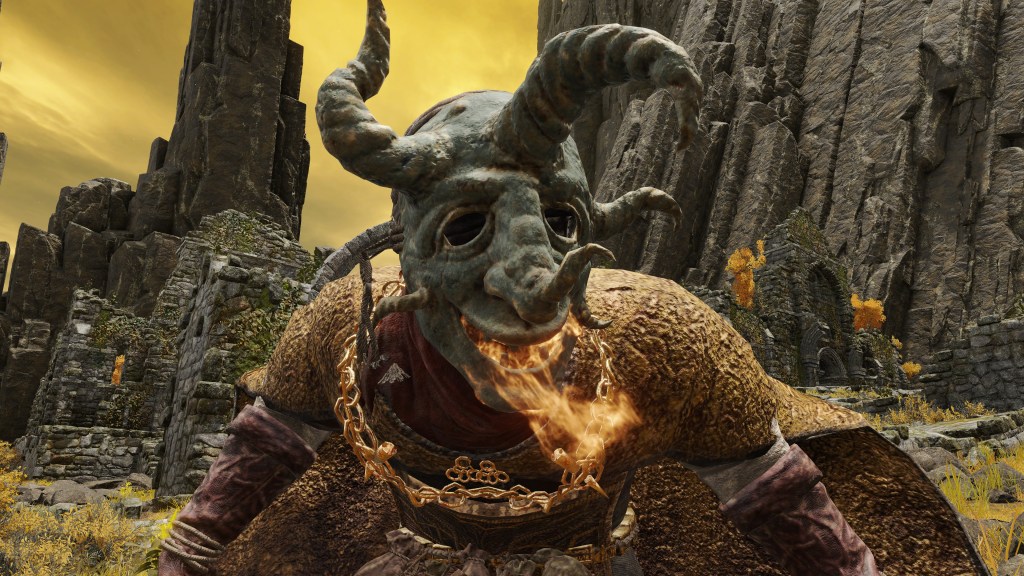
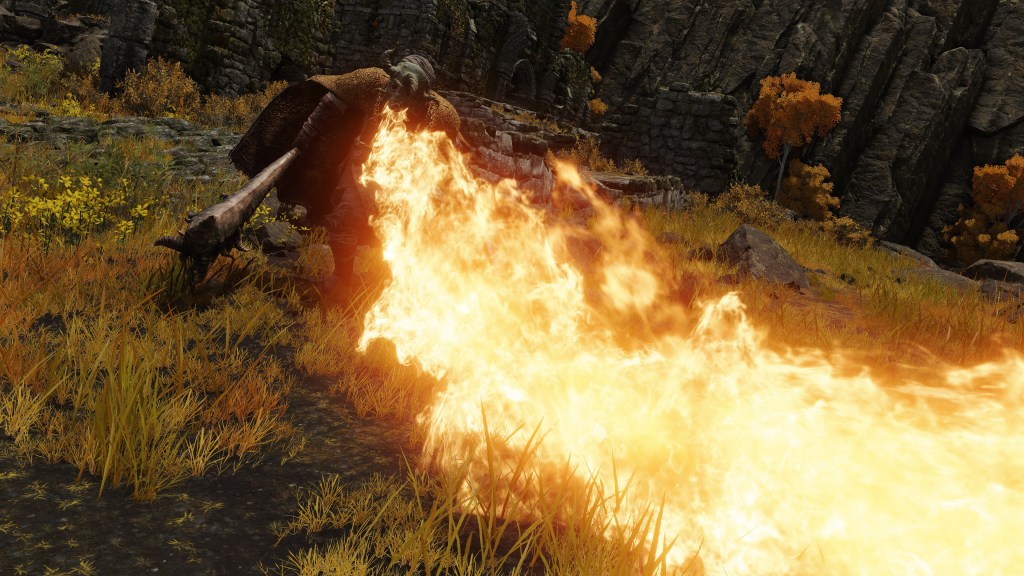
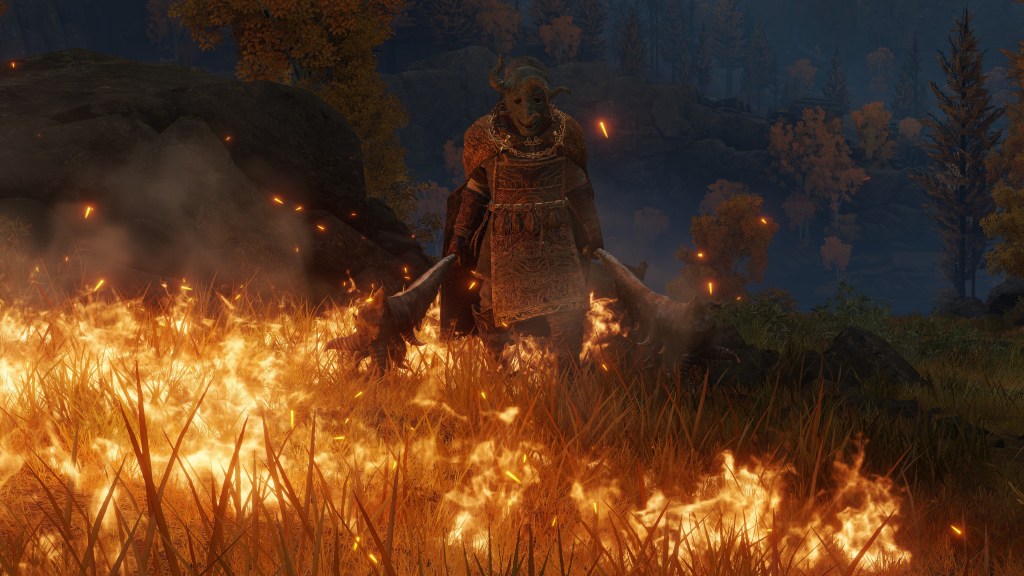
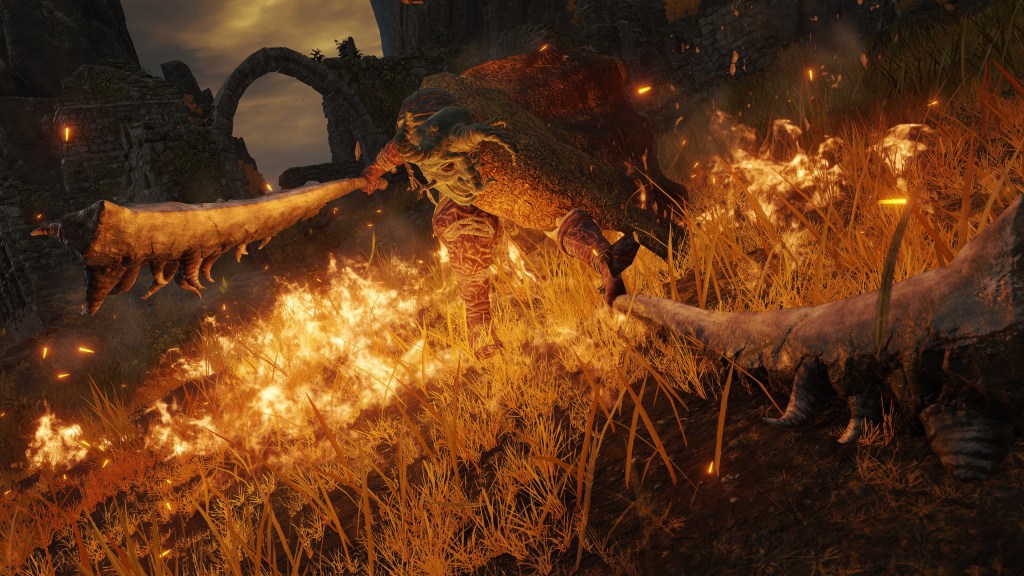
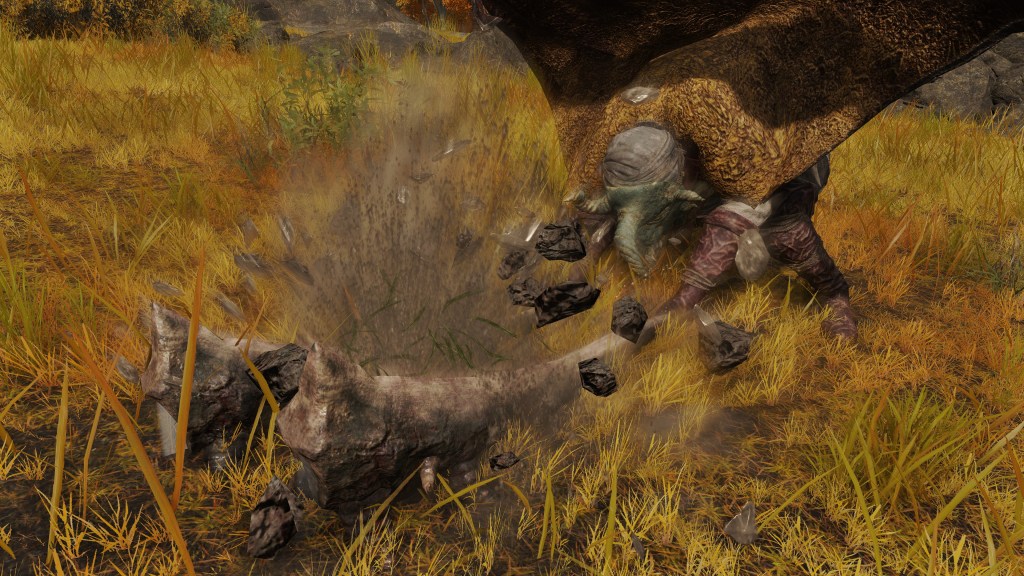
Mask of the Omenkillers sprouting long and ugly curved horns. Boosts strength.
The elder with a disgusting face is making a nasty smile. It is said to be modeled on an evil spirit that appears in the nightmares of omen children.
That being said, brutality may be an unintended accessory to this profession. Rollo’s last perfume was a remedy to his heart, all Omenkillers first killing theirs in order to perform their “nightmarish” duty. In other words, the group apparently recognized the horrific nature of their work, hence resorting to drugs to dull their conscience so that they may carry out slaughter without hesitation. Killing the innocent who don’t even wish for death is cold-blooded murder, plain and simple. But Fundamentalism sees only logic, not sentimentality. And so, Rollo turned himself into a heartless killing machine, the Golden Order’s relentless bloodhound seeking out prey — no wonder he bears the name “famed wolf” in Old Norse. This led to him pursuing cruelty in the course of maximizing the success of his mission, which later Omenkillers copied. For the sake of their higher calling, these priests have buried personal feeling. Thus began the butchery of the Omen.
This requires horned Omen to butcher. And when it comes to Omen whose horns have yet to be severed, there exist only the royals banished to the sewers below. Rollo and subsequent killers therefore used the Subterranean Shunning-Grounds as their hunting grounds, chasing down the oversized children like the wraiths of their nightmares. We even acquire Rollo’s ashes after defeating the Fell Twins, implying that the founder had been particularly fixated on the young Morgott and Mohg — who obviously eluded him. Although chasing ghosts has apparently led to his demise, Rollo nevertheless began his work hunting actual Omens beneath Leyndell. Soon, others joined him, and a new faction within the priesthood was born. Admittedly, the Omenkillers took this duty upon themselves. It is doubtful that the Erdtree royal family officially sanctioned their work at any point. At the same time, the royalty couldn’t object when they instituted this interpretation of Order in the first place. And so, reining the Omenkillers in became the job of their fellow priests.
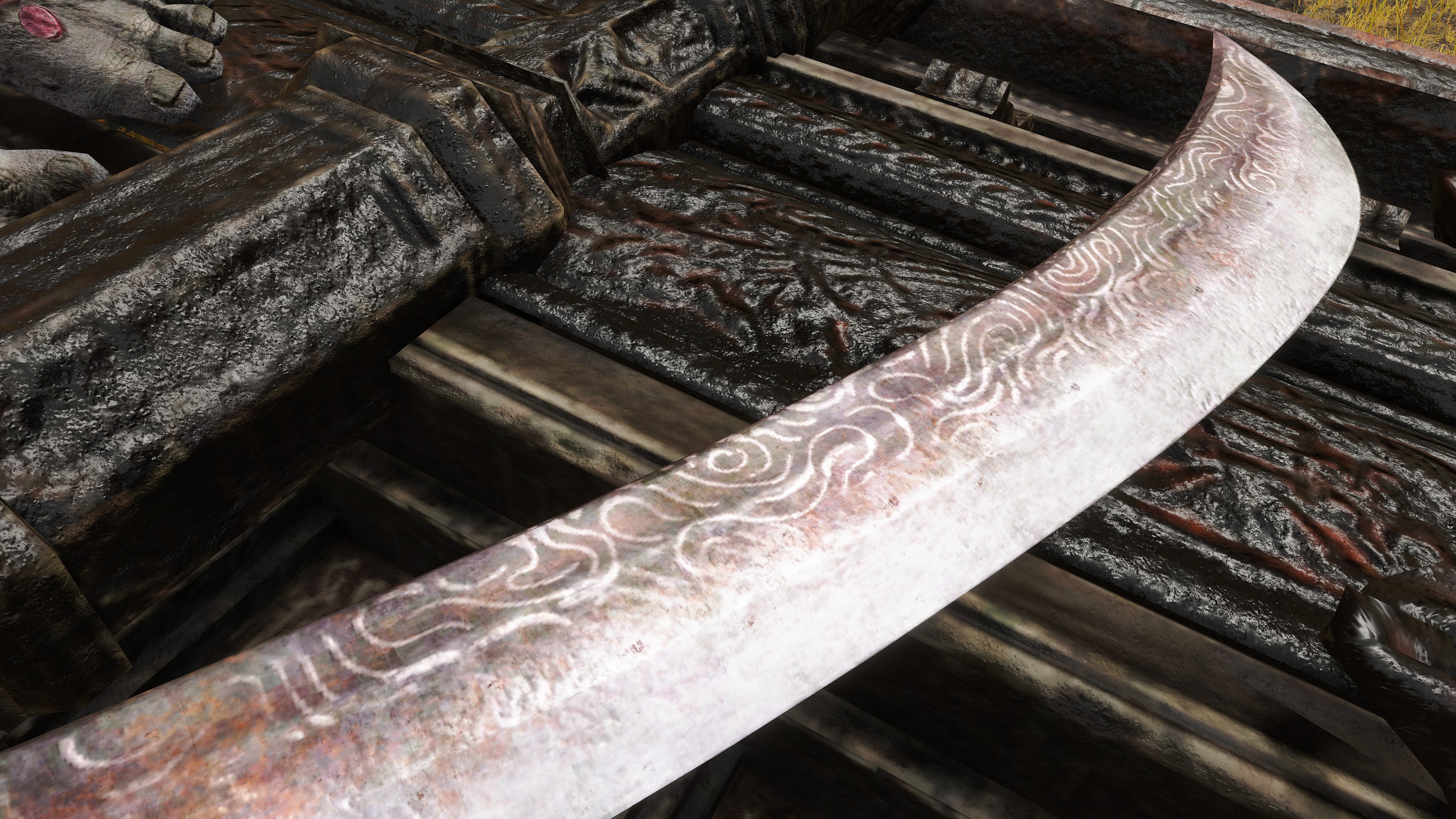
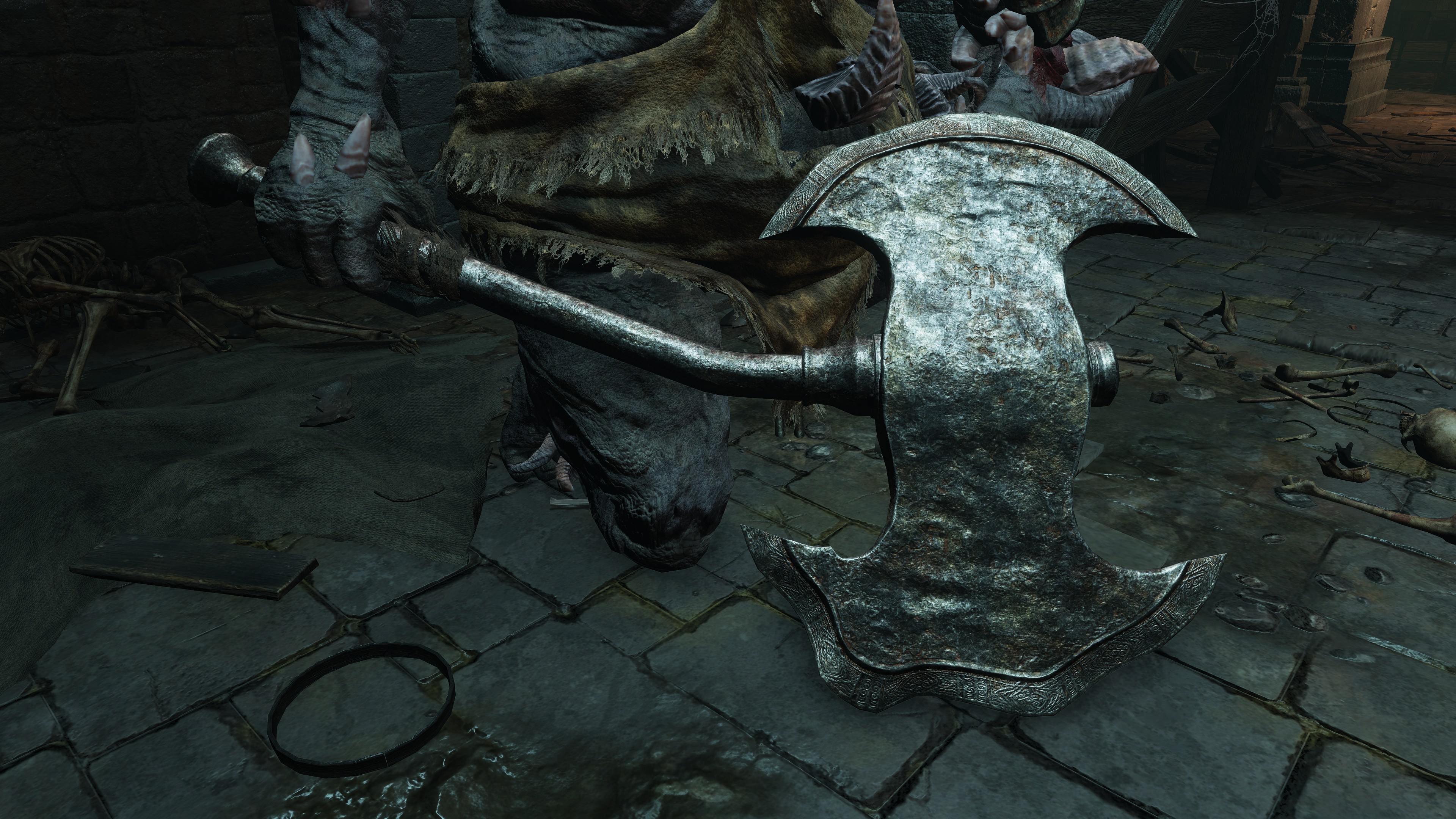
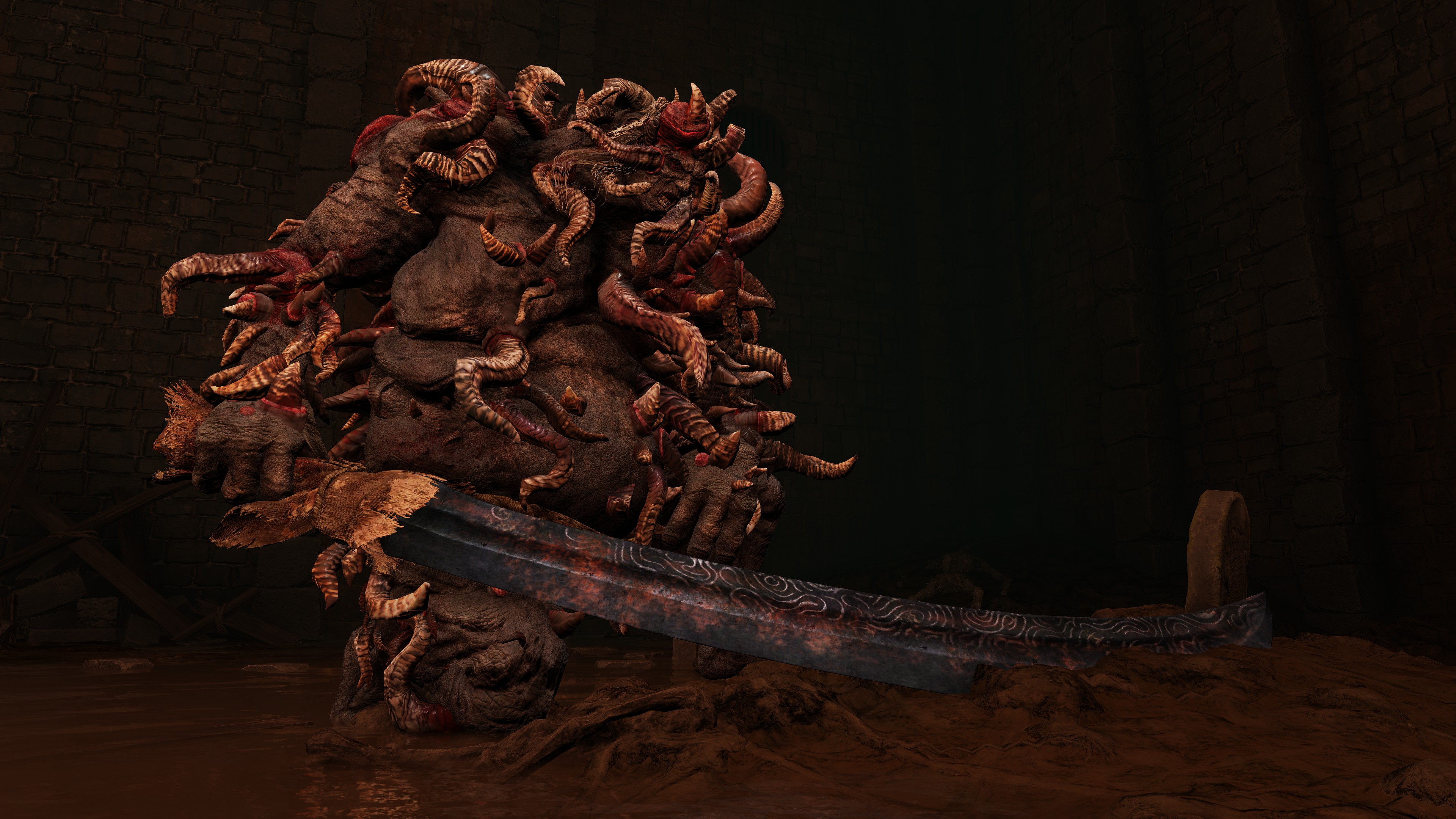
Without a doubt, the butchery put Omenkillers at odds with Tricia and perfumers who did aspire to avoid the corrupted’s deaths if necessary. Rollo’s actions likely compelled them to step in. All Omen wield either a giant curved sword or similarly large double-bladed axe. These weapons were provided in war or battle, taking advantage of their incredible size and strength to cleave enemies in two. This makes sense for an Omen of Stormveil Castle pressed into service during the Shattering. But what war are Omen trapped in the sewers fighting, to make no mention of those living on the fringe of Altus? The weapons also can’t be self-made. Every cleaver bears a pattern as proof of degradation from a spell applied, and the axe is easily bent out of shape as we always witness. These weren’t weapons designed to last; they need to be regularly replaced for the Omen to continue fighting. This serves as an obvious safeguard against any Omen among the army ranks who might entertain rebellion. But who fears retaliation from those removed from any war yet equips them anyway? The answer is the clergy.
Giant curved katana possessing heavy blade. Weapon for wielding all one’s strength that was given to omen children in battle.
The pattern appearing on the blade is the remnant of a degradation conjuration. If giving a weapon, you probably also need to prepare to take it away.
Easily bent double-bladed axe. Has a large size for an axe.
This weapon, which has been continuously slammed with tremendous power, can be wielded with only strength.
We can come across a lone Omen kneeling before a tiny grave among the heaps of dead bodies in the Shunning-Grounds. Looting the grave awards us with a few golden centipedes, implying that the deceased was a fundamentalist concerned with corruption. Evidently, that concern didn’t preempt establishing a connection with that Omen who now clearly mourns the person’s passing. This confirms that there are strict adherents of Fundamentalism who nevertheless make friendly relations with Omen in the wild. Who would these fundamentalists be except the priests who are clearly aware of the royalty’s hidden progeny? What better way to hinder an Omenkiller’s slaughter than to give his victims the means to defend themselves? And since arming a population who might resent you has its risks, they used their magic or connections to prepare a fail-safe — the perfumer giveth, and the perfumer taketh away. No Omen can build up an arsenal, and this leverage can even explain the outcasts wearing jougs despite growing up in isolation, not captivity; if they want the keep the arms flowing, they best behave.
Of course, not all are so cooperative. Leaving the “civilization” of the Underground Roadside, we begin seeing Omen armed yet uncollared. Such individuals have allowed their horns to grow wild all over the body. Perhaps the priests provide regular grooming for those they chain to help them manage the curse, but these royal rejects prefer to retreat into the sewers’ recesses regardless, remaining on the fringes of the undercity at best. Some, like the mournful Omen holding onto an old friend’s Bairn, may be more friendly, but most seem to embrace savagery; one lies in ambush just to attack any coming around the corner, especially from the Leyndell Catacombs. Nonetheless, they can still be receptive. Another example kneels down to examine the Crucible Scale Talisman offered on the catacombs altar, likely contemplating what could have been. The priests are reaching out to these lost lambs, but the Omen have so far only been willing to accept the holy men’s gift tools, not leashes. They are understandably wary of strangers, especially when similar people in aprons try to hunt the lot down with the face of their nightmares.
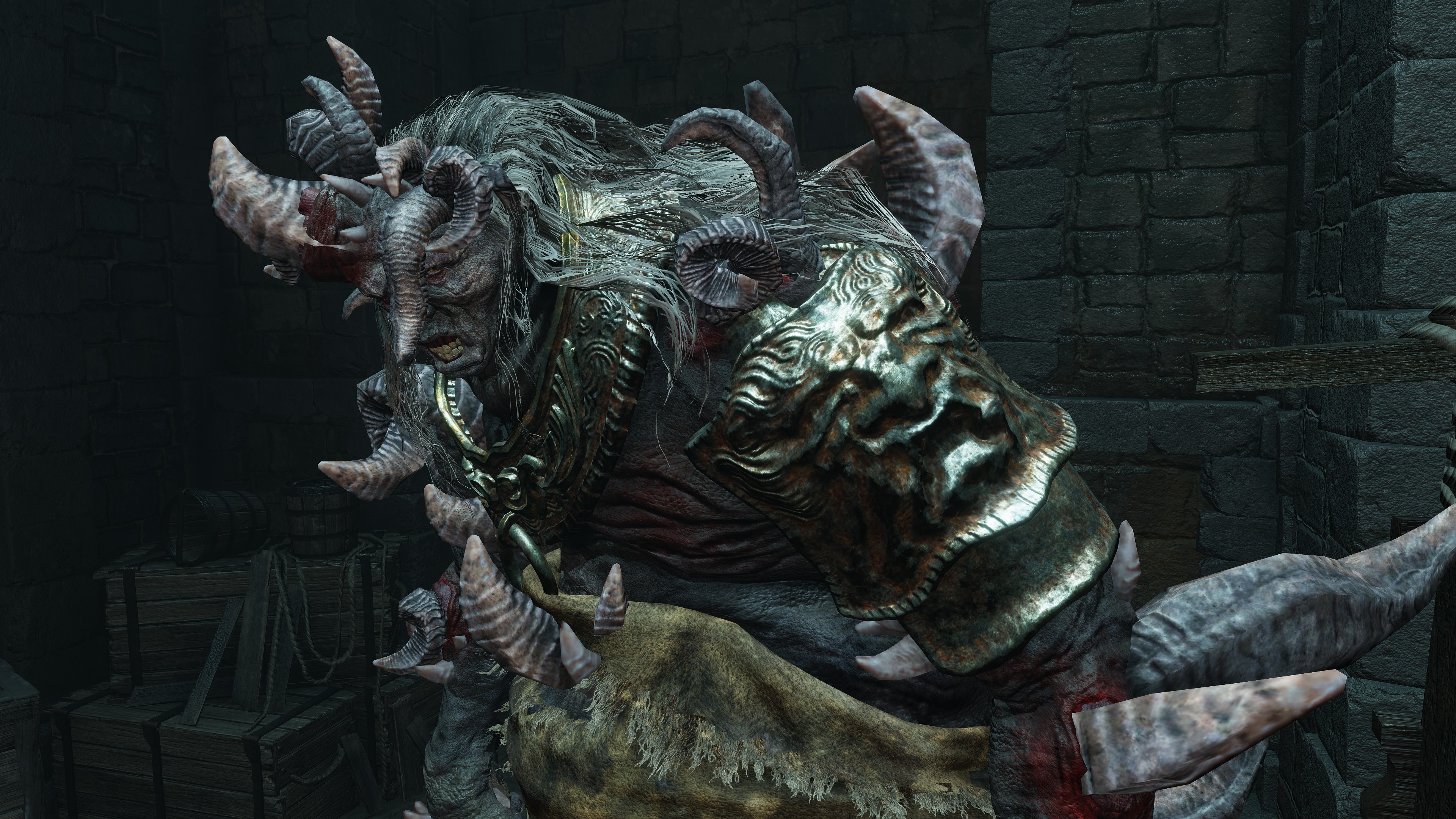
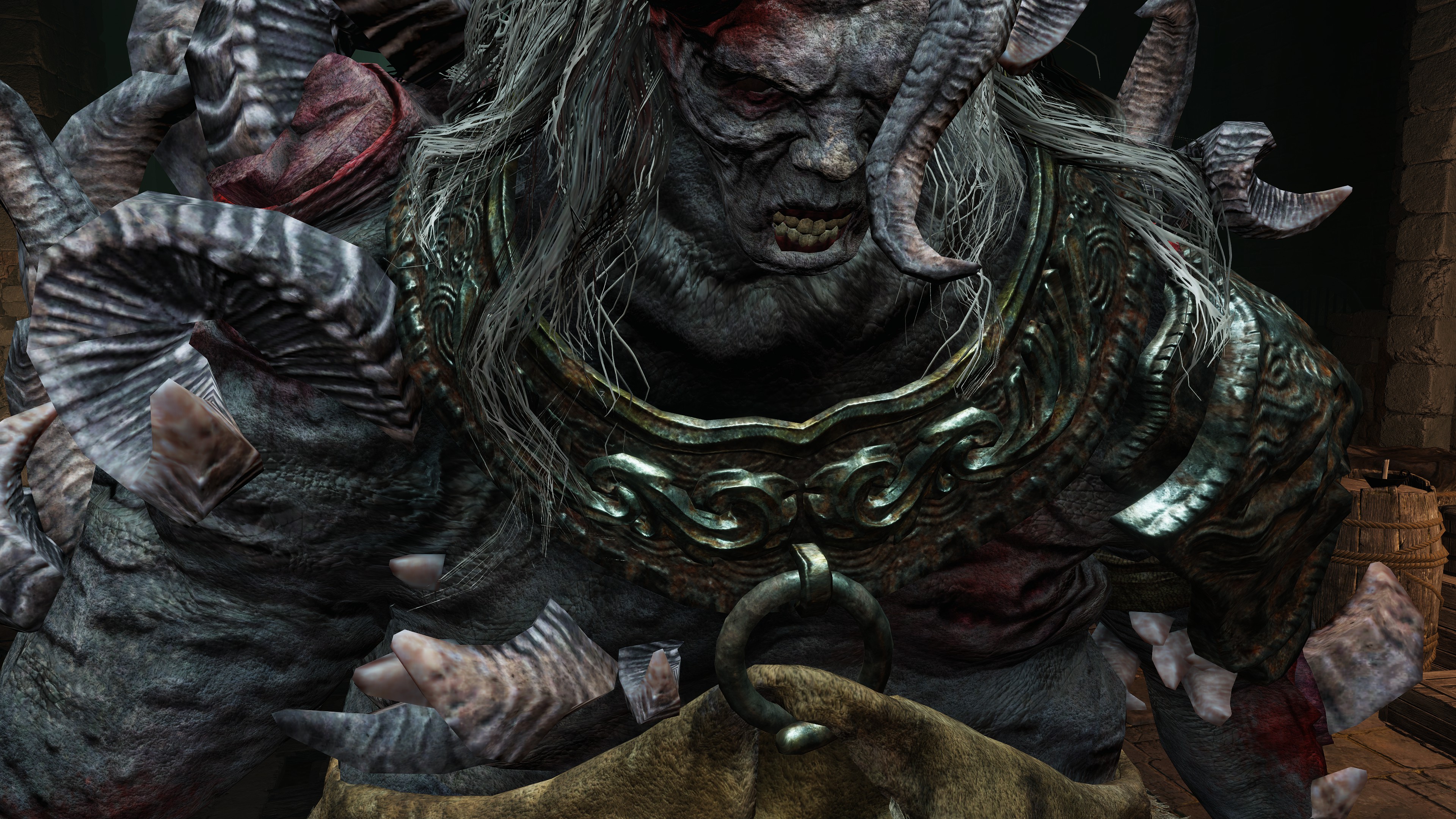
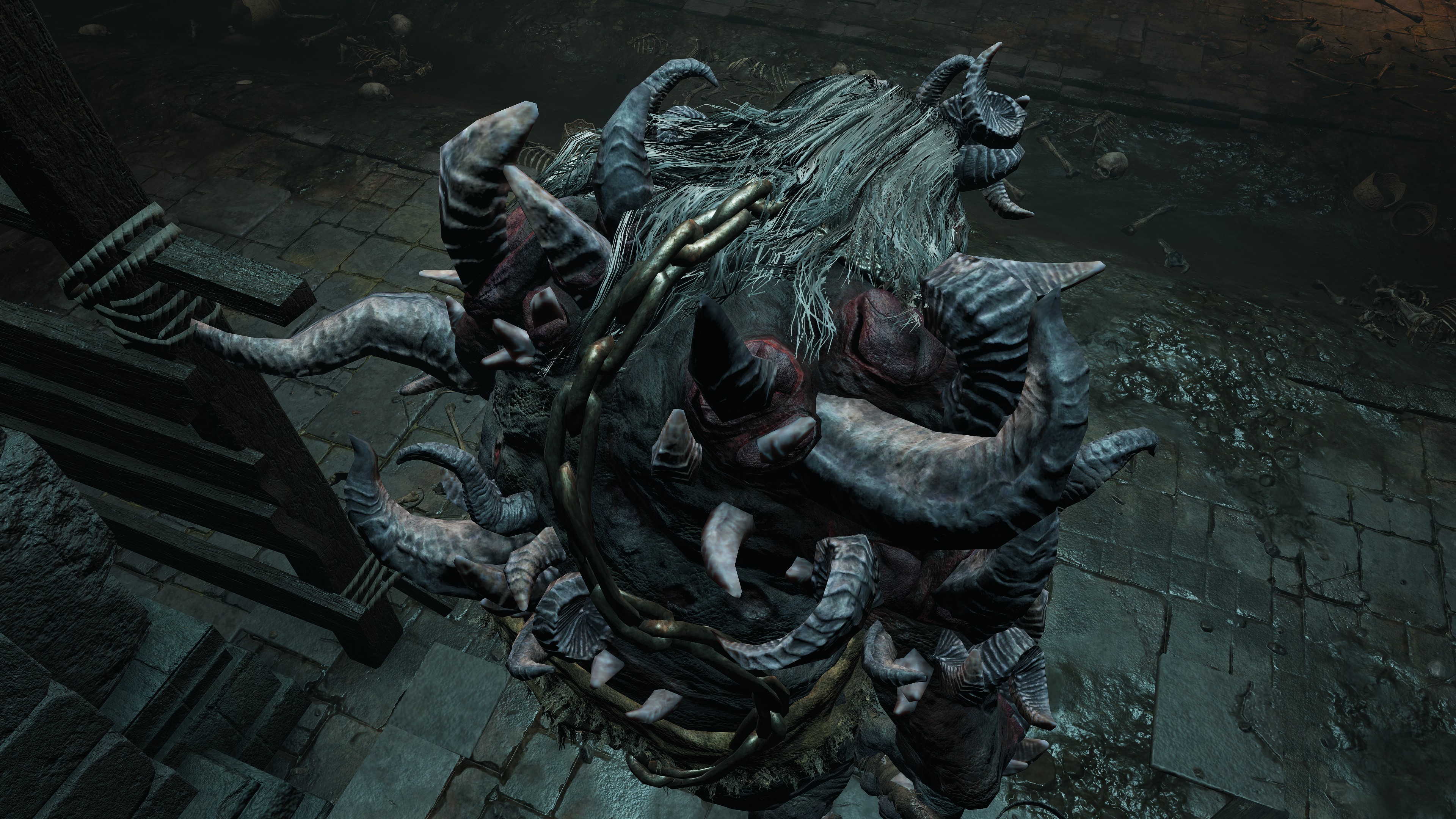
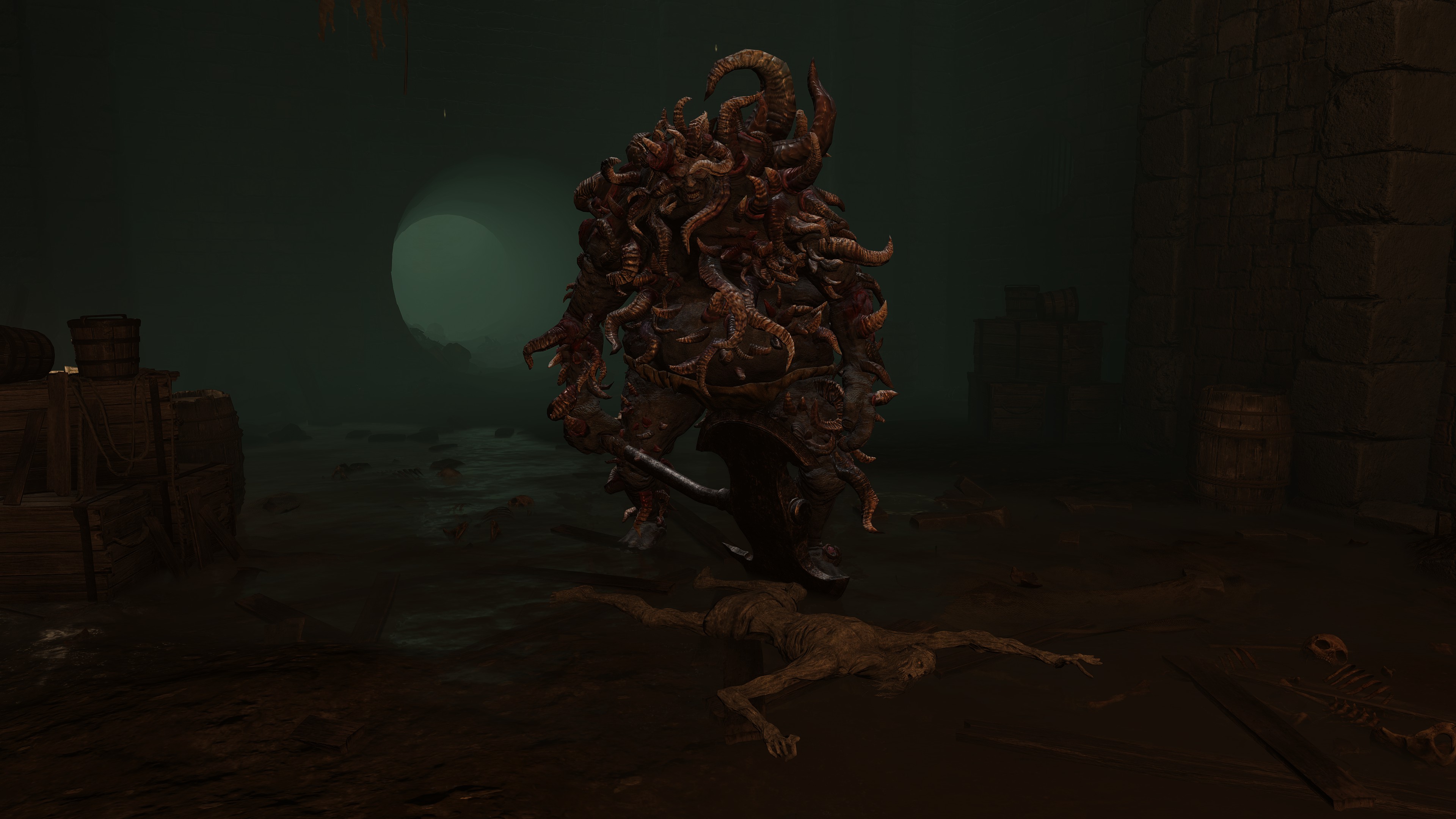
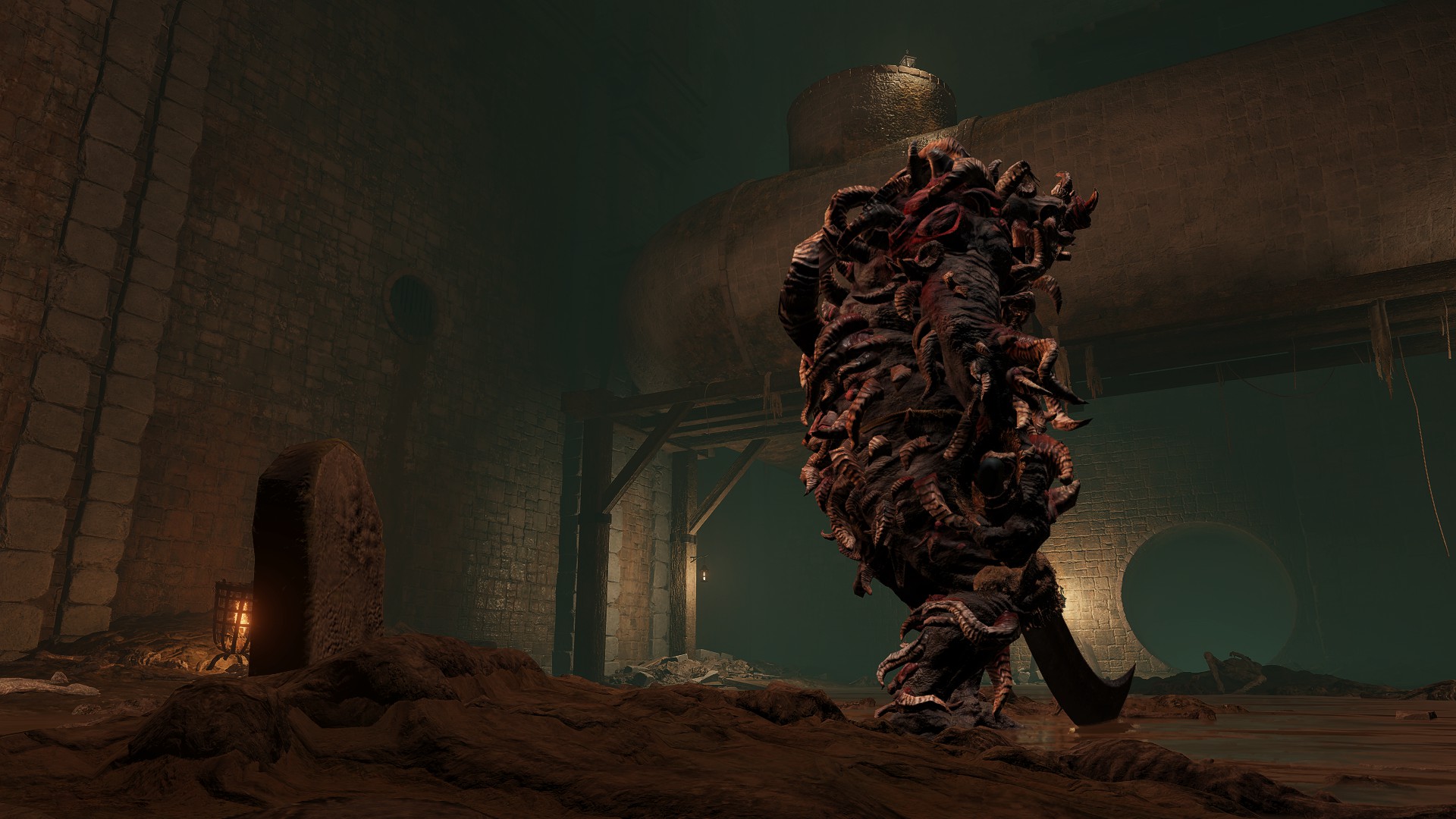
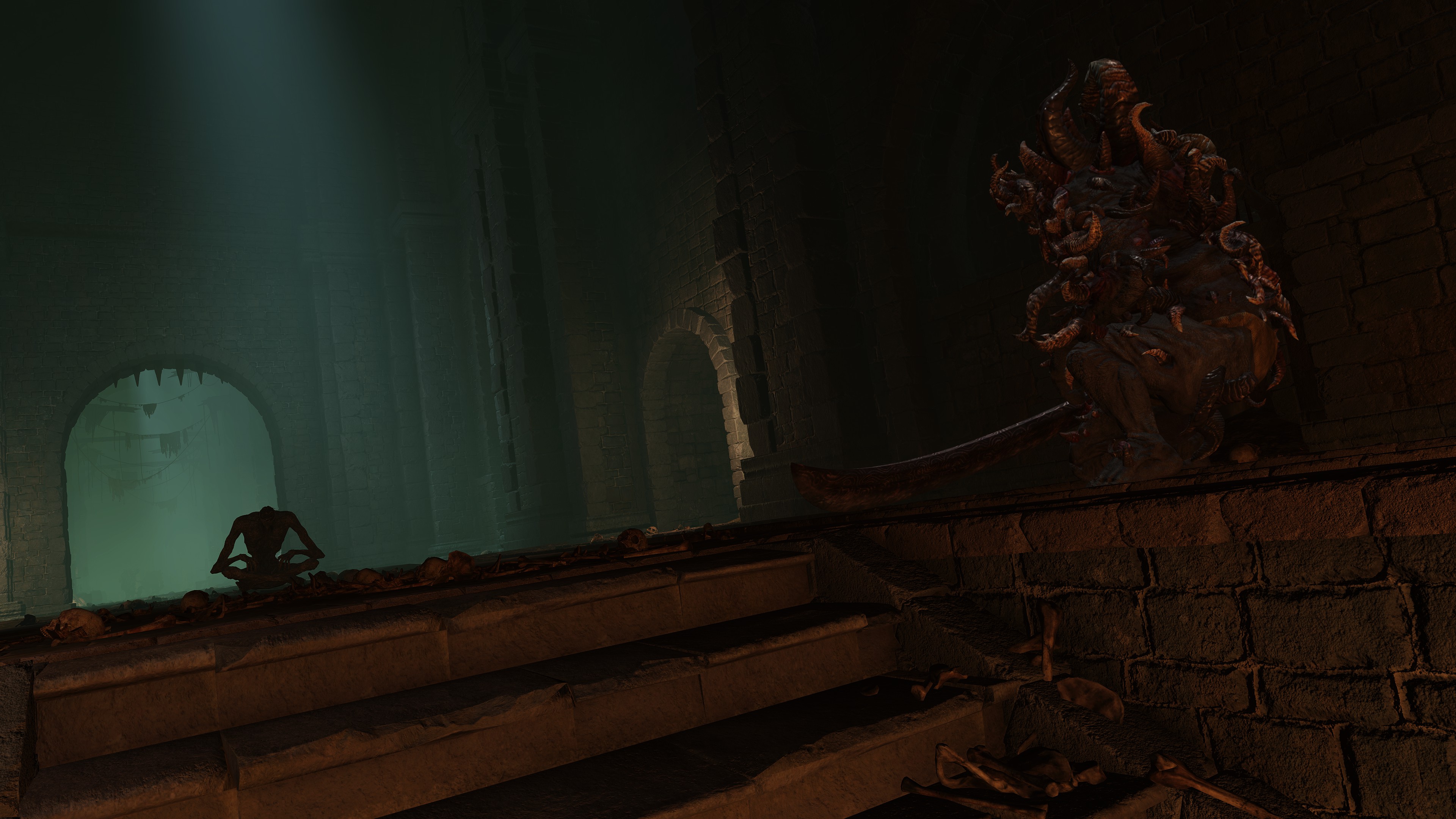
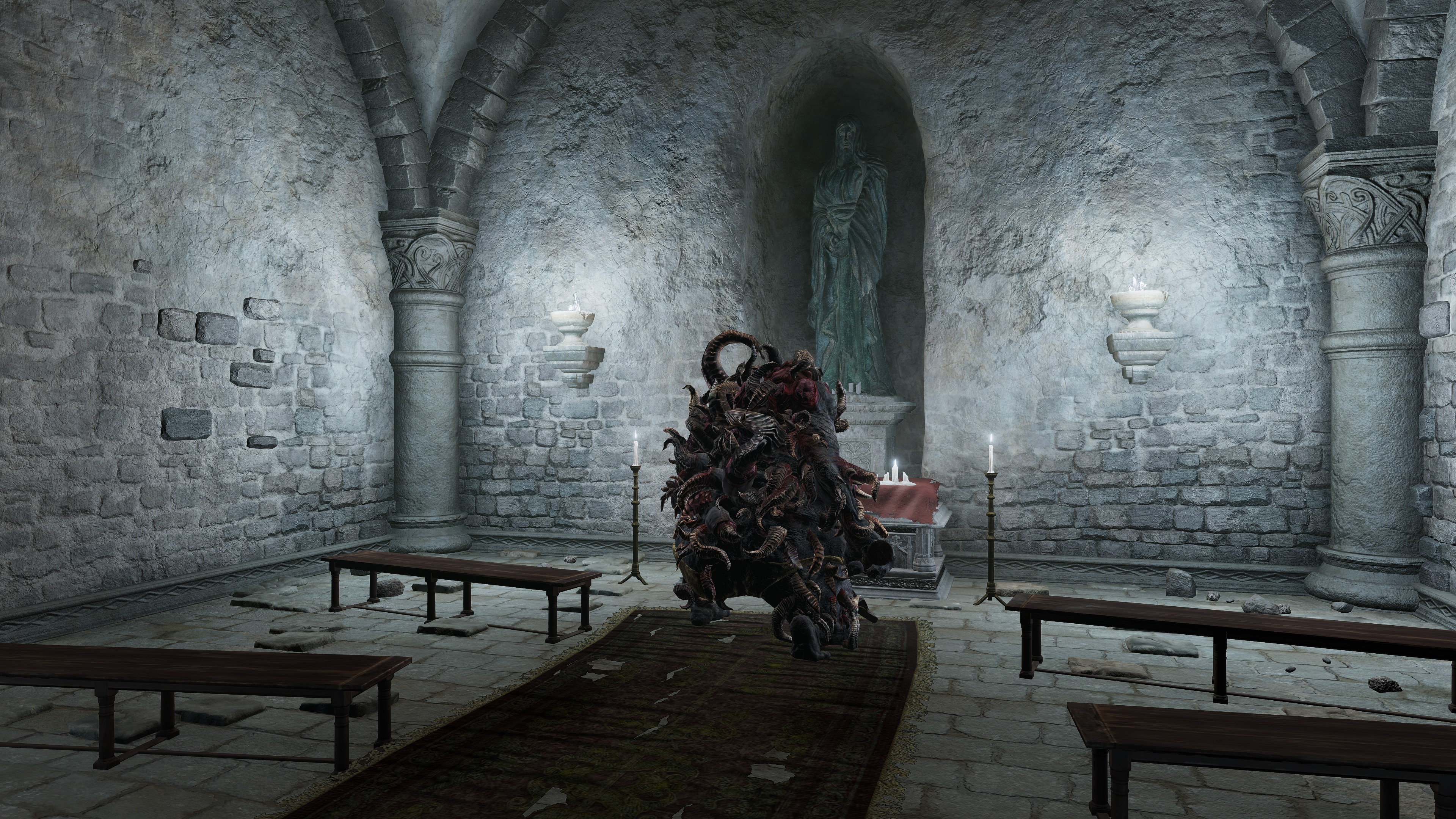
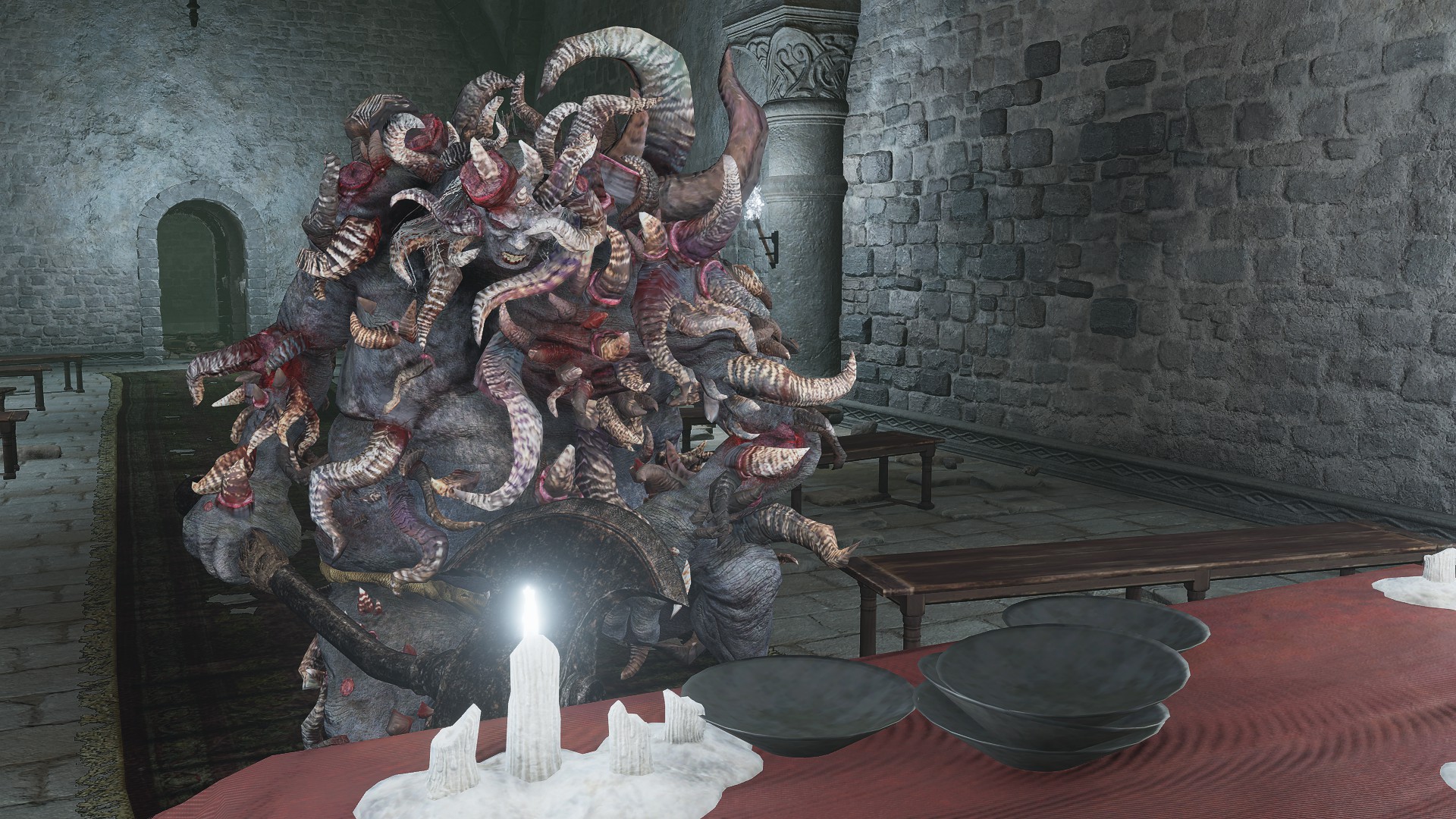
In short, the clerics of the healing faction began arming Omen communities in the capital’s sewers and at the plateau’s edge as a way to counteract those of the extermination faction. It was essentially a proxy war between the two. With all of them on equal standing, neither party could compel the other to stand down, and both could justify their actions as consistent with the principles of the Golden Order. That ultimately left the Omen to decide which side would prevail, the killers the clearcut loser. Despite this, there doesn’t appear to be any bitterness between the two factions. An Omenkiller stands among the perfumers at each of their secret laboratories, acting as the resident muscle. Without a doubt, Rollo and his ilk accepted the other side’s obstinance and ended their hunts. Between the labyrinthine corners for Omen to hide and their lethality with a blade, it was no longer worth the effort. Better to cooperate with whatever the priesthood universally agreed upon than maintain the infighting.
That isn’t to say that the group have given up their mission. As seen with Rollo, Omenkillers will still go after Omen who seem to have escaped their territory with presumed intent to harm the Erdtree faithful — no one would object to putting down such recalcitrants. They also don’t focus on just Omen but corruption in general. One killer lurks in the ruined portions of Leyndell’s Lower Quarter, no doubt looking to exterminate lingering Albinaurics abandoned by their masters but left to roam free. If they learn of other corruption in an analogous situation and face no resistance from the powers-that-be, they will leap at the chance to restart their butchery. Reducing themselves to glorified security guards is simply the best use of their talents in their day-to-day service to the Erdtree. Even if they themselves abandoned ministry, the killers in general still consider perfuming important work. And with perfumers experimenting on Omen and the like, it essentially brings the prey straight to them.
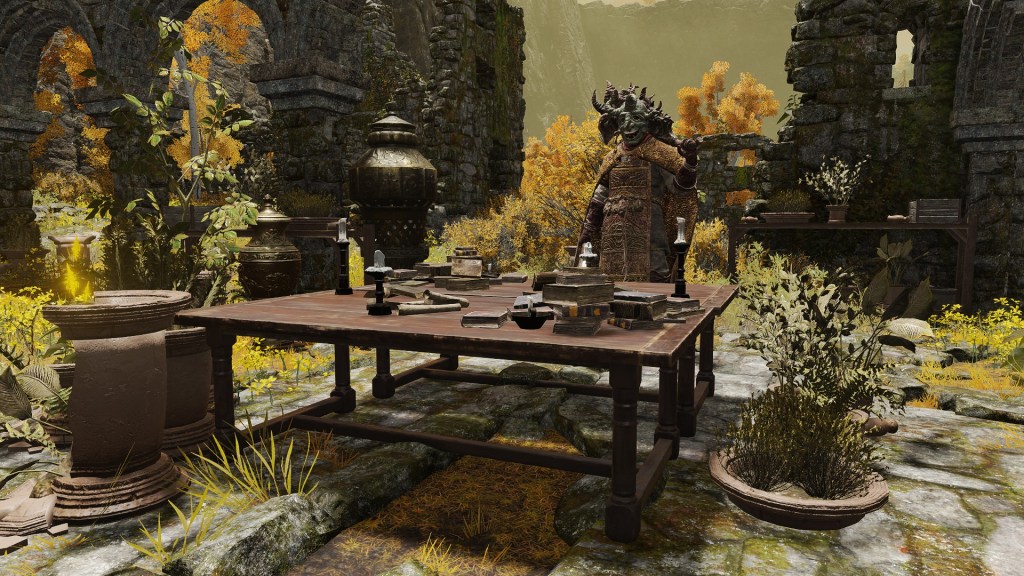
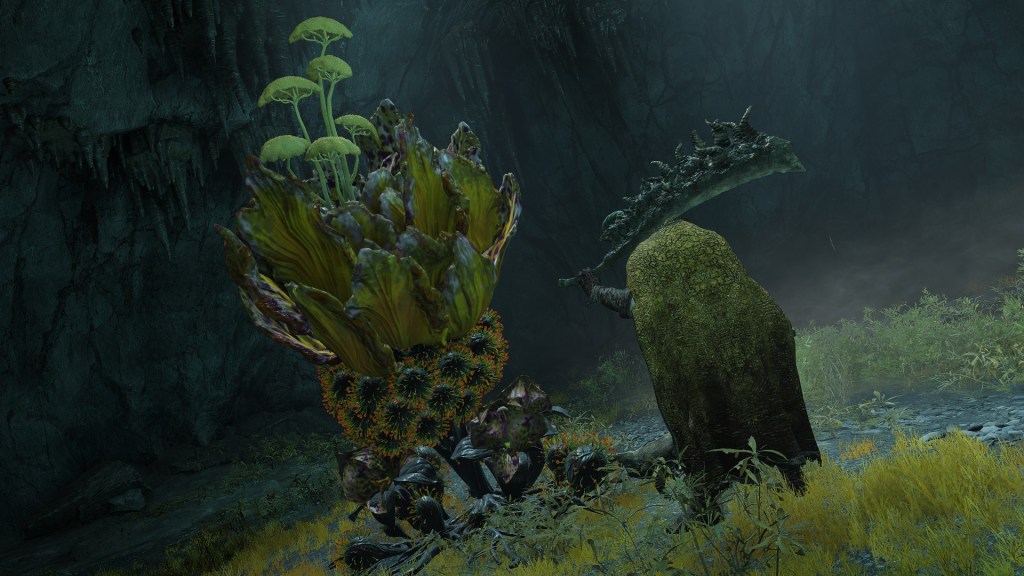
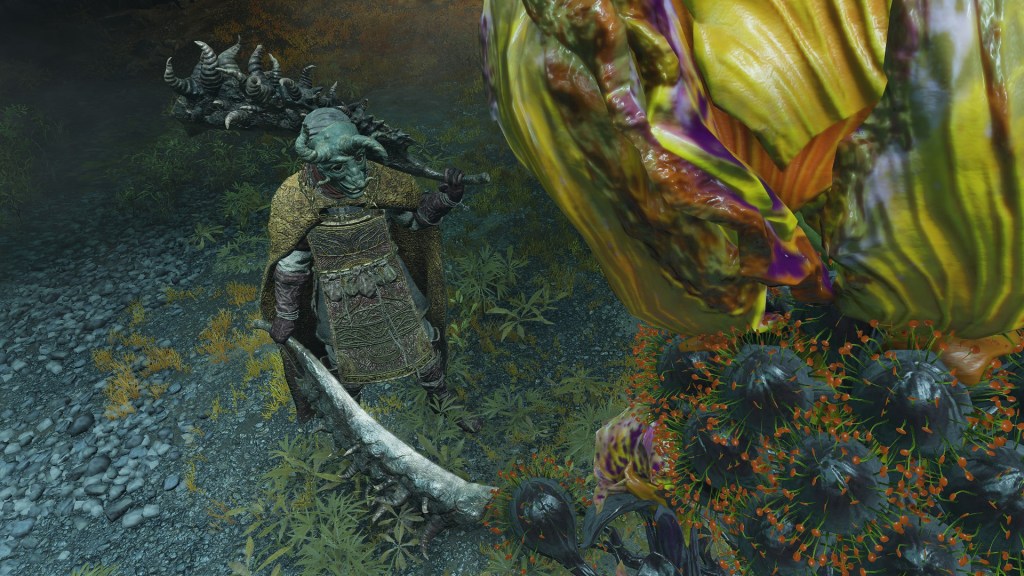
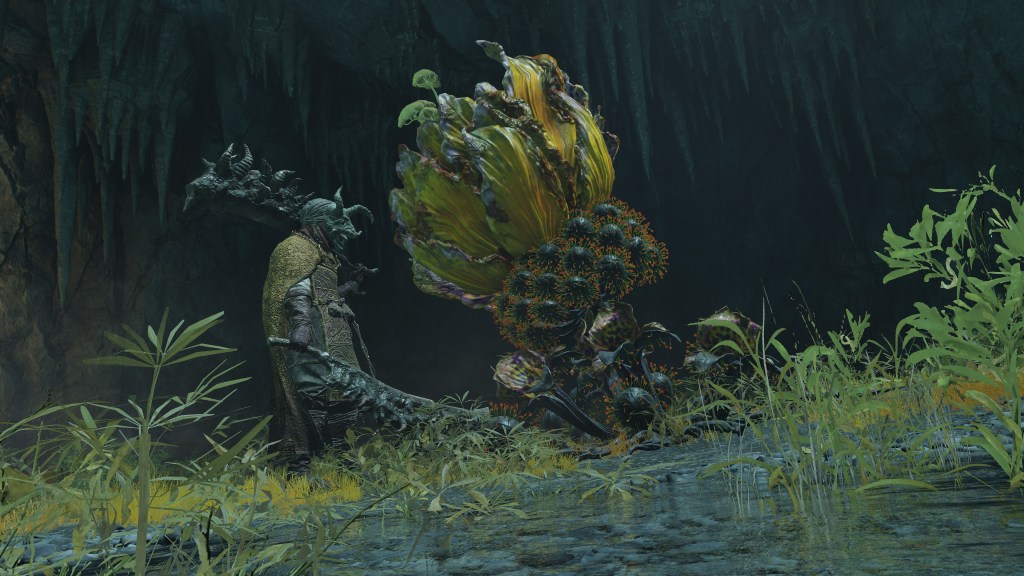
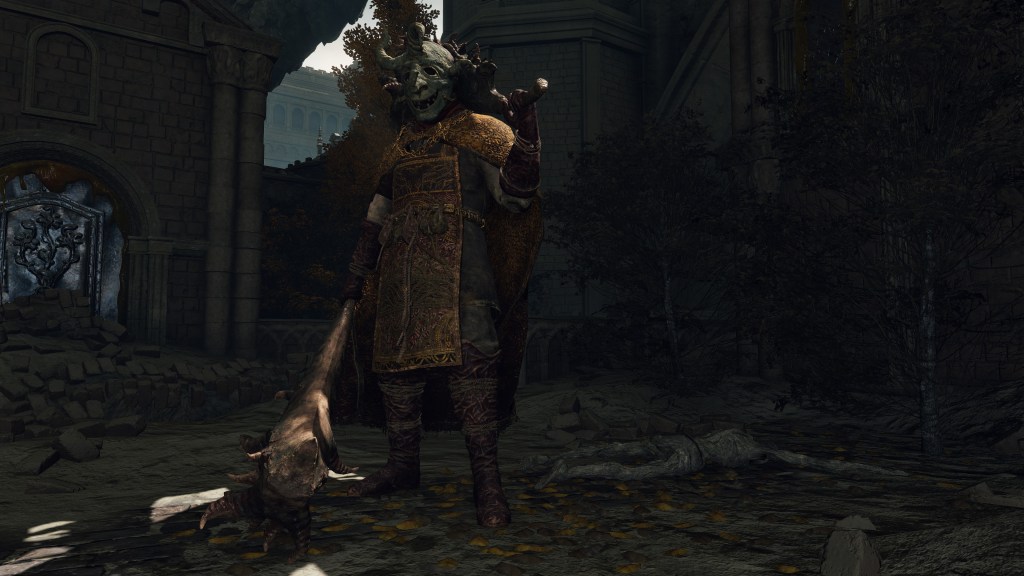
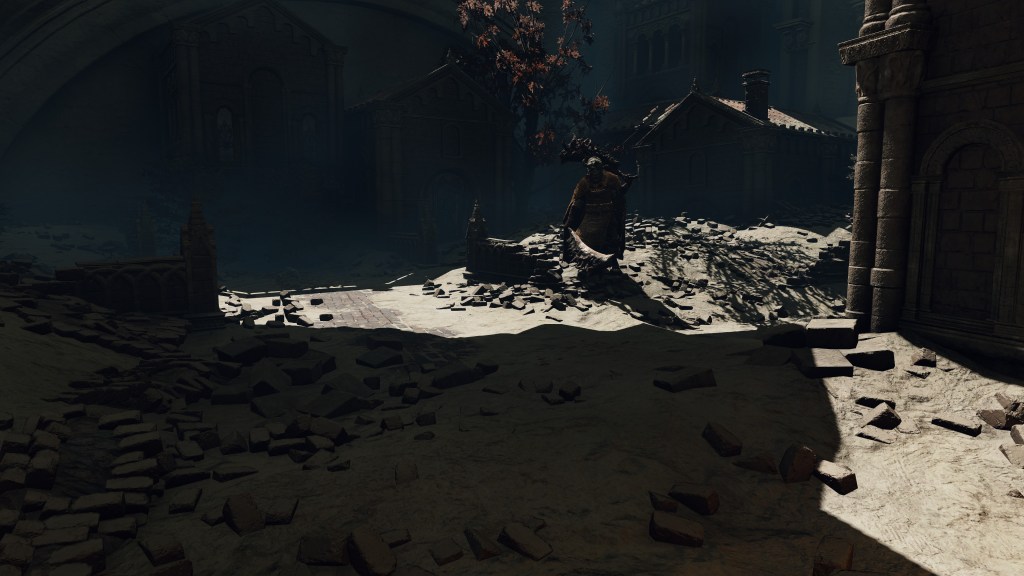
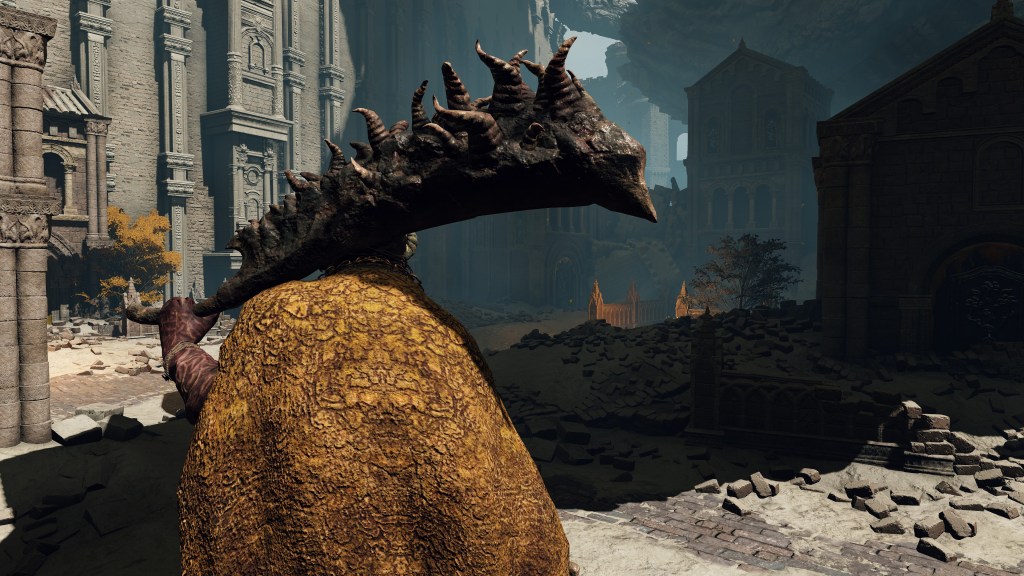
Rollo was certainly a trailblazer, but his idea wasn’t unique. Although the one in overall command seems to be the resident Black Knight, it is the “Omenkillers” overseeing the actual execution and burial of insubordinates at the Fort of Reprimand. But despite the enemies in the Lands Between and Realm of Shadow being identical, it is doubtful that these merciless punishers are following in Rollo’s footsteps. After all, perfumers are taking part in the crusade against horned corruption of their own, making it easy to imagine a handful adopting similar methods in order to more efficiently conduct the genocide. And who better for Messmer to task with “punishing” deserters than those priests who have already numbed their own hearts to empathy with drugs? In other words, perfumers isolated in the Realm of Shadow and Rollo most likely discovered their shared drugs, equipment, and fighting style independently, the first “Hornsent” killer potentially predating the birth of any Omen.
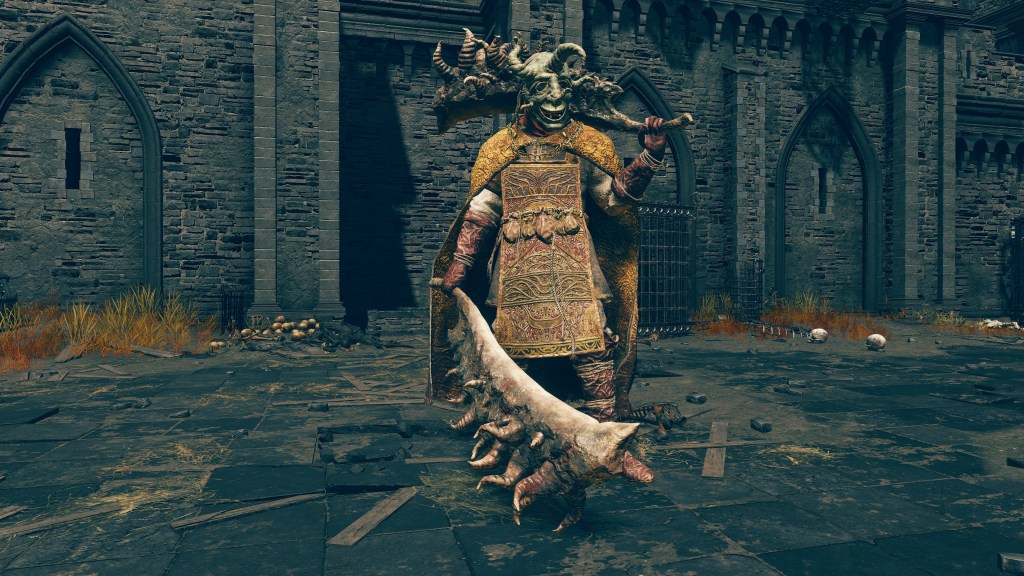
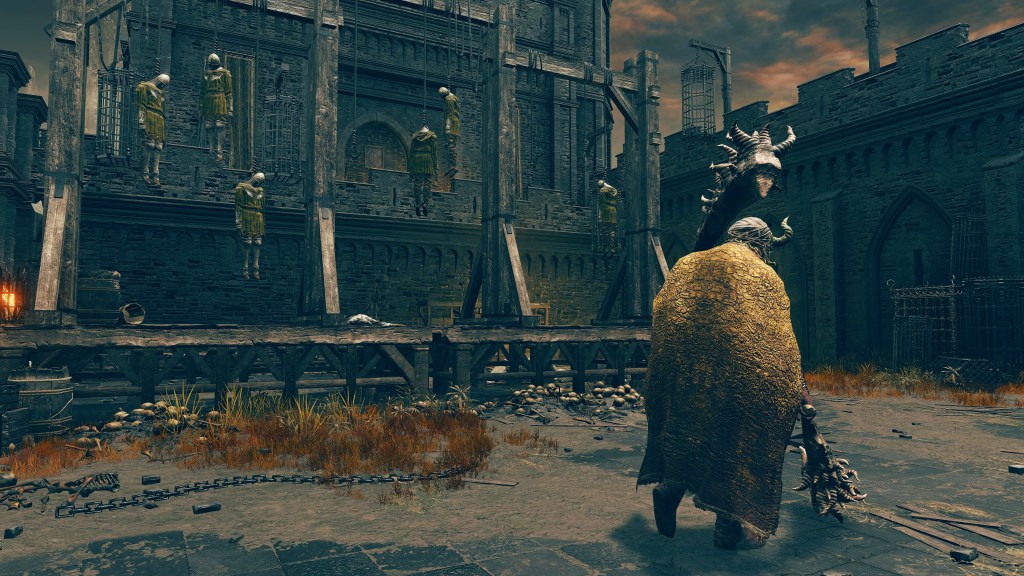
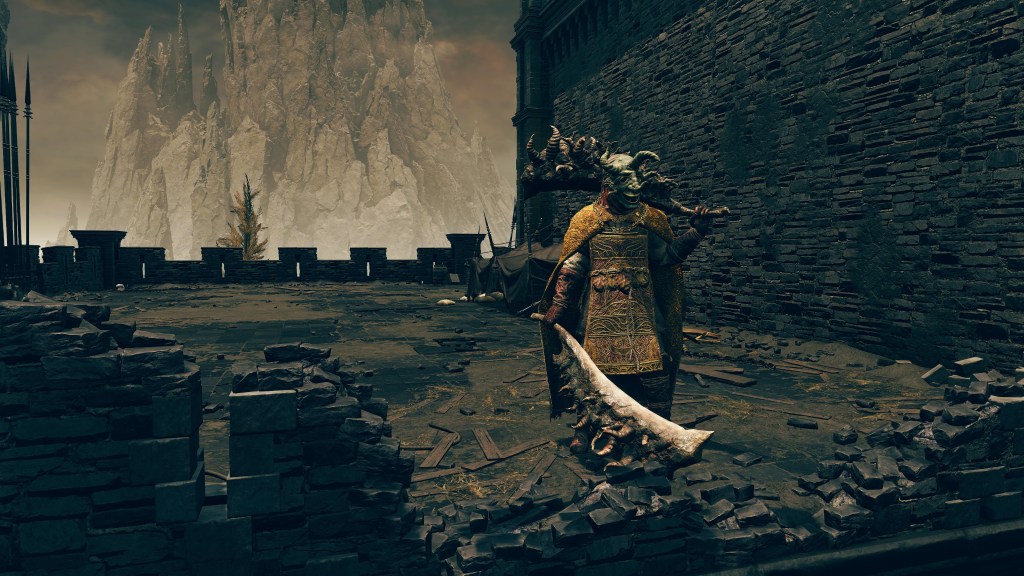
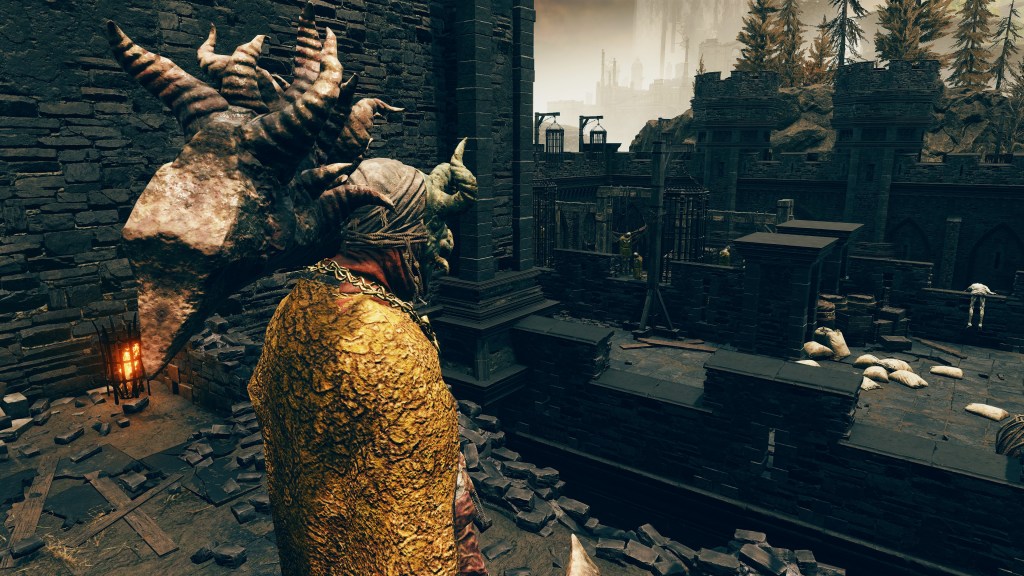
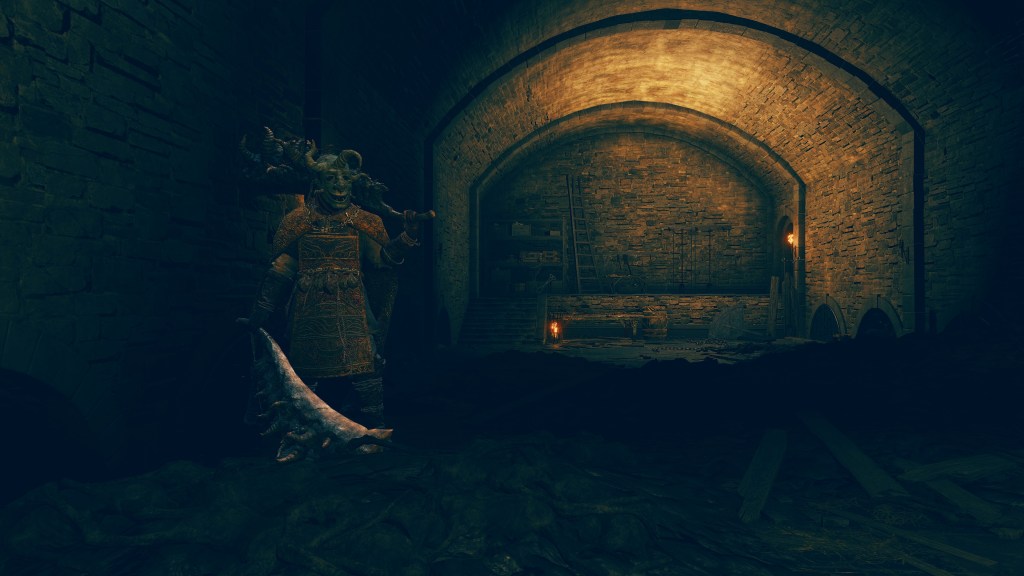
This highlights the deep roots to Golden Order Fundamentalism. Before the ideas fully came into view with Radagon, learned clerics were already indulging their fanatical elements. Deciding what was corruption to the Order and how to balance ideology and practicality became its own learning process. The conflict between perfumers and Omenkillers brought this larger debate to full fruition. In that respect, Radagon cannot be fully faulted for the rigid formulation of his gospel. The Golden Order is the Golden Order, just as people are people. How the subjective views the objective was perhaps always going to encourage extremism among a subset. If anything, the perfumers’ conflicts shows how the rigidity didn’t necessitate radicalism from zealots. Plenty, like Goldmask and Kenneth, were willing to interpret the universal truths less prescriptively. In the end, the Golden Order which Marika created left room for all perspectives to find validity, biased as she herself was.
I Think, Therefore We Are
With how Radagon had revolutionized religion and society, it is easy to forget that this path began as a selfish endeavor. Although it definitely had its benefits to whole civilization, Marika and Radagon were ultimately exploring Fundamentalism for their own ends. The god wanted a better understanding of her place in the Golden Order and how to improve it; her other half, an answer to his existential crisis and how he might mend it. Their dogged pursuits, both together and apart, led to this final formulation of Order. And in applying those universal laws, the king and queen might diagnose the precise problem and devise a solution. Insofar as their individual goals were accomplished, they were happy to proliferate a system based on reasoning through the Elden Ring’s power — in that world, every citizen was a potential contributor to the final answer. The fact that Marika and Radagon still exist as separate yet inseparable identities is simply proof of their ultimate failure, not that they didn’t try.
The Auriza Side Tomb is a curious construct. Located across from the Auriza Hero’s Grave, the catacomb chiefly inters not corpses, in the traditional sense, but pots of flesh. While using jars for Erdtree Burial isn’t unprecedented, nowhere else do they feature so extensively, with vessels stored in loculi on top of placement at every corner. Not just inert but even living jars are unusually common in this crypt, and that is ignoring the fair number of imps throwing explosive pots; we can even loot a good number of cracked and ritual pots for our own crafting purposes off the ground. The only other time jars take such precedence in burial is as offerings for Minor Erdtrees on the surface. Why then lean so heavily into that method of burial for a catacomb? It becomes all the stranger when considering the use of blue magic flames for lighting, with imps throwing magic or lightning pots specifically. One would suggest the involvement of sorcerers, yet the other implicates the ancient dragon cult. Neither fits a graveyard to the Auriza. Why do the Auriza hero graves even have “auxiliary graves” (副墓) to begin with?
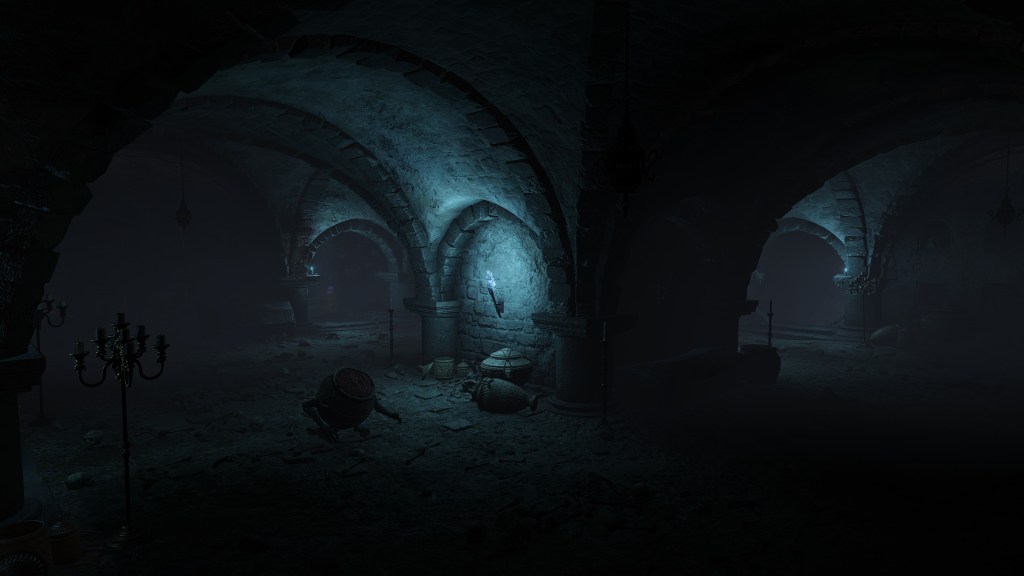
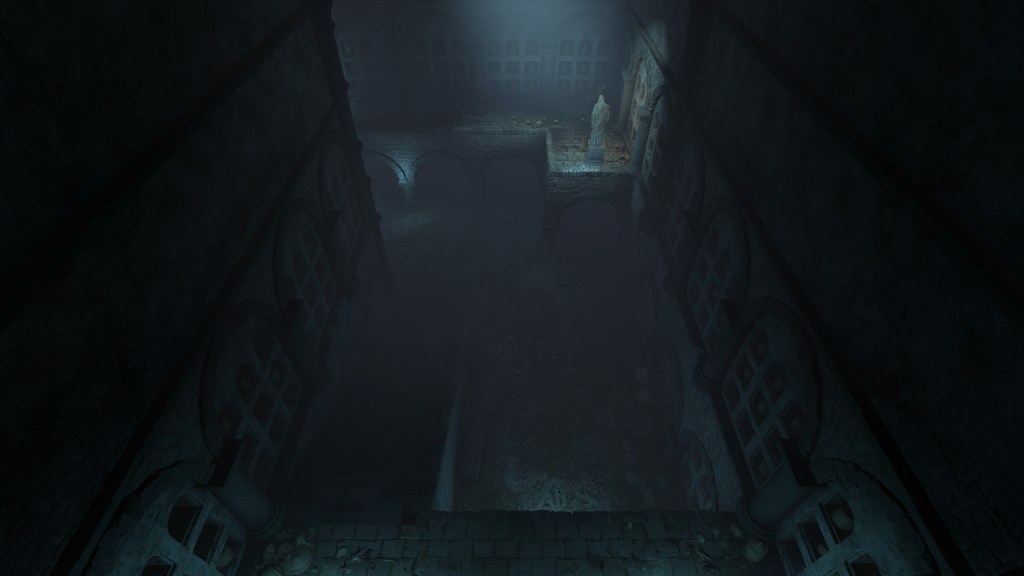
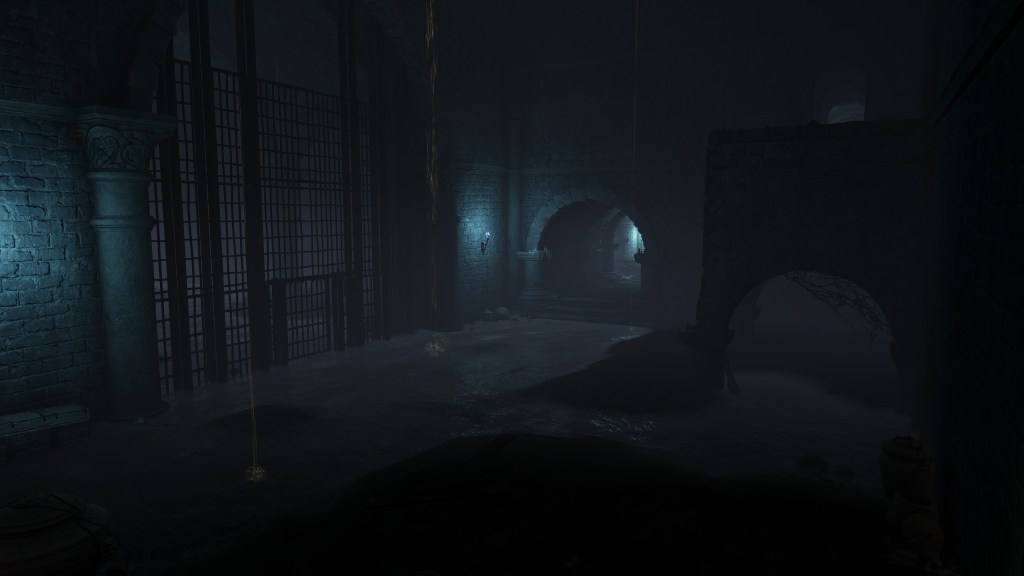
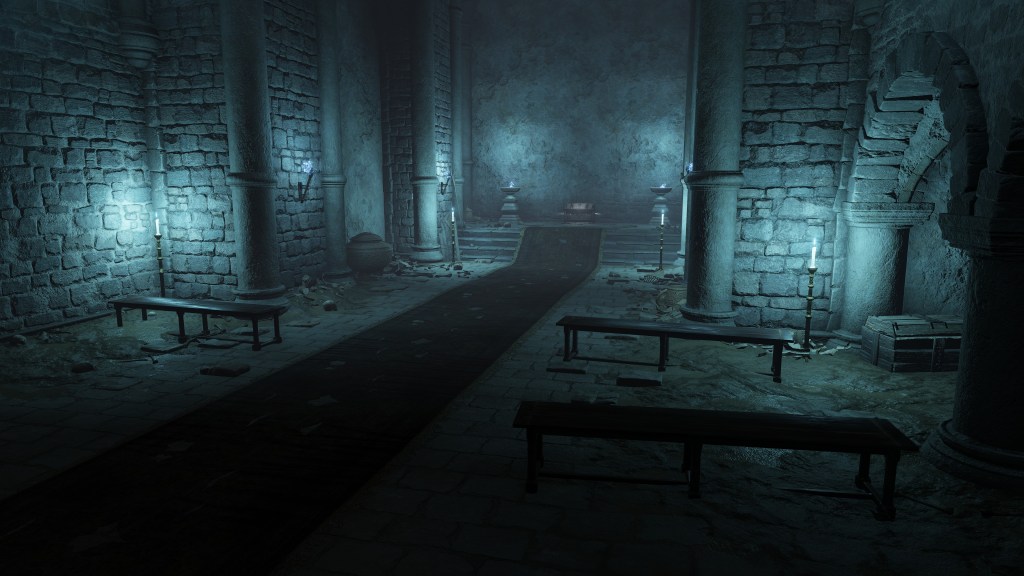
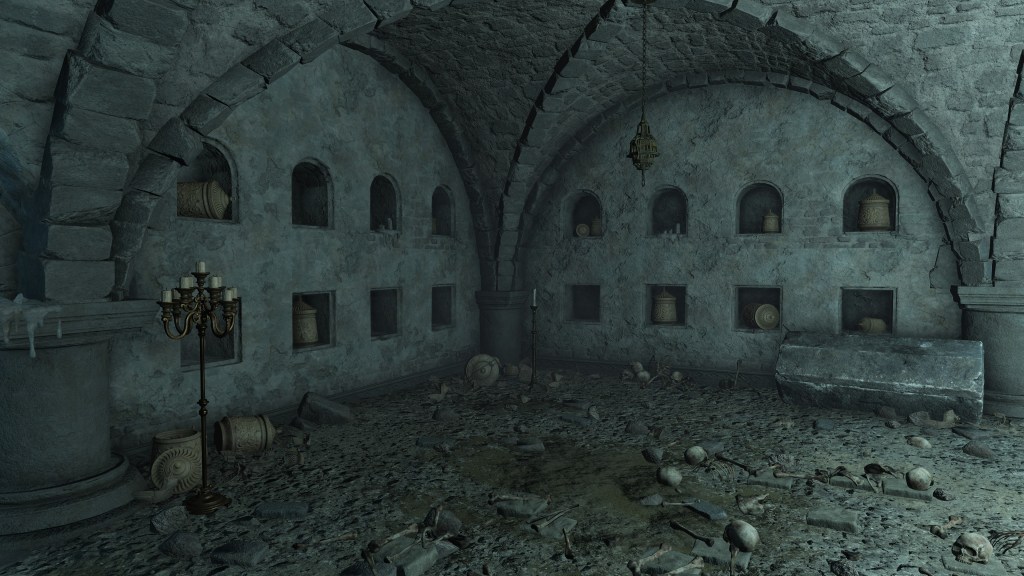
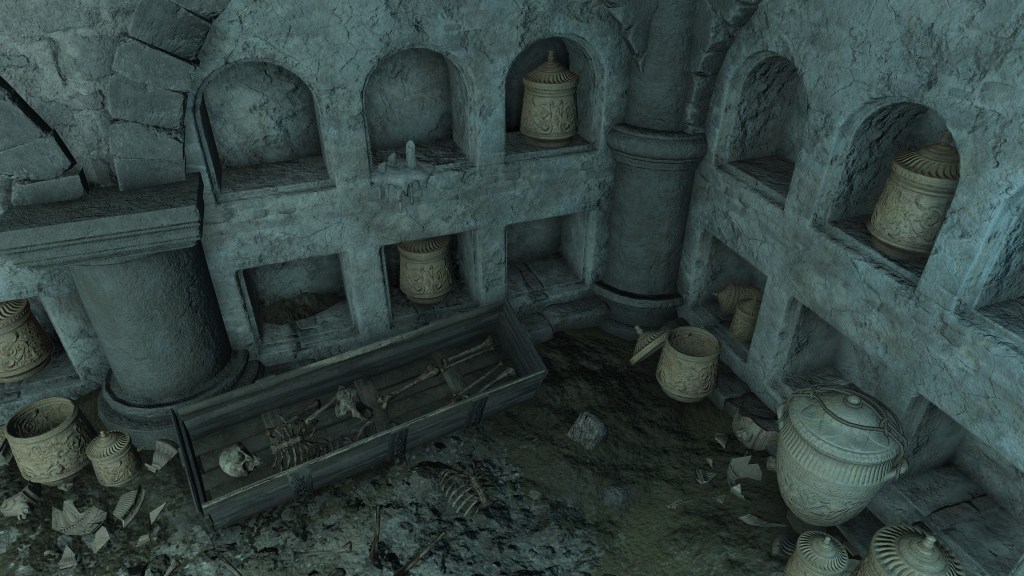
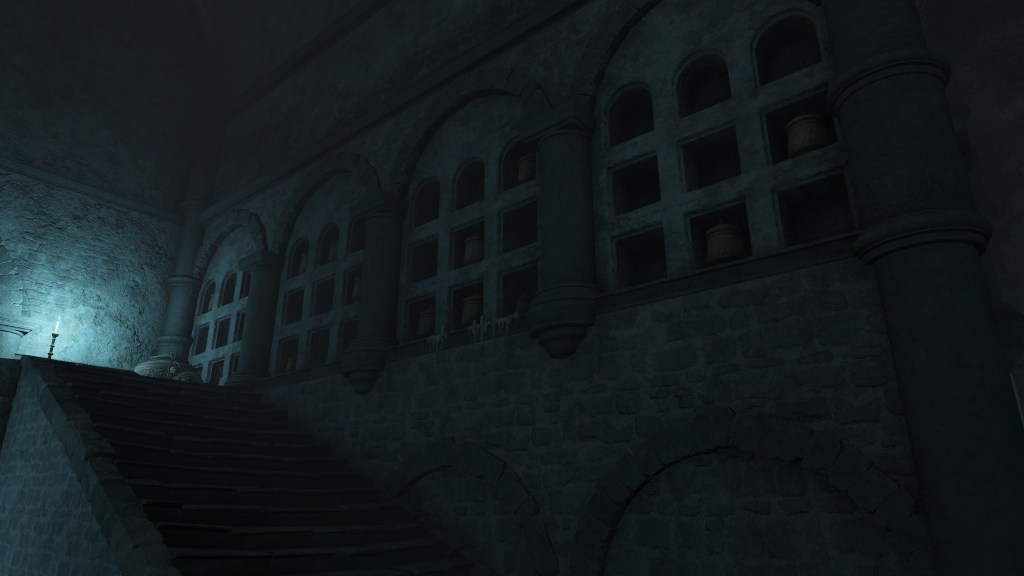
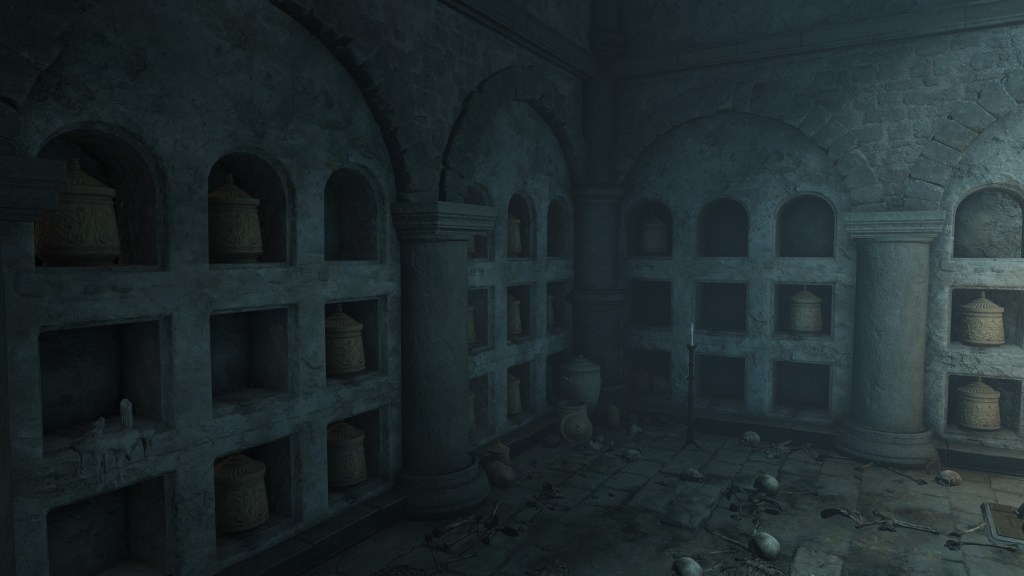
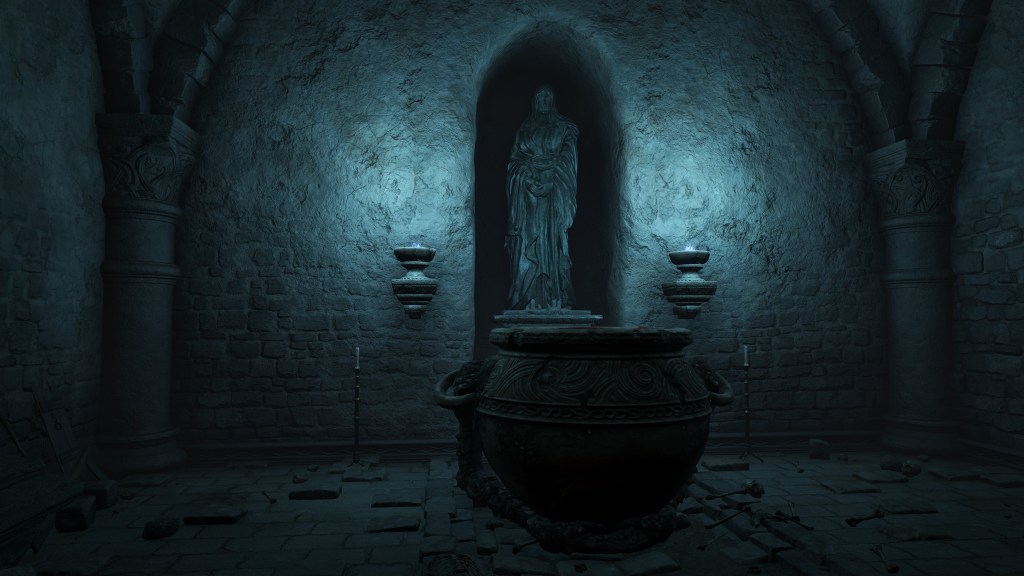
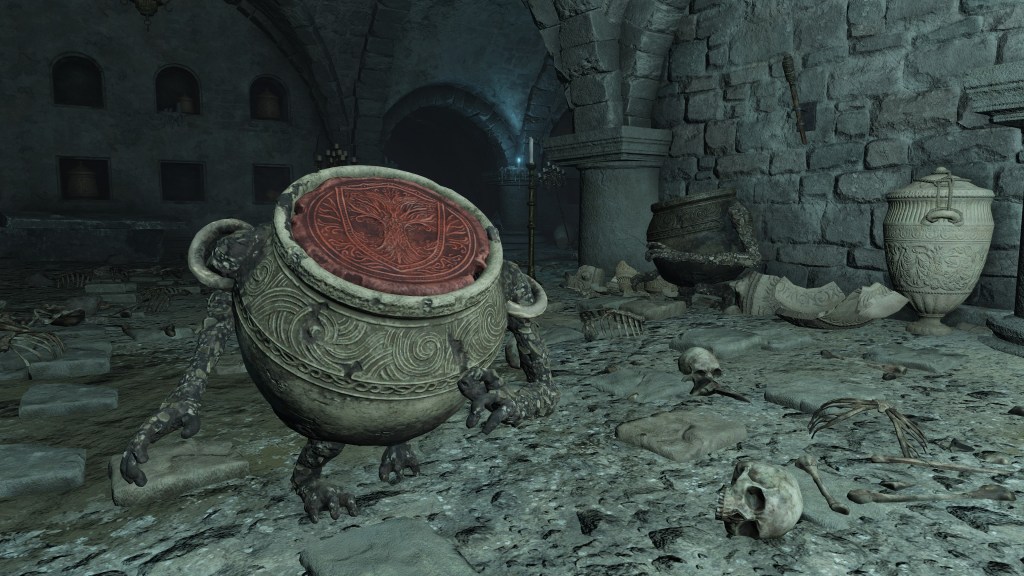
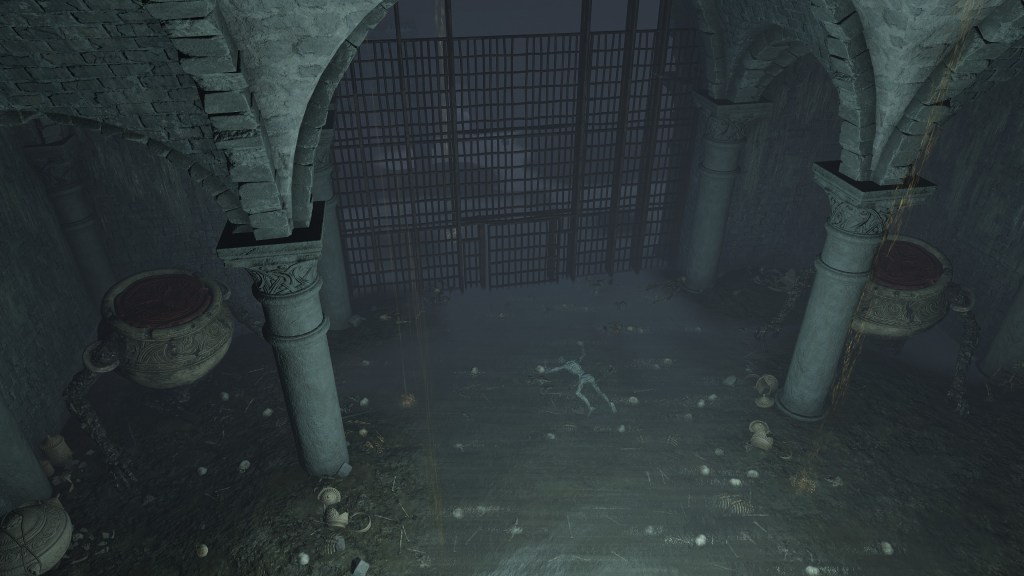
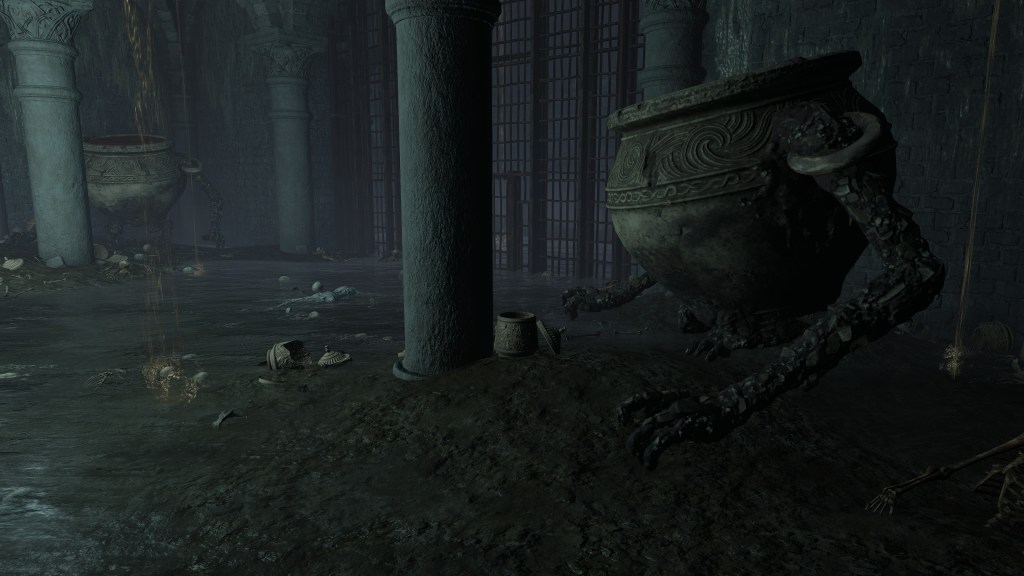
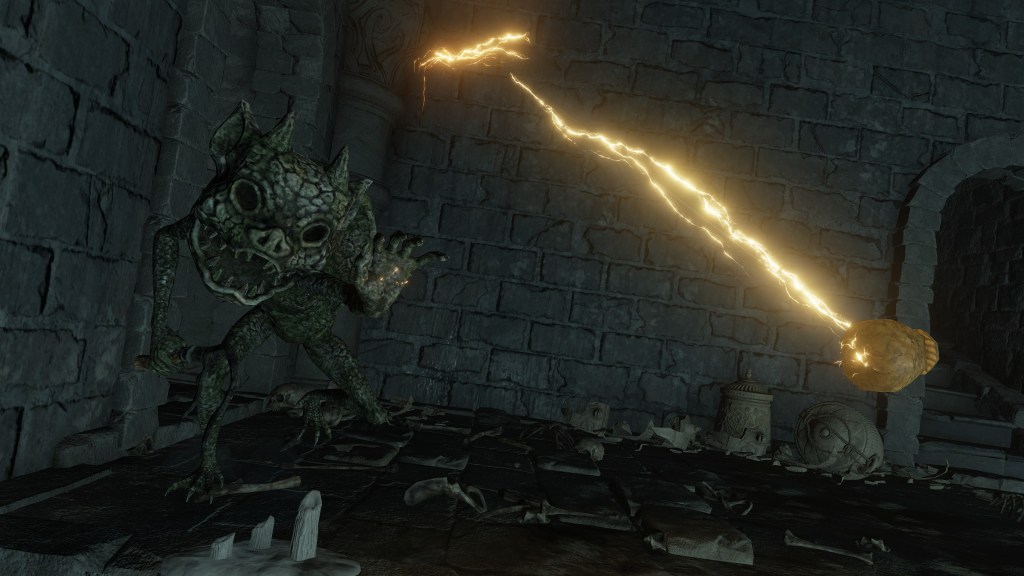
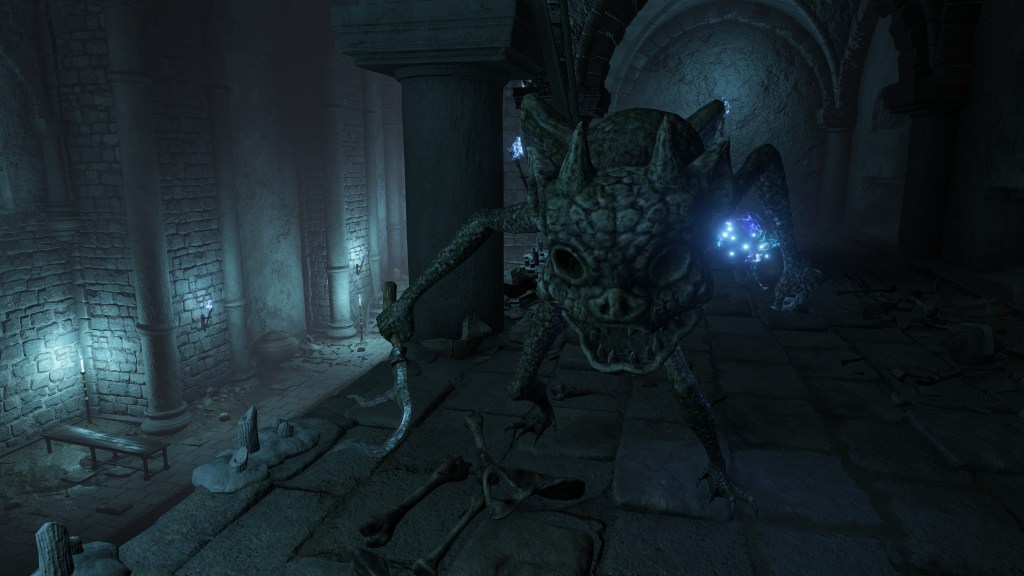
All of this can be explained by the Eternal Queen’s involvement. As noted previously, the Auriza Side Tomb has the signature Marika touch with its layers of deceptively similar floors, but the mischief to the catacomb’s design goes beyond that. To further disorient grave robbers, traversal between the different levels and chambers is accomplished by a plethora of warp chests, the web of magic turning the place into a labyrinth to navigate. The implementation demonstrates the god’s direct involvement in the magic employed throughout. In that case, the magic flame and lightning more than likely dates this to after Radagon’s mastery of sorcery and incantations, applying that knowledge to the construction of the new catacomb. Both halves were contributing to a new burial place for the Auriza. But why? If they were heroes, the Hero’s Grave sufficed. If they were not, the Leyndell Catacombs did. In either case, why stuff so many in pots? Perhaps because they overwhelmingly couldn’t bury whole bodies.
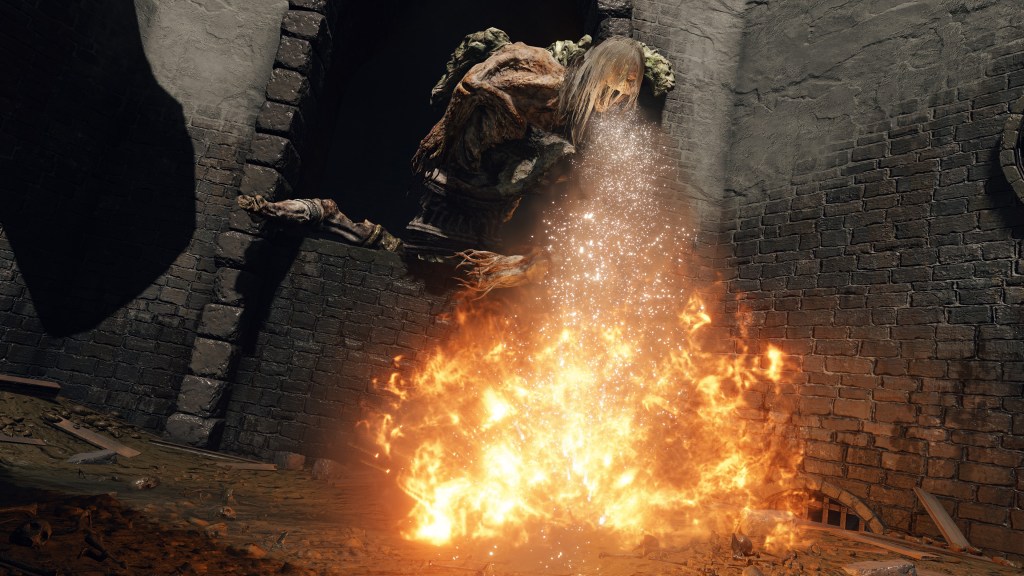
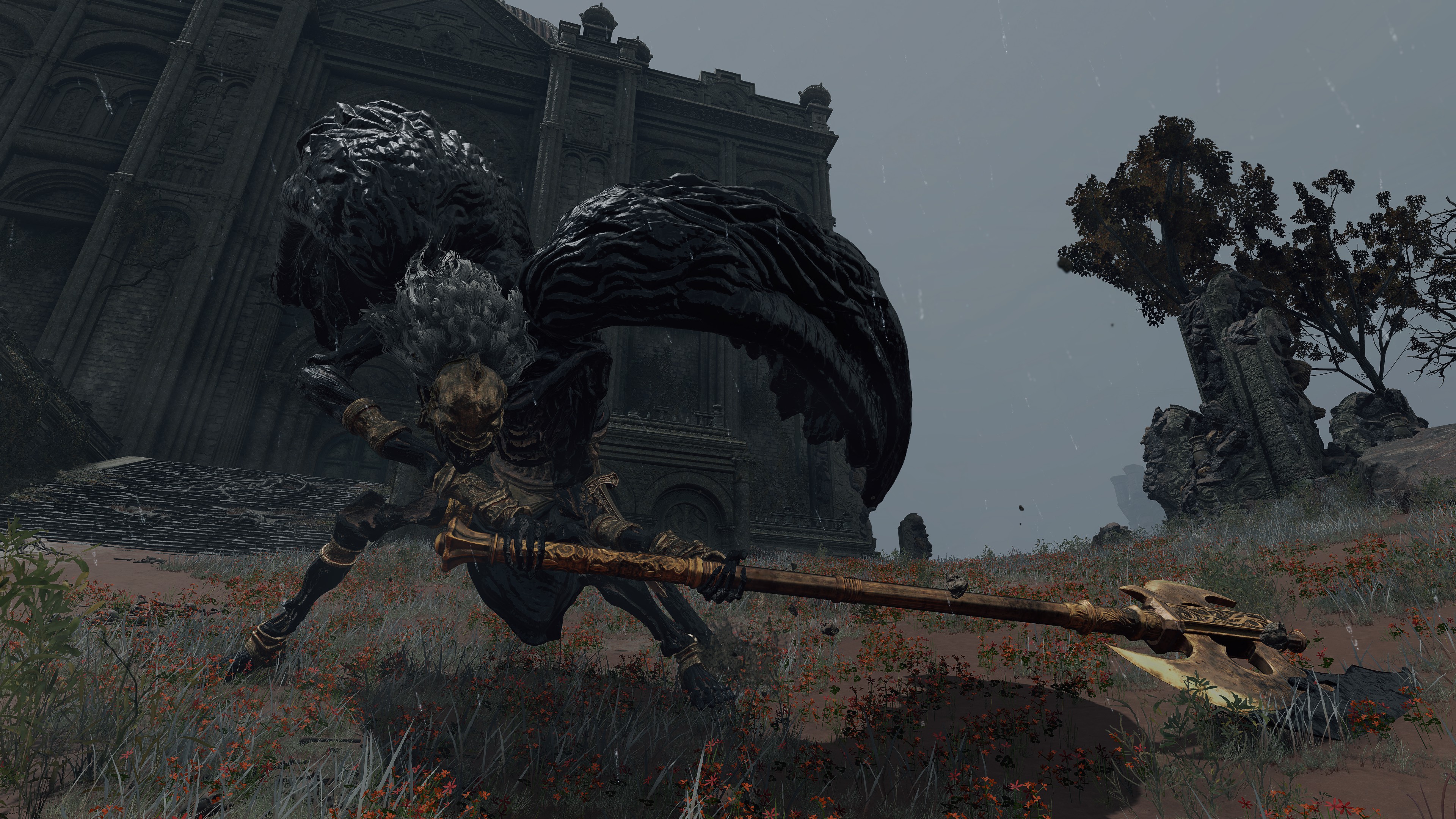
The valiant gargoyles in service to Leyndell are, as the name implies, heroes whose destroyed bodies and weapons have been put back together into a Frankenstein monstrosity. The different sources for the corpse parts is obvious from the two heads in one, with clear delineation between the “red” and “gold” bodies comprising the singular entity. Where the pieces don’t exactly fit, corpse wax is used to fill in the gaps. This patchwork of heroes appears to then be reanimated via some arboreal necromancy — dismember them, and the limb stubs begin regrowing root-like structures. The reanimation likely relates to perfuming specifically, as certain gargoyles vomit out the spark aromatics or poison spraymist of perfumer kind. Equipped with bronze armor and armaments, these undead heroes are subsequently made into guardians. The only reason to call them gargoyles is the stone wings and skirt grafted onto the desiccated cadavers, more or less petrified. Beyond the fact that the wings are functional, there is little mystery to their nature, and the same holds true for their origins.
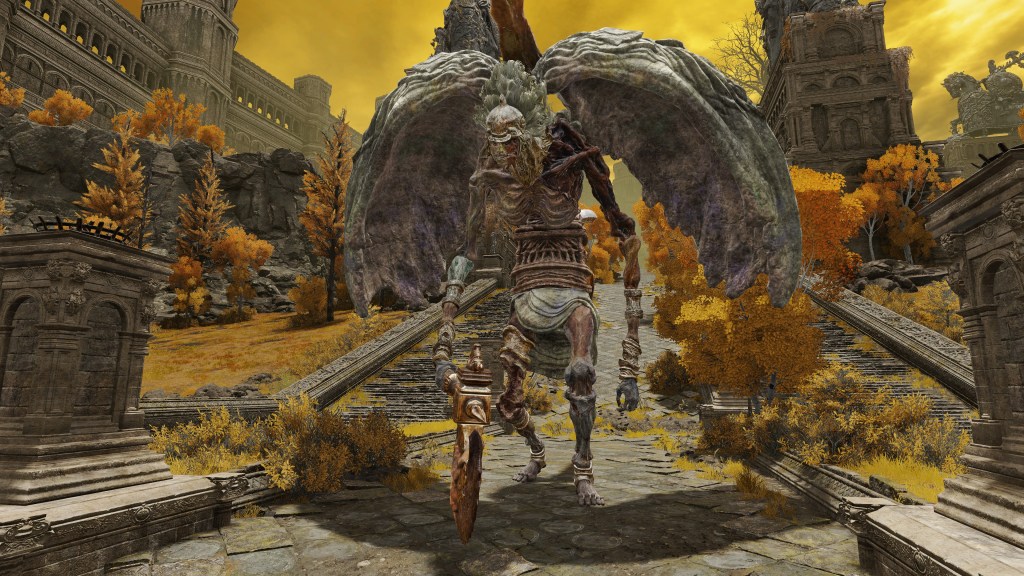
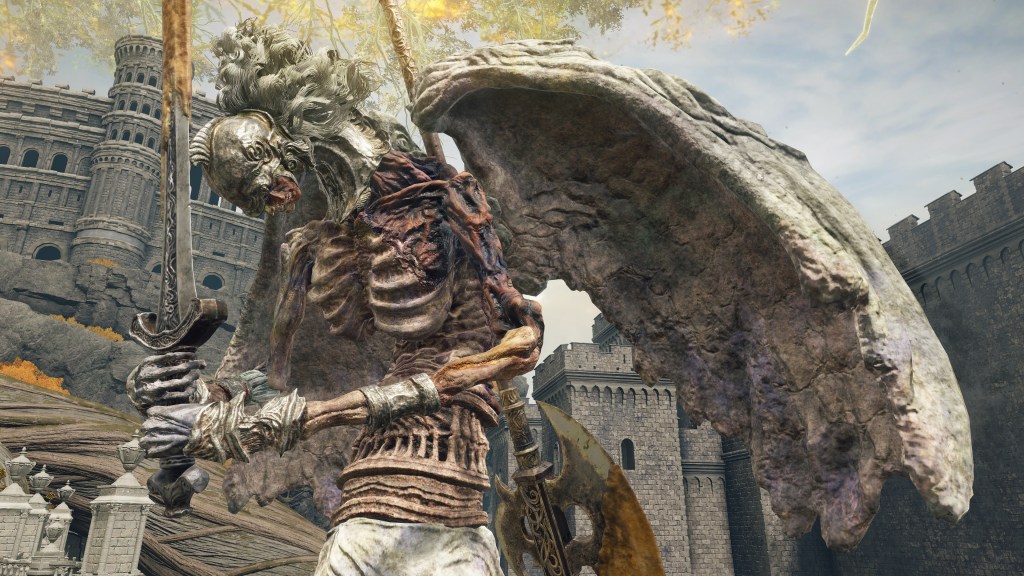
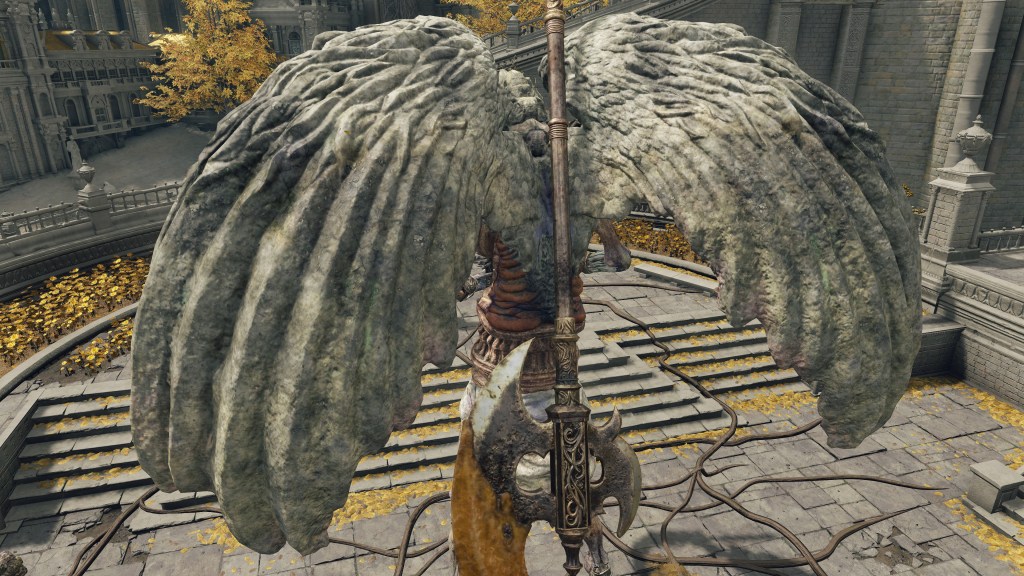
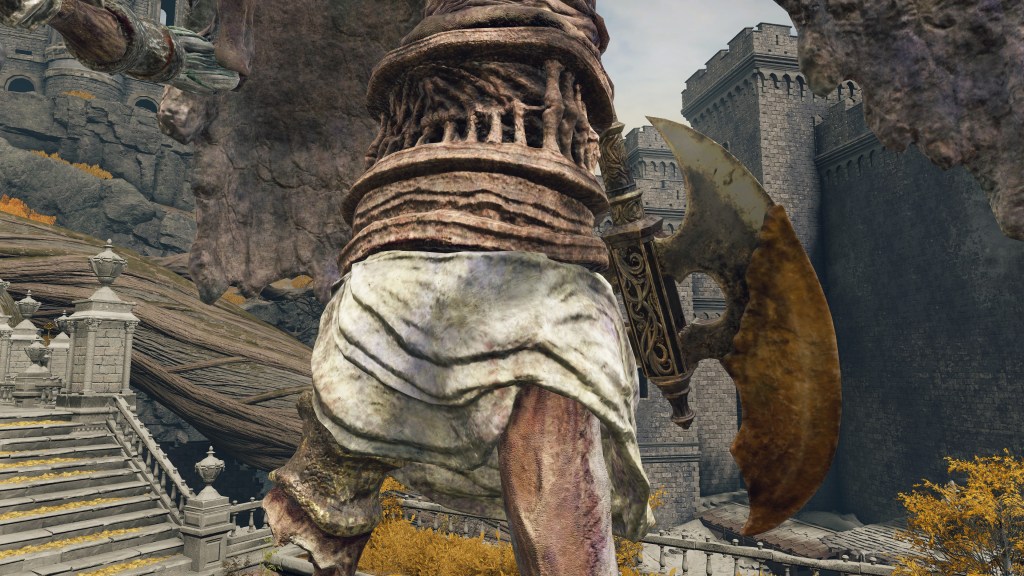
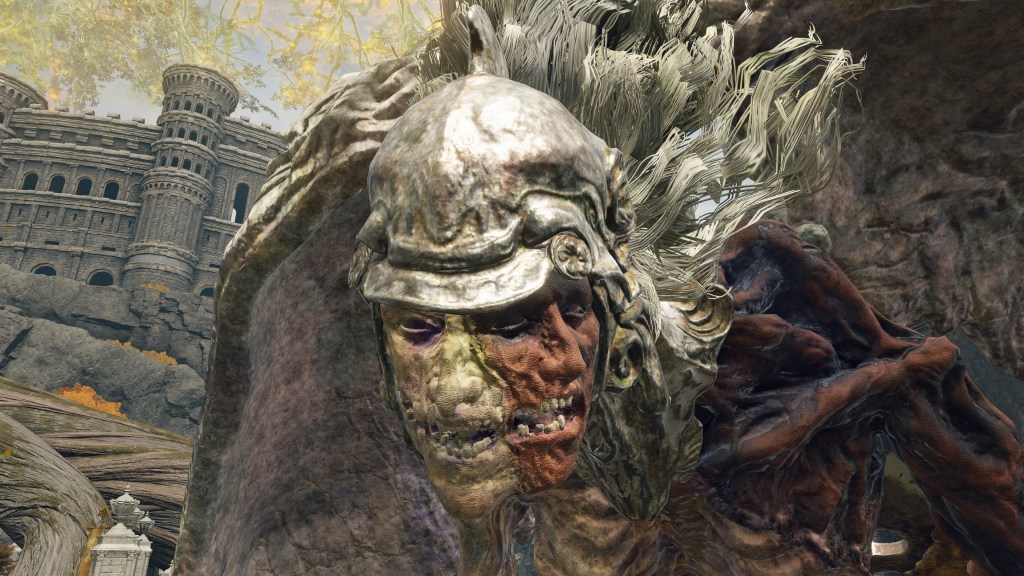
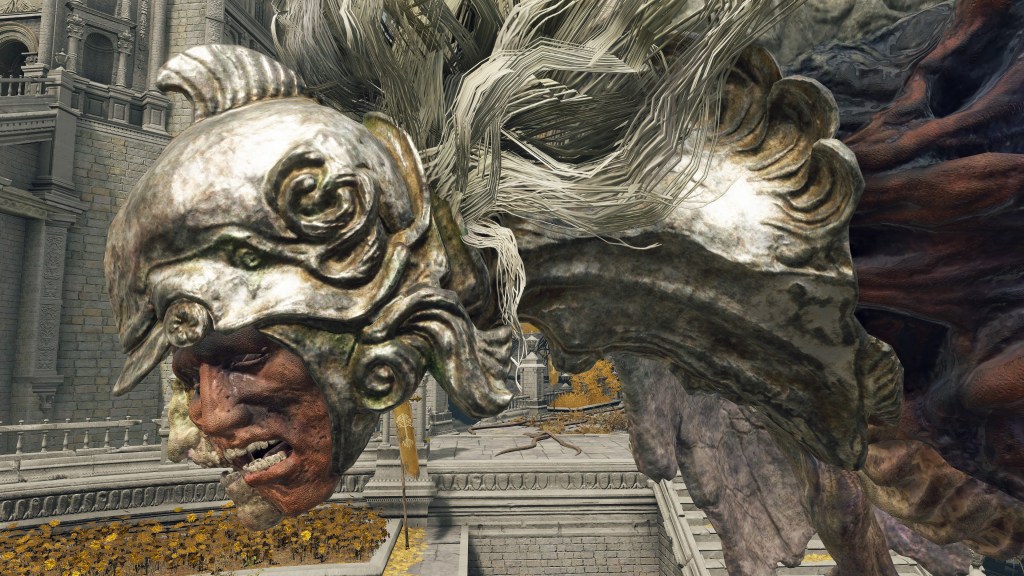
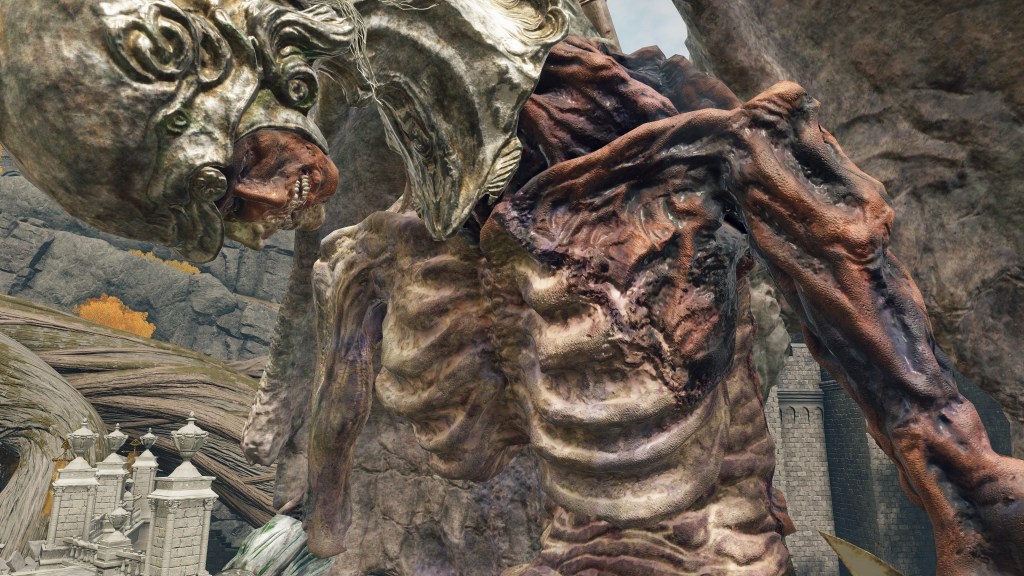
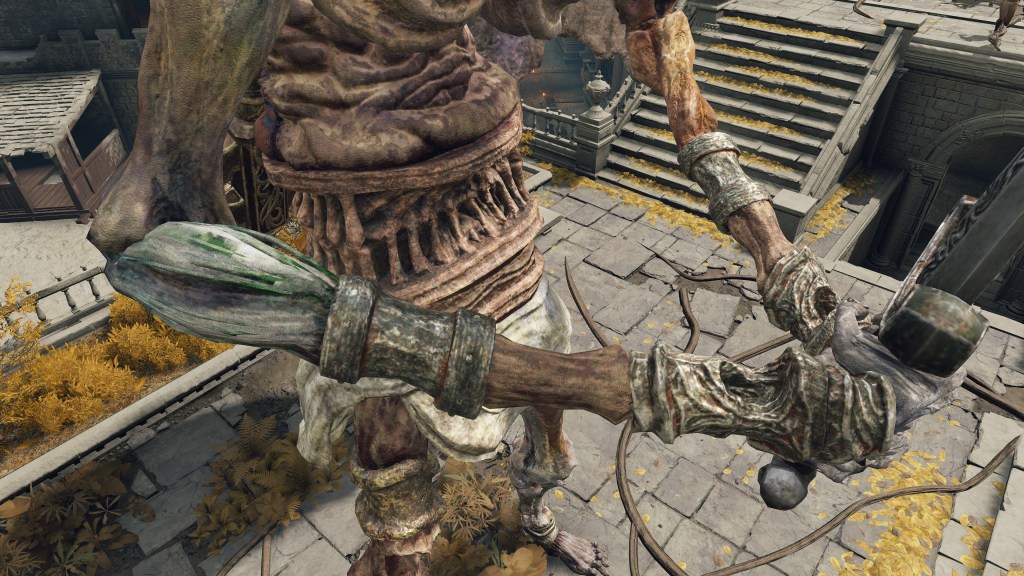
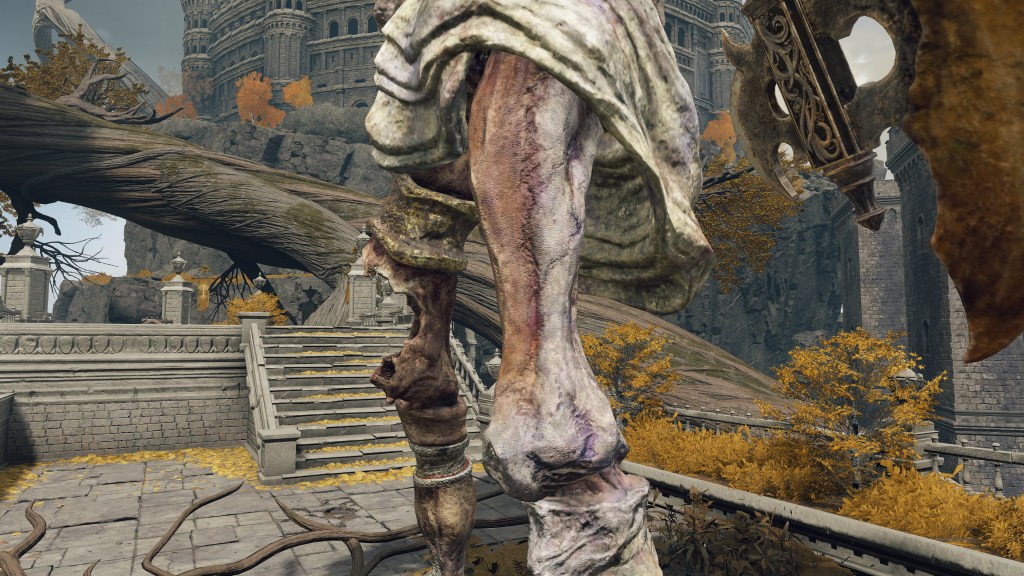
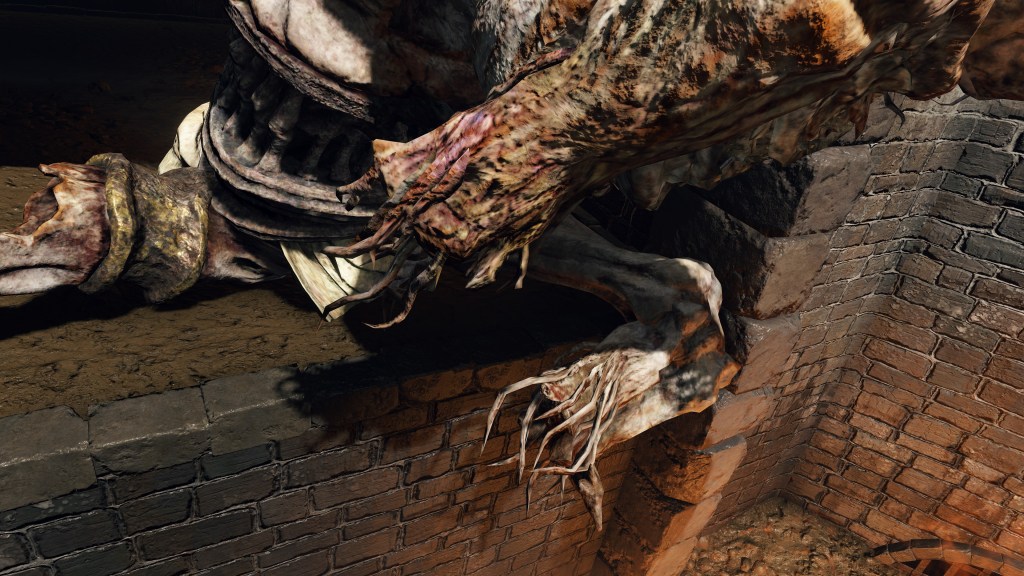
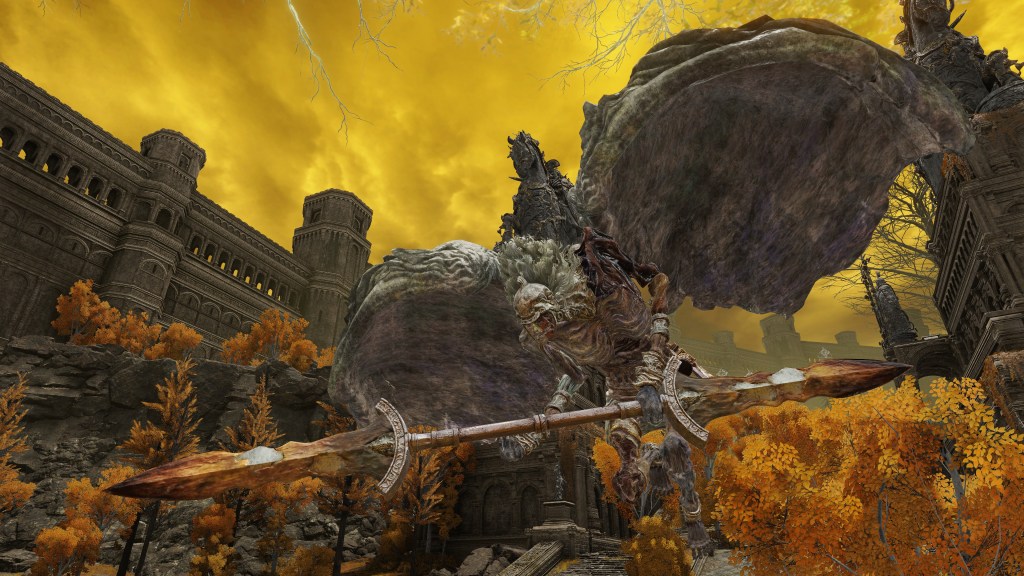
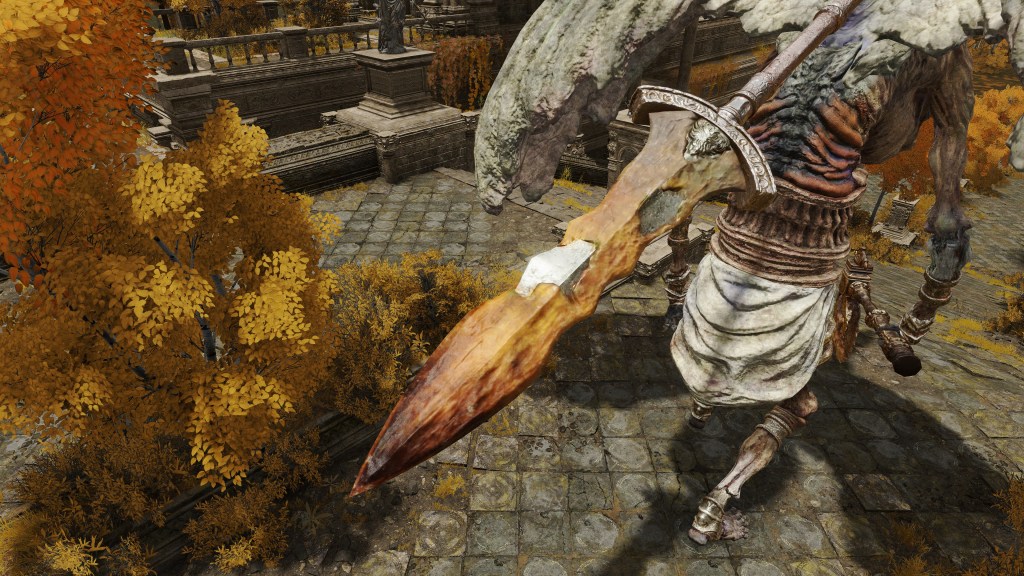
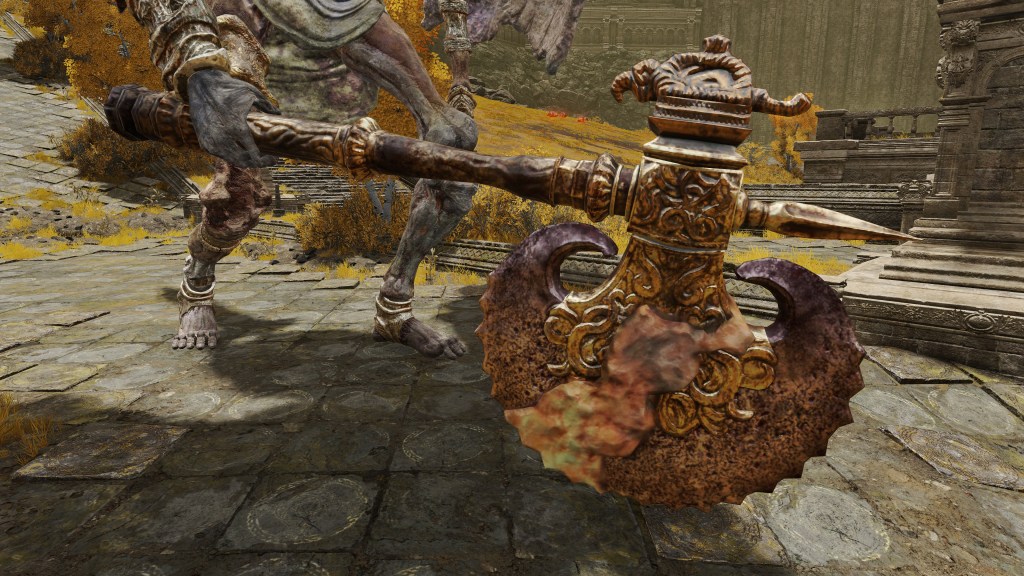
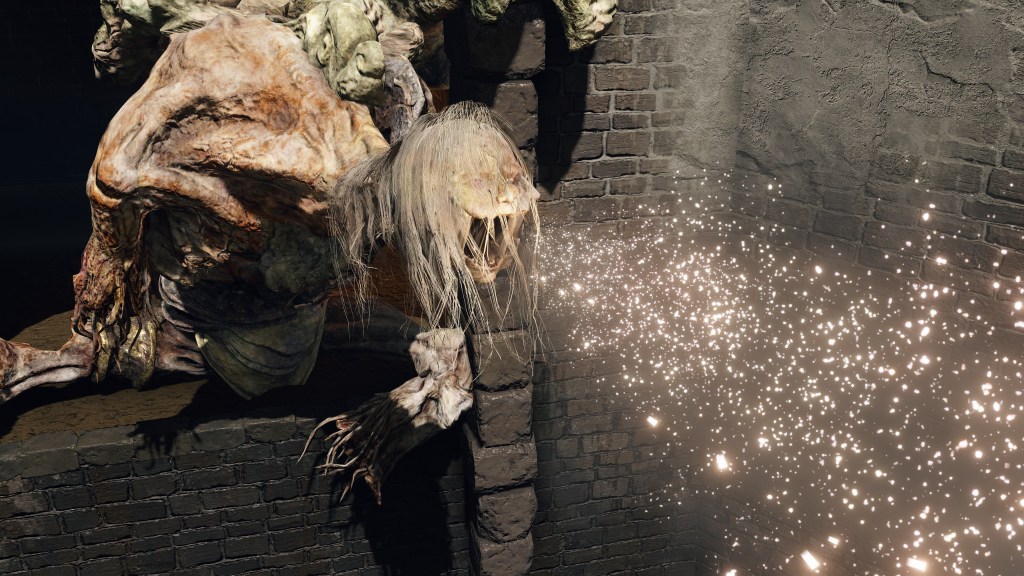
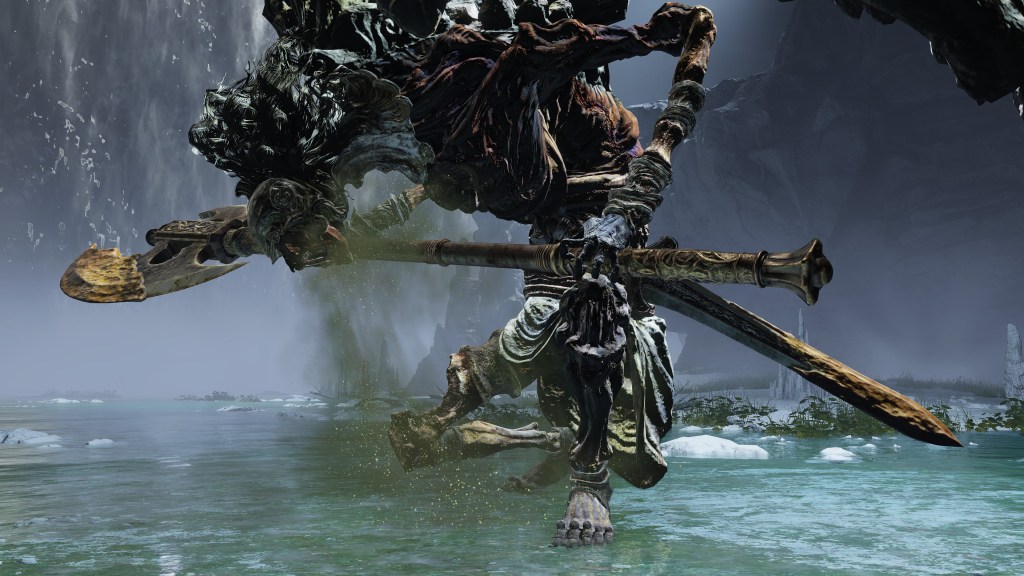
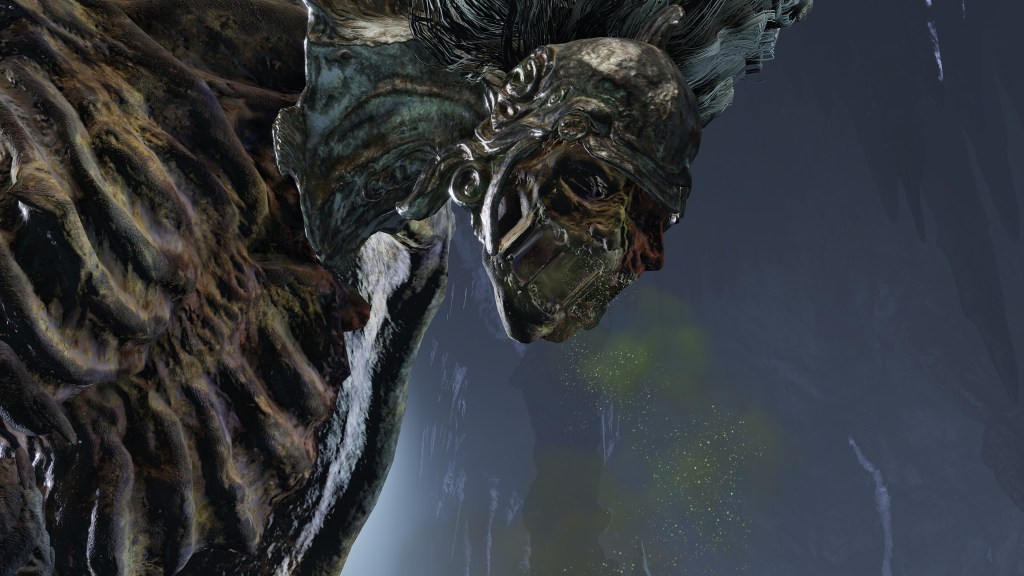
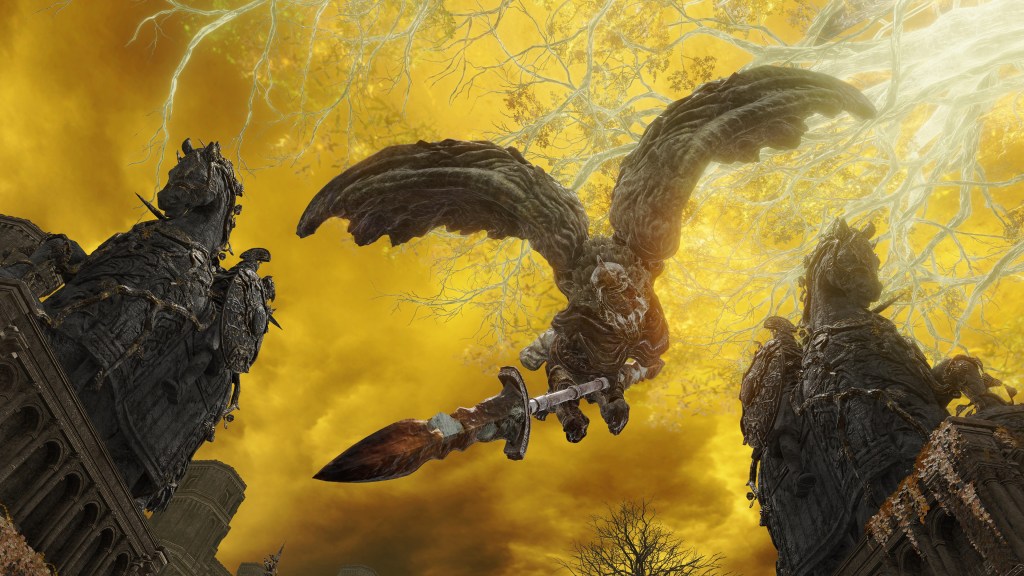
Bronze greatsword possessed by a Hero Gargoyle.
As with the body, it is a patchwork of heroes supplementing the missing parts with corpse wax.
The perfumer connection puts the gargoyles’ creations squarely within clerical circles, who follow Marika and Radgon’s direction. And where did they procure their cadavers? From warriors of the prior age. The hero gargoyles’ blond hair is consistent with affiliates of the royal capital, royalty included. The Vacuum Slice performed with their swords is likewise a “lost” skill of “old” heroes, the force to cleave air into a deadly vacuum evocative of the power wielded by soldiers in Godfrey’s day. Adding to that impression, gargoyles equipped with an axe perform an empowering warcry, their bodies emanating a similar aura as the first Elden Lord before their earth-shattering assaults. (and in Elden Ring: Nightreign, his grafted descendant produces a similar aura when performing Crucible arts) Everything indicates that they are Leyndell residents whose strength came in part from mimicking the Warlord. In other words, they are the Auriza who fought alongside him.
Lost battle art of old heroes. Creates vacuum around the sword blade raised up high and fires it ahead as a blade.
Put simply, the bodies in the Hero’s Grave were exhumed and used for Frankenstein experiments. The “patchwork” state of the byproducts brings Radagon’s penchant for mending to mind, but the number in service to Maliketh associates the gargoyles just as much with Marika. In fact, those were most likely made with her brother’s cooperation. Unlike the standard hero, Maliketh’s servants have the power of Destined Death infused into their corpse wax, turning it and thereby their bodies black; it also seems to grey their blonde hair in perfect reflection of their master. As a result, the gargoyles can unleash that “holy” power from the wax, which consumes the air for their Vacuum Slices and powerful spin attacks — even their focused roars are affected. This is what makes them the Black Blade’s “kindred” and thus fitting entourage. Yet, Maliketh was expected to keep the Rune of Death’s power sealed unless Marika were to direct him otherwise, which implies that she requested he contribute the power to certain gargoyles’ creation. Therefore, we can infer that both halves of the one god were involved in this project.
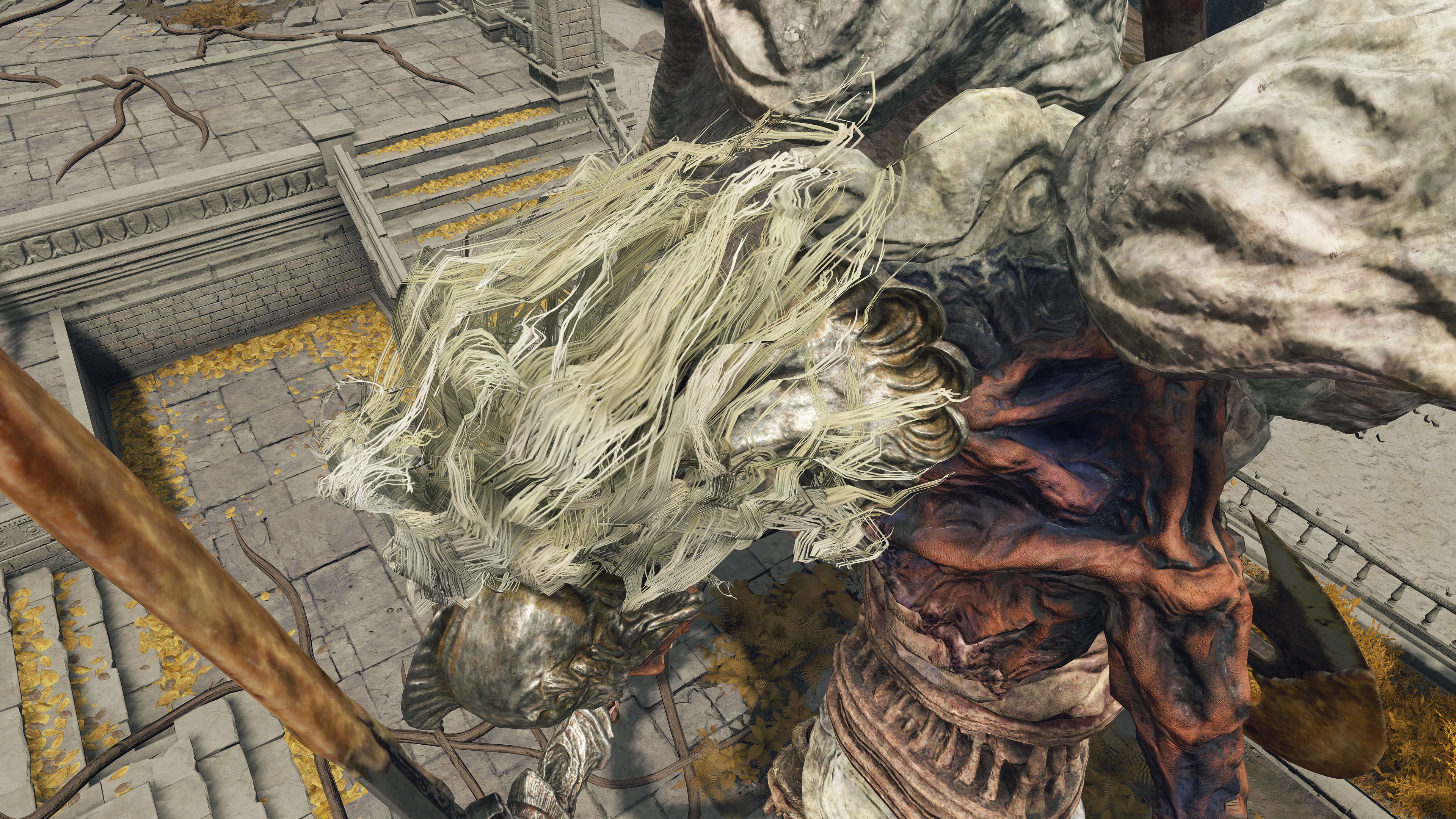
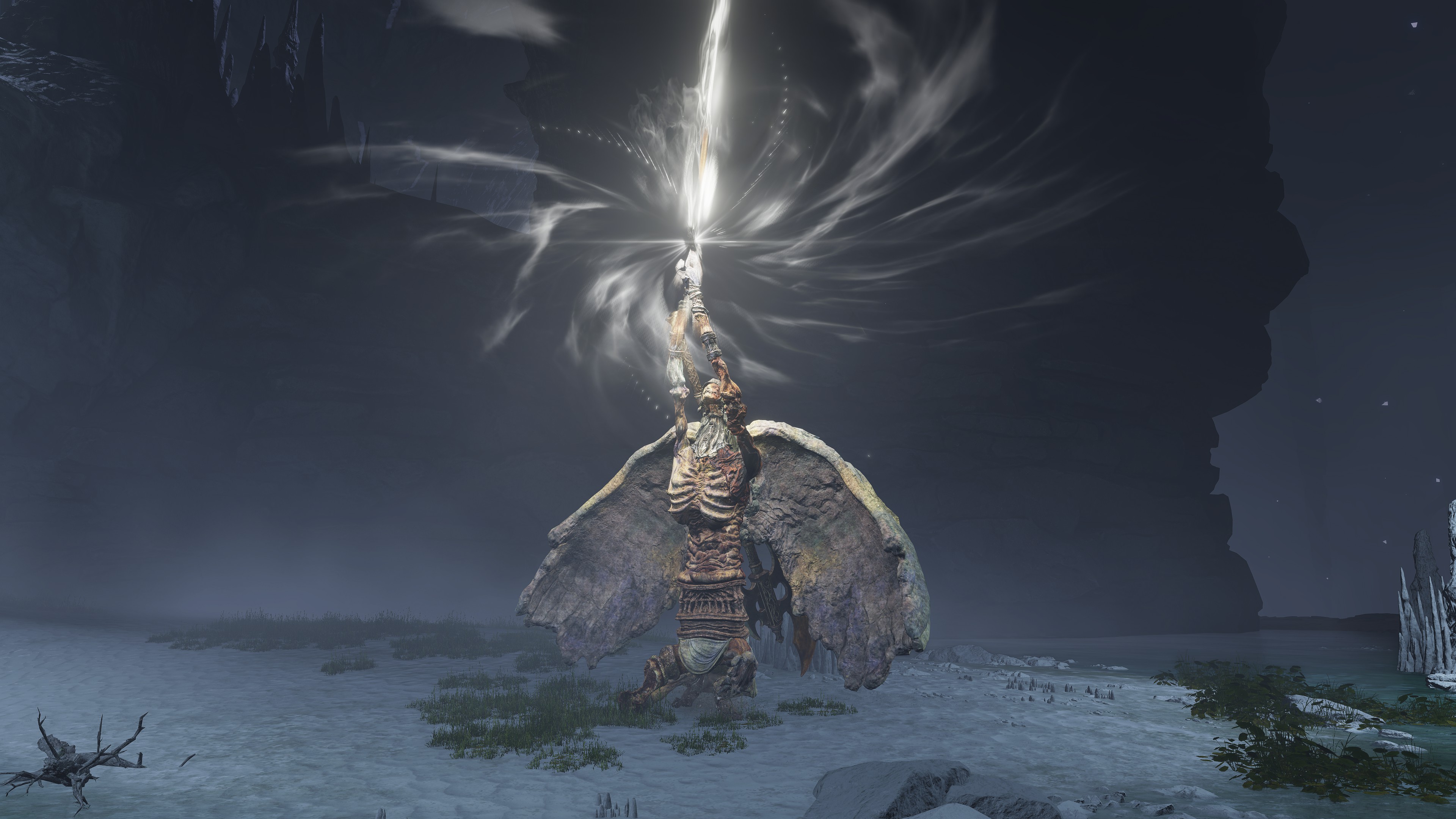
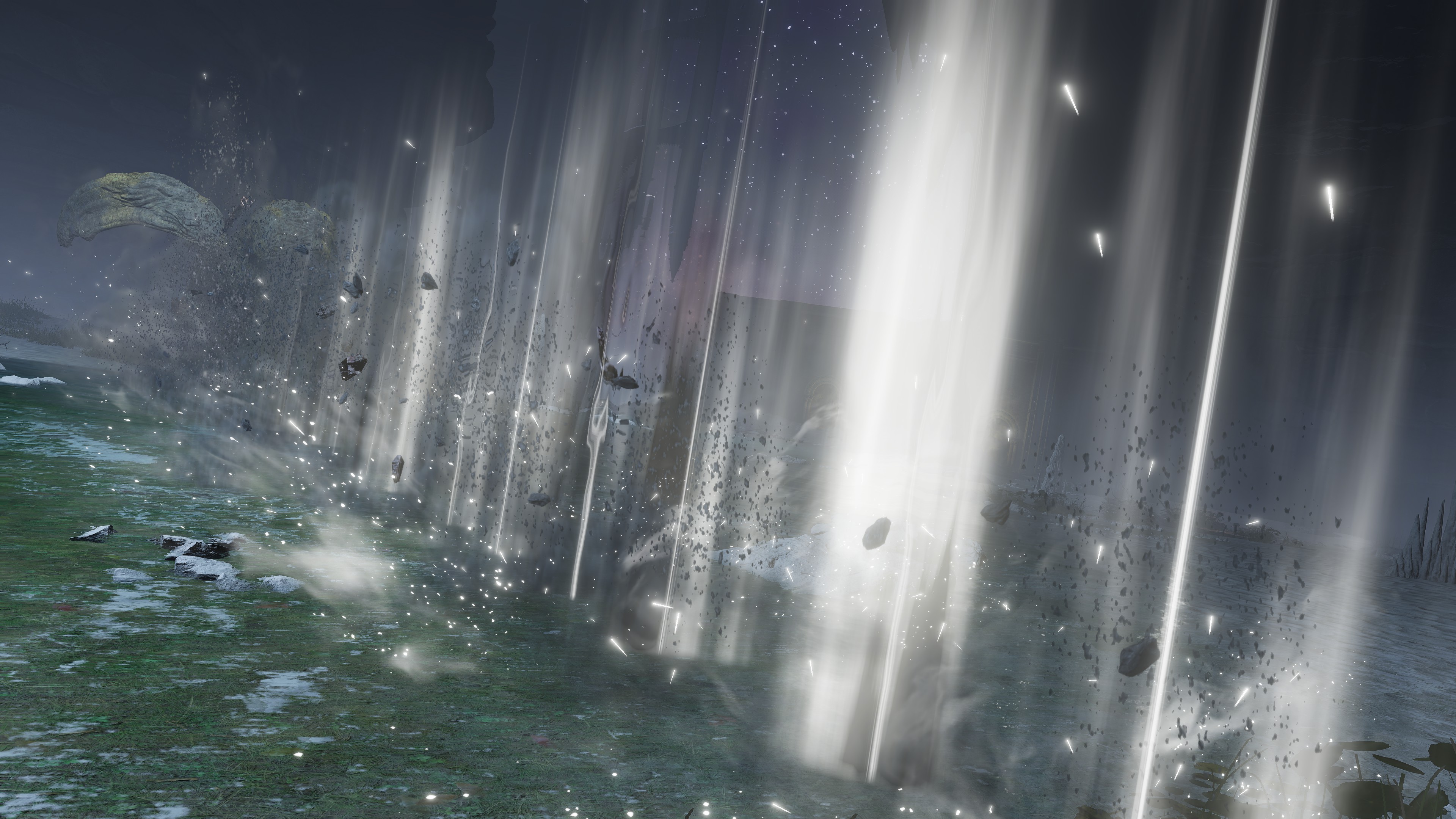
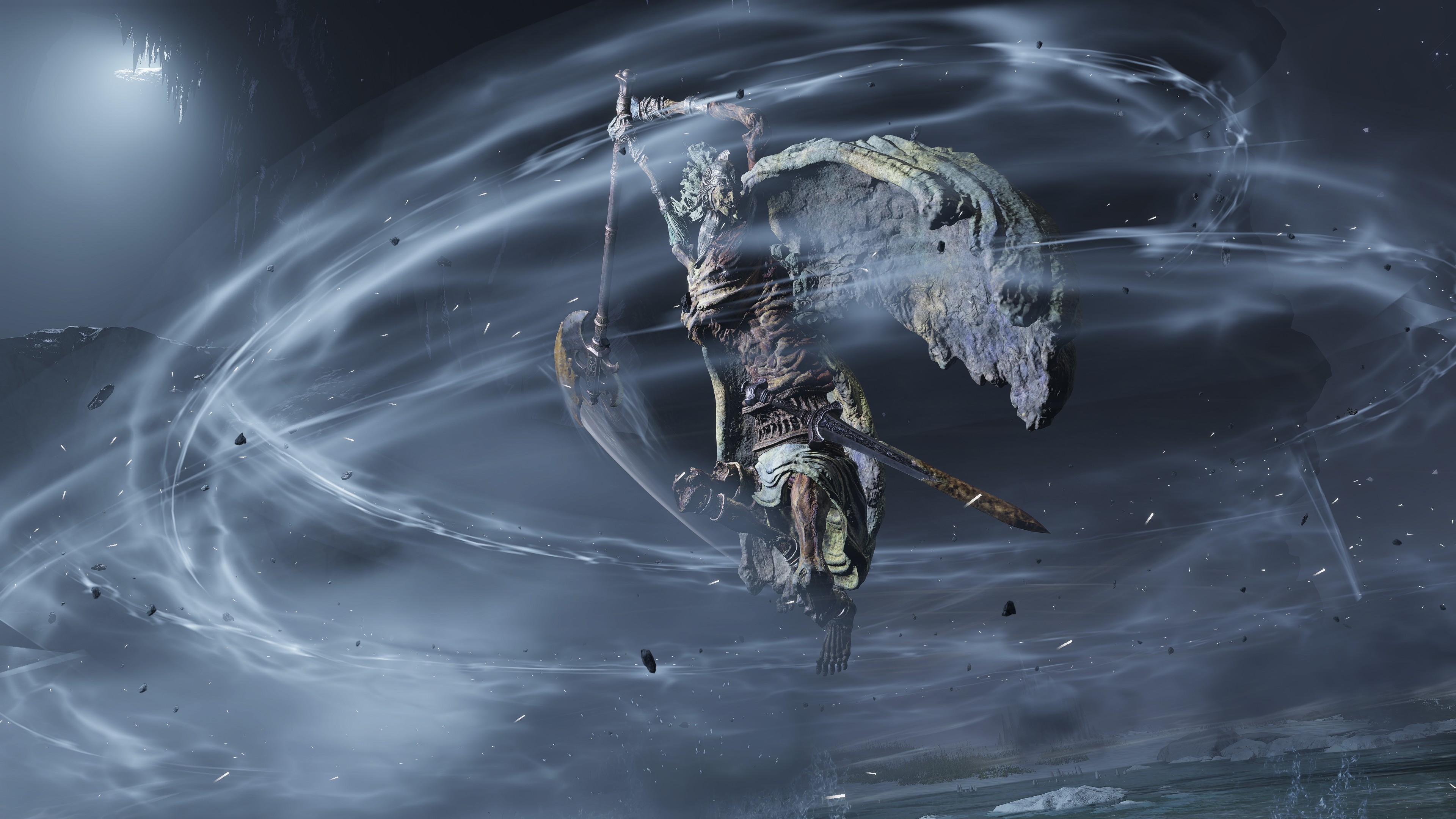
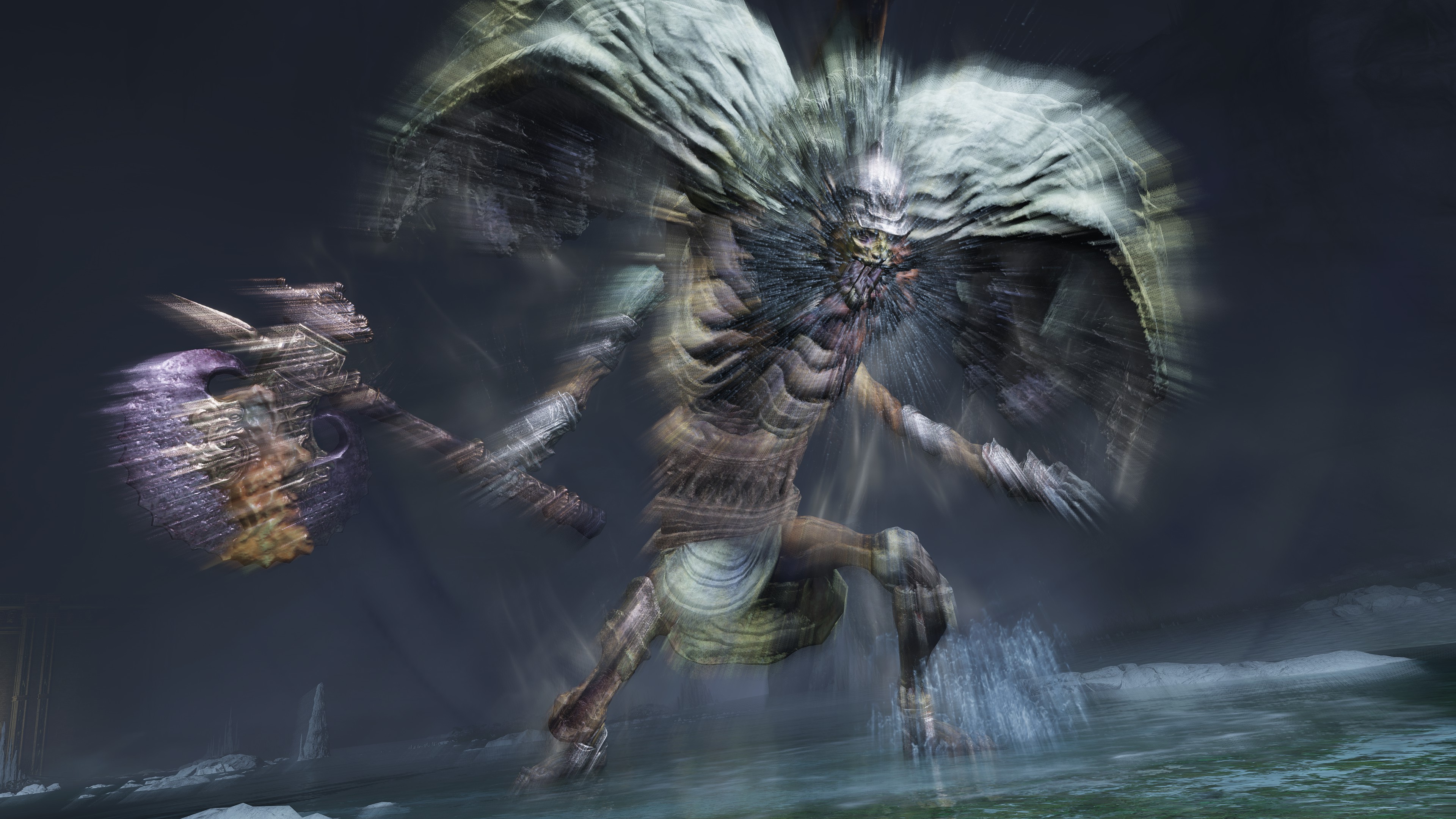
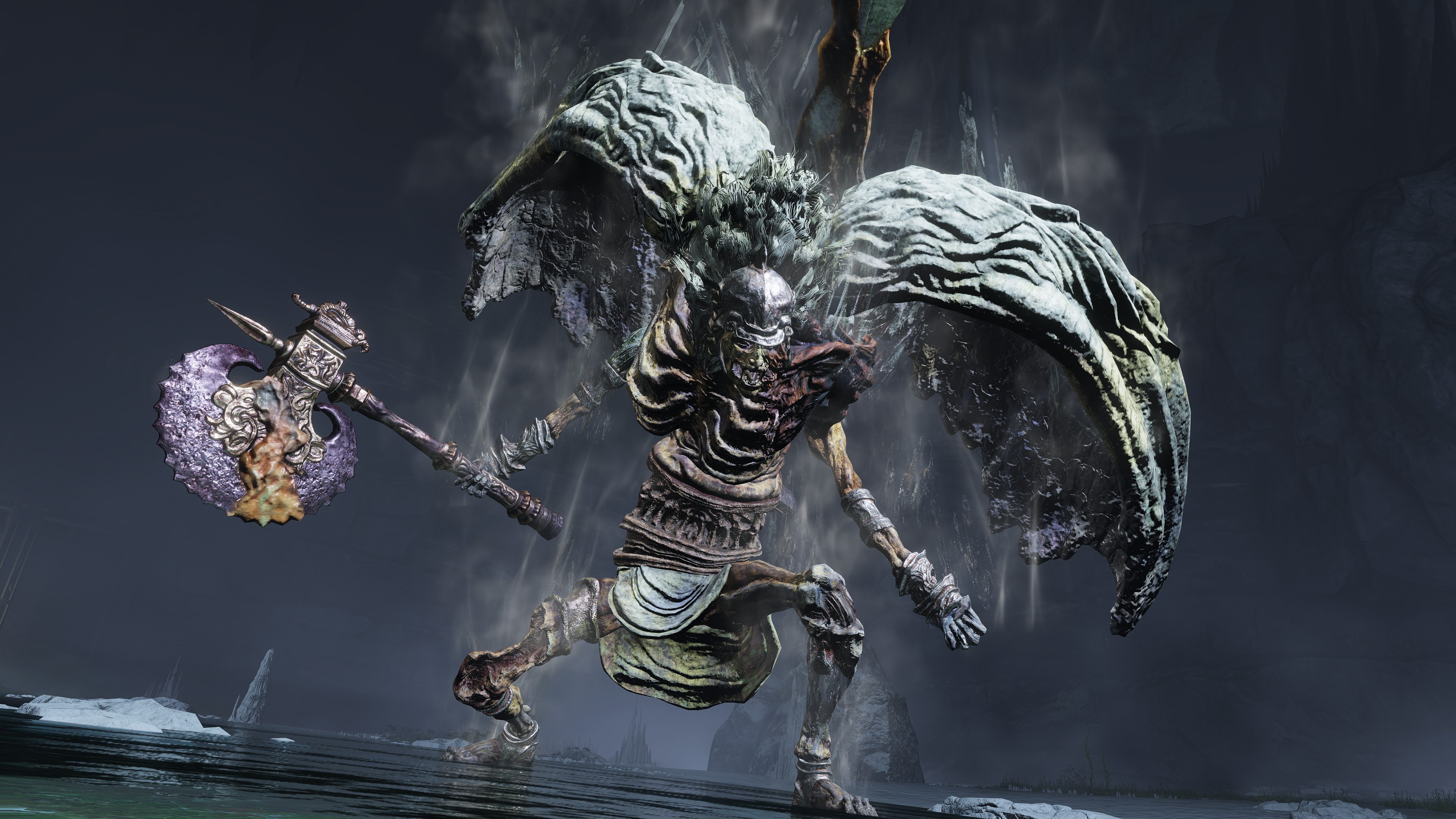
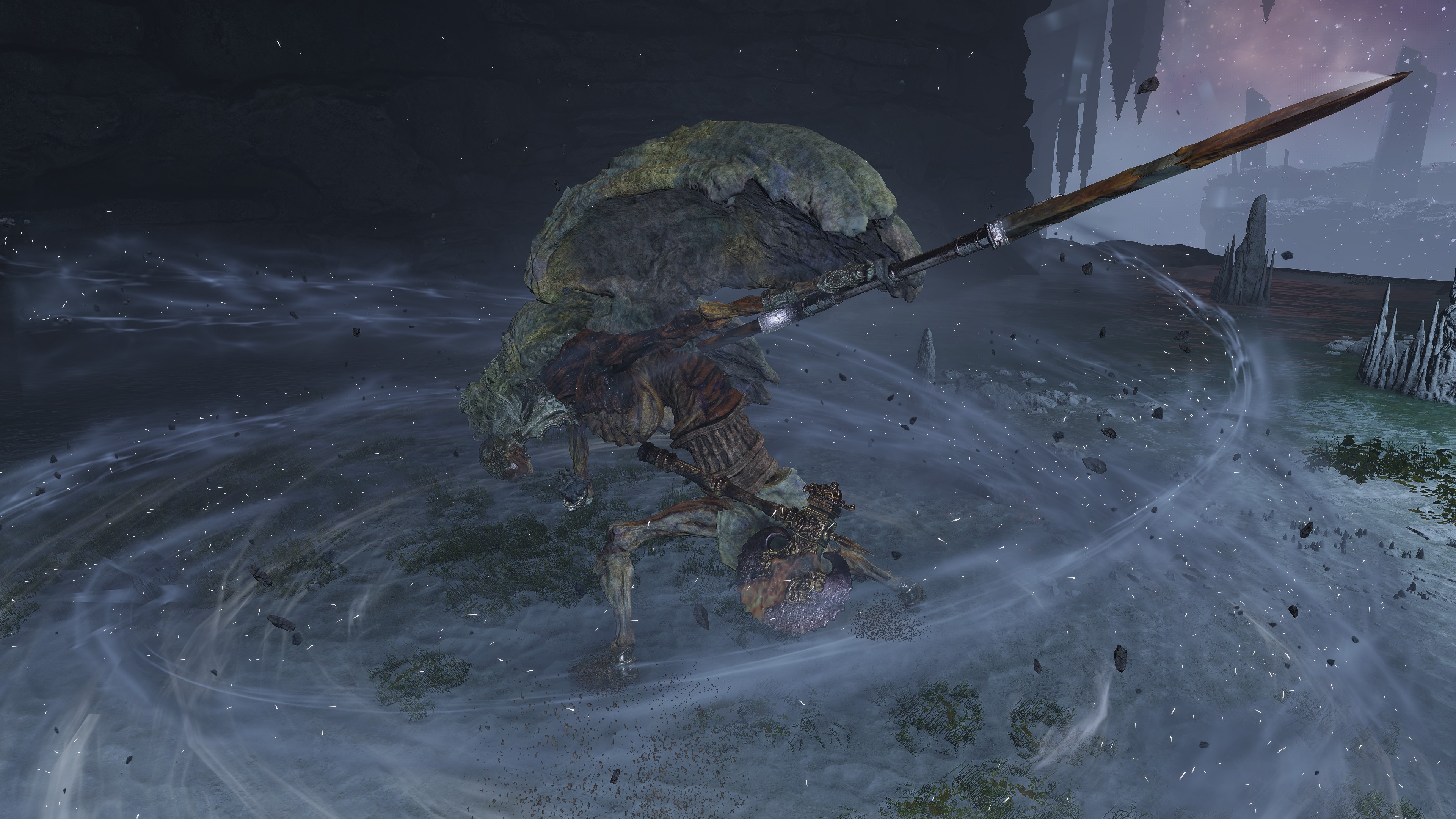
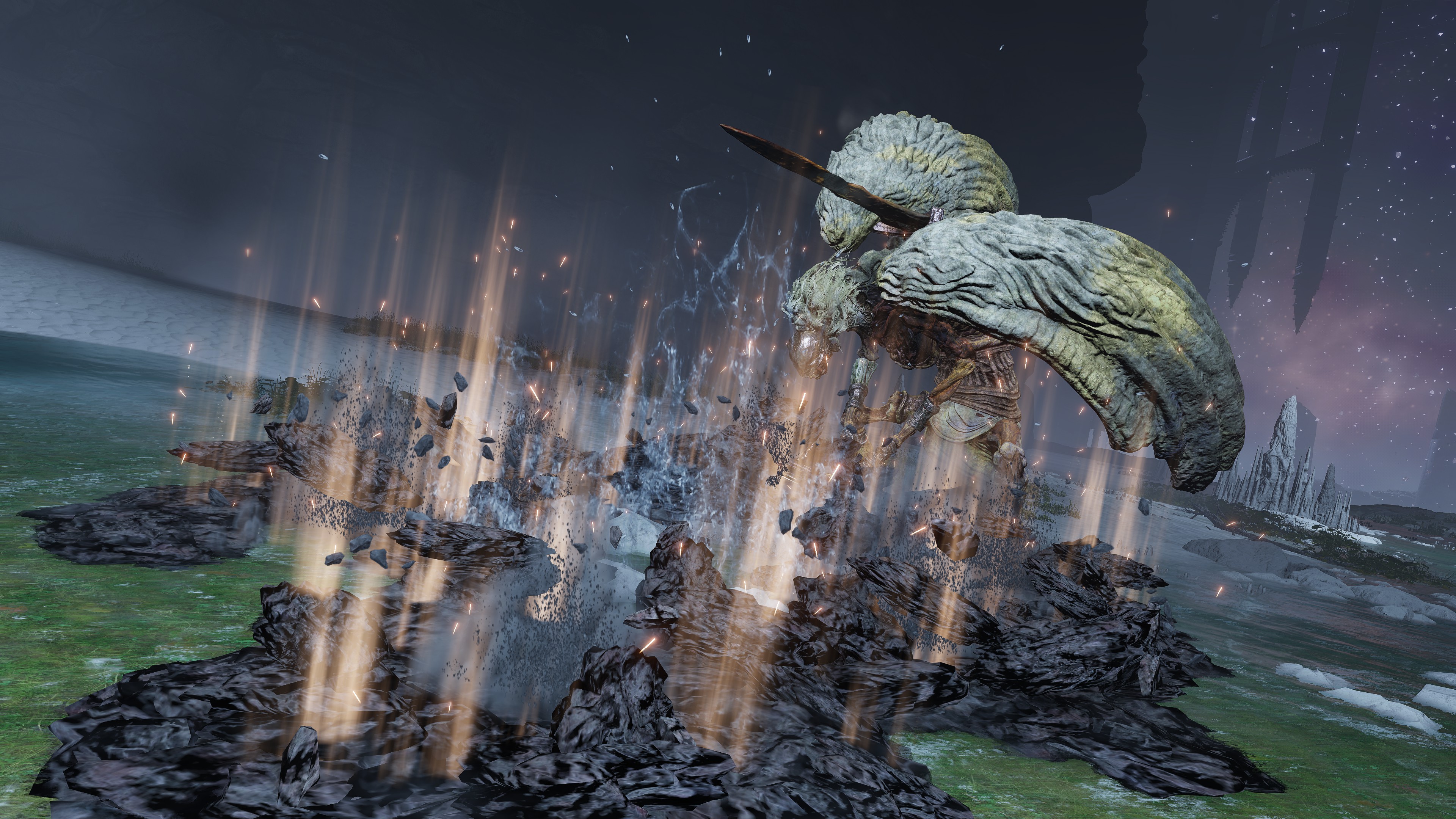
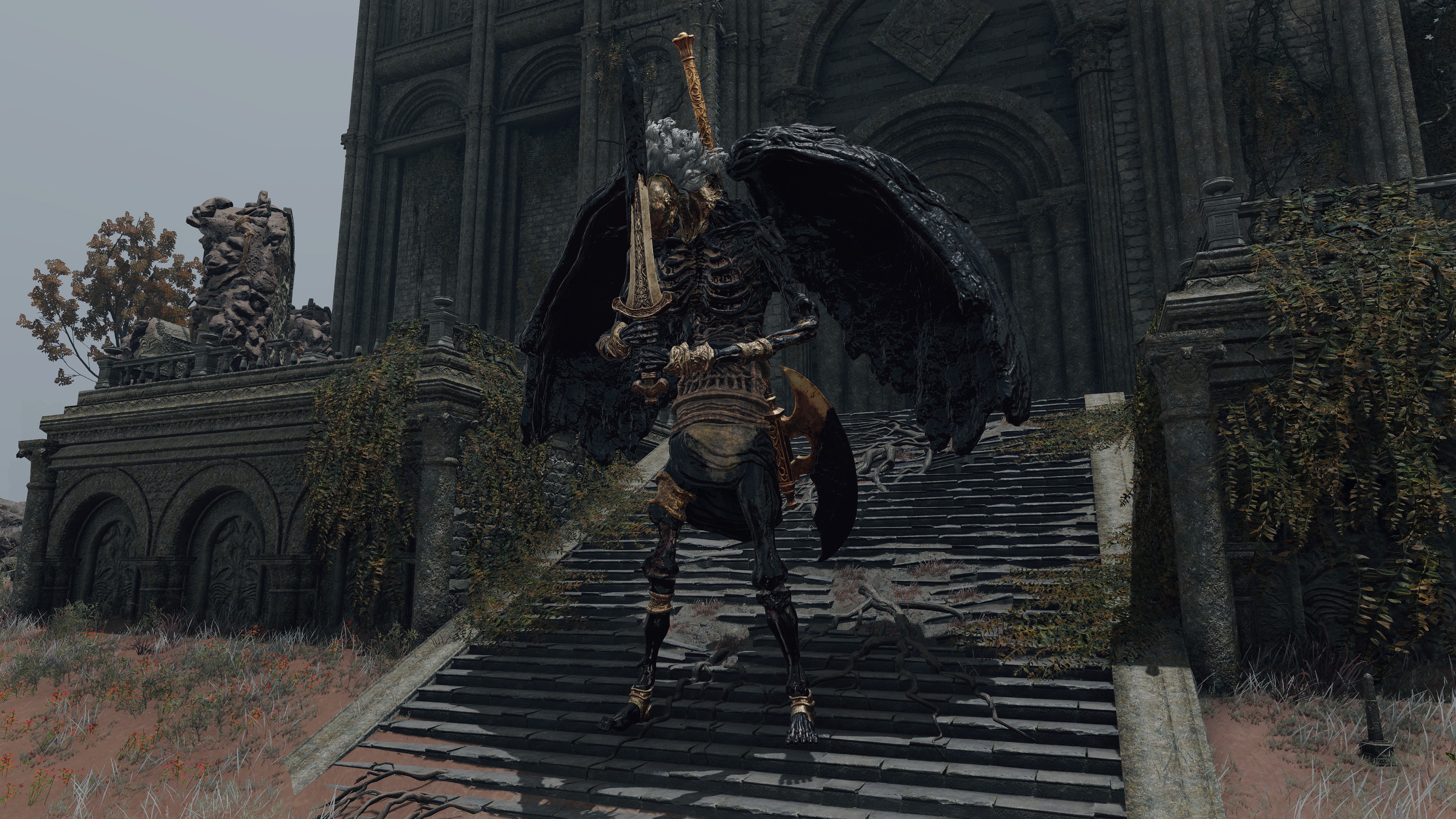
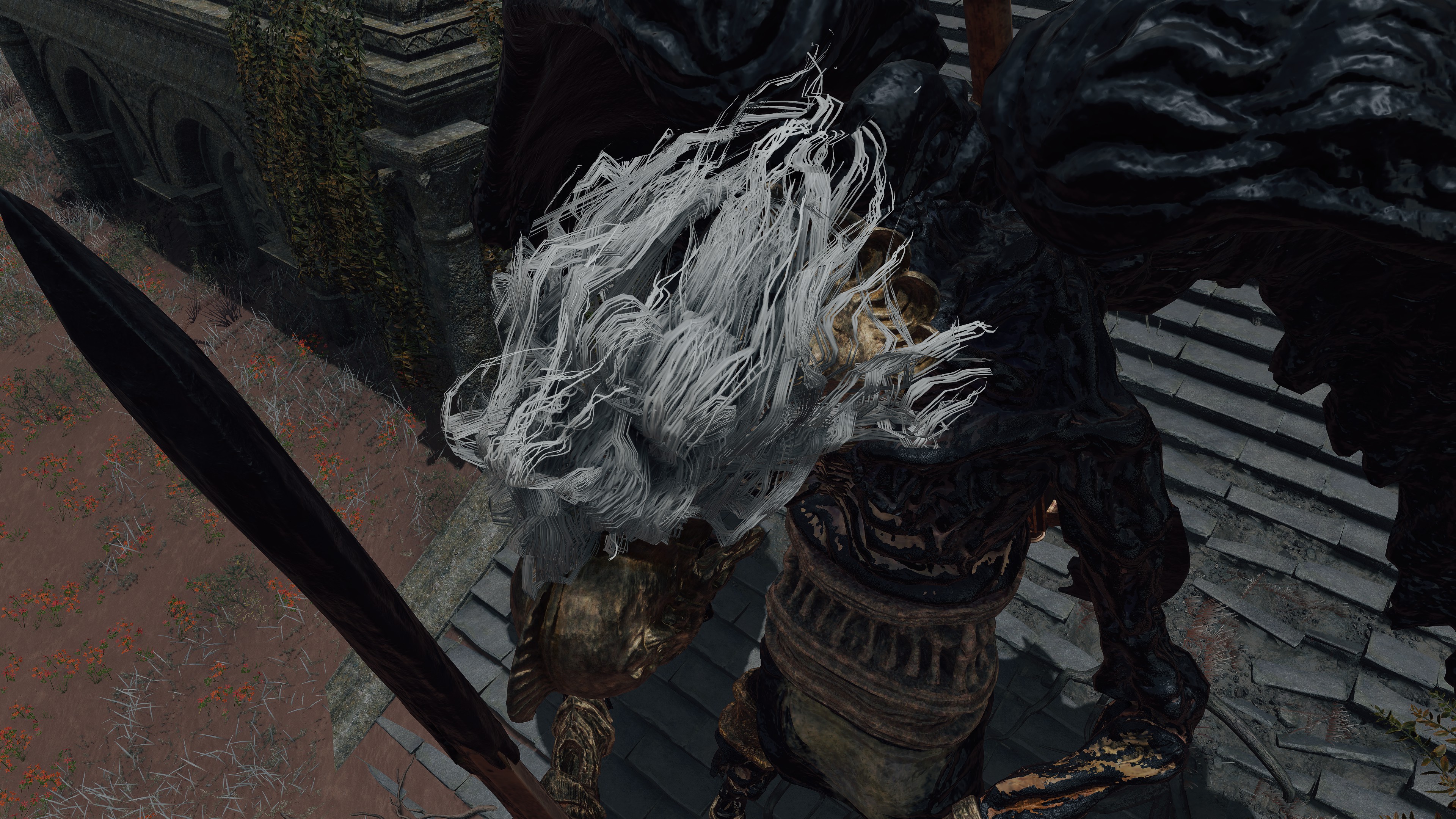
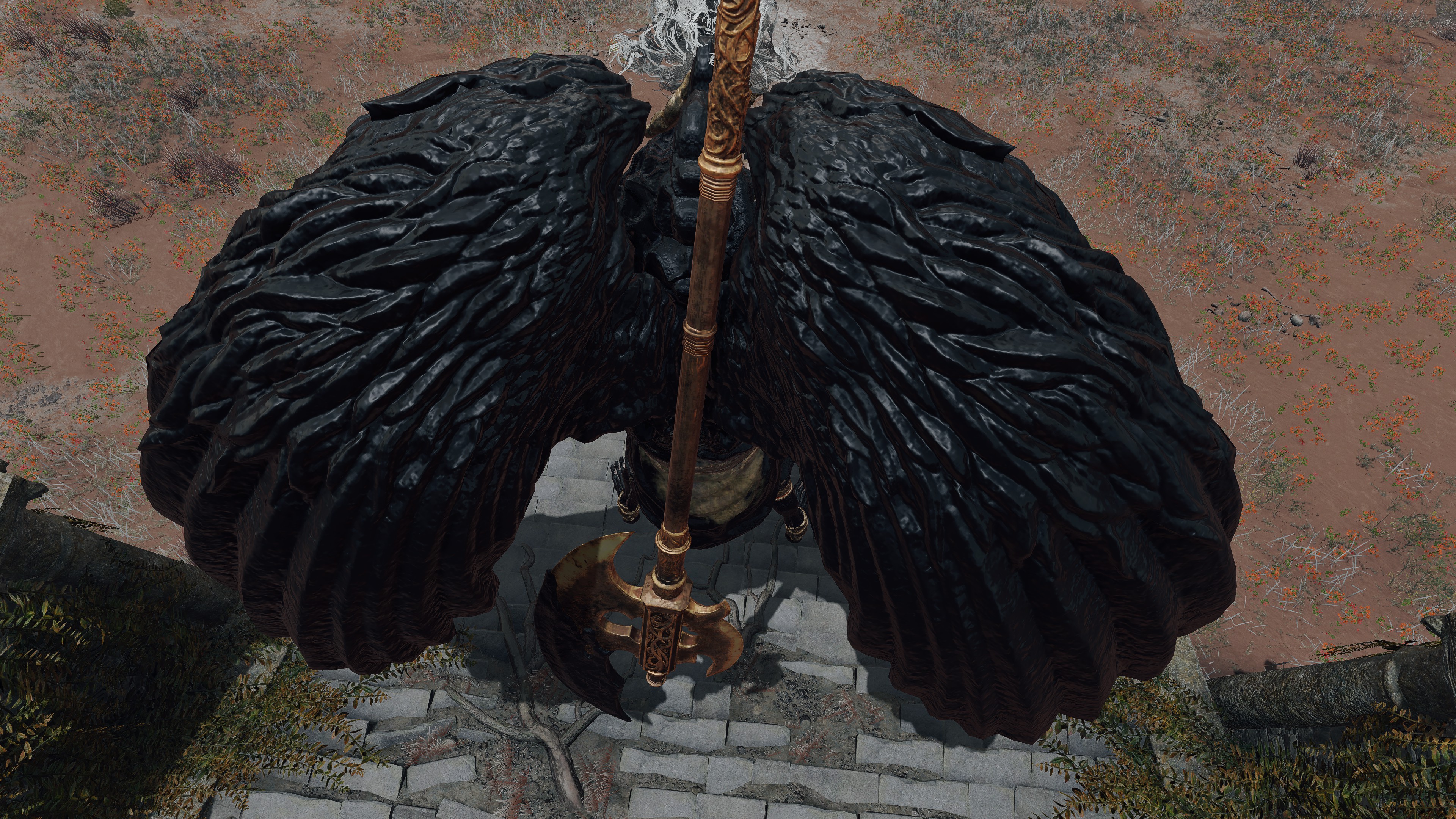
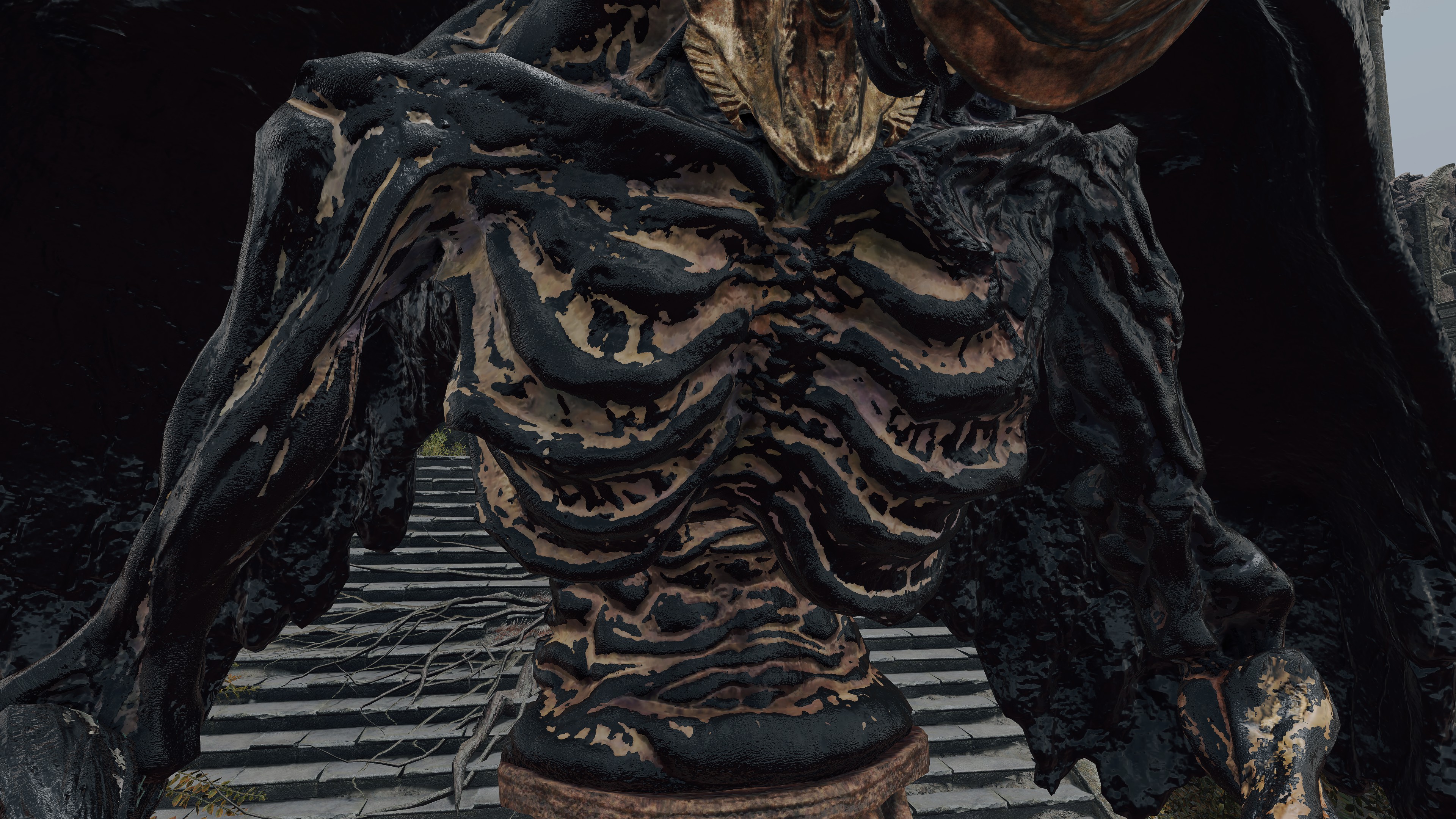
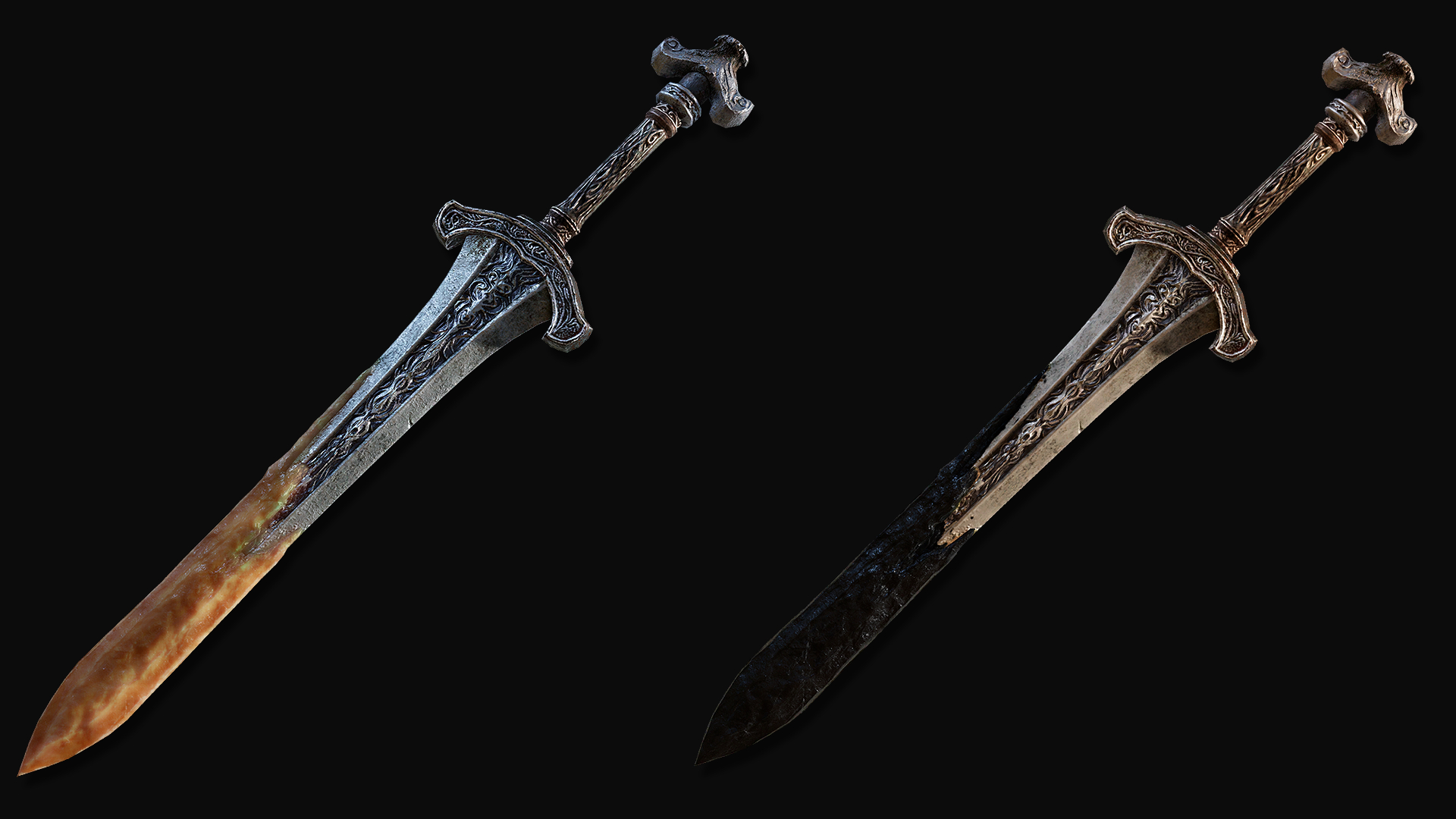
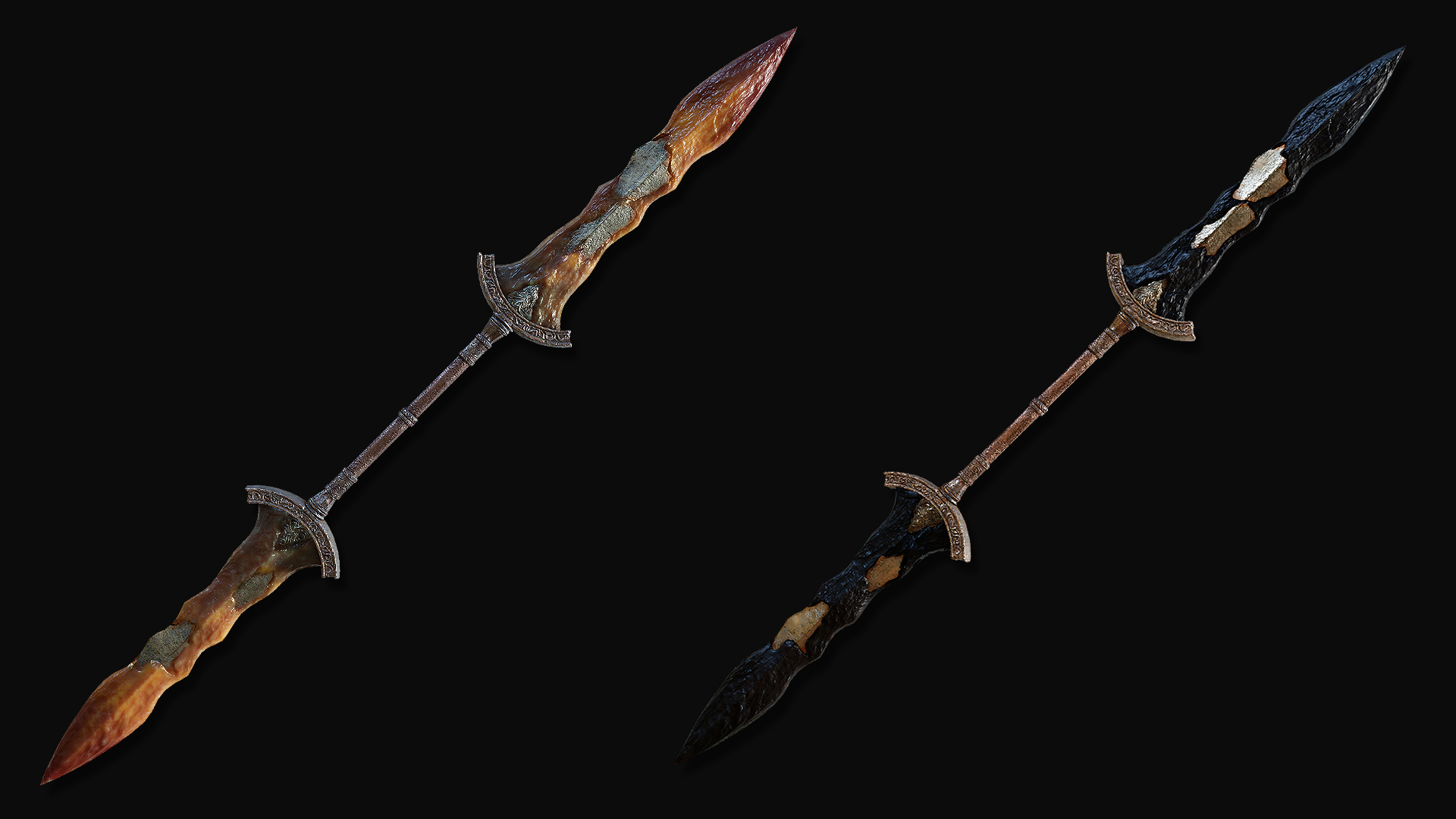
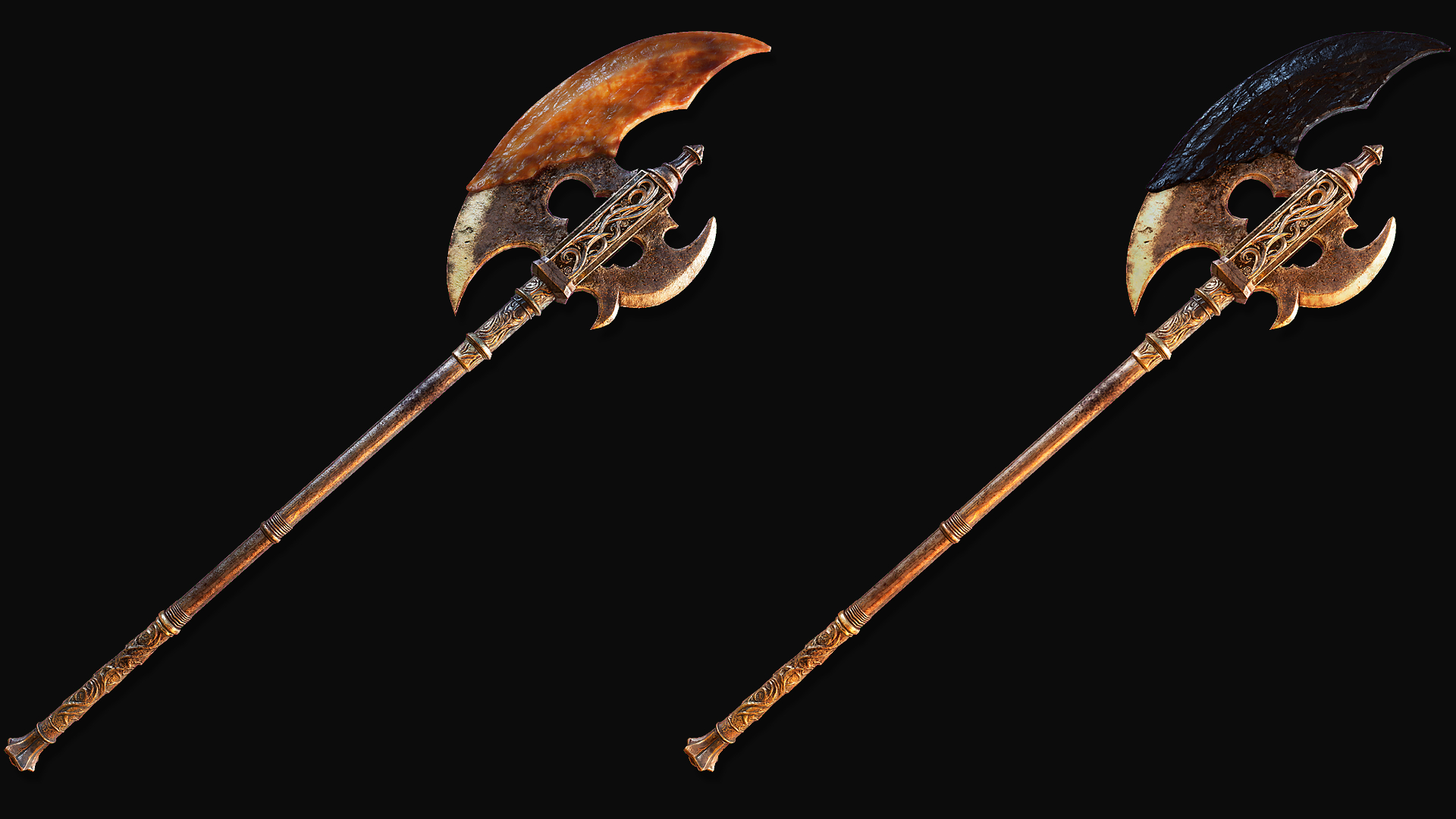
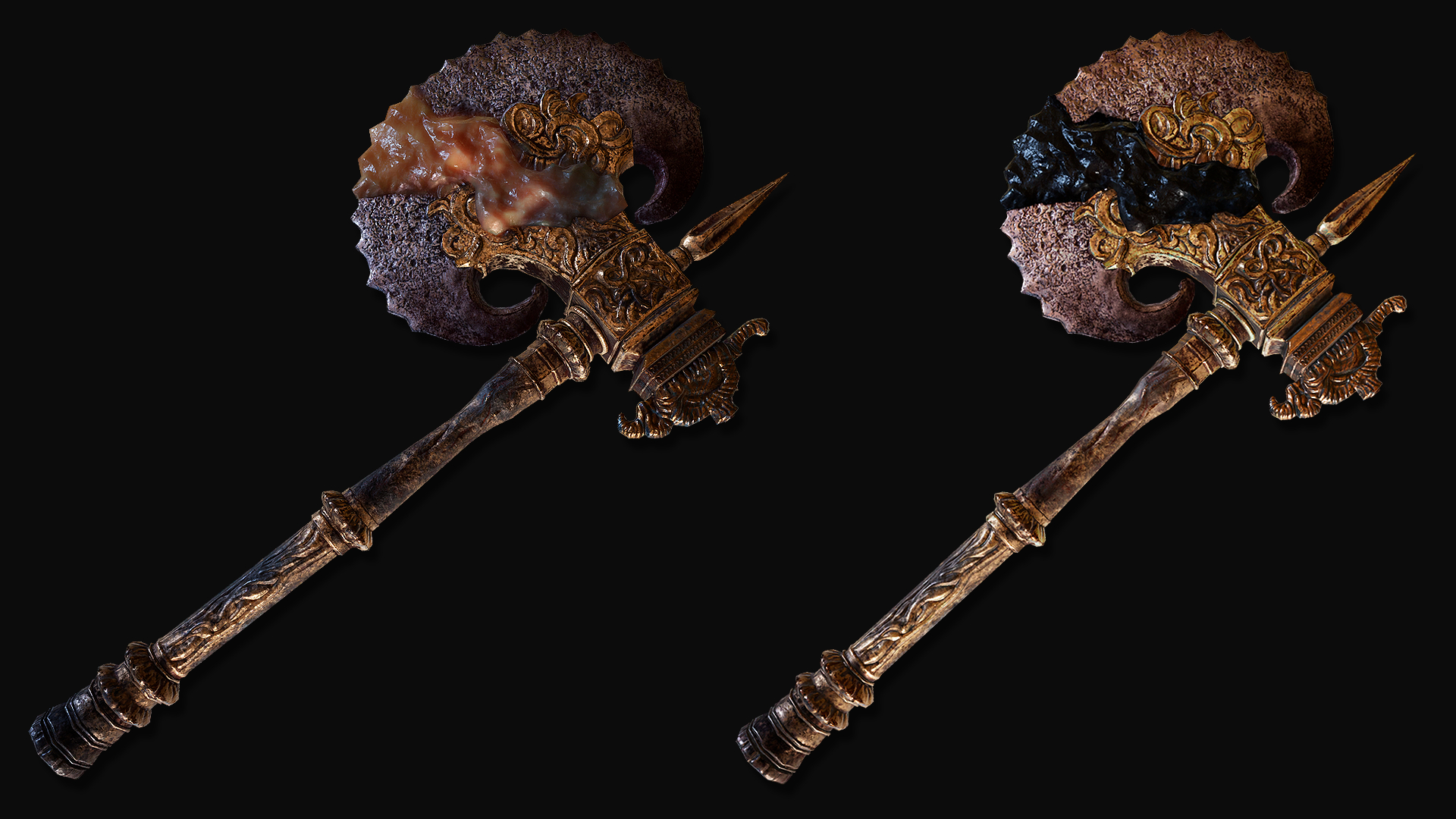
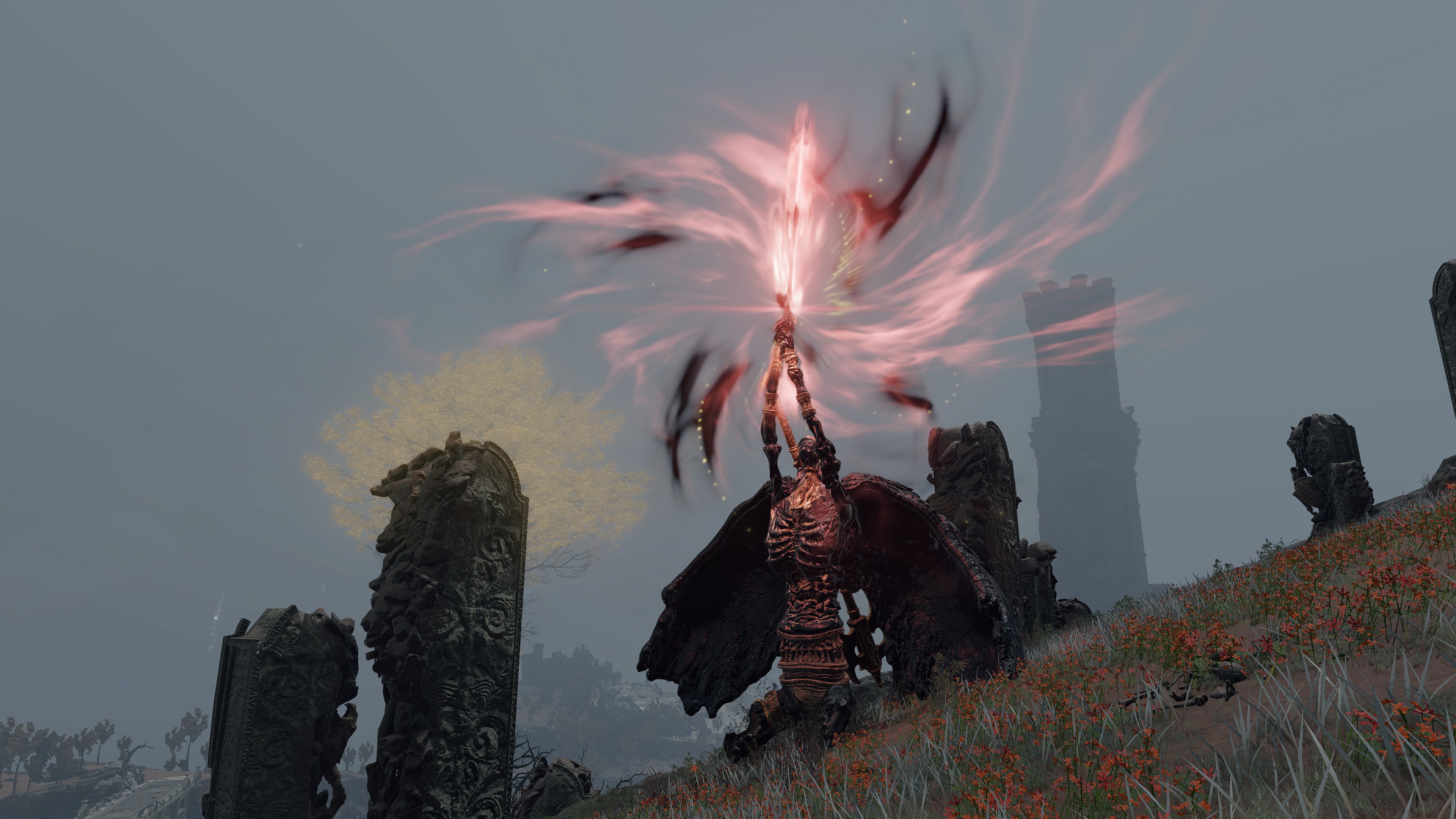
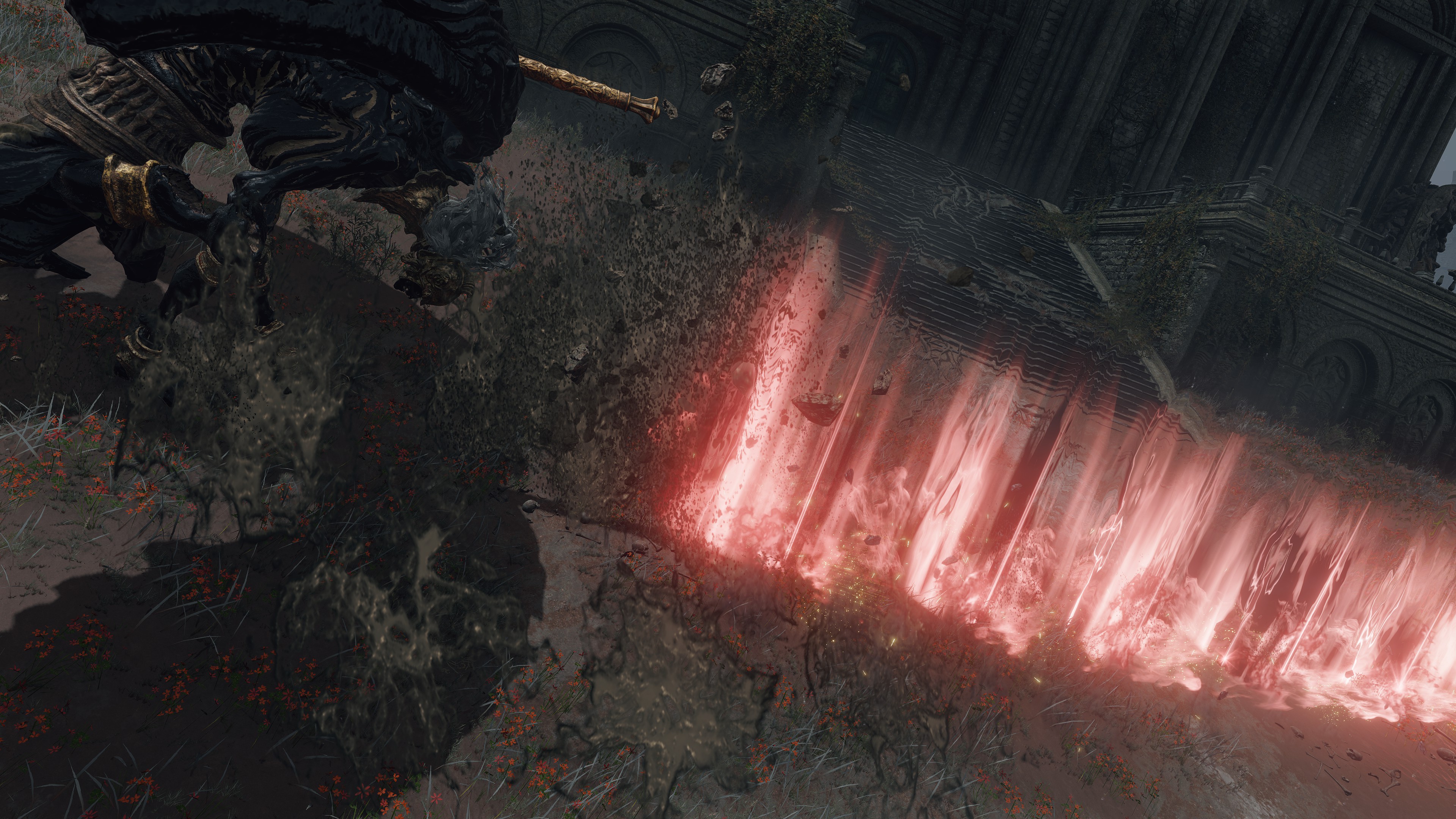
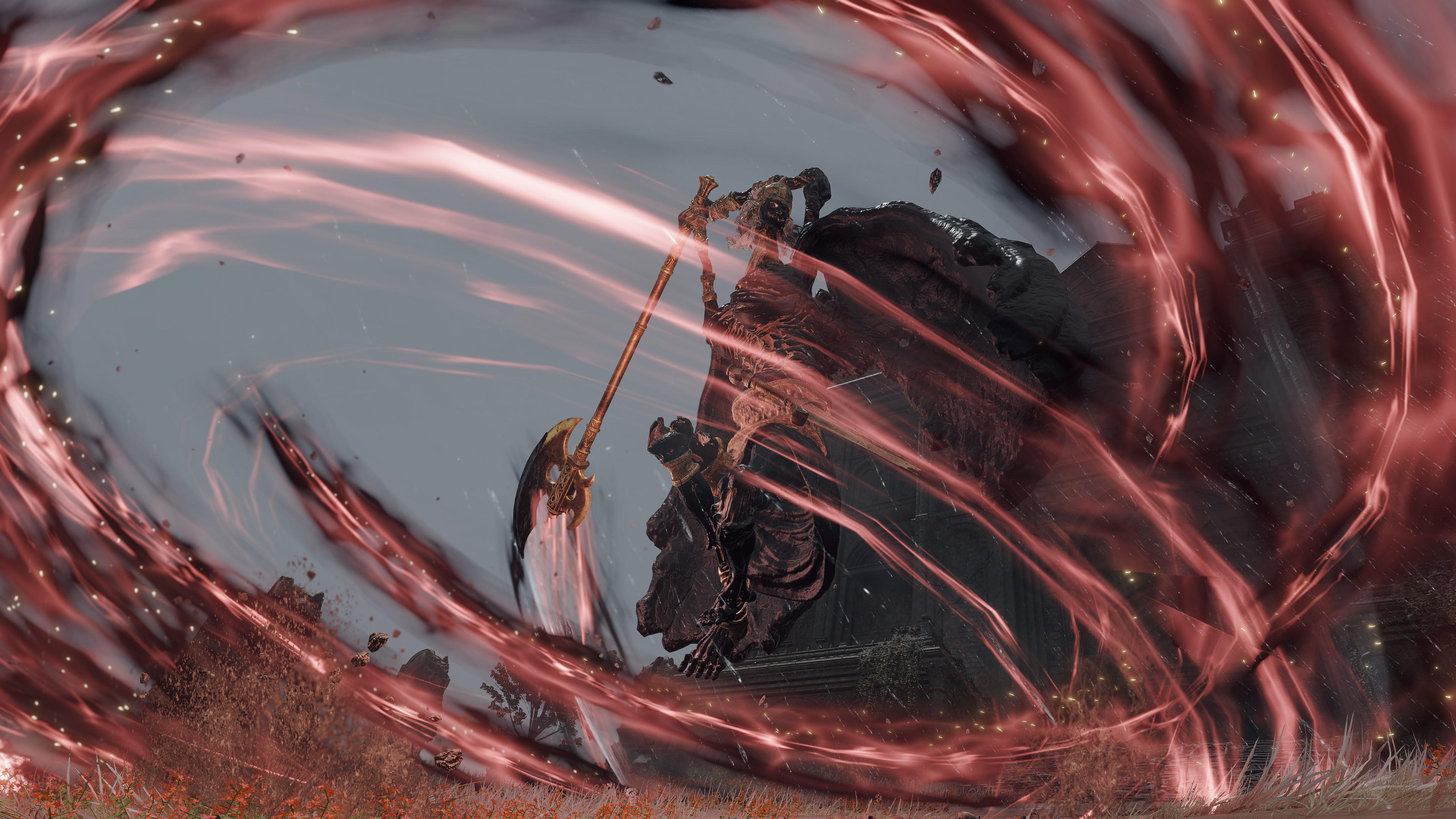
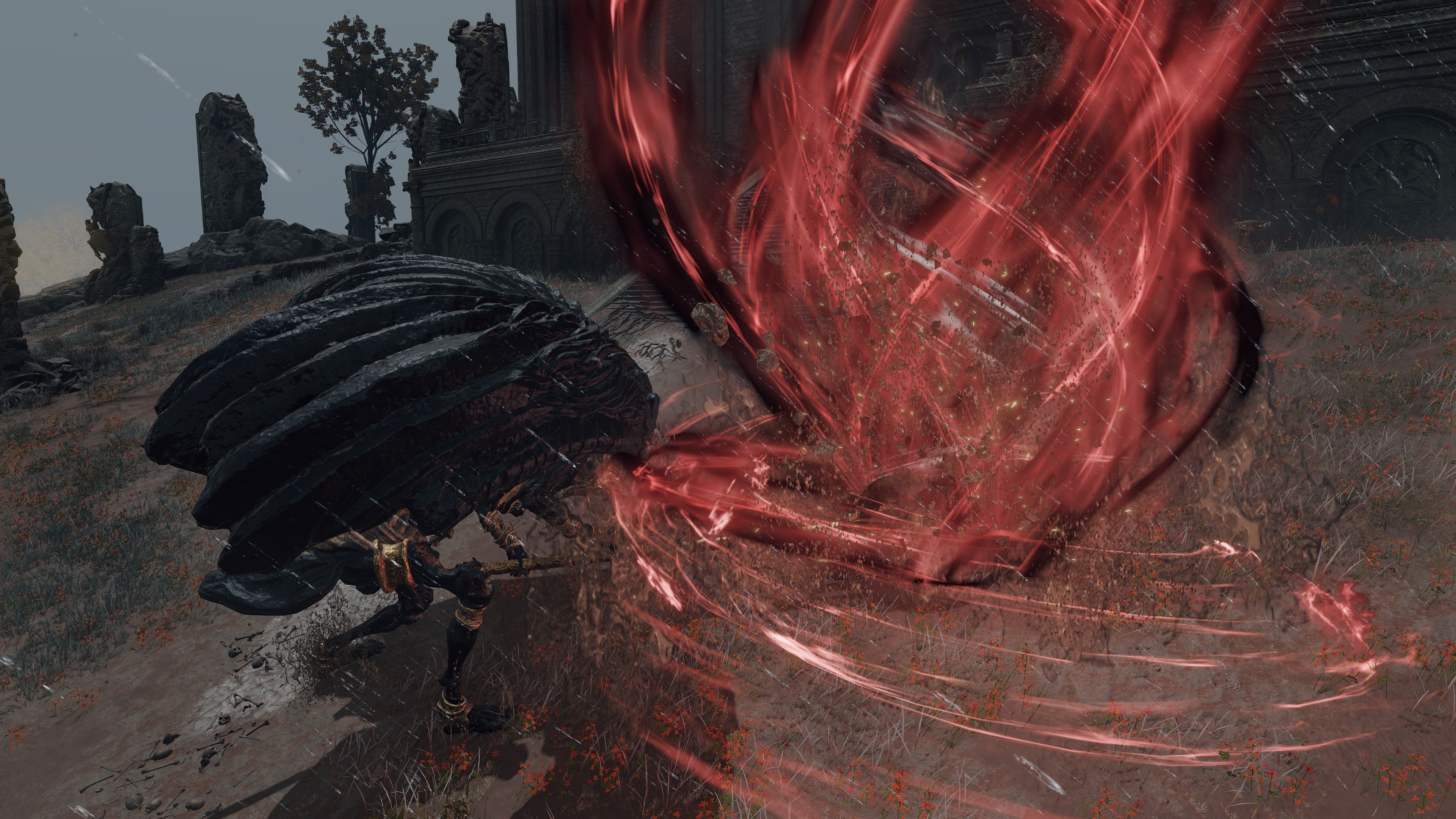
Bronze greatsword possessed by a Hero Gargoyle. Black one supplemented with corpse wax. Possesses attack power of the holy attribute.
It is a sign of serving Maliketh the Black Blade.
Lost battle art of old heroes. Unleashes power of corpse wax around the sword blade raised up high and fires it ahead as a blade.
Why Radagon and Marika would be experimenting with Godfrey’s long-dead and buried men is straightforward enough. The red and gold colors to the fused corpses draw obvious parallel to the king and queen’s own shared existence. Moreover, the stone additions made the bodies resemble angels — entities who act as a midpoint between god and man. The gargoyle form thus may represent humans with divinity, like Marika. The symbolism would be appropriate, since the gargoyles’ design take obvious inspiration from their counterparts in Dark Souls III who bore equally angelic allusions. But more importantly, it turns each gargoyle into a faux Marika. Add to that, there is the inclusion of the shadow of gold in some of the experiments. Clearly, Marika saw a connection between the Rune of Death and herself, which produced Radagon. The goal was no doubt to reverse-engineer a proxy of themselves which they could then study.
Overall, the gargoyles look like the two halves’ blatant attempt at new insight into their peculiar situation, the resulting failures still serving to augment the military or Maliketh. Once again, Marika and Radagon were collaborating after reuniting in marriage, only to see themselves cleaning up after their mess with a new catacomb. Perhaps they felt it disgraceful to return mere pieces of the heroes to the existing grave complex, so reburied the leftover flesh in a separate facility nearby. It would explain some of the living jars’ daredevil willingness to throw themselves at the enemy, that fiery spirit exploding the flesh upon their valiant deaths. Such behavior is otherwise only exhibited by jars in the Giants’ Mountaintop Catacombs — victims of a war which that heroic generation had also fought and died in — and Volcano Manor — which can be blamed on the lava flooding the village graveyard. But whatever the case, the couple continued to show little regard for Godfrey and his tribe’s contributions to their empire. If something proved potentially useful, it would be put to use, no matter the past glory or familial ties.
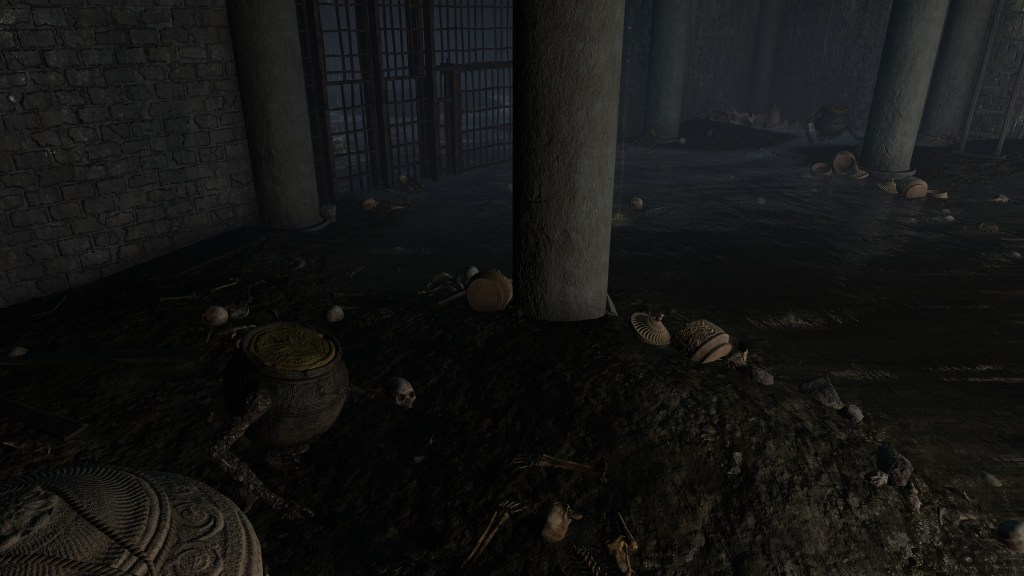
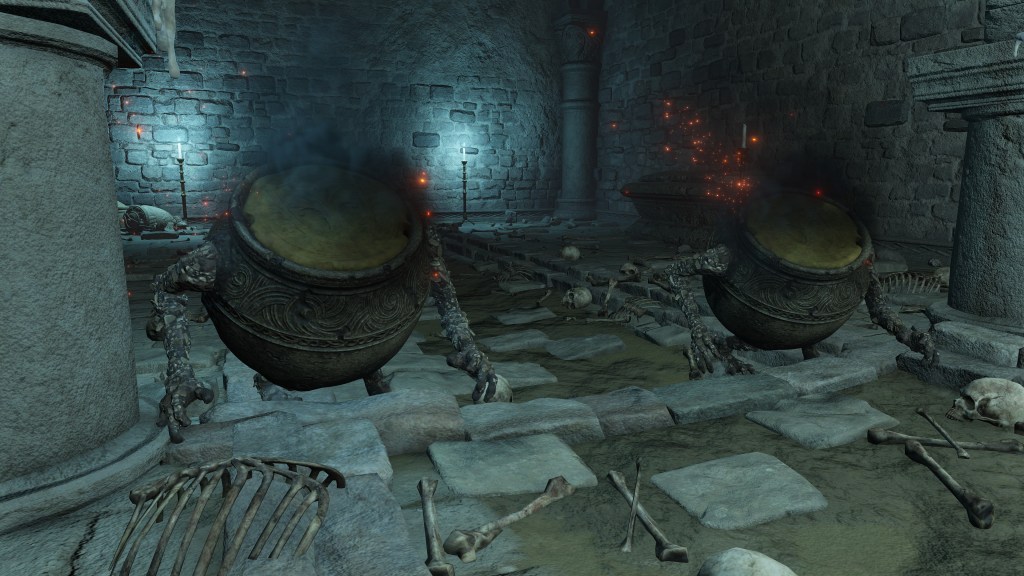
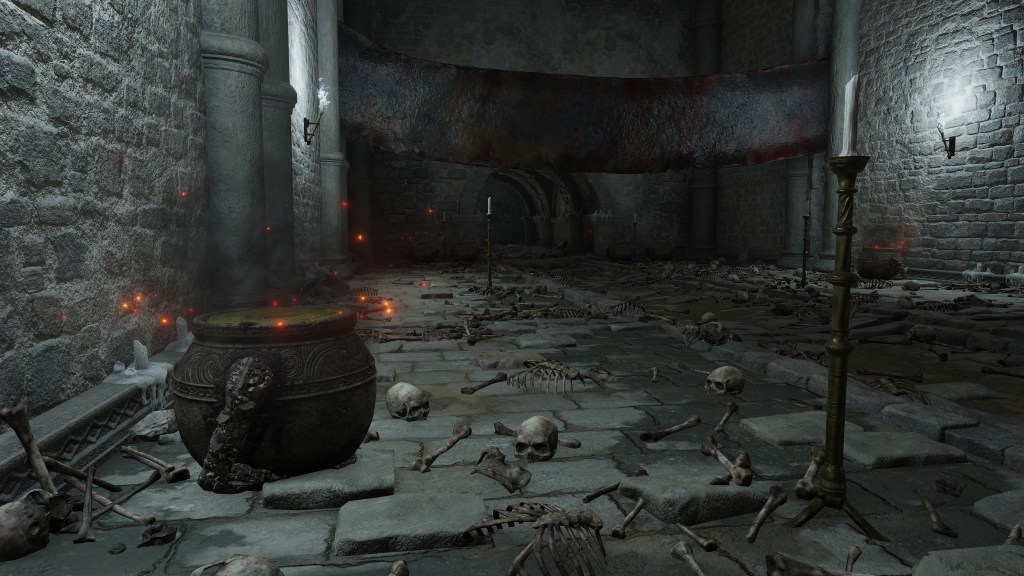
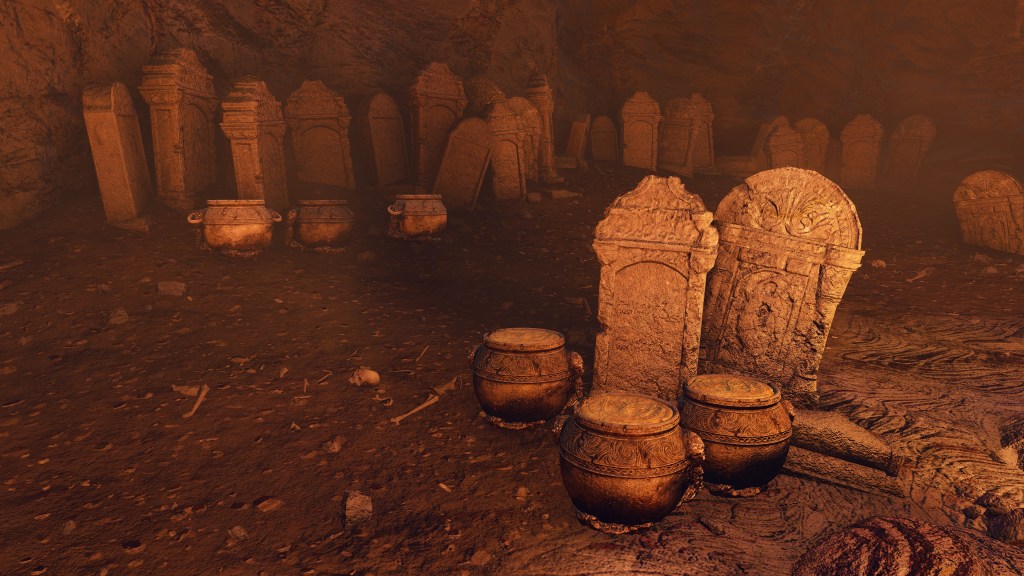
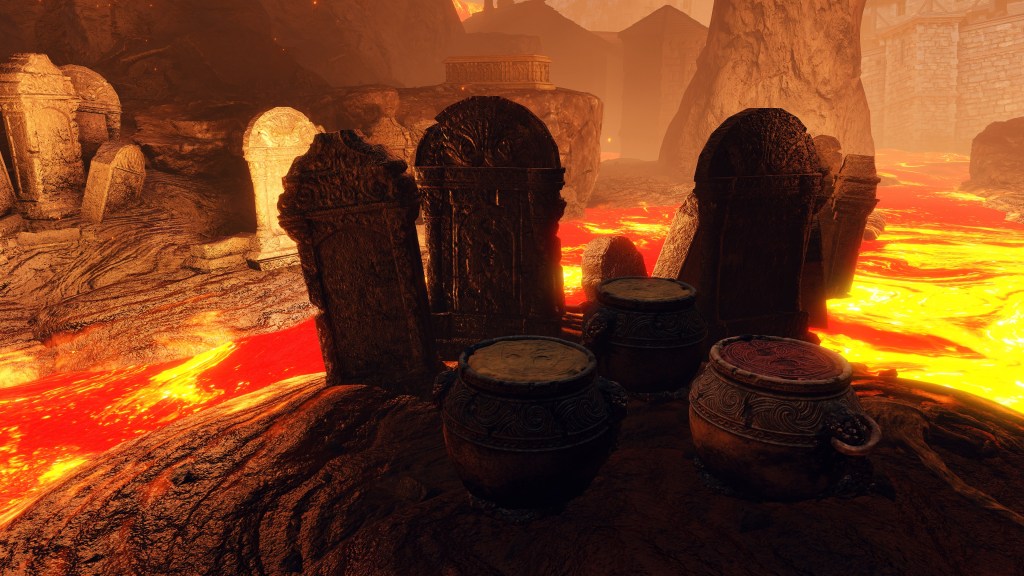
Ashen remains harboring spirits. Summons three small living jar spirits. Consumes HP instead of FP for the summoning.
The spirits of daredevils who slam into enemies and explode upon death. Very valiant, but those explosions also engulf allies, and even touching flame makes them instantly explode.
Tell everyone back home. Us fire pots, it is a way of life…
A Heartless Apology
When it comes to the Erdtree rulers’ cynical mindset, nowhere is it more evident than in Radagon’s return to Liurnia, particularly the Academy of Raya Lucaria. Rennala keeps a statue of Radagon with her in the Grand Library, the same as churches dedicated to the man. The Radagon Icon is likewise stored above the Debate Parlor where we may engage one of his red wolves. Marika’s other half was obviously there at some point, and his depiction in these icons indicate that this occurred after he had been crowned Elden Lord — and the talisman’s effect further implicates prior mastery of incantations as Lord. In other words, it was only well into his second marriage that Radagon paid a visit to the school which his wife led, though whether she was still managing faculty is another question. After all, Rennala had apparently “lost heart” when she lost her husband, her ensuing despondency tarnishing the heroic image she had cultivated in establishing her rule. No one can blame her heartbreak, however, in light of the circumstances.
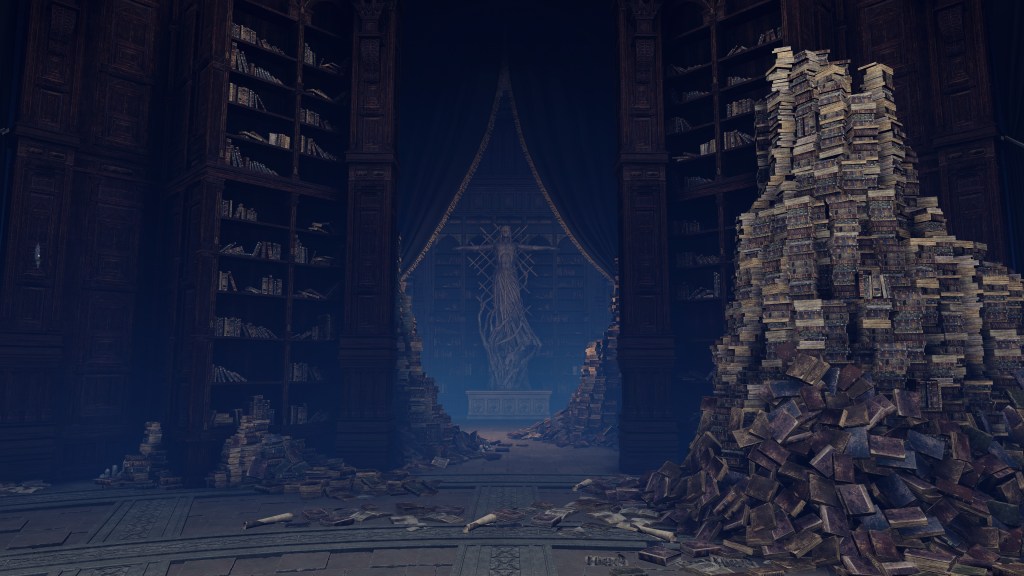
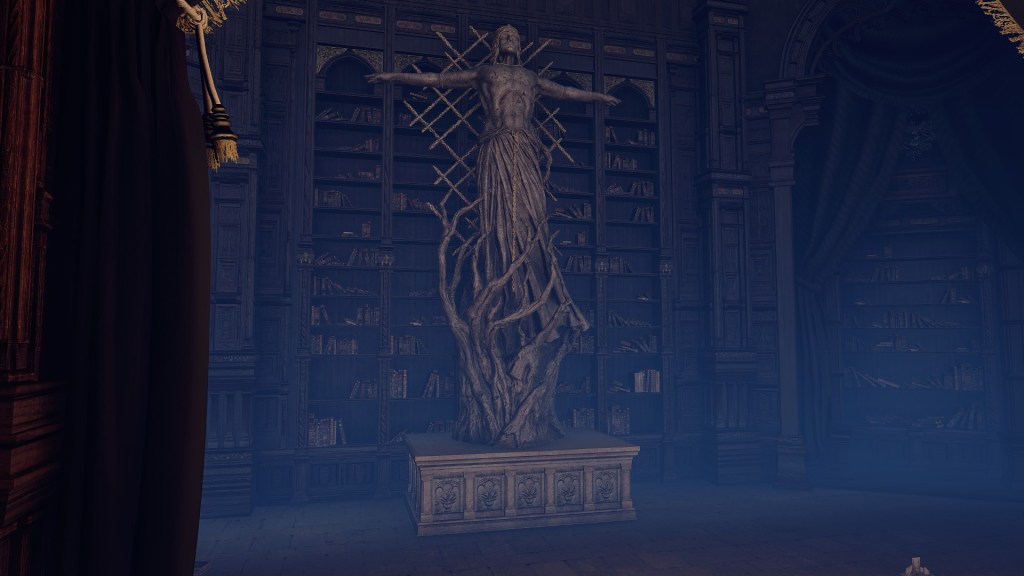
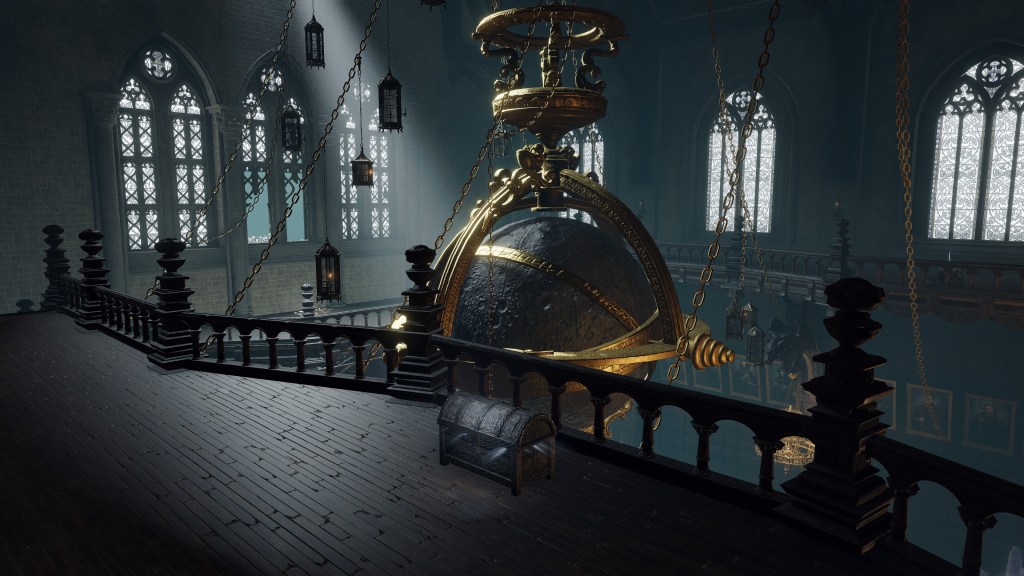
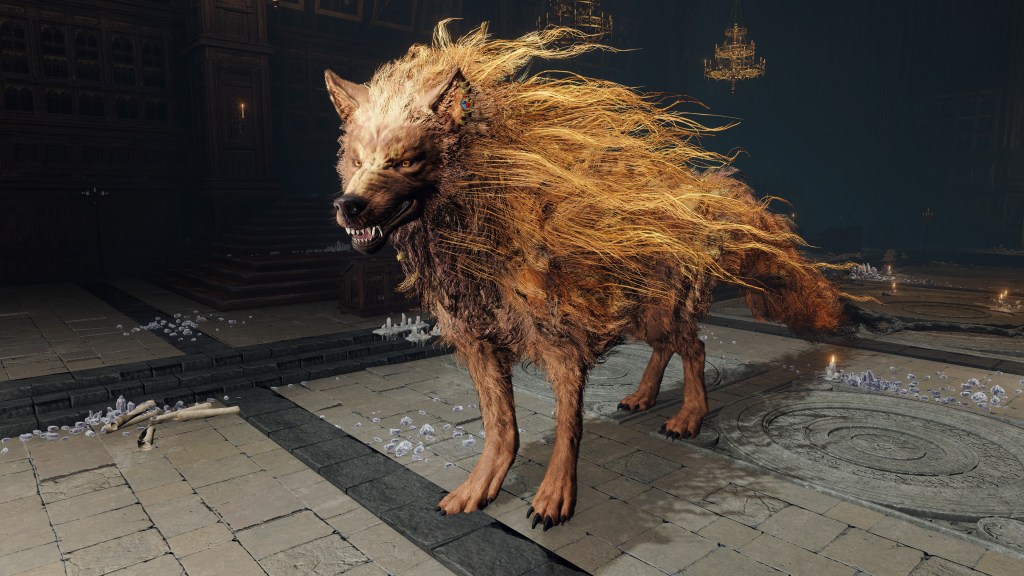
However, after being abandoned by Lord Radagon, who is her husband, she completely lost heart and became prisoner of that Great Library when the academy waved the banner of rebellion against the royal family.
Recall that Radagon had chosen to abandon his first wife to become another’s consort, circumstances separating them since the onset of the Long March. From Rennala’s perspective, the man suddenly left to be with another woman — his relative at that — and that assumes that he explained his departure at all. Given the situation, Radagon himself may not have been aware of Marika’s plans until after reuniting on the peninsula. Either way, there wasn’t much time to enlighten the Full Moon Queen about his reasons for leaving in that situation. If her husband did simply disappear without telling her, she may have only learned the truth as early as the highland army’s return trip from the frontier. One can imagine the confusion at home before the two halves drew up to the academy’s gate, pronouncing their intent to be wed. That would have made Rennala’s shock doubly heartbreaking and would certainly throw Liurnia into renewed chaos as they tried sorting out the future of relations.
Indeed, there were many matters to sort out concerning the two kingdoms now that there would be, technically, a king of both, and this was the best chance to tackle them. Chief among these concern legacy and inheritance. Rykard, Ranni, and Radahn weren’t children of Marika in the traditional sense, but they are still formally recognized as demigods on account of being her stepchildren. The Japanese descriptions go so far as to specify them as gaiseki, (外戚) a term for relatives outside the royal bloodline. Historically, the concept bases itself around kings or emperors, delineating families of their mothers, wives, and the like. However, the actual language for “outside relative” isn’t inherently gendered, making gaiseki still appropriate for the relatives of Radagon after he becomes a queen’s consort. Their status as Marika’s non-biological children is not in question. Even so, they are her husband’s children and thus her children as well. And since they were being adopted into the Erdtree royal family, now was as good a time to bring the soon-to-be demigods to their new home in the royal capital.
But child custody aside, the treatment of Carian children highlights how ties between the Carian and Erdtree royalties didn’t break with Radagon and Rennala’s relationship. In fact, by all indications, Liurnia remained within Marika’s hegemony through her other half. The Carian Queen may have considered their union dissolved, no longer bothering to wear the band signifying the moon and Ring’s harmony on her pinky. But even if he couldn’t still be considered their king, Radagon did marry into the family and entrench the Erdtree’s influence with the help of his first wife — the lunar nobles certainly weren’t about to tear their families apart over this divorce. And with Rennala becoming uncharacteristically despondent, it is no surprise that the country didn’t resist continued transit and trade with civilization on Altus. For all intents and purposes, Radagon could afford to leave whenever he wanted; the queendom of Liurnia was well beyond regaining sovereignty. If Marika and Radagon did discuss these matters with Caria during a pitstop, then it must have felt more like dictating terms to a vassal.
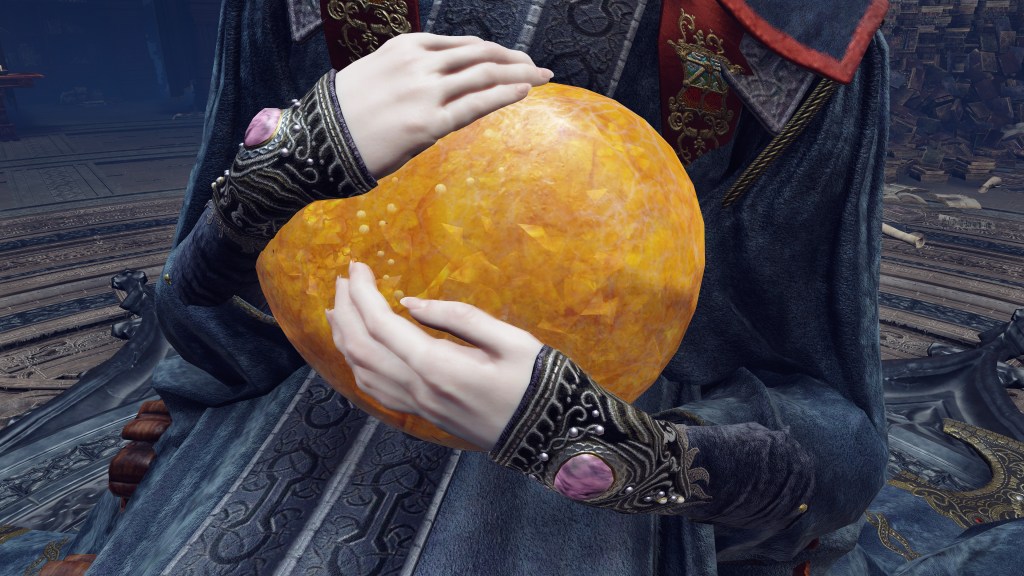
But whether he made a formal announcement at any point, news of the missing king consort’s eventual remarriage was sure to reach the Carians. And while Rennala was no doubt sinking into depression, Radagon shamelessly waltzed right back into her life. Whether or not the academy welcomed his visit, the scholars accepted his gifts, perhaps after hearing him argue for Golden Order Fundamentalism in the Debate Parlor. But preaching to sorcerers was doubtful his motive for coming. Rather, it is most likely at this point that Radagon gifted Rennala the amber egg. Despite the name, the “egg” is more accurately a mass of amber encasing a Great Rune, presumably manifest from the rune’s golden power or actual Erdtree sap. This makes it difficult to imagine Radagon owning one before becoming Elden Lord, when he had free access to the Elden Ring. The only other possibility is that he had been carrying around the egg since before his marriage to Rennala, but that just begs more questions as to why. It is more liable, then, to be something the man created expressly for Rennala to use, and use it she does.
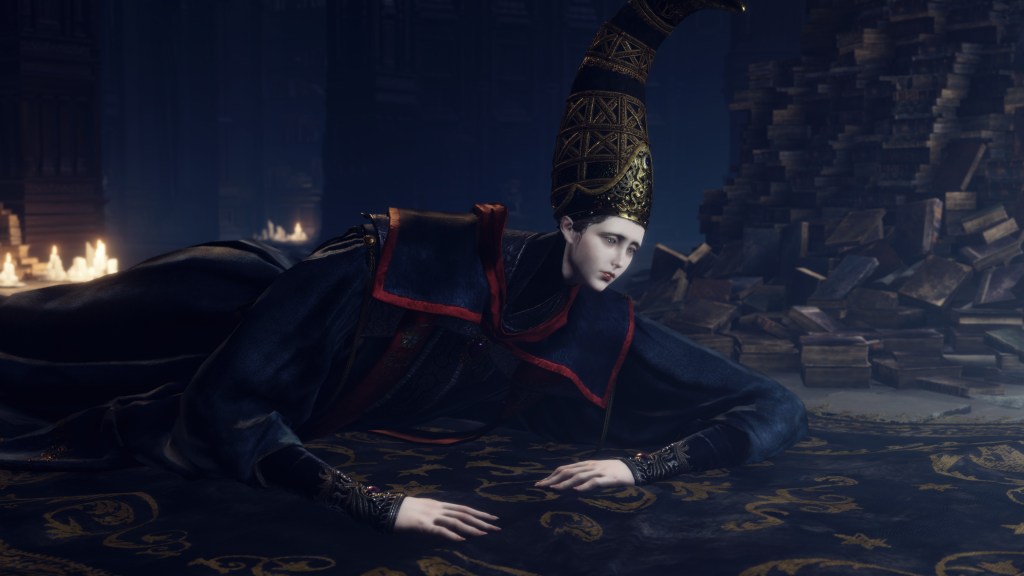
But Rennala herself is no demigod. For she was sent an amber egg. King Consort Radagon, who abandoned her to become the second husband of Queen Marika. The Great Rune inhabits the amber egg that man is said to have gifted her.
… And Lady Rennala clings to the amber egg gifted by Lord Radagon, absorbed in an impermissible art… In the repulsive secret art of Rebirth.
… Where have you gone, my fine children? Don’t hide, come out. There are lots of books and lamplights. So, come on, come out. Or will you become graves? Is it time to be born again?
Be embraced and sleep. In Mother’s amber. Sleep and be born. In Mother’s dead of night.
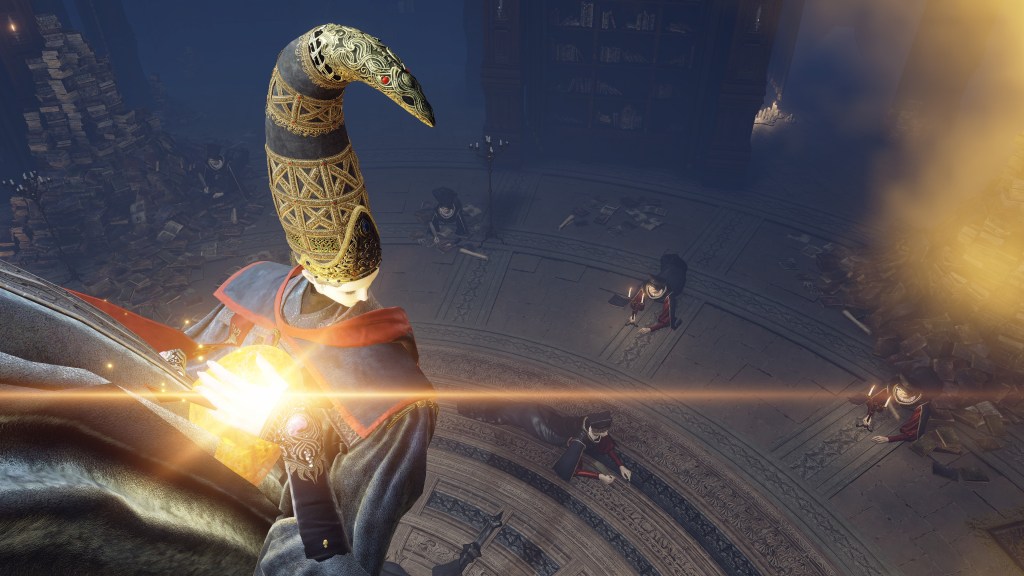
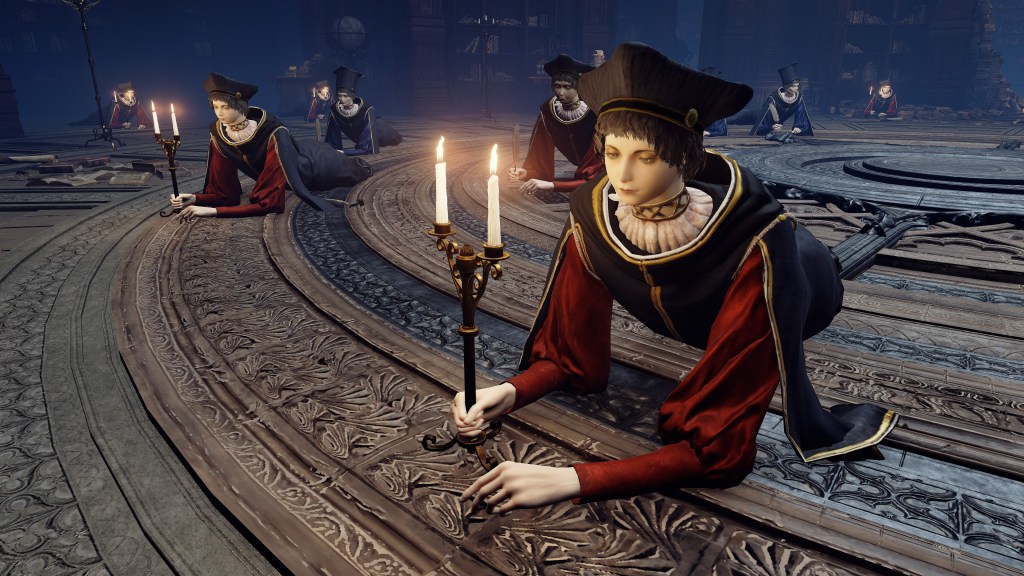
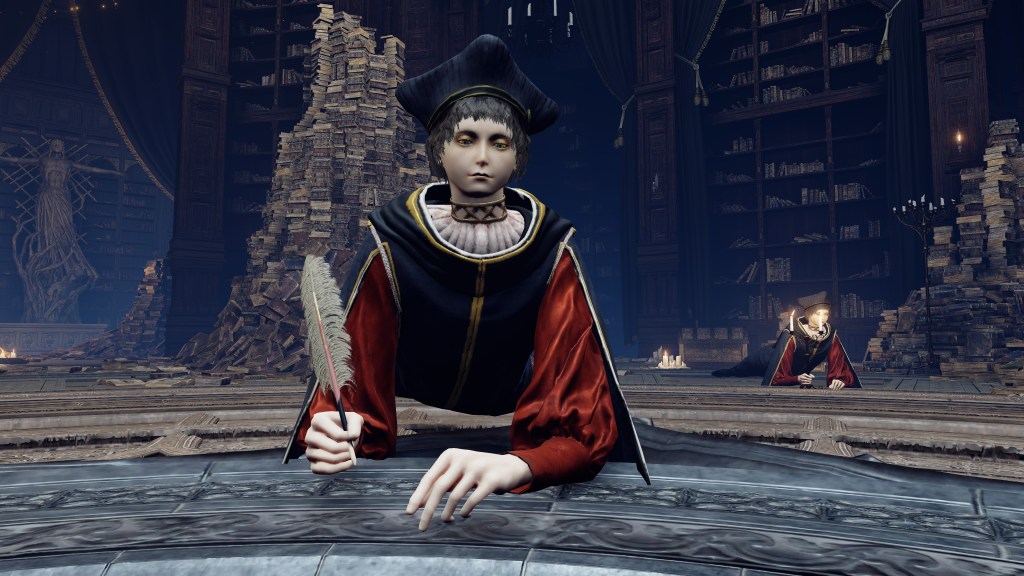
As Miriel relates, Rennala is absorbed in the art of Rebirth, using the egg as a medium to recreate life. Already, she has spawned numerous “children” from the Rune, who faithfully support their mother during the boss battle. Although adult in size, each of these “juvenile” scholars appears, sounds, and behaves youthful, like small children. The Full Moon Queen similarly treats them like infants, many crawling out of cradles hanging overhead in the Grand Library while she herself sits in another. At the same time, they are students of sorcery, Rennala coaxing them out with books and firelight on the implicit promise of teaching them the contents. That explains their dress, and together, they play house until Rennala decides they need to be born again, transforming the bodies into headstones which she callously hurls around during battle. From the children’s nursery rhyme, their souls are held in the amber egg where they “rest” until reborn from the darkness. We can see as much in the egg model used during the cutscene transition mid-boss battle, burgeoning new bodies forming inside the amber casing.
However, Miriel describes this art as repulsive and impermissible for good reason. To be reborn implies that you were already born, so the Great Rune of the Unborn can only work with existing materials. After acquiring the Rune for ourselves, we can still use its power with the help of Rennala, yet clutching her egg; in particular, we are able to freely reallocate our existing stats, essentially transforming our physical and mental being. And from first entering her boss room, Rennala is dead-set on making us into her latest child to dote on, something she intends to repeat in perpetuity. In other words, every juvenile scholar we see was likely born from an actual sorcerer at the academy, unwillingly roped into her rituals like we almost are. Even kin weren’t exempt from such cruelty. The “Resurrection” painting uses the same term as the Rebirthing art, (産まれ直し) and features the royal graveyard in Caria manor backdropped by Raya Lucaria. And the reward we receive at that location? The juvenile scholar’s set. In short, the Full Moon Queen operating out of the academy can count family among her victims.
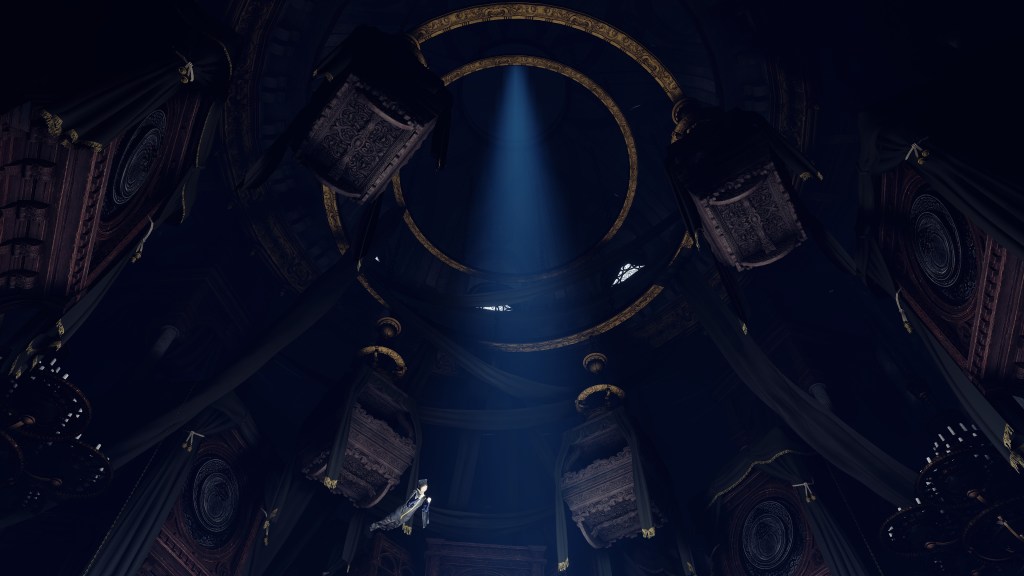
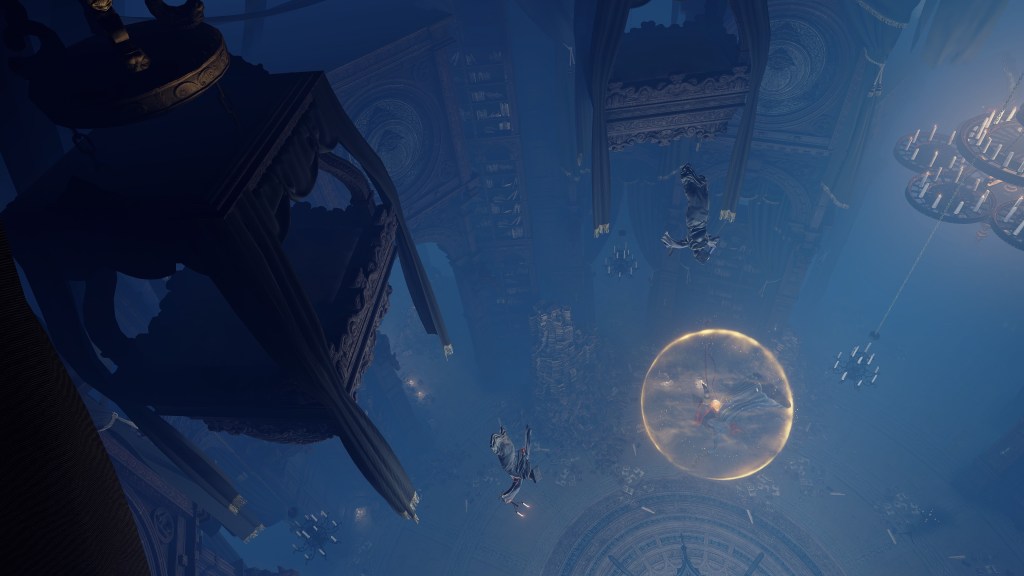
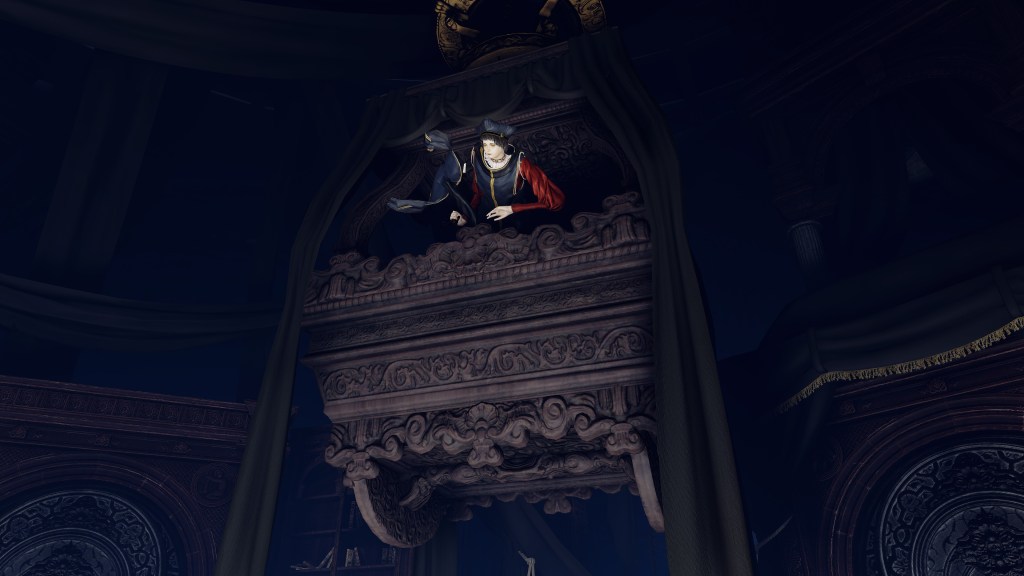
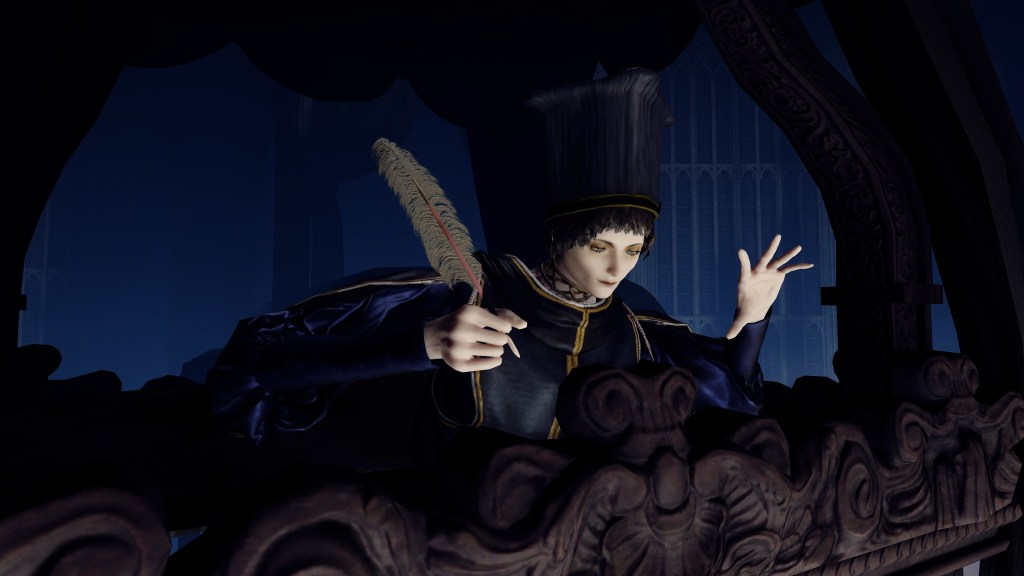
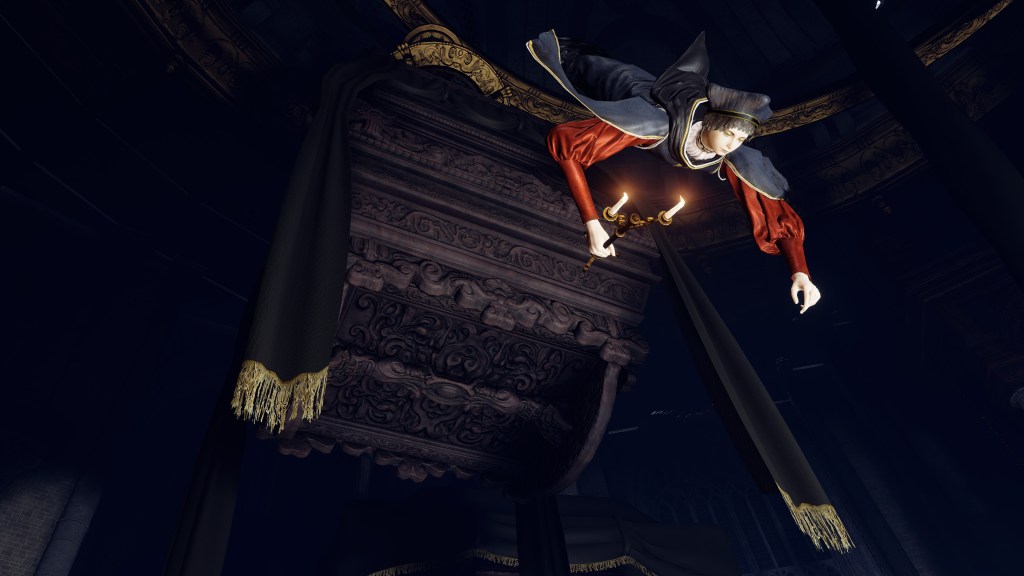
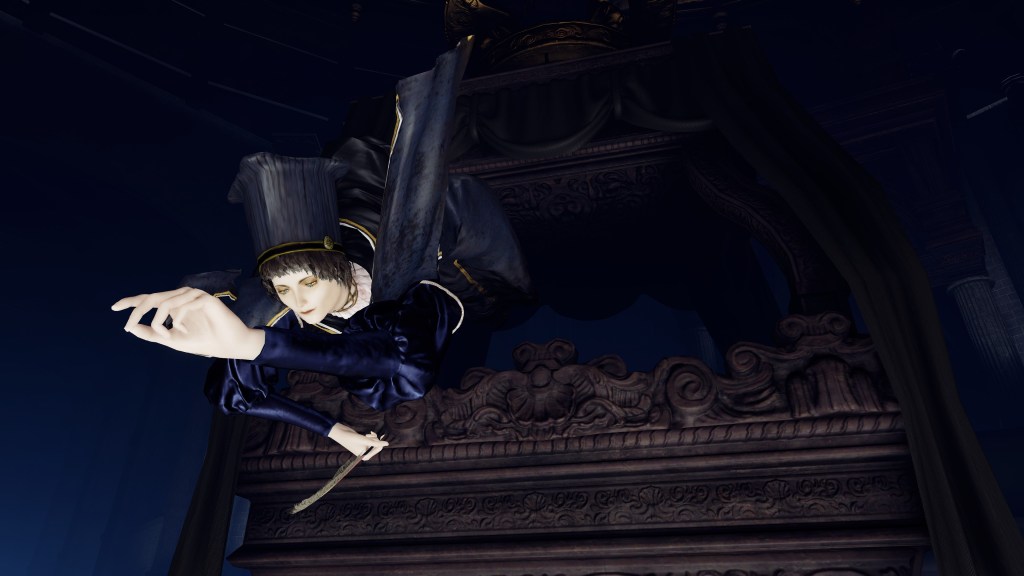
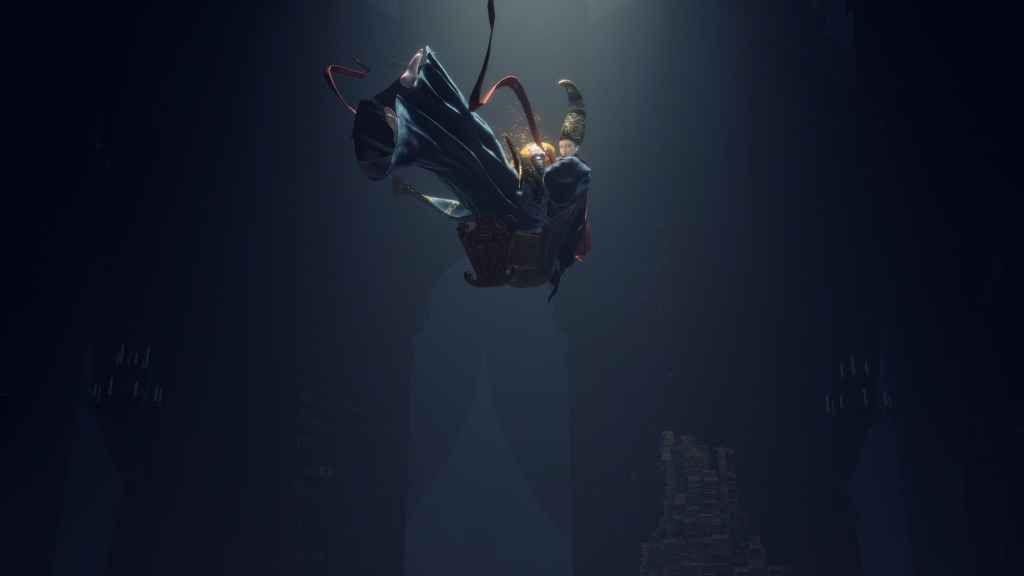
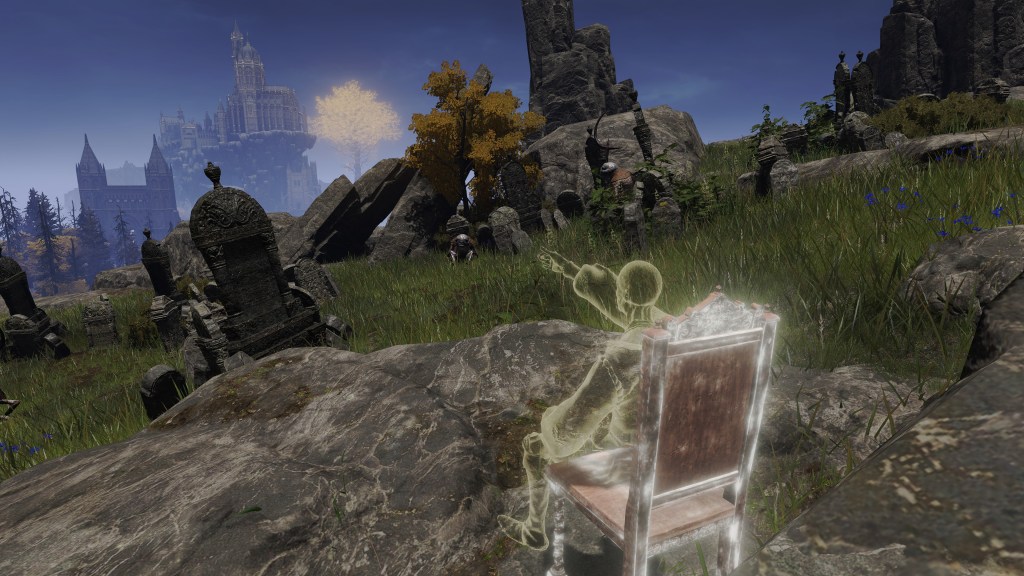
… Ahh, you… I will surely give birth to a fine child…
Ahh, you… Mayhaps you also want to be reborn? My beloved child, want to be reborn from the egg?
Ahh, my beloved child… Do wait. Soon, I shall embrace you… You will all be born forever and ever and ever and ever.
Horrifying as that may sound, there is at least one small mercy for those subjected to a new childhood: they eventually don’t remember the past. The description to the juvenile scholar set makes a point of how Rennala’s creations will one day become reliant on the never-ending rebirths, treating it like sleep — something you just naturally go through. Moreover, they forget everything when they reawaken once more, no different from the impermanent memory of an infant living day-to-day. It seems that a person can only be reconstituted from the ground up so many times before the original self is lost in the process. Rennala’s creations have essentially regressed into children, only retaining their curiosity for sorcery which drew them to the academy in the first place. Rebirthing hence appears to be a “secret art” because no one who stays to witness Rennala perform it will live, at least with memory, to tell the tale. This way, the victims no longer realize what has become of them.
Hat of the juvenile sorcery students who were reborn by the amber egg of Rennala, who is head of Raya Lucaria.
But their rebirth isn’t perfect. They will ever repeat it and one day become dependent on it. Like sleeping at night and waking in the morn, they are reborn and forget it all.
Granted, to be reduced to an ignorant slave dependent on the creator is horrifying in its own way. For example, throughout the initial fight, Rennala floats around protected by a golden barrier. The magic shell is powered by the egg in her hands but maintained by her children’s singing. Killing the chorus causes the barrier to shatter, disrupting her concentration long enough to leave her collapsed on the ground and briefly vulnerable. Once she recollects herself, she uses the egg to unleash a shock wave as she reforms the barrier and returns to mid-air. Meanwhile, her seemingly endless children blow streams of flame from candlesticks or telekinetically hurl books and fixtures at us. These once self-respecting sorcerers are now, for all intents and purposes, eager students, with quills in hand, resolved on protecting their queen — all because they know her to be their mother and nothing else.
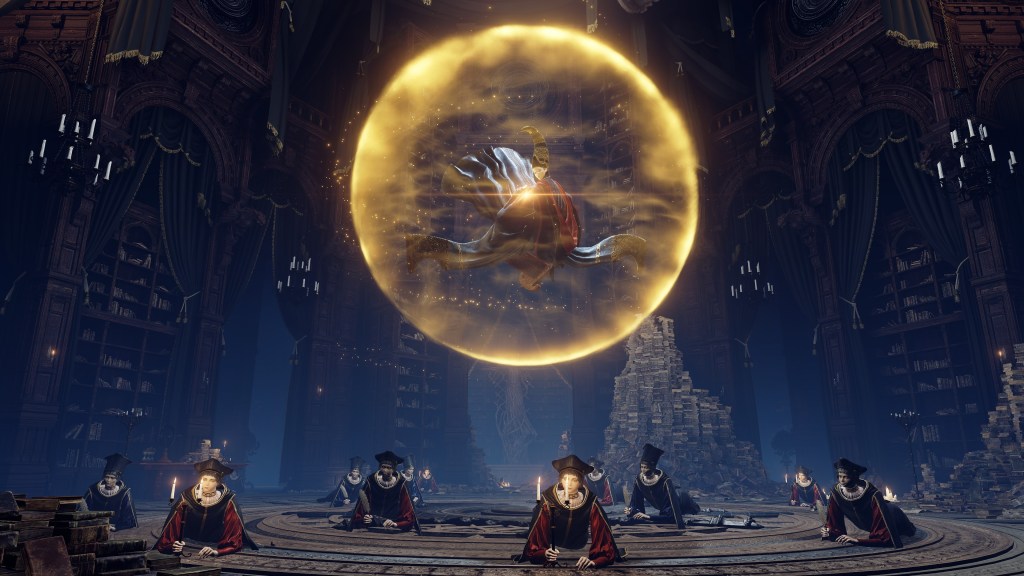
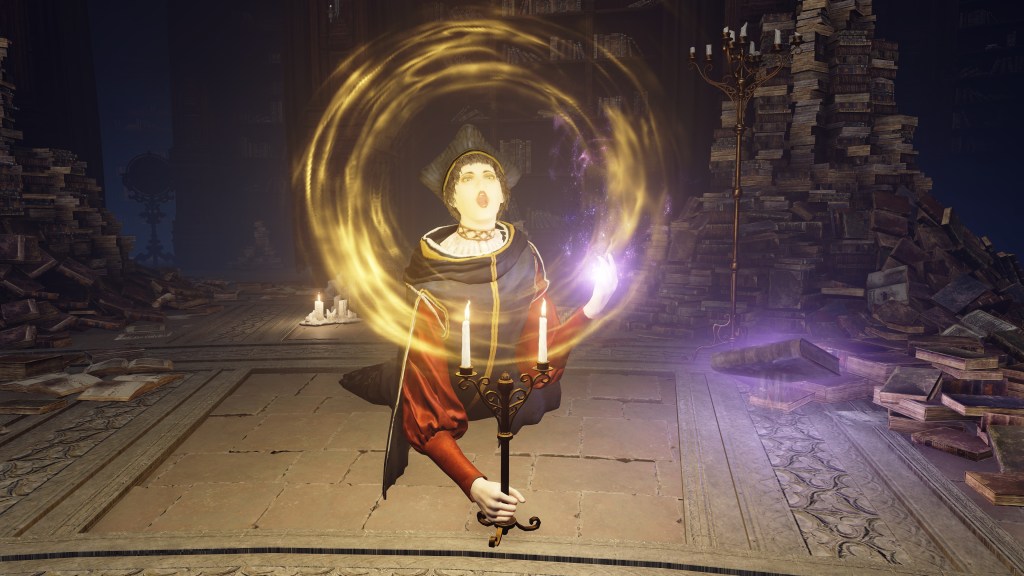
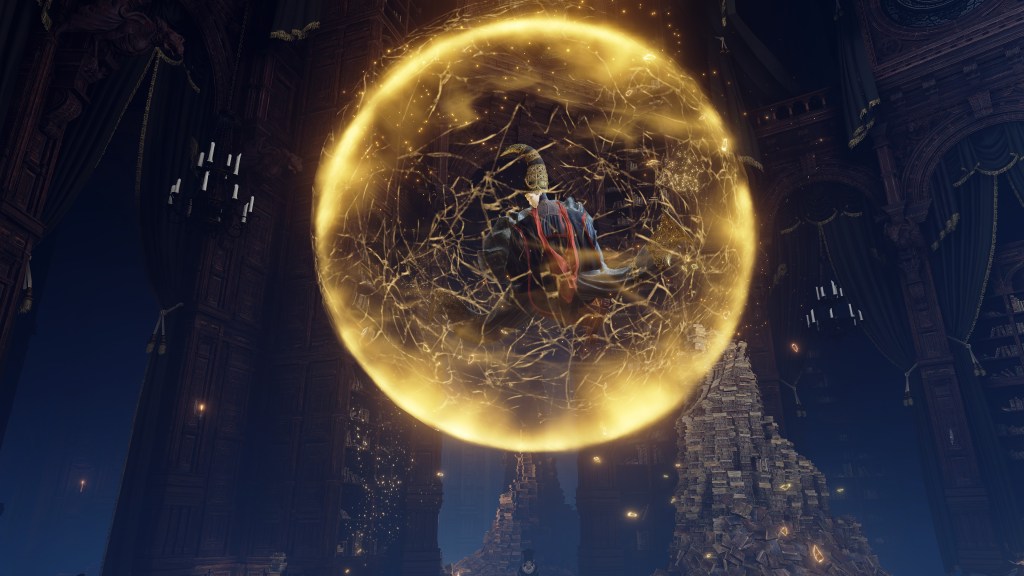
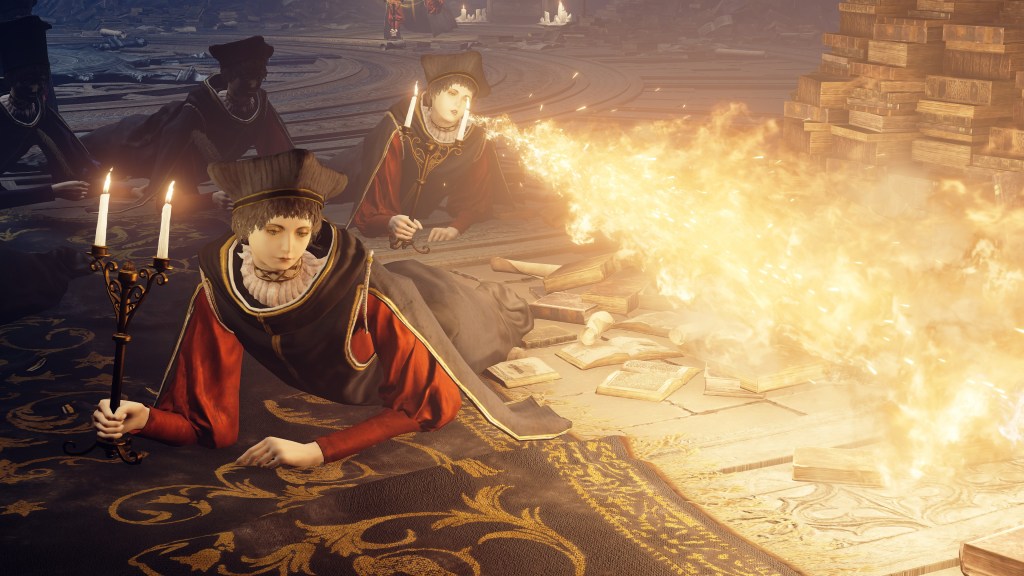
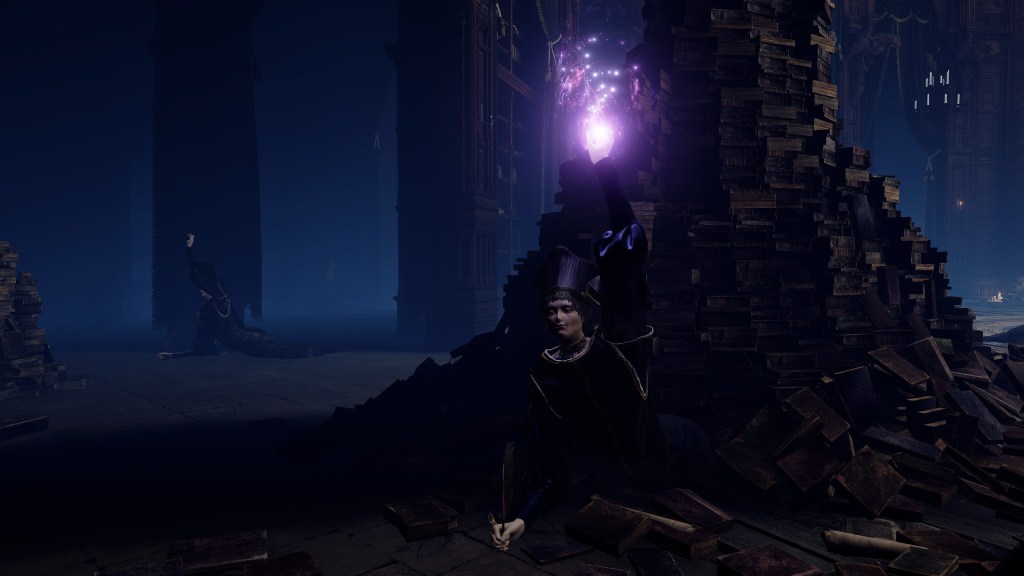
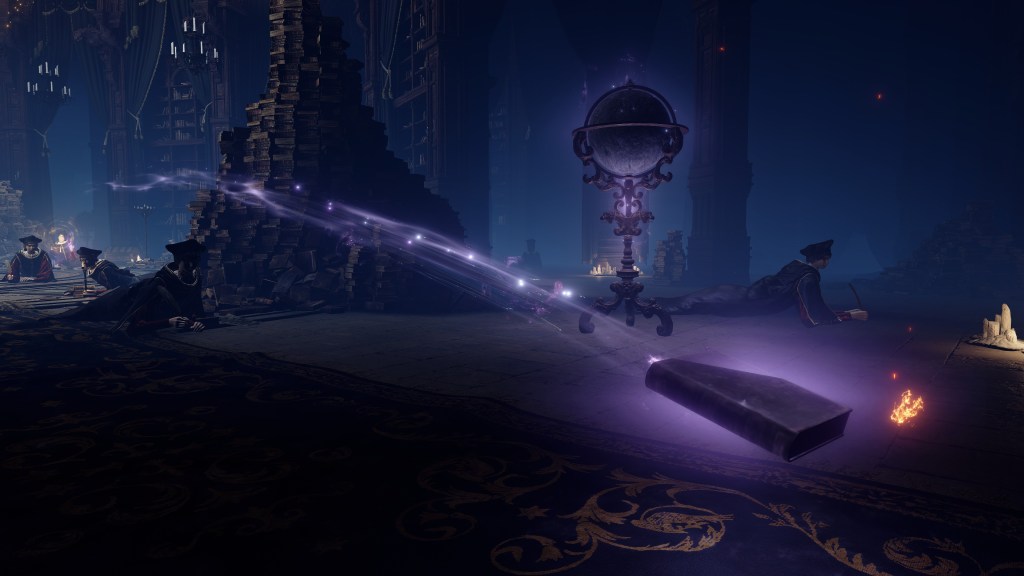
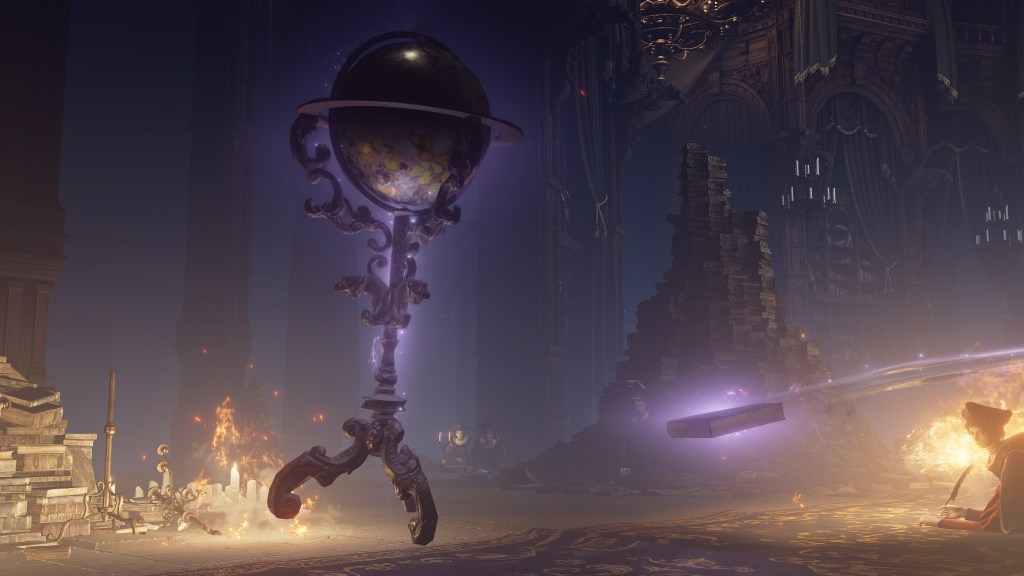
The reason for the repeated rebirths to begin with is because the process hasn’t yet been perfected. The Great Rune of the Unborn’s text describes how we perfect ourselves through Rebirthing. The description further contrasts our efforts to the children’s vulnerabilities, the lot forced to crawl on their bellies because they lack proper legs. These frailties are more than just deformities, since the juvenile scholars are additionally short-lived. Taken all into consideration, Rennala’s frequent reiterations on her creations is driven in large part by their more finite existence — final proof of their failure. Her children are, as the Great Rune’s description asserts, still to be perfected. Rennala has thereby become something of a mad scientist, obsessively repeating failed experiment after failed experiment in the hope of refining all the flaws. Some Carian bodies were retrieved and given a proper burial, but most end up infinitely recycled in the sorcerer’s tests in the Grand Library. As to why she wishes to create a perfect being with her ex-husband’s gift, the answer is obviously because it was his instruction.
Great rune of demigods who weren’t born in the amber egg embraced by Rennala, Full Moon Queen.
Makes one perfect with “rebirth”.
Rennala’s reborn children are all vulnerable and also short-lived. For it wasn’t perfect.
Rennala’s lingering attachment to Radagon is obvious from the Elden Lord’s statue in the boss room, a reminder of who she is experimenting for. Even before he arrived with her gift, she had likely already been yearning to reunite. Outside the Grand Library, we find a warp gate to the Church of Vows, which has since fallen into ruins. Clearly, the building hasn’t received regular visits, and thereby support for maintenance, for some time, yet Miriel has heard of what became of Rennala and Radagon. Therefore, the church didn’t fall into total neglect until well after the two’s separation — naturally, after their vows were broken, the place slowly lost relevance to pilgrims. And given the warp gate’s location, it is likely that Miriel saw the Full Moon Queen among the last to come by whenever she couldn’t even pretend to focus on work at the academy, wanting instead to revisit happier times when it seemed that husband and wife would be together forever. How then would the witch react to that same husband coming back with a request? Ecstatic, especially if her beloved was offering a chance to restore their union.
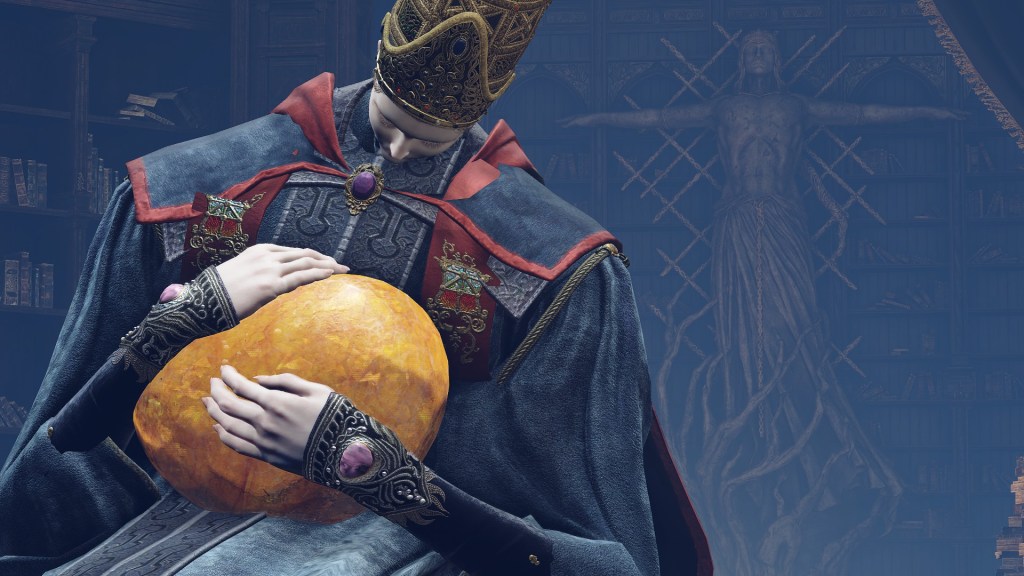
Note that the term for “perfect” used for Rennala’s Rebirthing, the Golden Order, and even the Crucible refers to the same “complete” status sought by Radagon. In other words, we aren’t just perfecting ourselves through rebirths, but making ourselves more complete, the very thing which made Radagon pursue “perfect” understanding of the Golden Order. If Rennala successfully turns an existing life into a new, complete, and self-sufficient being, then she has achieved a method for Marika and Radagon to be separated into their own persons. This fact couldn’t have been lost on the beneficiaries in question, and so that end result must be the motive for gifting the witch something as valuable as a Great Rune. Radagon no doubt recognized the rune’s properties as he was developing Fundamentalism. And, imagining the possibilities, the king consort removed this “Rebirthing” rune from his precious Golden Order and left it in his ex-wife’s care, confident in her chances at proving his theories.
Radagon probably appealed to the queen’s emotions, promising that they could be together again if she found a way to complete him using the egg. The king consort could fairly argue that he would never have left her if not for Marika, the Erdtree’s god chaining him to this fate. Perhaps his words were genuine. Considering how Caria’s sorcery professors were kept from leaking Radagon’s secrets as a god, it is possible that the husband’s peculiar state was a known quantity to Rennala; she might have even played a part in his various experiments. Suffice to say, the couple may have always been exploring a means to completing Radagon, even as they were deepening their relationships in other ways with children. It wouldn’t be difficult for Rennala to understand why he up and abandoned her one day, which may play into her lack of outrage. For his part, Radagon may well have developed a legitimate love for his new family and actually regretted how they had parted ways, leaving the red wolf at their manor for her specifically. Either way, he was still blatantly playing on her affections, just as he did at the start of their relationship.
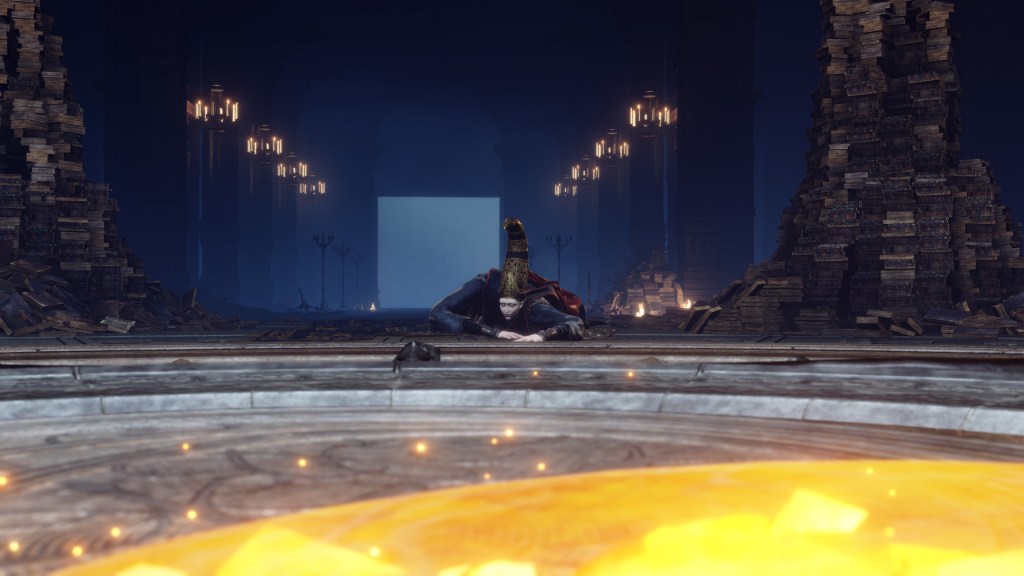
Regardless of whether Radagon’s sweet promises were lies, Rennala believes them, turning the man well and truly into her idol. The statue, the wolf, the talisman — all of these were gifts to either comfort the witch or encourage the academy to support her experiments in his absence. While he continued advancing his study of gold, Rennala would pursue this one line of thought until she either achieved results or exhausted its potential. Of course, the mad queen has never given up on finding an answer to her ex-husband’s question. She has locked herself away in the Grand Library, endlessly combing through Raya Lucaria’s collection of knowledge as she cycles through her failures. No tome has solved the imperfections in her process, yet her single-minded focus on the destination remains. He has well and truly broken her. The only question then is why Radagon leave this task to her specifically? Beyond clear-cut loyalty, what makes Rennala better suited to exploring this route to “completion” than Radagon himself?
The answer lies in one detail to the Rebirthing rituals. Whenever we use the Great Rune for rebirths, we additionally require a larval tear to sacrifice; the silver larva is similarly included among the rewards for the Resurrection painting. We can thus infer that all of Rennala’s reborn creations have been infused with Silver Tear cores to facilitate the Rebirthing process. This lines up with the drops of silver’s ability to mimic any entity. Just as the amber egg appears to serve a medium for the ritual, the tear larva acts as a kind of catalyst to the egg’s proverbial yolk, the Great Rune. Only with all three elements has Rennala achieved these even imperfect rebirths. That being so, it is probably because Caria was so learned in silver that Radagon gifted their leader a fragment of the Erdtree’s gold. The second Elden Lord must have noticed the similarities between the Rebirthing rune and the Nox’s works, which he witnessed first-hand from the studies at Caria Manor. And with no guarantee his theory would succeed, he entrusted the testing to an expert who knew his secrets and would never betray him.
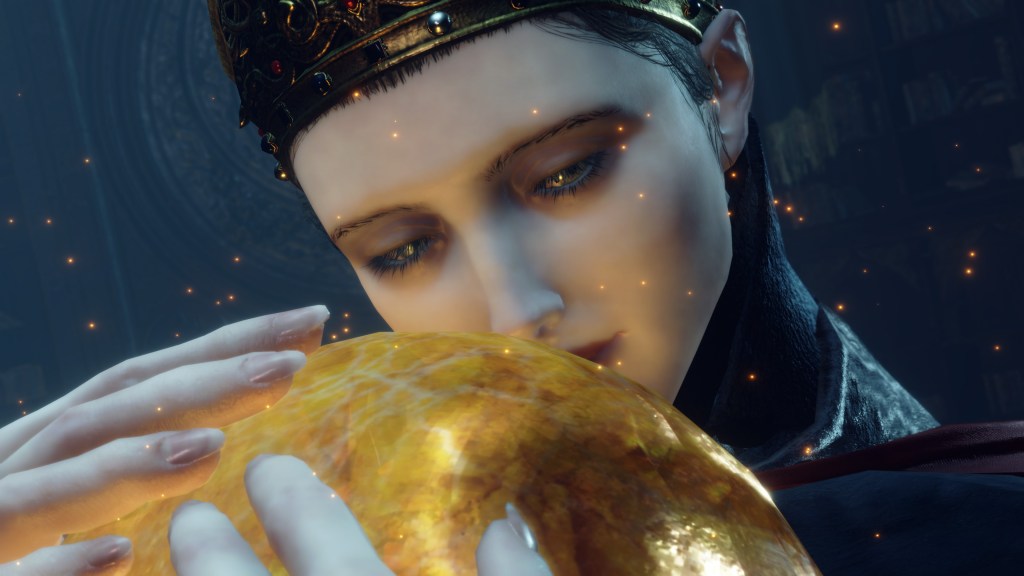
Basically, Rennala was the best person, besides the Nox themselves, to handle the Great Rune, and the only one whom Radagon could trust to follow through with the endeavor. The queen’s current state proves his judgement correct — raising the egg the cuckoo left in her nest — though whether she will ever complete her research is another matter. If nothing else, the Elden Lord was satisfied leaving the Full Moon Queen to her own devices while he continued ruling the Lands Between alongside Marika, together exploring other avenues in the meantime. Although no road of inquiry led to freeing them of each other, the two halves did expand their cognition, and the experiments both at home and abroad showcase the dedication to turn that understanding into tangible results. It didn’t matter who they had to use, be it old flames or long-dead soldiers. No resource would be spared.
Life Cycles On
As Radagon’s new golden age progressed, there were soon even more demigods running around. This time, the king consort sired new twins with Marika, Miquella and Malenia. As before, both stood out from their fellow demigods on account of their unique bodies, possessing vulnerabilities not unlike Rennala’s creations. Malenia was born with Scarlet Rot, steadily destroying her from the inside out. Miquella, on the other hand, suffered from the opposite problem; rather than constantly heading toward death, he was cursed with boundless youth. Even as the boy reached adulthood, his body never aged past childhood, making him forever small and effete — ironic when he was supposed to be the elder twin. Both siblings’ abnormalities made them physically less than ideal, so why were they even conceived? Throughout Radagon’s entire reign, Marika is never known to have borne him children before or since. They were so squarely focused on comprehending the Golden Order. Why the random copulation?
It should be noted that the two still enjoyed their own private lives. The Fortified Manor was updated to accommodate the new Elden Lord. Not only does the castle preserve several of his portraits — all side profiles of the king consort performing his iconic Golden Order Totality — an especially large portrait was hung alongside Godfrey’s likeness on the foyer balcony, opposite pictures of Marika and her precious Erdtree capital. The pair wanted to convey, at least to the public, that they lived together as husband and wife, just like was the case with Godfrey. Perhaps it was only a façade, Marika rarely if ever allowing Radagon to walk around separately behind closed doors; we do find a hero’s rune on Marika’s bed, likely the fate Radagon left behind after their first night back home before he embraced his new destiny as her Elden Lord. Either way, the two halves did continue to take holidays.
And so, it is possible that the king and queen simply indulged carnal pleasures to pass the time. But because of how few children were begot in comparison to Marika’s previous marriage, procreational coitus seems unlikely. The number likewise precludes the god feeling the same drive to repopulate her bloodline as before — the Omen twins and her subsequent research put an end to that pressing guilt. That leaves options of practicality. A unique aspect of this union is that their children are technically products of only the one god, with Malenia’s Great Rune implying that this would make them the holiest of demigods. Could it be that the twins were part of yet another experiment? Were their congenital conditions, to some extent, planned?
Putting such questions aside, Radagon raised them as his own in the royal capital. Miquella in particular took to fundamentalism, father and son exchanging arts as they built upon one another’s ideas — the Elden Lord’s finalized Ring of Light art even included in the Golden Order Principia. In fact, Miquella appears to have idolized his father, as evidenced by him taking part in the pilgrimage from Bellum Church. Despite their rarity, we can acquire the Bewitching Branches associated with Miquella within vicinity of the churches at both ends of the pilgrim route. The Bellum collection are sold by a nomadic merchant, while the Weeping Peninsula’s assortment hide on a corpse as his camp is being preyed upon by bats. Their inclusion signals Miquella’s past presence in both areas, well outside the safety and comfort of Leyndell. Clearly, learning more about his heroic father’s rise to Lordship was important for the demigod once upon a time. We don’t see the same for Malenia, but that may be due to her chronic condition keeping her from leaving palace life until the events of the Shattering.
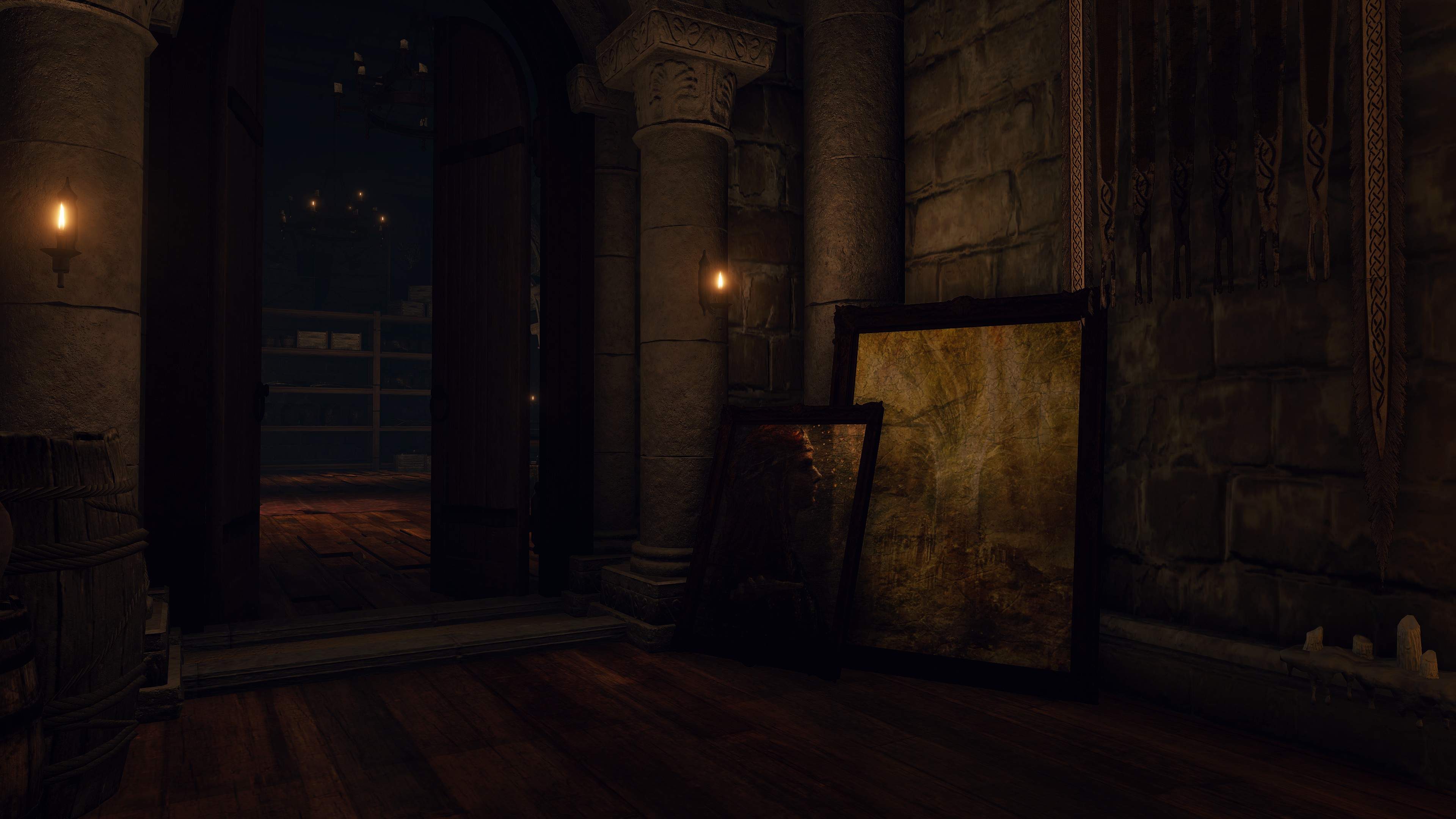
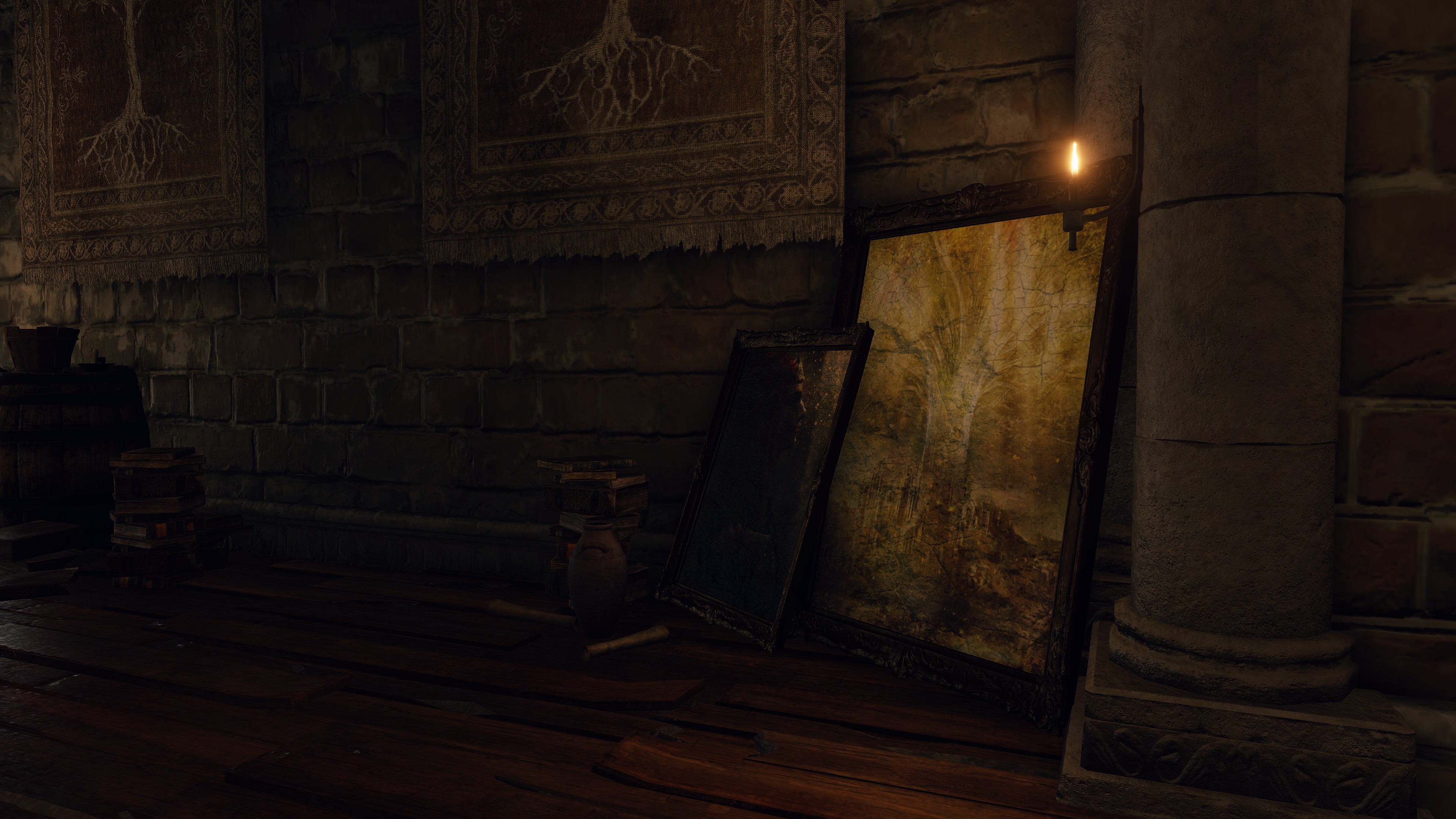
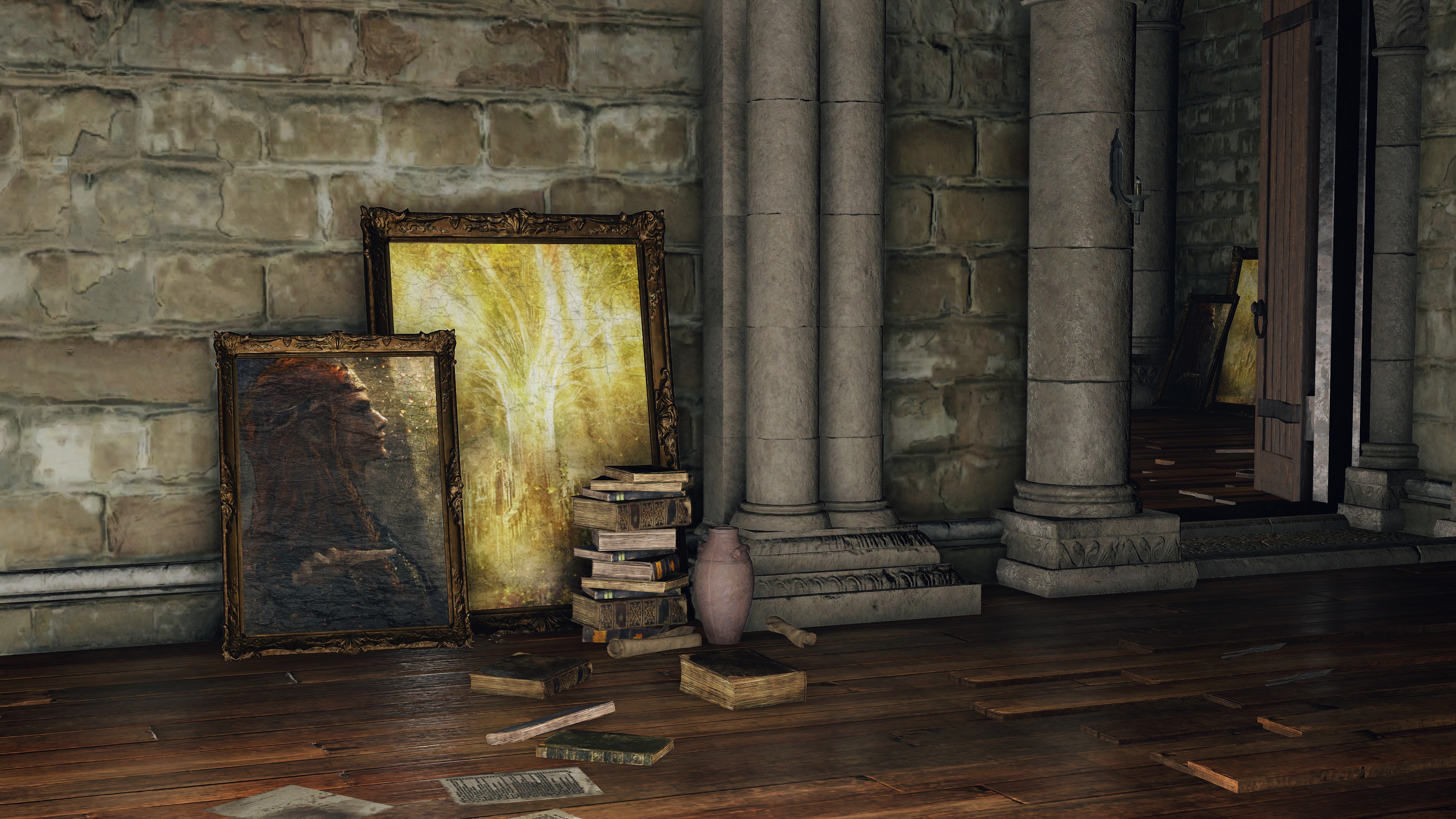
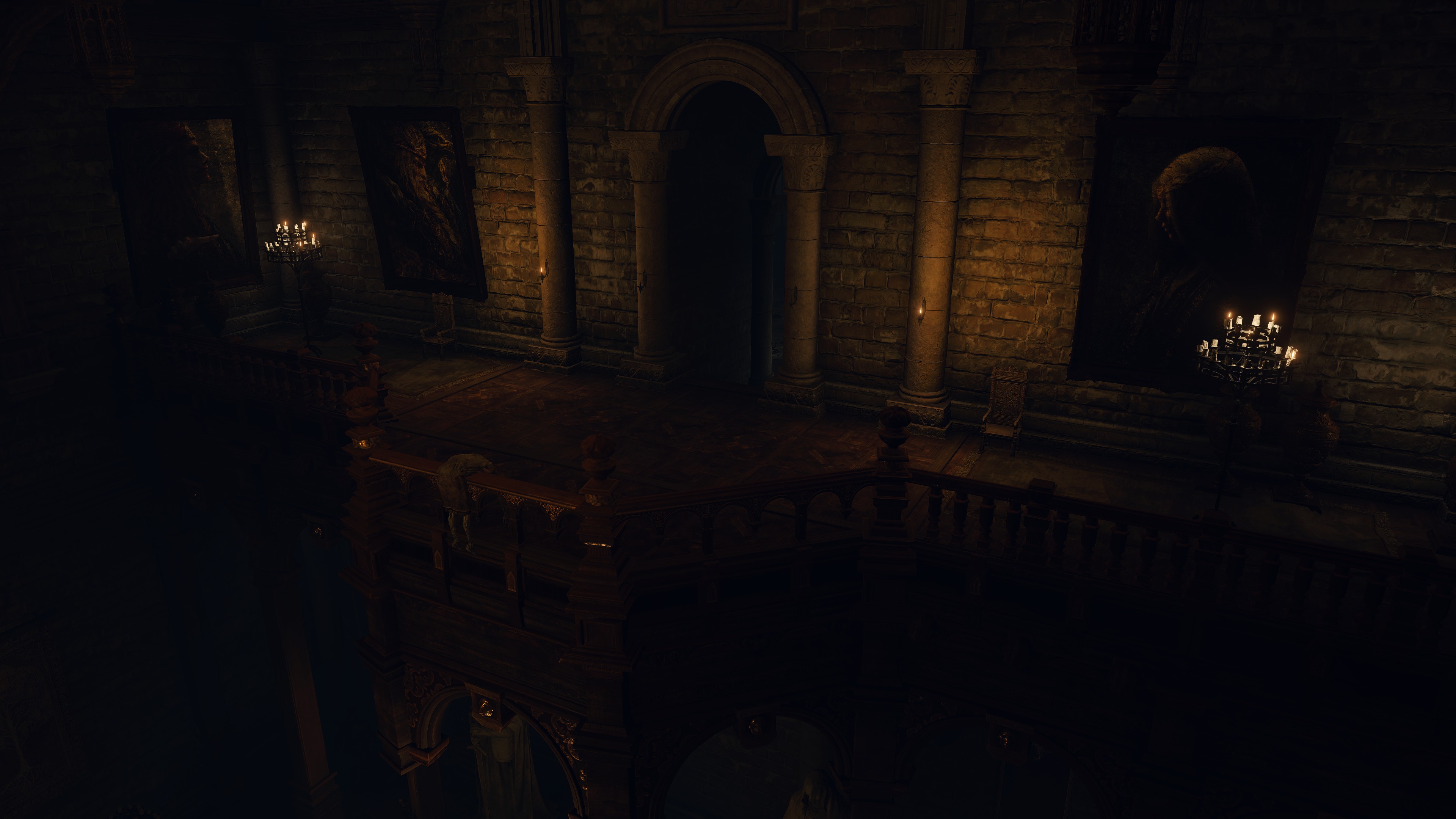
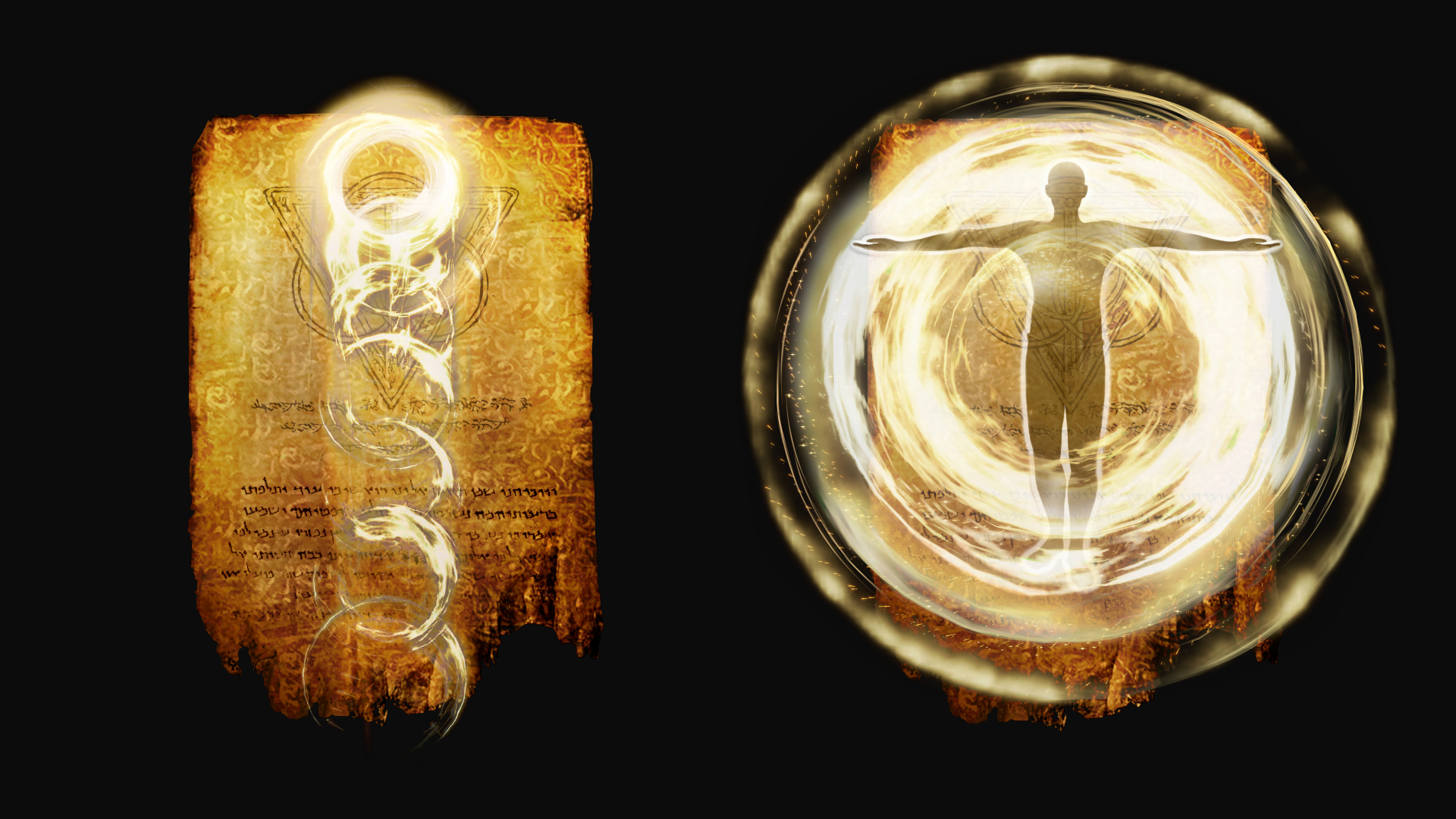
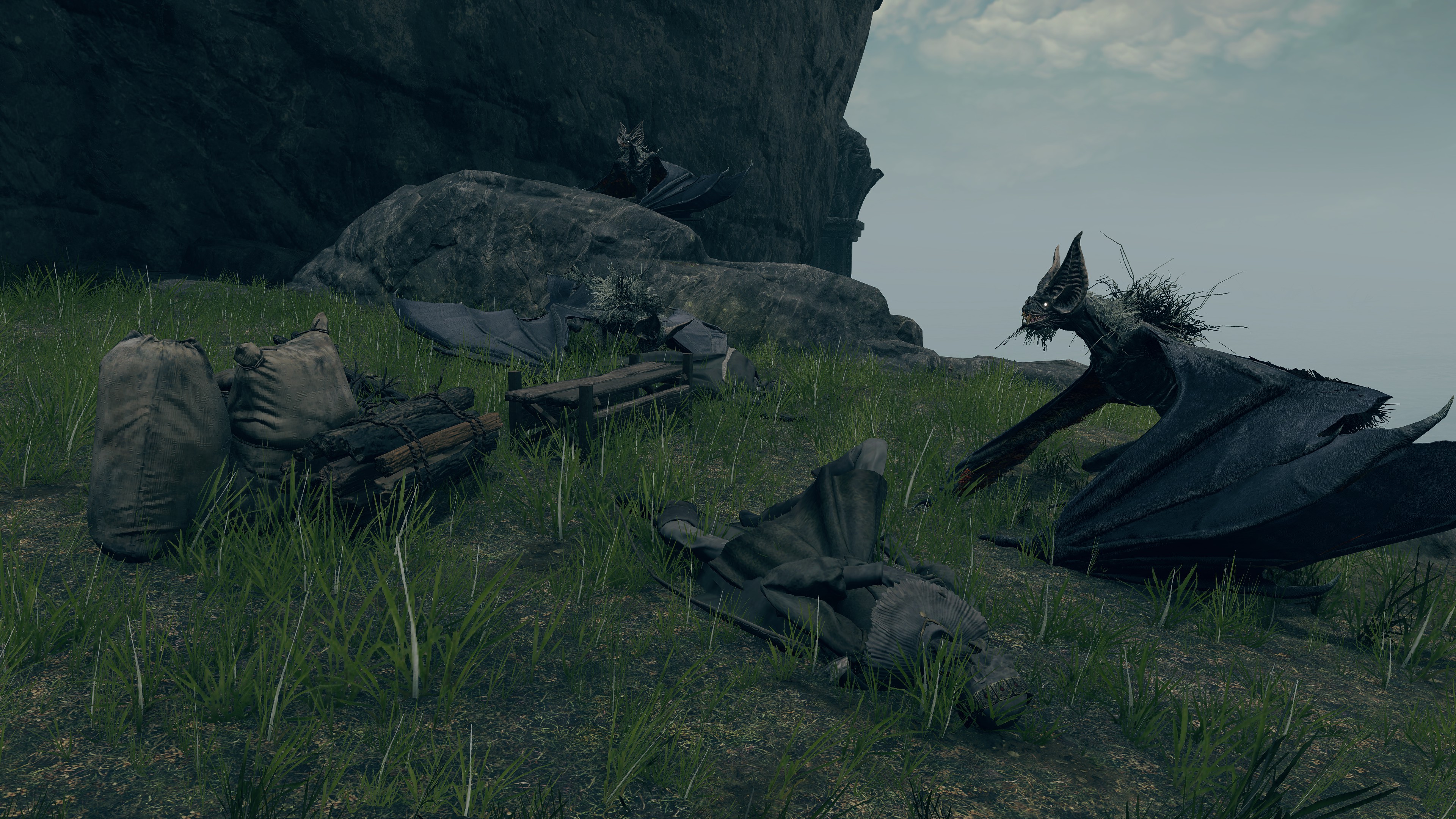
In the end, the twins weren’t hidden from the world or spurned for their weaknesses, even when they proved to be Empyreans who could threaten their mother’s hold on power. Perhaps the royal family downplayed or even concealed the existence of such vulnerabilities to the newborn demigods for the sake of politics, but they certainly grew up in a better environment than Marika’s last set of twins. Admittedly, saying that the royal couple didn’t deny brother and sister their birthright requires no great love from them either. Assuming that they expected their children to be cursed, at least as a possibility, then raising them well might have been part of further testing. But if the two were born for cynical reasons, it at least didn’t stop the couple from cultivating a relationship with the souls they brought into the world. Marika especially appears to have treated them and her stepchildren no different from her offspring with Godfrey. Despite her attention to the Golden Order, the Eternal Queen still remained part of their lives.
When we enter the Capital Outskirts, Melina begins detecting new traces of Marika’s words, these addressed to her “beloved” children. She tells the demigods that they have the potential to reach whatever heights they strive for, even a Lord or god. At the same time, she warns that should any fail to make something of themselves, they will be abandoned as a sacrifice for the ones who will. The statement sounds almost reflective, as if the Eternal Queen is sharing sage wisdom from her own experience. Certainly, the former Empyrean has sacrificed many loved one who lacked her power or resolve to stand at the top, leaving a trail of bodies in her wake. As a god now aware of her small place in a larger system, she can only give advice to those who dream of one day becoming her or Radagon’s successors. This makes for a rare glimpse at vulnerability in the queen, and speaks to the importance she felt to divulge it. Marika likely didn’t want her children to endure the same suffering she had, though she knew ambition’s siren call all too well. She could only prepare them for what to expect.
Demigods, my beloved children. You can already become anyone. Be it King, be it God. And when you cannot become anyone, you will be abandoned… And become a sacrifice.
For the Eternal Queen, this era of Radagon was a time of sobering revelation. The more she learned about the Golden Order, the more the god must have seemed trapped in an ever-worsening deal. Perhaps Marika had come to accept that neither she nor her Erdtree could ever be eternal, no matter who she sacrificed. So long as the Greater Will and the Two Fingers pulled the strings, their fates were always hanging in the balance. Just the fact that three of her demigods were Empyreans spoke to the bloody conflict that would proceed her. In that case, she might have been hopeful to avoid those pitfalls by nurturing them as part of one family. But whatever the queen’s intentions, her words would prove prophetic. In true tragic irony, Melina recites Marika’s warning to the demigods from the site of the Second Defense of Leyndell — the battle which kickstarted the Shattering. Indeed, Radagon’s golden age was not to last. Just as before, the Elden Ring induced treachery in the hearts of kin.

