
Preface
Whether or not it is deliberate, Rykard twists the moral of many a fairy tale. Hansel and Gretel best captures the life lesson: beware of greedily indulging in motherly affection, lest you end up devoured. Sound advocacy for moderation from the best-intentioned mother hens, but what if you flip it on its head? Let yourself be devoured, so that you may indulge the excesses of maternity — such an inversion I think makes Rykard inspired. He is a monster of vice who would make saints of witches. In dooming himself to sensuality, he can only advocate for more to follow him into his hell. And that shameless celebration of a backwards moral is what truly makes him so unsettling.
For Lies and Justice
Before he became lord of Volcano Manor, Rykard was born a Carian prince, and received the appropriate sorcery education. This sorcerer also deftly wields a greatsword, performing techniques like half-swording reflective of a learned fencer. The prince may well have been prepared to follow in his aunt Rellana’s footsteps and join the enchanted knights. But if so, his life took a different turn when Radagon suddenly left the royal family to become Marika’s consort. After becoming the Eternal Queen’s child by marriage, the new demigod ended up with the title of praetor, essentially the “judicial officer” (法務官) of the Erdtree kingdom. Gideon clarifies that this is the occupation of a judge, with leadership over the country’s inquisitors. And with this, he was assigned a lordship over Mt. Gelmir and became the proprietor of its castle manor. That insinuates that Rykard’s new duties were what brought him to that territory looming ominously above Caria Manor.
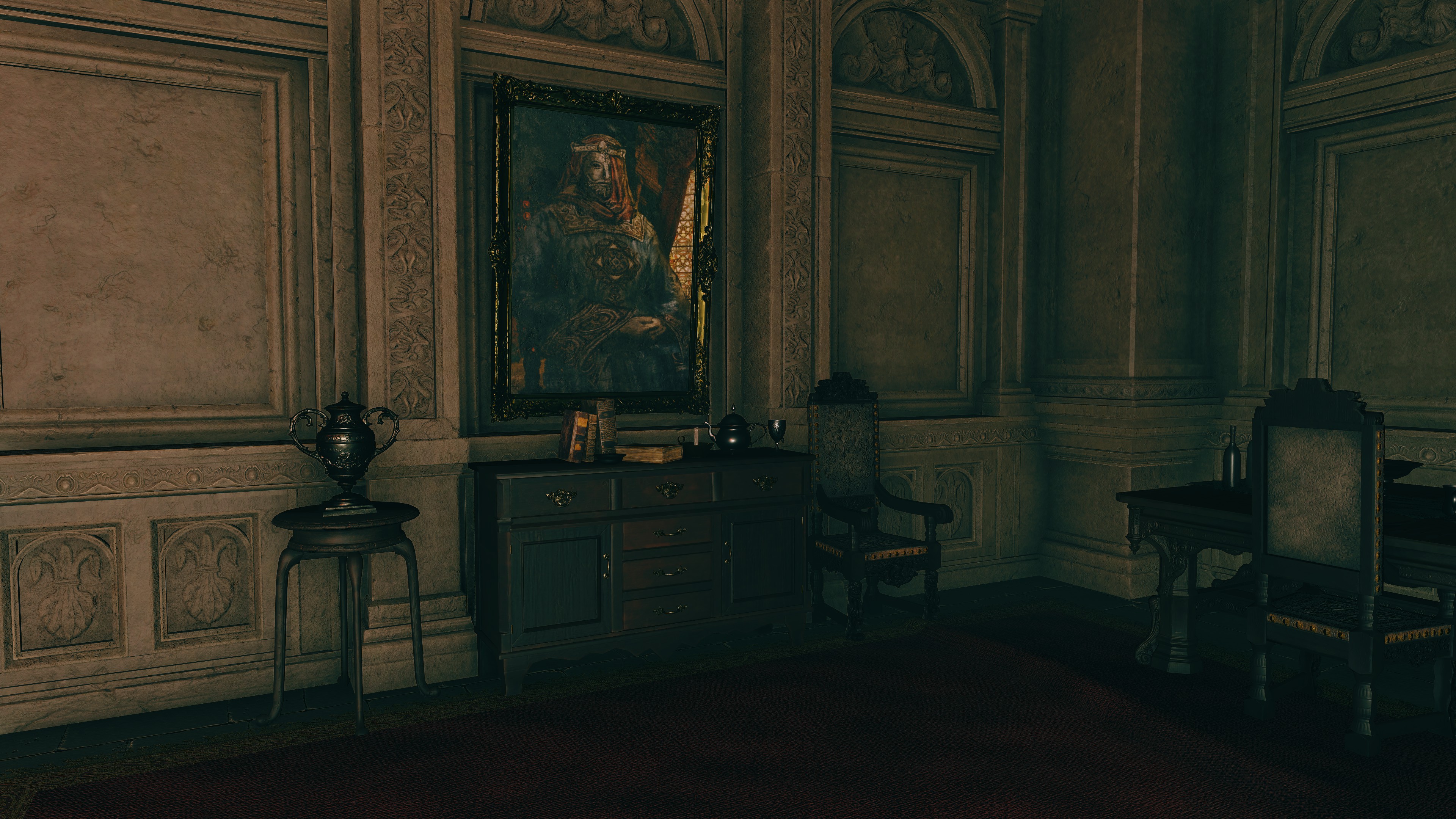
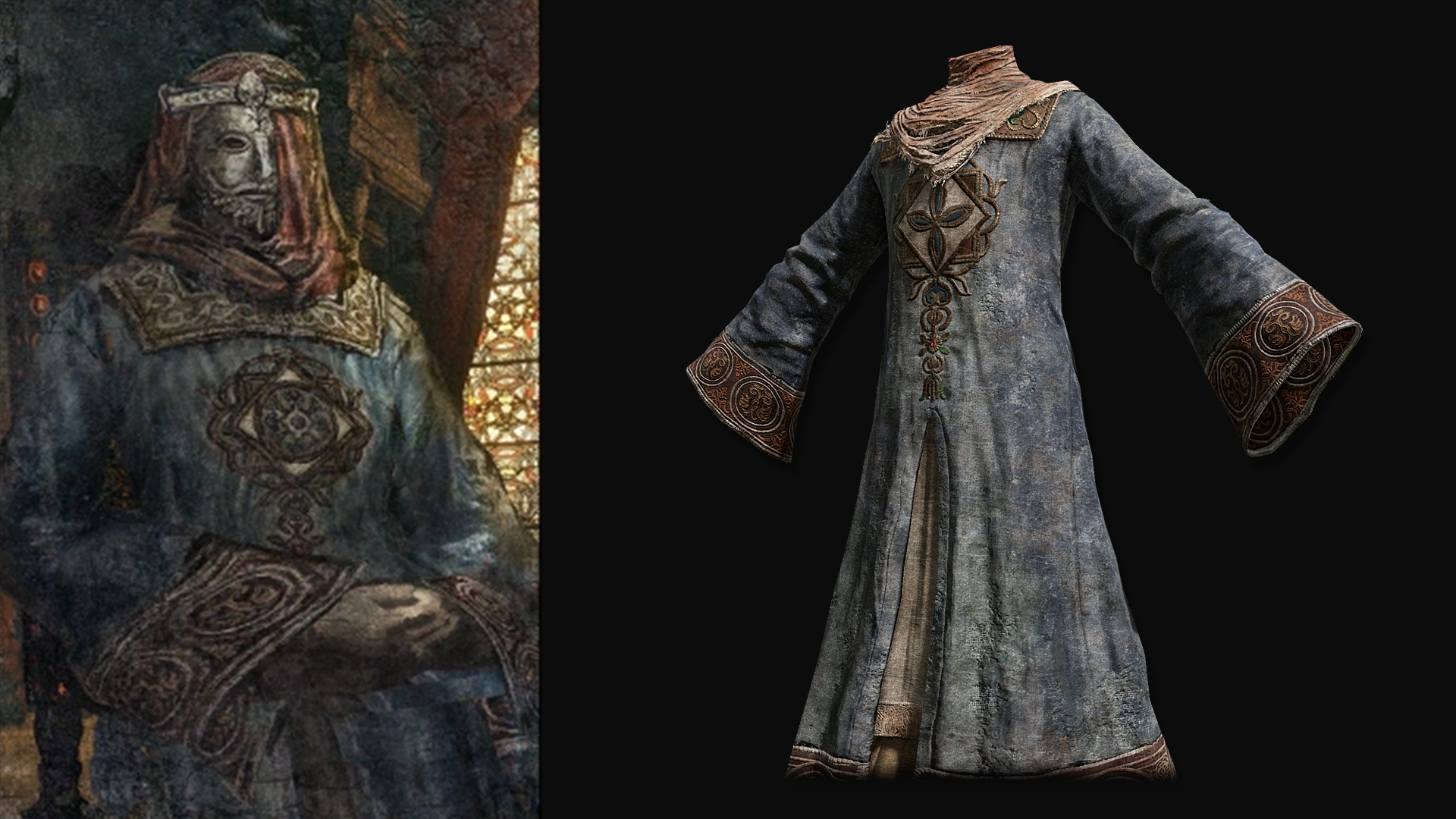
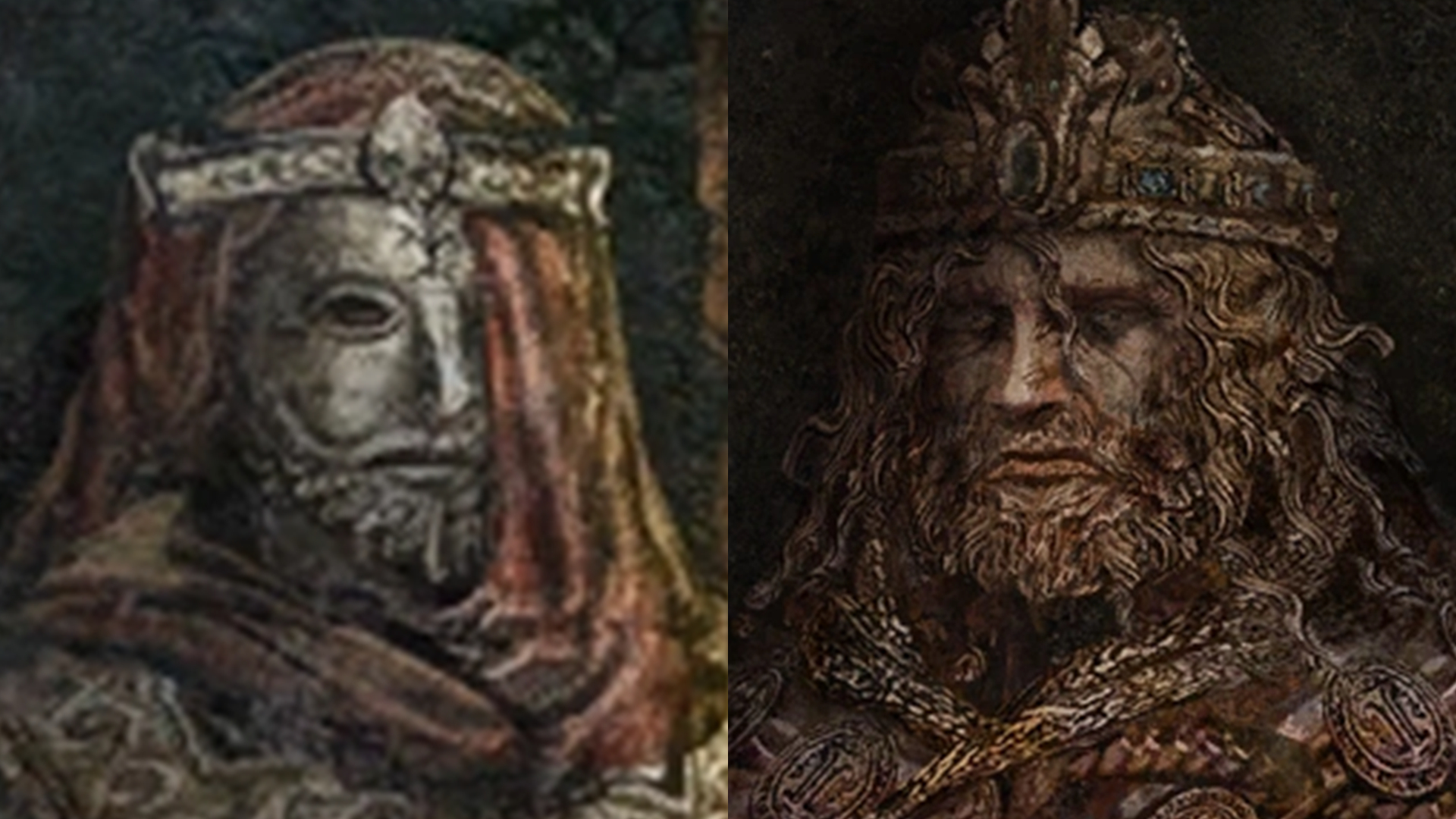
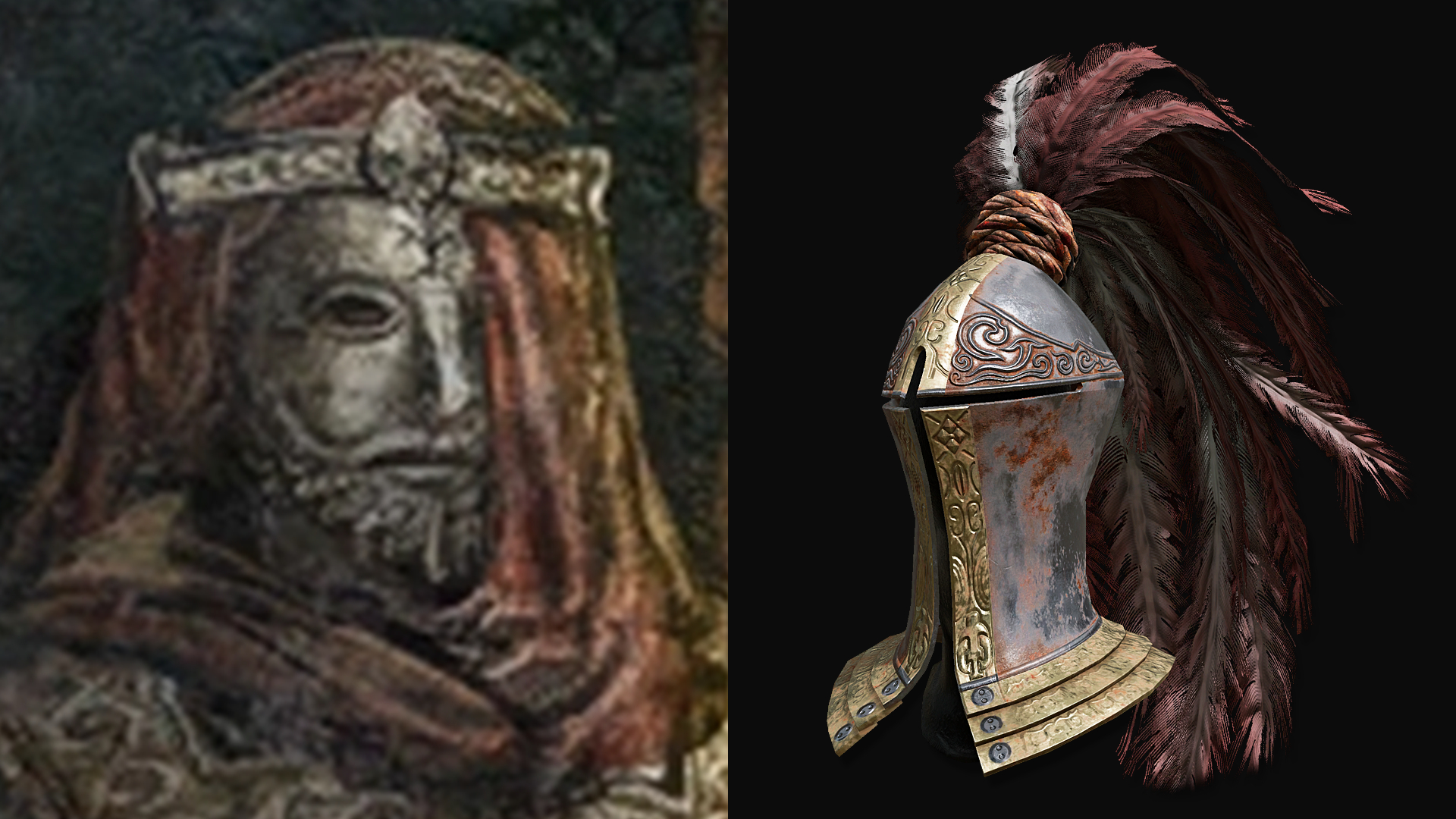
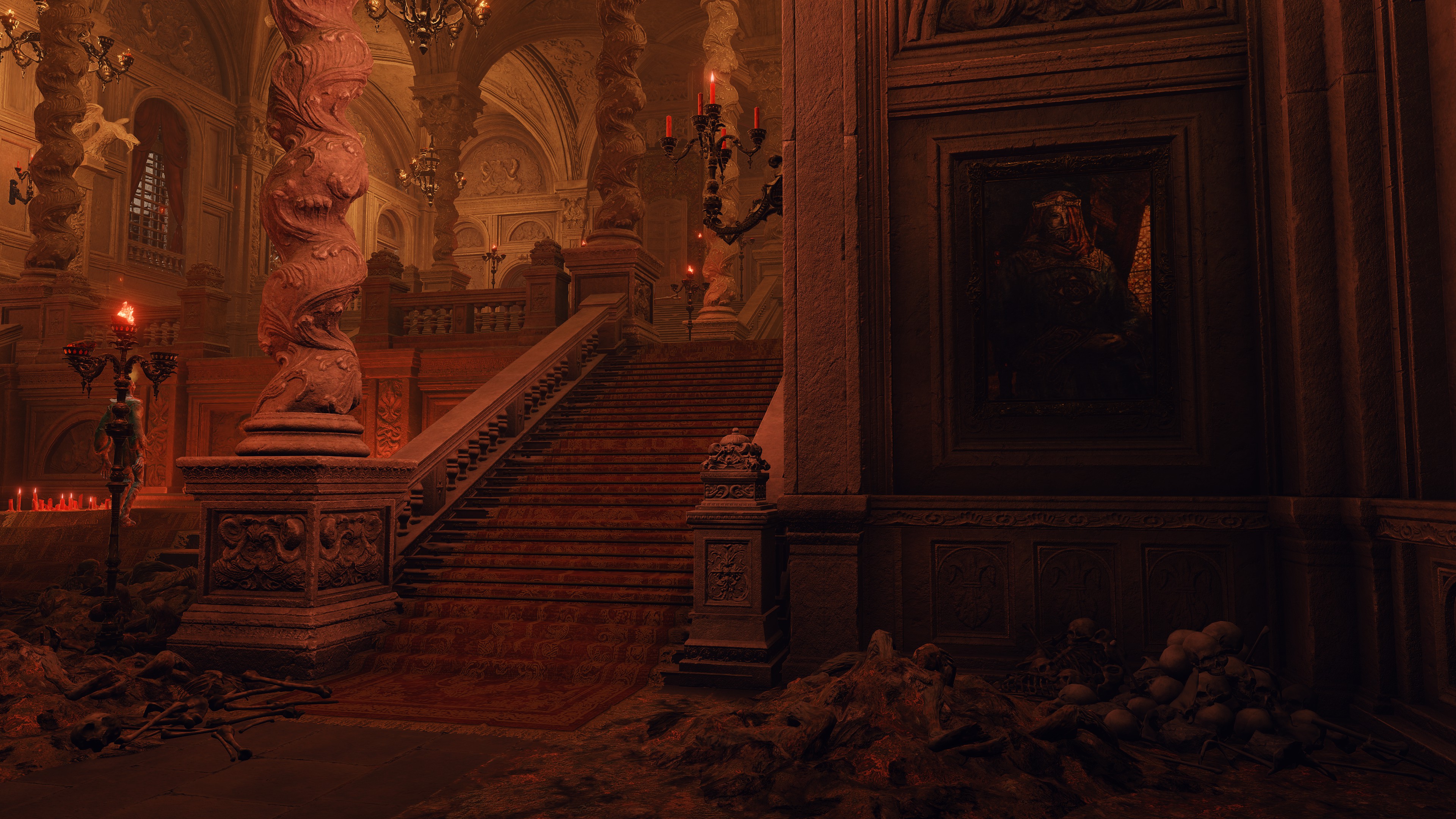
Although the kanji renders inquisitors as “accusual and questioning officials”, (責問官) Japan used the act of sekimon (責問) ultimately as a colloquial term for torture in the Edo period. These Erdtree officials were tasked with compelling confessions from suspects by whatever means, far beyond mere interrogation. Such would be appropriate for the officials in grubby blue robes the Erdtree kingdom employed, whose darker duties included surveillance. And as we see, the inquisition is comprised of those individuals, such as Ghiza. Besides him, there is also Rykard. Alongside the demigod’s many portraits in Volcano Manor hangs the painting of a man in blue official’s robe, the unique design on the chest suggestive of a higher status. Combined with the bearded mask matching his other portraits, there is no doubt that this figure, too, is the praetor. Perhaps the masks he and his consort wear are part of some policy, but the demigod joined a division of Marika’s covert enforcers, and their work in Gelmir is obvious: the eradication of paganism.
Recall that the volcanic land rebelled against the Erdtree at the direction of its pagan god. Even with the great serpent defeated, there was still that population of followers to consider. It was one thing to execute or enslave the combatants and demand submission from the rest, but one can hardly expect a genuine conversion from the vanquished. Snake worship was part of their culture for so long, it would take time for hearts to wholly embrace the Erdtree. In the meantime, the bitterness of defeat was sure to make many privately intransigent about their ancestral beliefs, particularly in the castle town at the religion’s center. Those “converts” may go through the motions in the small church, but there was no way of knowing what they plotted behind closed doors. The kingdom had to be cognizant of the pagans consolidating their position on the mount. And yet, Rykard’s revival of Gelmir hexes entails that such pagan practices were lost over time, not built upon. Why is this unless there was some countervailing force diminishing knowledge and numbers? One cookbook posits a missionary presence, but the carrot requires a stick.
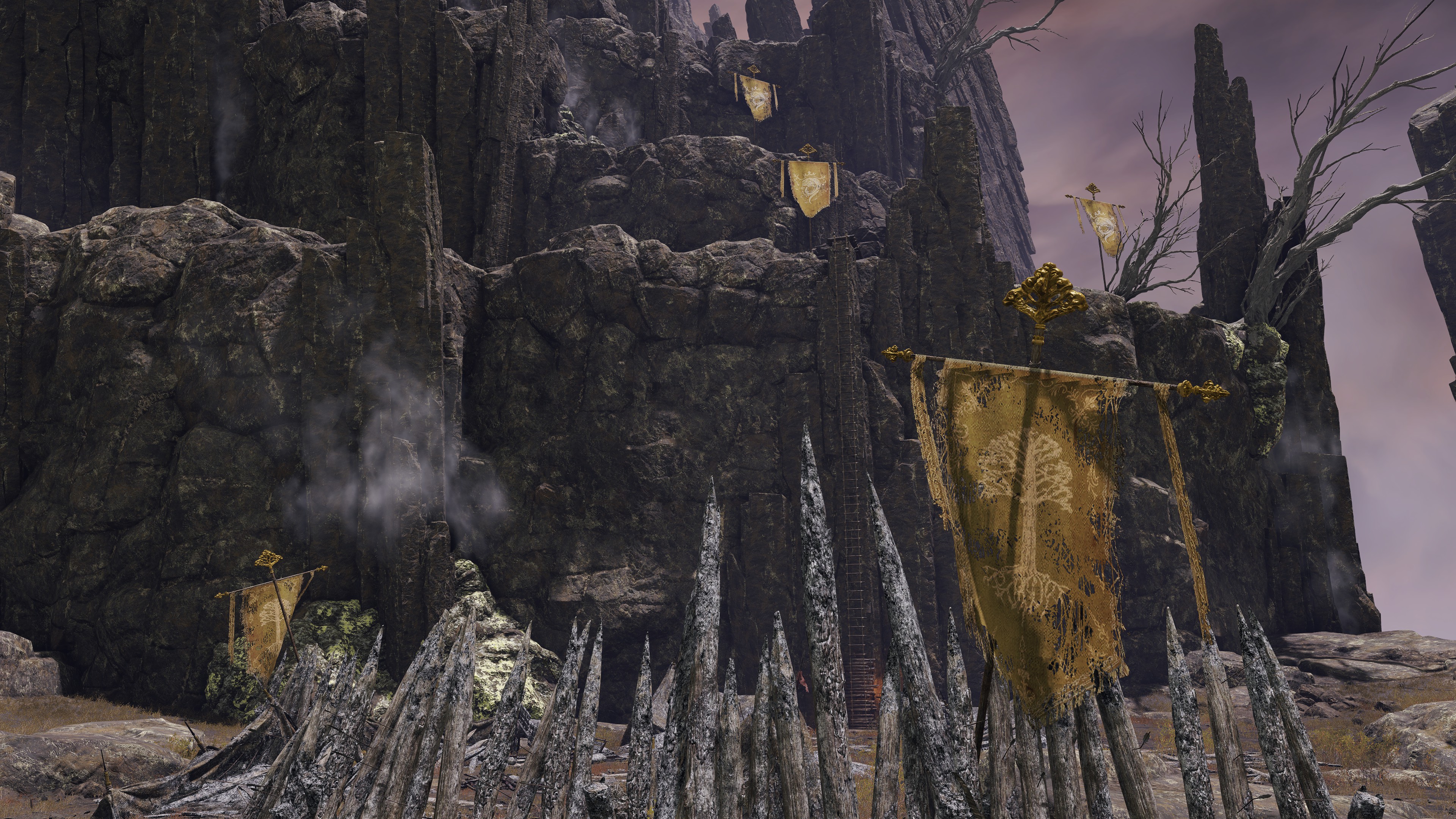
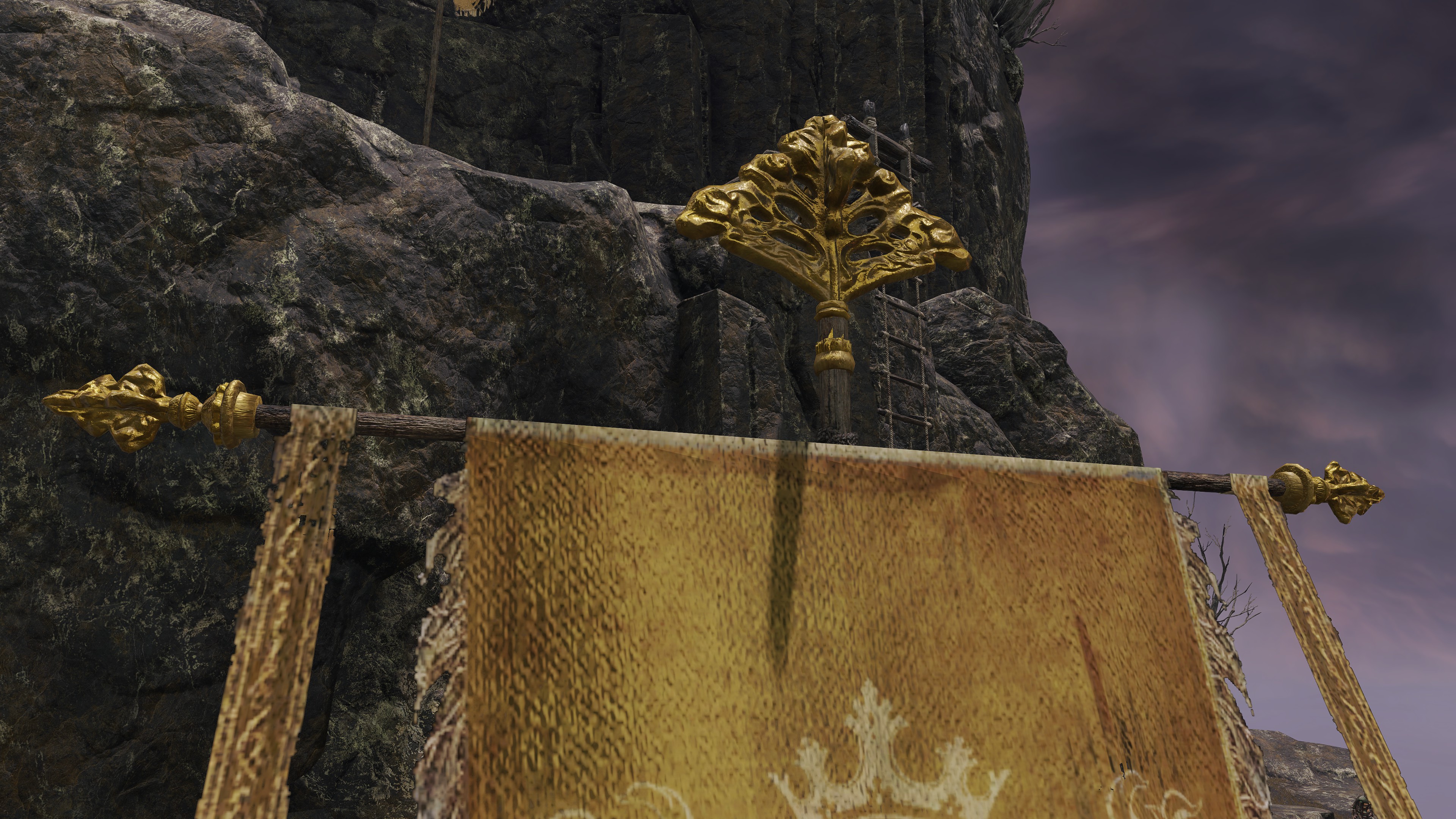
Enter the inquisition. Marika was assuredly aware of this lingering pagan threat and didn’t want another rebellion after how disastrous the first was for her family. At the same time, she didn’t want to simply wipe out the population, if only because of personal ties to the culture. The issue was therefore subtracting from it fealty to the snake while preserving the province. The only solution was to send in her own people to surgically excise the cancer in the culture, and they weren’t alone. In cut descriptions, Gelmir knight armor would belong to the royal army, implying that the troops were deployed from Leyndell. We do see when raising his banner during the Shattering, Rykard’s army use the same flagpole as the capital’s forces, the Erdtree crowning the top. A corpse inside the manor likewise holds the ash of war for Royal Knight’s Resolve. It is likely then that a detachment was left to occupy the castle town after the snake god was slain, where Marika’s officials in blue then took charge. And together, they brought everyone within the castle walls into line through force and intimidation.
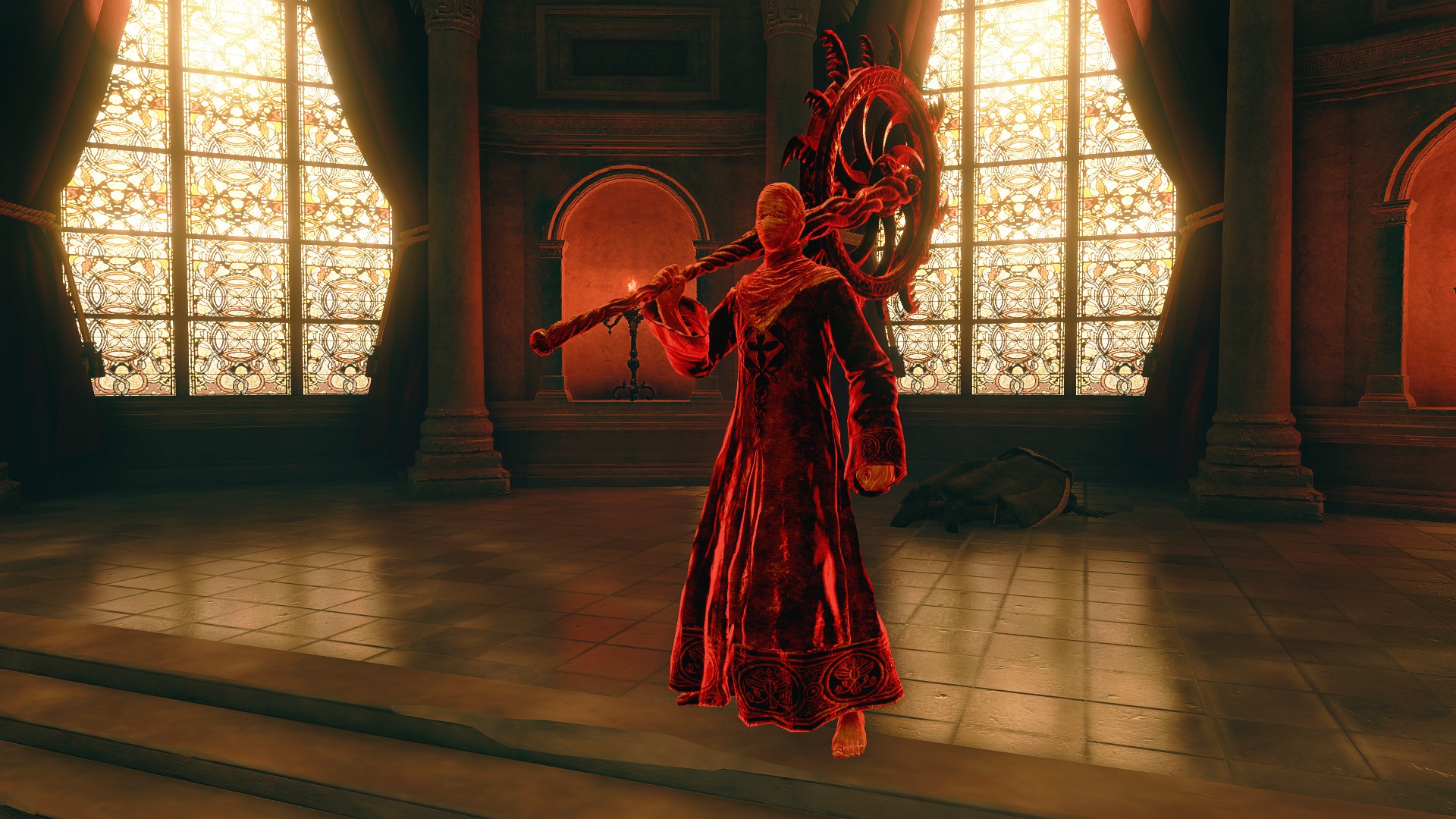
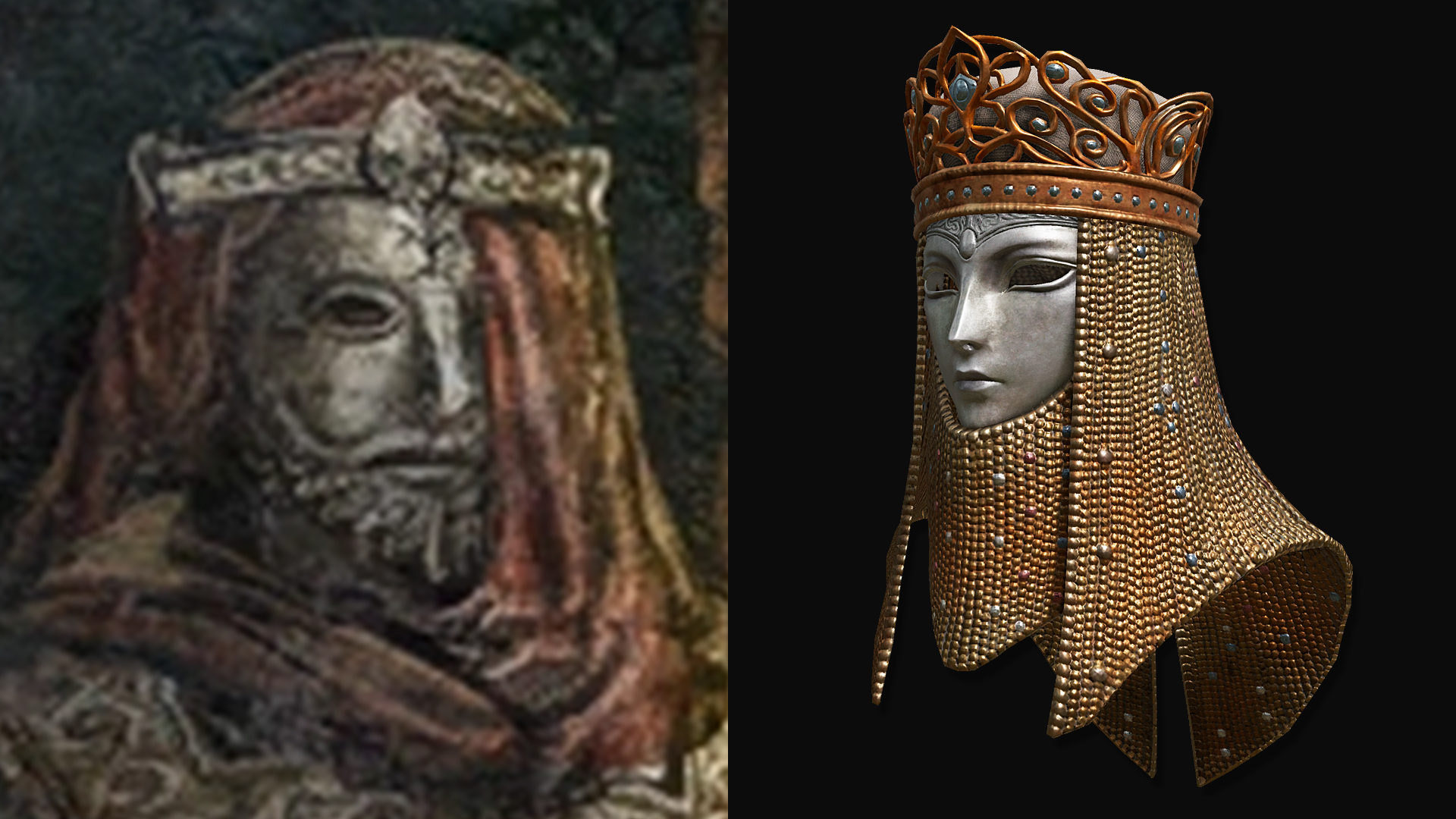
Helmet that cavalrymen of the royal army use.
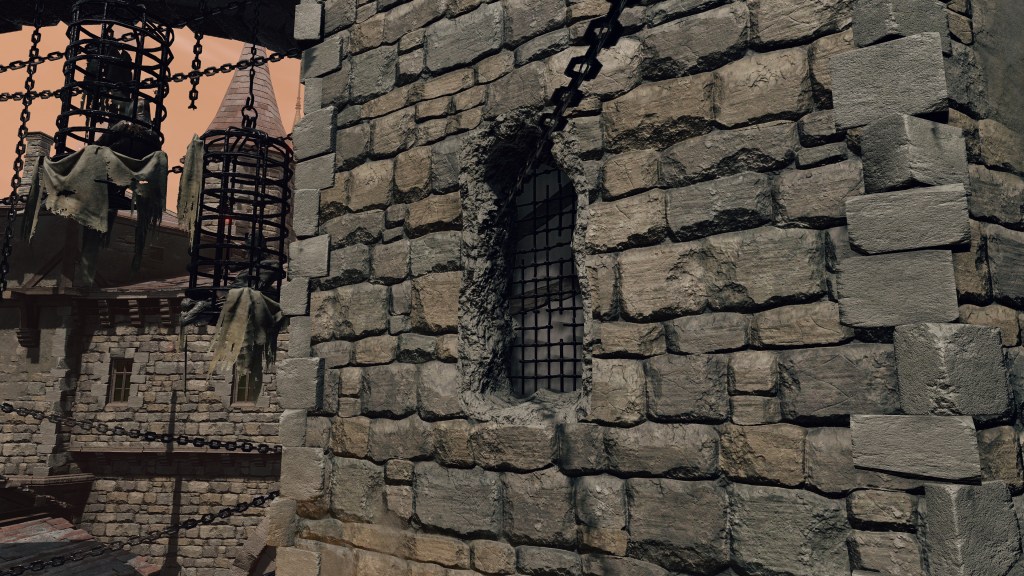
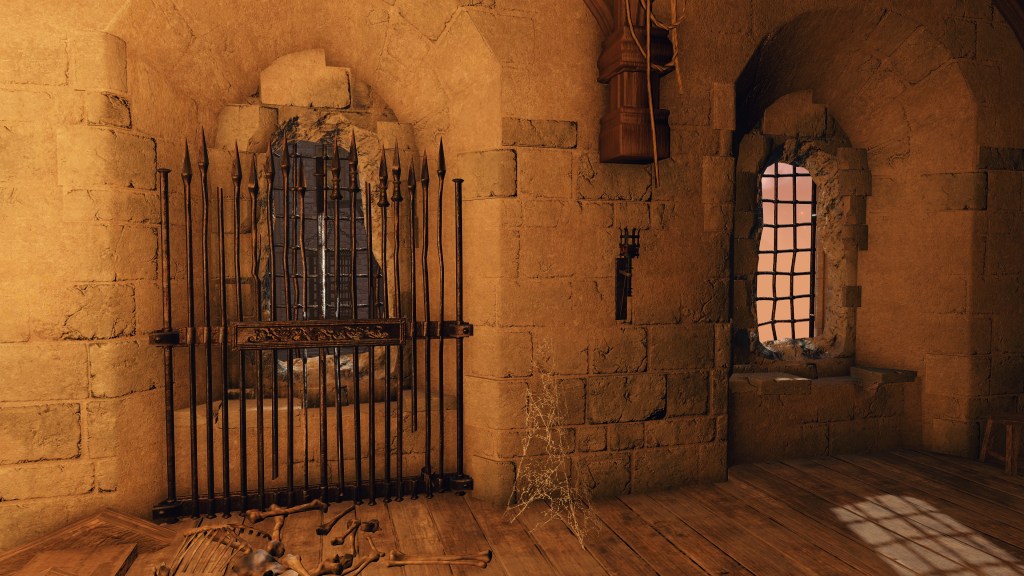
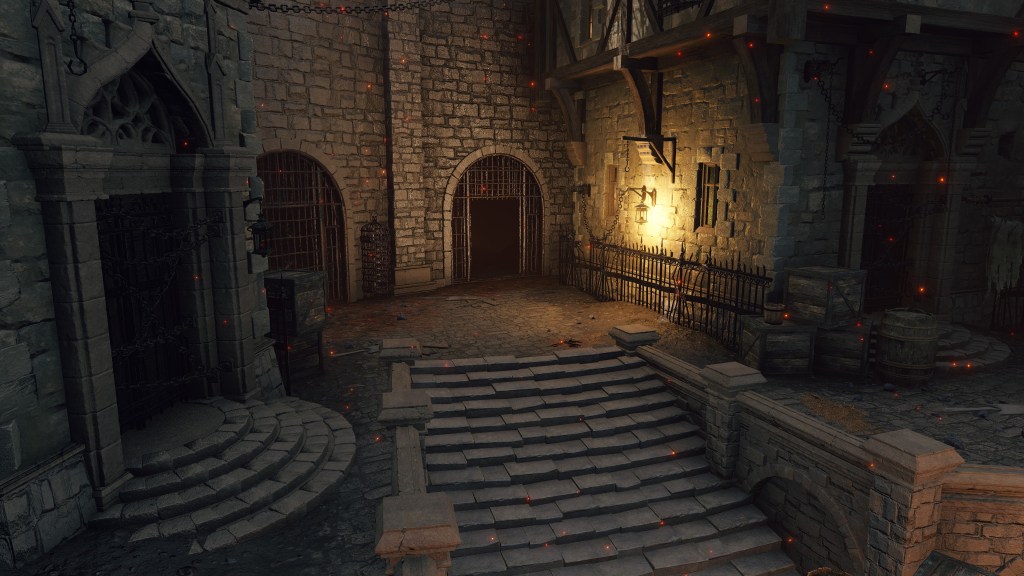
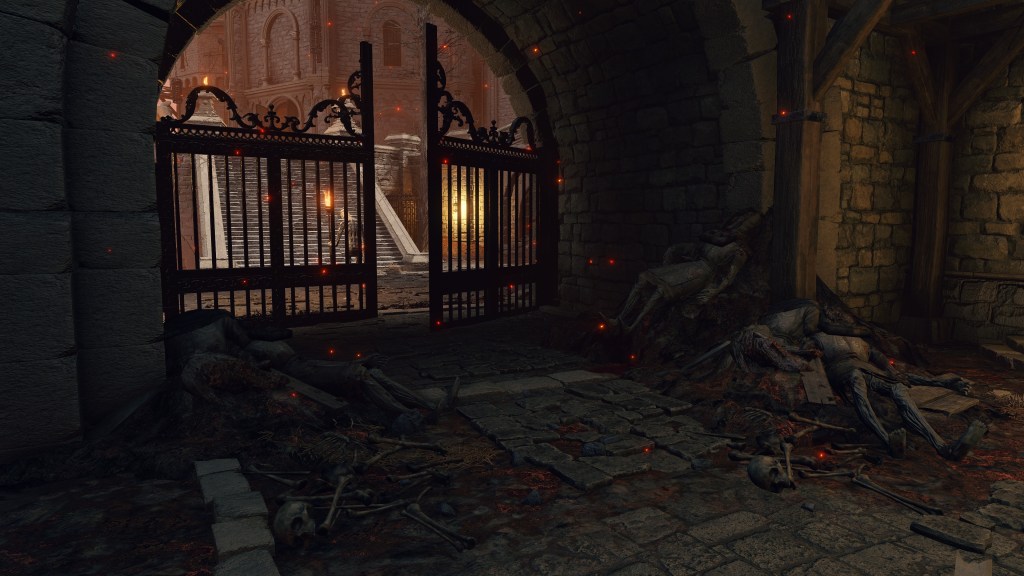
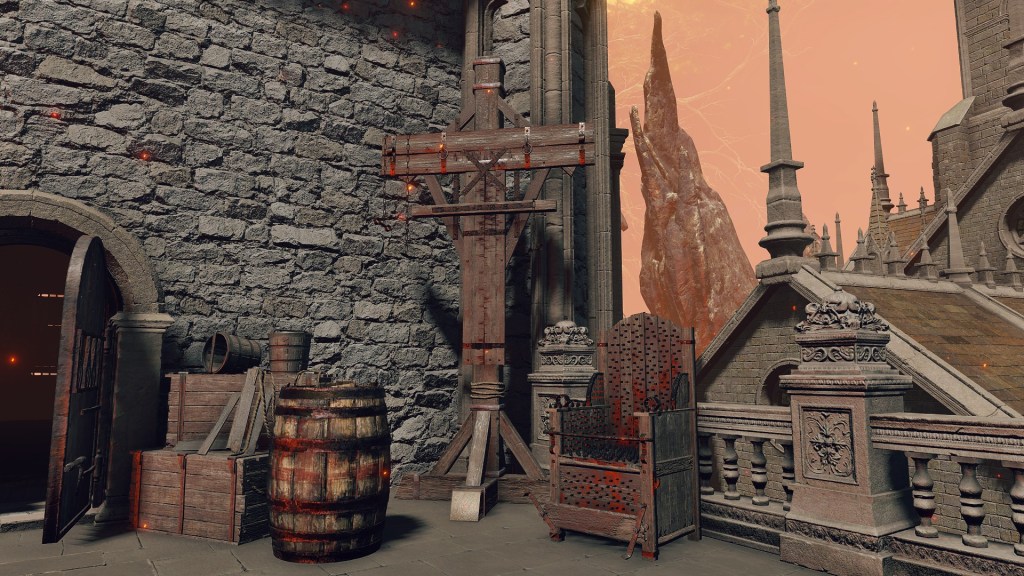
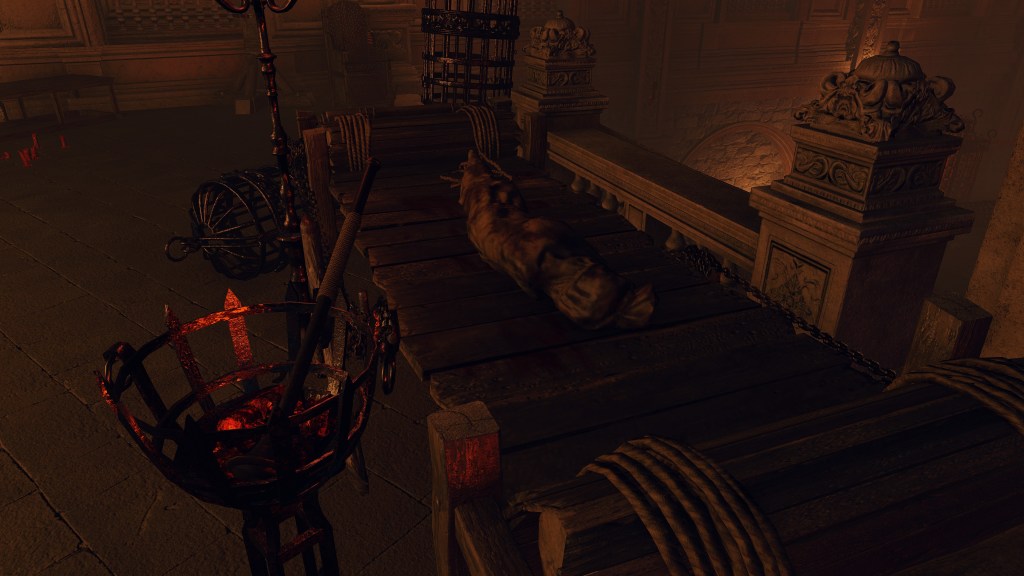
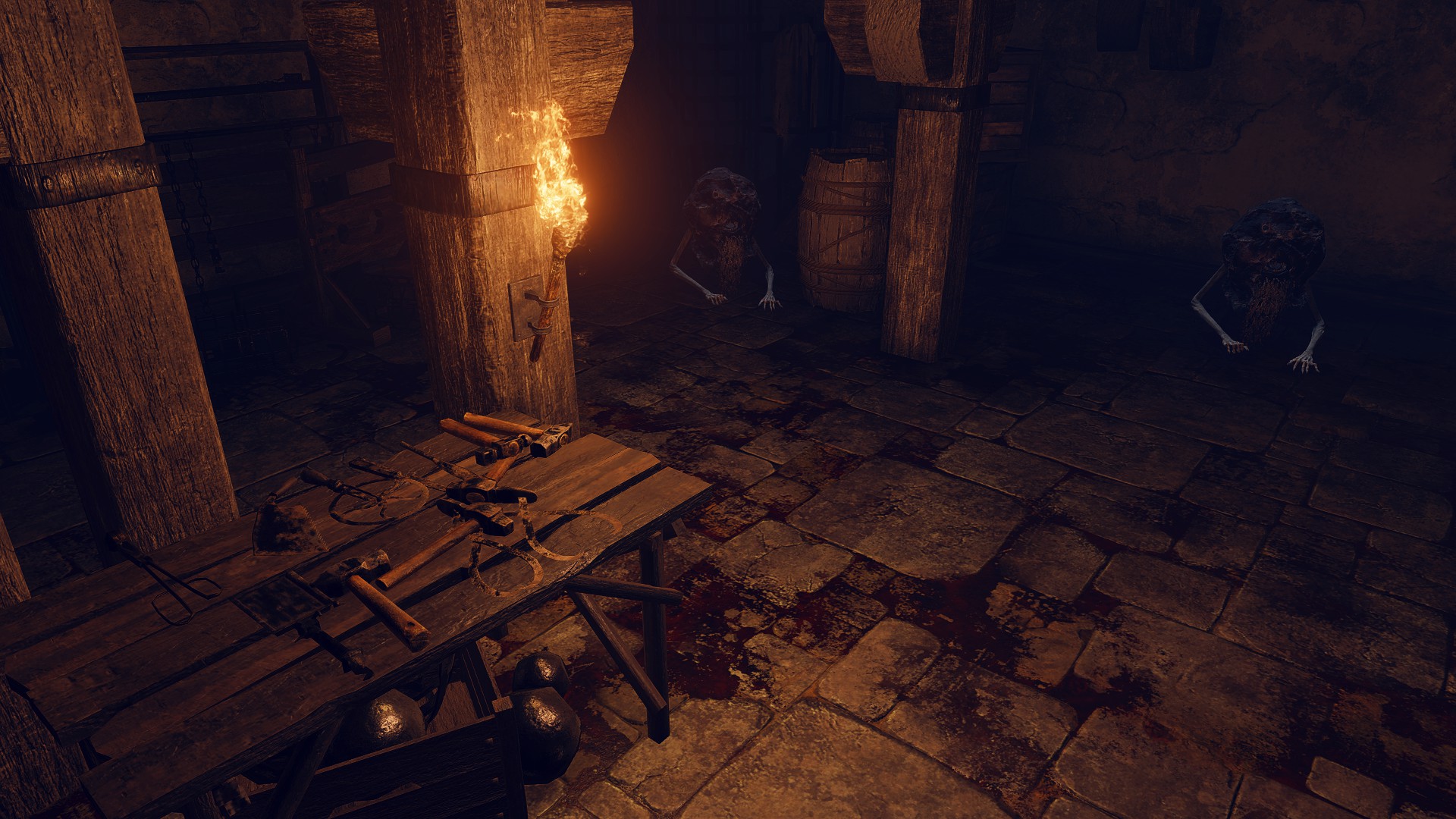
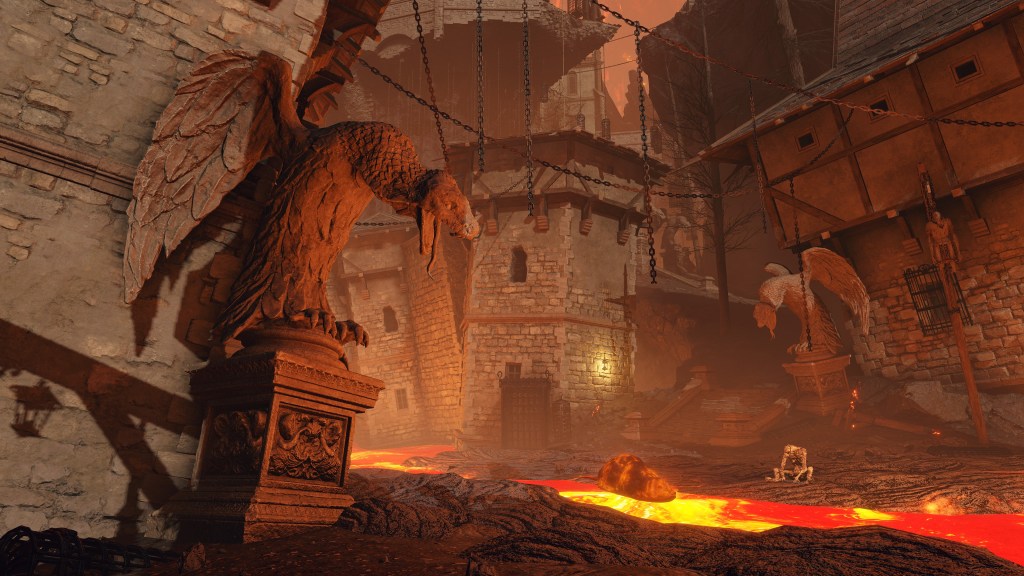
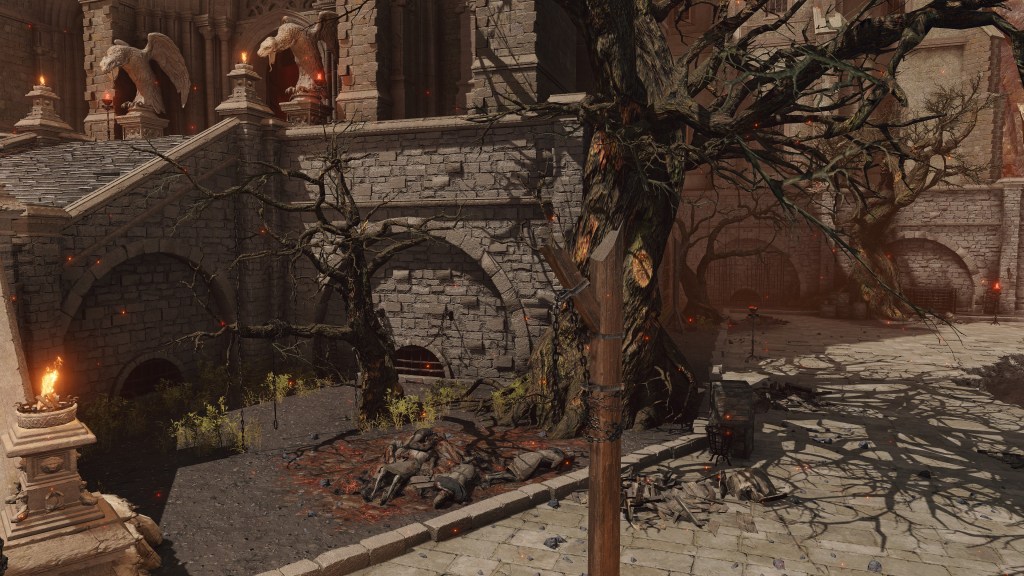
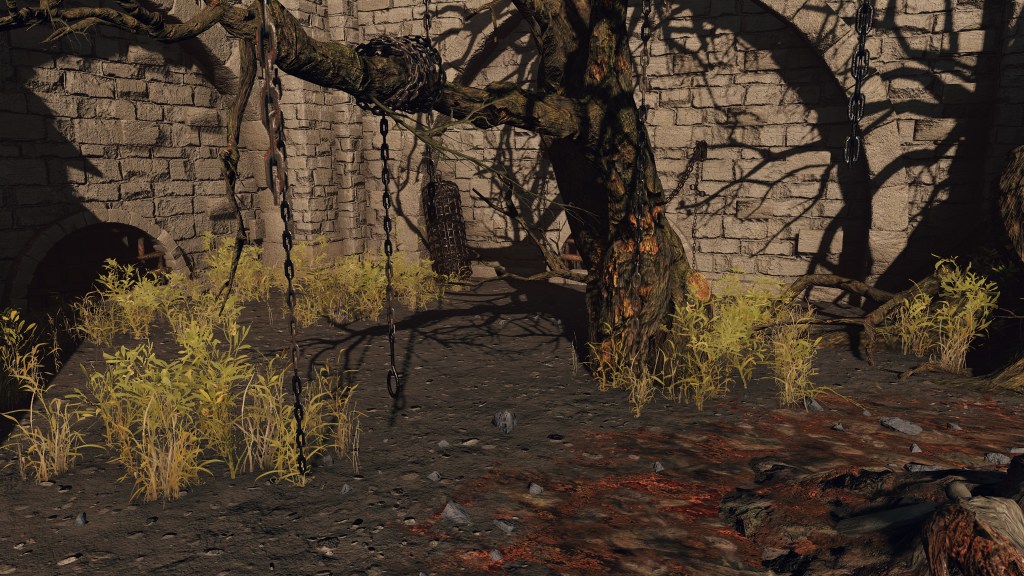
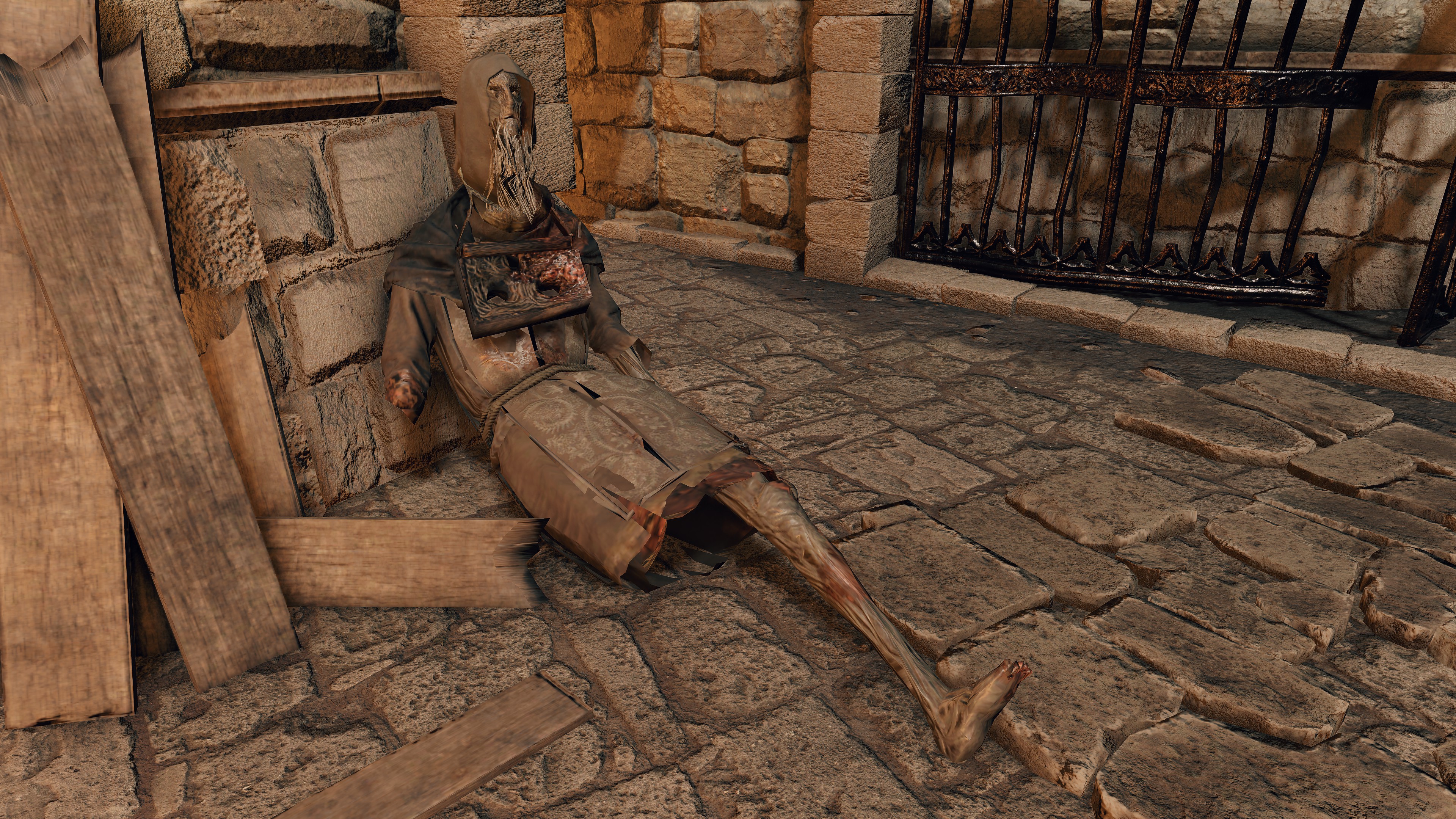
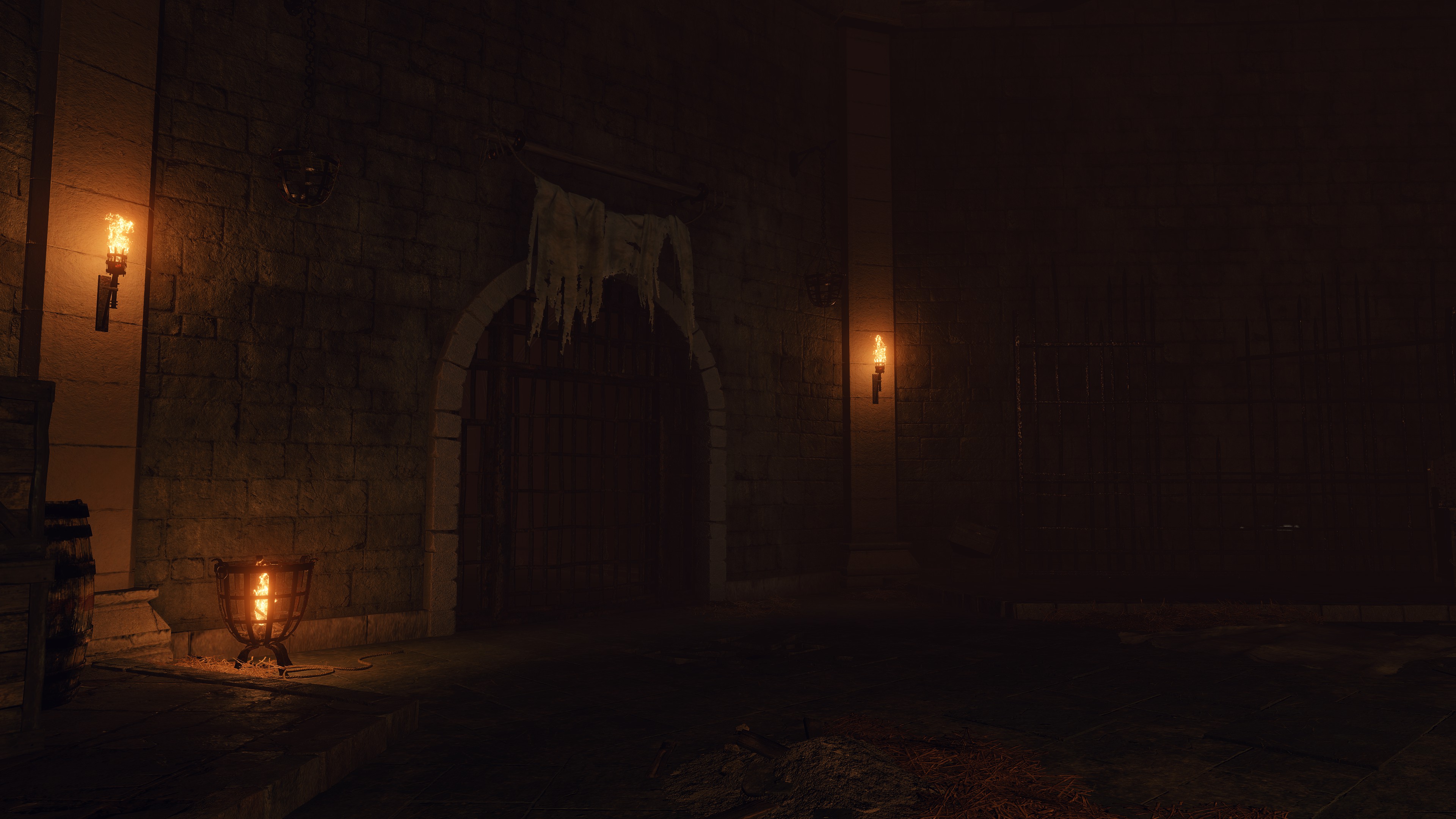
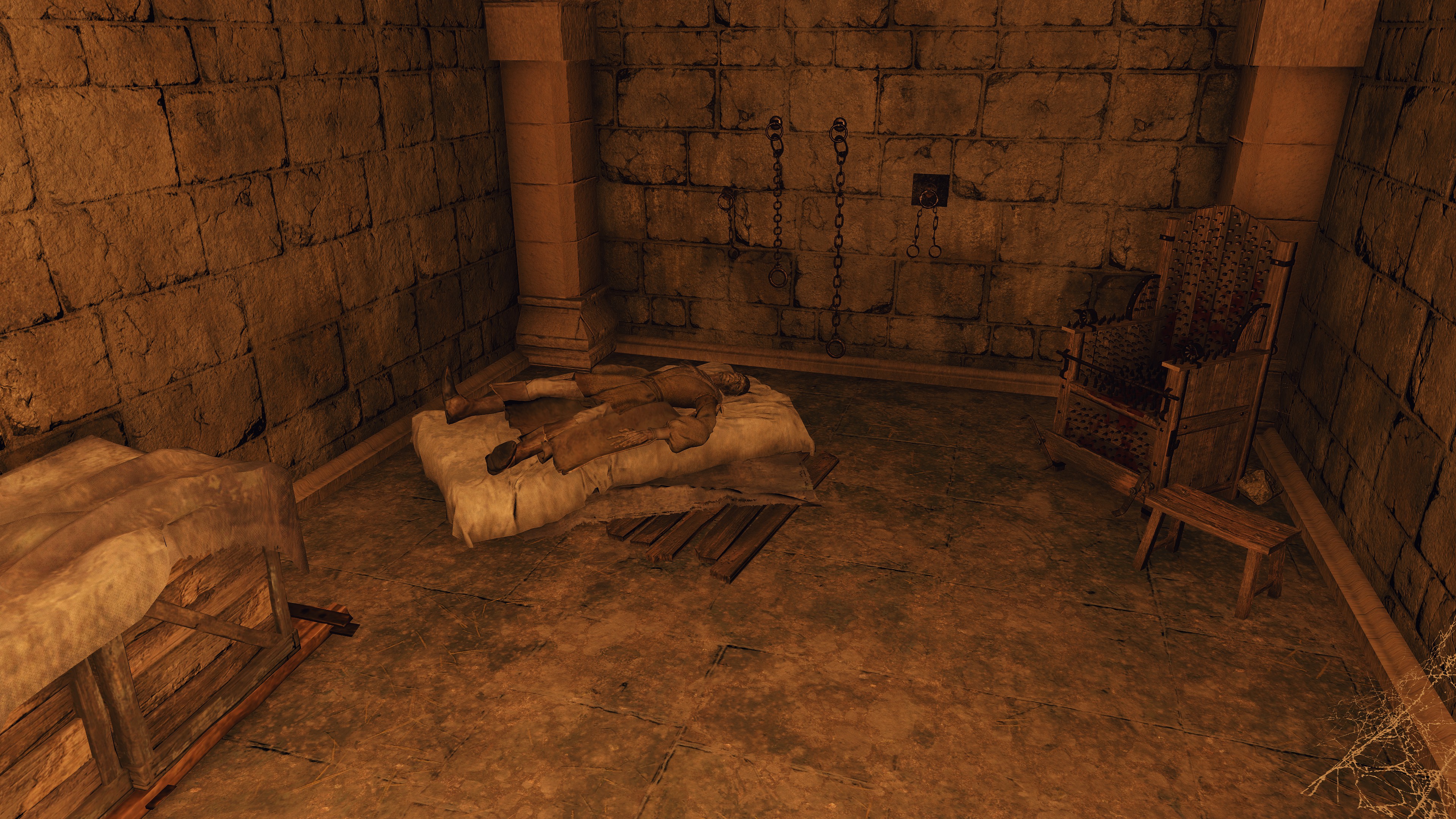
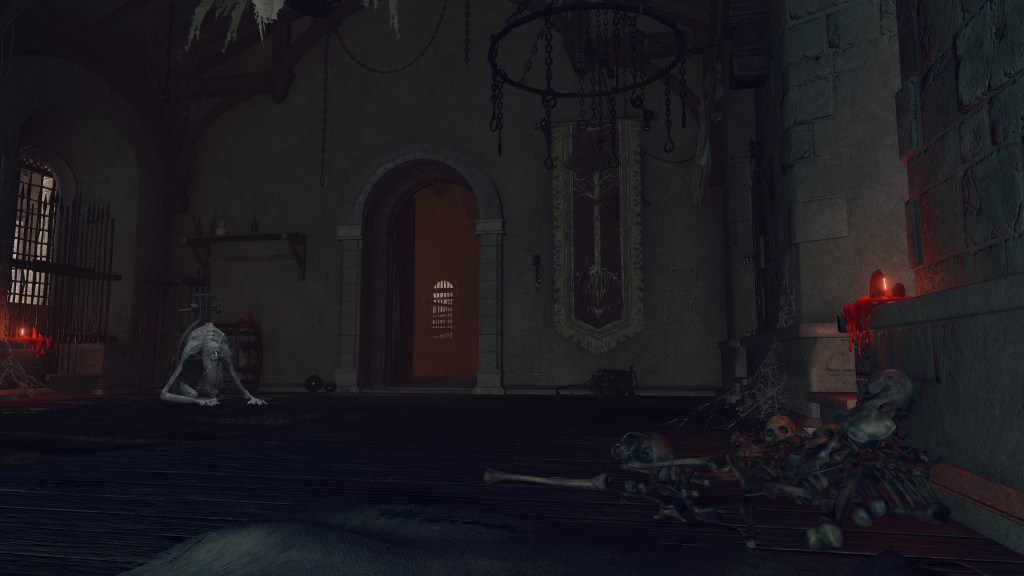
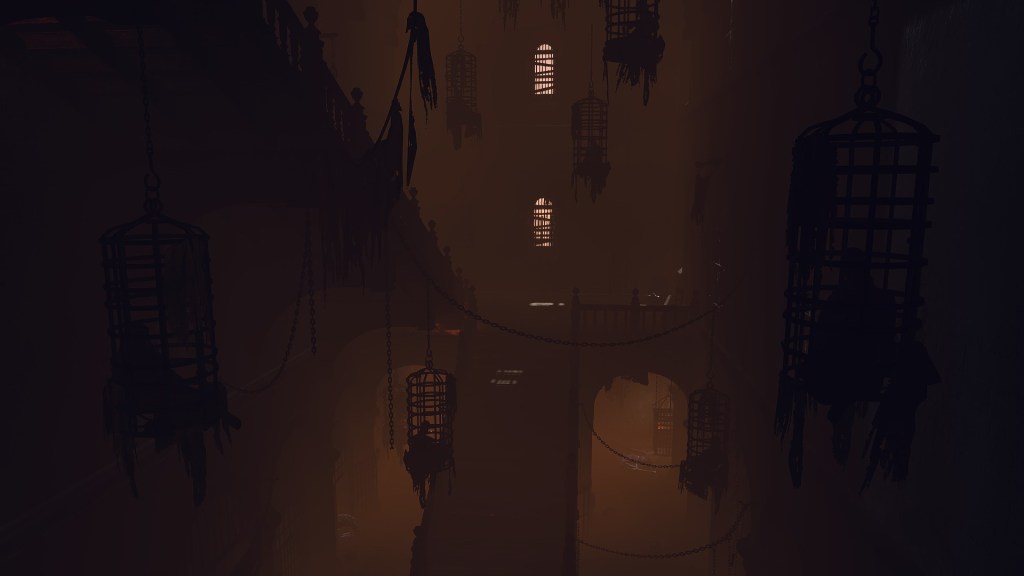
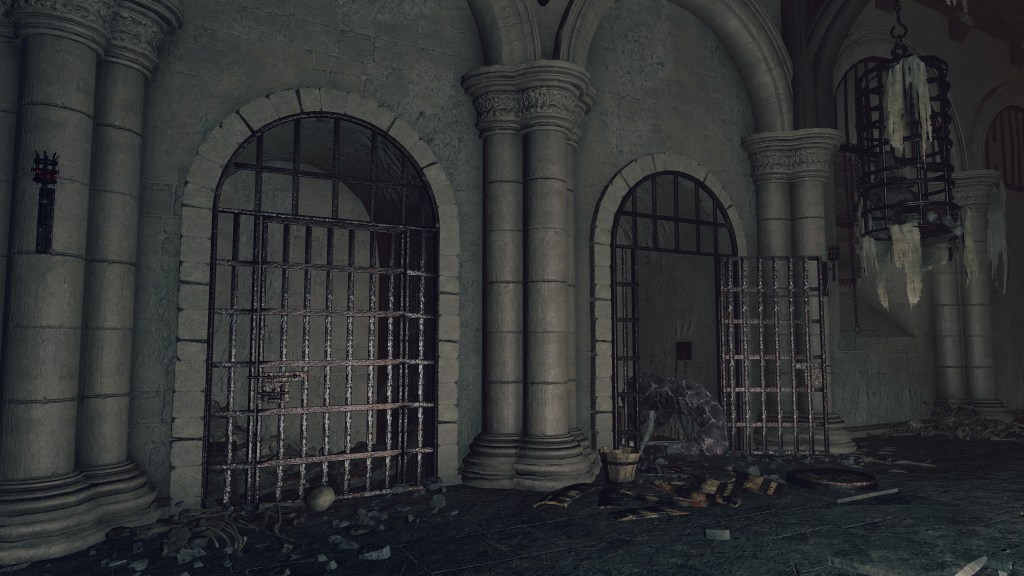
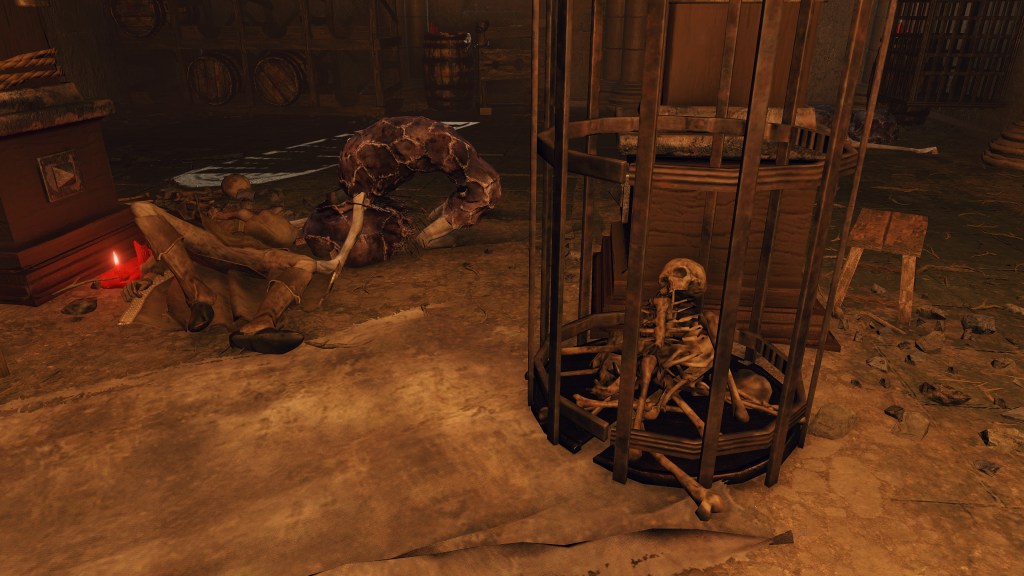
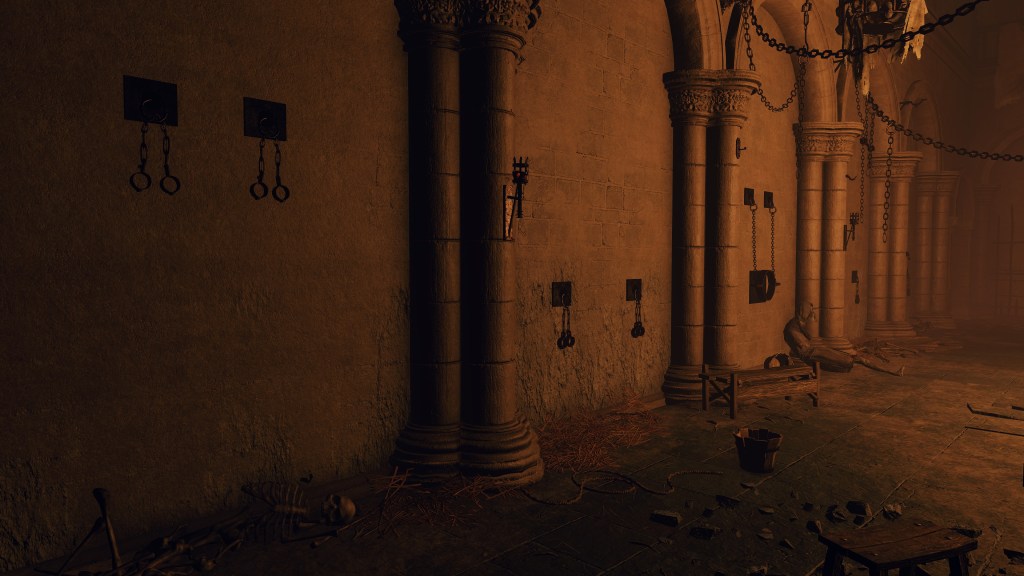
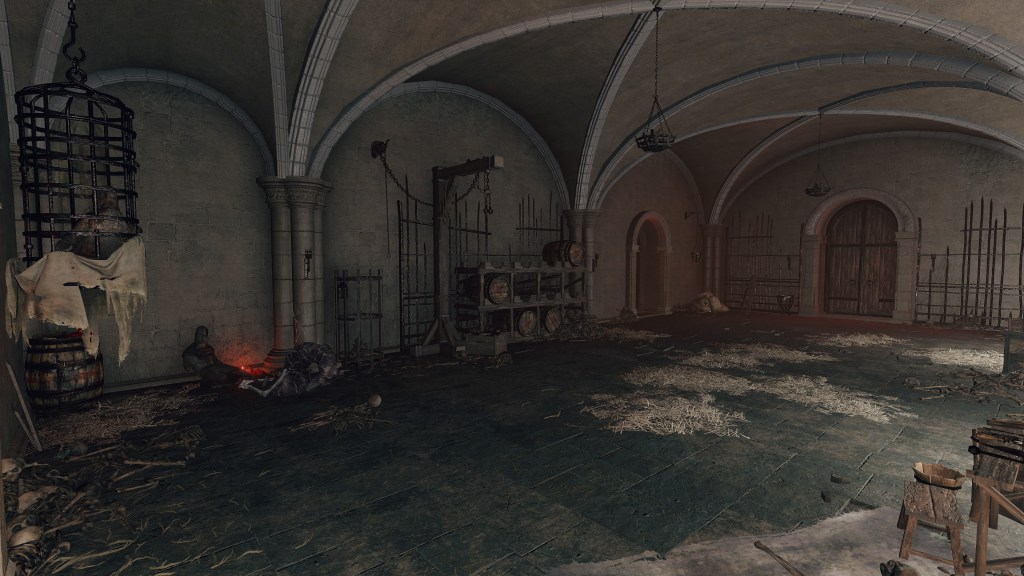
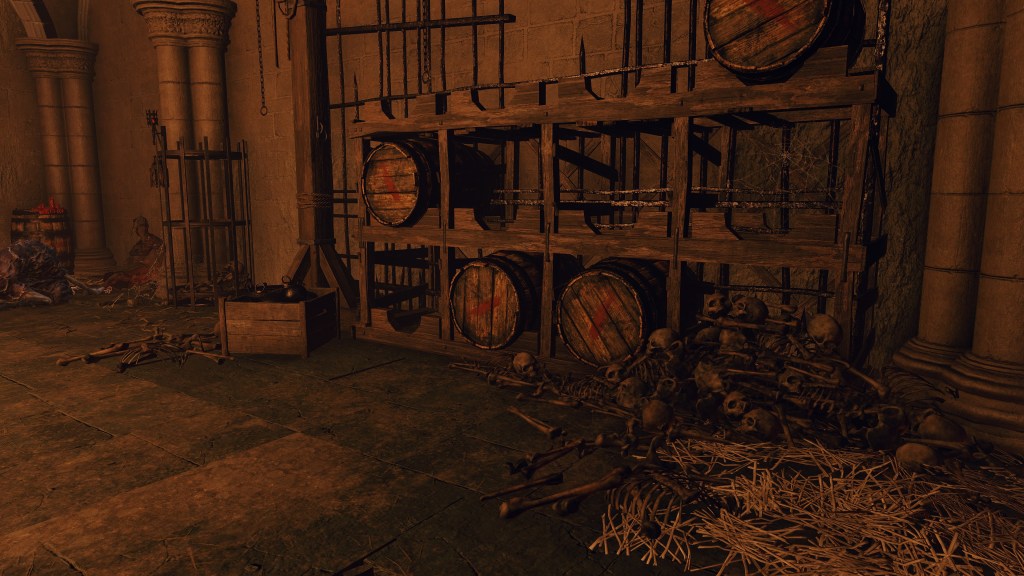
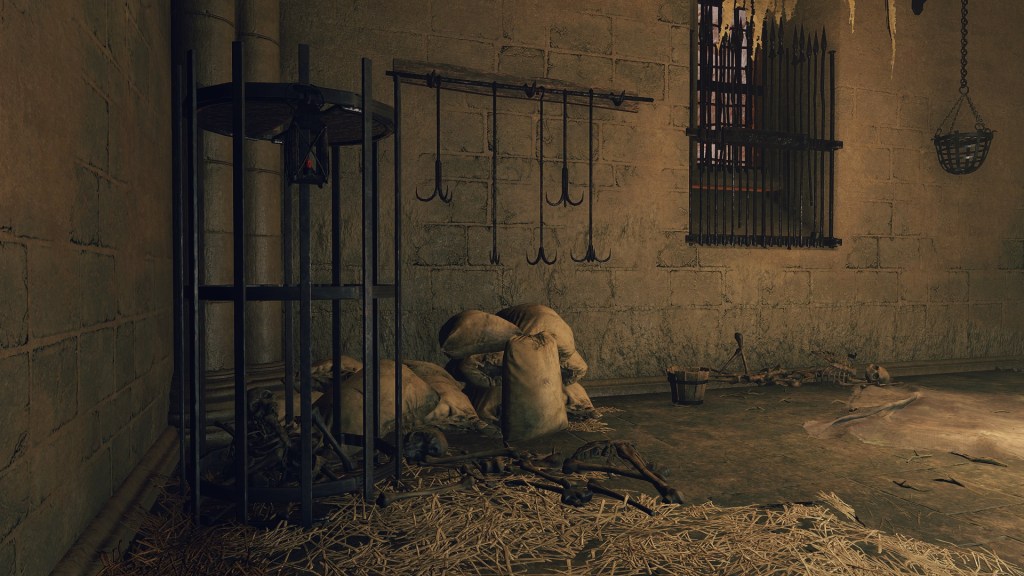
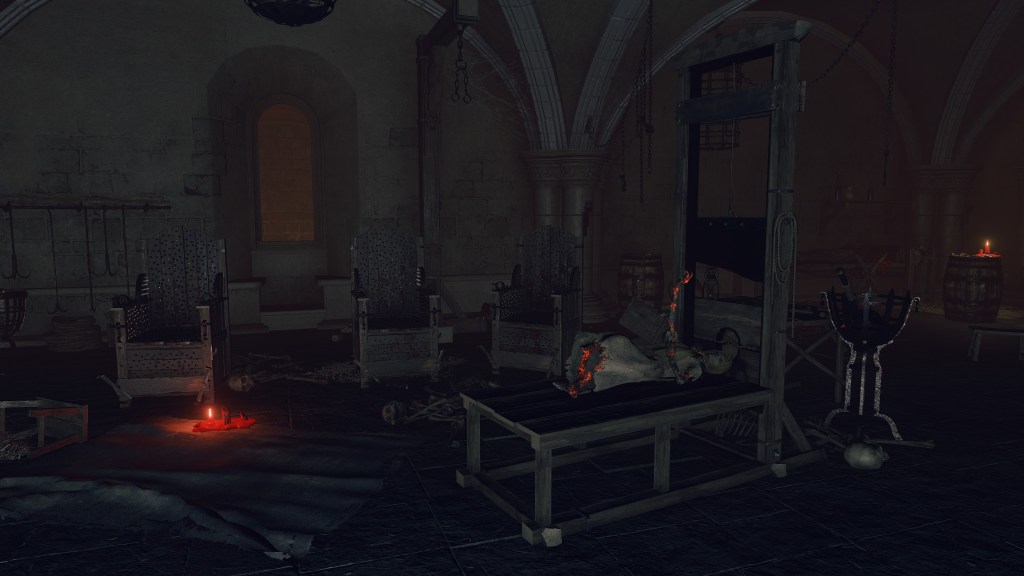
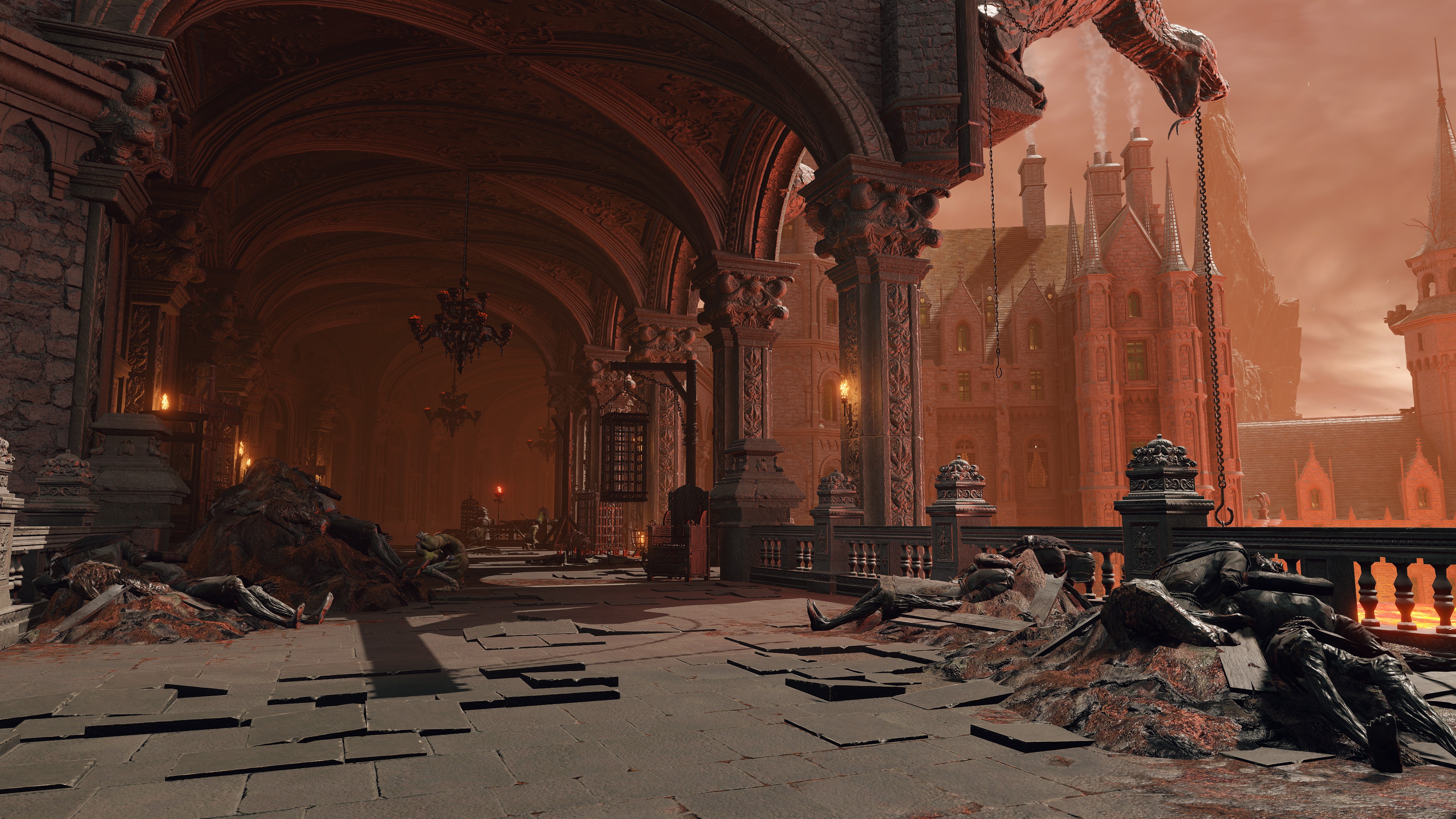
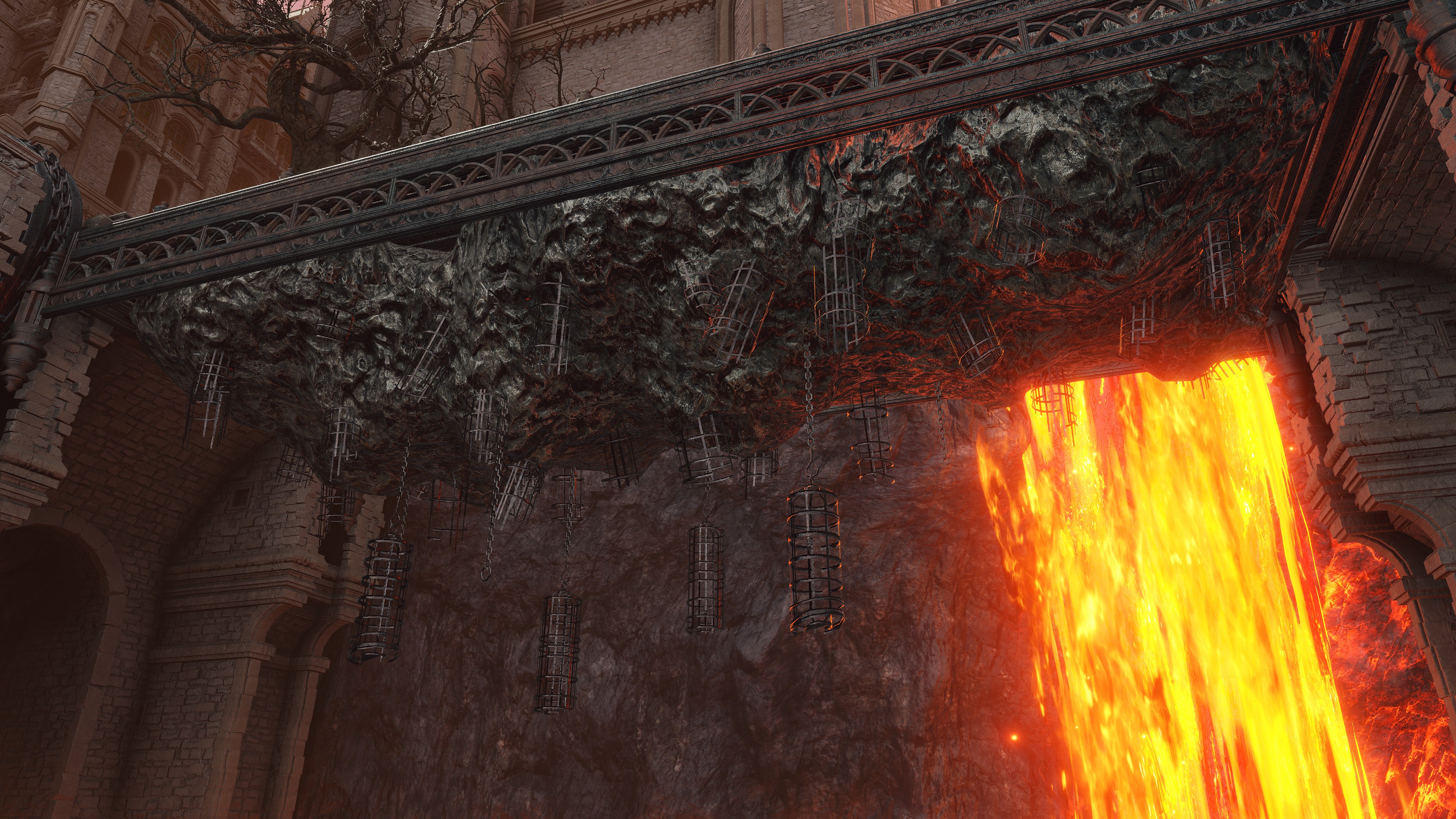
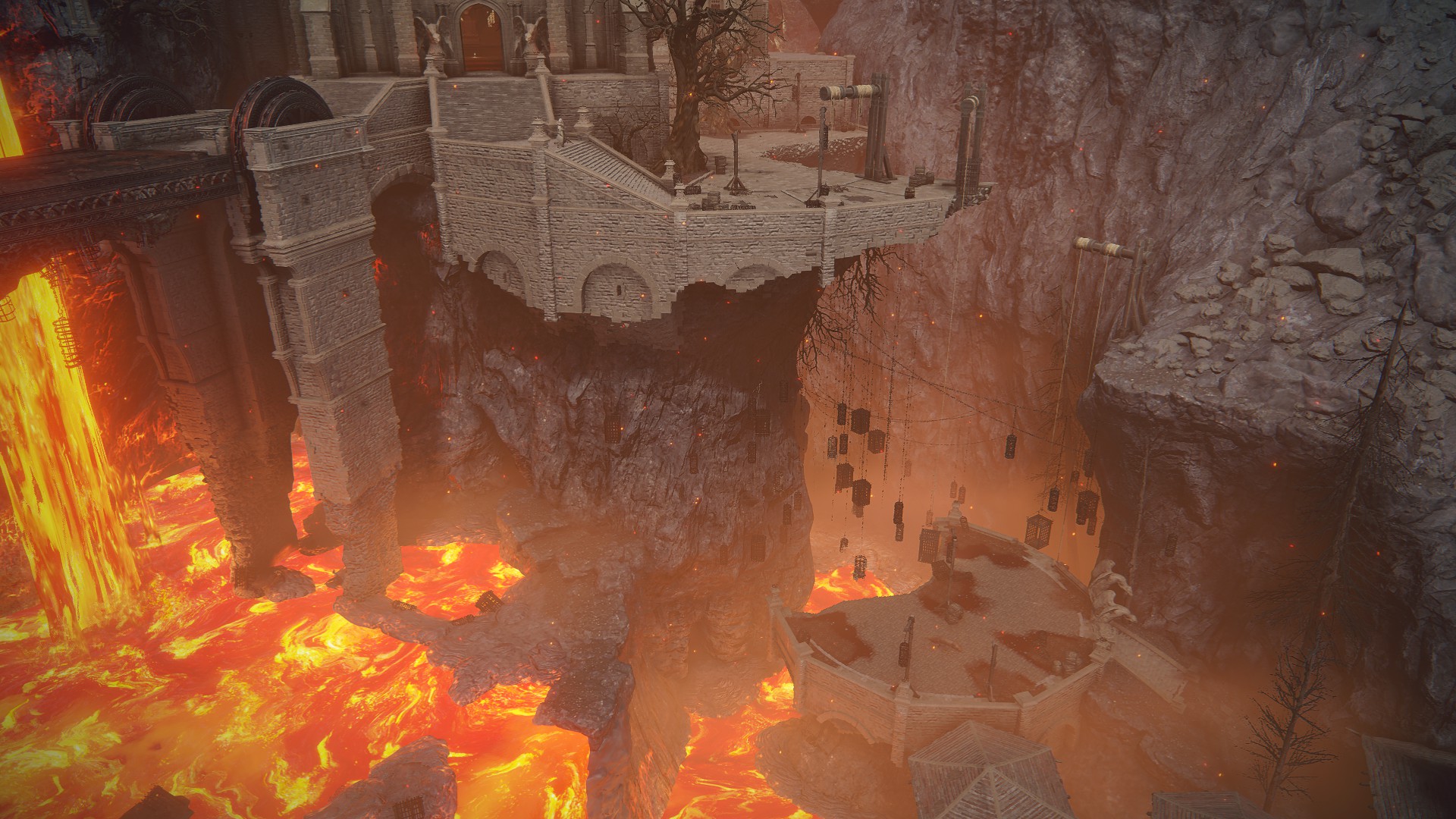
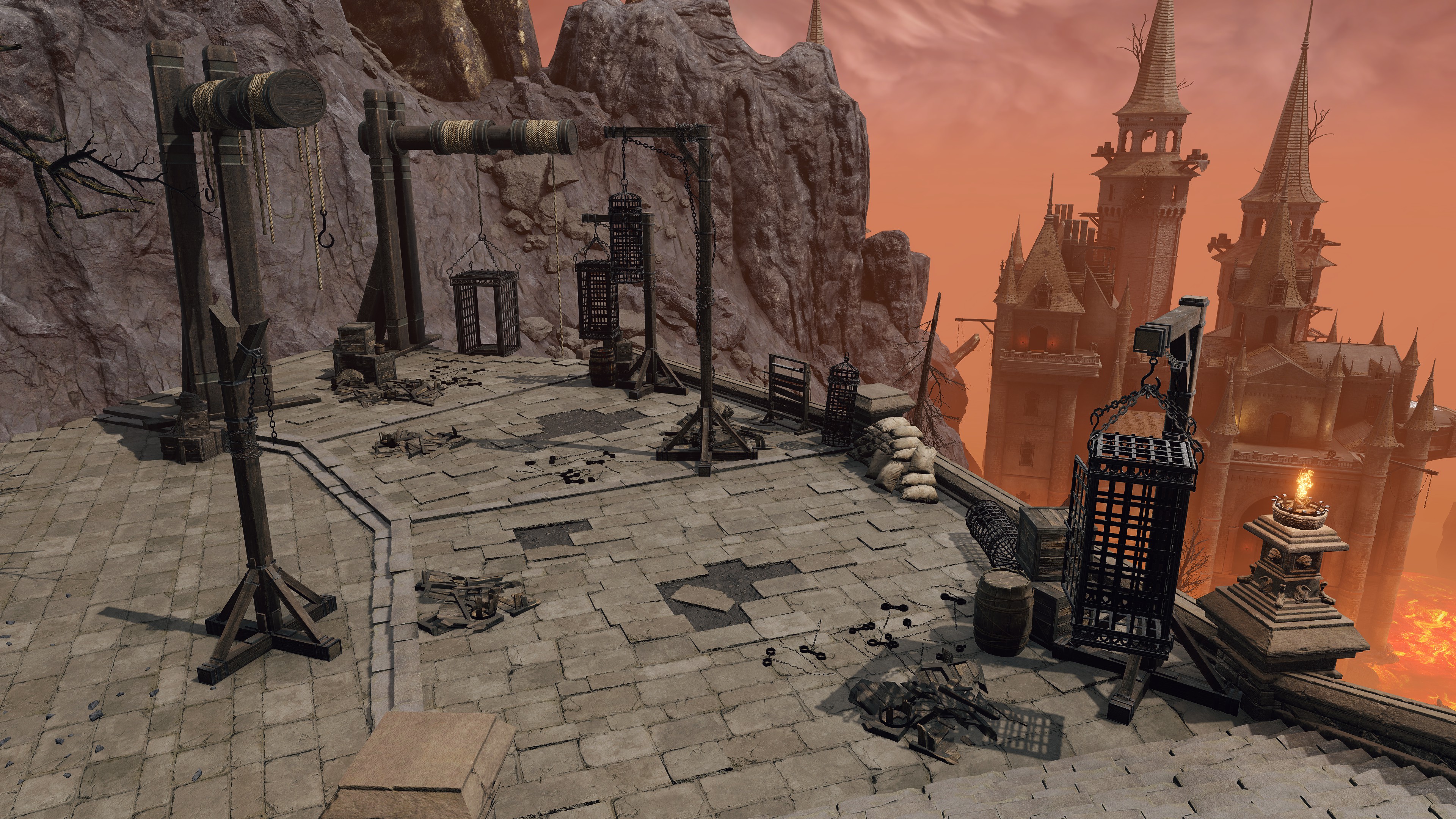
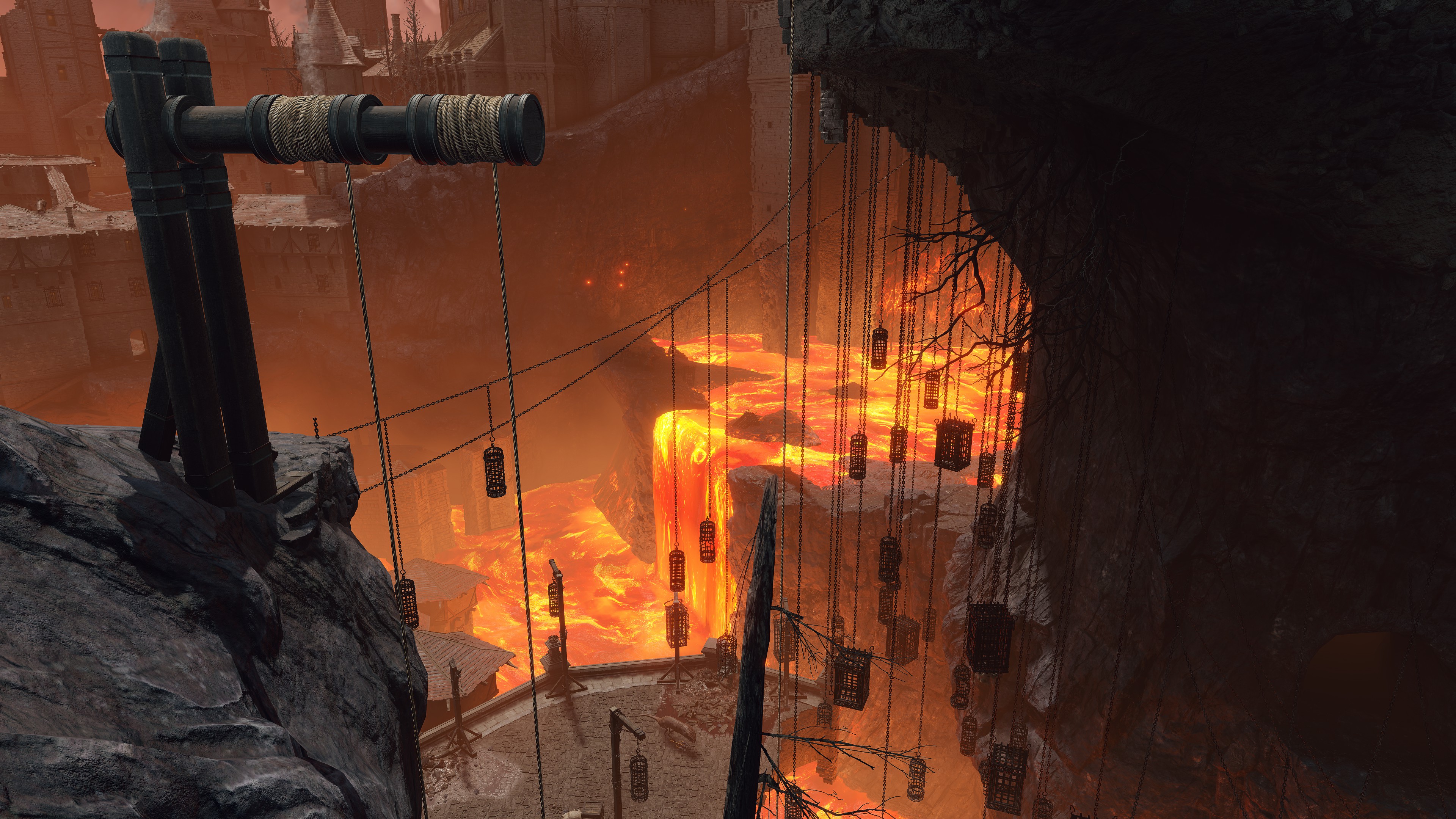
Contrast to the manor and churches, the castle town has barred windows on every home and related building, some additionally boarded up. Streets themselves are gated, with gates and chains blocking more than a few front doors. Some parts of town even retain proper cells and hanging cages. Overall, the place is properly regarded as a “prison town” (牢街) where natives had lived on the strict schedule of their Erdtree taskmasters. Anyone who deviated from the program was jailed and soon to be brought to the castle, which maintains a number of torture devices along the path to the owner’s audience chamber. From Judas chairs to crosses to guillotines, the inquisitors had plenty of ways to pressure sinners to confess. And so, the inquisition spent its days surveilling the population for signs of deceit, confirming their disloyalty, and then sentencing them to execution, sinners donning the hood the local nomadic merchant sells.
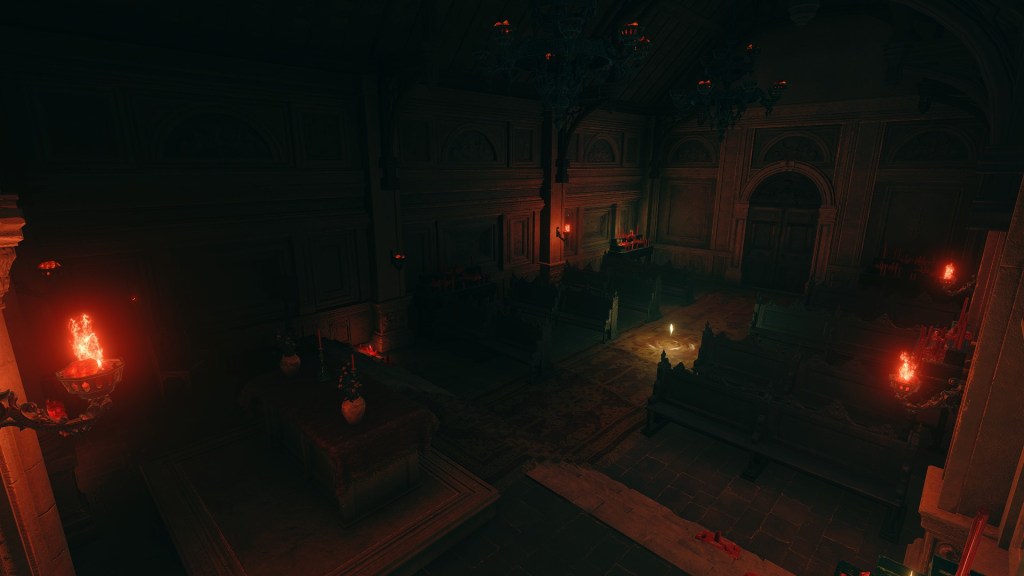
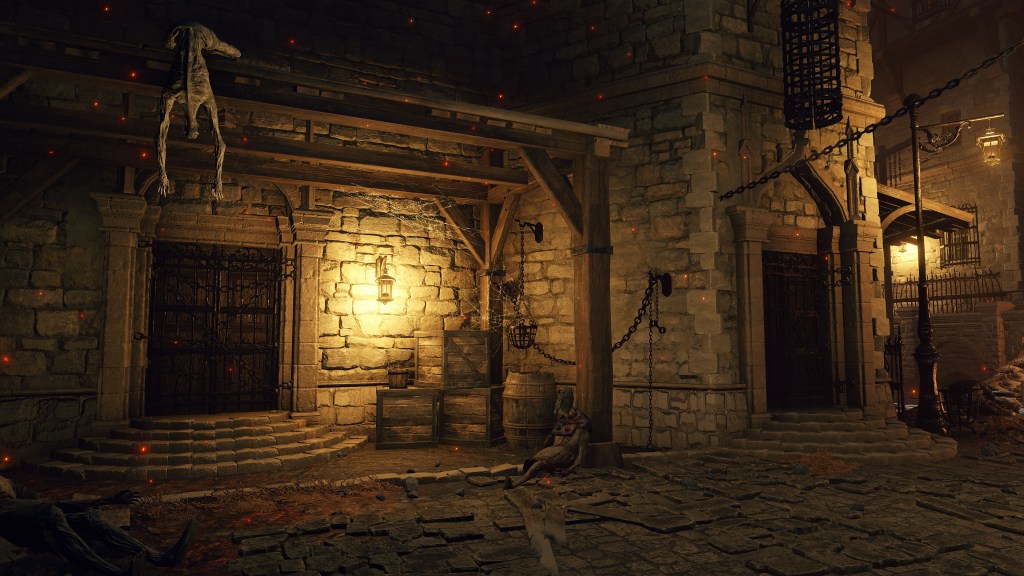
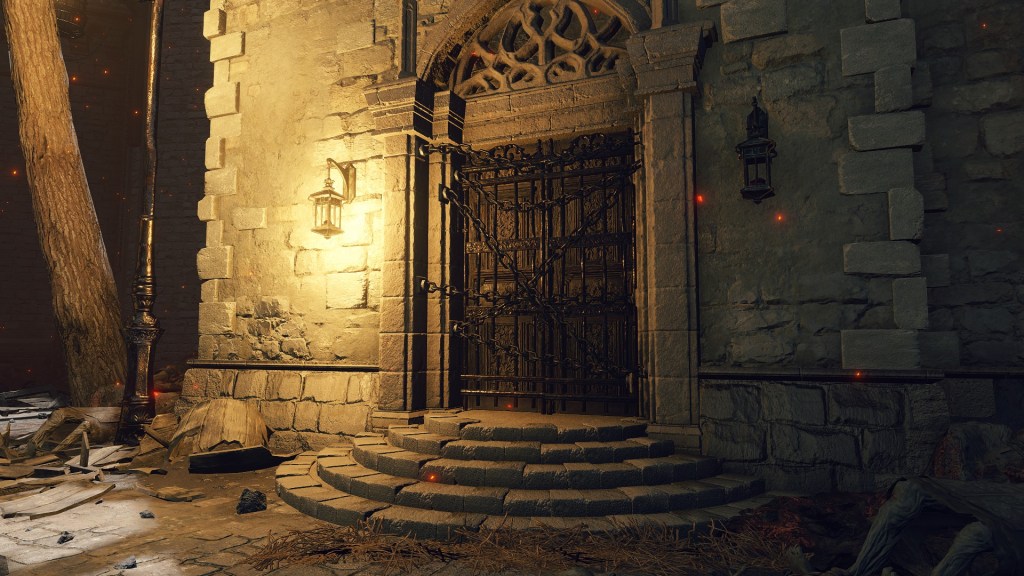
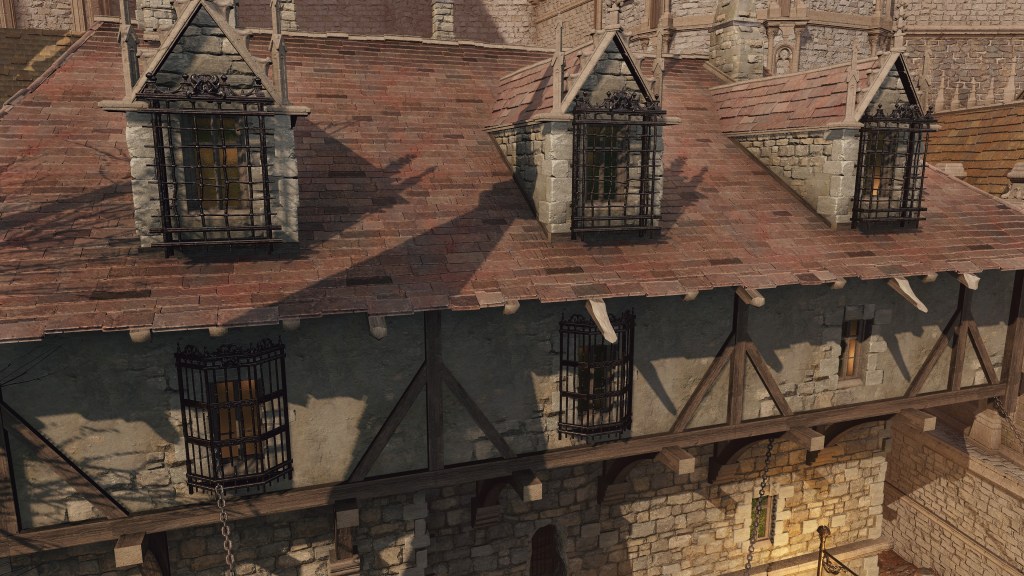
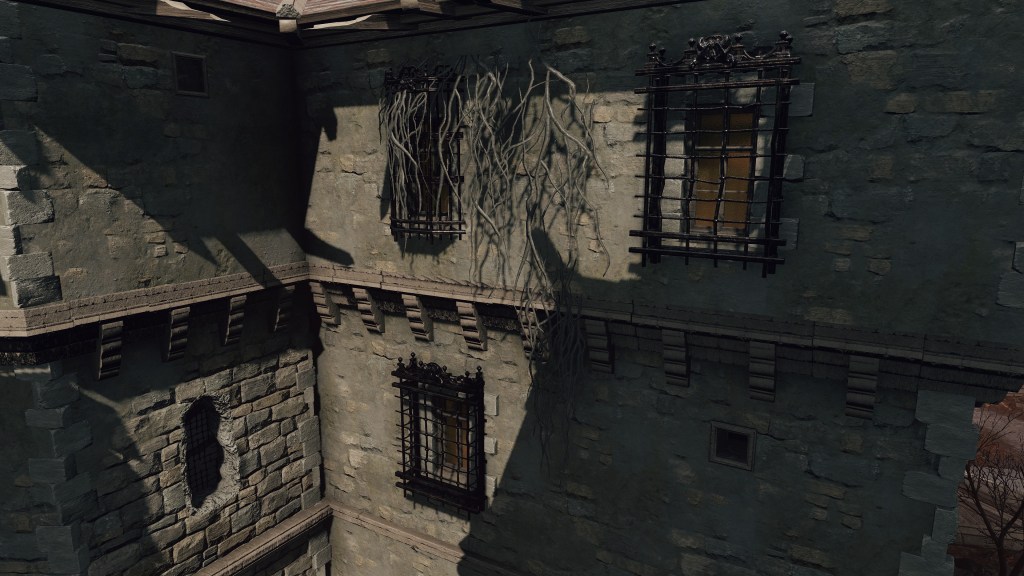
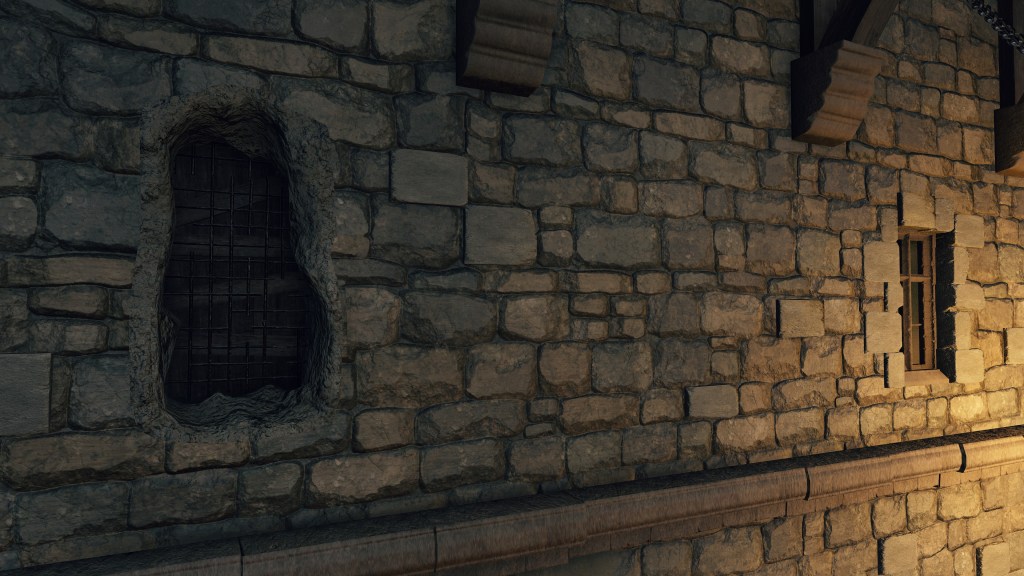
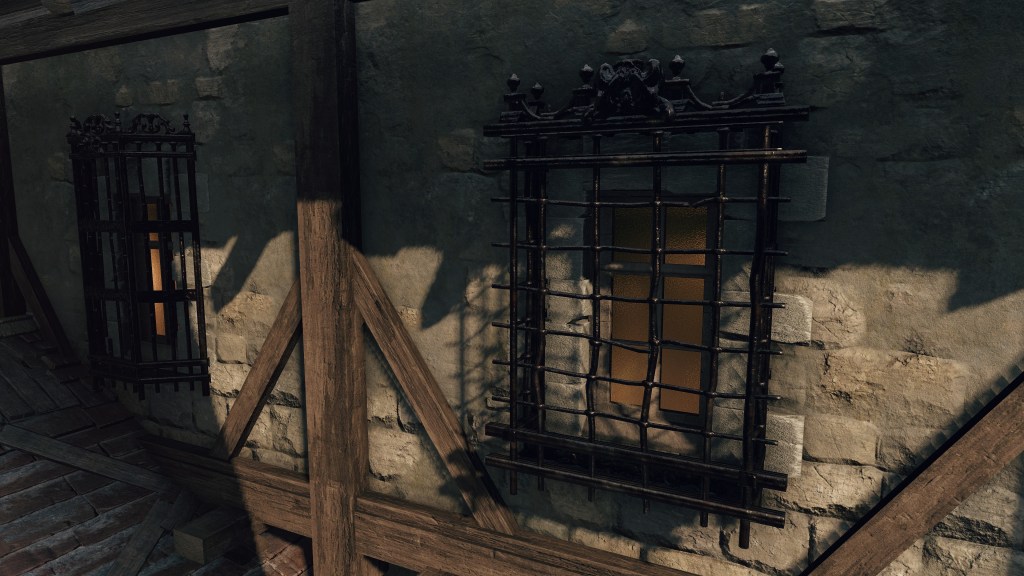
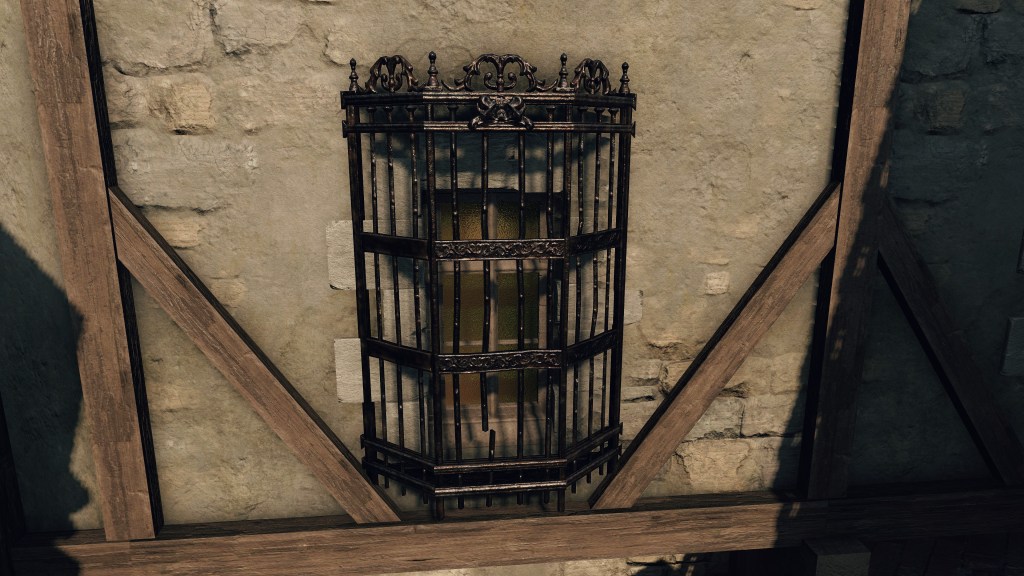
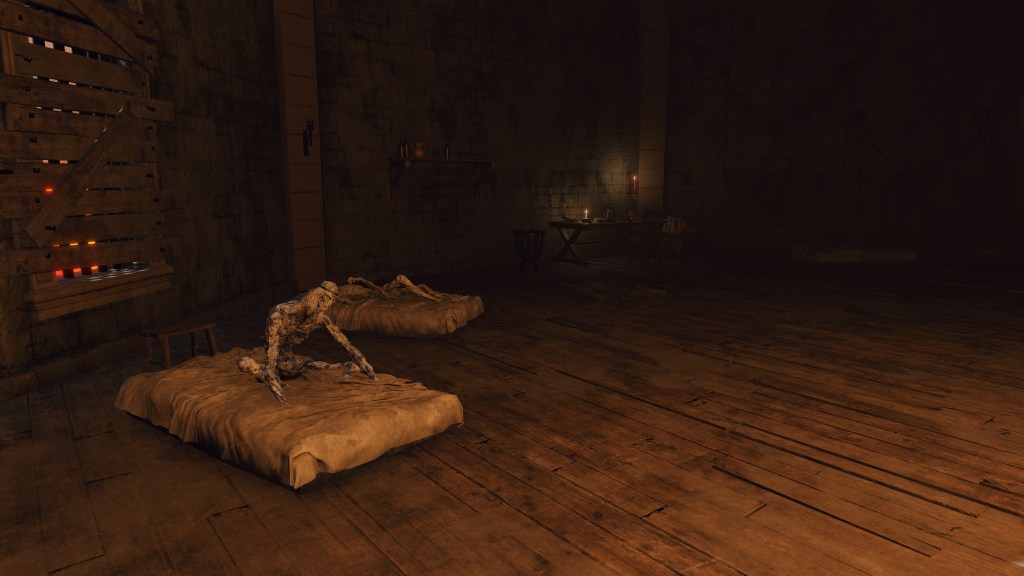
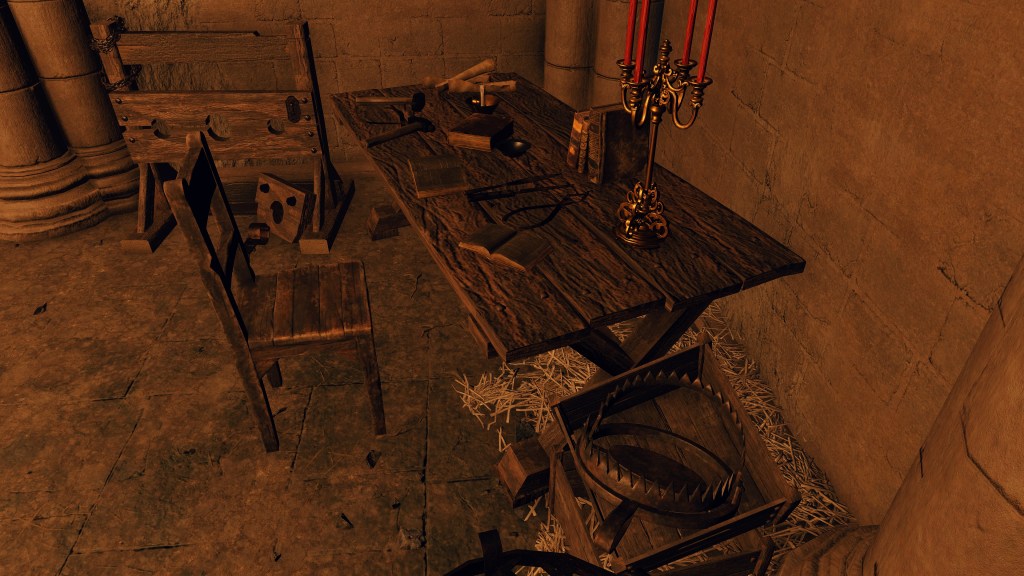
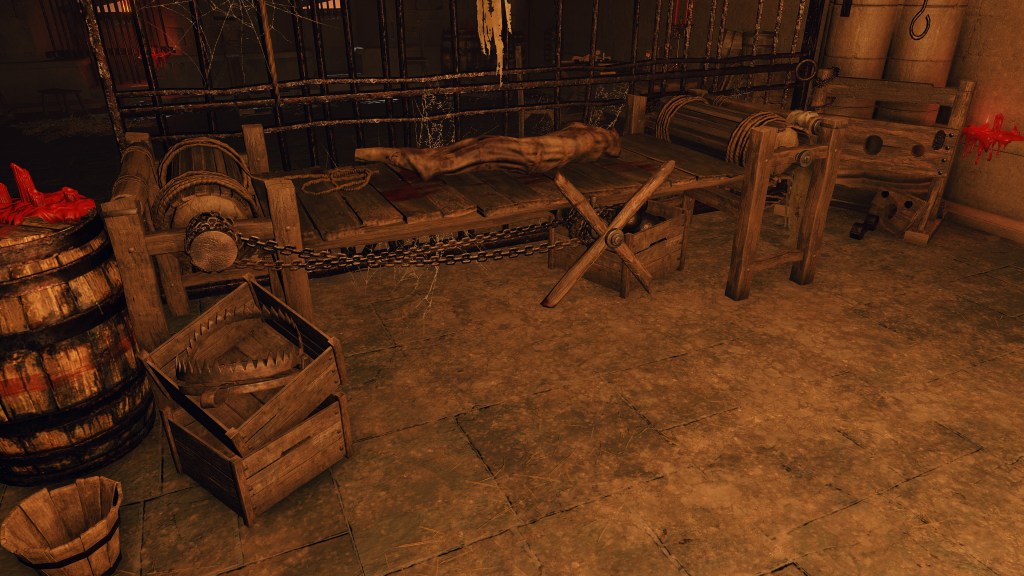
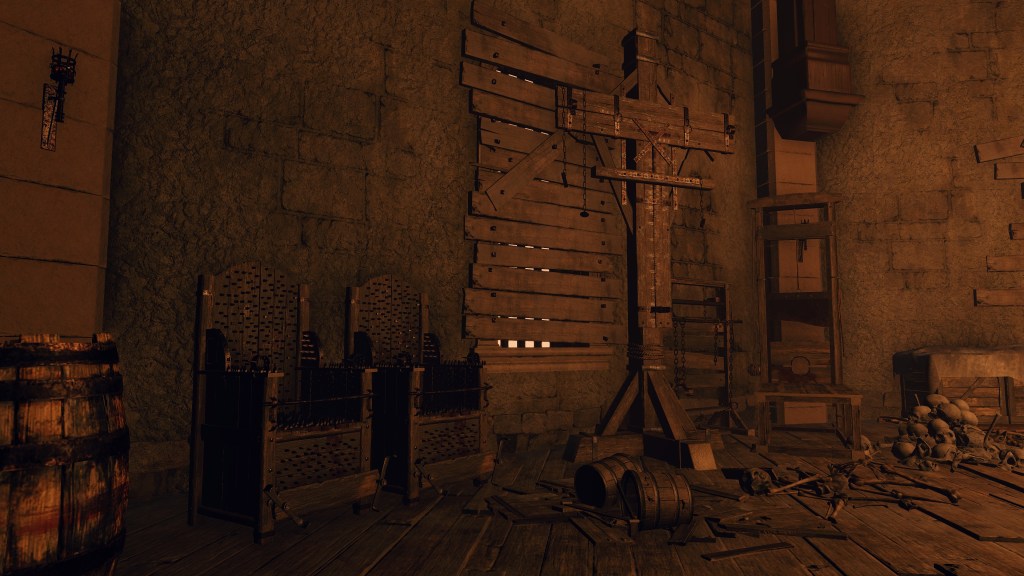
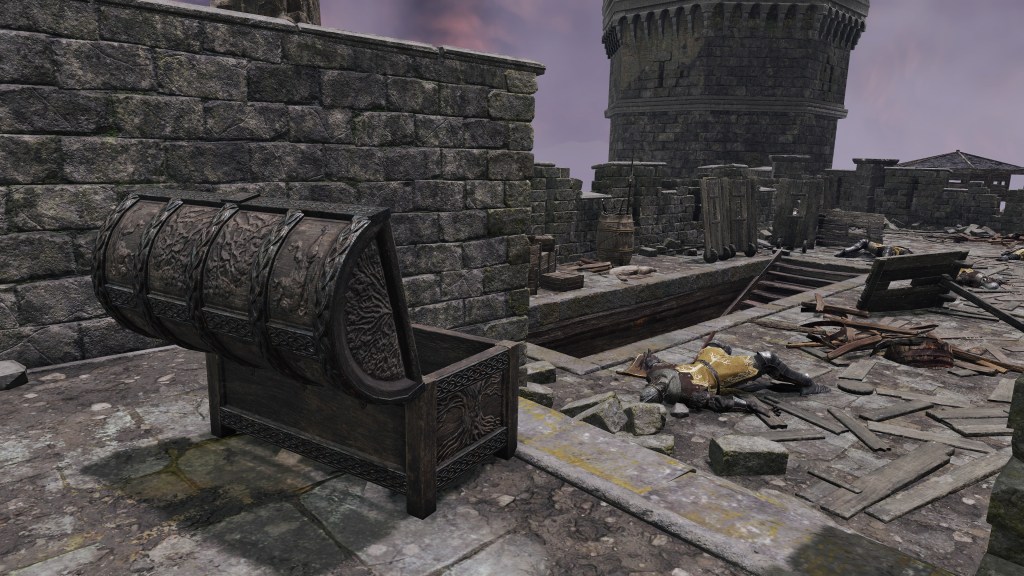
This grim task to ferret out pagans and make an example of them should date back to the immediate aftermath of the god hunts. Naturally, that means someone else leading the inquisition before Rykard, and we in all likelihood know who. Fort Laiedd is currently under assault, the garrison inside massacred. The one “survivor” is a noble sorcerer whose spirit hides on an obscure platform behind the defenses. Apparently, the resident lord of the fort took his Fire Scorpion Charm from the nearby empty chest before leaving his defending troops to perish to the attackers. Though he obviously didn’t escape death himself, the cowardly aristocrat nonetheless sneers at anyone finding his spot, insisting on surviving so that he may return to Volcano Manor. If he originates from the manor, then the assassin’s talisman empowering fire attacks conveys his intentions. The man most likely wished to assassinate Rykard, using the flames of Gelmir against him. And if so, then he almost certainly is the praetor’s predecessor, a noble with a grudge for the prince getting him demoted to a minor lord in the province.
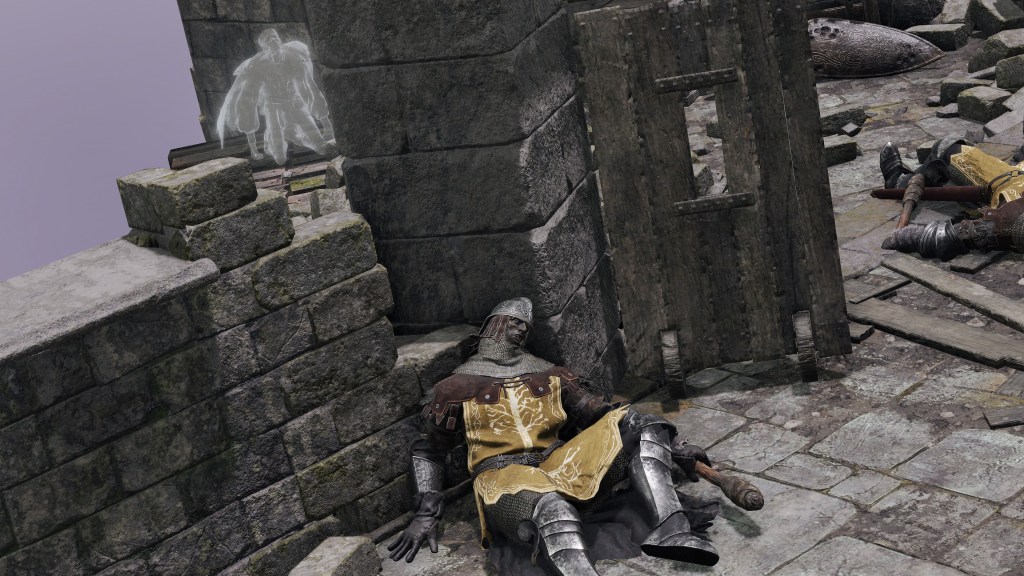
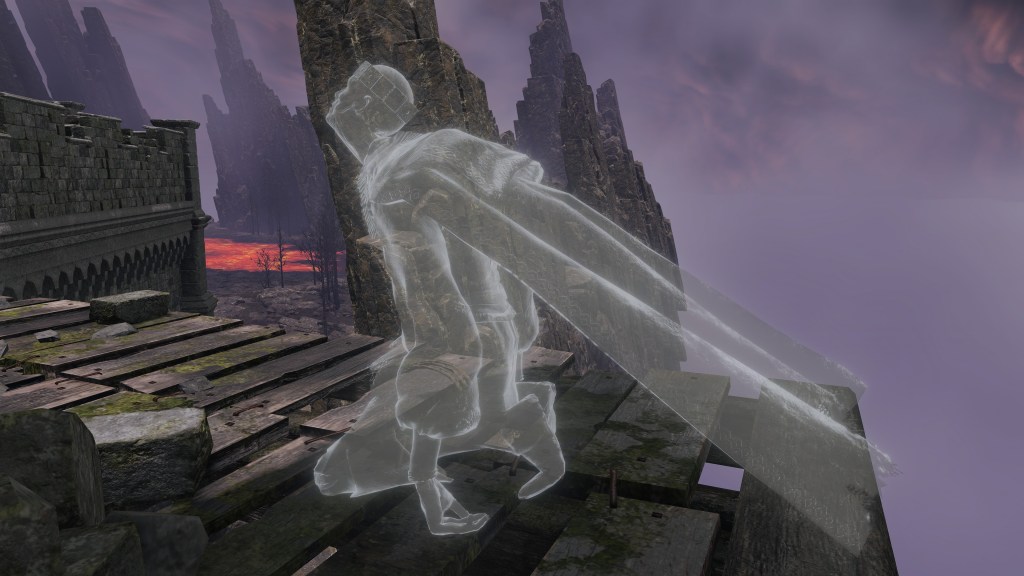
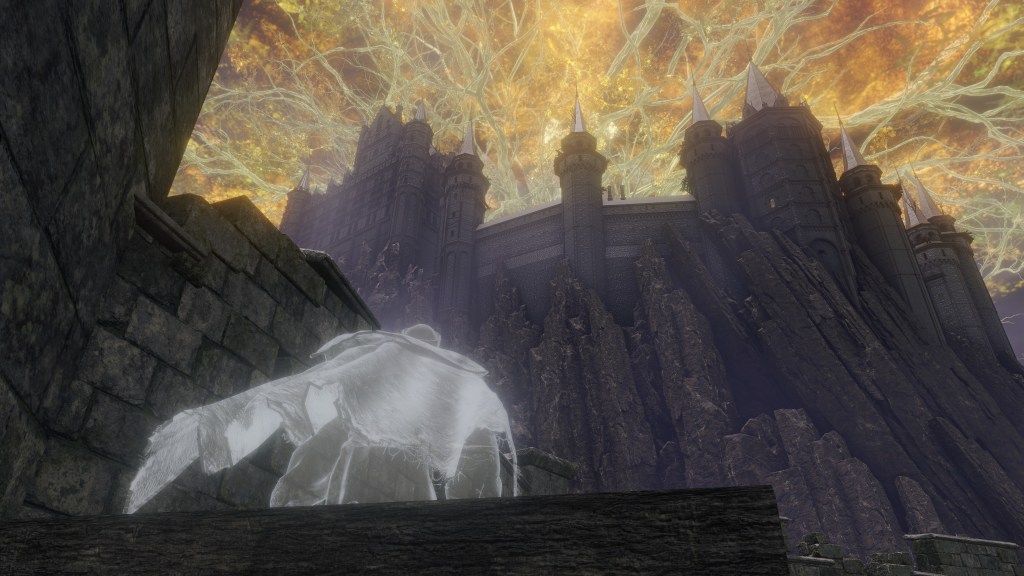
Hee, heehee… Foolish lot… will you be able to find me…? Hee, heehee… I alone will survive. I will return to Volcano Manor…
Put simply, Rykard was only continuing work which had already long been underway before he was even born. If anything, his appointment to the praetorship was proof of his new stepmother’s concern that rooting out the old blasphemy was taking too long for her liking. In this new age of Fundamentalism, surely there were more efficient means of identifying the villains and bringing them to Erdtree justice? Rykard stepped up to the challenge. His weapon is a golden holy sword demanding faith of its wielder, showing how the sorcerer affirmed the core tenants of Golden Order Fundamentalism in his capacity as chief inquisitor. Rykard seems to have even seen this as an opportunity to measure up against his father — Gelmir’s knights under the demigod donned red plumes representative of his relation to the hero king. This desire to harken to his lineage is especially notable since he didn’t actually bear any of it himself.
Helmet of knights who once served Praetor Rykard. The red-feather helmet decoration is a symbol of being the child of King Radagon.
Knights to other shardbearers often decorate their helmets with hair matching the color of their respective demigod’s locks. The only other knights to use plumage are the Cuckoos, due to their specific avian connection. To see the same from Rykard’s army suggests that the prince was peacocking as son of the hero when he didn’t actually have the hair to display. The introductory cutscene cements that impression, depicting Rykard with light strands as he is being devoured by the great serpent. While heavily stylized, none of his portraits feature particularly dark hair either, and his one non-stylized inquisitor portrait hides it under a mask and red headwrap. The man wasn’t born with fiery hair like we see with his brother and sister, but golden hair like Marika. Ignoring the obvious fact that Rykard inherited the god’s blood through her other half, this would be justifiable to most as a product of Radagon’s nebulous relation to her side of the royalty. Even so, the Carian prince evidently wished to flaunt that paternal side, regardless of the embarrassing truth that he had none of the hero’s blood to show for it specifically.
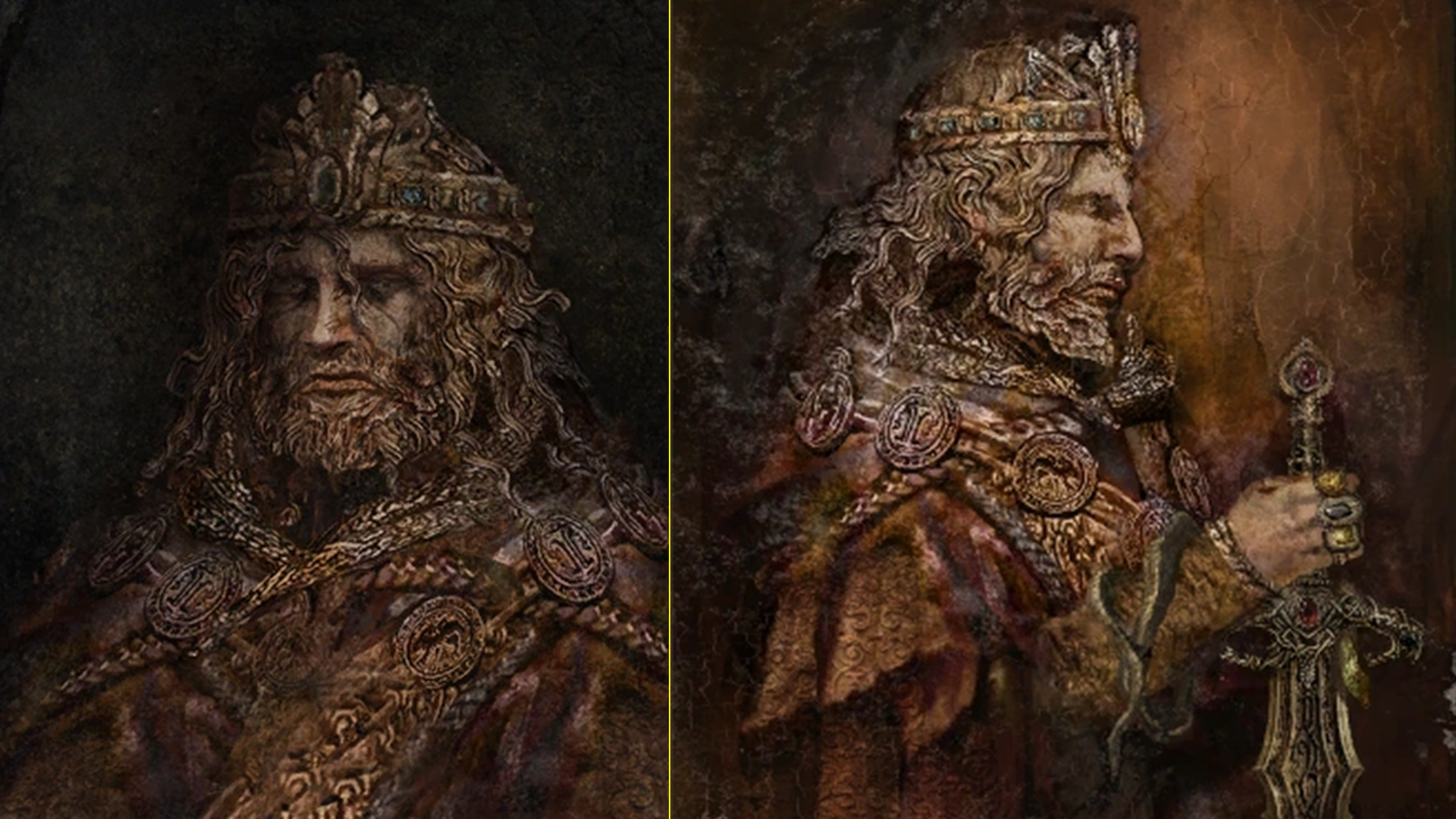
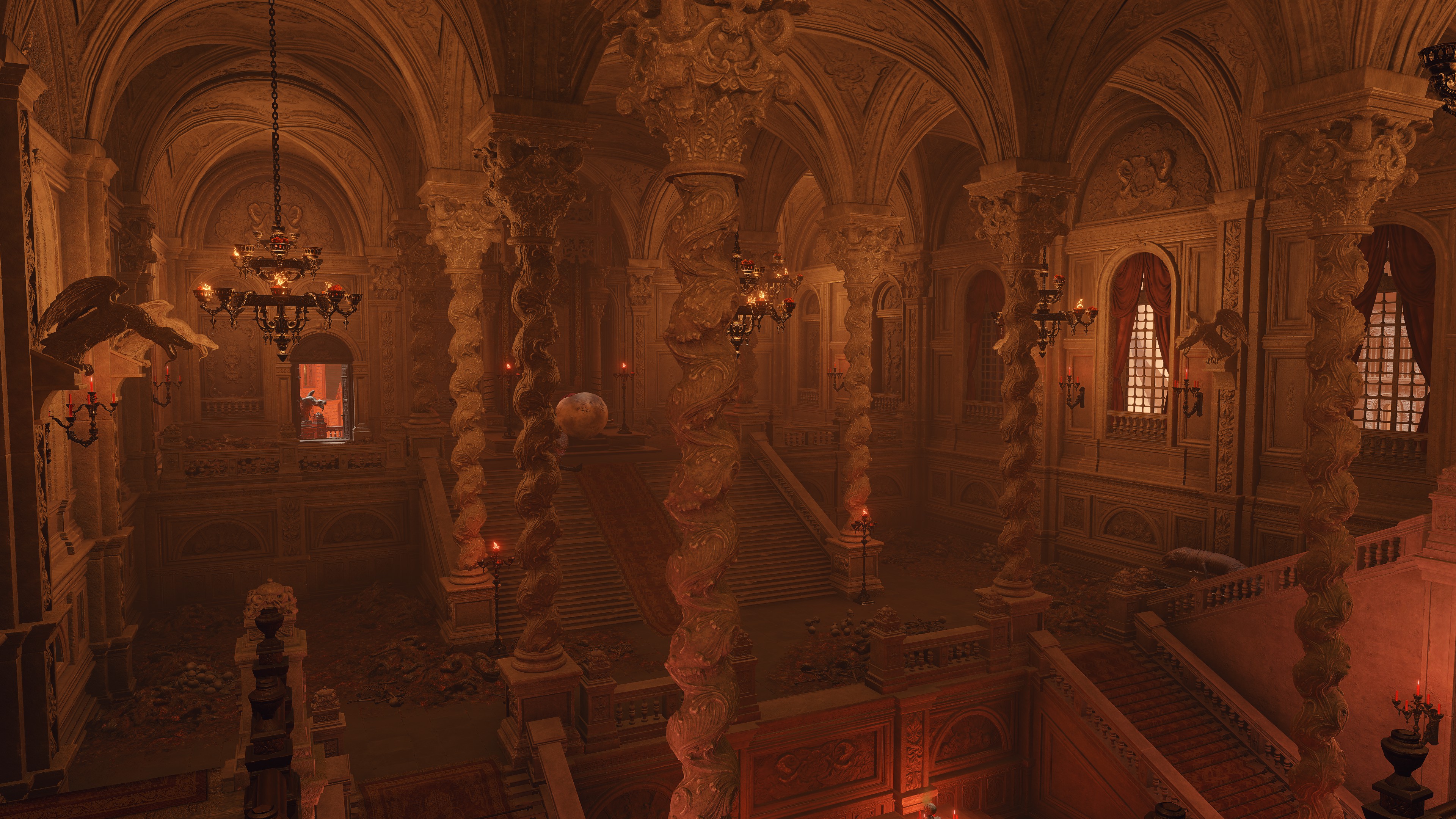
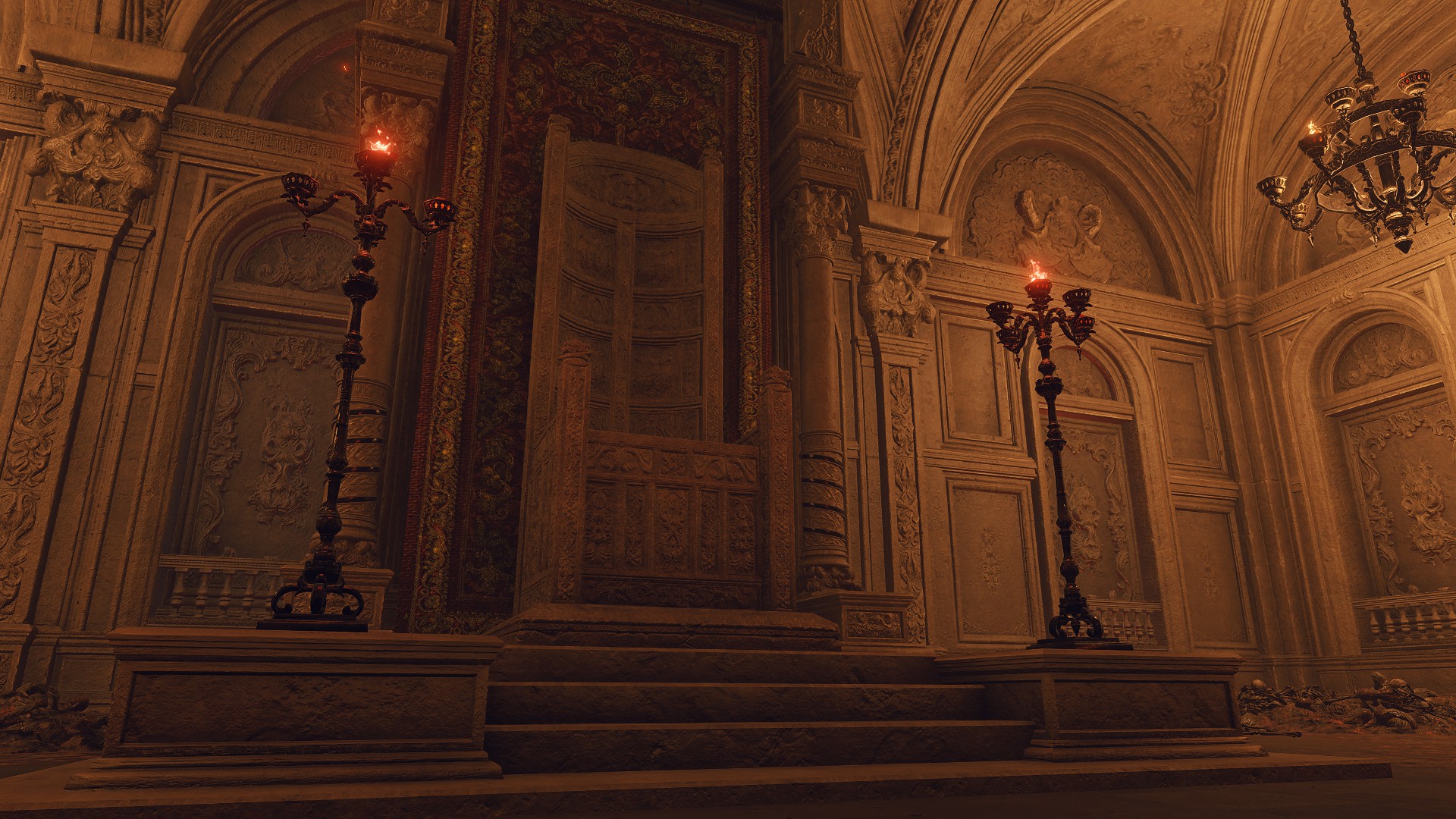
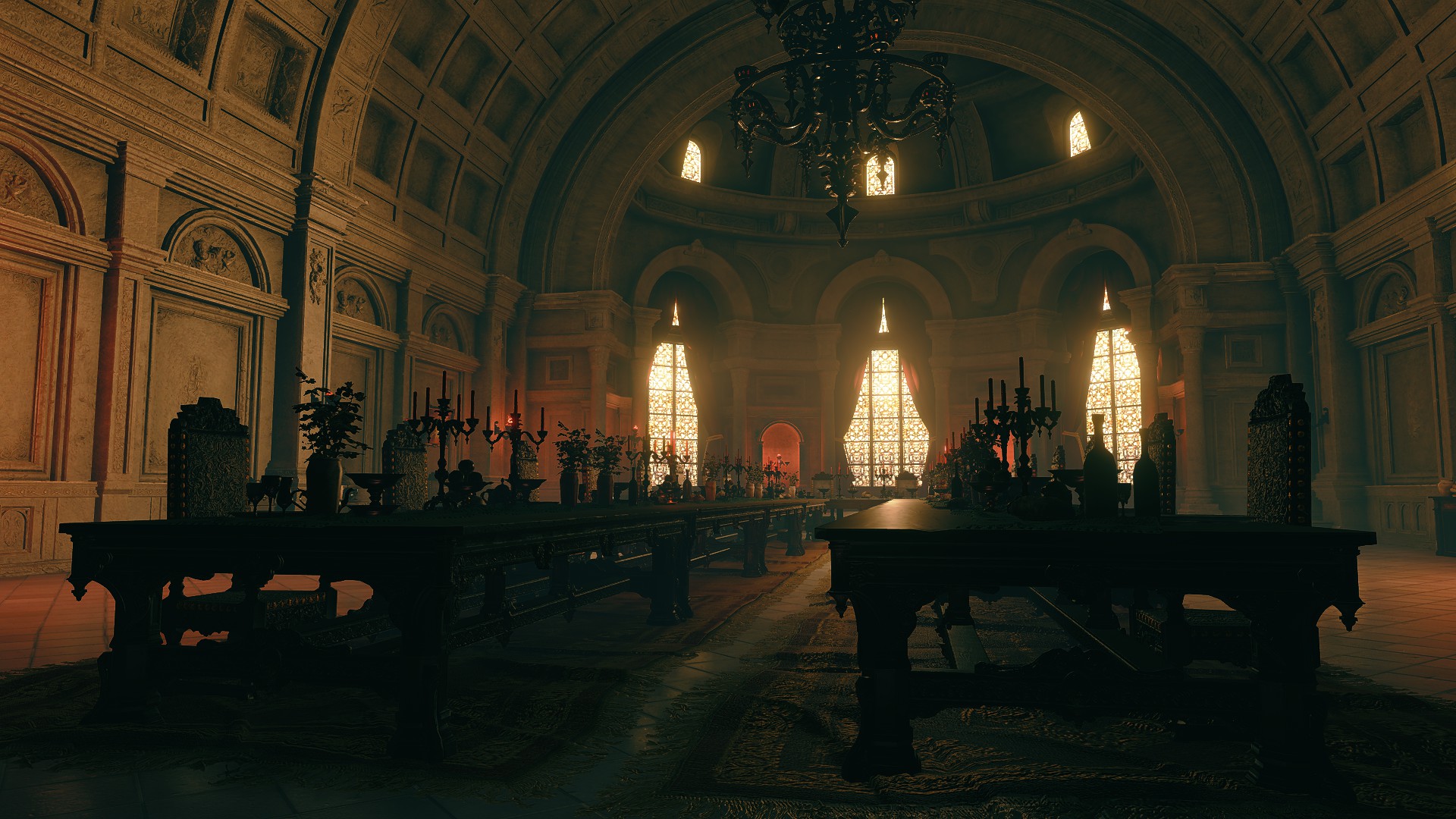
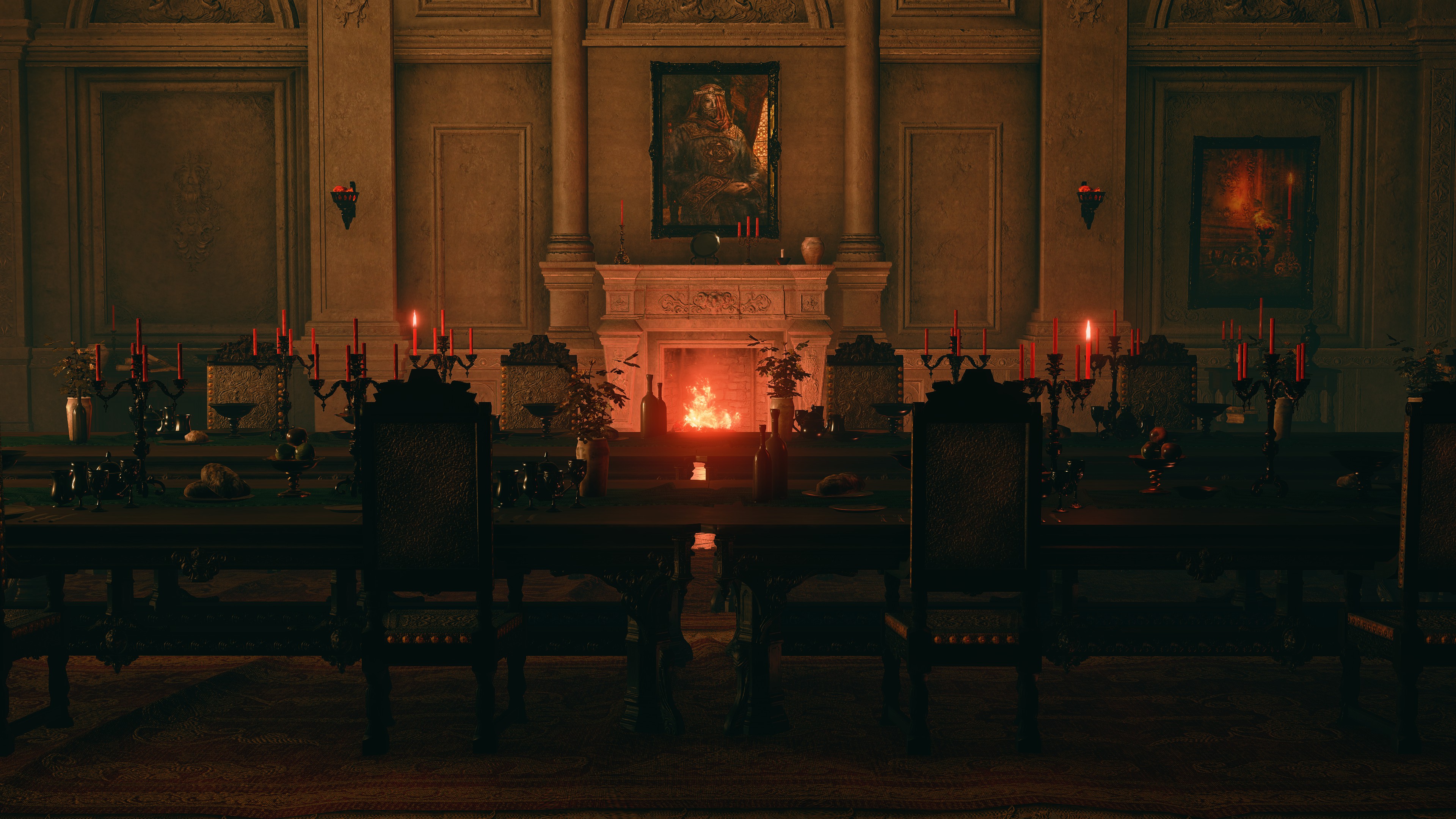
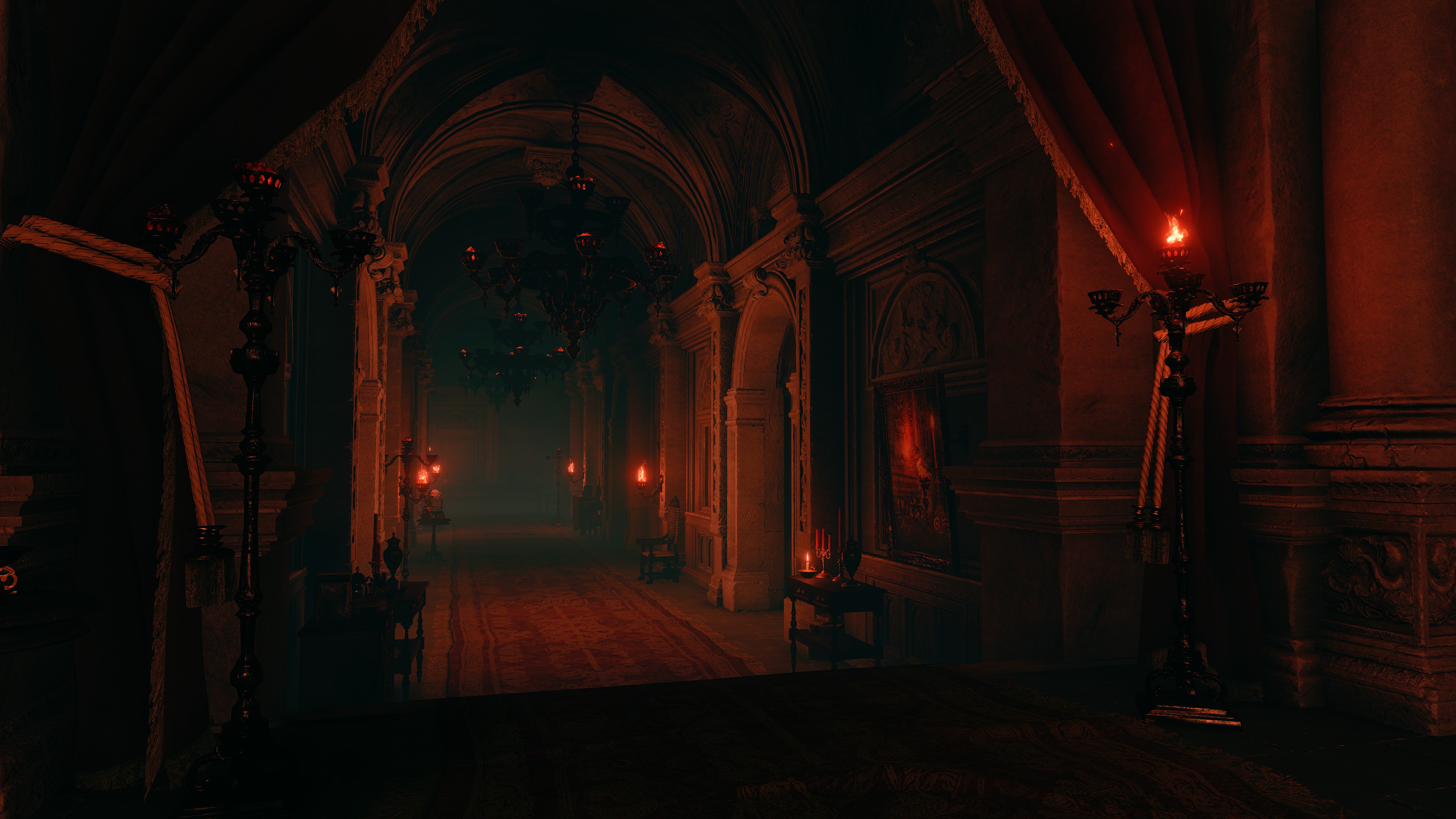
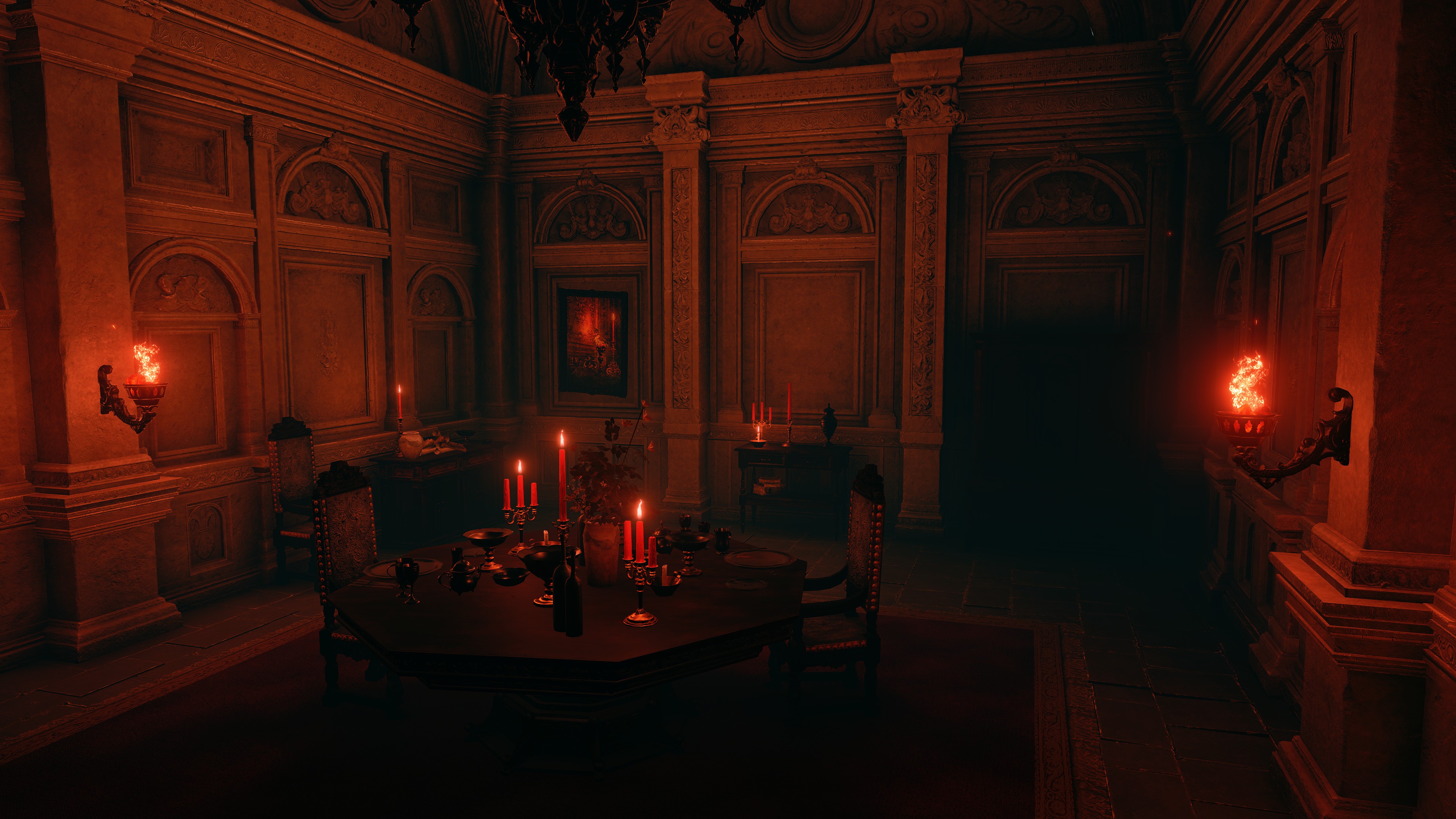
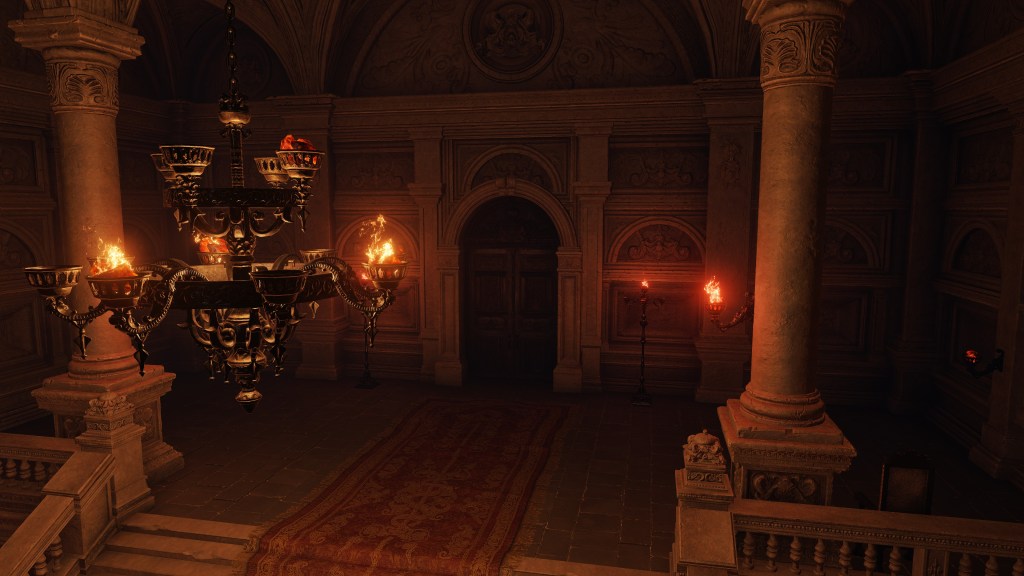
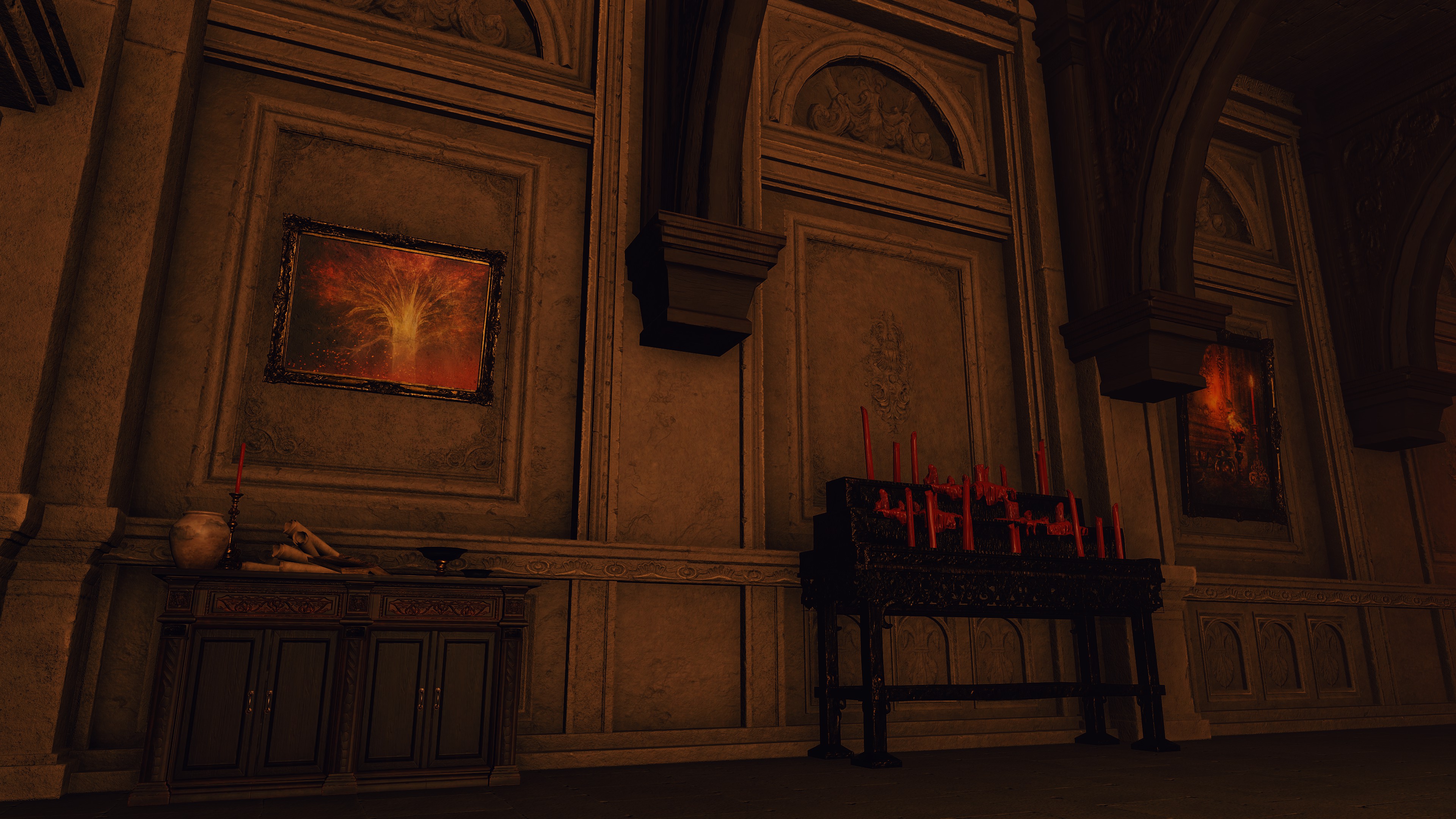
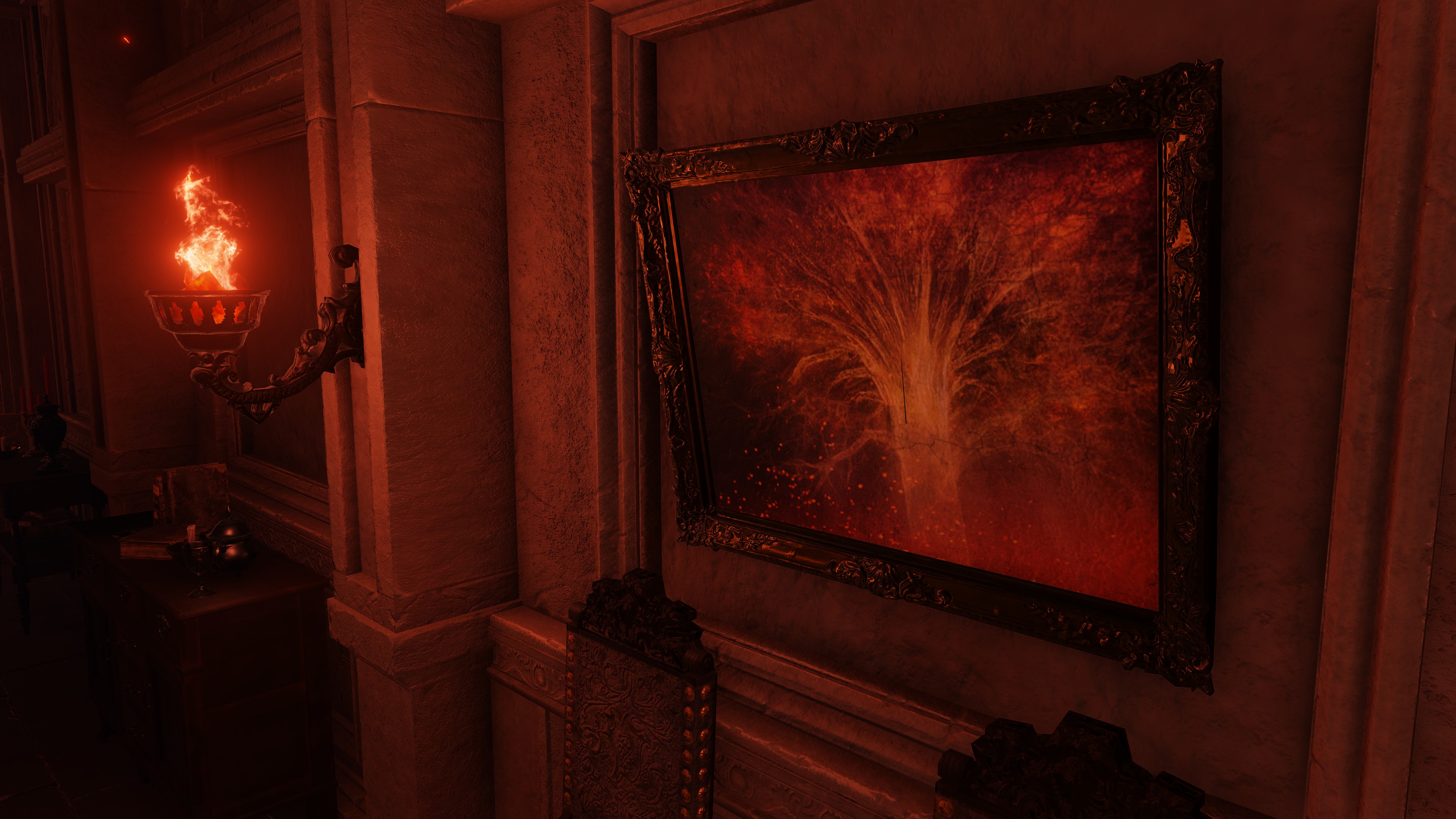
Indeed, Rykard was no stranger to ostentation. As Gelmir’s ruling governor, the man lived like a king, with a crown, throne, and plethora of bejeweled gold rings on each finger. That he hangs so many portraits of himself, especially in his throne room, speaks to the conceit of the demigod calling the mount home. With so much luxury present in just the guest corridor, “indulgent” is the least of his vices. At one point, FromSoftware even considered him calling his gemmed holy sword “Evelyn” (エヴリーン) like the weapon beloved by similarly ostentatious and disreputable nobles in Bloodborne. No demigod displays the same level of opulence; Rykard leaves visitors every reminder that he is the son of the Elden Lord, measuring up his kingliness to the hero who became consort to two regal lines. Even accepting the praetor’s duty reflects a determination to prove his bone fides to Golden Order Fundamentalism when compared to the sect’s inventor — what better demonstration of his faith than to be the one to identify when a person falls outside the regulation? If the law is golden, he is its magnificent judge.
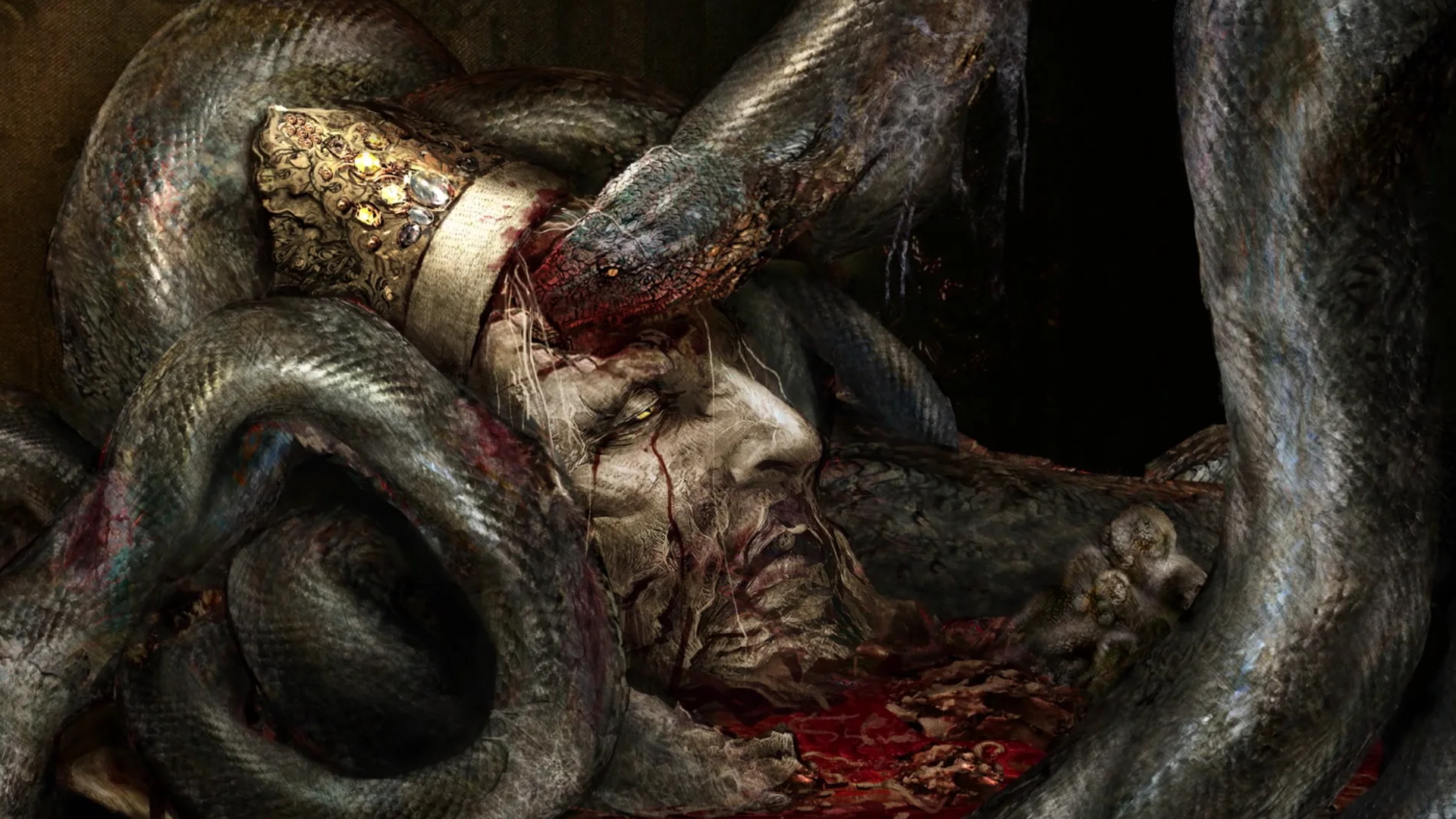
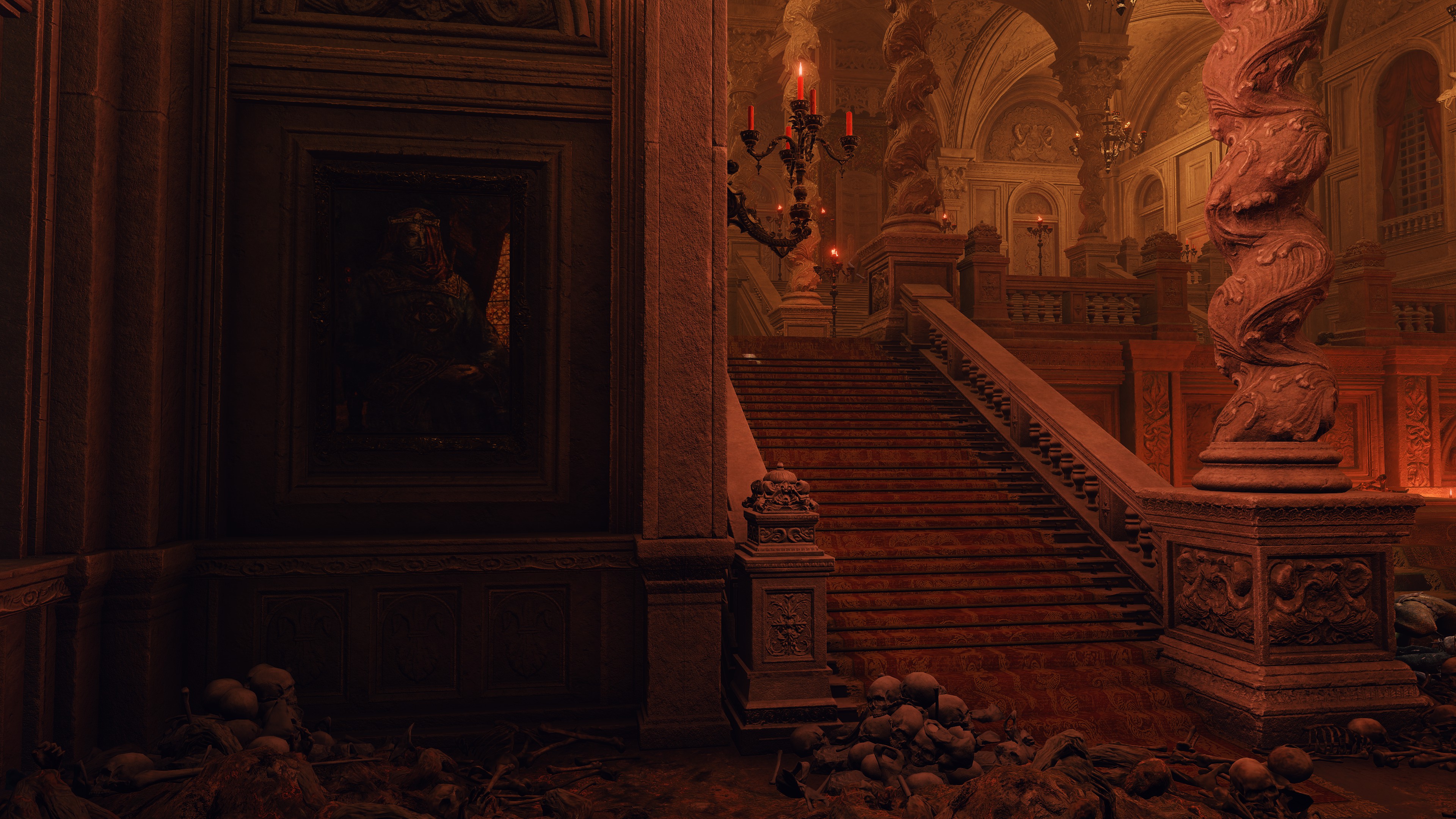
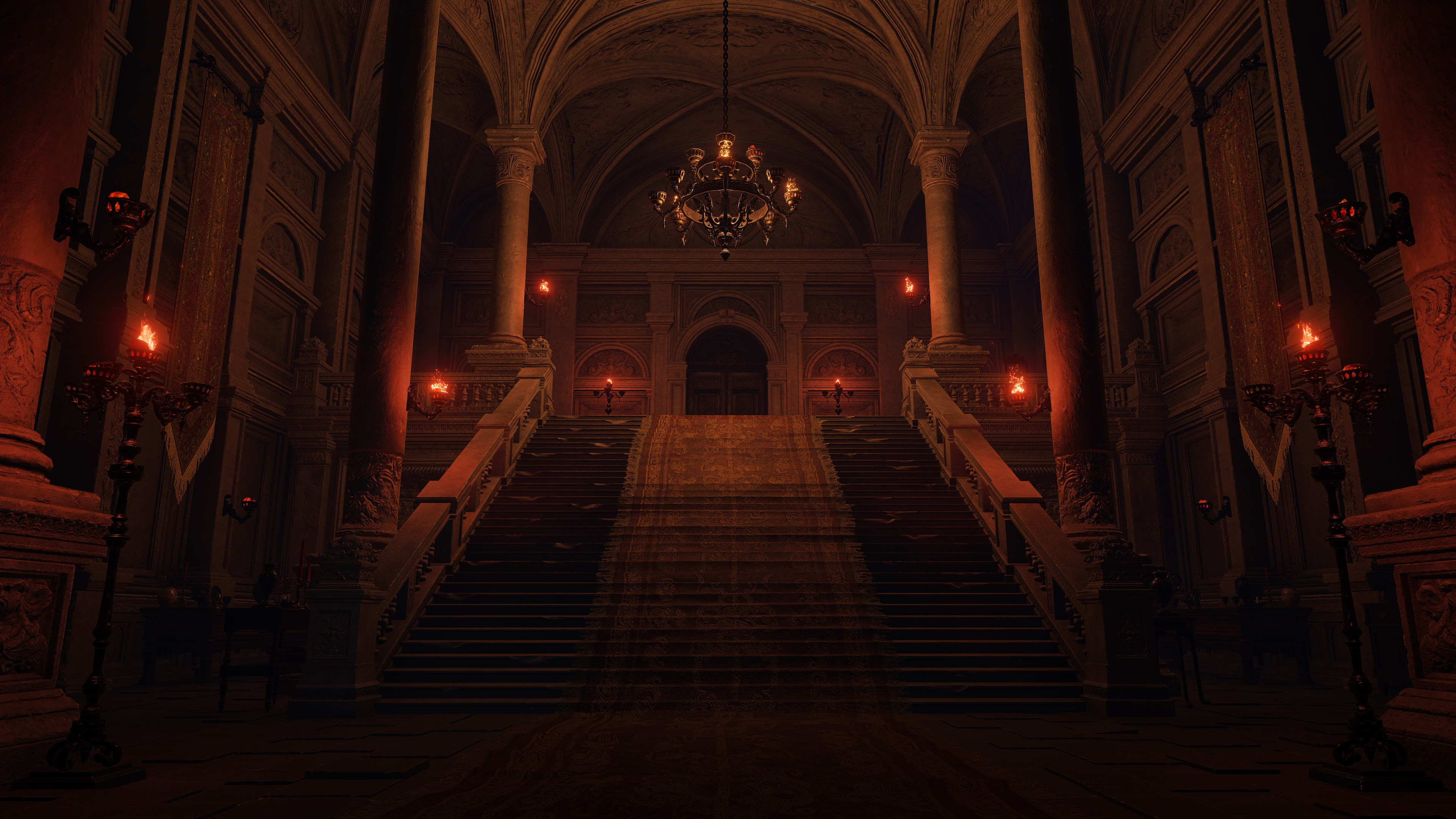
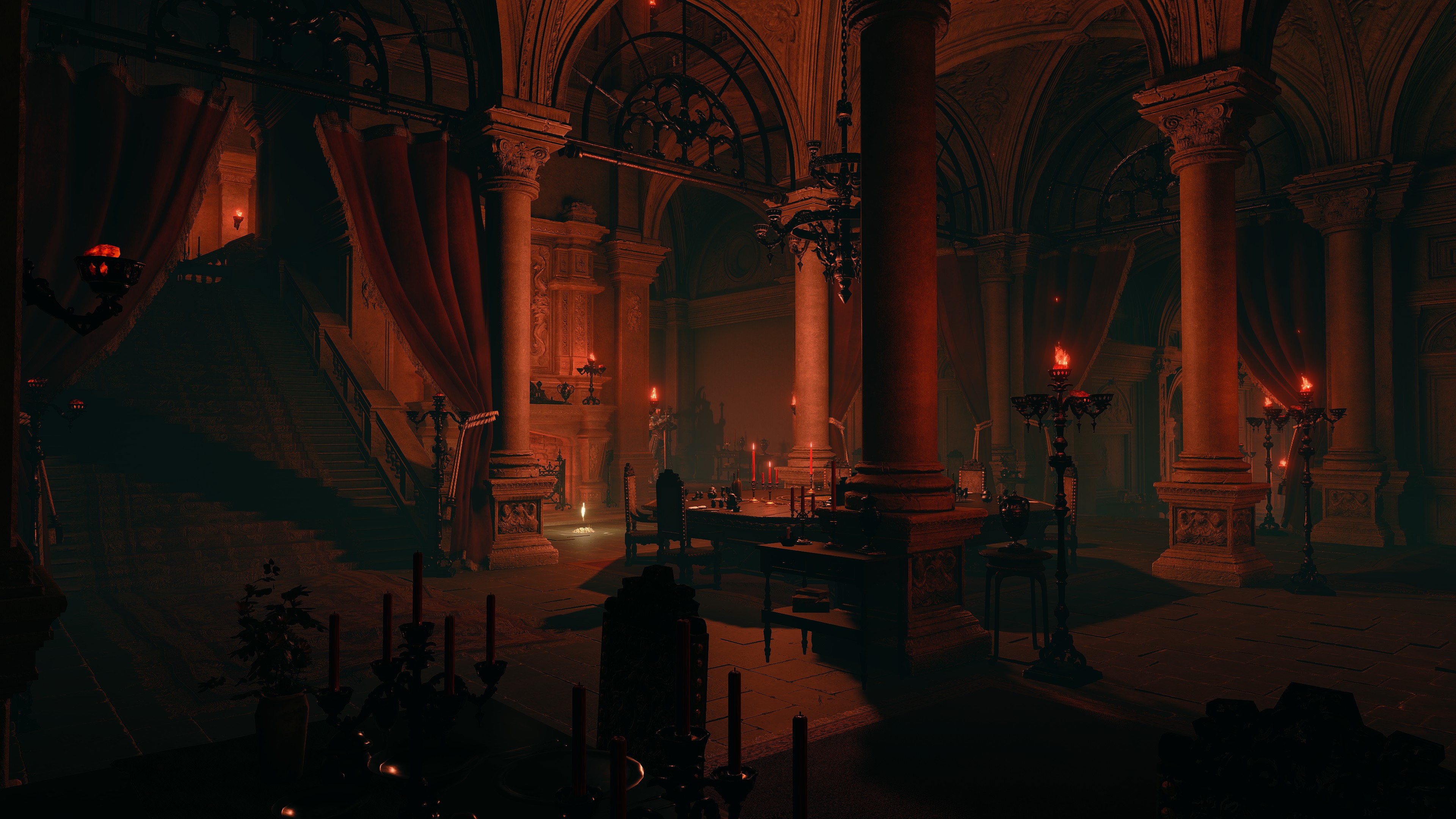
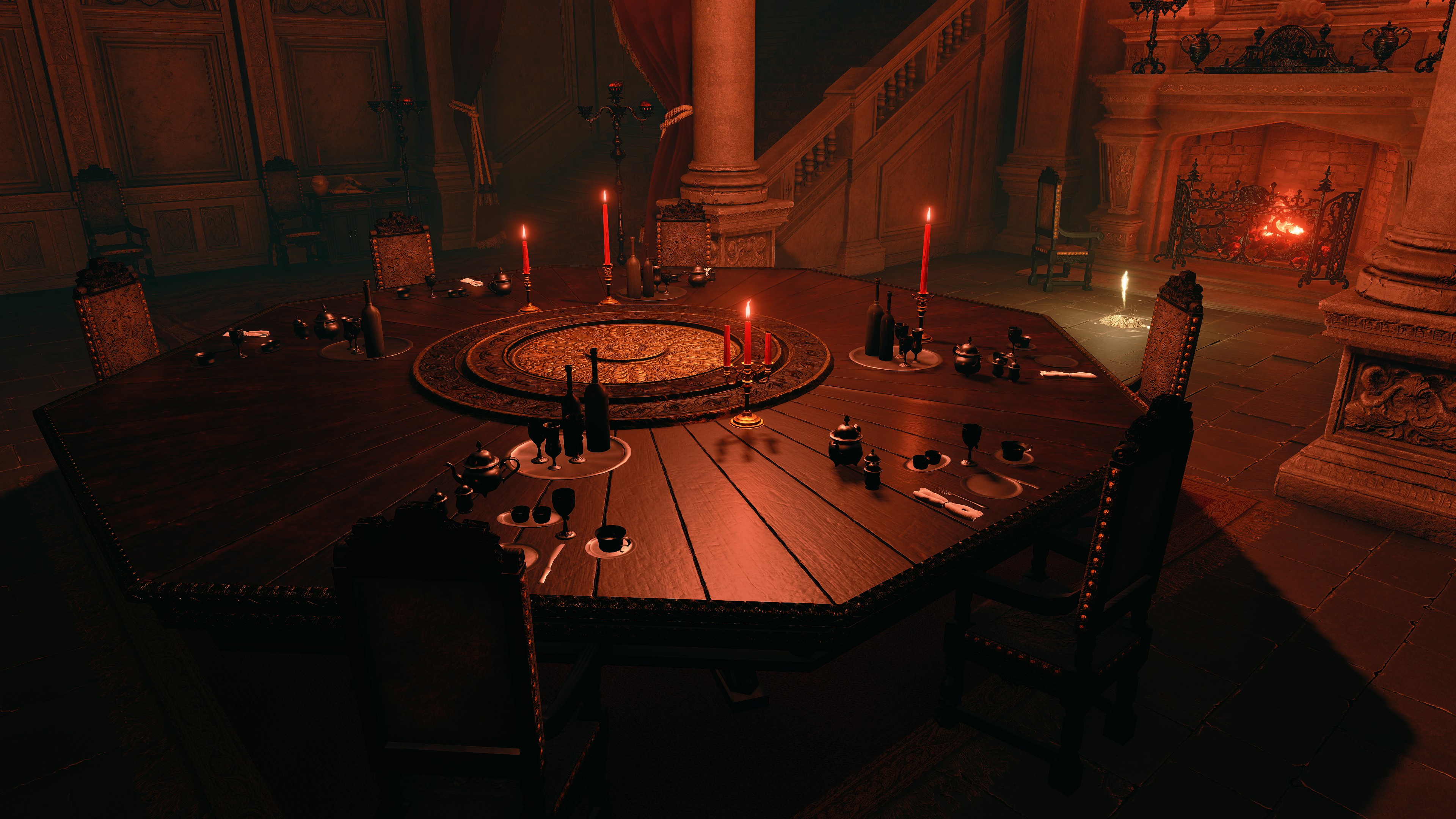
… Very well. Evelyn, let this one… devour the gods…
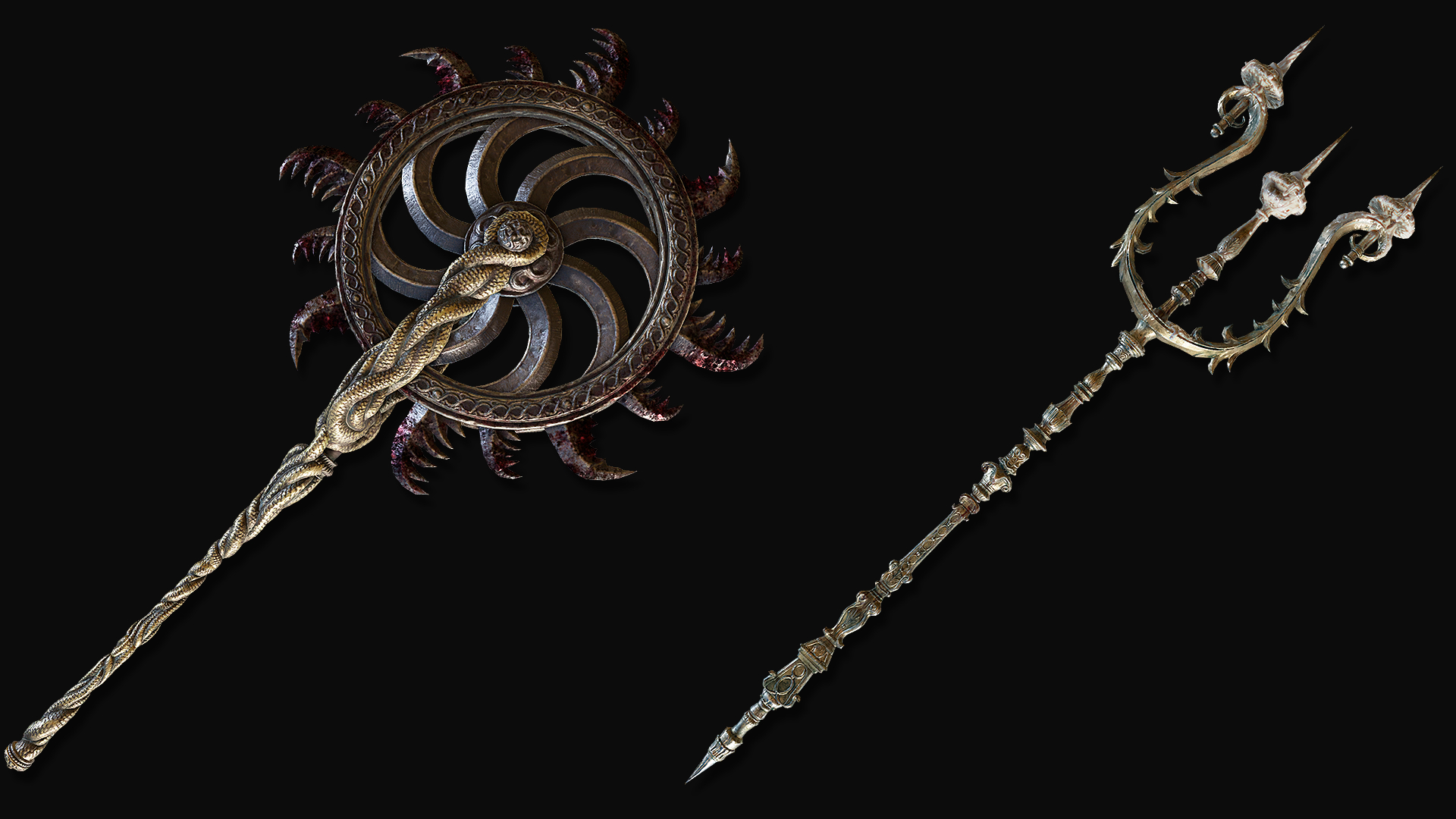
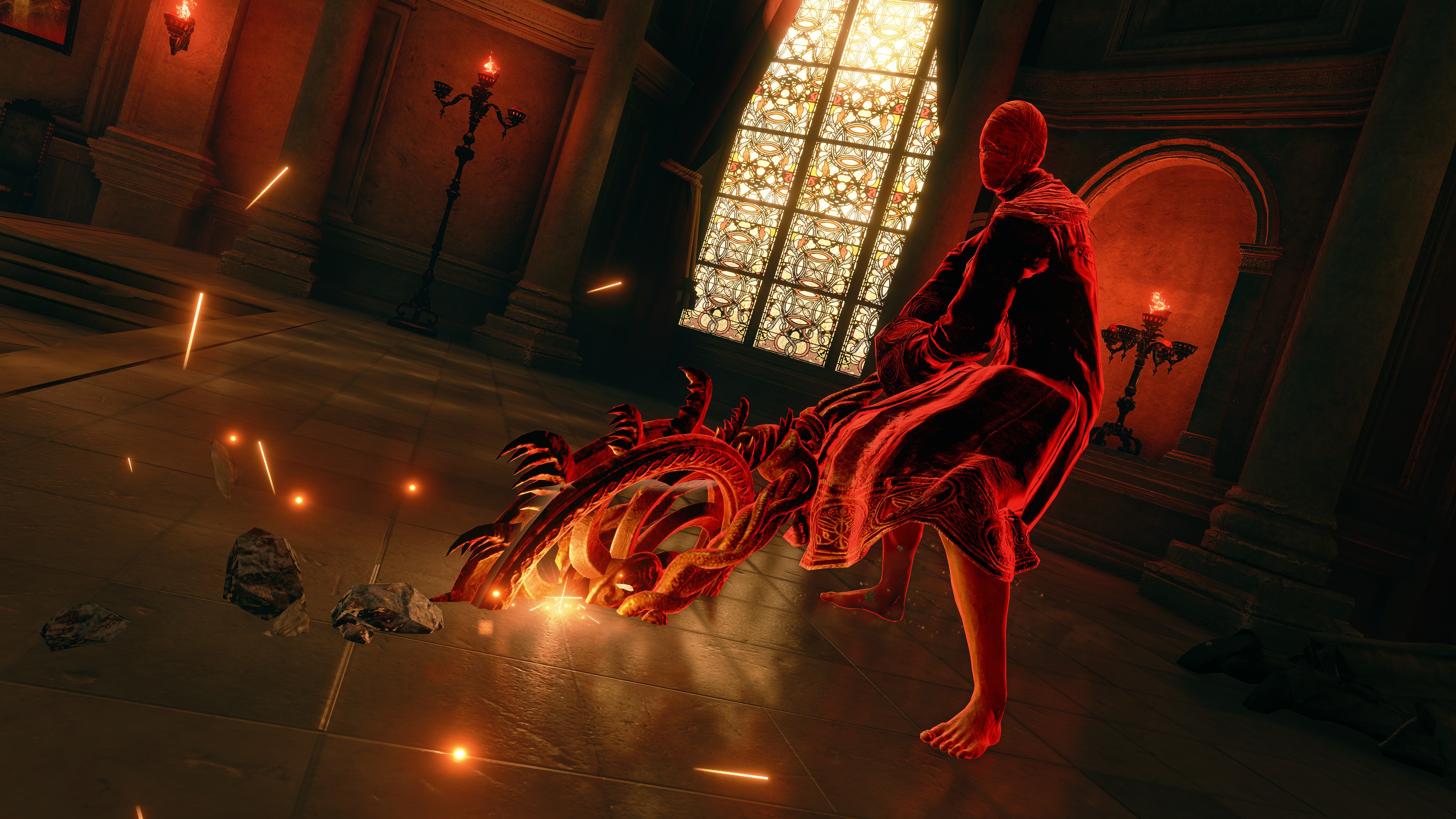
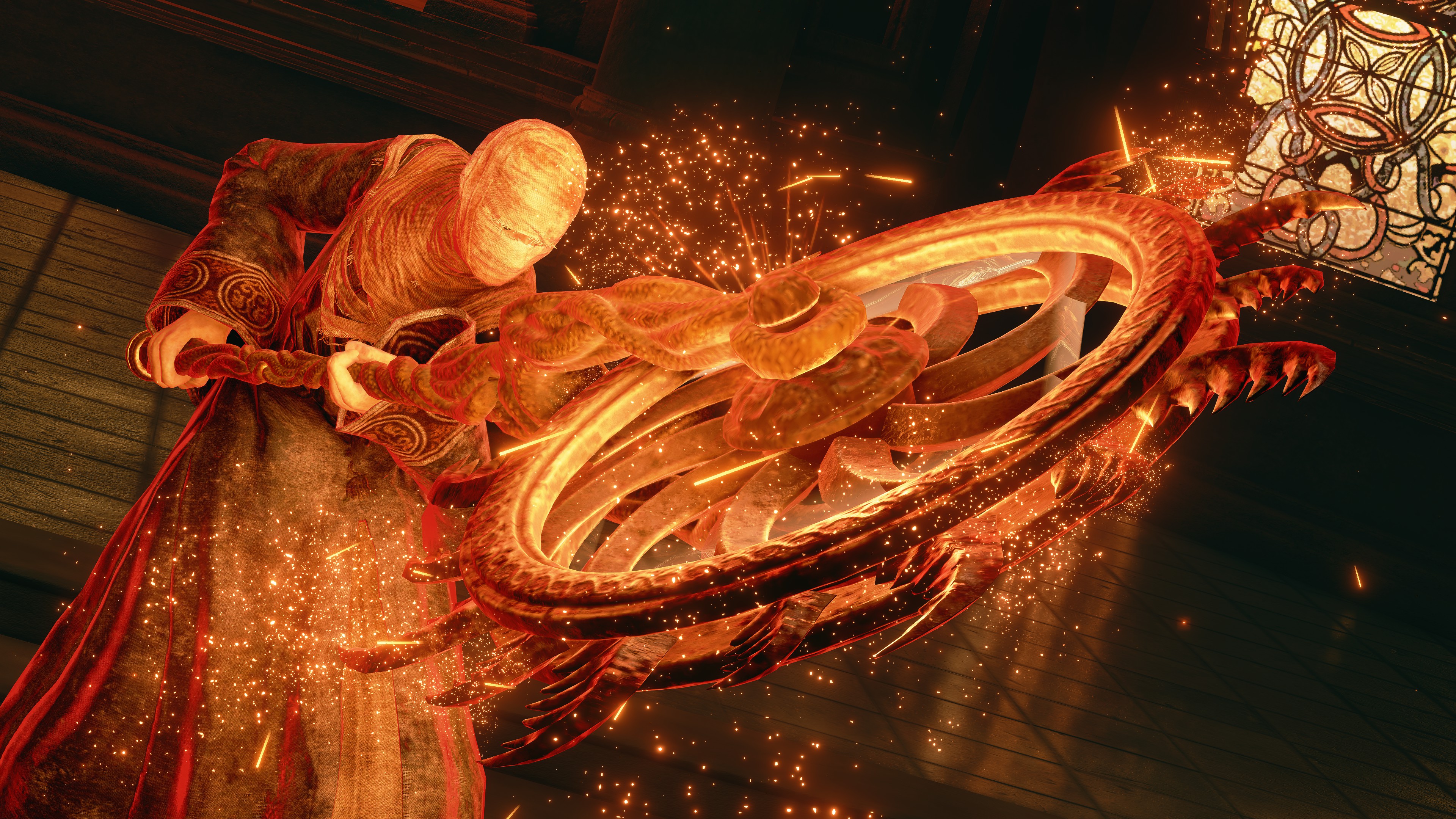
One cannot undersell the hypocrisy. Gideon describes the praetor as snake-like in his place at Gelmir, and certainly, his greed was comparable to the reptile that swallows its prey whole with his wasteful spending. Moreover, snakes are known for being two-faced and silver-tongued, and Rykard was no less cunning and duplicitous. The tortures became worse, for instance. Cut content reveals that Daedicar was originally imagined as a longstanding nobleman who skinned his own face as Rykard’s assistant, testing all methods of torture on himself so that the knowledge may be “dedicated” to the inquisitor. Such insanity posits the new lengths Rykard would go for his justice, and we can still see that same creativity in the final game. Ghiza prefers to wield a sawblade device of presumably his own invention. Befitting his name (ギーザ) referencing giza (ギザ) for a serrated edge, the jagged spin ravages skin, maximizing pain with the hemorrhaging. The inquisition also invented a candlestick spear to pierce victims’ flesh while searing their blood. All of it promoted the cruelty of the worst criminals.
Praetor Rykard is master of Volcano Manor of Gelmir. Merciless judge and leader of the Inquisitors. A man reviled as like a snake.
Portrait of insanity of an old noble with skin flayed. It is making a calm and affectionate smile.
Increases damage taken.
That effeminate man with the name “Dedica” was one of Director Rykard’s concubines and also his assistant as an inquisitor.
For he tested every method on himself and dedicated the knowledge and pain of them to his lover.
Torture tool that harmed nobles at the hidden backside to the Volcano Manor of Gelmir.
It is a well-conceived candlestick where the numerous spikes harm the skin, the lampflame burns it, and the charring smell of blood convinces them of despair.
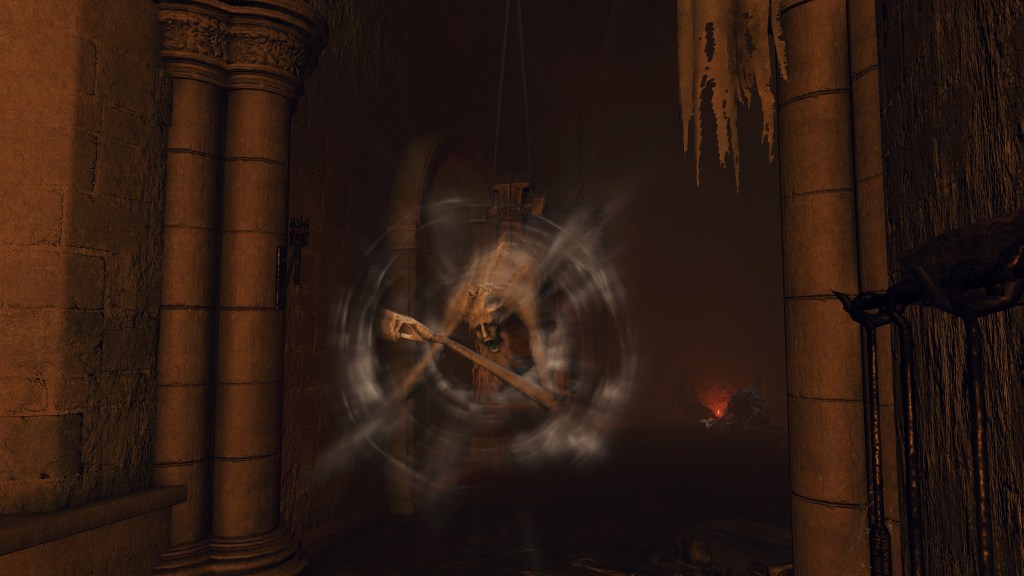
Iron-made great wheel, lined with blades that rip through skin. Torture device that Inquisitor Ghiza used. Its rotation causes intense pain and bleeding.
It was later adopted as the emblematic weapon with regards to the abductor virgin doll.
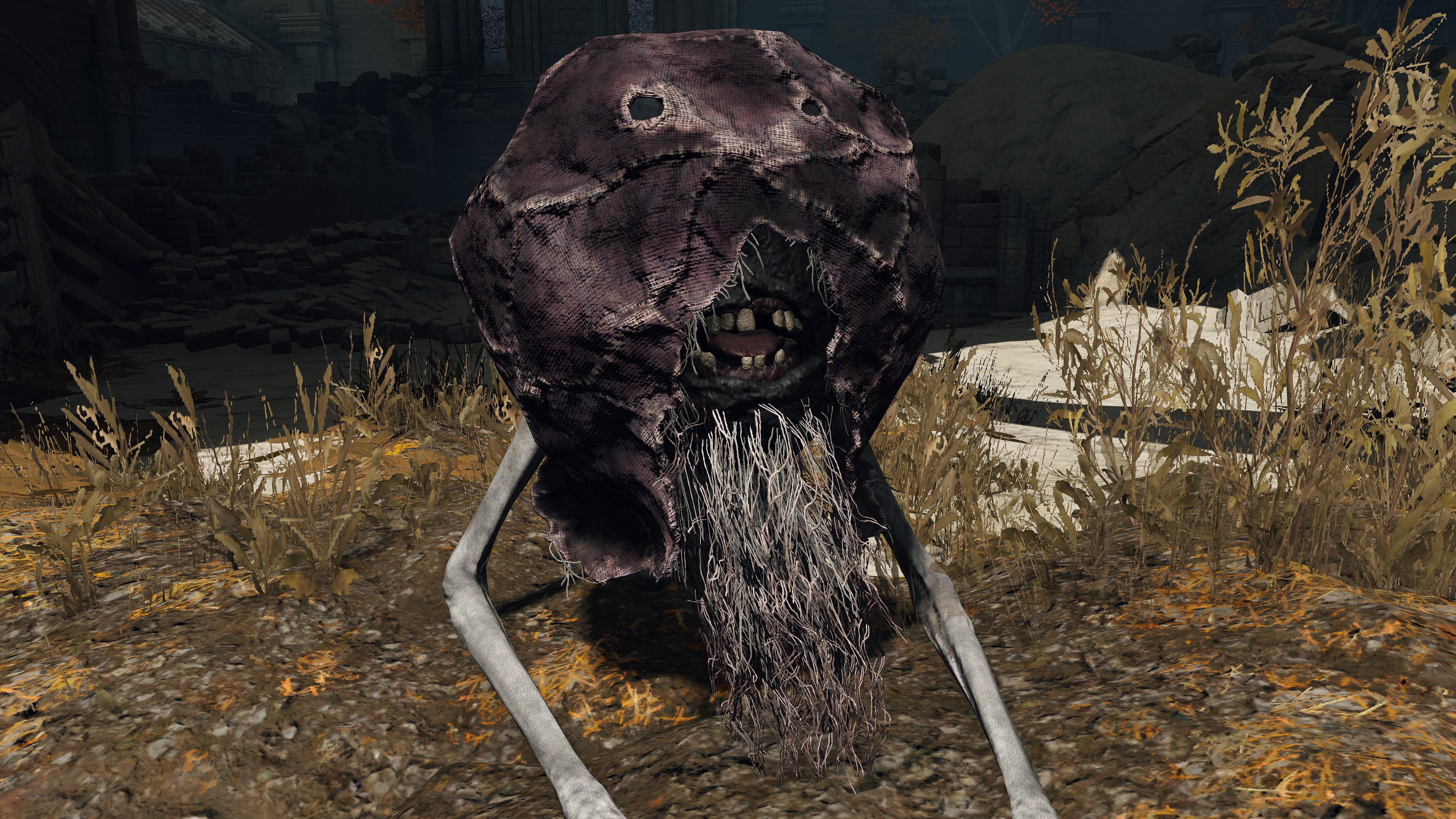
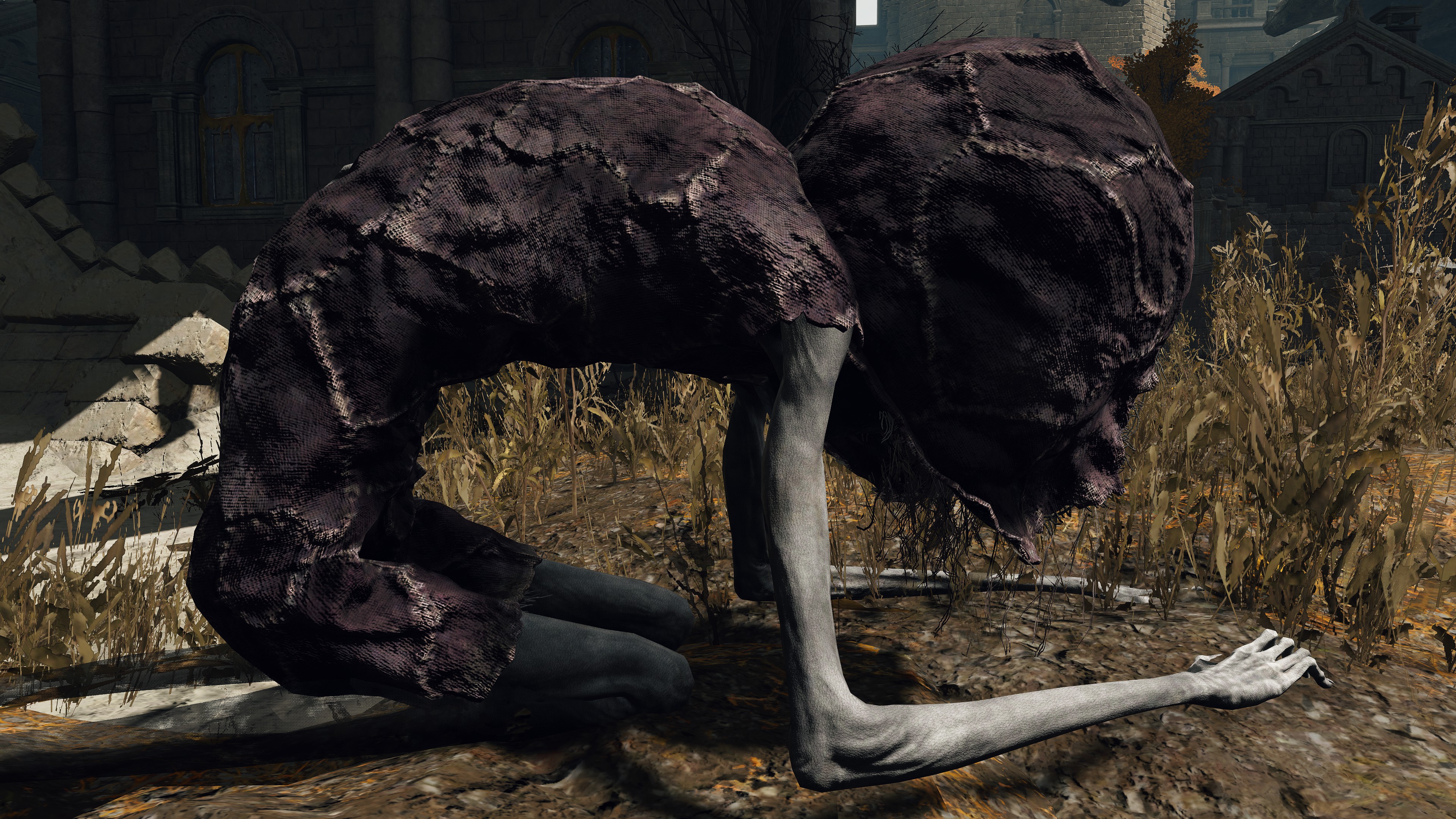
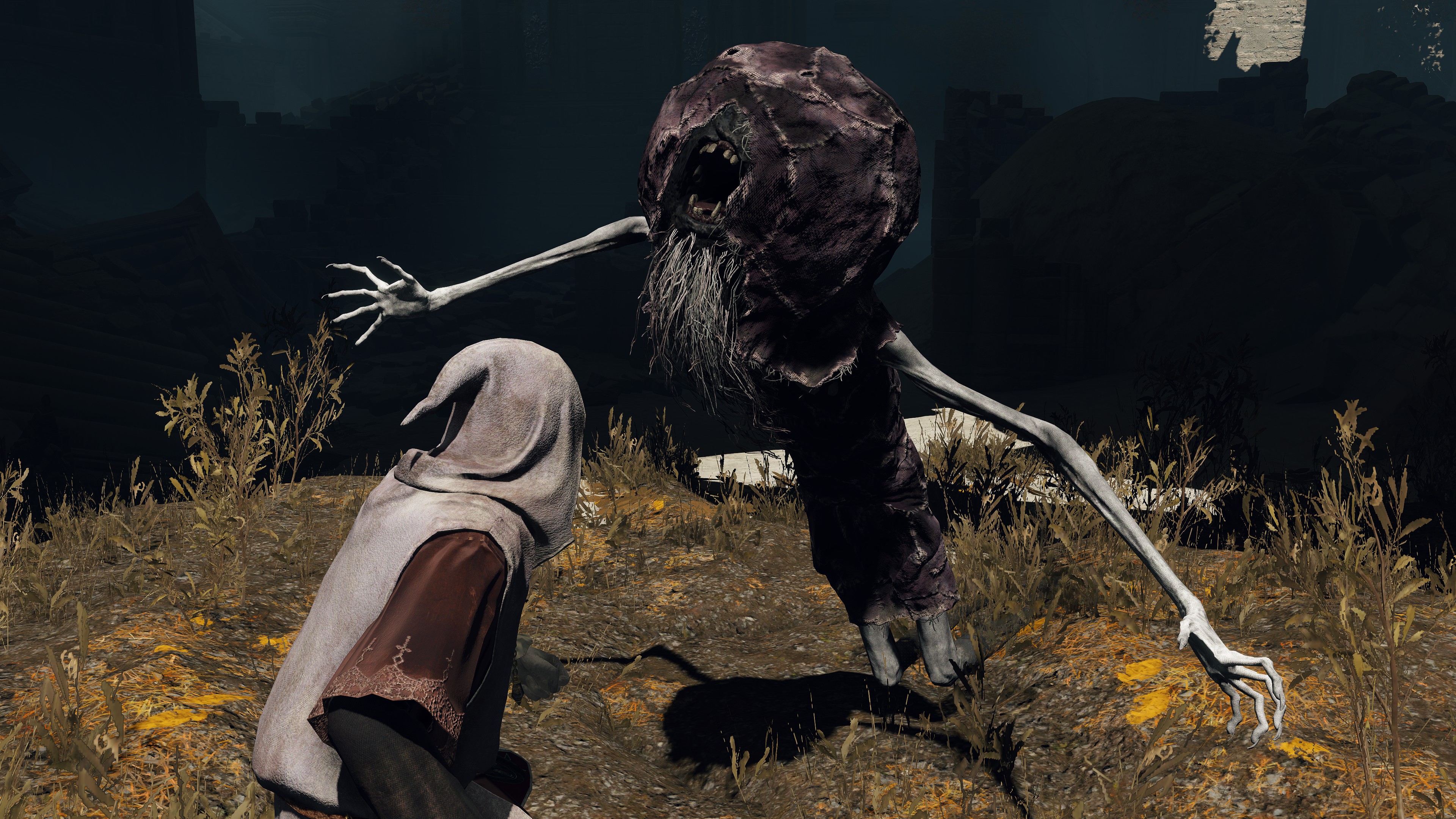
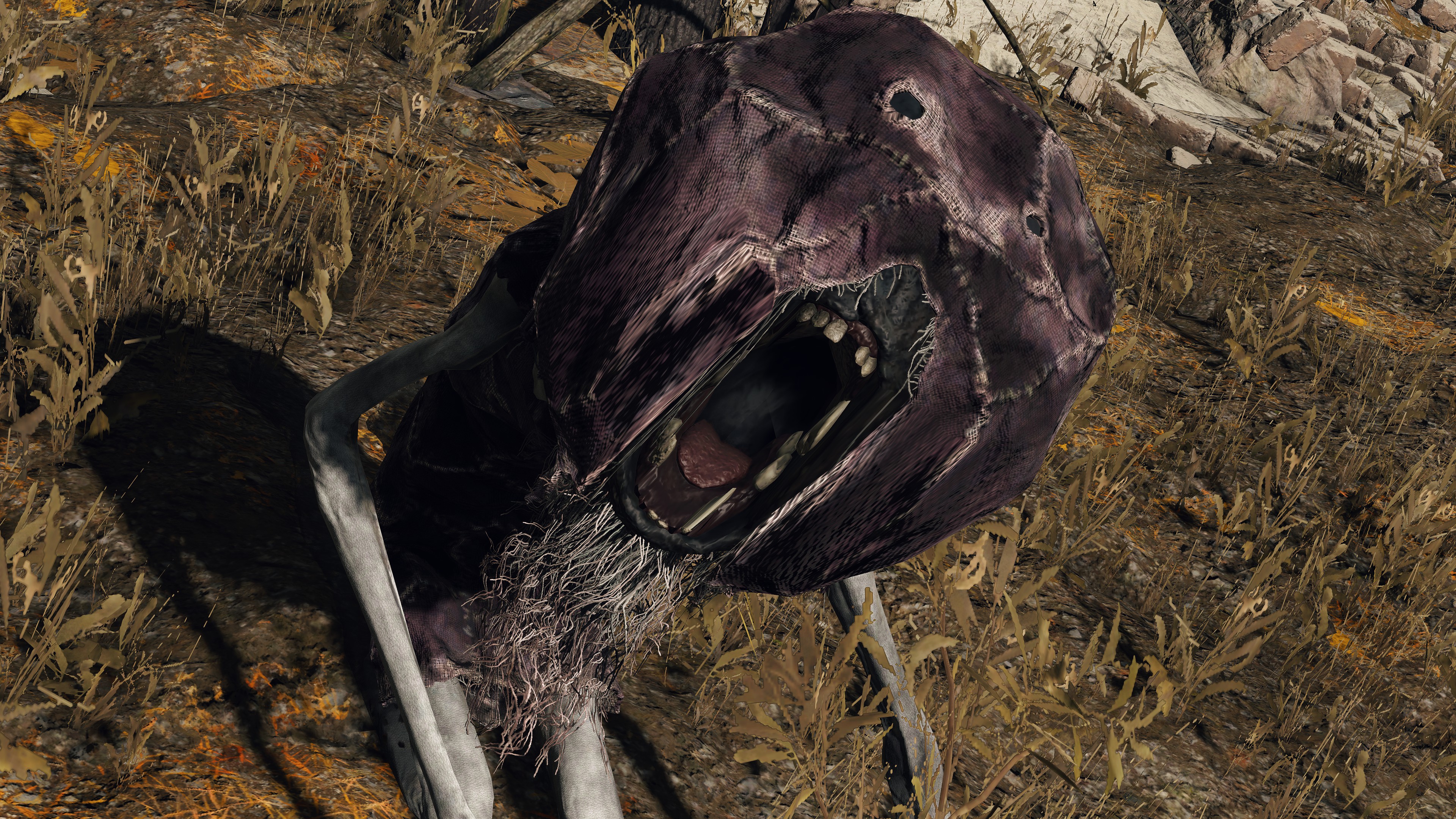
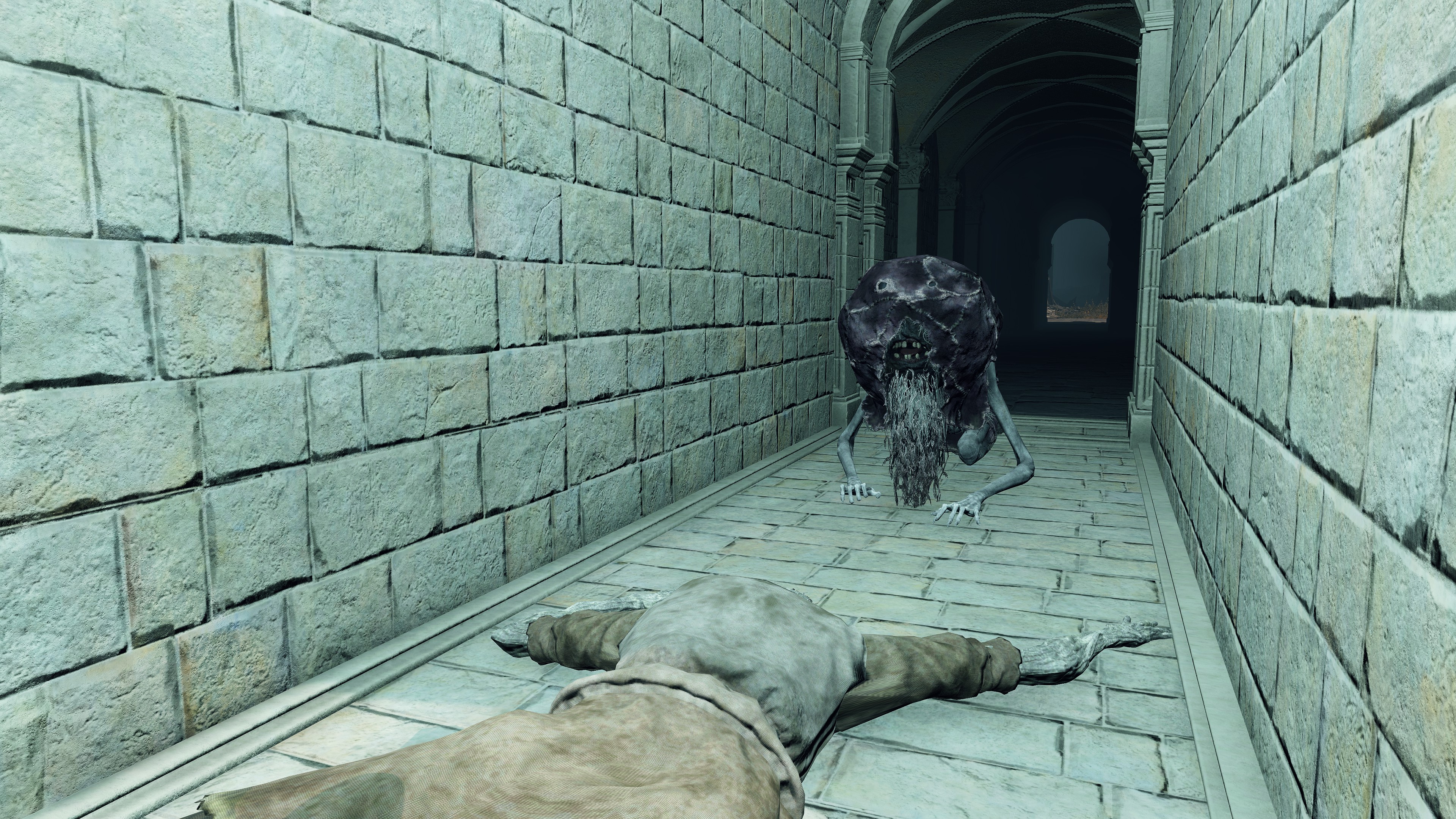
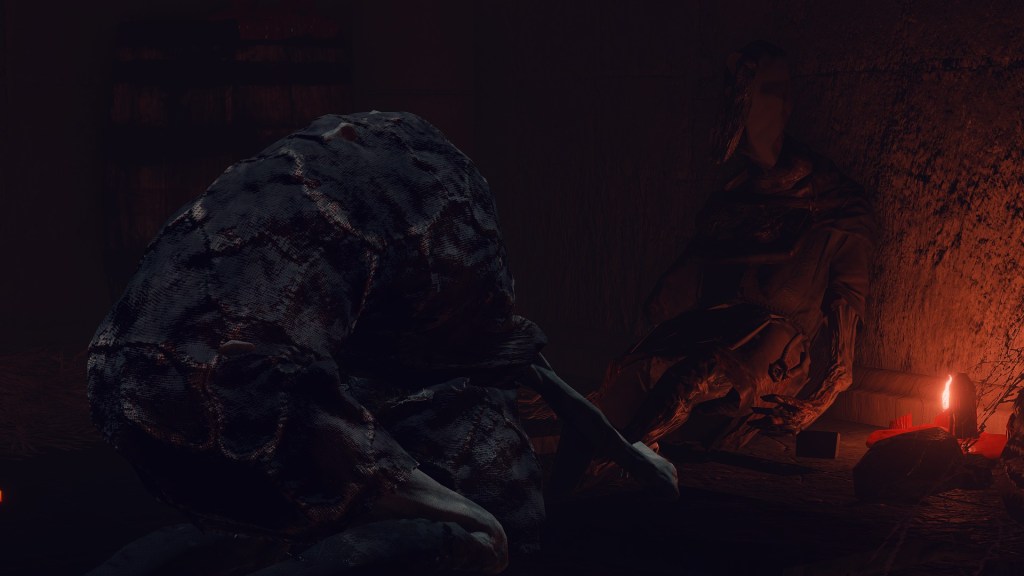
To be fair, that wasn’t anything new. Particularly cruel inquisitions employ crude leather hoods, the spacious patchwork blocking sight and hearing enough to magnify the fear and, ultimately, the pain of the torture. As further humiliation, prisoners seem to also be stripped down and forced to wear similar leather sacks, dehumanizing them. And since the “questioning” doesn’t actual seek answers, the torture simply goes on forever, well past the point that the starved subject’s mind breaks and becomes a stark raving madman — lashing out at anything as food. We see that this is frequently the fate of Albinaurics under the Golden Order, from the Lower Quarter in Leyndell to the jail in Castle Sol. The silver-men’s “corrupt” existence invites such wanton cruelty, and their locations imply that inquisitors have existed with such practices since basically the kingdom began. Rykard didn’t necessarily increase the severity so much as the ingenuity as they acted with purpose. The goal was always to terrorize with “experiences” beyond the pale, which demands a sample on occasion.
Hood put on occasion of a cruel inquisition. Increases fear and makes the pain feel vivid.
Attack power rises when achieving madness status for self.
That torture seeks no answers, thus it is eternally unending.
But, of course, the o-so-holy magistrate acted with impunity when his inquisition inflicted this torment on alleged sinners. All of it was designed to make victims lose hope, and the merciless judge spared no blasphemer for breaking the Erdtree’s law. One can only imagine how many were promised relief to goad out confessions, only for the pagan and cohorts to all be subject to the same punishment anyway. No amount of repentance would move Praetor Rykard. Just as other officials made into provincial lords wore black mantles, his knights put on black surcoats to highlight his commitment to the darkest deeds in the far shadow of the Erdtree’s light. That two-faced nature earned him revulsion, but there was no denying the devious snake’s results. It might have surprised some considering how quickly he came to be appointed. From the number of Carian servants he brought with him, Rykard made the transition to Golden Order enforcer seemingly overnight, no sooner leaving his old manor than moving into a new one; taking the staff with him. He certainly had zeal, but it was insincere.
The description for the Taker’s Cameo defines Rykard’s ultimate descent to blasphemy. Although the English text mentions a turn to “heresy”, this simply refers to aforementioned apostasy, adopting a stance of rebellion against the regulation imposed by the Erdtree. Rykard was the first to abandon the principles of the Golden Order, choosing instead to blaspheme against the gods whom he was party to. Abrupt conversions are by no means inconceivable, but with how the sorcerer became the Erdtree’s fiercest proponent and then its most vehement opponent both at the drop of a hat, it is hard to see a devious liar’s initial pivot toward faith as anything but opportunistic. To do evil in the name of rooting out evil, the prince was already well on his way to turning to evil. Rykard’s enthusiasm for the Golden Order was clearly just to follow in his fundamentalist father’s footsteps. It was ruthless ambition which motivated him, not love for principle. Is it any wonder those ambitions morphed?
So, how does a demigod go from the model Carian prince to the staunchest Fundamentalist to the worst blasphemer? The answer is that the sorcerer was never sincere with his adherence to the Golden Order, despite the affirmations of faith — becoming an inquisitor and ruling over Volcano Manor were all just means to an end. After following the path of an enchanted knight for so long, the sorcerer left it all behind when his father remarried and soon after begun a renaissance in Erdtree religion. In fact, it was probably at his insistence that the king and queen decided to entrust the new demigod with the inquisition. The question remains, however: why was Rykard so determined for a one-sided competition with his father, who prior had nothing to do with knights of Caria? The prince’s ardent ambition appeared to simply be born in the wake of Radagon’s second marriage. Where was this interest in the red-haired hero beforehand? What demanded that he prove himself to his patriarch? To answer requires a peek into the depths of the man’s duplicitous heart.
The Woman for He
Rykard took Tanith as his consort after falling for her at first sight. The circumstances to their encounter is simple to surmise. Tanith was originally a foreign dancer, who use castanets as part of their beautifully passionate dance. When trying to remind her of her past, Patches requests we hand her these castanets he implicitly found at Shaded Castle where we find him at this juncture. This would posit that the castle was where the dancer left them behind before becoming the demigod’s bride. In that case, it must have been there where Rykard witnessed her as she danced. House Marais is the premiere executioner family in the Erdtree kingdom, and with its seat at the border to Gelmir, their castle was sure to receive plenty of criminals to execute from Volcano Manor. It is logical for Rykard to attend more than a few banquets held at the castle as part of his lordly duties. And while he was discussing policy and agreements with Lord Marais and the other aristocrats, who would be brought out as the sideshow than a dancer? The foreigner was sure to be part of a traveling troupe, especially if her country was no longer around.
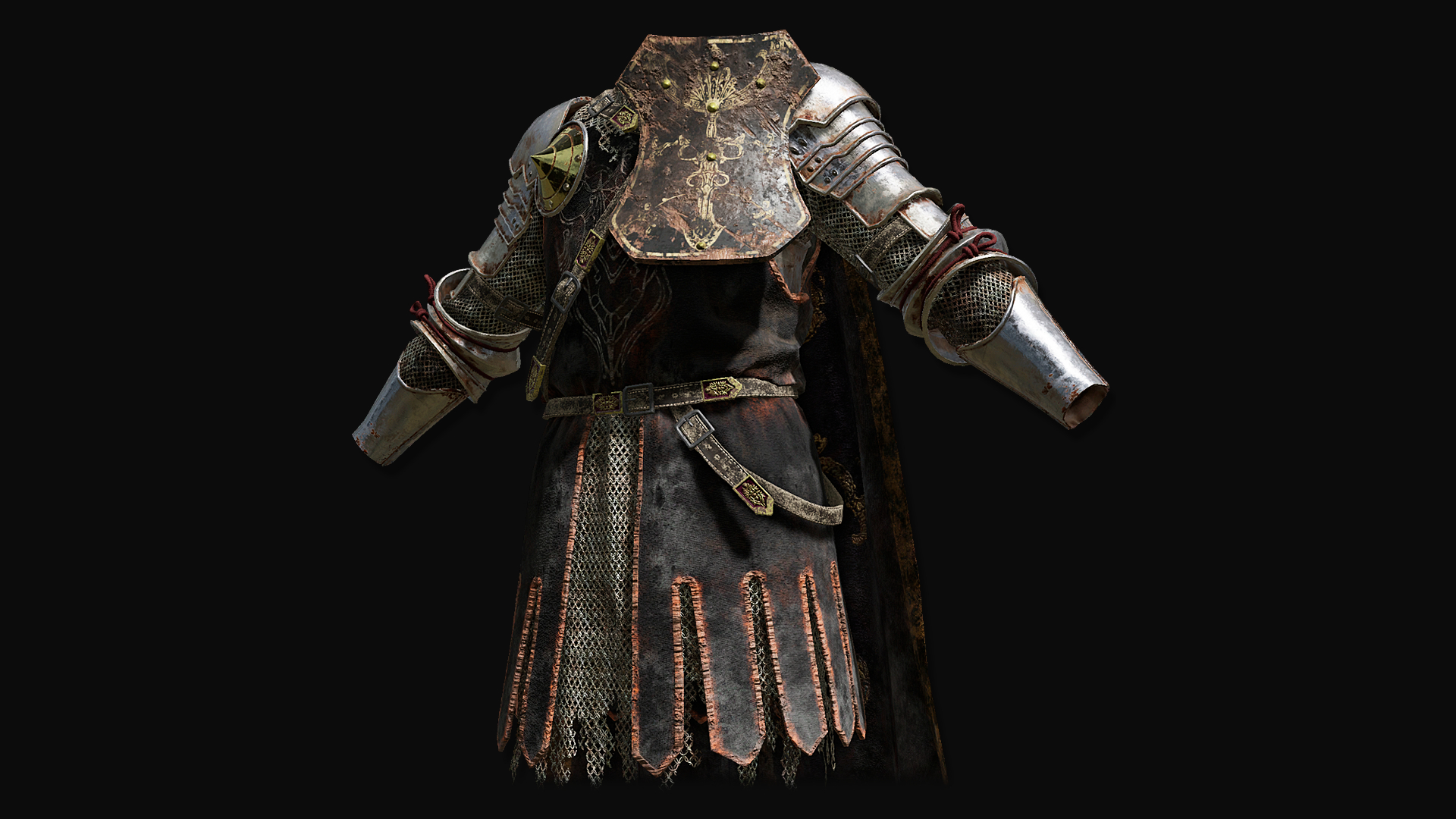
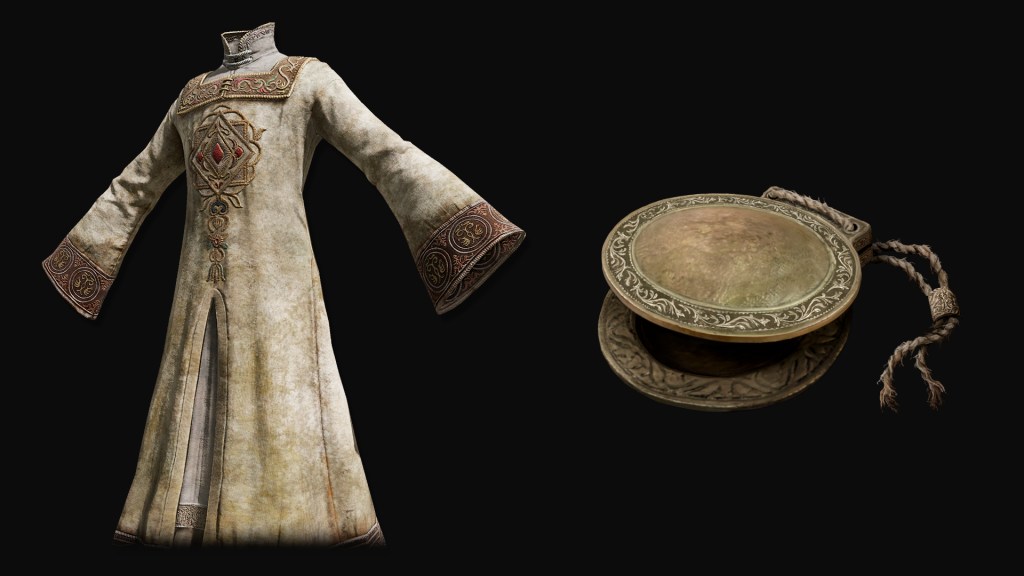
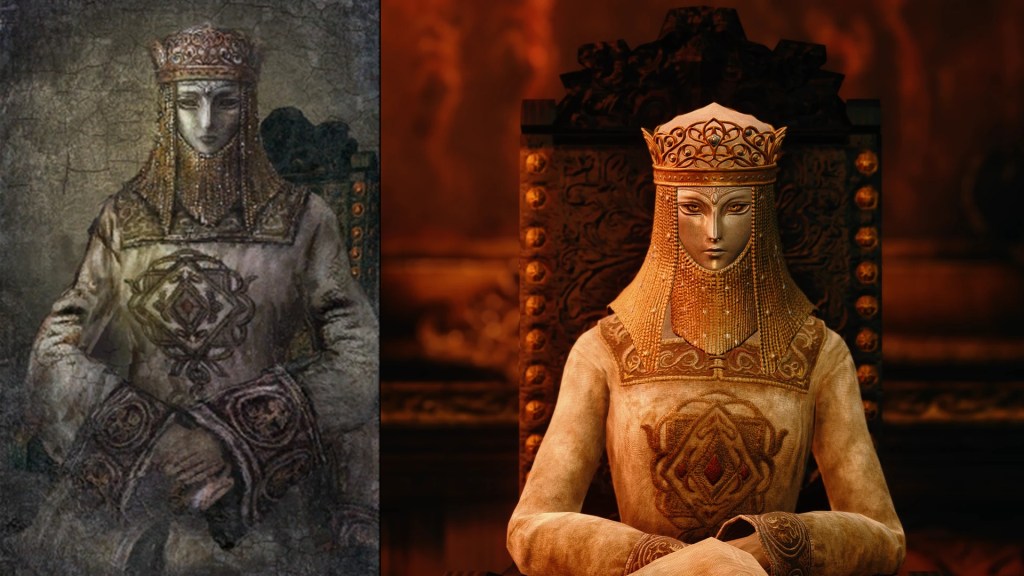
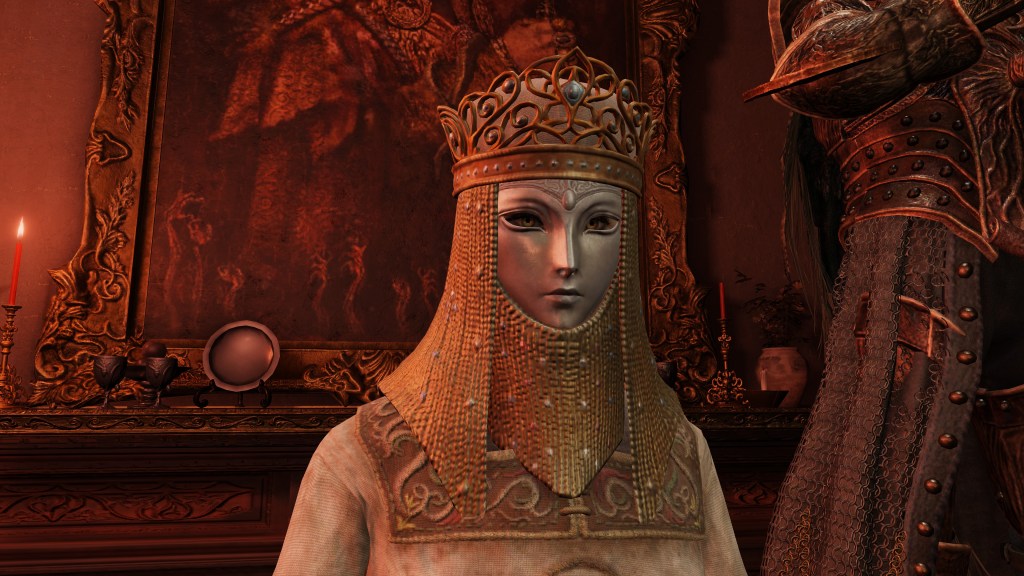
Mask modeled on the queen of a foreign country. Apparel of Tanith, proprietress of the Volcano Manor. Boosts dexterity.
Tanith, who was once dancer of a foreign country, had Rykard fall for her at first sight and became his concubine. And when he then became the great snake of blasphemy, she was the only one left by his side as a human.
For Tanith was attracted to Rykard for the first time then.
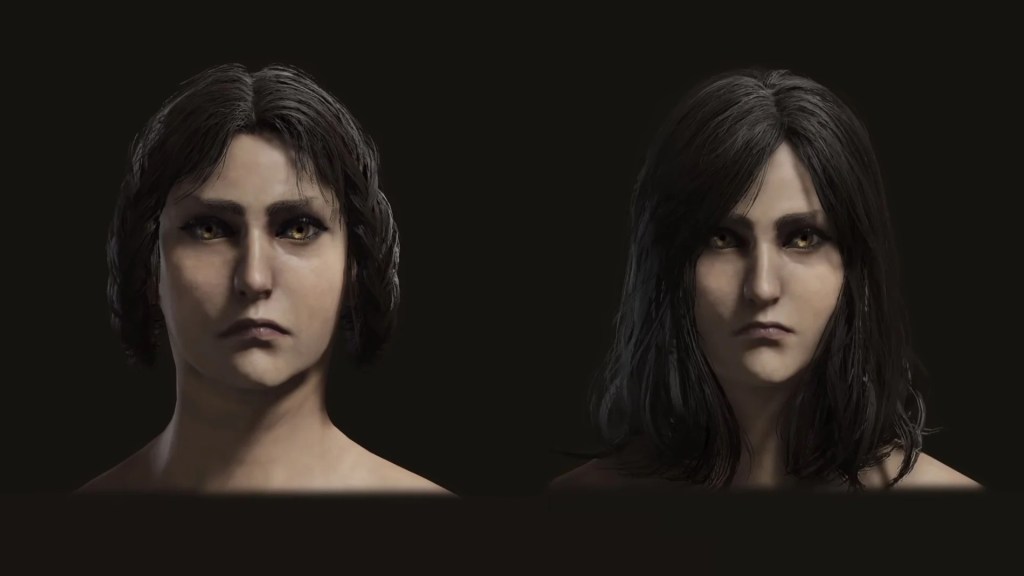
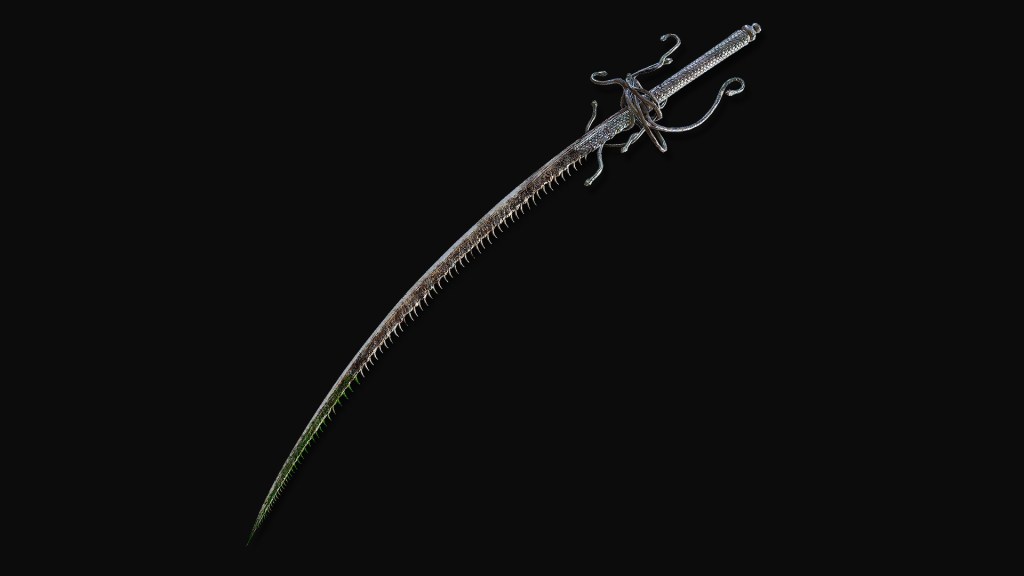
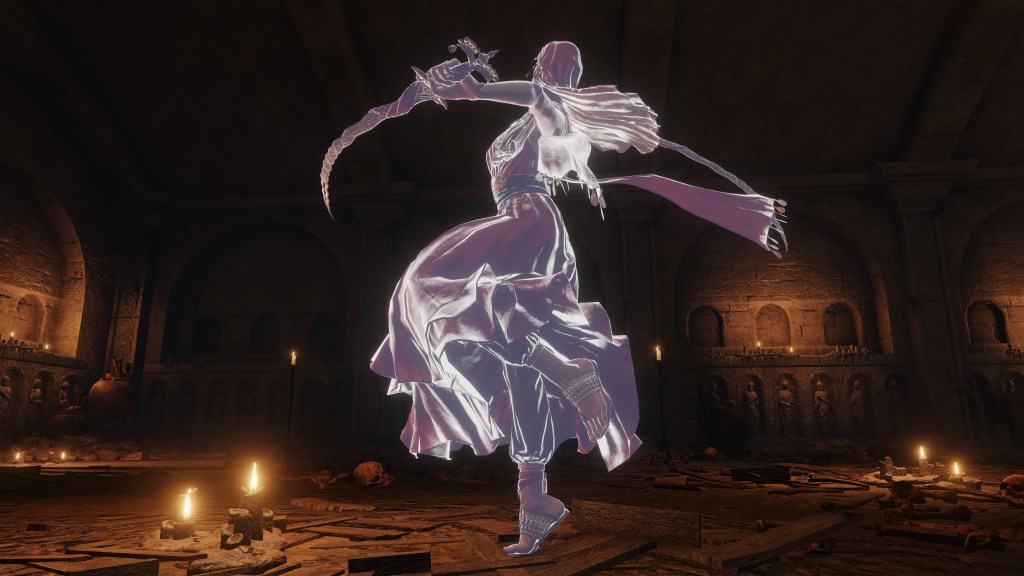
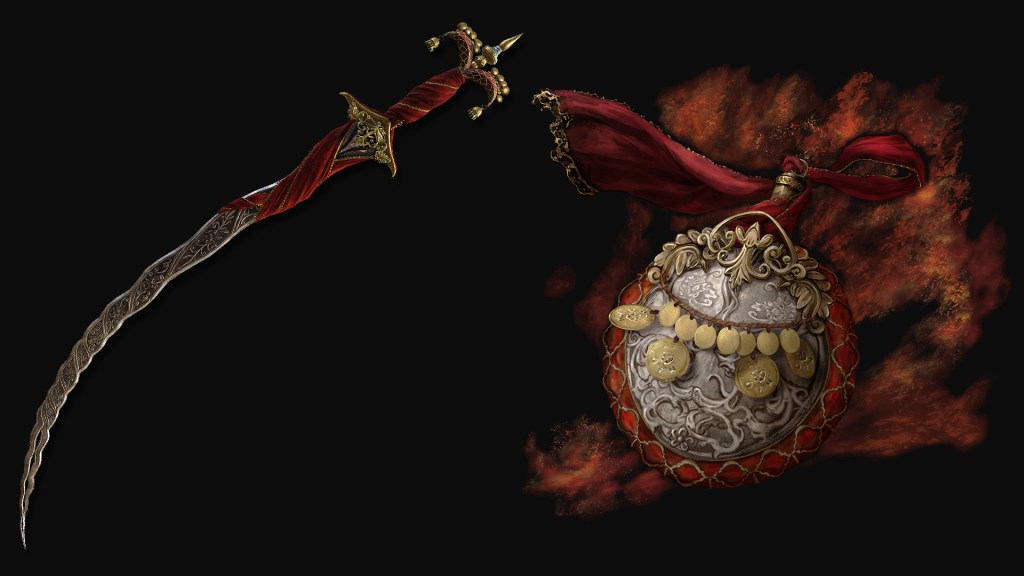
Ranah was where the dancers called home, its clear allusion to the Arabic rana (ラーナ vs ラナ) meaning “eye-catching” already calling back to Tanith’s encounter with Rykard. The Shadow of the Erdtree DLC introduces us to a still-active dancer of Ranah, who performs an impassioned dance similar to the consort. Reminiscent of Arabic sword dancing, said dancer also wields a pair of decorative shamshir for her performance, curved blades both heavily reliant on dexterity — the very stat boosted by Tanith’s mask. And under the mask depicting her country’s queen, Tanith bears an eerily similar face to the dancer, including the exact same style of black hair. Taken together, Tanith undoubtedly belongs to that culture. What’s more, the culture in question has a queen in seemingly another example of matriarchy. That by itself hints that this foreign place is still closer to home.
Decorative sword adorned with passionate red. Paired choice weapon becoming two swords with two-handing.
They are the dancers of Ranah’s weapons, so strong attack becomes dancing chain attacks.
The dancer of Ranah stands captured by the Southern Mausoleum on an island furthest down the Cerulean Coast. This indicates that she came from lands closest to that side of Between, such as Caelid. For sure, Tanith at one point will reward us with the Serpentbone Blade, a poisoned weapon clearly made in Gelmir to celebrate its snake worship. And yet, that sword is nonetheless a katana with the Double Slash skill, both traits of the Land of Reeds which spread to Caelid. And while the Tarnished may have increased the volumes of visitors from the far East, nothing stops the Eastern influence in Caelid from beginning long before then; the fact that Moonveil and the Meteoric Ore Blade are both local katana reinforces that point. (Elden Ring: Nightreign introduces a samurai who washed up on the Lands Between and joined the Crucible Knights before the Shattering) It wouldn’t be odd then for Tanith to have the Serpentbone Blade forged to such specifications, assuming that she was from the region.
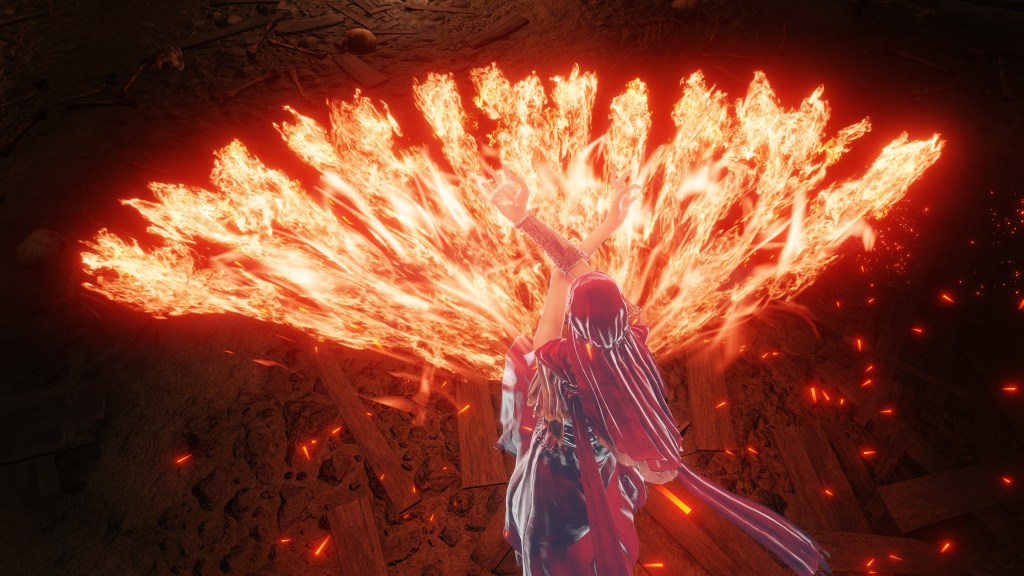
Ranah’s origin in Caelid would also be consistent with the women’s culture. The fervor of their dancing is to capture the “heat” of a burning flame, with their vaguely Middle Eastern attire colored bright red for similar effect. Even their curved swords possess undulation to the blade, evoking twisting licks of flame. As the denouement, they use carefully hidden bottles of highly flammable perfumed oil to unleash waves of actual fire for their wowed audience. Perfumes can be made almost anywhere, but this particular technique resembles the Scouring Black Flame performed by fallen Fire Monks. Ranah may thereby preserve memory of the race which stoked flames before departing Caelid for the Mountaintops, becoming another independent small country destroyed during the frontier wars like Eochaid. It would only take a small human clan living in the area at the time, entranced by the flow of their resident element like Zamor or the blue nomads. Absent the giants, that tribe developed in a more feminine direction, where women dancers fought and ruled whilst carrying on the fascination with flame.
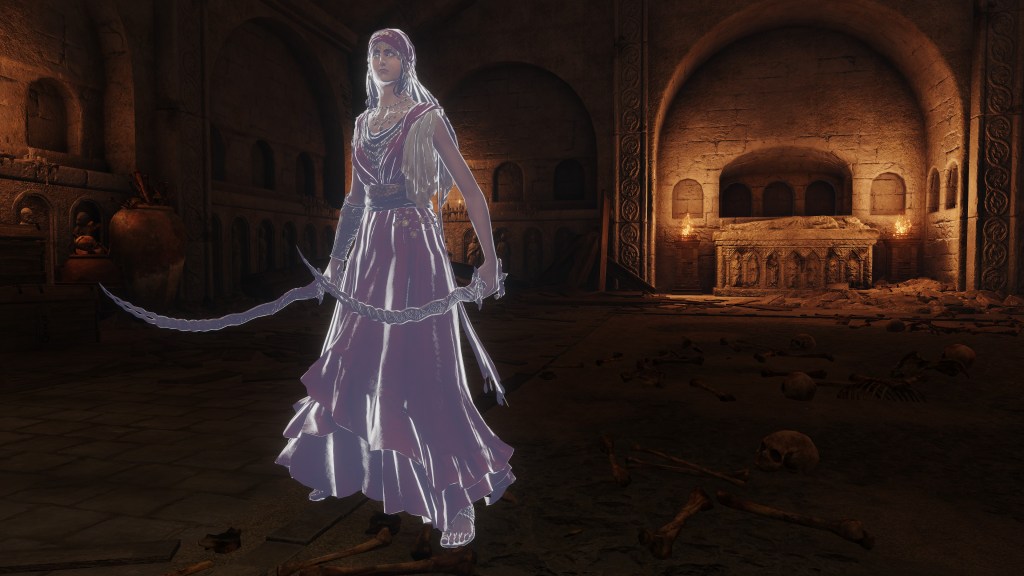
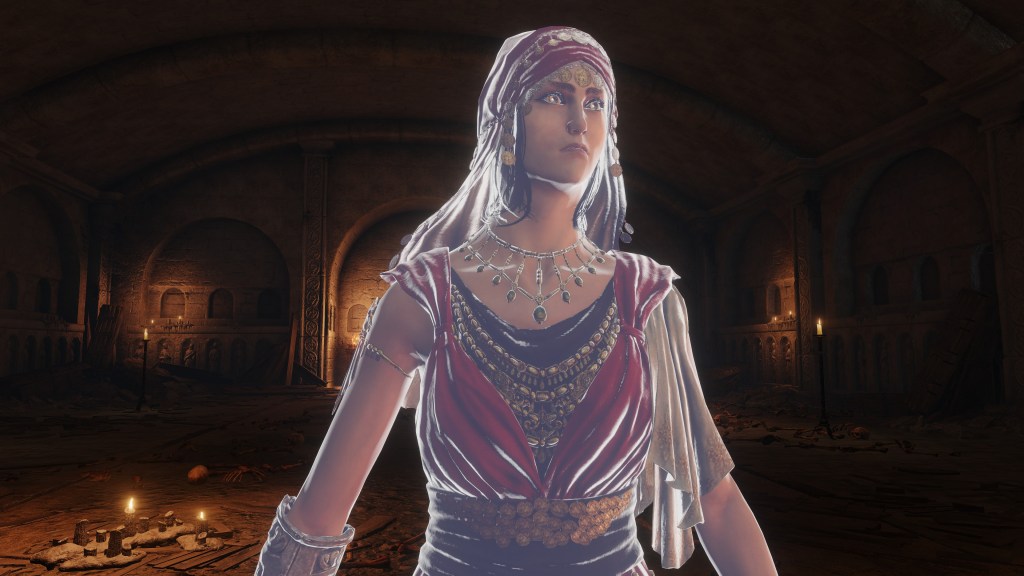
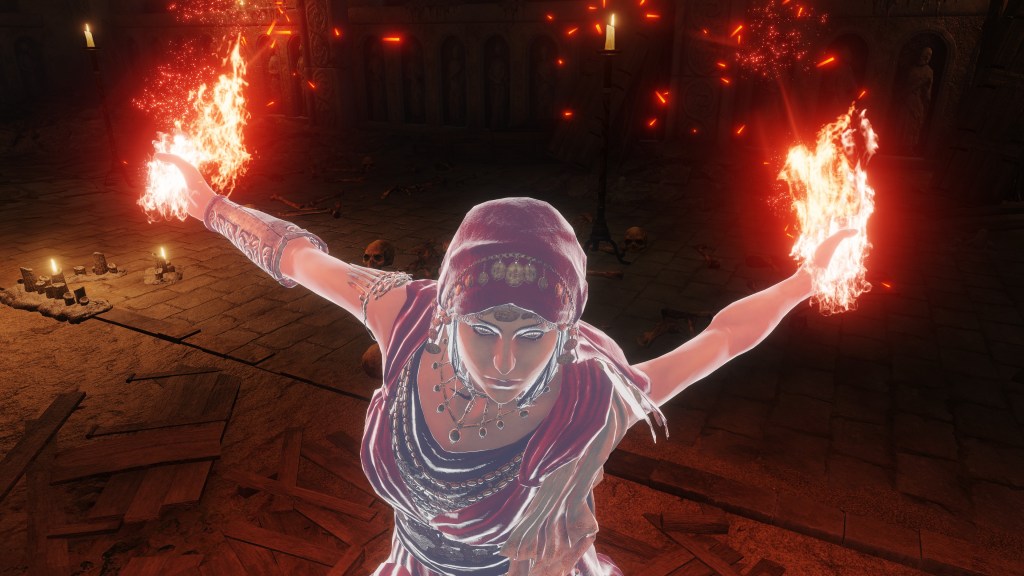
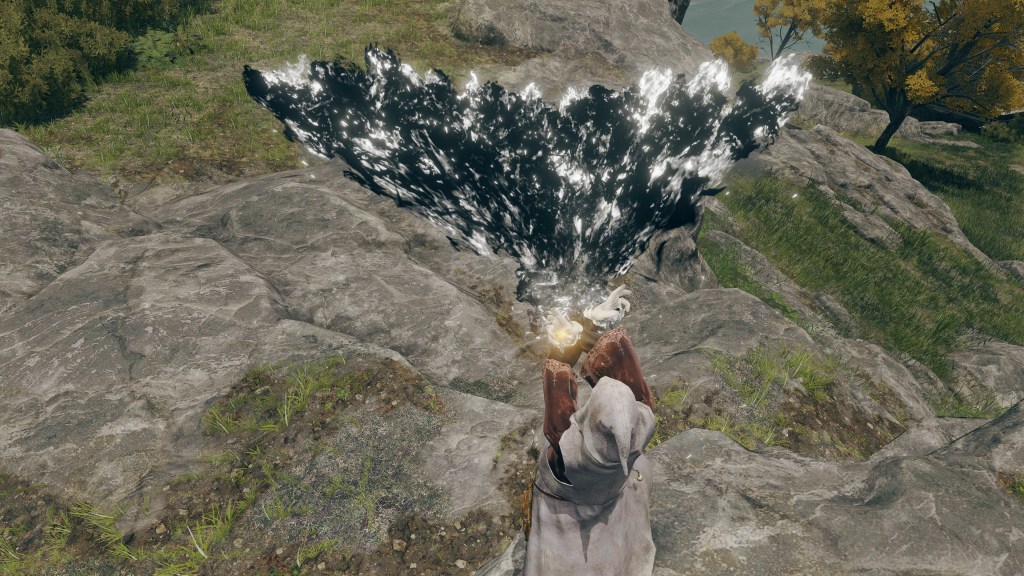
Bright red hood of dancers of Ranah. Enhances dancing attacks.
Ranah’s dancing is passionate as if burning. Its best dancers will never cease their hot dance even after losing their very names. Their passion cools only when their lives come to an end.
Small bottle wrapped in bright red cloth. It is filled with combustible perfumed oil.
Consumes FP to sweep ahead with flames.
It is said that dancers of Ranah dance concealing this and color the climax of their passionate dancing with hot flames and a sweet aroma.
If war did destroy her home, it is only natural that Tanith become a traveling entertainer, using her talents to get by despite the loss. And if it was entertaining wealthy patrons, her troupe could do no better than the heartland of this new Erdtree empire. That would explain what brought her all that way to the Shaded Castle, where she caught the eye of one demigod prince. Tanith wasn’t trying to move up in the world by performing for nobles. A point Patches and various item descriptions reiterate is the woman’s dignified manner, which she maintained even whilst dancing. The foreigner looked beautiful and dignified with her fiery movements, but not flirtatious. Her passion was pure from sensuality, and Tanith was never attracted to Rykard until after he was devoured by the great serpent. She didn’t care to wear fine white silks or live in the lap of luxury. The only reason she became his consort was apparently because the demigod left her no choice. She was a commoner, he a prince; there was no refusing his marriage offer. Rykard wanted her, and so she discarded her castanets.
… Besides, I’m curious about Tanith, too. I don’t know much a thing about her lord, but she is acting so haughty. Even after declaring blasphemous ambitions, she remains so dignified. Honestly, I’ve never seen a woman like her before…
Small percussion instrument entrusted by Patches. Thing dancers of a foreign country use.
Their impassioned dance nevertheless contains no flattery whatsoever. It is simply dignified and beautiful.
Fine robe made with white silk. Apparel of Tanith, proprietress of the Volcano Manor.
Tanith, who was once dancer of a foreign country, was first seen by Rykard and became his concubine. And when he then became the great snake of blasphemy, she was the only one left by his side as a human.
For Tanith was attracted to Rykard for the first time at that moment.
For his part, Rykard didn’t mind that Tanith never loved him. Back at his manor, the consort was allowed to wear the face of another woman, her queen. The one image of her true face appears on a cameo owned by her adopted daughter, Zorayas — a cut second cameo, ostensibly of her dancer days, highlights the less peaceful smile the dignified woman wore in this home life. On that note, Rykard never sired offspring with his consort despite being one of the few demigods known to be married. The cut iteration of Daedicar’s Woe even reveals plans for the then effeminate man to be one of a number of paramours, Rykard apparently more than happy to look elsewhere for his carnal needs. Whatever the prince’s proclivities, it is obvious that he wanted to keep his beloved around while never expecting her to indulge his affections. Tanith was no different from any other luxury in his manor, a decorative doll for the praetor to admire like the missing portrait of her existing in the game files. Except this doll, with her love of flame, may well have stirred in her husband an intrigue which changed both their lives forever.
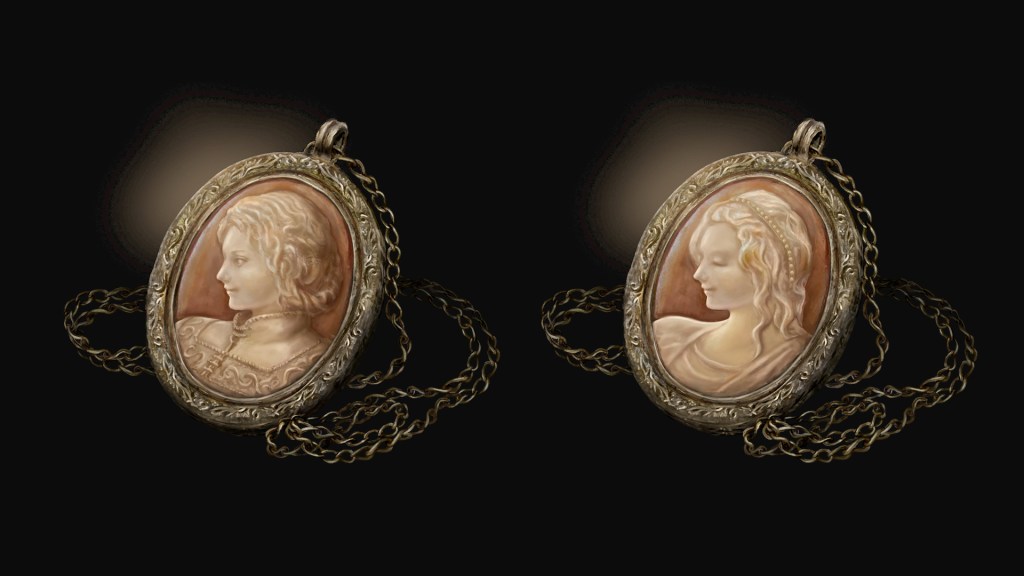
Necklace that Rya had stolen from her by a ruffian. It has embossed with the portrait of a dignified woman of a foreign country.
It seems to be important to Rya.
A Mother’s Love
Somewhere down the line, Rykard decided to commit blasphemy. What inspired this was, more than likely, his job. Day in and day out, the inquisitor listened to confessions from pagans, detailing their sinful beliefs and practices. The information may have been piecemeal, but the account would eventually present a fuller picture of this peculiar cult that he was tasked with stamping out. That alone might have tickled his sorcerer’s curiosity. After all, he was the outsider there, and for all his arrogance, his work was still to question: what was this power that so many were willing to die for? Seeing so many martyrs, it may have been inevitable that the praetor begin looking deeper into the ancient faith. And drawing upon all his discoveries, the prince ended up adopting their rebellion, even reviving Gelmir’s pagan conjury — as sorcery, of course. One might think that recreating lava arts would be less of an achievement on a volcano, but that assumes that the volcano was still active.
One of the lava sorceries of Gelmir.
Fires lava bullet that explodes upon impact. Enhanced with charging.
Rykard, who is child of Queen Rennala, revived an old conjury of Gelmir as sorcery.
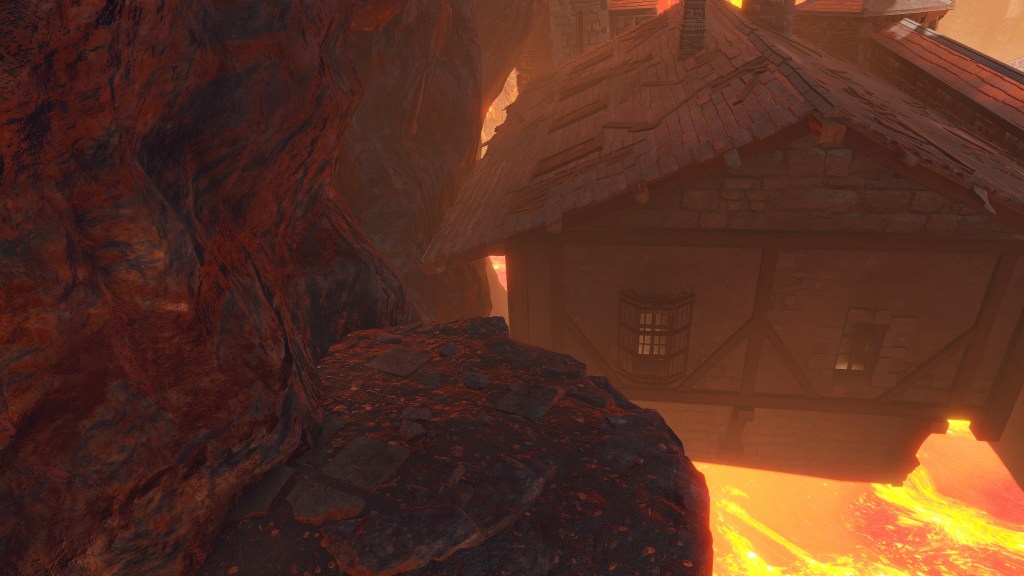
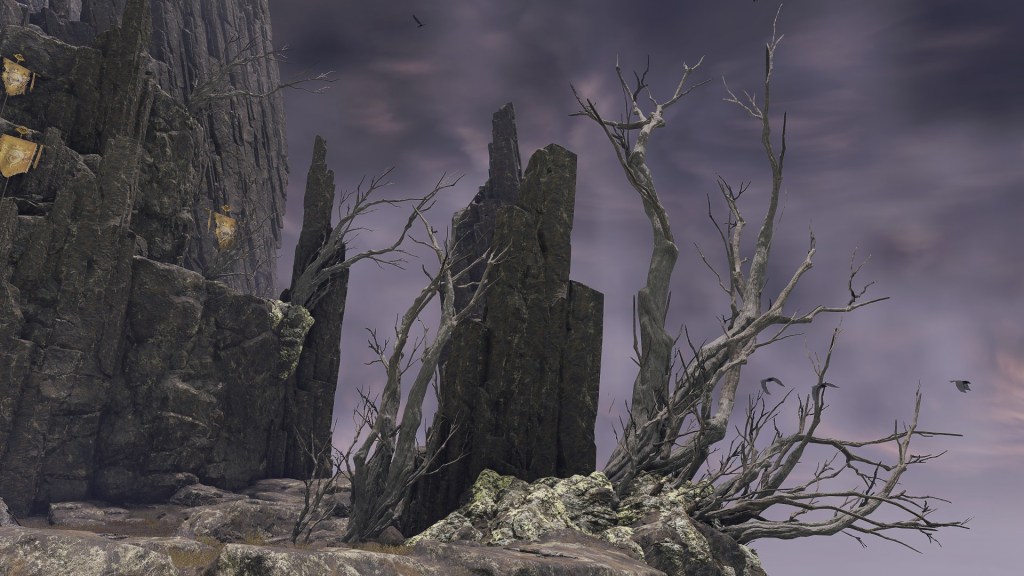
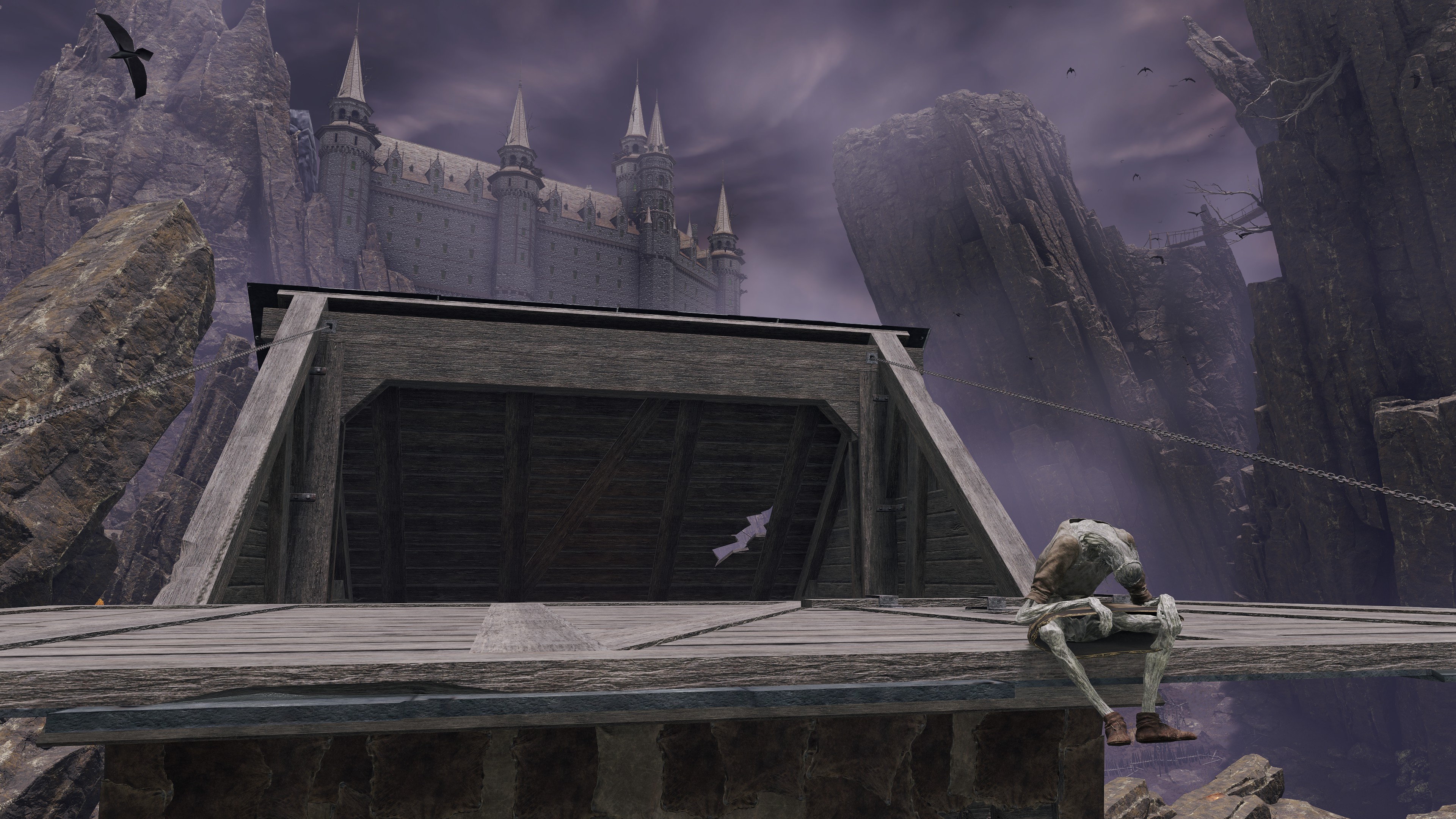
Currently, we see how the lava flows out from Volcano Manor, sinking the lower half of the prison town directly in its path. The town accounted for this magma flow with arches or the vertical-lift bridge whose metal can withstand the intense heat, so if part of town lay in the way, it could only be if the settlement expanded while there was no lava — in other words, the volcano wasn’t always active. The Minor Erdtree on the other side of the Seething River reaffirms this. The heat and gases have all but killed the thing, with even the flowers growing at its base hueing purple instead of gold; besides the sulfur, it also converts lead into a crystal tear. In response, the tree’s roots grow wildly all the way up the nearby precipice, but it has found no succor. The ulcerated spirit spawning as we pass by implies that it has only suffered this more recently, and it would be impossible for the tree to grow if these were its circumstances from the moment the golden seed touched soil; the same holds true for the foliage around town, especially when flowers are used for interior decorating. In both cases, volcanic heat is the commonality.
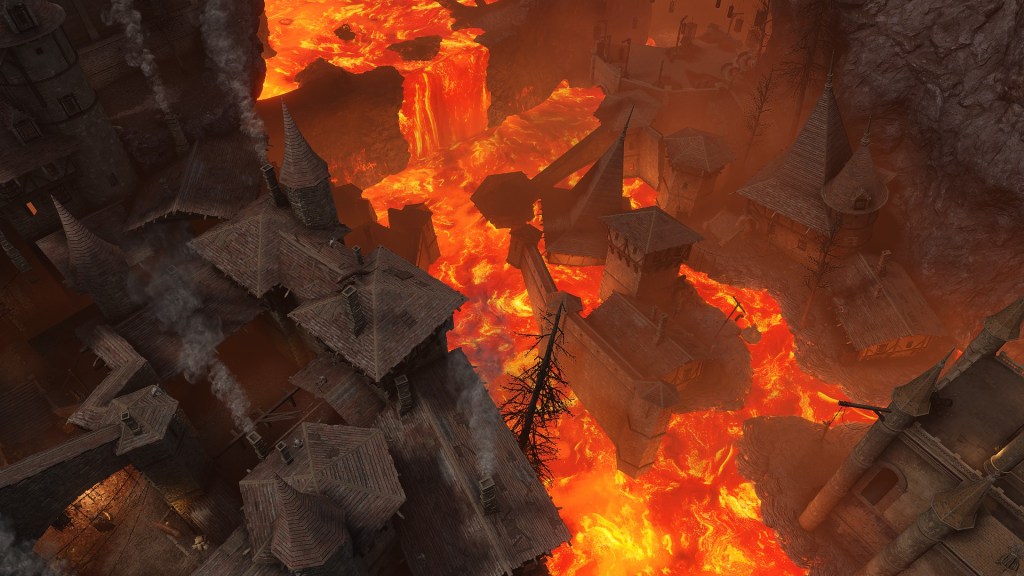
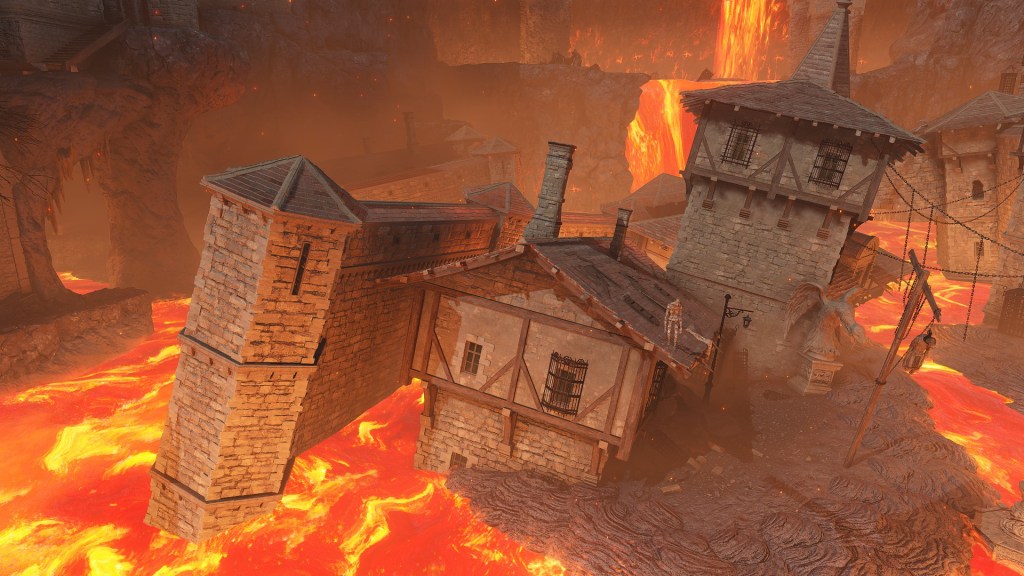
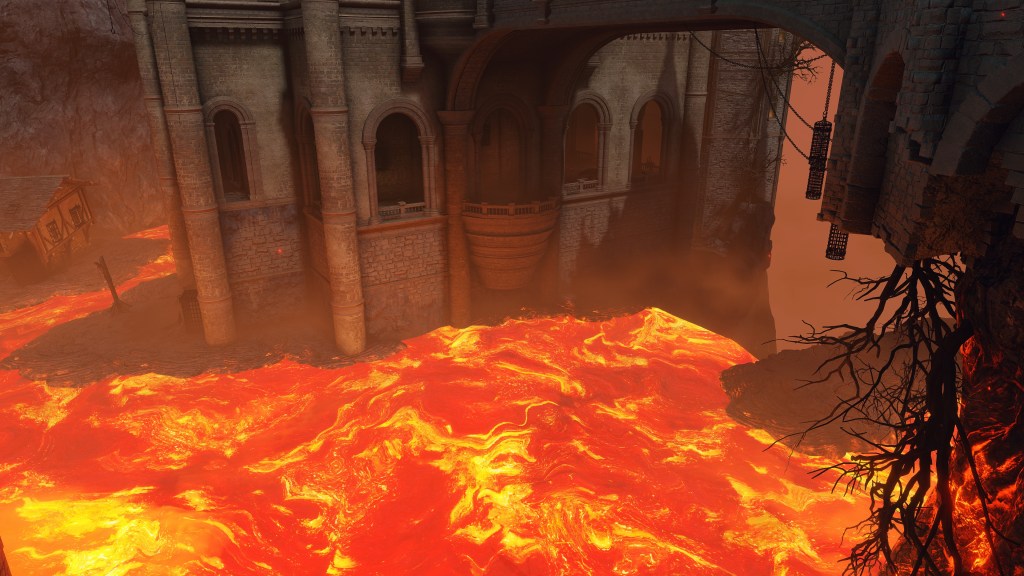
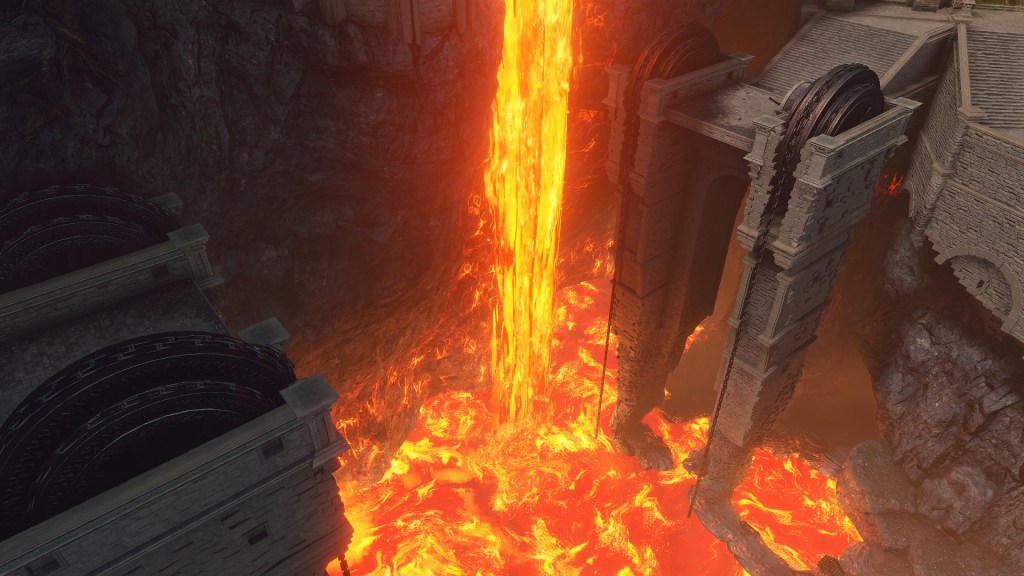
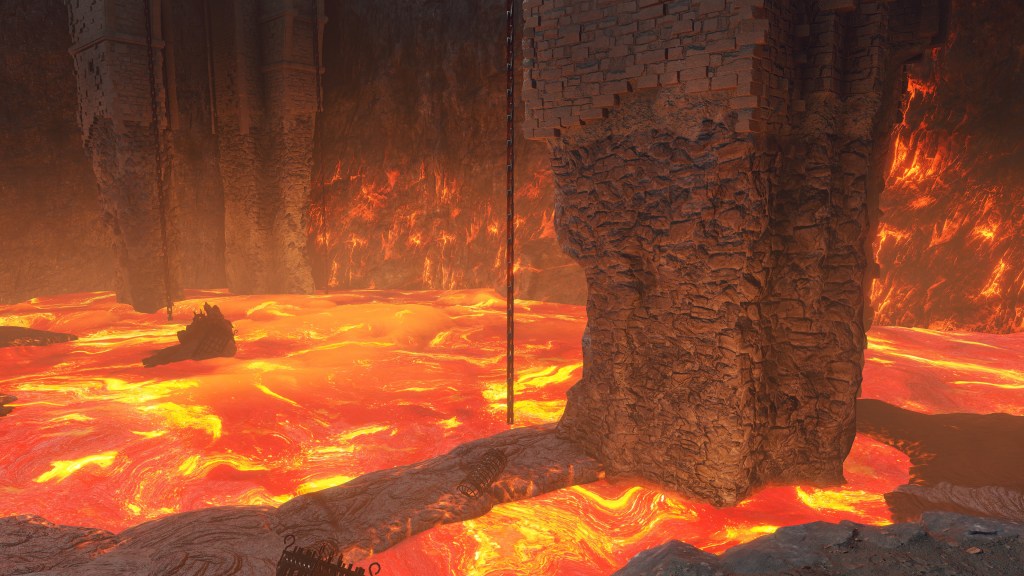
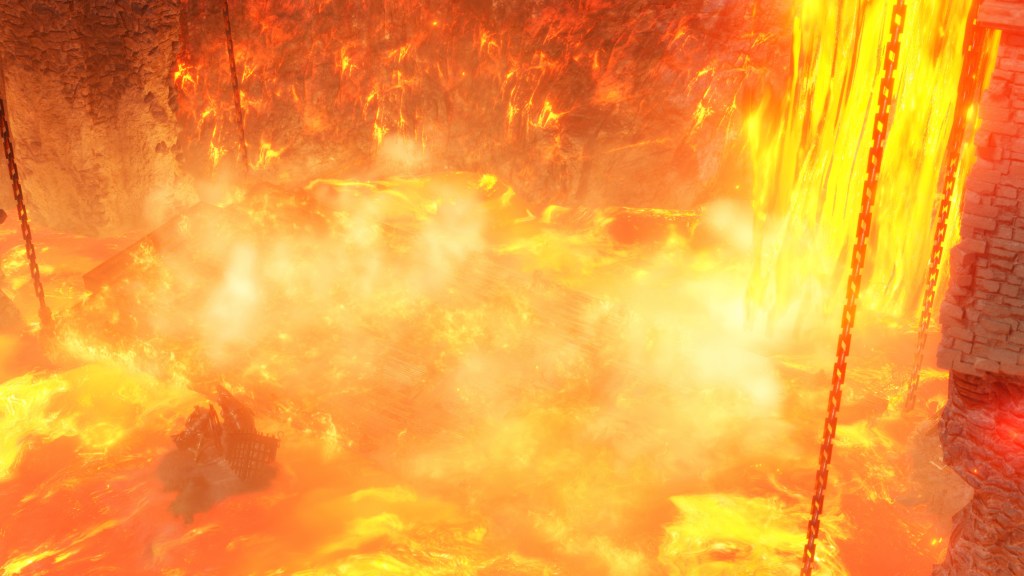
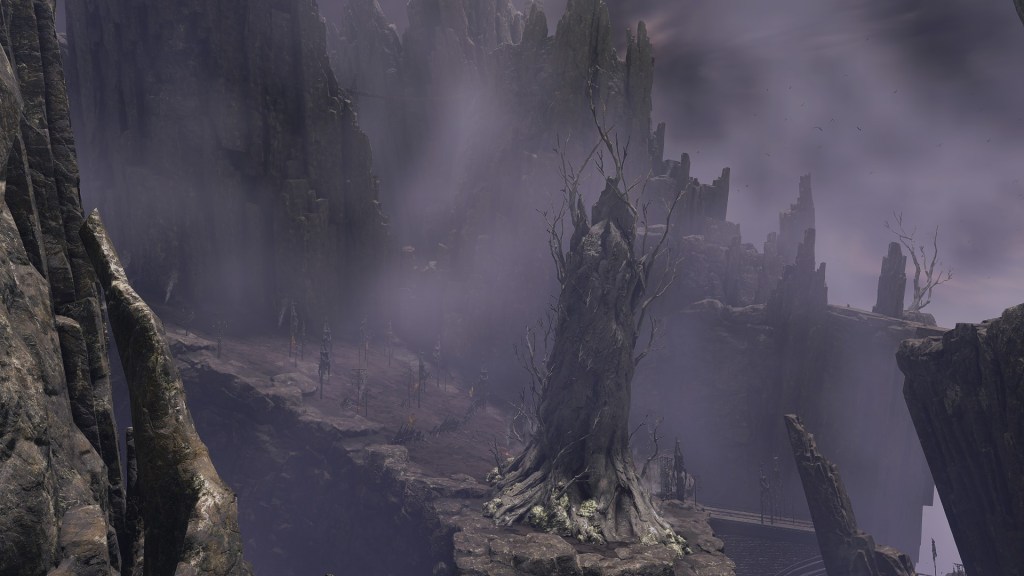
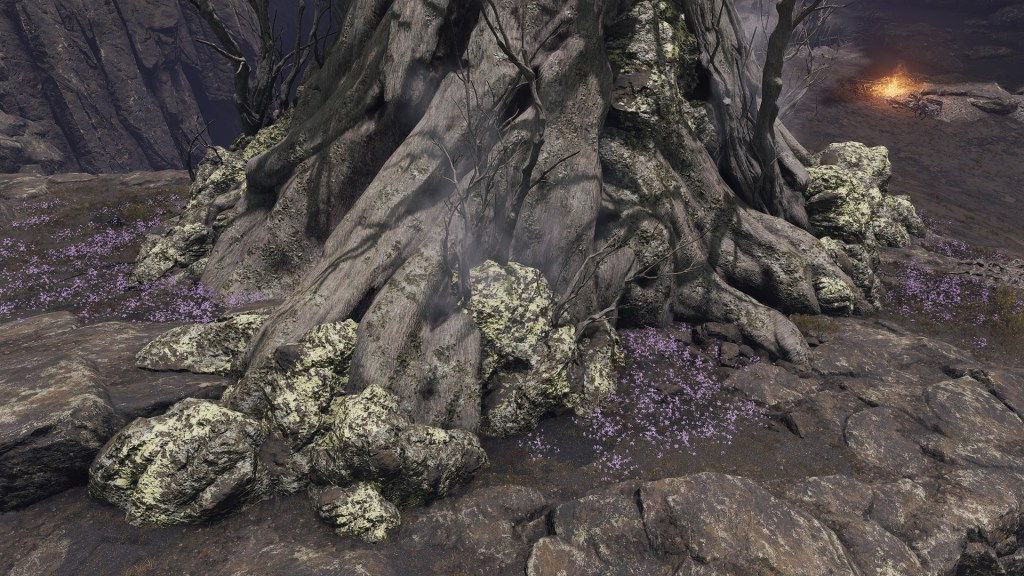
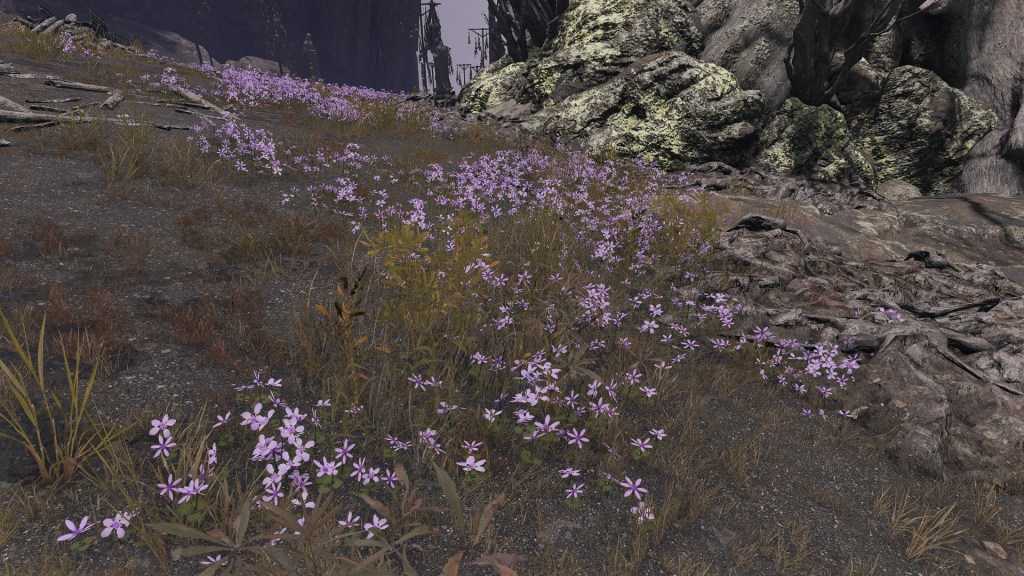
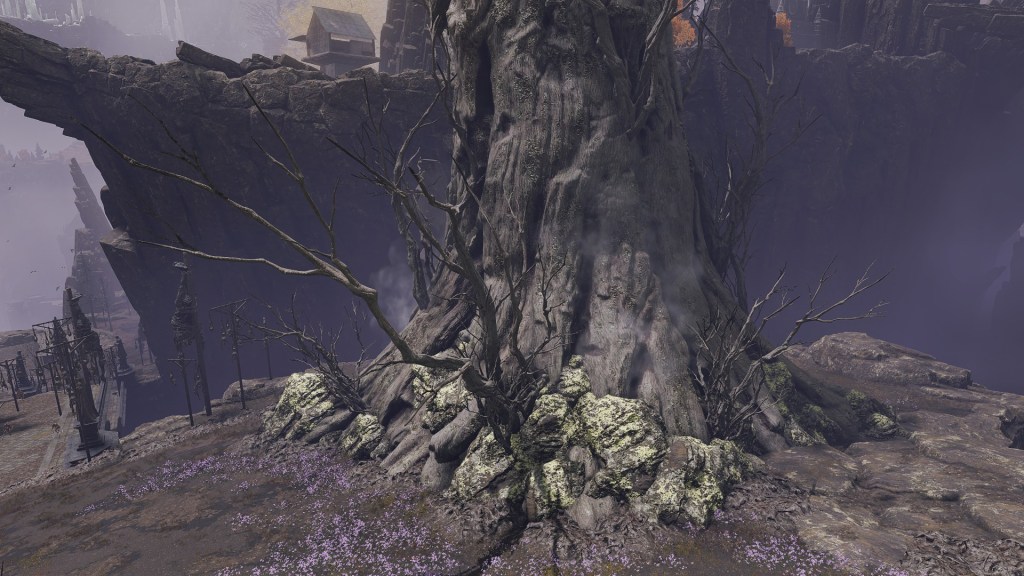
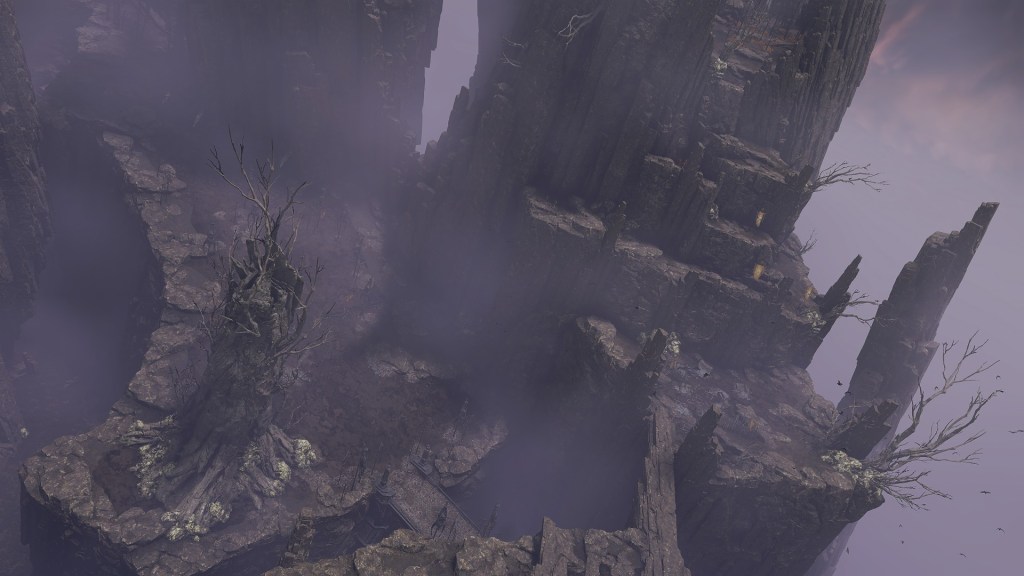
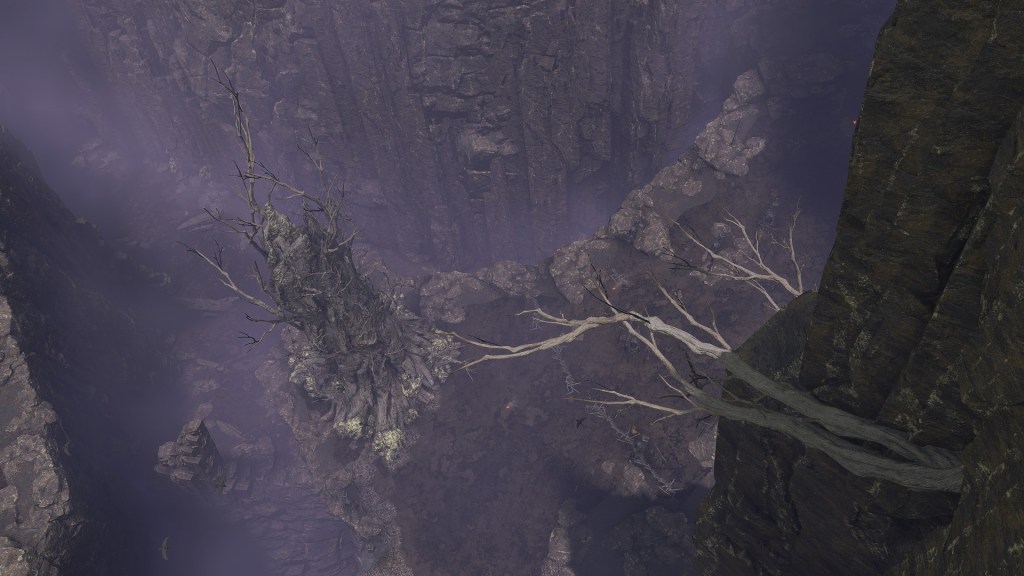
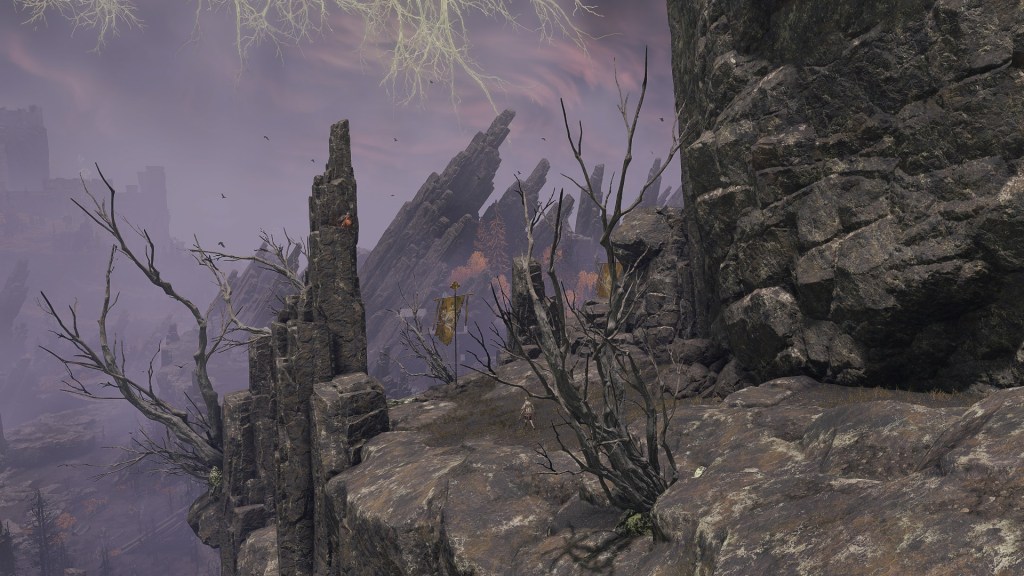
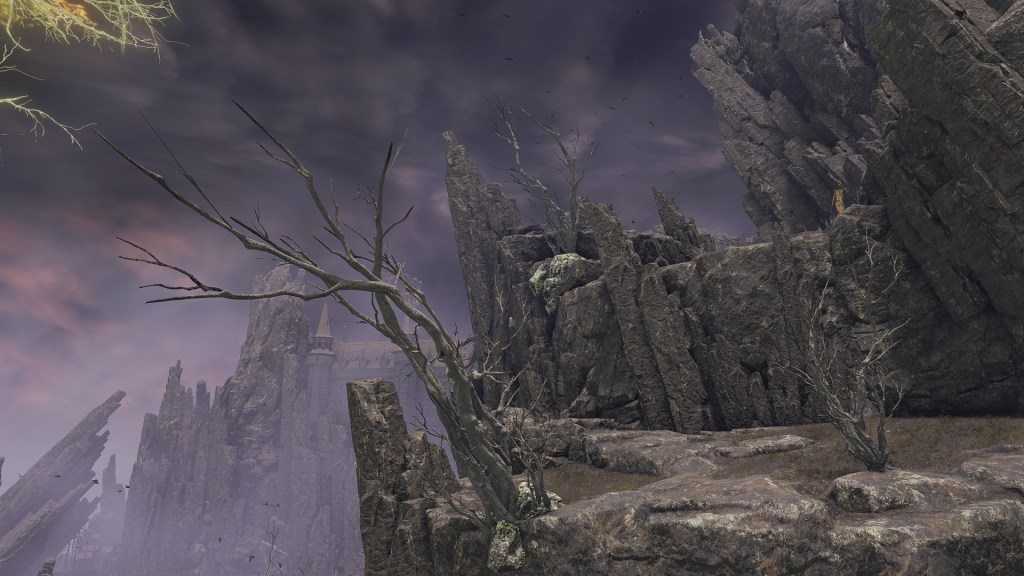
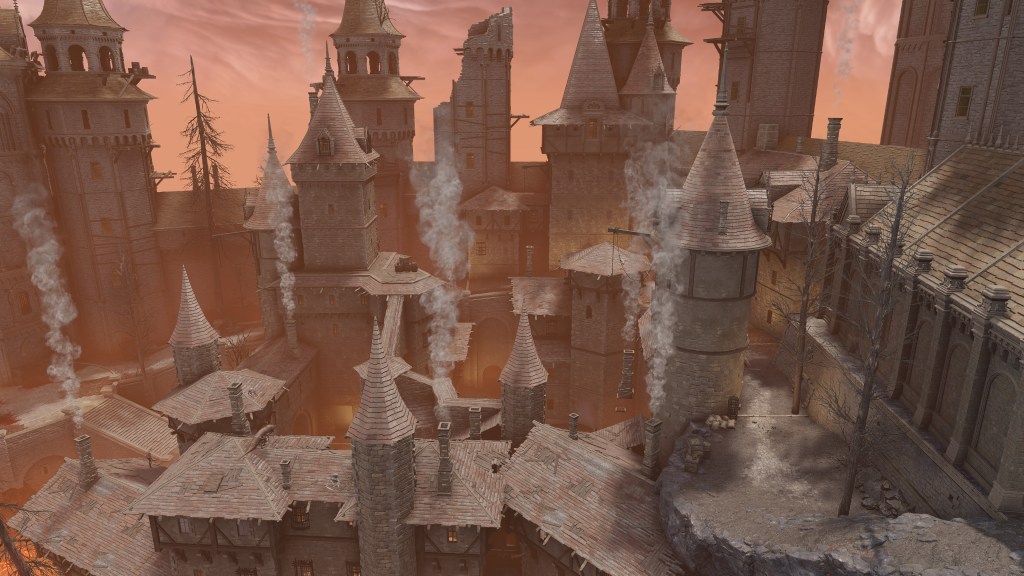
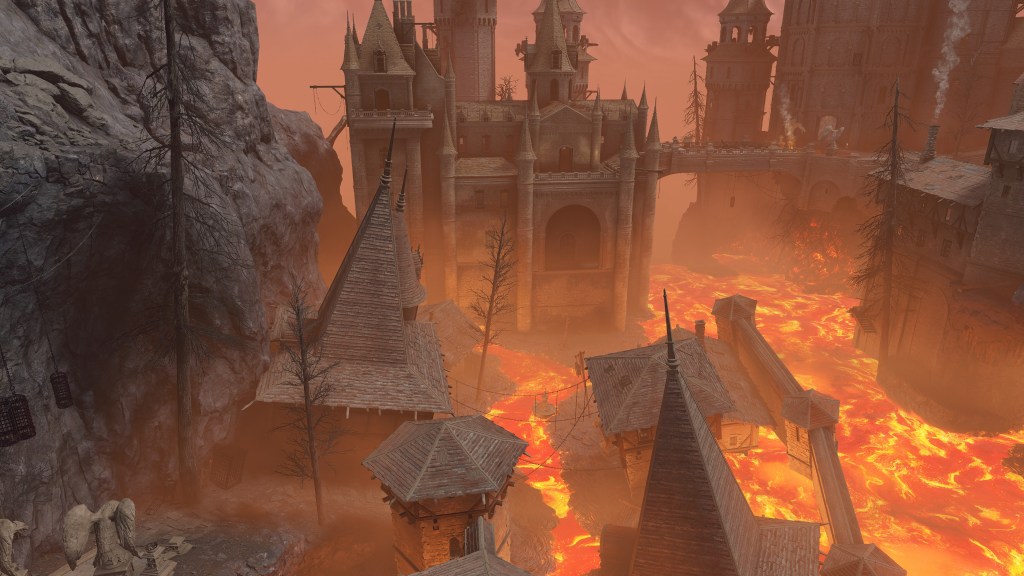
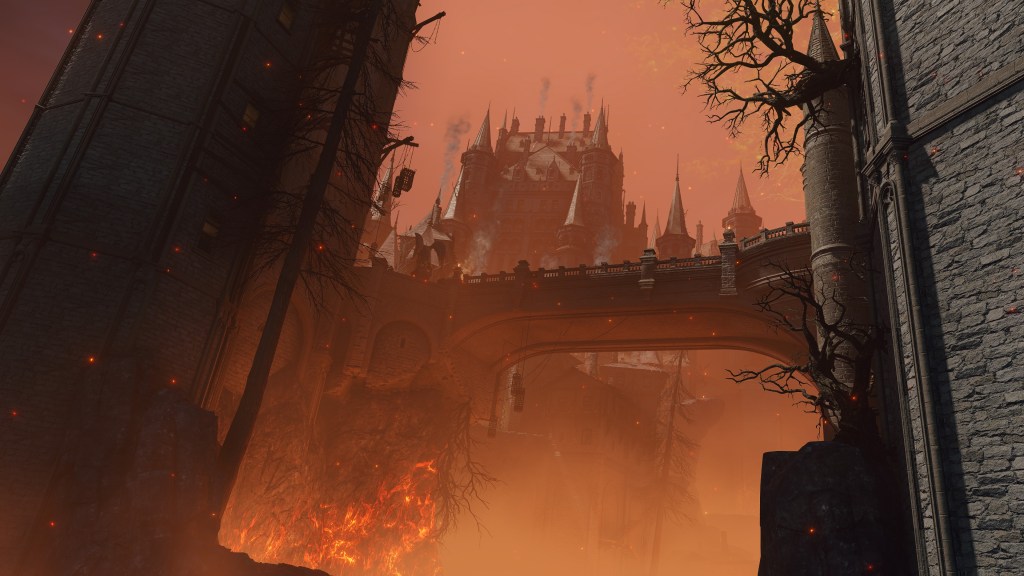
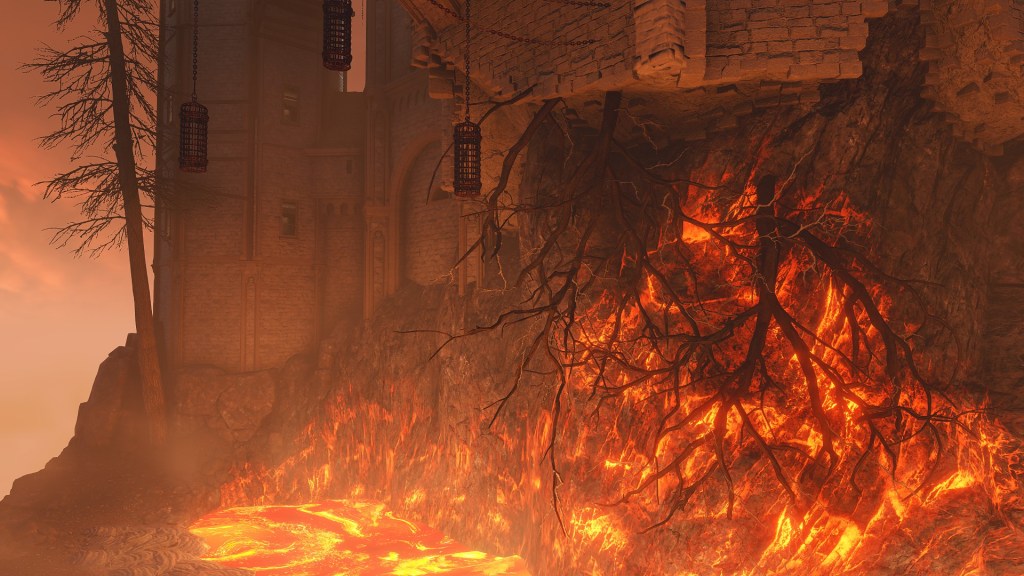
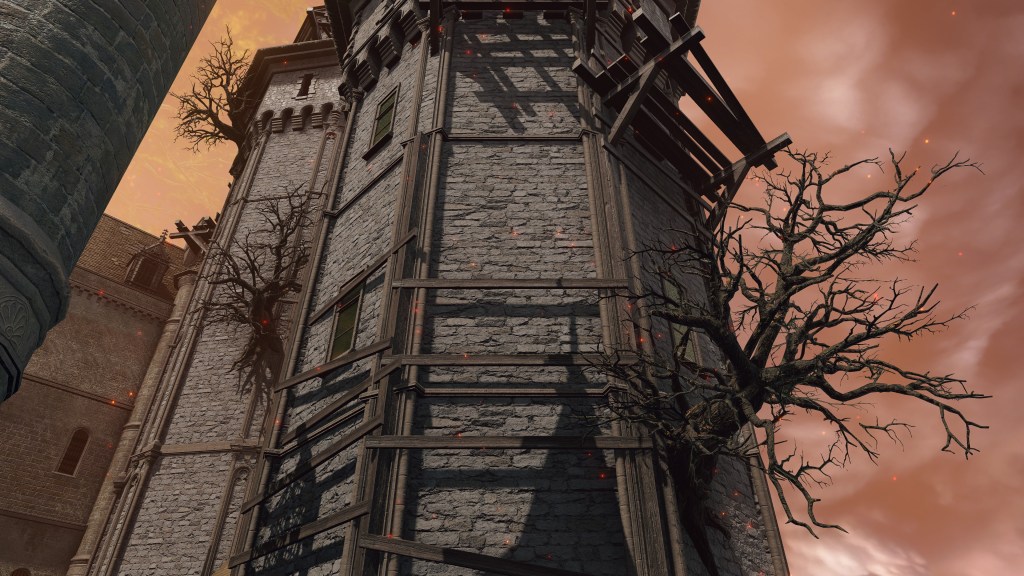
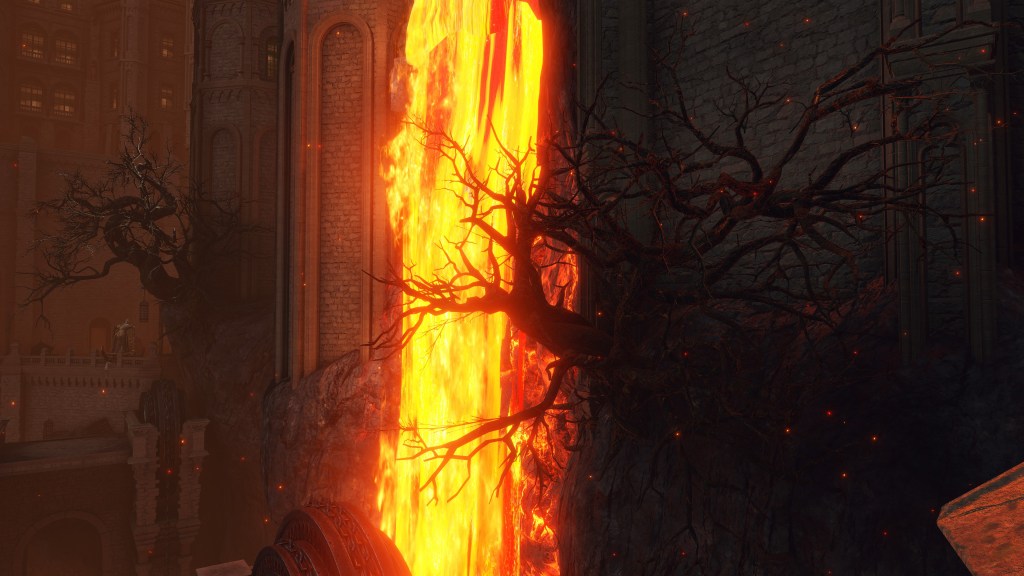
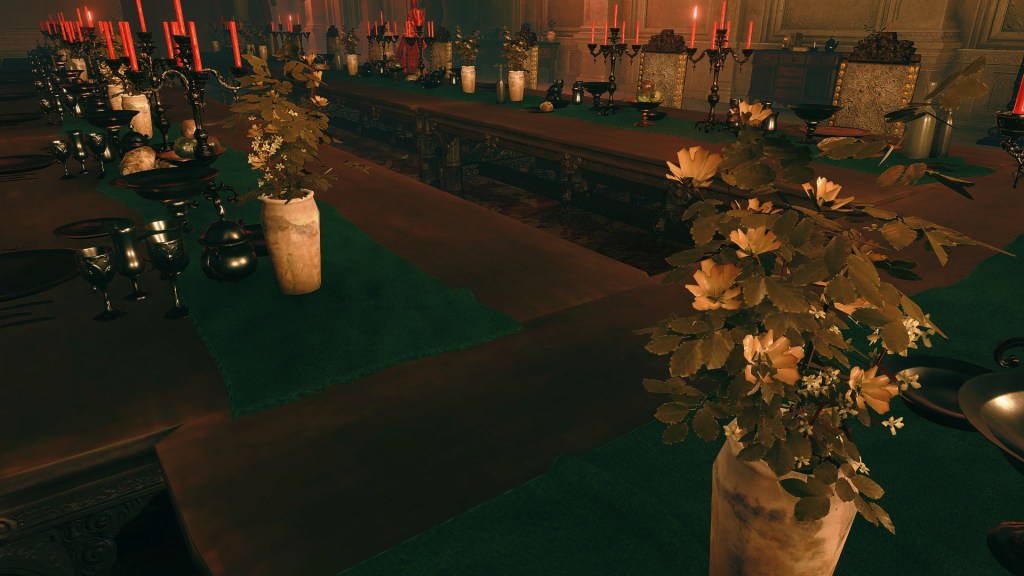
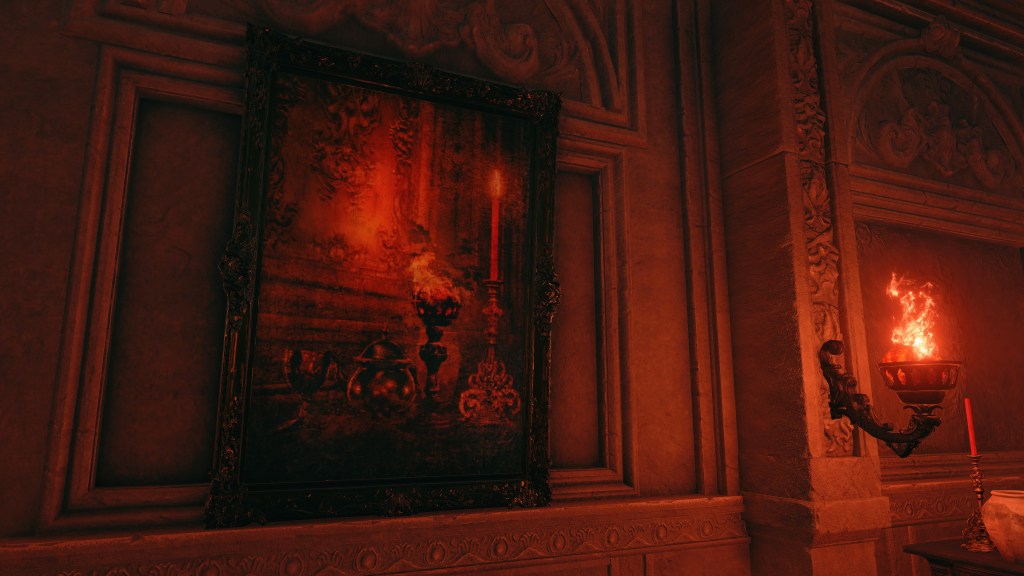
Therefore, lava wasn’t heating surrounding land at the Age of Plenty’s decline, after the snake god was hunted. Considering that the great snake is the source of magma then and now, its death naturally leads to staunching the lava flow. It may not be immediate, as we can still witness the molten rock even after killing the snake ourselves, but it must have eventually cooled. The fire mountain then became just a mountain during the Crucible’s last days, allowing a Minor Erdtree to grow and the town to be expanded into the old area. The only question are the volcanic stones which are used liberally for torchlight throughout the castle town. This practice began as early as the creation of Gelmir Hero’s Grave, and it was probably employed by the pagans before that. It is possible that everyone merely relied on reserves from before the volcano went dormant. But with the volcano active again, it may just be that the trend has recently resurged. Rykard’s manor does hang paintings of its own interior with this volcanic stone torch burning, so it may be a subtle celebration of the volcano returning to form.
Regardless, there was no lava for reference when Rykard began his investigation into the volcano’s history. The man had only what he could glean from the populace or relics. From that, he was still able to reconstruct arts like Magma Shot, making it quite the achievement. Granted, it helps that he had cultivated a background of faith — for as the thorn sorcerers prove, it is relatively easy to derive sorcery from hexing by simply including faith in the formulation. Using his experience with golden holiness, the Carian prince derived “new” arts of molten rock. However, by this point, lava was likely already returning to the mountain, giving him a point of reference. The sigil for these sorceries depicts Rykard after he has become one with the great snake, indicating their invention since he was devoured. Factored as a whole, the sorcerer more likely developed them as a consequence of restoring the volcano, referencing the lava “his” body was producing as it grew with that burning power. But to have that help, he must first seek it out. And eventually, Rykard came in contact with the pagans’ serpent deity.
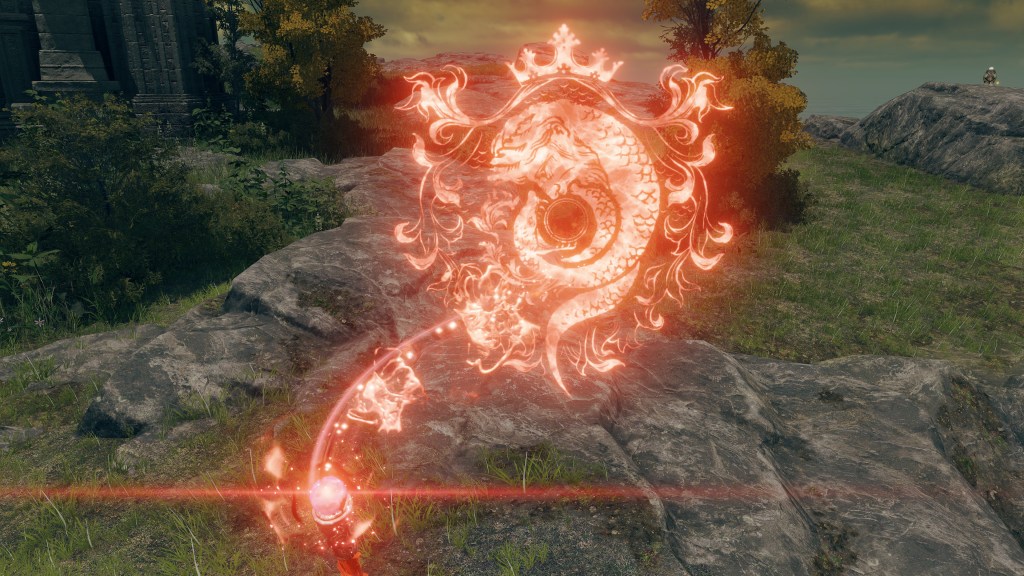
Because of the reptile’s immortality, it is no surprise that it survive being hunted so long ago. Tanith’s attempt to replace Rykard as the snake by devouring his remaining head shows a means for the snake to return in new forms. While the slain demigod’s consciousness might remain forever dormant, the essence of he and the myriad more assimilated into the snake’s being can persist in some sense, feeding the god’s essence. The finger creepers progenerated from the Ringed Finger likewise show how new lifeforms can derive from that essence. That being so, what stops one of these parts from reconstituting a new snake? Perhaps it would require another animal to first eat the essence and transform, or maybe the vestiges of life are able to birth a new body from the carcass, given enough time. Either way, the god would be reborn. From the introductory cutscene, that snake would be nowhere near its former size. But that would make it all the easier for the beast to slip through the cracks, hiding in the shadowy crags of Gelmir; biding its time, eating small vermin.
The exact means might be deduced from an inconspicuous detail. Recall that one of the snake-men in the manor styles himself a king on Rykard’s throne, with a comically oversized eggshell as his crown. Why use that to symbolize a right to rule? Because it serves as proof of lineage to the great serpent. But if the man-serpents are born from the god’s amnion, then the egg must not have hatched this new “king” but his predecessor, the Serpent King — more specifically, the serpent King Rykard has merged with. An egg of such scale would hatch a snake the size of a large python, matching the deity seen in the cutscene. Given that the reptile is regarded as elderly, it must have hatched from that egg long ago. Perhaps when disposing of the god’s original remains, Erdtree forces overlooked the large egg forming inside its more massive body. That egg hatched before the corpse was taken away, its occupant slithering off below everyone’s notice. It was then only discovered after the praetor inspected the pieces like his stepmother before him, the demigod bringing back the shell and eventually the god.
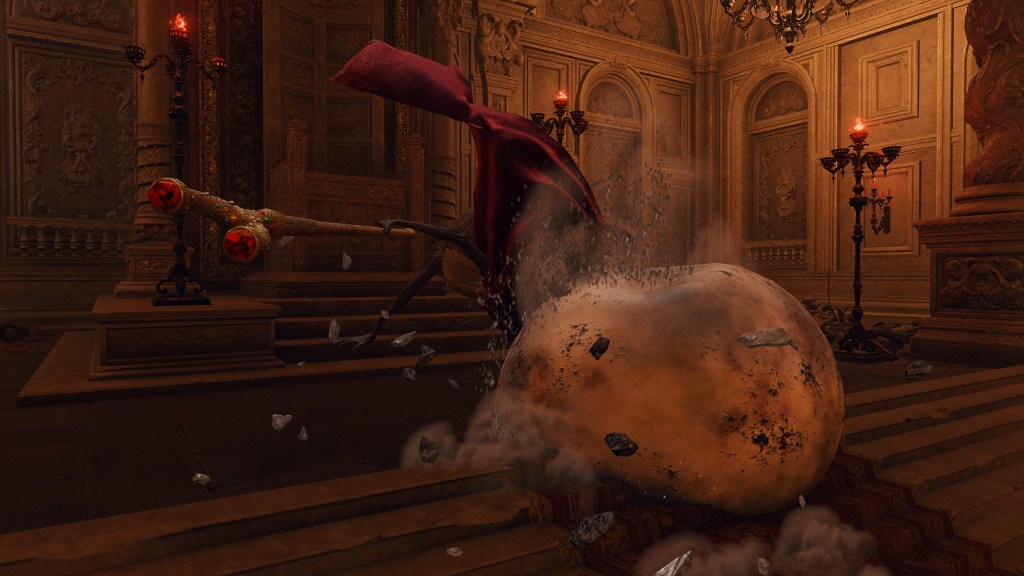
By the time Rykard found the serpent, the creature was still nowhere near big or strong enough to challenge the gods. Without the institutional support of the pagan community, the flesh and blood available to consume was simply not consistent enough. Considering how ordinary snakes can go months without food, the old deity might have even rarely eaten anything in those intervening years. Whether or not that left the snake truly vulnerable, it was doubtless in an unenviable position. If the praetor so chose, he might have sealed the creature away in the name of the Golden Order and be celebrated for preventing the second coming of a false god, adding to his prestige. But that isn’t what happened. Instead, Rykard ended up swayed by the snake, becoming a recusant. If he ever intended to merely study the monster as a curiosity, that fell by the wayside as he learned more. In the god, he saw the potential to overthrow the Erdtree Order, and that led to betraying his kin for a new family.
The prince recognizes that the path he walks guarantees that he will be loathed for sin, but he doesn’t particularly mind those sins. The Taker’s Cameo, engraved with his austere portrait wrapped in snakeskin, has the same effect as his holy sword, infused with the snake’s blasphemous flesh and flames: stealing life from the foes it slays to heal the owner. This represents Rykard’s commitment to take and add to himself, pillaging justified on account of the gods being no different as even Morgott would agree. Taking by force was the way of demigods spoiled by the Erdtree’s blessings. Those who become part of his “family” with the snake ironically feel the same, wrongly robbed of life by Rykard. That is why it is their squirming grasps reaching out from the sword and portrait — for more bodies as the cameo unambiguously conveys. No matter how noble they present, everyone can and will take from others when they are desperate, and that shared will serves as proof that Rykard’s “sins” are not so antithetical to the human condition. Why should we pretend ourselves beyond greed?
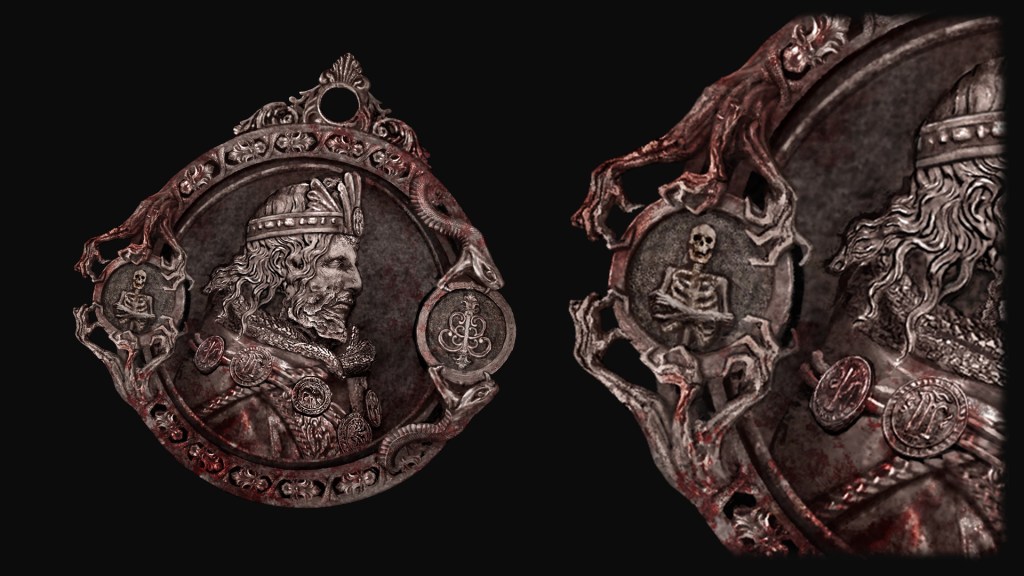
Talisman engraved with an austere portrait of the praetor Rykard, master of Volcano Manor.
Recovers HP when defeating enemies.
When Rykard swore himself to the blasphemy of anti-Regulation, every pillage was affirmed. As is the case with the gods themselves.
Although entirely self-serving, the praetor could argue that he was only enacting his duty as a judge. By his judgment, the regulations of the Golden Order were guilty of hypocrisy and perverting the natural order. Who was the Erdtree to pick favorites? All men should be afforded the greed to take what lies within their capabilities — was it not life’s right to be free as seen at the start of Gold? Even if just an excuse for depravity, the demigod’s rebellion might be viewed as simply asking for restitution from gods who abused their authority to lord over the masses. In Rykard’s proposed ideal, they would all be a warm family, not the cold hierarchy of the Eternal Queen’s world. And in order to bring that about, he needed to stand above all other rulers, become the “supreme king” (覇王) of this world, an autocrat with the will to impose this more equitable future. Initially, Rykard’s ambition — or “wild heart” (野心) — was the aspiration — or “heroic heart” (雄心) — for something so noble. In his adjudication, sin and blasphemy were just false labels for those fighting for a better world.
Cut dialogue further substantiates this rationale, with the boss addressing those responsible for making men gods and manipulating them as their puppets in swearing rebellion against the system. This illustrates understanding that his ultimate enemy isn’t Marika and Radagon, but the Greater Will, as Bernahl recognizes. That is far more high-minded and nuanced than a simple rejection of kin for limiting his depravity, so it is possible that Rykard saw the bigger picture. Admittedly, waging war on all earthly Creation for the heavens’ part in it would be more aligned with the serpent’s existing goals — that may be the real source of Rykard’s venom toward the Golden Order’s architects. It was impossible to disentangle justifications for rebellion from the beast spearheading it. Regardless, it presents a more principled stance for Rykard’s stealing from his fellow gods. The aspiring king must have given his ultima ratio regum some forethought.
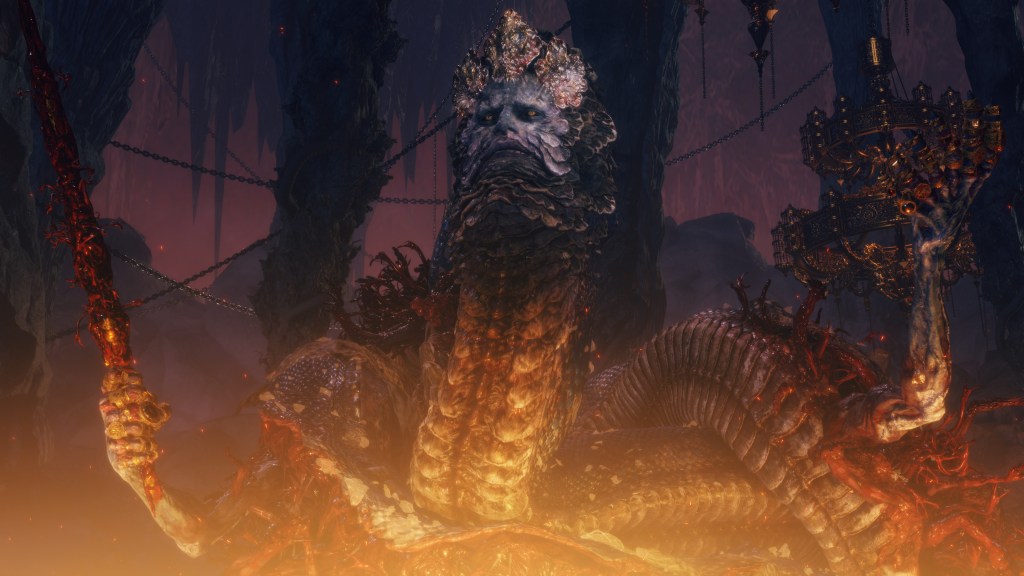
… Ohh, those who make gods and pull their strings, I swear! I shall rebel against your kind’s order.
… Greater Will, hear me. My name is the recusant Bernahl. I shall inherit my friend’s dying wish and crush you. We are not your pawns. I will make you realize that.
Still, there can be no separating this fervent desire to be the supreme king from the demigod’s one-sided rivalry with Radagon: if the Elden Throne made the father king of the world, then the son craved becoming the true king of this earth. Such a greedy man always had reason to despise the Erdtree gods and want to see them toppled; the great serpent simply enabled him to express these repressed desires with the deity’s liberating promise for his fate. Taken in that light, everything else about the blasphemy was just a post hoc rationalization to justify Rykard’s selfishness. The question then was why the sudden shift after his father’s remarriage. Was he really just that desperate to emulate Radagon? But his father had no discernable effect on his life growing up — at least not until after the red-haired hero abandoned his mother to become consort to the Erdtree goddess.
Certainly, the betrayal of Rennala lying at the root of Rykard’s blasphemy is conceivable. What did Rykard feel, seeing Radagon leave his mother broken and distraught, desperately clamoring for his affections? If he idolized the woman as a child, than perhaps a lingering bitterness. How does a demigod go from the model Carian prince to the staunchest fundamentalist to the worst blasphemer? By tearing apart his happy family, apparently. Even still, it wouldn’t explain the desire to become more like Radagon. But maybe, it was never about how his father felt about the changes, but his mother. Indeed, his beloved Tanith had one standout feature when she was still a dancer: her black hair. As consort, she wears the regal face of a queen, befitting “King” Rykard. But that mask nonetheless gives “Queen” Tanith a rounder face, smaller nose and lips, and thinner brows — all traits that let her more closely resemble Rennala. Taken together, it is almost as if the praetor wanted to imagine that he wasn’t marrying the dancer of Ranah, but his mother. In other words, Rykard may have developed a classic Oedipus complex.
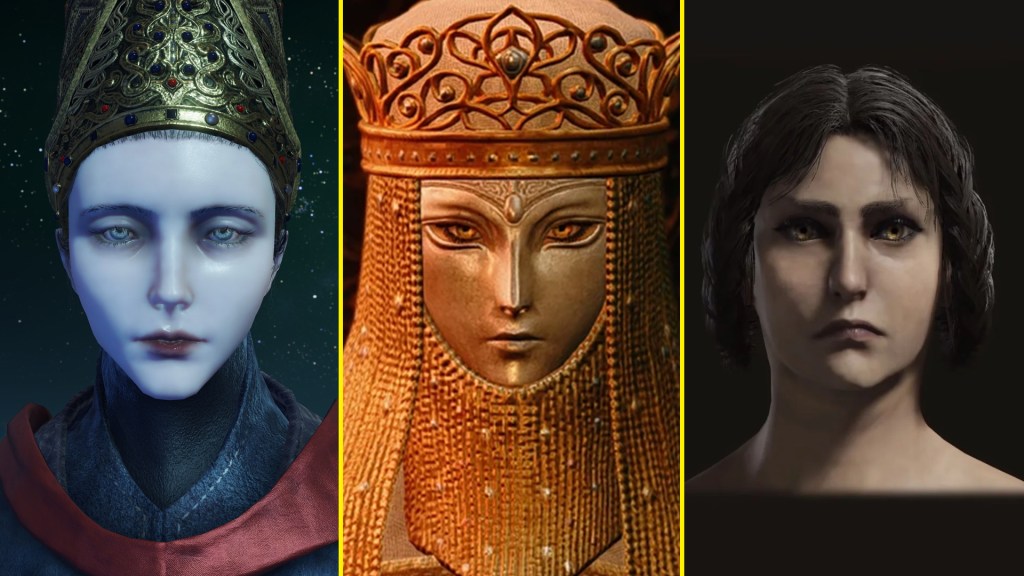
Through this lens, the lord of Volcano Manor’s later indifference to depravity was because he was already depraved himself. Why did he start on the path of sword and sorcery? Because he wanted to be his mother’s knight. Why did he pivot to fundamentalism? Because he wanted to be her beloved. Why pretend as if he owned red hair? Because that was the color the Caria queen liked. Why live like an extravagant king? Because she still loved that man on the highest throne. Why instantly fall for a black-haired dancer making no attempts at flattery? Because her dignified appearance reminded him of the heroic witch. Why not care if his consort returned his affections? Because he never could have those from the woman he wanted anyway. Why sympathize with an all-devouring serpent? Because he saw in the broken matriarch rejected by her “love” his own mother. Everything was just an expression of the prince’s deep-seated craving for his mother’s attention.
Rykard loved his mother, and he envied his father for receiving all of her love. Seeing how her heart was still hopelessly set on Radagon, the son did everything to turn her attention, becoming the kind of man she supposedly wanted. No amount of masks, both physical and metaphorical, would ever change their dynamic, however, and Rykard himself was aware of that, deep down. And so, he sought comfort in a woman who was like his mother, who would never love him either but still let him indulge his subconscious fantasy. That lit a fire in his heart that slowly came to consume him, the envy for what he could never have warping into a wrath for what denied him his fantasy. Of course, that ire wouldn’t be satisfied with cruel tortures. Upon encountering the immortal snake, the greedy demigod saw a new mother to raise and care for — a mother who would be finally consumed with him. And together, they would have vengeance on the gods who wronged them.
Still Deceived with Ornament
Once aligned with the snake, Rykard was keen to undermine the Erdtree kingdom. After the fragments were stolen from Maliketh, a portion of the Rune of Death was infused in a piece of white rock and gifted to Rykard. This was a reward from his sister, which begs the question of what the demigod did to merit it. The tool is named Blasphemous Claw, though a cut iteration of the description recognizes the stone’s shape to also resemble a shield. That is perfect for how the amulet with a familiar crack can be used to parry Maliketh’s sword whenever the beast draws upon the power of Destined Death to attack, much to his disorientation. The partial power was weaponized into a kind of white barrier that repels its same energy, perfect for the time Rykard executes his blasphemy against Marika and the gods. Ranni awarding this trump card for that express end betrays recognition of her brother’s future intentions. In turn, it implies that Rykard is himself aware of his sister’s treasonous intentions against their stepmother. The only reason to be rewarded then is because they are working together for each other’s benefit.
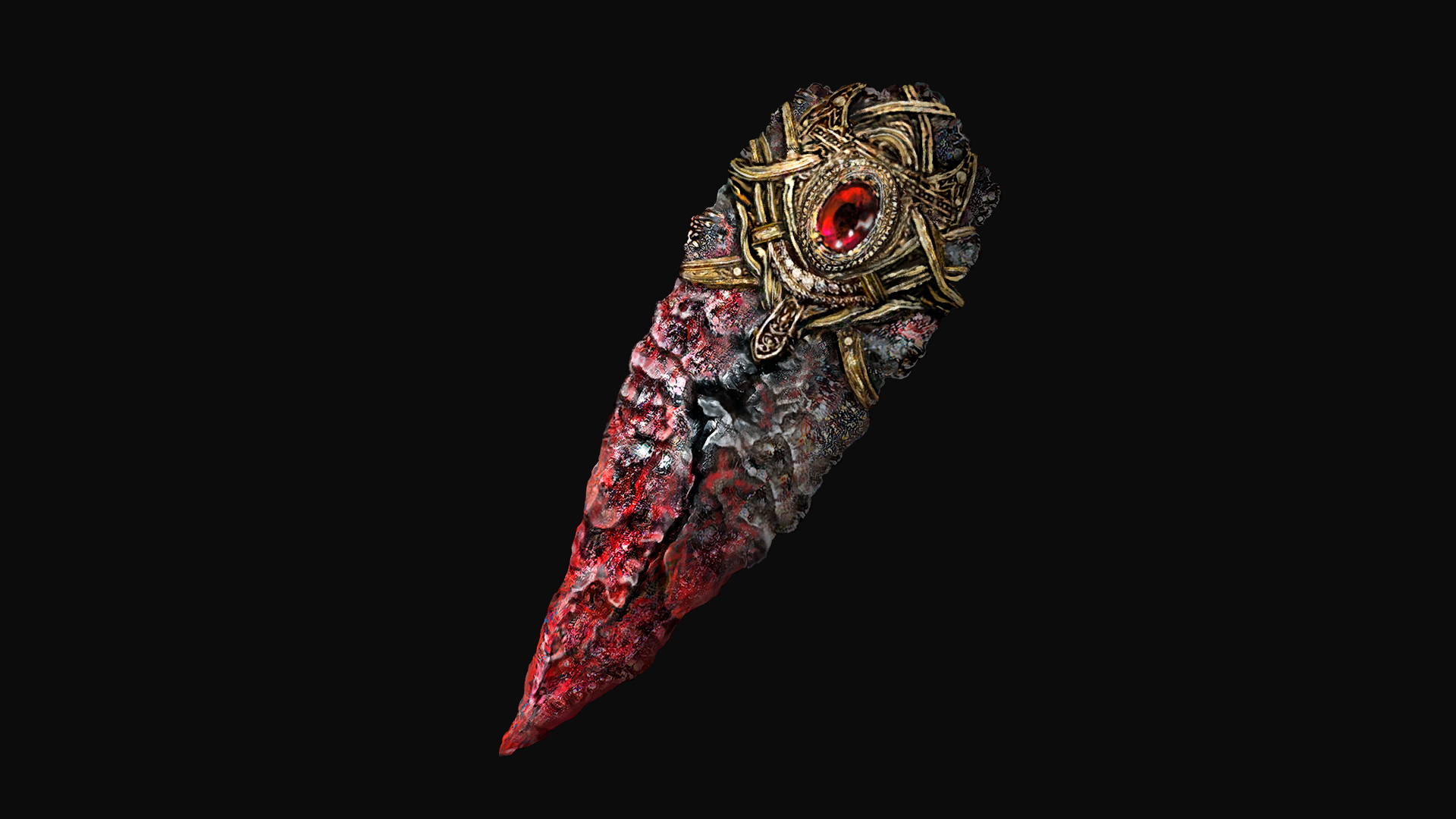
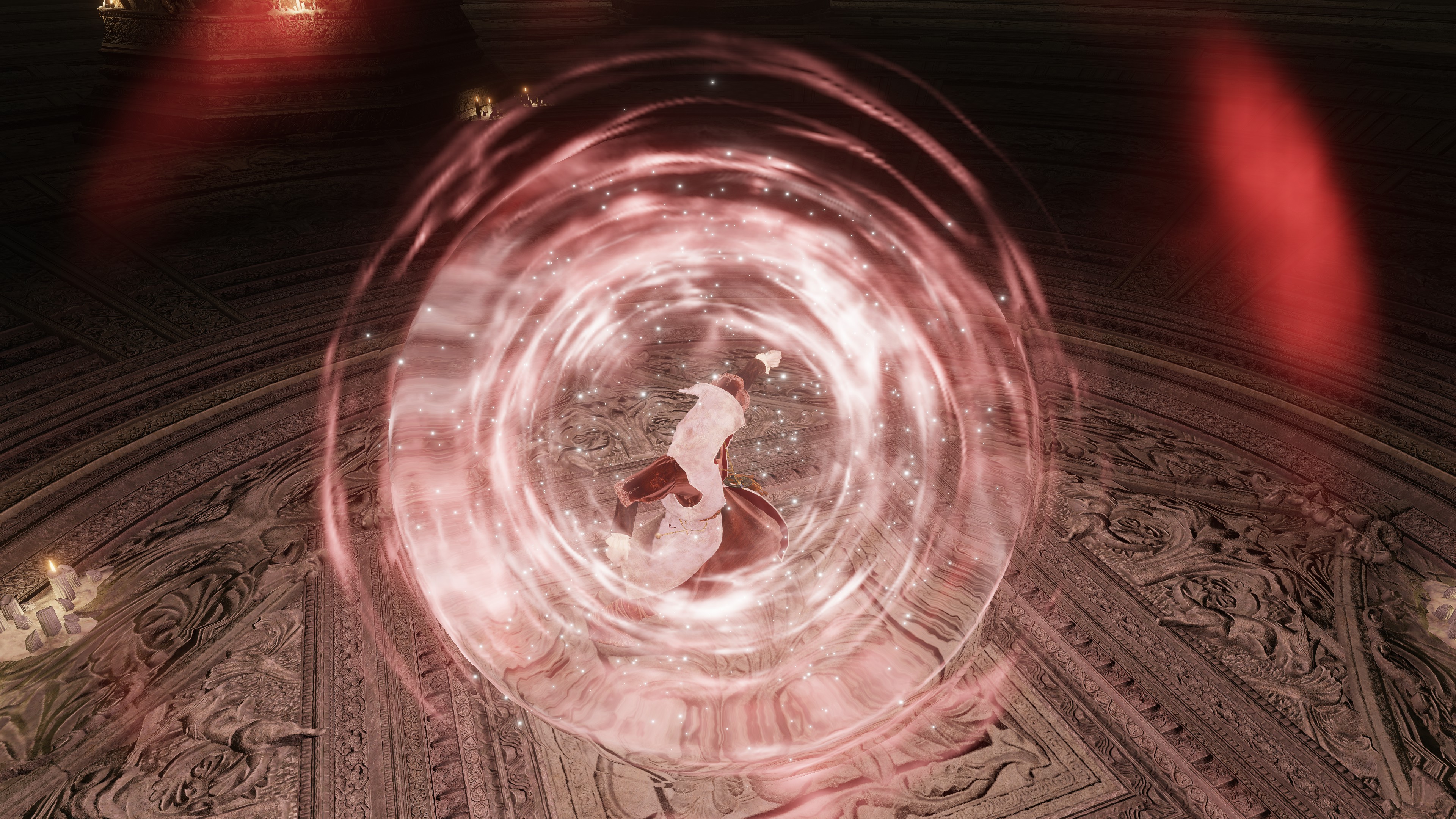
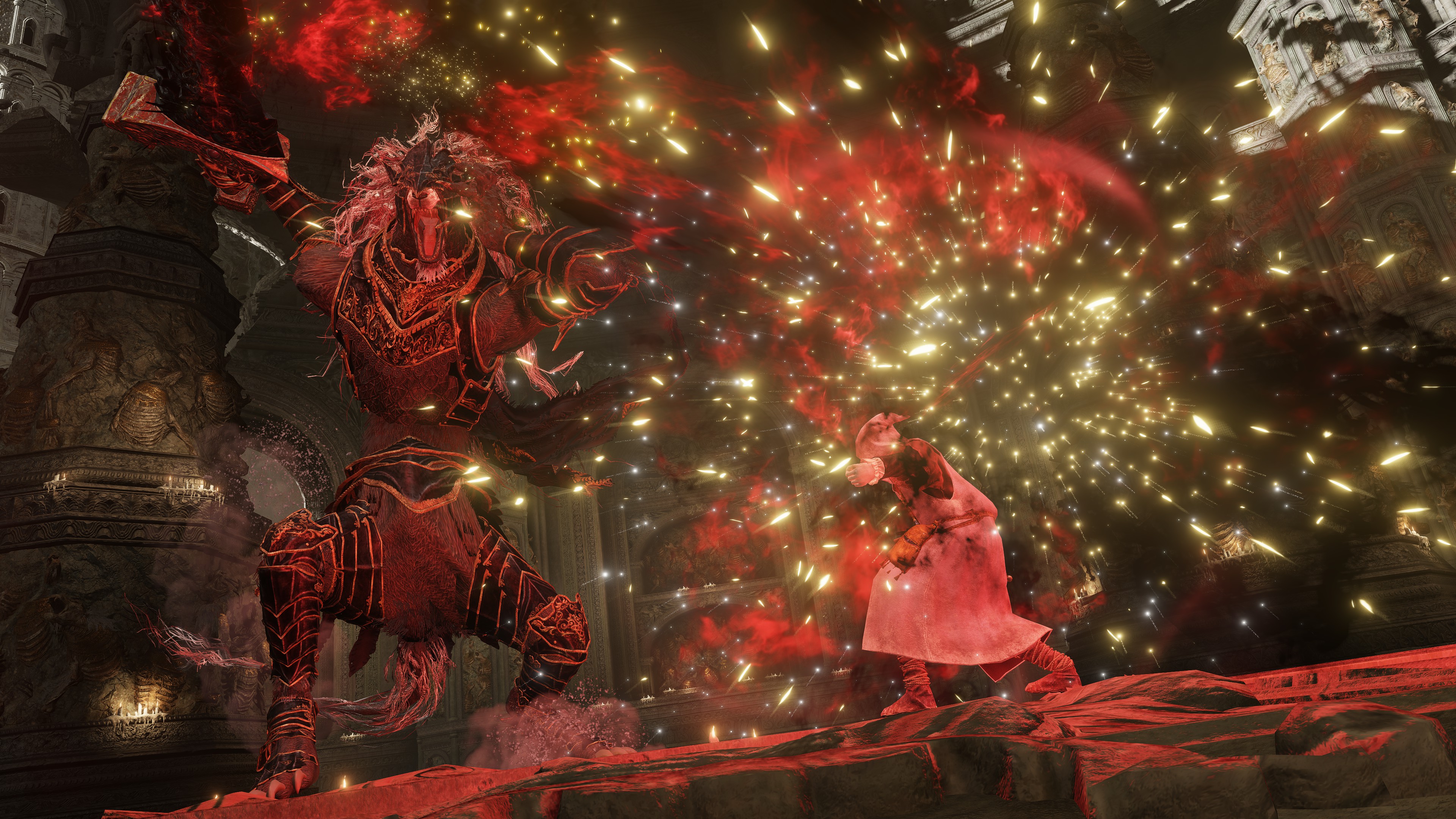
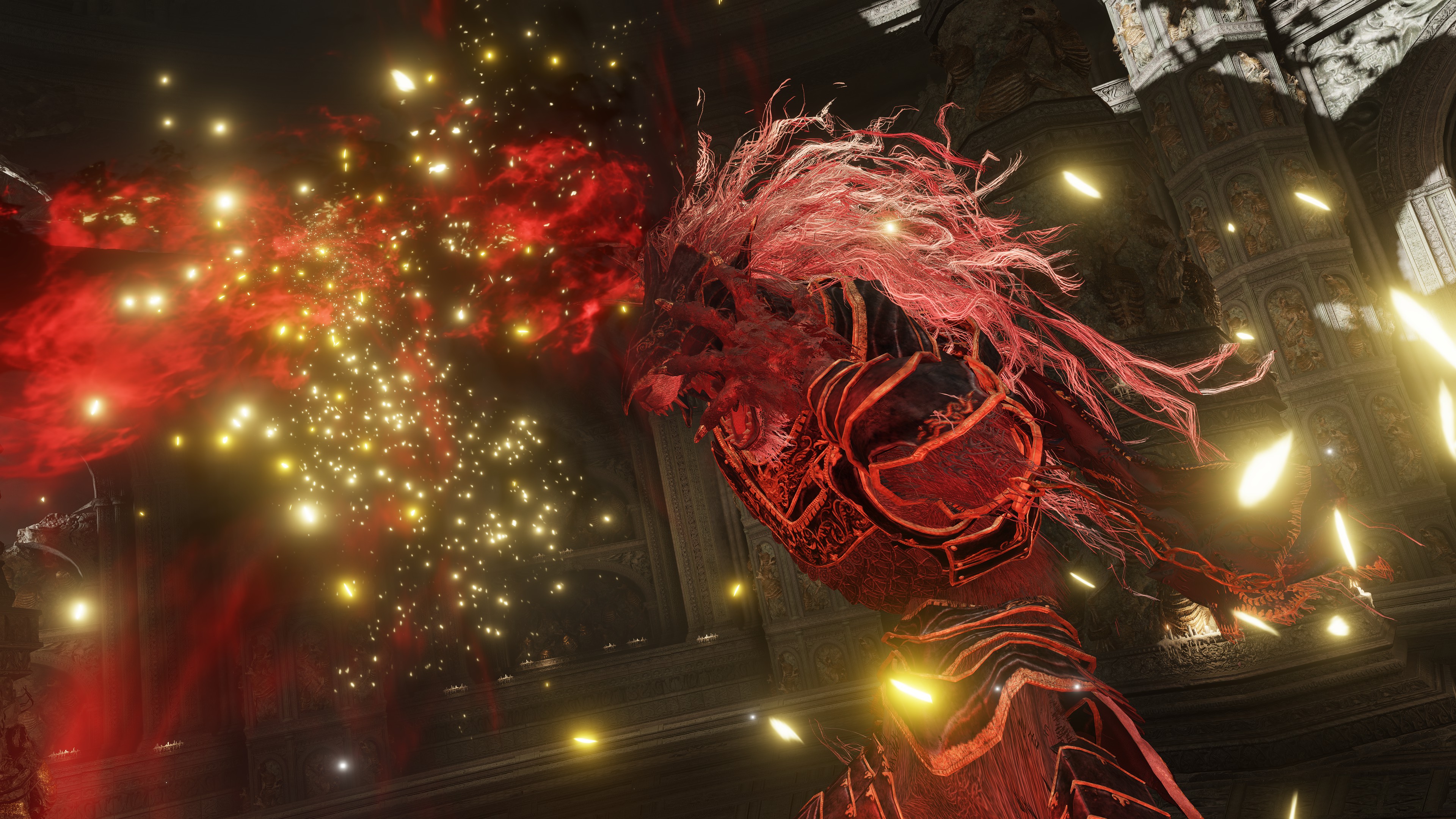
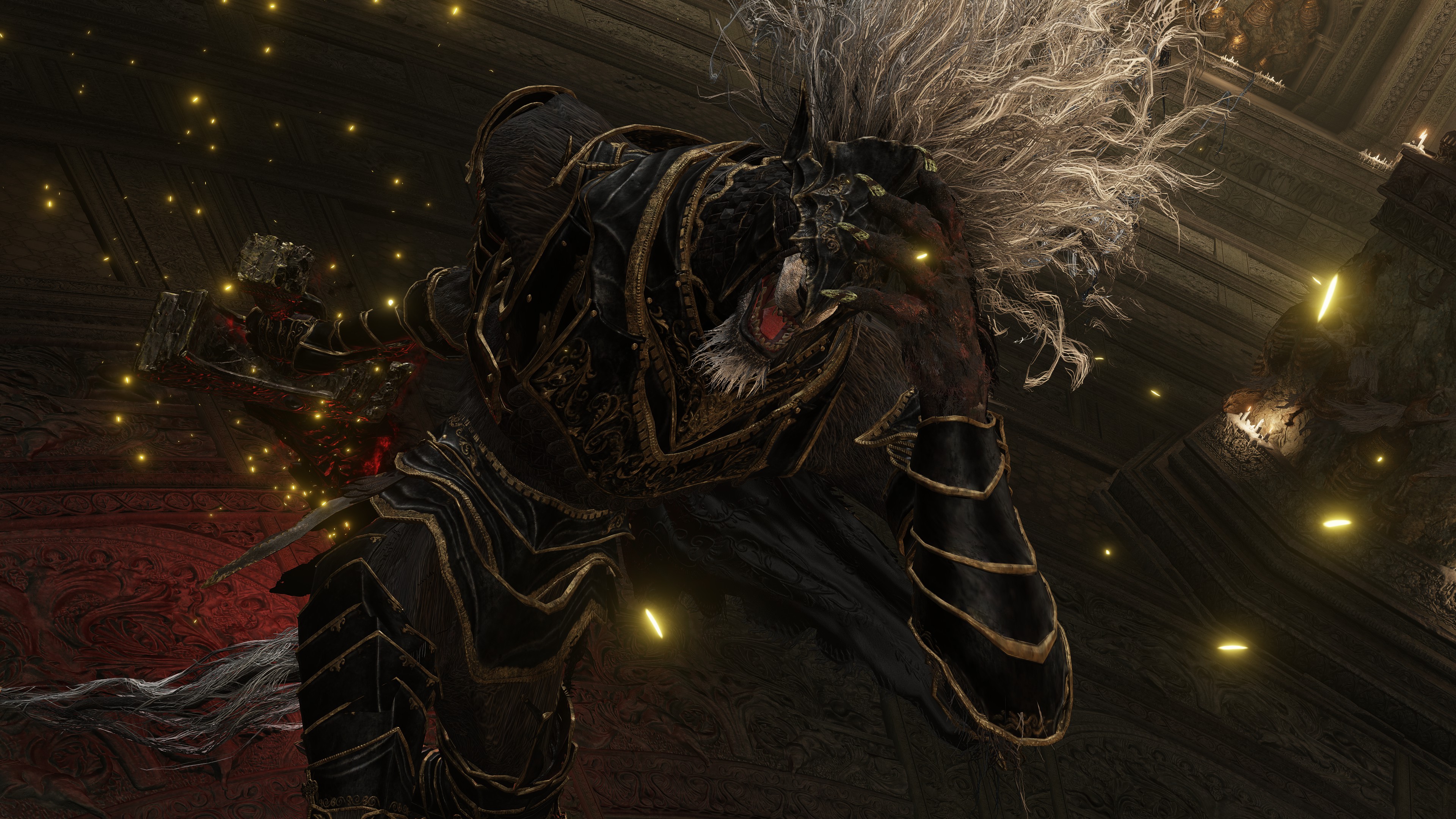
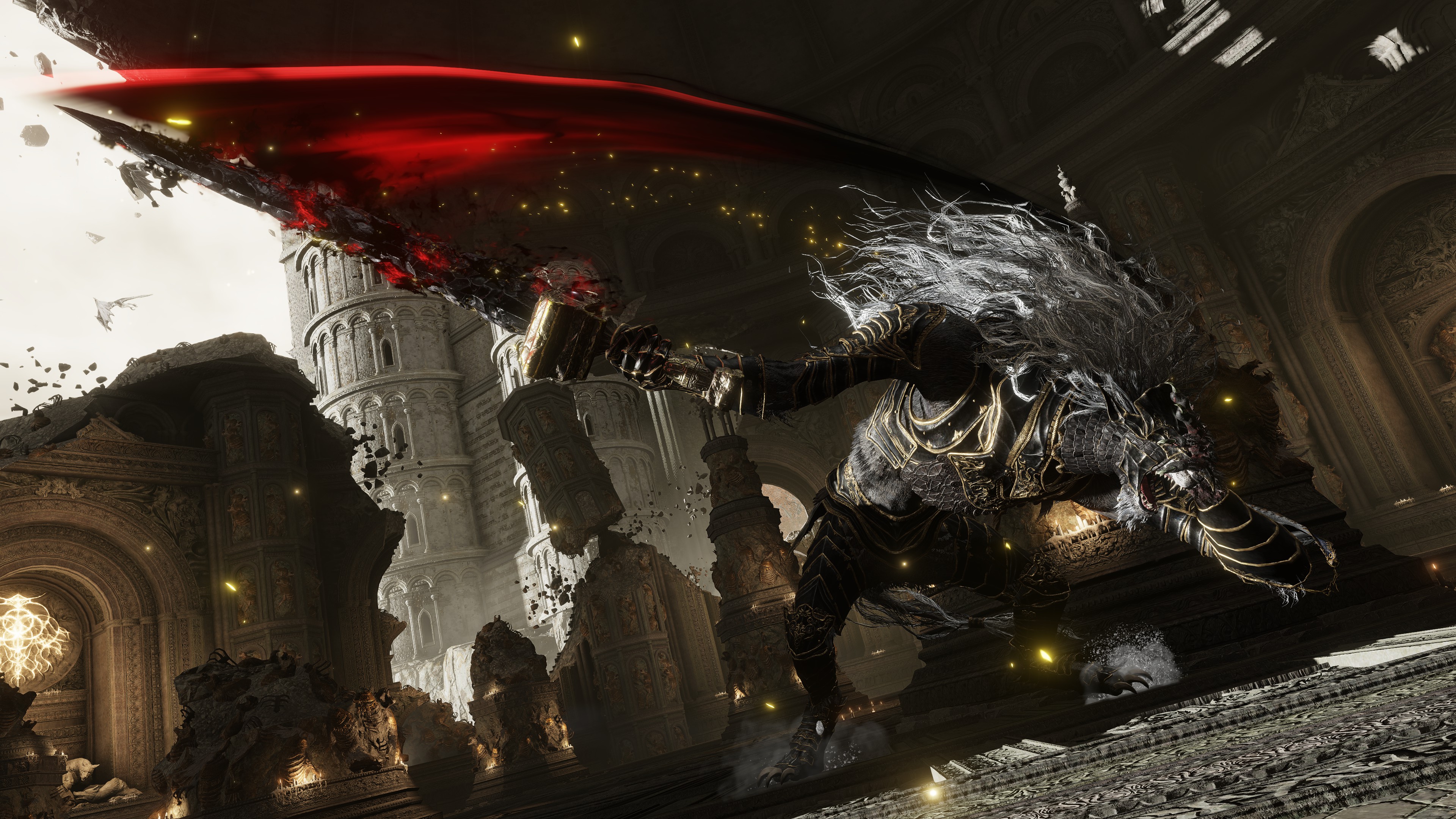
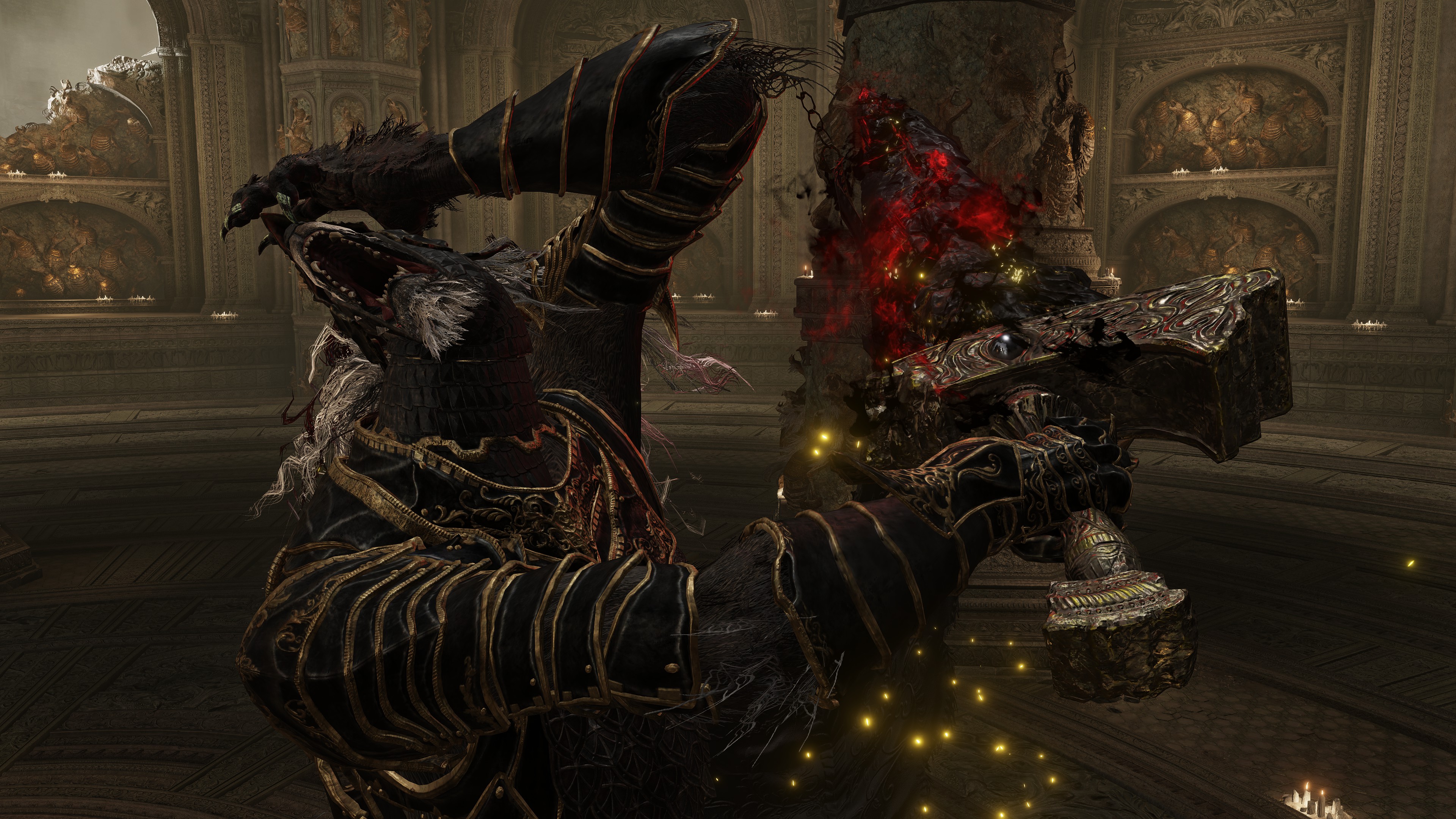
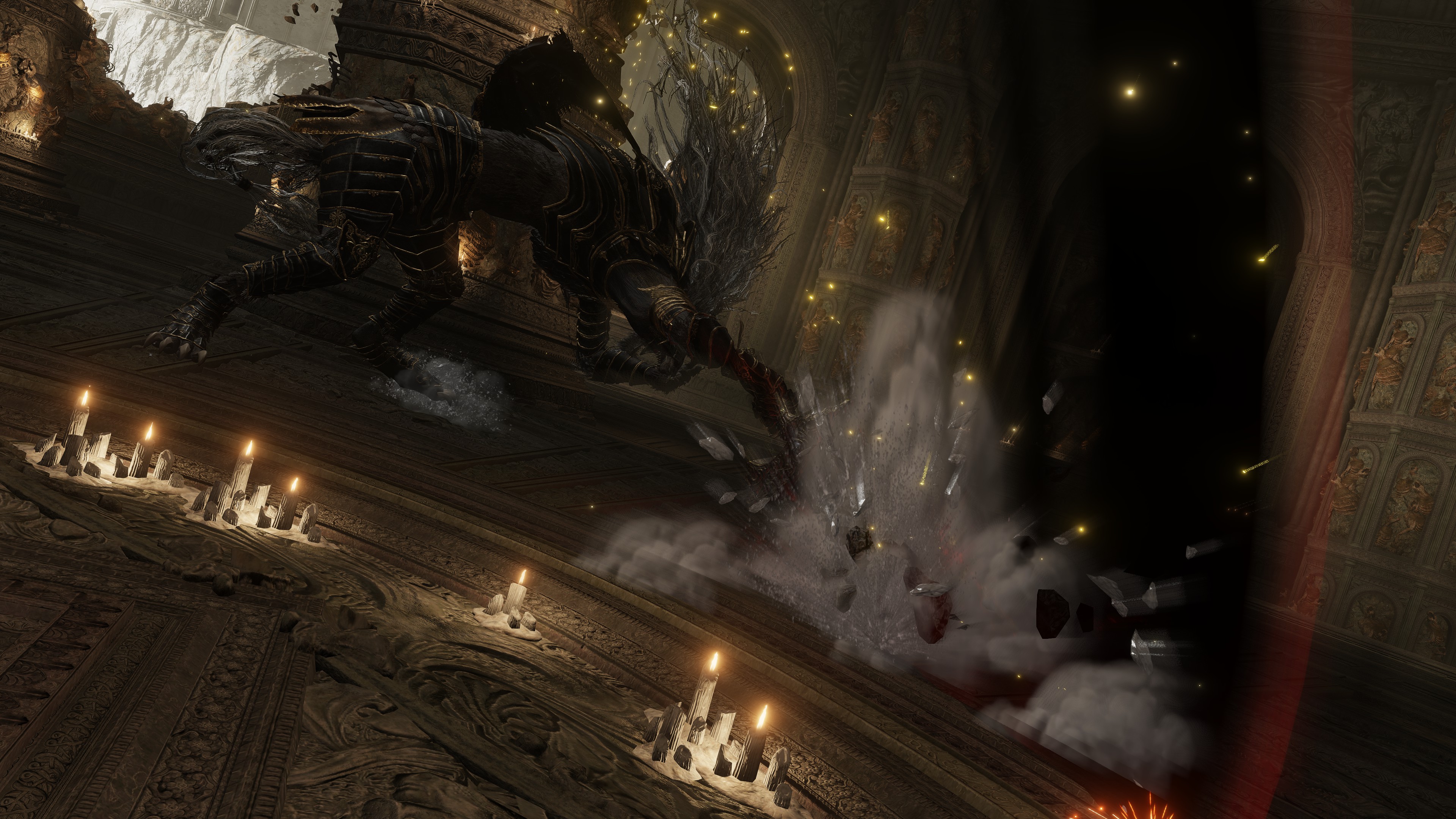
Rock fragment engraved with a portion of the Rune of Death.
Can divert the power of the Black Sword.
On the night of the conspiracy, Praetor Rykard received a portion as a reward from Ranni. As the trump card to challenge Maliketh the Black Sword, the black beast who is Destined Death, when blasphemy someday comes.
Put simply, Rykard was roped into the Black Knives conspiracy. After discovering his plans for rebellion during a family visit or other means, Ranni shared her own plot to kill demigods and offered him a portion of Destined Death in exchange for his support. Specifically, this support came in the form of setting up Maliketh for ambush. The witch’s brother is the lord of Volcano Manor, where Maliketh once helped suppress the previous blasphemous rebellion against the god-queen. With her concern about the pagans, it is reasonable for the vassal beast to periodically check in on the inquisition on Marika’s behalf, confirm that she need not worry about another uprising from those who survived the great serpent. As the gracious host during the beast’s stay, Rykard would be in the position to alert Ranni of this visit in advance. Then, she could mobilize Alecto’s crew by the time the Black Blade made his return, intercepting him mid-route. Maliketh would appear to have been jumped by mysterious highwaymen, with no risk of Caria’s involvement being discovered.
This scenario would also explain the vassal beast’s delay to report the lost Rune pieces to Leyndell. Surely, his first instinct was to track down and retrieve the portions of his sword before anything else, hoping to mitigate this blunder. But after Maliketh’s attackers escaped, the beast was liable to seek help with the tracking, before their trail truly ran cold. This would require that he report the incident to local forces patrolling the territory, who would report the matter to their lord. If that lord was Rykard, then he would naturally take charge of the investigation and thereby detain Maliketh for questioning about his robbers. This gave the assassins a small window to execute the murders, long enough for Rykard to “figure out” what was going on before they sent word back to Leyndell. The conspiracy couldn’t trust such interference to distract for more than the night, hence their continued need to act quickly. Nonetheless, it would leave their biggest variable in the hands of the grand deceiver himself.
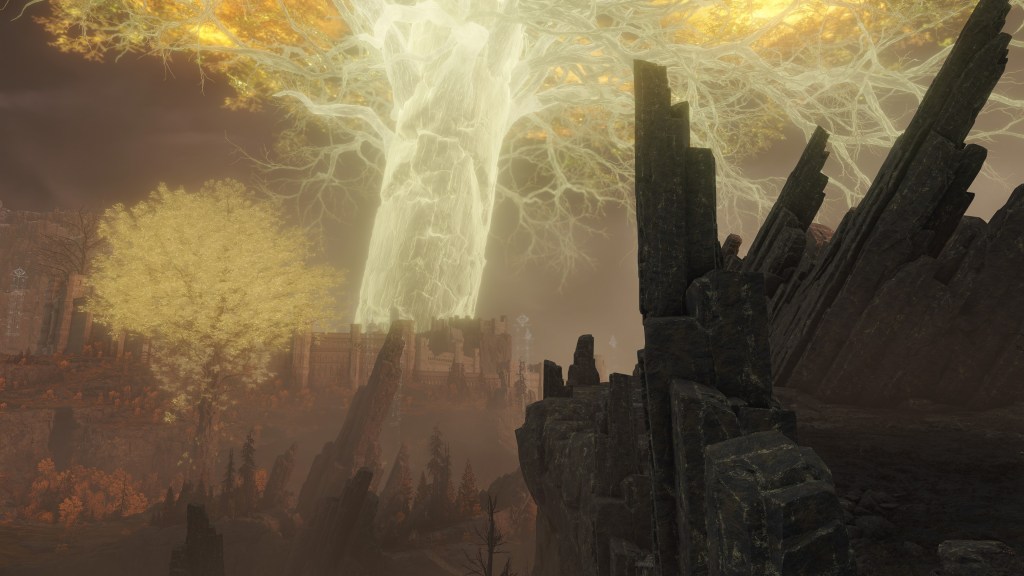
This was the role that only Rykard could play. After the Carian prince earned his reward, Ranni would engrave Death into the Blasphemous Claw along with the daggers that same night. She then need only deliver the Claw to Rykard while the new Black Knife assassins went on their way to murder their respective targets. This could be easily accomplished by sending one assassin on funeral horseback as a covert messenger. And now that the Carian siblings both got what they wanted out of this conspiracy, the Black Knives were disposable. If Rykard controlled Maliketh’s return home that night, then he may be why Godwyn’s assassins were discovered prematurely and nearly killed. Perhaps Ranni and he had themselves conspired without the others’ knowledge, or perhaps the devilish snake broke from the plan, forcing his sister’s hand. Ultimately, Rykard betrayed Alecto, too, that night.
The scheme was easy enough to execute. After receiving his reward from Ranni, Rykard could do something as simple as kill the messenger and claim to have been attacked. As infamous as the Night of the Black Knives is, Rogier shouldn’t know the details about the assassins’ background and equipment unless authorities closely examined a specimen. Dead men tell no tales, so the only risk of Rykard supplying a corpse as proof was the magic print left on the knife. However, Rogier suggests that he can only decipher the rite’s signature because his body is afflicted by the curse of Death. Barring another skilled sorcerer with his specific circumstance, no one could have untangled the truth of the conspiracy from a magic partially fueled by Destined Death; it was safe to show others the knife. In short, it is possible for the conspiracy to present a body, betraying the plot as it was being enacted. Maliketh would recognize the power of his sword in the assassin’s dagger and should connect the dots. Either way, he might be alerted of the danger to the gods — especially Marika — and rush home to her.
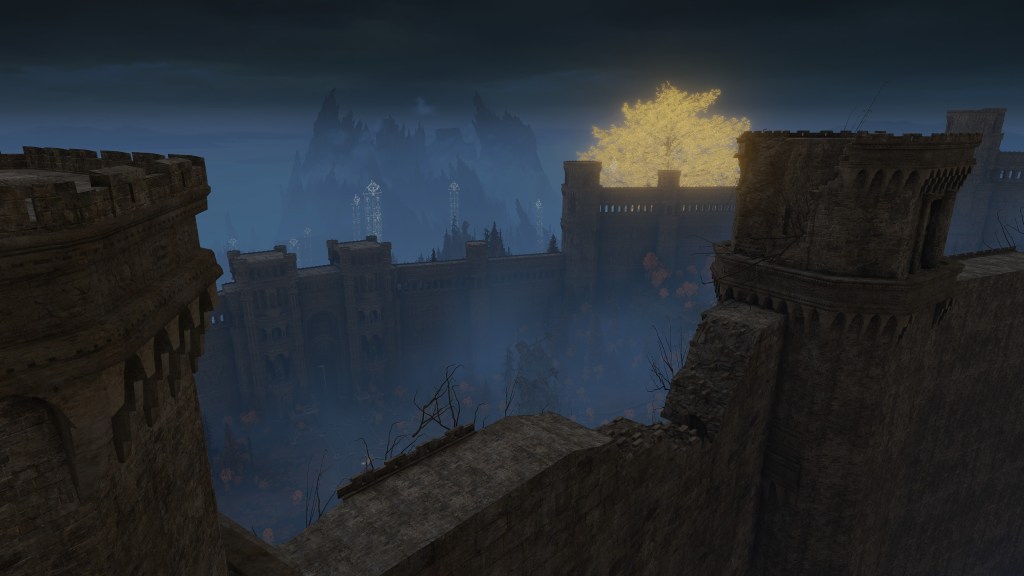
… Please. Would you be willing to entrust it to me for a time? I want to take my time and investigate it. Albeit a fragment, a pertinent ritual is required in order to harbor the Rune of Death’s power. And the ritual’s seal always leaves traces of its owner somewhere… Not to mention, I am half-afflicted by Death. I am certain I will be able to find it.
By the end of the night, the assassins would be dead or scattered to the wind as fugitives, and none would suspect the praetor’s part in this high treason. Whether or not he and Ranni were acting in concert by the end, neither would betray the other to Leyndell. Instead, when Marika unexpectedly chose to shatter the Elden Ring, both claimed their own Great Rune and contested other demigods’ becoming Radagon’s successor. Rykard obviously hadn’t planned for the queen to get herself imprisoned inside the Erdtree, pushing Maliketh into self-imposed exile. While this defeated the purpose of his trump card, the inquisitor still kept the Blasphemous Claw as insurance and added a Great Rune to his tools for opposing Order. It is unlikely that this was some new intrigue by the conspiracy, though they may have still been secretly coordinating. Realizing the implications, Rykard took hold a fraction of the Elden Lord’s legitimacy in anticipation of the fight ahead. His father also removed from the equation, this was the perfect opportunity to snub him by taking his throne.
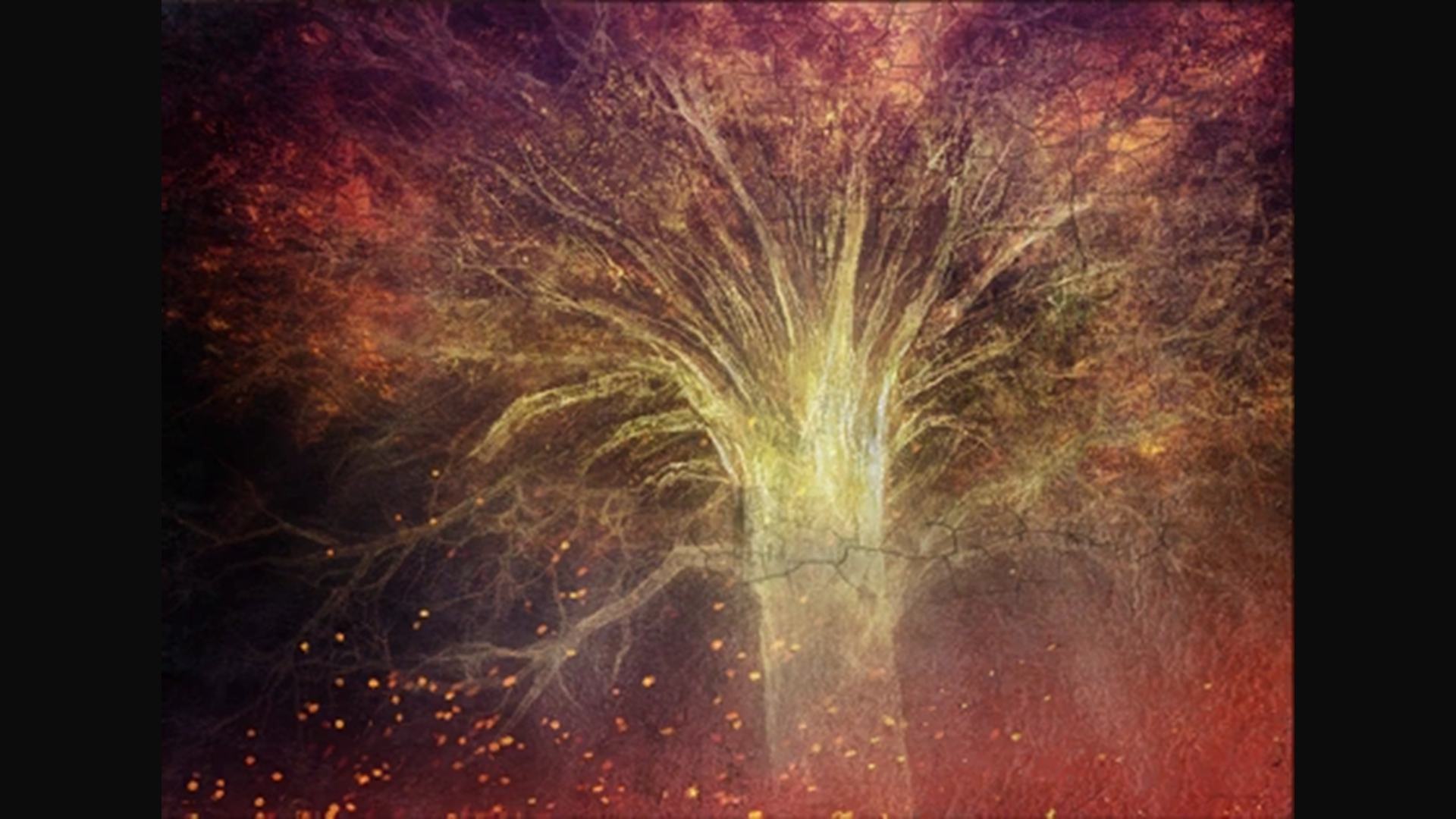
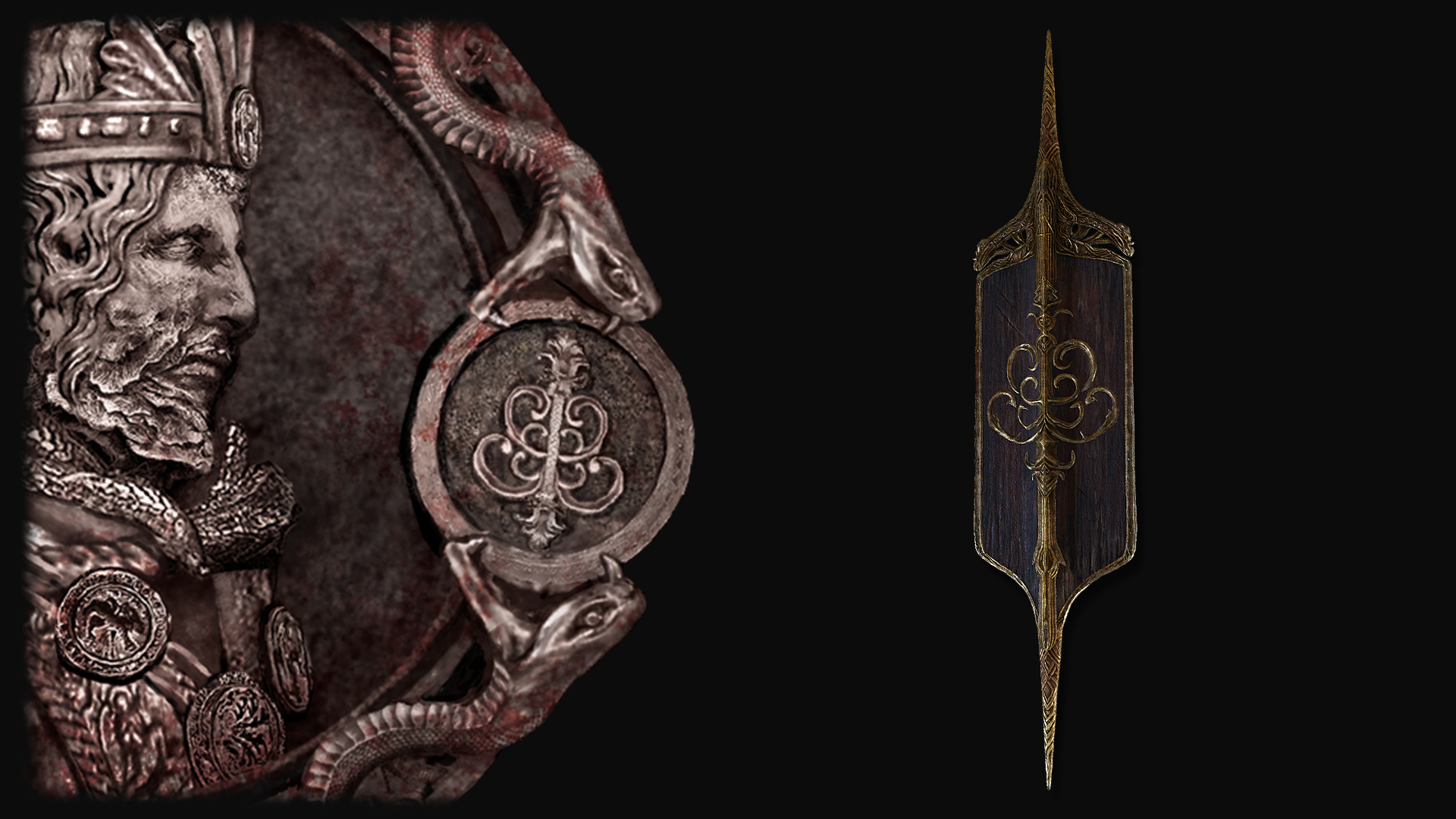
For this, he needed a bigger backing. We can find numerous citizen conscripts within Volcano Manor’s castle town, proof that another faction devoted to the Erdtree was forming under the praetor’s banner. This trust in the demigod was unfounded, of course; paintings of the Erdtree burning currently hang inside the manor, and his cameo features snakes biting its symbol seen on the Dueling Shield. “King” Rykard’s vie for Elden Lord was nothing more than a farce, a way to better access the Golden Order he hoped to destroy. But the faithful’s trust in the inquisition was a resource he could harness for political momentum. His nobles, knights, and soldiers might hear him speak of creating a more just society, even if that justice might considered blasphemy under the current regime — his plans to burn down the current Order entirely, not so much. Evidently, these parties all agreed with the justiciar’s stated vision for the future, inspired by his heroic aspirations. Under the pretense of noble ambitions, they rallied behind him with an army to compete with the other shardbearers.
But before anyone came to heads, Morgott stepped in and negotiated an alliance. More than likely, Rykard agreed just to buy time for another opportunity, conspirators sitting alongside one another as they argued their claim to the Elden Throne the Omen sat upon. Meanwhile, the praetor continued to build up his forces in preparation for war, maneuvering every which way for the coming day of blasphemy. With the alliance in deadlock, there was only one way he would ever gain access to the Erdtree, and it was no longer through the Elden Throne. The others were no different, and by the time the Second Defense of Leyndell had concluded, Rykard recognized that his kingdom officially plunged into a civil war. While everyone else tangled with each other to their detriment, he and his forces would swoop in to take it all. Having no more need to hide his intentions, the blasphemer would finally reveal himself to the world.
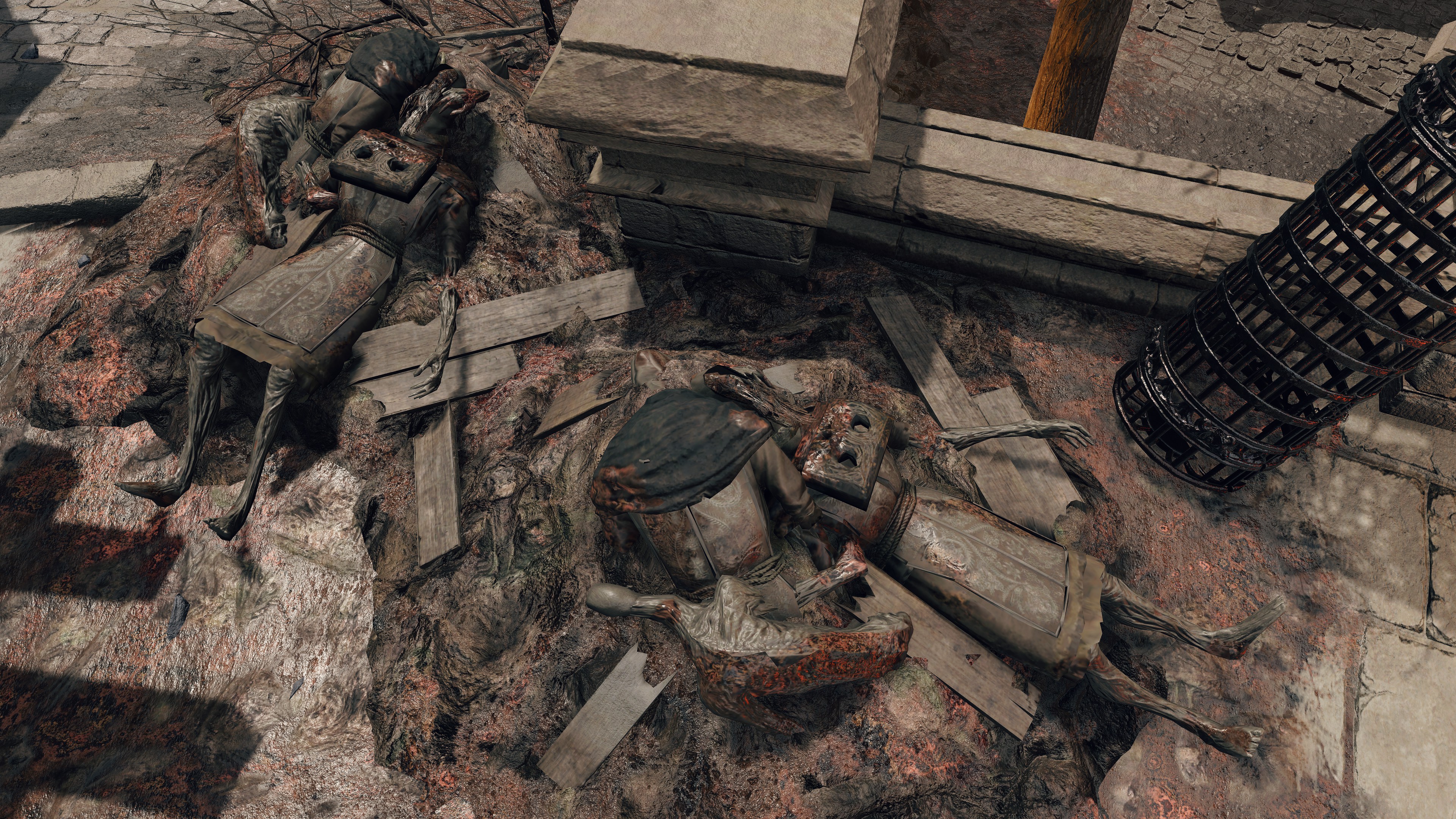
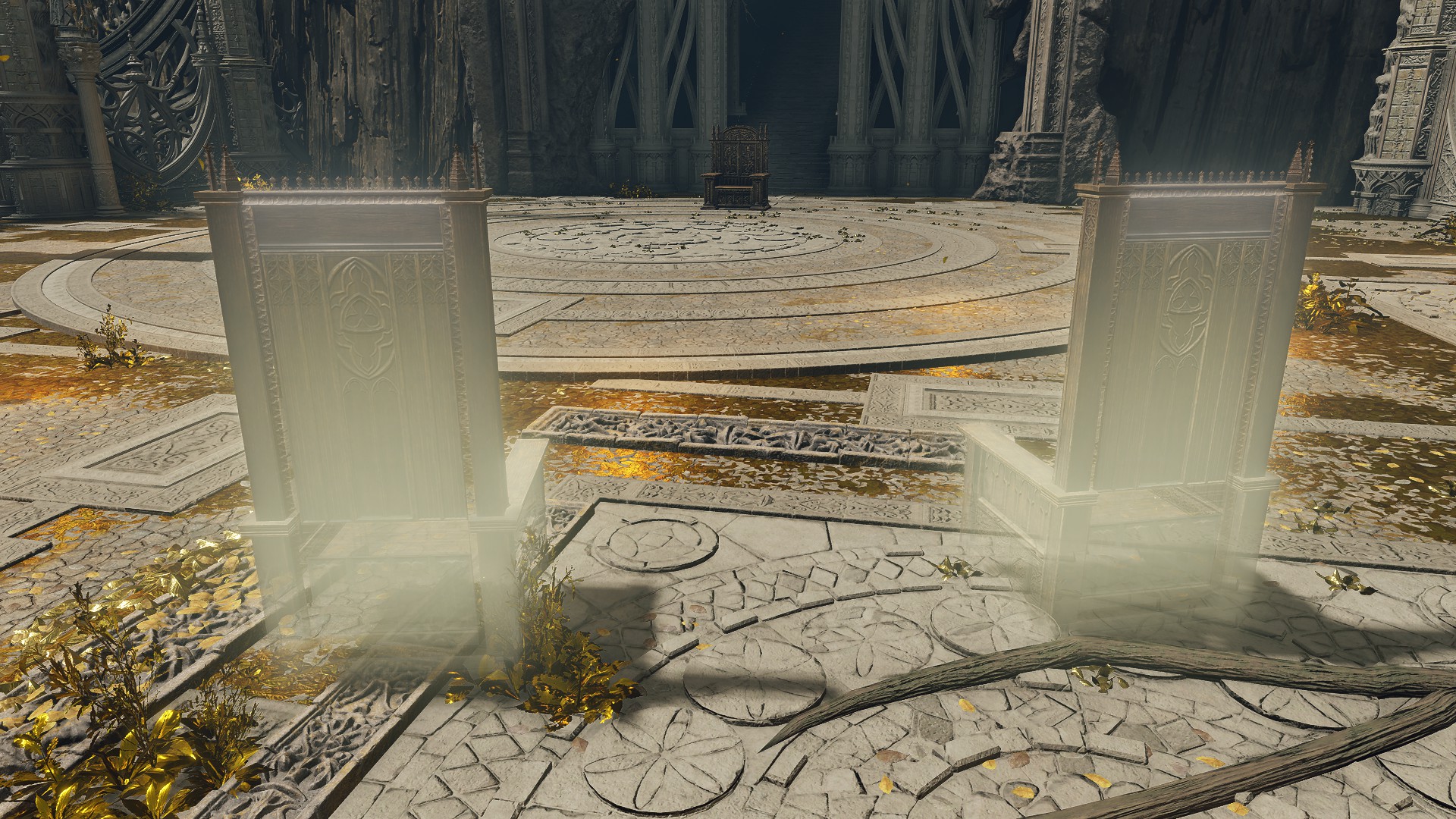
One might then immediately question why the demigod chose to feed himself to the serpent deity, Great Rune and all. This is especially curious when the rune’s Japanese description highlights its own greatness, putting aside its size. Was his shard of the Elden Ring so impressive to be singled out in this way? It is possible, given that the rune still appears comparable to the others even after being twisted and partially digested within the serpent — and how fitting that the undulating string of gold shards, barely holding together amidst the pale power already broken down, even resembles a green snake. The Great Rune has undeniably been transformed by the pagan god, with its blessing exposing how it became as much part of the snake as of the Elden Ring. But if Rykard just wanted to share his Great Rune’s power, he didn’t need to offer himself along with it. He wanted to be devoured by the snake, any benefits from the Great Rune serving merely as a bonus. And his reasons were surprisingly practical.
Great rune of Rykard, fragment ruler. Recovers HP when defeating enemies via its benediction.
Rykard is one of the children of Rennala and Radagon. When Radagon became Queen Marika’s king consort, they became demigods as outside relatives.
And then Rykard fed the blasphemous serpent. Both himself and his great Great Rune.
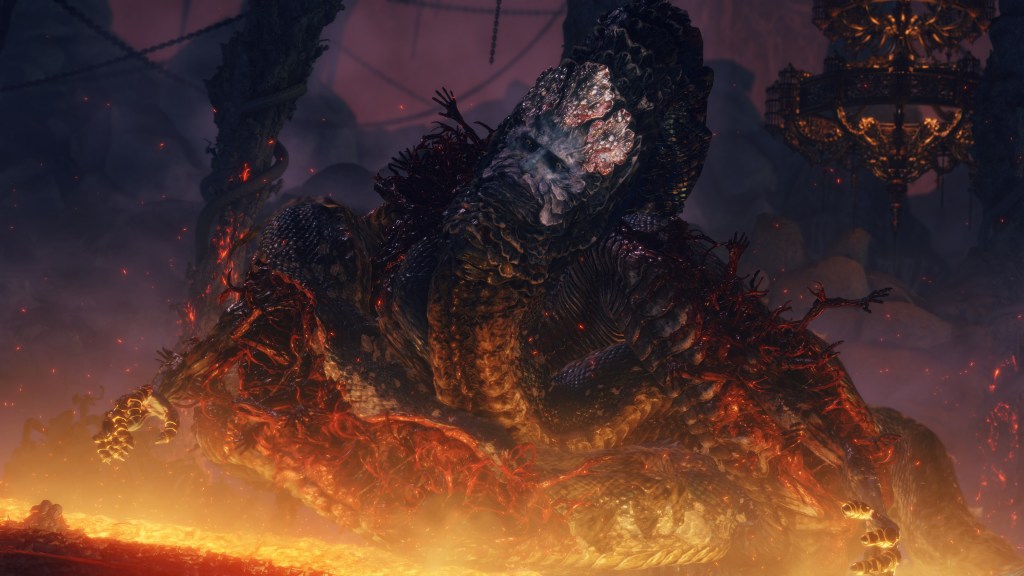
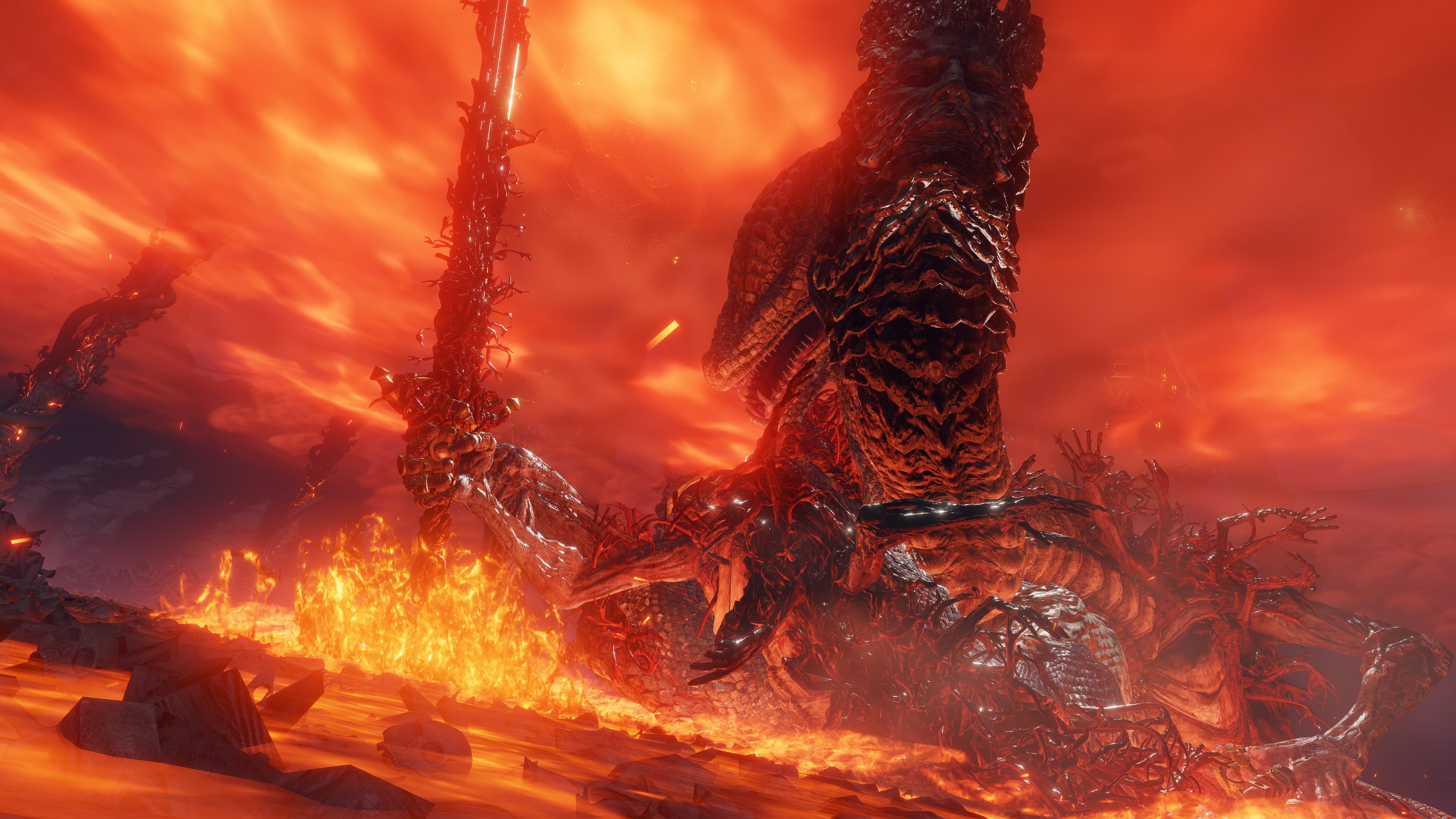
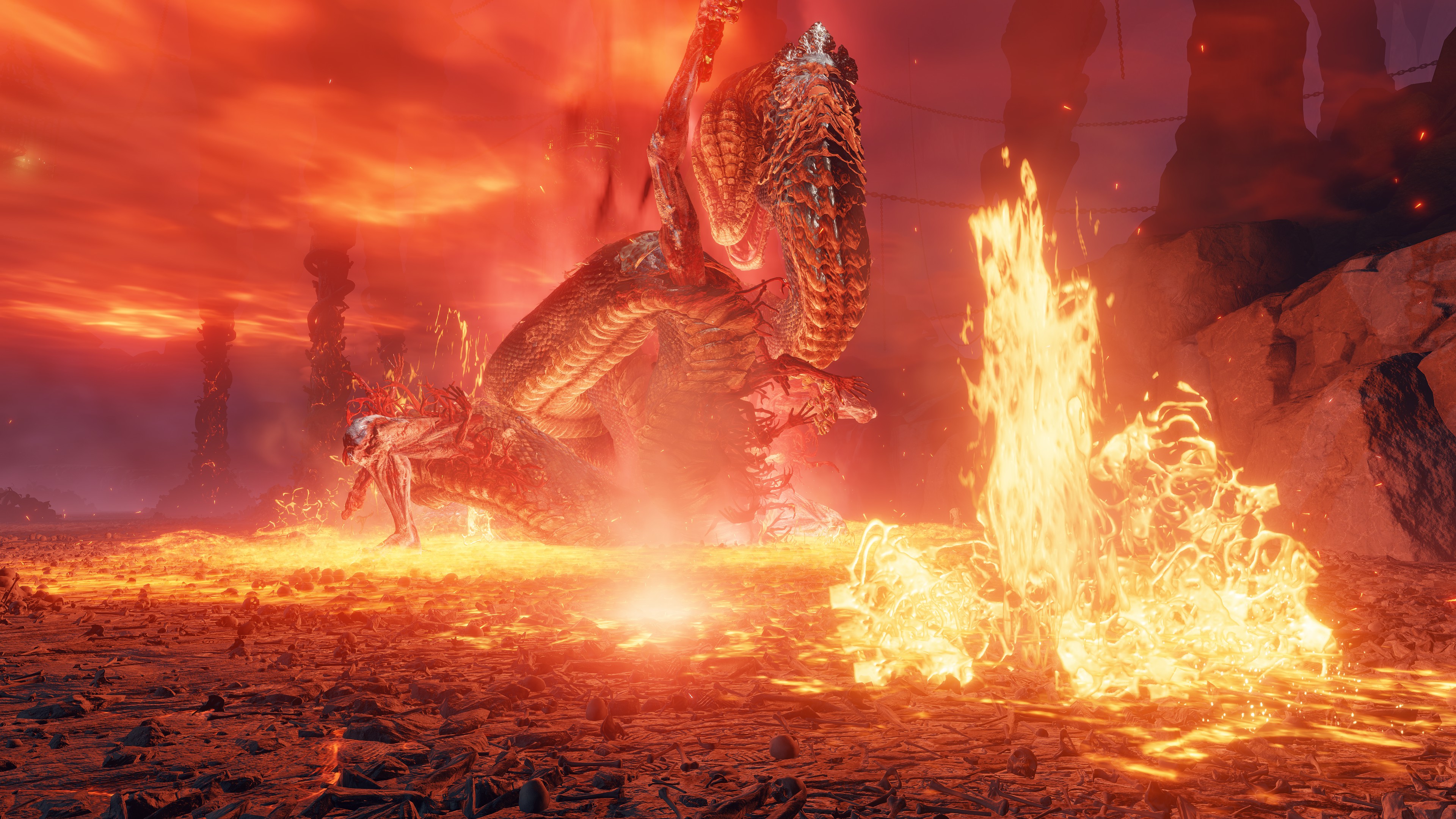
According to the description of his remembrance, the praetor became the great snake in order to have eternal life and continue growing while eating. As he apparently once explained, he understood how long and rugged the road of blasphemy was. Even with the civil war, the gods were powerful forces and overcoming them would be no simple feat. To see this Golden Order torn down, he needed to survive, and for that he needed power. But his own was obviously insufficient. There were plenty of shardbearers, many more impressive than him as fighters. A child of gold needed to look outside blessings for power — if he wanted to walk down that path, he needed to embrace sin. And if he always wanted a mother to be consumed with him, this was his chance to let her consume him. And so, the greedy demigod assimilated with the gluttonous god, body slowly devoured until his essence fully merged.
Recollection of Rykard, Ruler of Blasphemy, engraved in the Golden Tree.
Can acquire the owner’s power via the Finger Reader. Also, can use to acquire vast runes.
To live eternal, eat, and continue growing. For that, Rykard became the great snake. I am aware. Of the lengthy ruggedness to the path of blasphemy. Would you walk it balking at sin?
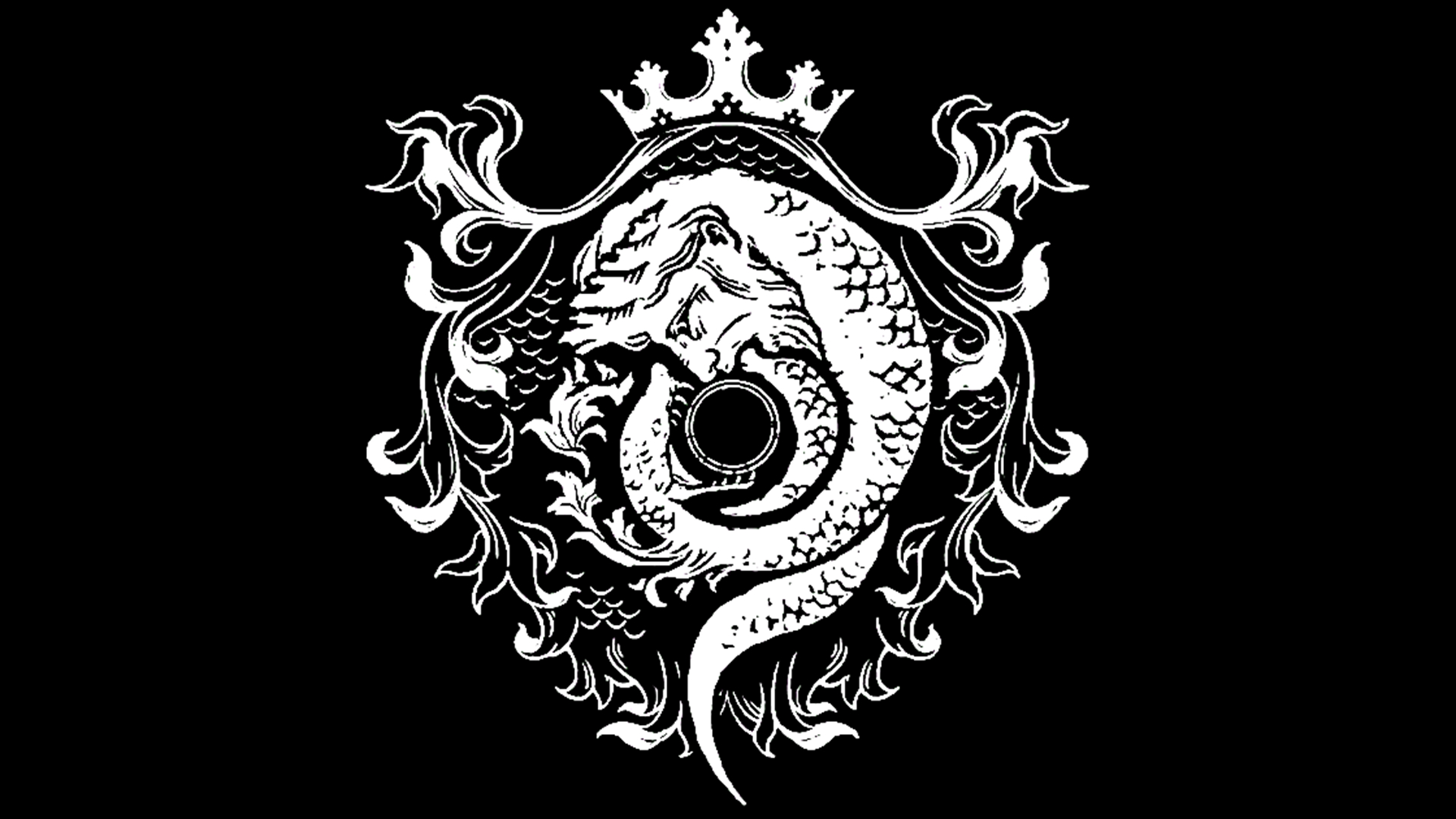
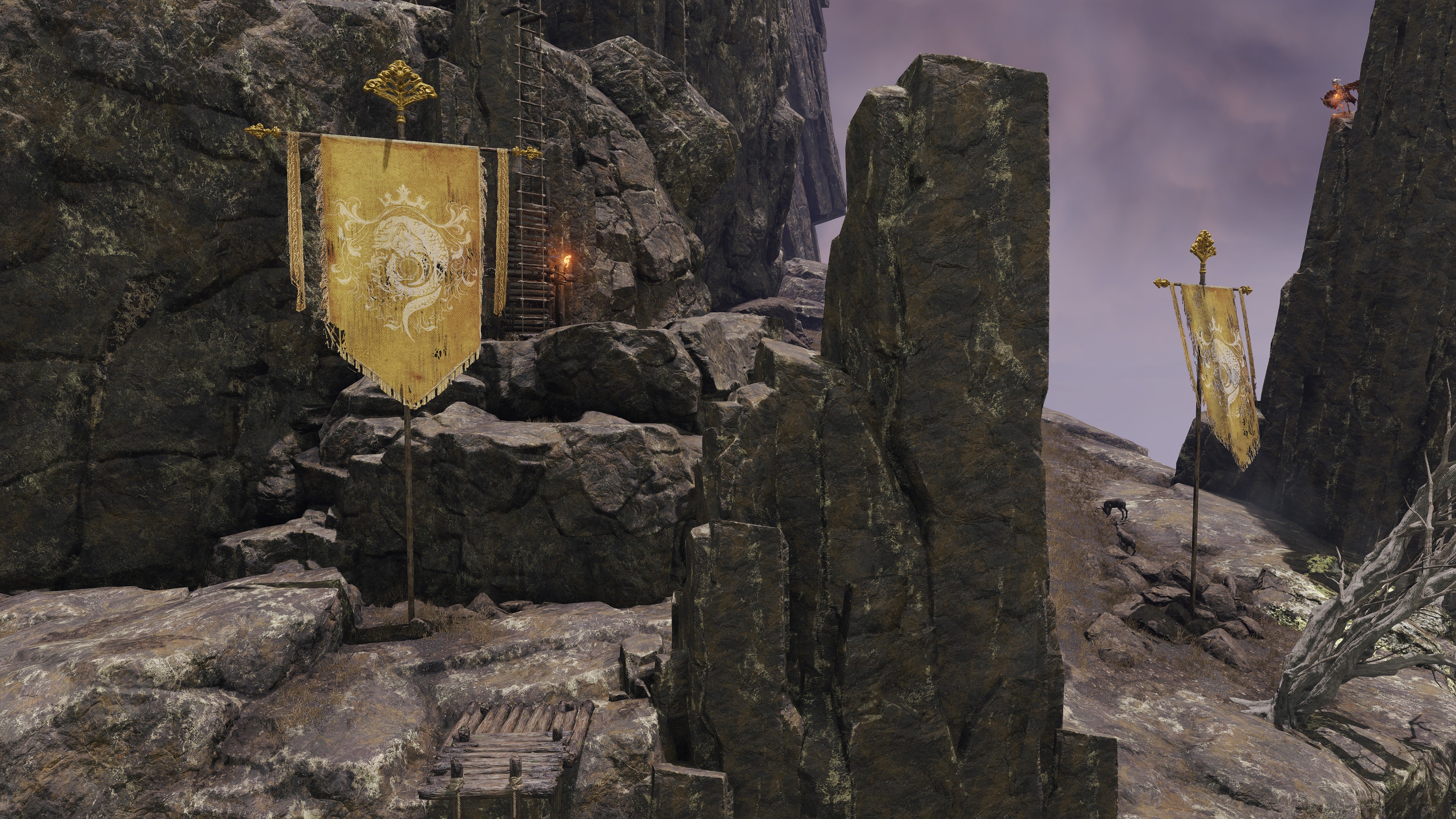
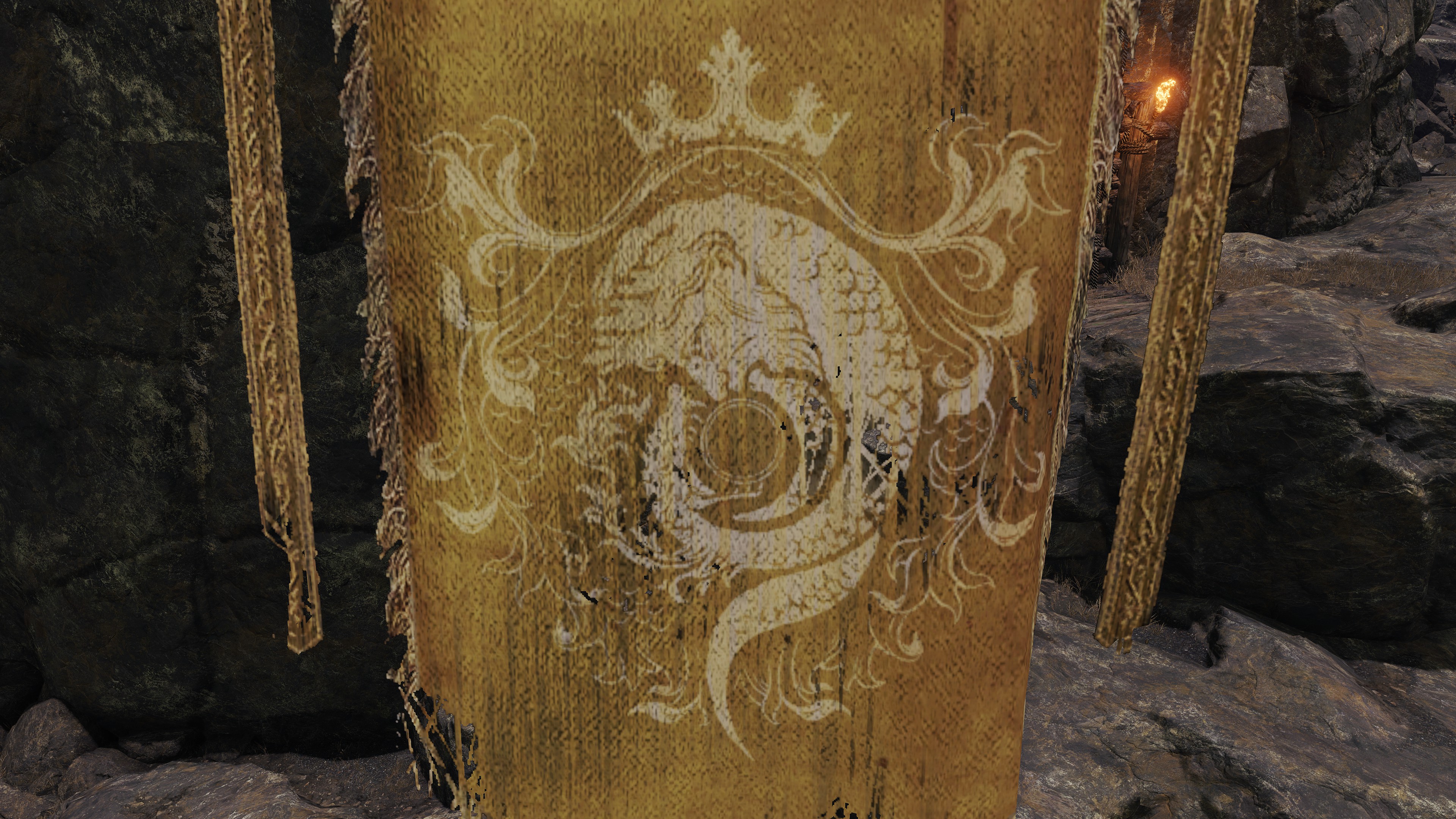
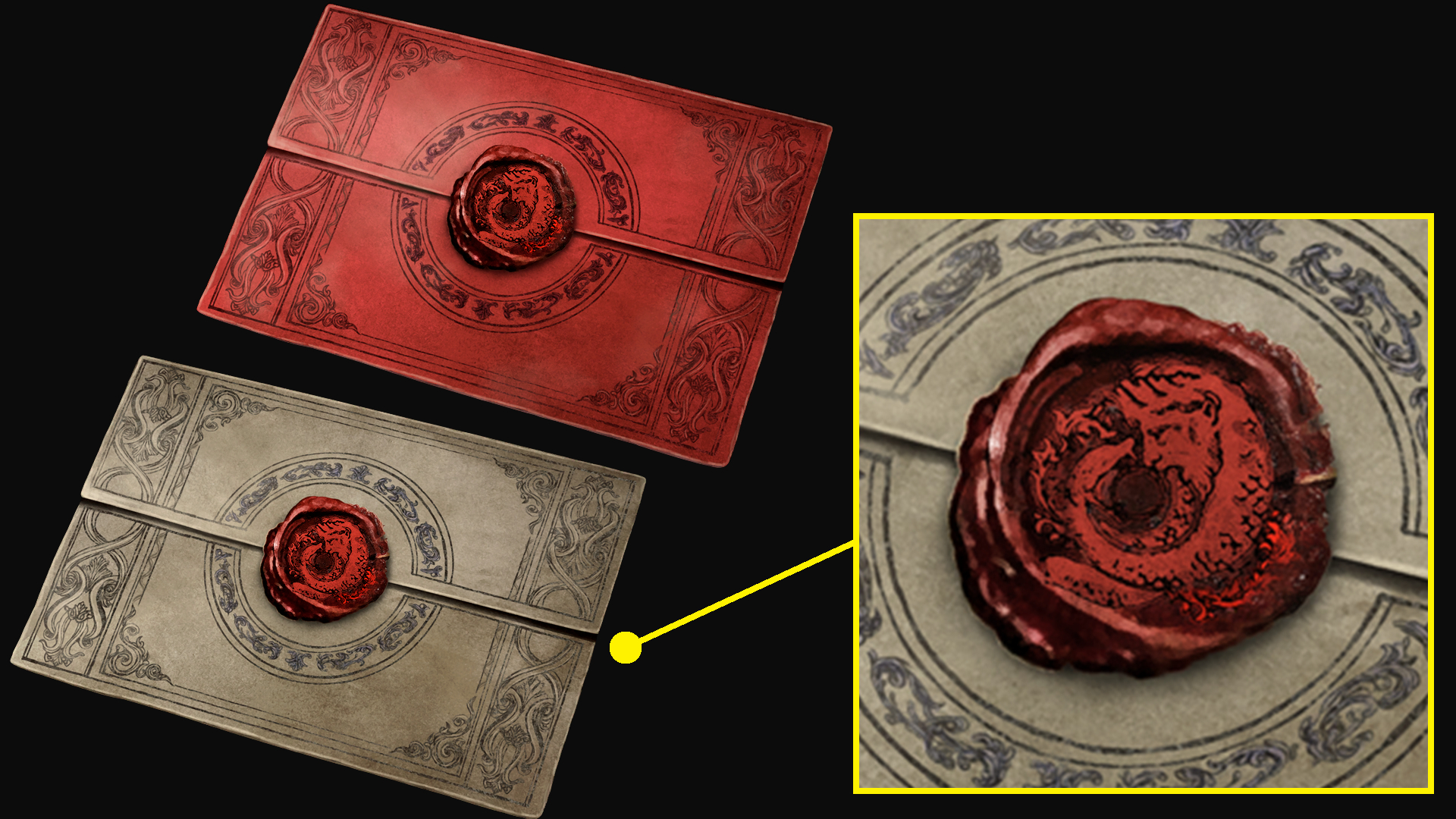
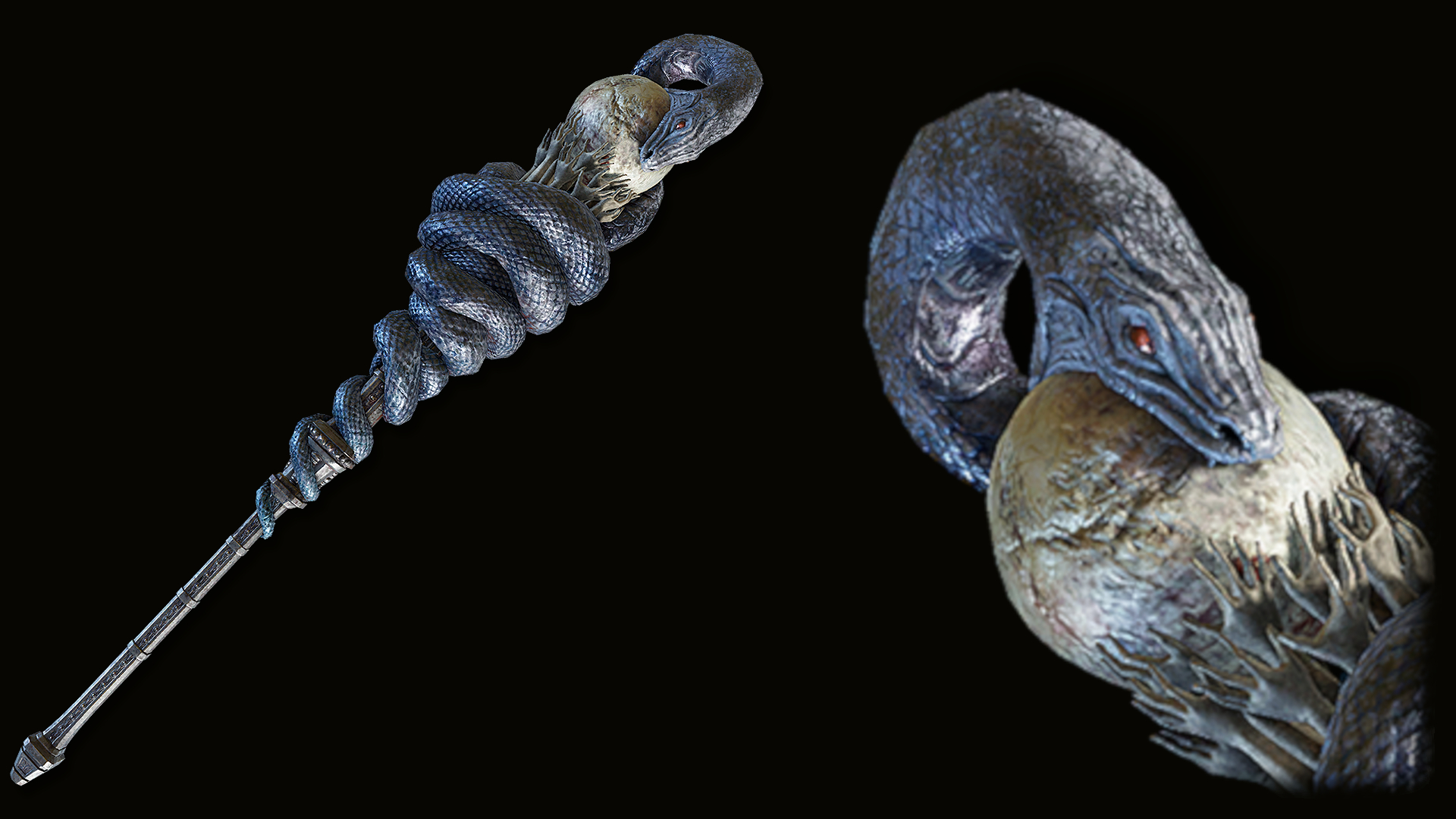
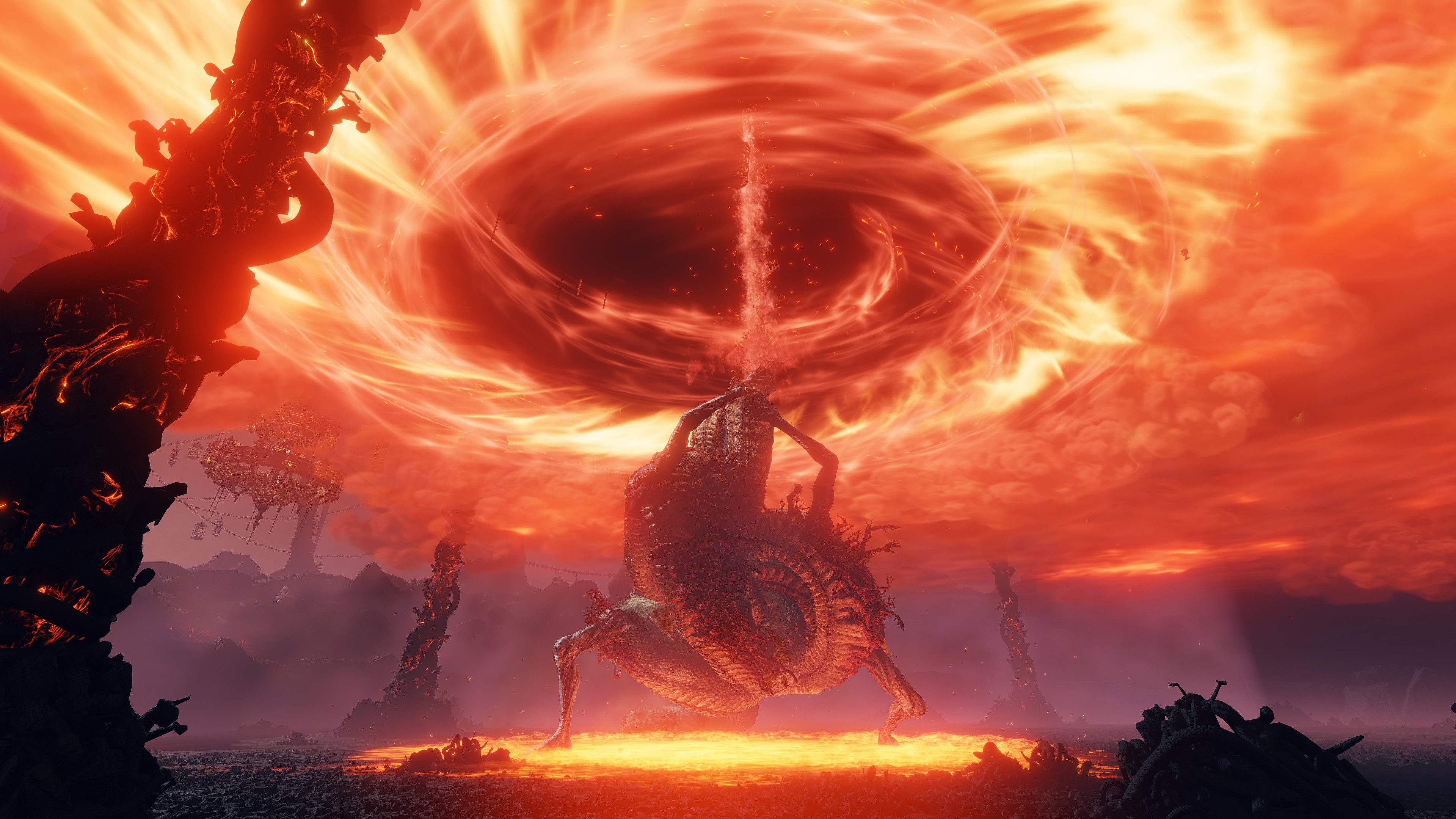
During the process, Rykard glimpsed a vision of the future. As he neared death in his old form, the demigod saw the deity’s dream of devouring the world. Still, it was a prophecy which Rykard fully intended to fulfill following his rebirth. Gelmir’s war banners, sorcery sigils, even letter seals, all feature this image of Rykard as the snake, his head being crowned as their jaws ready to swallow the globe. The former shardbearer intended to spend his eternity devouring every last bit of wretched Creation if it meant toppling the Erdtree’s Order, becoming the Ruler of Blasphemy in its place. For that reason, a king’s scepter has been fashioned, depicting this seminal event for when Rykard finally raises it for that next step. Until then, he must still contend with the so-called gods, but he has the will and now the means to do so. After all, the Devourer’s Scepter shows a myriad of hands holding up the world to the snake gripping them. Many would be needed to realize that ambition, together, the prince of gold the critical first of this family.

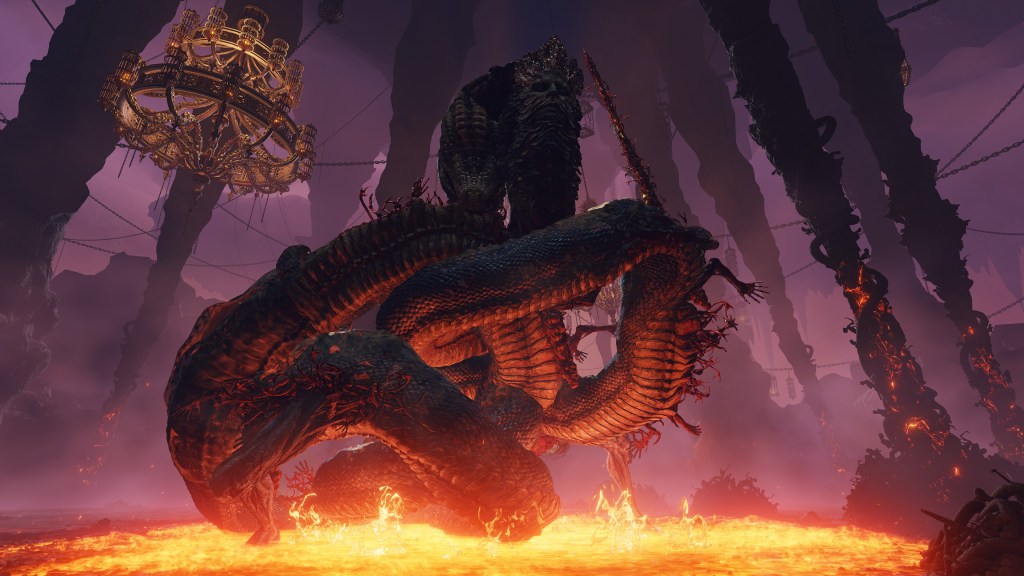
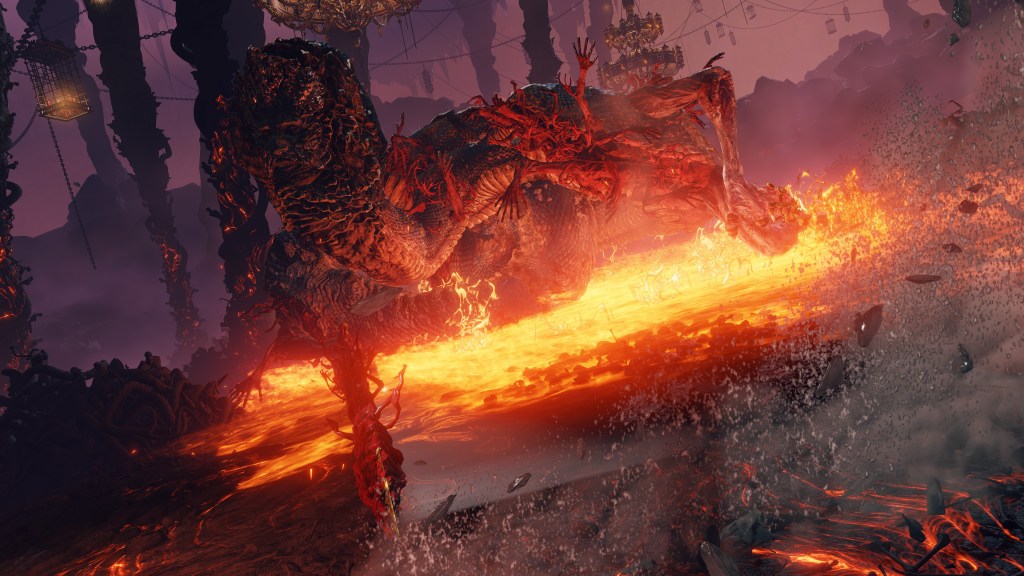
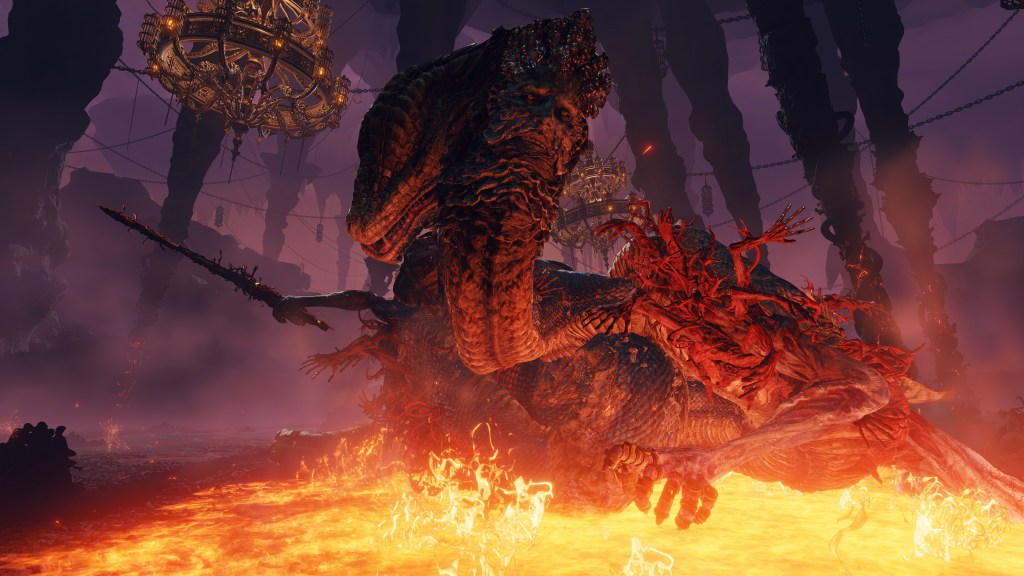
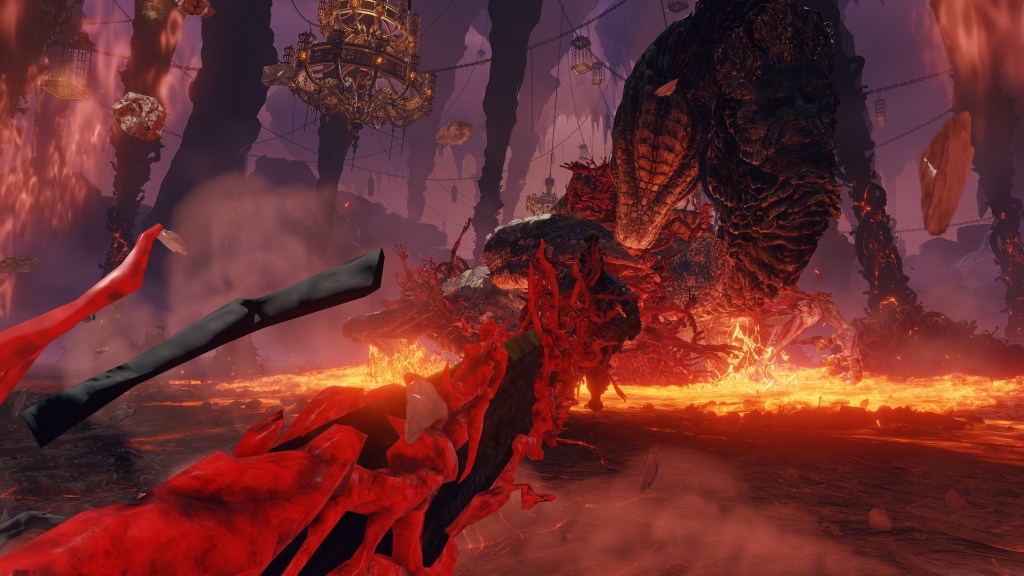
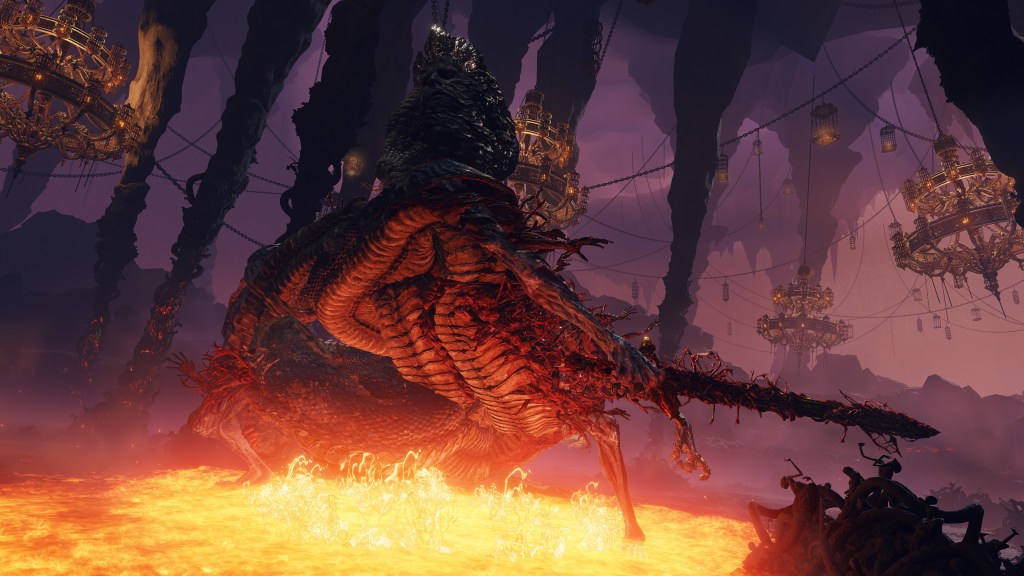
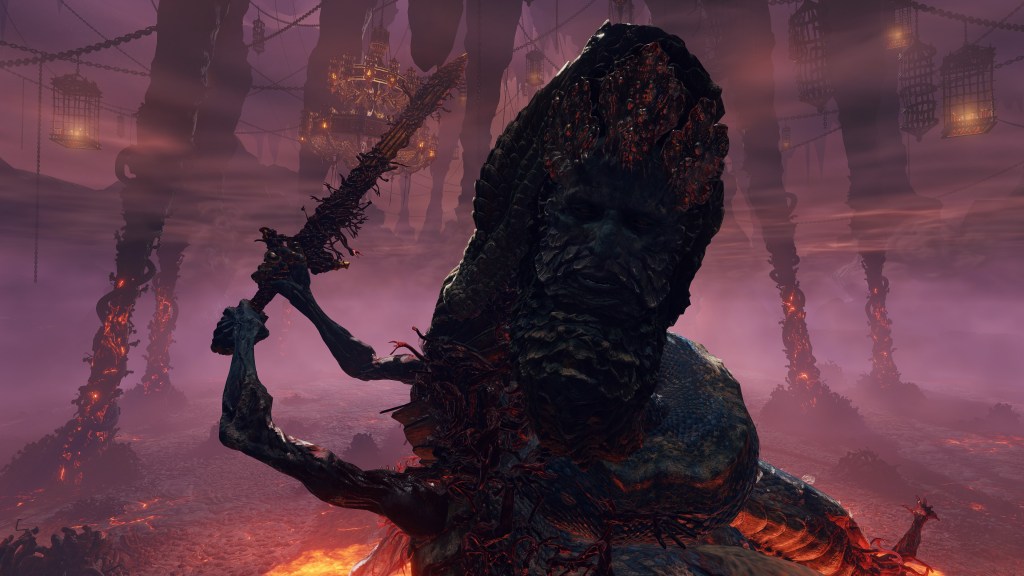
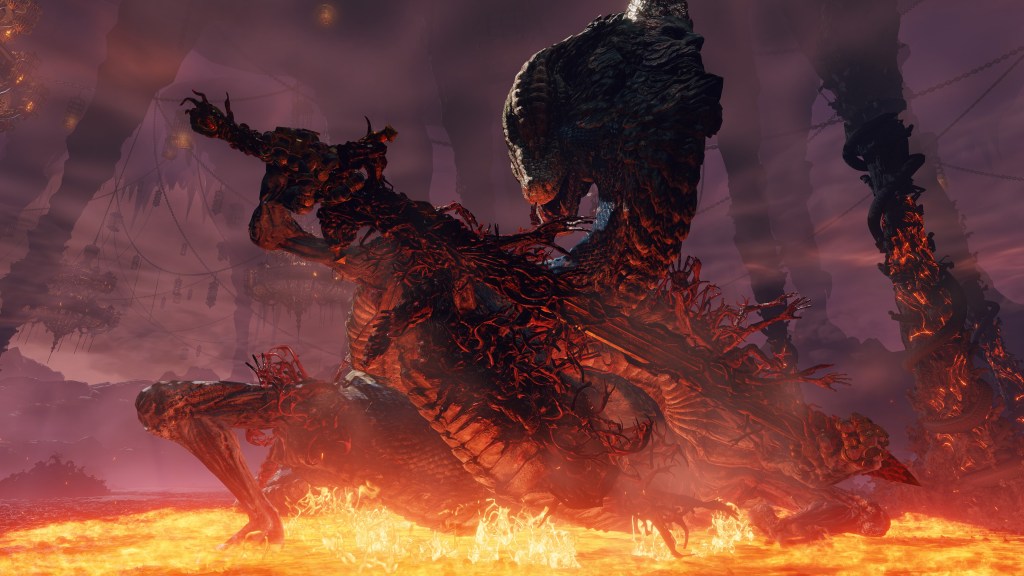
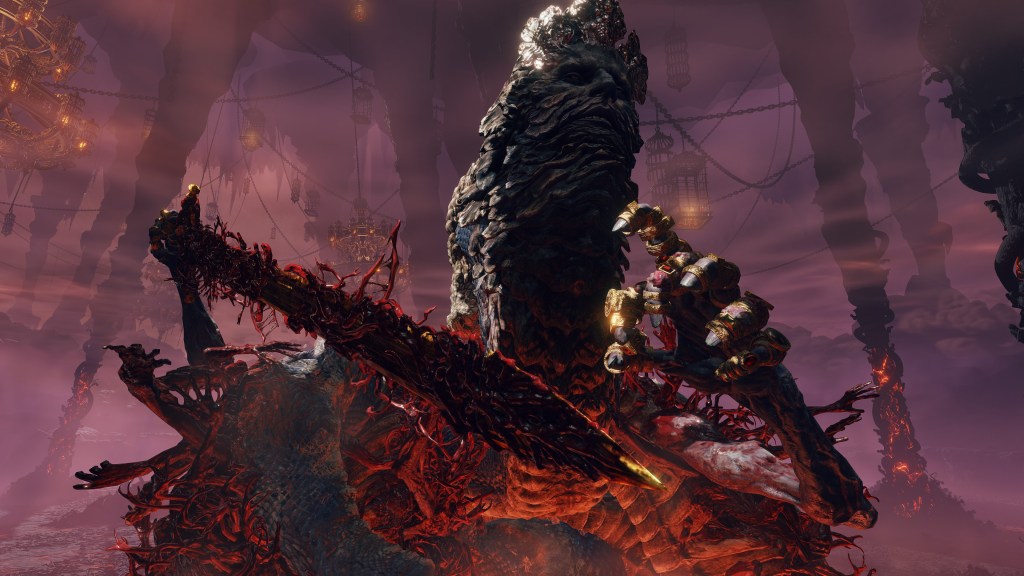
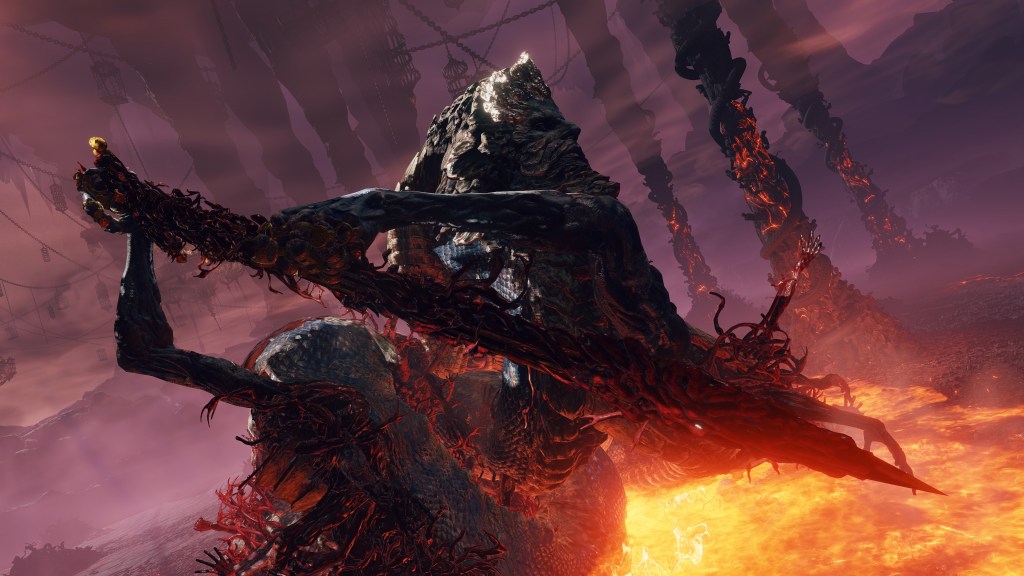
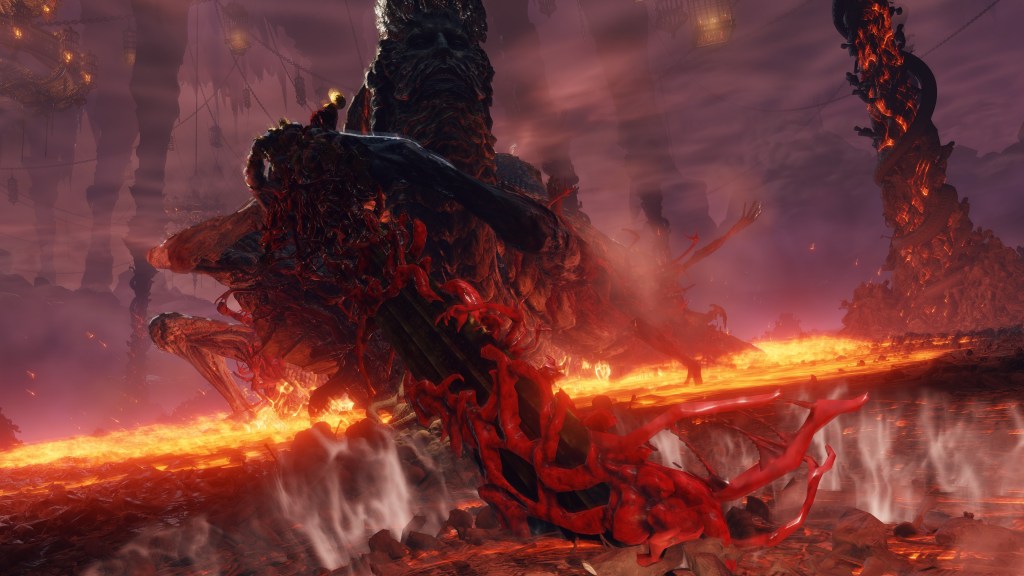
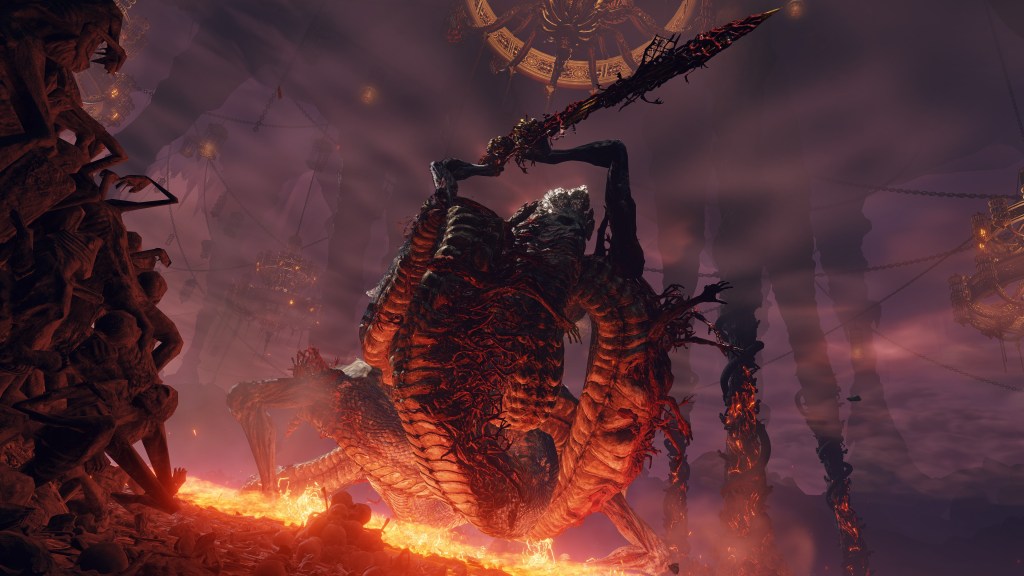
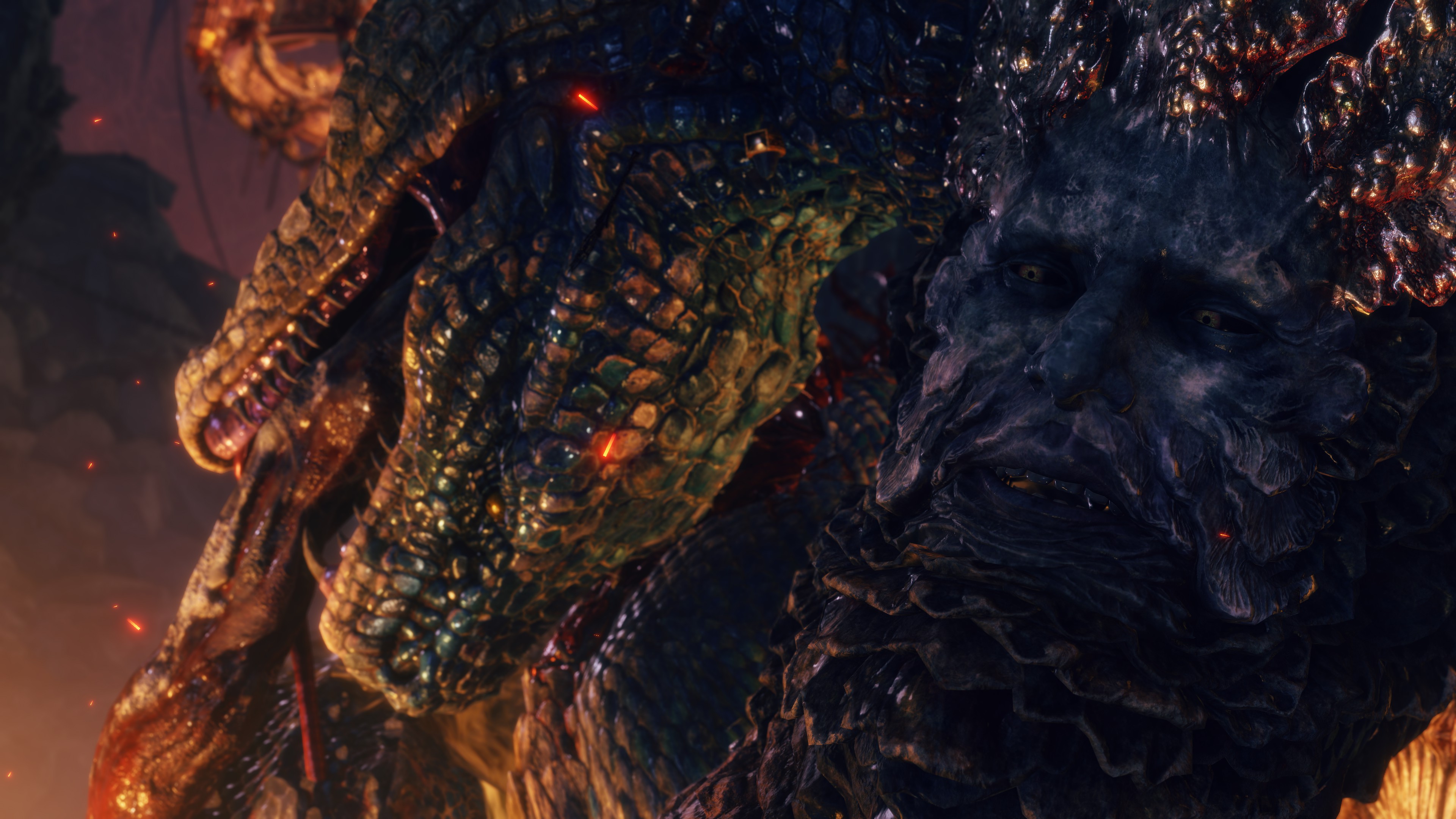
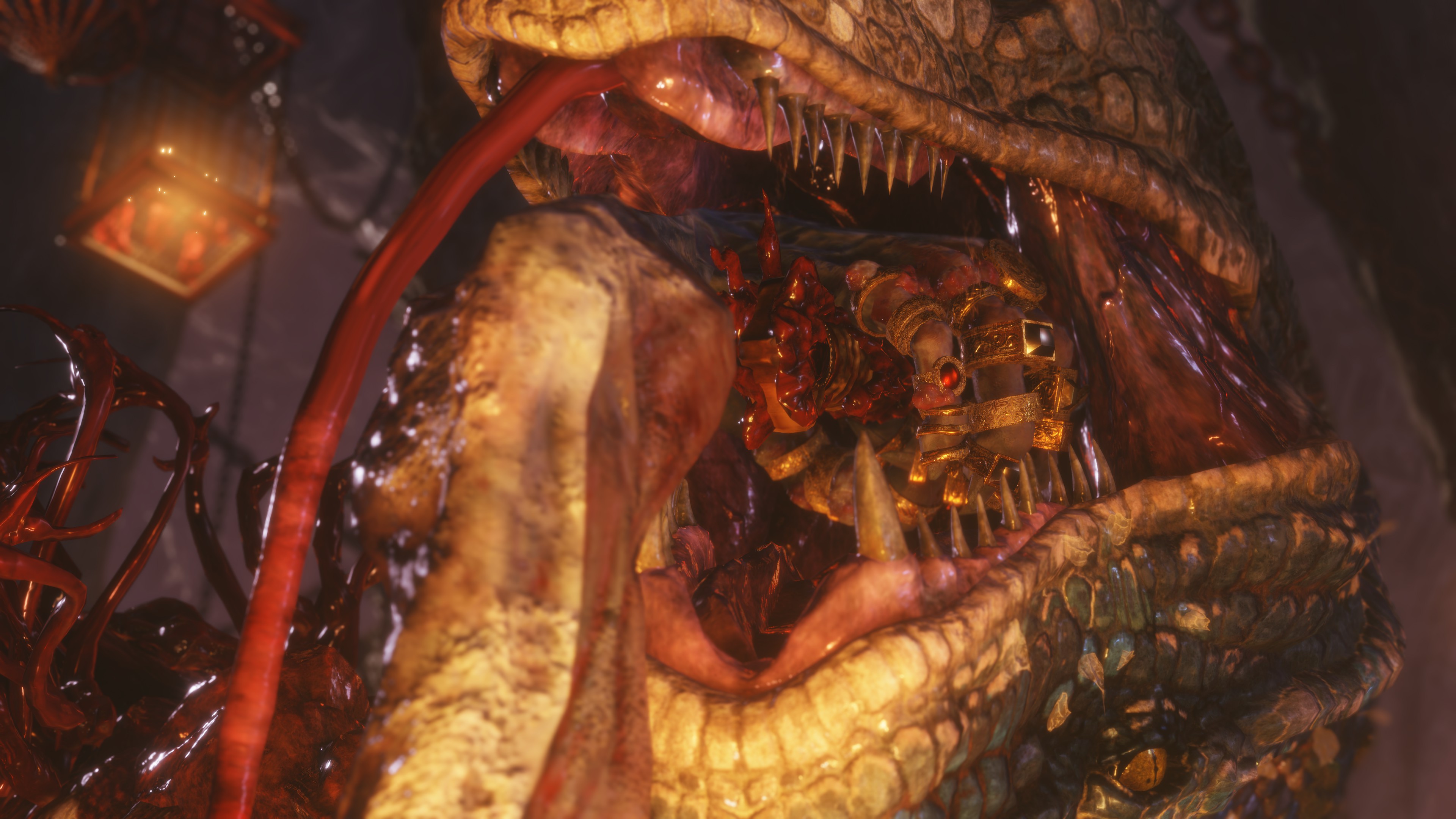
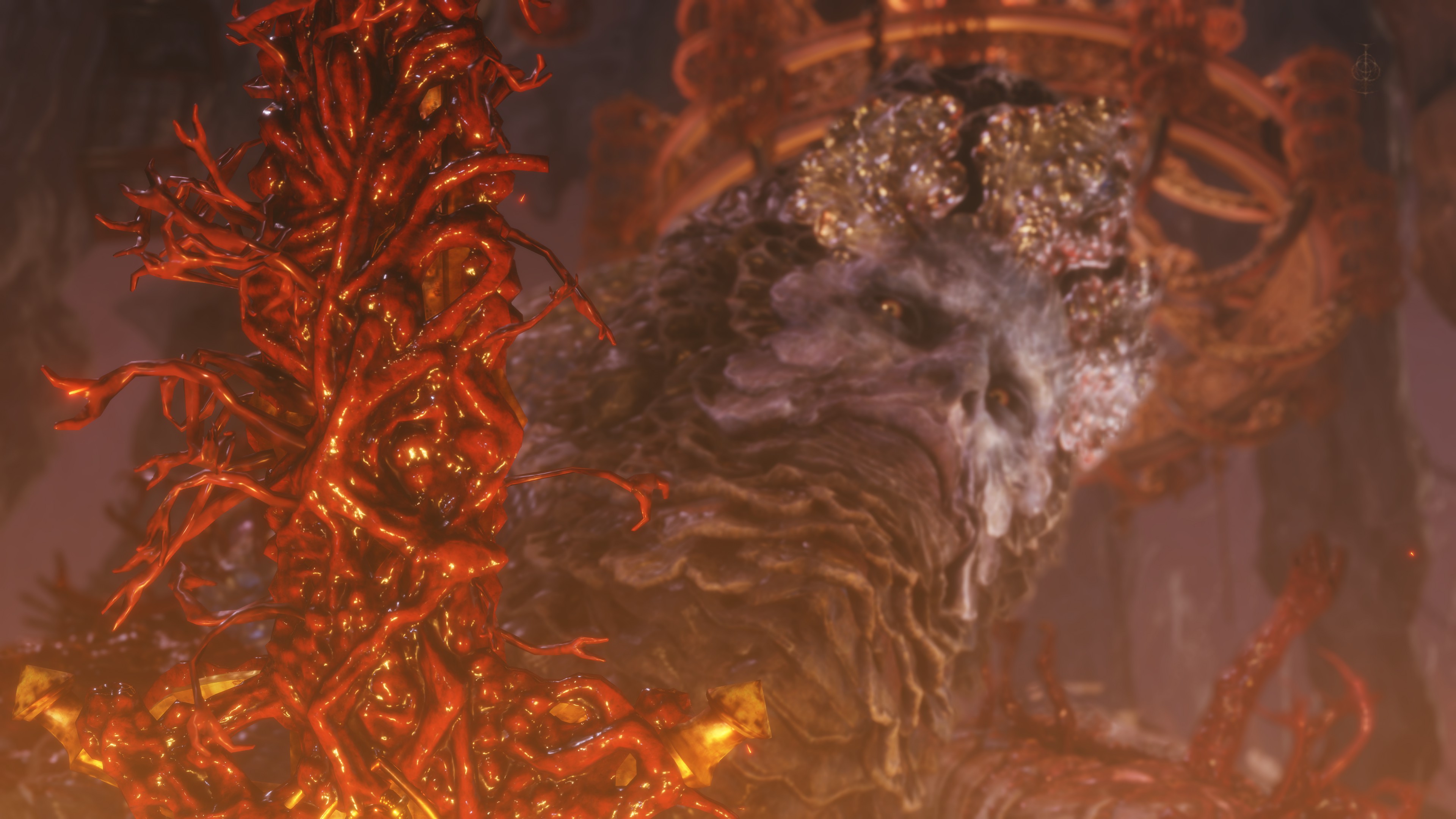
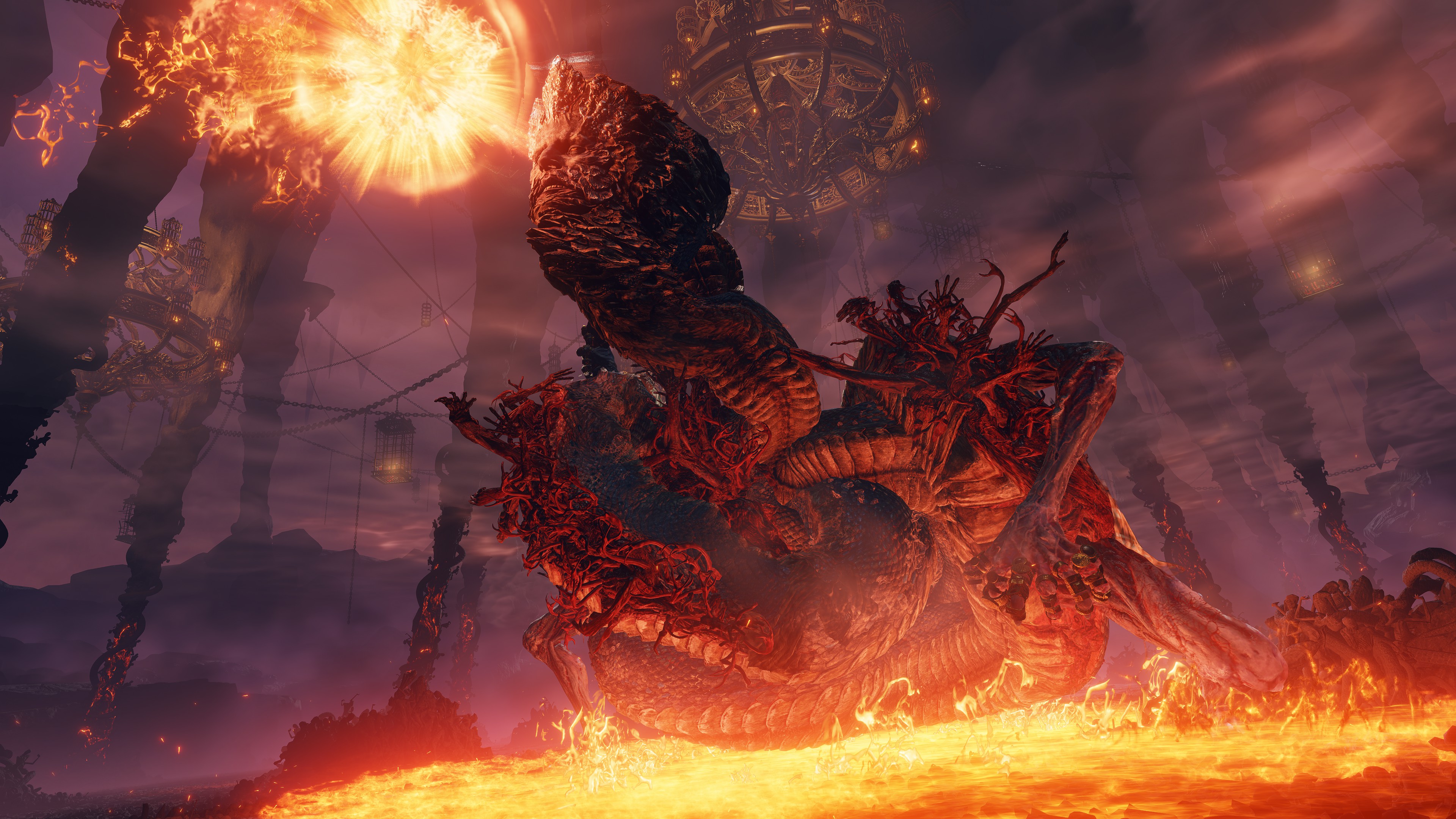
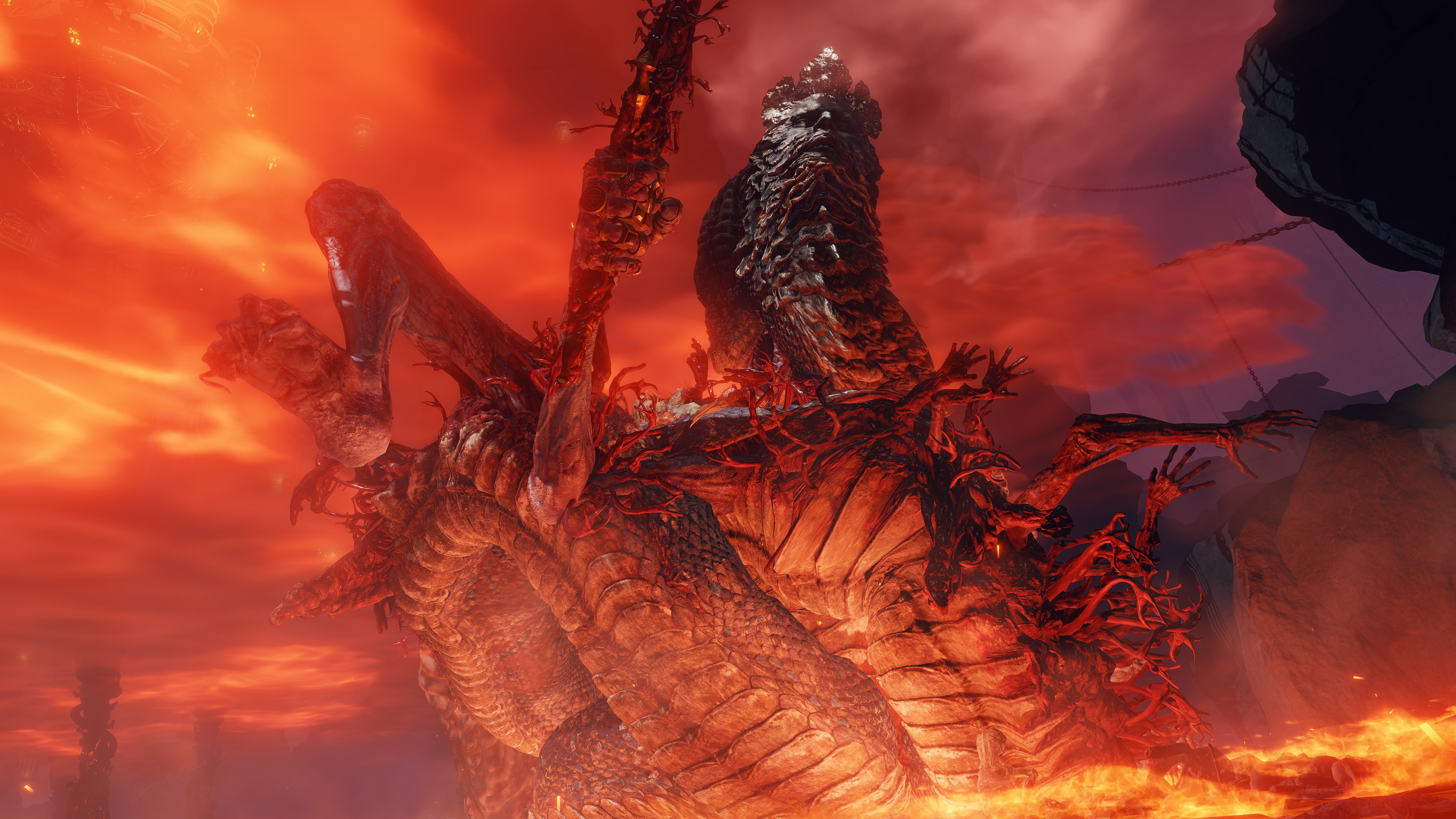
Between himself and the Great Rune for sustenance, the immortal snake already began growing rapidly, and Rykard along with it. Much like his predecessor, the praetor has sprouted new limbs out of the snake’s elongated body, his face emerging from its throat. Even his sword has reached comical size sitting inside its gullet, ready for the giant ringed fingers to pull it out of the snake’s maw at a moment’s notice. Meanwhile, the serpent was shedding its skin even as it was still munching on the demigod’s head, which looks to have been served on a platter somewhere within Volcano Manor for the beast’s convenience. As seen in the introductory cutscene, the eggs the god laid were placed on a separate platter while they quickly hatched, highlighting the revitalization of this immortal creature. And with that comes the body heat which once melted the stone beneath its belly. Through that, the sorcerer reborn as the snake would finally revive the old hexes of Gelmir. But more importantly, he achieved his desired eternity, his strength of will enabling him to subsume control over the base serpent.
During all this, Rykard gifted Tanith the Tonic of Forgetfulness. This “secret” medicine (忘却の秘薬) inside a small copper bottle wipes clean all painful memories, freeing the drinker of their mental agony. The praetor most likely invented this drug with perfuming, as the menu graphic reveals a branch burning inside the bottle to create its sweet fumes. For collaborators, there are the resident Omenkillers, who used a similar drug to wipe out all emotion. But regardless of his religious connections to draw upon, the blasphemer’s intentions for Tanith are obvious. As he was about to embark on becoming a total monster, reveling in sin for his ambitions, Rykard wanted his wife to choose another path. Despite the circumstances surrounding their marriage, she was still his beloved. In the “loving” embrace of his new “mother”, he no longer had need for fantasies — the woman indulged his selfishness long enough, it was time to be free of him and live happily. While he followed the road of blasphemy and sin, she could go down the side of the fork none the wiser. This was her chance to leave him and never look back.
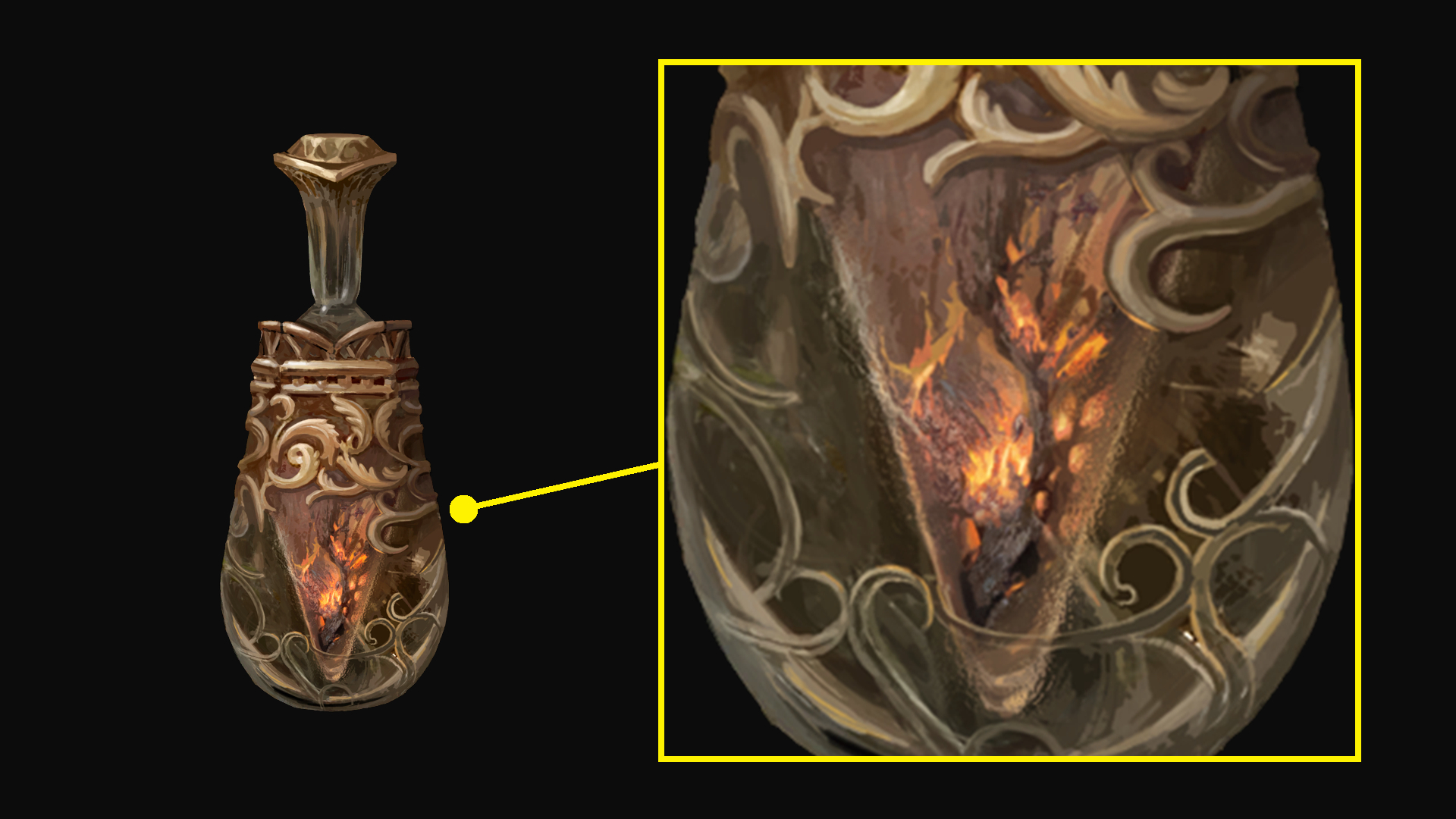
Secret drug put in a small copper bottle.
Forget all the bitter anguish.
The gift from Rykard, who swore to blasphemy, was nonetheless unnecessary for Tanith. My king, is there any greater anguish than forgetting you?
… Ahh… so very sweet… But somehow…
But Tanith never drank the elixir. Rather, it was only after seeing him becoming a great snake that Tanith felt any attraction. The dancer of Rannah always revered flame and the passion of men. Seeing his heart go wild with ambition and that will catalyze a flame which melts the very stone, it melted her heart. The tonic’s description captures her sentiment: there was no greater anguish than forgetting her king. This was the demigod she wanted to marry, not a man satisfied with just having her there as a prop. Perhaps she didn’t believe in his sincerity, crusading against the Erdtree for trampling the weak, until that moment. Now, he was her hero — finally showing potential to be king of the world, letting his fire burn the old world in impassioned fury. How could she not stand as witness to him realizing that? Tanith takes her name from the great mother goddess of Carthage whose name means the “Serpent Lady”, and so the Lord of Blasphemy’s consort chose to stand in solidarity with the immortal serpent. If sin was the only way to realize Rykard’s aspirations, then they would be sinners together.
It wasn’t just her. Gelmir’s knights also remained loyal to Rykard after this incident. Their order embraced flame, adopting skills like Eruption to control the lava resurging from the volcano since the snake’s return. Clearly, becoming an open blasphemer in league with the Golden Order’s most hated adversary didn’t deter them in the slightest. If anything, the knights were enthusiastic to bring fire back to the fire mount. Volcano Manor no longer hides their intent to burn the Erdtree, but the knights were seemingly satisfied so long as that meant wiping the slate clean. From Tanith’s account, Rykard acted outraged at demigods shamefully scrounging for handouts from the Erdtree, just to be forced into competition with each other for more power — a mockery to all. Rather than one another, the golden tree was the real obstacle for a new kind of Order founded upon justice for all, and the snake’s flames were the means to remove it. If that was the path their lord and liege chose, then rebellion it is. They would shoulder everything for such noble ambitions, including the label of blasphemy.
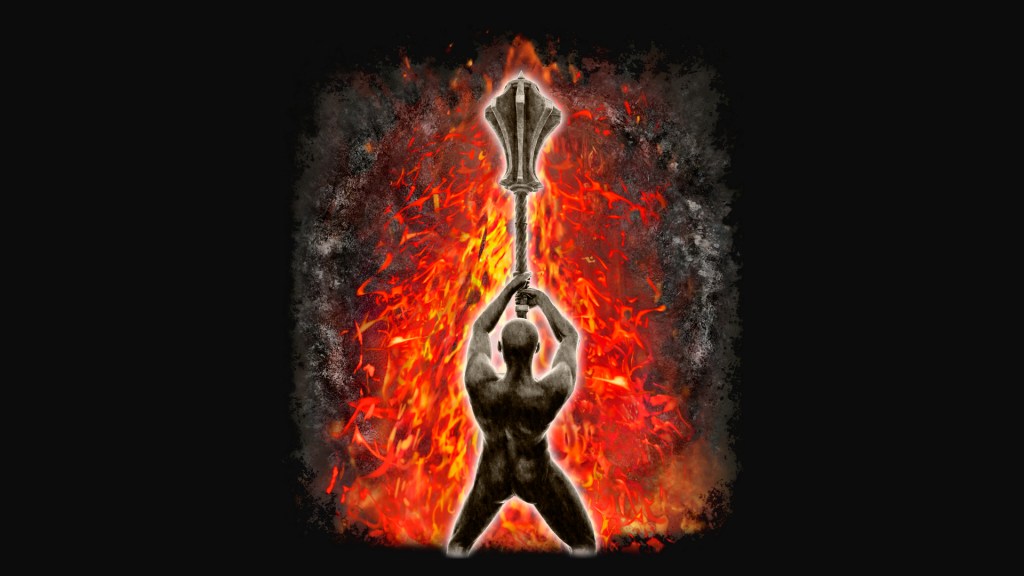
Battle art of knights who served Volcano Manor. Generates overflowing lava on the ground slammed with the weapon and erupts it up with the pullout.
My king was outraged by that. He couldn’t accept such a shameful way of life, scavenging from each other for what was handed out. If the Golden Tree, the gods, will mock us so, then we will raise the dignified banner of rebellion, even if it means committing the blasphemy of anti-Regulation. That is the will of my king, Rykard, and the will of Volcano Manor.
Loose the Demons from Hell
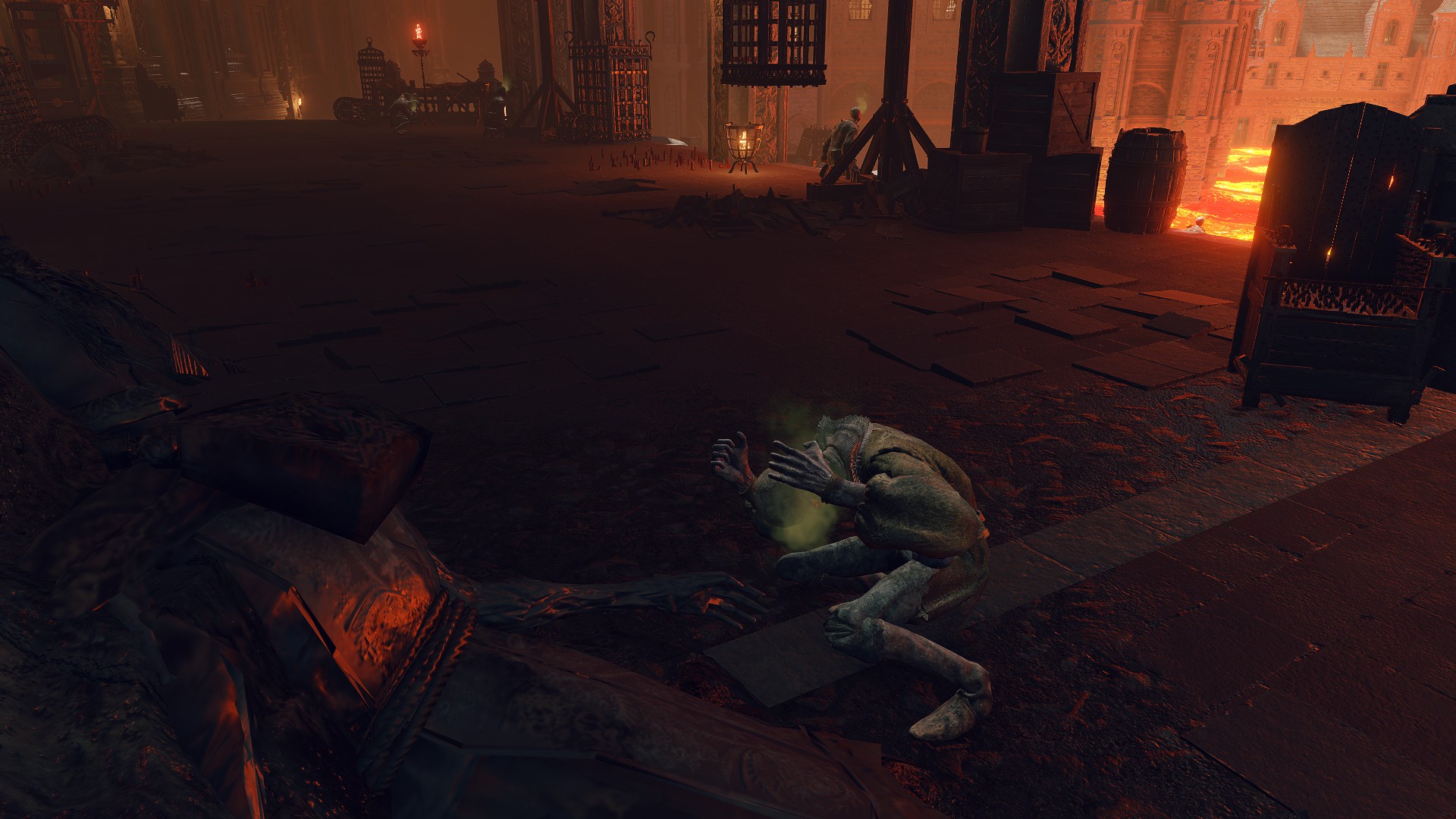
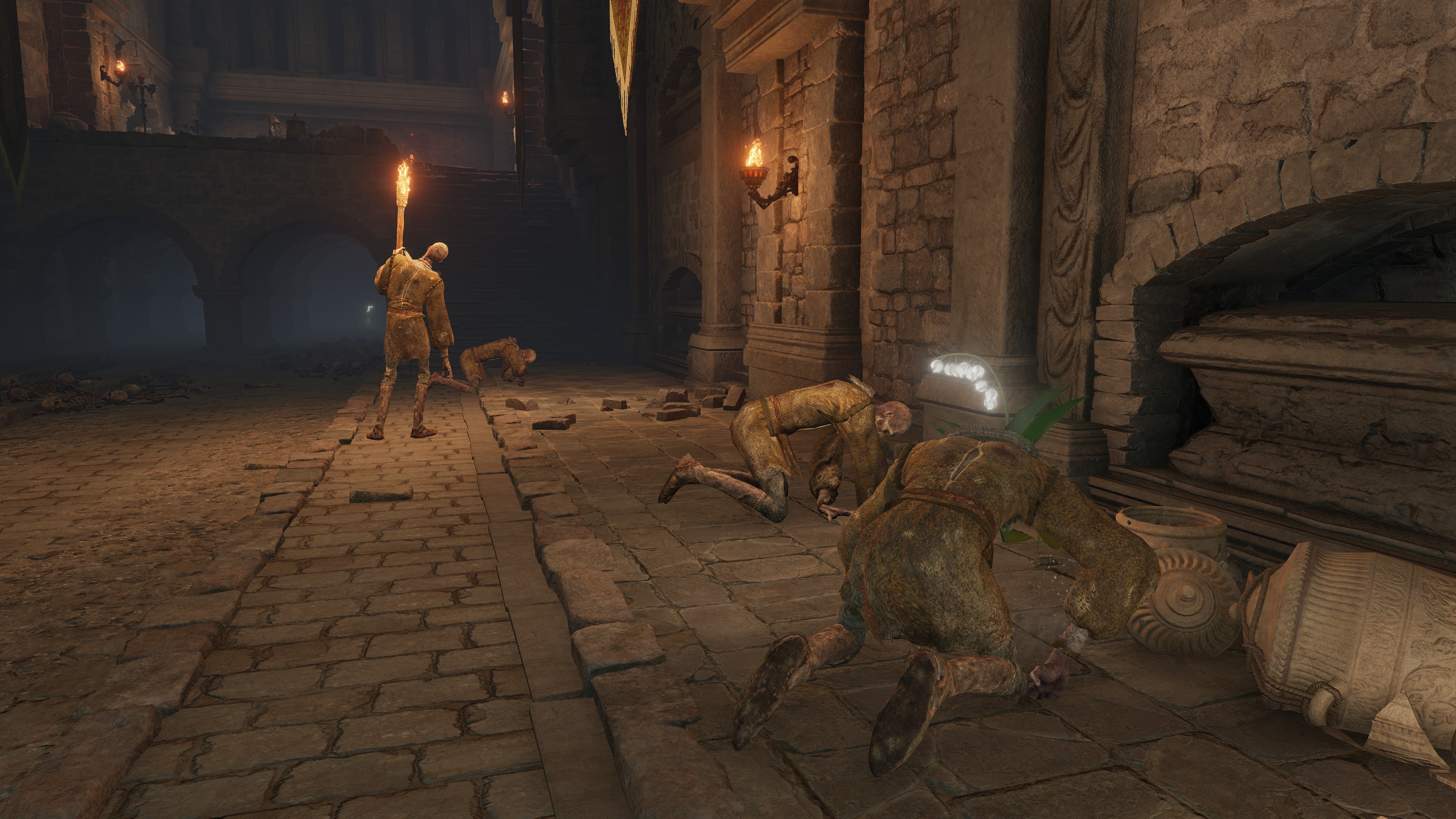
After their Carian leader united with his found family and secured his follower base’s continued support, the inquisition’s policy changed seemingly overnight. Countless have been stuffed in the cages and cells throughout the castle town, the prisoners becoming the new prison wardens wielding torchpoles from their rooftop lookouts. The ones imprisoned were now faithful like the conscripts, whose daggers have been confiscated for the wardens’ use. The inmates are now running the asylum, and the inquisitors like Ghiza do nothing to stop it; instead, the sawblade maniac has joined in on the revelry, invading us in the manor’s dining hall even as a recusant. We can therefore assume that all the bodies in the streets, newfound strays scavenging in alleys, is as intended. The inquisition chooses to torture those who cling to their Erdtree Seal, missionary cookbook, or gold smithing stone, allowing the oppressed pagans payback. One might question why when they are the Erdtree queen’s officials. Their reasons, however, are not so much loyalty to the praetor as it is because they are unhinged.
Consider the sort to perform blatant and needless acts cruelty before this point. Even if for the greater good, that level of power over another tends to attract those who would abuse it as a personal outlet. Officials willing to perform such dubious tasks for Marika are all but guaranteed to be the more illicit sort, individuals with no scruples or just a touch disturbed. Ghiza is a prime example, his heavily scarred head wrapped in bloodied bandages, likely his own handiwork when considering his obsession with serrated edges. If Ghiza was willing to rip his own flesh to test his new favorite torture device, one can only imagine how many other inquisitors might be similarly psychotic. In that case, Rykard had a small army of reprobates given the keys to express their villainy in the name of justice. These underlings don’t care that their lord has now switched sides. If anything, that freedom from moral pretense allowed them to let loose their vile artistry upon whoever they chose.
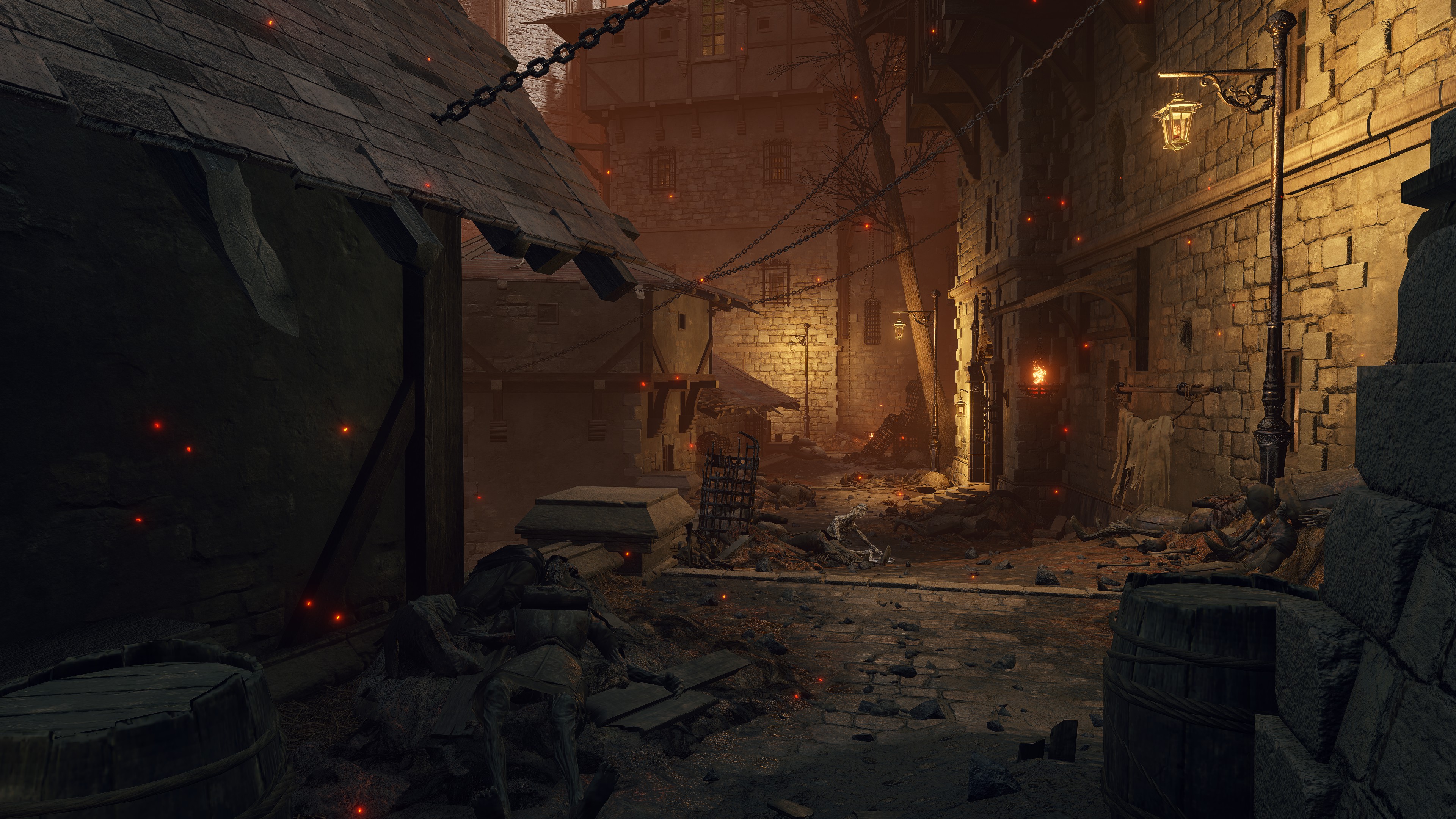
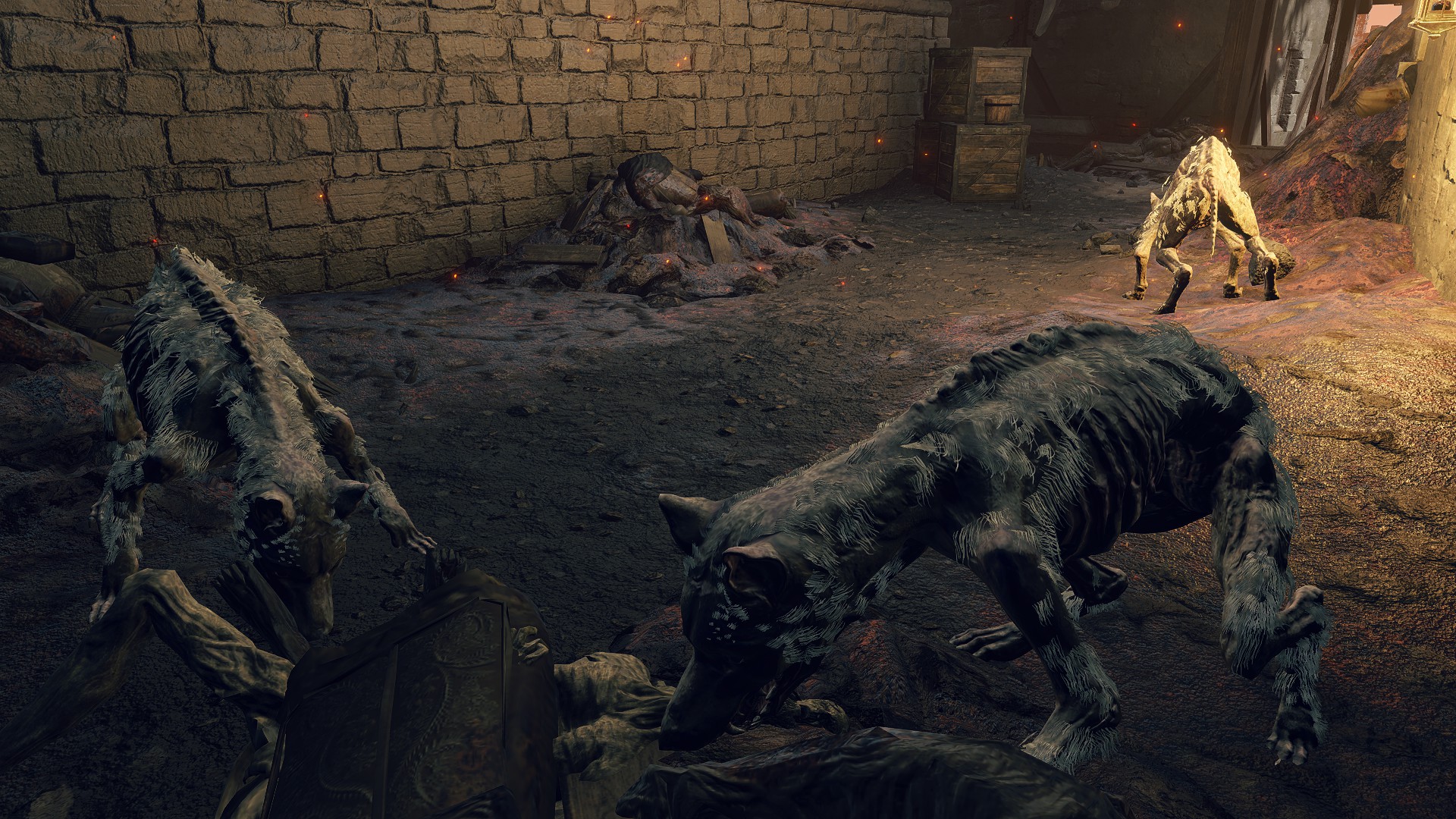
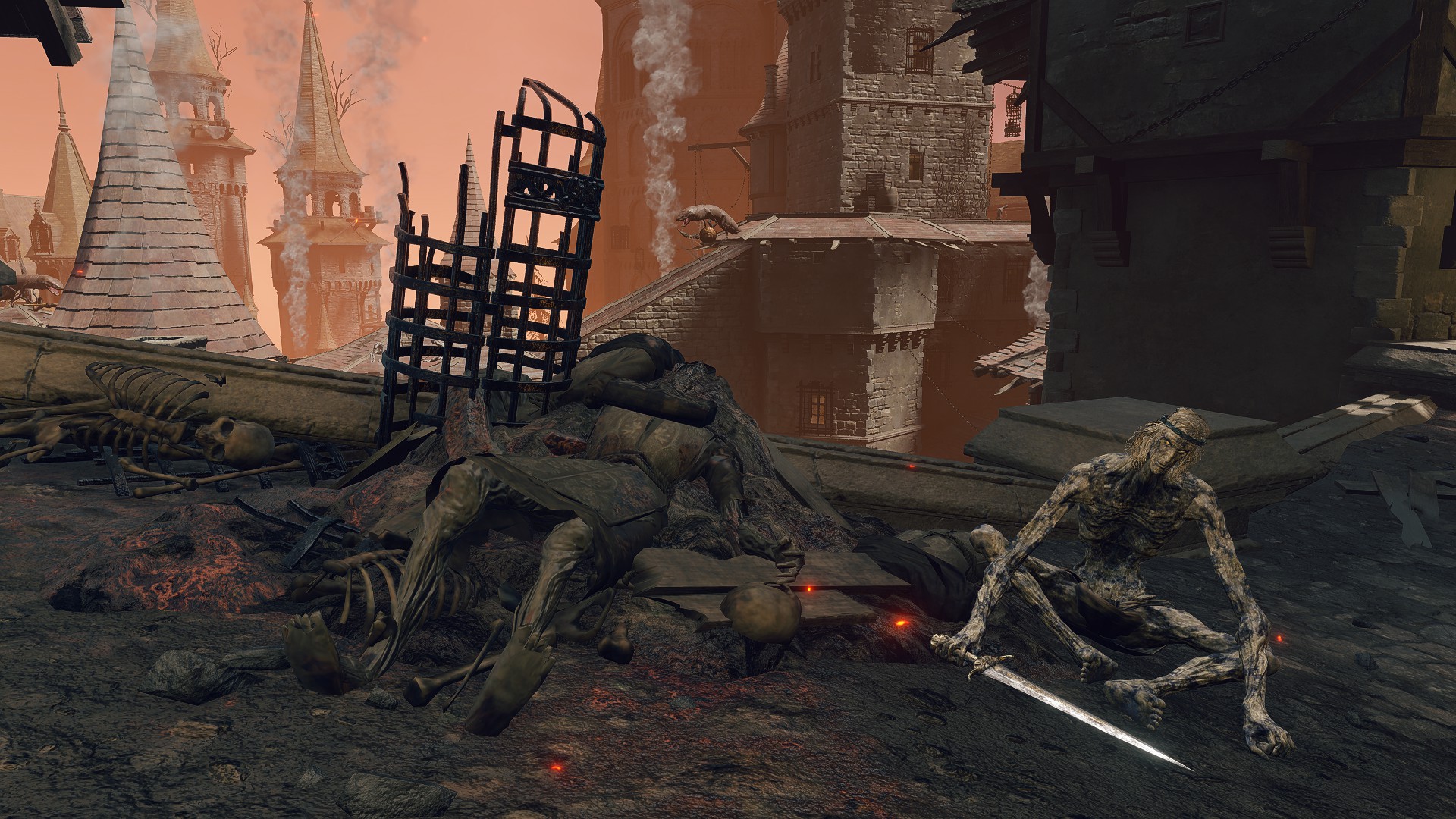
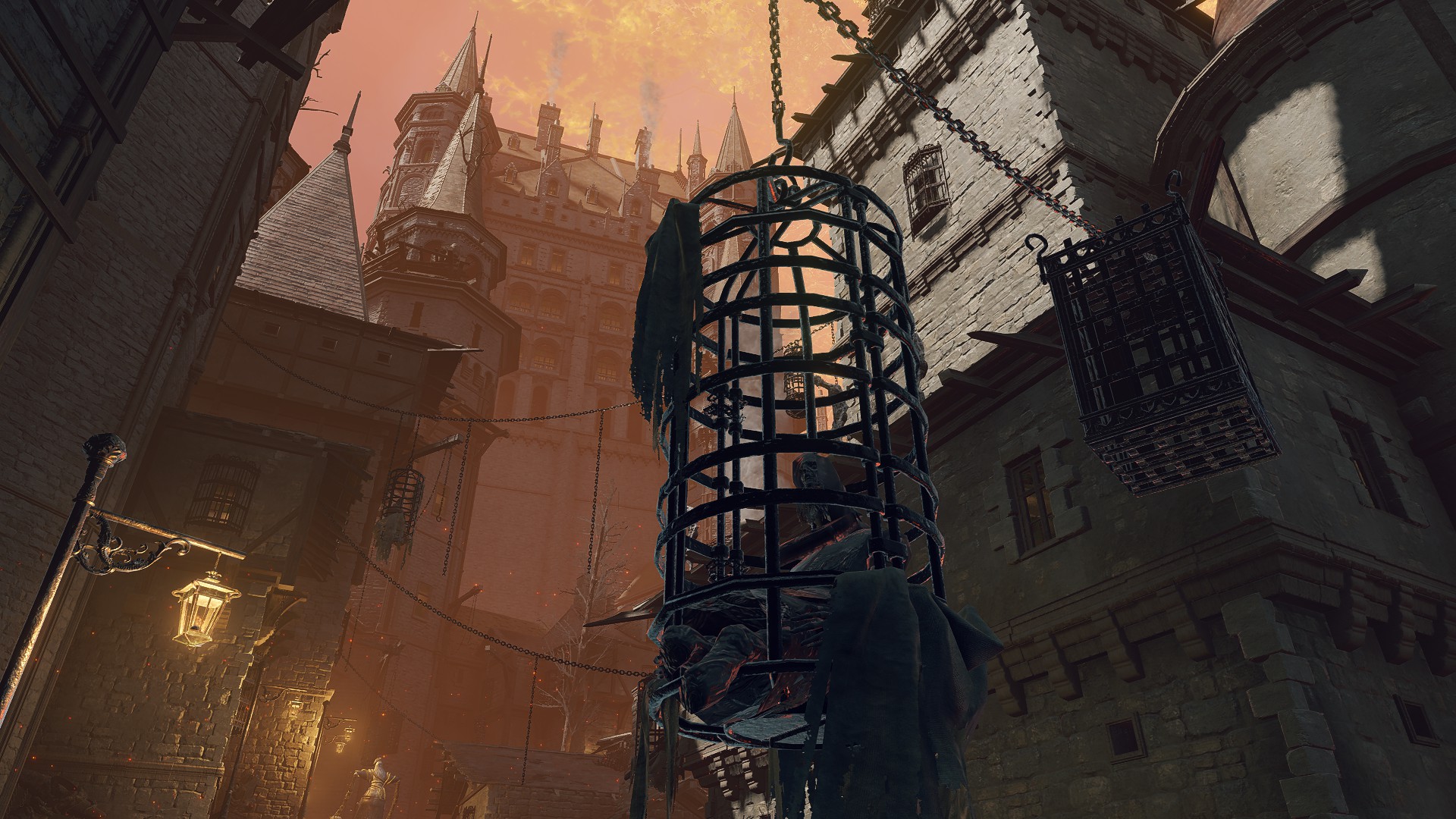
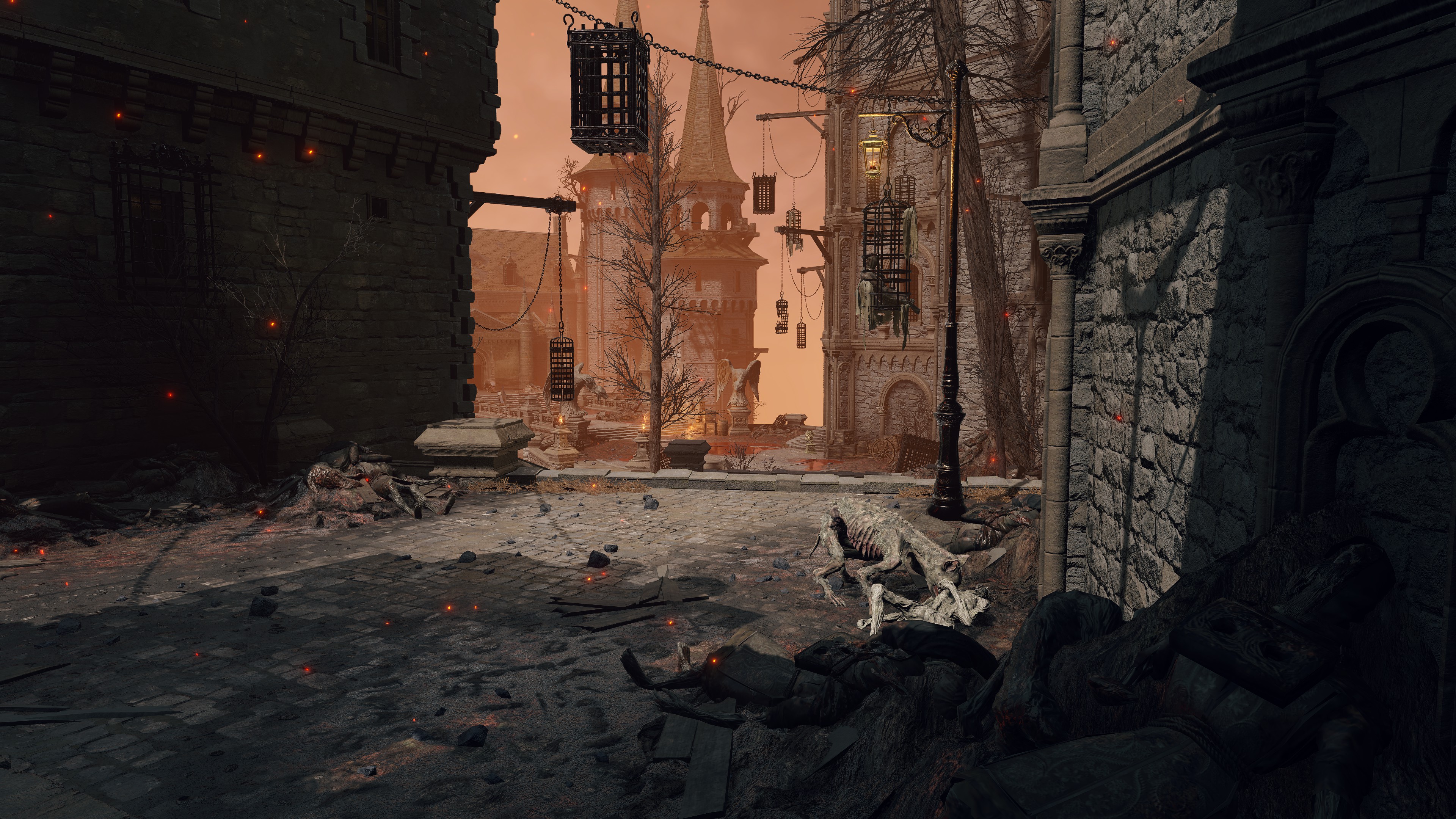
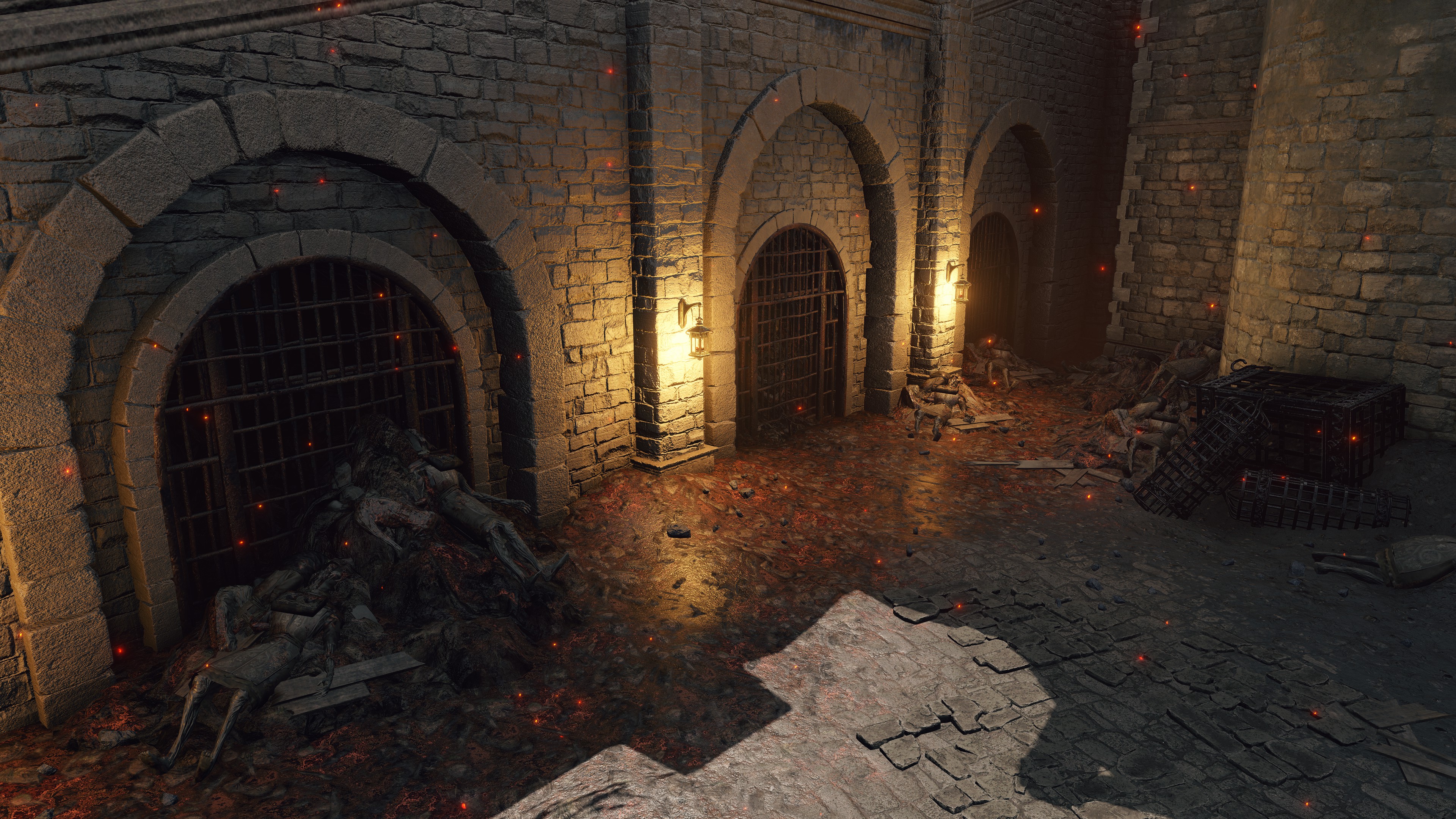
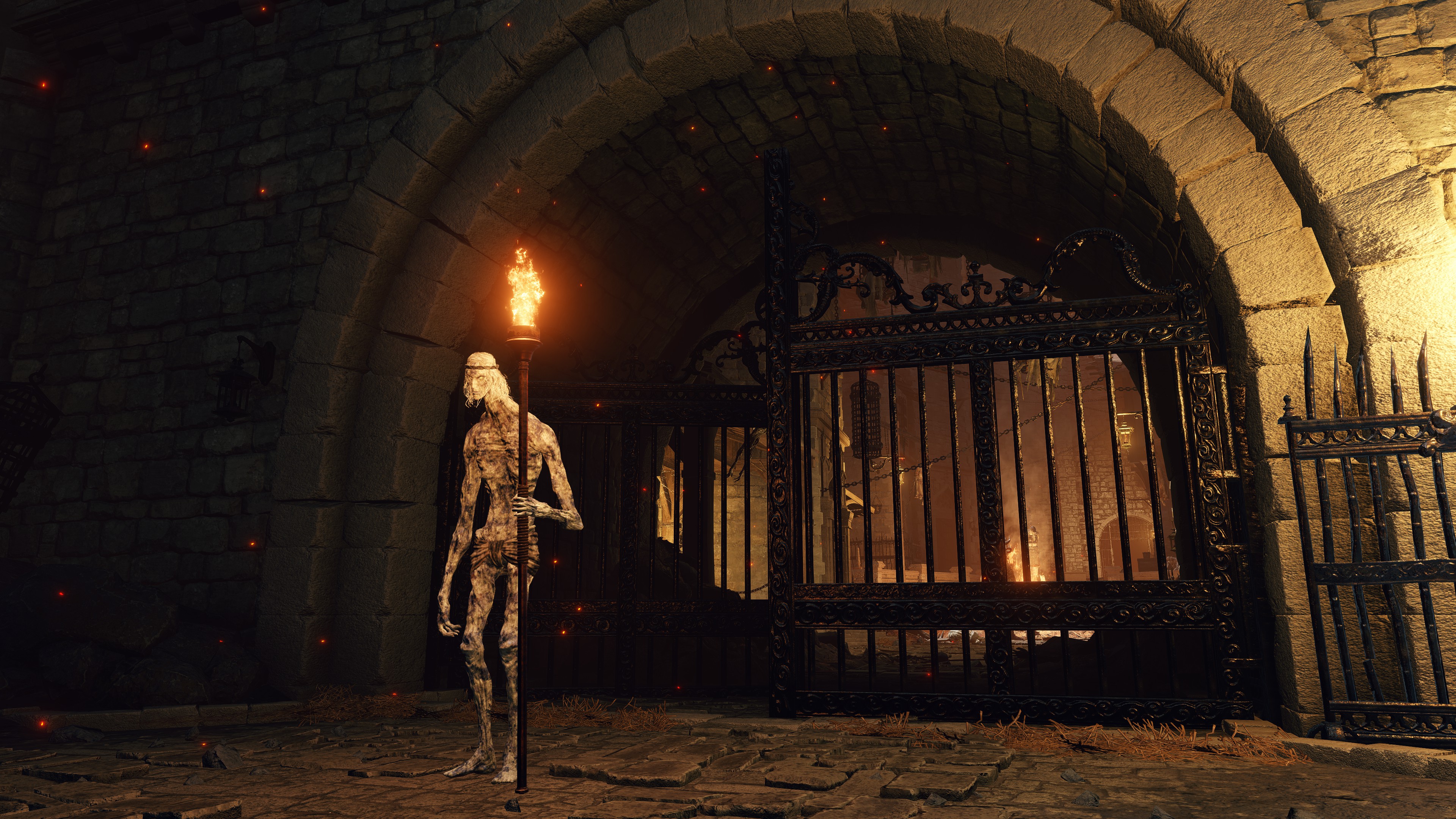
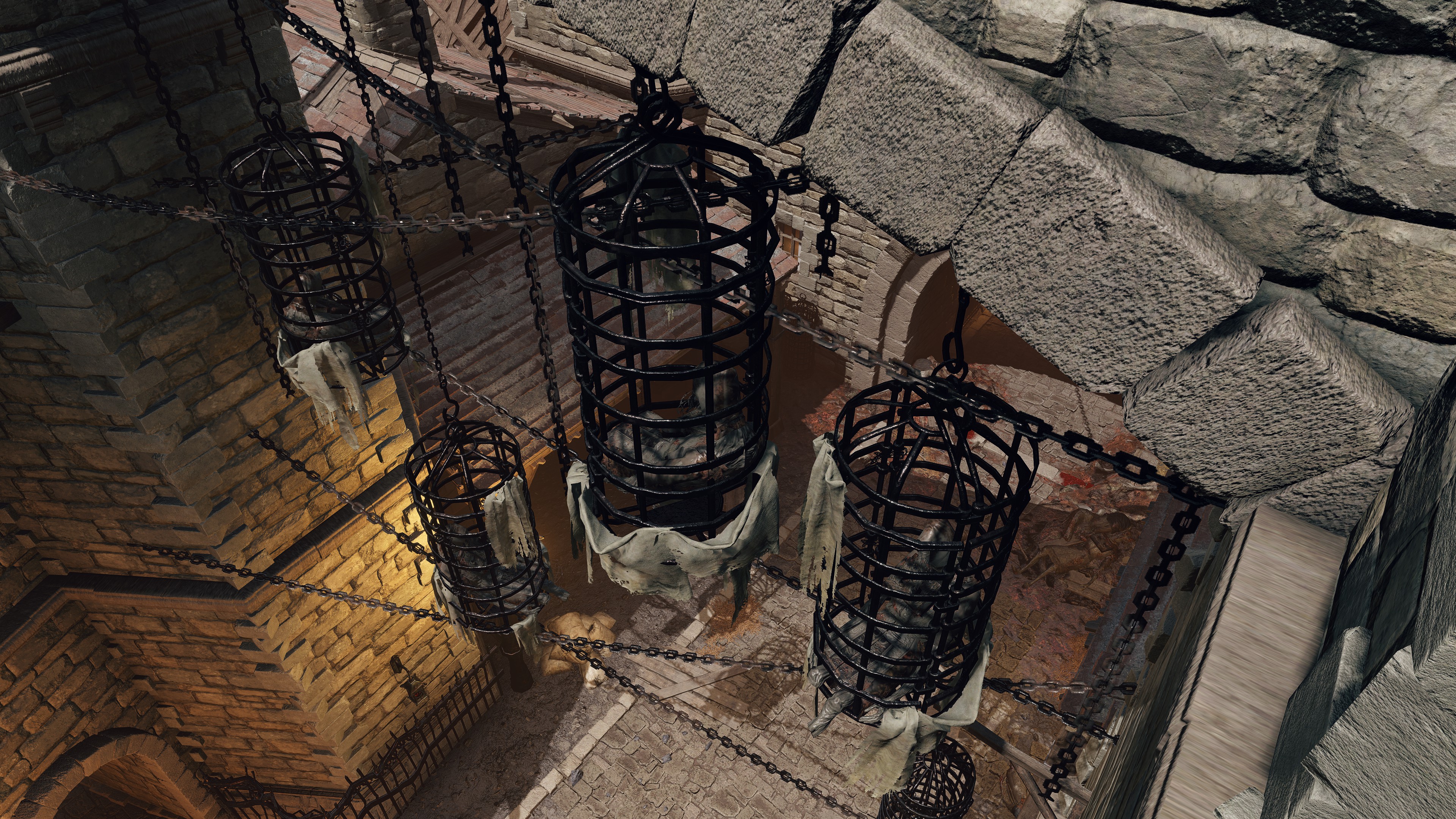
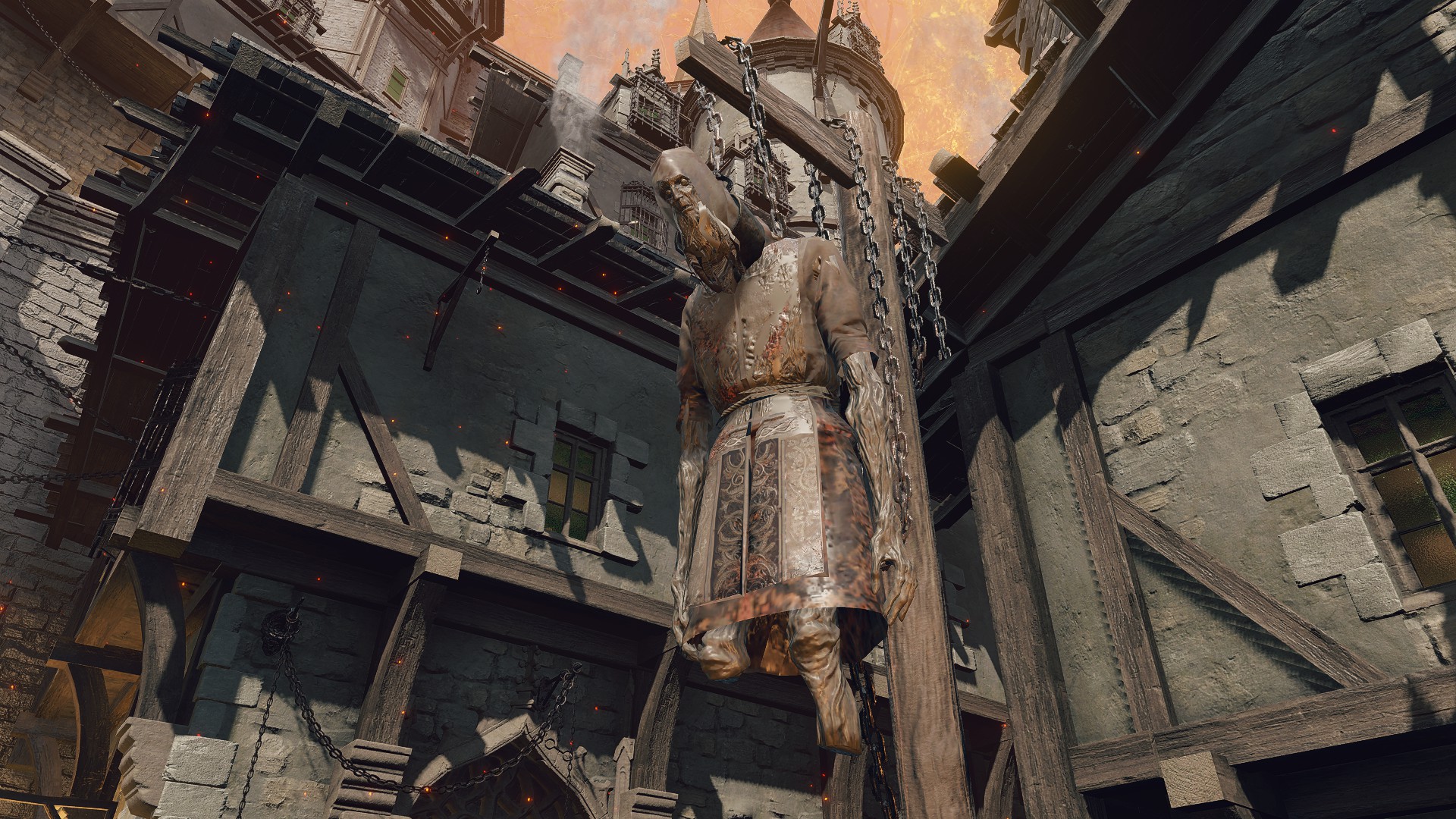
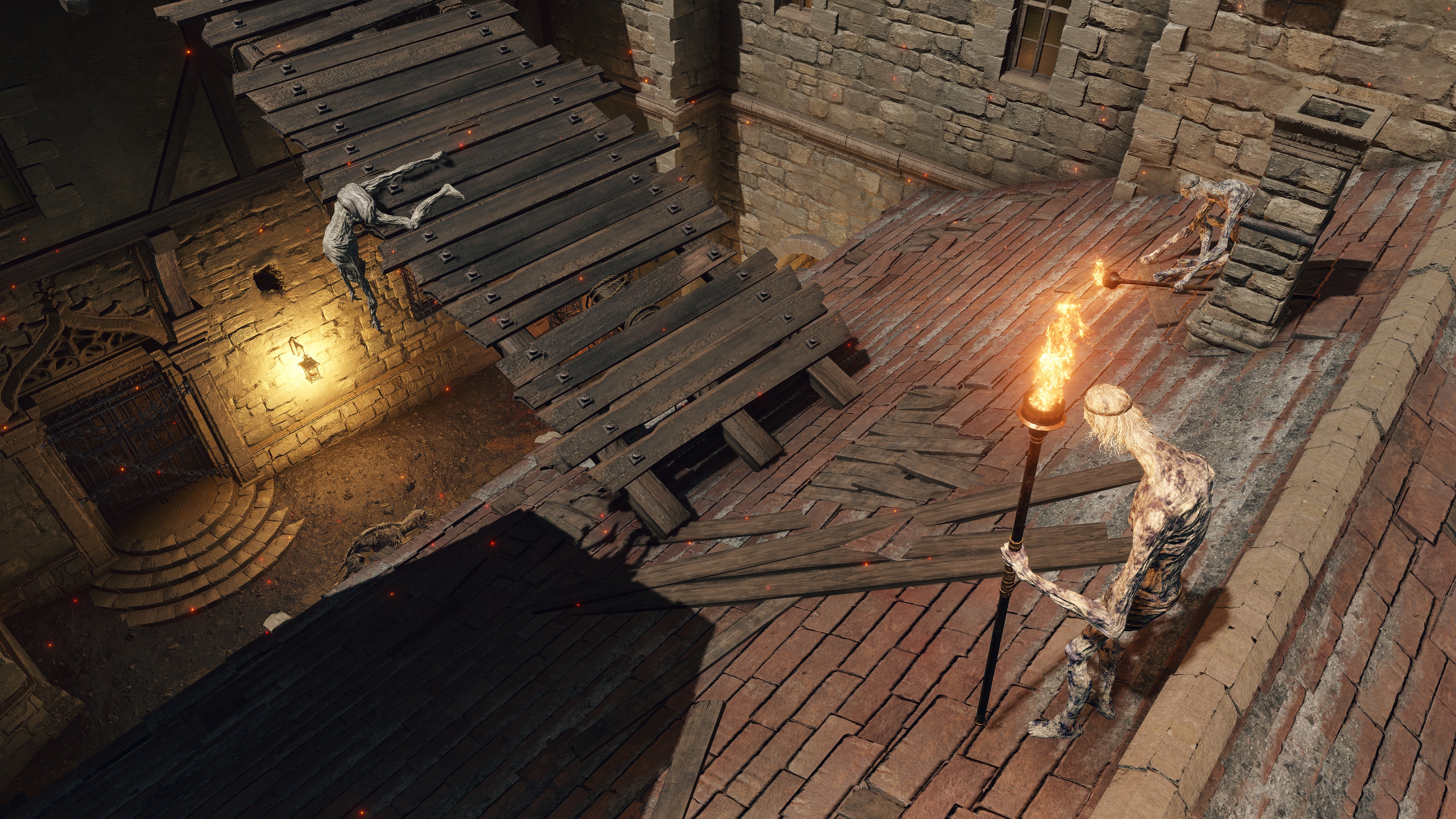
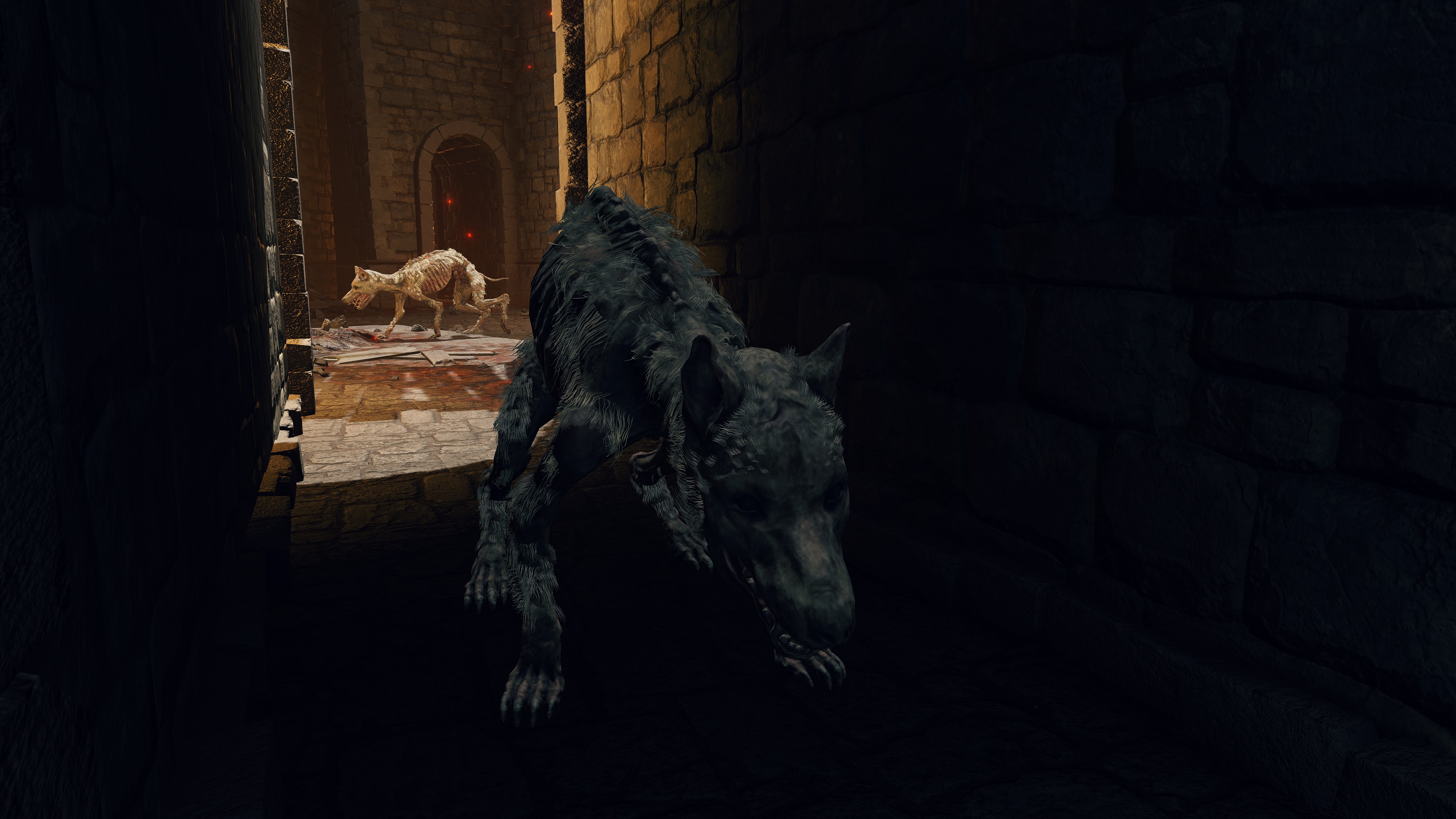
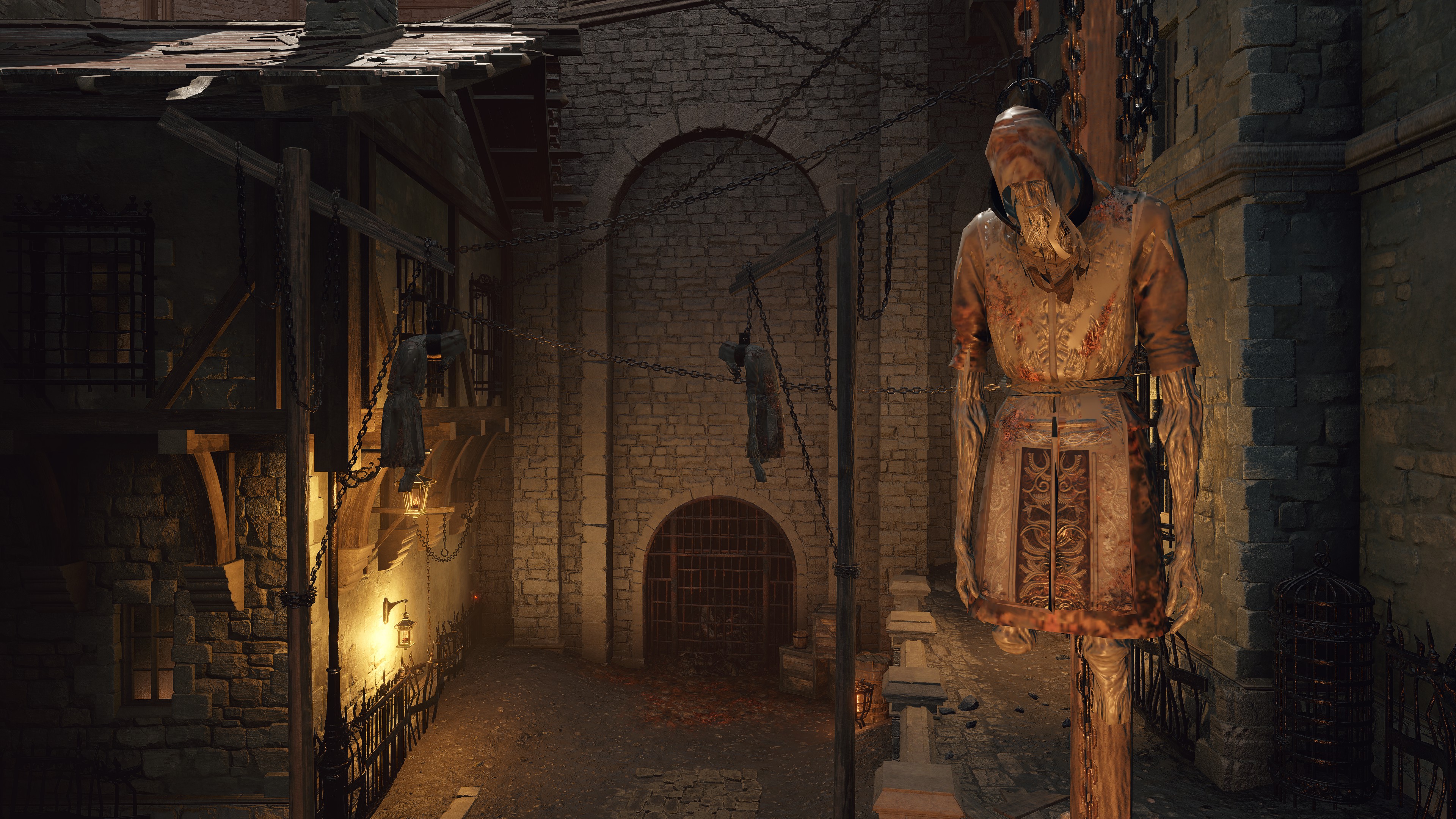
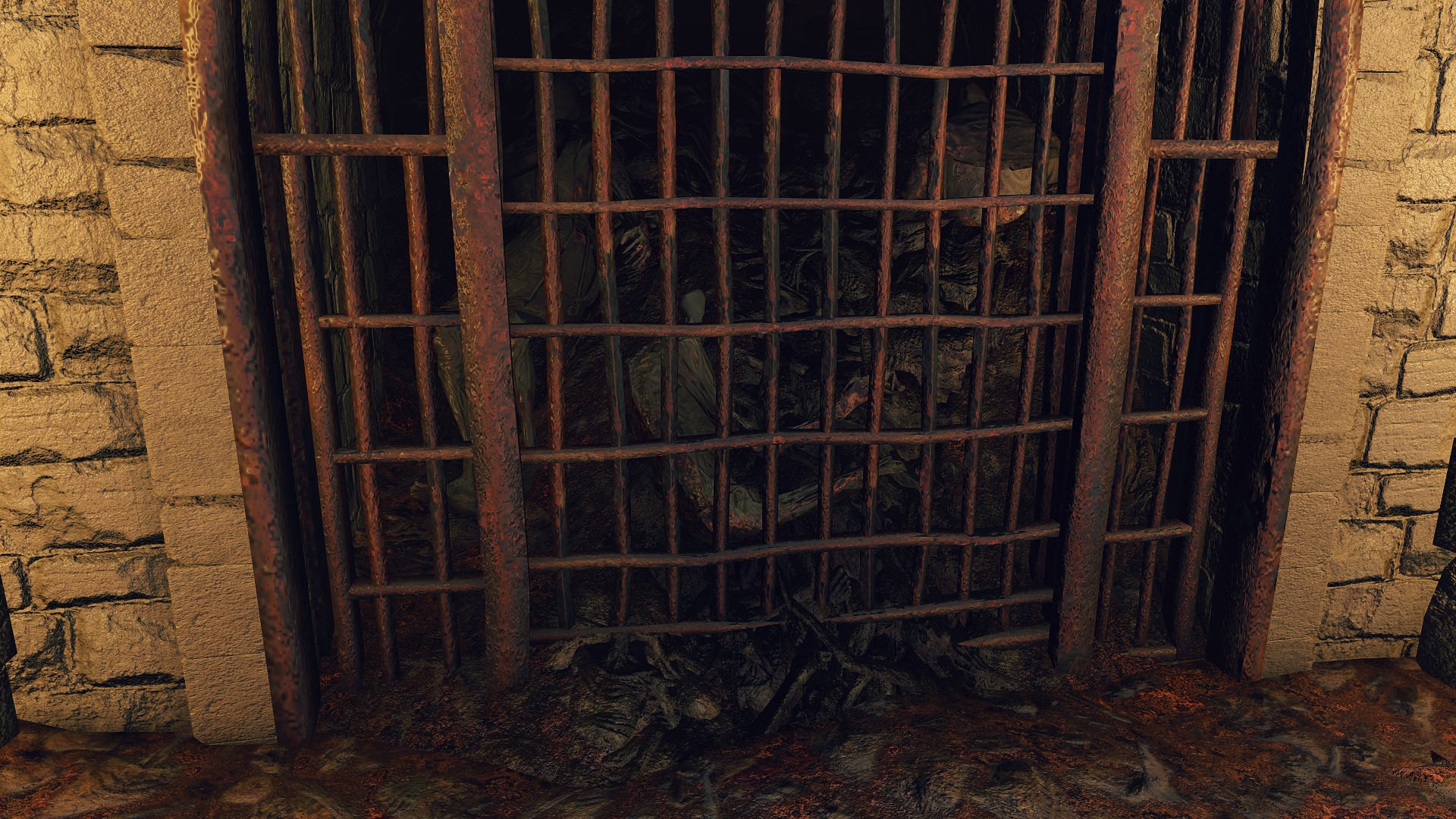
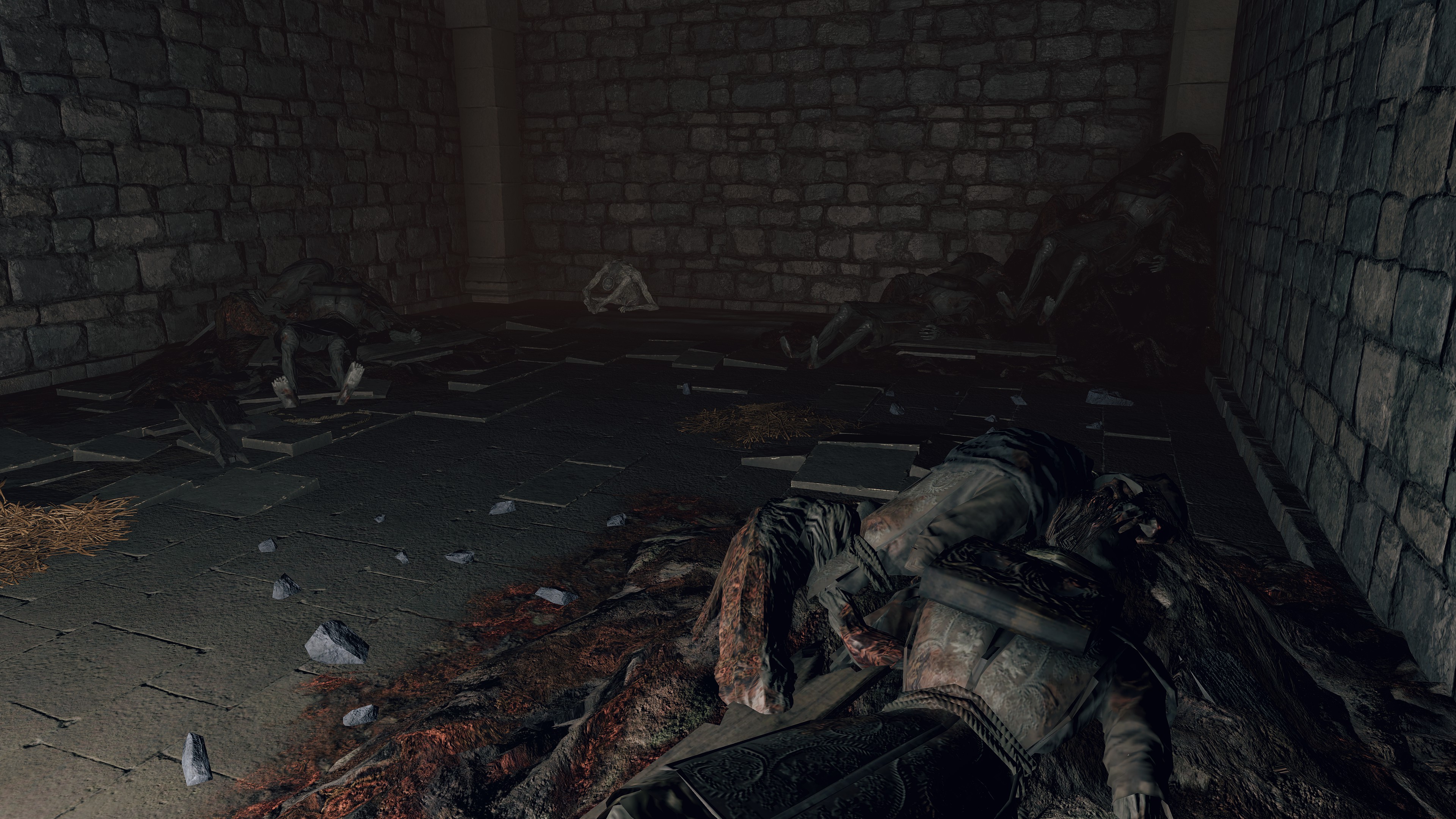
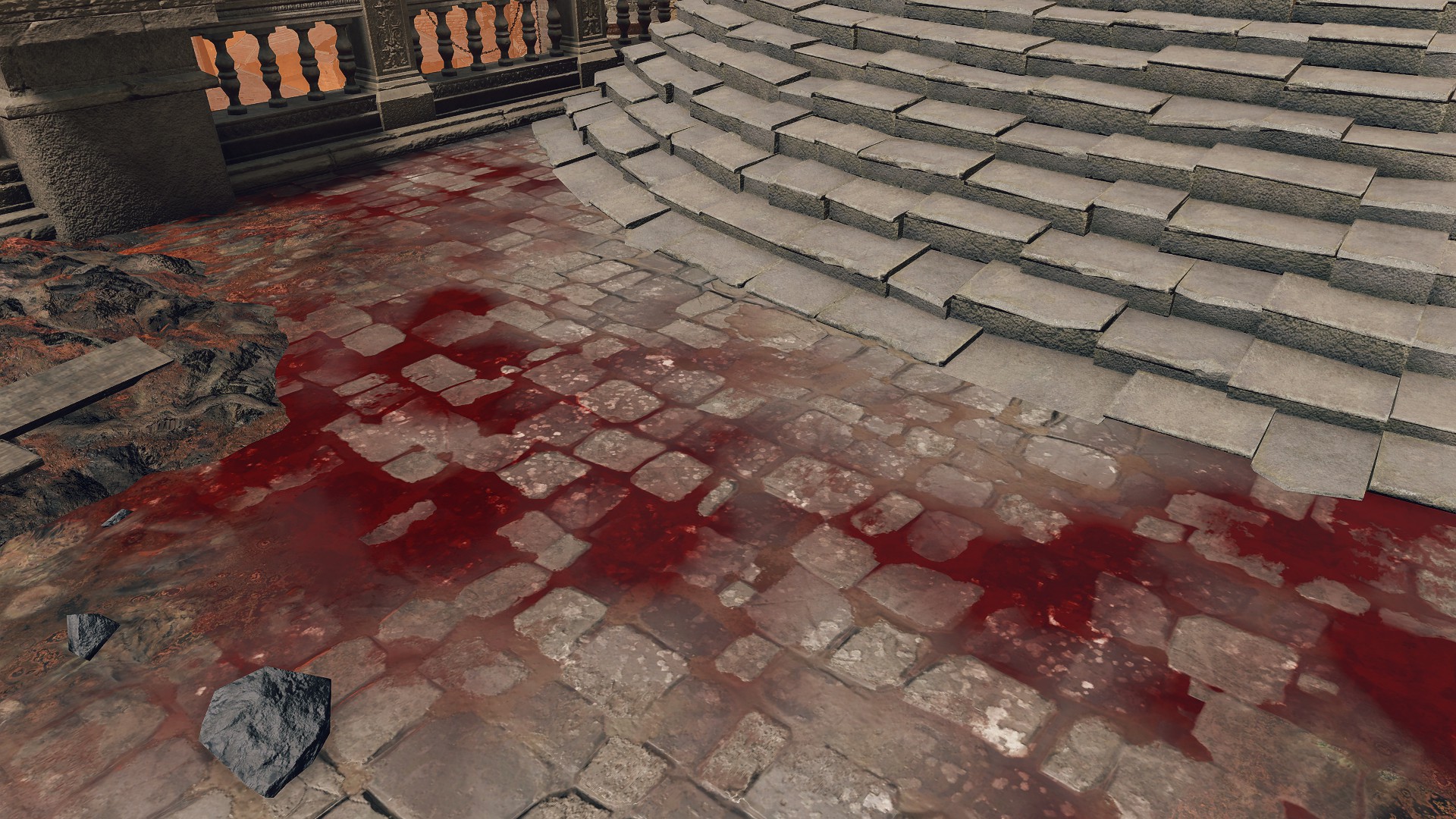
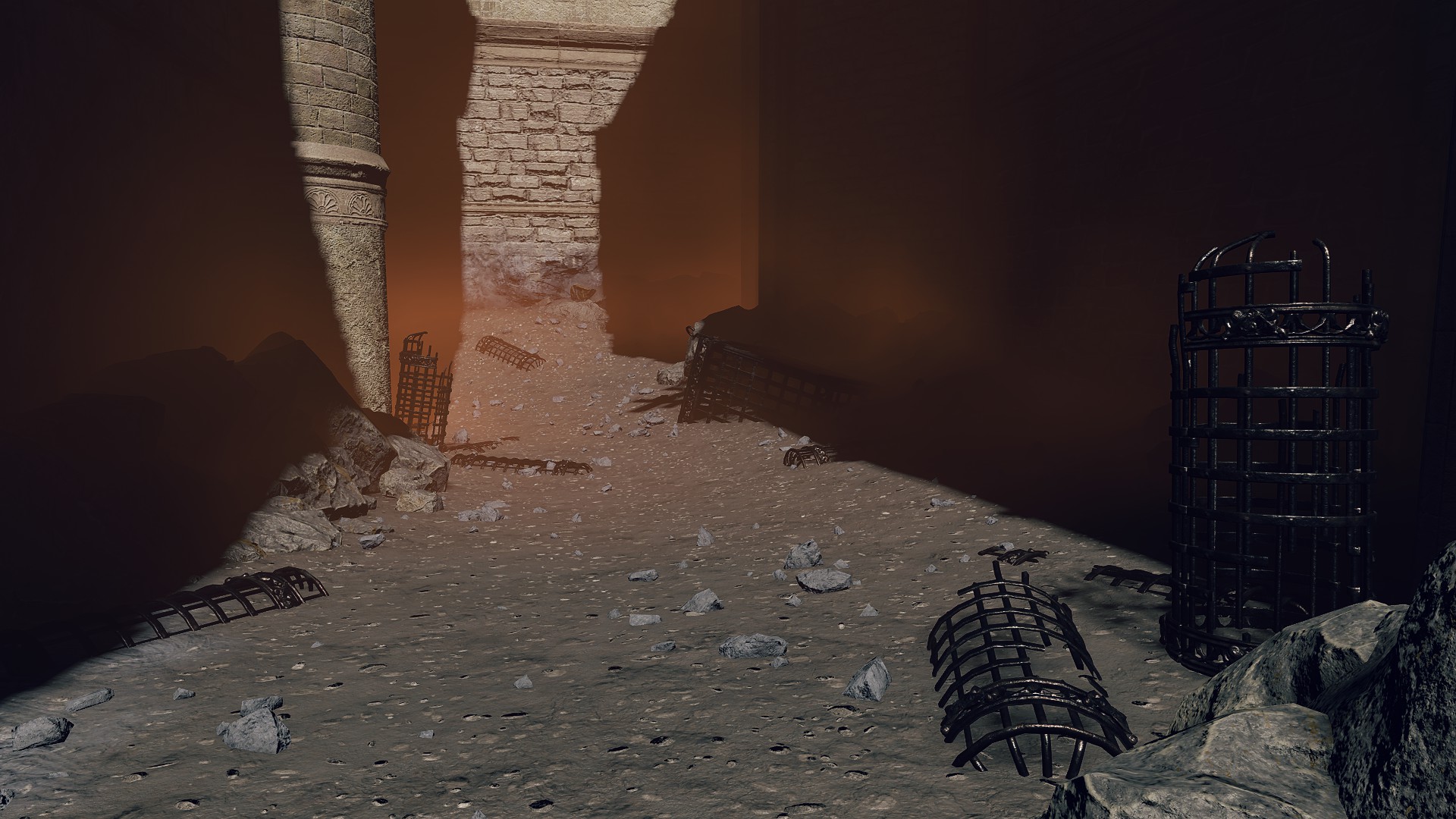
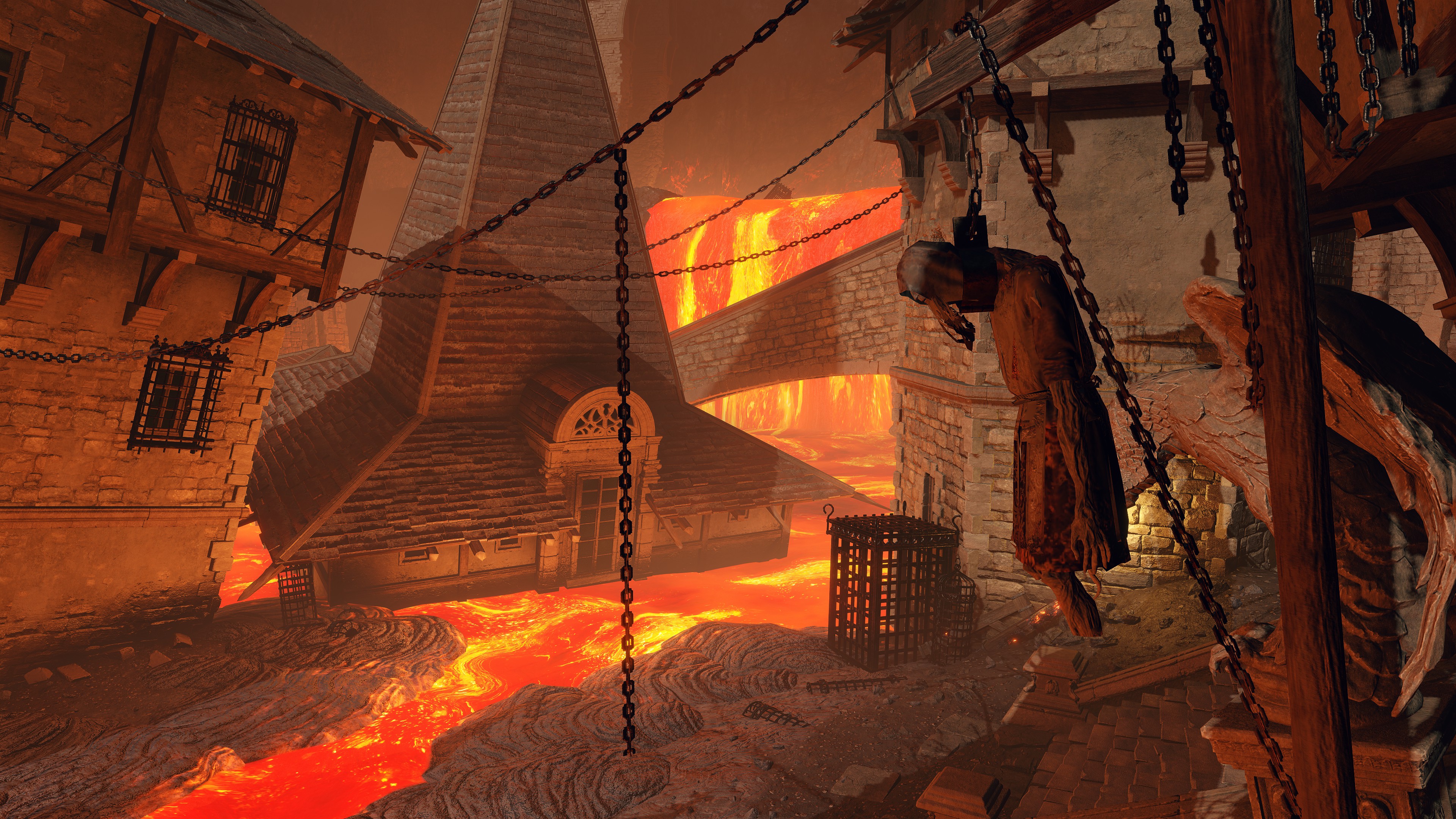
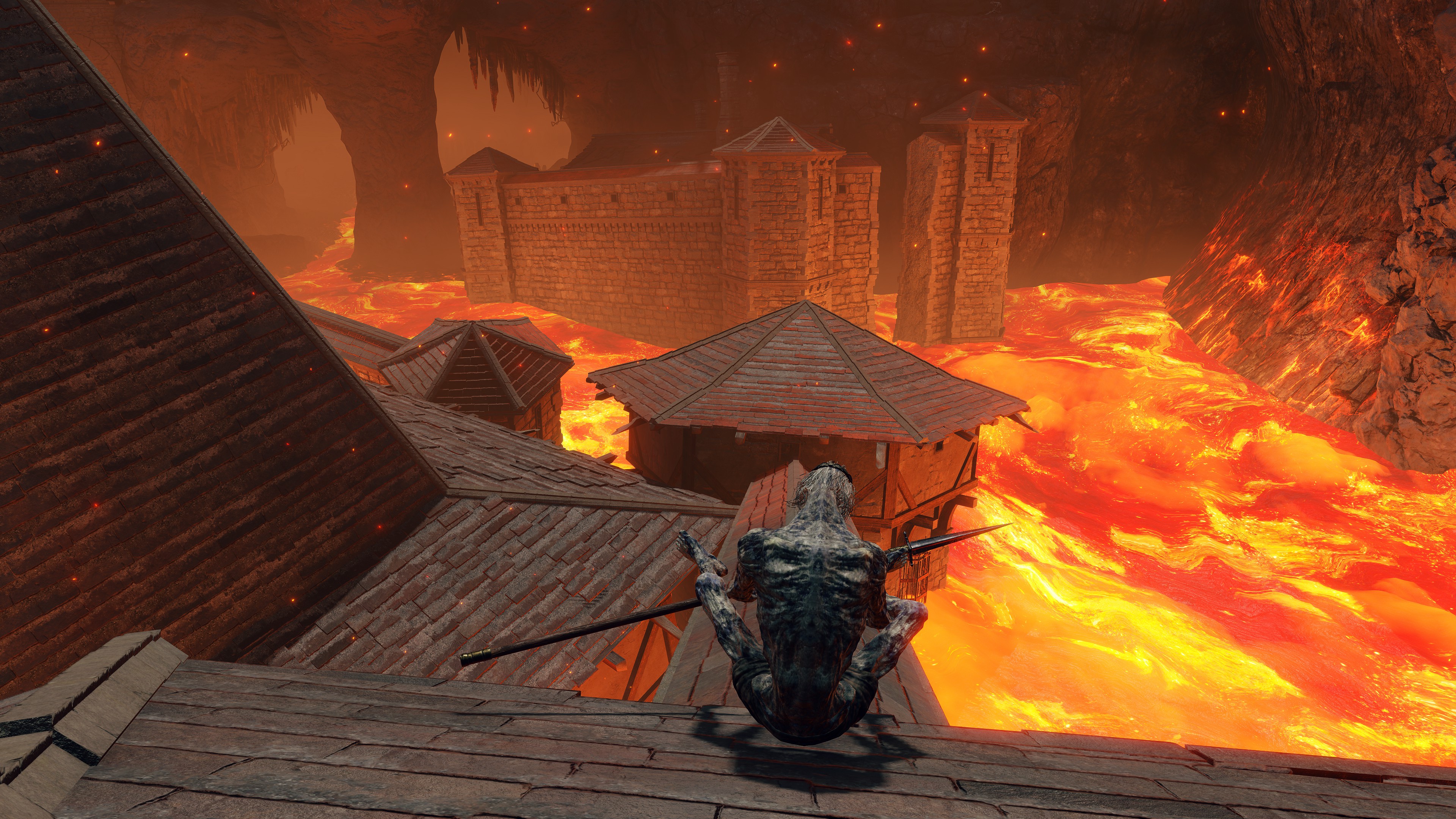
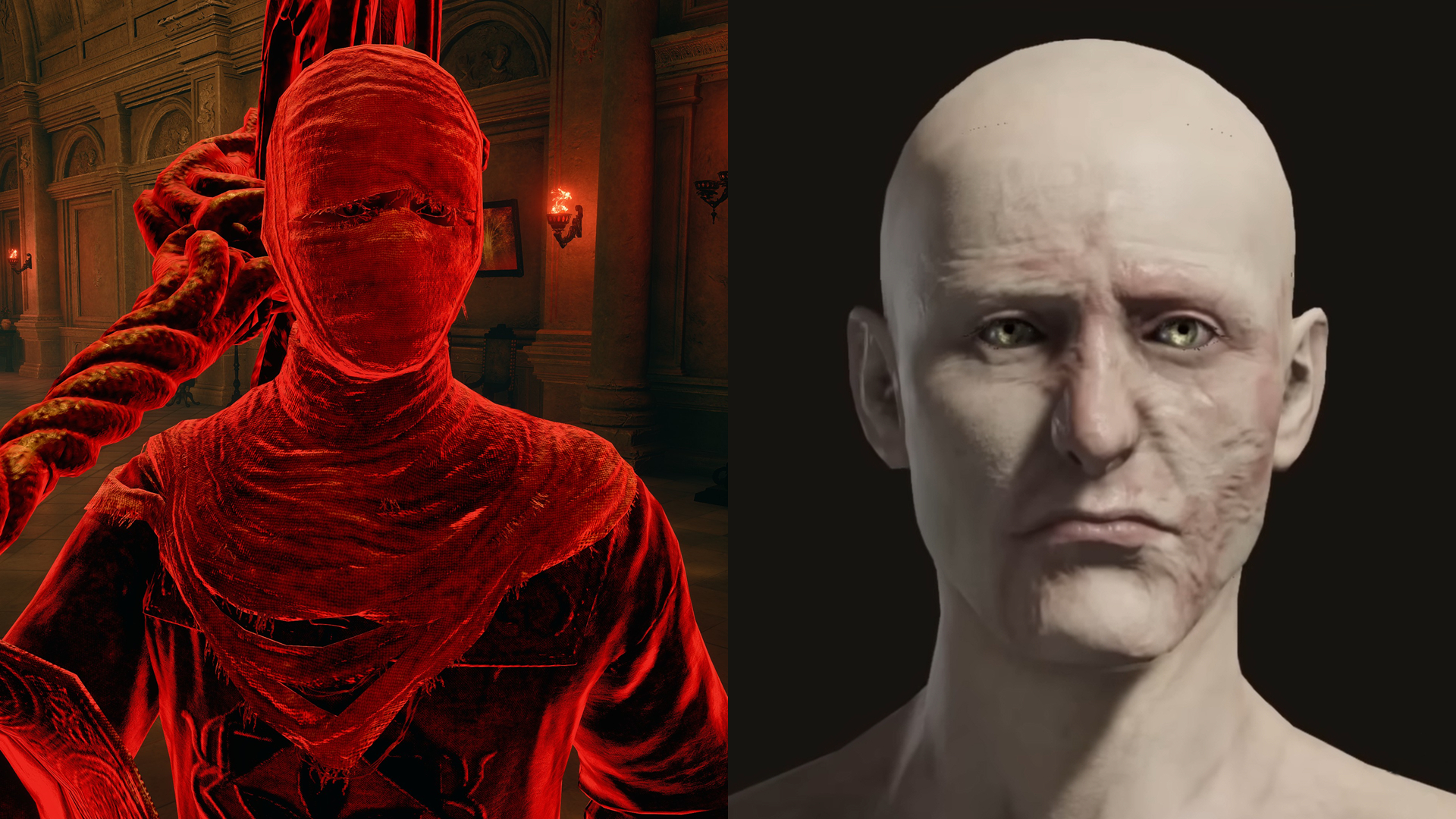
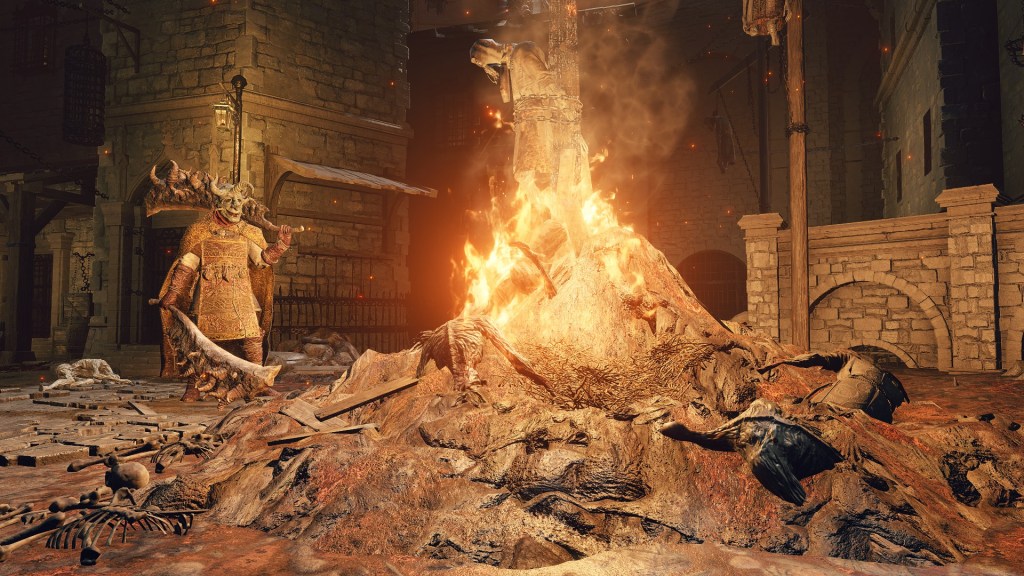
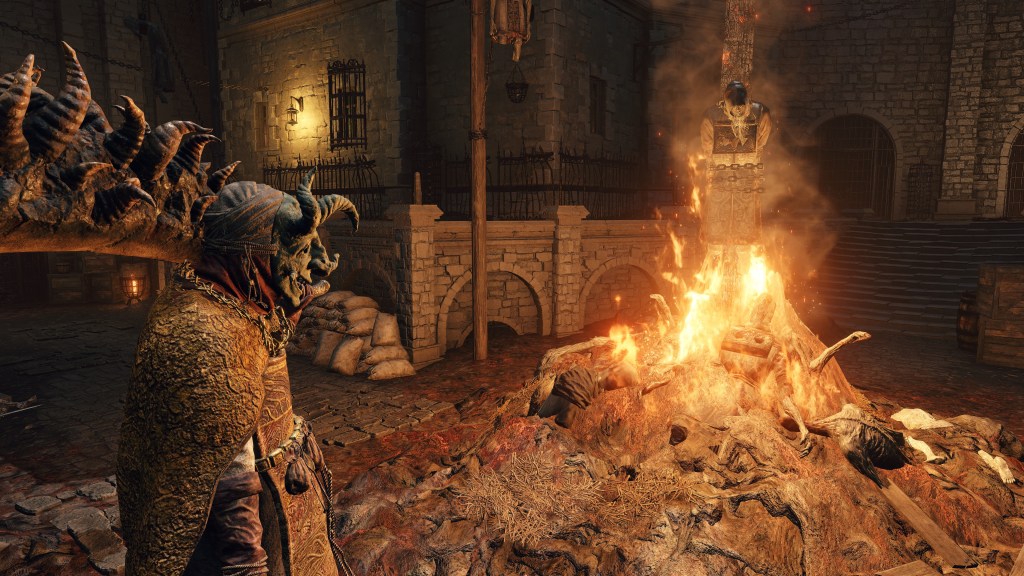
The Omenkillers were also exempt from this crackdown on orthodoxy, one burning conscripts at the stake with a pile of corpses. Like the inquisition, they feel nothing about who they butcher, whatever the background. With their hearts crushed, the butchers’ only tether to Erdtree religion is logical principle, and in their current circumstance, assisting the inquisition with its blasphemy is the most effective way to achieve their end goals. Take another Omenkiller’s treatment of the Albinaurics in the Guest Hall, busy turning visitation into a more permanent stay. Alongside humans, the old Carian servants have been stripped bare and tormented to the point of madness, and the Albinauric Mask looted from a sinner on a guillotine includes the second-generation servants in this insanity as well. That aside, the Omenkiller in the same room has apparently misidentified some sick individual making a mockery of a poor silver by wearing his face, treating this fellow psycho as if he were genuine corrupted prey. Nothing better captures the anarchy inside Volcano Manor’s walls, where anyone might end up terrorized.
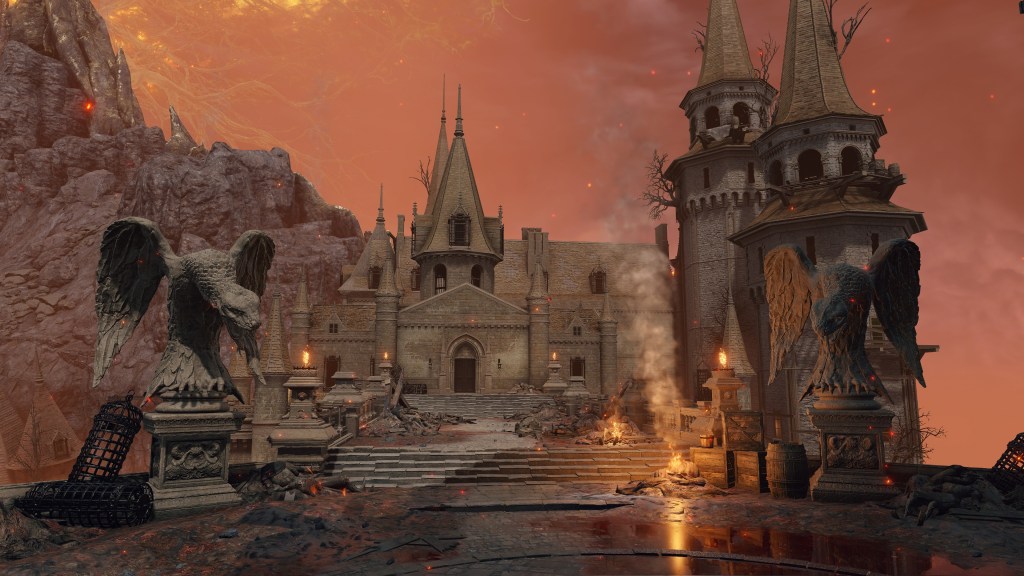
Raw hide of a young silver-man made into a mask as is.
Raises arcane but lowers Crimson Drop Holy Grail Bottle recovery amount.
The silver-skin mask, which is no godskin, is probably the fruits of mocking malice.
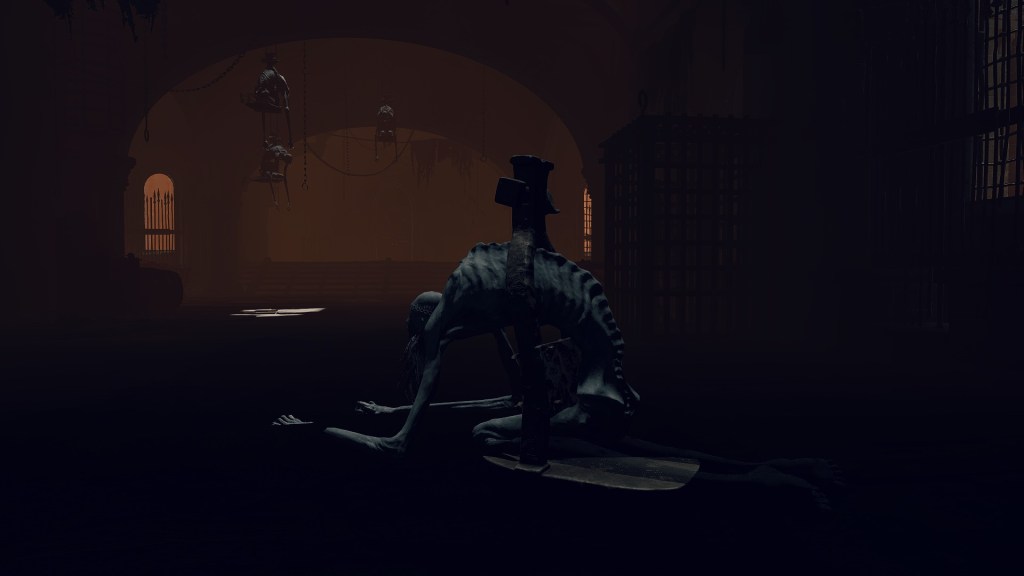
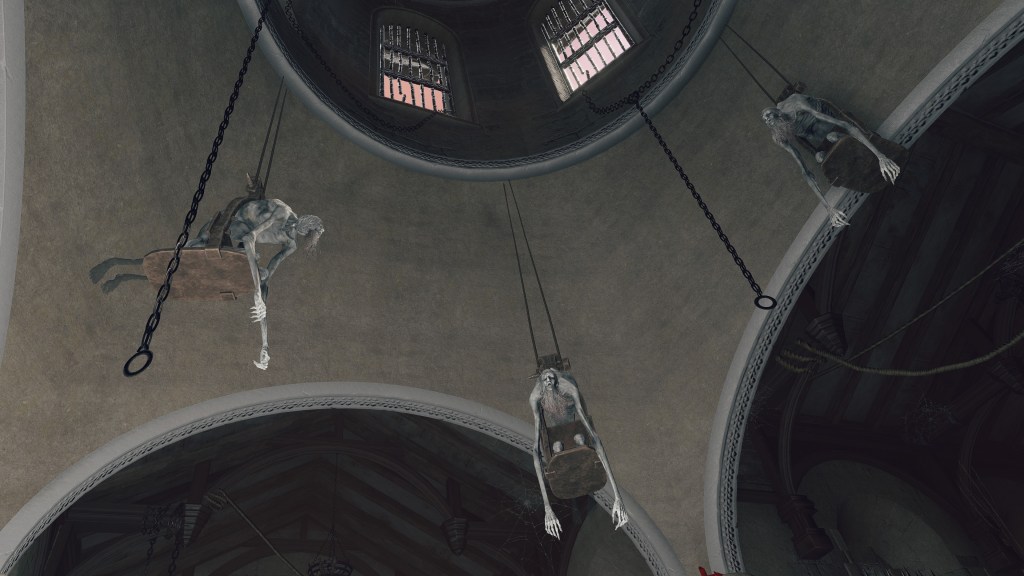
Such malice toward the Albinaurics in particular have sent the other servants into hiding, many both mad and sane retreating to the recesses of the castle facilities. Others trapped at the center of this madness have put up more of a fight, leaving entire inquisition chambers in the manor’s wings and watchtowers destroyed in their efforts to resist capture or recapture. Their valiant effort has earned them some relief, as the manor has decided to just cordon off the area with an imp statue seal and leave the fools to their fears in the darkness with their cages. But consistent in all of this is that their Carian master has abandoned them, just as much as the Erdtree faithful’s demigod has forsaken them. One with a furlcalling finger remedy may pray to the Erdtree for deliverance, but none will come. For all intents and purposes, it is every man for himself in absolute bedlam, with Rykard’s army of soldiers and inquisitors there to tip the scales in the pagans’ favor.
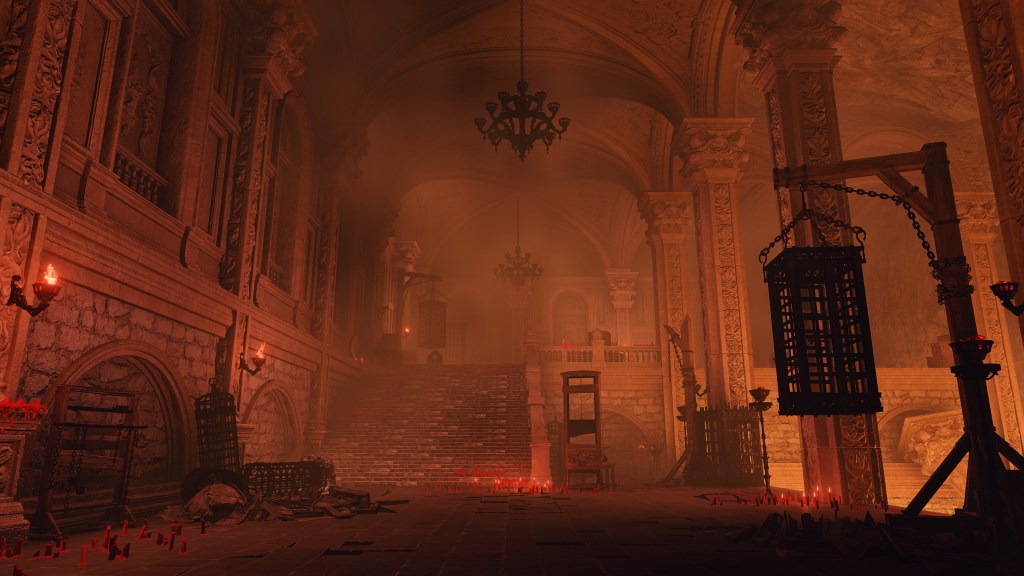
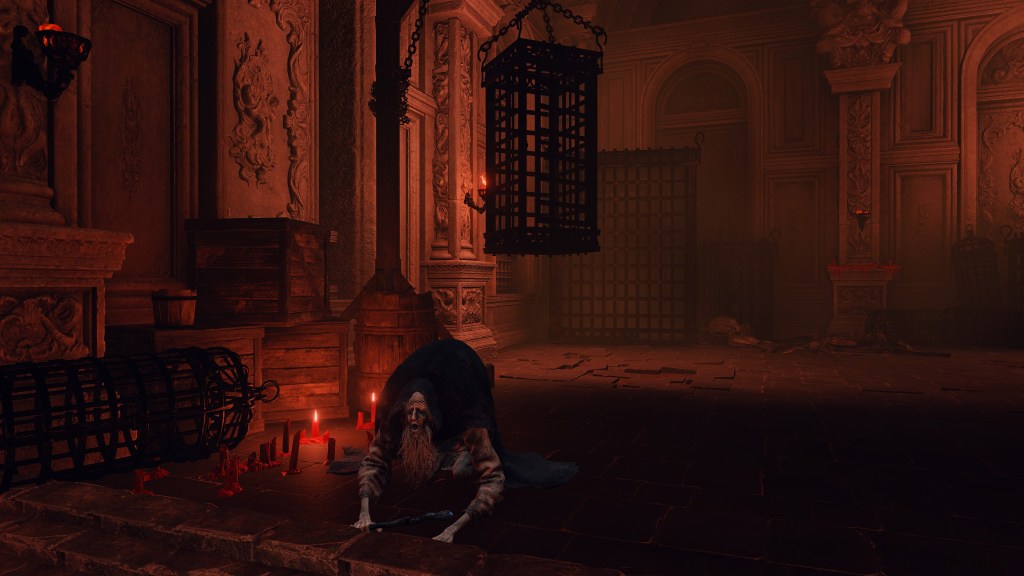
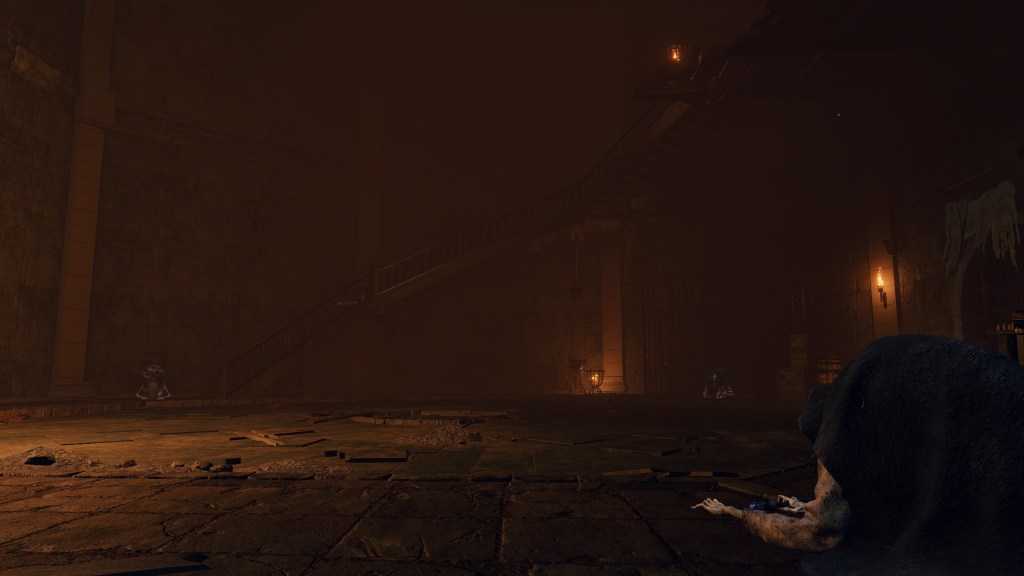
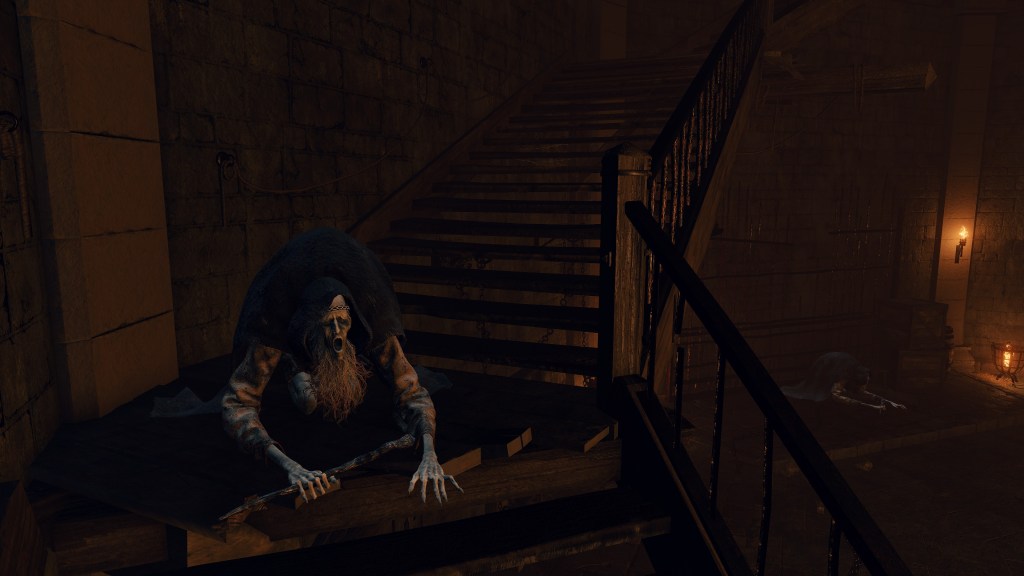
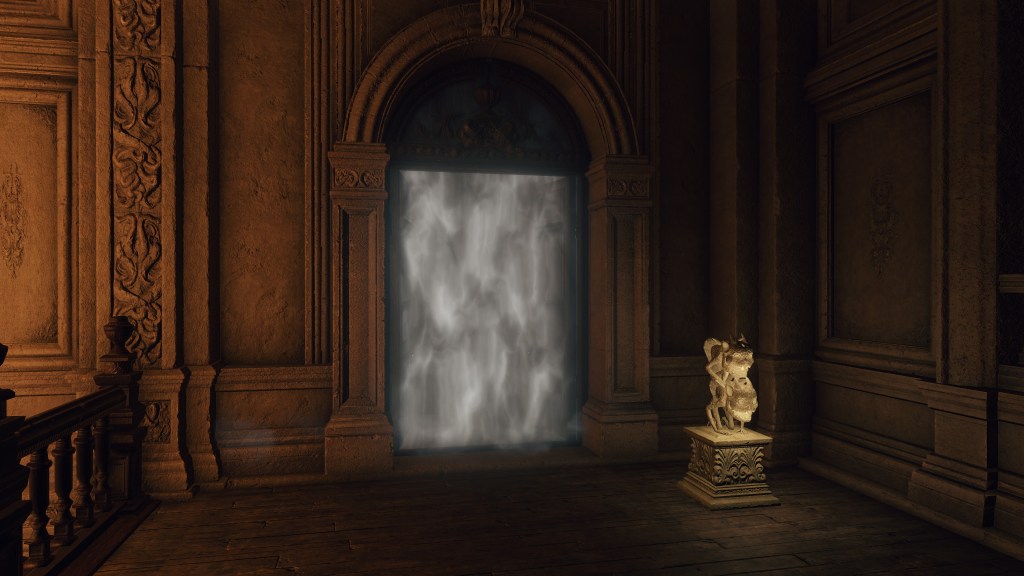
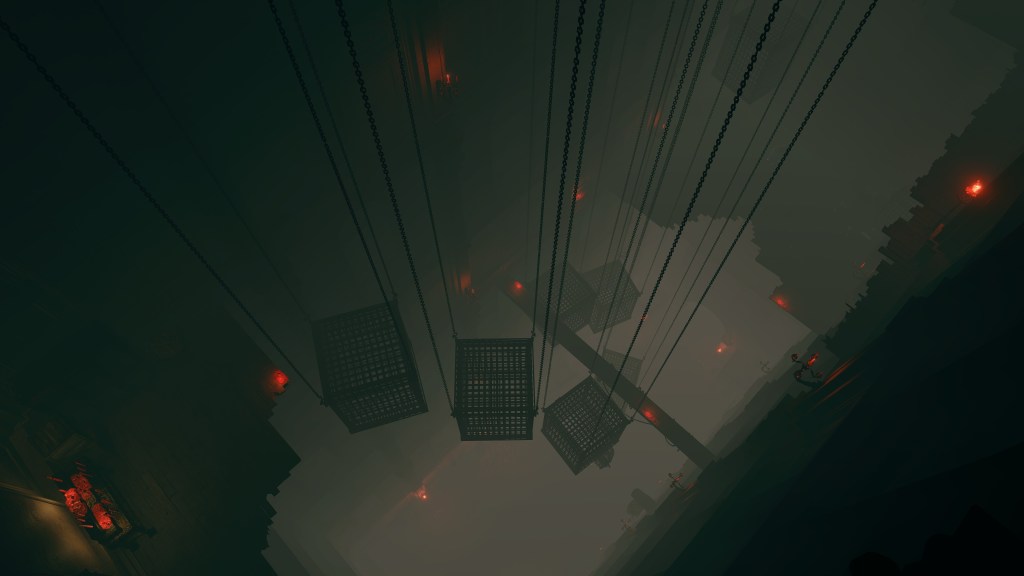
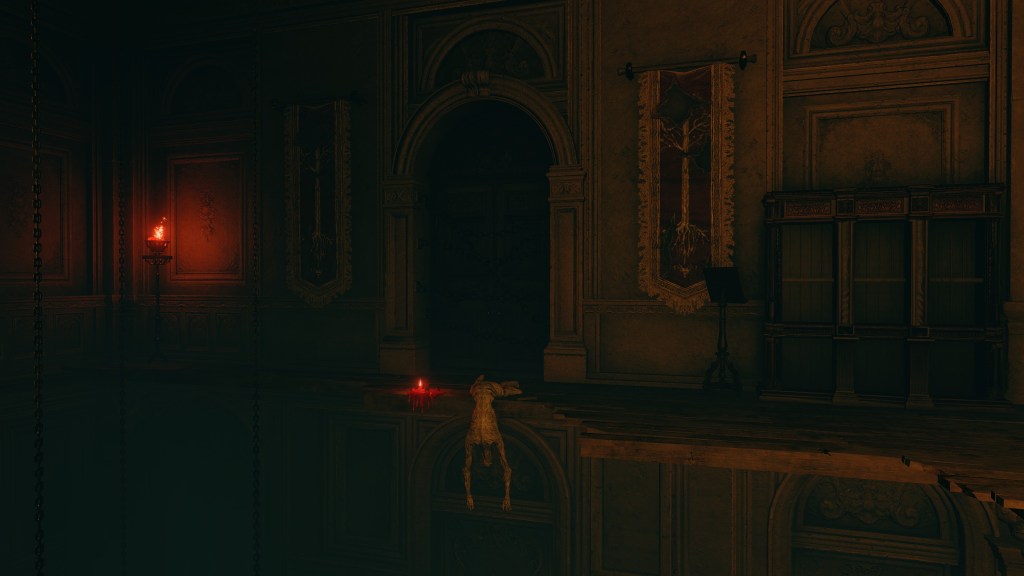
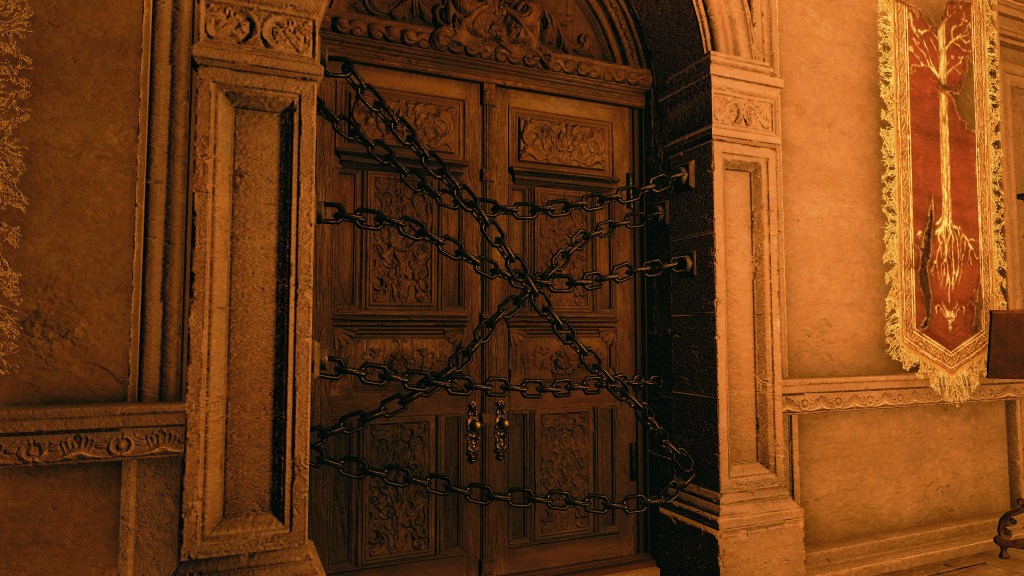
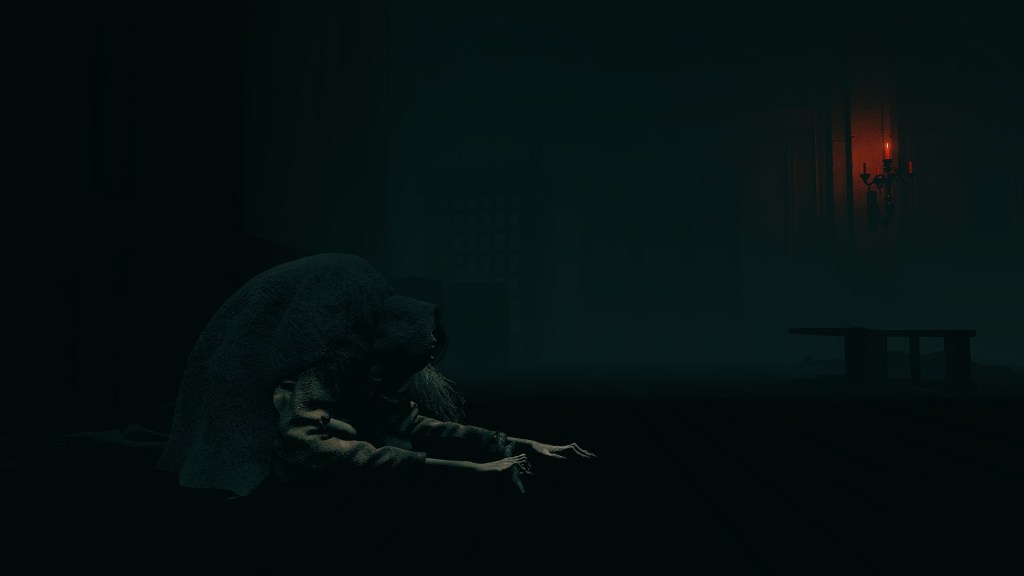
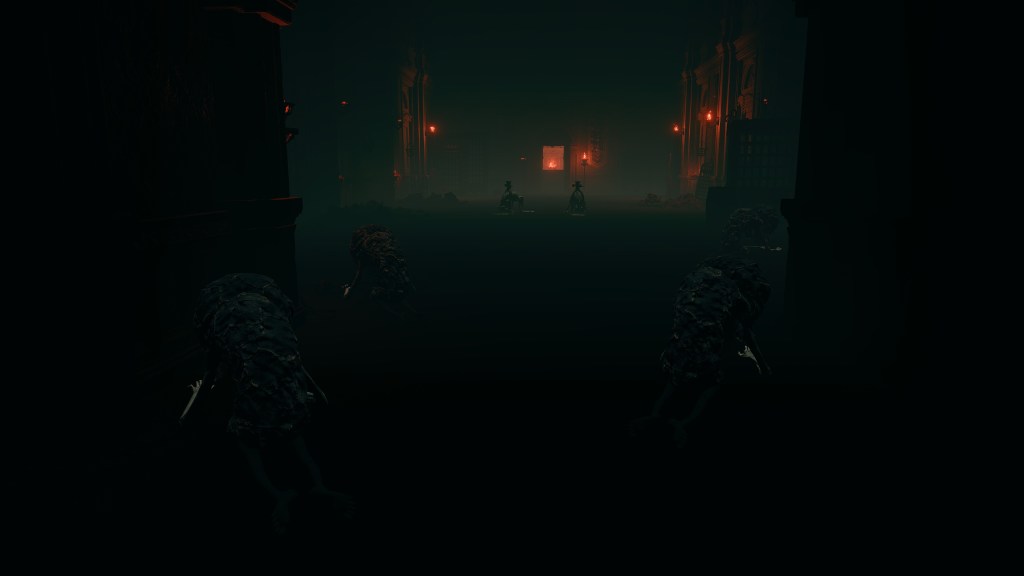
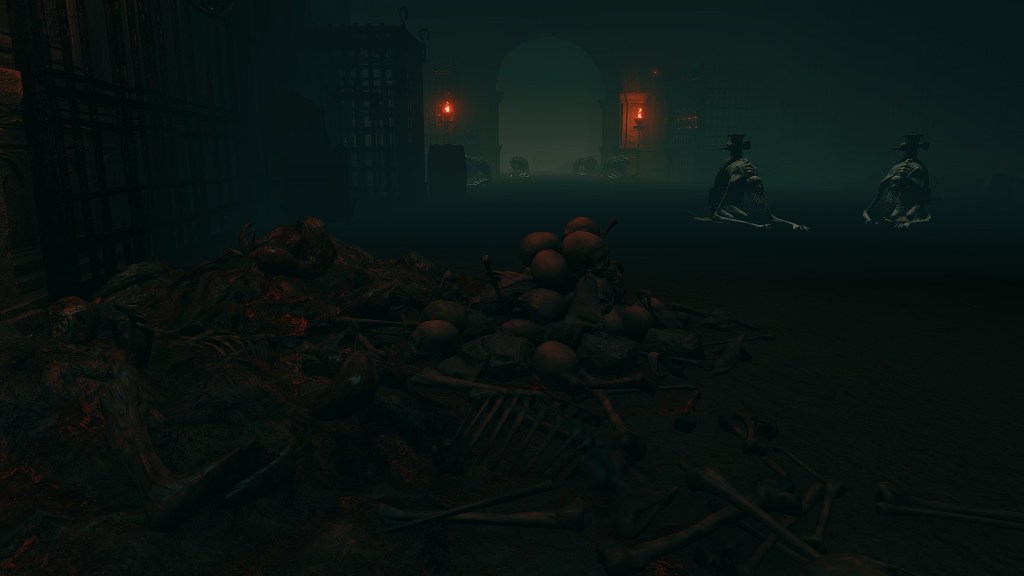
Not all on team recusant were afforded the same luxuries, of course. The Inquisitor’s Girandole has since been used to torture nobles, and the nobles roaming free within Volcano Manor cower amidst all the torture devices when not absently staring at the lava spouting up from the snake god’s cavern. It seems all those powerless nobles who backed Rykard in the hopes of a better future in his promised world have found themselves subject to the whims of the inquisitors. Whether or not they still supported his blasphemy was irrelevant at this point; they are trapped as his minions’ playthings. The only exceptions are those who left with their pages on an expedition to the Gelmir Hero’s Grave, still digging for power from the old champions of blasphemy. With them are a now dead knight and the red wolf, Rykard presumably bringing his father’s gift along with the servants. If those two oversaw the escort, then clearly the party left before the manor began to turn on their helpless allies in the aristocracy.
Torture tool that harmed nobles at the hidden backside to the Volcano Manor of Gelmir.
It is a well-conceived candlestick where the numerous spikes harm the skin, the lampflame burns it, and the charring smell of blood convinces them of despair.
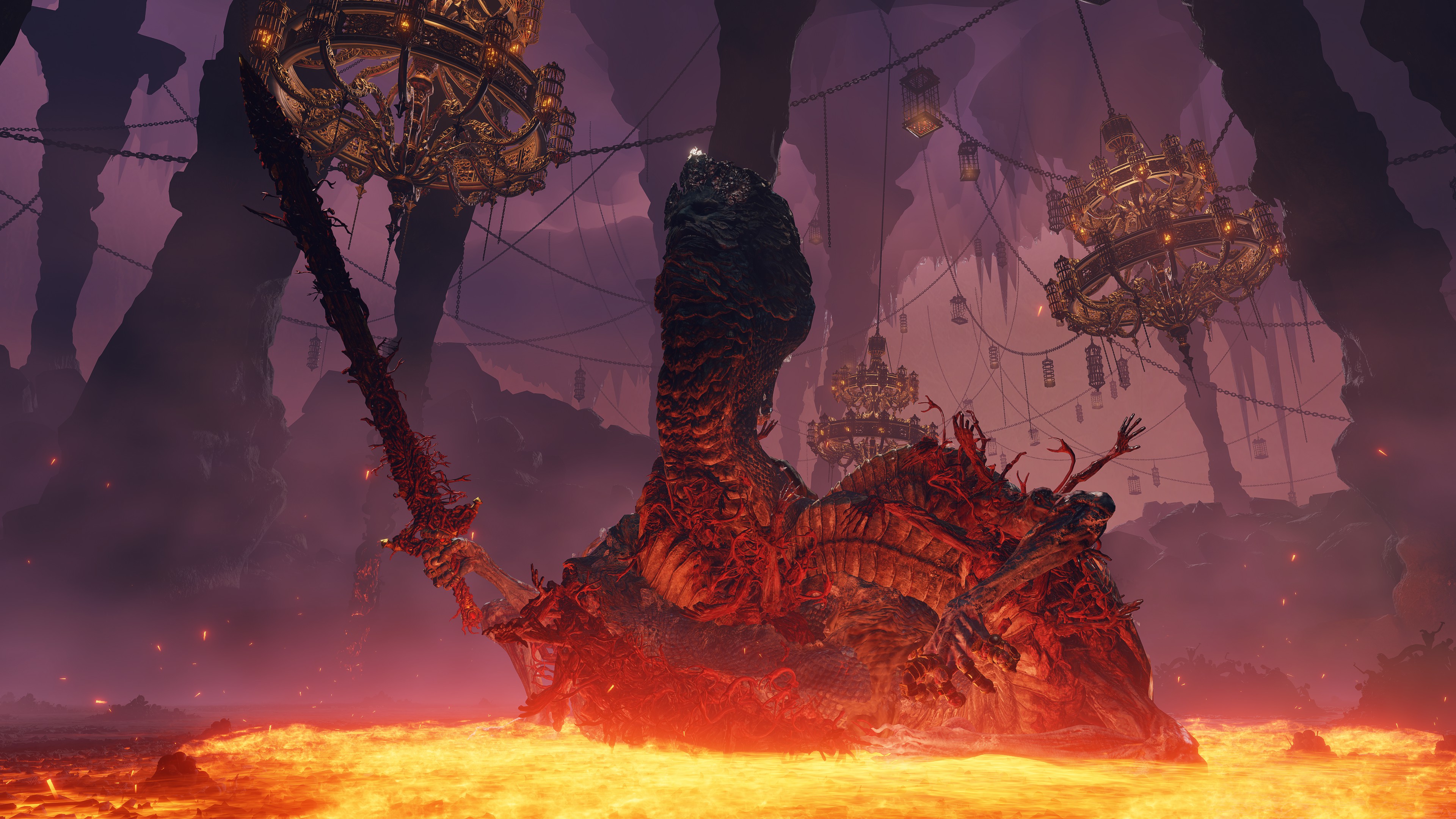
The knights were also doubtless not universal in their support for their blasphemous lord, though they and the soldiers under their command have already been subject to a worse fate. As the roles of heresy and orthodoxy flipped on their heads, the heroes amongst the faithful were granted an audience with their new king nestled in the depths of the volcano once more. Flesh and bone piles up in Rykard’s throne room preceding the waygate to the boss. Countless more litter the boss room, scorched black along with the tangle of snakeskins covering them as cages for lighting hang overhead. There is a reason that the cookbook in the area details how to craft holyproof dried liver: Rykard has used this opportunity to devour the faithful, making their power his food for growth. The offerings likely include every prisoner executed in the preceding torture chambers, with bones and living jars in the cemetery suggesting that even the dead have been dug up to tide over the Serpent King’s wait for more heroes. This led to the gargantuan snake we see today, with all of Rykard’s new limbs bursting out along its length.
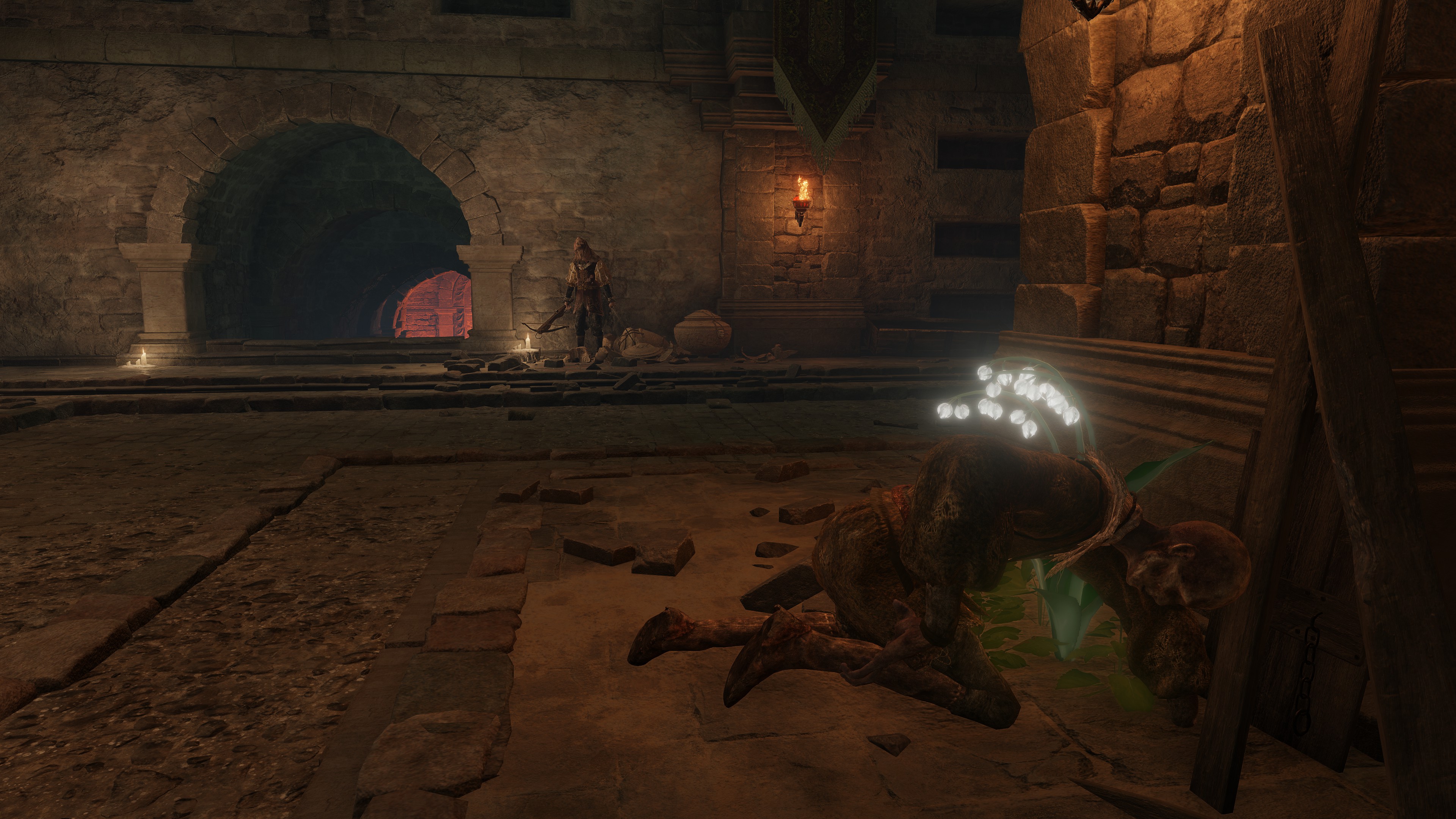
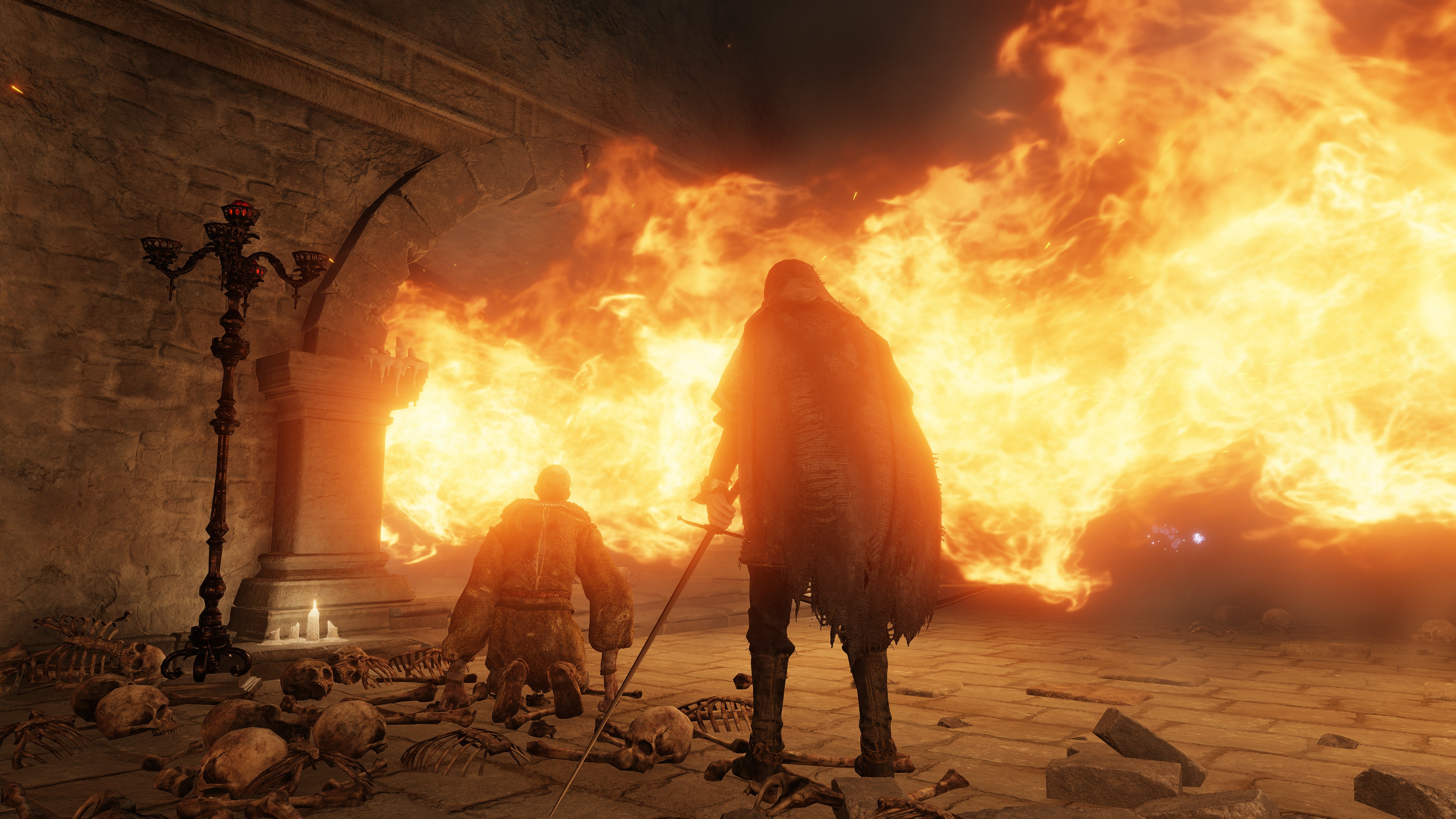
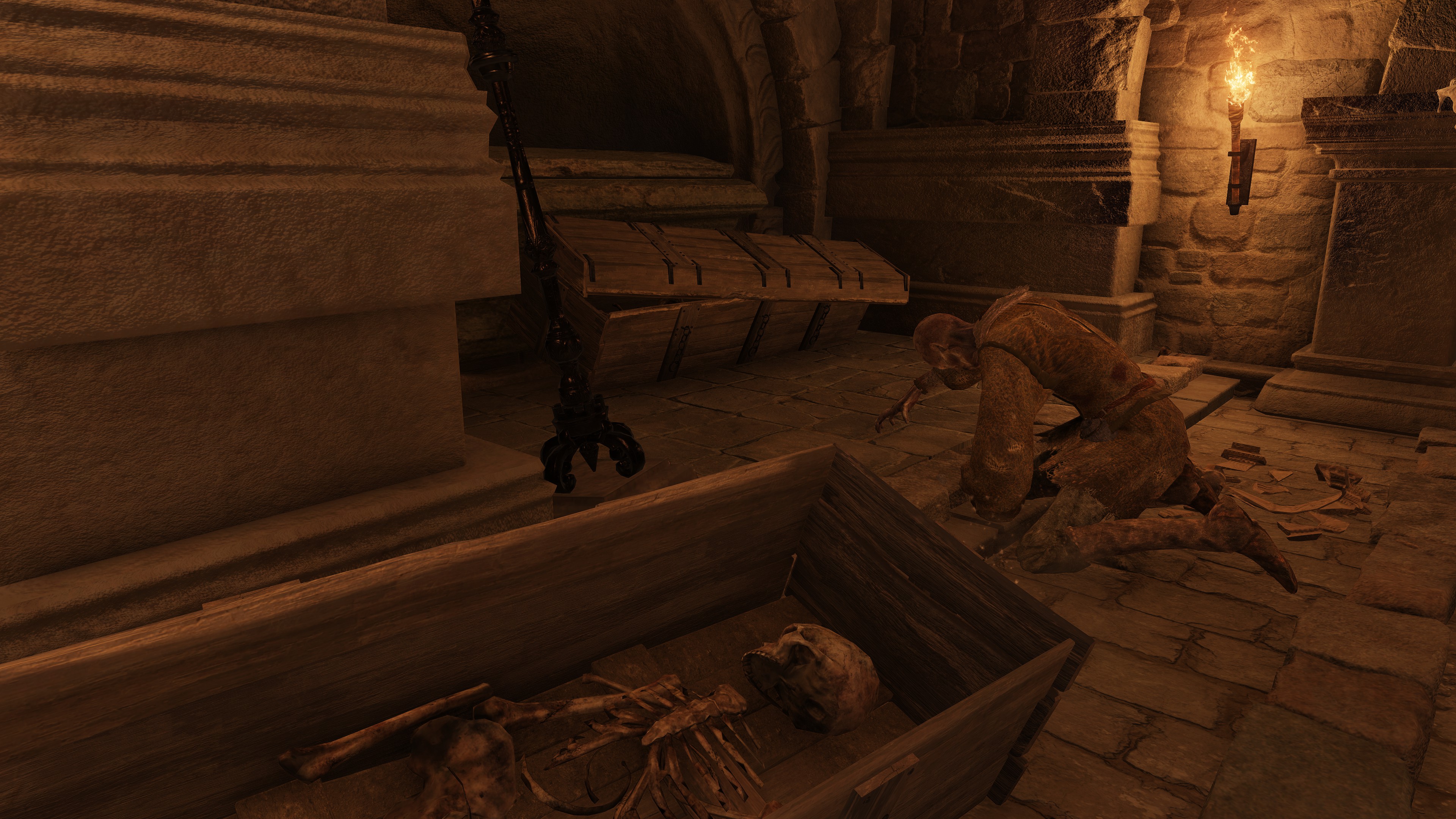
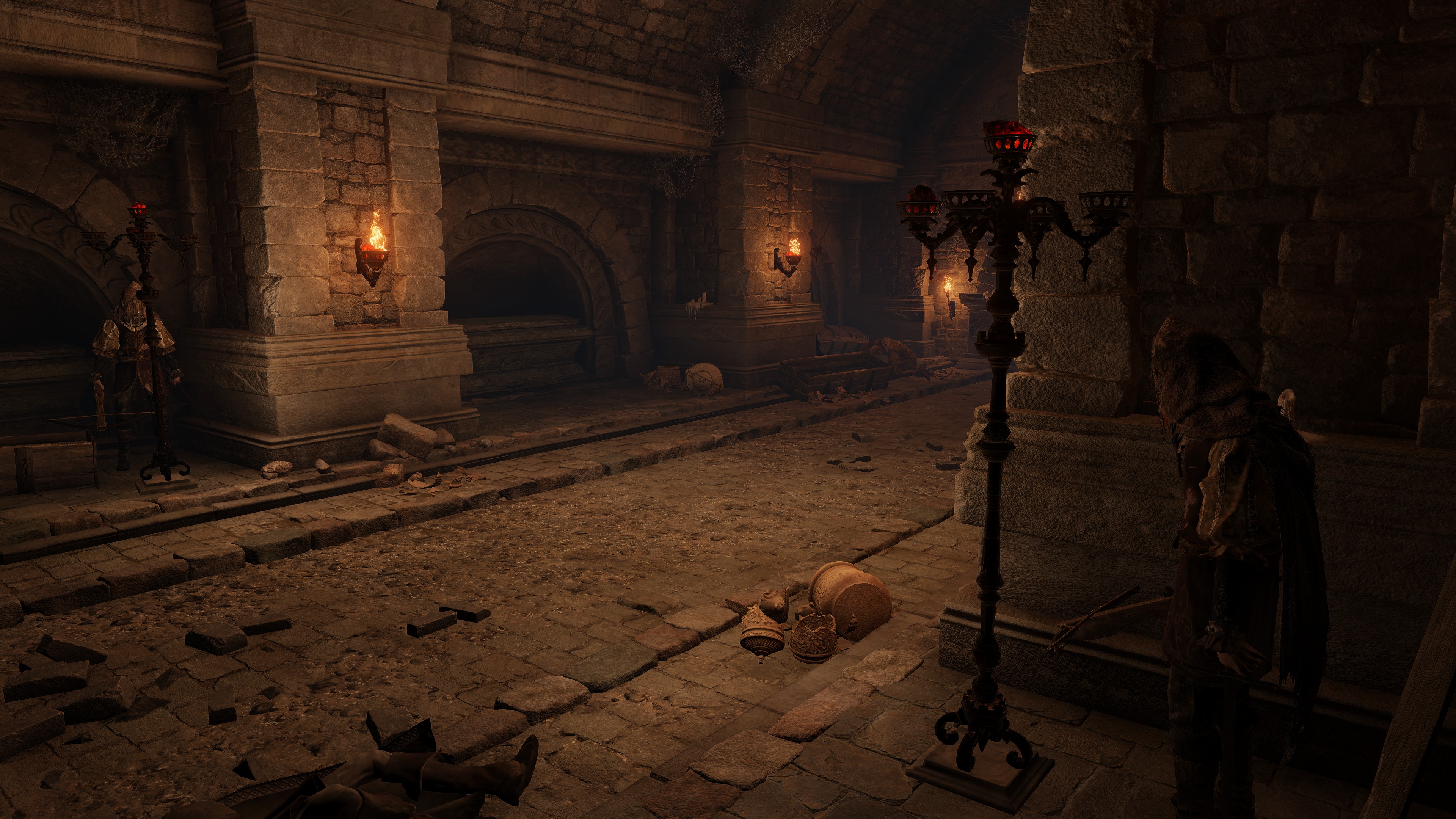
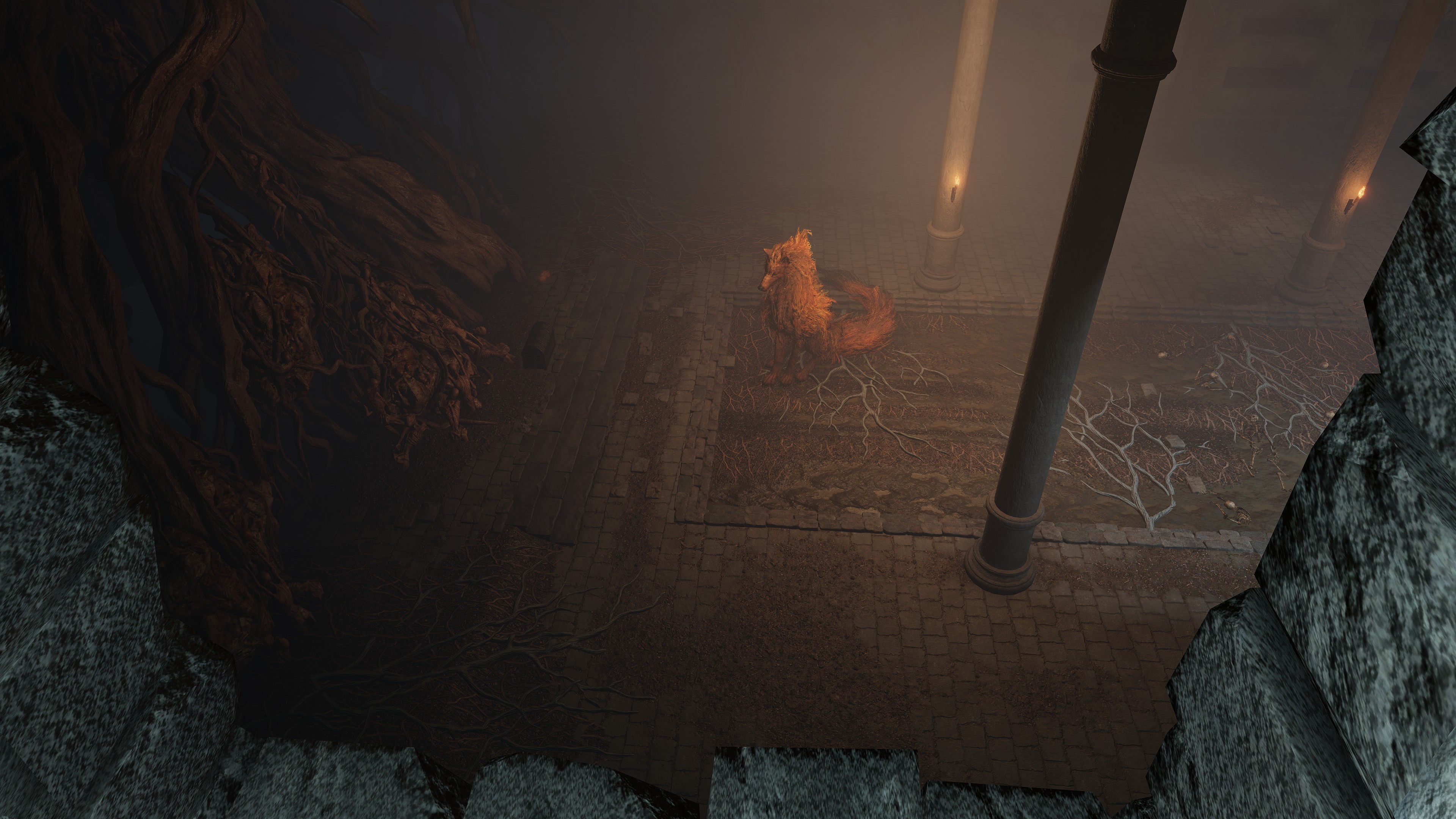
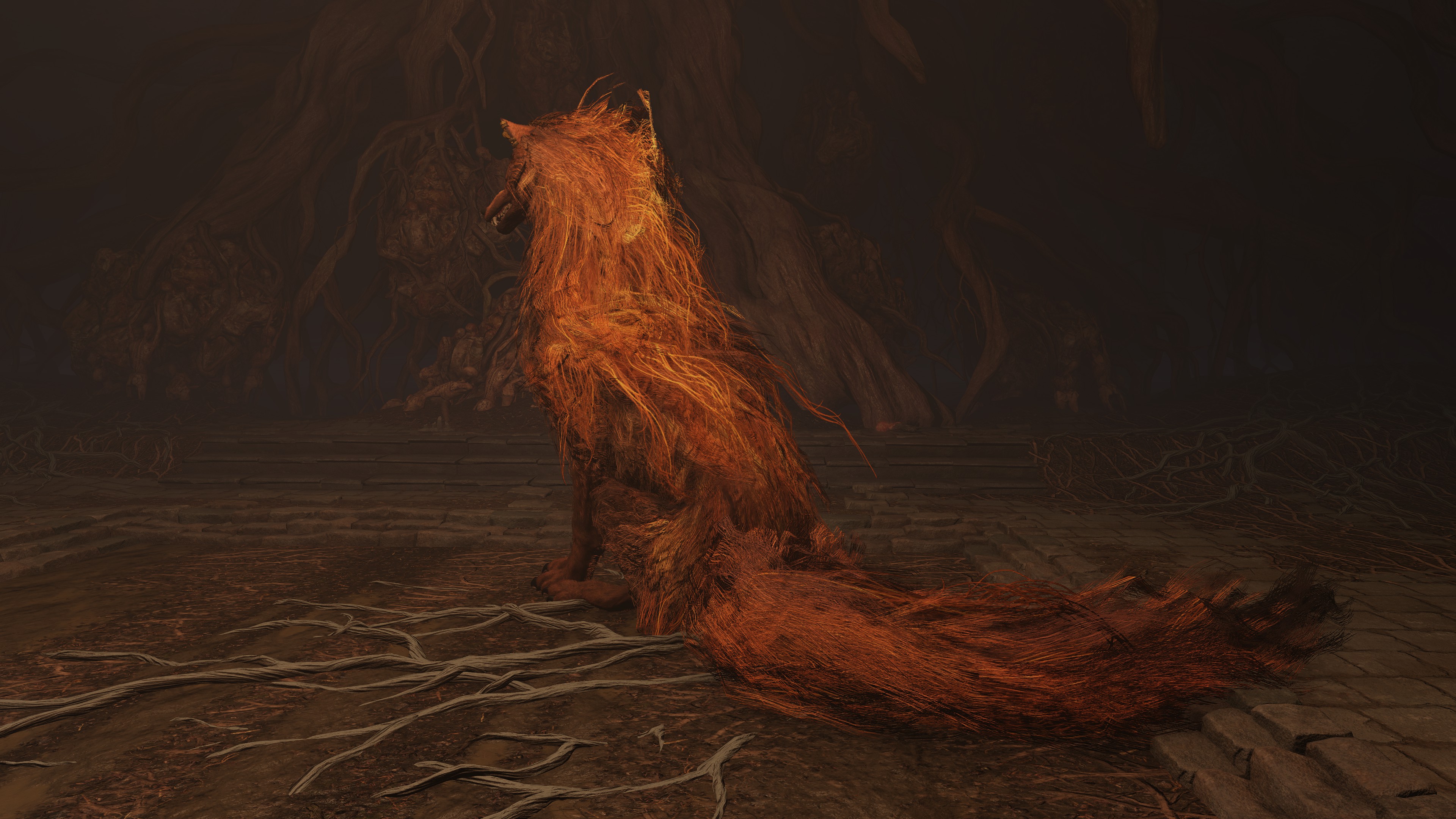
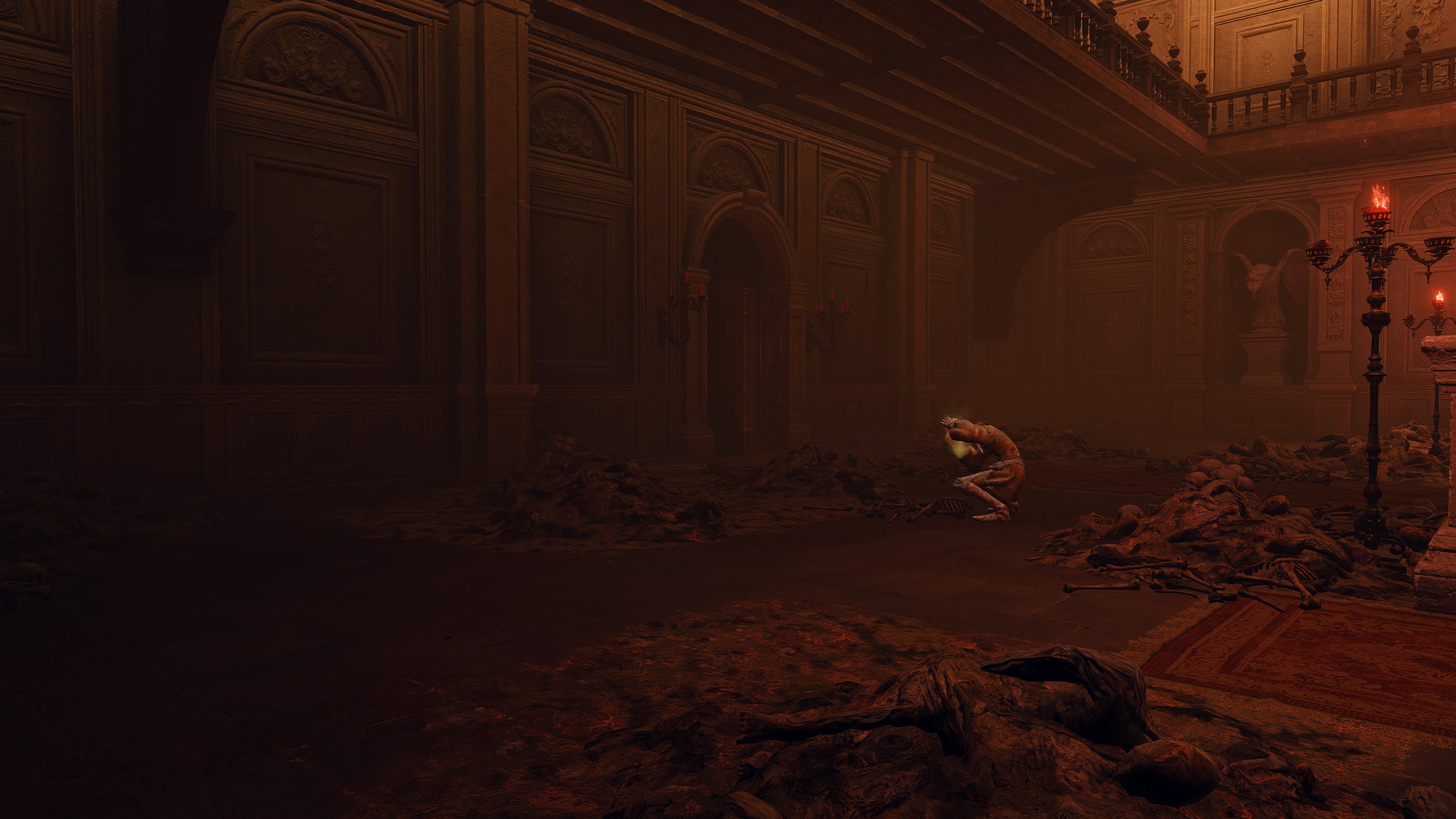
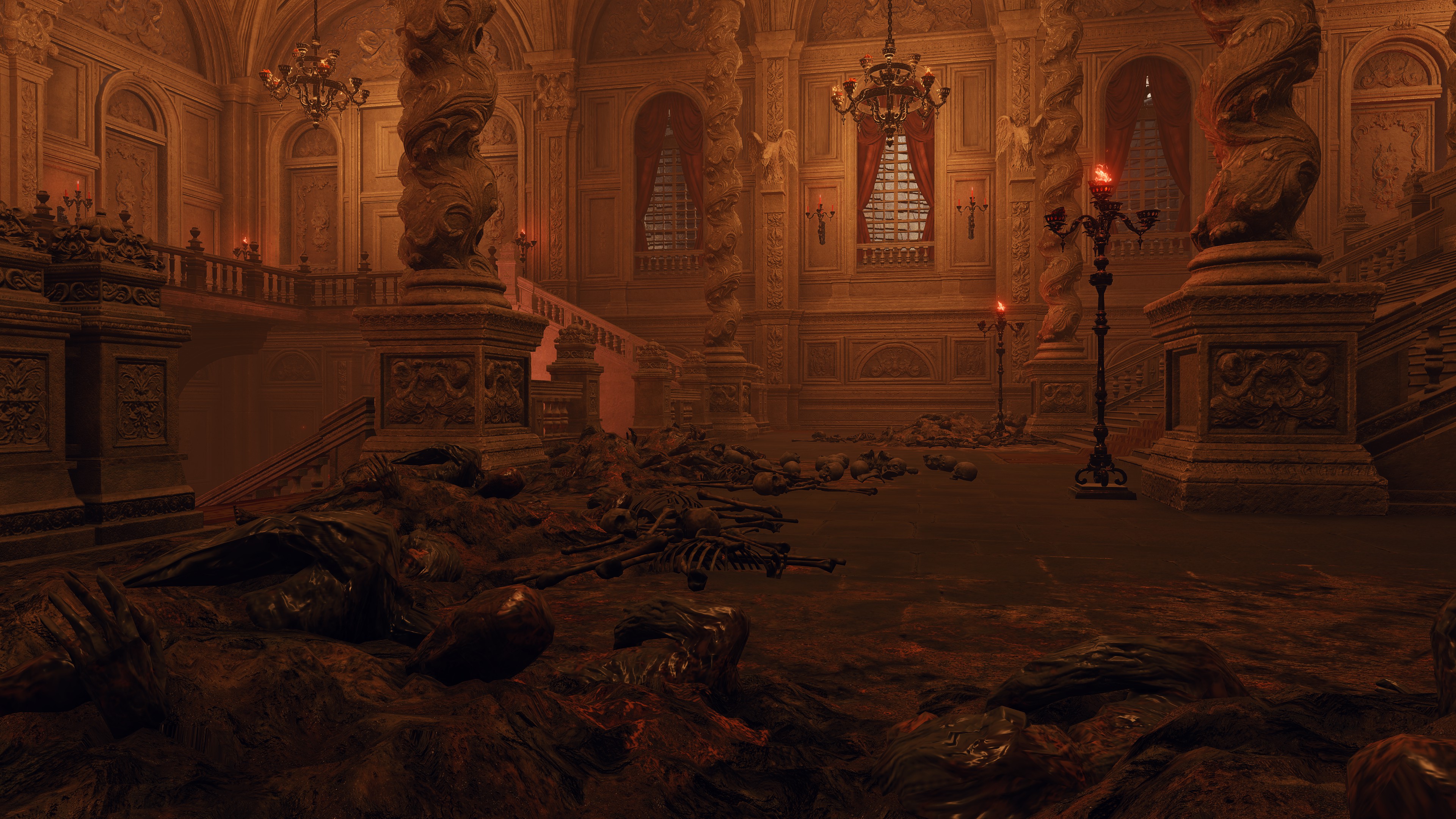
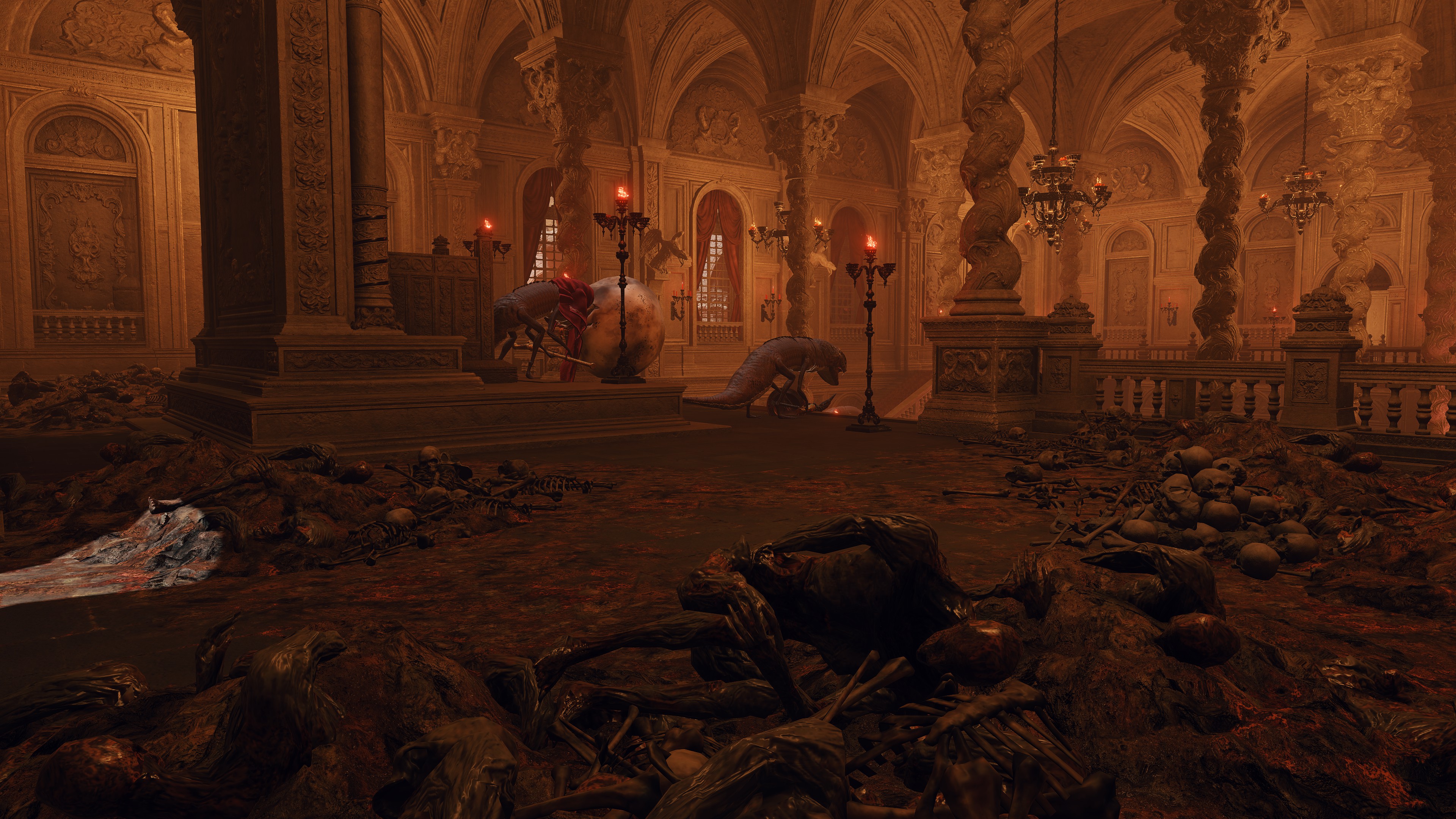
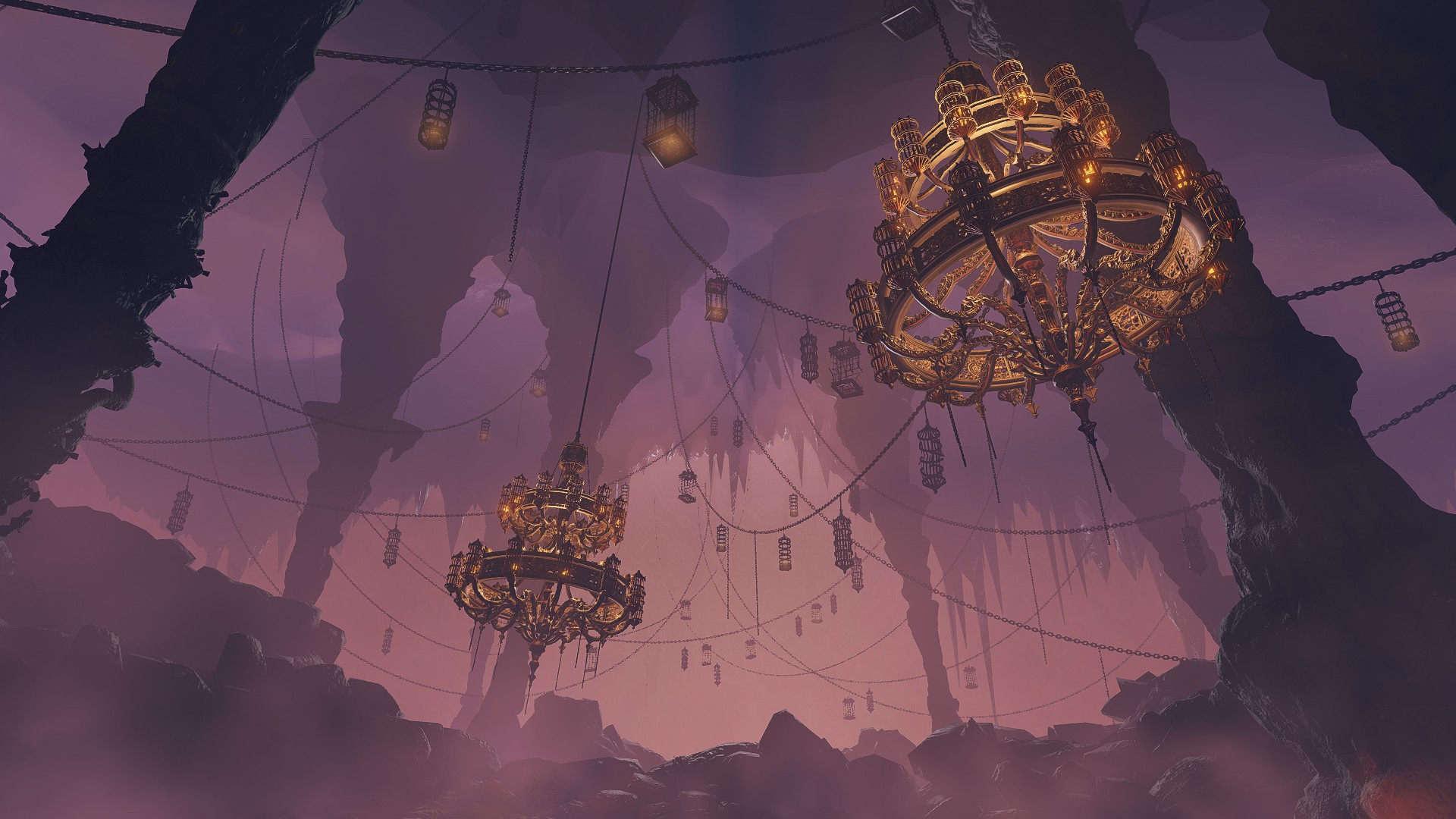
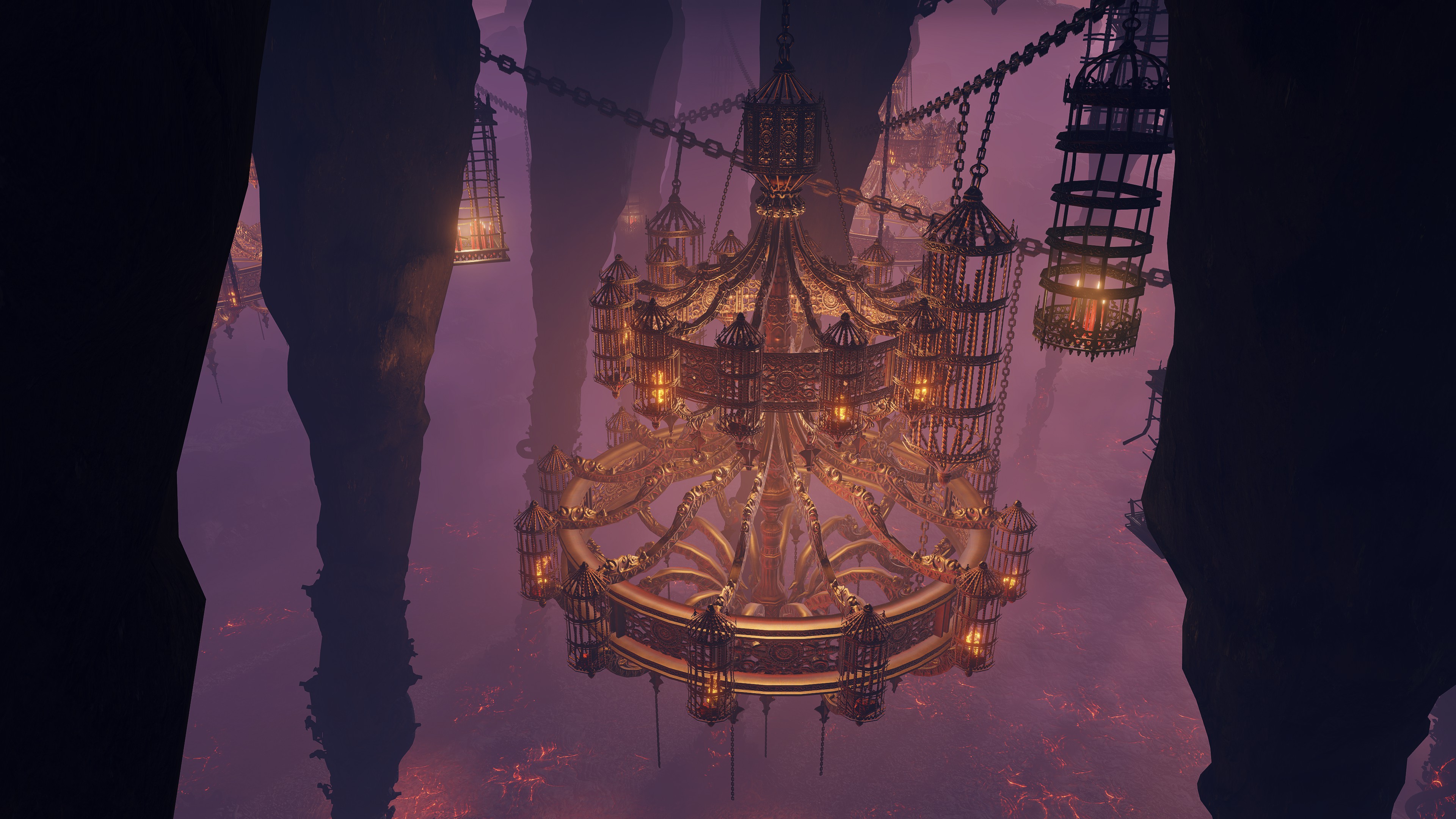
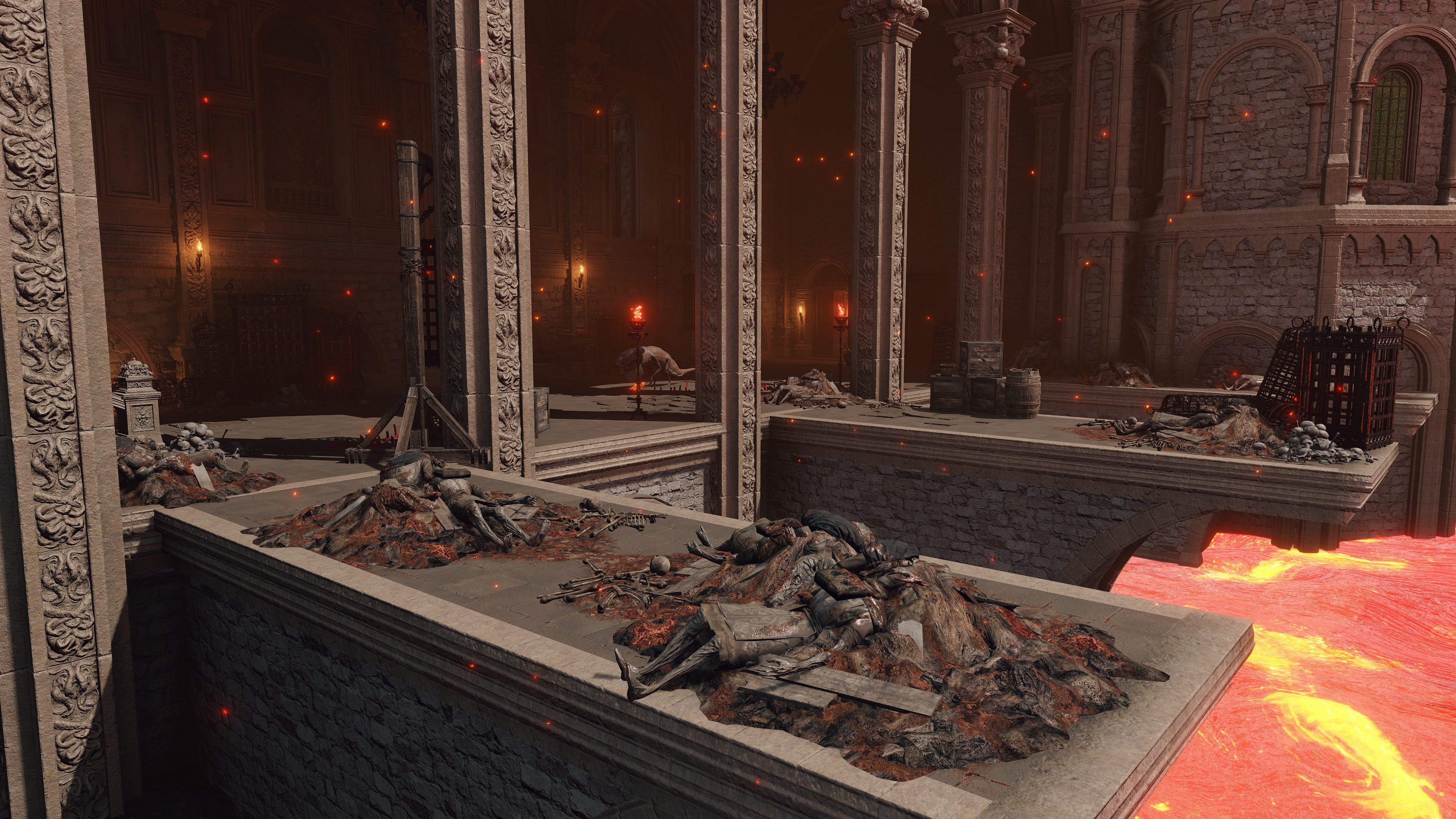
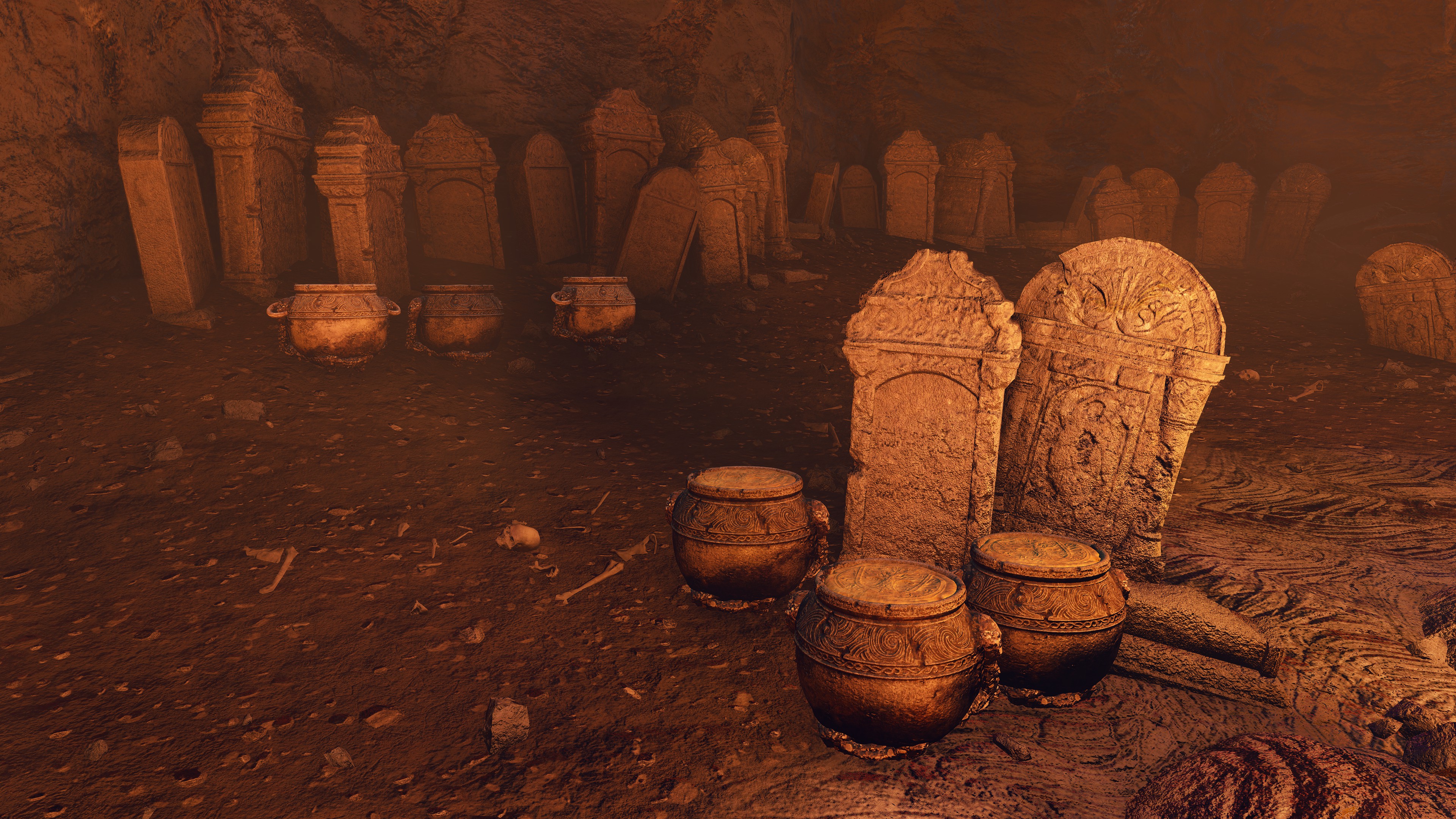
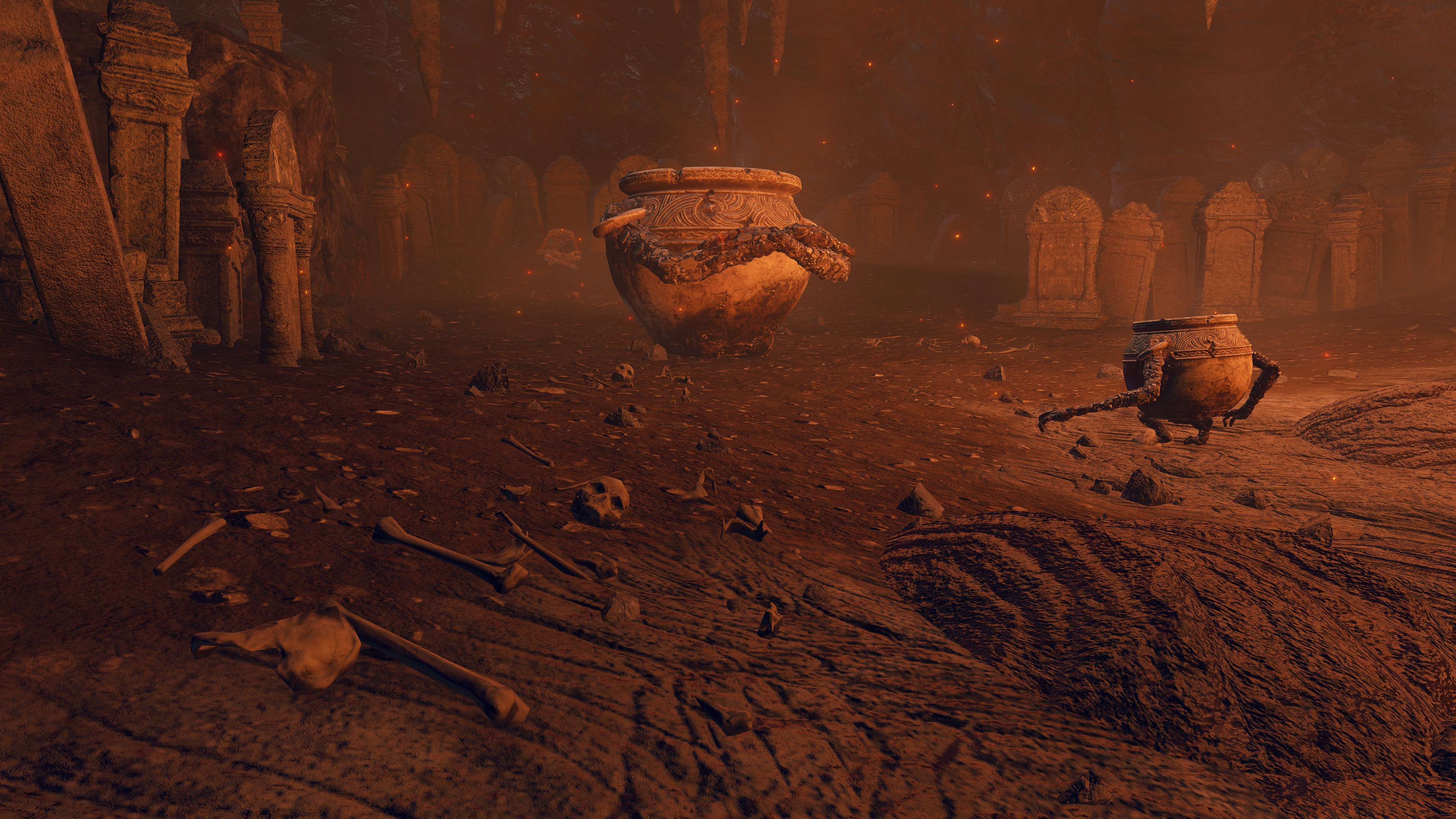
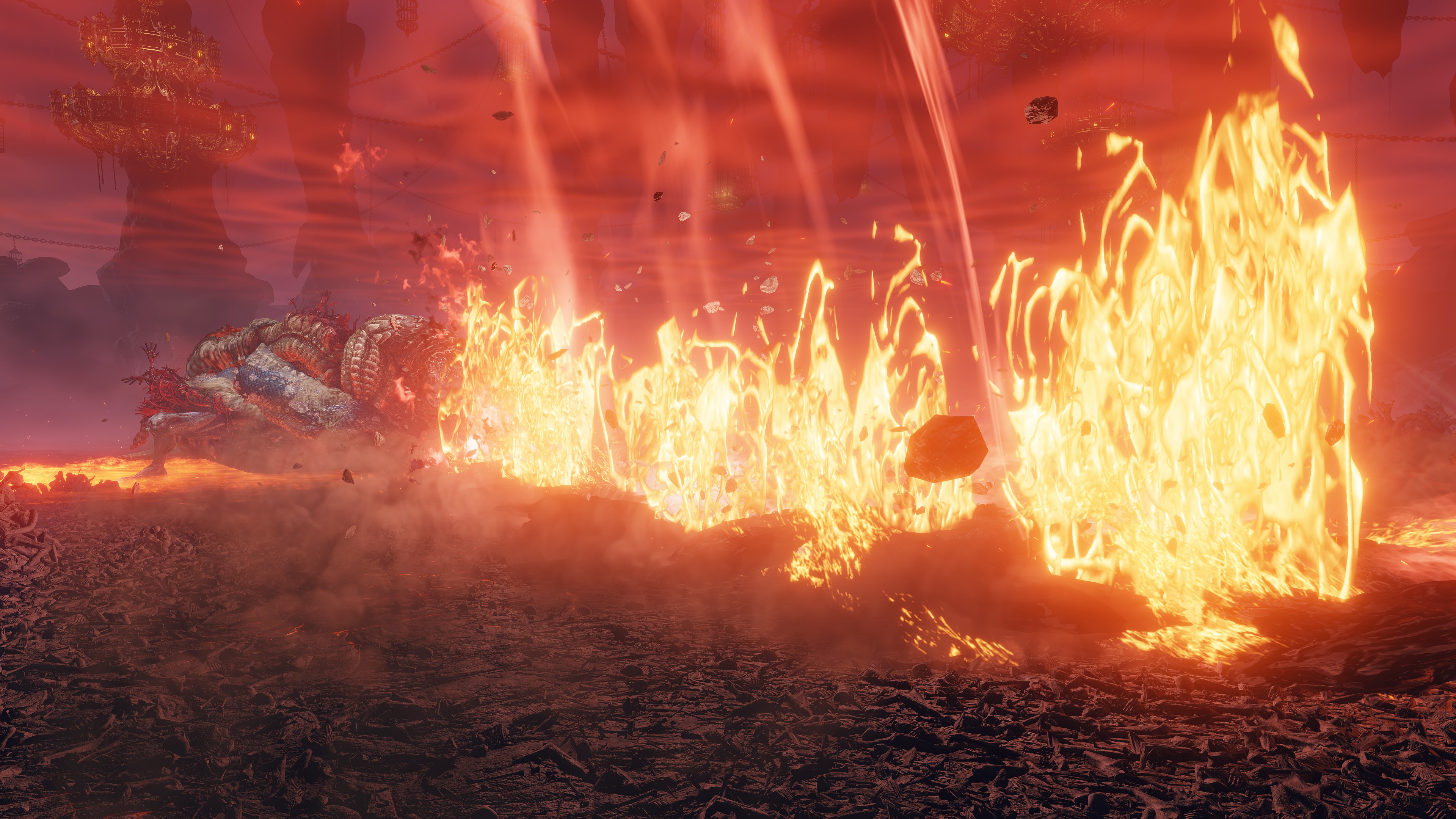
Meanwhile, those with an audience joined the “family”, becoming the vengeful wraiths whose heroic spirits burn with righteous fury — adding fuel to the snake’s flame. Rykard has learned to coax out these spirits, whether from within or without. As proof of mastery, the man synchronizes the wraiths unleashed from surroundings with his own to attack; his holy blade covered with hero flesh benefits its owner in similar manner. Despite the familial framing, there is no choice in becoming part of the serpent’s same blood, as the squirming “hands” of amalgamated flesh demonstrate. Indeed, the nature of these audiences with the king is evident in cut dialogue, showing the developers struggle between calling us a “sacrifice” or “family” for Rykard’s introduction and victory speech. The heroes up until now have been little more than offerings, fueling the serpent’s return. If anything, the colorful wording masks the ugly truth behind the ceremony. Most entering Rykard’s lair, willing or unwilling, probably didn’t realize what they were walking into until it was too late.
Repulsive power of Rykard, Ruler of Blasphemy.
Fires smoldering vengeful spirits and generates delayed consecutive explosions in their tracks.
They are the vengeful spirits of heroes’ violent death. For they had audience with the king, were greedily devoured with his welcome, and became members of the king’s family within the great snake.
Very well. You shall become family for I, the Serpent King, and we shall devour even the gods together!
You… shall become a sacrifice for I, the Serpent King, and we shall devour even the gods together!
… Now, you are family. Let us devour even the gods together!
… Now, you are a sacrifice. Let us devour even the gods together!
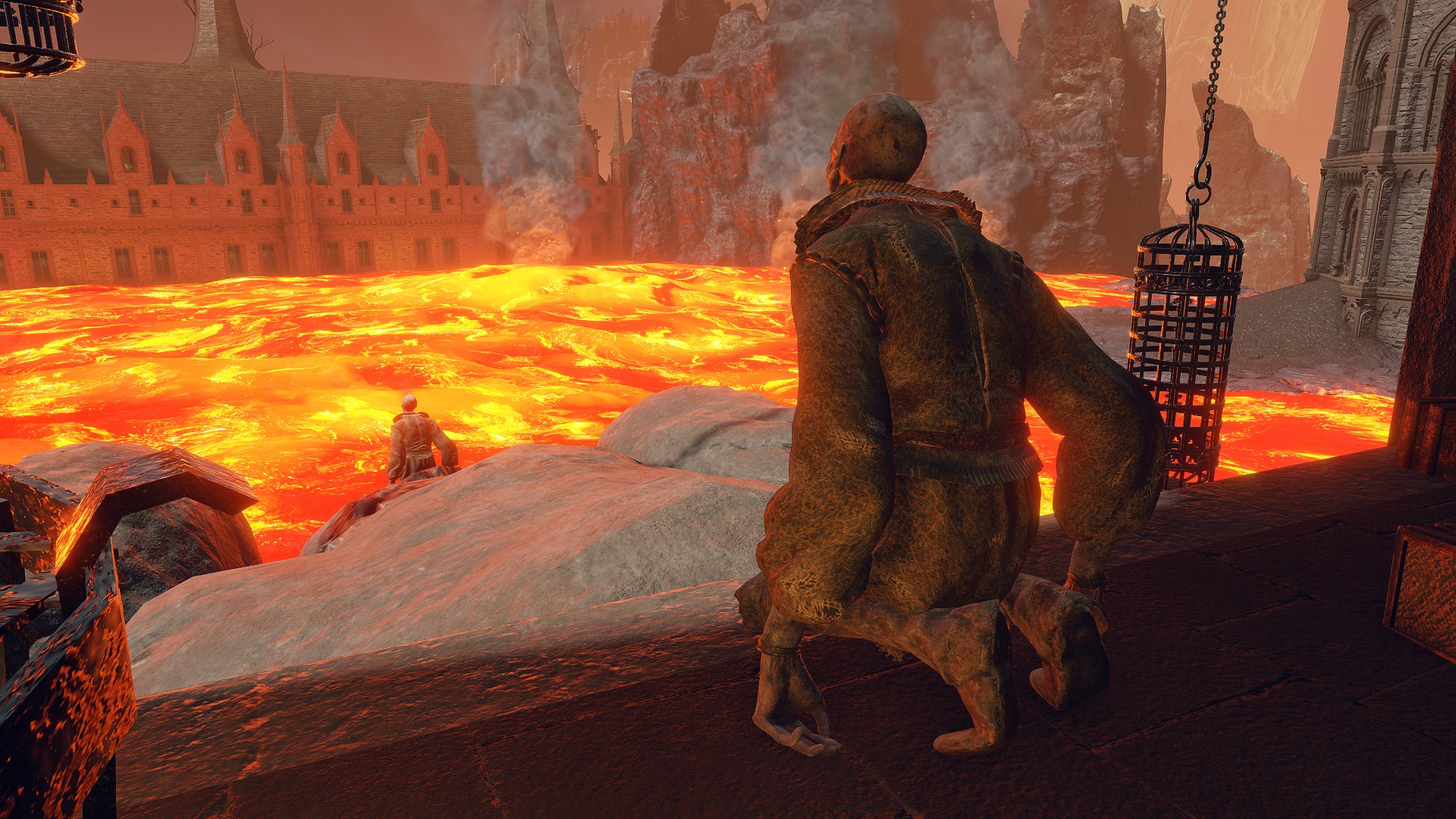
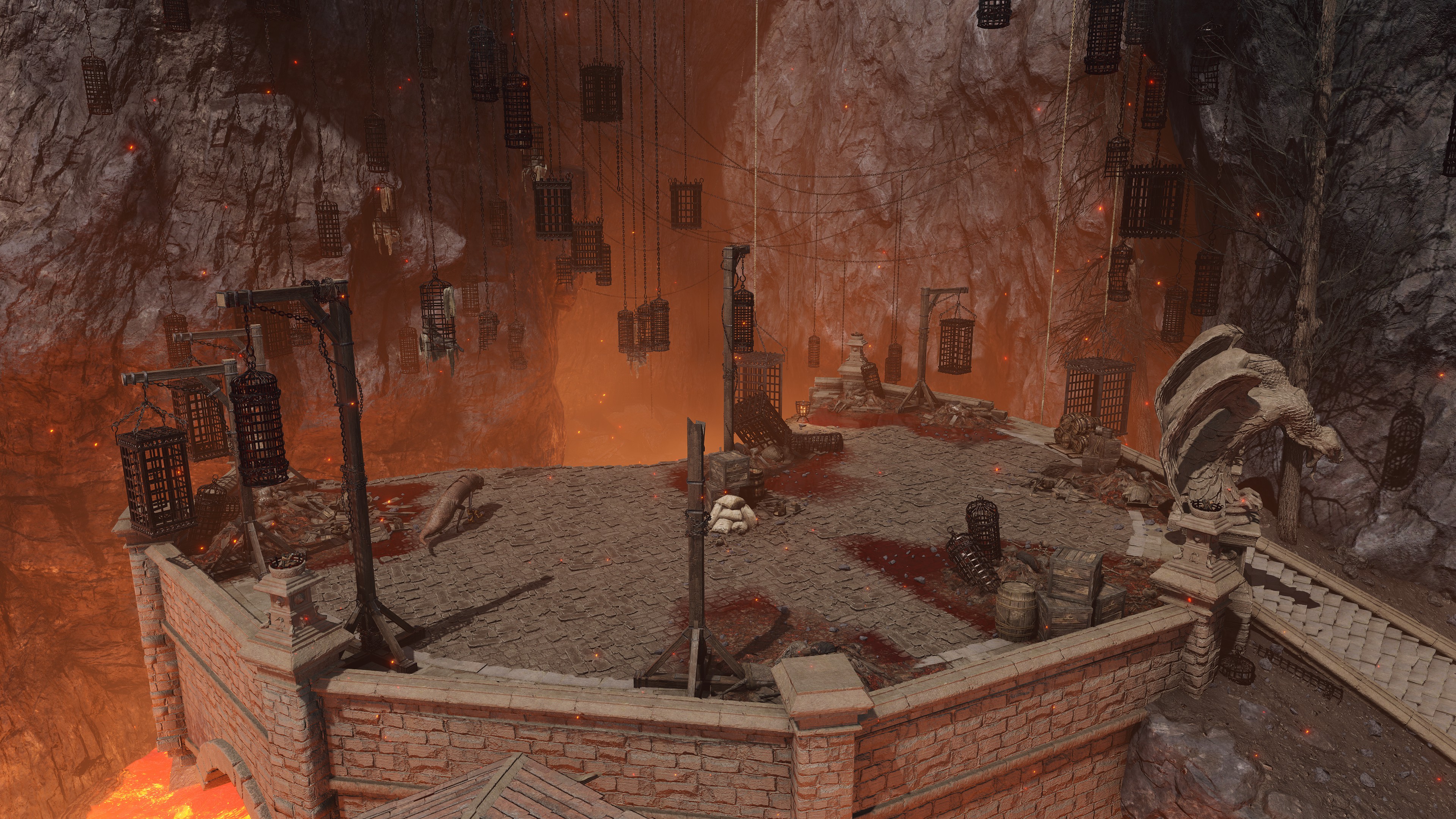
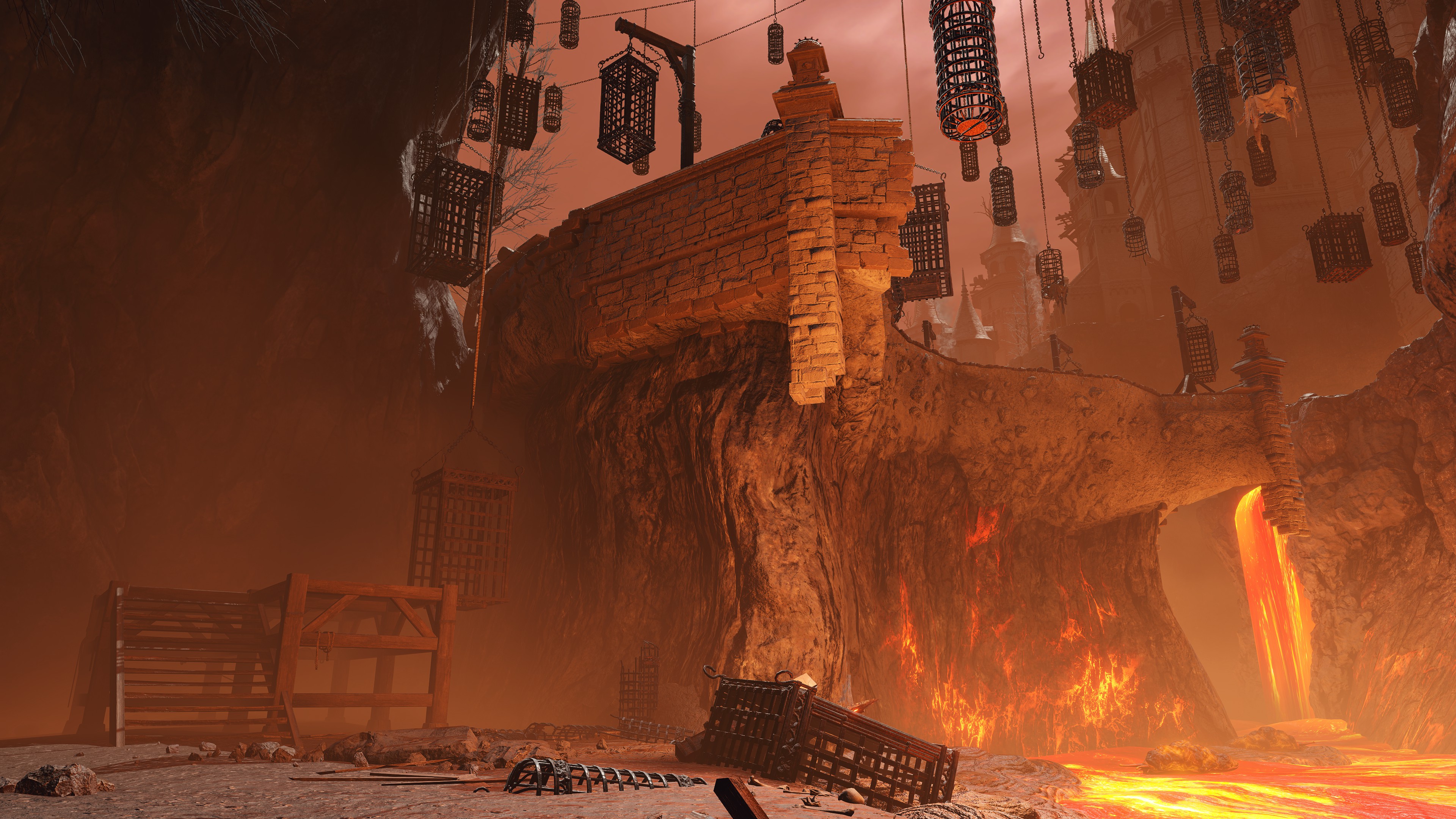
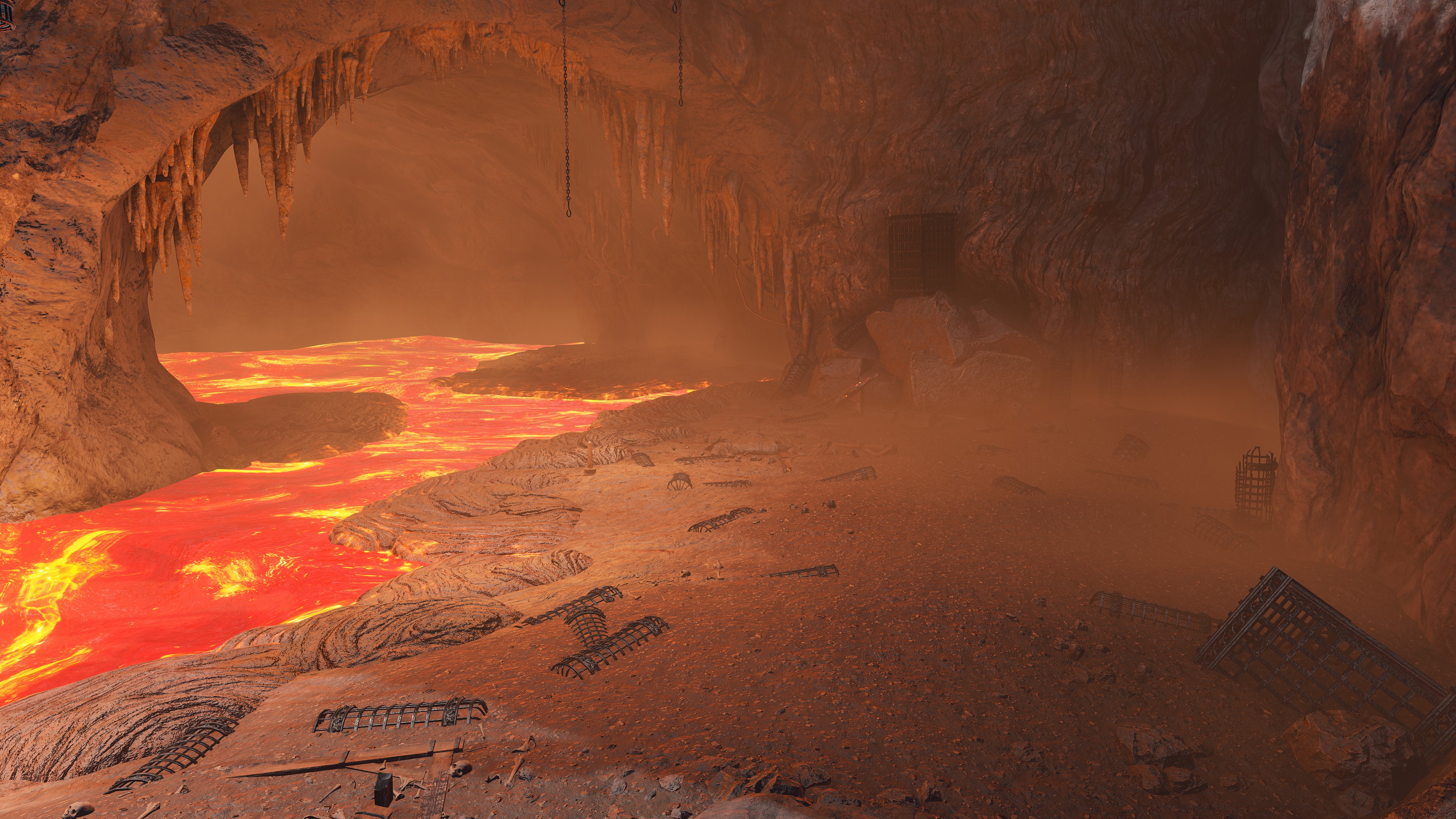
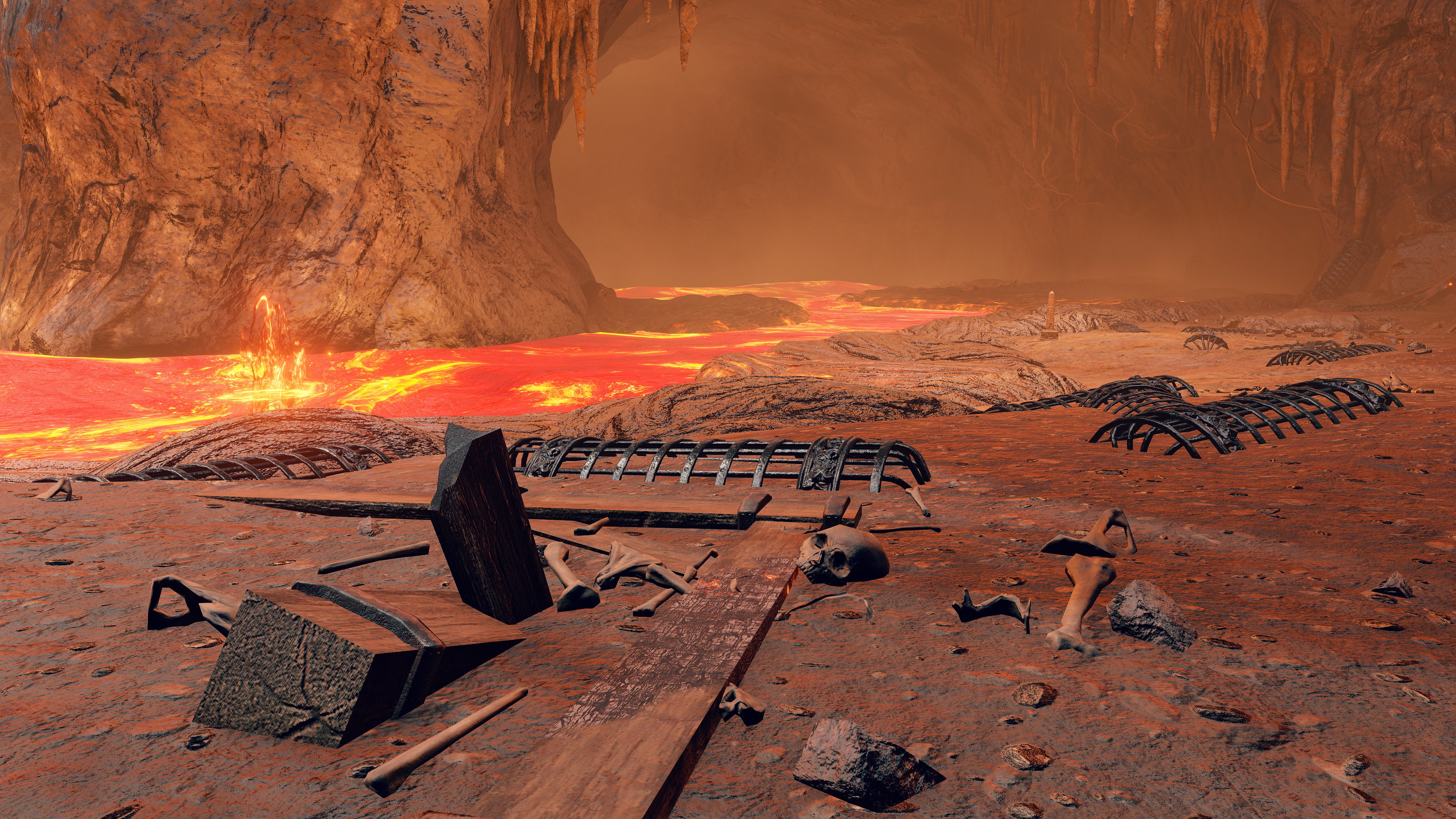
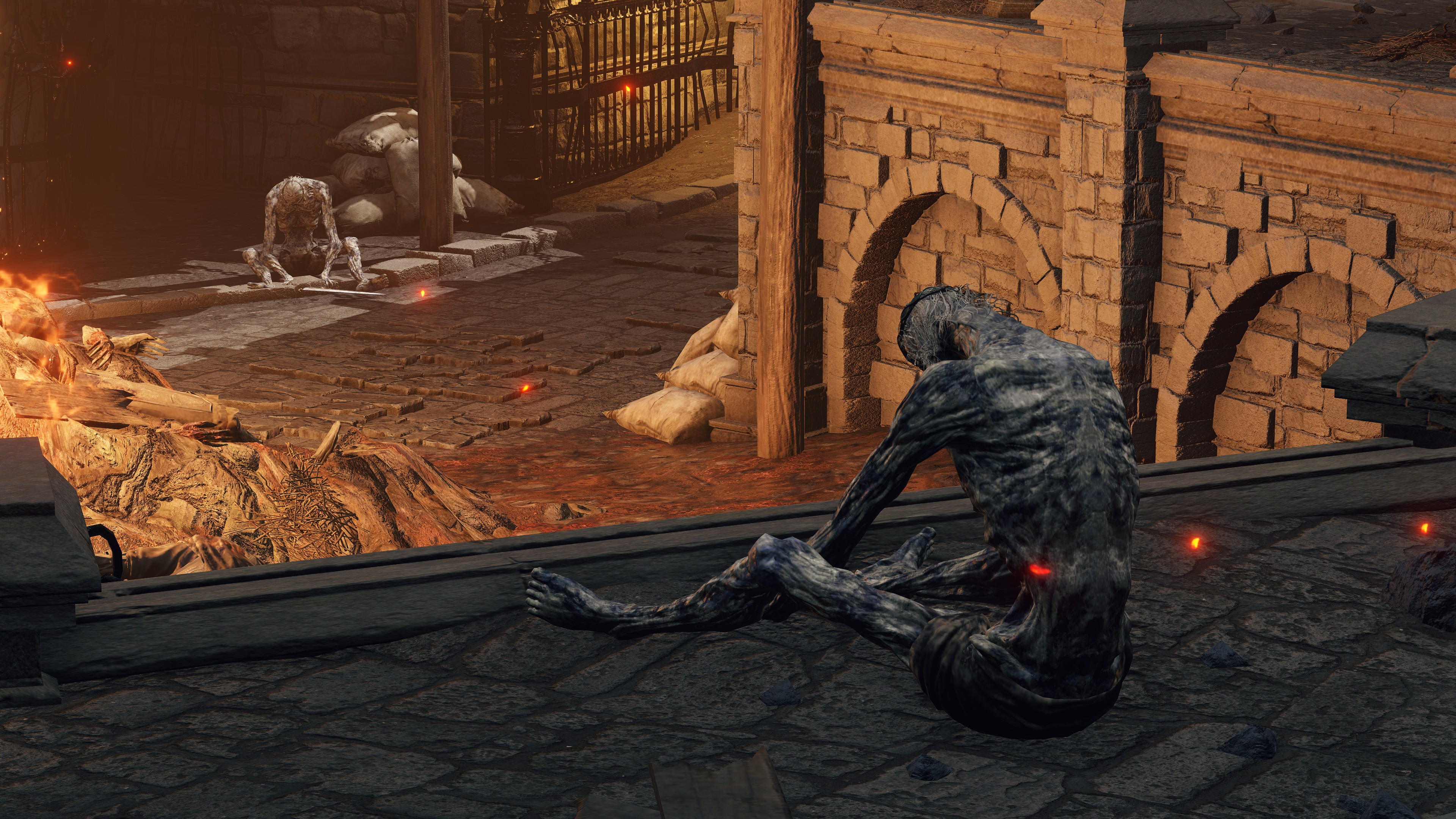
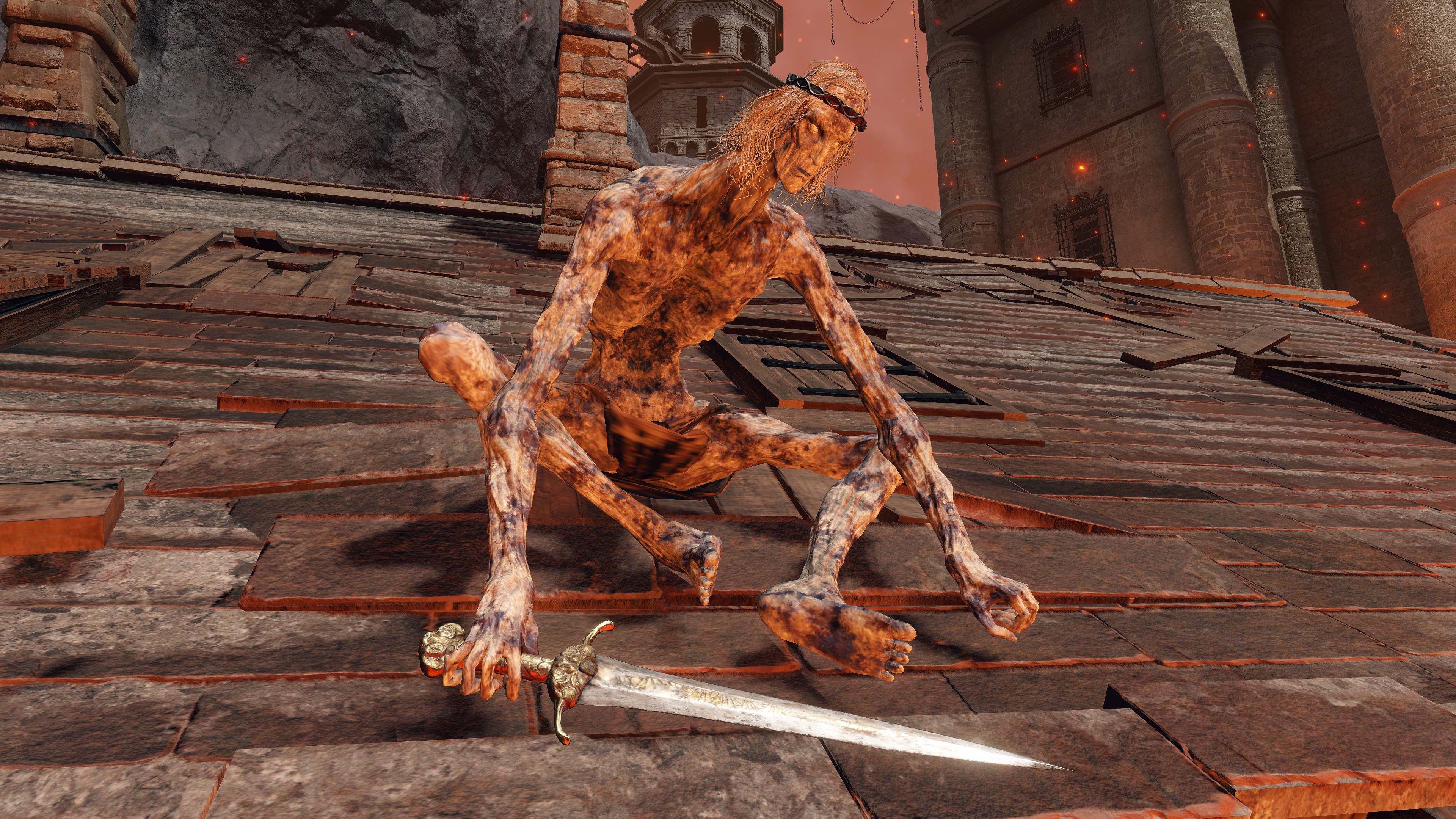
With each hero sacrificed to the king, the lava has likewise increased, now pouring out from the mountain, taking a huge swathe of the castle town with it. This has brought the townsfolk some distress, and the burning slugs some measure of glee, but none have been so overjoyed as the torturers; the lift bridge designed to survive the lava doubles as a new torture device, hanging cages installed at the bottom lowered with the bridge to take a long dip in the magma. The wyrms who had taken to hiding in the wake of Godfrey’s wars similarly enjoy submerging themselves in that burning heat they live and breathe, one taking the clever position at the end of the magma flow. As for the wyrm lurking in its cave, no shortage of cages have been dangled down to feed prisoners to the beast, adding more bones to the magma shores. In the end, the locals adapted, pagans even stripping naked to better endure the volcanic heat they so venerated. For their Serpent King, they could accept a few burns from raining embers.
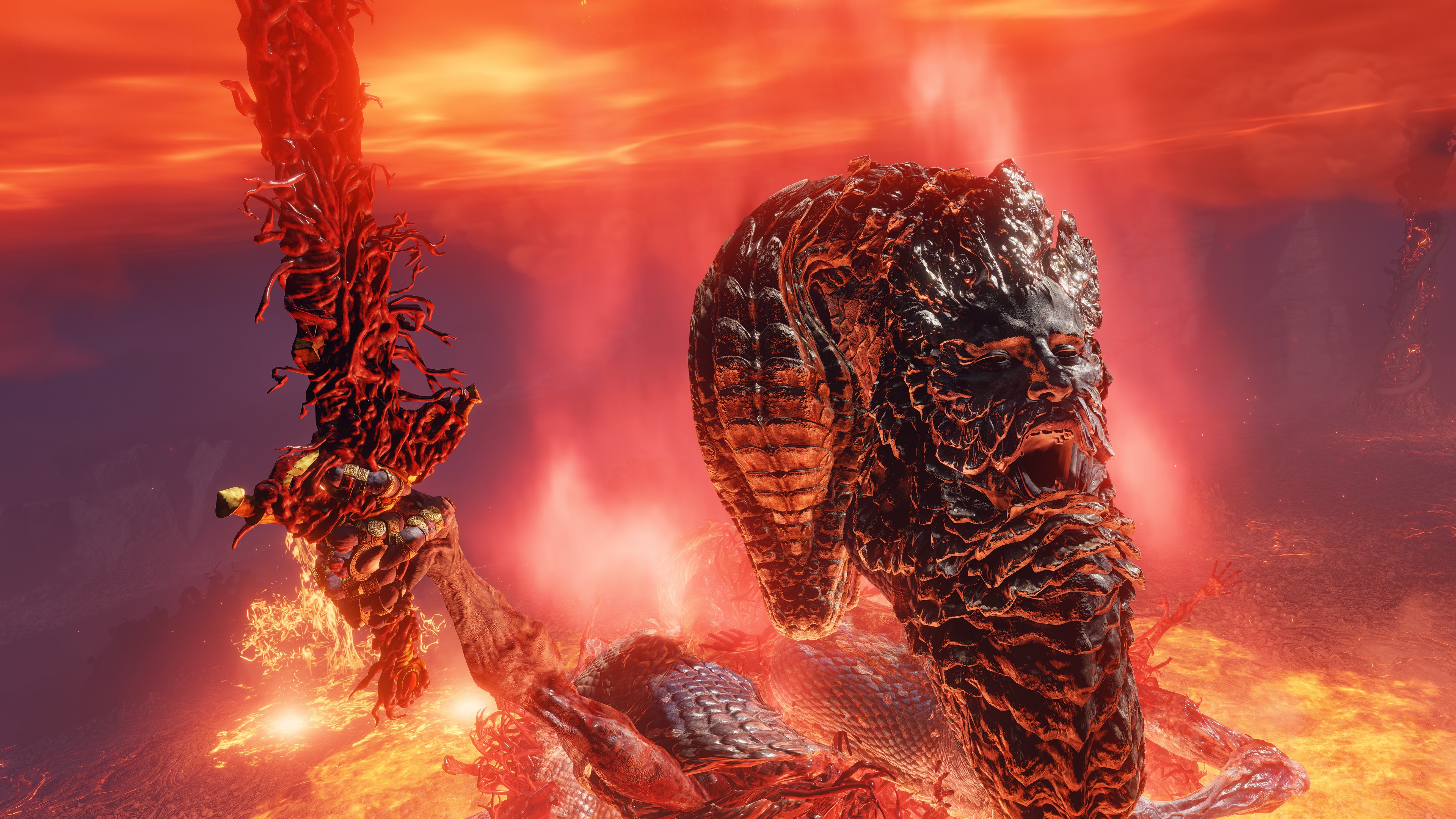
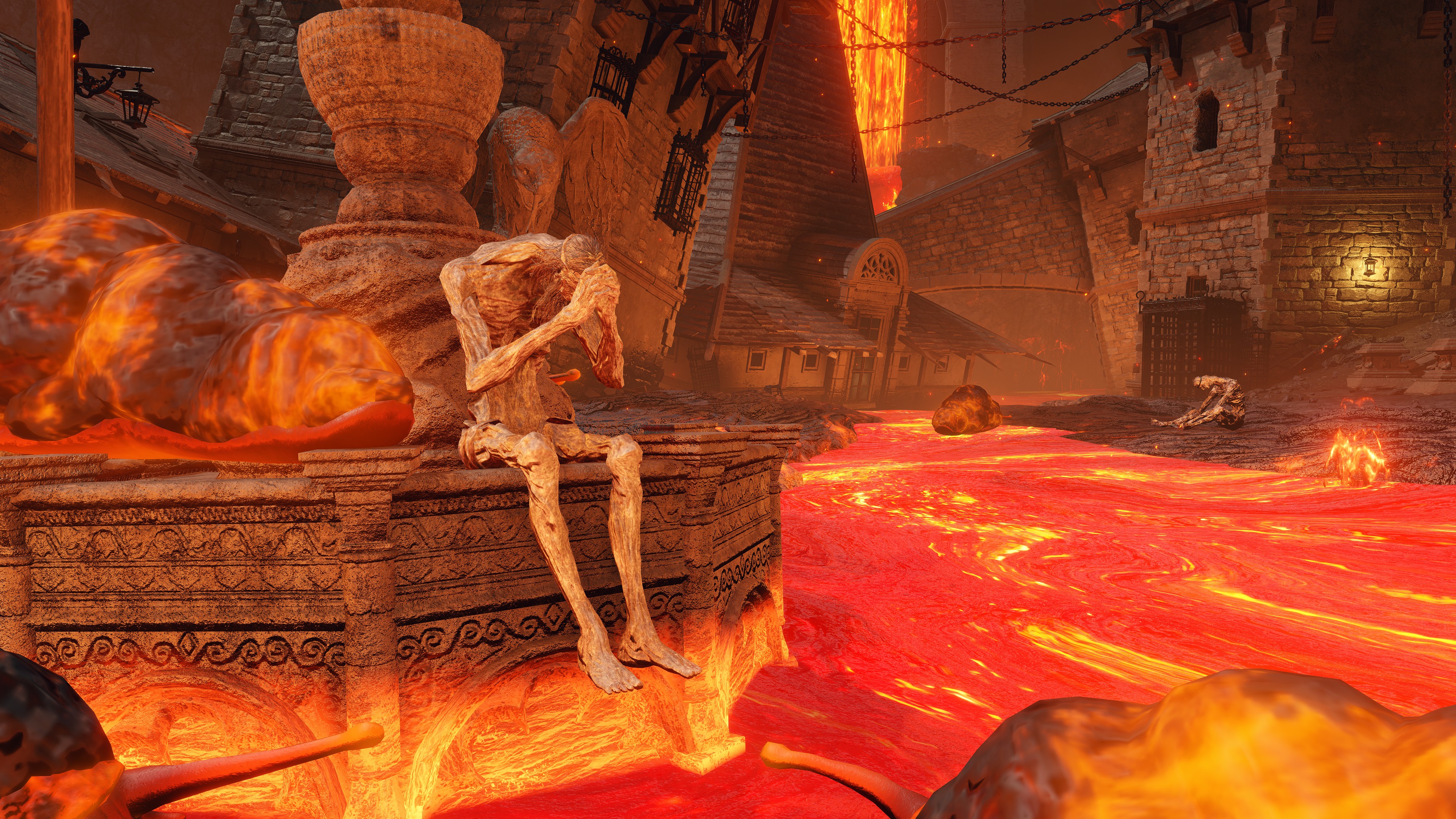
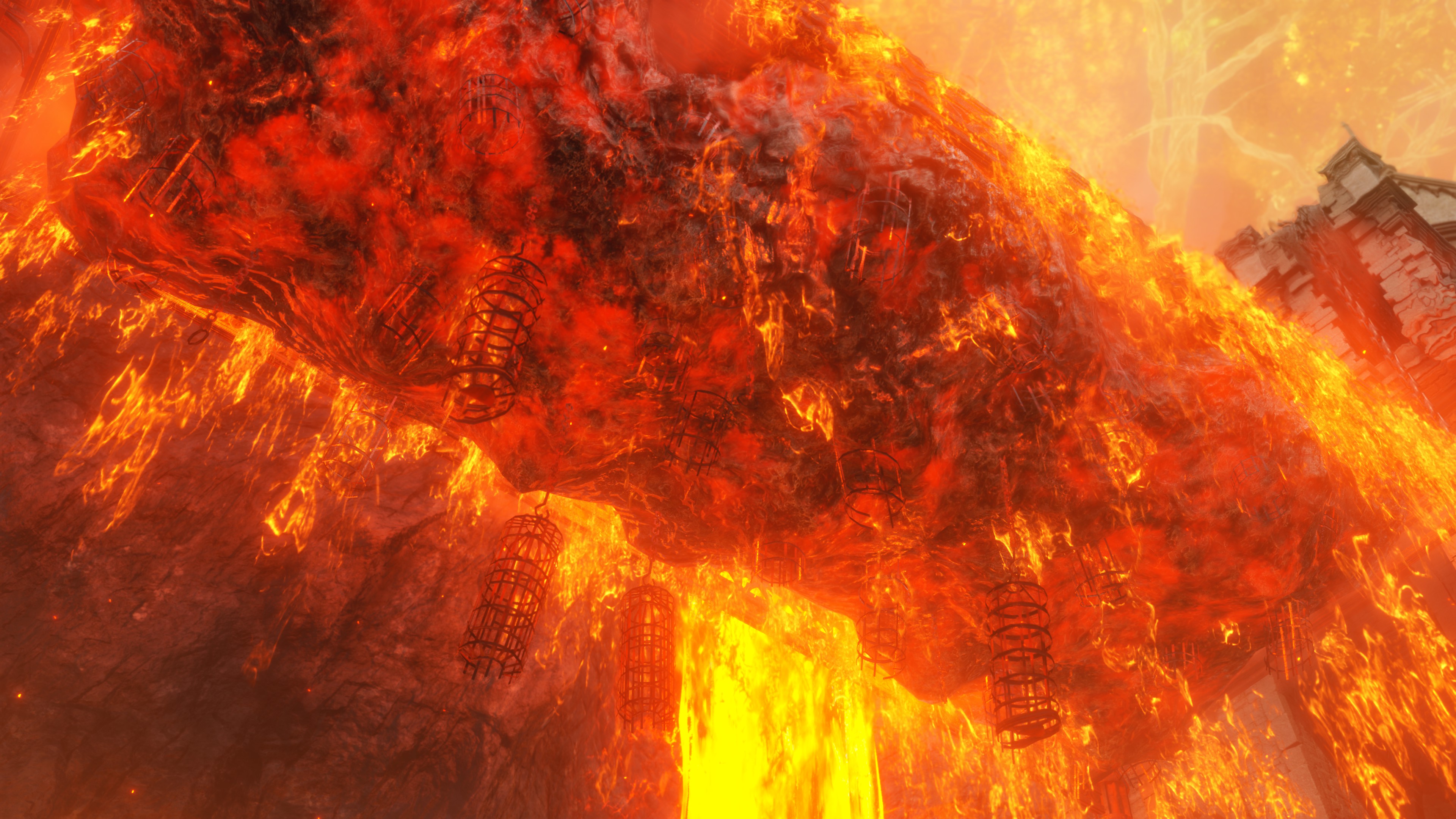
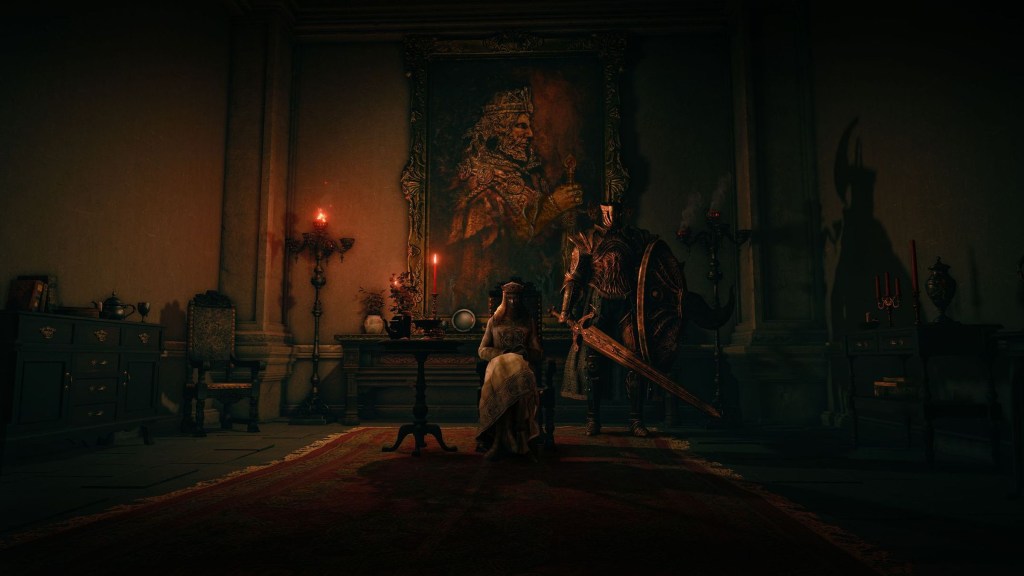
Tanith couldn’t be more pleased with her husband’s state, happy to sit in front of a looming portrait of him with the tiny hands of his victims reaching up — the same portrait used for the Taker’s Cameo. This city of sin was exactly what the couple wanted, and it has earned them allies, chief among which is the Crucible Knight who shadows the consort as her bodyguard. He must agree with their notion of the gods’ hypocrisy, having lived through an era defined by pillage to form Marika’s grand empire. Perhaps the knight simply misses those days of taking land through conquest for the Erdtree, but if nothing else, he is one holy hero who doesn’t mind joining with traitors to see the gods robbed in honest manner. At one point in development, there were plans for this knight to be Ordovis specifically, highlighting the discontent with the post-Godfrey era. Fools burned by double standards see the champions swallowed by blasphemy as just desserts. Let the world return to that era of chaos and conflict, with red gold on the throne. What can those scholars at home really do?
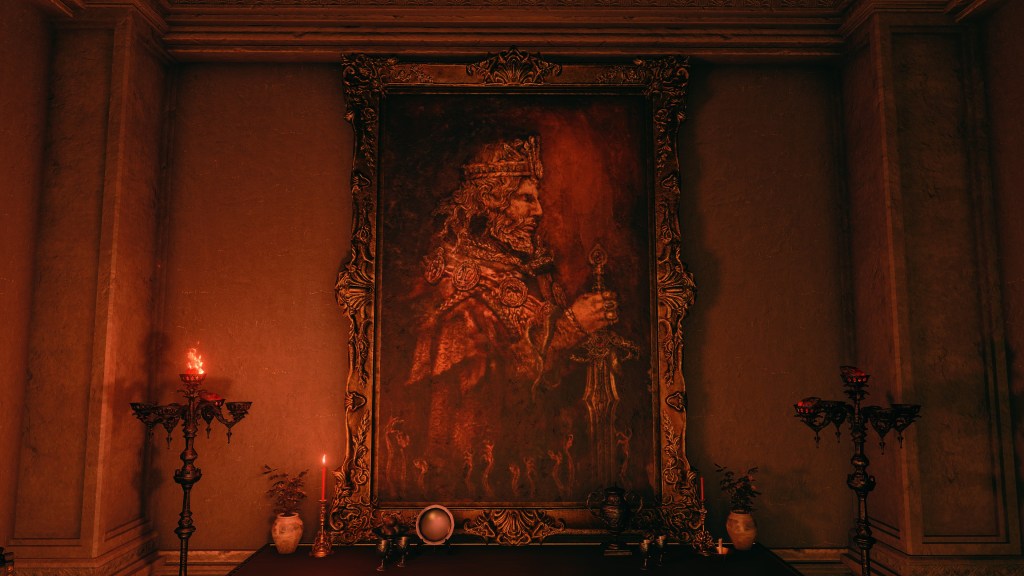
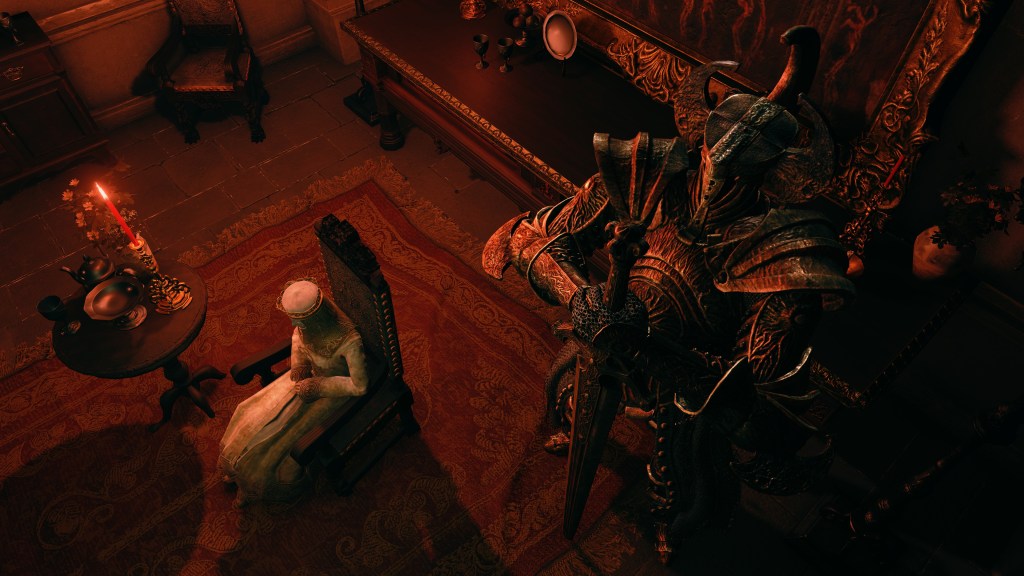
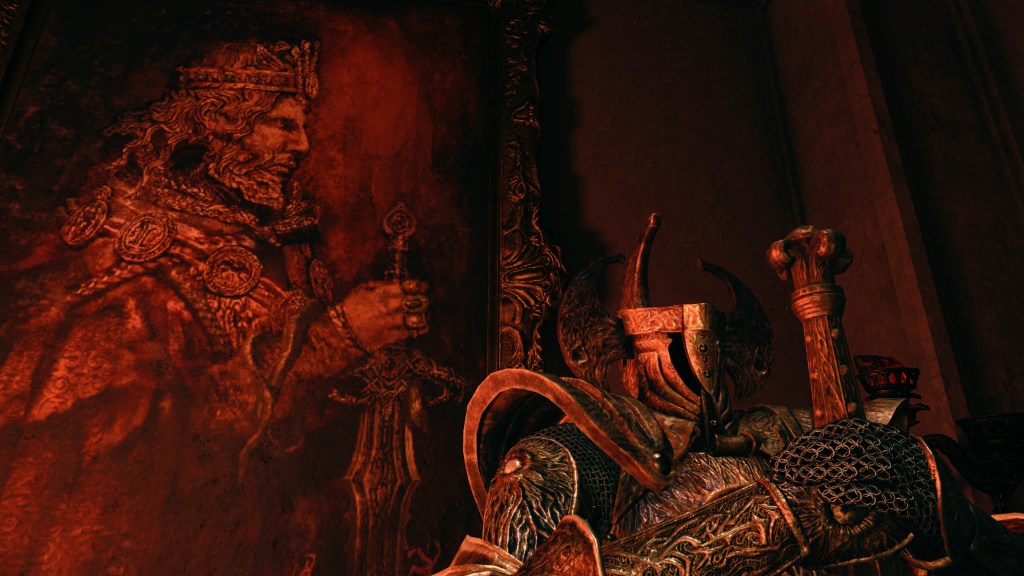
Stare into the Peak
While Mt. Gelmir was becoming hell on earth, the troops caught the attention of an invading army. The local sword monument mentions an assault on Volcano Manor, and we can see numerous camps as well as soldiers from Leyndell on the mount. Gideon likewise mentions the most “horrific” battle of the Shattering taking place there, which is consistent with the sword monument’s description of events. This leaves no doubt that the battle for Volcano Manor was fought between invading Leyndell and Rykard’s forces during the larger civil war. After the Second Defense of Leyndell, King Morgott identified a rival demigod to the west and organized an assault to remove him from the highlands. But why? Unless Rykard had a direct role to play in the Second Defense, there was no reason to prioritize him over other demigods, who all stood by while the Omen fended off his attackers. Was it just because of Gelmir’s proximity to Altus triggering the monarch’s paranoia? No. In fact, Morgott had plenty of reason to believe that Rykard was an active threat demanding immediate attention.
The Gelmir Volcano is on the west of the Altus Plateau, great land of the Golden Tree. The place served as the stage for the most horrific battle in the Shattering War… For Rykard committed the sin of blasphemy. And so became an unforgivable enemy.
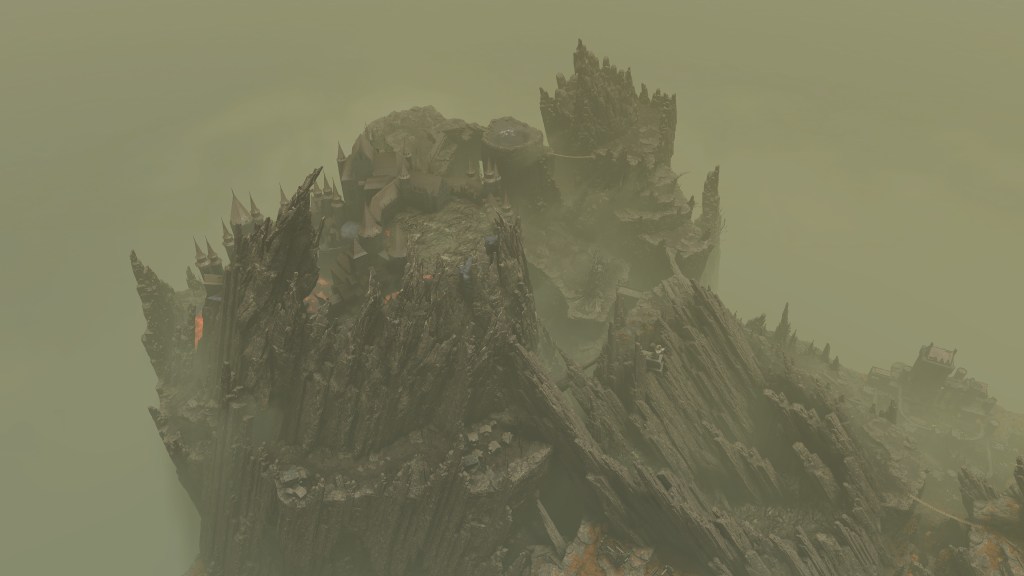
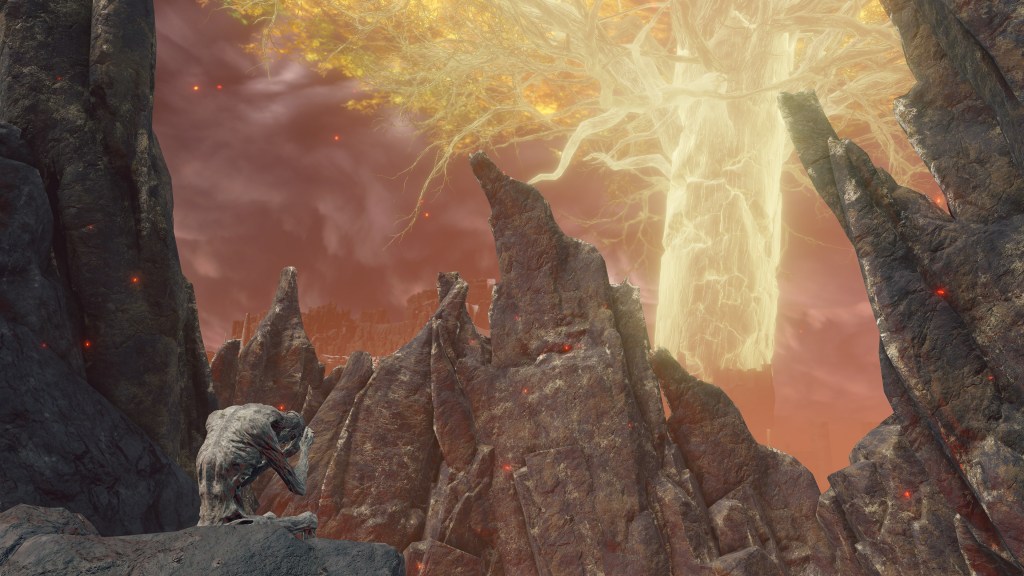
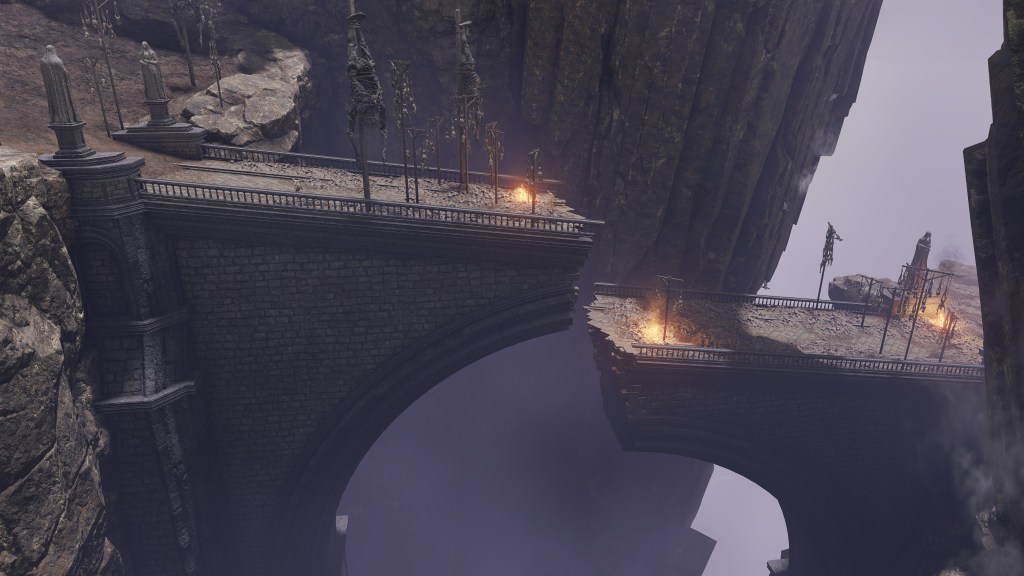
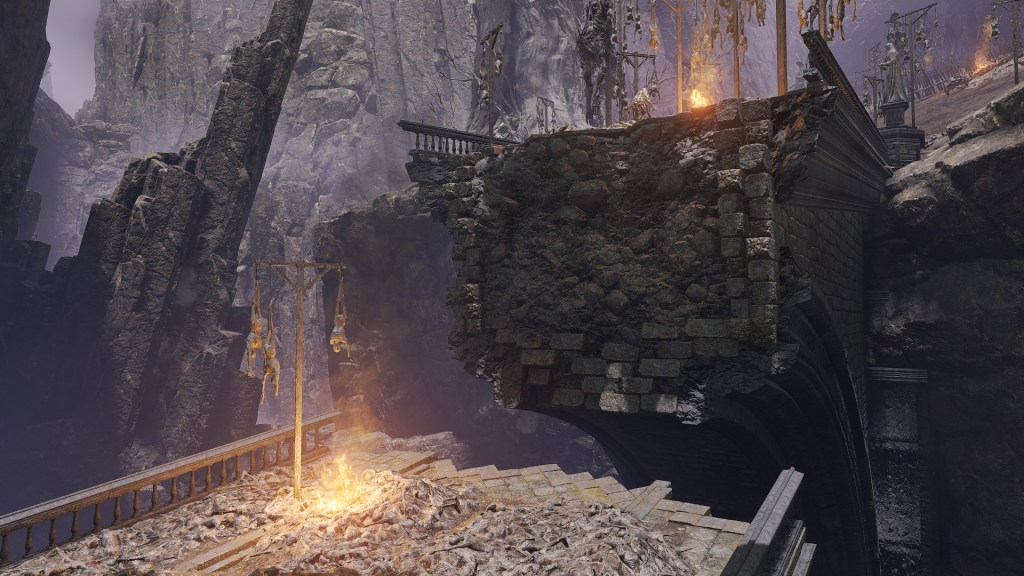
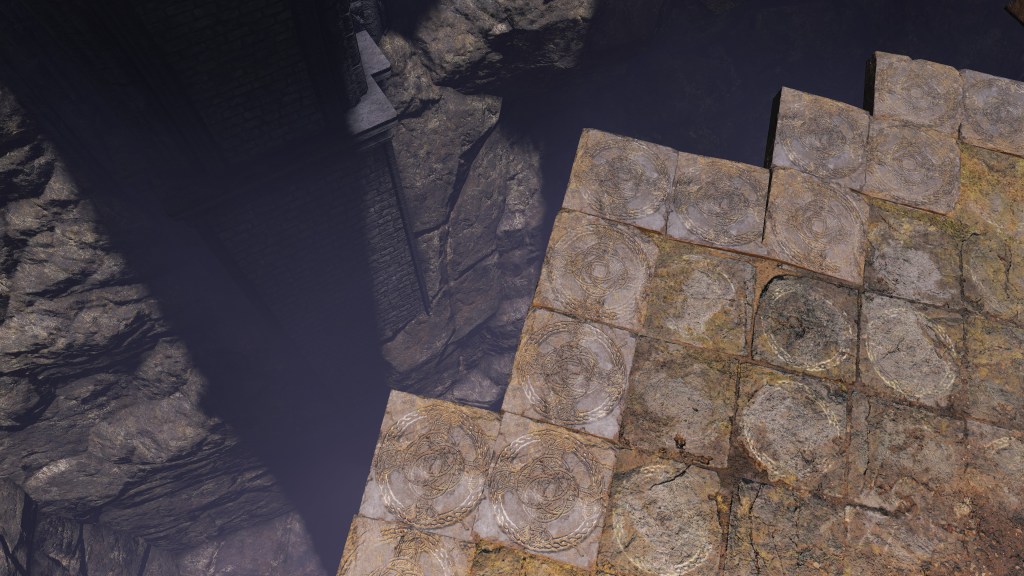
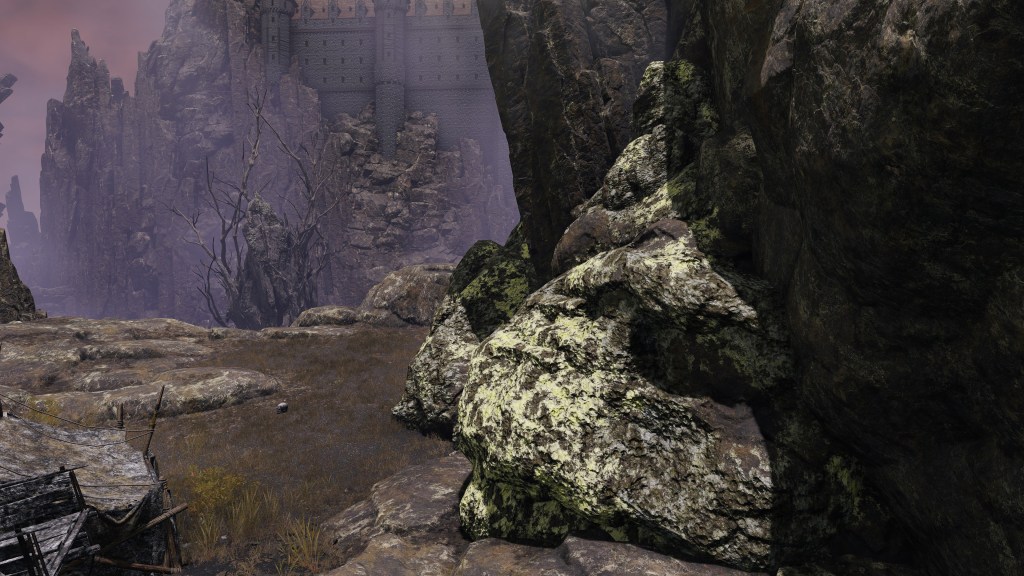
Consider the circumstances. The map for Gelmir notes in its description how the volcano’s iconic sheer rocks and ominous clouds became all the more pronounced in the wake of the Shattering. The former is clear from the stone bridge crossing the Seething River valley; the bridge isn’t just broken, but misaligned along the two cliffs. The only reason for this level of geological shift in the rocks is the same reason the river is boiling hot: the lava. With the revival of the great serpent, the fire which once shaped Gelmir into the mountain it is today has also returned, stone beneath the soil shifting as it is melted into magma. The extent of this renewed lava flow is manifest from the sulfur deposits stretching from the Seething River all the way up its highest northern peak, not to mention the magma flooding the Gelmir Hero’s Grave. The volcanic gases rising from the volcano similarly explain the even cloudier skies, smoke and sulfur alone guaranteed to create a dark shadow hanging over Gelmir. While it may not be obvious to us in-game, anyone in surrounding Altus was sure to notice the changes.
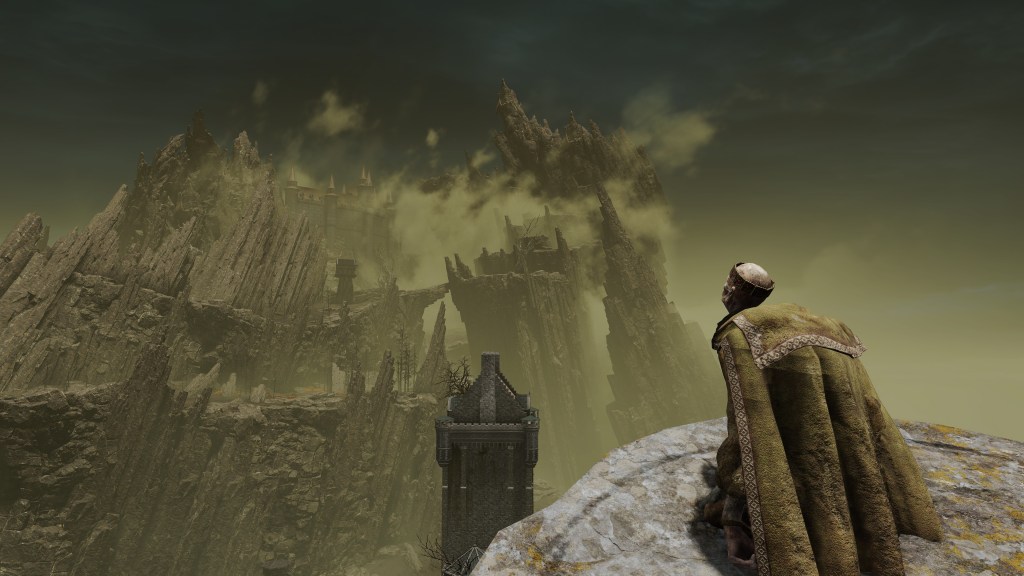
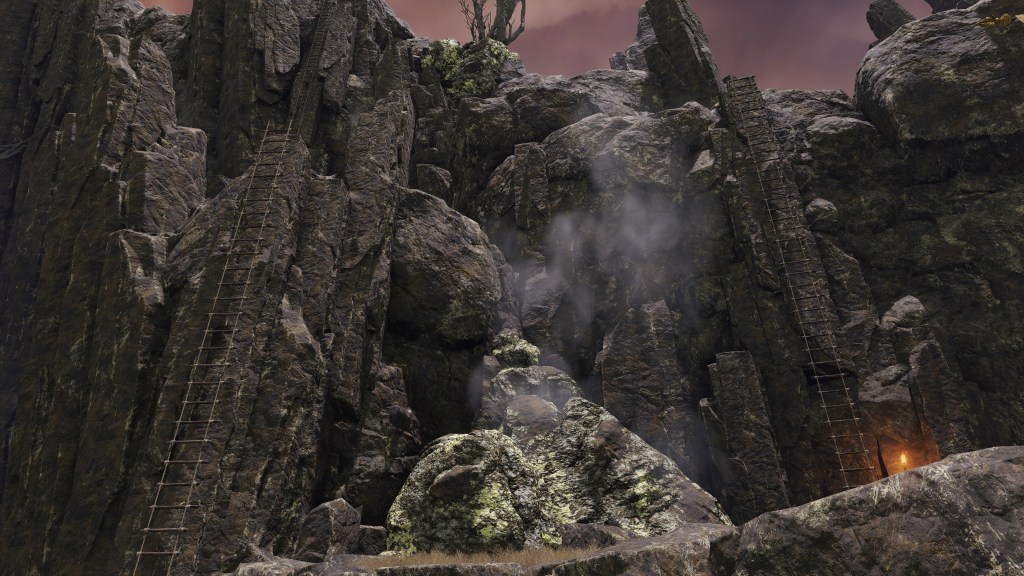
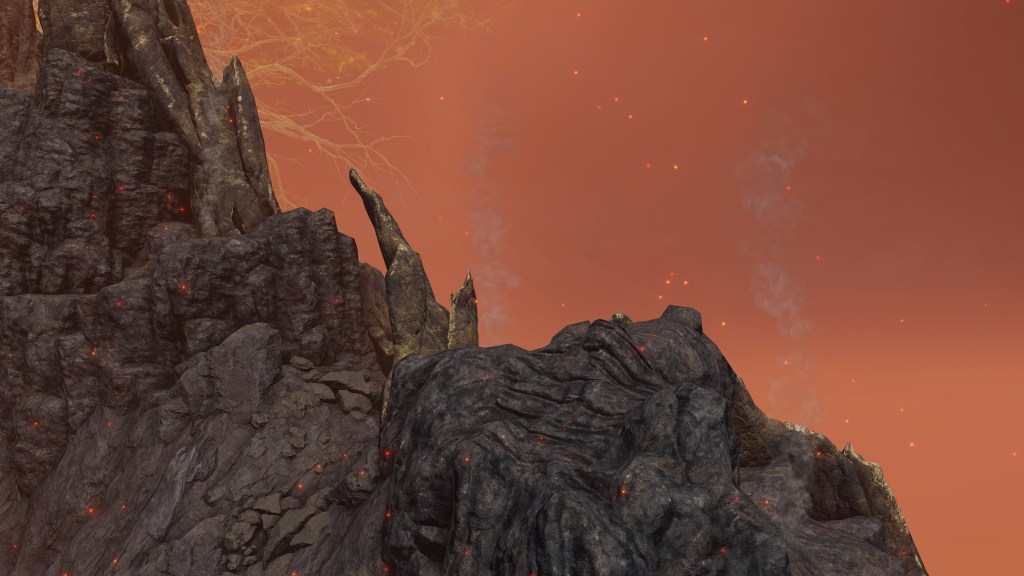
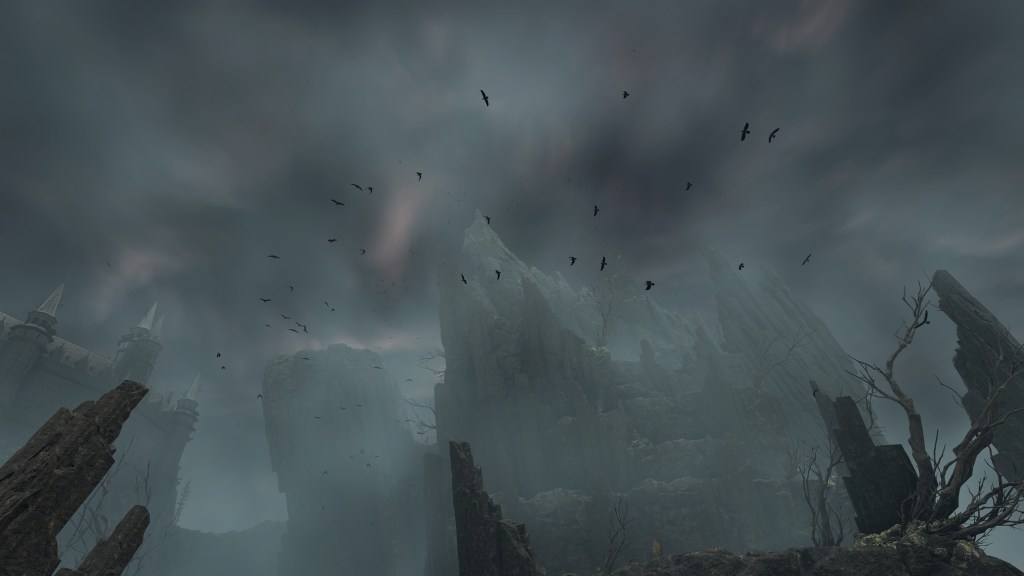
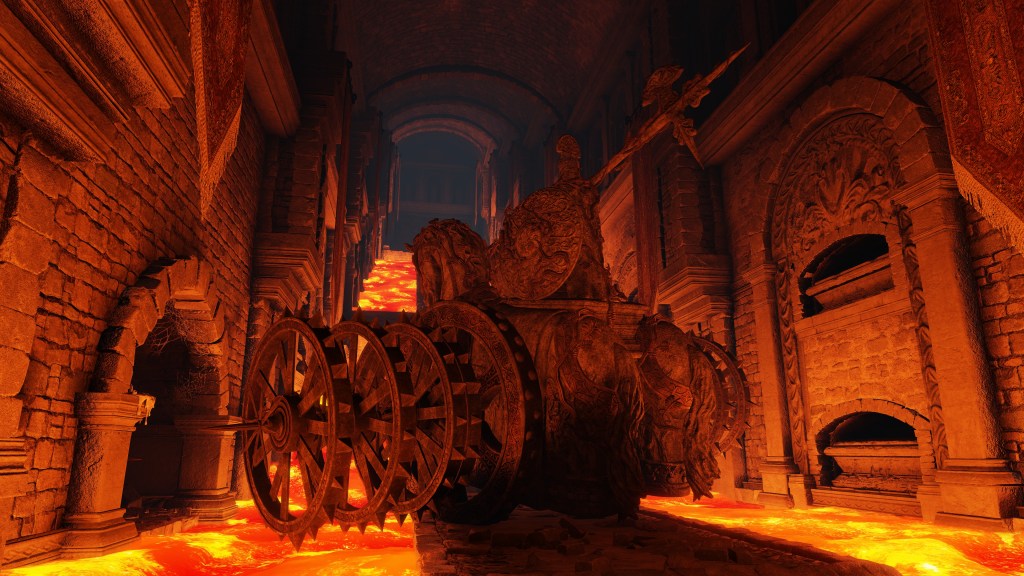
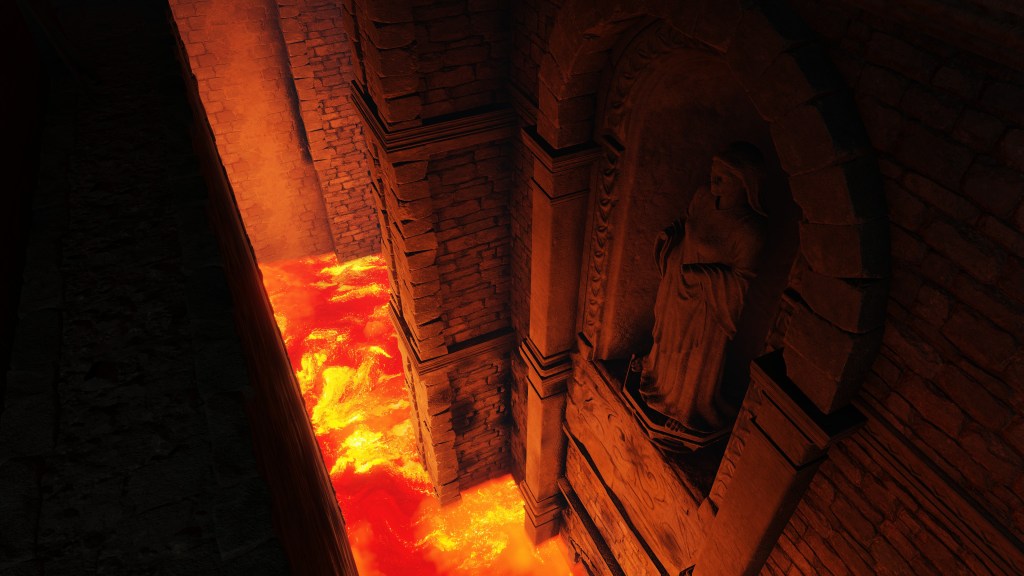
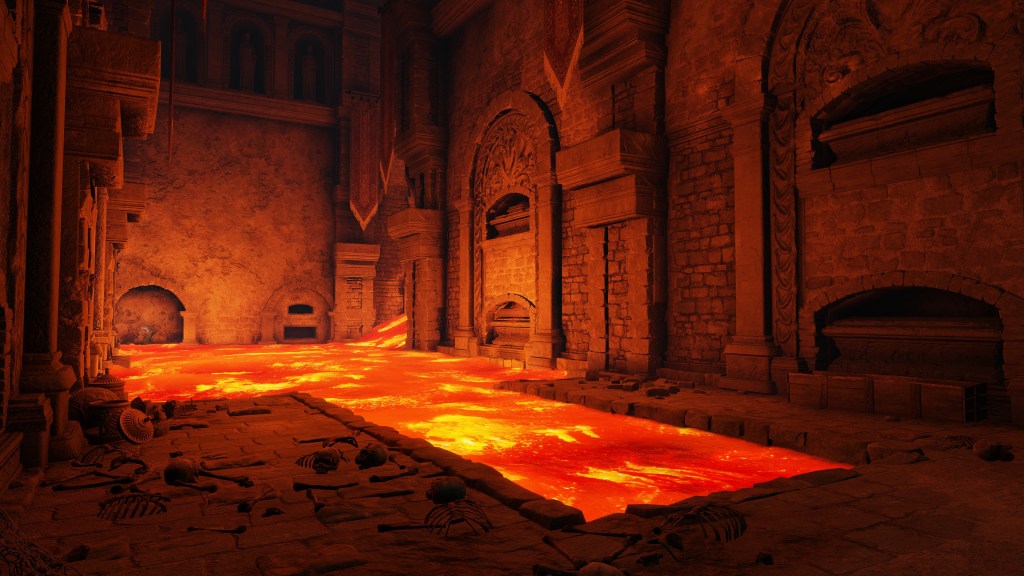
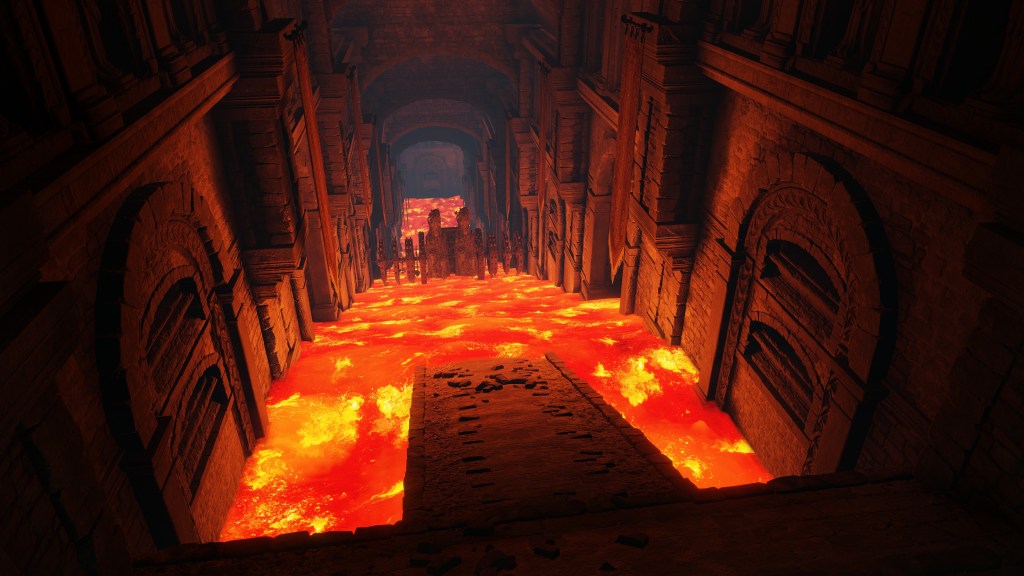
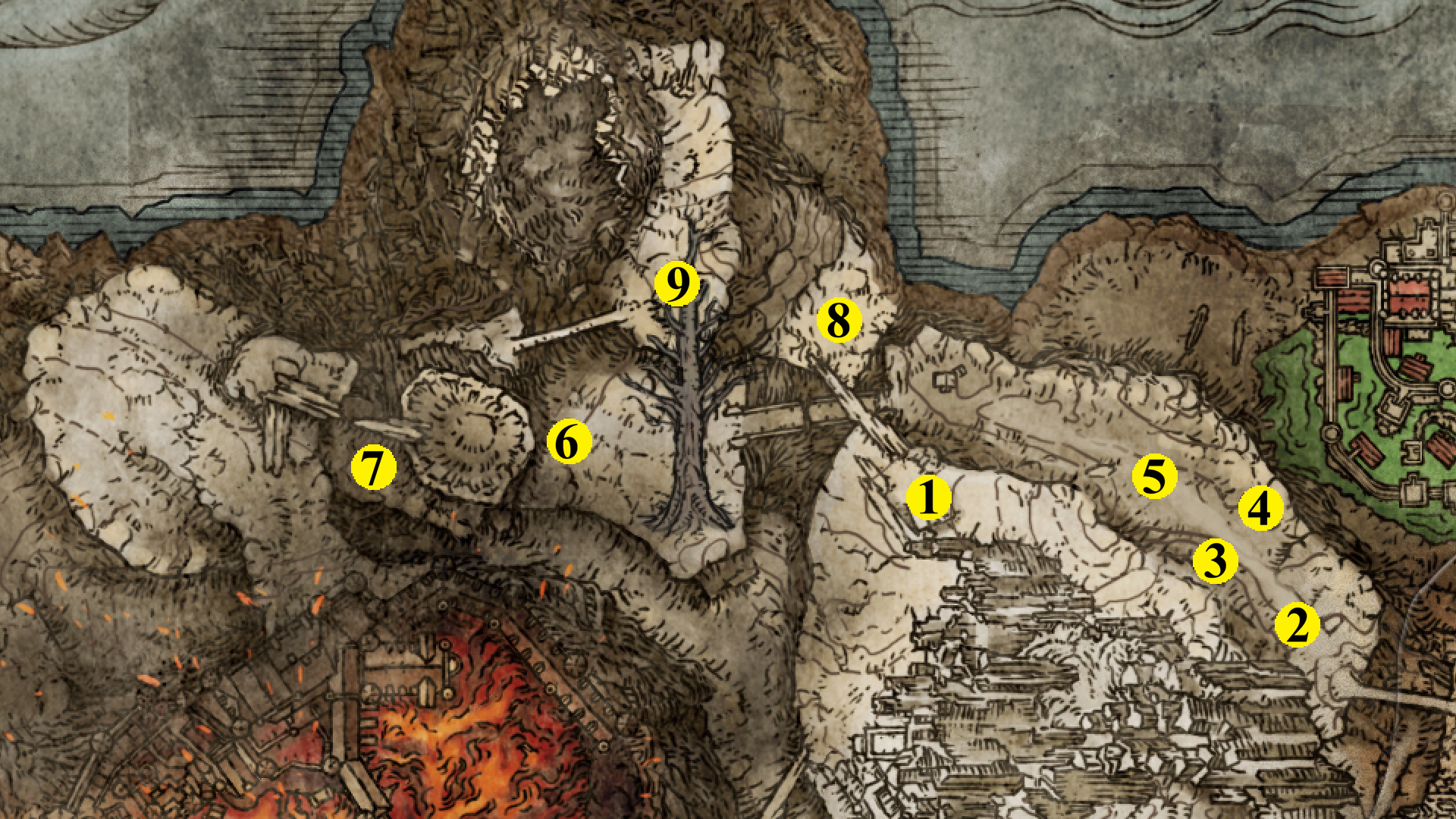
Map fragment of Gelmir Volcano.
The Gelmir Volcano crowned with the Volcano Manor at its summit is known for its sharp, sheer rock walls and ominously cloudy skies. After the Shattering War, that has been more and more pronounced.
Morgott may not have been born until after the volcano went dormant, but he and others alive during that time wouldn’t have difficulty deducing the cause. If the volcano was active again, that could only mean the return of the immortal snake, and if the snake had returned, then Rykard had either failed to handle the pagans or become a pagan himself. It wouldn’t take much investigating to uncover the full truth either.We acquire Roiling Magma from the corpse at the Hermit’s Shack, so at least one of the sorcerers staying at the nearby village took interest in Rykard’s work; it was no great secret on Gelmir. More than likely, Morgott’s scouts soon returned with rumors of the praetor feeding himself to the serpent and reviving the pagan arts. That alone confirmed a devious betrayal, unforgiveable blasphemy as Gideon elucidates. For such sin, Rykard and his army were the biggest danger to the Erdtree on the plateau, whether or not Morgott knew the faction’s exact plans for it. That made stamping out this second rebellion the king of Leyndell’s number one priority.
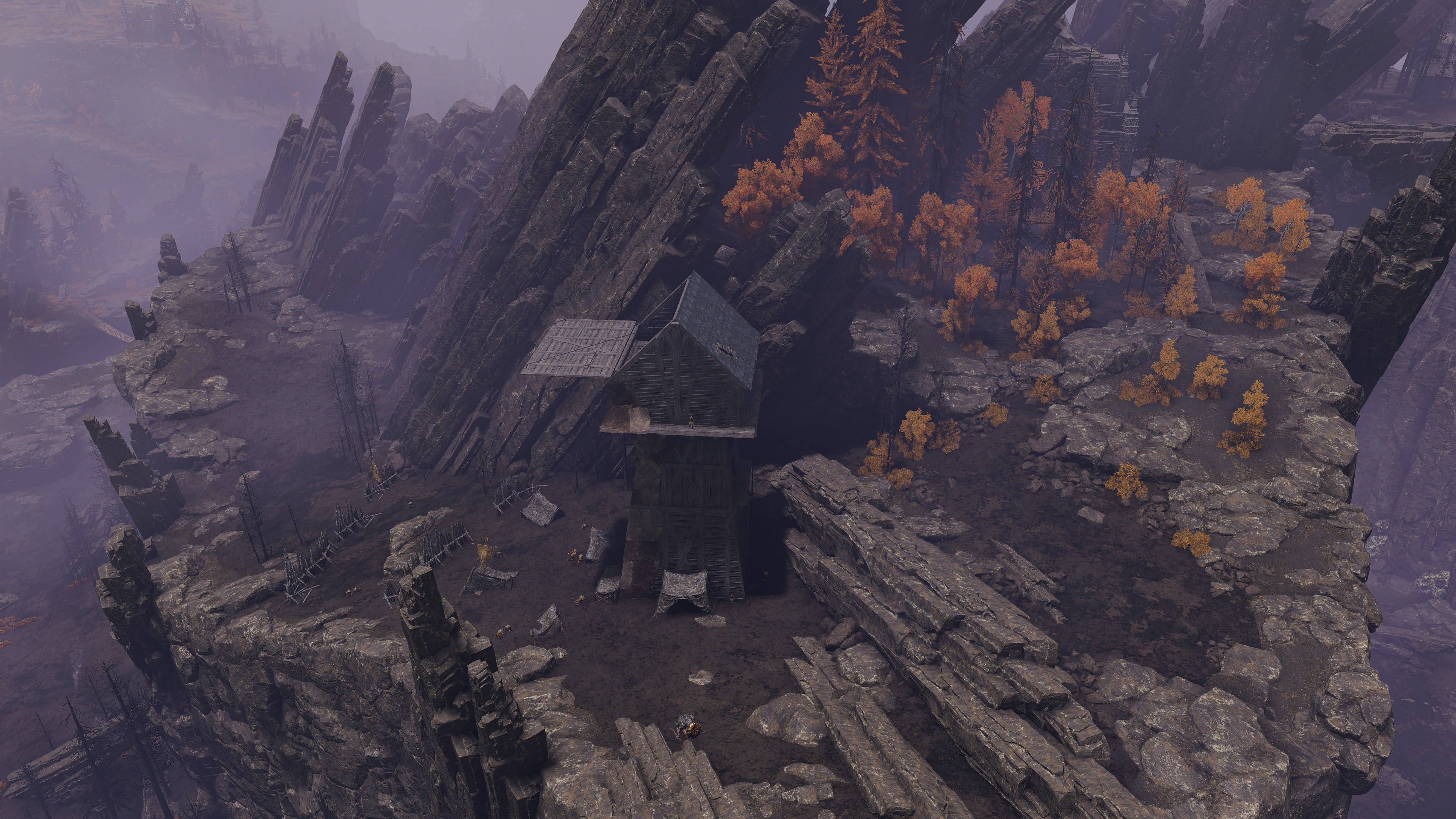
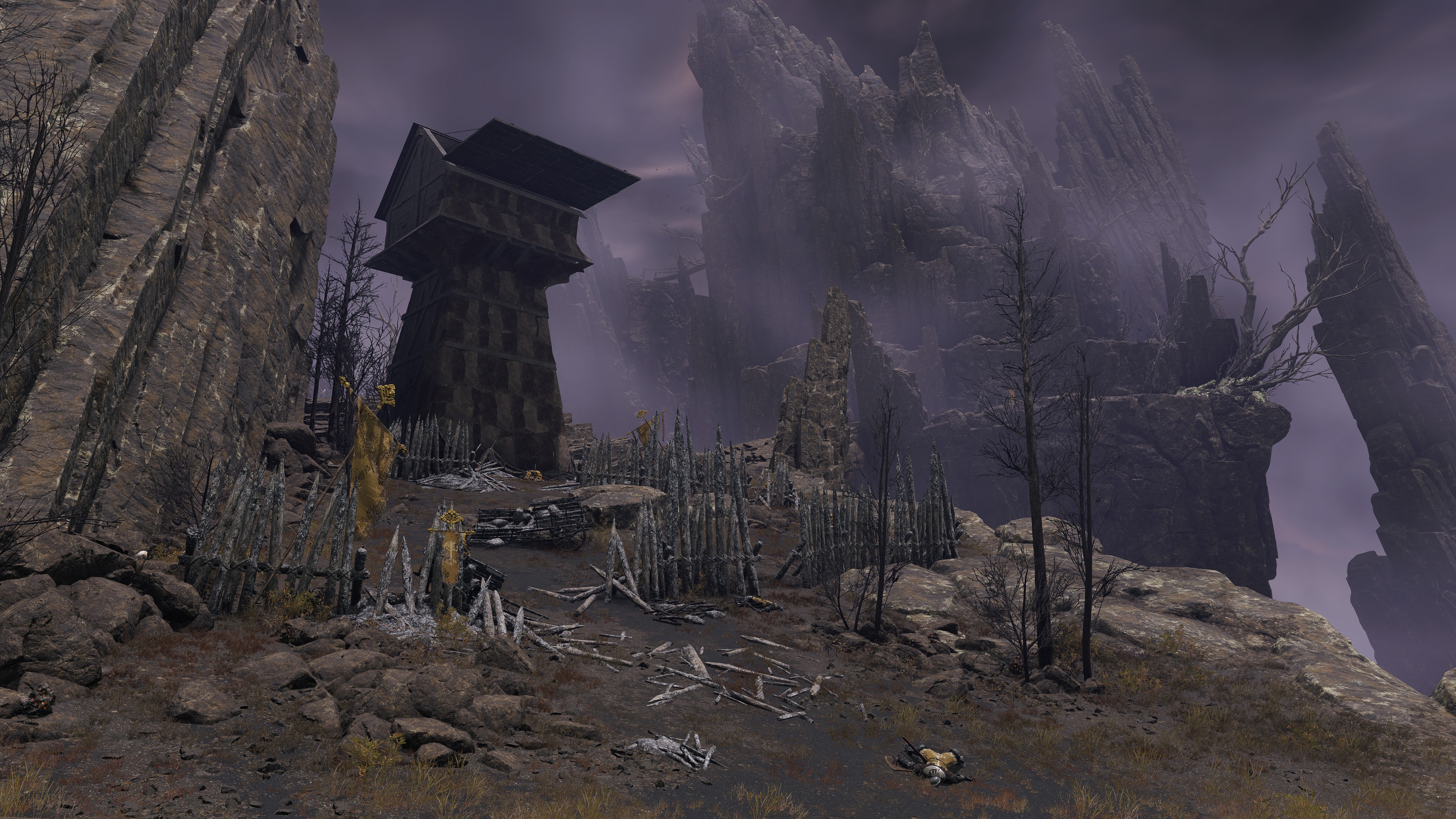
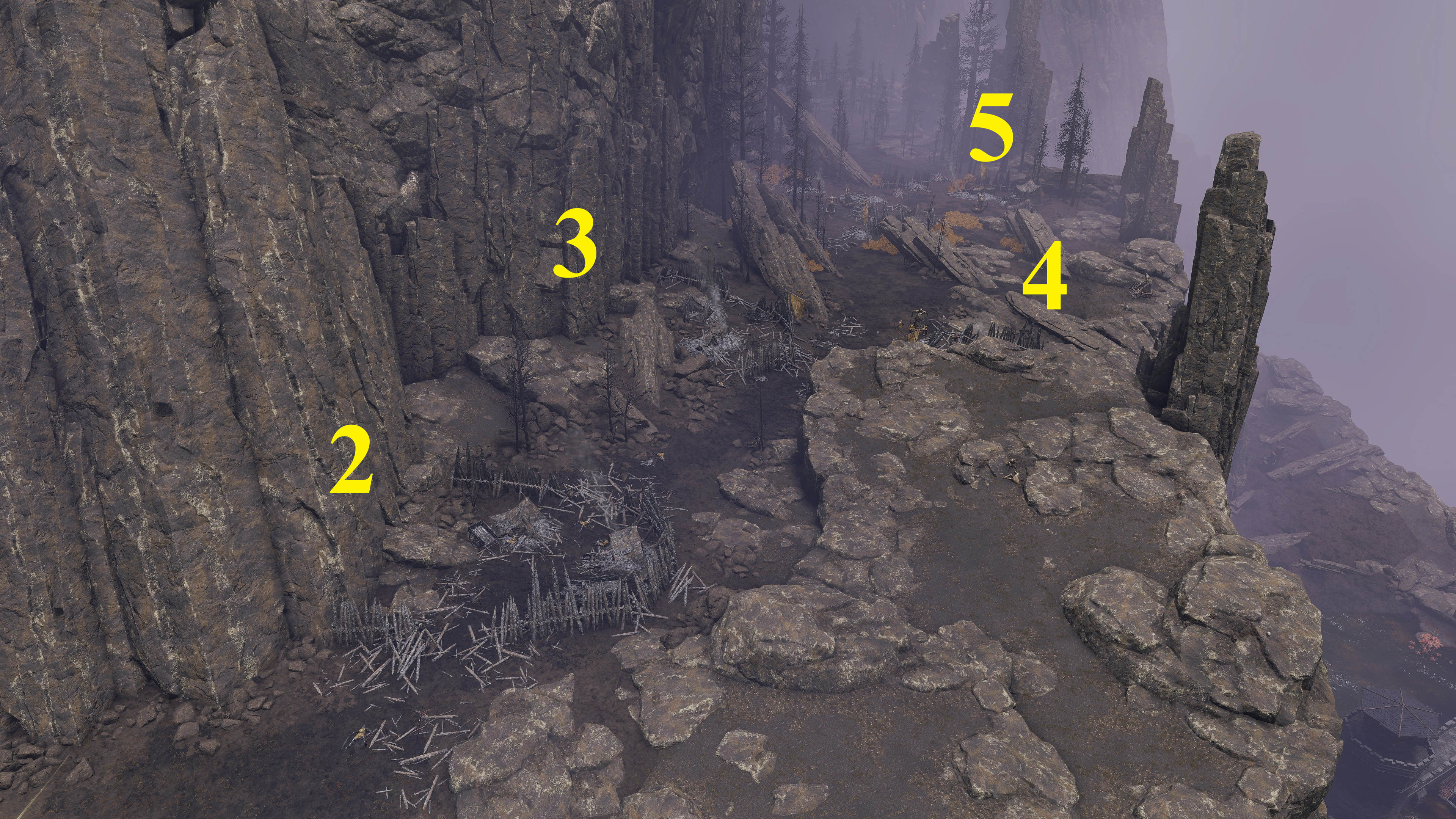
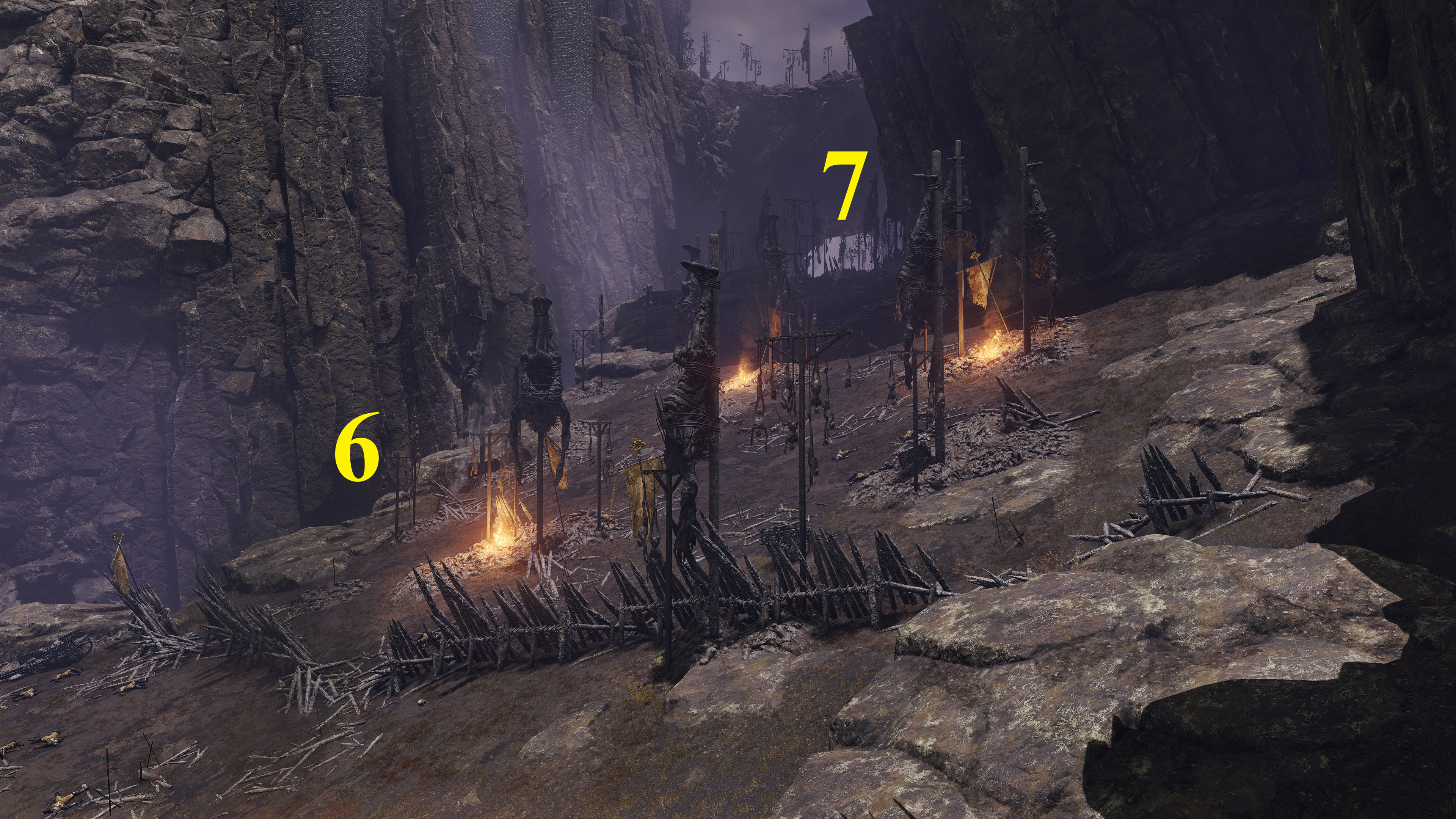
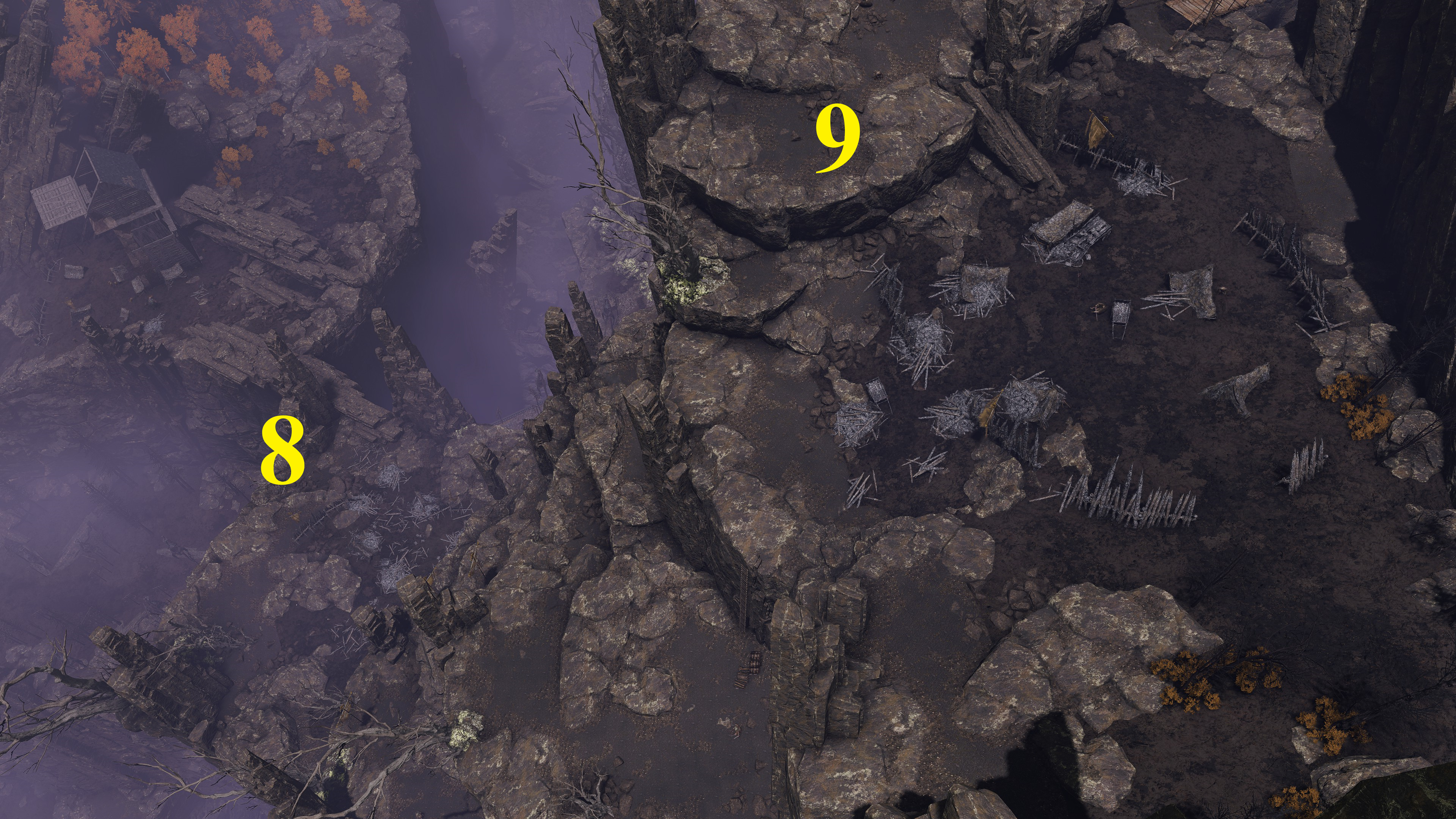
The movements of the Omen’s army for this assault are simple to trace. The names of local grace points identify Gelmir’s first and ninth campsites. These “camps” reference goume, (合目) a Japanese system for mountain climbing mainly reserved for sites of religious significance. Typically, this system splits the ascent up the mount into ten parts, with the trailhead as the first stop and the summit as the tenth stop. In our case, grace identify the first and ninth stops along our pilgrimage to the Volcano Manor’s entrance — the final destination — which appear to correspond to the number of campsites established along the trails. Put another way, we can trace the course of the assault from these beginning and end points. The fact that the first lies on the clifftop indicates that the army arrived from high up already, which is possible if traveling up the path through the Seething River. This is consistent with the defenses set up around both Fort Laiedd and the Hermit Village, anticipating an attack from particularly the river’s direction. Details in the two areas also reinforce that conclusion.
The garrison at Fort Laiedd are Leyndell’s soldiers, whom the lord of the fort would welcome if they meant to overthrow Rykard; perhaps even negotiating his reinstallation as Volcano Manor’s ruler once the Erdtree deposed the snake. The rest actually assaulting the manor definitely passed by the Craftsman’s Shack afterward — just as the Pulley Crossbow can be looted from the inhabitant of that wrecked home, so too can the Pulley Bow be looted from the siege tower of the first camp beyond the village. The soldiers made one final stop at the hermit community before beginning their assault, picking up the fundamentalist artisan’s inventions during the brief stay. Besides the bow, the genius may have also provided the Jar Cannon brought to the assault. Because the unusual invention relies on explosions to fire out of the conical pot, the rejuvenated volcano’s eruption might well have informed the design, hence the craftsman handing off just a prototype that no one ultimately had time to learn how to use. If the Hermit’s Shack was studying lava for sorcery, why not the same for mechanisms?
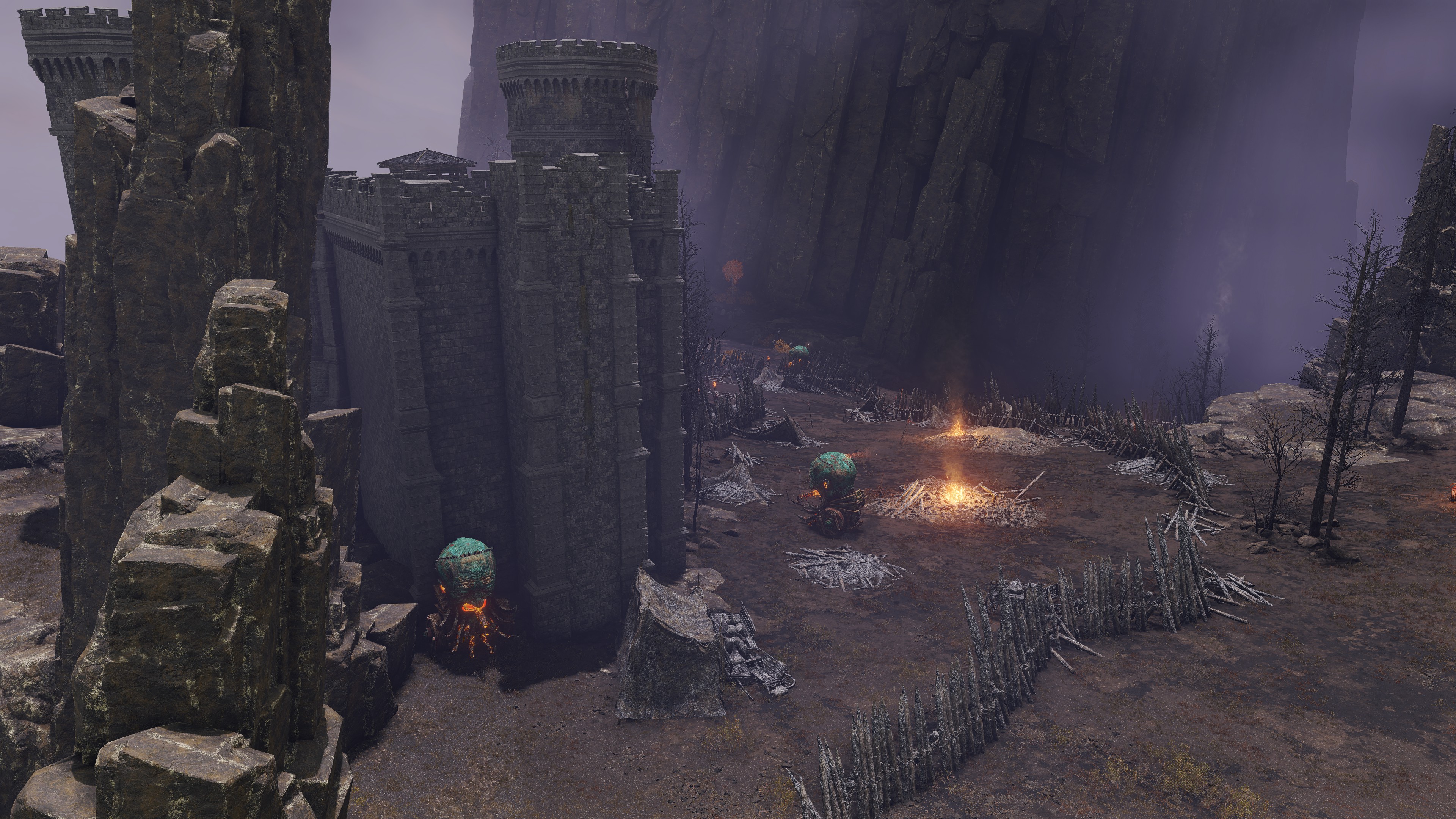
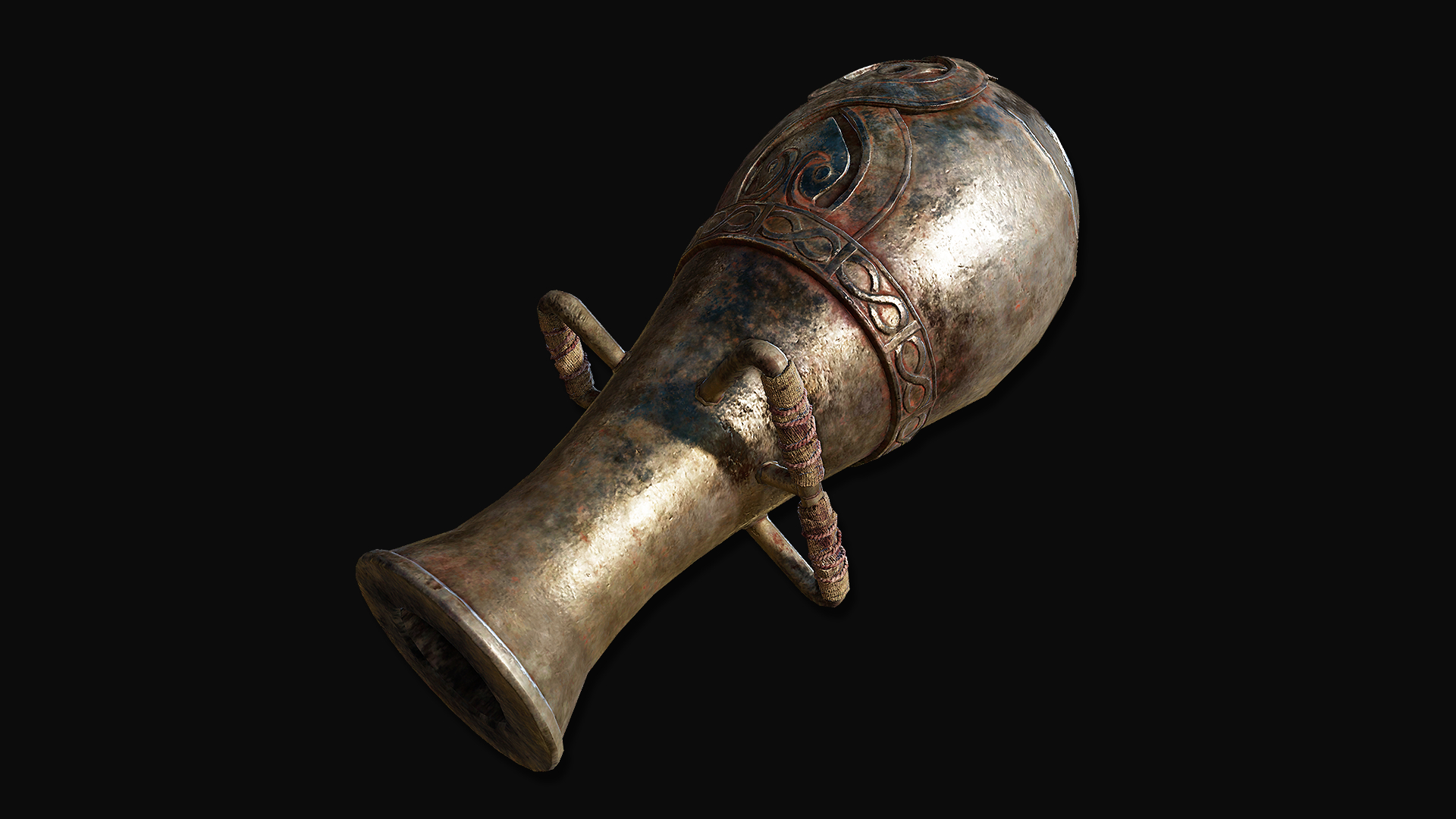
Pot cannon that shoots out great bolts with explosions. Has high attack power but requires time to reload.
It is a prototype weapon brought to the Assault on Volcano Manor, but it seems to have ended without acquiring a user.
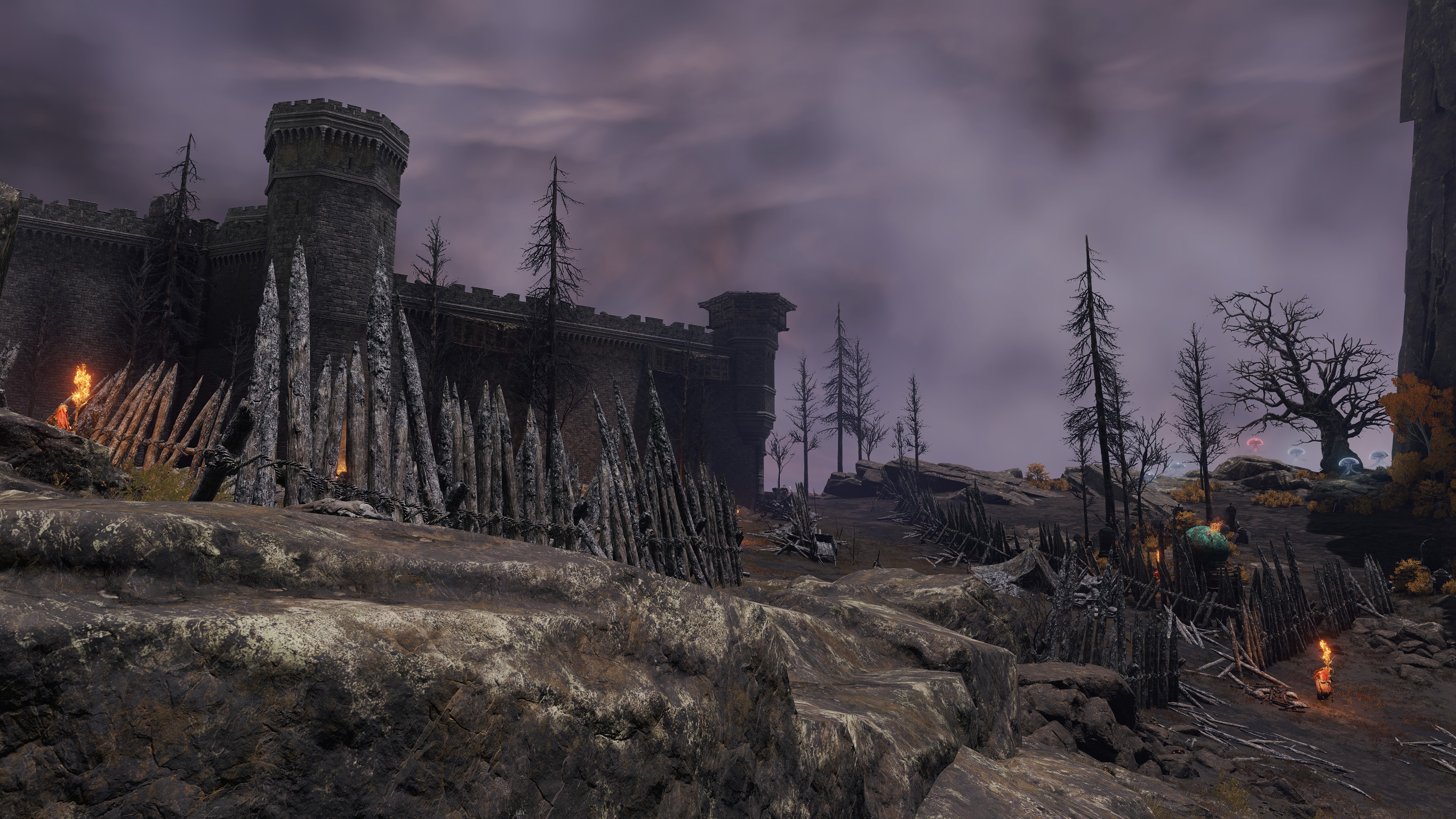
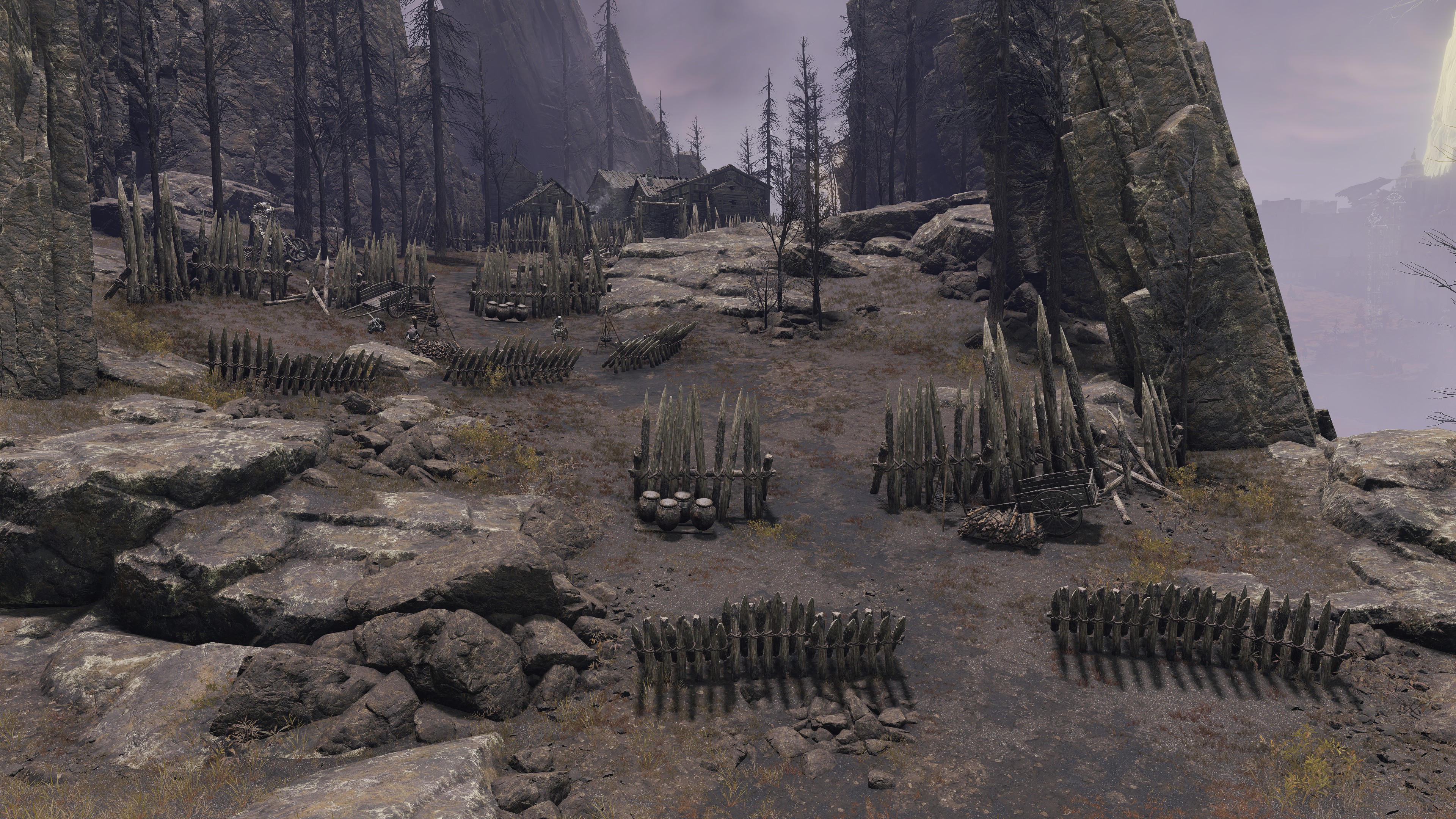
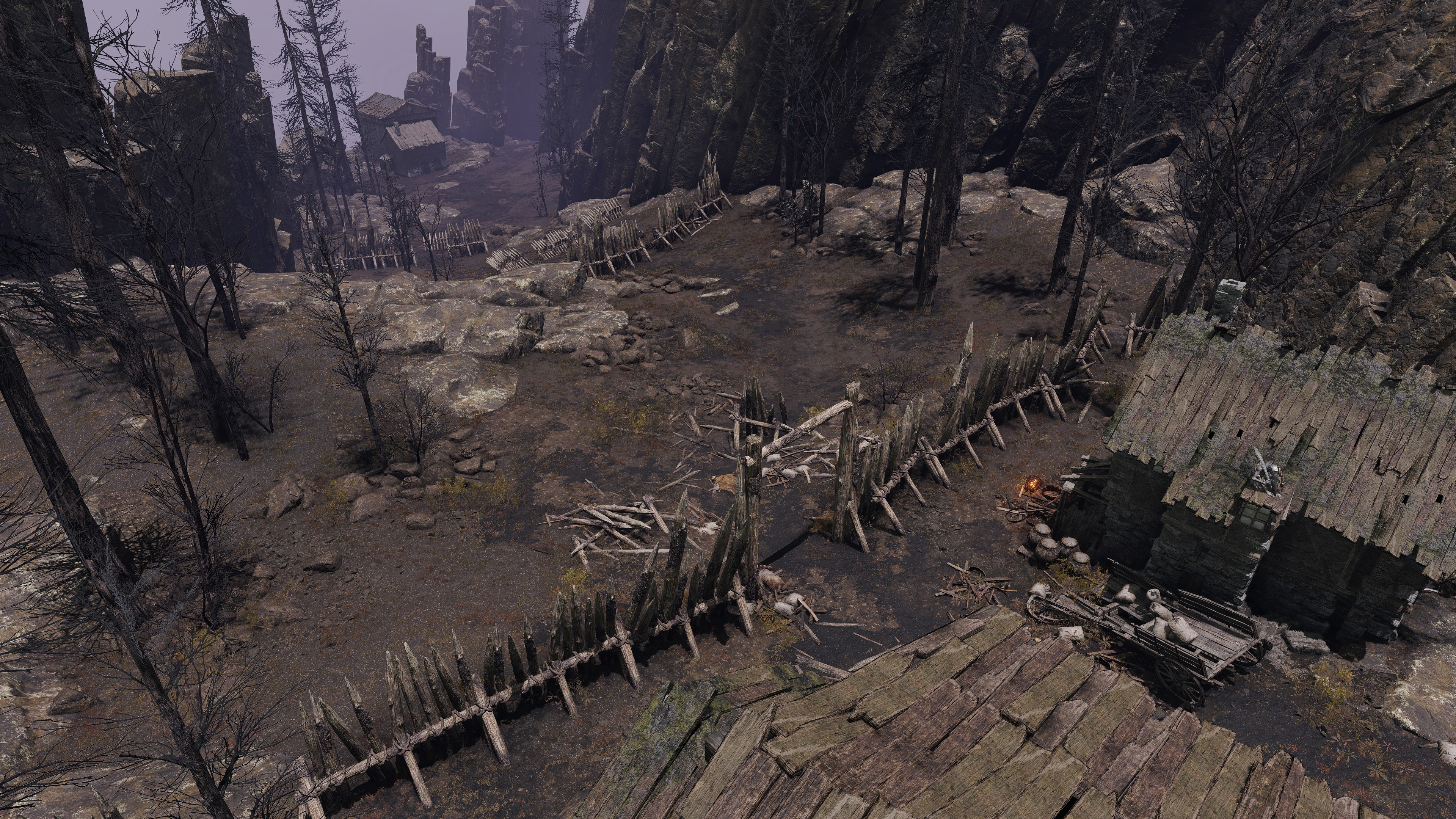
Taken altogether, there is every reason to believe that Morgott’s army came up through the fort and village. While each is currently under attack from different enemies, the abatis were initially set up for the more foreseeable threat on Gelmir. The fort’s garrison were perfectly capable of heading off any surprise counterattack from the rear, and the villagers existed as a final backstop in case something went disastrous. Meanwhile, the main army could remain focused on taking the castle manor, which might not have even noticed the troop movements up to this point. After establishing their first camp past the old hero’s grave, Leyndell’s soldiers look to have expanded down, setting up the wooden ladder connecting the camps at the top and foot of the cliffs. From the number of sites, Leyndell fortified each position while slowly pushing forward, taking advantage of the fact that they had the manor boxed in. Facing little to no resistance, the army crossed the stone bridge and marched all the way up to the Road of Iniquity, practically at the manor’s doorstep. All the while, the soldiers secured supply lines.
The Bridge of Iniquity linking Altus and Gelmir over a small valley stands out as a rope bridge when there is the stone bridge further up the road. This smaller level of time and effort going into its construction precludes any place in some major civil project. When and why did it originate, then? In all likelihood, the thing was built for this assault. We do come across numerous coffin carriages in the leadup to the Bridge of Iniquity, not to mention the one half-buried with the Forest-Spanning Greatbridge further up the road. Why ferry coffins with bodies — and, more importantly, their weapons — across that bridge unless it was to join the others toward the bridge to Gelmir? They undoubtedly were delivered. On the Road of Iniquity, we can find a disguised mimic tear transform into one of the wormfaces lurking in the Forest of Plenty. This implies that the army picked up an unsuspecting hitchhiker while passing through the area, which the coffin carriage and its complementary entourage facilitates. Altus was thus sending the Gelmir campaign their pick of armor and armaments from the dead.
From where the bodies originated is easy enough to surmise. The only route to the Bridge of Iniquity that justifies cutting through the Forest of Plenty is the southern Capital Outskirts. Recall that Leyndell’s forces have all but finished the cleanup for that side of its Second Defense. What bodies weren’t offered to the Minor Erdtree Church have been stuffed into coffin carriages. And where did those carriages go? Onto the highway and out the southern gate, taking the byway across the Forest-Spanning Greatbridge and finally down and around to the Bridge of Iniquity. As they have slowly collected the war dead, the royal army repurposed them for their brethren’s resupply, providing a steady stream of equipment up until the greatbridge collapsed. The Bridge of Iniquity was therefore a way for the soldiers encamped to link up with these convoys and unload their cargo to swiftly bring to the front line. This was a massive siege, so the capital’s living ramparts needed all the resources they could get to stand strong and outlast the enemy. How regrettable that it was not to be.
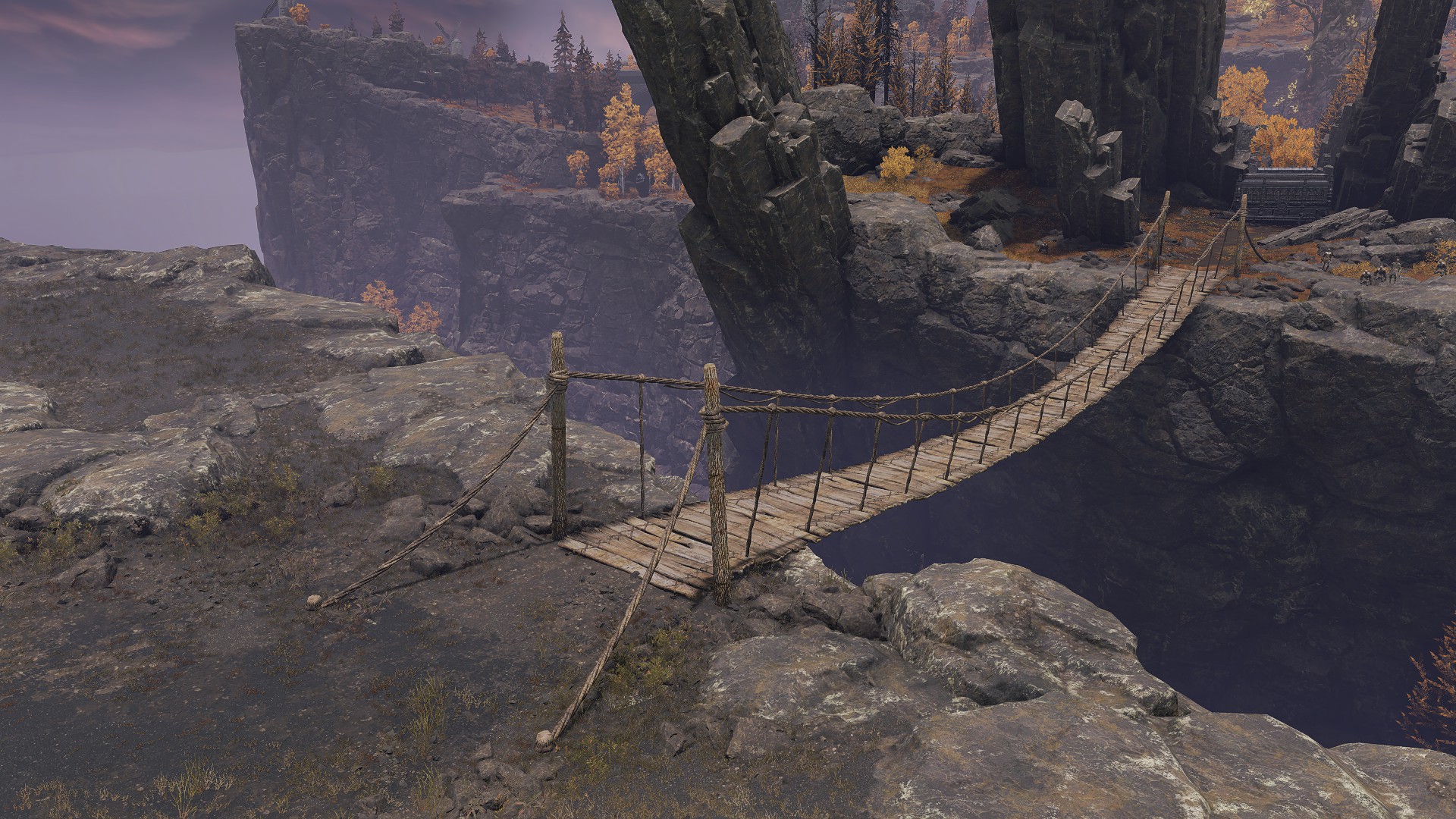
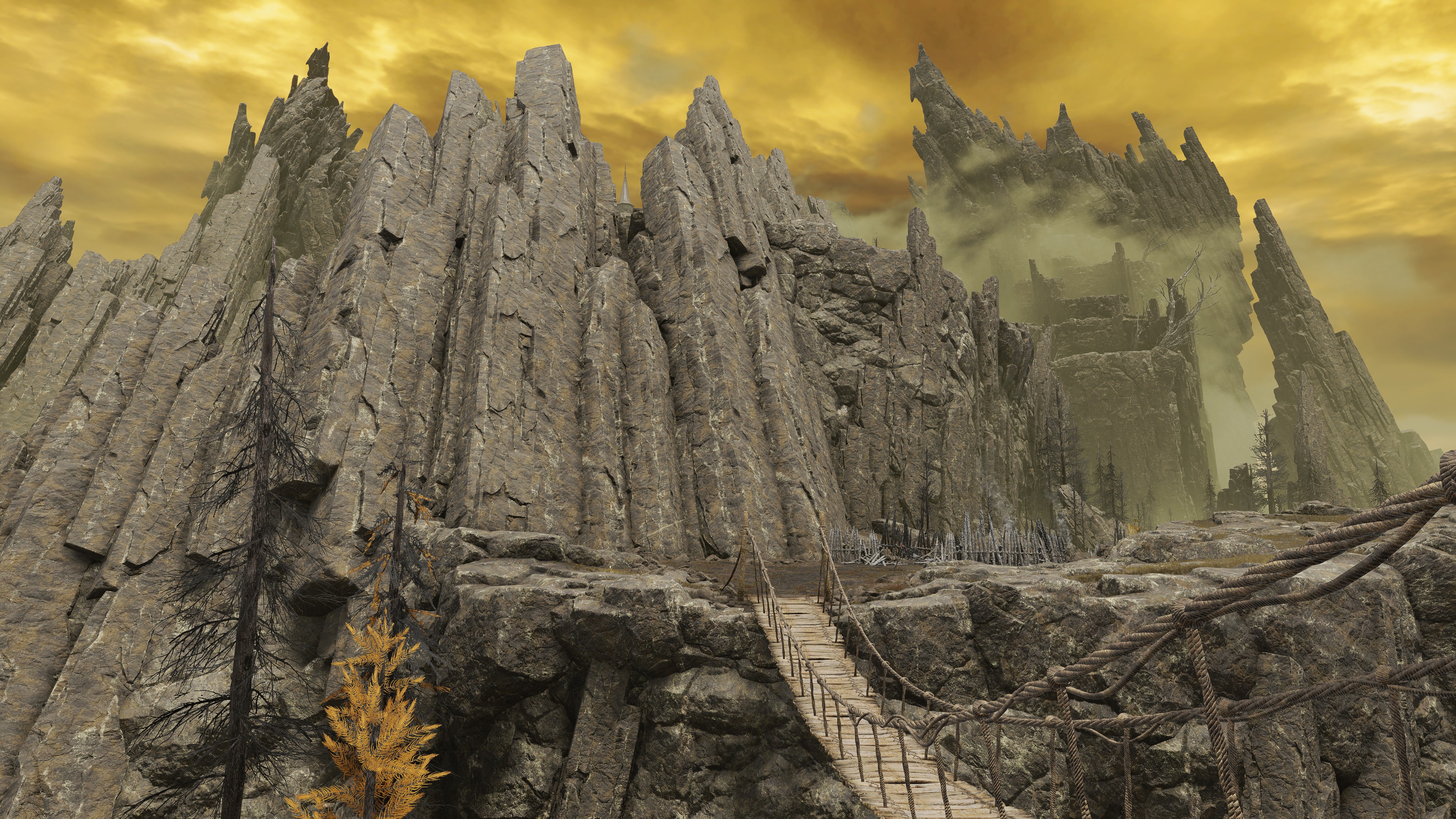
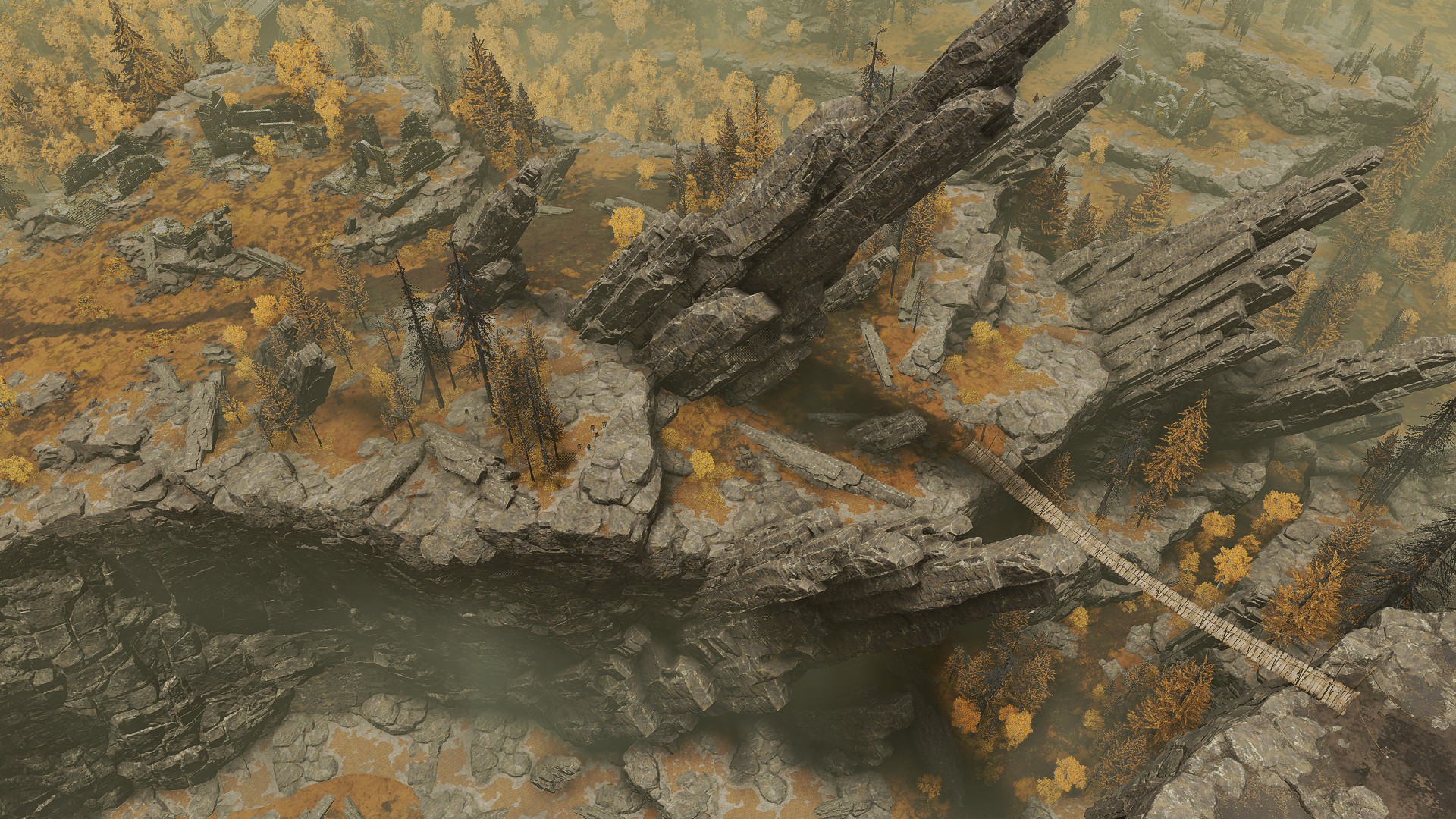
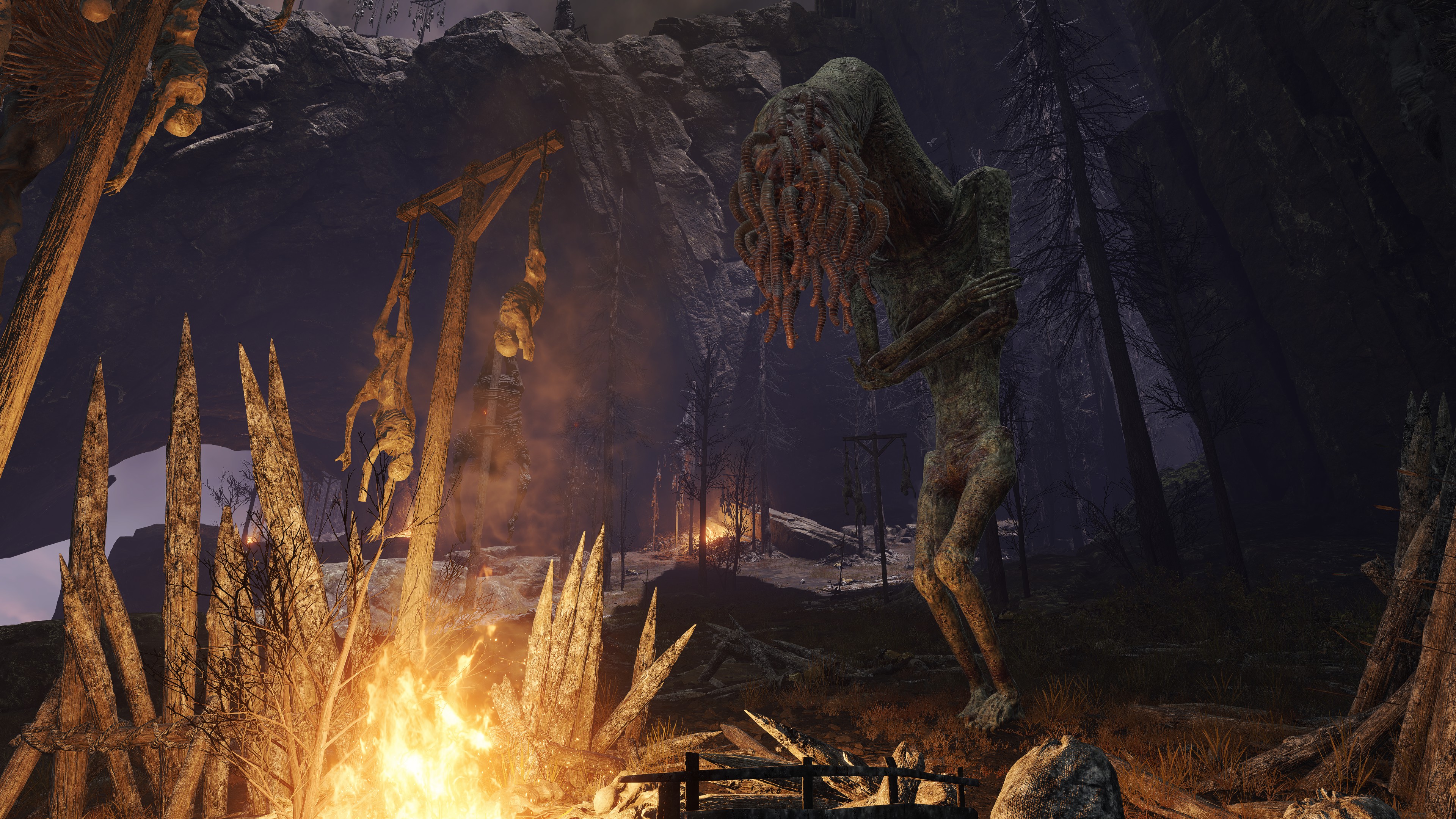
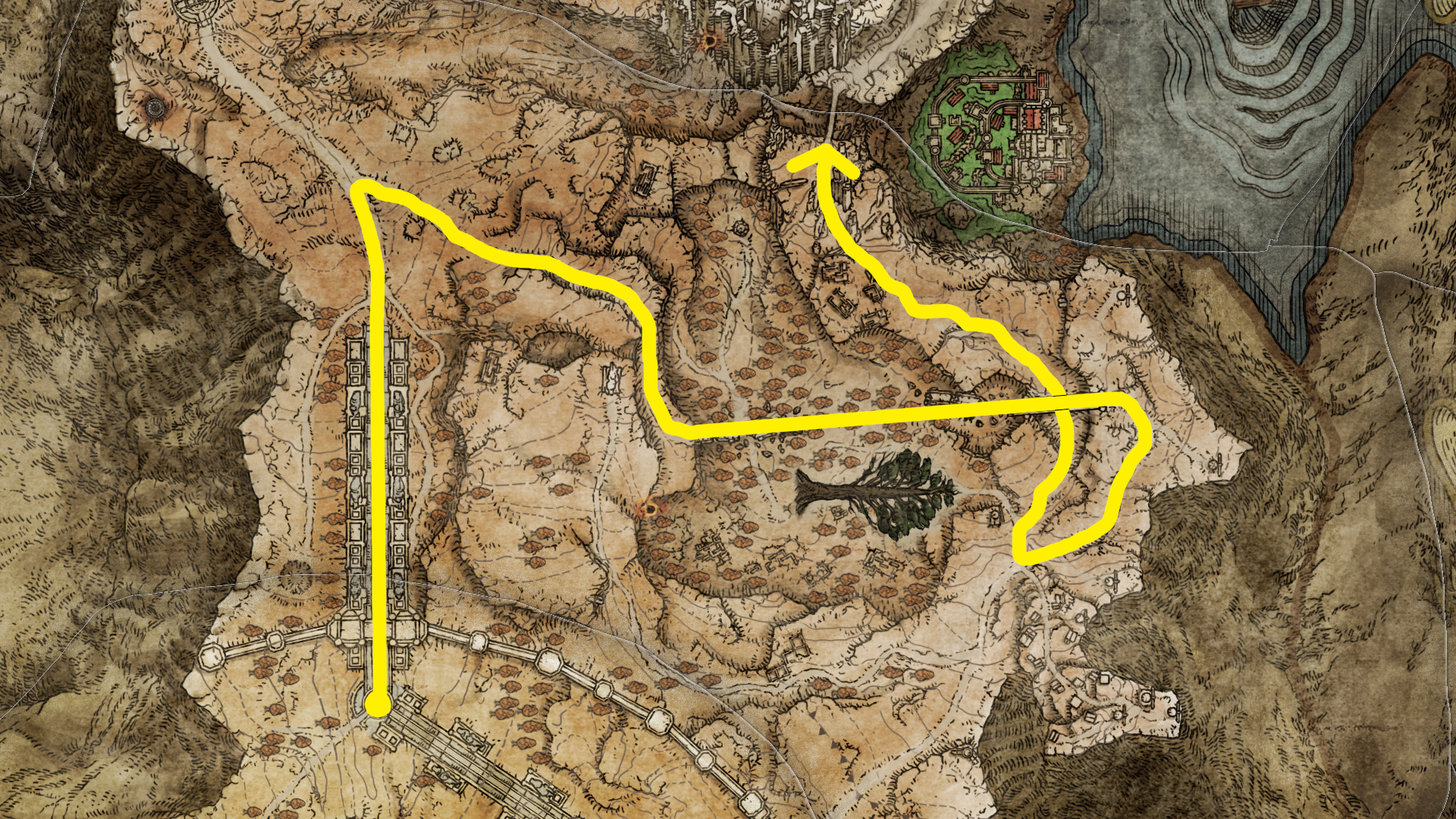
Volcano Manor was certain to notice the army rapidly approaching, and their garrison reacted accordingly. At the turn off the Road of Iniquity, an invisible scarab rolls up a curious ash of war. Unlike Barrage, Through and Through makes a slow “penetrating shot” (貫通射撃) rather than a “continuous shot” (連続射撃) with rapid-fire. The difference results in Barrage’s ability to overwhelm a wide row of enemies while Through and Through excels in mowing down columns. Consider then the Gelmir knights’ position as Leyndell’s forces marched up the narrow cliffs where they would be waiting — it is obvious which tactic suited the environment. On the Road of Iniquity, the assault force had nowhere to run as the manor’s greatarchers fired heavy shots straight through their ranks. Funneling themselves into a death trap, the army was sure to incur heavy casualties, and it wouldn’t long before their commanders ordered a retreat. It was then that the defenders would launch a counterattack and try to force a rout, resulting in the deadly clashes while Morgott’s men were on the backfoot.
It was hard fought from both sides, but the results speak for themselves. Encampment after encampment has been destroyed, with mountains of corpses strewn about the defoliated battlefield. As the Erdtree’s banners fly in tatters, men and trolls alike have been strung-up upside-down in implicit mockery of their high-and-mighty honor. This setup stretches all the way across the stone bridge and past the Corpse-Stench Shack, the royal army logically pushed back to their four camps on the east end. There are some survivors, like the aforementioned mimic tear; disguised as a rotten Hollow newly escaped from one of the numerous pyres of bodies. A few exhausted troops similarly hide in the corner of the Road of Iniquity, trying to evade further notice as they barely survive. But with the stone bridge now fractured, these scant forces are trapped. Morgott’s forces faced a huge setback, and the enemy was still bearing down on them. All that fighting for every inch has amounted to nothing, though they didn’t give up.
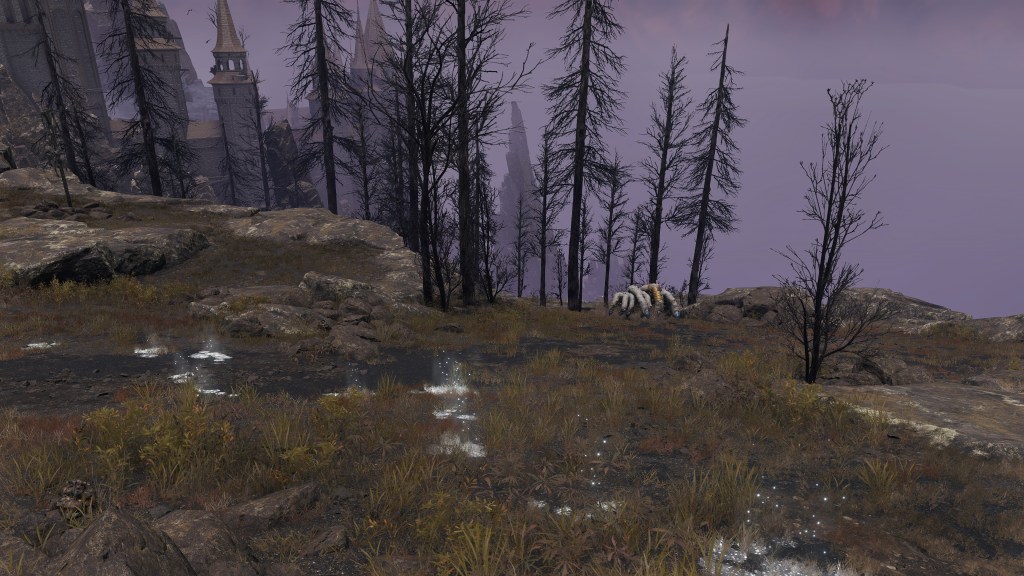
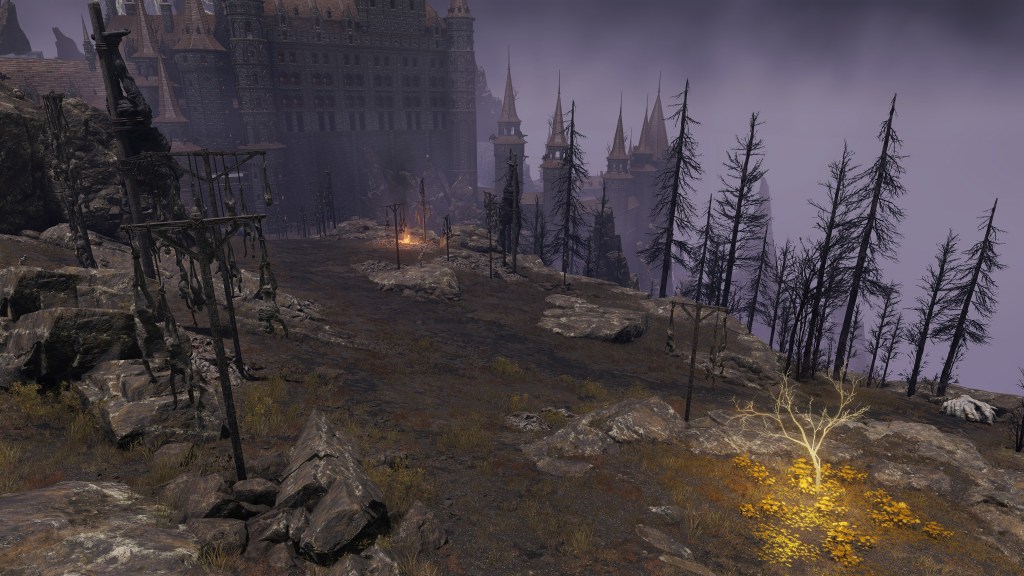
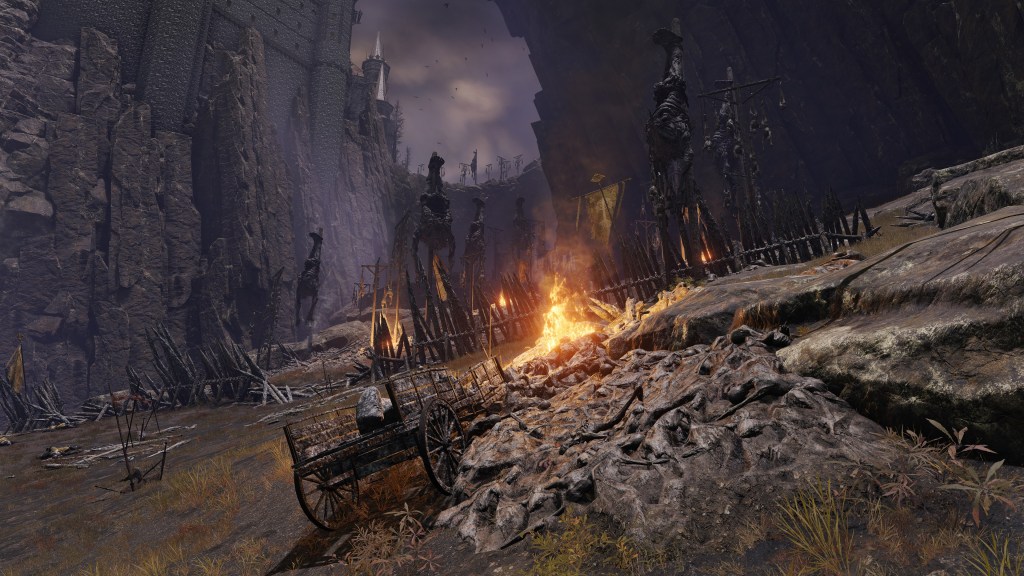
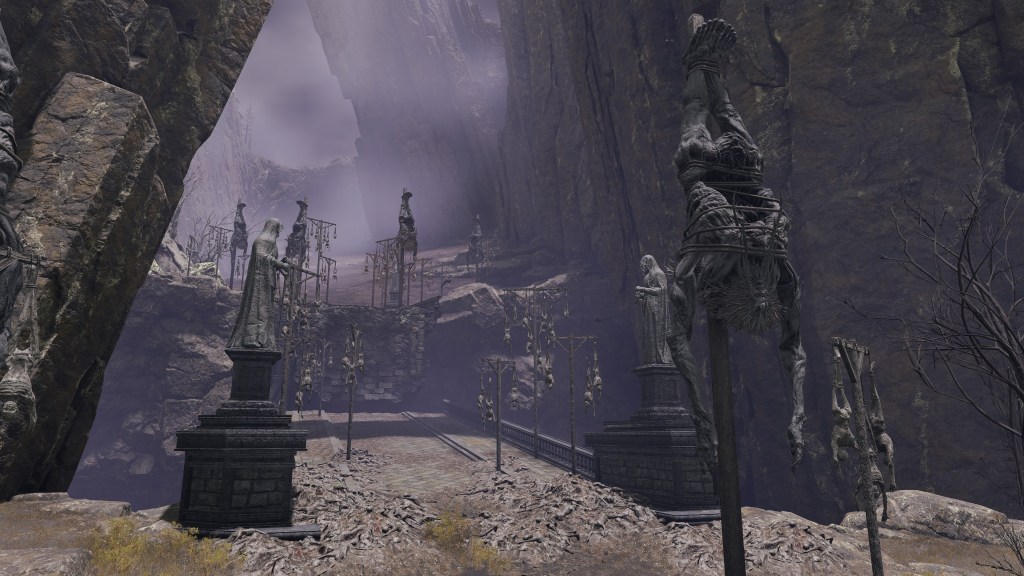
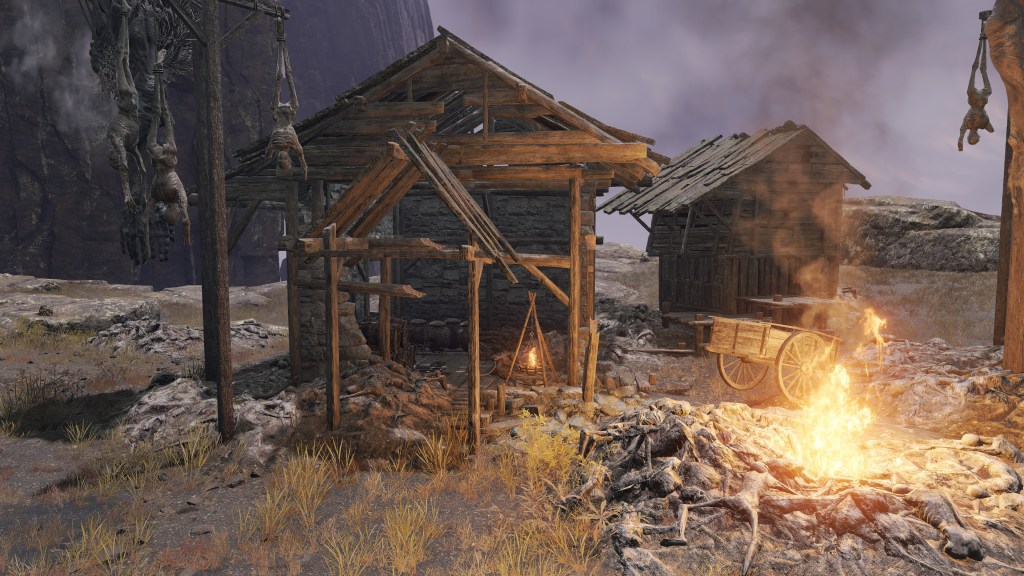
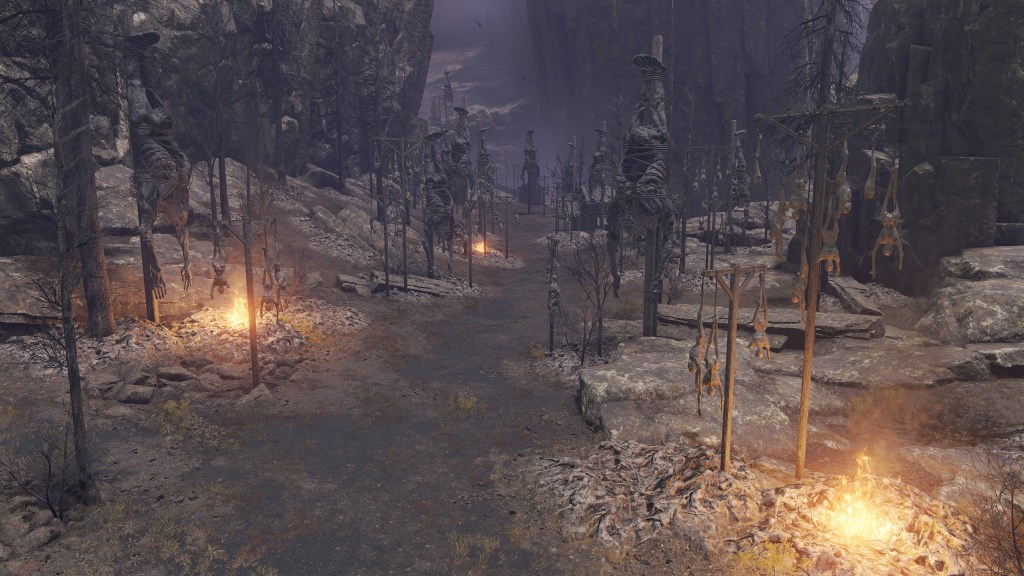
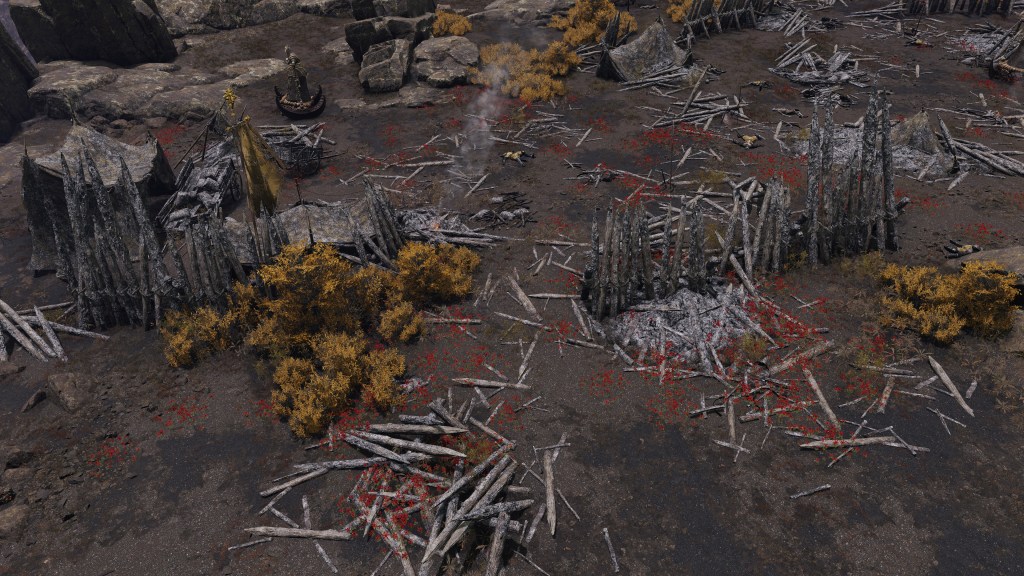
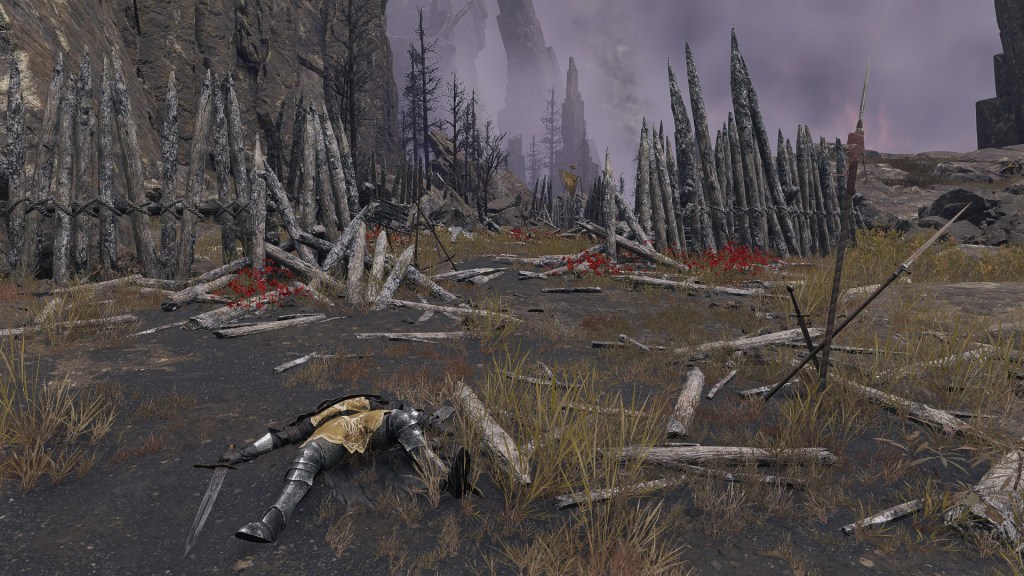
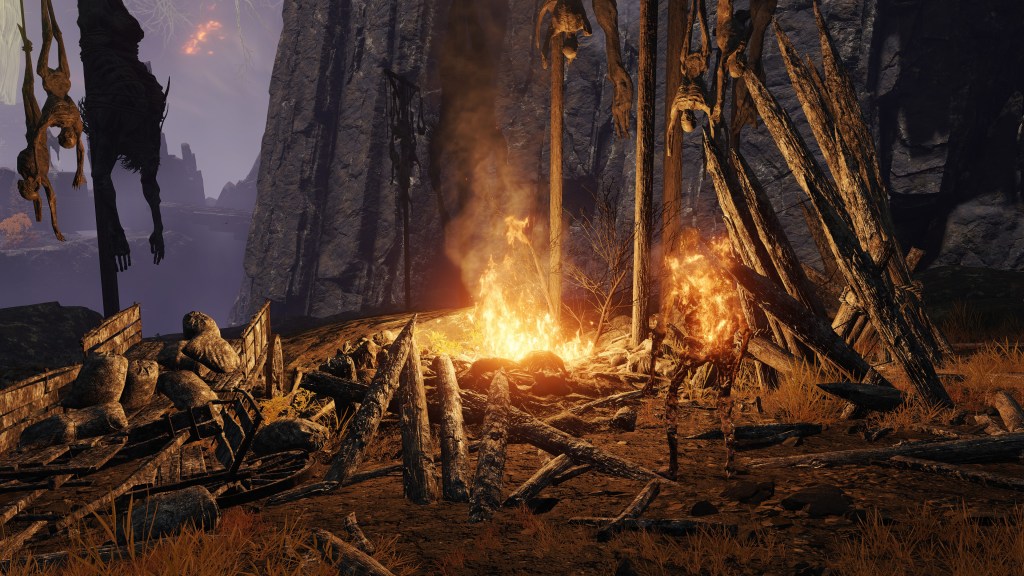
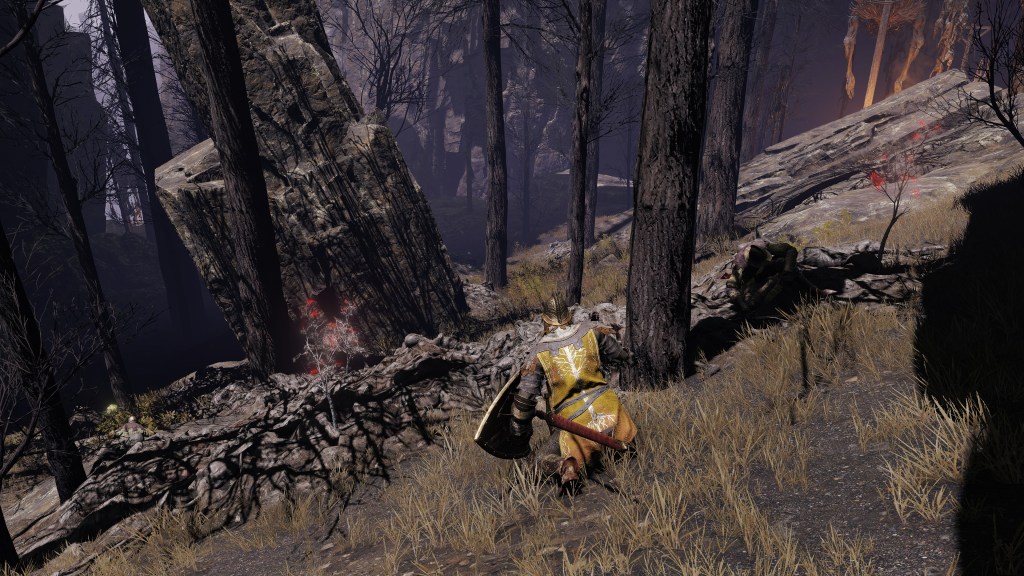
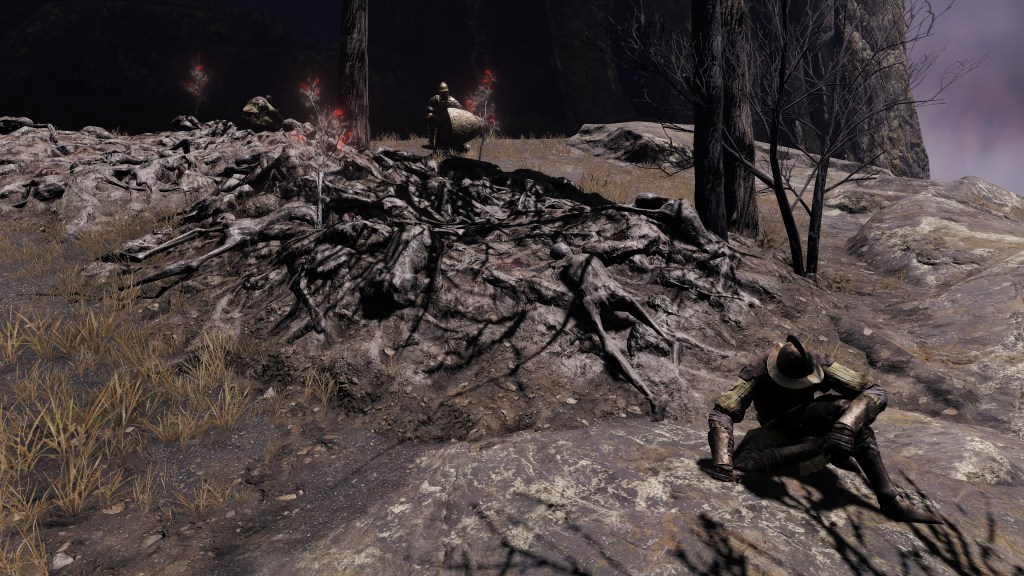
With the conventional path no longer an option, the four camps hunkered down while the original camp atop the cliff redirected forces up the peak behind them. Eighth and ninth camps were established at the top and bottom of these new cliffs, with far too many ladders in-between. Just as we can, the invaders were obviously planning to cross the rope bridge built beyond the ninth camp, climb over the Fallingstar Beast meteor site via another ladder, and arrive at Volcano Manor from behind the enemy lines. It was a creative plan, and another failure. Both camps lie in ruins, survivors in the ninth all afflicted with the Frenzied Flame, the cause plain from the hooded troll guarding the manor entrance with their same affliction. Even absent an army, the manor’s residents have been able to fend off the assault, striking at the enemy camp before their plans could be realized. The troll alone has unleashed a plague through Leyndell’s ranks, causing the battalion to crumble. Once more, Leyndell was caught unawares and forced to fall back.
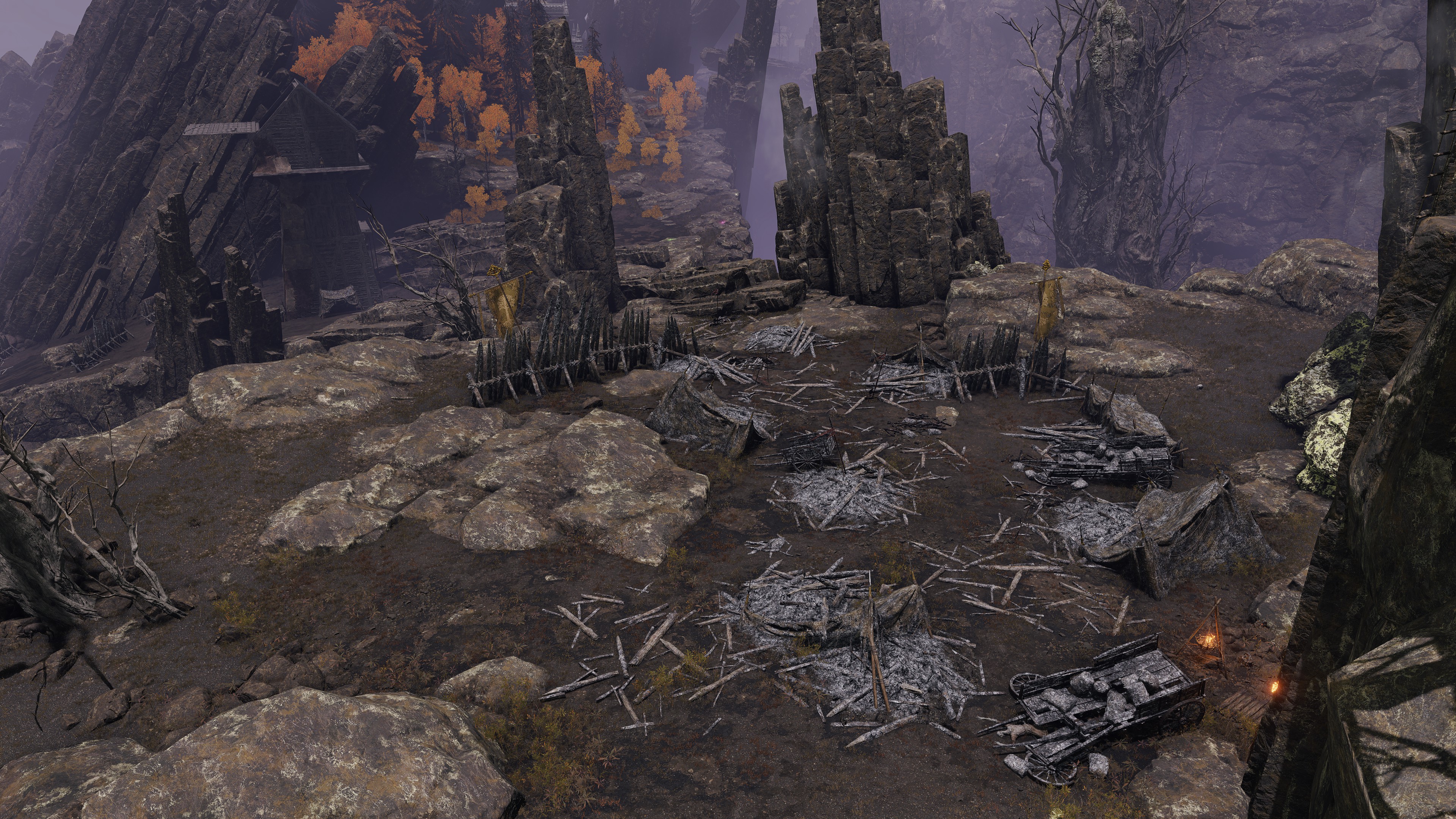
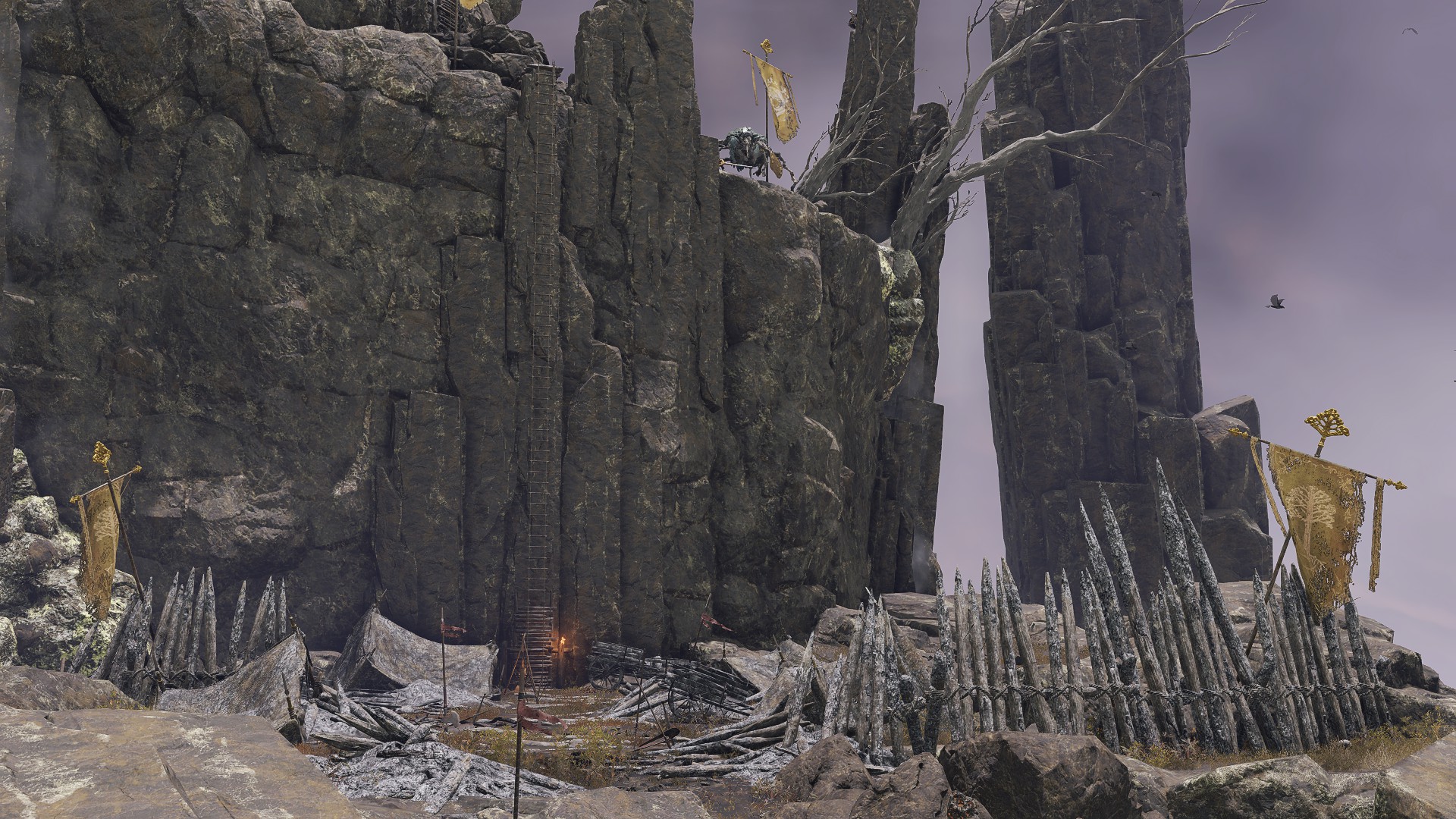
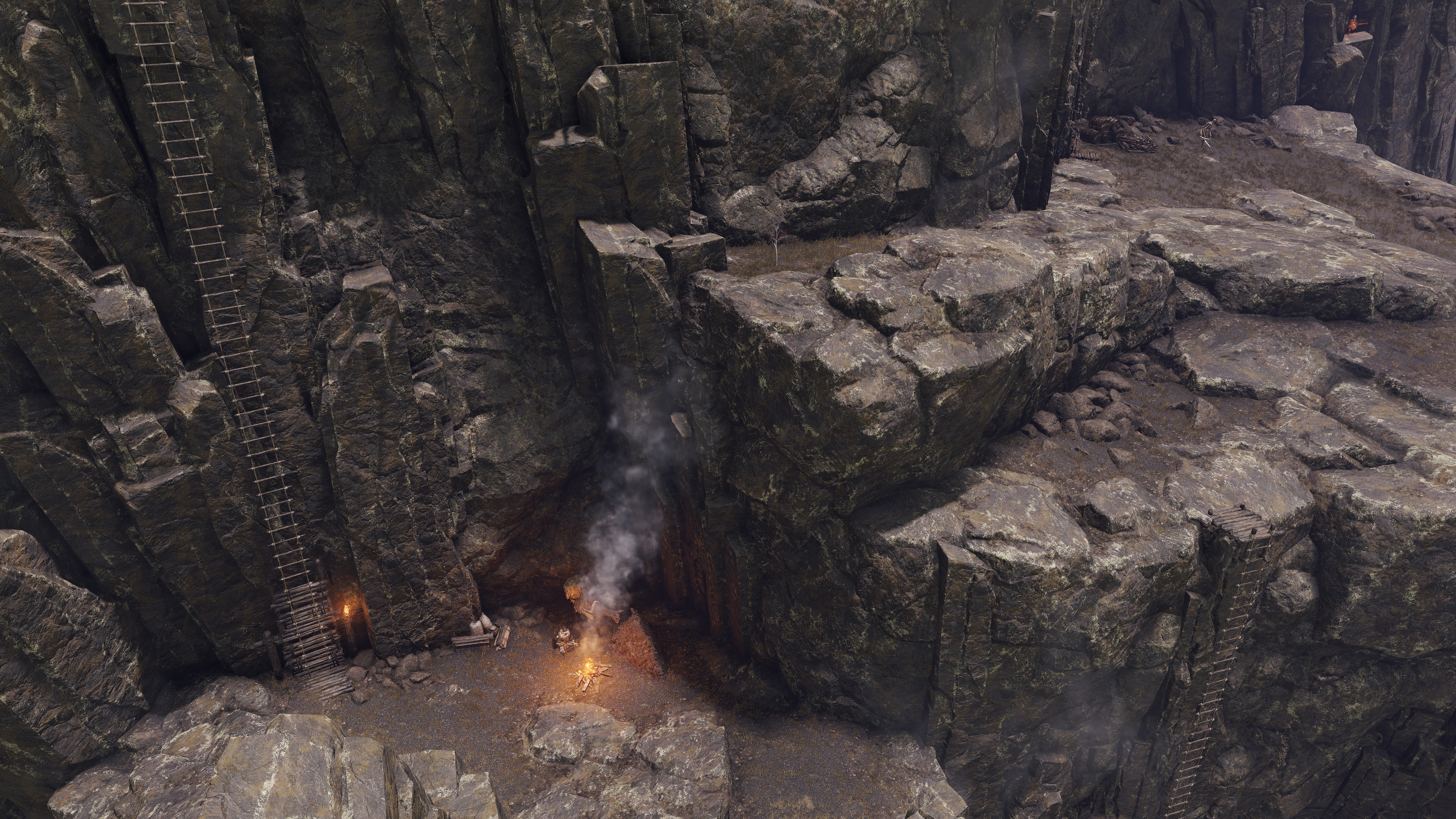
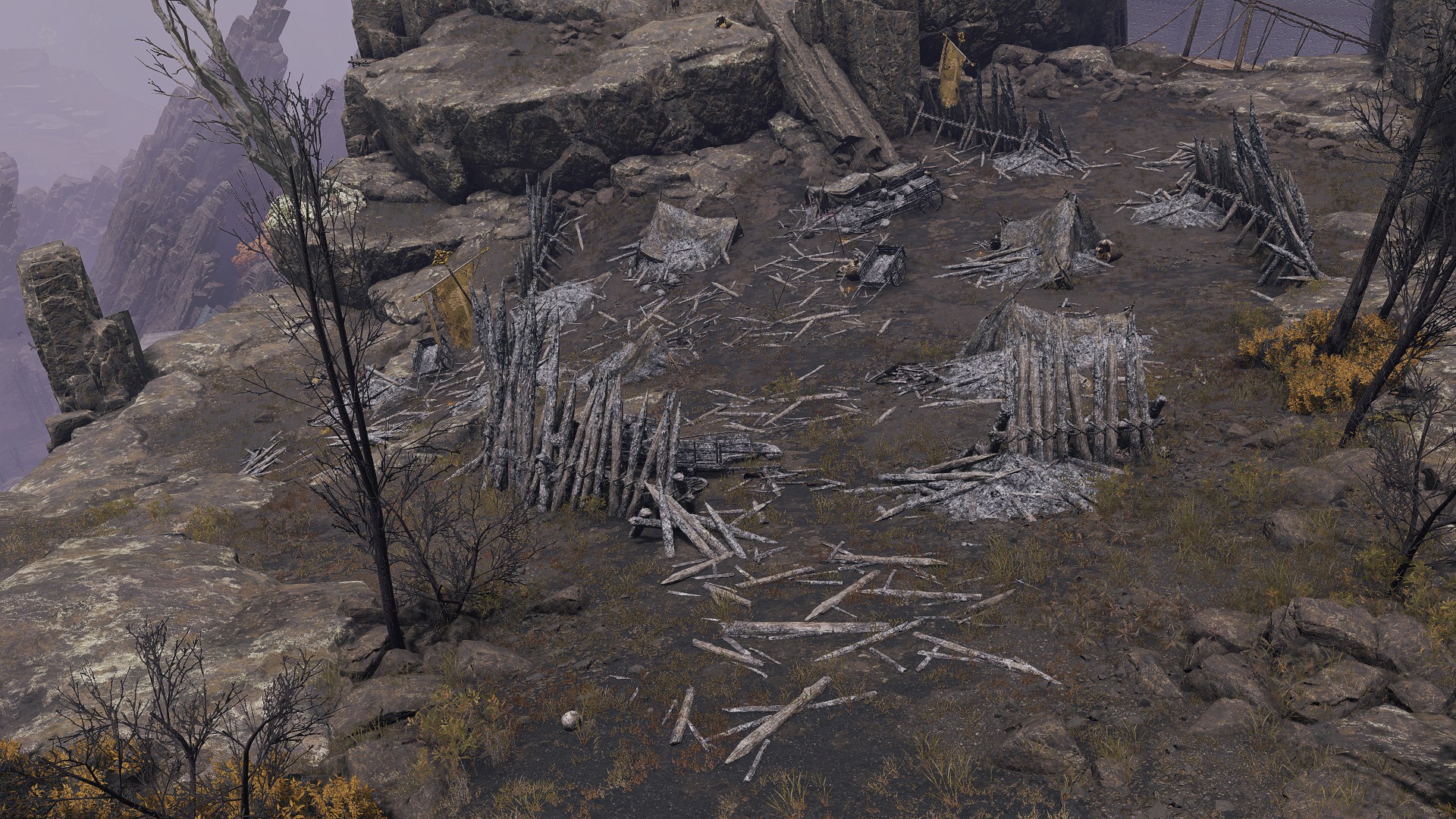
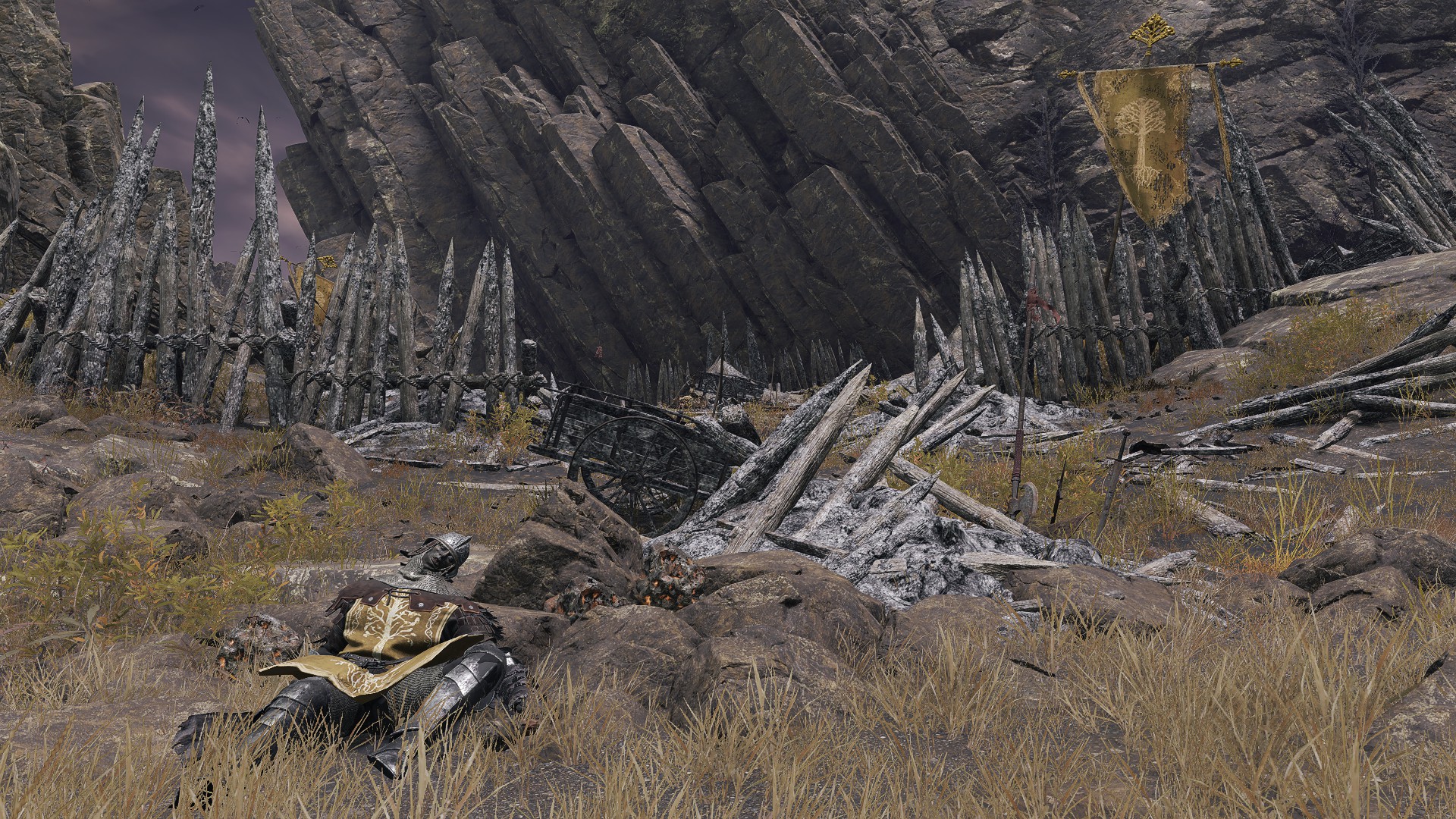
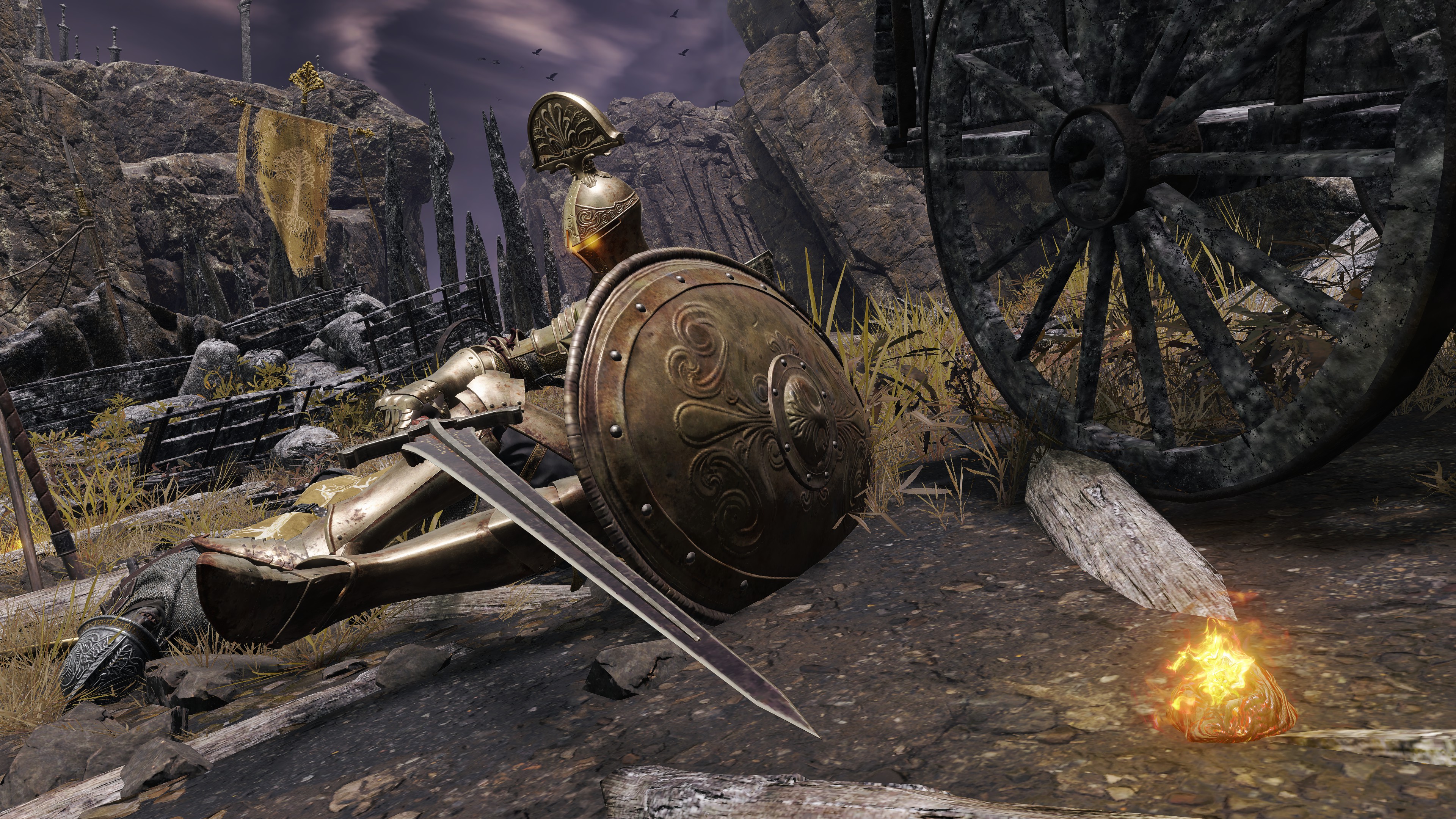
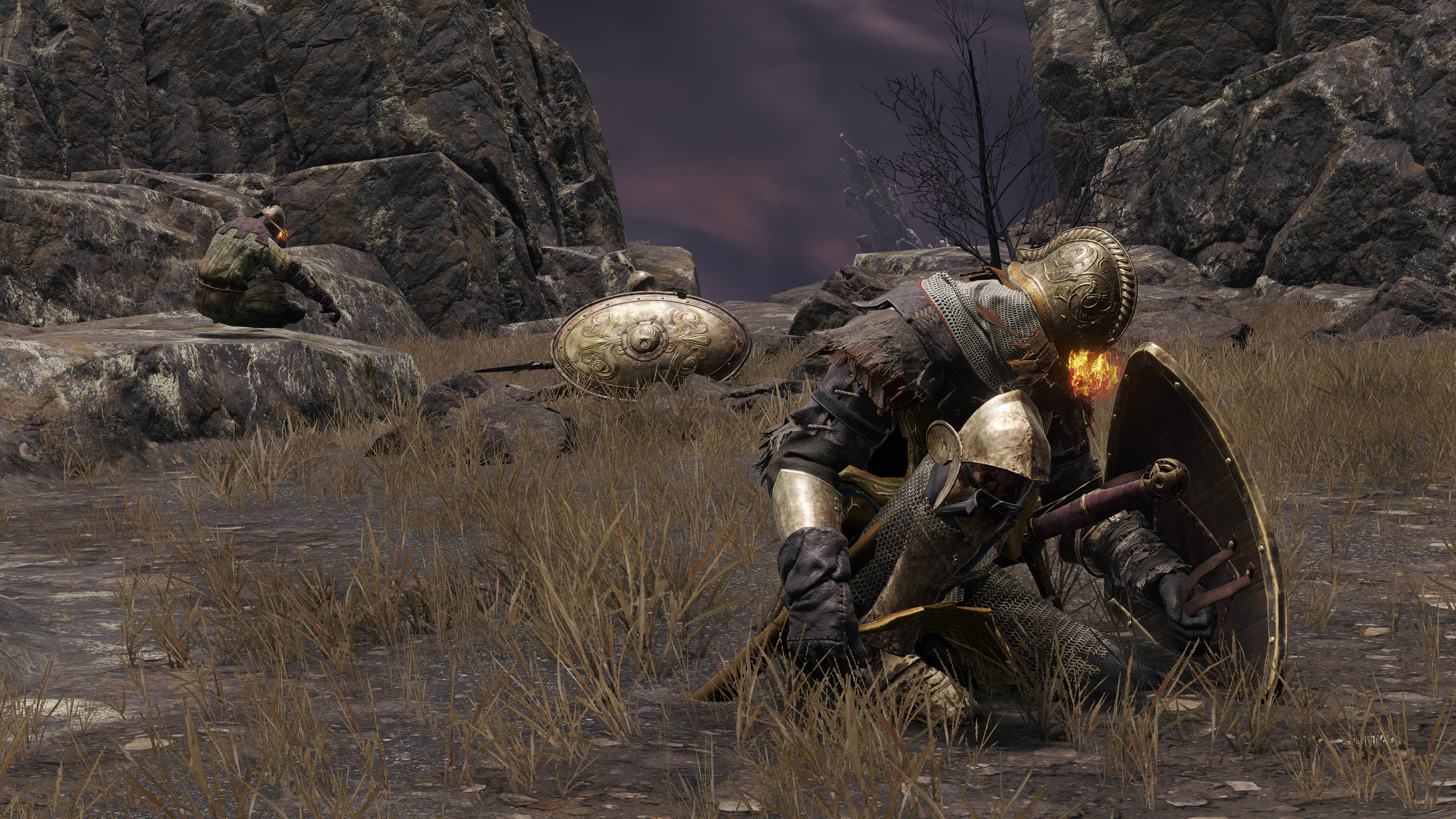
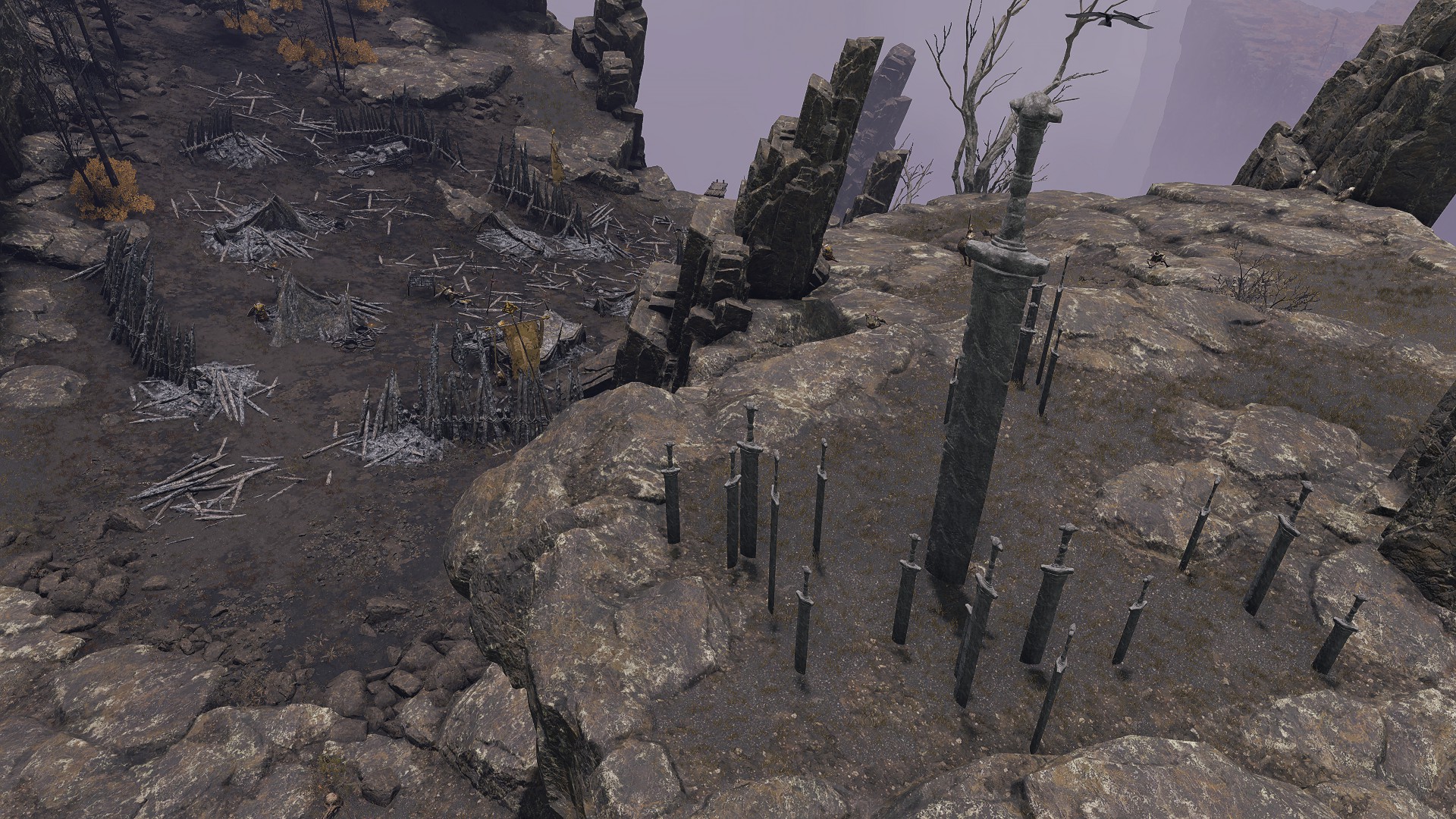
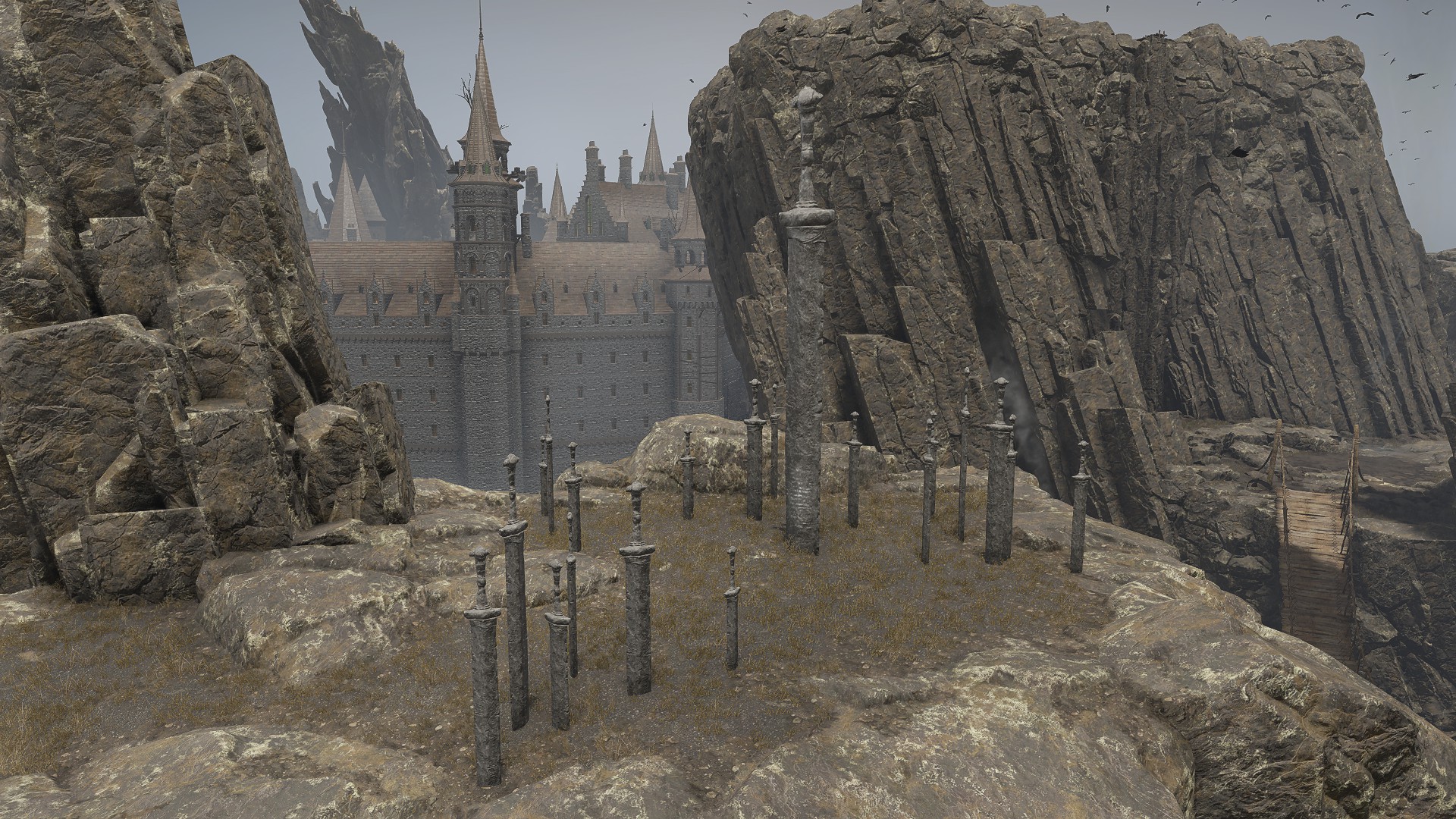
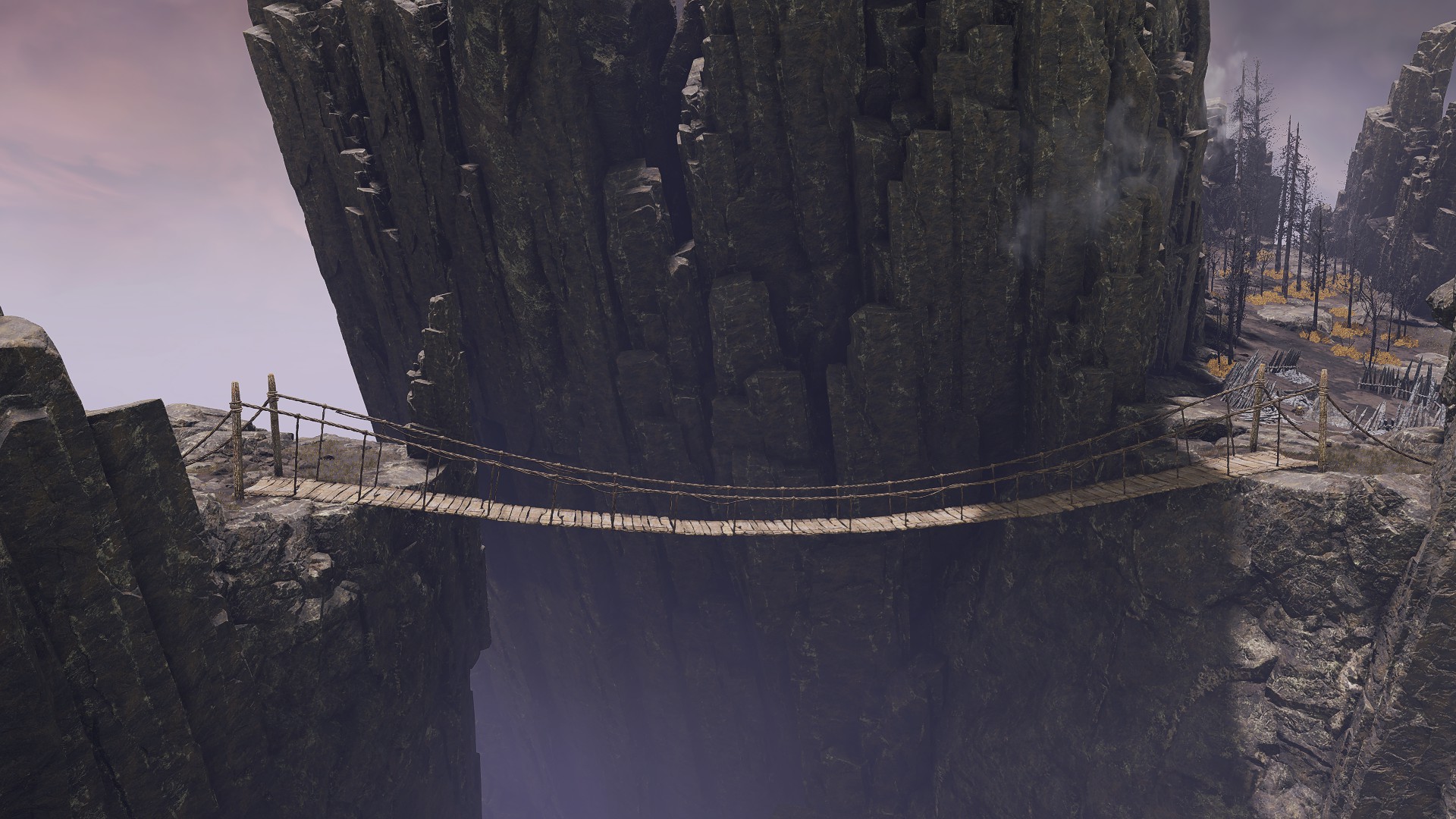
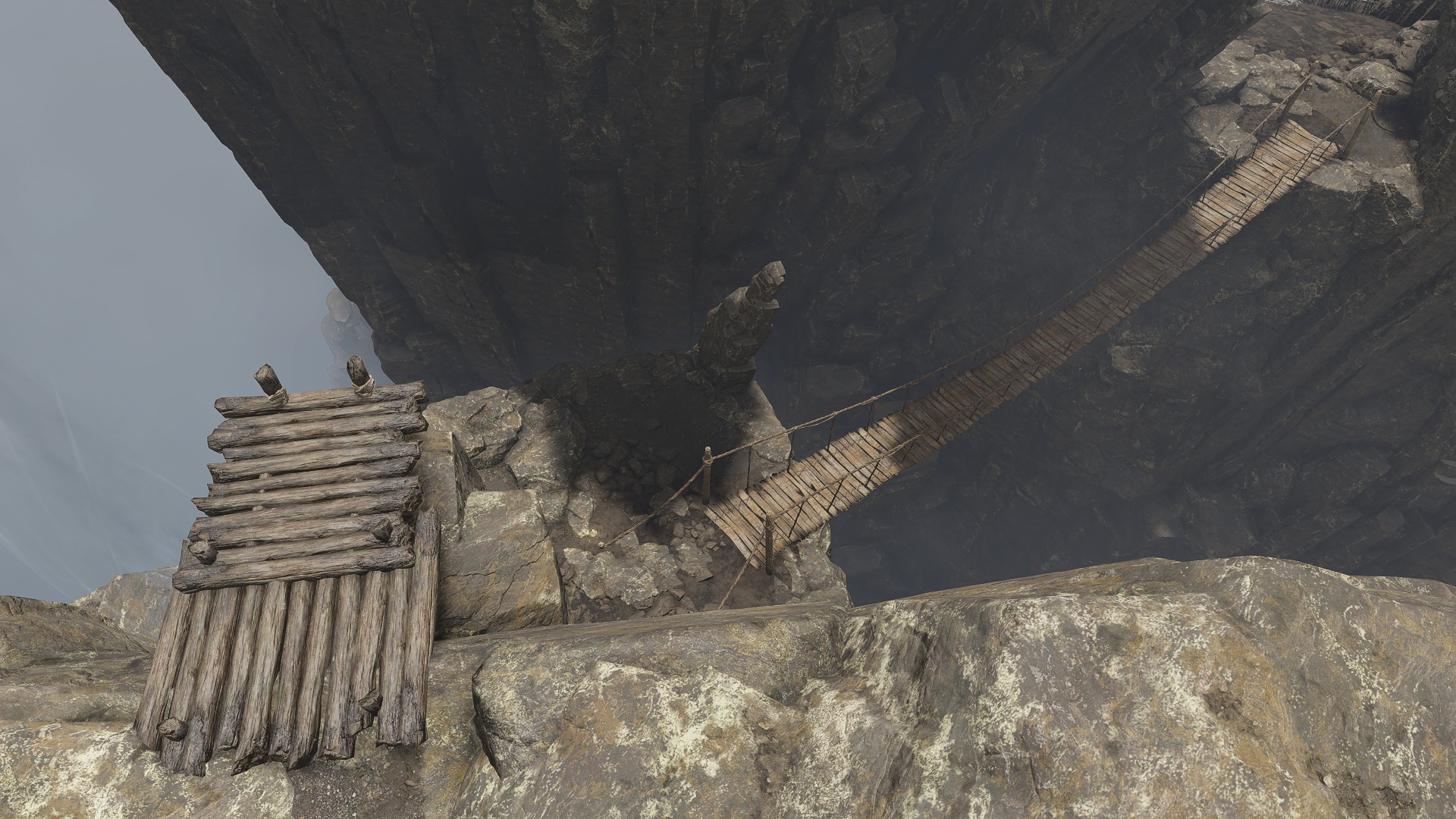
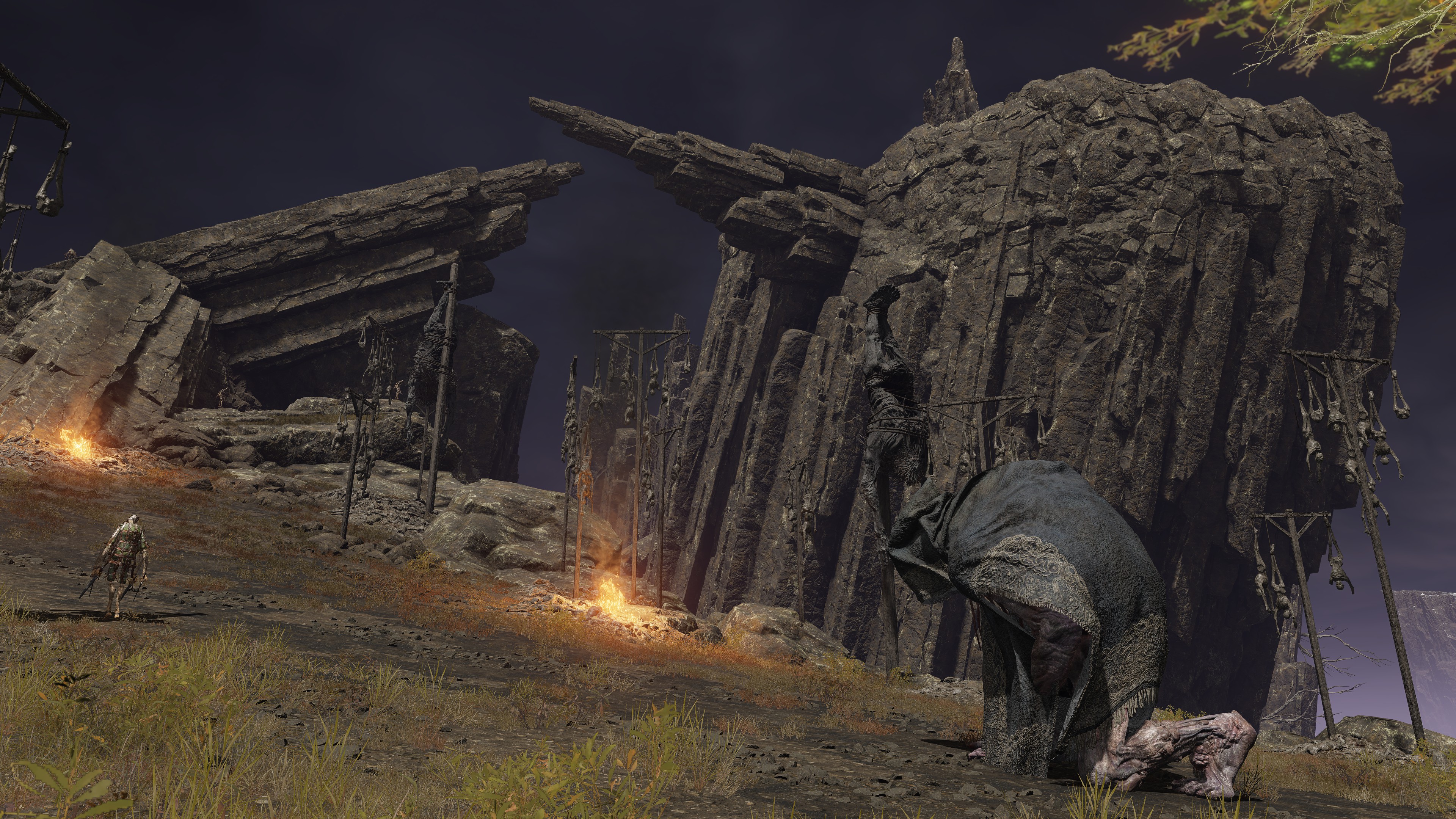
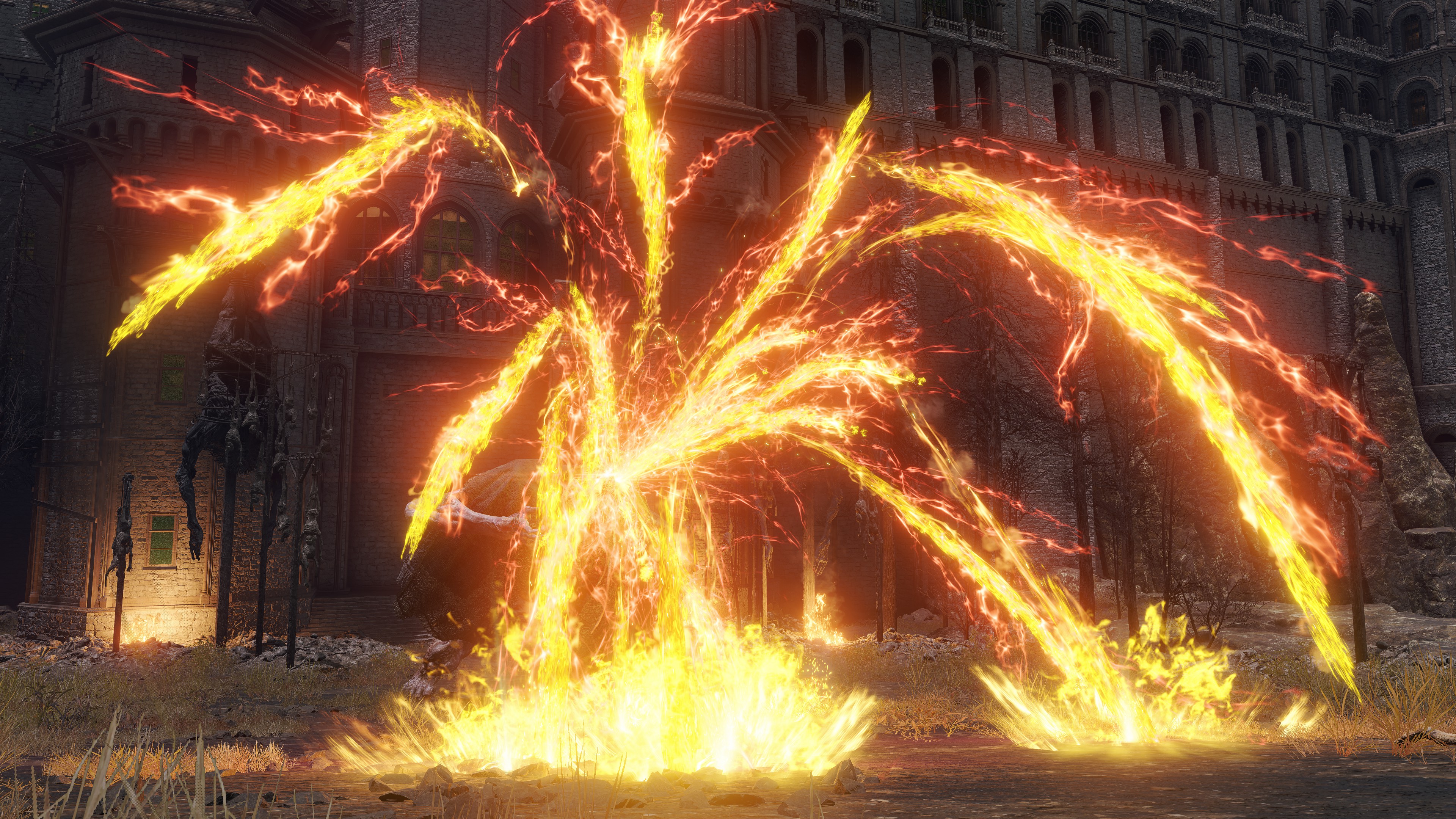
From there, everything in this second prong of the invasion fell apart. Patrolling the manor’s rear up to the stone bridge are marionettes, crafted by the new sorcerers that Rykard was creating. They are the ones deployed to finish off the stragglers and fly Rykard’s banner, as we see on the cliffs between the eighth and ninth camps. Some of the soldiers fled to nearby Volcano Cave, setting up an arsenal in preparation for the next stage of the assault. Unfortunately for them, they didn’t realize that these extensive and labyrinthine caverns were already the lair for demi-humans, the servants of Queen Margot eliminating the unsuspecting trespassers. As they now patrol outside their bone-laden den for more, the marionettes are picking off the last scattered remnants one-by-one, flyers ready to rain lava from above with specially-made volcano pots. Despite their best efforts to hold the line, this venture was one more loss for Leyndell. The placement of the sword monument for this assault at the ninth camp couldn’t be more appropriate.
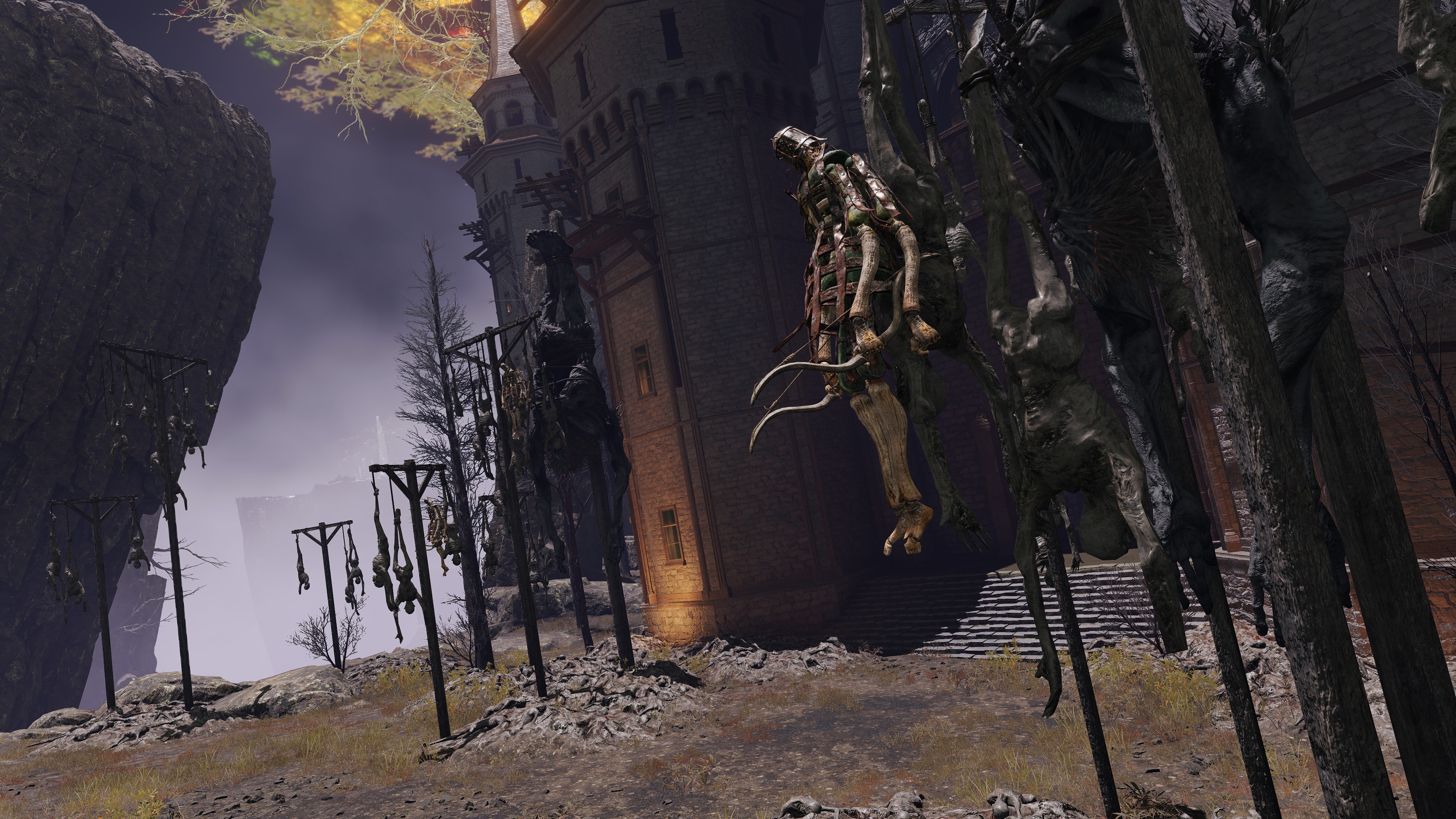
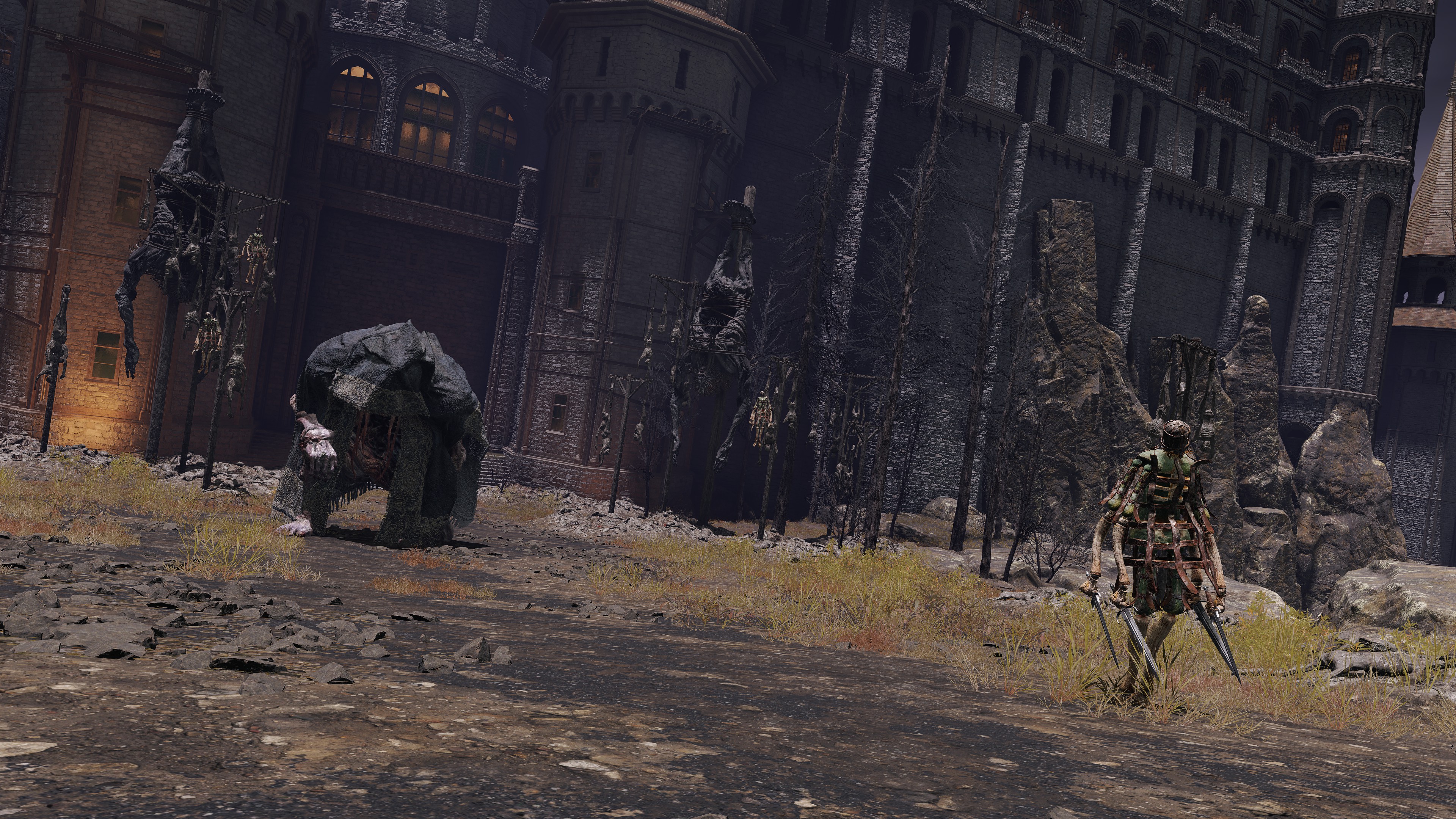
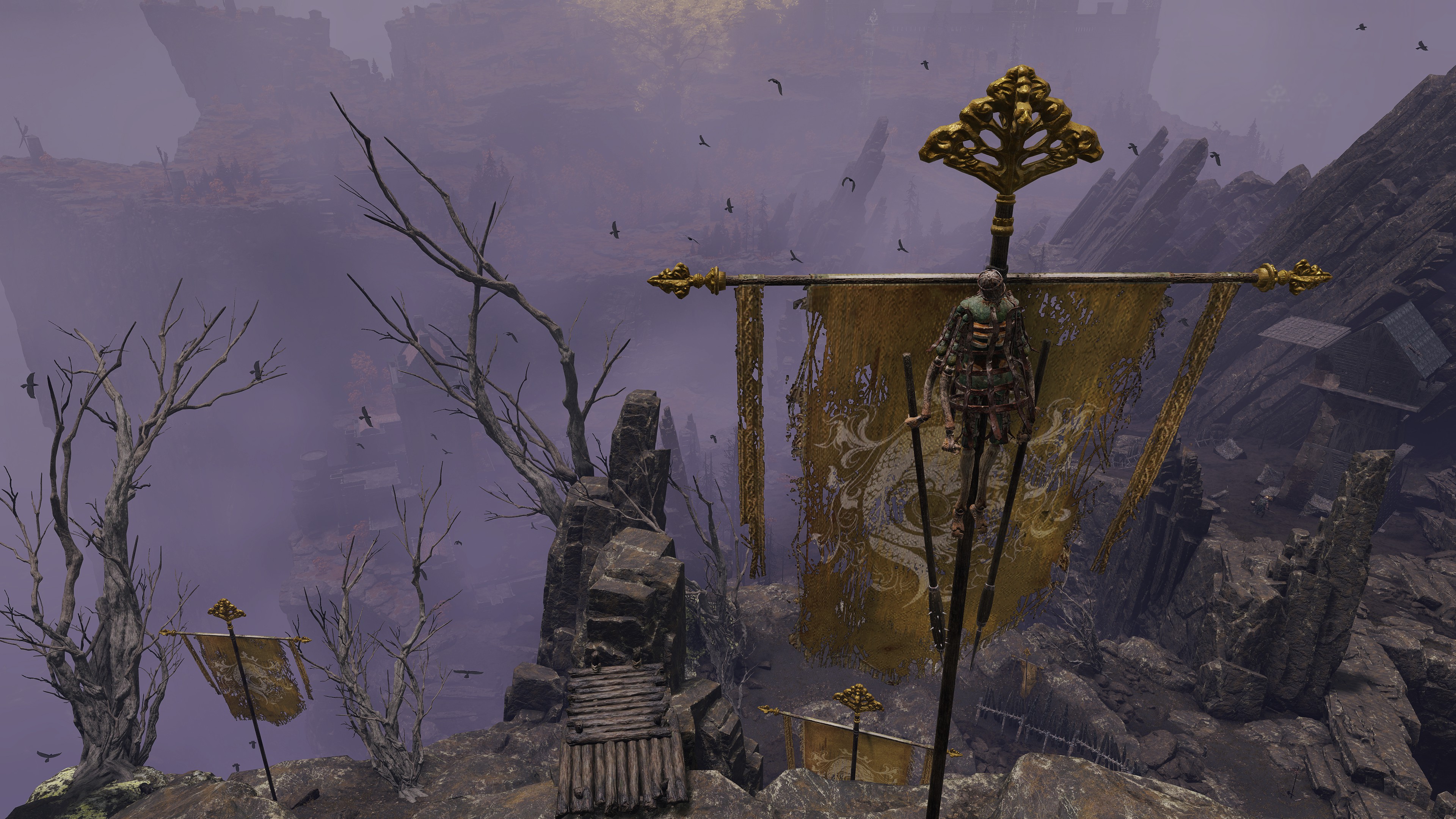
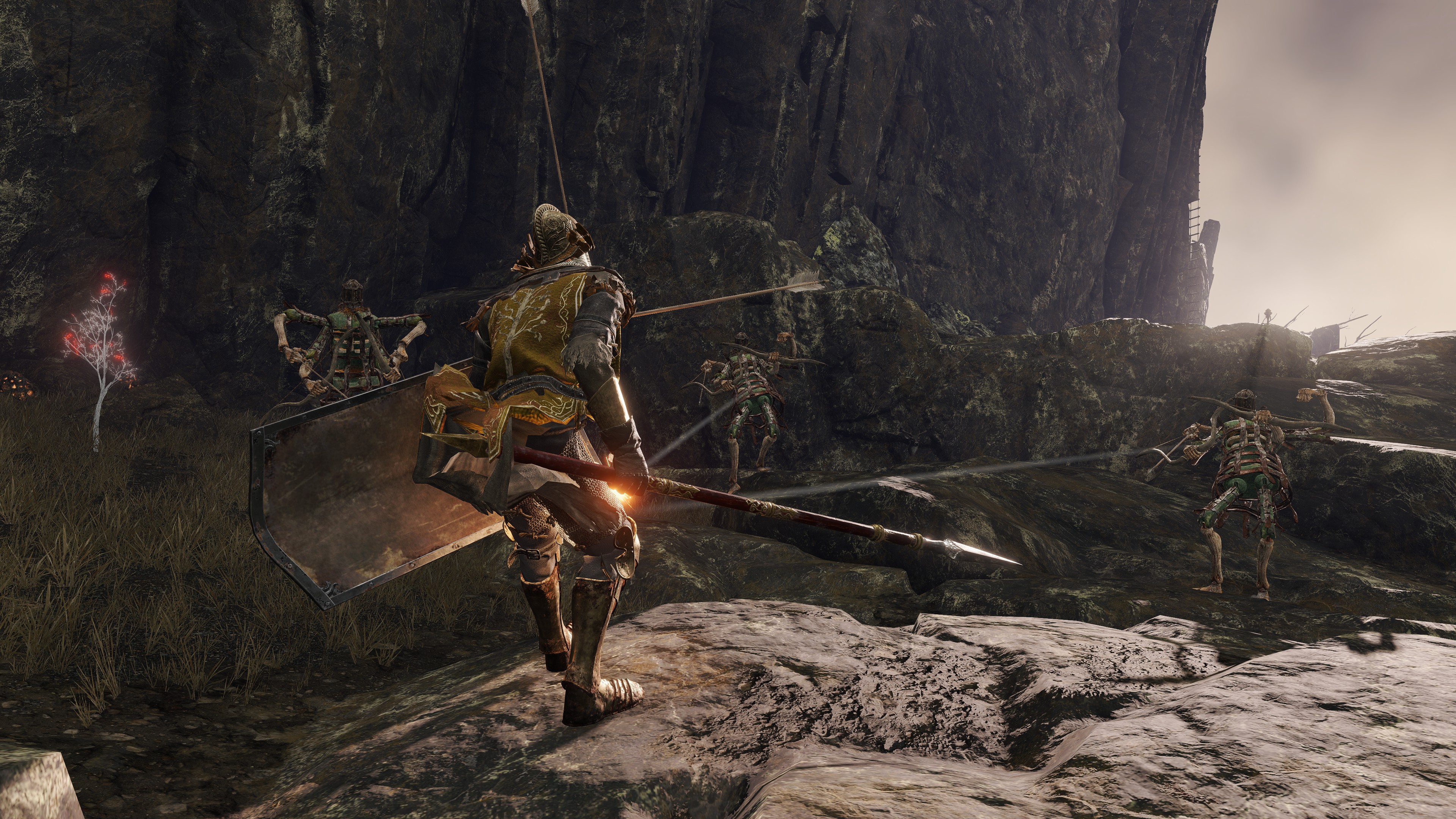
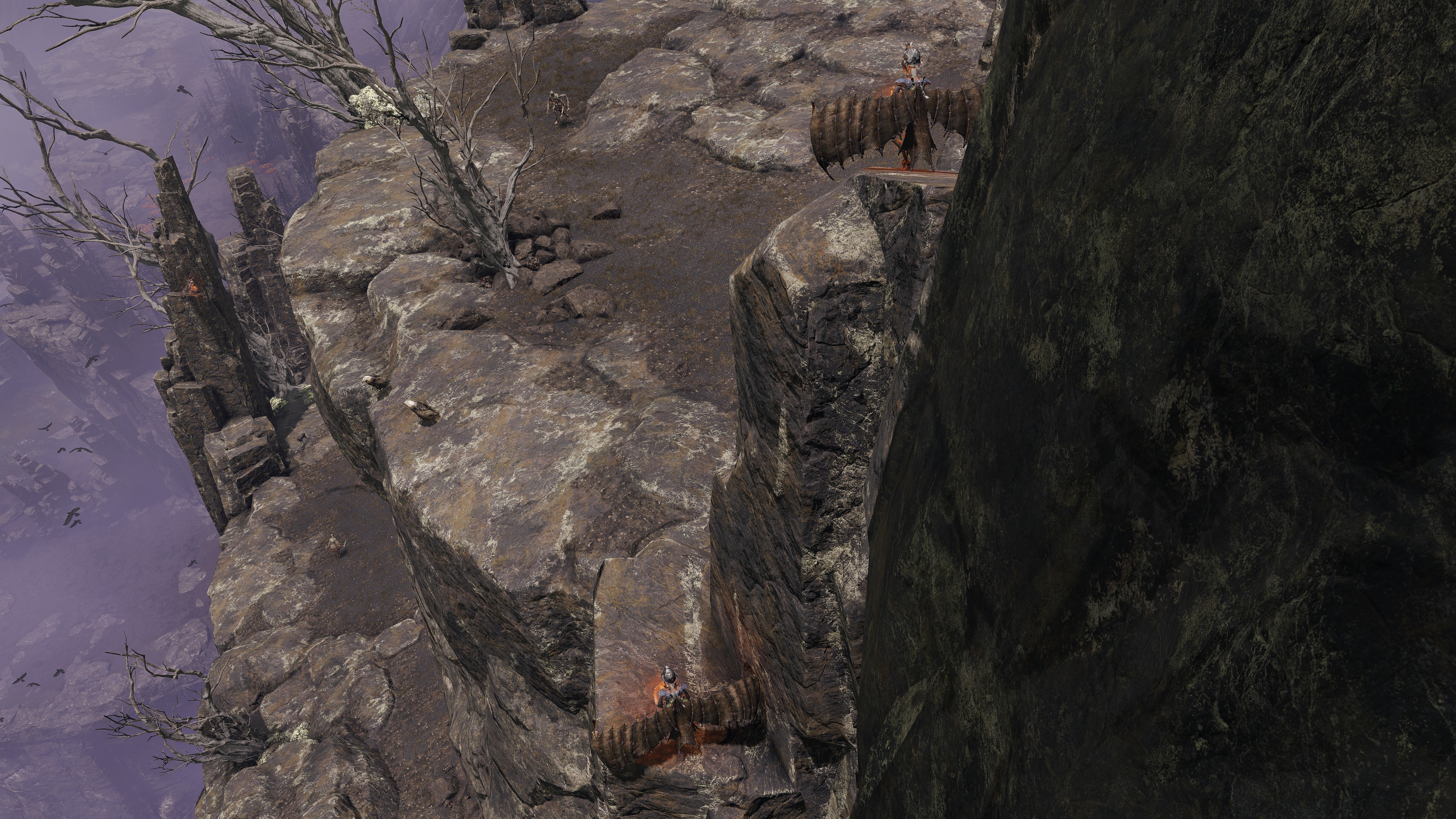
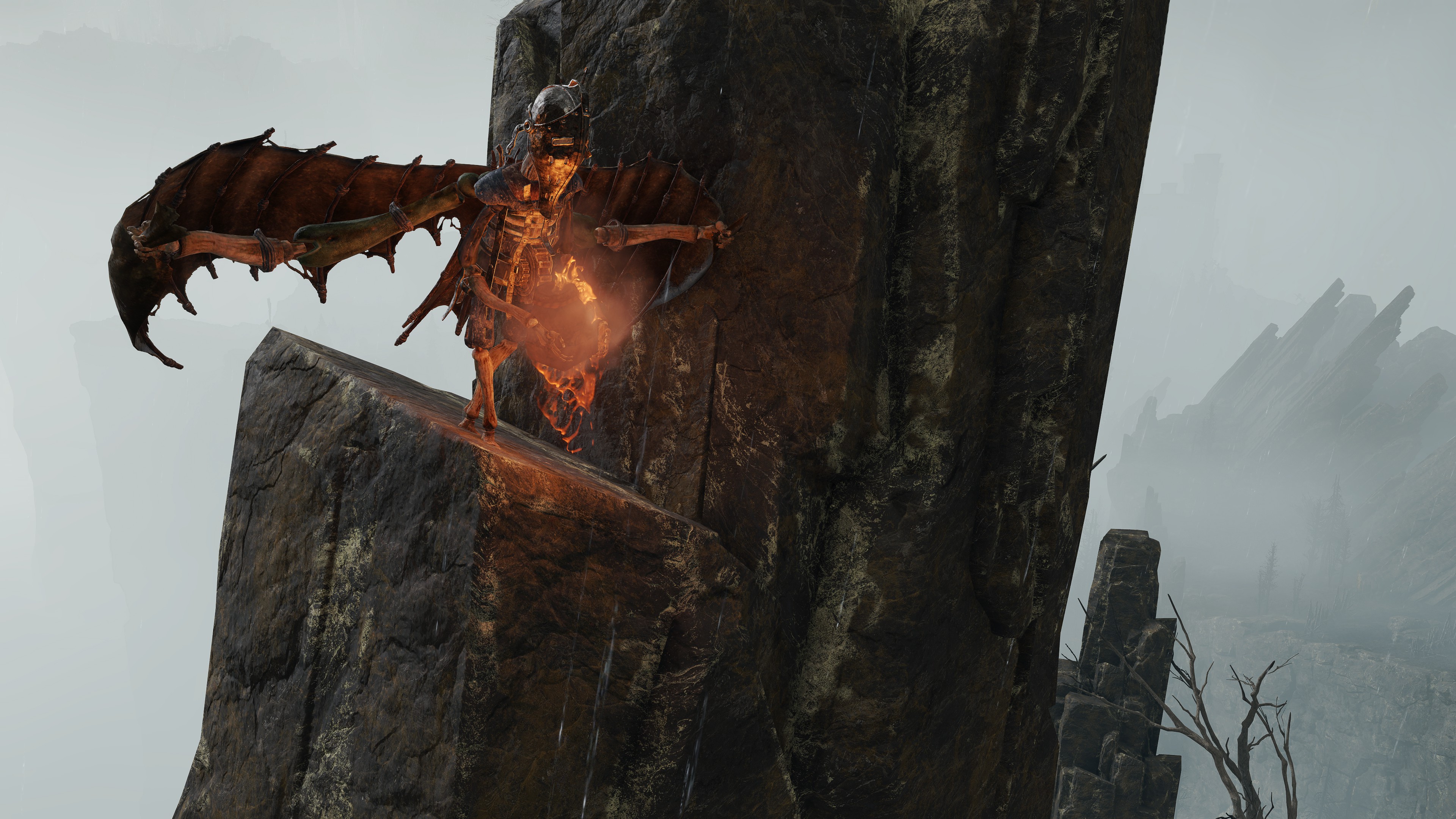
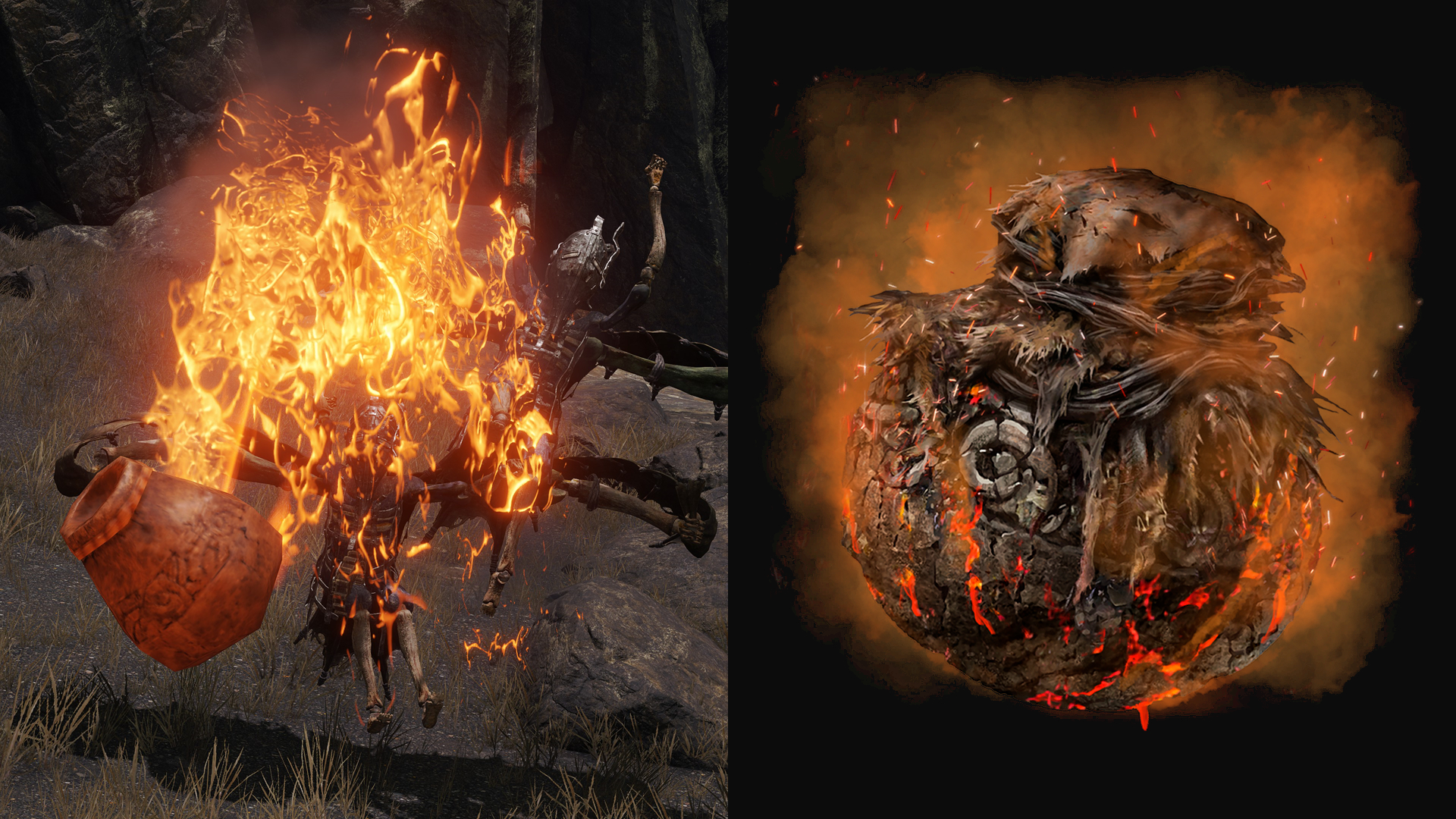
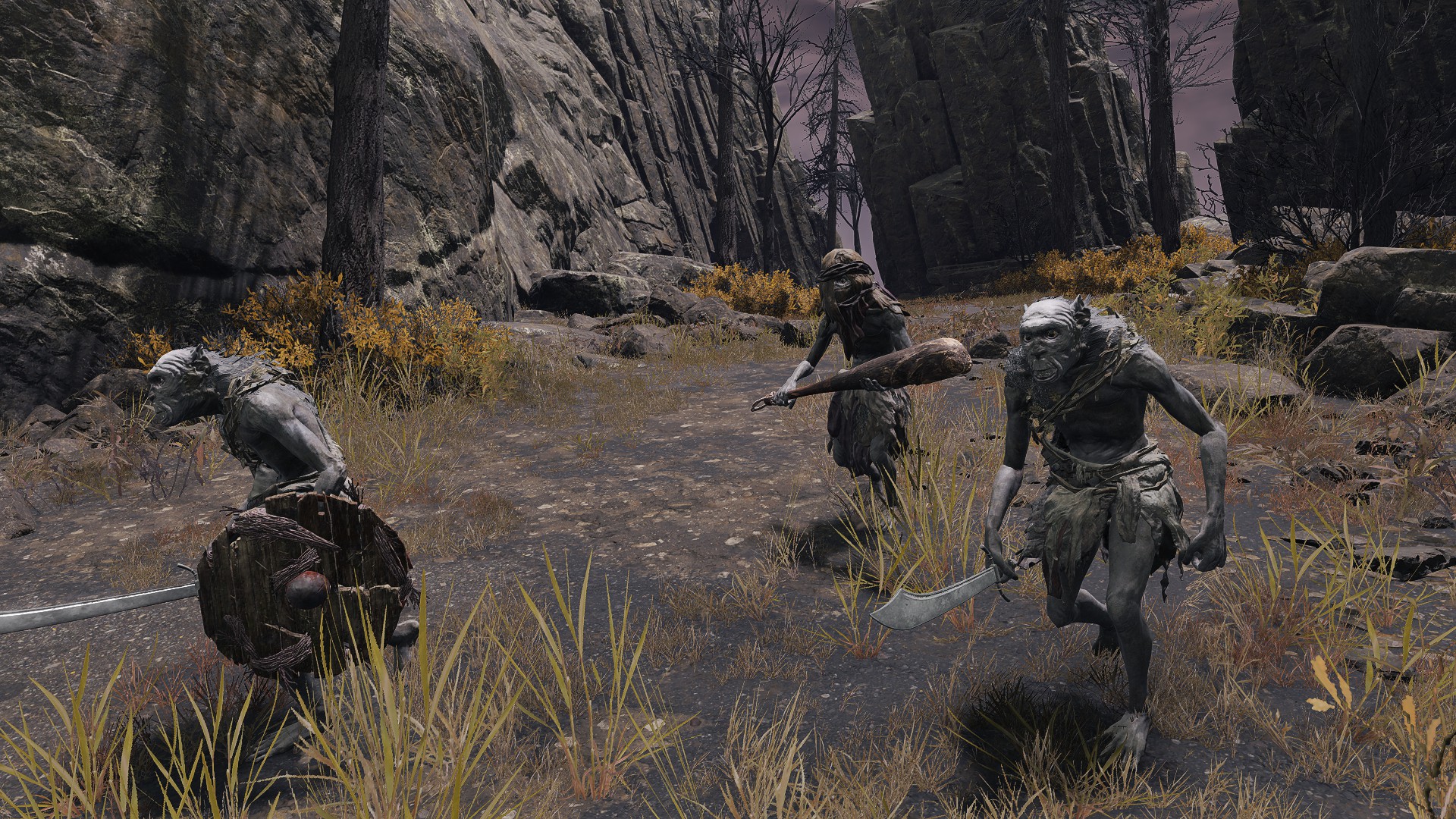
One of the crafting items using a cracked pot. It crushes a volcano heat stone and seals it in the pot.
Throw at enemy to generate hot air and deal fire damage to what it touches. The heat lingers in the spot for a short time.
Apparent in all of this is just how long the whole affair has stretched out. Even after the Shattering has formally ended, this horrific battle has continued. Most recently, Rykard’s forces have broken through the four encampments and begun slaughtering the last of the soldiers up to the Bridge of Iniquity. The fact that we can acquire Golden Vow not far into this battlefield highlights how prolonged fighting has made this battle — still on their own plateau — feel more like one of the old campaigns deep into foreign lands. Considering how new bushes and flowers grow on the remains of these sites, Gideon is right to recognize the battle as the most grueling. The first camp has withstood the enemy counterattacks, but with both prongs virtually wiped out, their situation is dire. The Scavenger’s Curved Sword found in the eighth camp reveals how human vultures have long since joined the dogs and crows in picking the dead clean, sawing apart bodies to collect the valuables. With that knowledge, and no time to bury their comrades before the next battle, the starving soldiers have started eating their own.
Curved sword possessing saw blade. Choice weapon of those who prowl the ruins of battlefields and scavenge the corpses.
That blade is terribly nicked, rugged, and uneven, and there is also blood clinging thick to it. Is life so sinister a thing?
The irony of such scrounging and cannibalism proves Rykard’s point about the gods’ hypocrisy. When push comes to shove, no one regulates themselves according to arbitrary virtue or vice. It is just as the sword monument says. There was no honor to be had by either side, both resorting to anything to avoid total defeat. It is an event filled with sacrilege, plague, and the corrupted Hollows. The universal iniquity is why the grace points describe a “sinner bridge” (罪人橋) and “sinner-sendoff road” (罪人送りの道) across this whole battlefield. For the latter, the “sendoff” encapsulates the overflowing corruption on that leg of the field, with rotten Hollows falling into the Seething River below. There are also a handful of Hollow soldiers taking shelter in Seethewater Cave, posting a lookout and an imp statue seal at the entrance for fear of pursuit — maybe even from Leyndell, for their clear-cut desertion. For sure, morale is at an all-time low. And while this grueling battle was still ongoing, the larger war had ended and Rykard was stripped of his last blessing from the Greater Will.
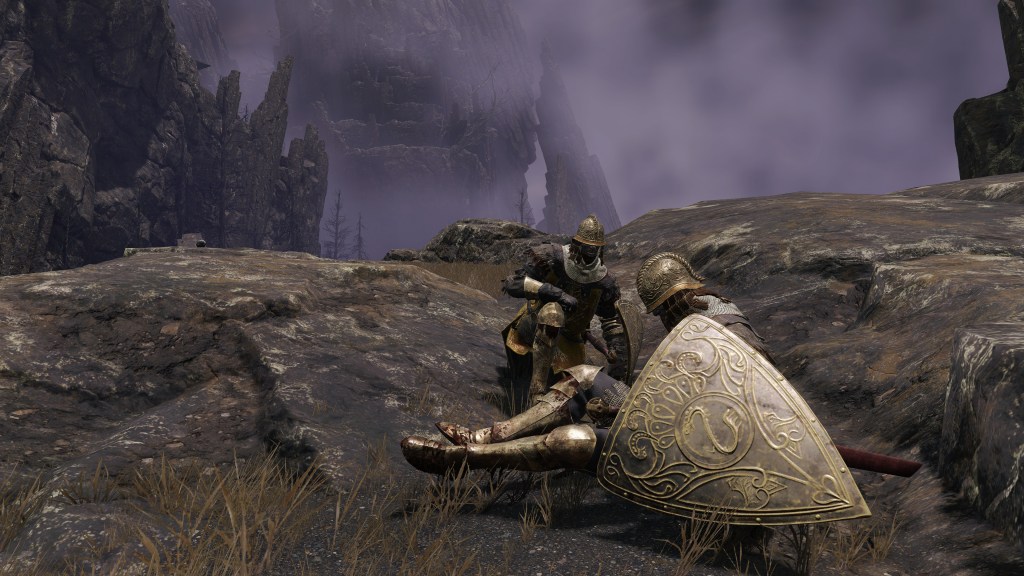
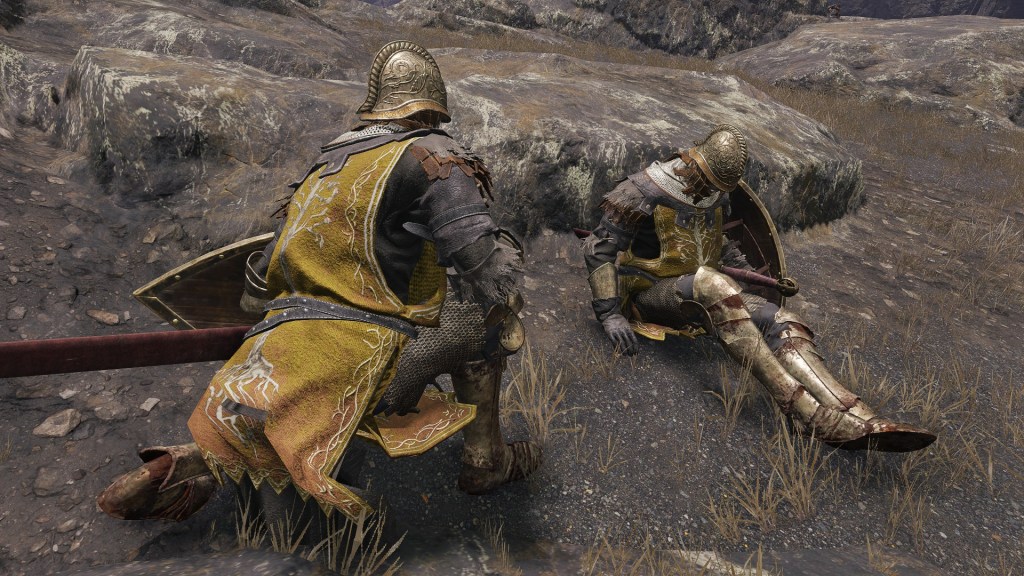
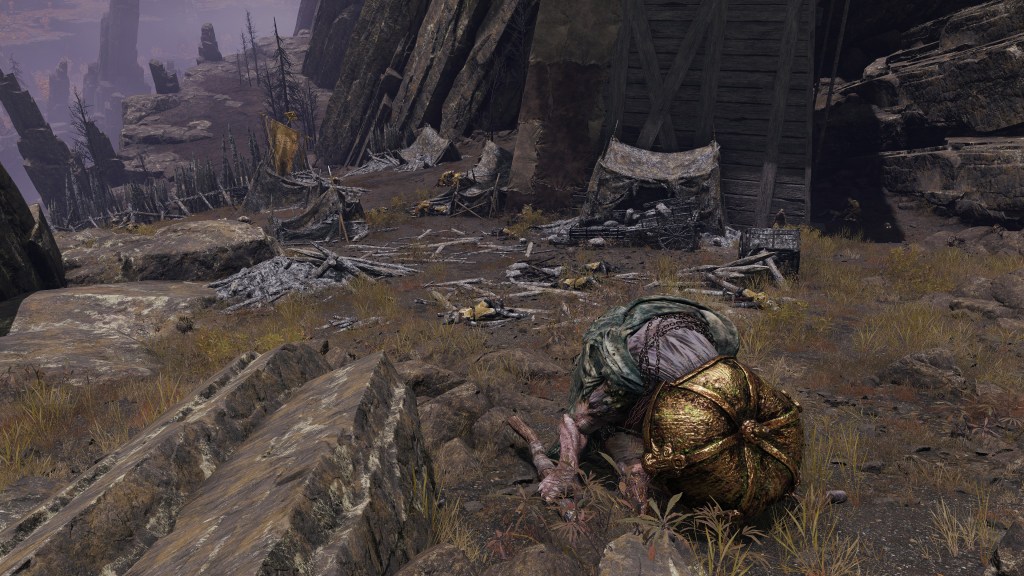
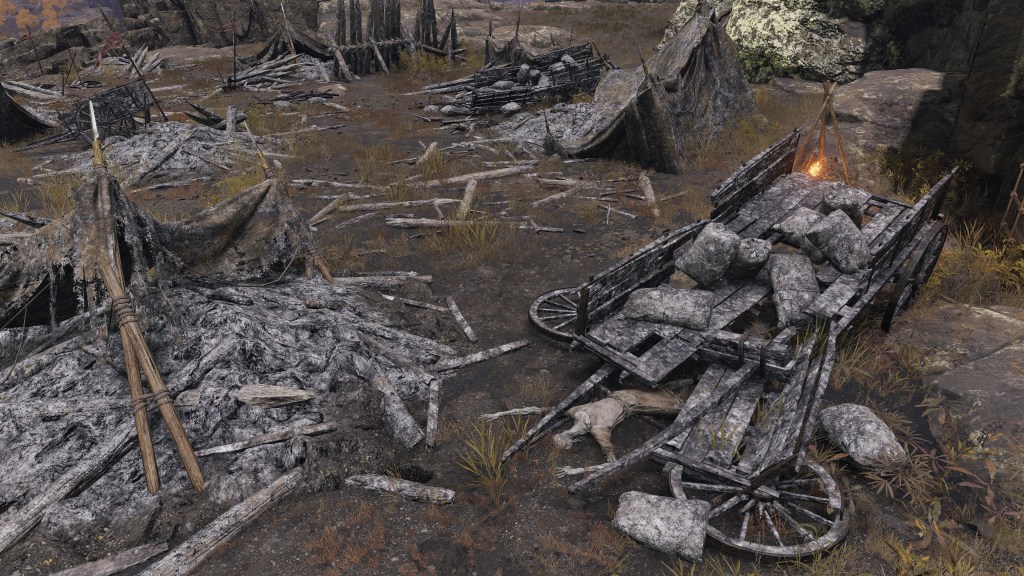
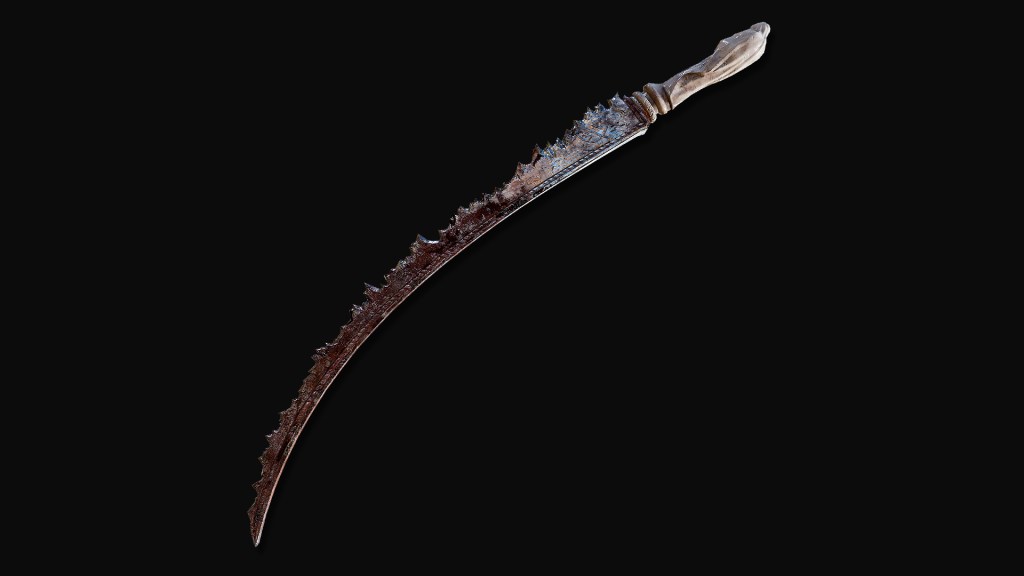
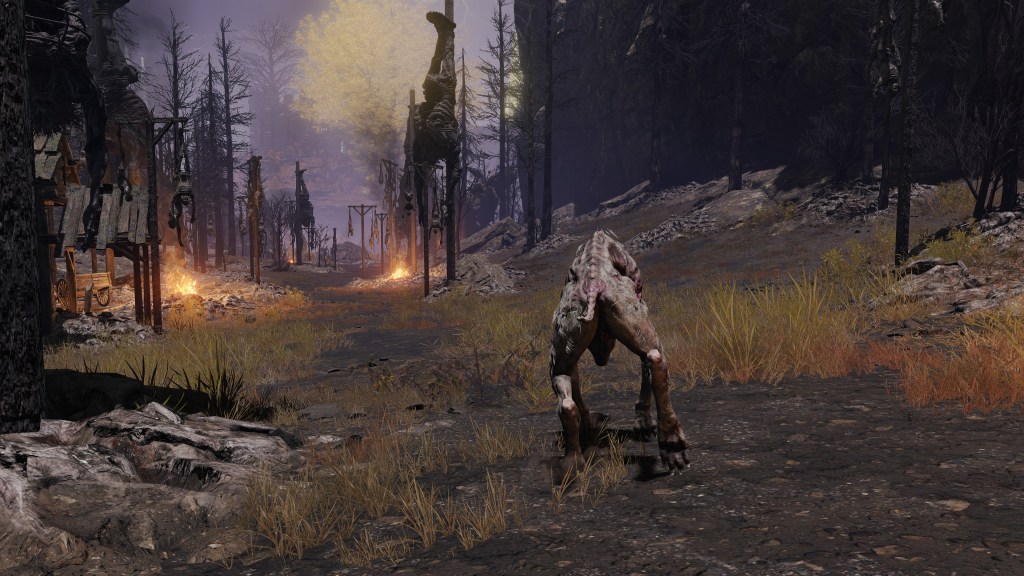
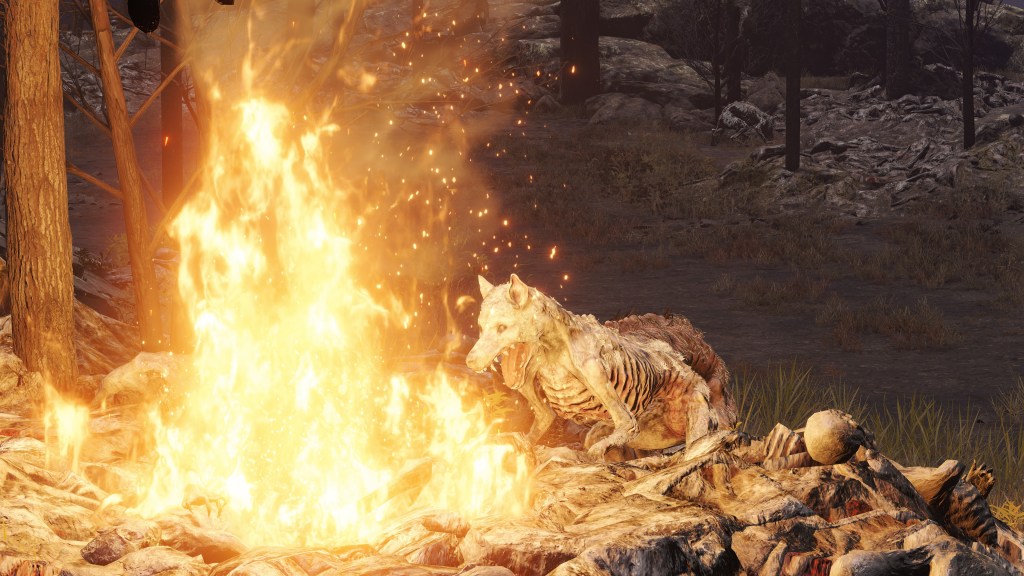
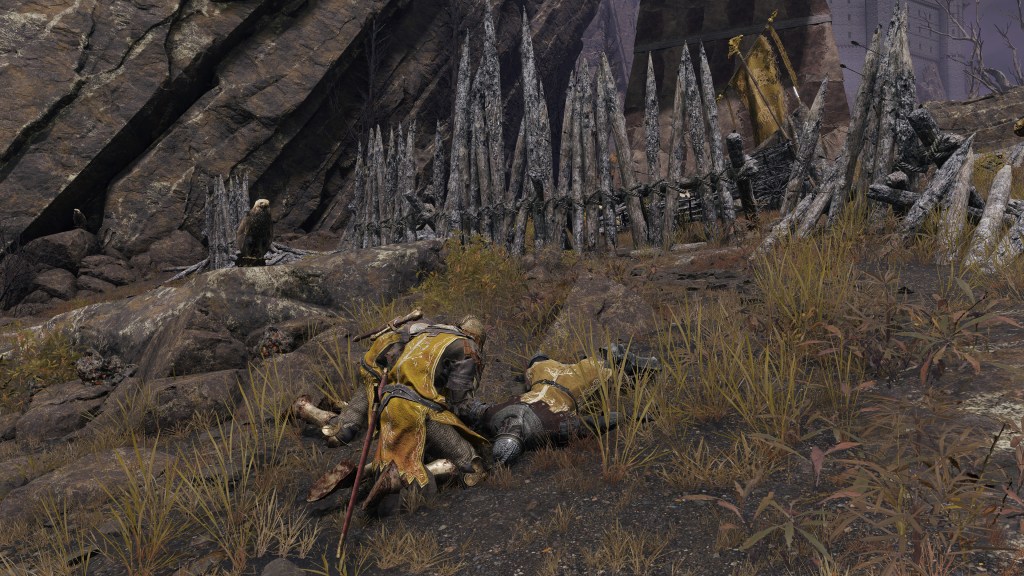
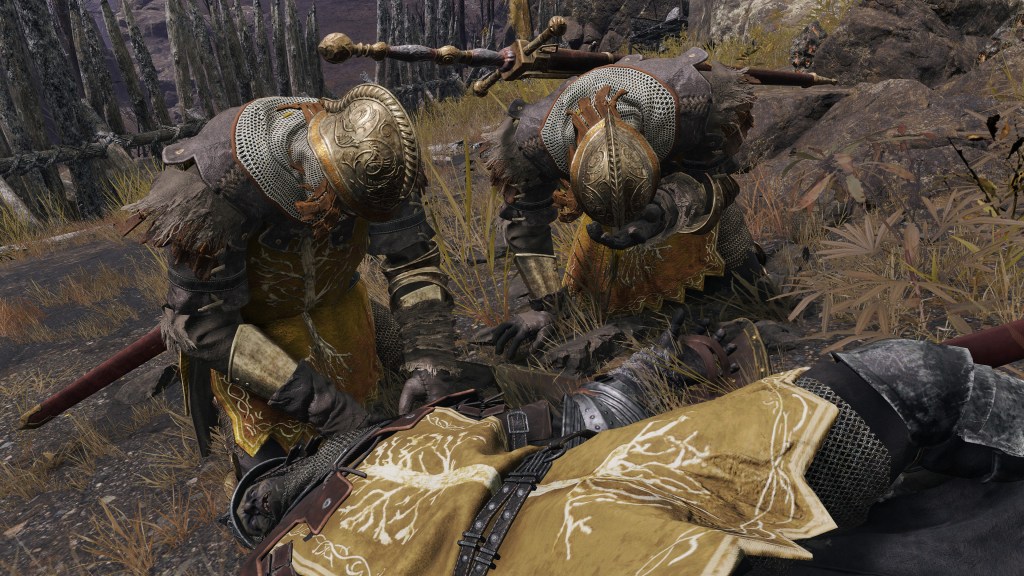
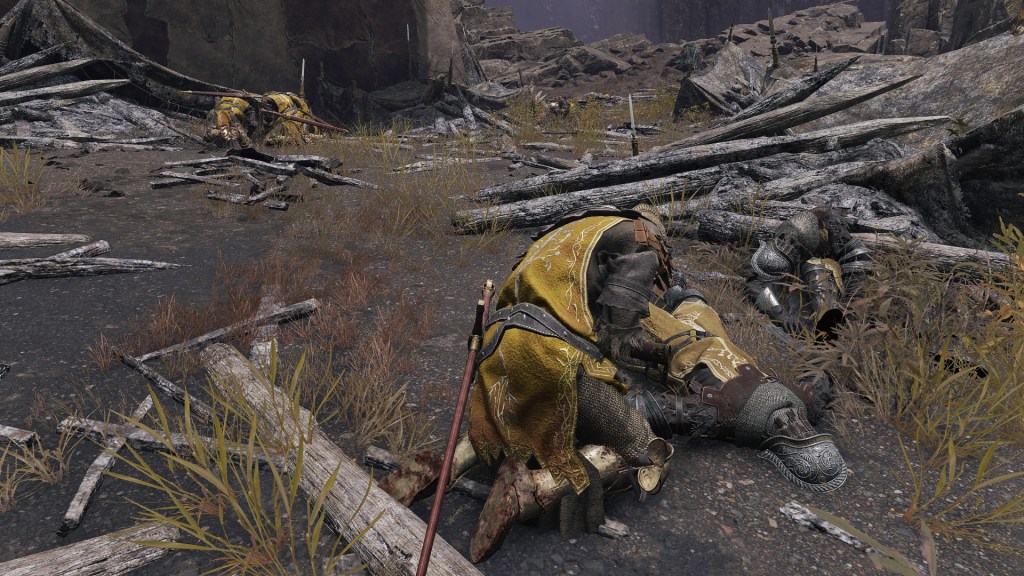
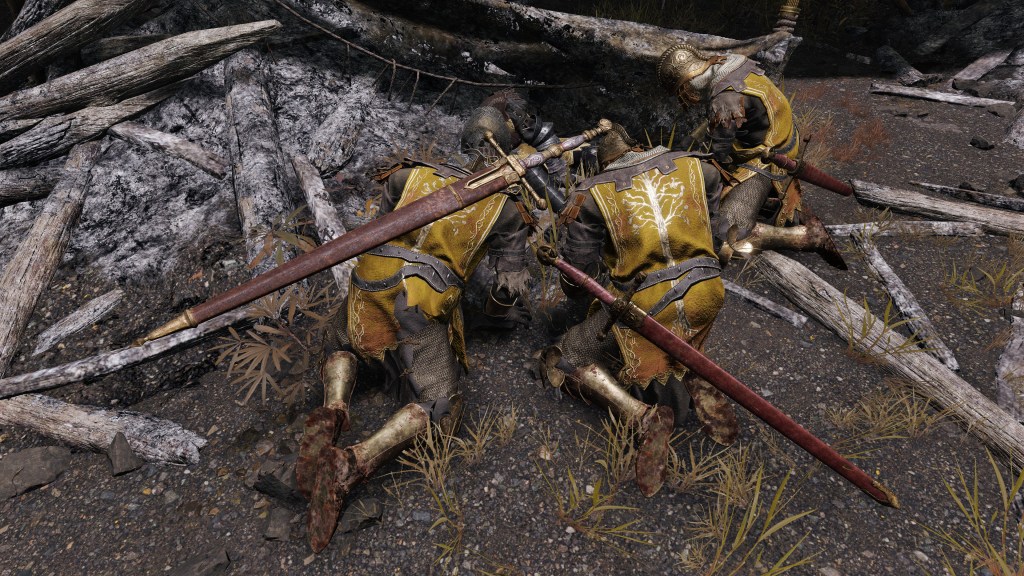
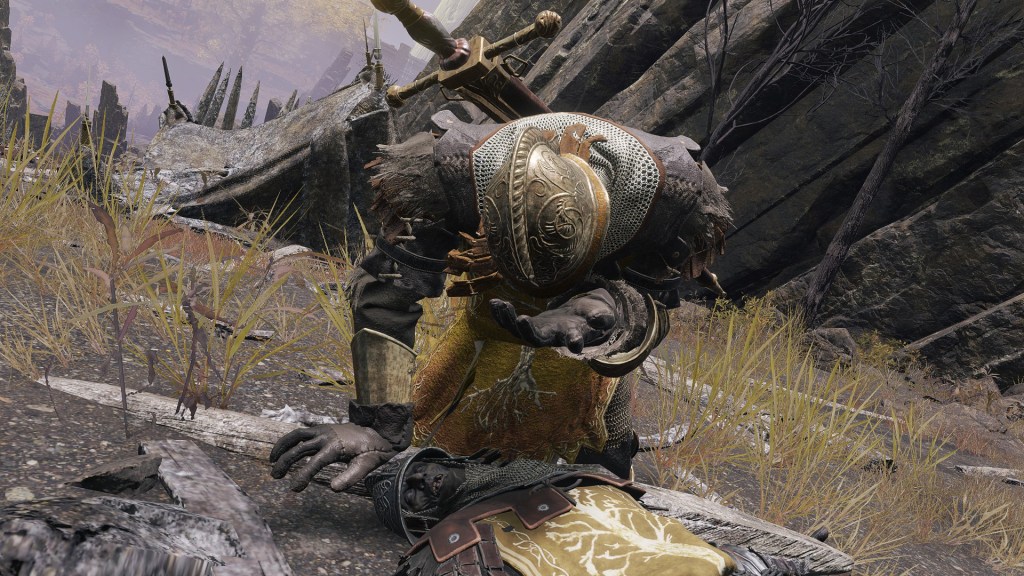
The Assault on Volcano Manor. The corrupted, the pestilence, the blasphemy; a horrific battle with neither honor nor end.
The half-eaten Great Rune’s power was transferred to the Divine Tower of West Altus, all the way over in the Capital Outskirts. Like the tower on the east side of Leyndell, Morgott has taken notice and thereby precautions against unwanted visitors. The only way to access the tower is through the Sealed Tunnel, so named because the entrance has been sealed away with an illusory wall. Hidden as it is, digging looks to have barely begun, though the noise from the miners’ continued work defeats the purpose; their yields must have been too critical to the war effort to abandon. Regardless, more than one wall hides the full extent of the complex, making it all the less likely for random explorers to find the tower at the other side. Admittedly, this may be more for worker safety. Stone diggers there are unique in throwing the poisoned stones used by their kind to exterminate pests — specifically “harmful insects” (害虫) — the bugs in question assuredly referring to the lookout stone “worms” infesting abandoned parts of the mines. In short, they already retreated to the front and hid when fumigation failed.
Small stone hiding toxins inside of it.
Throw at enemies to accumulate poison.
A tool for pest extermination that stone-diggers use. Its recipe has already been lost.
Even if the sealing began with different intentions, the parts of the tunnel leading to the tower have nevertheless been abandoned, since overtaken by Erdtree roots. When Leyndell demanded they hide the whole mine, there should have been no complaint. And with that, Morgott had secured three Great Rune blessings from the hands of those who might deign to rob them from a worthy successor. His efforts to eliminate one of those unworthy contenders have stalled, but shuffling men and equipment into the meat grinder has netted some benefits. For one, it nearly exhausted Gelmir’s army, with no soldiers or knights of Rykard still standing on that battlefield, let alone the Volcano Manor. Finishing the job has fallen to constructs like the marionettes, while the living like that diseased troll are probably those recruited in the interim; Tanith has recruited a colorful cast of characters, mainly Tarnished, since the Shattering. If nothing else, Morgott has made Rykard’s conquest of Leyndell that much more difficult. The world’s consumption has been delayed, though perhaps not for too long, as armies can always be replenished.
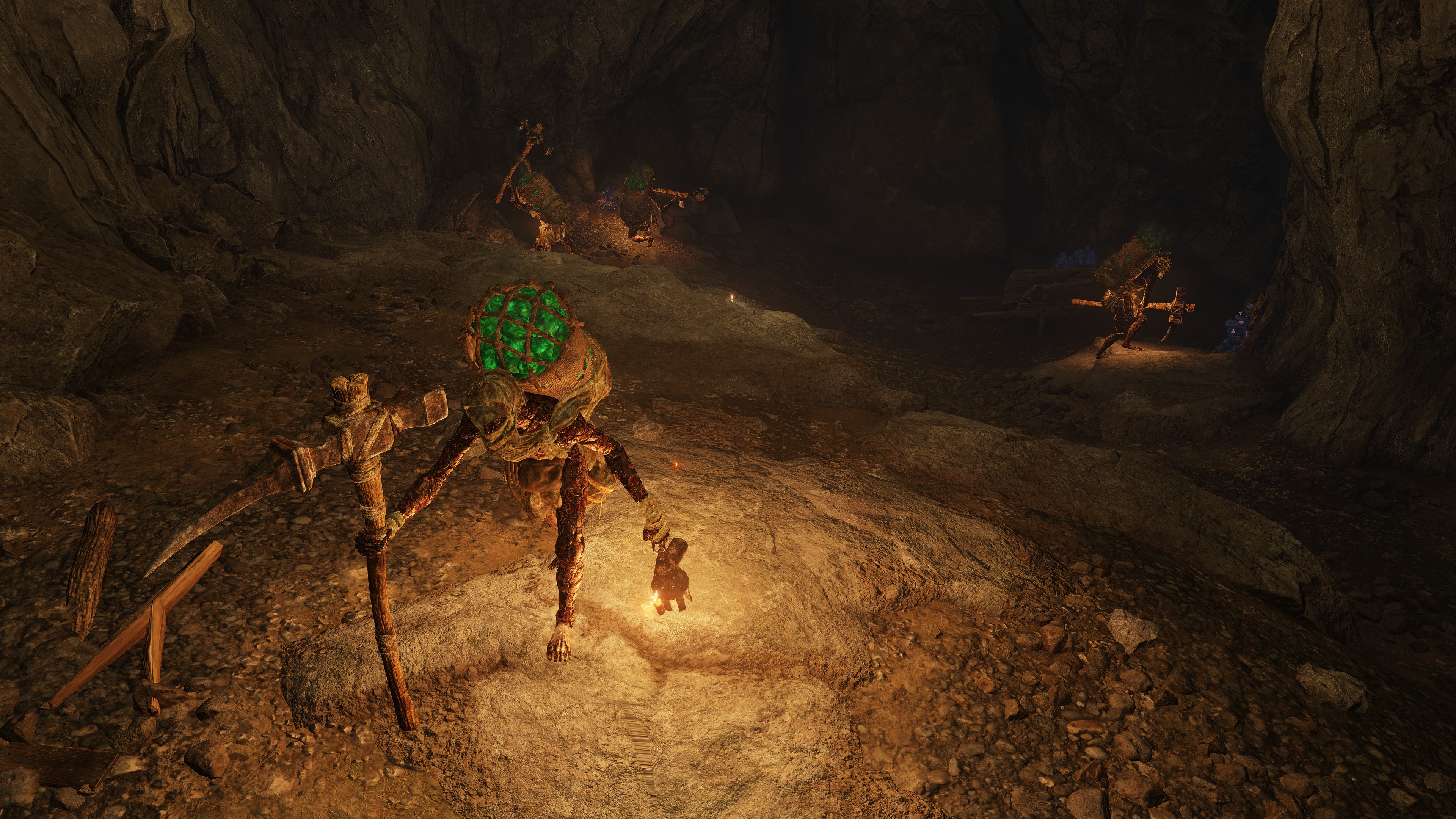
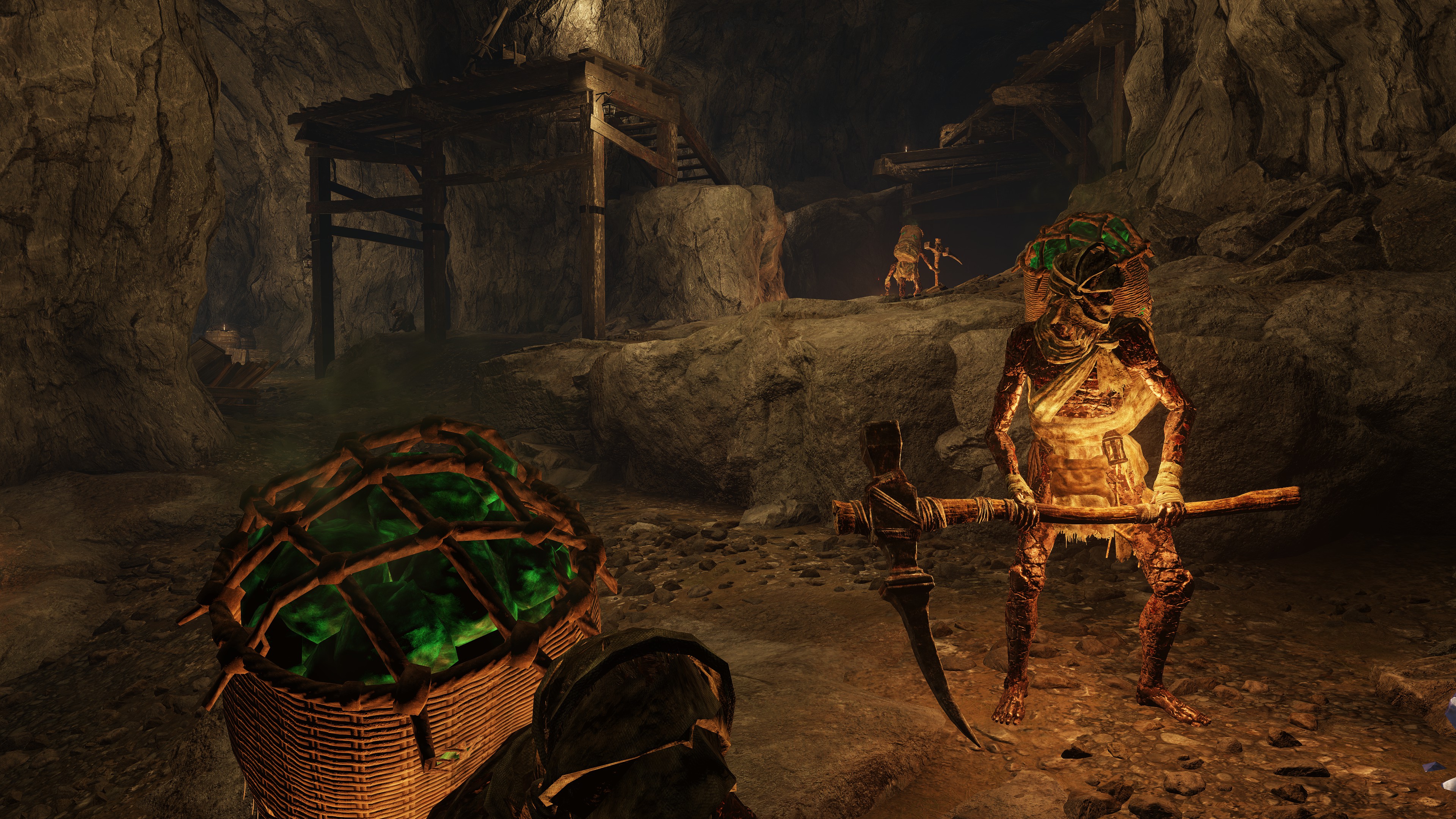
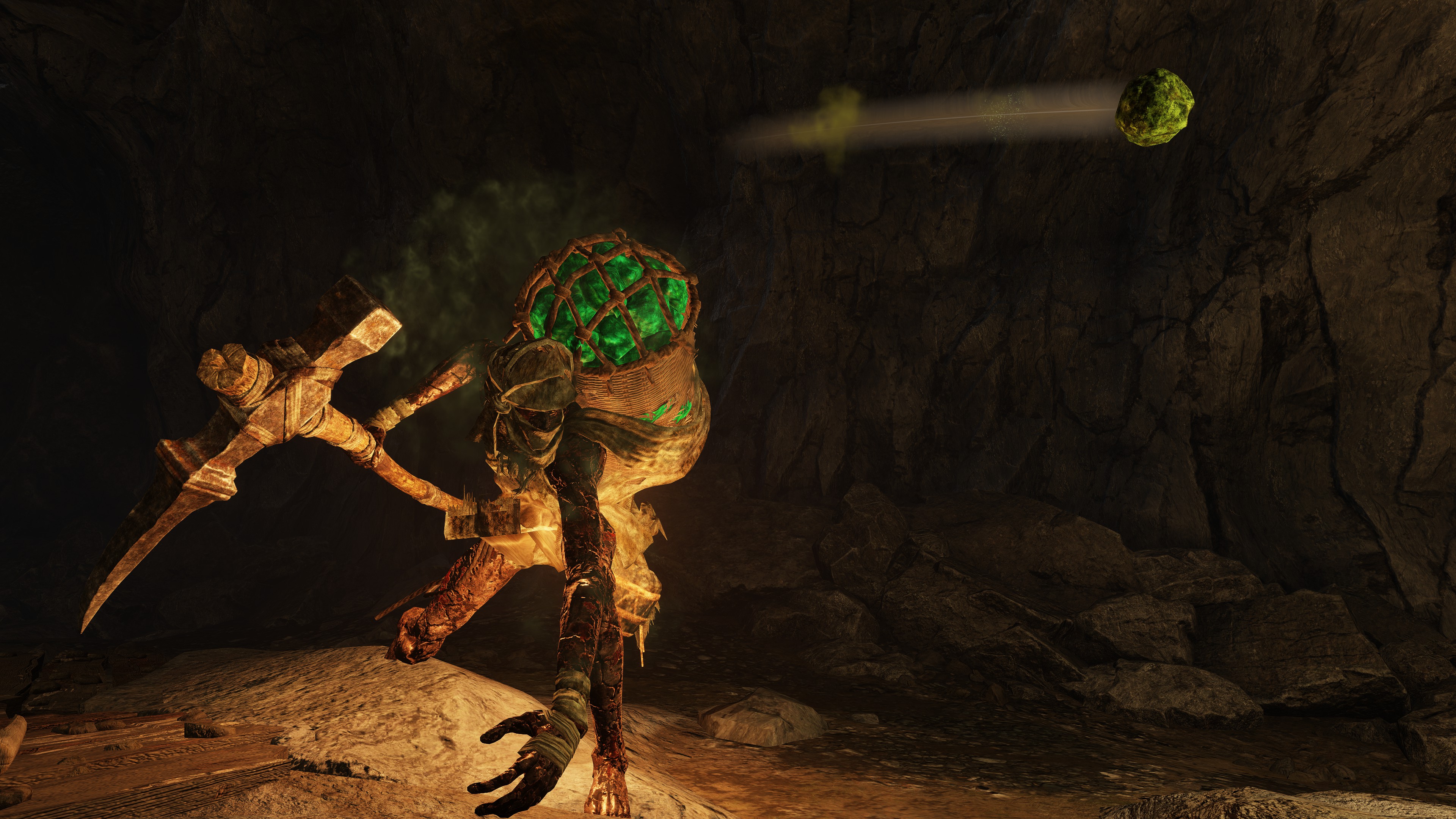
Howe’er They Begot
After the serpent god finished devouring Rykard, it began giving birth not to snakes, but snake-men. Perhaps it was because of the power of a demigod with a Great Rune, but the serpent’s womb produced progeny with arms and legs very much like humans. A majority of snakes don’t have a mammal’s uterus, instead laying eggs, so the fact that the egg-laying mother suddenly has an amniotic sac within one speaks to the effect assimilating Rykard had on the reptile. The description of the Serpent’s Amnion posits that this was all part of a ritual, so it may even be the sorcerer’s conscious effort to produce progeny with his new family. Zorayas is one of the products of this ritual, at least, and she was told that her birth came with a “great” king’s divine favor. If it was by the grace of god that she was born, then it may well be that all man-serpents were intended by their mother-and-father-in-one. That would explain why there would be some ceremony involved, unlike when the deity lays eggs. It also explains how Tanith came to adopt Zorayas as her child.
Ashen remains harboring a spirit. Summons snake-man spirit.
Spirit of a grotesque snake-man wielding a lava whip. It is said that the old snake that has denned and ate in Gelmir Volcano since long ago devoured a demigod and gave birth to the snake-men.
Amnion that enwrapped the spawn of an abominable birth ceremony in the mother’s womb.
It is damp and will not ever dry.
Tanith proves quite the protective mother. Zorayas is ignorant of her brethren’s existence, with Tanith alluding to child-like innocence. The girl doesn’t even know about the dark side to Volcano Manor, hidden behind its walls. Because her true form as a snake earns her revulsion from the average person, she disguises herself as a human with magic when in public, albeit retaining her peculiar hunch from her serpentine body. However, this is because her true form was meant to be a secret shared between mother and daughter alone. In other words, the young Zorayas was raised by Tanith to think of her form as unsightly to others, the girl herself apologetic about the deception; we only discover the truth because she forgets how she changed back while in the privacy of her chambers. The snake isn’t even necessarily aware that she is adopted, taking pride in being born to her mother and a king’s blessing. All this demands that Tanith raise the girl close to birth in almost total isolation within the manor. So coddled is she, the girl’s handwriting is amateur despite her aristocratic upbringing.
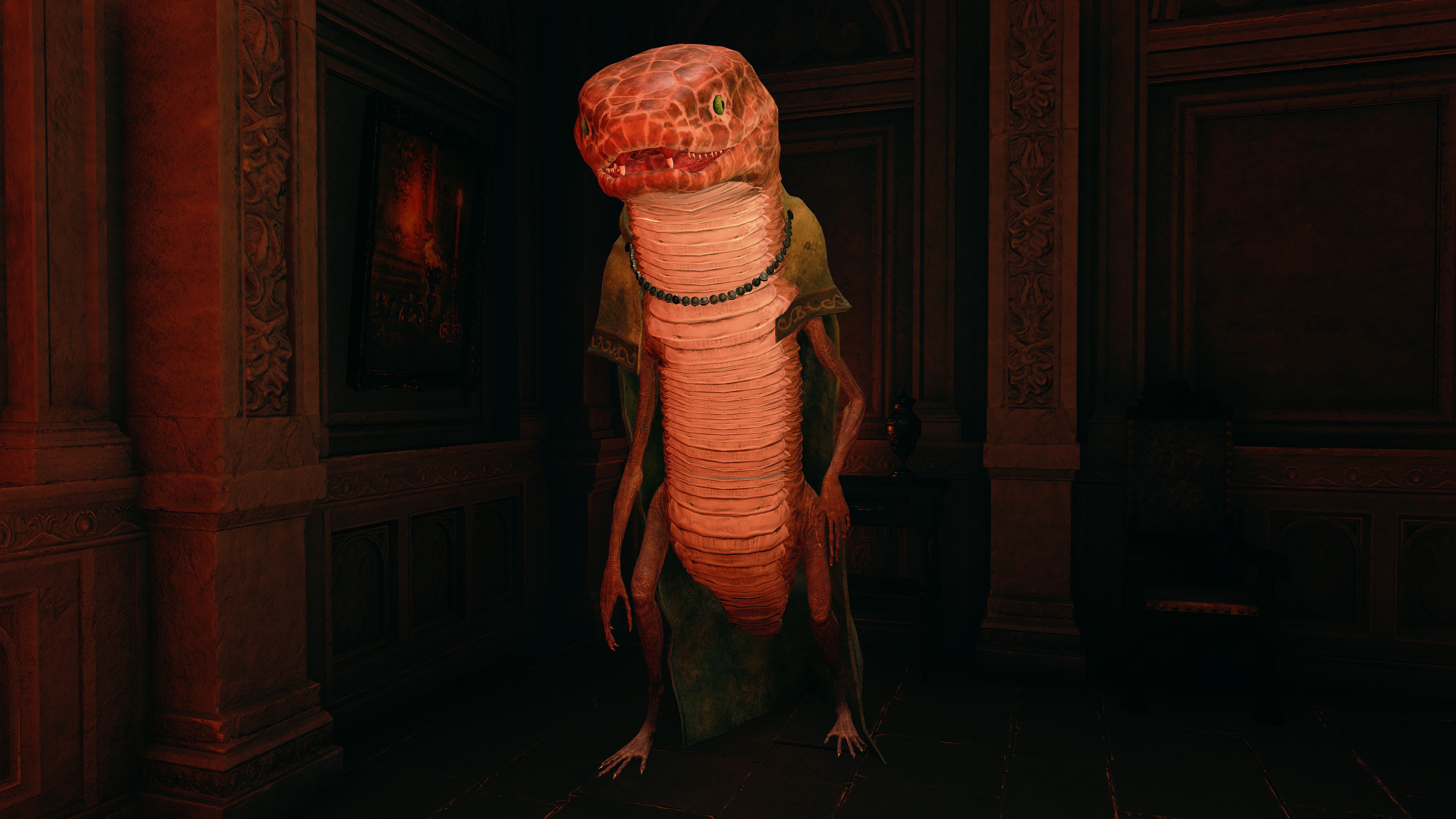
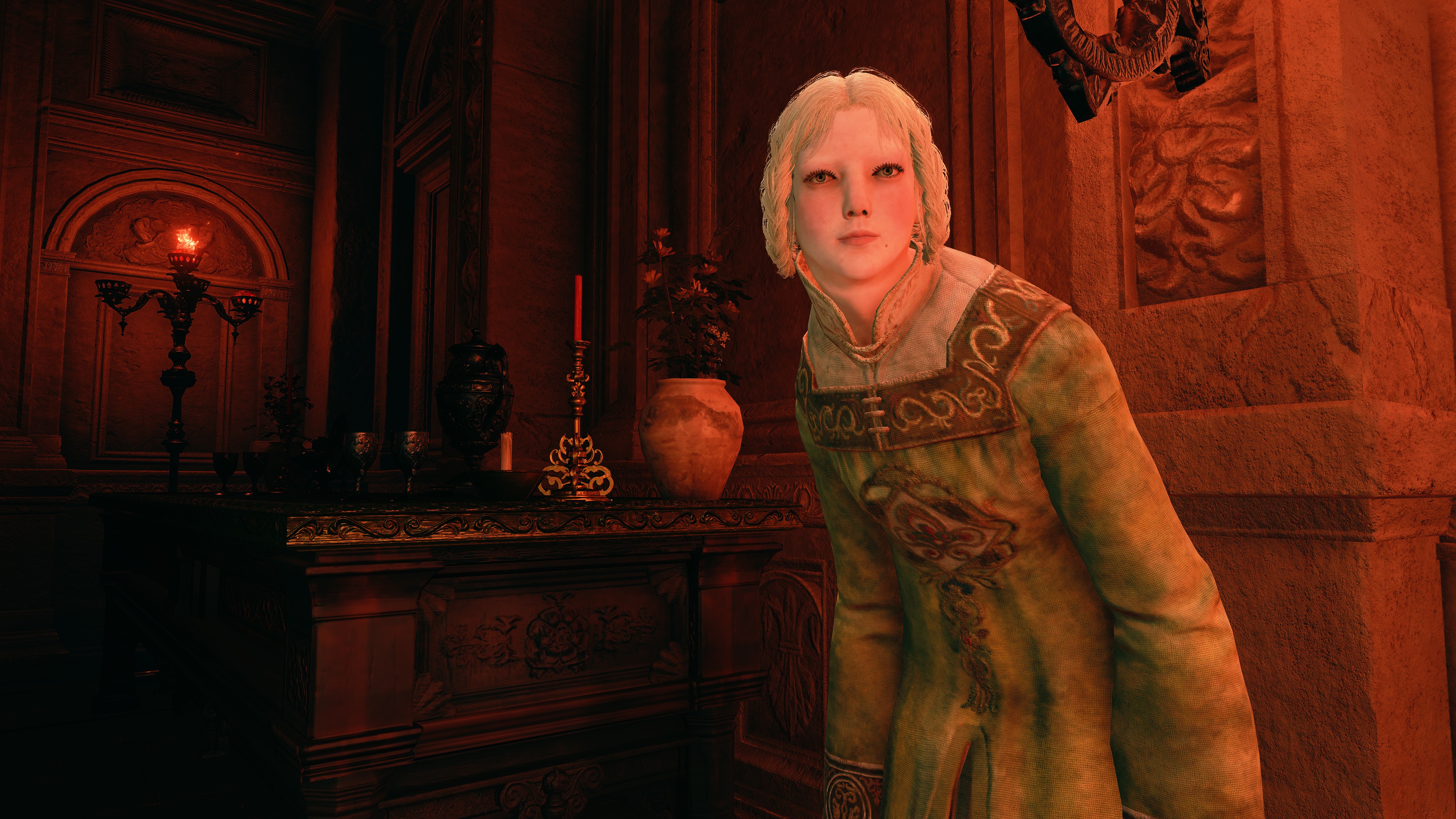
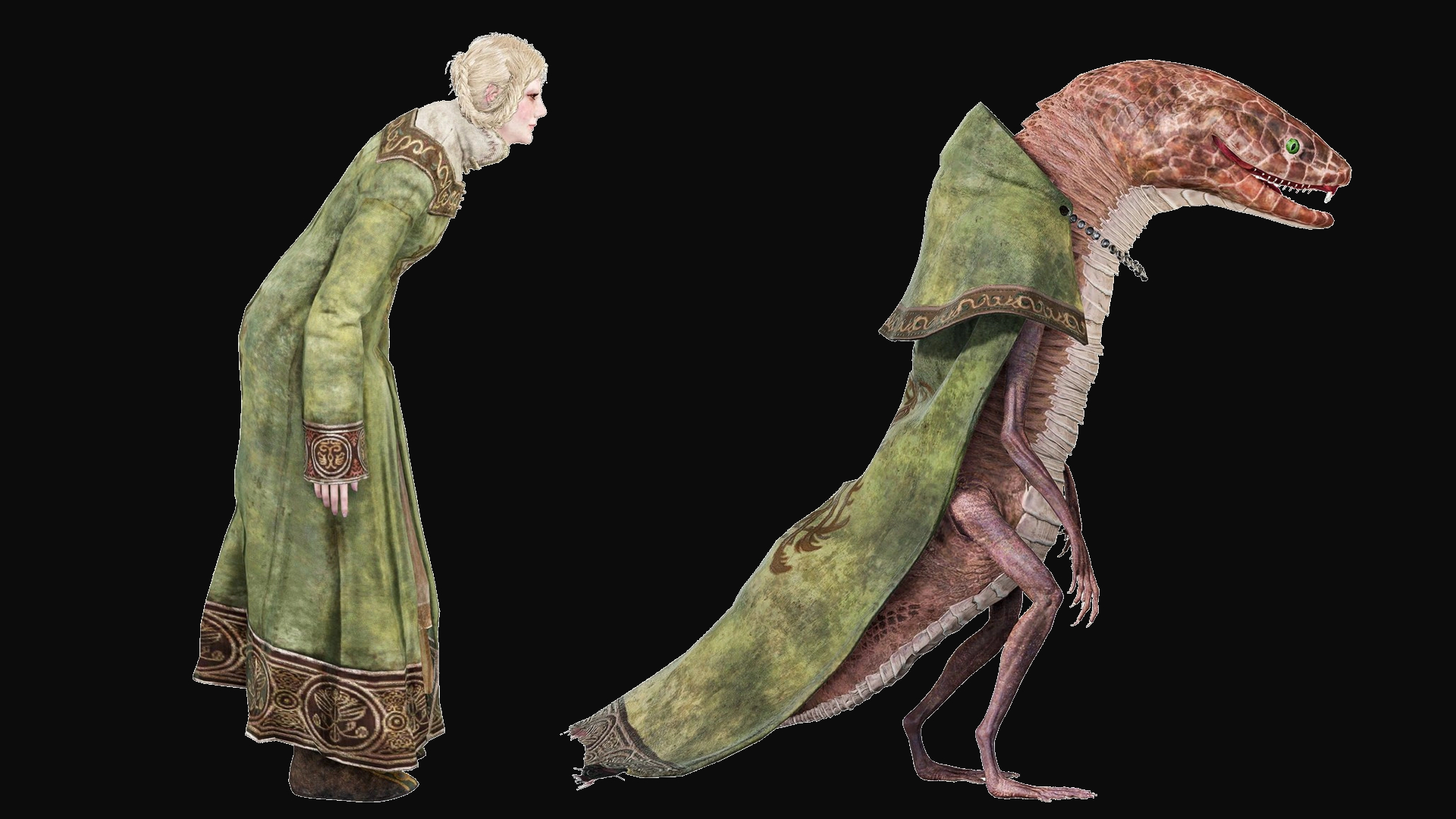
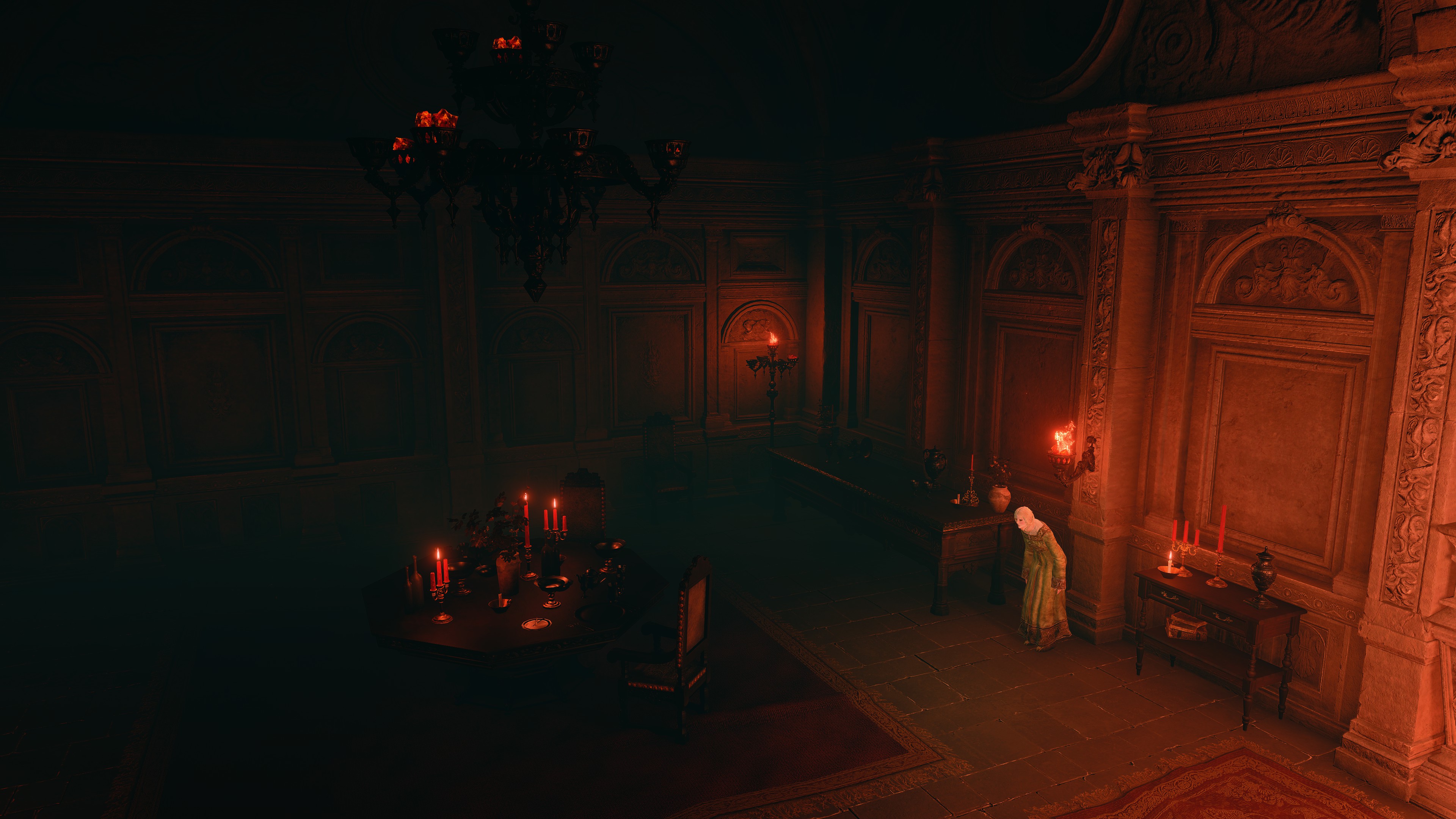
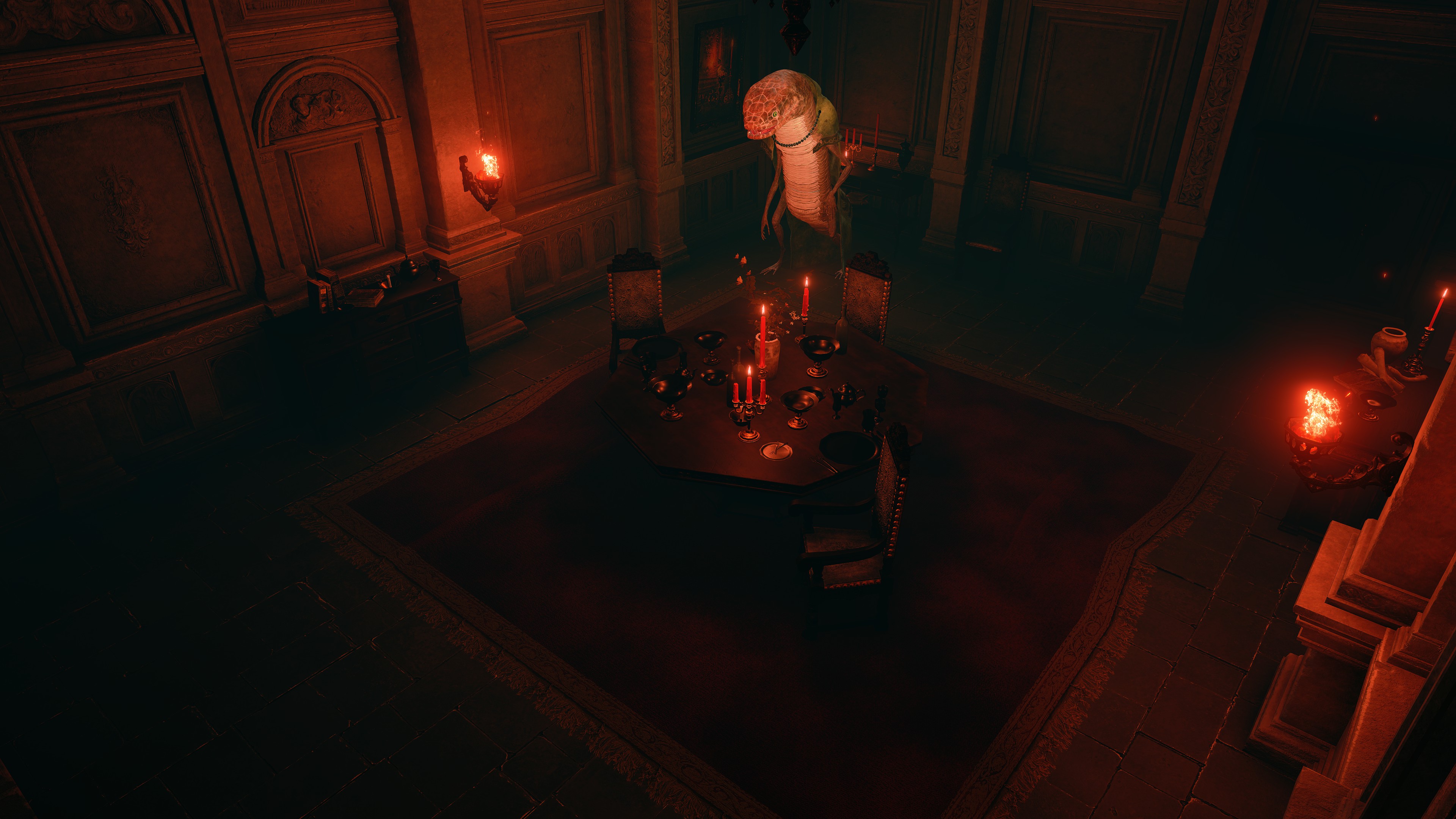
That girl’s, Rya’s… true form…?… No, if she told you the name Zorayas, there is nothing for me to say. But, as her adoptive mother, I implore you. I want you to look after Zorayas even from here on. No matter her form, that one is a good girl… Far too good for the likes of me.
… Is that so? So there really was a secret… Ah… Lady Tanith, my mother, has been deceiving me… In that case, am I truly… one born with favor?
… This snake body and the name Zorayas is mine and Lady Tanith’s secret alone… And now, it has become a secret with you as well. Please, kindly conceal this from the others.
… Good Tarnished, why are you in a place like this? Everyone’s chambers isn’t this way… but why the strange face? ! It can’t be, am I still in my snake form? Ah, what have I done… What have I done…… Forgive me, I lost composure. Even though you have treated me with kindness, without change, in my snake form… Good Tarnished to be a hero, this is my true form. My true name is Zorayas. I apologize for deceiving you.
… Lady Tanith is my mother. And I have heard that I was born receiving a great king’s favor. So, this form of mine alone is my mother’s joy… This body is my pride. However, others don’t think the same. If they saw my snake form, they wouldn’t listen to what I have to say. For that reason, I have transformed into a deceptive form as the summoner… But you were different.
Most important is how Zorayas adopts the name Rya in human form, another secret between parent and child. Why is this? Tanith could have chosen any name for the daughter she raised, so why keep that one if she wanted something new for the girl’s public persona? And if Rya’s true name was so important, why bother changing it at all? The name Zorayas is shared with the main character of Night Master, a novel written by one Tanith Lee. But aside from a humorous reference, there is nothing especially notable about the name. Even assuming that it is peculiar to outsiders, no one would suspect Rya’s humanity because she introduced herself as Zorayas. The only explanation is that there is something deeply personal about that name in direct connection to Rya’s snake form. The daughter does take pride in her form because of Tanith, who is joyful that she received the grace of the Serpent King. In that case, the name Zorayas probably came not from her, but from Rykard.
If so, everything falls into place. Zorayas is most likely one of the first — if not the first — spawn of Rykard and the great snake. Because Tanith chose to dedicate herself to her husband’s cause, the king rewarded her with the child he could never provide her before. Zorayas was thus proof of their love and that the consort remained in the demigod’s good graces. Tanith herself implies that she was skeptical about being a mother, but she persisted with raising Zorayas and clearly has come to love her like her own child. It was for that reason she has shielded her from all the ugliness of their rebellion against the Erdtree, including the circumstances of her birth. It is for that reason that Rya keeps a necklace with her mother’s cameo, desperate to retrieve it after Boggart robs her. It was for that reason that Tanith, wanting to maintain her dignified manner, chooses to be alone to mourn after hearing of her child’s death. At every step, the woman had deceived Zorayas out of her love for her. And because her name and reviled form go hand-in-hand from birth, she wishes it kept separate from the girl’s human face.
… That girl did that…? I did think things with her were slightly amiss recently, but it was troubling her after all…… Zorayas has opened her heart to you. That is exactly why I want you to understand… There are truths best left unknown. Because no person bears responsibility for her own birth. Do you understand? We are trying to rebel against the Golden Tree’s Regulation. Is one’s birth not a trivial topic?
I had been traveling as my mistress’ messenger… but was attacked by a ruffian and don’t know where to go from here… So then, might I ask you a favor? The ruffian stole an important necklace. I would like for you to recover it. Of course, I will give an adequate reward. However… he is a Tarnished, the same as you. If you are reluctant to contend with brethren, I cannot force the favor, but…
… I see, so she has lost her life? My thanks for telling me. But… could you leave me alone for a while…?
Meanwhile, the other snake-men were born without receiving that same coddling. The Serpent’s Amnion left on the Temple of Eiglay’s altar, the god’s skin draped above it. Close inspection of this giant snake skin confirms a hole where Rykard’s face should be, so it and the amnion both were likely collected as the growing snake reached that size. The reason may be inferred from the item’s menu graphic, which features a new snake-man burgeoning within. Given the nature of the immortal serpent, the amniotic sac might repair itself after every birth. This would explain why Rya finds its scent nostalgic, instantly recognizing the item as part of her birth mother and where she came to be — it is the very sac which once enwrapped her. That being the case, it is reasonable to tear the amnion out of the snake, allowing it to serve as a vessel for more fetuses while the deity focuses on eating and growing. Offering it upon the altar shows the pagans’ reverence for this offspring, continuing the rituals on Rykard’s behalf as the amnion’s vitality spontaneously generates more children.
… What is this? It has a very nostalgic scent……… Ah, isn’t it curious? I know. This is where I was born… It is a part of my birthmother, I thought…
These spawn of the devil are just as you would expect of serpents. Despite relatively humanoid proportions, they can elongate their necks and torsos to absurd lengths, more comparable to a snake. Zorayas additionally displays a superb sense of smell, even sensing people’s nuanced emotions in cut dialogue. Add in spitting venom from their fangs, and they would be deadly predators even without the intelligence to employ weaponry. However, their human levels of intellect make them that much more dangerous, if also cultured. At the same time, the race does possess at least one trait unlike either snake or man. After all, the description to Gelmir’s Fury notes that thinking to control a volcano is the arrogance of both men and snakes, and that isn’t just referring to the god at the source of the magma.
… Are you acquainted with the Tarnished knight called Munou? Like you, he has been invited to Volcano Manor…… but I don’t have a much favorable impression of him. I sense a hostility to Volcano Manor within that one. That in itself does happen on occasion… but that one’s hostility feels valiant but weak, lacking resolve. Could someone like that become a hero…?
One of the lava sorceries of Gelmir.
Erupts lava from the earth and scatters it in surroundings. Eruption duration extended with charging.
It is said that this sorcery is the volcano’s wrath, but thinking of wielding it is probably the insolence of man, or perhaps snakes.
Indeed, whereas Zorayas finds the foggy lake of Liurnia too chilly, snake-men feel perfectly at home in lava environments; several basking in the flowing magma. With that lava, they create blades and whip candlesticks. We do see humans forge similar weapons out of the uncooling molten rock, like the Smoldering Shield. However, only the serpents reveal the sophistication to forge weapons without solidifying the lava, allowing the wielder to splatter some of that melting heat upon the surroundings while swinging it around — the whip especially creates a “sea” of magma like what surges out the mountain. This use case is temporary, as seen with the various man serpents carrying hardened arms. Still, it is obvious that the race possesses an intuitive mastery of lava, as children of the great serpent. Another armament they adopt is a domed shield the color of specifically red copper. Shakudou (赤銅) typically refers to a gold-copper alloy creating a brown or tan color, though in this case, it seems to be just the standard metal forged in red-hot magma. With fire in rock, they are simply unmatched.
Small round shield which solidified uncooling magma. It is said to have been made on Gelmir Volcano.
Has resistance to chills with its heat, and deals fire damage if used as a weapon.
Curved sword the made the lava of Gelmir the blade. Arms of the snake-men that couldn’t have been made by humans.
Possesses fire attribute attack power.
Small, red-copper-colored, domed shield. Choice weapon of the snake men of Gelmir.
It is said to have been forged with lava, so strong against fire in particular.
This fixation on the lava is a matter of faith for them, the weapon-holders demonstrating the same reverence for their parent’s gift as the pagans. The Magma Candlestick is even considered a magic tool with how the wielder turns the lava shaped as the candleflame into long and flexile whips. The “king” among their kind has gone so far as to fashion a staff with red glintstone to empower the heat born of sacrifice. And as the gem-studded golden hilts insinuate, this was all to emulate their extravagant Serpent King. Such magic comes with an implicit association with the pagan religion, though the sorcerer king has yet to learn beyond the basics like Swift Glintstone Shard or Glintstone Cometshard. The one snake-man with an unhardened candlestick is also alone in wearing silver-and-onyx jewelry with a prominent venom sac, as if even the poison holds ceremonial purpose — specifically akin to a primitive witch doctor. The race’s preference for curvy, undulating, or forked weaponry shows pride in their serpentine heritage, and doubtless they recognize this relation as divine.
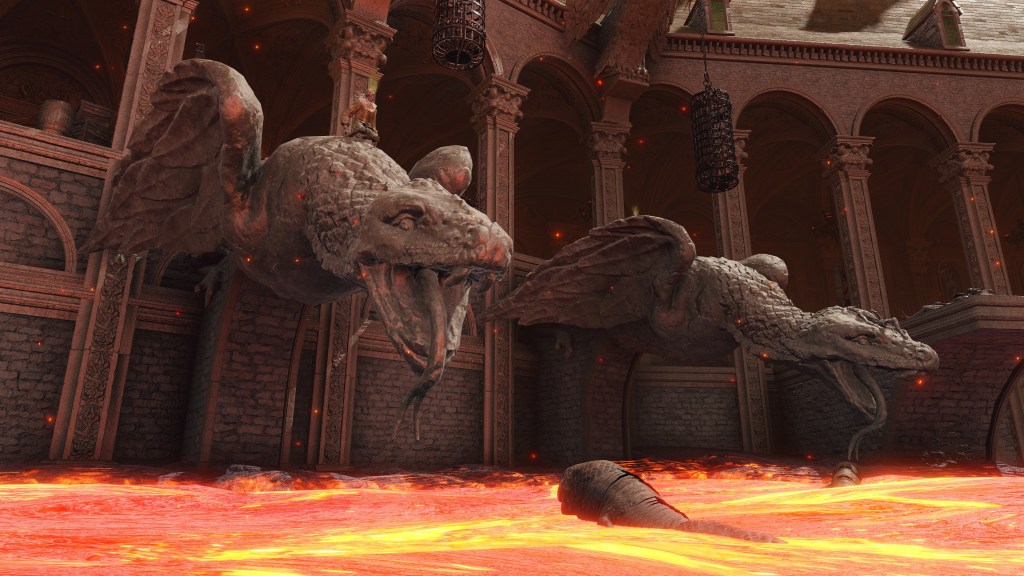
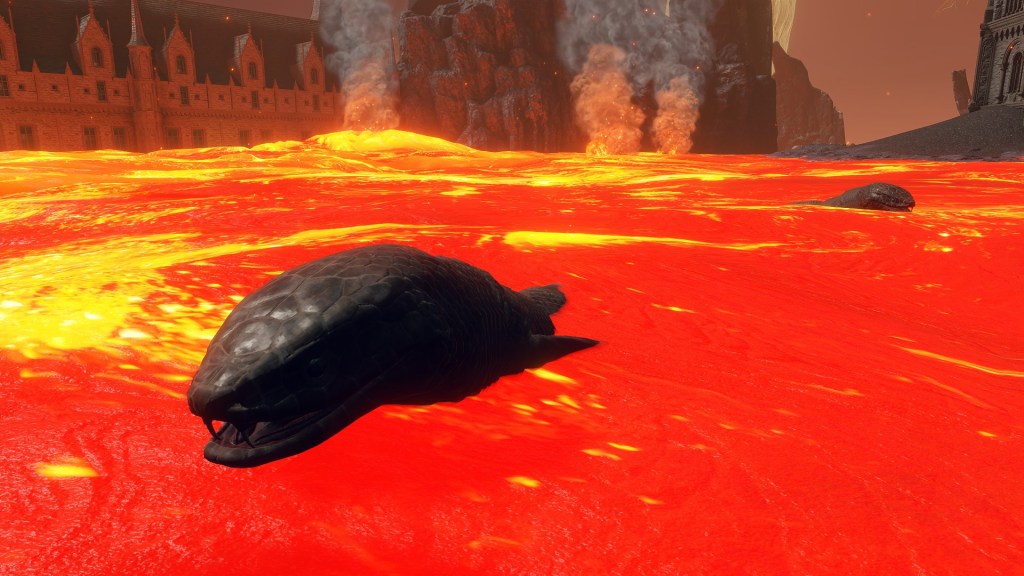
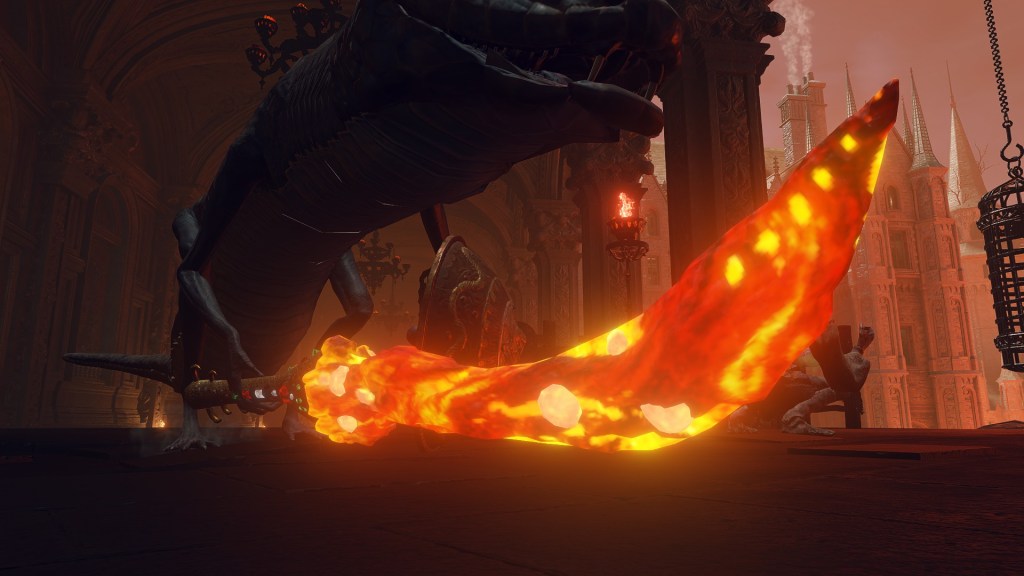
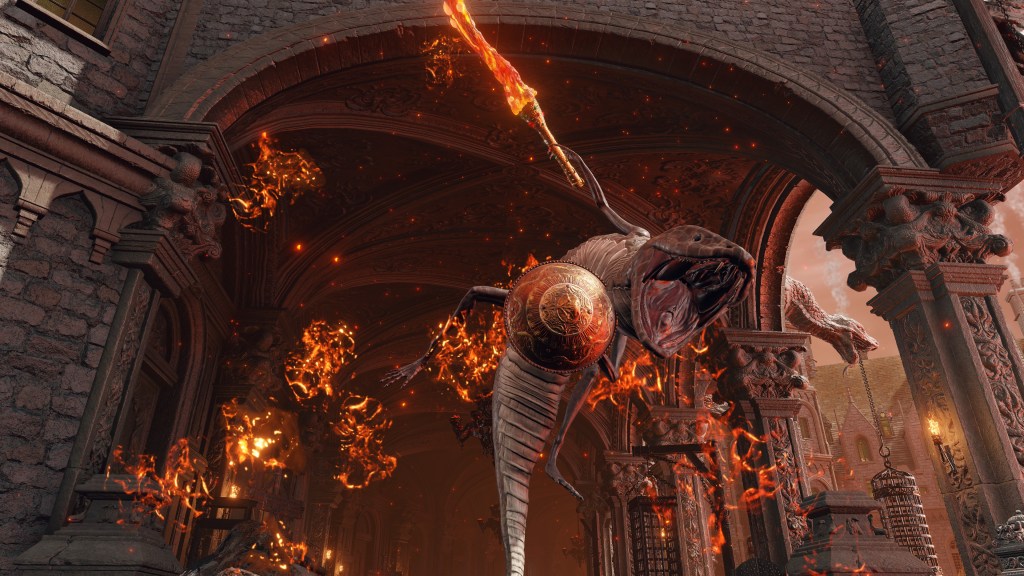
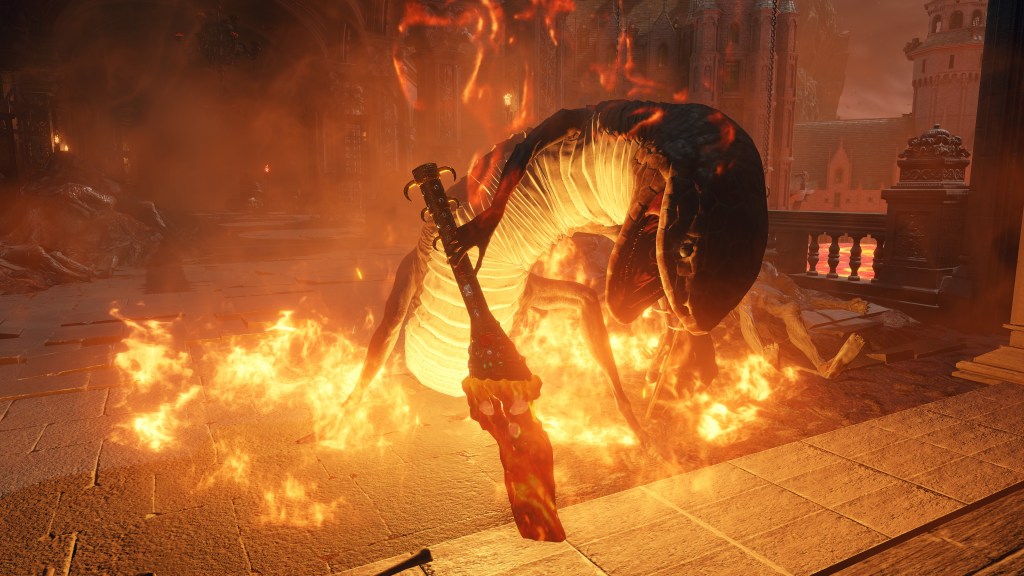
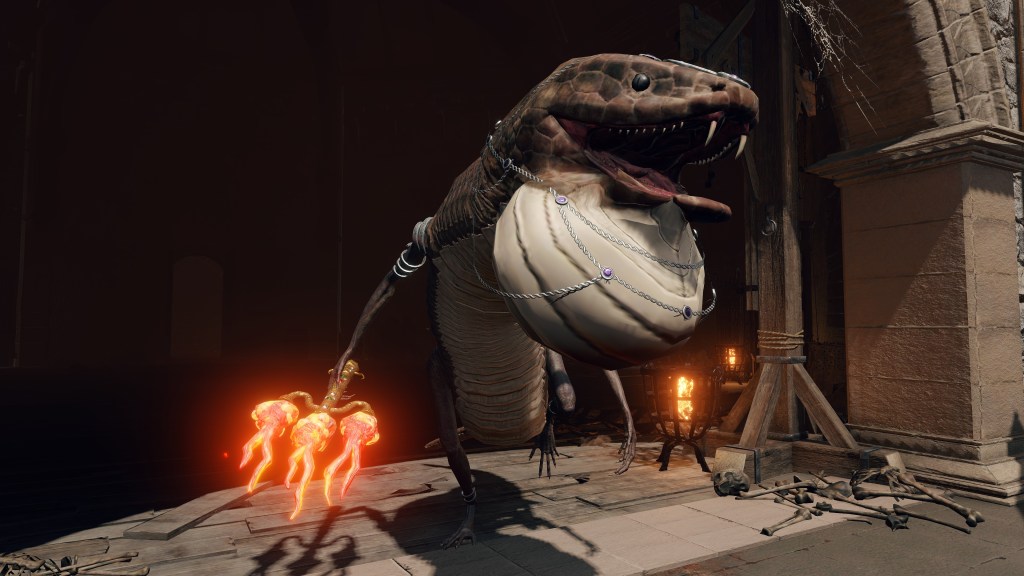
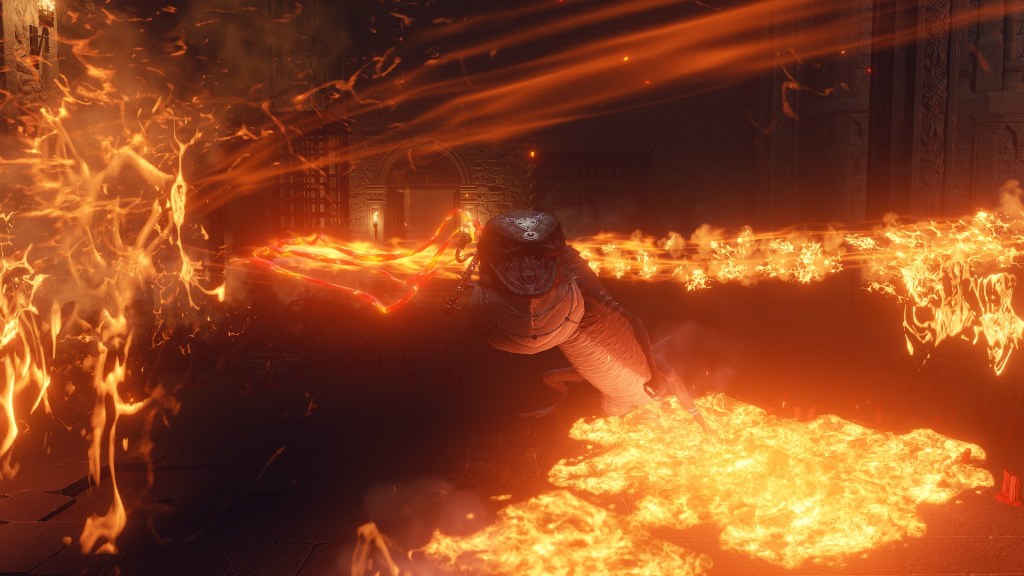
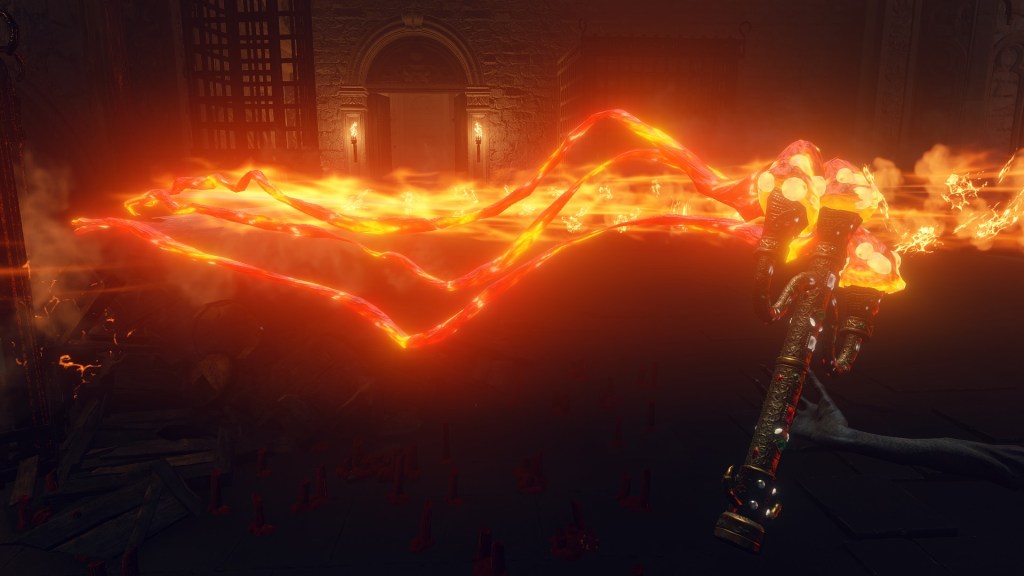
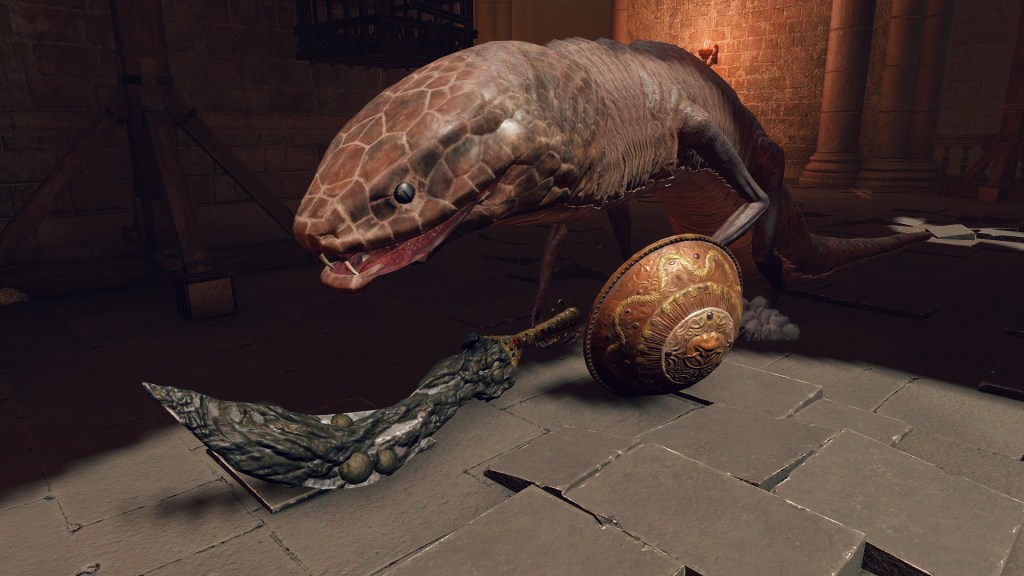
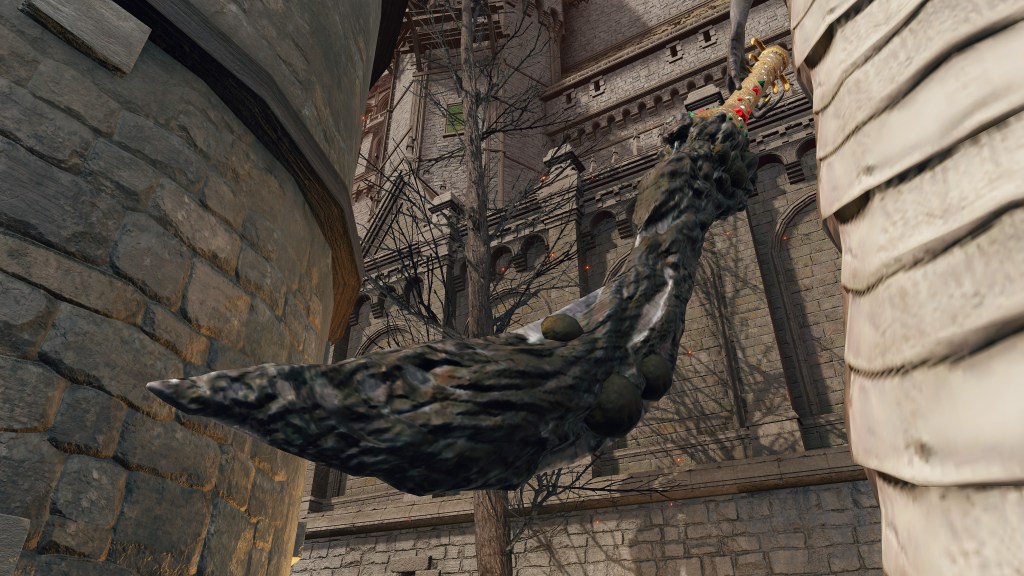
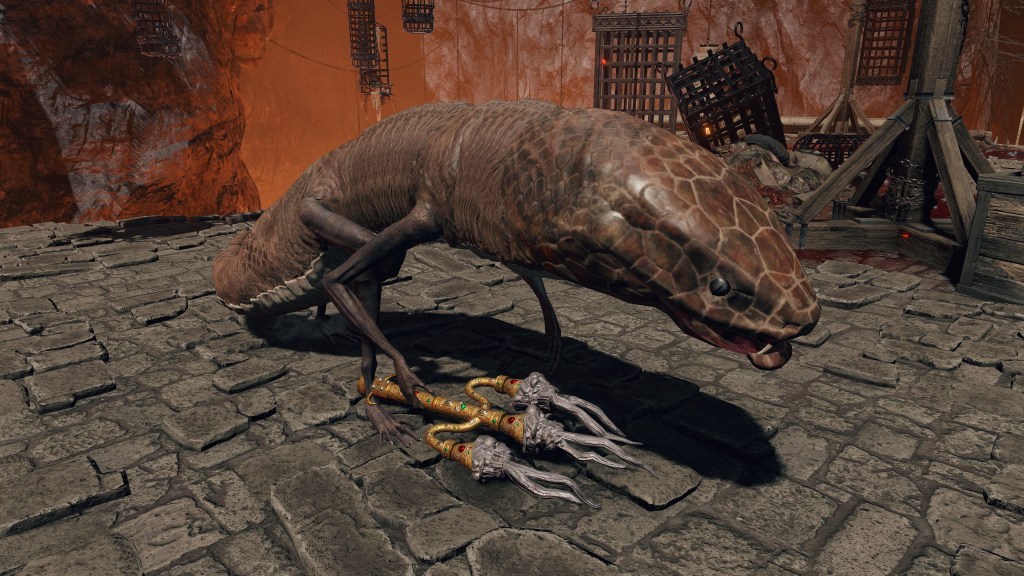
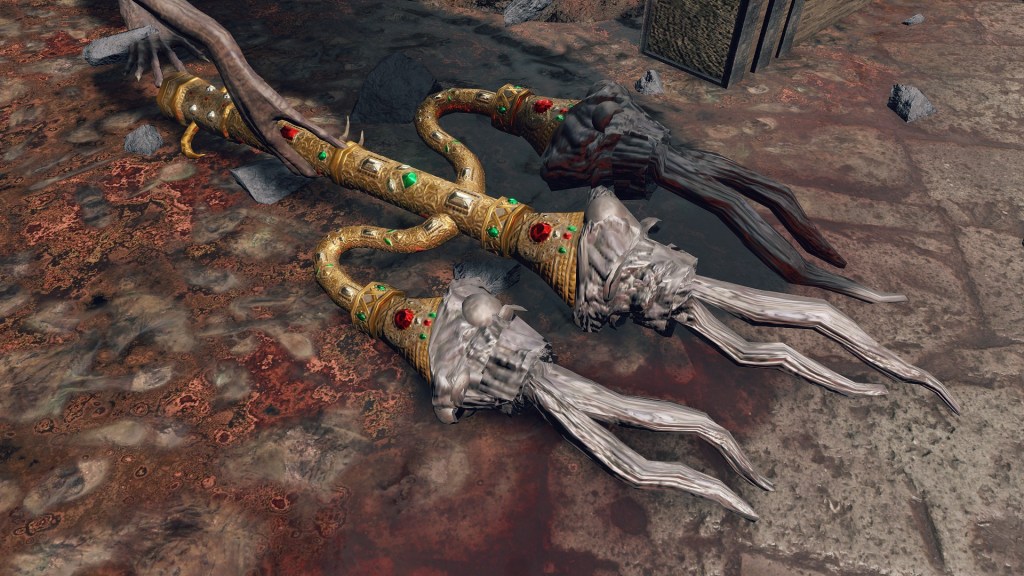
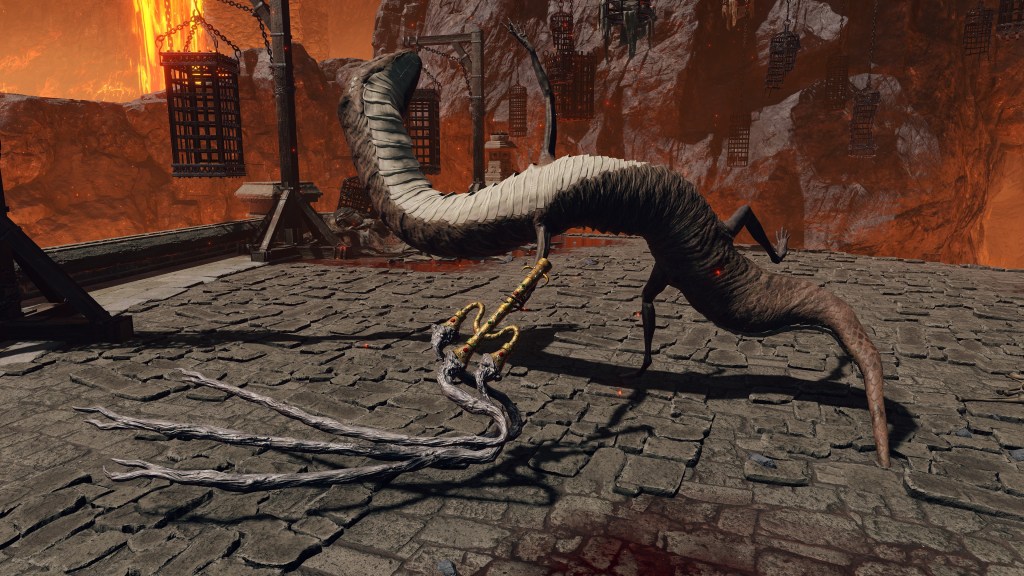
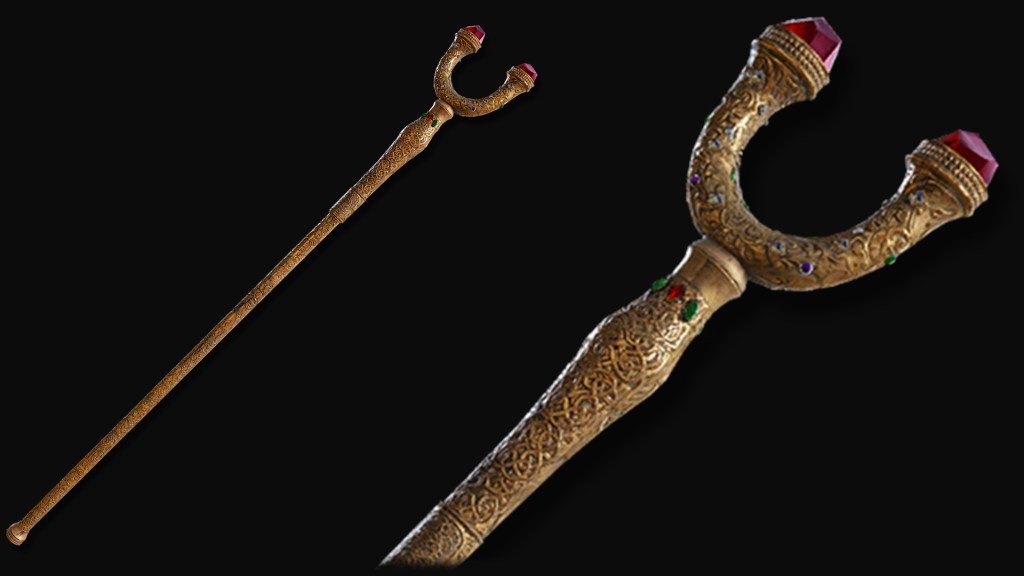
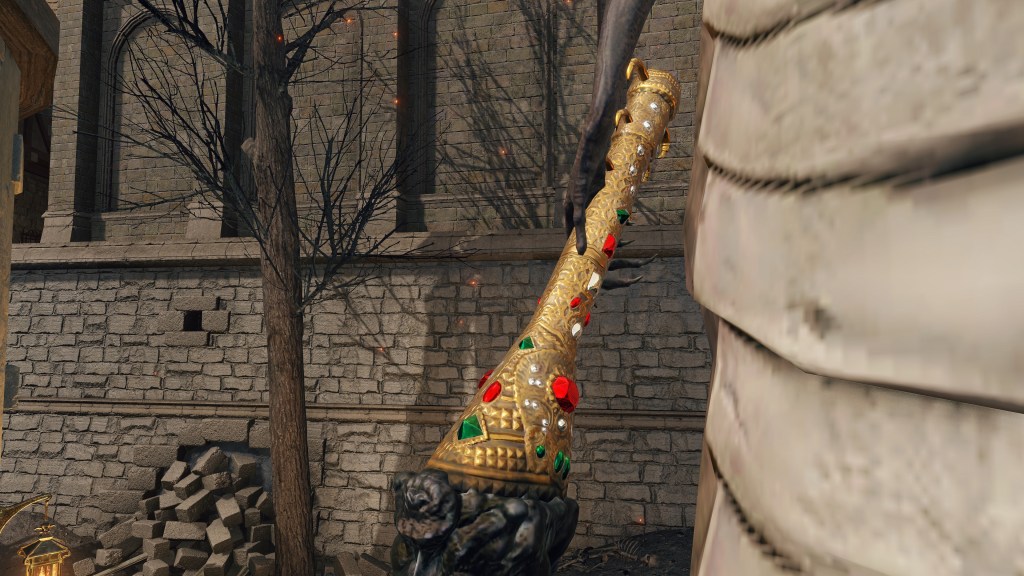
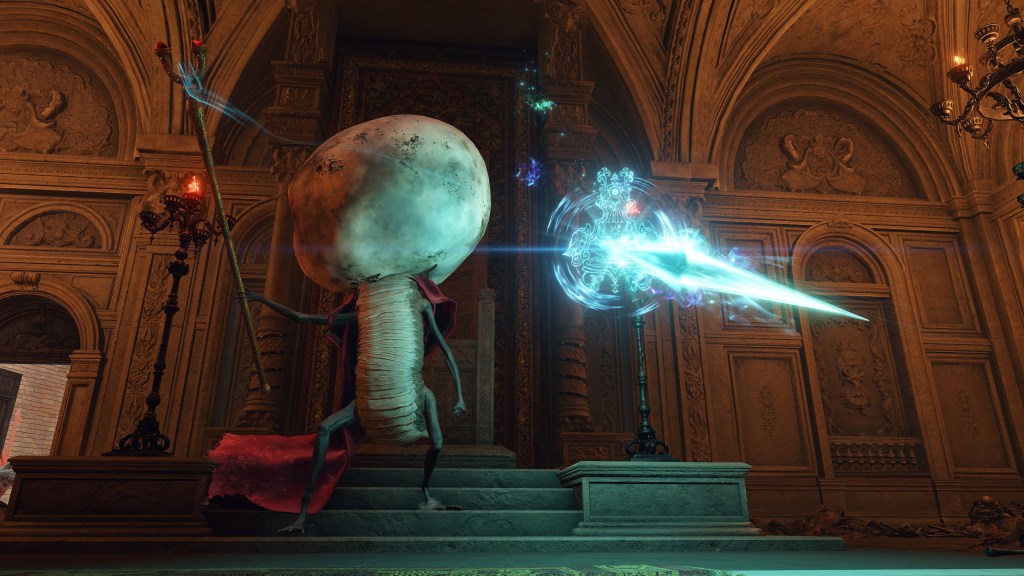
Three-pronged candlestick with lava modeled on flame shapes. A spell tool using the lava of Gelmir.
Only when wielding it do the flame shapes become flexible lava whips.
Staff with red brightstone embedded at its forked tip. Enhances lava sorcery.
The snake-men of Gelmir boost the might of sorcery through not just intelligence, but also faith.
That respect for the elder serpent is why they remain in Volcano Manor serving the deity’s interests. They seem to regularly report to Tanith, since Zorayas spies a slithering “shadow” resembling her slip out one of the guest rooms via a secret passage to the town church behind an illusory wall. In all likelihood, these rendezvouses occur in the dead of night precisely because Tanith doesn’t want her daughter and them to be crossing paths, the guest wing both less frequented and convenient for abducting visitors if needed. Why abduction? For new prisoners to torture, of course. The serpents patrol the castle town as additional wardens, their extendible bodies useful for higher vantage whilst on lookout. From the main inquisition chambers on high, they bestow their sacred venom to the pagans to throw in pots. The nobles tortured in the depths of the manor likewise have their heads leaking this venom, bursting upon death. All around these aristocrats slither the snake-men, happy to take the roles of inquisitors. In absence of the army, they “secure” the area, which has turned out to be a long-term arrangement.
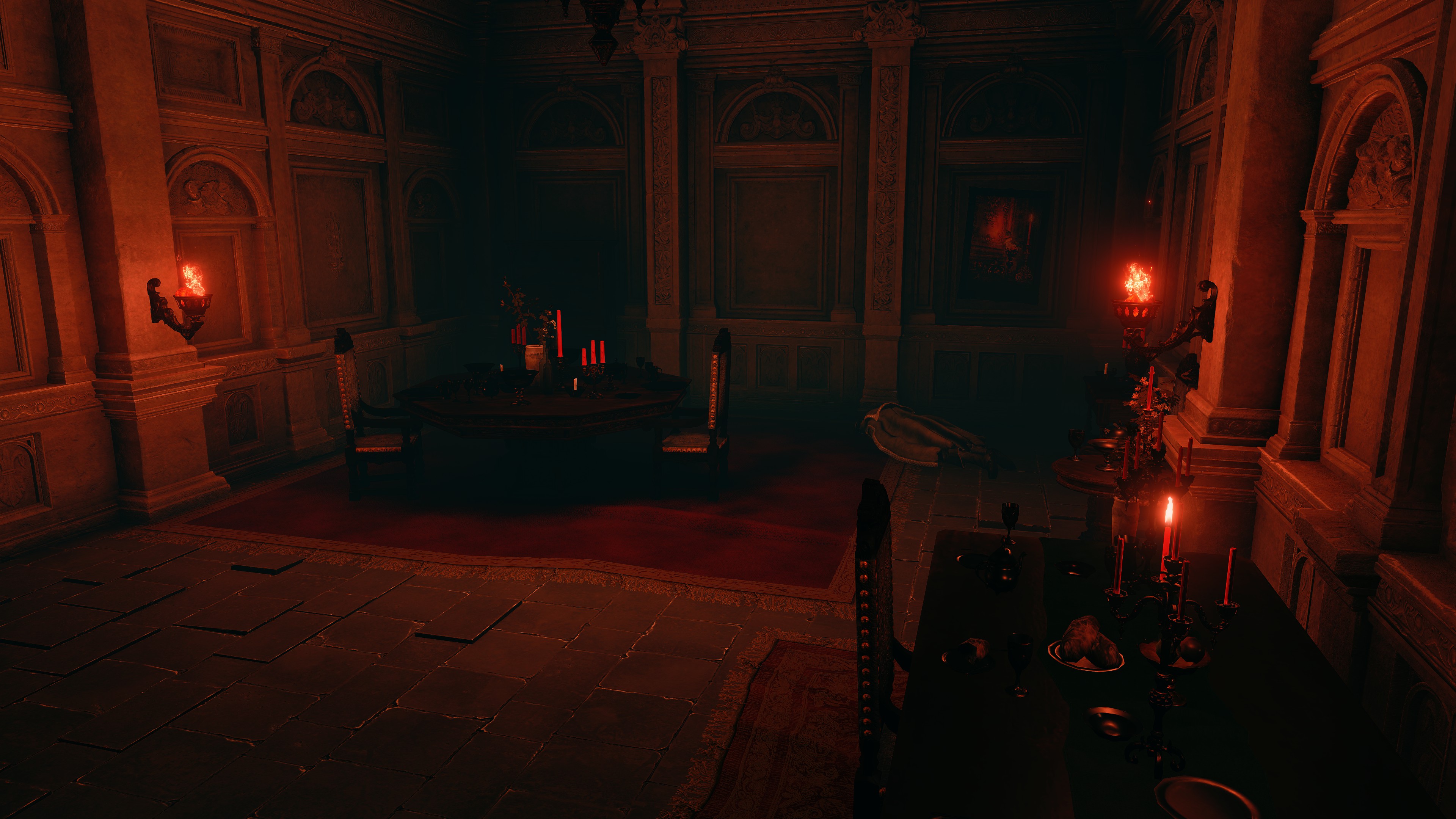
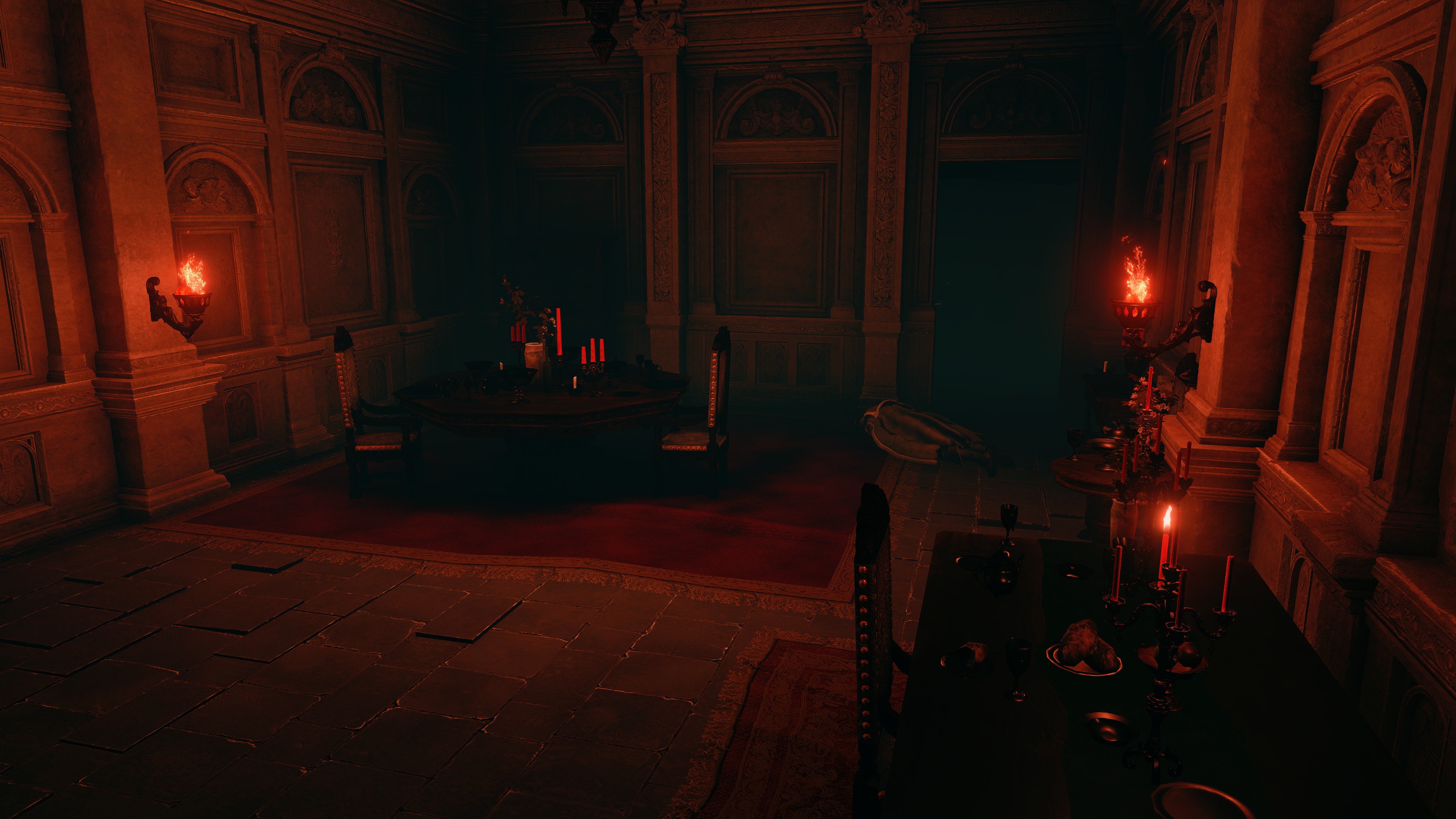
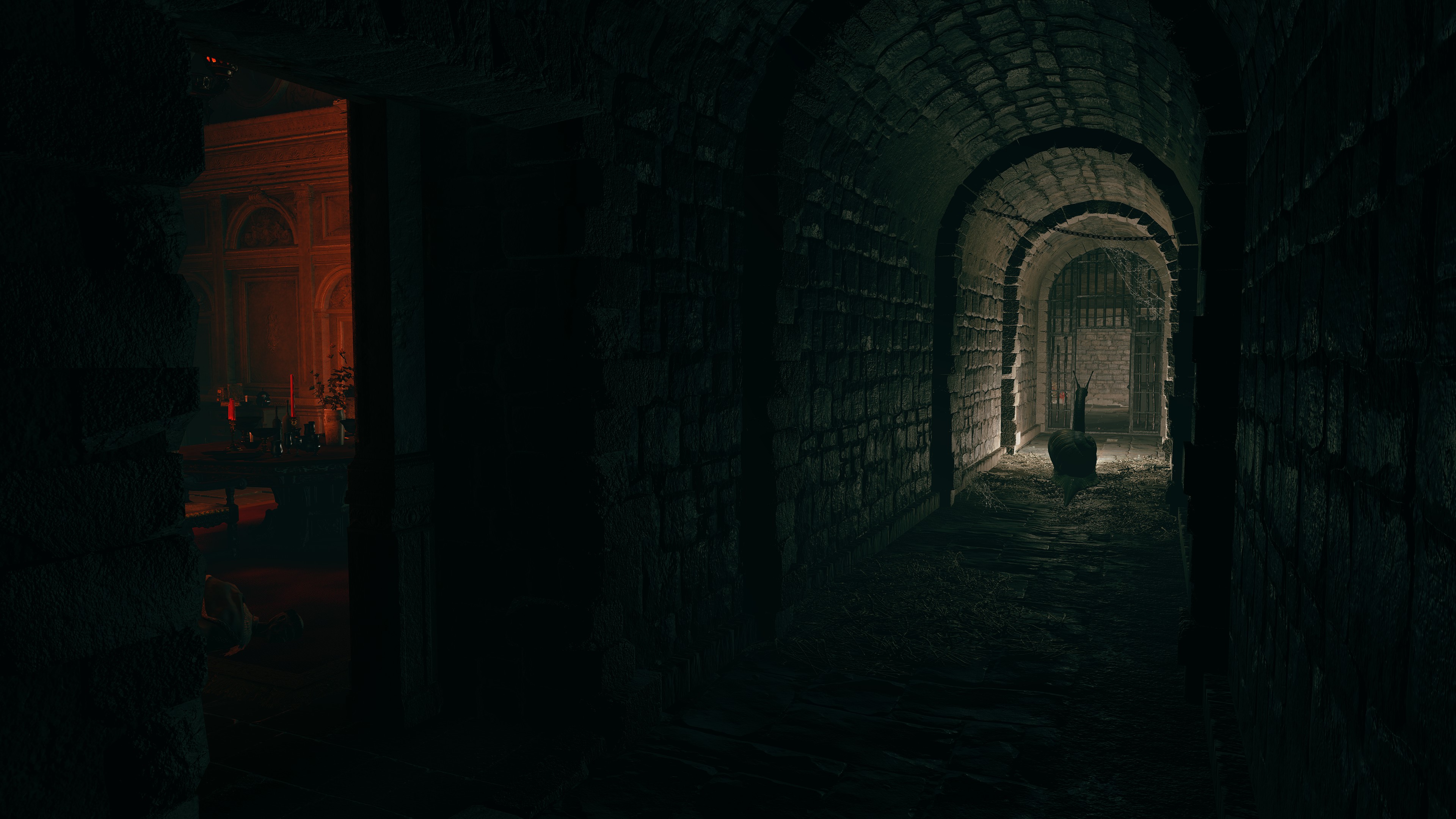
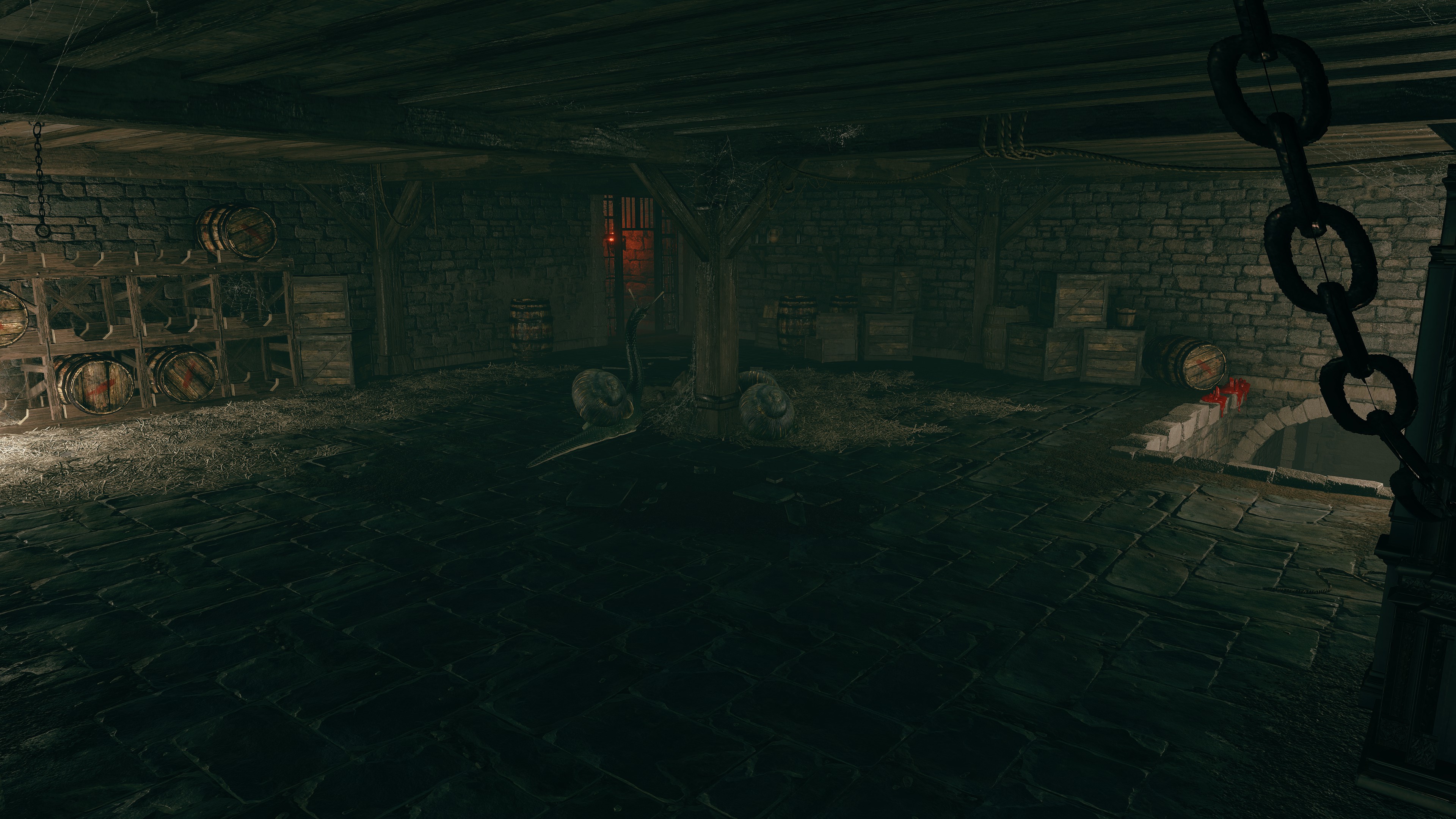
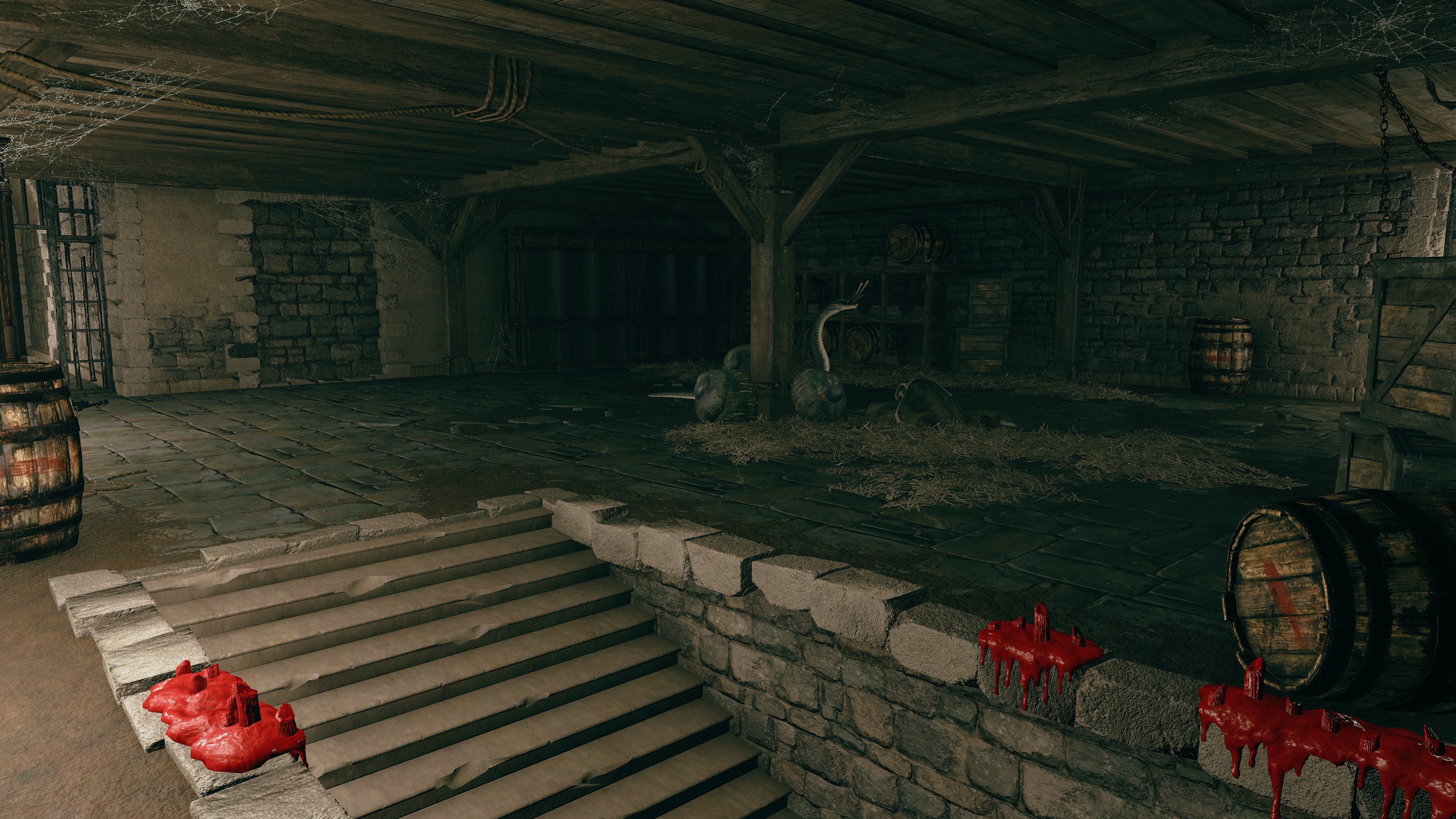
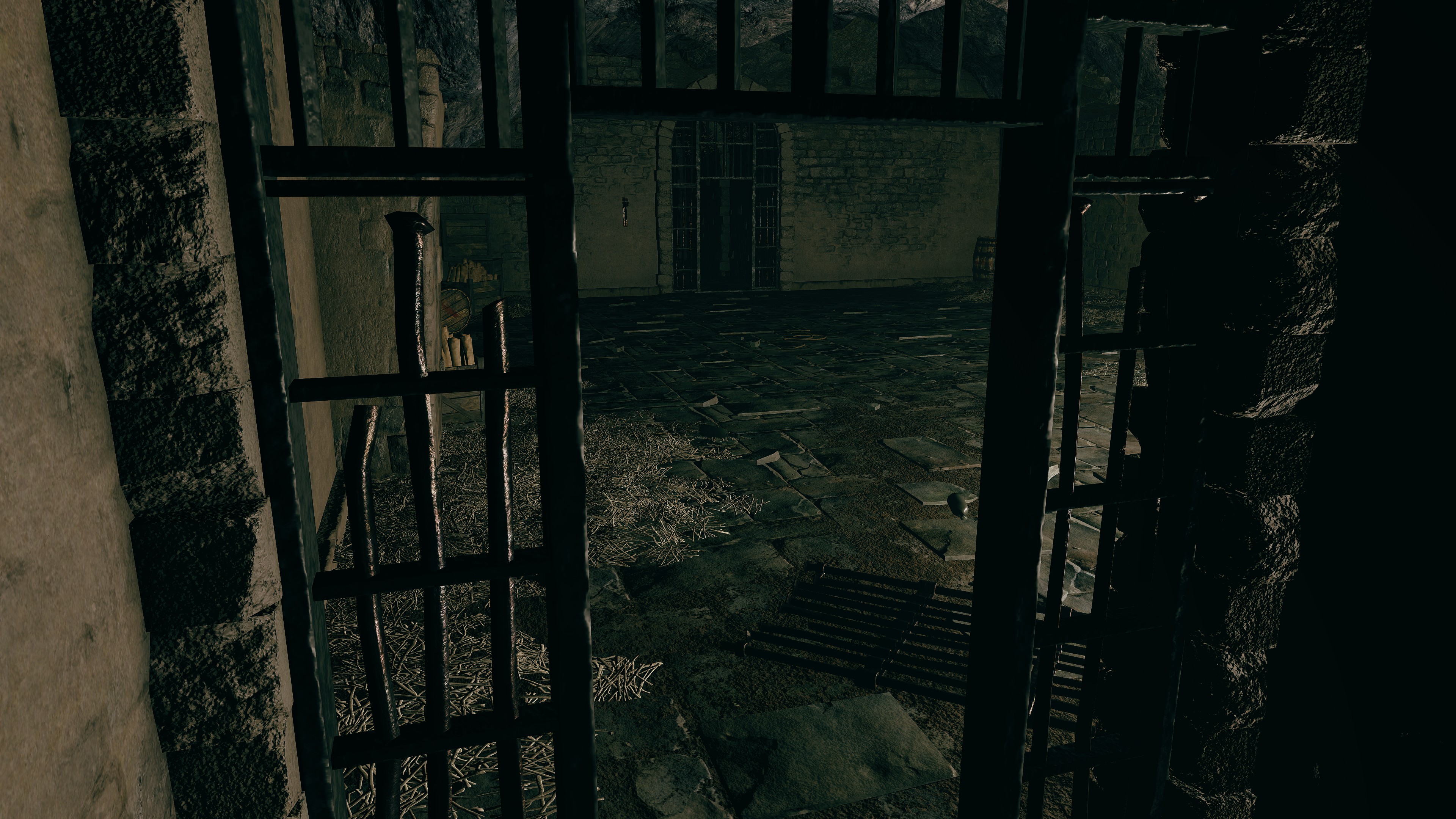
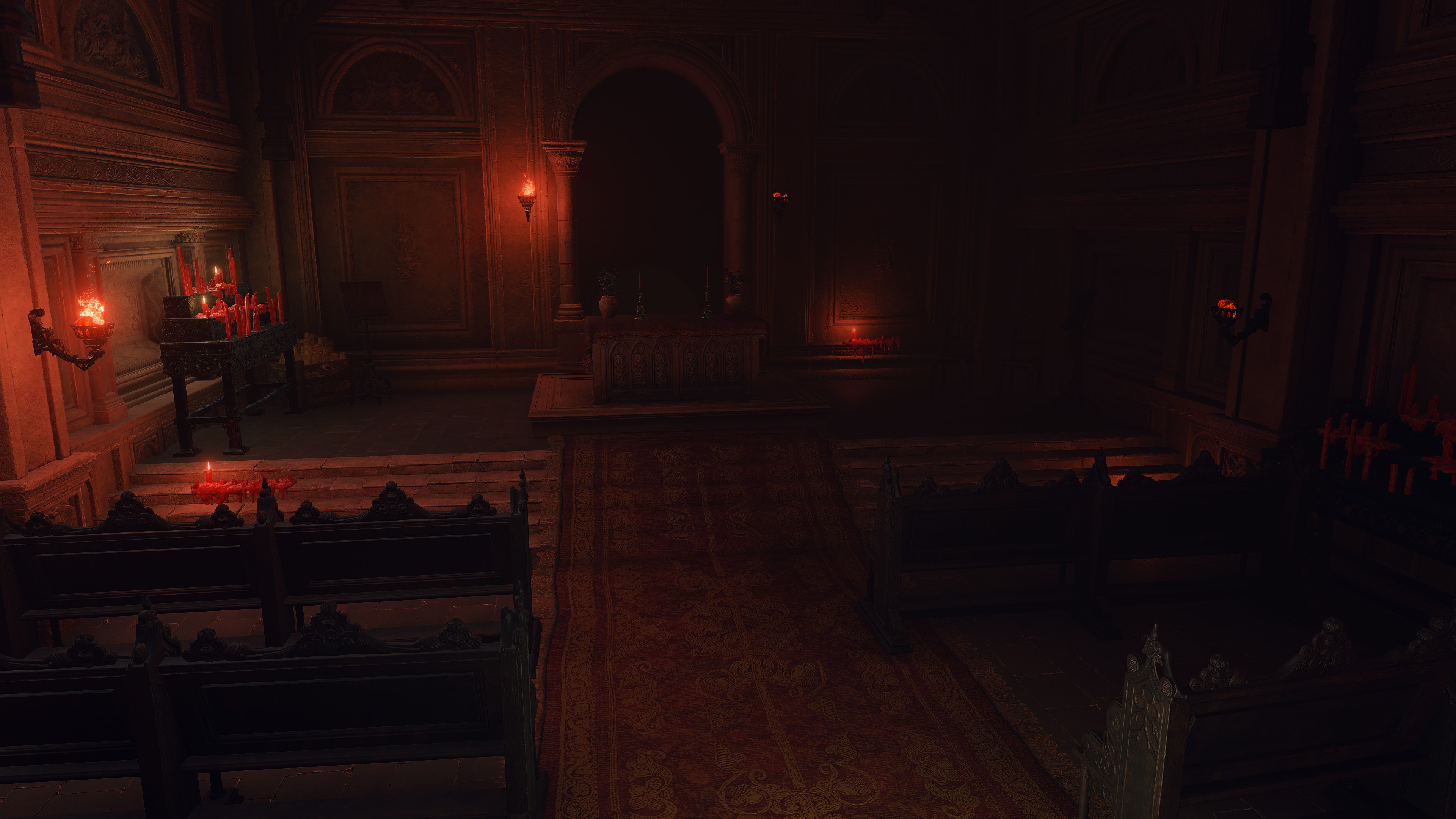
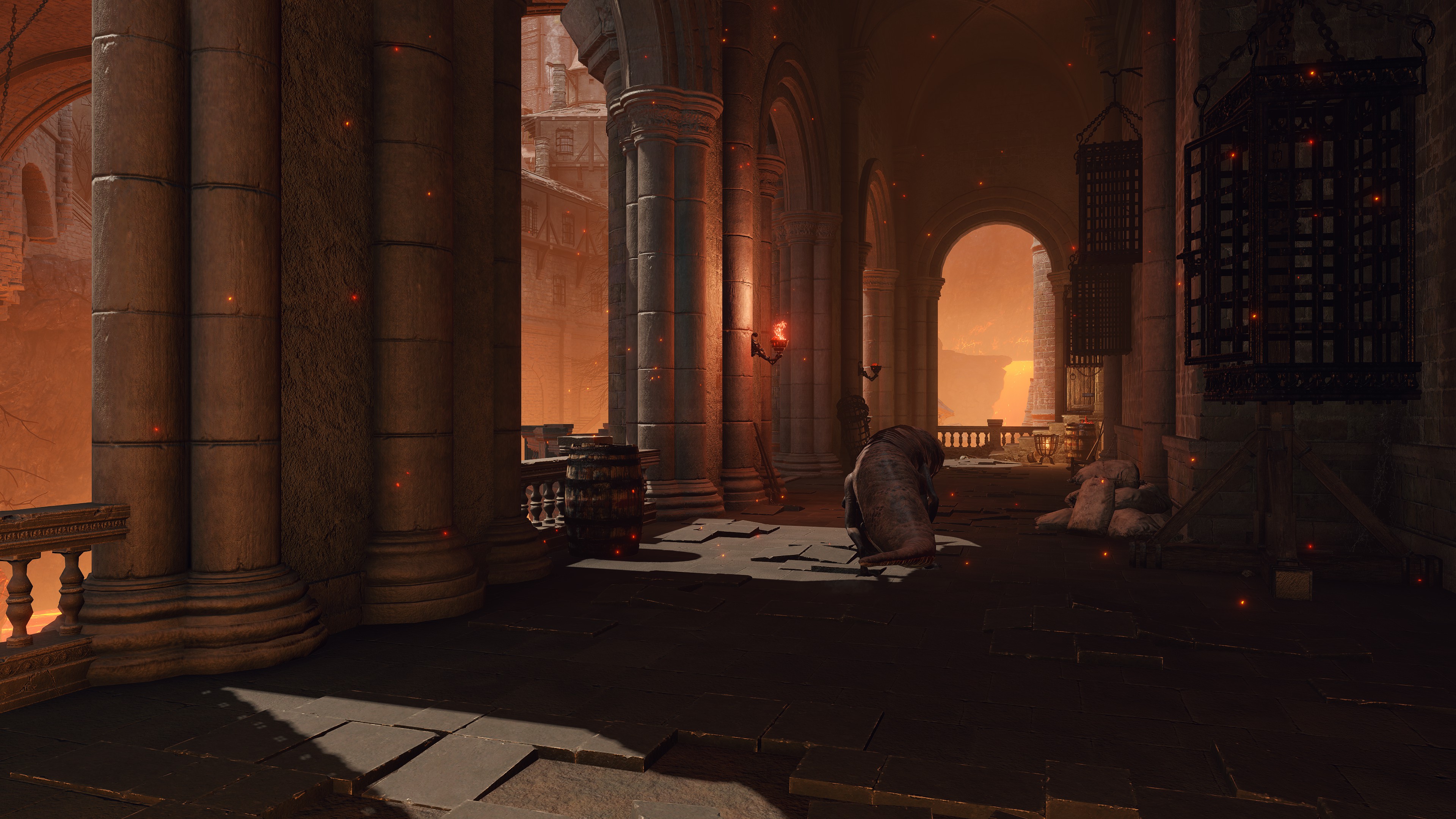
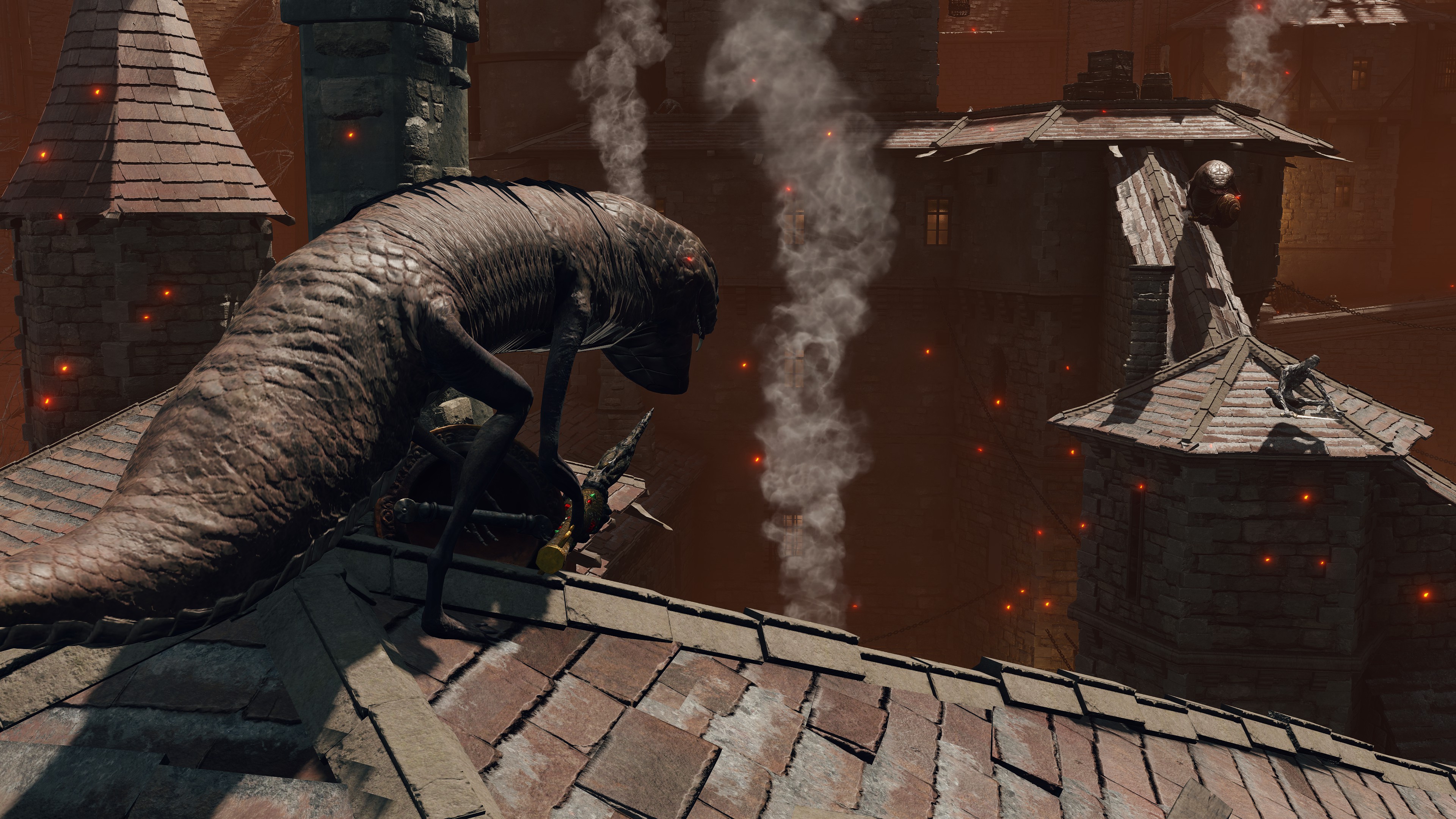
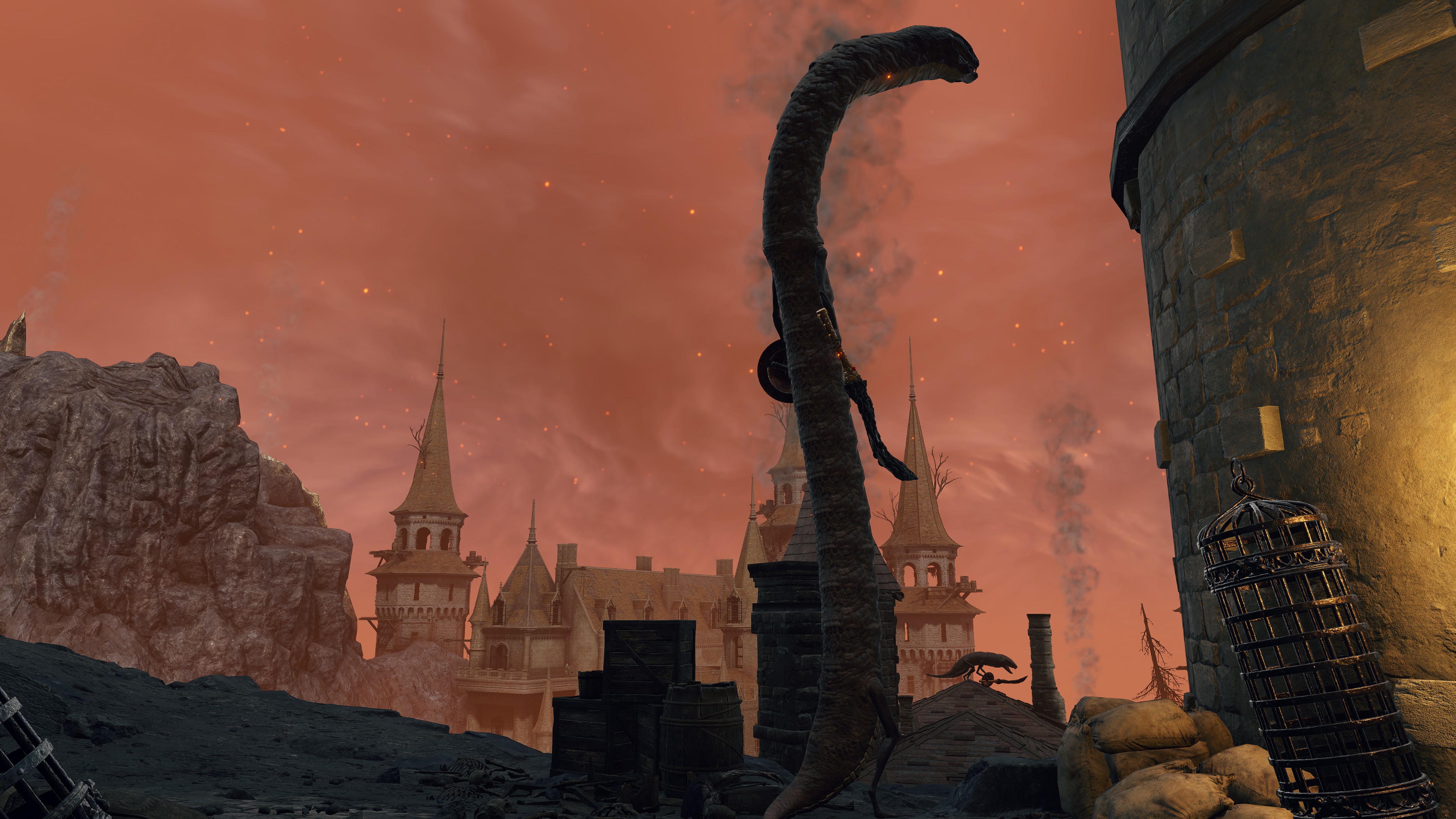
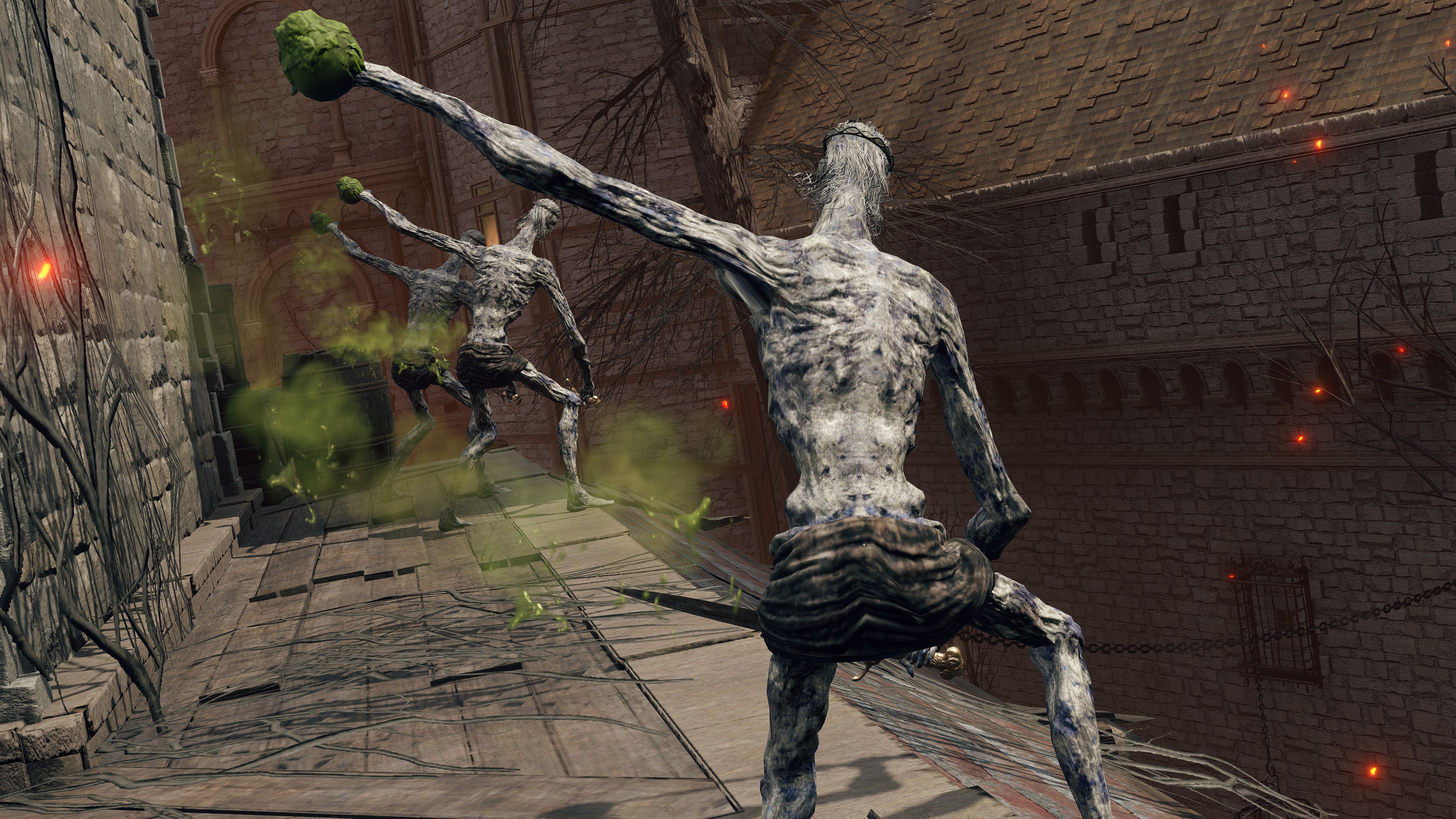
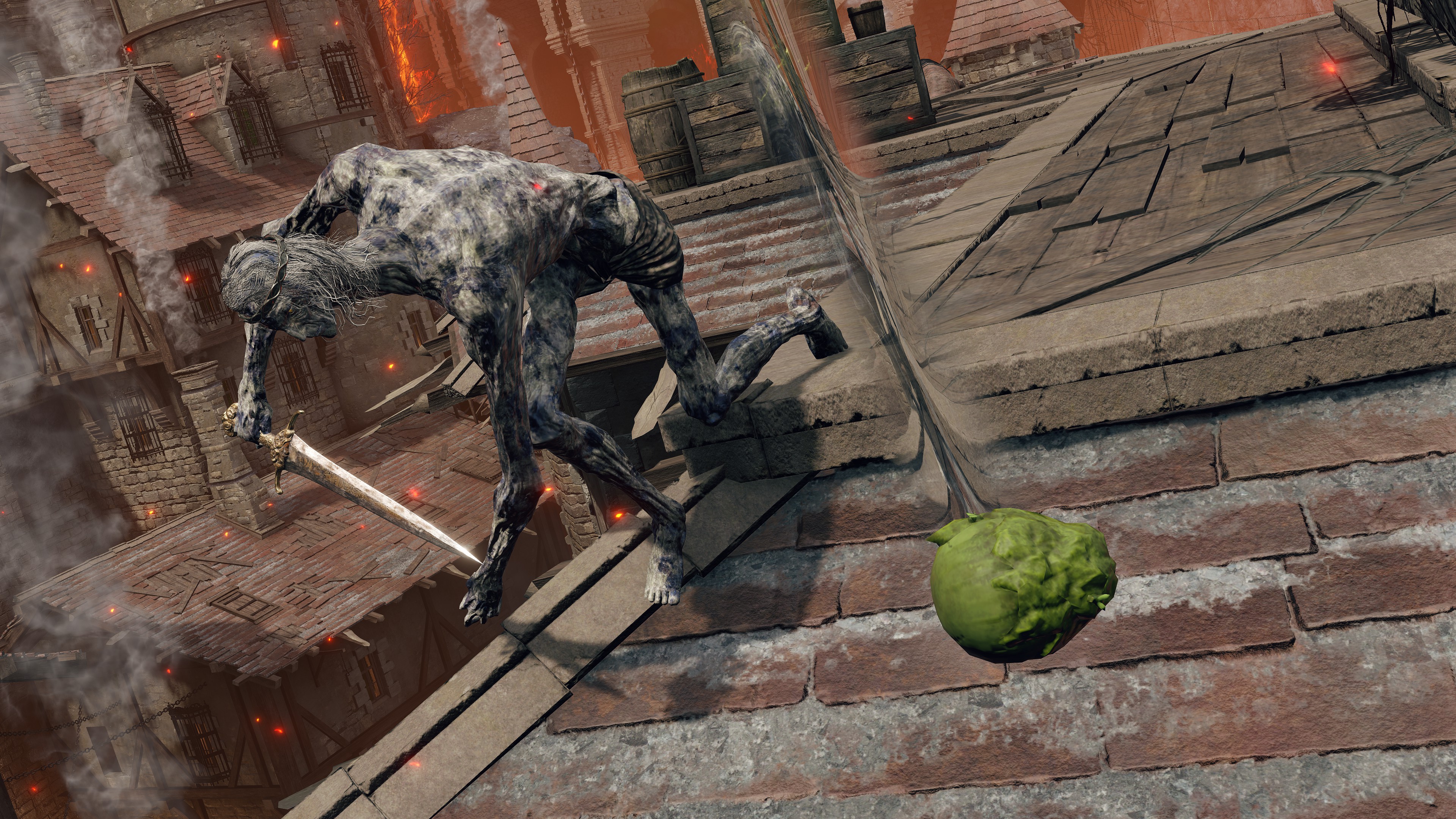
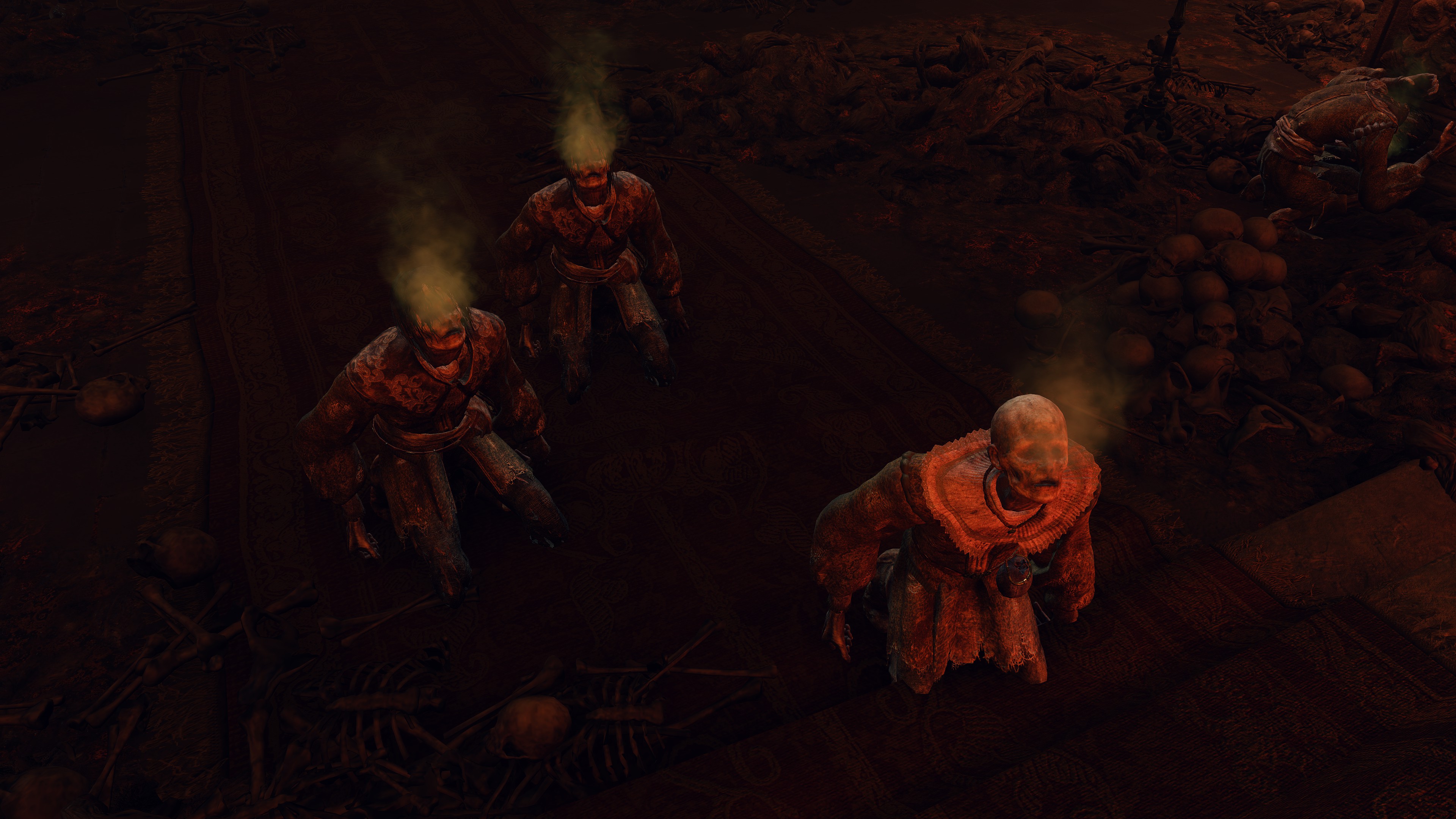
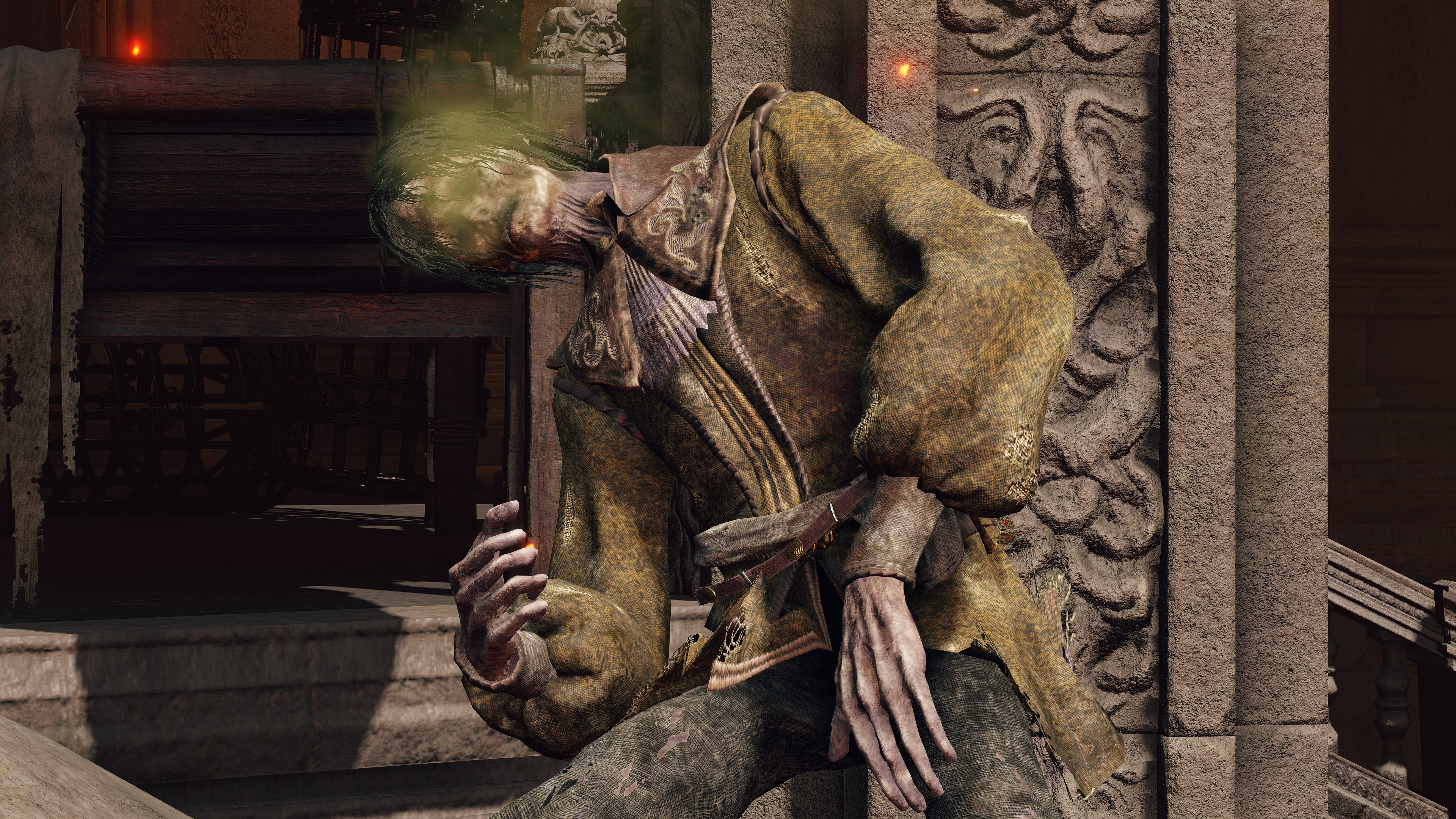
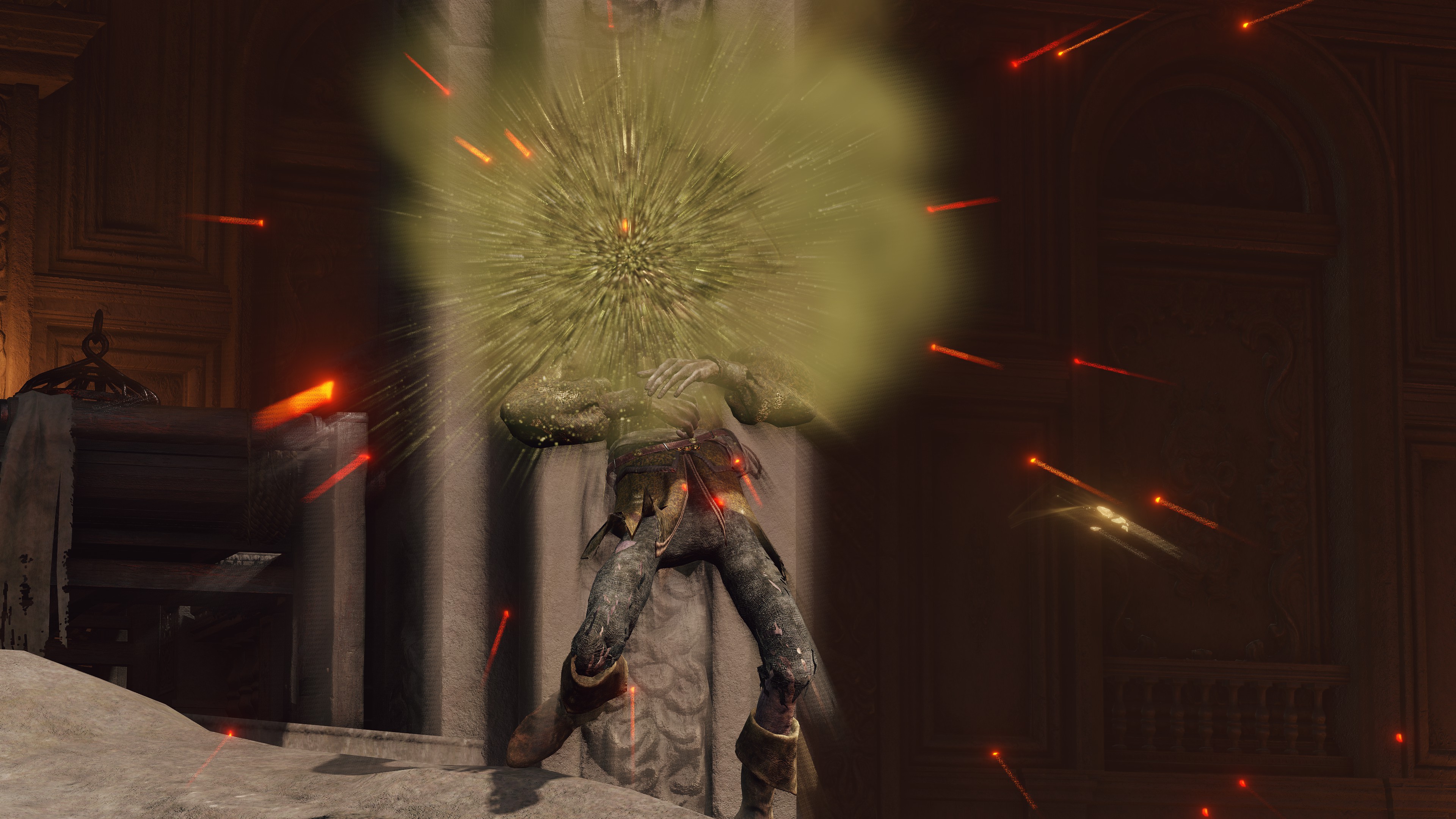
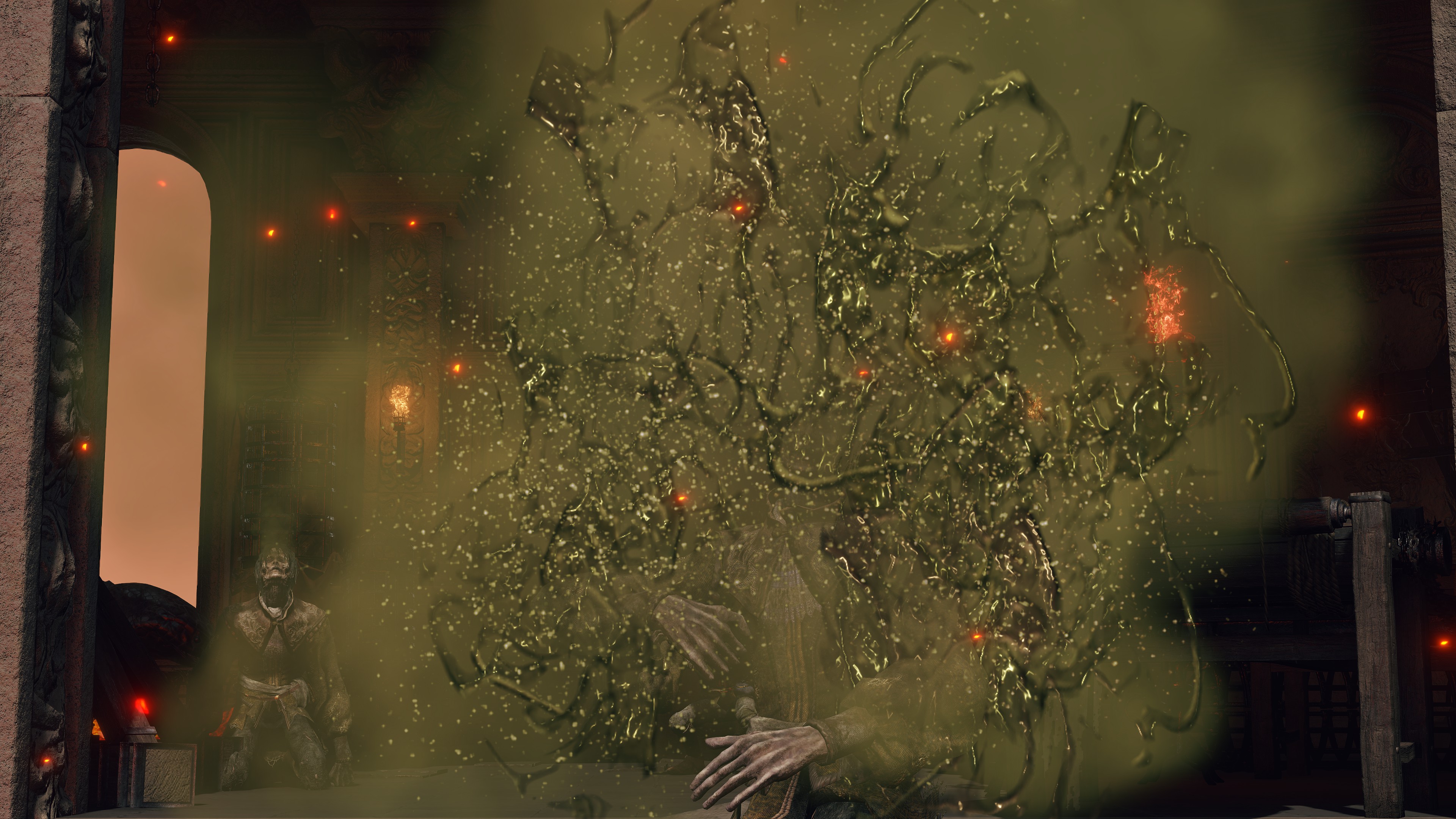
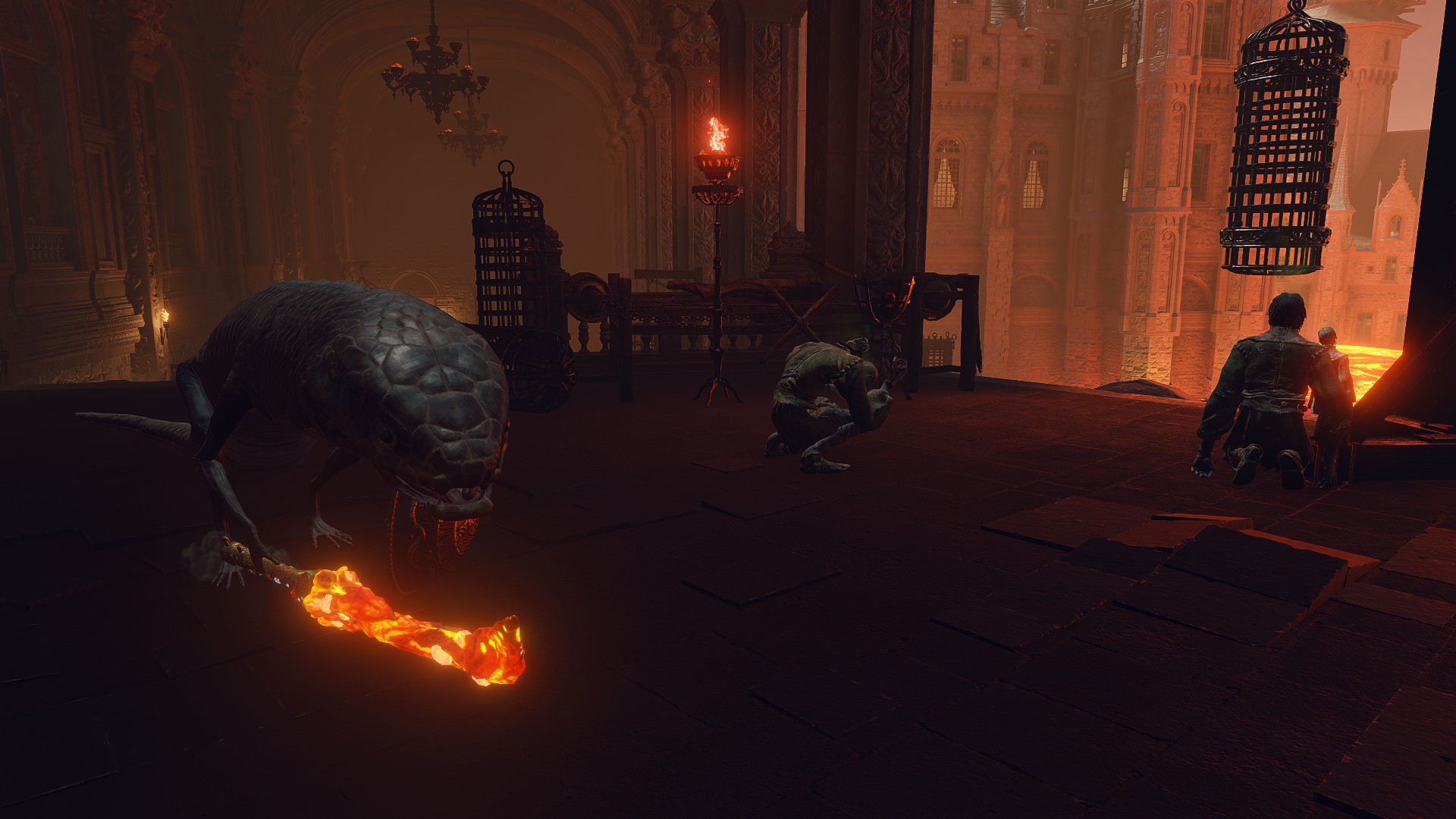
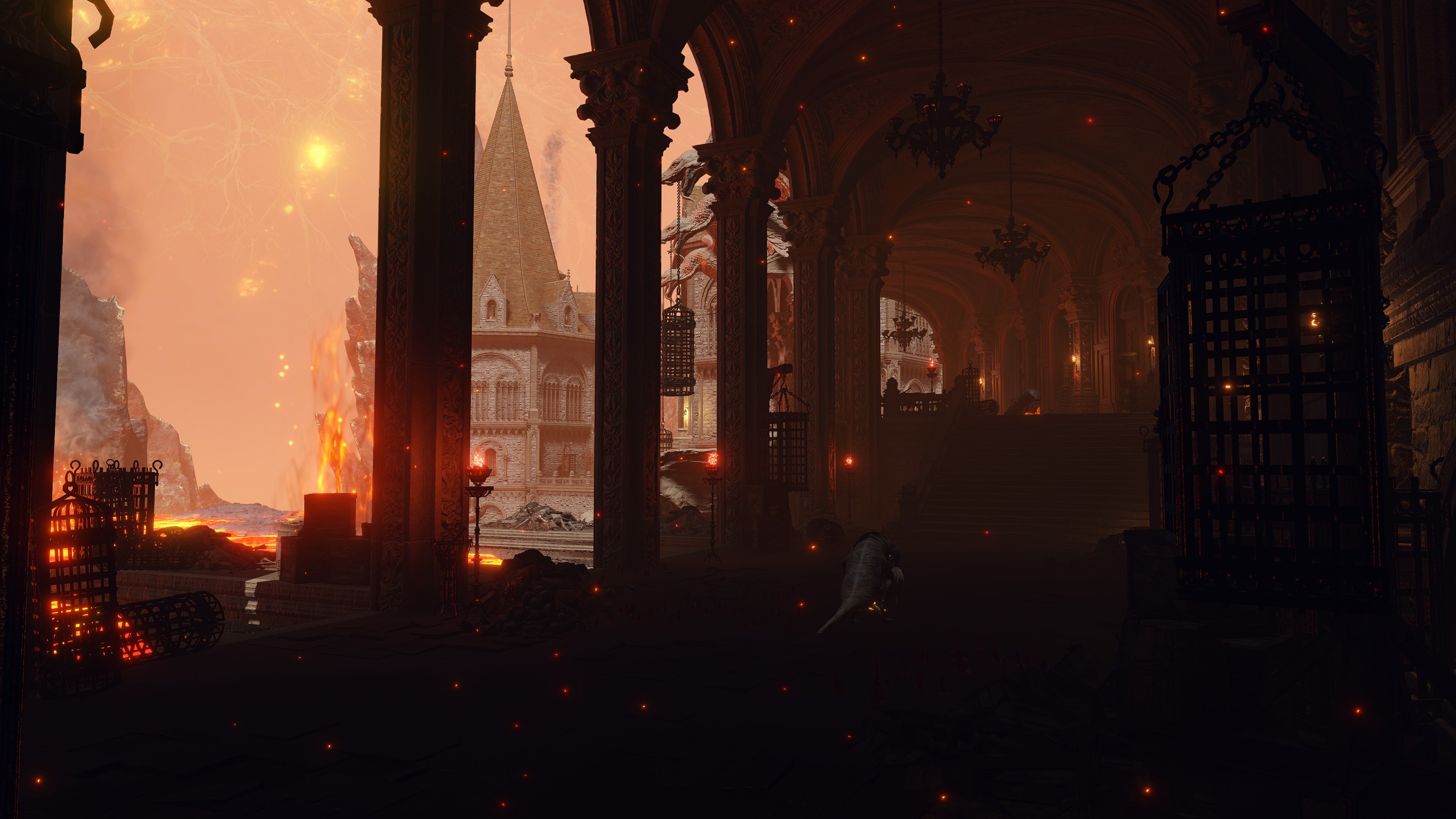
To the Gut and Gutted
Despite all this fire and fury, Volcano Manor soon lost momentum. Item descriptions and dialogue reiterate how Rykard’s ambitions “fell” to base greed. For the first half of our boss battle, we aren’t even fighting Rykard but the actual snake, the demigod lying dormant while the beast uses his arms. It is only when the reptile lies limp that the man finally awakens and decides to contribute for his grand aspirations. The demigod, for all his ambition, eventually succumbs to the appetite of a deity, subsumed as it gorges on flesh of his fellow man. This doesn’t come as much surprise, considering Rykard’s underlying motivations. Already, the shardbearer has what he always wanted: union with his beloved mother. With that accomplished, it is easy for him to become lost in the reverie. There he constantly sits in scaly embrace, robbing power from whatever prey is sent his way. Offered to him on a silver platter, his growing “family” allows the demigod prince to play king without needing to actively work toward their larger goals. All those meals surely make him feel worthy of his title and “marriage” to the snake, but it is hardly aspiring.
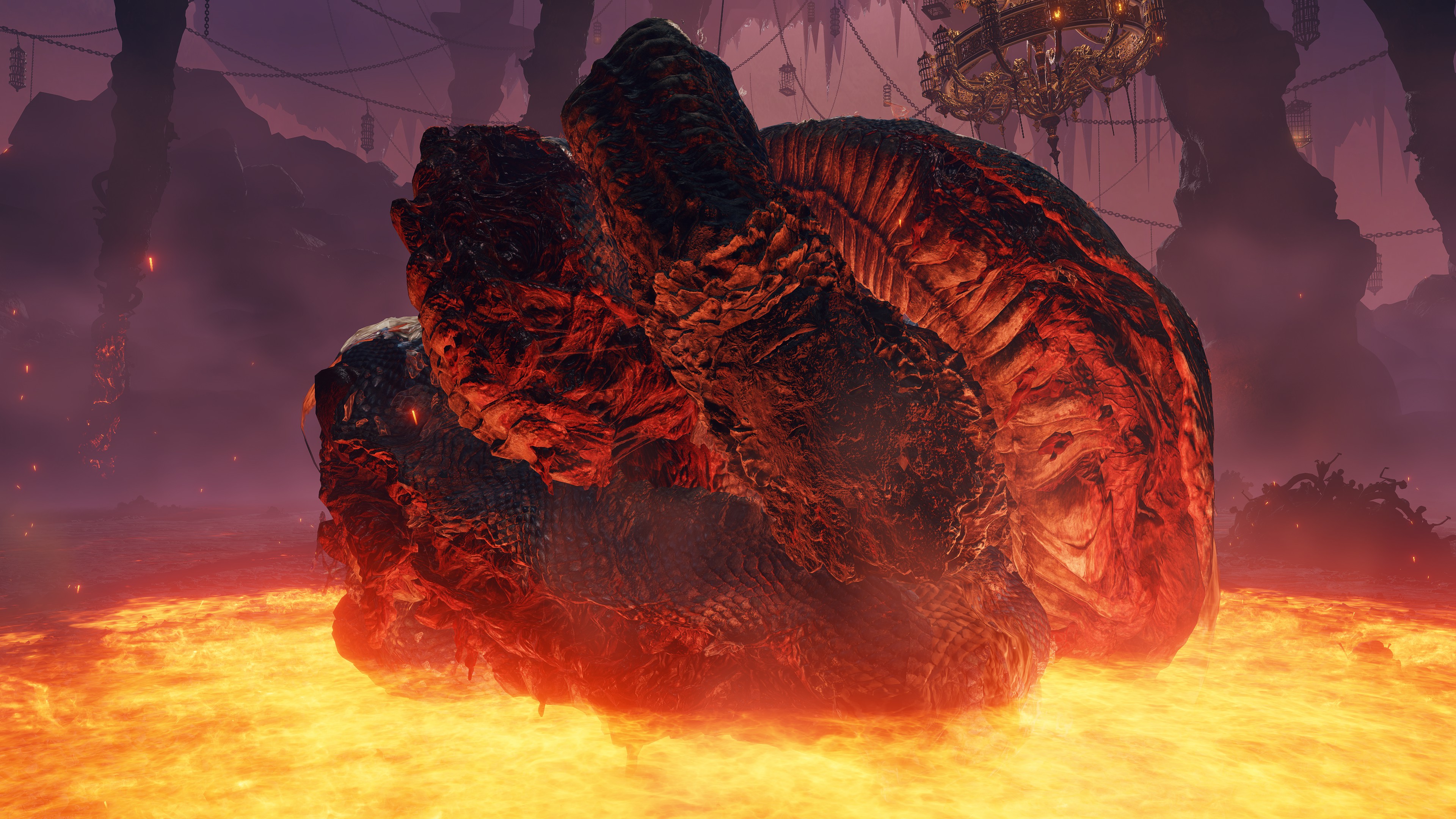
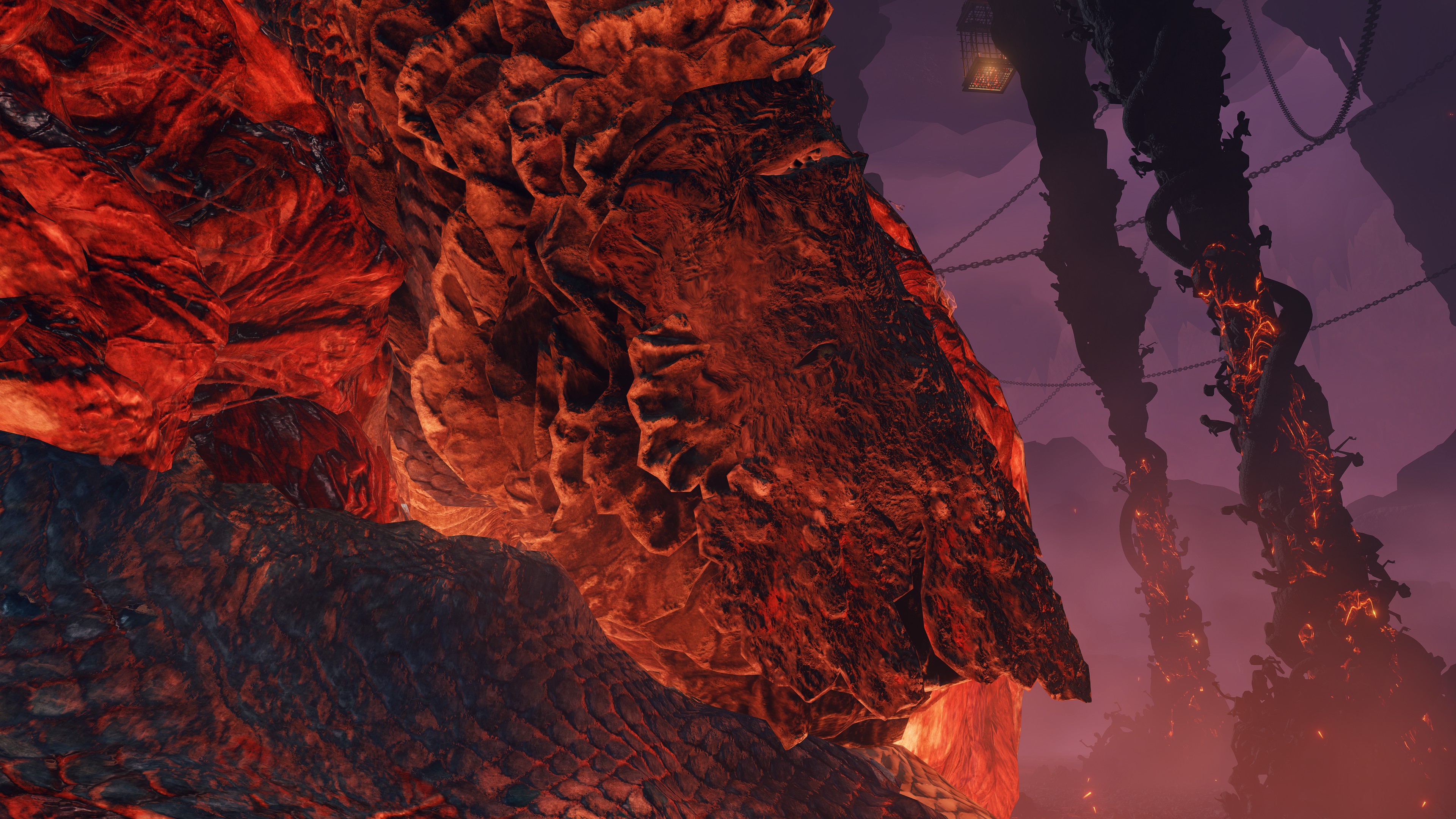
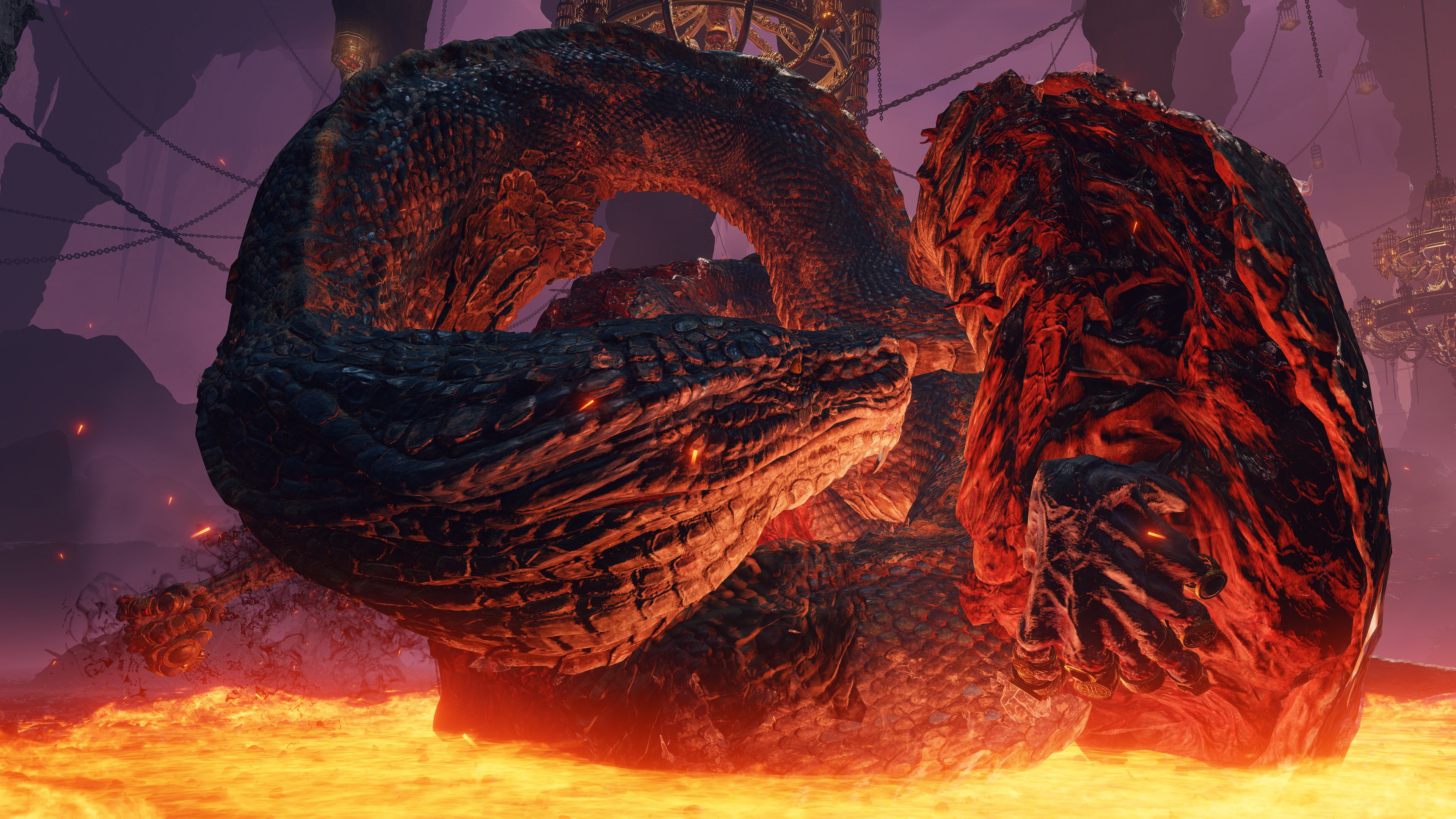
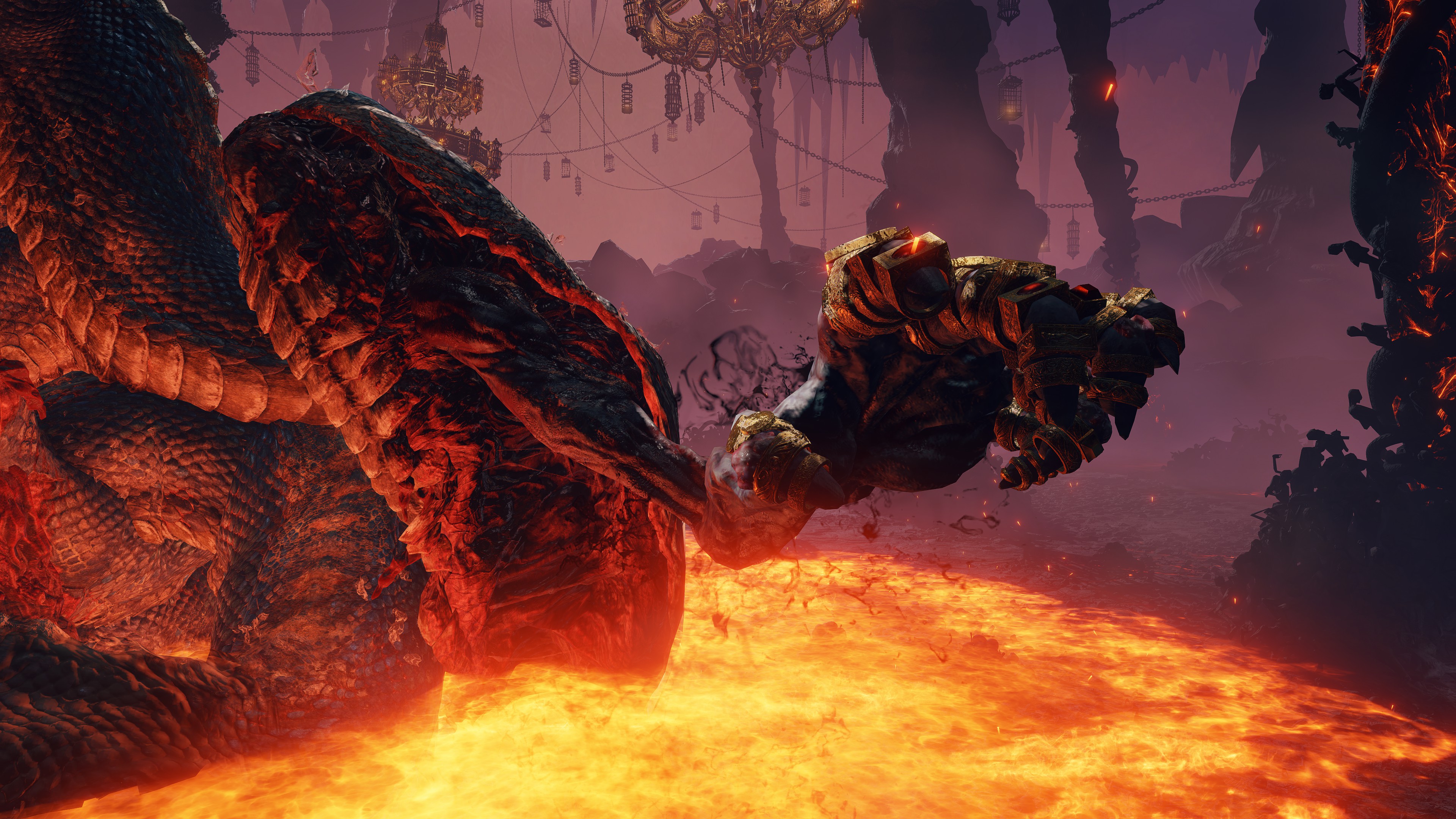
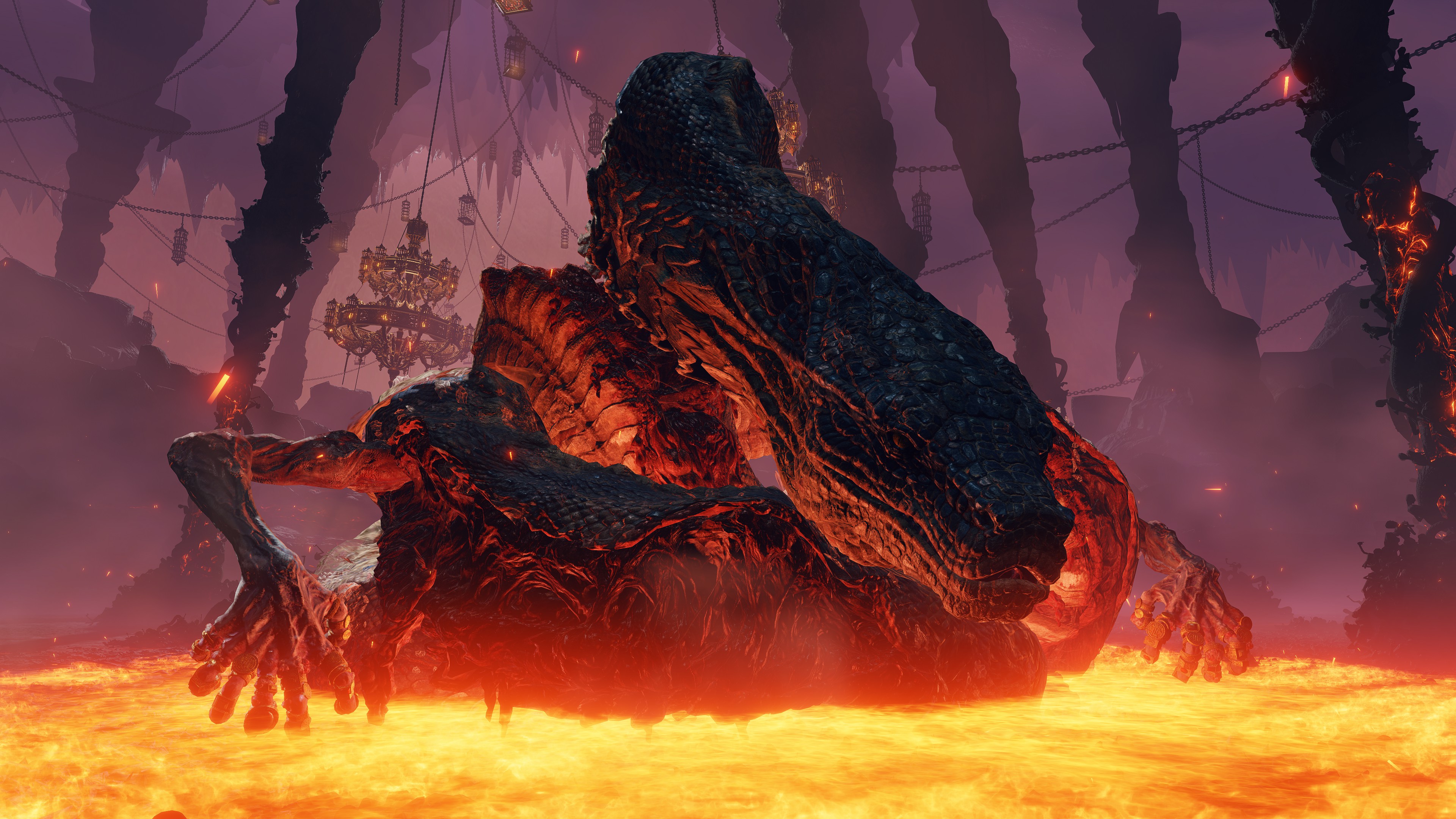
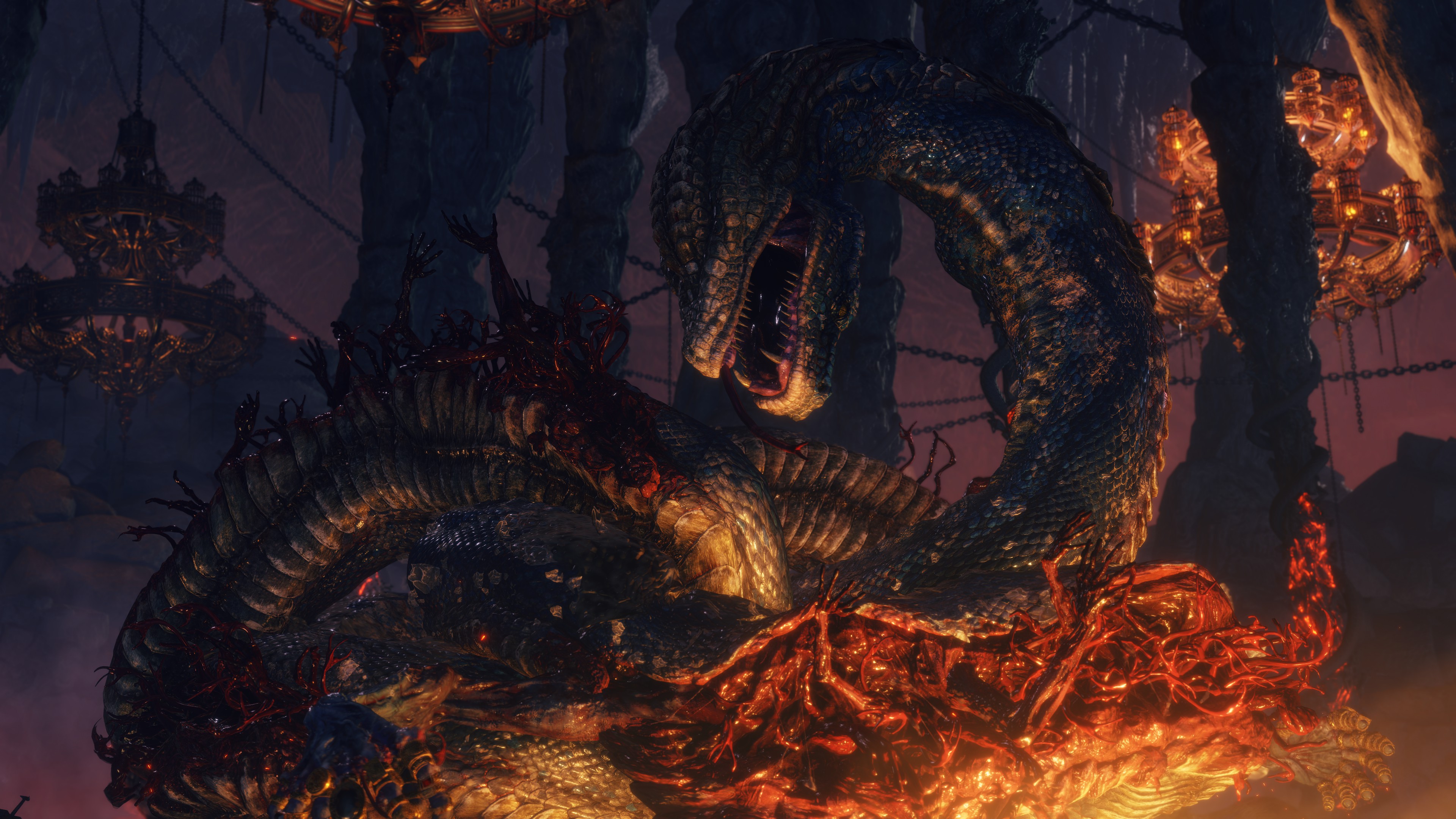
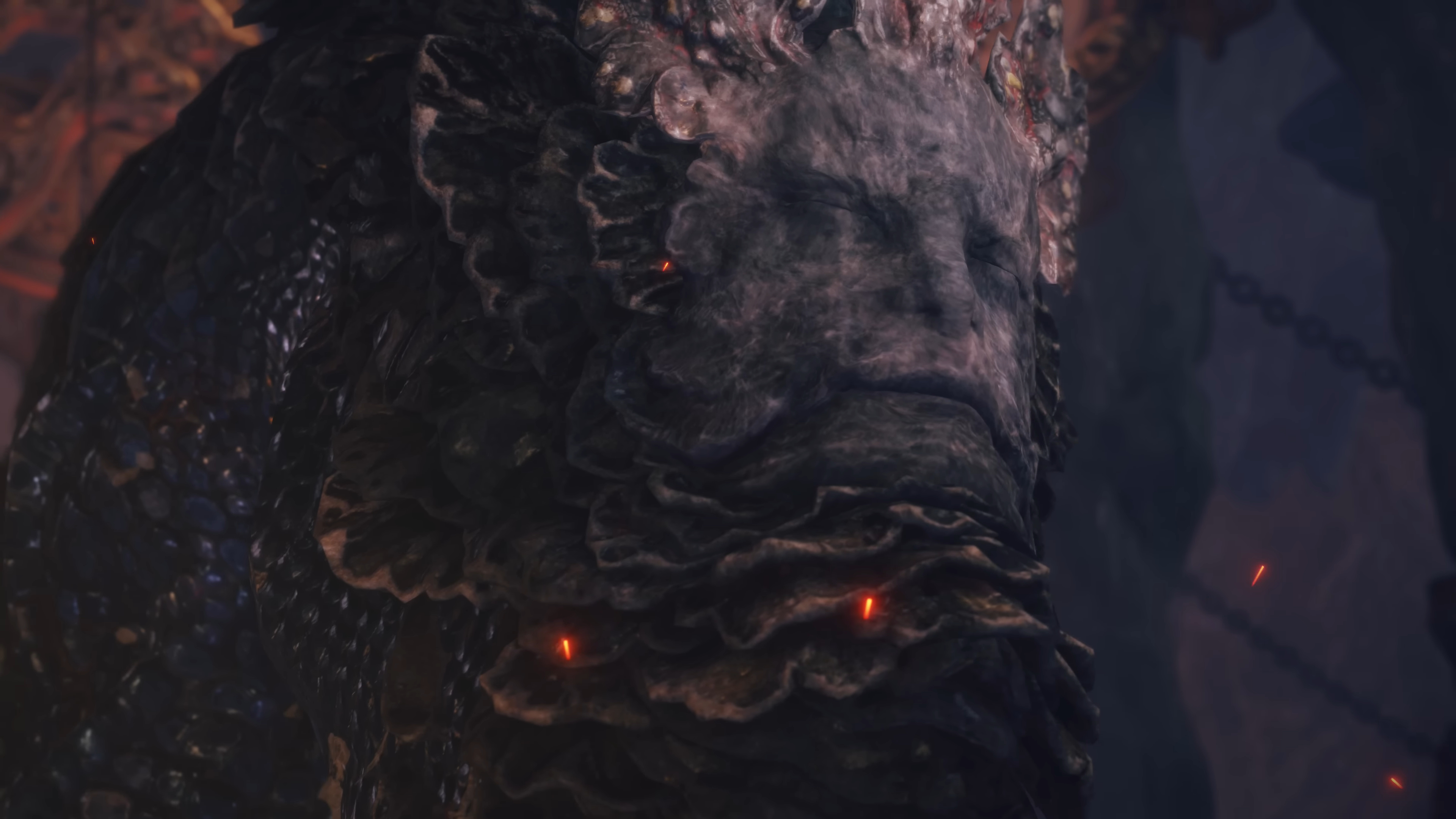
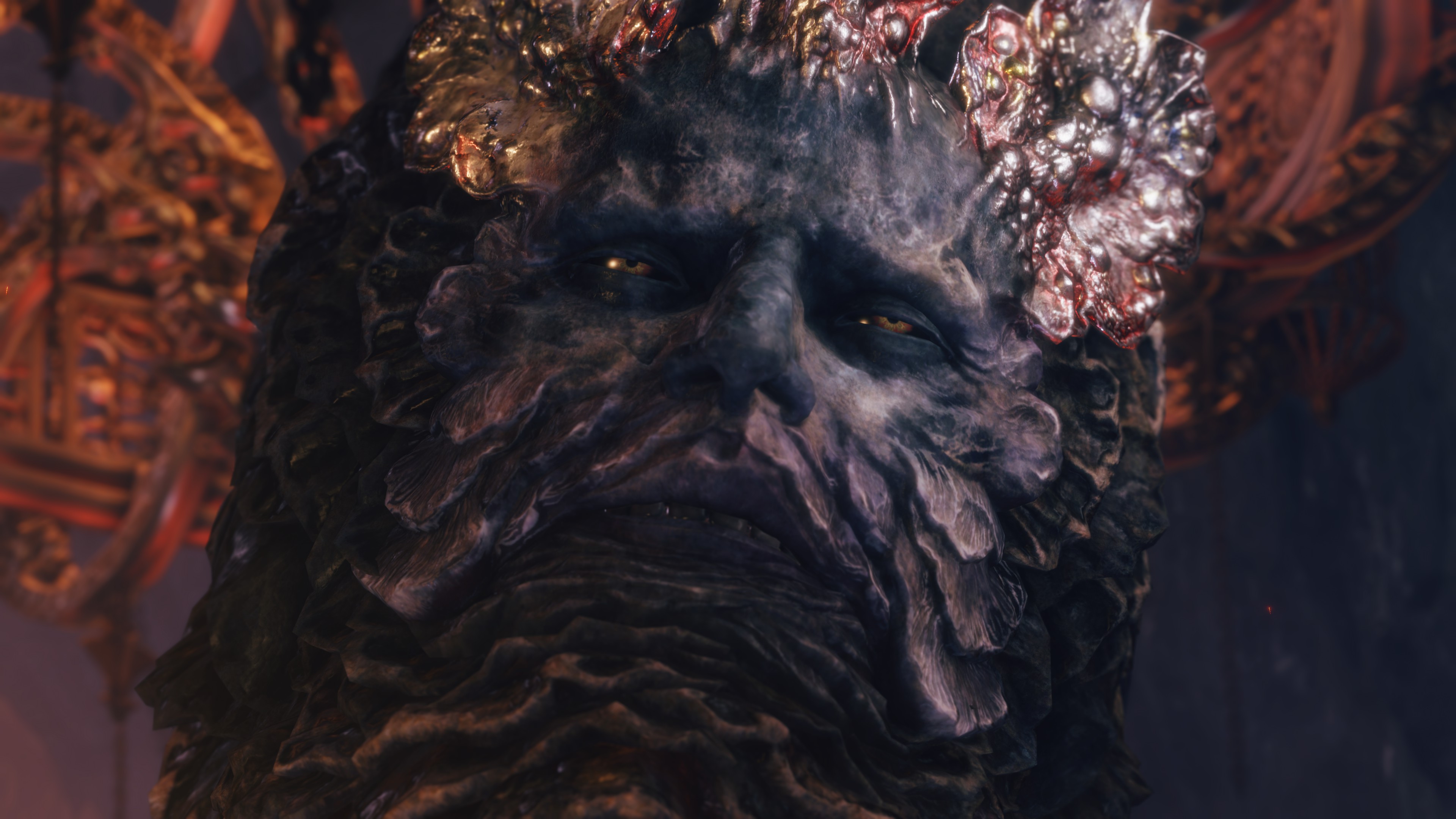
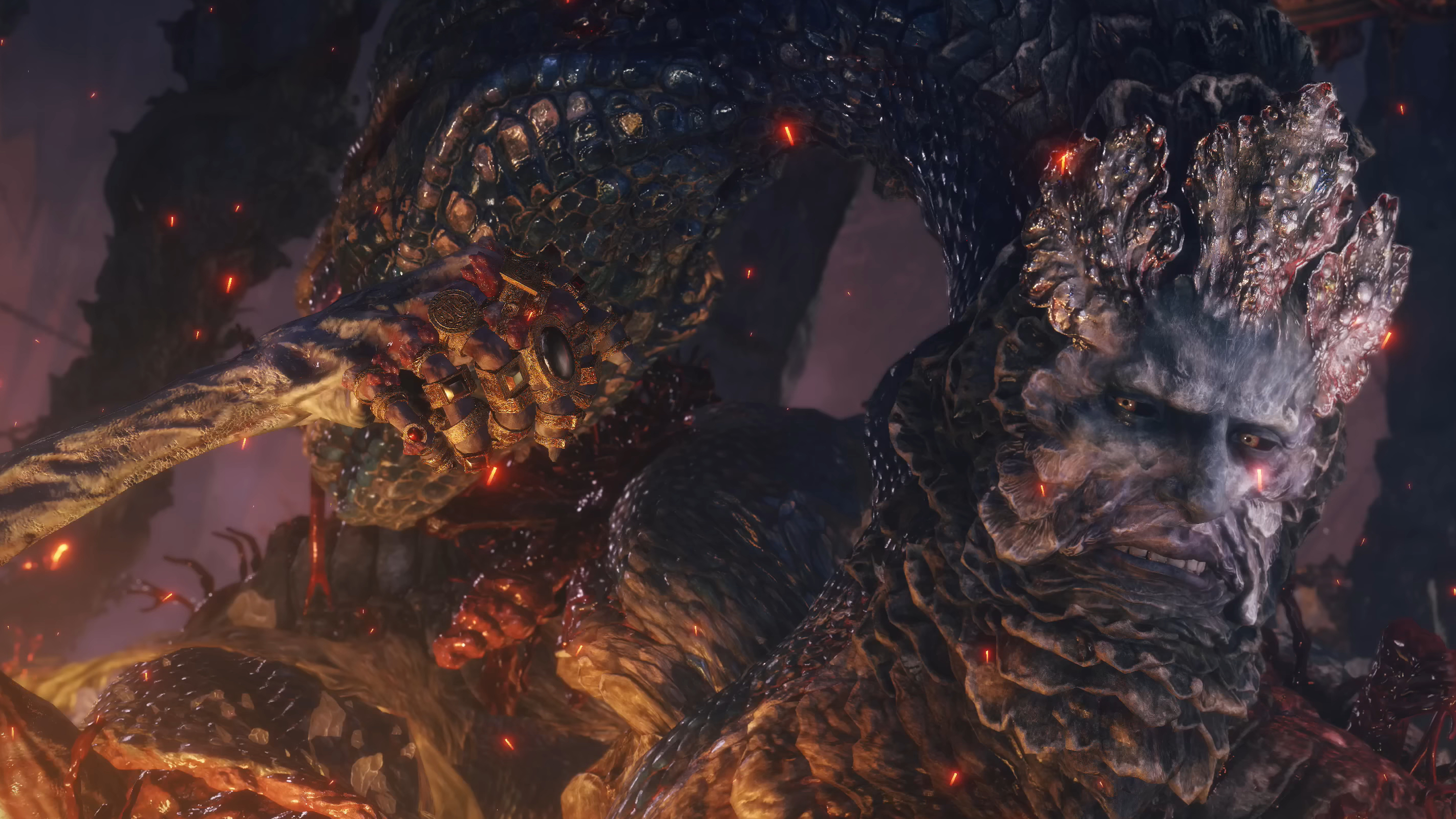
The fact that one of the “children” is contesting Rykard’s throne stresses how the Serpent King has created a vacuum in his absence. He may hang a caduceus banner behind his empty seat, but no one is actually ruling Gelmir in the current chaos — a fanatical cult of men and snakes just funneling bodies. Even that coalition is cracking. The sorcerer king’s “heir” has a few kindred as guards, plus a handful of nobles as vassals. As they can only stand in awe or cower, they offer the corpse of a traitor to his majesty, his crime apparent from the man-serpent ashes he carries. Facing resistance, the snake-men seek strong leadership, which their mother-and-father-in-one refuse to provide. Rykard might argue that he yet needs more power or need not be so proactive, but meanwhile, his kingdom is falling apart. The usurper seems to have learned his sorcery from the Carian servants, Albinauric and man-serpent side-by-side behind the imp statue seal accessed from the throne room. Under the king’s protection, old enemies are forming a new coalition. If not for the innate faith in the great snake, this coup might have begun much sooner.
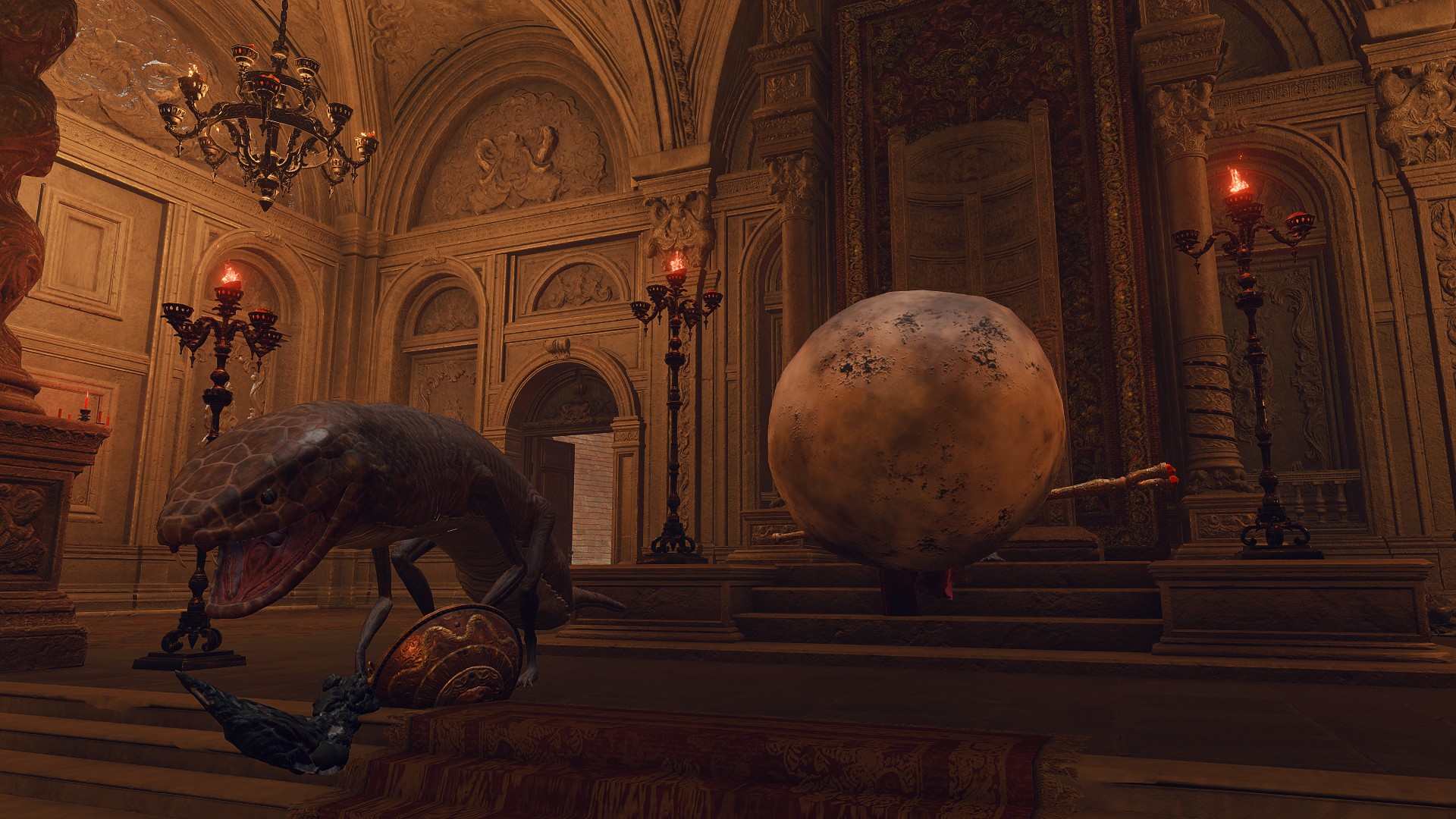
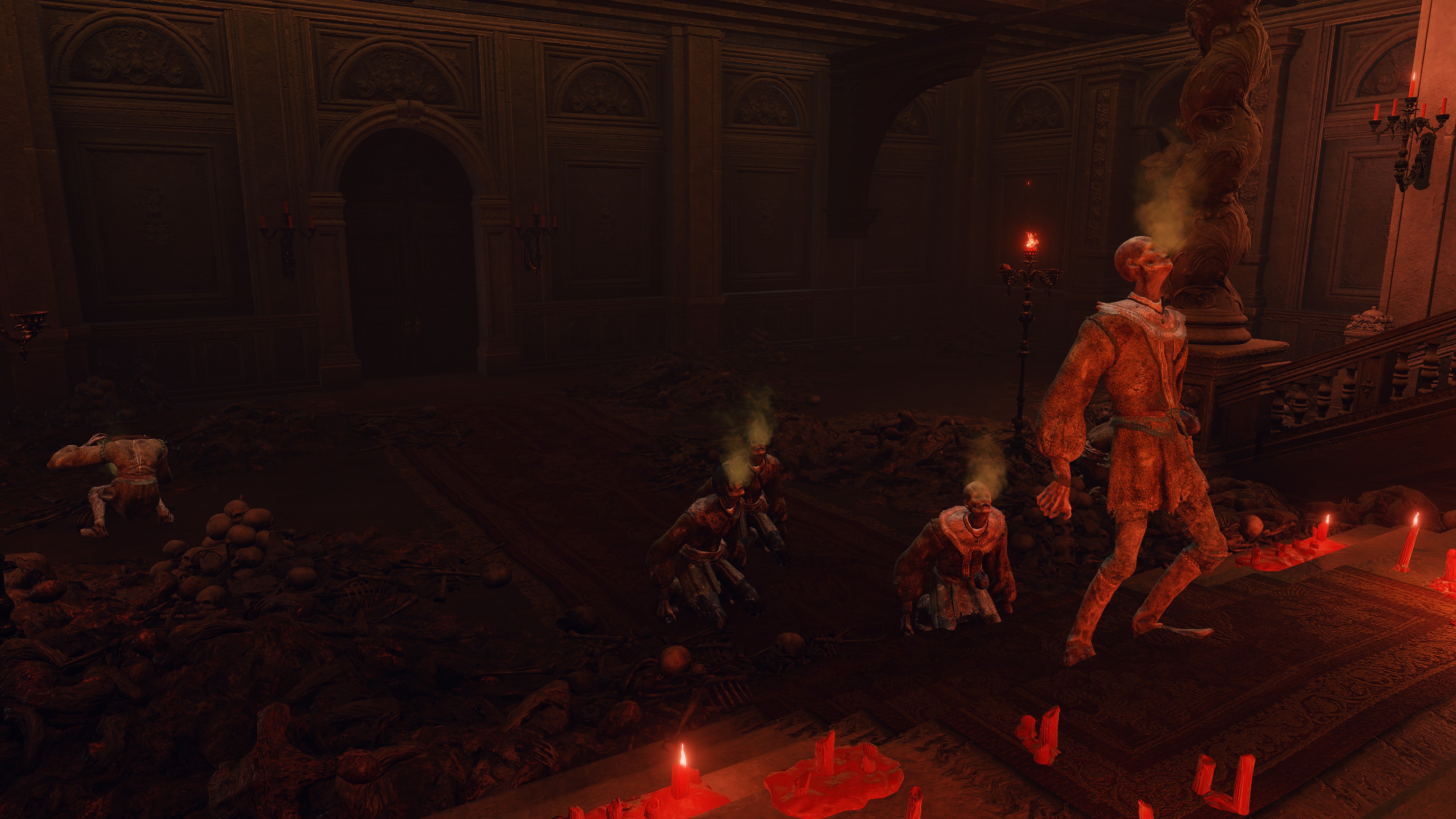
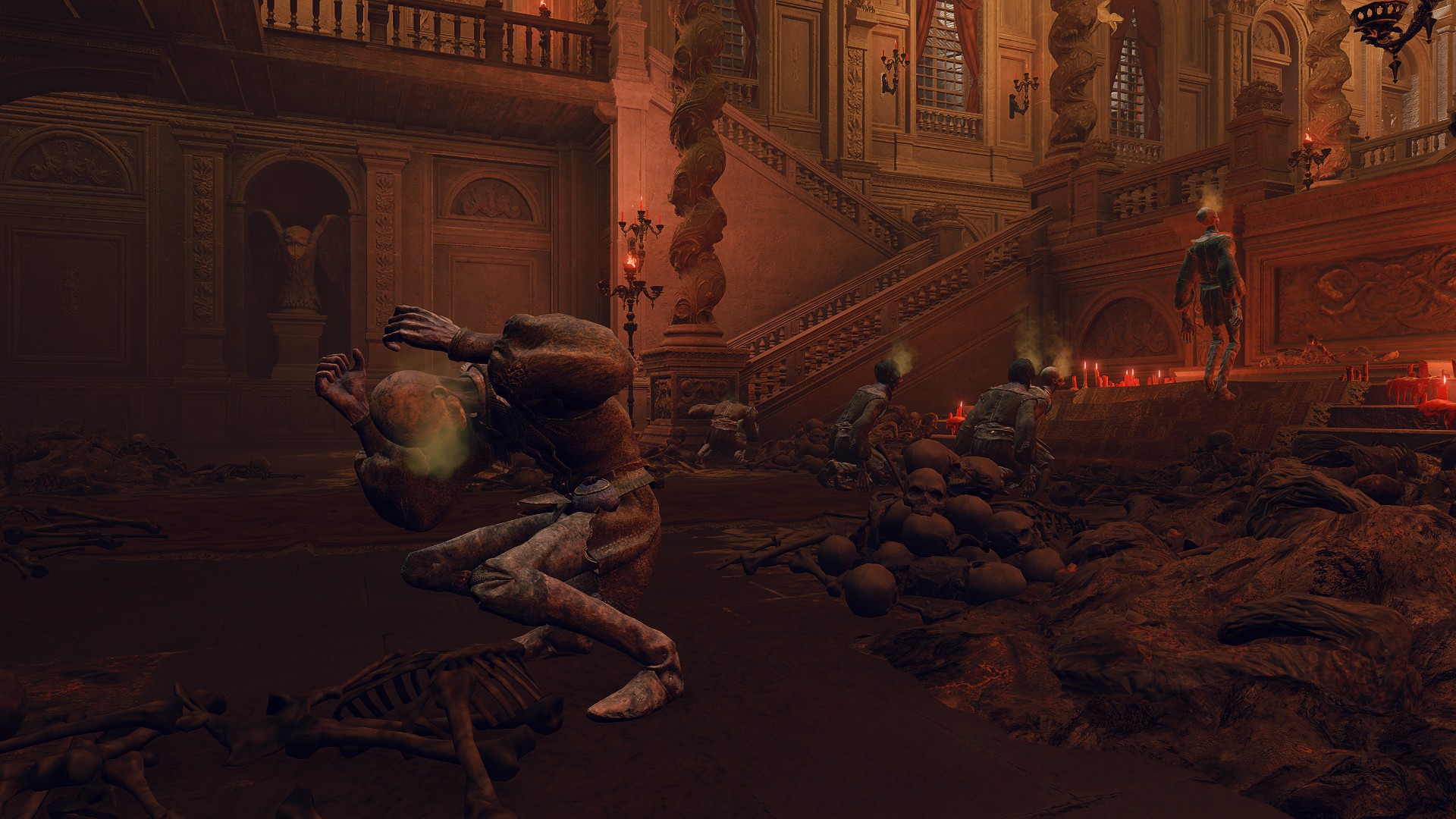
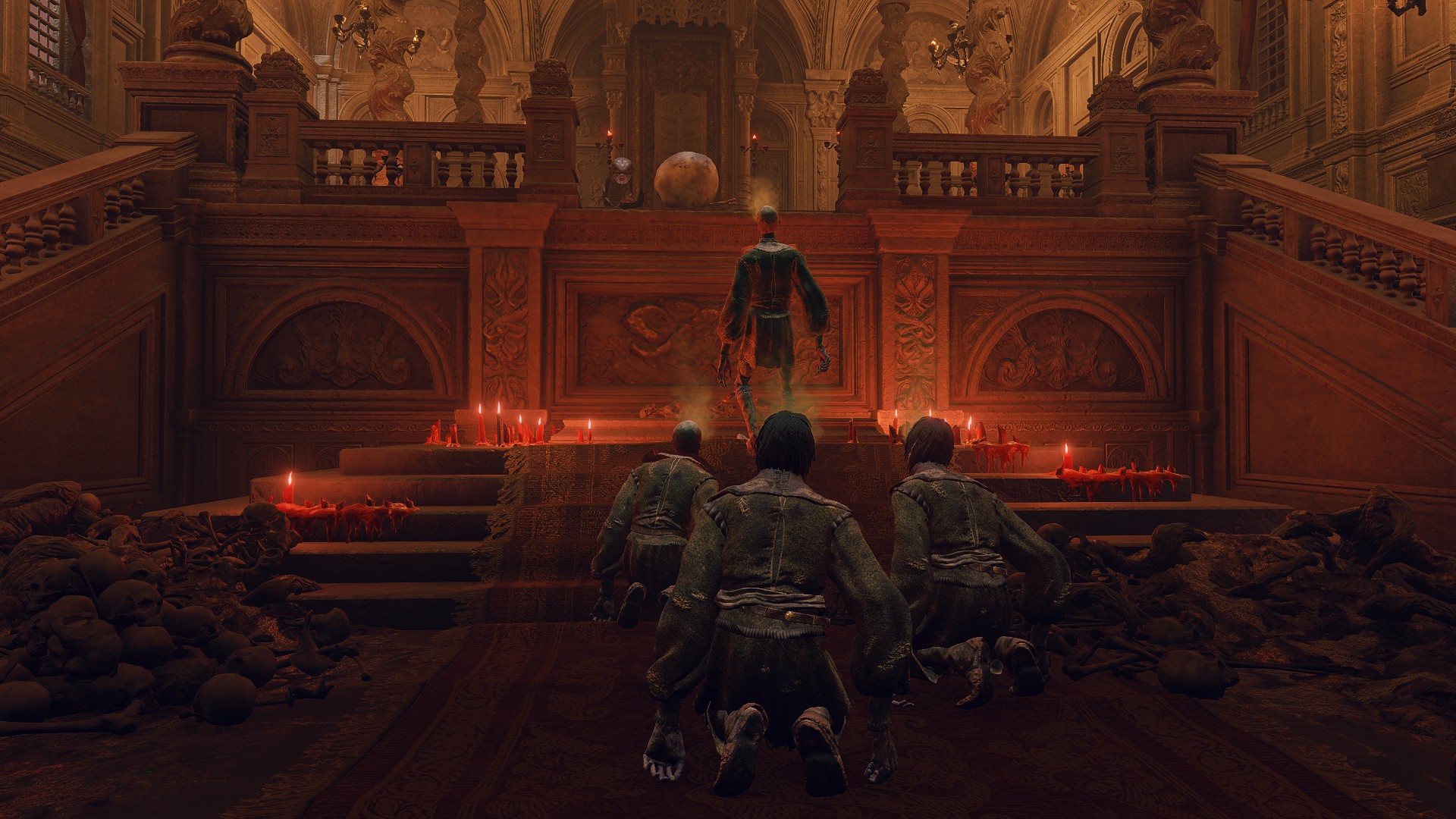
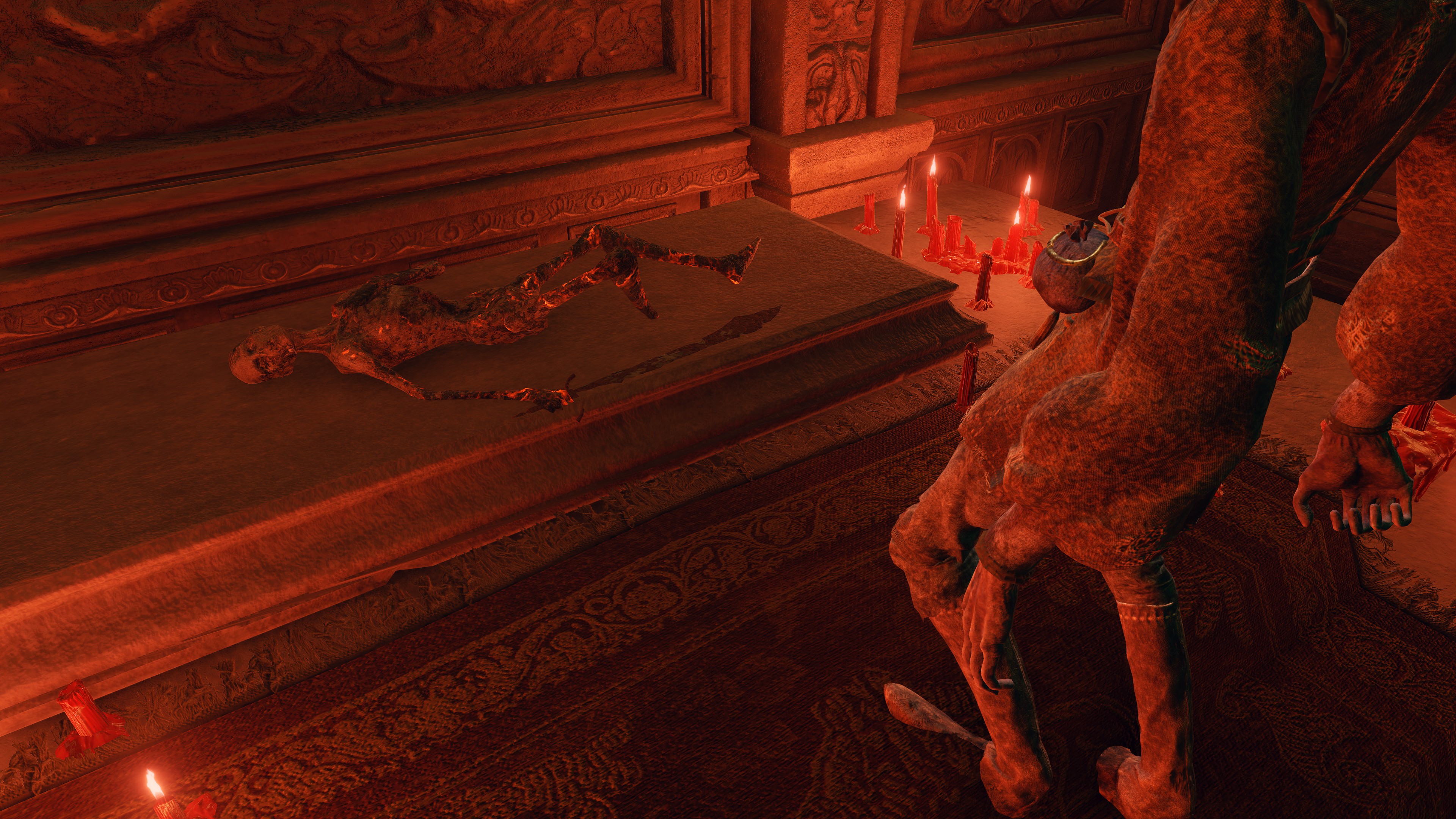
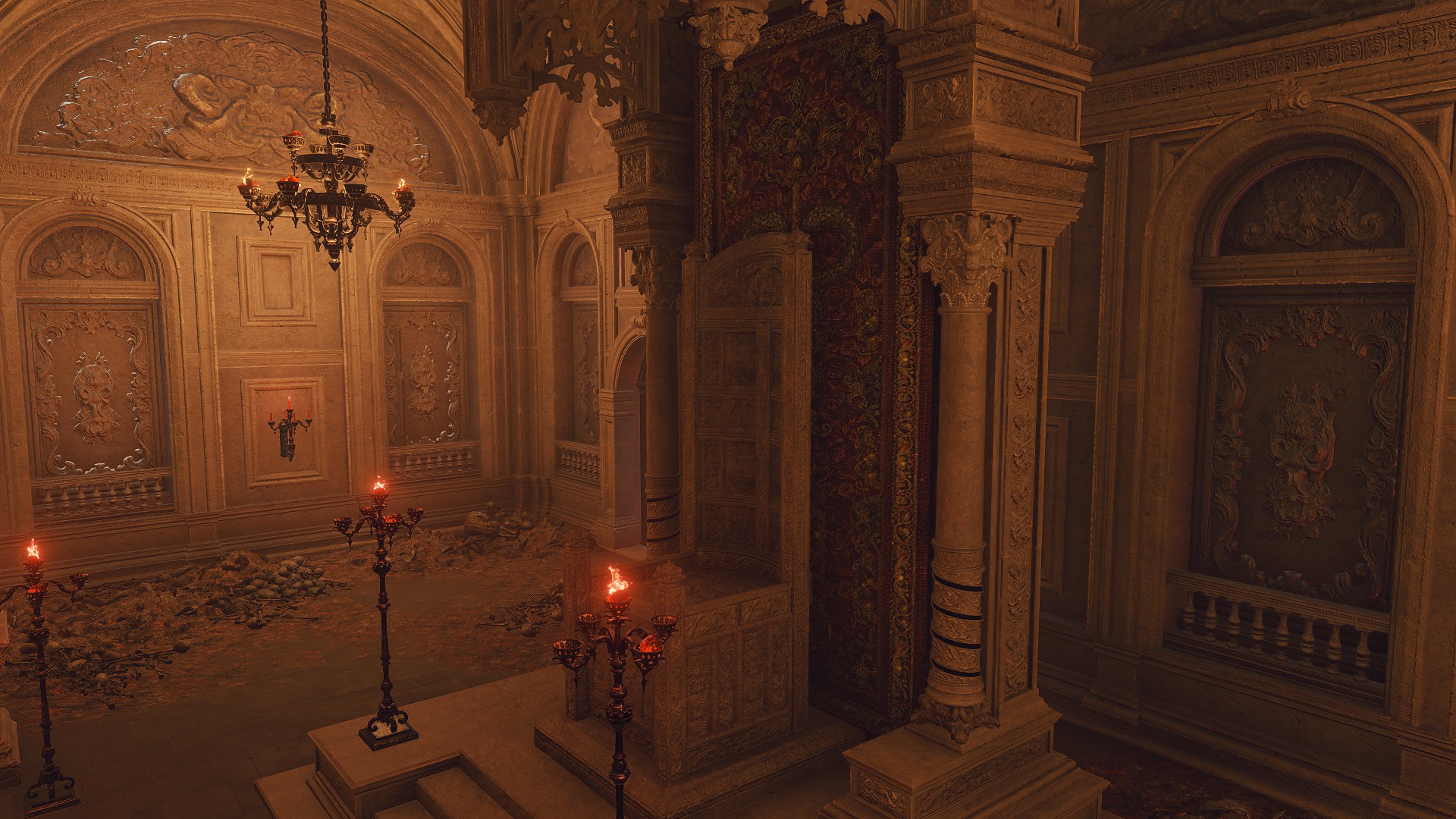
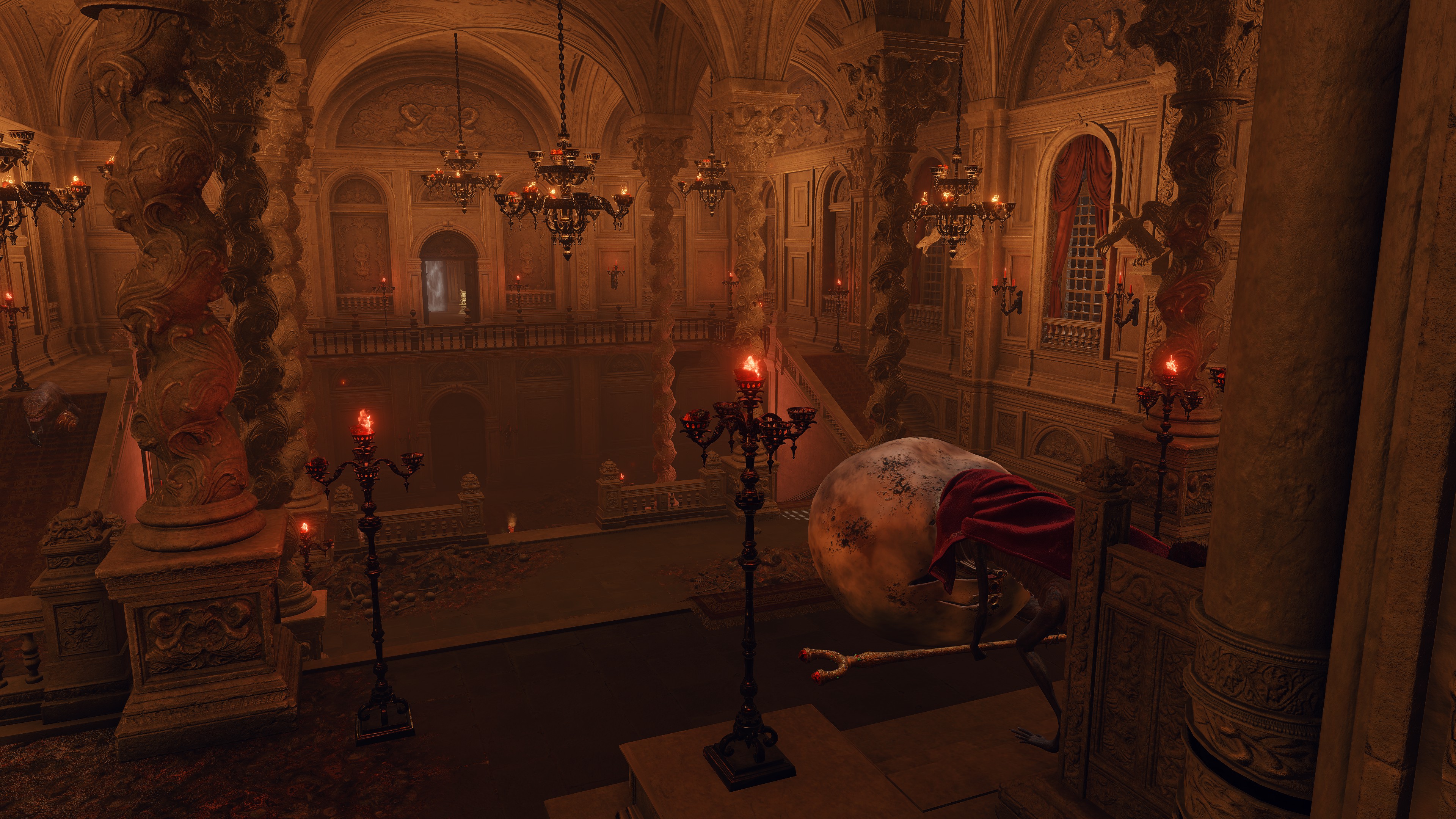
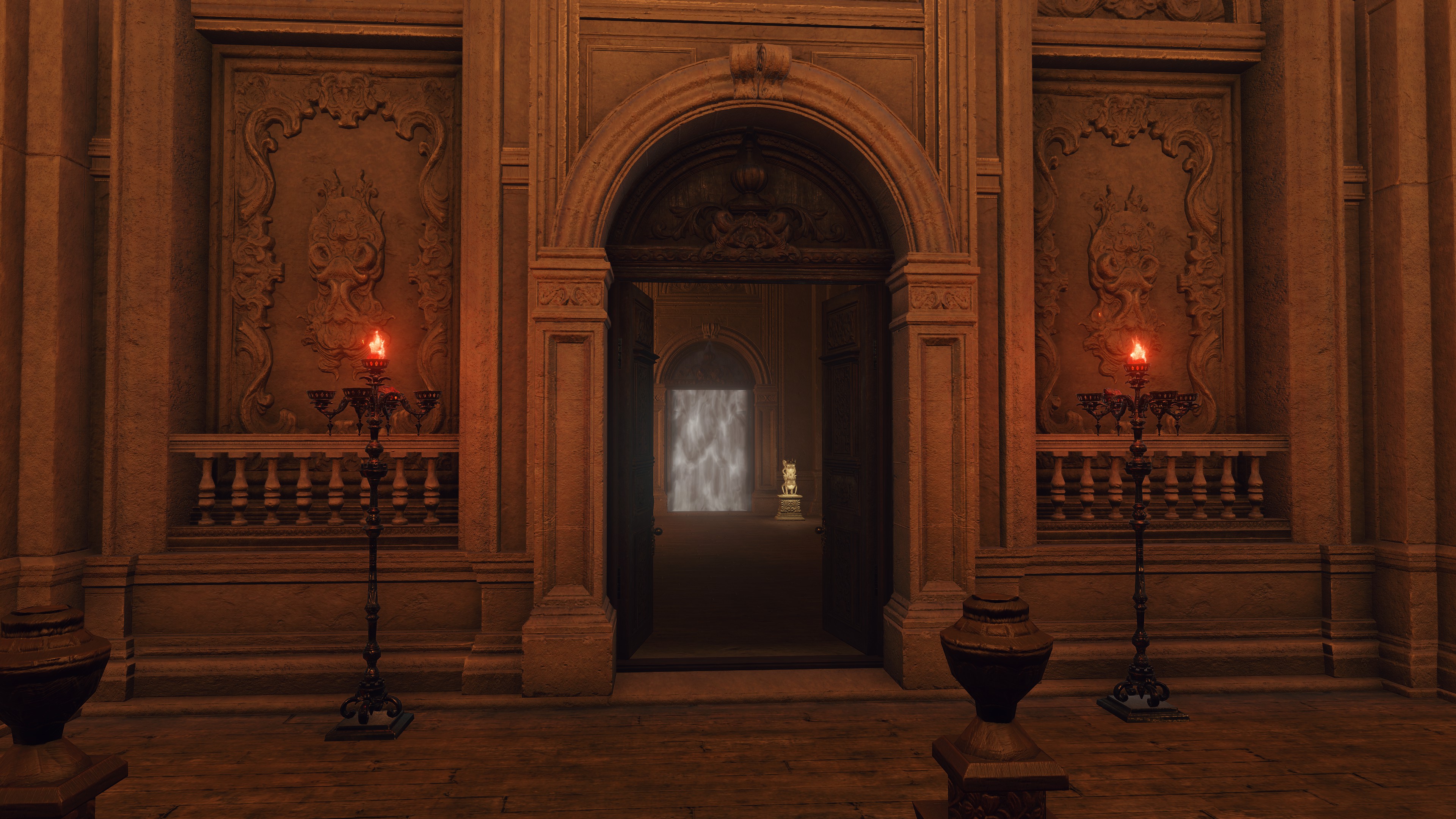
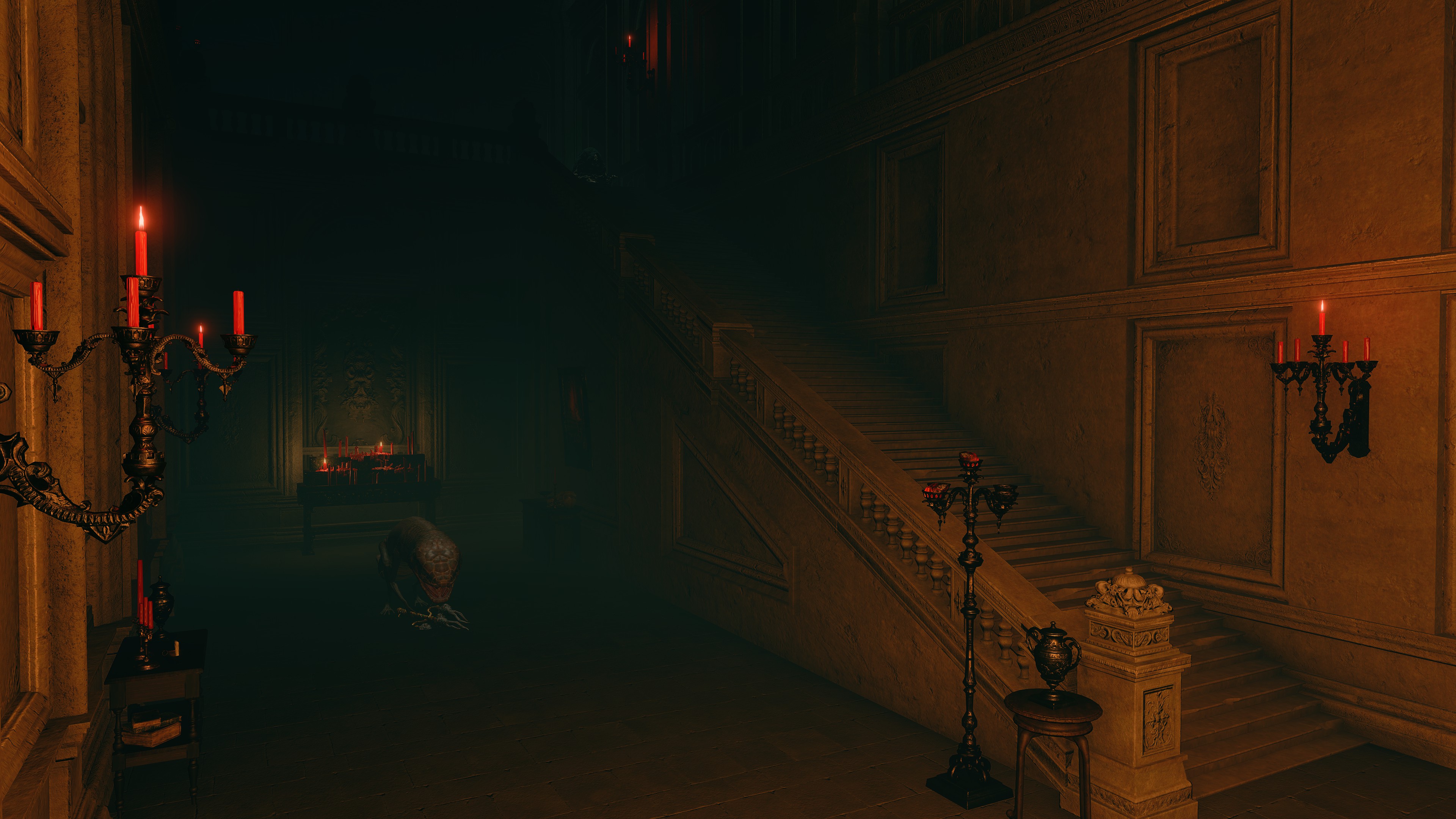
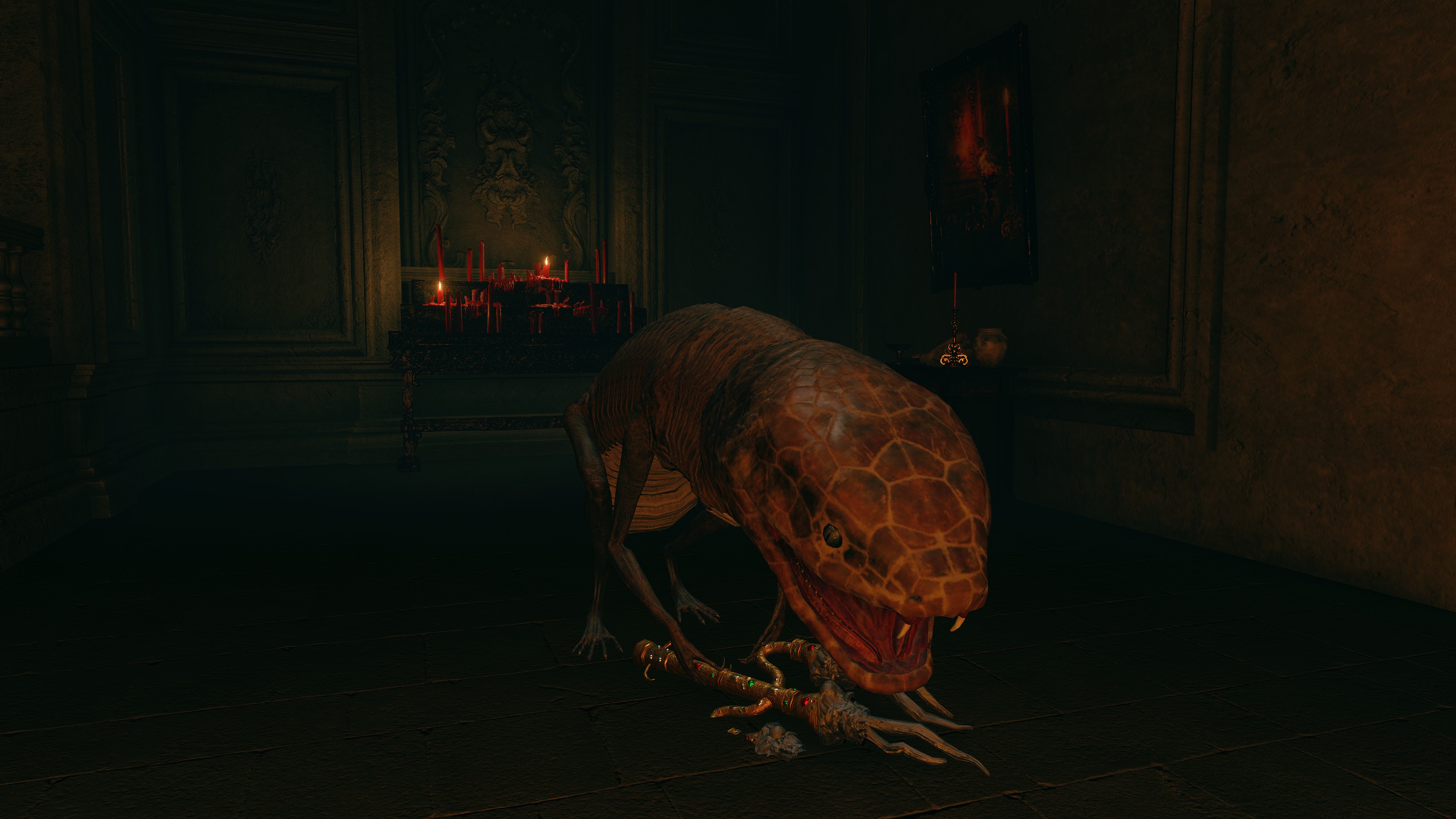
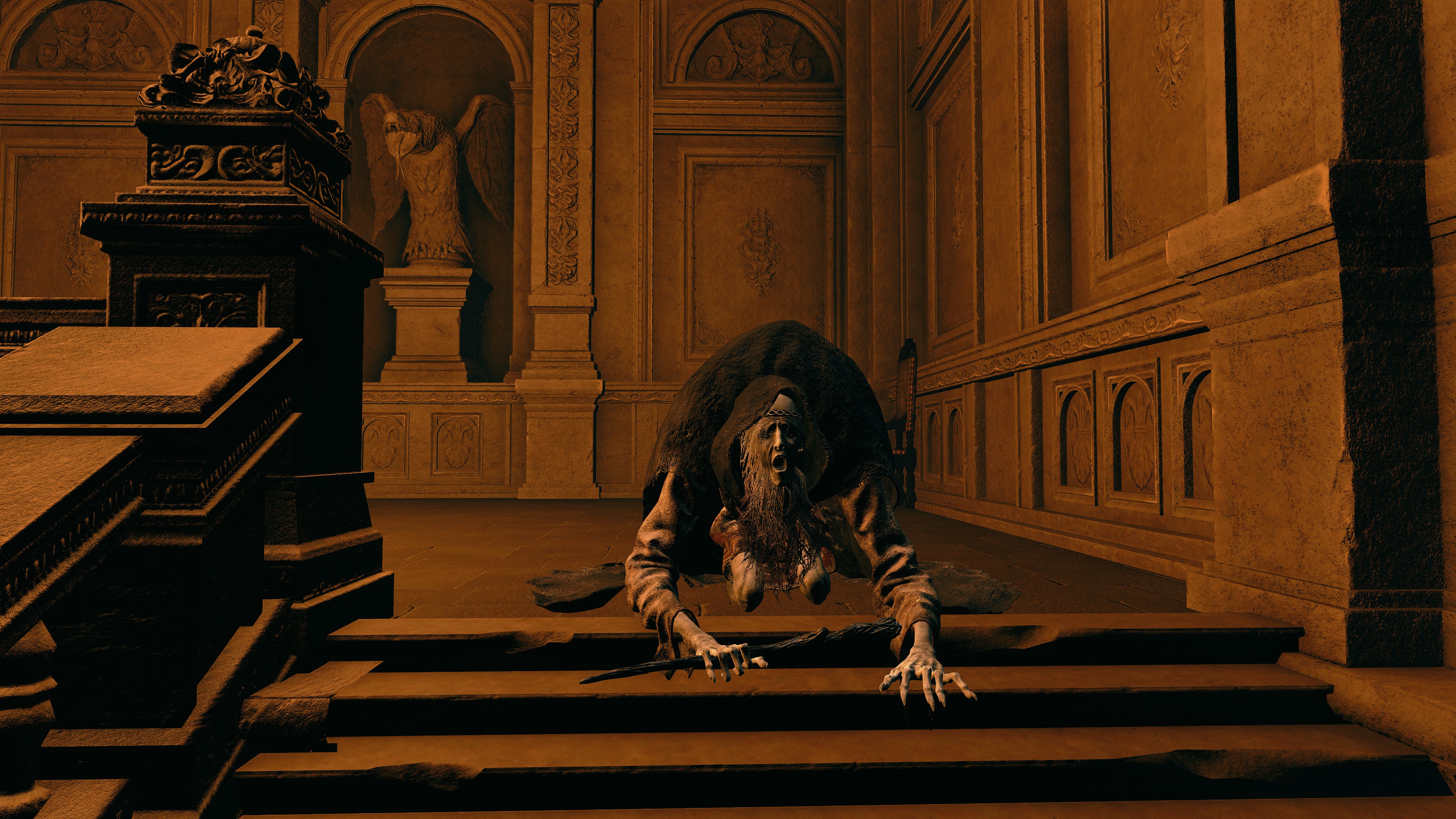
Not all would remain so loyal. Contrast to the other knights to shardbearers, the armor description for Gelmir Knights emphasizes how they “once served” Rykard. As the knight spirit in Volcano Manor explains, this was because Rykard’s blasphemy no longer held regal aspirations. In becoming nothing more than a gluttonous snake, the knights began thinking of him as a monster that needed to be slain, their lord already gone. That idea seems to have sprouted from the assault on Volcano Manor. The spirit of a noble lays among the corpse pile on the Road of Iniquity, rejecting his master’s blasphemy if this battlefield is what it would wrought — something that allegedly anyone would agree with. Since a grinding battle was all but guaranteed in this existential vie for the world Order, we can assume that the issue isn’t the ugly nature of war but the aftercare. Those who proudly raised Rykard’s crest were left to rot in the field, even as the enemy was being strung up. Without showing the minimal respect, was that how the Supreme King treated his loyal vassals?
Chest armor of knights who once served Praetor Rykard. Now a crest no one raises anymore is depicted on it.
For when the Supreme King’s ambitions fell to base greed, they lost the master they should serve.
… Once, Lord Rykard’s blasphemous ambitions were the aspirations of a Supreme King. But, after feeding himself to the great snake, they fell to base greed. That thing isn’t Lord Rykard anymore… It must be killed. In order to not disgrace his name, ambitions, any further. Tarnished. The snake-slaying spear was left in the king’s chamber. Only that spear can kill the great snake. Pierce it. The great snake… that abominable monster…
… Rykard, my master. If this, this corrupted battlefield, is the blasphemy you desire, then I can no longer follow. No one can follow you…
The truth was that Gelmir’s knights were never blindly dedicated to the cause of blasphemy.From the start, Rykard envisioned himself as a regal inquisitor, and that ambition for the king’s seat inspired his knights to wear the abstract but ornate crest. It was that same arrogance they continued to follow as it morphed into blasphemy. But now, where were those arrogant ambitions headed? Rykard’s blasphemy wasn’t so much about overturning the old Order for a brand new one as it was satiating his greed. The knights were fighting and dying for an apathetic lord who would doom them to become the most horrifying kind of Hollow in his endless struggle against divinity. For the surviving knights, Rykard’s libertine ideals looked like a total farce. The one with Royal Knight’s Resolve lays beneath his lord’s portrait, in a room with a chair facing an even larger portrait. His obsessive example captures how their king was privately missed, and no amount of determination would bring him back. And if the king they served is dead, the least they could do was restore his honor slaying the beast which consumed him.
To that end, these dissidents found the Serpent-Hunter and probably confronted the great serpent with it, hence the corpse offering the weapon in the boss room. The fact that the knight spirit knows of the Tarnished and our mission indicates that this overthrow took a fair bit of time, well after the Shattering. Whether that was due to the difficulty in finding this ancient relic, their ultimate tragic fate is obvious. But the base reptile paid no mind to the tool which could be used to destroy him, and that presented an opportunity. The dead, in flesh or in spirit, have laid out the path to hunting the snake practically on our lap. The knight spirit especially is convinced of our mission to slay demigods, finally resting in peace once the deed is done — the gesture he leaves showing his eternal gratitude. With Rykard’s demise, we salvage what is left of their lord’s honor, as well as honored their sacrifice. The sins cannot be undone, but justice may still be served.
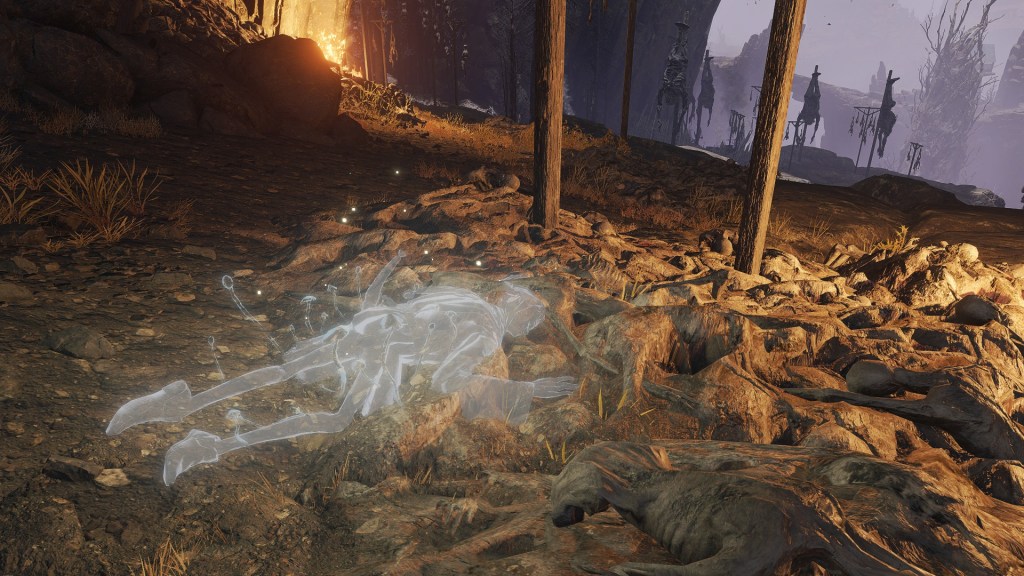
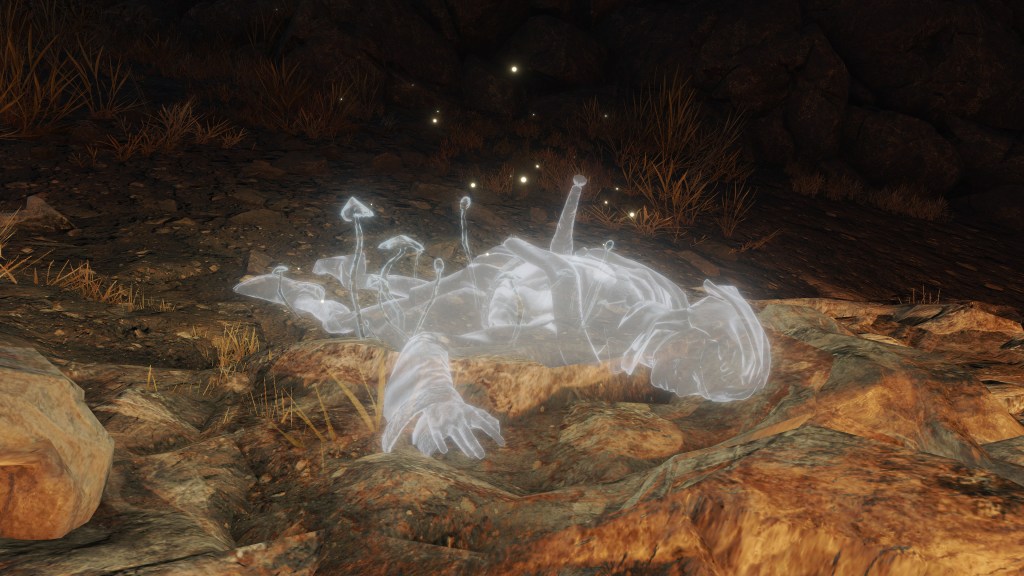
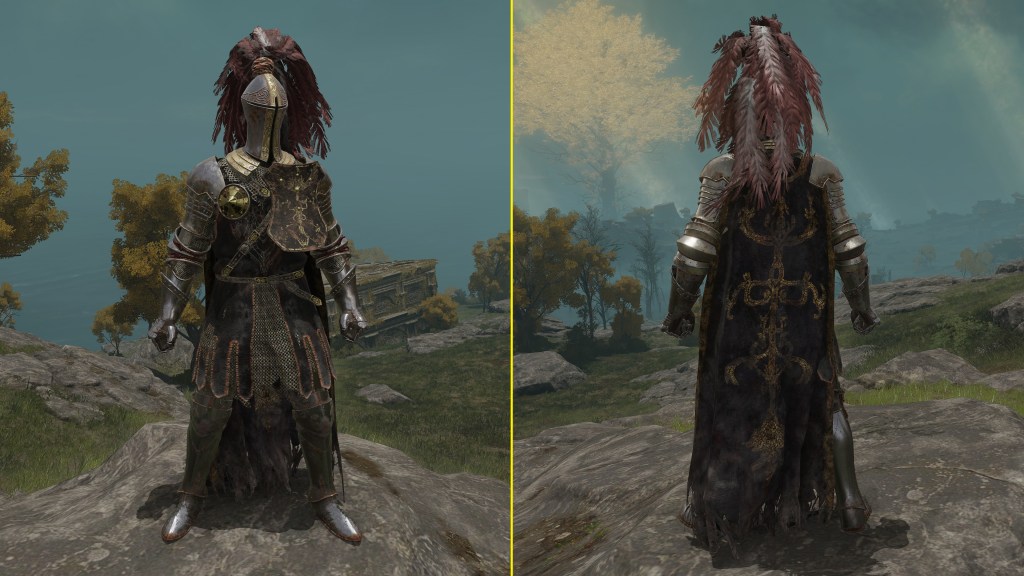
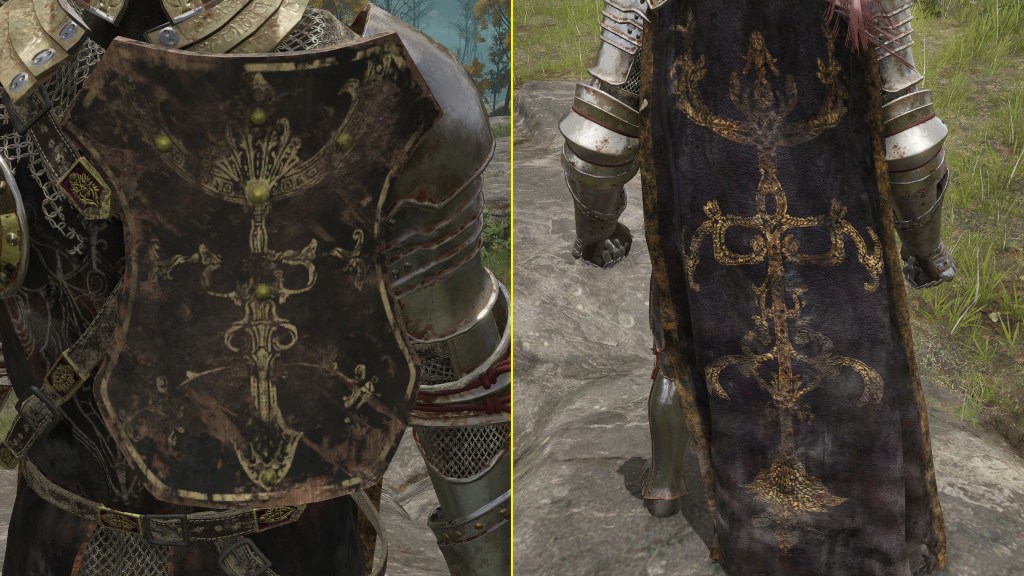
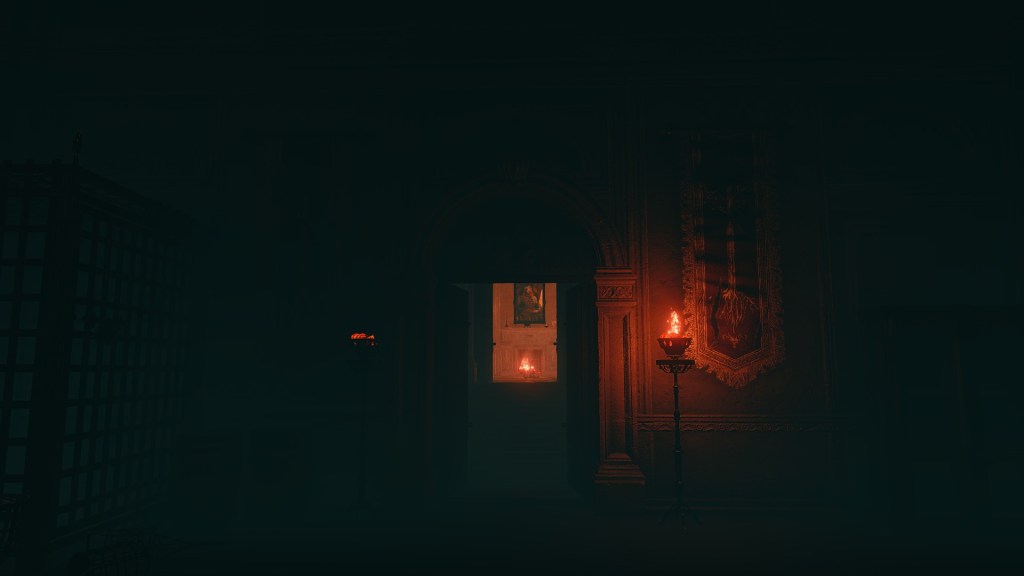
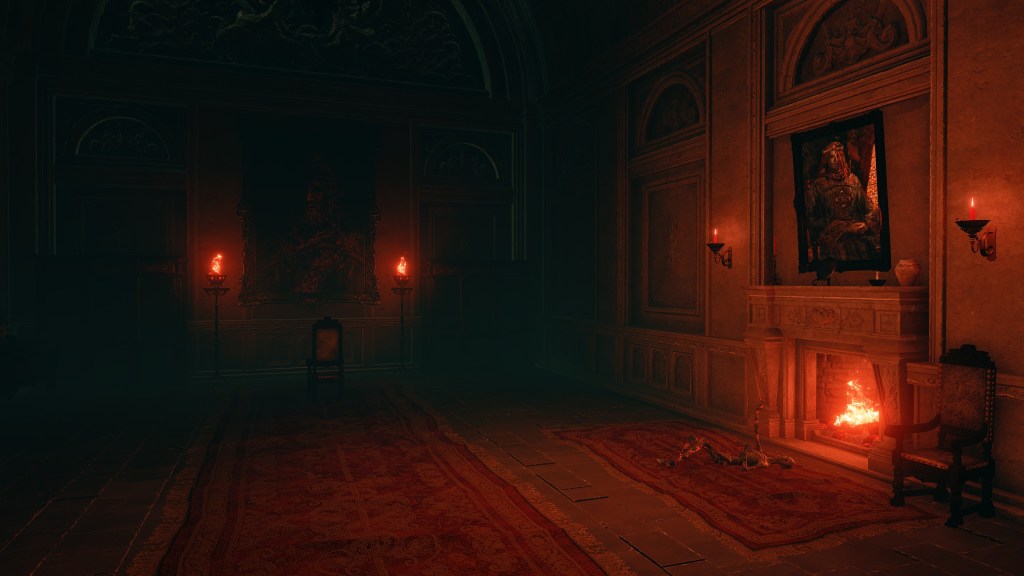
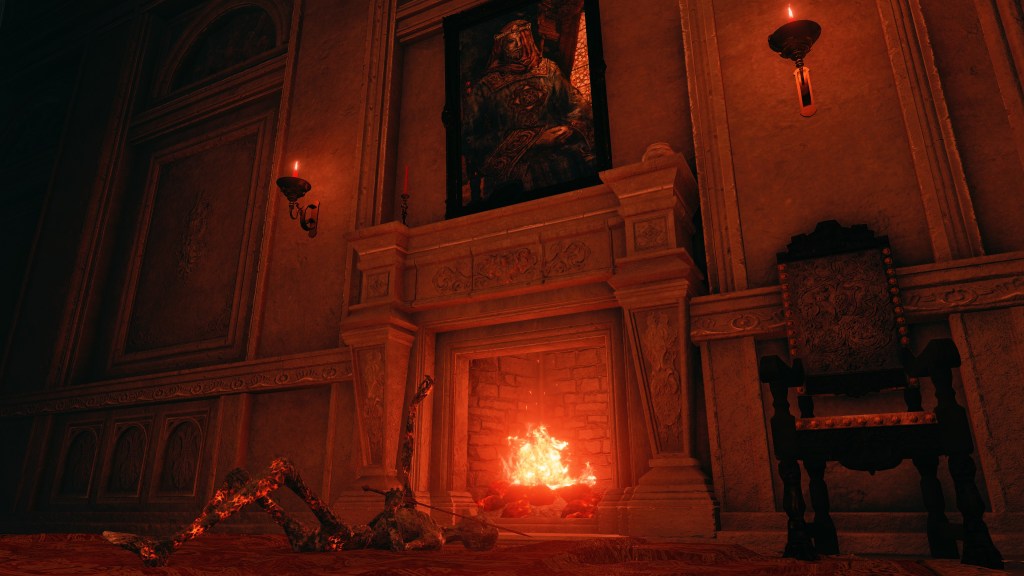
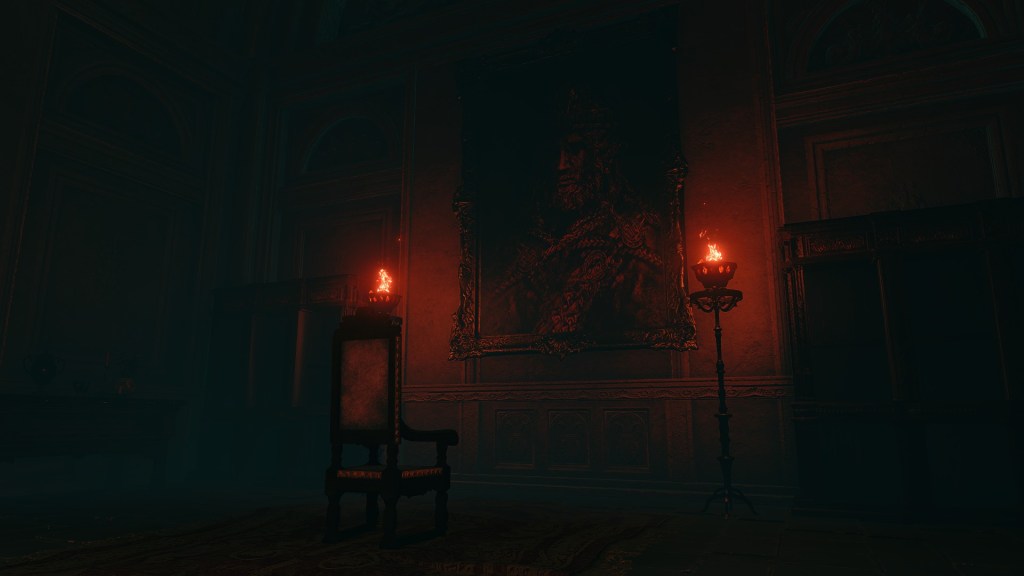
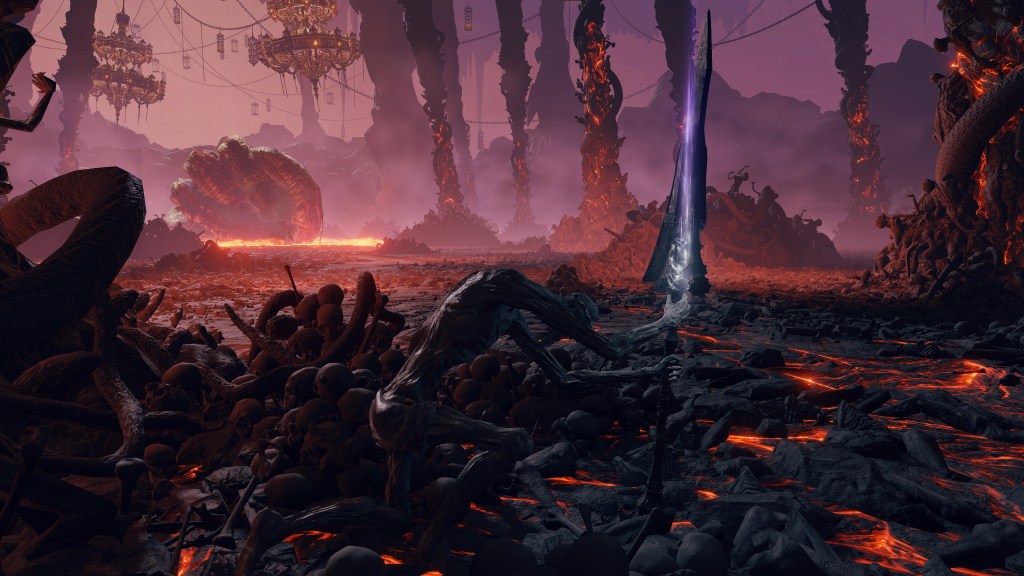
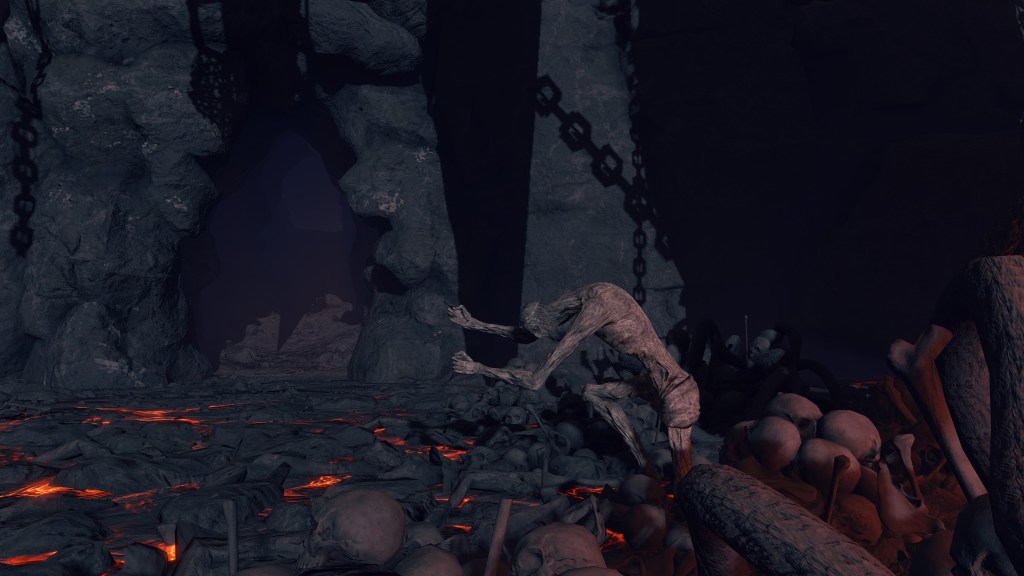
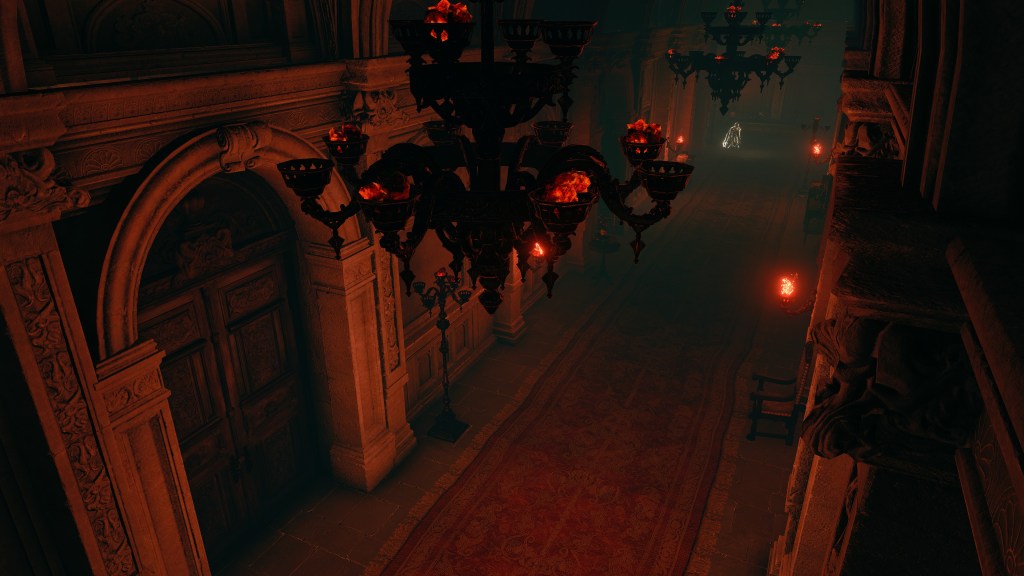
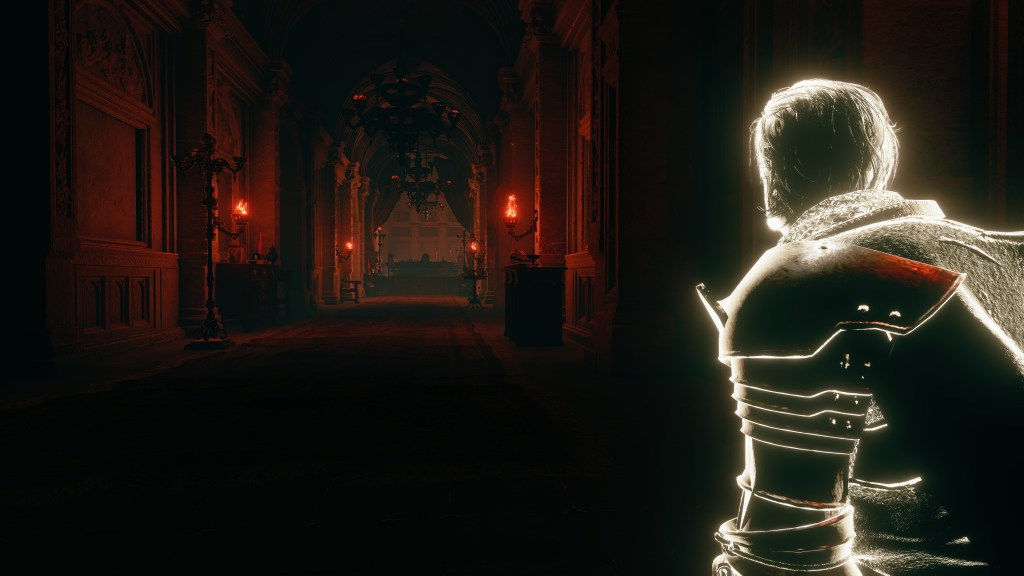
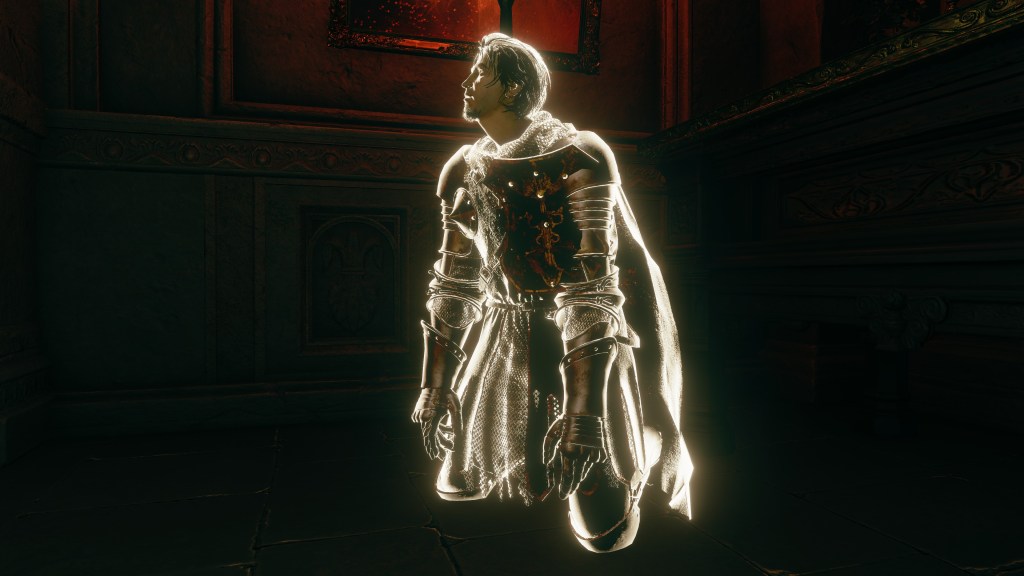
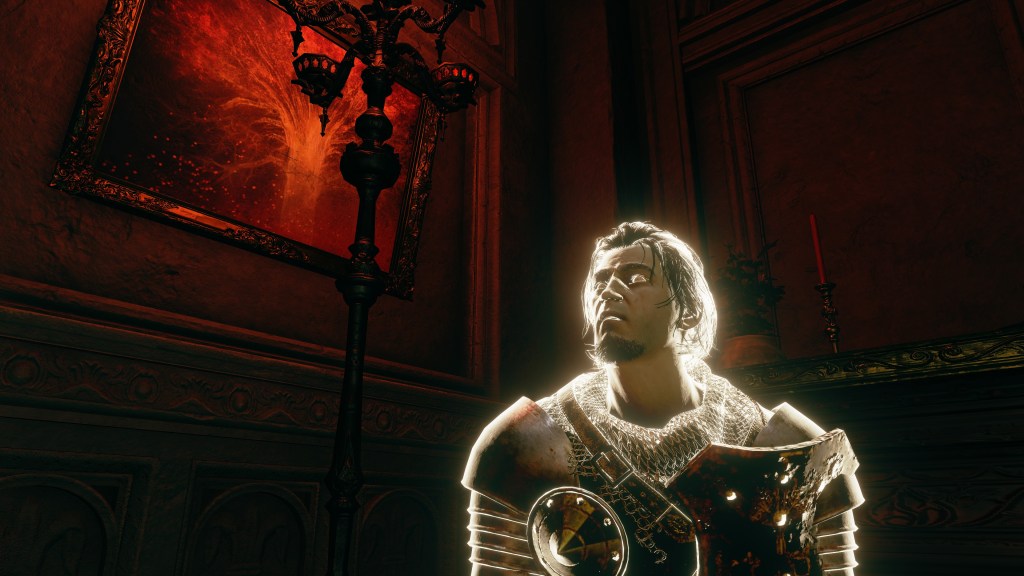
Until then, Tanith will continue to feed her husband new heroes, directing the inquisitors and man-serpents from the castle on his behalf. The army has already played its role, seeing Volcano Manor through the Shattering. The rest of the fighting can be handled by puppets, or the occasional renegade who seeks shelter from the manor. So long as there are blasphemers with nowhere else to go, the castle crowning Gelmir should stand strong. This includes outsiders, like the frenzied troll who undoubtedly climbed the mountain on word that the ominous peak became a haven for the Erdtree’s enemies. With no hope for a cure to his ailment, that hooded giant knows the Golden Order’s rejection, combined with anguish which begs this world’s end. It is no wonder if he found kindred spirits in those who proudly rebel instead of hide away. While not everyone might benefit from mastering the power of flame or seeing Armageddon, Rykard’s message still resonates, and that is his house’s greatest asset going forward.
A Villain Makes the Hero
Tanith calls rebellion against the Erdtree the dearest wish of Volcano Manor, but with many in their own ranks becoming disillusioned with the proposition of a “united” front, she has to look for new sources of heat. Initially, this was accomplished through abductor virgins. These obvious reference to the iron maiden, unsurprisingly, were originally another of the inquisitors’ torture devices. Many come equipped with the sawblade Ghiza invented, others using the sickle and chain or a combination of the two. The needless suffering of such weaponry has come to symbolize the enemy, which rolls through the castle town contributing to the madness; one even joins ex-prisoners on break from lookout, behind an imp statue seal to a watchtower. An inquisitor with their Girandole similarly took two virgins to set up a private torture chamber in a small cave in the depths of the volcano, perhaps hoping to escape the lava already flooding the area; evidently, the person ended up joining the bones of his victims in that old animal den. Still, they have clearly been a favorite tool of the sadists’ repertoire.
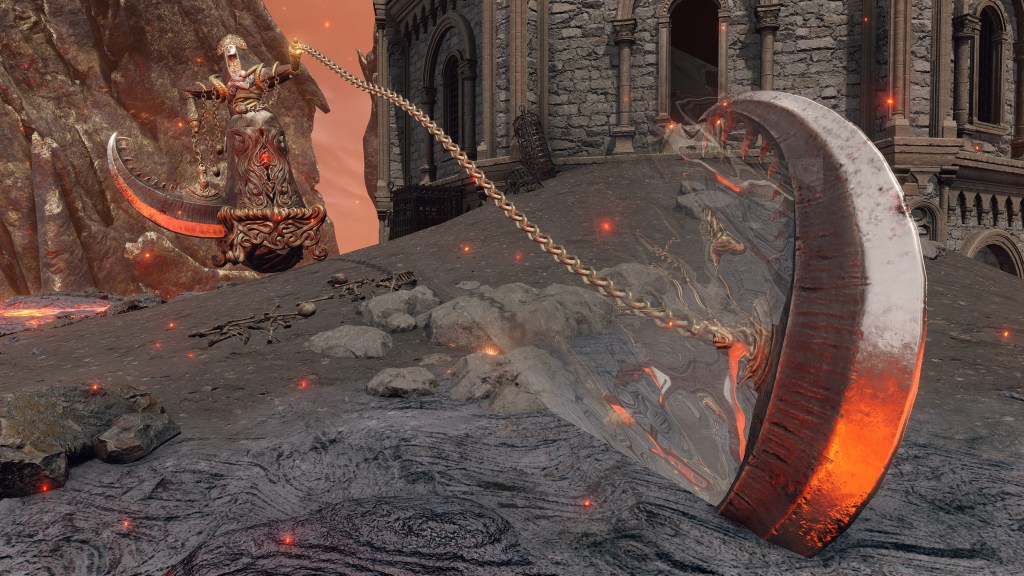
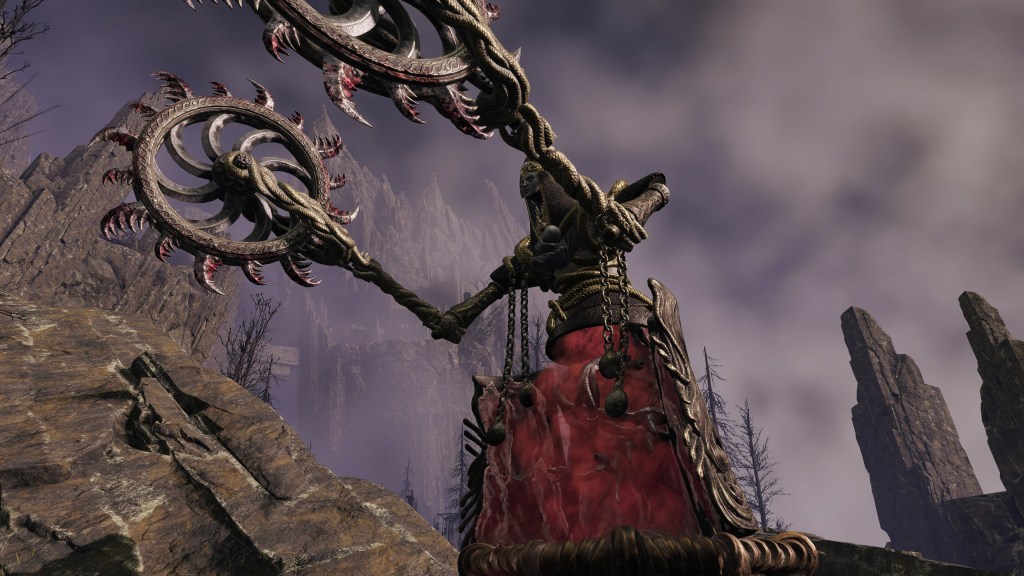
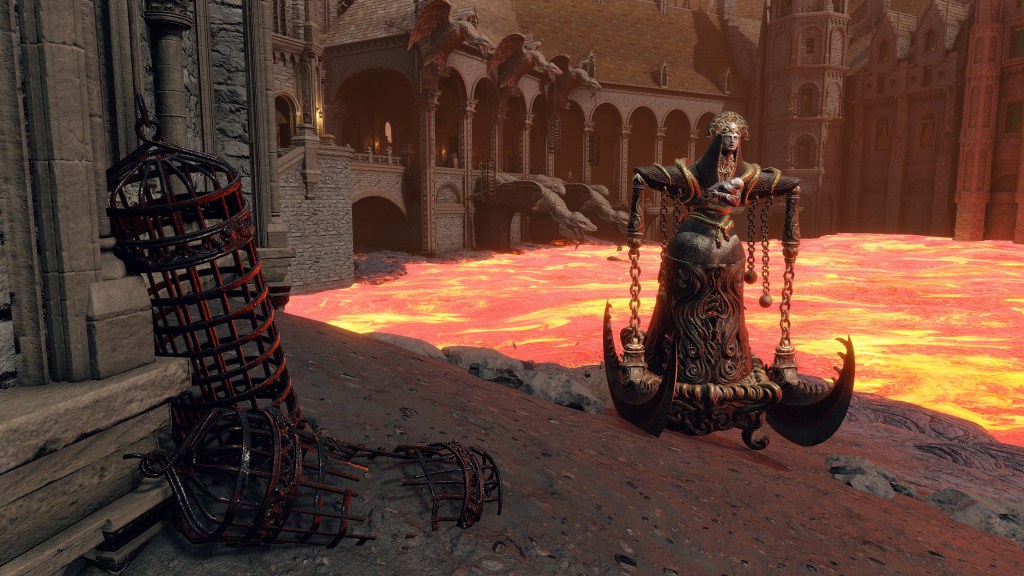
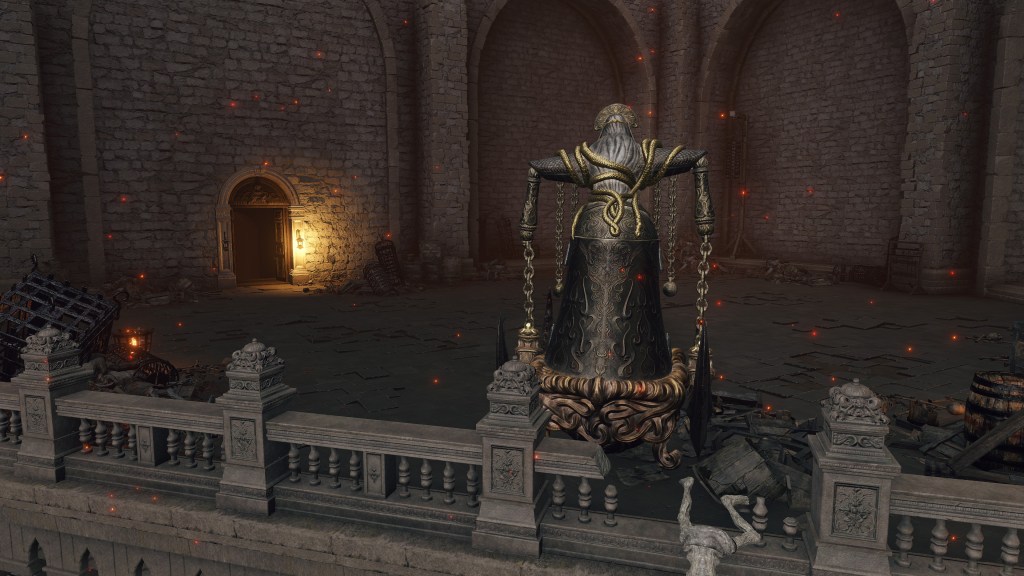
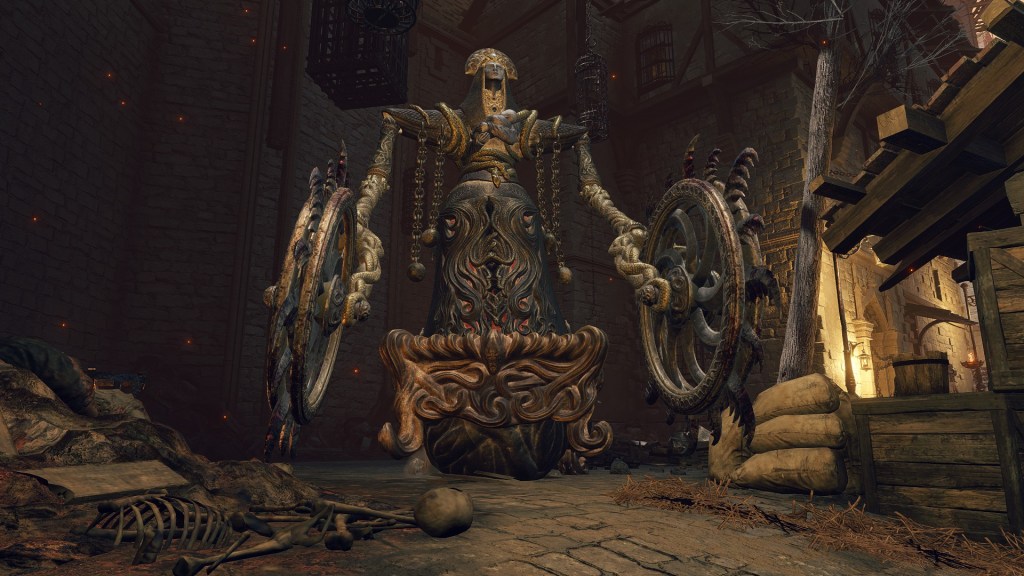
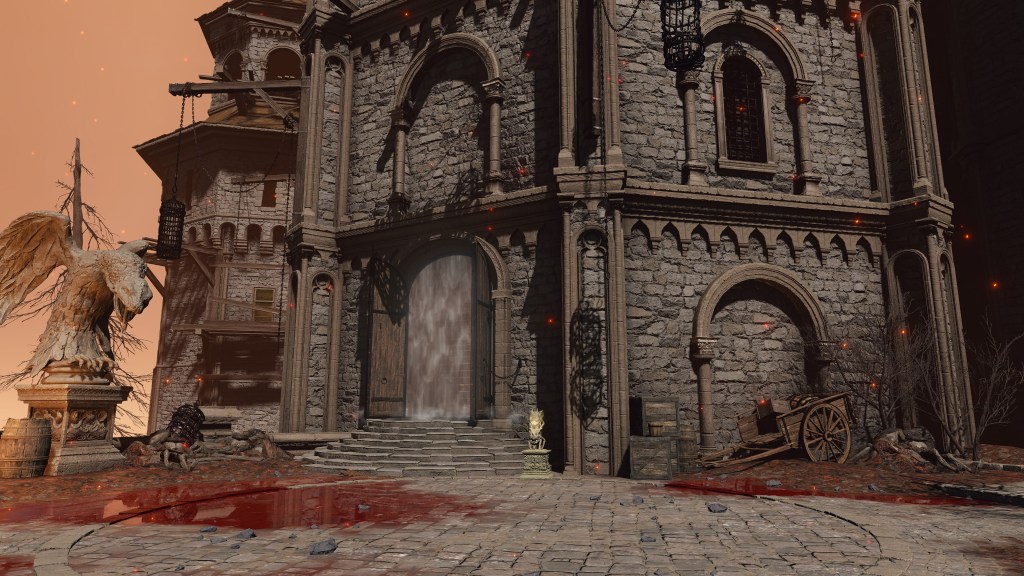
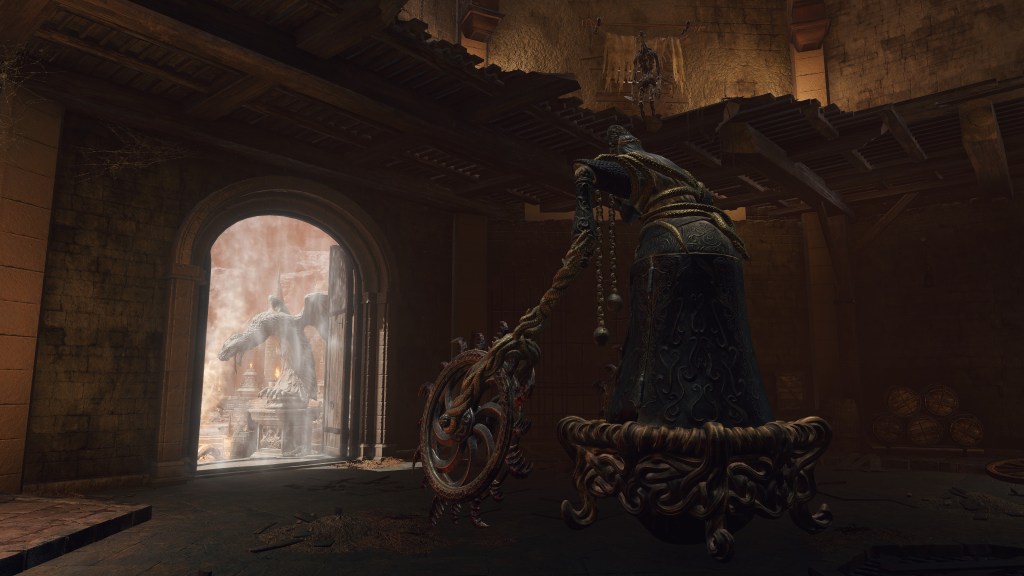
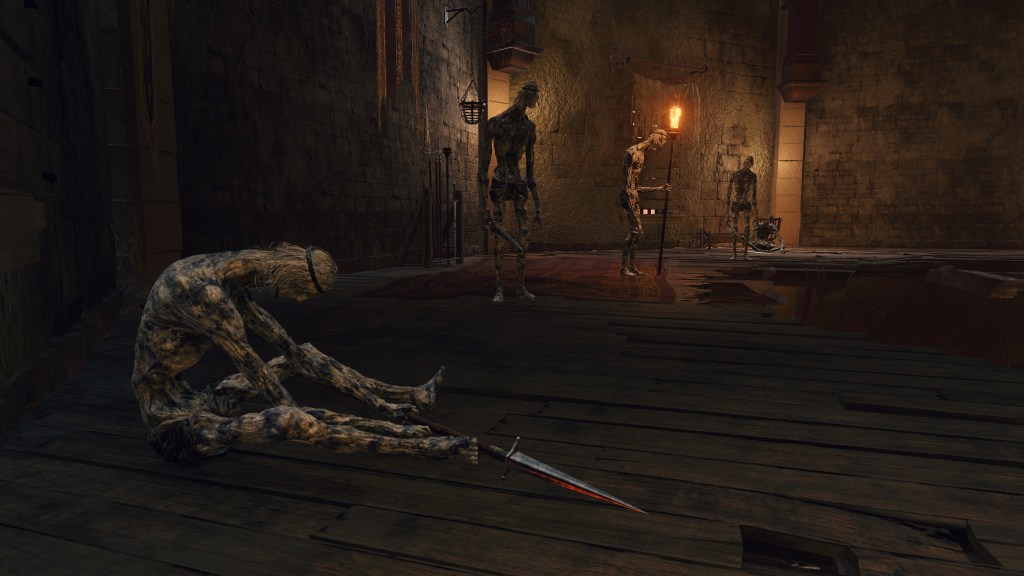
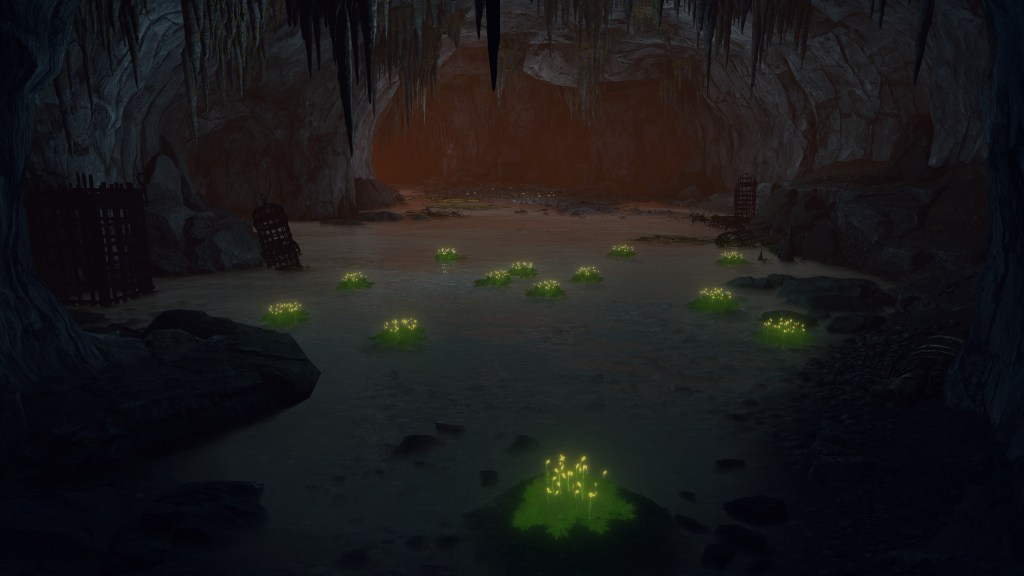
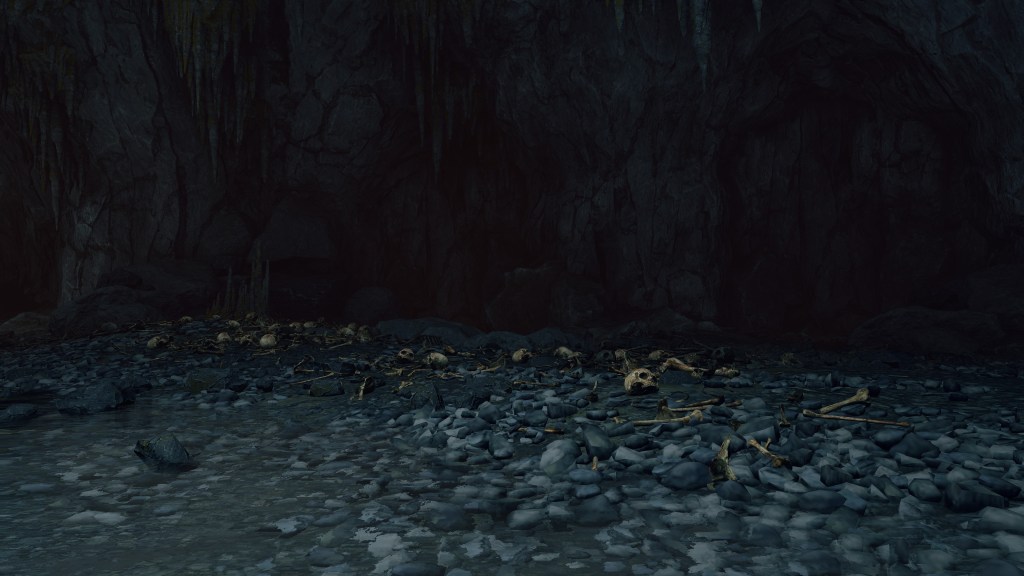
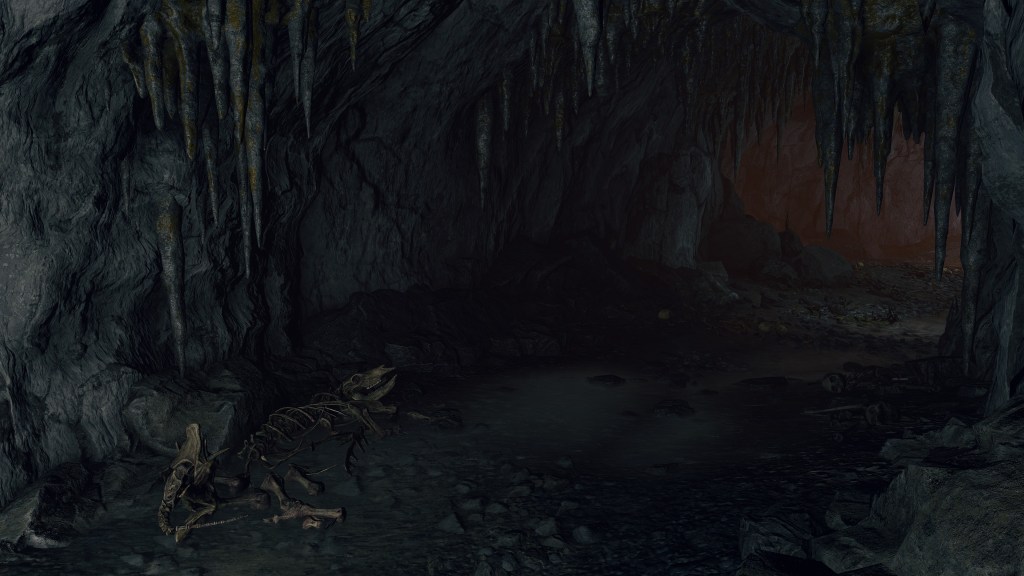
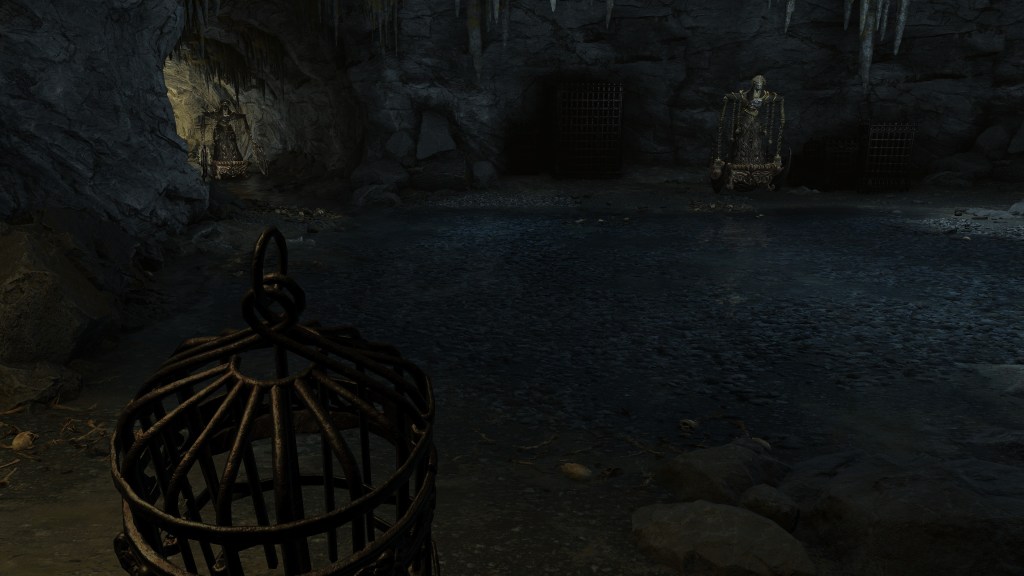
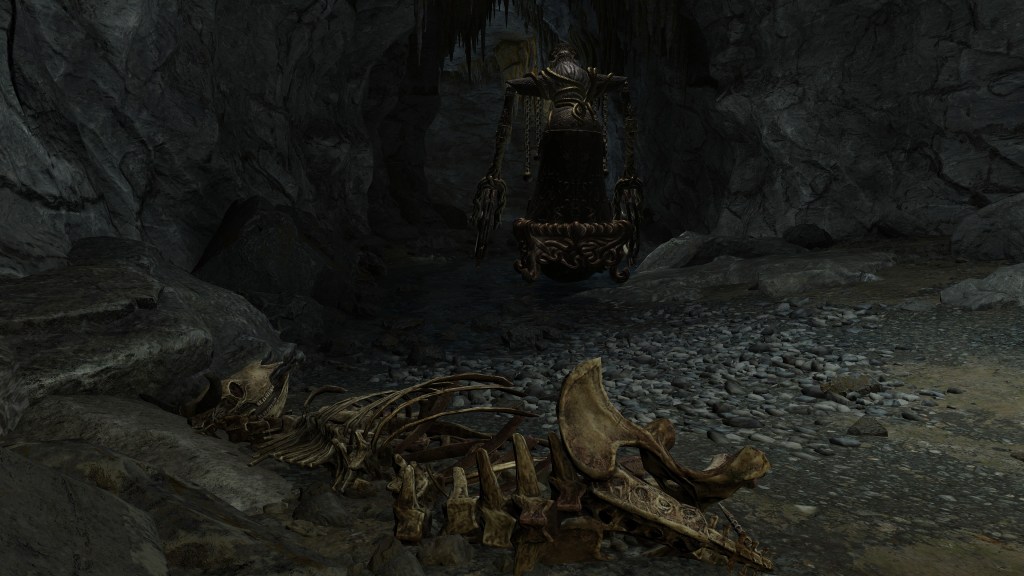
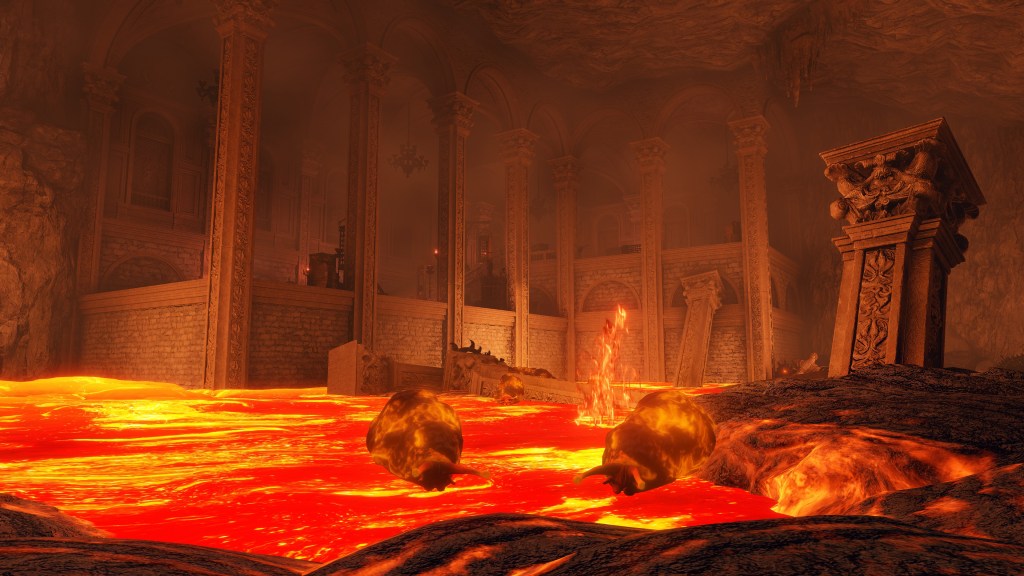
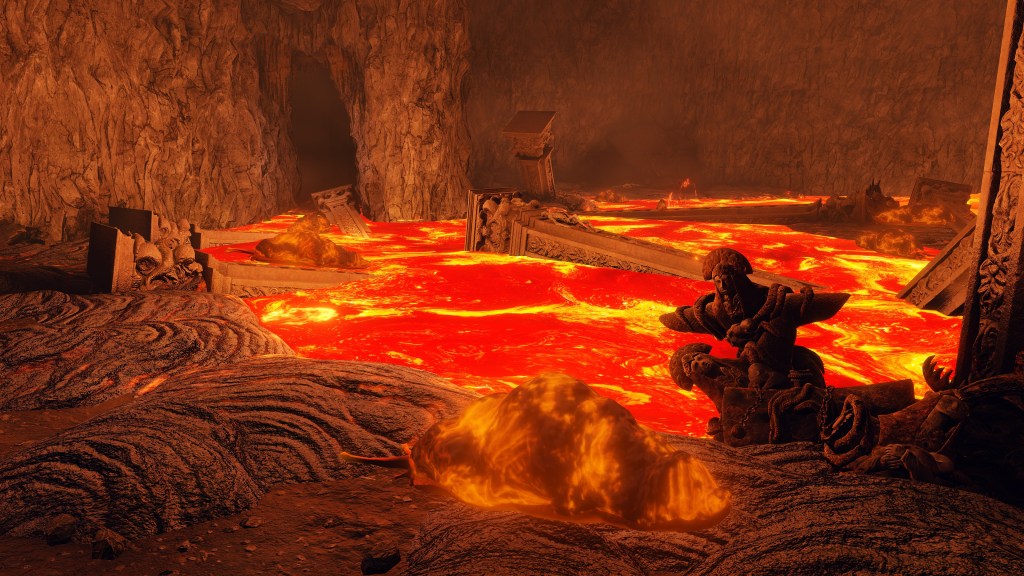
I see… Well, I cannot force you. But remember this: if trying to head down the hero’s path, you should see my king. In order to fly the banner of rebellion against mockery and rebel against the Golden Tree. That is without a doubt Volcano Manor’s dearest wish.
This Gelmir origin perplexes fans, due to the appearance of two more iron virgins at the Fort of Reprimand. The iconic sawblade is supposed to be Ghiza’s invention, only later used for the virgins. How then has either appeared in the Realm of Shadow? More than likely, these specific enemies are intended to be the fort’s independent invention. The themes of torture and snakes do comport well with the fort and Messmer — even the image of a mother holding a baby can be linked to the statue of Marika behind the Impaler’s throne. Altogether, it easy to imagine the crusaders inventing something like the iron virgin. Combined with the two’s location outside the castle, tucked to the side, and they are liable to be the fort’s means of capturing deserters out in the field, beginning the torment as the devices bring the insubordinates back for punishment; it would explain the damage to one, struggling to arrest veteran soldiers. Put simply, the developers are probably just reusing the enemy for the separate narrative in DLC, similar to the “Omenkillers” leading the so-called reprimanding.
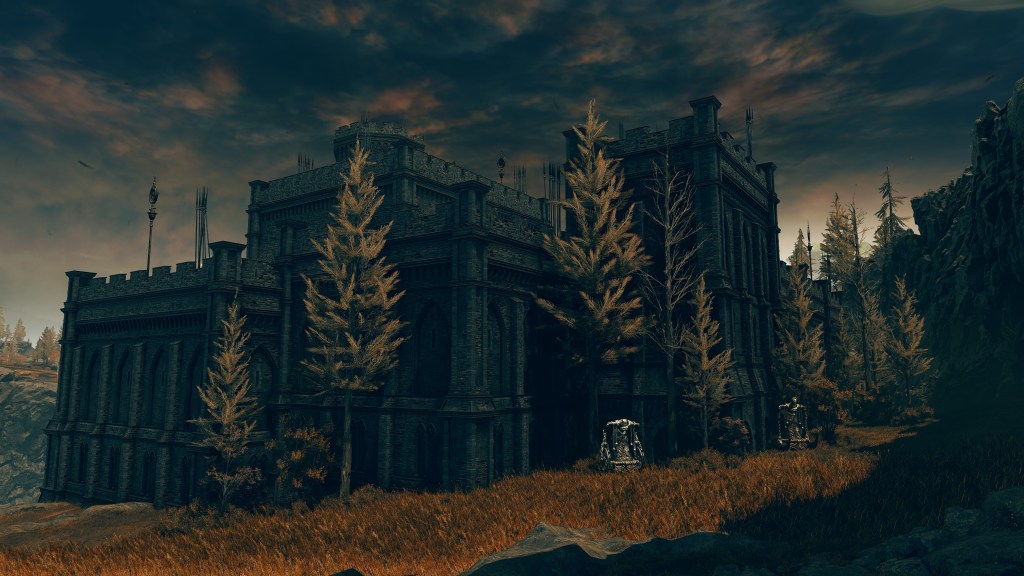
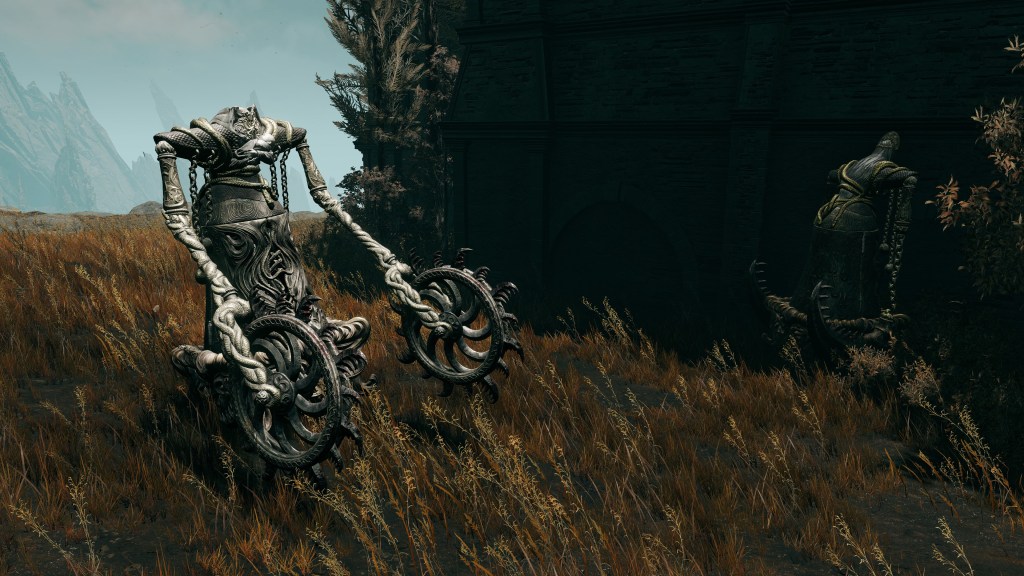
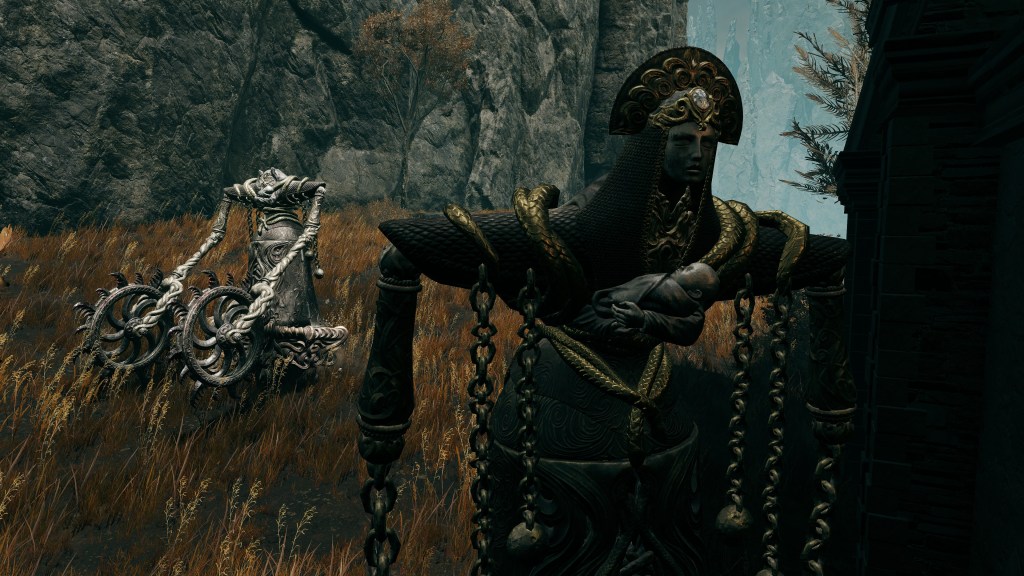
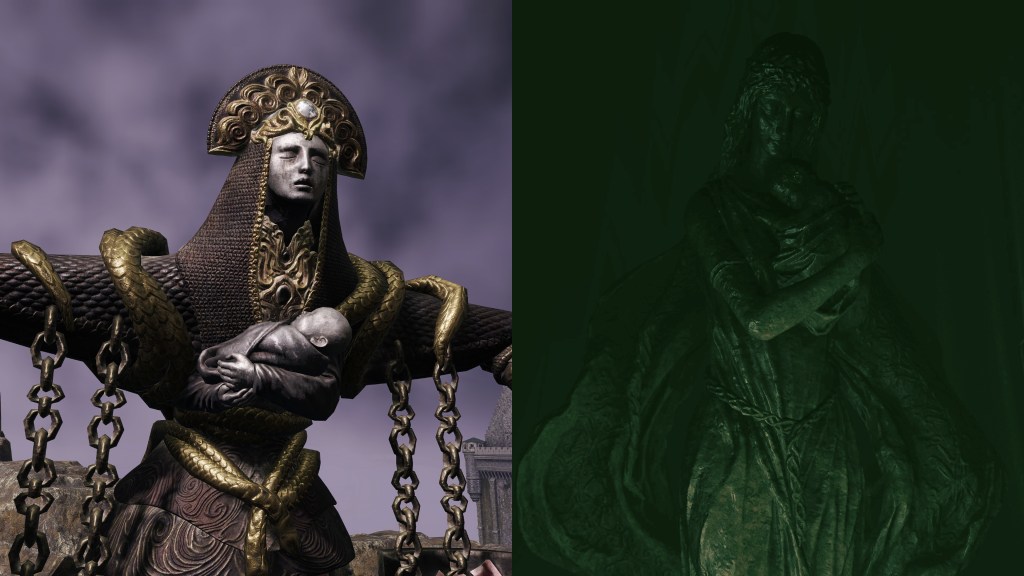
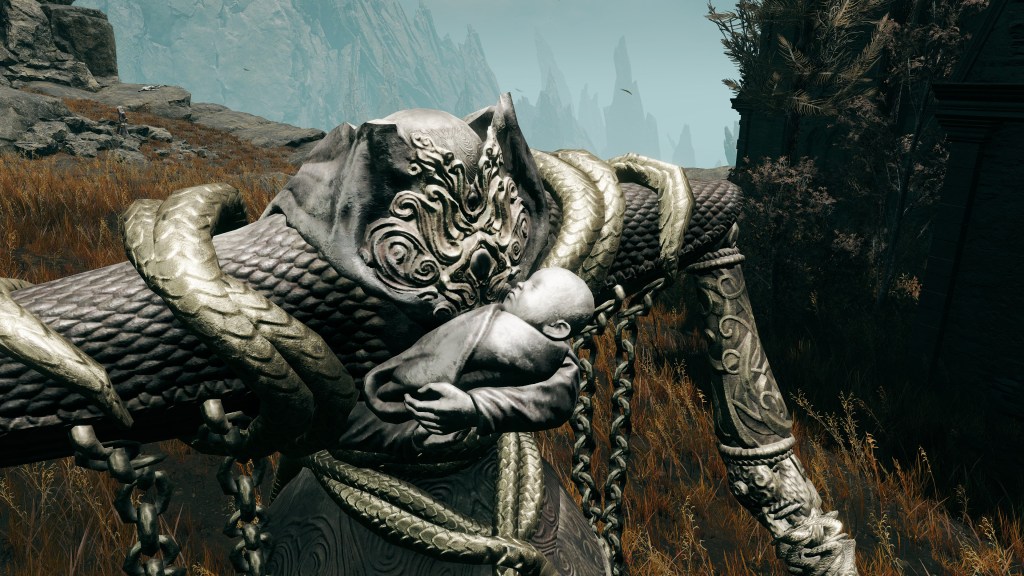
It is this function as mobile prison transports that caught Tanith’s attention. Although we do see a number of iron puppets finishing off Morgott’s remnants on the front lines alongside the wood marionettes — plus one behind the lines, caught up in the unrelated raid of the Hermit Village — the majority have traveled across the Lands Between on another task. A magic device was installed in these dolls, allowing them to warp their contents straight to Volcano Manor as we can confirm personally. This warp device also enabled the dolls to teleport back as well, based on the number surrounding us at the destination. This was the perfect way to circumvent the battlefield on Gelmir, and teleportation might even explain how they reach some of their locations. Indeed, it is one thing to encounter an iron virgin at the foot of Raya Lucaria, another to find more in the isolated academy. We can encounter them atop the ramparts of Caria Manor, in the heart of Redmane Castle; even, humorously enough, inside the Sealed Tunnel. One way or another, they get around, and for one obvious purpose: to collect prospective heroes.
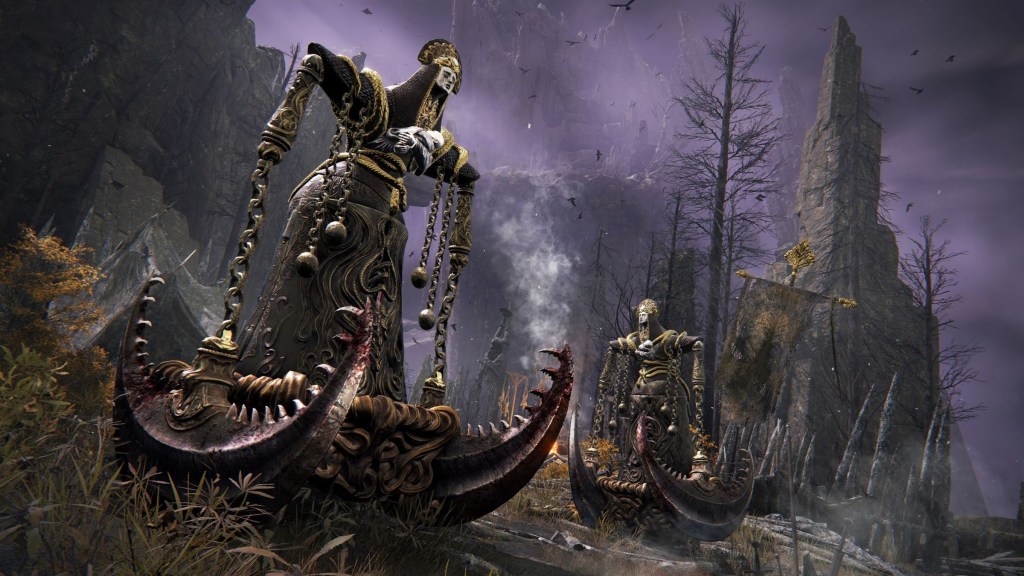
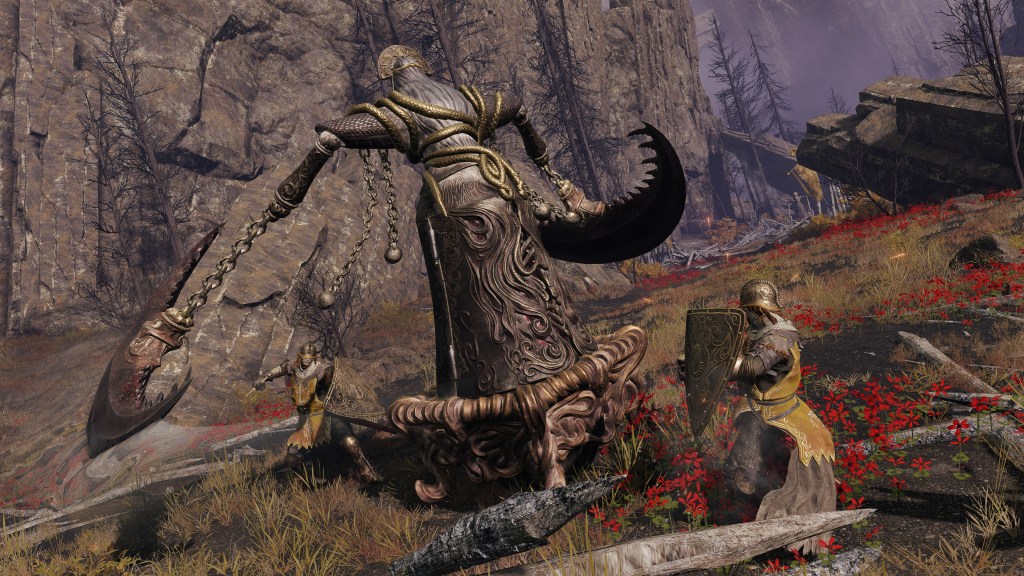
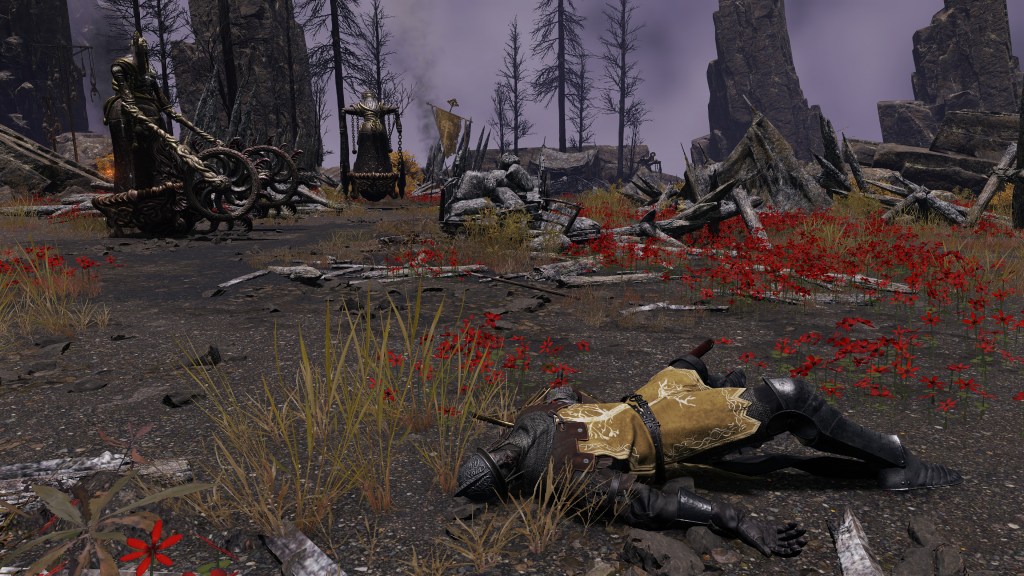
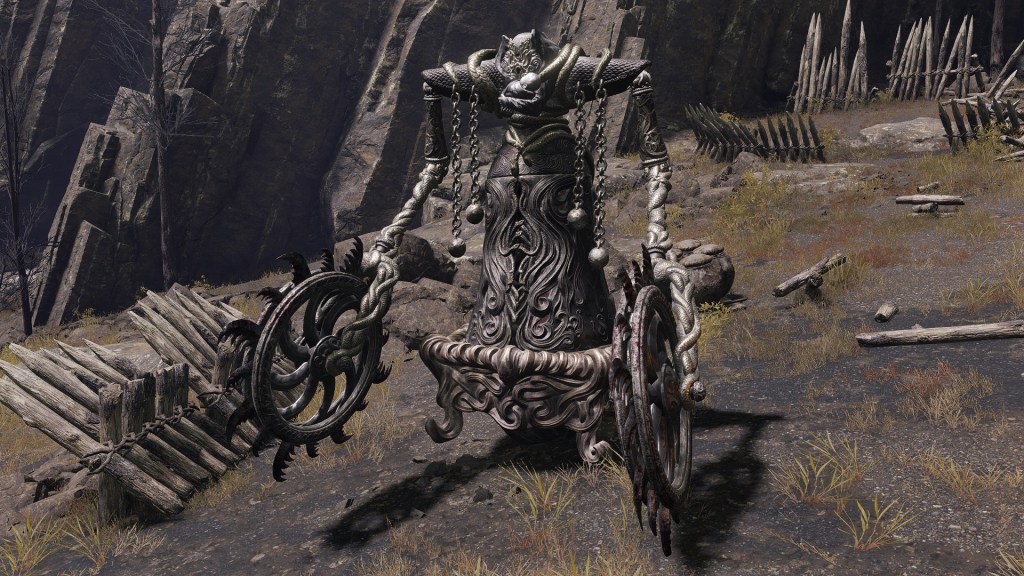
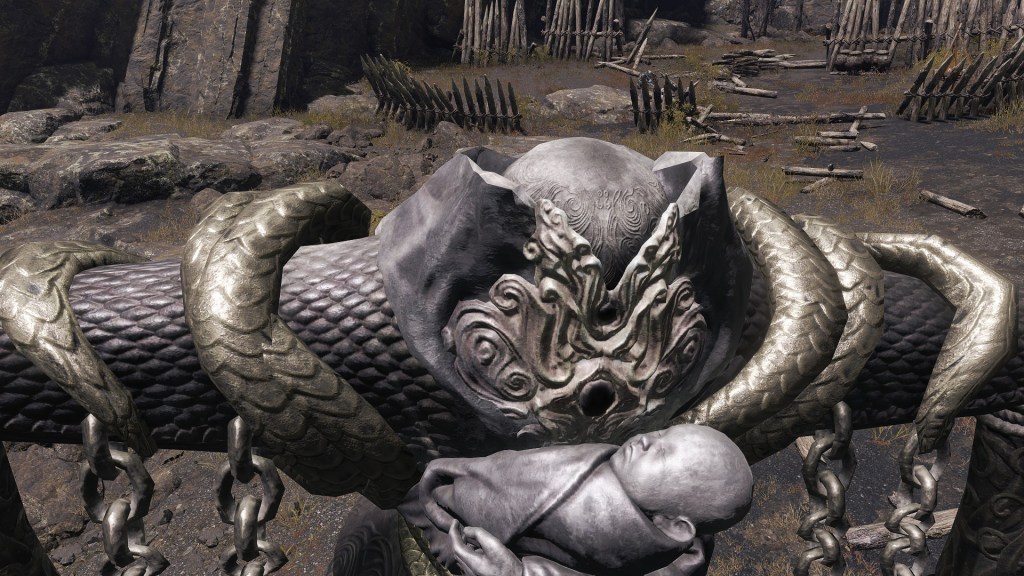
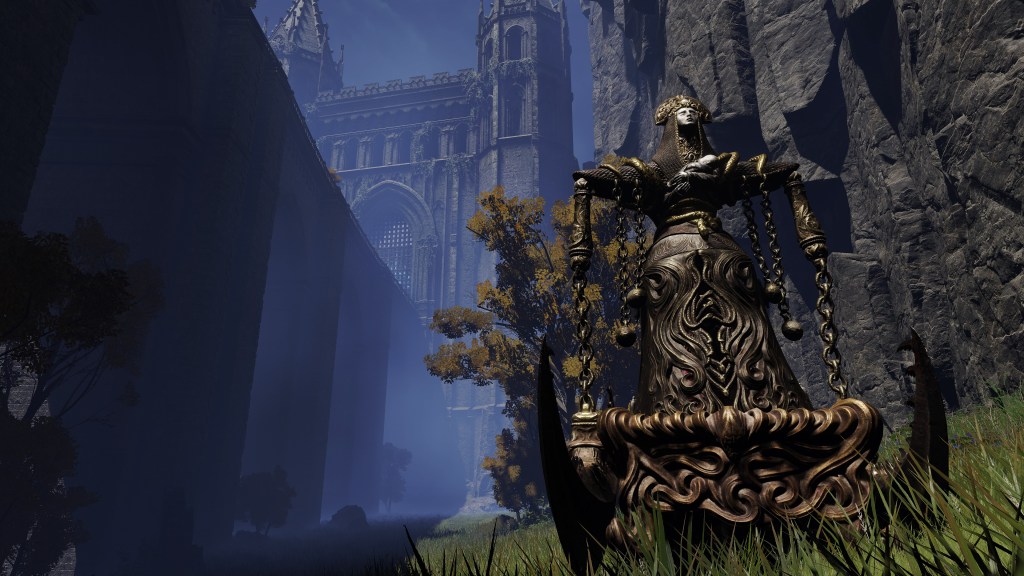
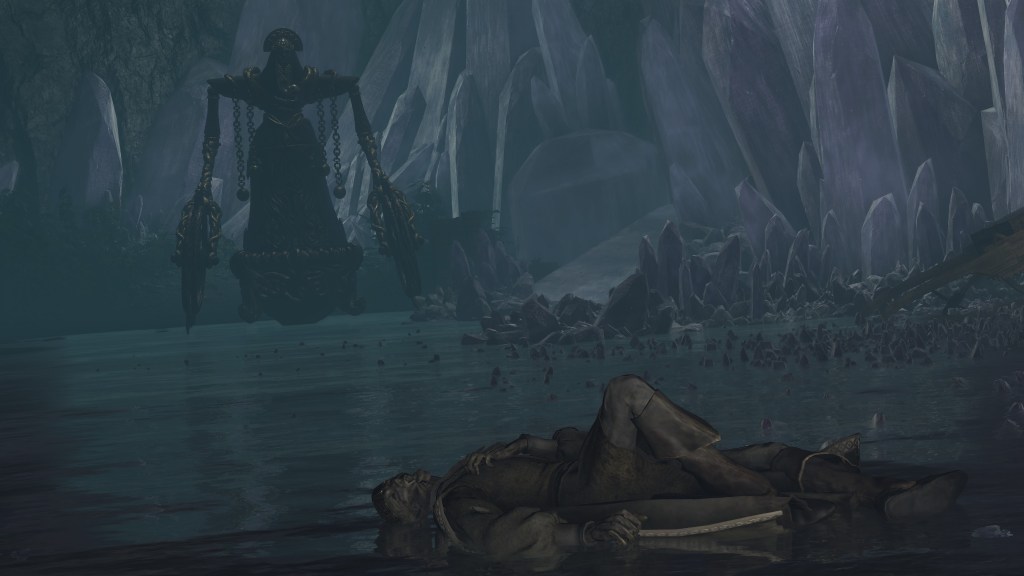
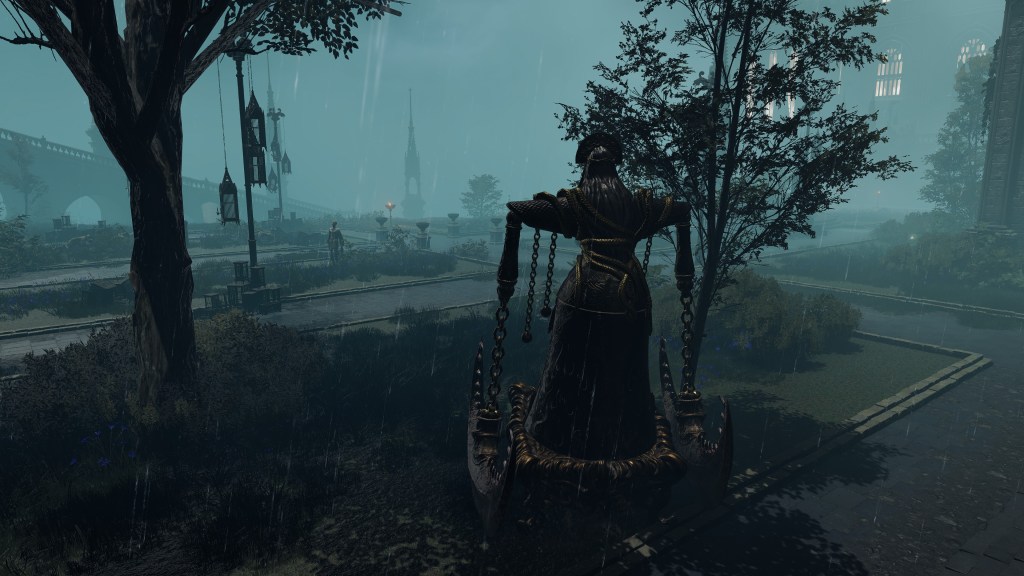
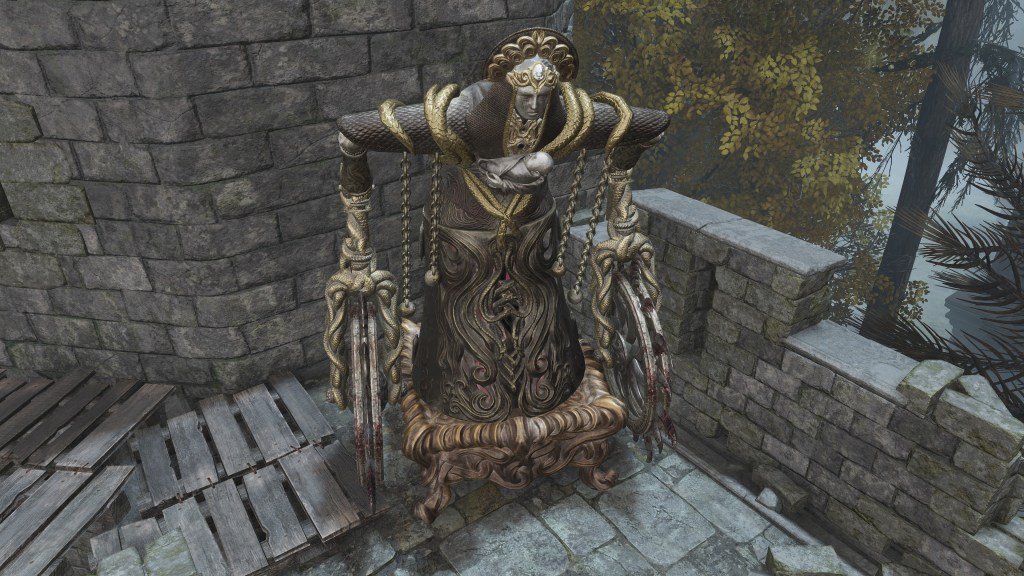
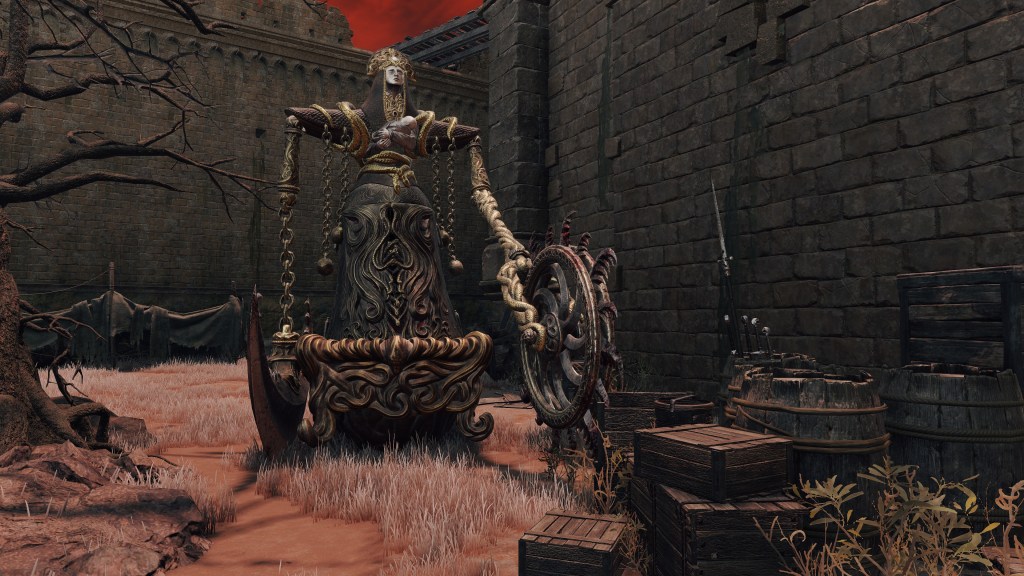
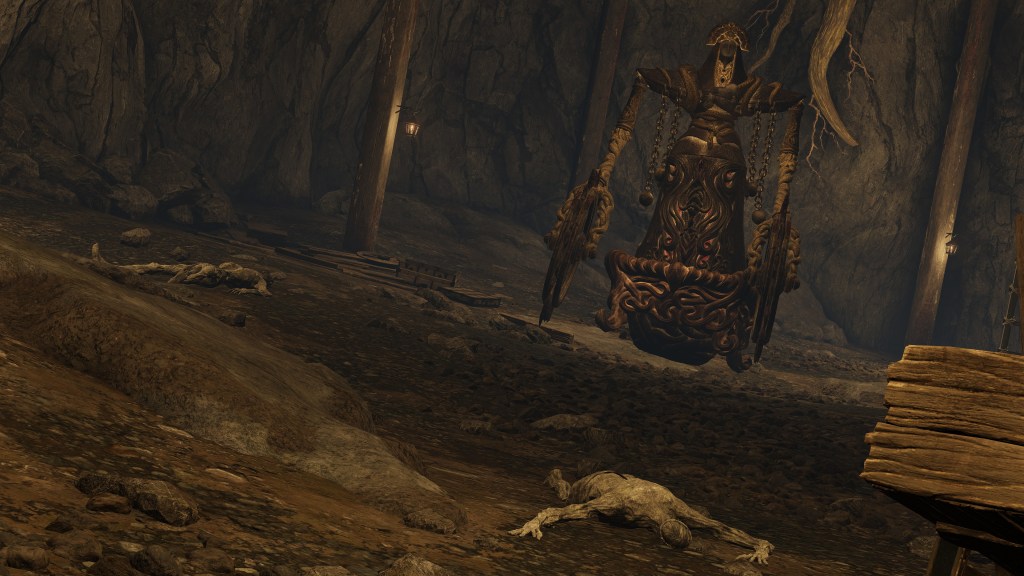
… You aiming for that Golden Tree, right? In that case, I got a good story for ya. There’s a special way to get there. Have ya seen the iron-made virgin dolls? The peculiar automated dolls brandishing a sickle and chain or spiked wheel… They, long ago, were equipped with a magic warping device.
… I never thought I’d see you again. Ah, I understand what you wanna say. But I spoke no lies. If you were abducted to the volcano and escaped, that place definitely was the Golden Tree’s base. W-Well… it may be my explanation was lacking… but I spoke no lies, and at the end of the day, you’re safe. All’s well that ends well. Right?
The abductor’s targets become all the clearer from where the enemy tends to congregate. Beyond Gelmir, a notable number have come to Leyndell’s fortified manor, where Tarnished heroes most recently have gathered. The same can be said for Raya Lucaria, where Rennala and her heroic knights might be found. The largest concentration is reserved for Caelid, where Radahn’s forces are currently heroically resisting the Scarlet Rot. Besides the one in Redmane Castle, another virgin has been battling the giant dogs across the valley from the Abandoned Cave. Exploring said cave, countless more dolls have sunk in the Rot swamp gushing up into the cavern. With them lies a corpse carrying the Serpent Bow, the complementary Serpent Arrows sold by the nomadic merchant further north — to be sure, Formless Serpents joined in the region, presumably out of interest in their fellow assassins in Sellia. Combining the information, a large convoy came down from Gelmir, only to flee into the cave to escape the local fauna and become trapped with Rot when the natural bridge across the valley serendipitously collapsed.
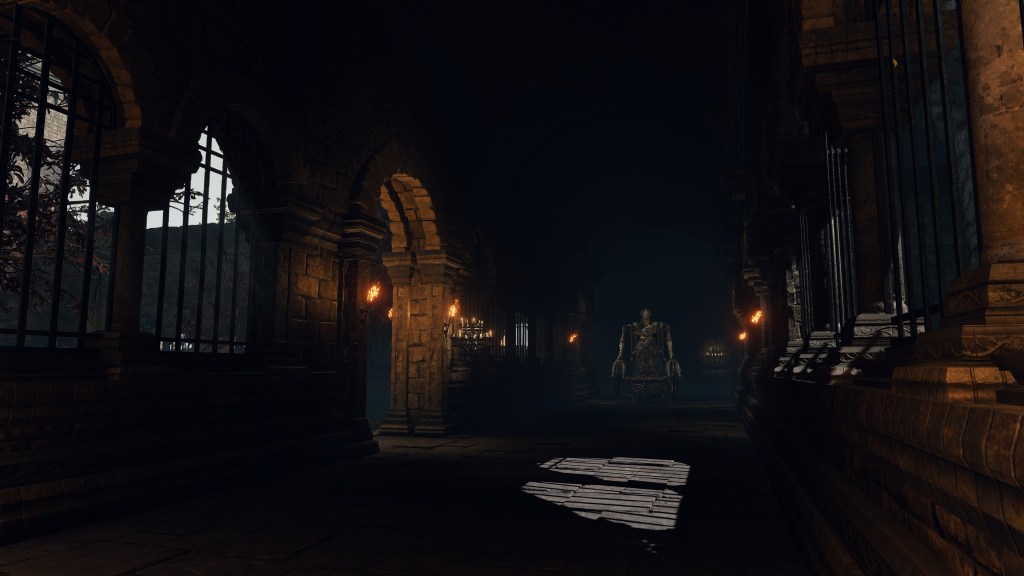
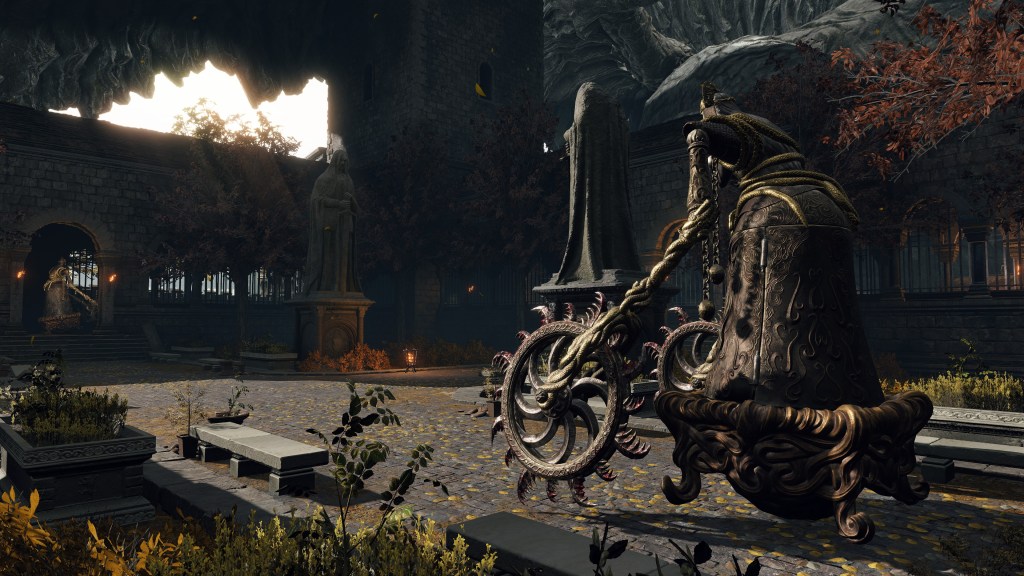
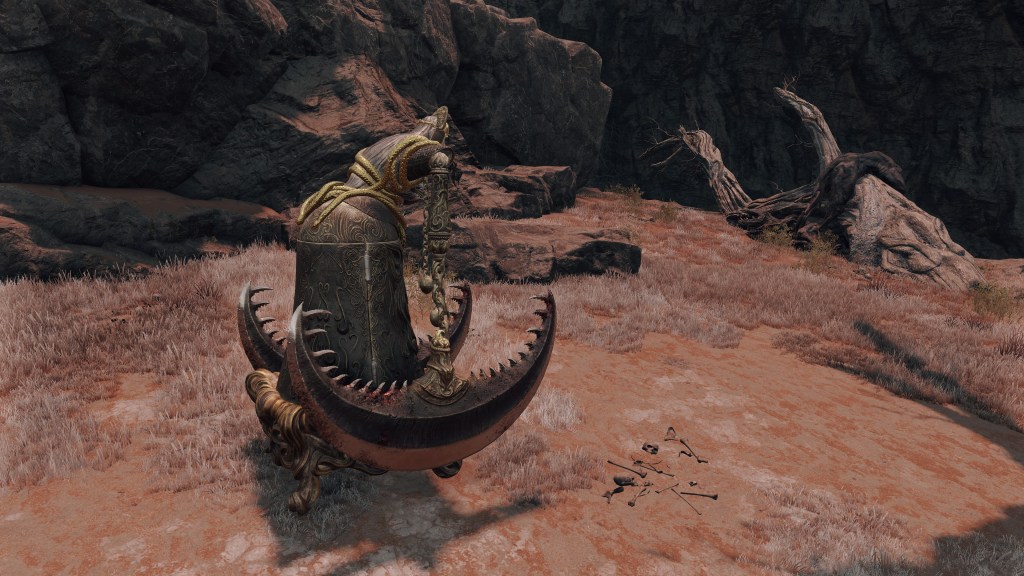
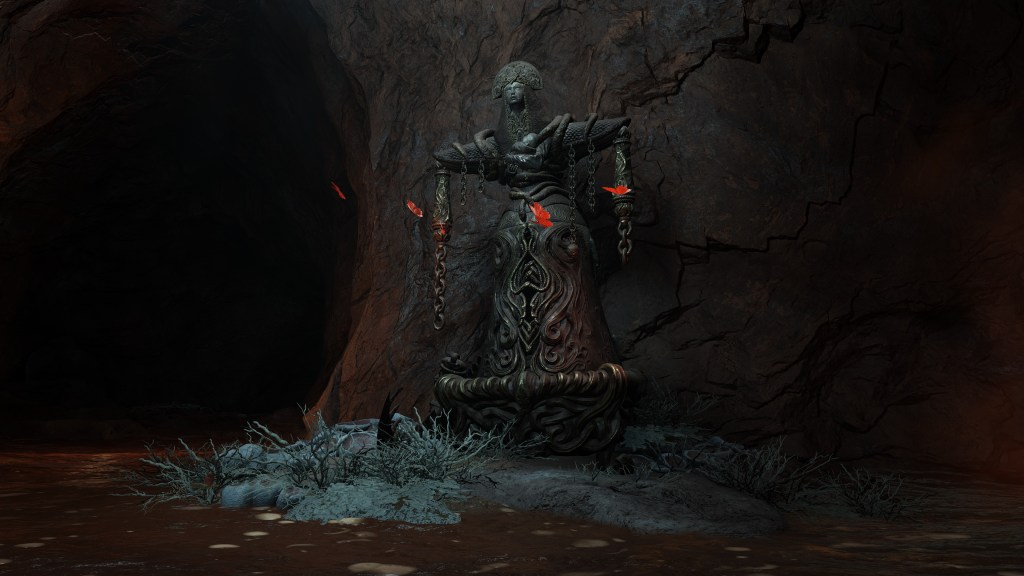
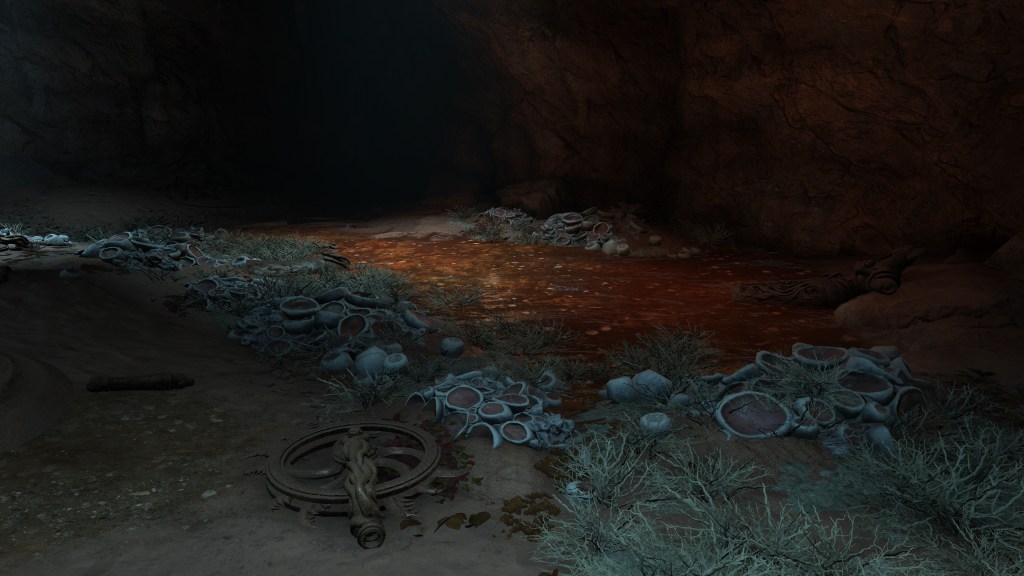
Although this does show the attention Volcano Manor has paid to the lands’ affairs, it is equally telling that the expedition failed so disastrously. Truth be told, the iron virgins have proven poor abductors. The warp device takes us beneath the lift bridge in the manor town, right where the volcanic lava is currently pouring into. The emergent magma rivers, naturally, wreck every returning virgin, leaving only dead men and snakes for bats to scavenge. Worse, Patches implies that the device is broken in all but one of the dolls. Perhaps it wasn’t designed to withstand the rugged journeys these virgins make. Either way, this effectively strands the rest in their corner of the world, even if they do continue operating. As a result, every abductor virgin we encounter rewards broken runes — all that is left after the serpentine pilots gobble up their captives. The faces twisted with anguish manifesting on the wreckage betrays the number of souls trapped inside those iron coffins over time. As the wrecks among the corpse piles around town suggest, painful deaths are their forte, not preparing Rykard’s meals.
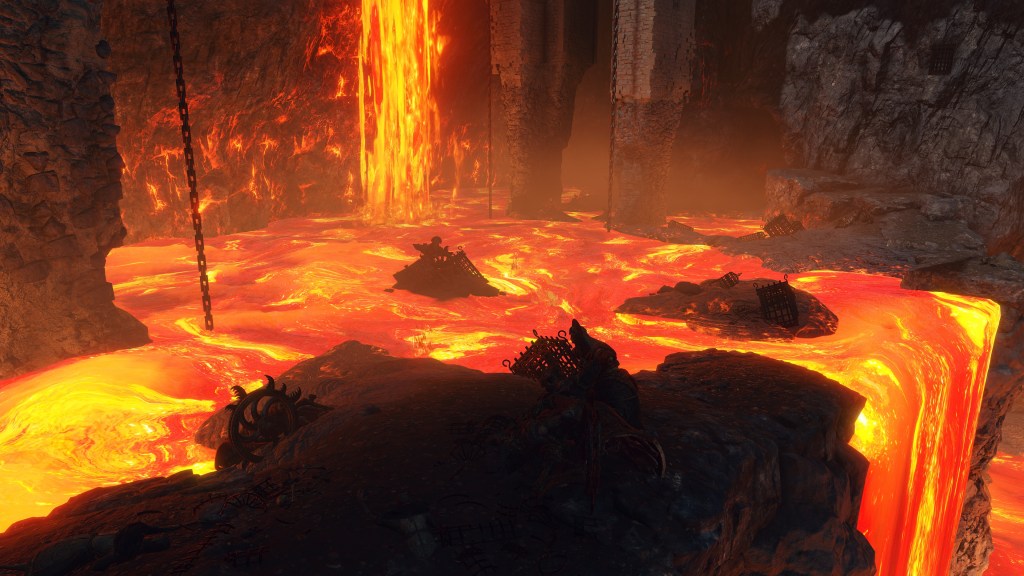
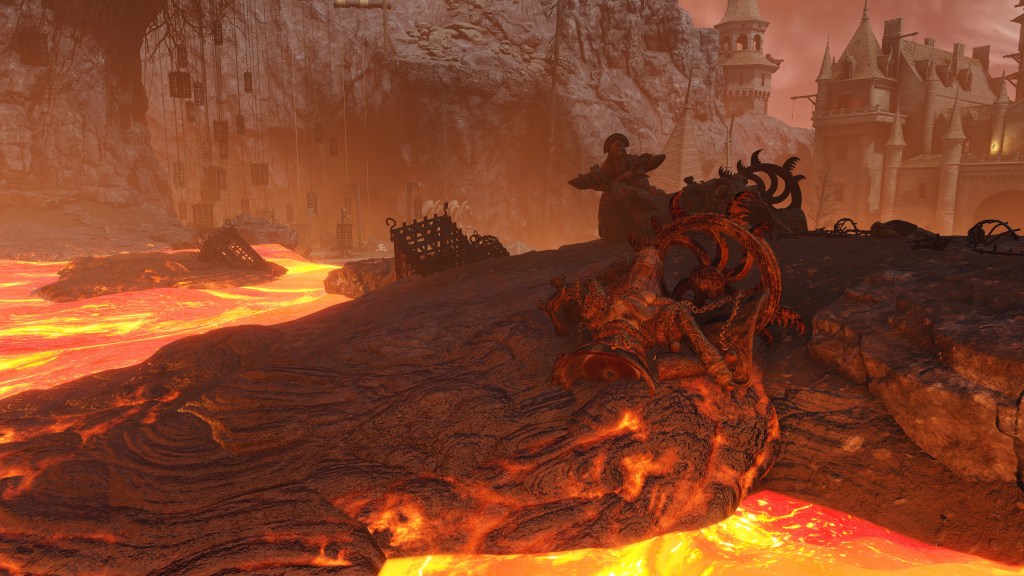
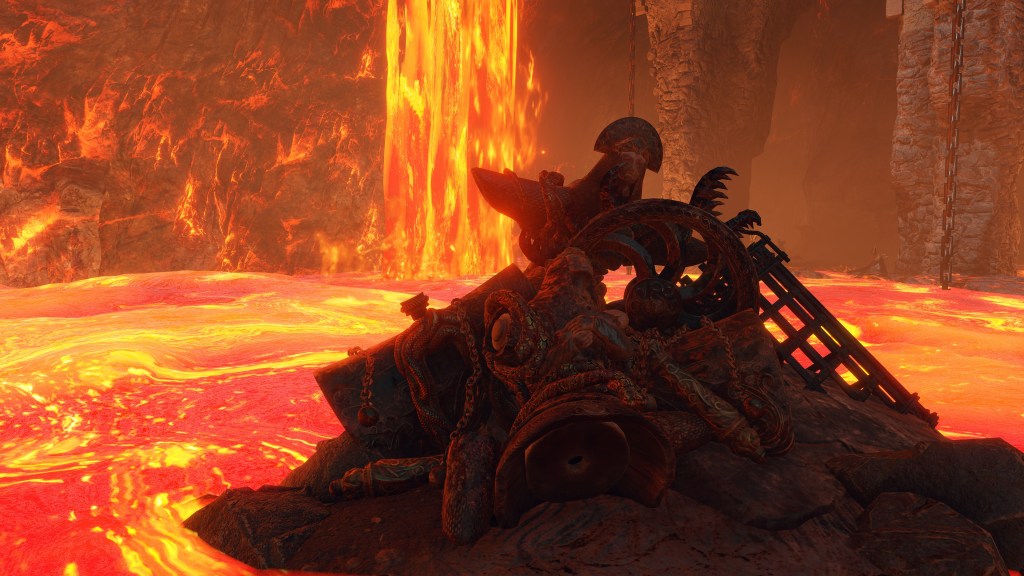
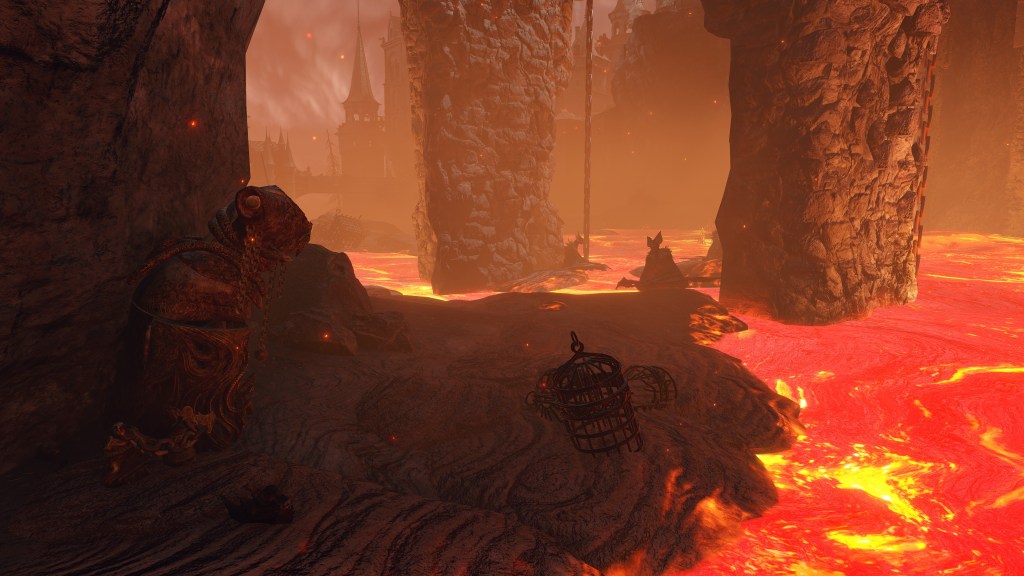
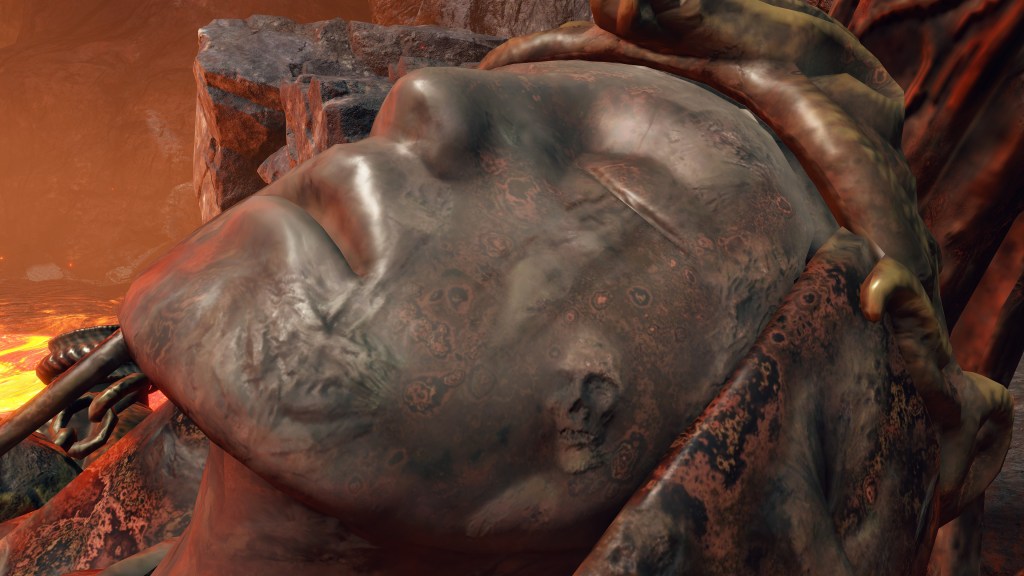
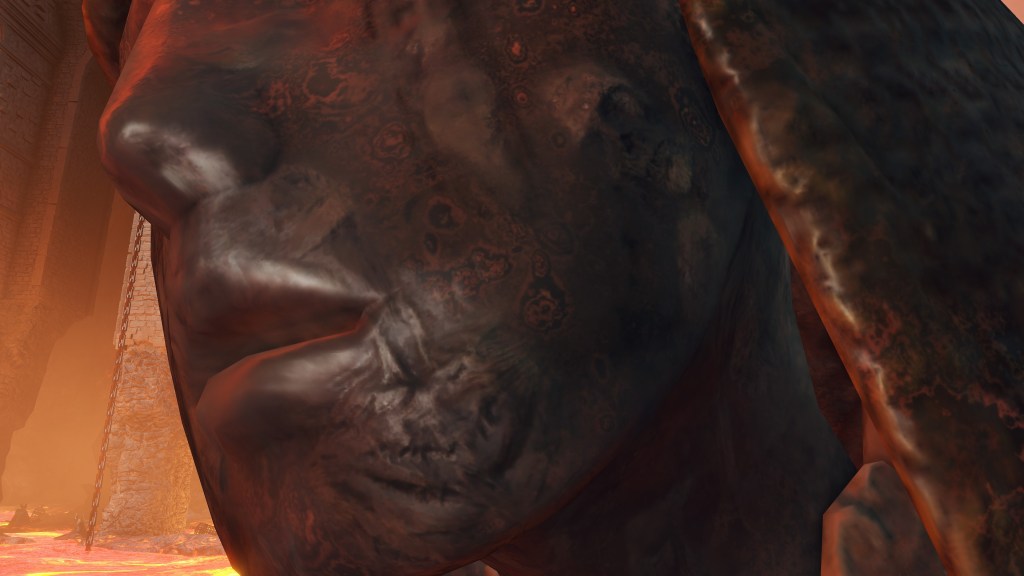
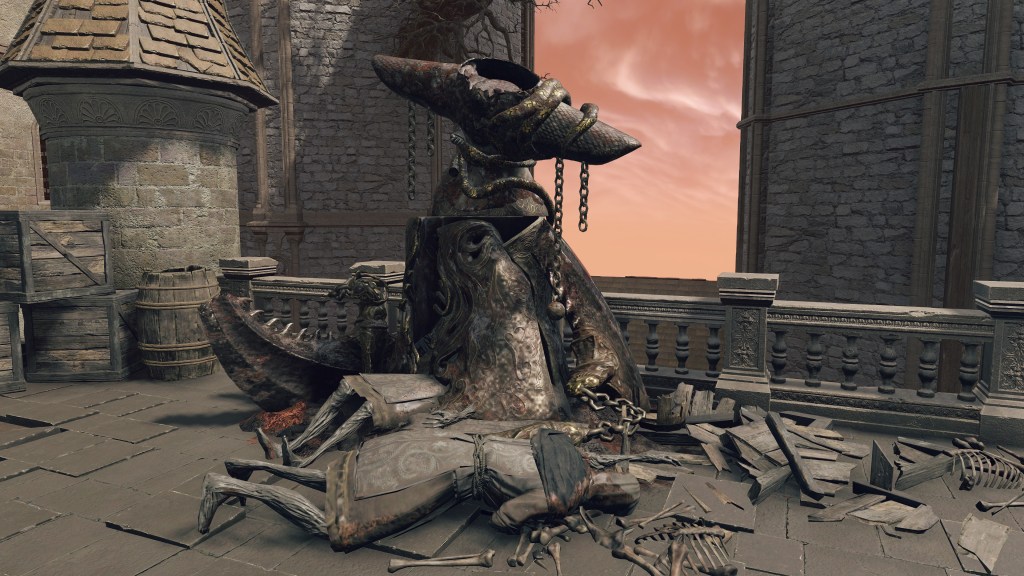
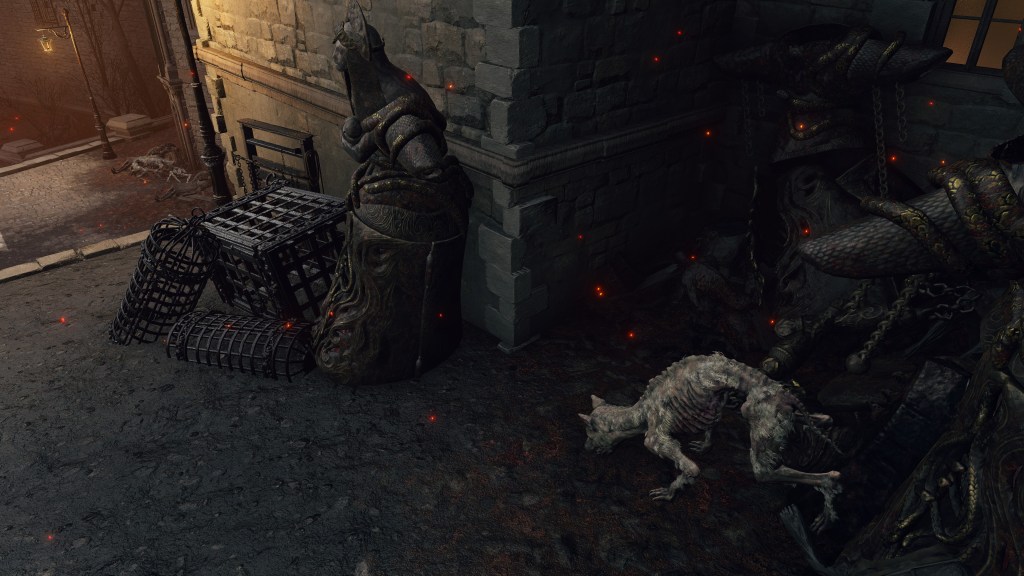
Listen to this… there’s one of those virgin dolls at the bottom of the great waterwheel within the Academy of Raya Lucaria. Its magic device hasn’t broken yet, apparently… So, if you let it detain you on purpose, it’ll take you straight to the Golden Tree’s base, or so the story goes… Heheheheh…
And so, in that long time since, Tanith has shifted to inviting the Tarnished proliferating across the Lands Between to her household. Having learned their mission entails becoming hero kings, the consort exploits any suspicion of the Two Fingers to recruit recusants, pitting such Tarnished against their predecessors. By overcoming the old hands who already cultivated the strength of champions, the traitors hone their skills, and Volcano Manor rids itself of potential Elden Lords — best remove any obstructors for when the Serpent King does finally set out to burn the Erdtree. Once she deems them of heroic level, Tanith has given those Tarnished an audience with Rykard, where they have all met their demise. This has only served to provide Volcano Manor with furled fingers to present future recusants, ours left on the guest table with the letter for our first assignment. With the added benefits of invading as a spirit, blasphemy has become a major threat to the aging Tarnished, actual allegiance to the Erdtree notwithstanding.
You, Tarnished, have you never had doubts? About the guidance of grace foisted upon you, the arrogant nonsense of the Fingers? And if you have had doubts, would you not mind becoming a member of my Volcano Manor and fighting together?… To rebel against the Golden Tree.
Because of this purpose, the manor has been selective with which Tarnished join, though Tanith is perfectly willing to accept the rare uninvited guest. Even then, our stay in the guest rooms is provisional until we prove our mettle with our first assignment. As the consort attests, their rebellion has no place for the weak-willed — every recusant must dirty his or her hands with the blood of brethren. In her view, the dirtier we become, the further we proceed along the path of heroism. Anything else, and she politely asks that we leave. After we assassinate a few targets, she trusts us enough to share details about Rykard, spinning a yarn about his principled stance against the gods. She draws a fair comparison between Tarnished and the demigods, competing for the power of runes at the imposition of this divine system with its relatively meager blessings. However, Tanith only offers a more direct contest for power between Tarnished while obscuring the reality of our “chance encounter” with Rykard on that path, never clarifying what it means to walk “with” him as family. In short, it is a farce for the amoral or desperate.
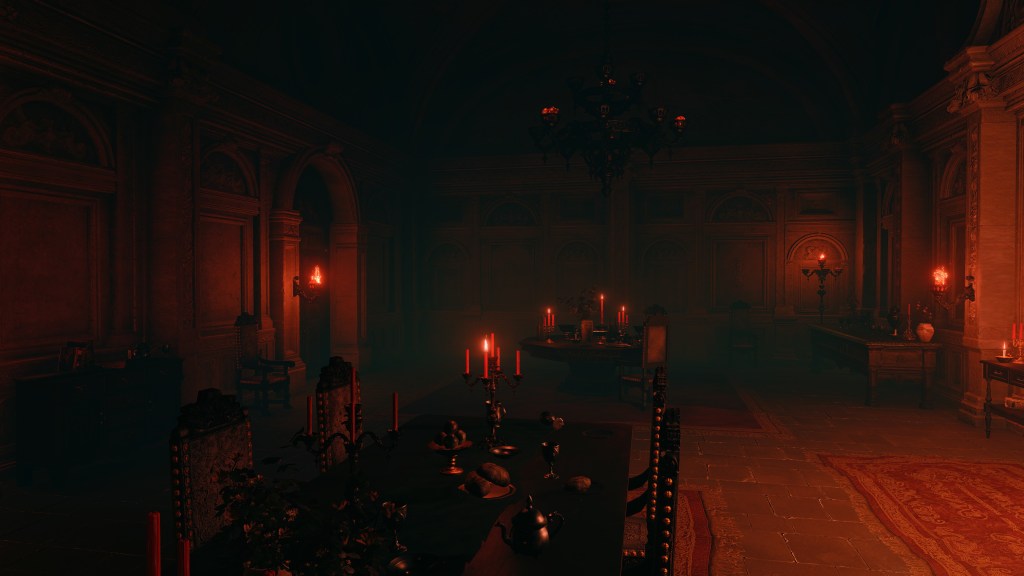
Oh, you… To visit my Volcano Manor uninvited, you are a rare guest… But, how amusing. That fellow was the same, come to think of it…
You have completed the request. I am pleased. With this, you too may be called an anti-Regulator, a true member of Volcano Manor. The promised thanks. Take it.
If you hesitate in hunting brethren, so be it. Leave this manor at once. We rebel against the Golden Tree. The weak have no business here. One need the resolve to dirty his hands.
… Do not forget. The anti-Regulation’s battle is the path to a hero. No matter how dirty you become, no, precisely because you are dirtied, it is the path to a hero.
… I see. Regrettable… Then, you may leave this manor. Let us both go our separate ways.
… Now then, it is about time I should tell you. About the true master of Volcano Manor, my Rykard. The Golden Tree granted grace to Tarnished. But it is very small opposed to the mission of guidance…… Thus do Tarnished compete scavenging for power. It is demanded they do so. Like it was demanded of the Rulers of Great Runes when the Elden Ring was broken once.
… If you head down this hero’s path as you are, you will see my king sooner or later. A chance encounter of those who battle is always so beautiful. I look forward to that moment, heheheh.
You seem to have headed down the hero’s path. This is the usual thanks. Take it… It is probably the right time now. How about it, do you want to see my king? My king will surely welcome you. As a hero to walk together with him, his new family.
Tanith assigns Zorayas to head out and personally hand invitation letters to the prospective recusants, perhaps an excuse for the girl to see the world beyond their tiny manor interior. Like her mother before her, “Rya” began traveling around as a human ambassador, inviting any seemingly worthwhile Tarnished she came across. Her innocence makes her an easy mark, which Boggart capitalized upon. Rya claims that she was attacked, but the blackguard blames her for getting tricked, intimating that the “strange” girl was taken in by the Tarnished’s act to approach her before getting robbed blind. As the ruffian points out, she should be grateful her naiveté doesn’t have her face down in a ditch — though she protects herself well enough with a golden magic barrier from our first meeting, at least. Regardless, Rya has been nowhere near as discerning with the Tarnished she invites, considering she looks for the kind willing to kill brethren. Still, the girl is persistent. Deprived of her precious necklace, she pursued Boggart back to his hideaway in Liurnia Lake, though at a loss at what to do next.
Ah, that is definitely the stolen necklace. Thank you so much. You are my benefactor… I still haven’t introduced myself, have I? I am Rya, serving Lady Tanith of Volcano Manor. And I am a summoner who seeks good Tarnished to be heroes and invites them to the manor… You are a strong one. However, it isn’t just excelling in battle. You possess a strong heart which doesn’t balk at pointing your blade at brethren. That strength is exactly what my mistress seeks. Please, kindly accept this.
… What, so you knew that girl?… Don’t go complaining about minor details. It’s always the one swindled who is to blame. Be that as it may, she was a strange girl. Well, shouldn’t she thank the stars? At least she didn’t die in a ditch.
Ah, thank you very much. I am glad to have met someone like you… I believe the ruffian has retired to the vacant home beyond here. Please, kindly recover the necklace…
That is when we can come across the girl under the folly, prompting her request to retrieve it. Beyond gratitude, she uses this incident as a test to see if we have the strength of body and heart to challenge our fellow Tarnished, formally introducing herself and her organization once we pass. Her invitation comes with another test to reach Altus Plateau, though she will offer advice on the path. After succeeding at this too, she will already be waiting for us at the Lux Ruins, ready to teleport us straight to Volcano Manor with the touch of our hands. Tanith performs a similar art taking us to an audience with Rykard, so she likely taught her daughter — if only to spare her witnessing the horrific battle on the mount; the Tarnished don’t need to risk their lives crossing it either. For her part, Zorayas is just happy to have more people at her mother’s side, oblivious to where this collaboration will end up. Even when we discover her true form, the representative is quick to clarify that her mother isn’t deceiving us likewise.
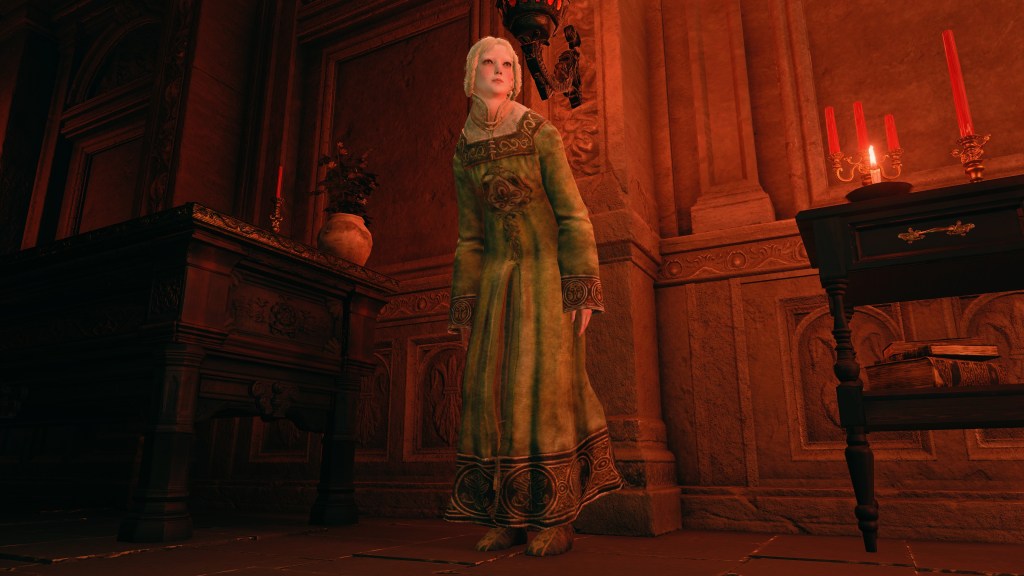
… Is that so? Regrettable, but there is no helping it. You cannot contend with brethren. There probably do exist those like that. However, if you have a change of heart, please speak to me once more.
… I believe in you. You are surely one to be a hero. I look forward to us meeting again.
… Good Tarnished to be a hero, please aim for the land of the Golden Tree, Altus Plateau. Wandering only the periphery of the Lands Between while guided by grace, merely looking up to the Golden Tree from afar… You are no such mundane person. When you have undoubtedly shown that, Volcano Manor will truly welcome you. To fight together, as family to be heroes.
… Ah, one more thing… There is something personal I want to convey. Originally, this land of Liurnia and Altus Plateau could be trafficked between from the Great Lift of Dectus at the end of the highway. But, it has long since ceased functioning now, so no decent road connects them.
I have been awaiting you. Just as I believed, you are one to be a hero. Once again, I invite you to Volcano Manor.
Take my hand, and please meet my mistress… I pray. That your path is the same as Lady Tanith’s.
… Yes, I understand. Then, close your eyes for a moment. I shall guide you to my king’s presence… Farewell, friend. May you have a chance encounter.
It has been a while, good Tarnished. As the summoner, I am overjoyed that we have met again at Volcano Manor. Please, kindly walk the path to be a hero at Lady Tanith’s side.
However, please believe me. This is deception of mine alone. There are no lies in the words of Volcano Manor, no, Lady Tanith.
However, we can bring this all crashing down. Up until this point, Zorayas has had a skewed perspective of her entire circumstance, unaware of what happens to the heroes she brings to the manor. Her whole life, she has never questioned the woman she called mother. Both as a snake and human, she wears the green robes of a noble’s child. Even for her disguise, Rya modeled her appearance on her supposed mother and father. While she still lacks eyebrows to her eerily wide-set eyes, the snake does have blond hair like Rykard, worn in the same style as Tanith. Everything Zorayas has been told led her to believe that she was a special child to a king and consort, misunderstood for her blessed form. The only change for “Rya” is that she started referring to her mother as Lady Tanith to hide their familial connection. Never once did she doubt her self-worth or blood relation, showered with a mother’s kindness all her life. But maturing and seeing the world, there was sure to be a nagging itch in the back of her mind, which recent events have begun to scratch.
Her first inkling was when she began hearing the sound of breathing and scales scraping behind the walls of the guest chambers. The exhausted messenger convinces herself that it is just a hallucination, but we can confirm an infestation of snake snails slither on the stone floors, walls, and ceilings. That by itself should draw no concern, but snake-woman must have begun wondering if she was truly alone in this world, or if the manor hid more secrets. Her suspicions flare up again when she witnesses another of her kind one night, lost in thought after it disappeared into one of the guest rooms. We can infer that the man-serpents regularly report to Tanith in the dark of night precisely to avoid crossing paths with Zorayas, using illusory walls to hide the secret passages in the guest rooms. Hesitant to doubt her mother, the indecisive girl tasks us with investigating on her behalf, and reporting back the reality comes as a shock to her faith in Tanith. Showing her the Serpent’s Amnion finally gives Zorayas the resolve to find answers, hoping that this will let her earnestly call Tanith mother again.
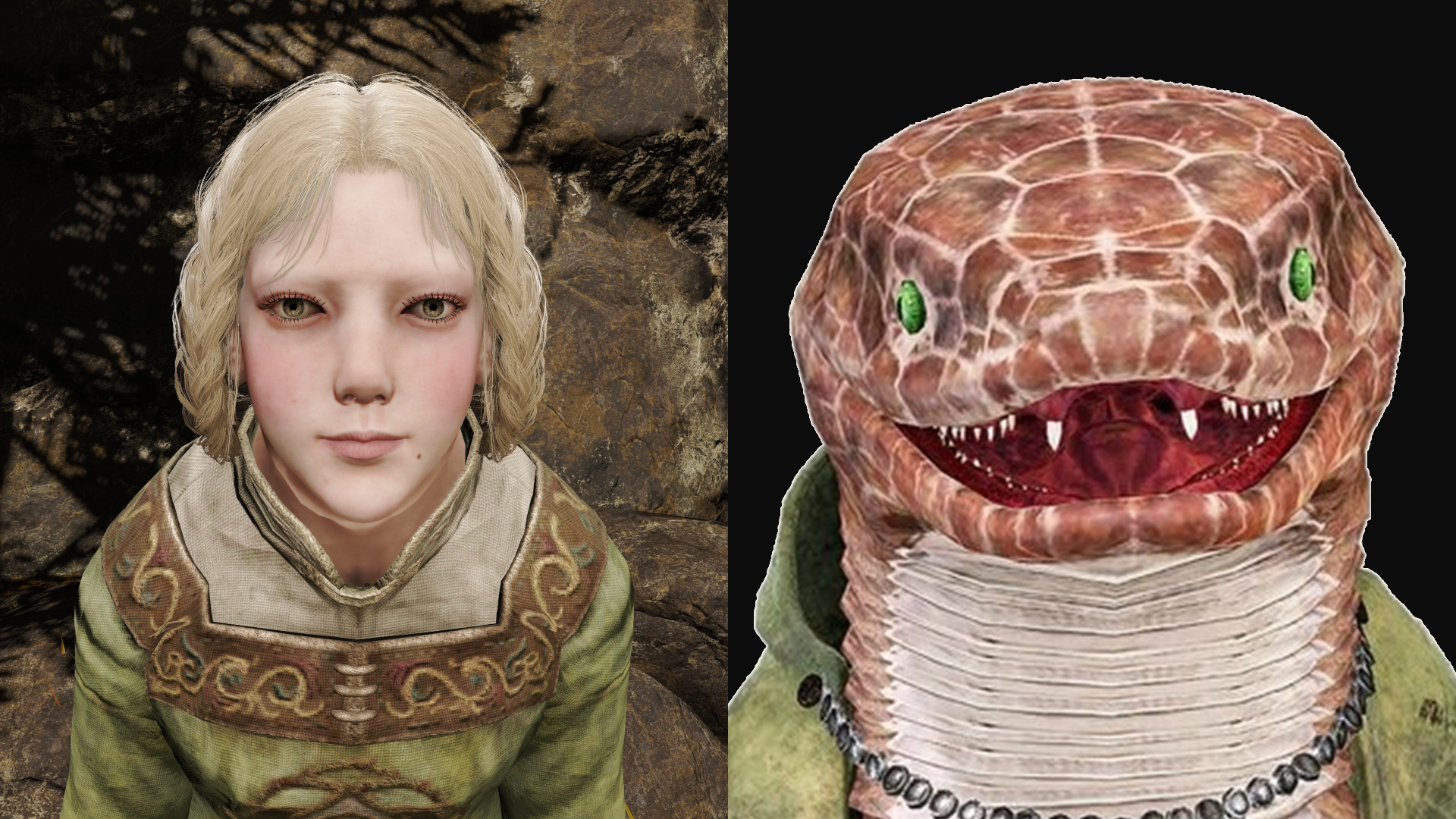
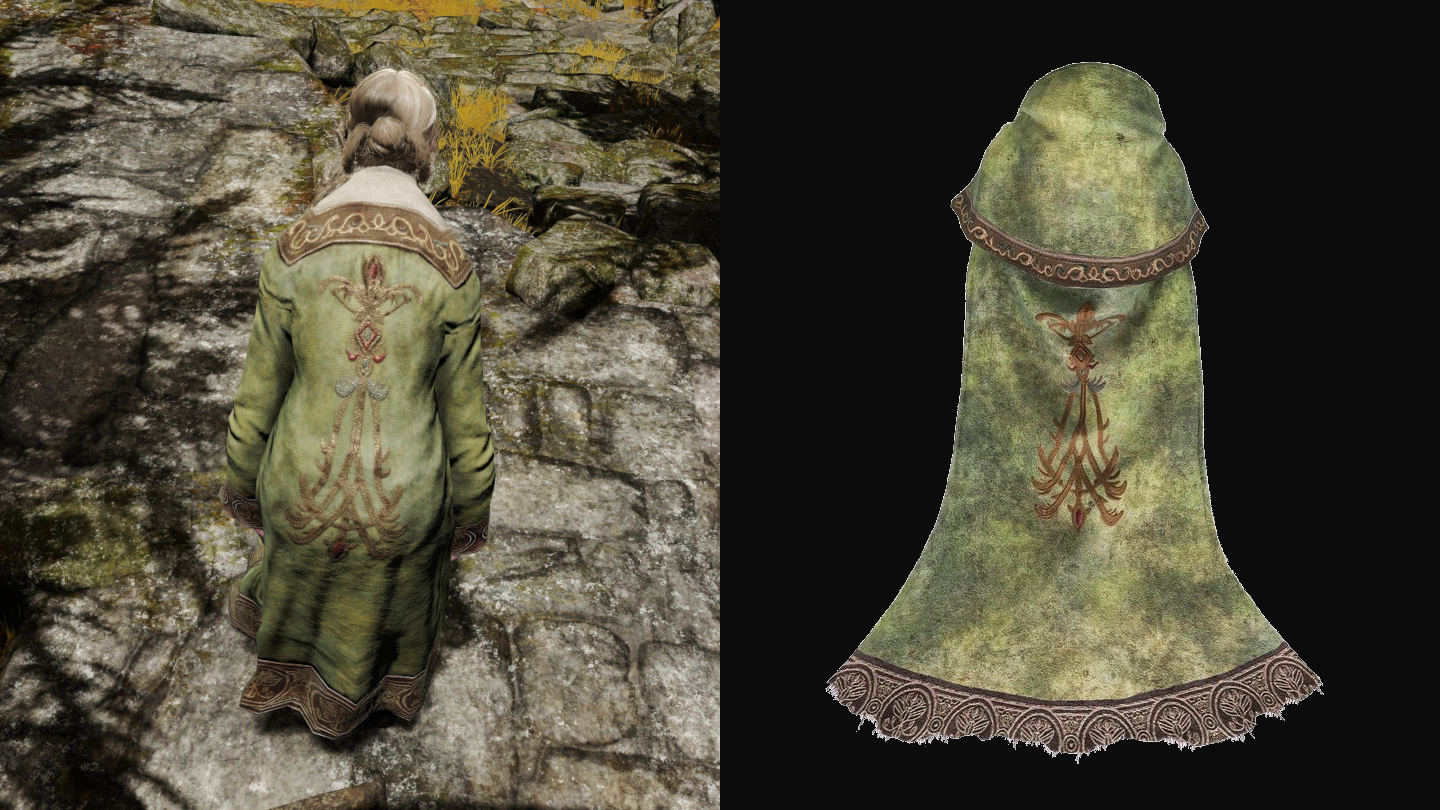
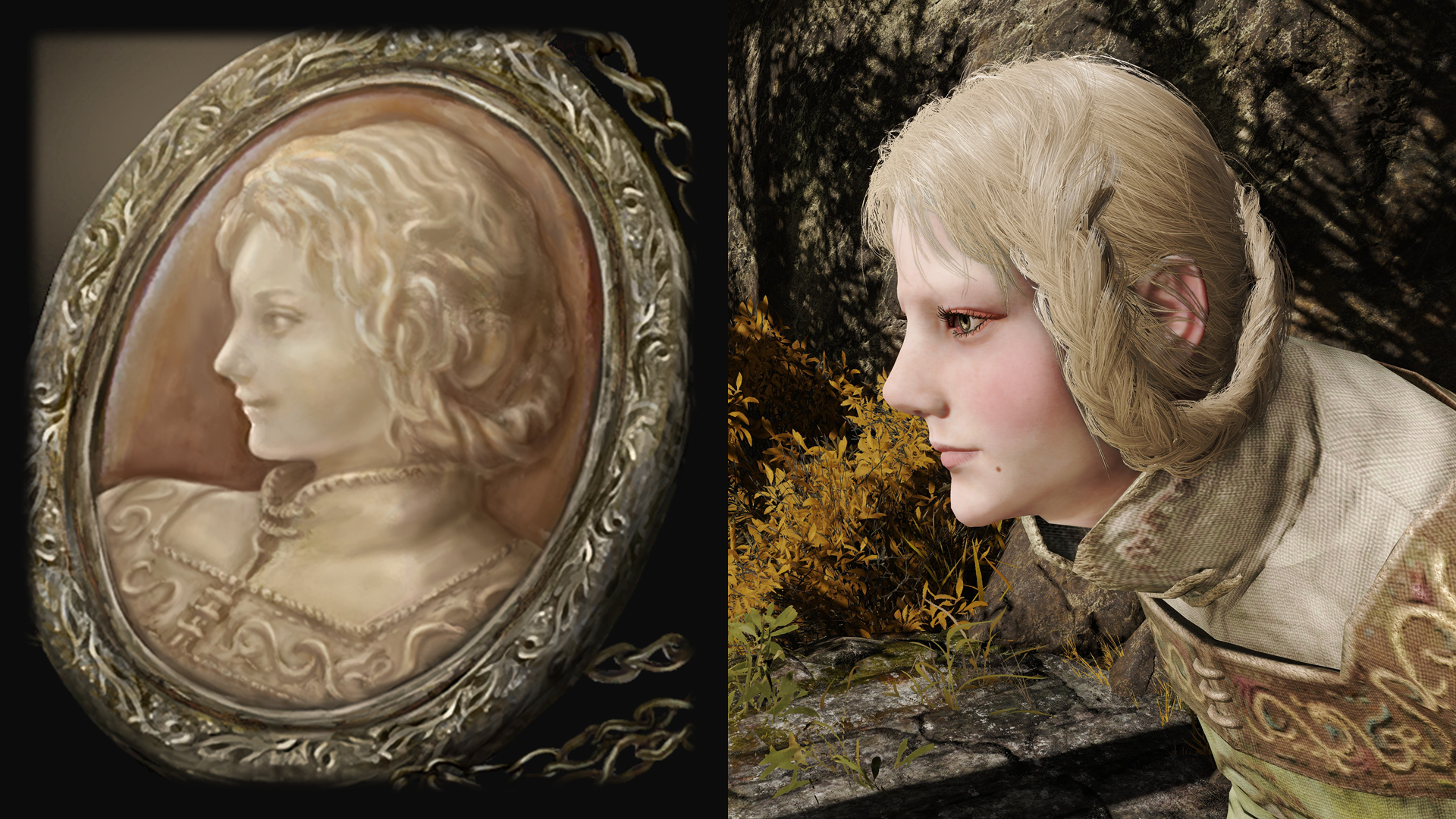
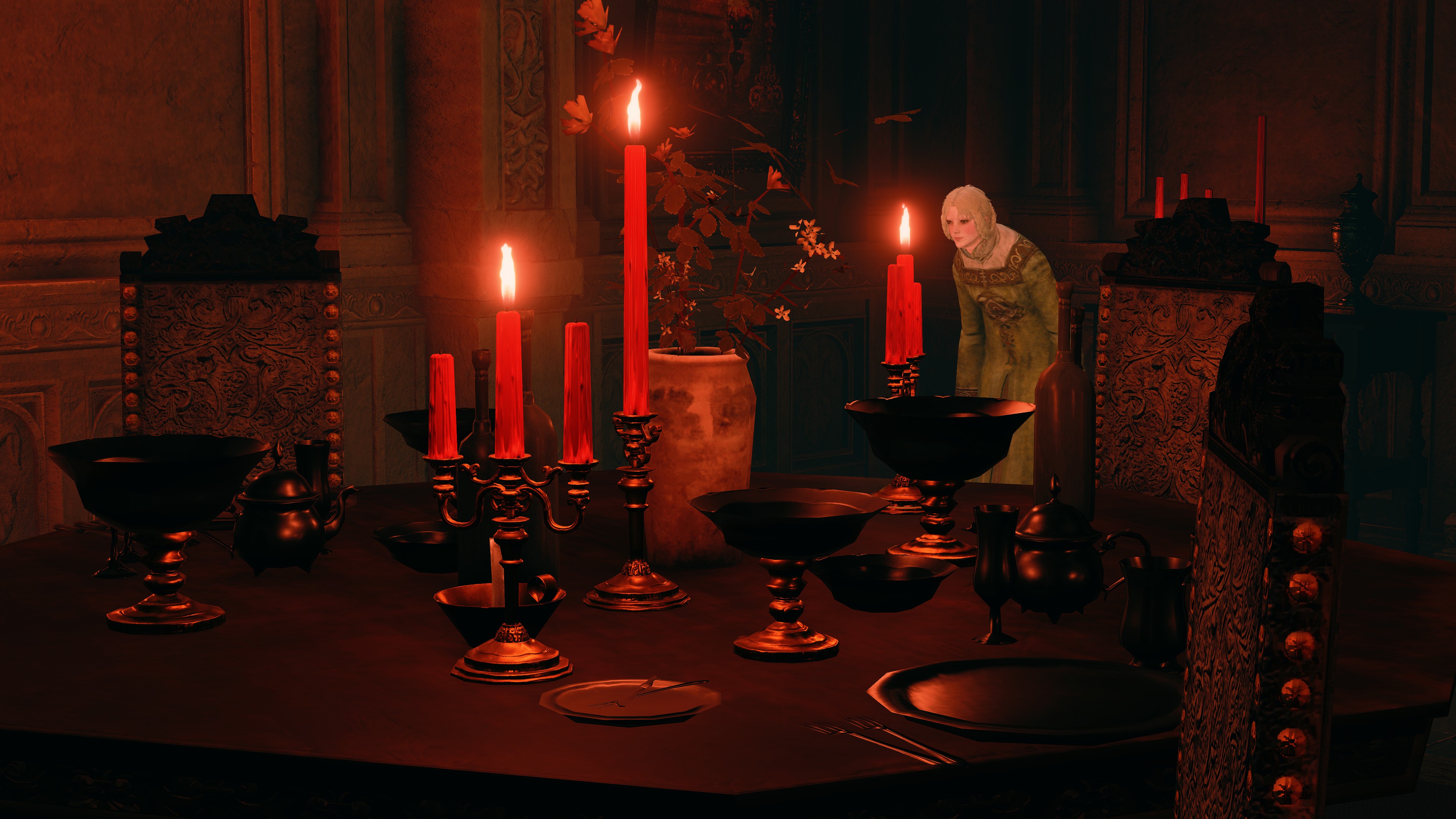
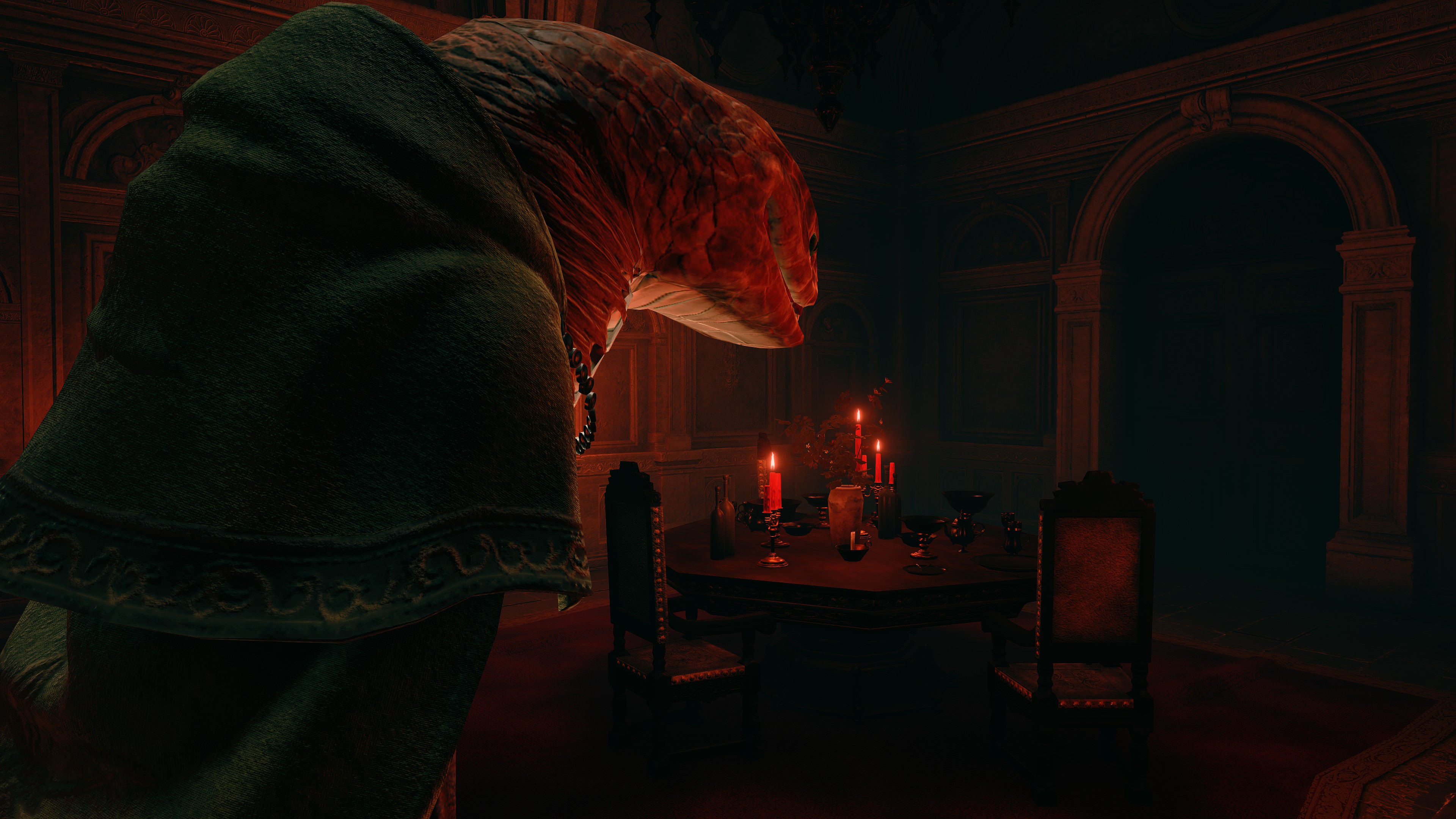
… A-Ahh, it is you. My deepest apologies. I was lost in thought a little… No, I should tell you, after all. I have seen something. A shadow slithering in the corridor in the dark of night… It entered the room across from this chamber and never appeared again. And, if my eyes did not deceive me, that shadow had a snake form, the same as me… Are there secrets in Volcano Manor I do not know… and has Lady Tanith been hiding something from me?… Normally, I wouldn’t ask this of you, but if you discover anything, will you just tell me?
You have my gratitude. Thanks to you, I could finally prepare myself. I want to know. How I was born and how I came to meet Lady Tanith… And I want to call her my mother from the bottom of my heart once more.
Following her investigation, Zorayas learned about the horrific ritual she was spawned from, lacking anything sacred in her eyes. As a bastardization of both men and snakes, she considers her existence unforgivable to both, definitely not something Tanith should have been raising as her own child. As a result, the girl succumbed to despair. When we next meet Rya, she is kneeling amongst the bones of her brethren’s past victims, awaiting death at their hands as cut dialogue clarifies. She has even picked up Daedicar’s Woe, all but guaranteeing the damage inflicted on her will be fatal. But having waited far too long in her estimation, she asks us to give her the death she desires. Should we deny her, she soon after leaves on another journey, taking our supposed kindness yet strictness as a chance to succeed her mother someday as a temperer of heroes. Clearly, she feels the need to further broaden her horizons and find more candidates, inspired by our example. But from her letter, she still doesn’t understand the full implications of her mother’s work despite everything she already hid.
So I have awaited the snakes’ execution. But, I can no longer bear the wait.
… I have spoken selfishly to you time and time again. But, just one last time, I beg you. Please, kindly kill me. I thought I had prepared. But now… I want to be freed from this cursed body.
… So then, you cannot bring yourself to kill me? Heheh. You have always been a kind… and very unsparing person.
Farewell letter written with shoddy lettering.
I have decided to set out on a journey. As the daughter of Tanith of Volcano Manor. In order to someday inherit mother’s will.
Farewell, my always kind and very unsparing hero.
On Tanith’s end, she hoped Zorayas would abandon these questions, worried when she sees her not around without any new duties. Already assuming the worst, Tanith requests that we have her daughter drink the Tonic of Forgetfulness she kept to free her from the devastation. The consort realizes the hypocrisy of her actions — there she was, talking up the majesty to their rebellion against the Erdtree, only to make a mockery of Rya’s own dignity no different from said tree. Yet at the same time, Tanith can’t stop selfishly wishing for the girl to live in blissful ignorance, preferring to deny the snake’s agency if it saves her from death. She looks down on her child as too weak to handle the truth, and bemoans how that makes her a terrible mother. It is at that moment that Tanith realizes the true meaning of Rykard giving her that drug: he also saw her as weak, and he was right. Rya might see the gift as a kindness, but Tanith knows that she should be resented for never letting her little girl leave the nest. Left alone, Rya eventually disproves her weakness; Tanith cannot. She is forever a slave to her bleeding heart.
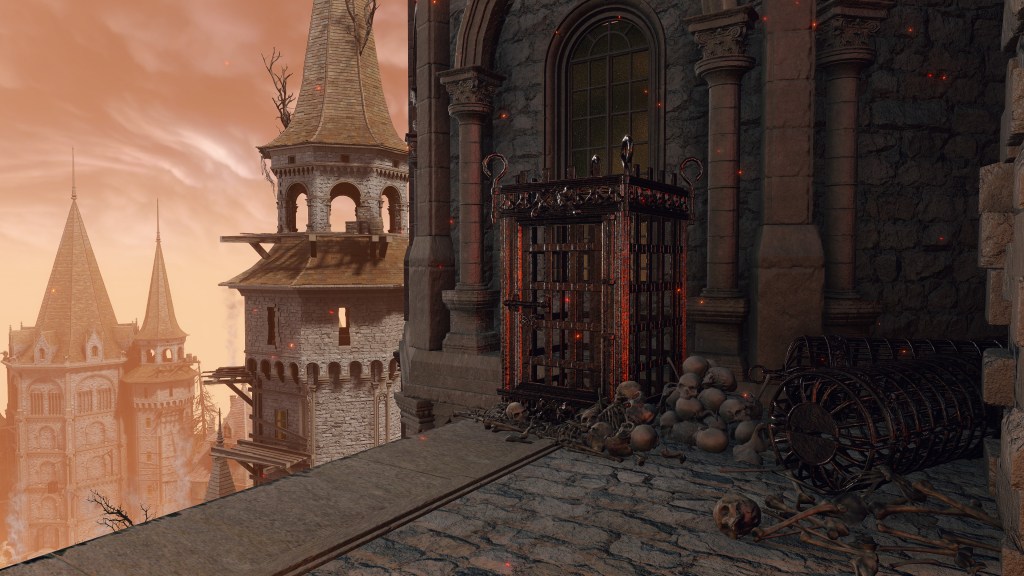
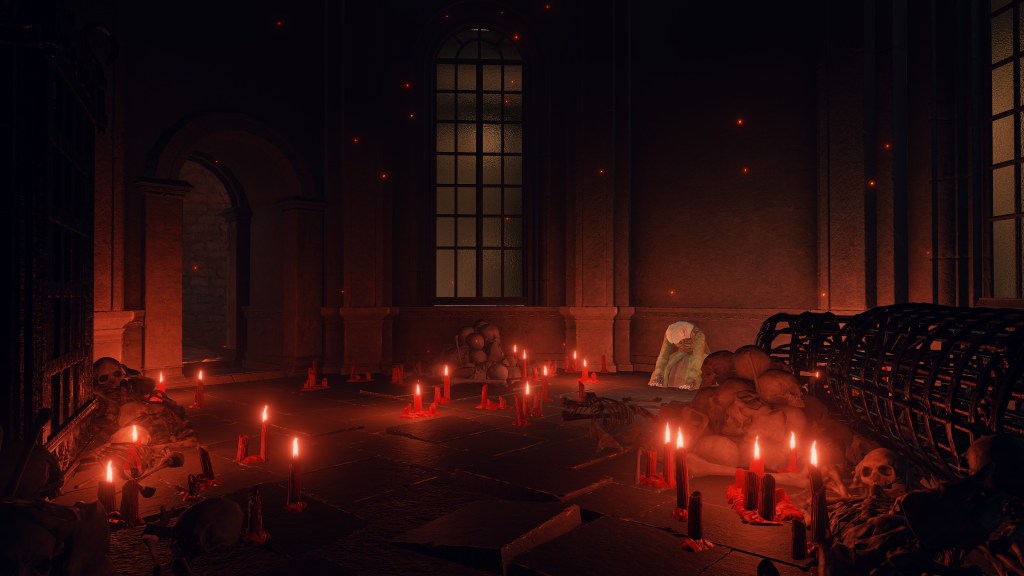
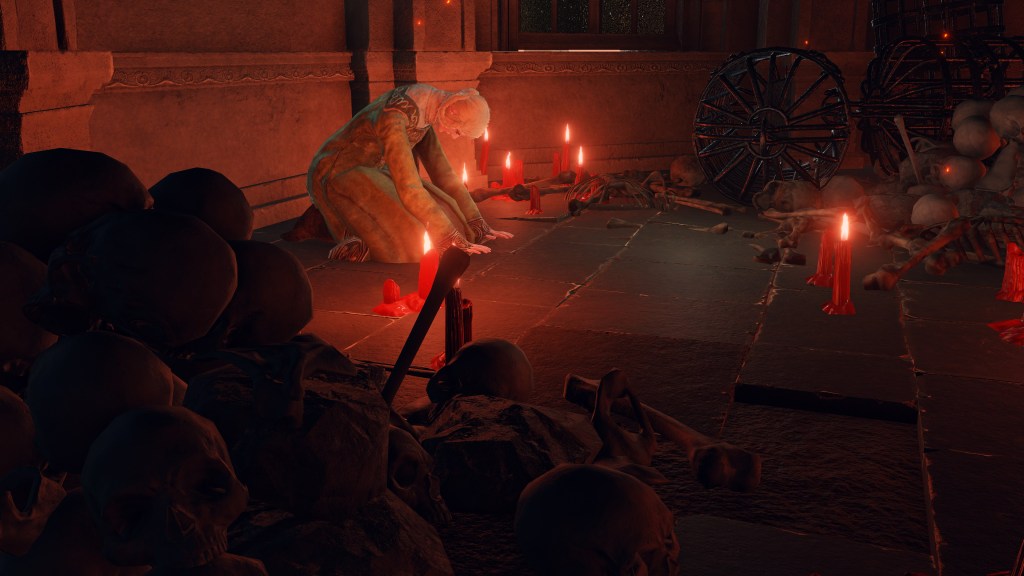
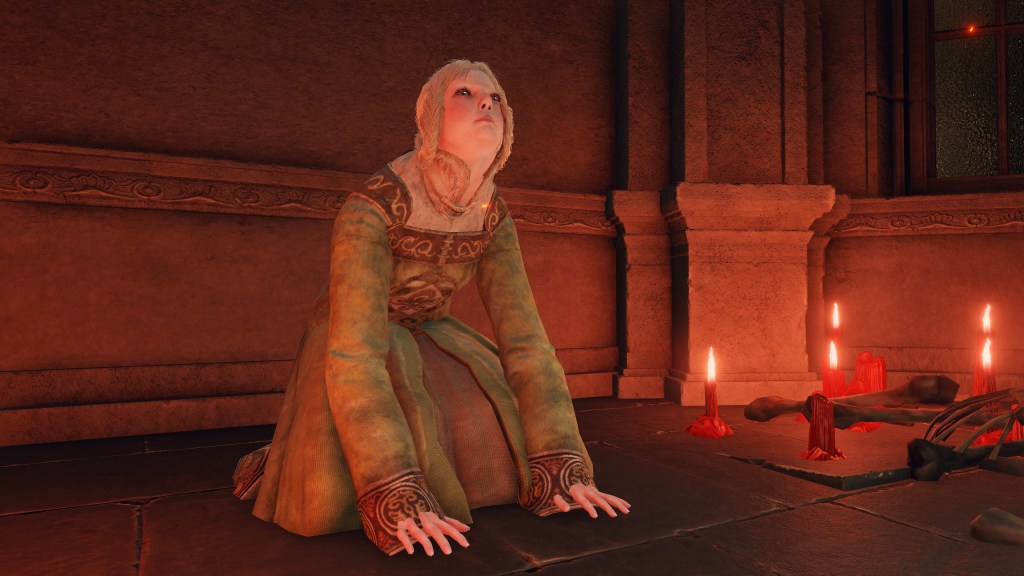
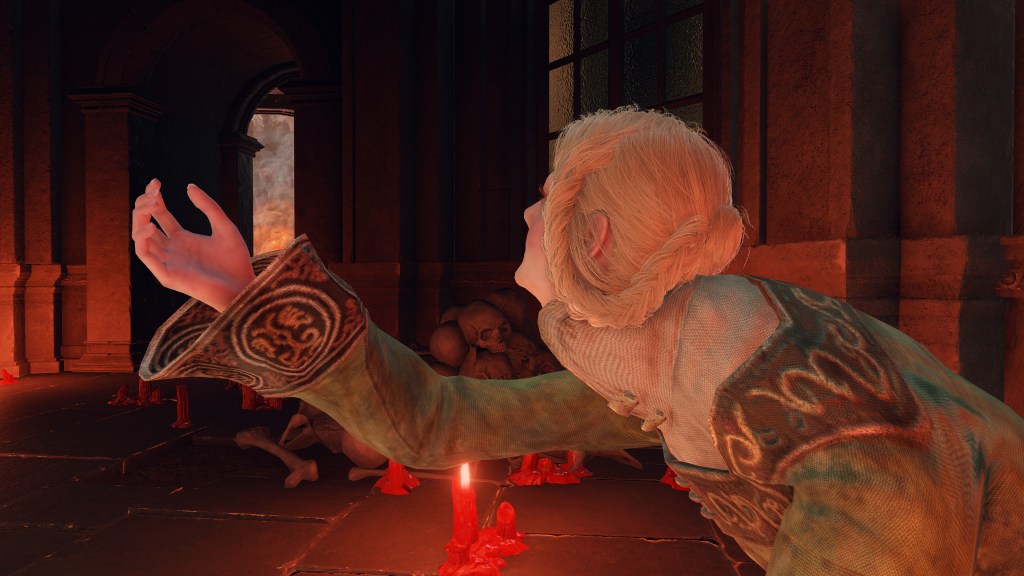
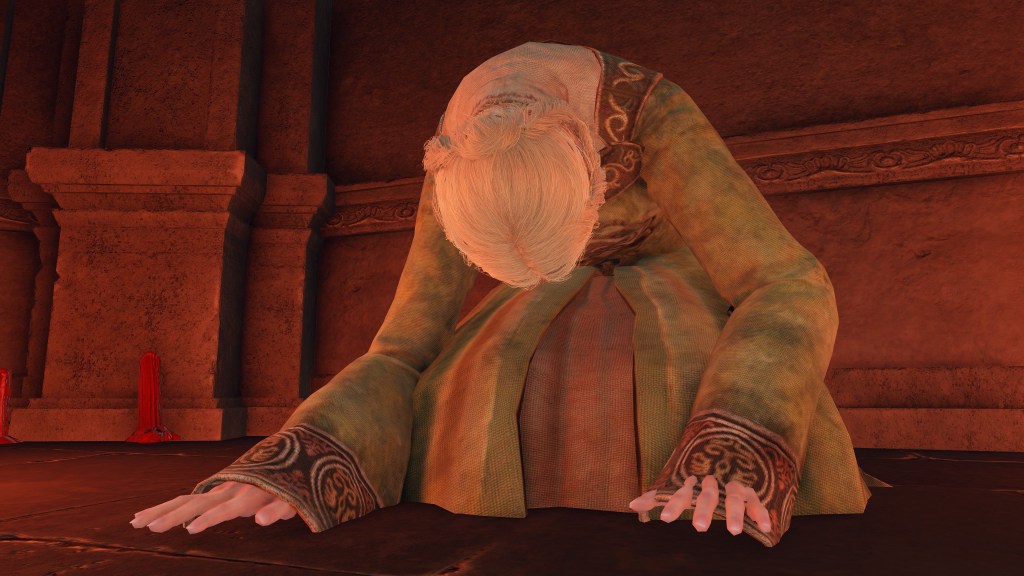
… Ah, I can’t find Zorayas. Even though there are no particular solicitation duties… Is she looking into it, after all? Why can’t she understand…?
You, I have a request. Not as the proprietress of Volcano Manor but as Zorayas’ mother. If she has found the answer to her doubts and is devastated by it, I want you to have her drink this drug… So that the painful things will all be forgotten.
Ah, I understand. My wish mocks Zorayas’ dignity. Just like the Golden Tree does to us. But, but I… can’t help but wish it for her…
… You have my thanks. For granting my selfishness. I can’t be a mother, after all. My heart is too weak. My king probably understood that, too. Haha… how weak a thing I am…… Zorayas, do you resent me…?
This grand revelation casts a long shadow. Despite her dignified front, Tanith has never actually been untouchable. Acting above it all compensated for her glaring vulnerability all her life. Her weakness was why the dancer became an itinerant, why the itinerant became a prince’s wife, and why the prince’s wife became a recusant. It is because she always bent to the world bearing down on her that she saw Rykard’s will to resist that world with new strength so beautiful. Whereas her love for Zorayas was built on pity for her perceived same weakness, her love for Rykard was premised on the dream to escape her weakness. For that reason, she finds us just as beautiful in attaining heroic strength treading the sullied road, though her king will always be the ultimate fantasy for her. Bernahl believes all recusants, including Rykard, must expect a miserable death at the end of their rebellion. But even in his dying throes, the demigod laughs insisting that he cannot be subject to anyone’s Order, being an indestructible snake. His passion lights a flame which can burn down the world, while hers burns no one.
I will depart Volcano Manor shortly. You best do the same. This is my thanks. To you who showed the path for my king to revive stronger… But, I will be a little lonely. A hero who heads down the dirty path is always so beautiful. I was captivated by you.
… If you understand, fine. I thought you were a straight-laced Tarnished… but that’s exactly why you might harbor doubts. But, the prospects of blasphemy are a miserable death. Think long and hard before hunting kindred.
… Seems you have killed Rykard? I don’t blame you. The strong rob, that is our code. From the moment he abandoned himself to blasphemy, he should have been prepared for a miserable death.
… None can regulate me. A snake is undying.
But when captivated by flame, one must be wary not to be drawn too close, lest you fall and it immolate body and soul. When we return from our audience contrary to Tanith’s plan, she is surprised but quick to accept our victory, appreciating the confirmation of Rykard’s own weakness at the present time. Confident that her husband will return stronger than ever, she soon departs for his corpse and begins feasting upon his massive head, hoping to assimilate him and the snake both into her body and become the new deity. Still fleeing her own weakness, the metaphorical devouring mother sees her only hope in becoming a literal one, living up to her name shared with a Phoenician goddess meaning “Serpent Lady” in the process. To her dying breath, she is consumed with Rykard, dreaming of when they devour the gods together as family. Attempting to subvert the snake’s revival for power is certainly opportunistic, but for Tanith, this selfish pursuit may be her way of showing love and belonging.
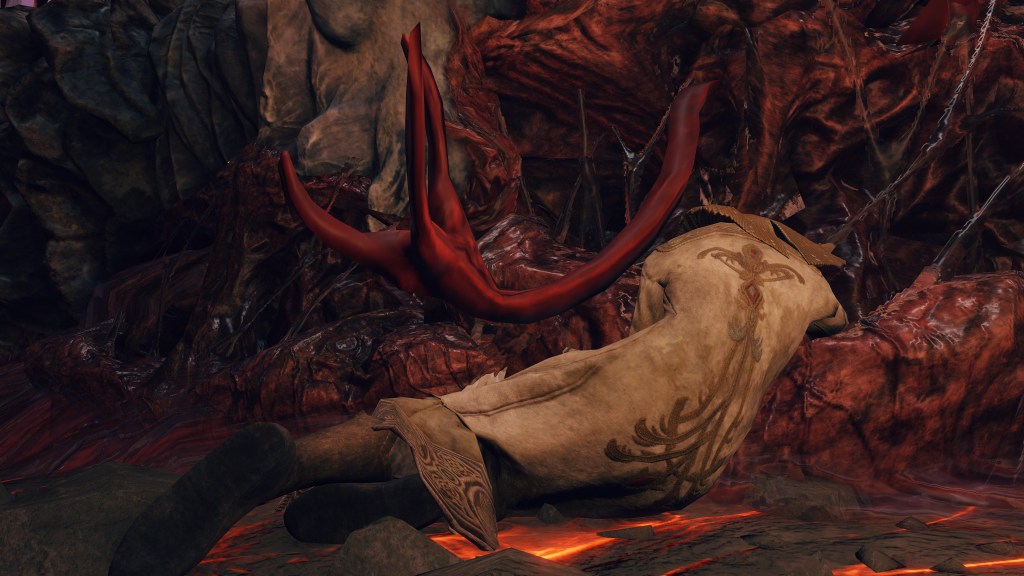
… You…… I see, so my king was defeated then? No, you have my gratitude. Because my king was still weak, and I understand that now… Defeat is not the end. My king is immortal and, someday, will revive stronger. For that, I must do what must be done.
Oh… it is you… Await some more. My king’s body is large and I can’t devour it readily. Rykard, please, kindly lodge within me. I want to become your snake, and your family. And this time for sure, we will devour the gods together…
Ngh!… Ahh, my king… Rykard…
… Ahh, Rykard… I want to become…
All that aside, adopting Rykard’s strength of will and subsequent strength of body is the consort’s true passion now, hence her indifference to seeing the castanets from her dancer days. Patches might be enamored with Tanith’s stuck-up attitude, but the woman in question no longer cares for her dignified mask. All she was has been stripped bare to make room for base craving, a fitting end for the royal couple’s blasphemous ambitions as the thief admits. Whether we leave Rya alive, kill her, or erase her memories, Tanith’s fate remains unchanged. No matter her affection for Zorayas, she feels compelled to stay the course, only regretting that she fooled an innocent girl to suit her maternal conceit. Even as all the recusants leave, seeing their leader lose herself, Rya will remain after drinking the tonic. While lonely, the snake decides to wait for her mother’s return, prioritizing Tanith’s peace of mind as always. Degeneracy invariably erodes high-minded ideals, blinding men to the loyalty of virtue. Contrary to justice, Rykard leaves a foul legacy of broken mothers, efforts to help wasted in pursuit of ego.
… What is that?… I no longer need it. Unless it is devouring my king…
What, it’s nothing much, but… that woman who has lost herself is so sickening. Hurry up and get back to acting all stuck-up.
… But this manor’s already finished. The demigod monster has fallen, and Tanith has lost herself, too… A damnable end befitting blasphemous ambitions, you could say.
Agh… Ugghh… Thank you… my hero…
… Ah, so it is you? I don’t know what on earth happened, but Lady Tanith and all the Tarnished to be heroes have all vanished… I was feeling a little lonely. But if you are here, nothing to worry.
I shall await Lady Tanith. I don’t want to cause her trouble or worry acting on my own. As the daughter of her and a great king’s favor… Good Tarnished, please kindly walk the path to be a hero. Lady Tanith surely wishes the same.

