
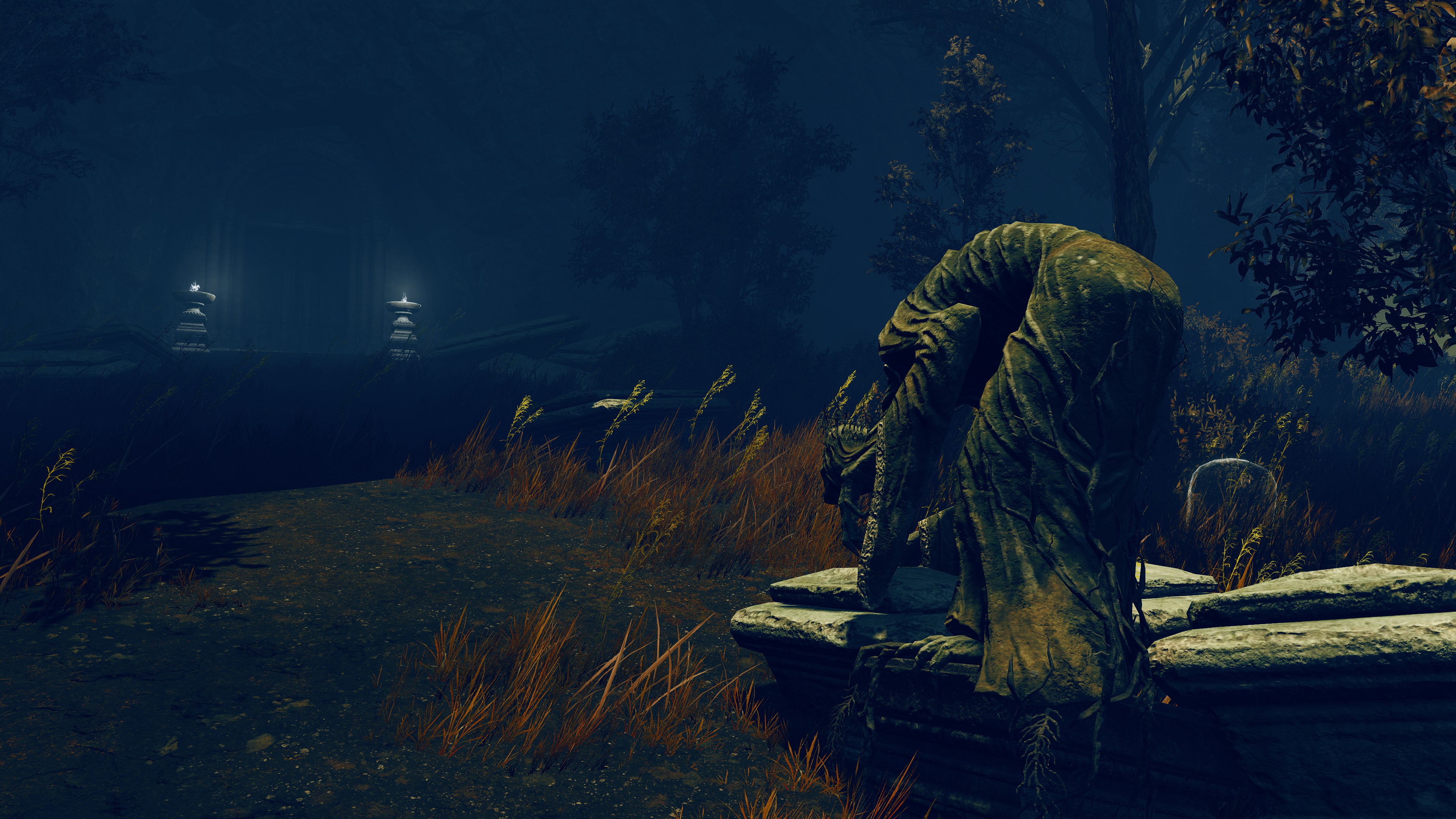
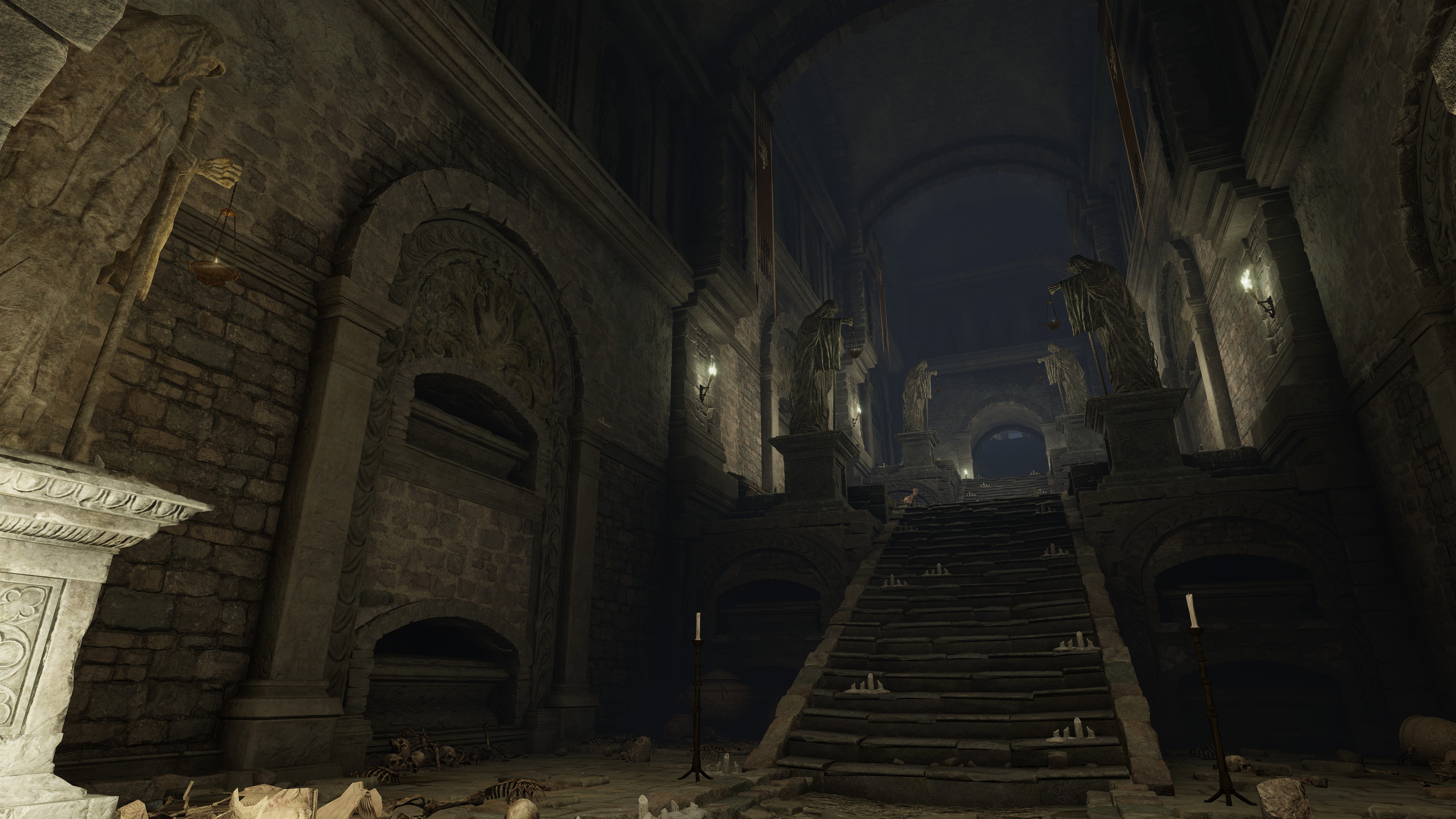
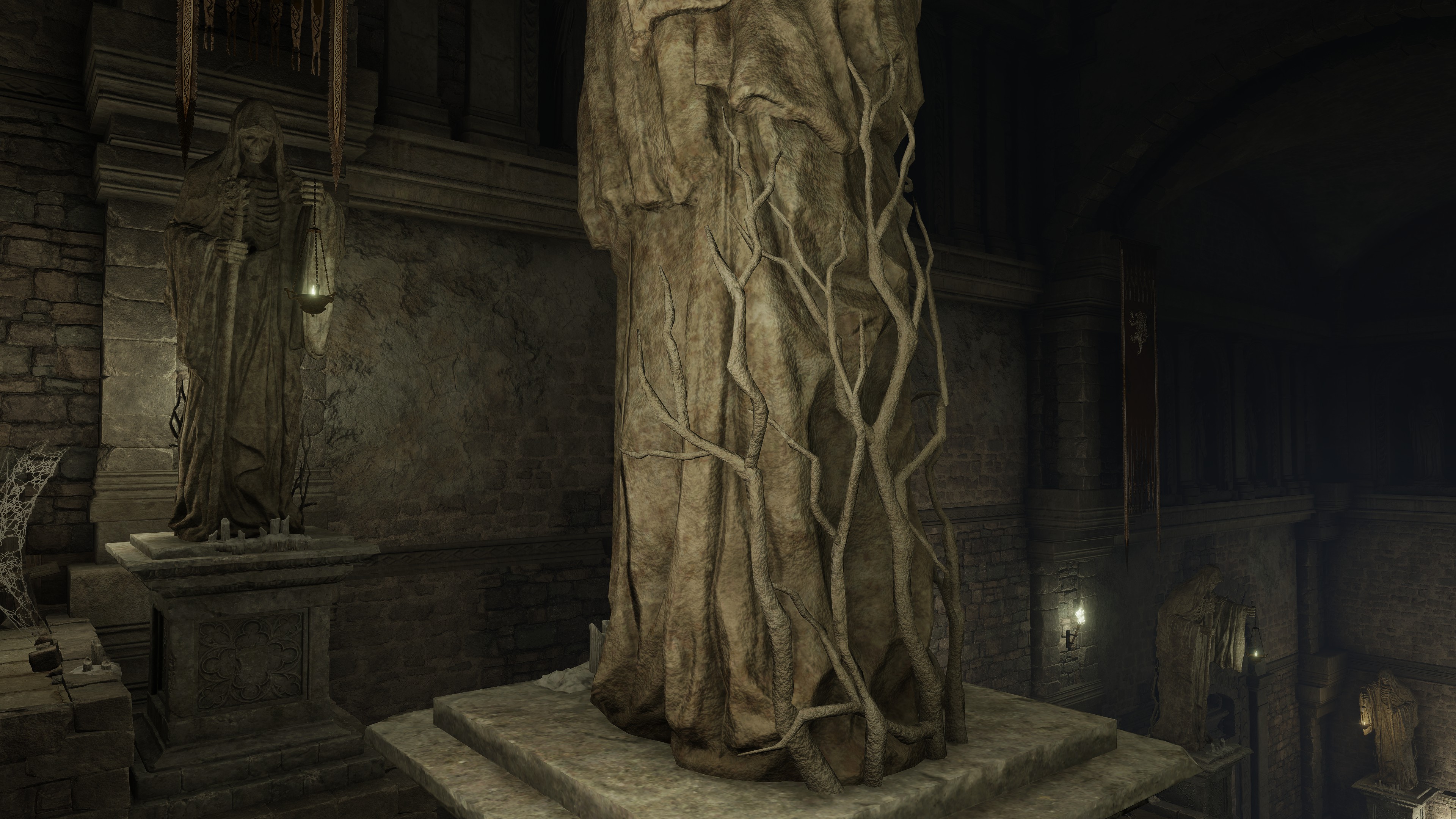
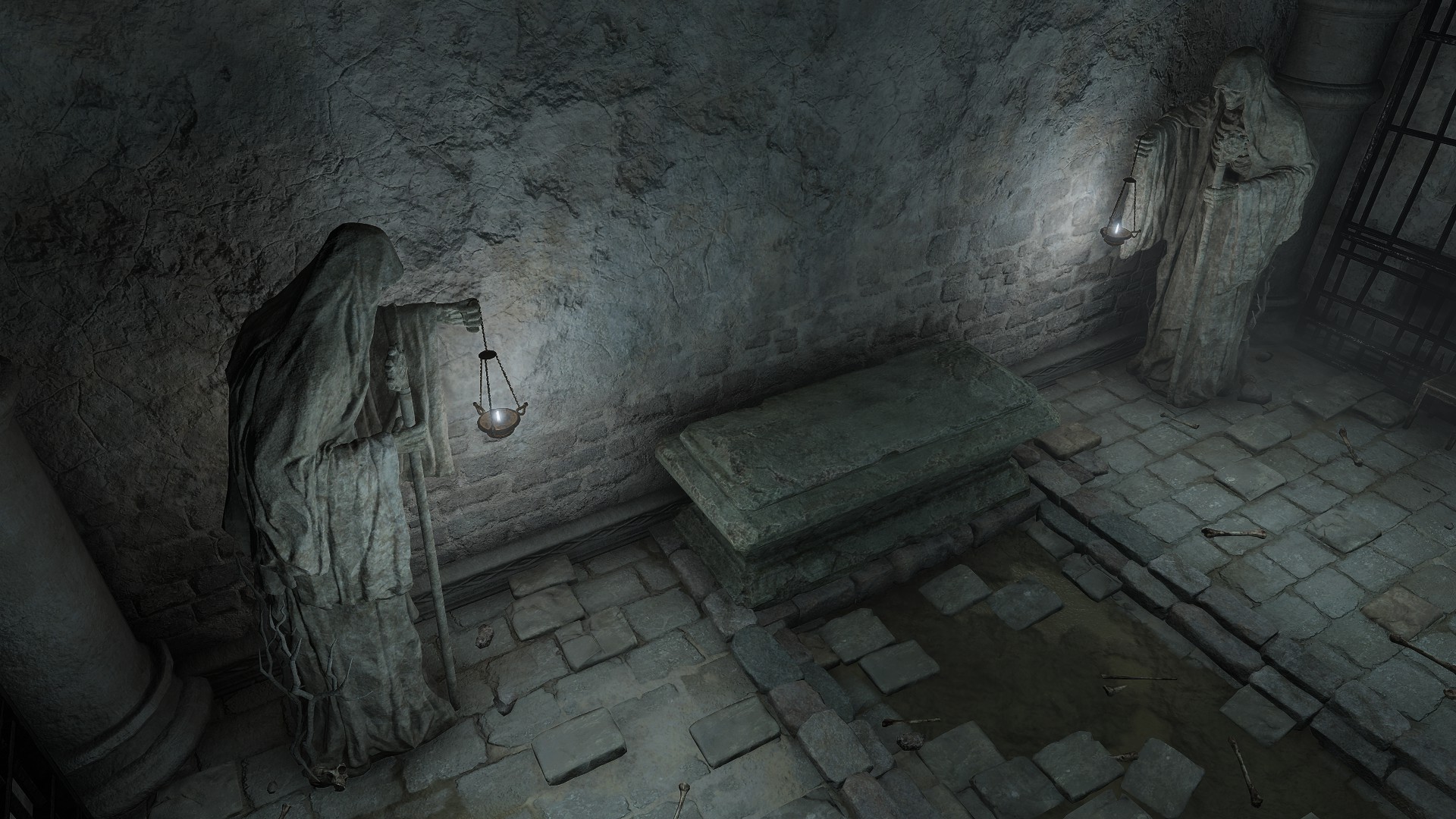
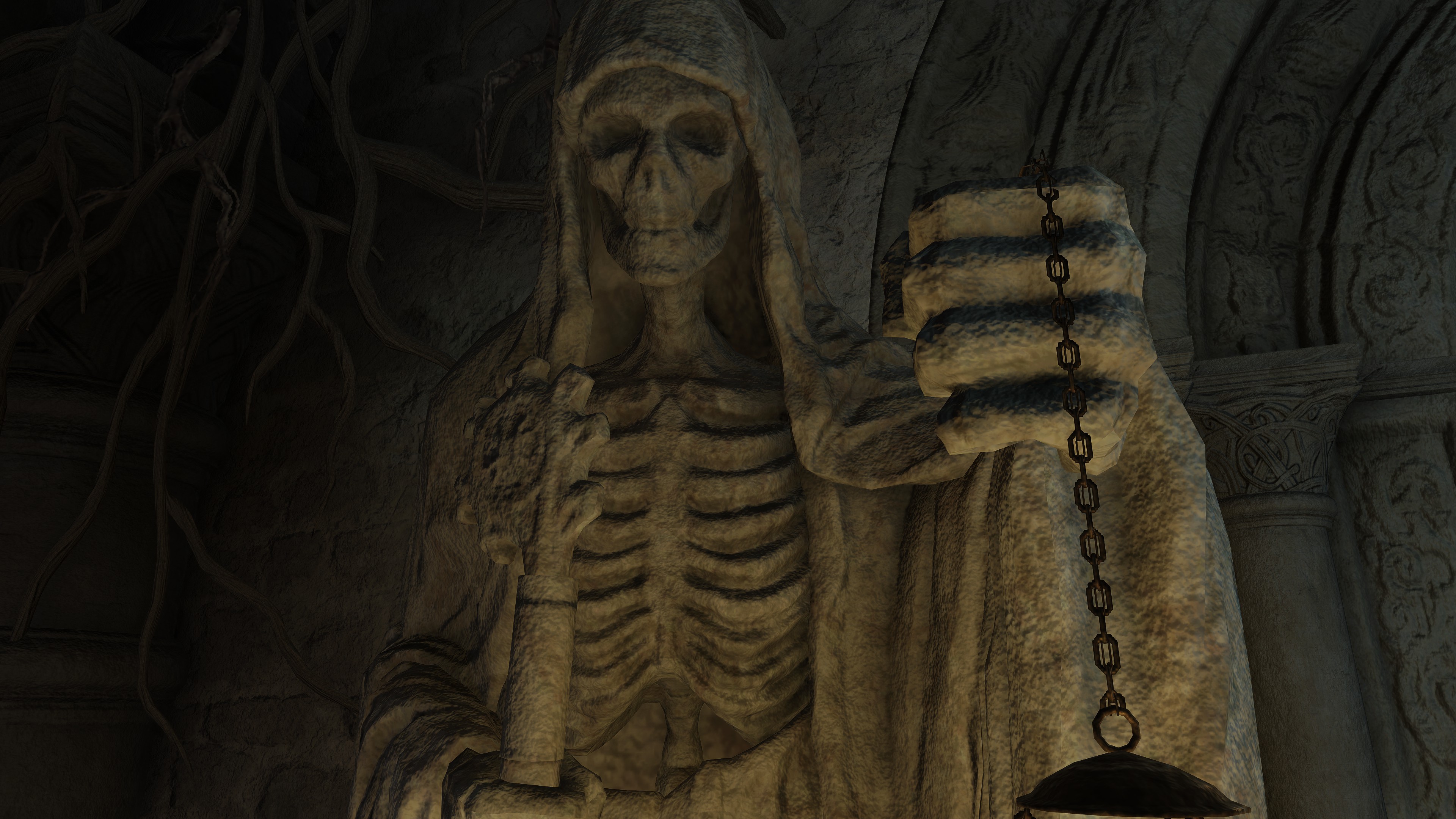
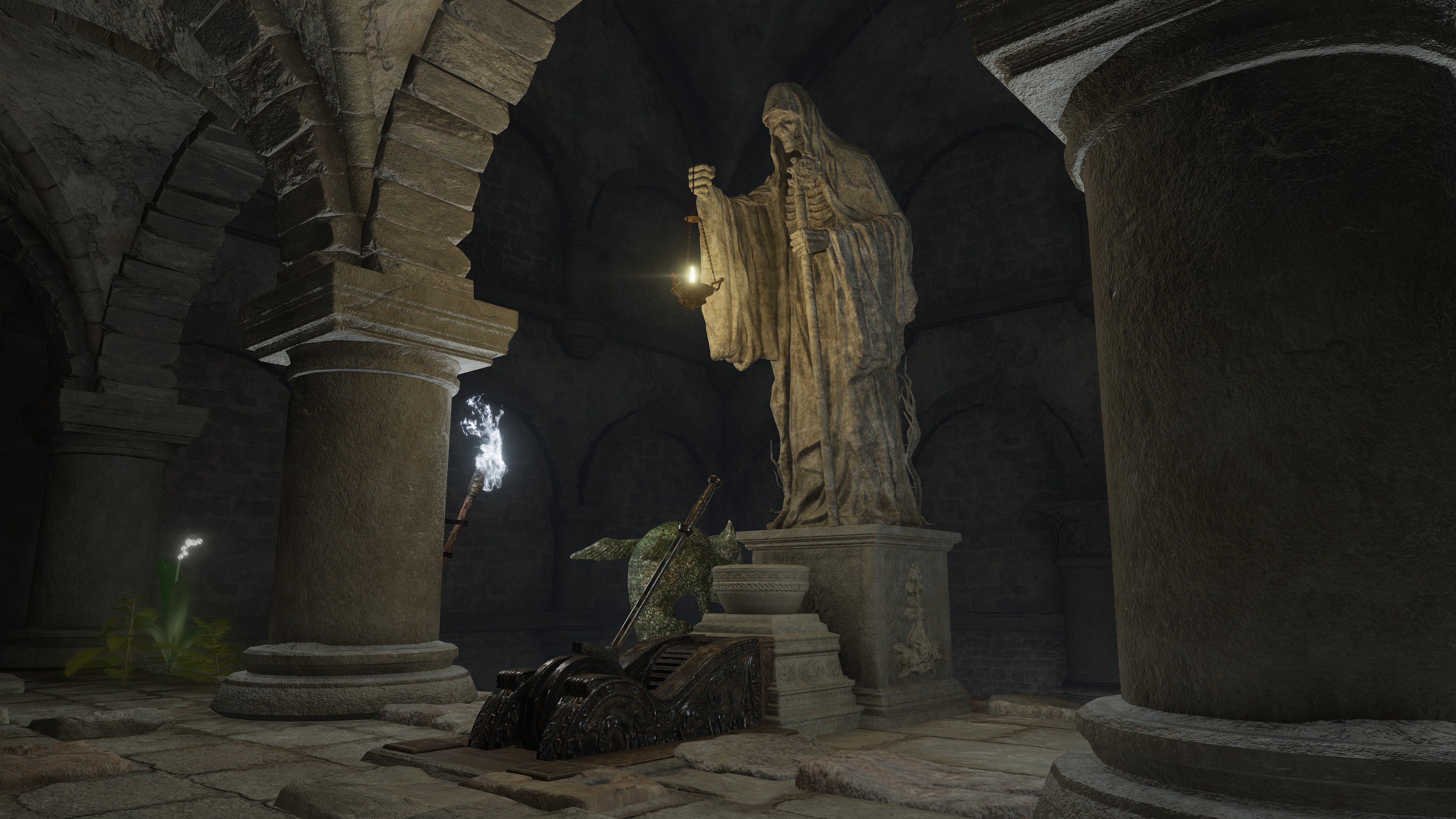
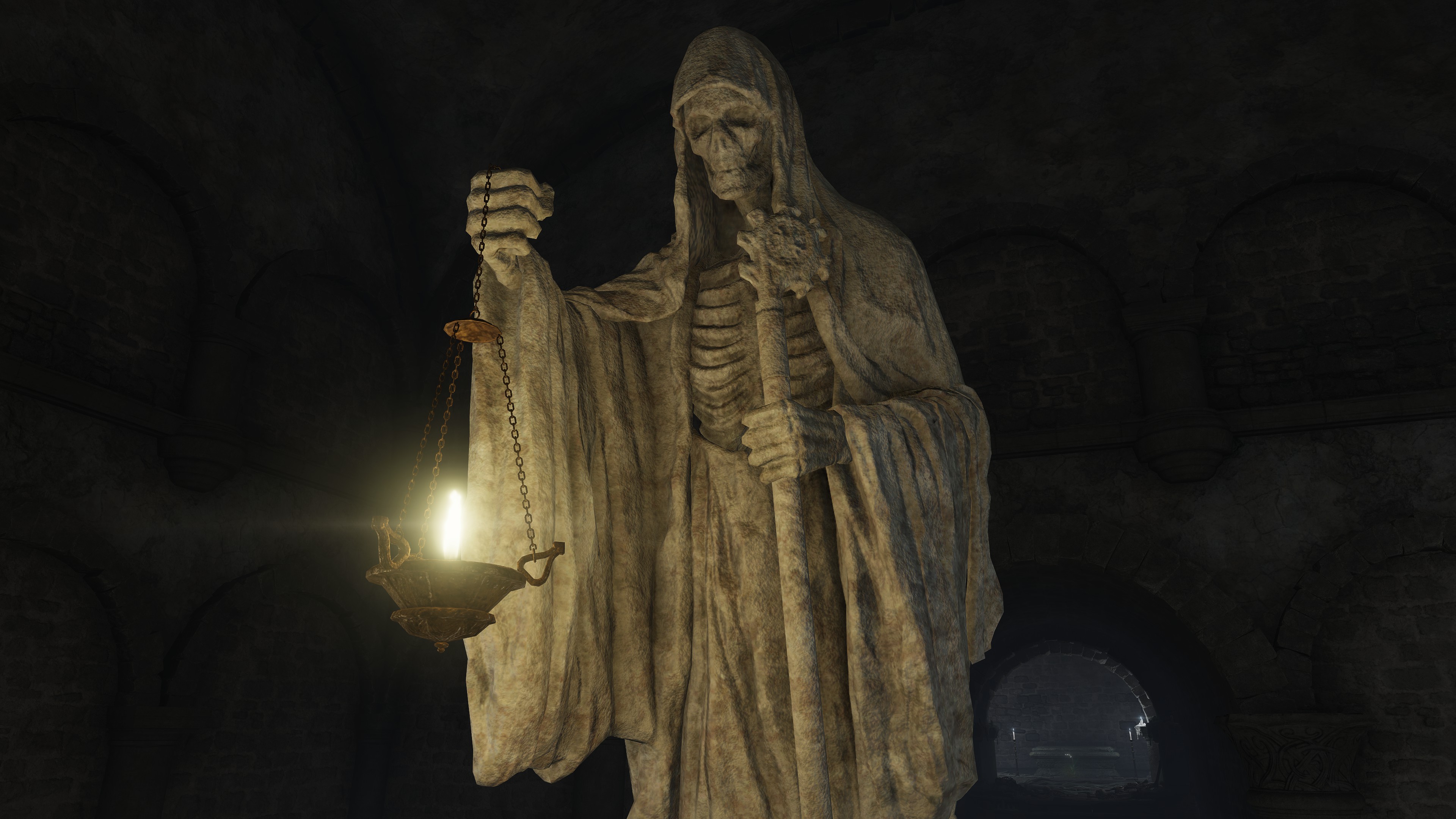
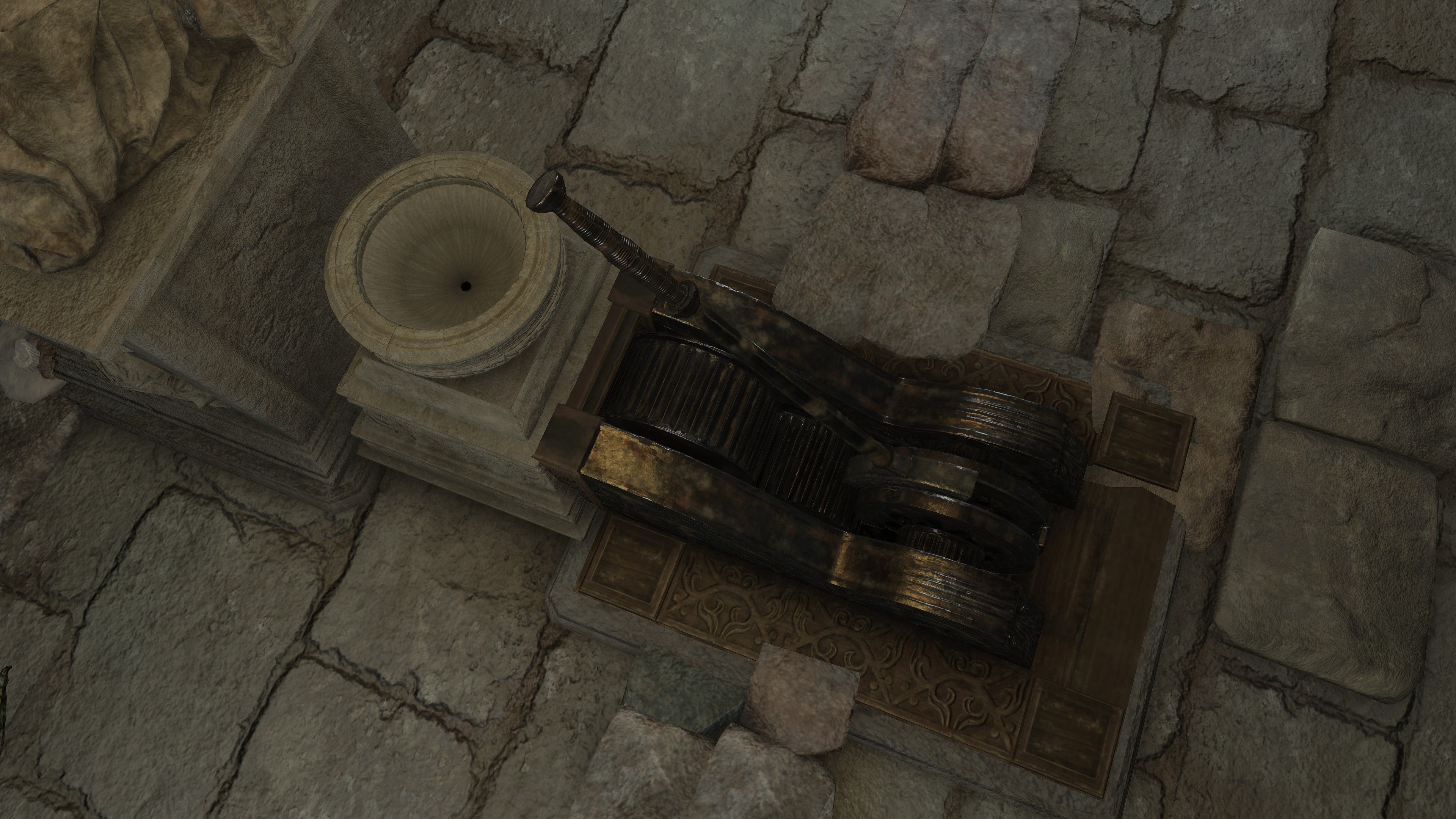
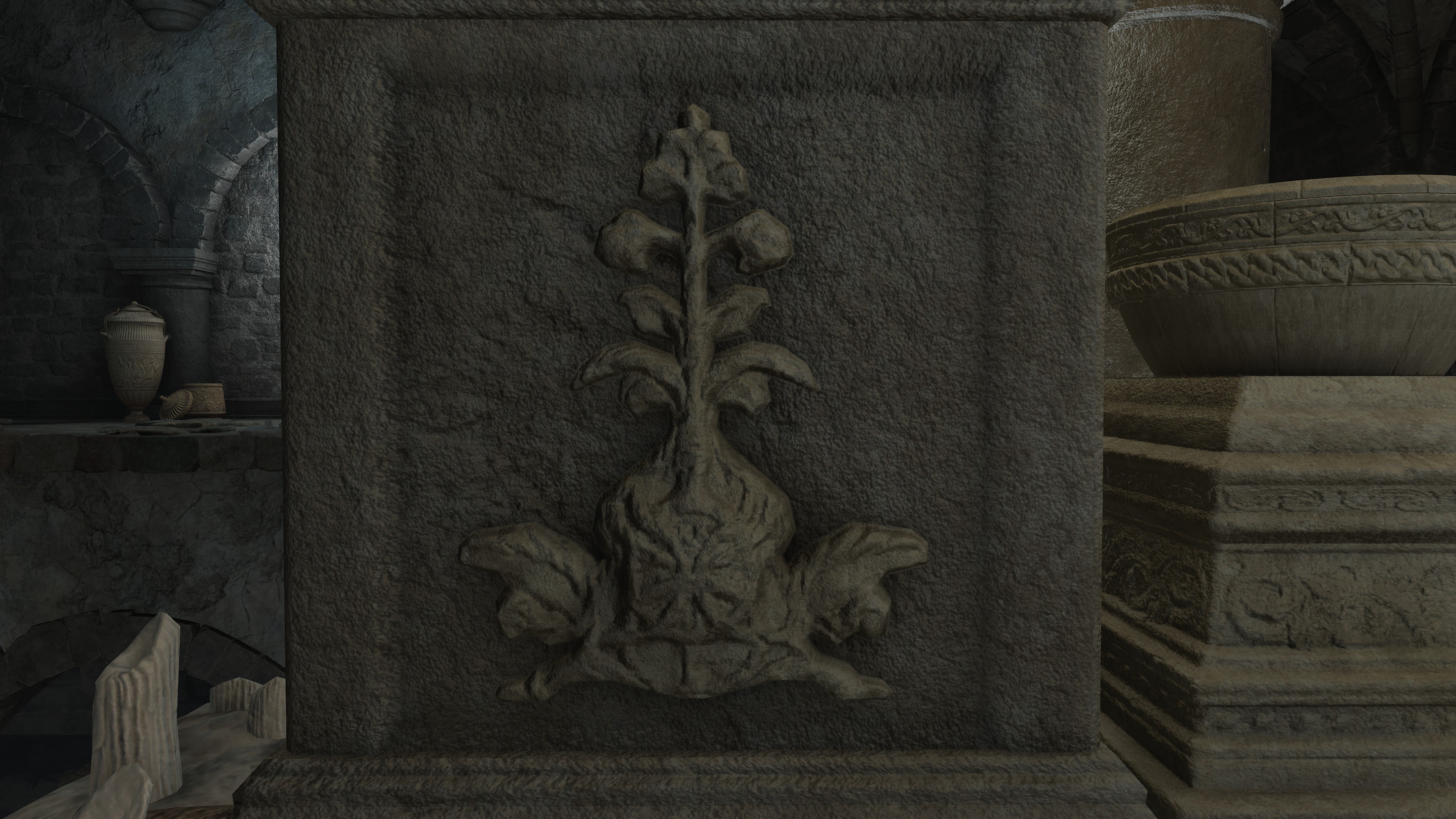
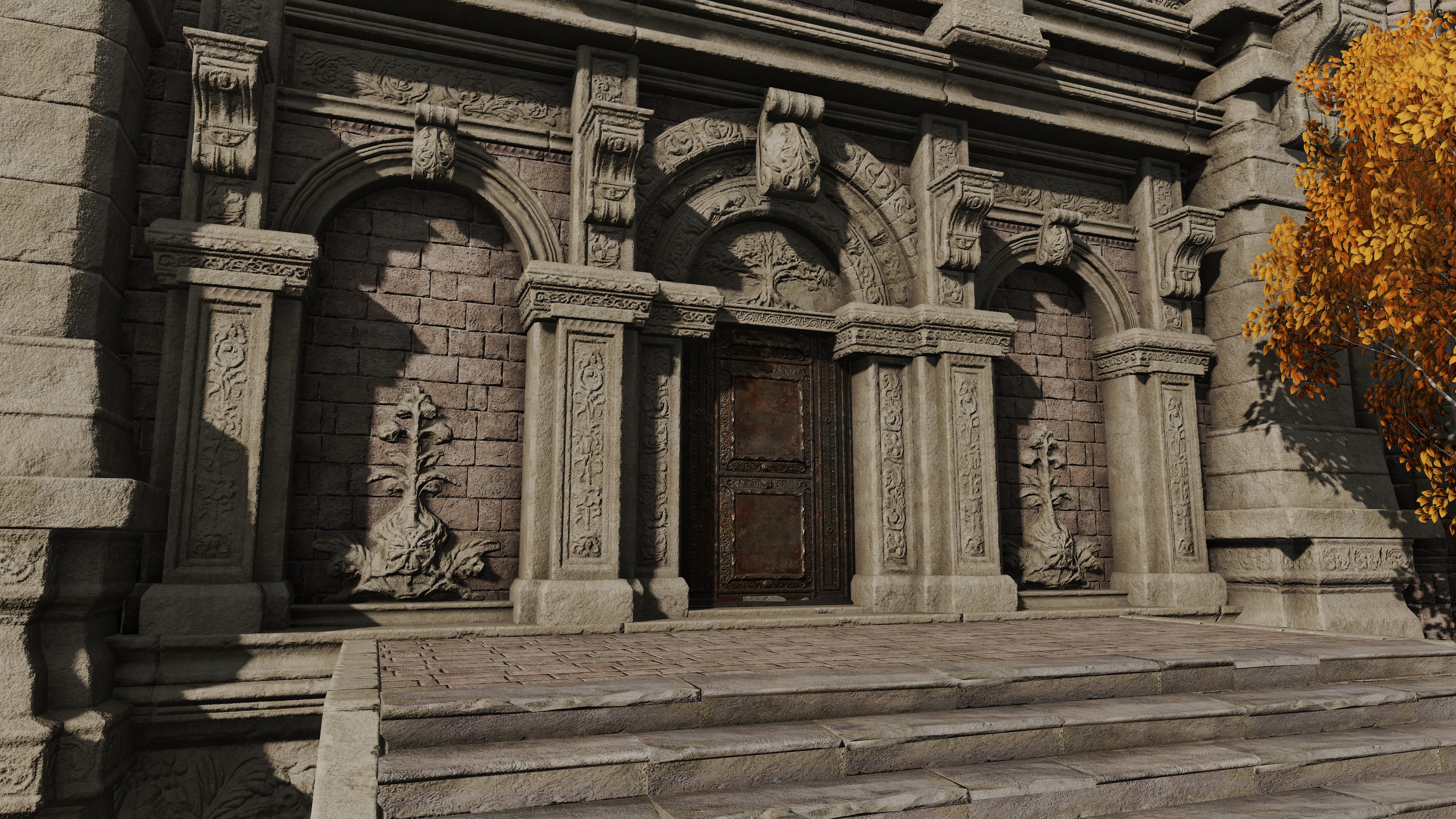
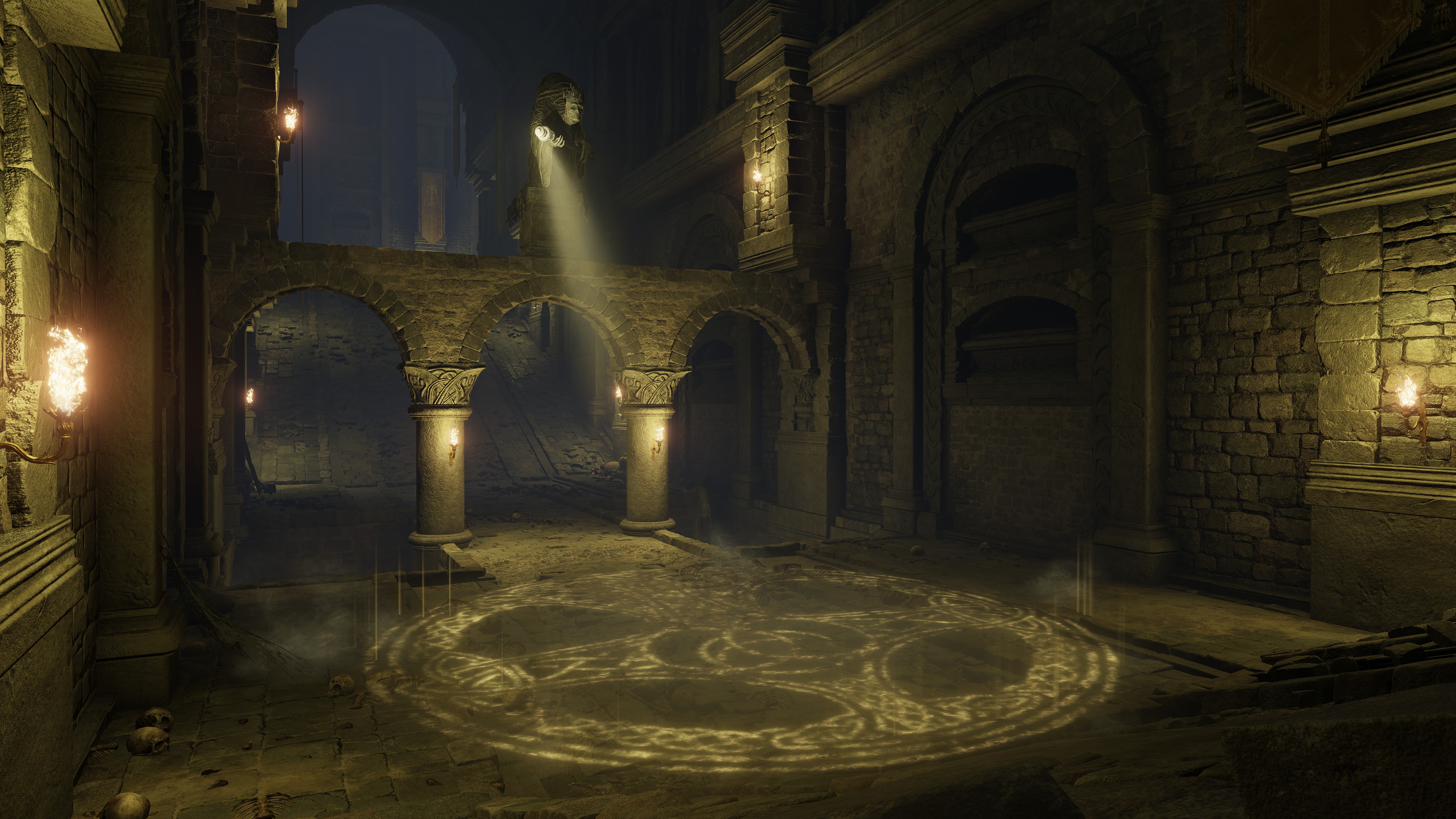
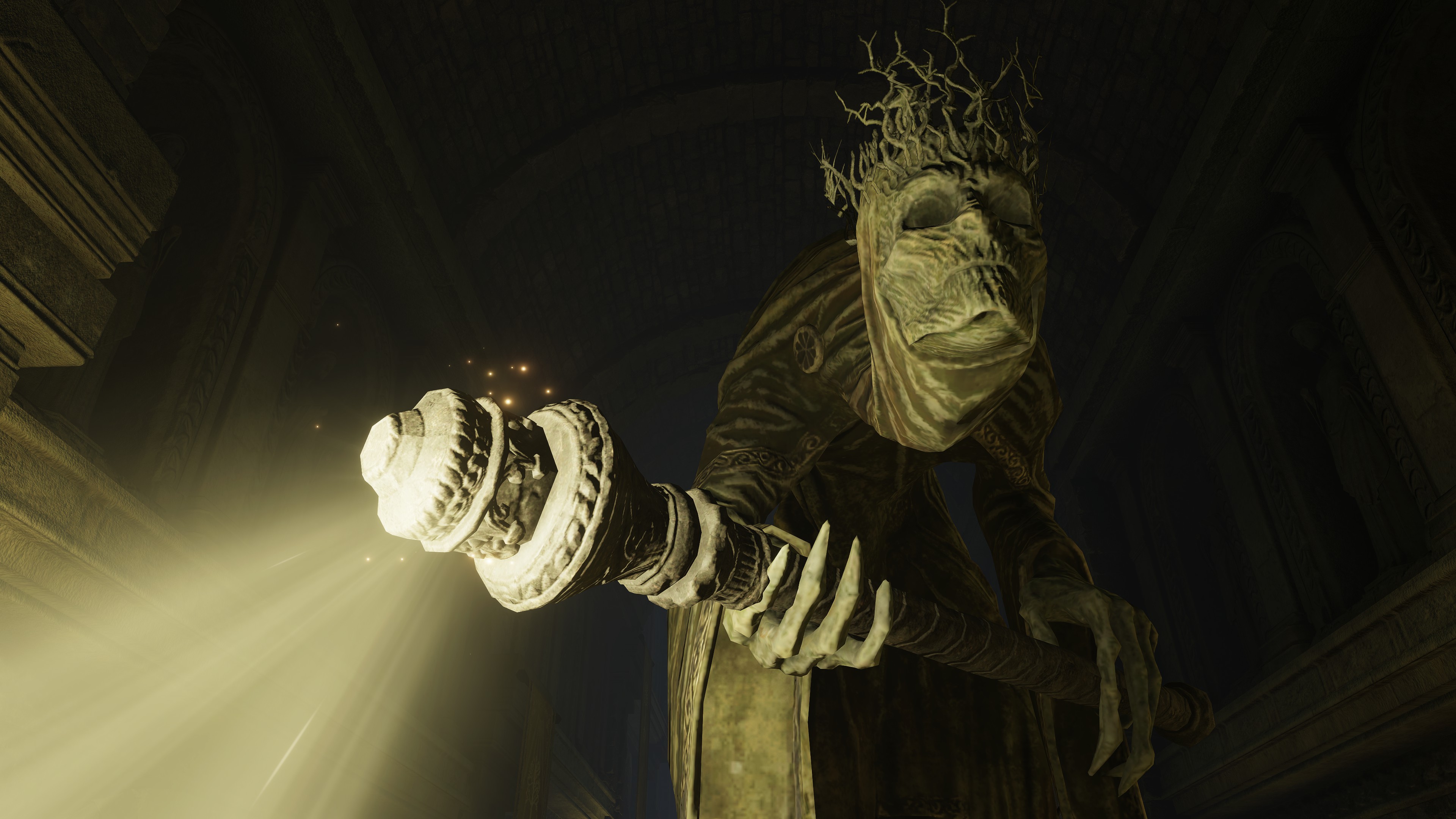
Even when Erdtree Burial came to replace the old ways, the dead themselves didn’t change. They were still lost in the realm of the living and in need of guidance. Ushering them to their new resting place is Rosus, whose statue found all across the Lands Between always points to nearby catacombs. This isn’t the only figure to act as death’s guide. Within the actual catacombs, statues of a root-covered Grim Reaper holding a burning lamp in one hand and a shepherd’s crook in the other flanks the path to the root sanctum, the doors typically opened by a lever ornamented with the same statue. With its base adorned with the tree-spawning cross imagery employed throughout catacombs, the Golden Order has led the flock with generic icons of Death since the beginning, without question. Still, Rosus stands out due to the bizarre physiology; from the zombified face to the elongated neck to the long fingers to the dewclawed feet to the sharp nails. More than who, this begs questions of what Rosus is.
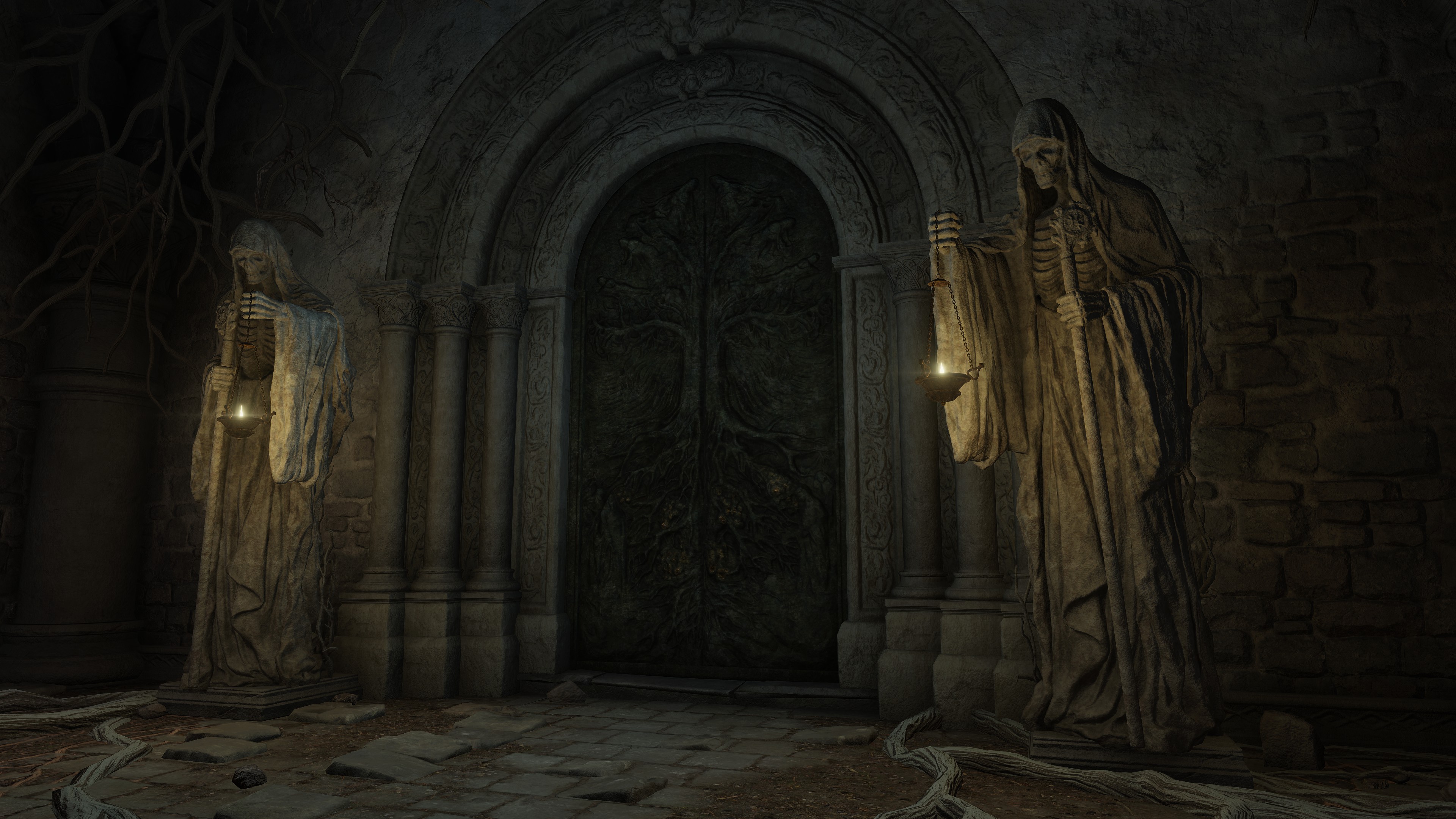
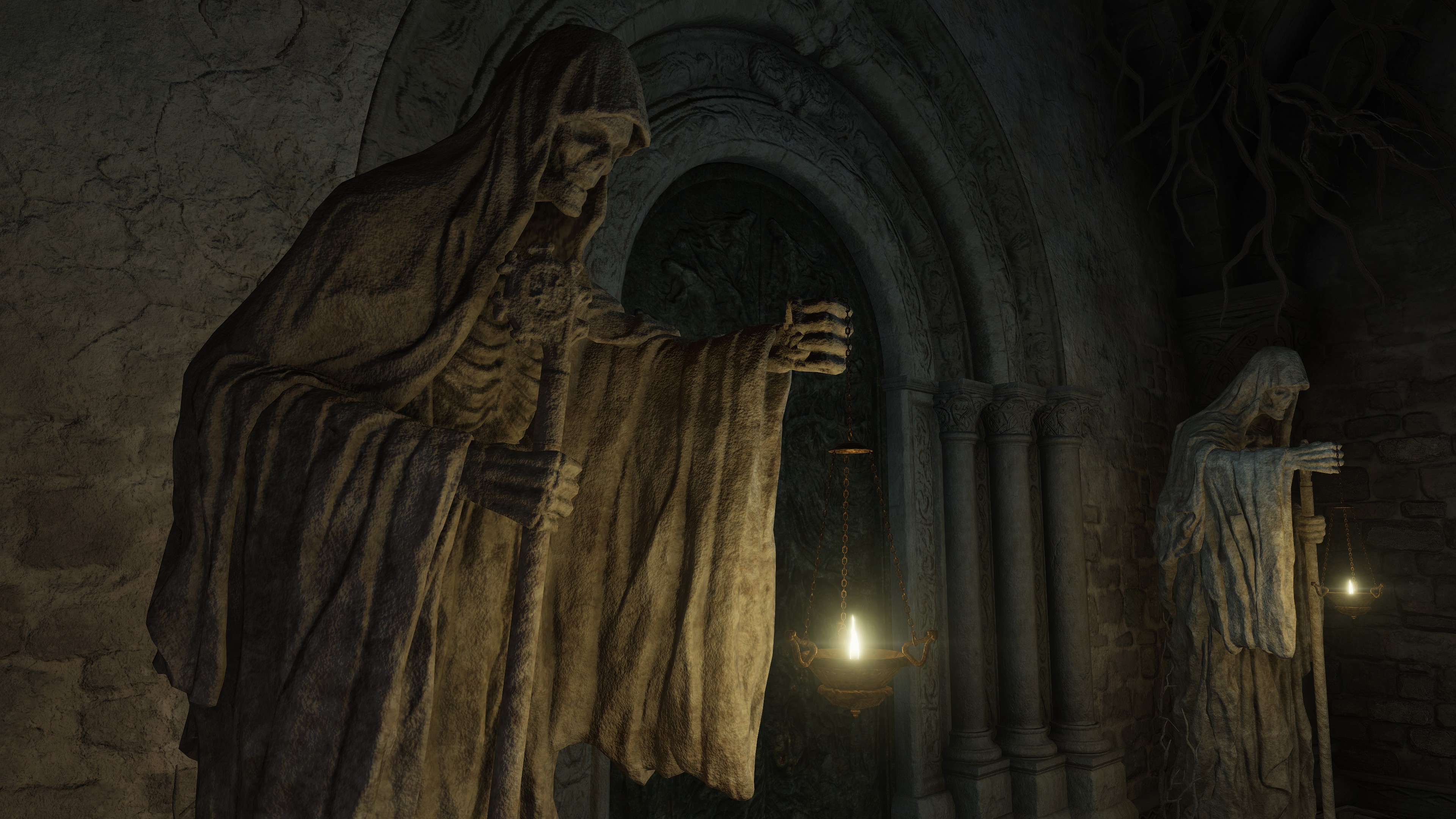
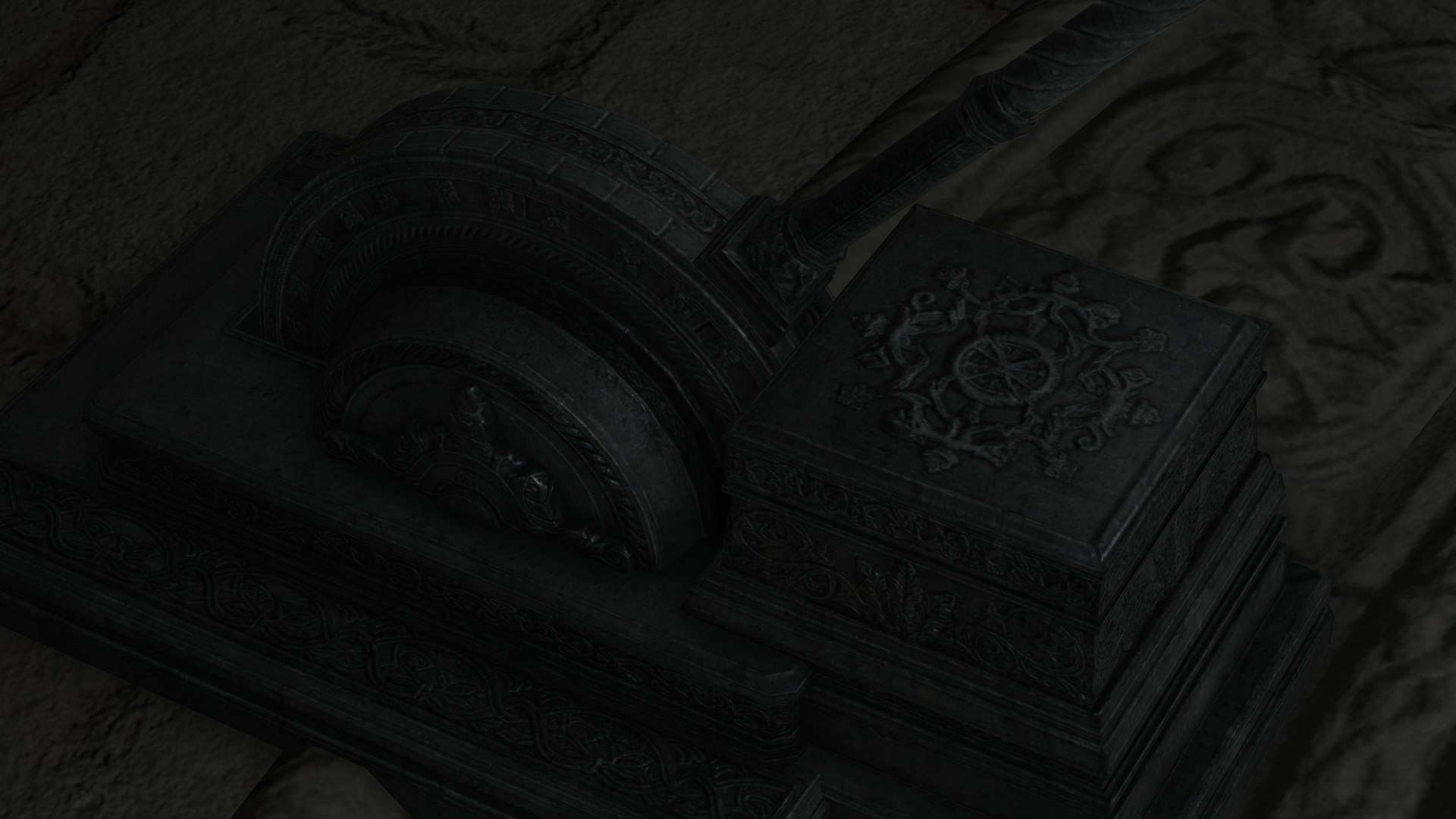
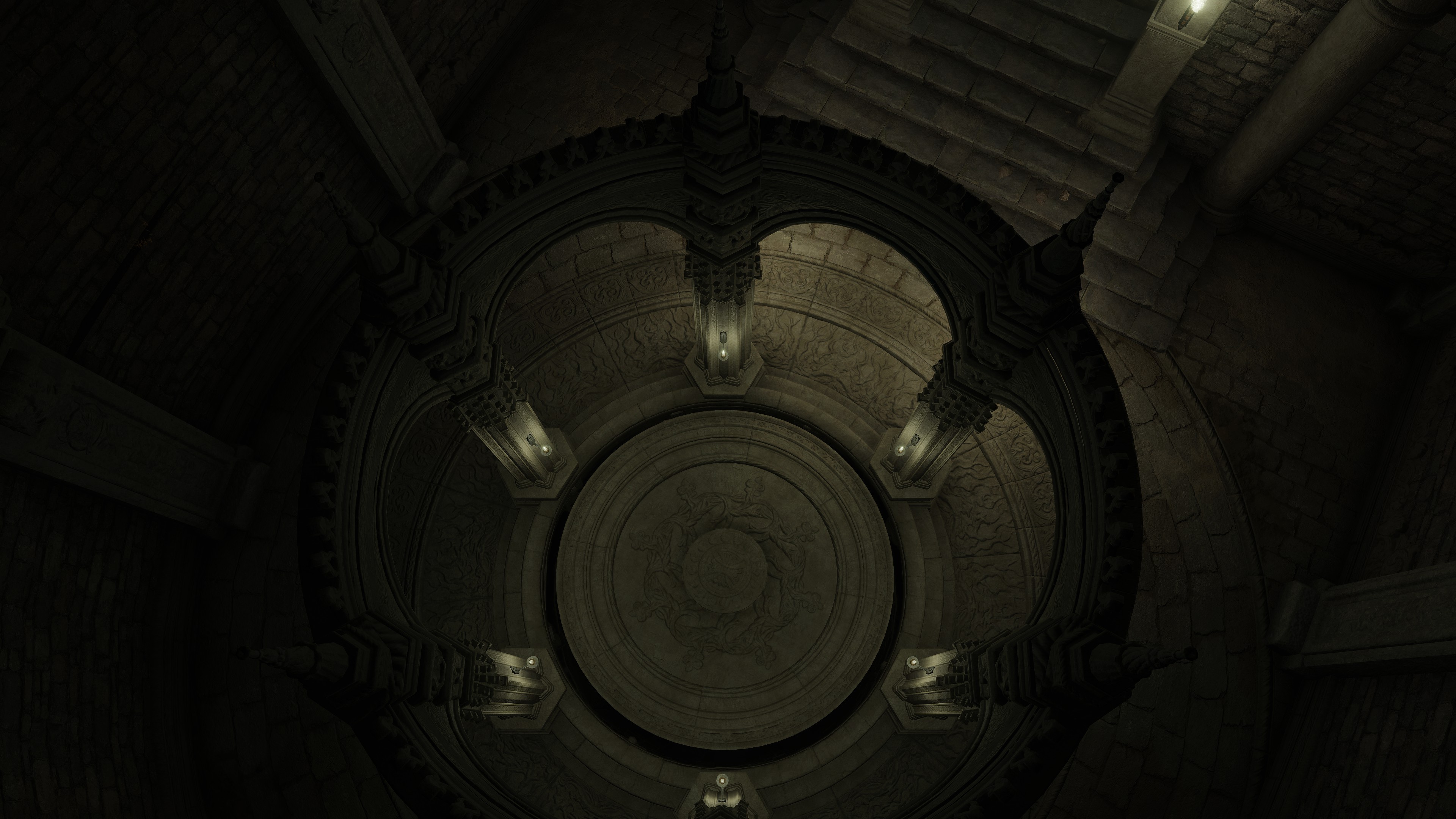
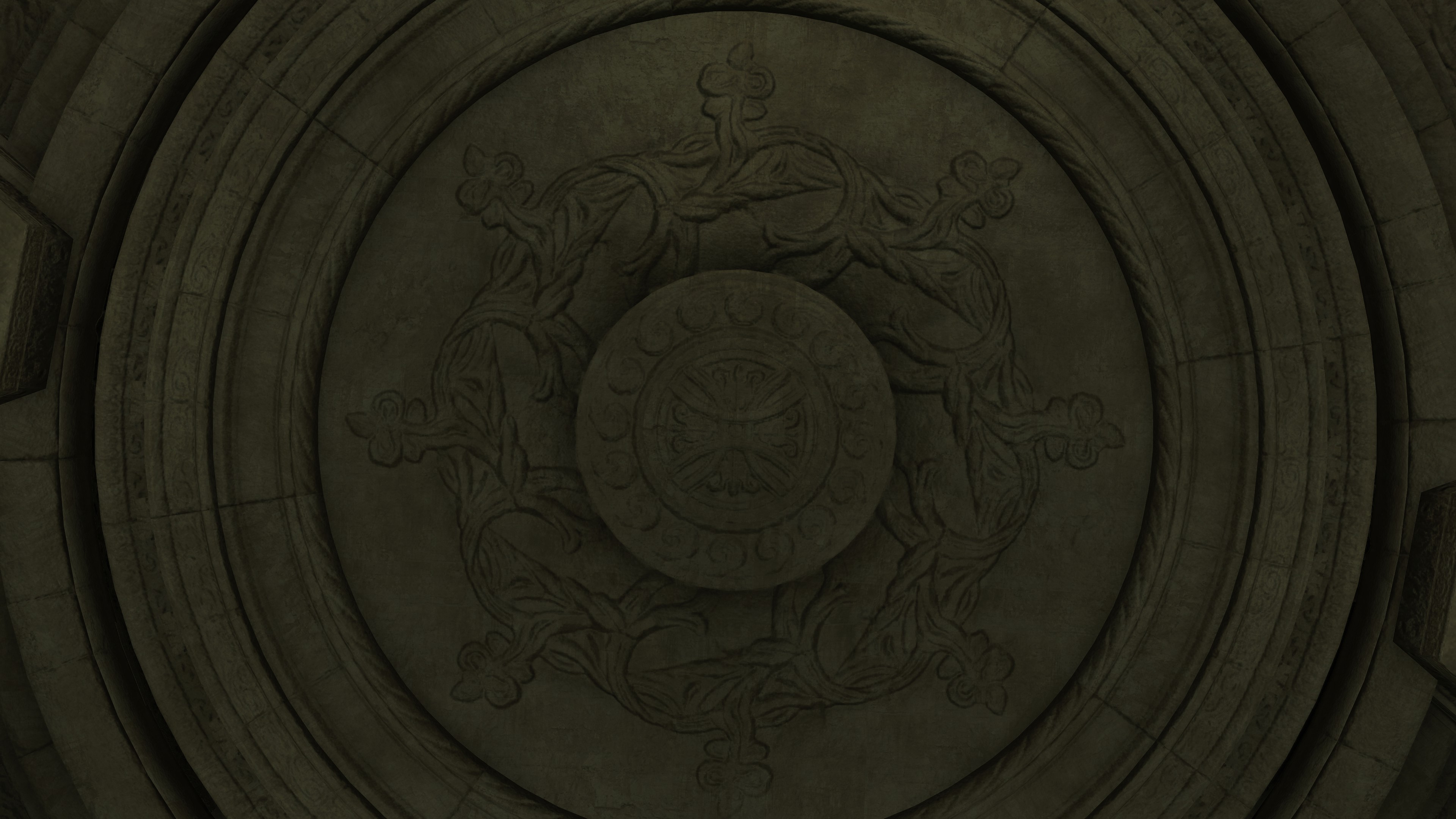
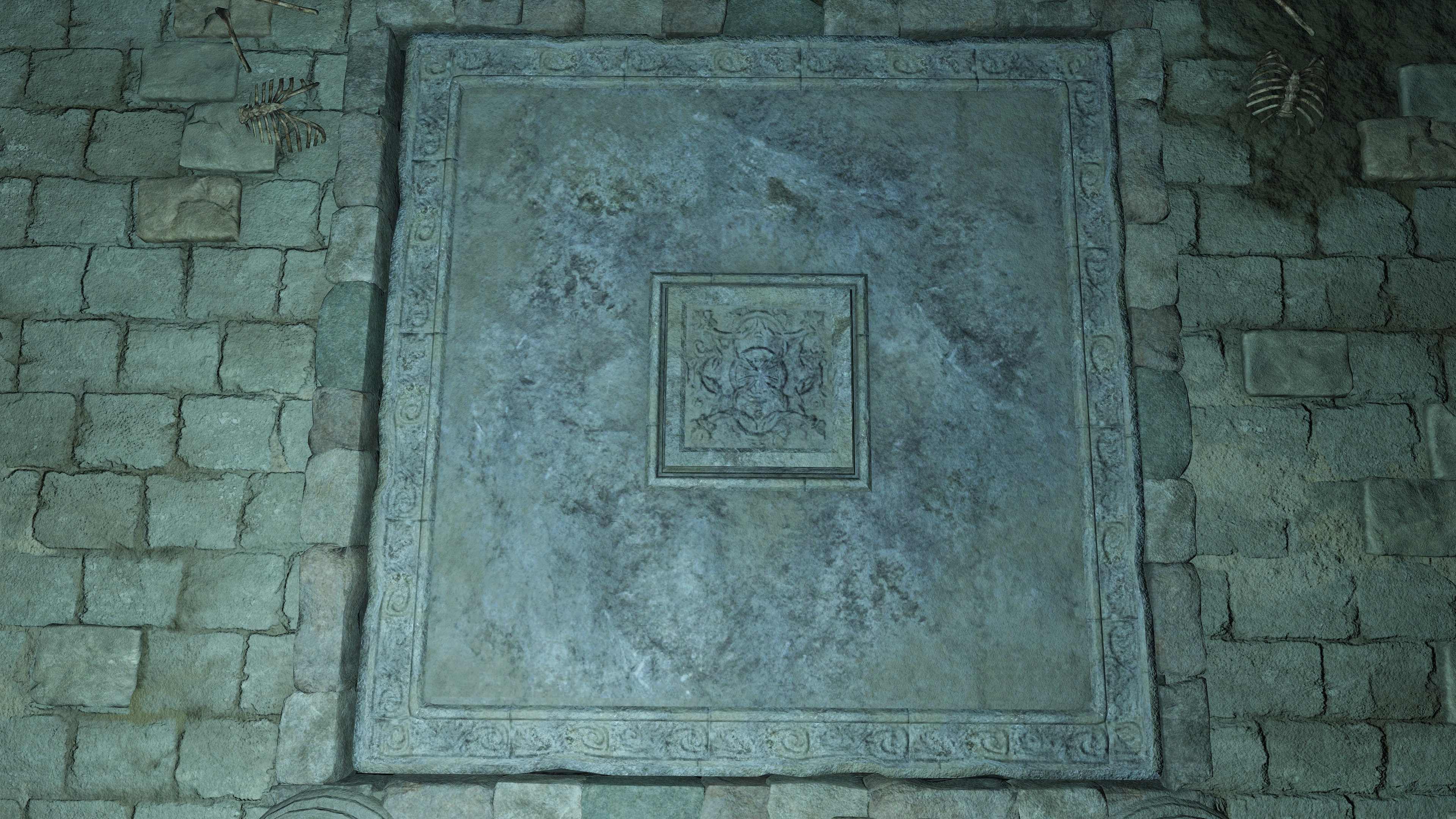
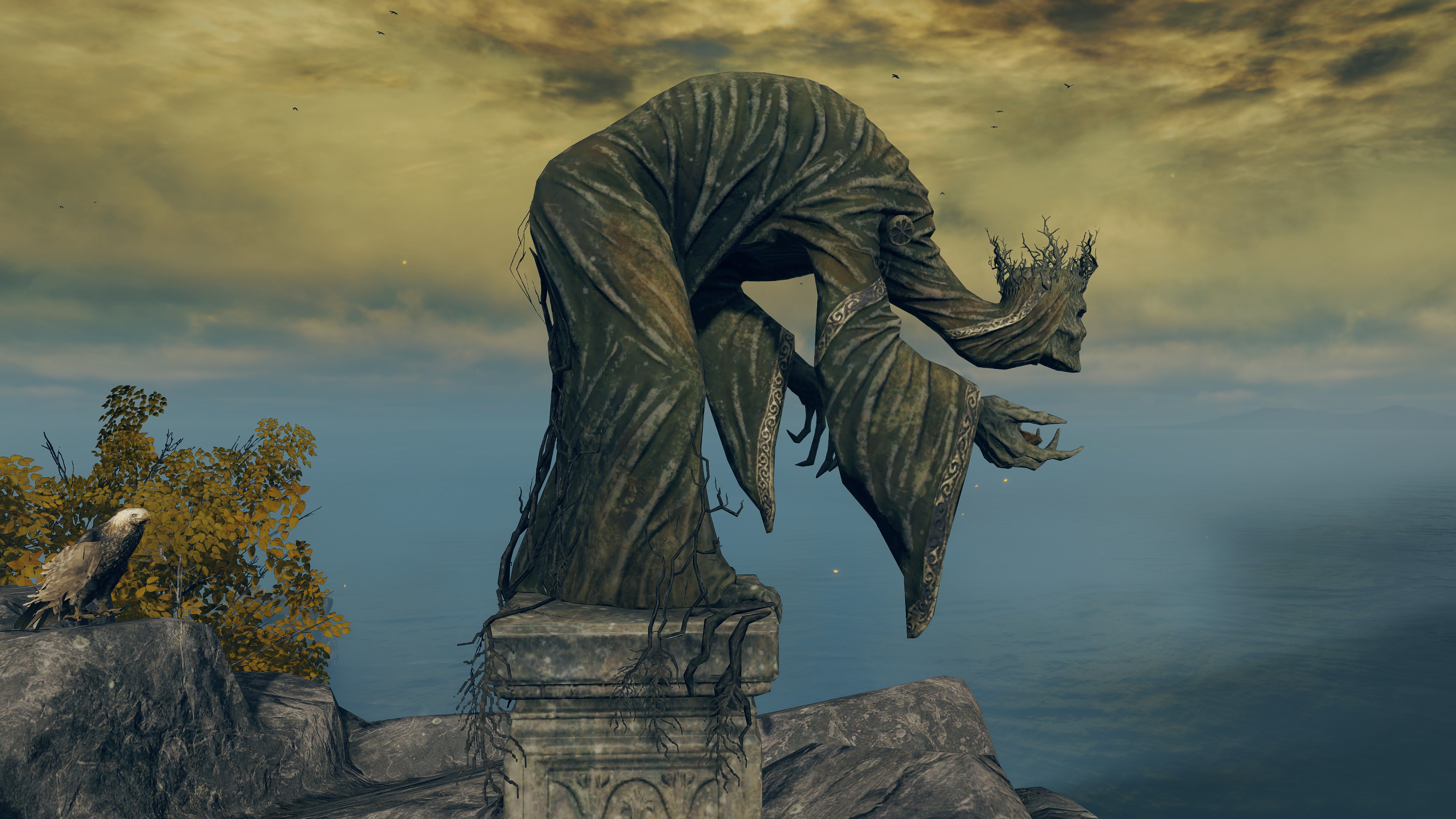
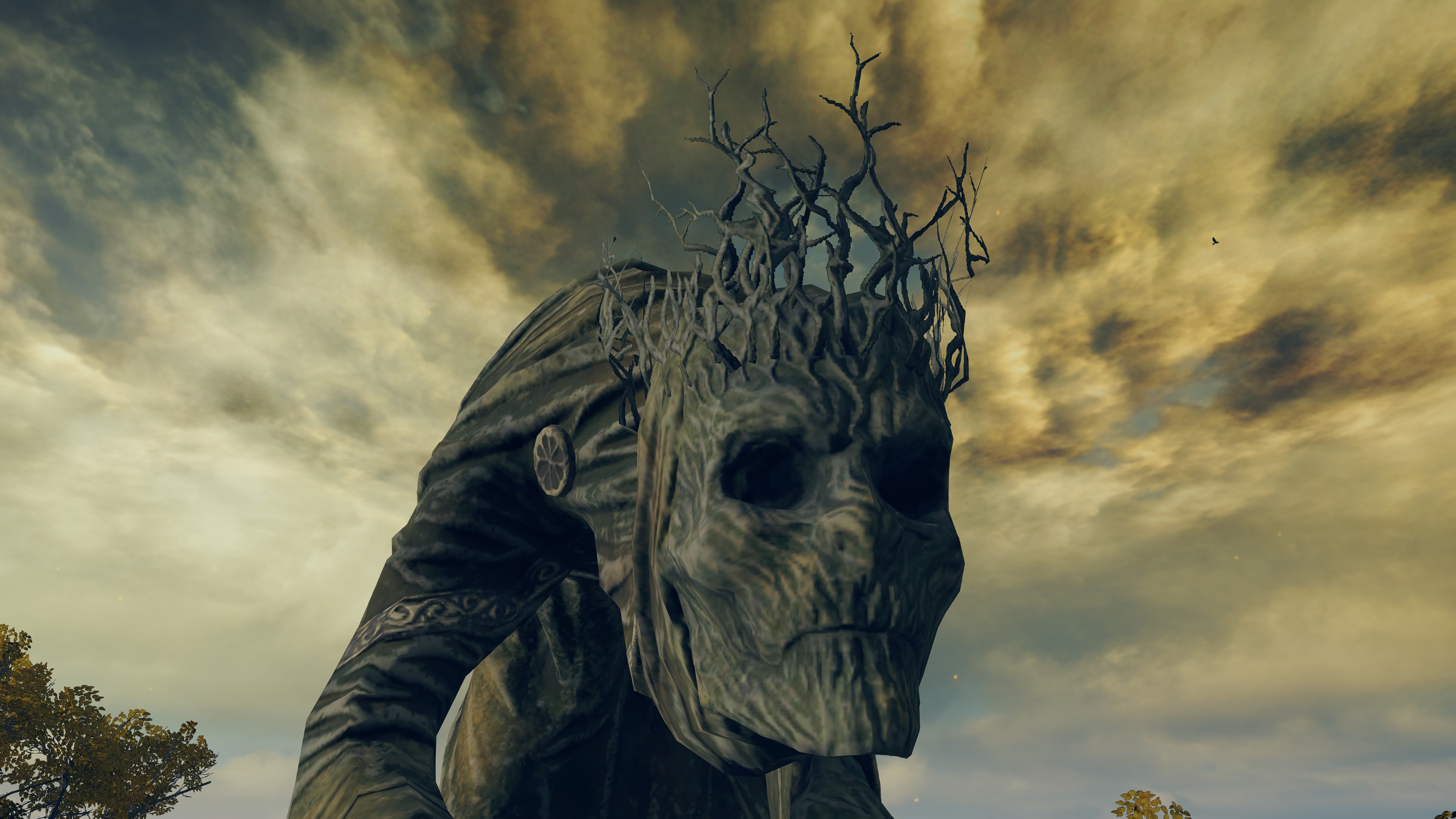
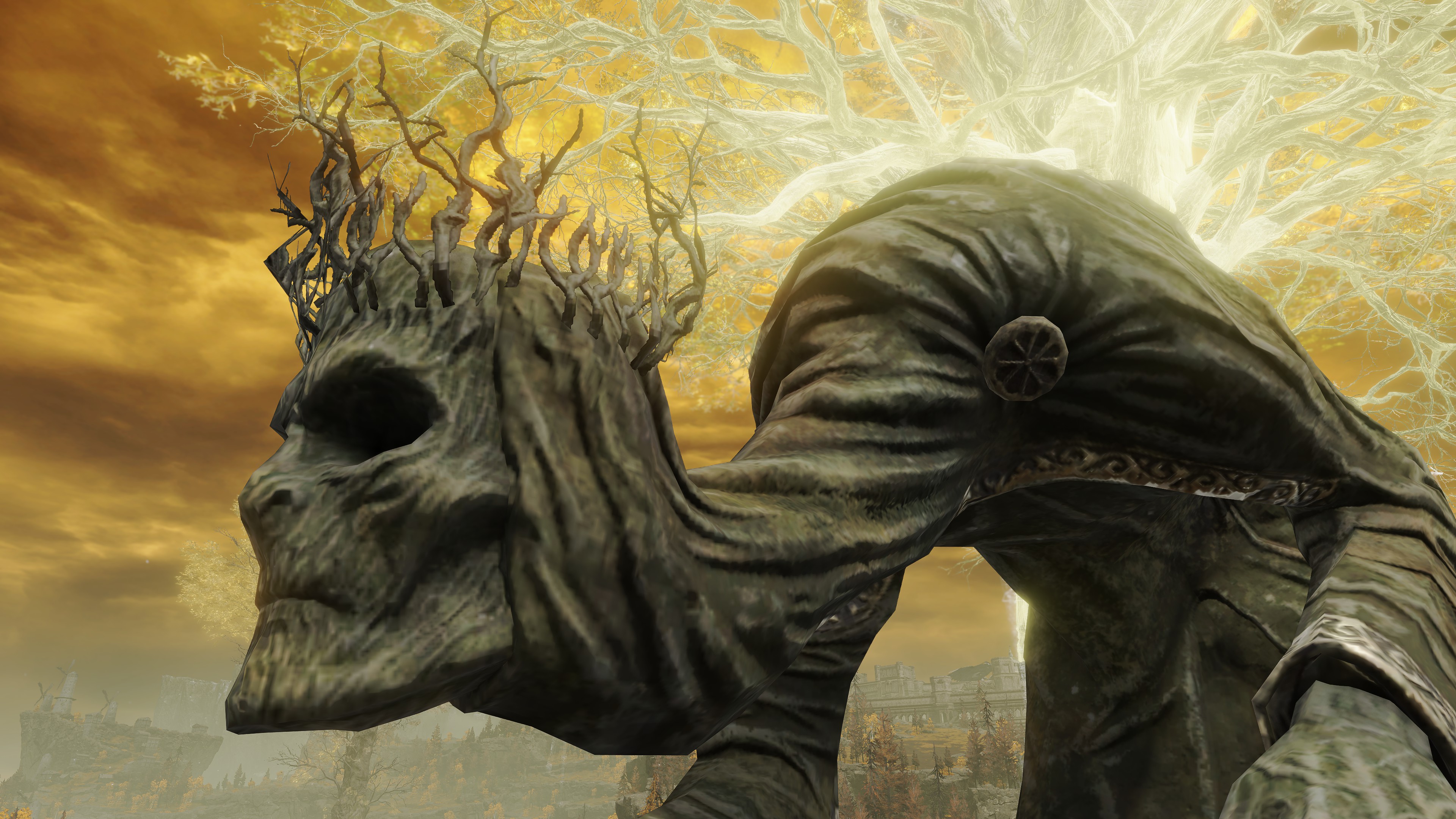
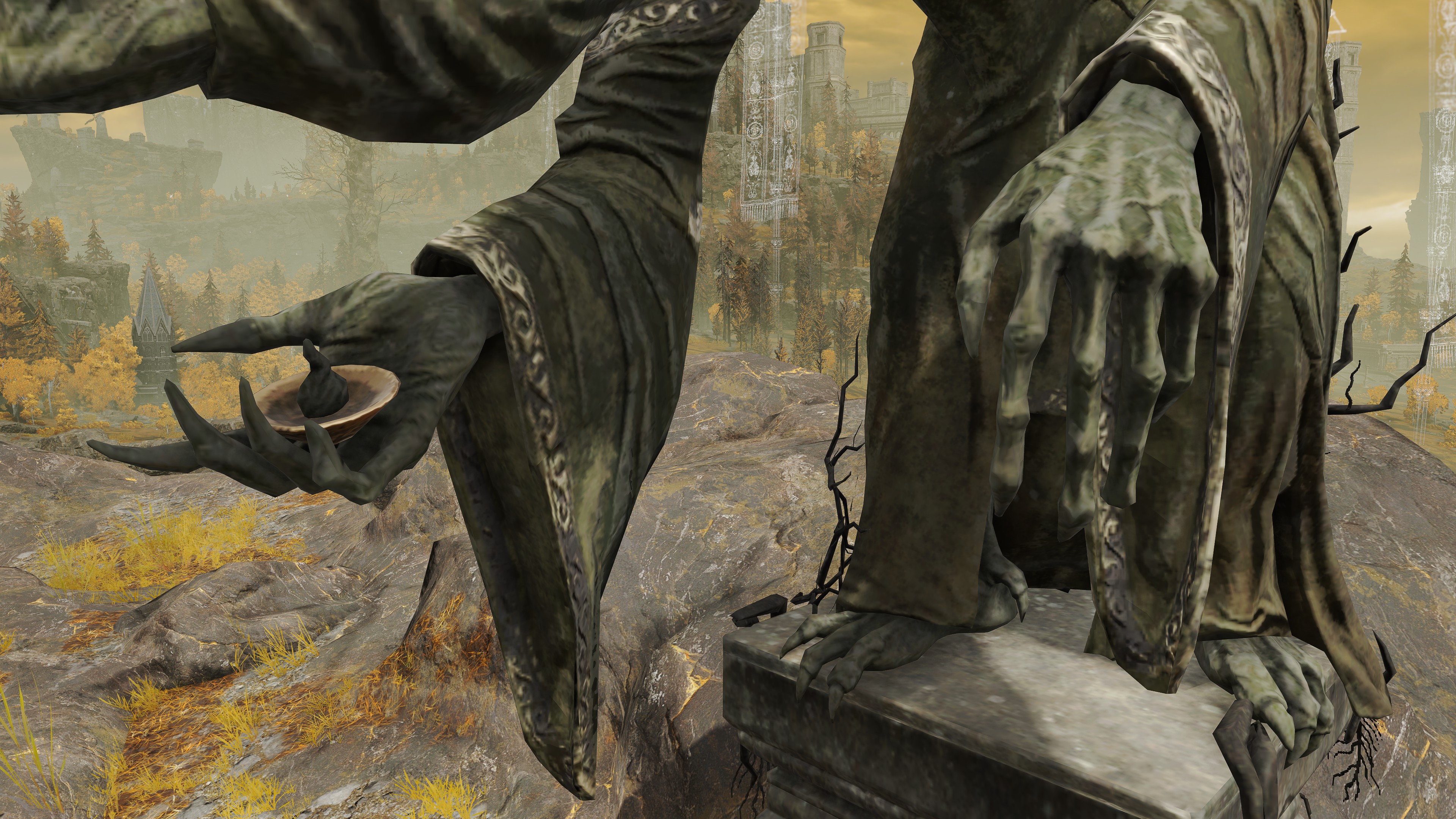
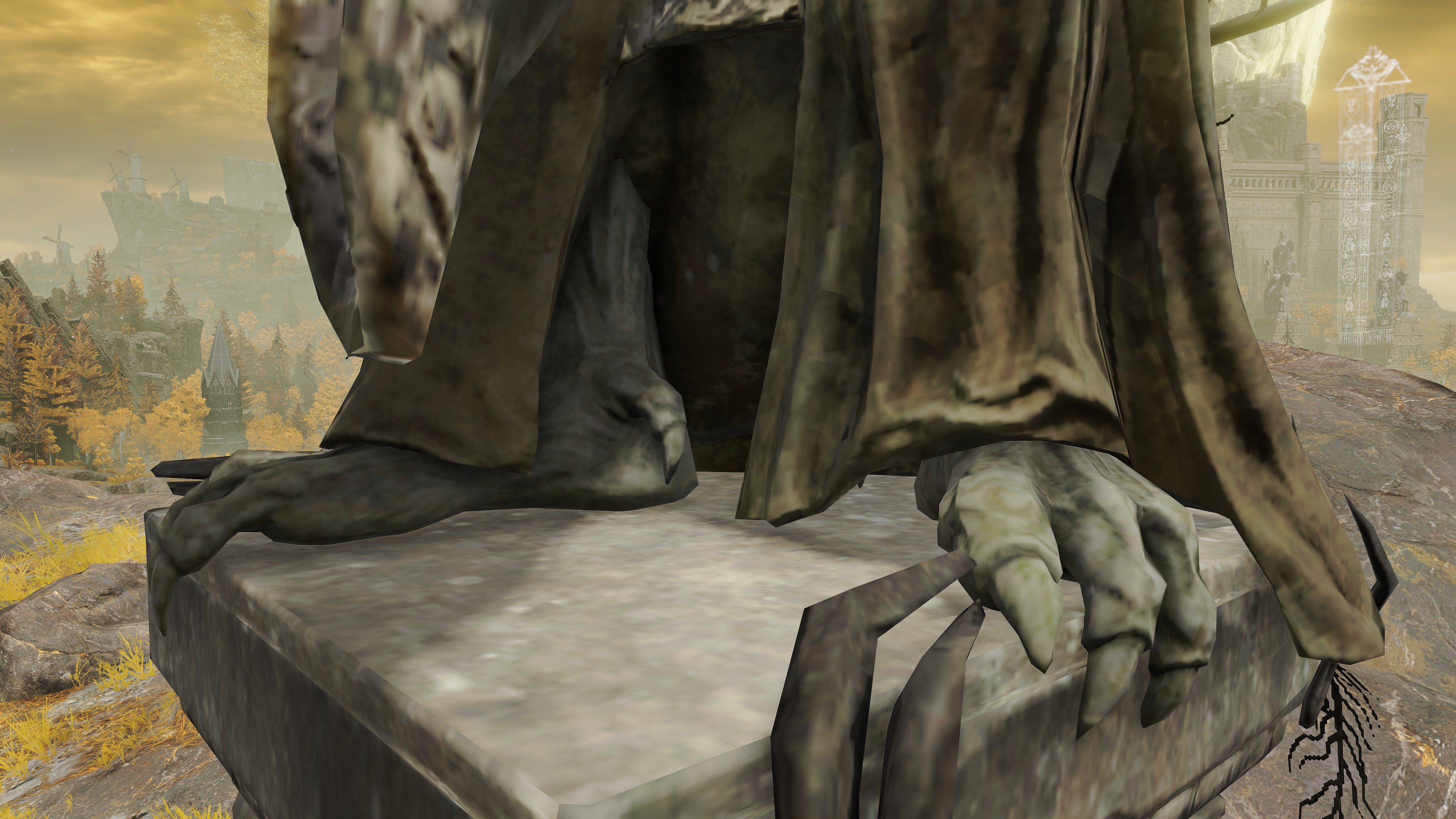
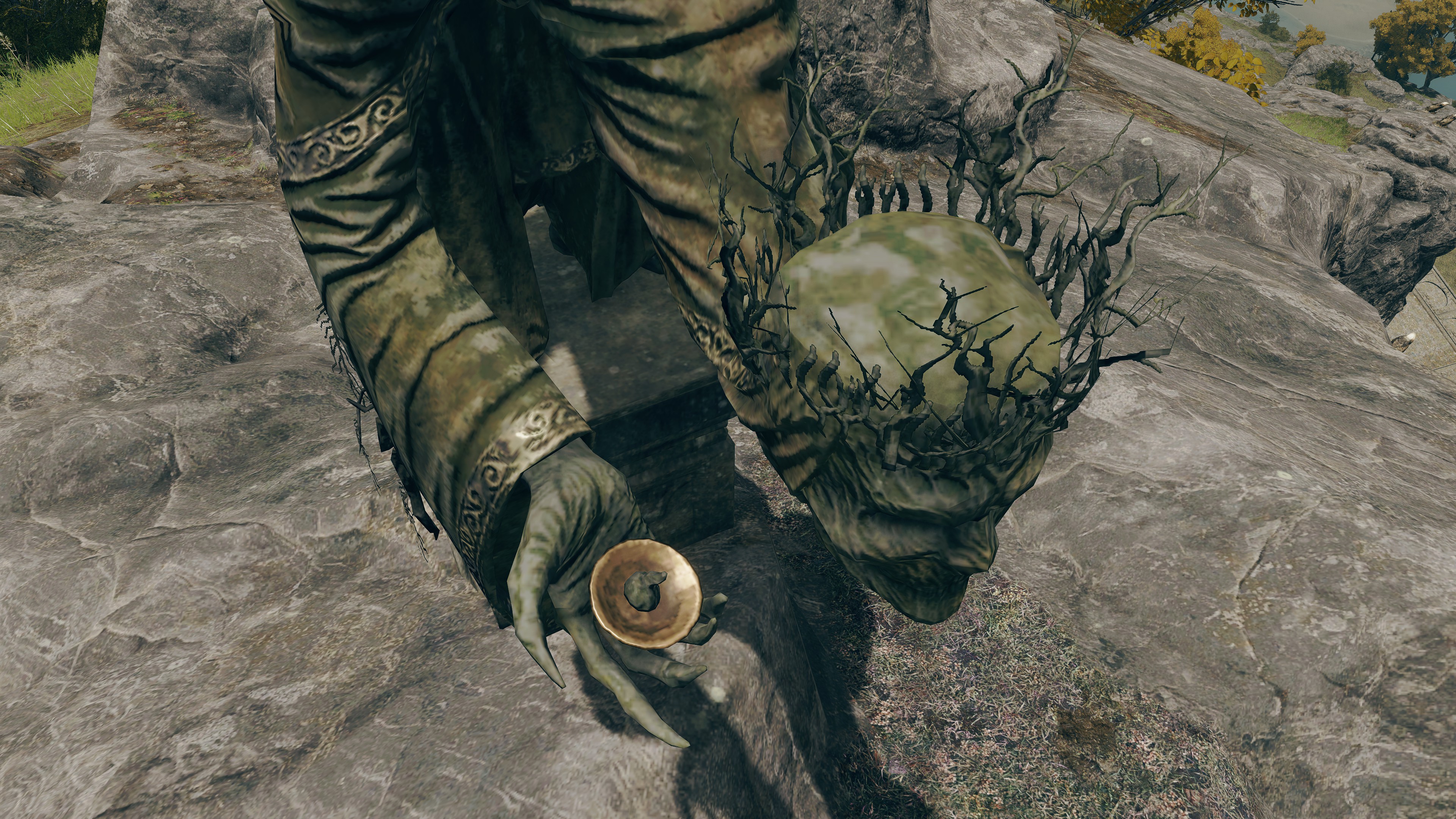
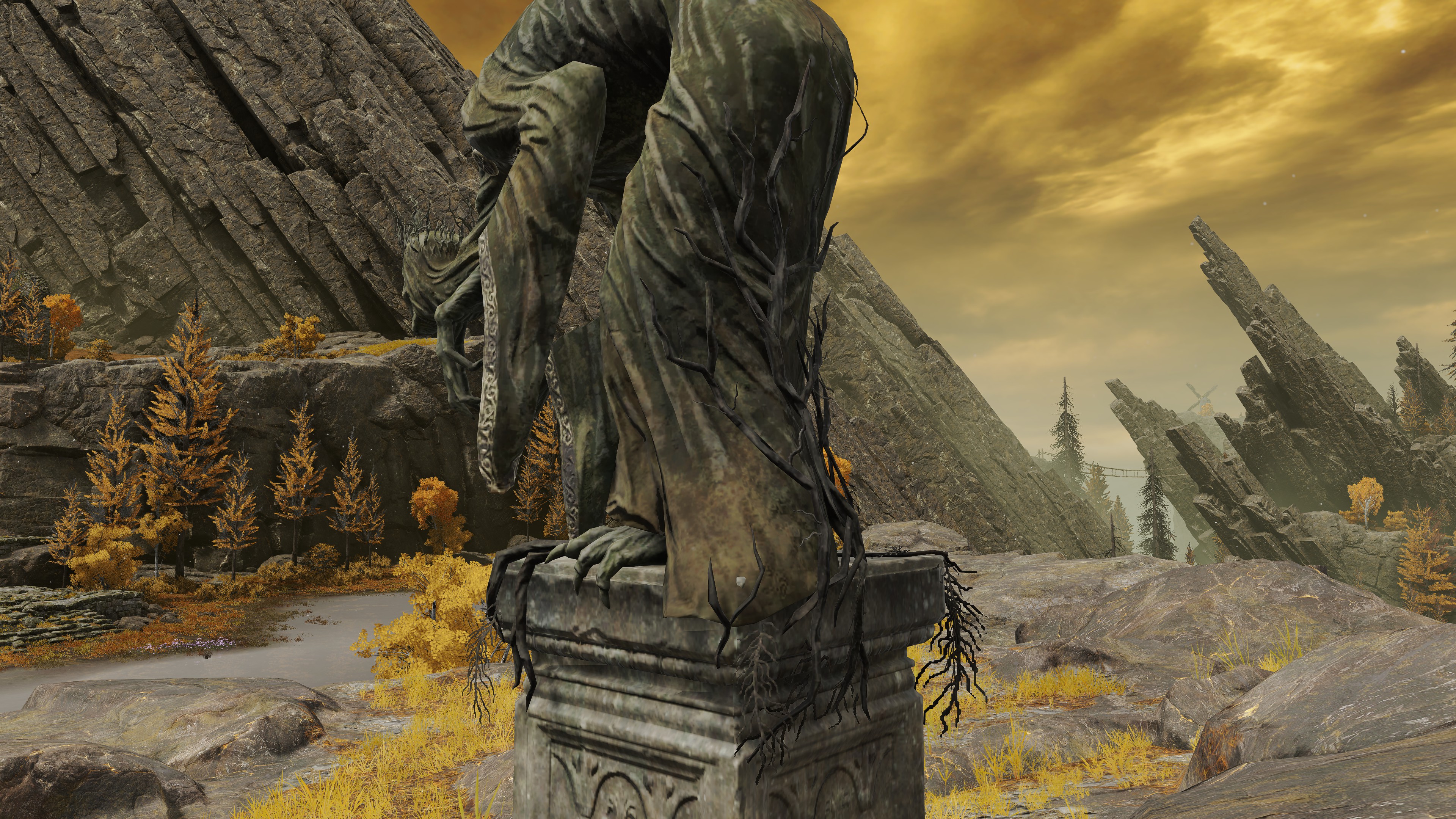
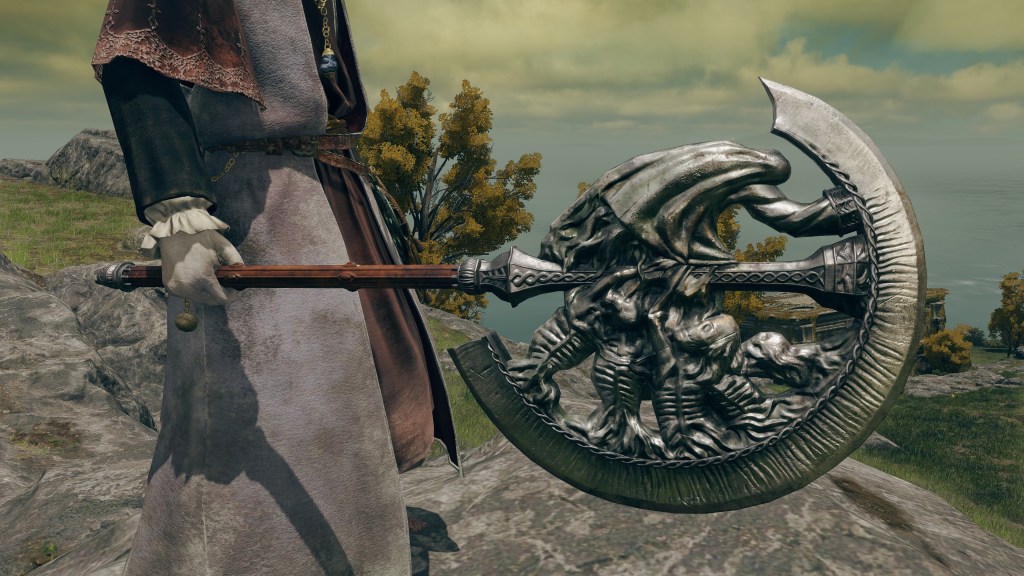
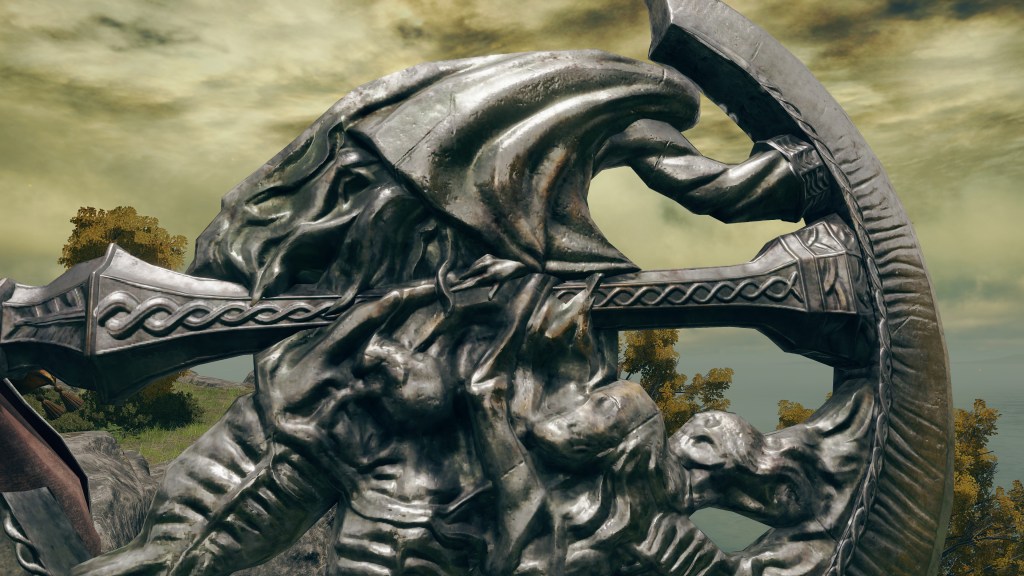
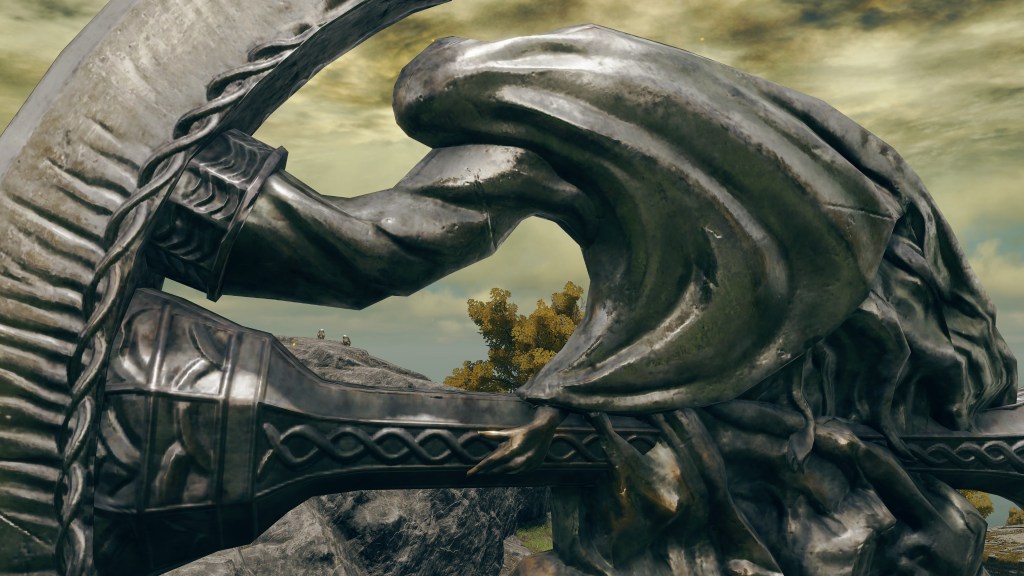
Ceremonial Axe engraved with the usher of death Roses, who points to catacombs in the Lands Between.
The dead have been the lost since time immemorial and require a partner to cling onto.
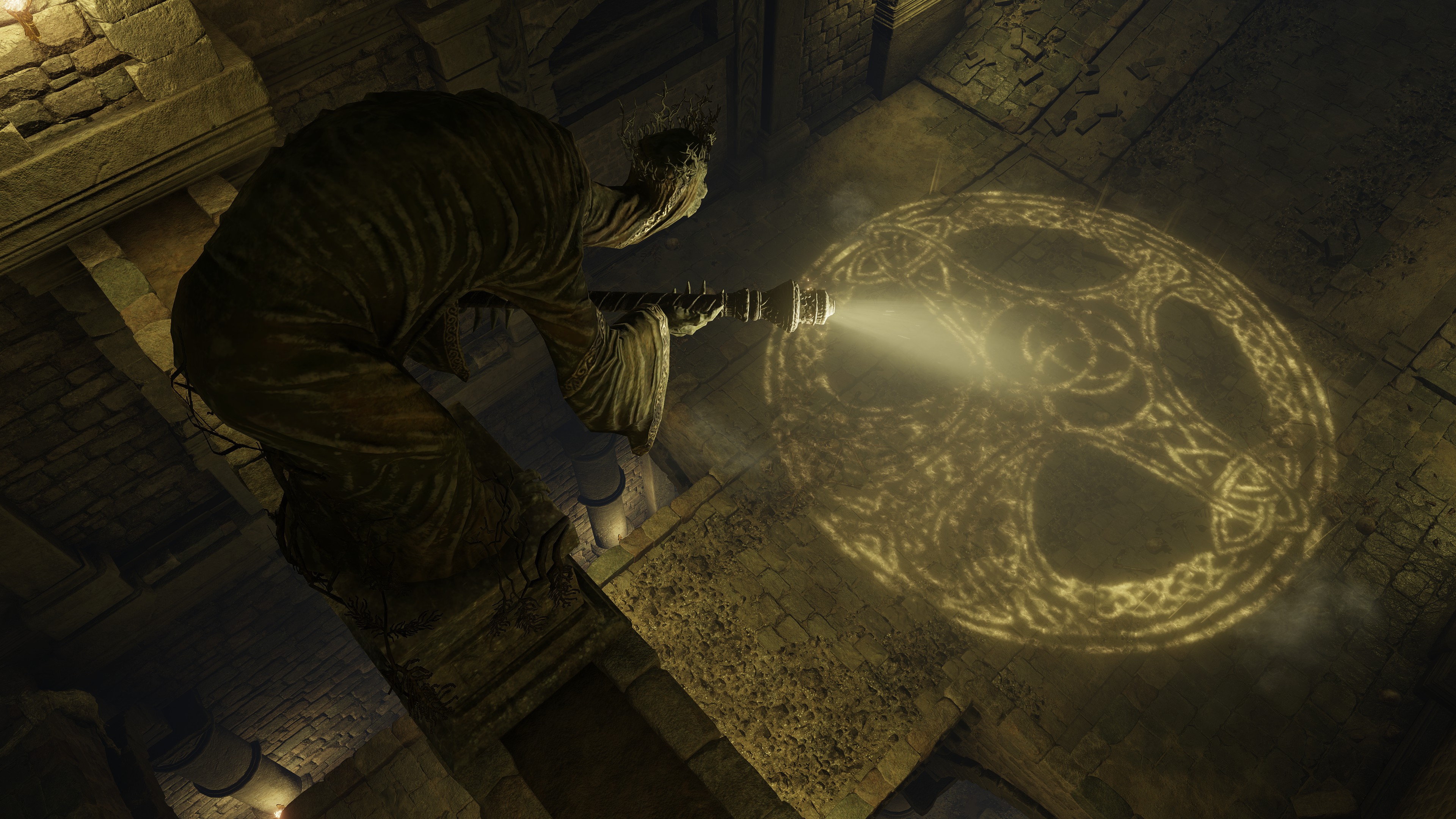
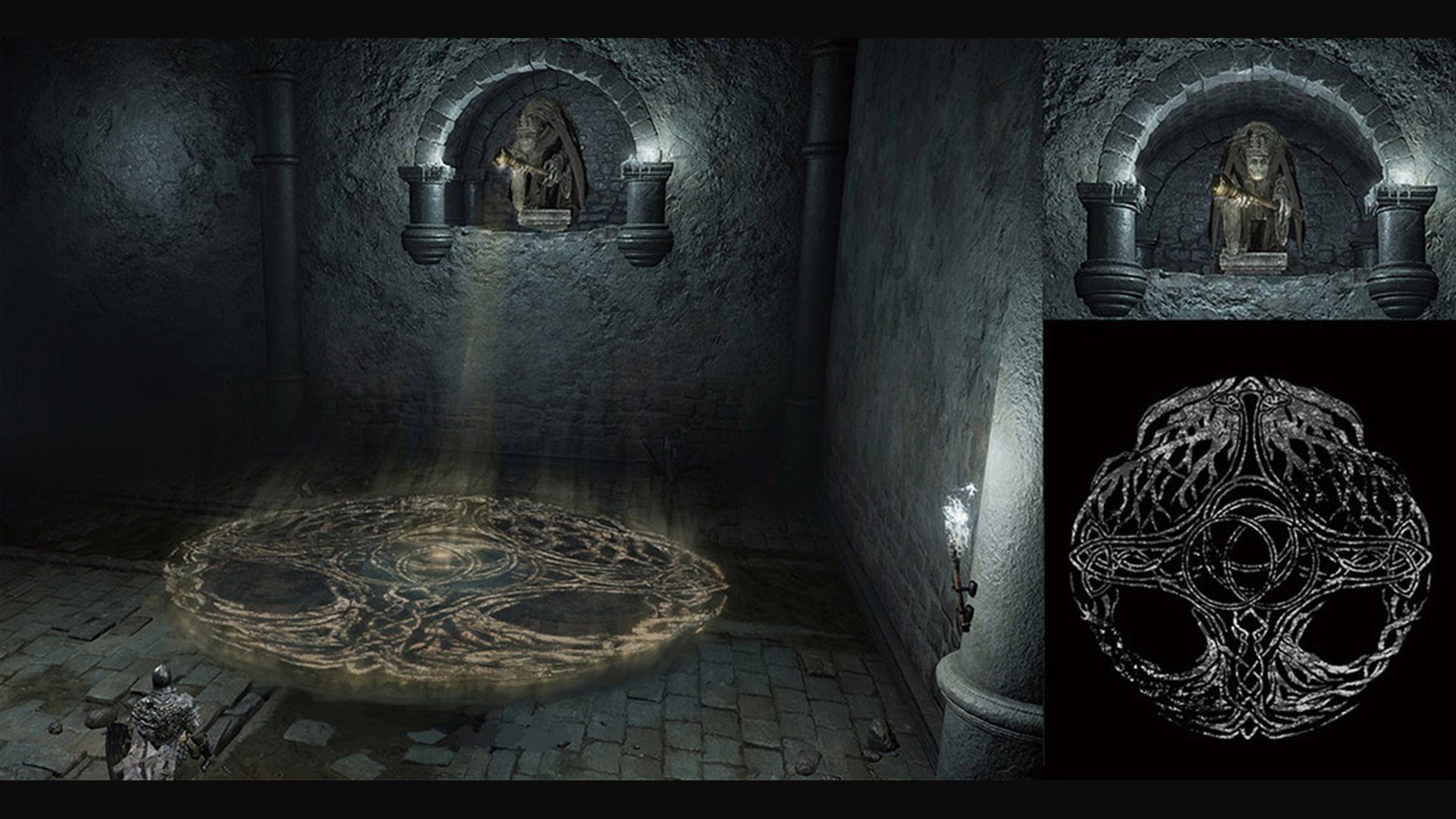
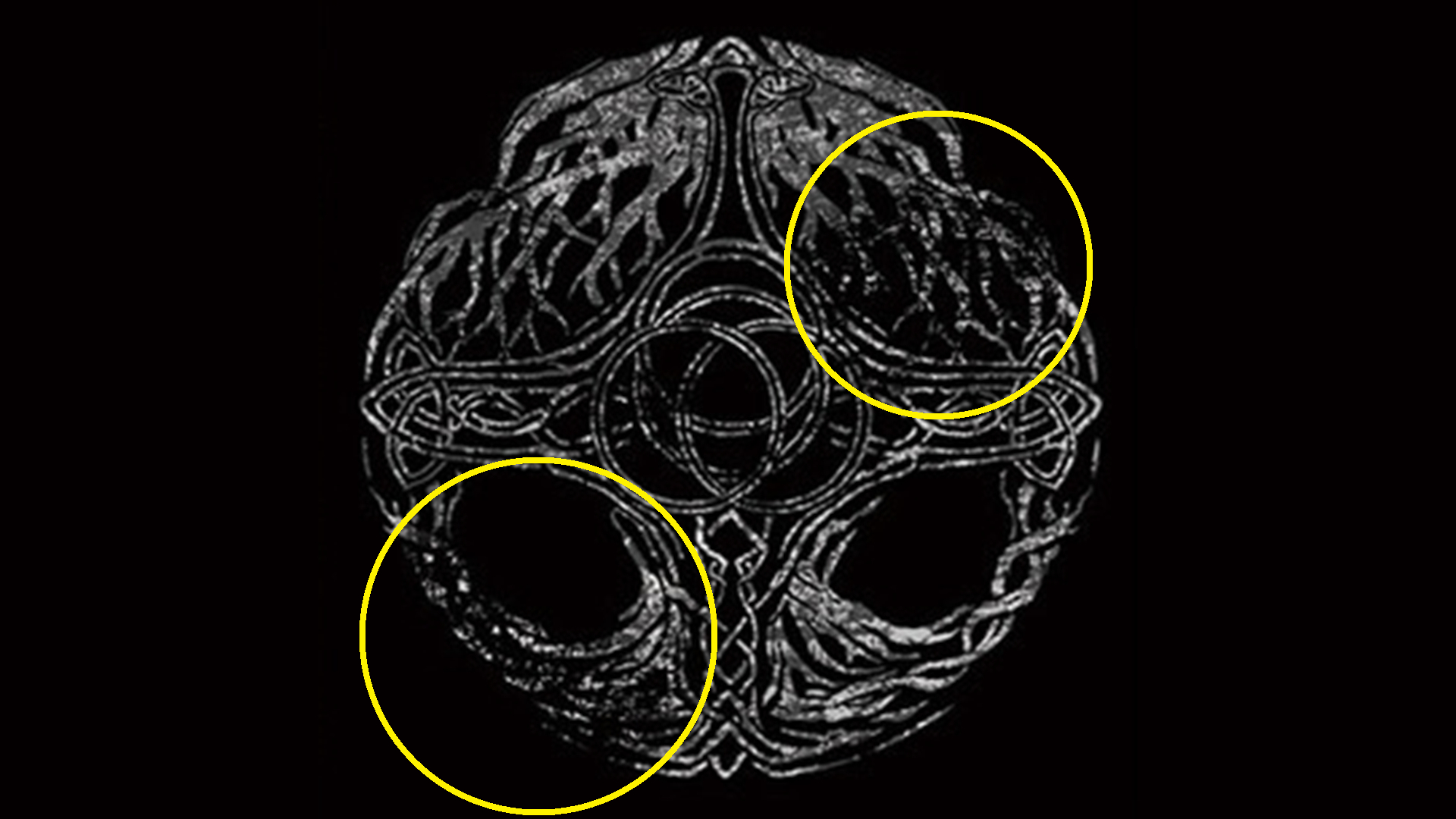
The psychopomp undeniably stands with the Erdtree kingdom, always bearing a lamp to light the way to the greatroots. In the case of hero graveyards, the statue shines an actual light, projecting the standard Erdtree crest used to dispel the shadow protecting gravekeepers and manage other mechanisms. Clearly, Rosus is a steward of gold worthy of the roots growing up the statue’s back, always aiming that guiding light to the source of the golden tree. The symbolism was even more blatant earlier in development — an Erdtree crest emphasizing the roots is featured in the Elden Ring: Official Art Book, the perfect symbol to project in catacombs if not for the signs of Deathroot corruption included on them. Although this specific image may be cut, the imagery survives in Rosus’ Axe, the dead clinging to the usher’s “legs” portrayed as roots emerging from beneath the robes. It is no surprise that the character wears a crown also made of roots in statues. Rosus was effectively the ruler of Erdtree Burial.
Note of a wandering people merchant. The information is written succinctly.
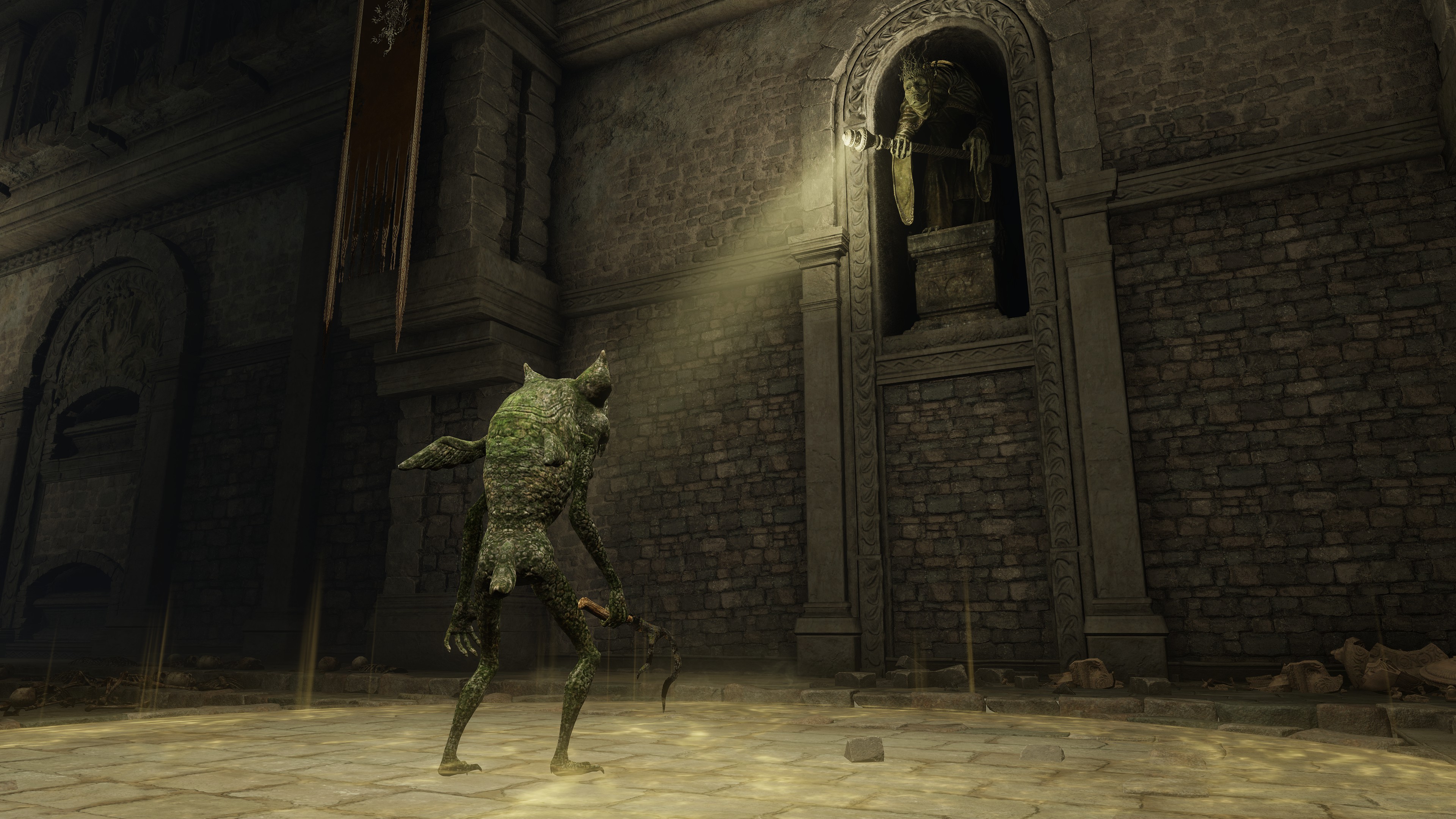
You cannot touch the shadows of the imps of hero graveyards at all.
Only the light of Roses gives them substance.
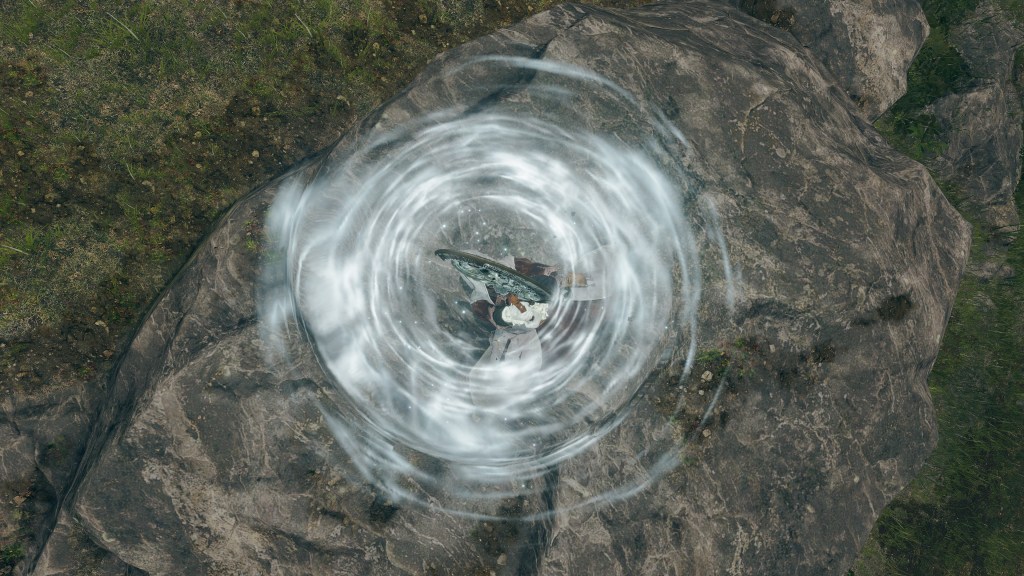
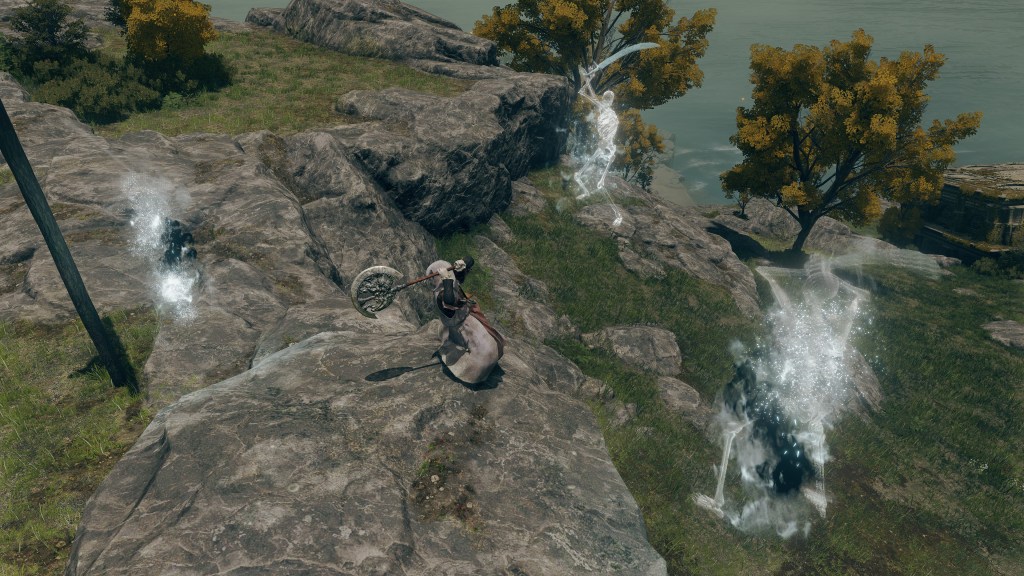
The comparison is warranted. Interacting with the statue generates the spirit magic equivalent to the guidance of grace, indicating the catacomb’s elevation on top of direction. Rosus’ Axe likewise performs a ceremony with its skill, calling the dead the exact same as the Tibia Mariners; the only difference is that the ceremonial axe requires intelligence but no faith, befitting the sorcerer of Liurnia who created it as a gravekeeper of the Black Knife Catacombs. Despite the association with the Golden Order, it is apparent that Rosus functions in the exact capacity as the old servants of Death. The monarch has been just as effective, too, with the axe’s description denoting how the dead consider this torchbearer a “partner” to cling onto; the verb tsugaru (縋る) having connotations of dependence. In the realm of the Erdtree where previous forms of burial are shunned, Rosus is now their only lifeline, ironically enough. As Marika rules the living, so this bizarre entity reigns over the dead.
Battle art that raises axe and calls upon Those Lost in Death. Three are called upon in distant places and will disappear after collectively attacking with the summoner.
Sorcery of Those Who Serve Death.
Calls upon Those Lost in Death. Three are called upon in distant places and will disappear after collectively attacking with the summoner.
The dead have been the lost since time immemorial and require leadership.
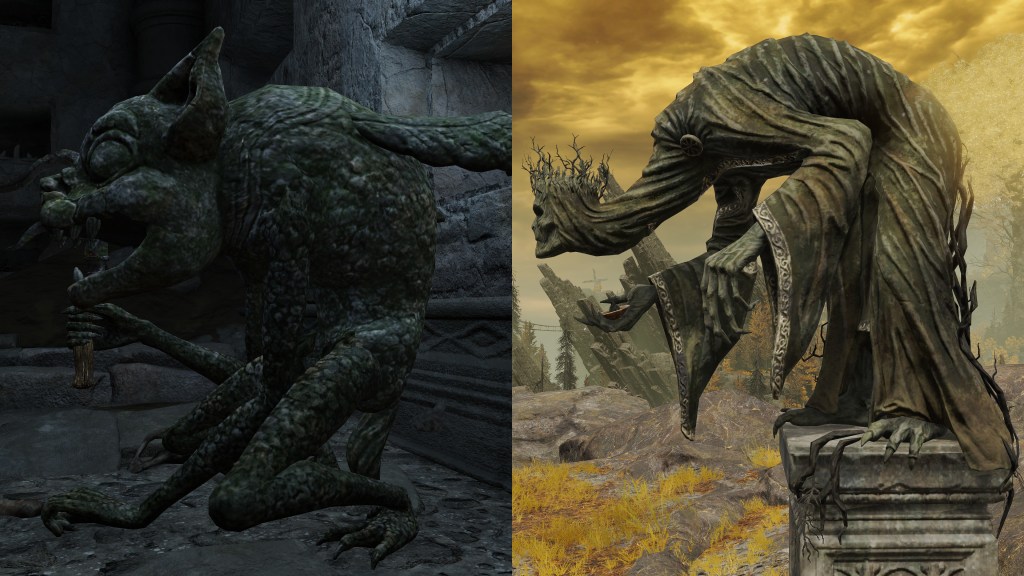
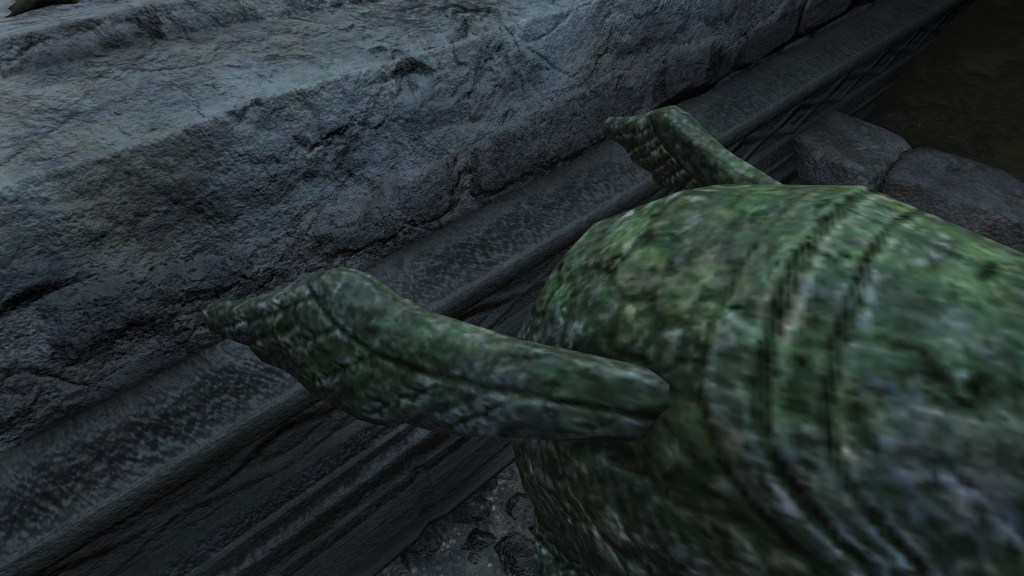
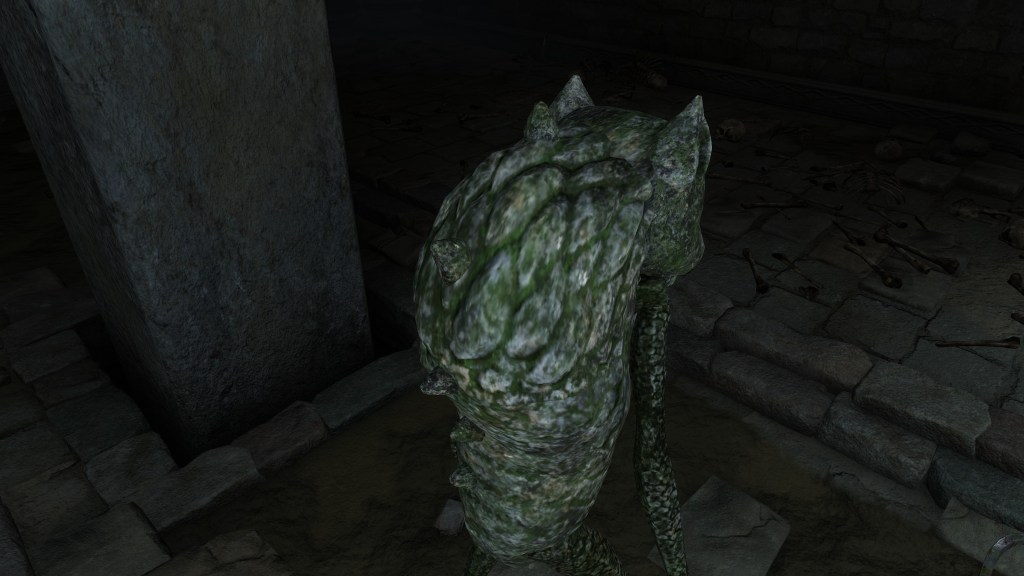
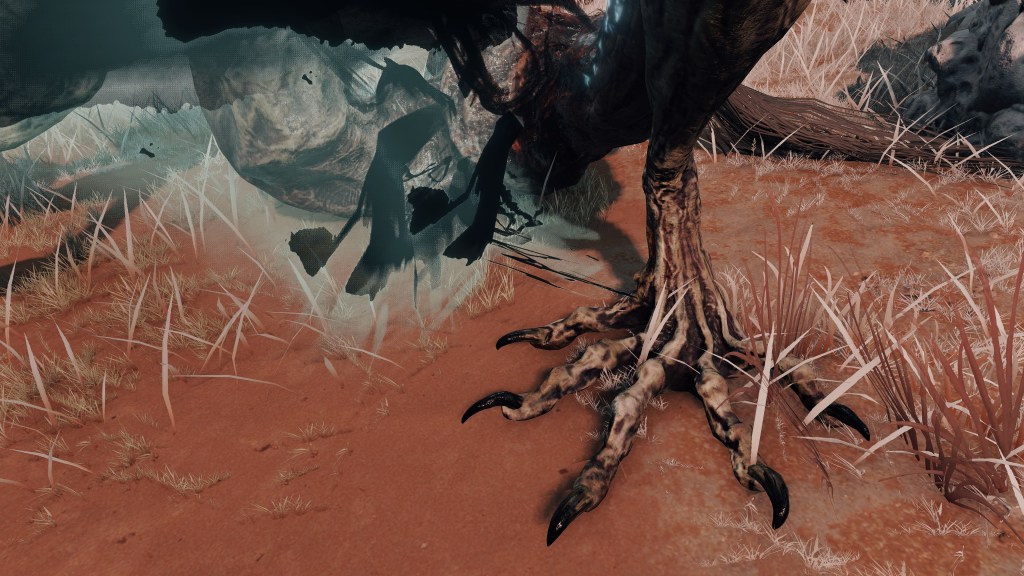
This mentality was passed onto the imp golems’ designs. Ignoring the different assortment of heads, the imps share many of the same features with Rosus: hunchback, sharp nails, five long fingers, three stubby toes plus declaw. The biggest departure is the inclusion of wings for most of the golem types, even when it doesn’t following logically for their heads; no matter how impressive a cat leaps, it doesn’t fly any more than a wolf. However, this detail may not be added to cat and lion types strictly because of that. Rather, the wings make the base body more closely resemble a Deathbird. The birds do have one extra toe, but their key traits otherwise match the imps, down to their tails. The same largely applies to Rosus — in fact, the latter’s long neck makes up for the lack of wings and tail. If that is the case, Rosus’ alien depiction may be more influenced by propaganda than reality, both the usher and guardians of death portrayed as something historically more familiar to the dead and thereby palatable when converting them to Erdtree worship.
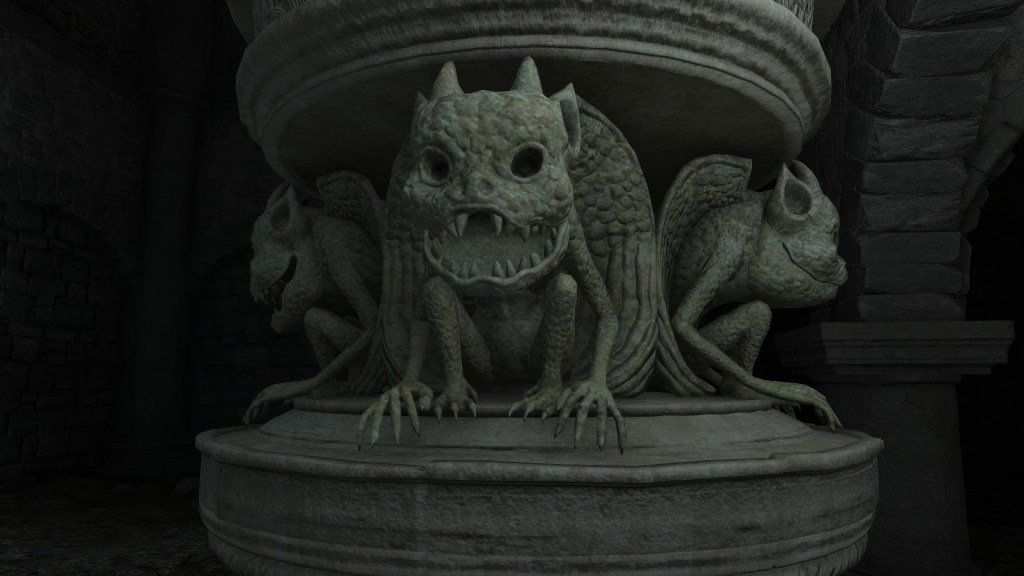
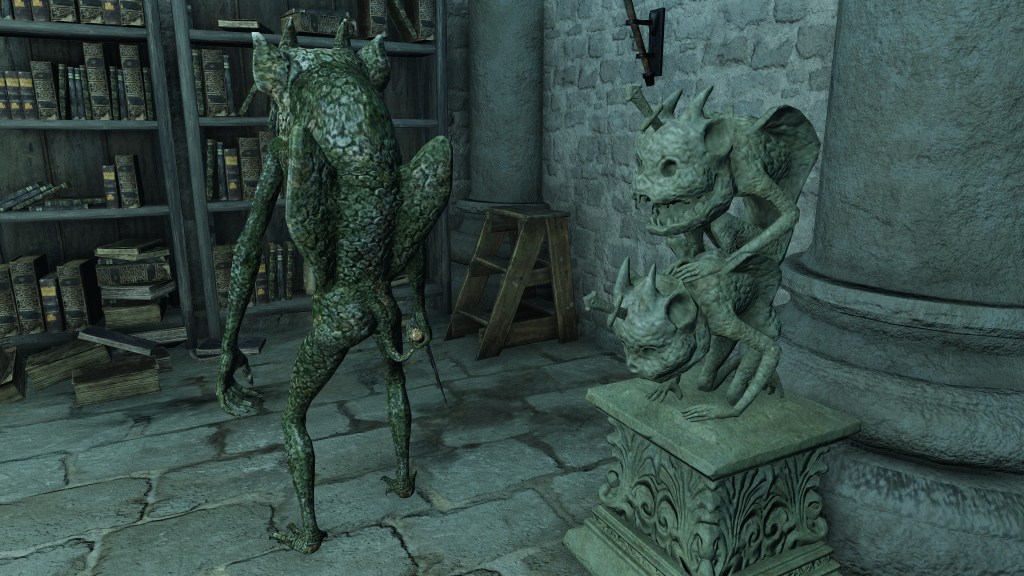
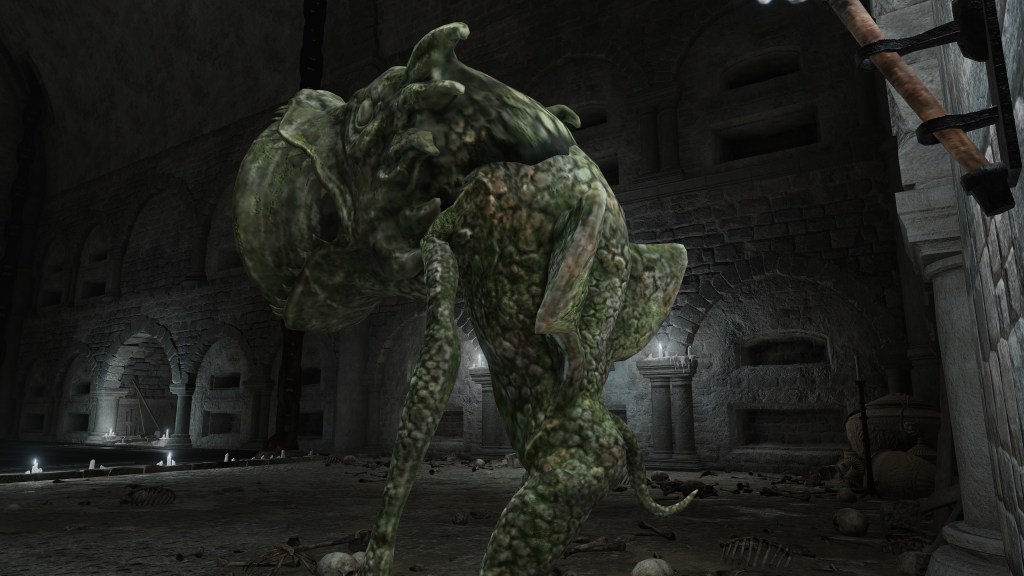
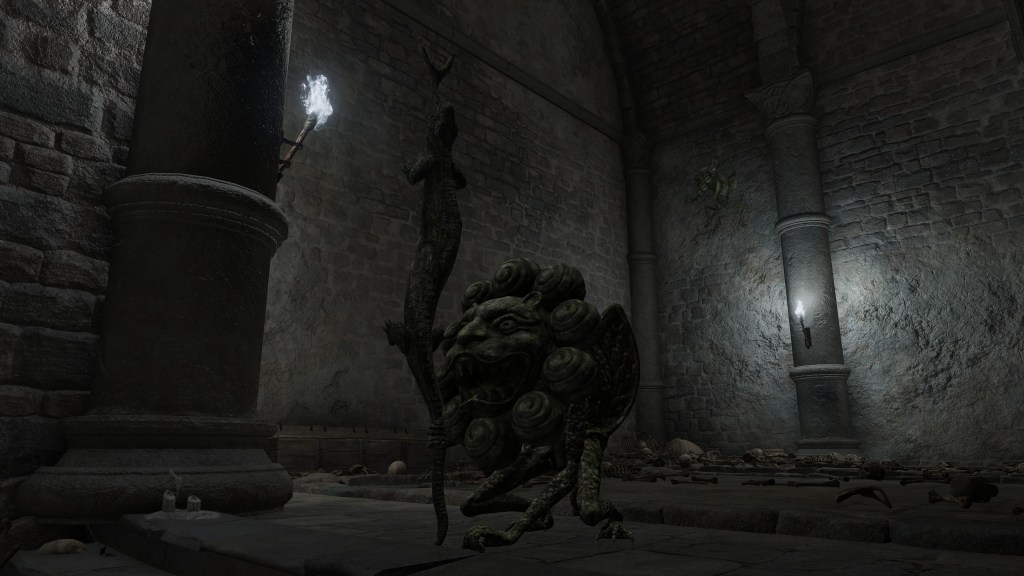
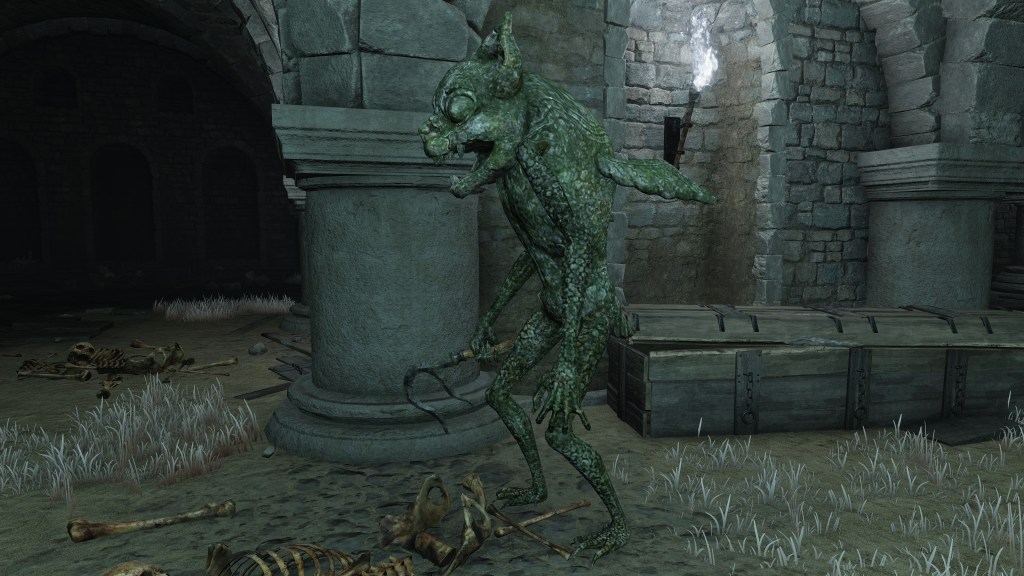
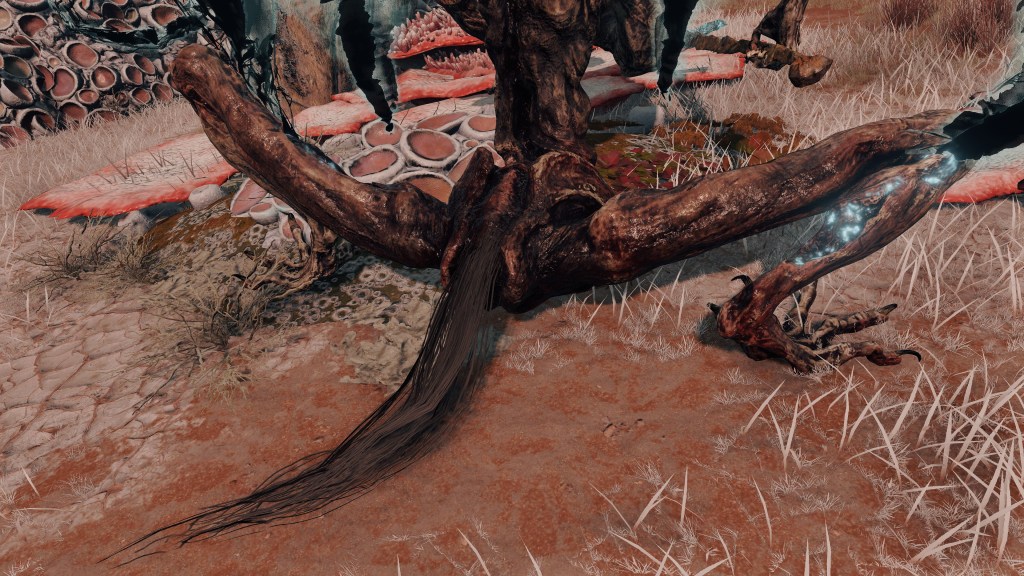
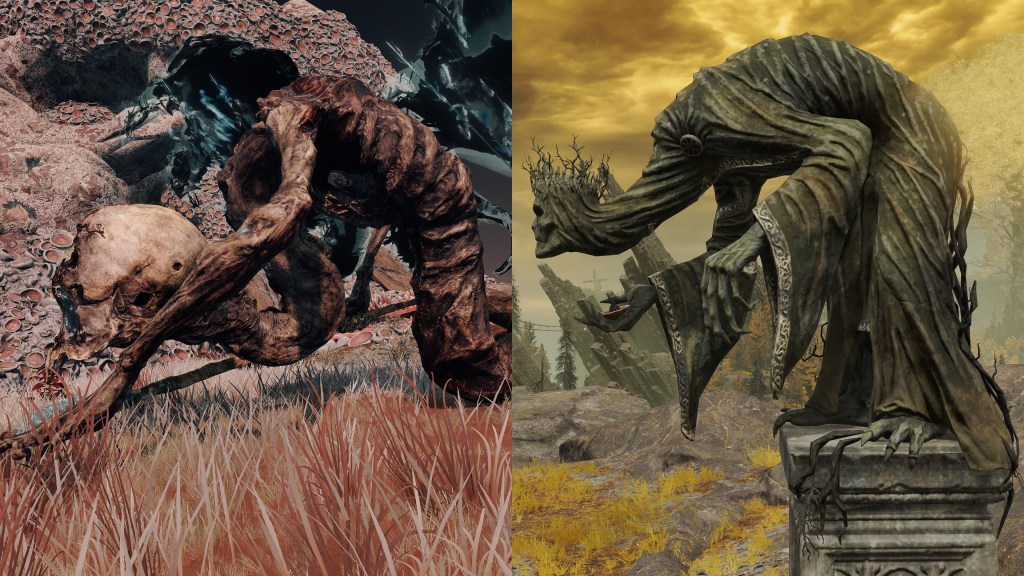
But if the appearance of Death’s guide is so heavily filtered through propaganda, can we even say that there is a real person behind it? It is odd for imps to bear such obvious parallels to Rosus in design, only to be led by another king: the Burial Watchdog. If these statues are all artistic creations, then why should just the golemcraft be figments of the imagination? Some fans might argue that Rosus has an actual name, contrast to the Grim Reaper figure. However, the name “Roses” (ローゼス) itself is suspect, considering that the rose is a symbol of royalty and divinity in medieval Christendom — originally representing the Virgin Mary in particular, “a rose among thorns.” Indeed, with Marika’s deep involvement in Erdtree Burial in other aspects, it is unusual for the Eternal Queen to cede the specific role of guide to another supposed monarch. Rather than overlapping rules, it is more likely for one to be a mask for the other.
Put simply, Rosus is probably a fictional surrogate for the Erdtree’s god. If every rose has its thorns, then so do thorns have their roses; the deity punishes the living but coaxes the dead. Given this duality, it is predictable that she want to separate these two faces. An invention like Rosus would thus serve to goad pagans to Erdtree Burial without associating the new practice with their oppressor. And having created an Order of lasting life, the queen in turn would likely find representations of herself as Death’s leader distasteful. This may be why we don’t see Rosus in actual catacombs outside of hero graves, the duty of usher largely passed onto the basic Grim Reaper while Marika remains immaculate in her classic holy woman depictions. This was a way to ease the dead into the new faith while also not tainting that religion’s image of gold’s vessel. Rosus is a mischievous lie, much like the imps, much like the god.

