
Preface
Open worlds present many more possibilities for environmental storytelling, both on a micro and macro level. Every tiny detail peppered across the vast map can build cohesive narratives on such a grander scale, you can really appreciate the history being conveyed while remaining subtle enough for players miss. Yes, picking up on the patterns can be a chore, as I myself am now well acquainted with. But once you internalize all the facts, the conclusion leaves a certain admiration for what the developers accomplished. I, for one, hope that FromSoftware continues to push their limits to telling a story without uttering a word on the subject. In this particular case, the silence is only appropriate as we sit there and marvel.
Under the Same Sky
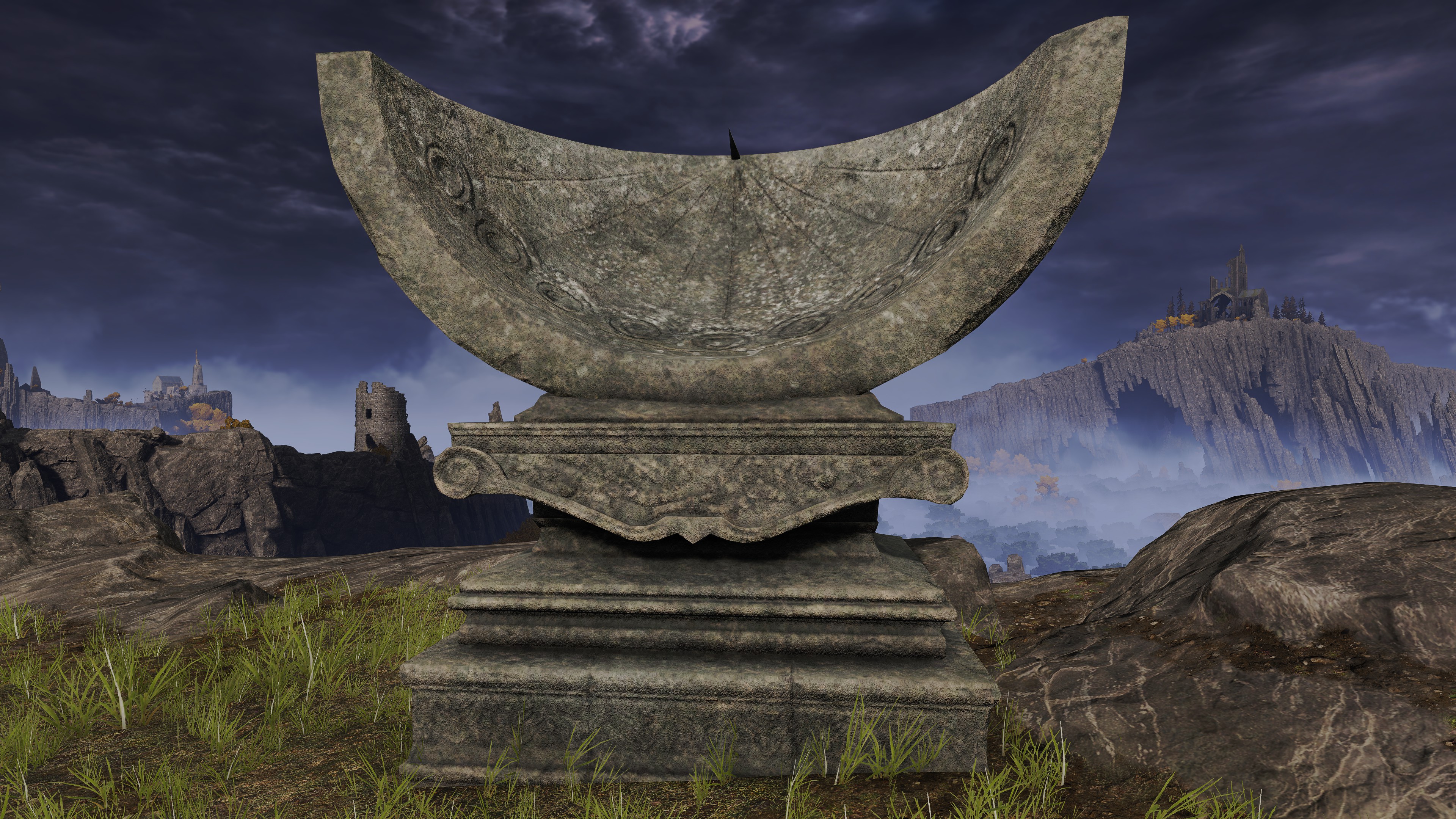
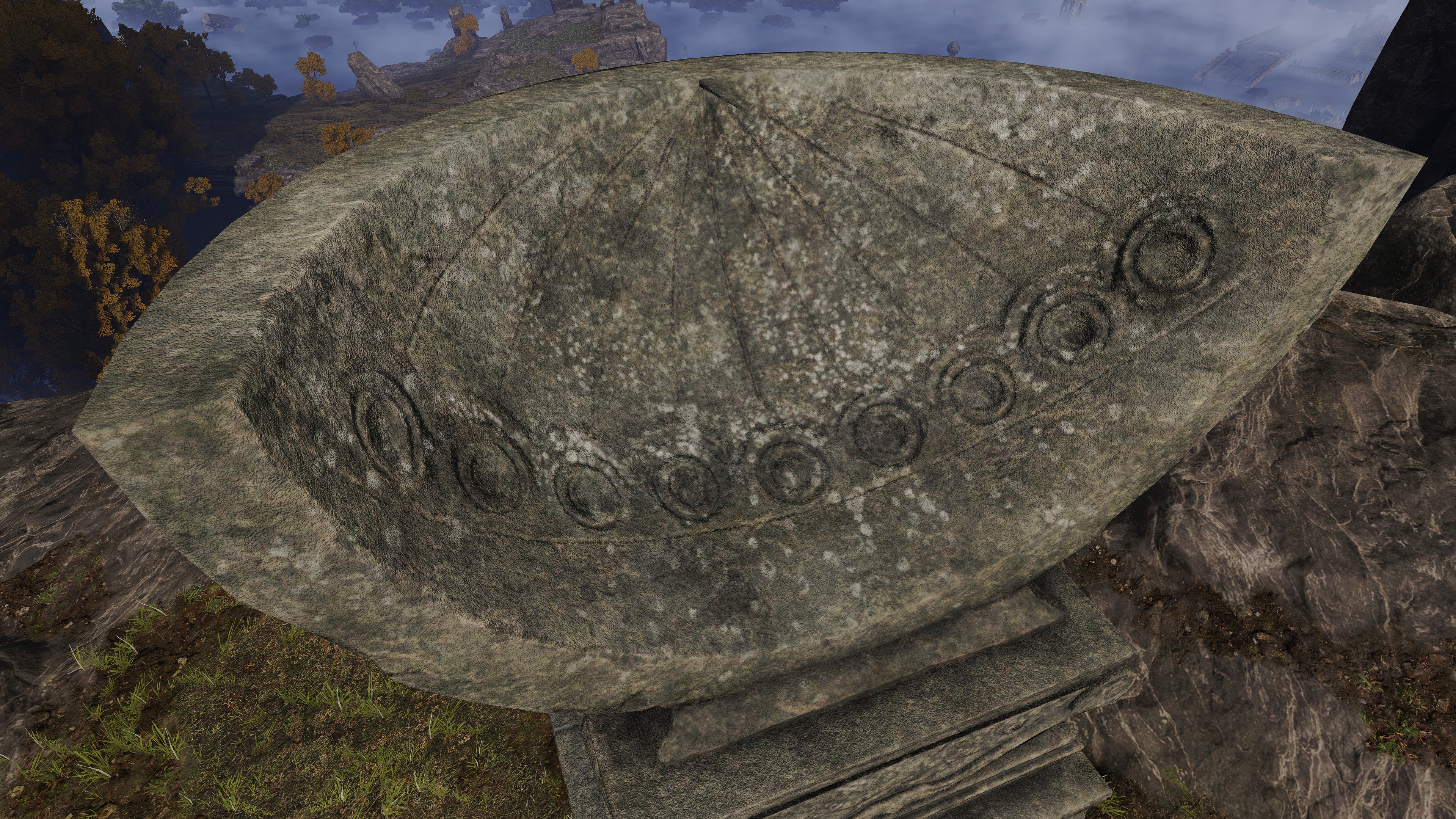
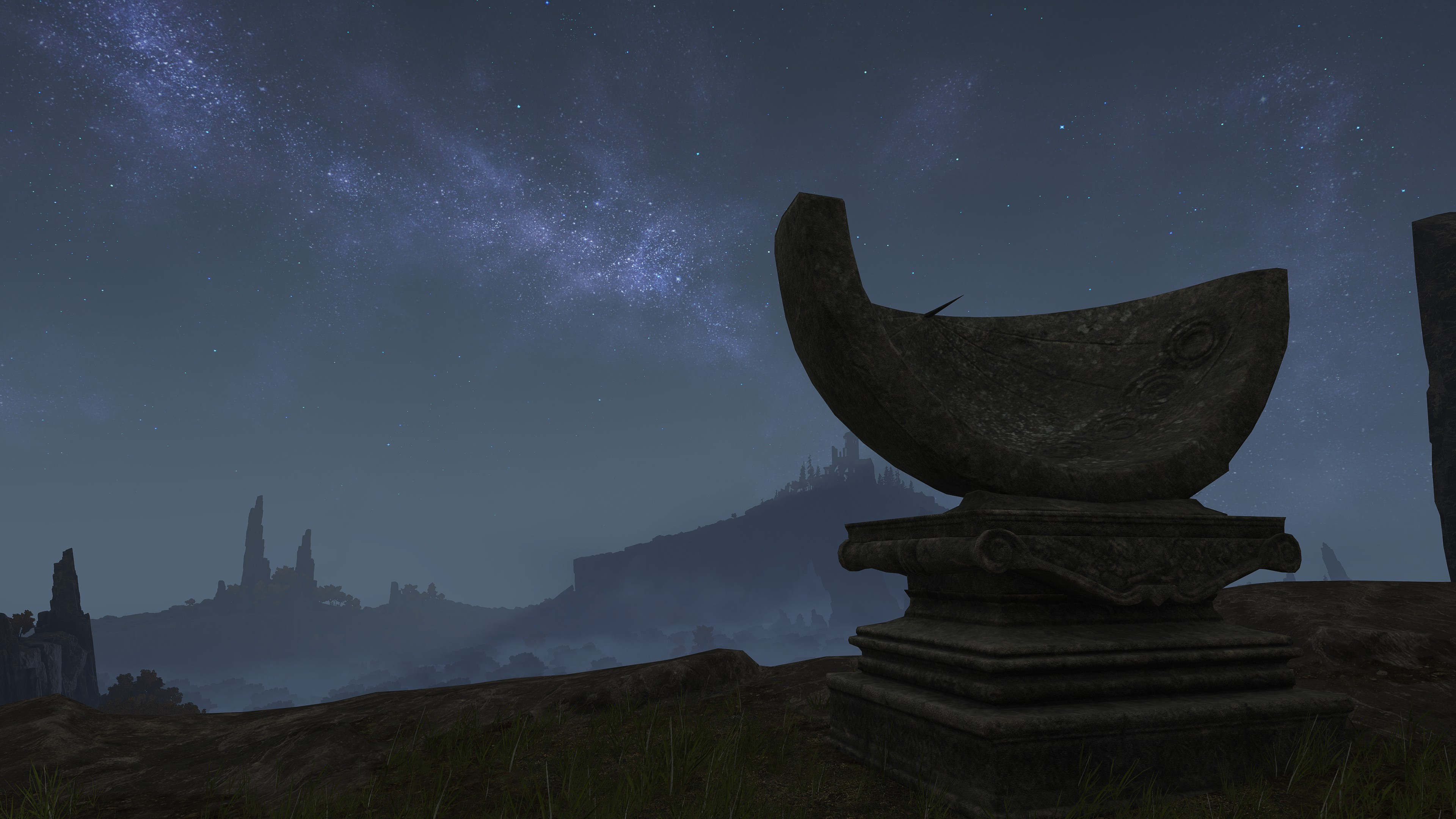
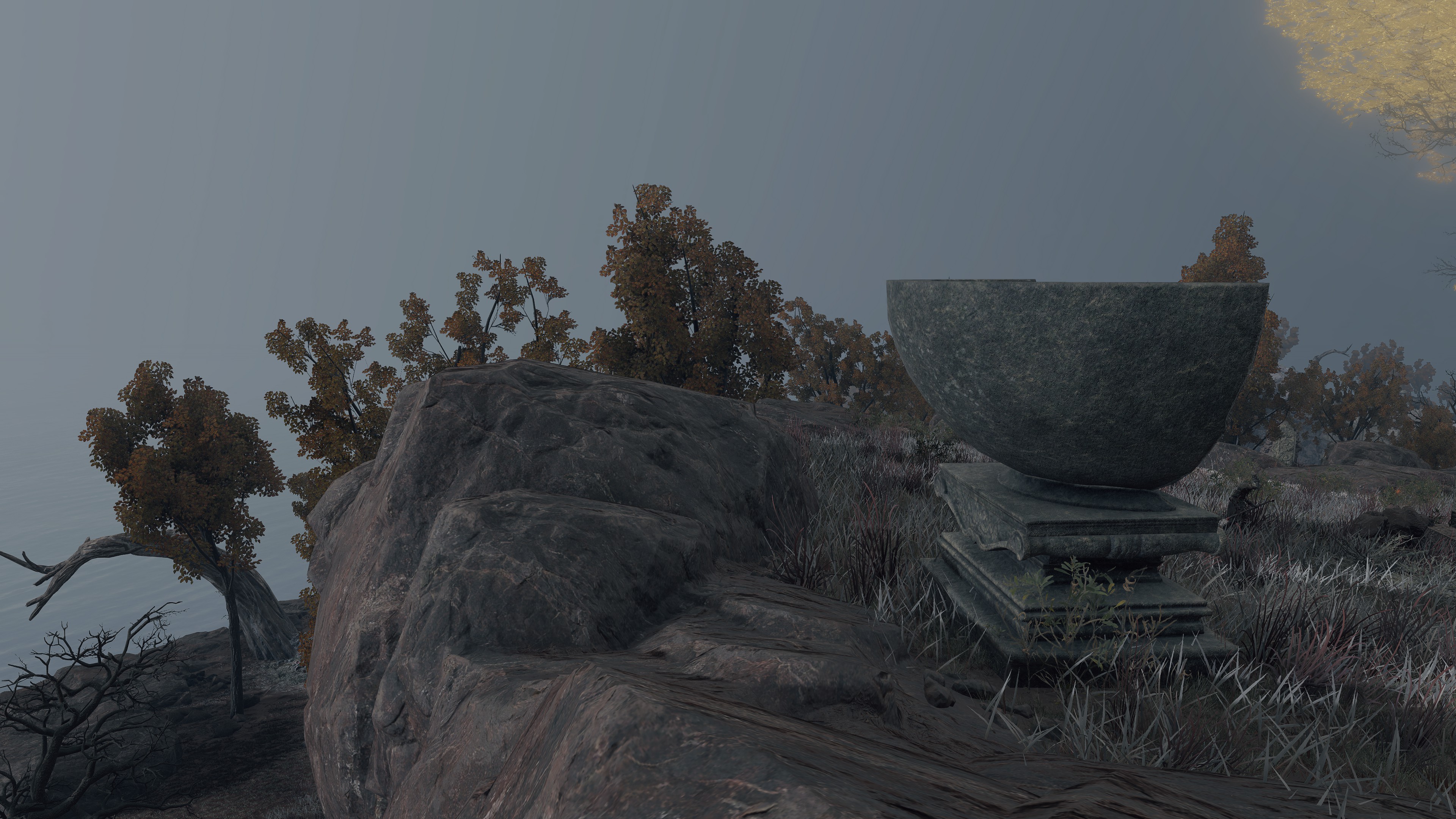
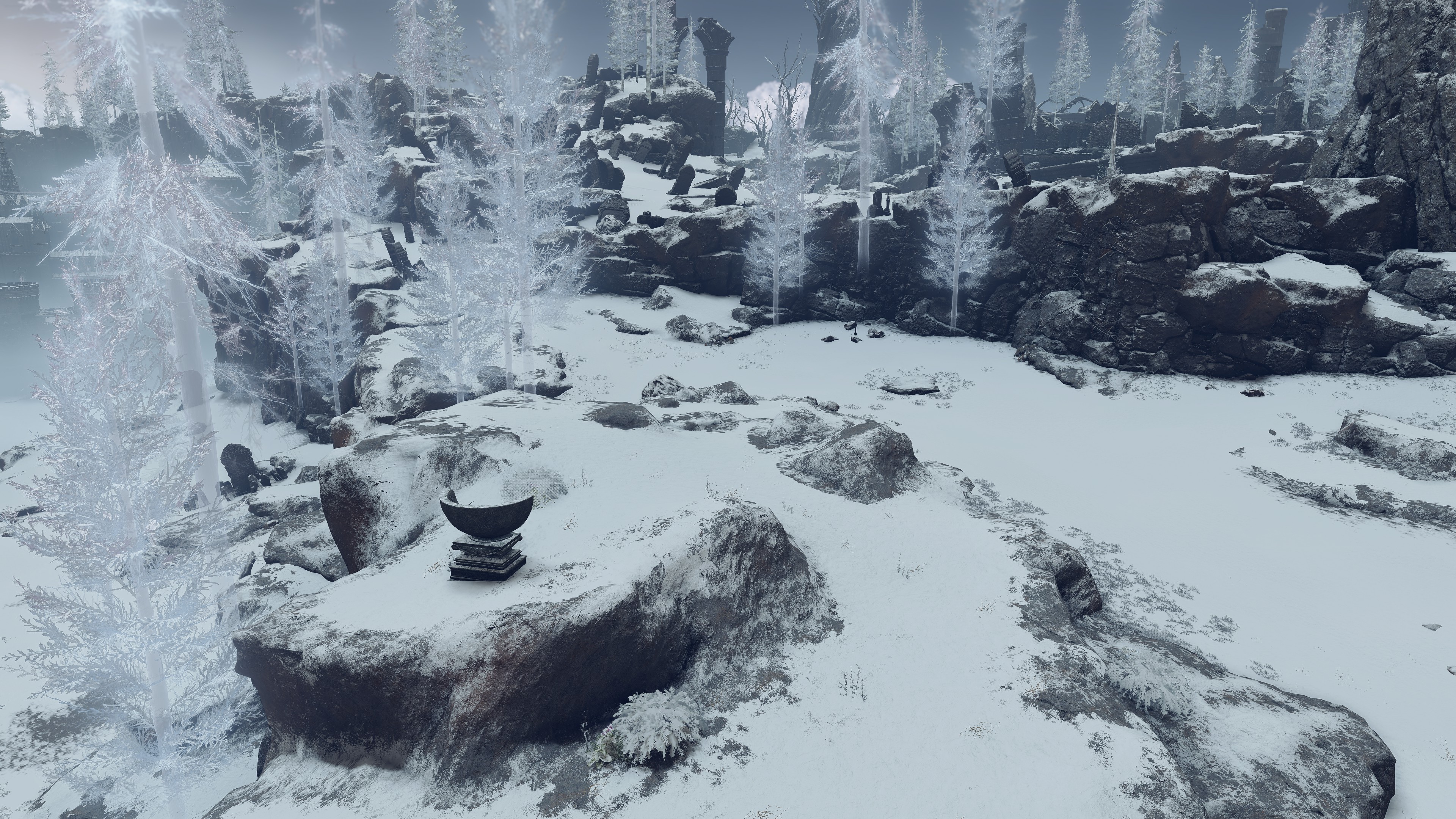
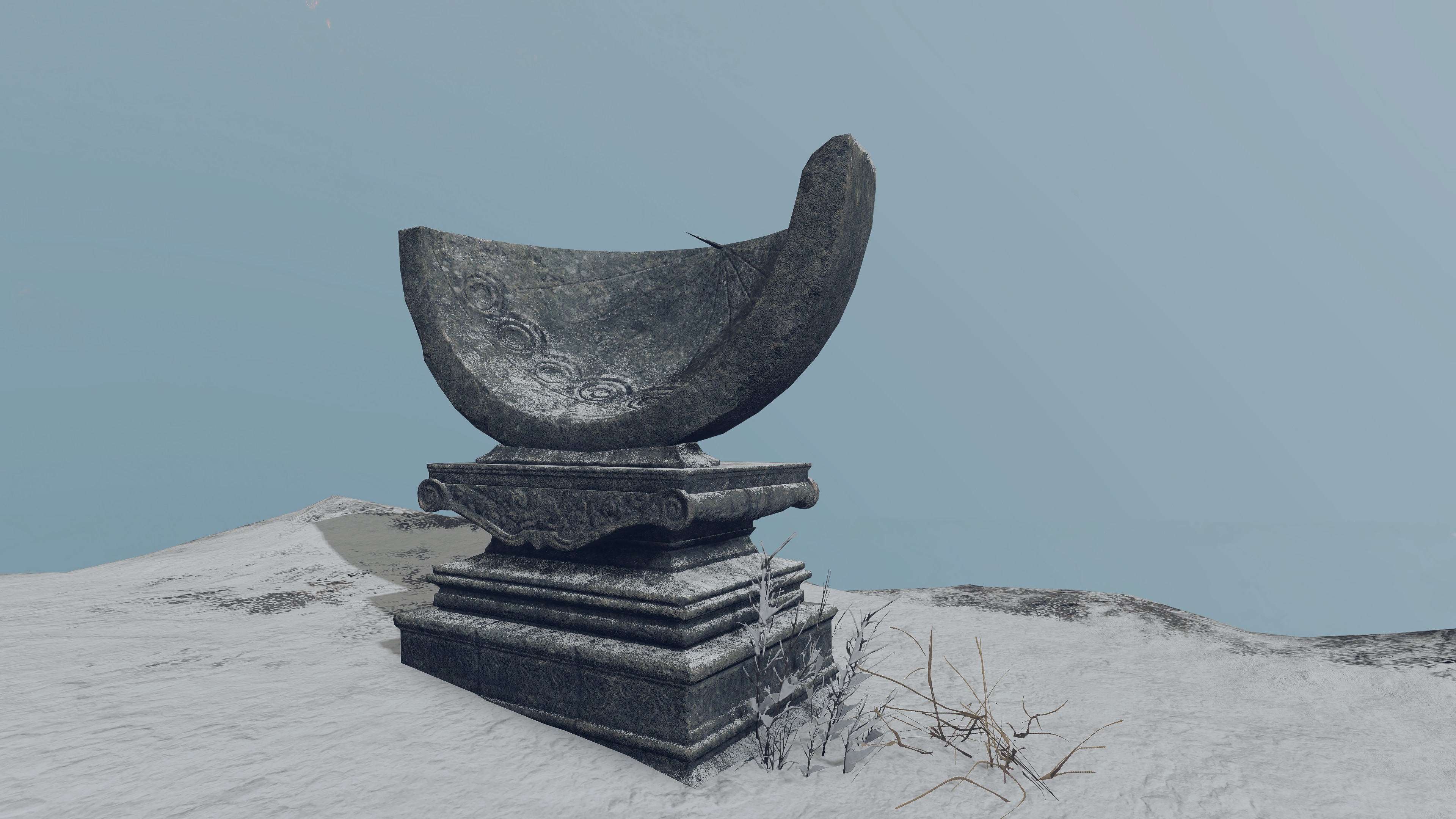
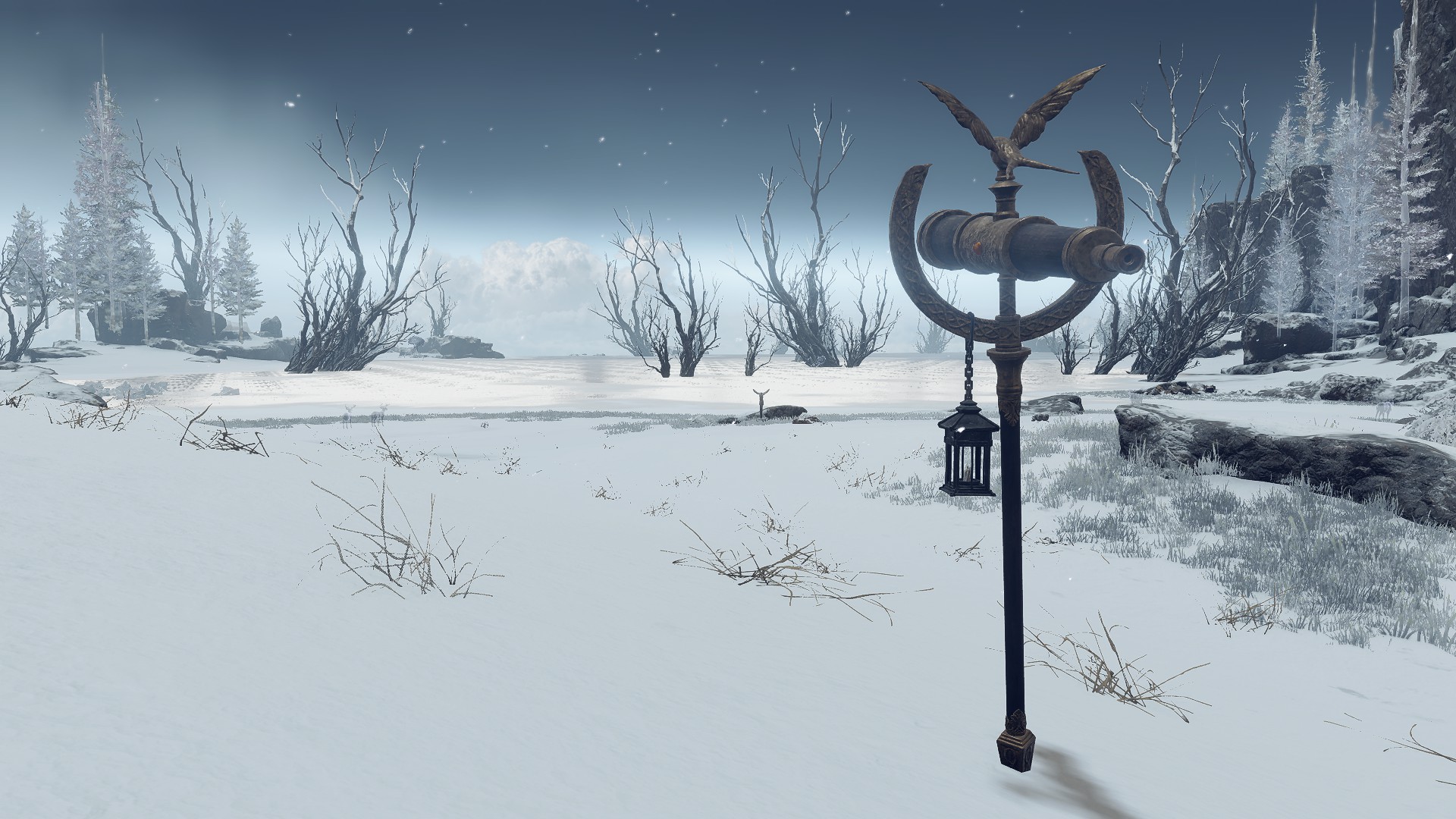
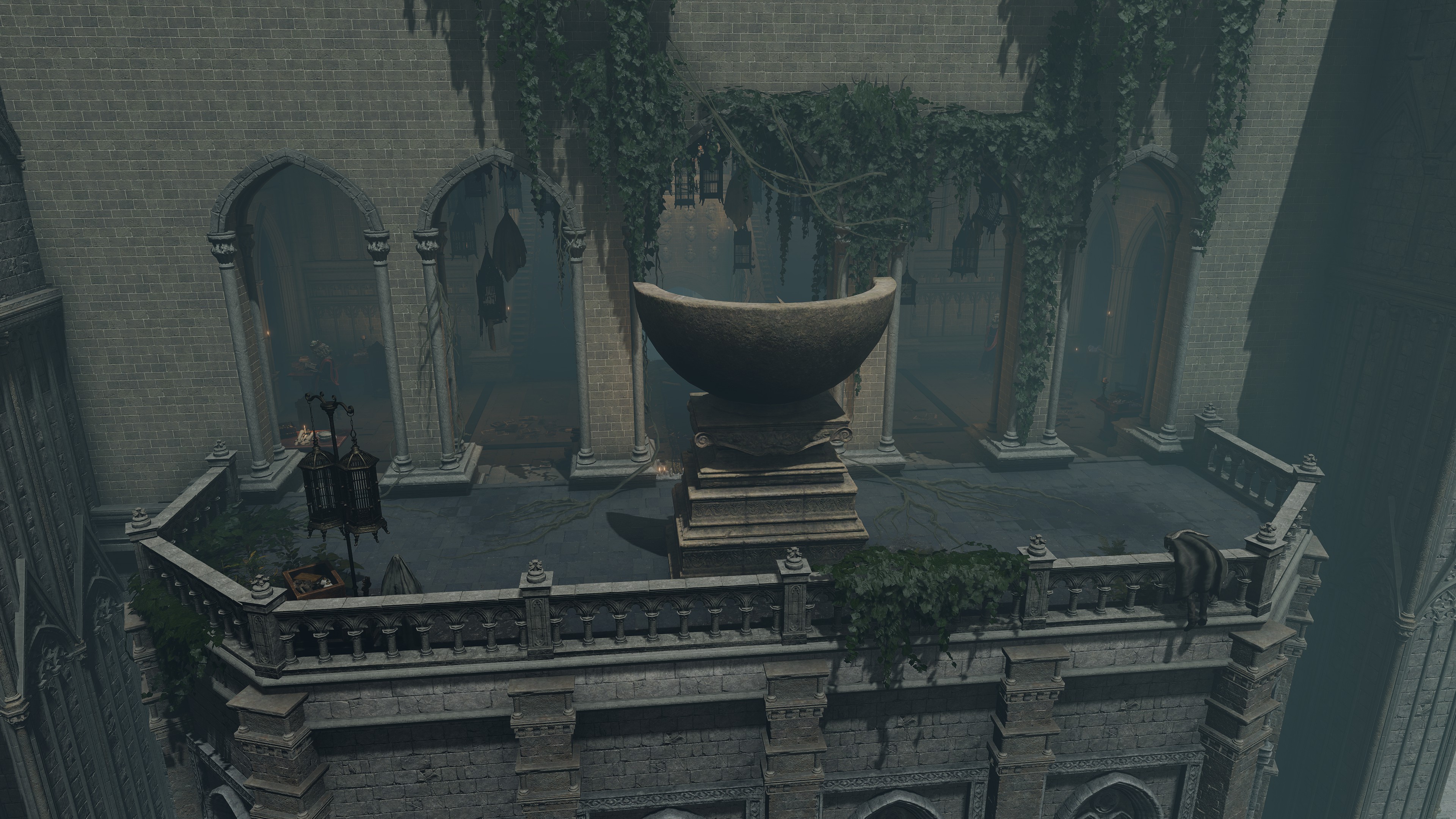
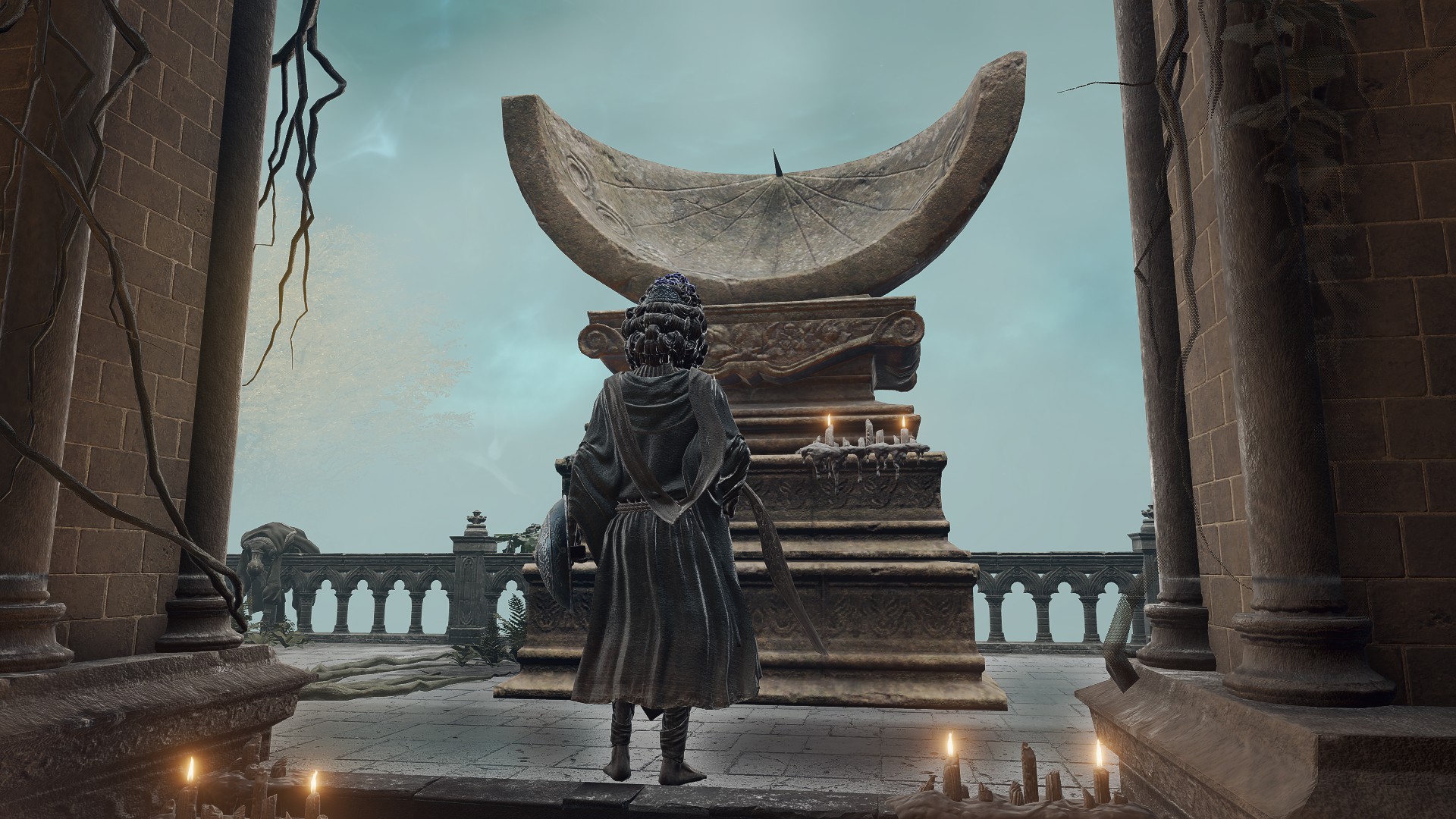
Everyone under the sun has looked up to see the stars at one point or another. For as long as humans have lived in the Lands Between, there are sure to have been individuals fascinated by those mysterious lights shining bright in the sky. Even when secluded to their own primitive tribes, their kind shared a curiosity about the cosmos in sight yet out of reach. And so, they became the first astrologers. Evidence for these primitive “stargazers” (星見) comes from the hemicycliums they have left behind. The devices are clearly based on ancient Greek and Roman sundials, but we always find Starlight Shards at their base, as if the celestial lights were called to fall upon the spot. We can thereby infer that the hemicyclium is intended to function more like an astrolabe, the rugged stone construction affirming it to be a tool usable since ancient times. This explains its appearance on random cliff edges of the different lands with unobstructed view of the sky, tribesmen in the remote countryside each studying the stars’ movements and how to direct them into their grasp.
That said, it wasn’t as if every primitive took up the hobby of stargazing. The description for the Stargazer’s Heirloom emphasizes how its subject walks whilst pursuing the stars at night, seeming to travel around following their paths and searching for new ones. Although early humans may have been nomadic, traveling at nighttime was less than ideal, especially for large caravans. More than likely, the various hemicycliums we see on random precipices were the work of stray astrologers, setting out on their own to investigate the innumerable flowing lights. As the tribes moved around before finally settling, they explored even farther, some maybe even leaving the tribe entirely to chase astrology all on their own. It was their heart’s desire to follow the heavenly bodies, even if that meant wandering the earth.
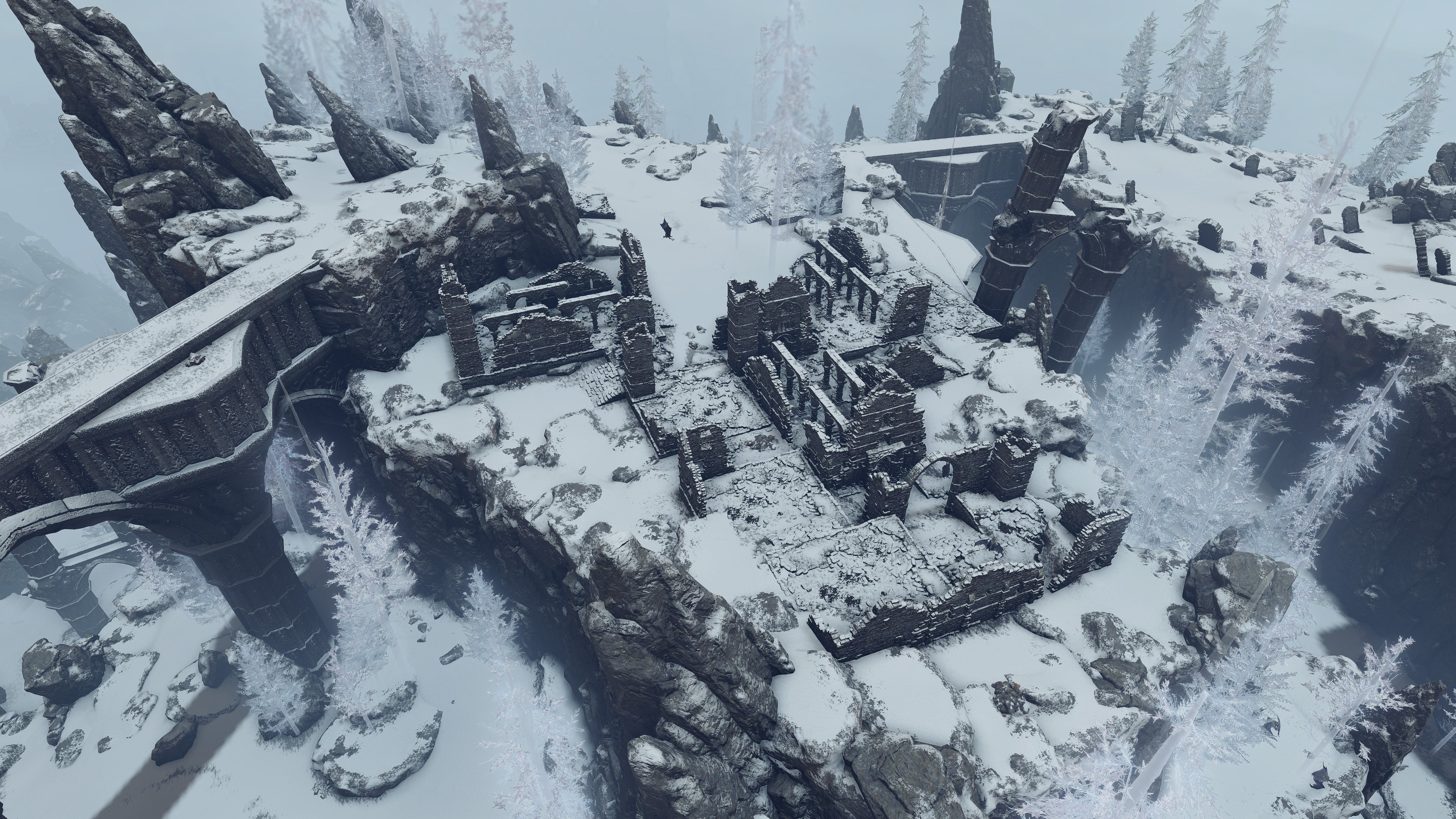
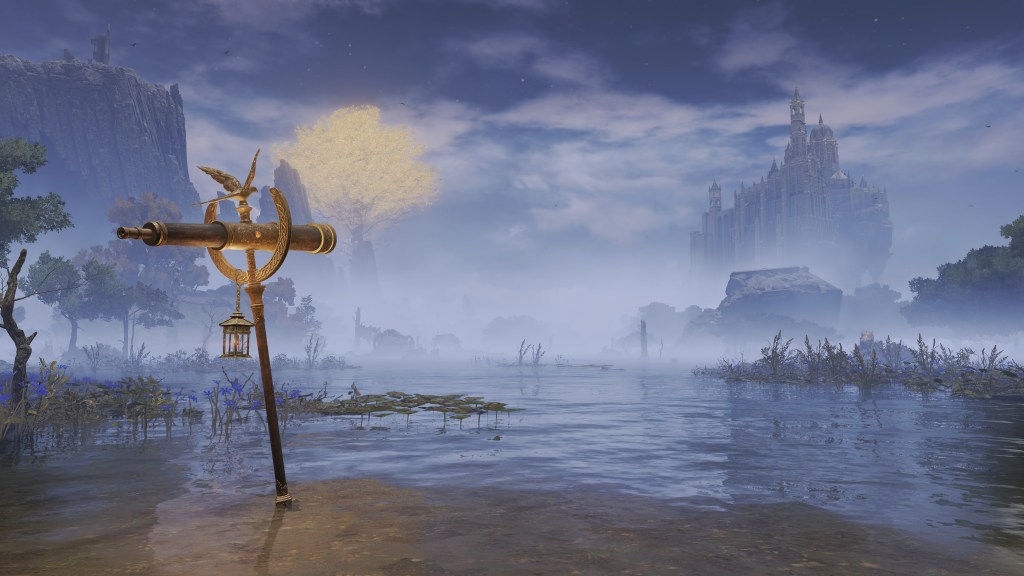
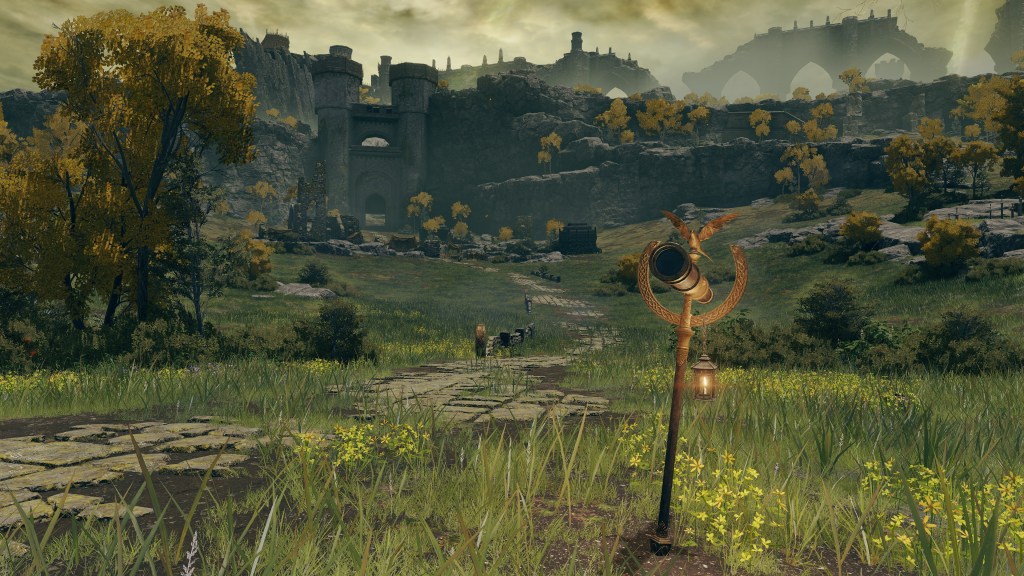
Of course, there is only so much a single primitive can learn on his or her own, and stargazing ideally wants higher ground for a closer look. Thus, gradually, did every independent stargazer gravitate toward the tallest mountains visible from anywhere in the Lands Between. Naturally, these disparate migrants to up north would eventually come together to form a community, a village established in the middle of those mountaintops. From that home base at the central summit, the ancient astrologers were free to roam the surrounding peaks and valleys, setting up new hemicycliums or even inventing novel tools like telescopes. On that front, we can find a Birdseye Telescope in the vicinity, the curious tool allowing us to view the surroundings high above the glass we peer through. With their collective minds synergizing, the human stargazers truly saw their start as a distinct identity, the new tribe making the most out of this frigid land to uncover all the cosmos’ secrets.
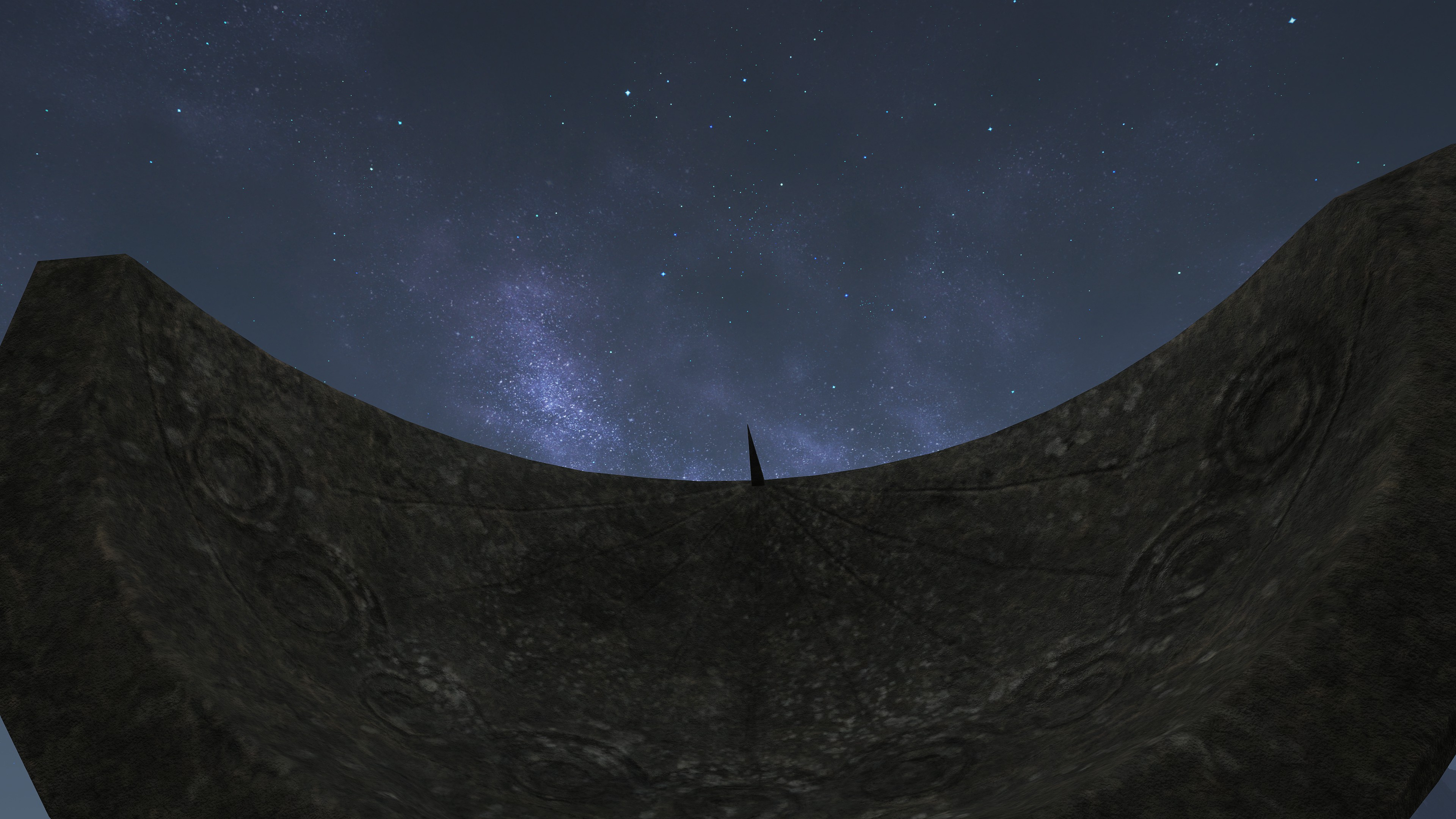
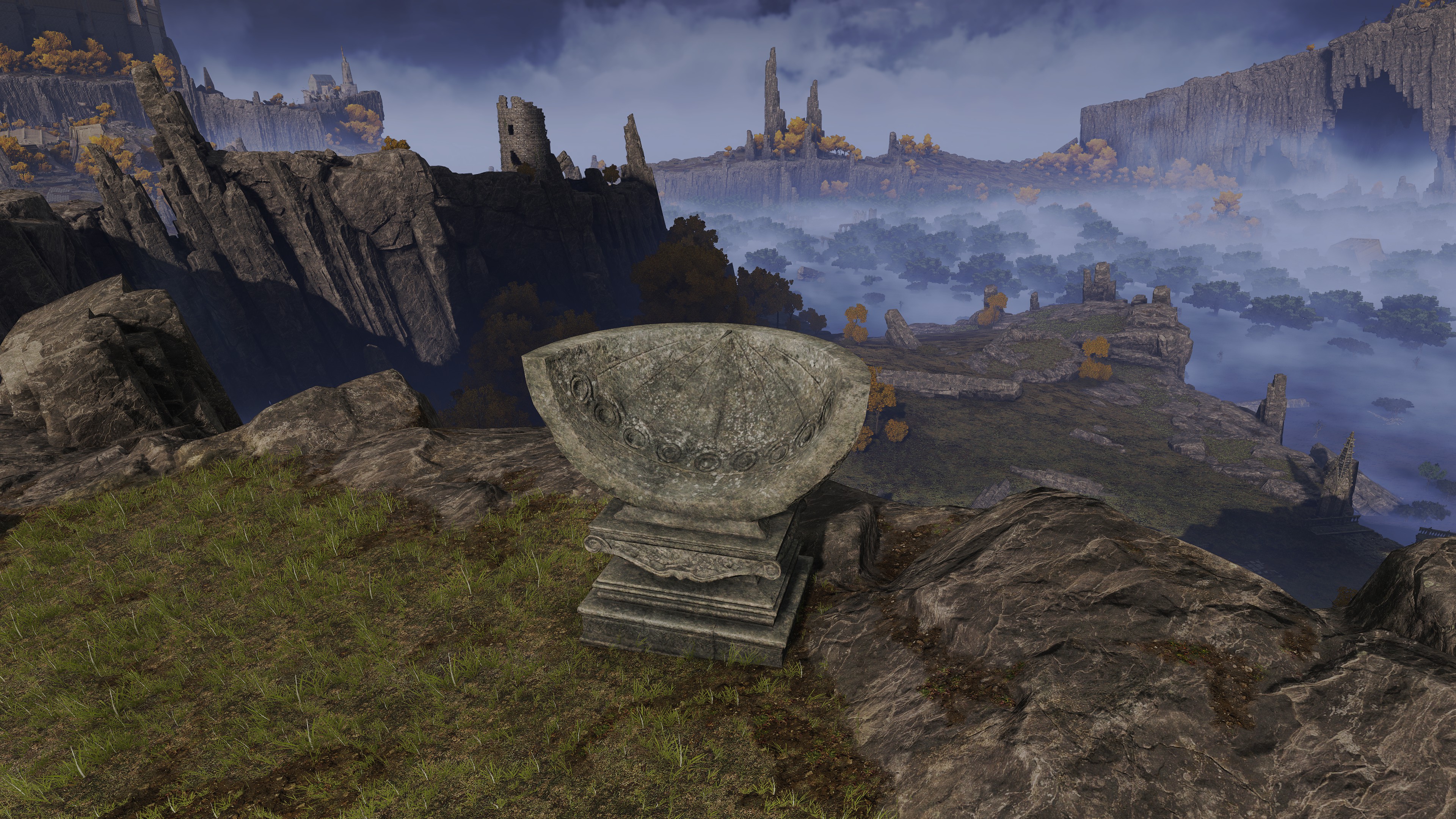
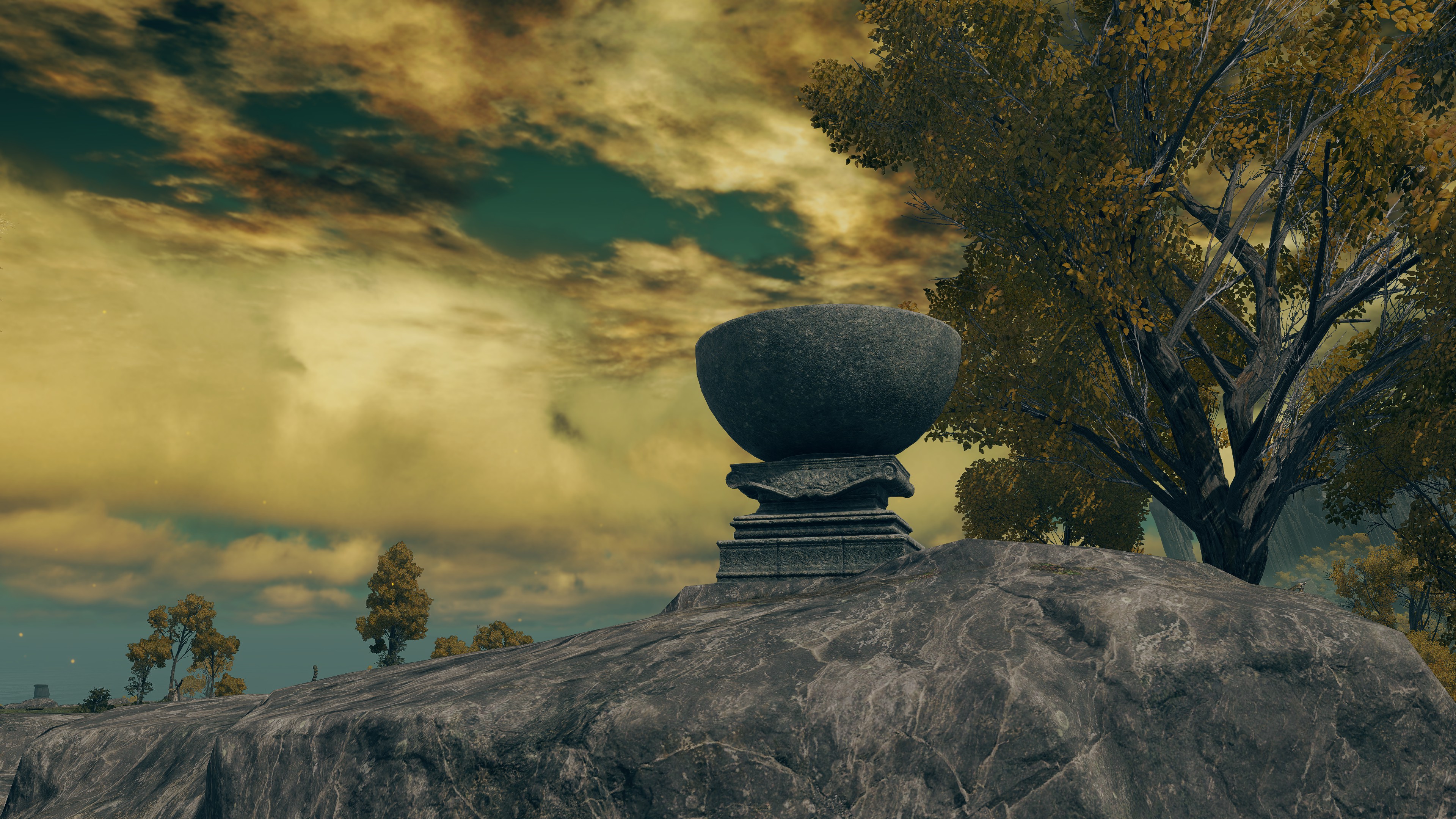
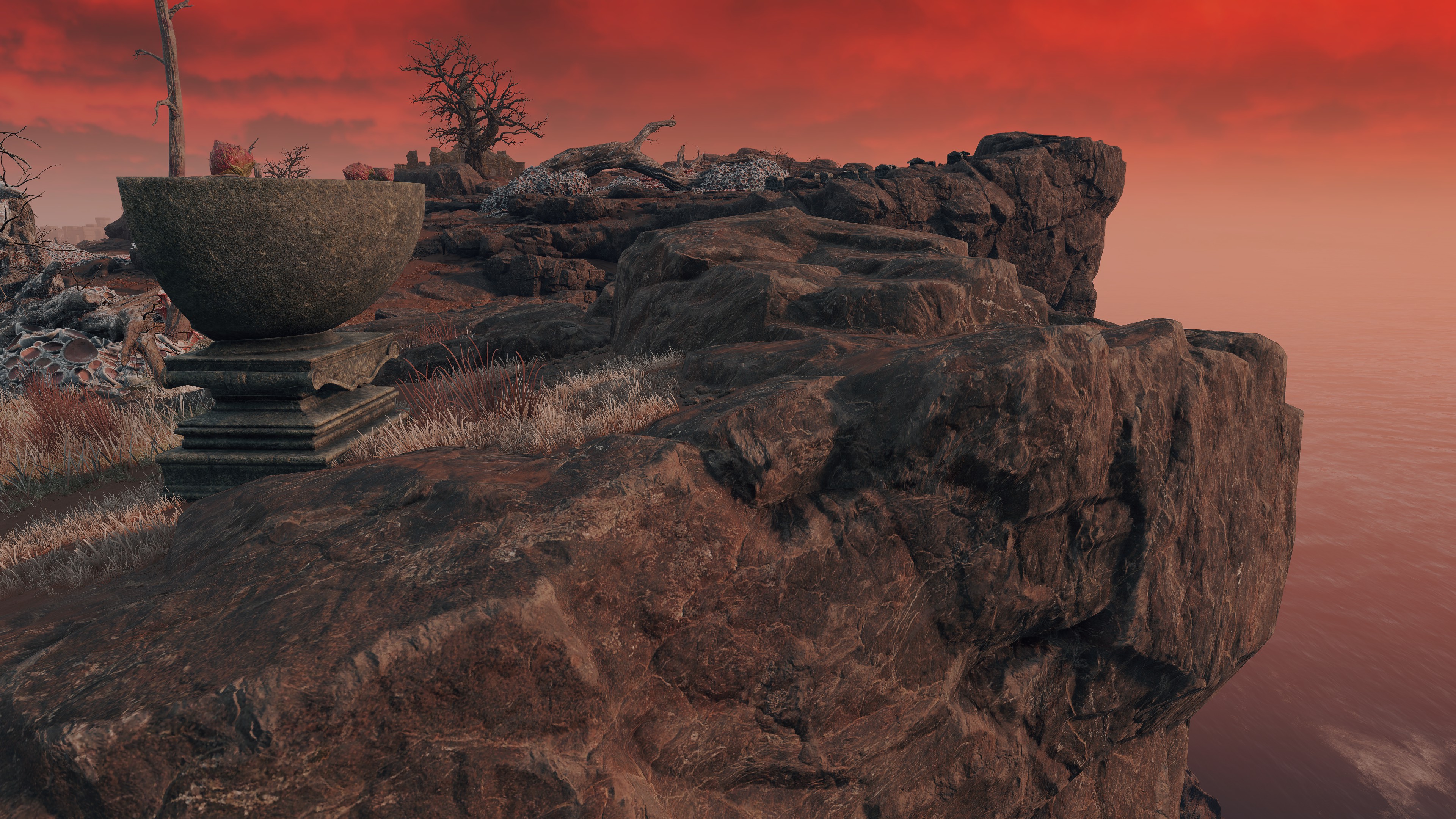
Indeed, the Sword of Night and Flame allude to astrologers’ key role in sorcery related to the night sky. In its text, stargazers are described as the predecessors to sorcerers, which causes fans’ confusion since the description to the astrologer set claims that they are the descendants. However, this ignores the context. The sword specifically refers to the astrologers native to the mountaintops. The set refers to stargazers from outside the Lands Between, those robes serving as our starting equipment should we choose an astrologer background. In other words, we as an astrologer trace our practice to sorcerers from the Lands Between, who trace their practice to astrologers on the mountaintops. At the same time, we ourselves are a sorcerer, which wasn’t always the case for stargazers in the mountains. Put simply, every glintstone sorcerer is also an astrologer, but not every astrologer is necessarily a glintstone sorcerer. That kind of sorcery requires stargazing by necessity, so it was only through stargazing that humans could even formulate a rational study of magic.
Hood made with soft cloth. Apparel of those who look up at the stars.
It is said that they are descendants of the brightstone sorcerers who tried to discover fate in the stars. But now fate isn’t in the night sky.
In fact, we know the exact origins of these magic arts thanks to Founding Rain of Stars. The legendary sorcery was discovered by a stargazer of old, trying to glimpse the Primeval Current. Being one of the most demanding sorceries to perform in terms of intelligence, the genius and effort behind this feat cannot be understated. Nonetheless, it was only natural for humans studying the stars’ movements to trace their flow back to its source — if one wants to harness the heavenly bodies, one need control the direction of their point of origin. Every novice astrologer seems to understand this, hence the universal starlight landing at hemicycliums. It was just a question of finding the mechanism with which to manipulate all the stars. That proved to not be easy, but the oldest primeval sorcery’s storage in Heretical Rise conveys that it was accomplished atop those northernmost mountains where the tower is located, before any of the modern magic sigils were used for glintstone sorcery. The flow of the stars this astrologer visualized became a reality, and glintstone fell upon the land in a downpour.
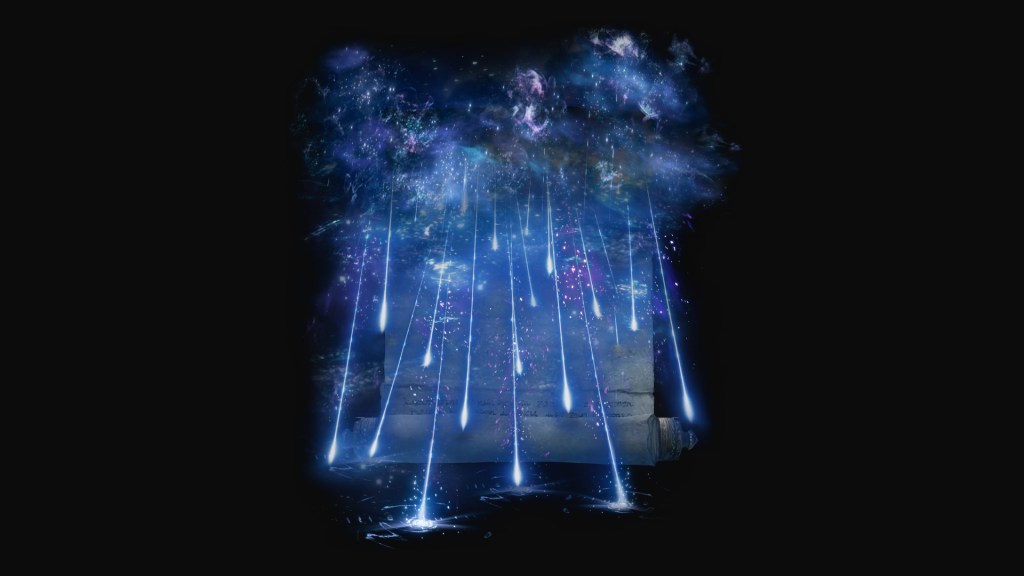
Oldest primeval flow sorcery an old stargazer once discovered. One of the “legendary sorceries”.
Calls a nebula of darkness in the sky and lets a tremendous star shower rain for a short period.
That is said to be the beginning of brightstone sorcery. For the primeval flow glimpsed by the stargazer became a reality, and the stars’ amber poured down upon this land.
This may have only been a brief, once in a lifetime success for the brilliant stargazer in question. Still, the stars’ amber changed the game for their kind. The vestiges of astral life now on earth, anyone could harvest a crystal and stick it on a stick of wood to create a magic catalyst. With enough focus, the owner could then draw out a fragment of that life force and manipulate the power as they see fit. Founding Rain of Stars was the first to receive this treatment, the instructions we acquire teaching us to conjure miniature stars that rise to form a nebula — a literal “star cloud” (星雲) — and subsequently rain down upon targets below. However, even less intelligent individuals could manifest at least a small stone to crudely throw at a target, which is why Glintstone Pebble is considered the starting point for research into sorcery. From there, it was a matter of cultivating their knowledge and willpower, generating larger and larger stones until they did form true stars. Stargazers could finally observe their interest closer than ever. None were going to pass on this opportunity.
Basic brightstone sorcery of the sorcery academy of Raya Lucaria.
Fires magic pebble from staff’s brightstone. Can be used without stopping movement and enhanced by charging.
The research of sorcery all begins here.
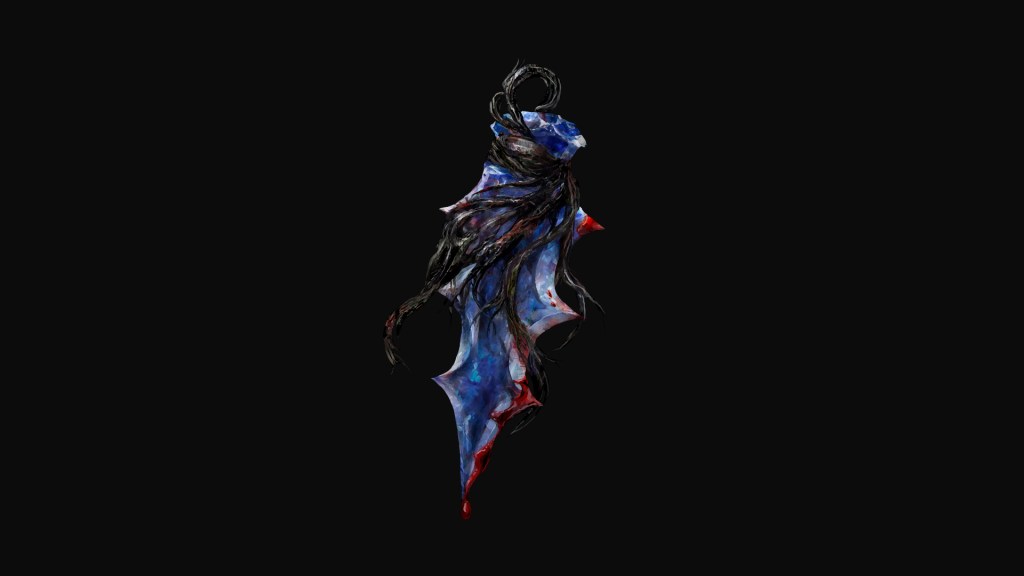
And so, the study of the living stars turned astrologers into glintstone sorcerers. By extension, they were also the first primeval sorcerers. This did not end with one spell. Sellen implies that the Primeval Current was the original reason for studying crystallized astral life. Ymir likewise insinuates that to be a glintstone sorcerer requires equal investment in humans, considering both stardust to love. The two sorcerers each know humanity to be among the spawns of the Primeval Current, Sellen and primeval sorcerers like her wanting to become proper star children. Taken together, it would seem that early glintstone sorcerers were the first to make this discovery and aim to become what they studied. Nowhere is this better indicated than in the Primal Glintstone Blade kept at the stargazers’ village, the old dagger fashioned with amber intended to replace a sorcerer’s heart and soul — bringing man one step closer to becoming living stone. This leaves no doubt that the mountaintop astrologers were concerned with astral metamorphosis. The end goal was always to join the stars in the Primeval Current.
Our sorcery is the art of discovering the power inside of brightstone and wielding it. So, what is that power?… Brightstone is amber of the stars. Just as gold-colored amber harbors vestiges of old life and their power, vestiges of star life and their power are harbored in brightstone. Do remember. Brightstone sorcery is the research of the stars and their life. For now there are none but sorcerers who have forgotten that.
I am a brightstone sorcerer. I pursue the stars and their life. Do you know? Man is all stardust once born from an explosion of beyond. We are also children of the Greater Will. Isn’t it so poetic? Isn’t it so wonderful?… But sadly, not a one understands that.
Talisman modeled on aged fingers gently holding brightstone.
Maximizes sorcery and prayer use speed, but damage received is also greatened.
Lord Ymir brags: If you have a heart that contemplates the stars’ romance and loves stardust, you will become the greatest sorcerer, whoever you be. Know love.
But, look. The Queen of Caria is no more. With the bodies of both Masters Azur and Lusat admitted, the academy will reach the primeval flow. And then, us spawn will one day become bright star children.
However, the method the stargazers’ devised was to embed the primal glintstone into the physical heart, the serrated design likely intended to help secure the blade in place similar to a barbed arrowhead. The aim was probably for the soul in the heart to be absorbed into the glintstone shortly after the stabbing, but slicing open an organ holds obvious risks. As a simple talisman, the blade reduces the focus required to cast spells, but at the cost of maximum HP. From this effect, gaining a mind of stone means making one more vulnerable to death. The bloodstains on the blade we acquire speaks to the failure of this experiment, the subject dying from the wound. The dark hair tied around the bloody talisman in its menu graphic may well belong to the deceased, serving as a sort of memorial. This explains why the uncleaned blade has been stored away, the villagers evidently abandoning this avenue. Only so many failures you can risk before the population can no longer support the village. Even if every subject was willing, the old sorcerers were ultimately forced to explore alternative solutions.
Old, bloodstained brightstone blade.
Reduces FP consumed for sorceries and prayers, but maximum HP will also be reduced.
Sorcerers of old cut apart their hearts with this blade in order to make source brightstones into their own soul. And so, they died as is.
Spread Your Seeds
When the glintstone first rained down, it wasn’t concentrated in one particular area. Rather, we can find signs of star fall all across the Lands Between. In every region exist tunnels dug to gigantic meteors embedded deep beneath the earth, the surrounding bedrock mined for the smithing stone used for statues or upgrading weaponry. By folding more and higher quality smithing stones into the wood, stone, or metal little by little, the armament itself becomes empowered. We can thus assume such potent rocks to be a byproduct of the meteoric impact; cosmic residue infused into the land. The resulting transformation creates a malleable material with a degree of flexibility in essence, the nature of smithing stone itself changing depending on environment. Simultaneously, the generic stone’s power follows proximity to the Mountaintops, mere shards mined in lands farthest from the peak and gradually increasing to whole and larger hard stones in neighboring lands like Liurnia and Caelid. If the eye of the starry storm lie where it was cast, then it is only natural for the concentration of power to dissipate over distance.
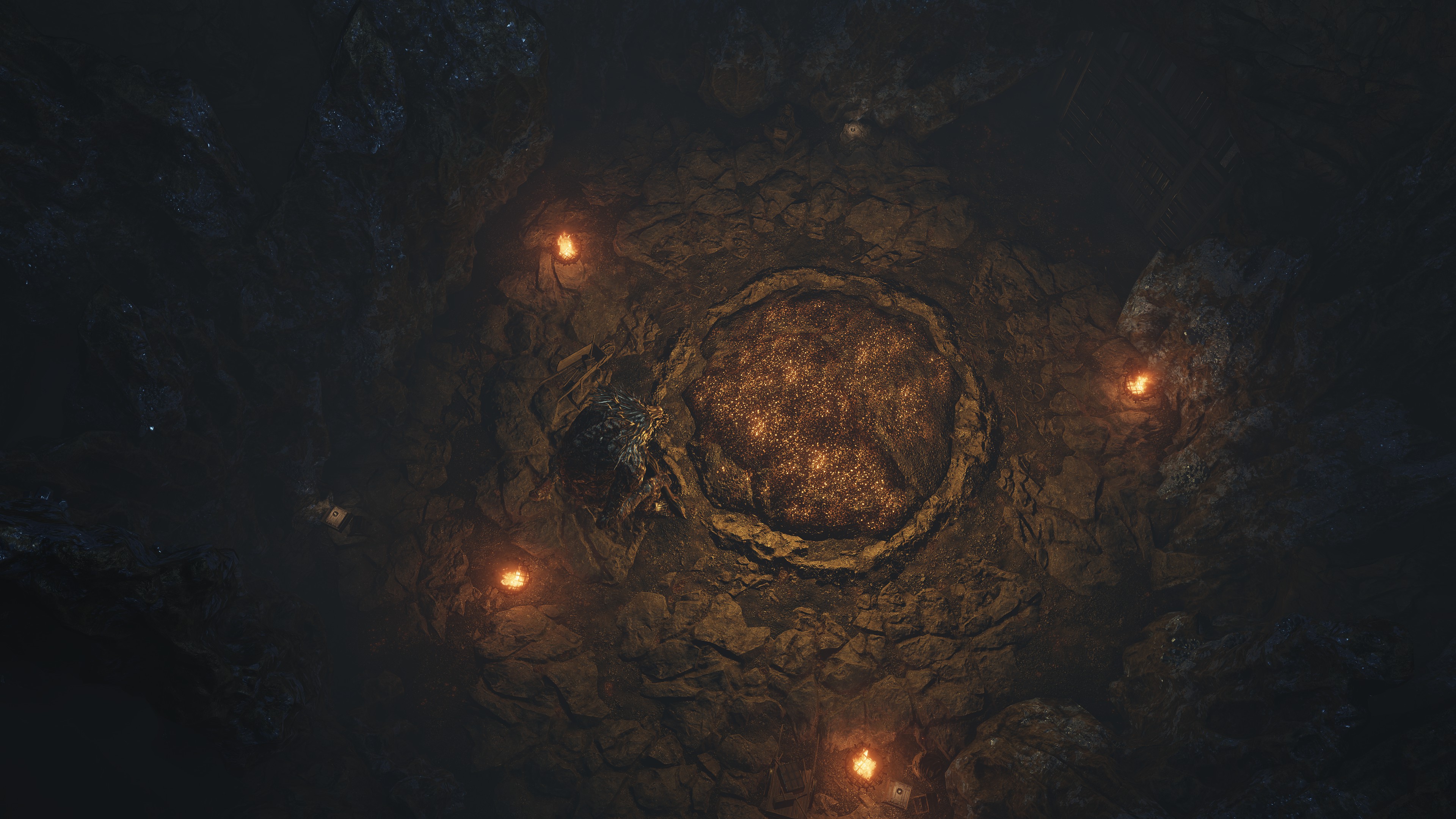
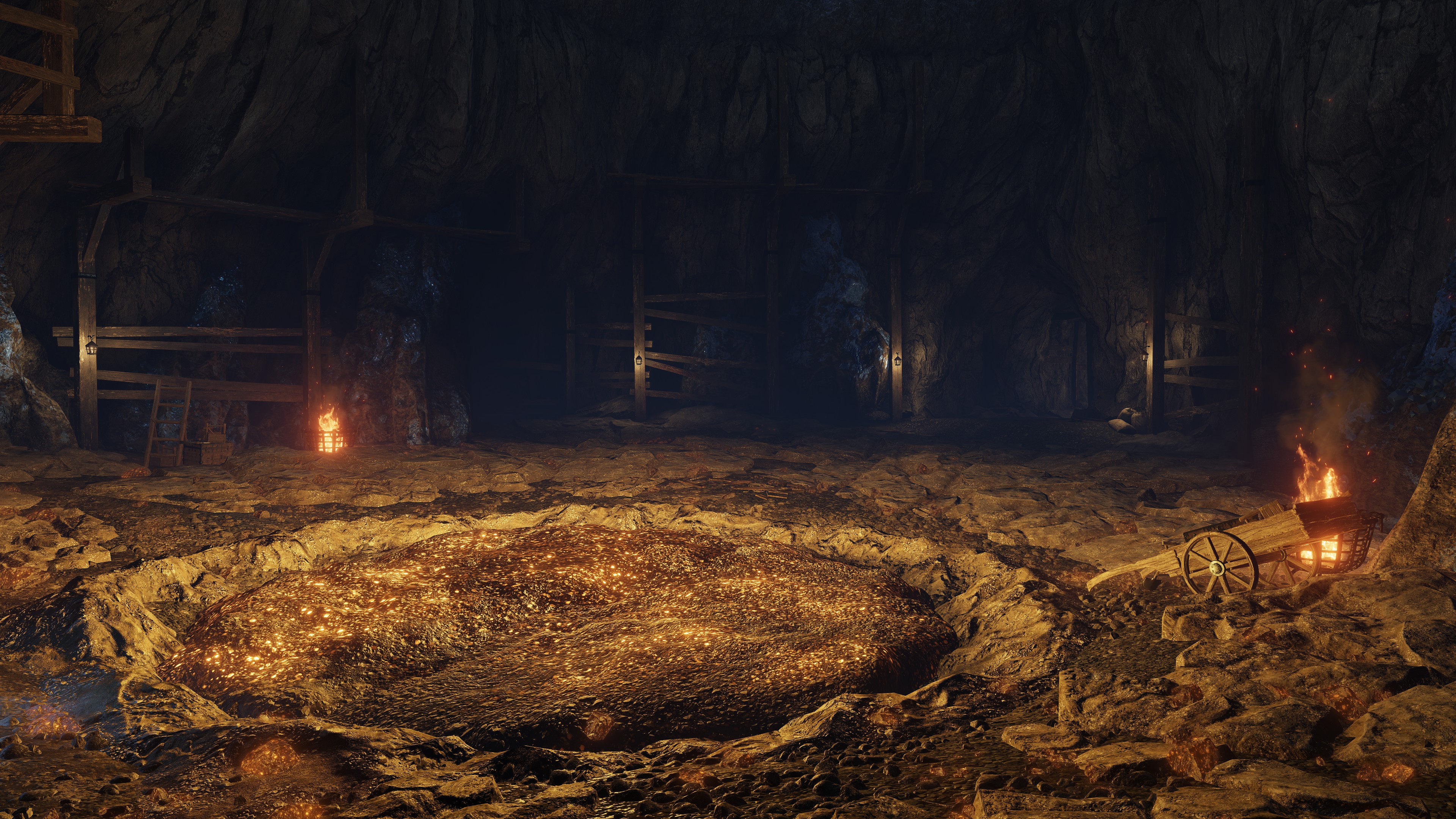
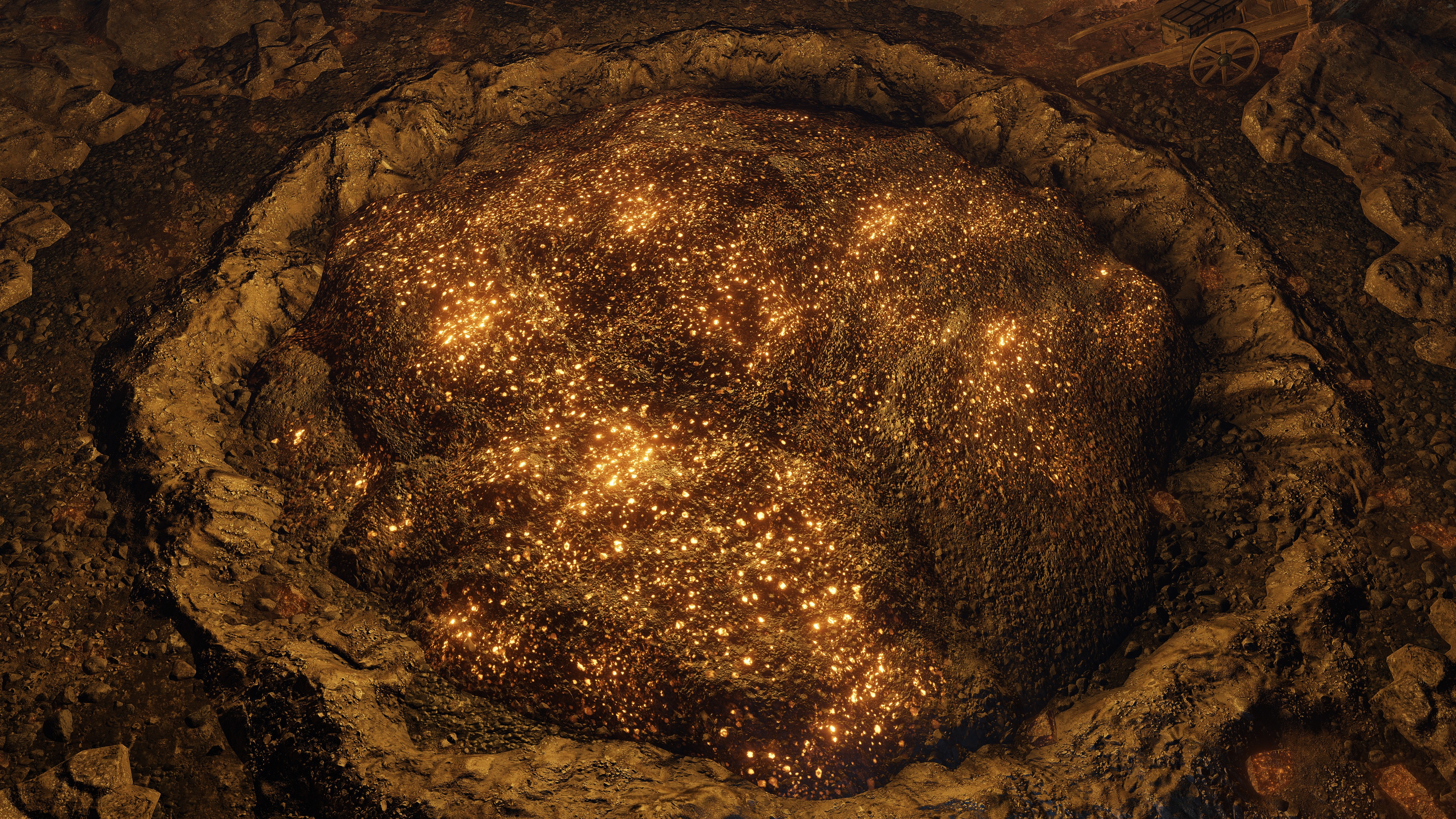
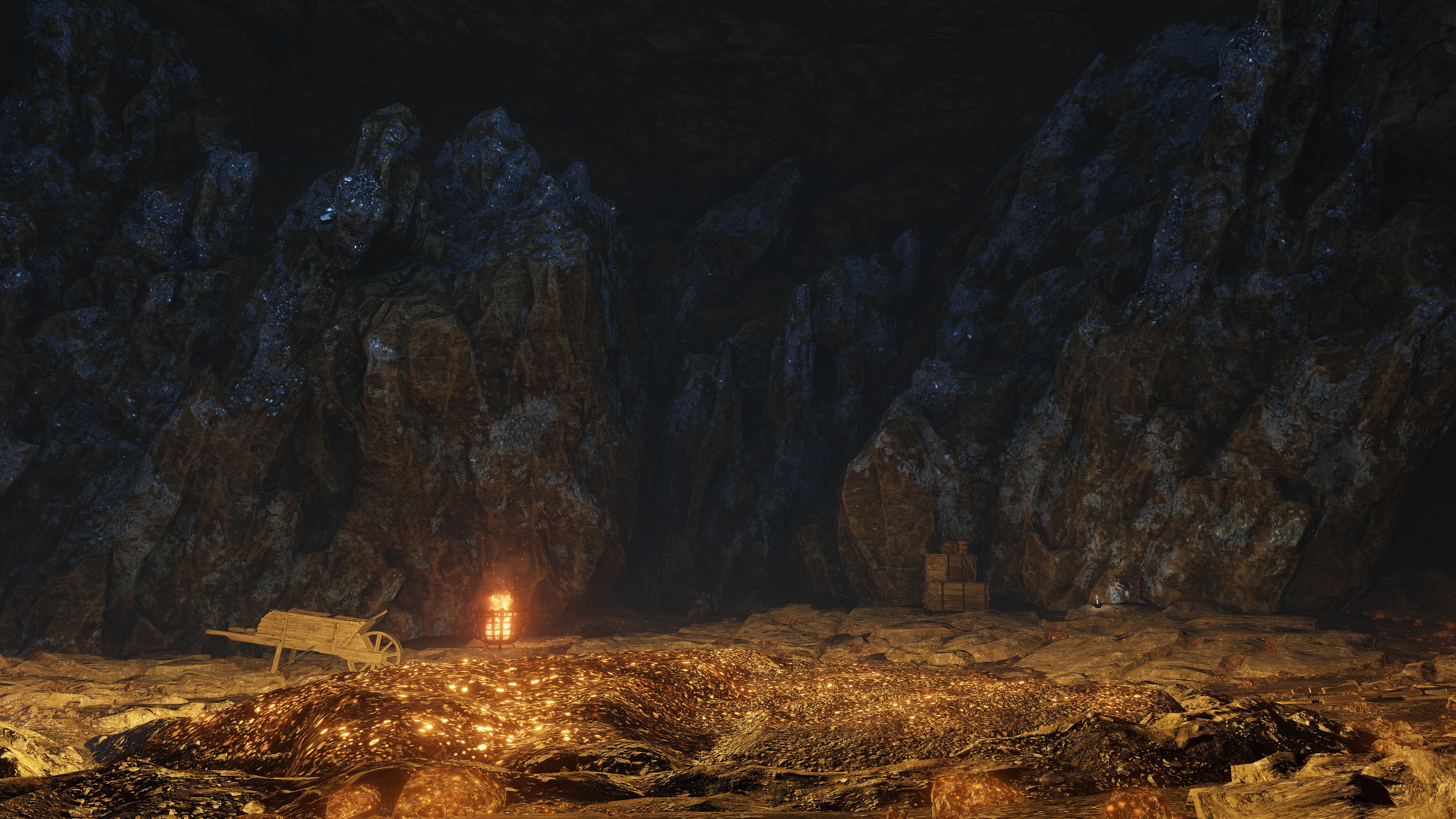
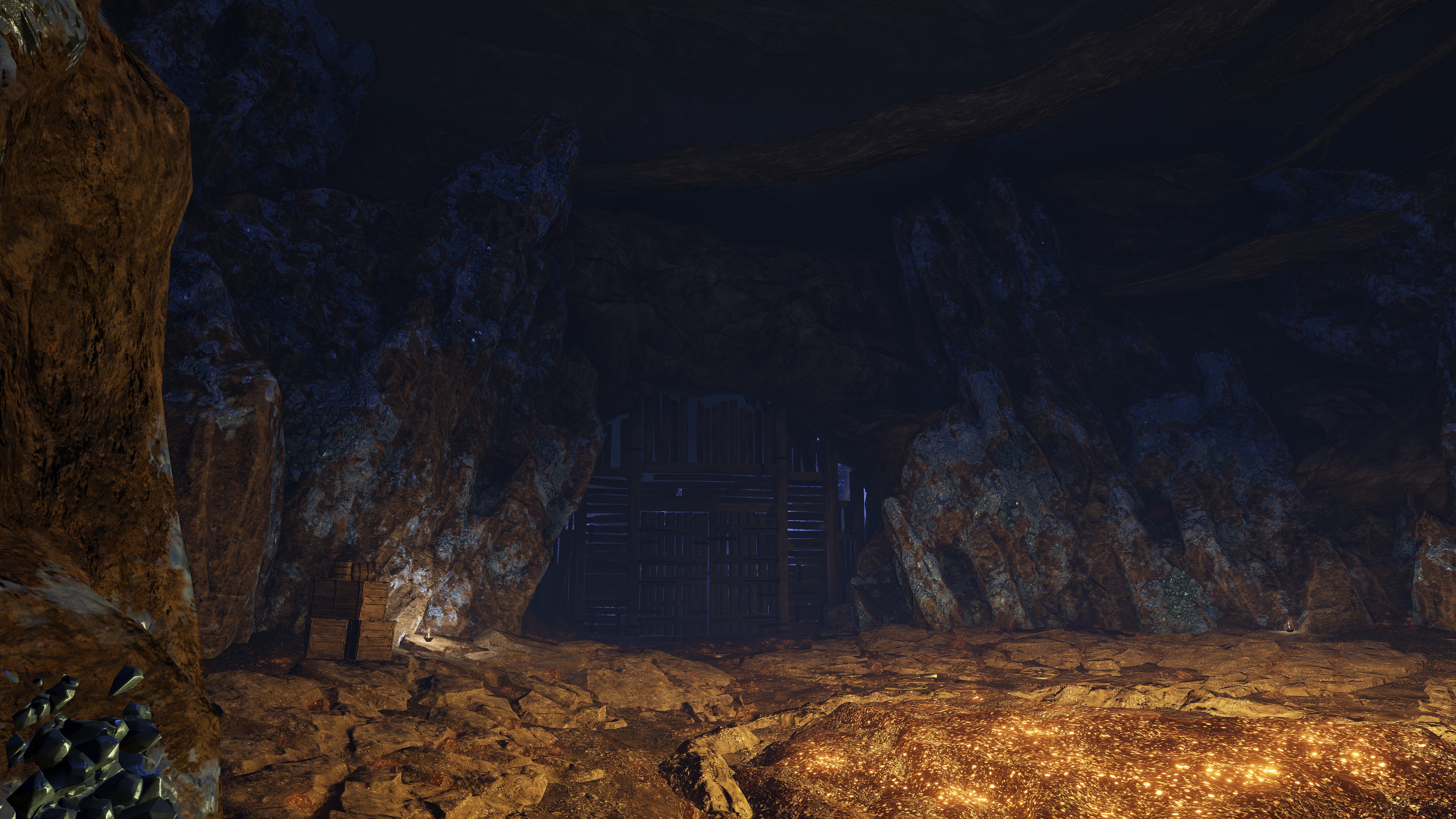
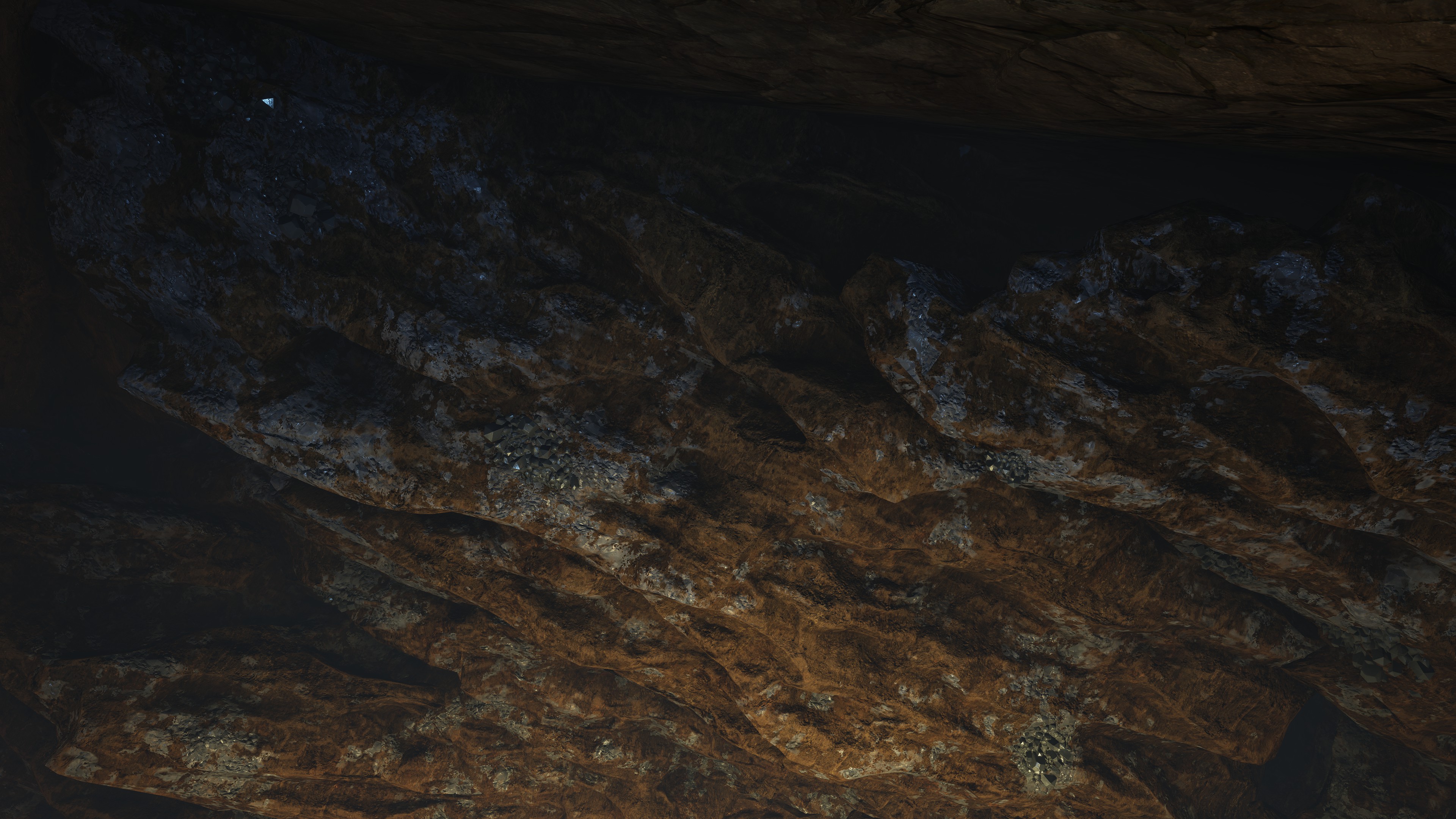
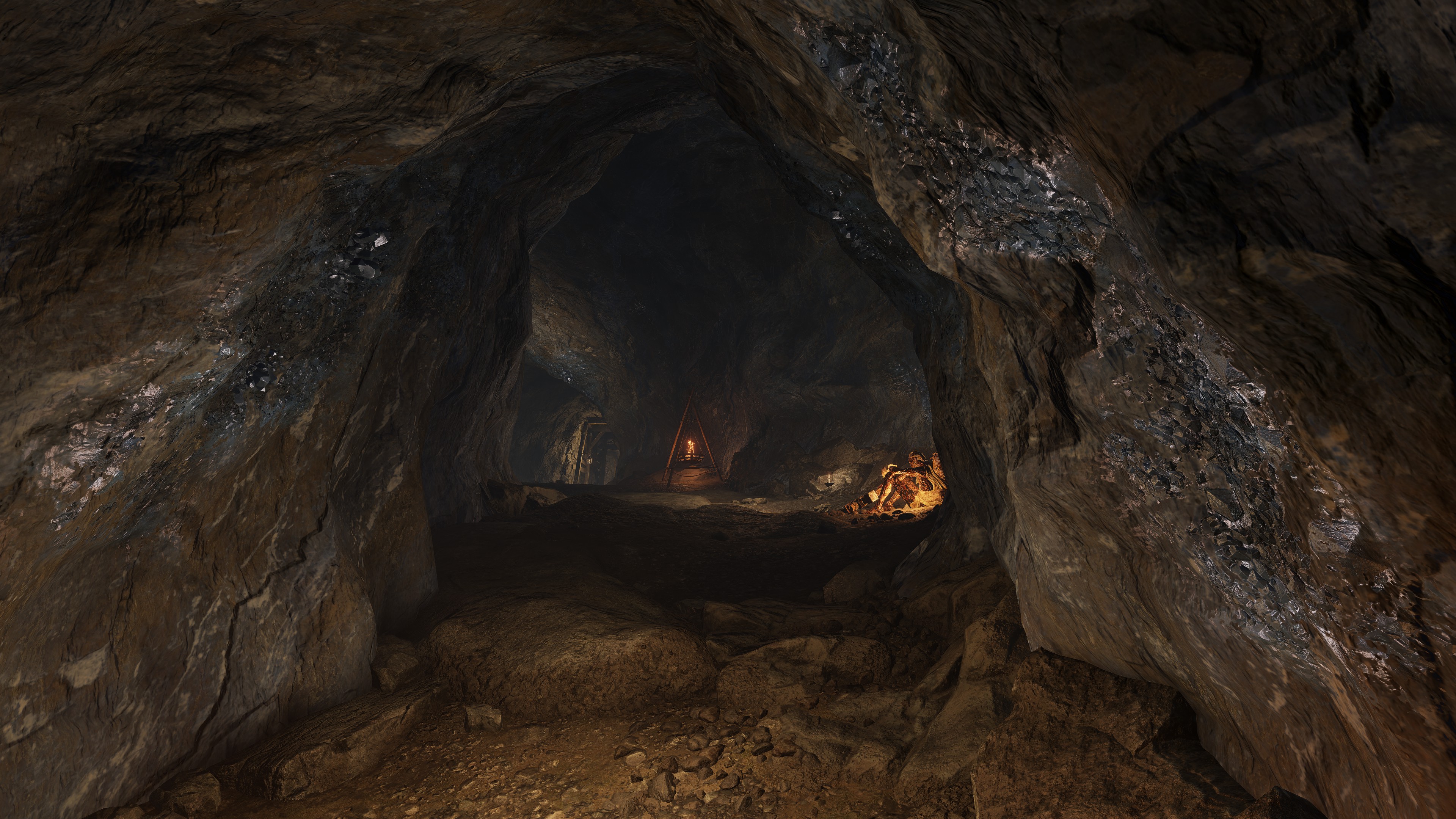
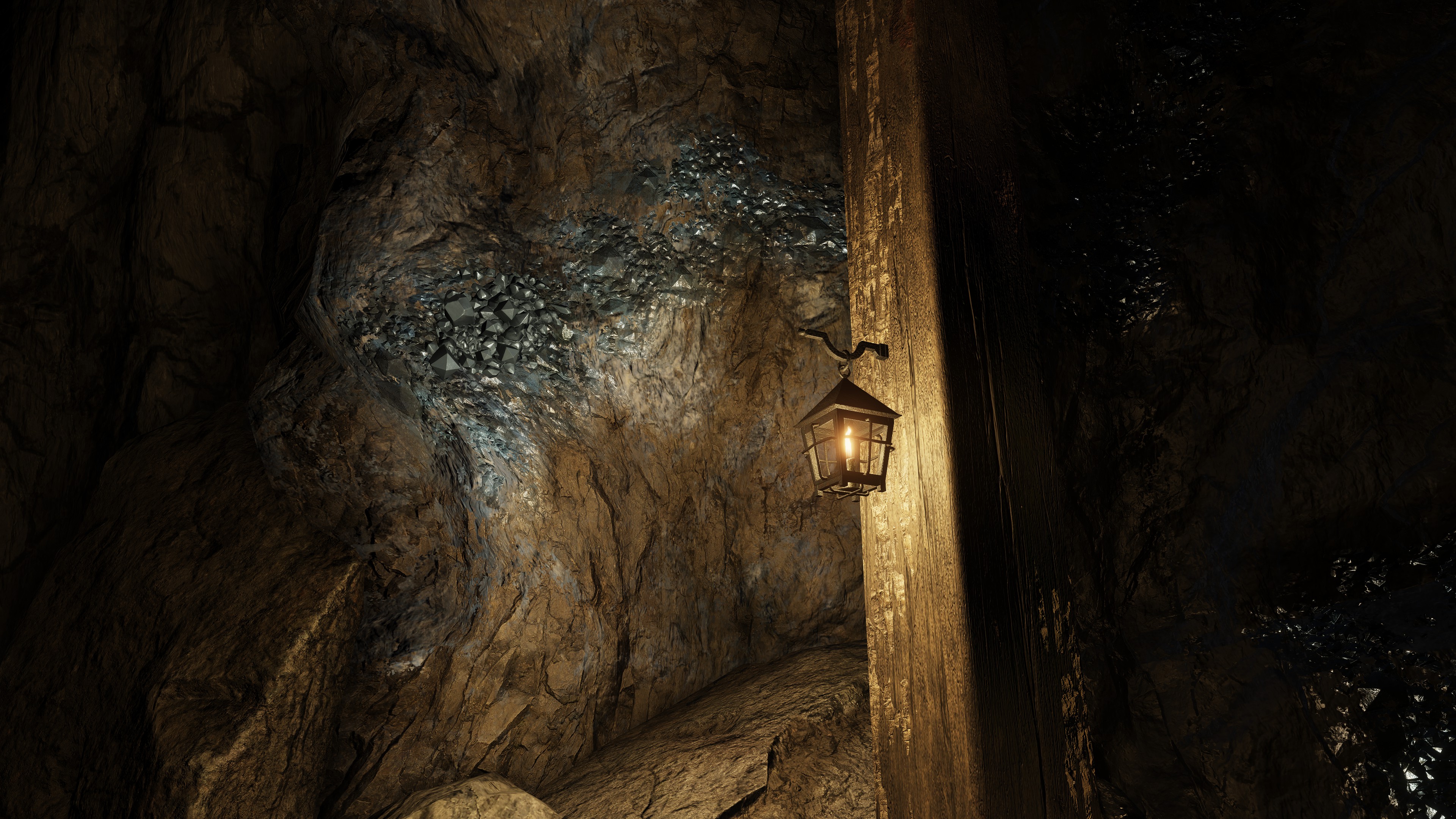
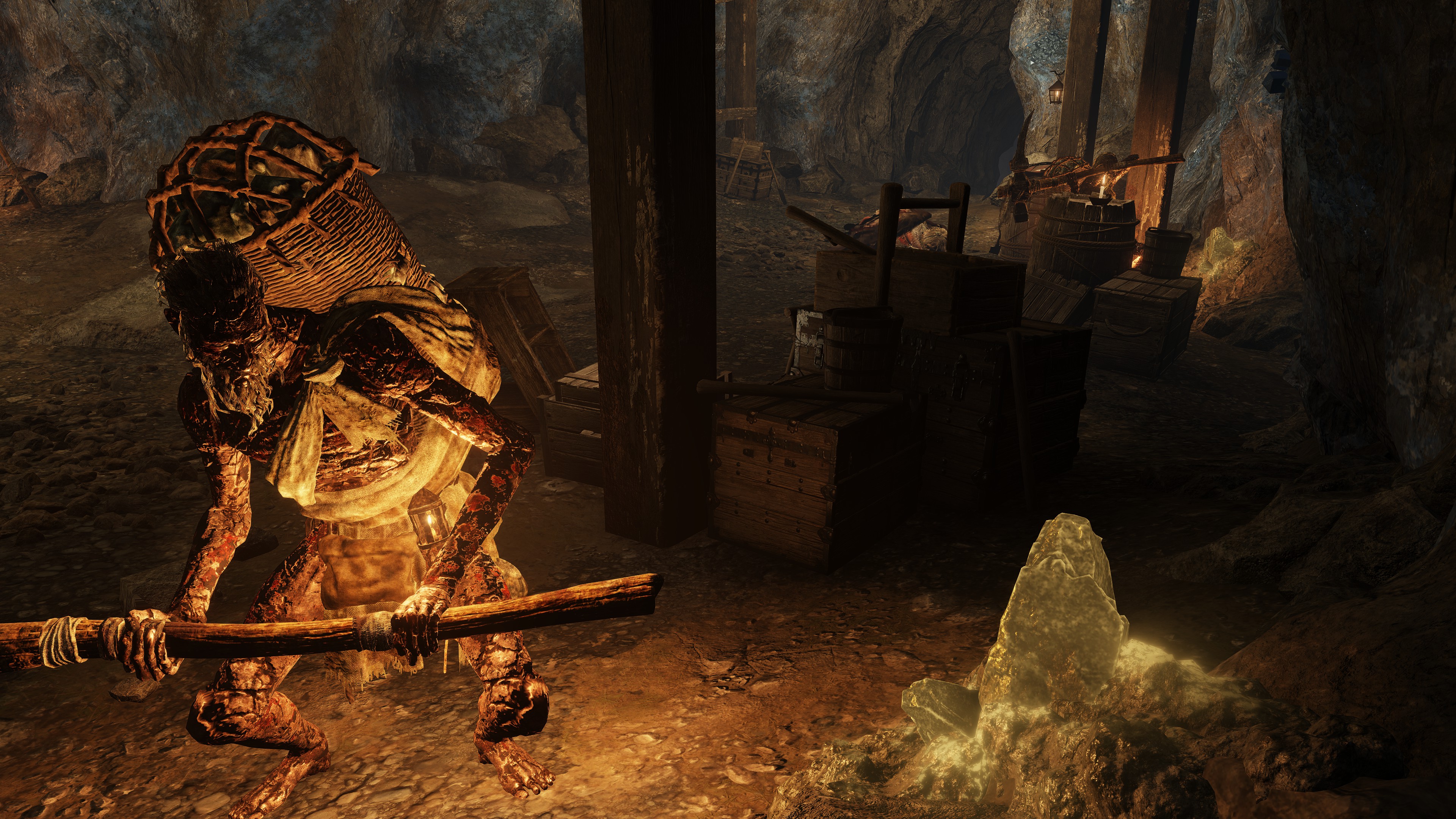
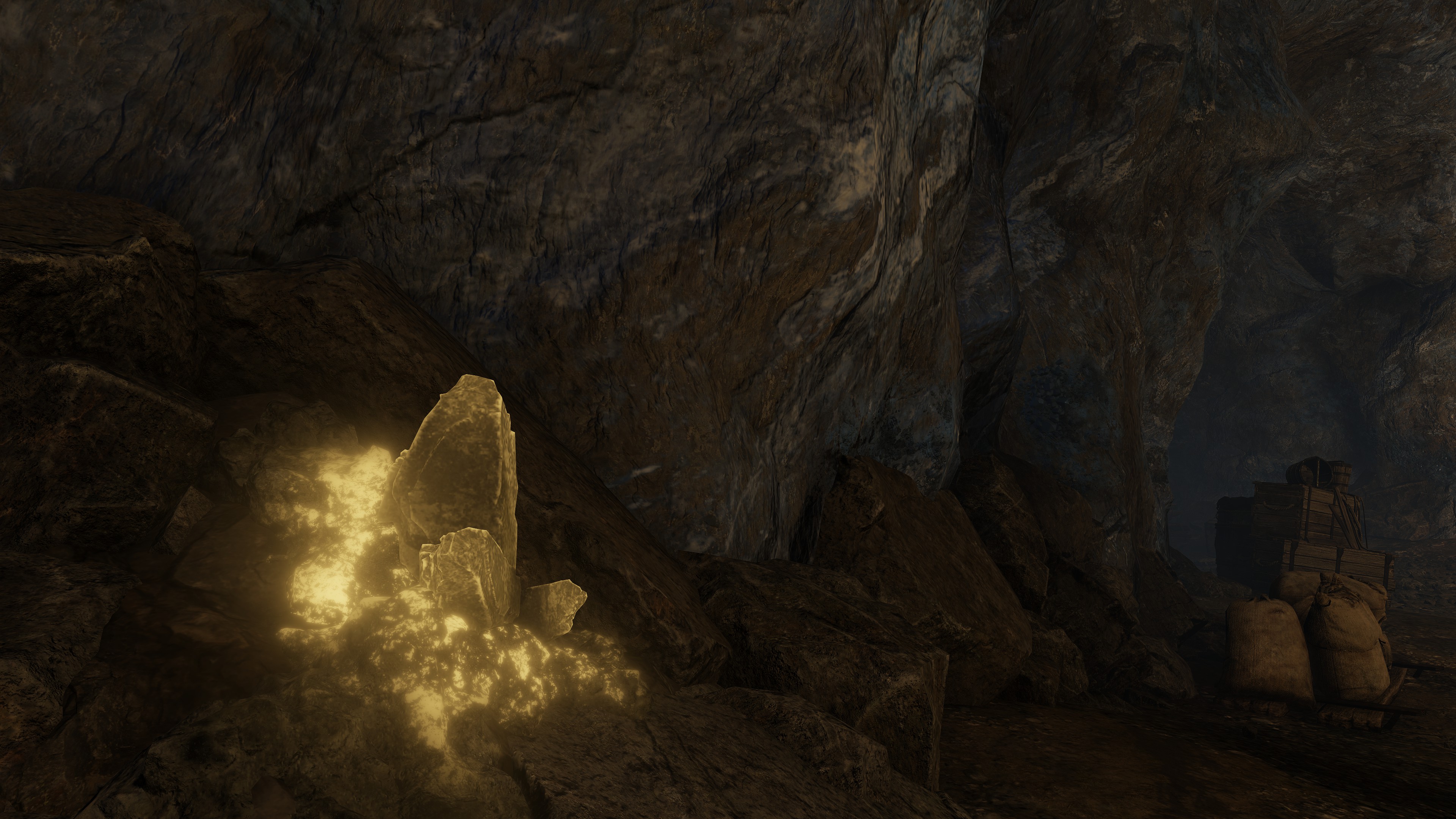
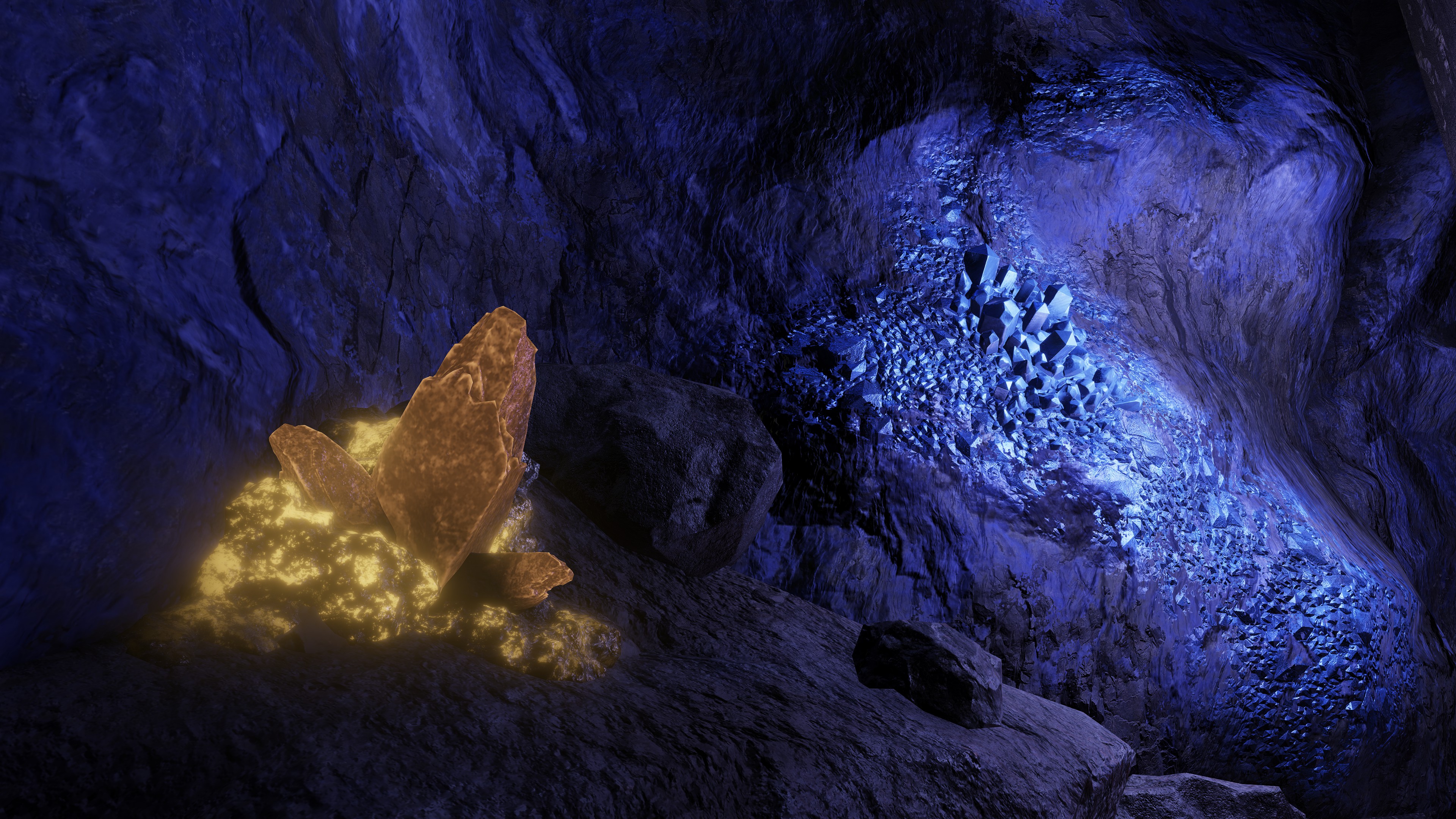
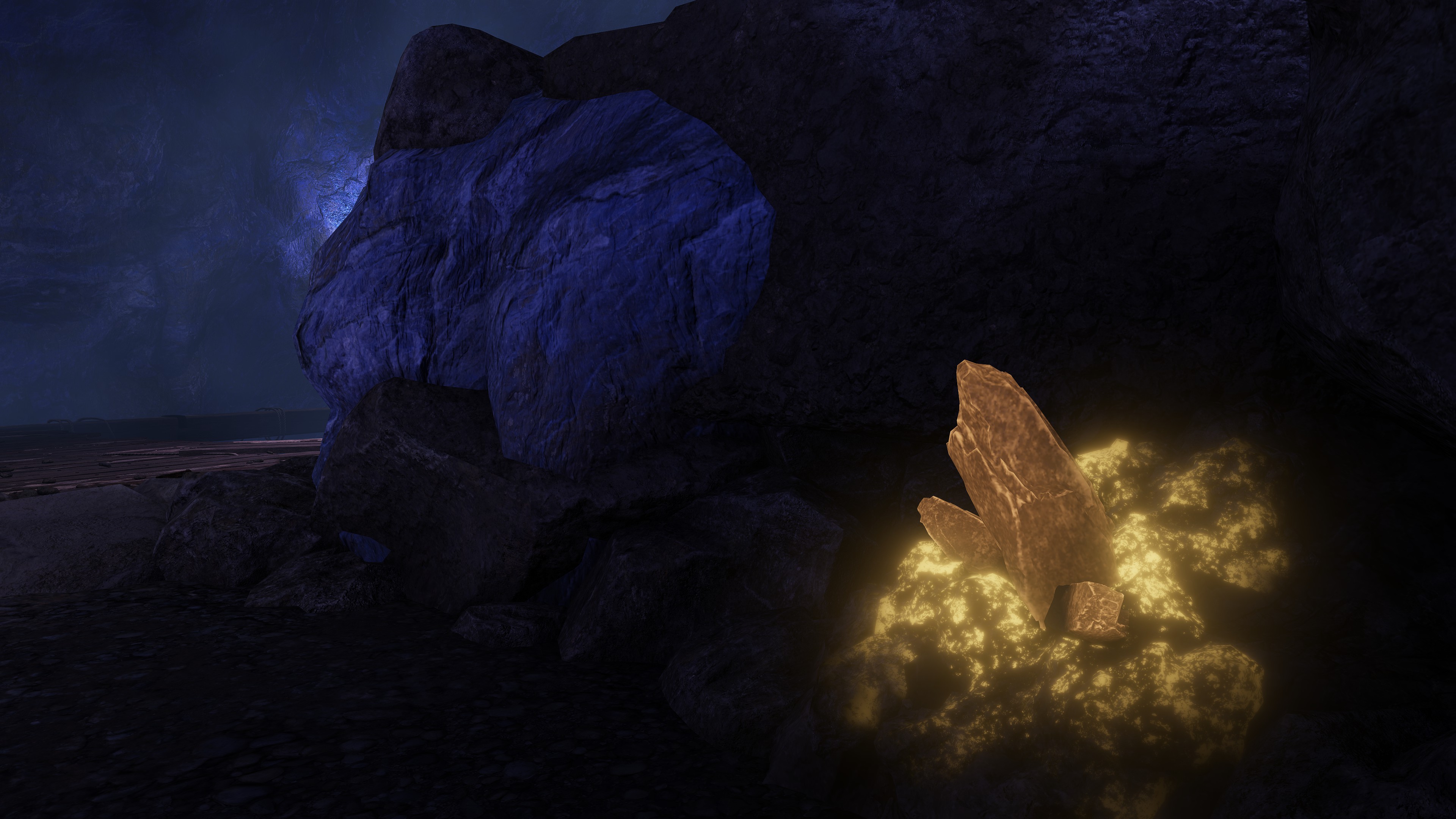
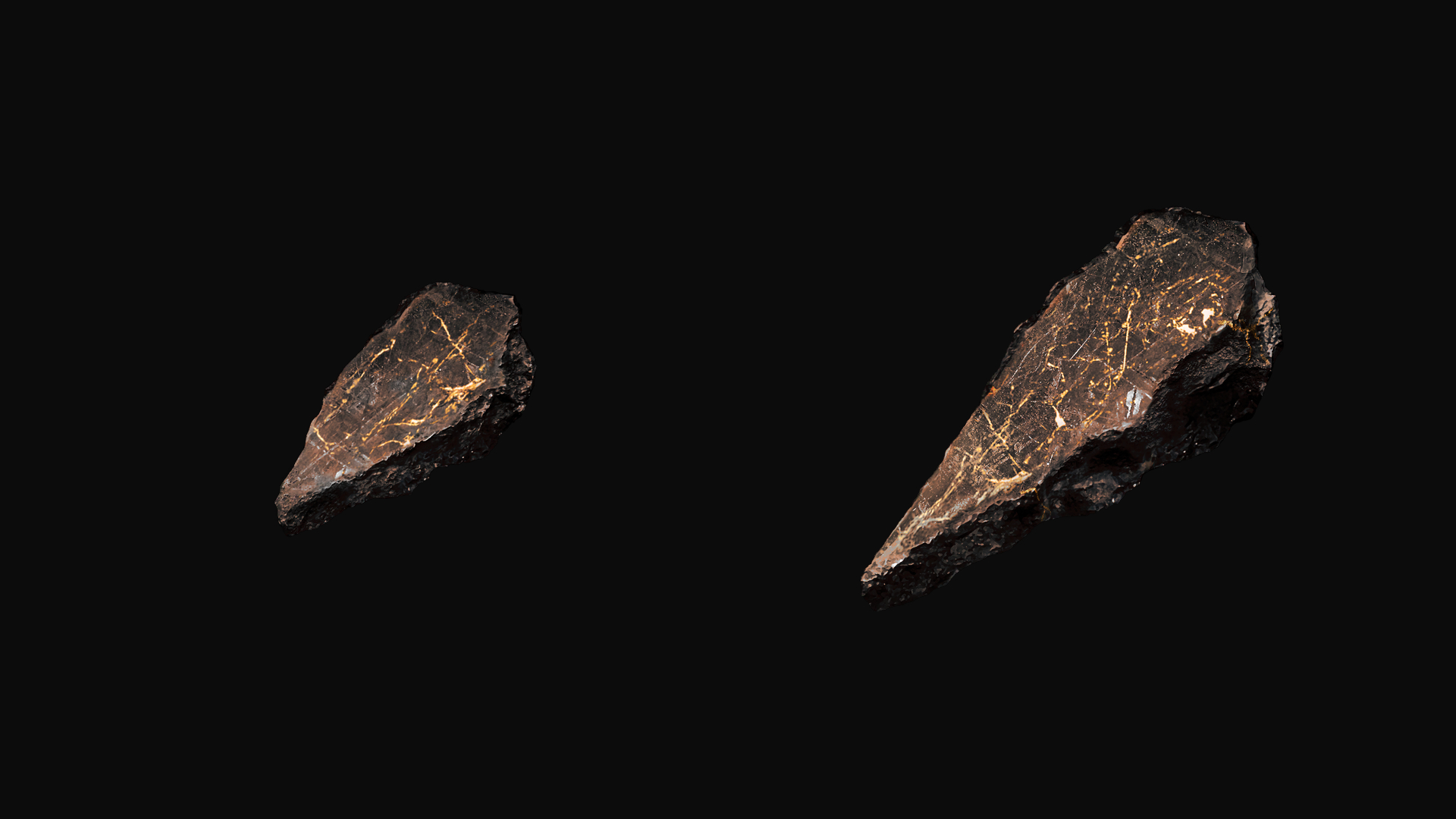
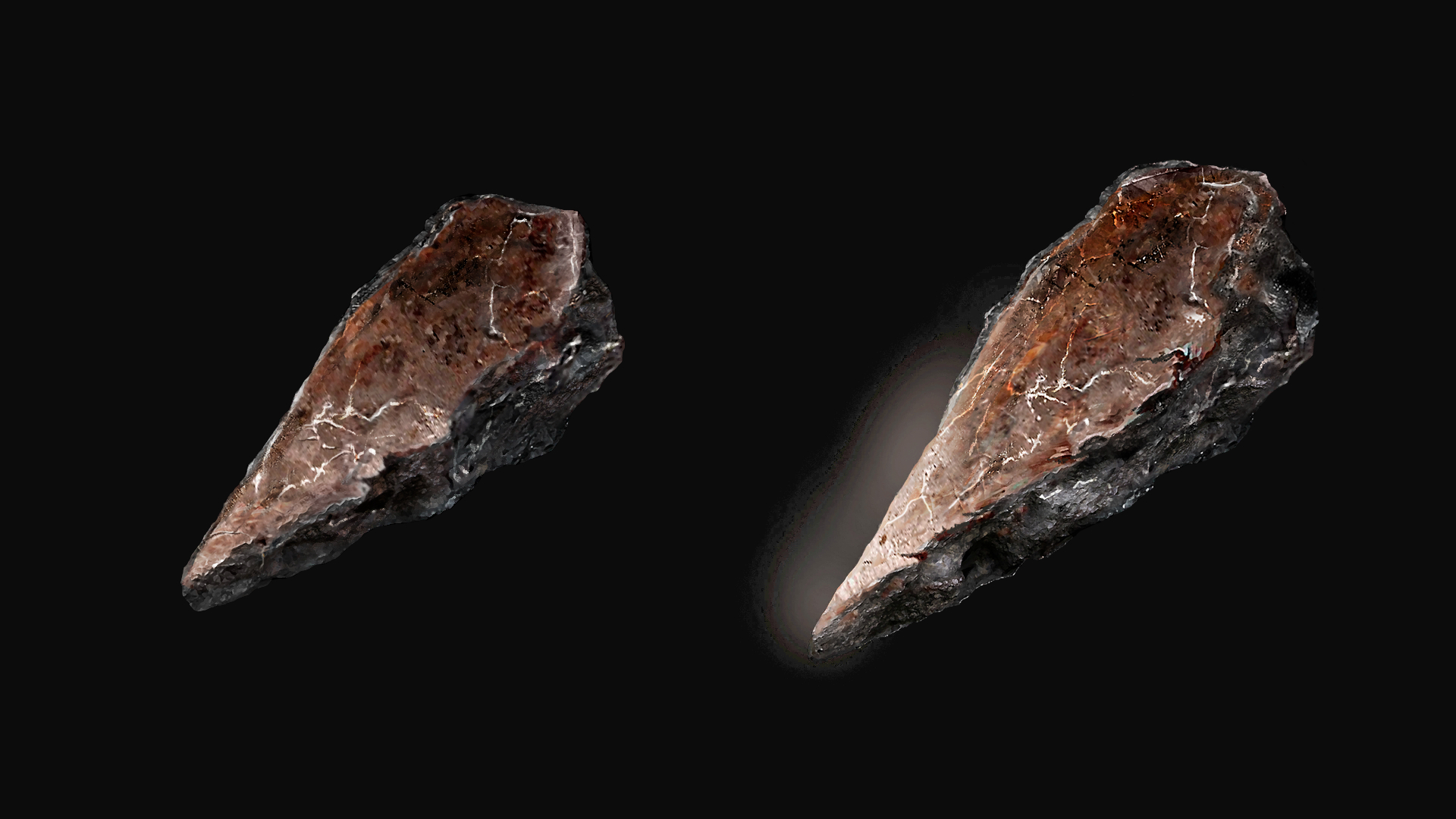
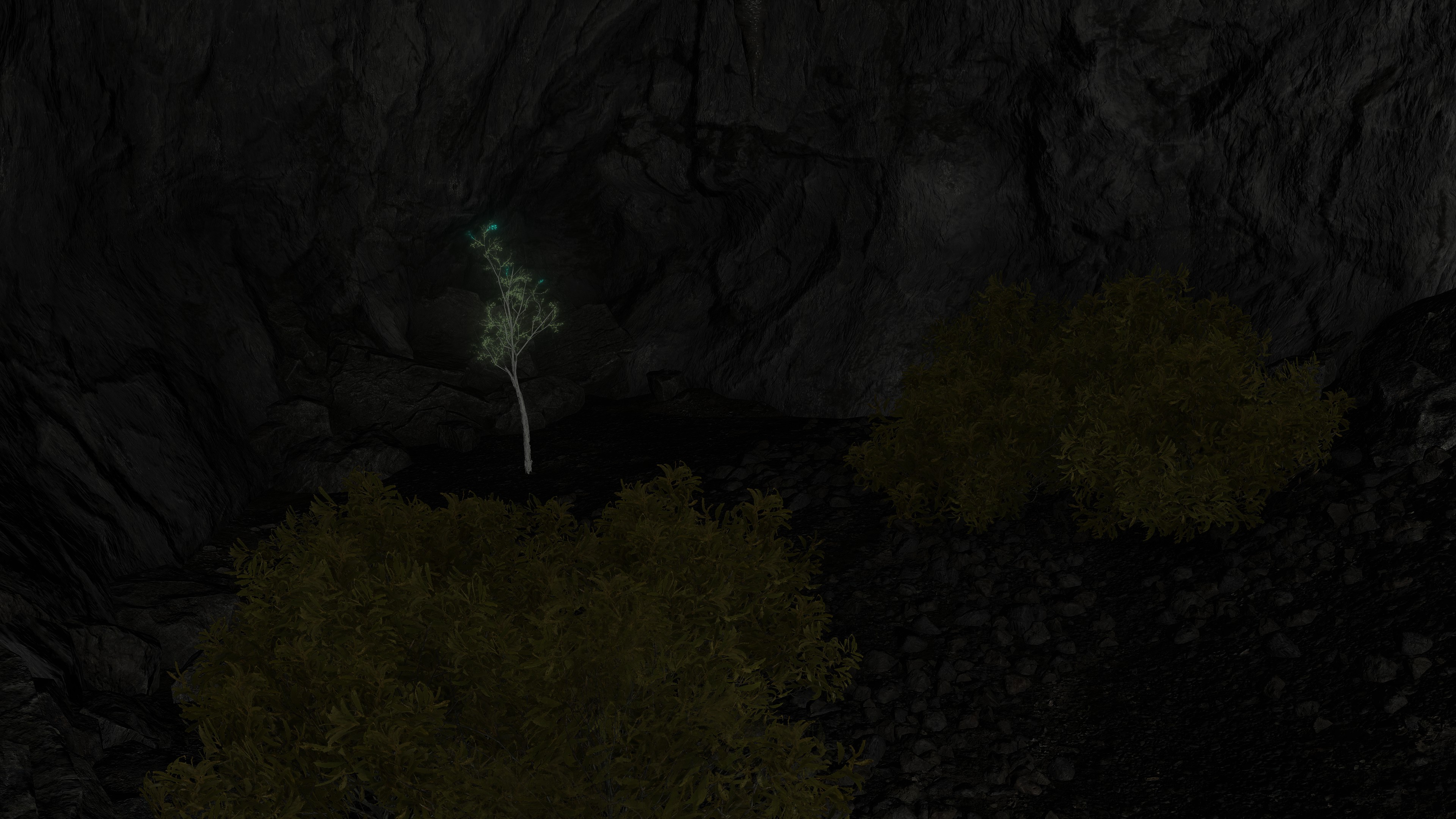
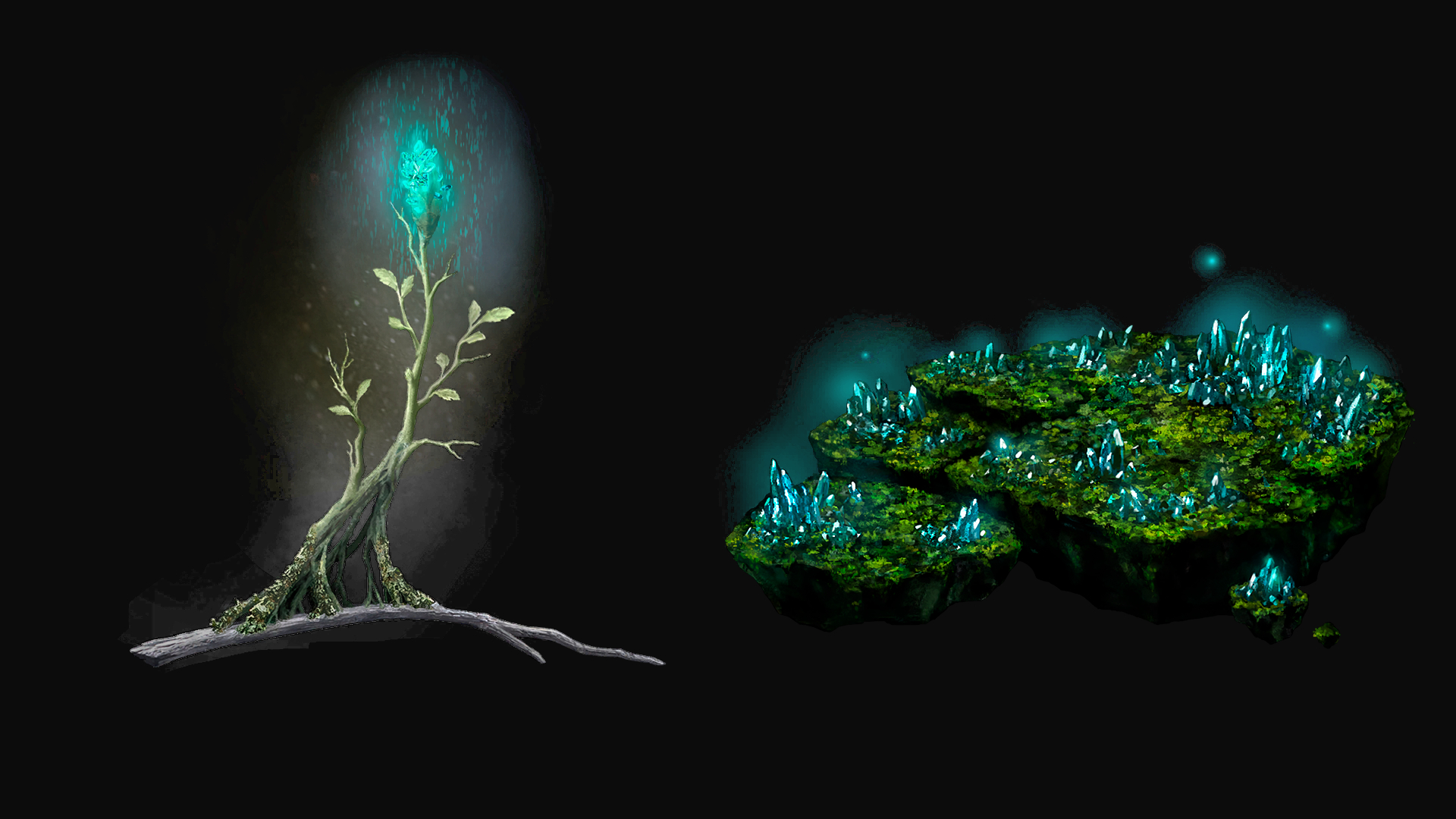
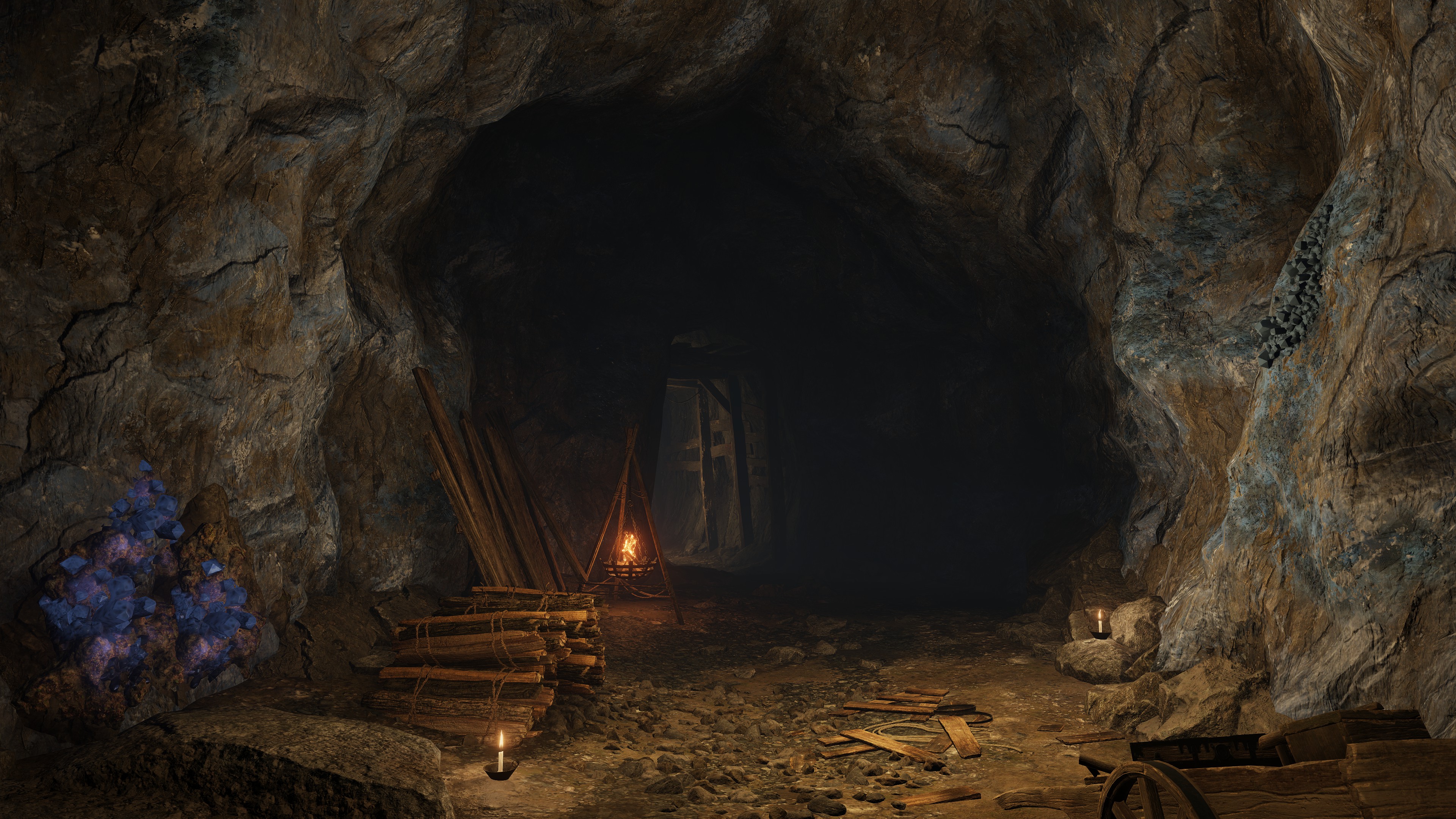
This pattern corresponds with the stars’ actual amber. Many of those same regions include crystal tunnels and caves replete with glintstone as well. The areas least affected lie in Limgrave and the Weeping Peninsula, miners unearthing only a few scraps from walls bereft of cracked crystal. Conversely, Caelid showcases huge deposits, crystals likely lacing large part of the region — although the land is now marred by Scarlet Rot, Dragonbarrow Cave has remained untouched, with its natural foliage including Crystal Cave Moss and Crystal Buds. The latter in specific had the misfortune to crystallize before they could grow into large trees, presumably internalizing too much of the stars’ power while trying to absorb nutrients. They should therefore mark lands replete with glintstone, Caelid but one example. The increased quality of the mines reinforces the indication, Gael Tunnel straddling the border between Caelid and Limgrave already yielding a fair number of large scraps. It is no surprise, then, to find so many crystals in the deepest reaches of the rotted area.
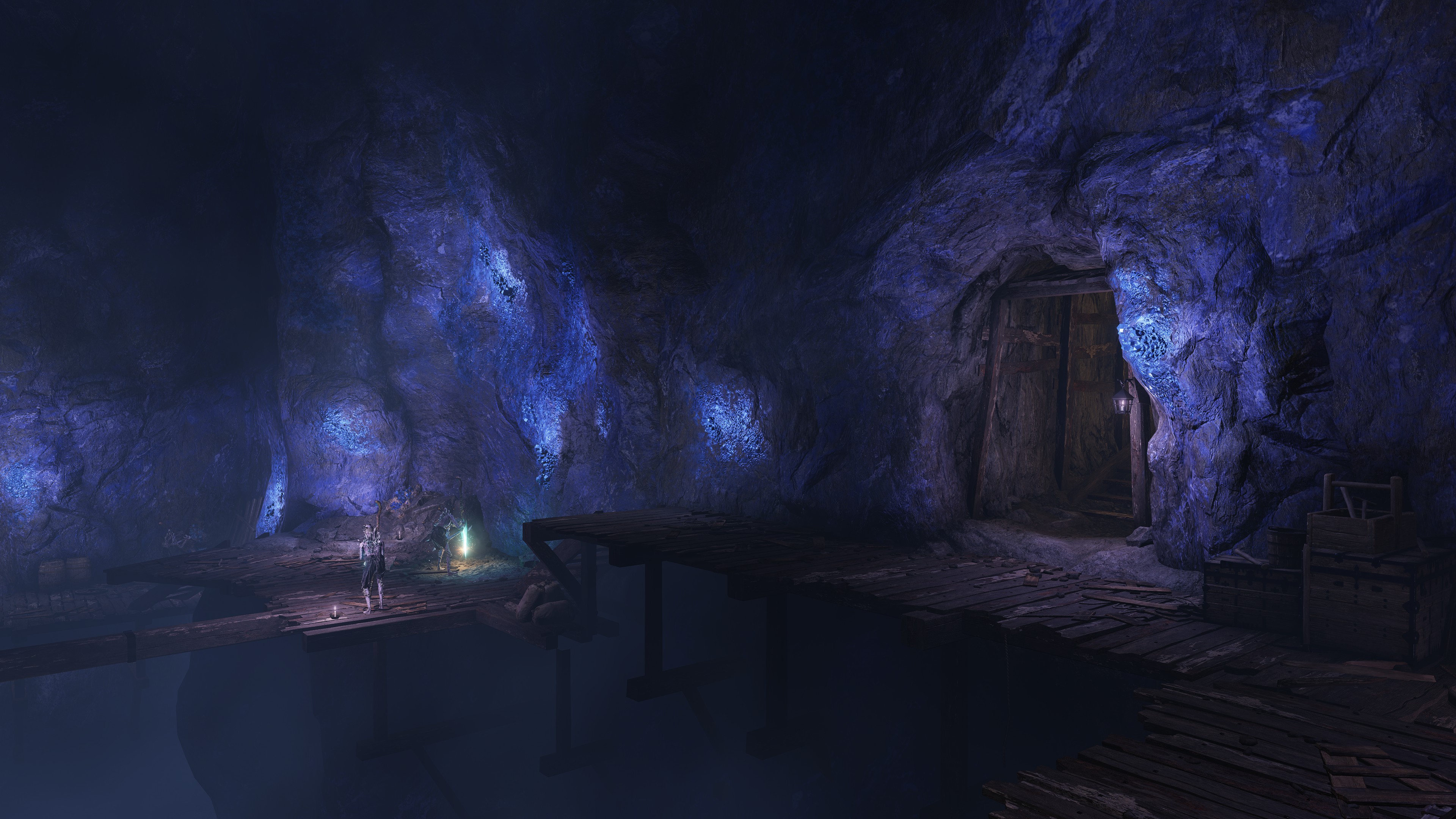
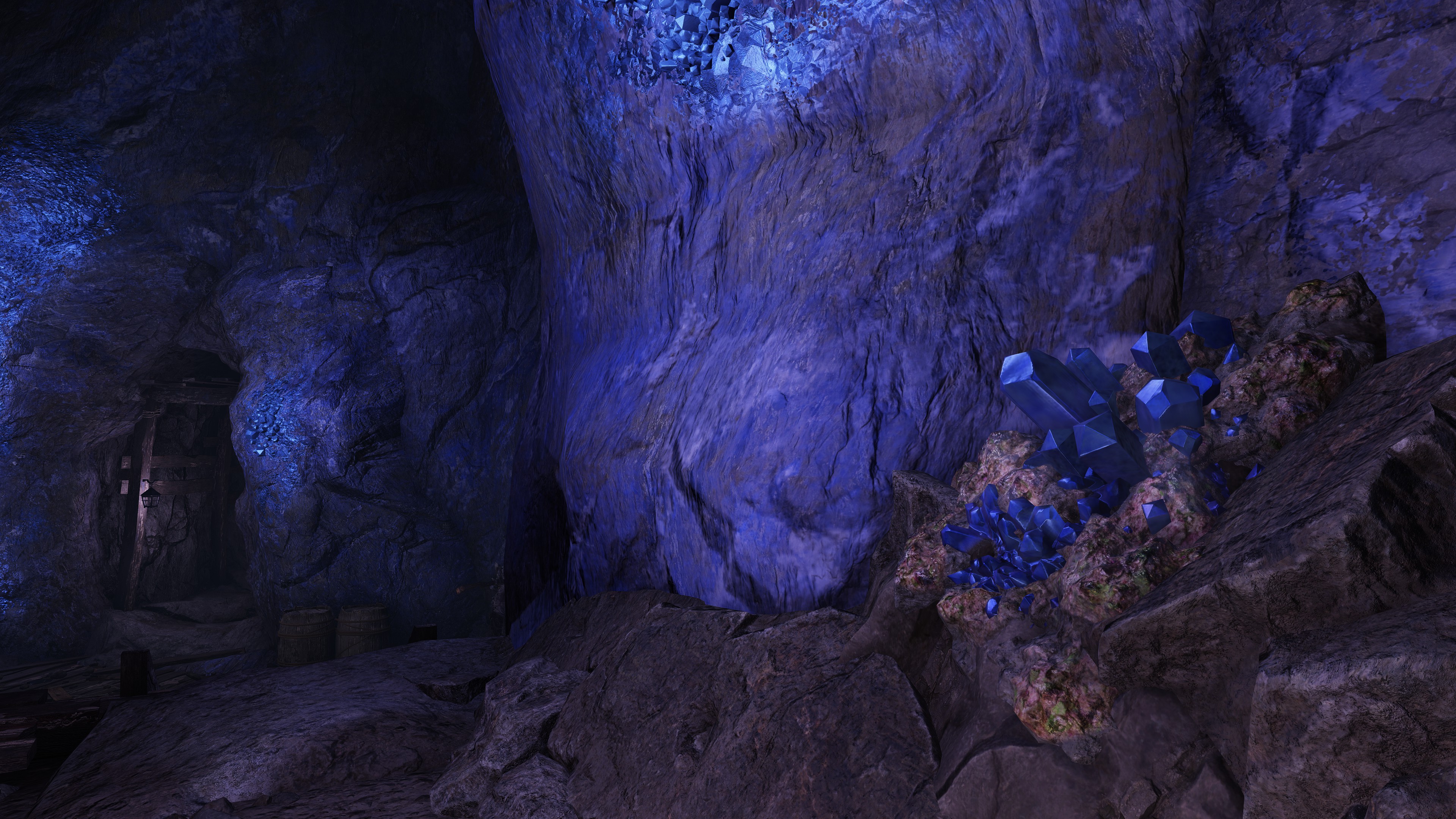
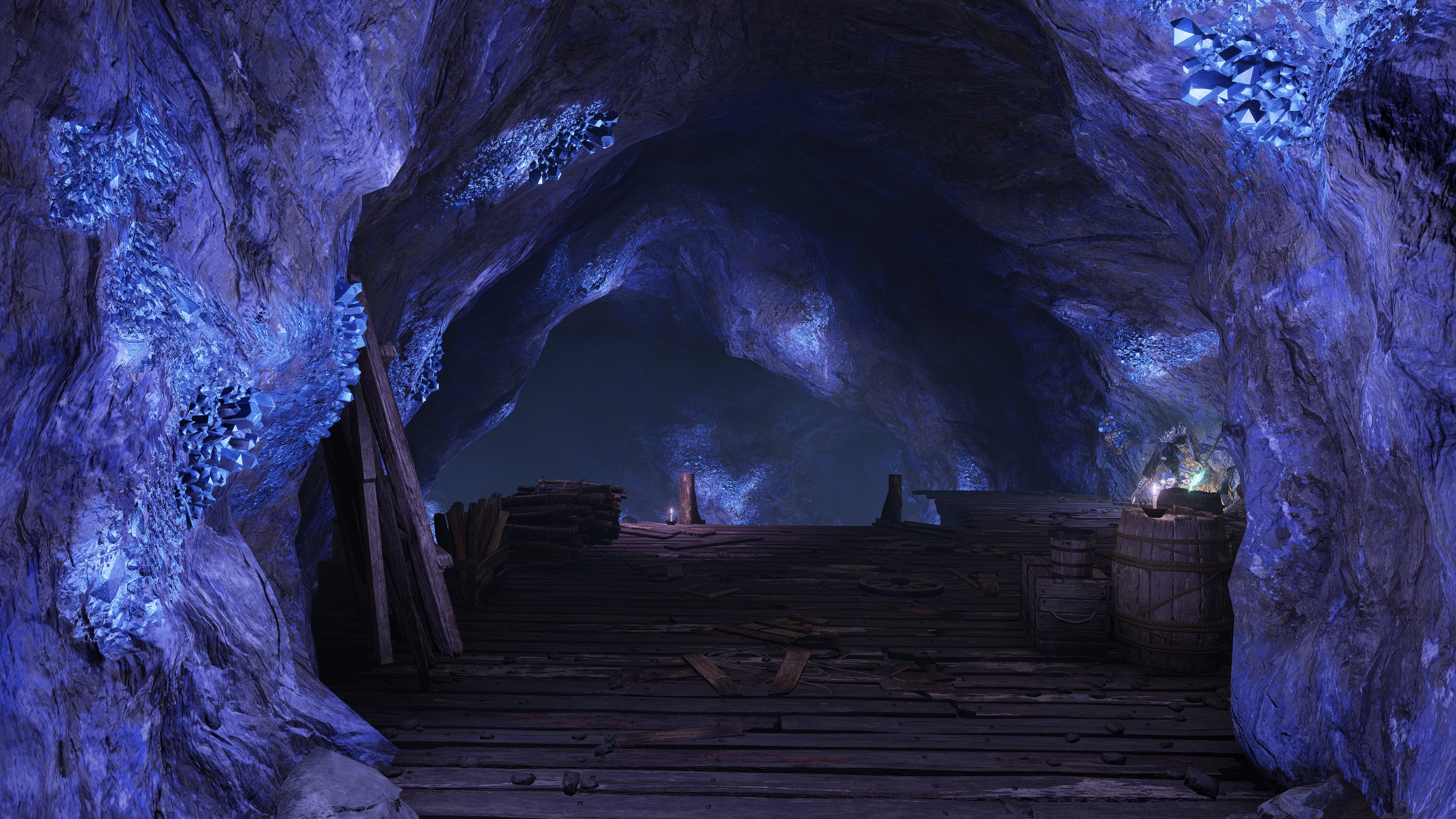
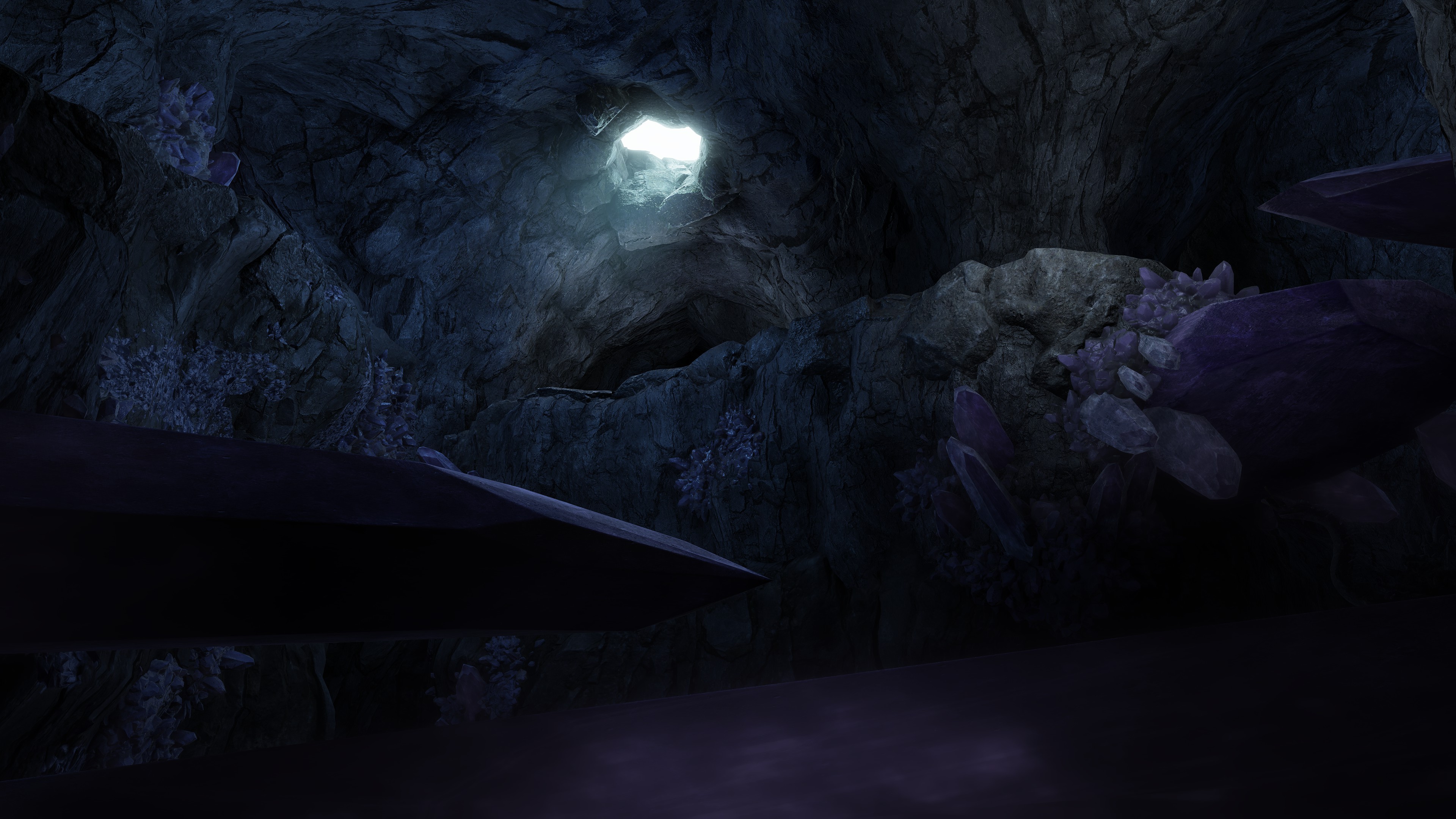
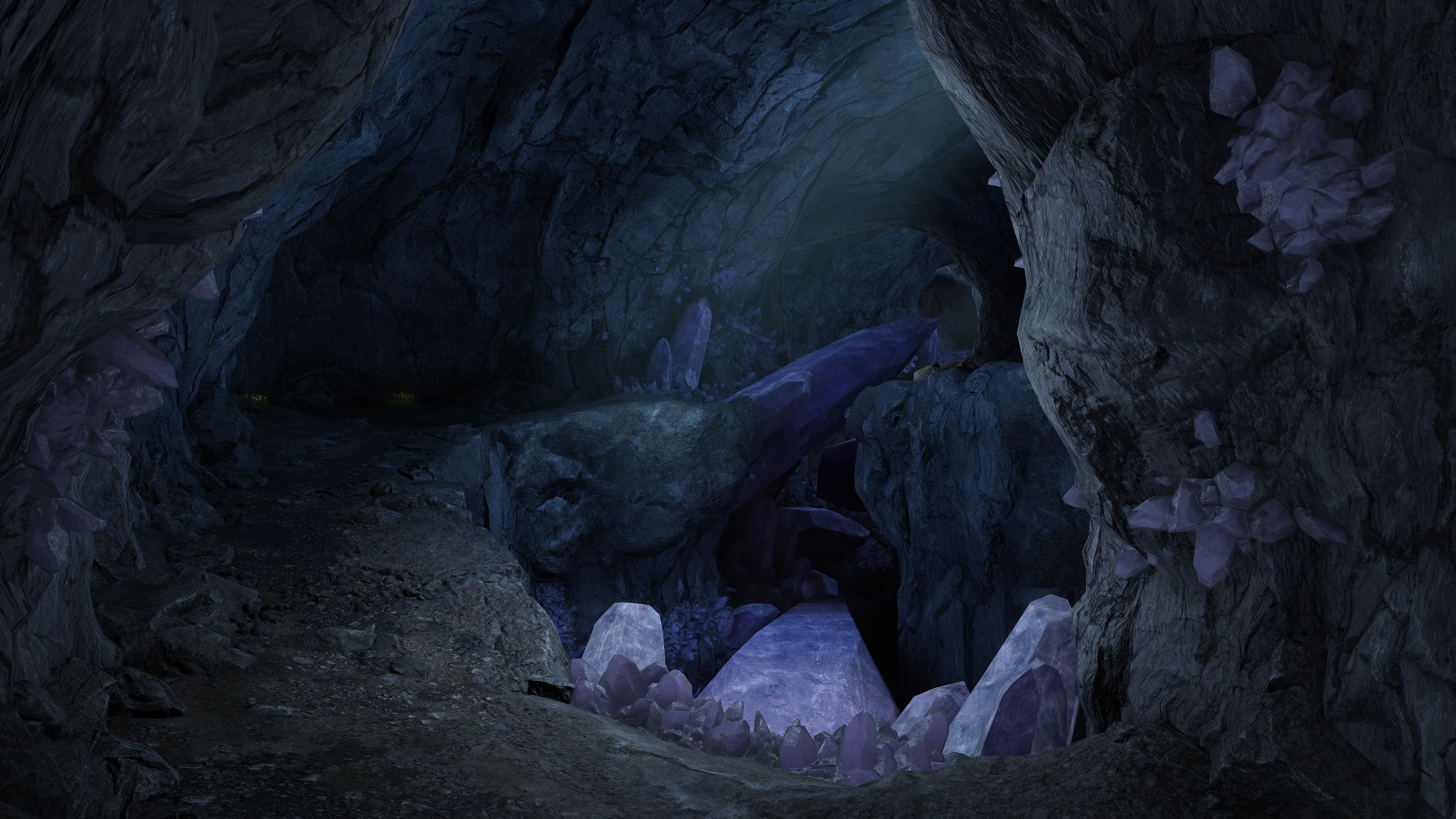
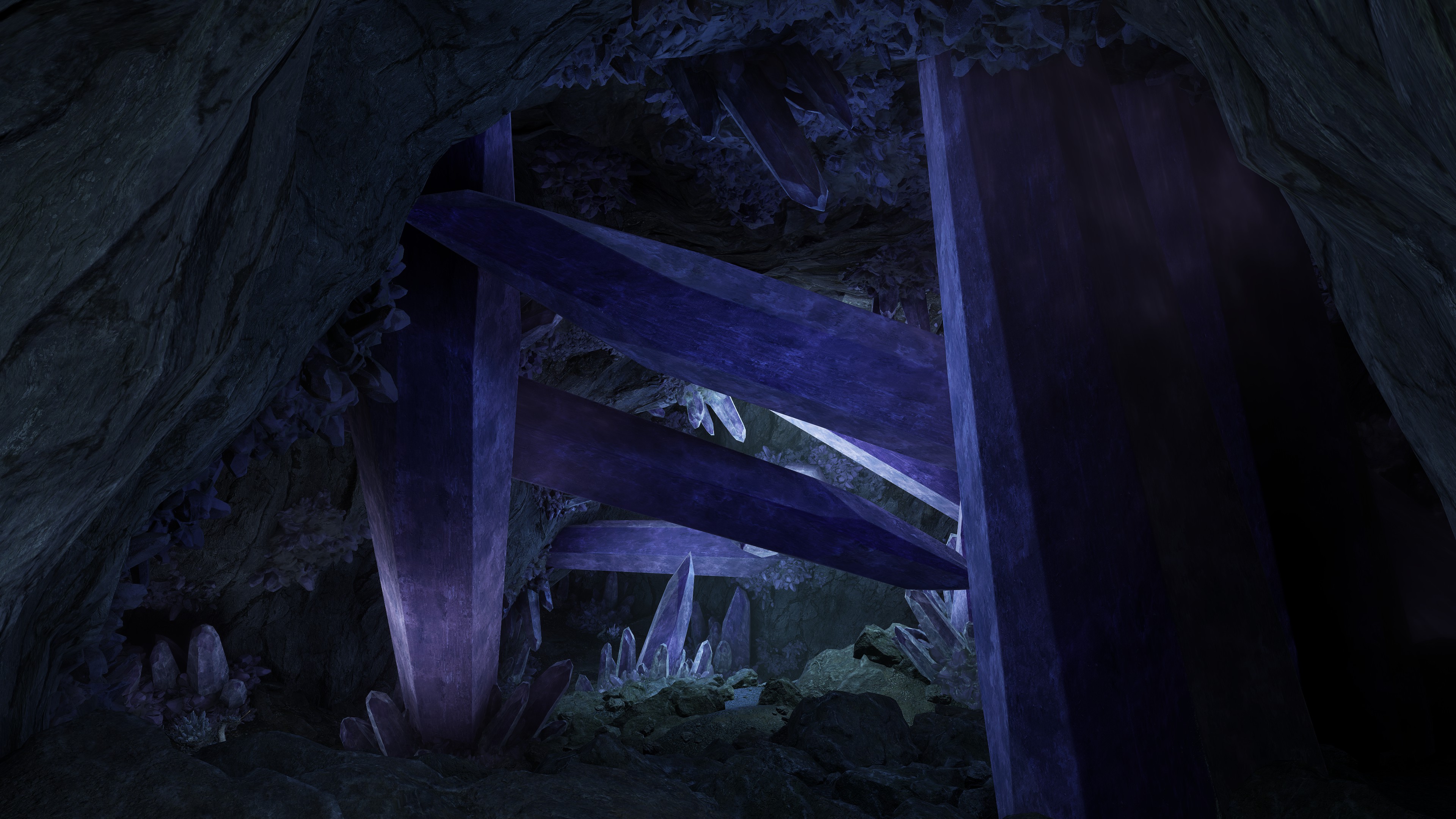
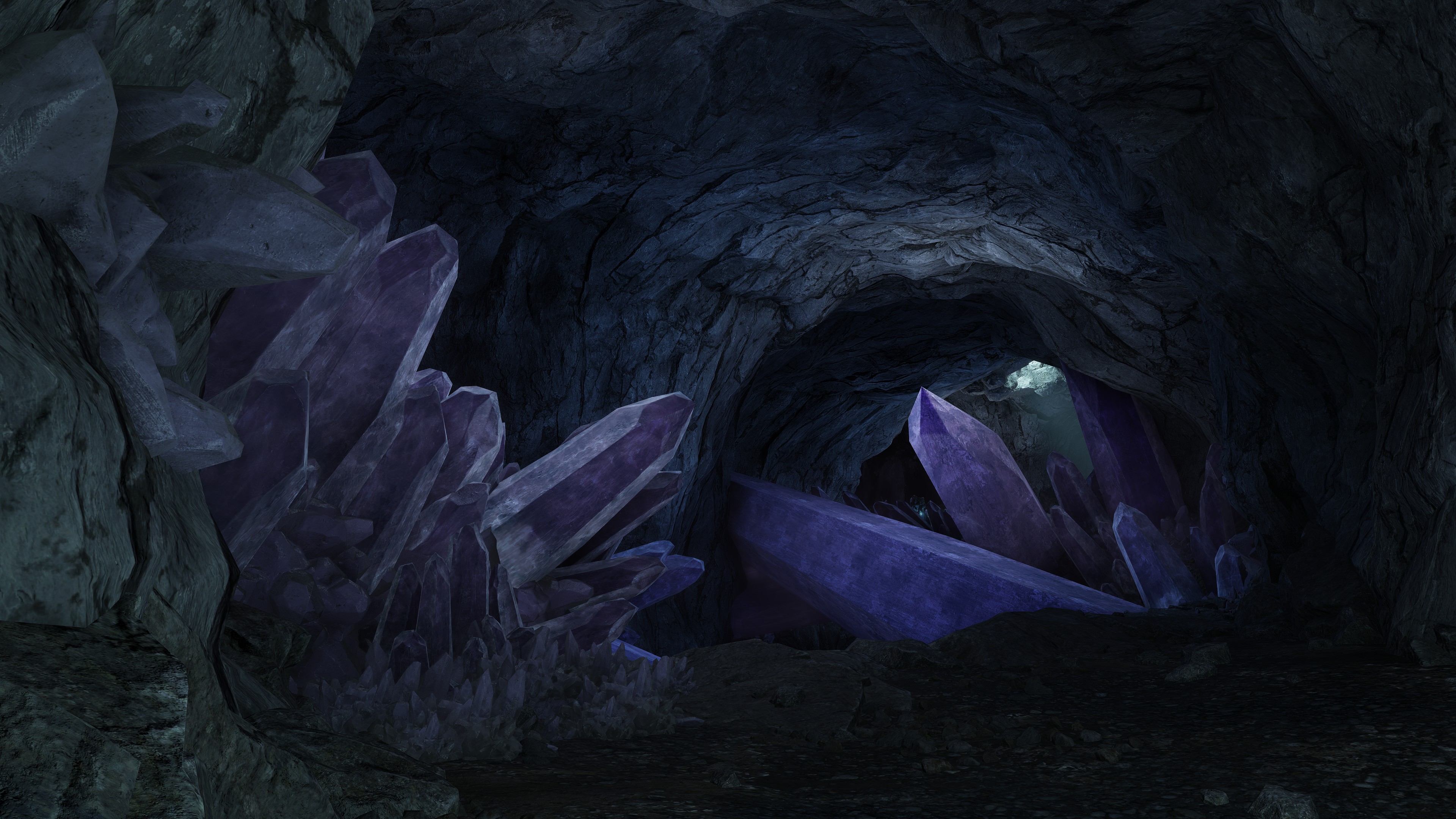
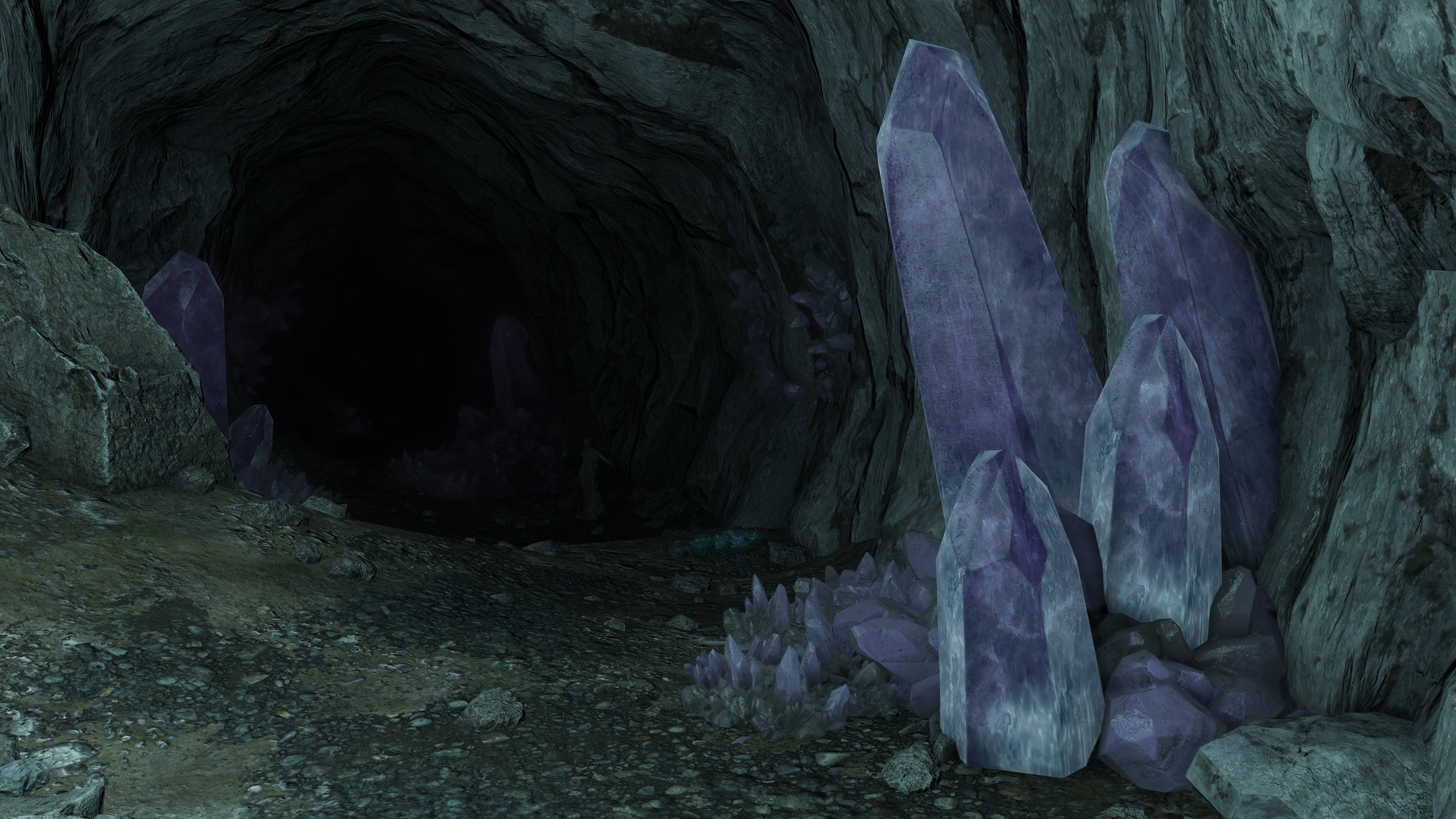
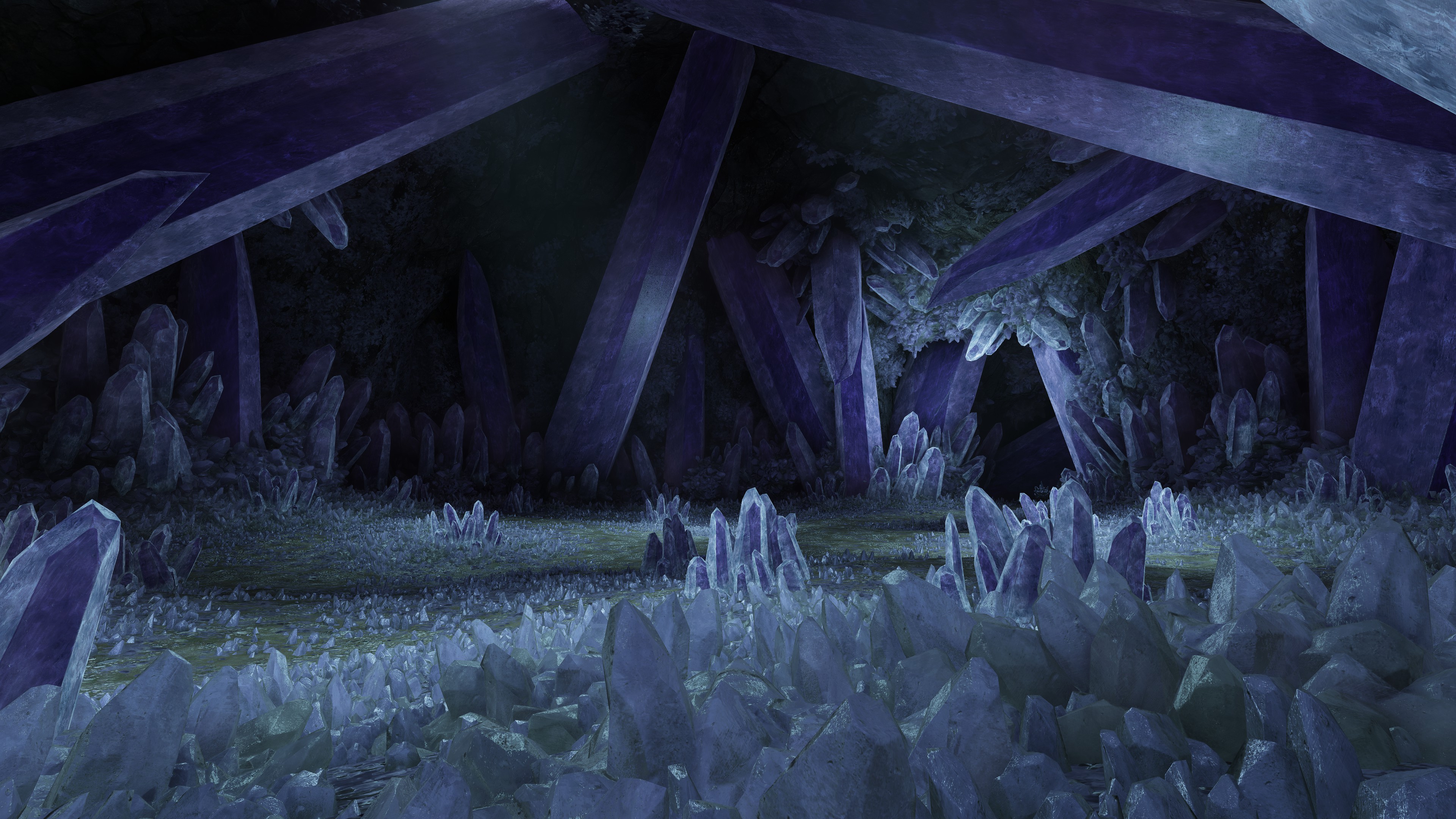
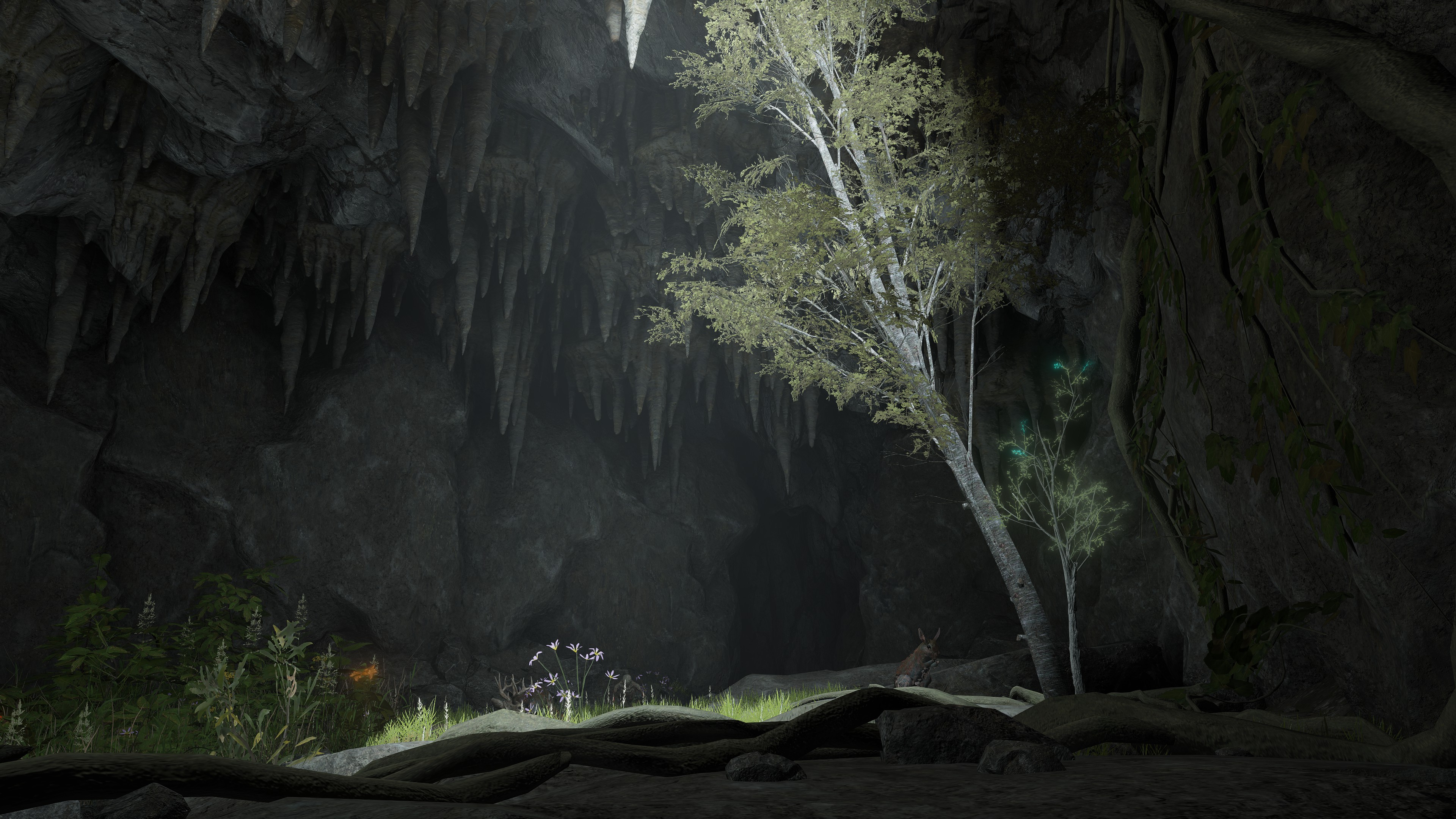
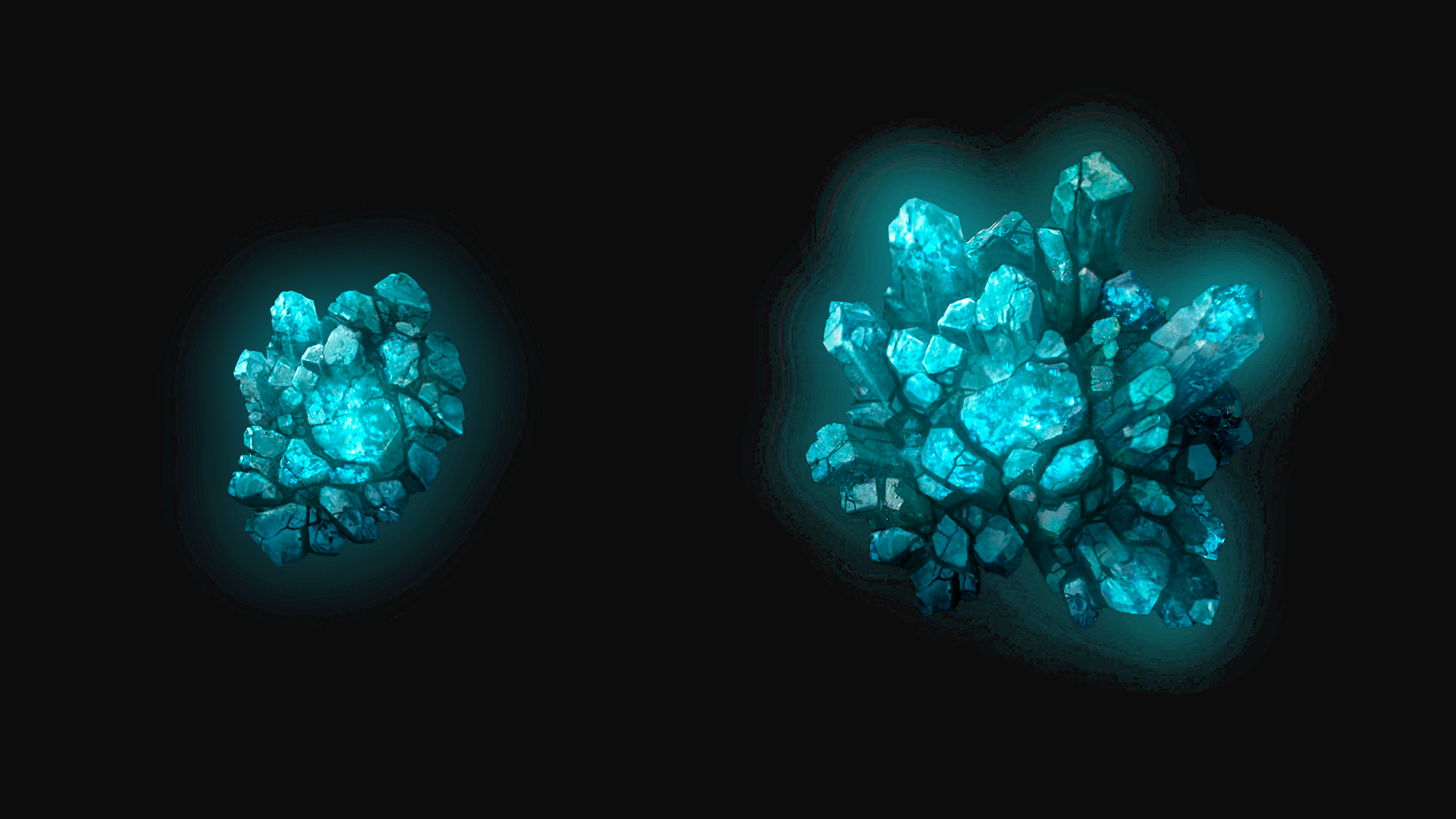
Brightstone tinged with unstable magic power. Can be found in crystal tunnels.
Consume FP to crush and generate magic bullets.
Easily broken since low quality, so sorcerers pay this no notice.
Moss that emits faint light in dark caves. It has produced fine crystals on it.
One of the materials used in item crafting. It serves as a material for special moss medicine.
Never-growing young bud that crystallized. One of the materials used in item crafting.
Can be widely found in Liurnia Lake.
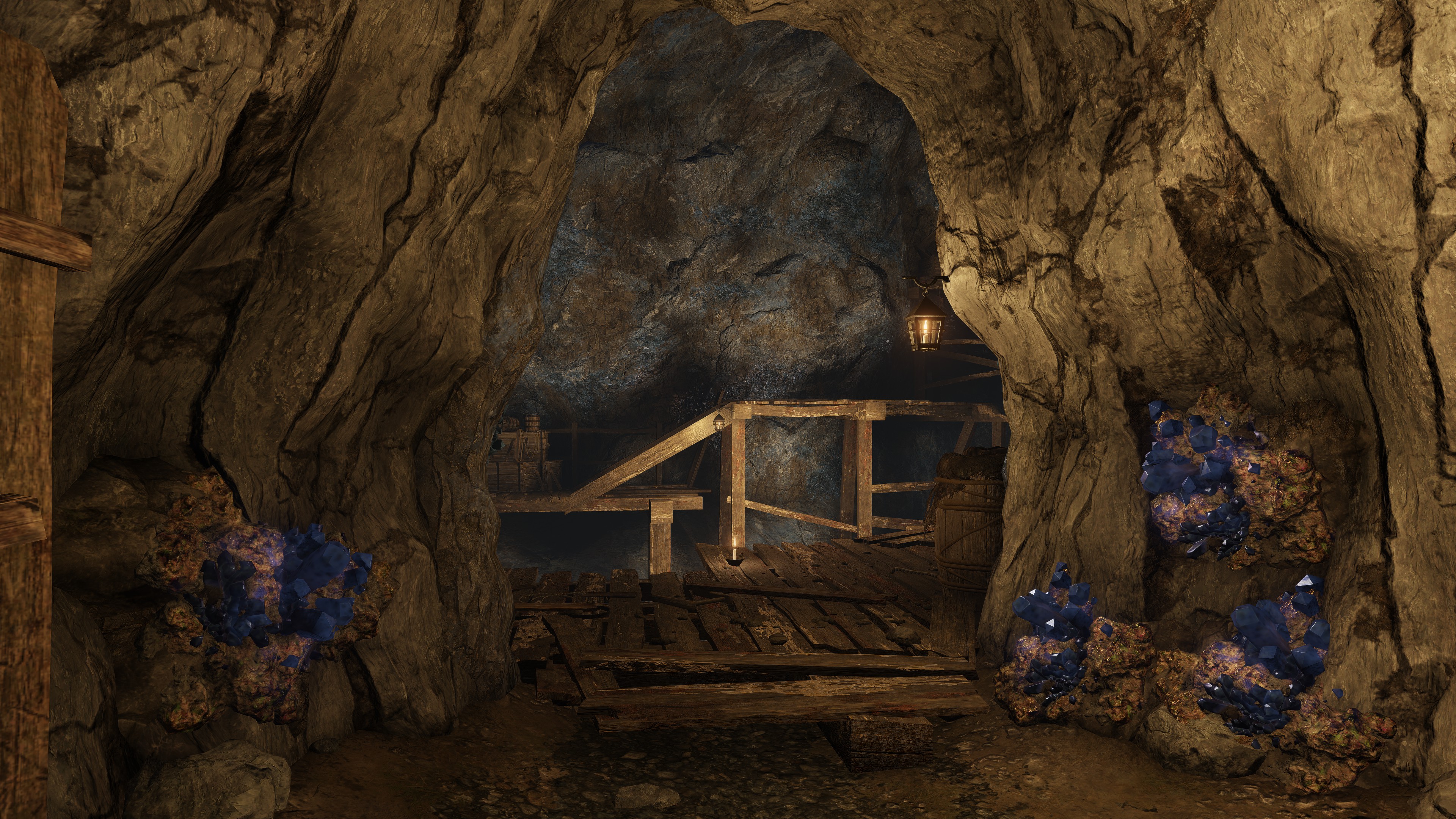
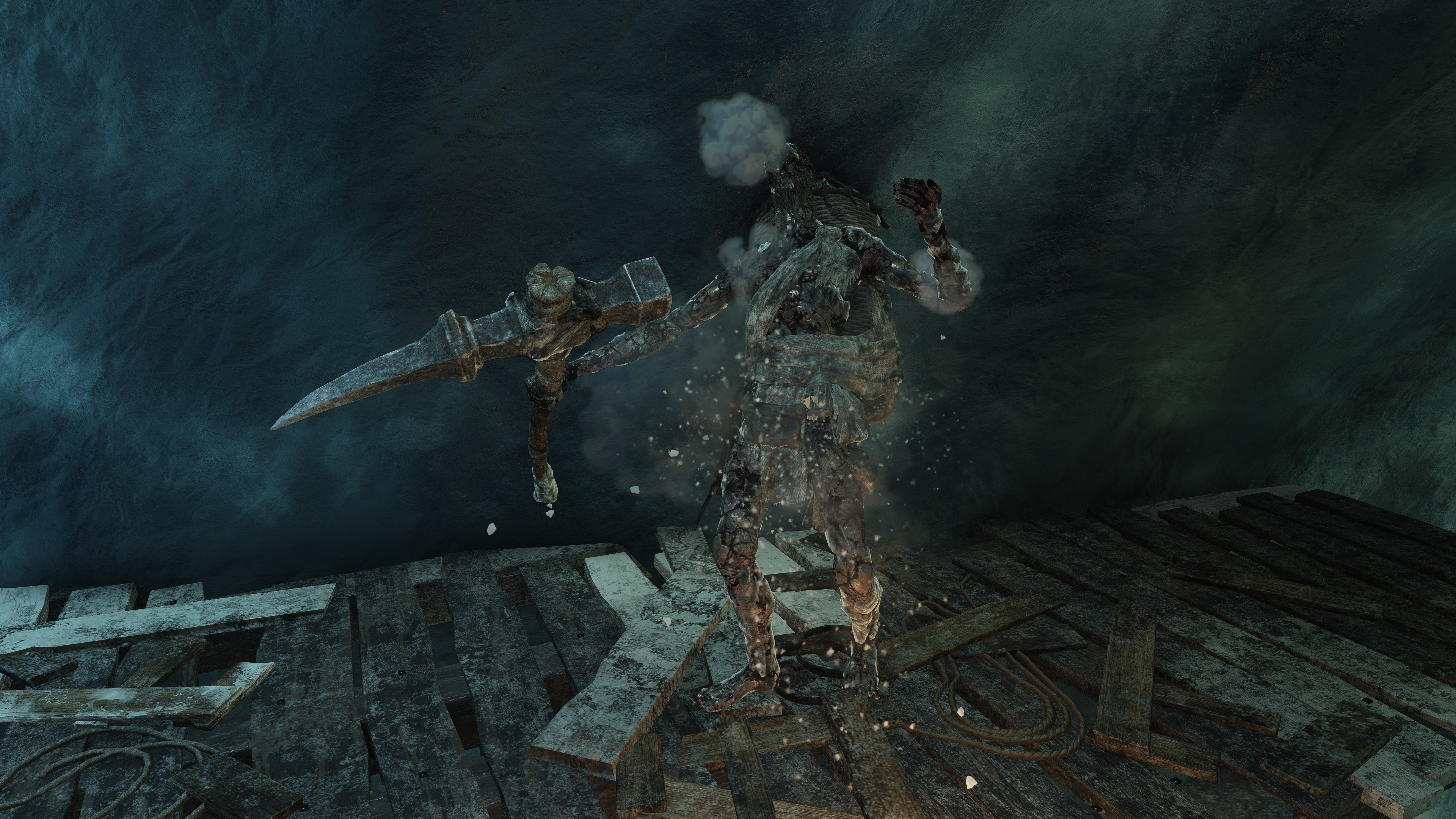
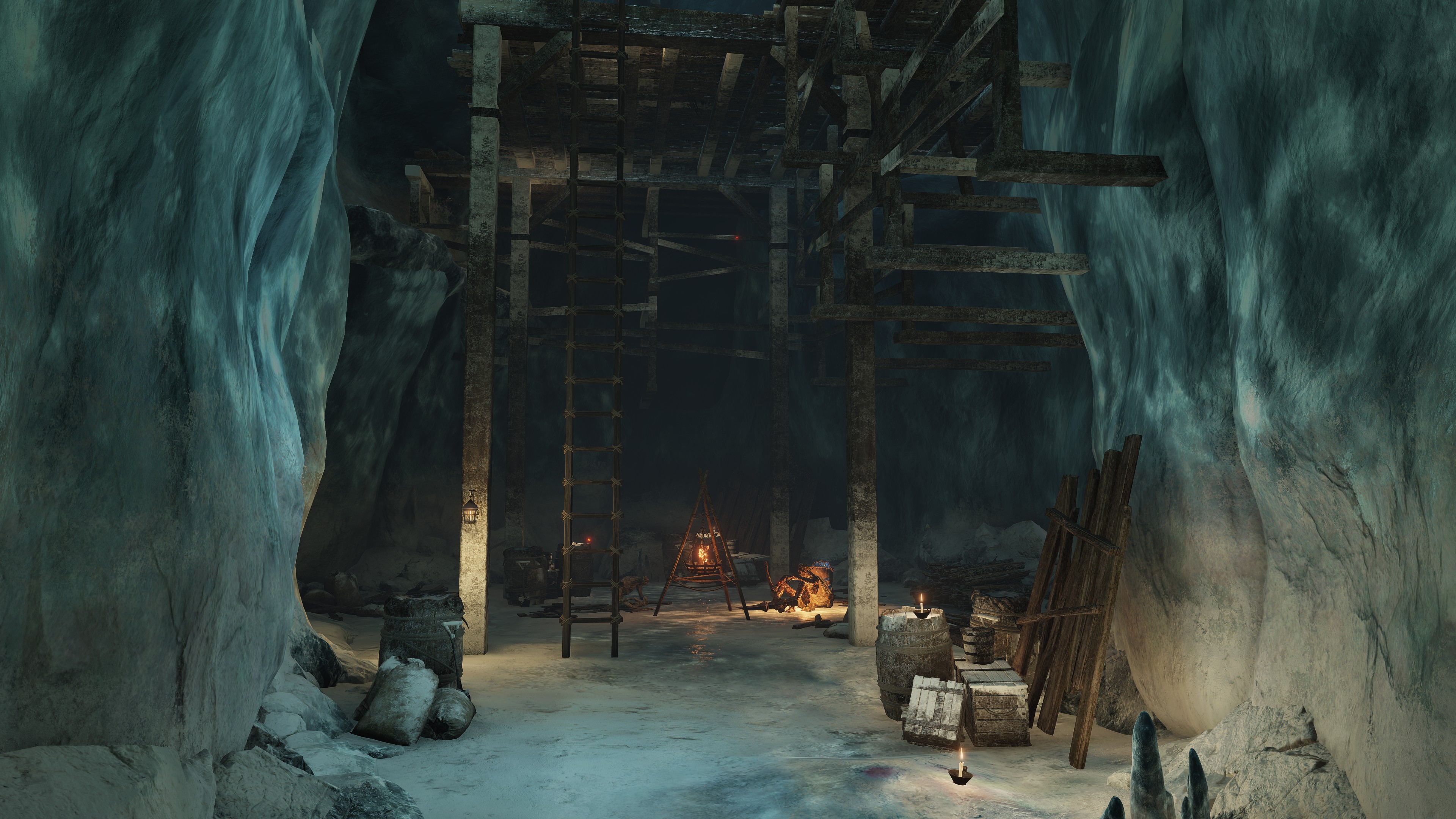
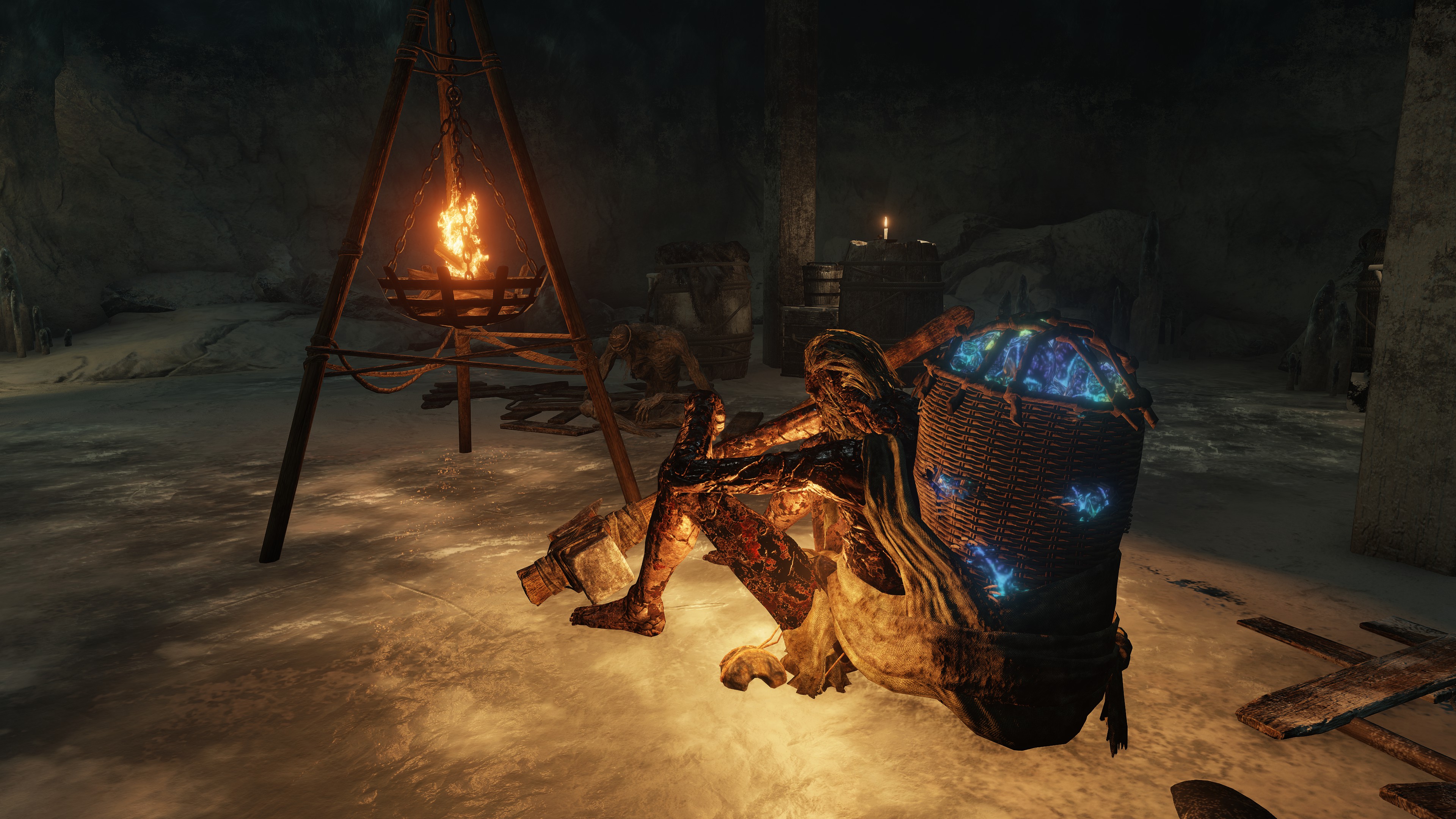
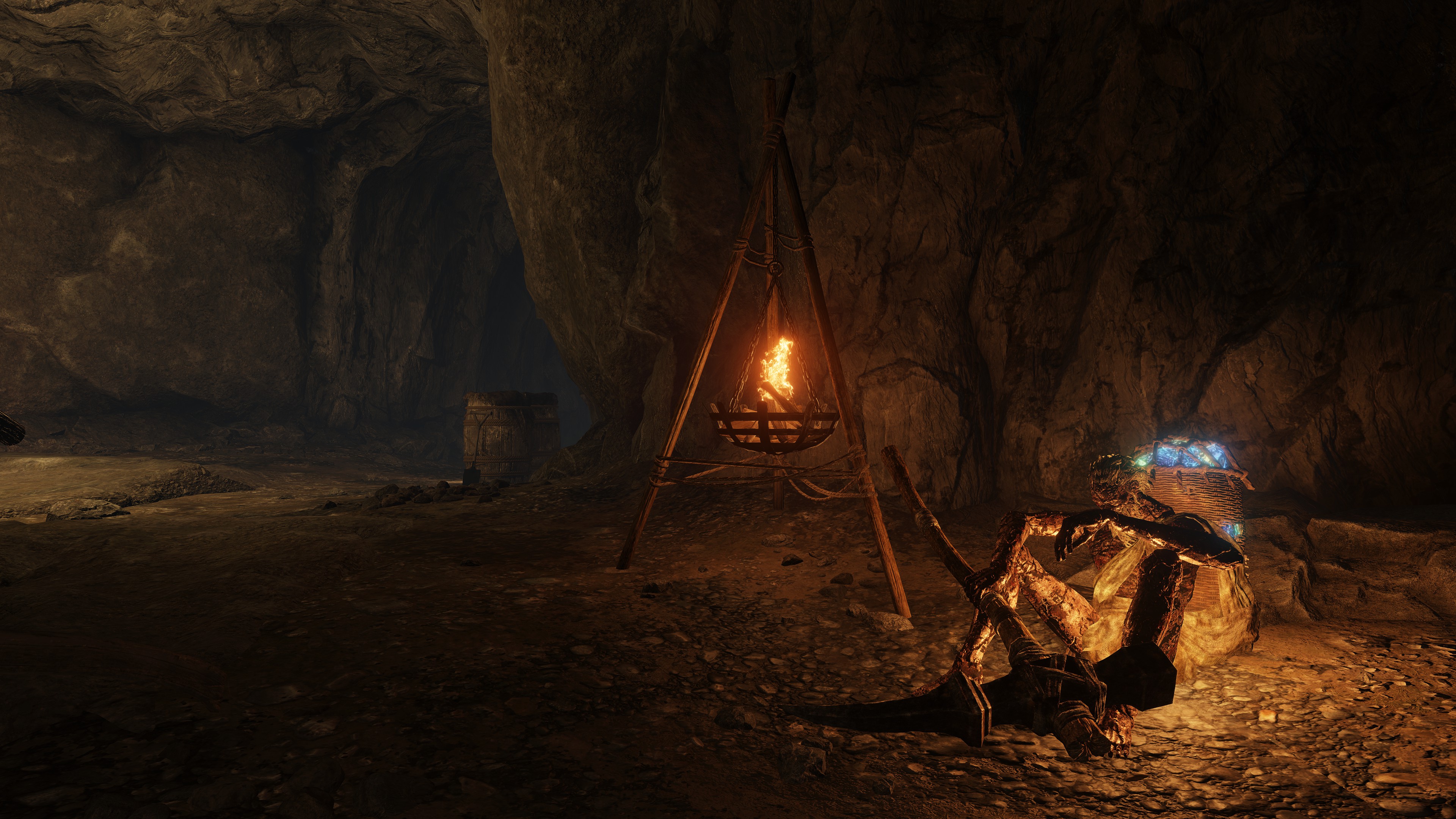
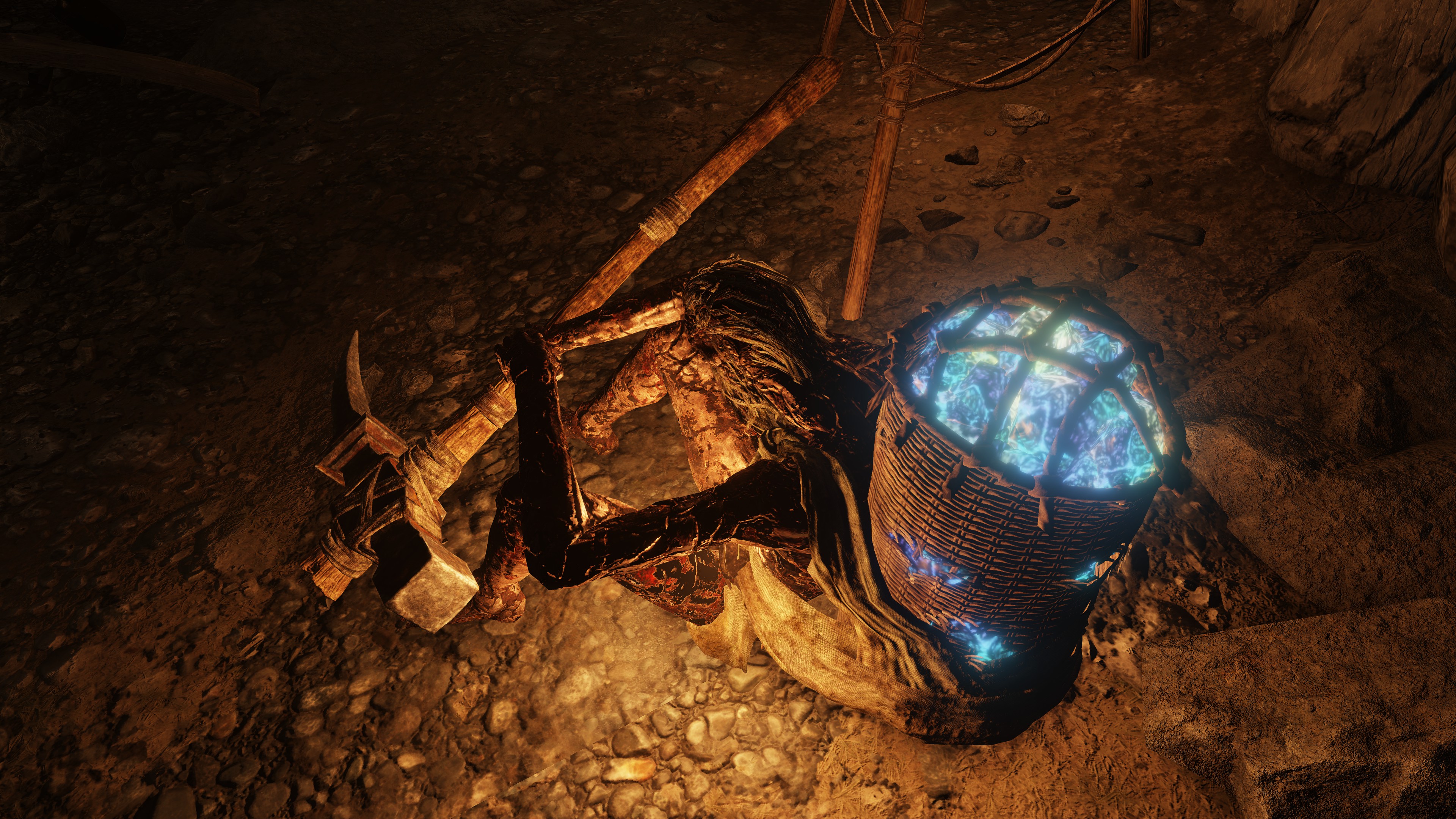
But while crystal buds or moss also appear in Liurnia, Altus, Gelmir, and the Mountaintops, only the latter lacks any crystal tunnel. Perhaps the stargazers already harvested the land for all its natural glintstone long ago. Spiritcaller Cave is similarly untouched by the icy cold draping the mountains, and among its greenery hides more crystal cave moss, so there is no denying that the glintstone existed. (Elden Ring: Nightreign reveals its First Peak with large crystal reserves) Some of it might still be found down in the Consecrated Snowfield. Its tunnel is the only other to show no signs of cracked crystal in the stone deposits. However, that can be faulted on ice overtaking the entire mine, the shivering workers practically becoming statues curled up in these freezing temperatures. The singular miner who has managed to stay warm with a fire does carry a basket of cracked crystals like his counterparts in other tunnels, including one in the Weeping Peninsula. Therefore, the mine has glintstone, but if it exists in similar numbers as neighboring regions, then it is buried beneath sheets of ice.
Bottom line, the only crystal left to harvest on the mountains is ice crystal, which kills the tree buds all the same. Granted, these “ice” crystal buds (氷結晶の木の芽) still possesses magic power, used to craft coldbone arrows which partially inflict magic damage. But while certain astrologers might yet derive some power of the stars from ice, there is no comparison to proper glintstone. The only other land where the presence of crystal isn’t noticeable is Farum Azula, and that may be more because we have merely a fraction left to explore in the sky. Overall, the Mountaintops do seem to have become most depleted of its major reserves outside smithing stone. This may have stretched over a long history, but with stargazers in just one area, it was an eventuality. And because of that lower quantity, later sorcerers of the village became incentivized to look beyond the polar north for the advancement of their craft.
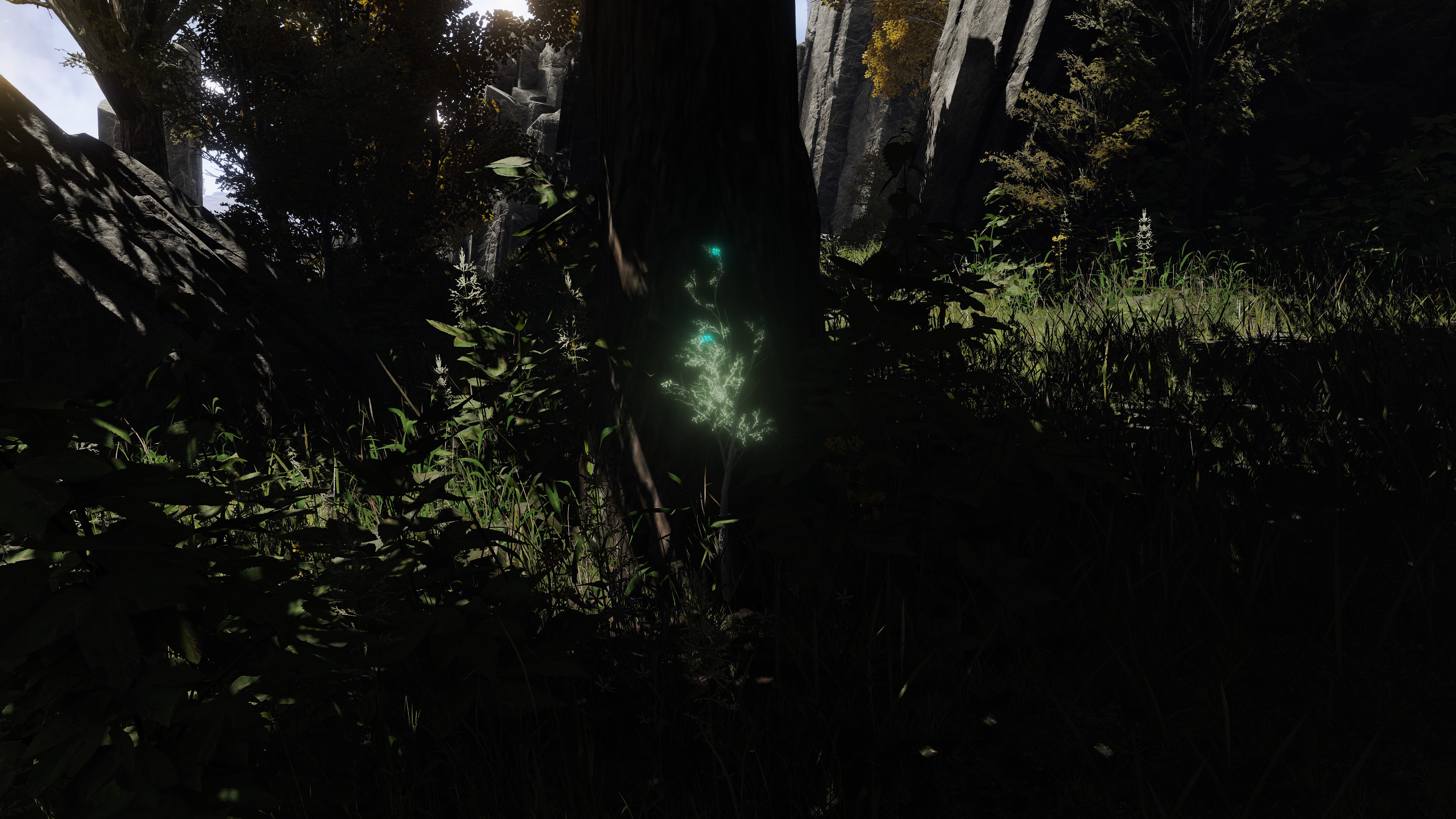
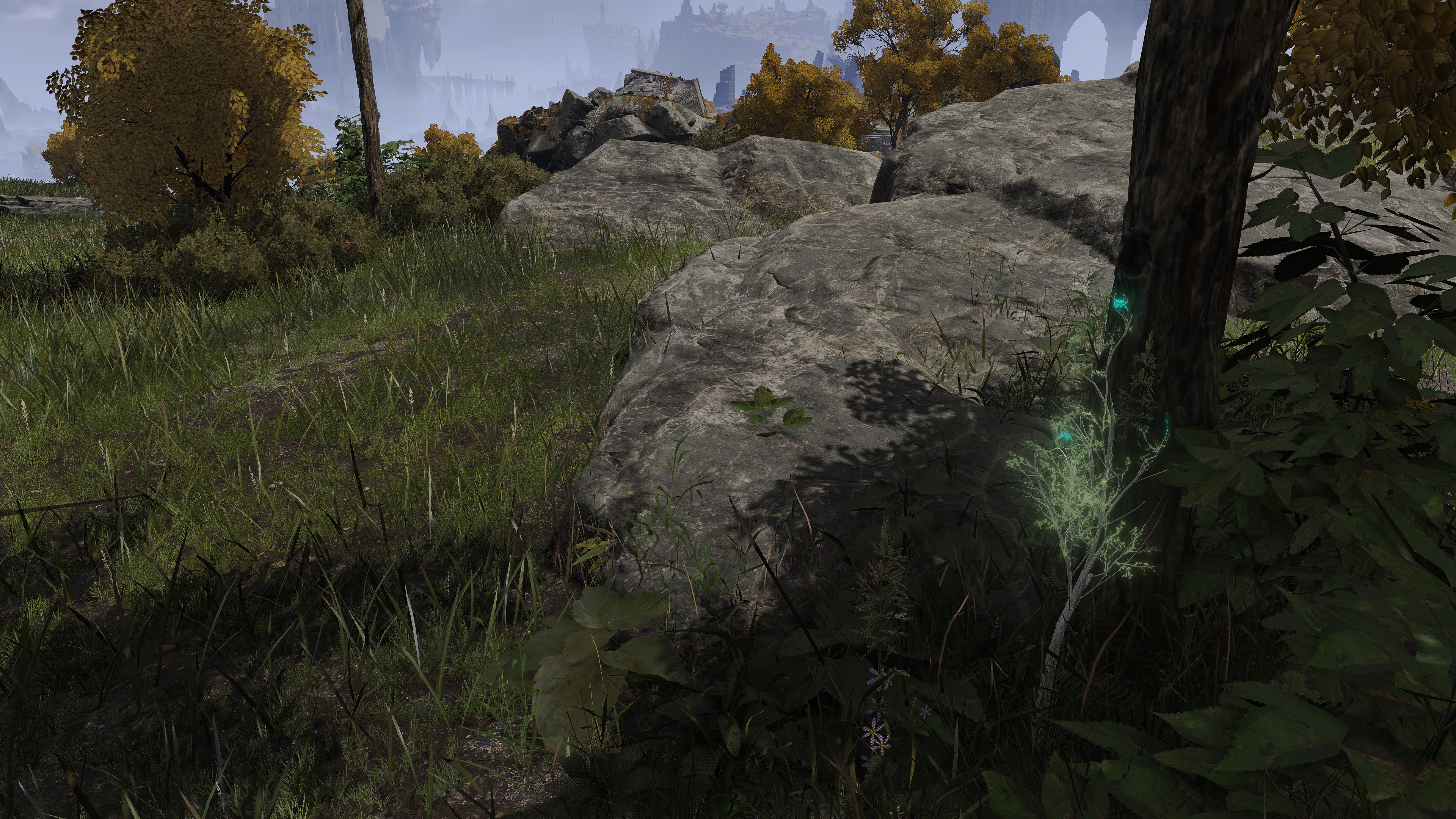
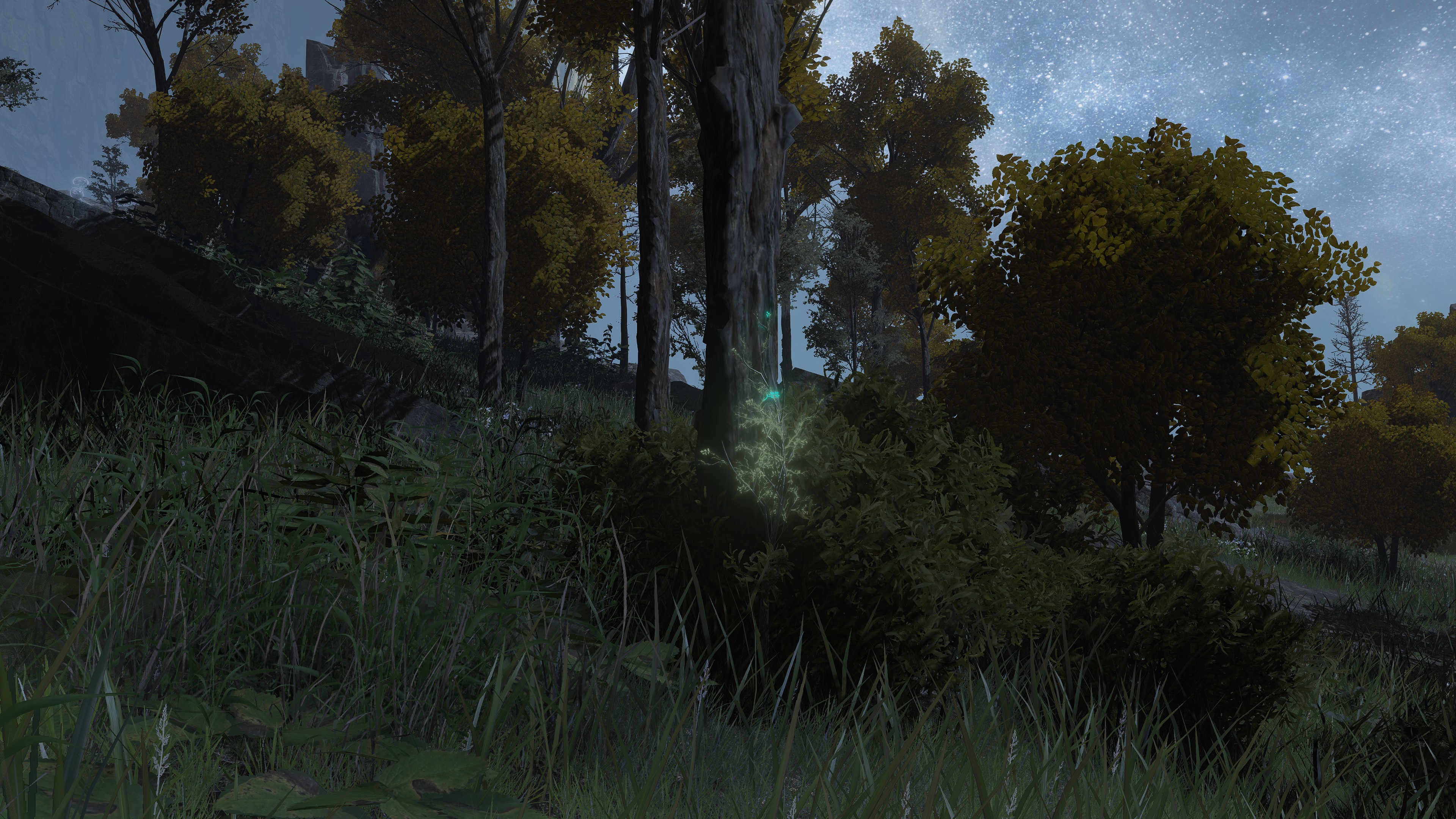
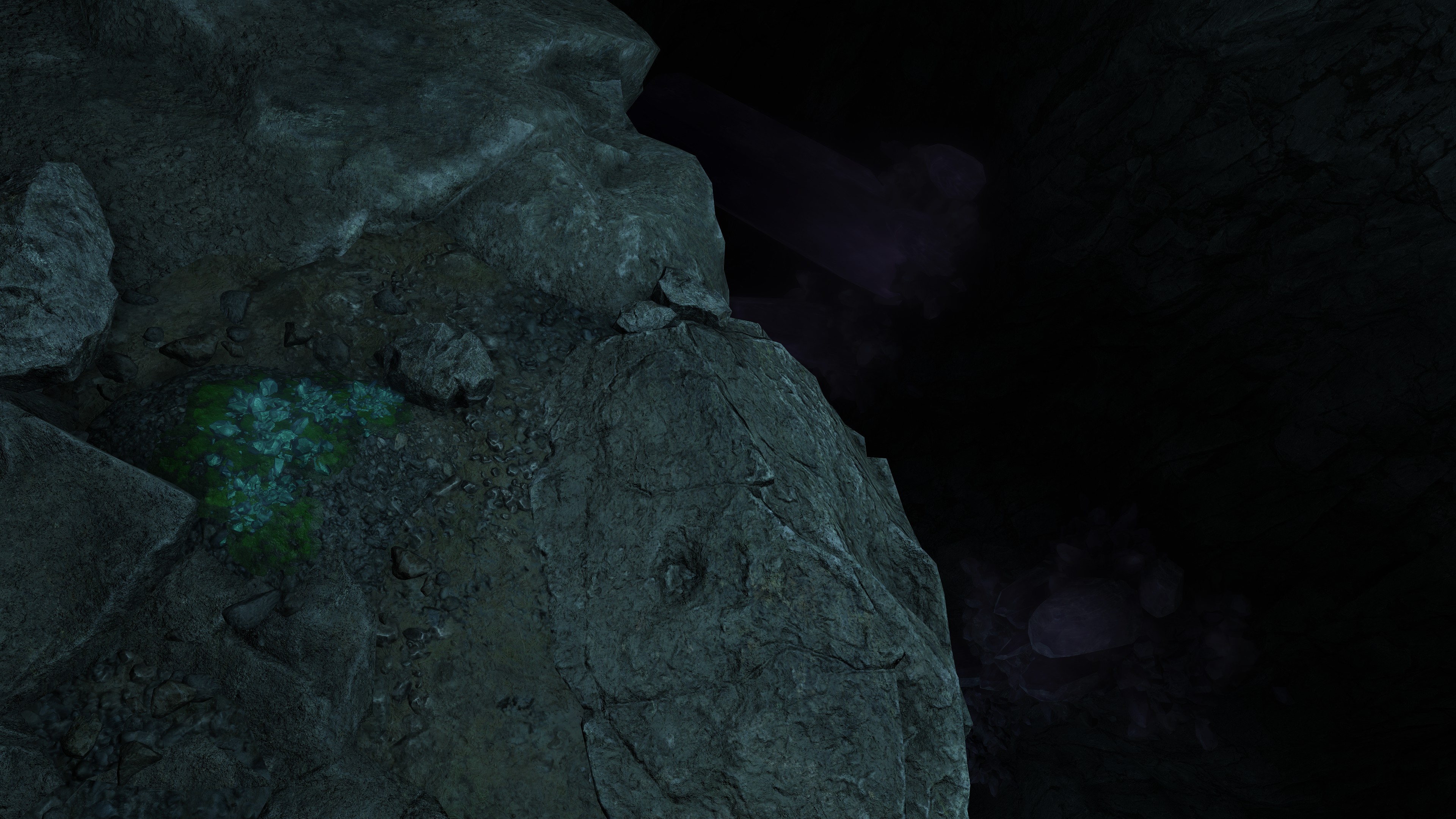
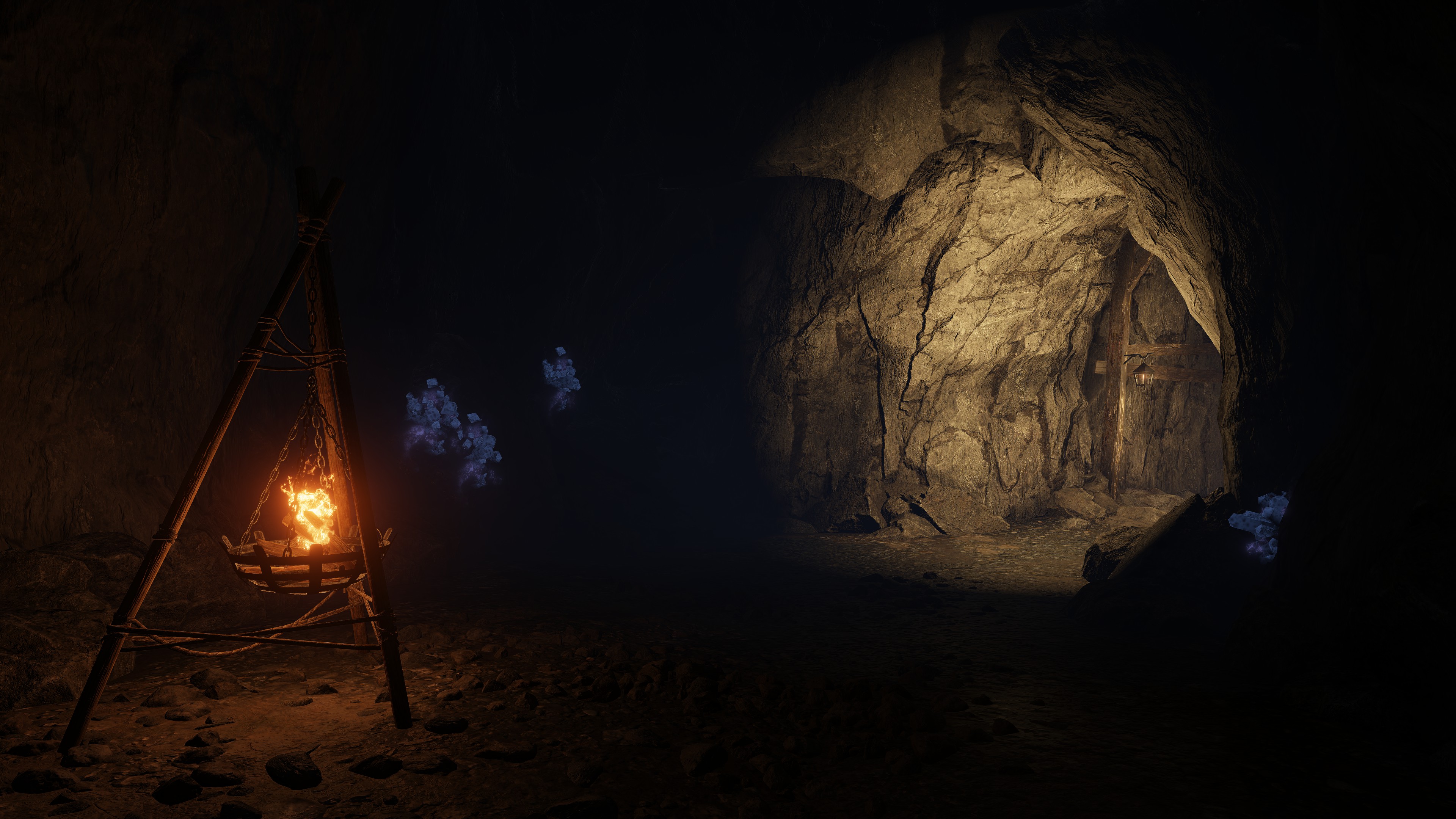
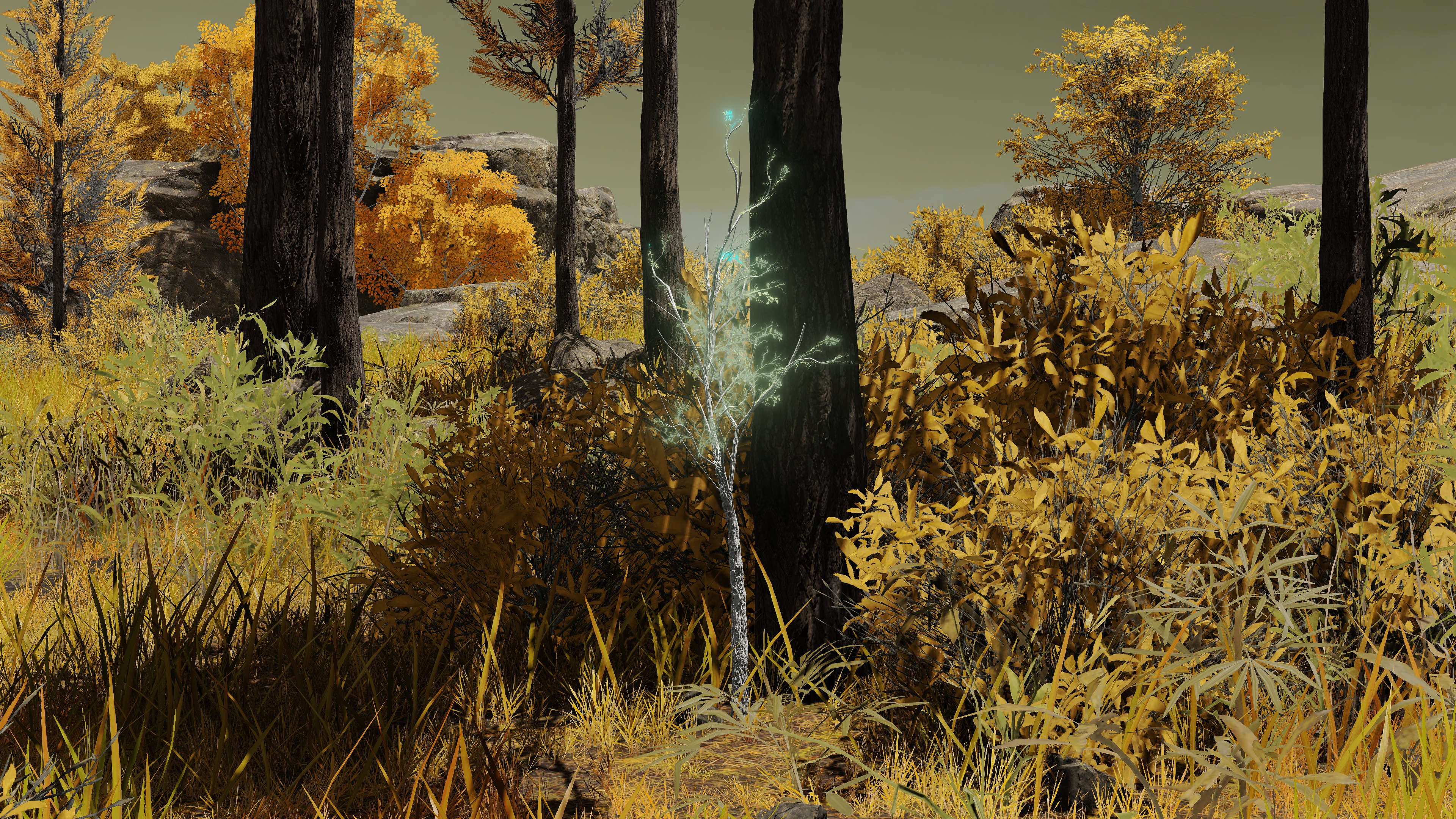
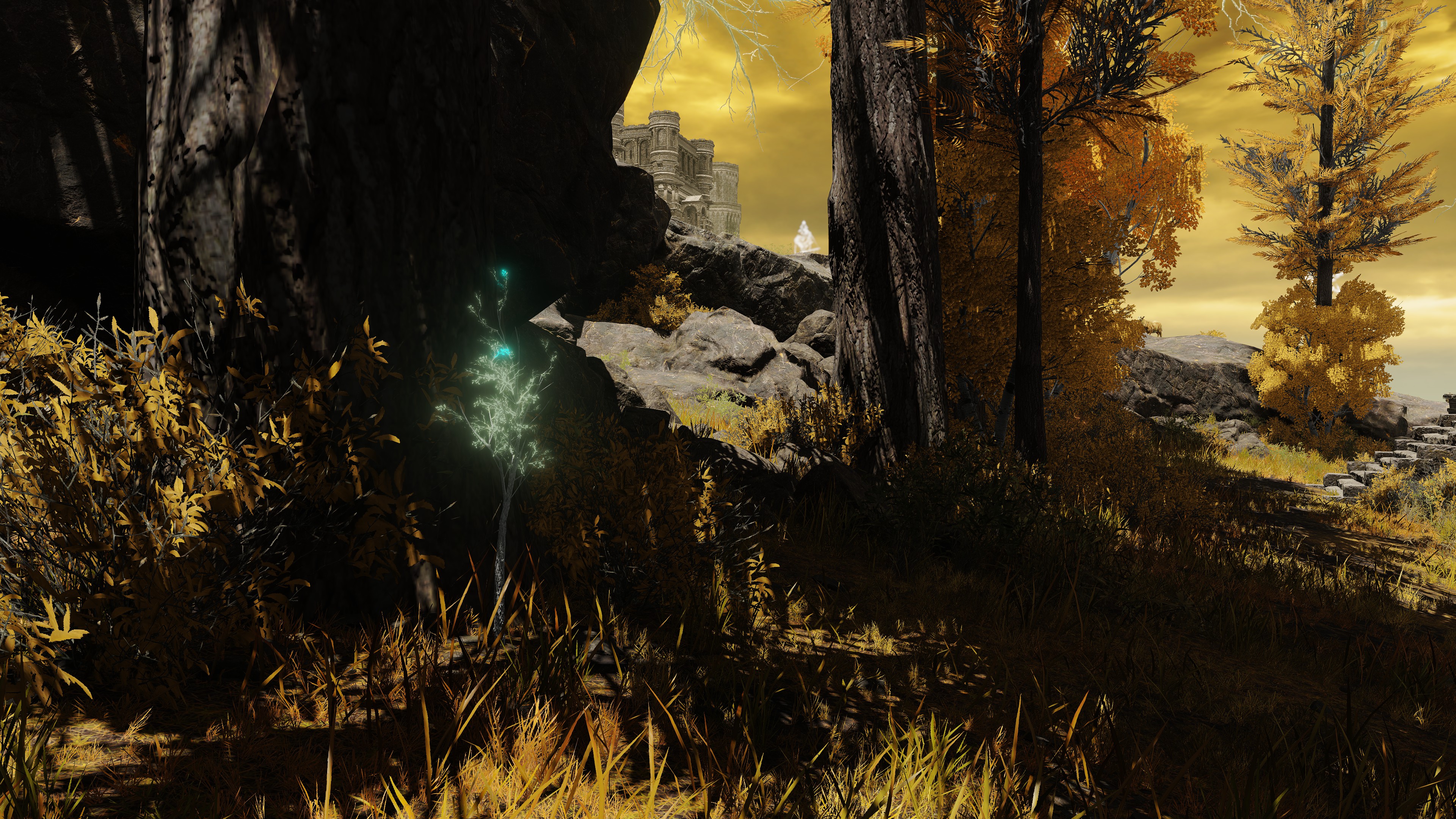
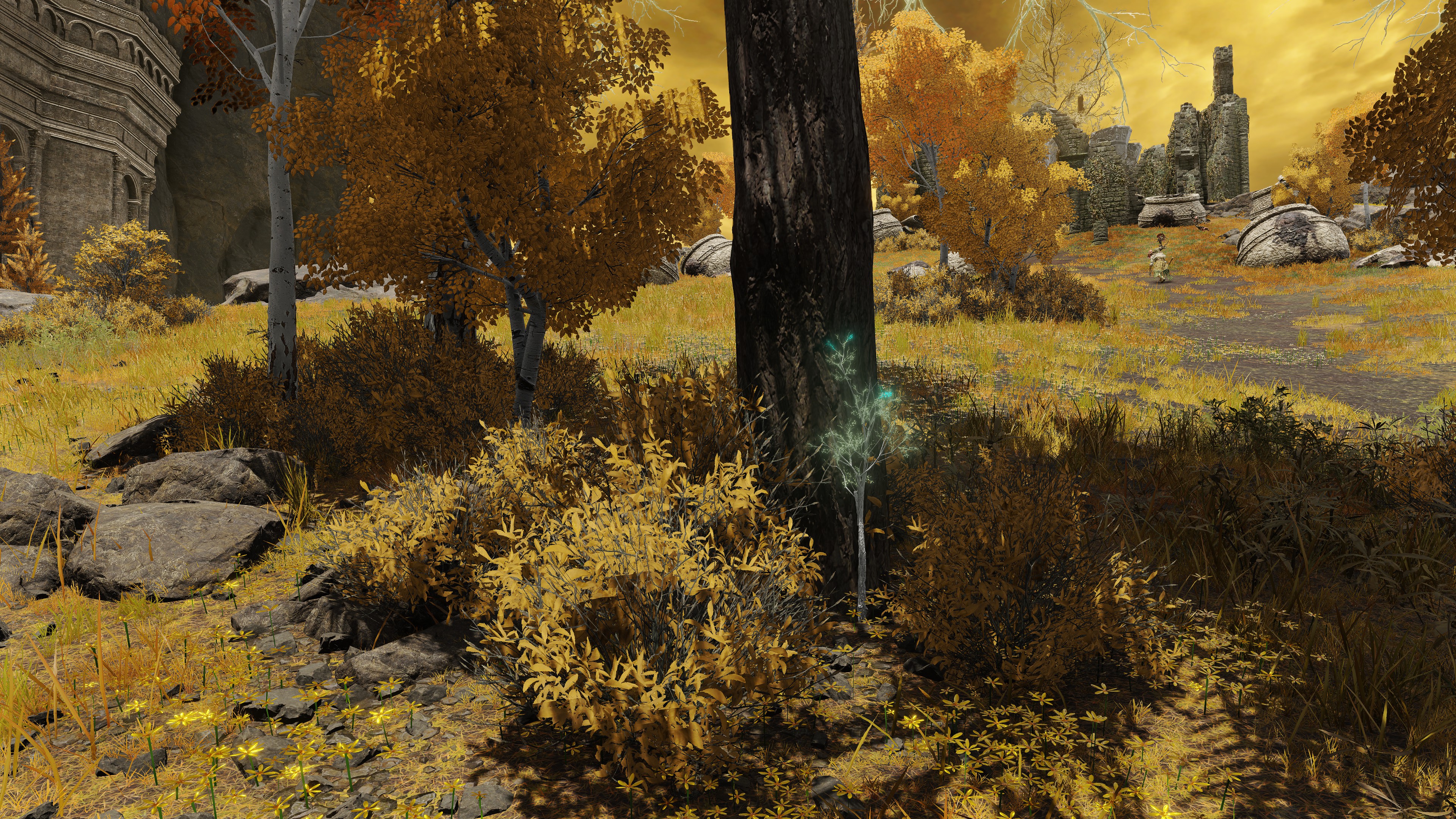
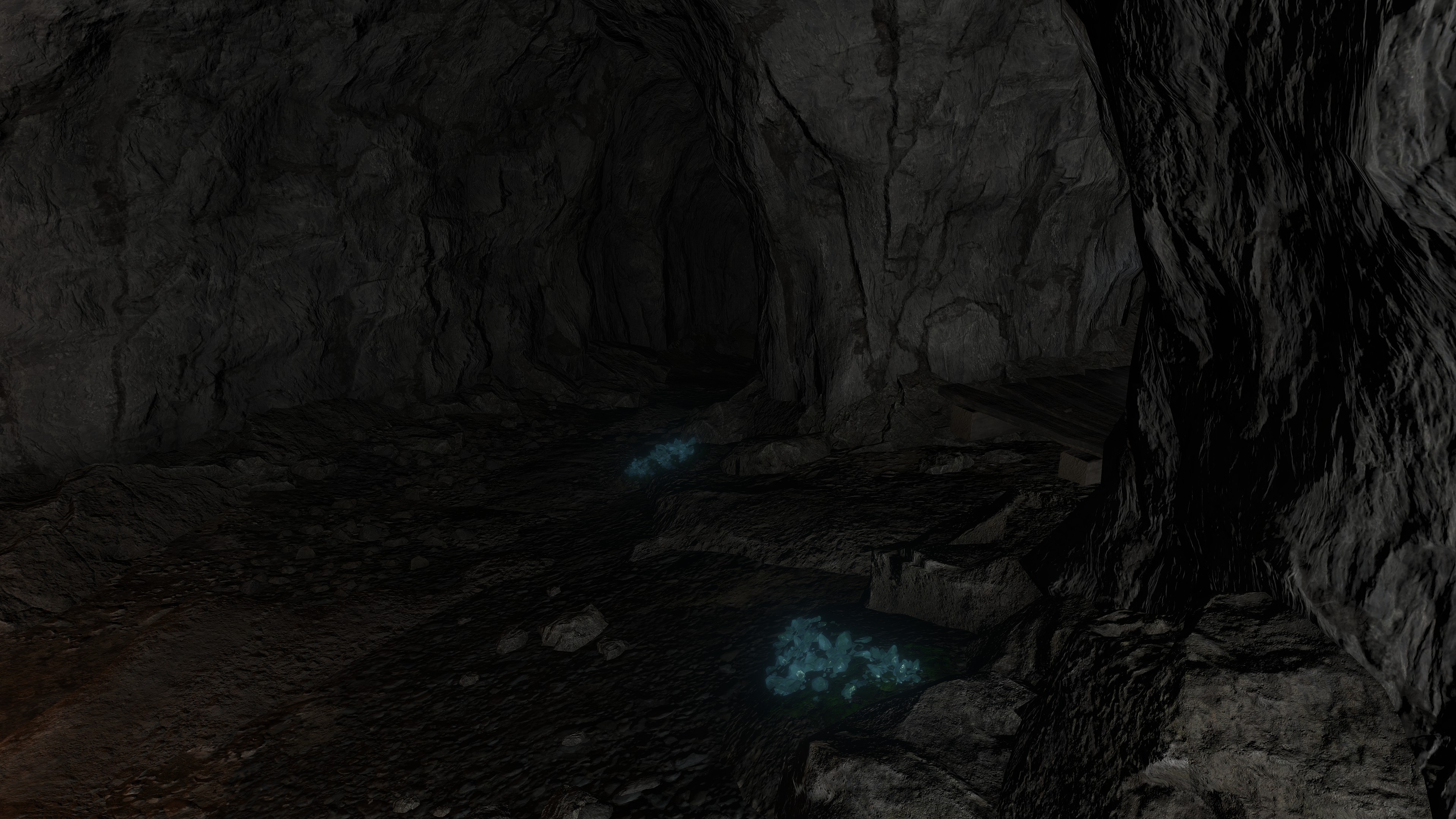
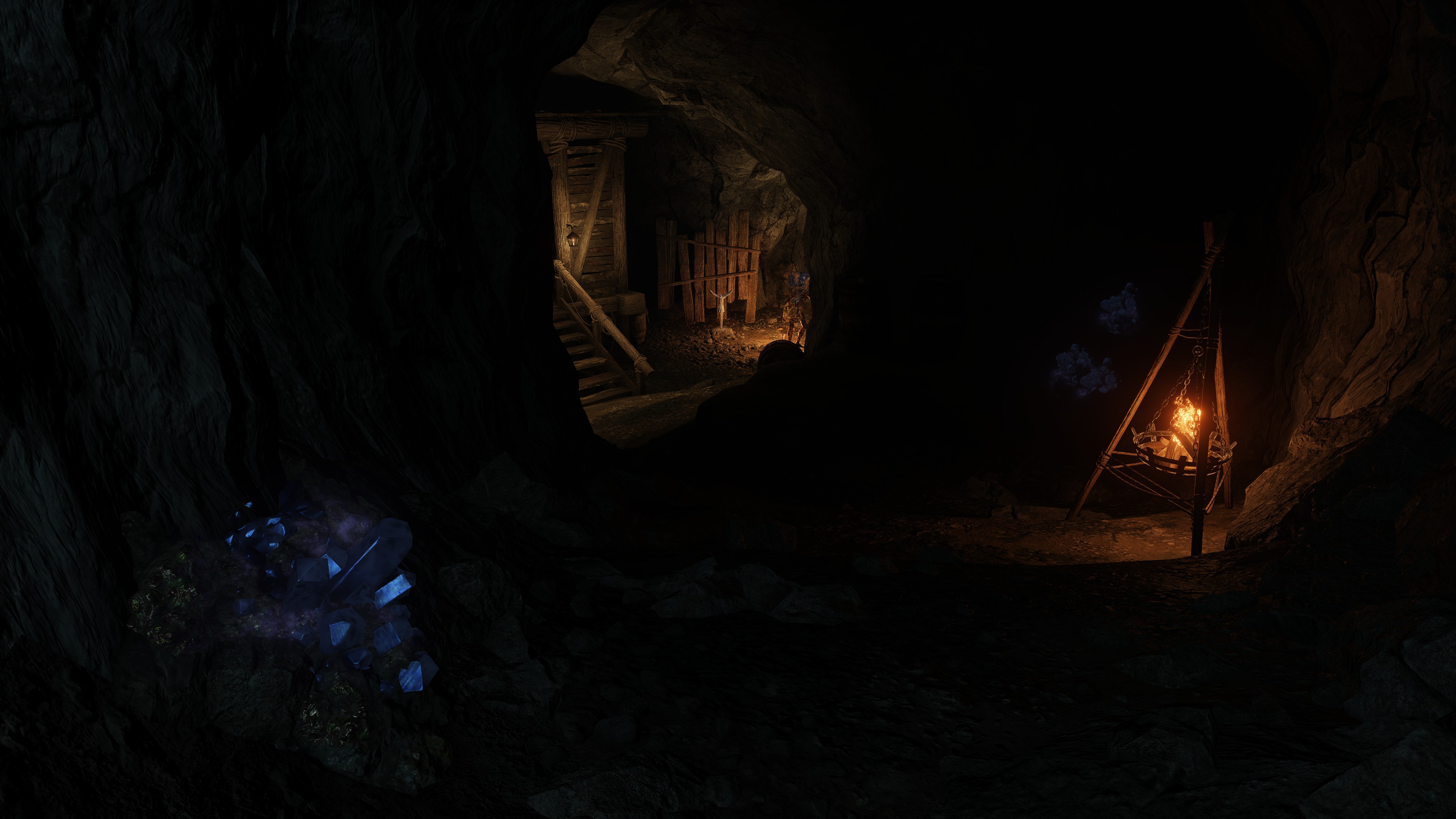
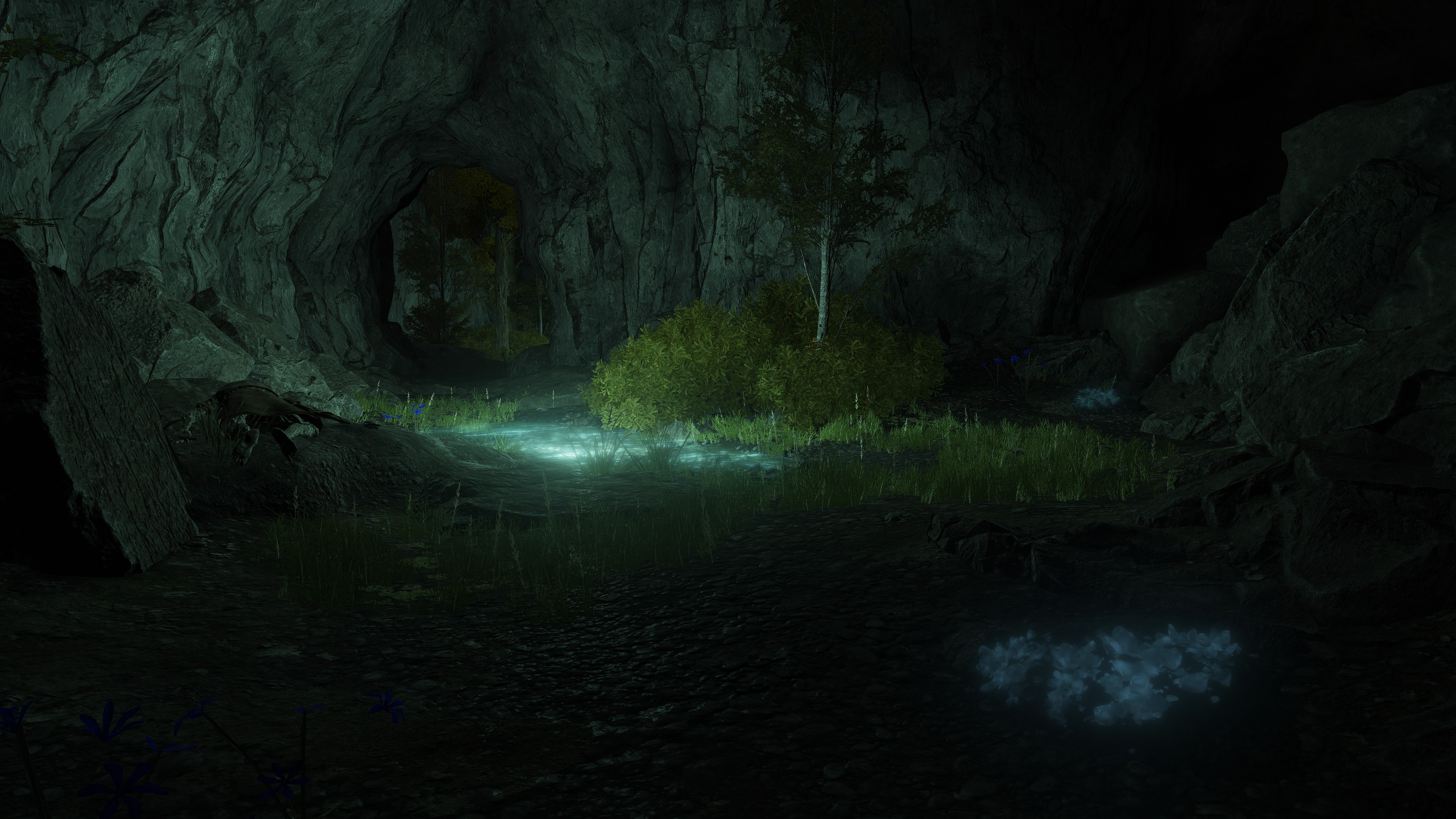
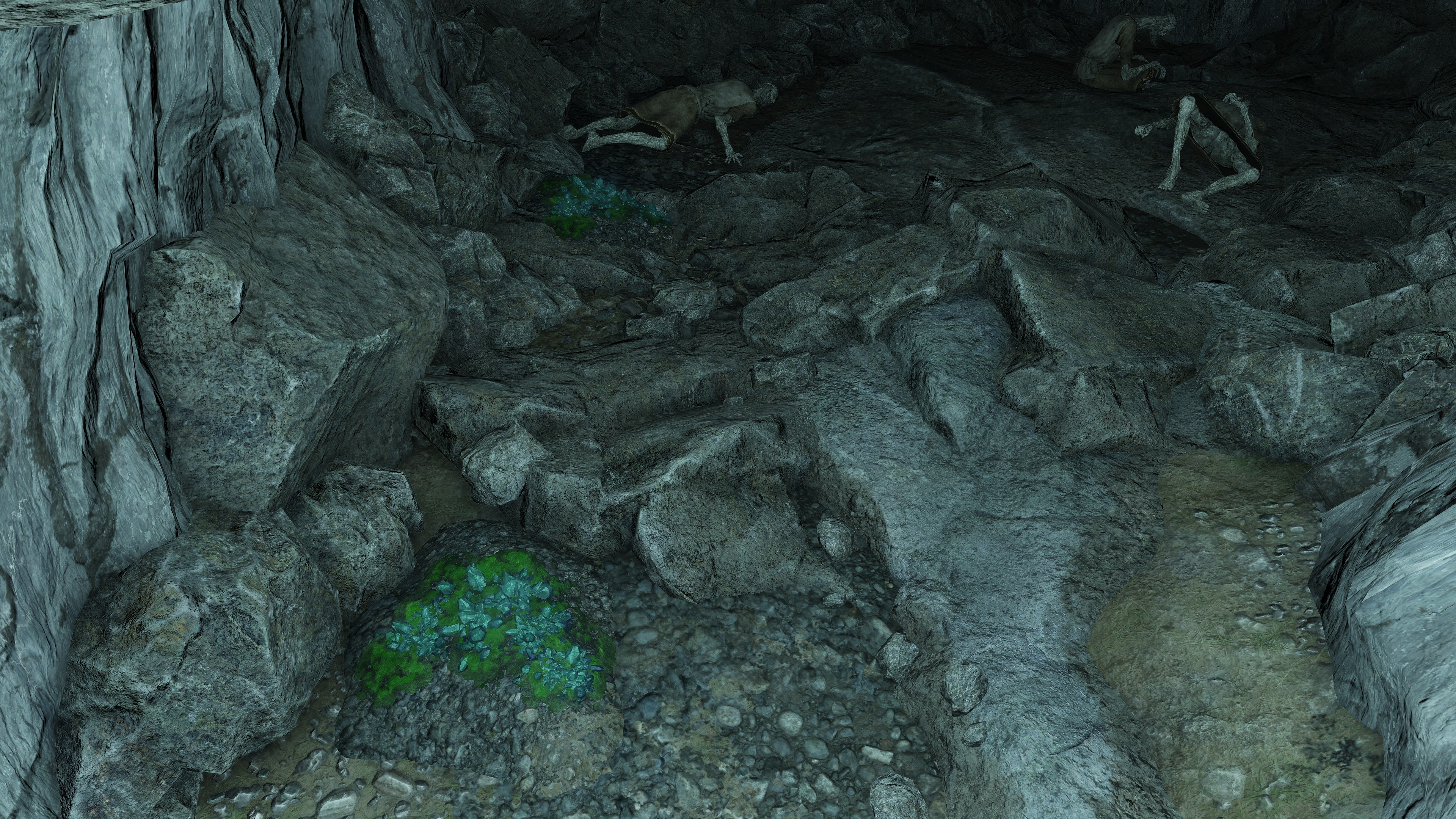
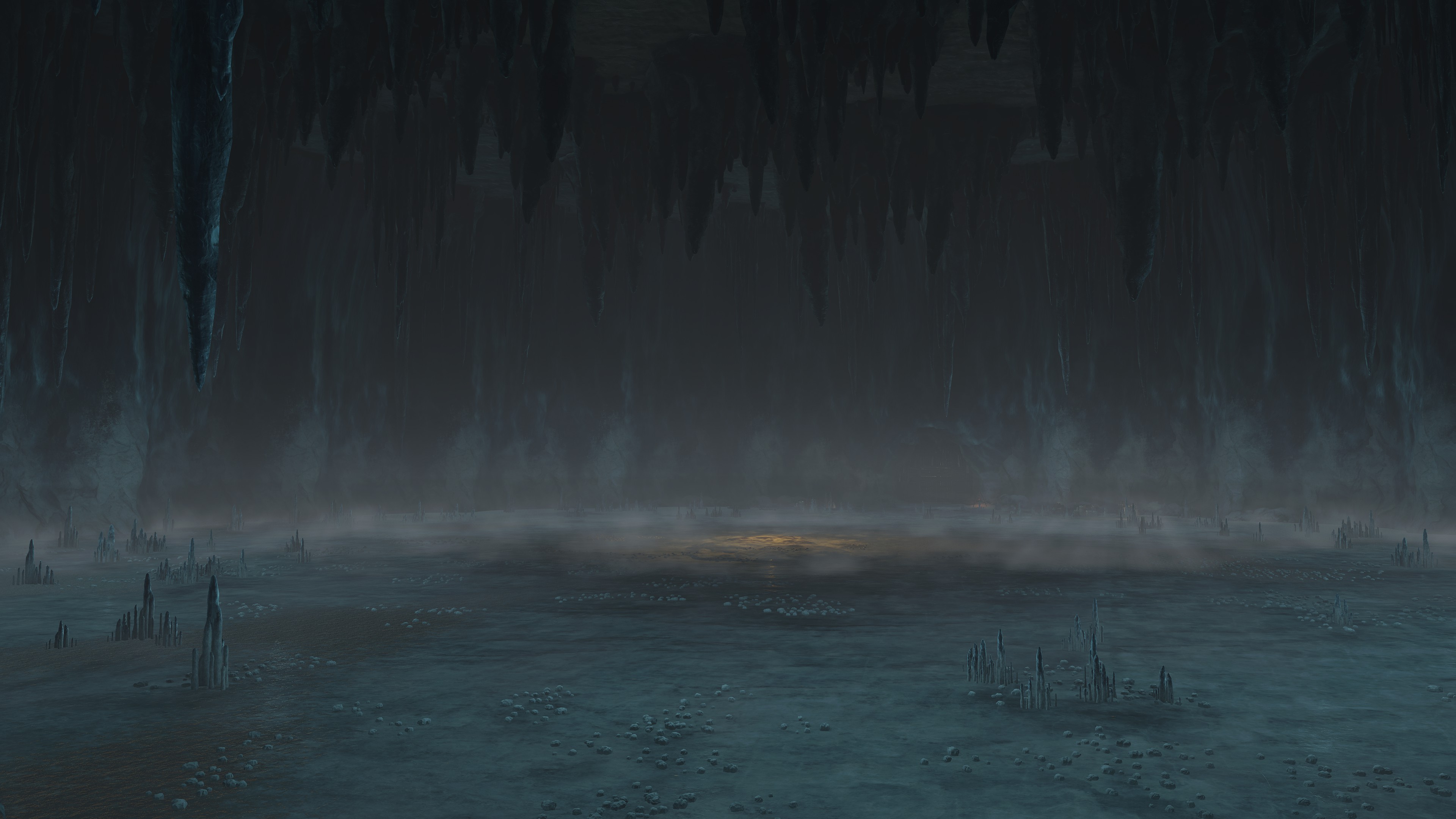
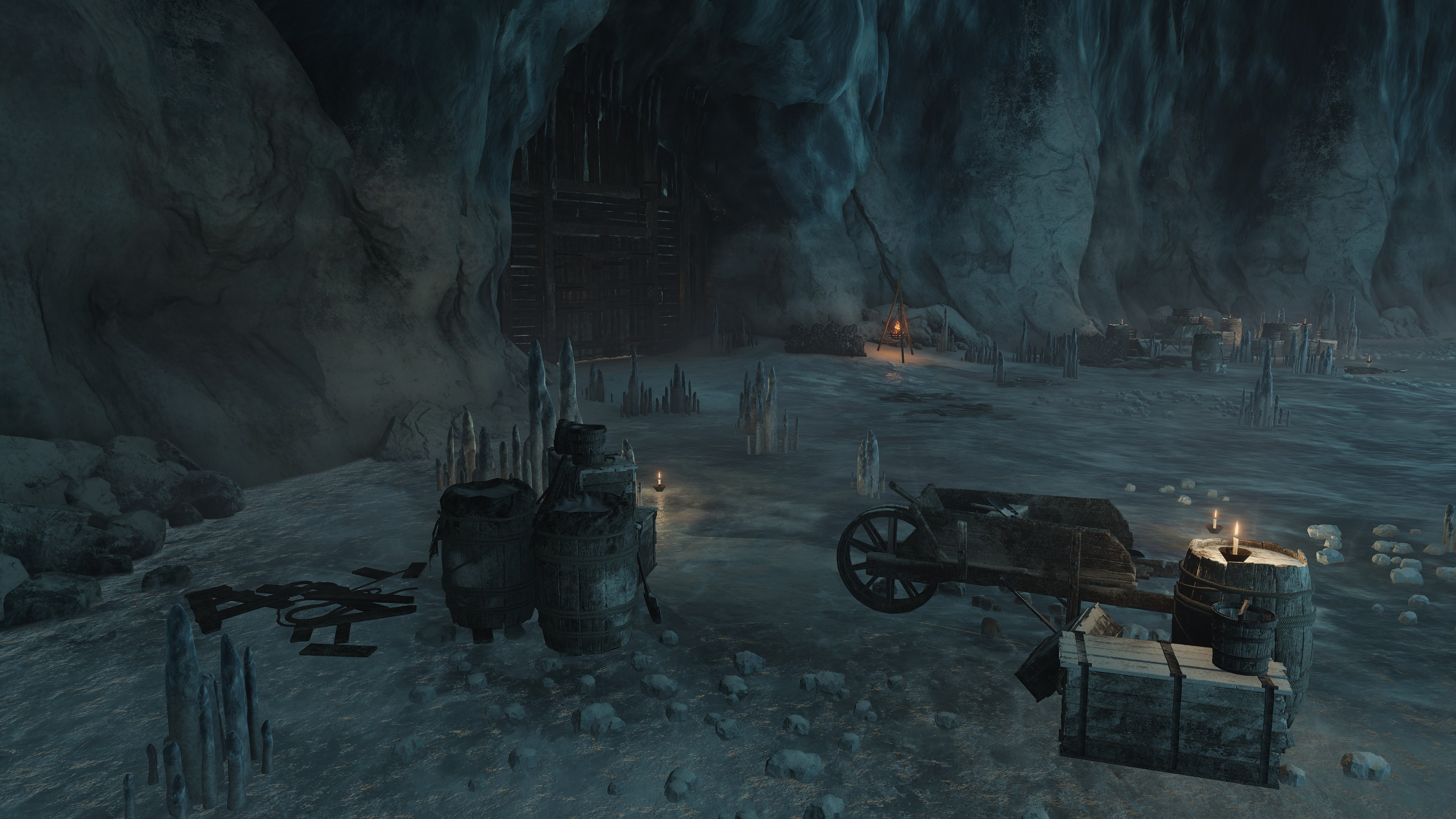
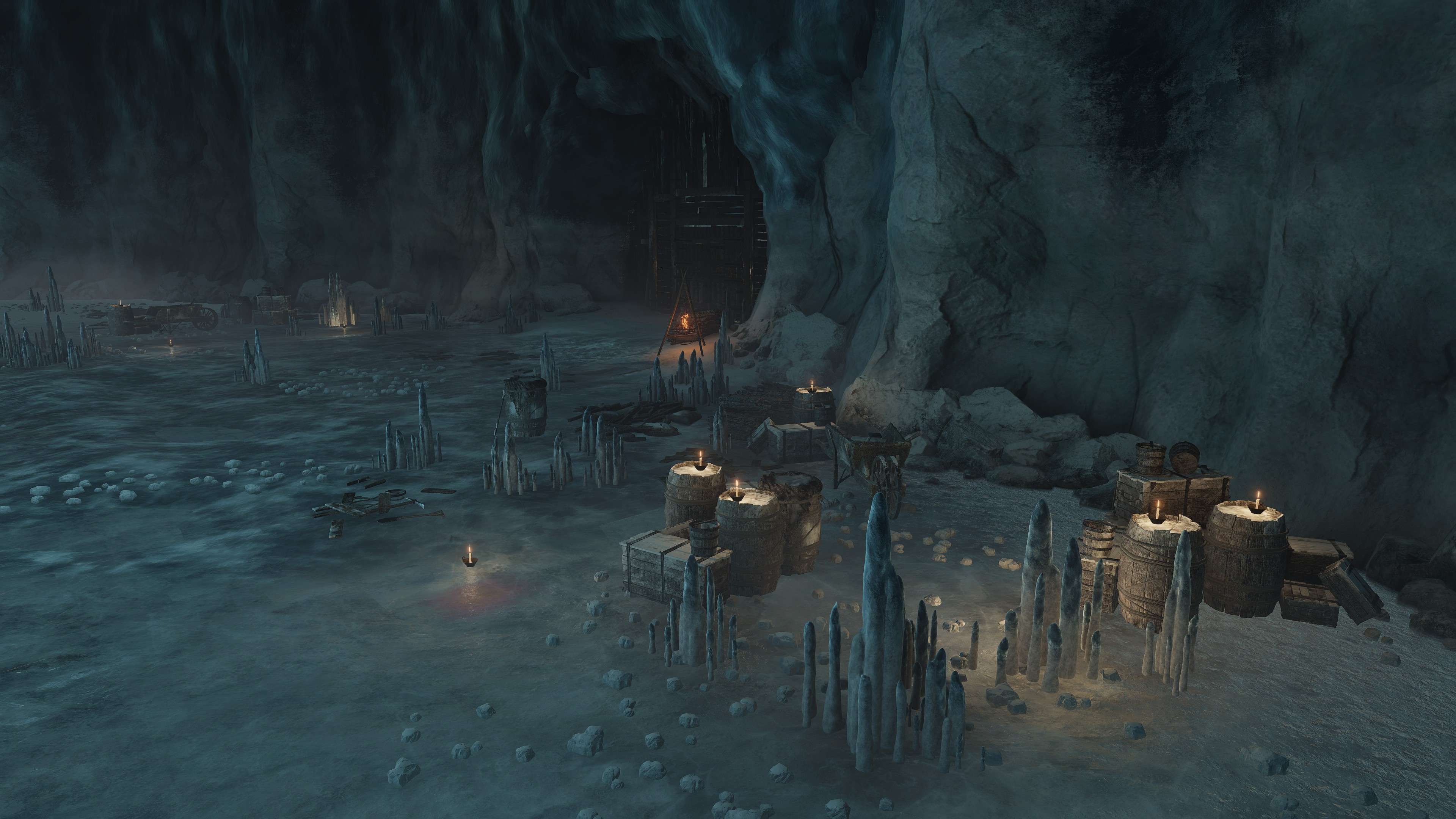
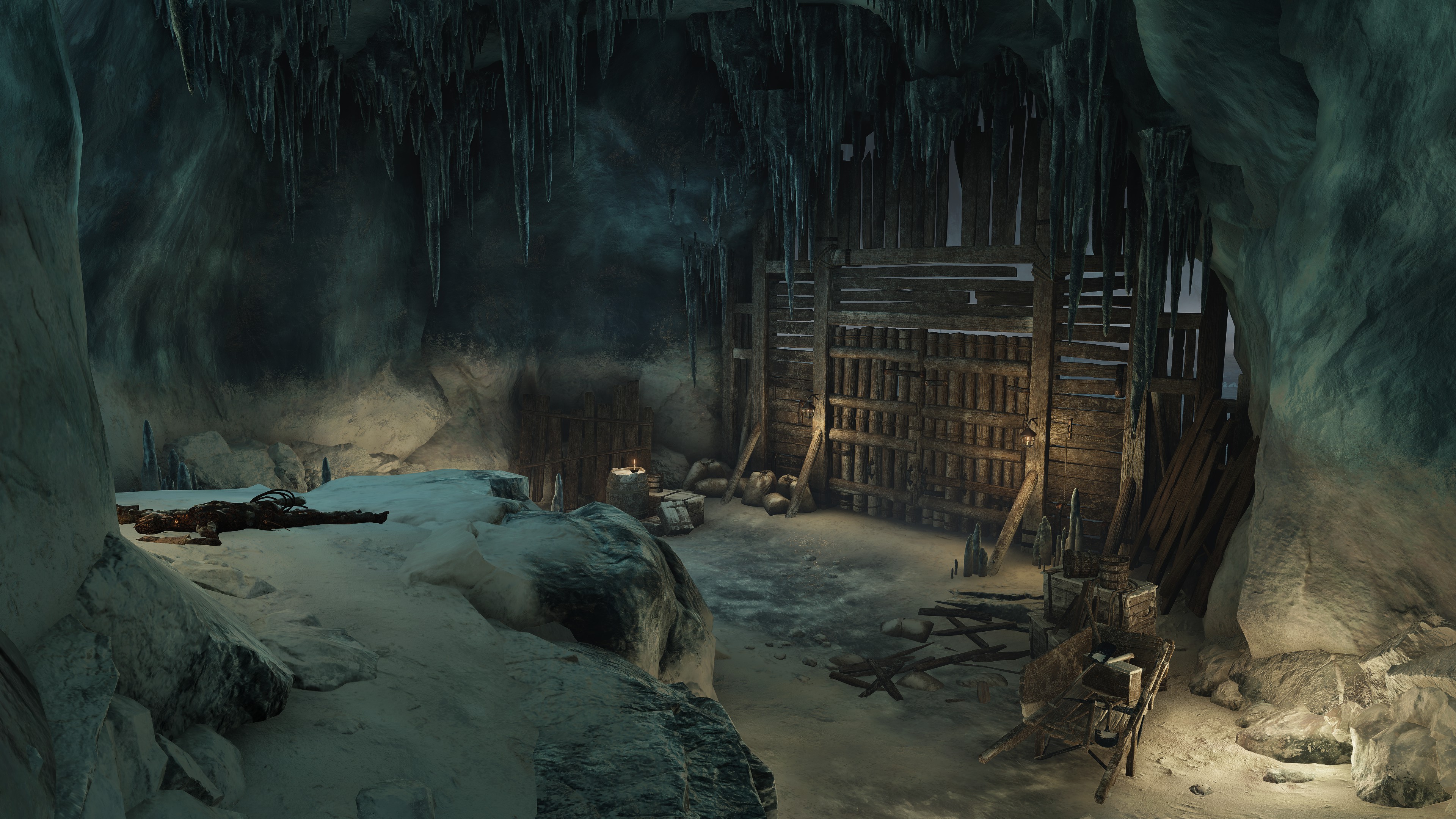
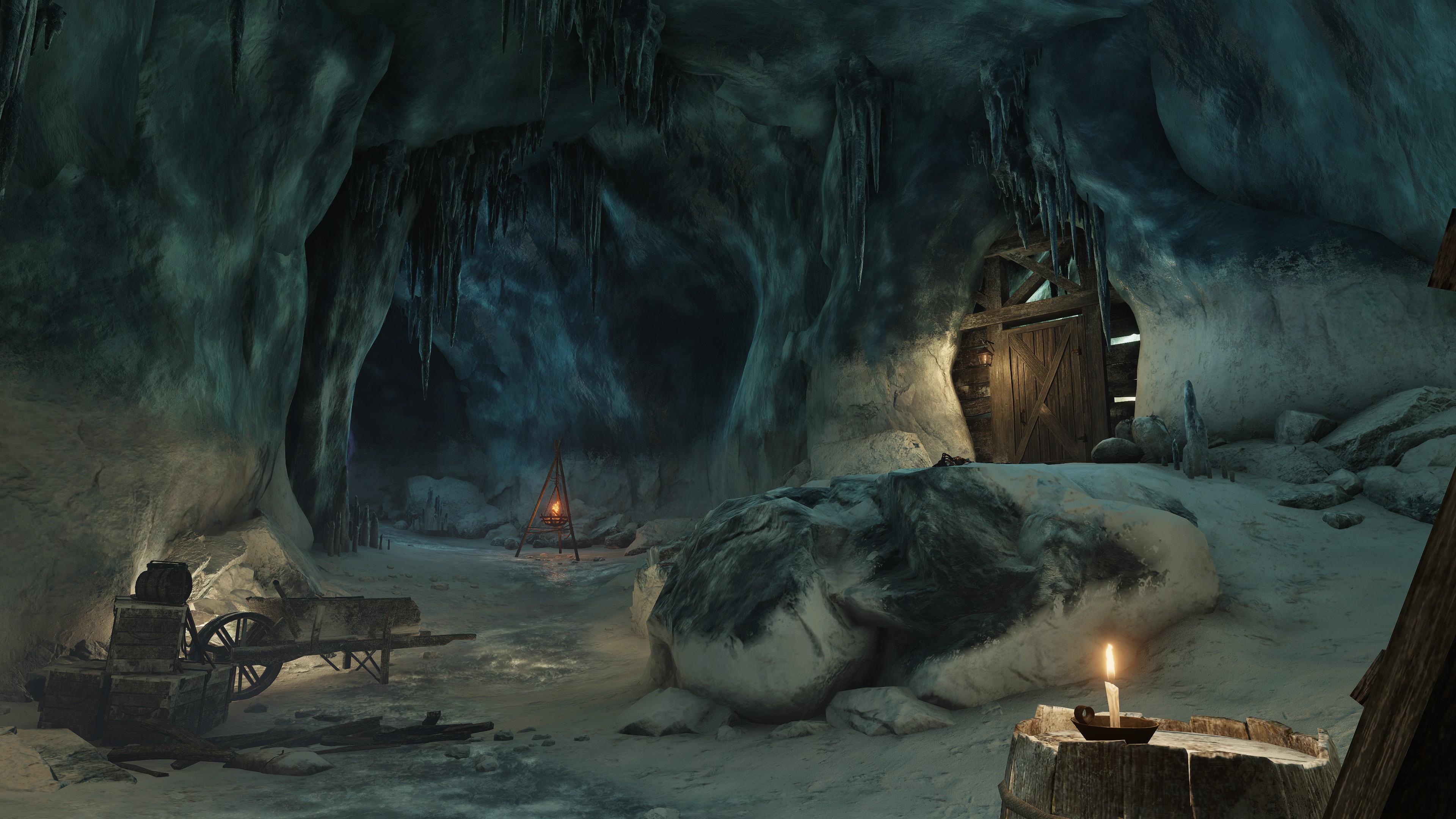
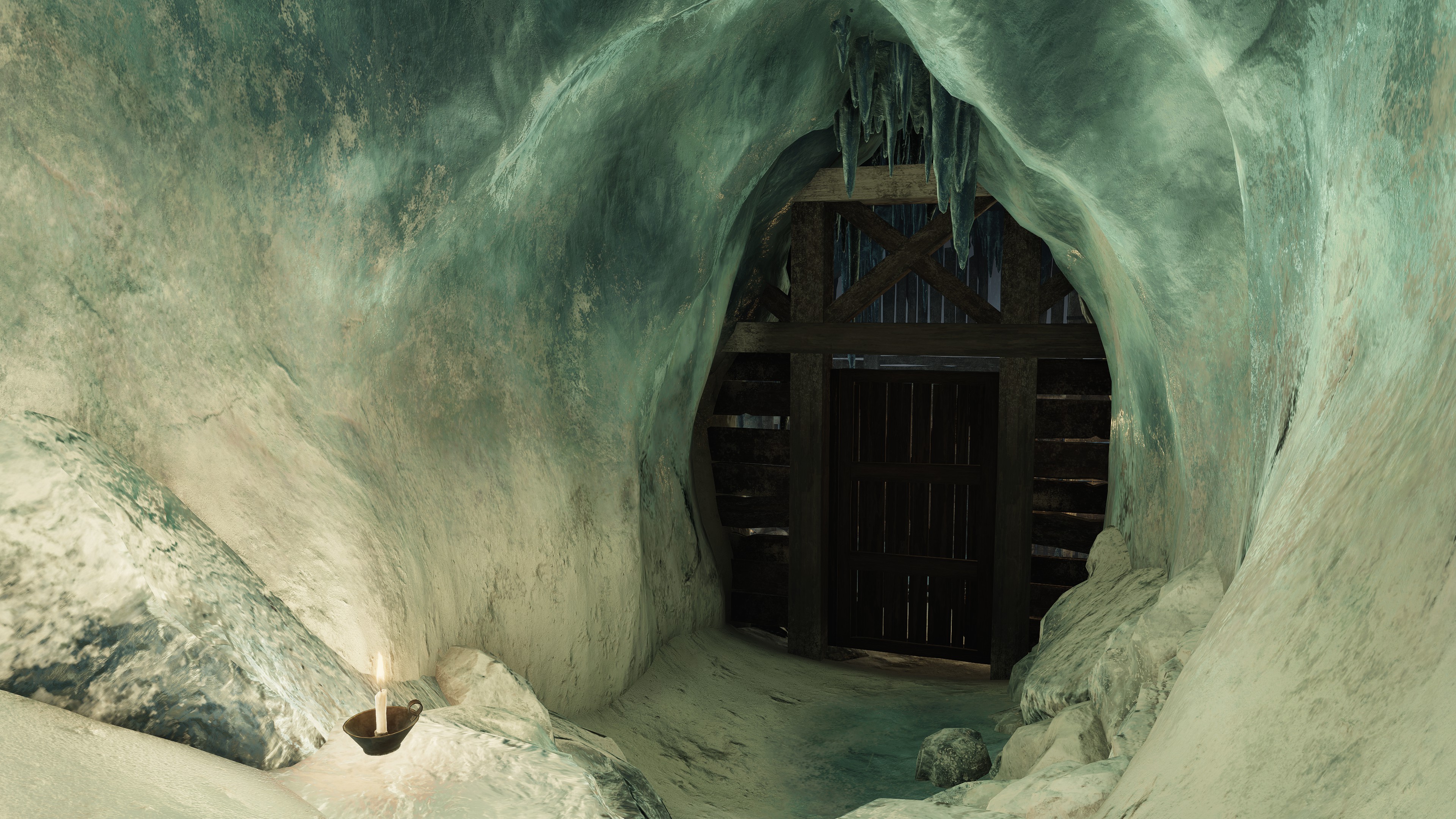
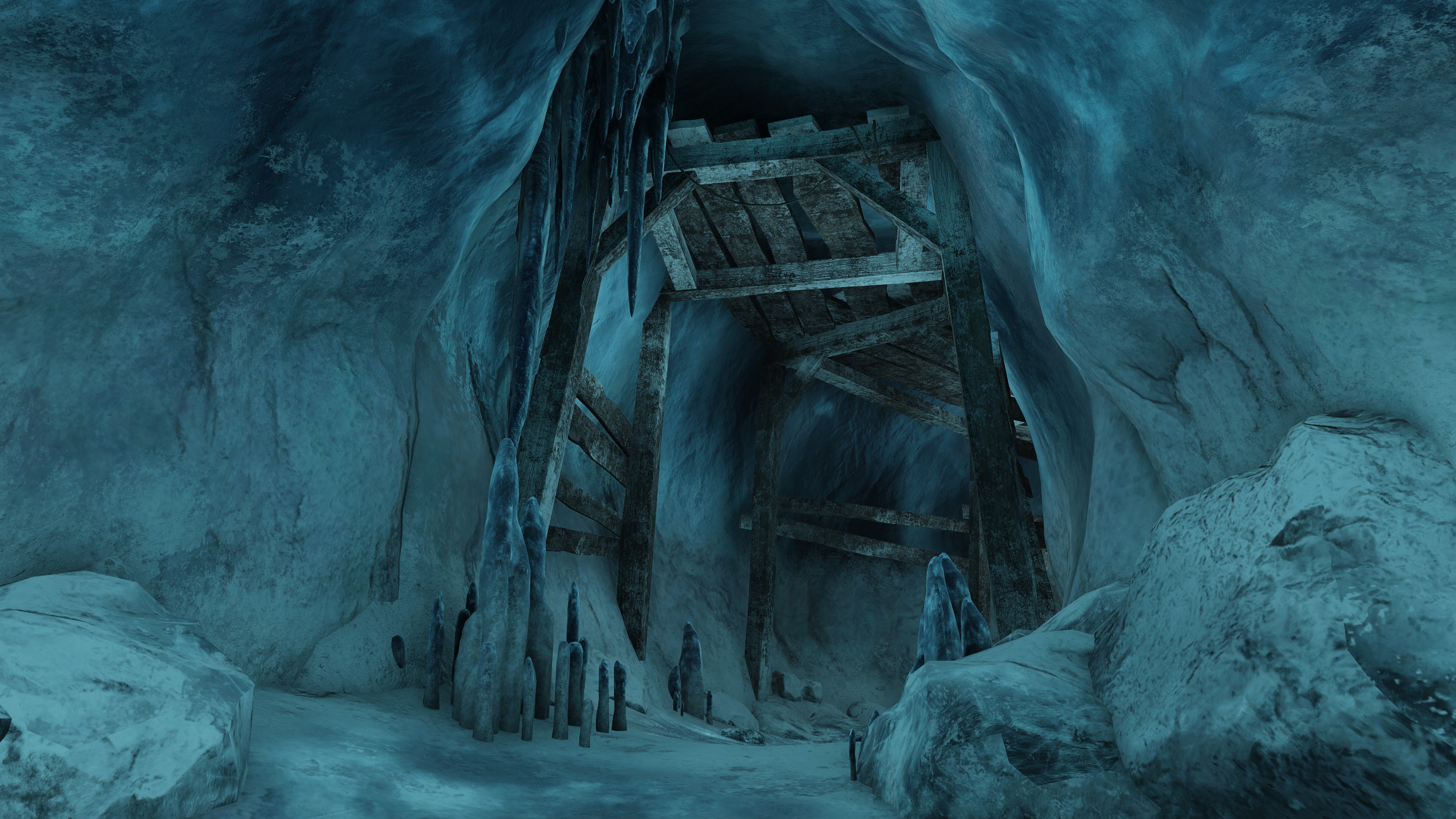
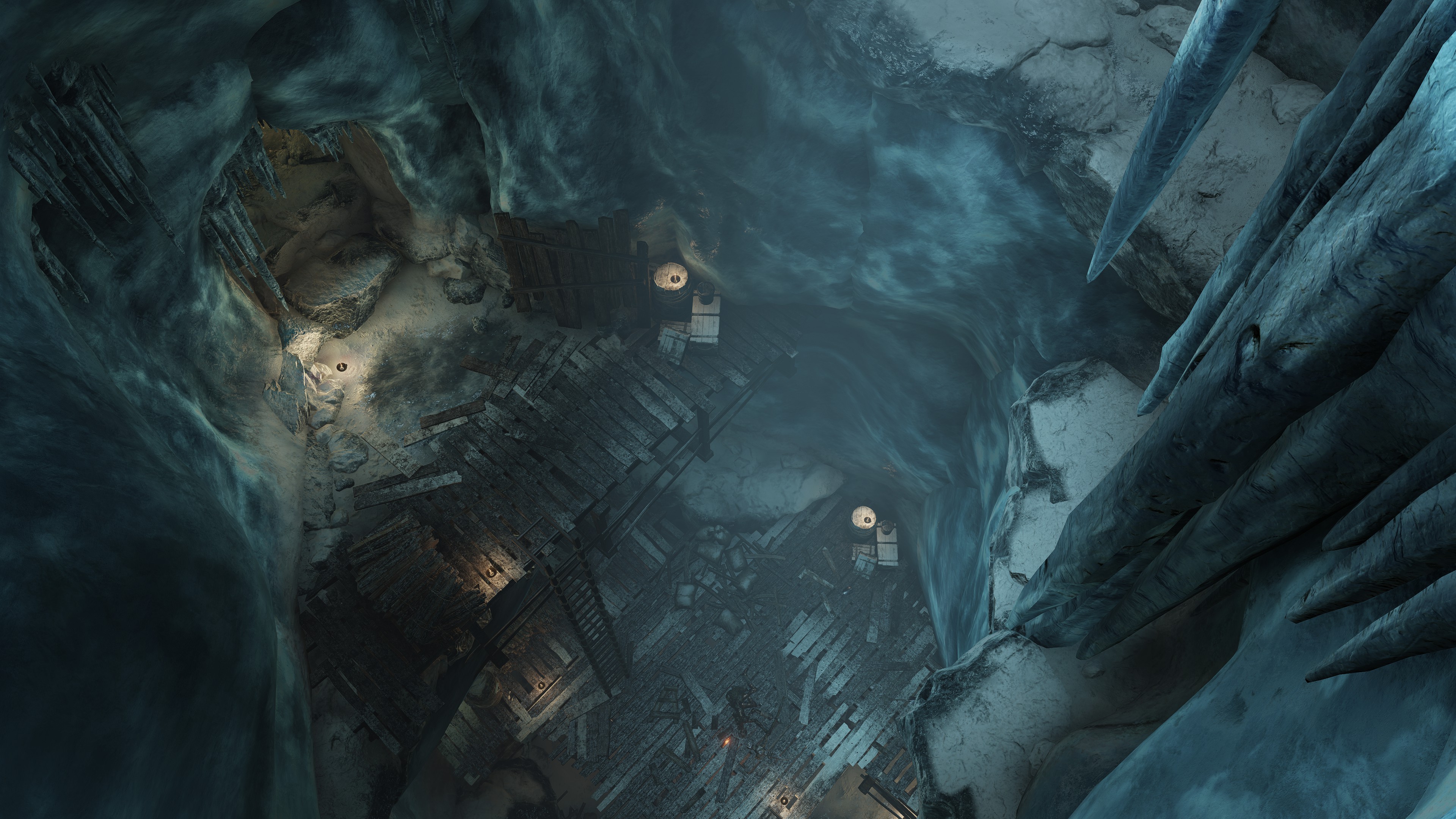
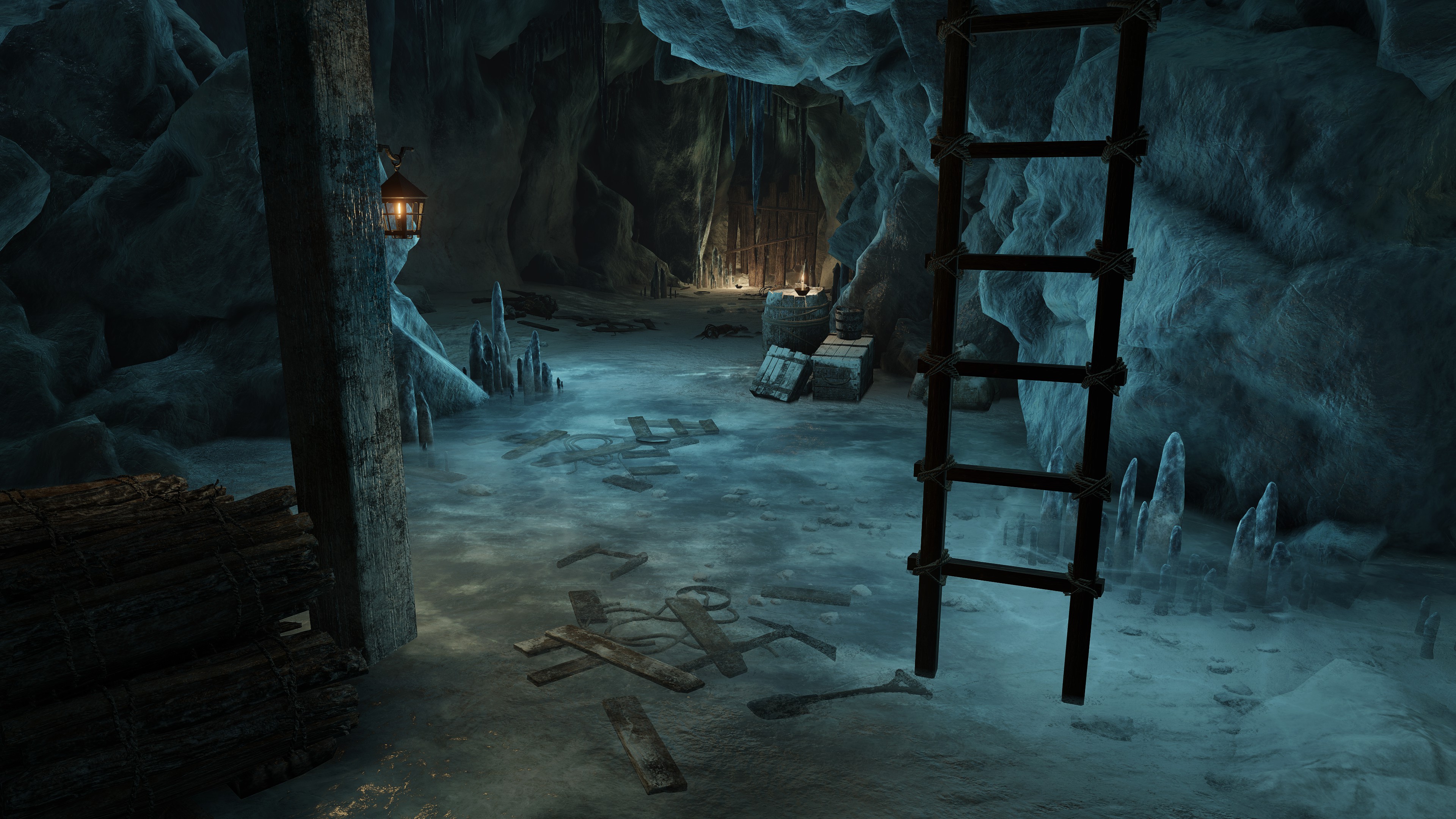
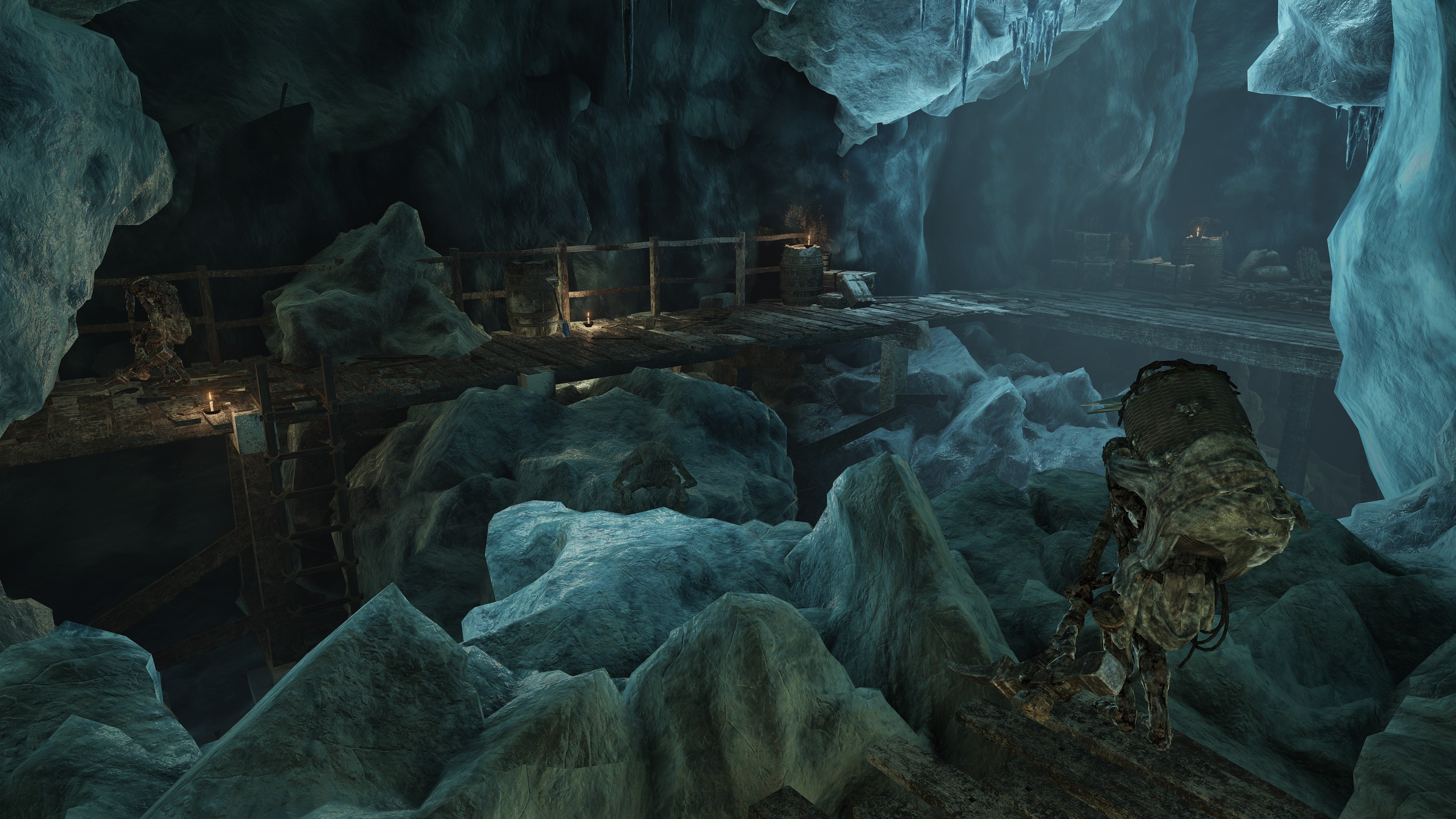
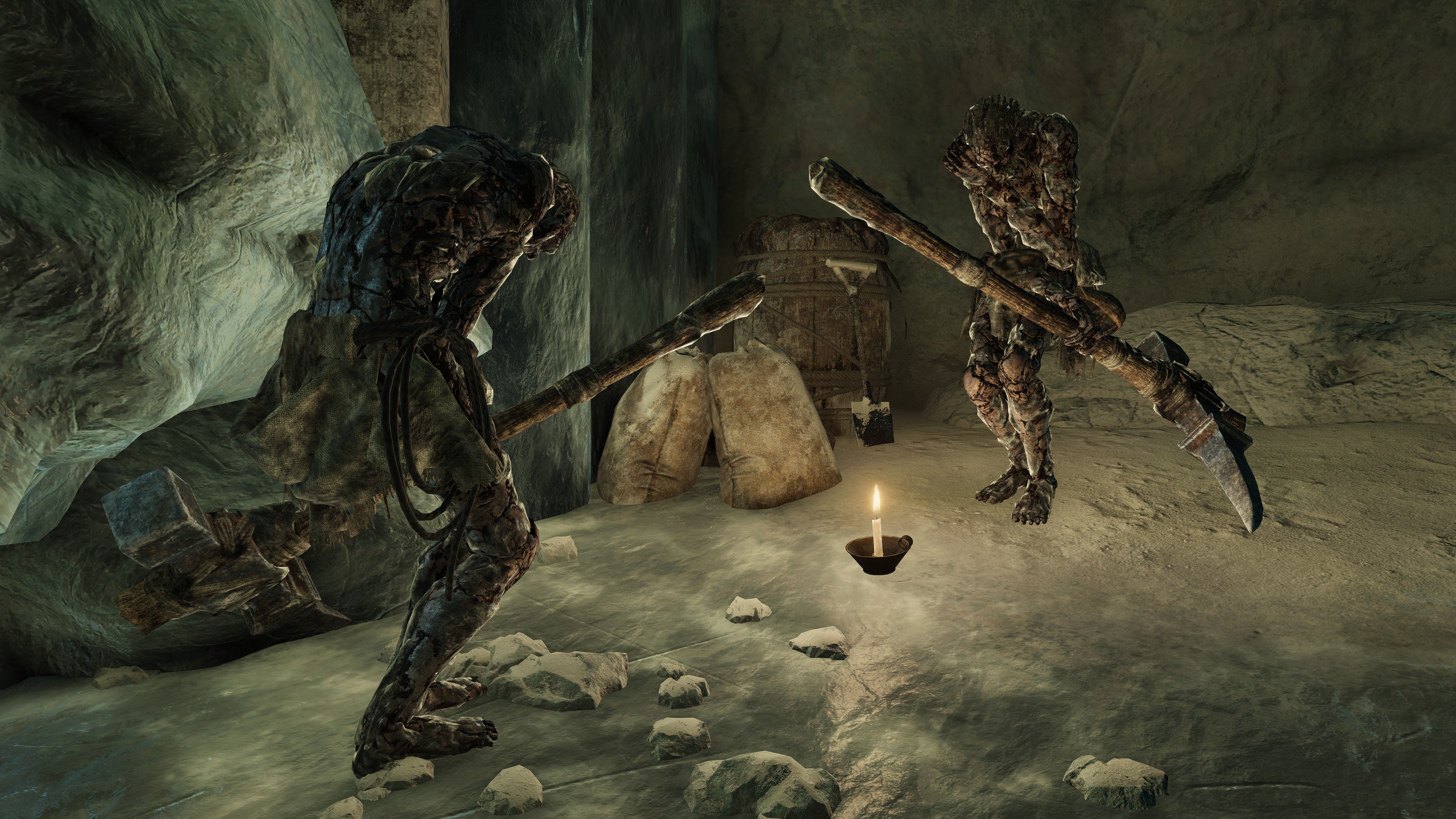
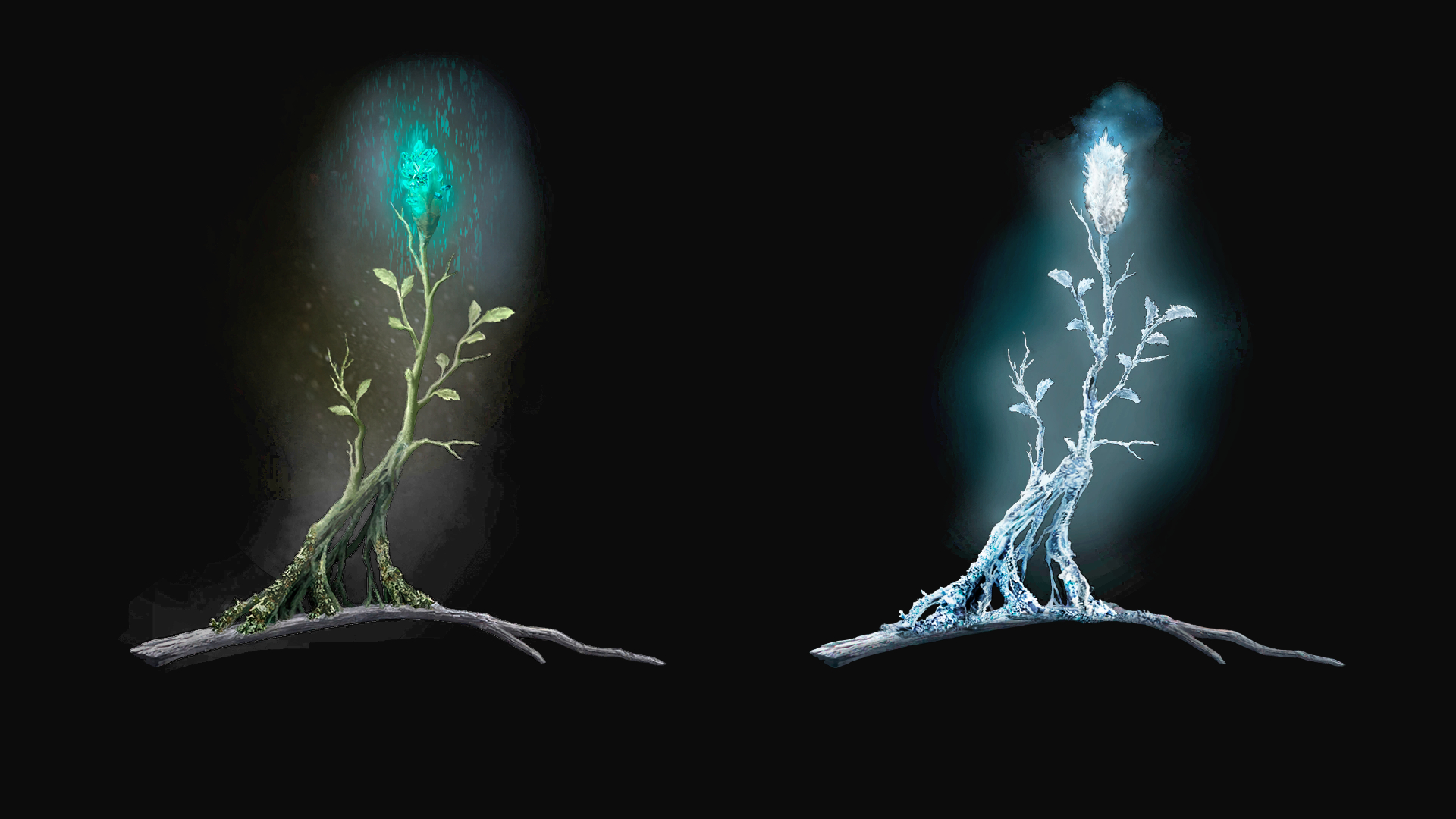
Never-growing young bud that ice crystallized. One of the materials used in item crafting.
Can be widely found in cold lands.
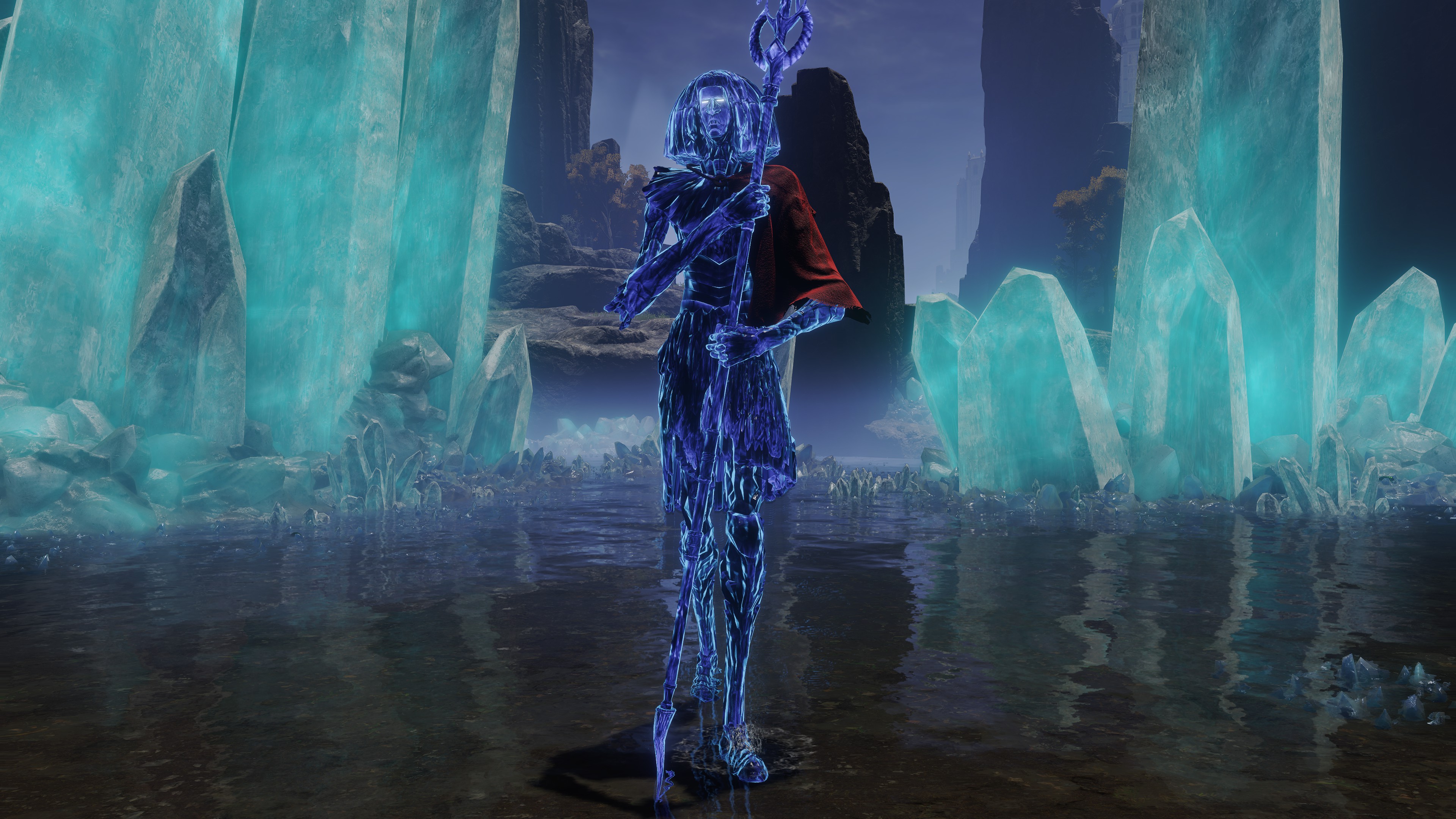
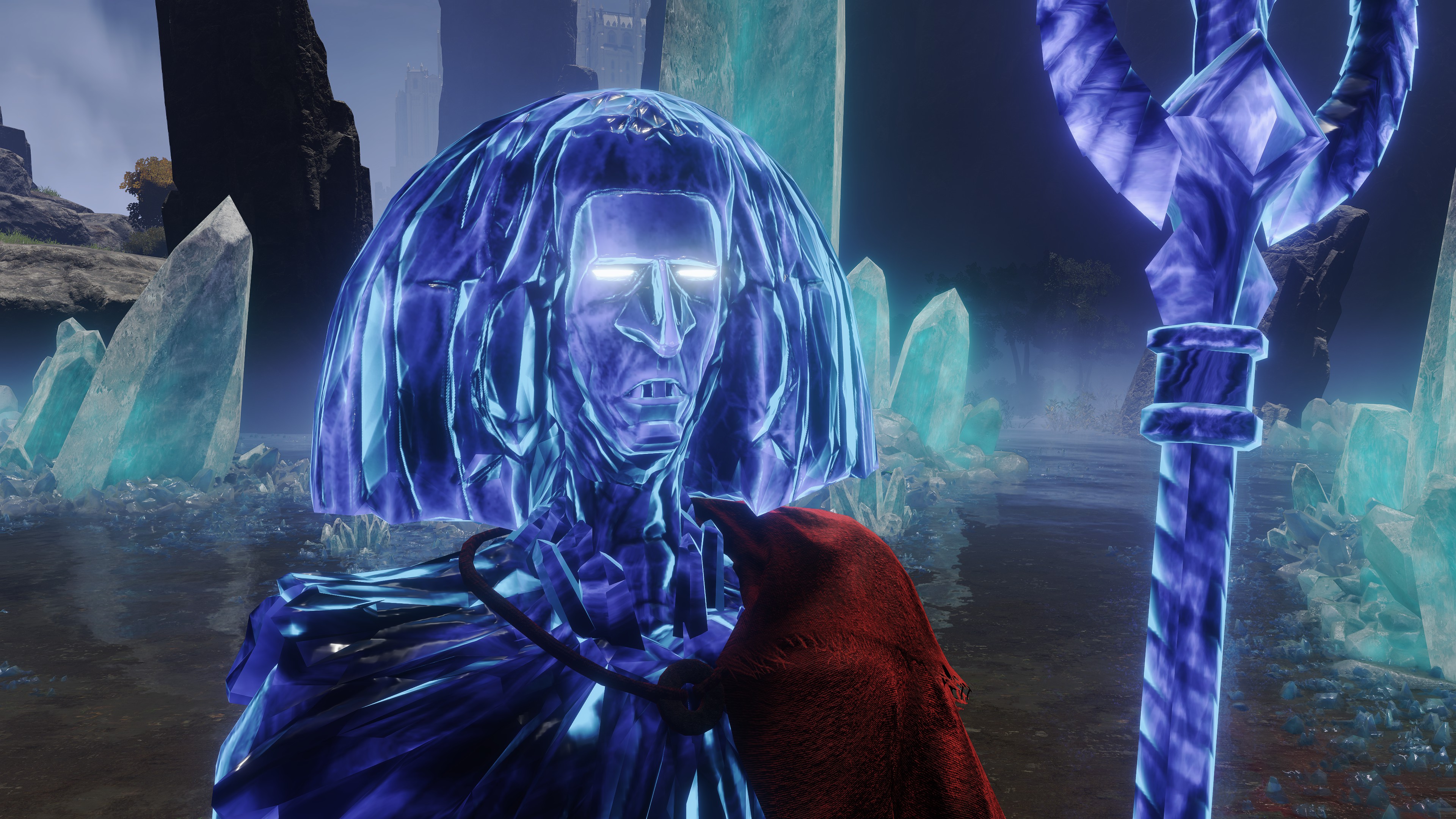
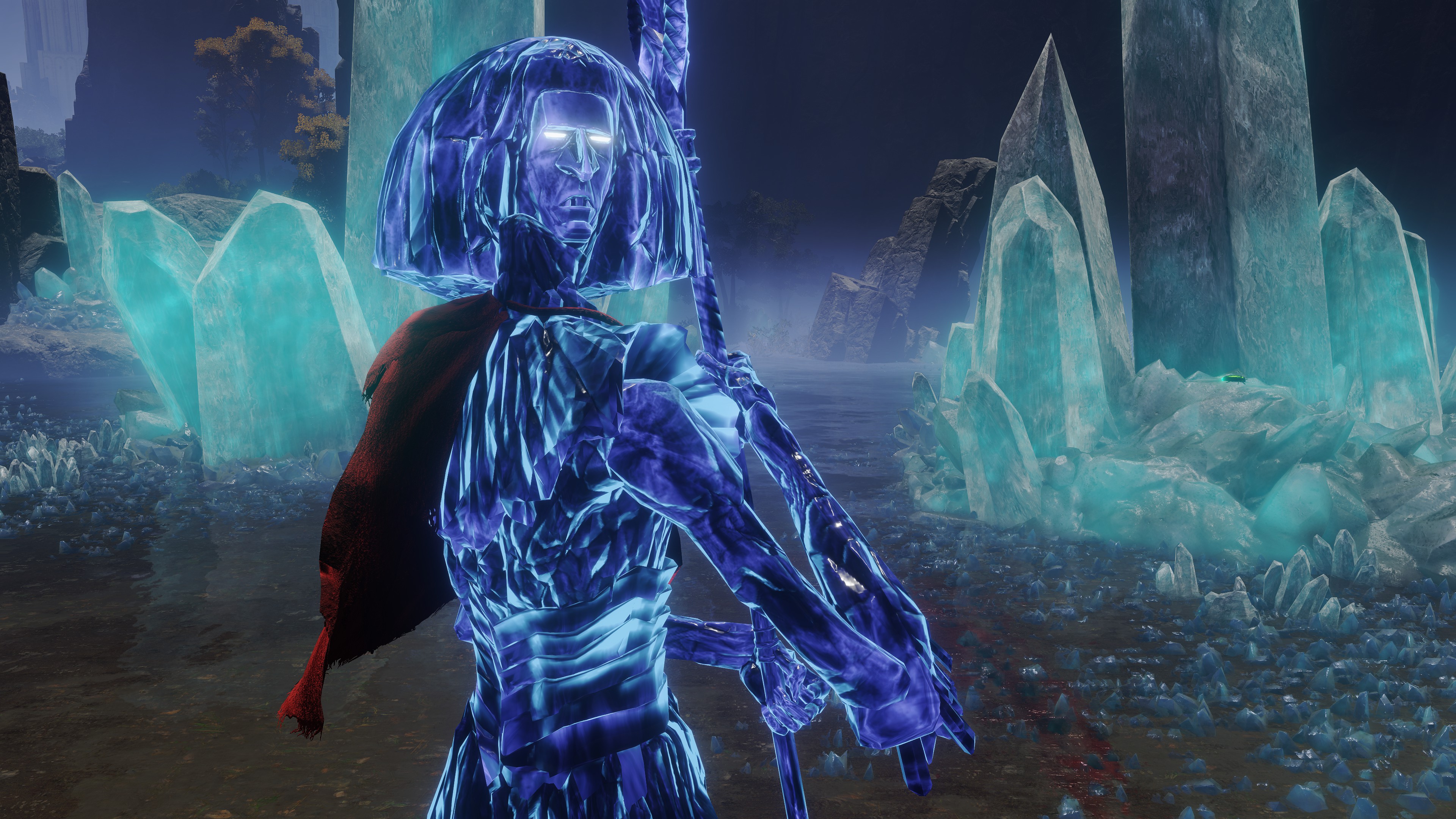
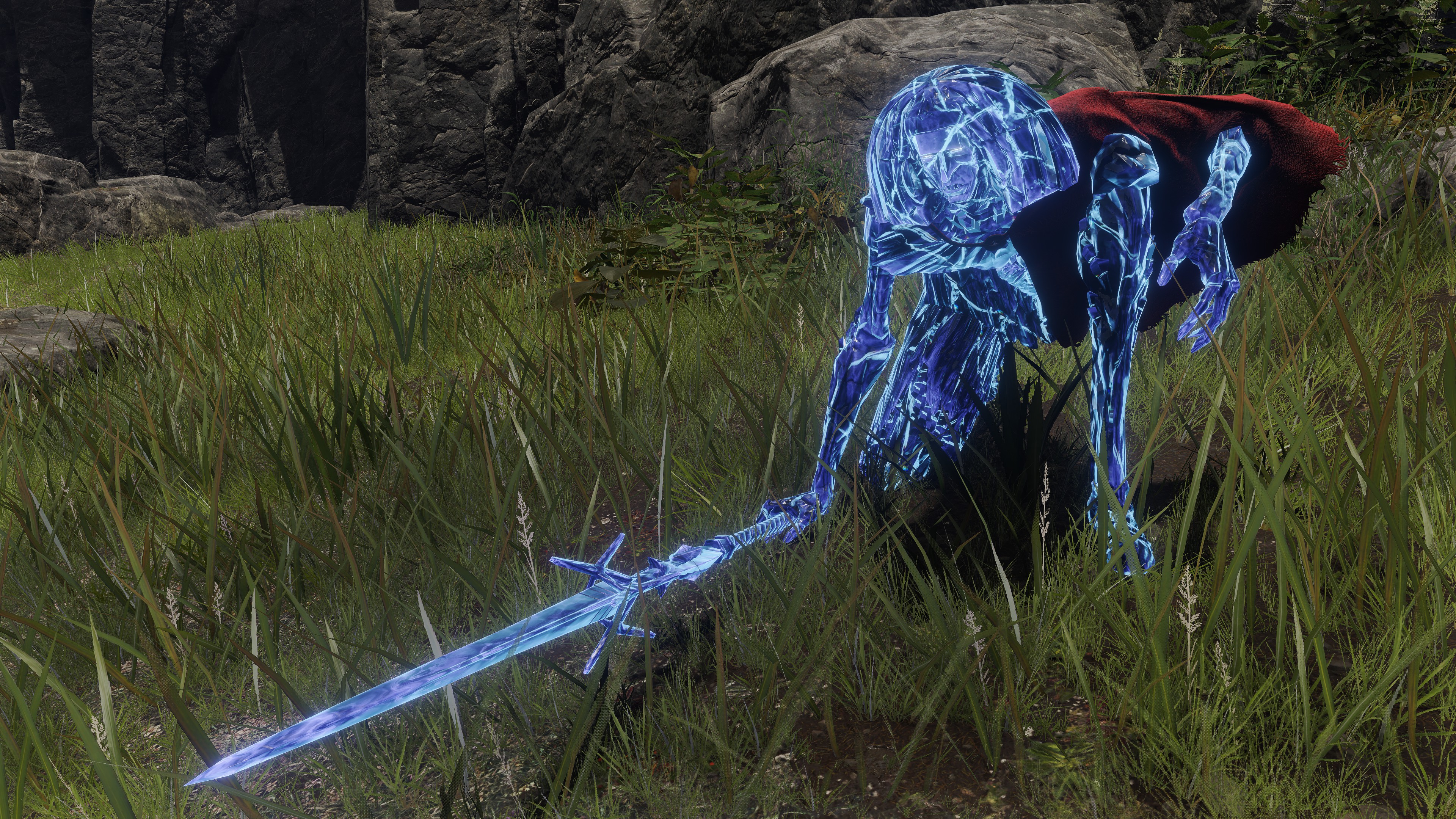
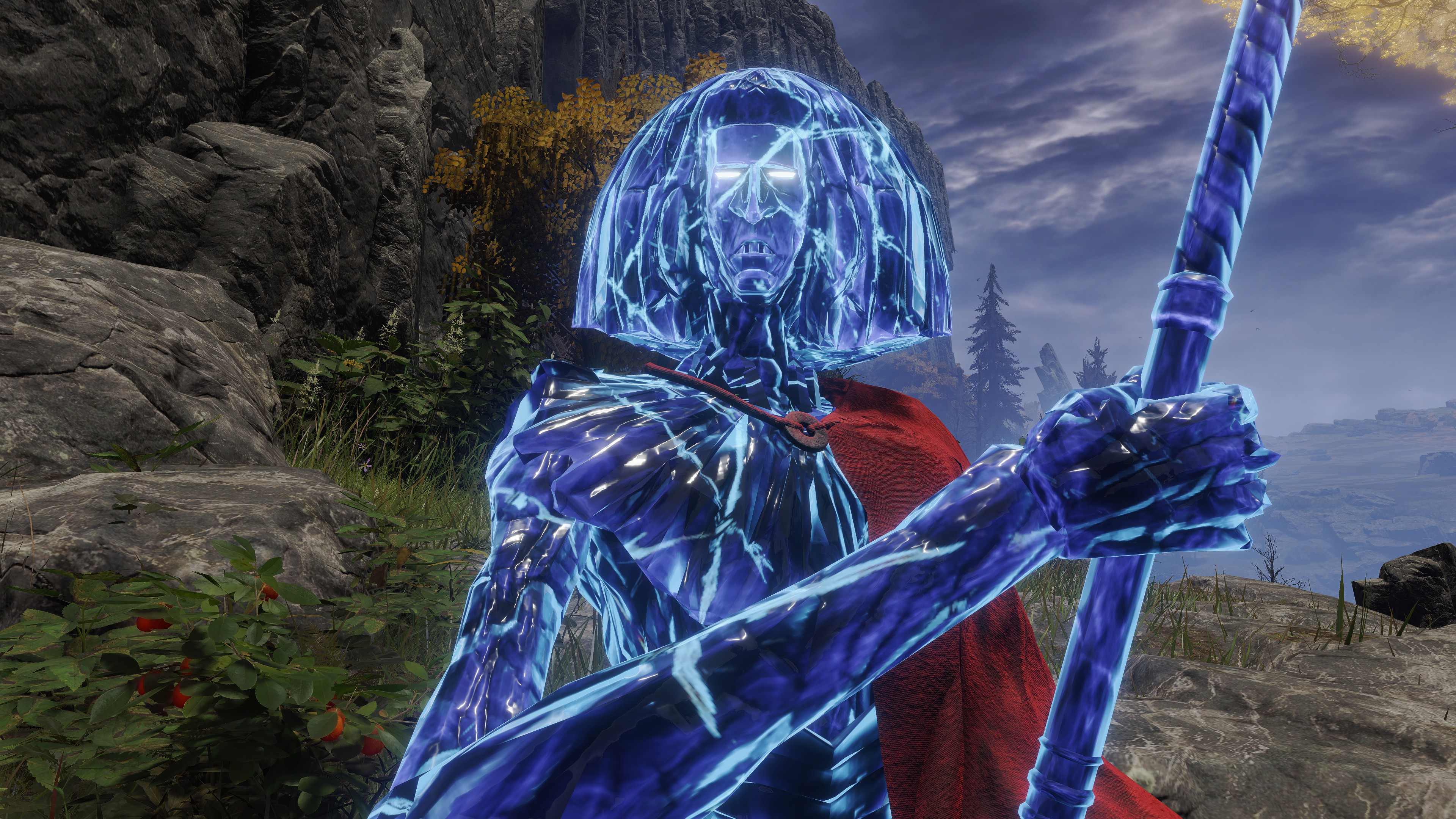
Crystalians are a form of inorganic life, solid and rigid crystal taking the shape of a man and operating as such. This makes them initially hardy but brittle once cracked, soon shattering to pieces like any other precious stone — especially if put under the pressure of blunt forces. It is because of this crystalline structure that they can live for seemingly eternity, but they are also limited in number. A Crystalian isn’t born so much as carved out, each one created from crystal long before our time. Their existence is credited to a single creator, carving their race before apparently disappearing. We can presume this person to be an astrologer, as the blue crystal comprising their form is the same as magic glintstone; certain Crystalians even conjure glintstone sorcery. This is consistent with their inspiration, the enemy’s design nigh identical to the Crystal Warriors — guardians created by powerful sorcerers in the Fighting Fantasy series, which Director Hidetaka Miyazaki has referenced for inspiration in various interviews. Creating magical lifeforms with crystal, too, is undoubtedly part of stargazer culture.
Ashen remains inhabited by spirits. Summons Crystal-Man spirit.
A spirit wielding great and small crystal round blades. The body said to have been carved out from crystal long ago is very hard and absurdly strong against the likes of edges but extremely brittle against strike attacks.
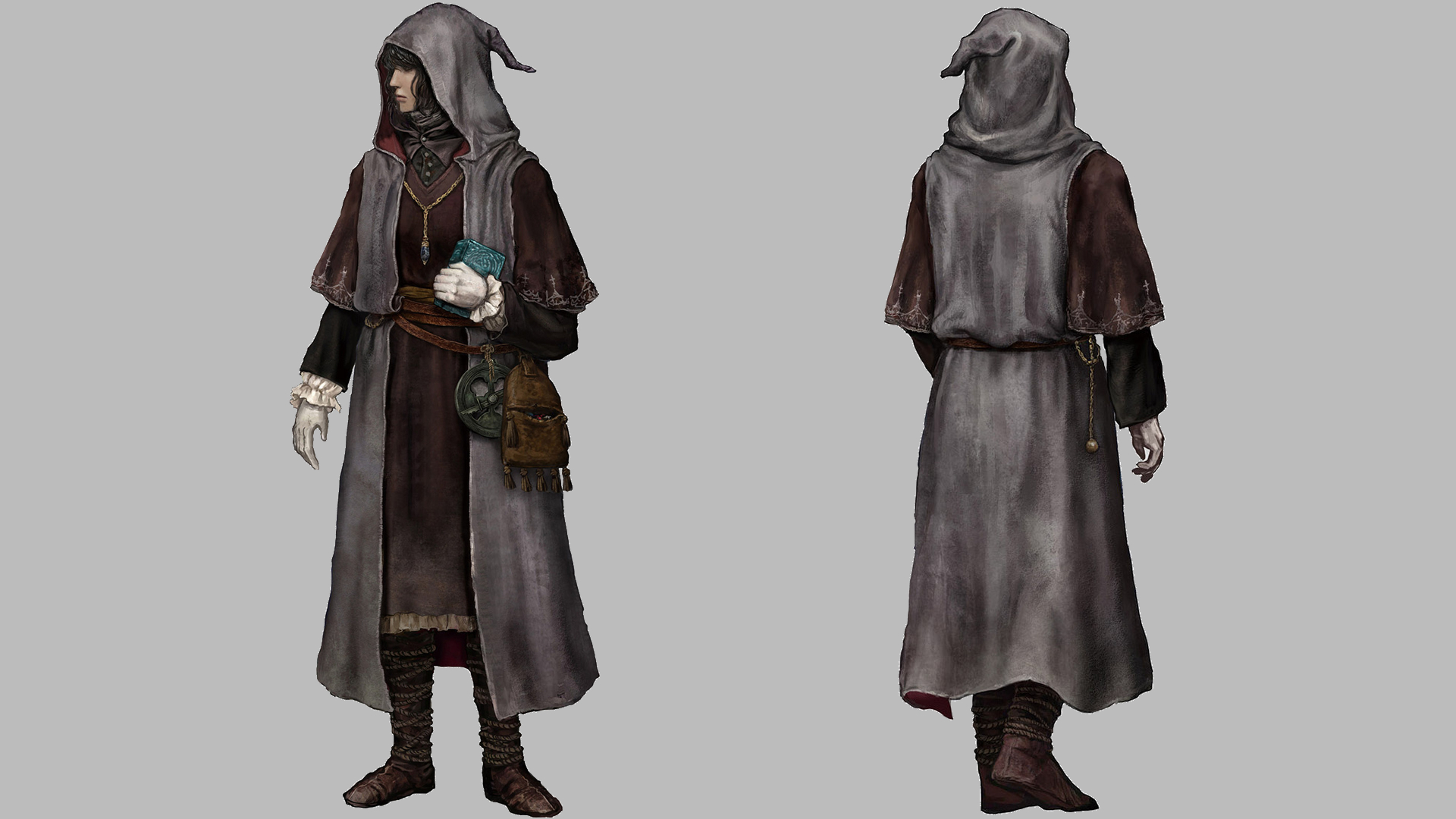
The Crystal Dart is a throwing weapon similarly carved from low-purity crystal, draining our focus to draw out the latent magic in the crystal for damage. And yet, the description makes a point of how golem engineers used such a tool in the past. Perhaps they didn’t cobble them together with cracked crystals like we do, but they certainly used glintstone to bring mineral constructs to life. This is why stone golems “short-circuit” when struck with enough crystal darts, their heads sparking with magic blue bolts as if overloaded while they wildly attack both friend and foe. Such malfunctions are proof of these glintstone engineers’ construction, and the work with glintstone demands they be some kind of astrologer. As added note, an alternate description for the astrologer set would speak instead of glintstone artisans, researchers who seek out the best stones to polish in their fascination. These “stonegazers” are still effectively stargazers, and it is easy to see how, broadly, their practice is a basic component to sorcery. And part of that was traveling around to find the many glintstones in need of polishing.
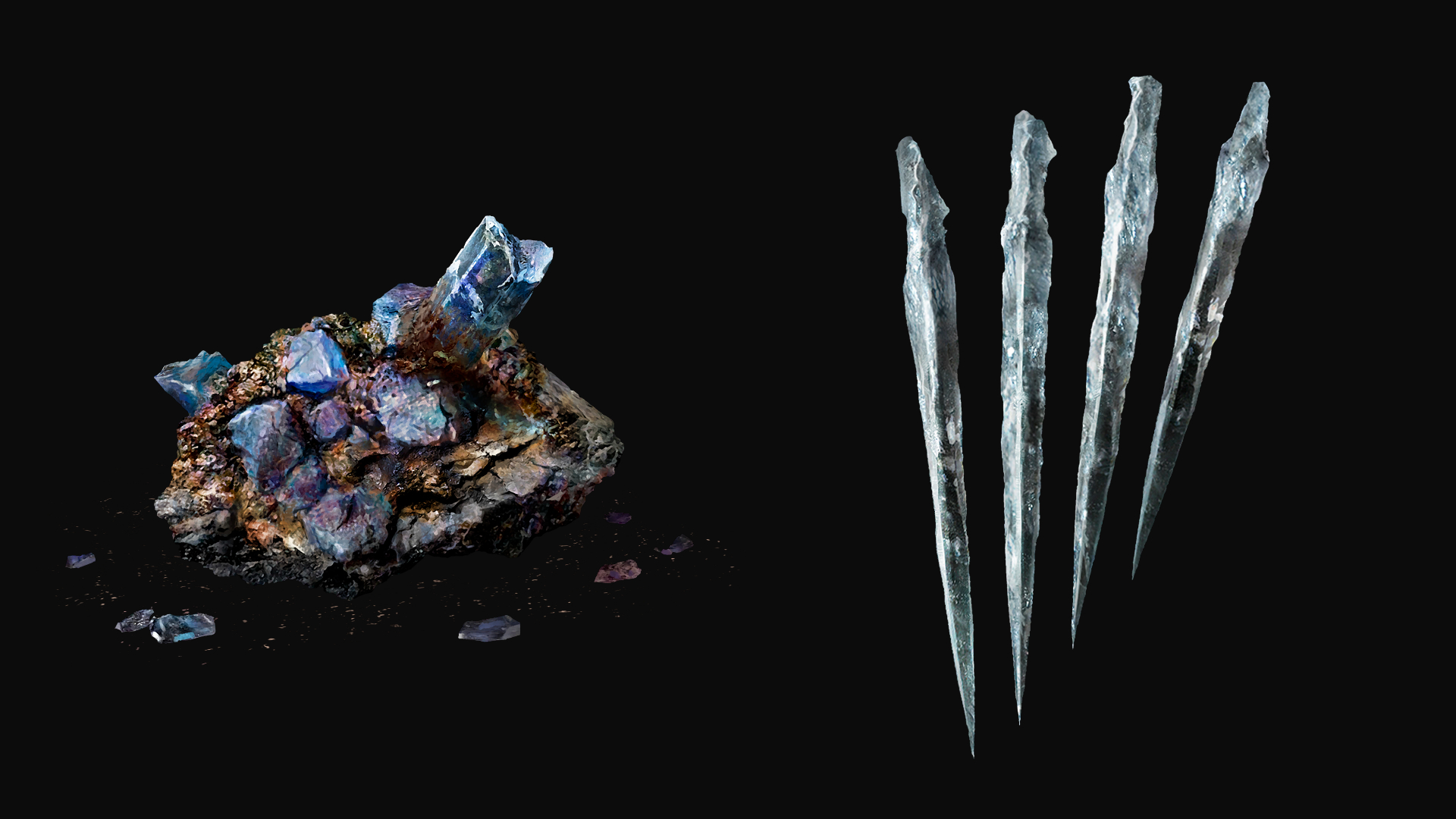
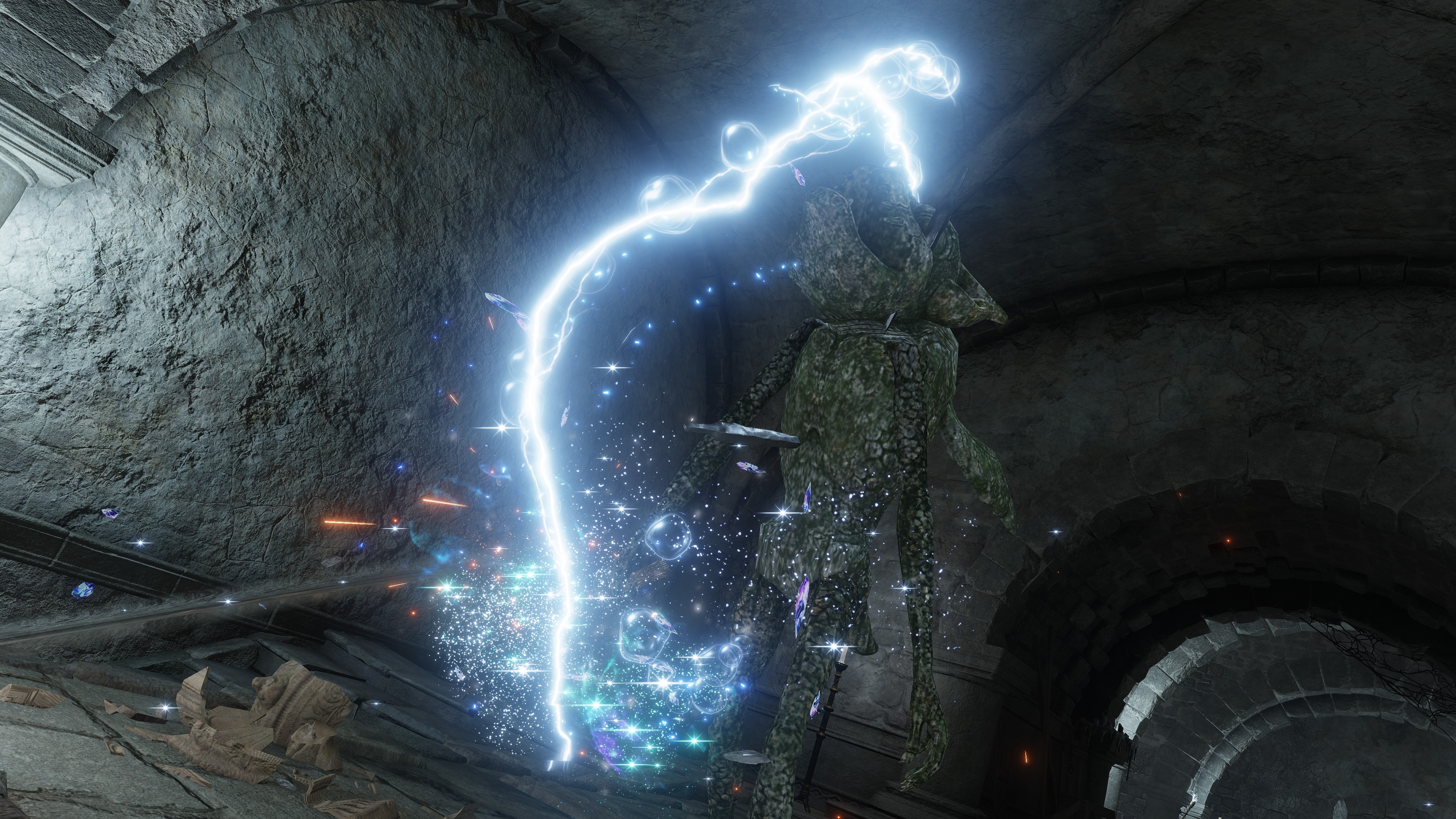
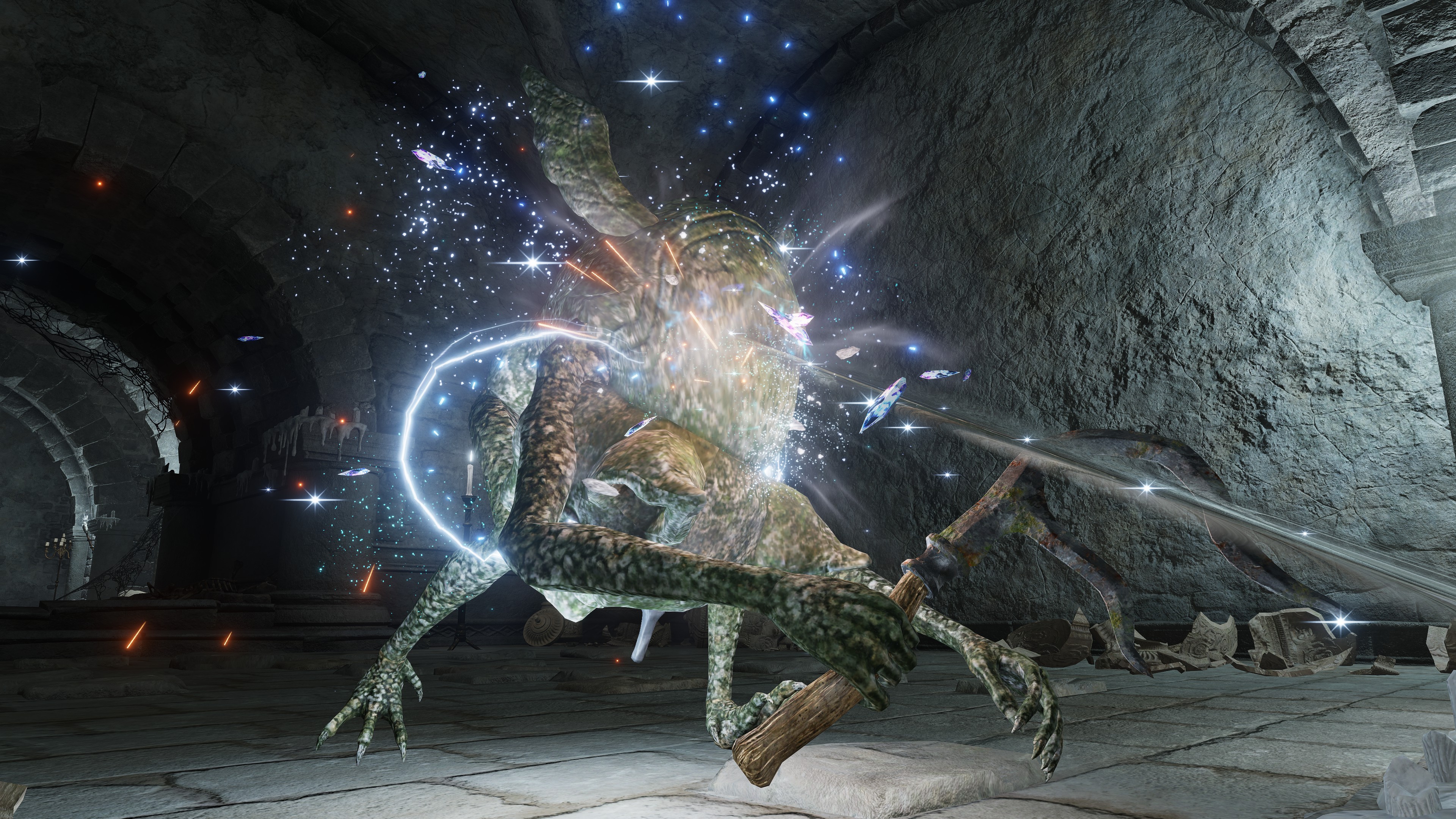
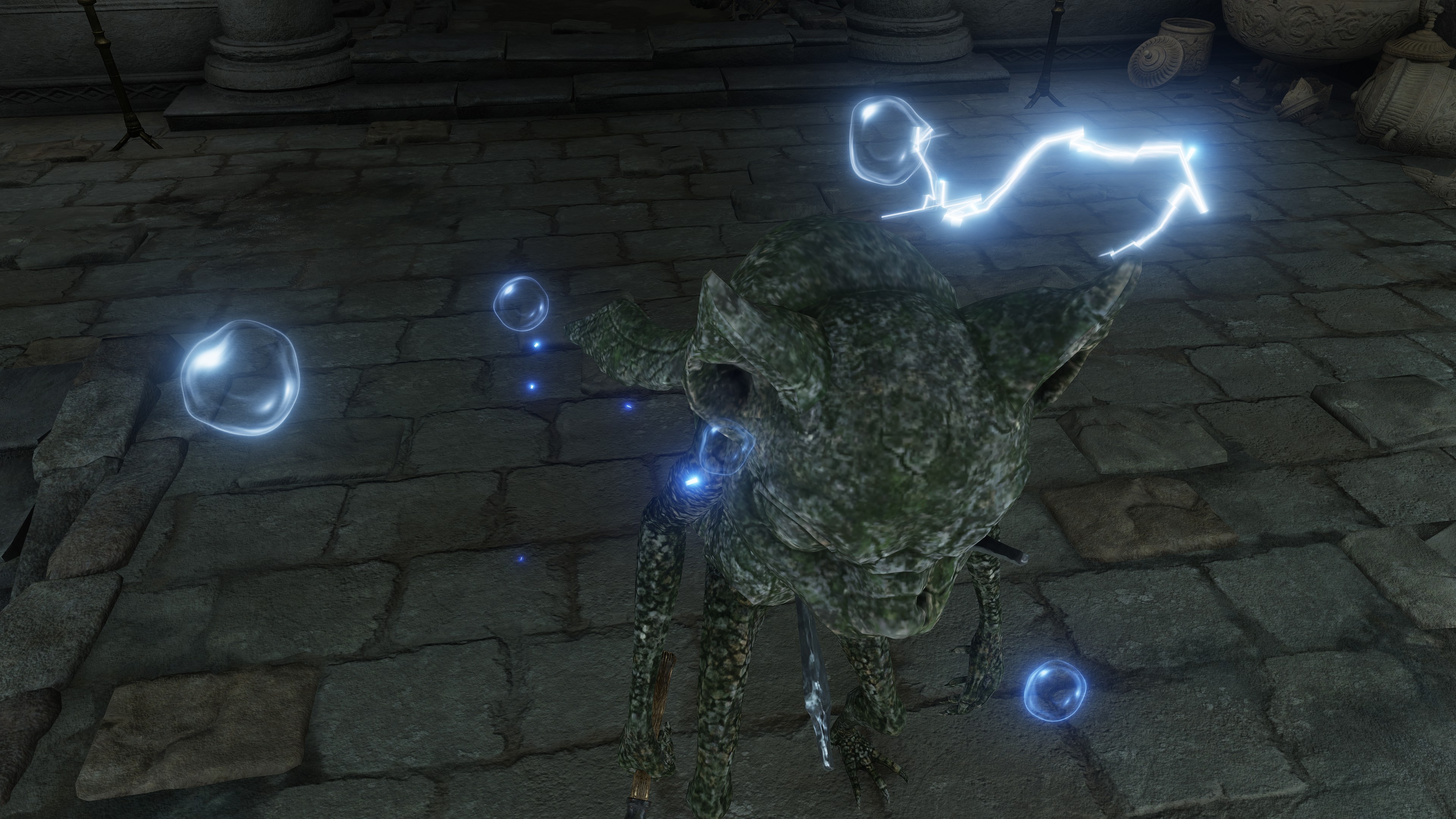
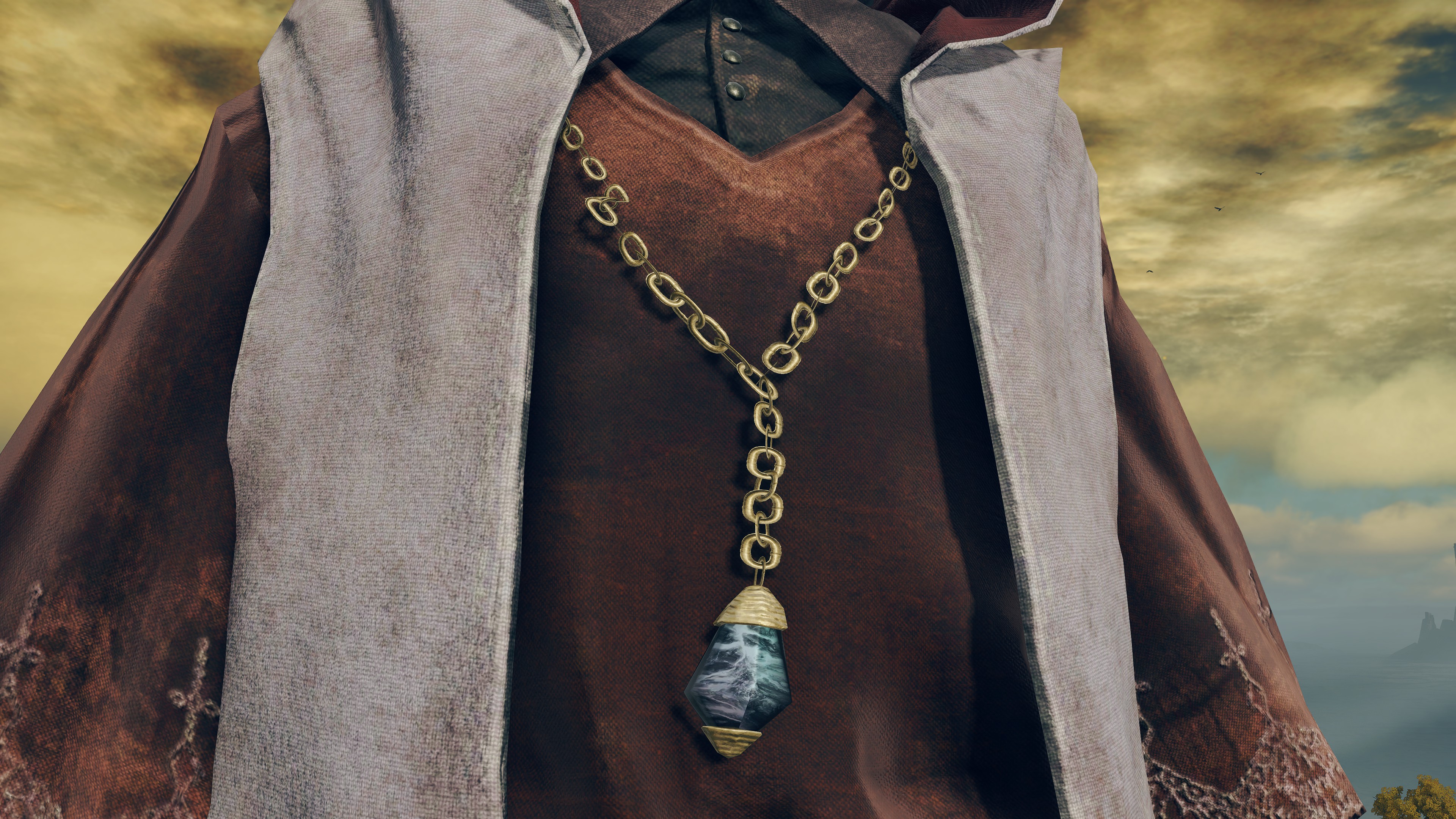
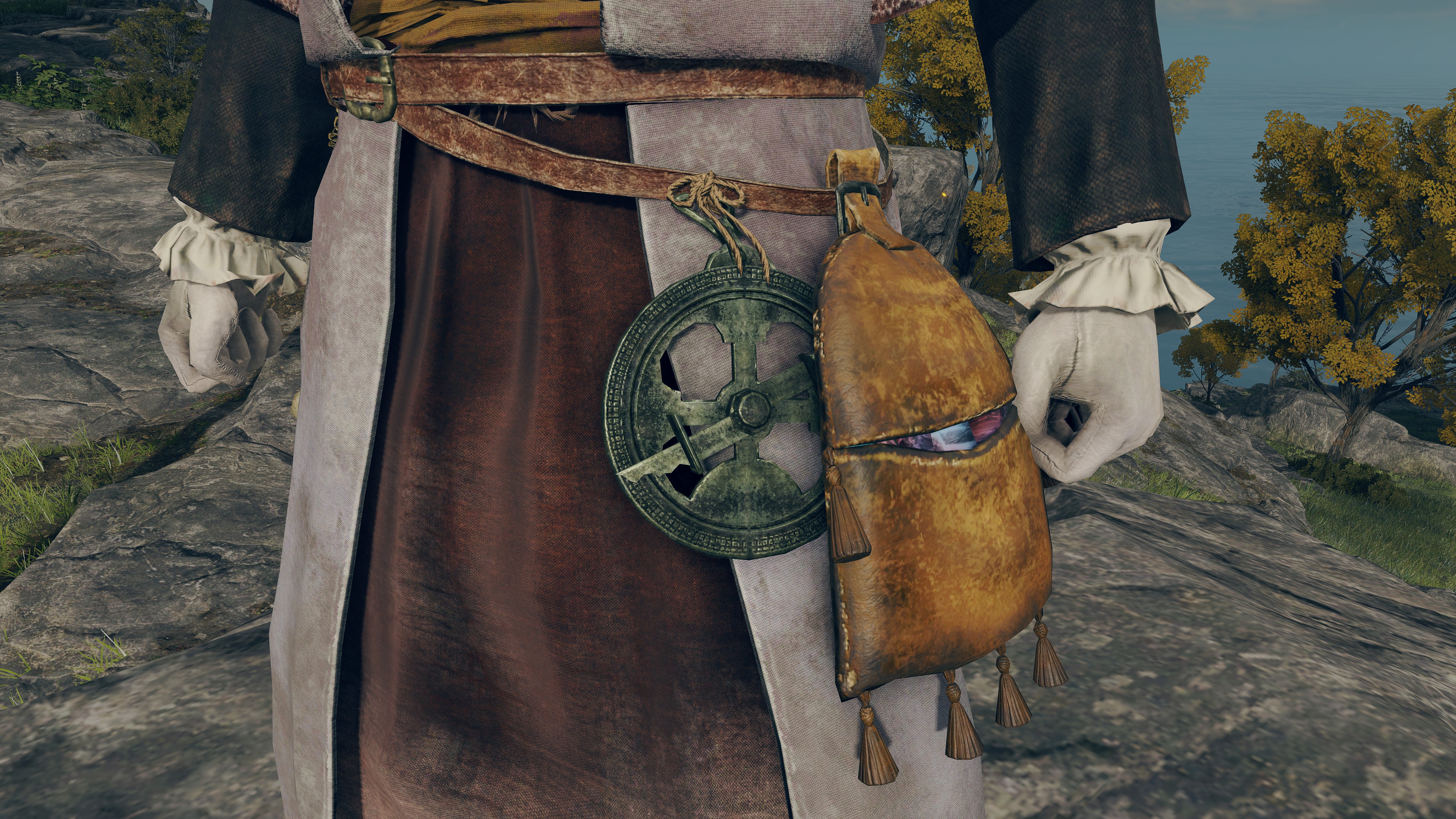
Throwing blade carved from low-purity crystal. One of the craftable items.
Consumes FP to throw at enemy and deal magic damage.
It is said that golem engineers once used a crystal tool similar to this.
Hood made with soft, thick cloth. Apparel of craftsmen who polish precious brightstone.
It is said that they were enthralled with the stone before they knew it and are searching for the best ones. Thus, stonegazers are all researchers.
Thin, smooth cloth gloves. Apparel of craftsmen who polish precious brightstone.
That which is faintly discolored and worn out is proof of touching and polishing many stones.
Pants worn beneath the robe. Apparel of craftsmen who polish precious brightstone.
A sturdy thing suitable for journeys of research.
For sure, the Crystalians weren’t born anywhere near the stargazer village. Most of the race can be encountered in Liurnia, with the smaller numbers in other areas all traceable back to the western land. We can likewise buy a nomadic warrior’s recipe for crystal darts, among other magic crafts, from a merchant camping out in Liurnia. Clearly, the developers intend to impress the place as most relevant to golem engineers, with the Crystalians presenting the prime example of what they can craft with glintstone. Their creator was likely one such engineer, traveling down from his mountaintop village to find new high-quality crystal in other areas. Eventually, his research brought him to Liurnia, where he used some of its crystal to carve the new race of mineral life, proof of the experience he cultivated in the time between. Even the creator’s disappearance can be explained as continuing to search for new stones to experiment with in lands yet unseen. Perhaps the sorcerer perished on the frontier, but absence left masterpieces forever waiting for the master to make more of them.
Important it is to emphasize that these “crystal-men” (結晶人) are more than mere golems. The description of Crystal Barrage identifies them with “faint” thinking, cognition which isn’t fully there. As stone, it may be too much to expect a very emotional race, behaving more like logical automatons with their precise, almost mechanical movements. Nonetheless, they are alive and express themselves as living agents with free will. Not only are they unaffected by crystal darts in contrast to their peers, the race is consistently referenced in the same fashion as humans or beastmen as a tribe. Absent orders from the creator, the Crystalians originally congregated together as a community of sorts, and have since spread out from Liurnia following their individual judgements, a far cry from programmable constructs operating within set bounds. They may not build cities, but we do see them meditate while floating, especially around crystal clusters. They seem to synchronize their minds with their base element, a collective desire for unity which presupposes a kind of cultural development.
Indeed, Crystalians appear to carve for themselves weapons from the crystal which birthed them, all to protect that same crystal in perpetuity. Observers theorize that they expect their creator to return and carve for them new brethren, a religious belief from a race which can’t normally reproduce. The reason natives can’t confirm more for themselves is because the Crystalians are considered enigmatic, being so alien from organic life. This manifests not just in their appearance but also thinking. Besides throwing a red cape over the shoulder, the crystal-men lack a sense of clothing, and their insight concerning crystal is unmatched. They probably can’t even fully explain their understanding to man, hence why none can reproduce their crystal weaponry. The glintstone magic infused into their bodies makes manipulation of crystal second nature, whereas only the most intelligent of humans can hope to maximize the lethality of such an armament. This is called the “wisdom of stone” for good reason. As pure glintstone, they are fundamentally more like stars than men, despite appearances.
Pure crystal sword that cannot be made by man. Tinged with magic power, so heightens attack power via intelligence.
The enigmatic crystal-men eternally protect crystals. One theory says that they wish for the carving out of new brethren when the Creator someday returned.
That alien nature is a compelling reason for why they center their thinking amidst fellow crystal and await the creator’s return. Born of the same astral amber, the Crystalians can sense the life inherent to the glintstone and wish to free it from its confines, give it form and consciousness. They are all stardust, and barring a reversion to the mean, it is better that they be together as a collective of active agents than disconnected with dormant pieces of the whole. This fixation on their astral origin extends to the religion. The “gurus” practicing sorcery amongst their kind most notably unleash Crystal Release, whose very name (結晶の解放) invokes the “liberation” of crystal. Its form of a large mass that rains shards down across a large area earns it the alias Crystal Sun, spreading glintstone like the solar body’s rays of light upon the earth. In the end, the Crystalian seeks freedom for its kind, possibly so that they may spread further across the world as the founding stars first did.
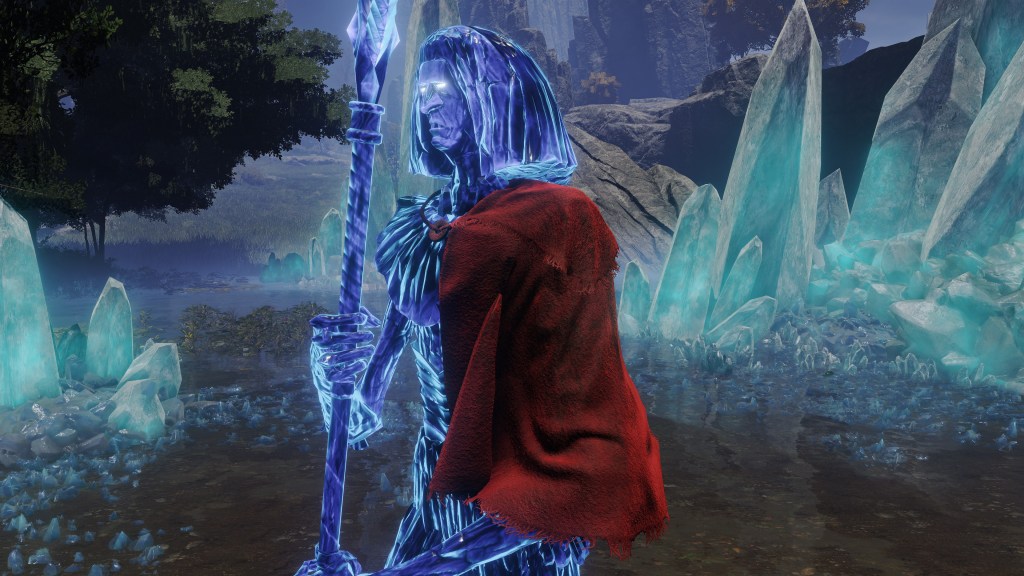
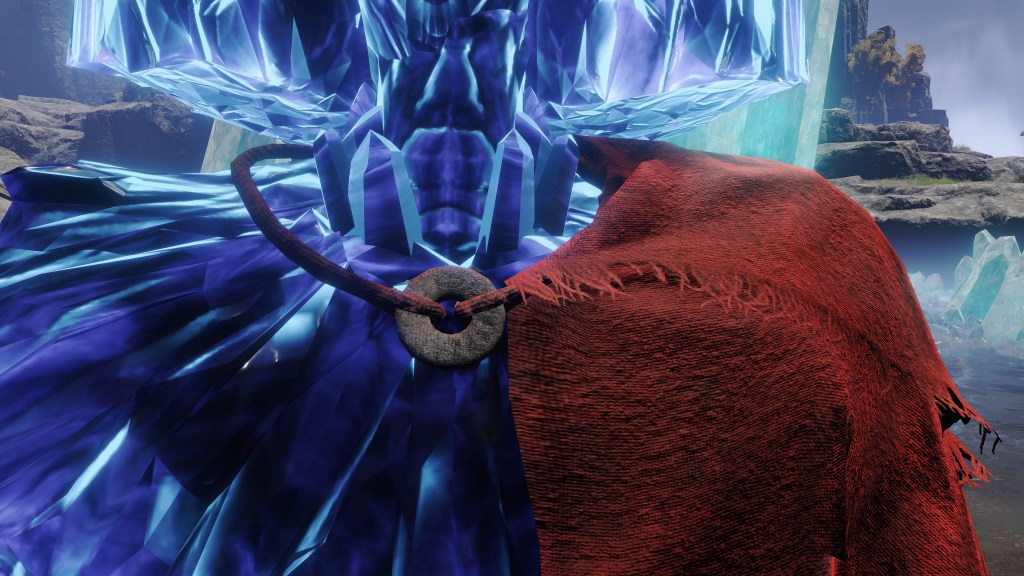
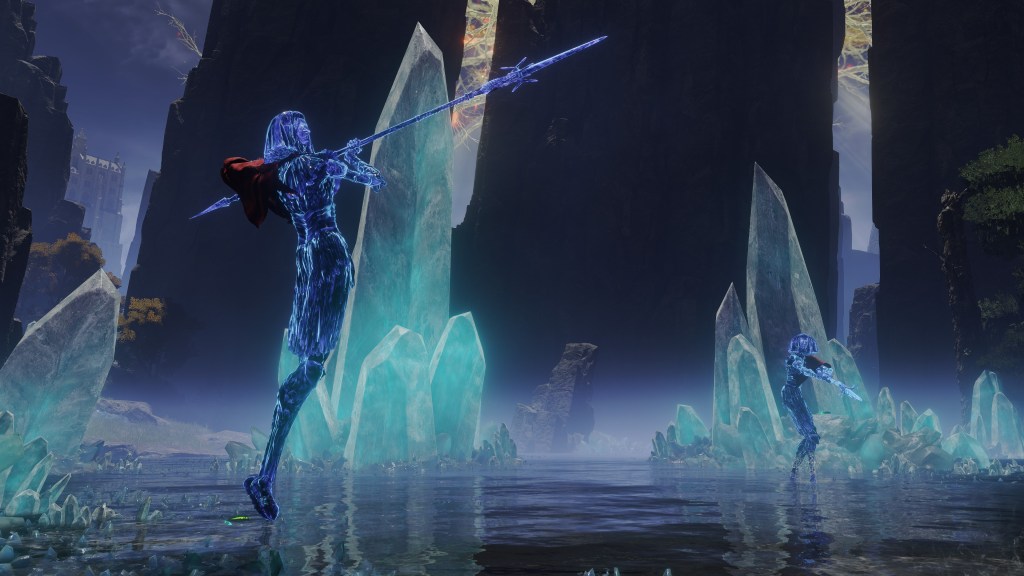
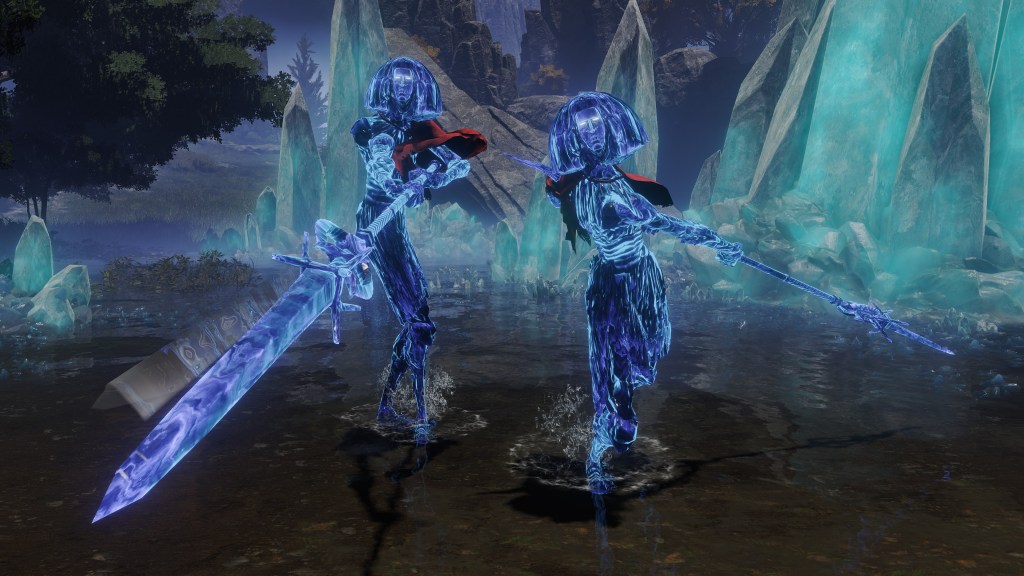
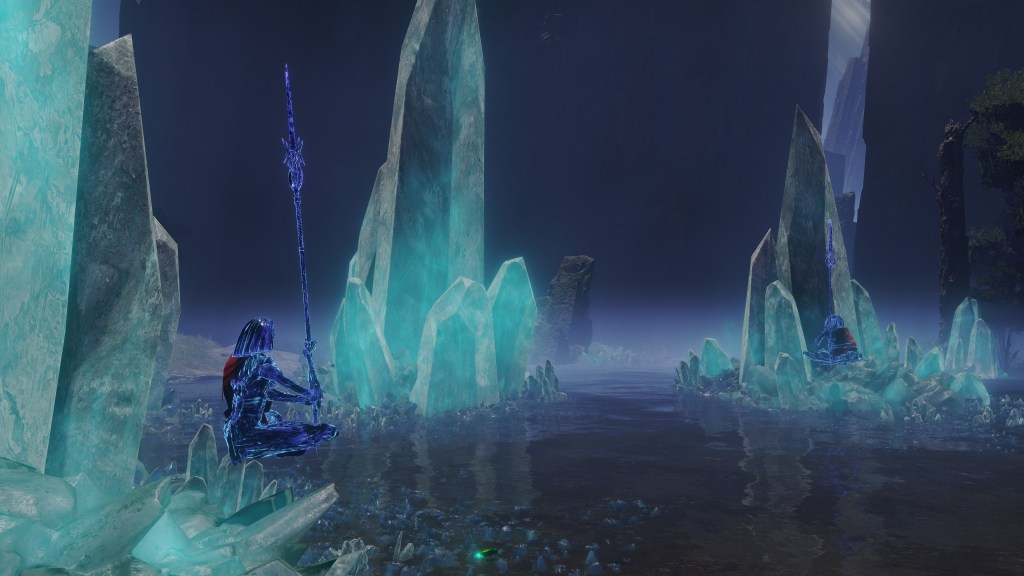
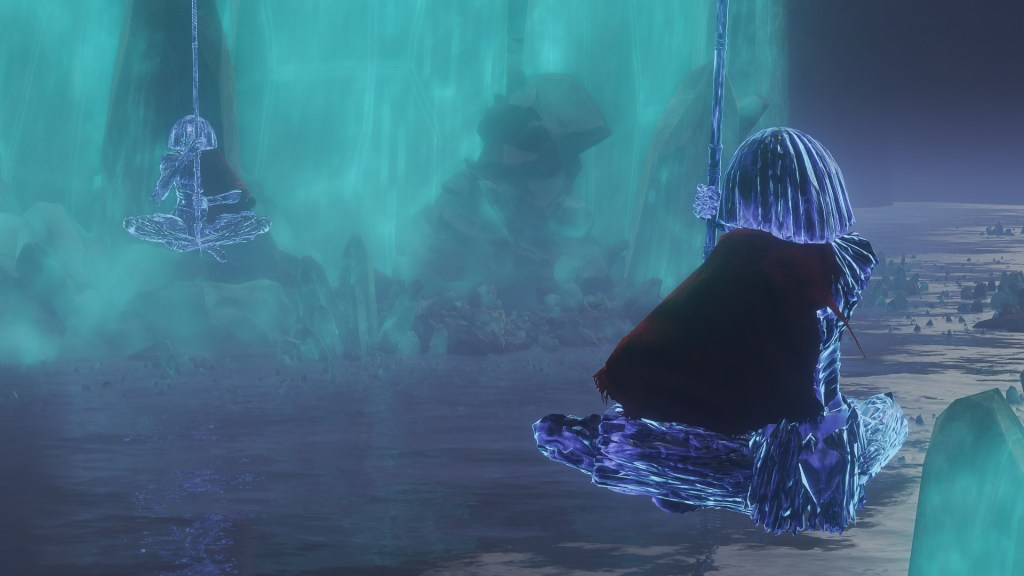
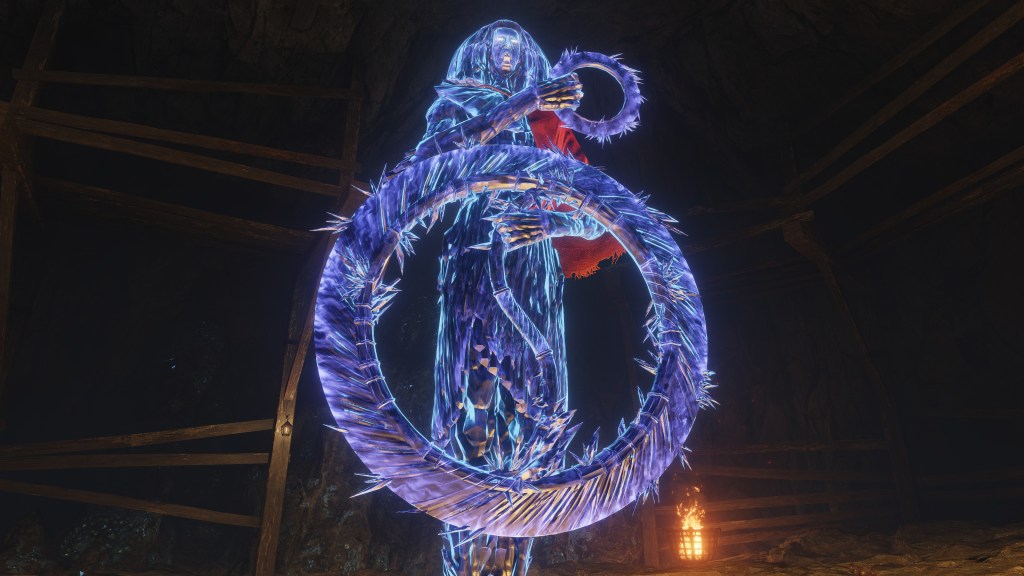
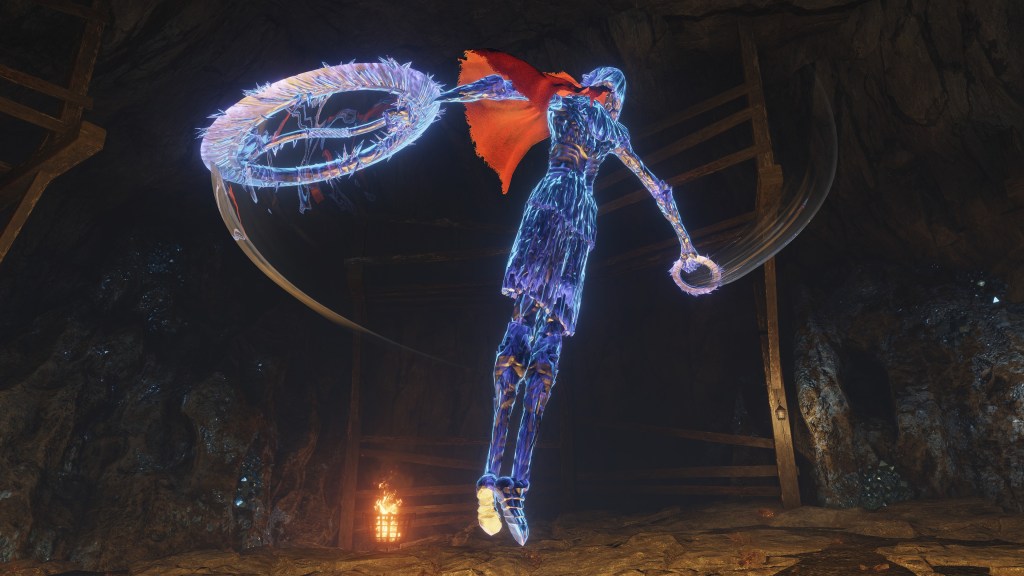
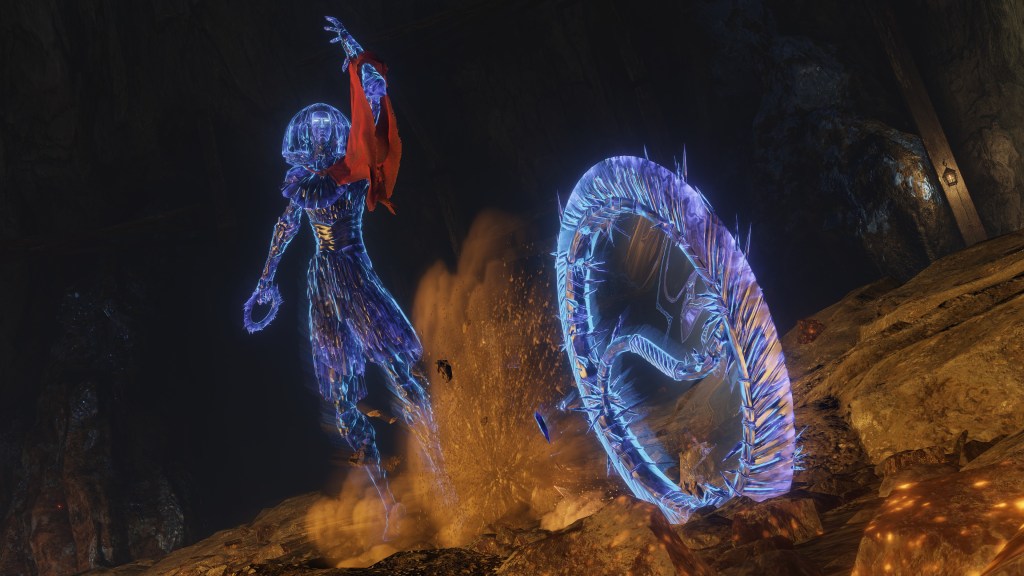
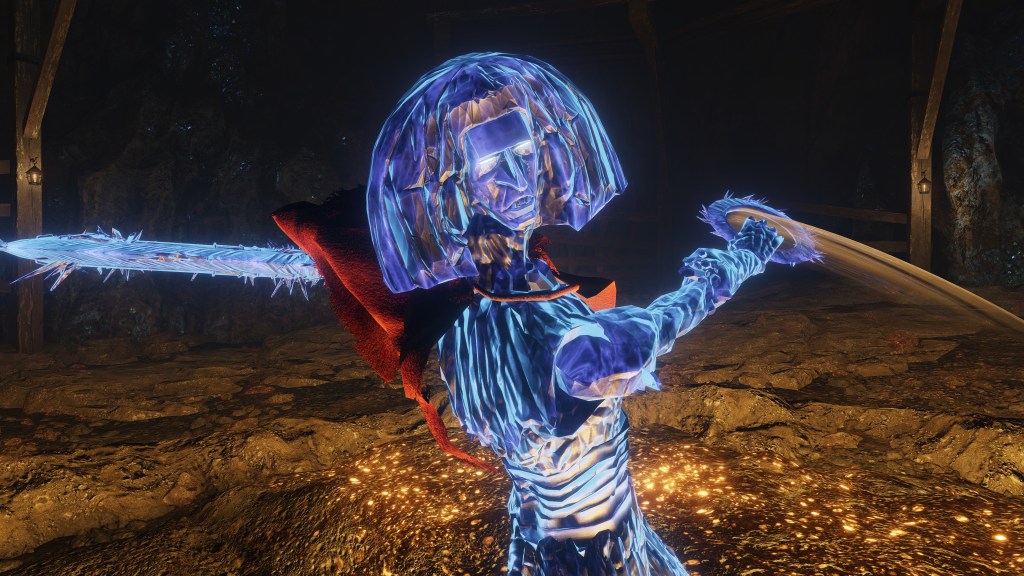
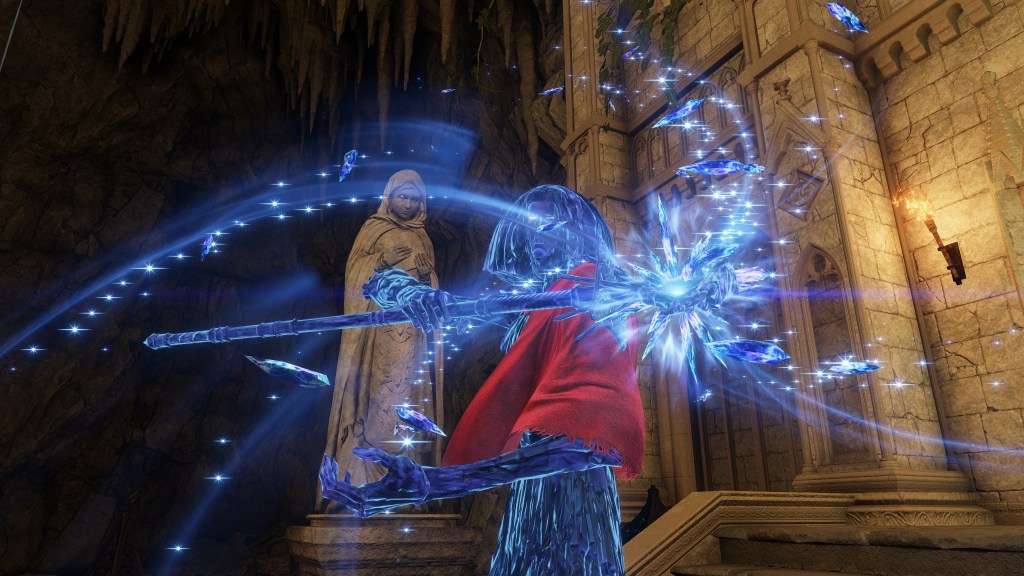
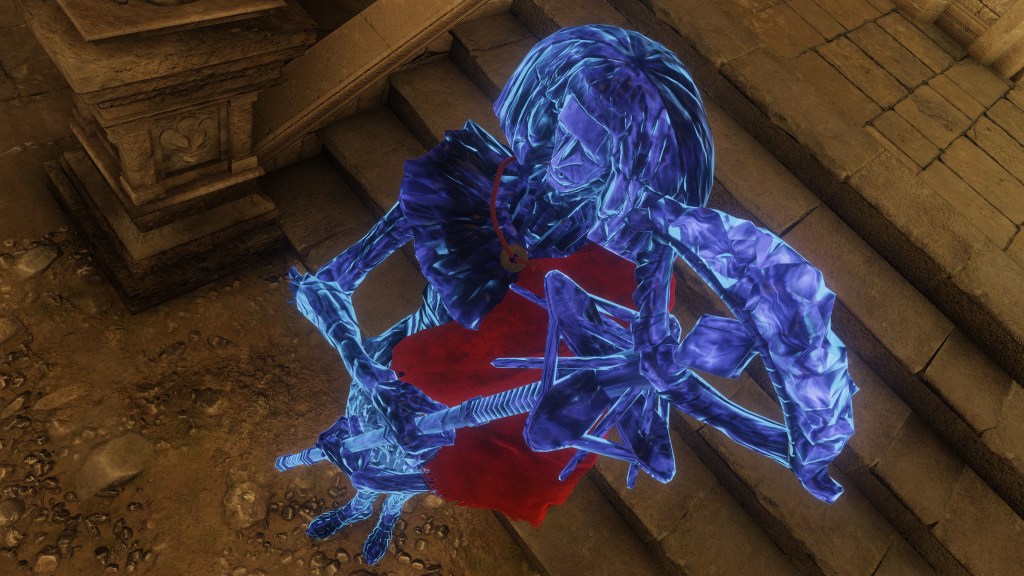
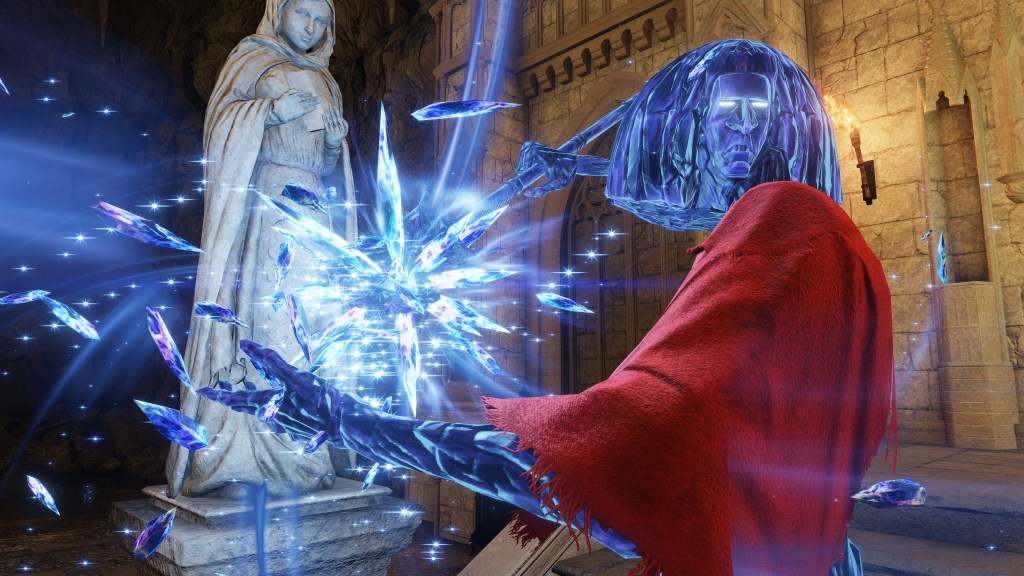
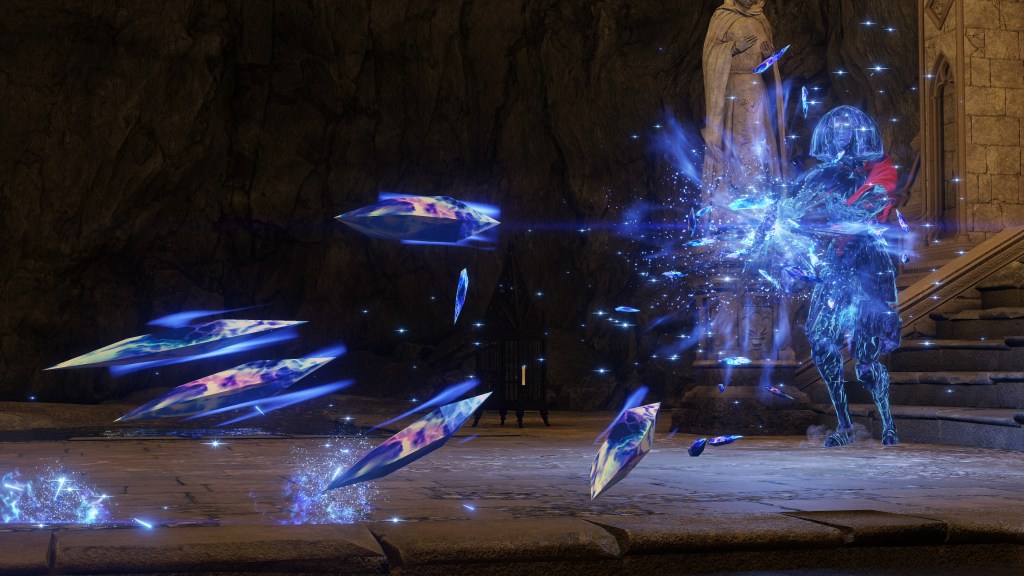
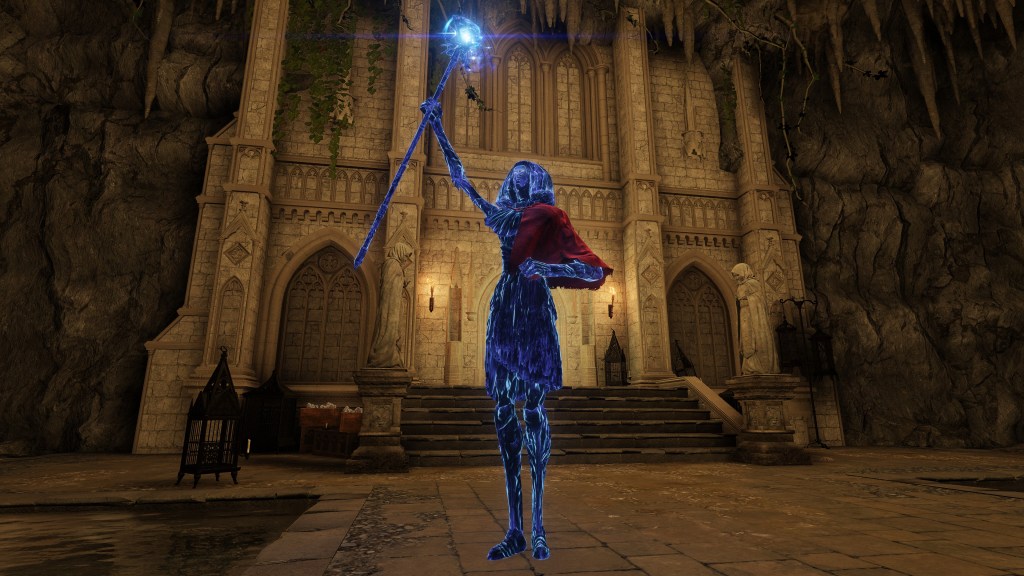
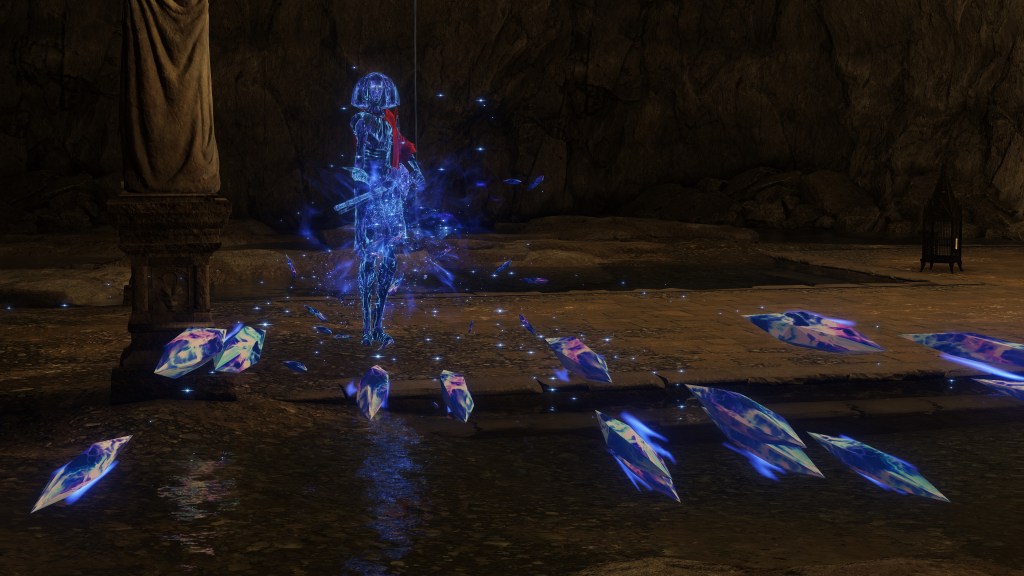
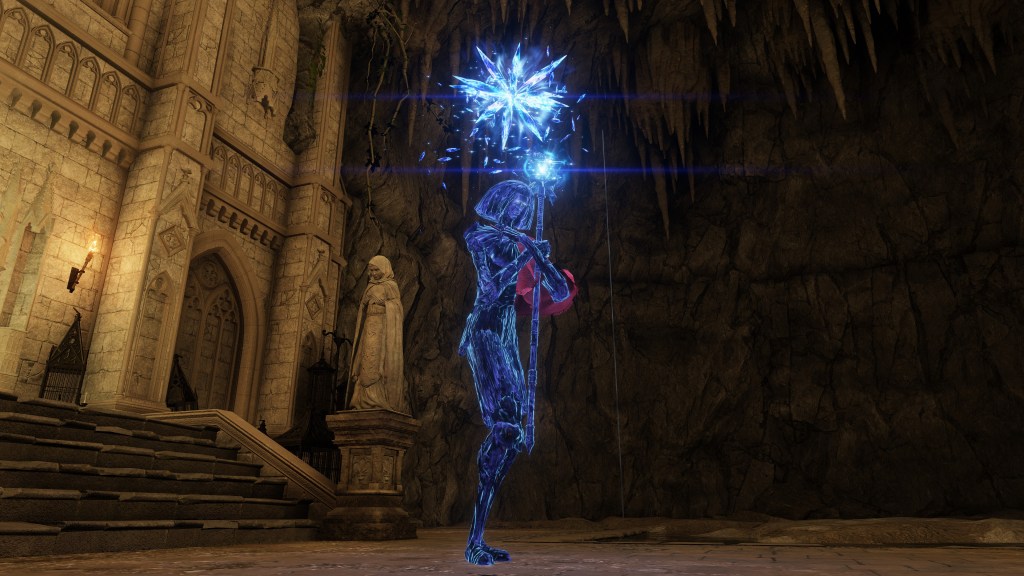
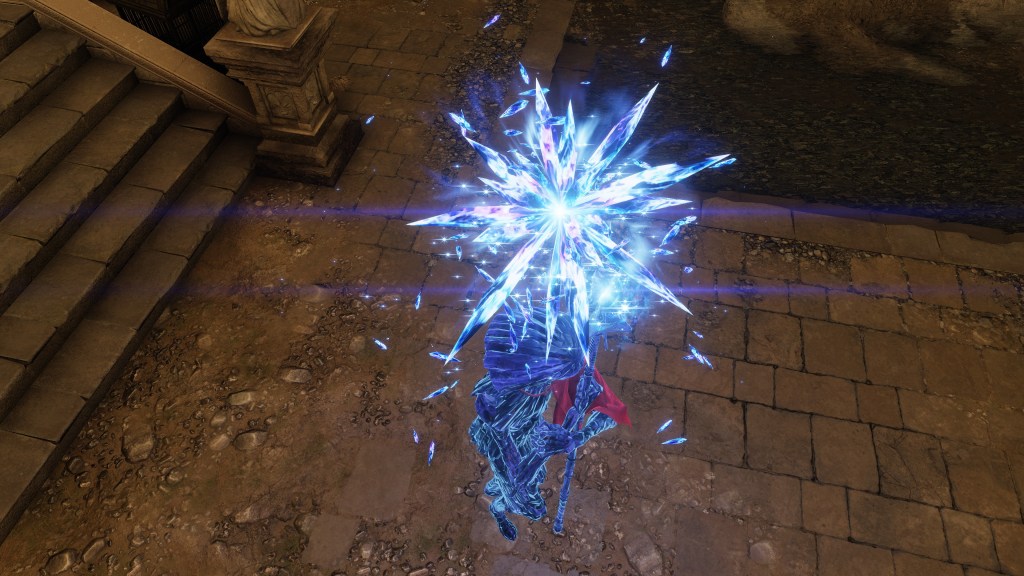
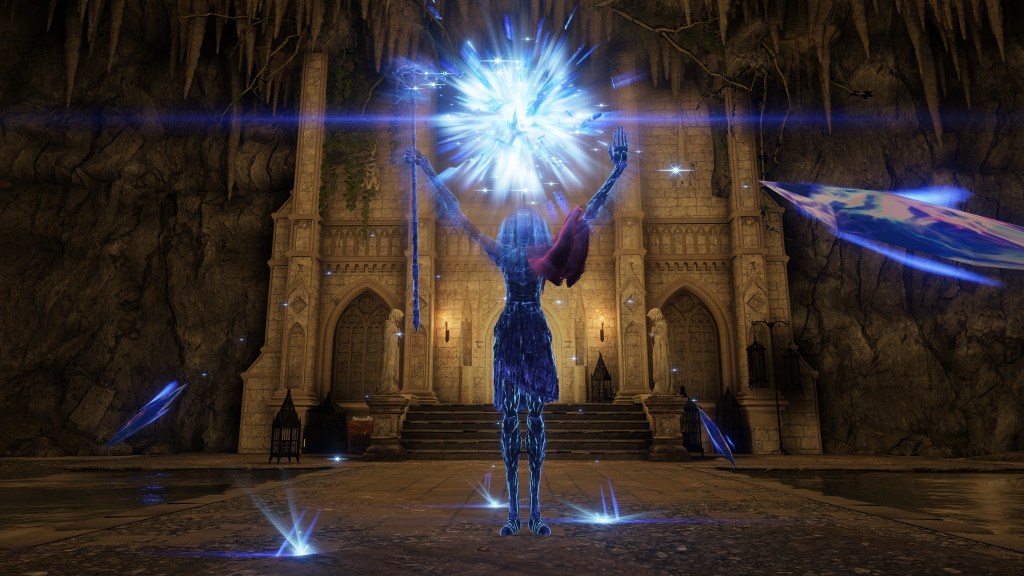
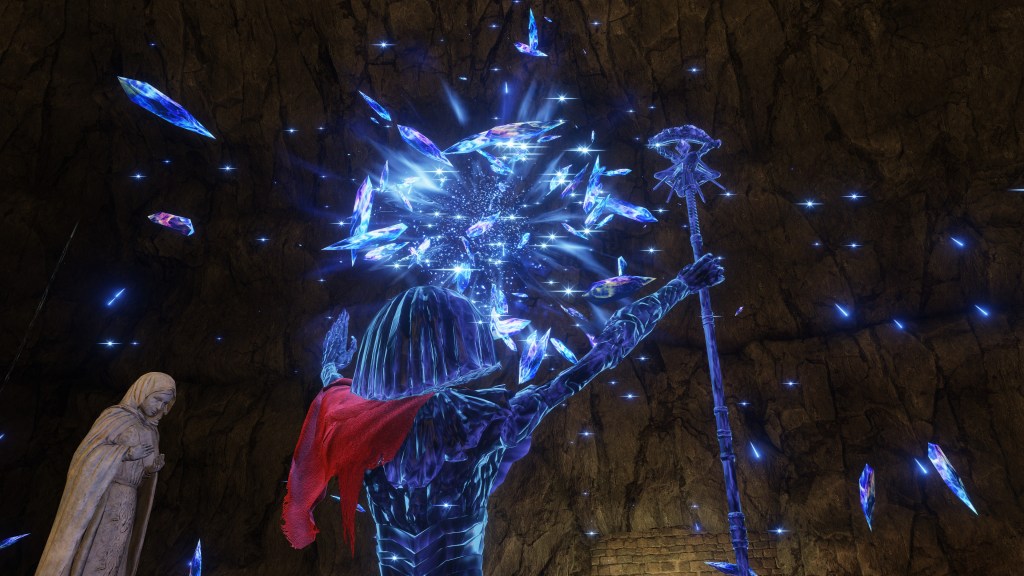
Sorcery of the enigmatic crystal-men.
Floats a crystal mass, unleashes it, and causes crystal shards to rain down over a wide range with tremendous force.
Sorcery that gurus in particular use even among the crystal-men. Its appearance is also called “Crystal Sun”.
Undergirding this, however, is the fact that an astrologer came seemingly all the way down to Liurnia from the mountaintops. This may have begun with a handful of enterprising stargazers leaving one by one over time, each wishing to return to their roots and walk the earth below the peaks. But soon, with the land’s reserves of glintstone up north becoming exhausted, more and more would begin moving for greener pastures and bigger crystals. The Crystalian’s creator was likely one of these early departers, a genius whose name might never be recognized despite leaving such a huge legacy. Instead, that sorcerer’s masterpieces would simply be admired by later generations as they unknowingly traced the stargazer’s footsteps. And we can be certain that they traced such a path thanks to topography.
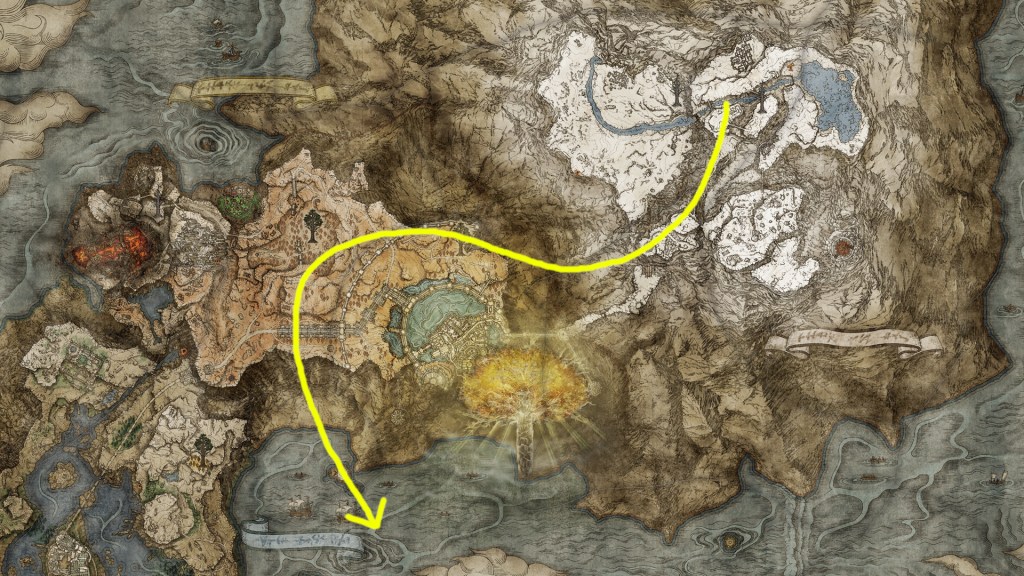
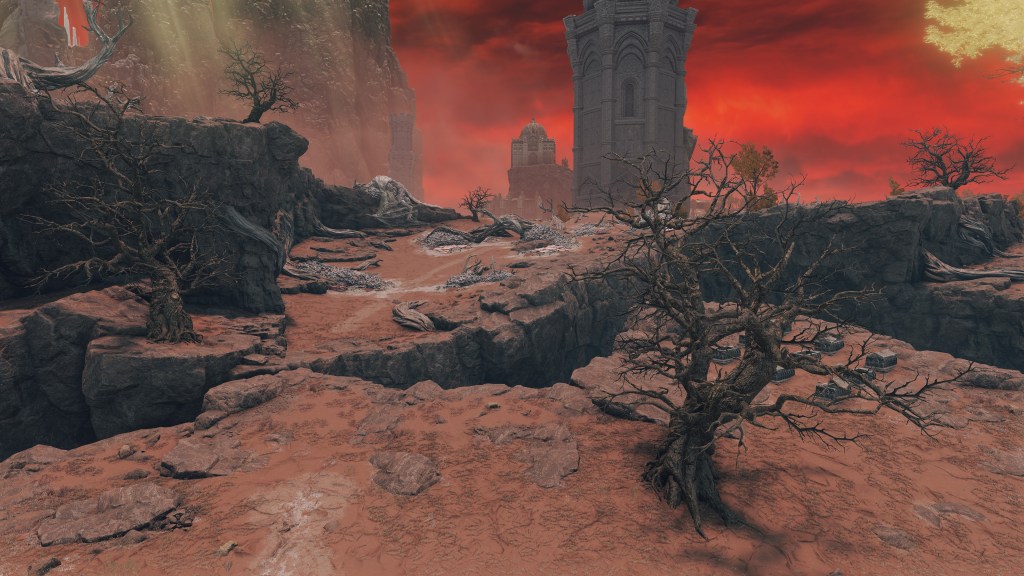
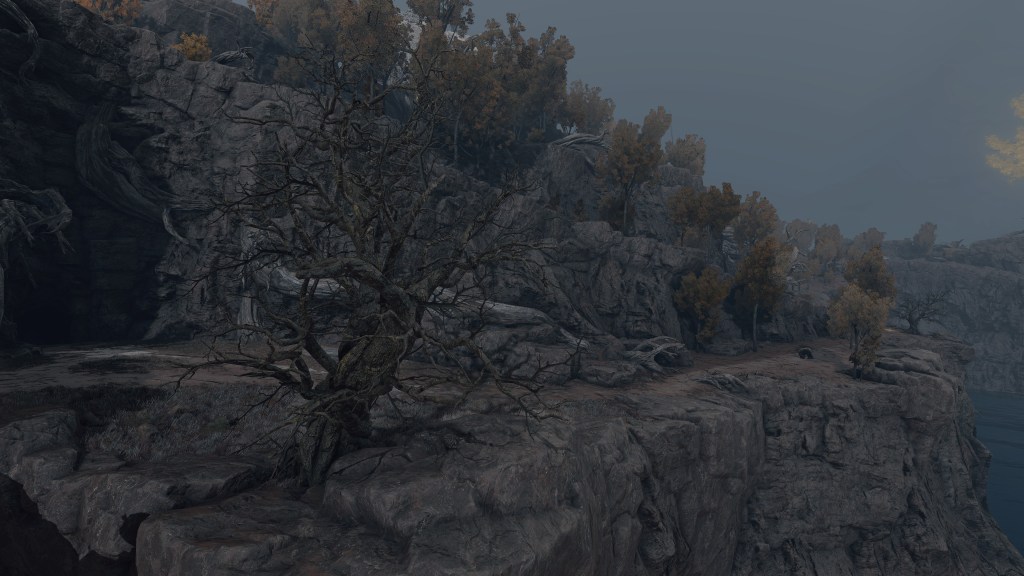
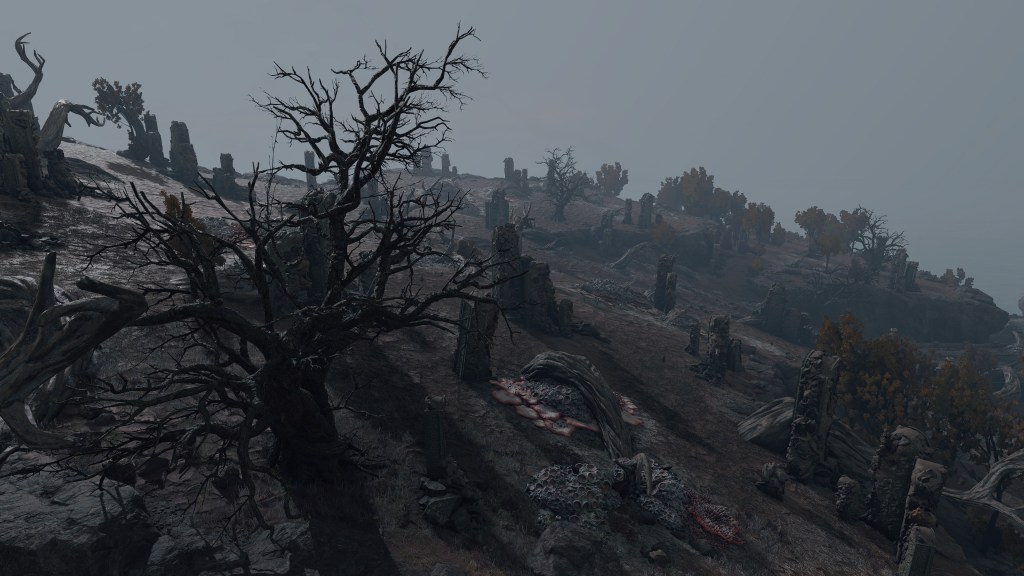
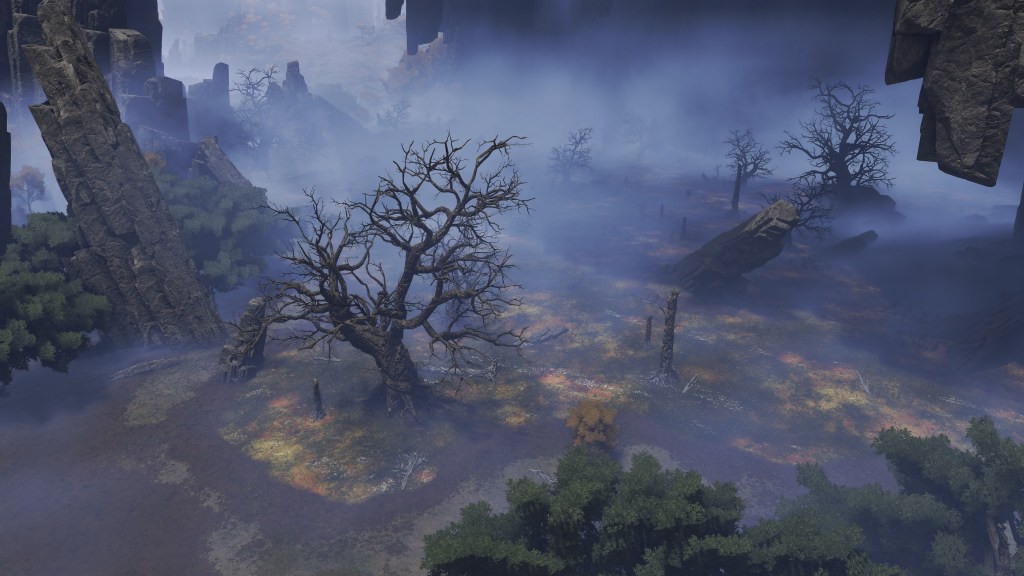
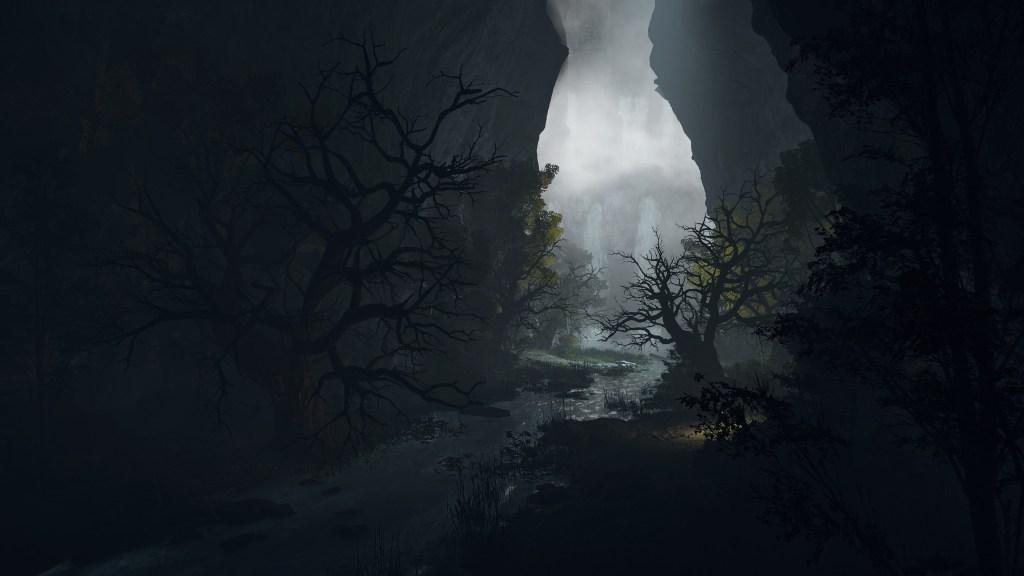
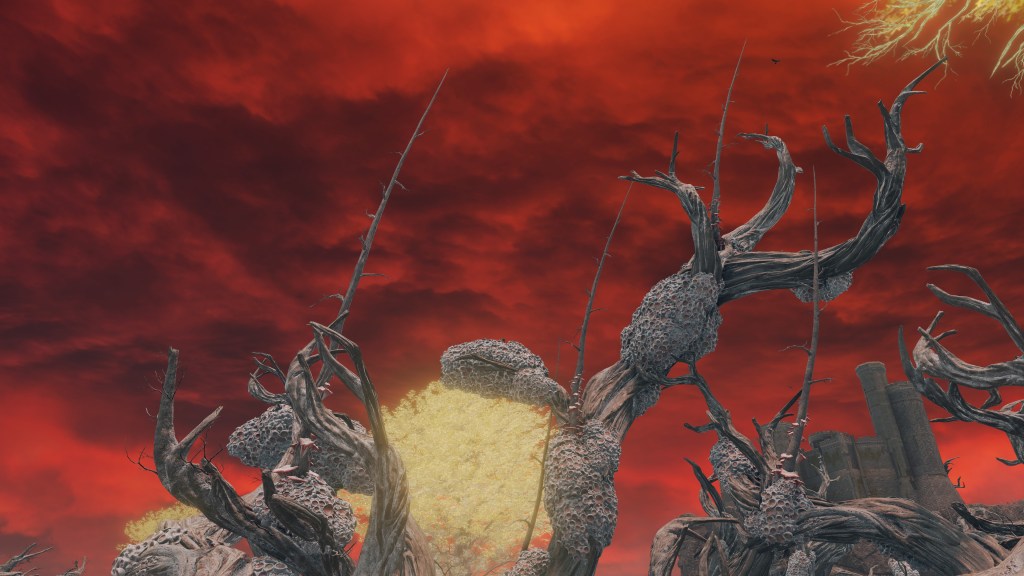
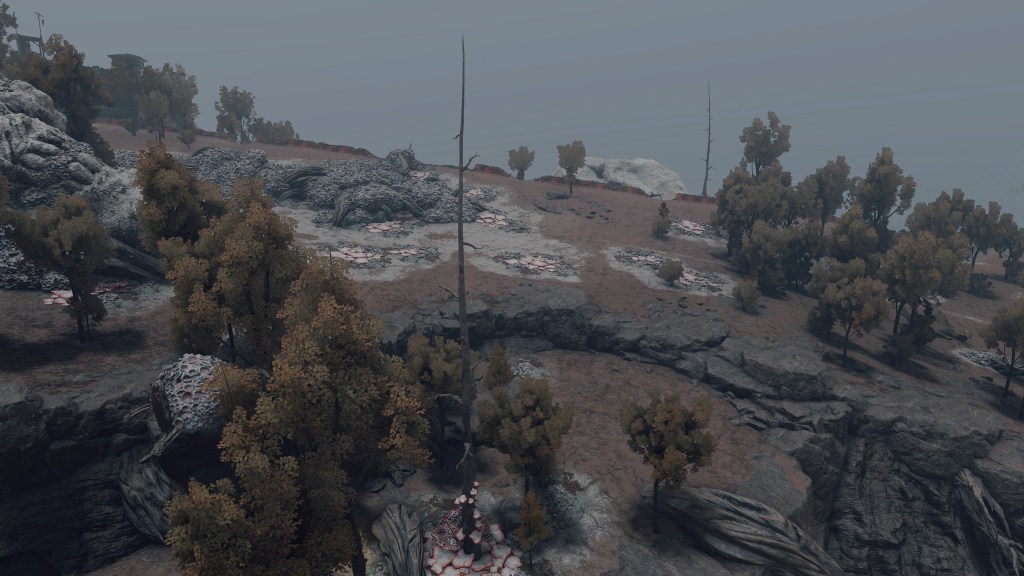
Among the various trees encountered on our journey, the species of large conifers follow the most informative pattern. The tree itself is ubiquitous in only a few regions of the Lands Between, namely the Mountaintops of the Giants, Altus Plateau, and Mt. Gelmir. By contrast, the same holds true for every part of the Realm of Shadow. However, this can be justified by the geography. The windmill village of Dominula confirms that the plateau receives northern winds from the mountaintops, allowing for seeds to be carried down south. Considering that pine trees tend to be associated with colder climates, the large conifers are liable to originate from those snowy peaks. Their seeds then crossed the gap and spread across Altus and neighboring Gelmir. The same northern winds continued carrying those seeds down to Scadu Altus and below, leading to them covering the entire center of the Lands Between over time.
This explains their natural spread across the lands dating back likely long before much of human history, if that. But these conifers exist not just there but also in other lands, disconnected from the aforementioned travel path. How to explain their appearance in more specific spots? The only answer is a less natural method. Just like the wind, people and animals can likewise inadvertently carry seeds across vast distances whilst migrating, allowing for new trees to grow far from their original habitat. And if those trees originate from the Mountaintops of the Giants, then the patent source of the spread would be Mountaintop populations. Put another way, we should expect sorcerers in areas where the large conifers are disproportionately concentrated. A straightforward example of this are the Carians, whose name is synonymous with sorcery. Both Caria Manor and the Carian Study Hall are surrounded by the conifers, and we see the same for the north entrance to the sorcery academy of Raya Lucaria as well as across the bridge from there, along the Bellum Highway. Sorcerers bring conifers.
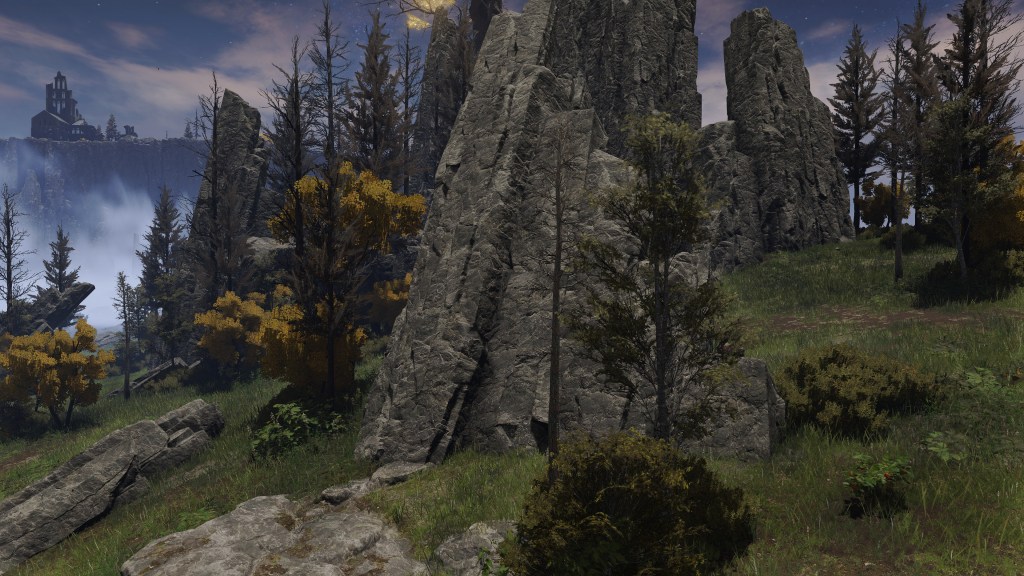
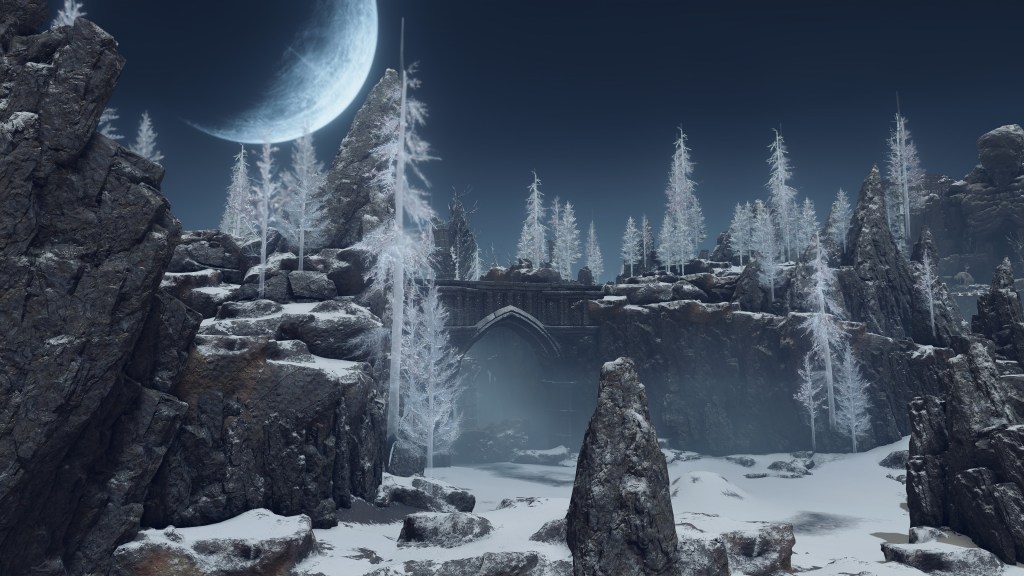
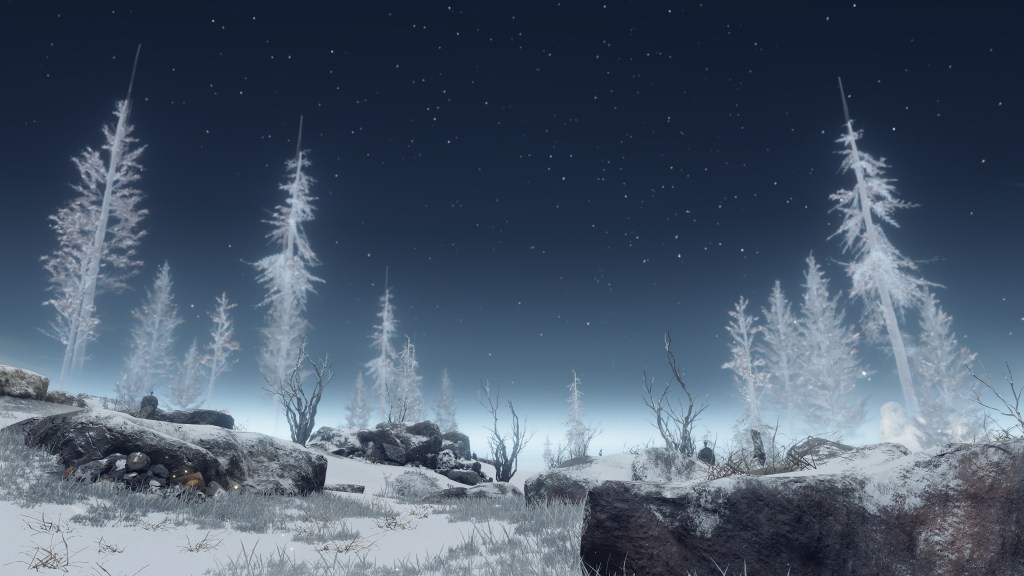
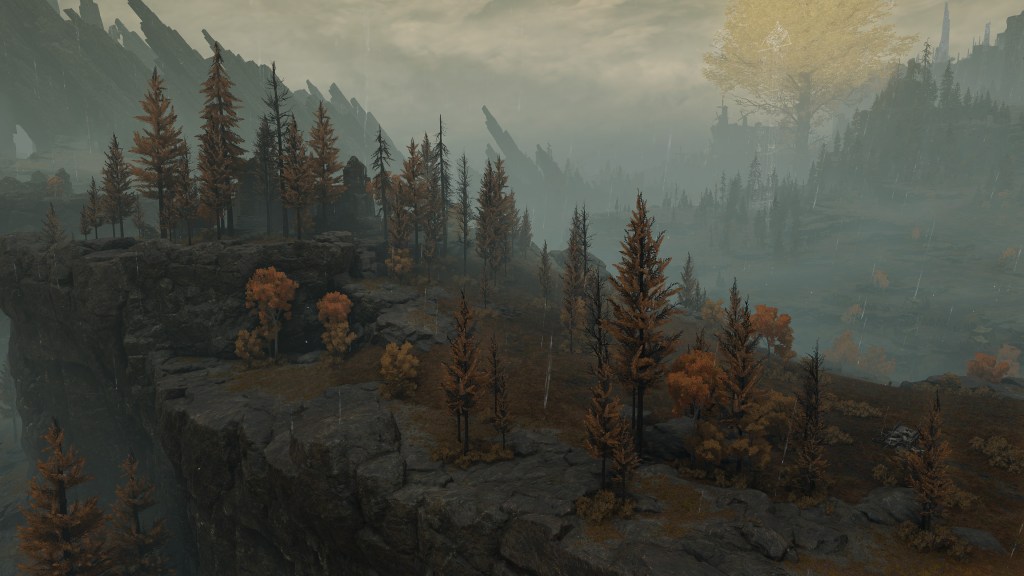
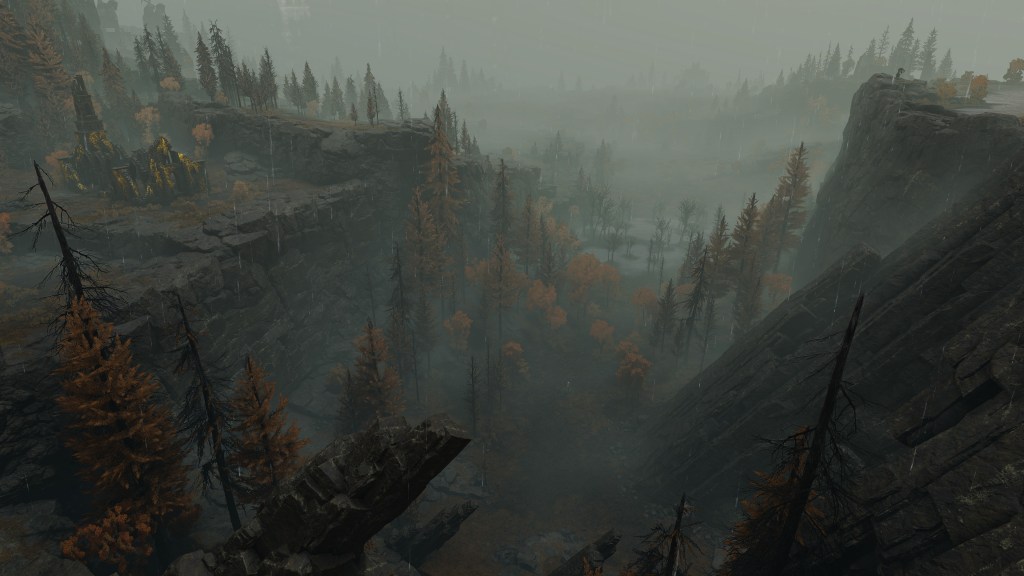
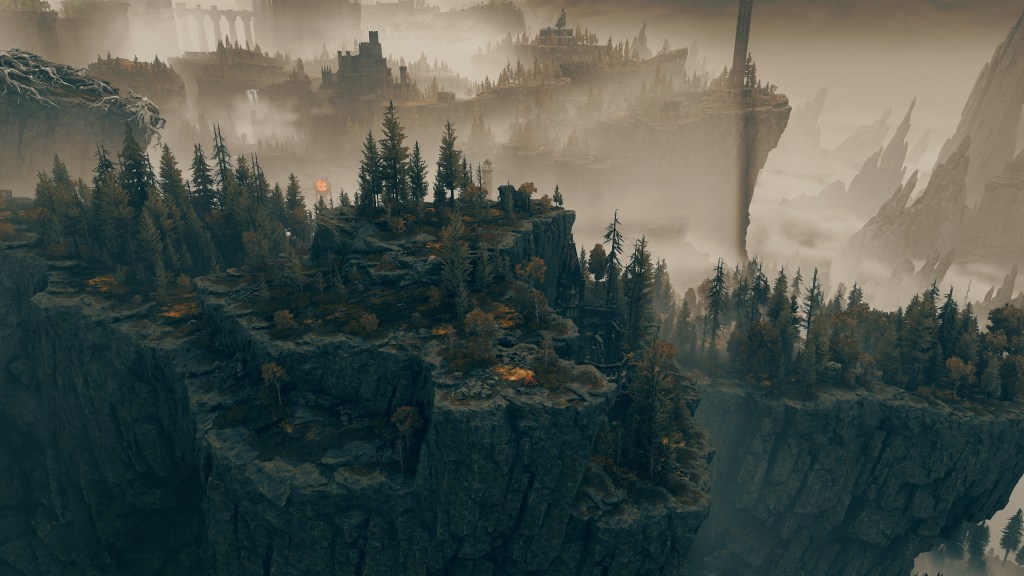
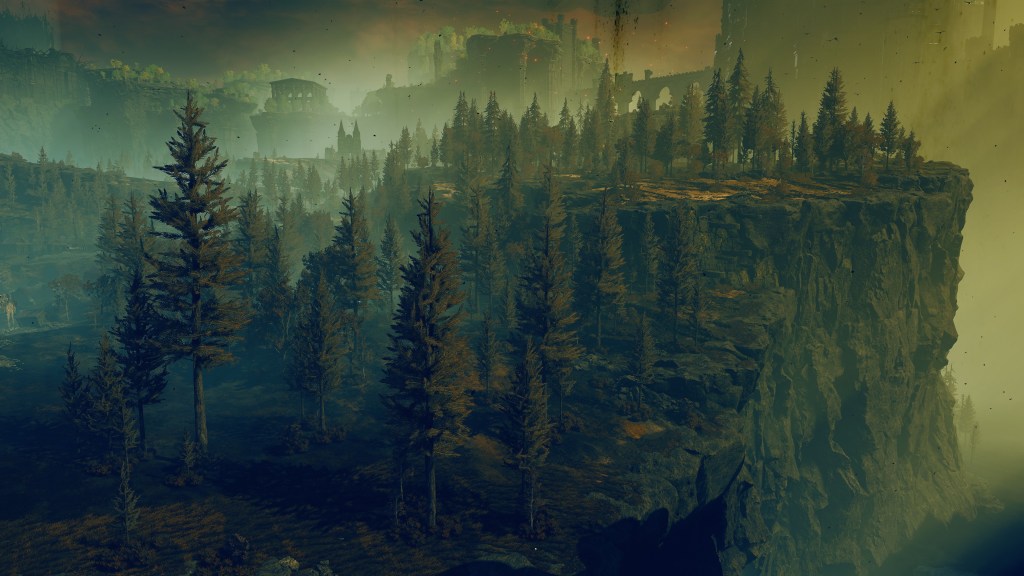
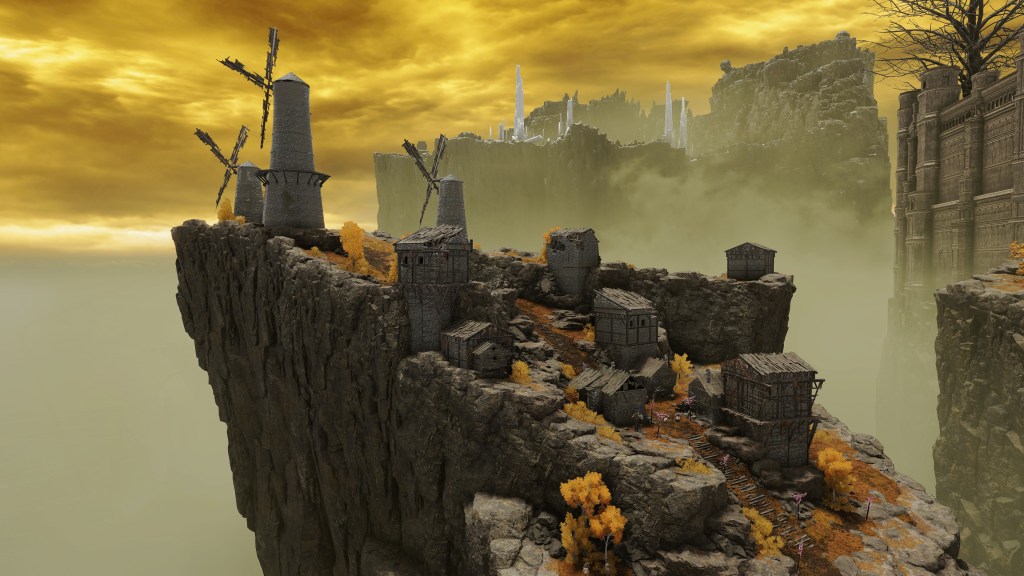
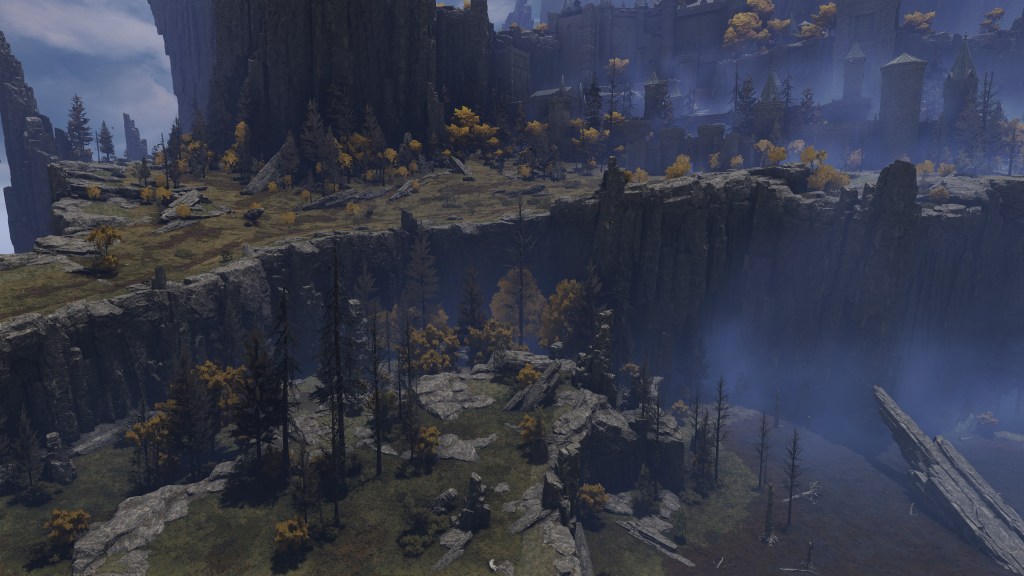
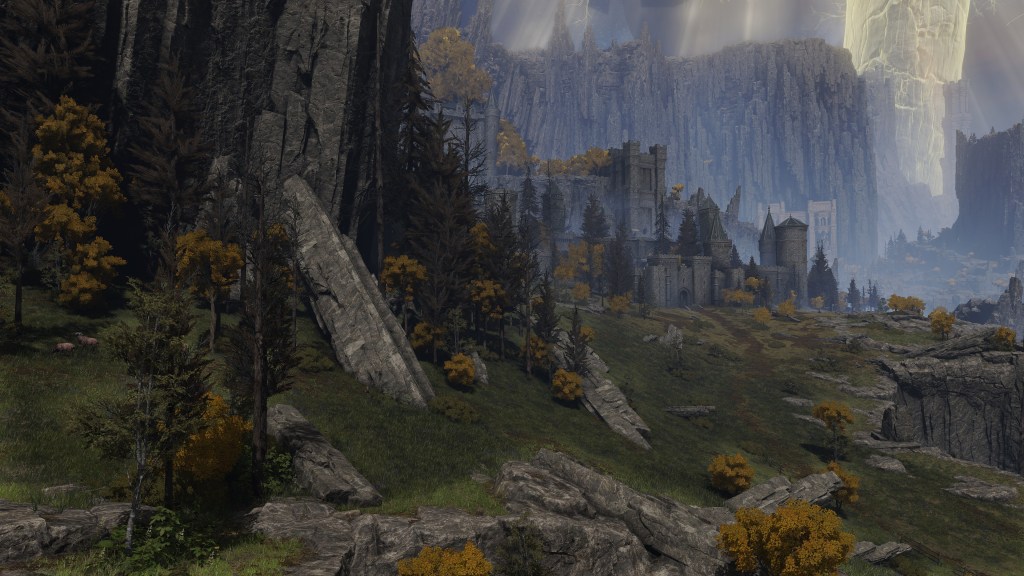
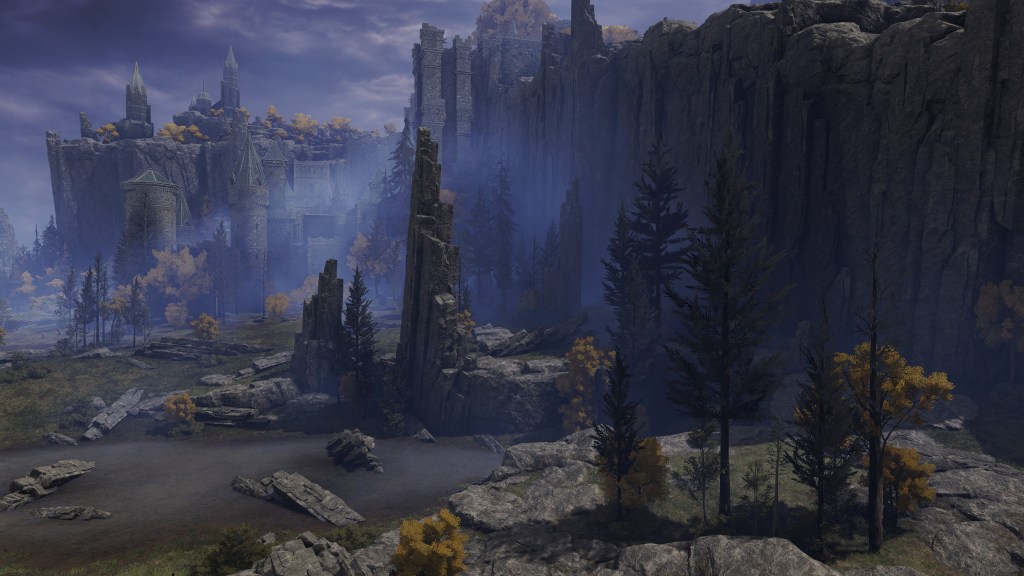
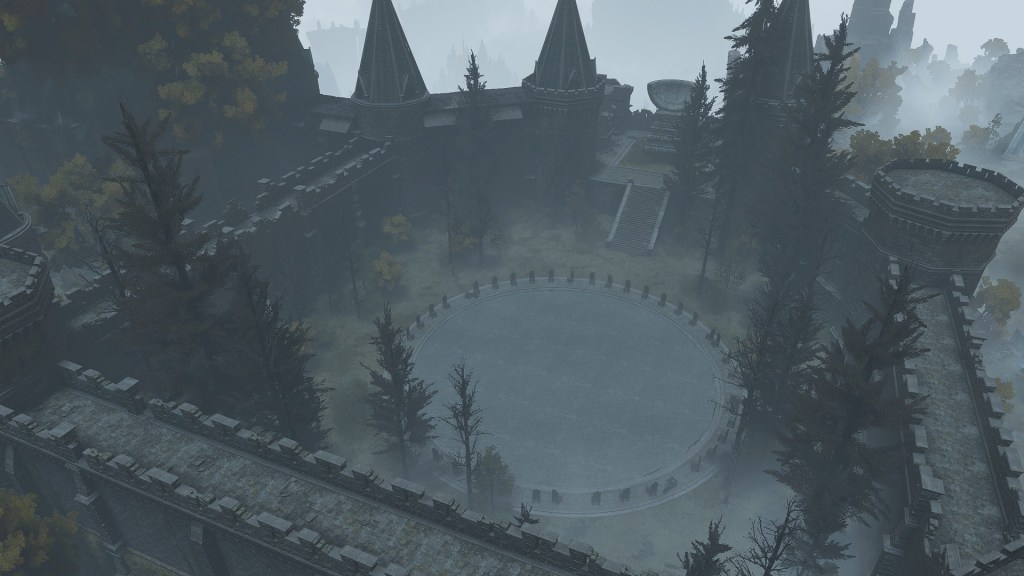
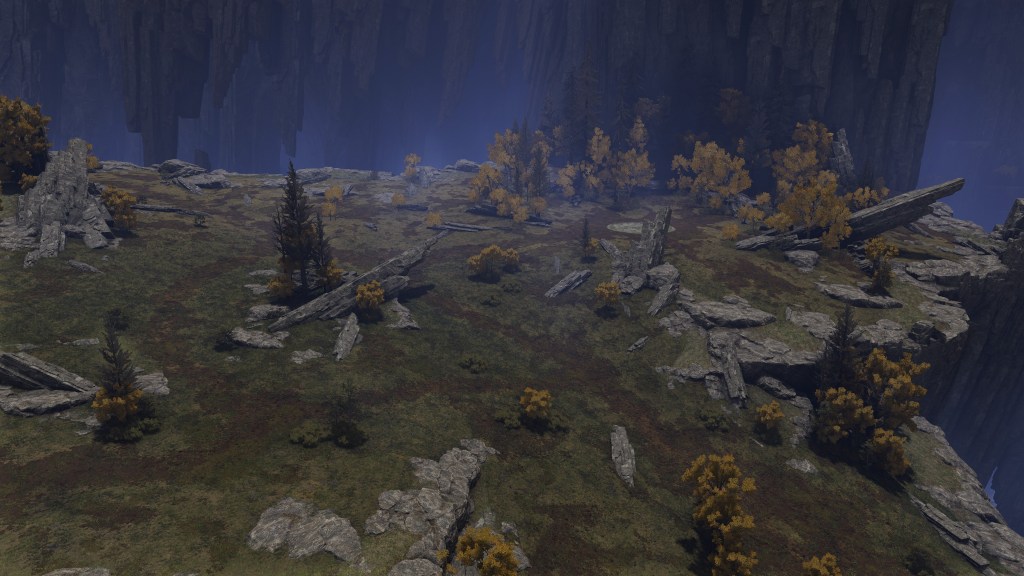
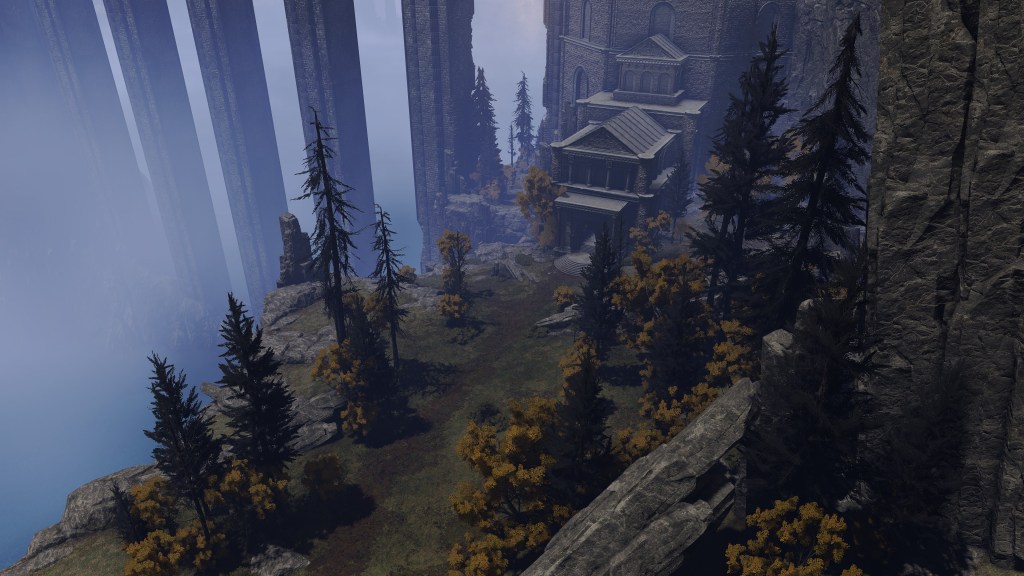
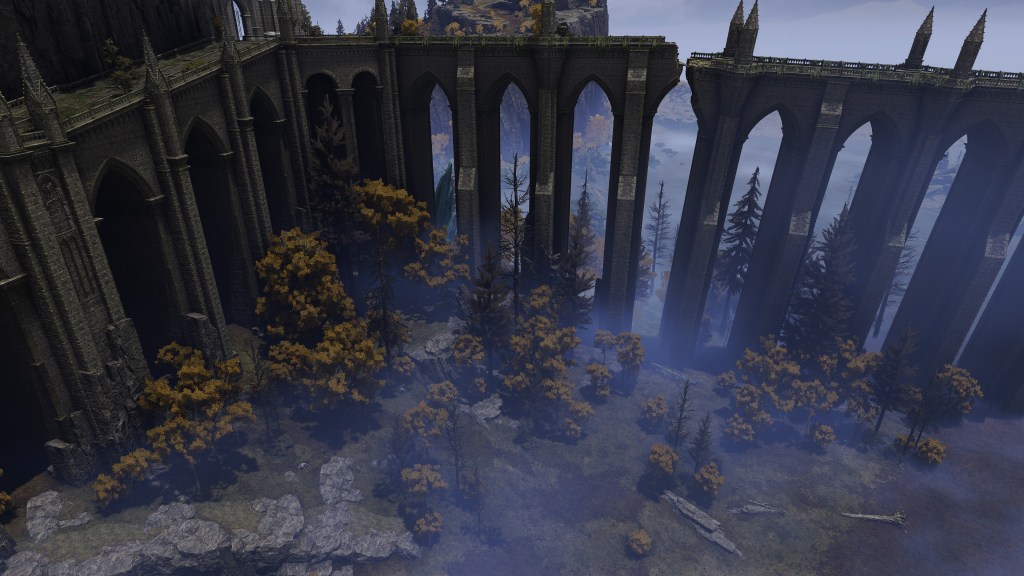
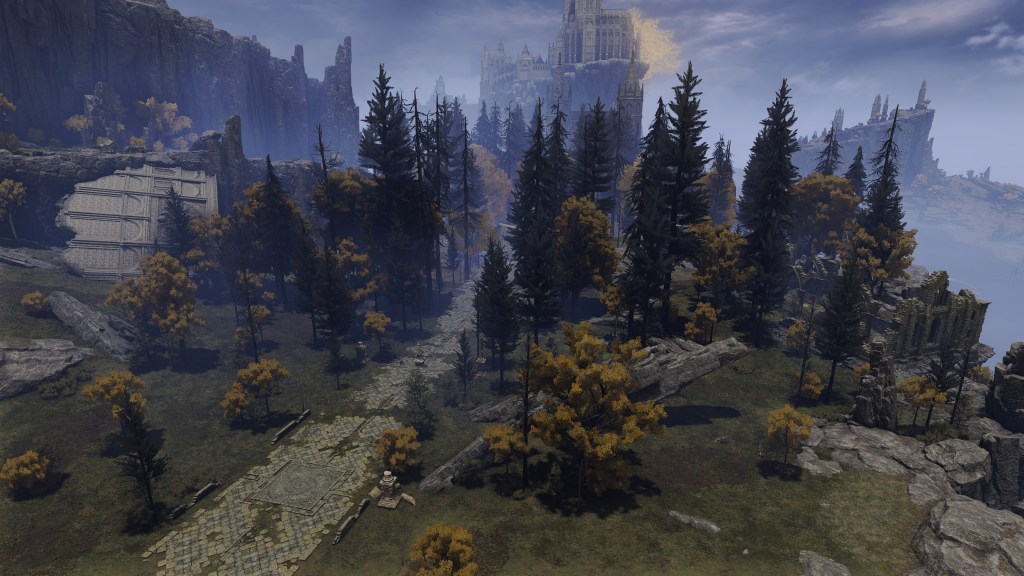
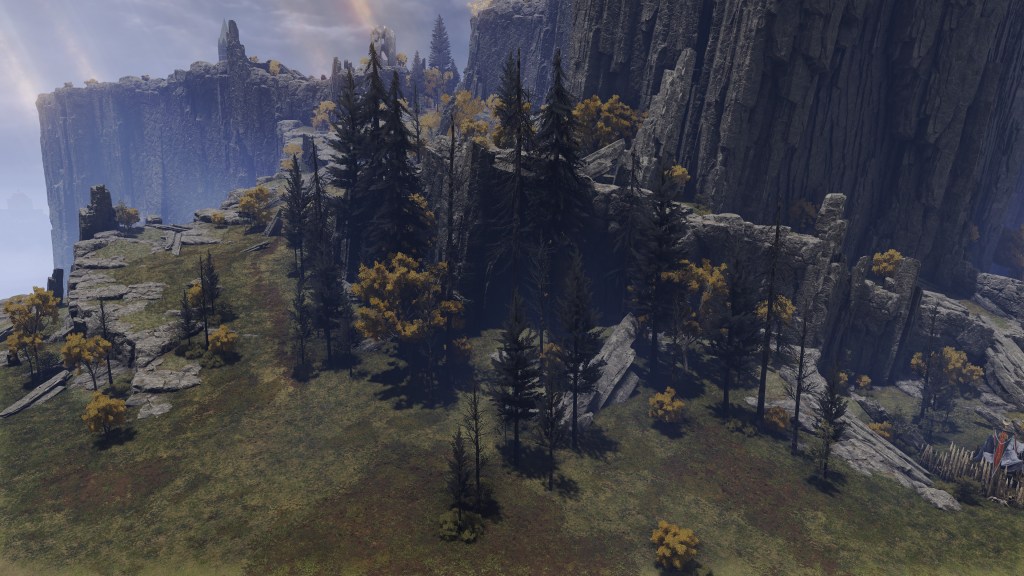
The full extent of this may be masked by geographical changes, namely flooding. Trees generally don’t grow in water, leaving bodies of water like ponds typically bare even in heavily forested areas. In cases where we do see trees in such pools, they tend to be dead; fallen trunks or rotted stumps of driftwood. However, that, too, implicates the death of those trees within those waters. In the case of the large conifers, there exists a stark contrast between trees on either side of the water front. While a conifer on land may occasionally have died due to a plethora of factors, the one in water invariably has died — in other words, the spread of the water kills the trees. Conifers, in fact, appear to be the most susceptible to flooding outside grasses, as the more common kinds of trees and bushes remain alive in certain rivers or ponds. Admittedly, that is likely indicative of a recency bias, as even rivers with surviving trees begin to show signs of death with driftwood like in the Deeproot Depths and downriver. It may take some time, but eventually all those plants submerged by new water flows end up dead.
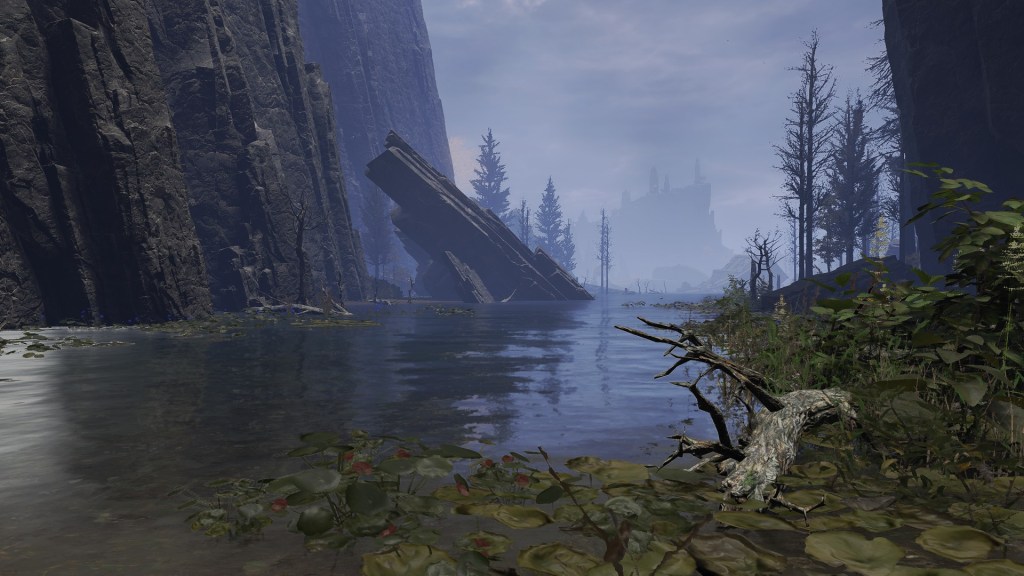
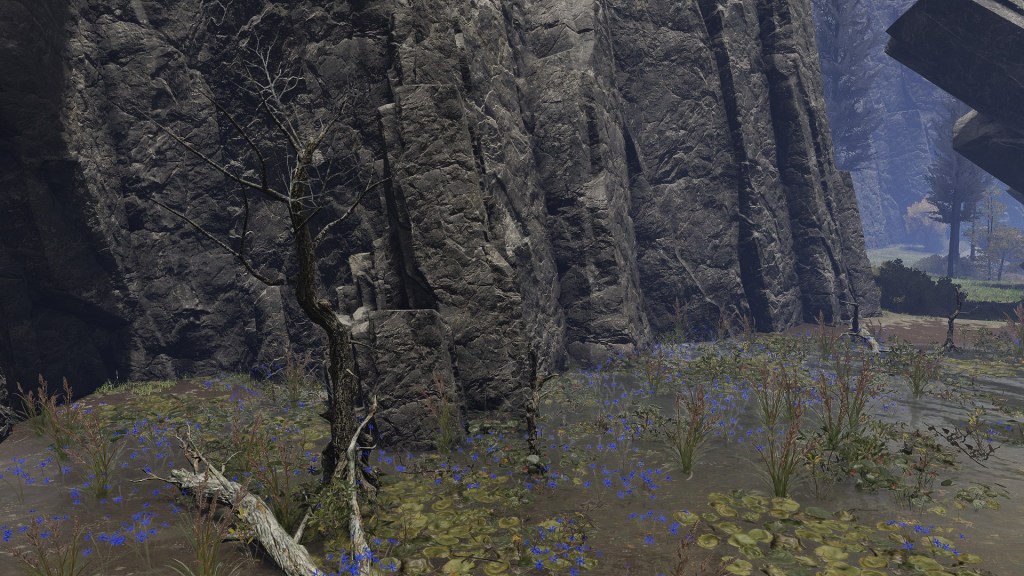
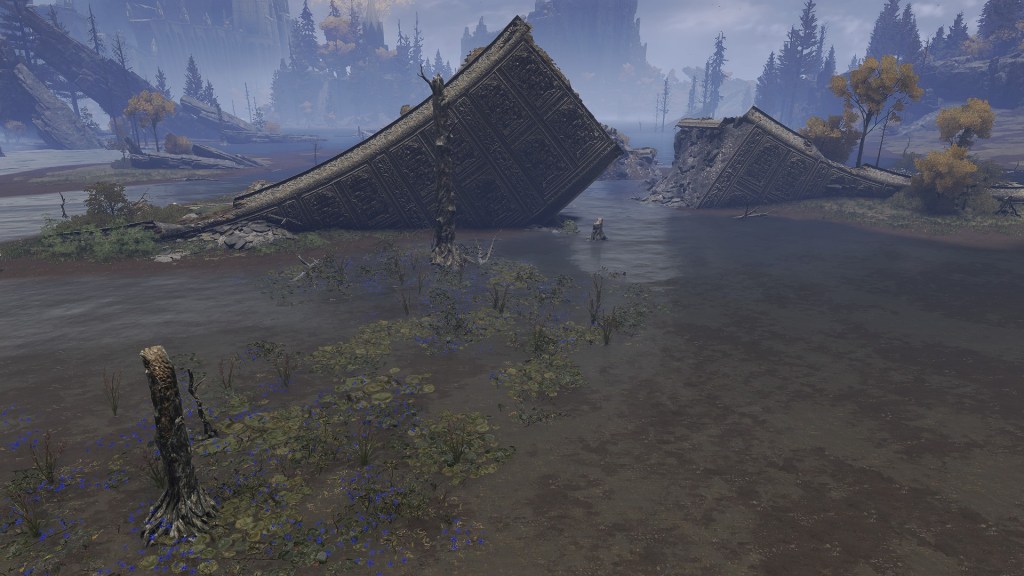
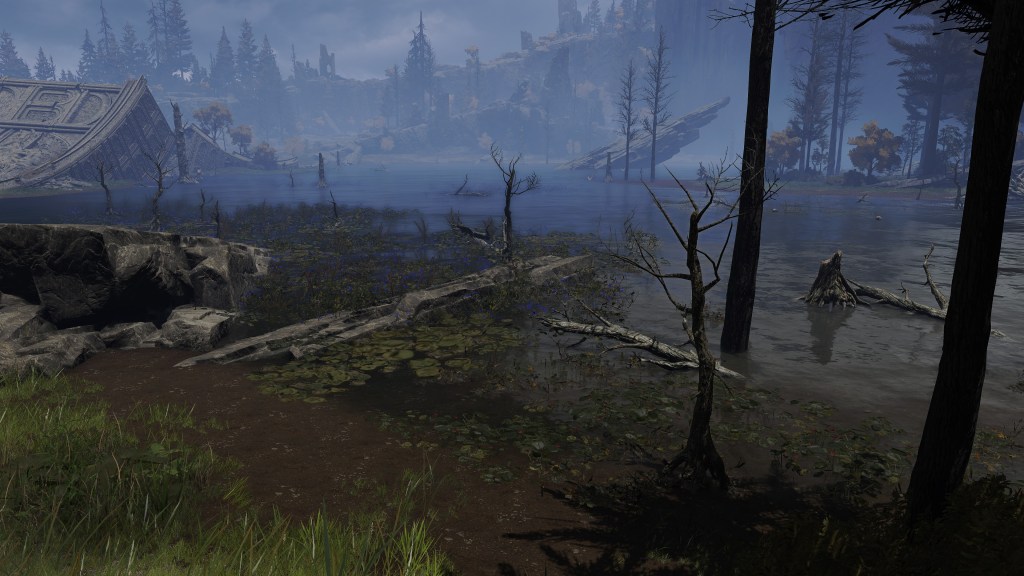
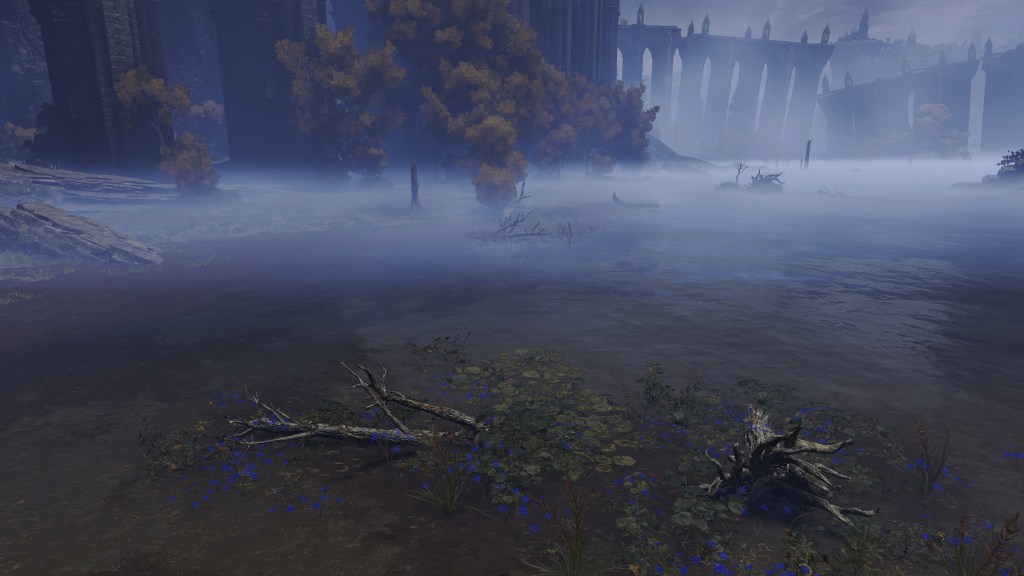
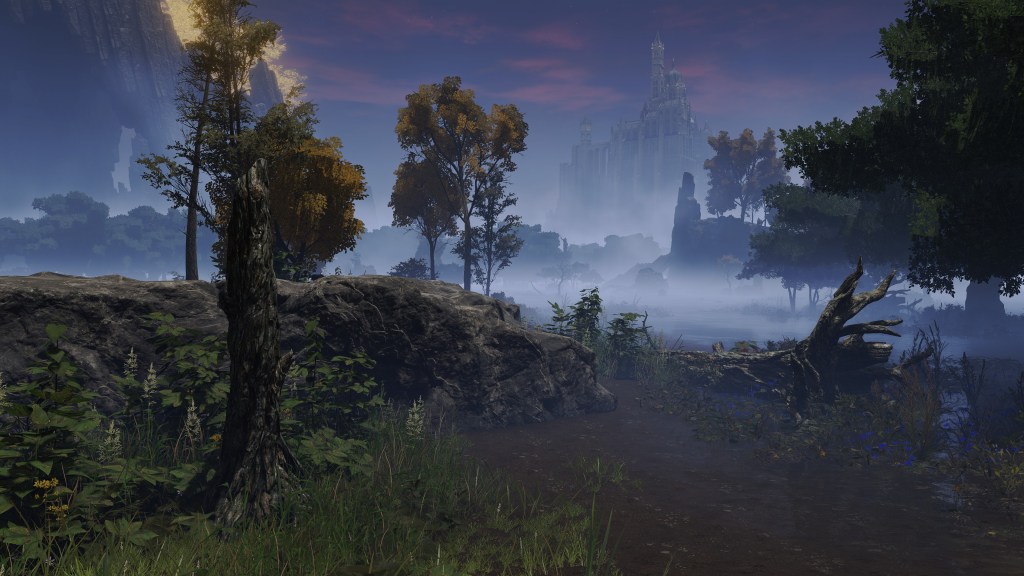
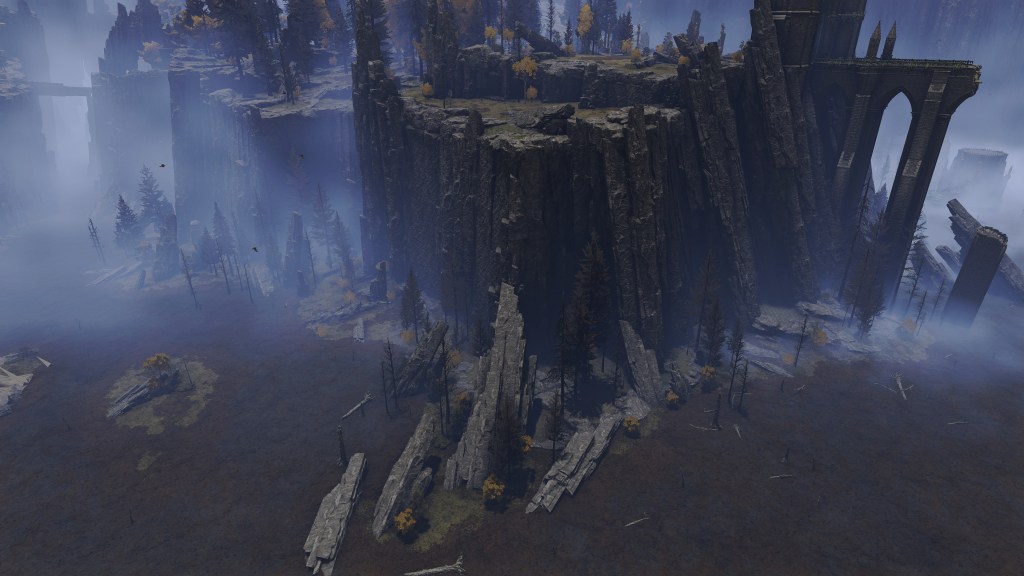
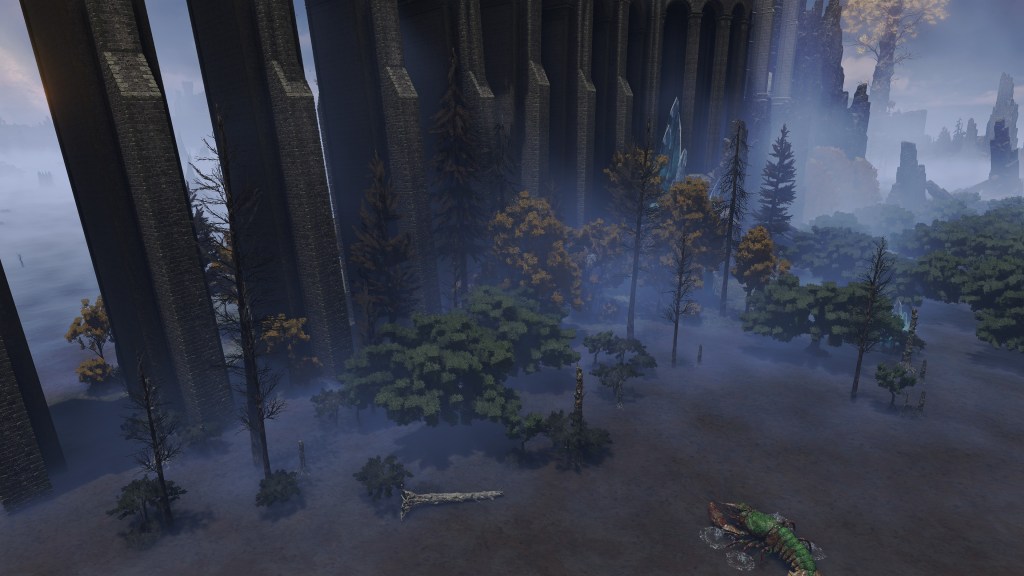
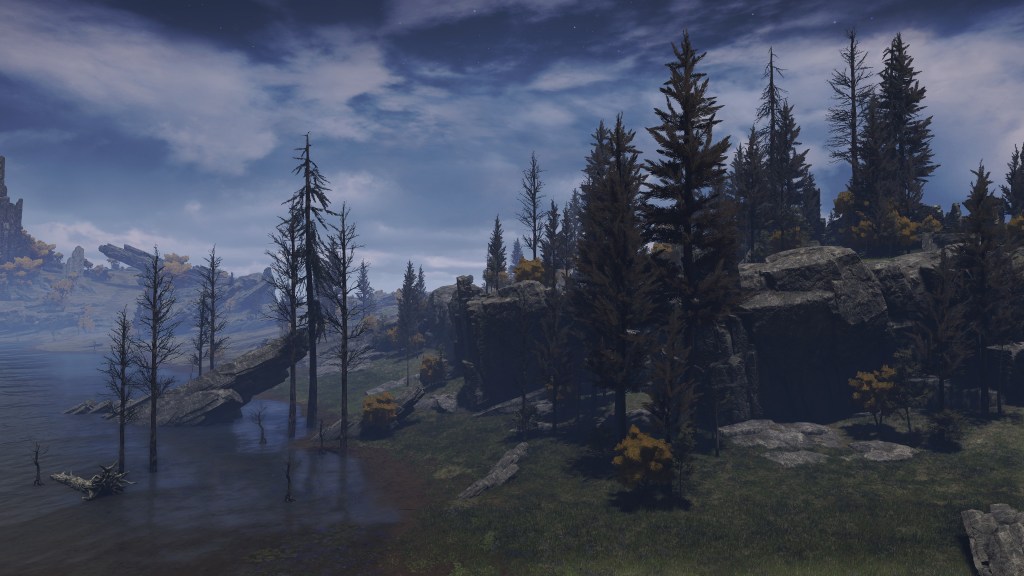
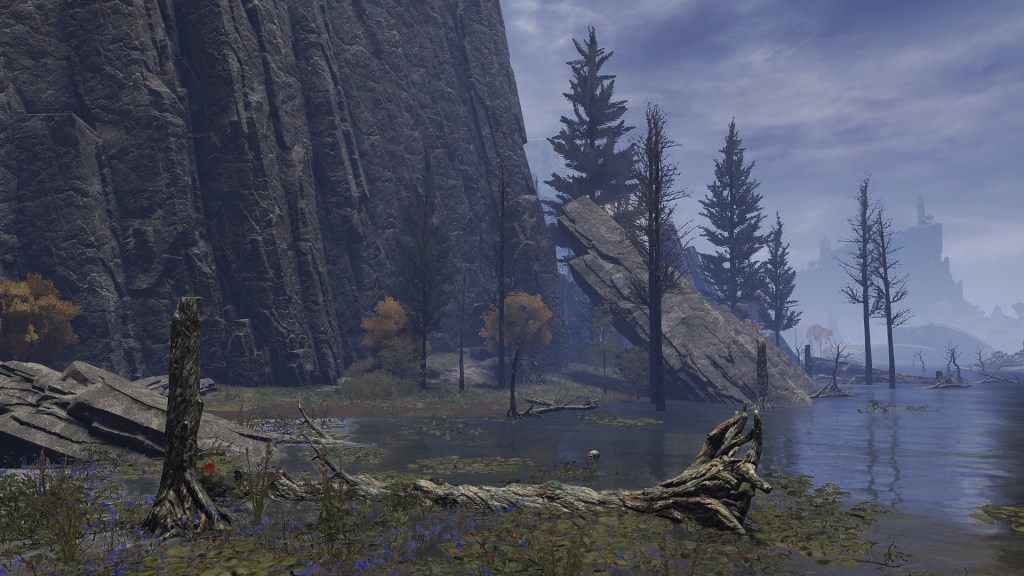
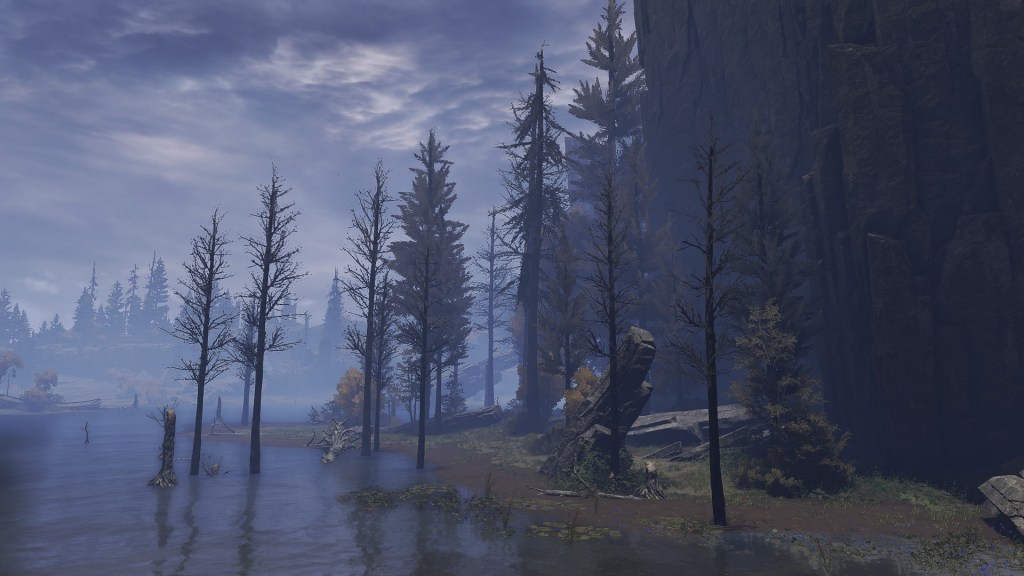
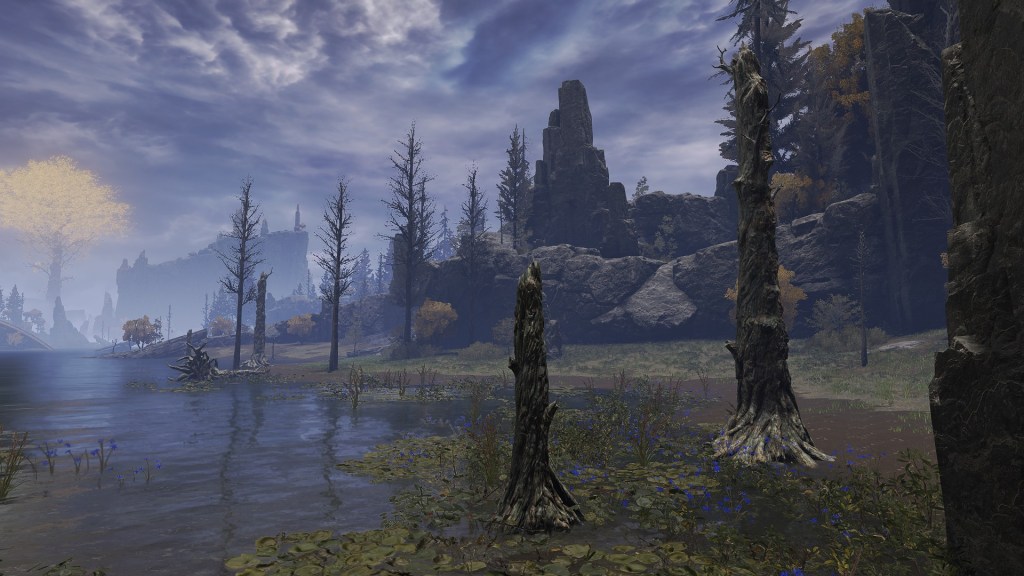
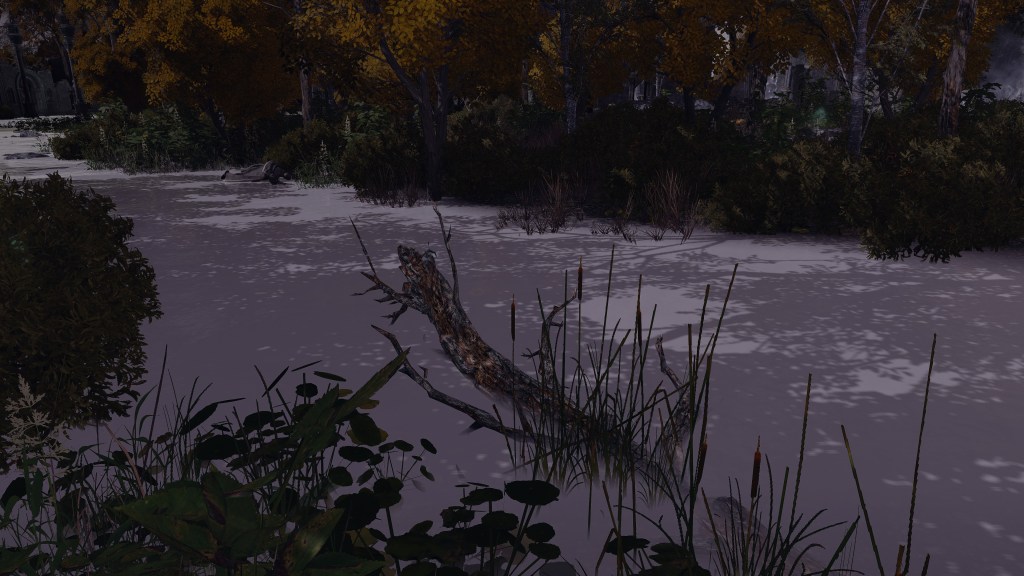
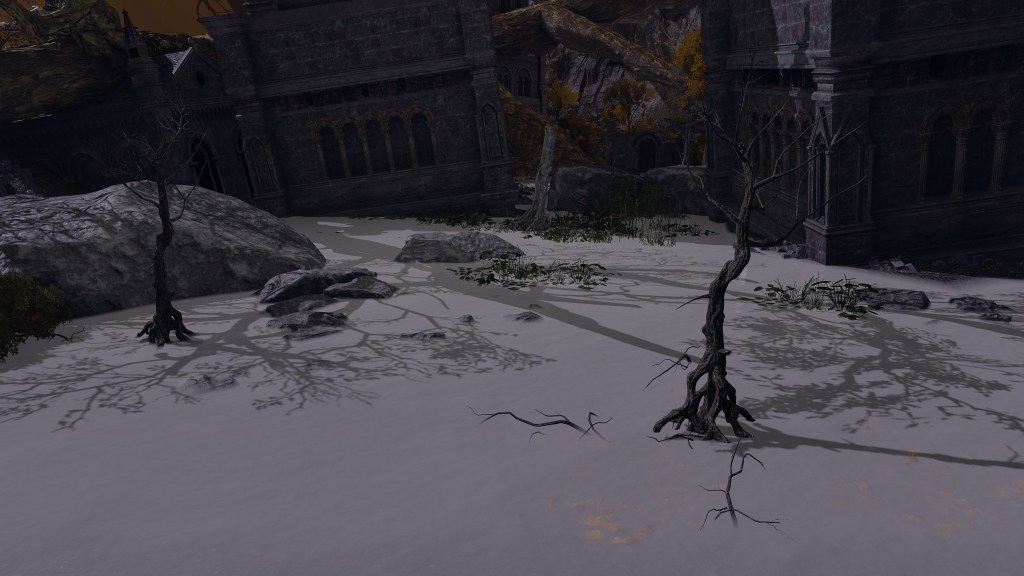
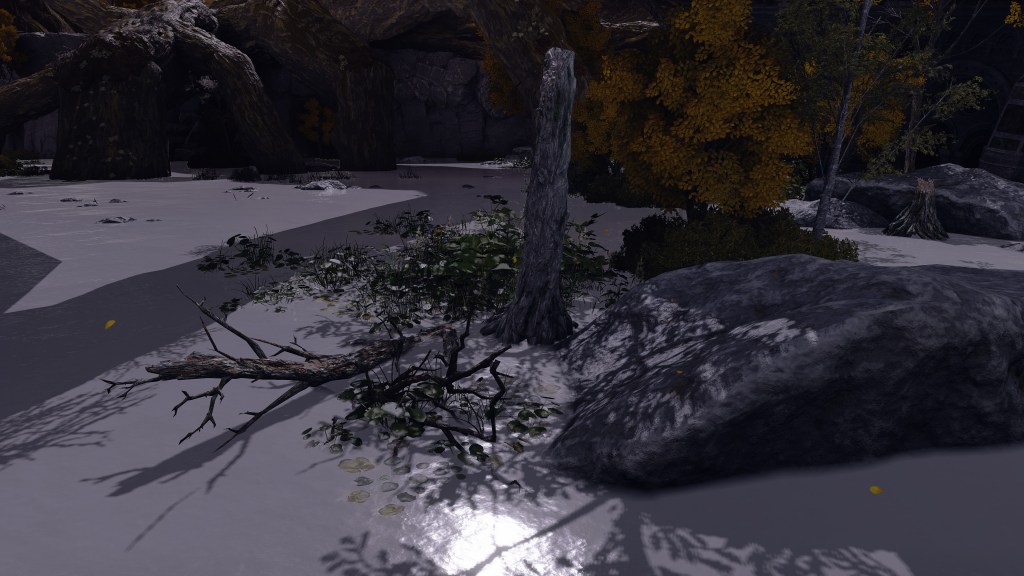
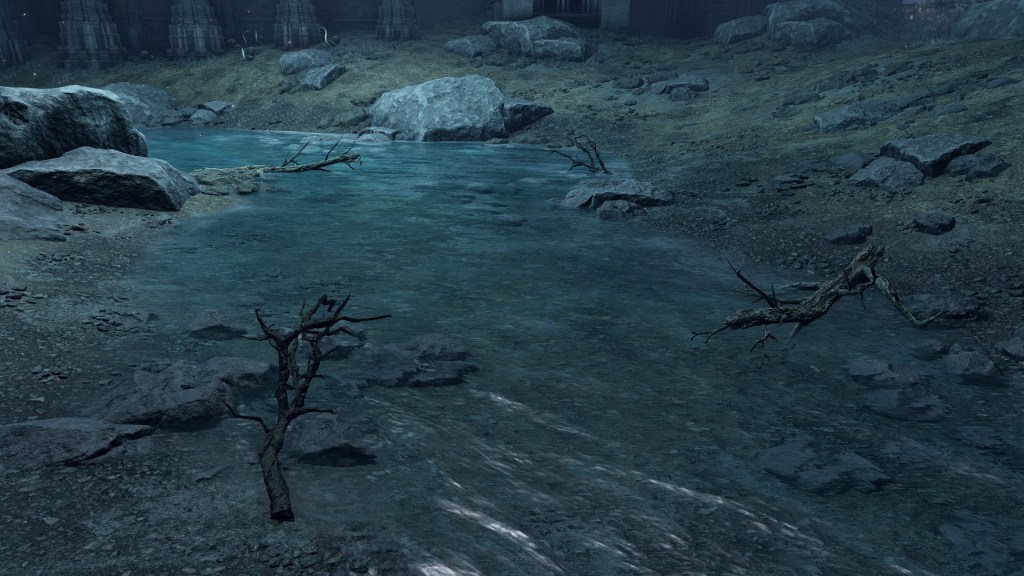
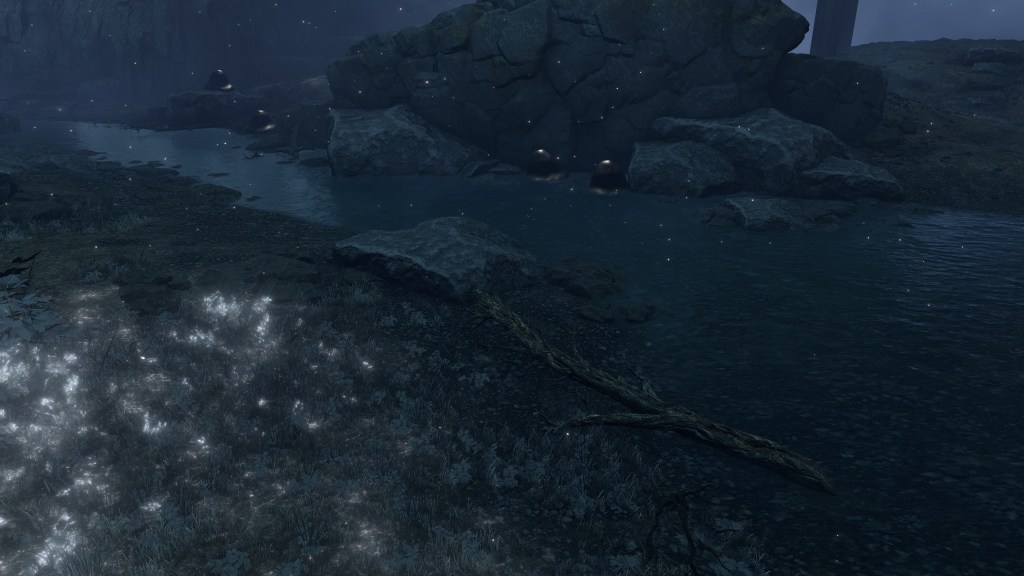
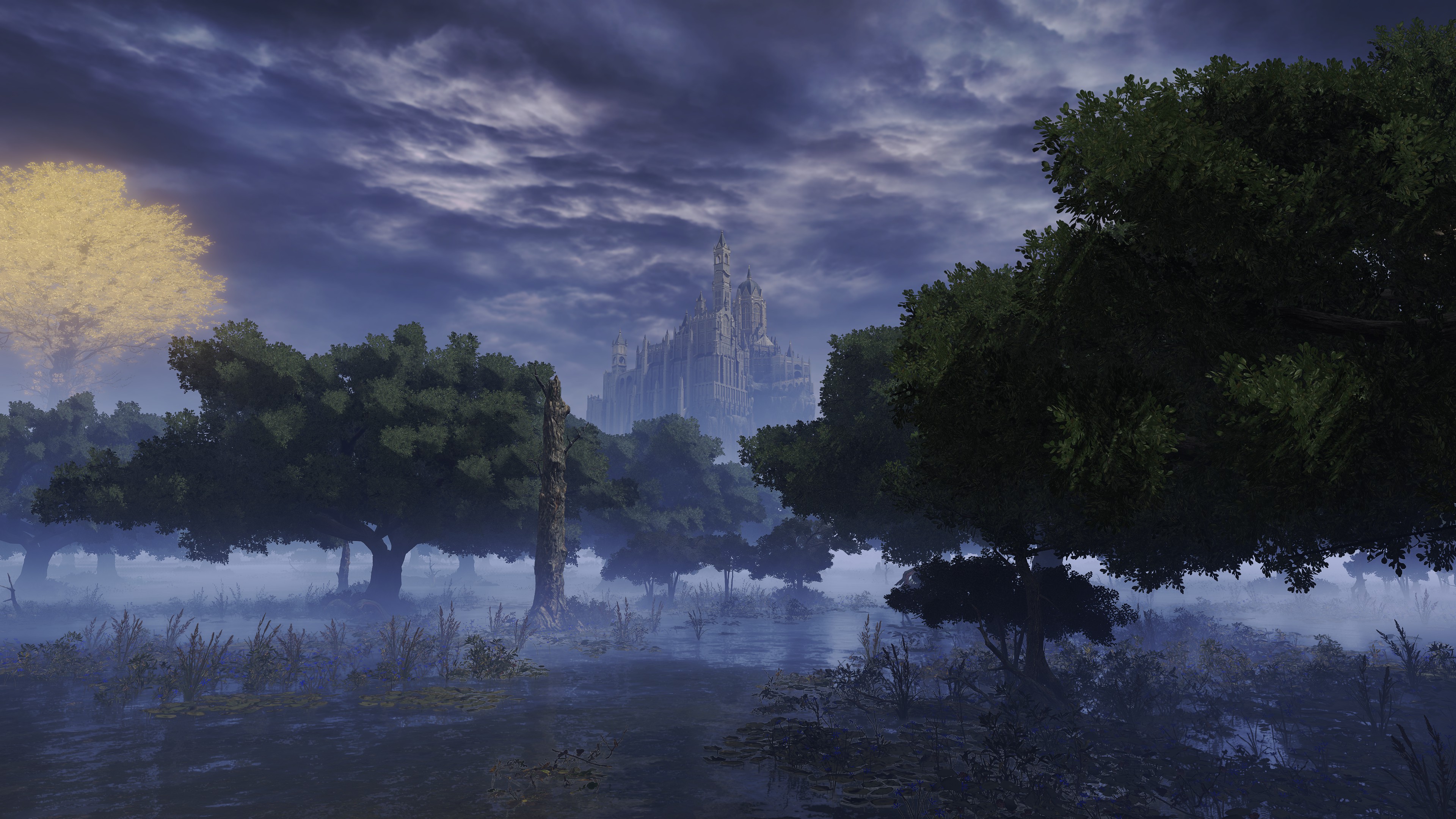
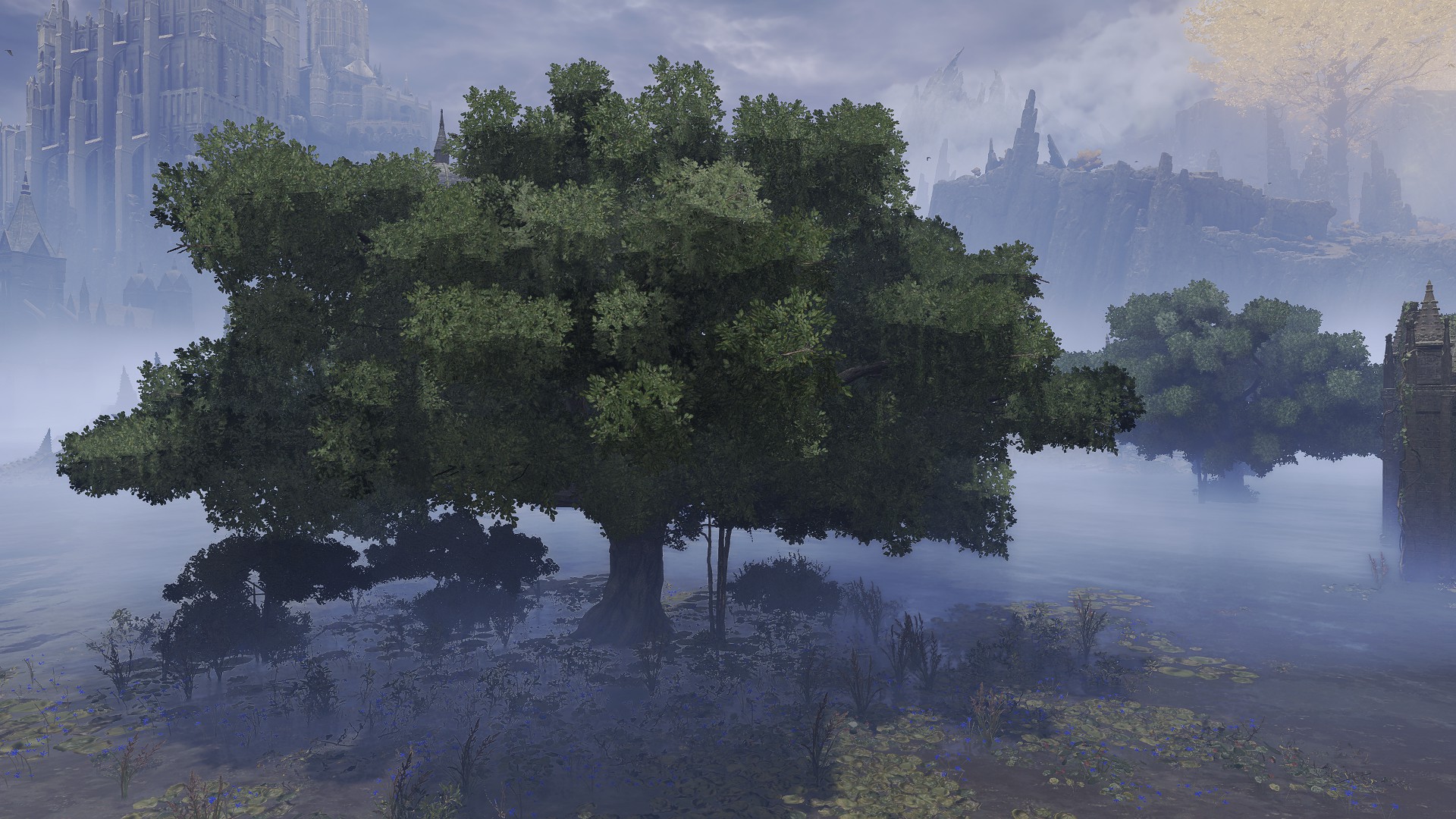
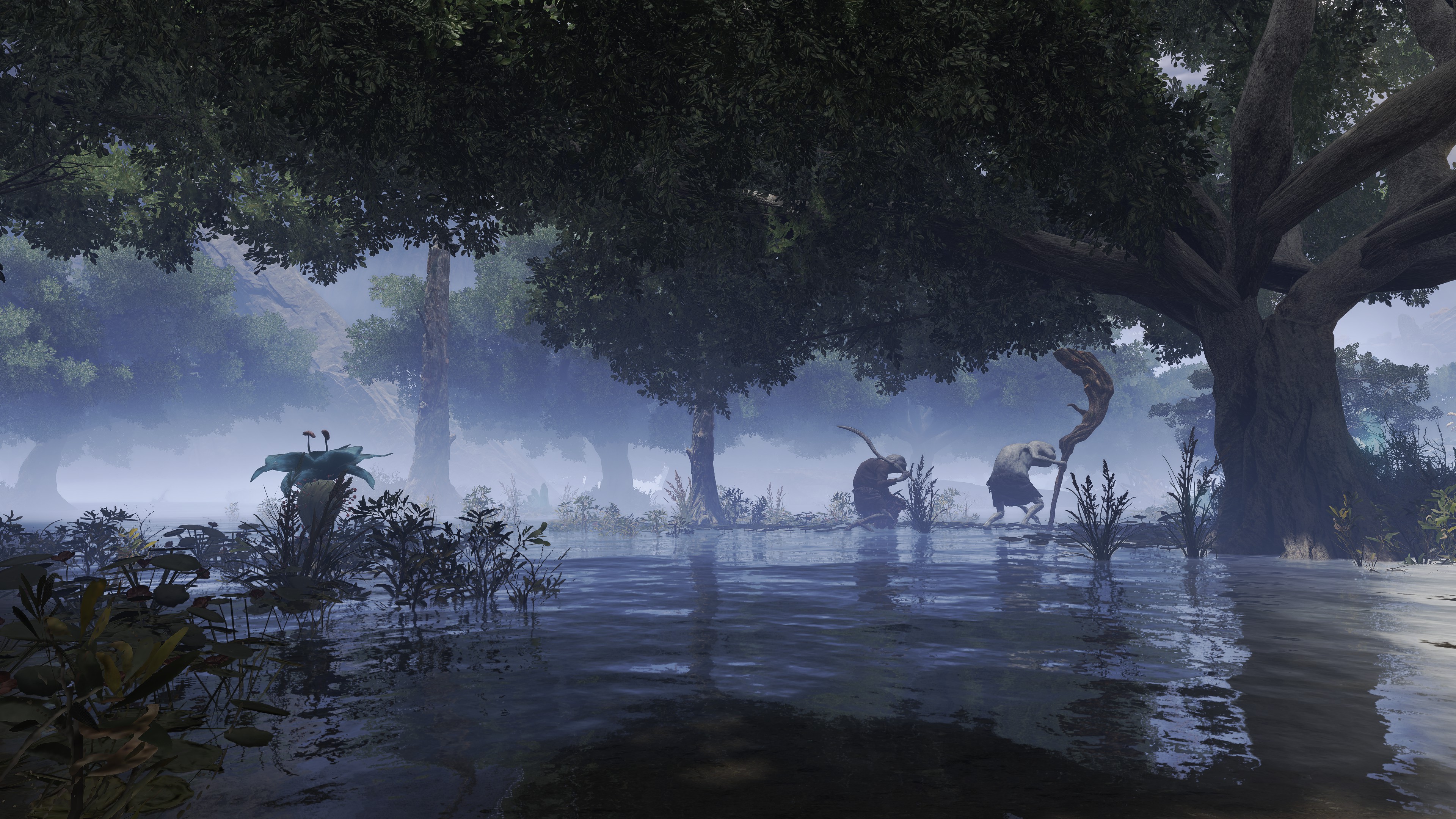
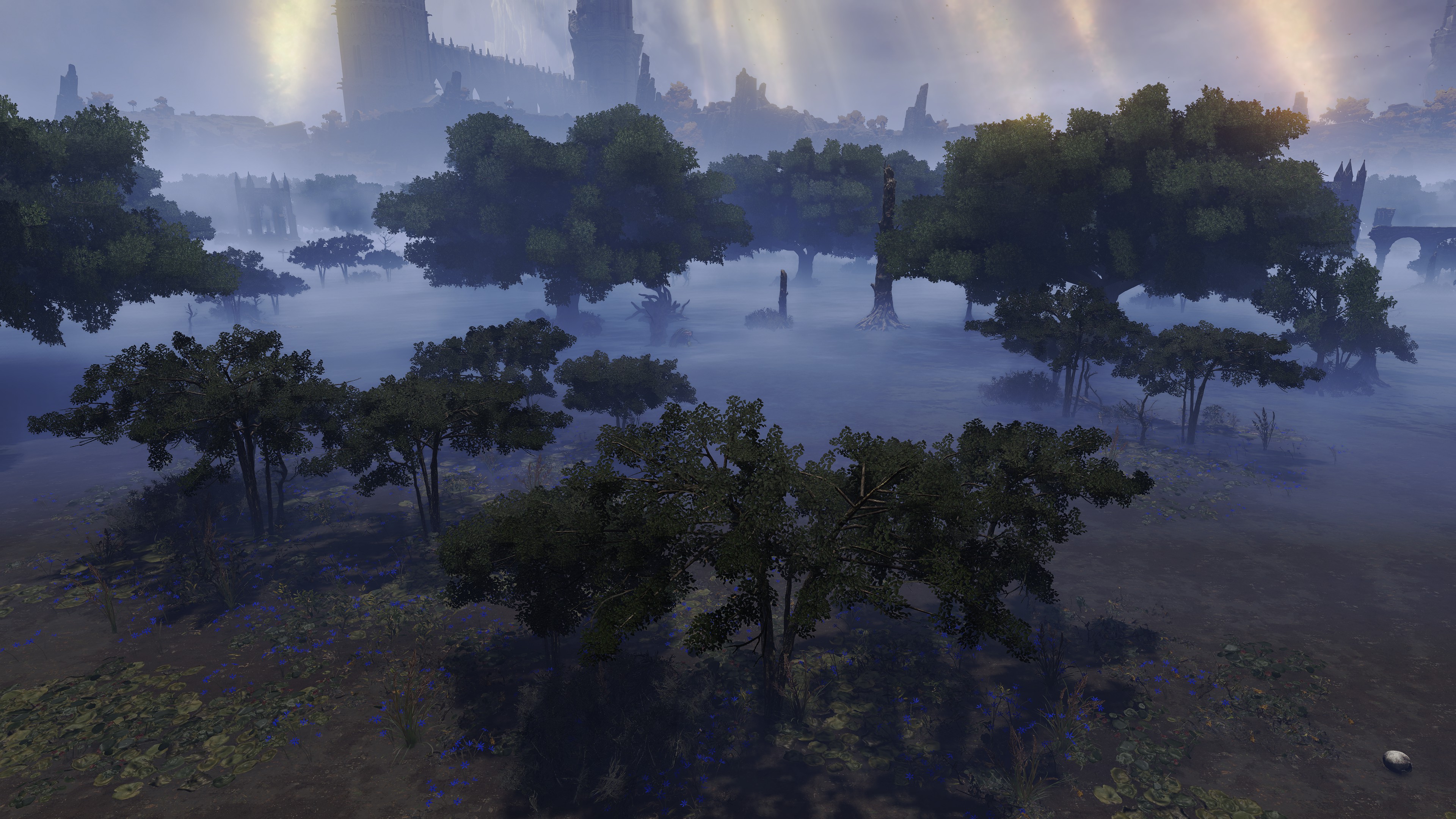
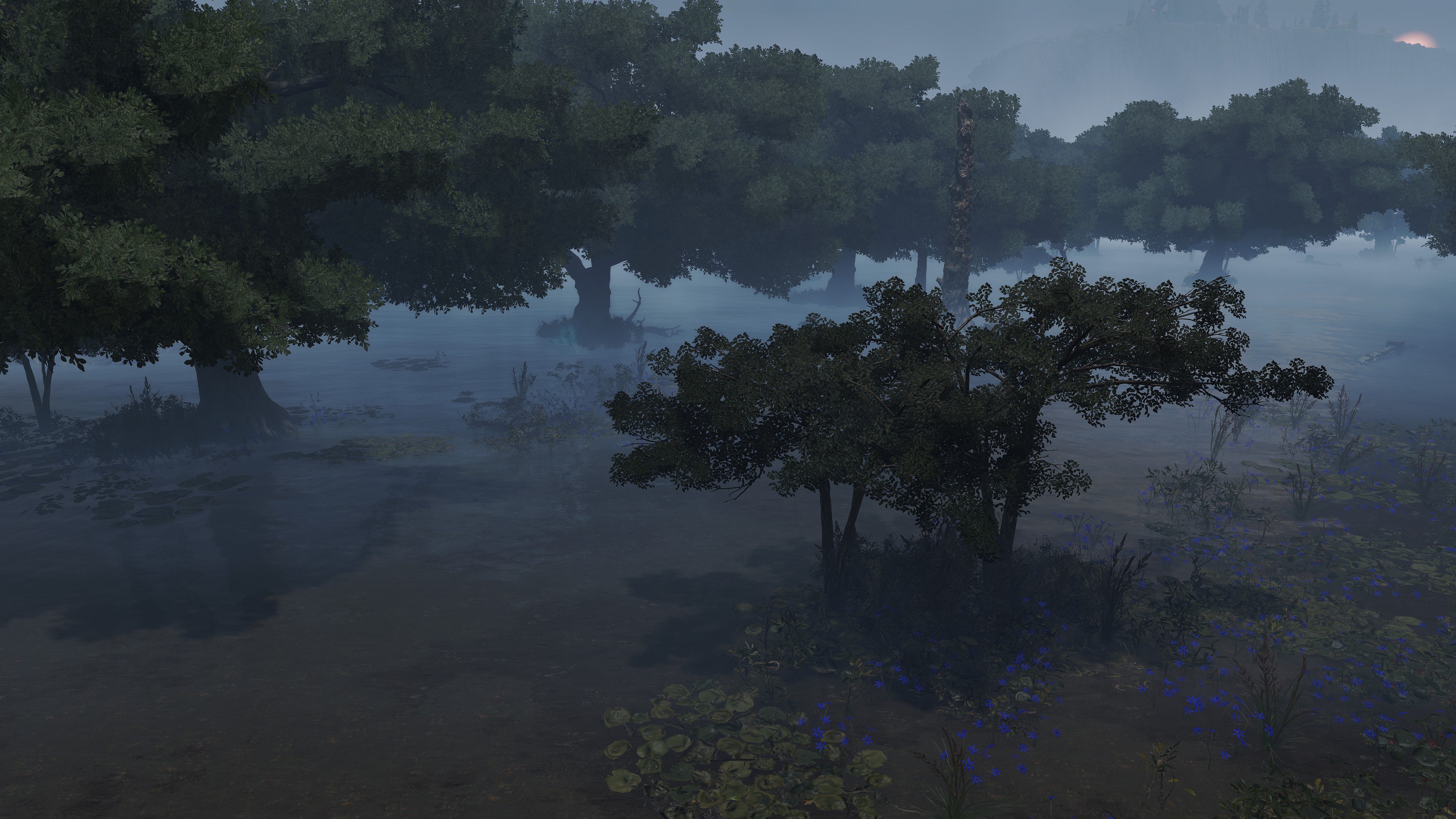
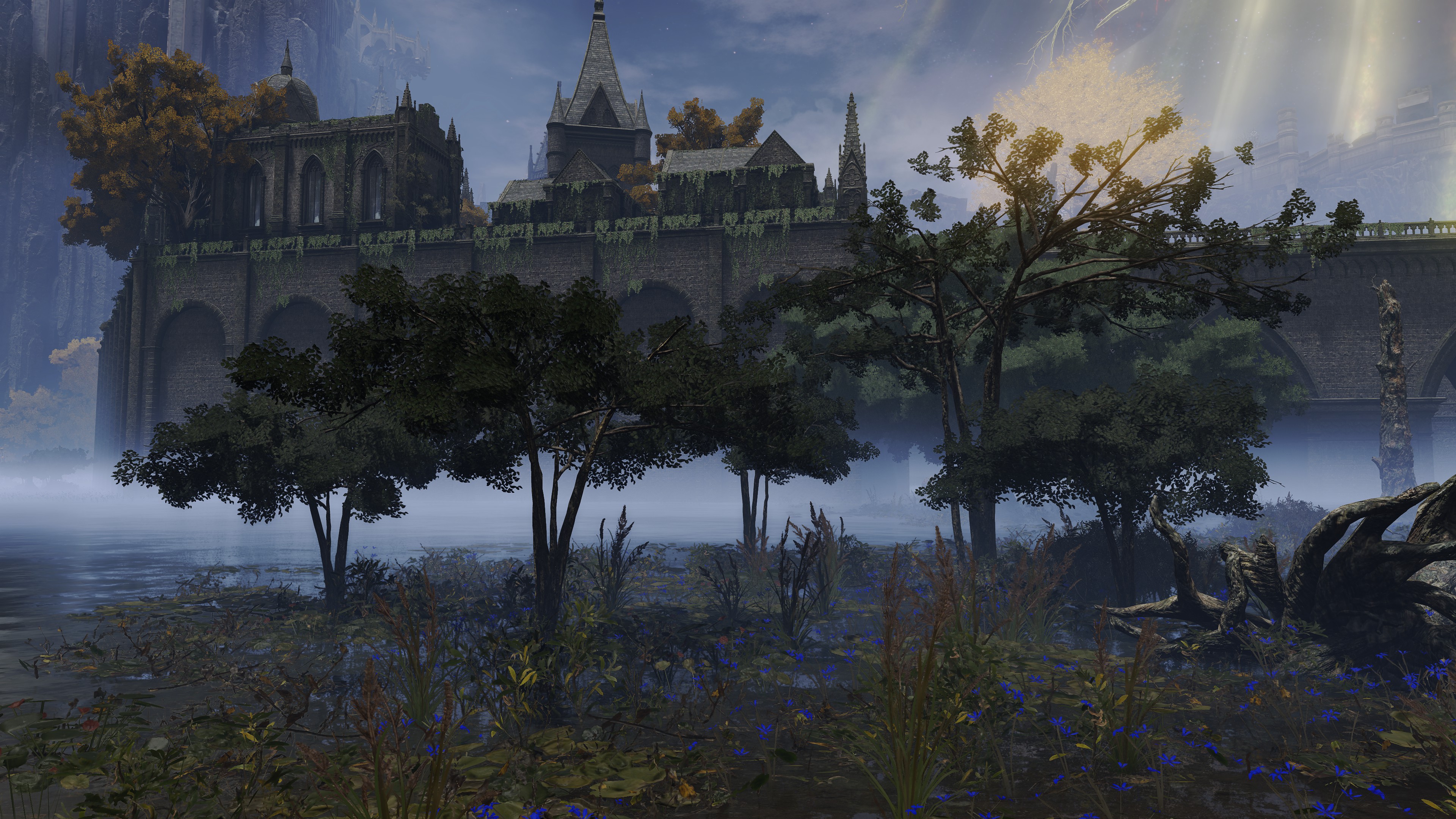
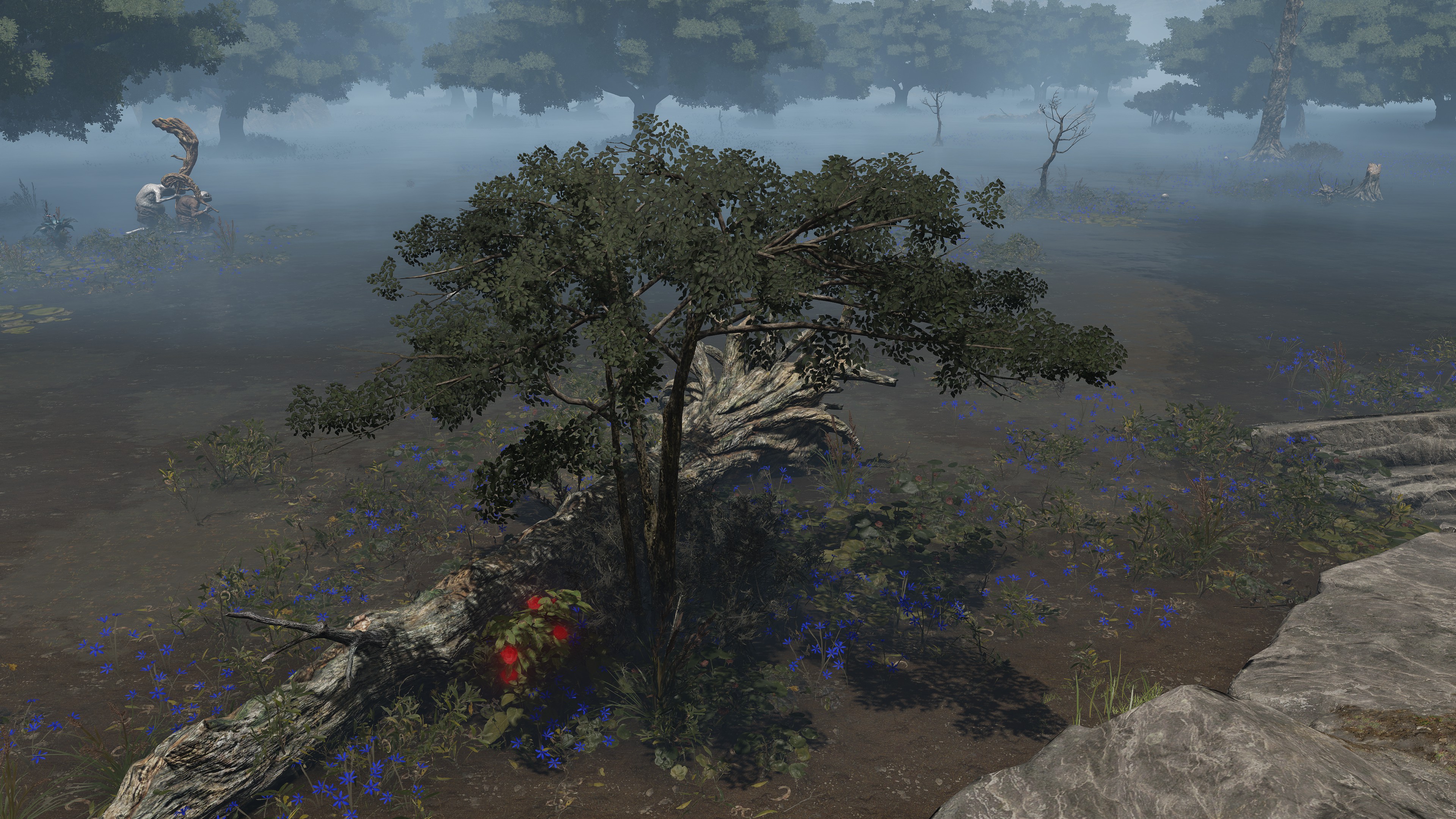
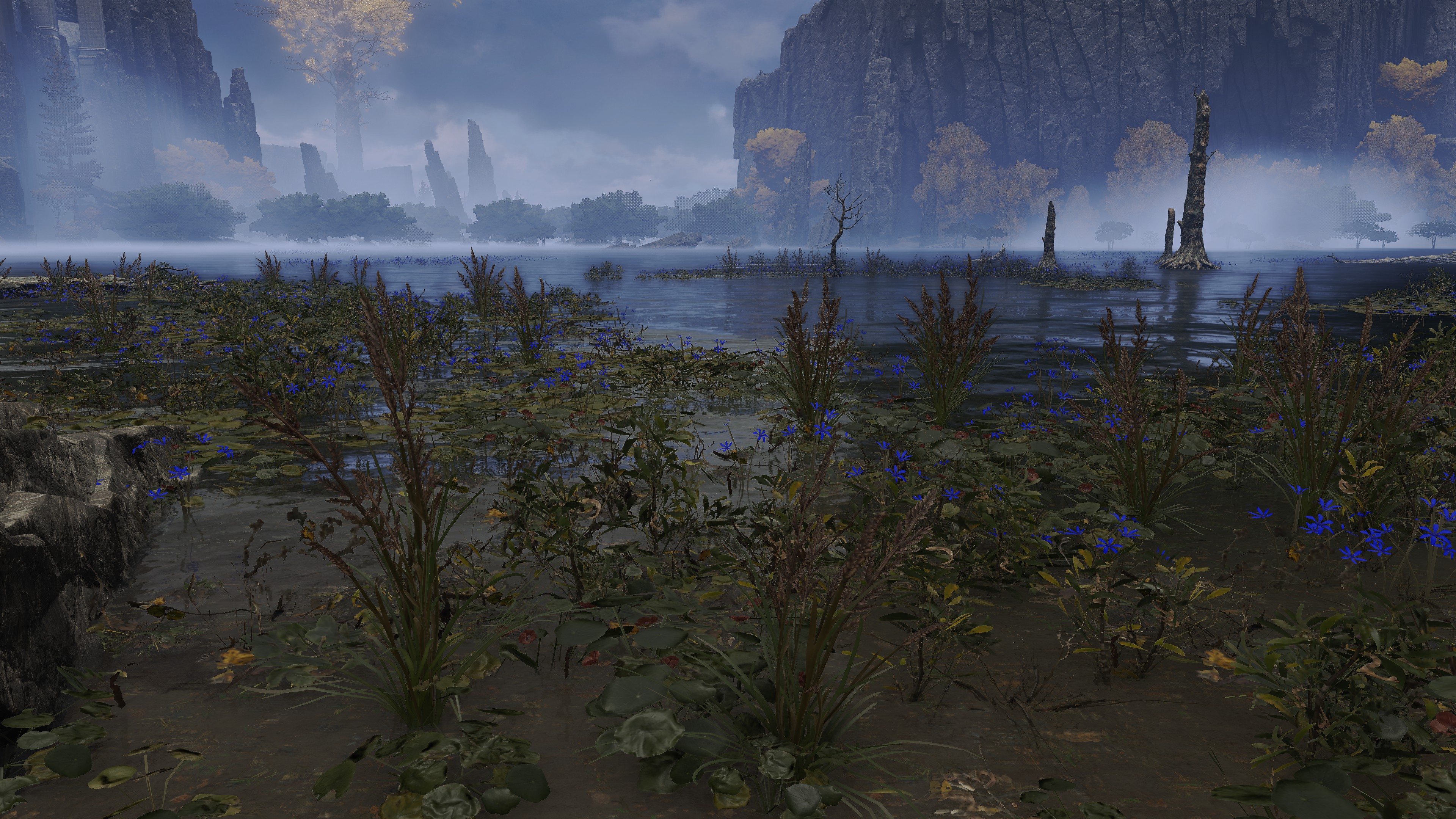
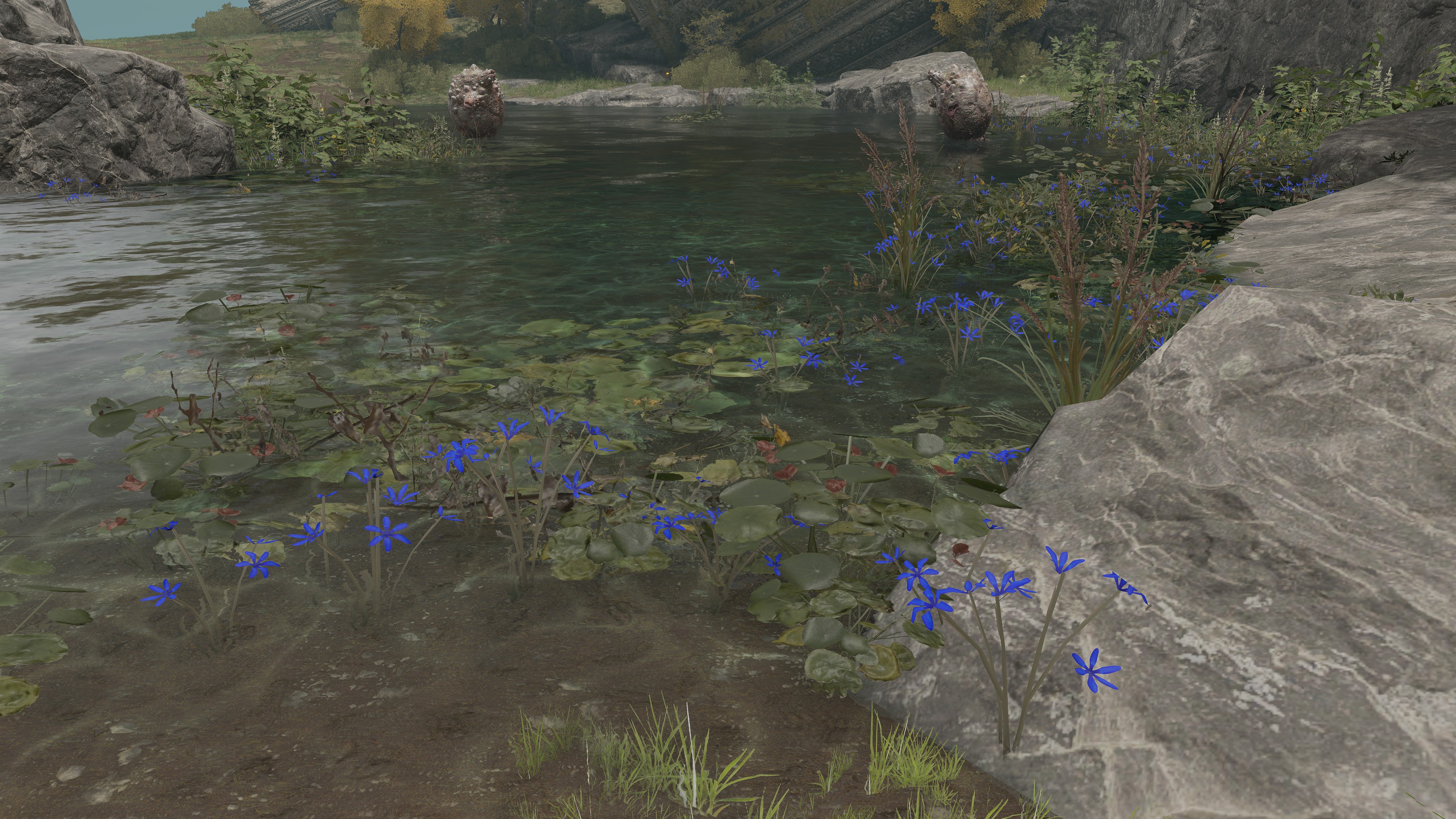
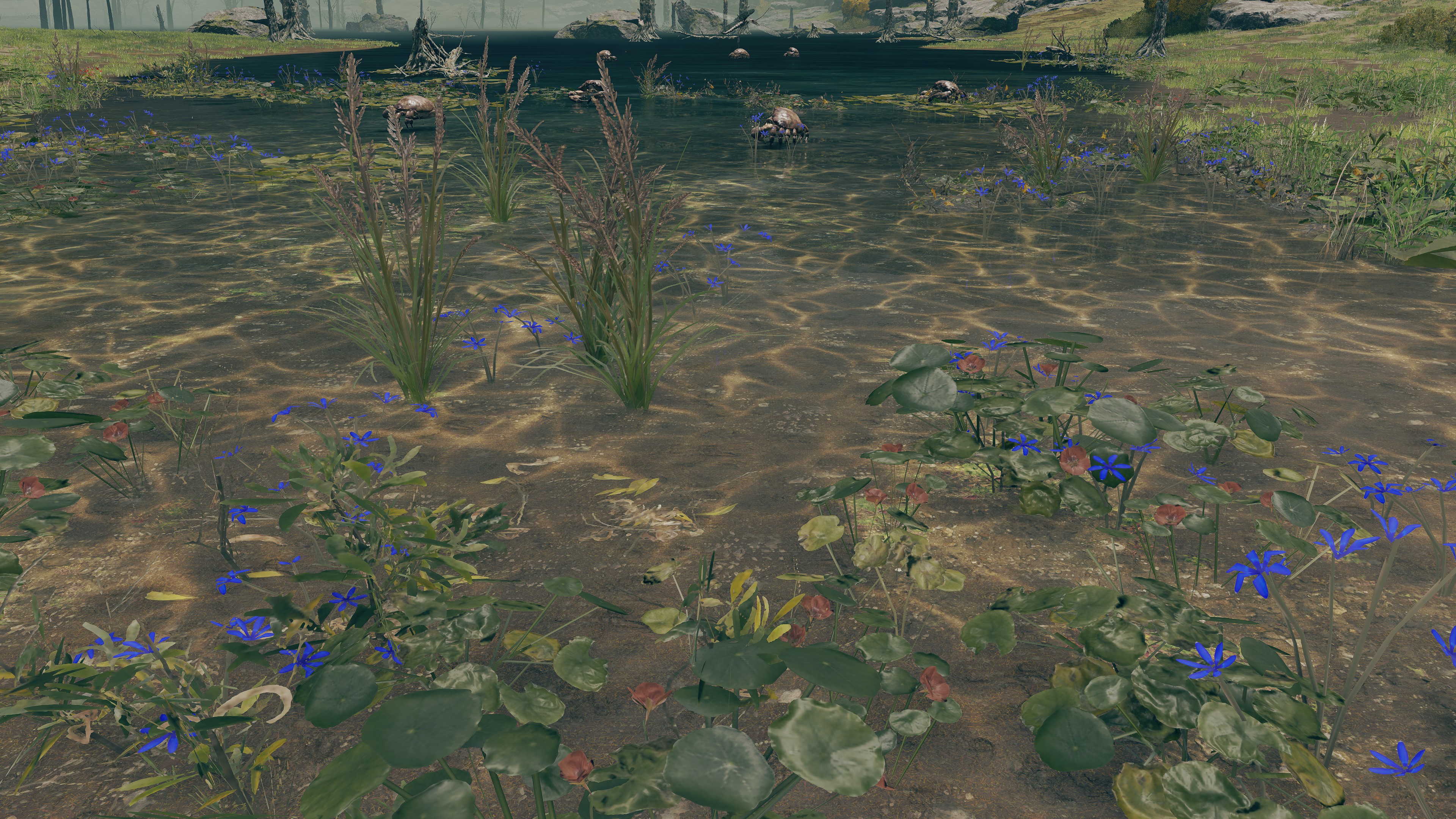
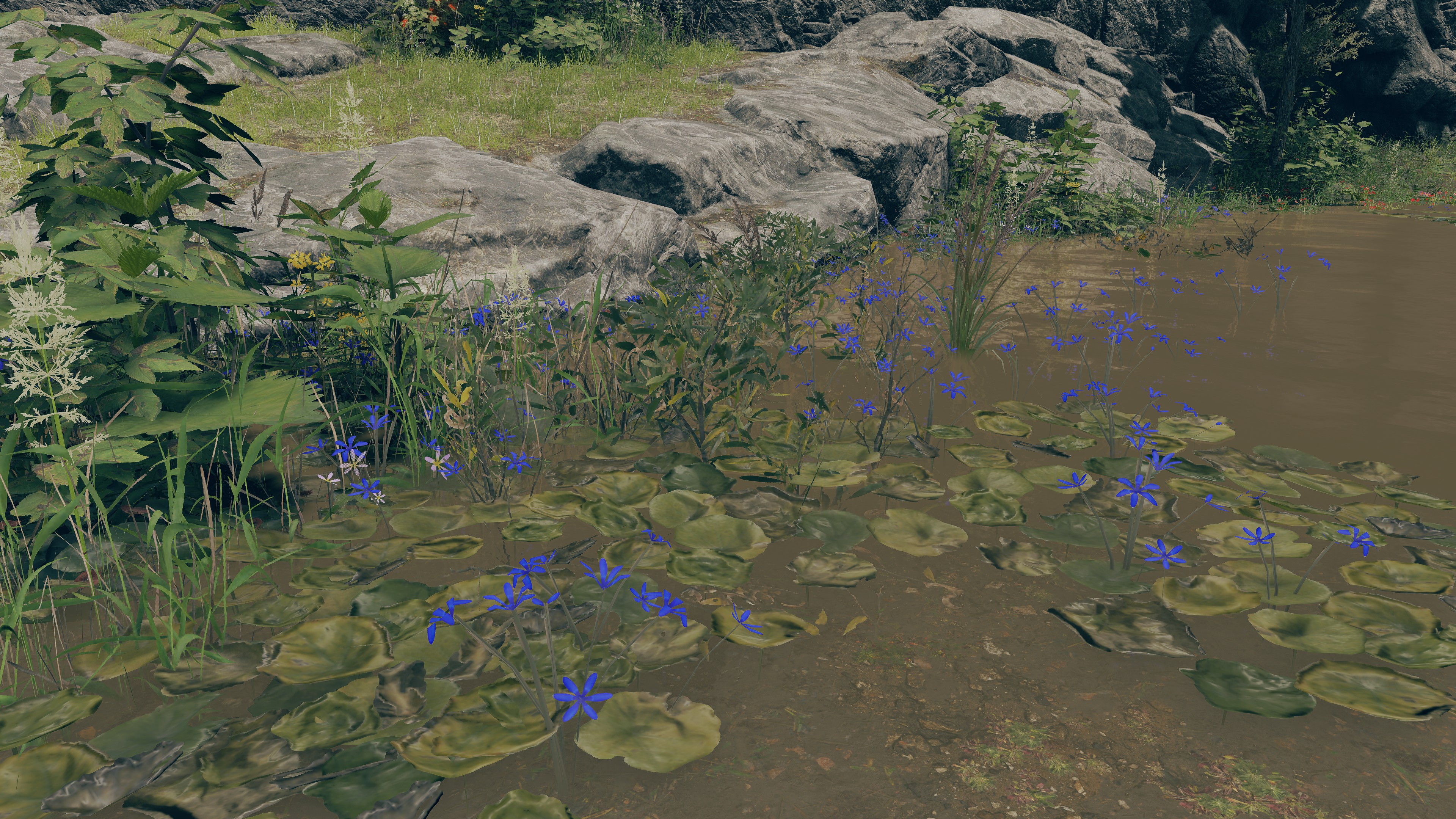
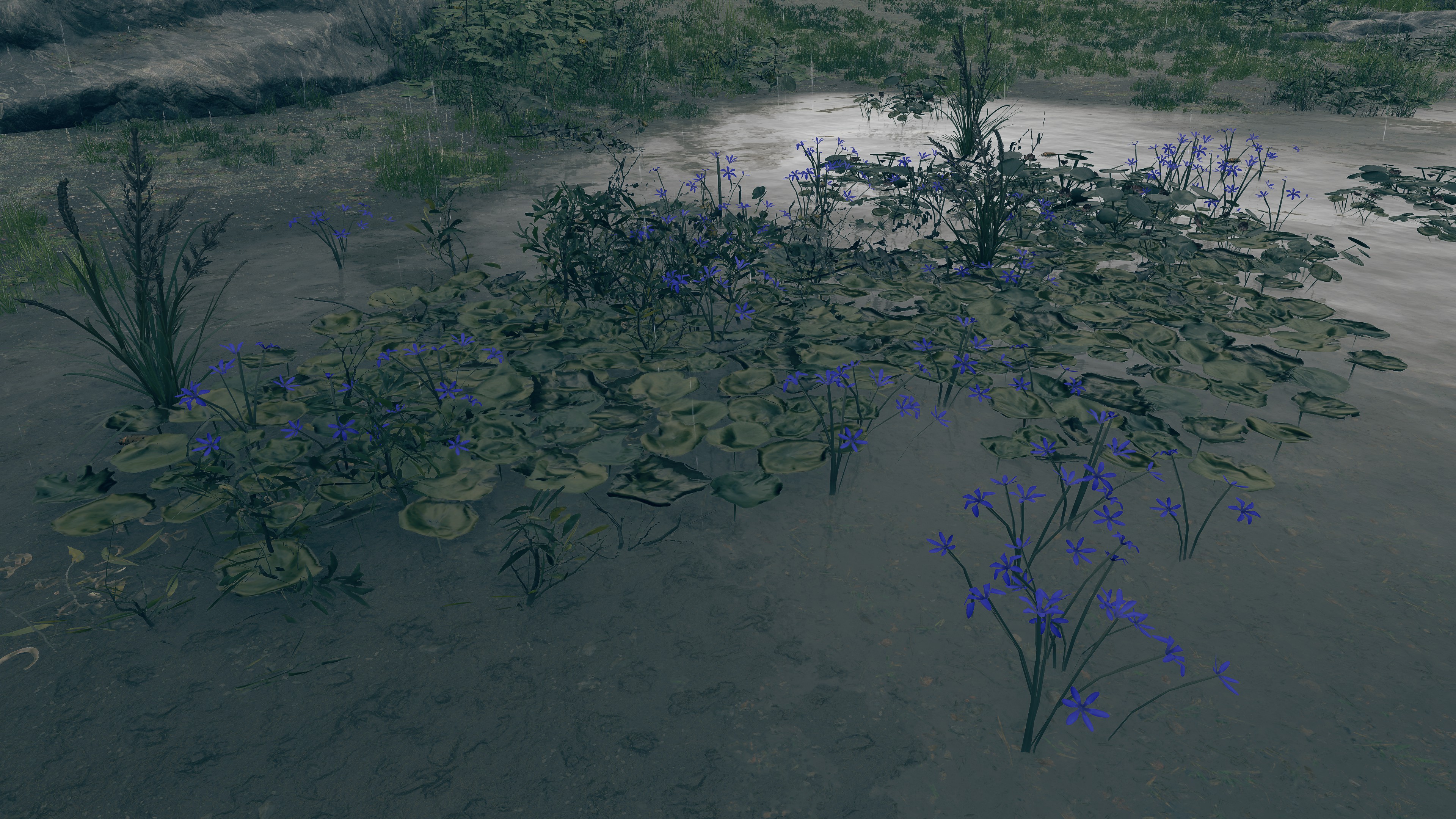
That isn’t to say that no tree is adapted to survive in more swampy environments. In Liurnia Lake, we witness a species of oak and certain smaller trees or grasses thrive solely in the water, occurring nowhere on land. Flowers also show the most resilience to watery environments, with blue flowers especially sprouting on the edge of water fronts on a consistent basis. These plants do exist and so must have evolved in normally watery environments. However, in the case of the oak trees, they are exclusive to Liurnia with one exception, and the surrounding litter of driftwood affirms that they were never so extensive as we see currently. More than likely, these oaks spread across Liurnia Lake from smaller lakes or ponds preceding it, explaining why we find ruined and sinking settlements within it. Increased and uncontrolled water flows results in forests and fields dying and becoming replaced by new ecosystems, meaning that the conifers may have even been more widespread before the evidence was literally washed away.
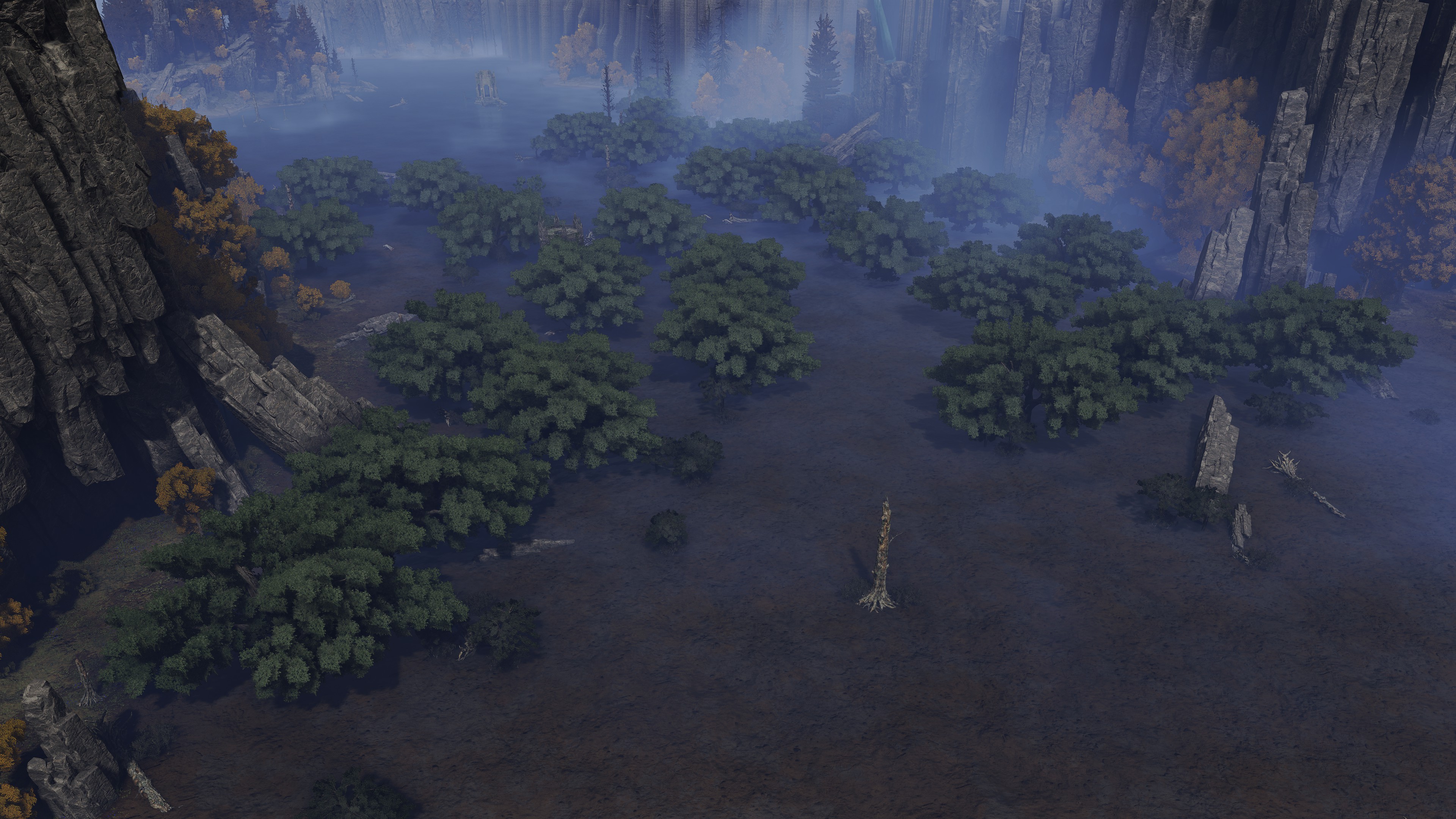
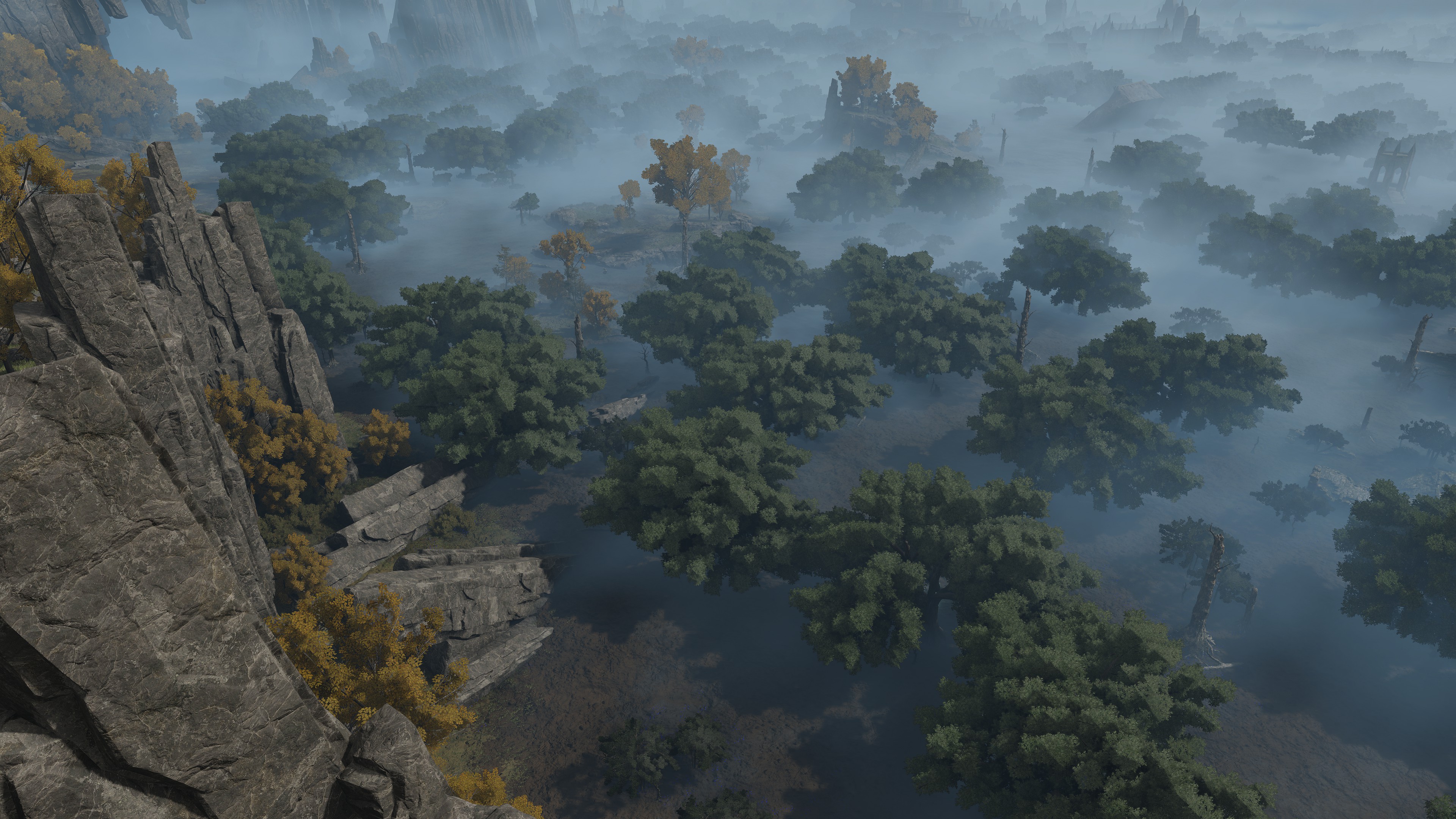
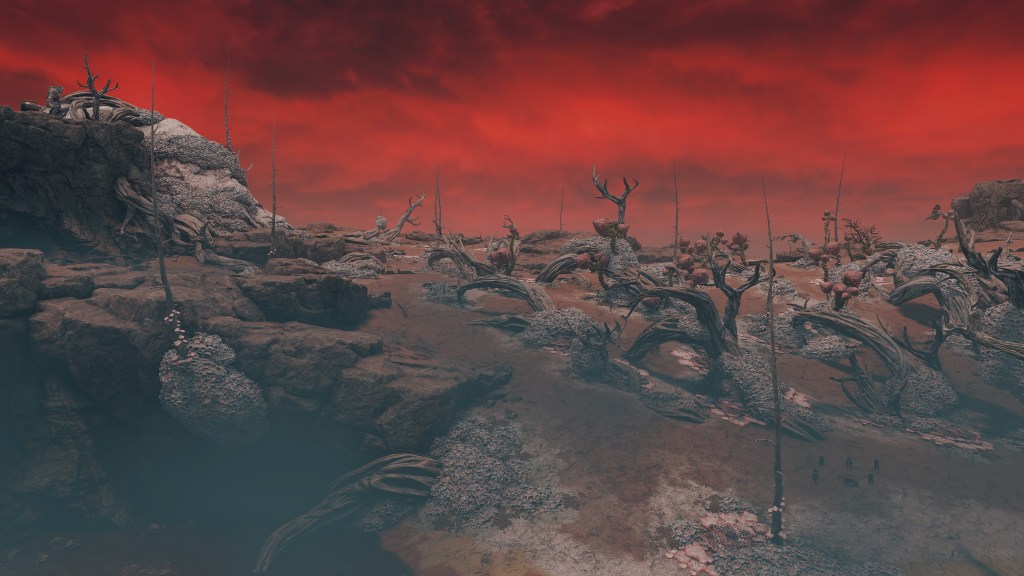
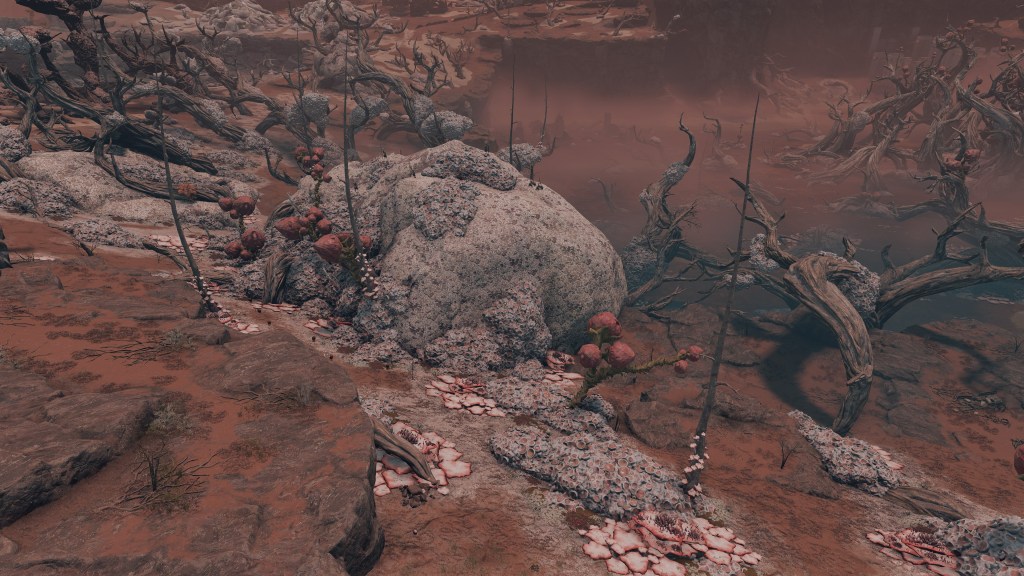
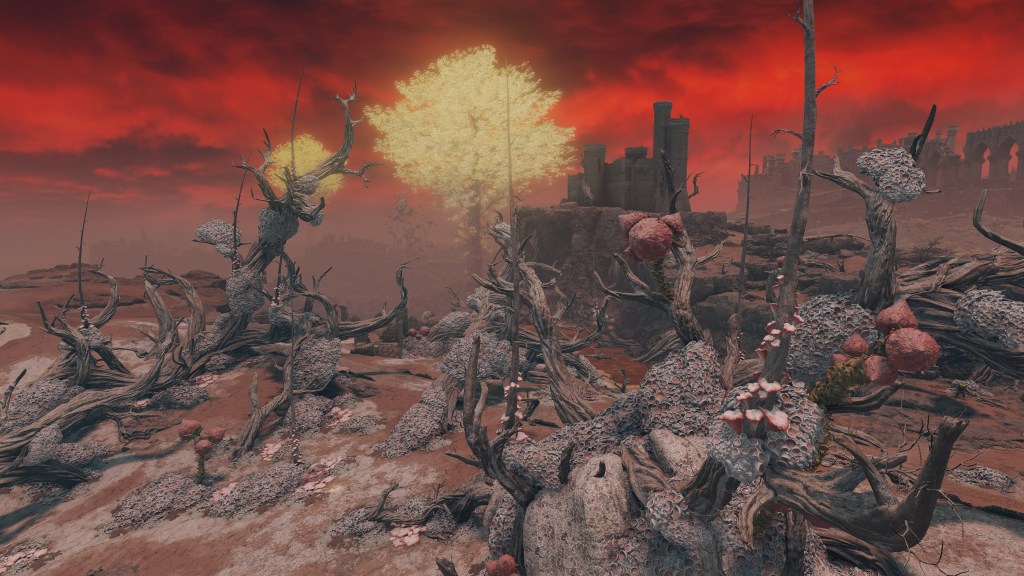
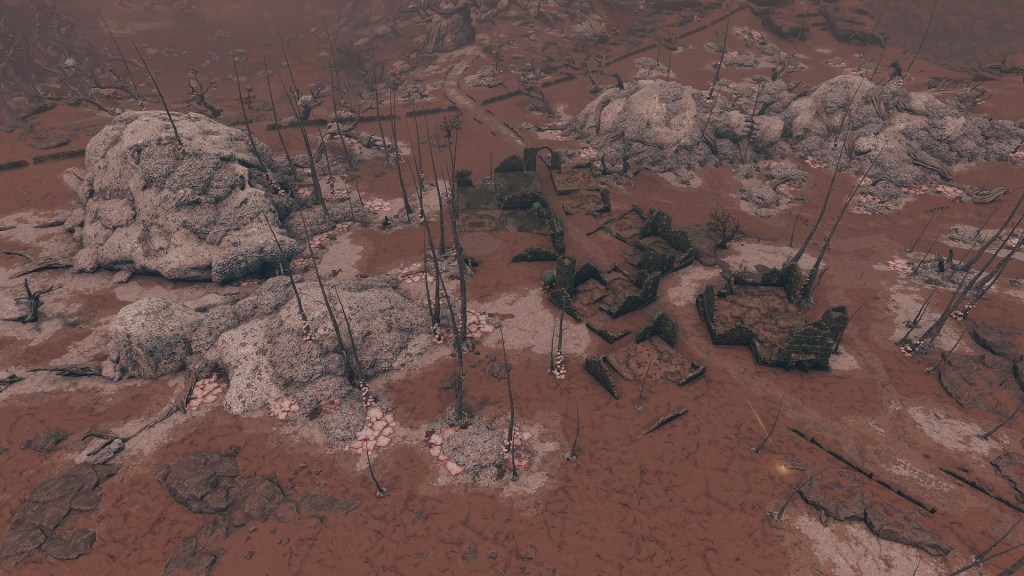
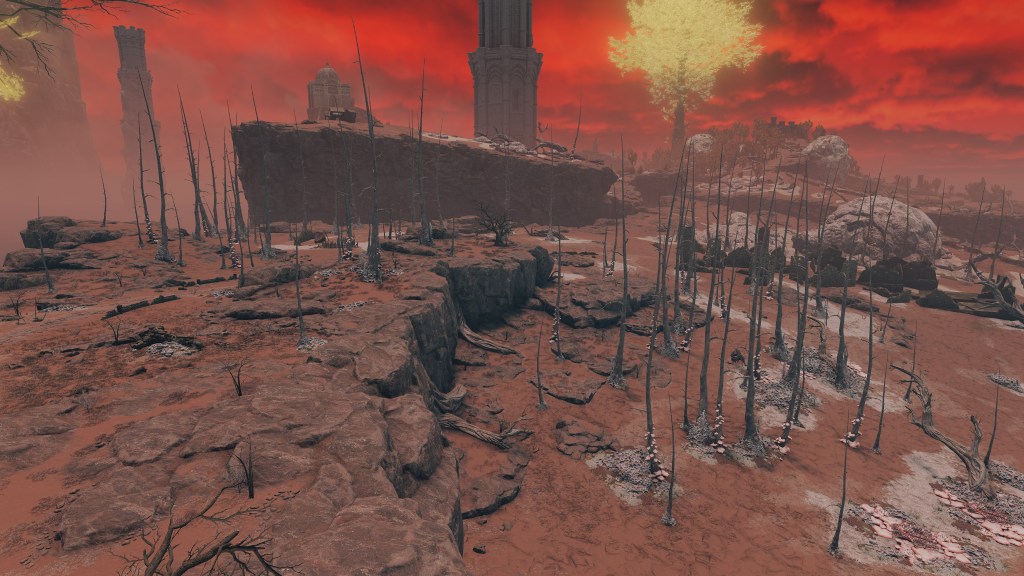
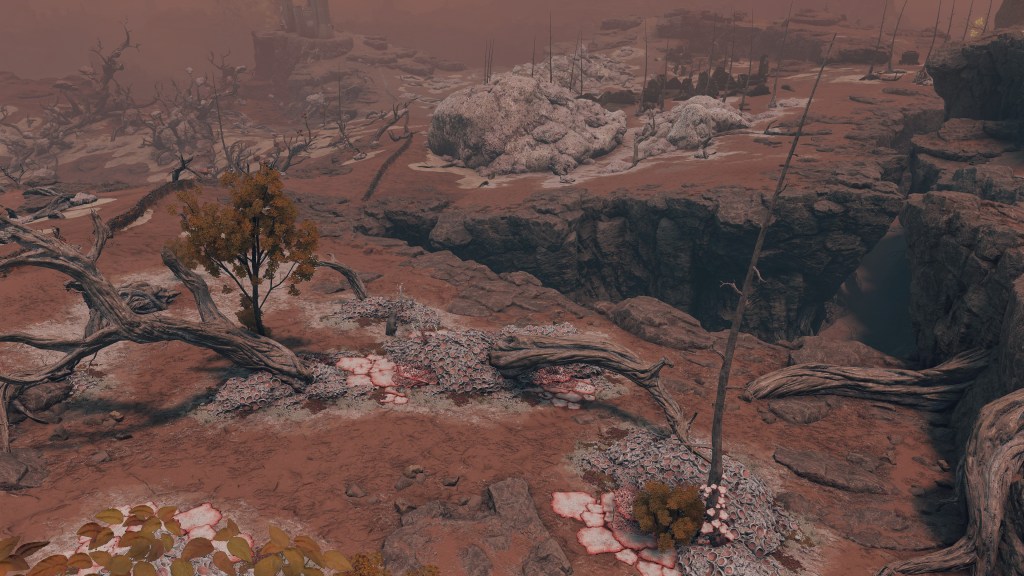
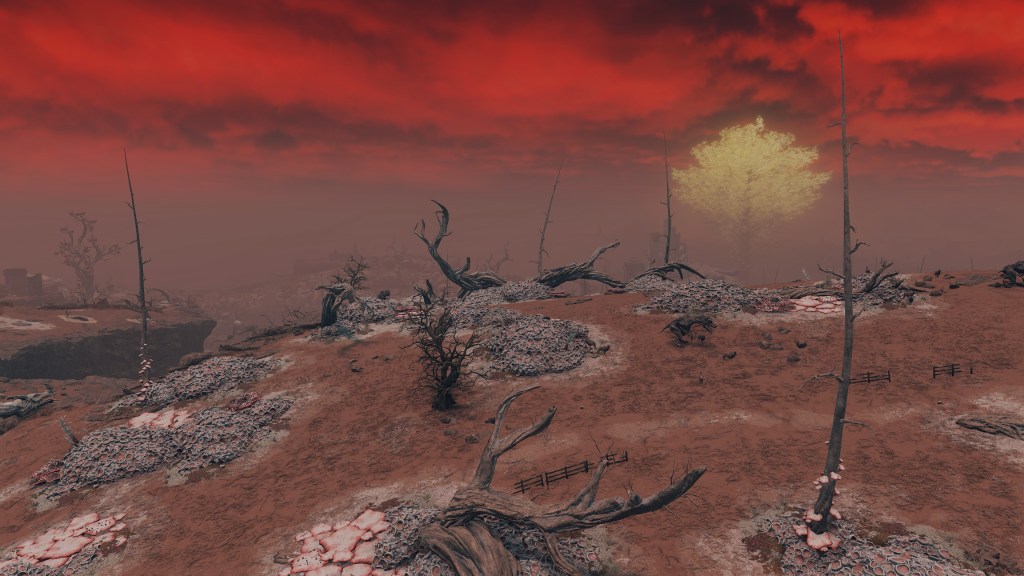
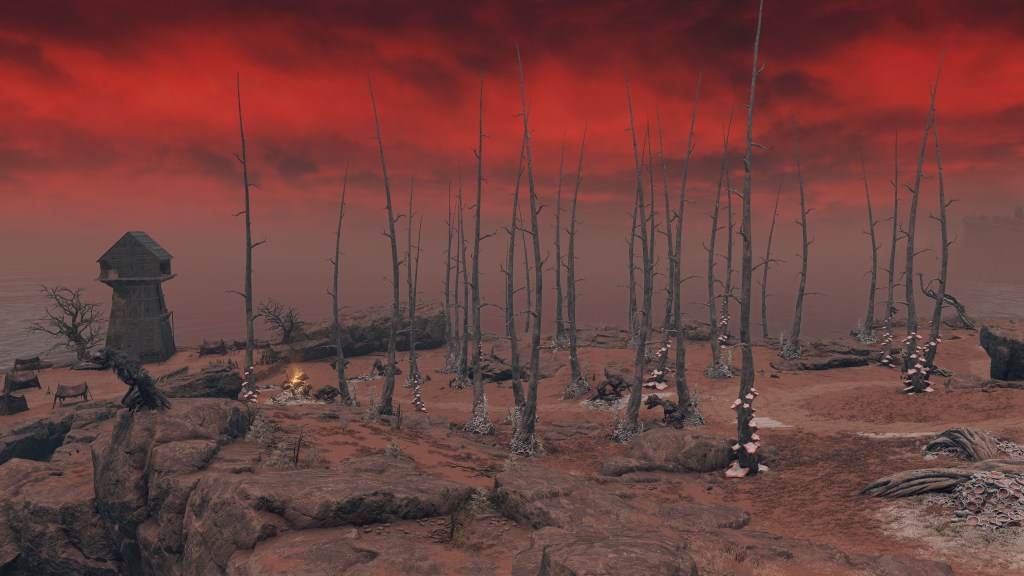
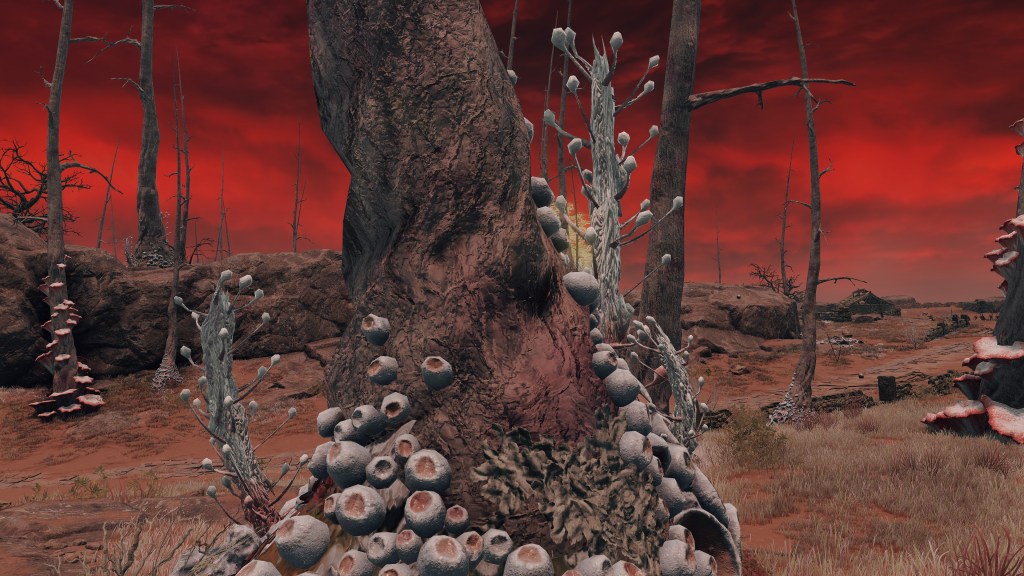
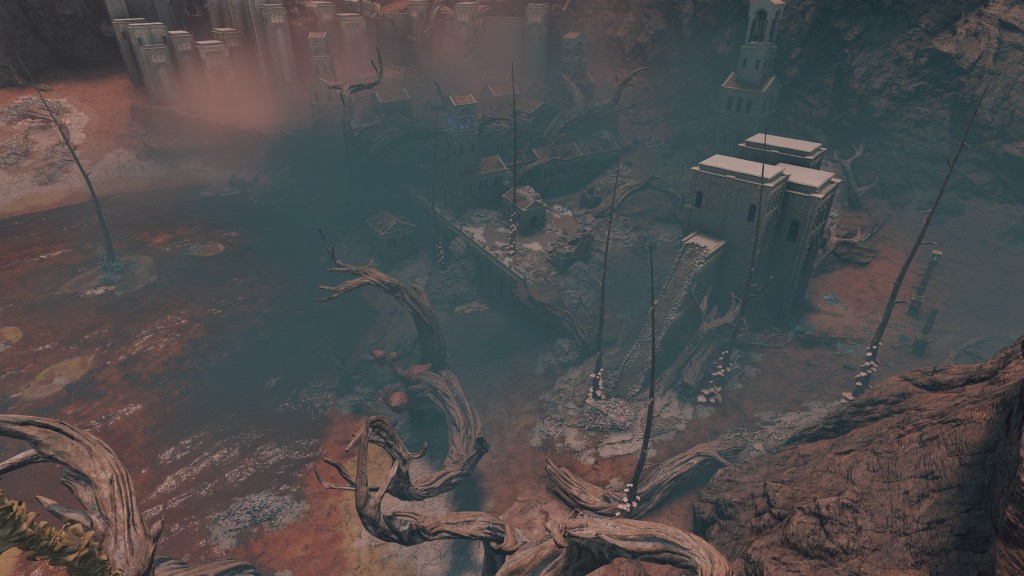
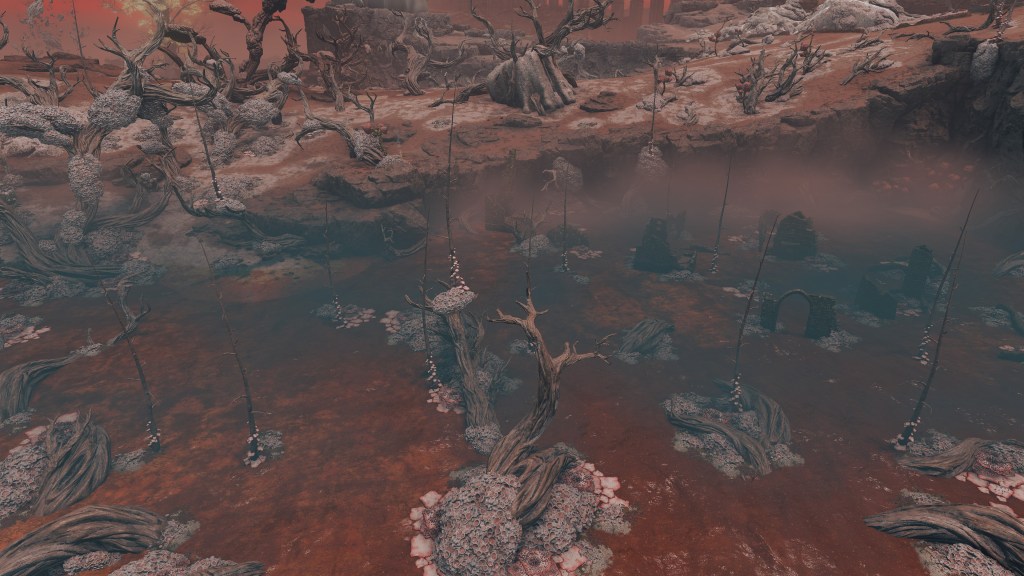
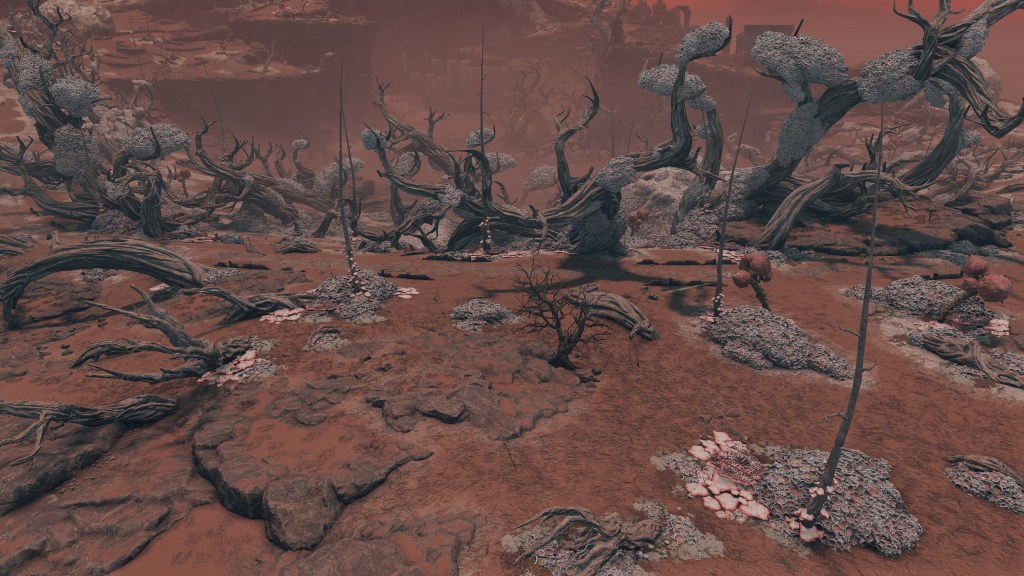
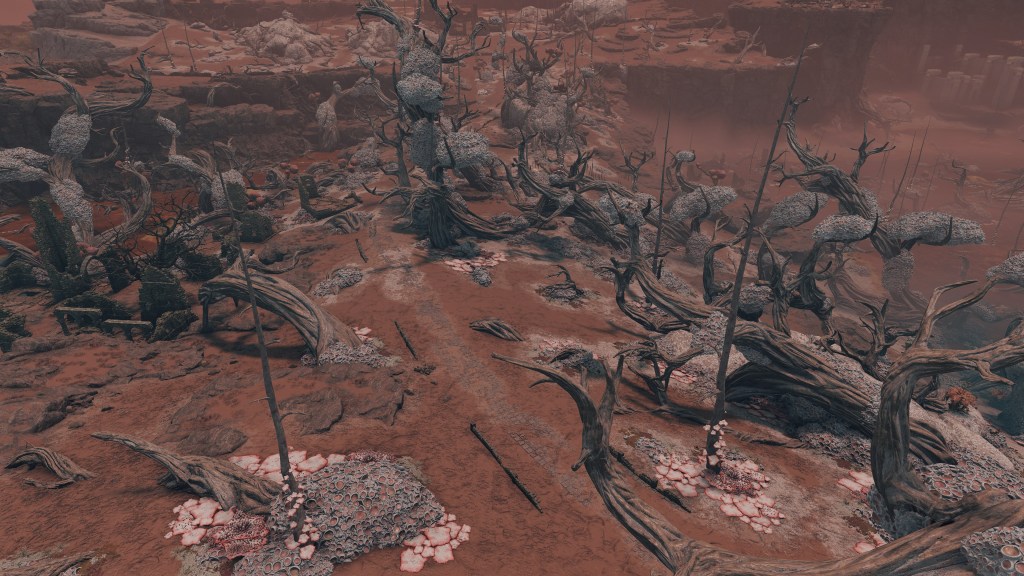
Another obstacle to dendrology is the Scarlet Rot. Because of how it despoils and replaces ecosystems, identifying the original forests in a land can prove difficult. Even areas yet to suffer the Rot’s full effects have trees already beginning to die, mostly the same withered oak model used for lands with any kind of contaminent — poison, fire, rising dead, even flood water. But there is another dead tree appearing amongst the decay specifically. This tree type isn’t present in every rotted area like the fungi is, casting doubt on them spontaneously generating. While we do have the Scarlet Blossom in Caelid lift some such trees out of the ground with its roots, the concentration doesn’t correspond to distance from that flower at the source. Dense forests follow along the Caelid highway or congregate around certain settlements, but none surround the blossom, and we can observe a random isolated wood in the south preceding Redmane Castle. All of this is more consistent with the Rot killing preexisting trees, the model always covered in it. And given its tapering trunk and frail branches, it is clearly intended to be a conifer.
In short, the rotted tree is likely a stand-in for the healthy conifers in rotted areas. Unlike the generic withered oak, this model marks more than early deaths among the arboreal life, similarly tracing sorcerer populations. The sorcery town of Sellia, for instance, is an obvious destination for sorcerers, their ghosts still haunting the streets. It is fitting to see rotted conifers around it or the nearby Street of Sages Ruins, not to mention the highway. There is little mystery that stargazers regularly traveled throughout the region before the Rot. That reaffirms the importance of the conifers in following the astrologers’ movements. In all likelihood, the Lands Between has been subject to both east and westward migrations from the Mountaintops. By tracing the trees and other dynamics, we can estimate the travel paths of these astrologer populations as they redistributed themselves across the region. Thereafter, the entire history of modern sorcery unfolds.
A Never-ending Journey
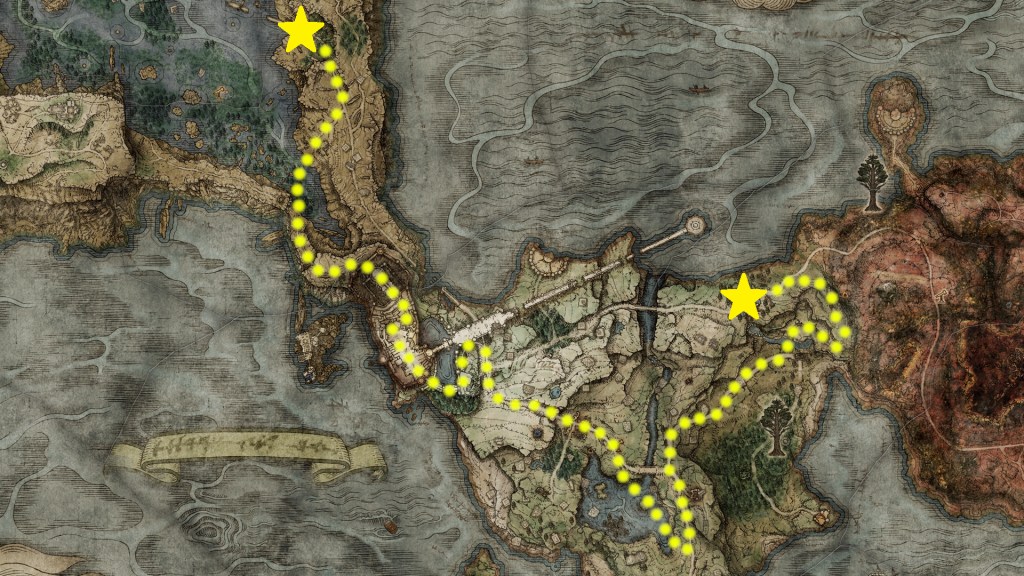
Starting with the east side, the sorcerers in Caelid likely began with the chase for glintstone. We can be certain that astrologers passed through Farum Azula from the conifers growing amidst their red groves surrounding the actual capital, plus the handful more at the base of the mausoleum bridge which once led back to the Mountaintops. A number reasonably stayed to live alongside the natives and beastmen, perhaps interested in the country’s emphasis on stone in connection to meteors and location at the site of an actual falling star. However, probably the vast majority continued on to Caelid, the scant rotted conifers in Greyoll’s Dragonbarrow indicating that they kept trekking all the way down the cliffs and slopes until reaching the eastern fields. Afterward, they definitely settled in Sellia, likely since its foundation.
Anyone descending the Deep Siofra Well will be immediately met with numerous conifers growing in a small forest. A handful more stand tall as part of a separate wood further west, with yet more scattered amongst the trees in the Ancestral Wood. This hints to a glut of sorcerer traffic at the deep well, with isolated signs of heading beyond. And in every instance, the trees stop with Nokron either looming above or sitting immediately below. Based on that, it is liable for the astrologers from Caelid to have made contact with the Eternal City. This would be due to either the existing connection between the capital and Sellia, or a separate interest from the migrating stargazers. In that case, it is feasible that they prompted the Nox to establish a colony above ground. We do find no signs of a Numen population in town, apart from clerics from Nokron. If the residents primarily consisted of a mix with outside humans, then it would justify their absence, not to mention the distinct architecture from the Eternal Cities.
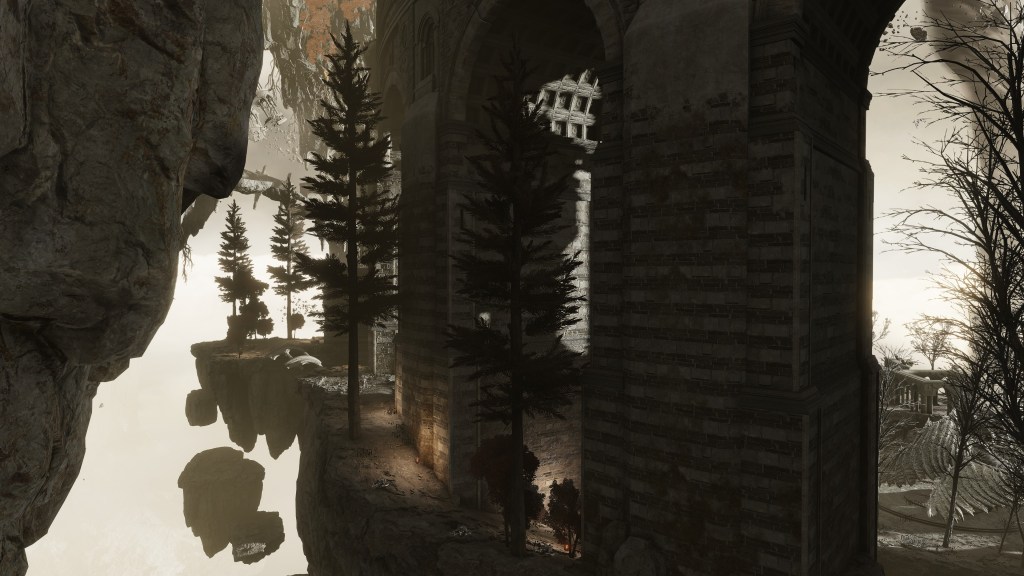
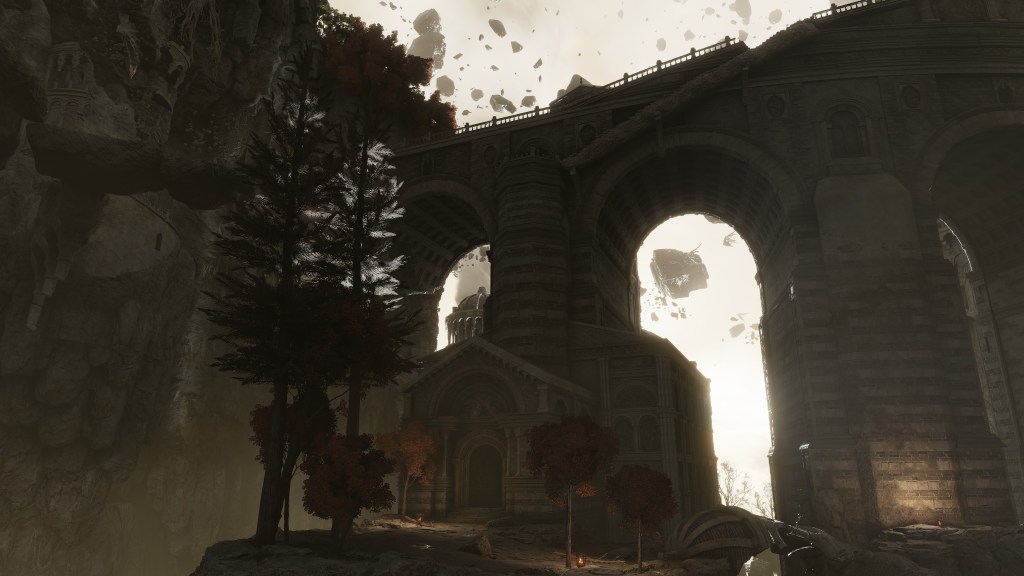
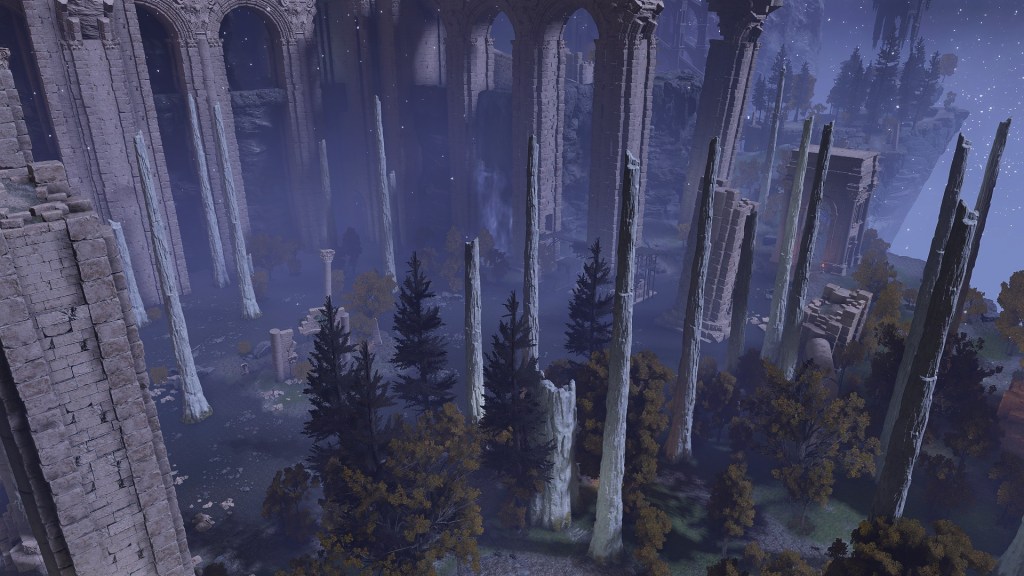
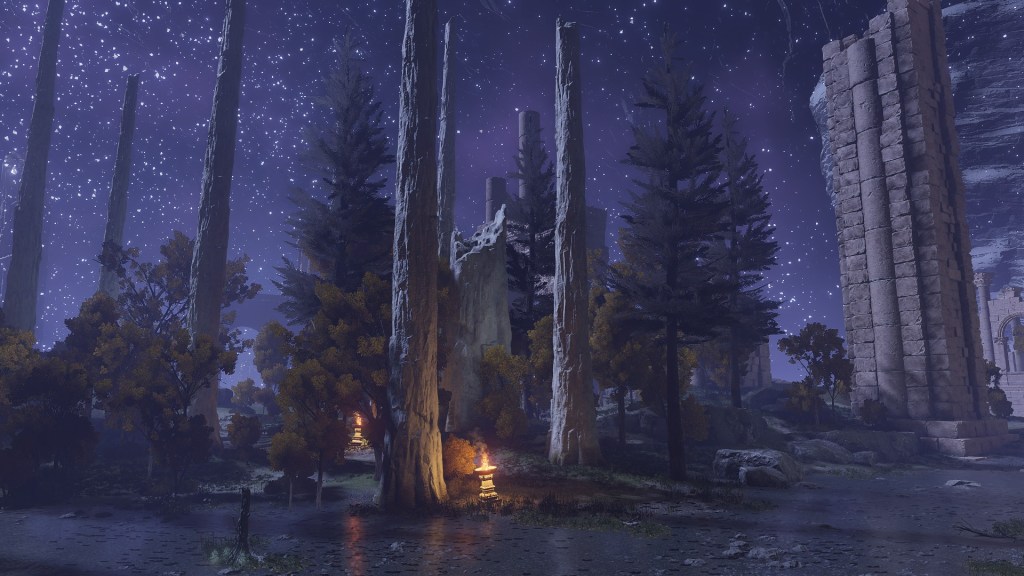
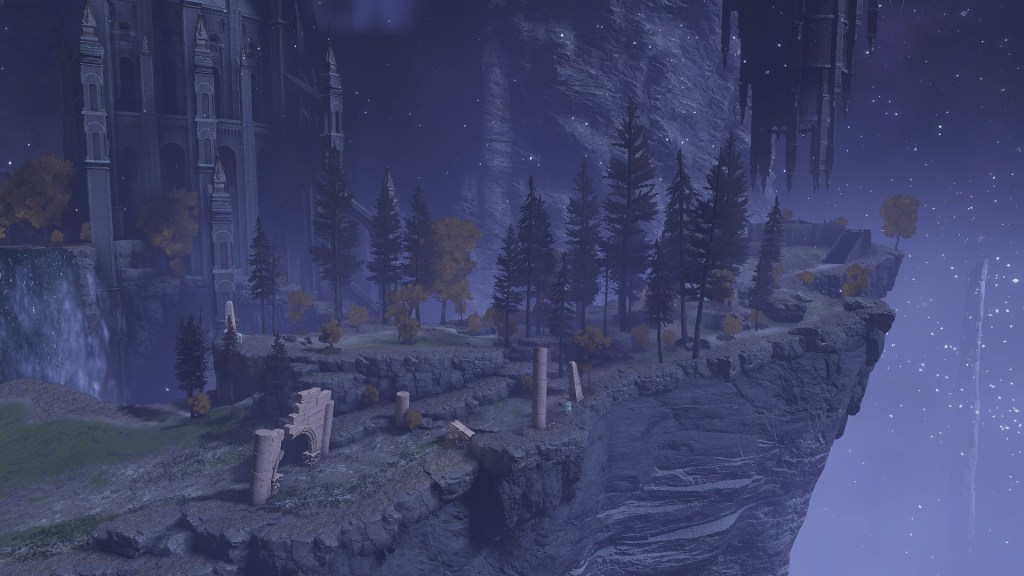
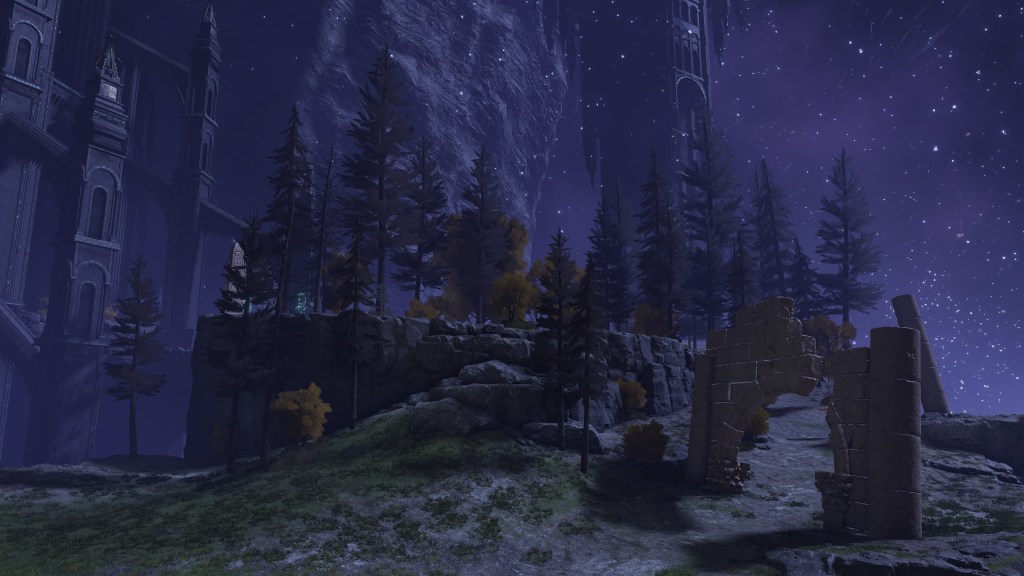
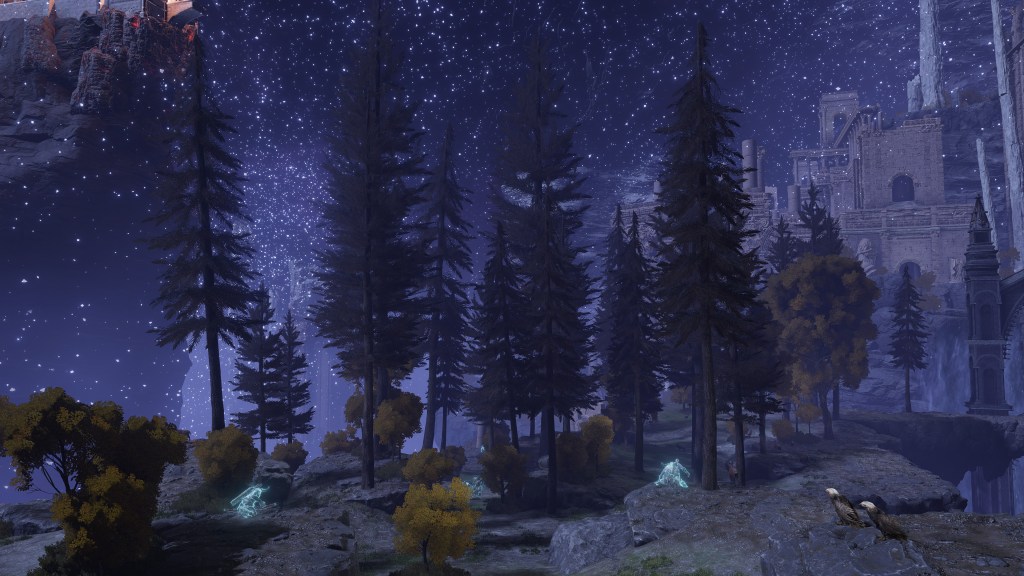
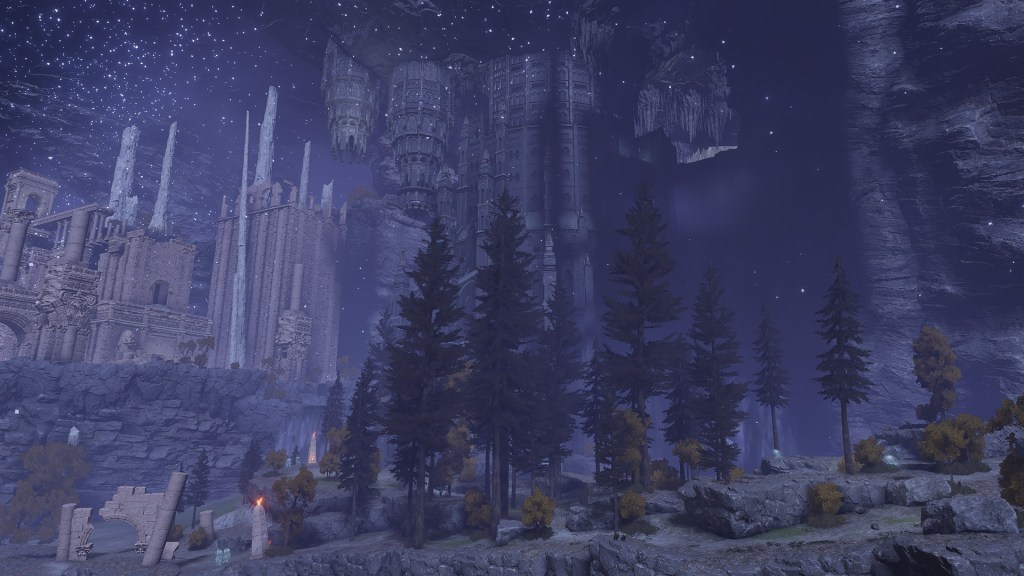
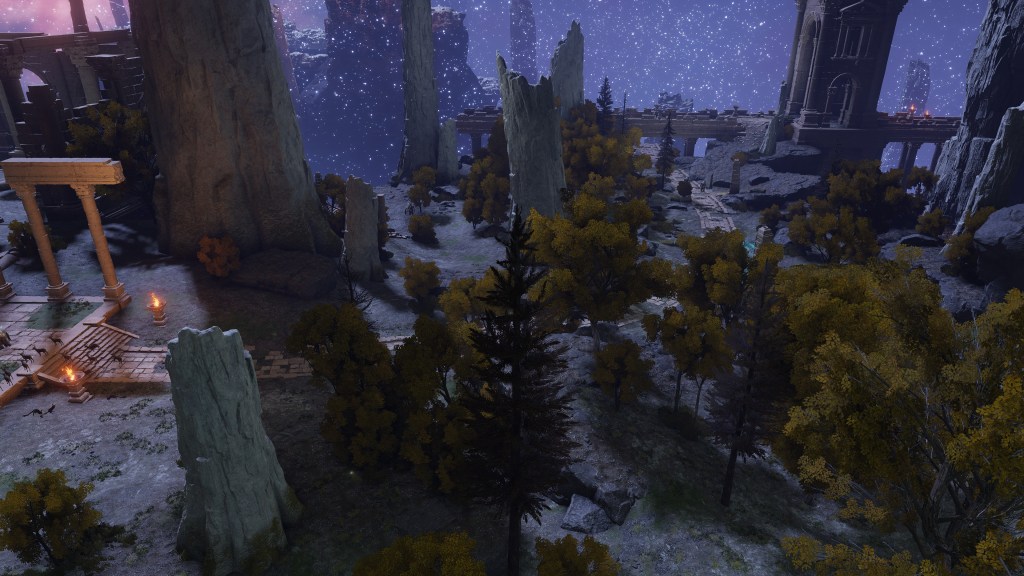
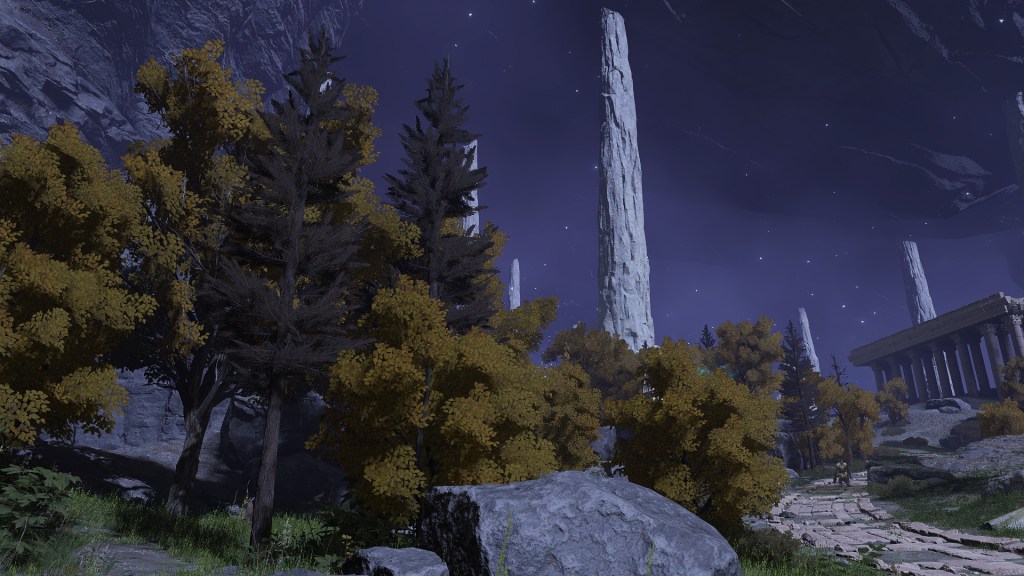
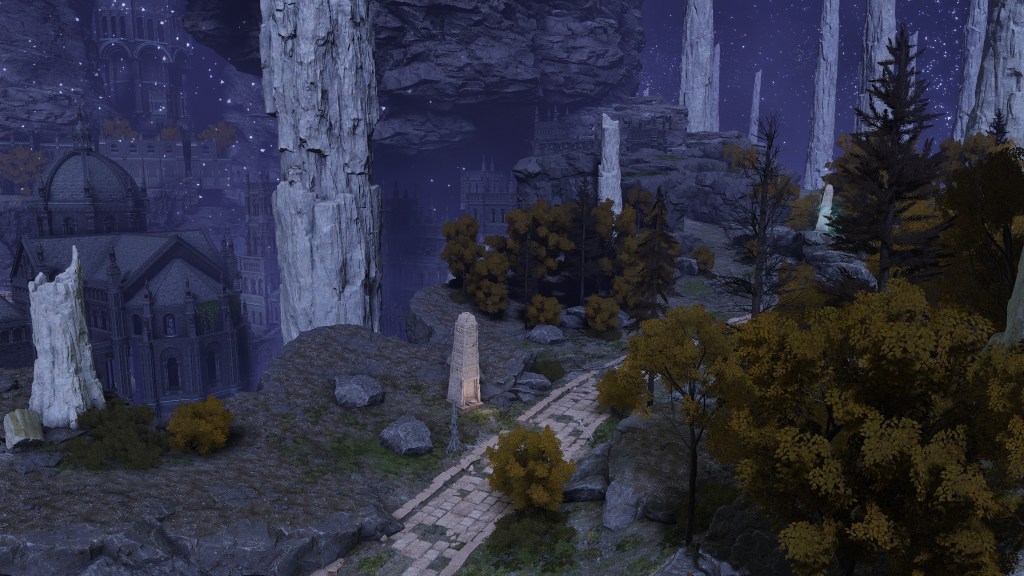
Keeping the unique architecture in mind, this wouldn’t even be the first time that Nox and humans came together to found a new town. Ordina may be another Nox colony, but the blue flames of its torches suggest a more conventional human sorcerer presence, like in Sellia. Conifers surround the town when they are otherwise absent in the Consecrated Snowfield, except for those growing along the bottom of the eastern cliffs to the Mountaintops. The latter might have grown naturally, following the seed path across the snowfield to northern Altus; the former, not so much. The evident inference is that many a sorcerer has come to stay in Ordina, possibly since the town’s inception. Perhaps a different population of astrologers mingled with a proximate Eternal City, the nameless city in this case.
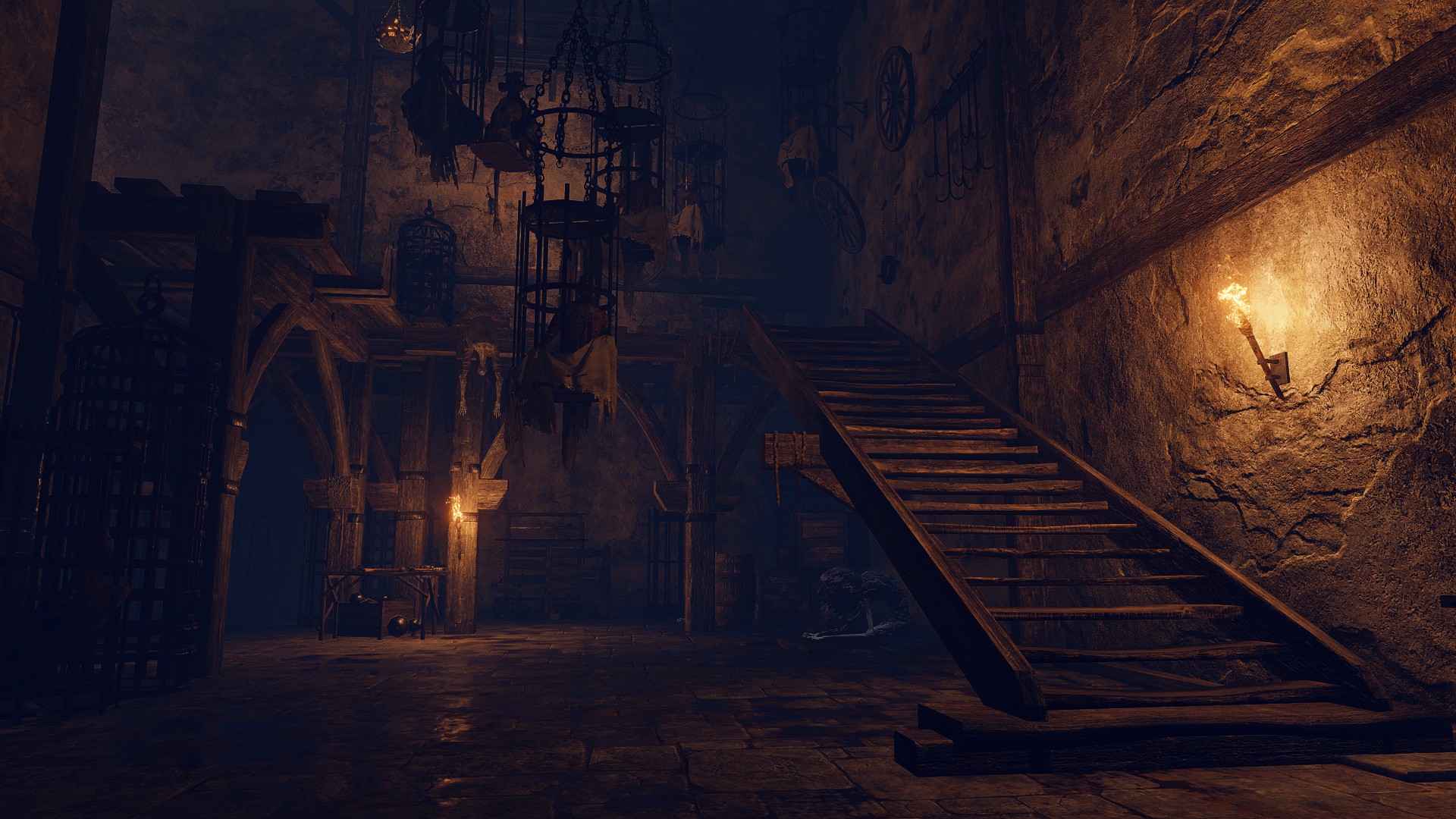
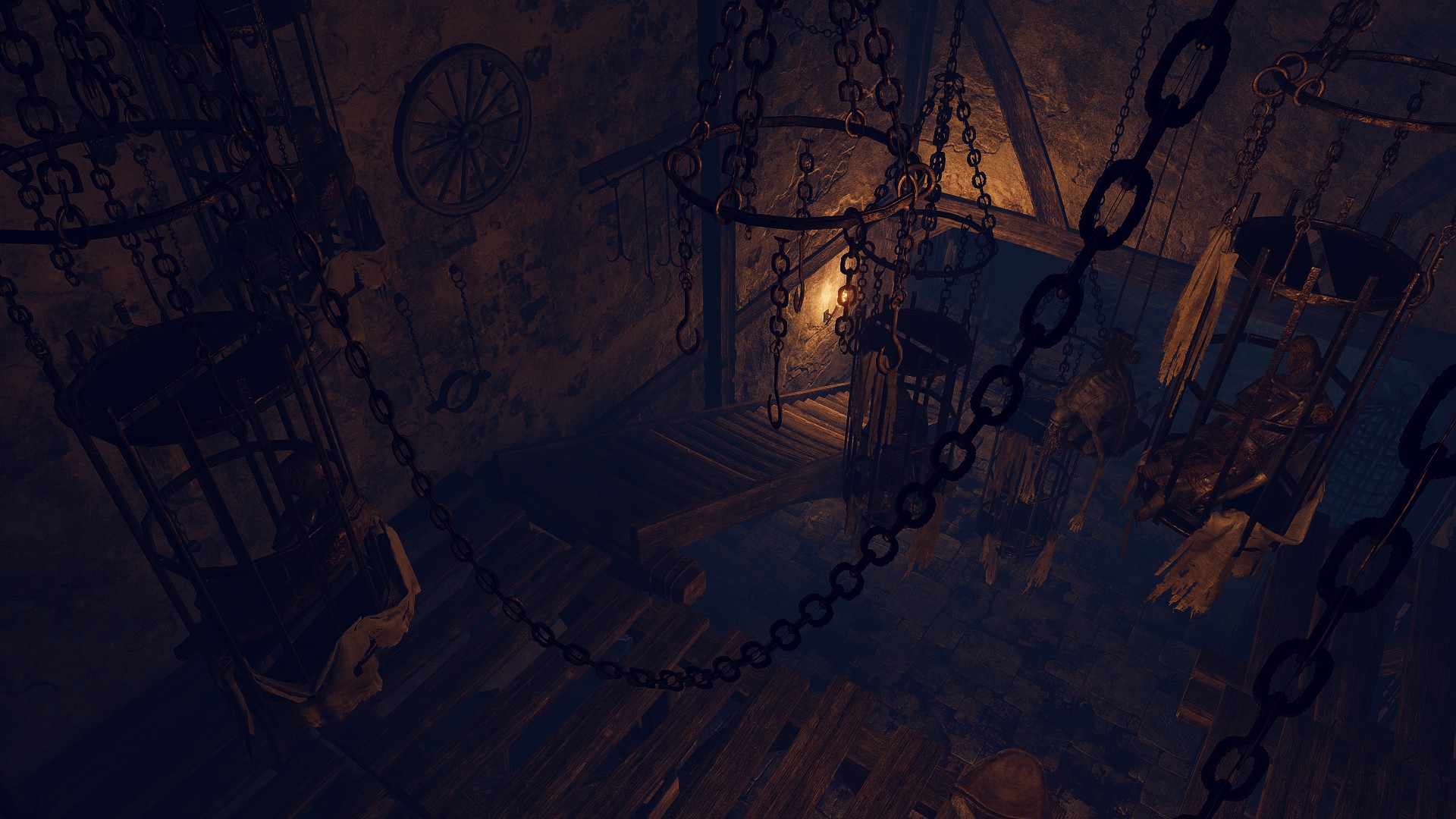
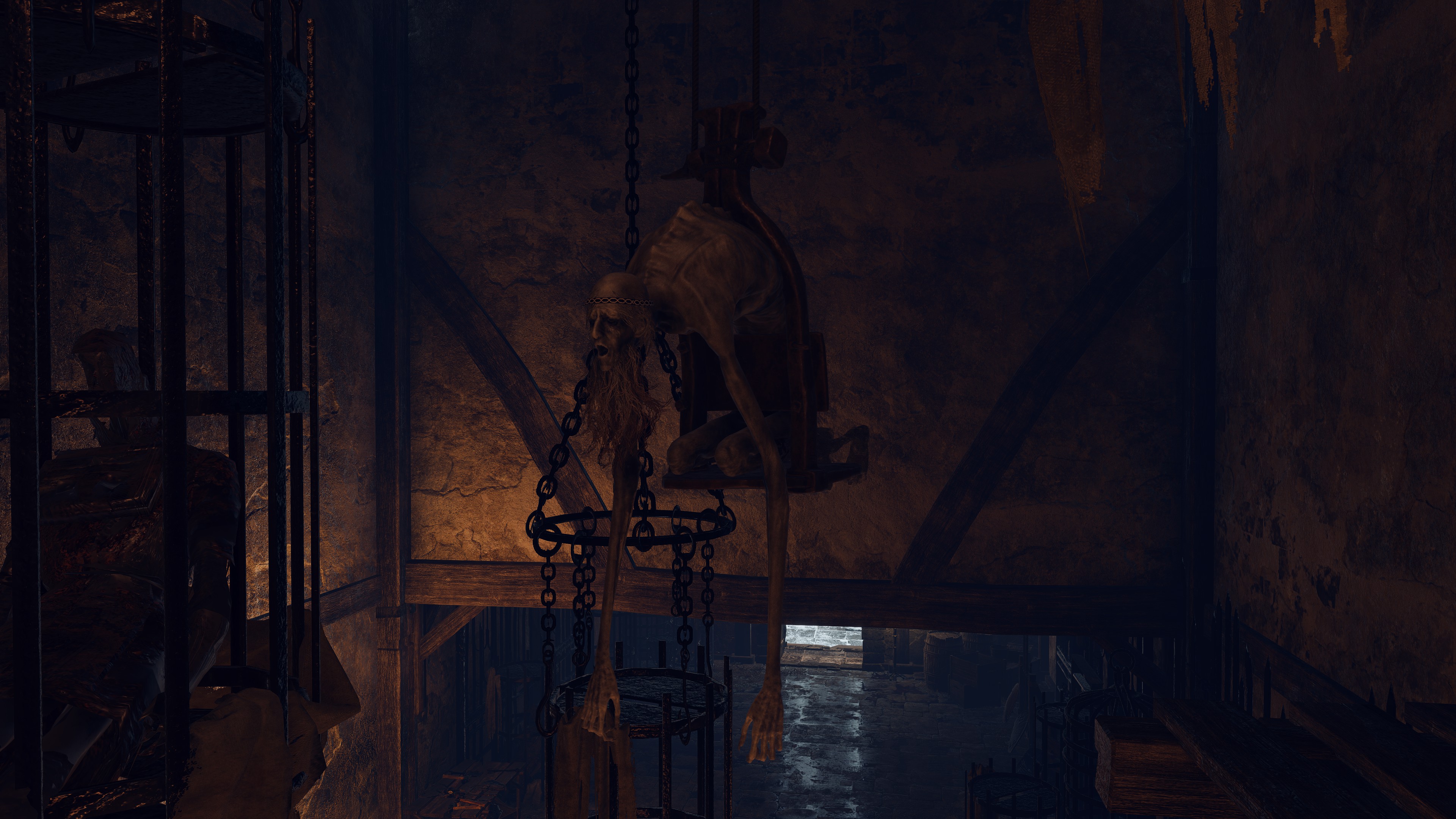
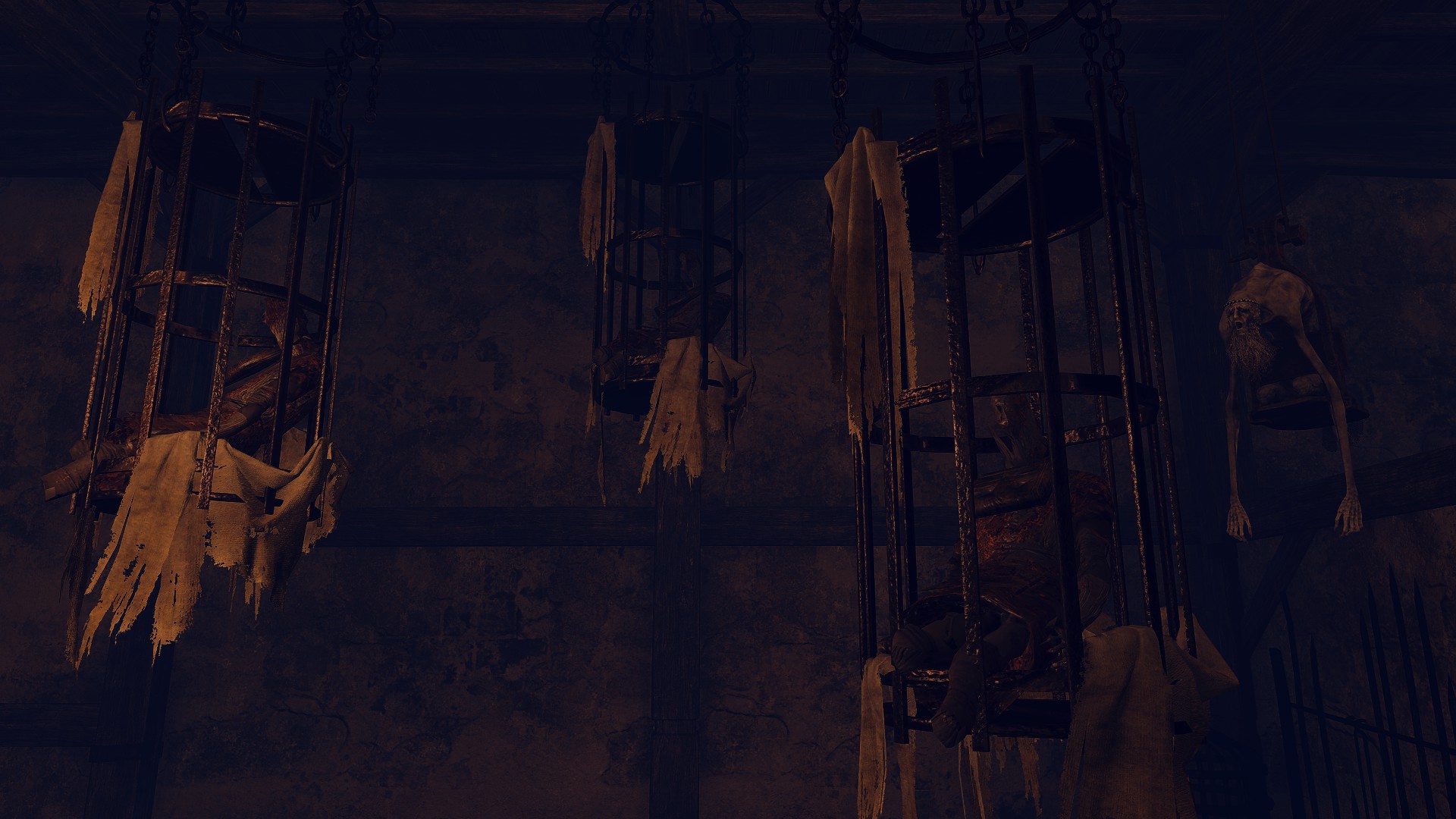
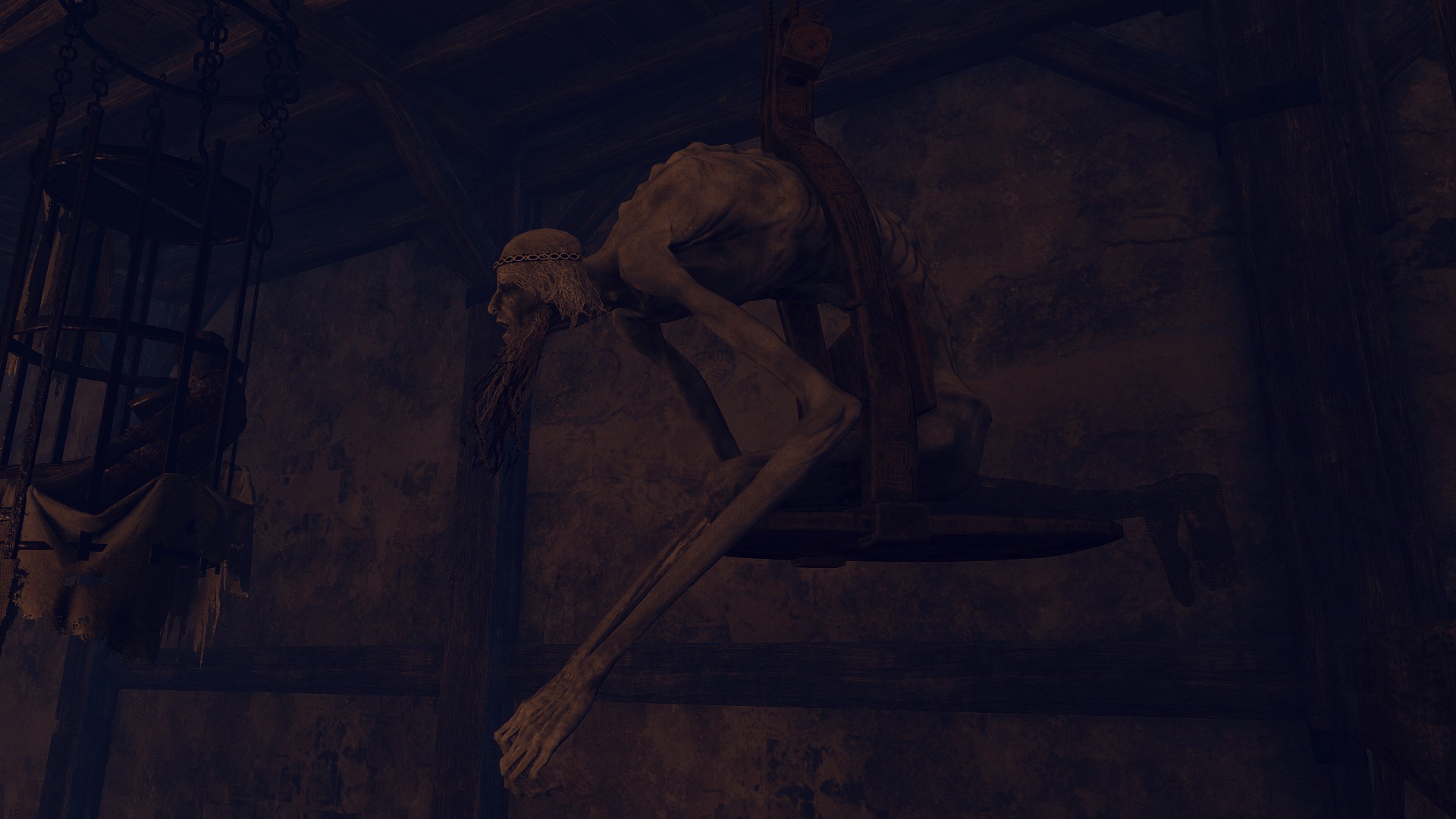
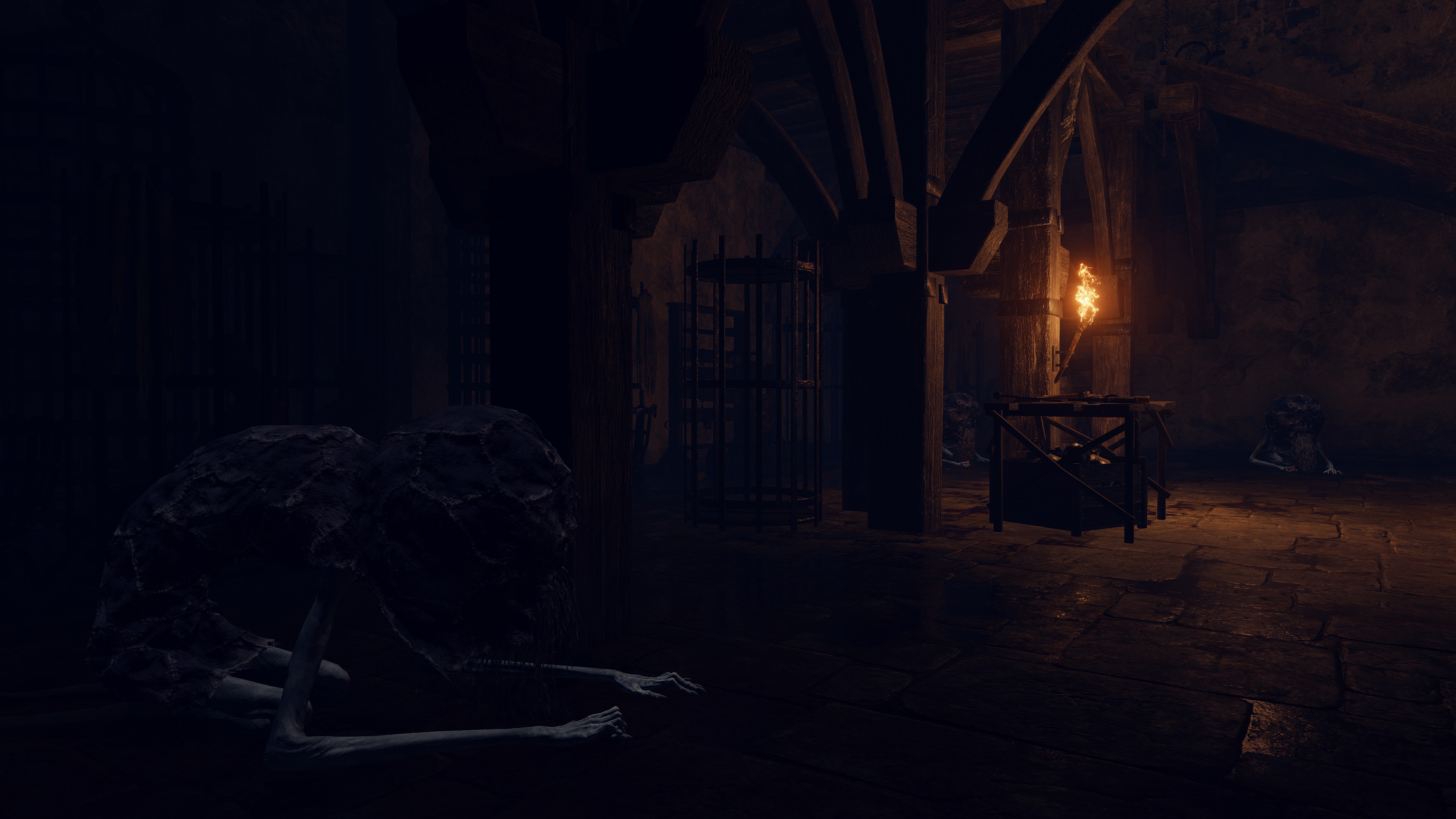
Without question, there are hints to exchanges between the Nox and the stargazers on the Mountaintops once upon a time. Among the prisoners of Castle Sol, north of the village, are the aged Albinaurics, bodies restrained in a Skevington’s gyves or crawling around as tortured madmen. Even assuming that their capture and torture is a more recent event, how did the silver-men fall into the garrison’s hands? Perhaps thanks to the stargazers living on the other side of the Freezing River valley. With the Nox of Ordina adopting silver tears, they didn’t need to keep their Albinaurics, opening an avenue for trade with the humans interested in their cosmic connection. The Eternal City migrants might also cross paths with the astrologer village while tracing the river to its source. If so, then it is no surprise that some from both parties might establish a permanent settlement at the other end of the frozen water flow.
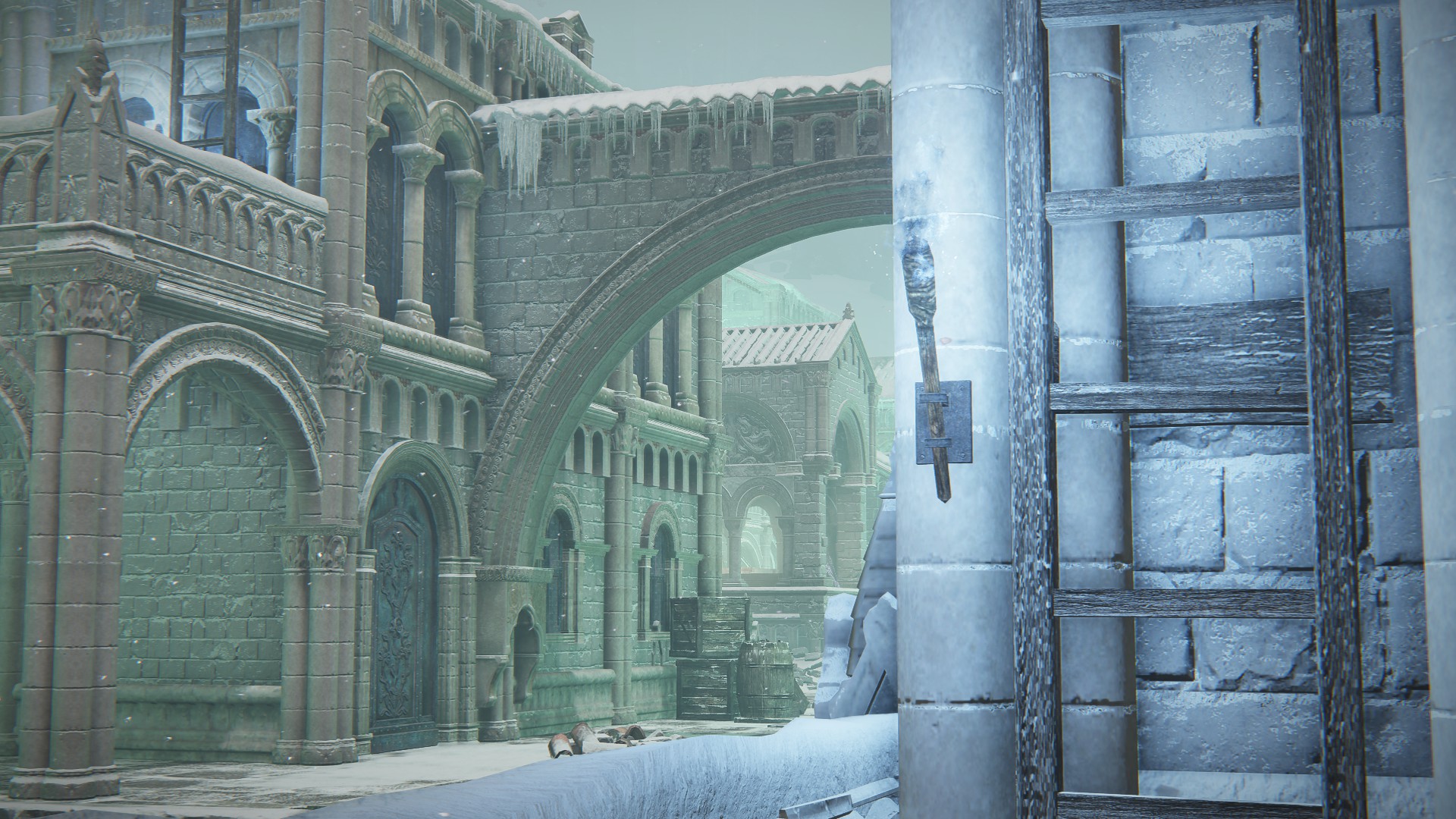
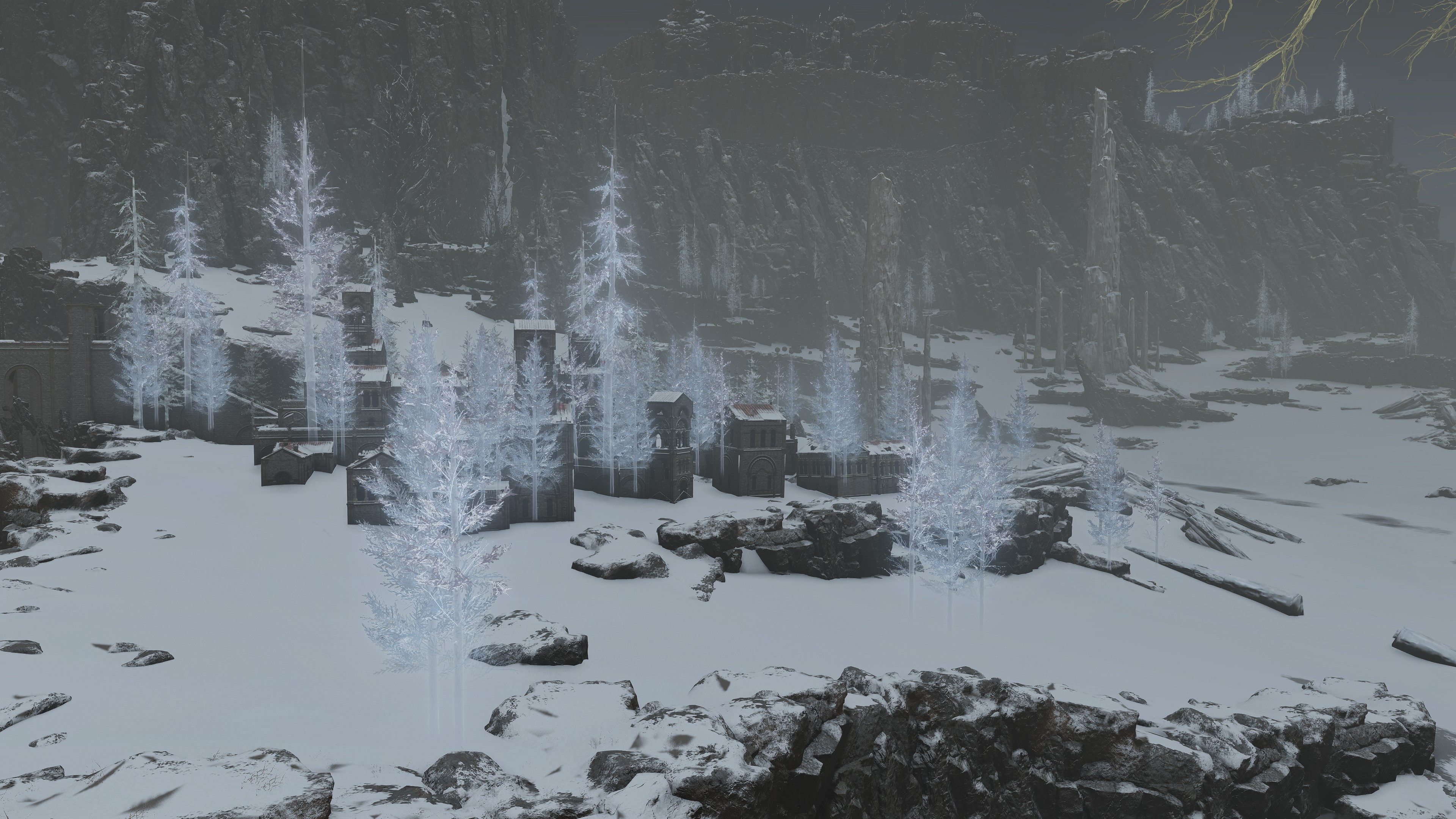
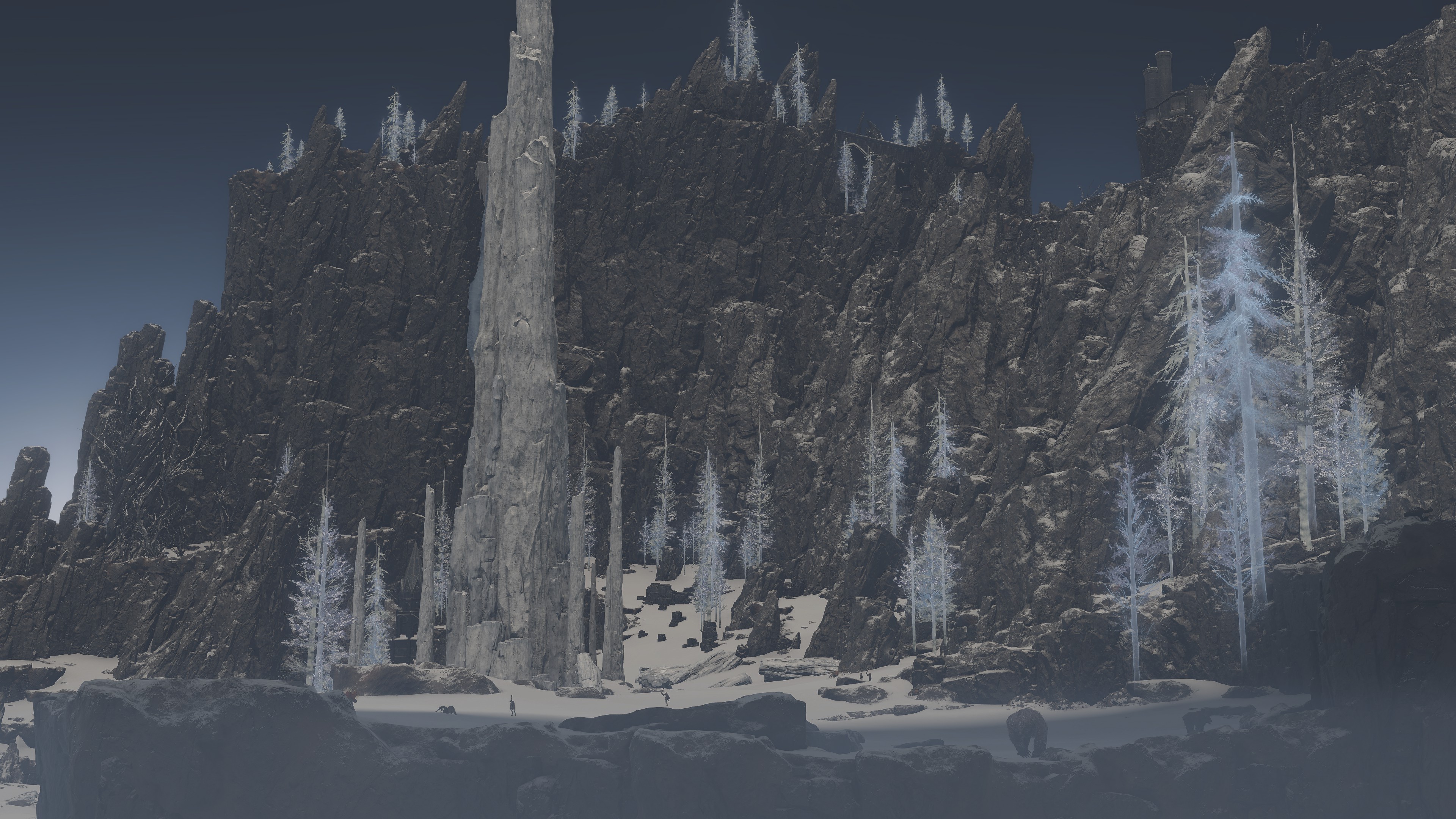
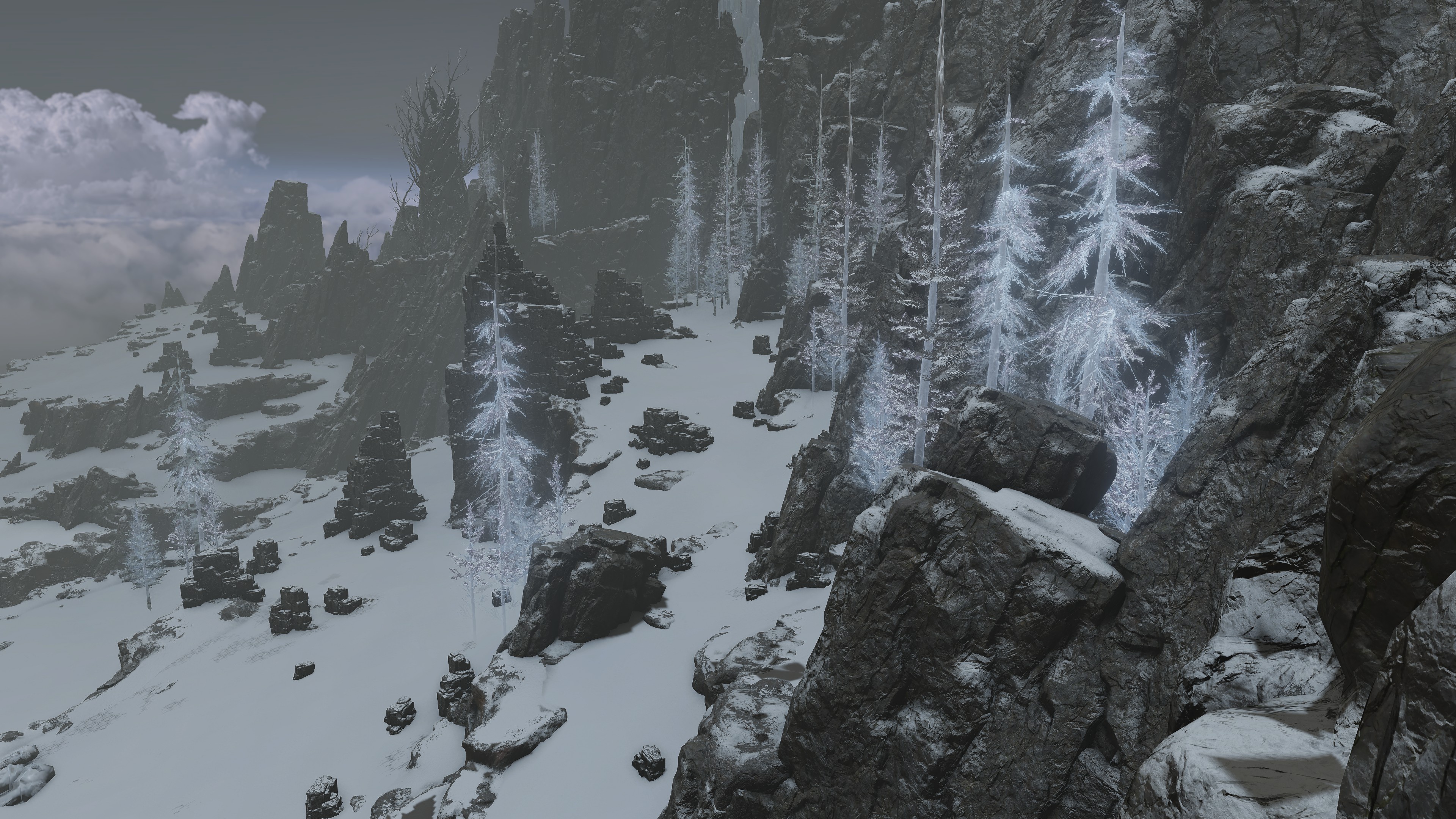
Basically, Ordina was the product of Nox and human interaction. Unlike with the proposed Sellia scenario, this was prompted by the Nox’s move to the surface first, but they still established relations during their initial survey, before at last settling in the Consecrated Snowfield. As a result of these close ties, the stargazer village received Albinaurics to study, even if they would later lose them to the nearby castle. And for those who joined the Eternal City pioneers in founding a township down the mountain, they obtained new possibilities to learn about the stars under Nox tutelage. Ordina’s narrower area of study limited those possibilities, the lack of a chair-crypt affirming that research of the river never looped back around to the Lord of Night experiments. But even if more restrictive than in Sellia, it was a place where humans and Nox chose to coexist, and might have even served as the blueprint for the Sellia population to reach out to Nokron during their own migration.
Regardless of specifics, nomadic sorcerers most likely played a similar part in the creation of the other colony in Caelid. After stumbling upon the well and building relations with the Nox living by Siofra over time, the northern humans might negotiate to combine their knowledge and interests with the glintstone found above. Both parties stood to benefit from the arrangement — Nokron wanted research for the Lord of Night and the supply of glintstone closer to the surface, and the sorcerers wanted arcane secrets concerning the stars and the night. If Ordina was a prior success case, then Nokron might have heard word from their sister city and felt motivated to try their own hand at working with surface dwellers. Regardless, if it advanced their individual goals down the line, it was worth experimenting with the model.
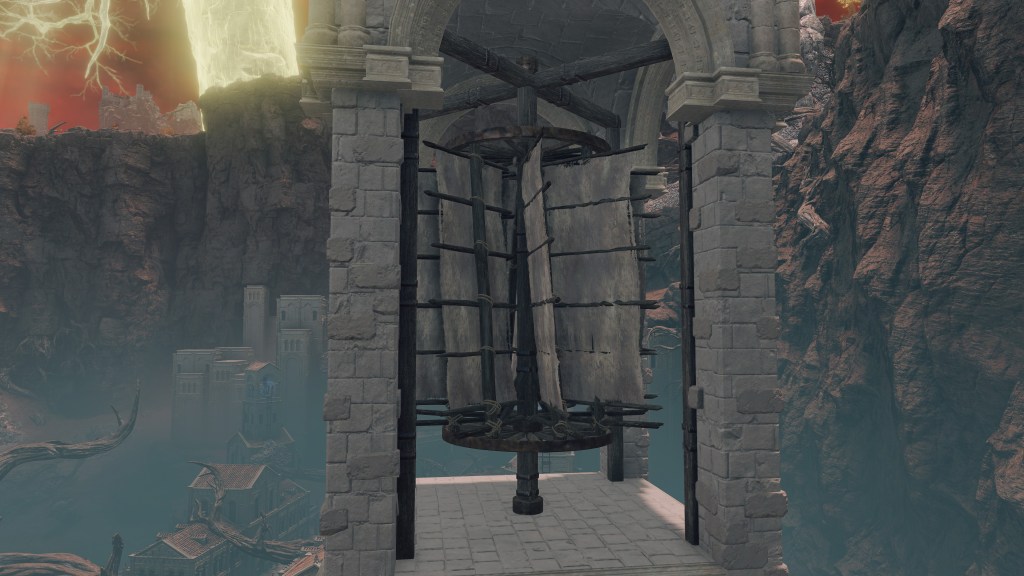
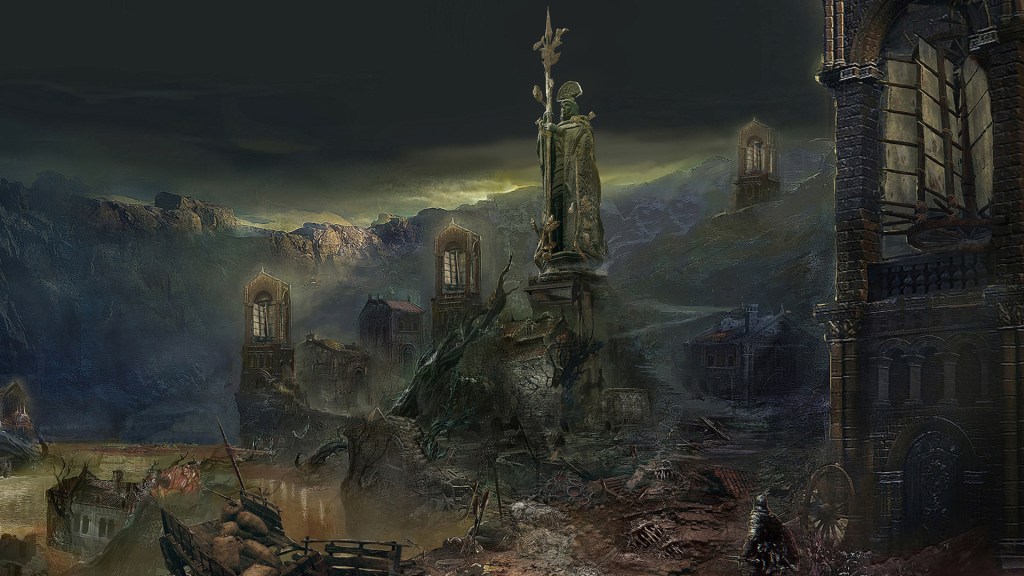
At the end of negotiations, Nokron and the astrologers established a permanent settlement above ground. From studying the Nox’s arts, the stargazers derived new versions of the basic sorceries. Sellia looked to their own night sky as well. One of the towers in town harbors not a torch for their seal but a panemone windmill first created by ancient Persians. That not only impresses the town’s age and innovation, it also proposes a unique function not seen in the Eternal Cities or Ordina. Concept art shows this mill installed in all the towers, so clearly it holds some critical value to the residents’ sorcery. Given the exact importance of night to the culture, it isn’t a grain mill but an anemometer, the sorcerers using the device to measure the likelihood of storms or clouds blowing in and blocking view of the stars when the sky was too dark to see them coming. In different terms, it is a tool which the subterranean Nox might not have considered if not for the human perspective, well accustomed to winds in the blistering cold. From early on, Nokron was seeing the value of this cooperation.
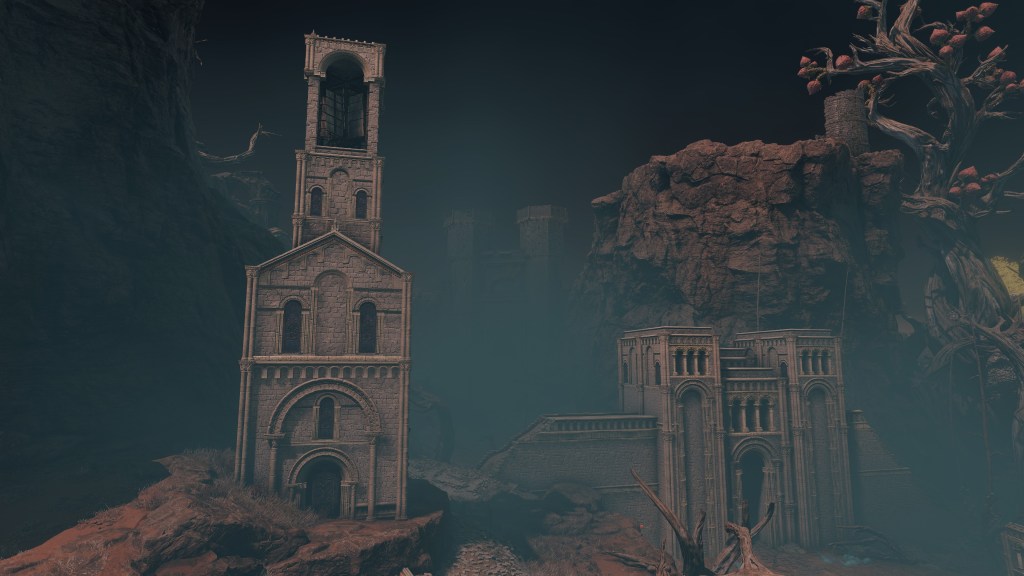
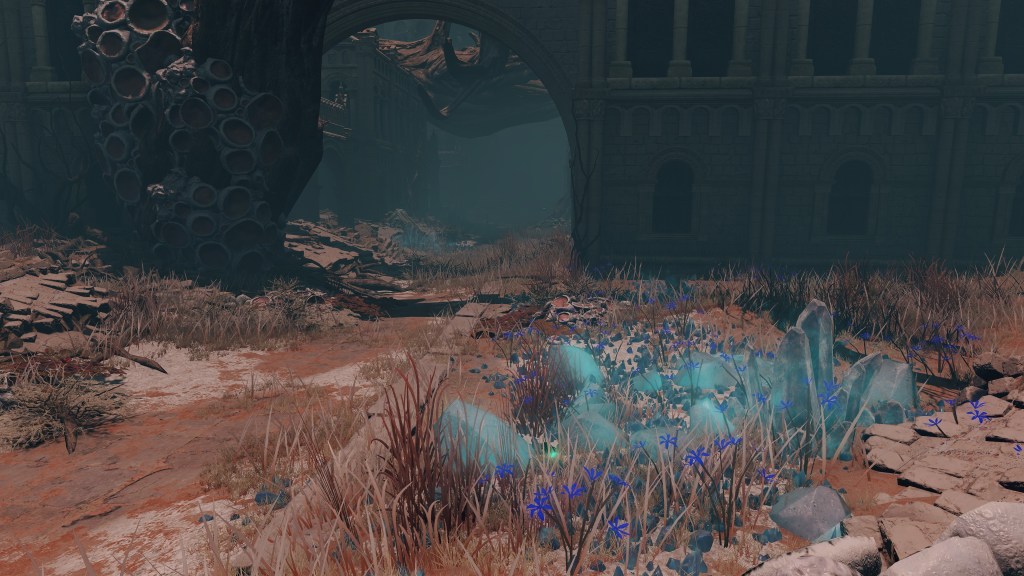
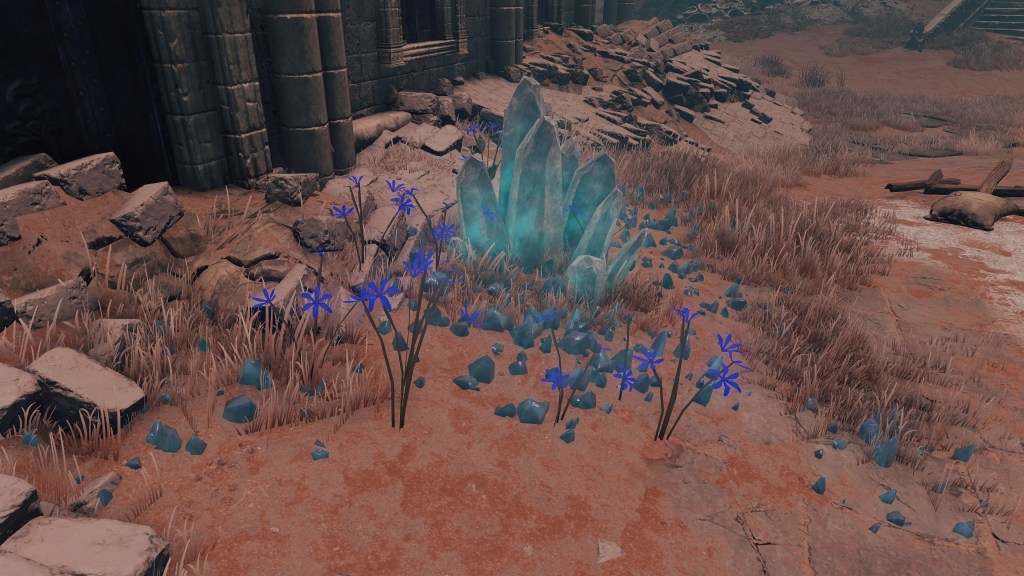
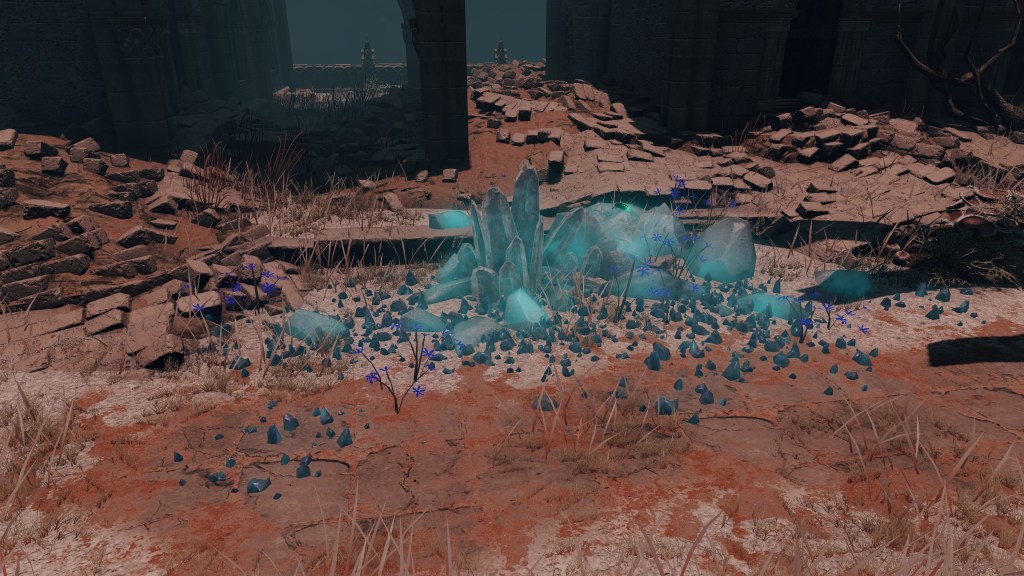
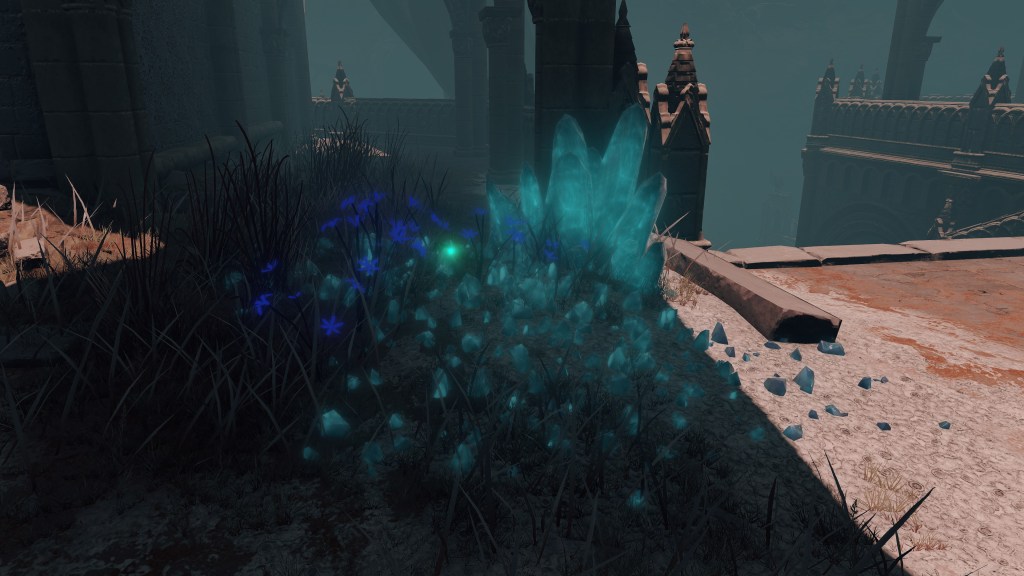
Sellia contributed the outside knowledge which the Nox were using to expand their research into the night, taking the glintstone closer to the surface for materials. Mining efforts have been long underway at Sellia Crystal Tunnel, and Sellia Hideaway has also started extraction. The town sat at the center of this treasure trove of star debris, experimentation leading to a new staff which ironically removed the glintstone; the residual power imbued in the wood alone made it ideal for the semi-invisible night stars they fired. The prosperity this brought can be seen in the clusters of crystals lining the main street from arch to arch, the blue flowers growing for added decoration highlighting the intention to cultivate them in this manner. Anyone walking into Sellia was greeted with proof that glintstone was being studied and, more importantly, mastered. It may be propaganda, but it served morale as the residents continued gathering the stars’ amber for research.


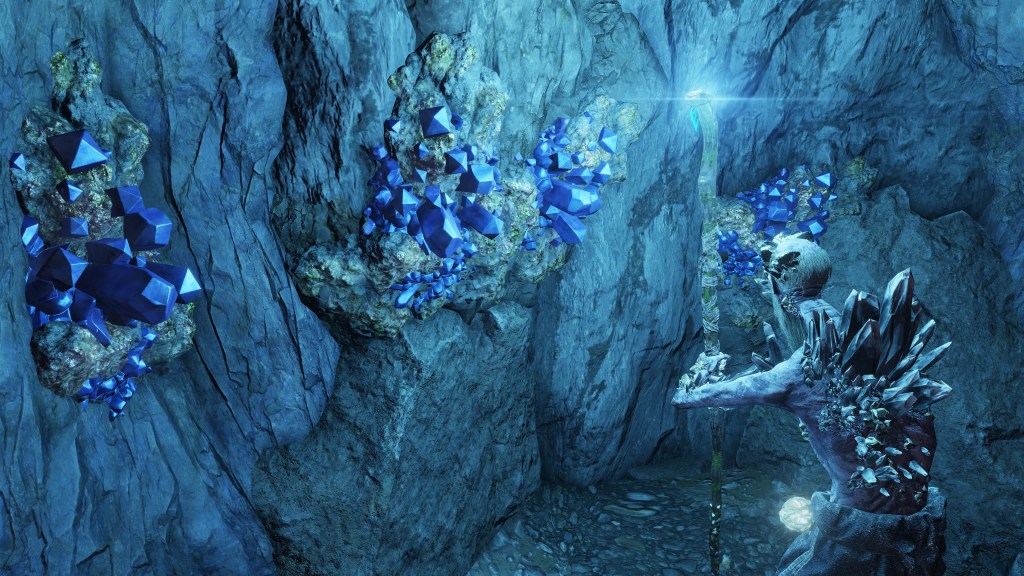
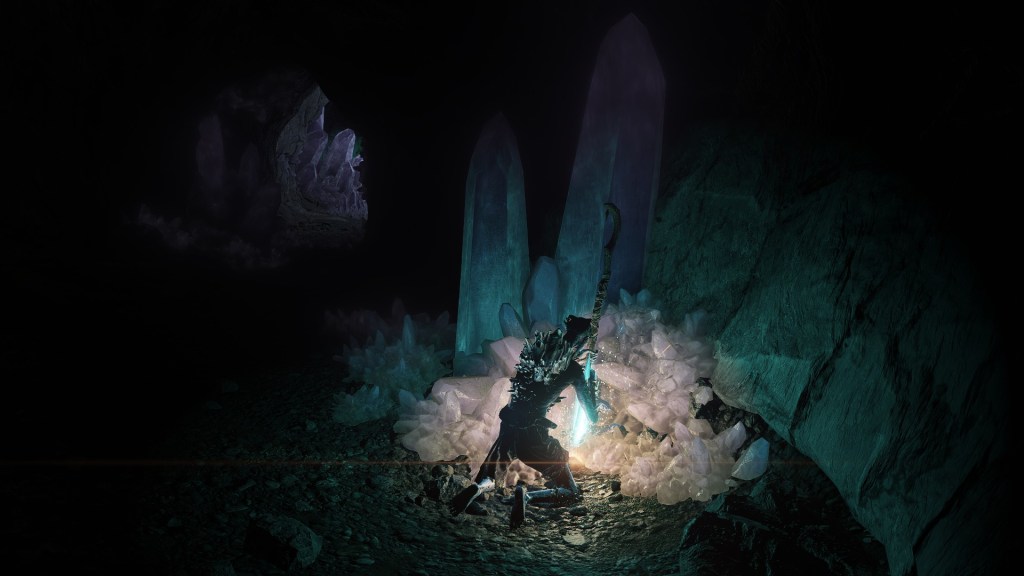
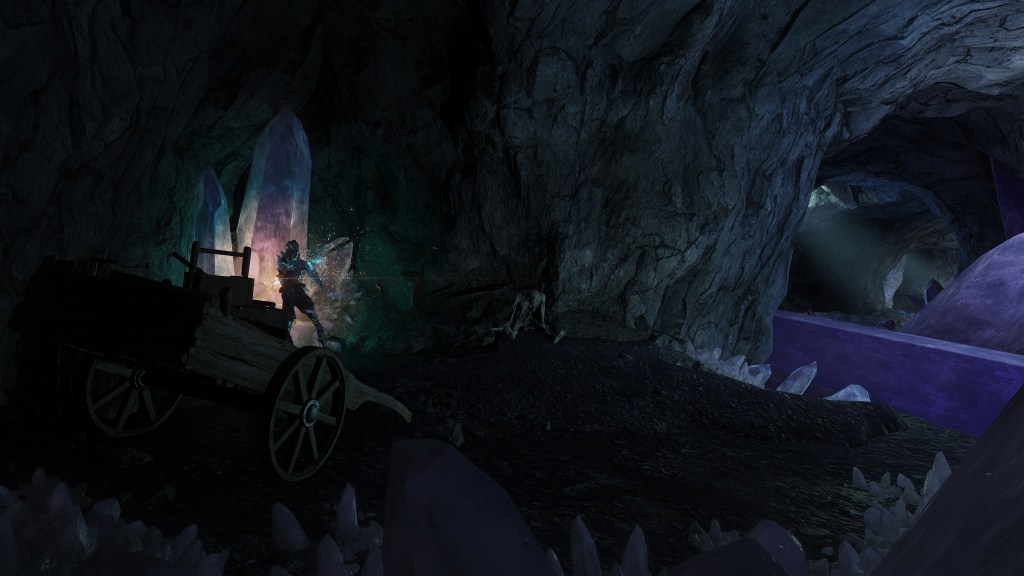
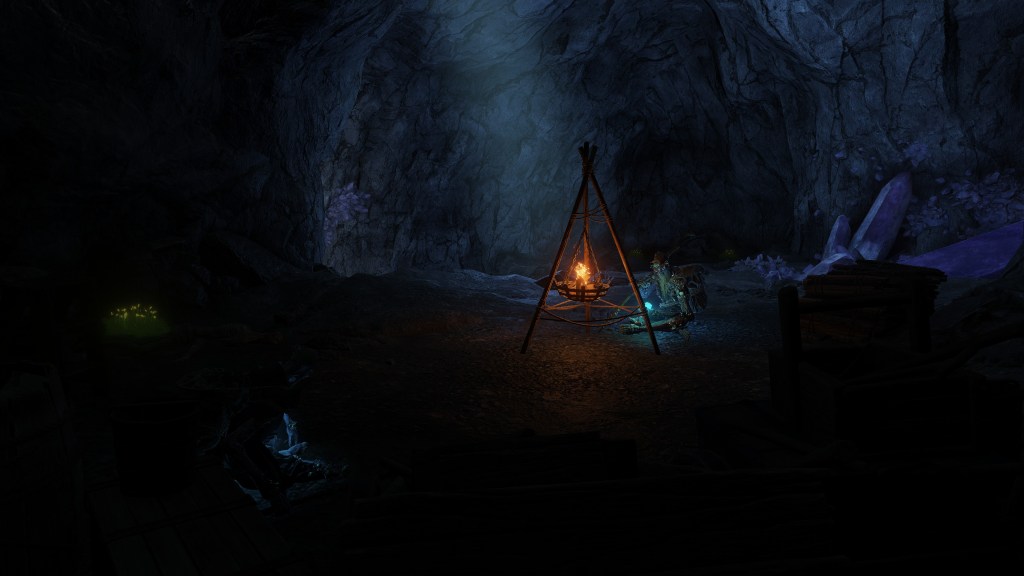
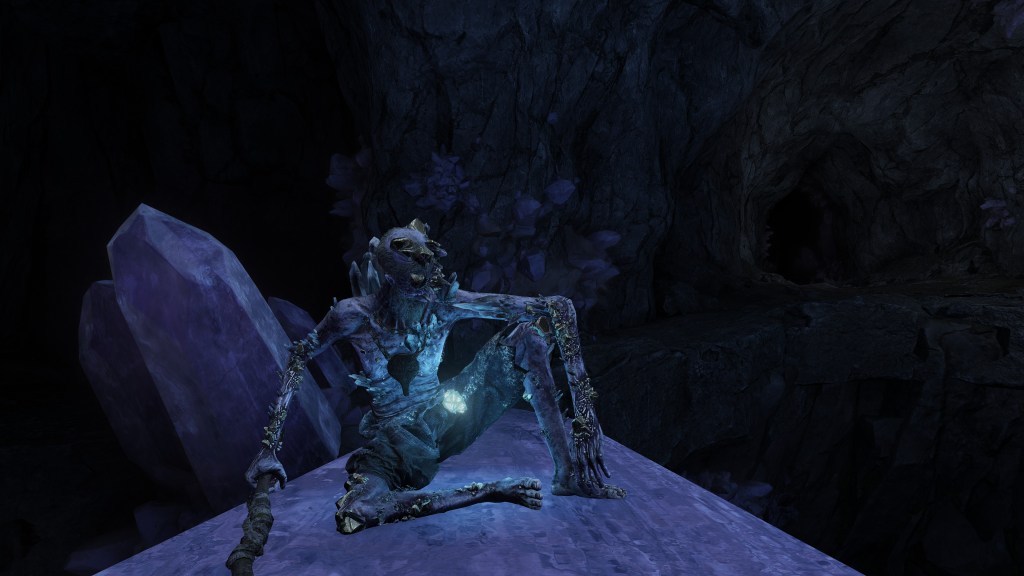
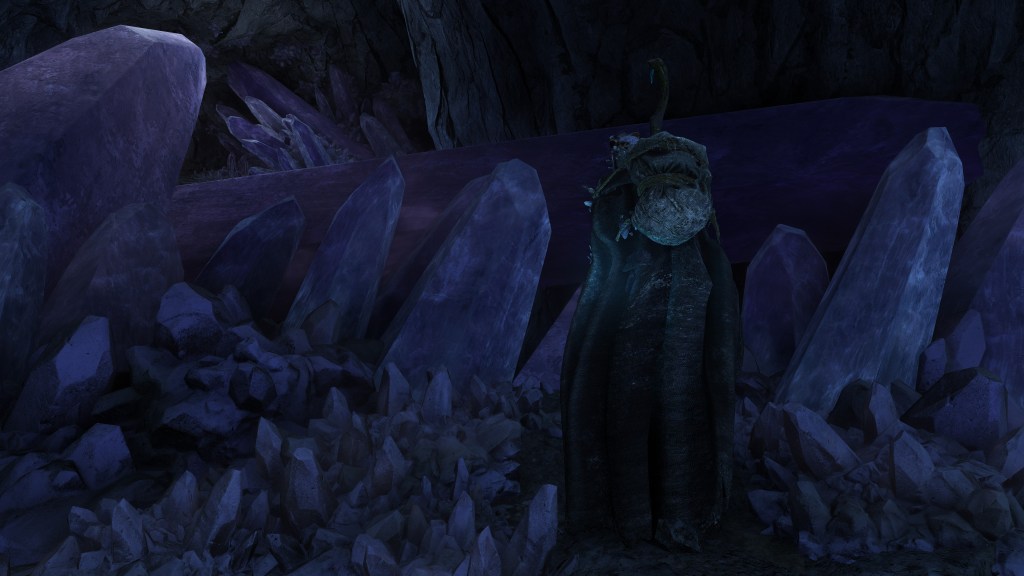
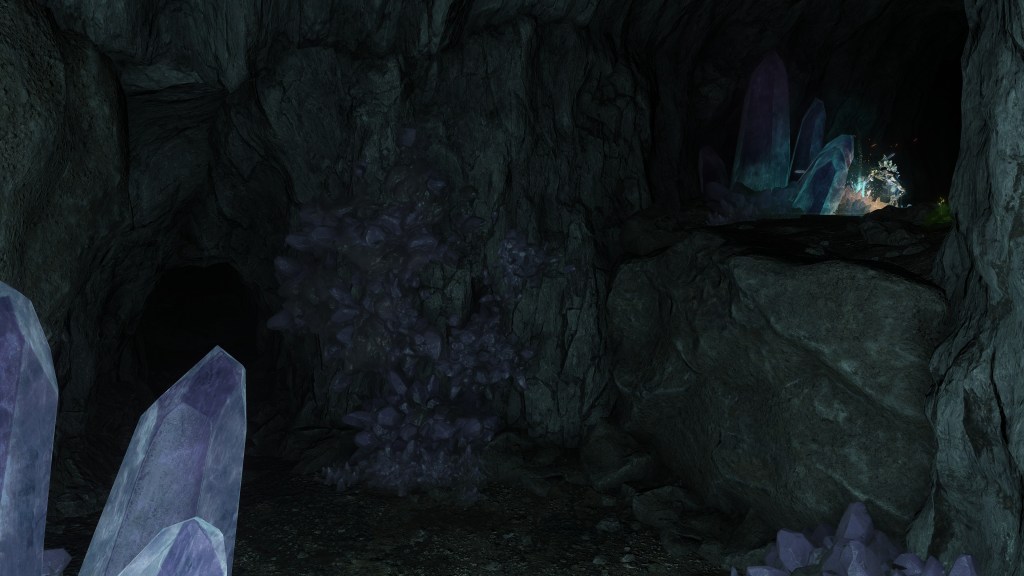
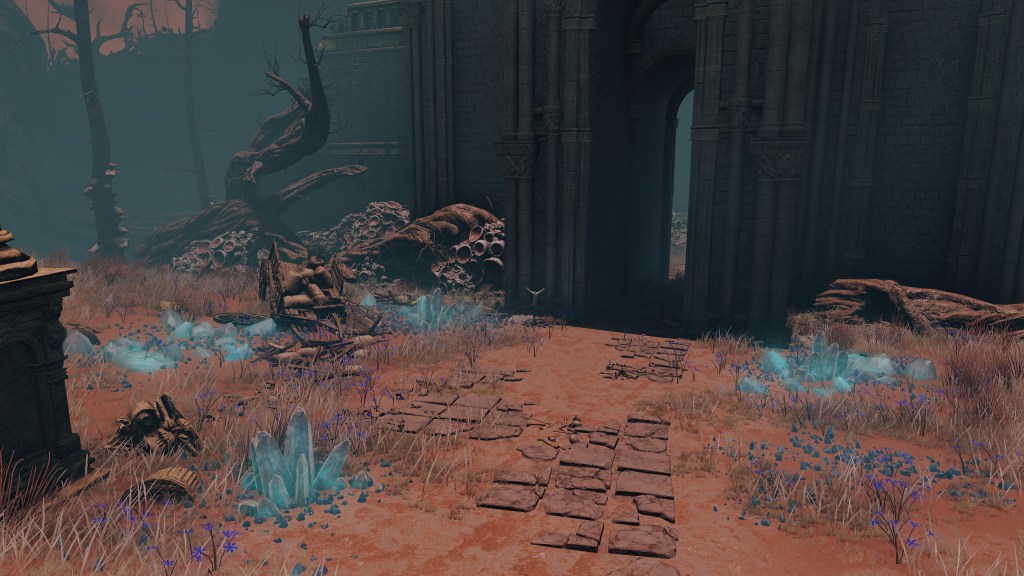
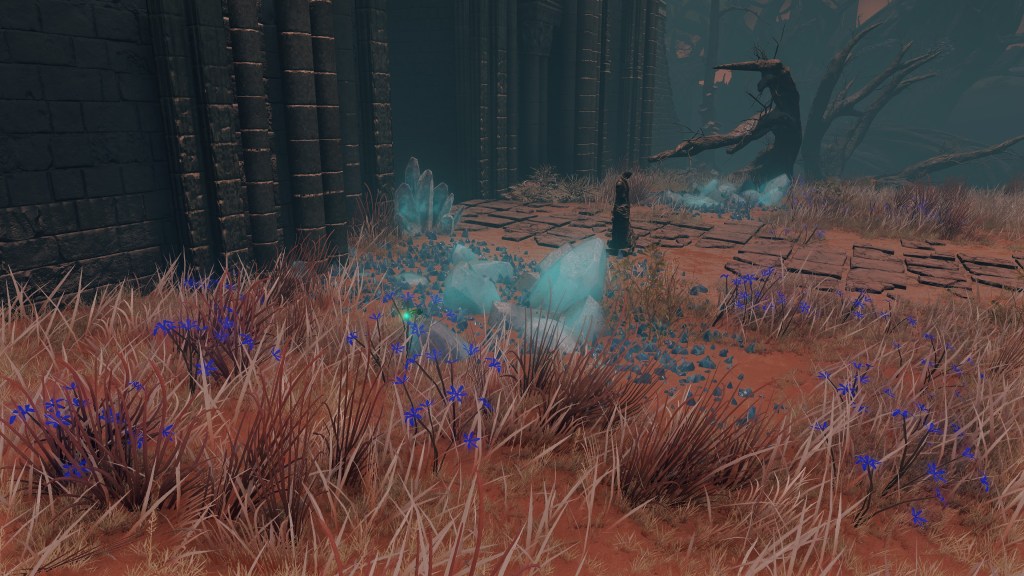
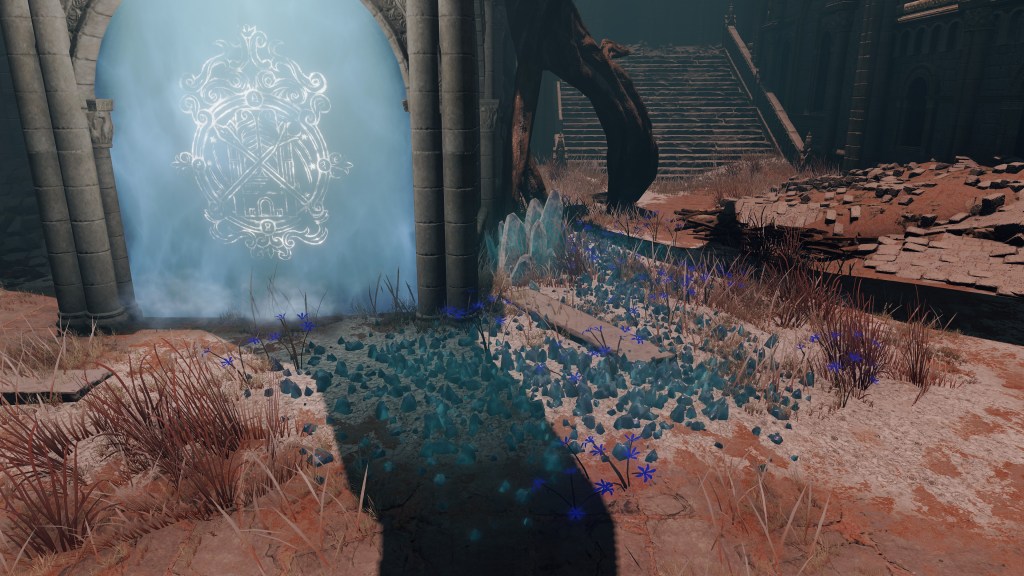
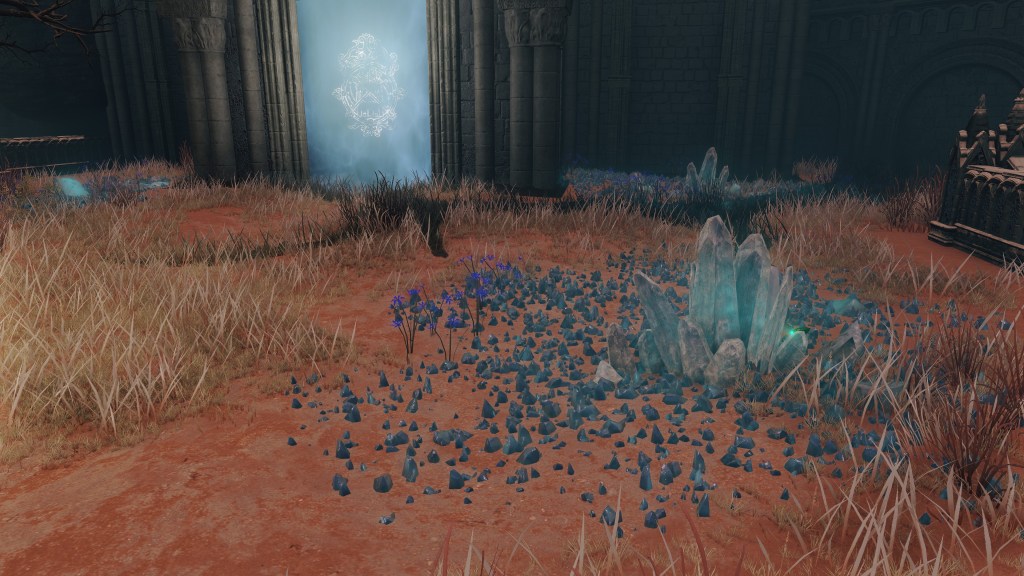
Staff that lost its brightstone. Choice weapon of sorcerers who discover their research only in asceticism.
It only has good compatibility with invisibility sorceries. Some choose this staff for that.
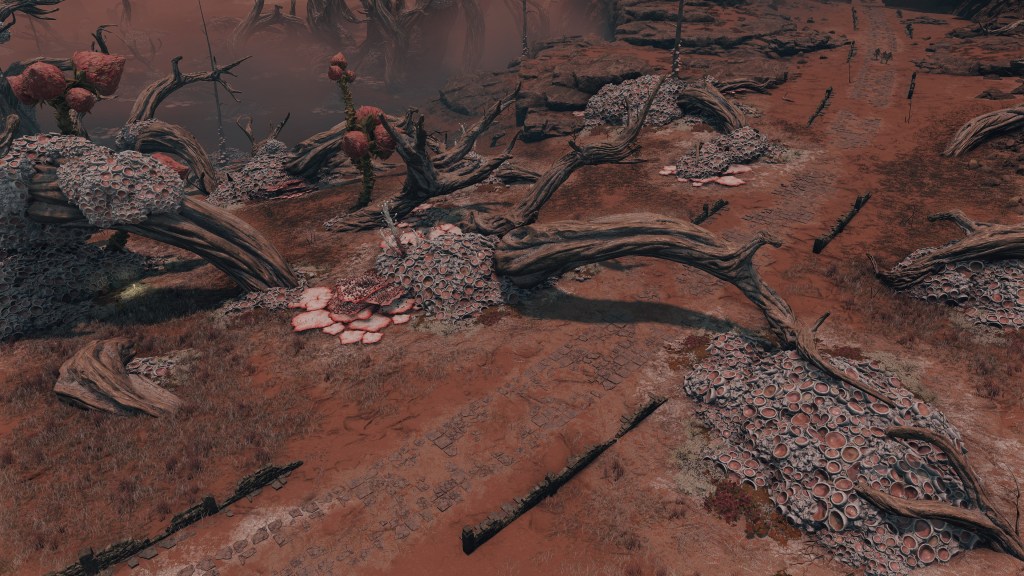
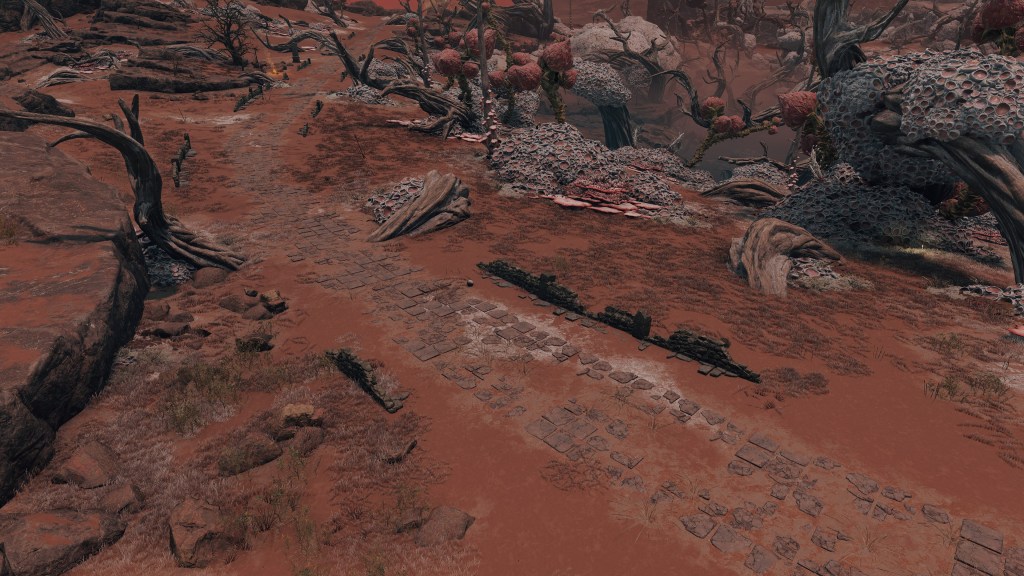
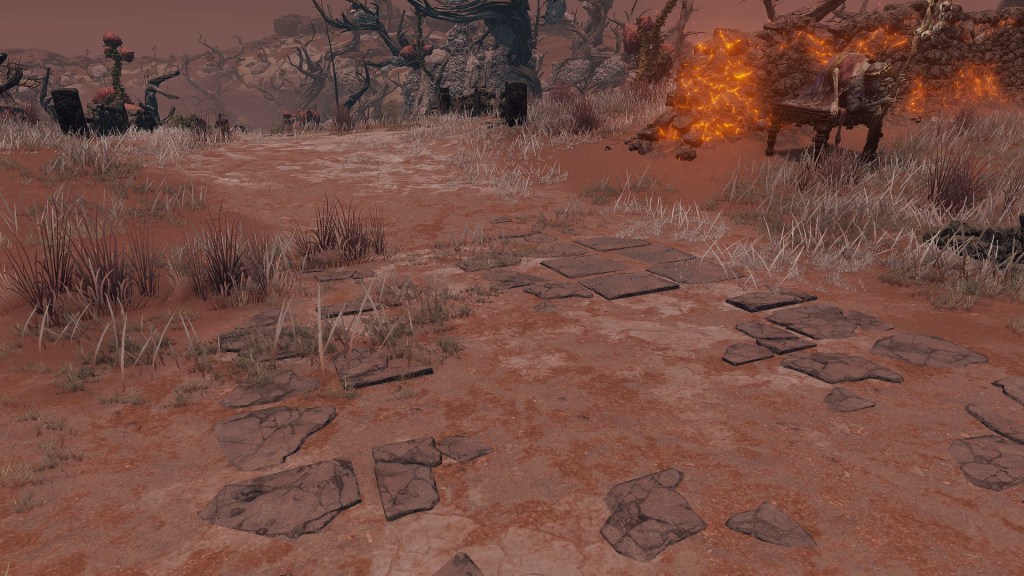
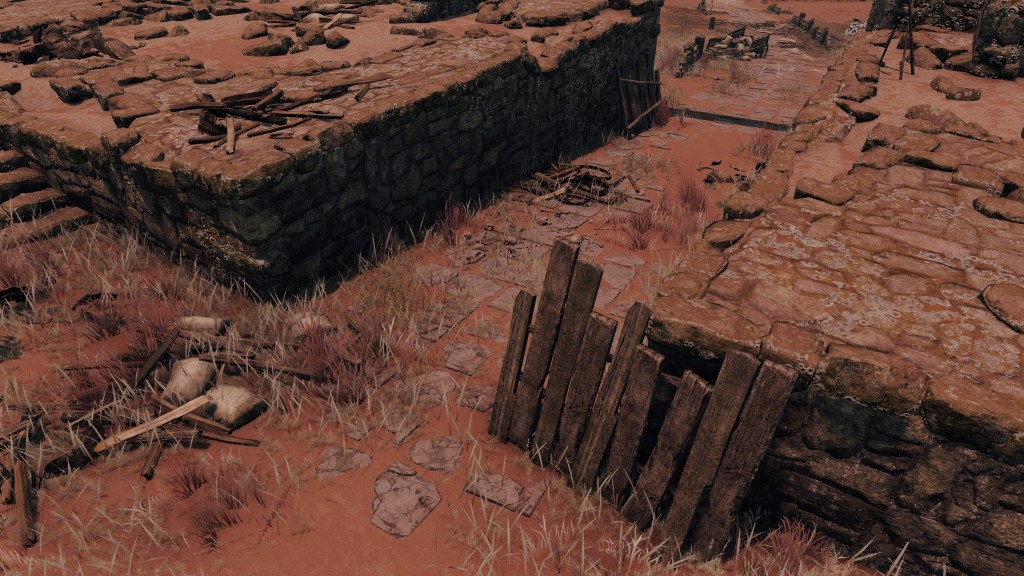
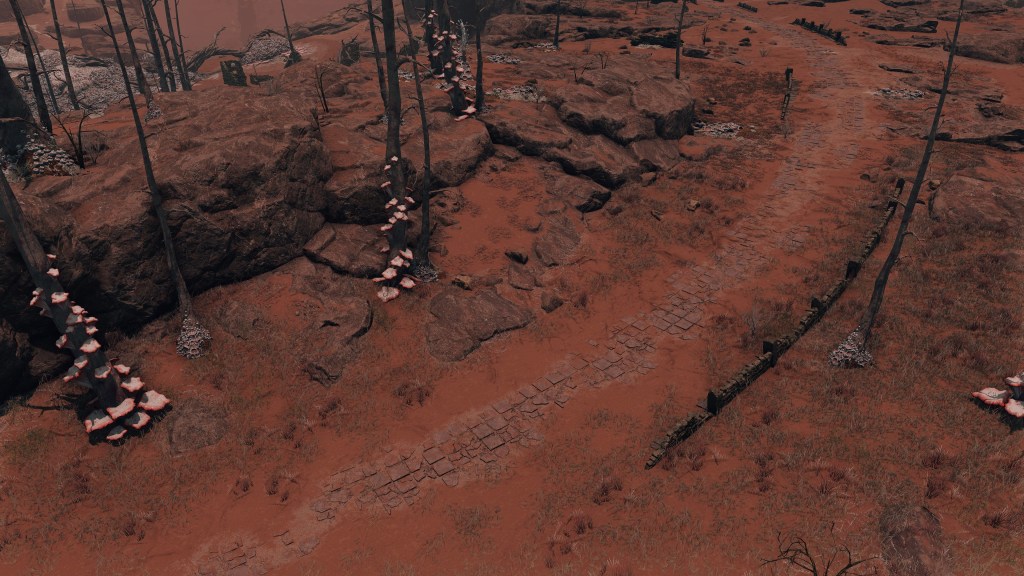
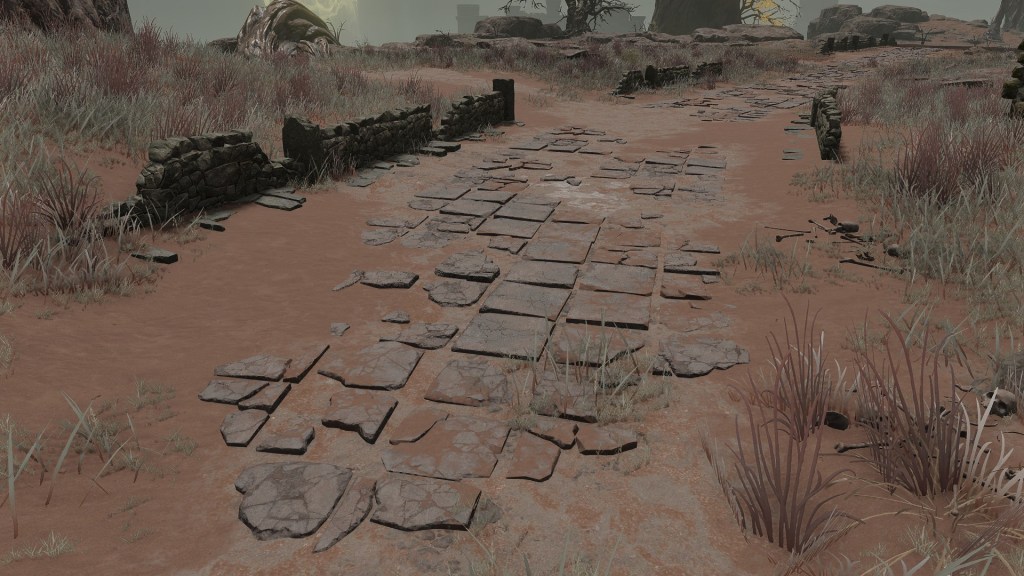
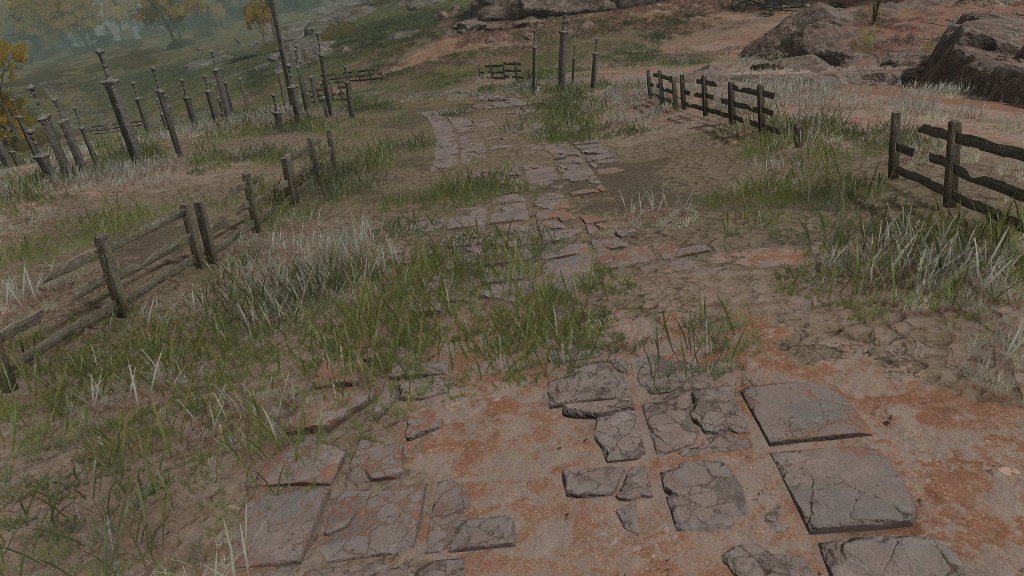
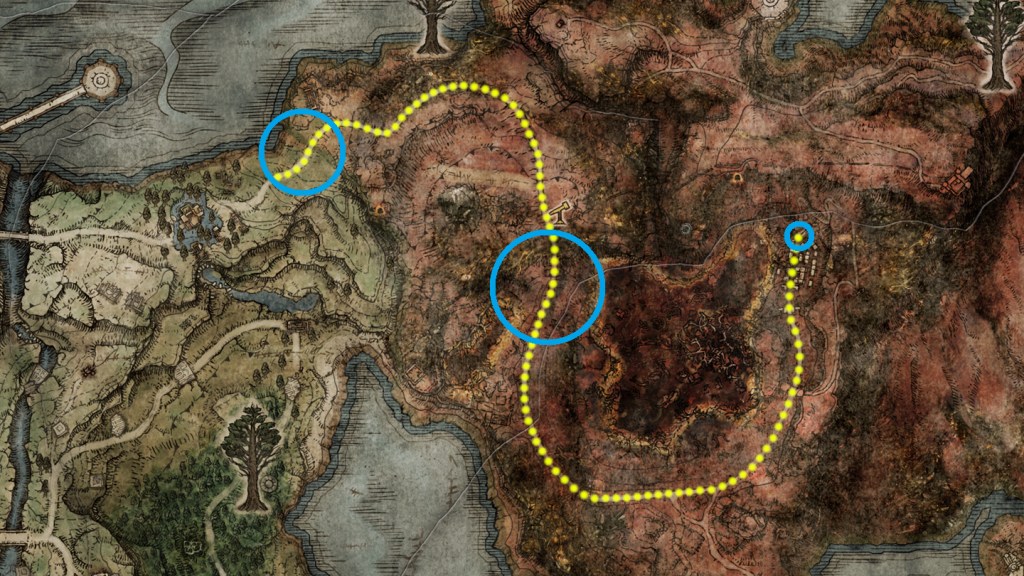
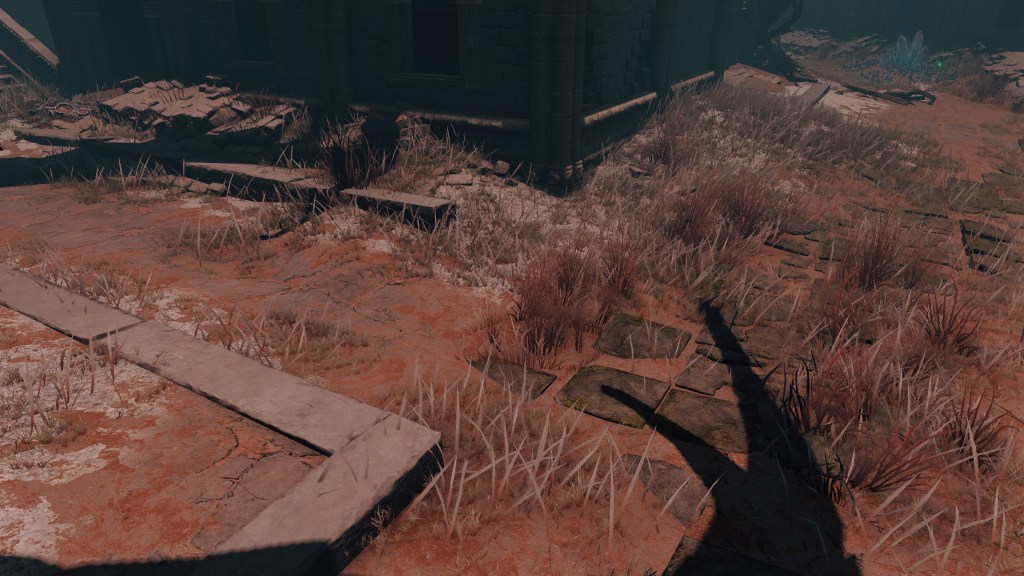
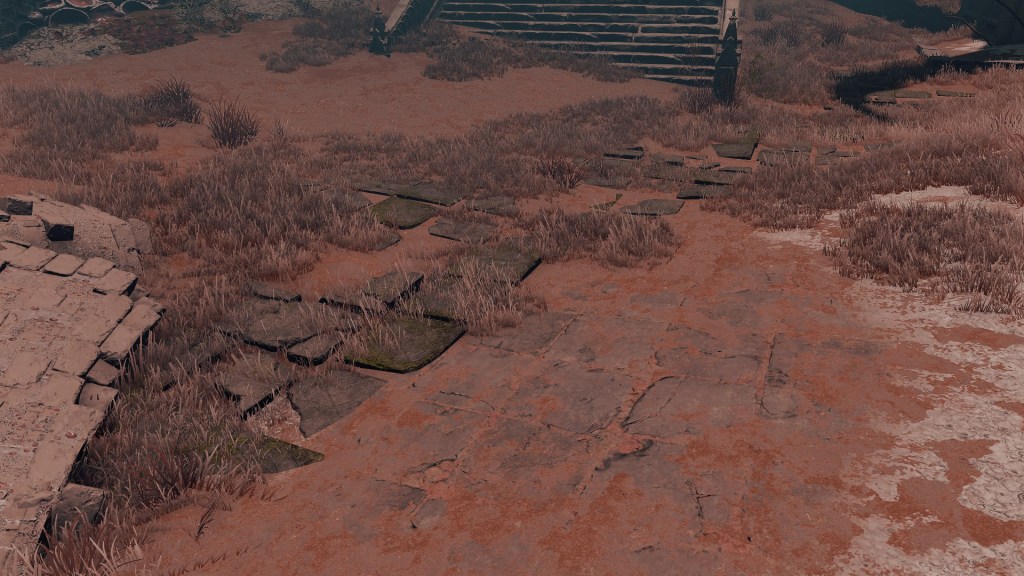
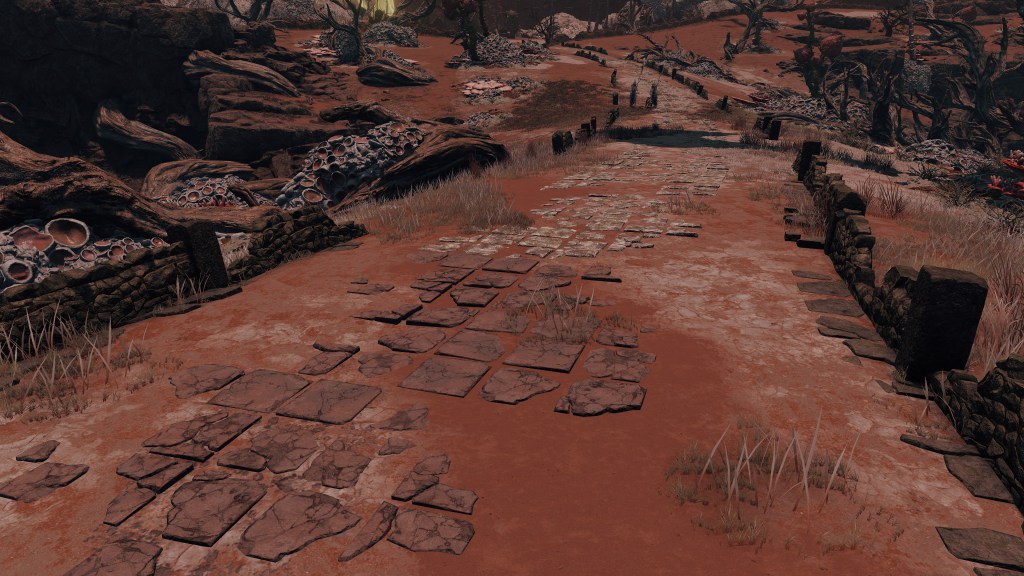
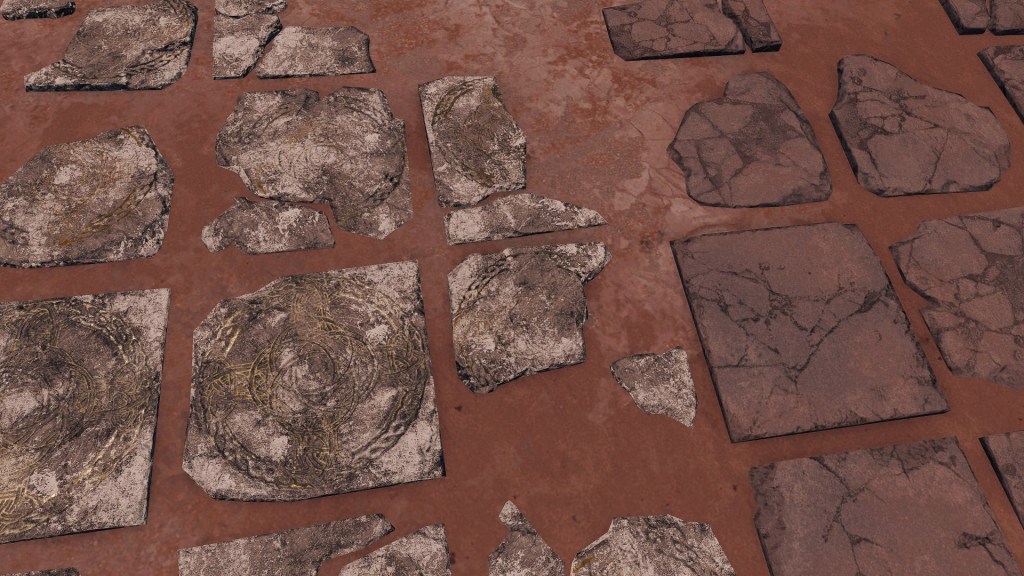
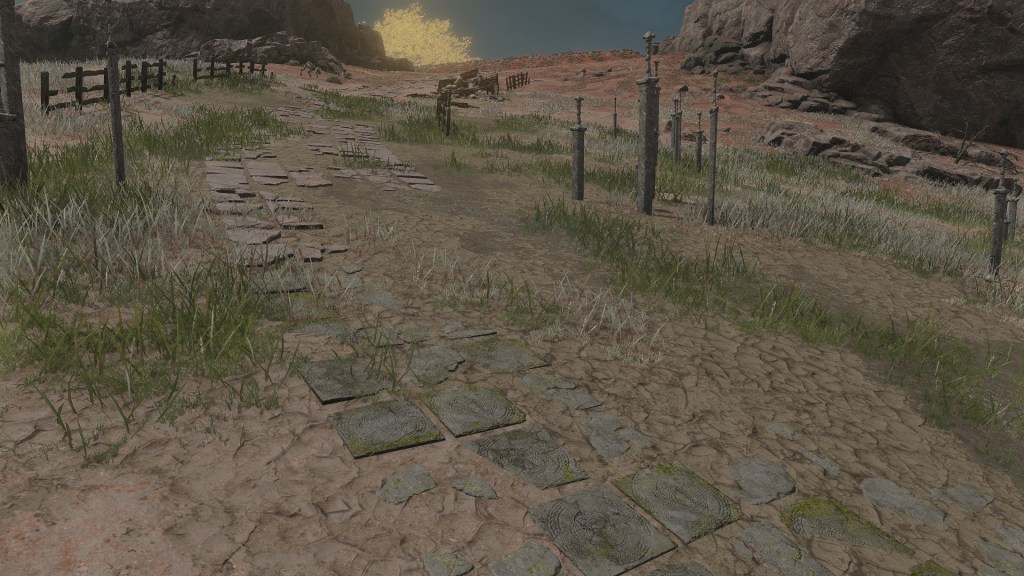
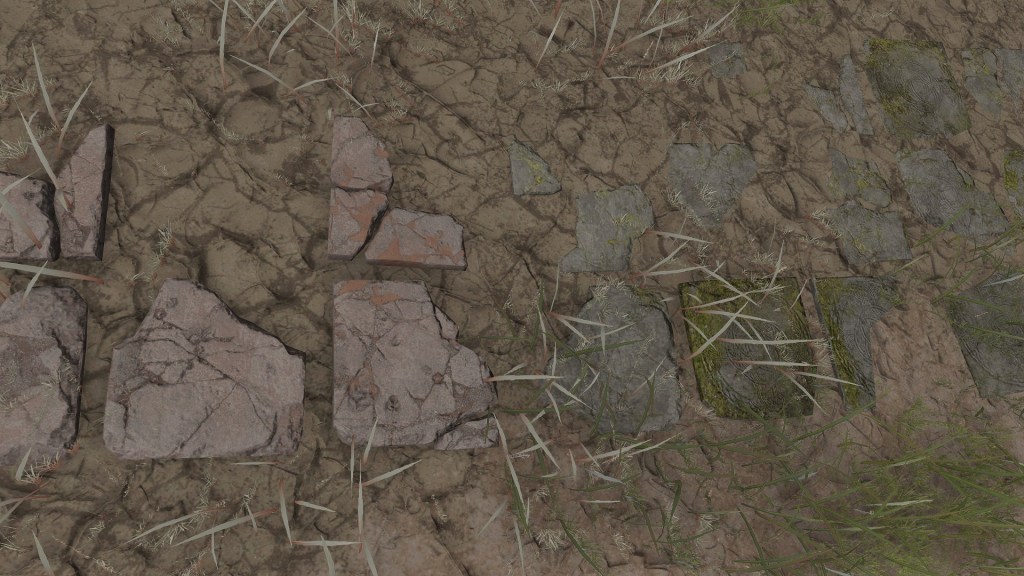
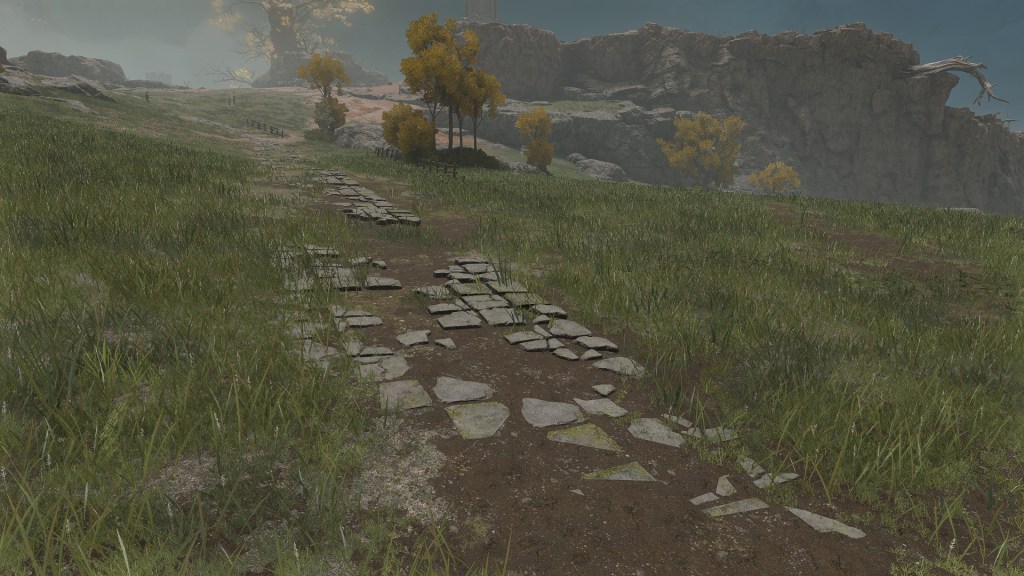
Perhaps it was that desire for knowledge which led to Sellia expanding into a regional polity. The highway running straight through town leads out and around the old Caelid fields before cutting through the Caelem Ruins and continuing until Summonwater Village. This by itself wouldn’t be so odd, if not for the fact that it differs from the other highways in the Lands Between. Unlike its ilk, this road uses plain tiles, without the standard design, as in all of Sellia’s streets. The only exception is for three small stretches, two at either end and one in the middle. There are also the edges to fencing, albeit the latter is part of the fence model reused for the other areas and so probably just an oversight by the developers. The obvious implication is that the plain tiles are original to the highway, with the ornate tiles added in subsequent renovations. This thereby insinuates that the Sellia highway predates the others, existing as part of its own trade network limited to the Caelid region.
This trade network supplied more than just Sellia. Crossing the border from Limgrave to Caelid, there exist houses and stables with a well, carts and platforms over the cliff’s edge, perched above the Forsaken Ruins. (Site F) This setup was perfect for traveling caravans to stop and rest while residents offloaded their cargo to lower down to the core settlement; Site F doesn’t exist along the highway, with only a dirt road to Caelem, so hoisting loads over the precipice would be more convenient for traders, wanting the most efficient route. The travelers could then continue on the main road to either Summonwater Village or Caelem, with Sellia always as the first or last destination. In effect, Sellia served as the capital of a local hegemony. Whether or not it was organized enough to be called a country, the city of “Saria” (サリア) lives up to its name derived from Arabic to mean “night traveler” — like the shooting stars themselves, the astrologers flowed out chasing those nocturnal lights, spreading their influence across the wider region.
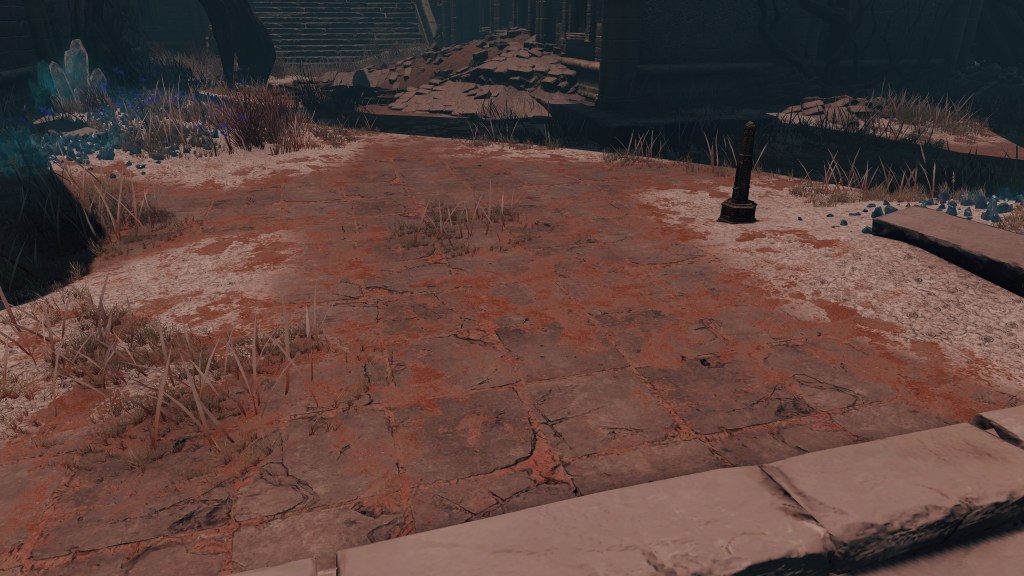
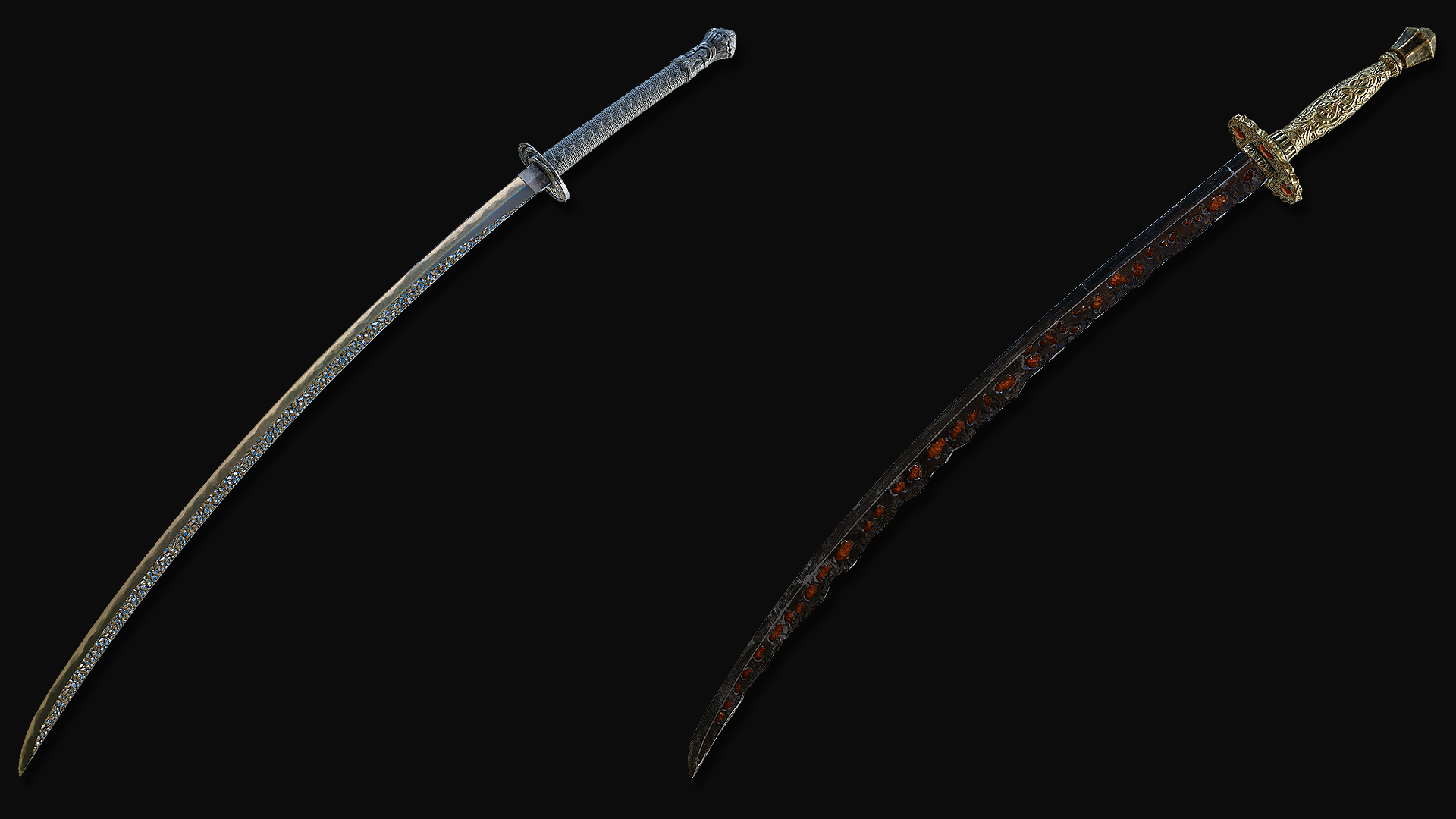
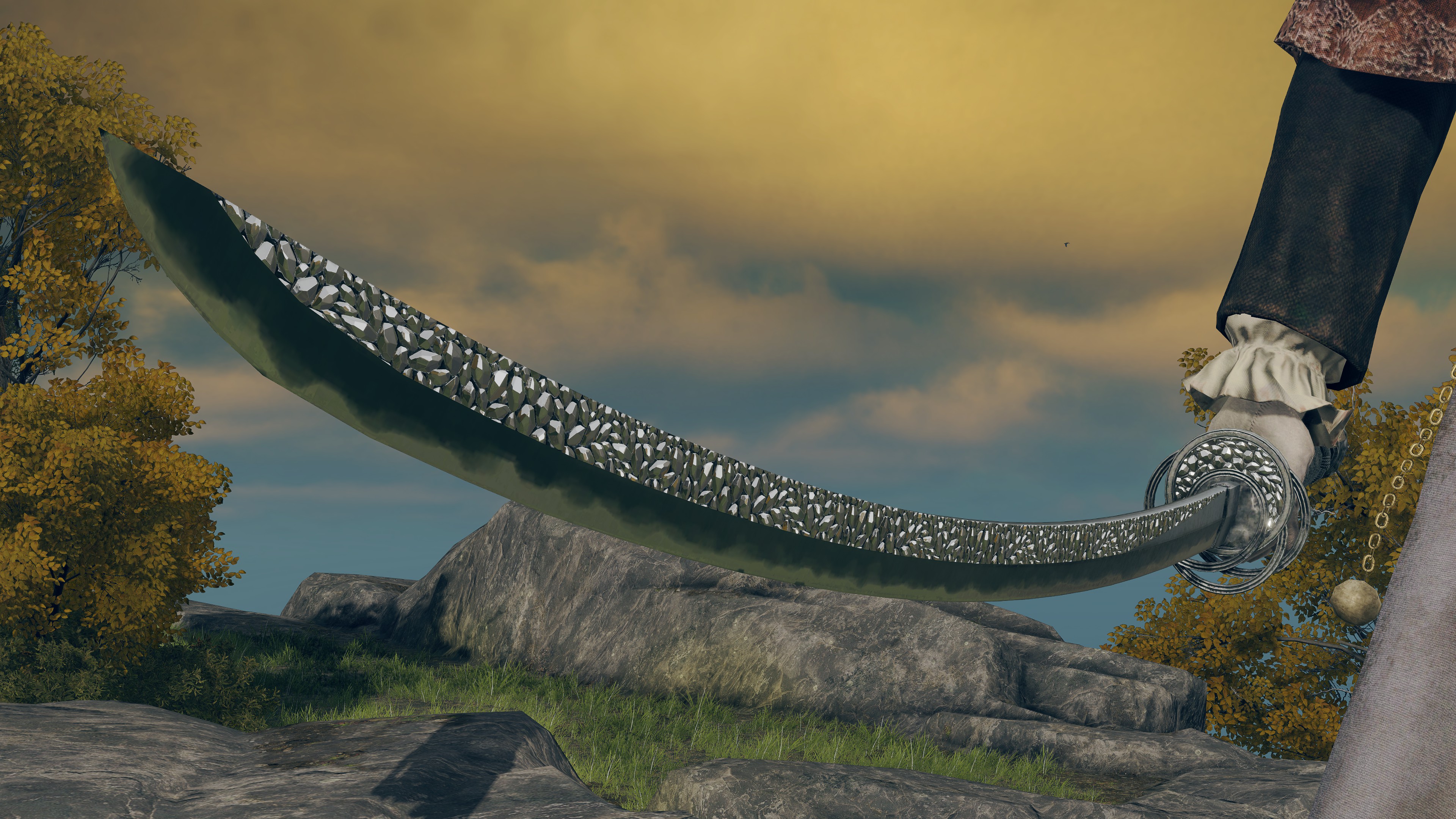
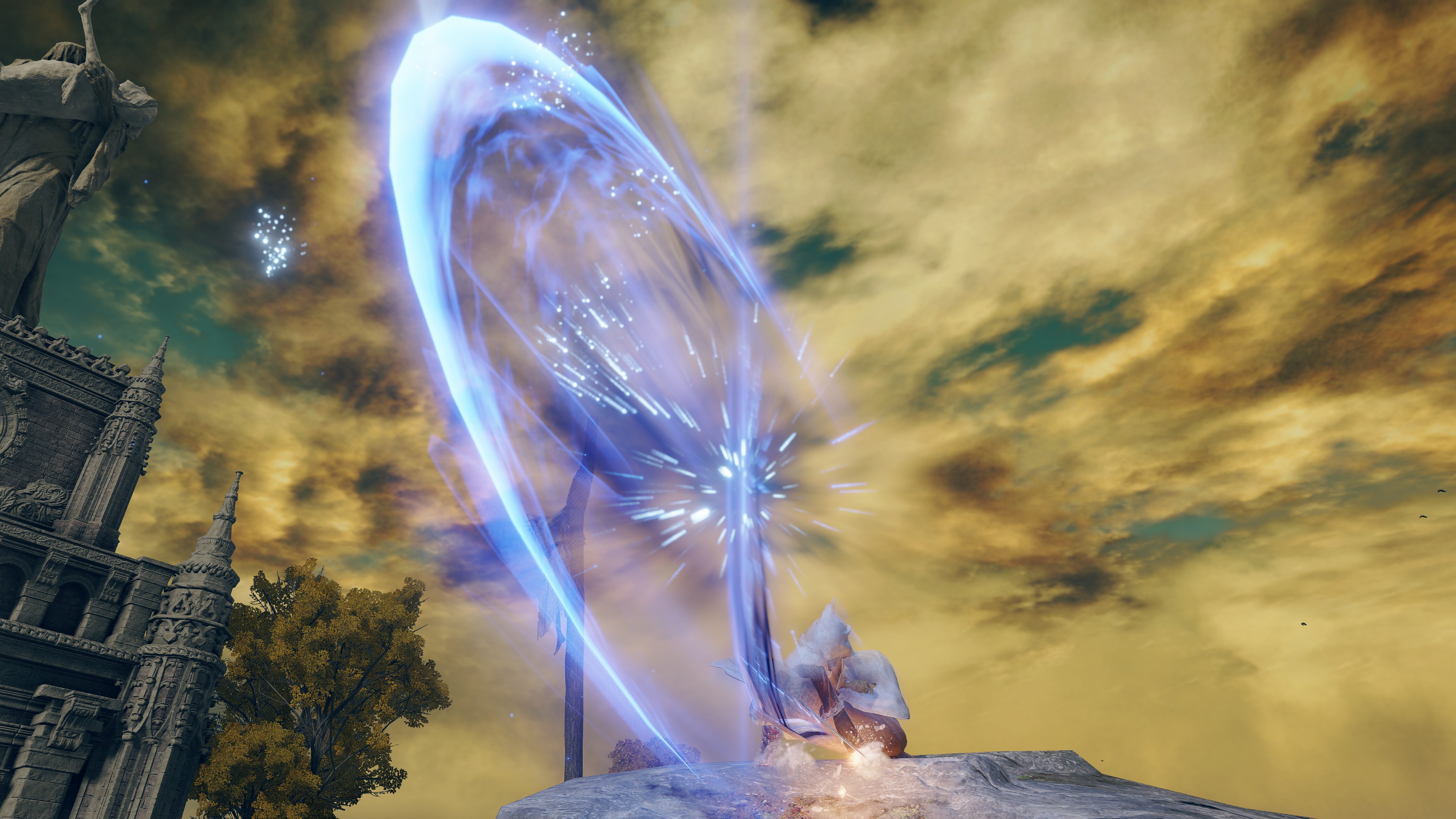
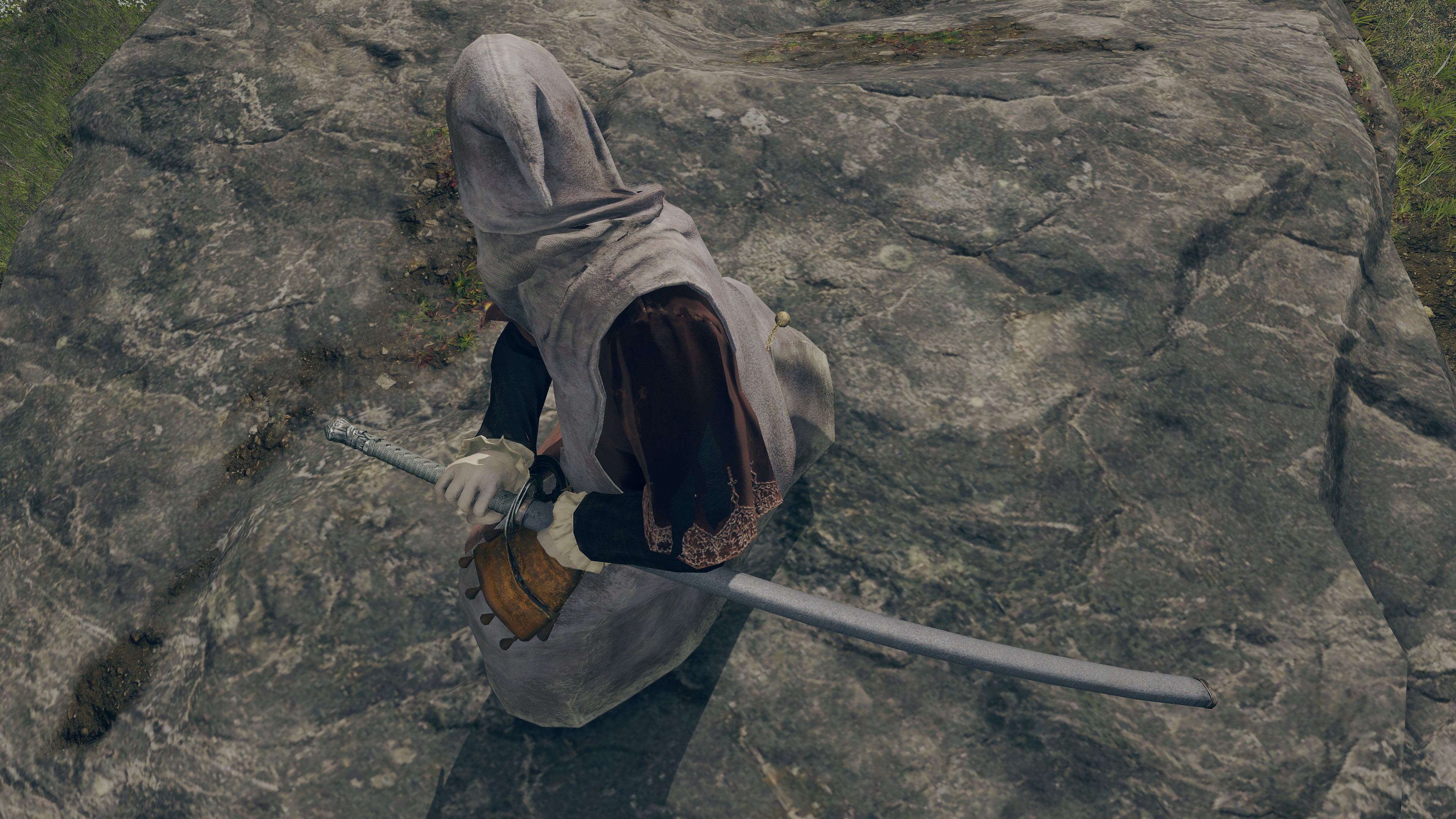
Indeed, Sellia’s chief interest beyond the night sky were the stars shining in it. Sellen confirms that the town was her master Lusat’s homeland, and he and others from there prefer sorceries which conjure multiple shooting stars. Likewise, Moonveil is a Sellian masterpiece which imbues the magic light of astral bodies into a blade hidden within its scabbard, hence the moniker. The sword further posits how the town didn’t discriminate. The Meteoric Ore Blade was crafted from the iron of falling stars, with even its curved blade resembling the form of the stone meteorites crashing to earth due to gravity. By that same token, the Meteorite Staff uses some of their dark purple fragments as a catalyst for gravity sorcery especially. Both weapons are acquired in Caelid, meaning that meteors and gravity magic were another popular subject in the town. For Sellians, anything related to stars was worth studying, with even a Birdseye Telescope installed in the middle of the highway just south of Caelem.
I hear that Master Lusat headed for his homeland after being driven out of the academy. To the town of Saria, which lies east of the Caelid fields… Moreover, the one who possessed the brightstone key I handed you just now was also a sorcerer of Saria. It is probably reasonable to think that he is being confined in the vicinity of that town…
Katana forged with brightstone. A masterpiece realized in the hands of a swordsmith of Saria.
Its blade is tinged with light within the scabbard, no doubt, and consequently this takes the name Moonveil.
Katana thoroughly forged using meteoric iron for defeating those born from meteorites. Possesses attack power of the magic attribute.
The blade is heavy and characterized by hard-hitting slashing attacks. Its form resembles a star falling.
Staff embedded with dark purple brightstone. It is said to be a meteorite fragment, so possesses high sorcery scaling and also enhances gravity sorcery.
However, this staff cannot be enhanced.
Some of this was undeniably due to circumstance. The Meteoric Ore Blade, for instance, was expressly forged for defeating the beings born from meteors, even recreating the Gravitas skill of Alabaster Lords. With such large glintstone deposits in the area, there was guaranteed a huge population of the stone-skinned kings of gravity, most of whom might have been hostile to any researcher. Caelid was thus sure to a see a culling at the hands of the human population. At the same time, the wider interest in stars ultimately links back to the Nox. The earlier iteration of the Meteorite sorcery’s description notes how the Eternal Cities gave equal meaning to the falling rocks and stars, recognizing them as one and the same. While no Nox spell involves gravity magic, that persistent belief would still explain the agnosticism present in their surface colony. So long as it produced a Lord of Night, it didn’t matter what element of it they explored, something evidently shared with Sellia. So critical was this to the culture, even the town’s actual limits weren’t absolute.
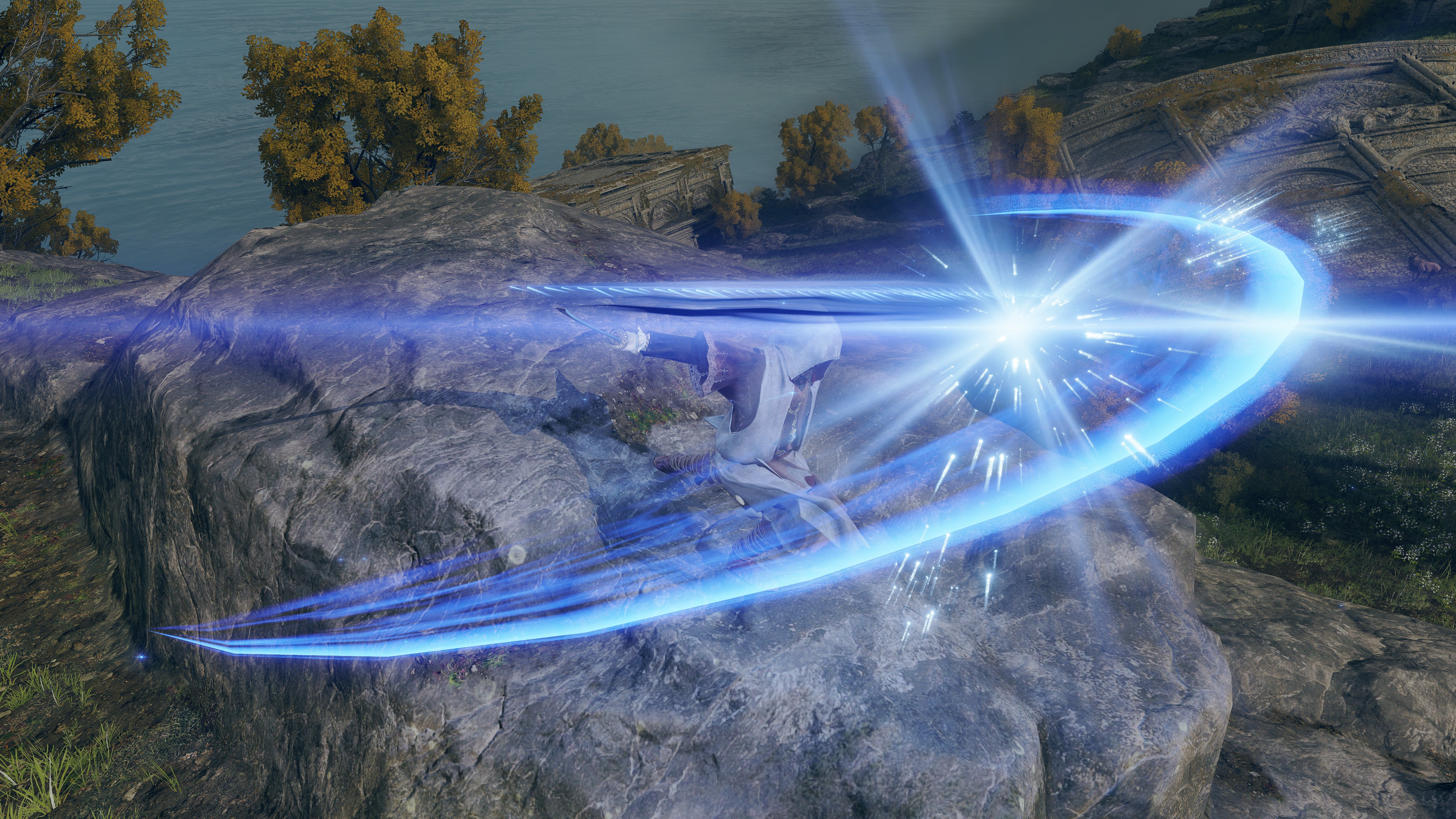
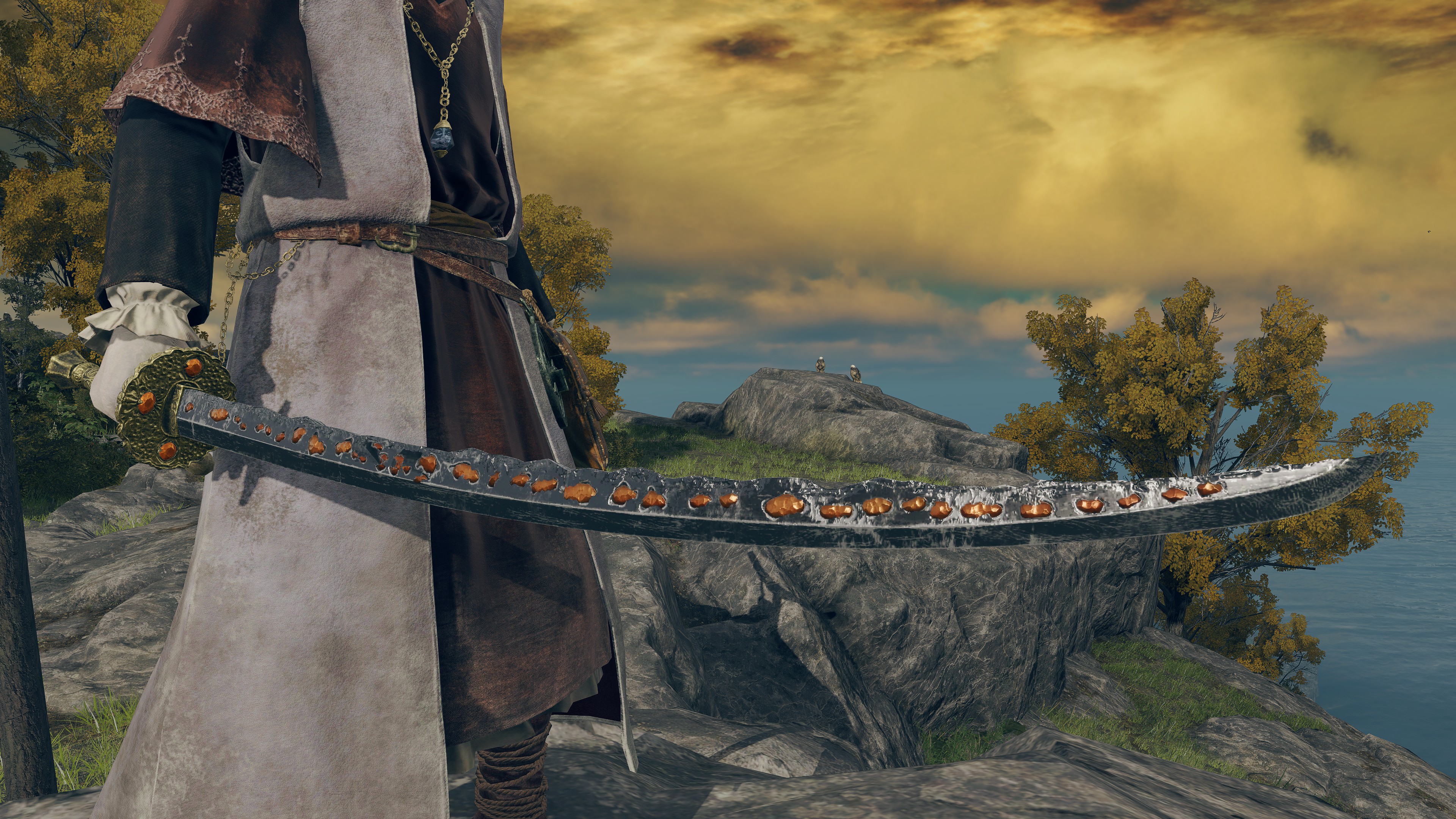
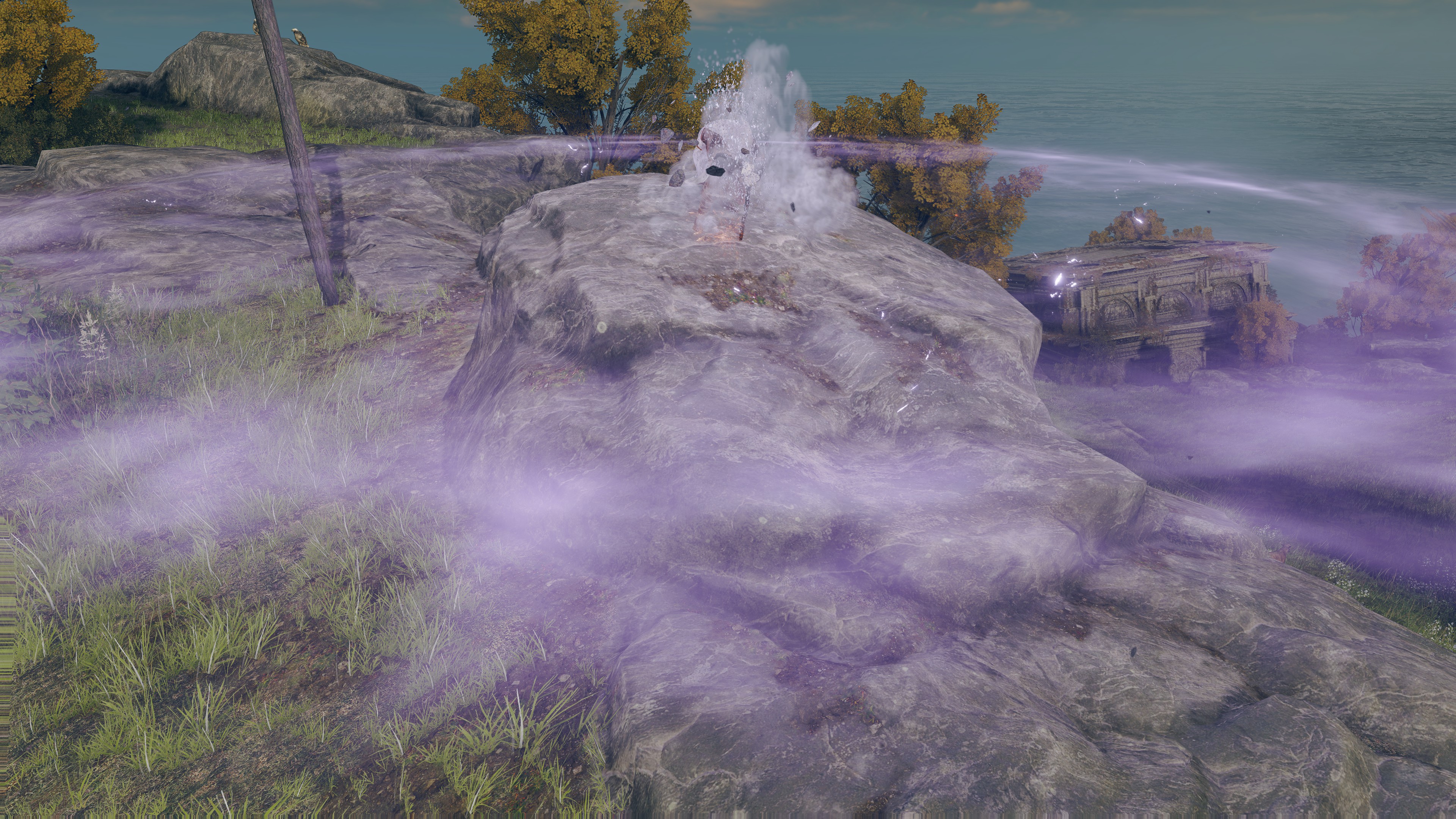
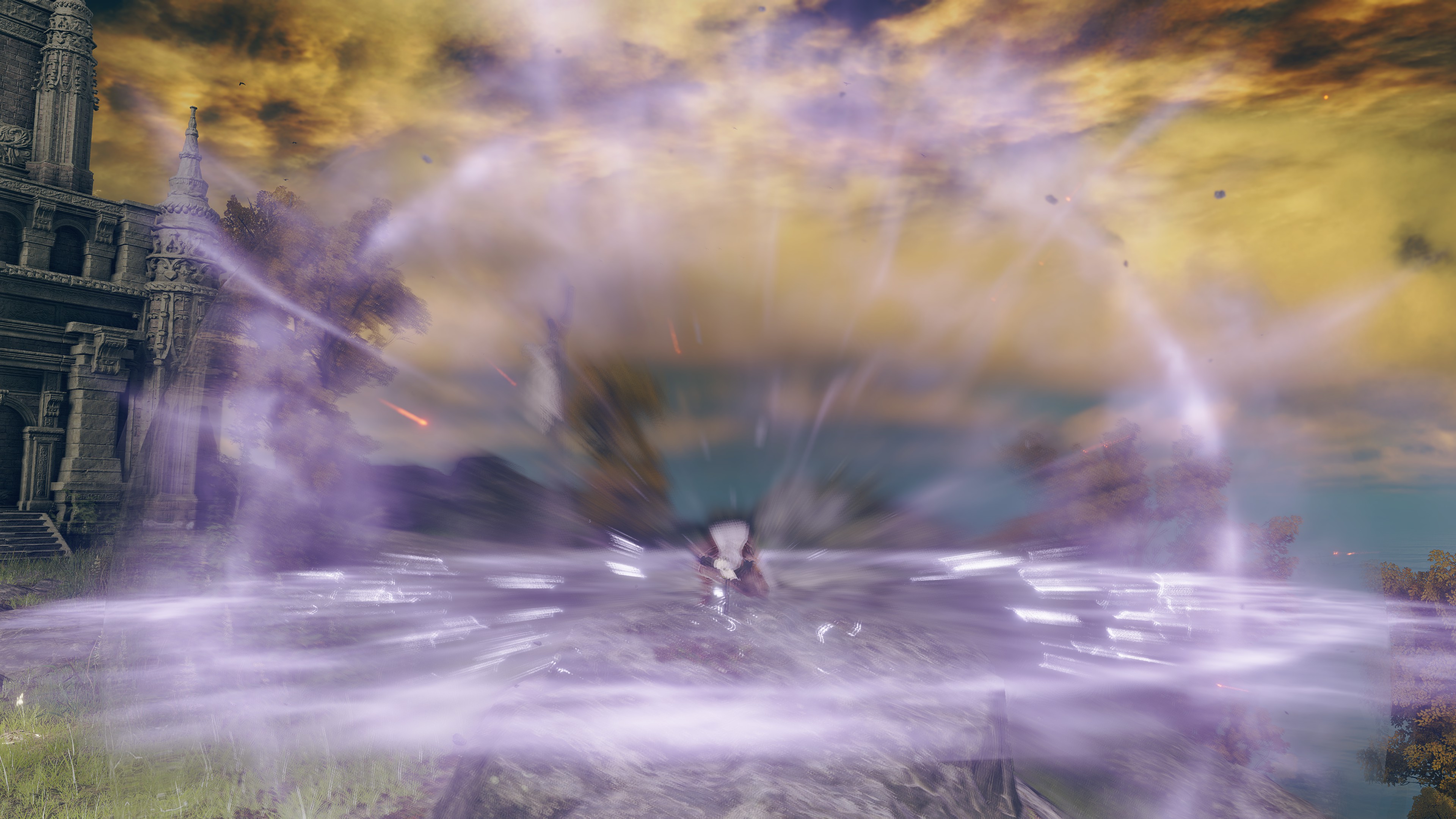
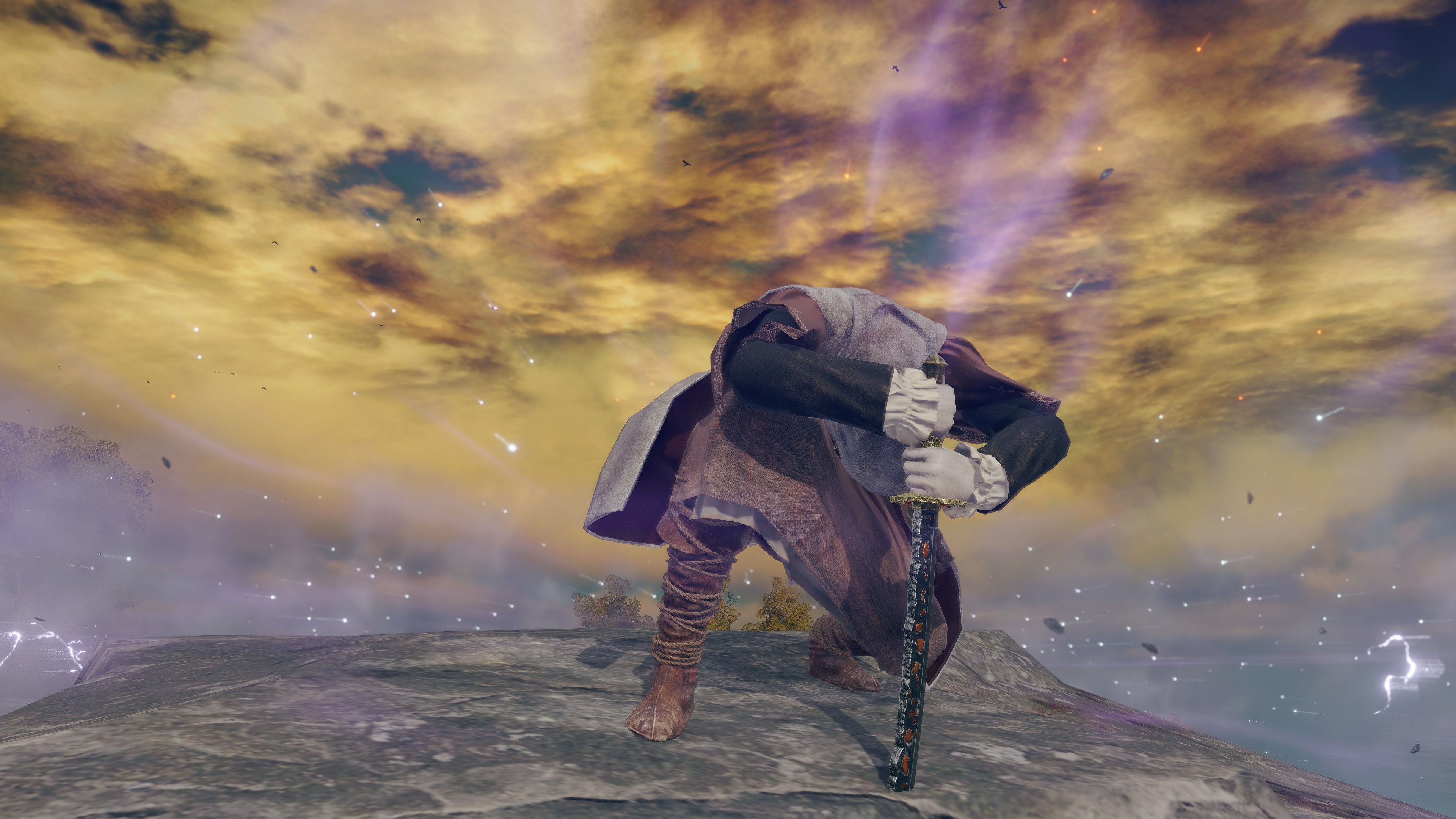
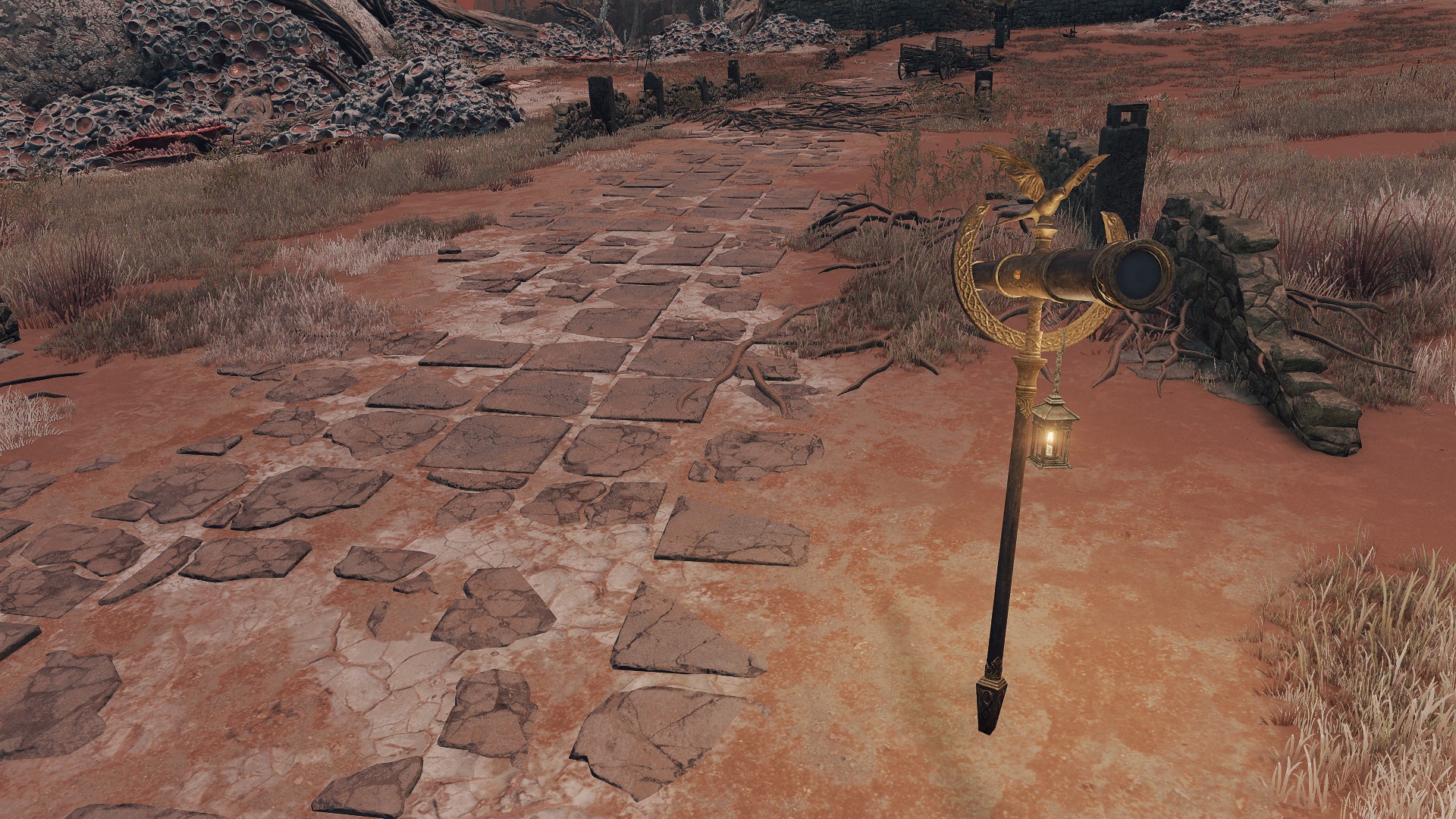
Brightstone sorcery which derives from meteorites and uses gravity. Art of the White Kings possessing stone skin.
Calls small meteorites from a void and makes them fall. Meteorite fall continues while continuing to use it.
It is said that in the Eternal Capital, which was destroyed to underground in ancient times, meteorites possessed the same significance as stars.
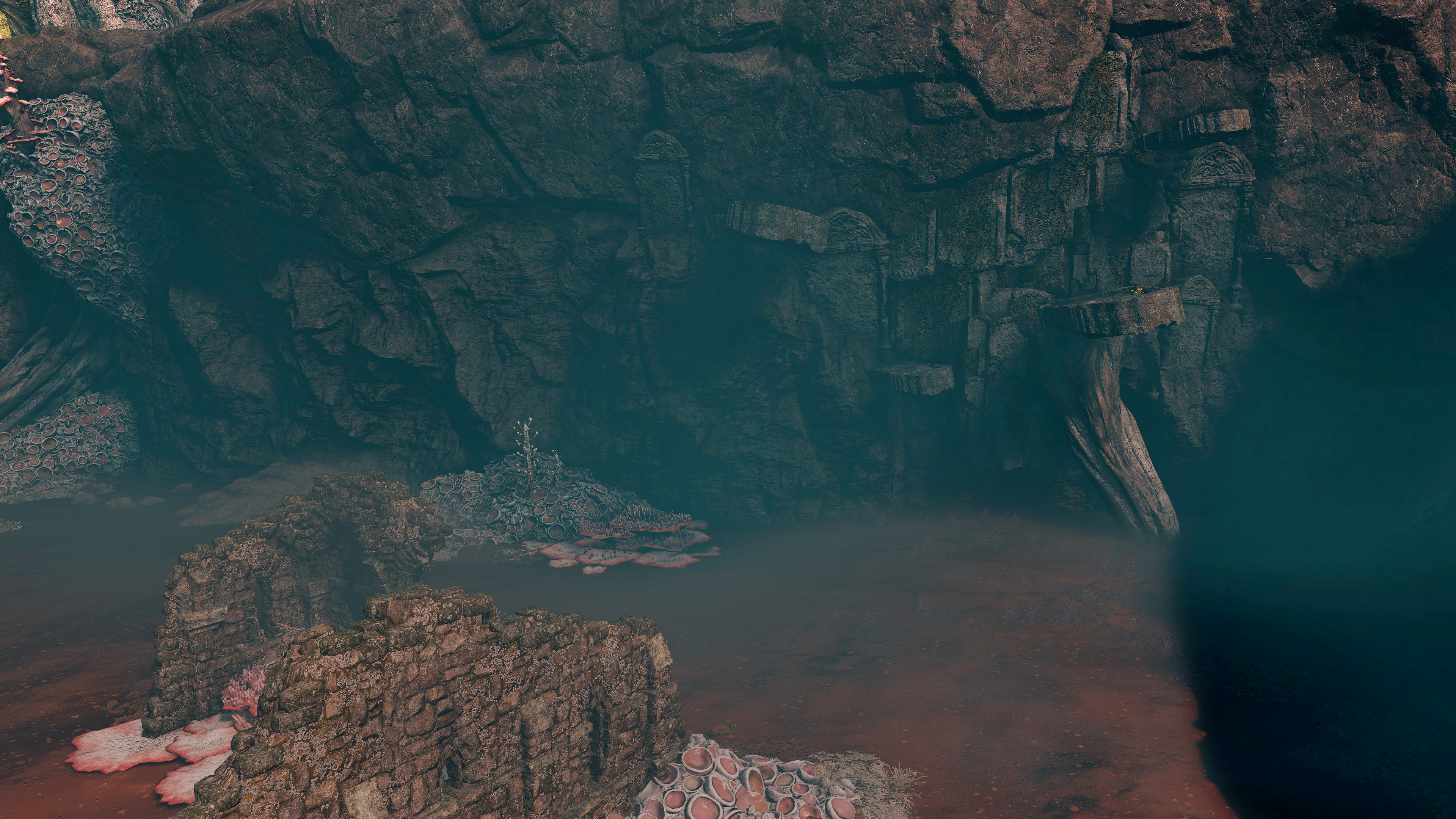
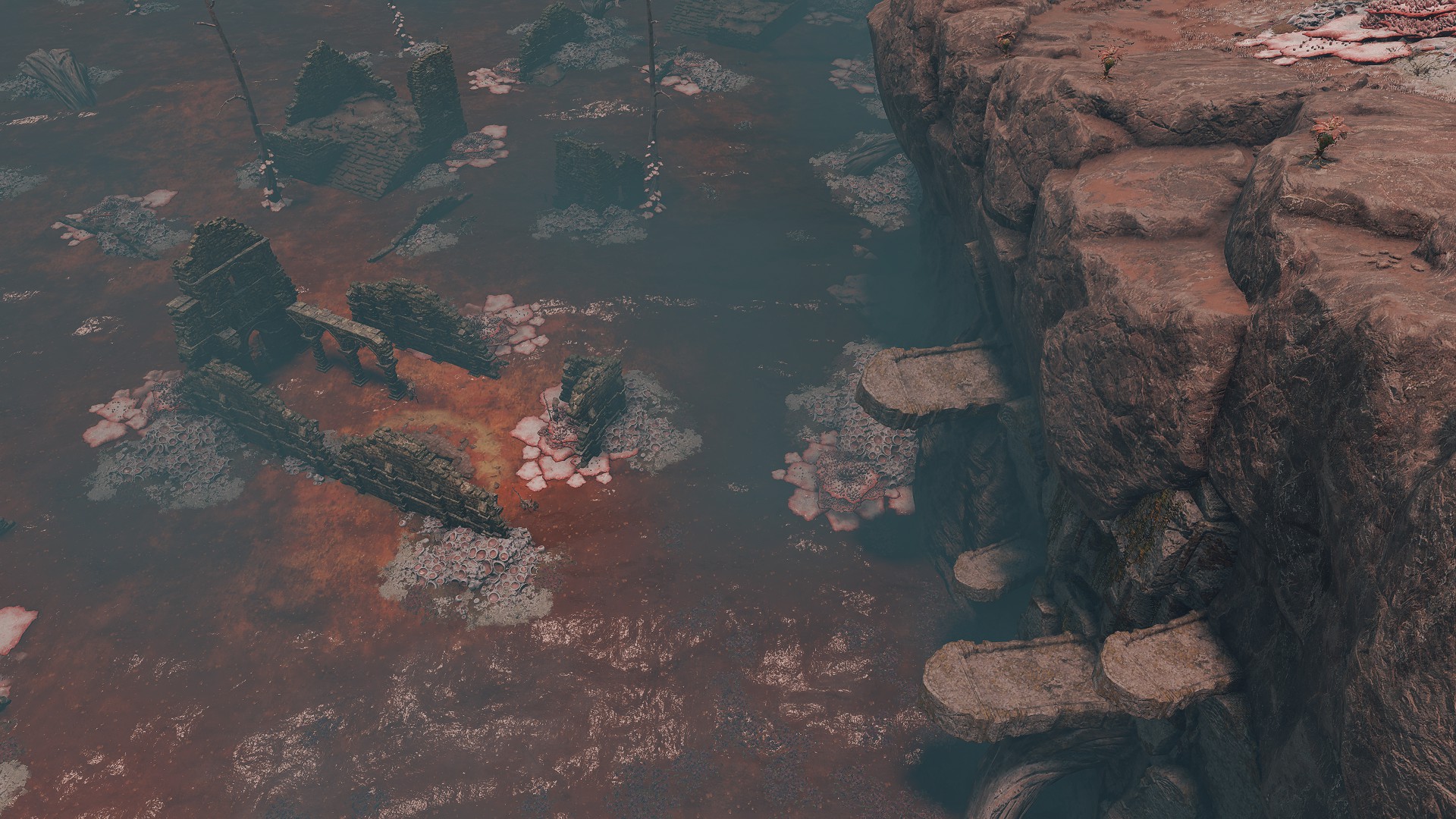
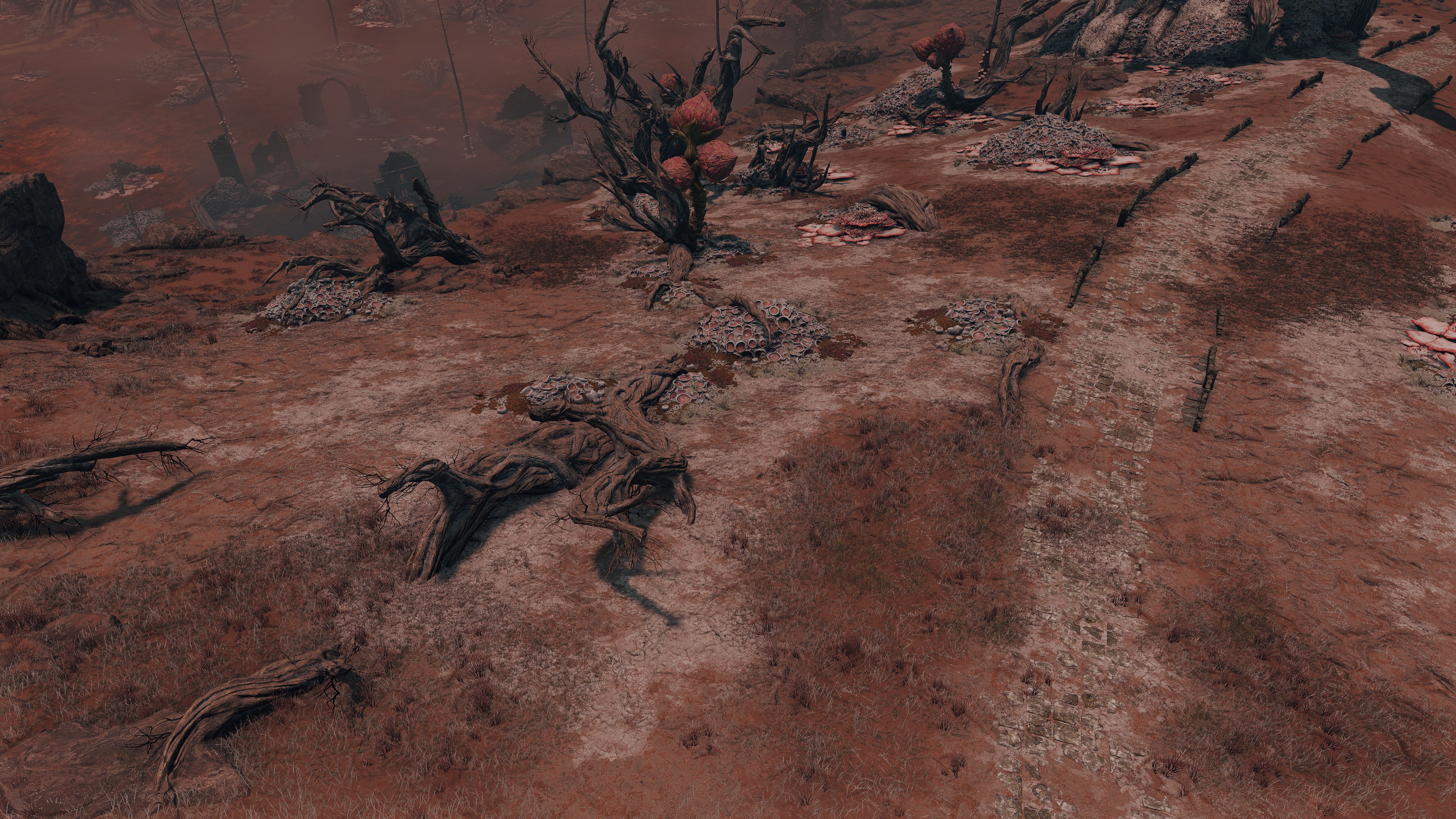
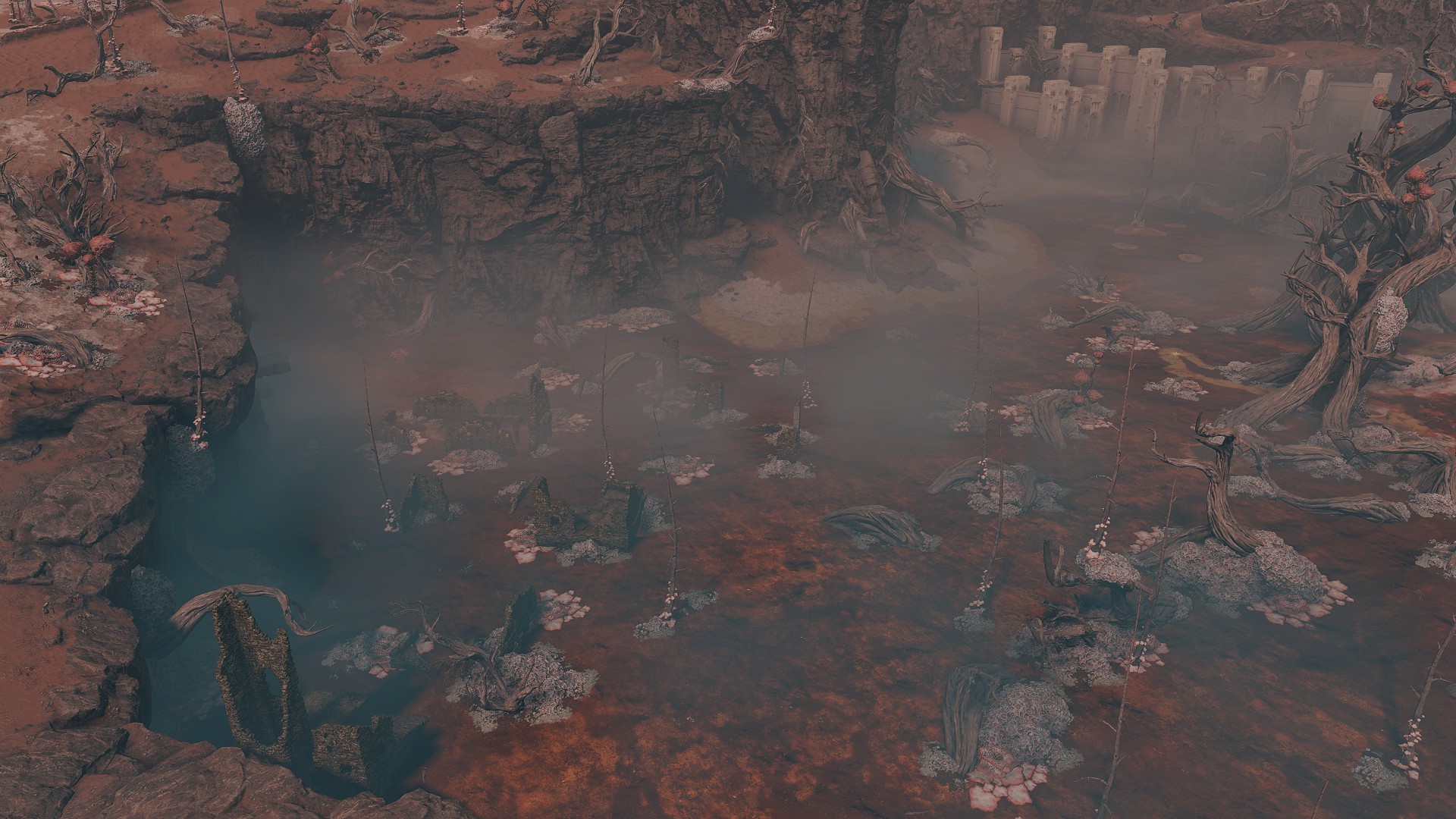
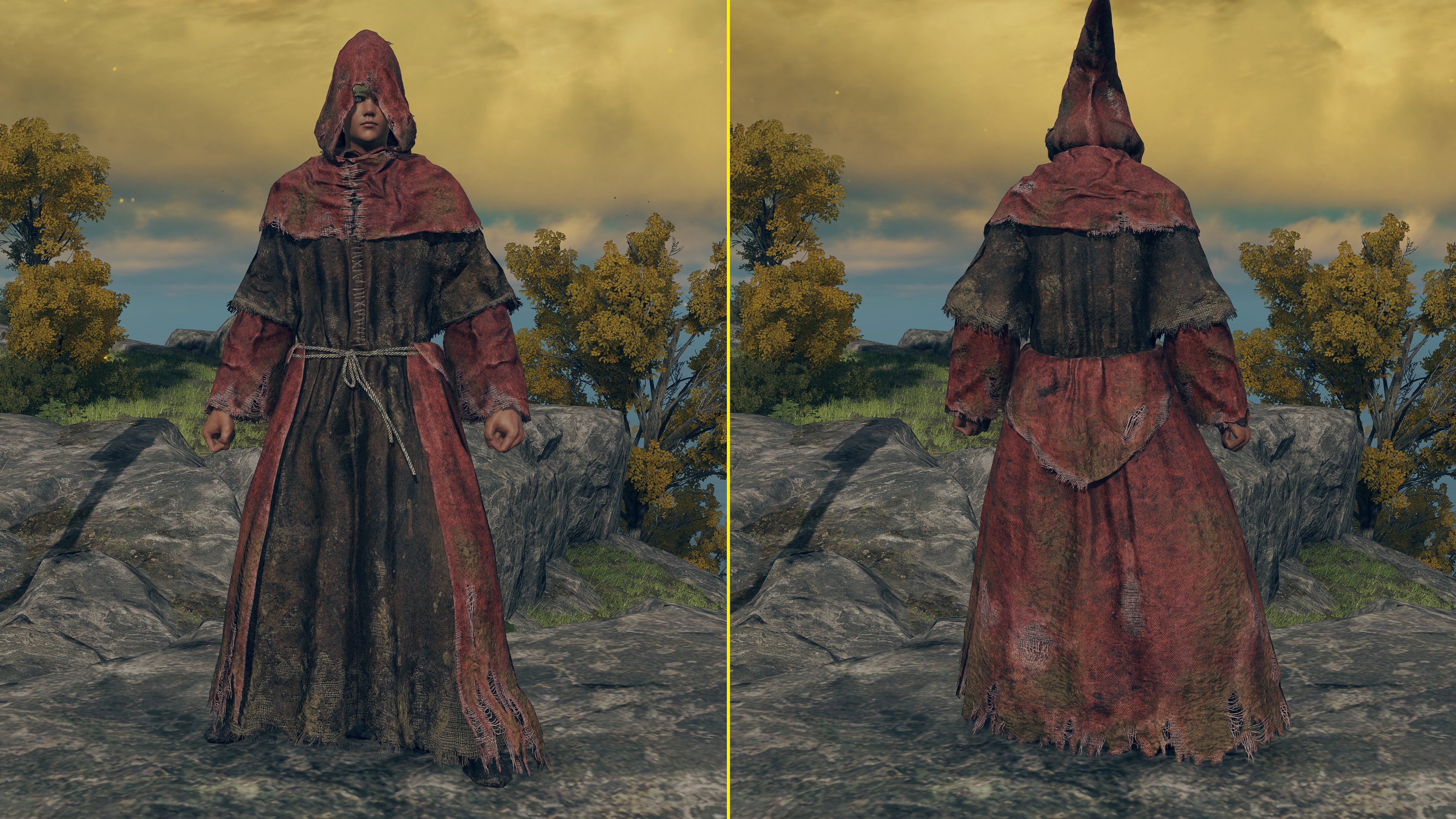
Residing at the outskirts of Sellia, Gowry describes himself as a former sage. This isn’t just him touting his intelligence as a sorcerer. The “sages” refers to a group of wisemen associated with heresy. According to the set’s description, their deep red hooded robes prove that they have been driven out of town, the town in question assuredly referring to Sellia. This is because, by heading out west through the swamp of Scarlet Rot, we come upon the Street of Sages Ruins — though it more accurate call it the “Sage Town Ruins” (賢者街の廃墟) based on the circumstances. The area is a collection of buildings clearly separate from any other settlement and maintaining its own cliffside graveyard. The place is also strangely cut off from the Sellian highway. We can accordingly conclude that it is no mere street, but an independent urban community, populated by exile sages. And with their exclusion from the main highway circuit, almost hidden from view, this sage town’s closest contact would be Sellia.
Dark red pointed hood. Apparel of the sages, who are heretical wisemen.
It is also proof of one driven out of town.
In short, sorcerers banished from the sorcery town crossed the then fields of Aeonia to live a small ways outside of it. Tucked in the corner of Caelid’s rock face, they could continue their practice freely without garnering outsiders’ attention. The fact that they are called sages acknowledges their expertise; the work was just unpalatable for Sellian society to see openly practiced. Out of sight and out of mind, the sages were permitted to hone their craft no matter how “heretical” their fellow men of reason, ironically enough, labeled it. This freedom from continued persecution demonstrates Sellia’s wisdom in spite of prejudice. If an individual Sellian sought insight from a subject of heresy, they need only make a short trek outside of town to consult a heretic. Even they couldn’t deny the utility to the sages’ pursuits. It didn’t matter if it only applied to niche scenarios — anything which might advance research into glintstone was worth preserving. So was another community born in the Sellia network.
What constituted heresy seems to have been largely arbitrary. The sage town ruins carry the Meteorite Staff and instructions for Rock Sling, implying that gravity sorcerers counted among the exiles. Meteoric Ore Blade has similarly been stored in the crypt of the Caelid Waypoint Ruins, likely confiscated from its long dead and buried owner. In other words, Sellia banned the practice of gravity sorcery at some point, banishing any persistent practitioners to become sages while the old arts were hidden away. The reason wasn’t the least concerned with principles, only survival. A sword monument for the Starscourge Conflict confirms that Sellia needed protection from the stars at one point, which the Starscourge Heirloom depicts as a giant meteorite. In that case, banning falling stars is the natural reaction to mitigate future chances of summoning their own destruction, similar to the behavior exhibited toward Eternal Darkness. But if the sages of the town in the fringes accidentally destroyed themselves with a meteor, that was their problem.
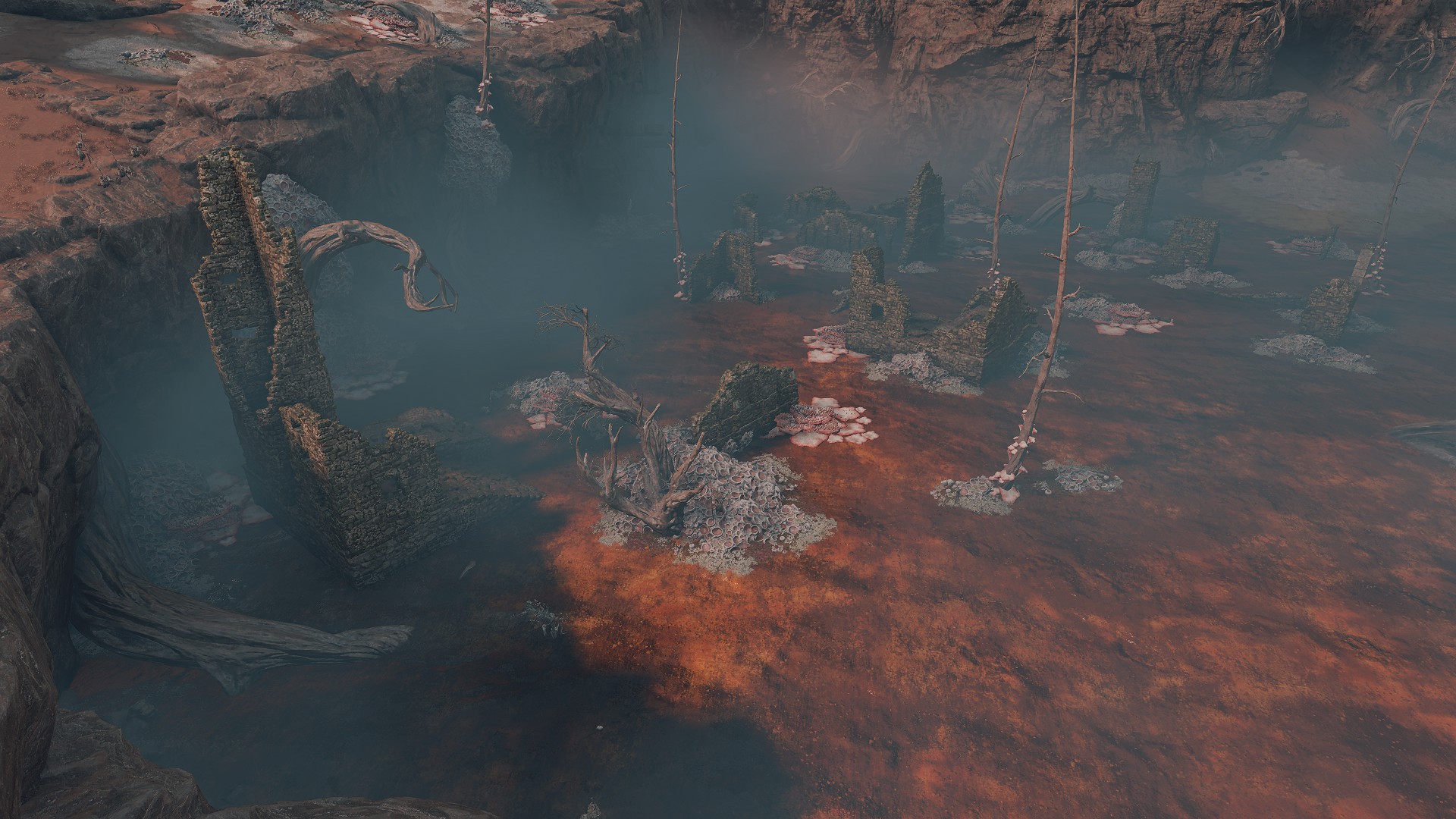
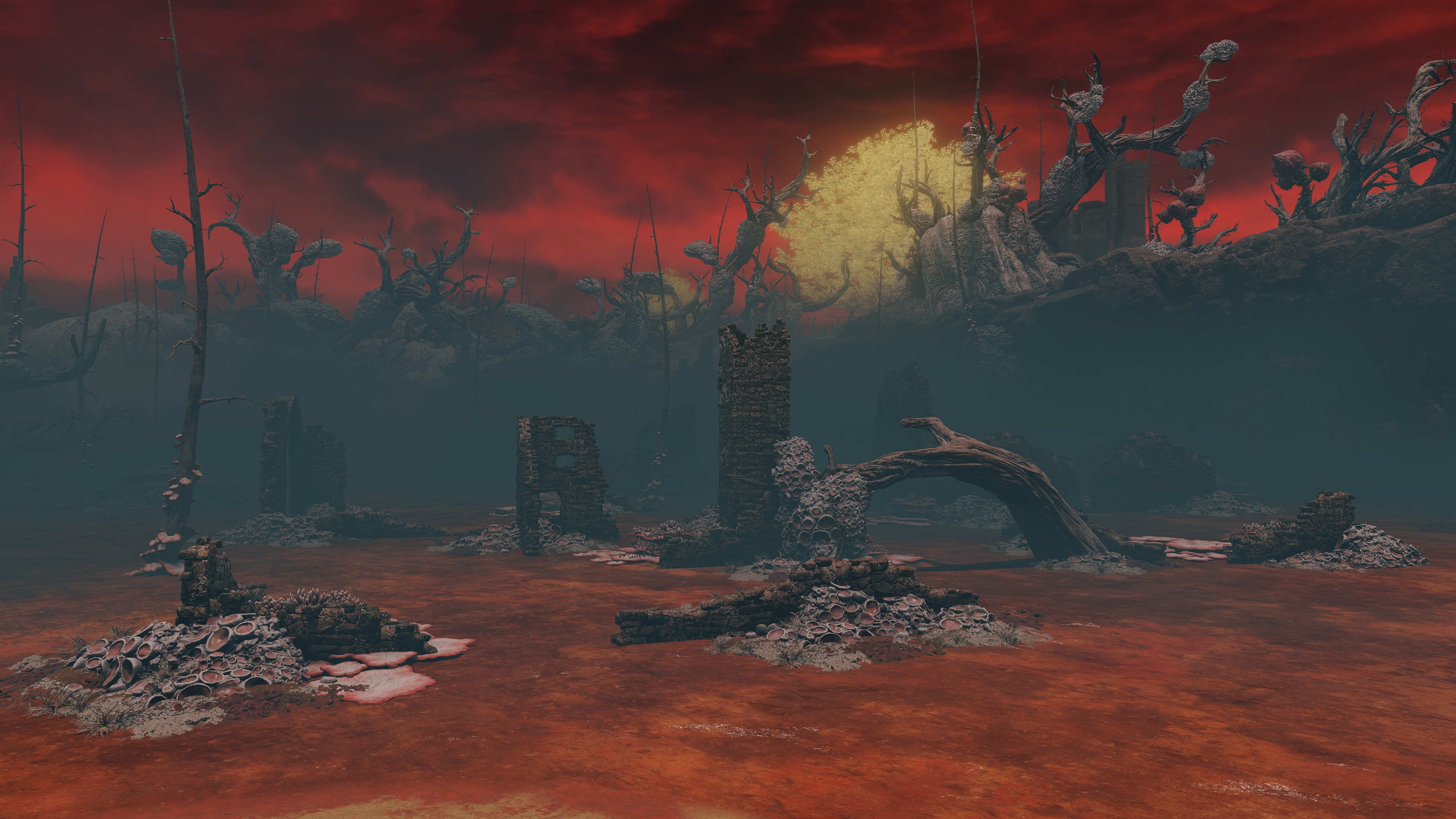
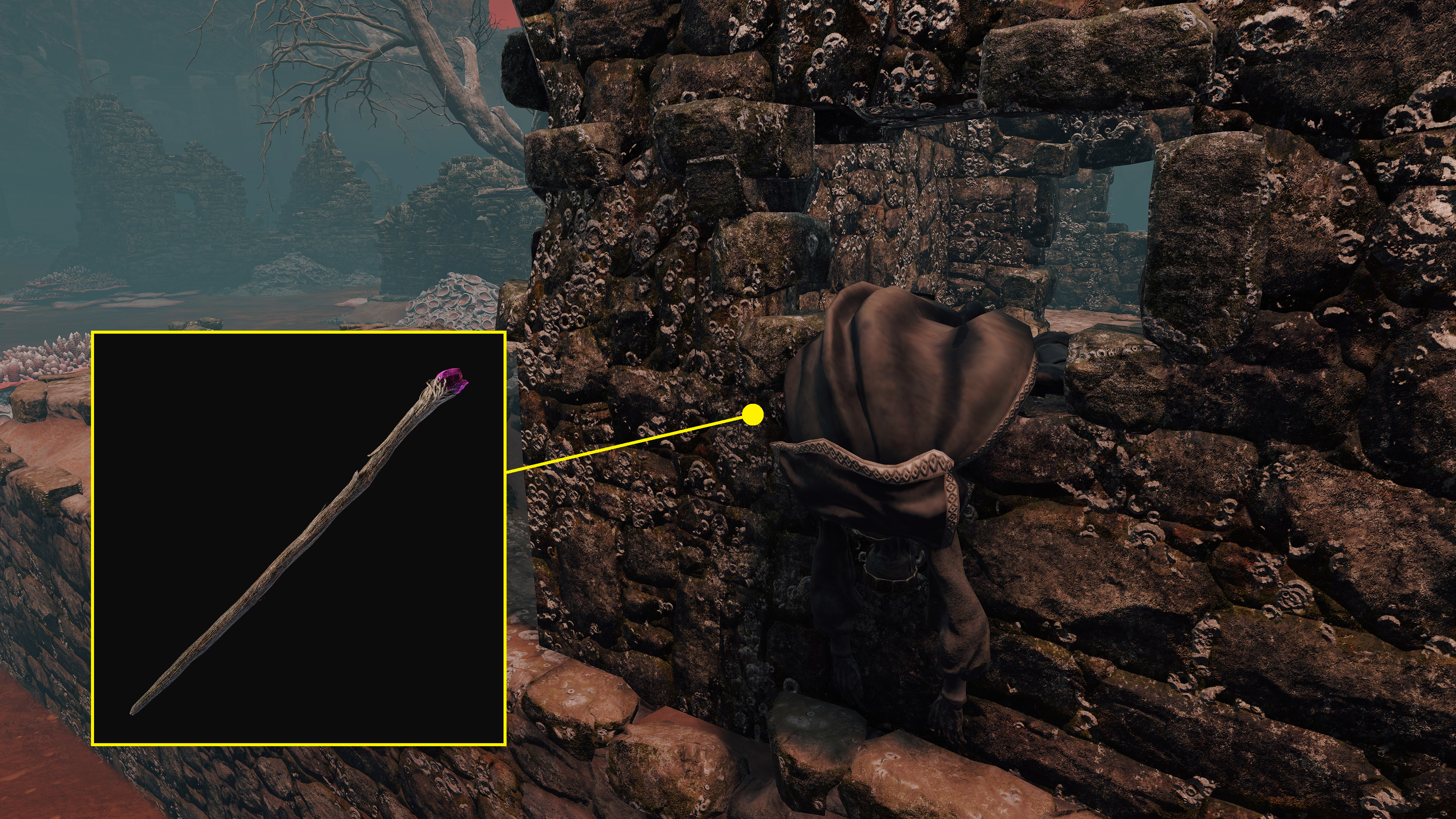
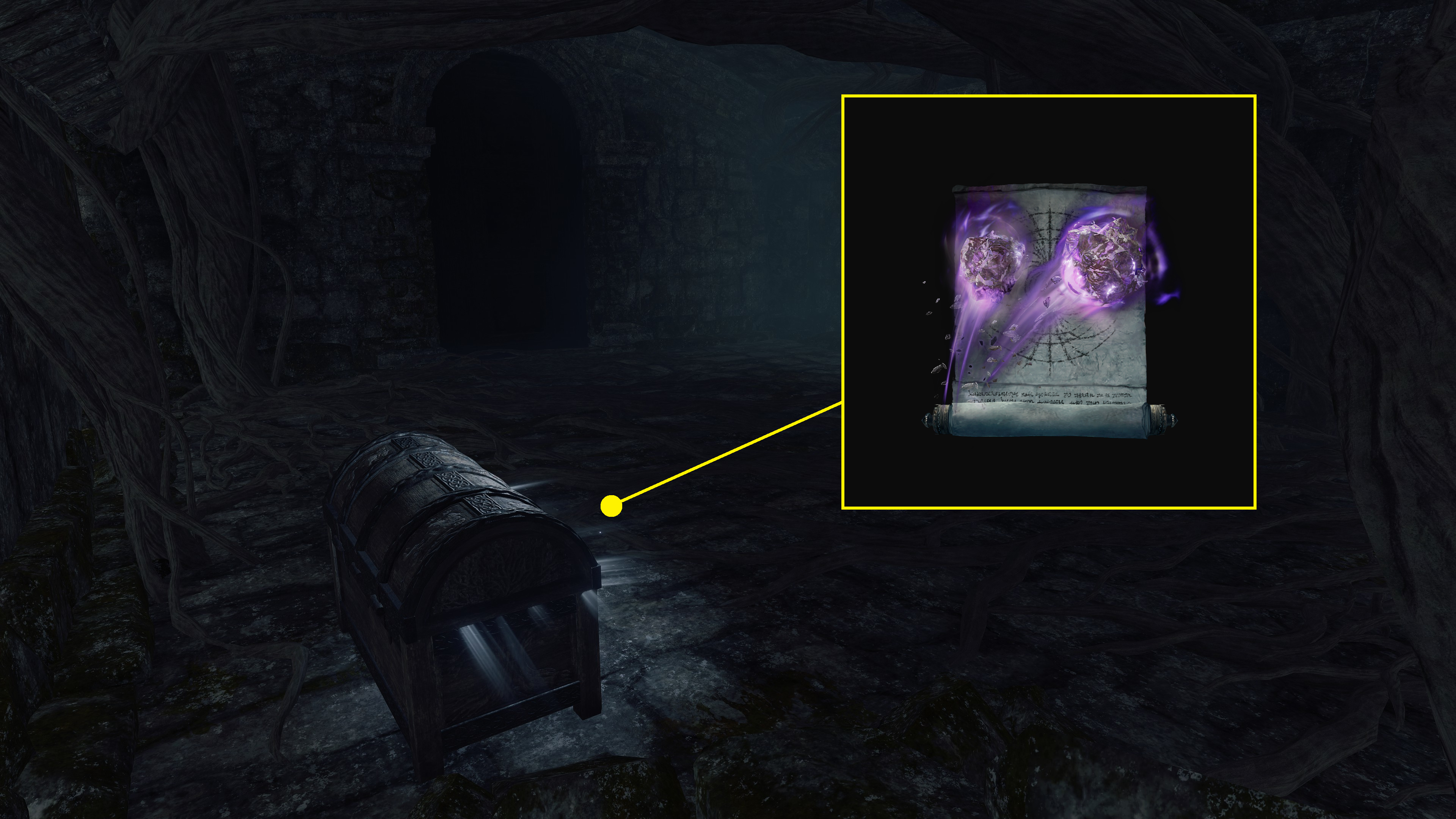
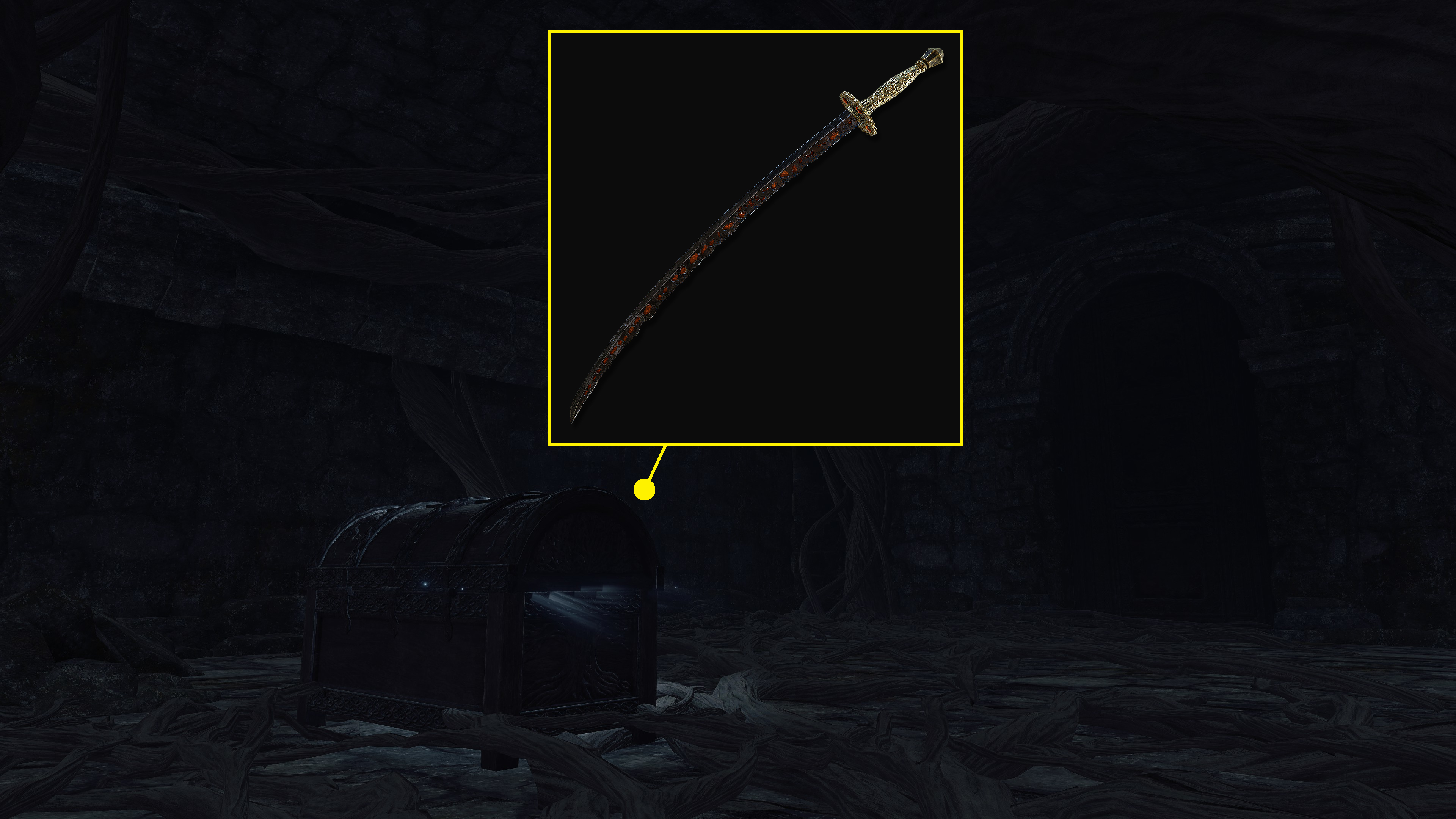
In summary, the sorcery town was open to all kinds of studies, so long as that research didn’t pose a direct risk to the town. They can’t control the path of destruction of an Astel, but few other arts presented that kind of collateral damage. If public opinion changed about the art, so would the policy. And by banishing the “sages” of these unsavory secrets instead of just eliminating them, Sellia could reap all the benefits with none of the risks. This appeased their Nox overseers waiting for them to produce their king as well as the astrologers with varied interests. And because their combined power was so great, they could enforce their bans across the region. It might have restricted who could learn gravity magic afterward, but that was the Sellian way. True to the Nox crest, it was always about the flow of the stars and the Lord of Night they might produce. And for what it is worth, the Caelid region does seem to have been the preeminent land of sorcery for a good while.
Lecture on the Mount
Moving onto the western side, the Laskyar Ruins are one of the largest settlements in Liurnia, located to the south. Although currently flooded by the lake, the area’s populace might still be identified. For one, corpses in the area carry items like a ritual pot or glintstone craftsman cookbook detailing freezing grease. The name “Laskaa” (ラスカー) too appears to be a play on Alaska, (アラスカ) the northernmost state in the U.S. known for its polar climate. Taken together, it suggests that the culture of Laskyar is steeped in sorcery from the Mountaintops of the Giants. Combined with its size, and the town most likely served as the equivalent to Sellia, the main destination for a large swathe of migrating astrologers. Considering the location, the group probably followed the flow of glintstone from Altus, finally stopping as they approached the end reaching Stormhill. After all, by that point, this Laskyar tribe would have seen all there was to see surveying the different lands.
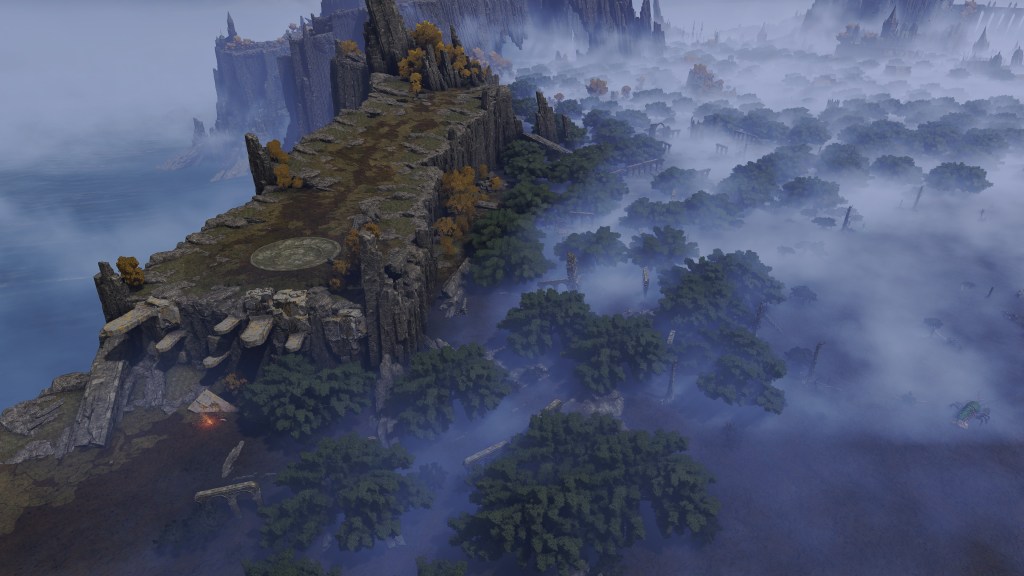
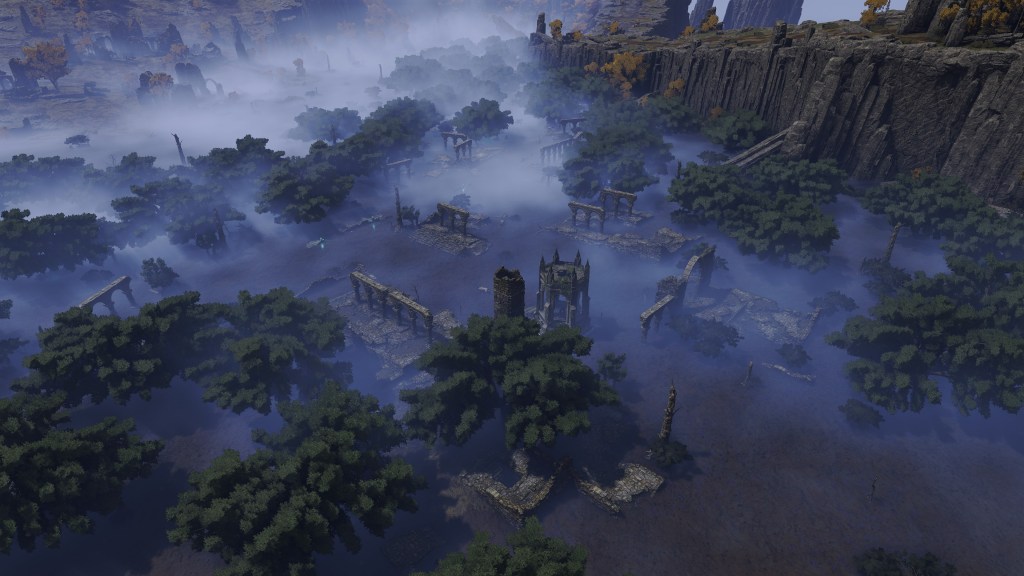
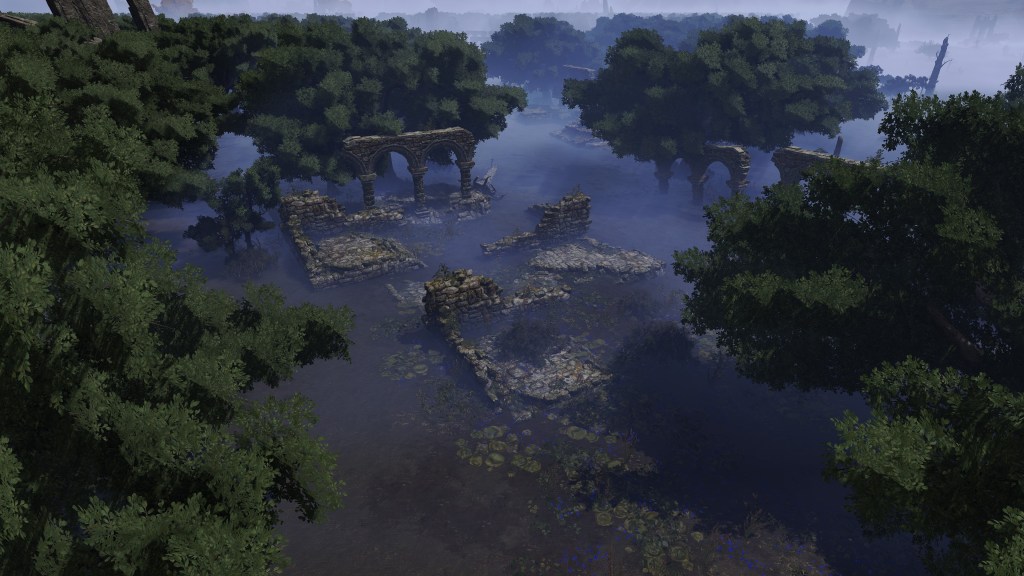
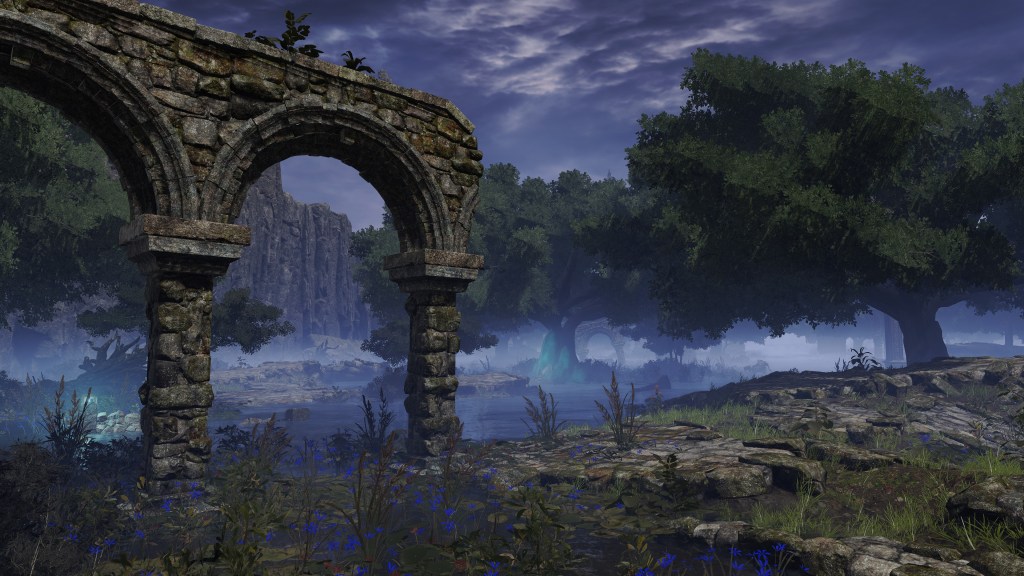
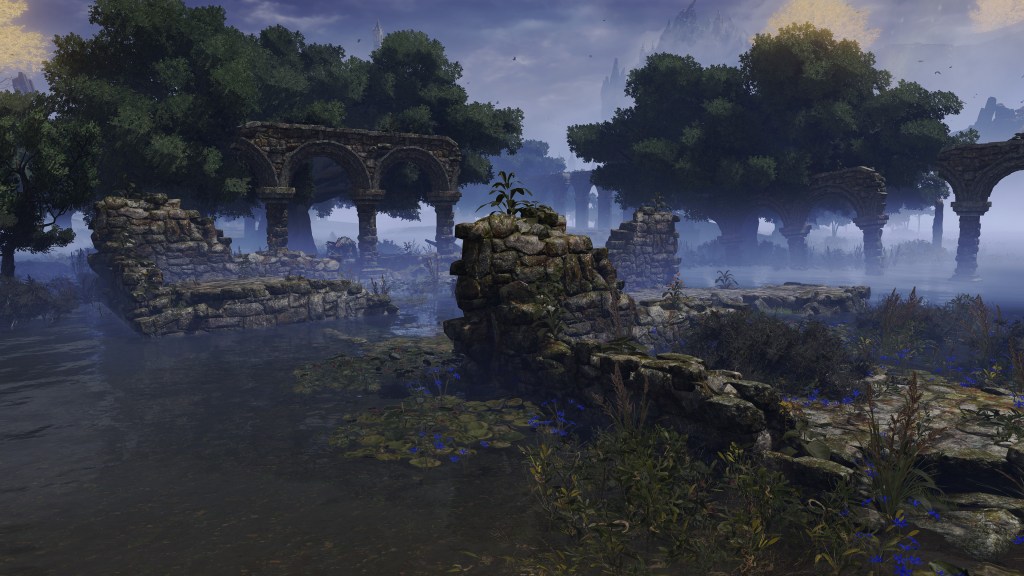
Traveling across Altus Plateau, there aren’t many overt signs of crystal beyond the occasional glintstone bud. The deposits do exist, as Altus Tunnel and the Ruin-Strewn Precipice reveal, but no large source would be immediately recognizable to the passing traveler. Contrast to Liurnia. Scattered across the region down to Laskyar exist crystal formations. Their consistent appearance — at least partially — in the lake water plus the glowing particles rising from the water’s surface at night suggest that the lake itself is laced with star amber. The water flows down from the aforementioned Precipice. Up above, Mt. Gelmir’s “seething” river (煮え立ち川) overflows into a lake on Altus. However, the Sage’s Cave situated between the river and lake exposes how much of that water sinks into the earth and falls straight down inside of the plateau, where it is then channeled out the ruins of the Precipice. That forms the river valley flowing out into Liurnia Lake. And if both Altus and the Precipice harbor glintstone, then it is viable for the water to pick up trace deposits like any other mineral.
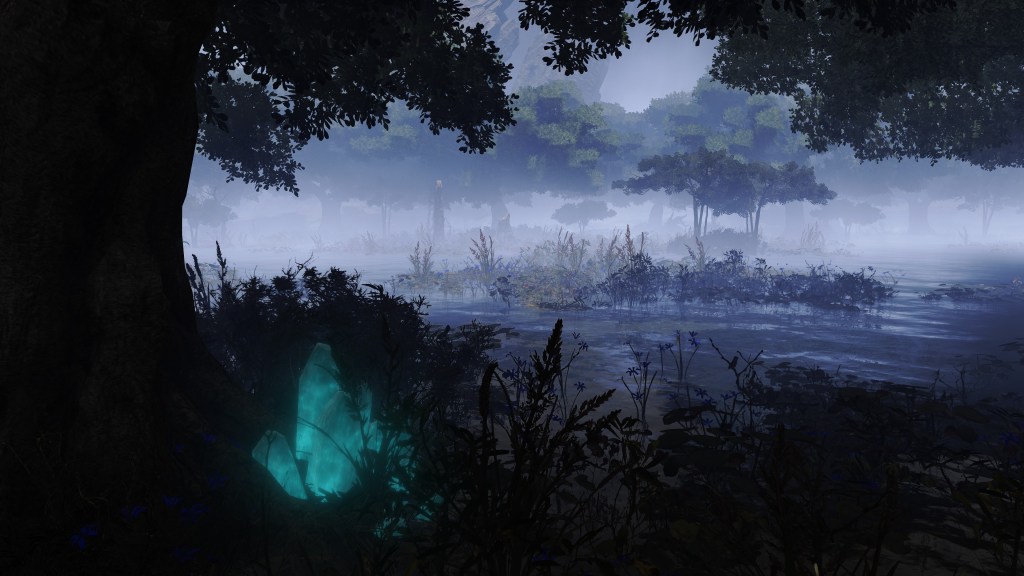
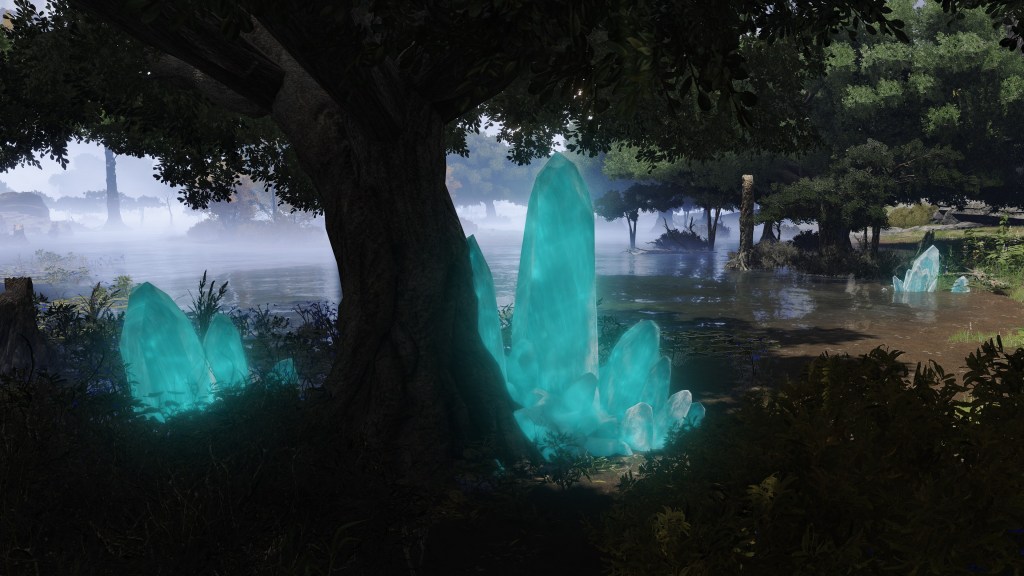
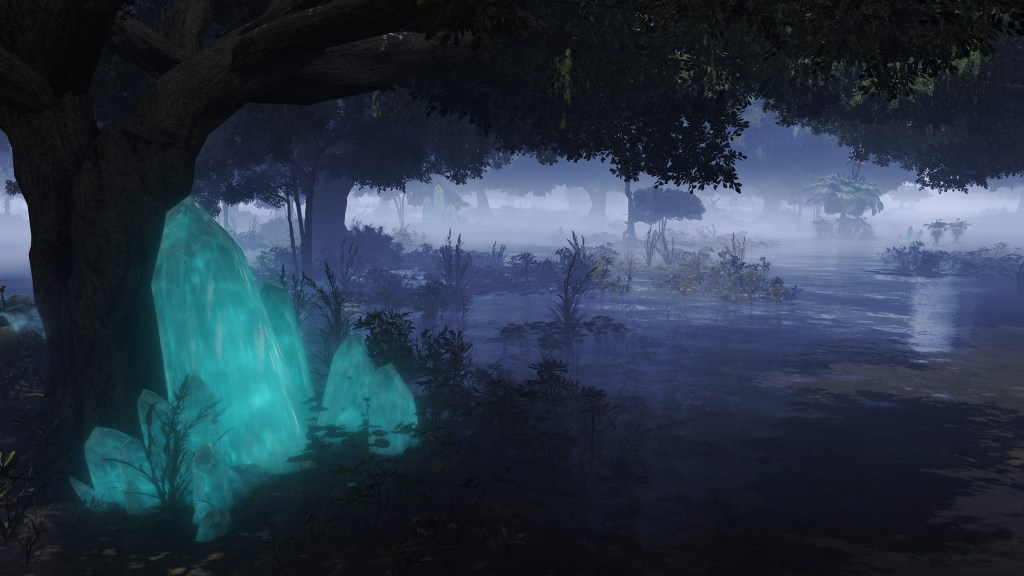
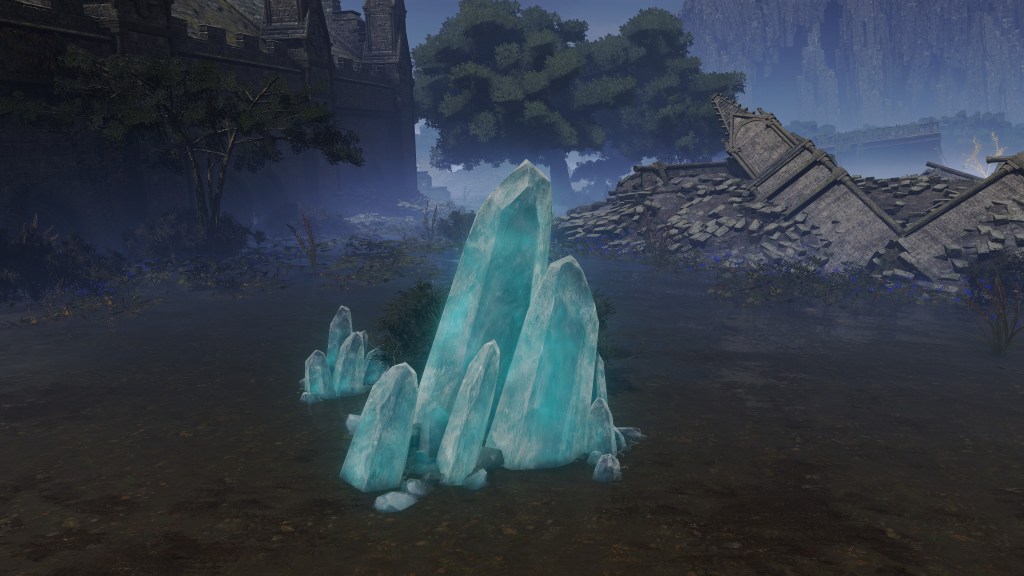
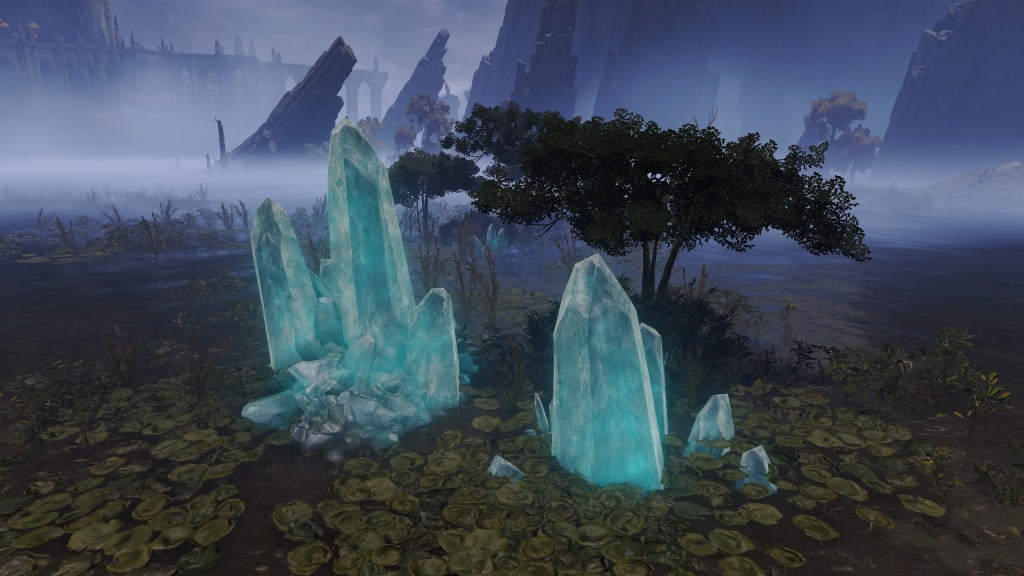
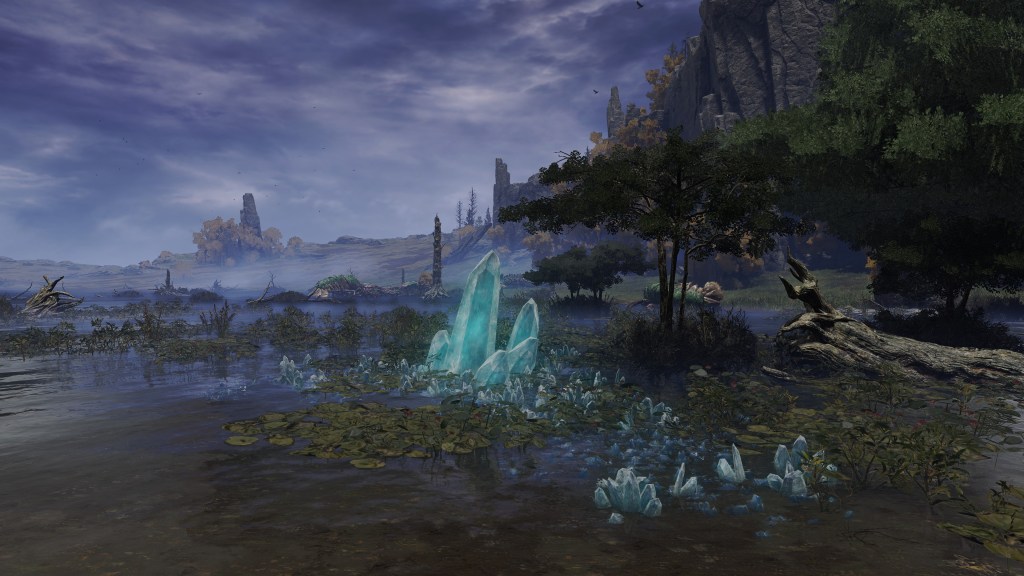
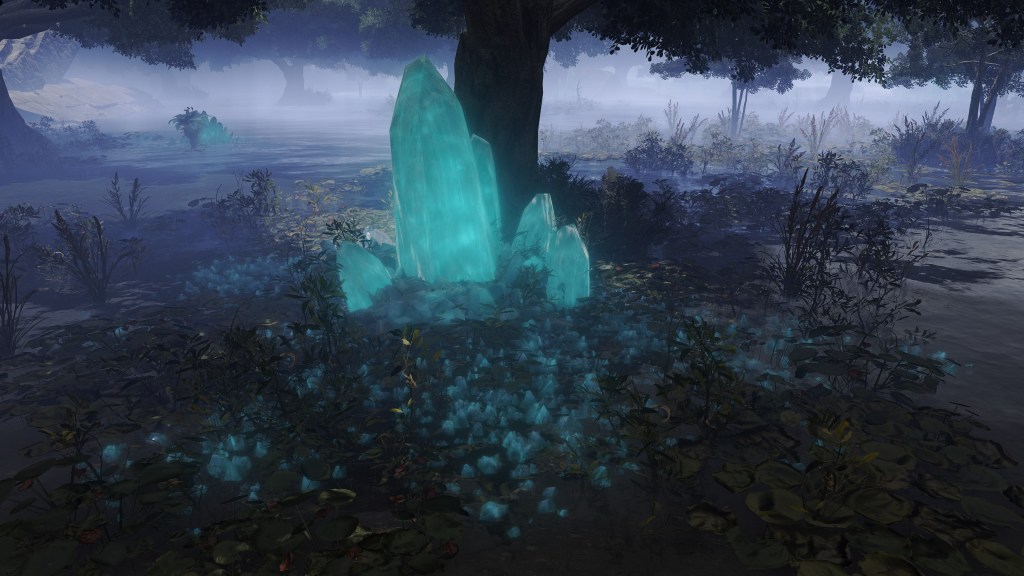
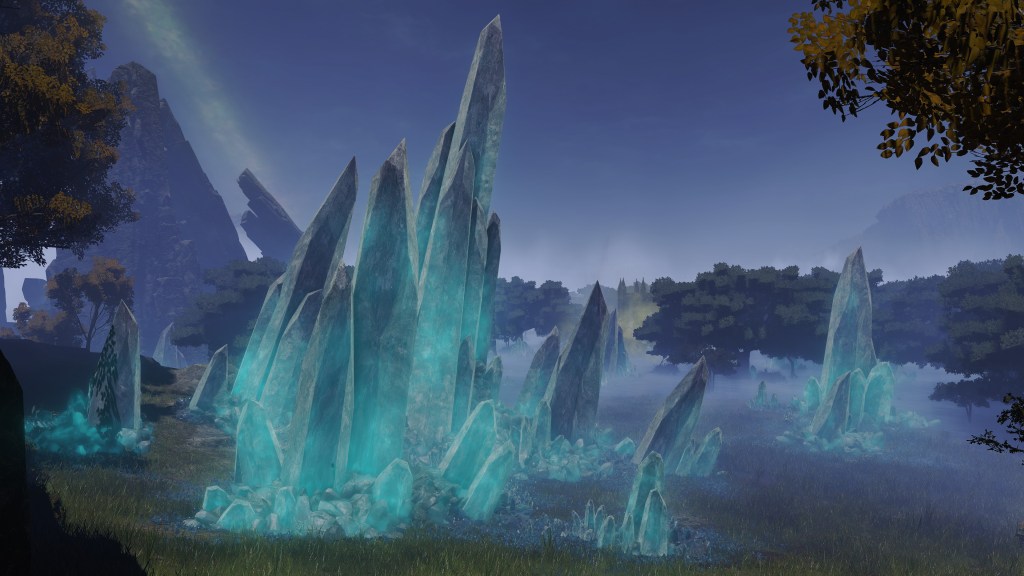
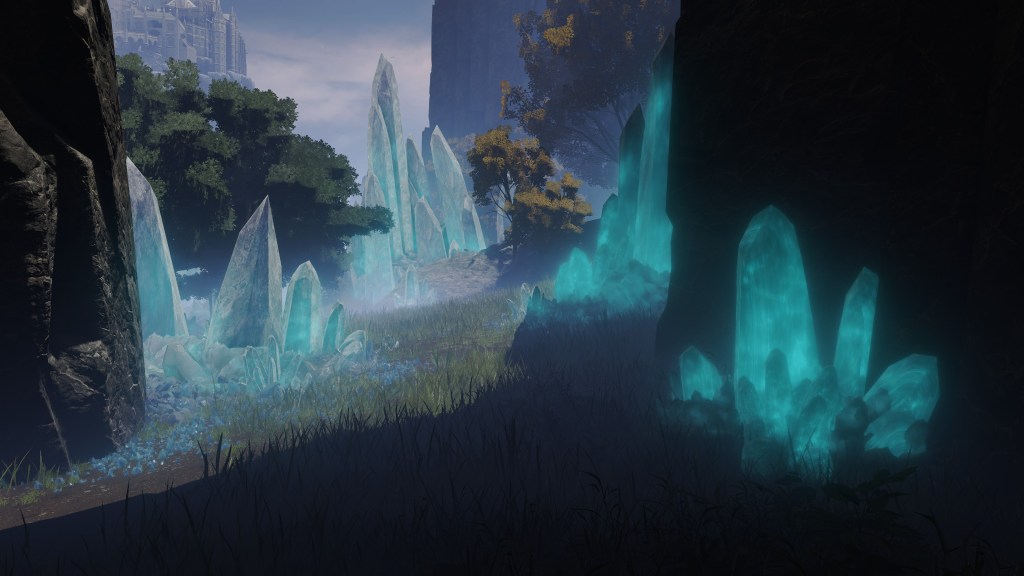
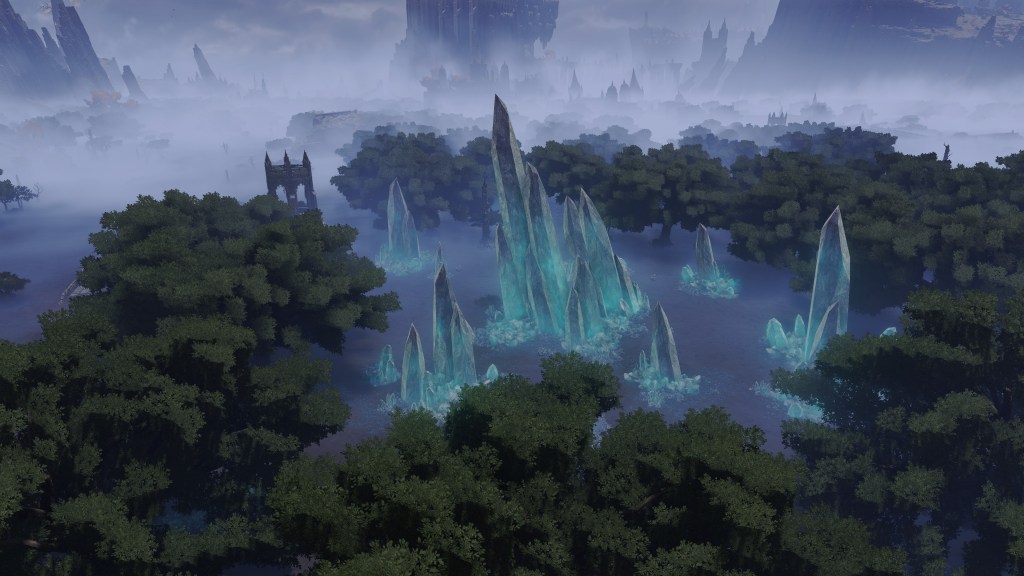
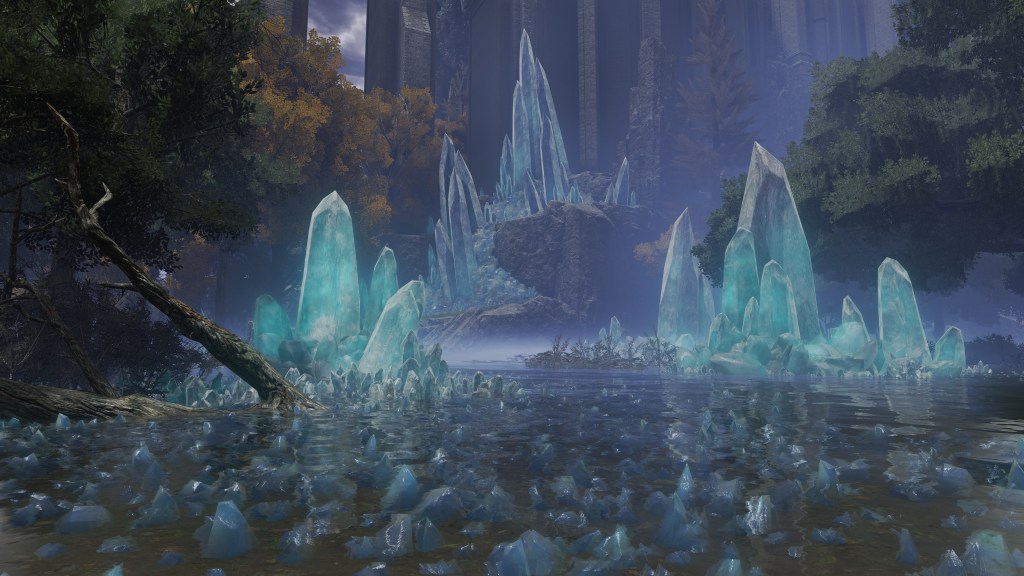
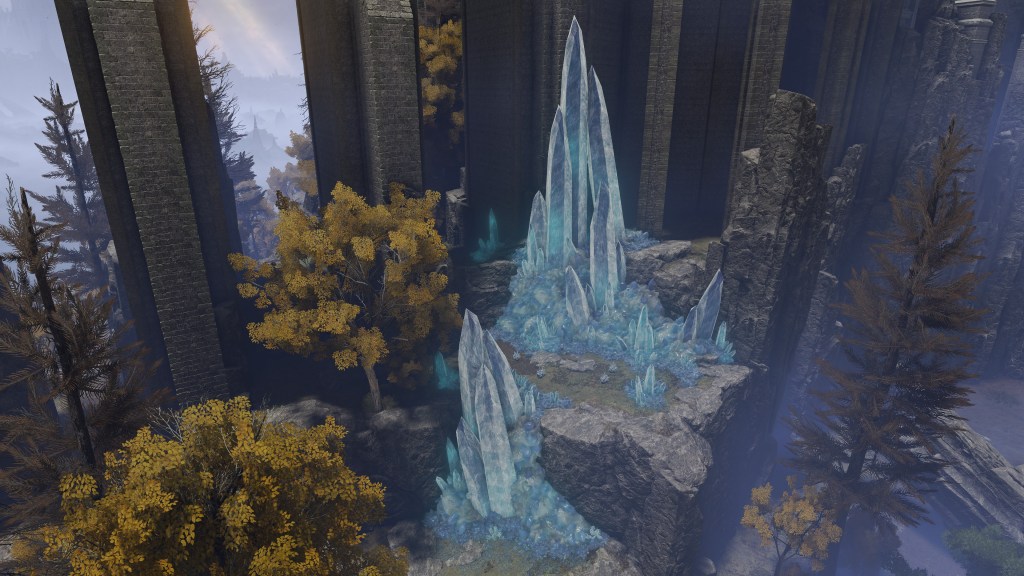
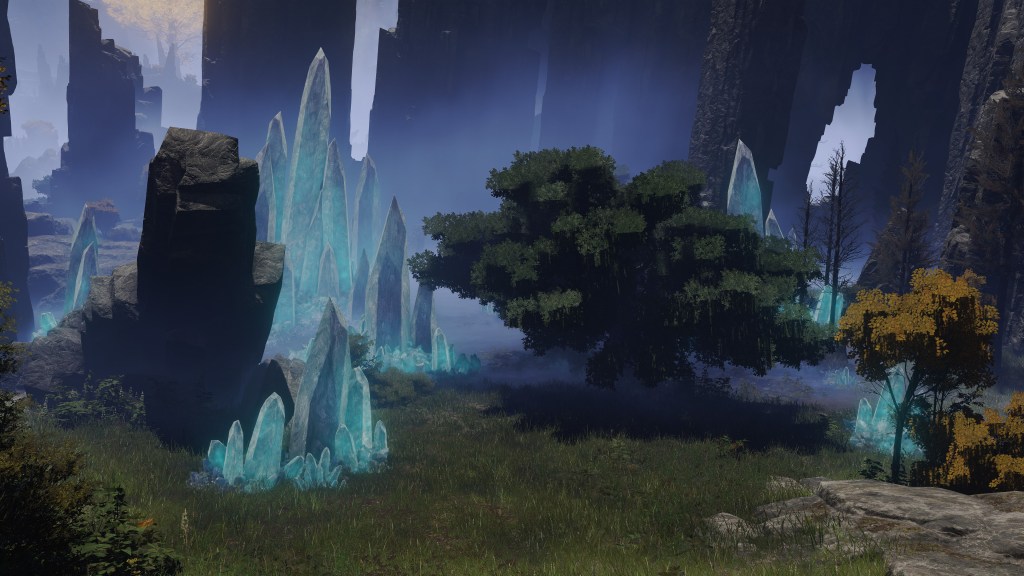
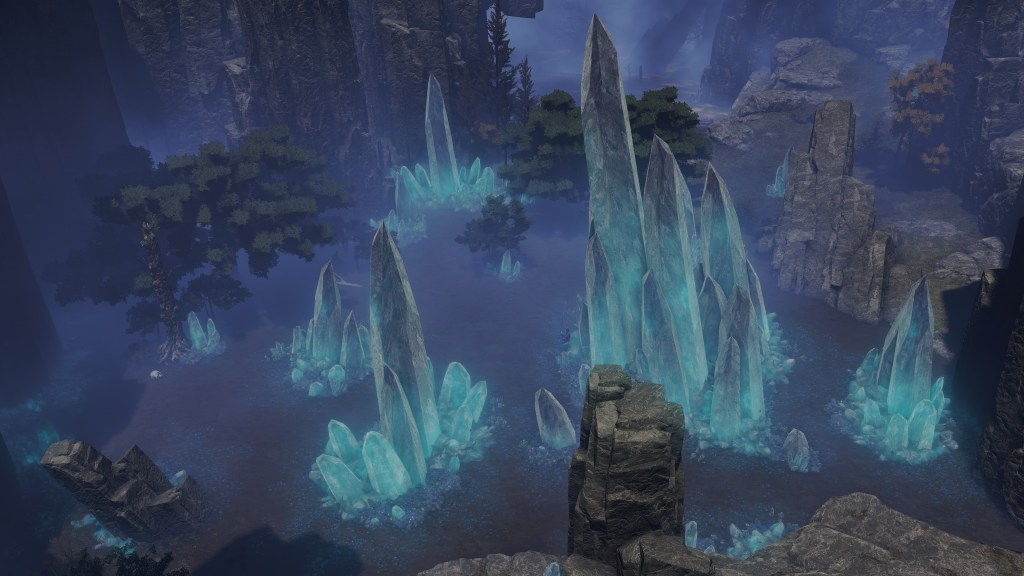
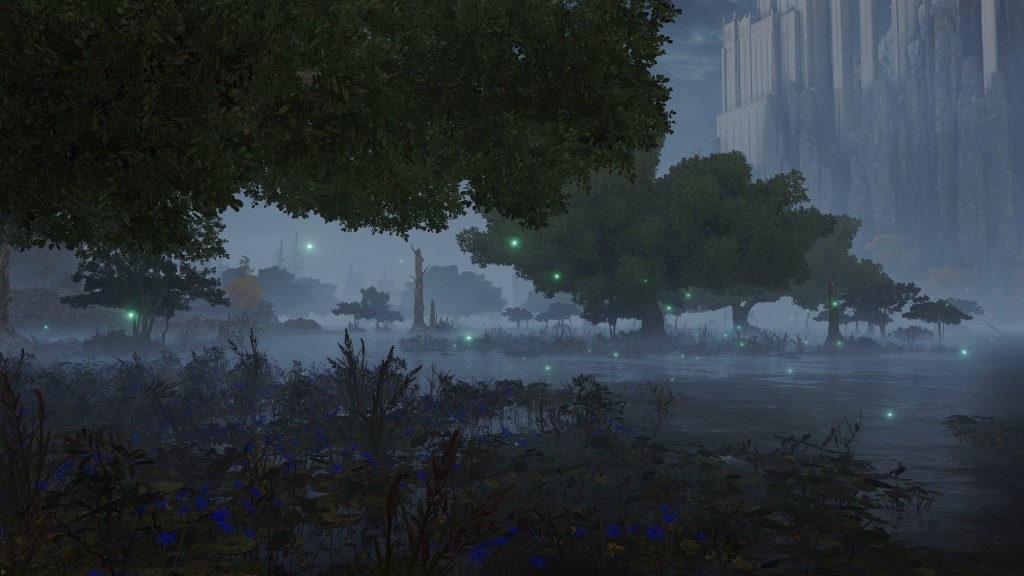
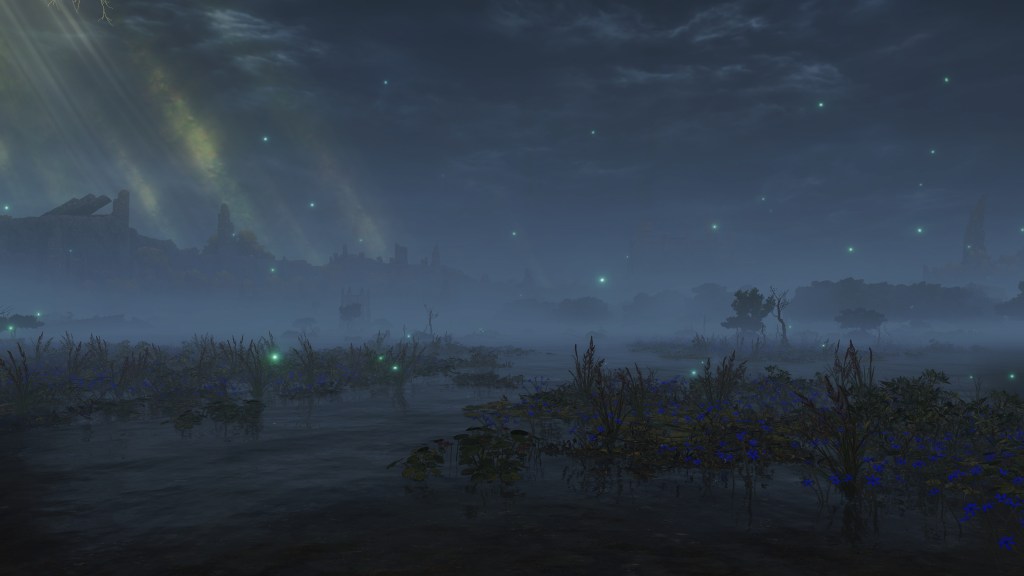
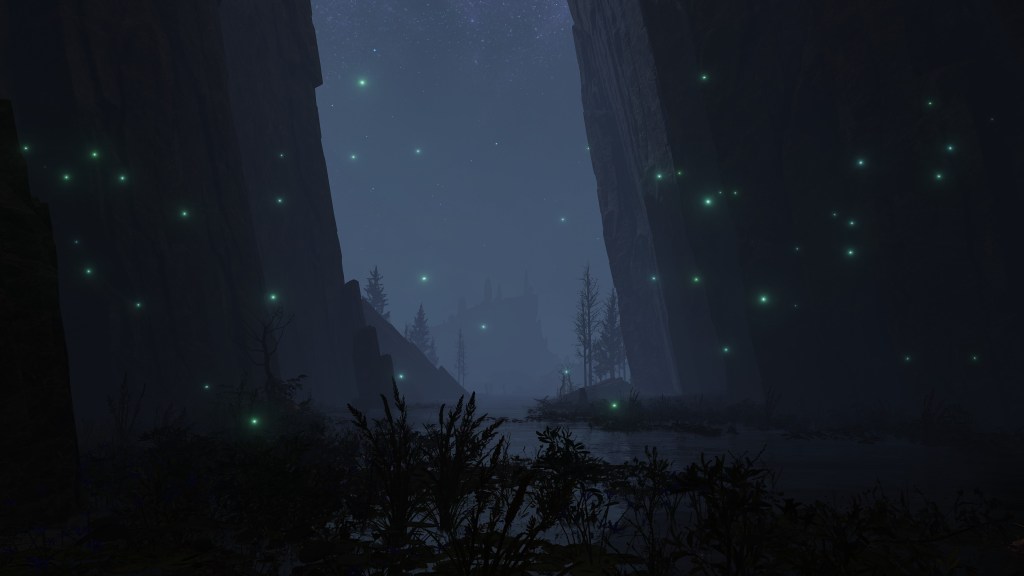
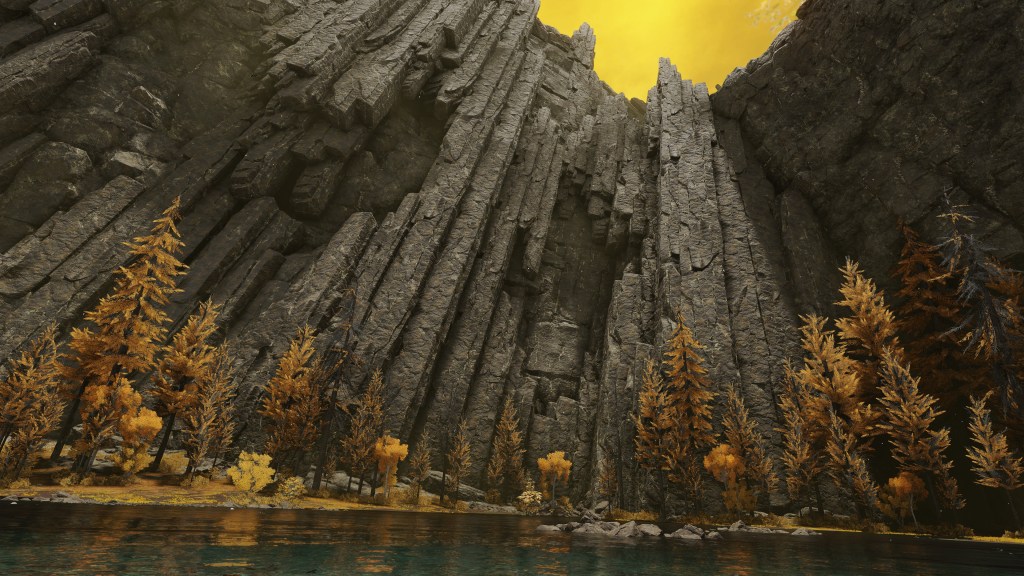
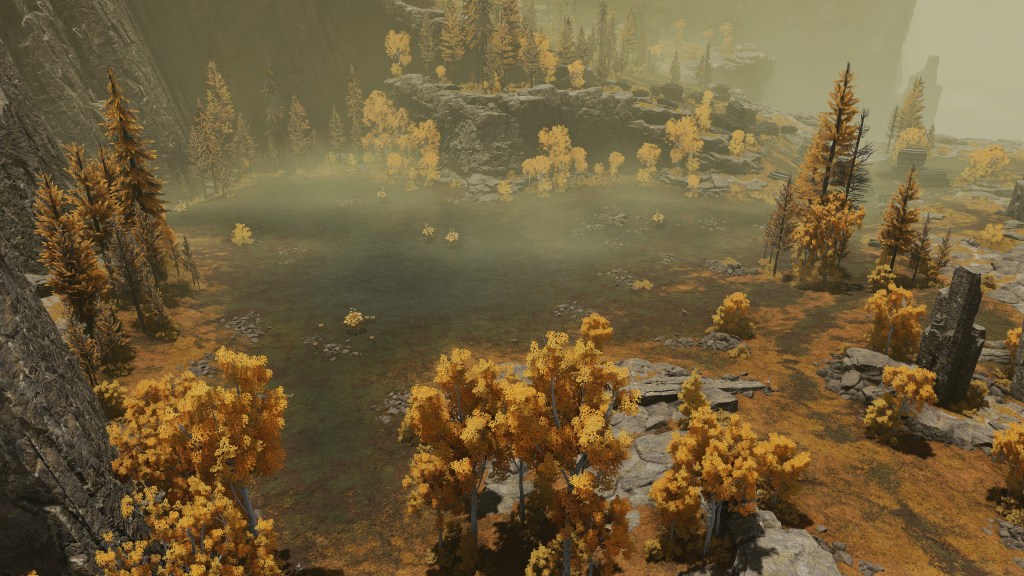
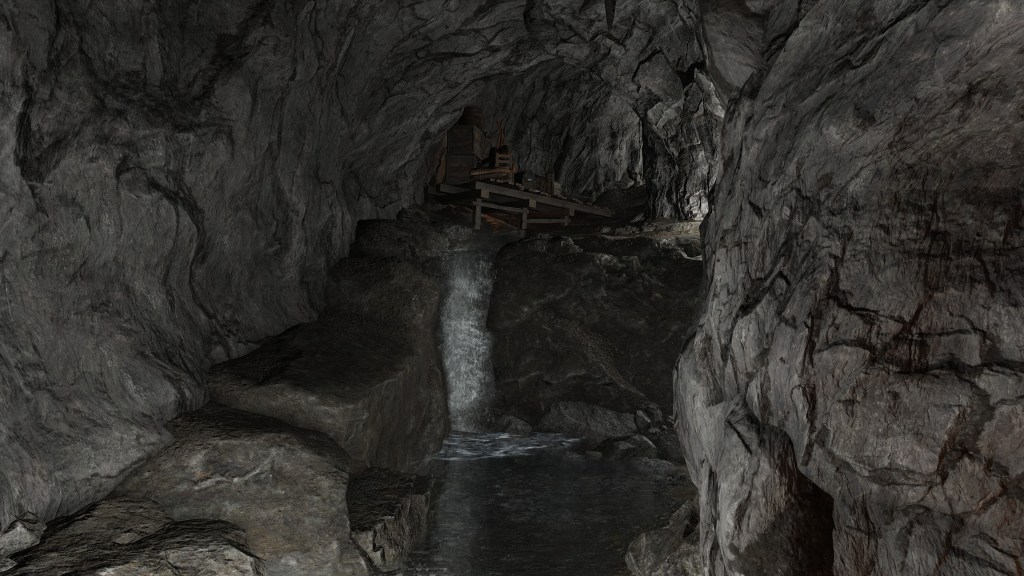
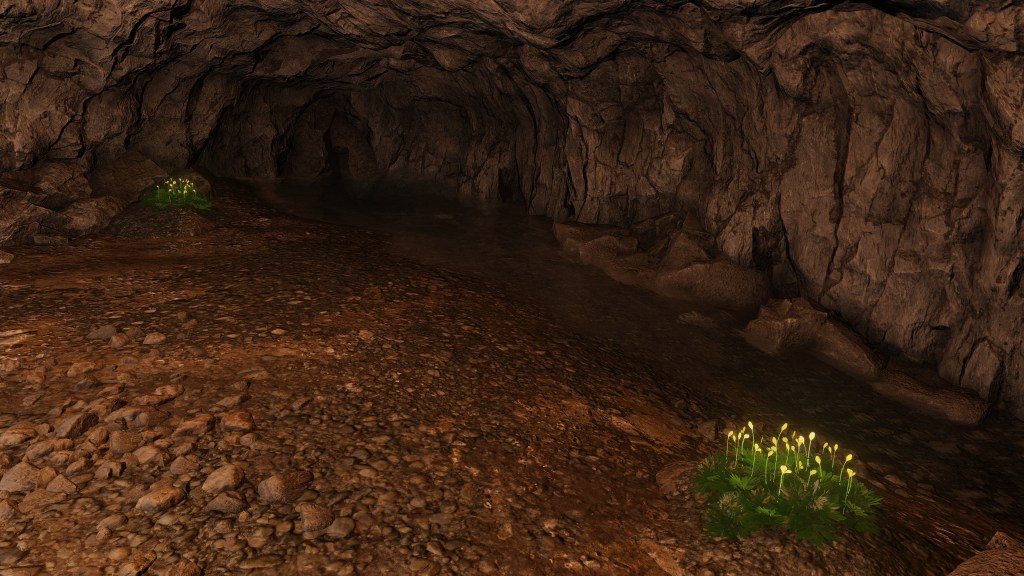
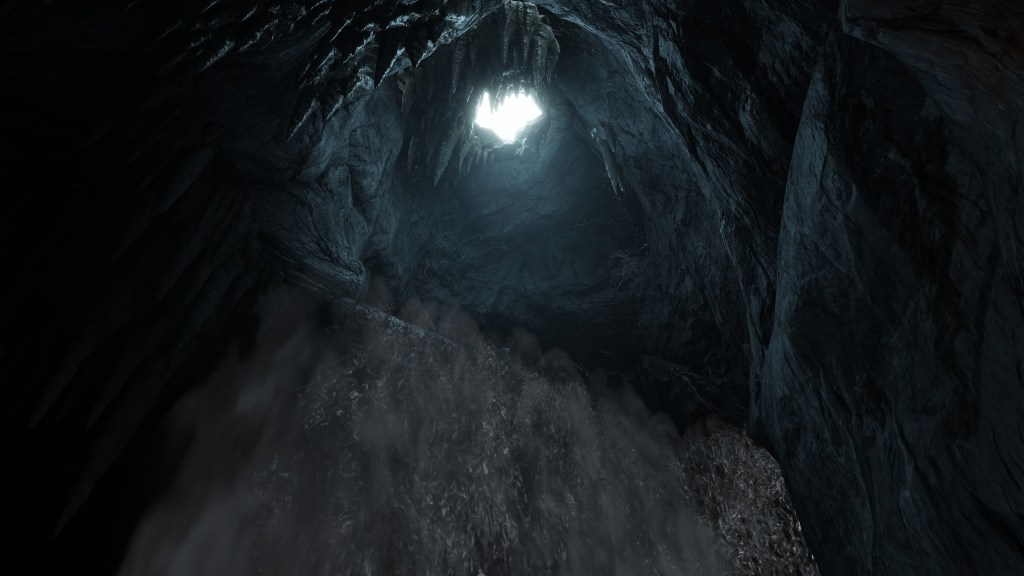
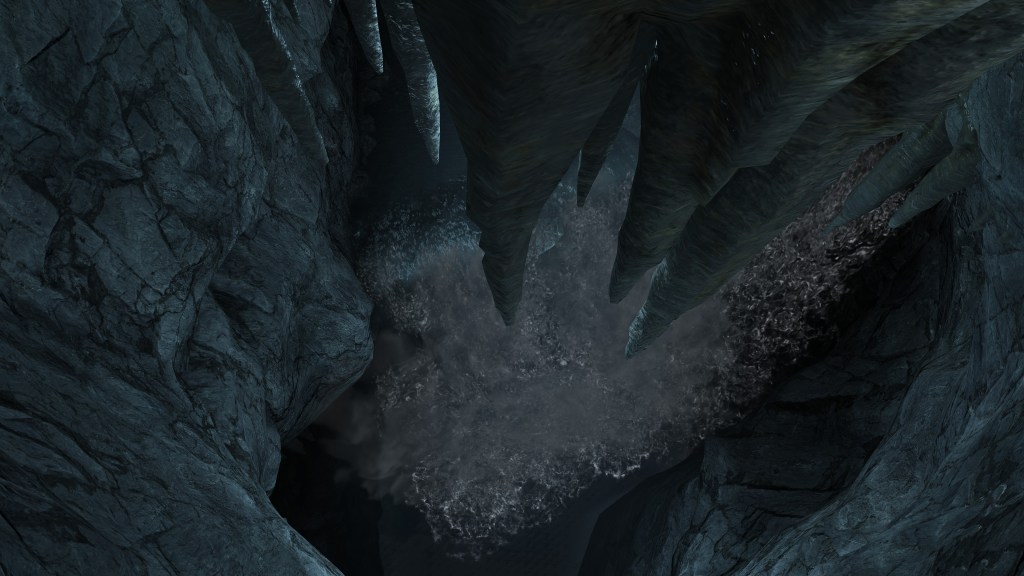
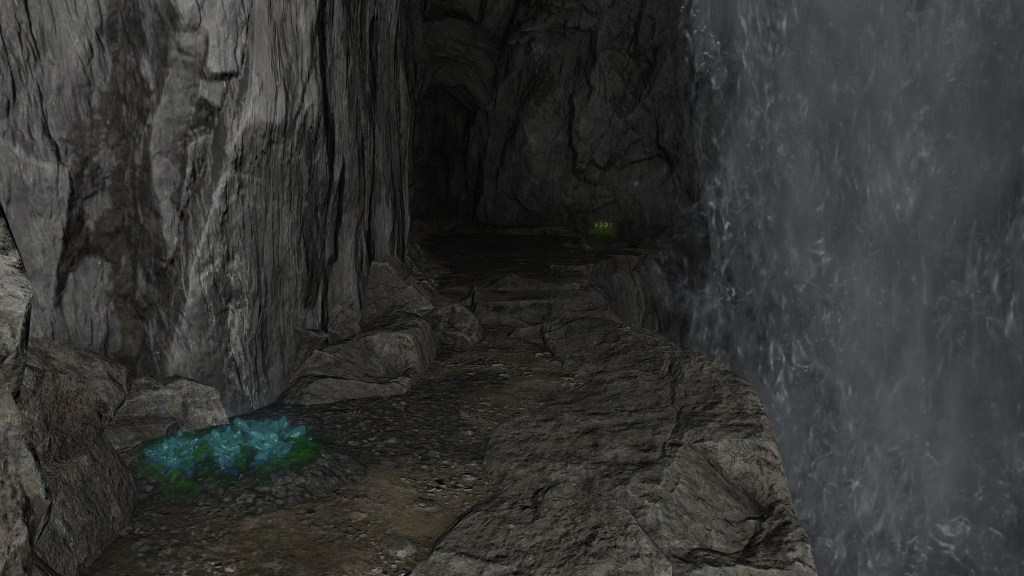
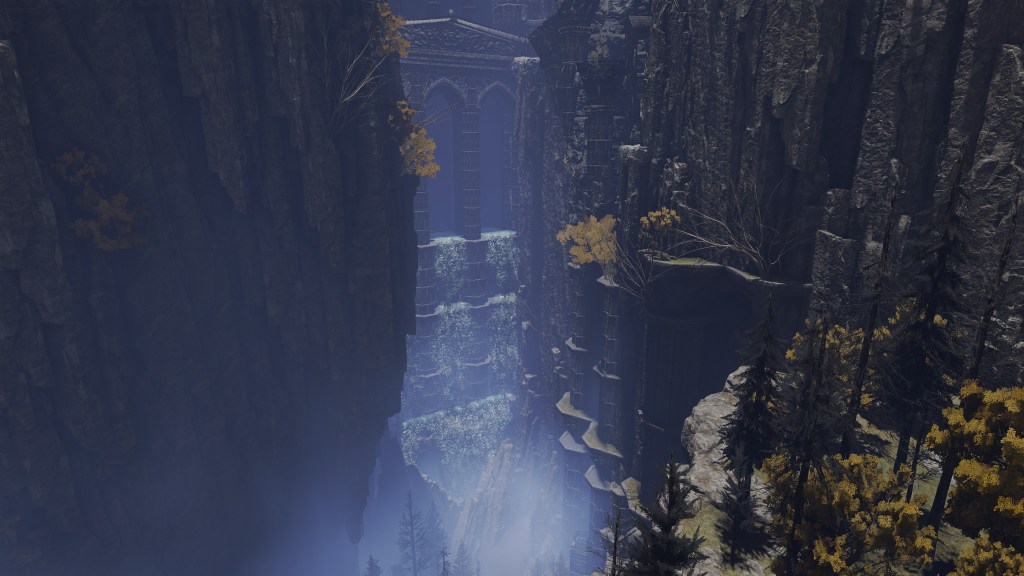
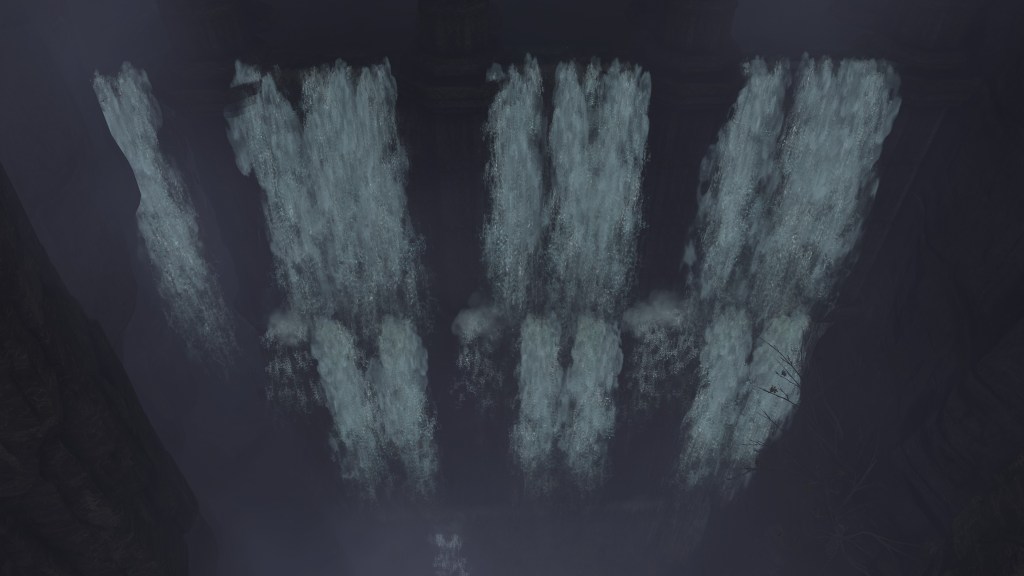
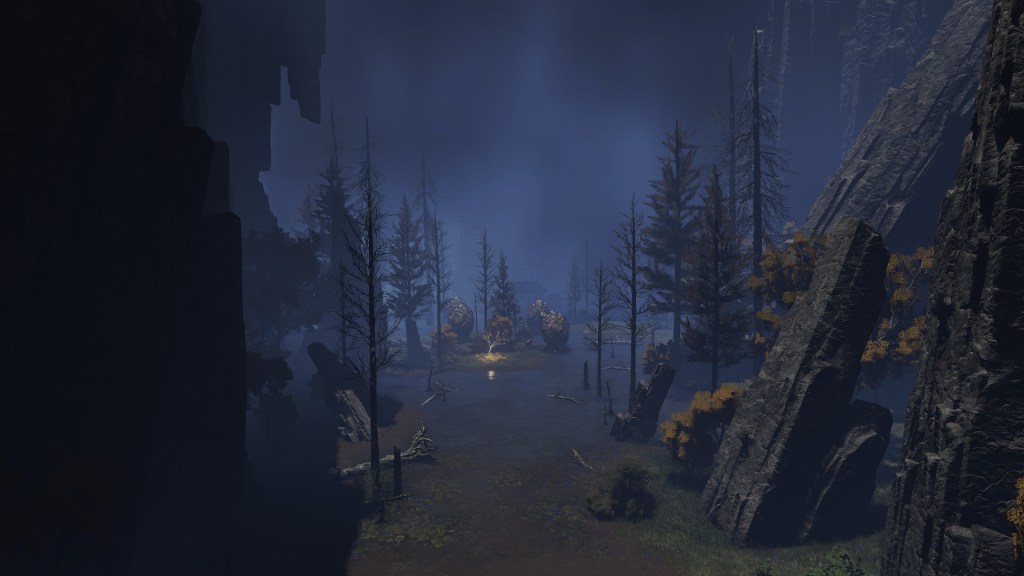
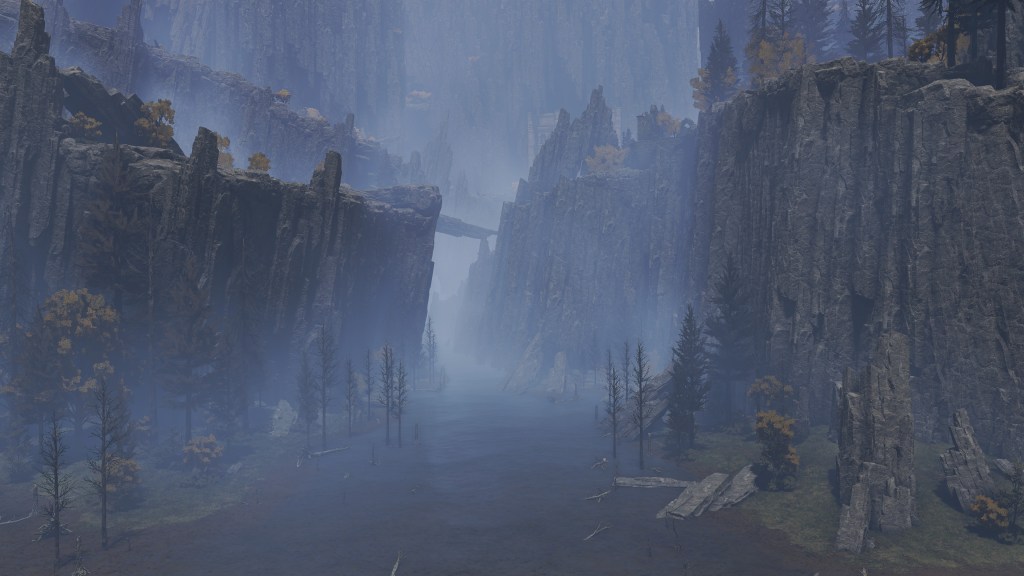
Put simply, the glintstone formations in the lake are probable products of the water flow. Just as how minerals in water accumulate to form speleothems over long periods — as we frequently witness underground — glintstone might have done the same before there was even one huge lake. The network of ponds and streams would cause the flow to inconsistently slow and pool, allowing for the stars’ amber to build up in places. Those accumulations gradually grow until they become some of the huge formations we see, becoming glaring markers for anyone seeking such glintstone deposits. Perhaps it was with these formations that the Crystalian’s creator made them, one of the early explorers from the west. But with the Laskyar’s ensuing migration, they too would see strong signs of glintstone in the area. The assumption wouldn’t be wrong, as Lakeside Crystal Cave and Raya Lucaria Crystal Tunnel alone prove. But the most conspicuous source to search lay at the center of these wetlands.
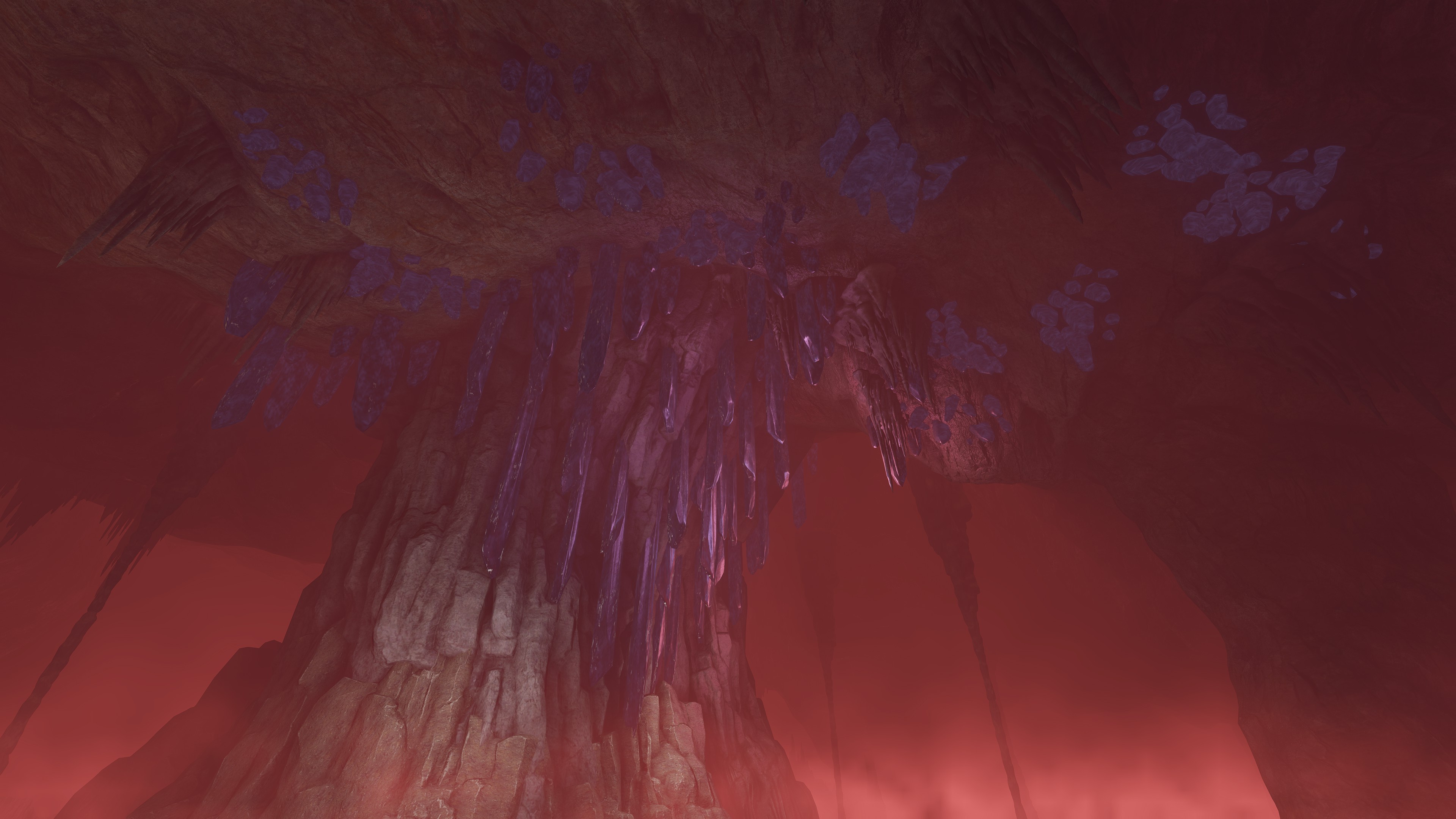
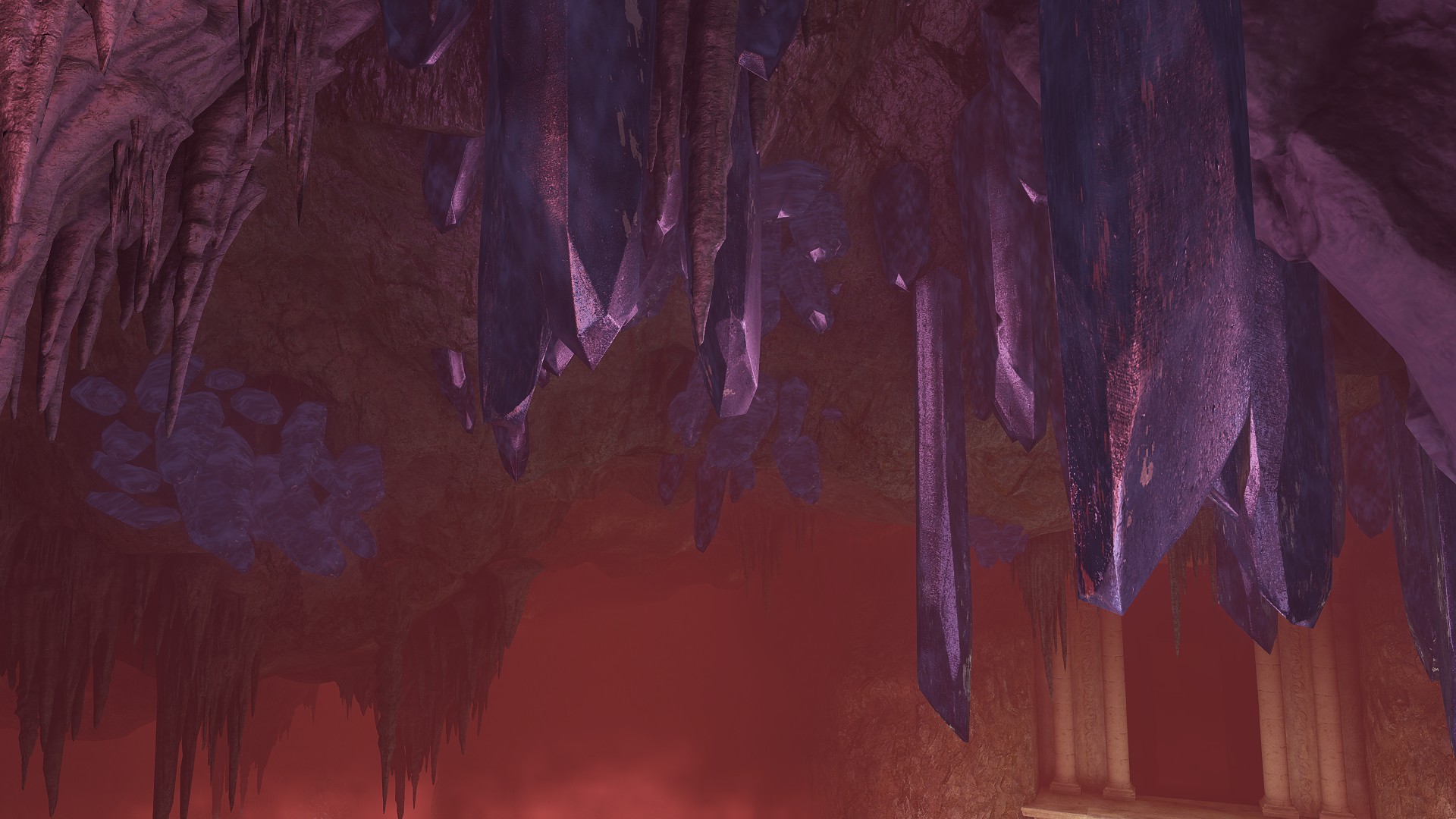
The Raya Lucaria mount stands tall as an anomaly in an otherwise lowland. Entering its hollow recesses brings us to plentiful crystal, with our view from the Lake of Rot showing the sheer depth of the deposit; huge crystals just hanging from the ceiling all around the stone pillar supporting the entire mount from underground. Factoring it all together, the towering rock may have formed because the site was subject to an exceptionally large meteor strike, displacing the earth into a massive pile above ground. And regardless of whether it is a natural phenomenon, it still draws immediate attention to anyone visiting Liurnia. This makes it reasonable for astrologers to investigate and consequently discover the glintstone lacing the rock. By the time they were approaching Stormhill, the stargazer would have surveyed the largest glintstone deposits in the area and see the visible formations cease along with their prospects for a richer location. And so, that was the end of their nomadic ways.
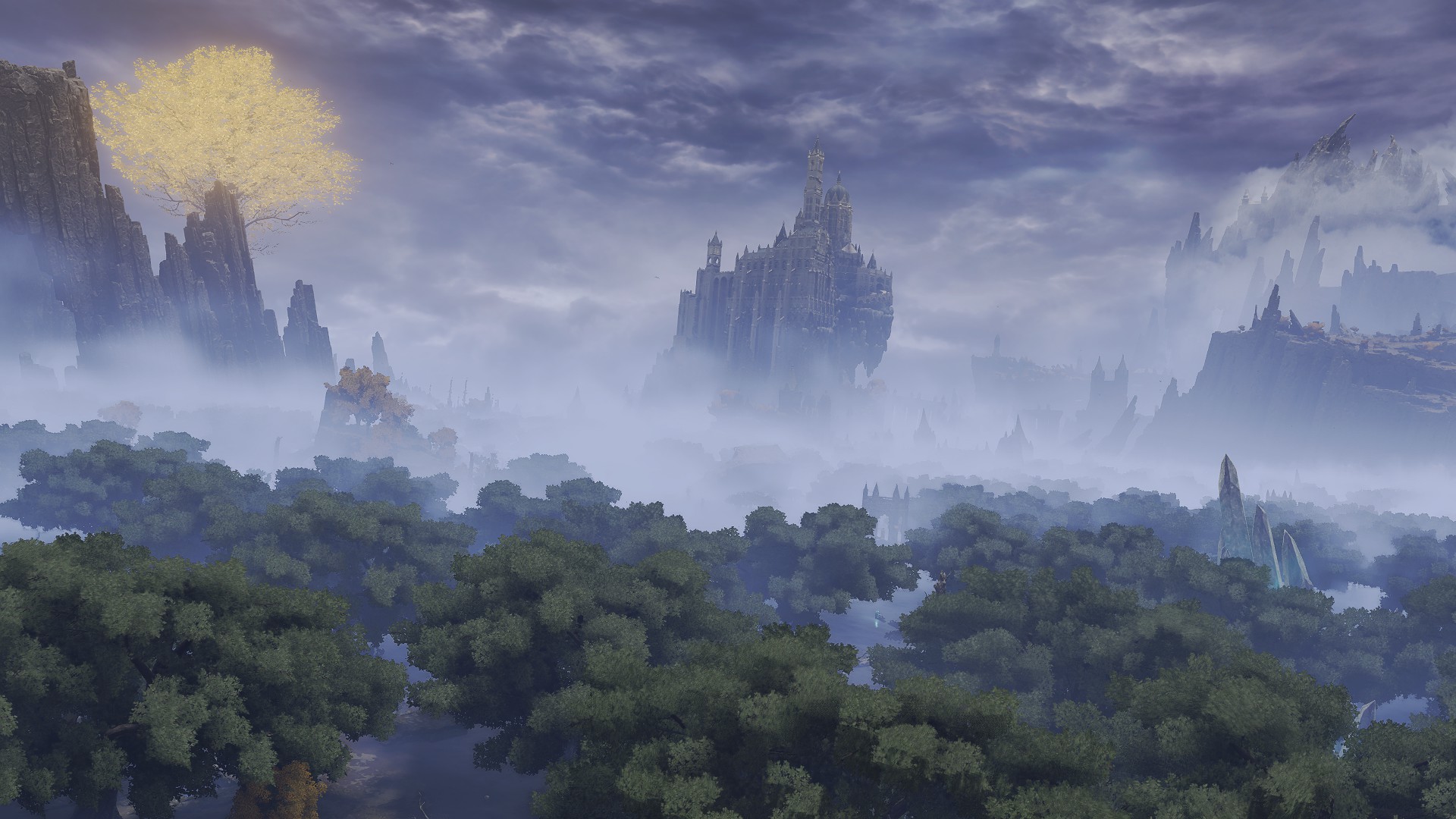
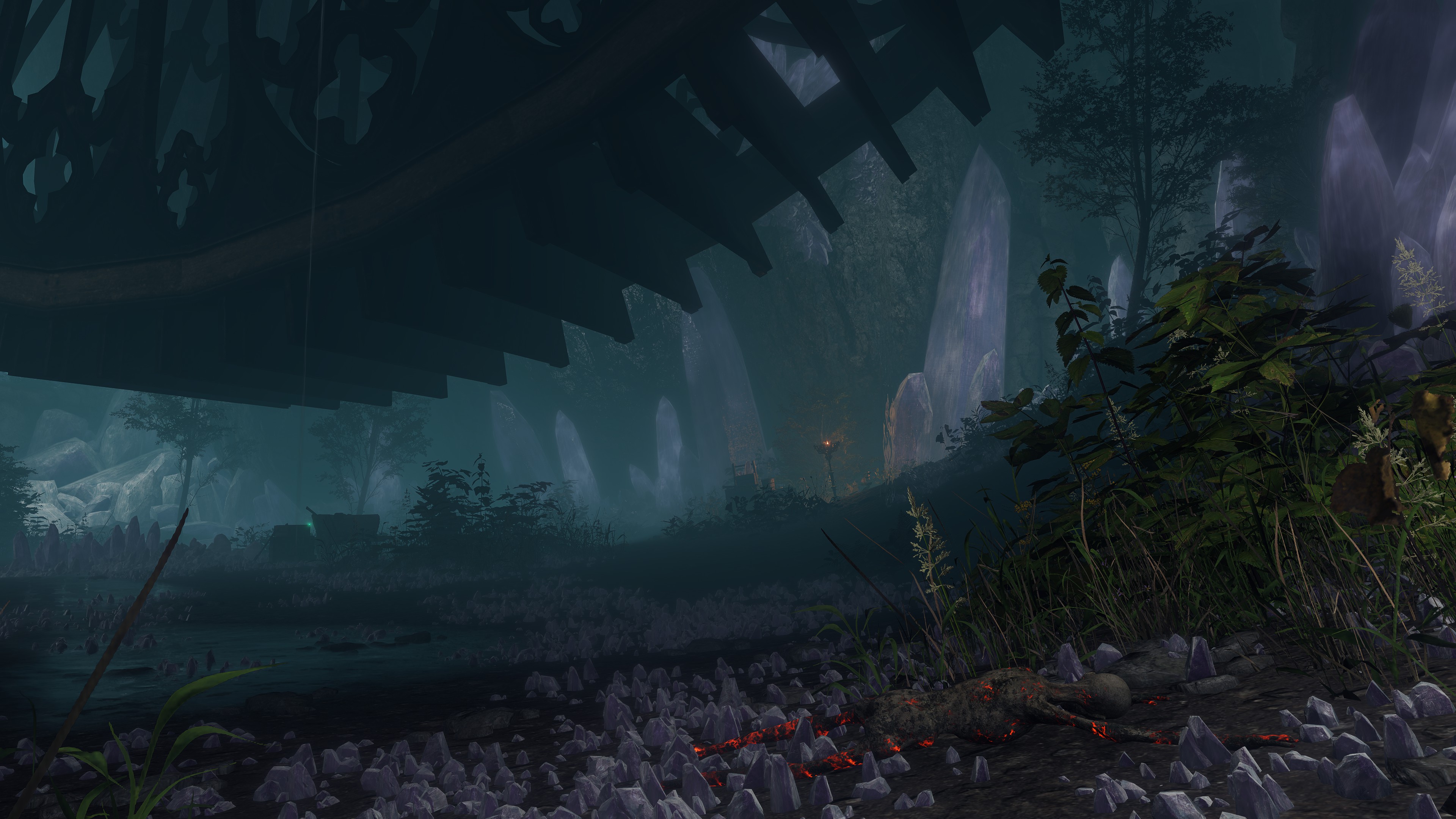
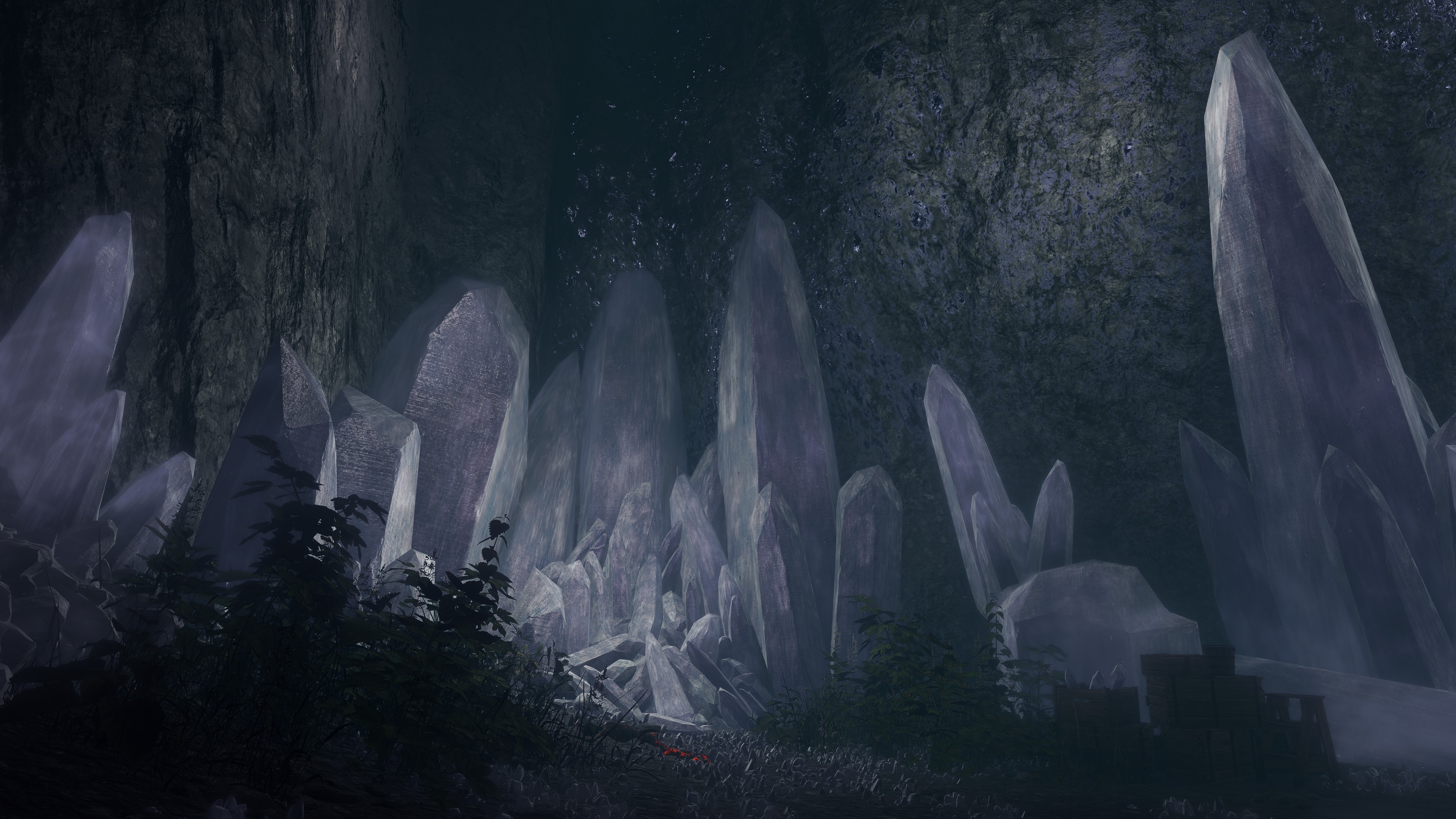
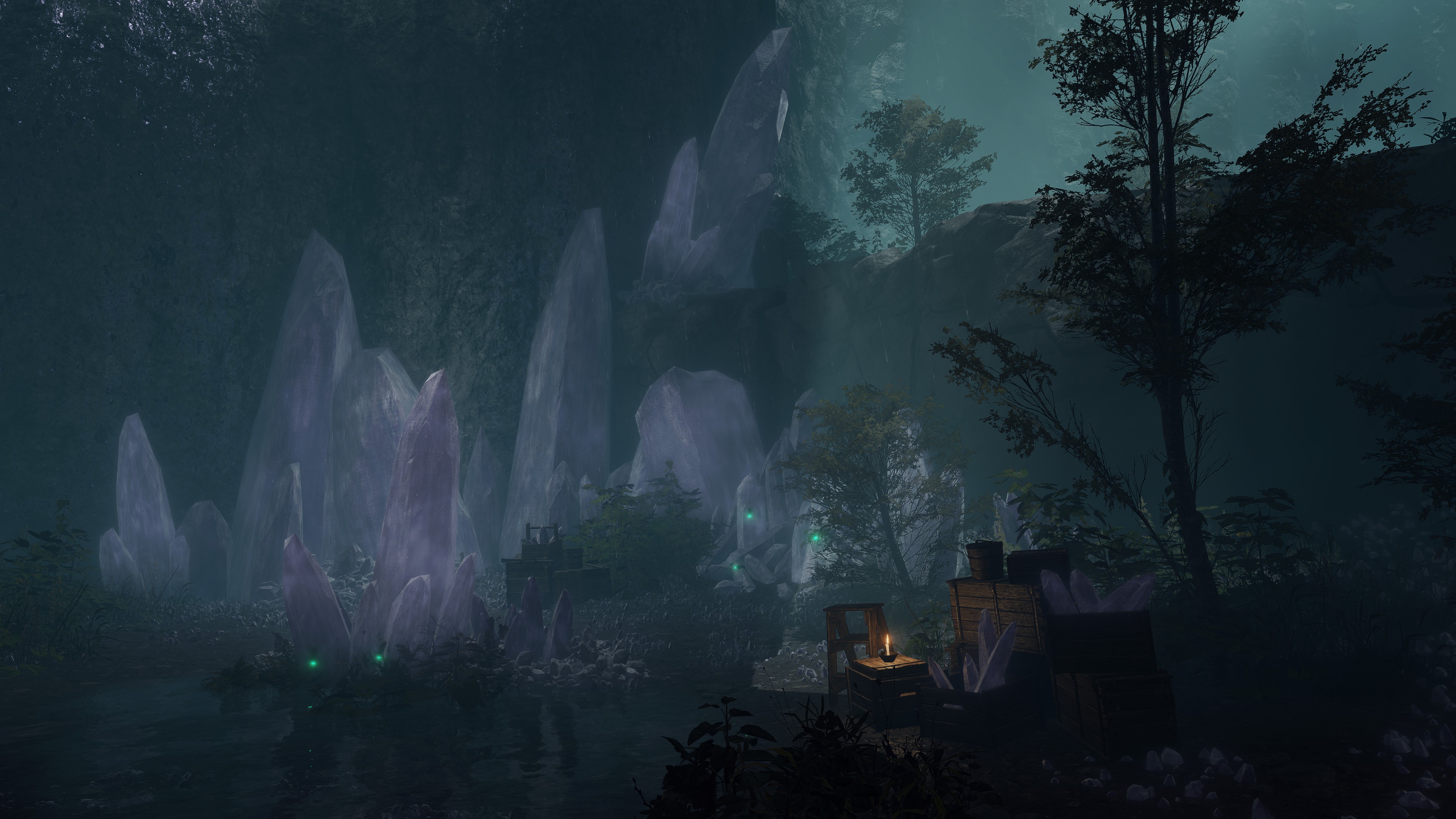
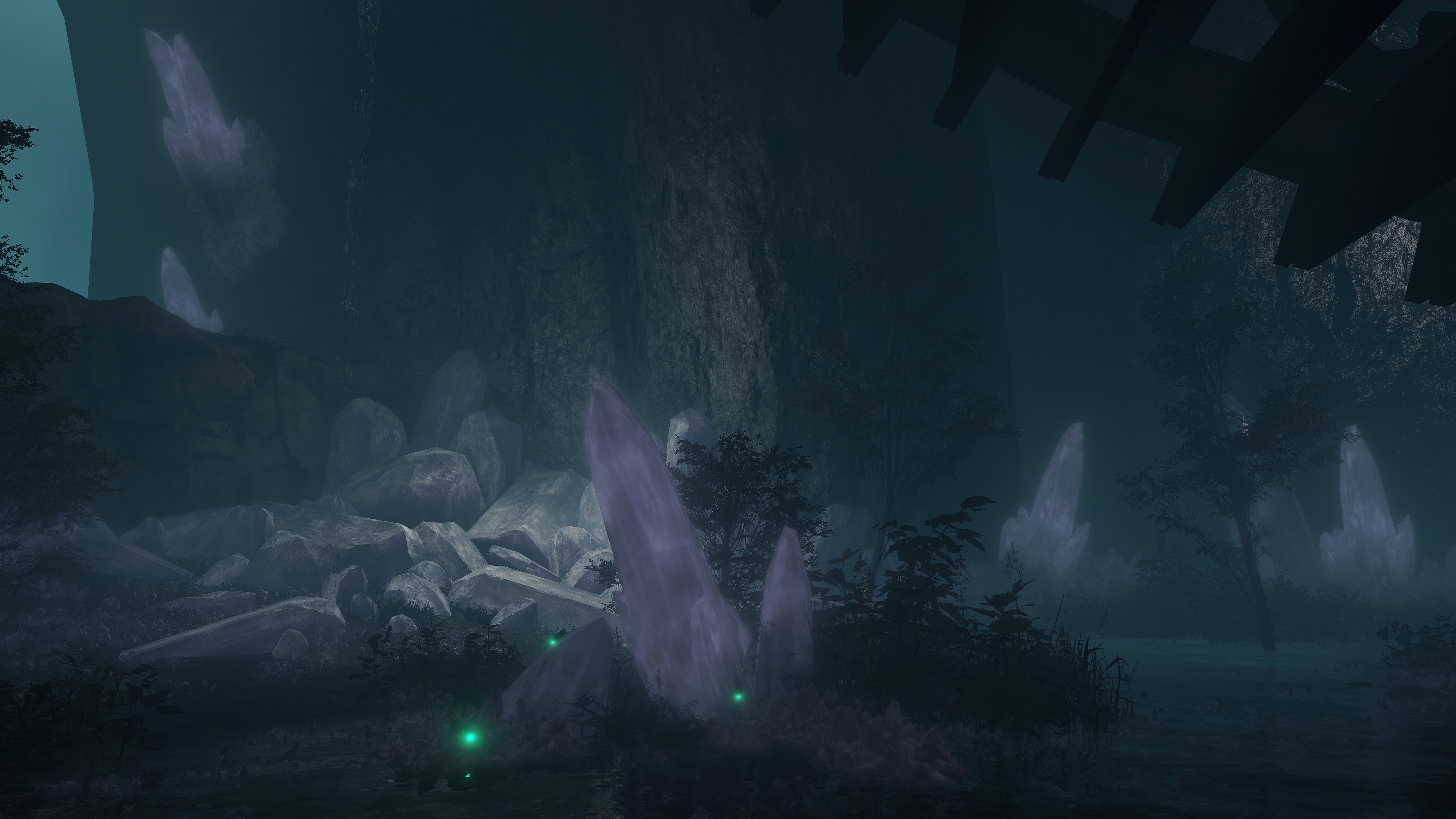
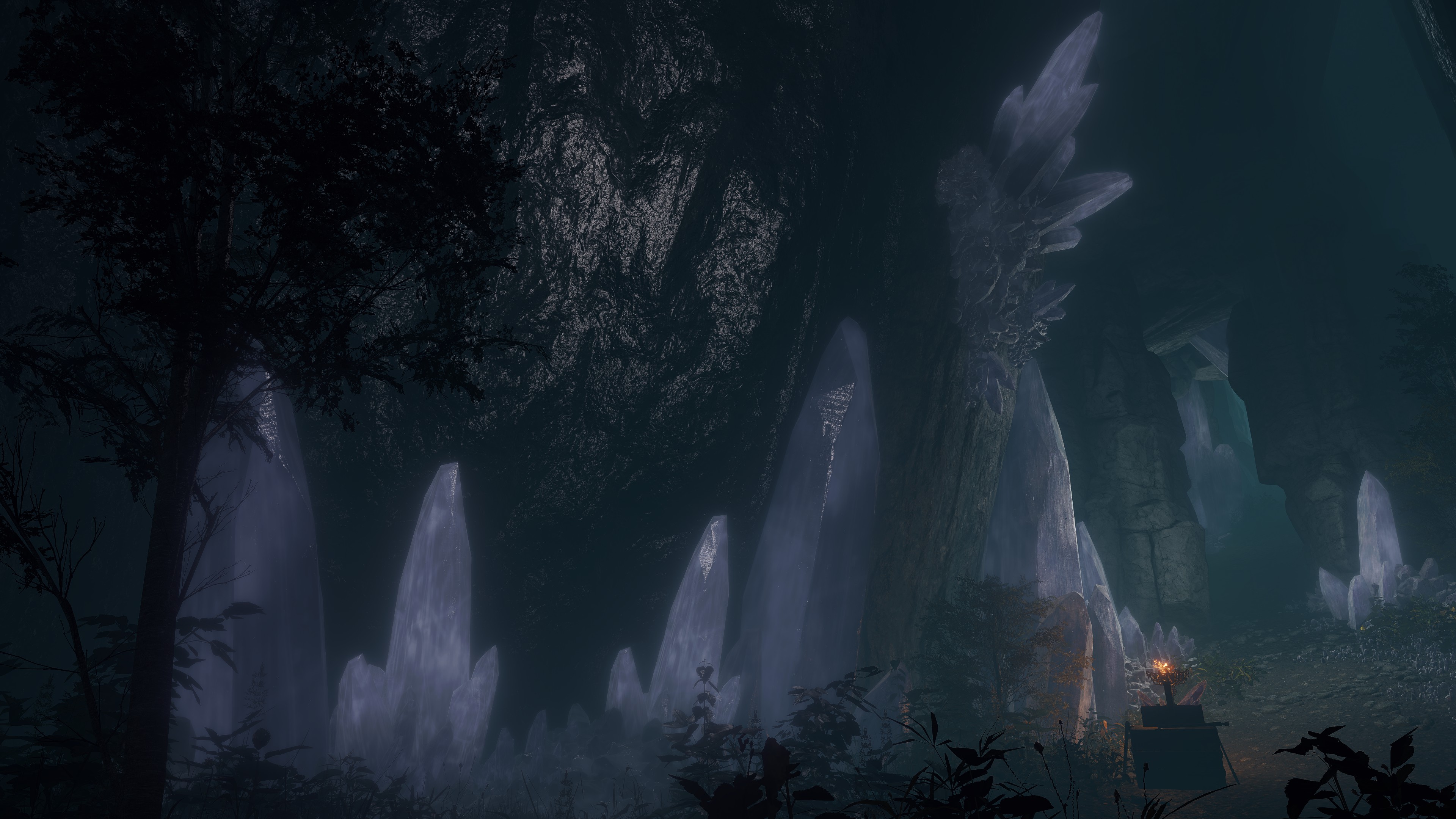
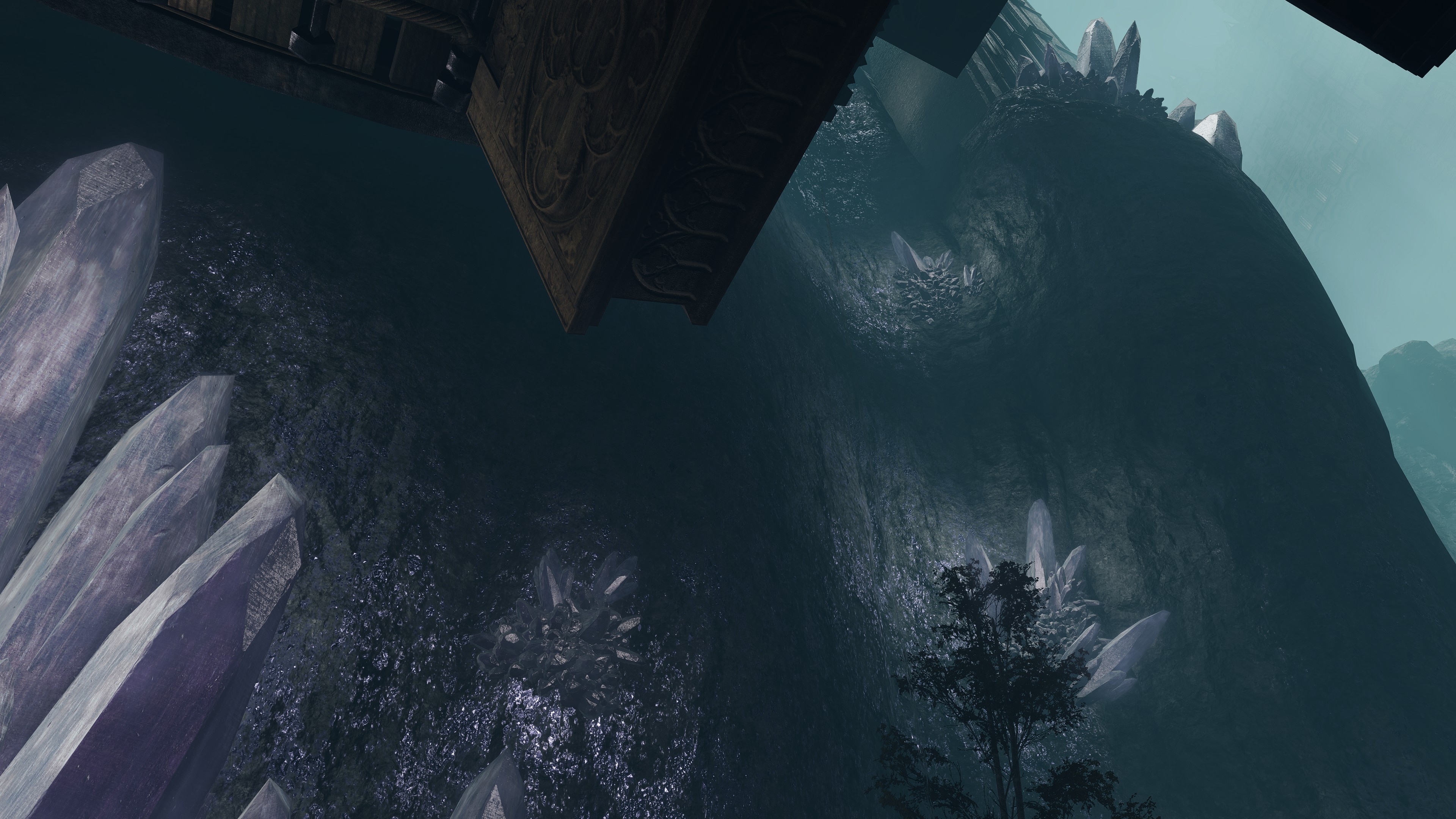
Besides its situation at the lower limit of the lake’s crystallization, the exact position of Laskyar in the south was more than likely influenced by the overall climate. A side effect of the low elevation to Liurnia Lake is fog. Heavy rain and thick mist are common weather conditions in the region, doubtless promoted by the depression. Even on clear days, the lowland captures enough moisture to preserve an ever-present haze over the lake, stretching north all the way up to the Raya Lucaria mountain. That further implies chillier temperatures, as confirmed by Rya whilst the sojourner from Gelmir stands in the middle of the lake. Such weather dynamics are liable to remain true even before the modern lake formed, much like its forests, so Laskyar was likely established amidst these cool mists. Feeling more at home, the migrants from snowy peaks set down roots by the water and prepared to excavate.
Nice to meet you. These surroundings are a little chilly, aren’t they?
Certainly, the modern-day Academy of Raya Lucaria most likely began as just a humble dig site. Between the illustrious school buildings hides the various boxes and tools used for mining, signs that sorcerers have continued to excavate the pit exposing all of the crystal formations. This accessible supply of glintstone was presumably the reason for the academy’s location, along with the mountain’s high elevation convenient for stargazing. One can imagine astrologers of Laskyar toiling away for the best quality stone by day, then studying the stars’ movements by night. Eventually, someone would have an epiphany, share that idea with his or her fellows, and soon have a bunch exchanging similar ideas until they all agreed to begin writing down the discourse. Thus did Raya Lucaria begin.
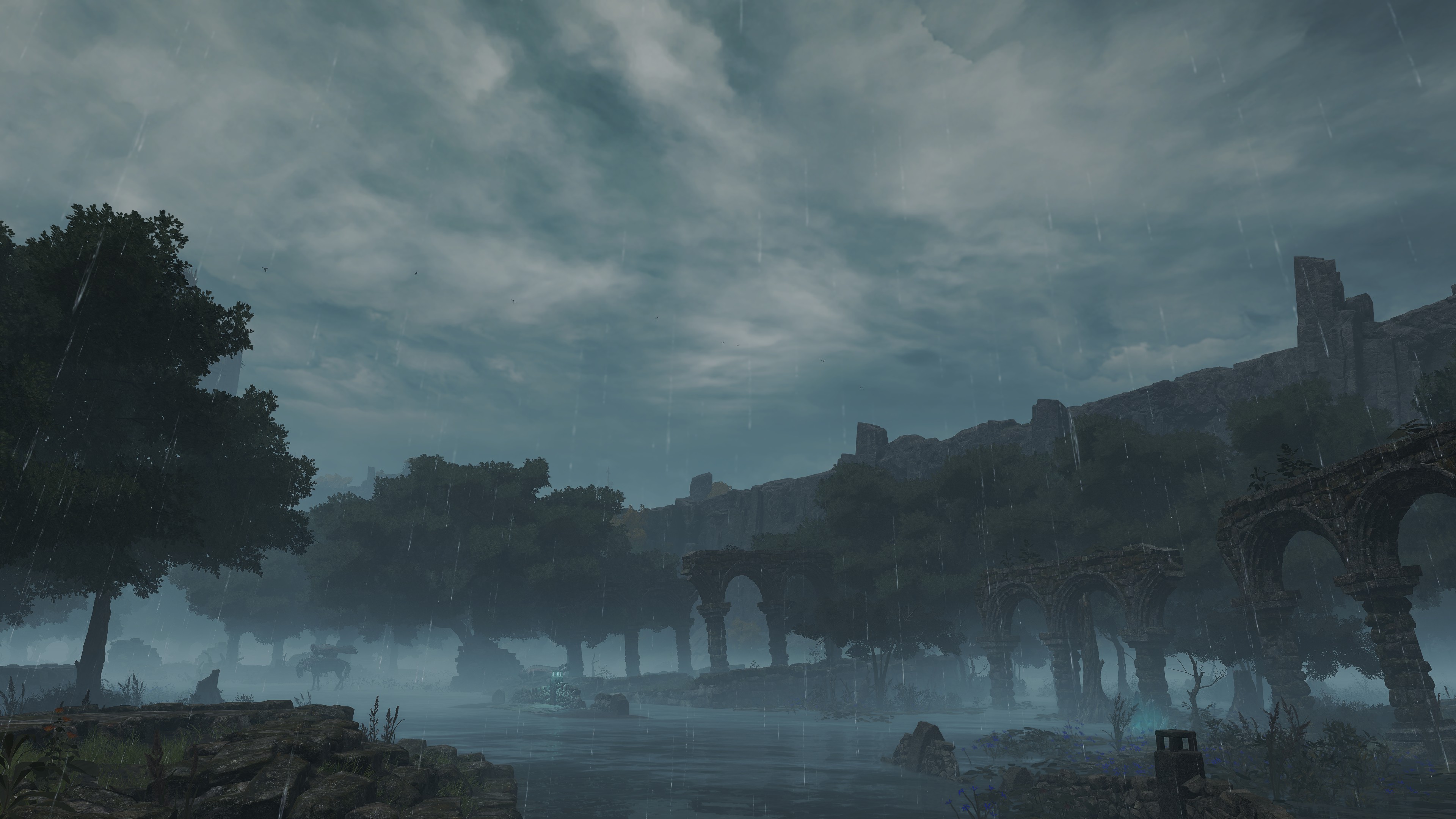
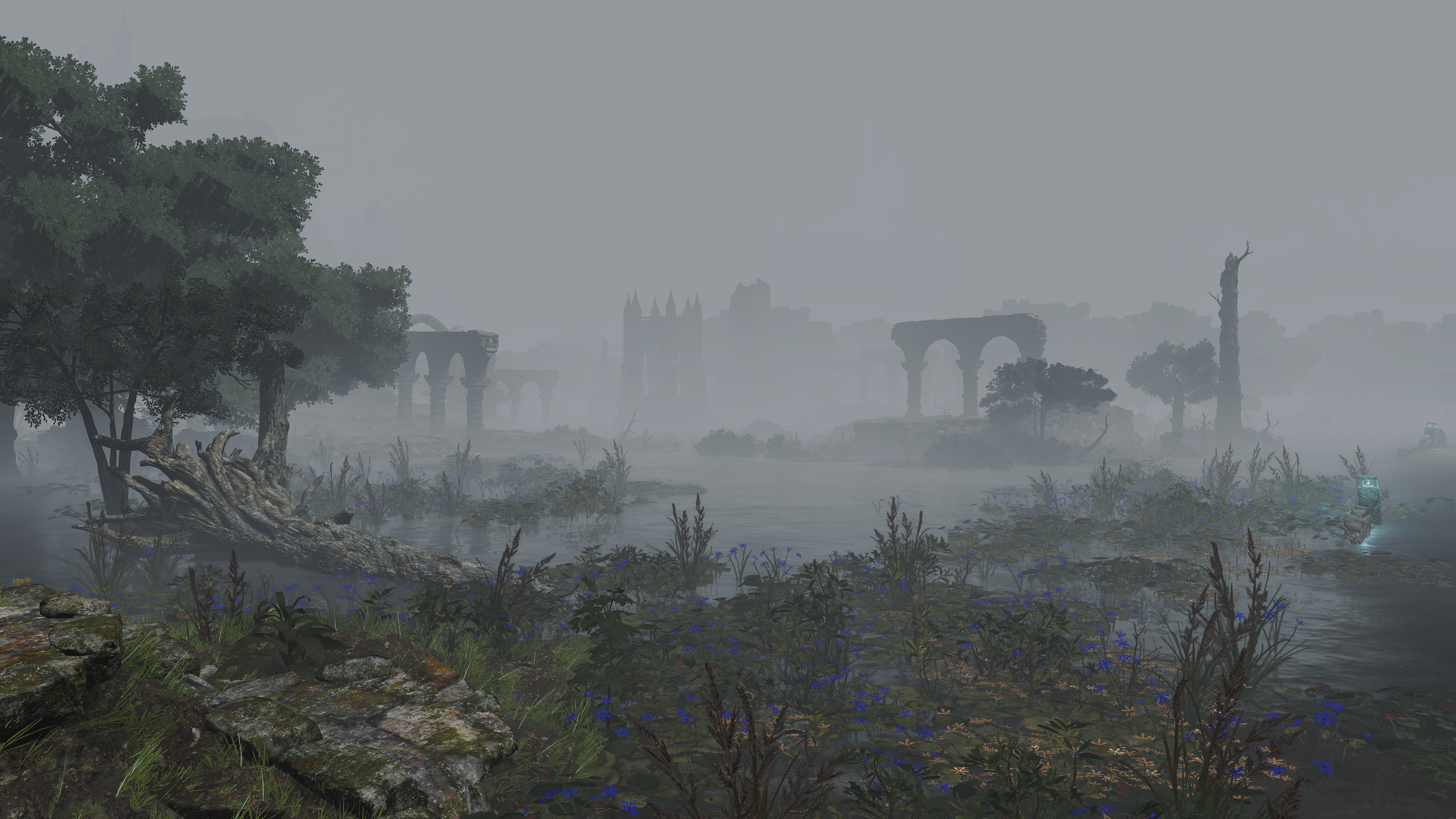
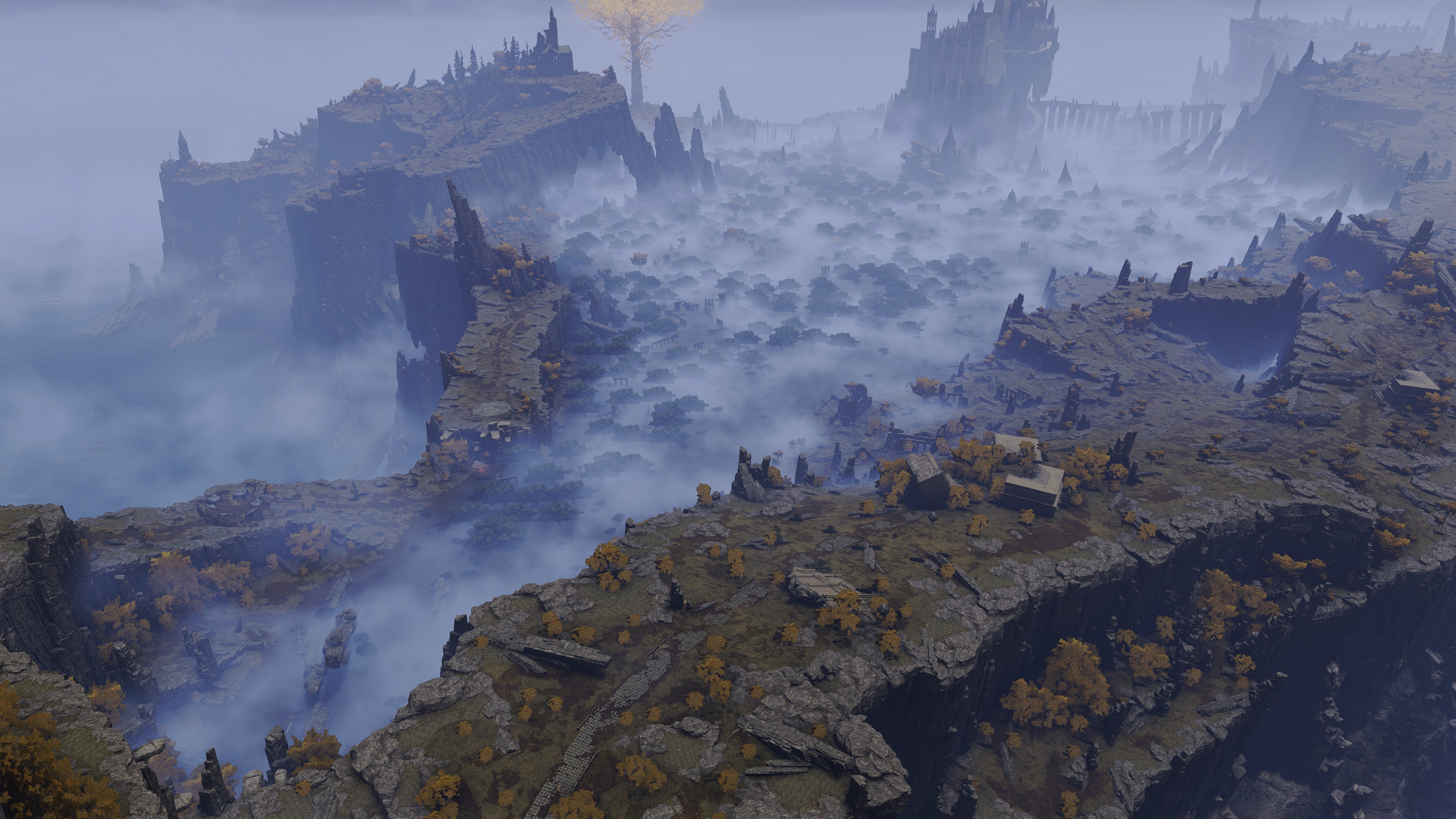
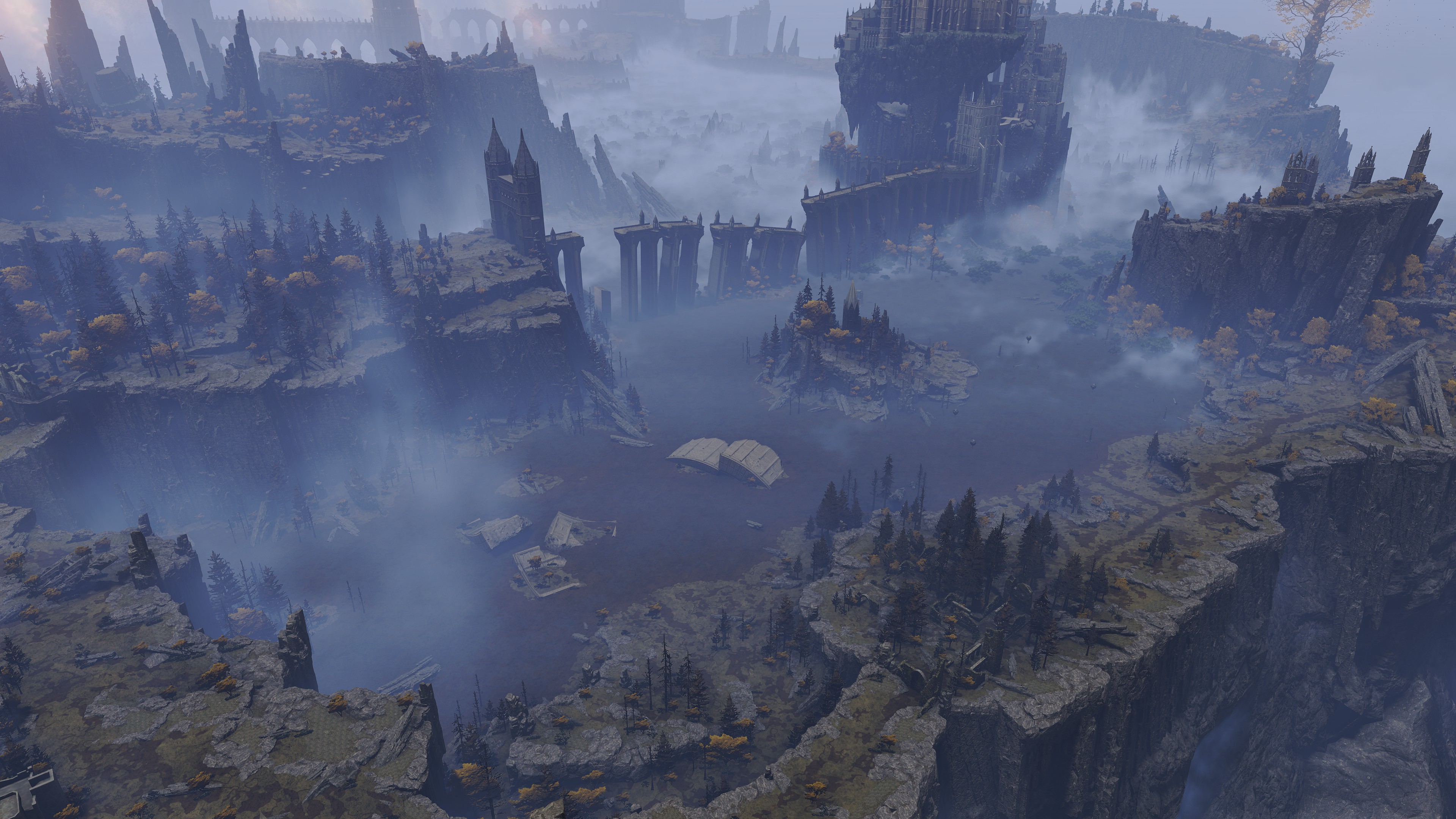
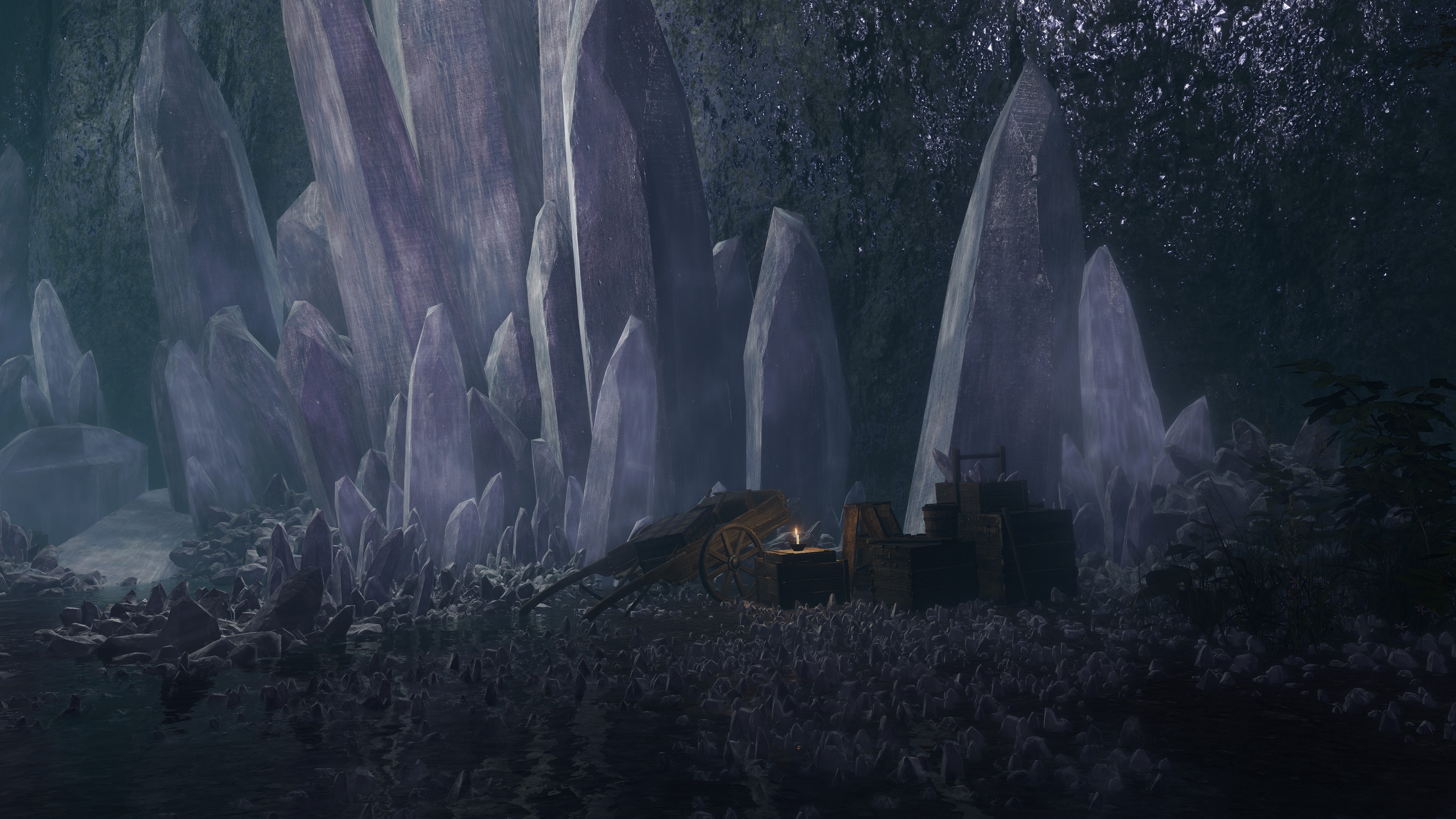
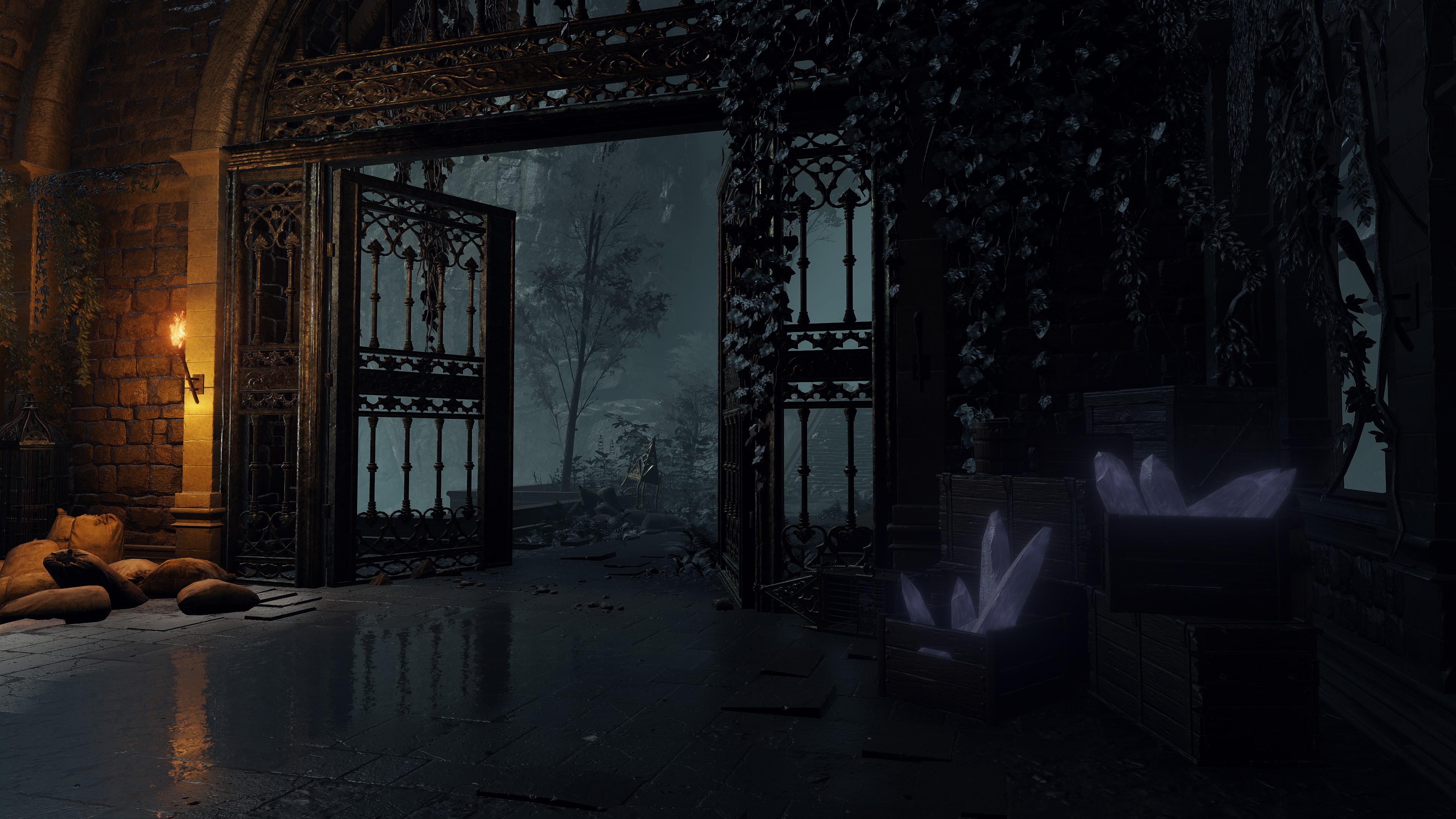
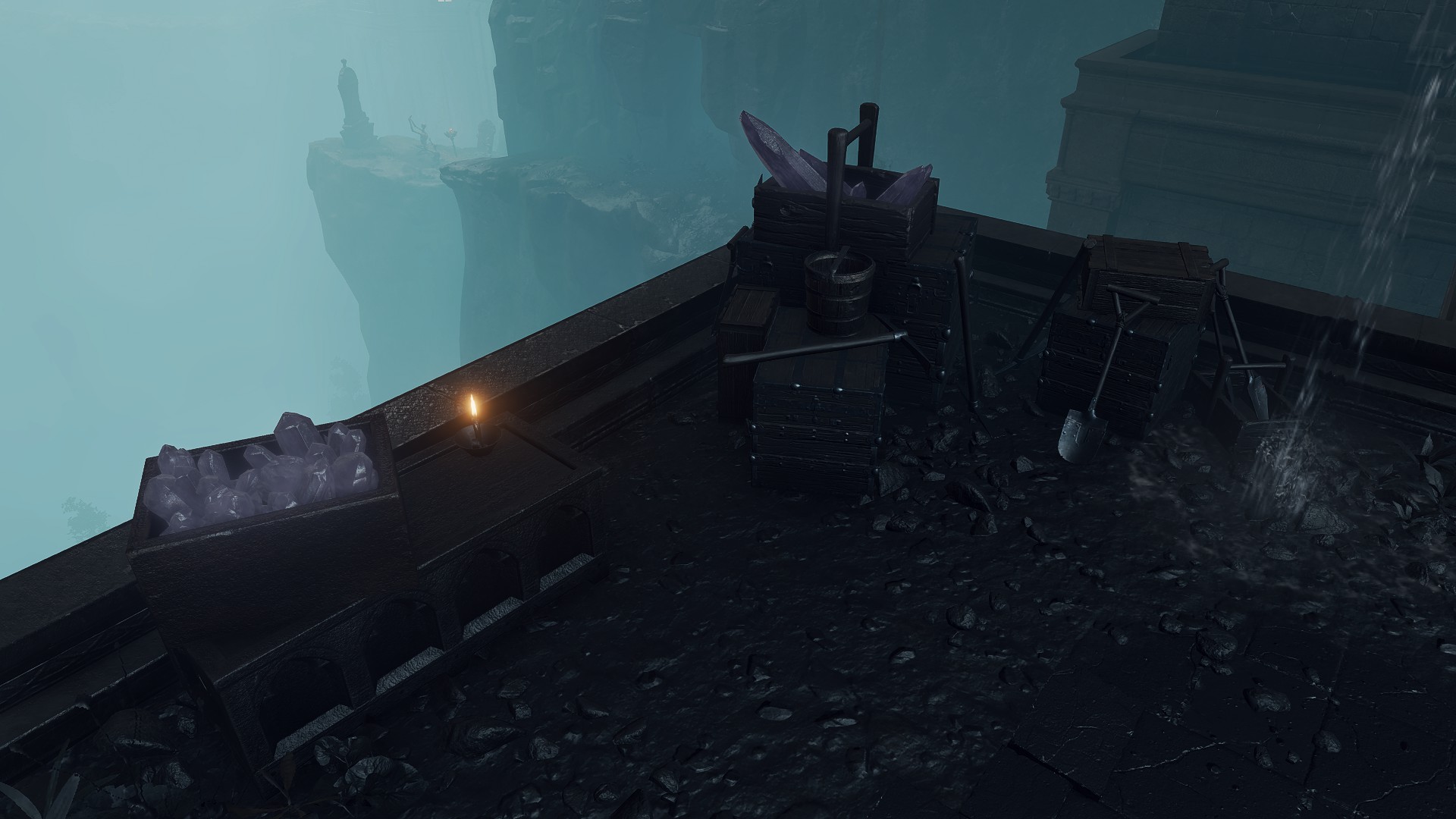
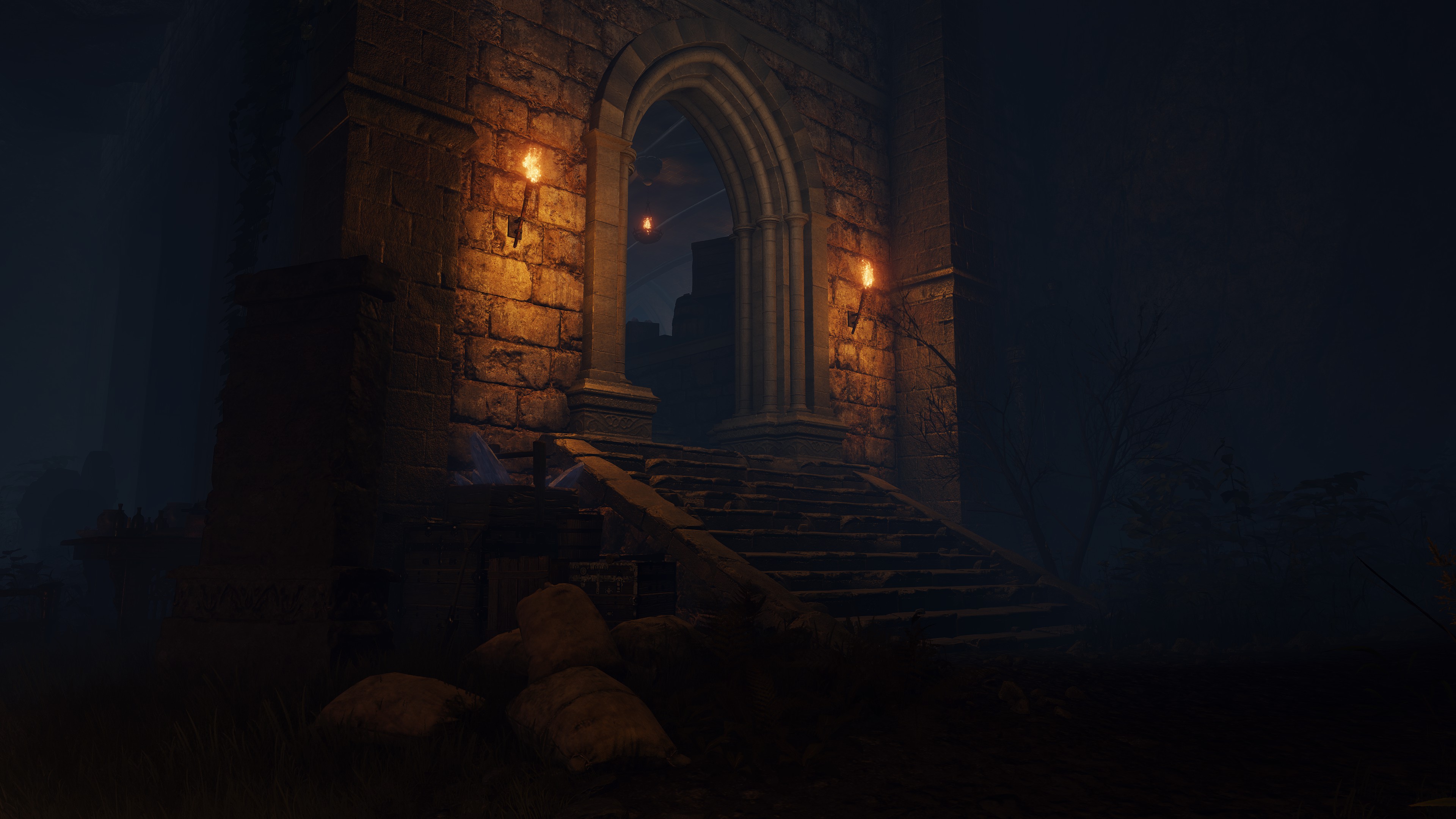
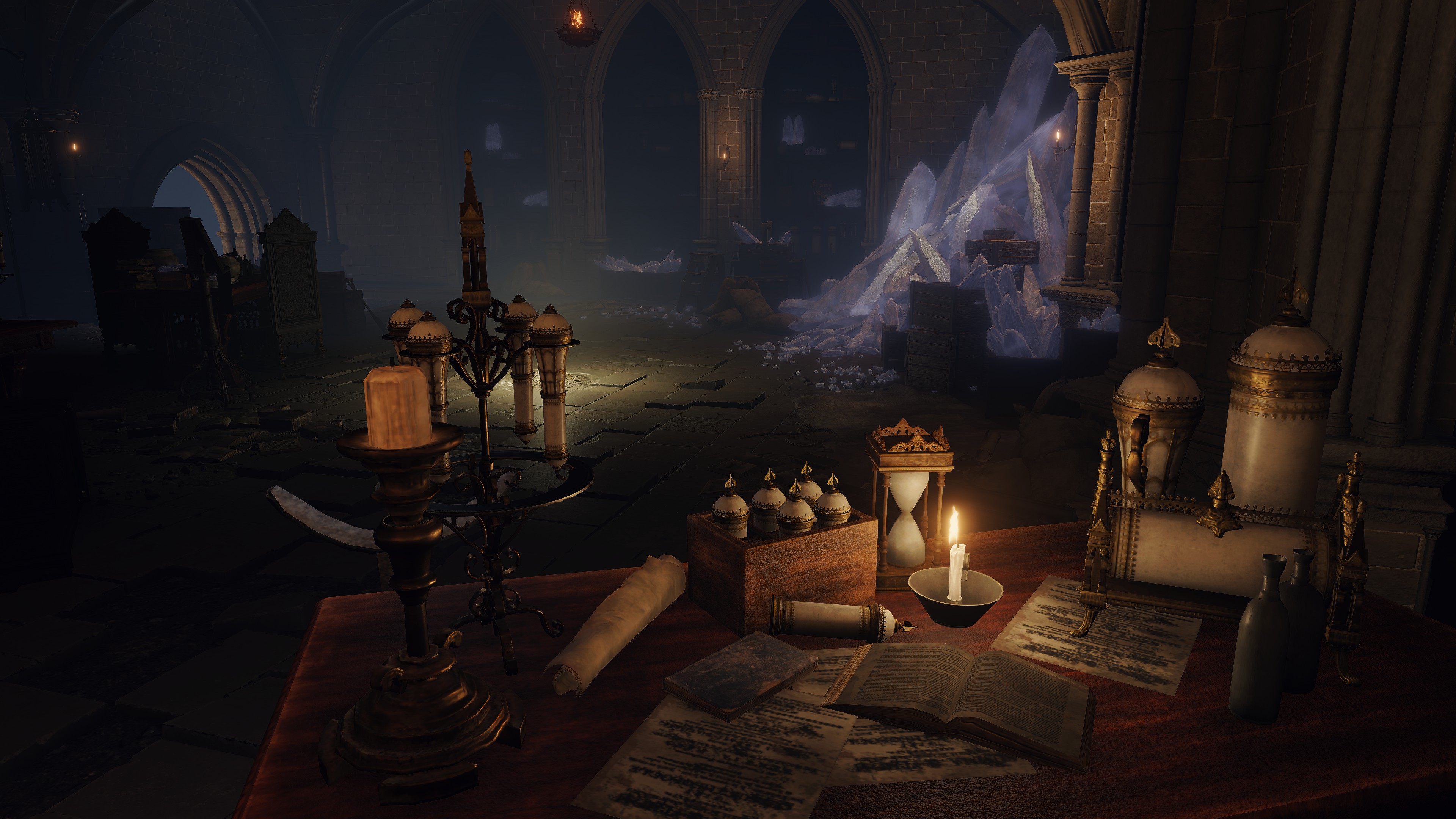
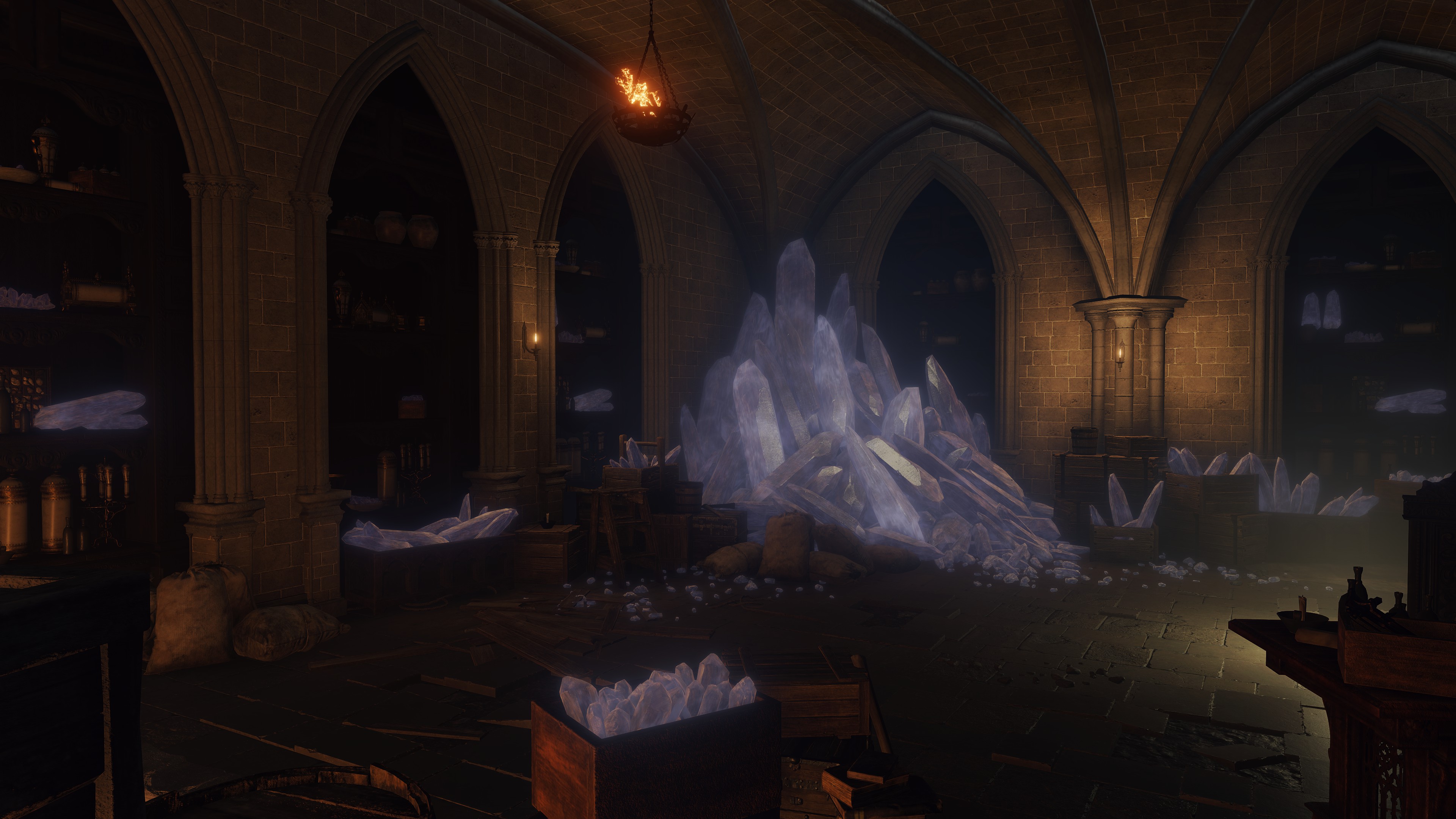
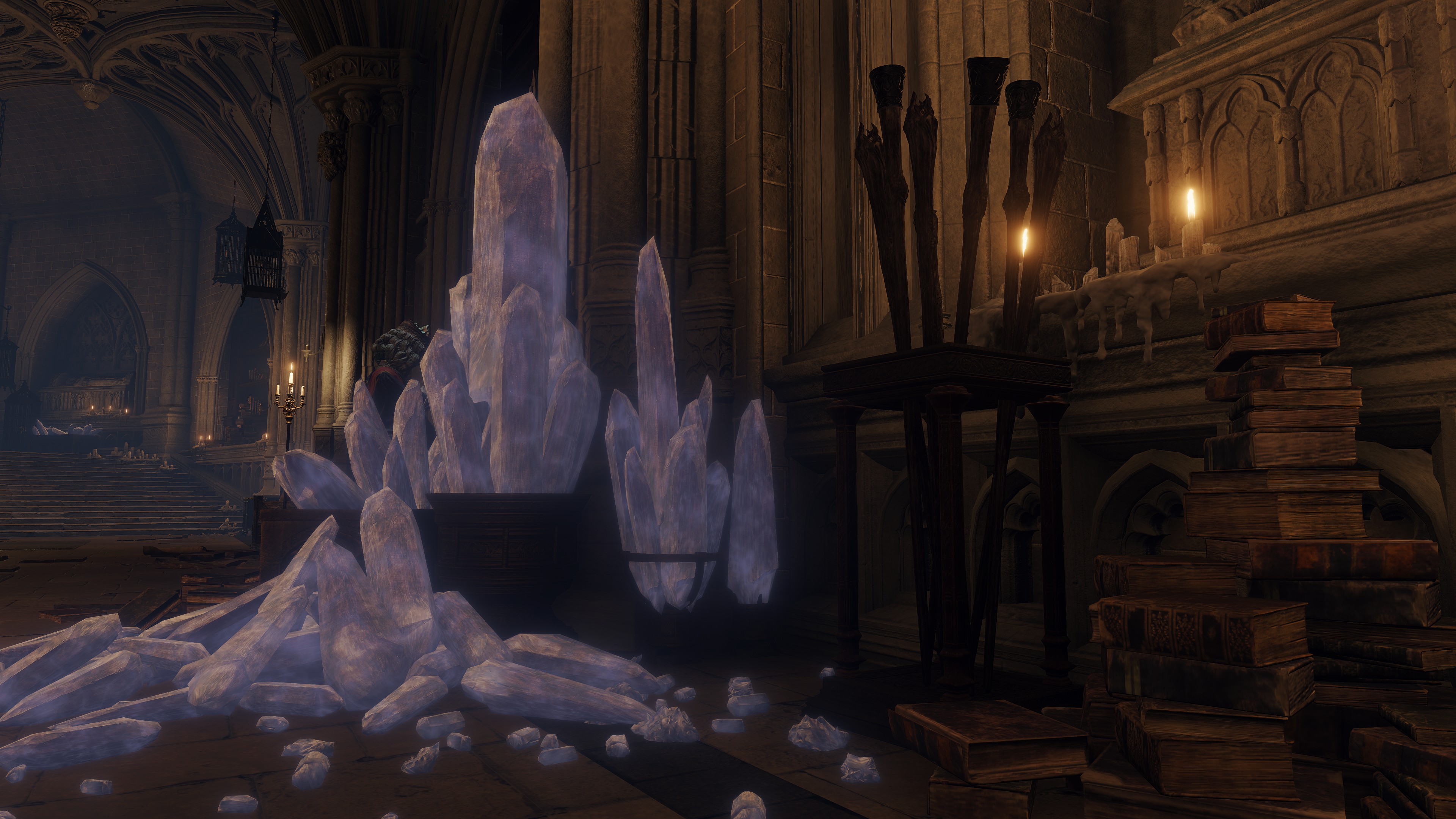
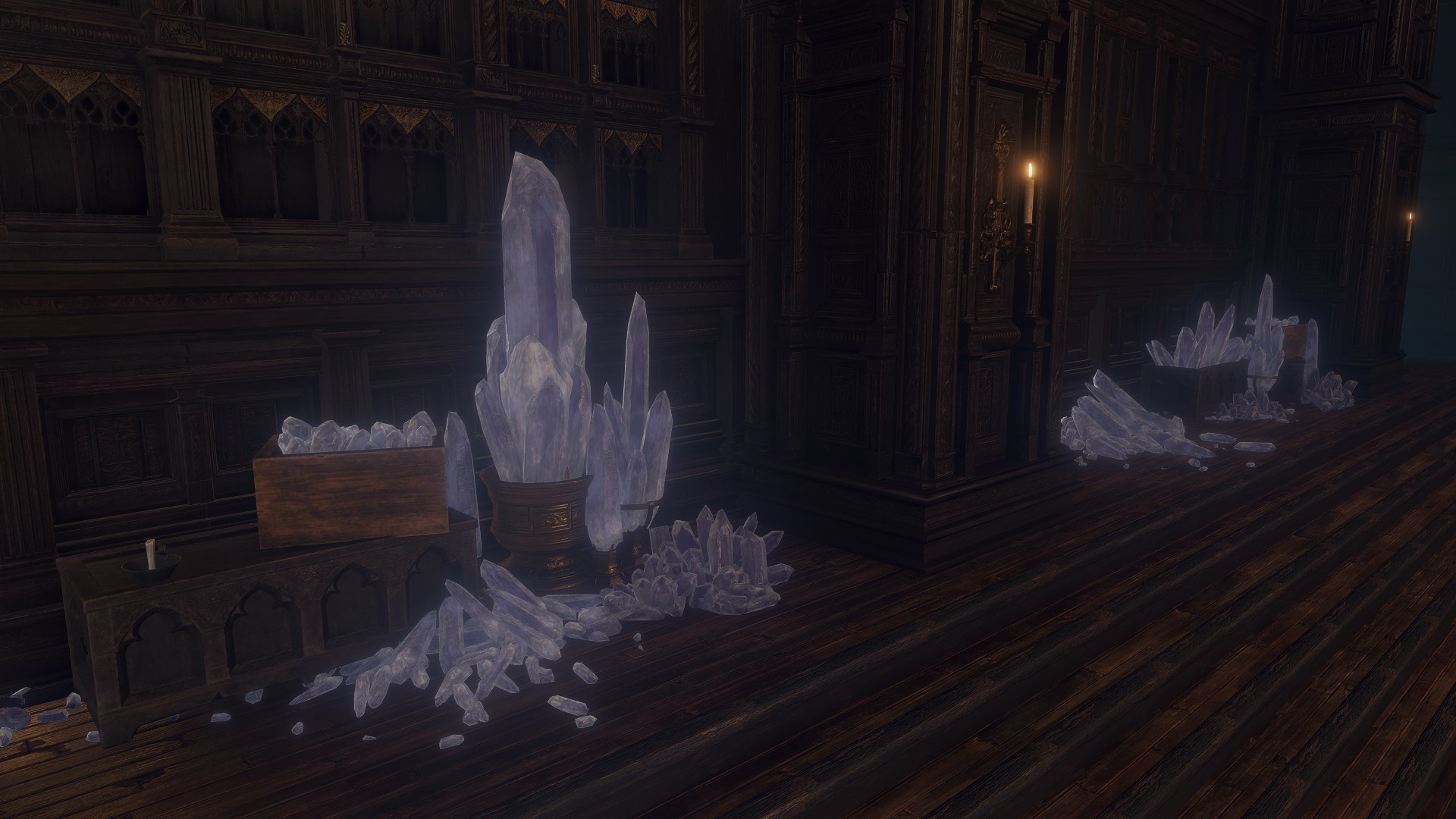
The first to be recognized as a glintstone sorcerer was Azur. With a name evoking the azure blue color common to sorcery, the man must have been an impressive reasoner, and naturally, he put that intelligence to the test deciphering the Primeval Current. When the academy began, he already had a talented apprentice in Sellen, according to Thops. Most likely then, he was one of the new Laskyar tribe who began instructing others encamped on the mountain after he made huge strides in his understanding of the stars. This likewise explains why, when the academy was established, his was the first class: the Karolos Conspectus. Before there were fancy classrooms, there was a group of students learning one teacher’s sermons on the mount. Sellen was just one of these young members of the Laskyar who took to his tutelage, strict as it expressly was. That dirty dig site was the “academy” and the Greek Karolos meaning “free man” speaks to the infinite possibilities available to Azur’s followers at that time.
… Oh, this sorcery is… My apprentice, you have seen him. Master Azur. Master Azur was a first brightstone sorcerer. He was my first mentor. You have been recognized. By that strict Azur. That is magnificent.
… You are studying under Miss Sellen? Oh, that is amazing. Even I know. She was a talented woman since the academy began. The likes of I could do no more than watch her from afar…
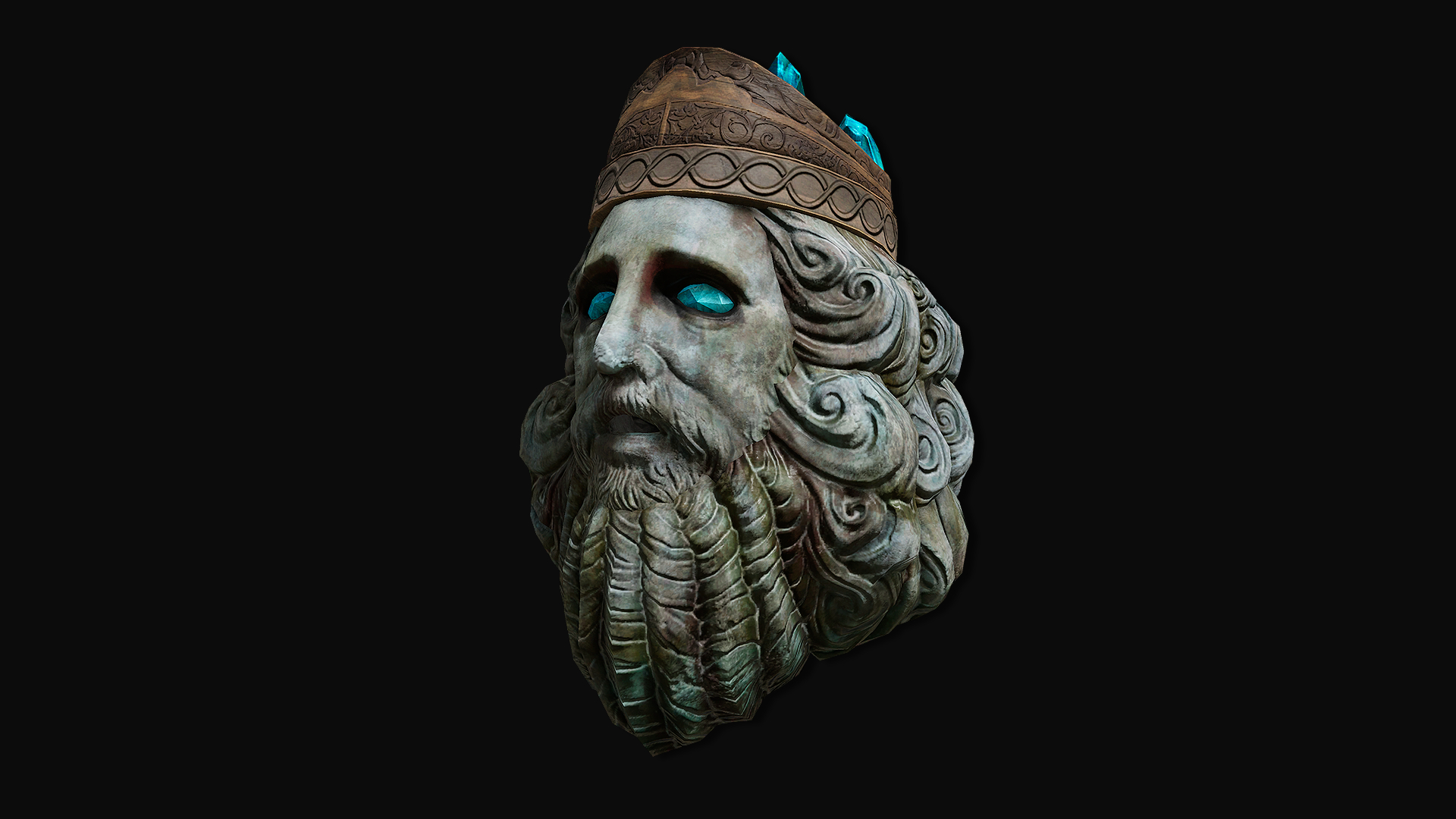
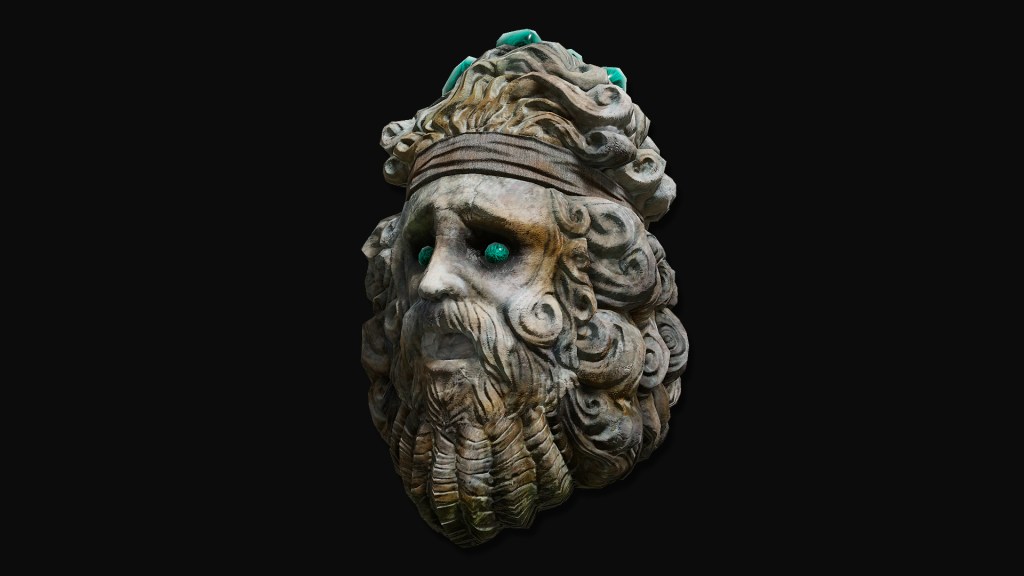
One of the brightstone heads that students whose research was recognized wear in the Sorcery Academy of Raya Lucaria.
Boosts intelligence in exchange for stamina.
Karolos, which is the oldest class, research comet sorceries originating from the sorcerer Azur.
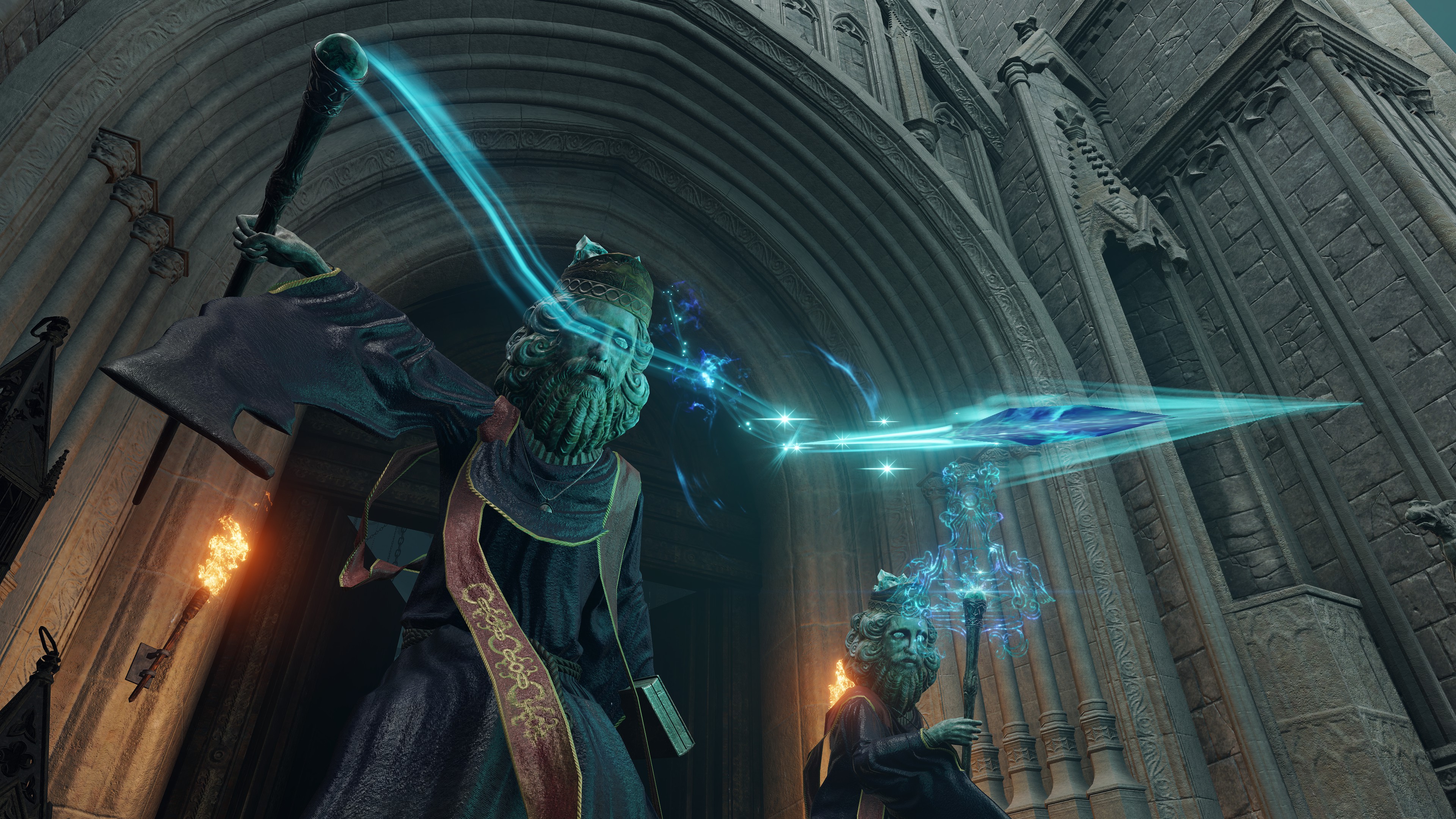
In the end, however, the new Karolos class narrowed their focus to one particular research field, namely comets. These were the sorceries that Azur developed, with few ever mastering the most powerful Comet spell. Attempts were nonetheless made to create new comets from glintstone, failures still resulting in sorceries like Shard Spiral. Those recognized for their attempts were rewarded with a glintstone head, a stone mask with crystal out the top. It is easy to imagine why this practice began, considering the school’s origins on a dig site. Existing excavations just demanded they hollow out a sizable chunk of rock with glintstone already in it and carve the stone into a face. The glintstone upon the cranium actually synergizes with the person’s thoughts, glowing bright as we have our “eureka” moment performing the Erudition gesture. There could be no better proof that an astrologer’s thinking was reaching the stars, and Karolos assuredly pioneered this practice. With movement restricted and so much crystal on hand, astrologers on the mount reasonably tended toward consolidating tall than numbering wide.
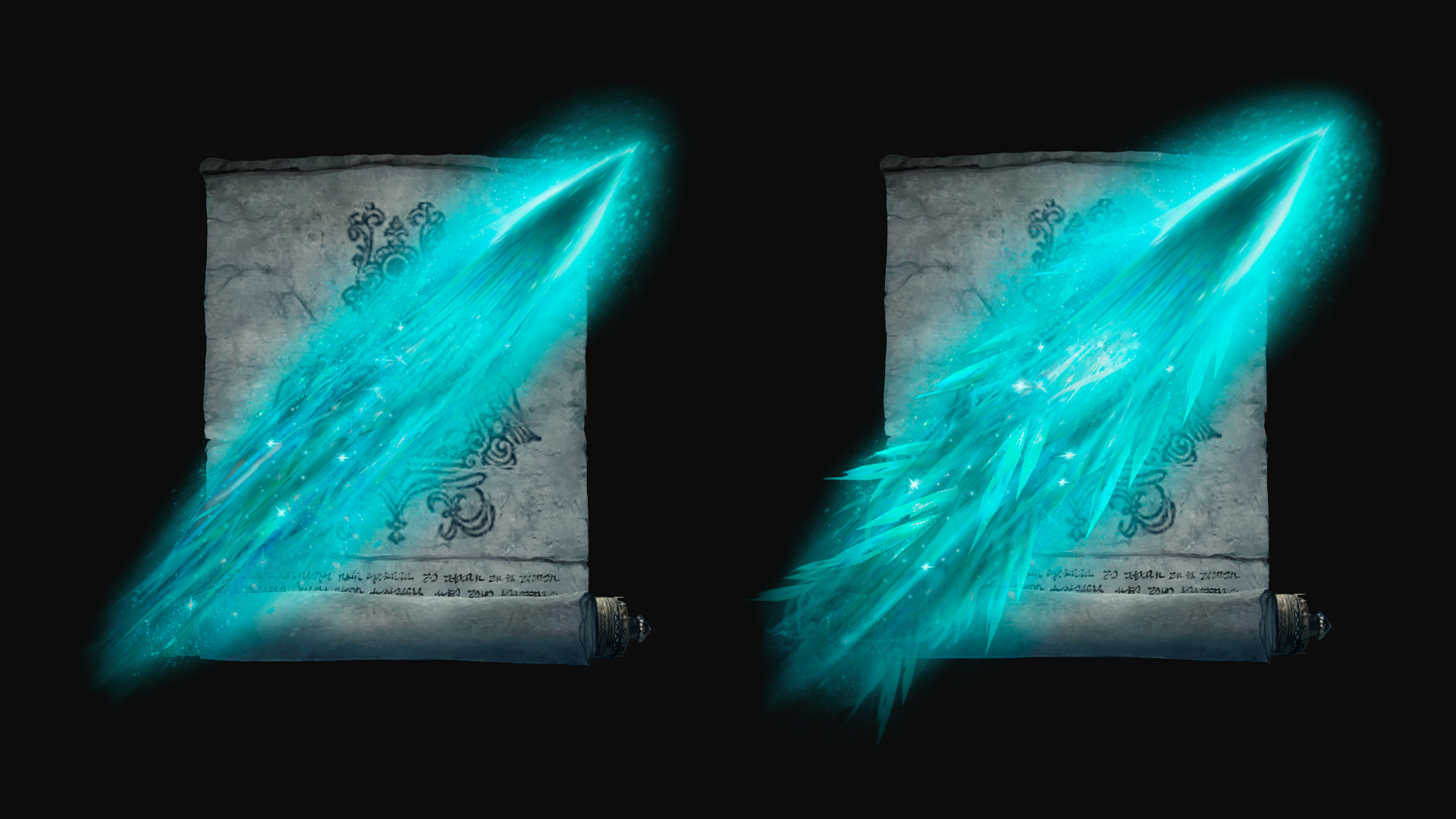
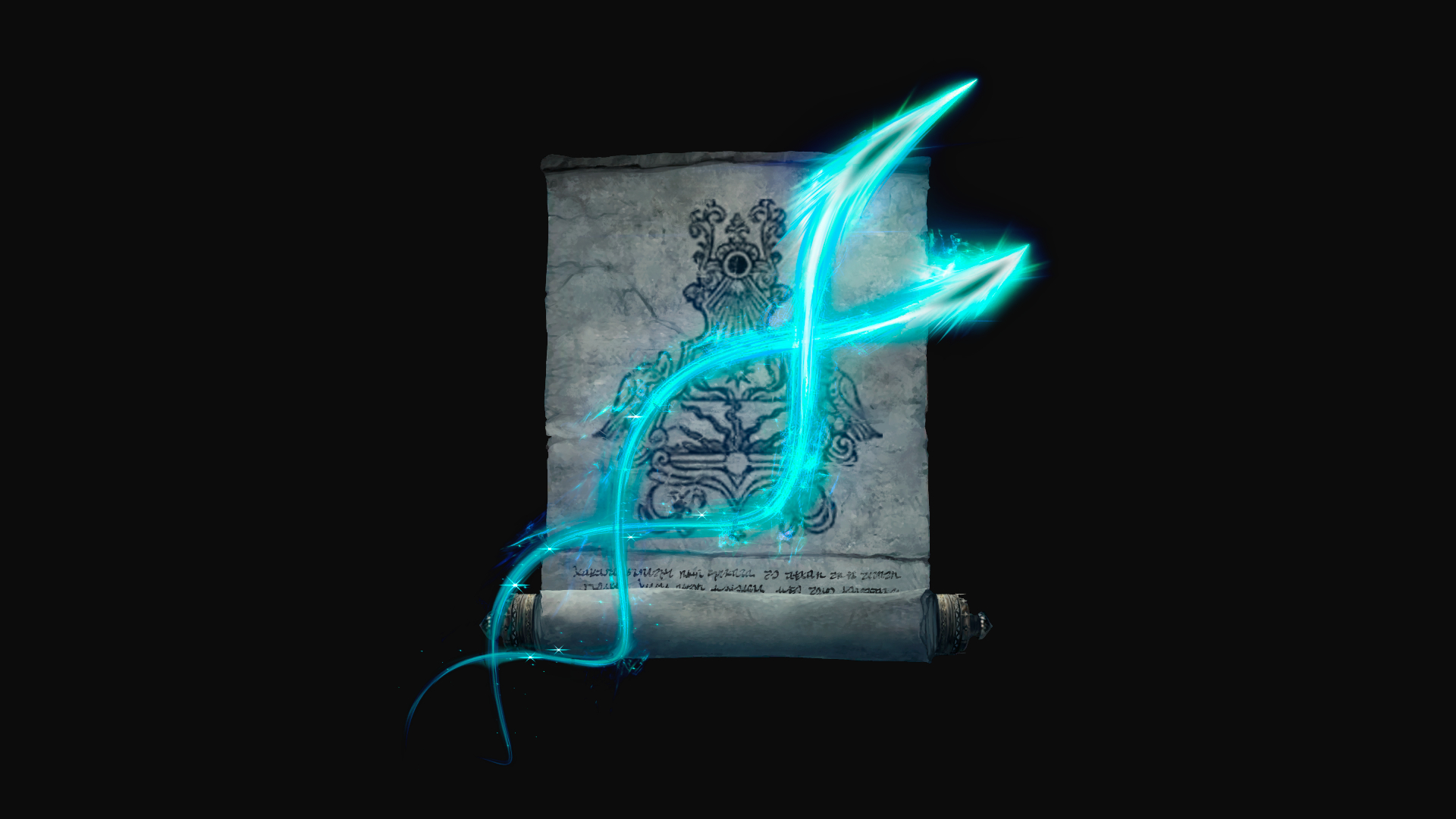
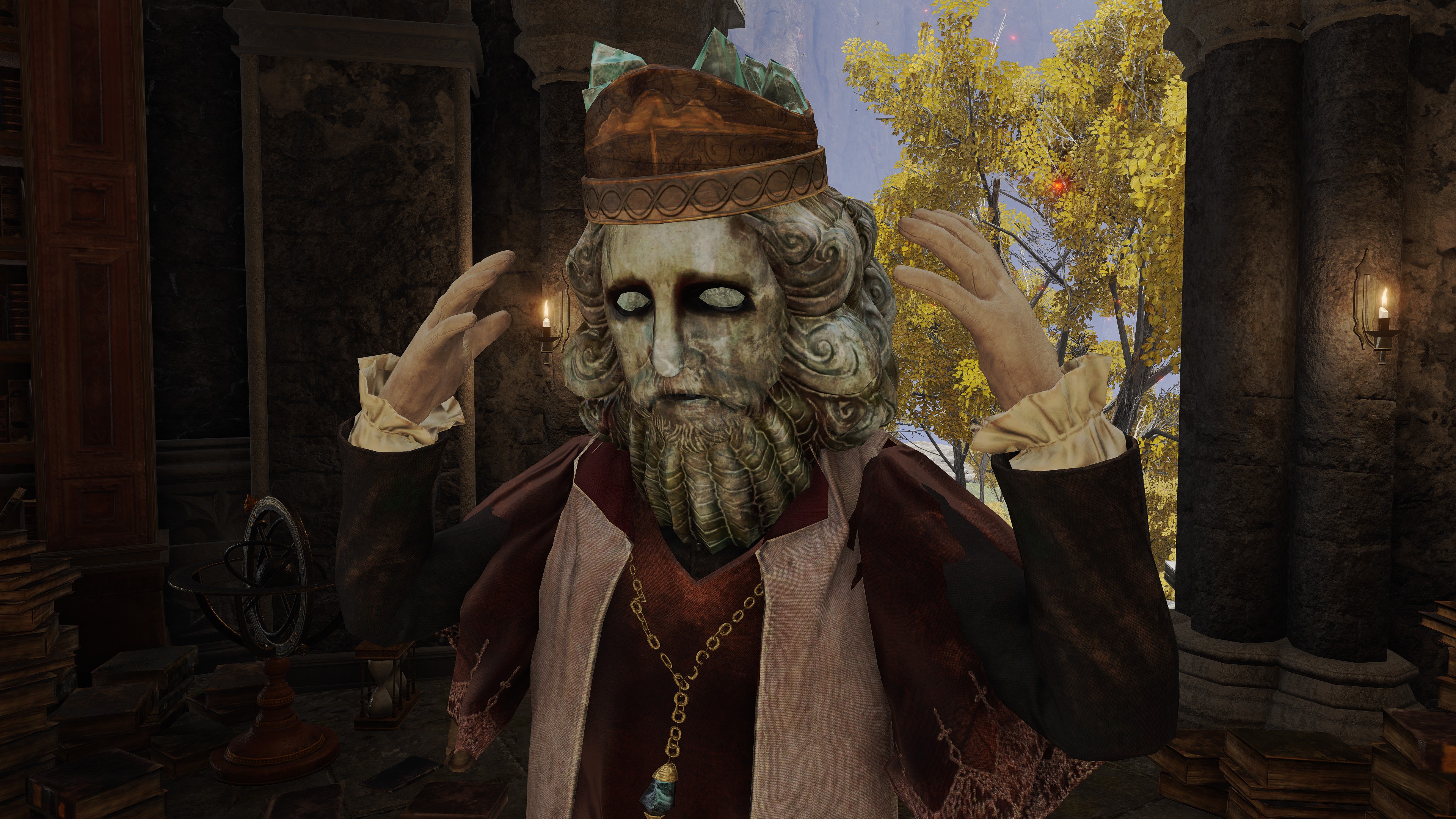
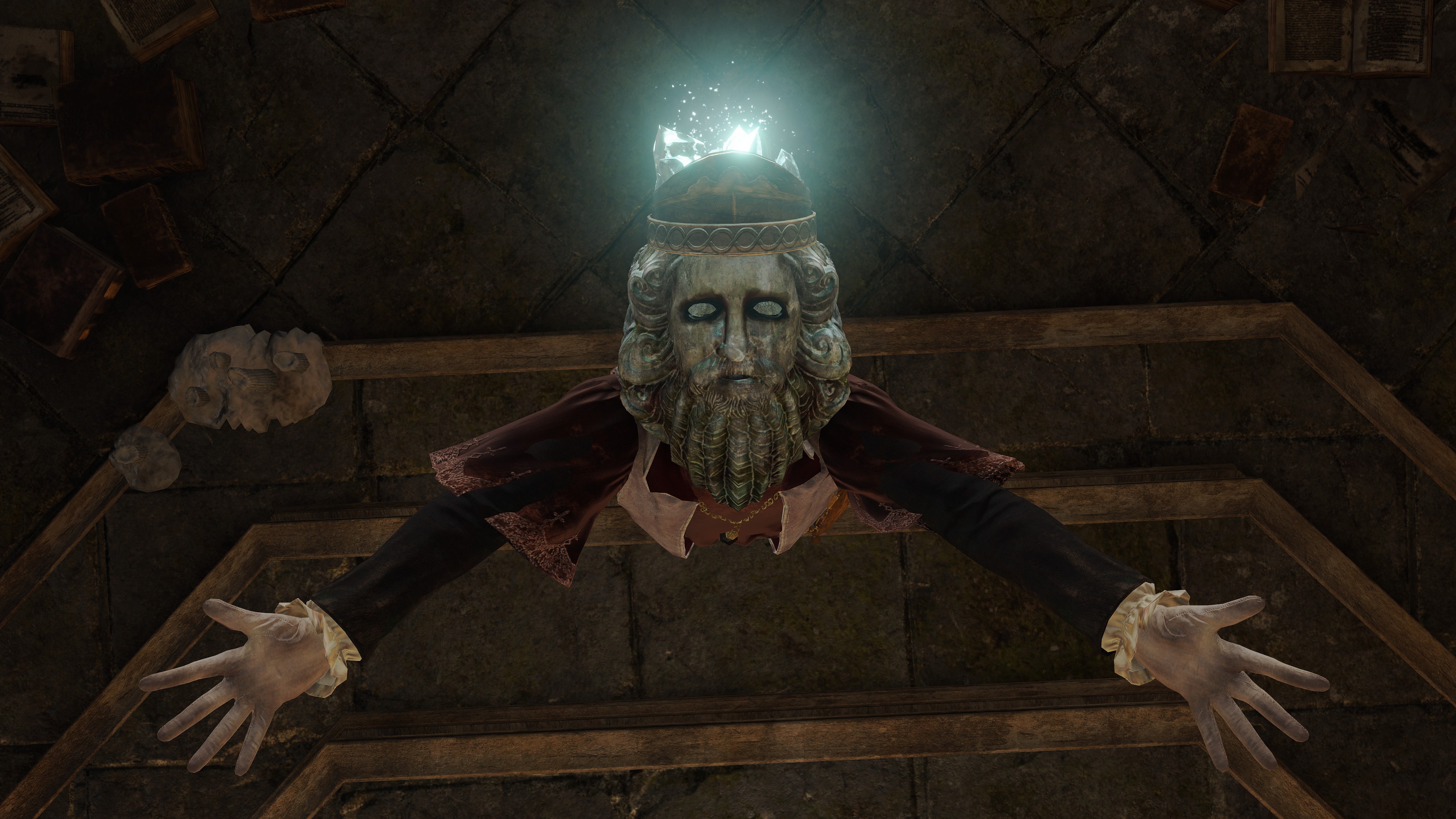
One of the brightstone sorceries of the Sorcery Academy of Raya Lucaria.
Fires magic comet that flies generating a tail. Can be used without stopping movement and used continuously. Also, enhanced with charging.
A sorcery of the Karolos class, which is the most historical in the academy.
One of the brightstone sorceries of the Sorcery Academy of Raya Lucaria.
Fires broom star, which is a great magic comet. Can be used without stopping movement and used continuously. Also, enhanced with charging.
A sorcery which is the most superior in the Karolos class. Very few in its history have mastered this.
One of the brightstone sorceries of the Sorcery Academy of Raya Lucaria.
Fires twin pebbles that fly winding in a swirl. Can be used without stopping movement and used continuously. Also, enhanced with charging.
A sorcery of the Karolos class, which is the most historical in the academy. It is a failed work at trying to create a new comet.
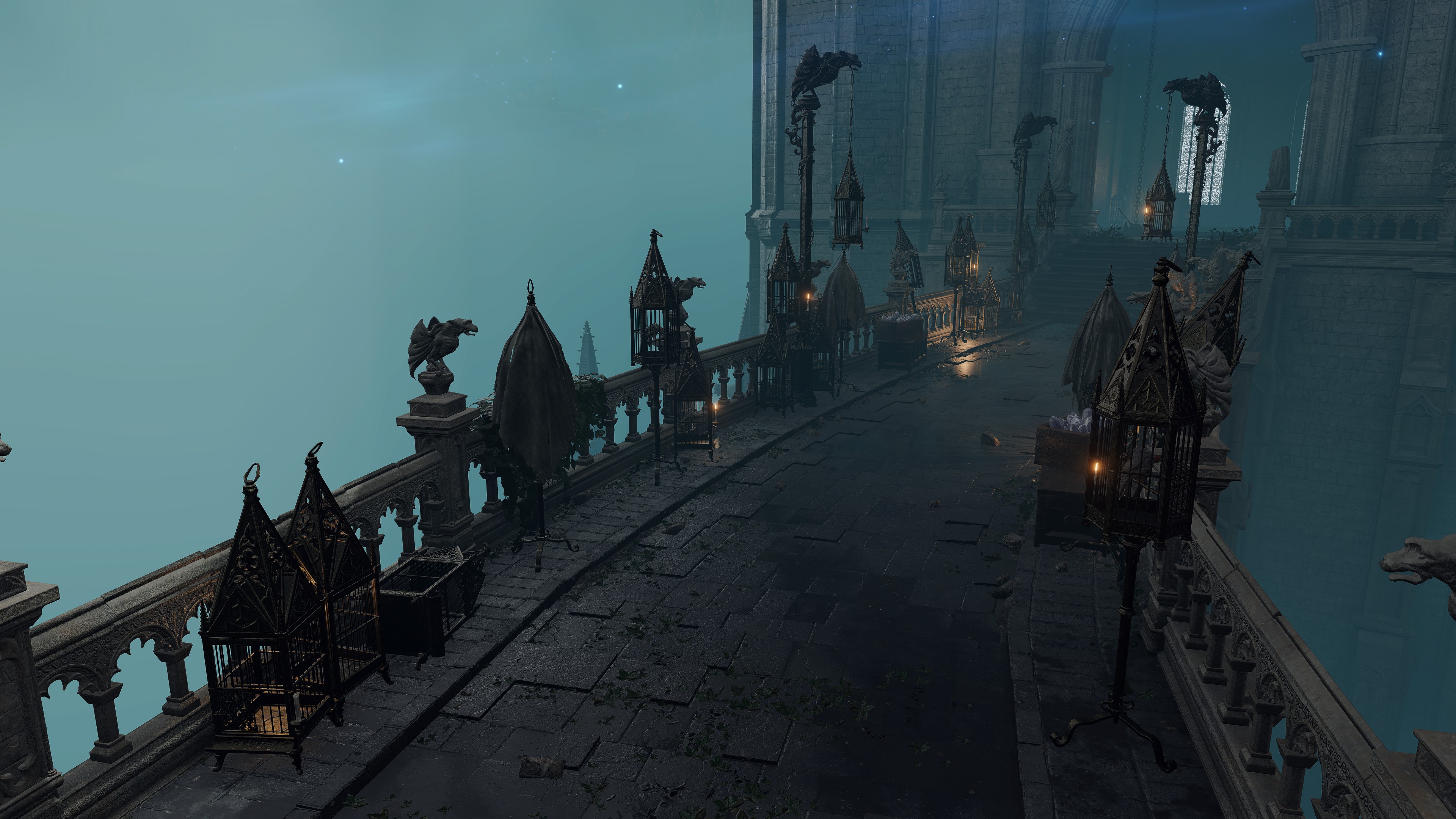
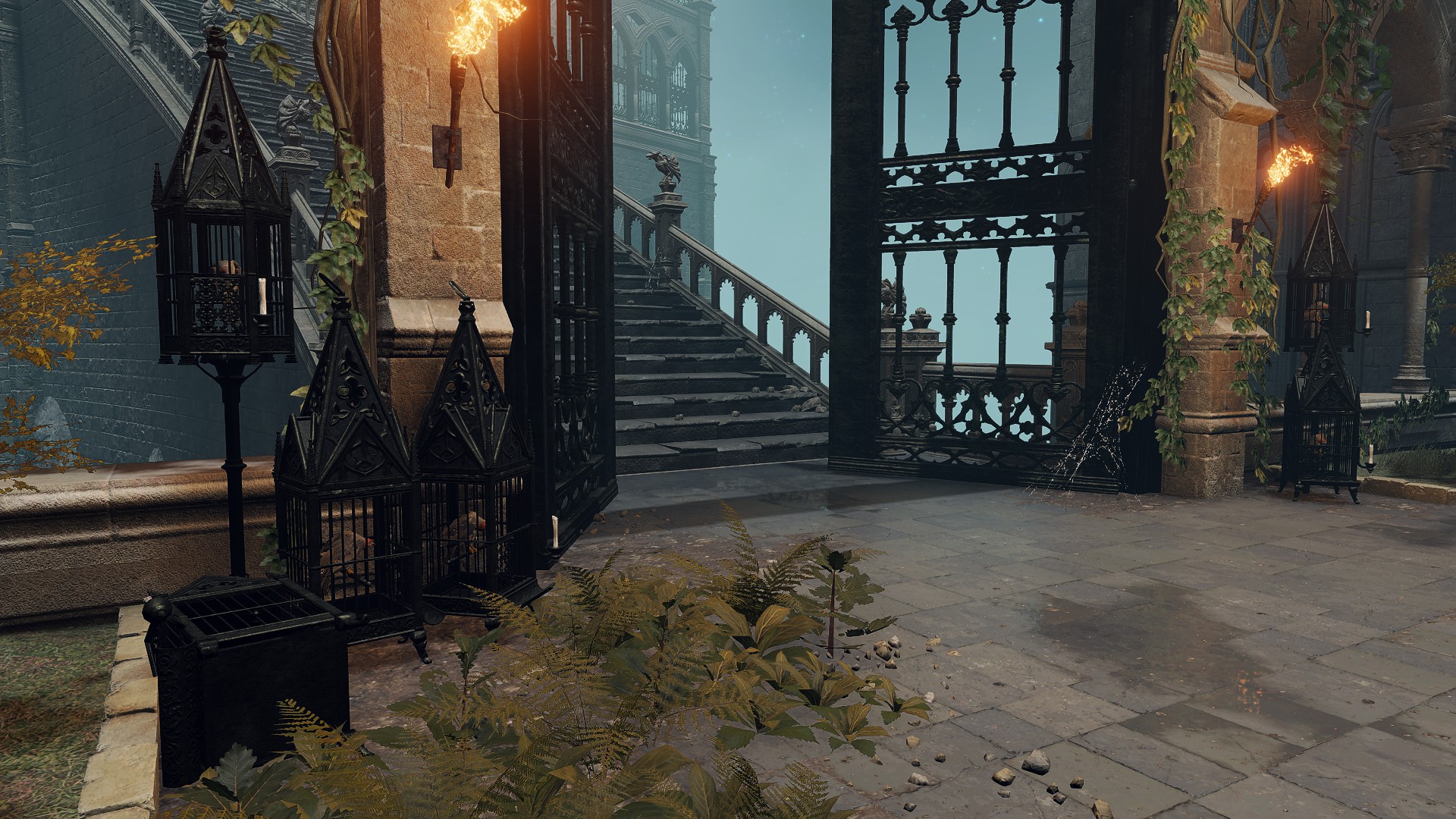
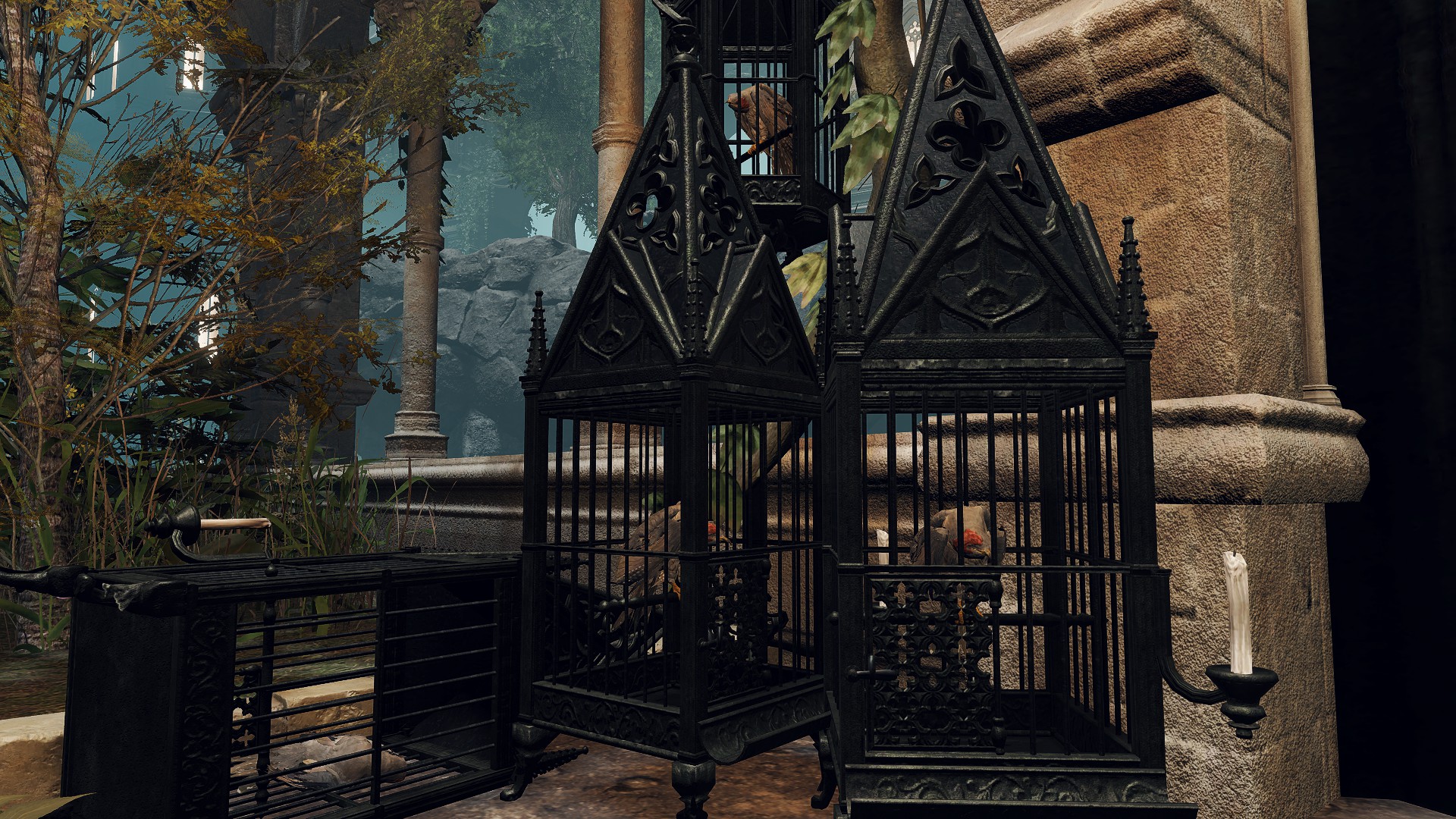
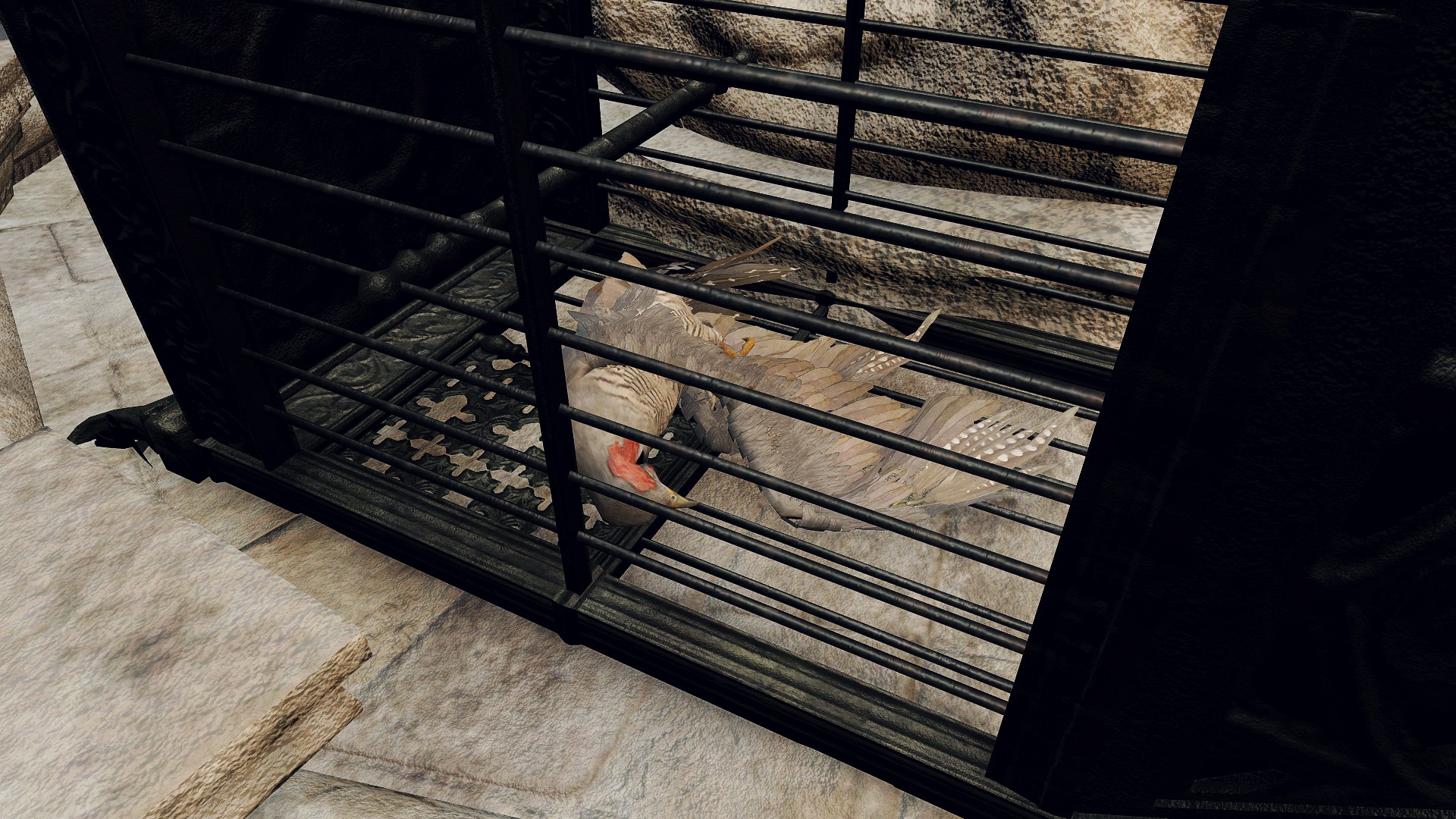
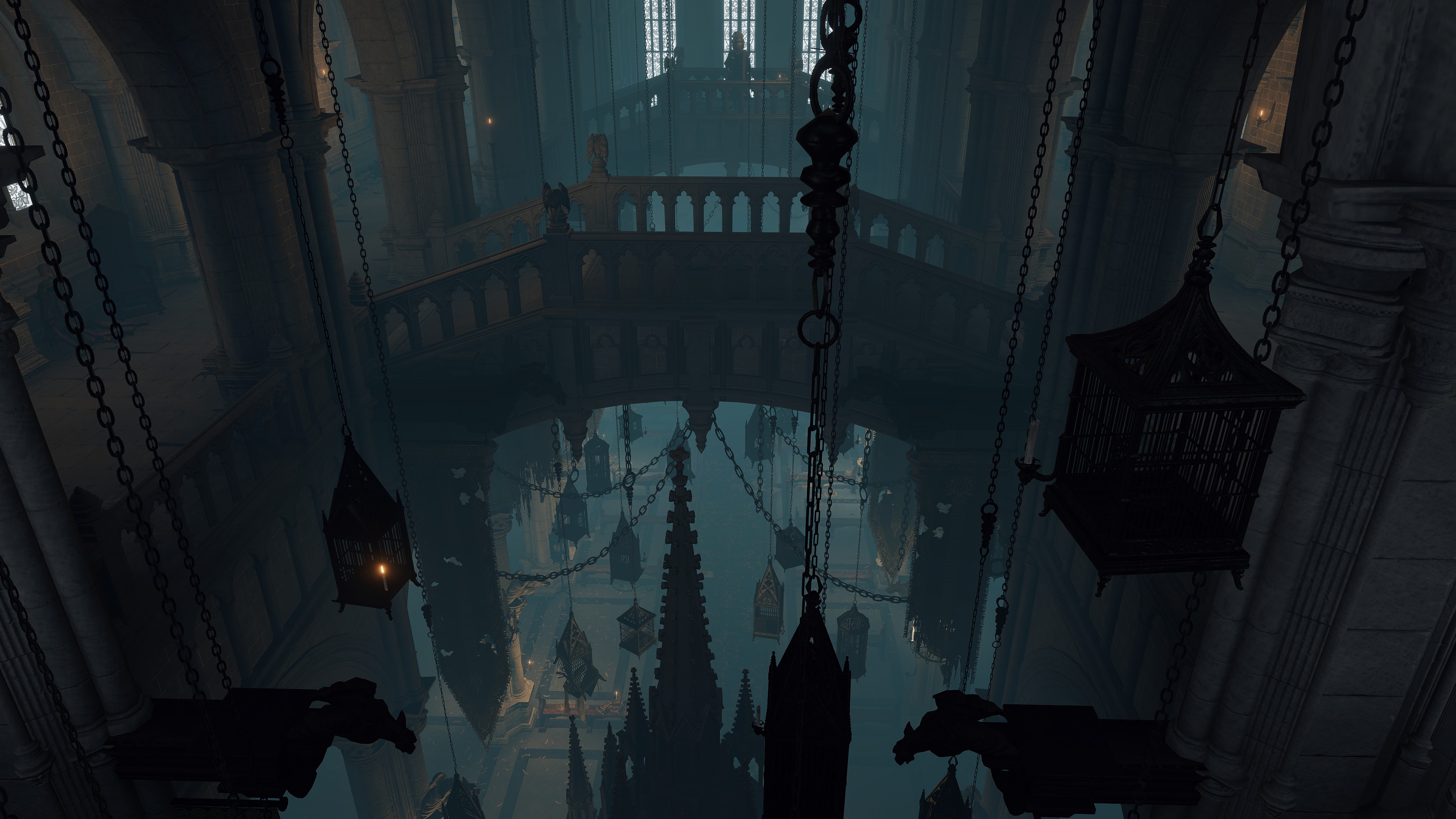
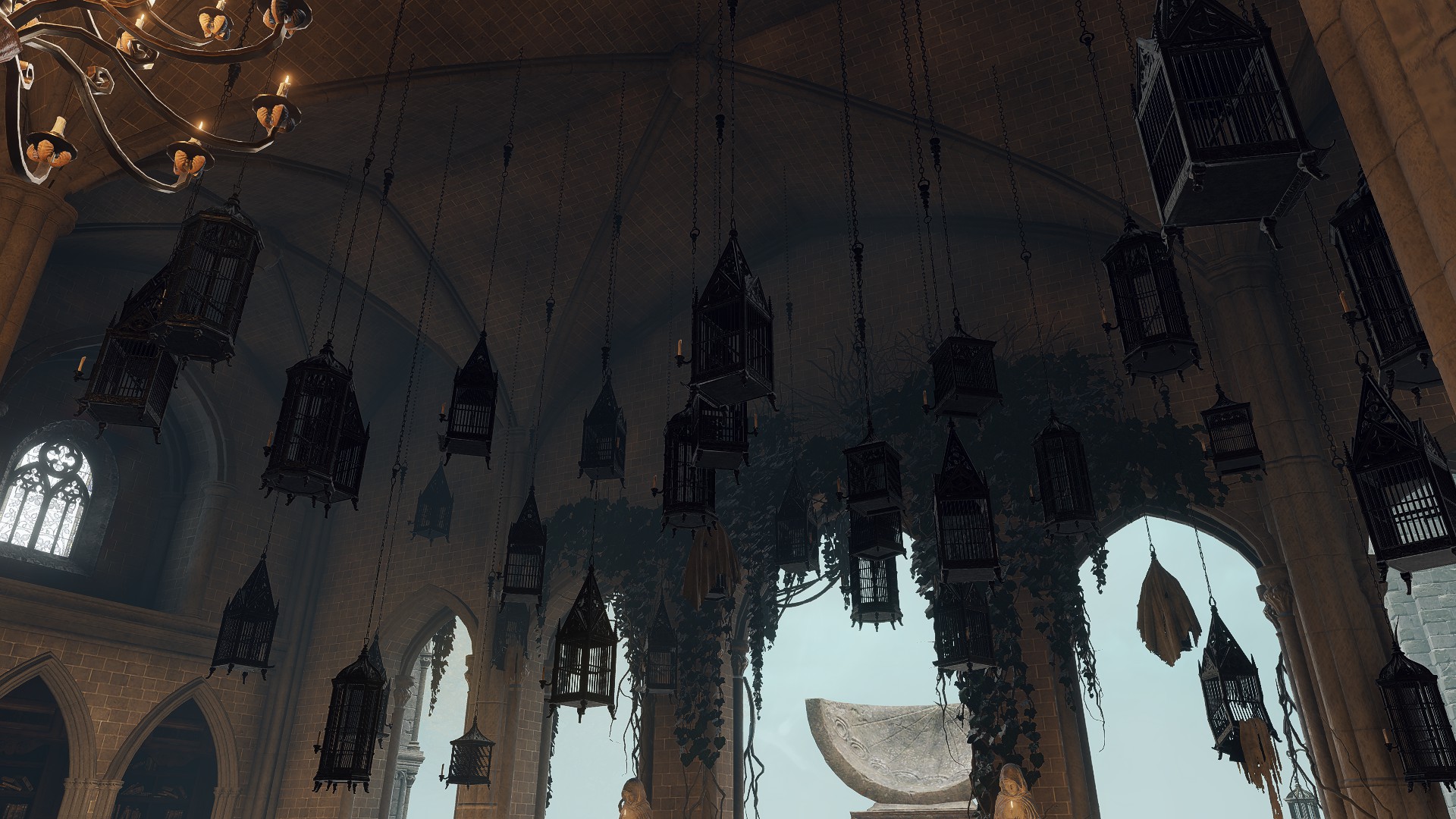
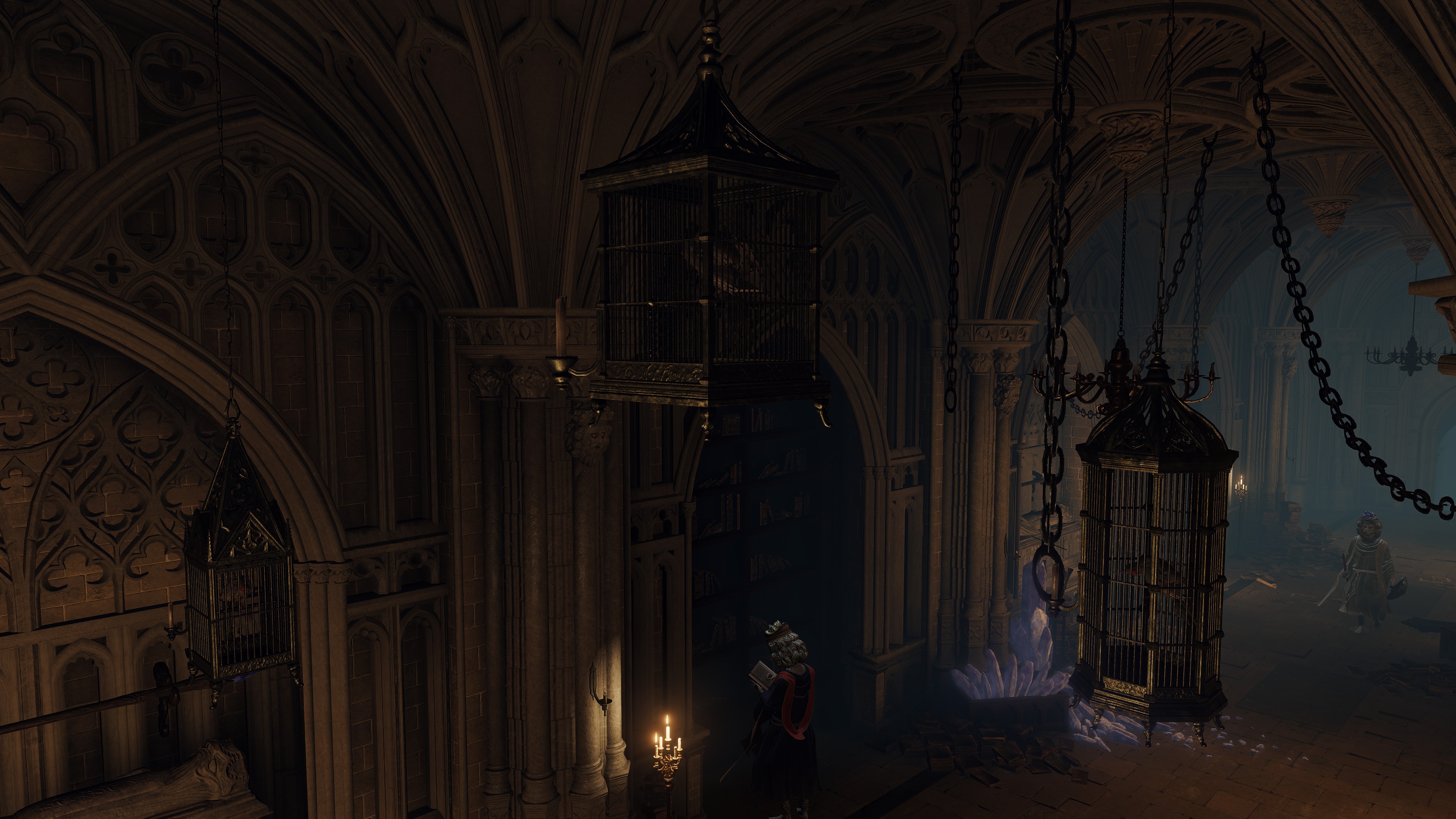
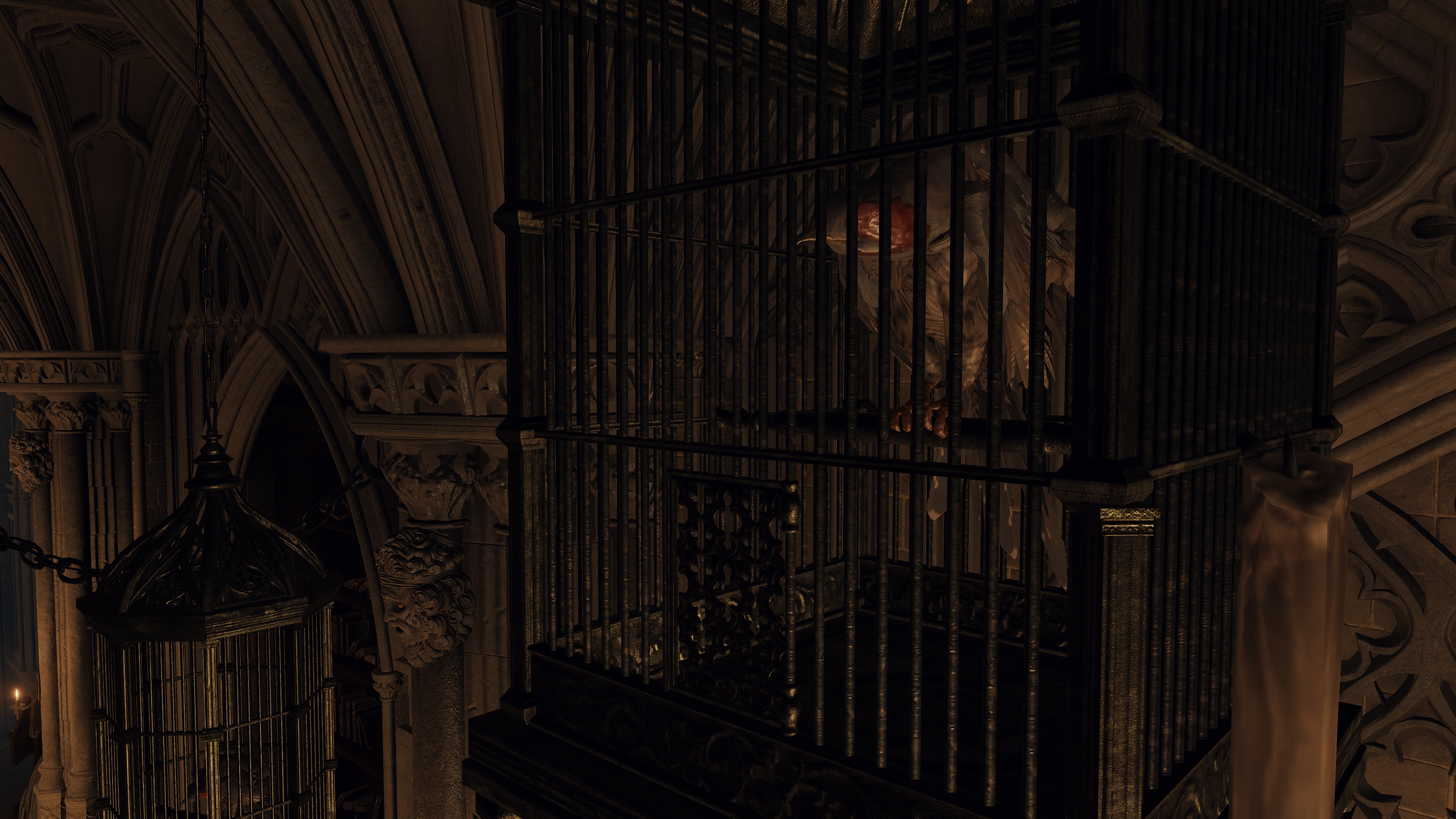
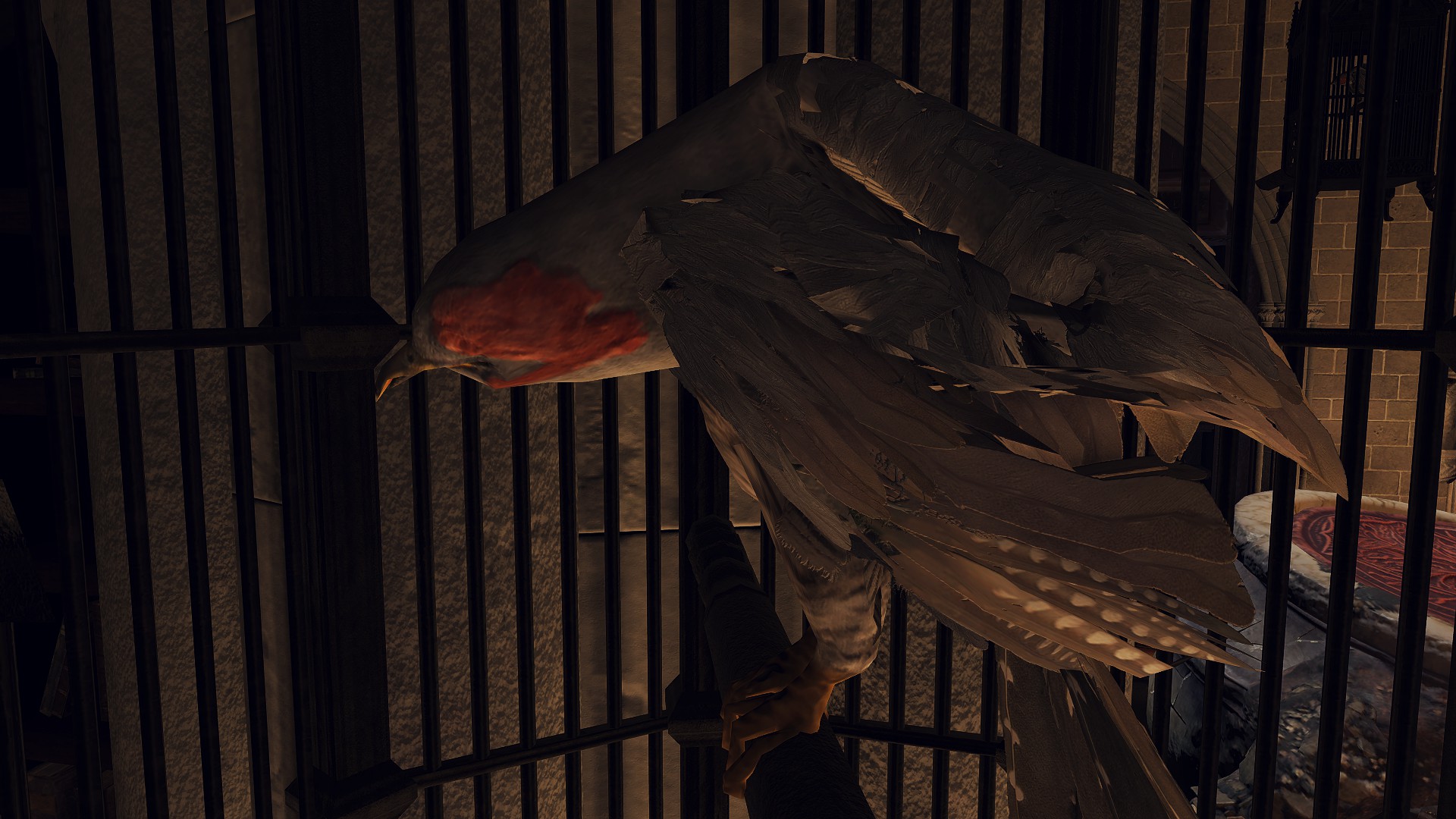
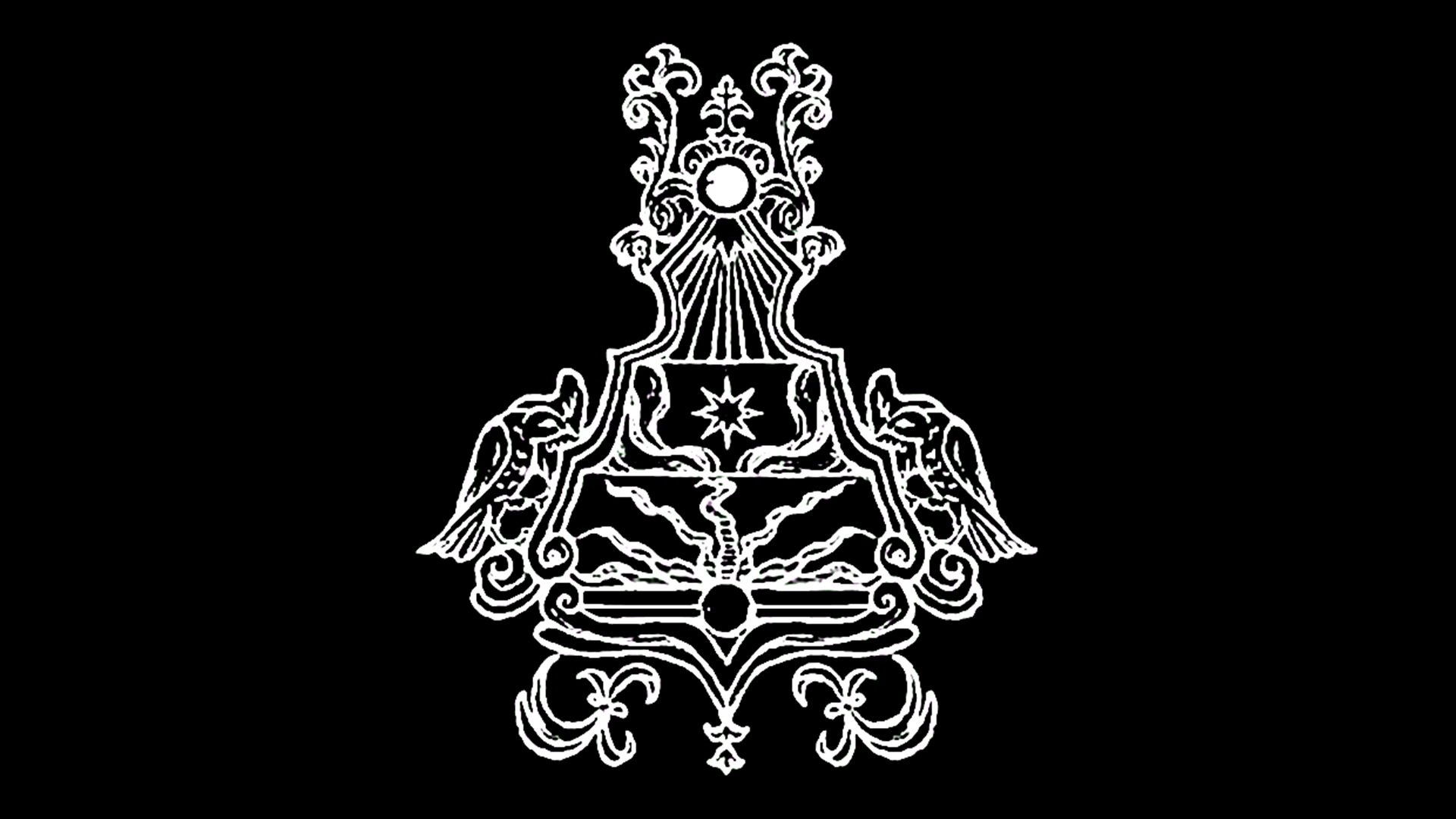
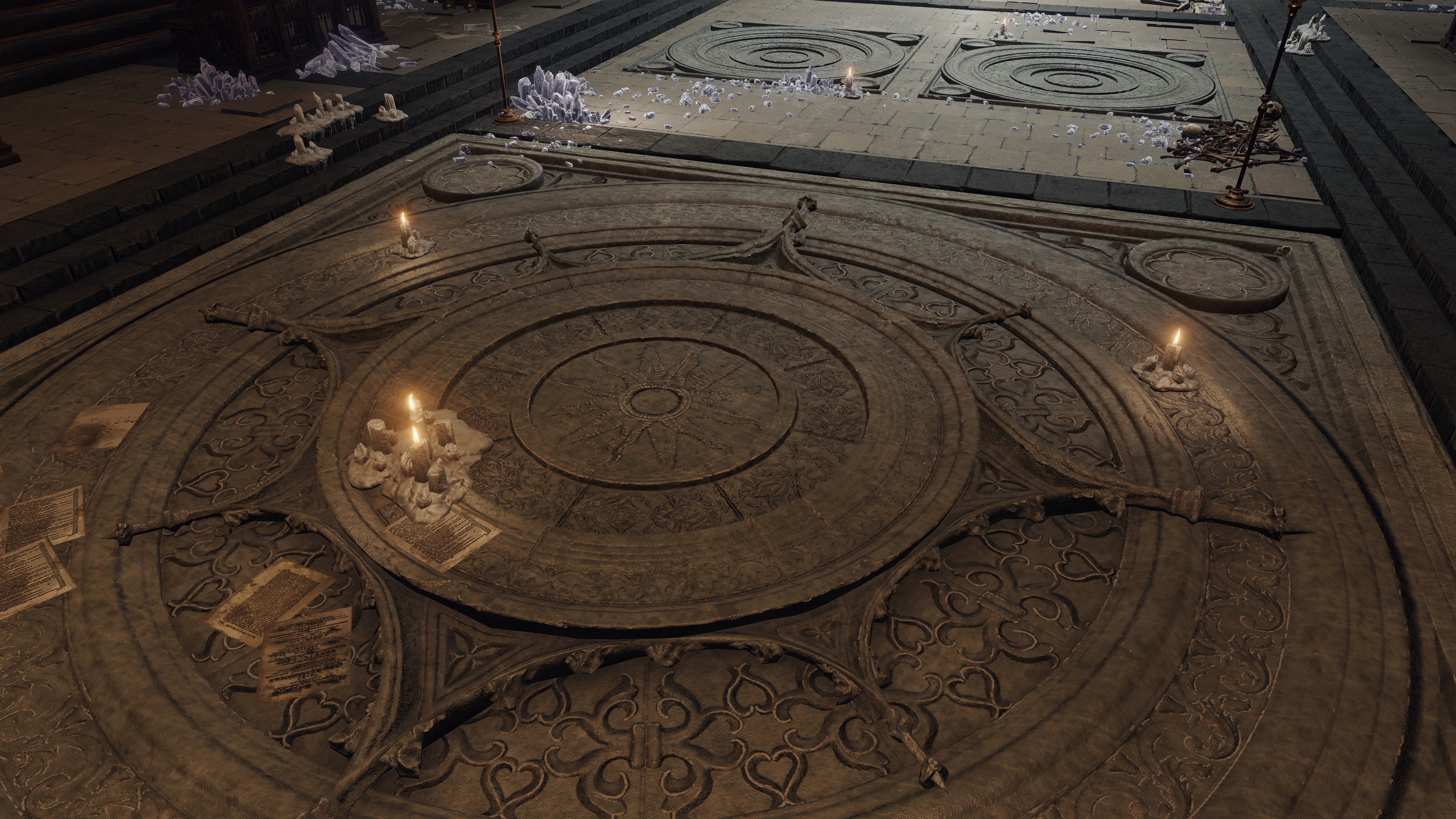
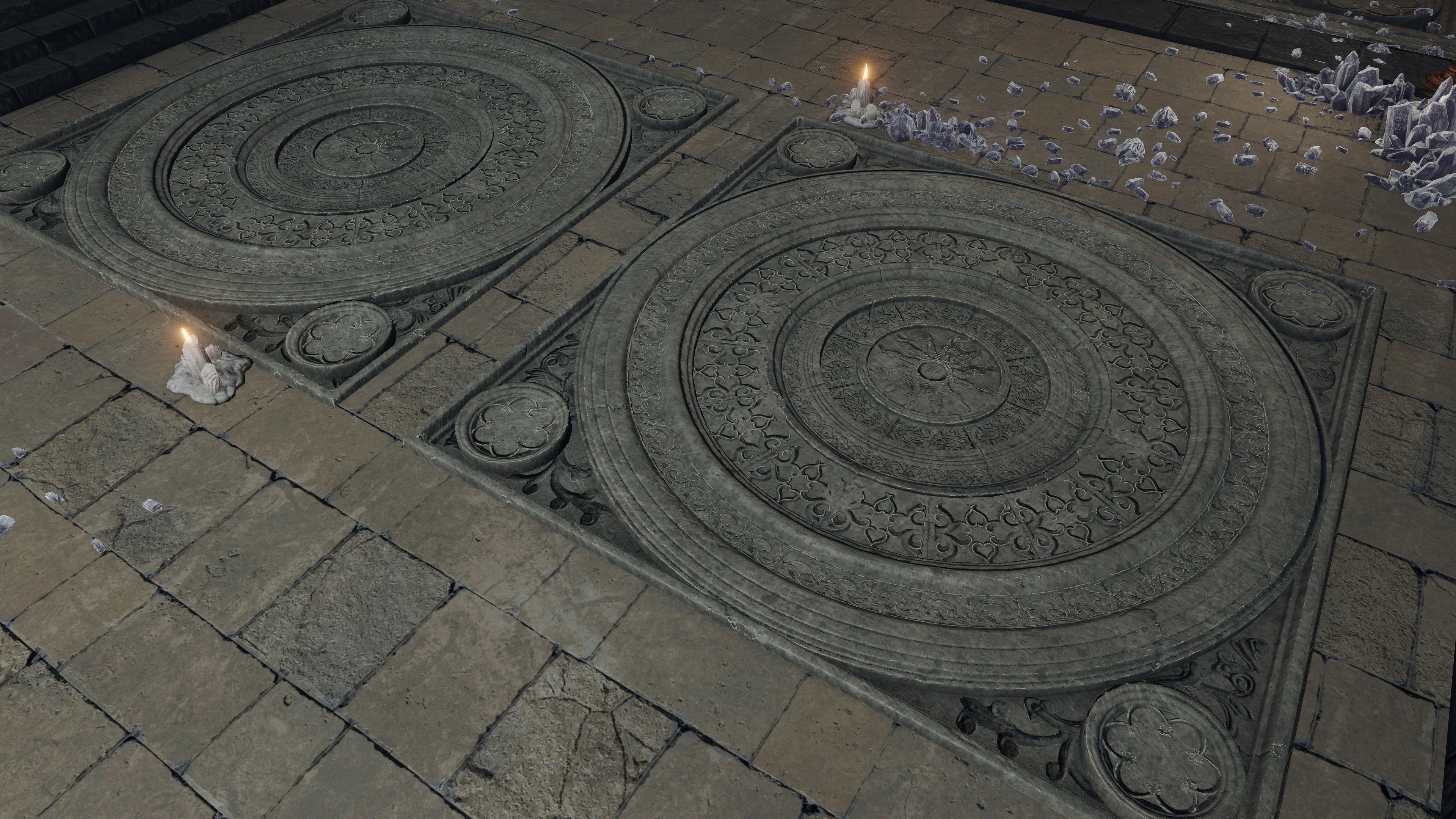
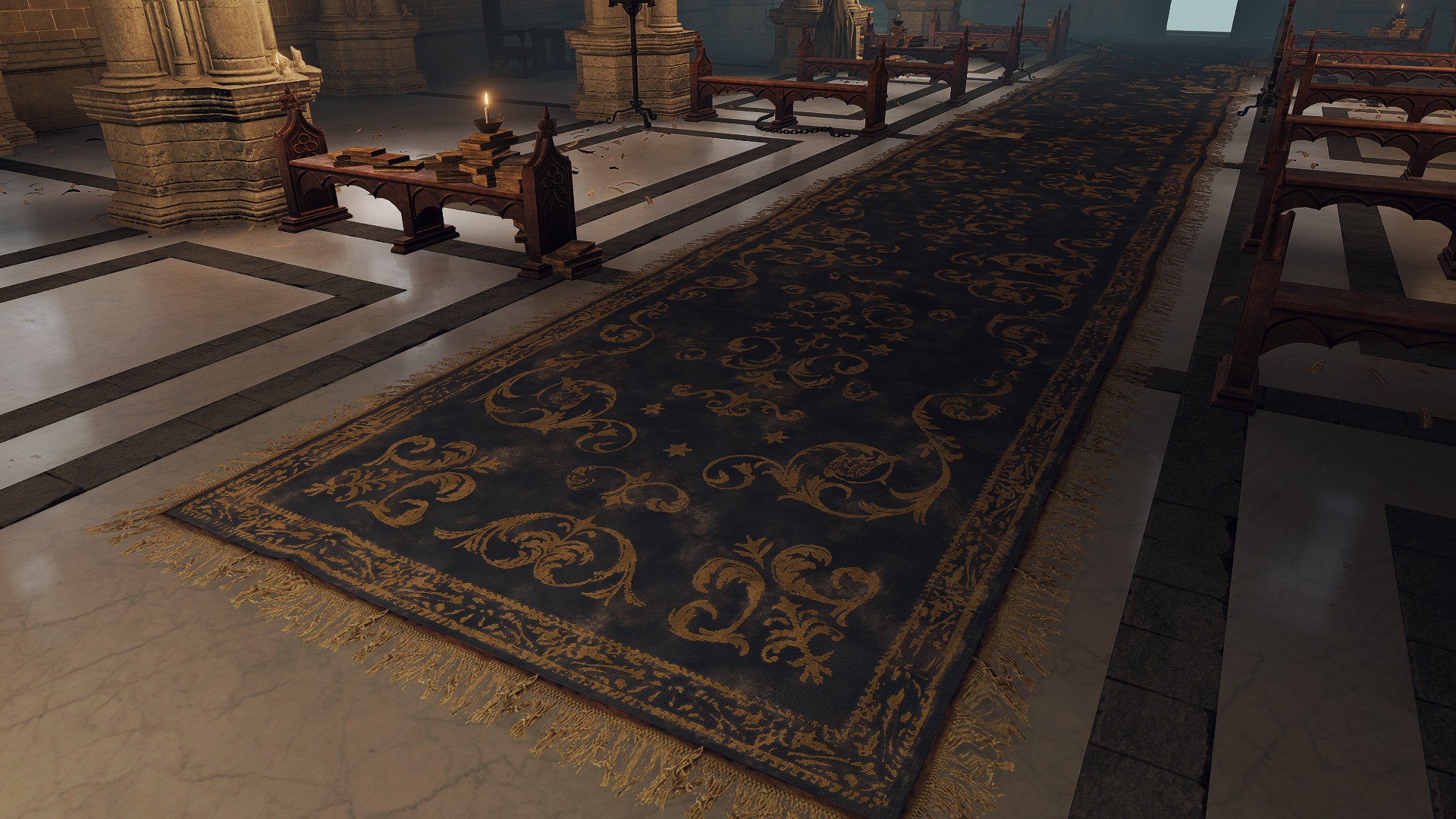
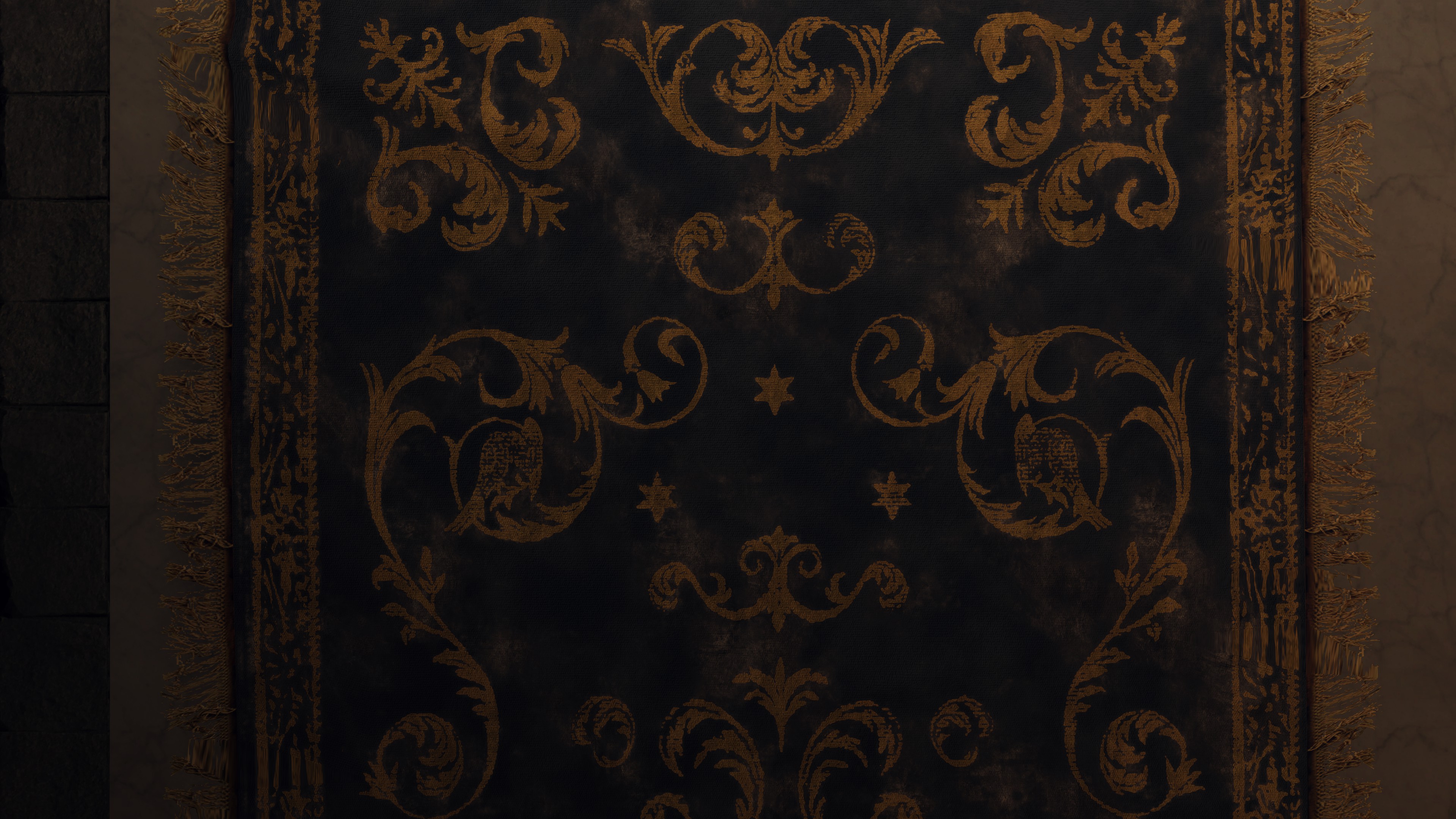
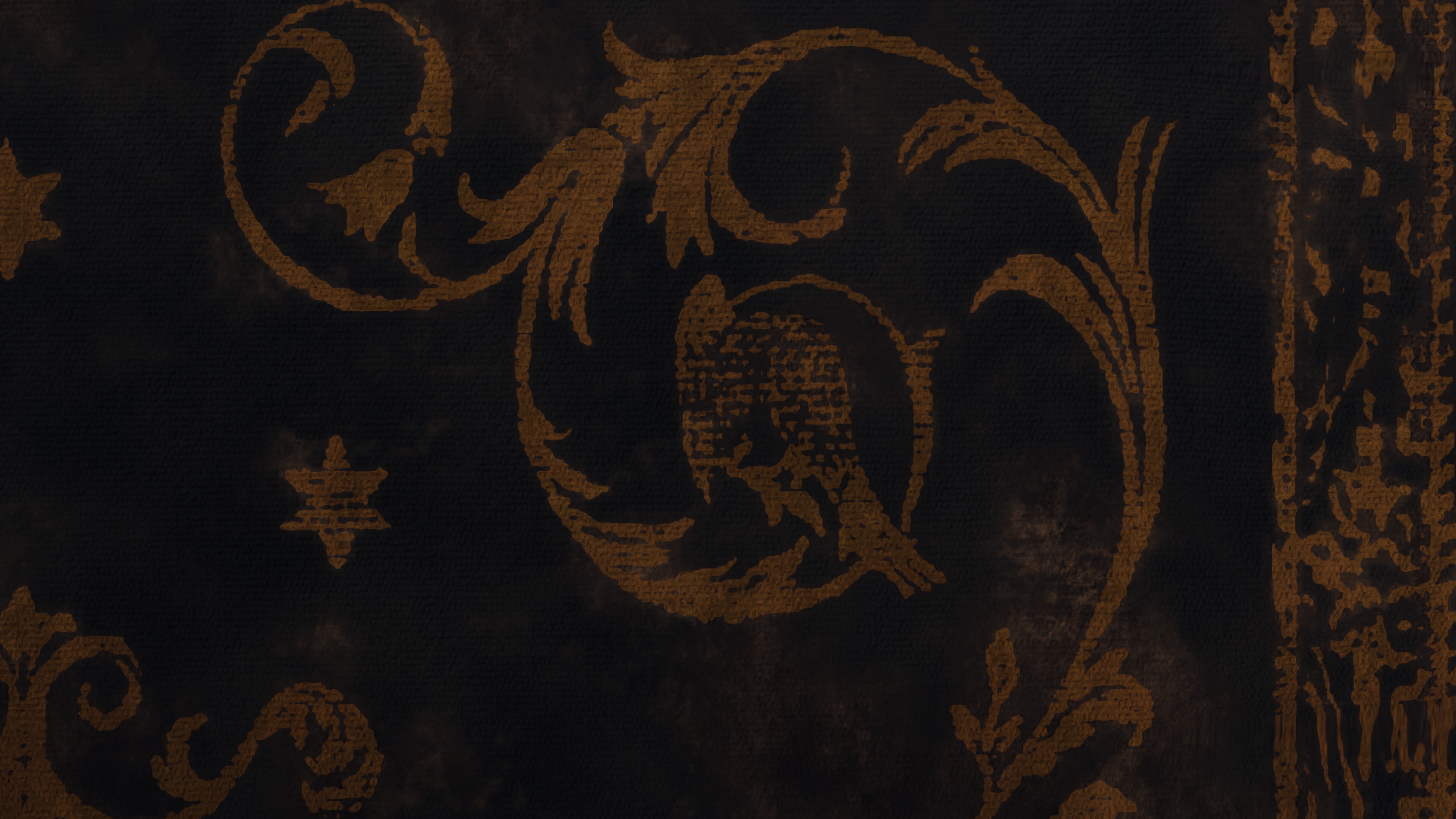
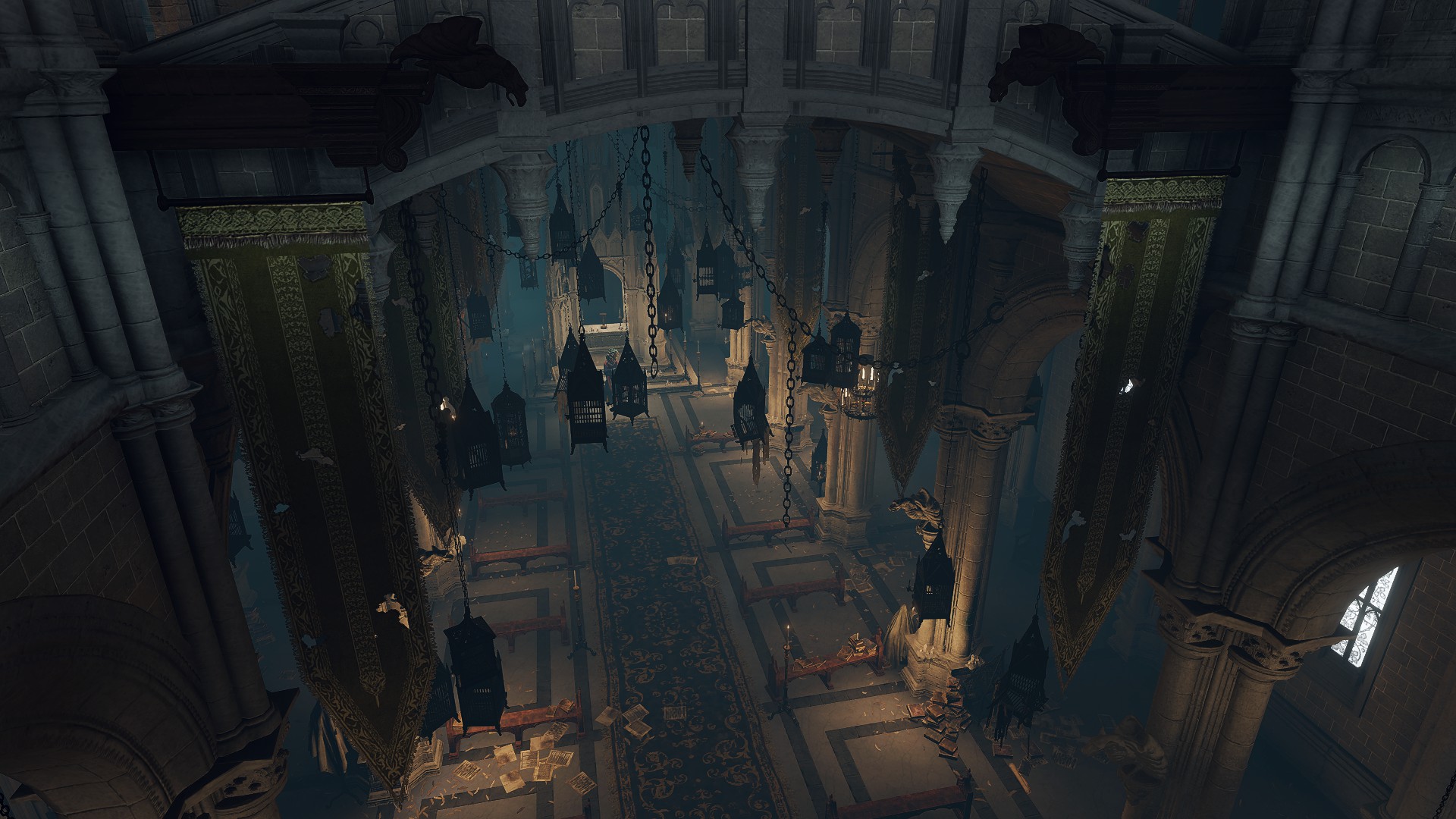
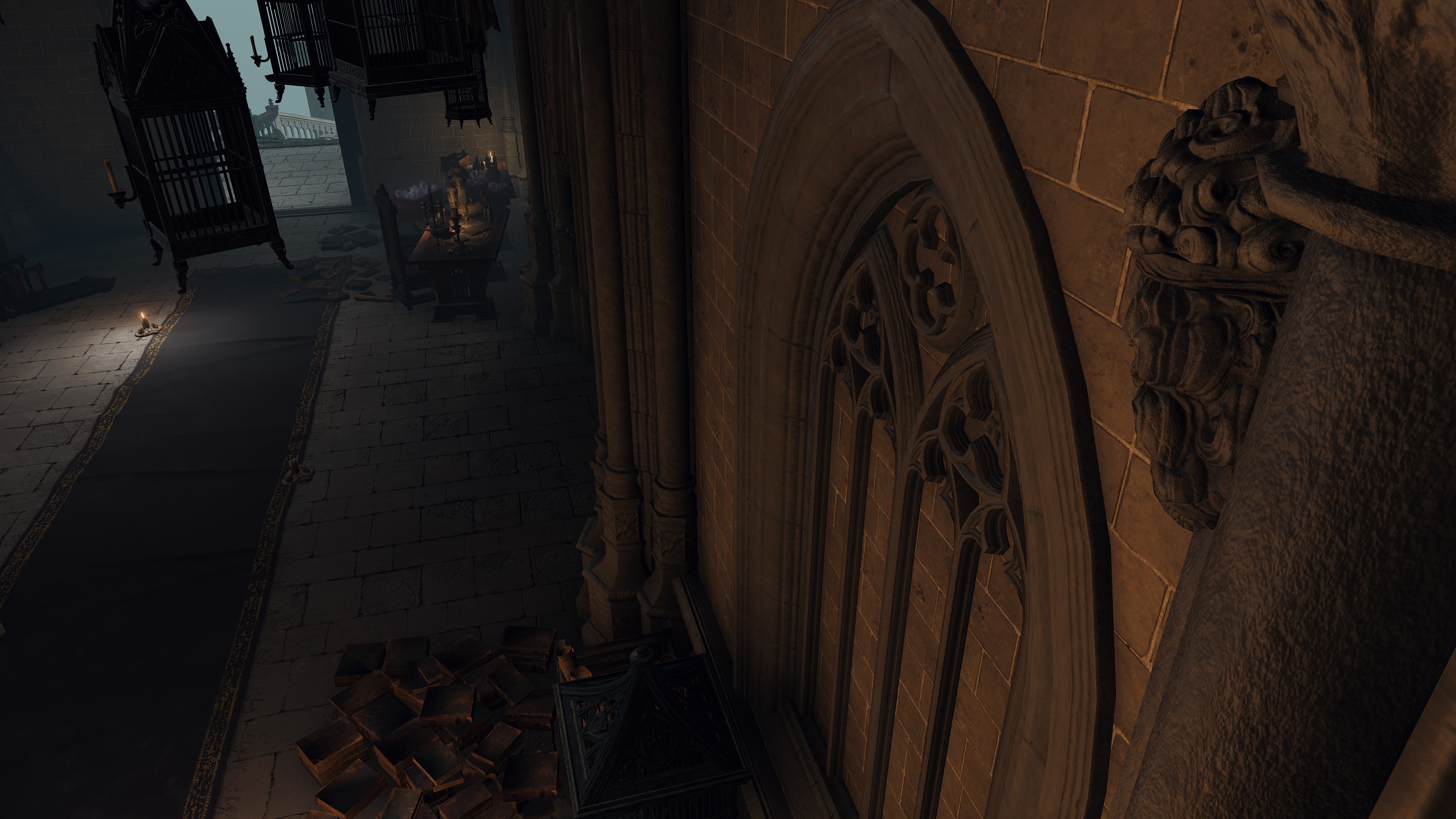
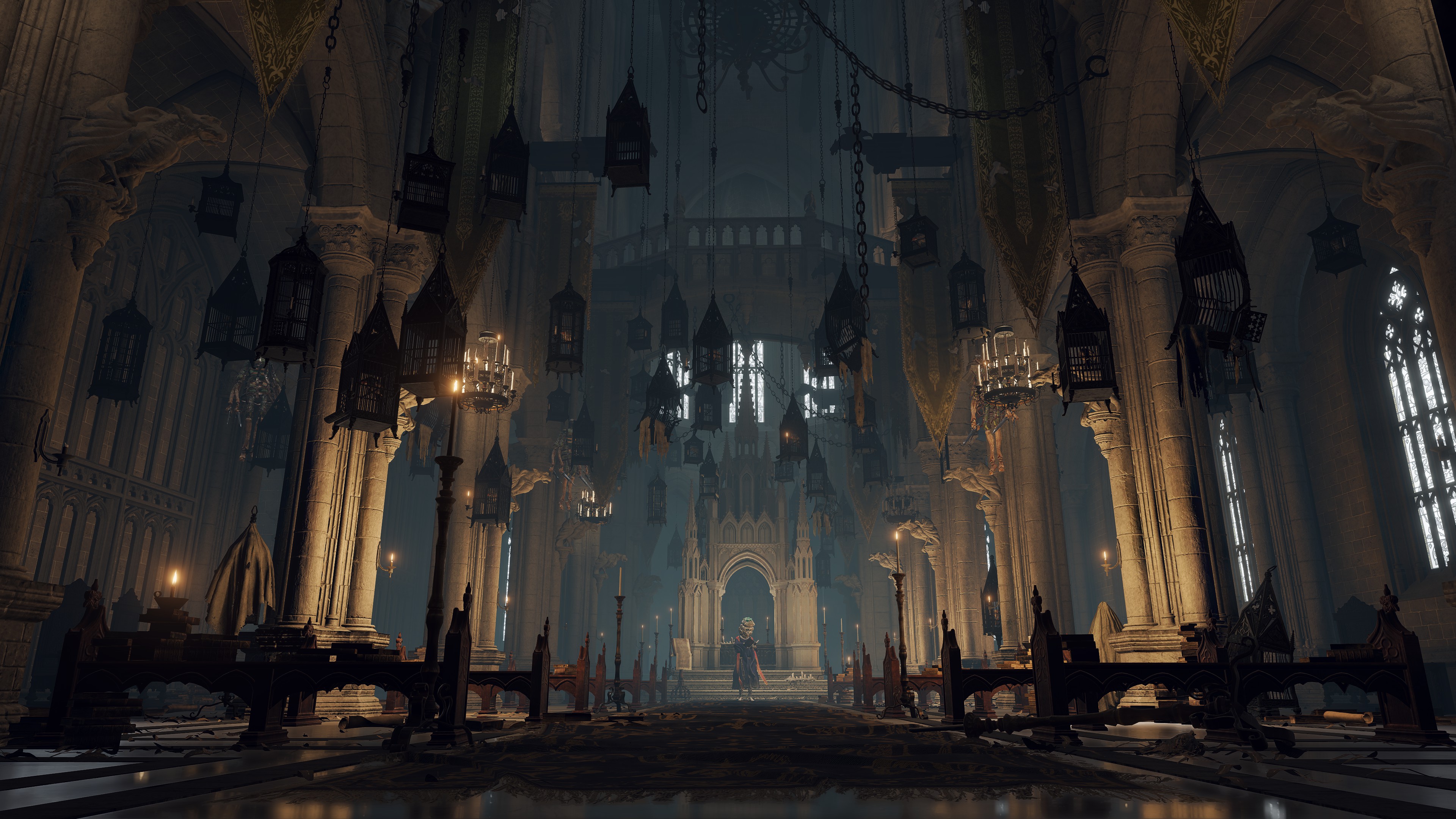
Because the institution was established for the study of the Primeval Current, Raya Lucaria’s central symbol is the peering cuckoo. Cuckoos are associated with augury related to death and rebirth, apt for sorcerers wishing that humans abandon flesh and return to stardom. Augury is also likely an actual practice at the school. All throughout the grounds, we can find copious birdcages, many harboring cuckoos both alive and dead. Why keep so many birds on hand unless to free them when seeking an omen? Just as Roman augurs typically searched for auspices in the late night before dawn, students might examine the stars’ reaction as they release the birds to move through the dark sky above. This reading of fate from atop their mount was just another form of research, and it began with the pursuit of the Primeval Current in the Karolos Conspectus. As a consequence, the image of a cuckoo only partially blocking its sight from shining glintstone showcases the sorcerers’ desire to know the flourishing stars decorating the floors and carpets, despite being overwhelmed by their immense power.
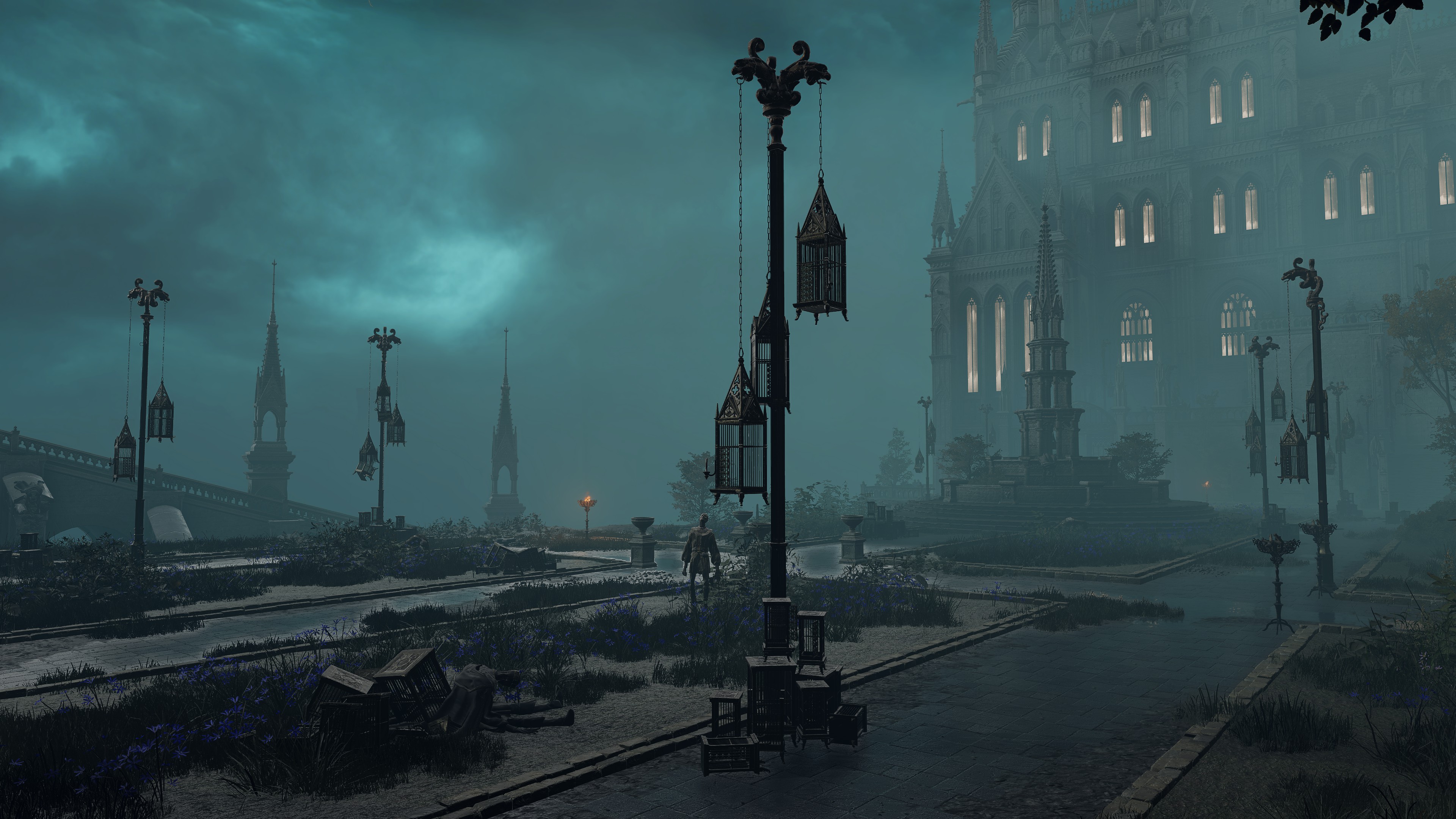
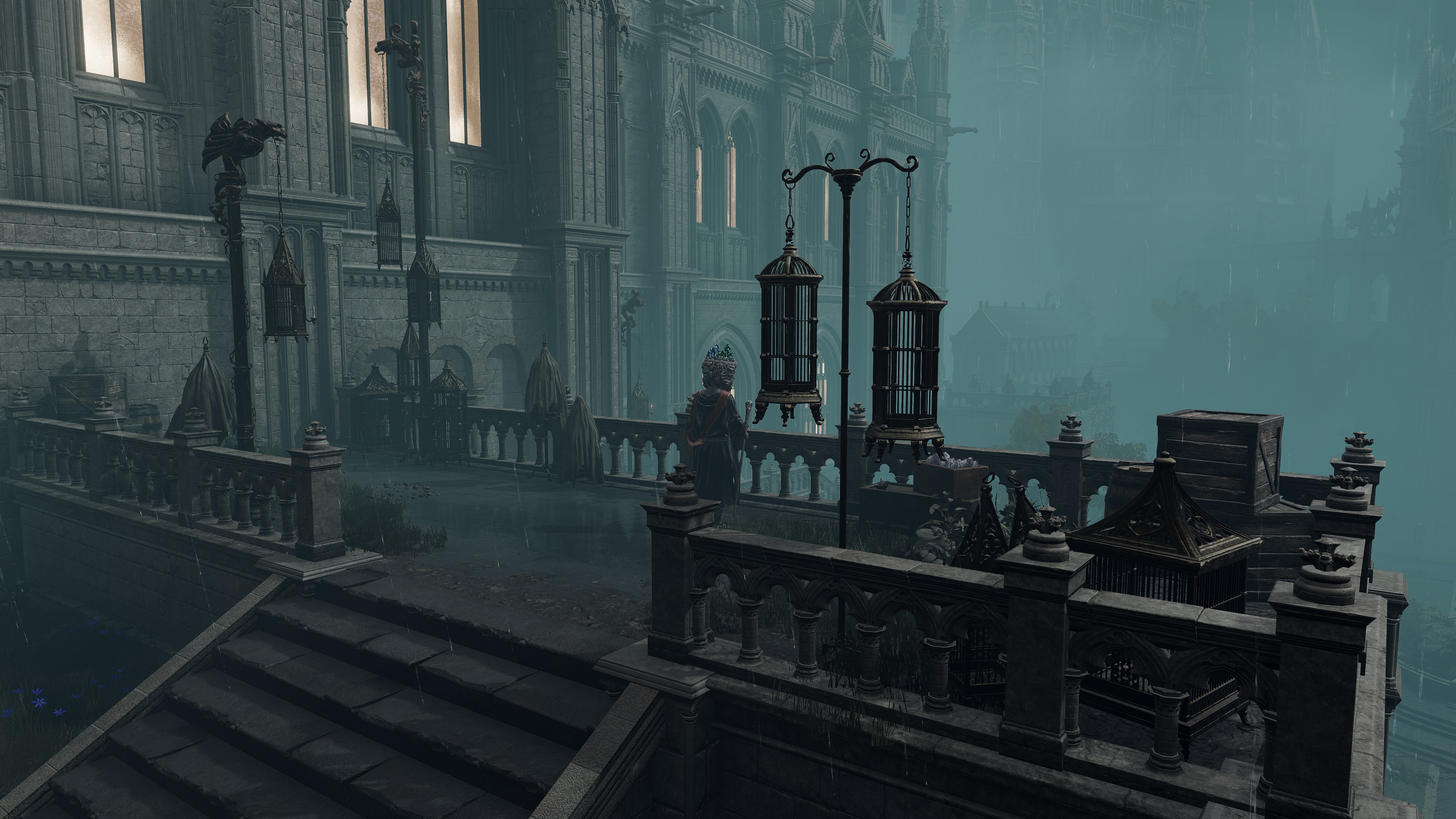
But soon there was another conspectus taking a peek at that prosperity. Sellen describes Lusat as another “first” of the glintstone sorcerers studying the Primeval Current, one whom she equally respects as a teacher. But Lusat wasn’t one of the Laskyar like implicitly Azur and Sellen were. Hailing from Sellia, him and his subsequent Olivinus class pursue a different kind of glintstone sorcery concerning the shooting stars, with Star Shower proving the most difficult for the students. The name “ruusatto” (ルーサット) looks to be an extended anagram of satoru, (悟る) meaning to understand and even attain enlightenment in Buddhism, highlighting the depth of Lusat’s wisdom. It was this desperation to completely know the shooting stars that probably prompted him to depart his homeland, flowing like them as he continued to follow their paths. Eventually, his feet took him beyond the Sellian highway and all the way over to Liurnia, where he established his class.
Ashen remains harboring a spirit. Summons brightstone sorcerer spirit.
Spirit of sorcerer of Raya Lucaria wearing stone head. He learned at Olivinus class, so has mastered “brightstone shooting star” sorceries.
One of the brightstone heads that students whose research was recognized wear in the Sorcery Academy of Raya Lucaria.
Greatly boosts intelligence in exchange for HP.
The Olivinus class research the shooting star sorcery originating from the sorcerer Lusat.
One of the brightstone sorceries of the Sorcery Academy of Raya Lucaria.
Fires six shooting stars that fly toward targets. Can be used without stopping movement and used continuously. Also, enhanced with charging.
A sorcery considered the most difficult in the Olivinus class.
How he made the journey to Caelid is simple enough to picture. Birdseye Telescopes can be found on the roads between Raya Lucaria and Laskyar as well as between Limgrave and Agheel Lake, suggesting historic astrologer travel through those routes. The latter would be especially relevant to Lusat. Even assuming that the bridges across the Murkwater valley didn’t exist at the time, a Sellian sorcerer could make the journey to Laskyar rather easily. Setting off from the end of the highway at Summonwater Village, they could travel south down the slopes and past Mistwood, then turn north crossing the mouth of the valley to Stormhill, at which point it was a short trek to Laskyar over the hill. At worst, the traveling stargazer would only need to cross a few small streams and survive the harsh winds toward the end. It was a feasible path connecting sorcerer populations in Liurnia and Caelid, once enough adventurous individuals discovered the path and made the way back to establish proper contact and relations. Lusat may not have been the very first to make this journey, but his was definitely the most consequential.
After a long time chasing shooting stars, the primeval sorcerer came across Laskyar and then the mount where Azur was teaching his class. With that, he brought a new influx of information for the burgeoning academy to consider. Just as the Karolos Glintstone Crown boosts intelligence at the cost of stamina in reflection of its longer history, the Olivinus Glintstone Crown even more greatly boosts intelligence at the cost of HP to capture its huge impact to the academy despite the shorter existence. Lusat was a huge boon to the Laskyar’s collective research, and he wasn’t alone. The Olivinus Conspectus consists mainly of “graduates” from Sellia, shusshinshu (出身者) referring to someone leaving both a school and their place of origin. There have been many, like Lusat, who wished to move beyond Sellia and deepen their knowledge of shooting stars under new tutelage. Just as Liurnia and Caelid were becoming loosely interconnected by transit and trade, Lusat established his own class on the mount with his fellow Sellians, distinct but complementary to Azur’s research.
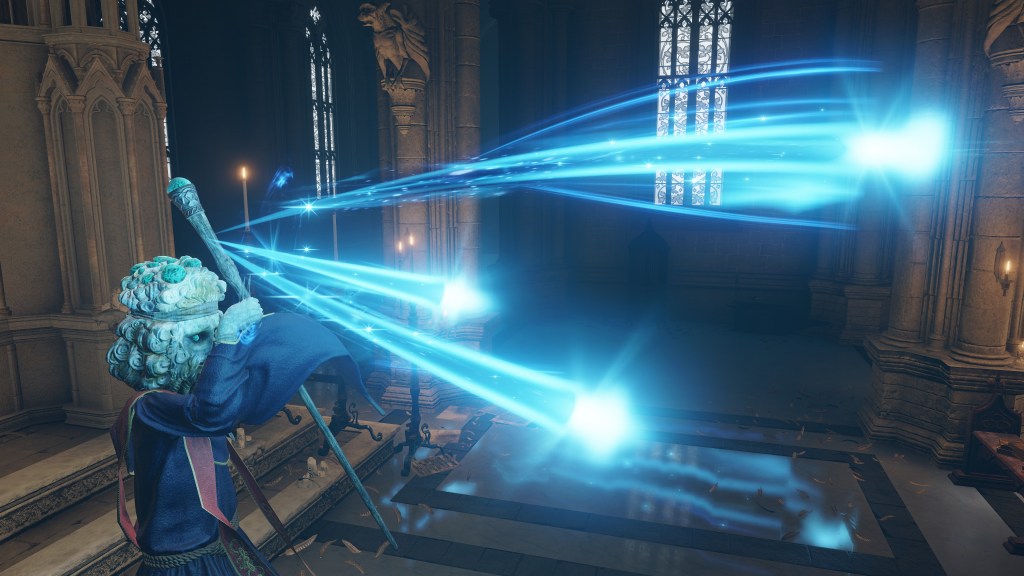
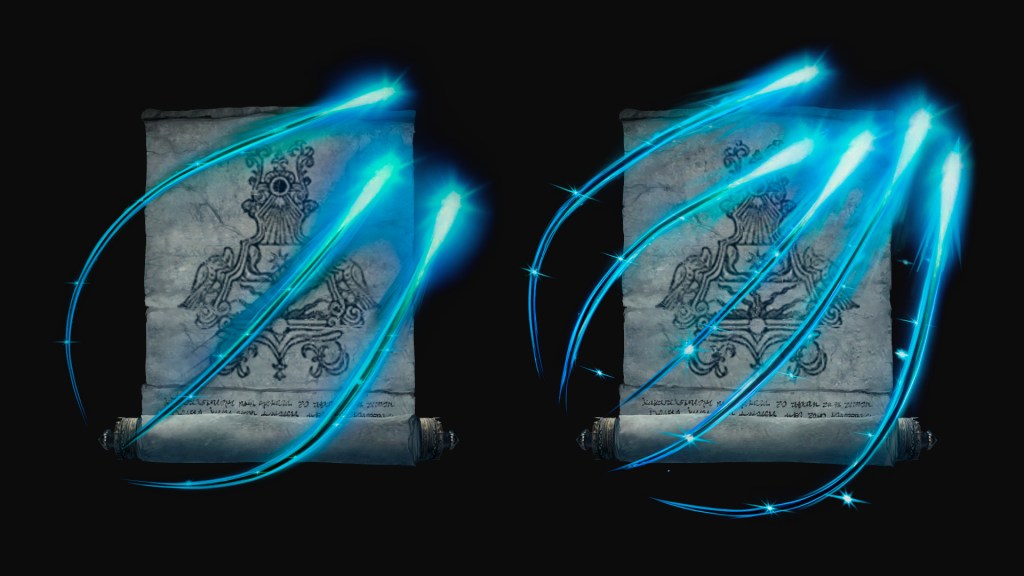
One of the brightstone sorceries of the Sorcery Academy of Raya Lucaria.
Fires three shooting stars that fly toward targets. Can be used without stopping movement and used continuously. Also, enhanced with charging.
A sorcery of the Olivinus class, which gathers graduates of Saria, sorcery town of Caelid.
That may well be the idea behind the name for the conspectus. Olivinus, a Latinization of olive, is part of the scientific name for an African species of cuckoo. Like other cuckoo birds, it is commonly considered solitary and deceptive due to its practice of laying eggs in other birds’ nests, tricking them into raising its brood. In Lusat’s case, this would be planting the seeds for a new school of thought in another land. Some fans might posit “olive” as a reference to the more greenish hue of some sorceries, but this applies more to Karolos arts than anything produced by Olivinus. Alternatively, the olive tree is a symbol of Athena, the ancient Greek goddess of wisdom planting one as she became the patron god to Athens — which itself is famed for producing many great philosophers. Being associated with both wisdom and prosperity, the “Olivinus” class may signify the harmony reached with Karolos to create the greatest learning institution.
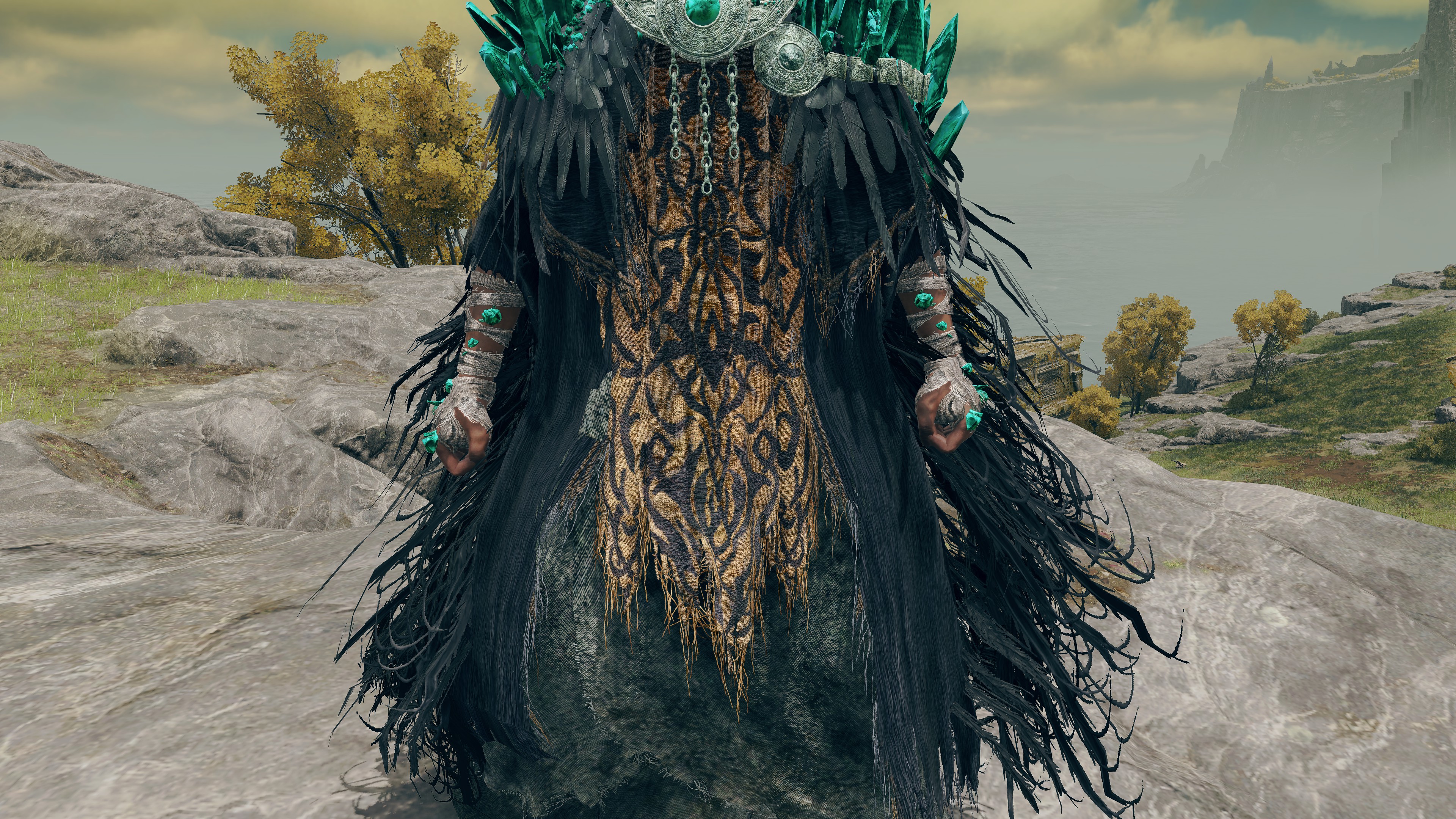
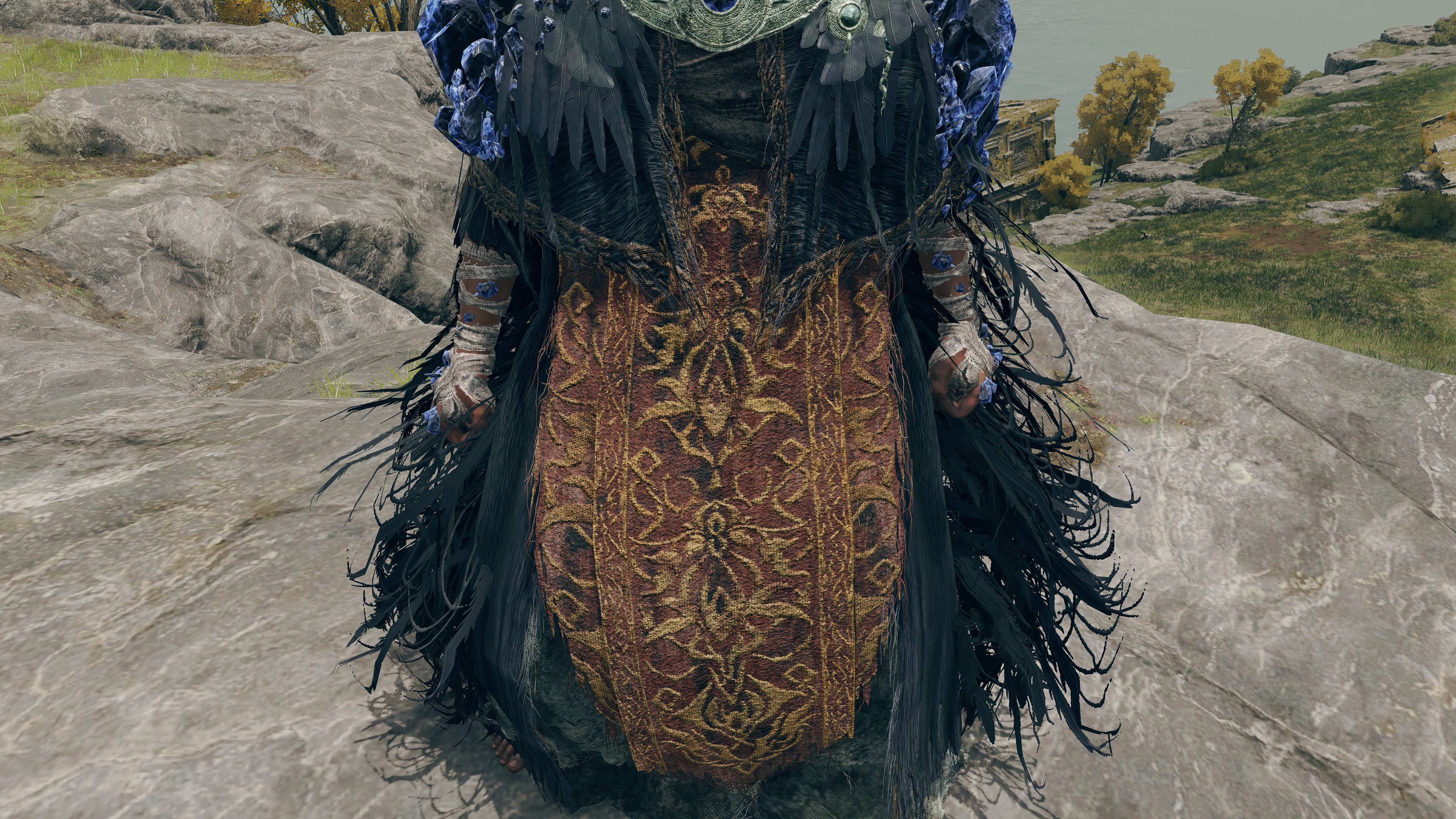
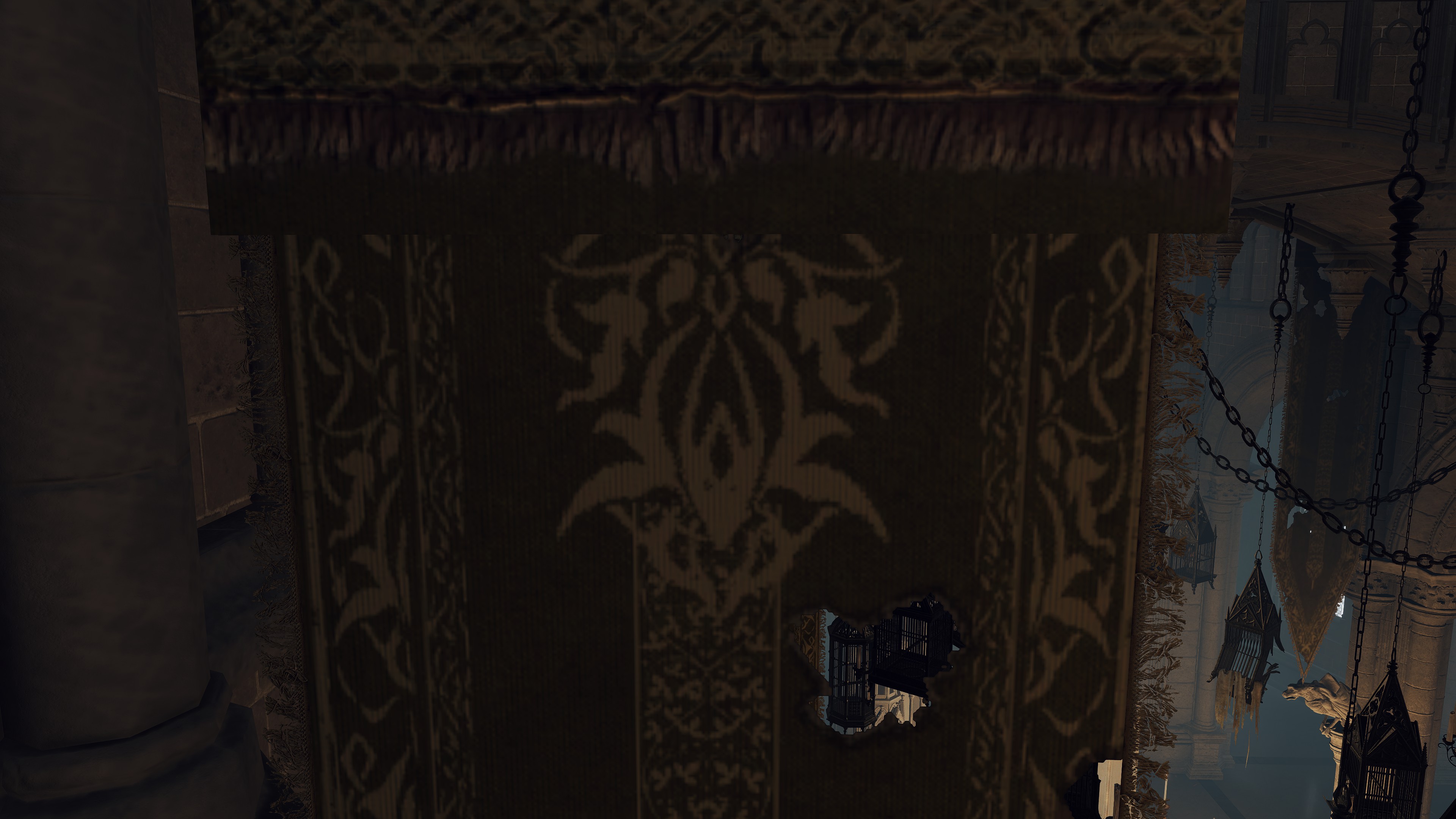
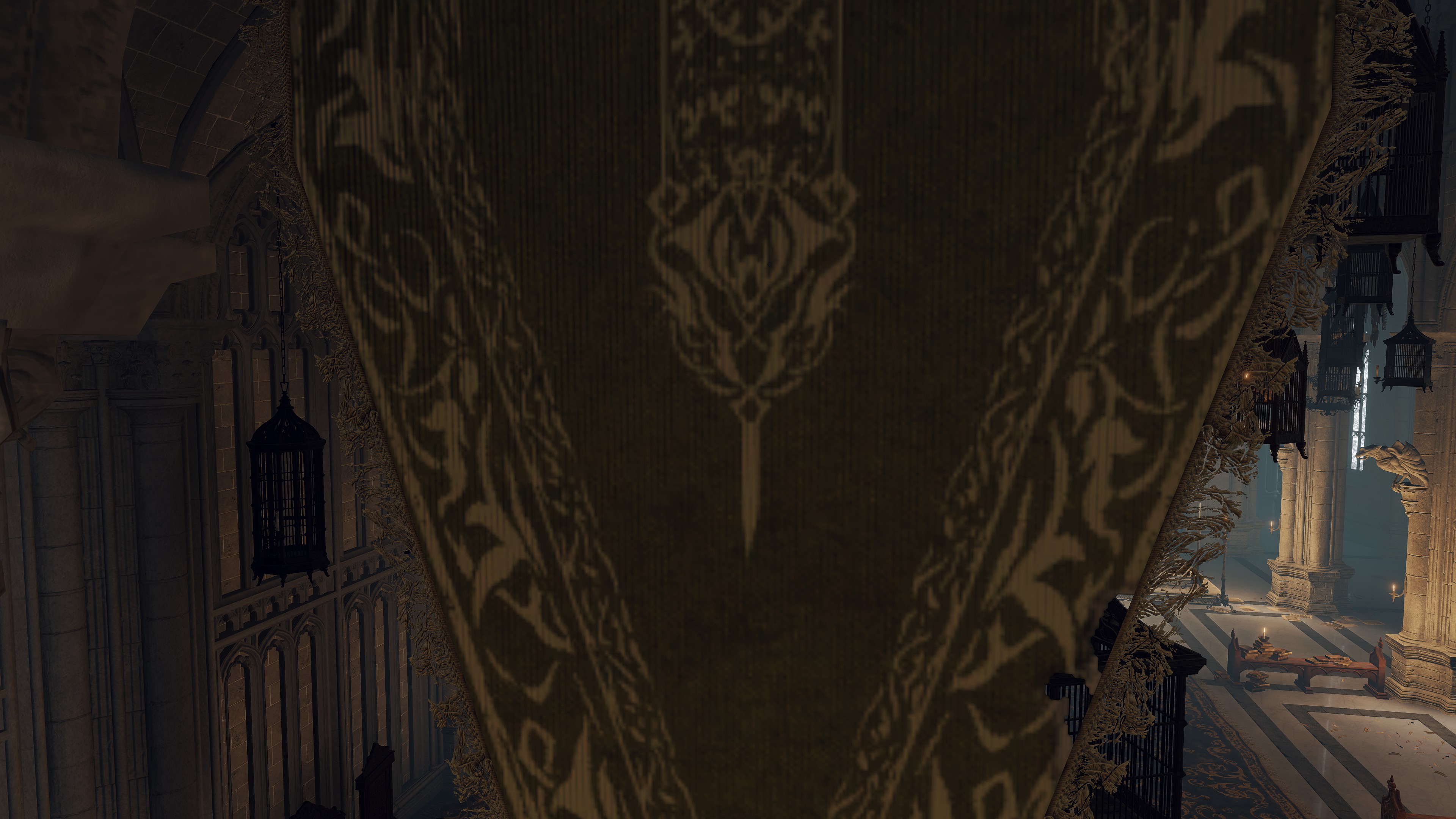
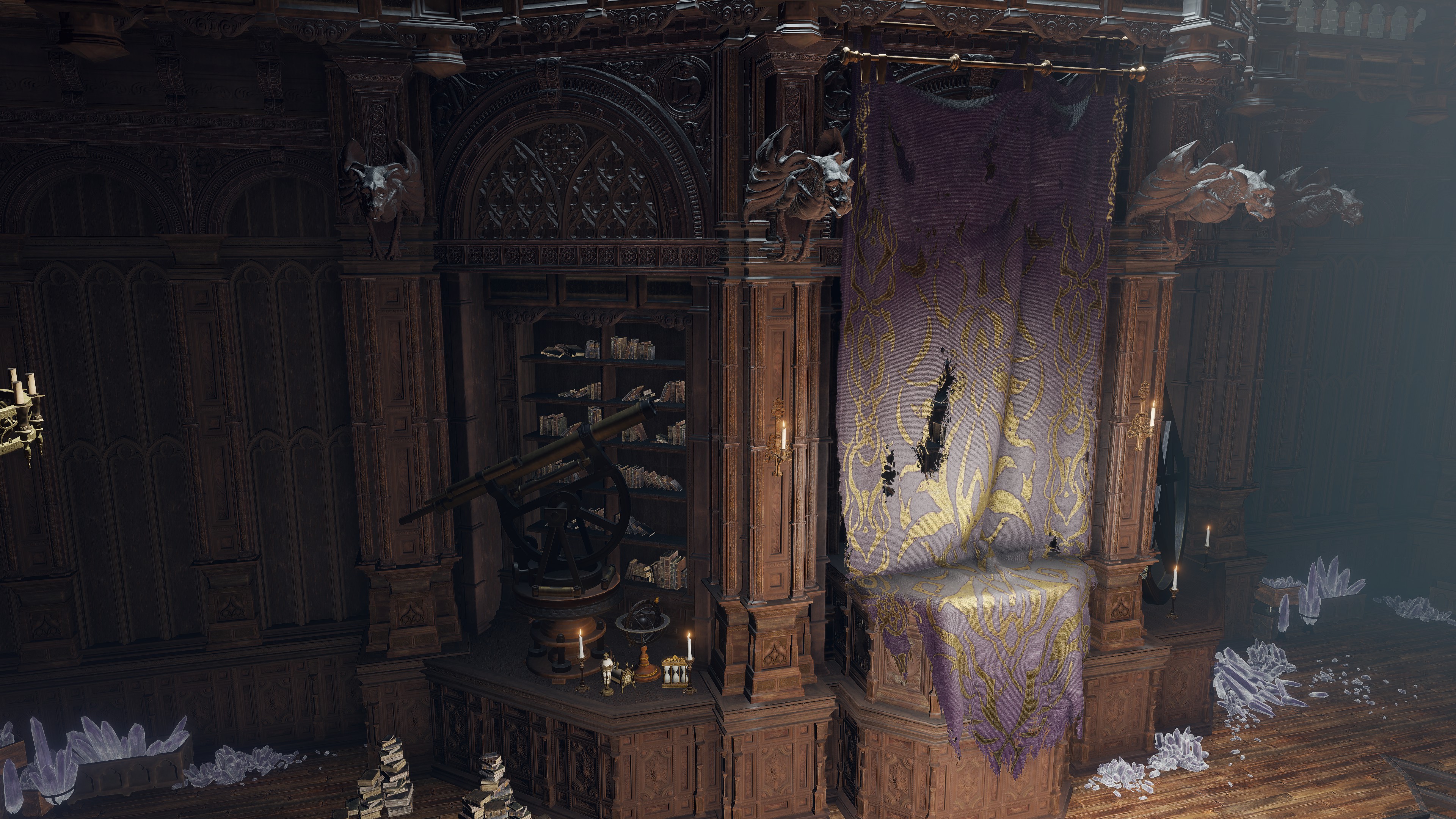
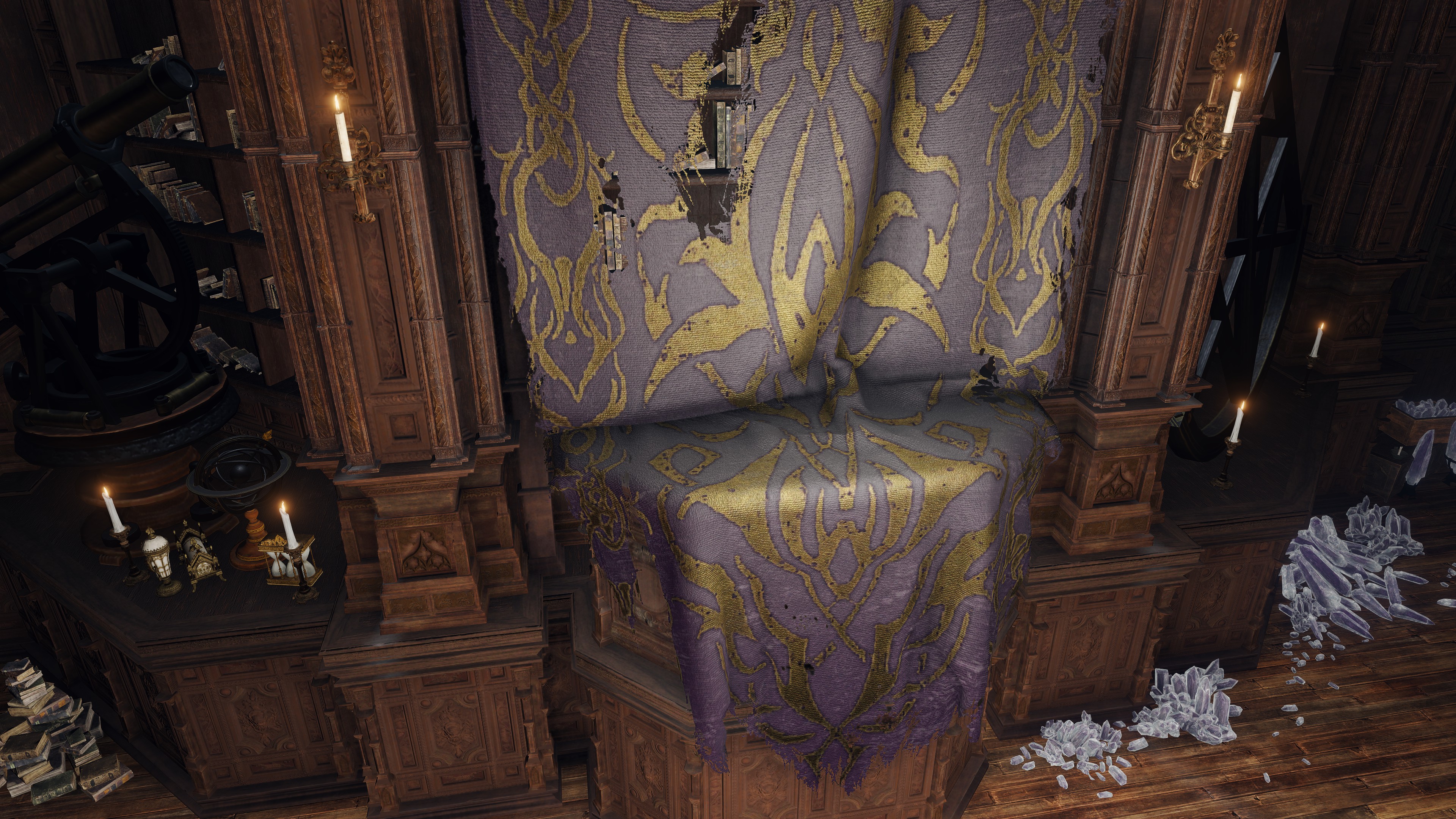
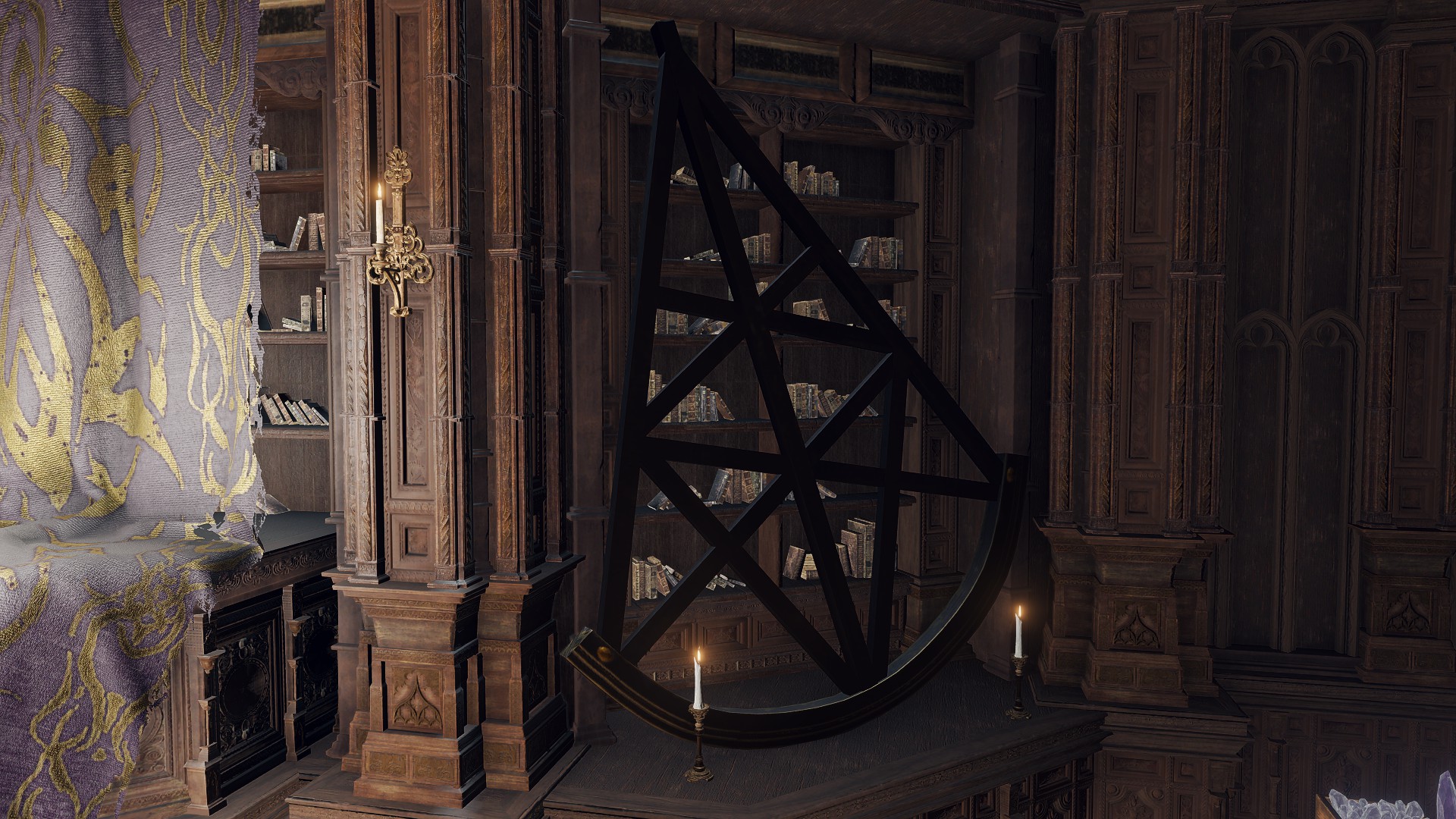
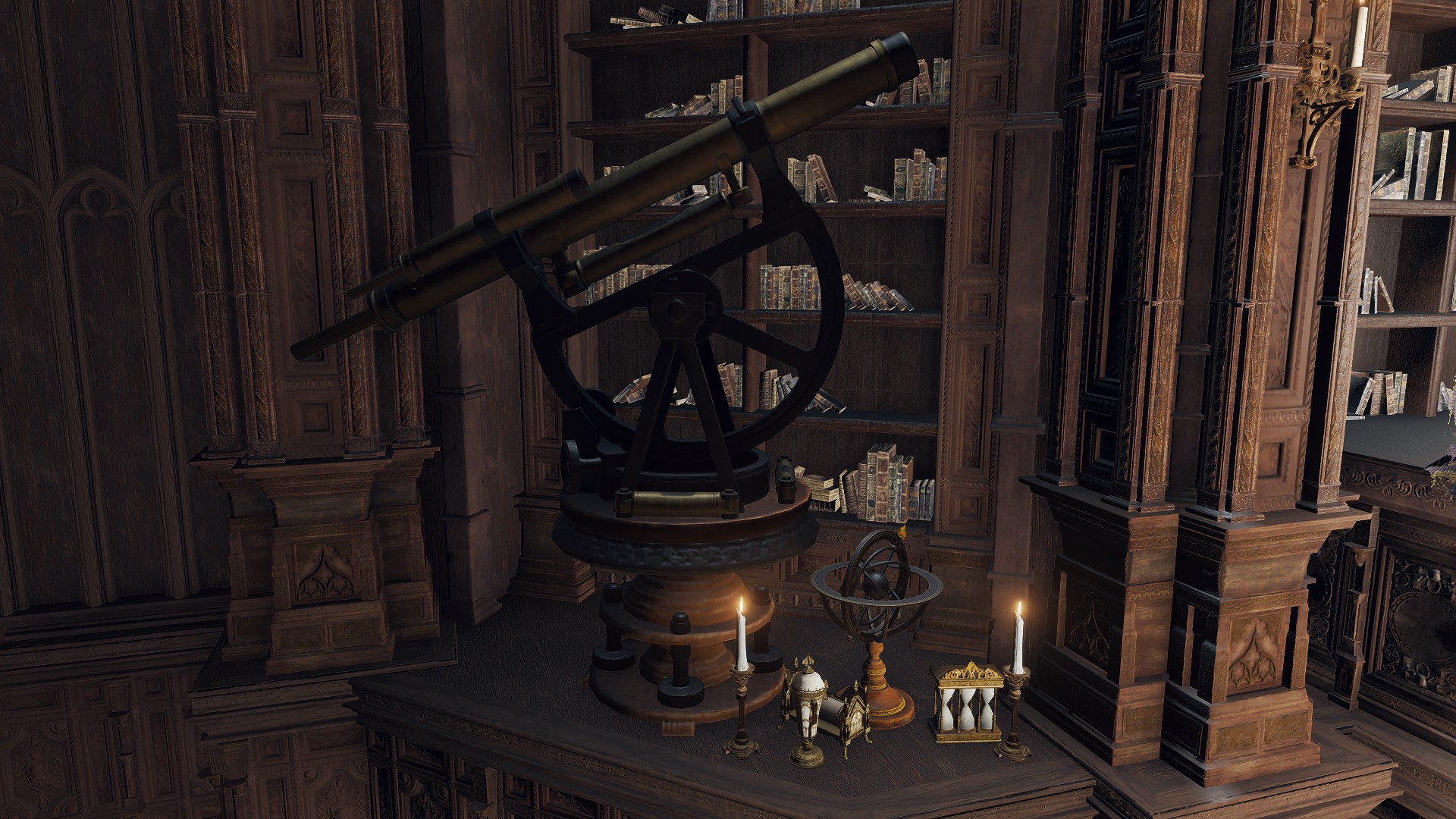
Indeed, it was likely at this point that the two “first” among primeval sorcerers came together to establish a formal school with the facilities we know today. Both men are regarded as “Supreme Instructors” (最高師範) of the academy, with none replacing them after they left those positions in exile. Their robes feature a distinct pattern we see incorporated into Raya Lucaria’s various banners; several hanging in the Church of the Cuckoo at the front entrance and another, fancier cloth colored regal purple and gold, enshrined in the Debate Parlor flanked by a giant black telescope and sextant. From this use in shrines, it is clear that the pattern holds major symbolism for astrologers — and it is both Azur and Lusat uniquely permitted to wear that symbol as teachers. In that case, the two must play a coequal role in establishing the formal school system, their titles serving as the deans or principals.
Robe permitted only to the Supreme Instructor of the Sorcery Academy of Raya Lucaria. It is being eaten away by blue brightstone.
After both Supreme Instructors, Azur and Lusat, were exiled from the academy, none exist who have reached their standing.
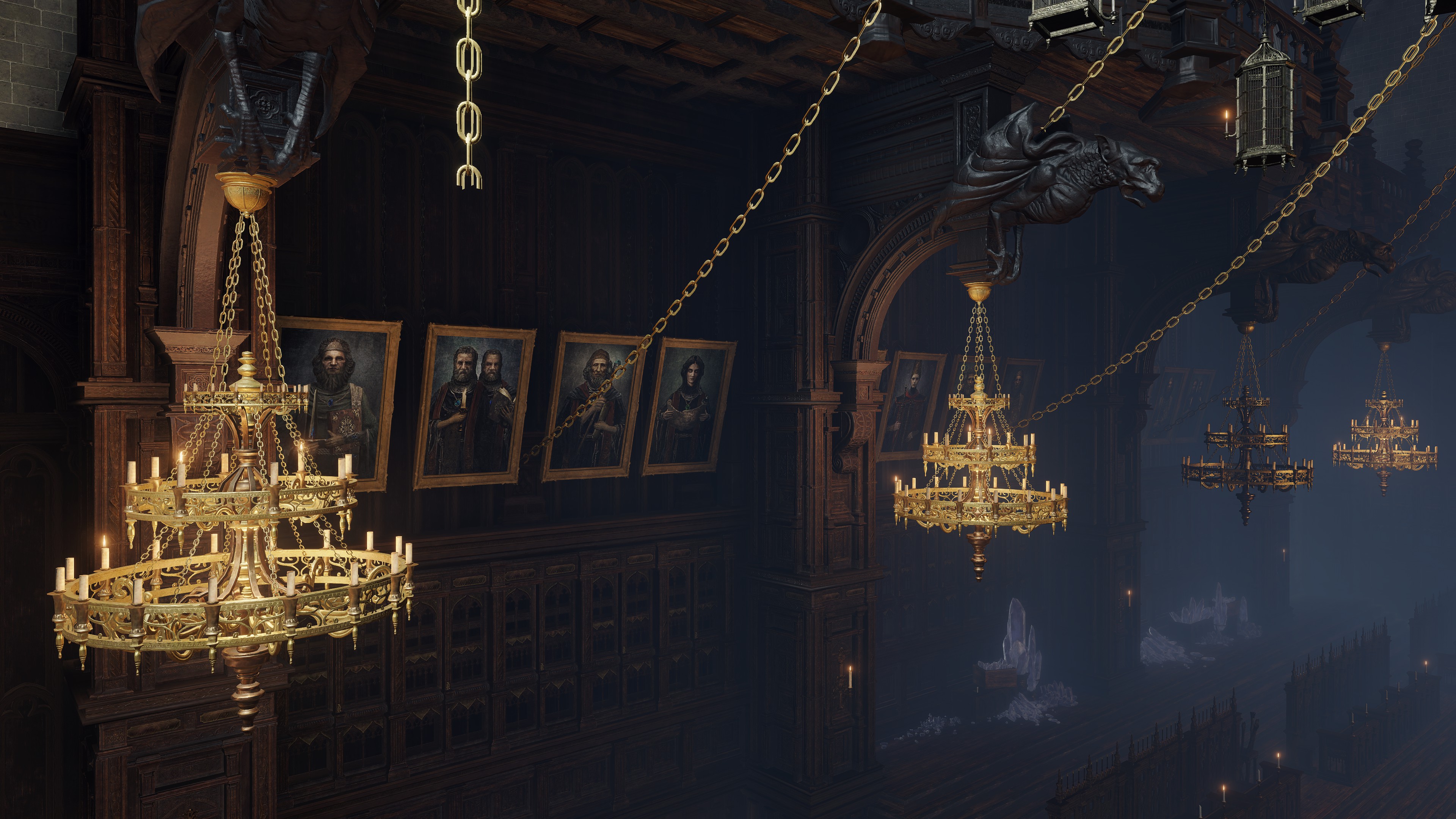
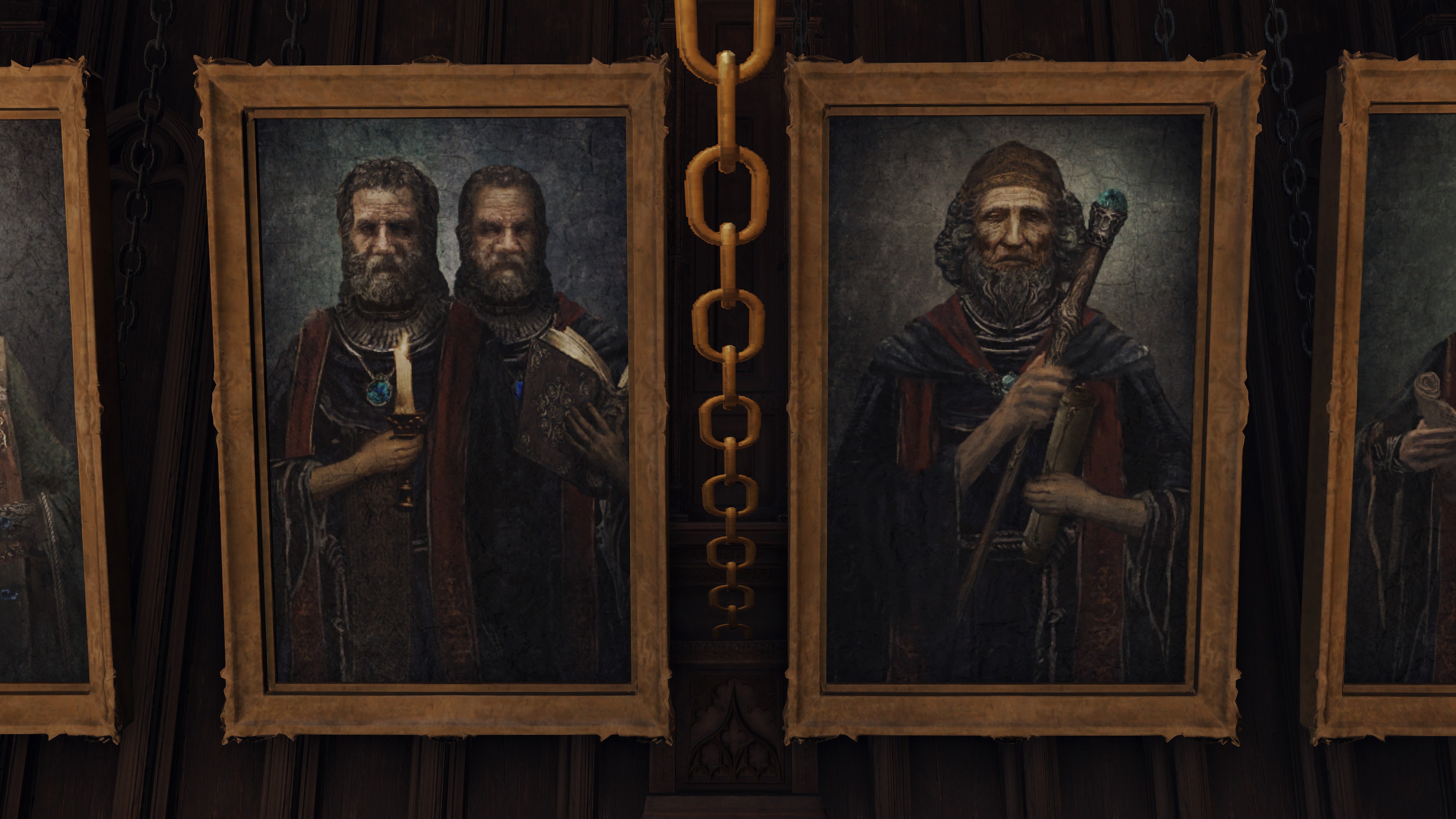
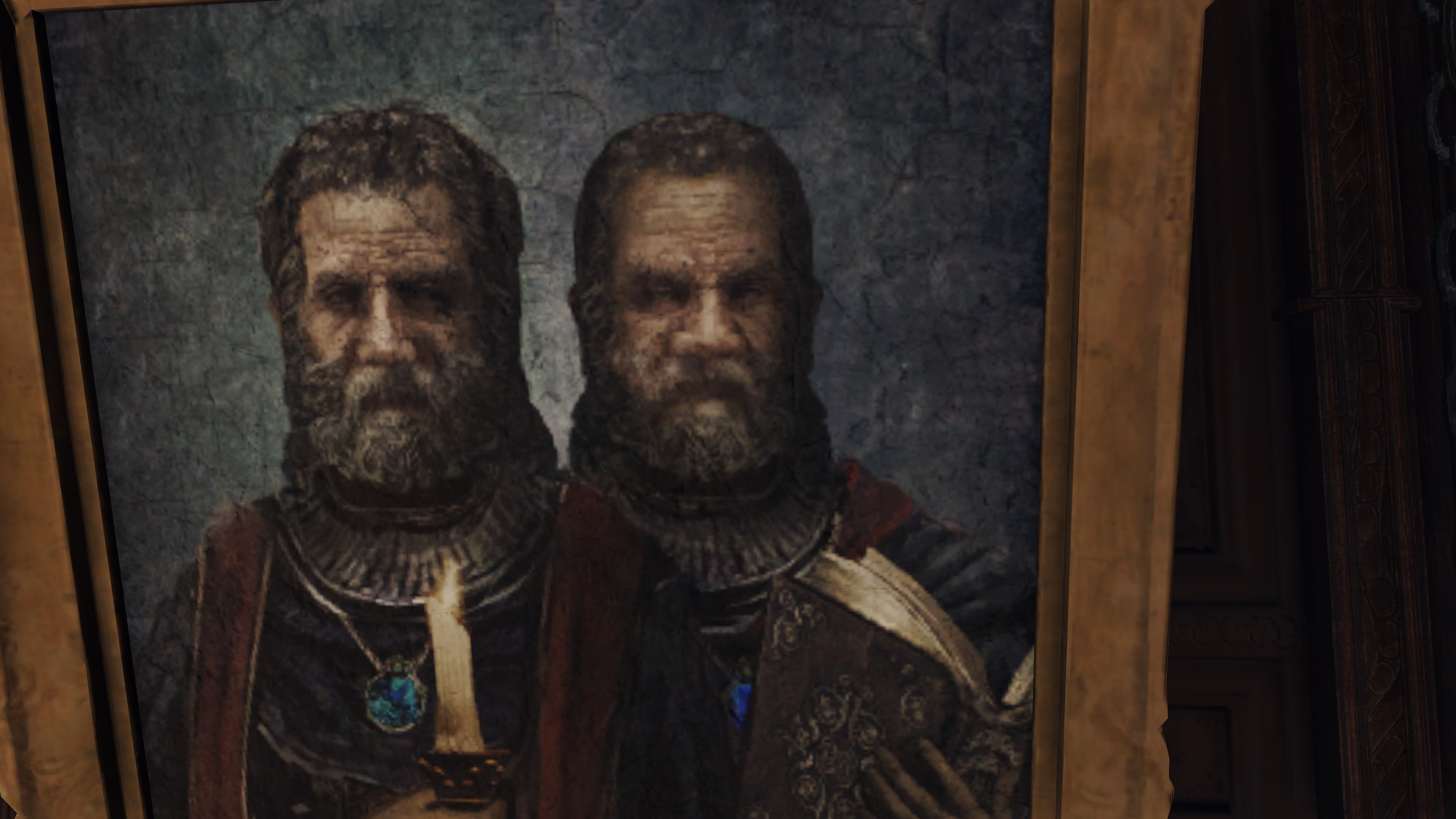
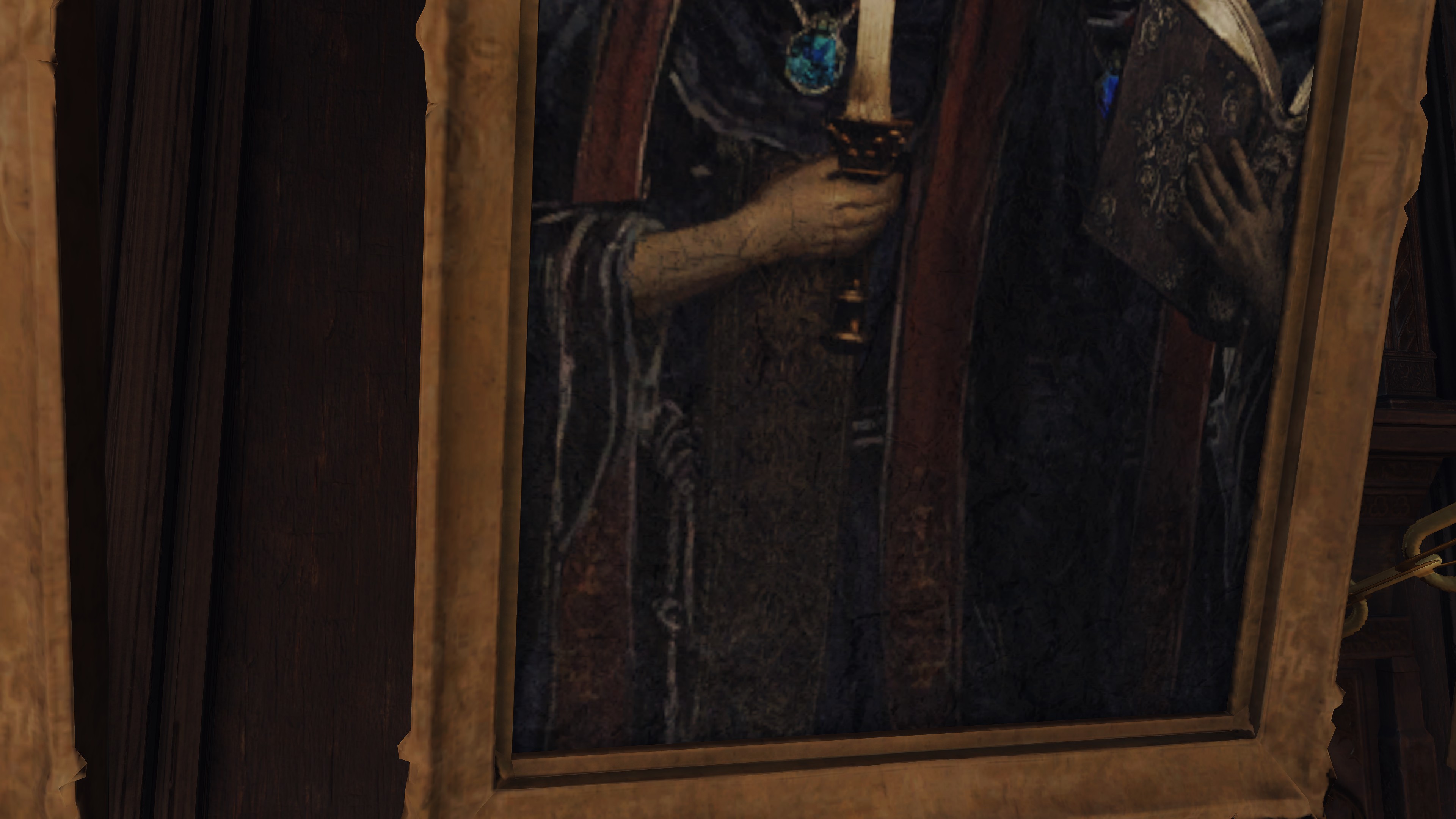
We see their preeminence in the various portraits of sorcerers hanging throughout the academy. Two in particular depict men wearing the school uniform, except with unique additions. The one resembling the Karolos head dons a distinctive cloak, whereas the one with the Olivinus head has the academy’s crest sewn prominently on his stole and wears fancy silver vambraces embedded with glintstone. In all likelihood, these men are Azur and Lusat, respectively. While cut content indicates plans for Karolos to be a separate sage responsible for sparking a revival in the academy, such a figure is inconsistent with the class’ history in the final game. Regardless of name, it is more reasonable for each head to depict the founder of the respective conspectus — students were trying to reach Azur and Lusat’s levels specifically when striving to obtain a glintstone head learning under them. Therefore, it is safe to infer that both portraits depict the primeval sorcerers after the modern institution was built, with the additions to the uniform signifying their shared leadership role over the academy.
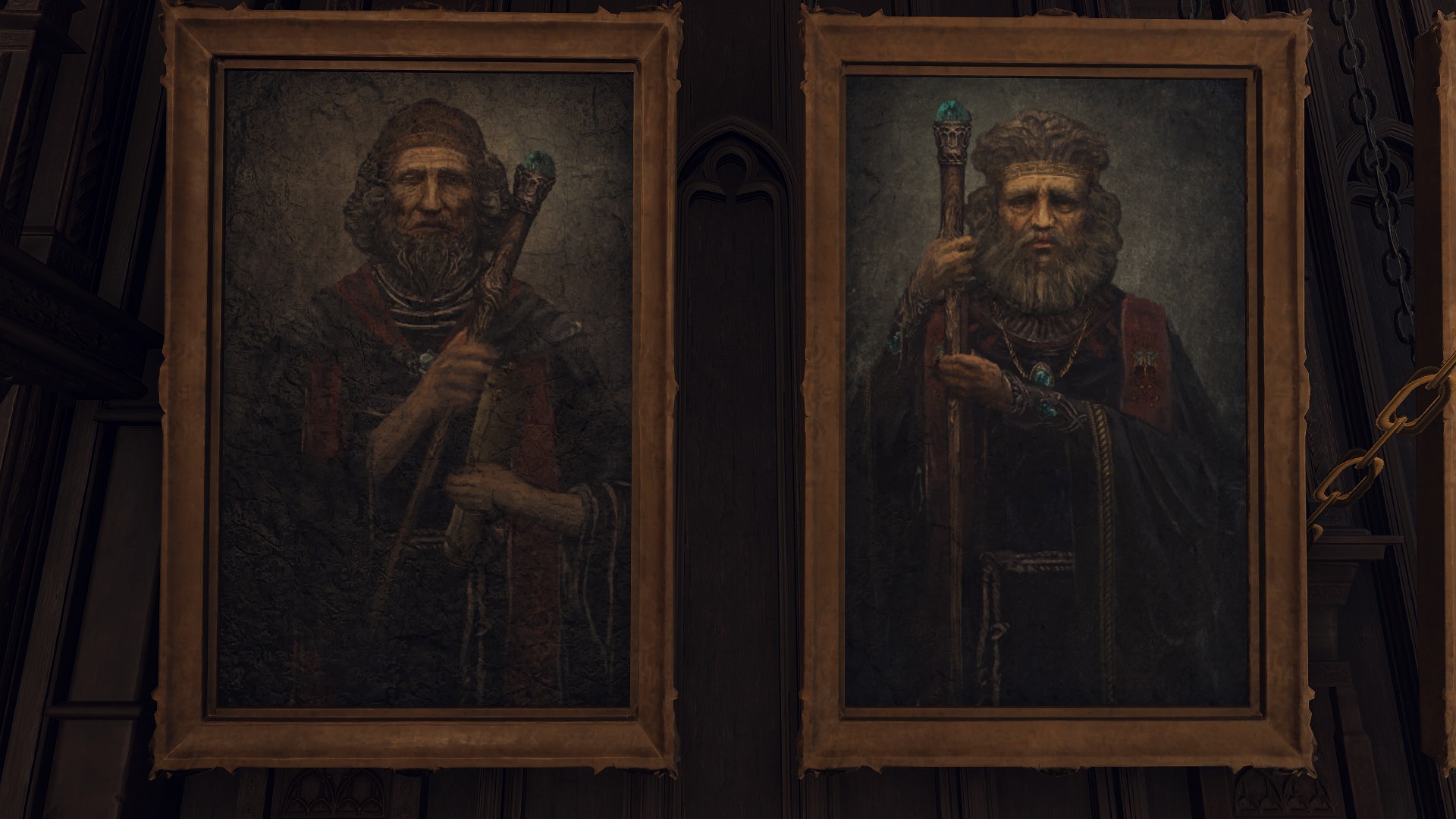
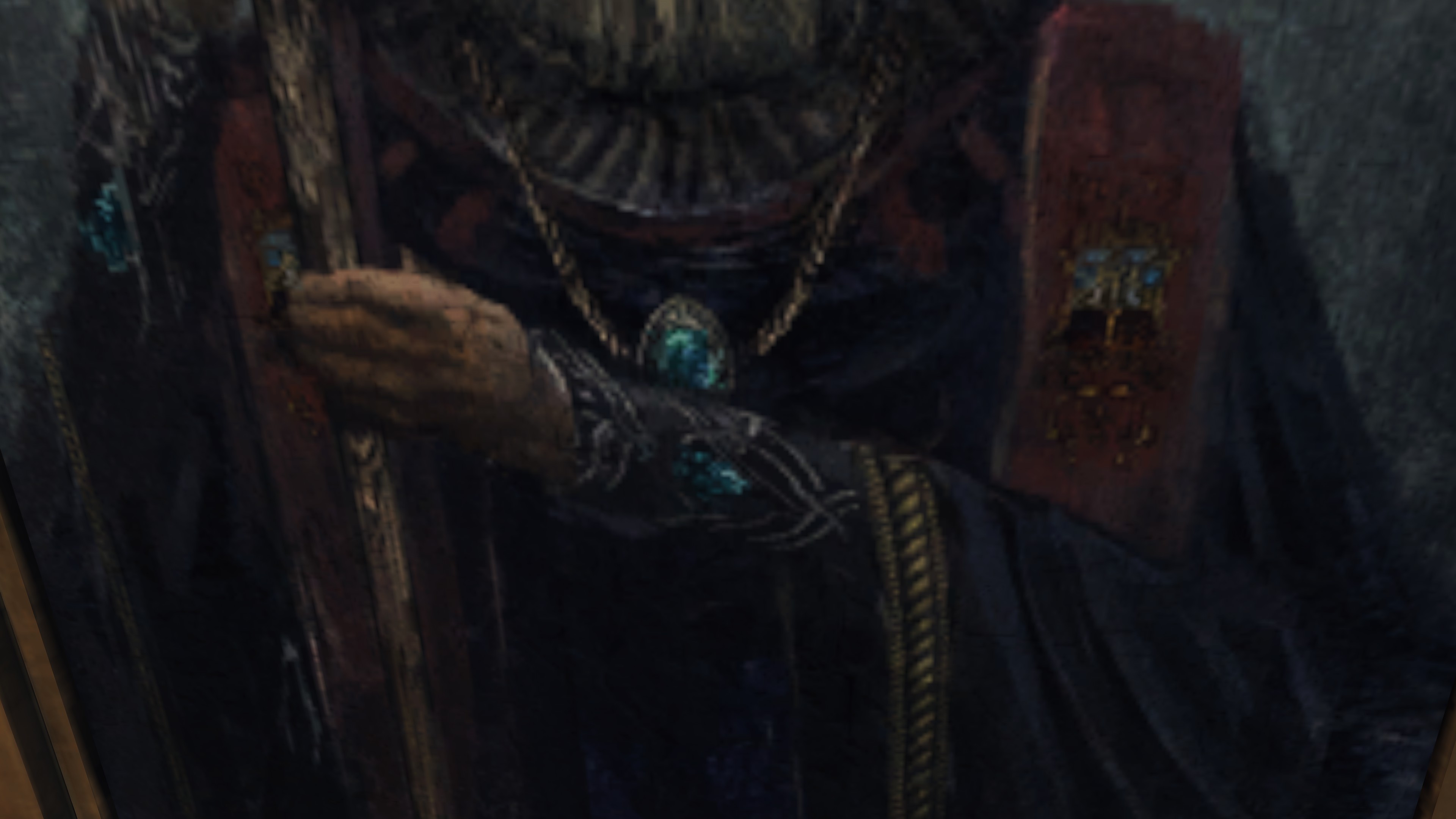
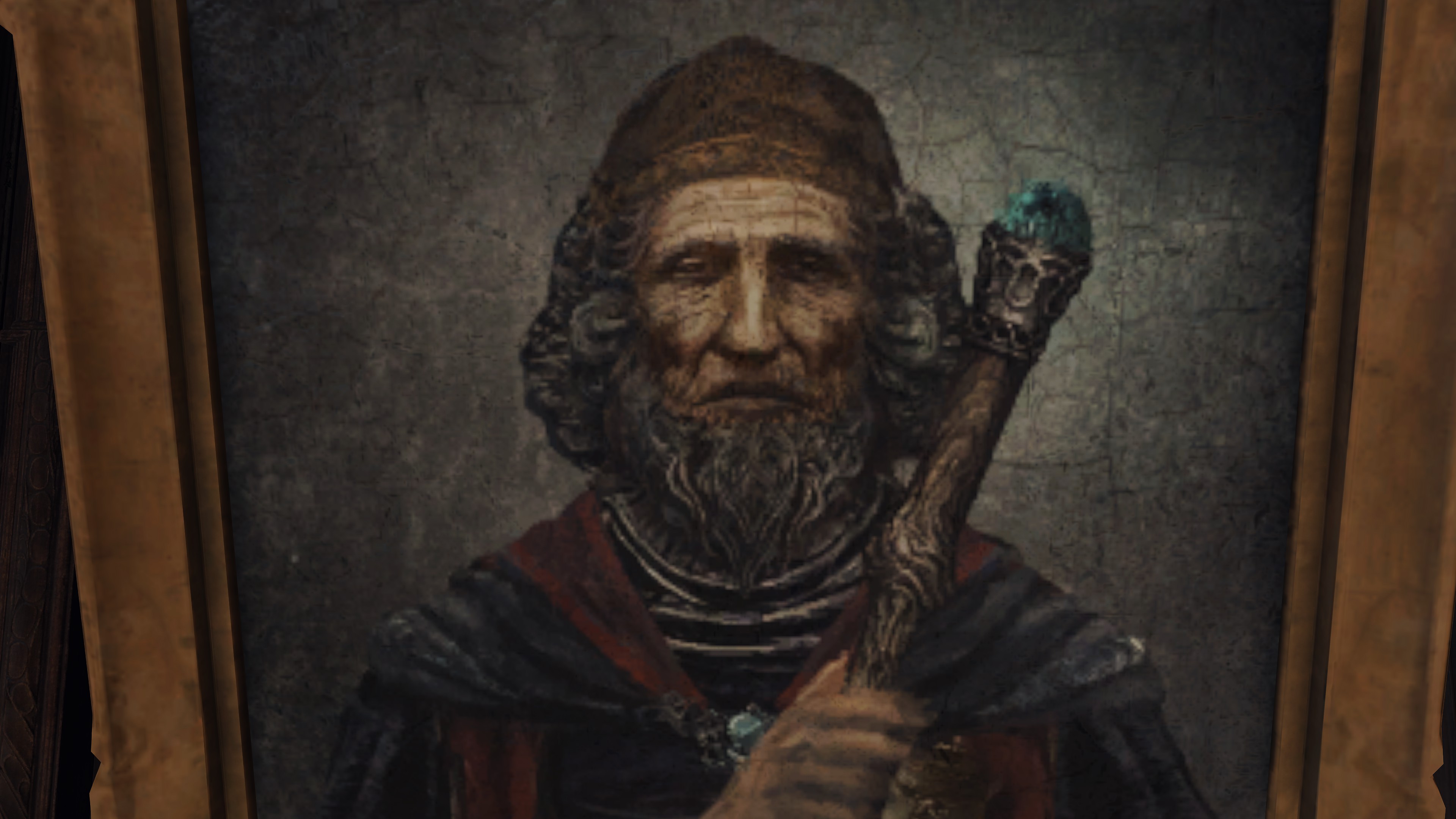
Plaster mask modeled on the wiseman Karolos, one of the founders of the Raya Lucaria Revival.
Sorcery students wear it, and it denotes their brightstone lineage and location of their vow of wisdom and poverty.
Eyes to see and a head to think. A sorcerer dedicates those first.
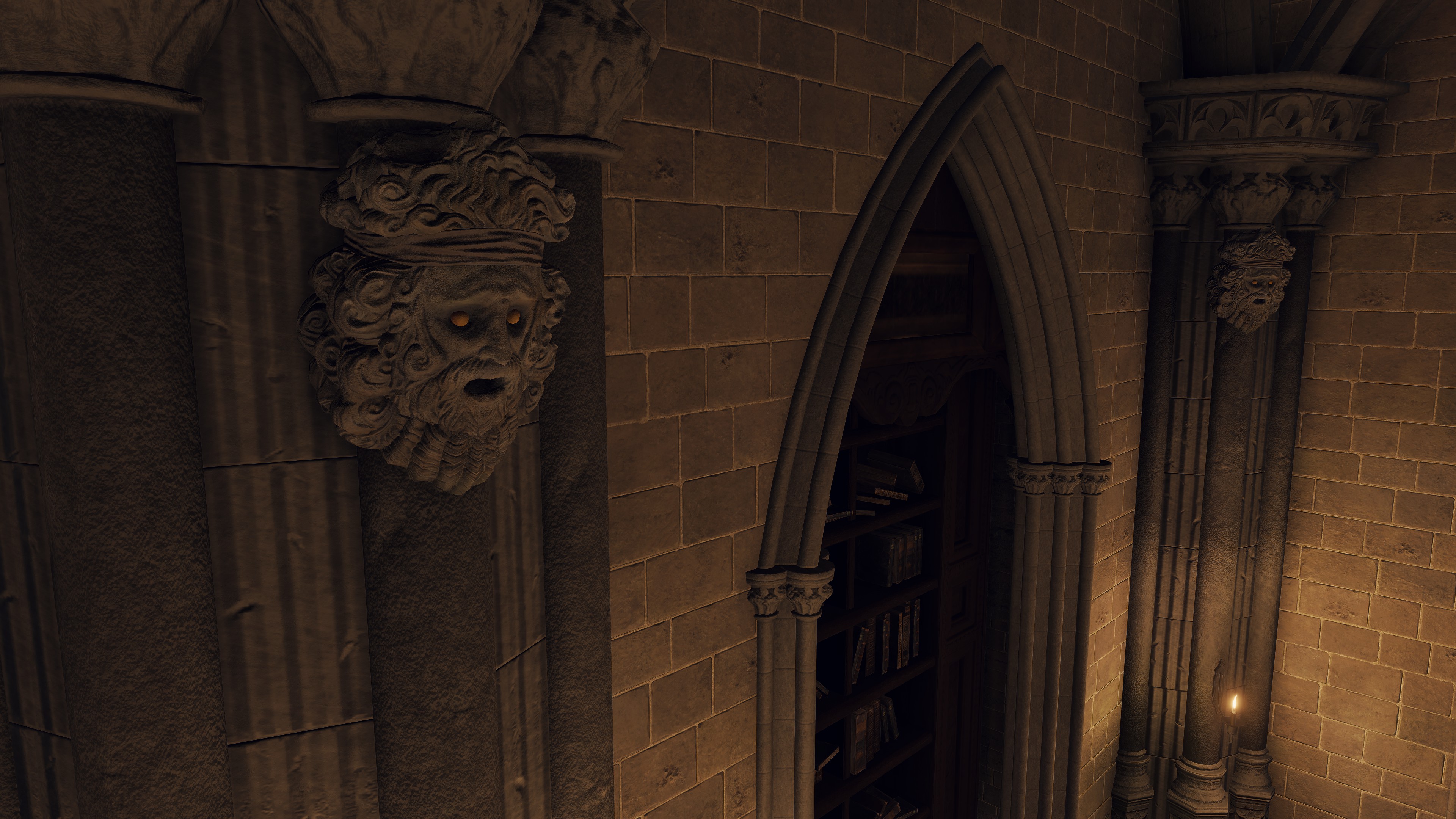
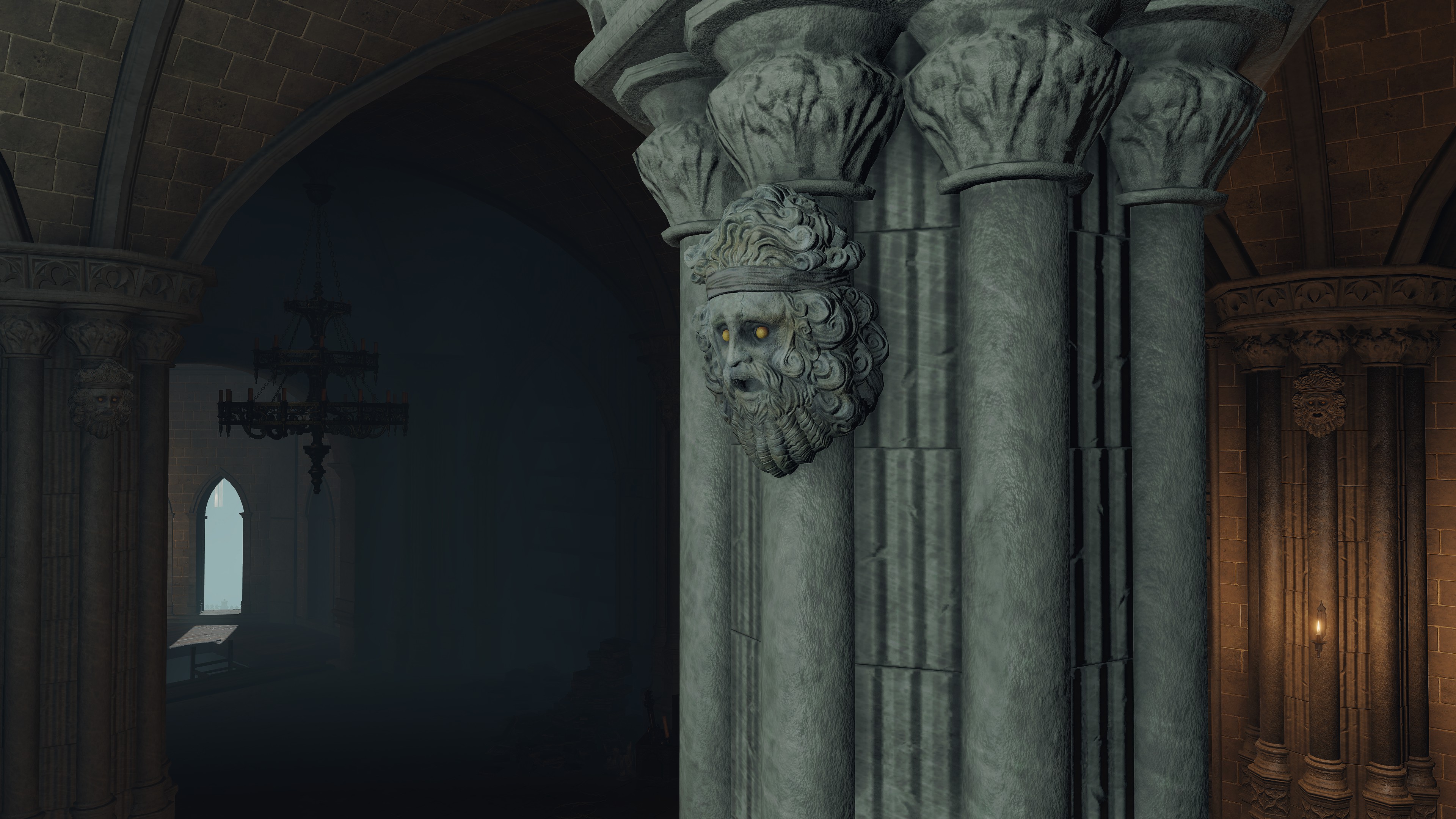
With his fancier status markers, Lusat was likely the more visible of the two. Exploring the academic halls and classrooms, we commonly spy heads of the Olivinus Conspectus hanging on the corners and columns of every wall, looking down on where the students learned and walked. This gives the impression of Lusat’s class acting as a sort of hall monitor. He and Azur may have made all the final decisions, but if both held a veto over the other’s choices, the friction would hinder the academy’s growth. Thus, it was logical to split the different responsibilities. As head of the oldest class, Azur could take charge of the broad decisions for building, expanding, and organizing the academy’s framework. Meanwhile, Lusat might have served as the dean in charge of management for that system. It is only too fitting that the ones studying shooting stars be assigned to monitor the flow of students each day, ensuring they remain properly diligent with their studies. In this way, Karolos and Olivinus were checks upon each other, respecting their masters’ coequal authority.
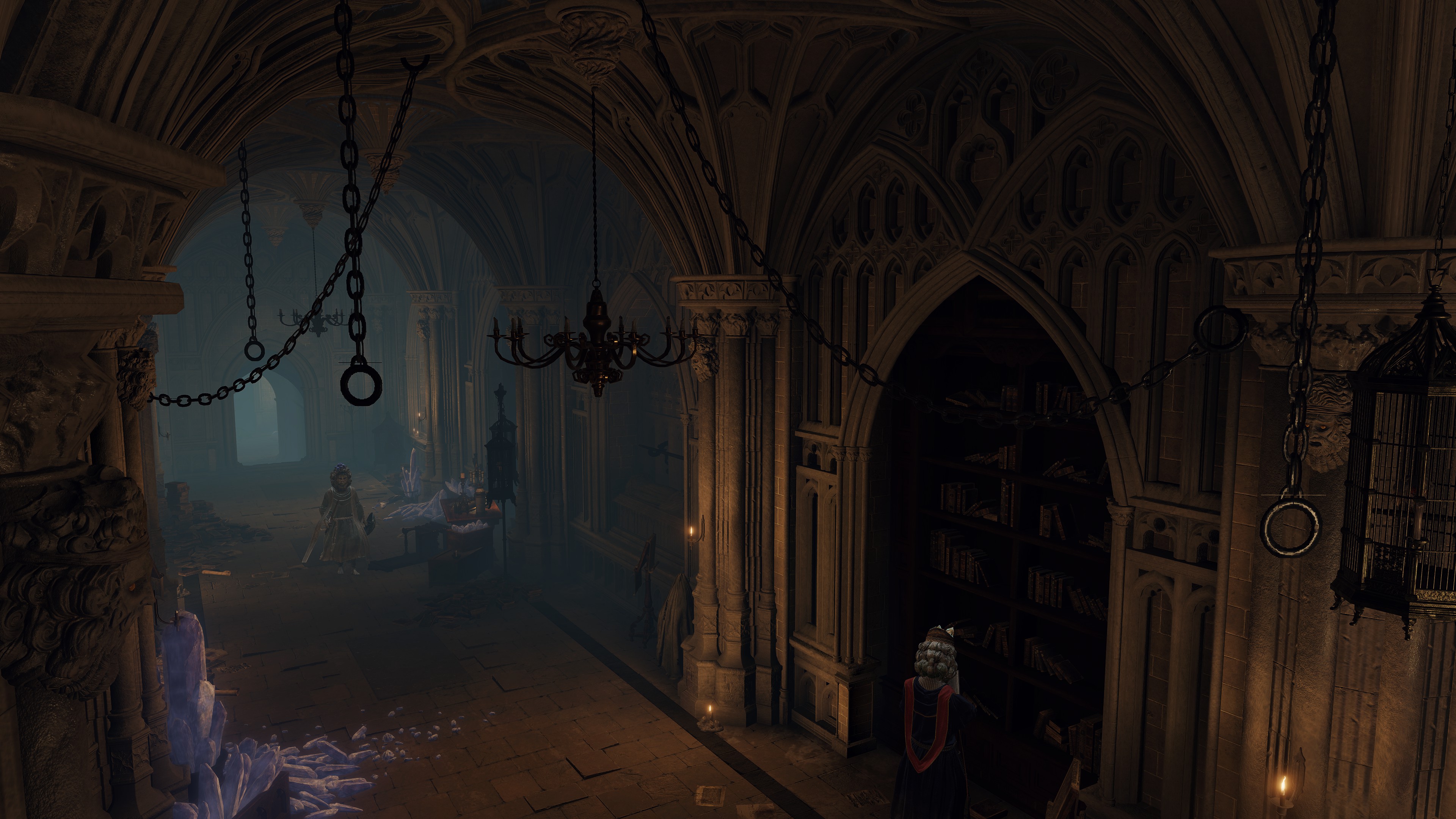
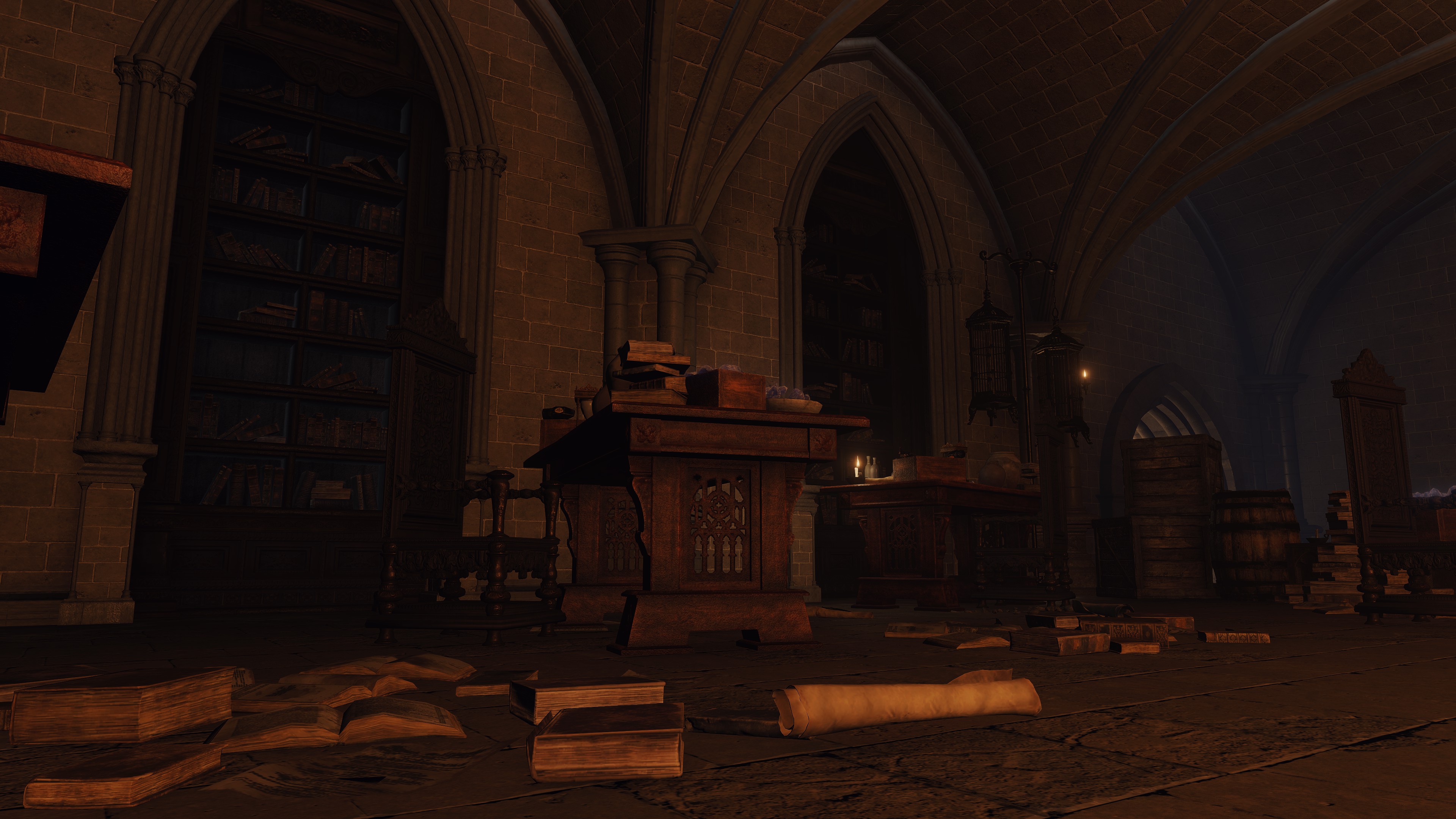
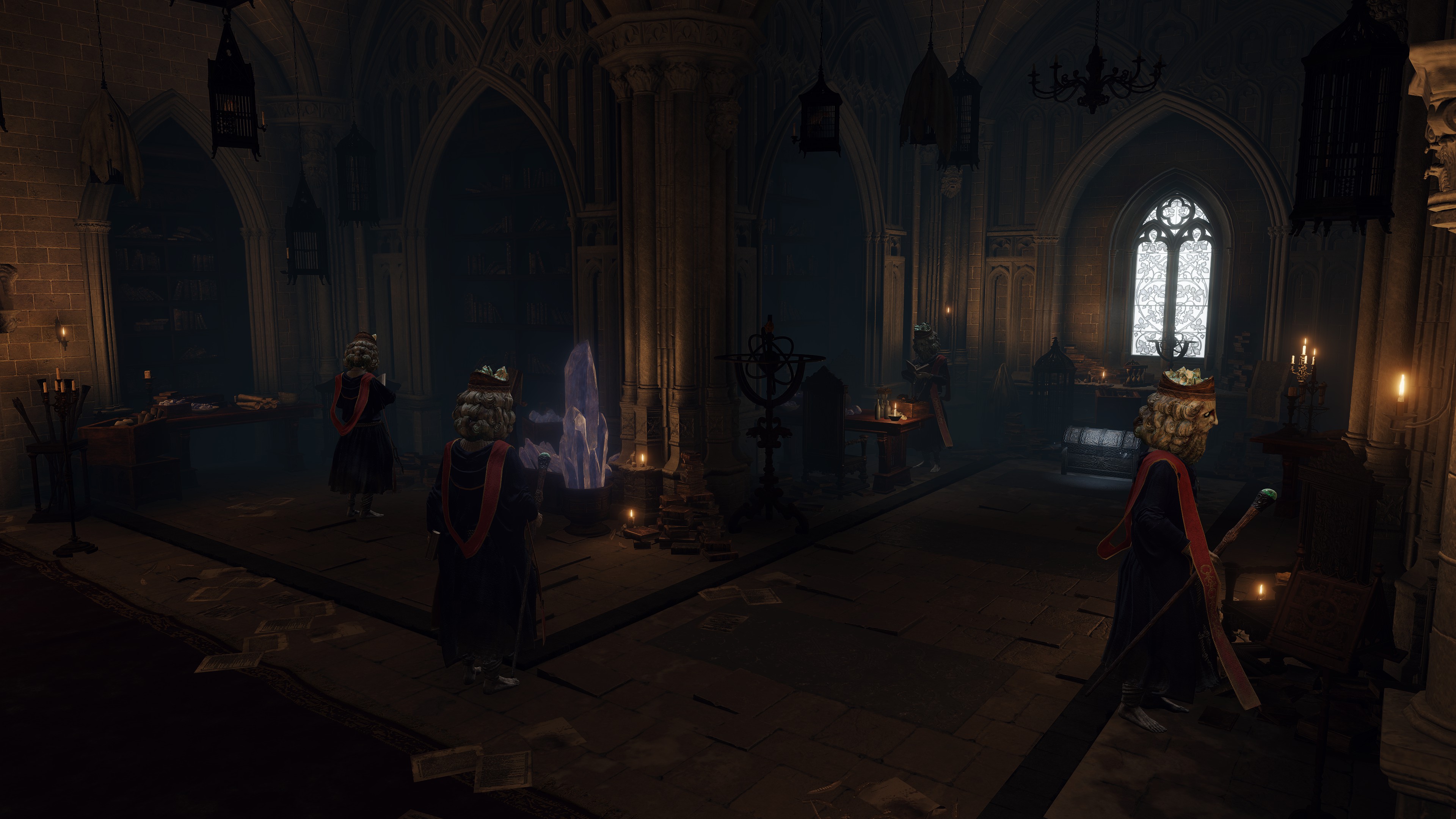
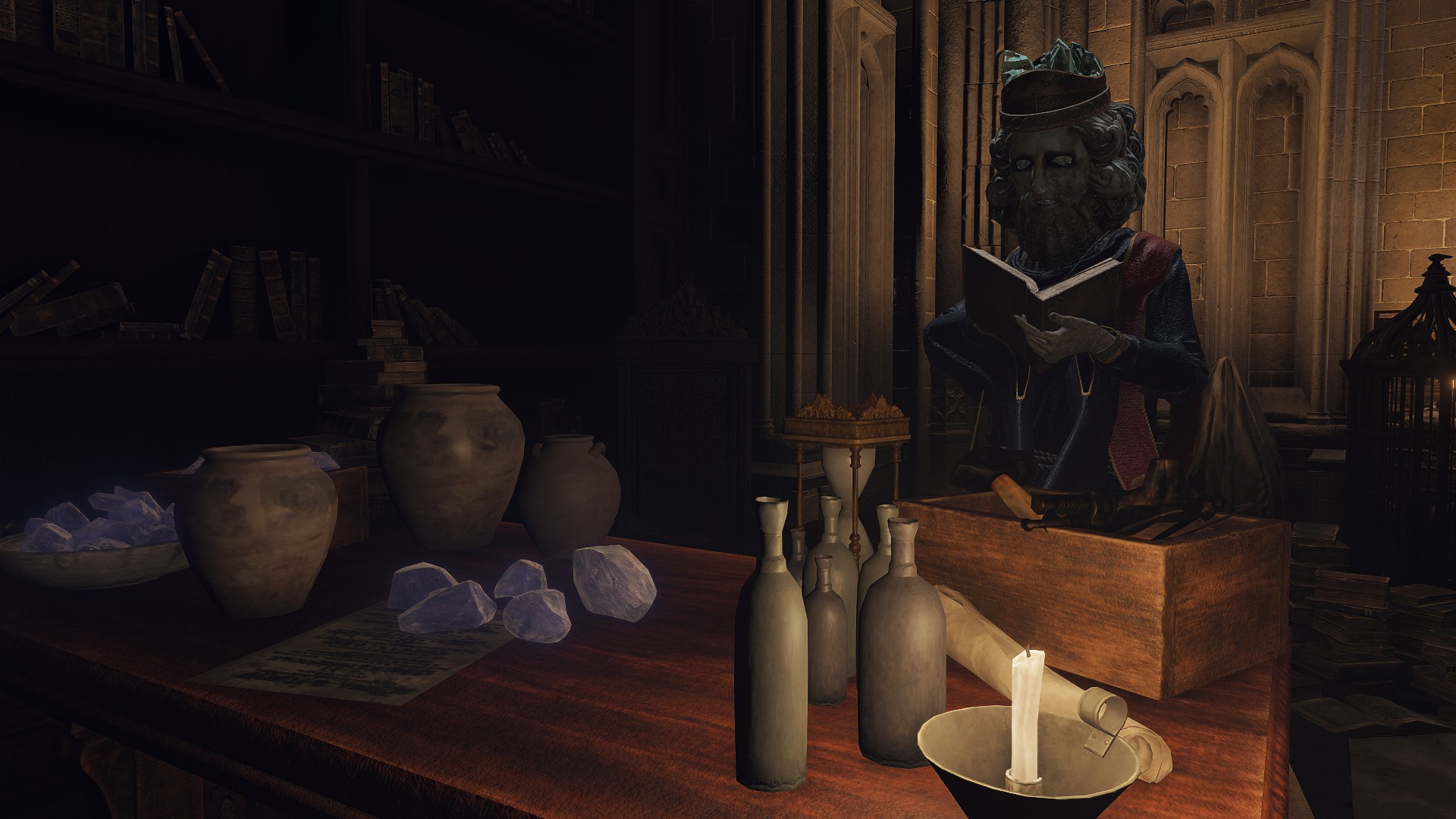
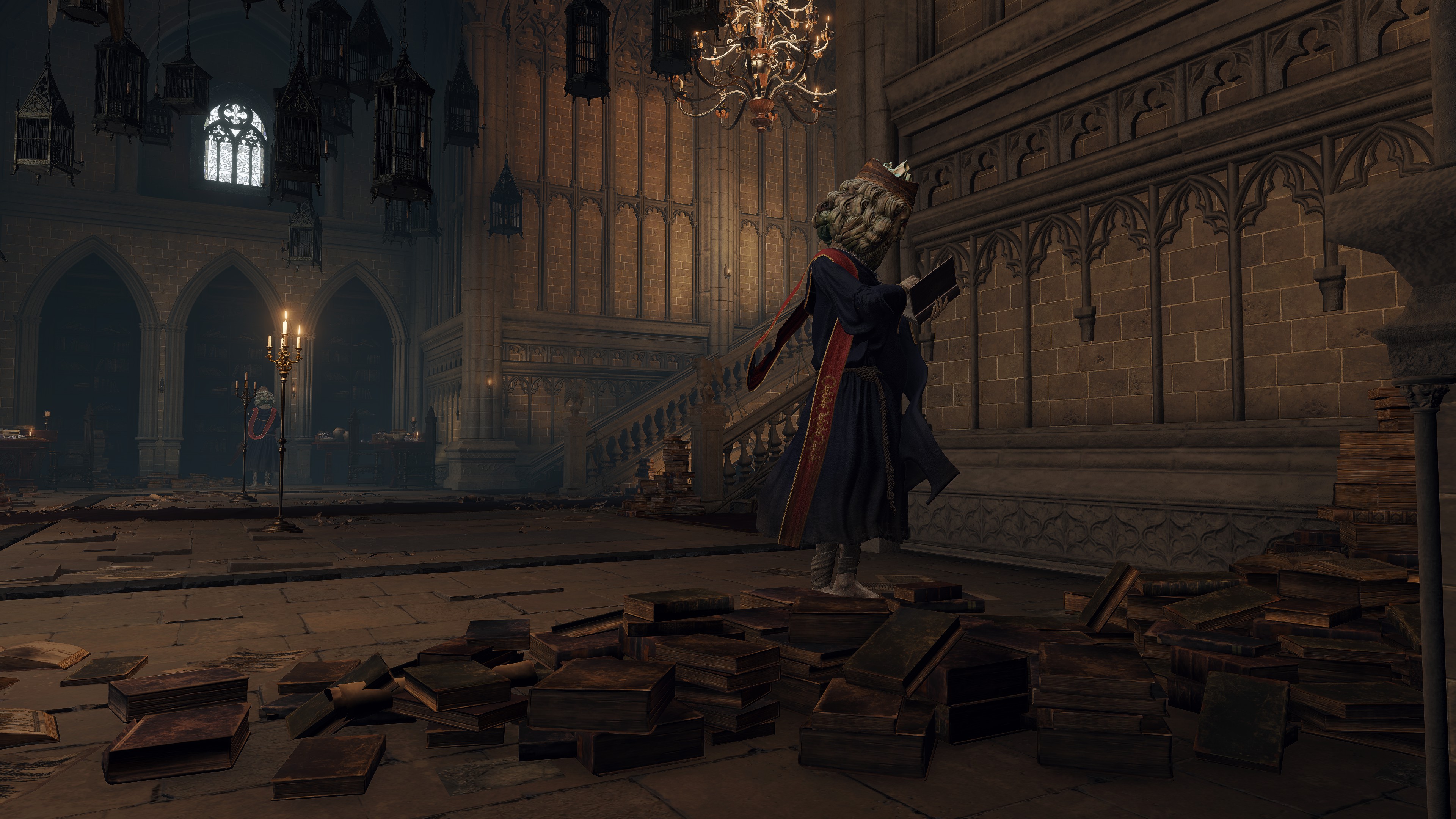
By dividing the background and day-to-day tasks between themselves, the two primeval sorcerers could continue working as teachers, pursuing their own research, and running a growing and complex institution. In time, it became the academy we know today, with shelves upon shelves of books demonstrating the amount of knowledge cultivated there. The name Raya Lucaria itself appears to be a play on the English ray, referring to light, and the Latin lucar, denoting a sacred grove — making the academy a “holy forest of light”. Nothing could better encapsulate the place’s meaning to sorcerers. Forests are often a poetic allusion for libraries, and light ties into both the stars and enlightenment. For glintstone sorcerers, a forest of books recording the illumination of countless researchers across generation was sacrosanct, turning Raya Lucaria into a holy land that soon every sorcerer, from Sellia to Laskyar, needed to attend for their own erudition. What started from humble beginnings became the center of sorcery in the Lands Between.
A World Their Own
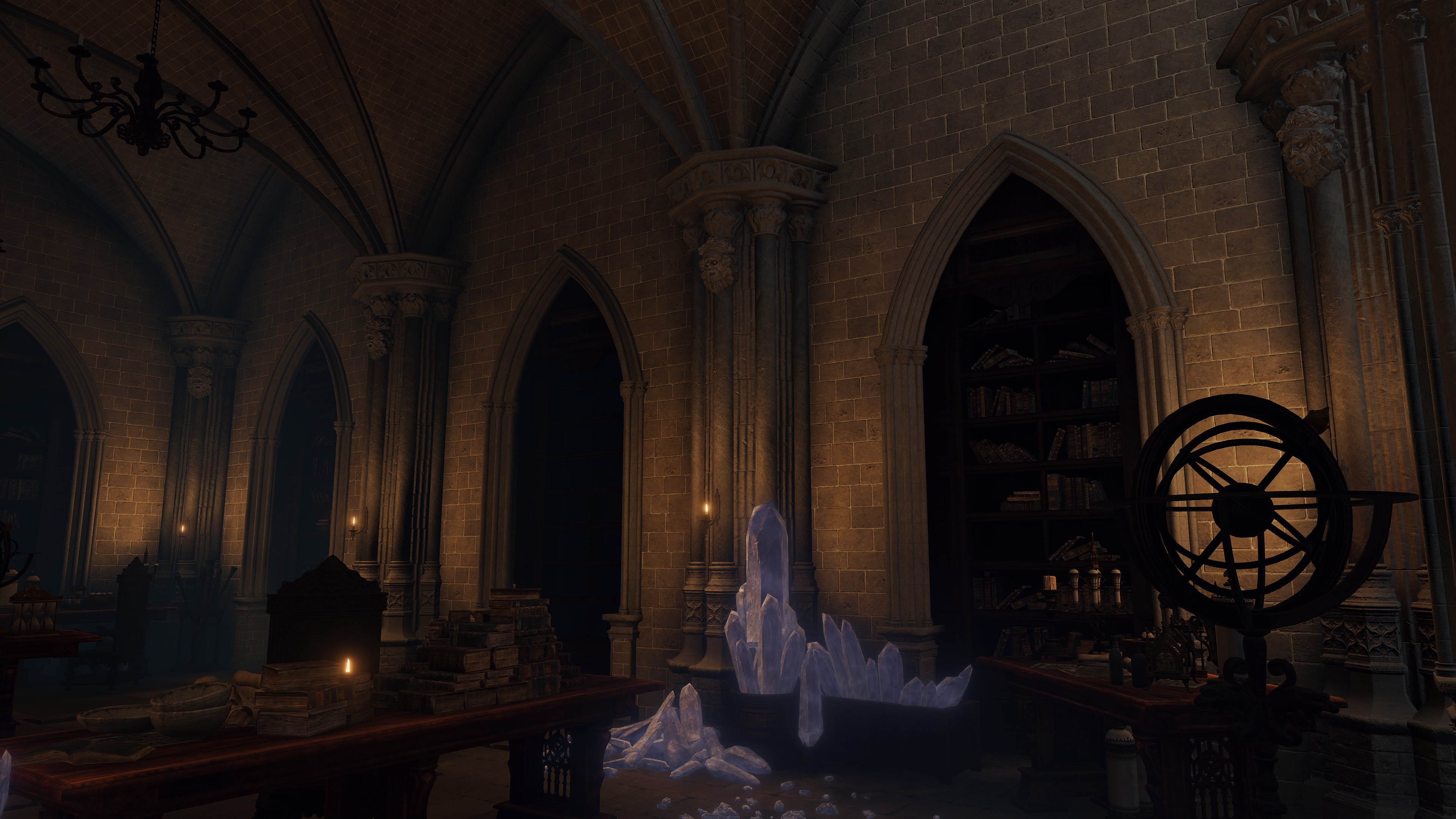
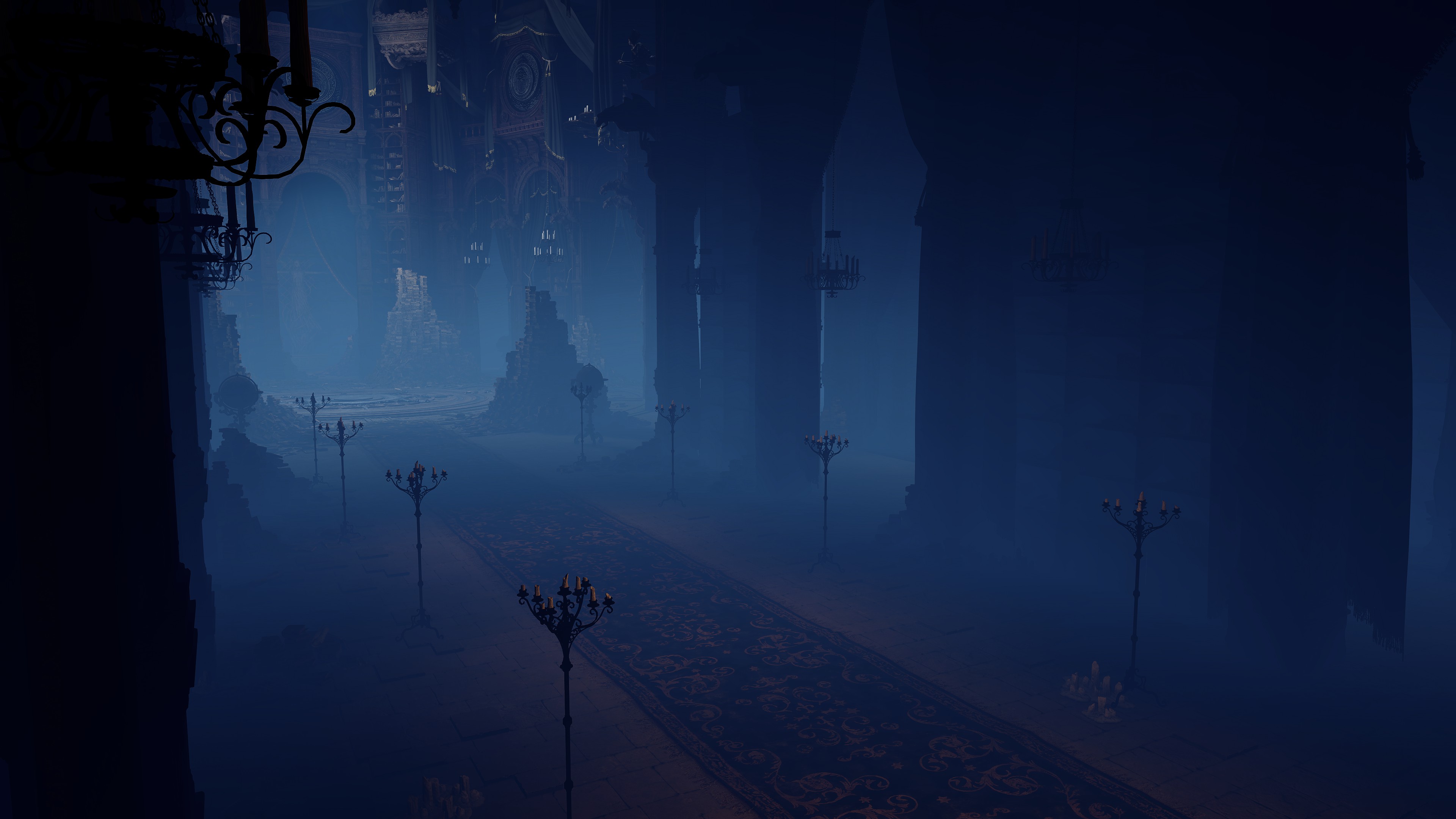
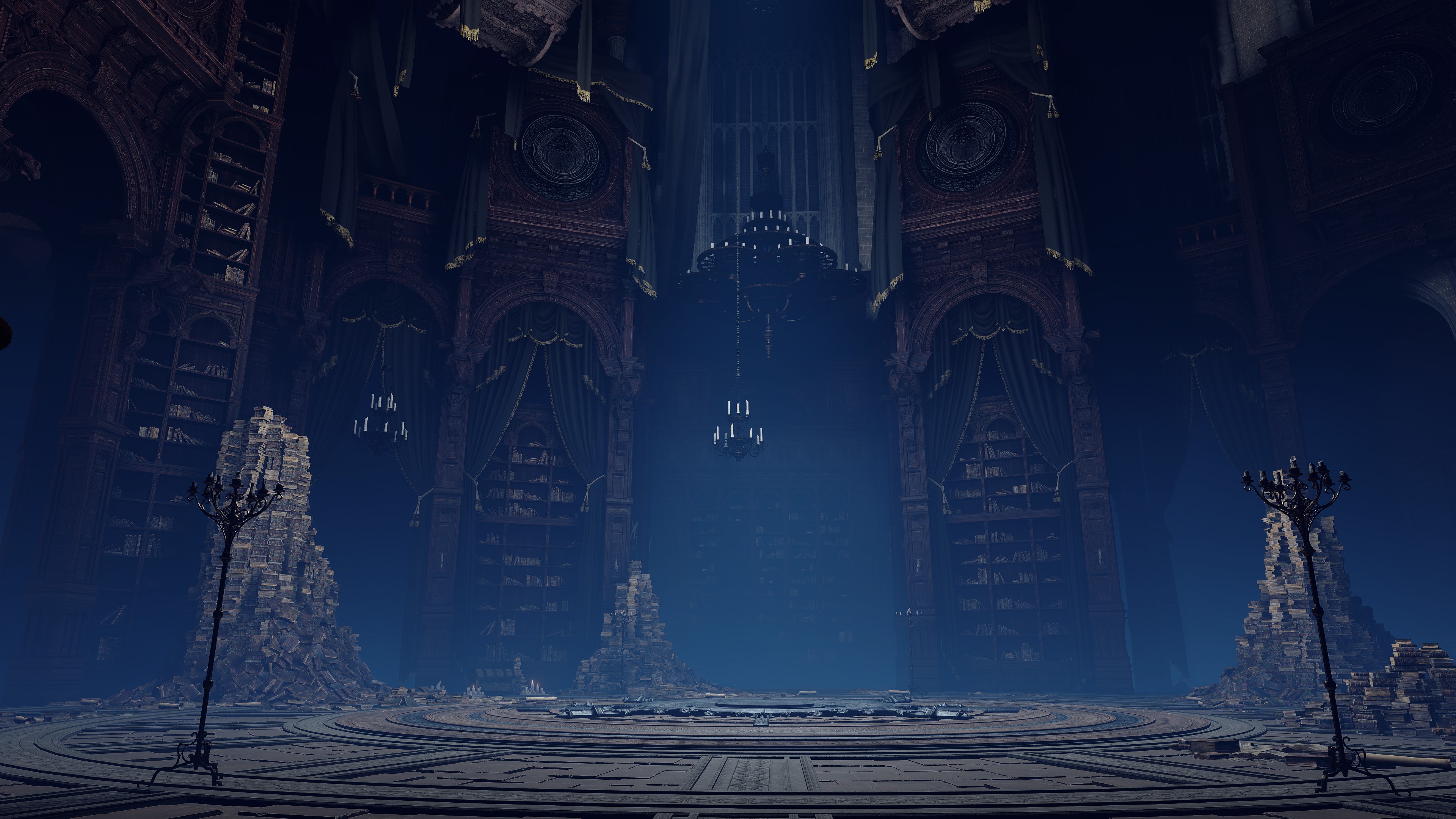
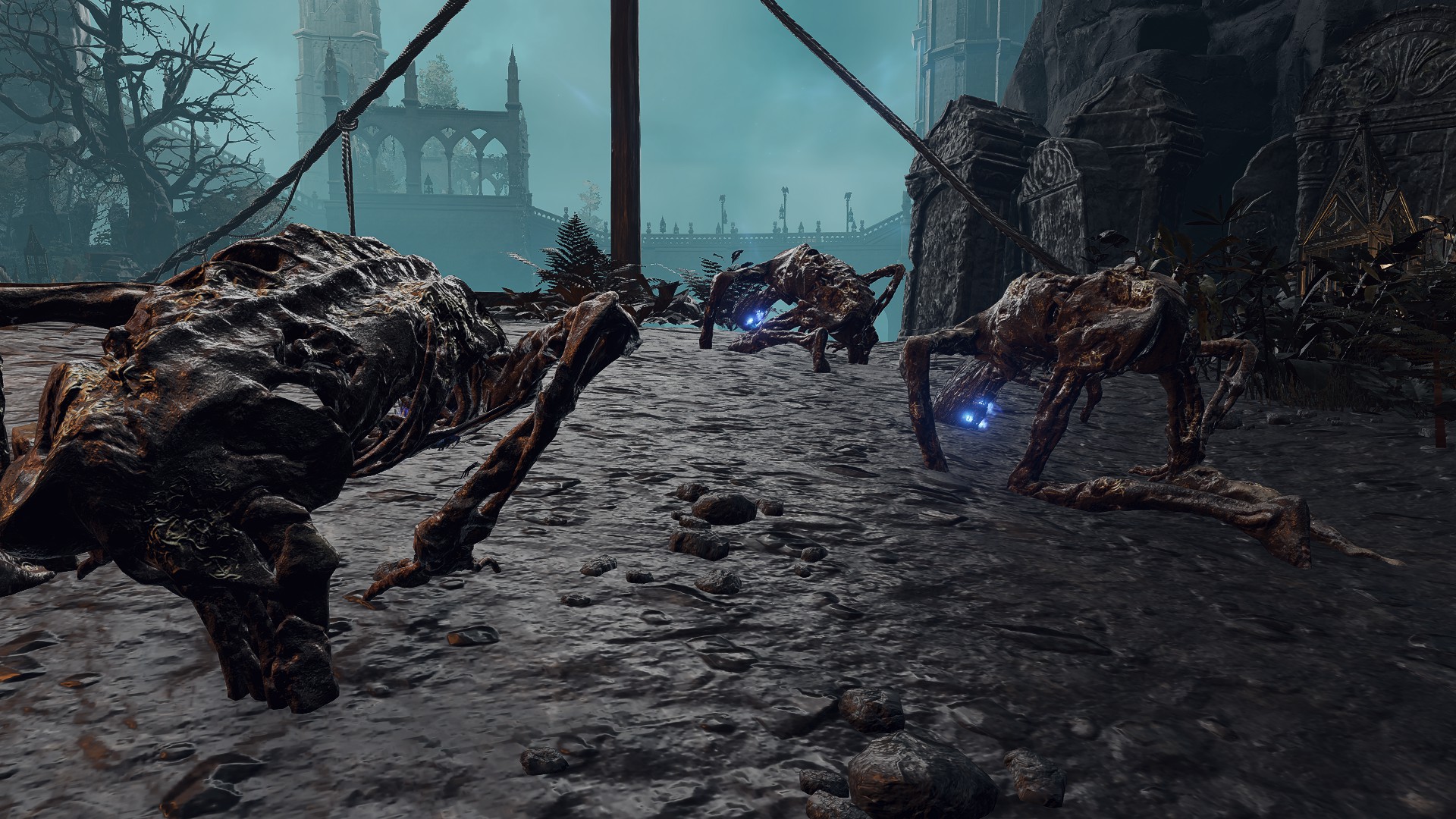
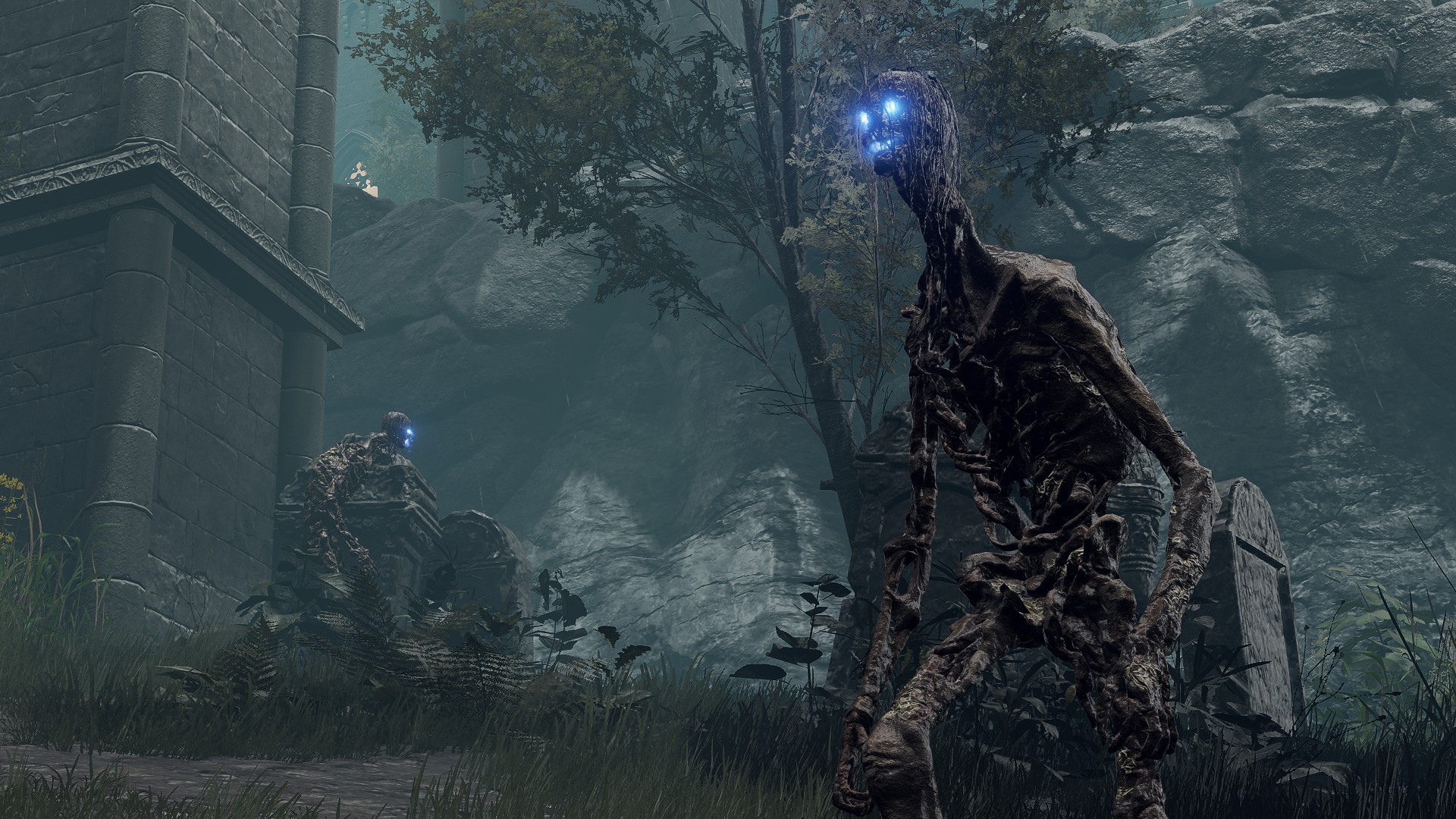
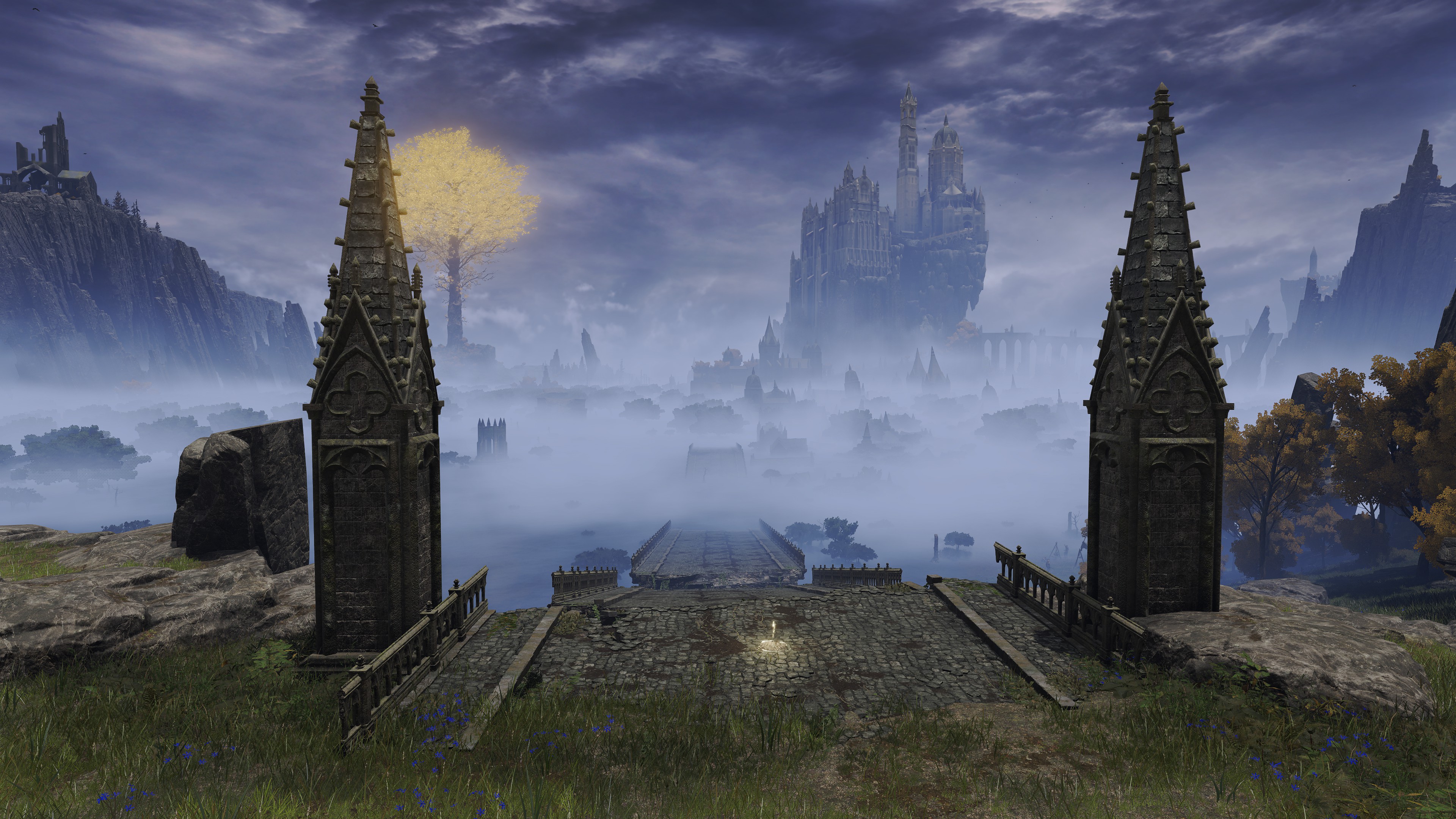
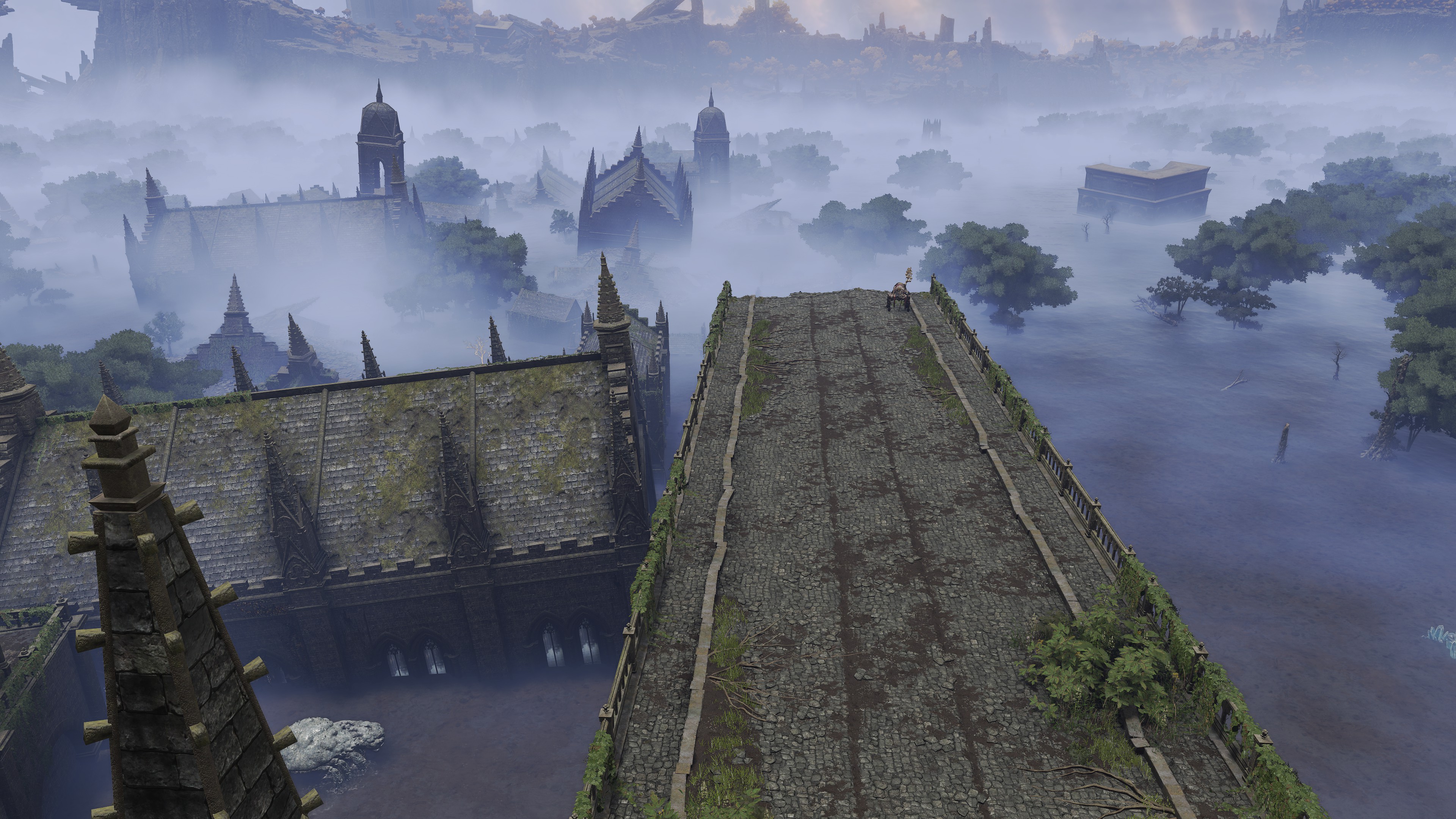
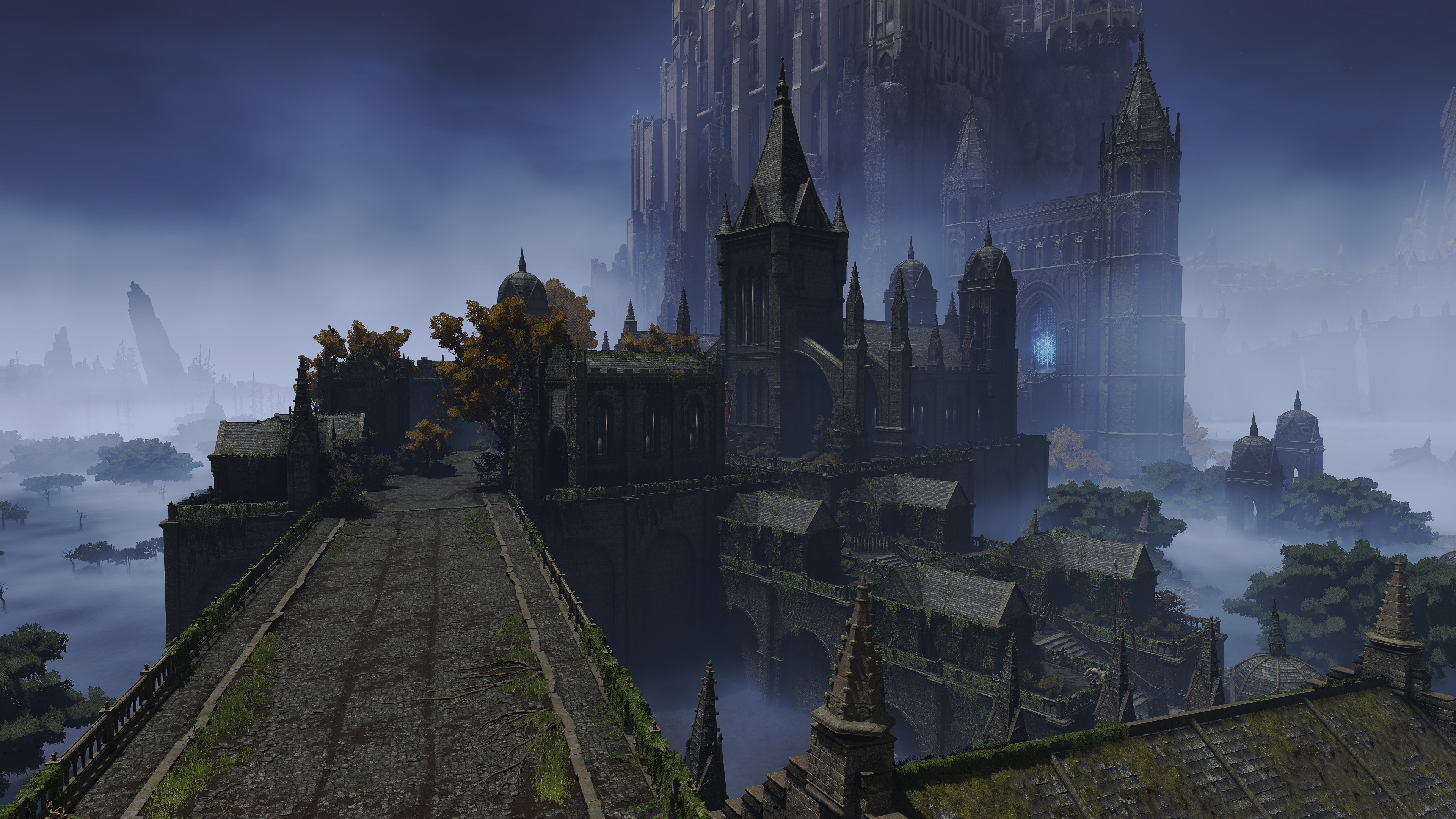
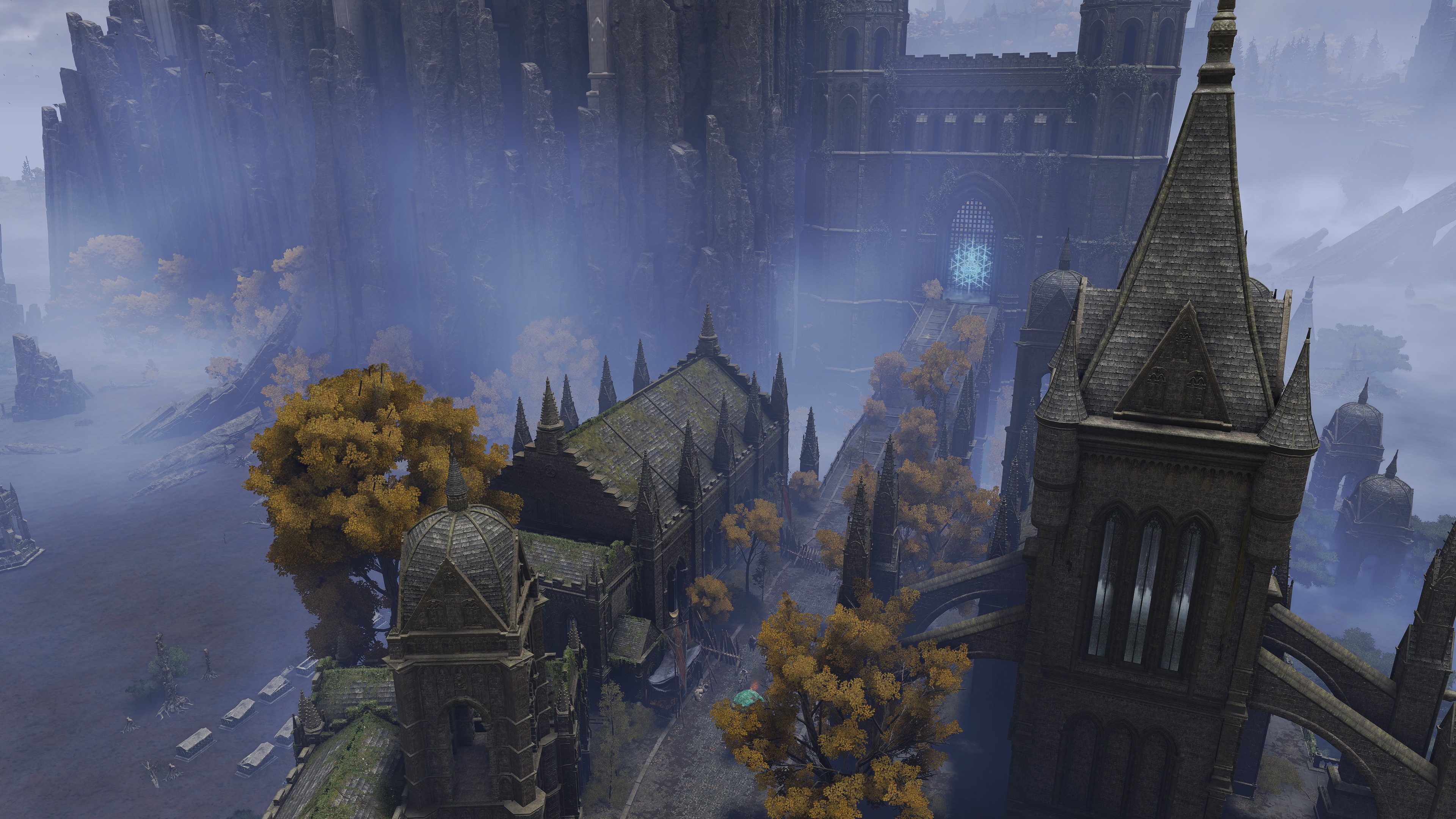
Raya Lucaria wasn’t built in a day, but the development of its facilities are straightforward. The north building is dedicated to welcoming visitors, the east building reserves the Grand Library with campus garden, the south building houses classrooms and the Debate Parlor, and the west building is presumably residential. Certainly, the academy is where students live and die, based on the sizable graveyard at the center between the buildings. The rotten bodies rise up with glowing blue eyes and magic claws and bites, sucking the focus right out of us if grabbed — a desperation for the willpower sorcerers need to perform their arts. Attendees are honored with burial on the mount with their precious glintstone, so they must usually die on site regardless of circumstance. As added evidence, this hypothetical dormitory maintains the most miniature bells and a larger bell tower, perfect for signaling to students when to wake and leave for class or return from studies for a good night’s sleep. We see a similar idea at the Church of the Cuckoo, a bell tower by the entrance to signal visitors’ arrival to their reception.
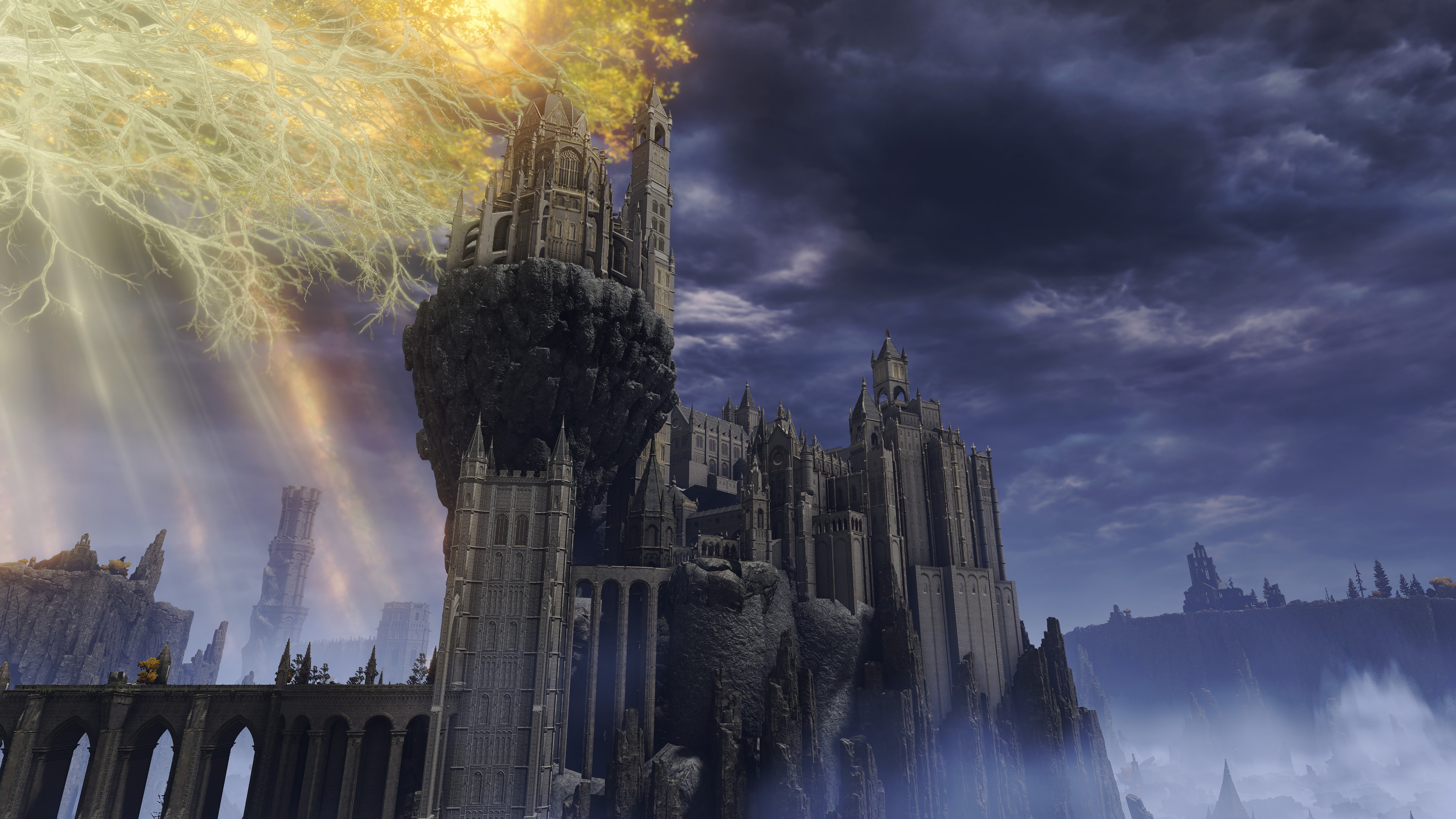
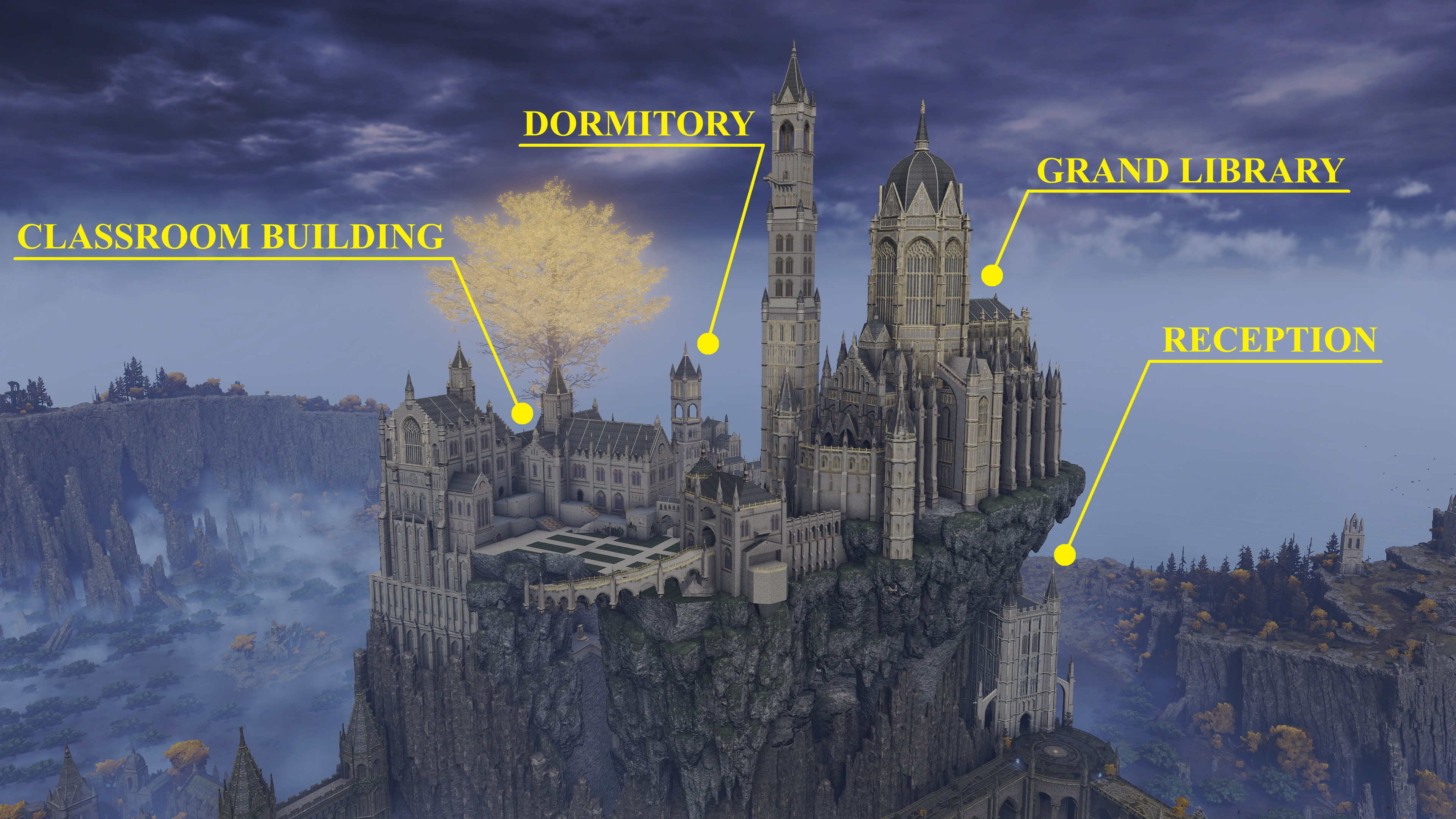
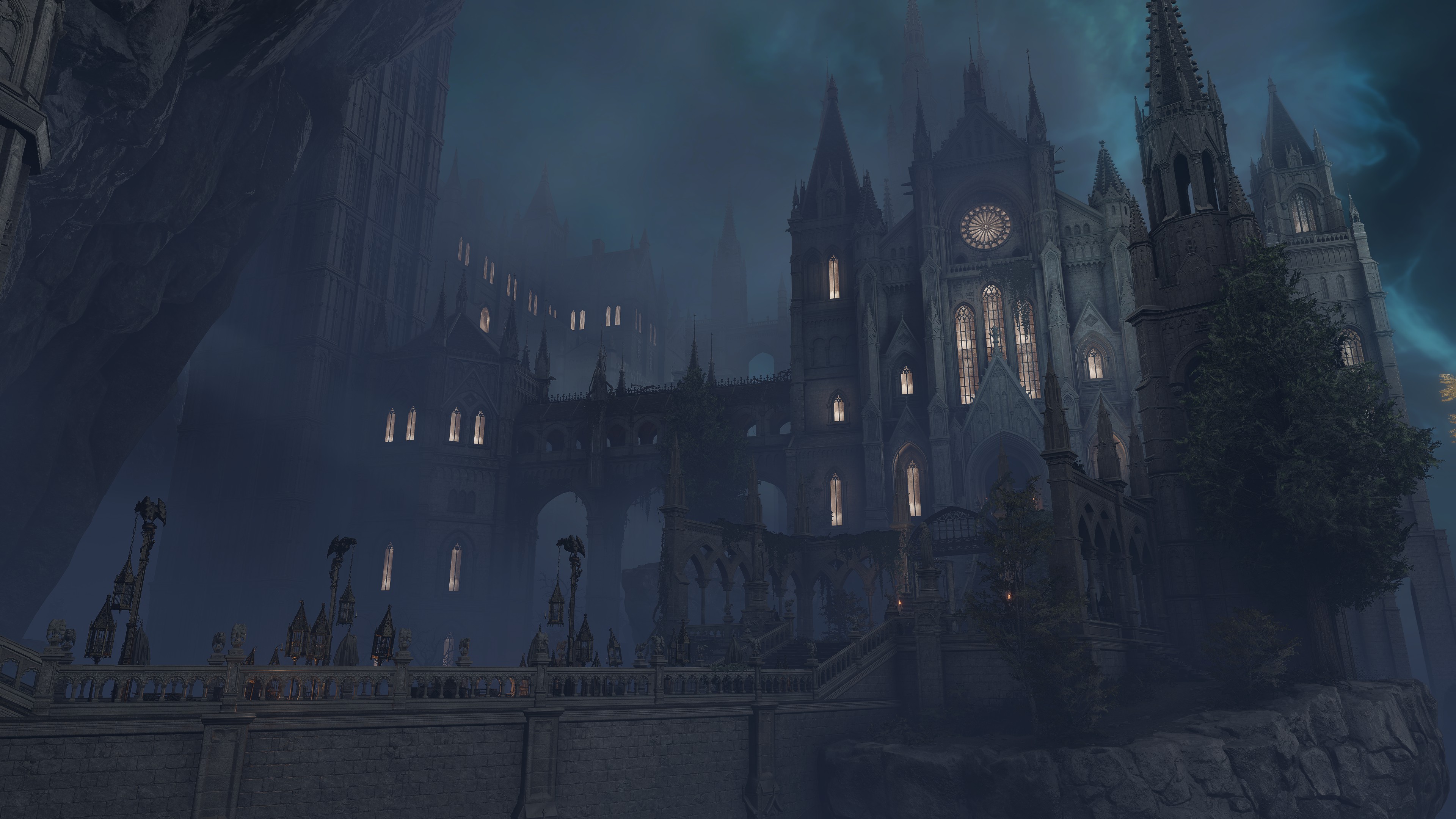
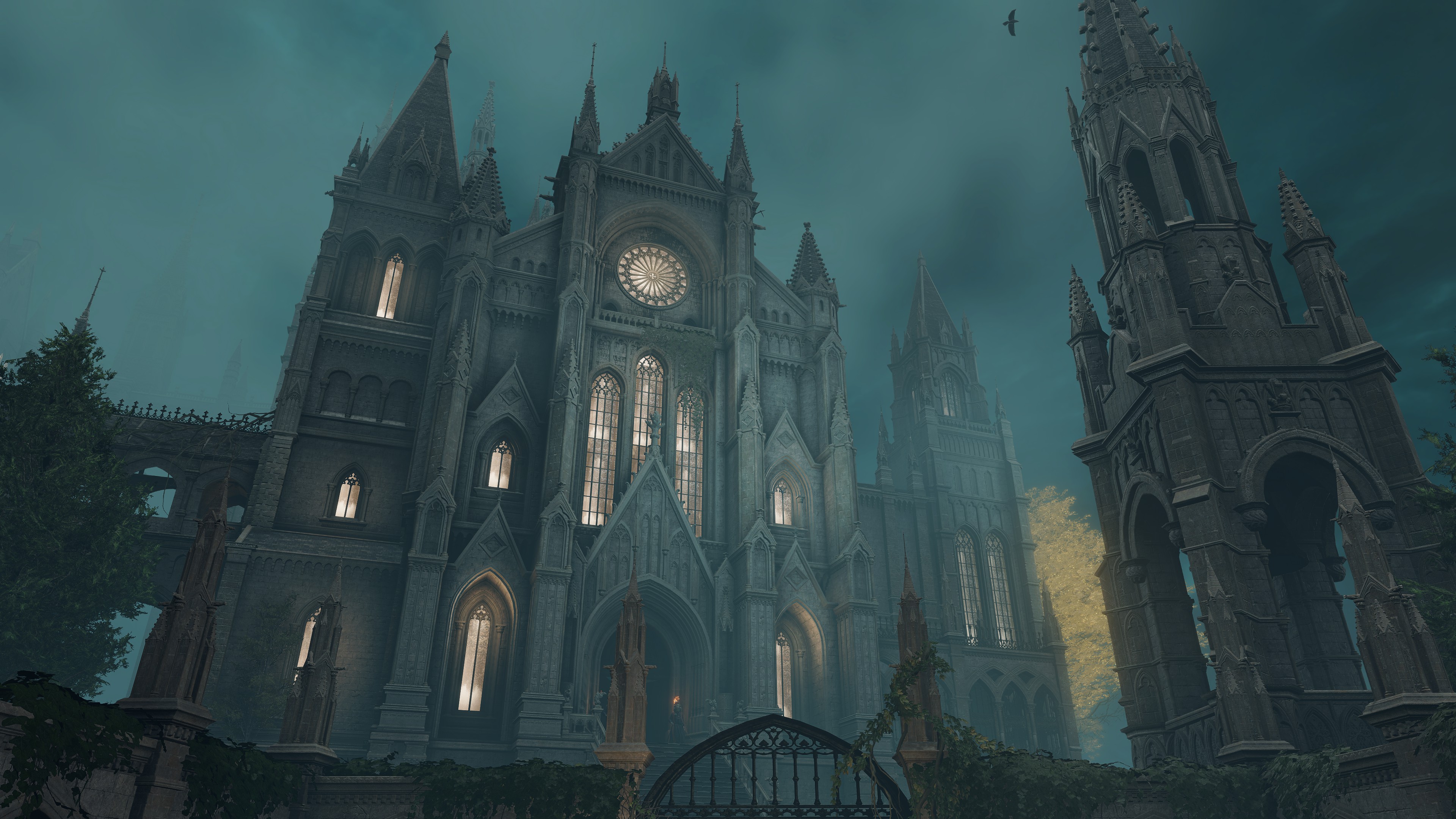
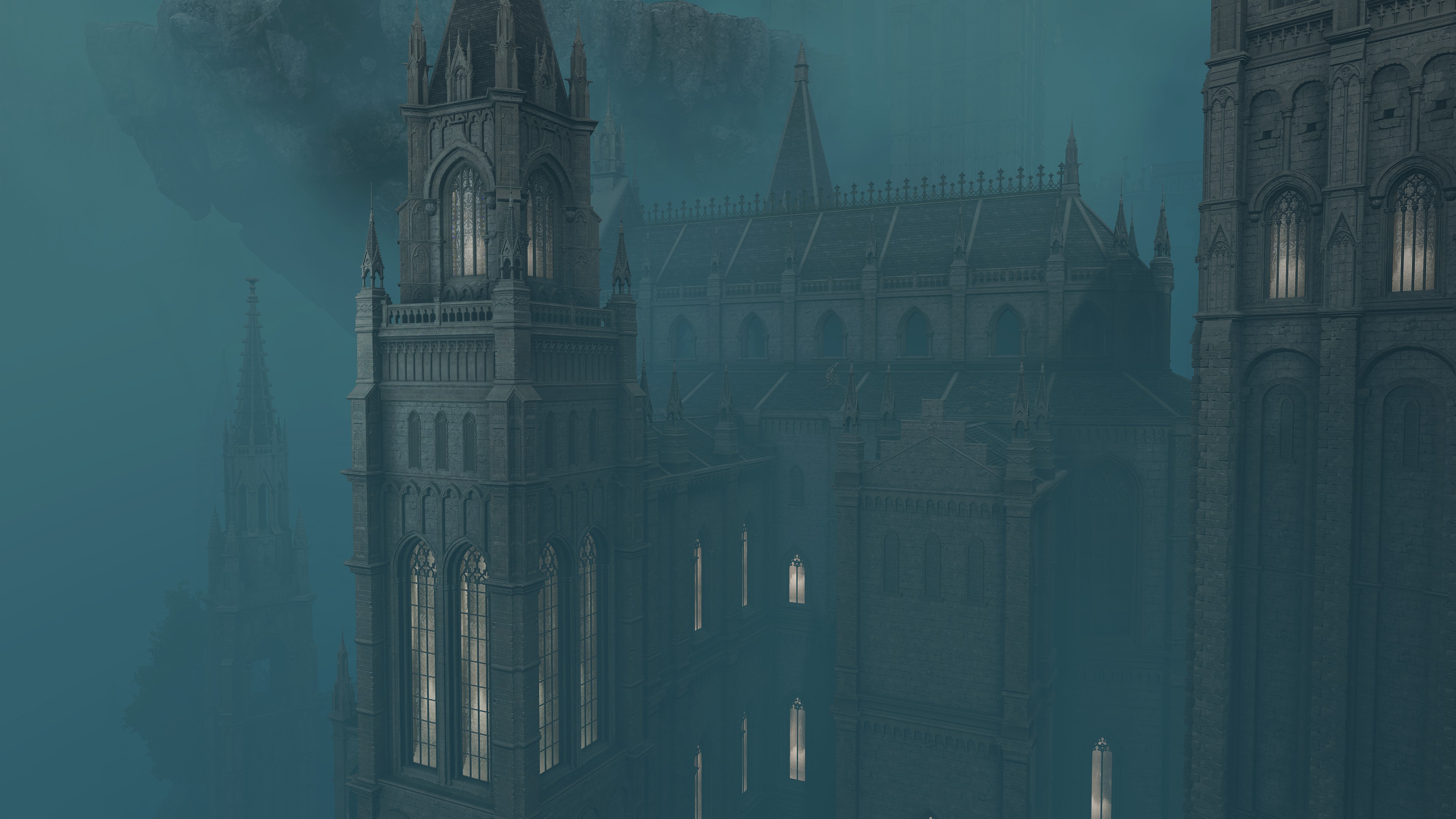
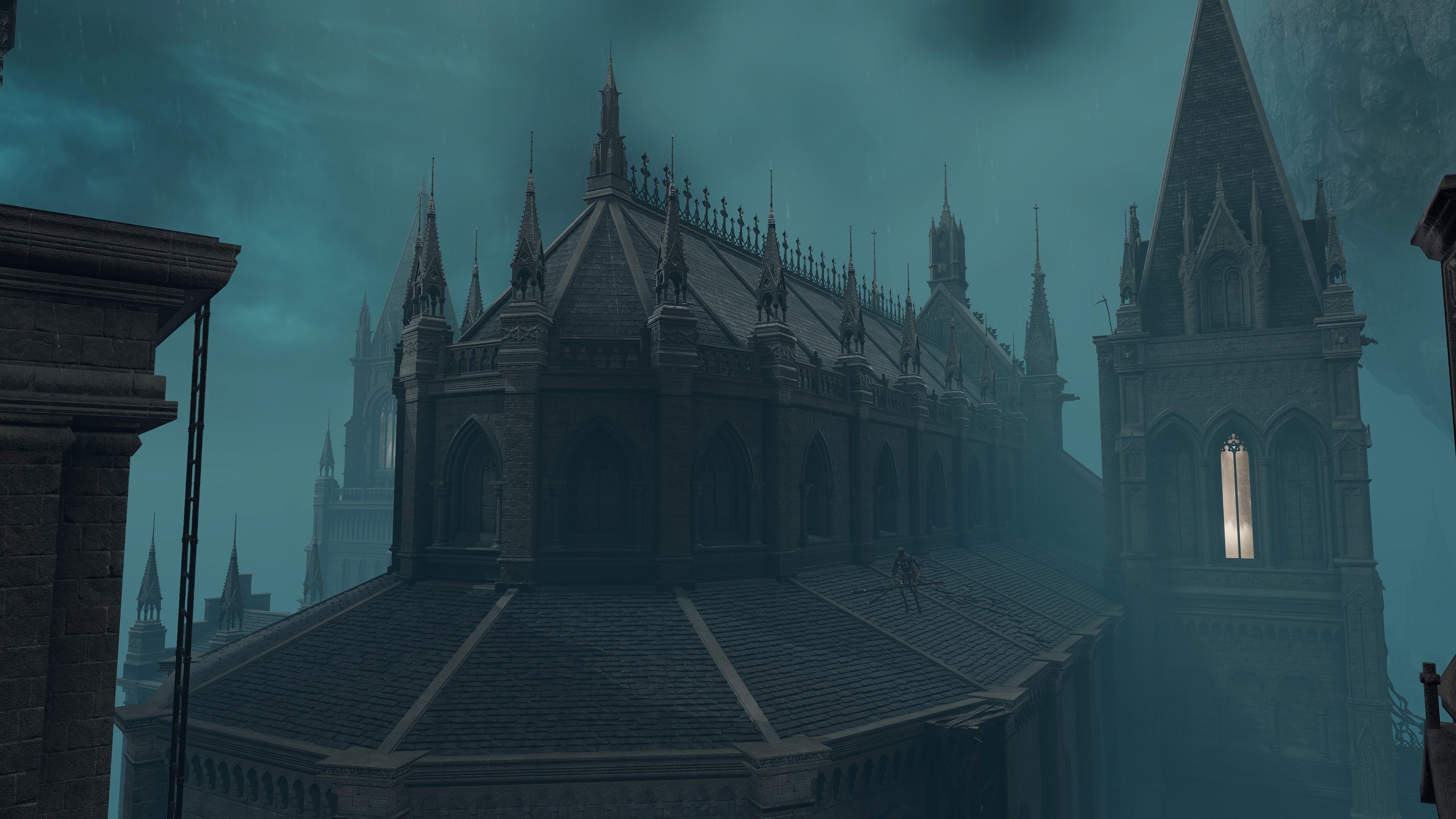
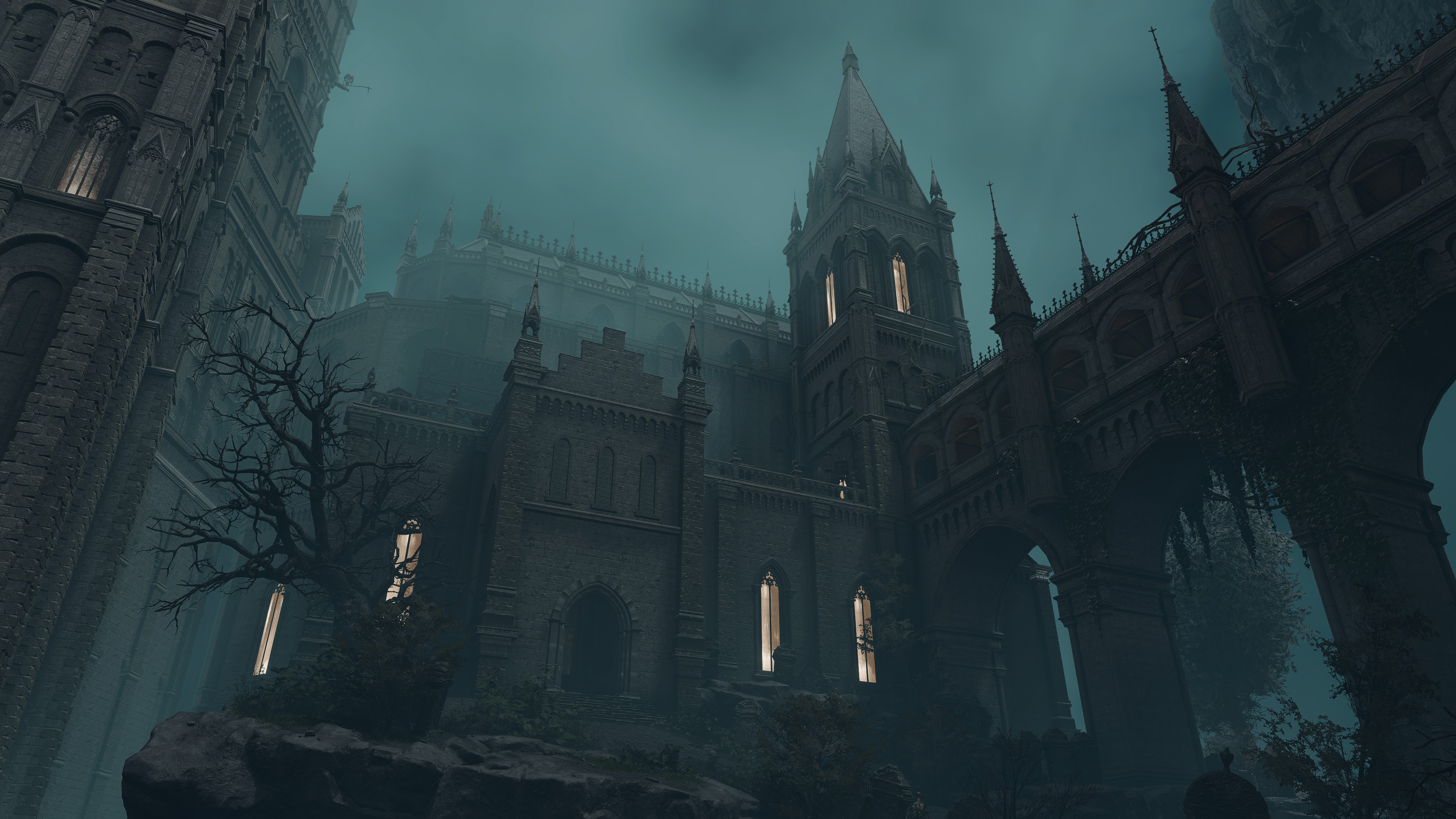
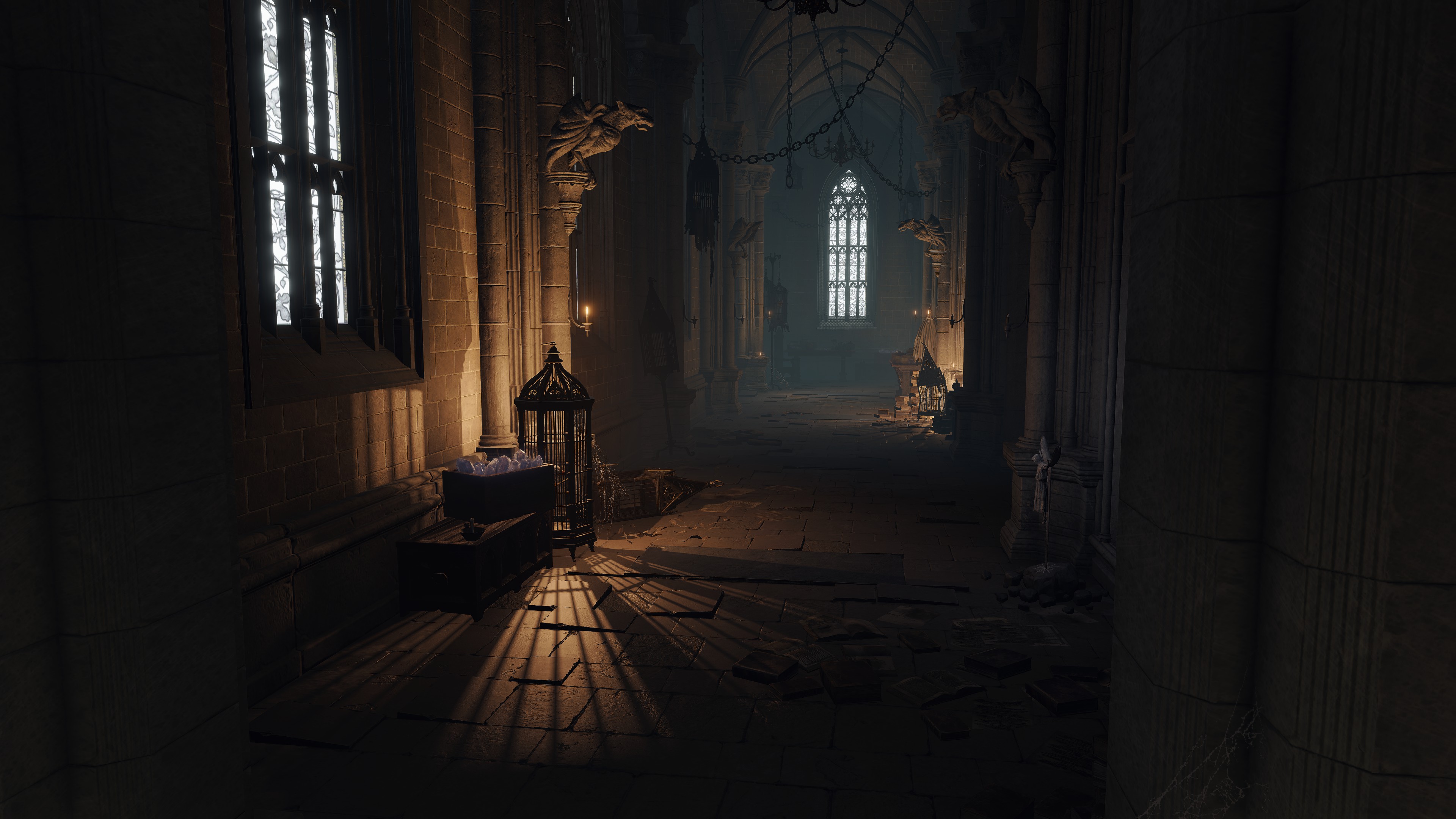
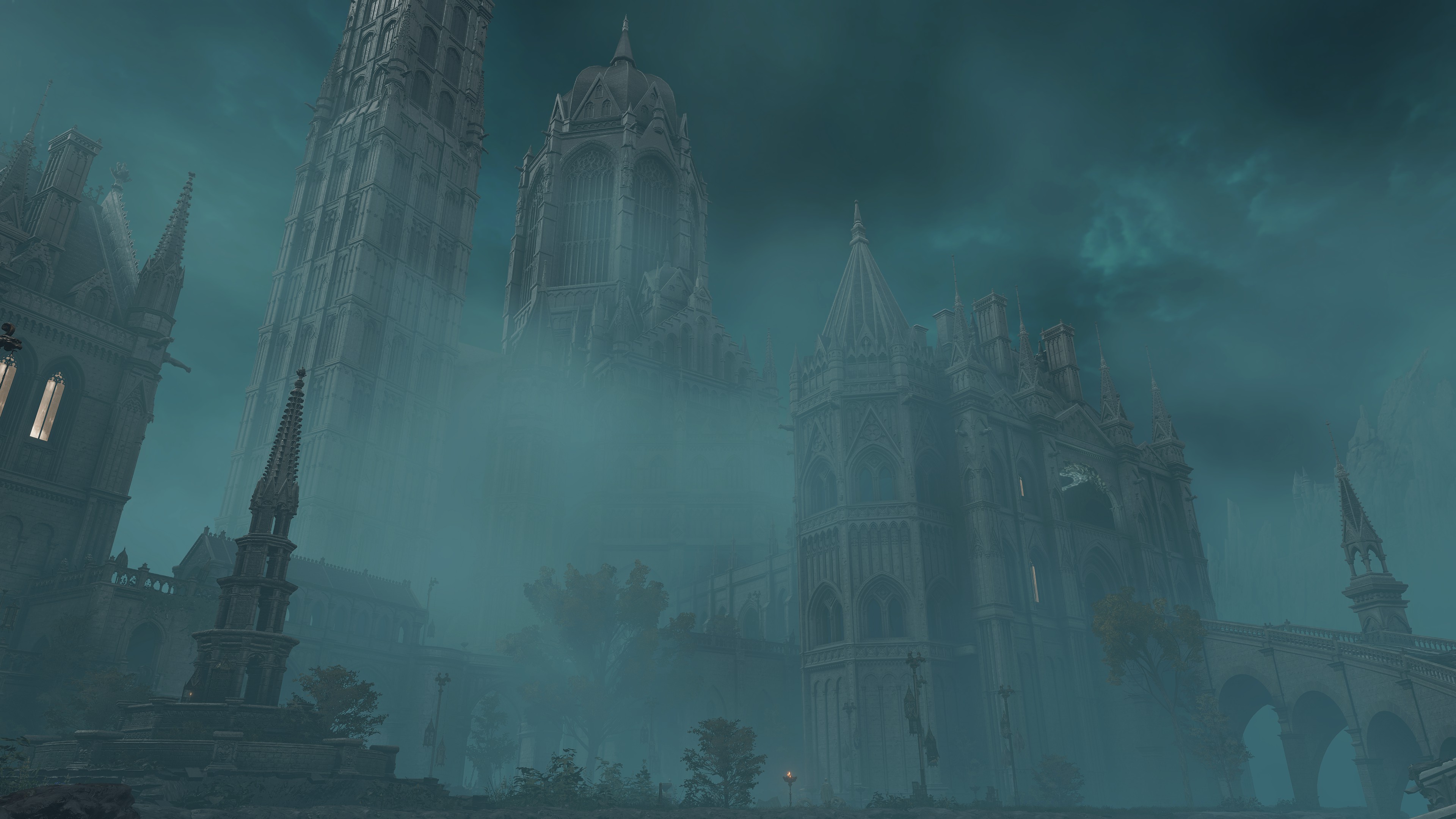
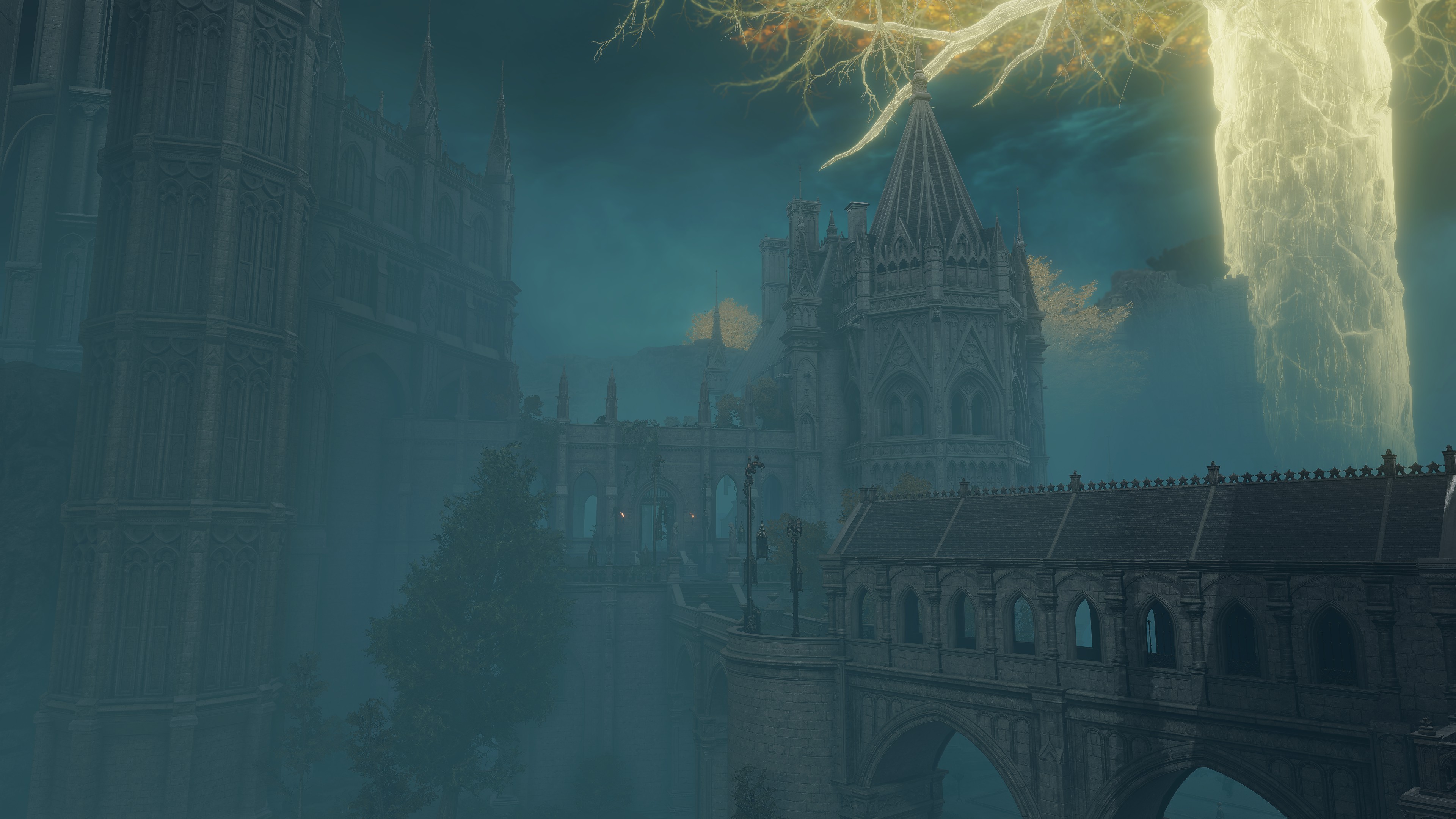
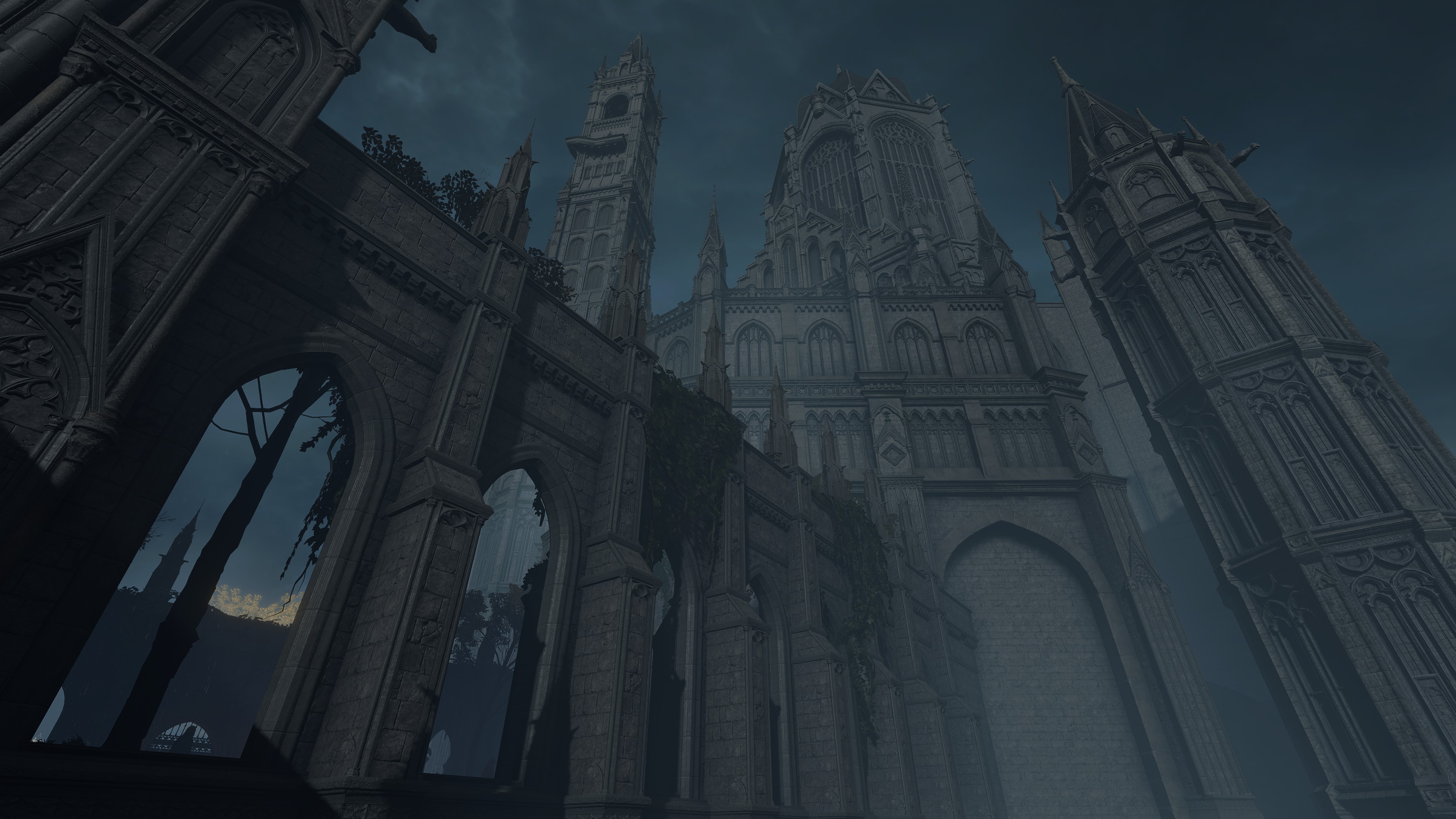
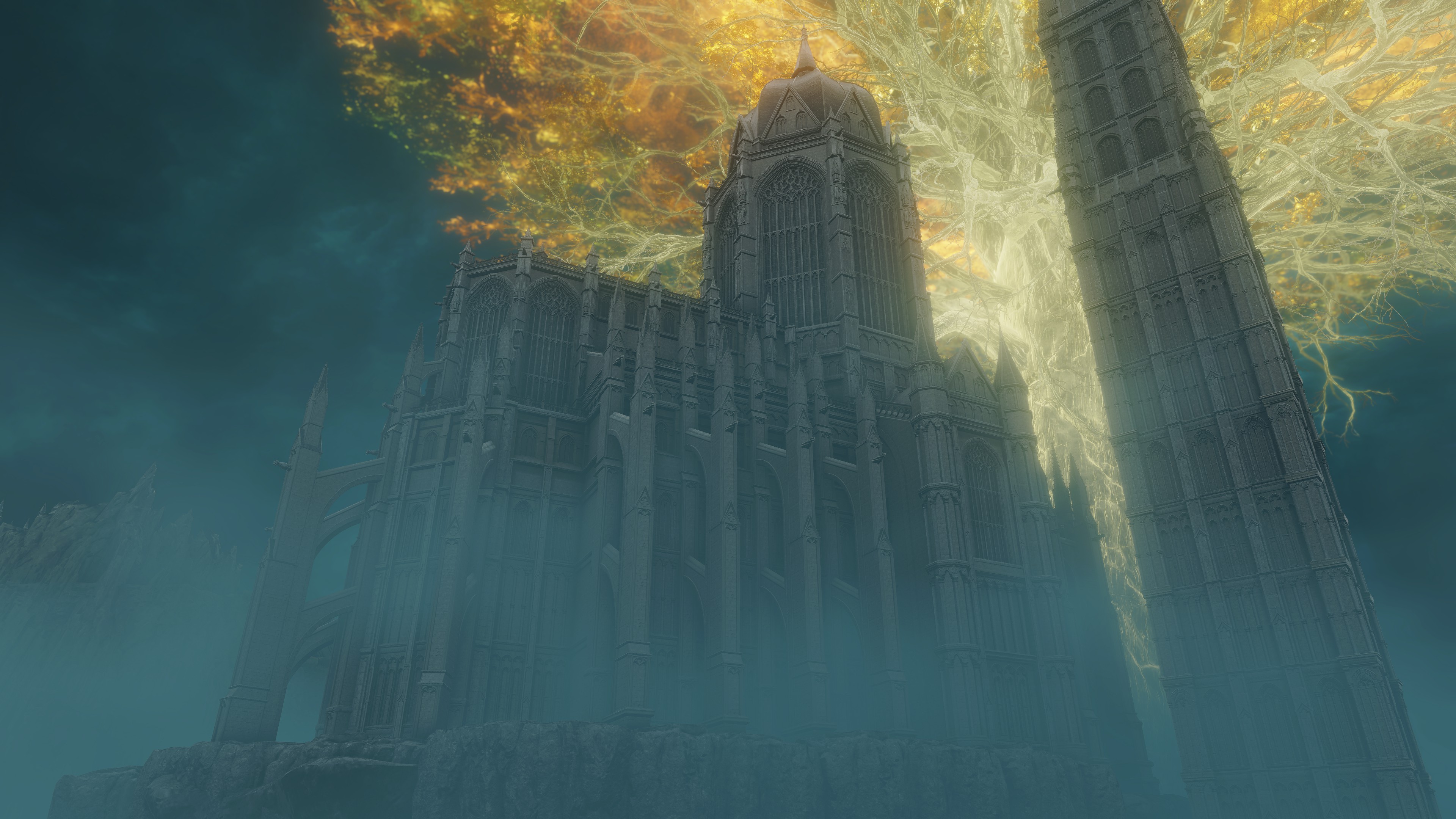
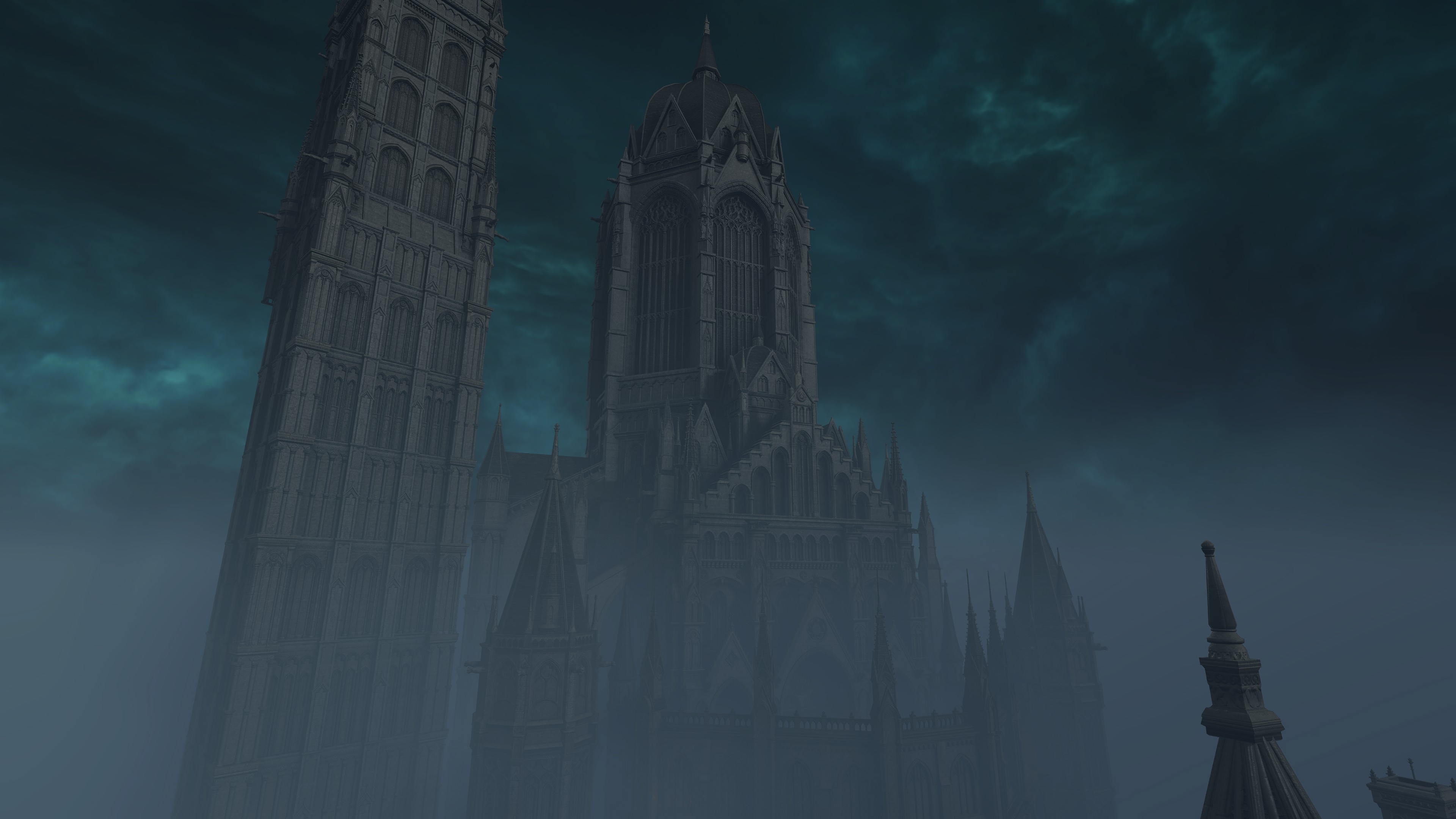
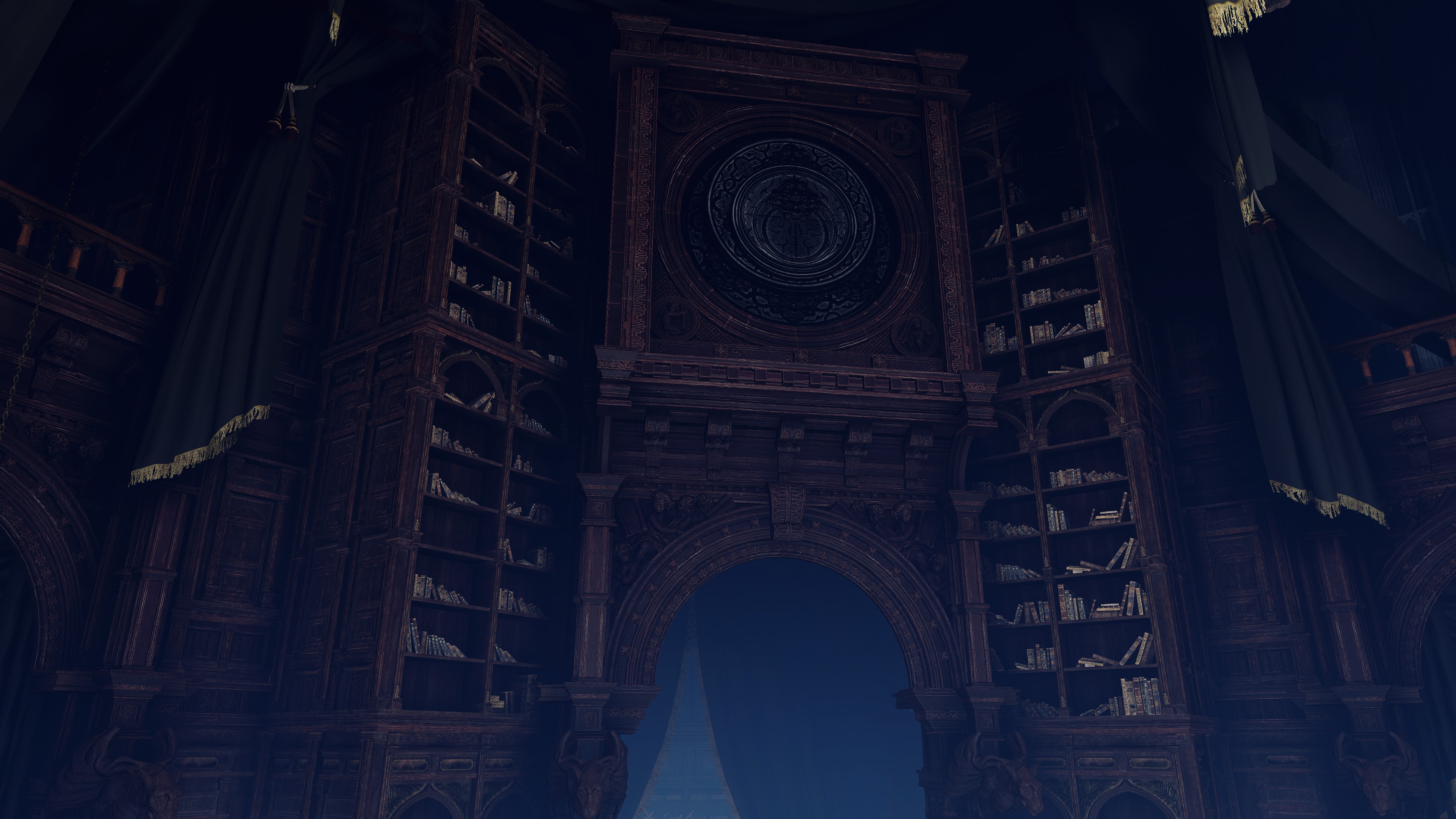
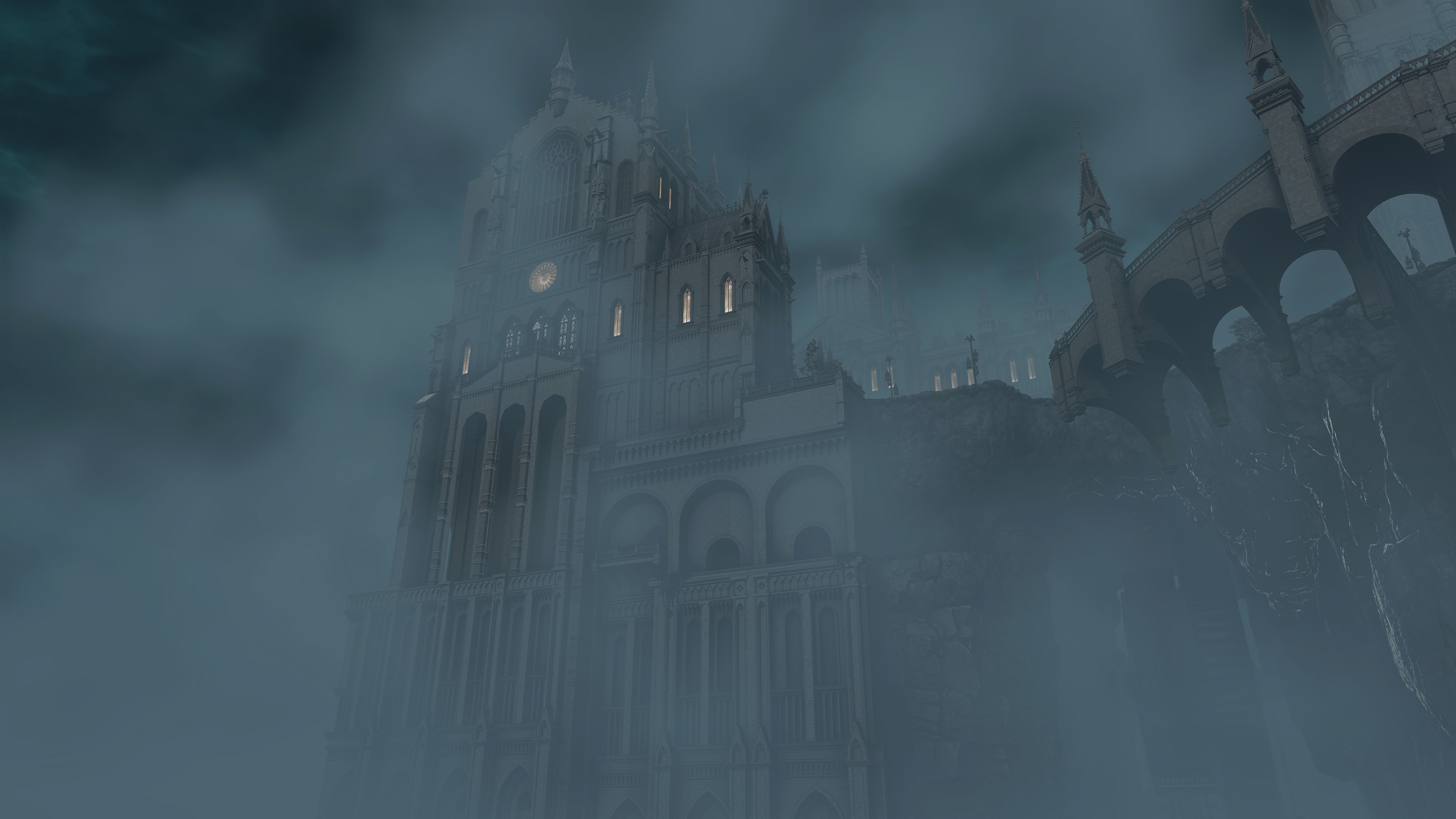
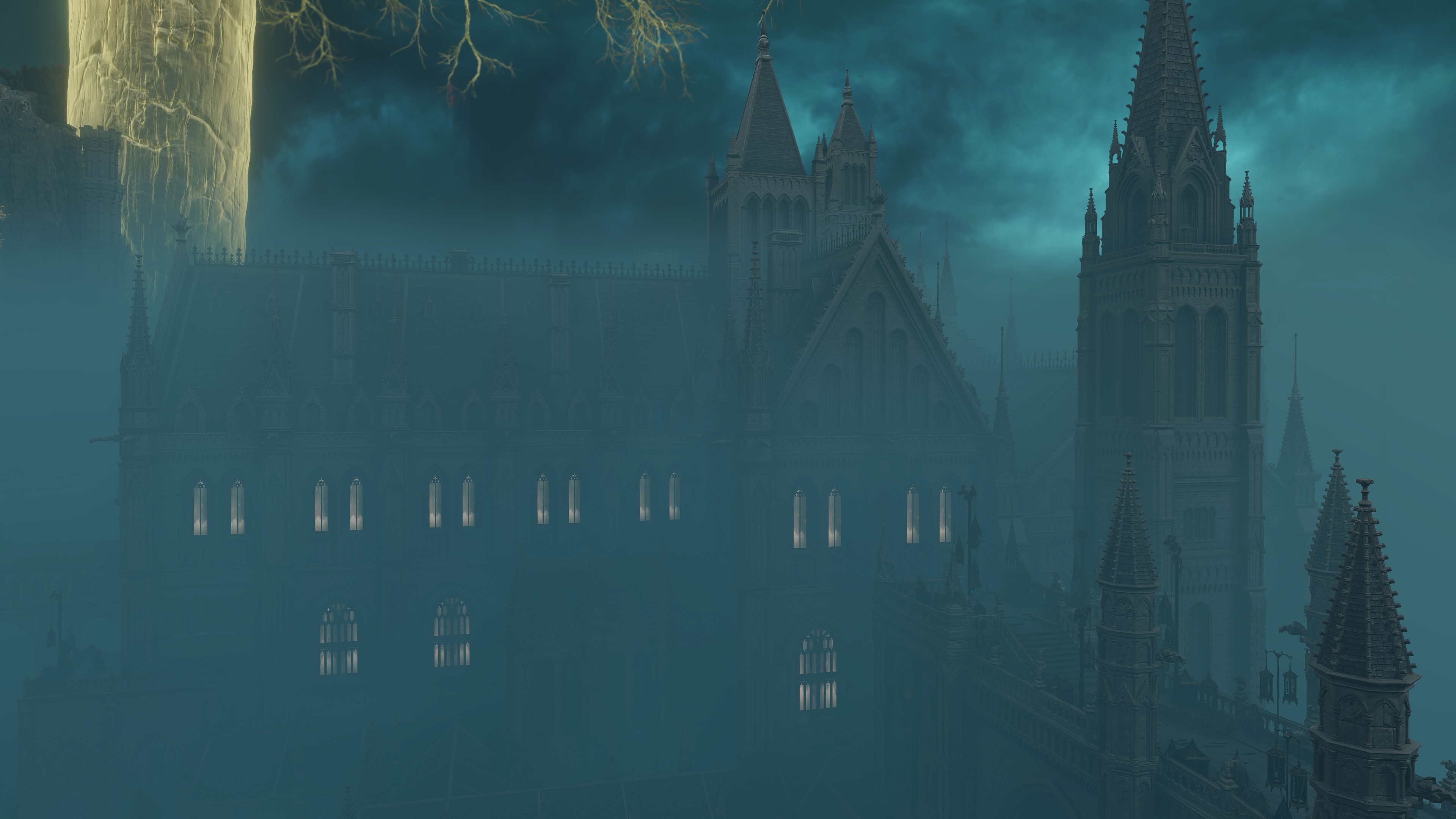
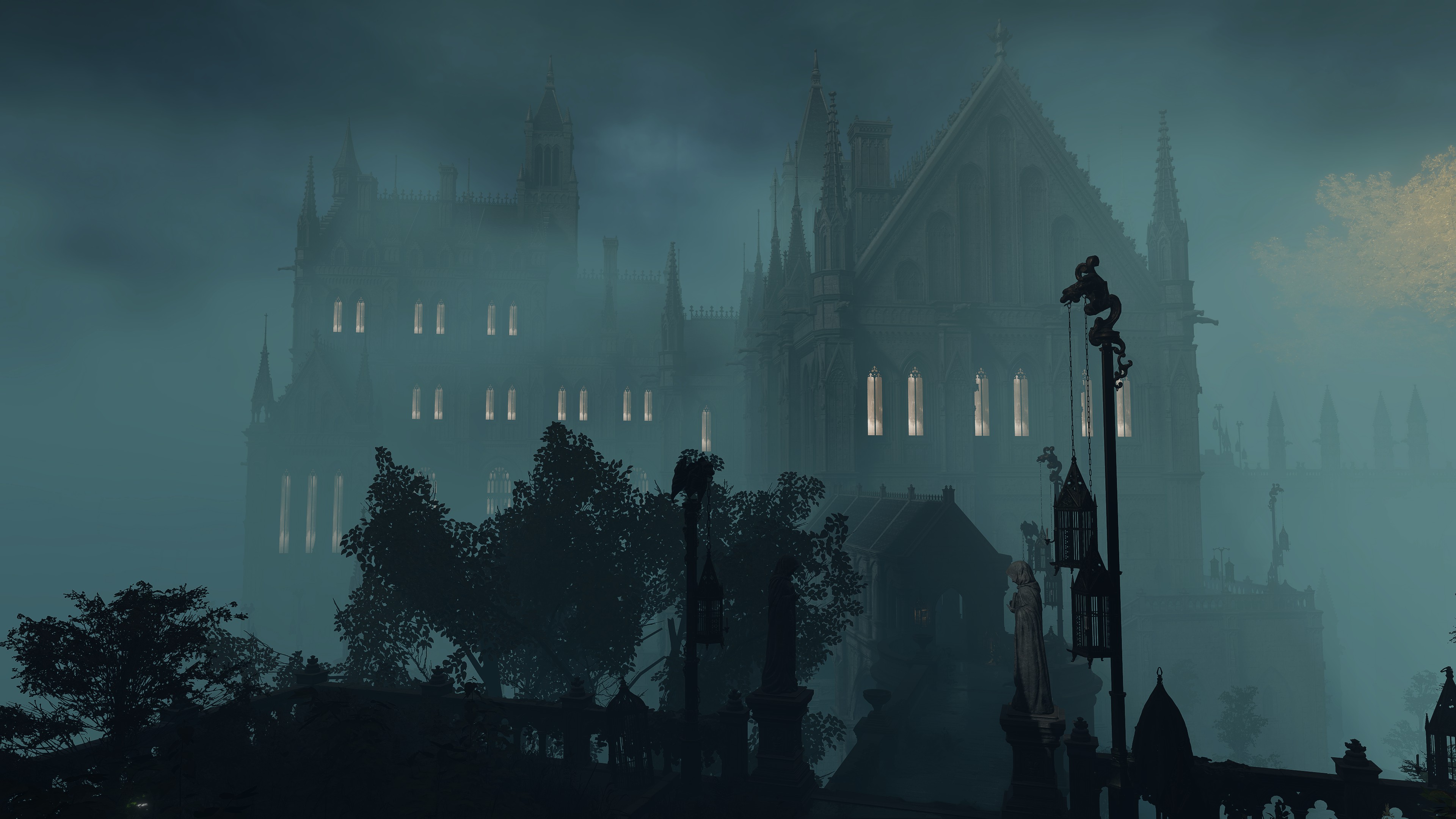
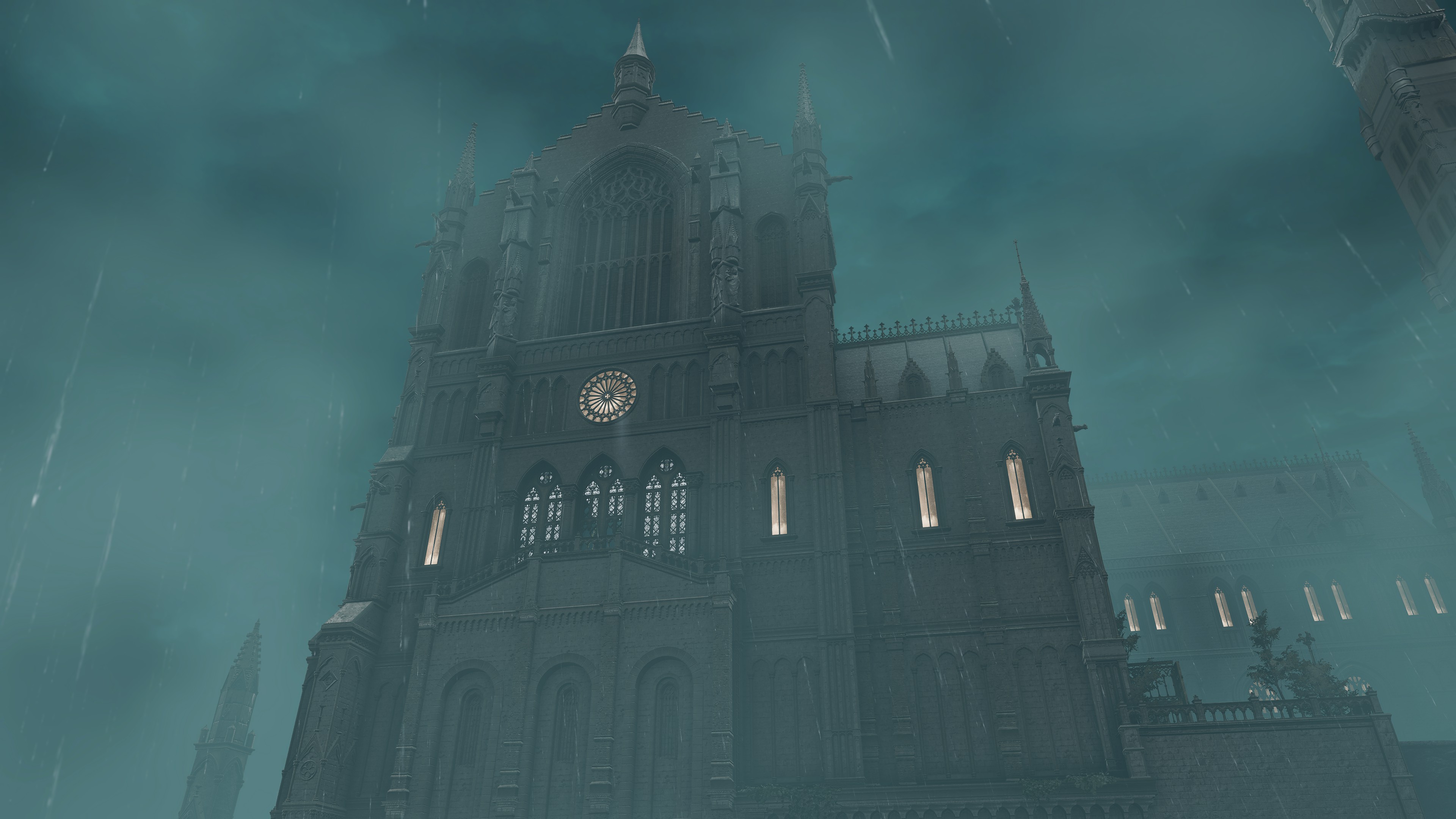
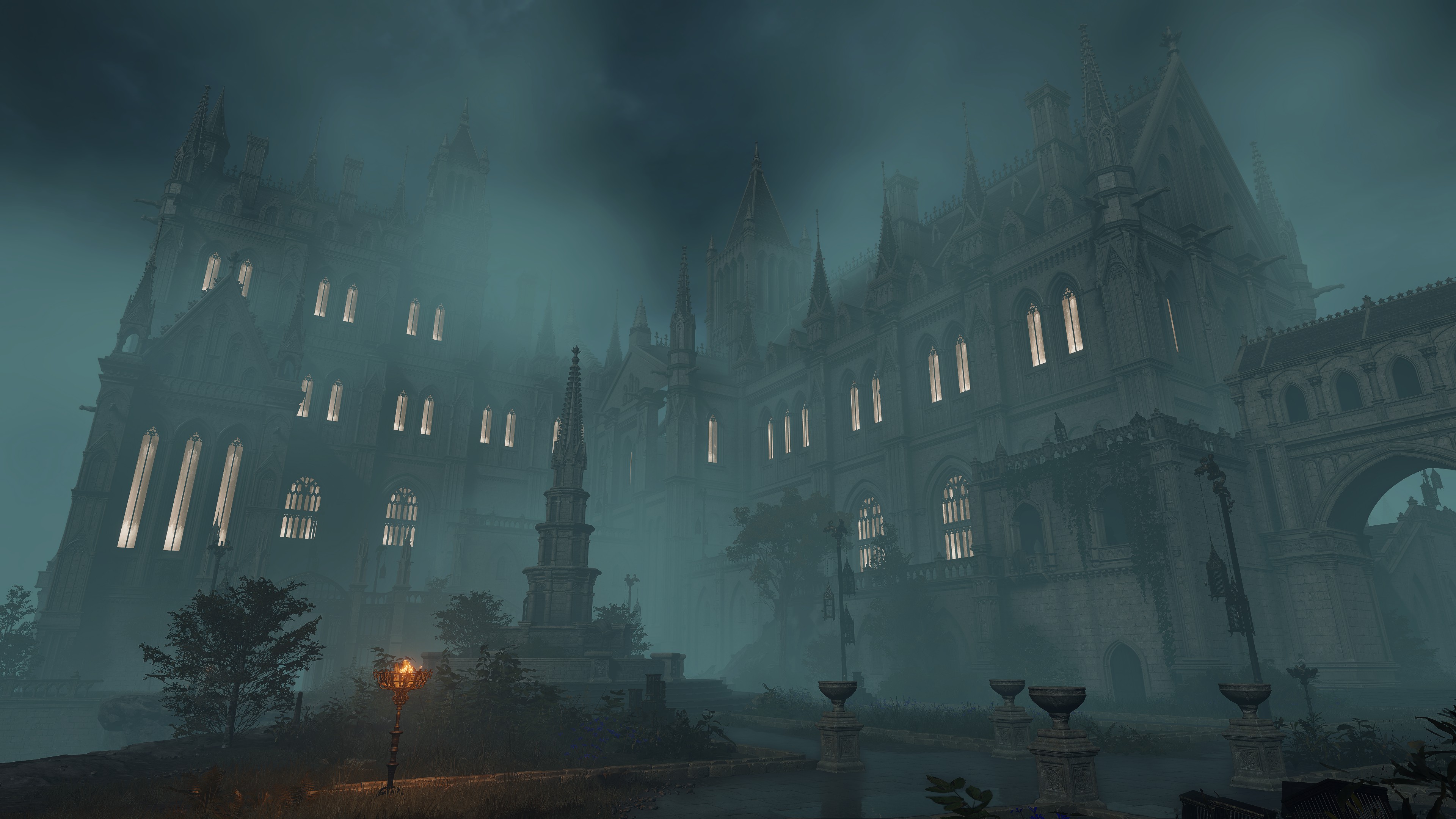
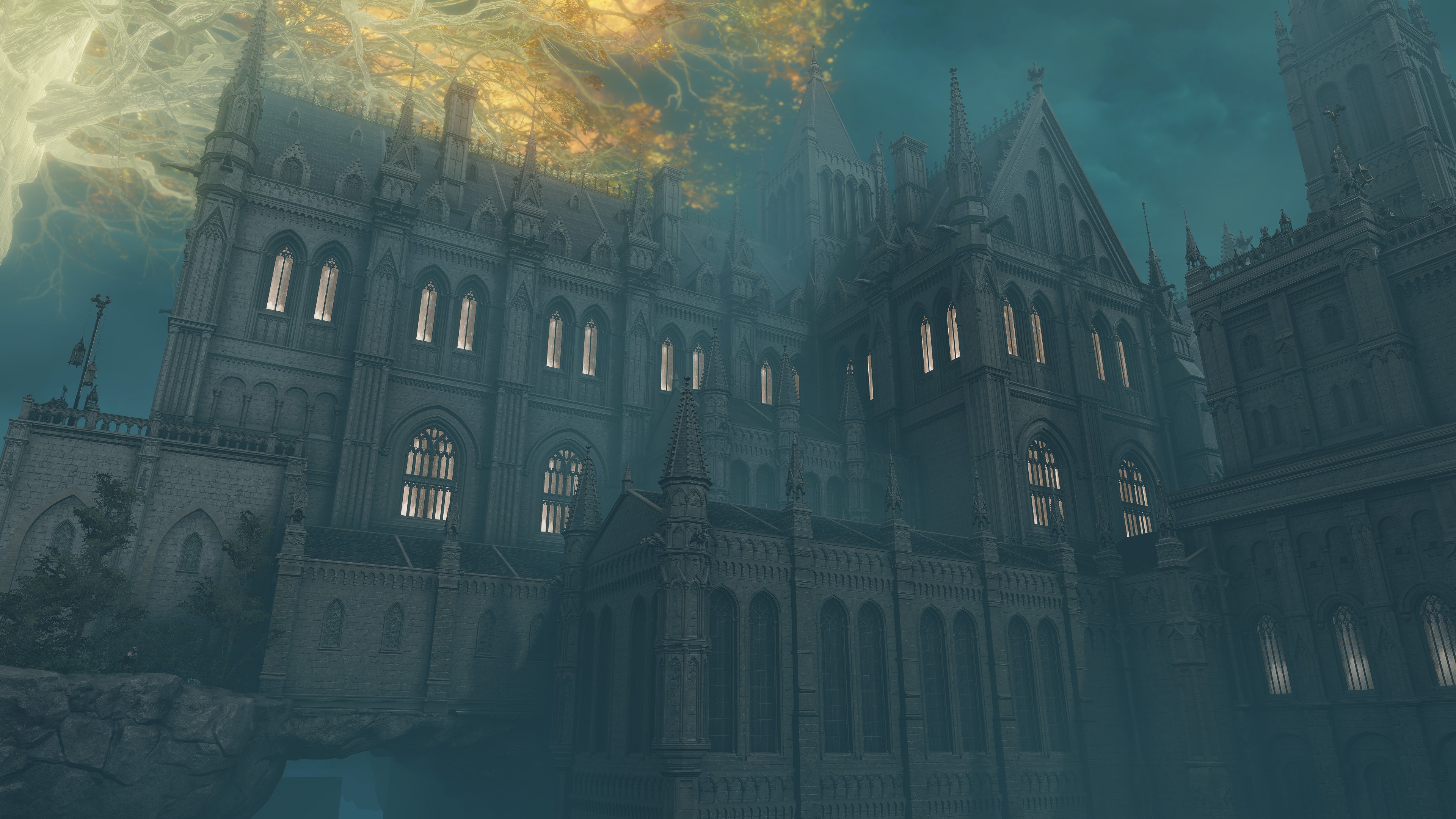
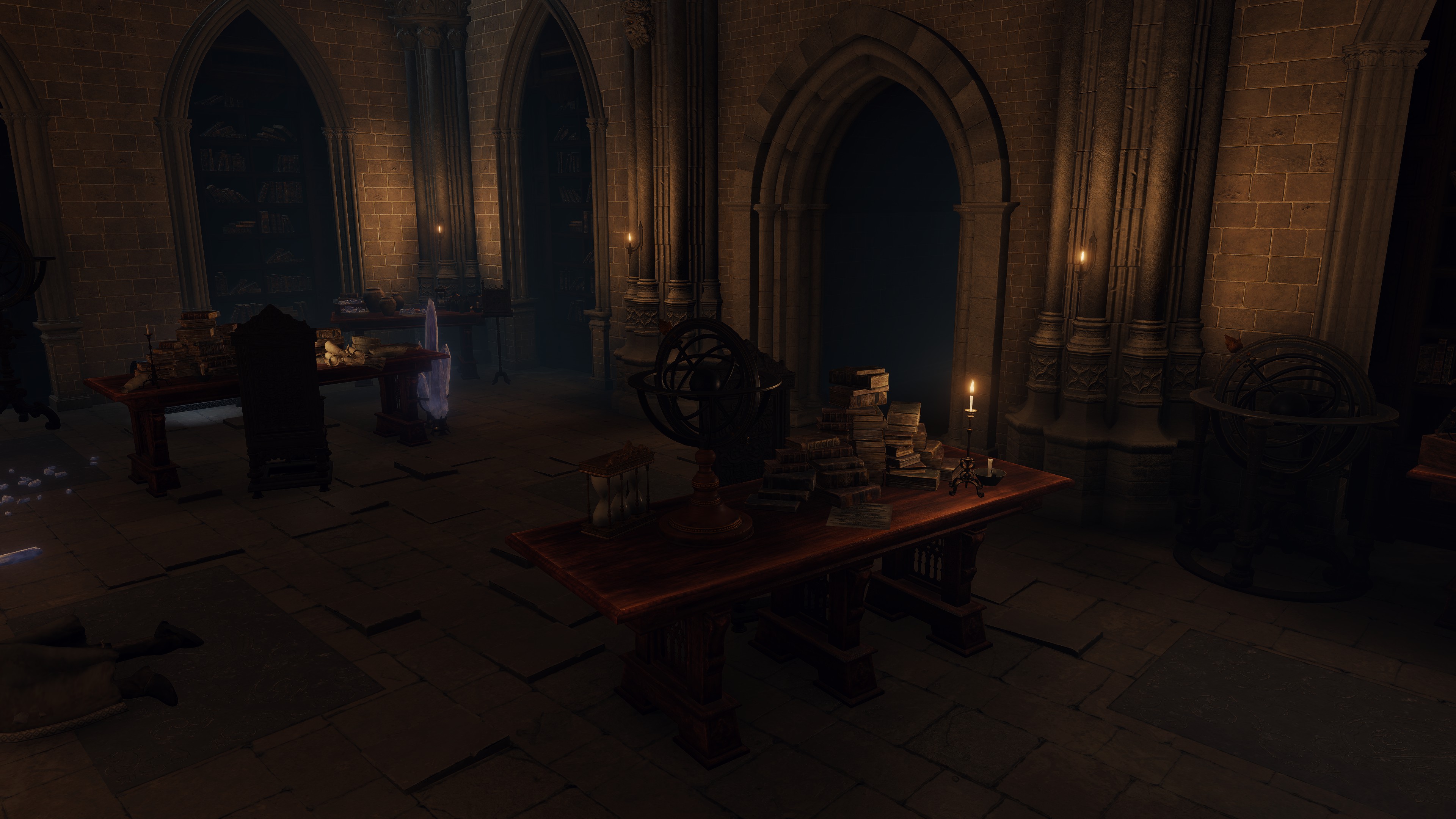
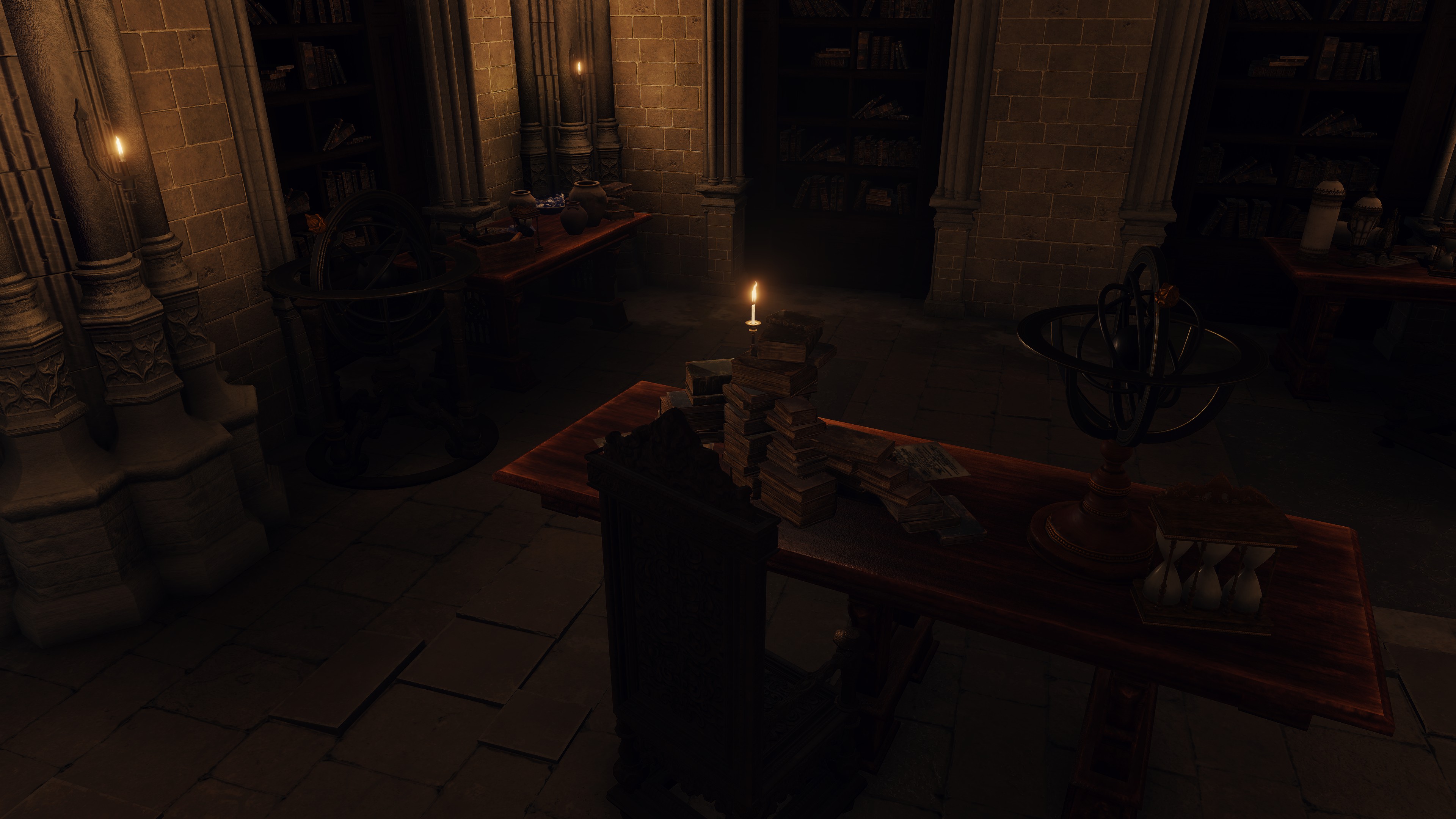
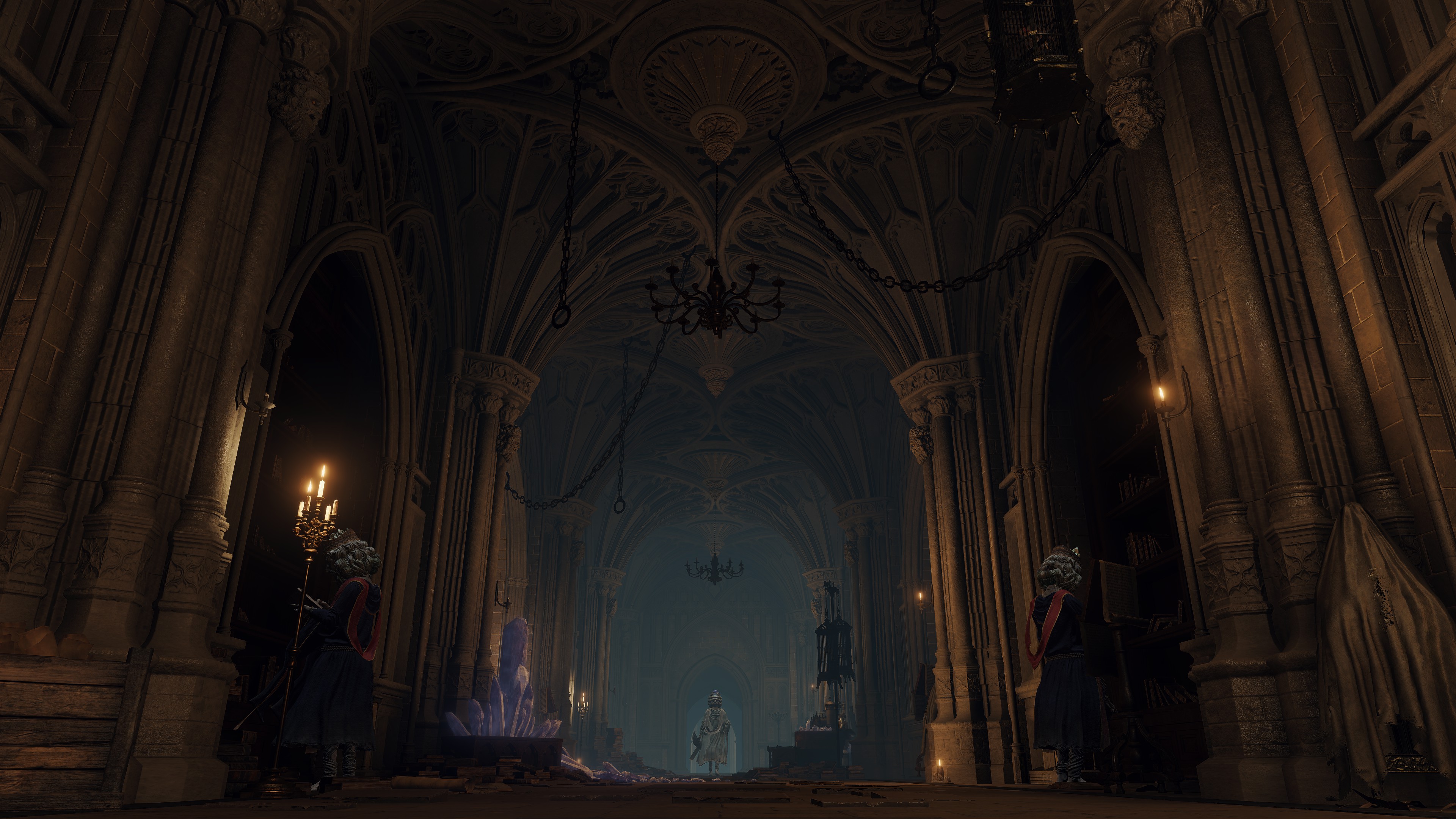
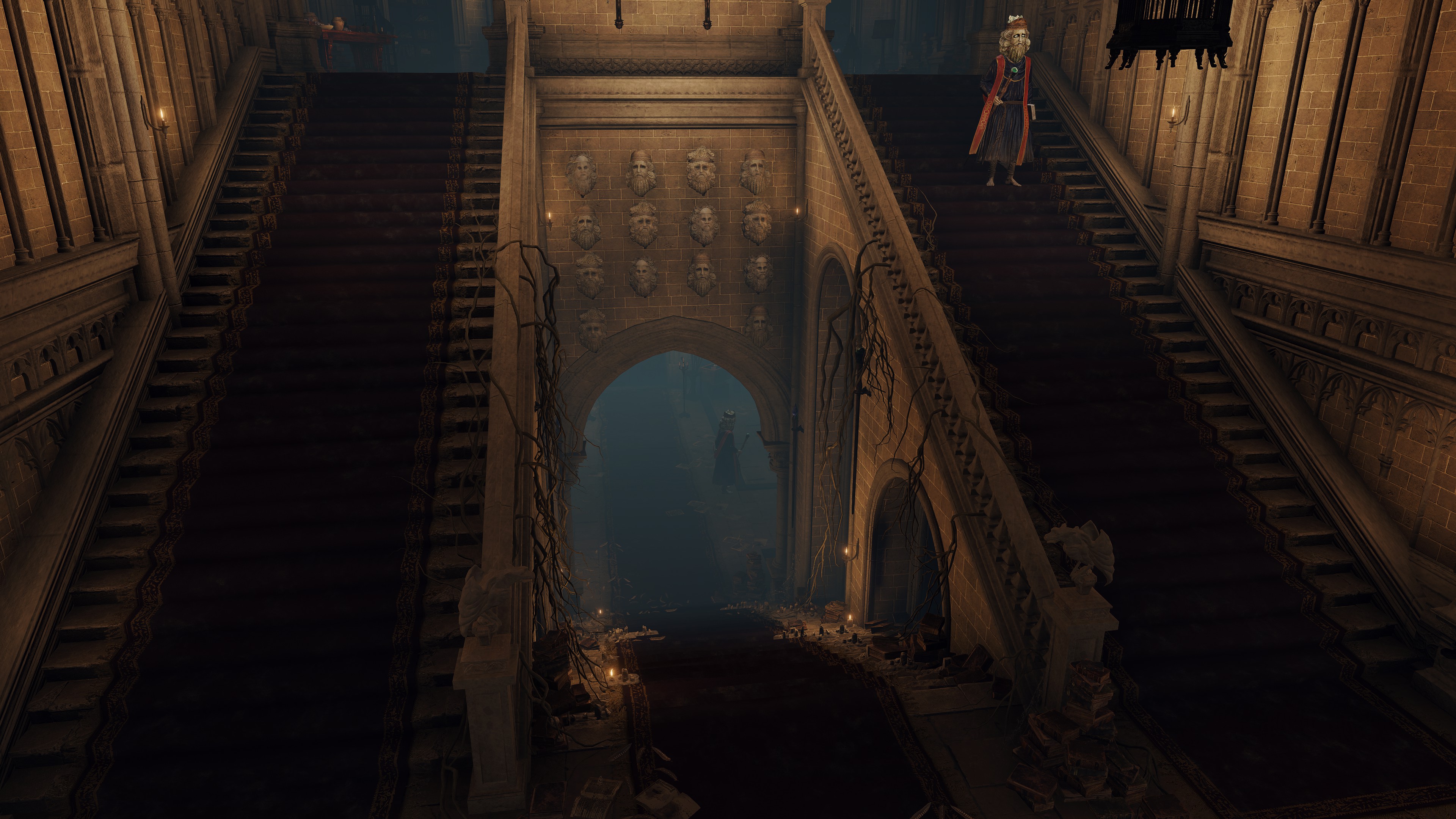
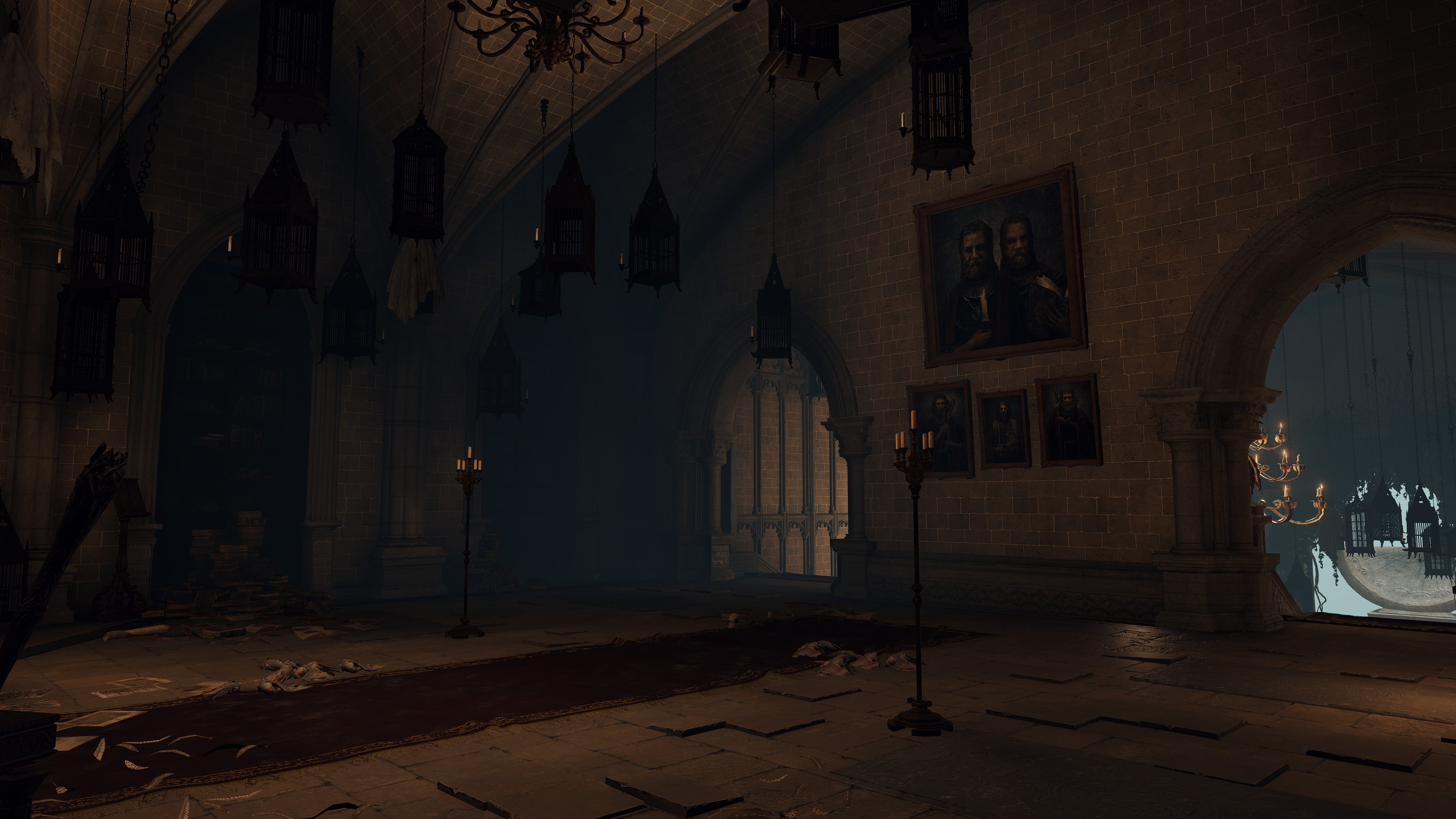
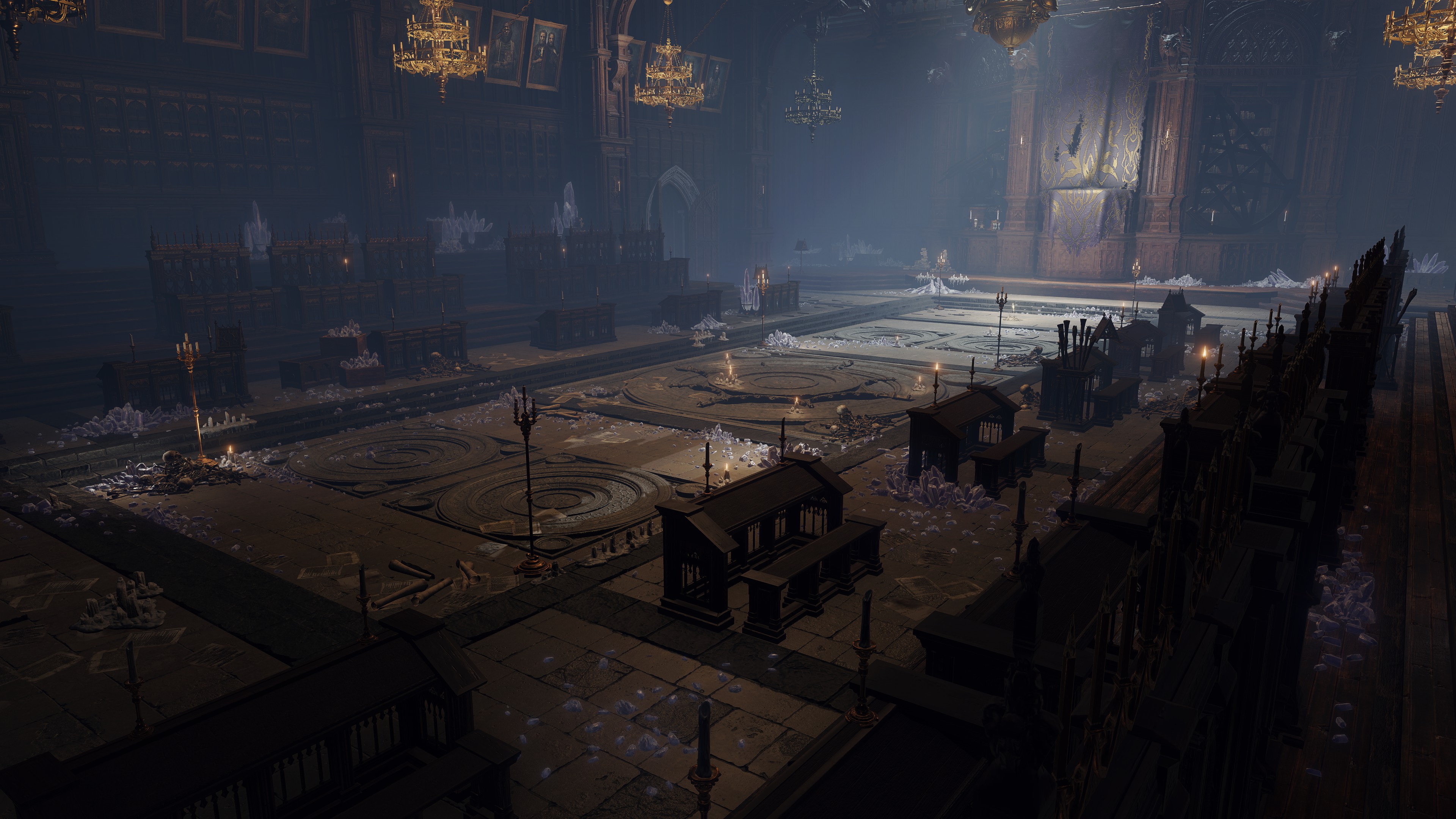
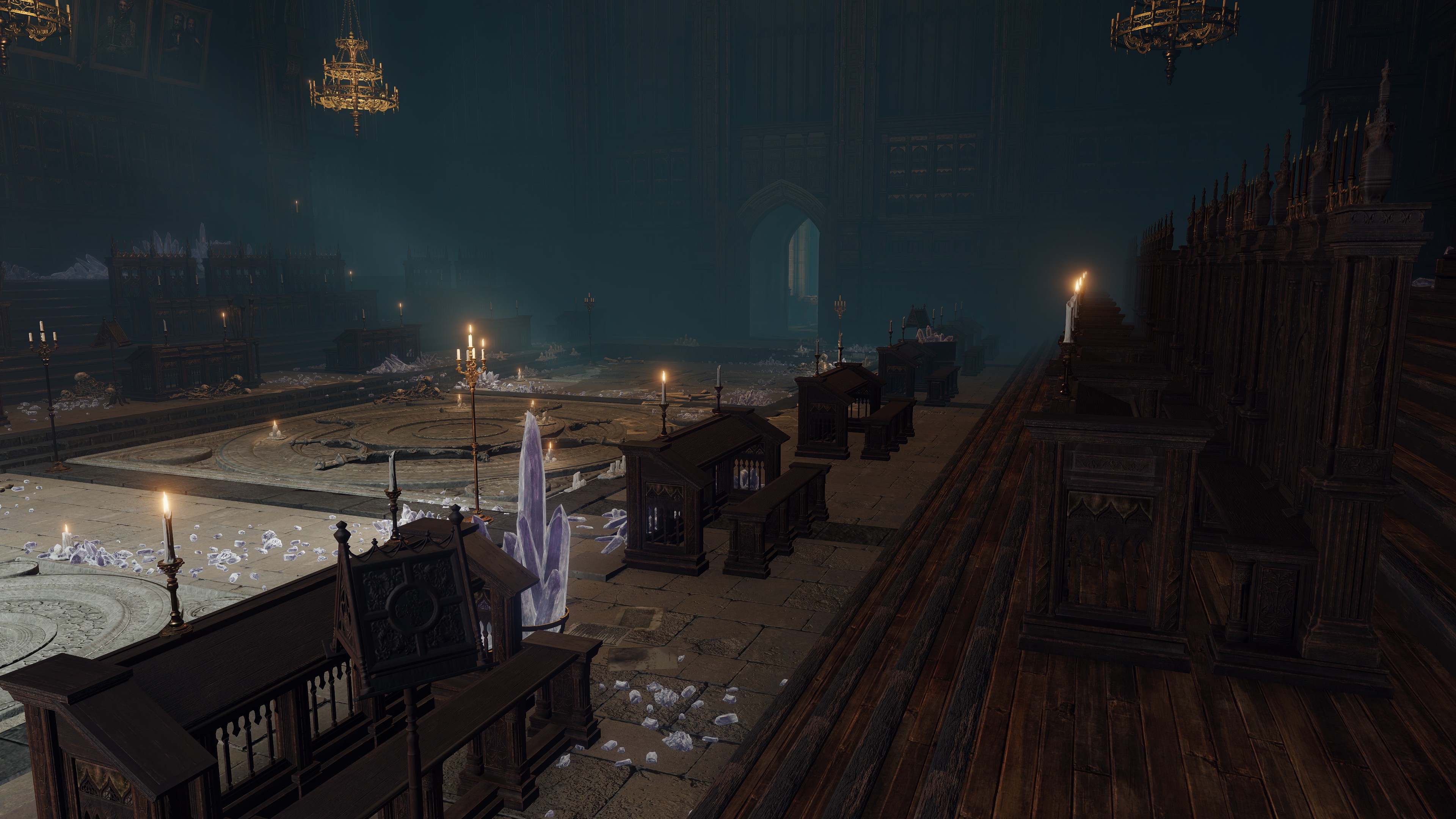
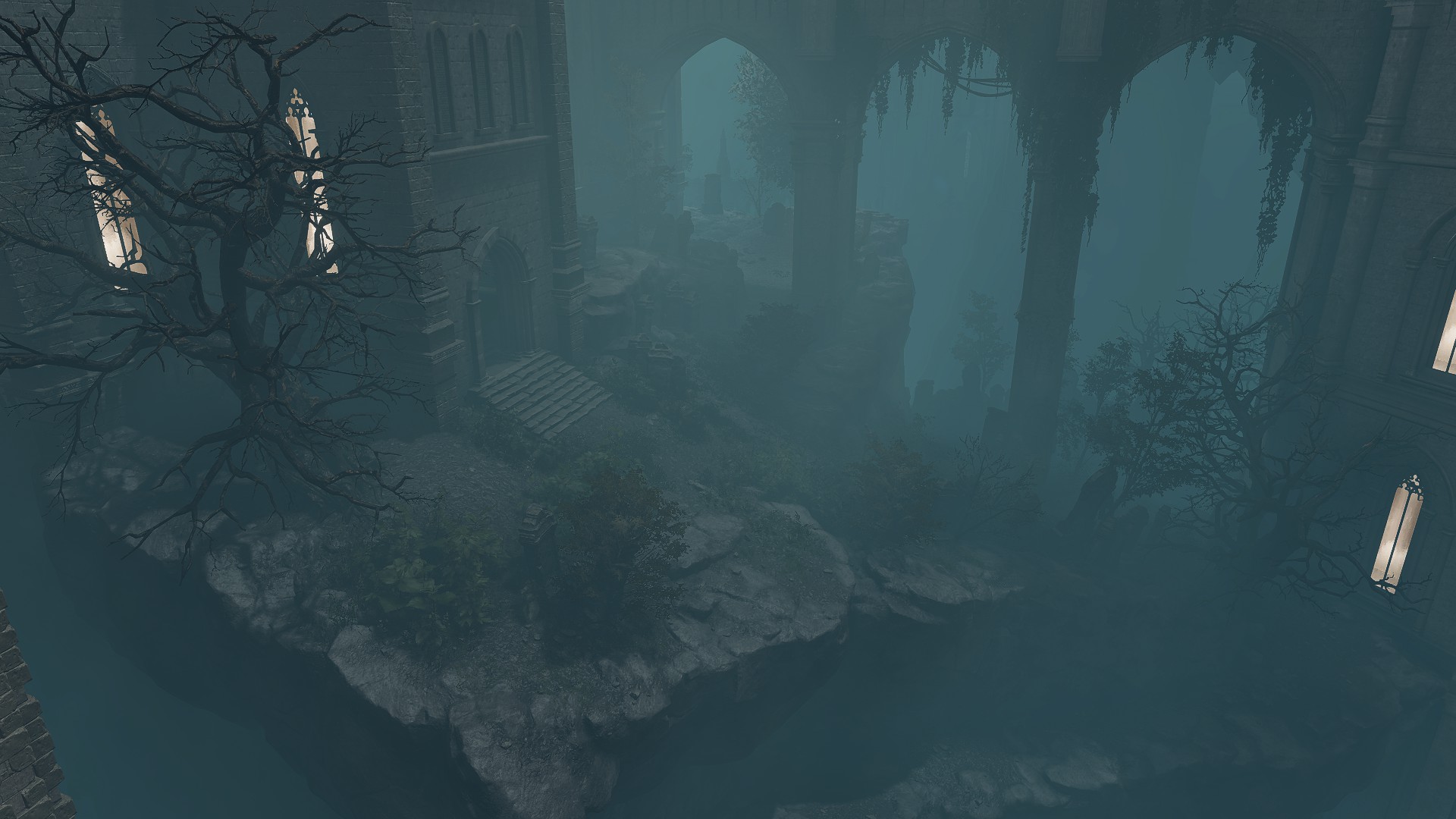
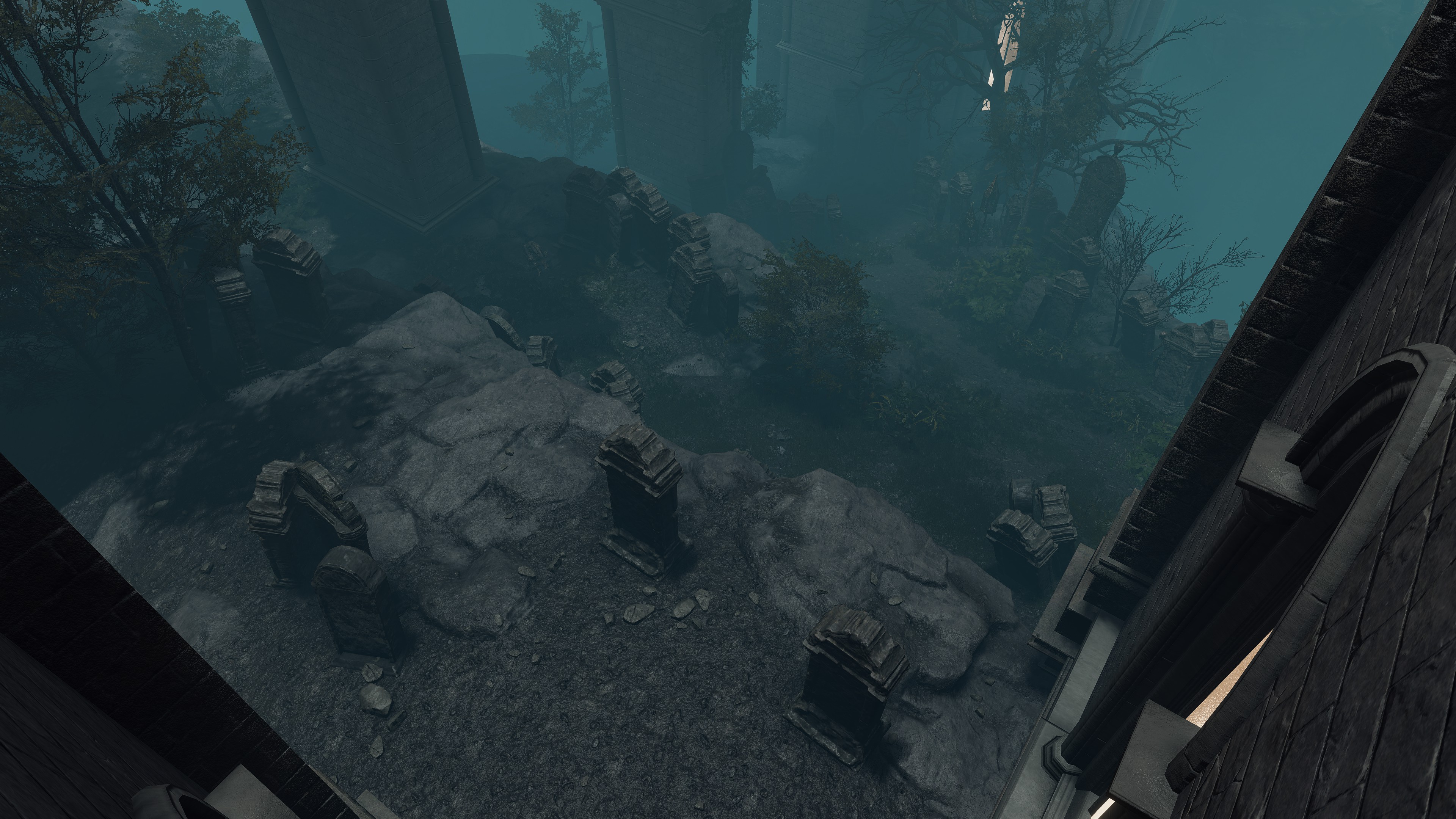
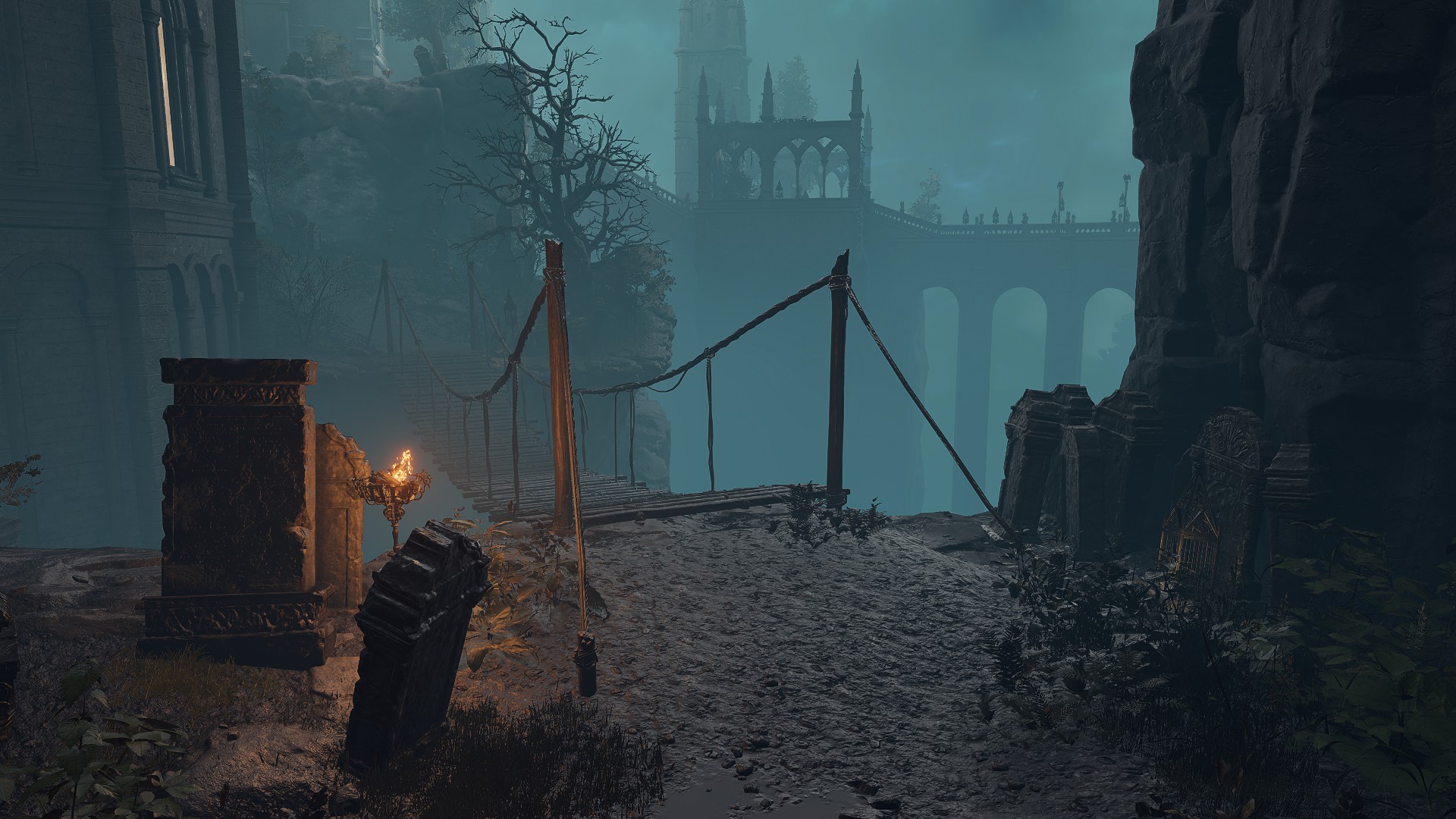
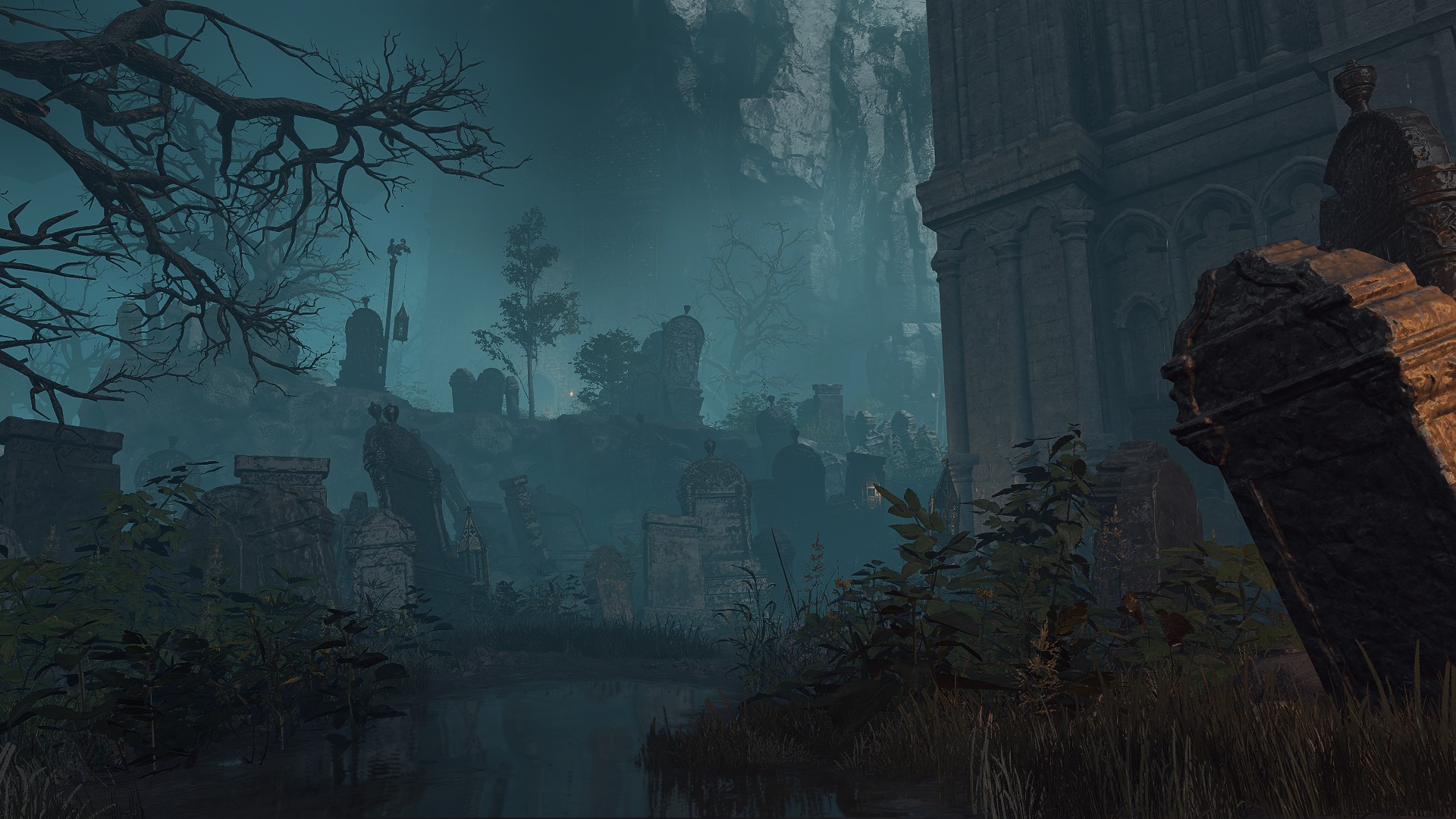
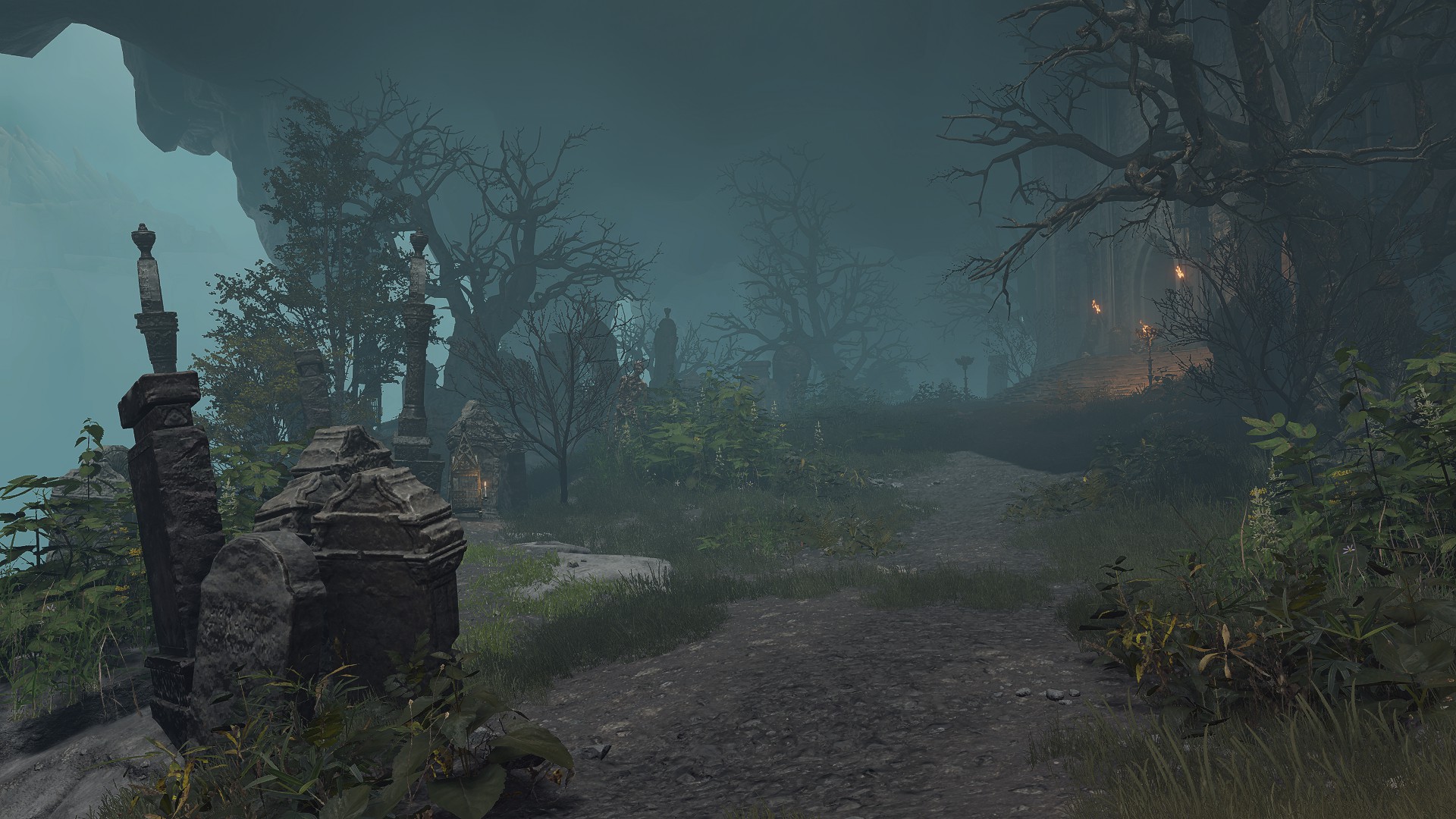
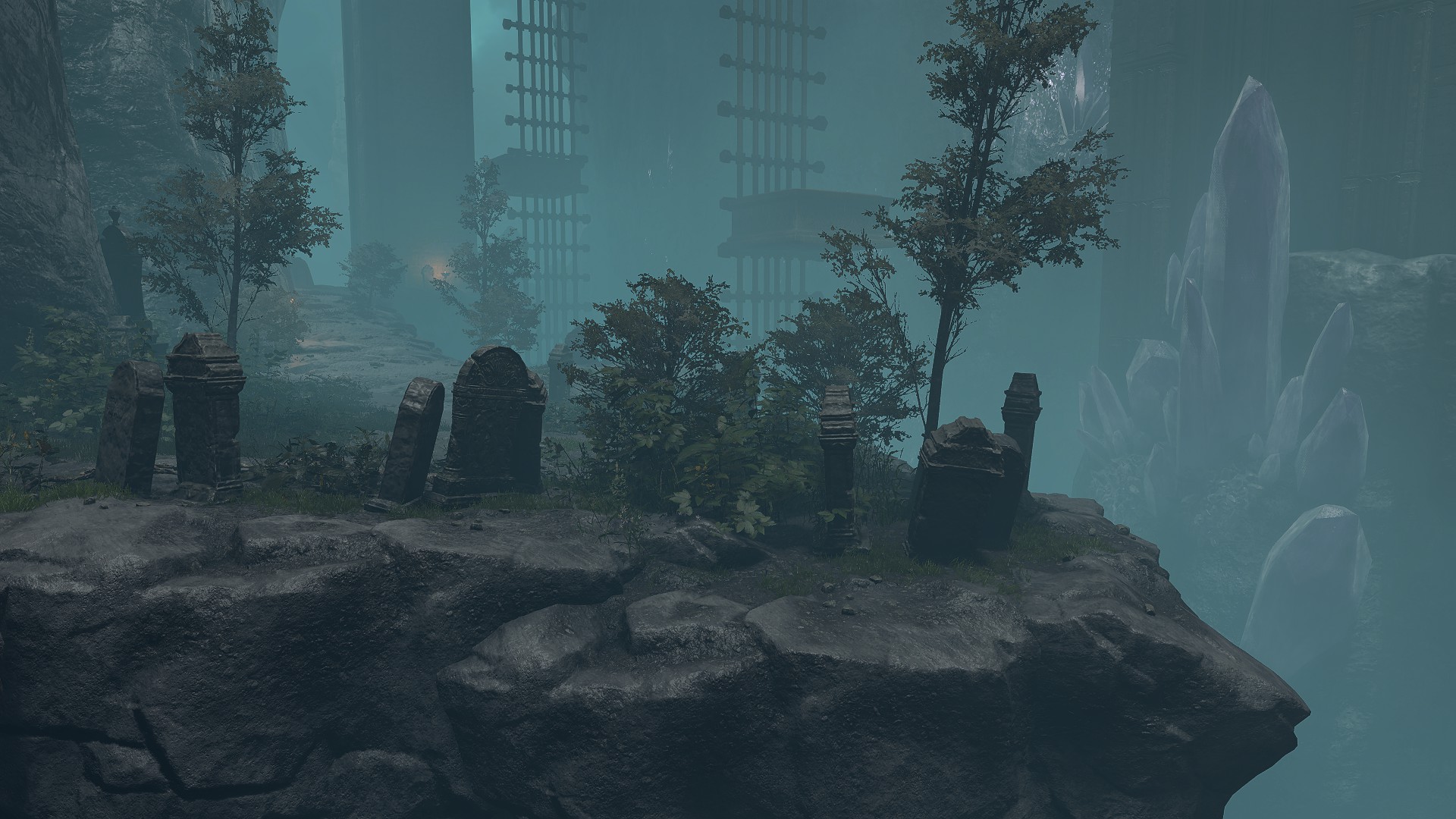
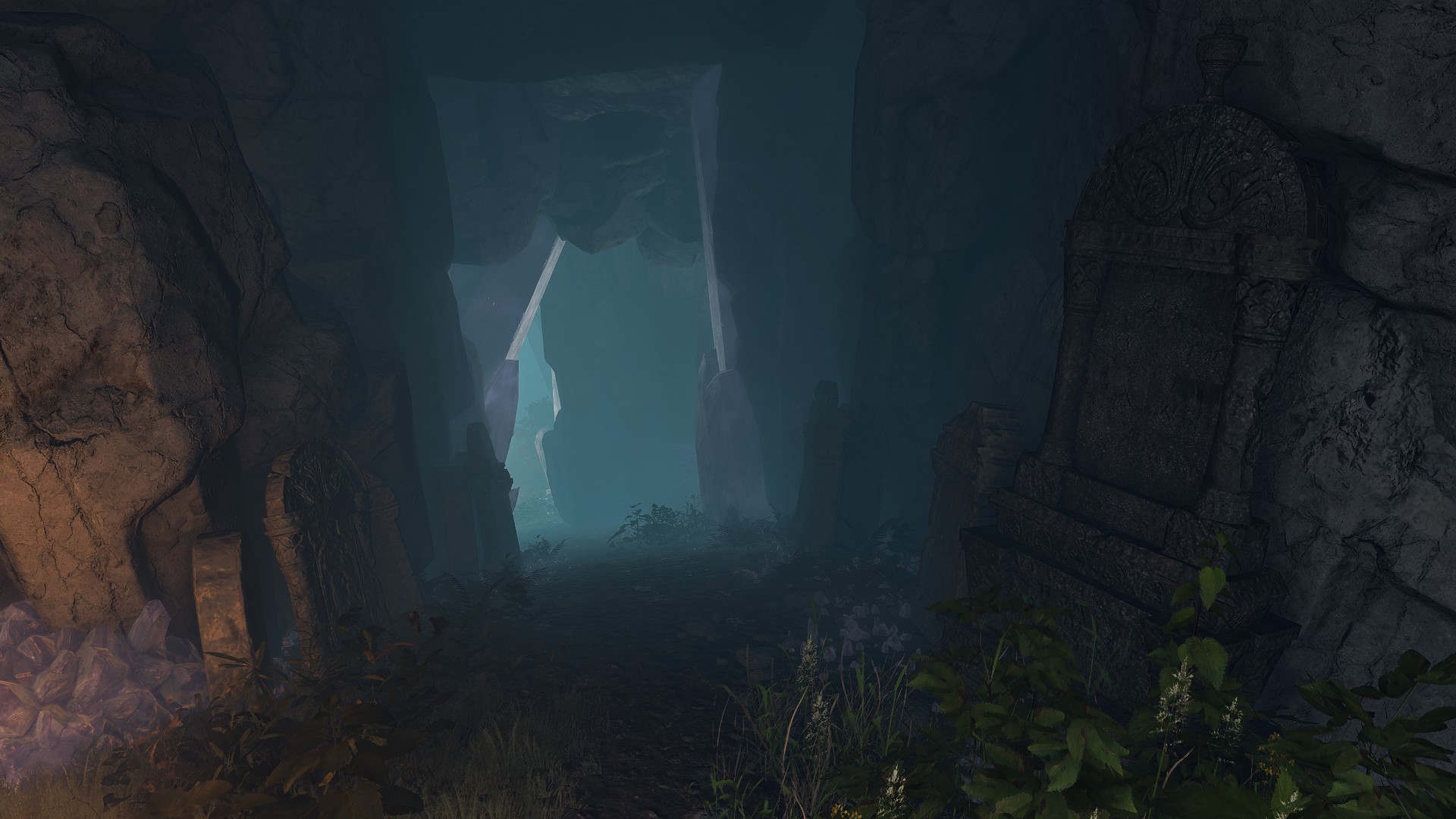
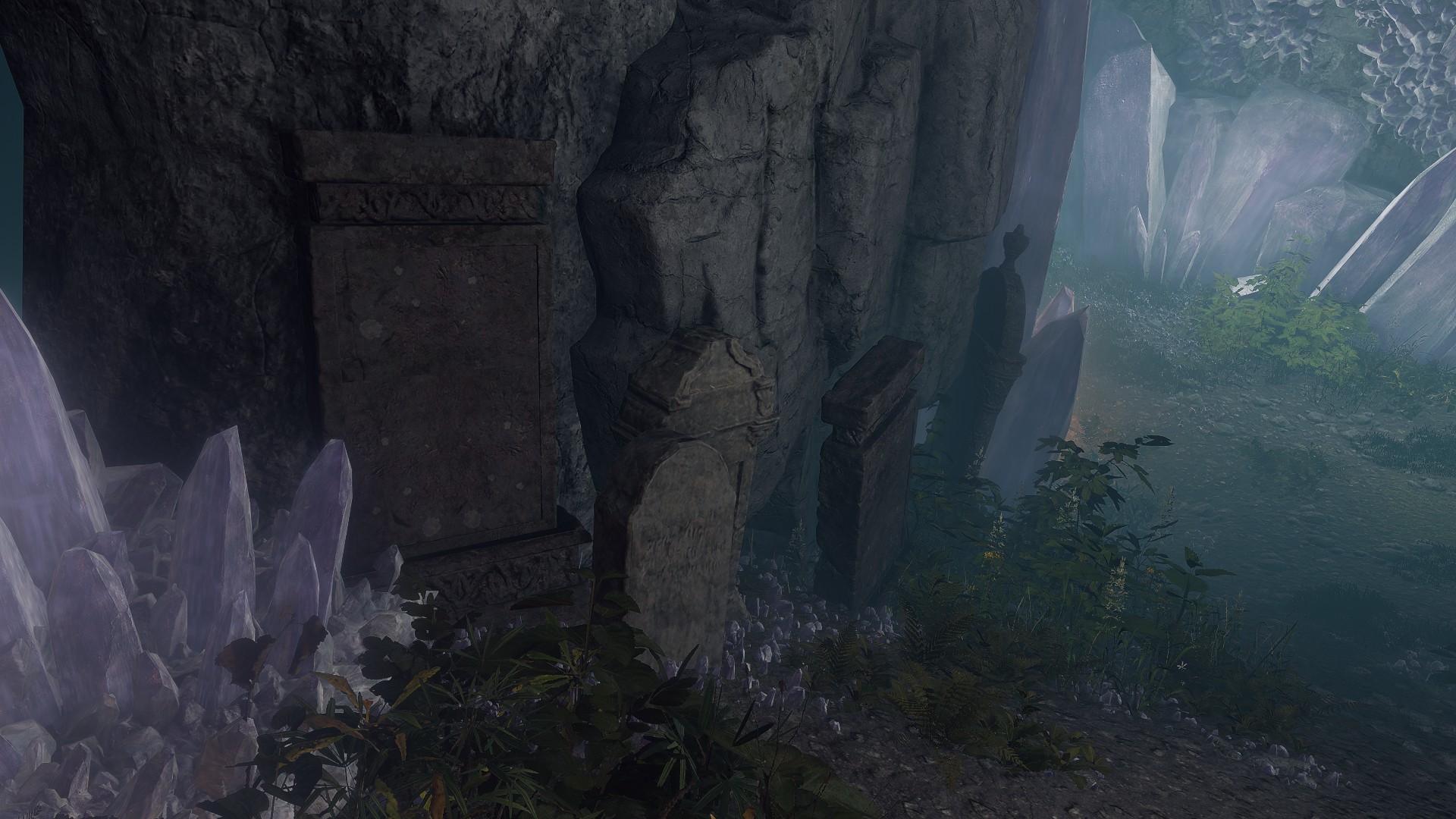
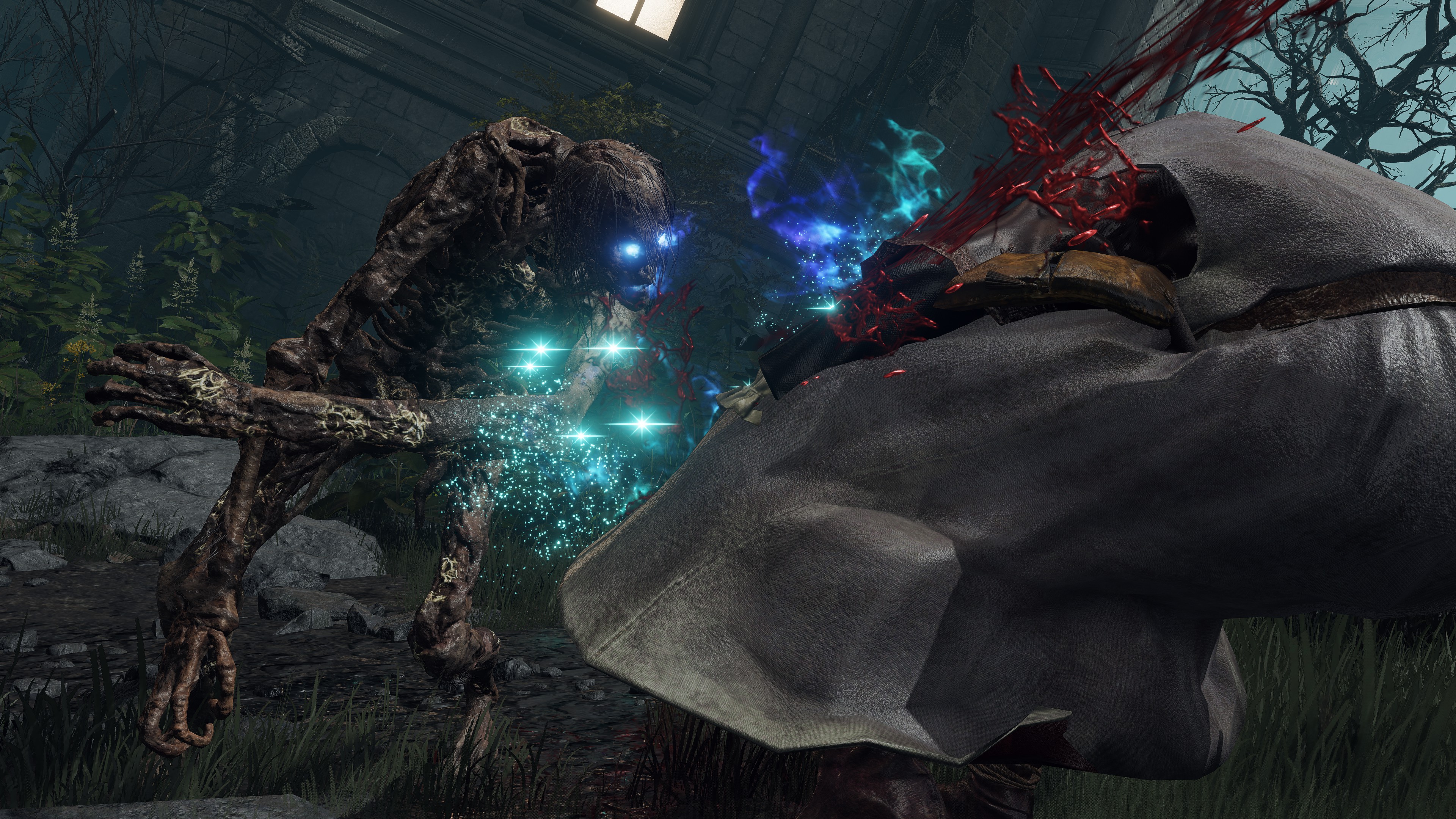
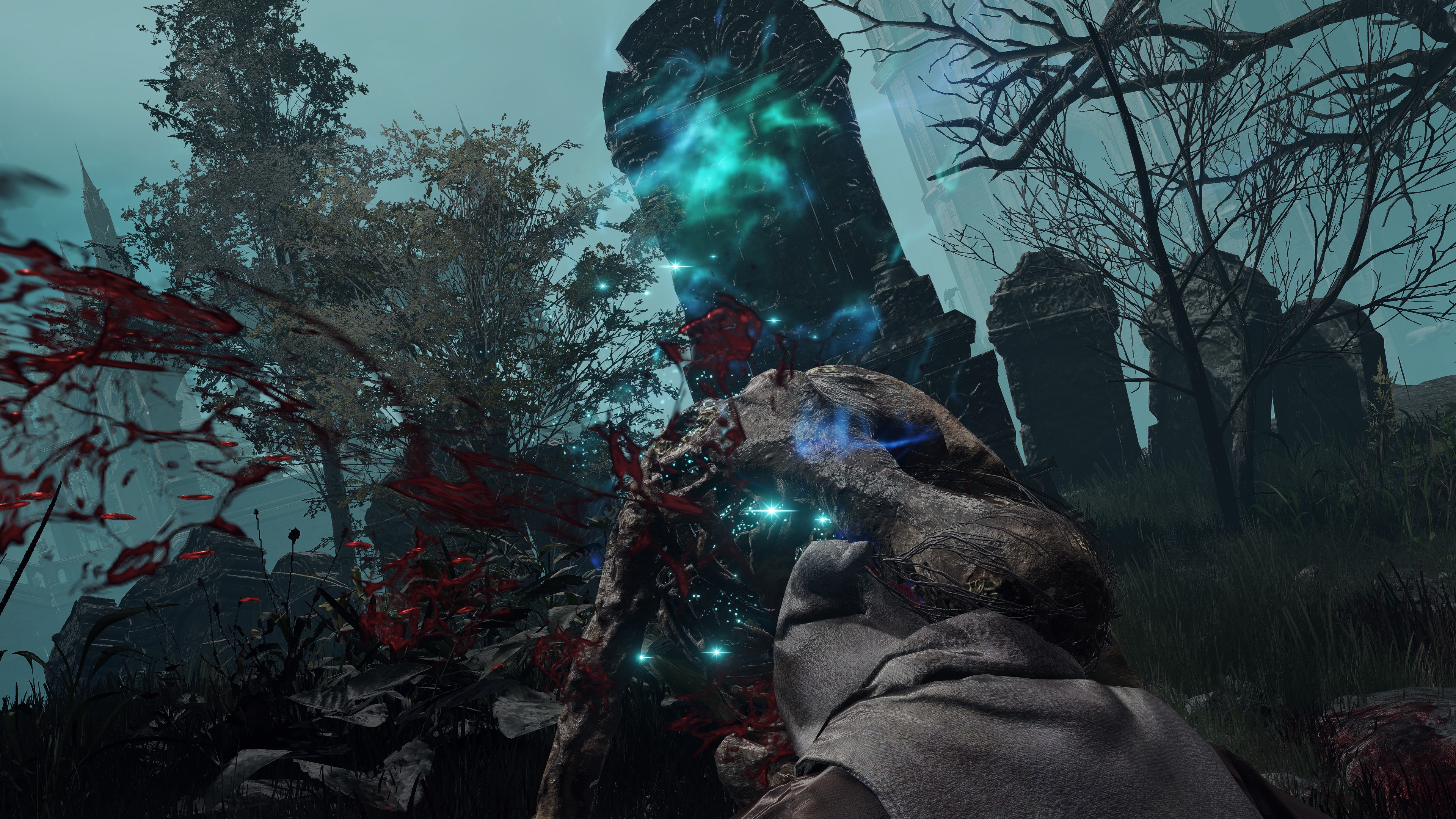
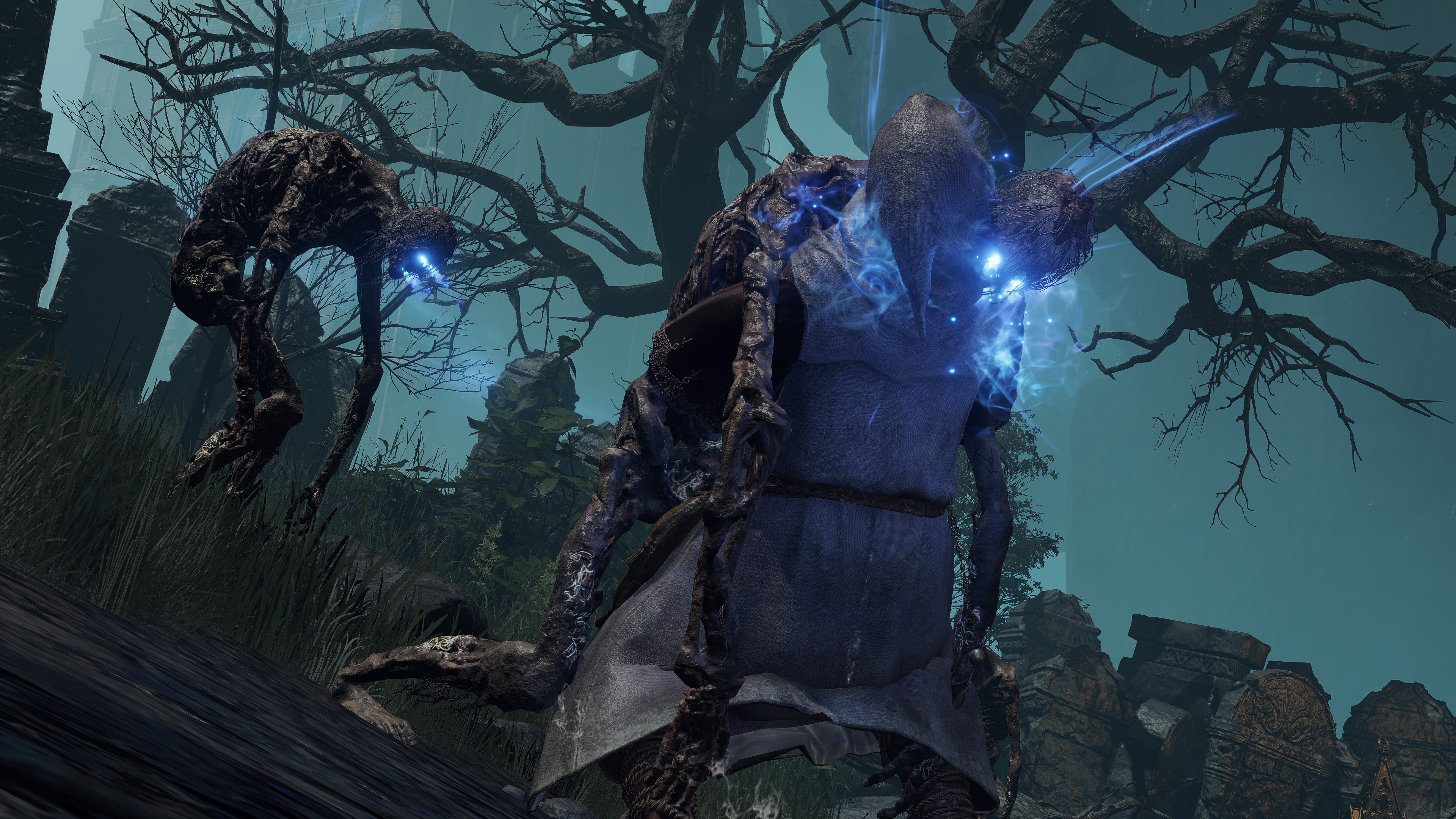
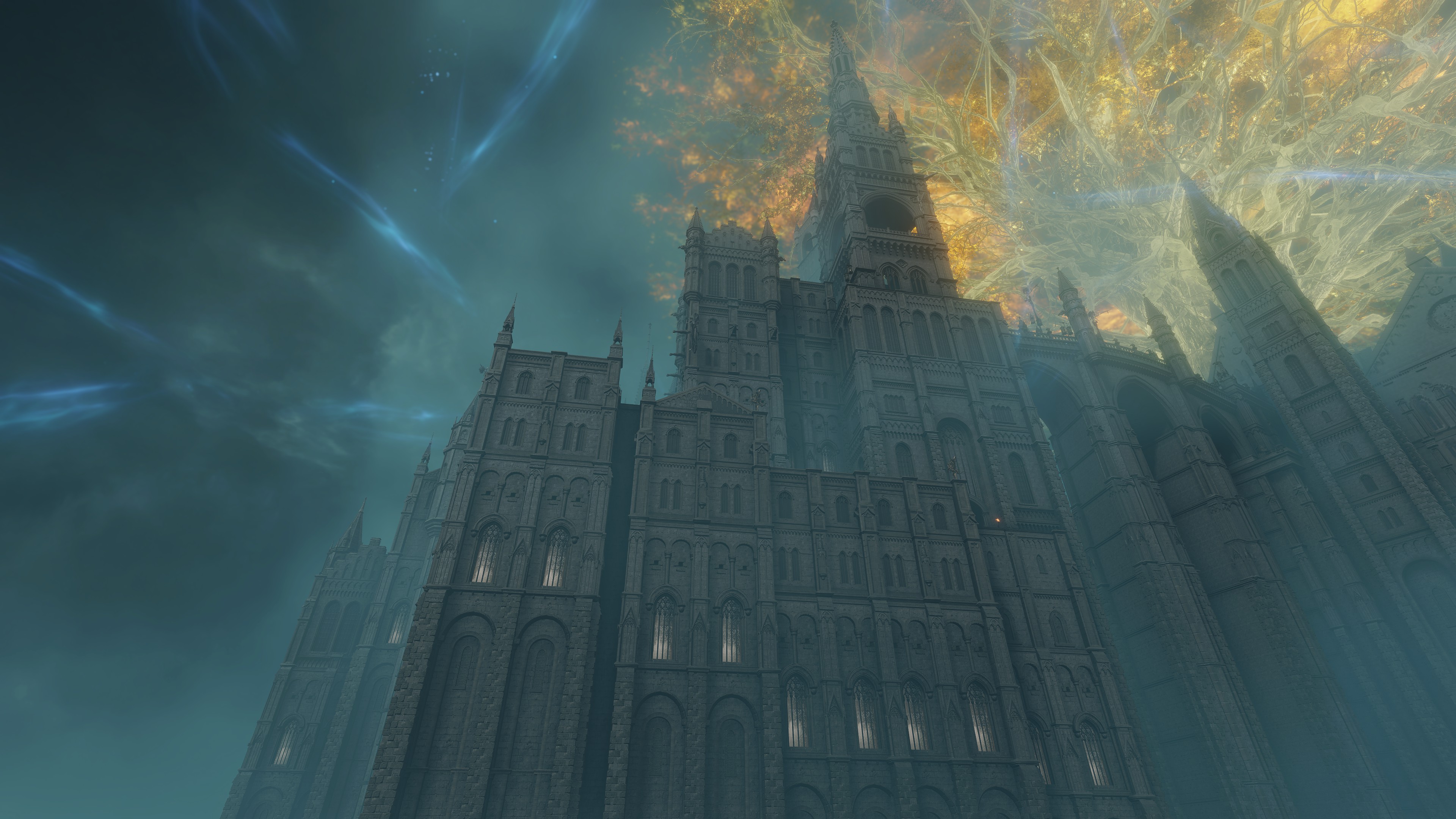
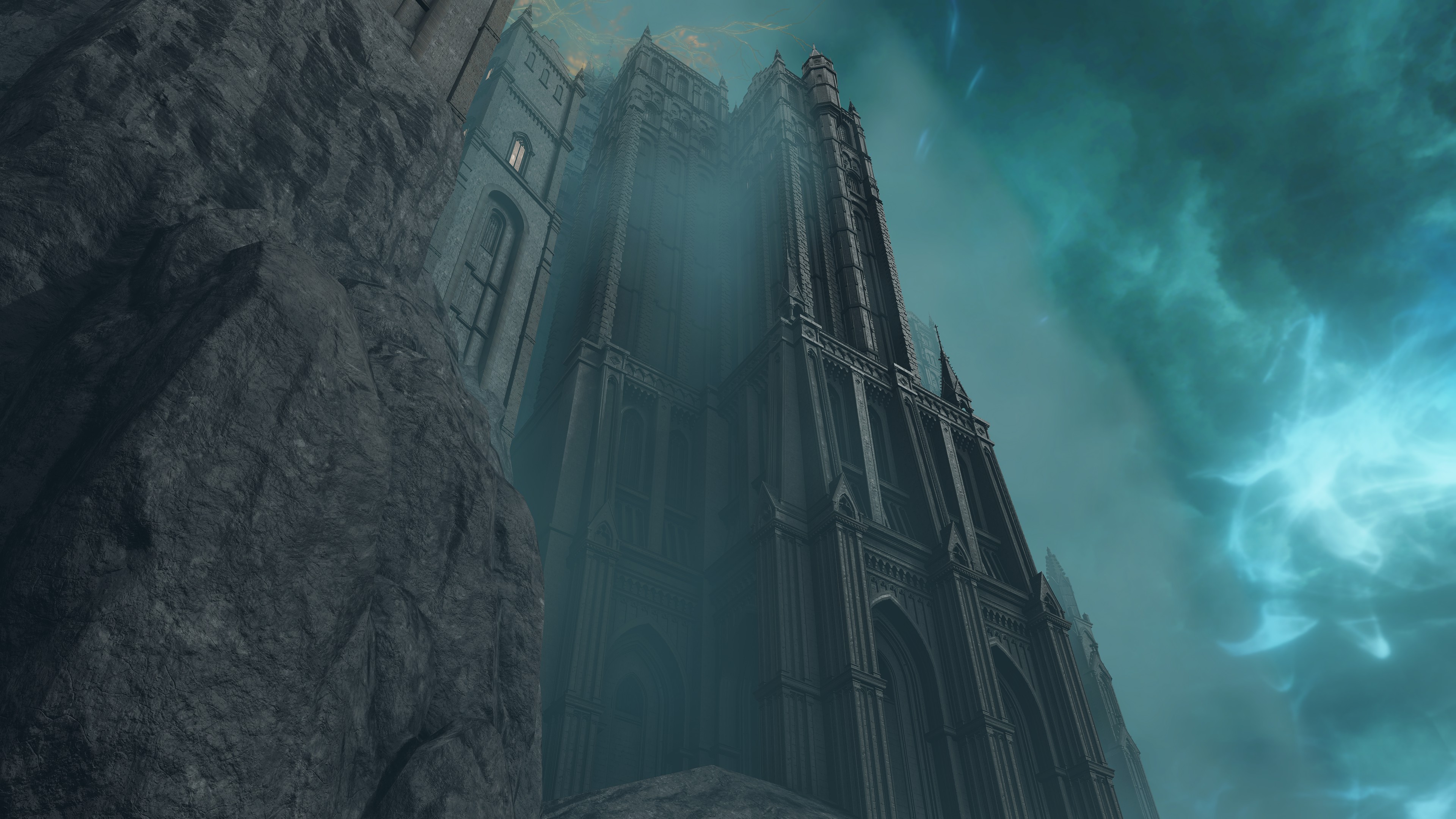
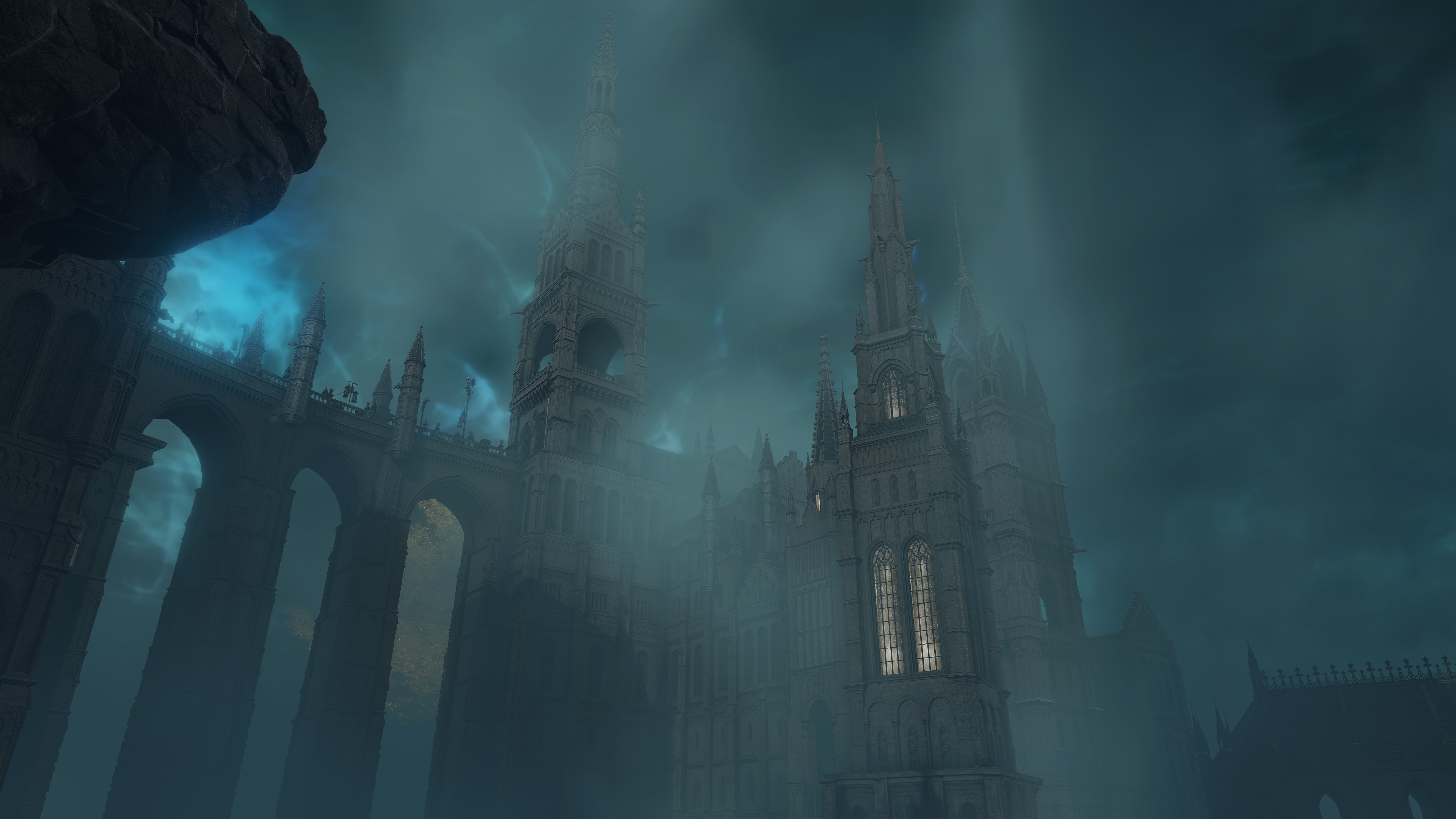
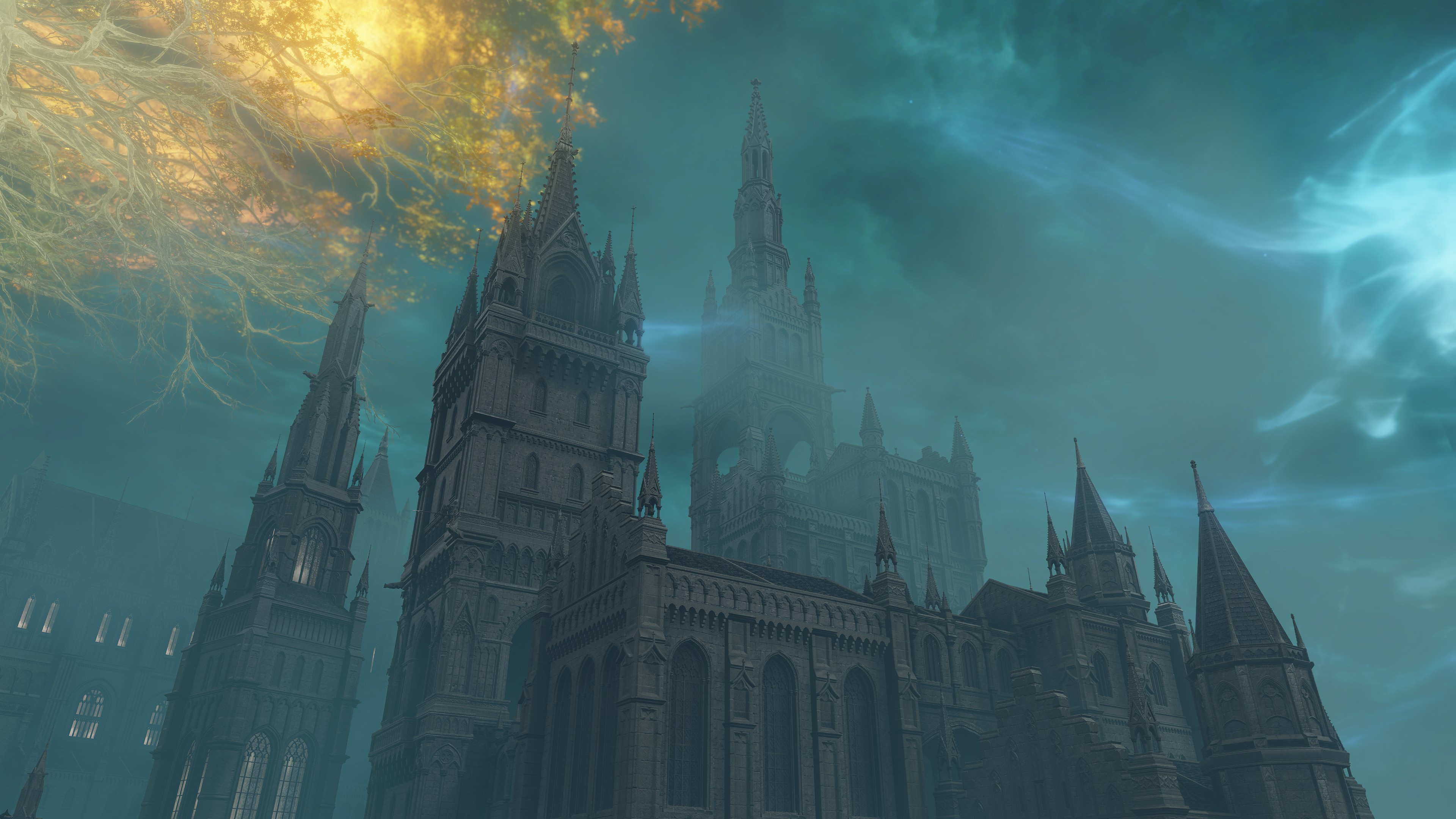
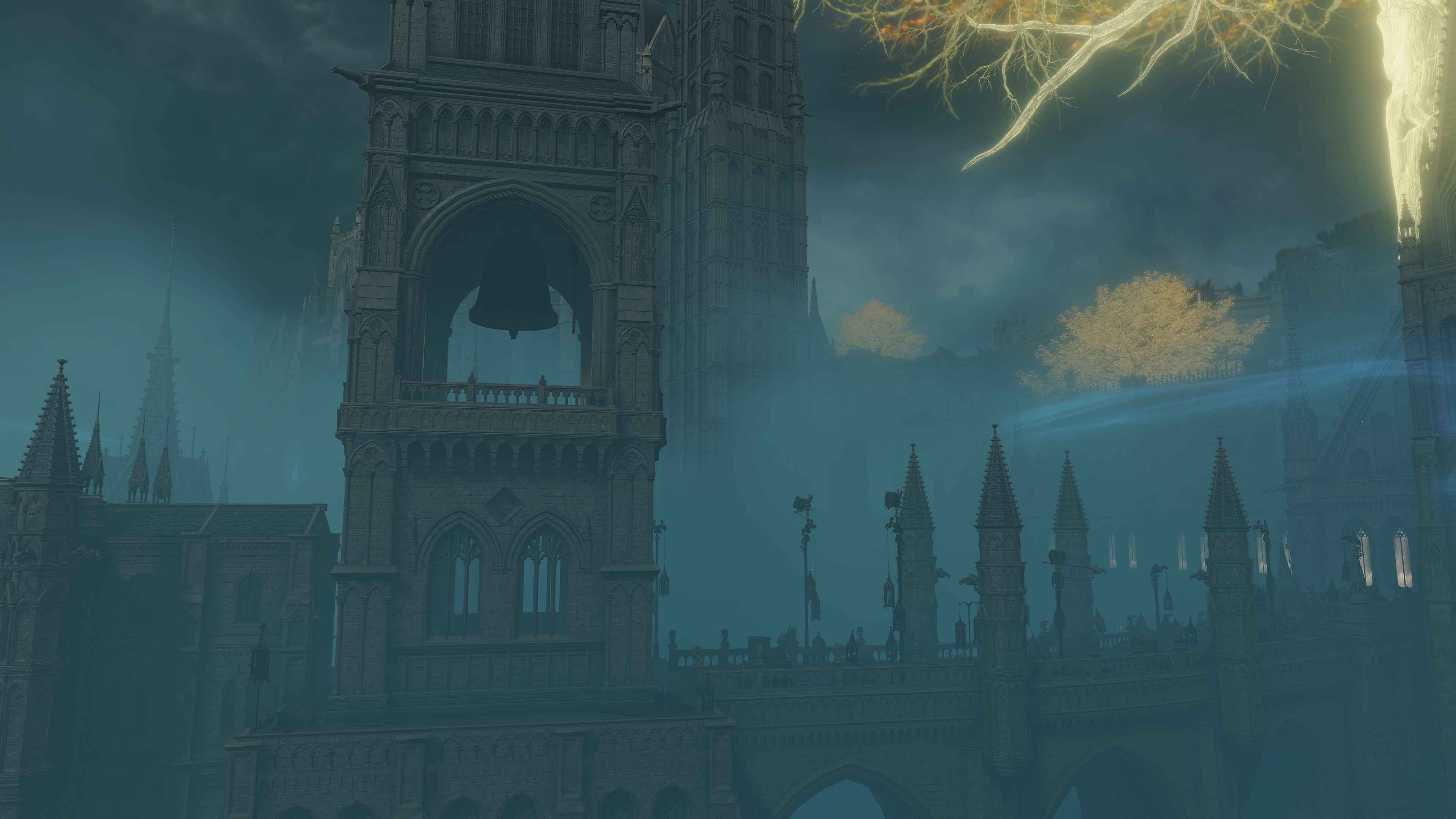
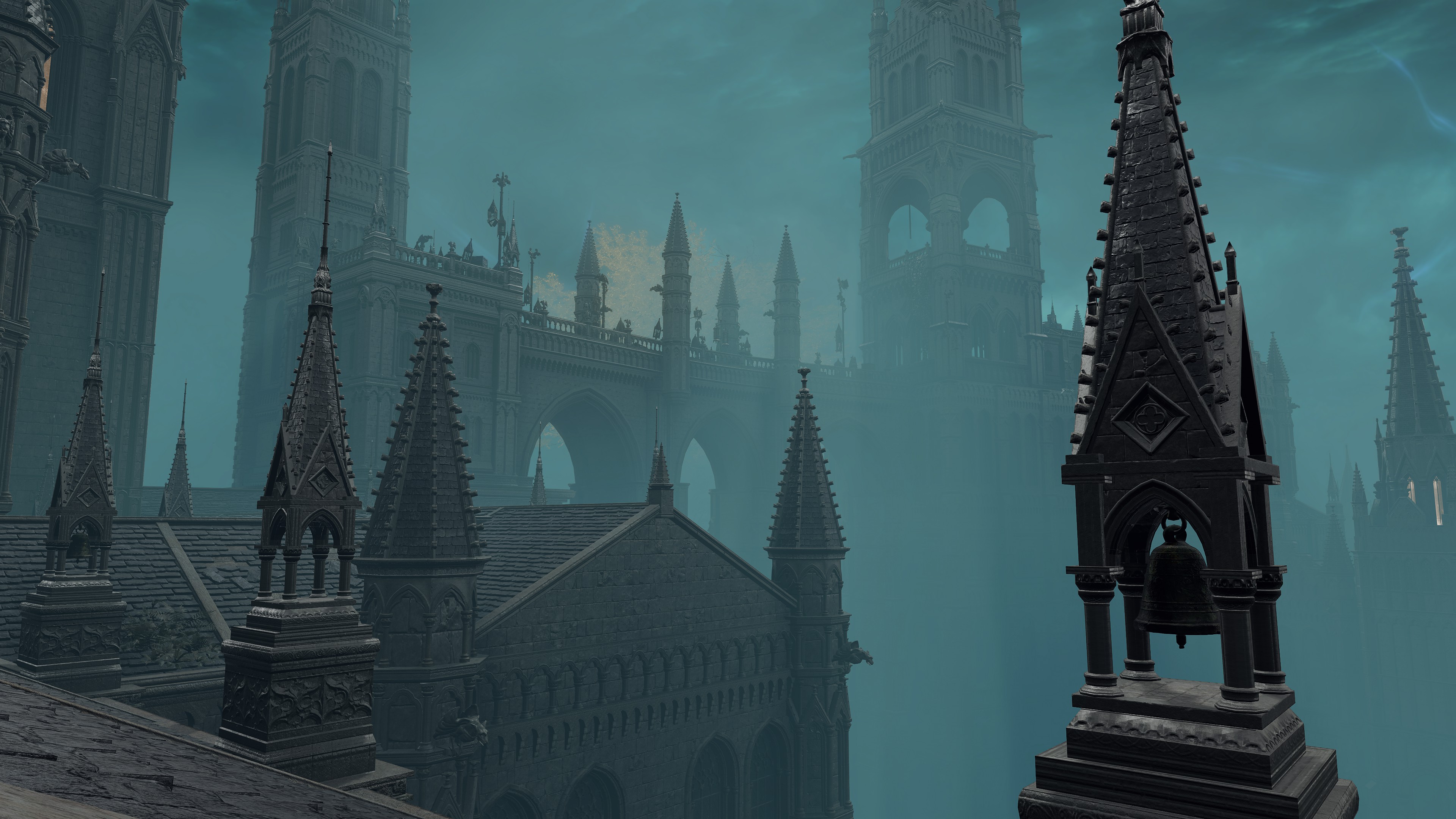
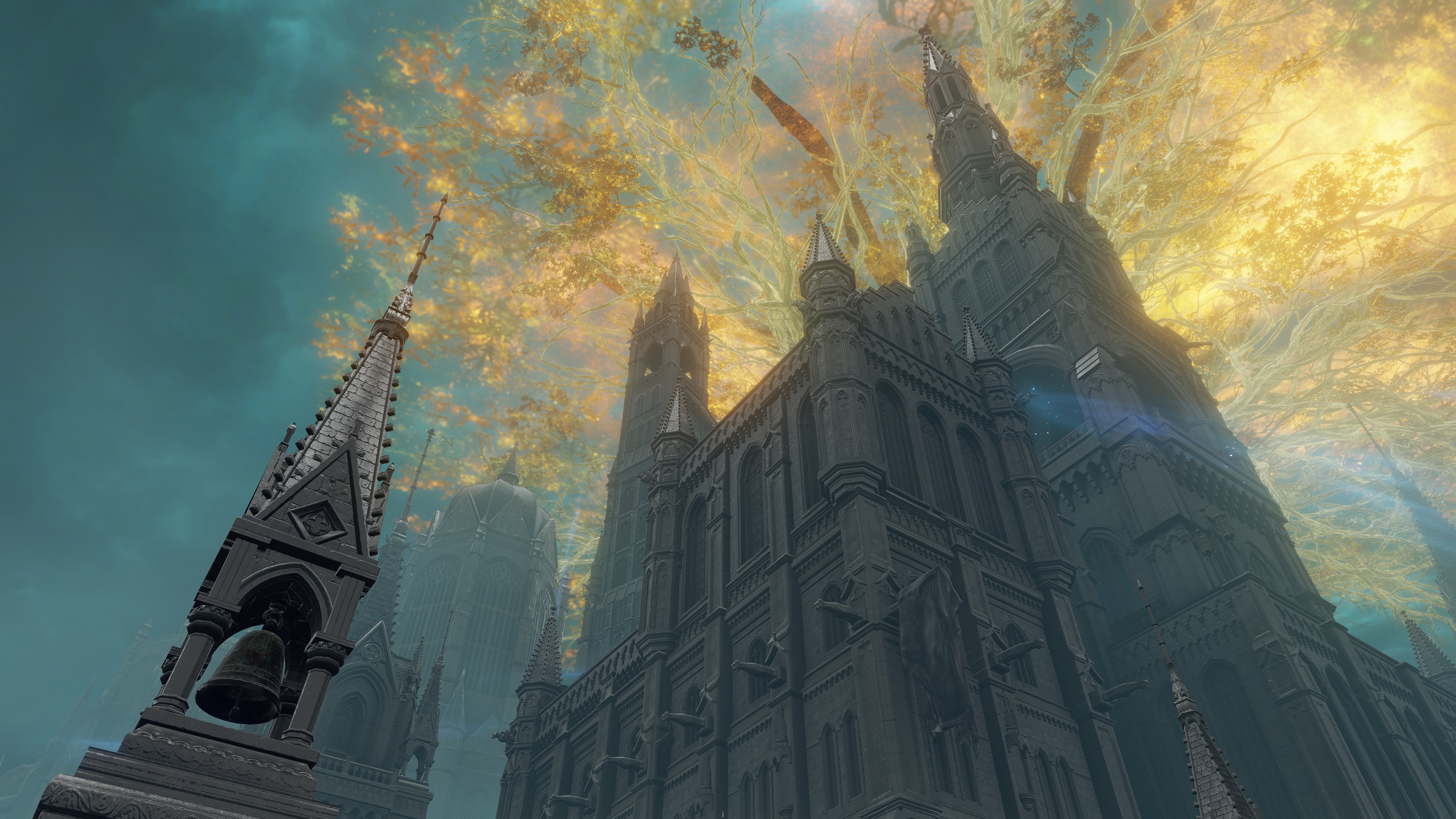
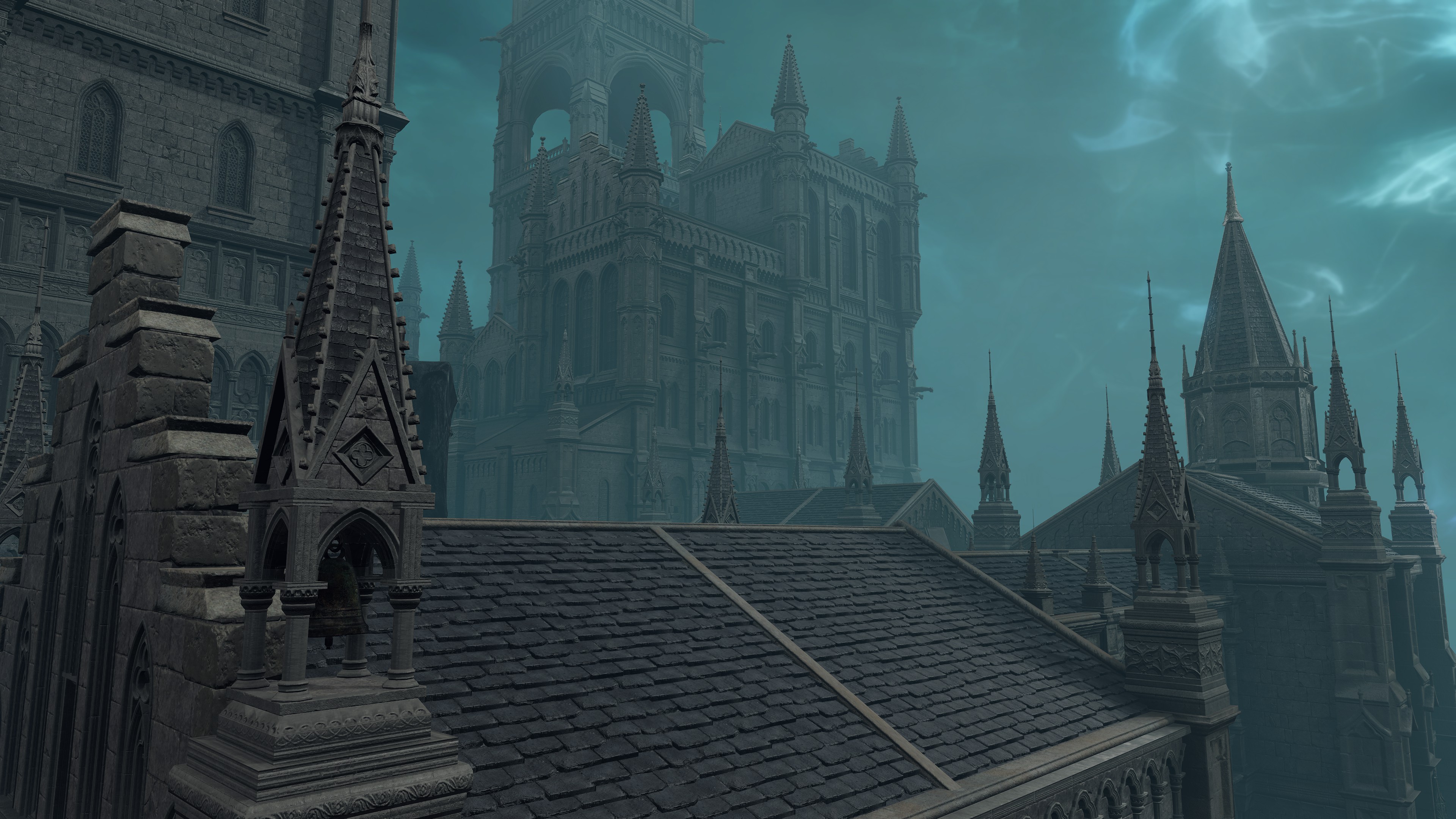
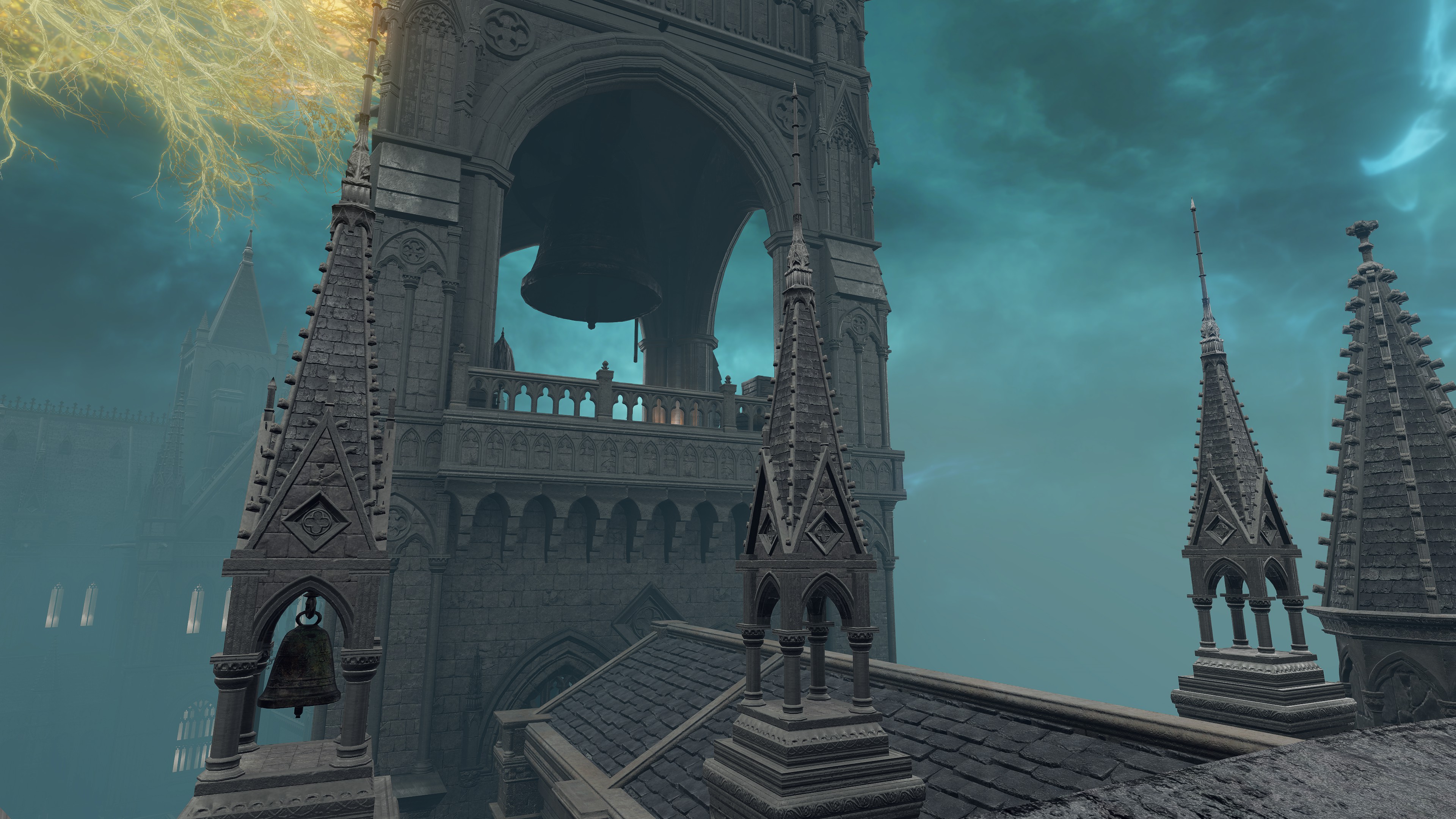
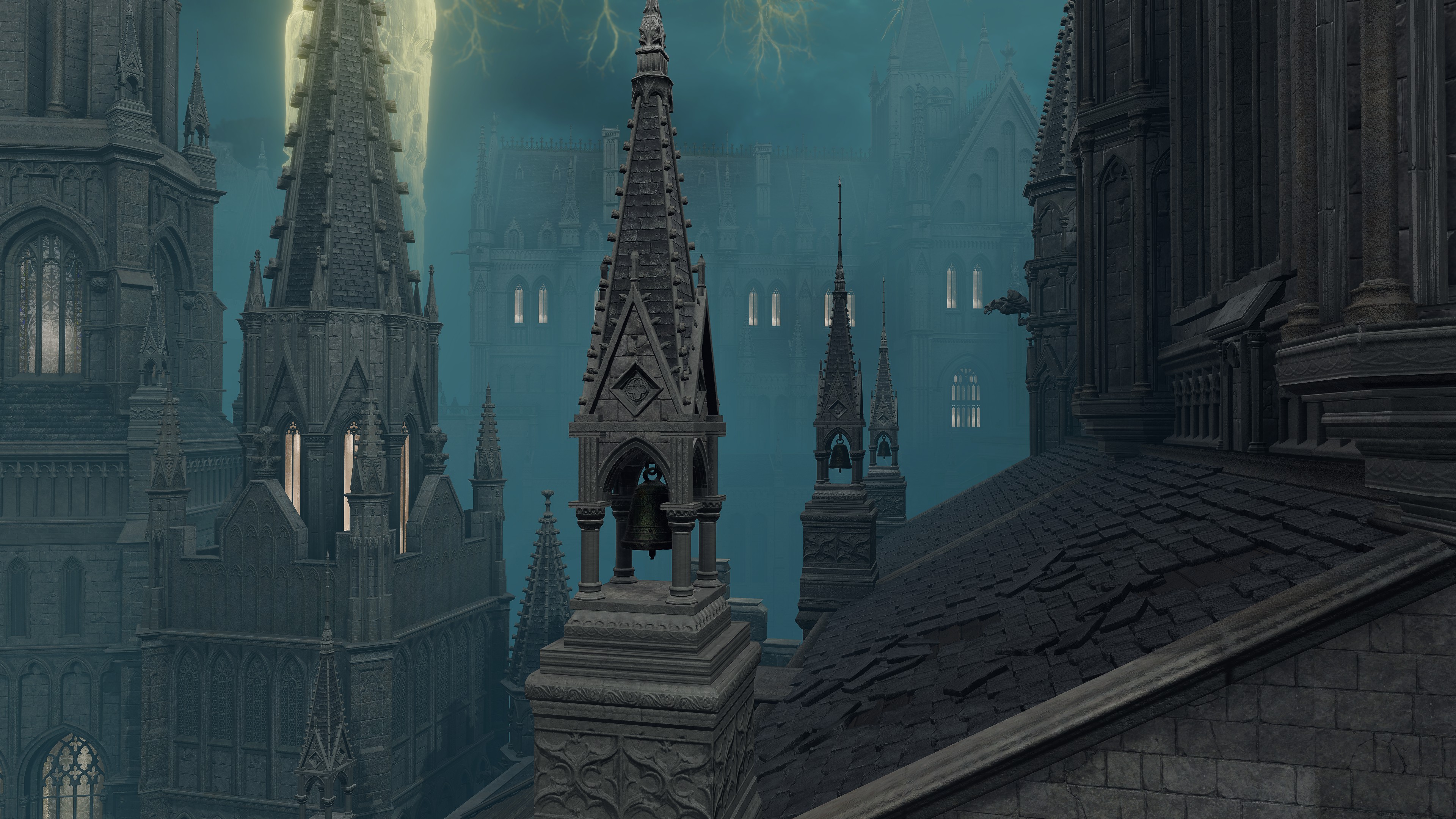
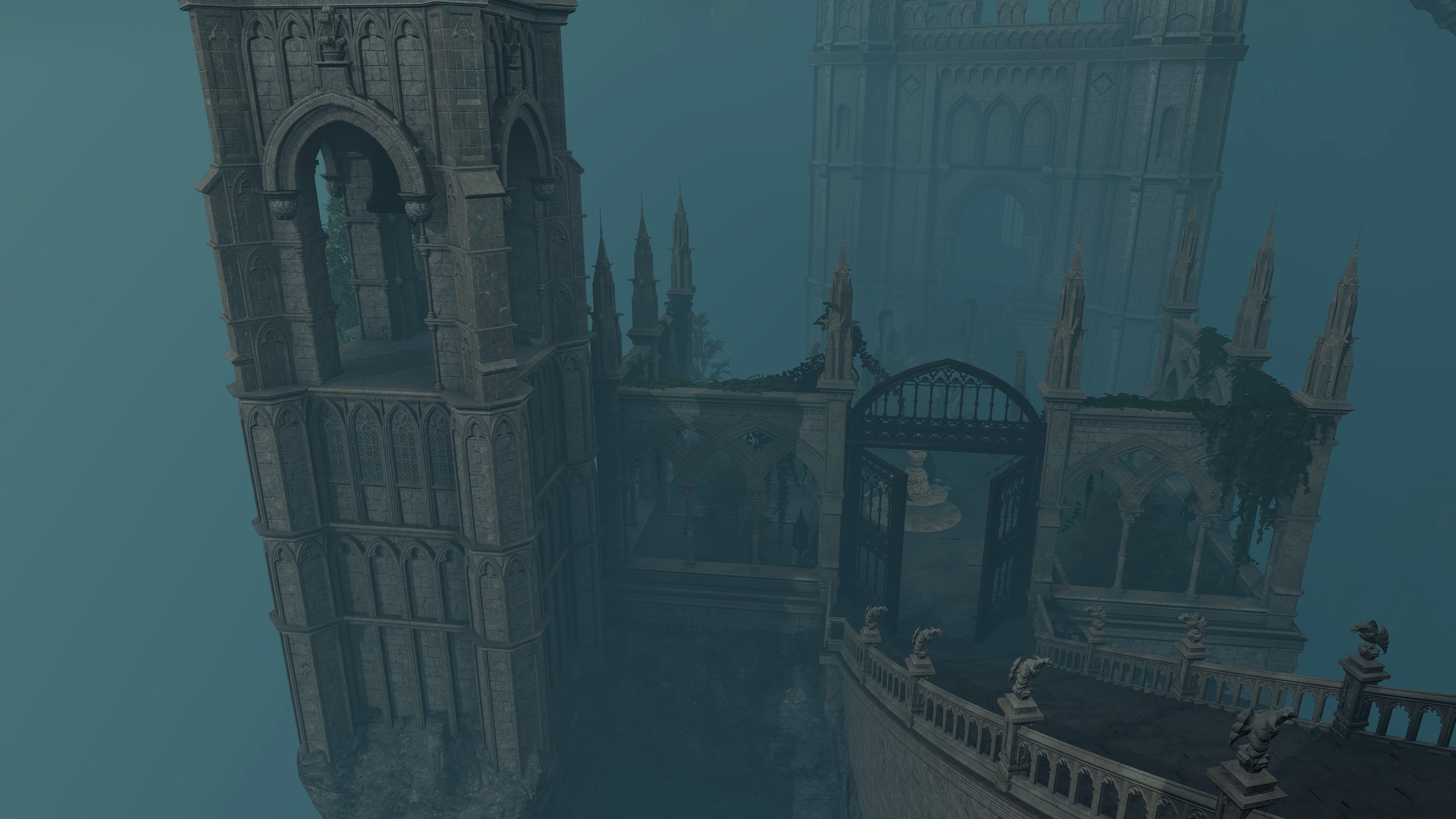
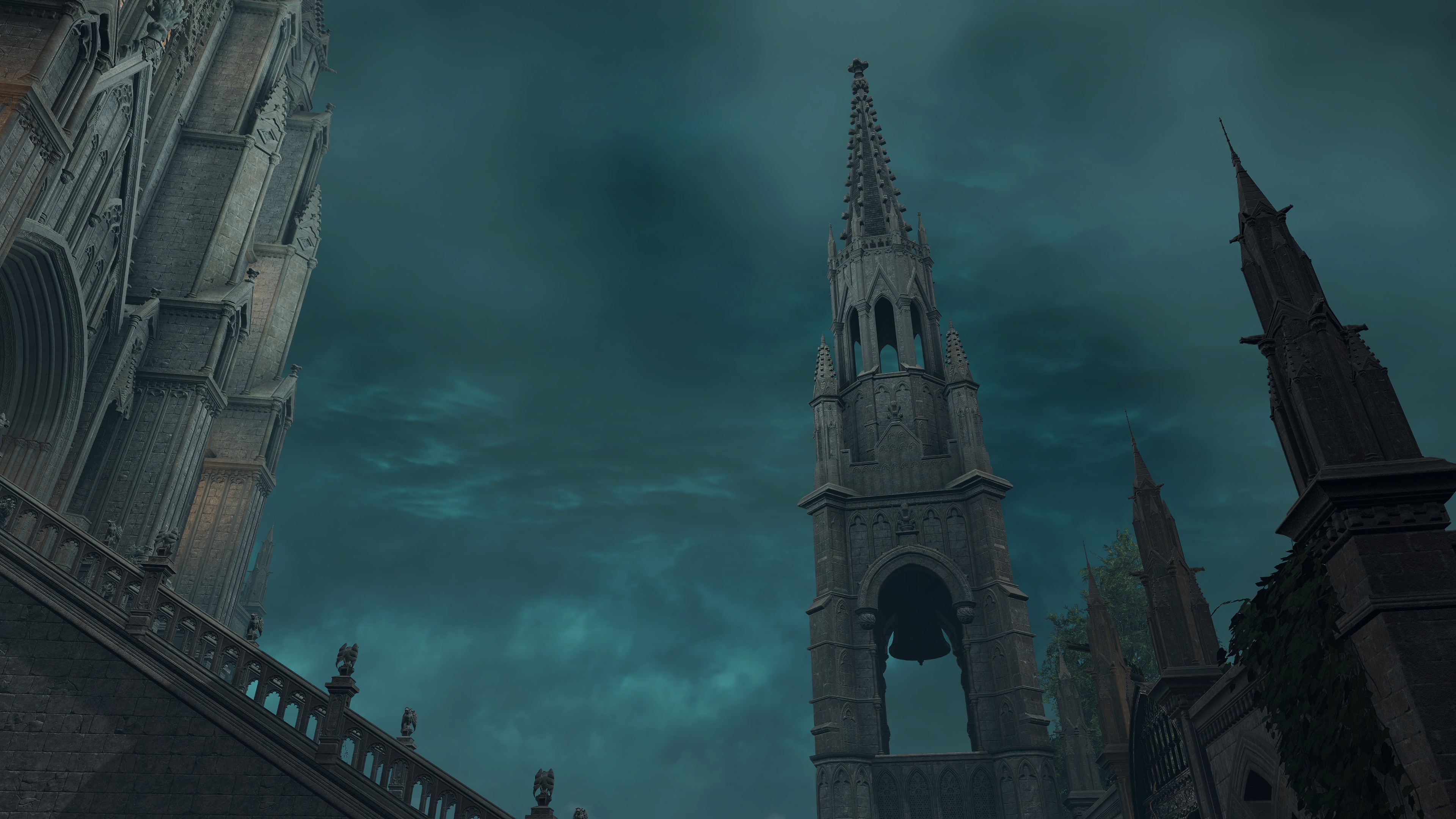
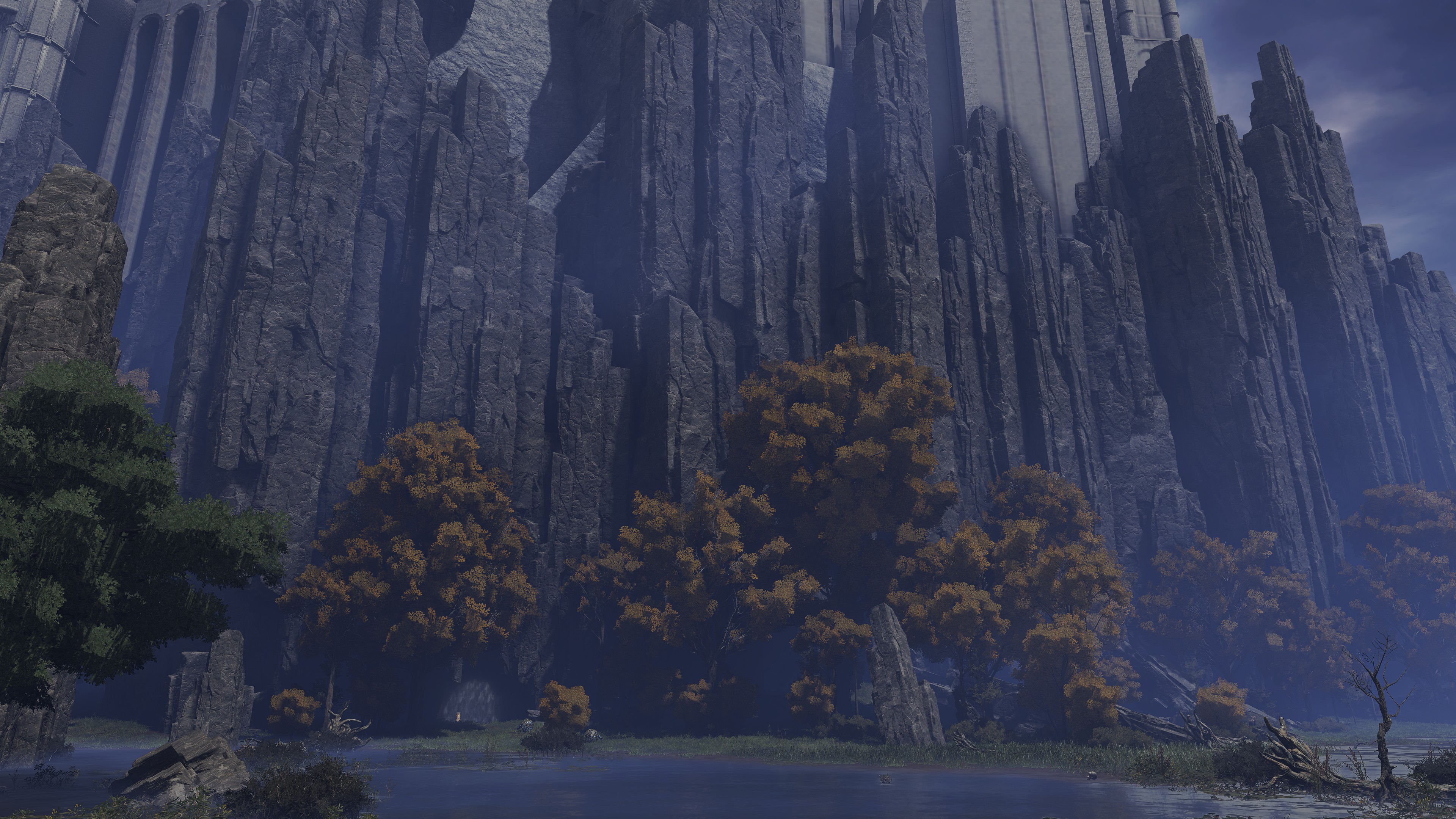
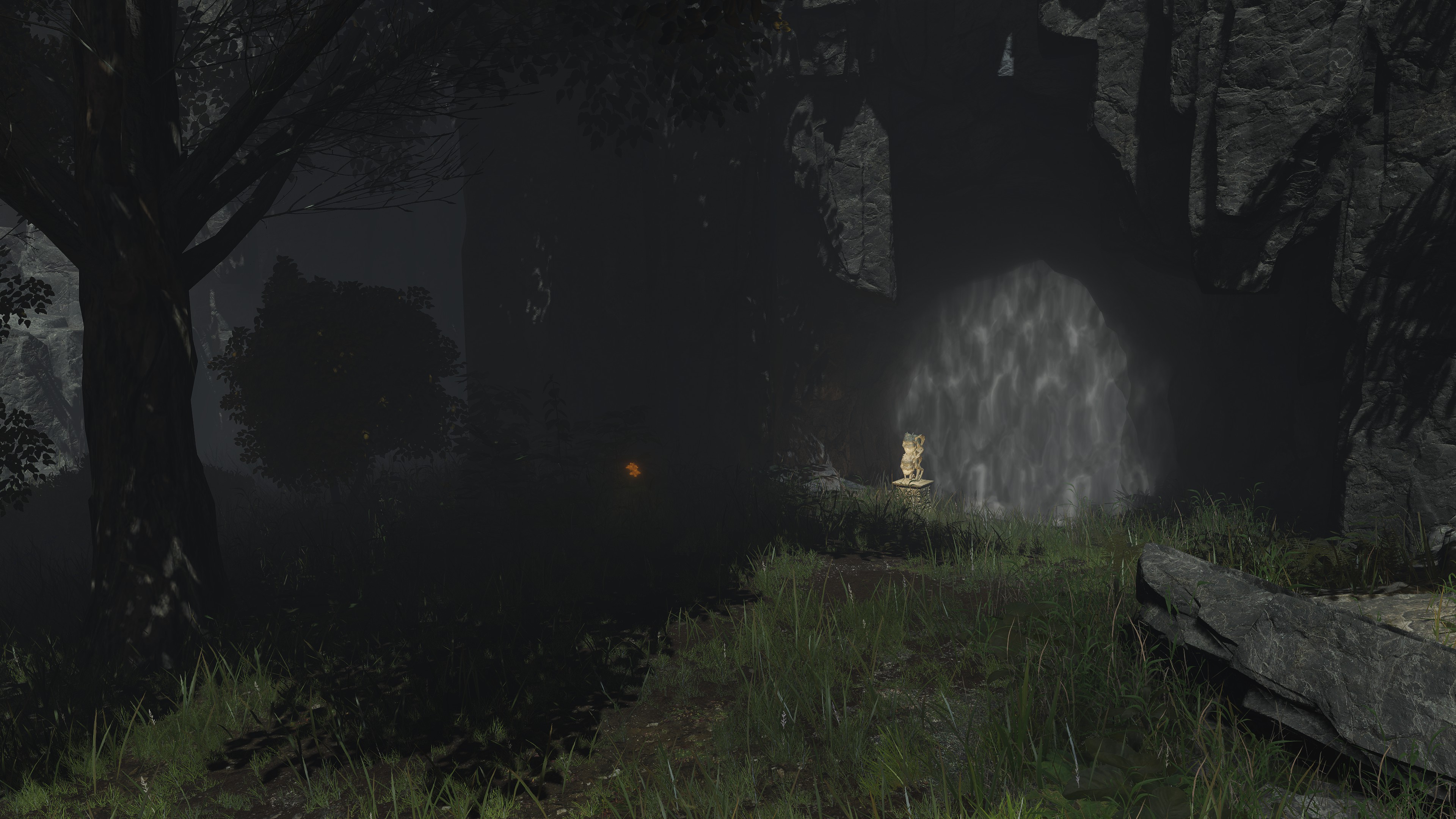
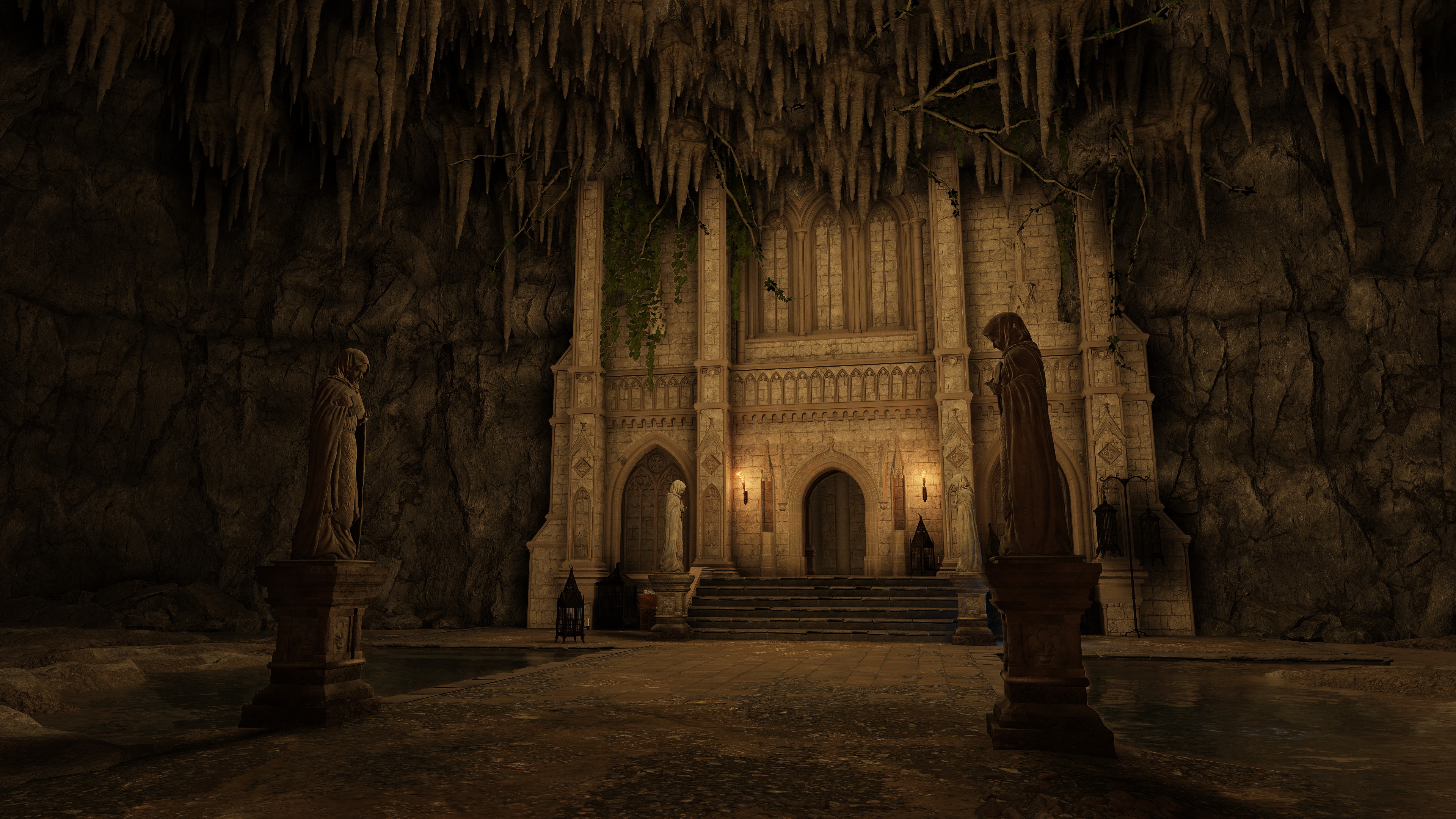
The only taller tower lies closer to the center, perhaps acting as a universal time marker for special occasions. It is atop this tower that we acquire Terra Magica, named for the academy’s magic sigil cast across the earth. The description confirms that the sorcery was once used on a larger scale, covering the entire school grounds. Given the circumstances, this was most likely when Azur and Lusat were both still part of the faculty, the supreme instructors possessing the knowledge and ability to maximize the potential of this “sorcery land” (魔術の地) spell. That would explain why the tower can only be accessed through the Academy Crystal Cave at the base of the mountain, gated behind an imp statue seal. This area, used for rising the tower and minor storage, was sure to be an excellent place for private research whenever they didn’t need to reapply the spell. This is likewise consistent with the sorcery’s purpose, empowering all within its bounds so that students feel inspired by their greater success — and who would want this more than teachers nurturing the young minds?
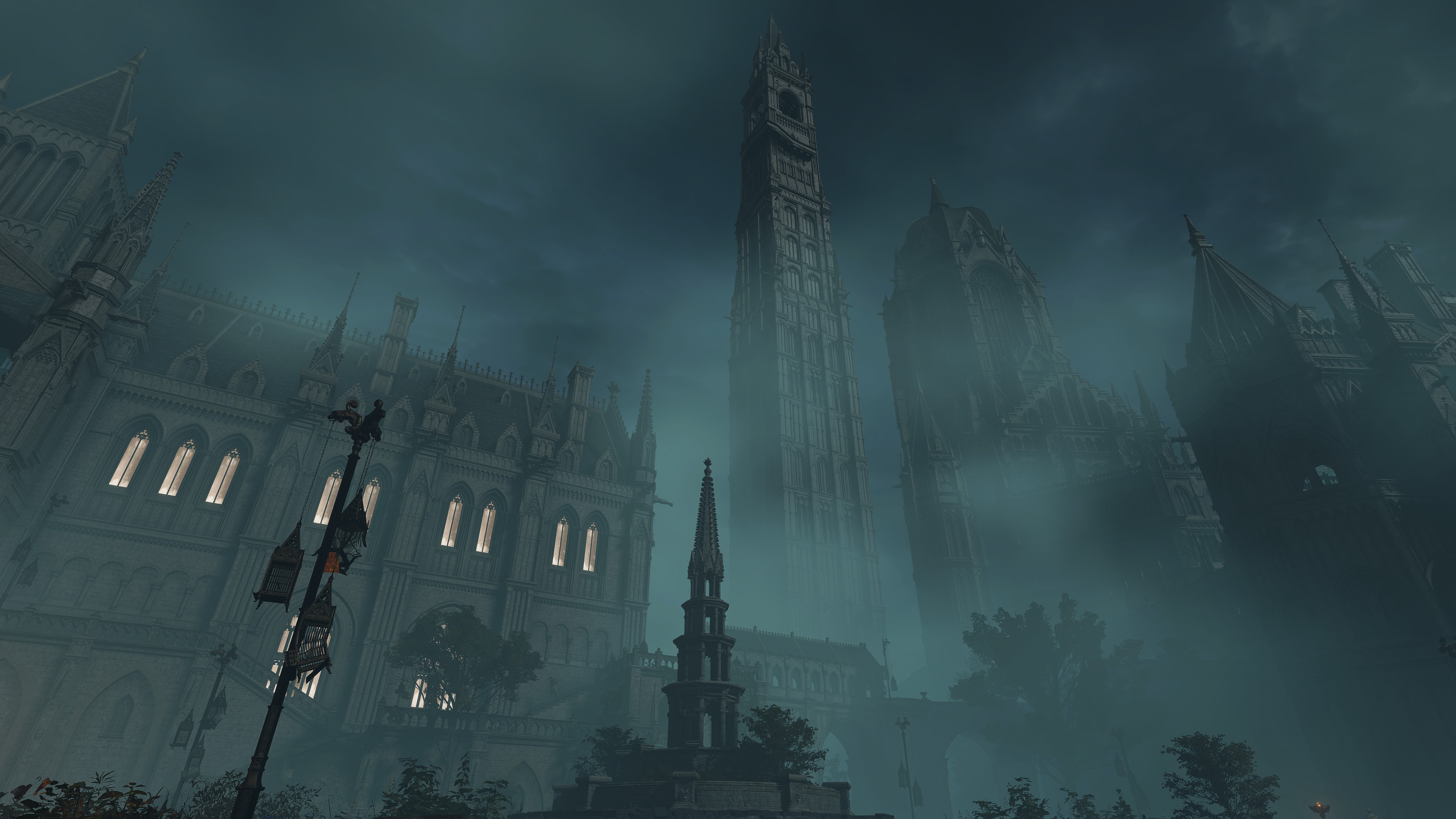
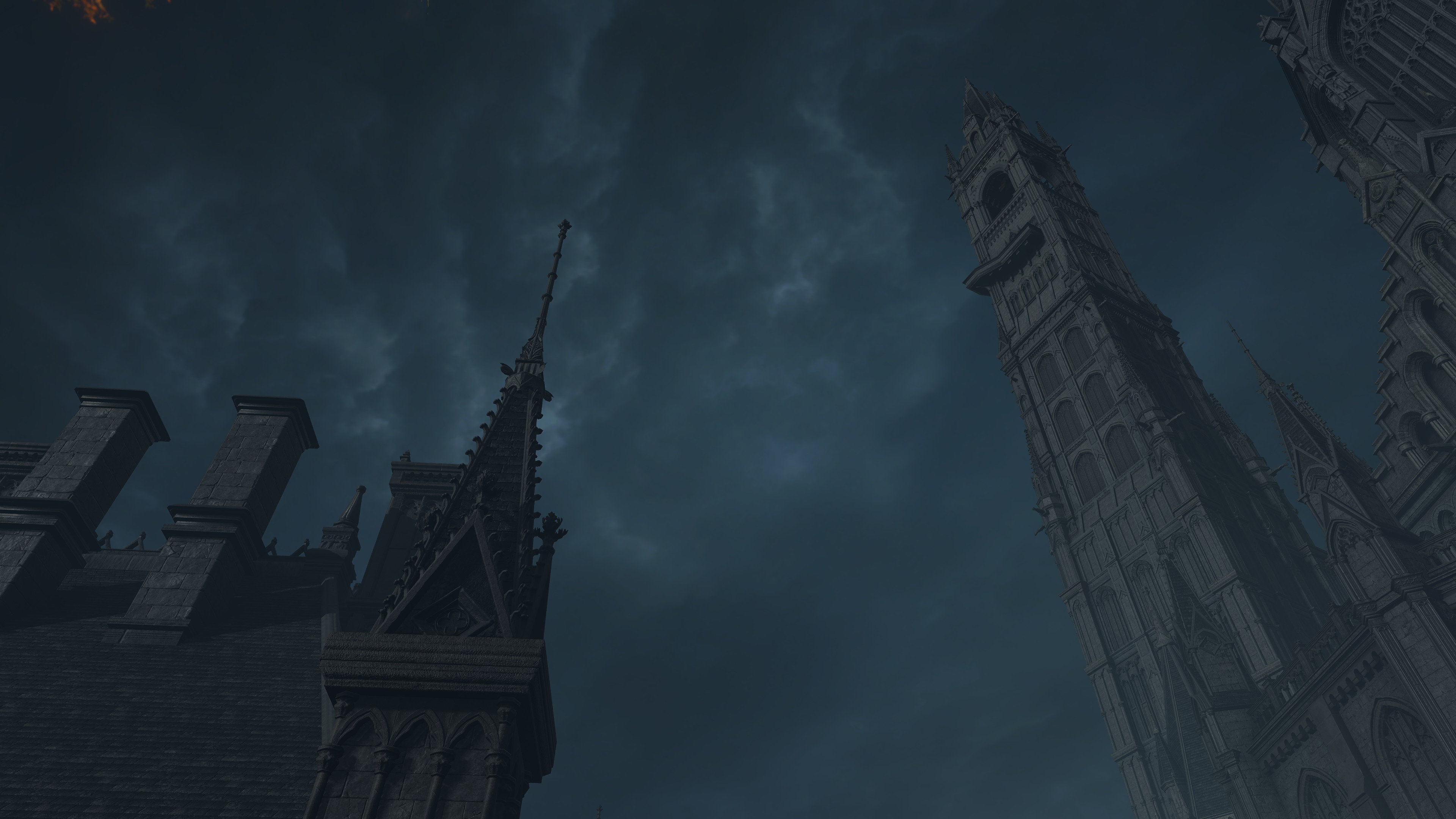
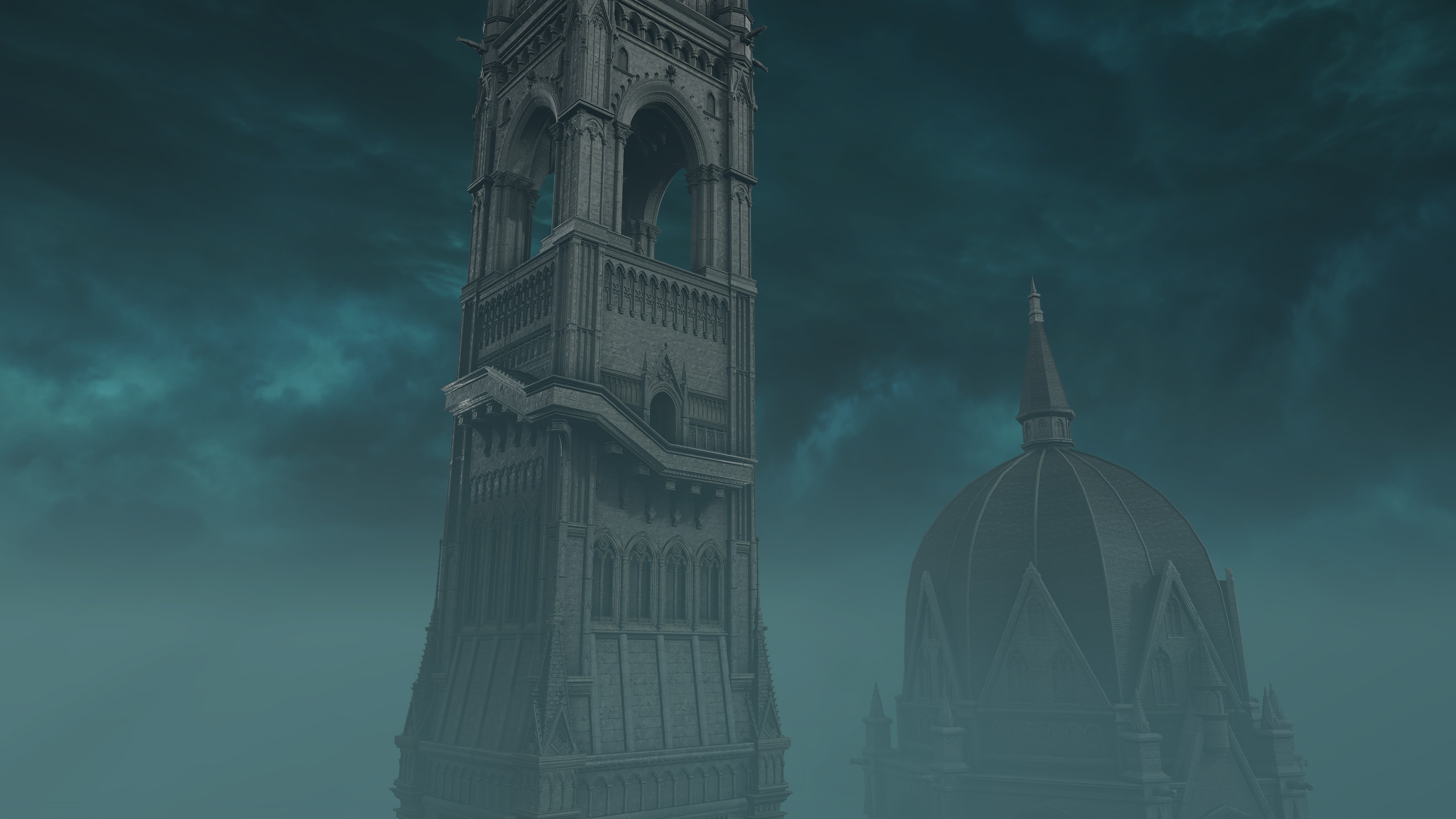
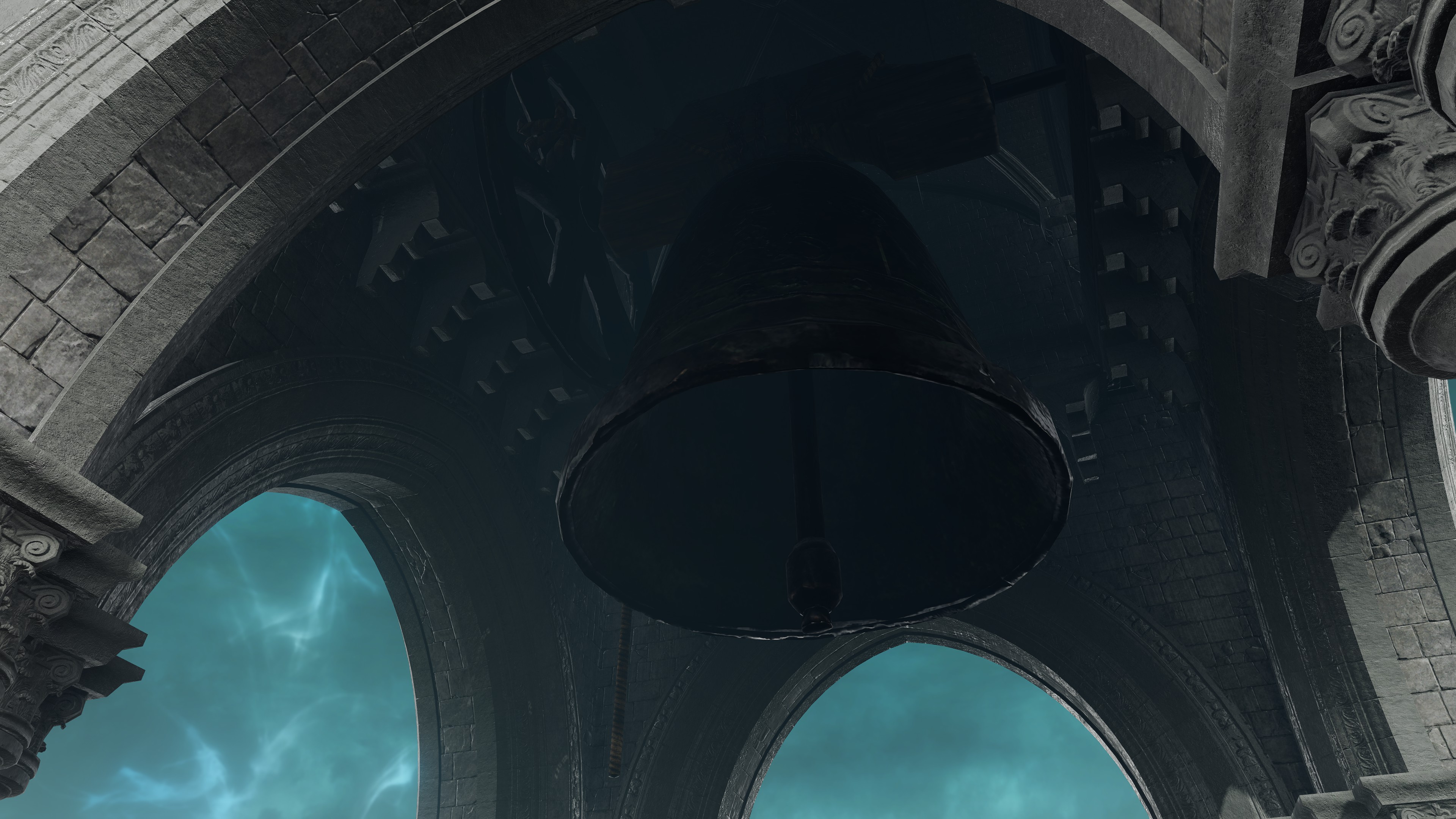
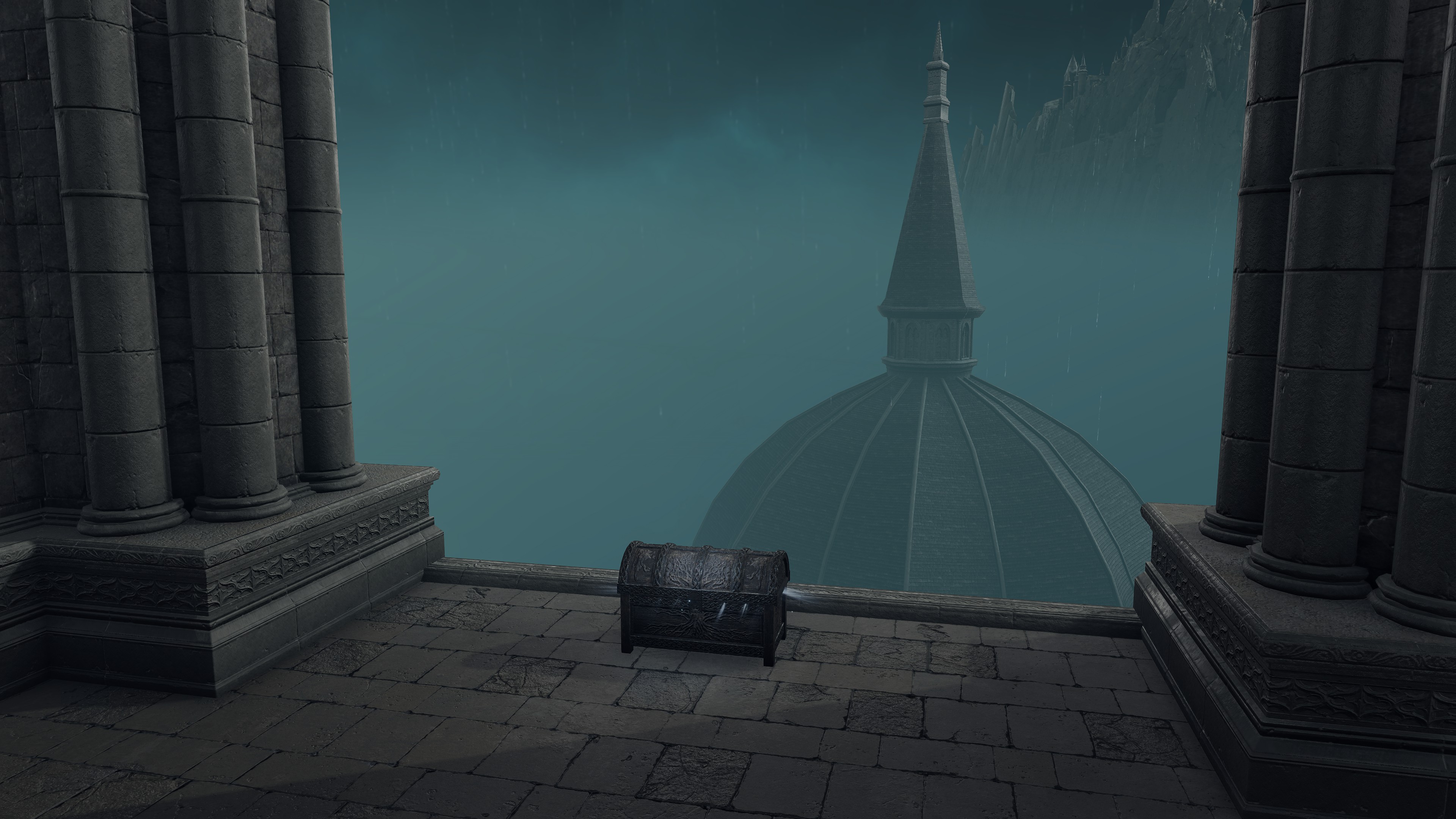
One of the brightstone sorceries of the Sorcery Academy of Raya Lucaria.
Draws the academy’s magic circle on ground and boosts might of sorceries of those within it.
Once, that magic circle covered the whole area of the academy from the tallest bell tower. For the vivid experience of success, like a flash, raises fledging children into sorcerers.
Because of all the traffic shifting from Laskyar to the academy itself, a settlement soon preceded its gates at the foot of the mountain. This “pre-gate town” (門前町) proves even larger than Laskyar, regulating all inflow across the southern bridge. With the school at Liurnia’s literal center, this became the premier hub for trade and housing, bringing immense prosperity. With that also came certain reverence for the sorcerers, the Blue-White Wooden Shield by the gate denoting residents’ fascination with the stars and fate. Only a little west of the town ruins sits the Temple Quarter, positioned under the classroom building’s hemicyclium. One can imagine students practicing their craft on break, calling stars down upon the ground below their balcony. The “church block” (聖堂区画) probably took it upon itself to collect these “holy” relics for the townsfolk to gawk at, effectively becoming the local treasure house. This is consistent with the axe we find stored as tribute. More importantly, pre-gate towns in Japan typically develop in front of temple gates, making Raya Lucaria the holy place to revere.
Wooden-made small round shield reinforced with metal. Lightweight and easy to handle, but cut rates are inferior to metal shields.
It is said that its design denotes the stars of the night sky and fate.
The academy wasn’t inherently opposed to this kind of attention, since anyone visiting first enters the Church of the Cuckoo to hear wisdom. Put another way, Raya Lucaria wasn’t areligious when it was a religion of reason, or at least a cult of personality centered around them. To the sorcerers’ minds, they were the elite, their education from a lifetime of mental rigor putting them above the rest of humanity. If the people wished to honor them as beings from on high, who were they to argue? In the end, it didn’t change these gods’ place on Mt. Olympus, toiling away in their ivory tower without meddling much with the rabble. In fairness, they did live much like monks in their temple on high. While still a high-quality uniform, students receive their simple navy blue robes only upon swearing vows of poverty and wisdom, dedicating their entire lives to researching glintstone. There they live among the student body, take only what they receive, and spend countless hours learning from their predecessors in the hopes of achieving enlightenment — truly little different from monastic life.
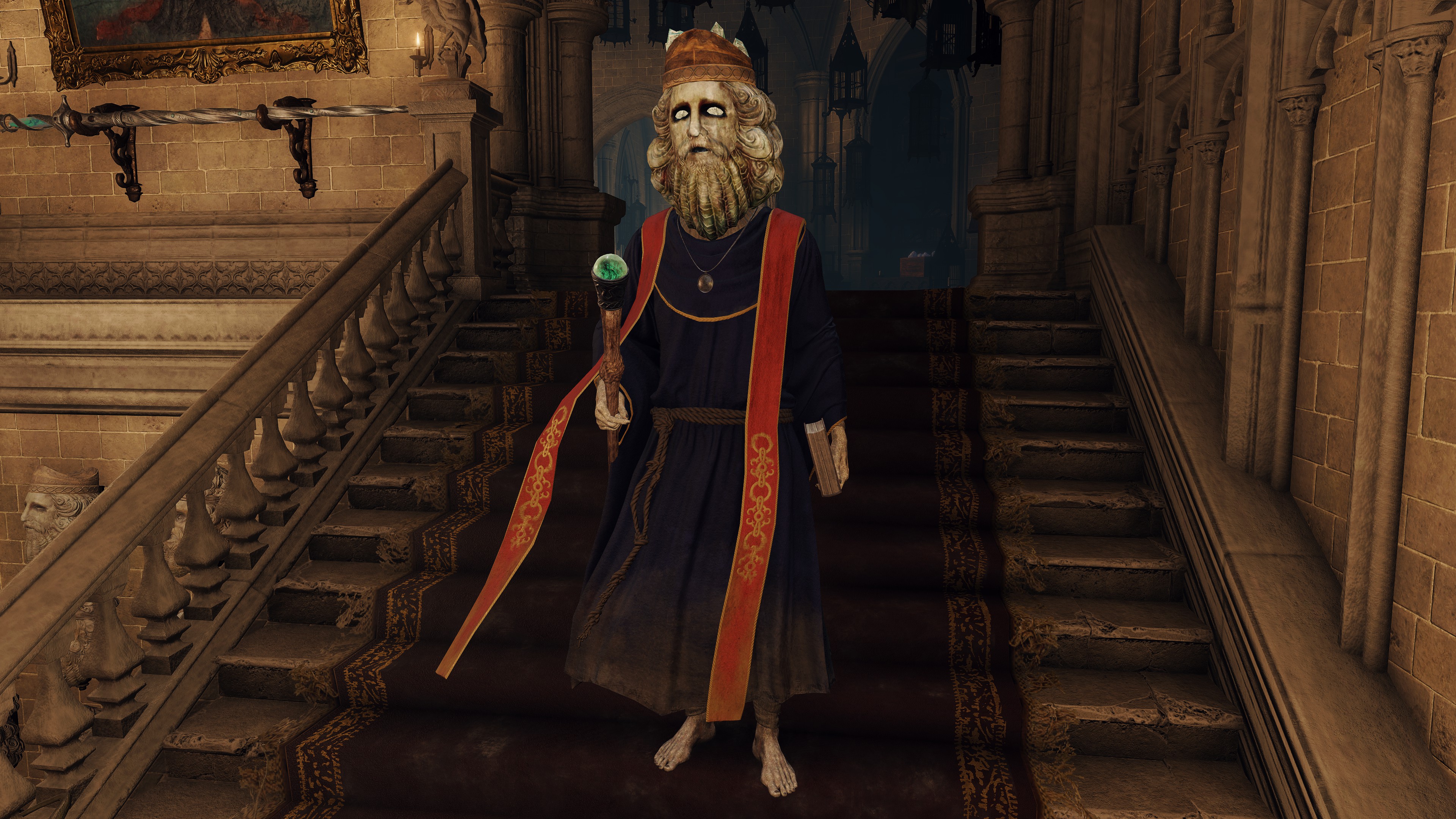
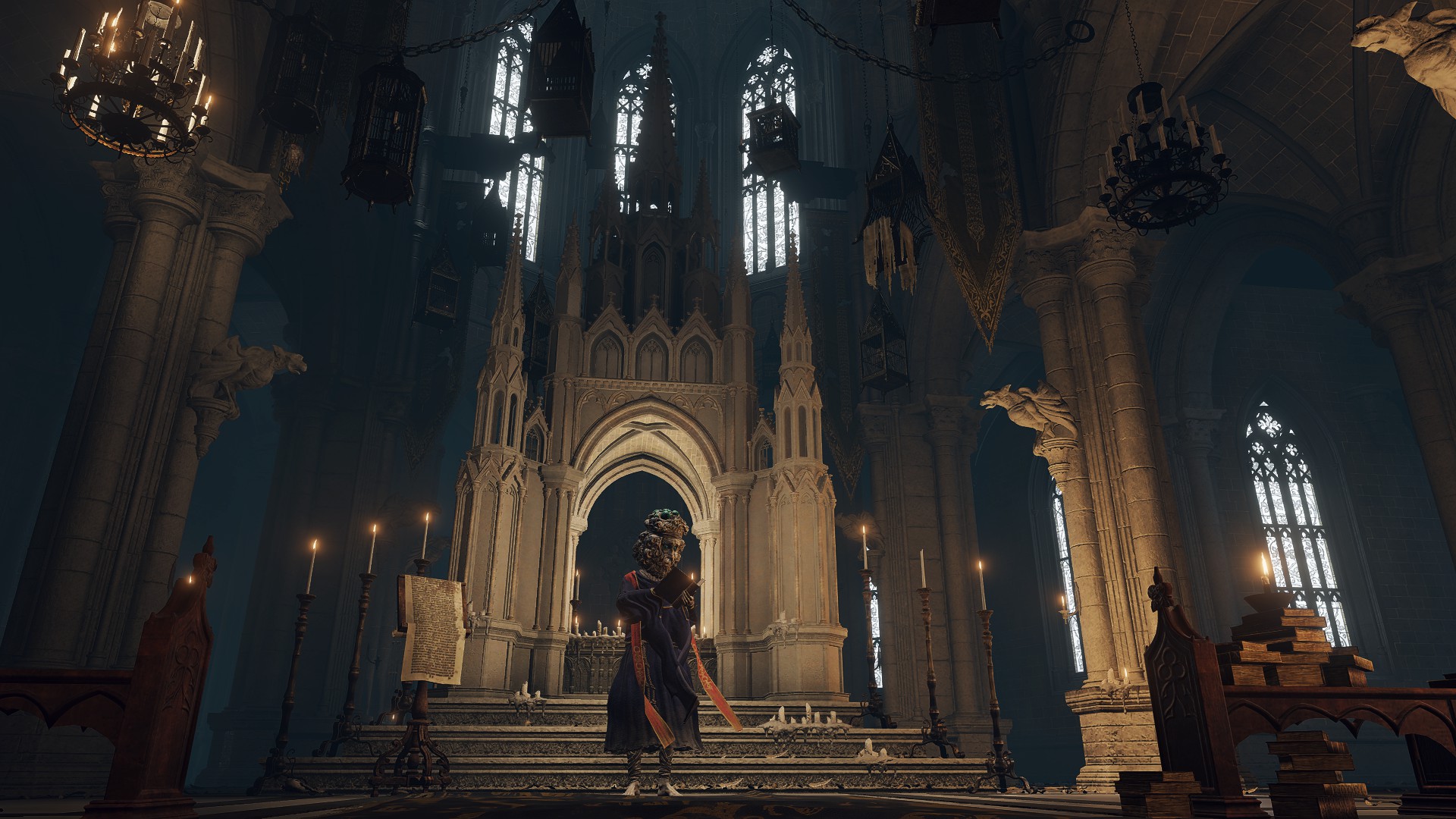
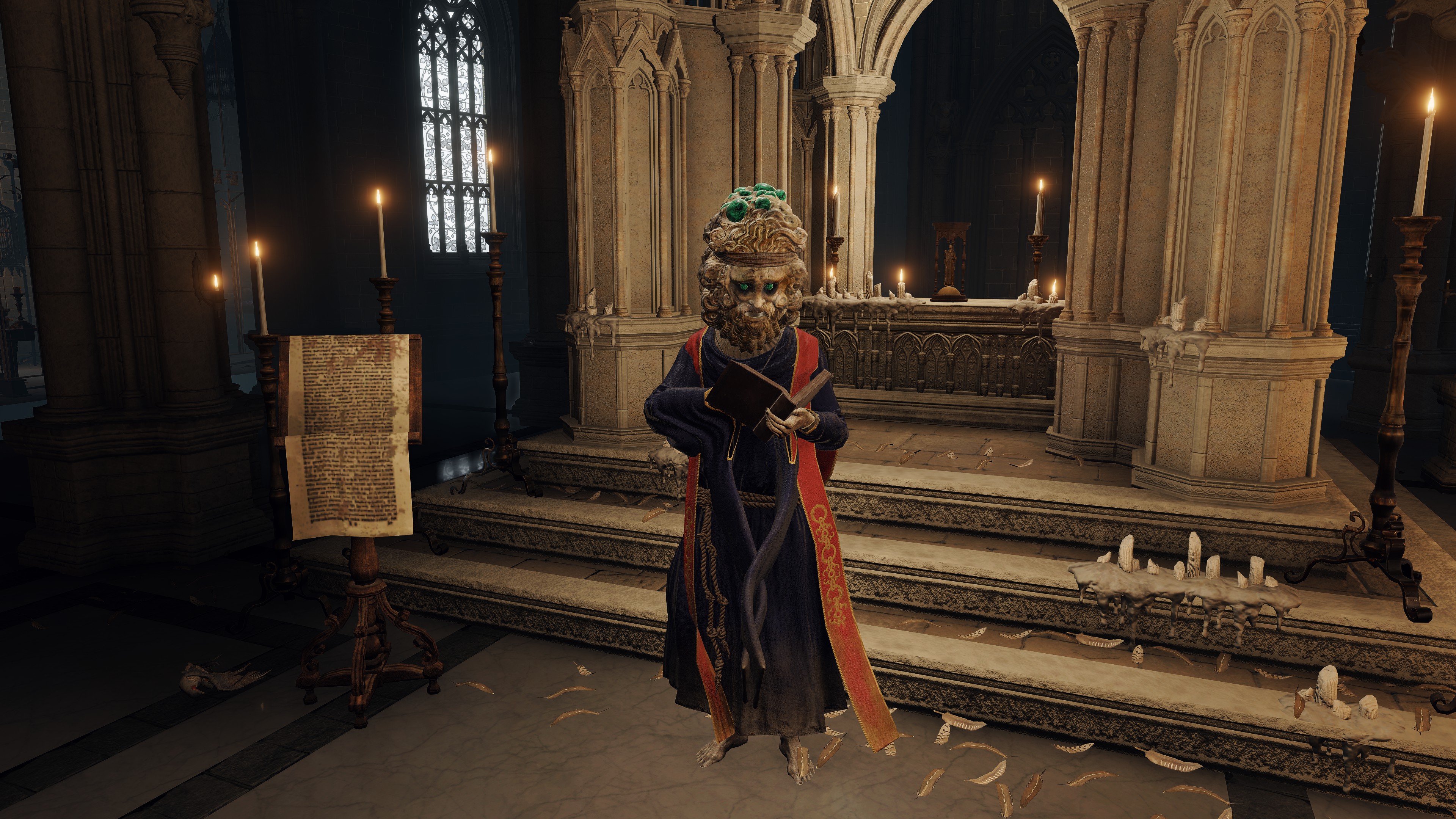
Robe that sorcery students of Raya Lucaria wear.
That of high-quality but simple navy blue is given along with a vow of wisdom and poverty to dedicate their whole life to research of brightstone, which is amber of the stars.
But with a long life, anyone will forget an oath.
Even so, Raya Lucaria is an academic institution, so a student’s studies remained focused on curriculum. First, the new attendee learns the rudimentary sorceries that anyone with modest talent can master. Assuming that his or her intelligence proves capable, the student will eventually be recognized as a researcher and receive a glintstone head. Which head depends on their choice of class, the Conspectus Scroll detailing the Glintstone Cometshard and Star Shower sorceries belonging to the two familiar classes. Whether joining Karolos or Olivinus, the sorcerer was prepared to read about more advanced sorcery; only, the teachers were surely focused on just one school of thought in their textbooks. But although Azur and Lusat’s courses have probably been the most common paths for students to takes, we see that there are more glintstone heads to select than just their two. Even if someone started out as a Karolos or Olivinus sorcerer, there were soon other classes to transfer to, each with their own head.
Scroll of the Sorcery Academy of Raya Lucaria. Contains advanced sorceries of those who wear brightstone heads and learn at a class.
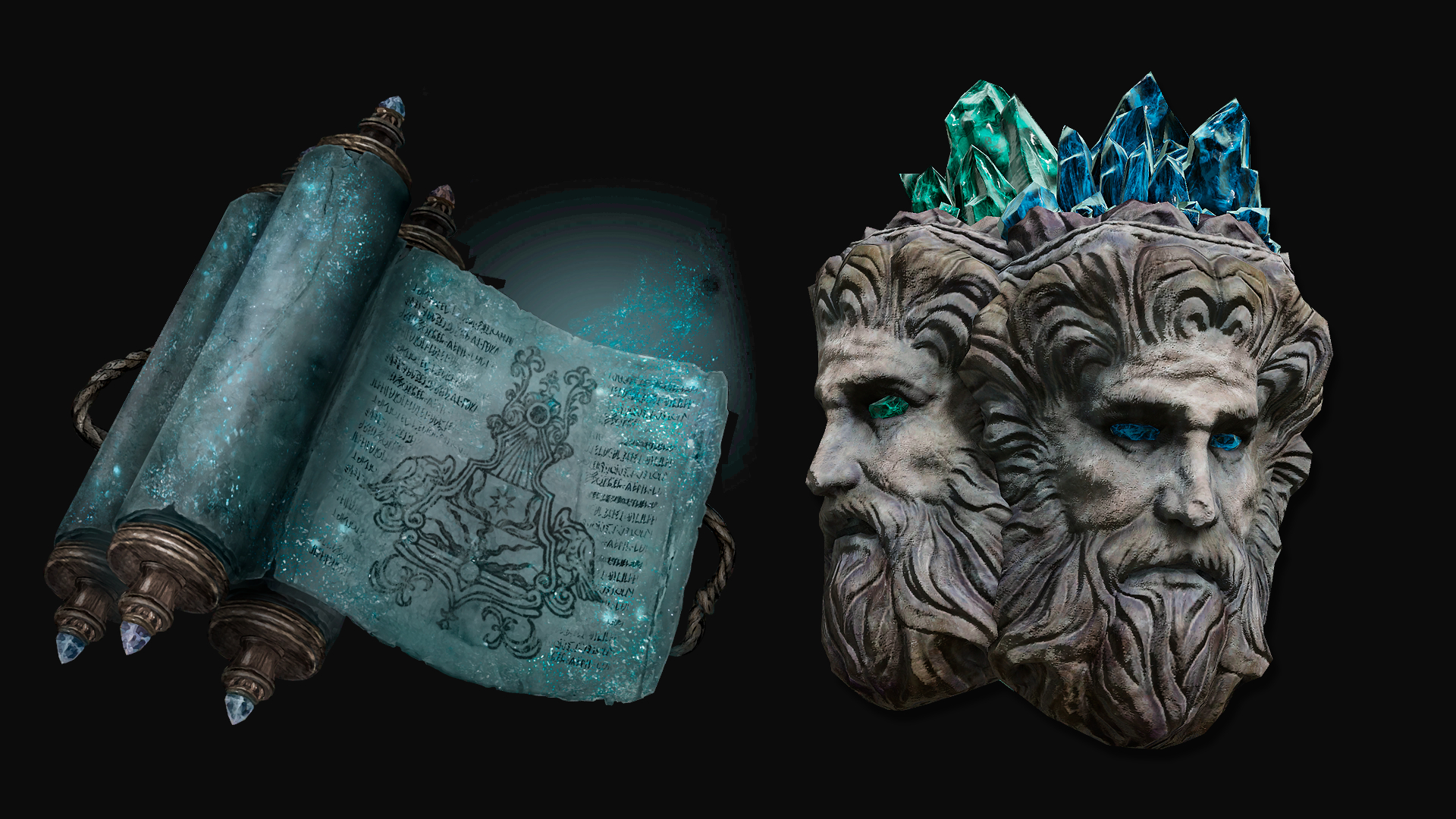
The Twinsage Conspectus represents the elite among the student body, receiving their own glintstone head without limitation to a specific area of study. The mask of two wise men hence provides the greatest intelligence boost at the cost to both HP and stamina, combining the effects of the Karolos and Olivinus Glinstone Crowns; the heads even bear crystals of both class’ colors. The origins of this conspectus can be inferred from the portrait of two sorcerers with similar faces as the mask. Like Azur and Lusat, both sages don the student uniform with unique flares, one displaying the same pattern as the supreme instructors while the other wears the same cloak as Azur. More than likely, the two were the top of their respective classes and so promoted by their instructors to becoming junior deans, professors of a new class dedicated to cultivating the best talent for research the existing classes might have missed. They were the proof of Azur and Lusat’s success with this academic experiment of theirs.
One of the brightstone heads that students whose research was recognized wear in the Sorcery Academy of Raya Lucaria.
Greatly boosts intelligence in exchange for HP and stamina.
Those learning in the Twinsage class in particular are the elite, so were permitted to master sorcery without selecting a school of thought.
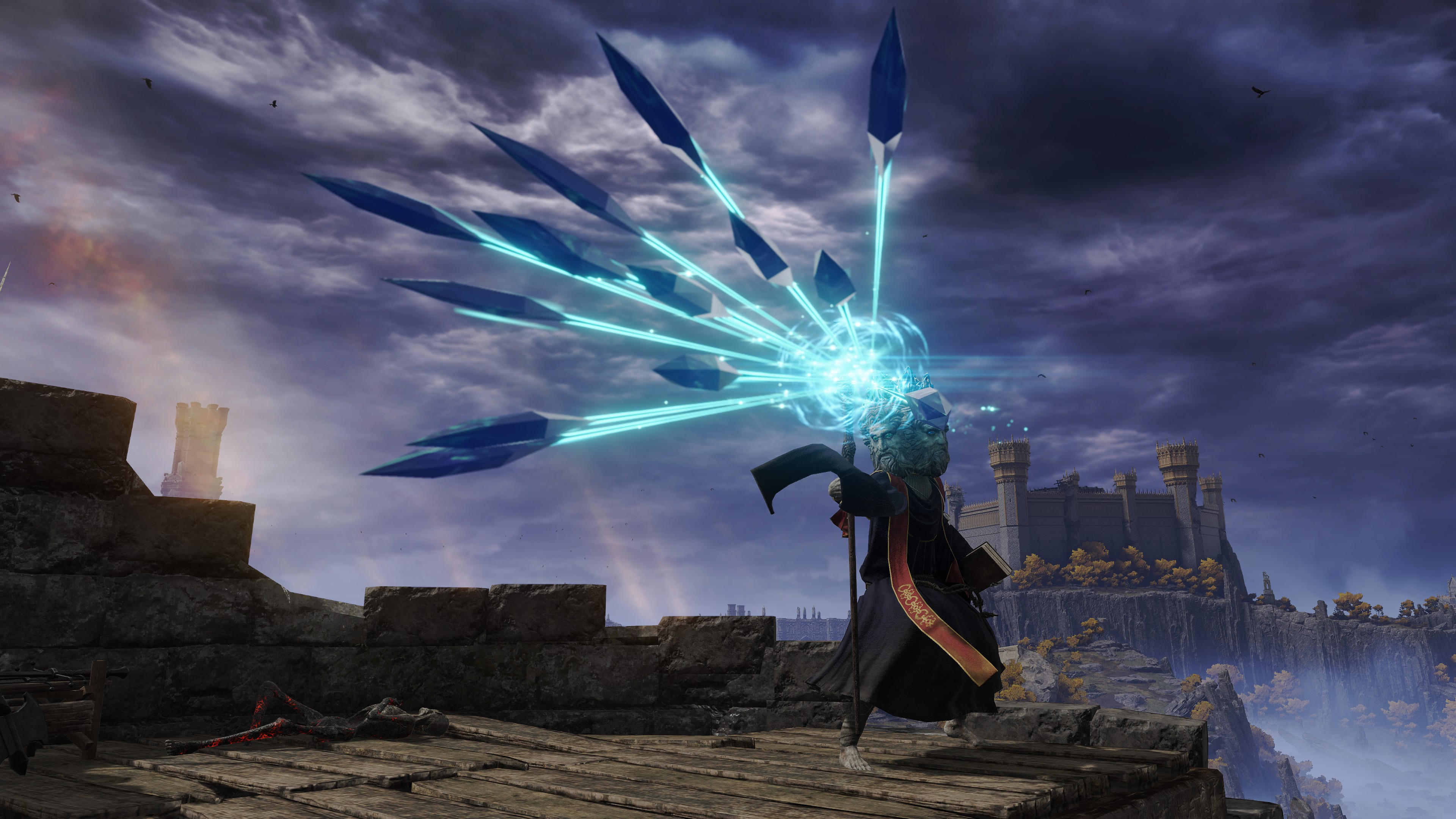
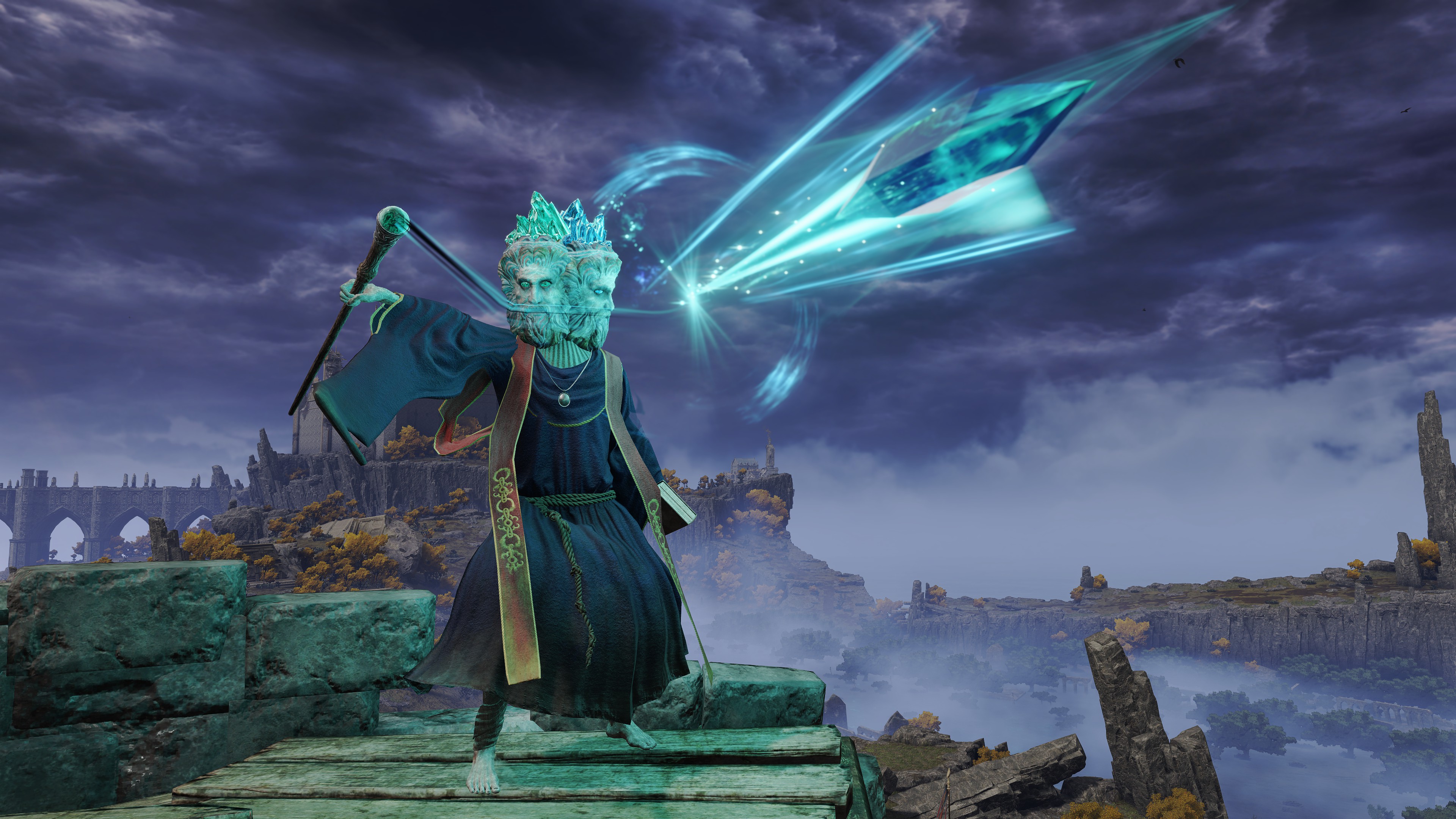
One field of study we can credit to the Twinsages is the existence of the Crystal Cadre. Sorcerers of this school research the Crystalians’ unique thinking which produces such aberrant sorcery. From their long observations of the mineral race, the group has already recreated weaker variants of their crystal sorcery. One of these spells, Crystal Burst, is cast by the Twinsage sorcerers we encounter, so there is no denying that the conspectus played a key role in developing this field. That doesn’t mean that the Cadre are exclusively Twinsage types. Sellen graduated from her prior classes to earn her own glintstone crown, and she teaches us another sorcery of the group, Crystal Barrage. Anyone with the talent and ability could theoretically study whatever they wish, as seen with Thops spending his life developing a force field spell worthy of a new conspectus before he had even earned a glintstone head. Most are just better off sticking with their class until they achieved that level of knowledge.
One of the brightstone sorceries of the Sorcery Academy of Raya Lucaria.
Fires many brightstone crystal fragments simultaneously. Can be used without stopping movement and enhanced by charging.
Art of sorcerers called the Crystal Cadre. They are researchers of the stone intellect, the crystal-men’s faint thinking.
Ashen remains inhabited by spirits. Summons Twinsage Sorcerer spirit.
Spirit of a sorcerer of Raya Lucaria, wearing a stone head. Those who learn in the Twinsage class, in other words, are the elite, so have mastered the two sorceries of “Brightstone Comet” and “Crystal Scattershot”.
Sorcery that Thops the Dullstone staked his life searching for.
Generates magic force field and deflects sorceries and prayers. Whole holding, generates force field continously.
People of later generations will probably know: a theory which became only the subject of ridicule was the discovery worthy of a new class, even.
Not everyone was built for the ivory tower, however. The Hierodas Glintstone Crown was given to, not so much a conspectus, but sorcerers who opted to leave the academic grounds and wander the wider world. The sage who apparently started this practice is depicted with a smooth crystal dome and a red blindfold, drawing clear parallels to Buddhism; covering the eyes represents ignoring the vulgar things outward in order to focus inward on the spiritual truths. The name Hierodas is more accurately Jarodus, (ヤロダス) a Hellenization of the Hebrew Jarod (ヤロド) meaning the “descender” in common association with bringing knowledge down from on high. It conveys similar connotations of enlightenment as Lusat, but with the understanding that such wisdom comes from movement. As a principle, to block out the vulgar, one must first know what it is — how else can anyone recognize what it is not? For Hierodas, the truth would not be discovered examining the same glintstone in one place. Only by experiencing the full reality in nature can we finally comprehend human existence in relation to the stars.
One of the brightstone heads that students whose research was recognized wear in the Sorcery Academy of Raya Lucaria.
Boosts intelligence and endurance in exchange for FP.
The Yarodas brightstone head was given to those who leave the academy and try learning from wandering.
There is some precedent to this. Academy sorcerers were permitted to embark on journeys of discovery at times — what school doesn’t allow for a field study? As we see from the local ghosts, plenty have gone as far as Sellia, likely to exchange knowledge with their brethren out east. Brought with them would be sorceries like Starlight or Glintstone Arc. Because these were solitary field trips, the student would receive instruction on spells to help them deal with situations out on the road — heavens forbid the feeble student get ganged up on by highwaymen or find themselves in pitch-dark without a torch. Hierodas sorcerers were presumably afforded the same options before setting off on even larger journeys, led by one who cut text for their blindfolded head refer to as one of the greats in his choice. This seclusion from the academic environment impressed Azur and Lusat enough to give this sage and any who wished to follow his example their own glintstone crown.
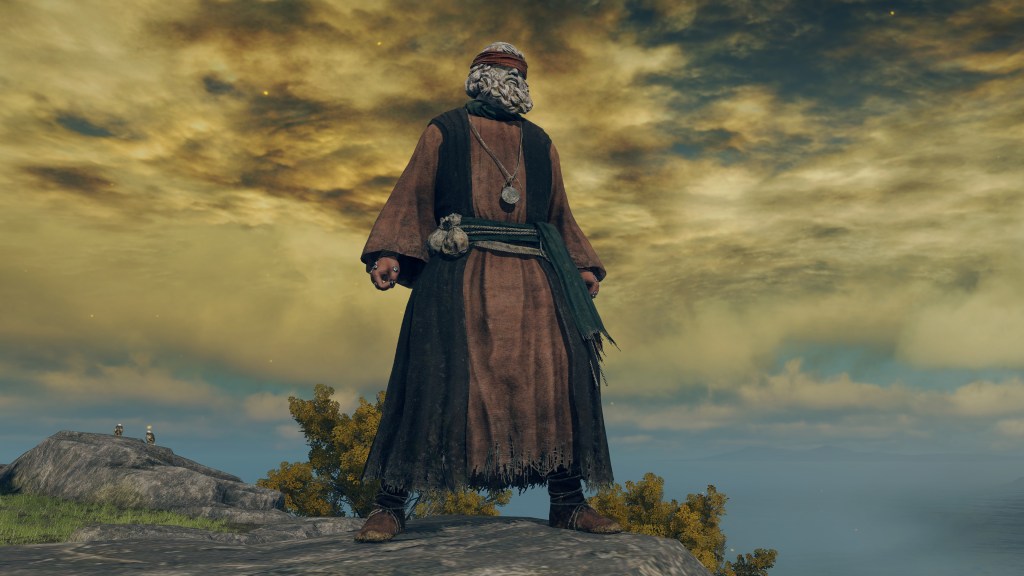
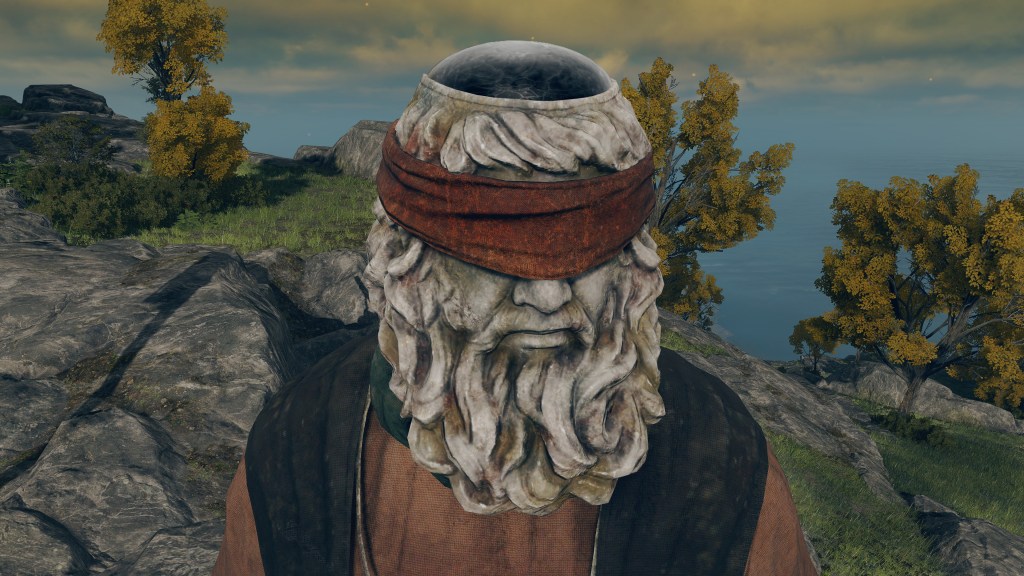
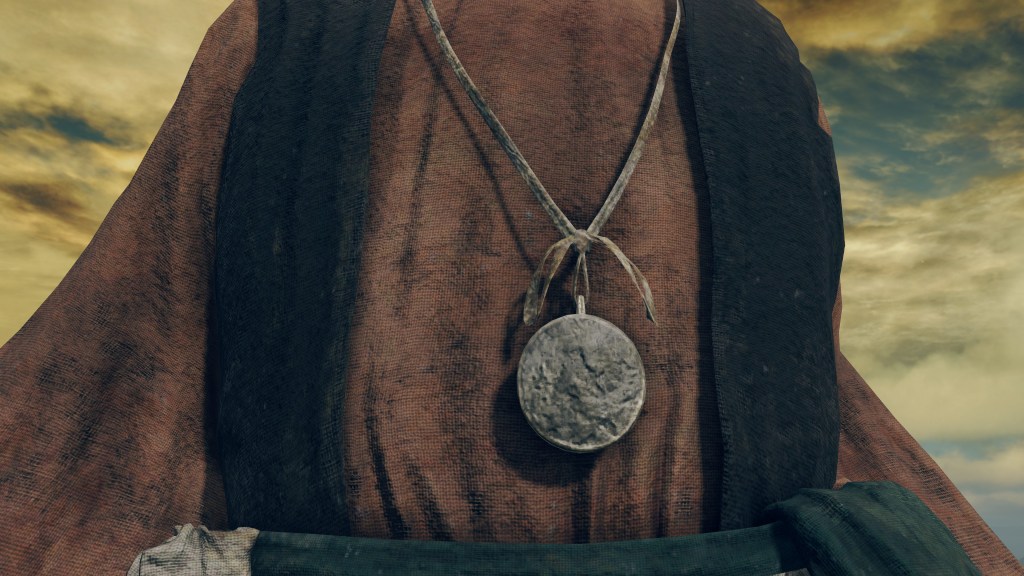
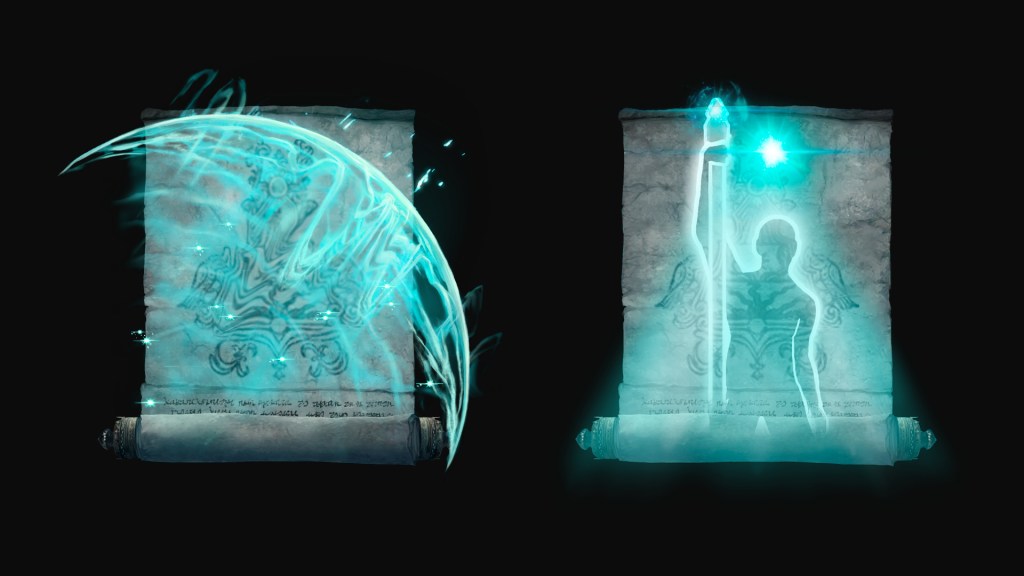
One of the glintstone sorceries of the Sorcery Academy of Raya Lucaria.
Fires magic arc that stretches large horizontally. Can be used without stopping movement and used continuously.
A sorcery for when against large numbers, given to sorcerers who leave the academy to embark on a journey. The ignorant often flock together.
One of the glintstone sorceries of the Sorcery Academy of Raya Lucaria.
Floats a small starlight and illuminates surroundings. Can be used without stopping movement.
Sorcery given to sorcerers who leave the academy to embark on a journey. Whether it be starless nights, undergrounds with unseen skies, or capturing prisons, the stars are at the sorcerer’s side.
Blindfold put on the secluded great sorcerer.
In some ways, Hierodas students remain the truest to their vows. The crown is part of the errant sorcerer set, raggedy robes which convey the poverty of those living the same as traveling ascetics. Such “stray” sorcerers (はぐれ魔術師) can continue to chase the stars and find new places where they fall, see their effect on different environments, and spread more about the prosperity of glintstone by example. In fact, it is likely because of Hierodas that astrology has become popularized outside the Lands Between, with two kinds of sorcerers as our potential backgrounds. (Nightreign introduces the Scholar, who searches for the Lands Between as a member of a Hierodas Research Hall) Who else but dedicated globetrotters would cross the sea of fog to other continents, passing on their knowledge to the wider world? This is a great boon considering the drawbacks. The glintstone head boosts the traveler’s intelligence and endurance in exchange for FP, acknowledging that life on the road limits their full potential compared to those dedicating all their energy to willpower in a classroom. But with so many more researchers across the world, the truth might be yet closer to within reach.
Of course, there were other reasons someone might be leaving the academy. Those who fail to receive a glintstone head, typically making it no farther in their studies than Swift Glintstone Shard, become derided as Bluntstone — the idea of being “dull” referring to both minerals and smarts. Those who cannot become sharp crystal are too stupid to be recognized as sorcerers. Instead they who fall behind are branded with learning another simple sorcery, Shatter Earth, and get thrown into the mines. Raya Lucaria Crystal Tunnel out east is the primary example, countless diggers who were former students using crystal daggers and hard-tipped staves doubling as digging tools to harvest crystals for the academy. To make up for the waste of time and resources trying to cultivate their minds, the failures are forced to supply new resources for their betters. Those who showed promise might learn the more advanced Rock Blaster, but the long, grey beards tell that they never graduate from this lowly duty. That befits the strict instruction of Azur, assuming that he did decide such policies.
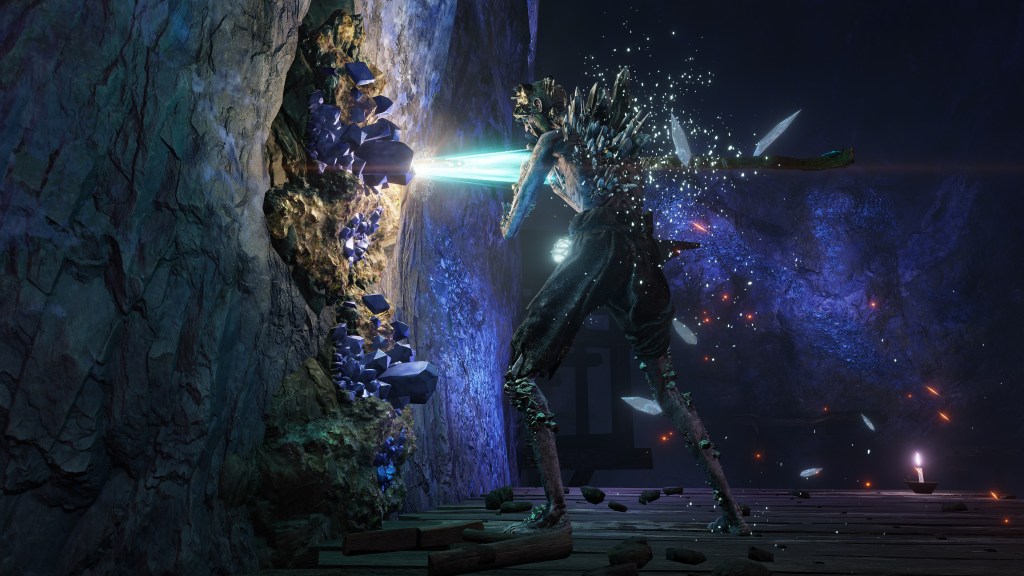
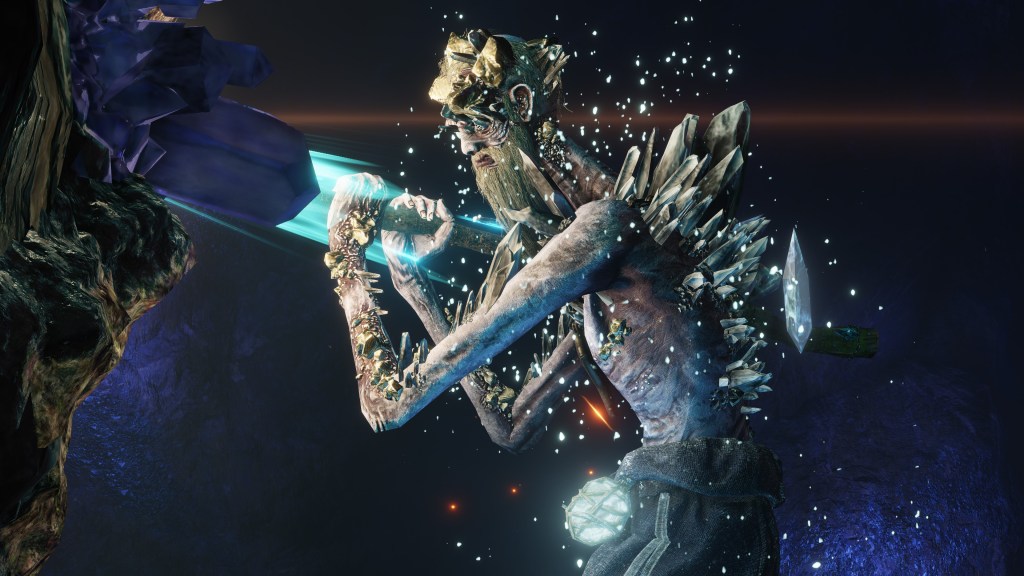
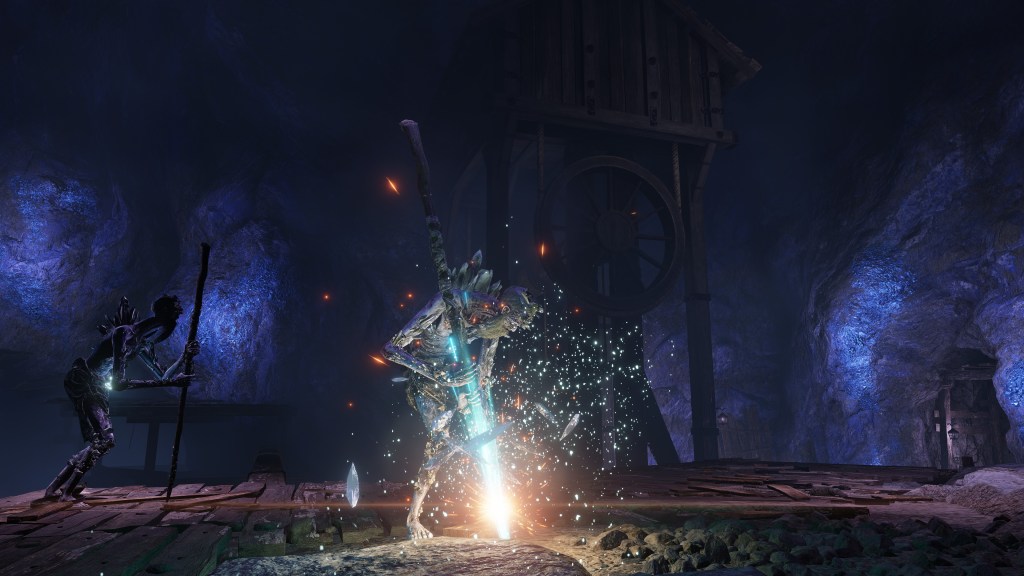
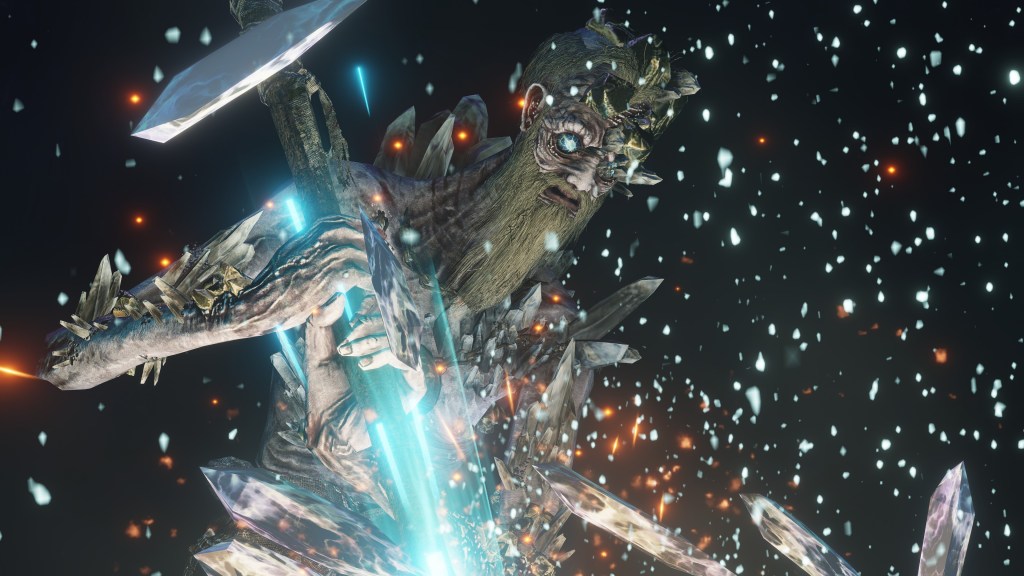
One of the brightstone sorceries of the Sorcery Academy of Raya Lucaria.
Fires quick magic pebble from the staff’s brightstone. Can be used without gap even after other actions.
Those unable to wear the brightstone head usually end their short research here.
One of the brightstone sorceries of the Sorcery Academy of Raya Lucaria.
Charges magic power in the staff’s stone tip, stabs the ground, and generates magic shockwave in surroundings. Can follow-up attack just once.
A stone-digging sorcery that brightstone diggers of crystal tunnels use. It is a brand of falling behind at the academy.
Knife crudely sharpened with hard crystal. Choice weapon of brightstone diggers.
It is a tool for carving out brightstone from crushed rock and, though slight, is tinged with magic power.
Staff of brightstone diggers of crystal tunnels. The staff itself is a stone-digging tool, and a hard brightstone is also embedded at the stone tip.
Enhances stone-digging sorceries in particular.
One of the brightstone sorceries of the Sorcery Academy of Raya Lucaria.
Charges magic power in the staff’s stone tip, stabs the ground, and generates large magic shockwave in surroundings. Can follow-up attack just once.
While holding, can walk as is without stabbing the ground and push the magic-charged stone tip into enemies.
Superior stone-digging sorcery that brightstone diggers use.
For those that remain, life at Raya Lucaria was erudite, the best minds exchanging ideas in the classroom, challenging their rigor in the Debate Parlor, and testing their validity in the courtyard. Accidents may happen, and egos were sure to flare, but it was overall a safe and productive feedback loop for the smartest minds, leading to impressive innovations. This didn’t apply to just sorcery. With how the academy mount was being hollowed out of glintstone, scaling deeper and deeper was becoming a greater and greater effort for mere bookworms. The academy solved this problem with a waterwheel lift system, allowing students to effortlessly walk on and off the dig site at their leisure. The wheels drip with water from an unseen source, but we can assume that it pours down from the rock ceiling above, with proximity to the fountain in the courtyard overhead to imply a shared pumping system; the two might even feed into each other, as the upper wheel’s pulley connects to a gear mechanism for some sort of power generation. Clearly, the erudition the school cultivated was practical beyond astrology.
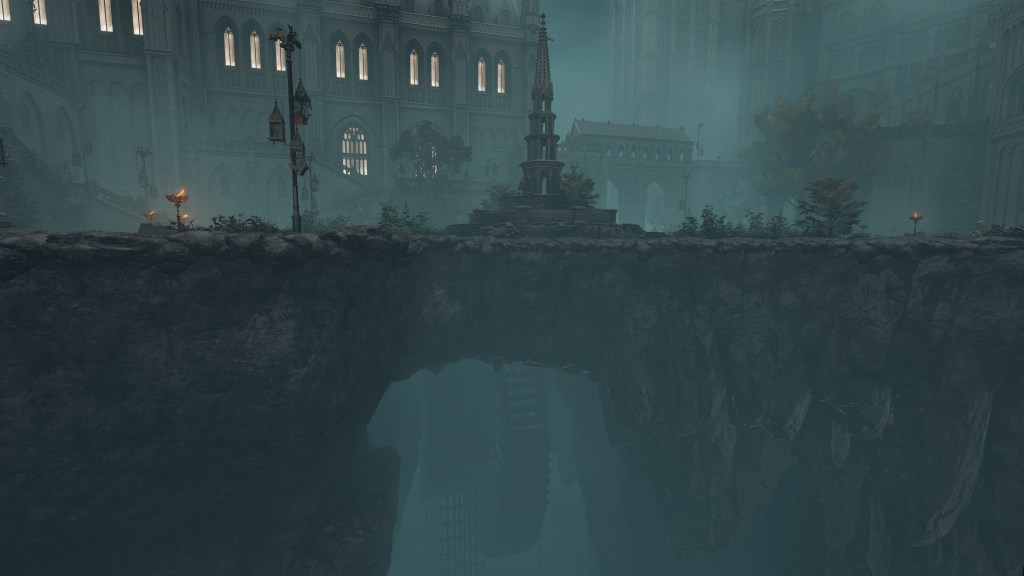
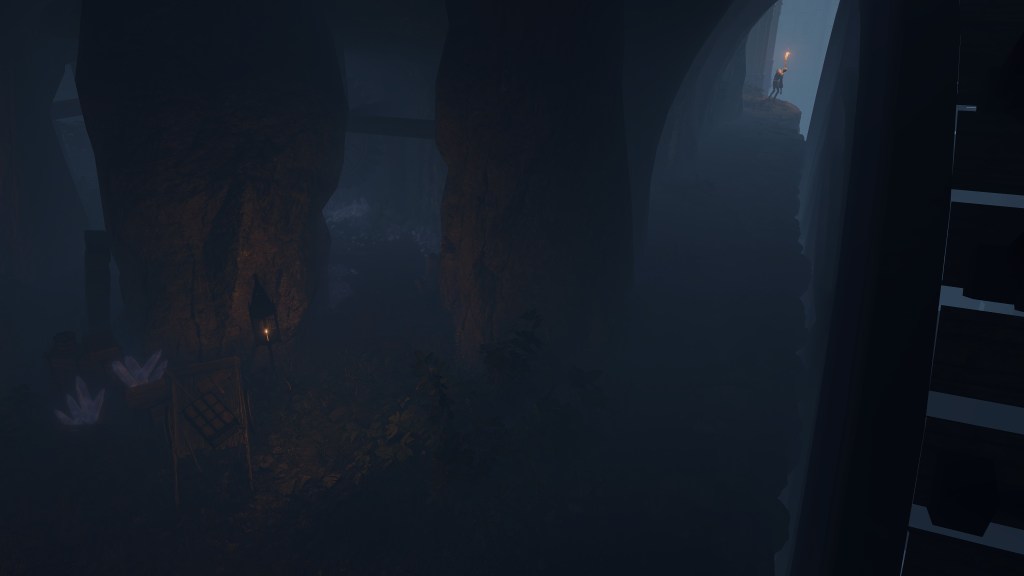
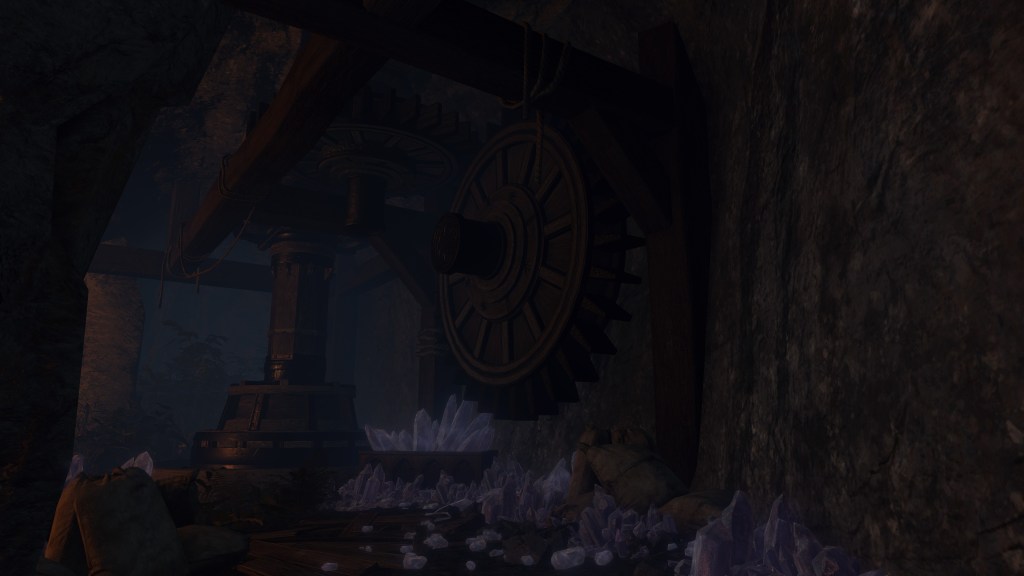
Perhaps their most ingenious inventions are marionettes. These “doll soldiers” (人形兵) are wooden automatons reinforced with metal framing and armed with swords, spears, or bows. A smaller, flying variant of “bird-doll soldier” wielding a scythe also exists, the name and appearance a play on the kanji — an aviator is literally “bird-man” (鳥人) while a doll is literally “man-shape” (人形) to effectively become “aviator-shape”. Either way, they differ from stone golems, as their bodies aren’t carved with a glintstone dagger and so don’t suffer the same weakness. The only problem is that these lousy constructs are prone to breaking down, which we already begin to see in their occasional wild and unpredictable flailing with aimless attacks at the slightest damage. Unlike stone, time makes their metal twist and rust, so even if golems do also malfunction in the long term, dolls simply have a much shorter shelf-life. But they just need to serve their wise masters as disposable fodder, and this way, they can be quickly mass-produced by even a lone sorcerer.
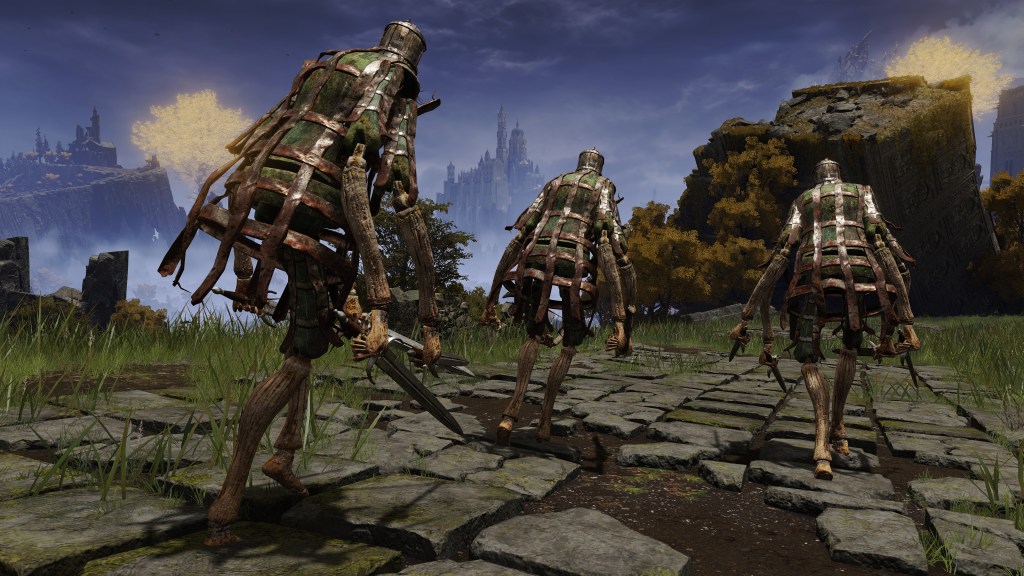
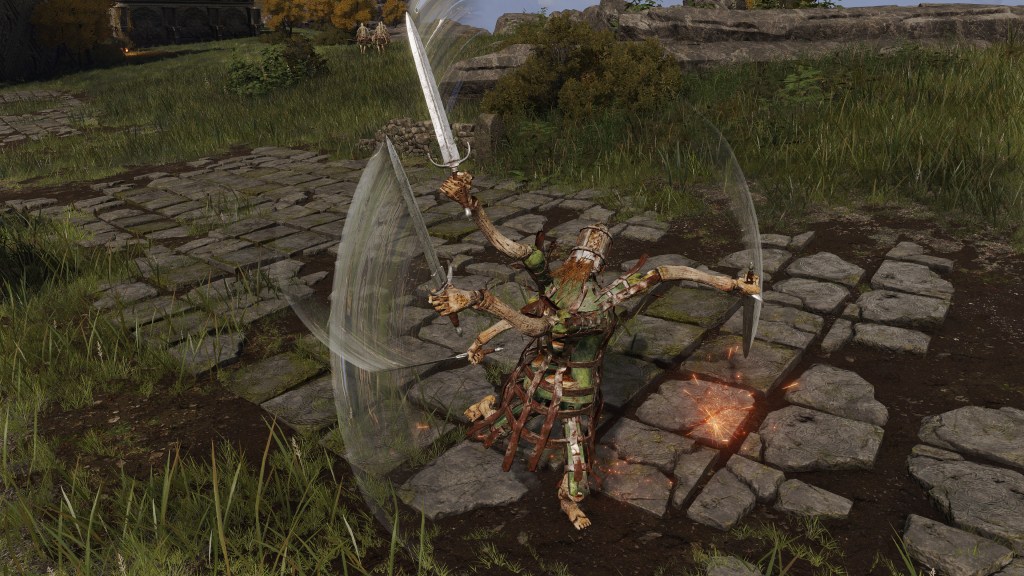
Cylindrical helmet reinforced with latticed metal sheets. Equipment of doll soldiers made as sorcerers’ attendants.
Its construction is very shoddy.
So long as a doll doesn’t break, it doesn’t matter.
Metal helmet apparently modeled on a bird’s face. Equipment of bird-doll soldiers made as sorcerers’ attendants.
Its construction is very shoddy.
So long as a doll doesn’t break, it doesn’t matter.
Ashen remains inhabited by spirits. Summons two Doll Soldier spirits.
Spirits of doll soldiers made as sorcerers’ attendants. Marksman dolls that each possess bows in both hands. But these are already breaking and will begin fighting arbitrarily.
Ashen remains inhabited by spirits. Summons two Bird Doll spirits.
Spirit of bird doll soldiers made as sorcerers’ attendants. They possess long-handled scythes and throw firebombs from the sky. Beware, as there are times where they malfunction if wounded.
Chest armor made with latticed metal sheets. Equipment of doll soldiers made as sorcerers’ attendants.
Its construction is very slipshod and awfully rusted and warped.
So long as a doll doesn’t break, it doesn’t matter.
Indeed, with their four arms and hollow frames, marionette soldiers can get creative with their abilities. Not only do they wield multiple weapons to double their firepower or strike at openings in the enemy’s guard, they can store fire or even magic pots inside themselves to later bombard foes. And although their obvious function is for war, there is no limit to how they can be programmed. In a more private capacity, they are able to serve as lab assistants and bodyguards, whatever is necessary for the researcher. (Nightreign reveals one soldier reprogrammed to be a simple housekeeper instead) Their limbs have the strength and dexterity to do all the dirty work unbecoming of their genius, including swinging a spiked club; simple, crude, but effective for a charge lacking in muscle. With dolls, Raya Lucaria can reduce the manpower needed to oversee the bluntstones’ mining operations at all hours of the day, or to guard the school cemetery from greedy desecrators — though apparently these gravekeepers weren’t programmed to deal with animal scavengers. All in all, they show far more flexibility than golems.
Weapon attaching a club with spikes at the end of a long handle. It also becomes a strike weapon by swinging it, and the spikes also have a bleeding effect.
Choice weapon of doll soldiers, who are sorcerers’ attendants.
But while they may not be born of golem technology, marionettes cannot be reduced to the mechanical. We seldom see the dolls rubbing crystal balls while loitering, and they universally possess Cuckoo Glintstone. These stones, crafted by combining the star amber from crystal buds and cracked crystals, remain tinged with magic for the user to unleash. This makes them the sensible power source for the marionettes, a crystal core imbuing the wood with power like a sorcery staff but also with life like an organic being. (Nightreign’s iron menial even speaks, eloquently) To be meaningfully different from golems, that core must not be inherent, in which case the item we loot may well be the refined ball we see; the doll pulling out the crystal to “recharge” its power. Once again, this implies that they aren’t as enduring as golems, but a doll can clearly take care of itself if supplied the batteries. They are low-cost, low-maintenance, and low-failure — everything a sorcerer could ask for. It was thanks to shortcuts like these that the academy could focus on learning uninterrupted.
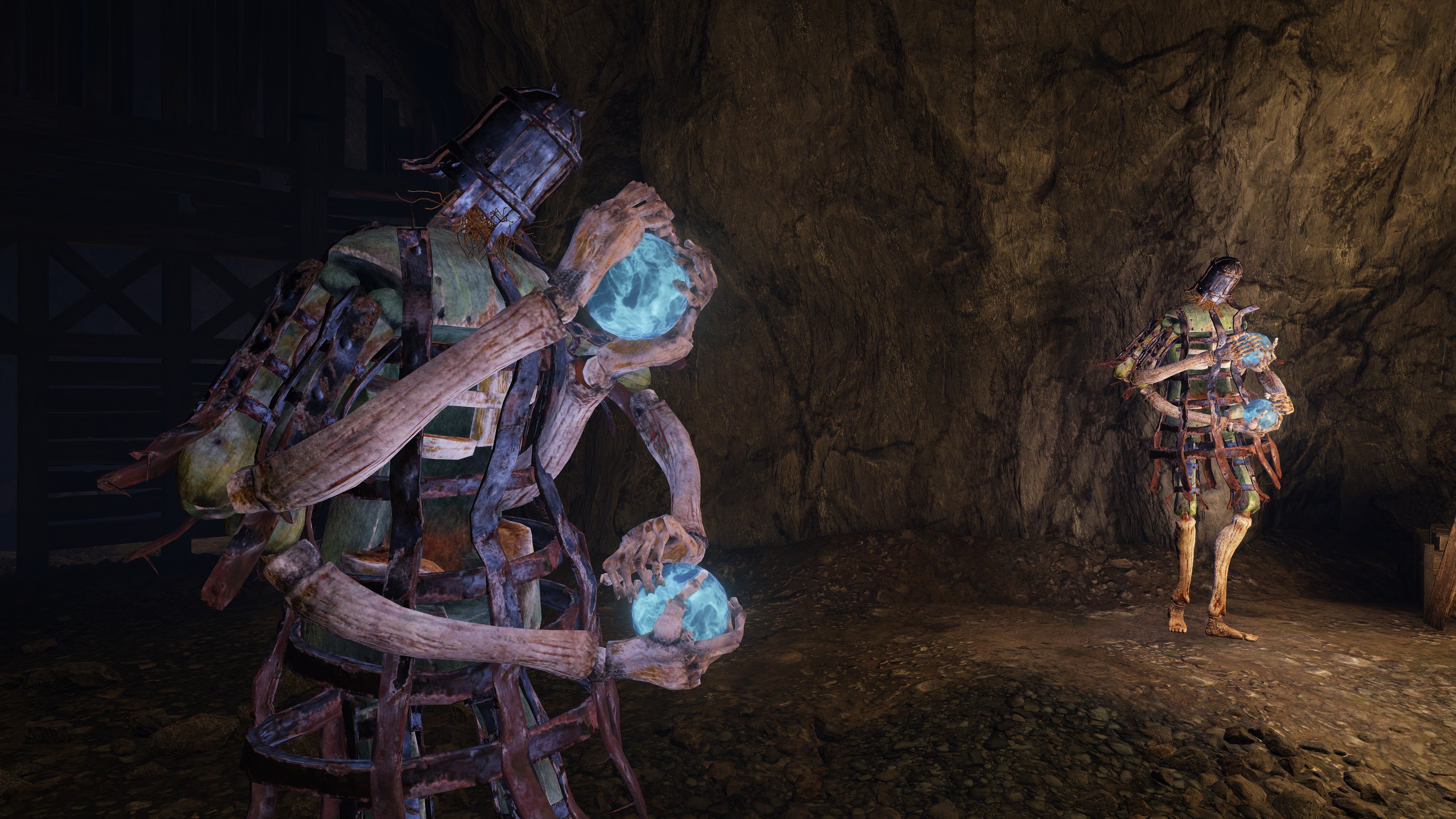
The end result has been a temple of knowledge where the saints are the sages and the scriptures are the formulas. Outside the Eternal Cities, no single institution in the Lands Between appears to be as advanced as this sorcery academy, and the amount of sorcery performed there is transparent from the glowing blue wisps of power wafting about the rooftops. It was those developments to the modern day that indisputably made Raya Lucaria the Promised Land for every astrologer hoping to maximize his or her talents. Azur and Lusat’s efforts paid off, an entire ecosystem created around their institution at its heart. That system would only grow wider as students graduated or otherwise set out on their own. Hierodos wasn’t the only path to travel for an academy sorcerer, after all. Many would take their knowledge and explore new avenues in other places, the journey’s final destination already in mind. Aspiring minds want freedom to reach for the stars, though not always would they do their instructors proud.
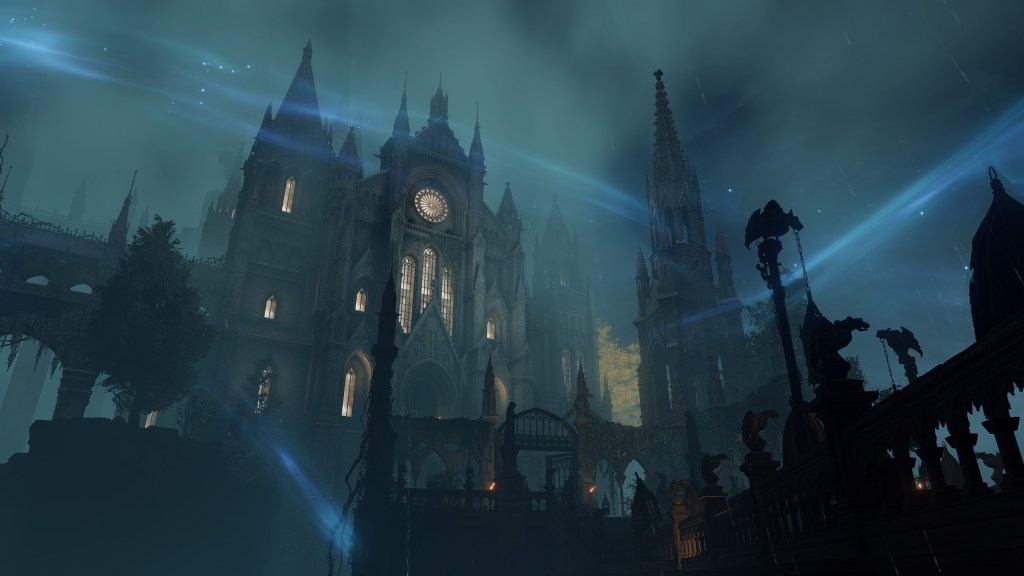
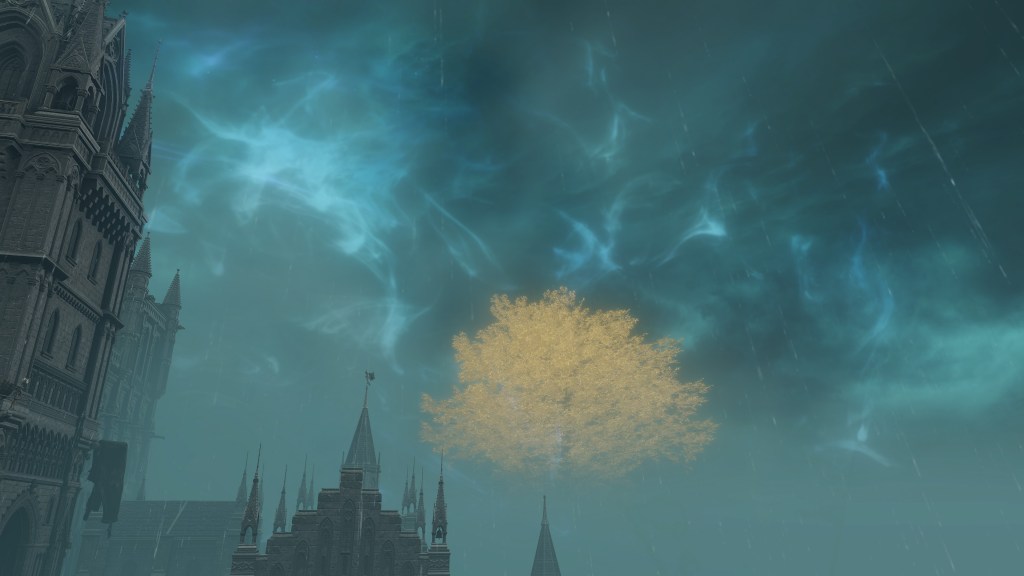
Trim Your Branches
Far down south on the Weeping Peninsula, the Demi-Human Forest Ruins (Site D) are named for the tribe currently roaming the woods surrounding the settlement, their queen making her home in the destruction. However, this obviously wasn’t always the case, so who lived there before them? The forest notably consists of large conifers, with a single tree managing to cross the small gap to Limgrave. Defeating the runebear denning in Earthbore Cave at forest’s edge likewise rewards us with the Spelldrake Talisman protecting against sorcery. We can thus conclude that the settlement was established by another sorcerer population. These migrants might also be responsible for the Ailing Village, which sits within a similar conifer forest atop the cliffs. The migration was definitely regional, since we can spy more conifers in groves dotting the grassy field west of the villages. But even if the Ailing Village comprised of natives, there is no doubt that sorcerers came to live amidst and alongside them.
As the final nail, there are the demi-humans. Why is the tribe so attached to this forest? We can acquire Demi-Human Ashes from the Impaler’s Catacombs, indicating that the peninsula’s population normally hovered around the east side as well. But for now, it is the western forest where they are acting particularly territorial. This couldn’t have always been the case, or else Site D would never have been established to begin with. That then insinuates that it is the destruction of the sorcerer village which has set them off, mourning the loss of the humans there. One need only look at their queen, wielding a glintstone staff styled to resemble a royal scepter. The description confirms that it was bestowed as a way to placate demi-humans, designed so that even their unintelligent brood mother can perform academy sorcery such as Crystal Burst. This earns ridicule from Raya Lucaria, but for sorcerers living on the frontier, it was a fair trade for good relations with the local barbarians.
Brightstone staff applied with scepter ornaments. It is an item once bestowed to placate the demi-humans, so even those with low intelligence can use it.
At the academy, idiots ridicule this.
Essentially, a sorcerer migration came to establish Site D as a colony, currying favor with the locals so that they could remain unobstructed long-term. Whatever caused the settlement’s destruction, they were evidently well-liked, which begs the question of what brought them so far out from Liurnia or Caelid. The answer lies in the Shield of the Guilty still stored in the ruins. The shield is named for criminal offenders who have their eyes gouged by thorns, though toganin (咎人) can be applied to any kind of sinner worthy of censure. In this case, it depicts not the typical criminal but a priestess, associating these sorcerers with faith. That is reasonable, since blinded eyes covered in their own blood may see the blood star, from whom they learn the briar sorceries powered by faith. In short, Site D practiced a religion where a maiden was elevated to help discover new sorcery involving faith. And as descriptions to these blood star sorceries reveal, there is nothing the academy hates more than sorcery reliant on faith.
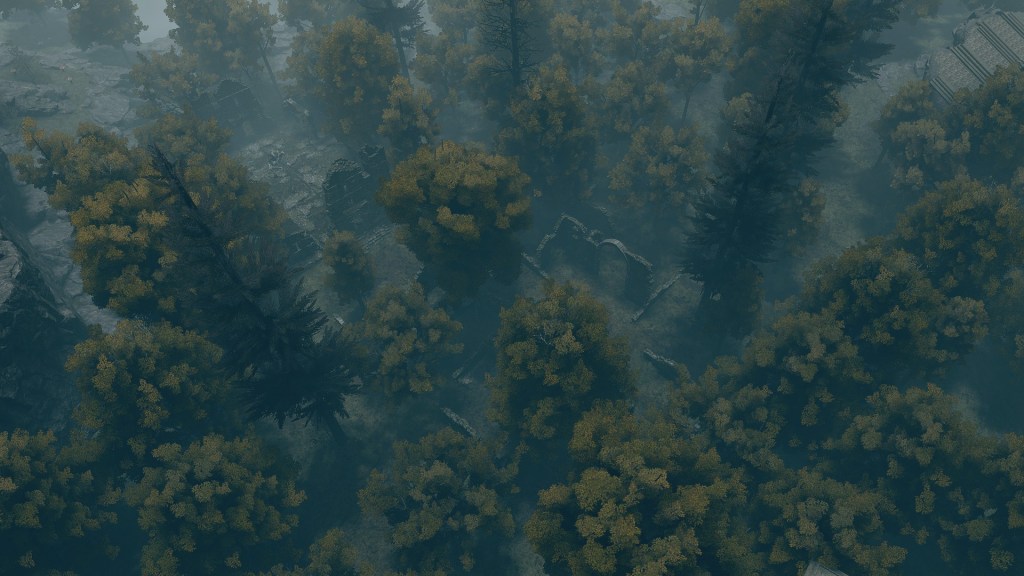
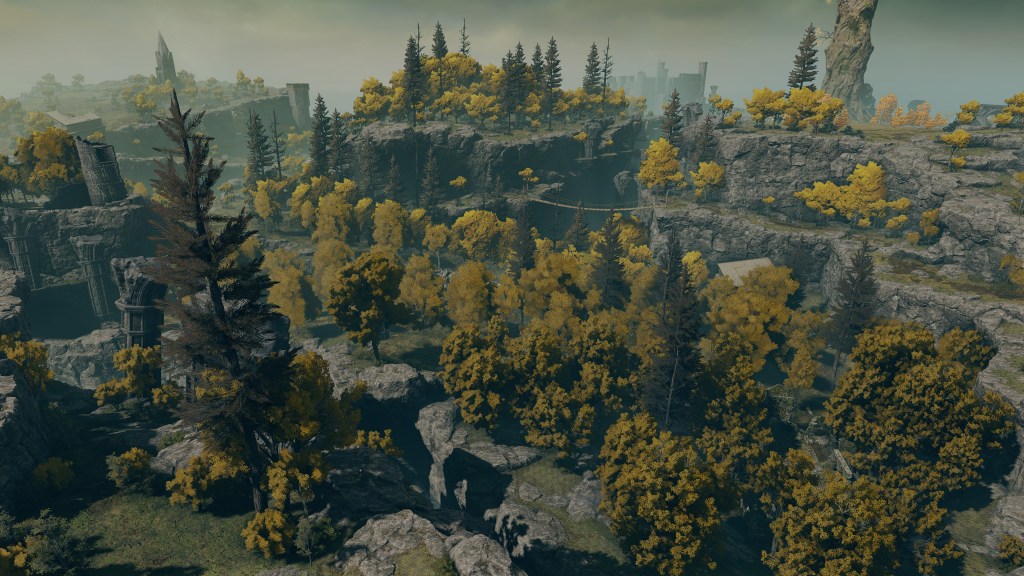
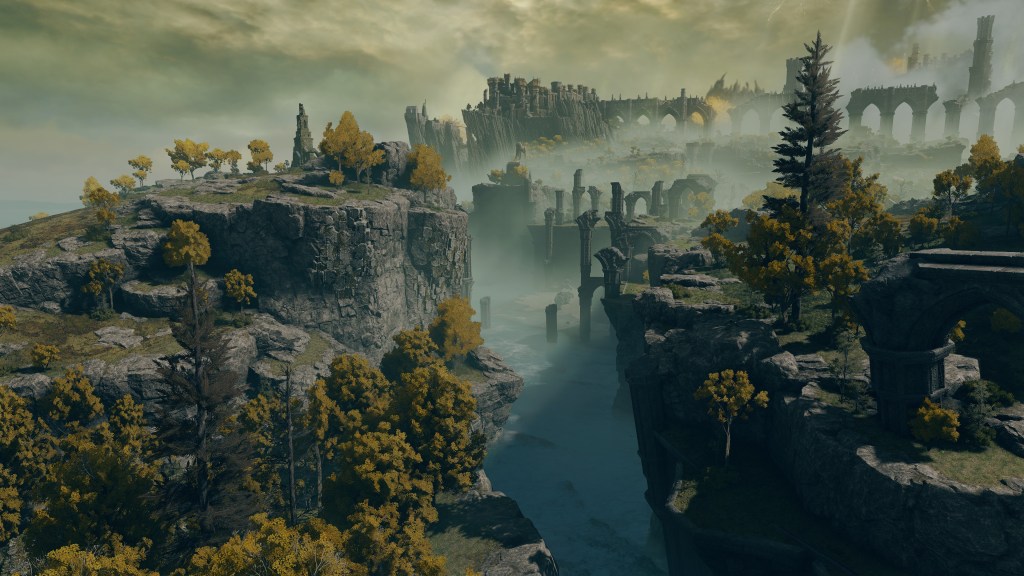
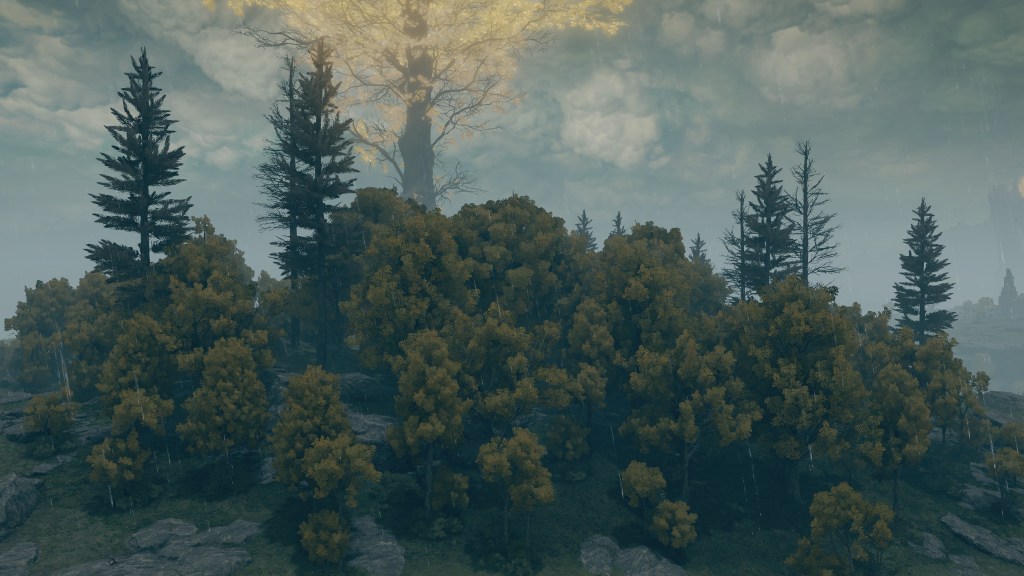
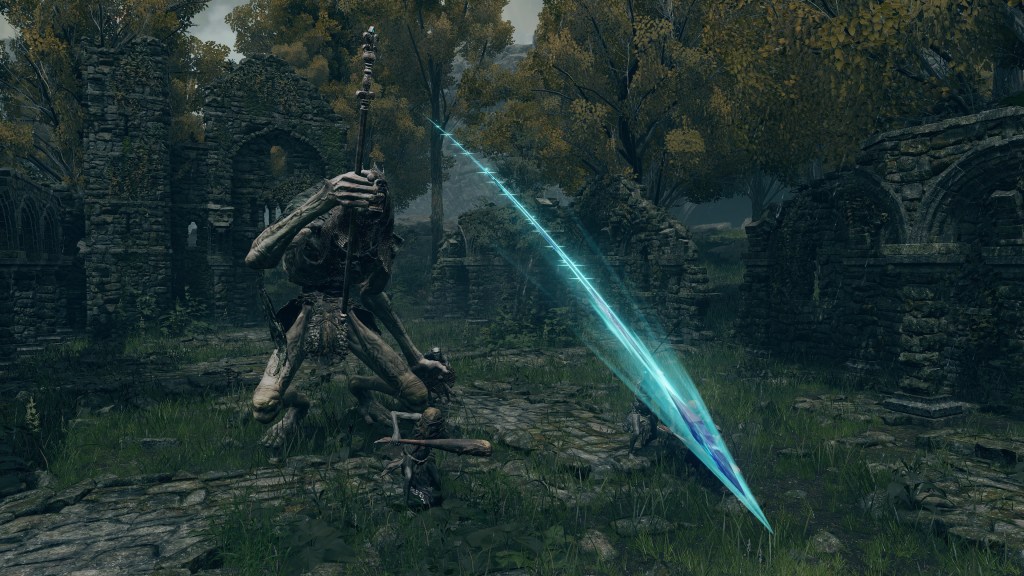
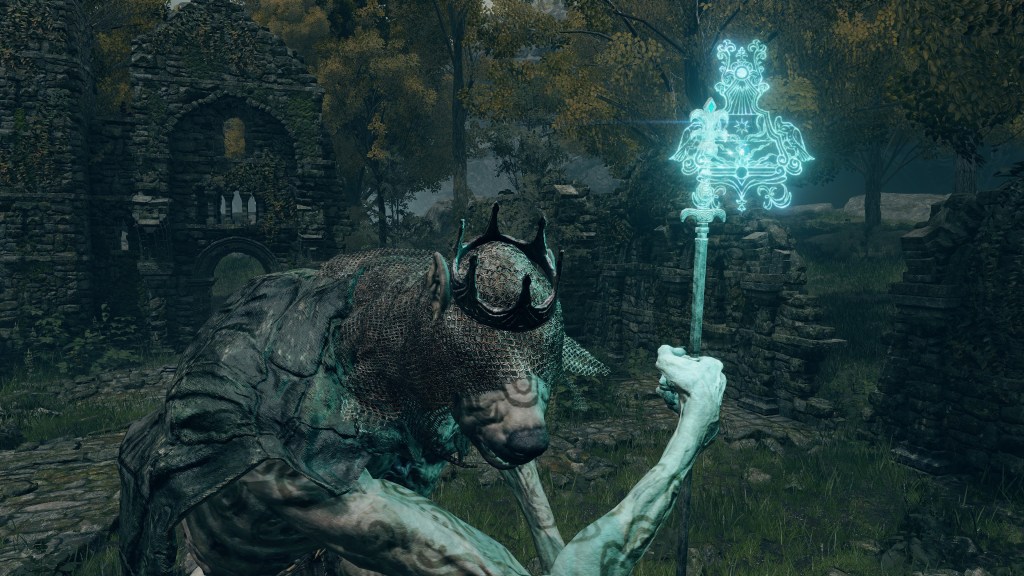
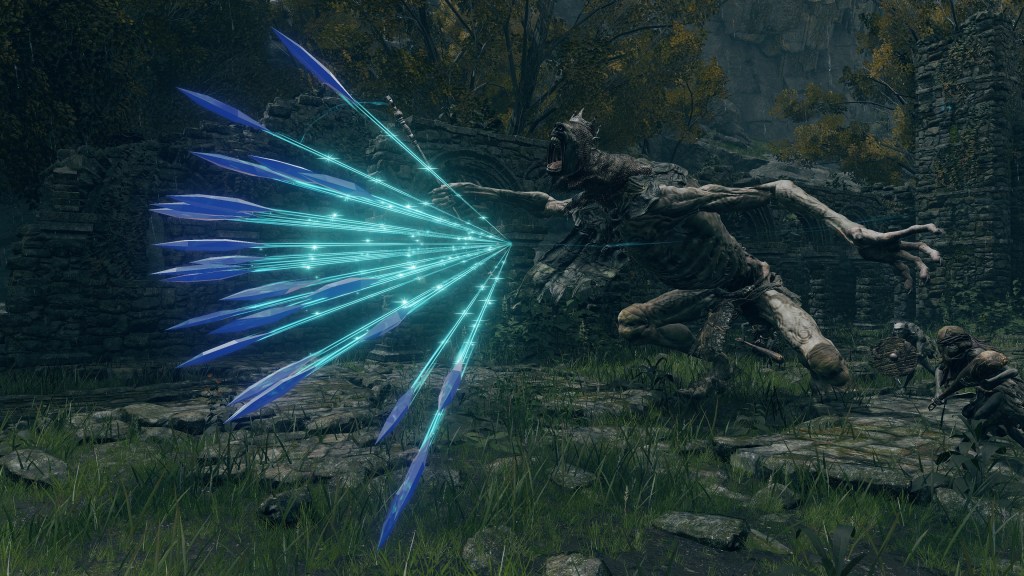
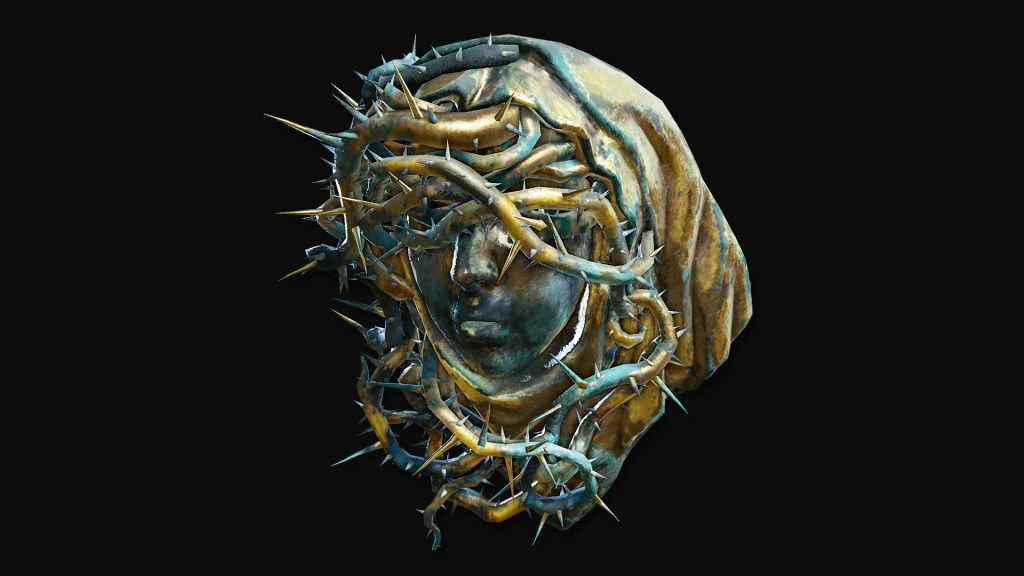
Shield made for enshrining the priestess with eyes gouged by briars of sin. It is said that the priestess is born again in this land.
It is a shield of requiem that boosts sanity resistance, and the briar’s thorns can be used for attacks.
In all likelihood, a subset of the Twinsage Conspectus looking for new paths to astrology discovered the blood star in their experiments. This created a craze which unsettled the academic establishment — shedding their own blood like some barbaric ritual, just to conjure thorns through faith? Raya Lucaria wasn’t interested in the conjury performed by those lowly tribes out in the wild; theirs was a rational lot, driven to understand the intricacies of the power they wield. The faculty considered the blood star studies an insult, leading to a ban. And with no other option, proponents of these studies left to pursue their work in peace, settling on the secluded island to the far south where neither Liurnians or their Caelid neighbors would normally come across them. They probably retain some contact with the sorcerers back home, especially if the academy knows about the demi-human queen’s staff. But Site D is clearly a village for “heretics” who refuse to stick to Azur or Lusat’s orthodoxy.
Because of this, Site D seems to attract more than just sorcerers wanting to form a cult. On the cliffs out east tower Oridys’ Rise, one of many “sorcerer towers” (魔術師塔) across the Lands Between. These towers have an office at the top with closer view of the stars, though the entirety of the building tends to be dedicated to the sorcerer’s research. The benefits of a rise are the safety and seclusion to study whatever without disruption, especially if the research topic requires them to spend long times away from urban centers. In the case of this Oridys, the astrologer has the books and tools to do all the studies one may wish, with even a hemicyclium out back. However, that isn’t the reason for choosing this location. The name “Oritis” (オリティス) is Latin for an unknown precious stone, most likely a reference to the meteors which landed down the road. Two young conifers grow in an adjacent grove, hinting to recent recurrent visits by a sorcerer. In other words, Orydis noticed the meteor shower and chose to move close by for personal study, which is reasonable if residing at neighboring Site D prior.
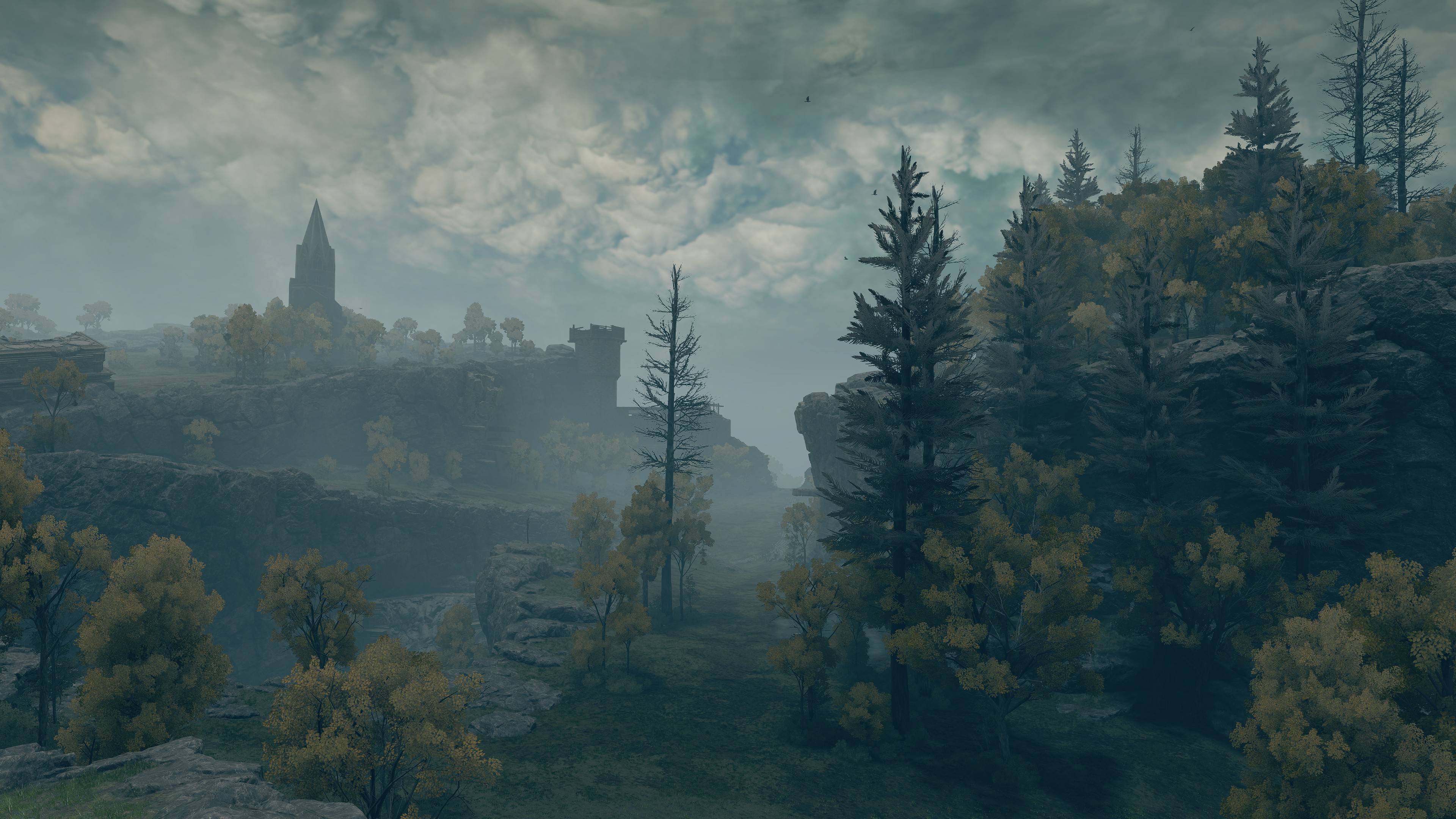
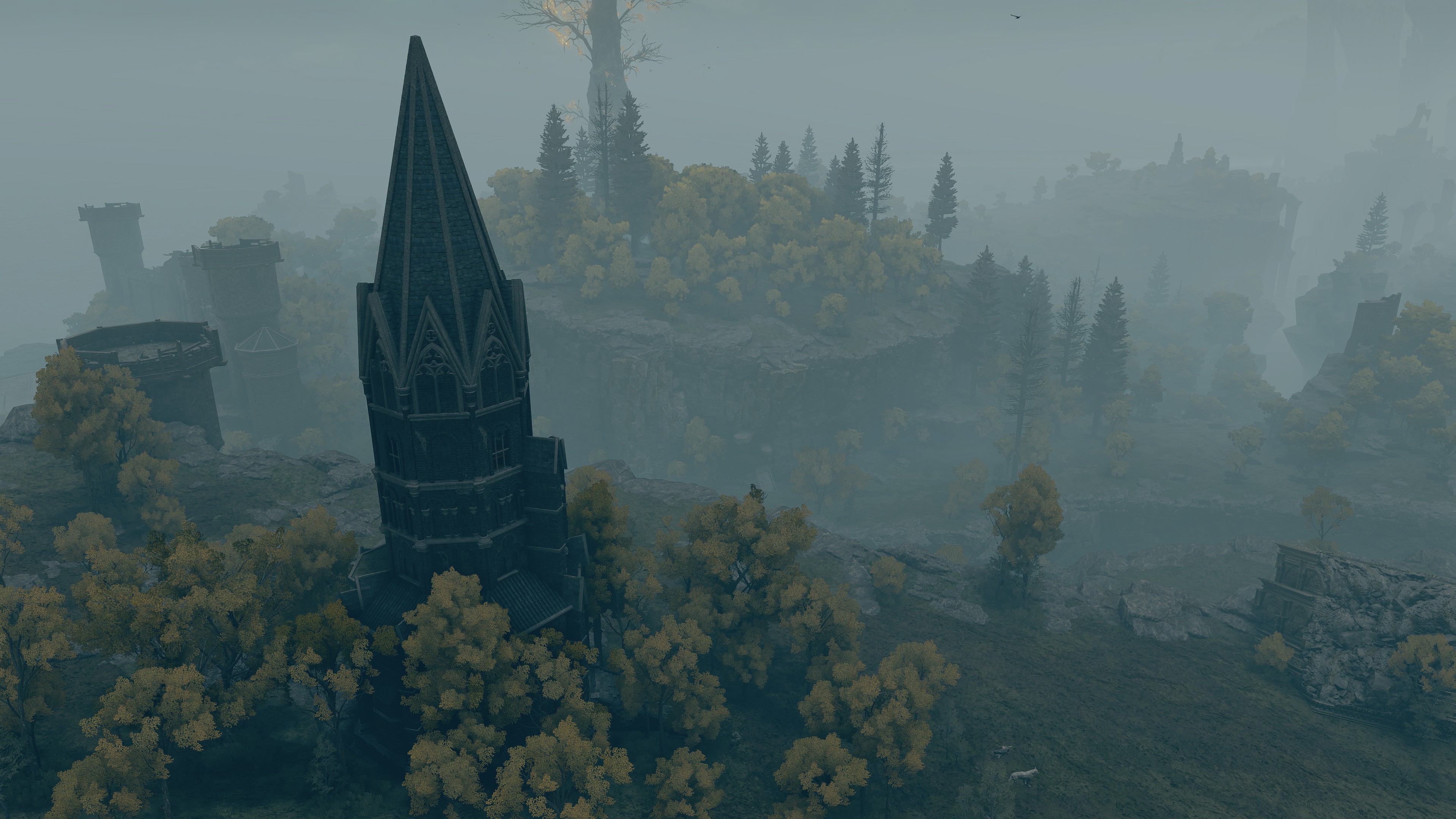
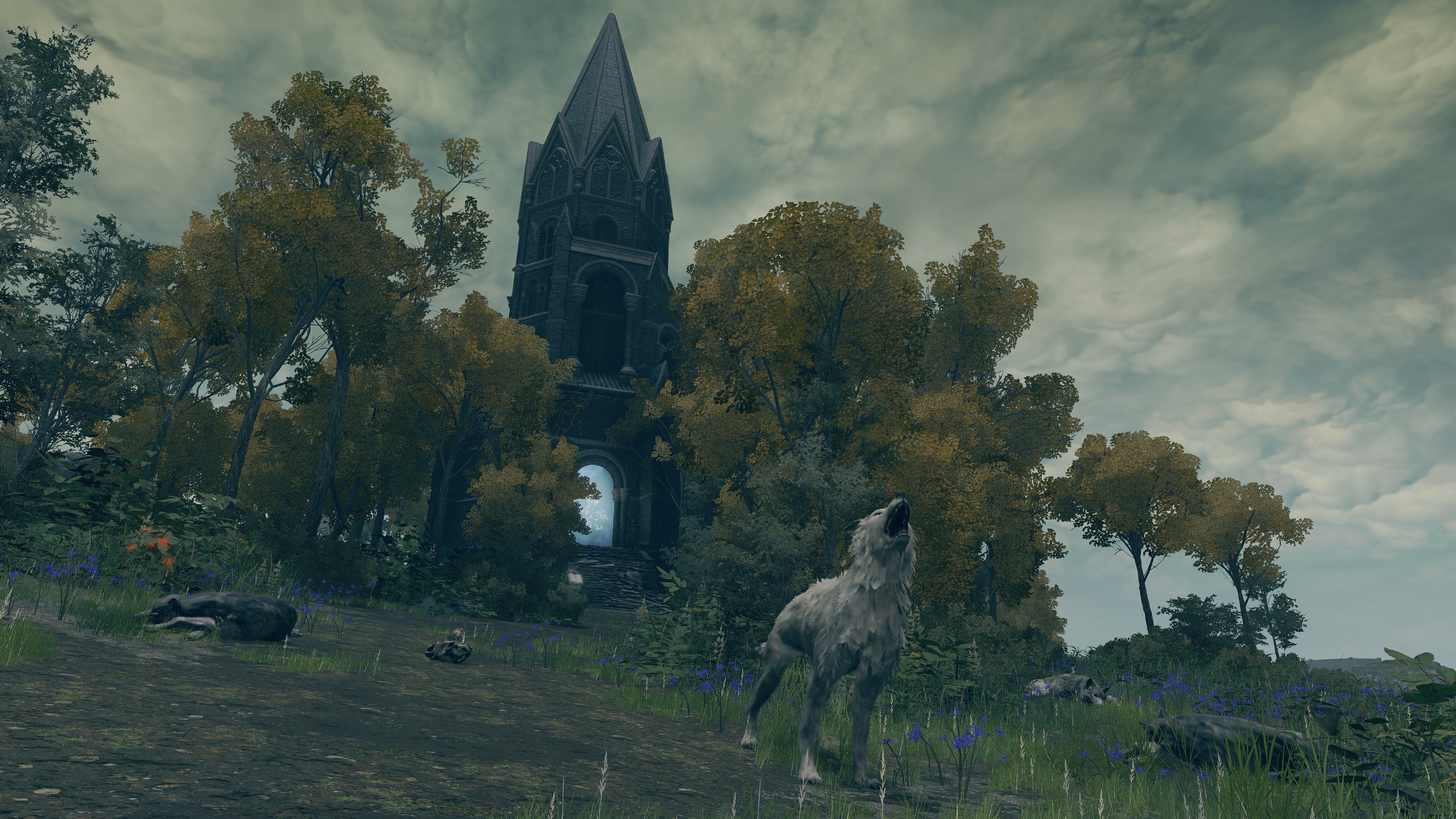
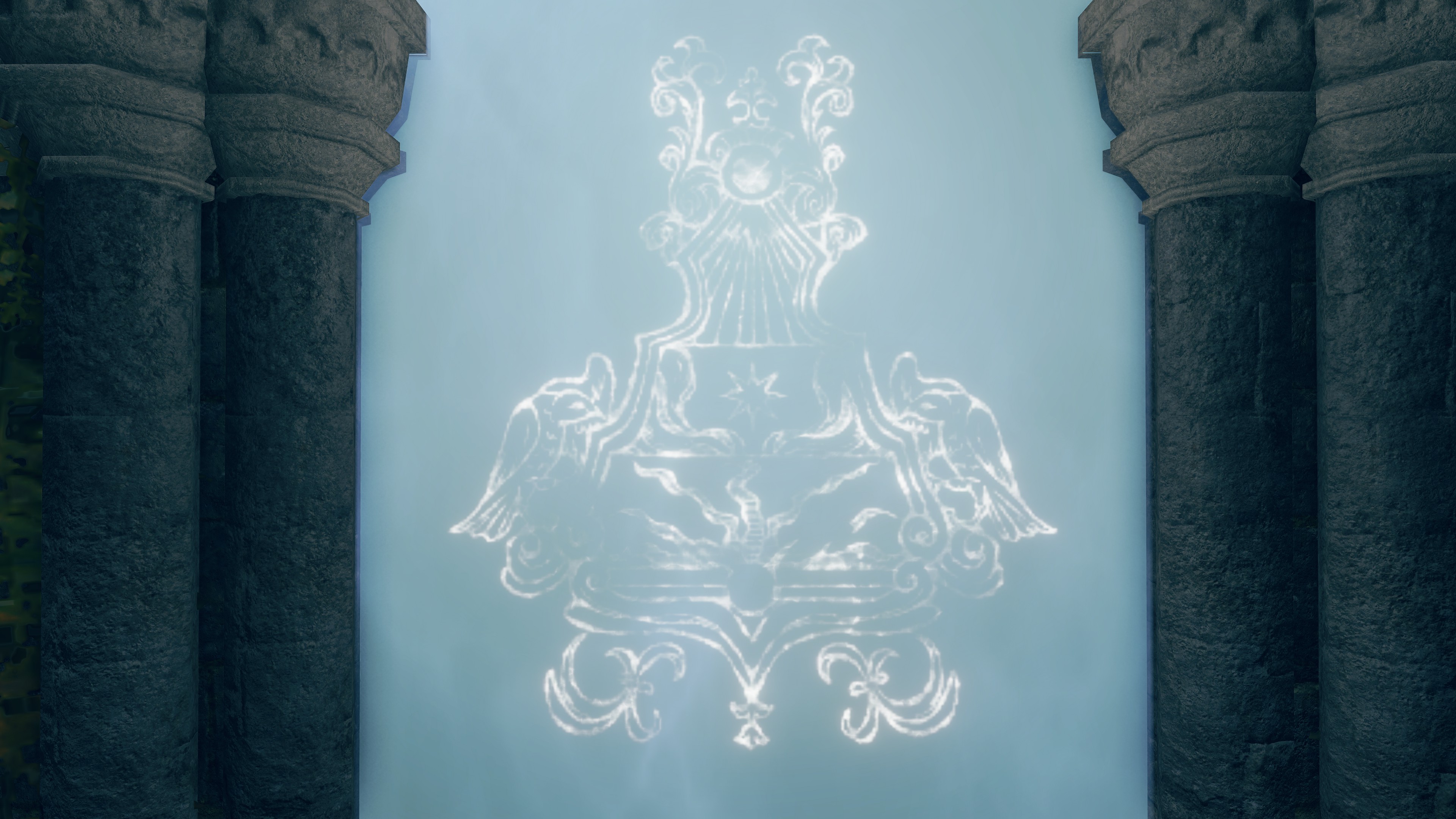
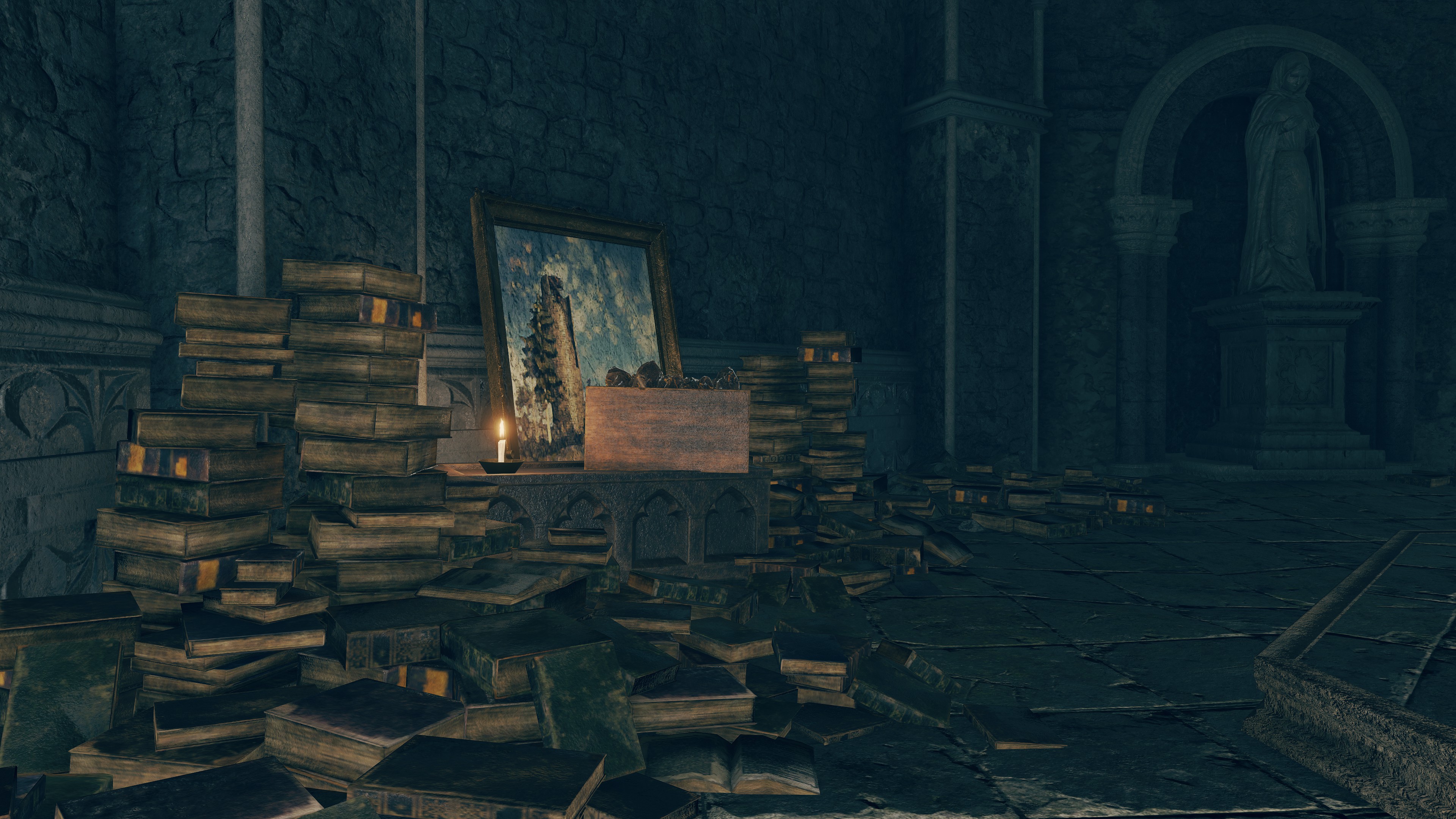
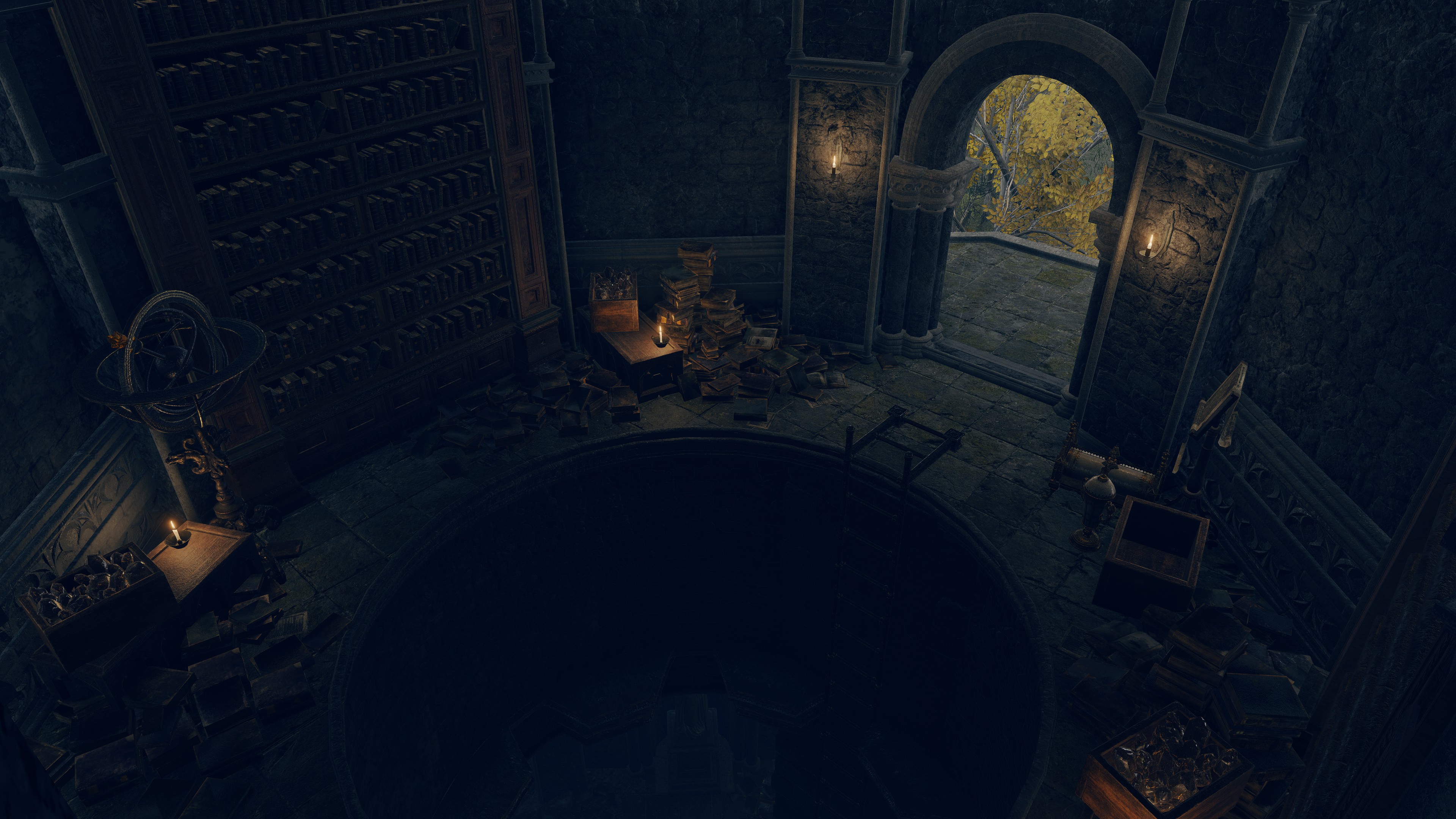
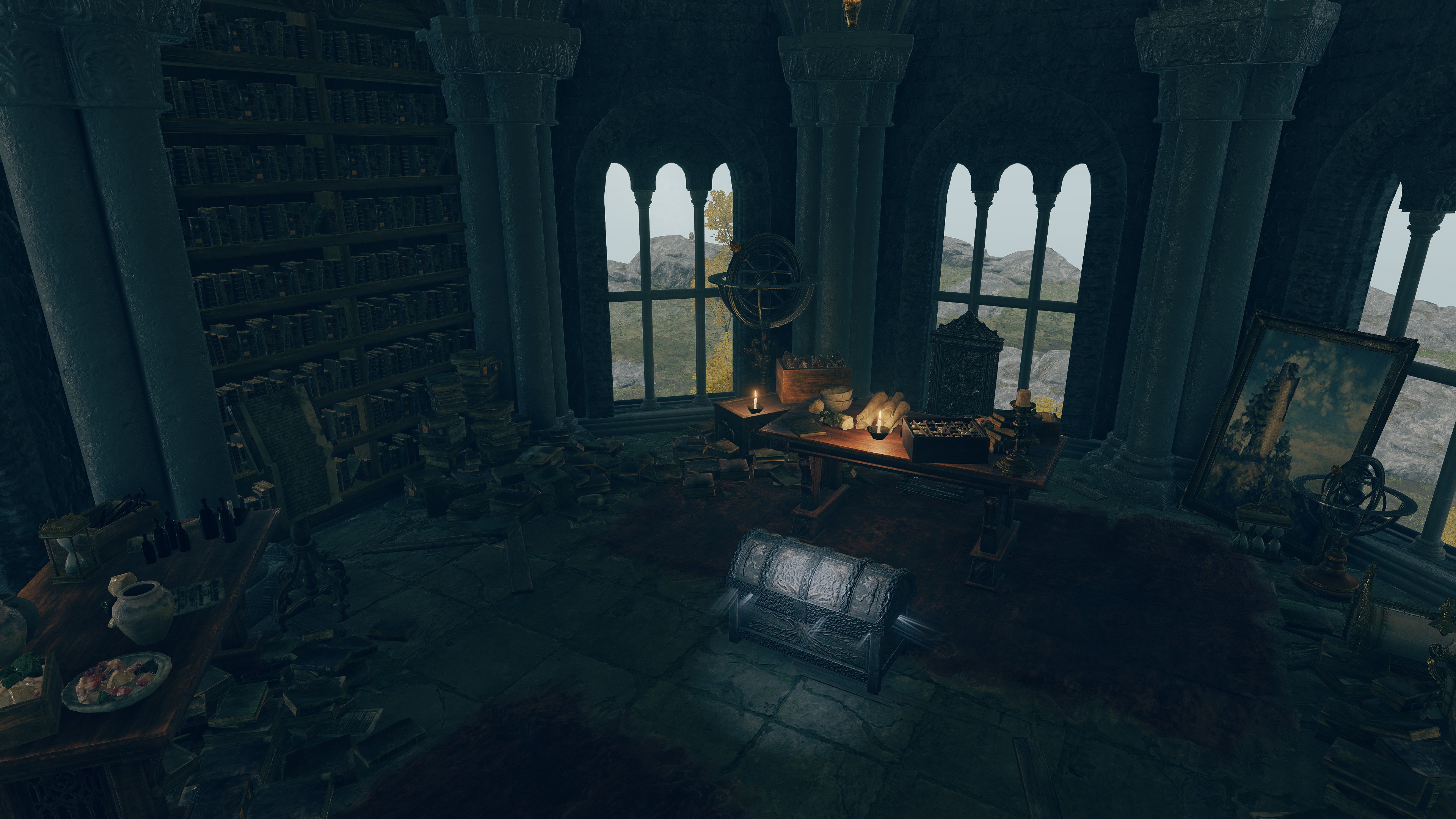
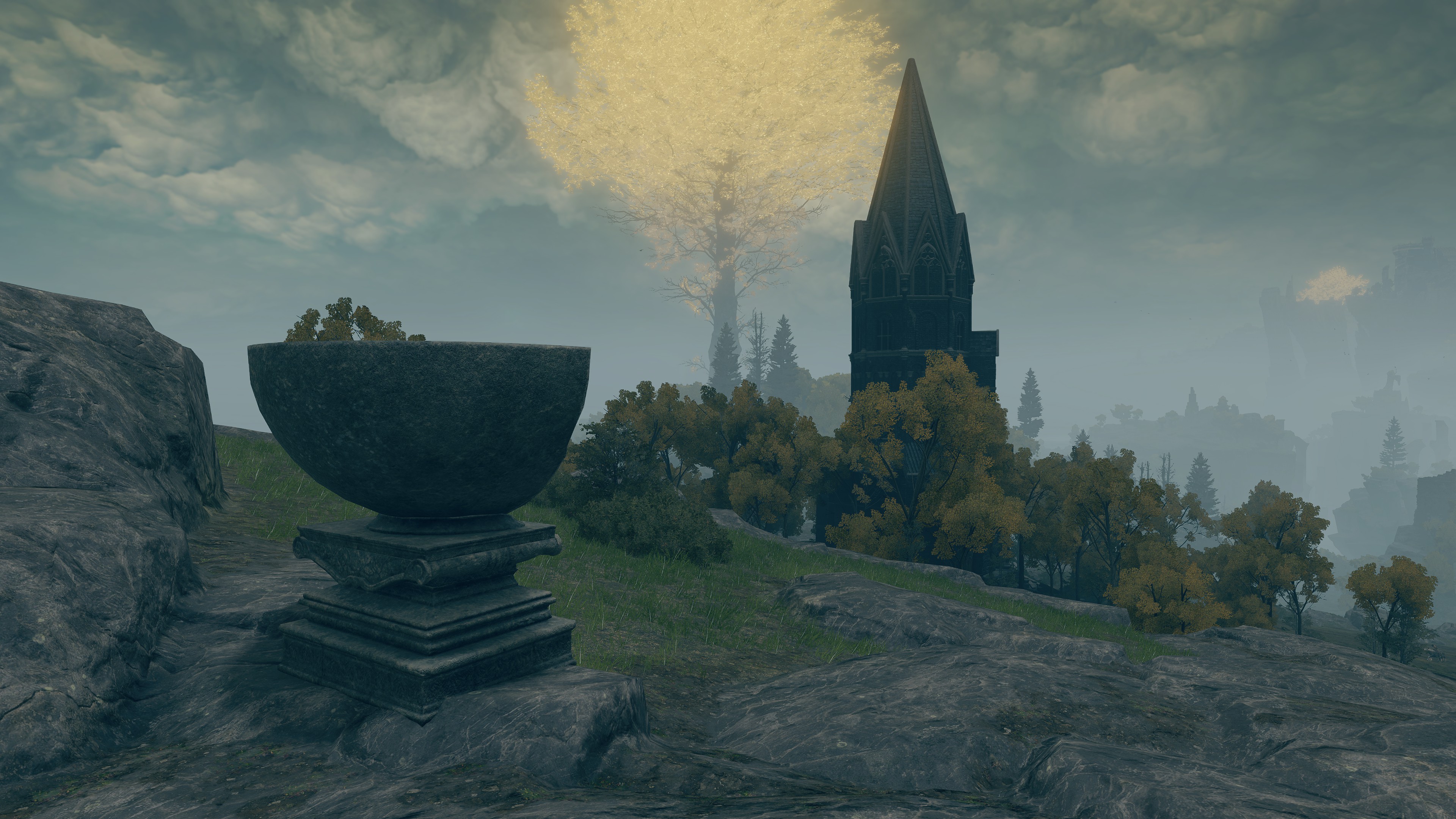
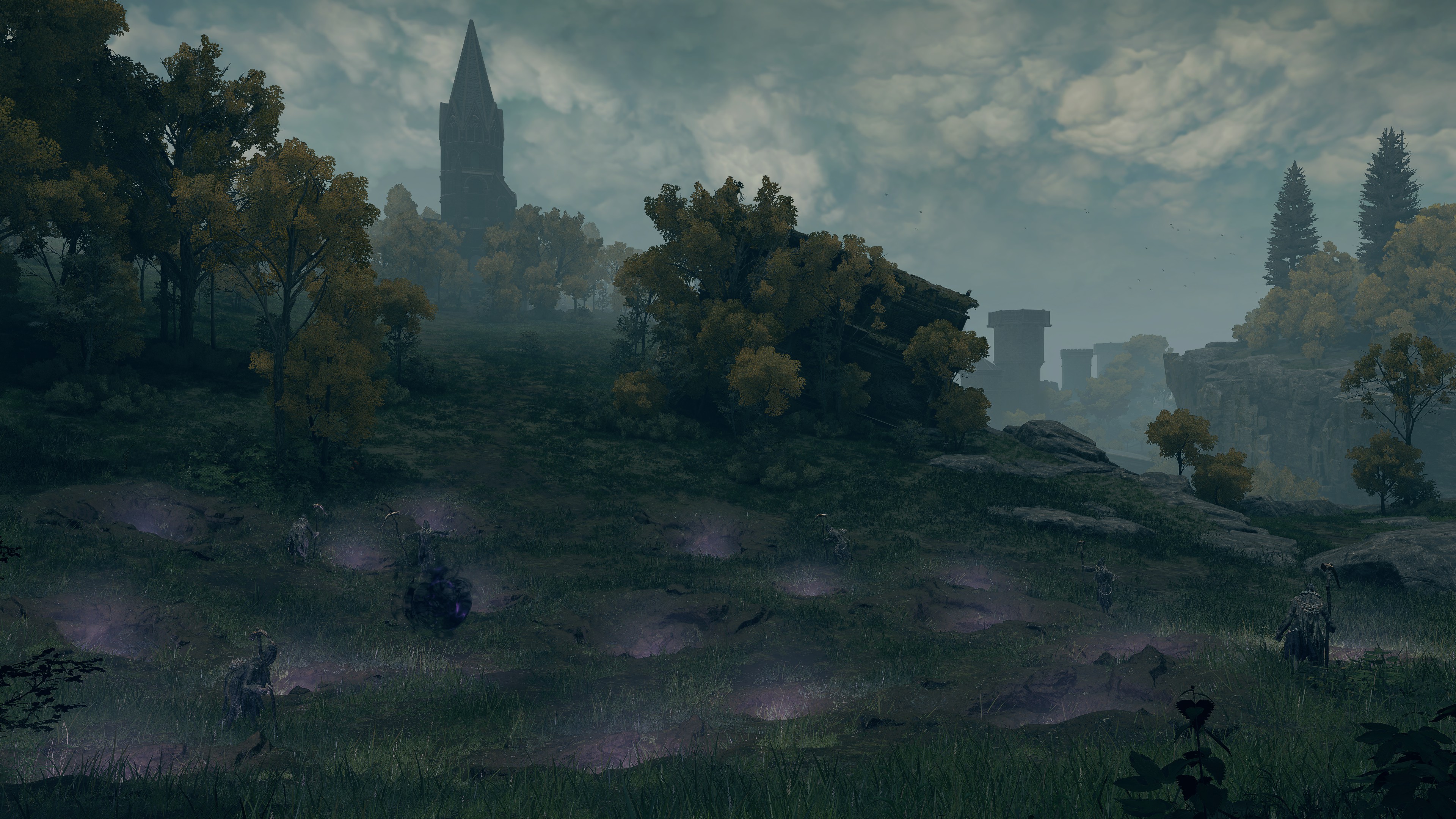
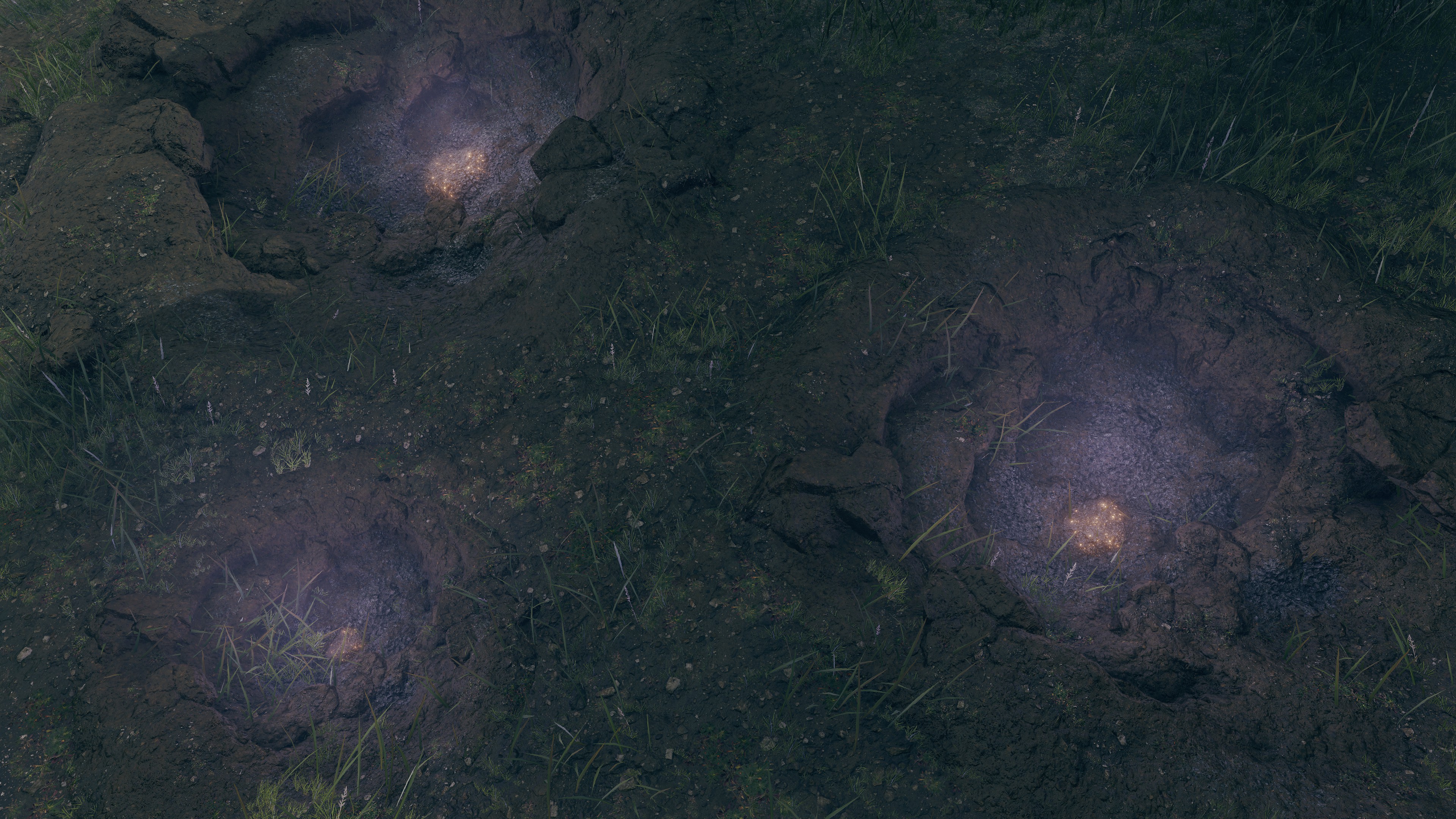
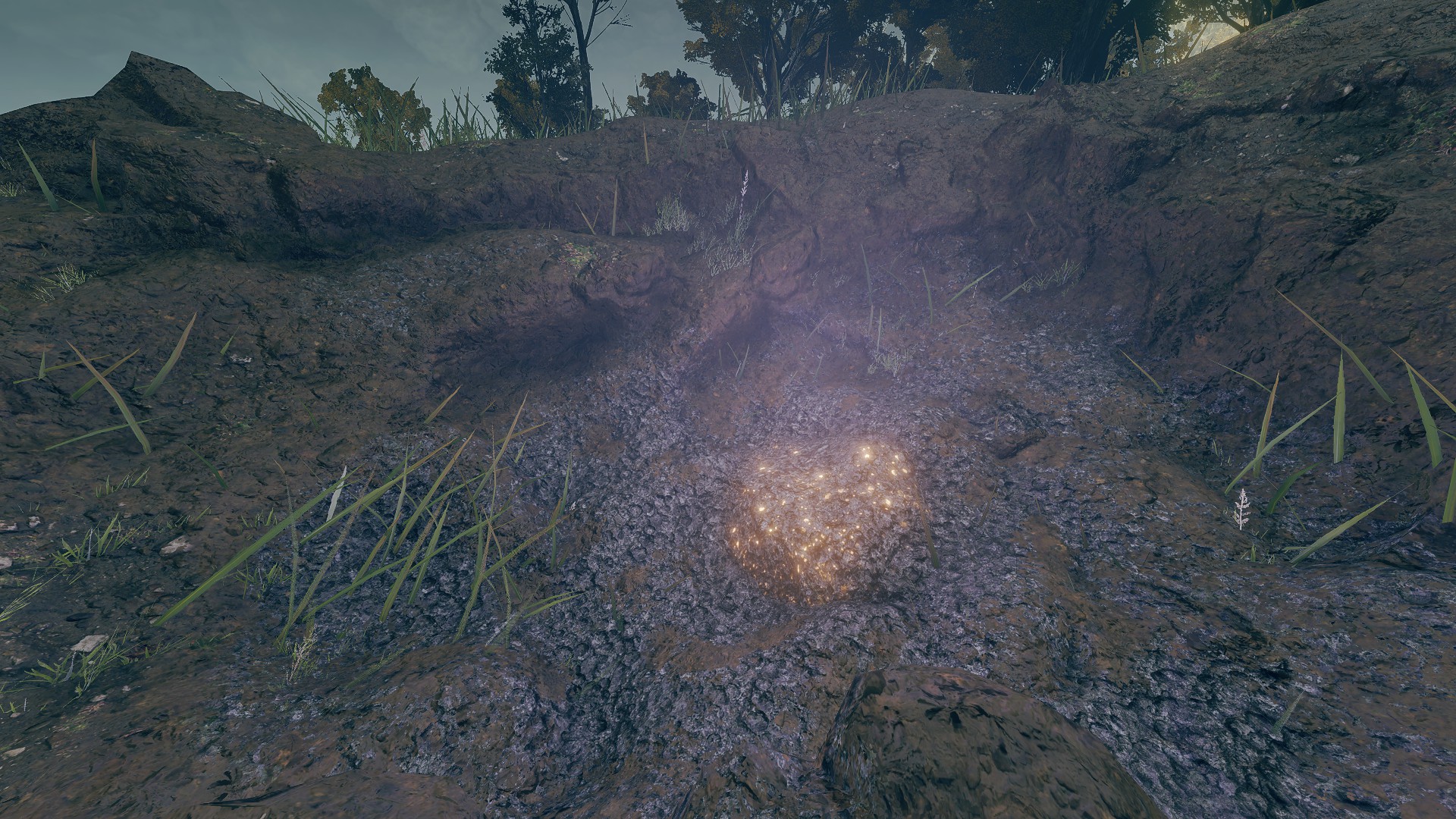
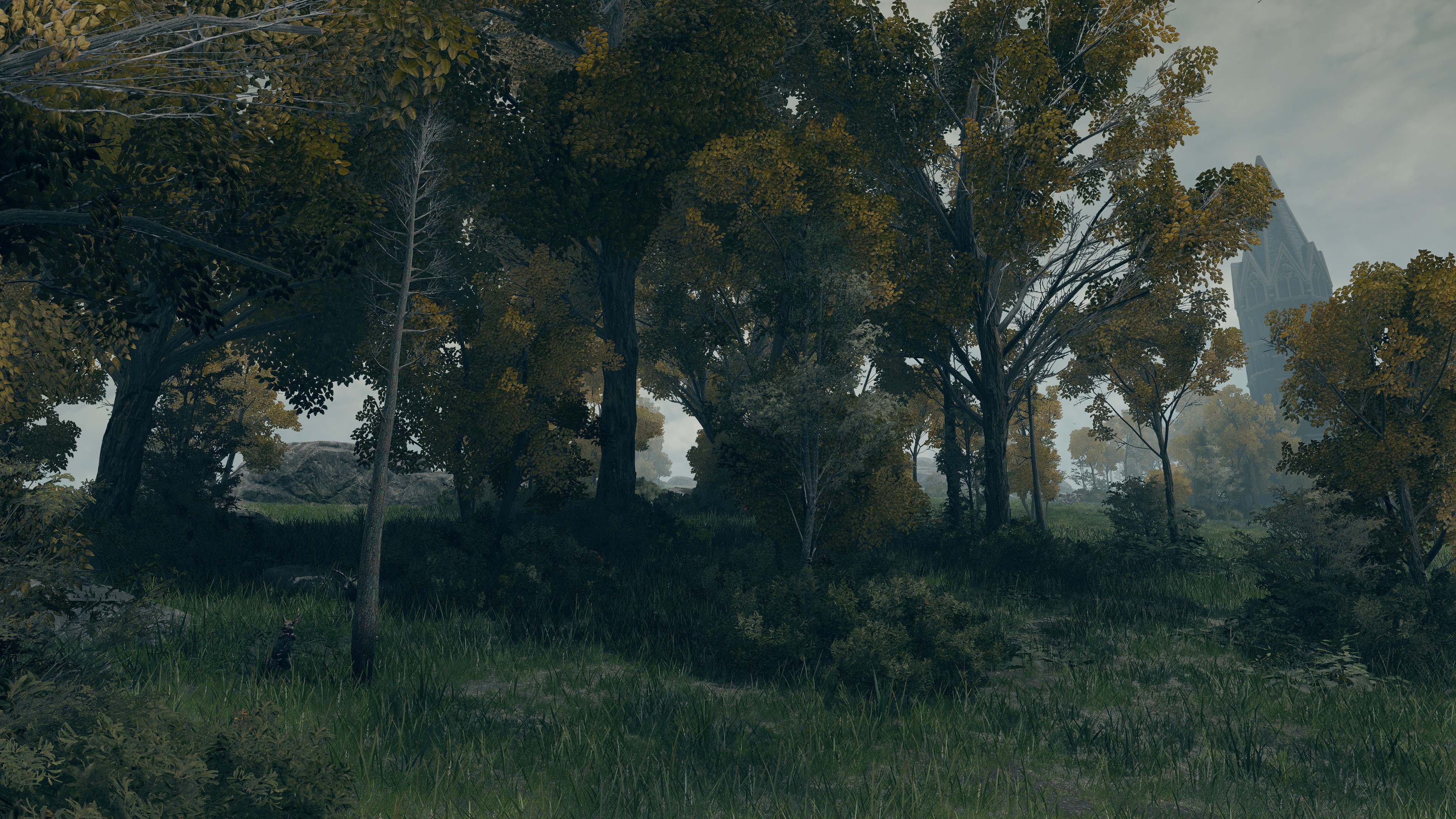
Certainly, not all sorcerers left Raya Lucaria for heresy. Another example of a Liurnian colony lies up north on Altus Plateau. The Lux Ruins sit upon a cliff overlooking the depression where the small lake stemming from the Seething River accumulates; part of the ruins even extend to the slope down at cliff’s bottom. It is plain that the village of Lux was established for easy access to the nearby water, and not just for the inhabitants’ quality of life. For, much like at Site D, we see demi-humans have since made the ruins their territory, attacking anyone who even tries to approach what is left. And ruling these savages is Gilika, another sorcerer queen casting the academy’s arts. This implies that Lux is one more village with some specific purpose for settling on this location. Absent any other obvious clues, we can only assume that they wanted to trace the source of glintstone up Liurnia’s river, electing to monitor the outflow from Gelmir. This was their little hydrology project, similar to Ordina.
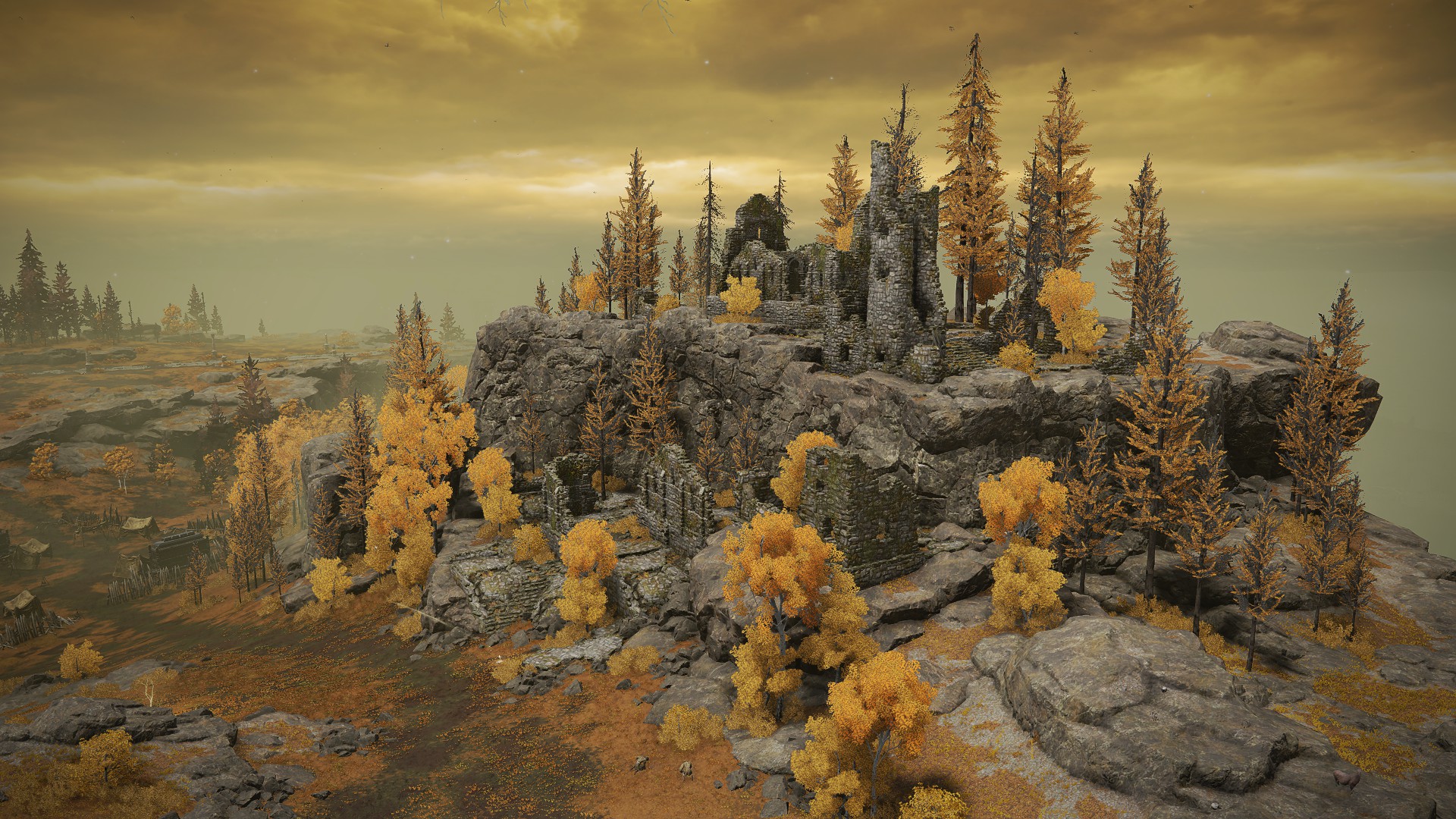
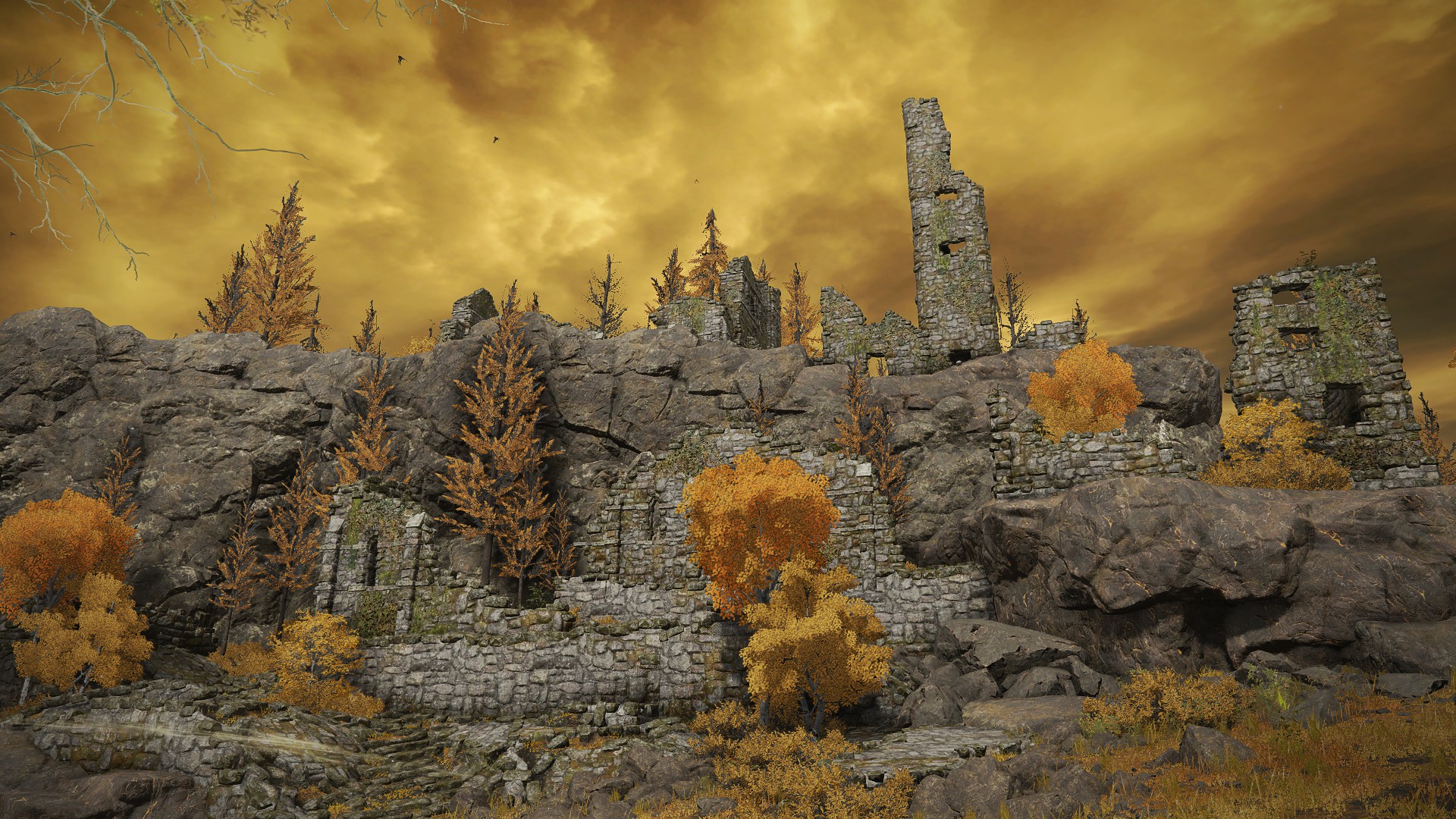
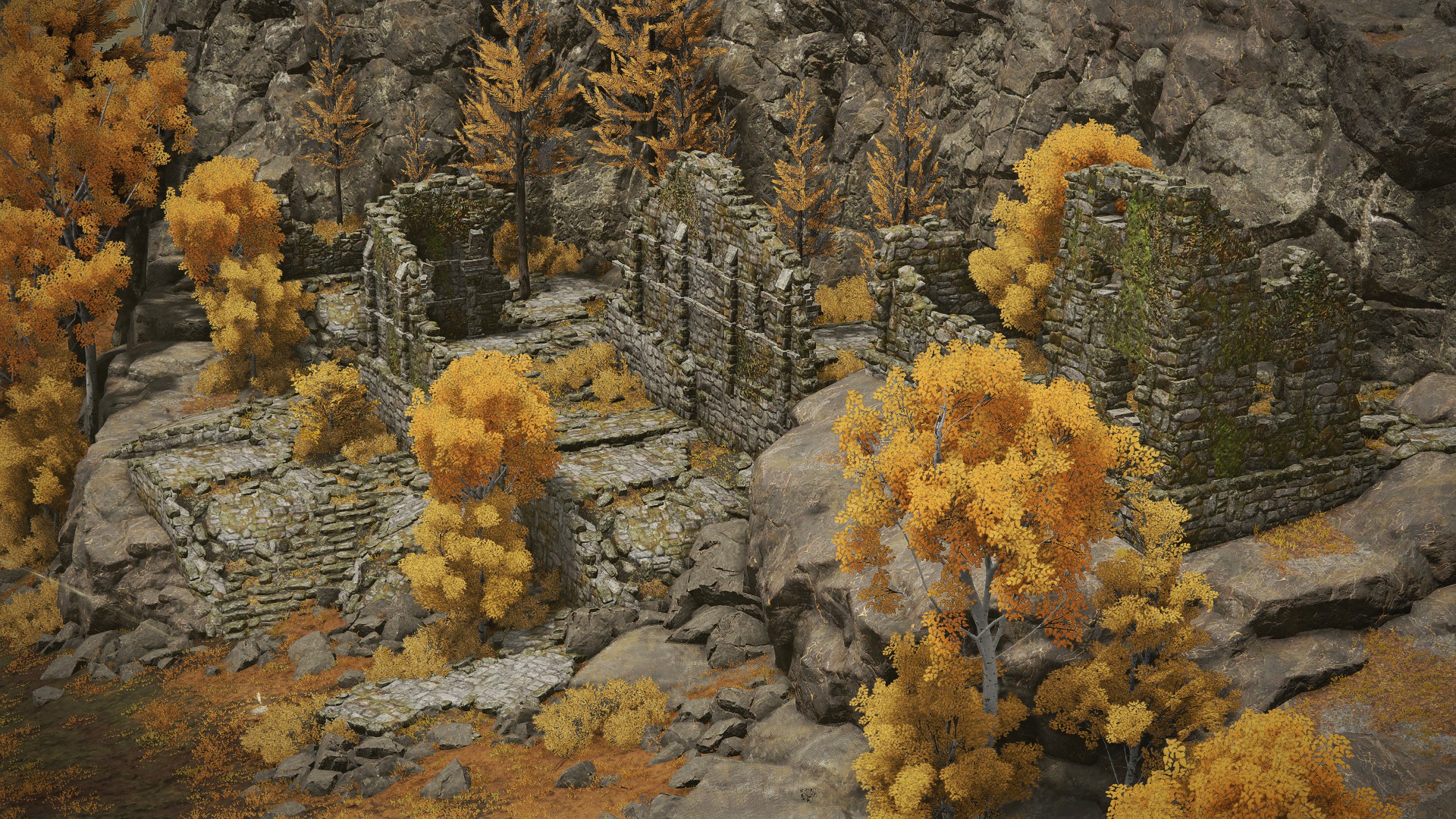
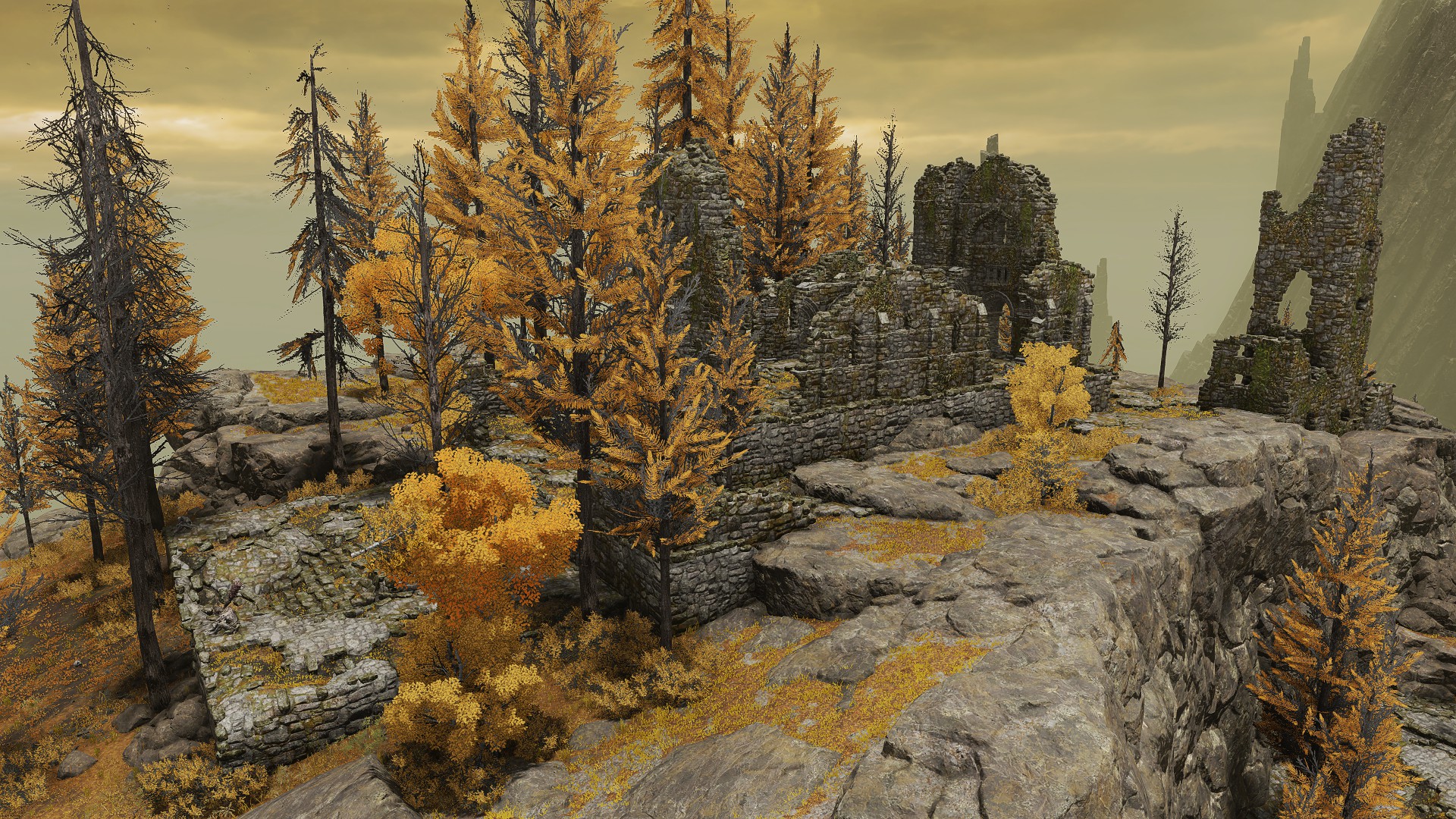
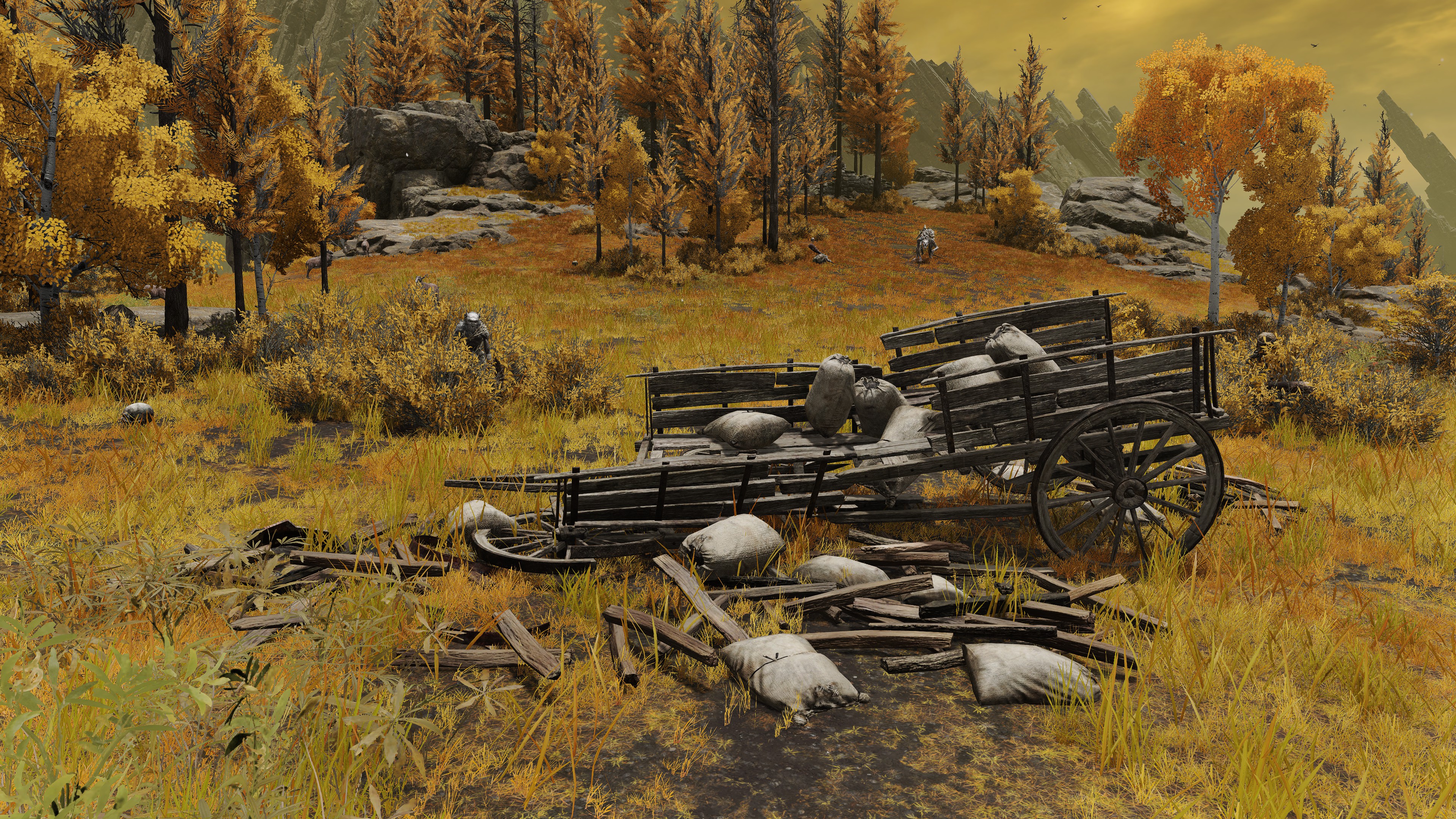
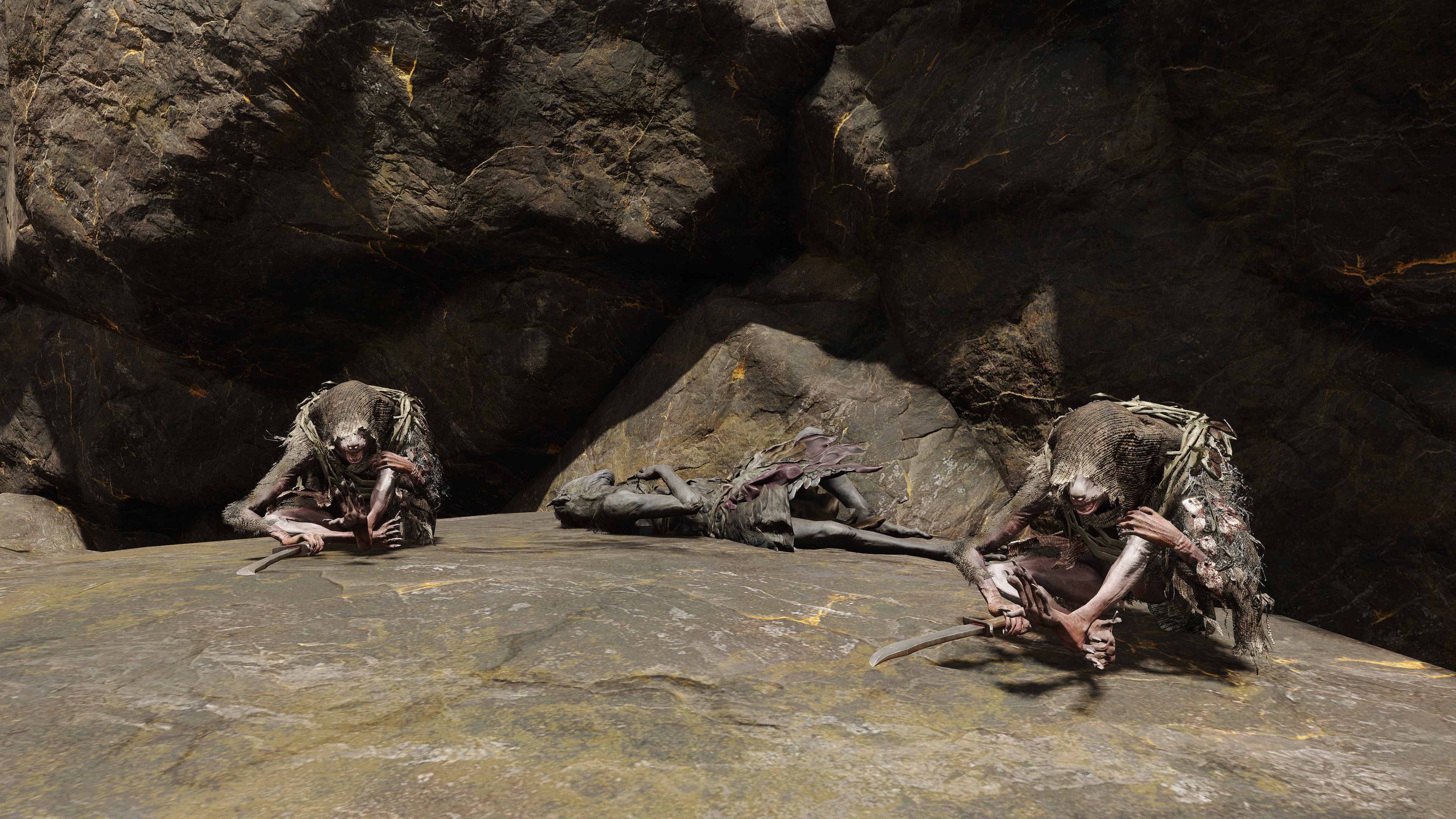
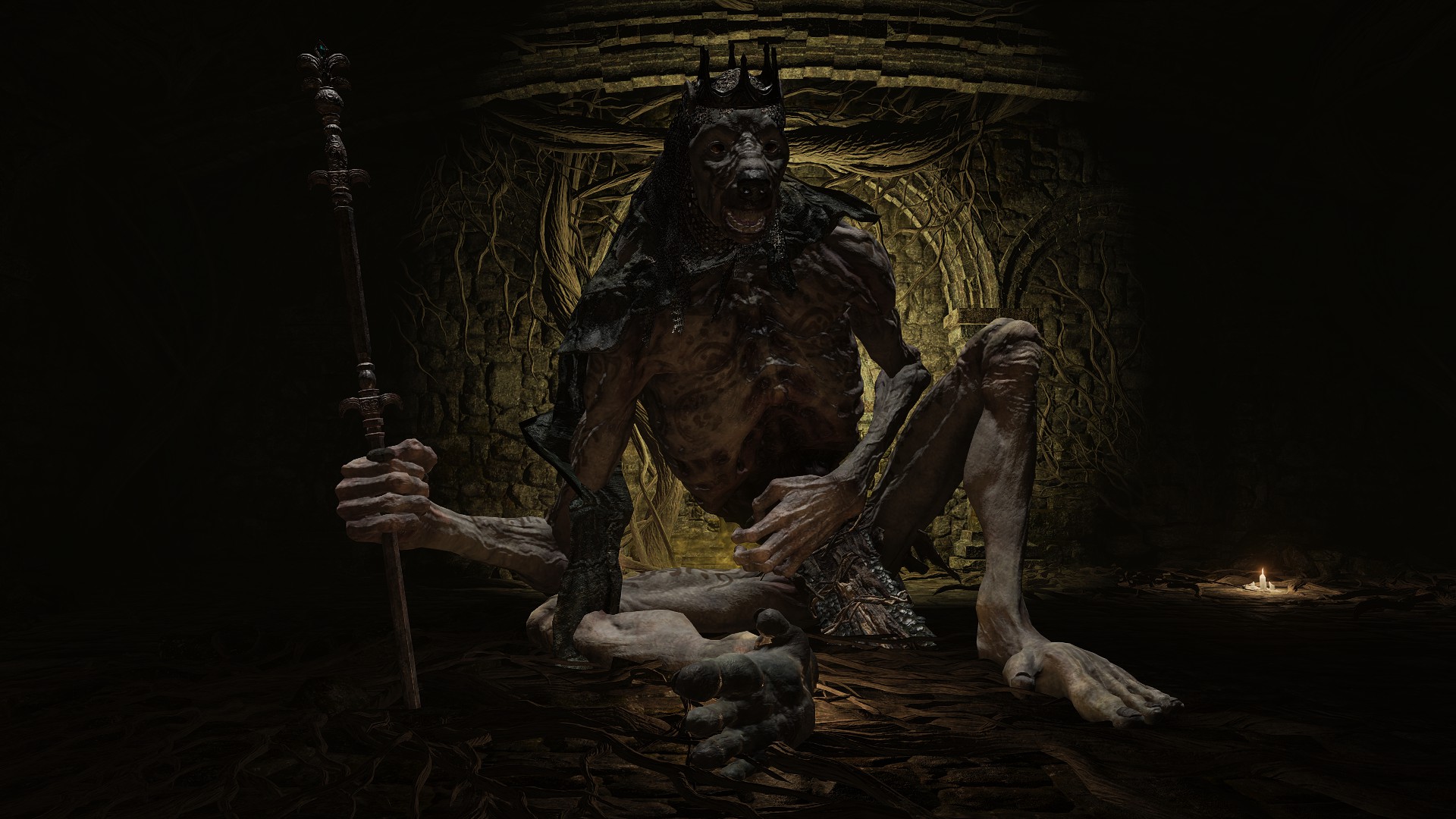
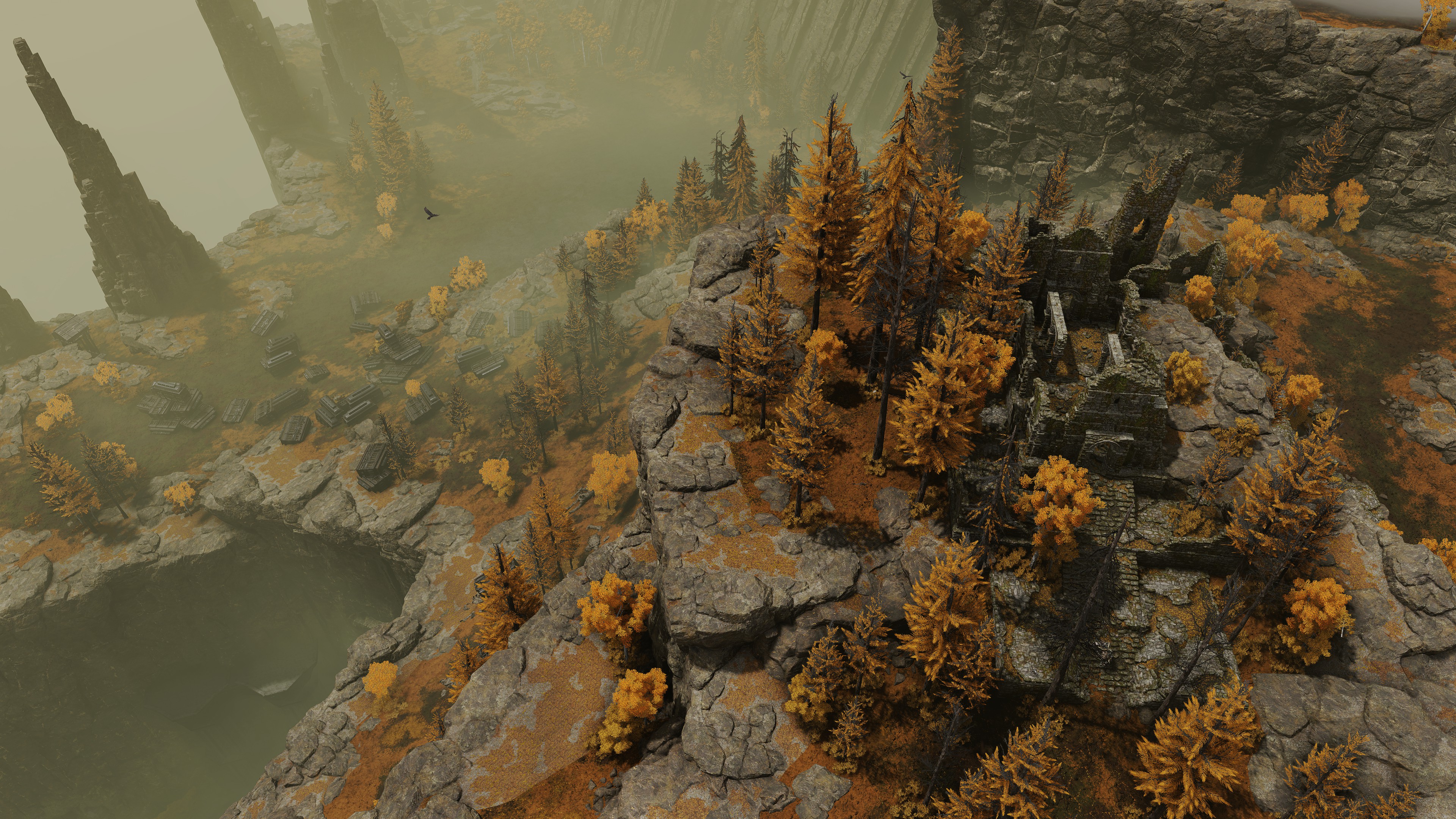
Other academy sorcerers seem to have crossed the enclosed sea and made landfall in the Cerulean Coast. It is there on those southern shores at the center of the Lands Between that we encounter yet another demi-human queen, Marigga, loitering with her tribe. Among them are also swordsmen, decidedly awarded their sword for possessing the intelligence and dexterity to wield it. This is because the blade is lined with miniscule raw glintstone, the string of shiny crystal resembling “joined stars” (連なる星) in clear reference to binary stars (連星) that orbit around each other in a single gravitational center point. The swordsmen swear upon receiving it that they will discover the ultimate truth of this unique art, which they express in their swordplay — the small and agile barbarians teleport around in clouds of dark muck, using the string of glintstone in concert to extend their blades. Such is their skill, they can apply the principle to people, binding enemies to a nexus in hand so as to telekinetically grab and throw them around. Even the starlight shards they collect showcases their dedication to astrology.
Sword embedded with unrefined, fine brightstones like joined stars. Choice weapon of the demi-human swordsmen.
When awarded it by their Queen, they swear: to discover the truth at the end of the joined stars.
Without a doubt, Marigga wished for her “knights” to help deepen the queen’s knowledge of the stars, probably inheriting this idea of binary stars from the sorcerers who taught her the arts. Perhaps this academy expedition had come just to investigate the Deathbirds’ graveyard, hoping to pilfer the secrets buried with astrologers long past. But with it was this idea of the Primeval Current, thereby bringing stars together as one would clay. The ancients practiced that concept with their glintstone hearts, and their descendants passed those same ideas onto the native savages they encountered. But from there, it was up to the demi-human swordsmen to shape their “clay” into powerful crystal arts. (Nightreign expands on this, swordsmen among the demi-human tribe of the First Peak seeming to train themselves with local glintstone) And although the tribe benefits from having such skilled fencers to defend them, their grey whiskers and cataracts reveal the lifelong toll to reach this level.
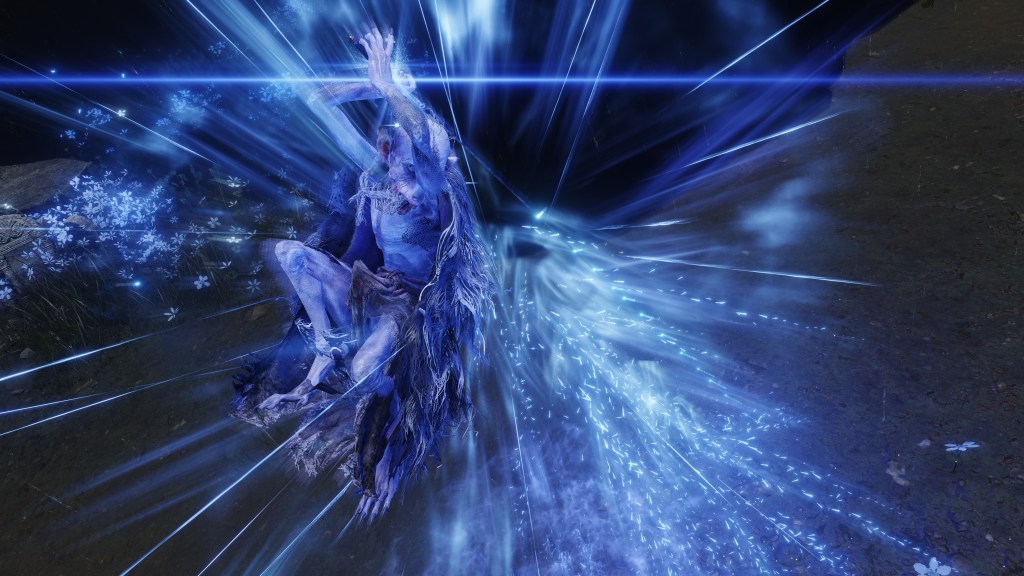
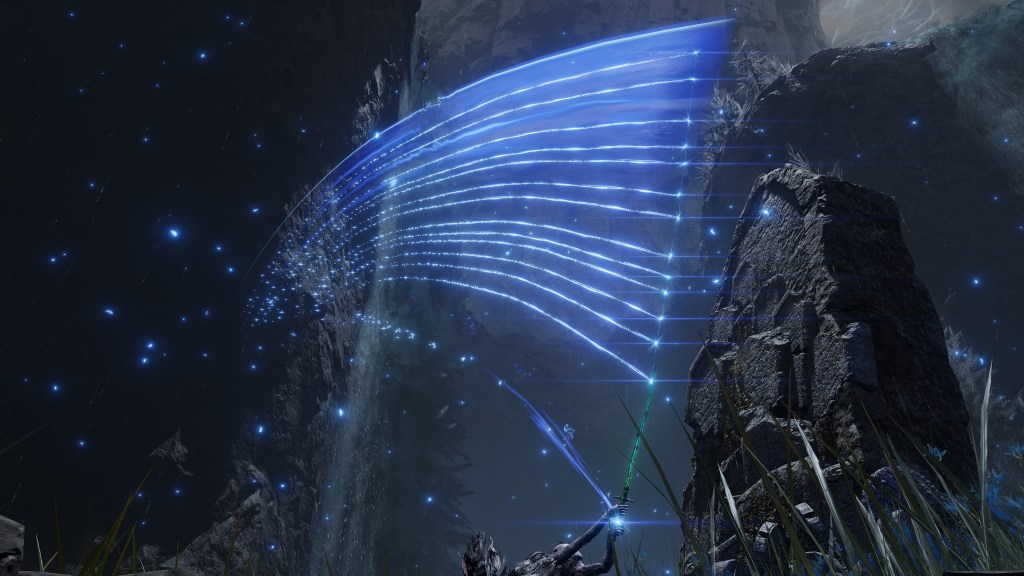
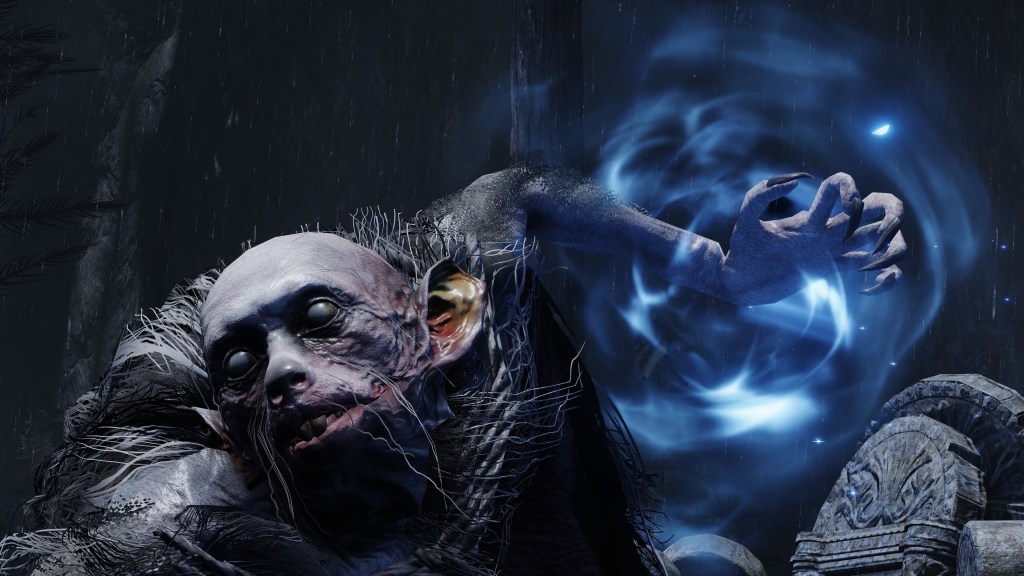
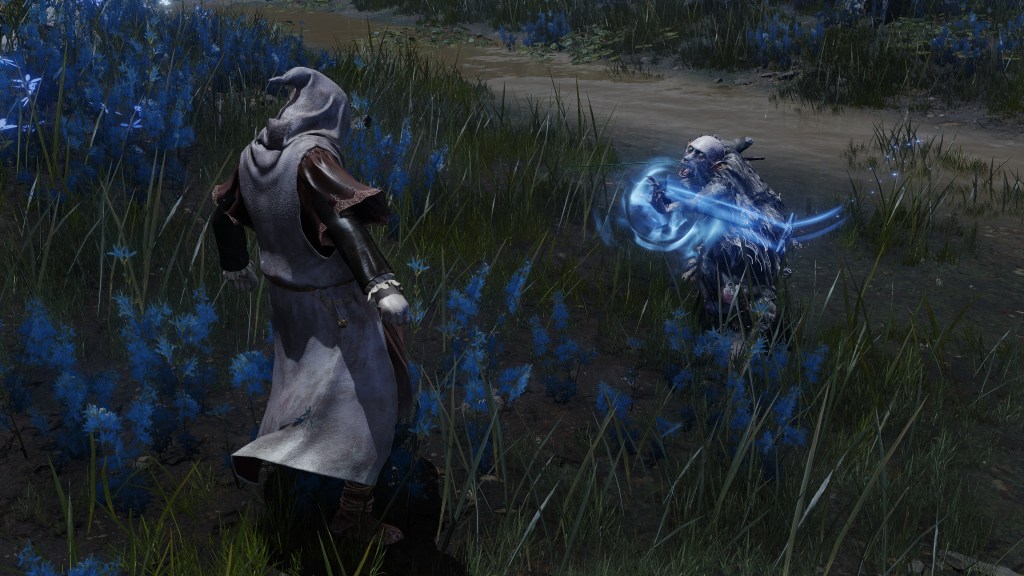
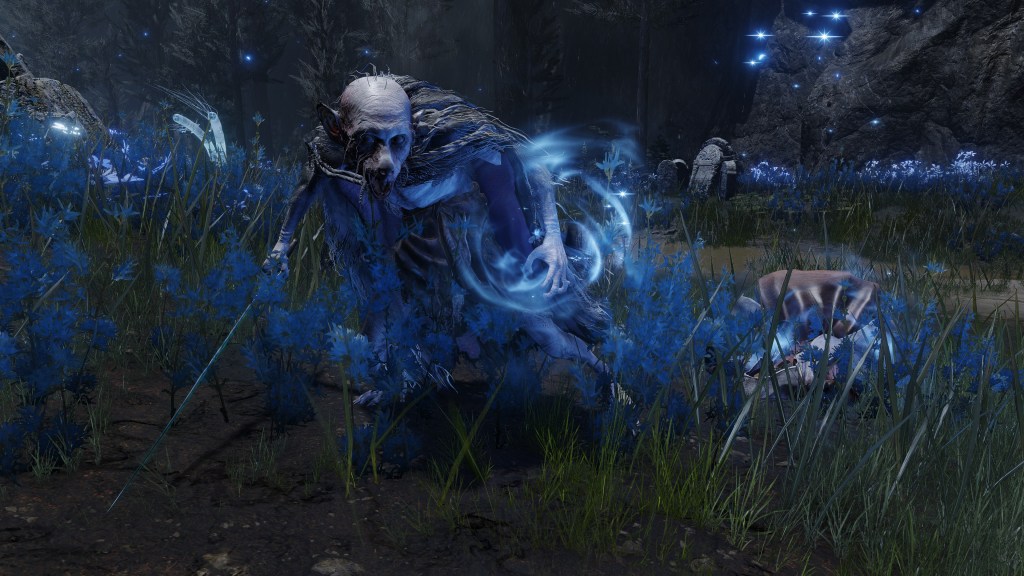
As for the human sorcerers, their goal was apparently to become gravekeepers. Both the Spirit Sword and Glaive require intelligence to wield the magic of ghostflame contained within, but not faith. This differentiates it from the standard sorceries of Tibia or related hexes, indicating that someone without much faith was the gravekeeper inventor. A sorcerer would possess the abundance of intelligence, and communing with spirits at the gathering place of all death might capture certain scholars’ interest. Certainly, we see the same intelligence requirements for the Helphen’s Steeple and Death Ritual Spear acquired north of the stargazer village, so such ideas seem even older than the spirit weapons. After all, if stars govern the fates of the living, then what about the dead? It is perhaps trying to establish a link between the dead of the spirit realm and the stars of the cosmos that led Raya Lucaria to teach the local demi-humans about binary stars. Meanwhile, those handful of sorcerers sailing in from abroad ended up joining the graveyard’s watchmen so as to get closer to Tibia and its ways.
Returning to Liurnia, the academy continued building relations with Sellia. Instructions for the more advanced Night Comet spell remain stored in town, sealed behind a barrier to highlight its importance. The utilization of comets in only this instance further suggests that Azur and the Karolos Conspectus had a unique effect on this sorcery’s development. Both Sellia and Raya Lucaria likewise share glintstone key technology for manipulating special barriers, each styled on their respective crest. Whosever came first, the two were becoming very close, indeed. Combined with the number of students haunting the streets, plenty of Karolos among others but only a few Olivinus, and one might think that it was a takeover. While the Nox always had a key place in society, they were now competing with the growing influence of this foreign institution, both in terms of its native and foreign human population. Granted, this outside influence might have been tolerated, because they were contributing novel ideas to Nokron’s overarching goal still. Nevertheless, it added new wrinkles to Sellian society.
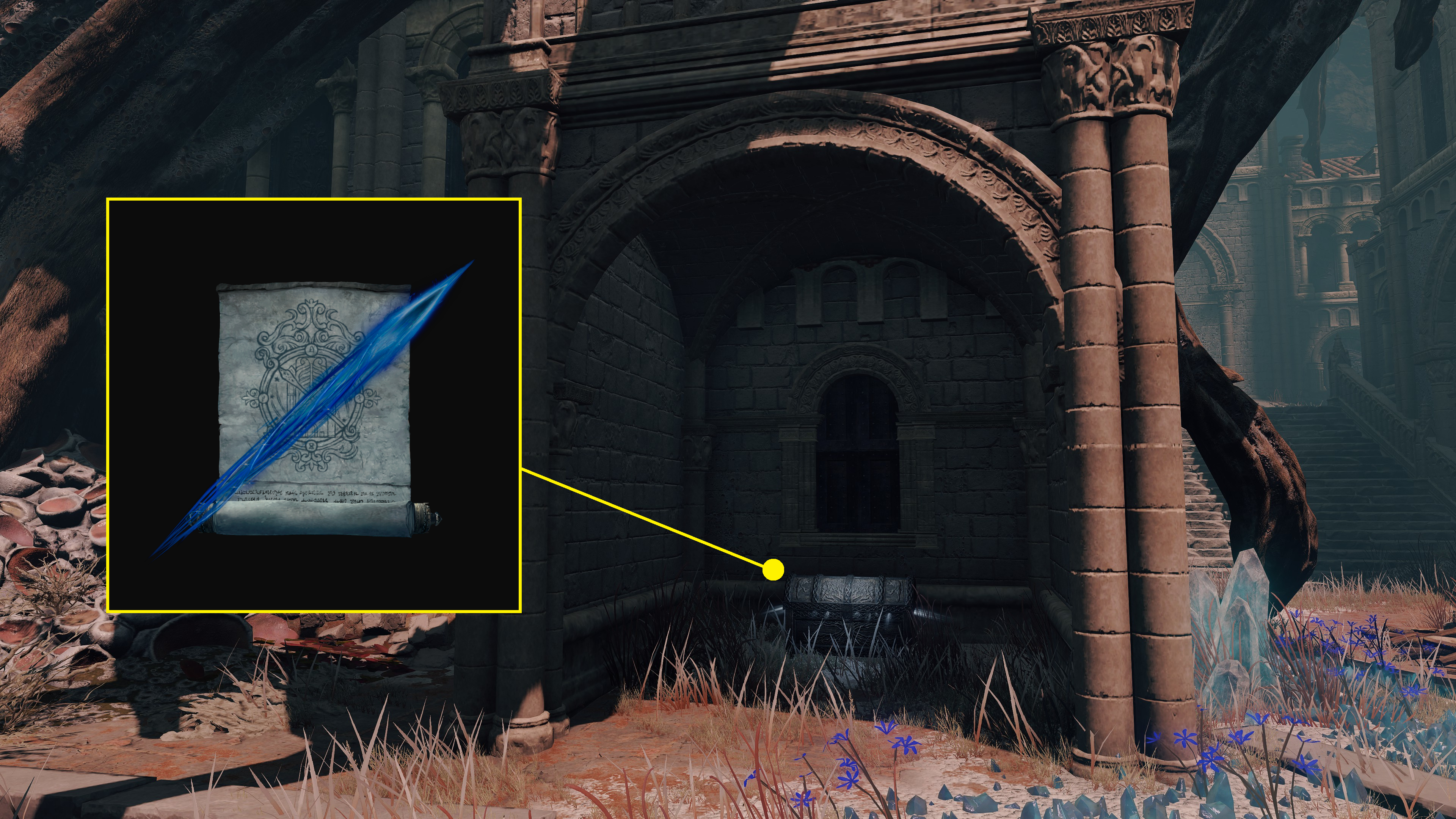
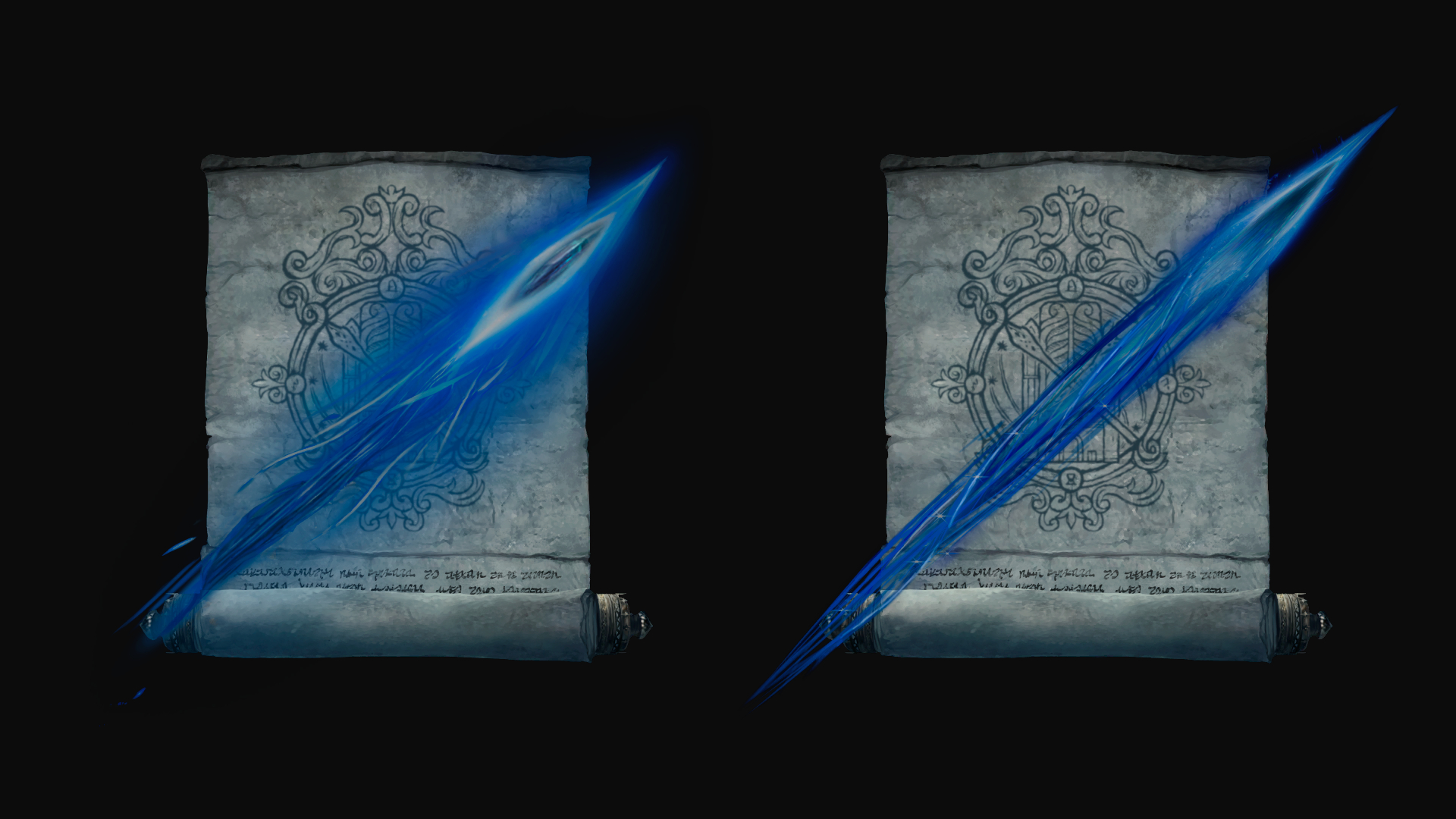
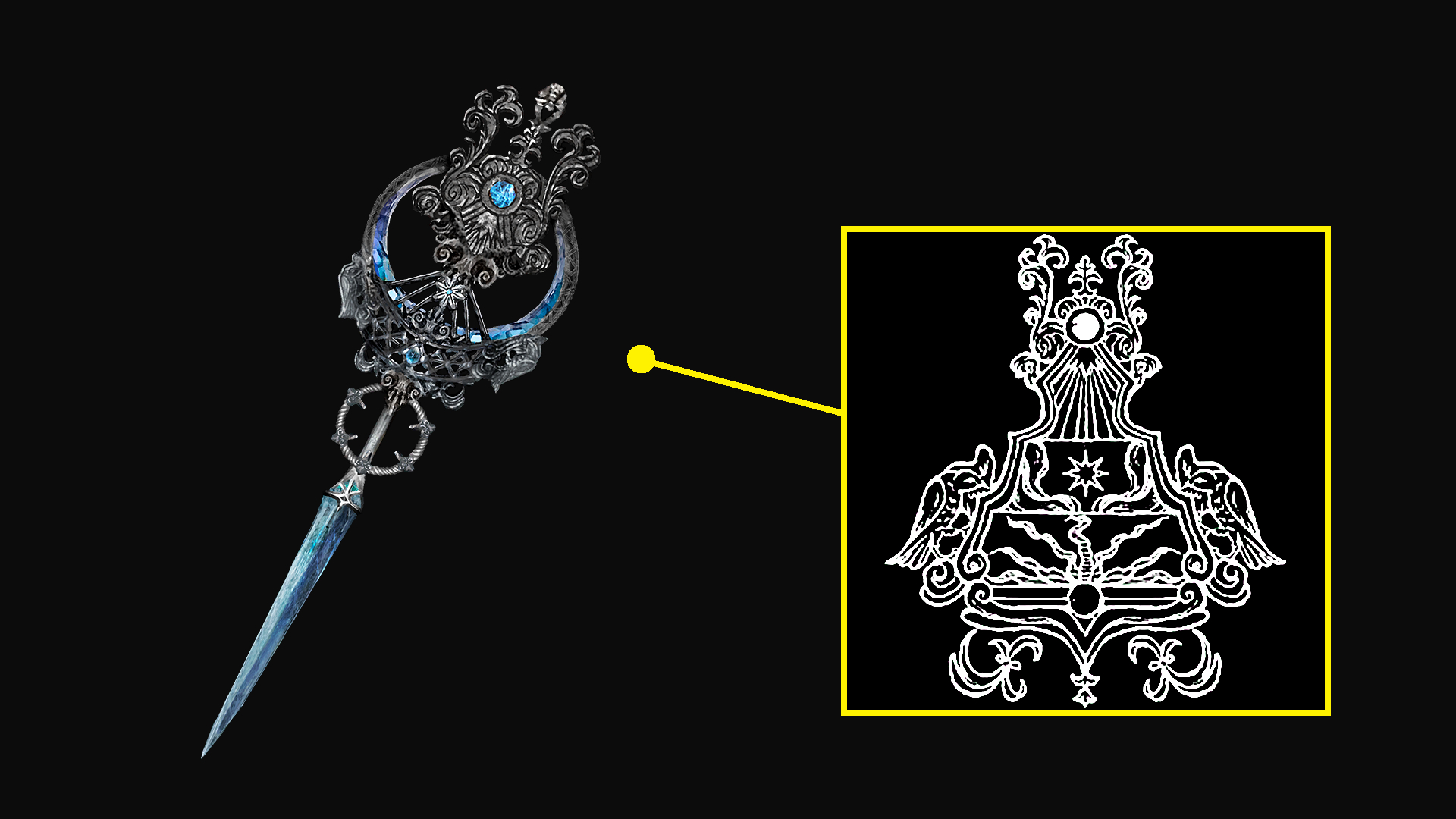
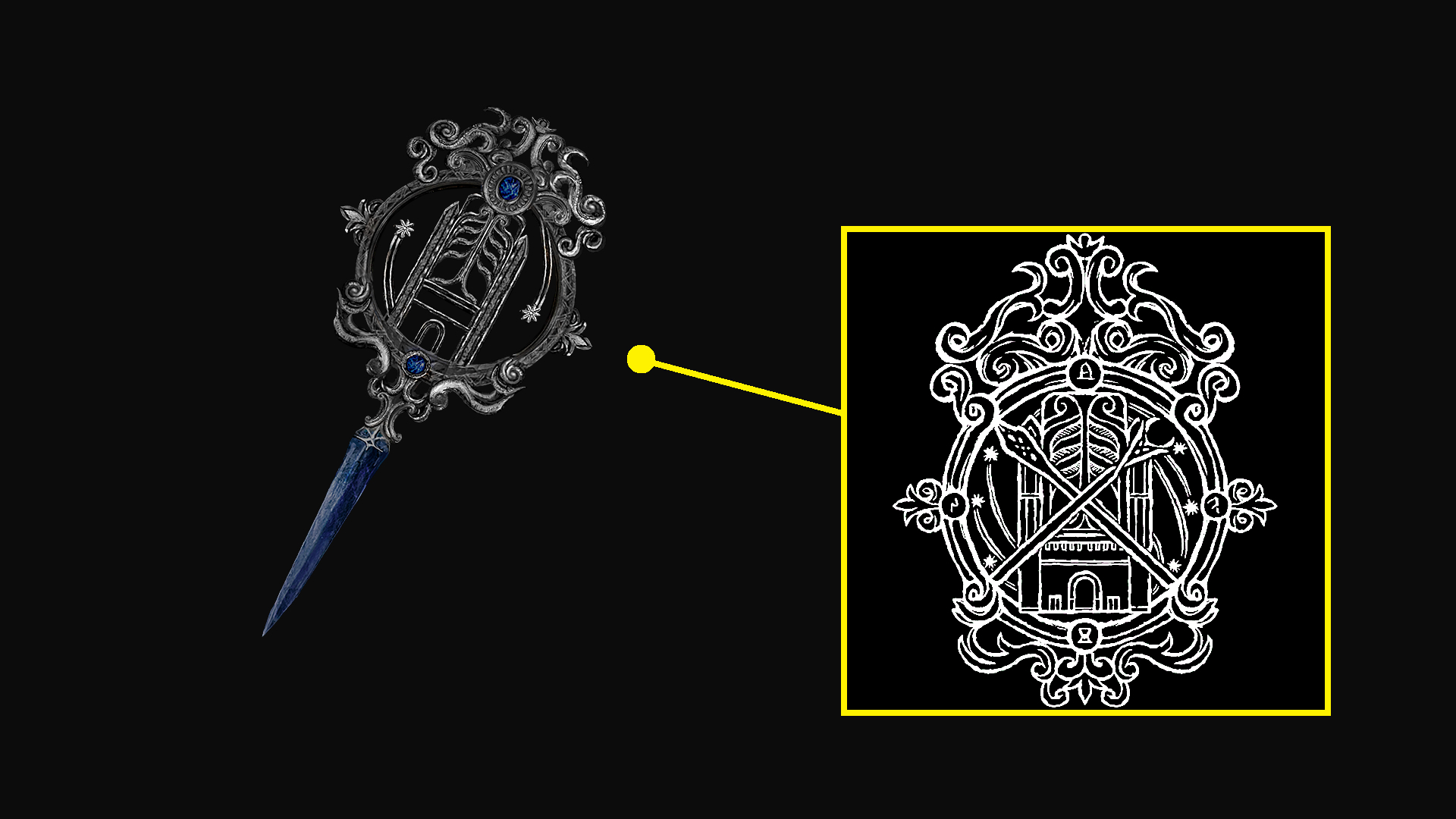
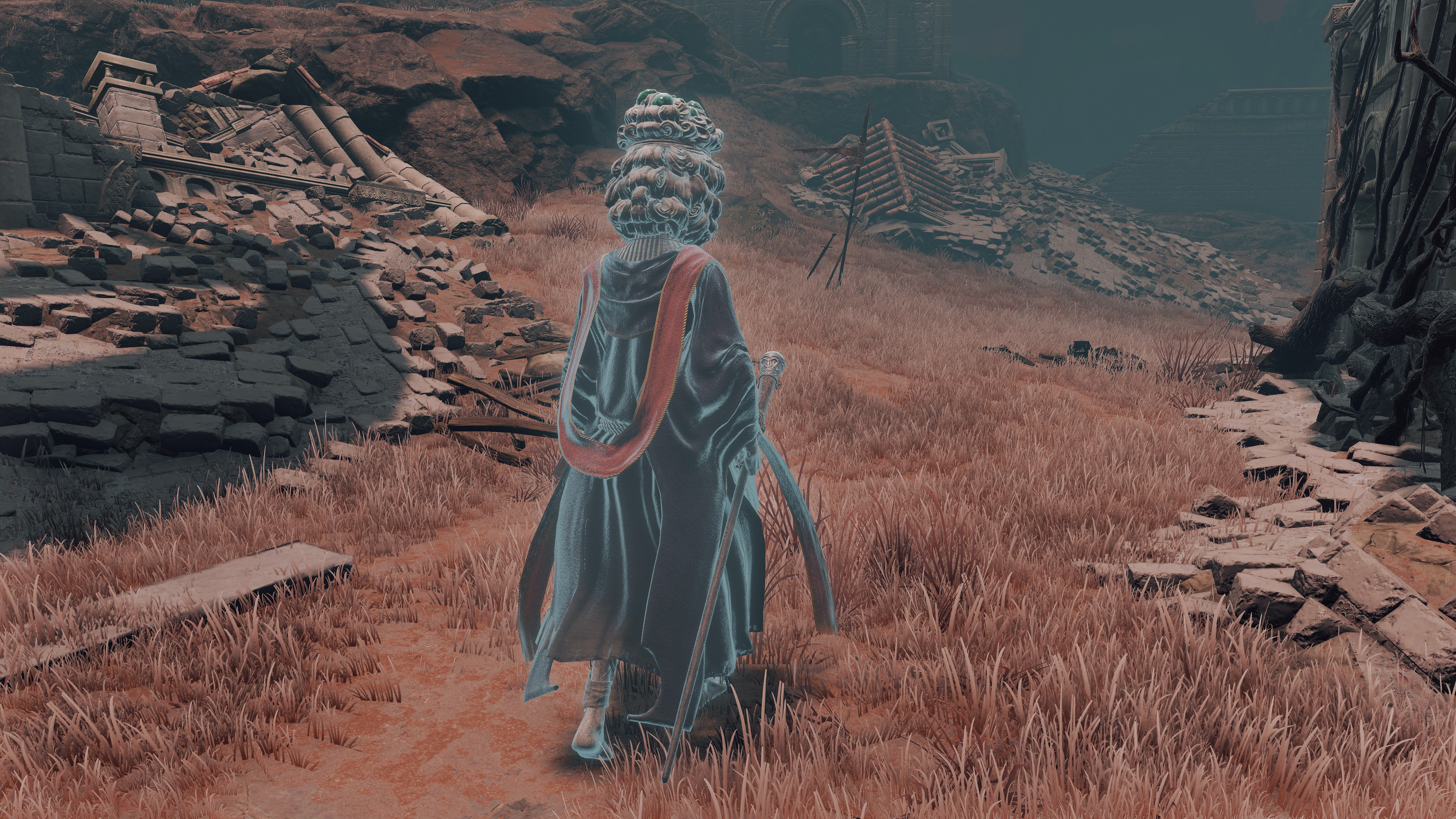
One of the darker byproducts of Caelid and Liurnia’s mingling concerned their respective underworlds. Sorceries like Unseen Form, Unseen Blade, and even Night Shard are primarily wielded by Sellia’s ruthless assassins. These sorcerers use whatever means to slay their target, and thanks to night’s invisibility, they can appear like any other, unarmed, astral scholar. That might have been the most natural application of such sorcery, but the culture of assassins can only emerge if there is a demand for assassination. And in the case of Sellia, their sorcerer assassins mainly hunted fellow sorcerers. Therefore, it is liable that such a culture emerged only after the Laskyar and Sellia populations made contact. With Raya Lucaria training new generations of astrologers and quickly developing a political hierarchy for Liurnia, there was an explosion in potential targets for shady killings. Combined with Sellia’s location out on the remote fringes relative to the academy, it is easy for sorcerers to discreetly arrange for the assassination away from Liurnian authorities.
One of the night sorceries of the sorcery town of Saria.
Makes the caster’s form hard to see. When horse riding, that effect also extends to the ridden horse. Can be used without stopping movement.
Sorcery of assassins of Saria, who use any means for their objective.
One of the night sorceries of the sorcery town of Saria.
Completely erases right-hand weapon’s form. Can be used without stopping movement.
Sorcery of assassins of Saria, who disguise themselves as unarmed sorcerers.
One of the night sorceries of the sorcery town of Saria.
Swiftly fires hard-to-see magic pebble. Can be used seamlessly even after other actions.
It is said that the sorcerers of Saria were assassins and hunted fellow sorcerers in particular.
Put simply, the trade and travel relationship created an entire new market for the sorcery town, countless agents prepared to kill a researcher’s rival for the right price. This took them to other lands beyond Liurnia. As a prime example, the Witchbane Ruins in the Weeping Peninsula are named for currently sealing Sellen in the basement. She isn’t the first to be imprisoned down there, as the corpses of civilian conscripts rot inside other prisons, presumably locals captured and interrogated for information. The woman probably isn’t even the first glintstone sorcerer victimized, as these “witch-sealing ruins” (魔女封じの廃墟) are situated in the fields by Site D. Clearly, someone has taken many a sorcerer for nefarious purpose, going so far as to craft marionettes to protect his hideout from discovery. And based on the corpse lying in the basement with Ambush Shard — a sorcery which strikes from the unseen flank — that person was a Sellian assassin. Their work apparently brings them as far out as the peninsula to hunt the sorcerers living in total seclusion.
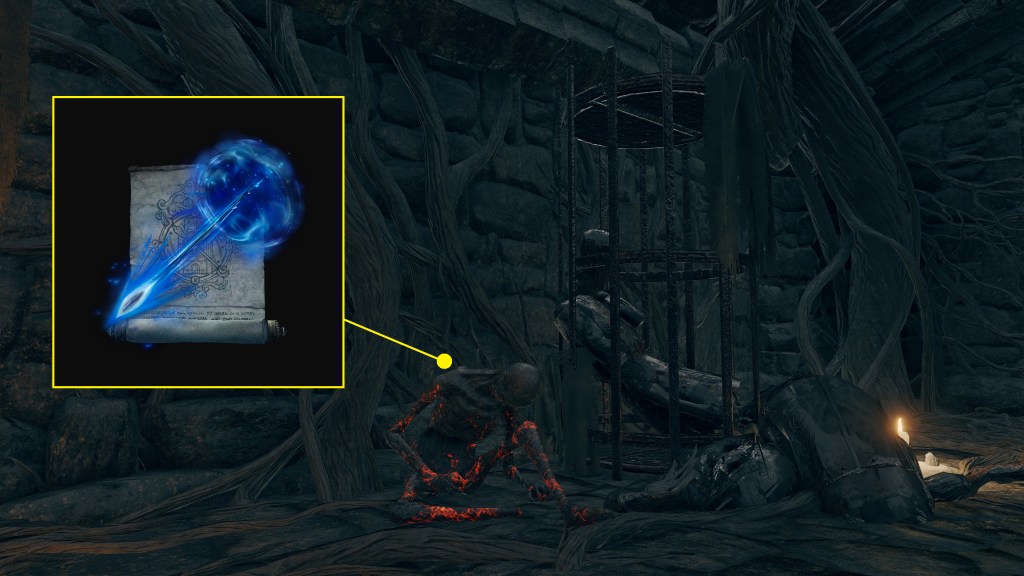
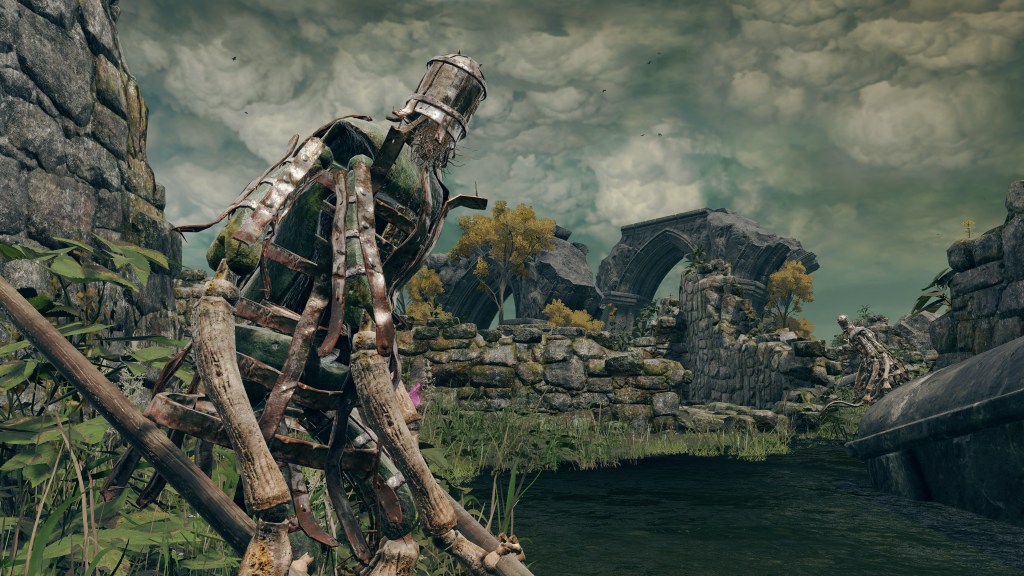
One of the night sorceries of the sorcery town of Saria.
Fires pebble that assails the enemy’s back from a distant place. Can be used continuously.
It is said that the sorcerers of Saria were assassins and hunted fellow sorcerers in particular.
That was the nature of relations in a sequestered environment, not everyone getting along before eventually parting ways. Between Lux and Site D, there is no denying that the academy breeds many independent-minded and strong-willed individuals, making it impossible to keep the community from fracturing in all sorts of ways throughout its history. It was perhaps inevitable that sorcerers go off pursuing their own interests, especially considering that it was how their kind began. But just as Azur and Lusat were the mainstays throughout all of that history, the influx of new stargazers from Laskyar, Sellia, and elsewhere kept Raya Lucaria from just petering out. Like the flowing stars, astrologers accepted the change while building a grand web of fate. No one can predict all its twists and turns, but a bird has to spread its wings — there are so many eggs for the Cuckoo to plant in hopes that at least one hatch. Anything to soar higher, toward that shining brilliance. But blinded by the light, this Icarus didn’t realize that it was flying straight into the sun.

