
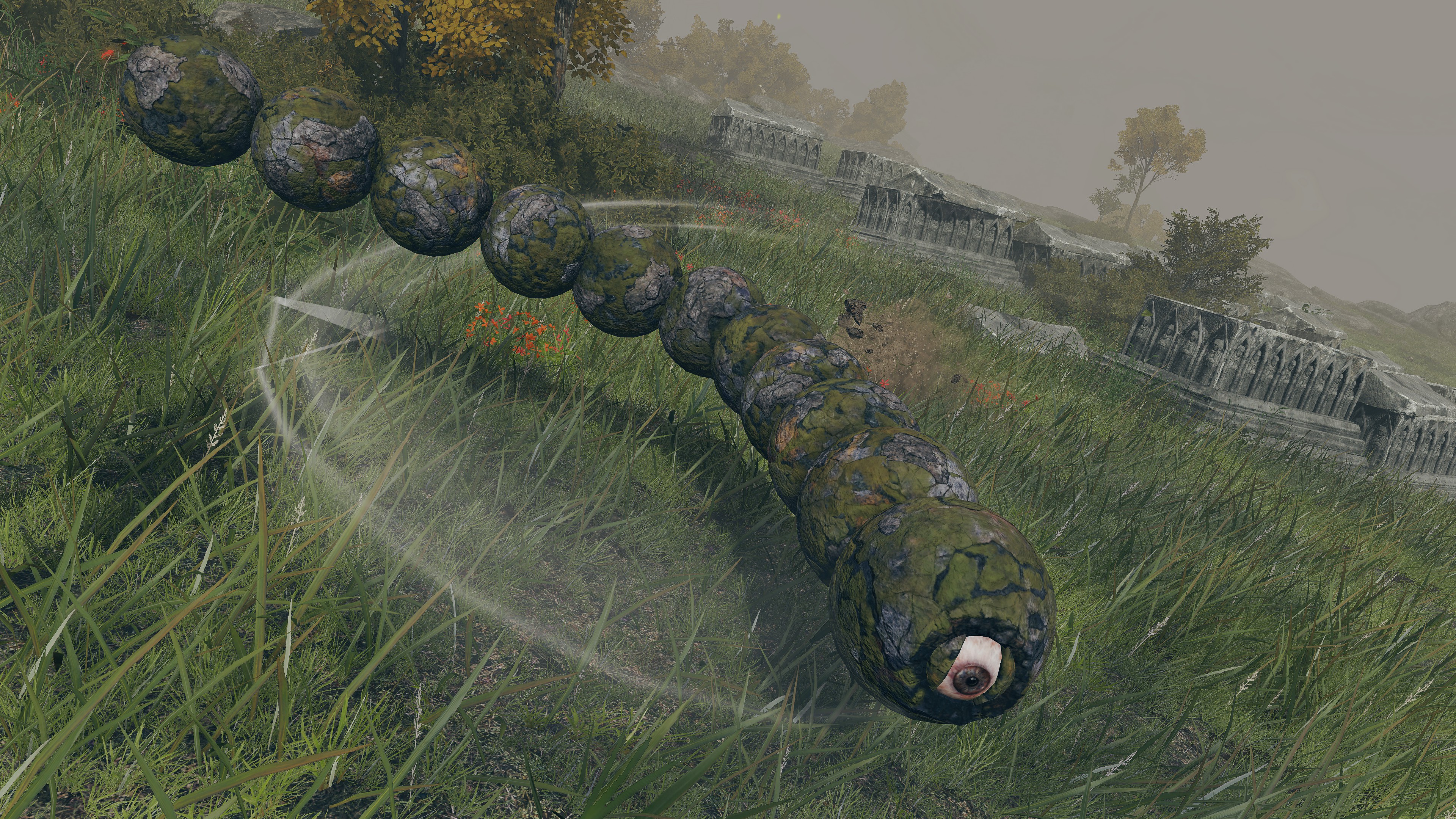
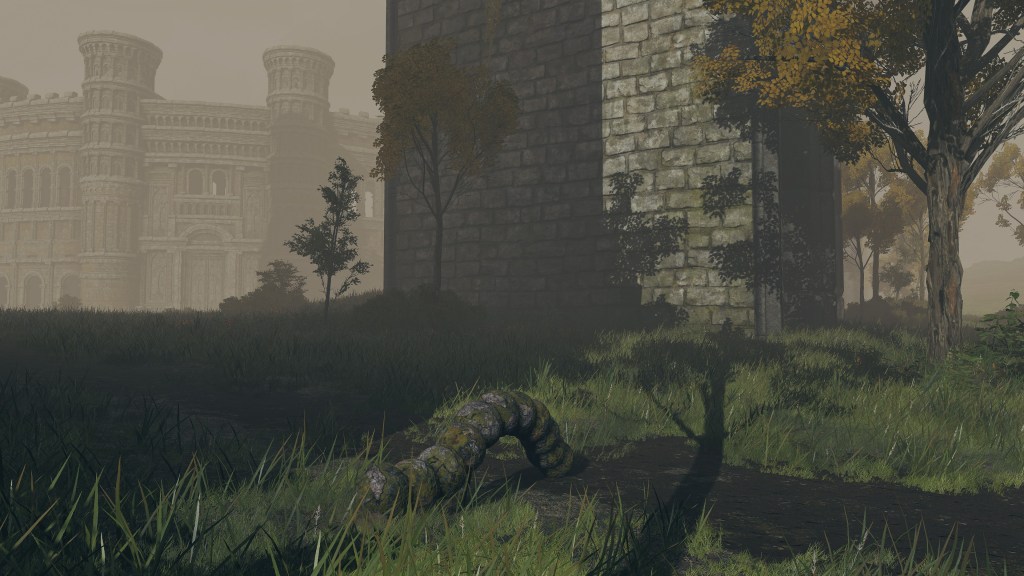
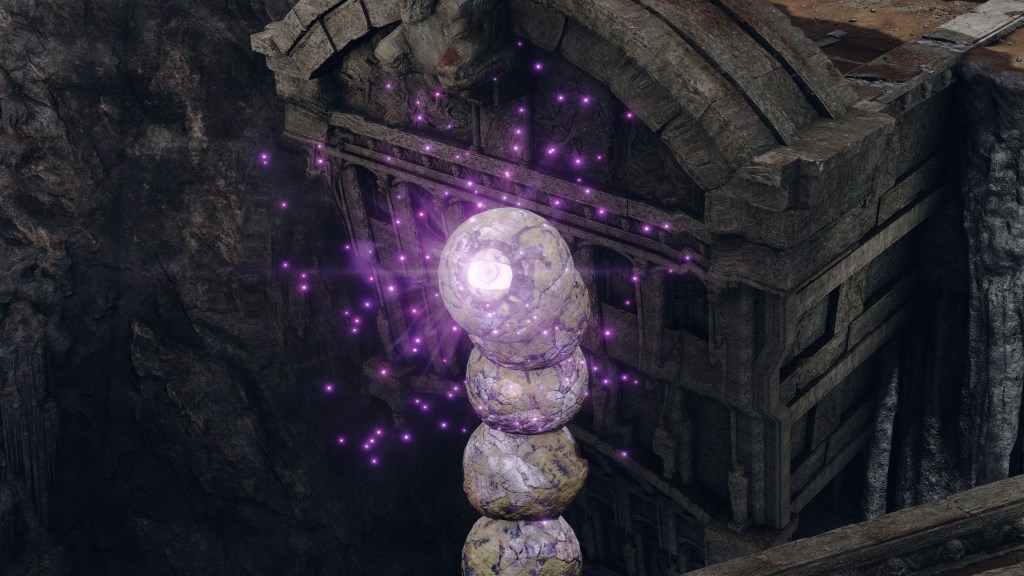
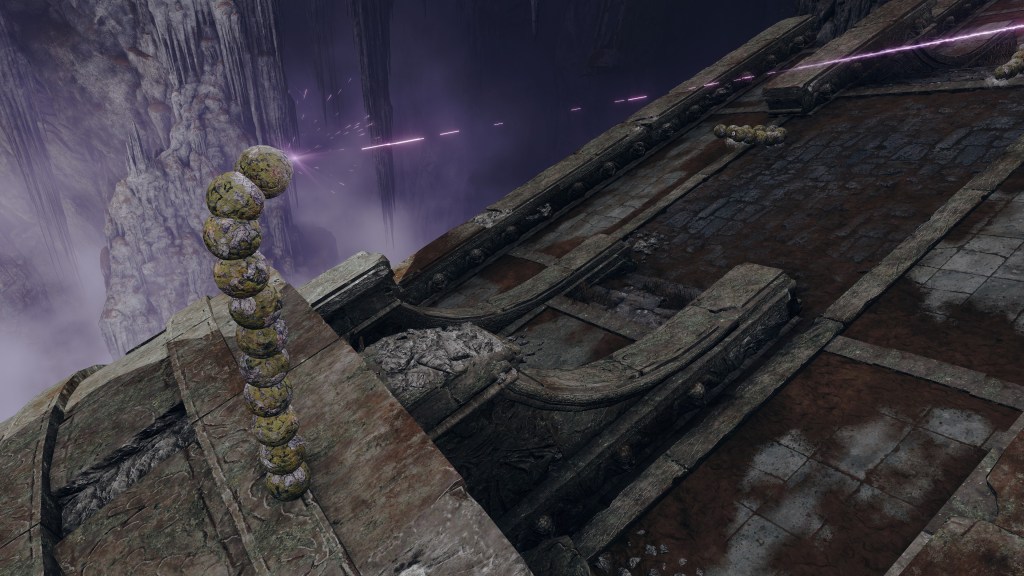
When we come across an evergaol, there are always particular enemies flocking to it, day or night. From the name lookout stones, it is obvious that they are there for surveillance, hence most stand at attention with “searchlights” fixated on the jail. This makes the enemy a sort of prison warden, monitoring the magic seal’s condition. But what is it exactly? Despite the way they squirm to move, the lookout stones aren’t worms, or even biological — they are a string of stone spheres held together by gravity magic, exhibiting the same purple energy. Even their singular eye used for surveillance can just be a more realistic construct, making them little different from golems or marionettes. No puppet has quite their manufacture, of course, the spheres recombining into all sorts of shape to attack; spinning flails, flying boomerangs, even compact bombs. With how it always glows when invoked, their power is sourced in the eye of the “head” sphere. Through it, the lookouts can gather not just their stones but also miscellaneous gravel in their surroundings.
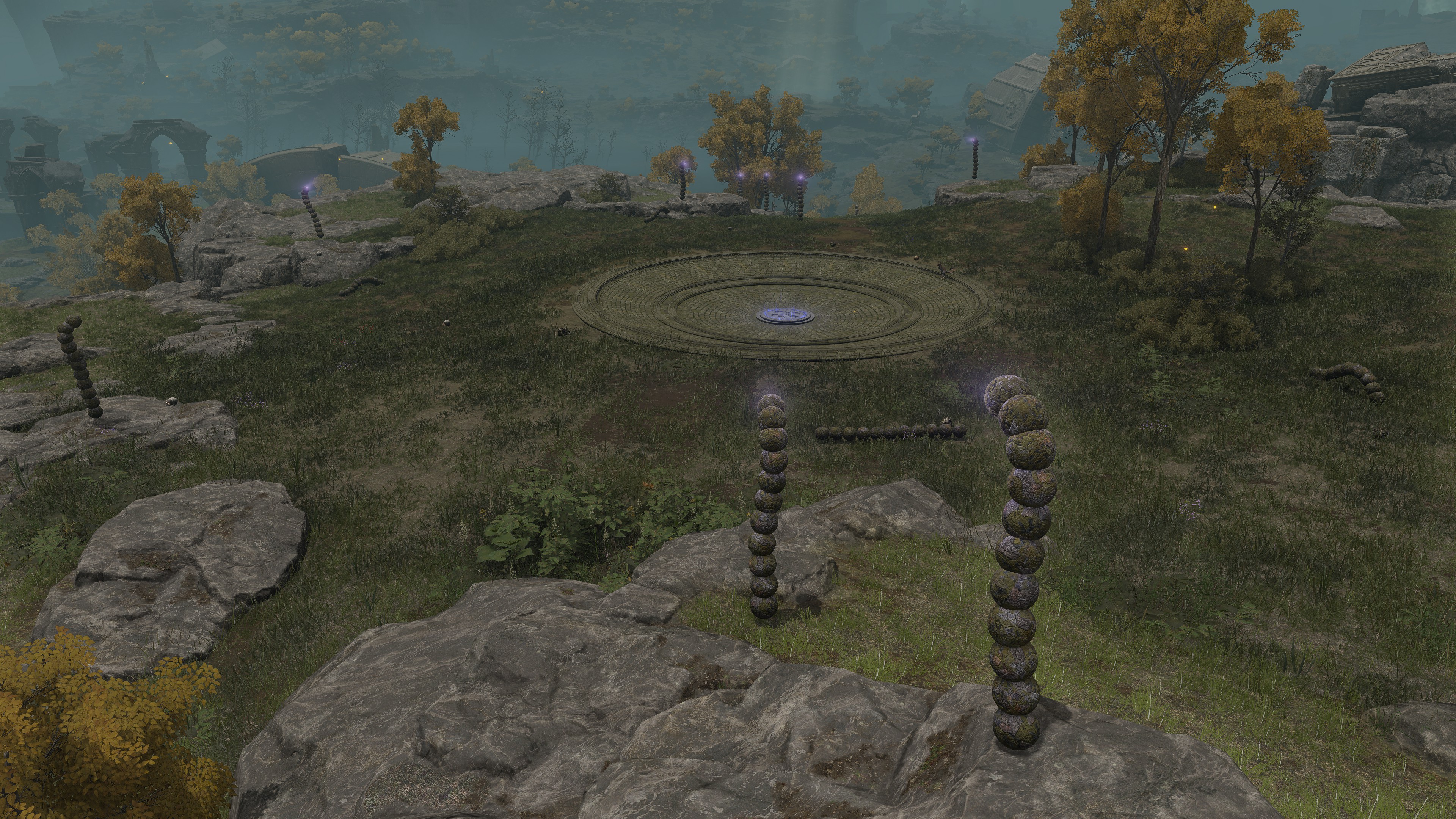
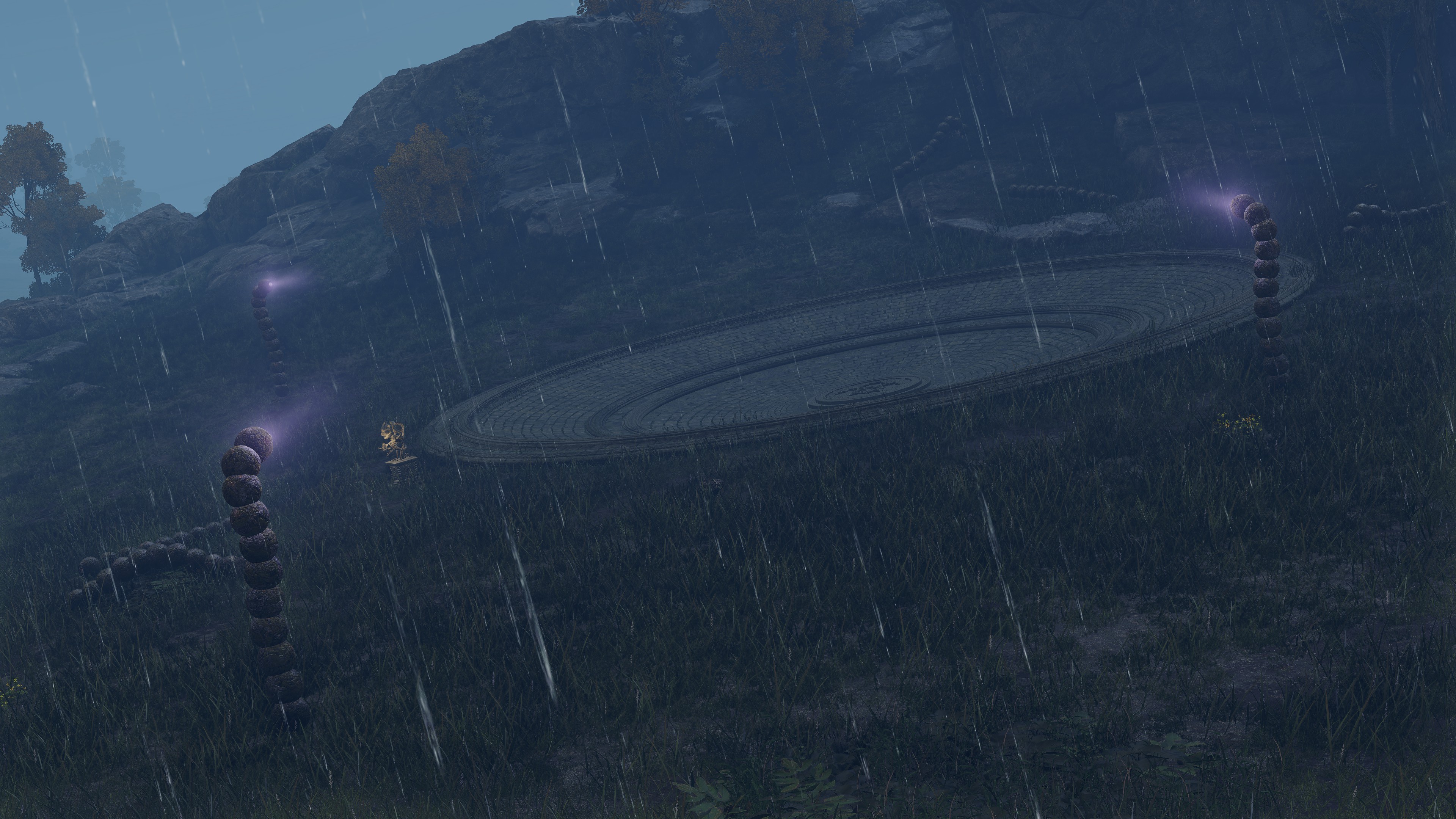
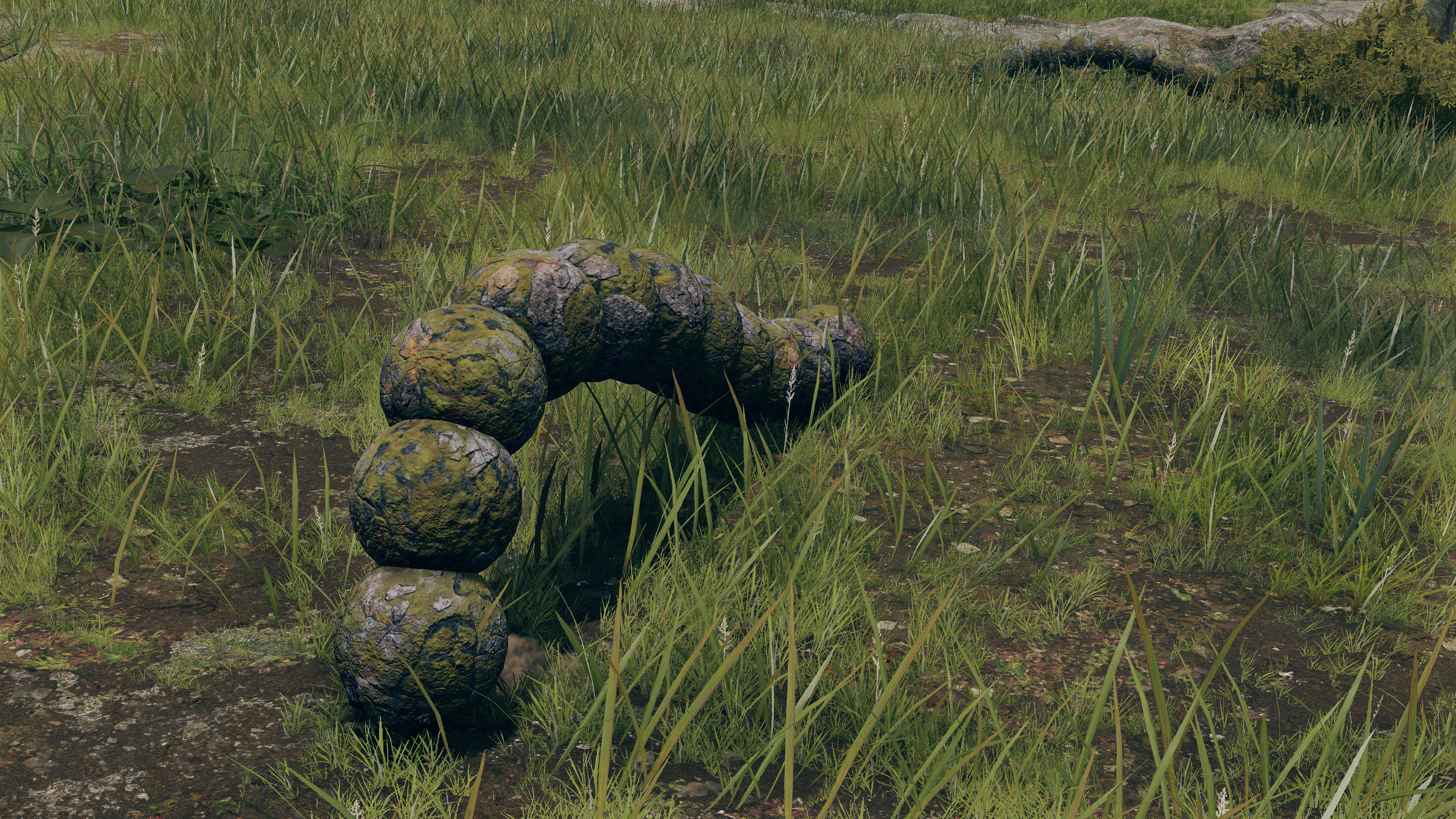
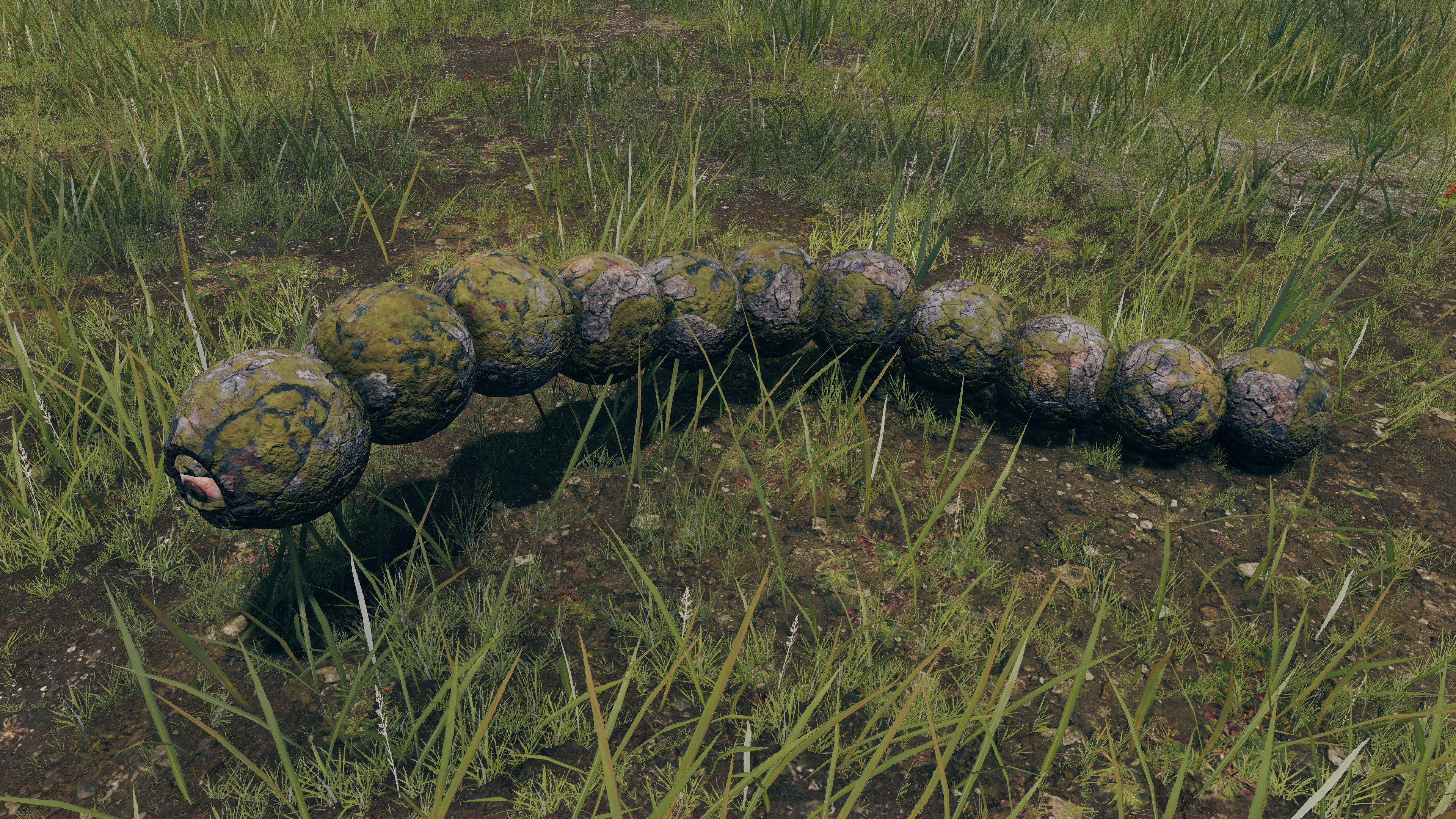
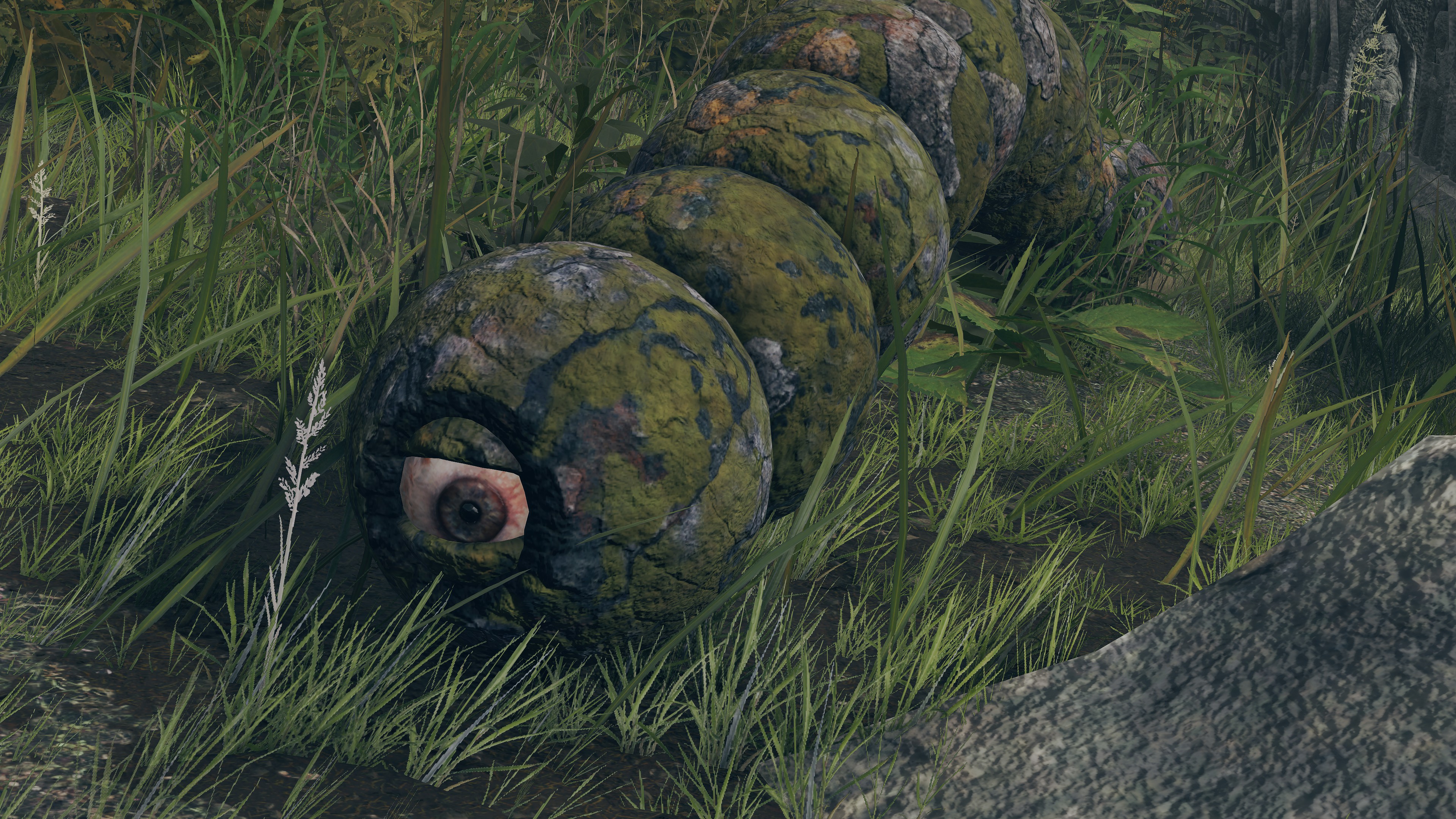
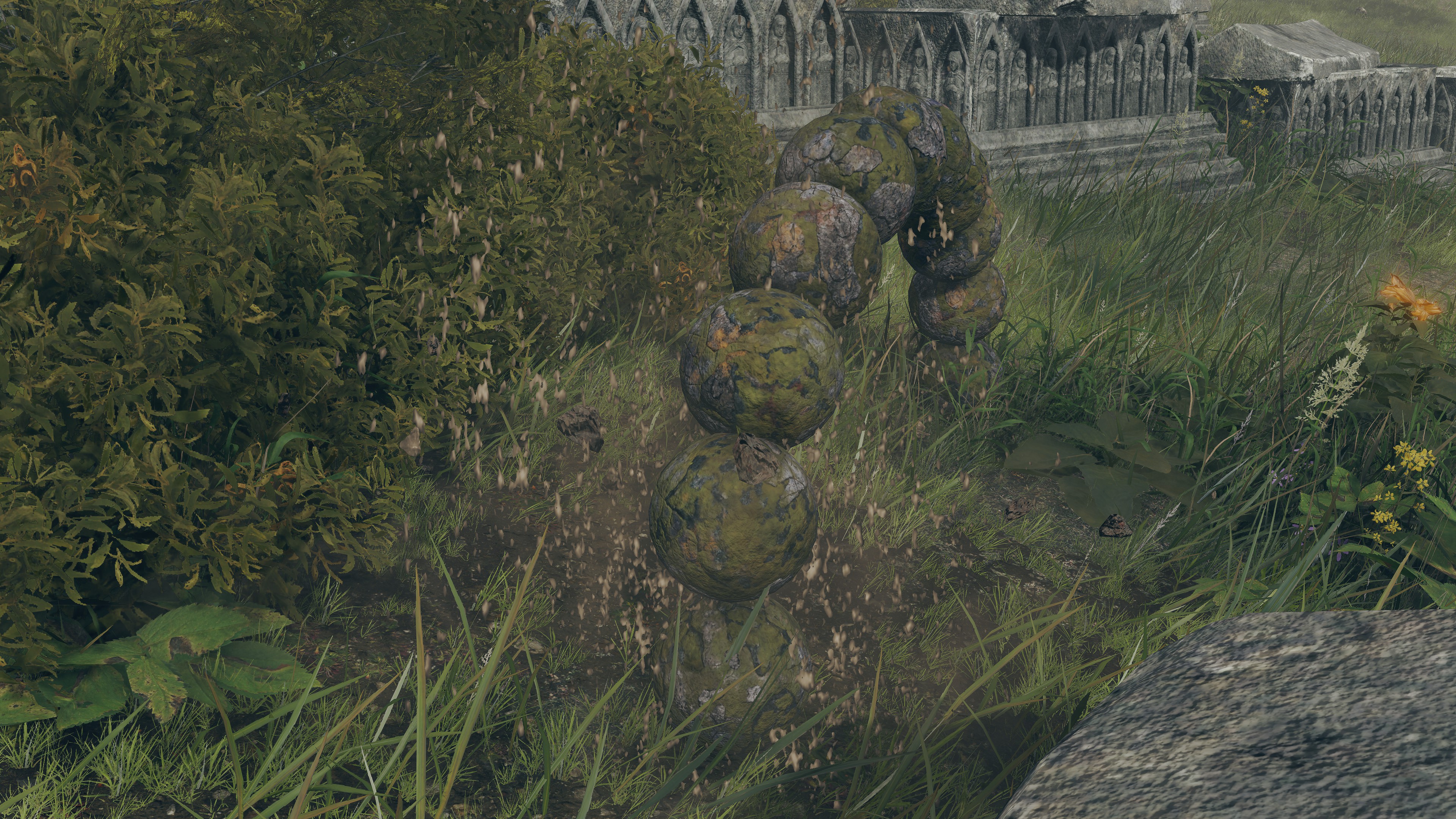
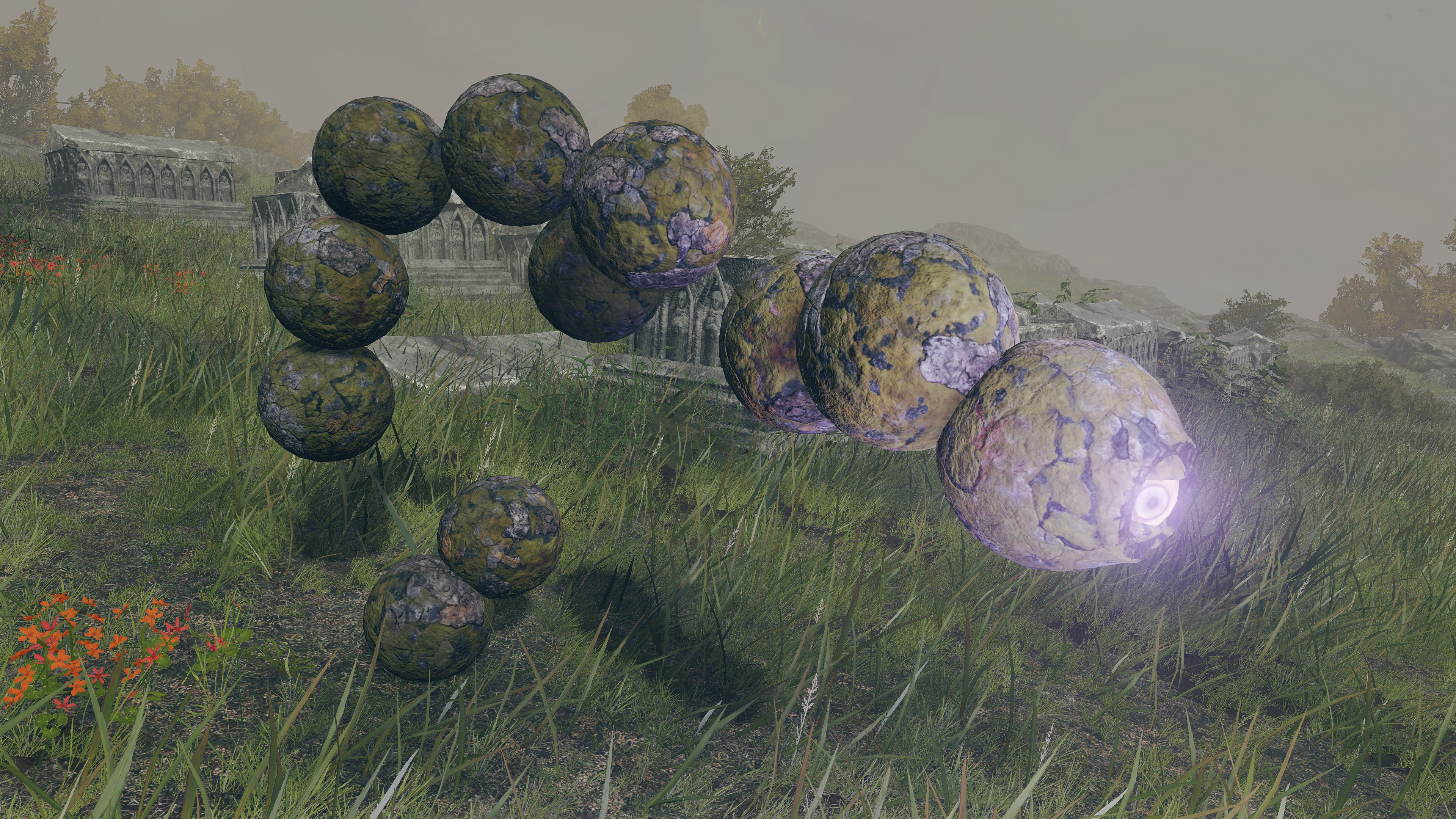
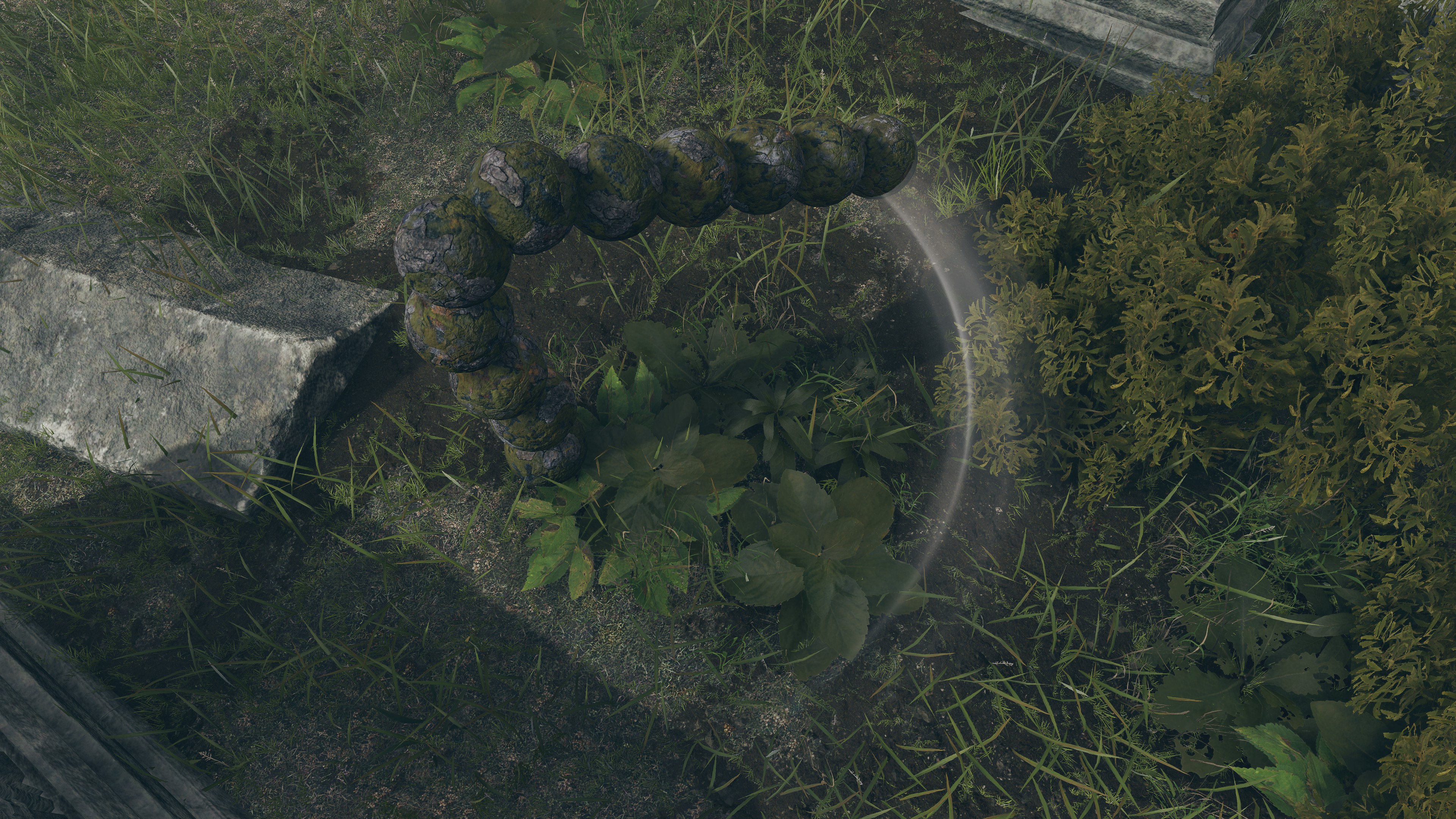
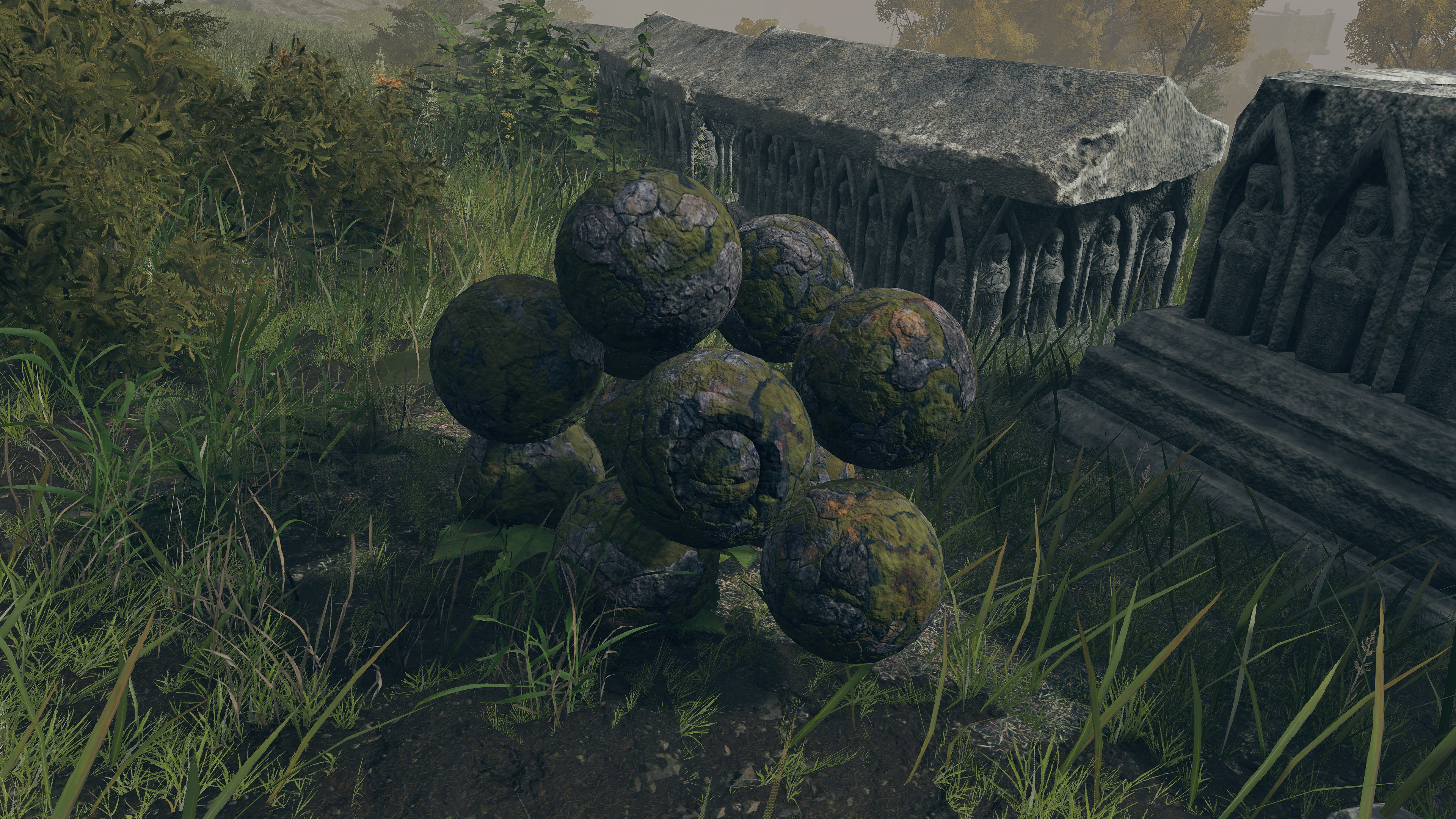
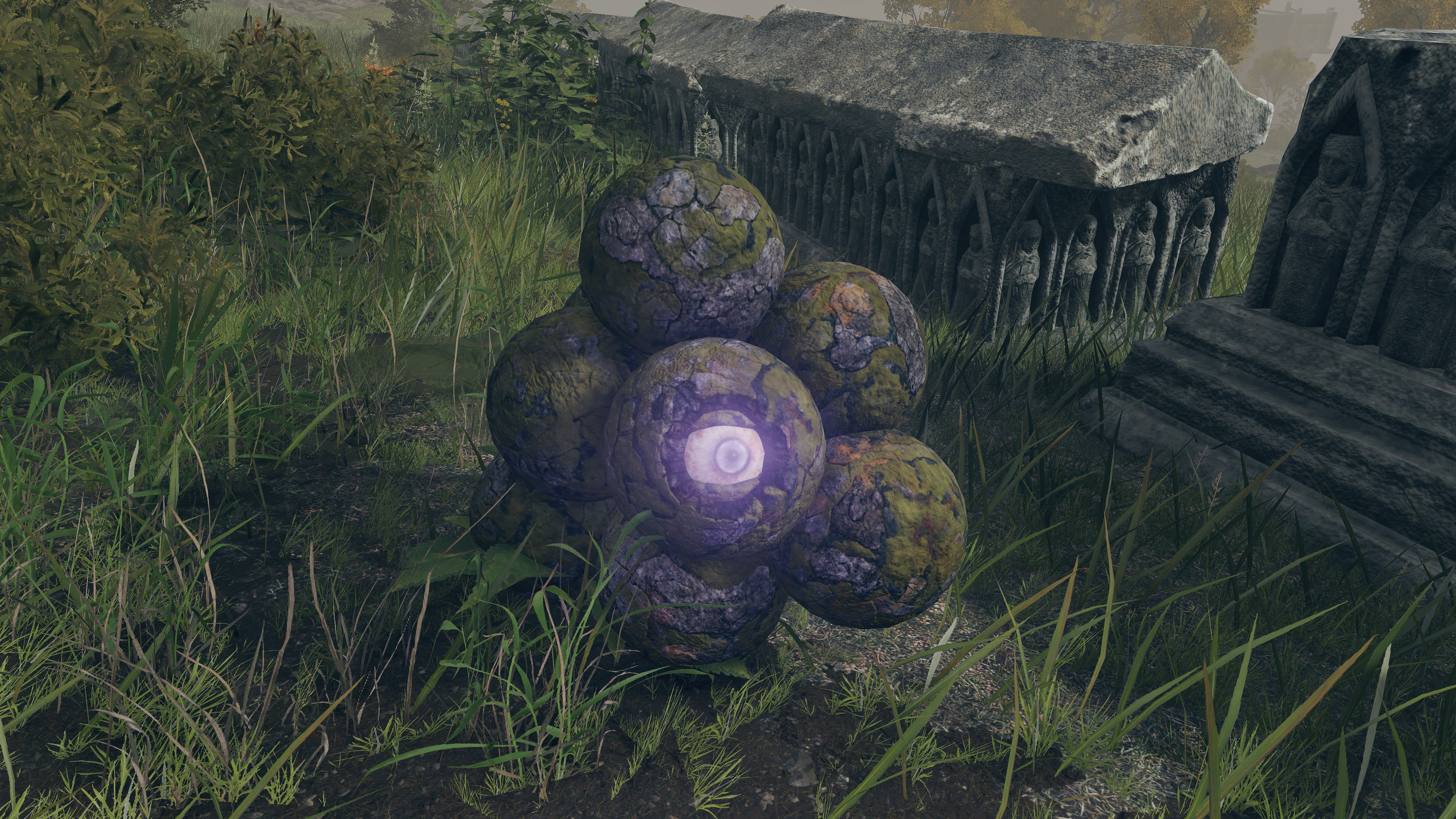
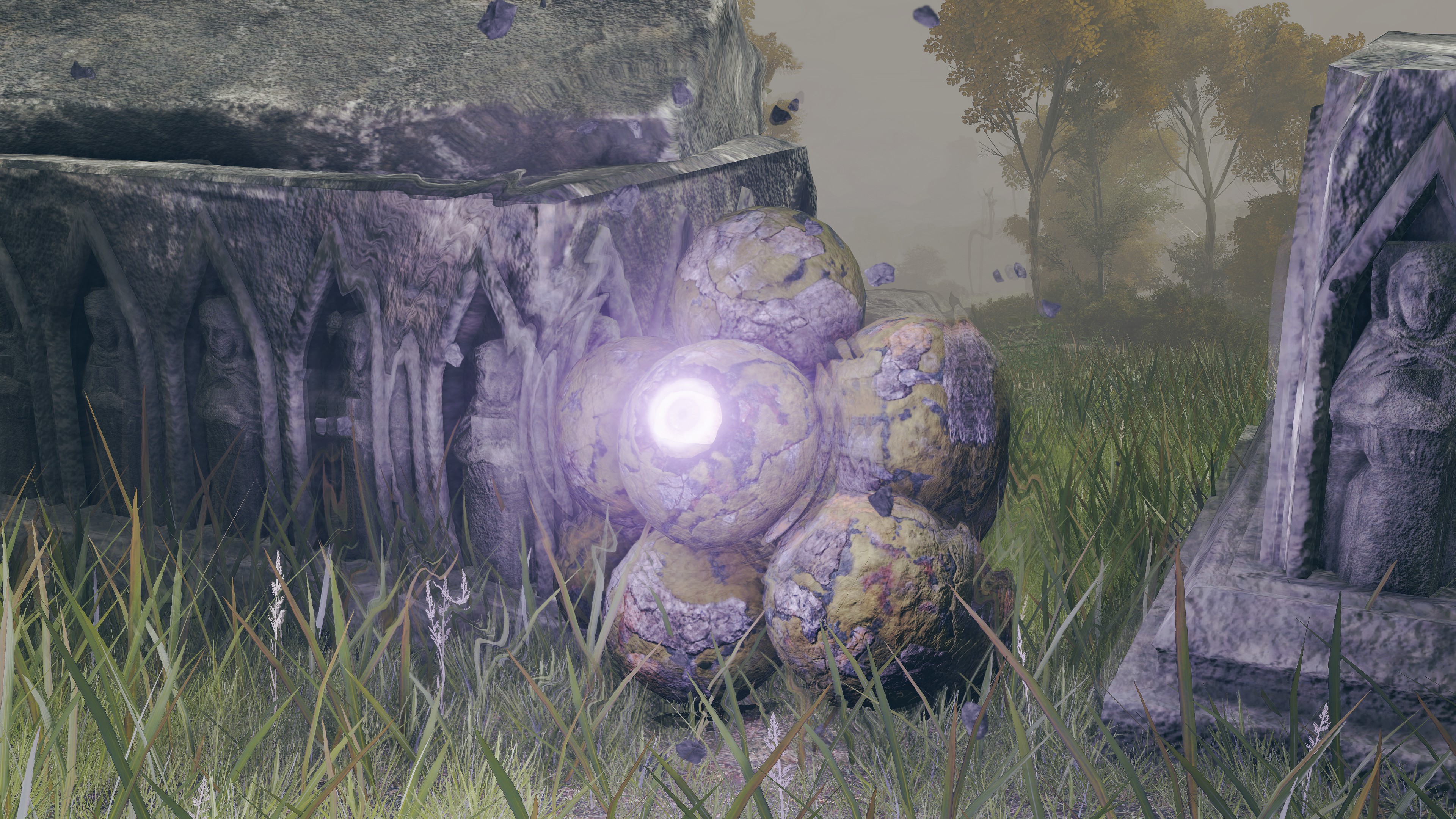
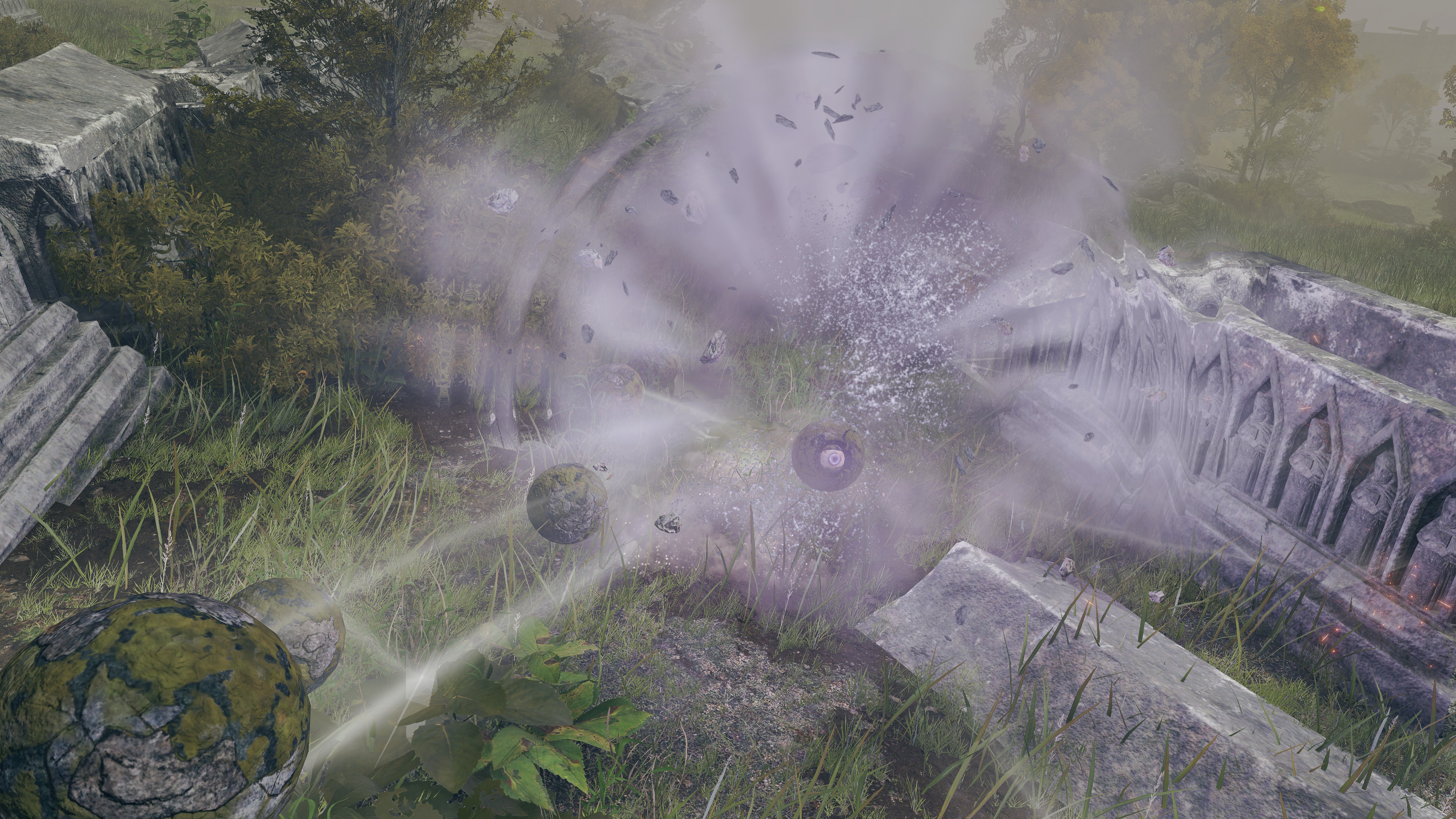
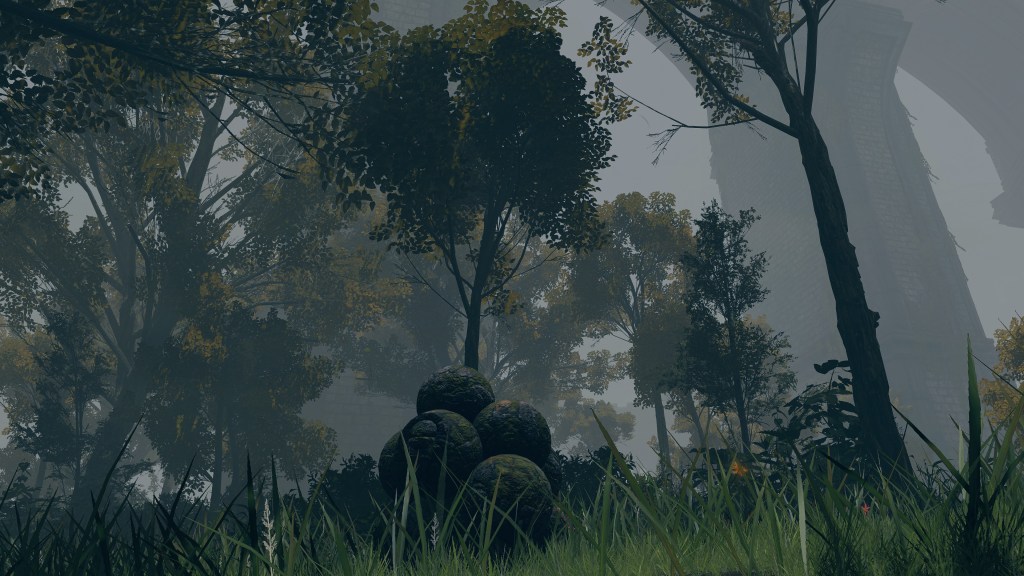
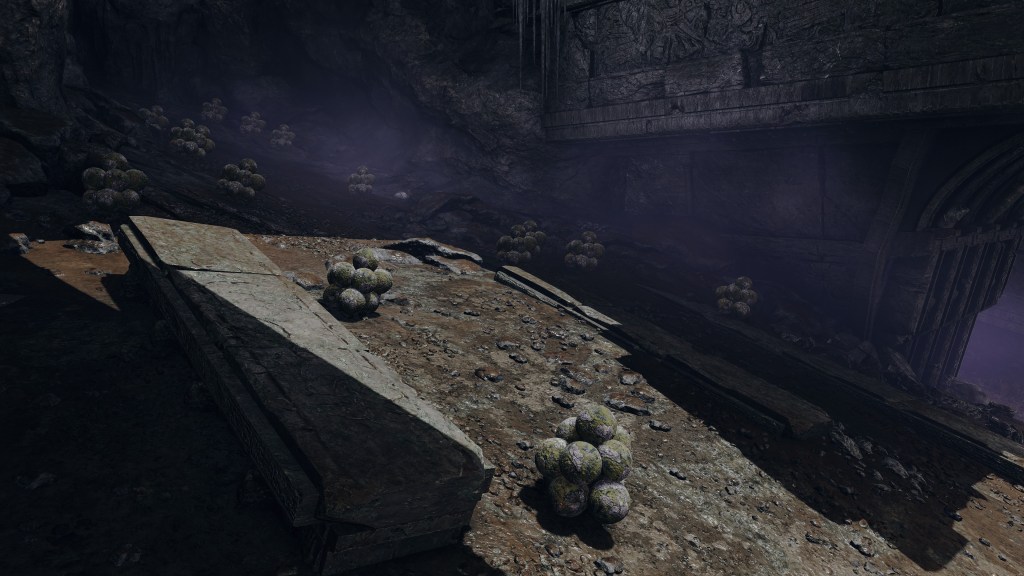
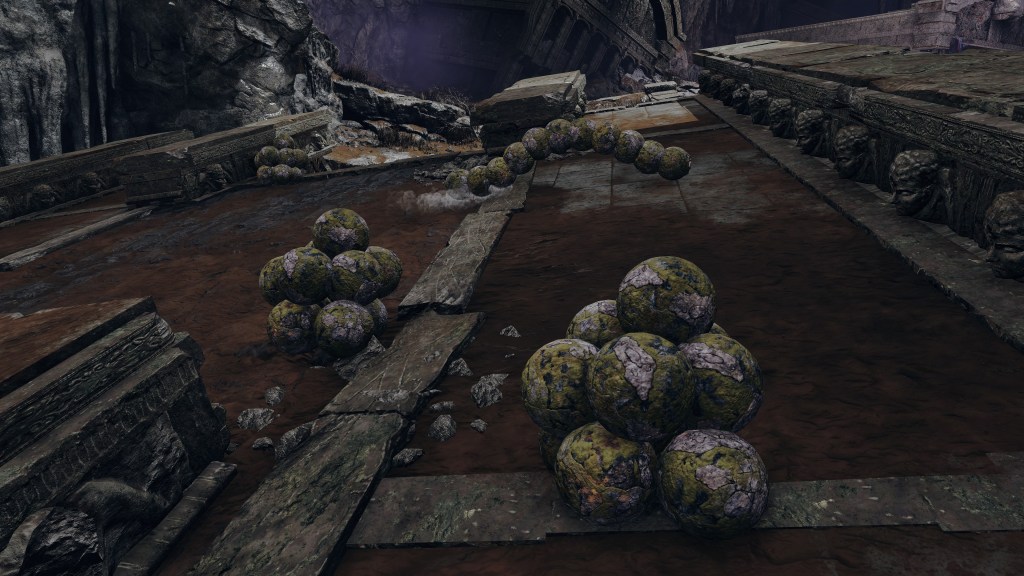
That last function seems especially relevant, since lookout stones can vary in appearance. Most we encounter comprise of standard grey rock covered in green moss, but there are also snow-covered stones in the Mountaintops of the Giants and gold-blotched stones in Altus Plateau and northeastern Caelid. The latter in particular indicates that the stones are made from local rock, or at least incorporate that local material into their construction. Indeed, there is reason to believe that the enemies repair themselves. In numerous instances, we will find the stones clumped into a ball, apparently resting. When approached, the eye opens to monitor, and coming too close causes them to explode. But unlike when the normally passive enemy is provoked, these stones explode, eye sphere and all, and do not reform afterward; they seem to just self-destruct. Moreover, we never encounter these “landmine” stones around evergaols. In short, the enemy is away from duty, in a position so vulnerable that it reflexively attacks, and prioritizes eliminating the possible threat over survival. Why, unless it is undergoing self-repair?
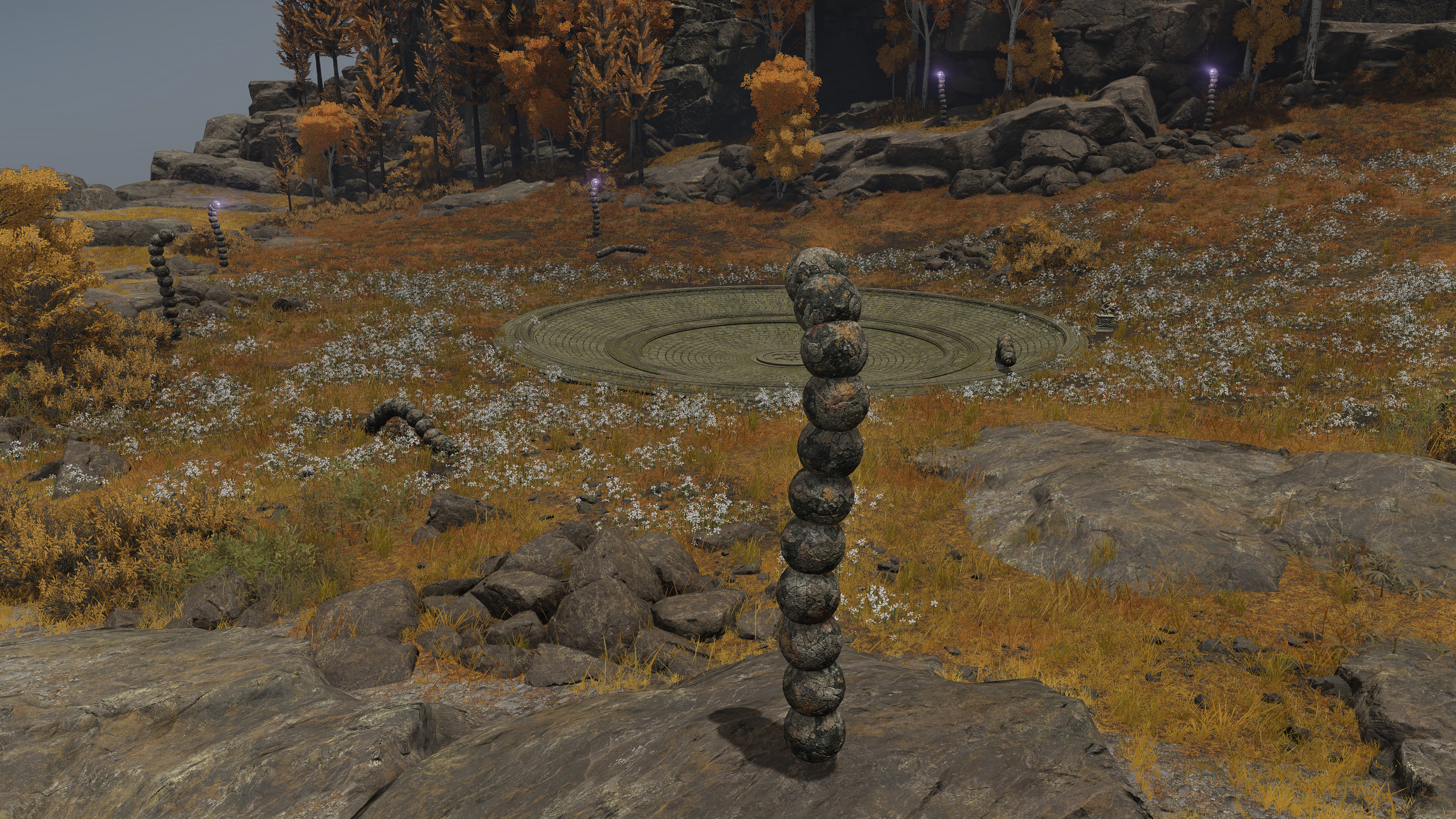
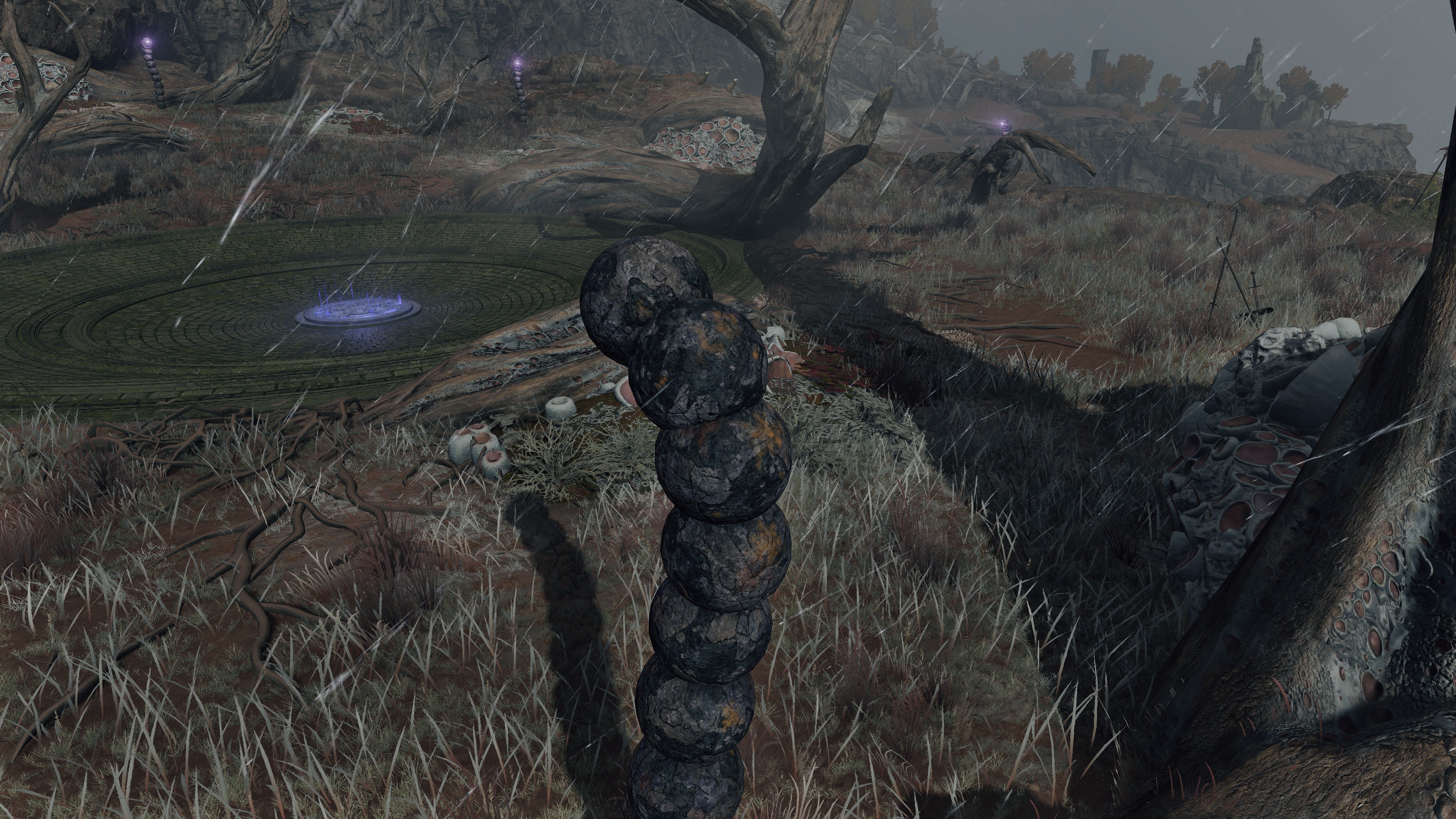
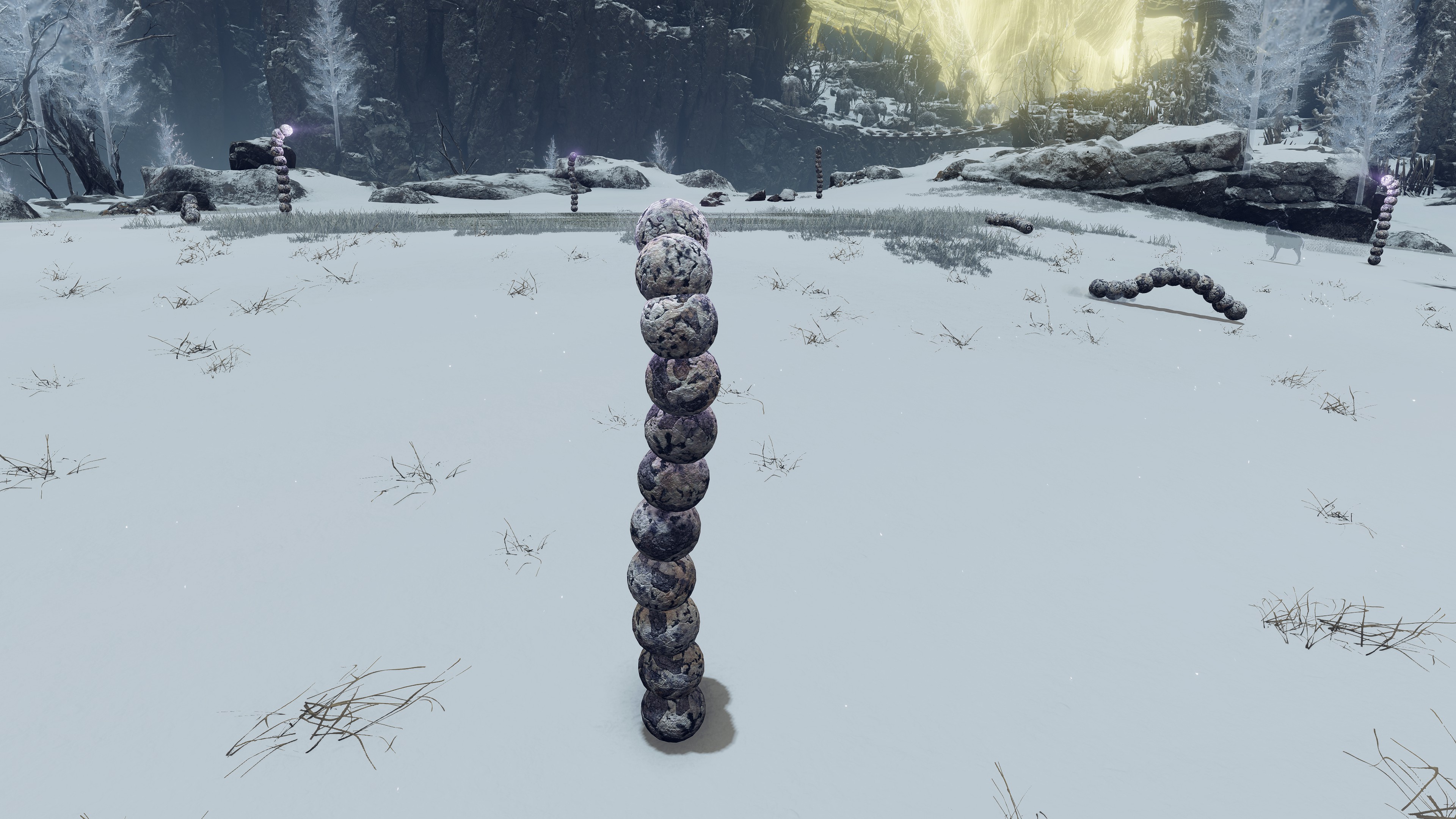
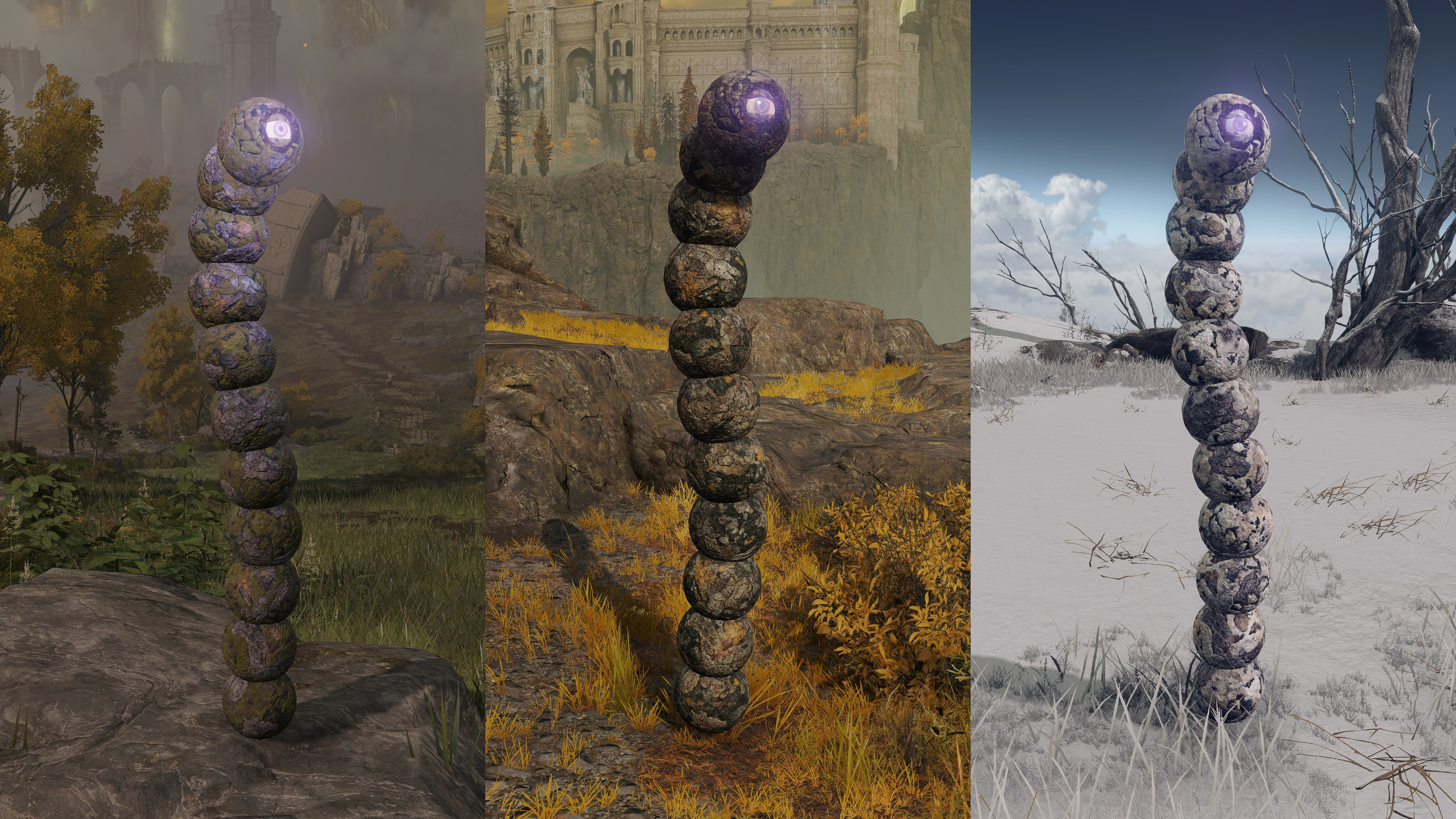
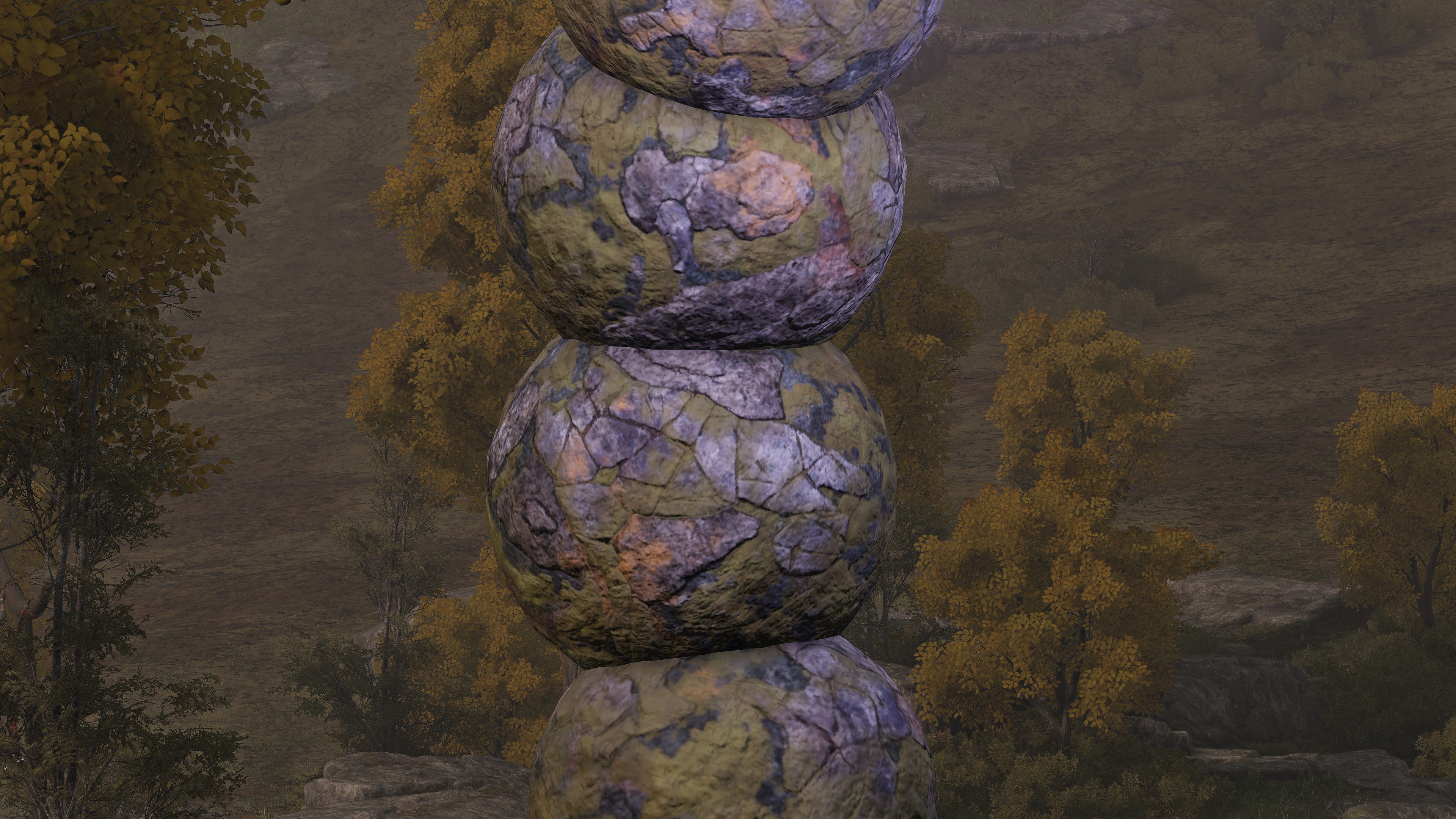
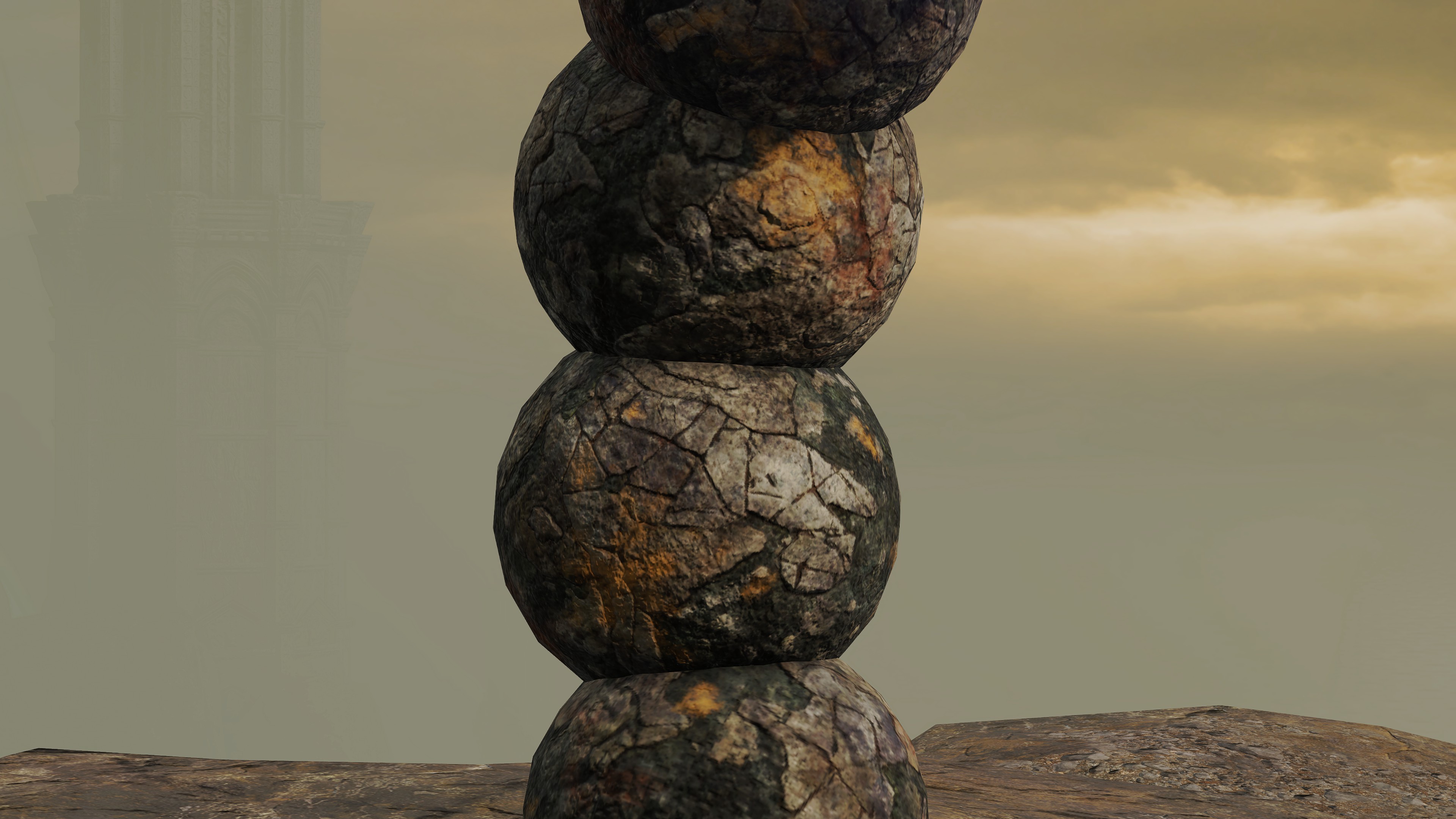
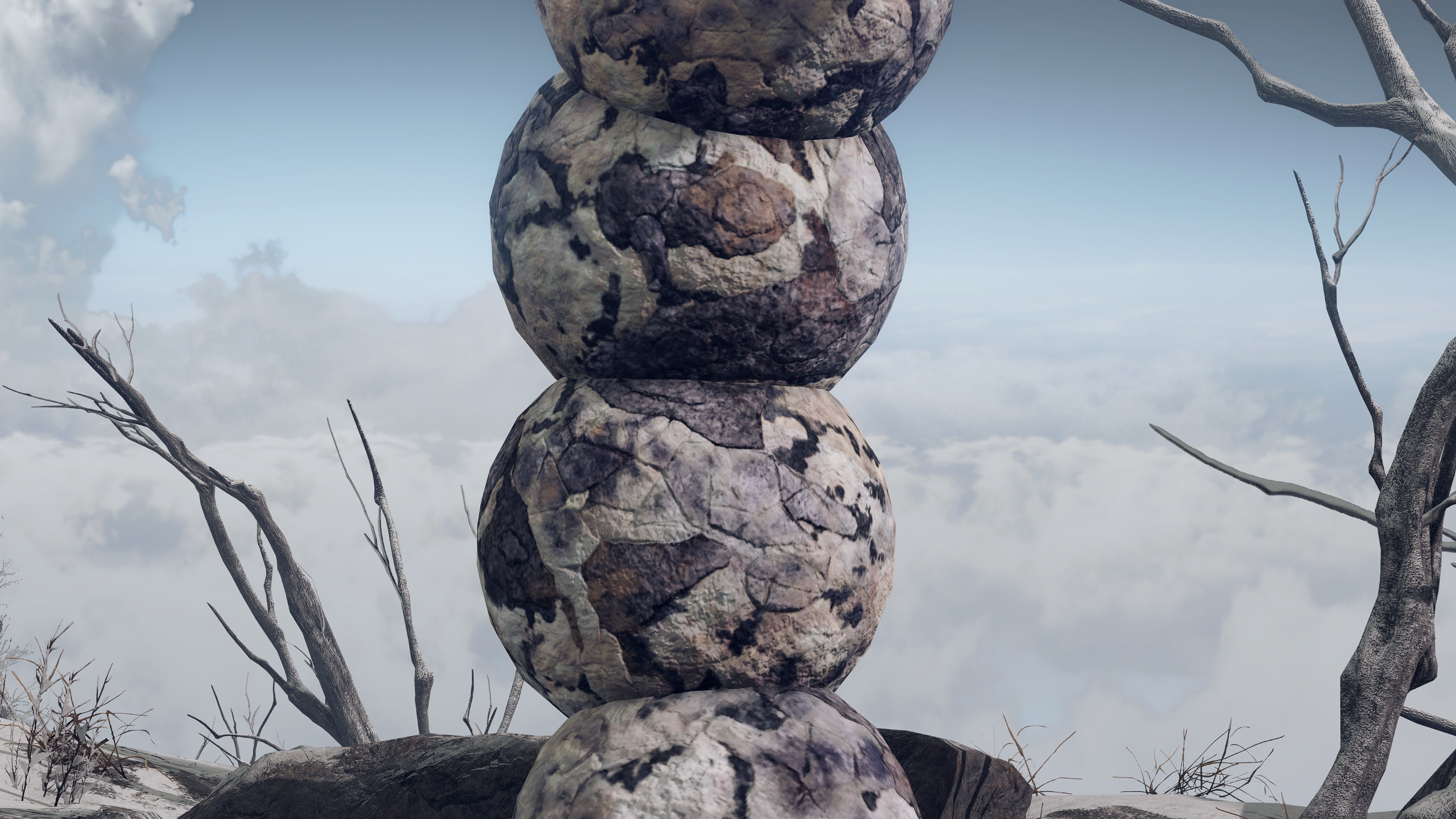
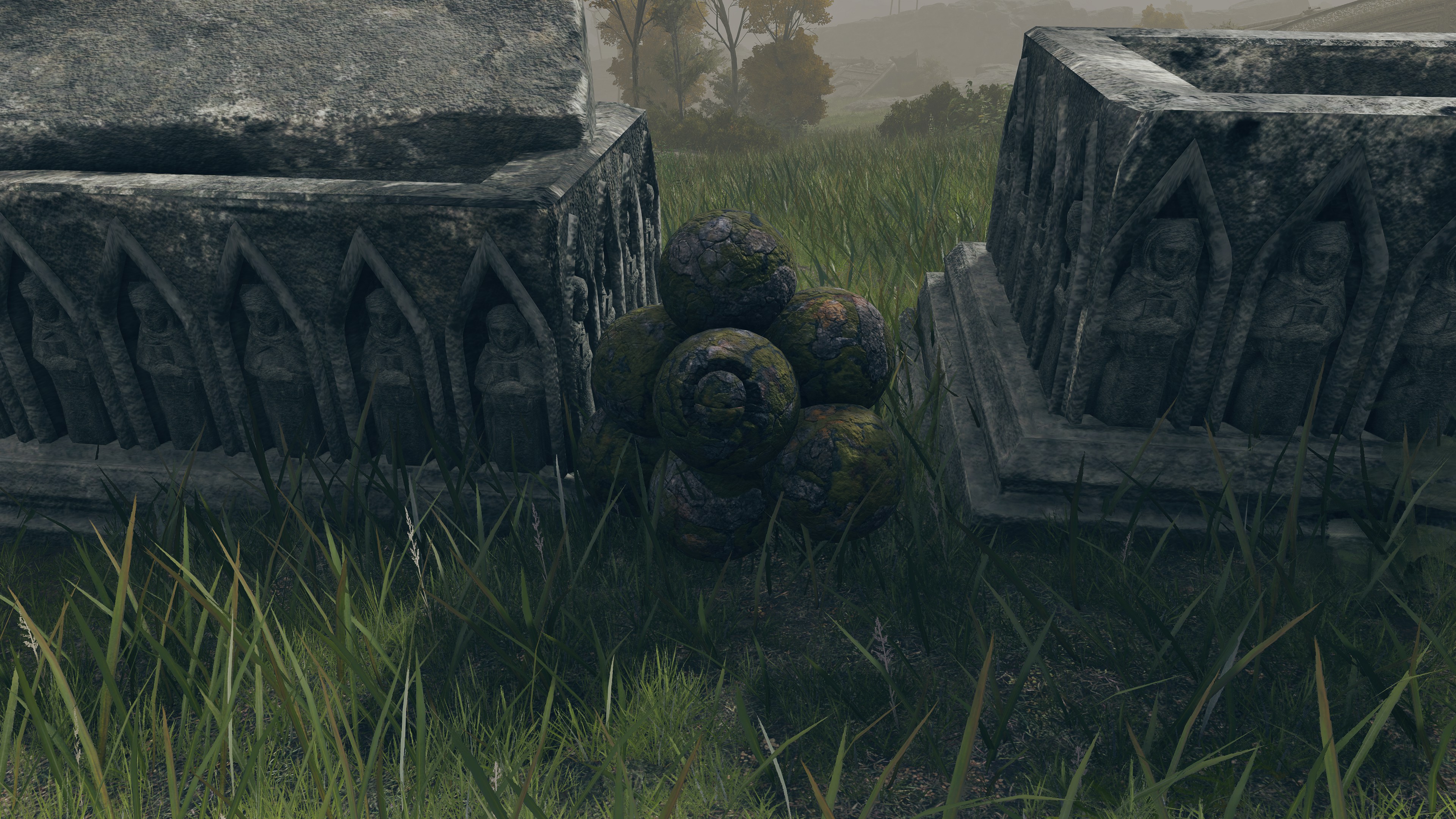
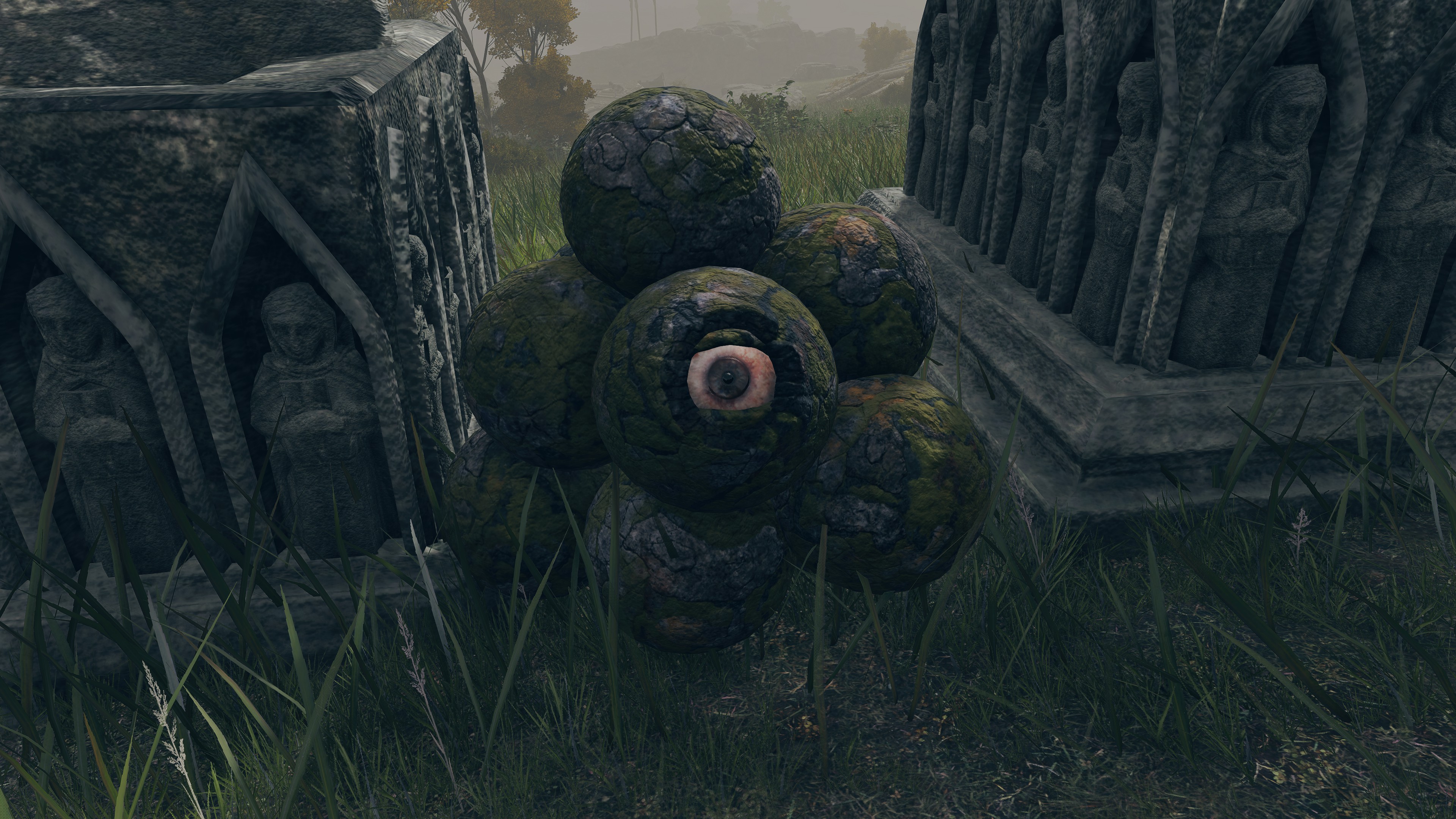
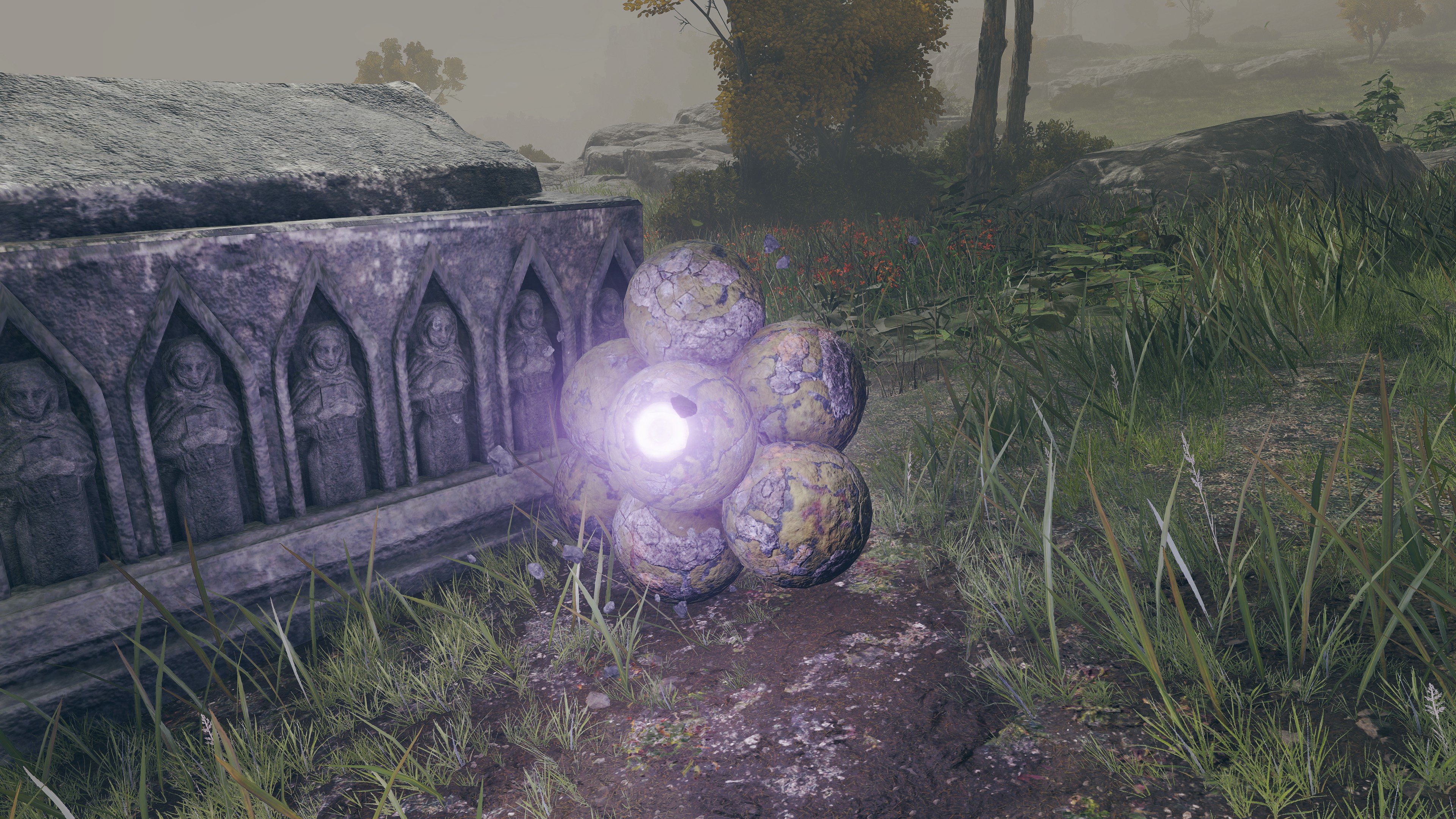
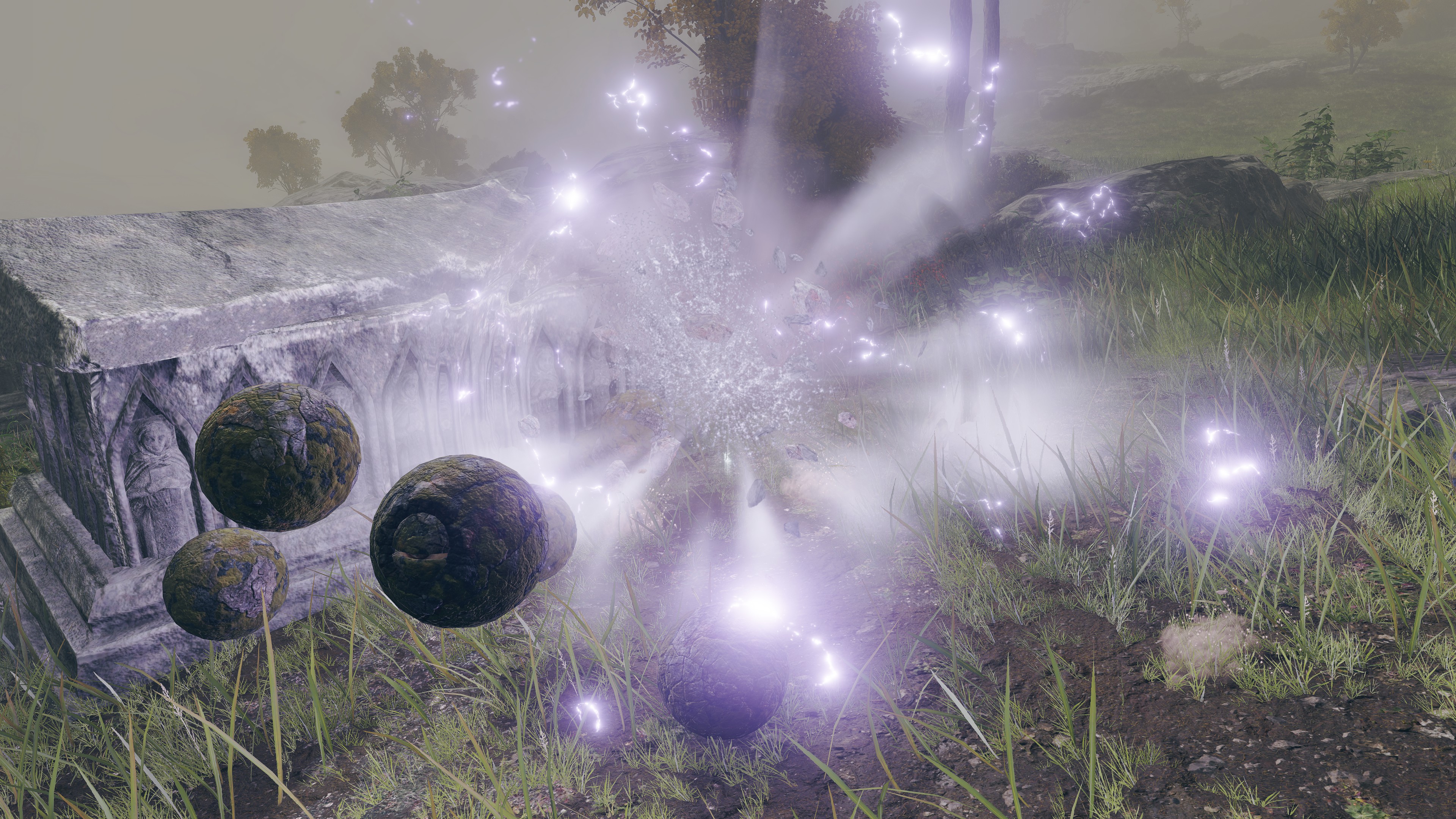
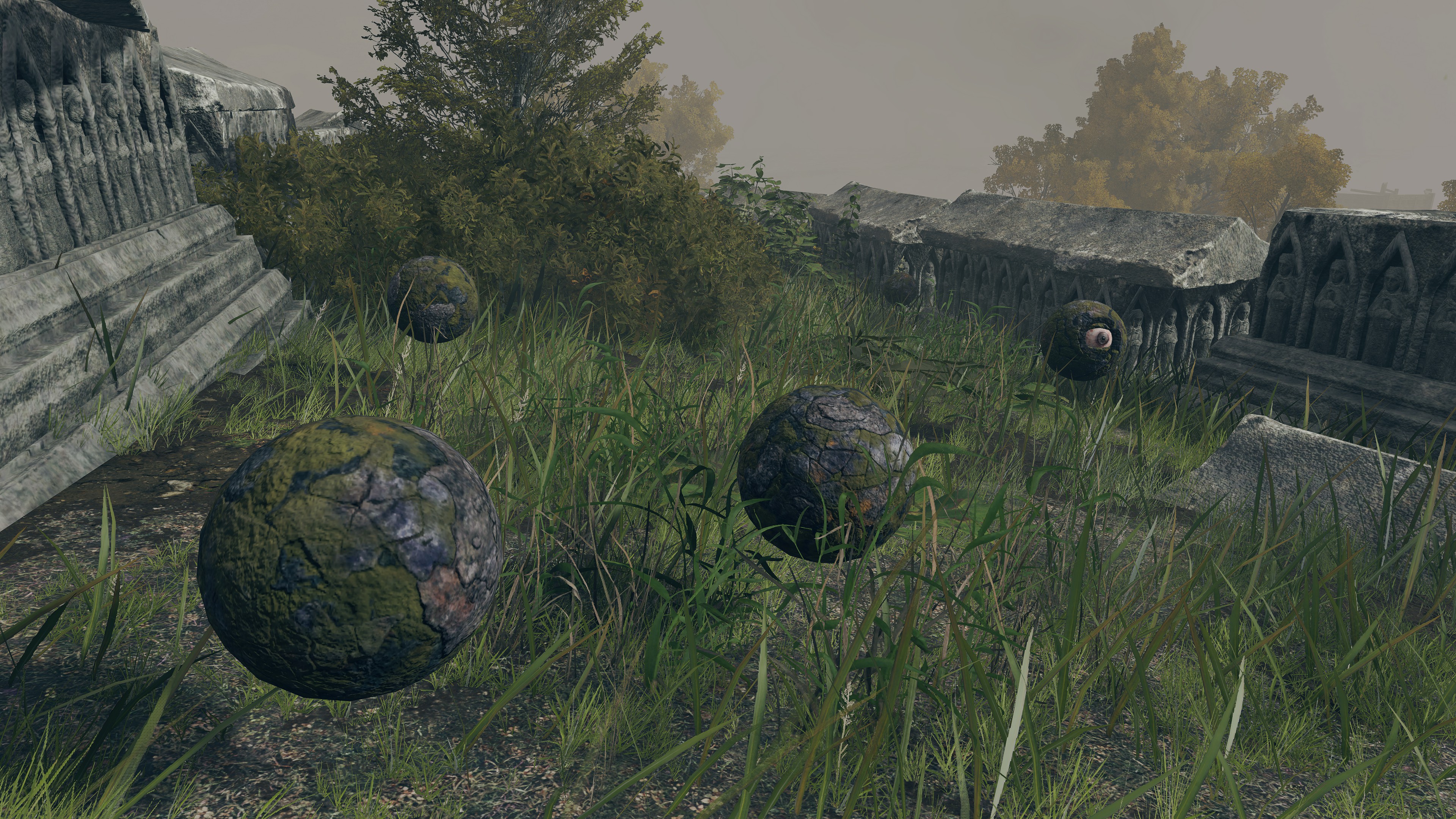
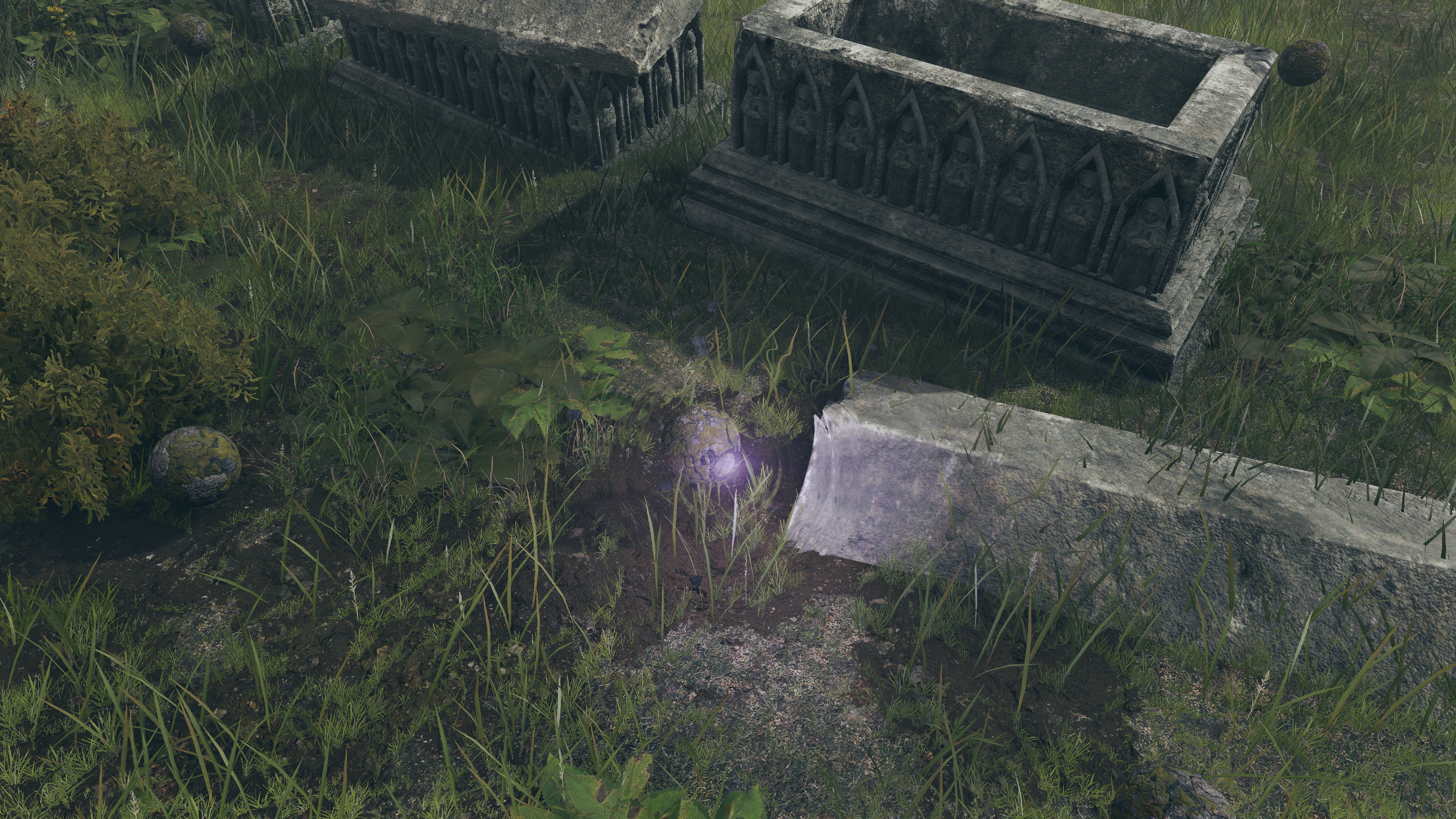
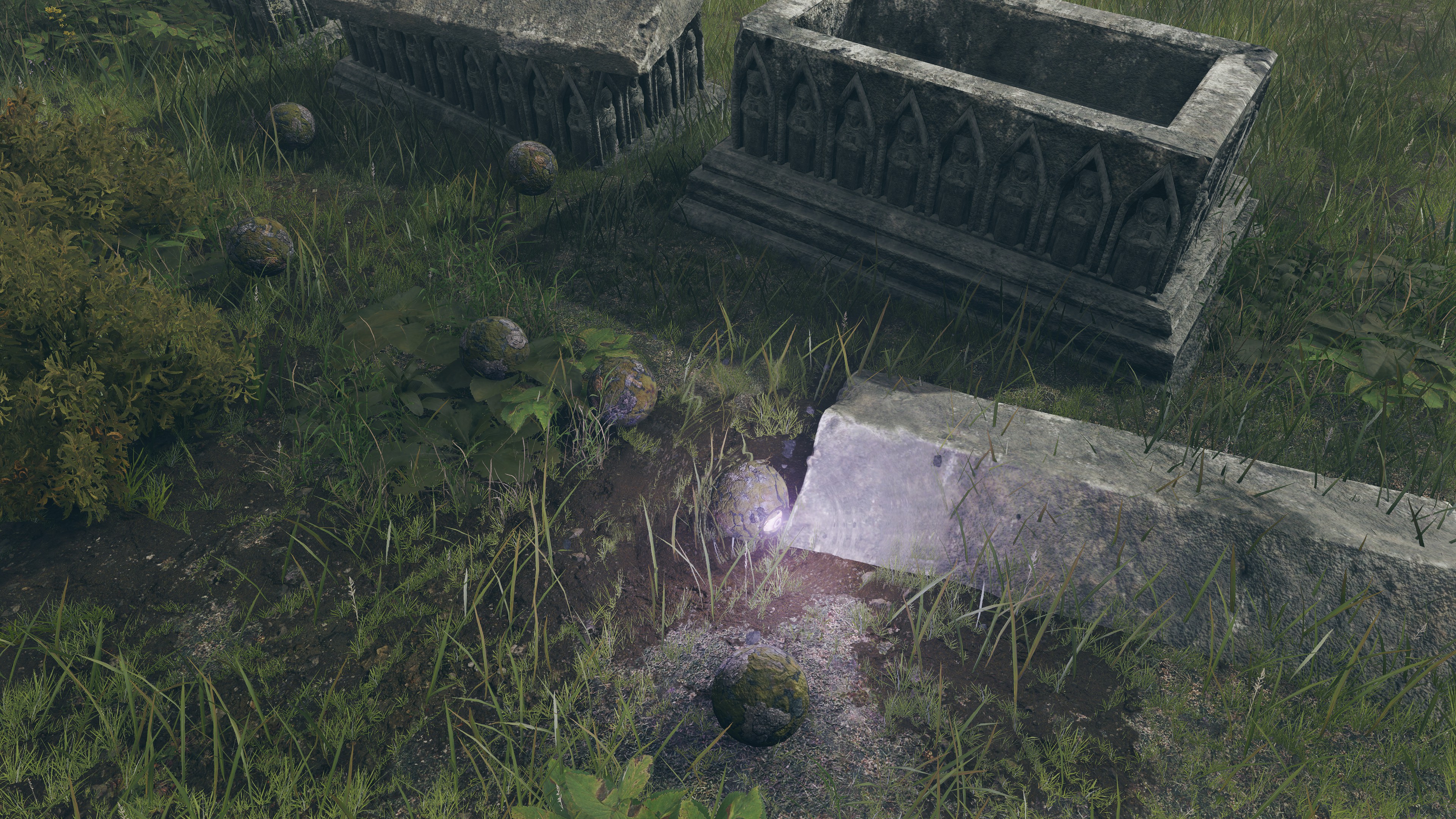
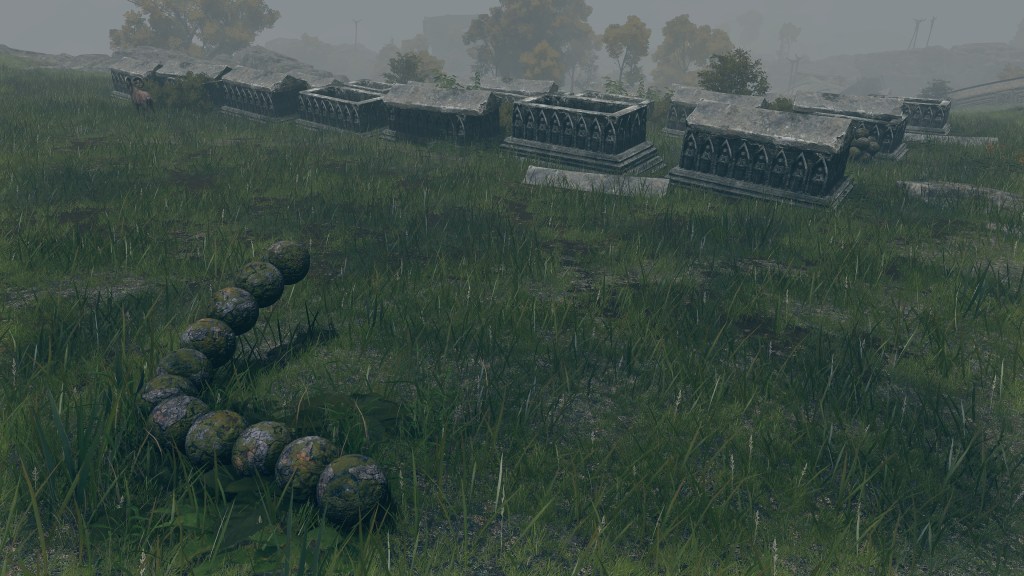
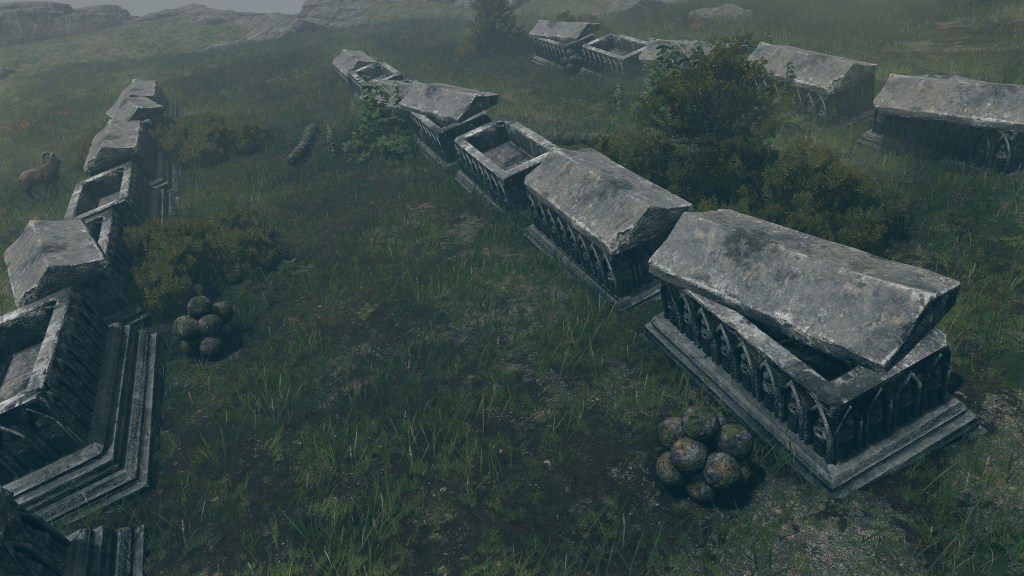
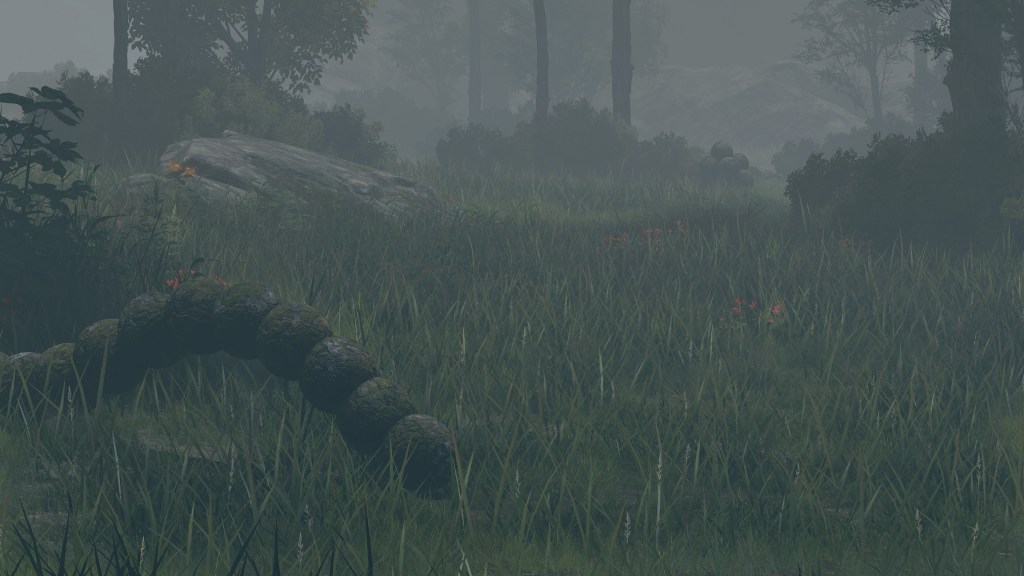
Put simply, the lookout stones are likely designed to act completely autonomous, restoring their function without human input. When damaged, the golem is supposed to slink off and fix itself. If an anomaly occurs during the process, then it is reliably already dead in that situation and so programmed to take the threat down with it and potentially save others. As to where they go for repairs, their locations indicate that it is always some place with easy access to small stones which they can use to replace the damaged parts. One example is the coffin cemetery on Stormhill, the old sarcophagi feasibly eroded by the constant buffet of winds in the open field. A few more stones squirm or repair themselves further north in the forest approaching the rubble at the foot of the greatbridge to Limgrave’s Divine Tower. Then there is the Sealed Tunnel, the miners tearing up plenty of stone before the strange “worms” crawled in and drove them out. All three of these examples illustrate a straightforward pattern seeking after the most easily accessible source of small rock.
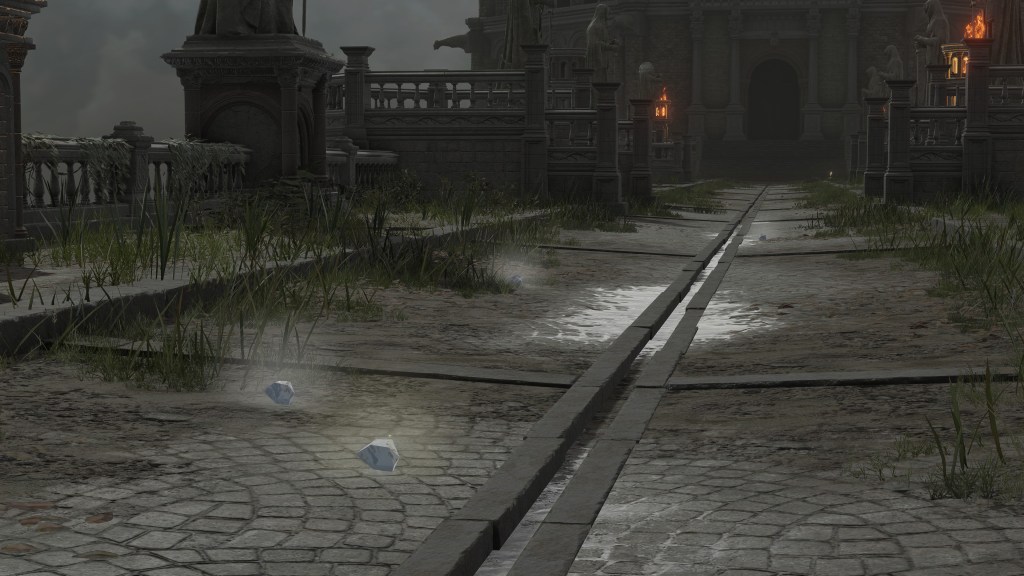
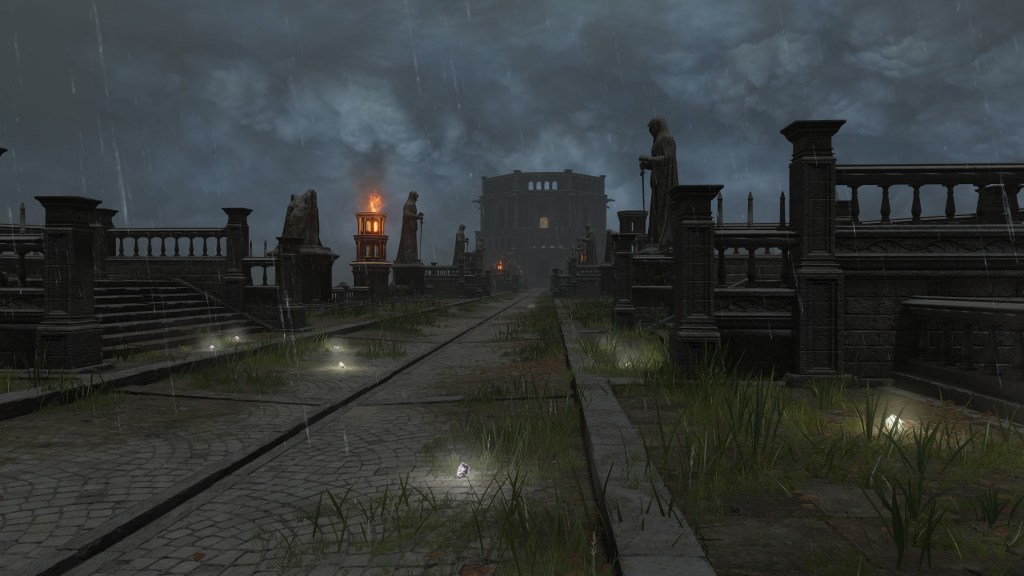
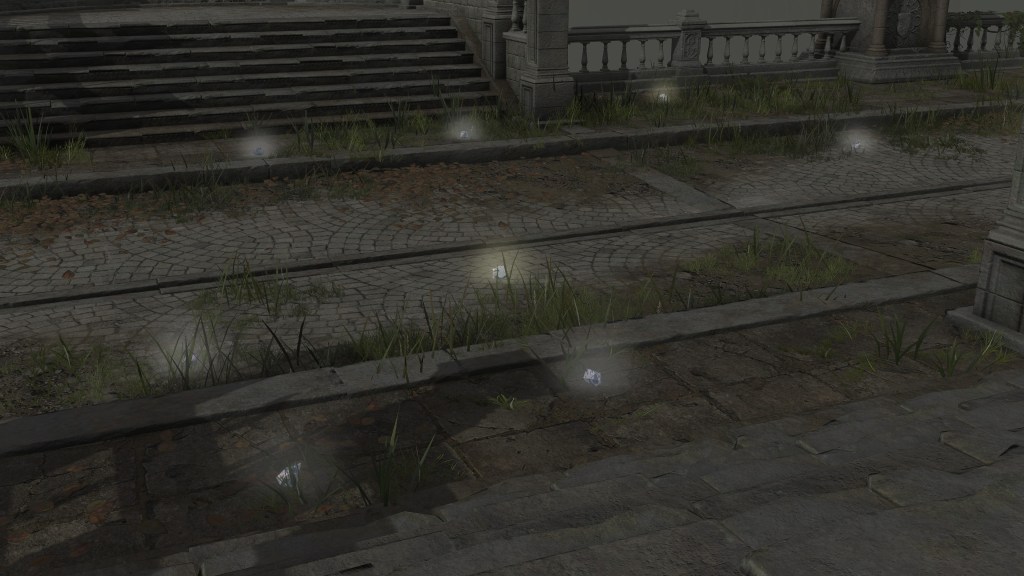
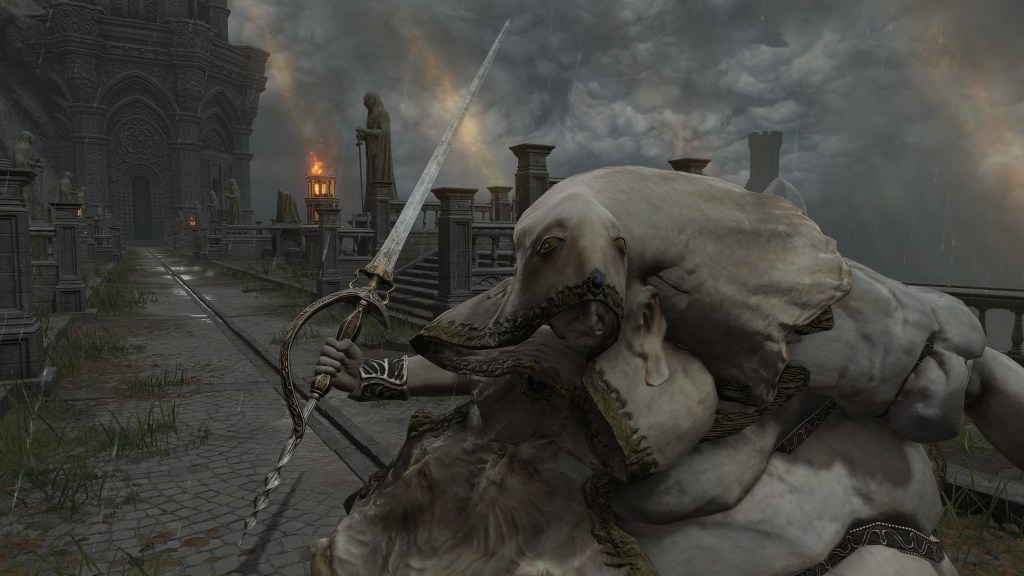
Granted, the lookout stones might aim for quality as much as quantity. Crossing the bridge to Liurnia’s Divine Tower, we pass a string of ruin fragments and the occasional sanctuary stone, culminating in small concentration of them nearing the tower. There are no crumbling ruins of Farum Azula in the immediate area to justify the litter, and the only enemy to be found up there is the Godskin Noble, warping in at the end of this trail of stones. It is feasible for him to have left them, but why? The answer comes from the fact that these shards of ruins universally drop from the lookout stones. If light-imbued rock is their core material, then they can have feasibly crawled up onto the bridge, where they were then dispatched by the visiting apostle one-by-one up until the bunch clustering beneath the tower. The reason for taking up lookout by the tower is thus probably the same as the noble: to reach the petrified corpse of Ranni, though the stones may be more interested in the demigod herself than the Cursemark on her person. In short, they will go out of their way if they detect quality stone for repairs.
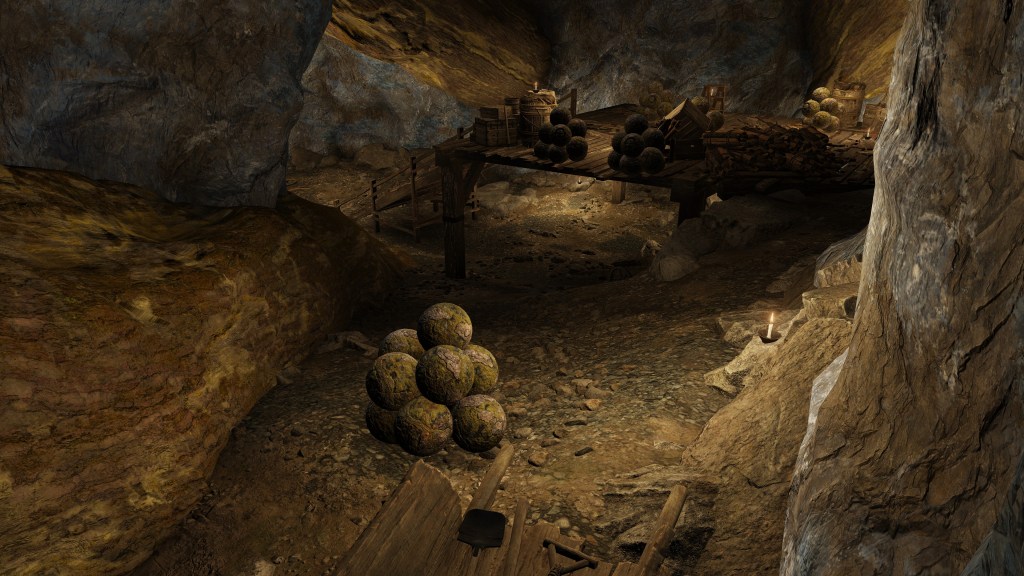
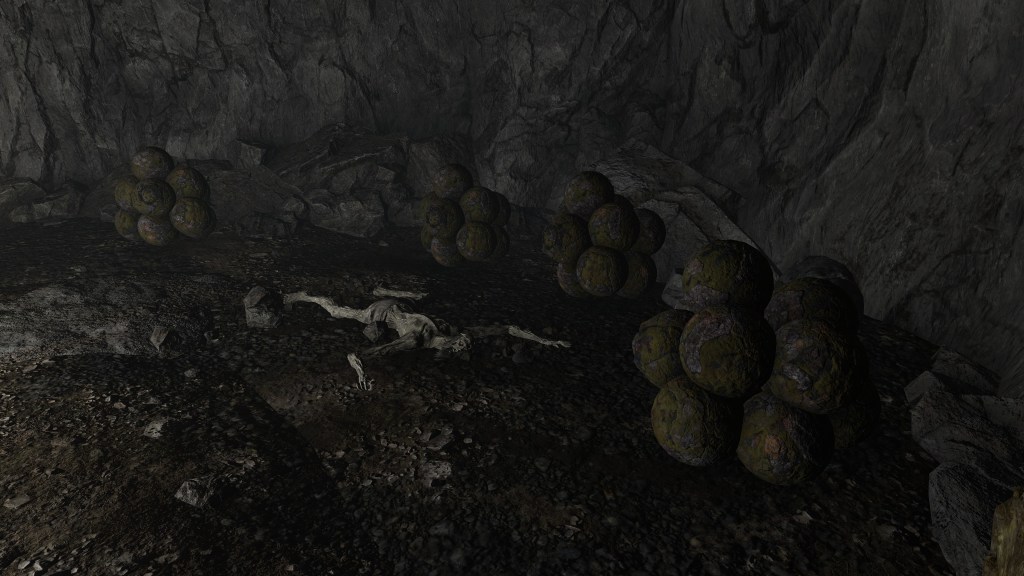
The clusters searching the Siofra Deep Well valley in Caelid exhibit similar behavior. There are two groups, both situated directly beneath where land bridges one connected the two sides of the ravine — more specifically, connecting Greyoll’s Dragonbarrow and the Abandoned Cave to the rest of Caelid. Searching for rubble from the collapse is to be expected, but the Dragonbarrow cluster stand out for possessing volcanic stones. The enemies are nowhere near Mt. Gelmir or any other source of lava, so we can only assume that the fiery stones belong to members of Volcano Manor, whose presence is confirmed above the Cave cluster. Evidently, the party suffered the misfortune of crossing into Dragonbarrow when the bridge collapsed under them, tumbling to their deaths and leaving rocks for the lookout stones to collect. The reason for the collapse doesn’t appear to be a sudden growth spurt by the Scarlet Blossom roots, like at Abandoned Cave, however. Instead, there is a curious assembly of gravel stone at the foot of the first stone golem guarding the Caelid Colosseum past the Dragonbarrow cluster.
Taken altogether, the land bridge broke because of a dragon. One of Greyoll’s brood might easily stray toward wider Caelid, a fact emphasized by the runebear roaming the valley bottom. Between the wyvern’s weight and a clash with the manor party, the rock overhang’s collapse was guaranteed. And once both sides tumbled into the ravine, the beast would be in a panic to escape its tight confines, rushing out to more open air — and right into the sights of the golem archer. The party was dead, the dragon was killed, and the golems continued performing their functions undisturbed. It is also possible that a clash had nothing to do with the land bridge collapsing and the volcanic stones from that cluster of lookouts is a mistake; FromSoftware mixing them up with the group under Abandoned Cave, to reinforce the manor’s presence in the area. It wouldn’t be the first developer oversight for this enemy, as the green moss model is uses for all the landmine types regardless of area — including Altus Plateau. Either way, the lookouts clearly take interest in the foreign rock leftover for them.
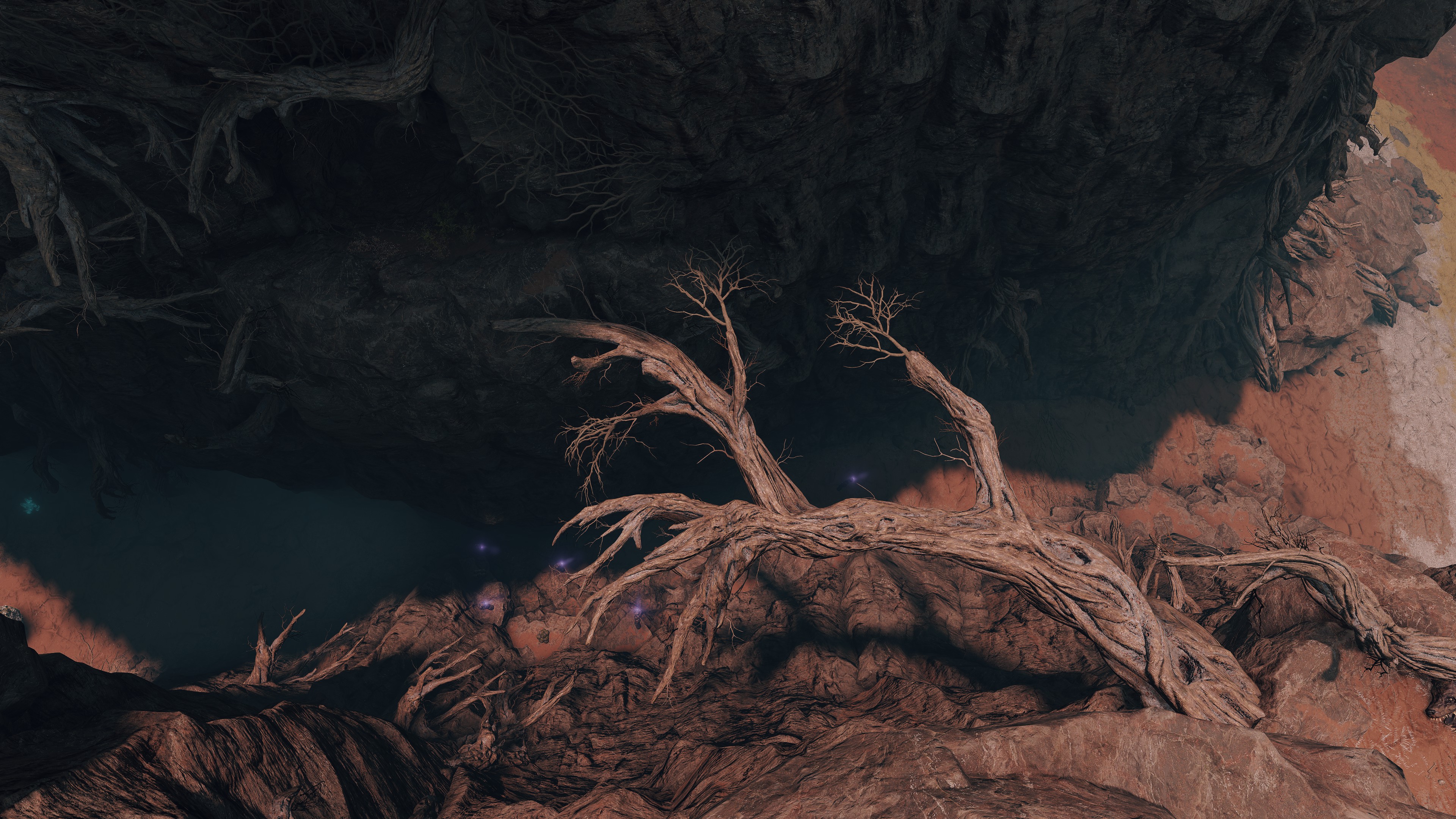
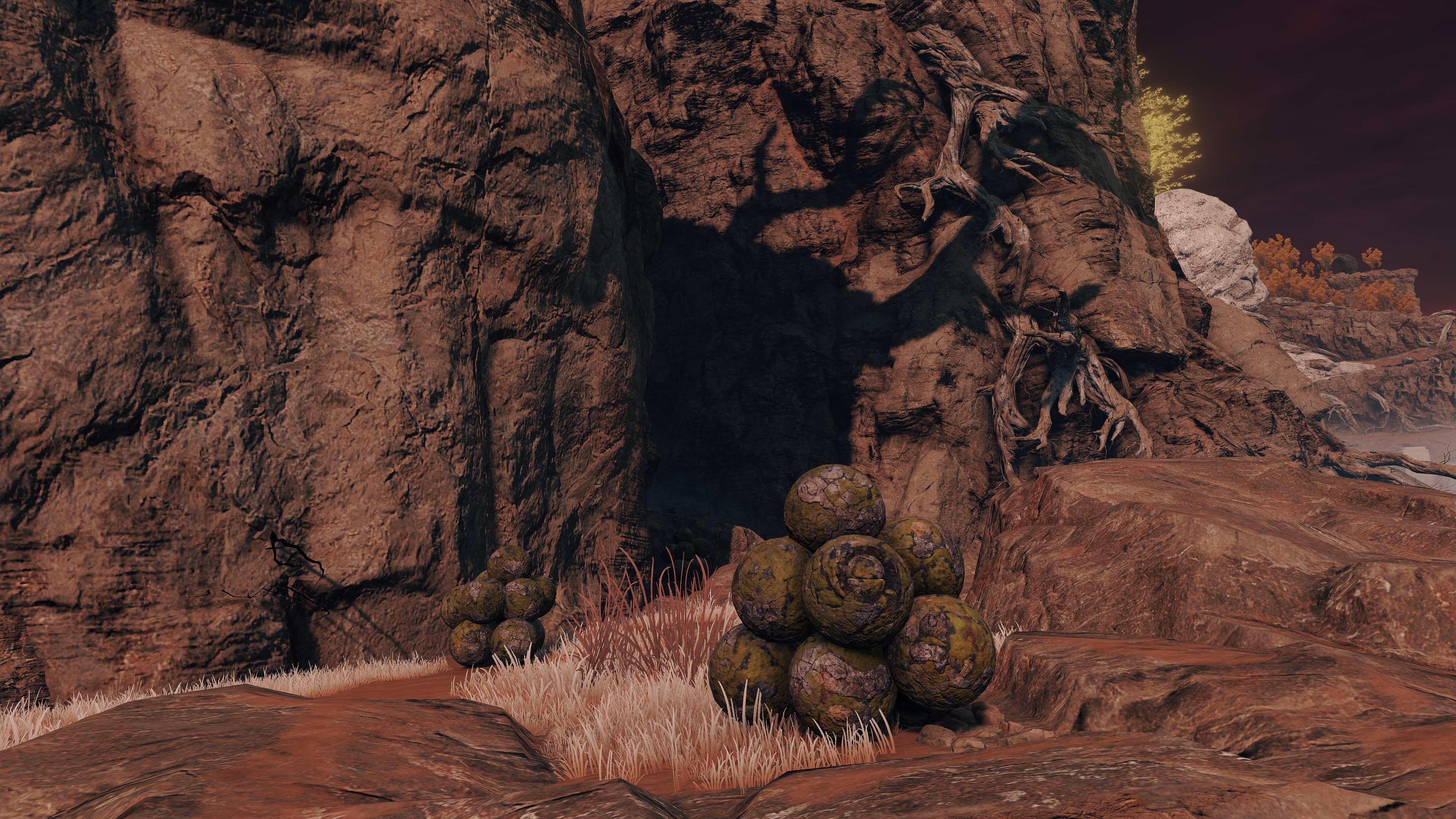
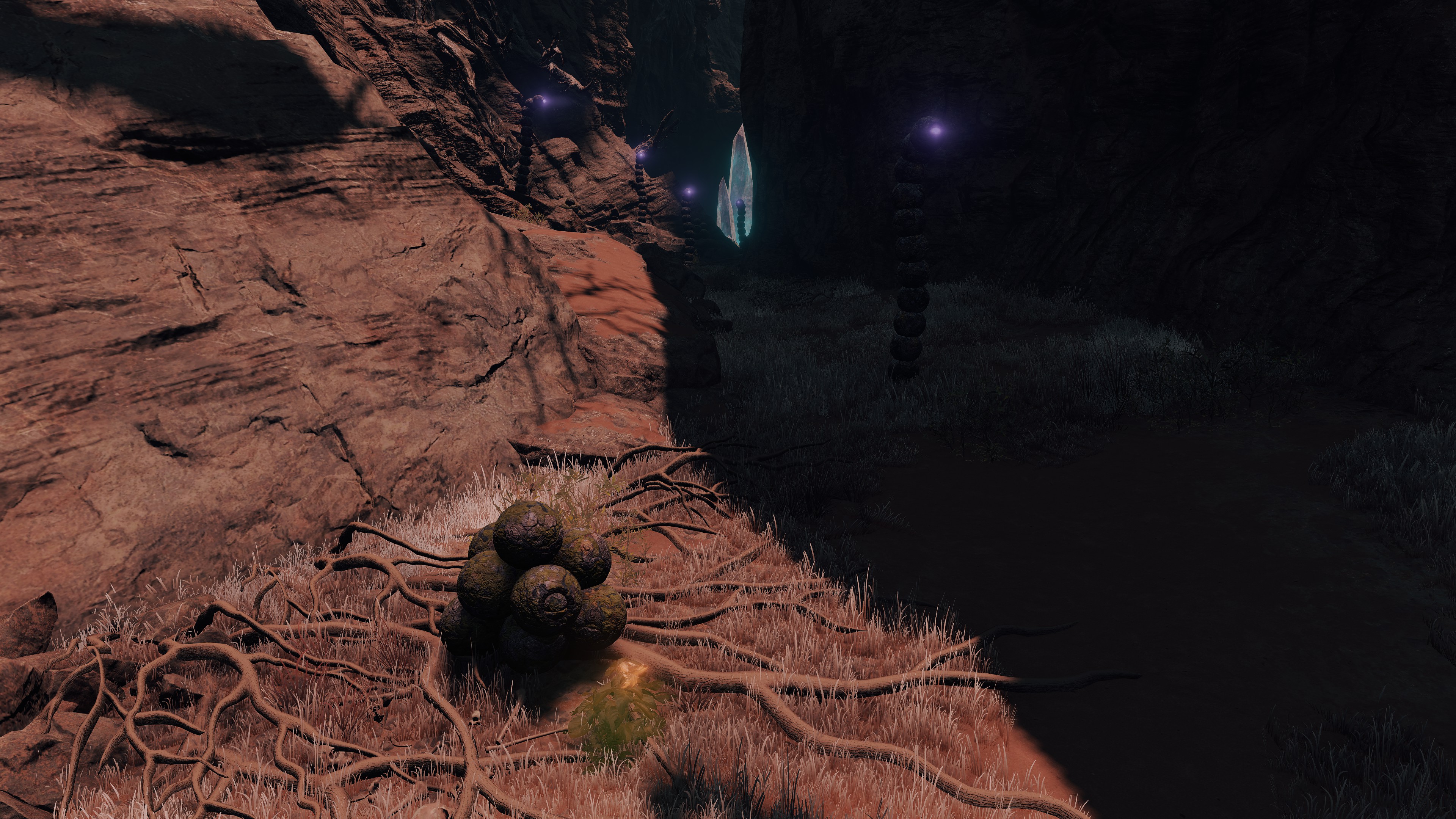
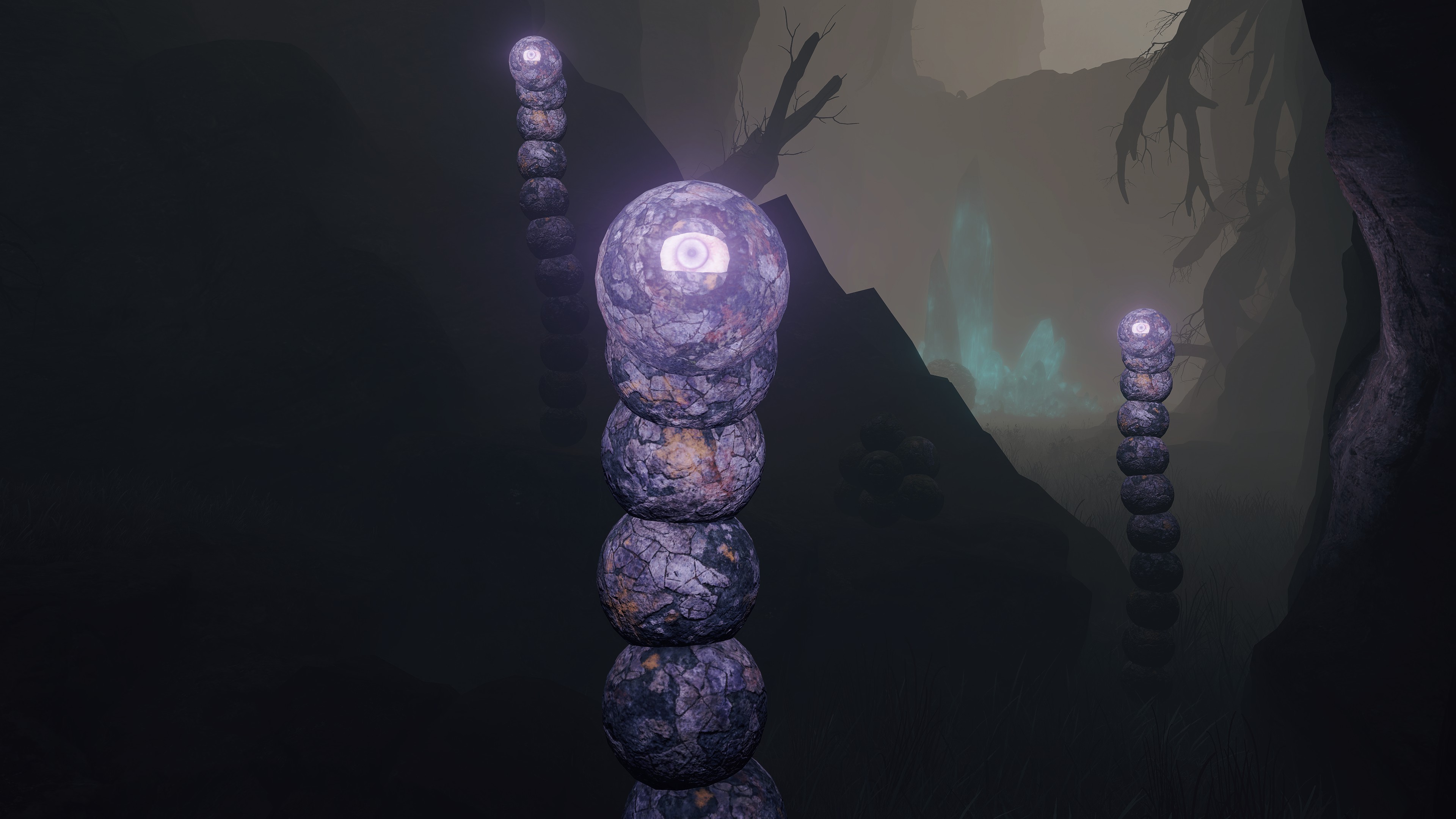
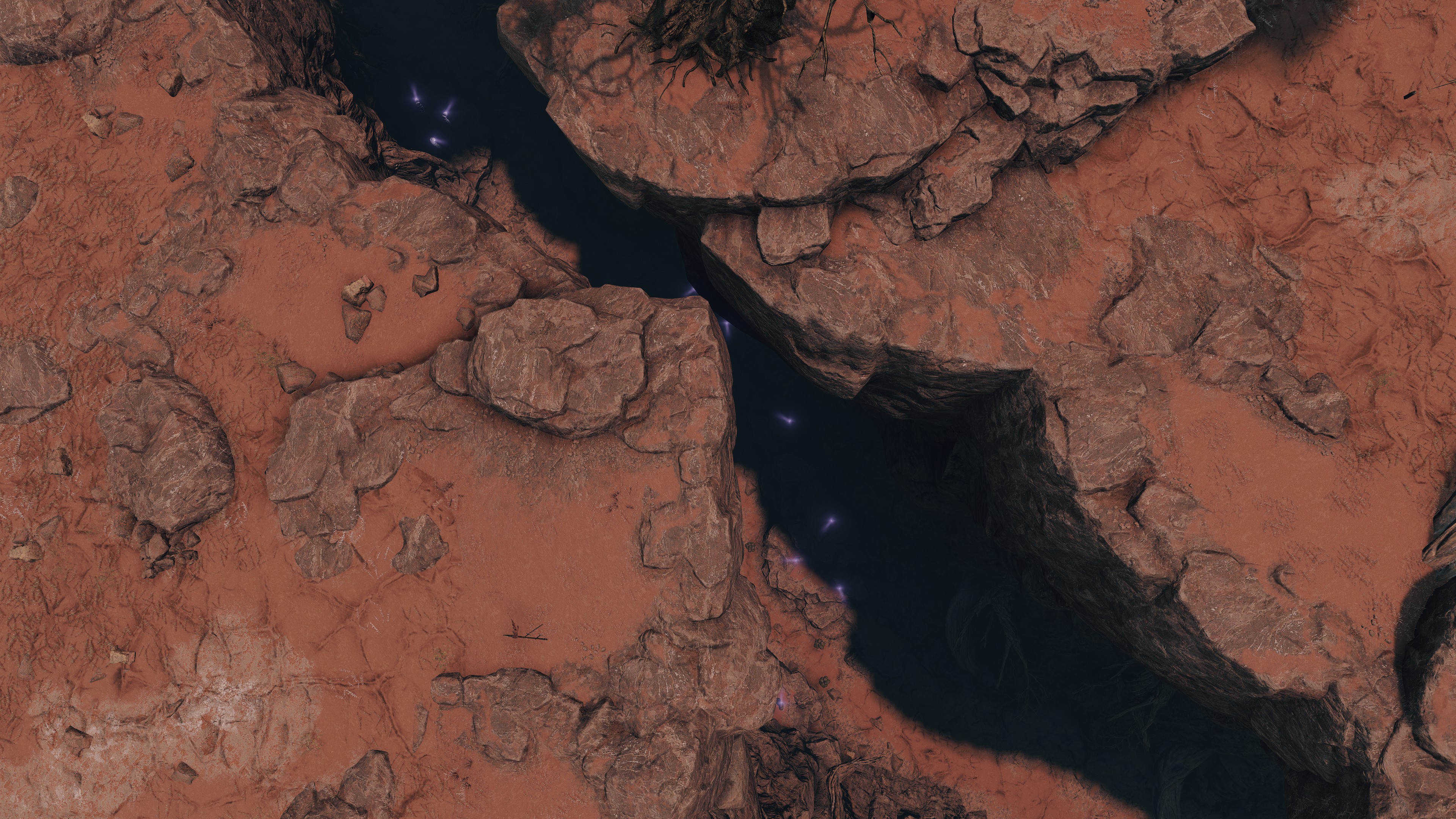
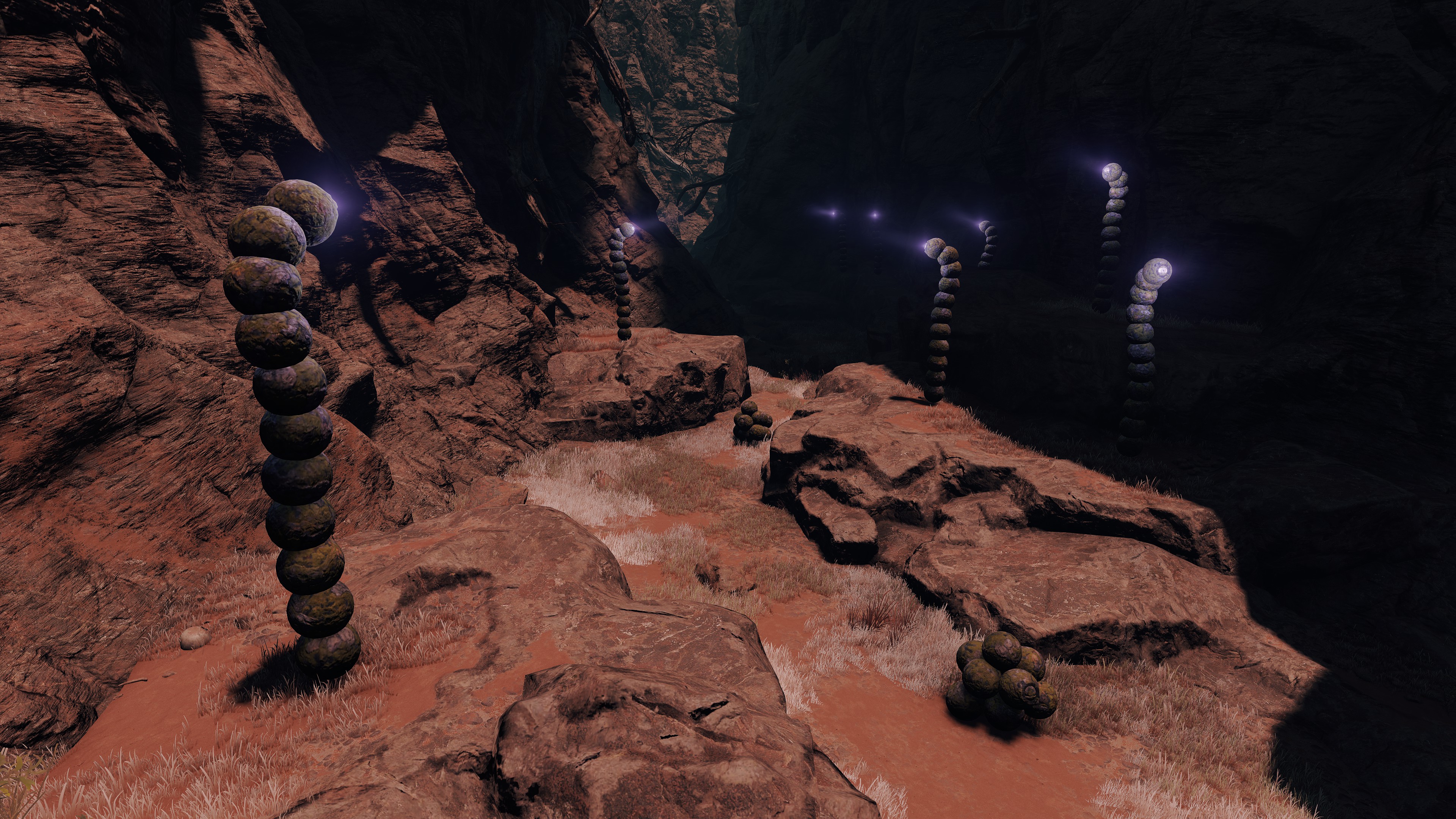
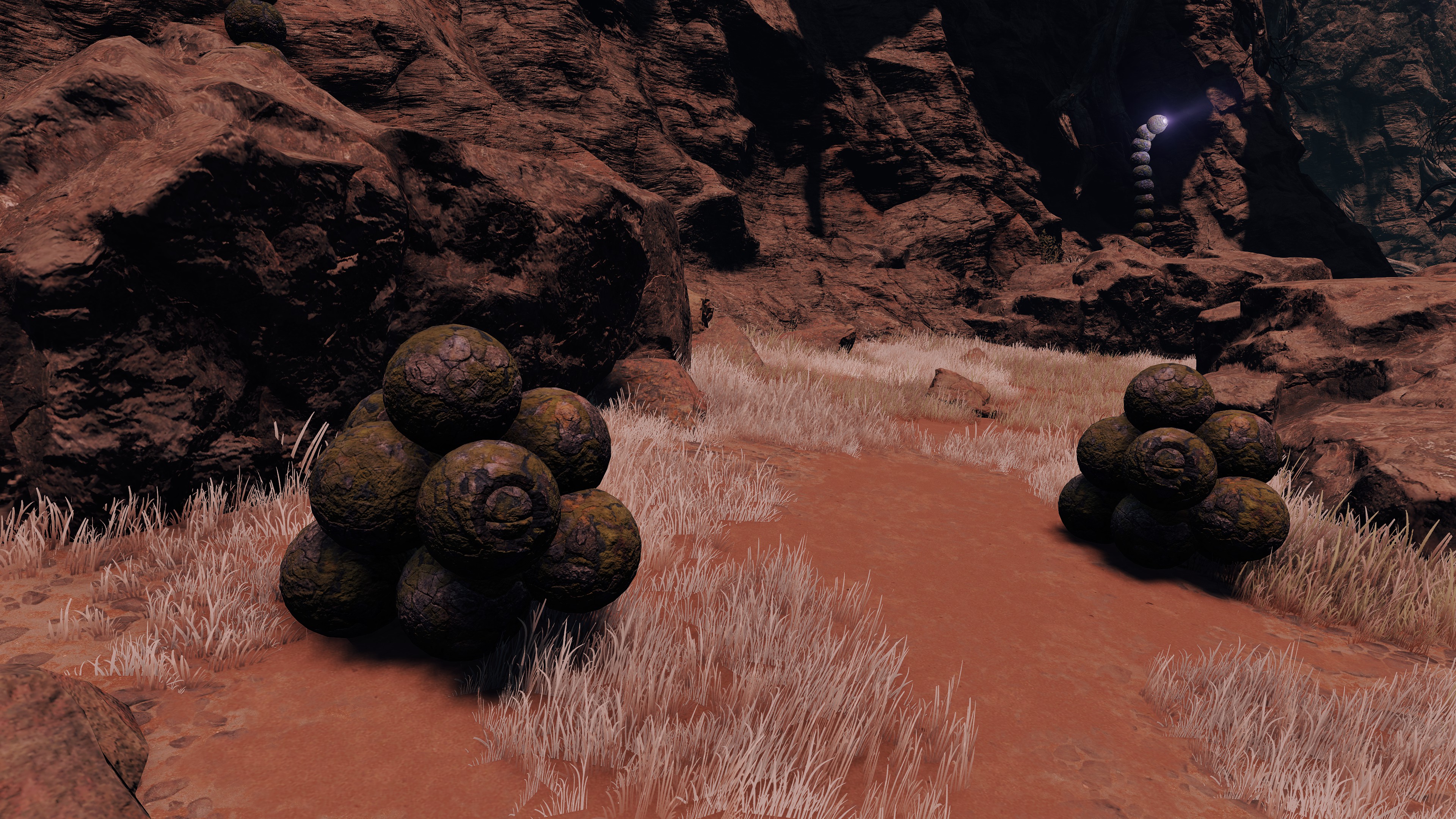
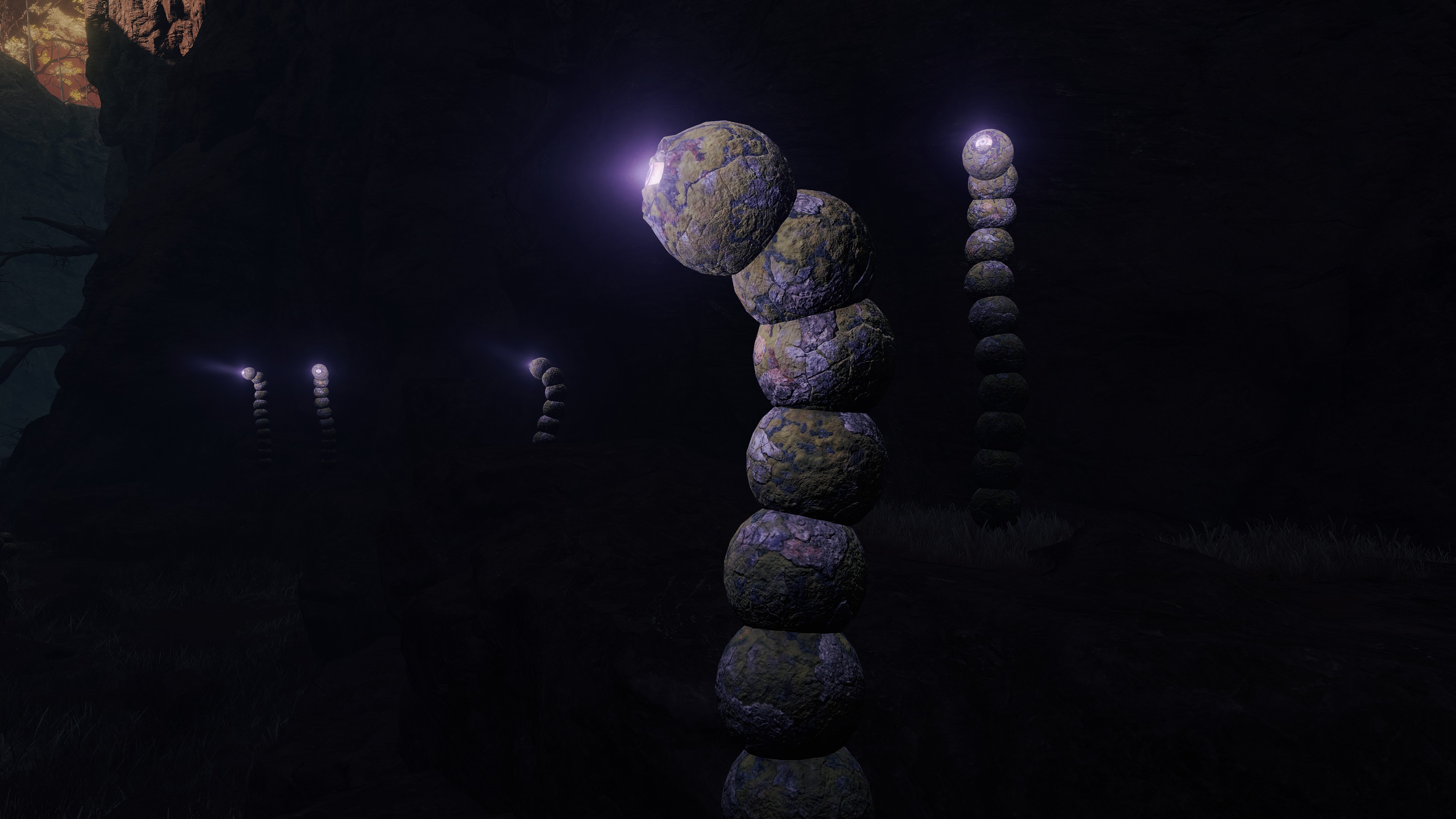
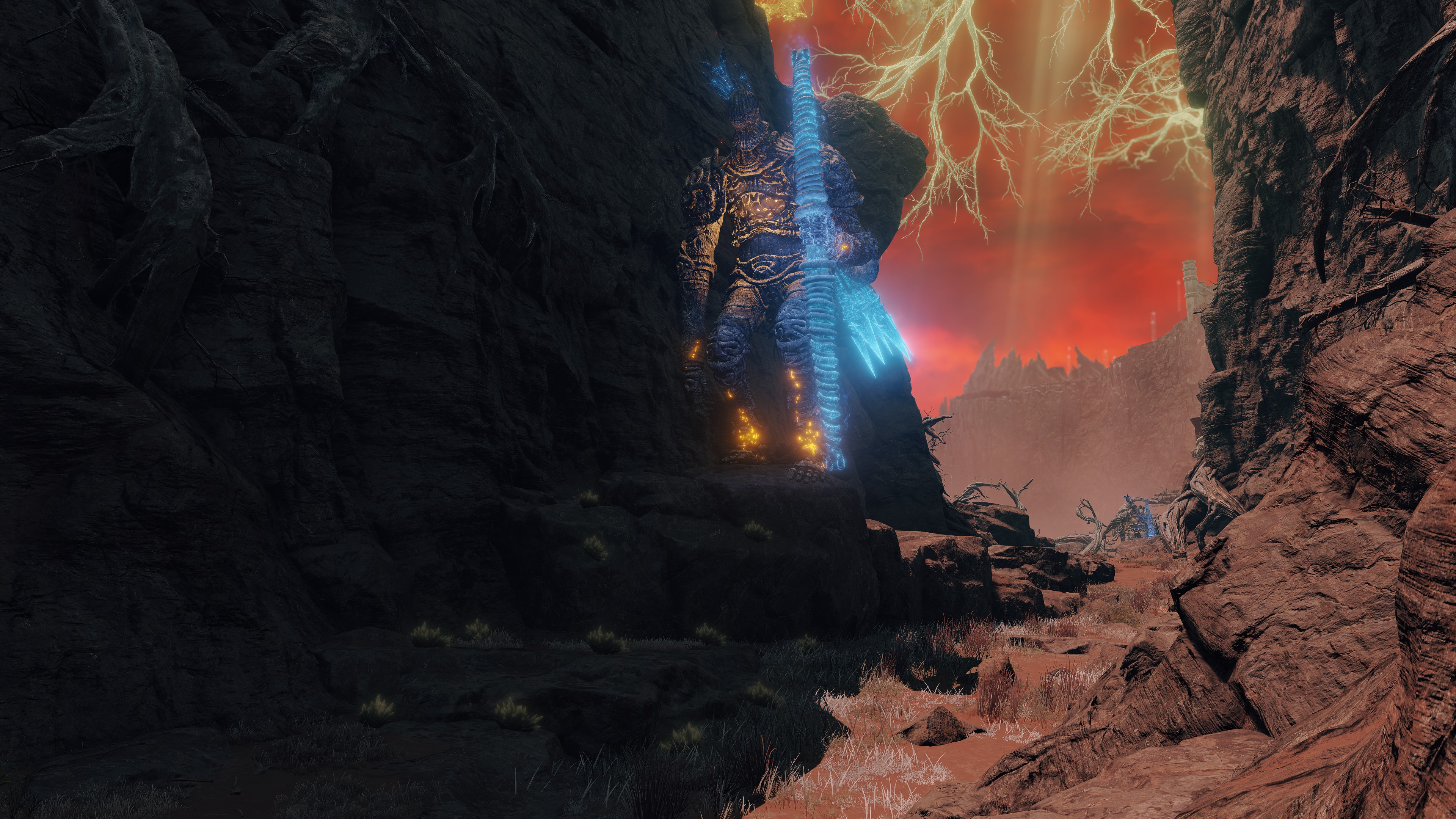
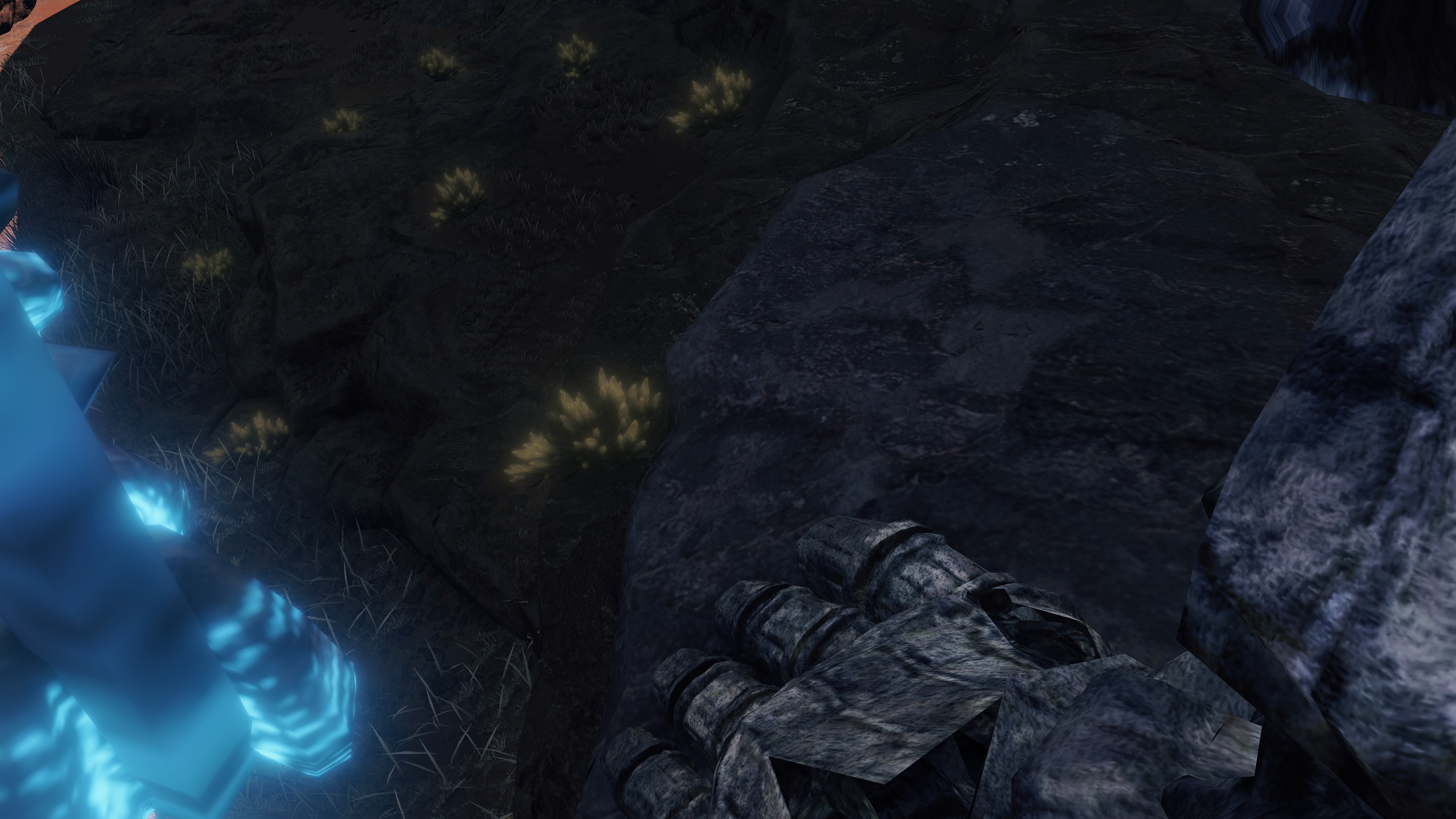
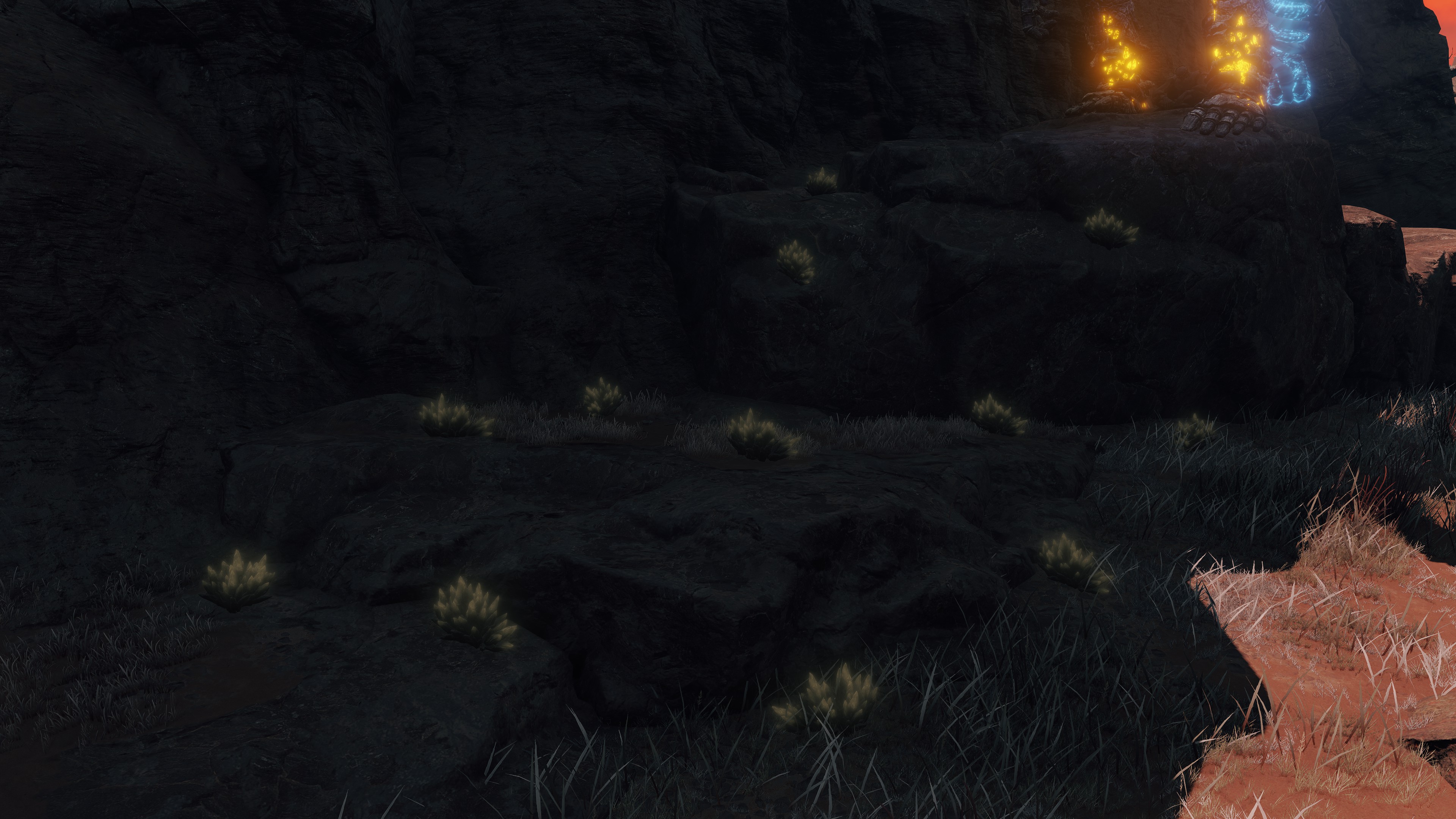
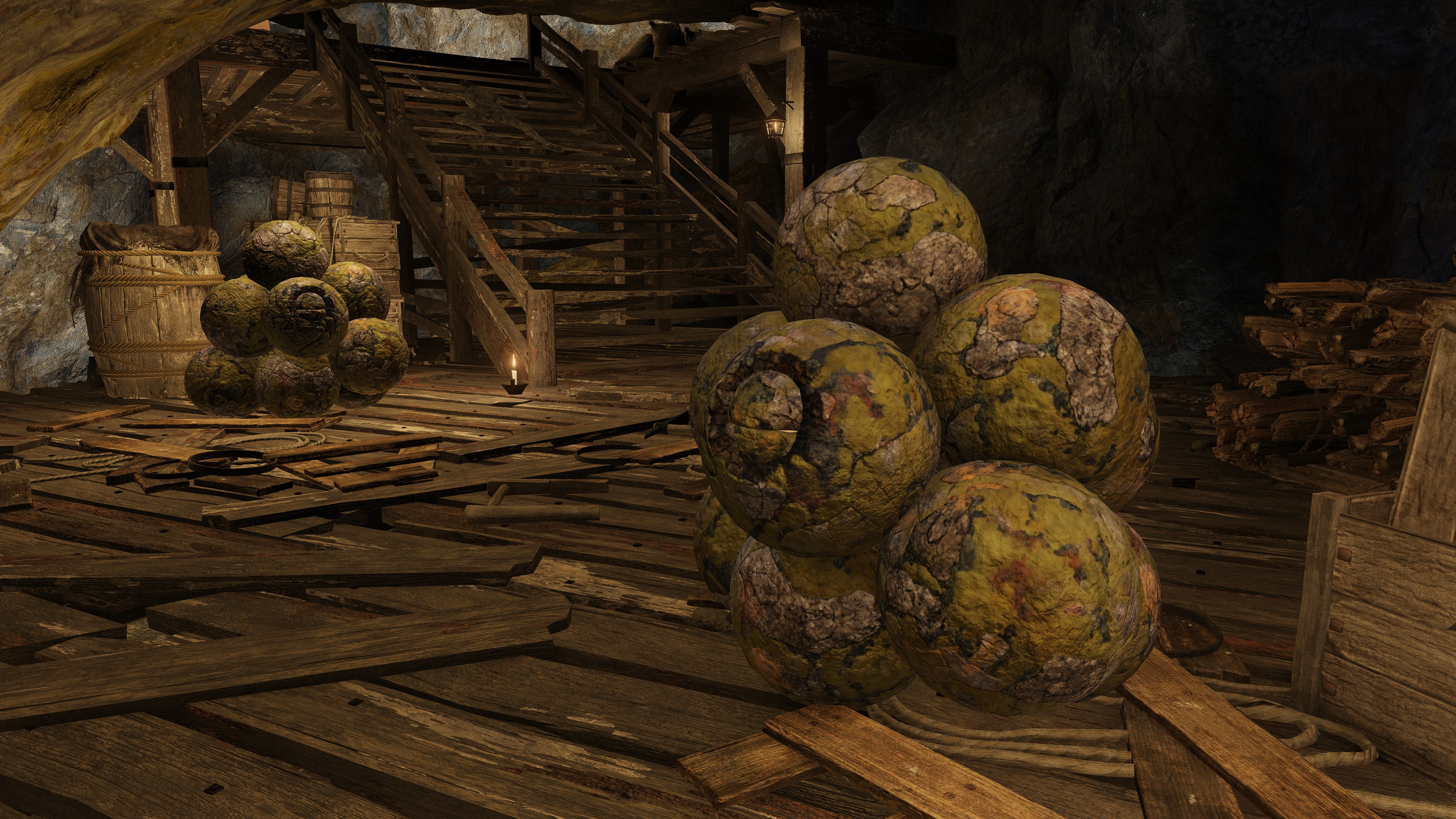
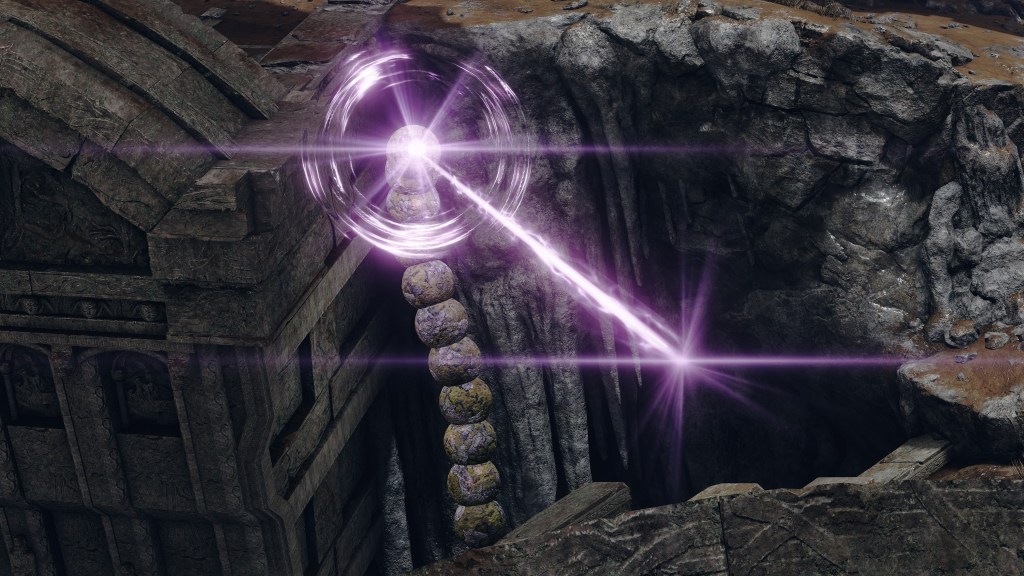
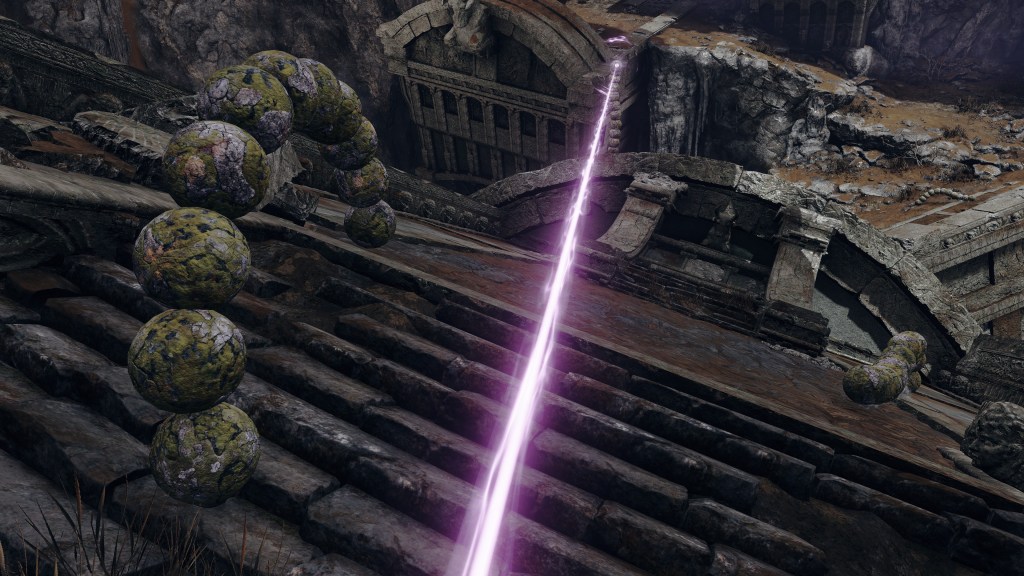
The final proof comes in the Shadow of the Erdtree DLC. A huge quantity of lookout stones have entered the Stone Coffin Fissure. Down there, their searchlights all zero in on the one broken sarcophagus leaking loads of putrescence. The lookout stones themselves possess congealed putrescence, which look to empower their magic light — nowhere else do the stones fire a concentrated beam of energy out of their eye. With so many undergoing self-repair in this underground, it is unsurprising that a number have been corrupted by the putrescence and behave uncharacteristically hostile by just our intrusion. Although this case demonstrates a terrible judgment on their part, it nonetheless highlights how the enemies’ attention has gone into not just the abundance of stone to harvest but the power infesting it as well. When afforded the opportunity, these strings of stone ball will undoubtedly chase after the most powerful mineral material to improve themselves with.
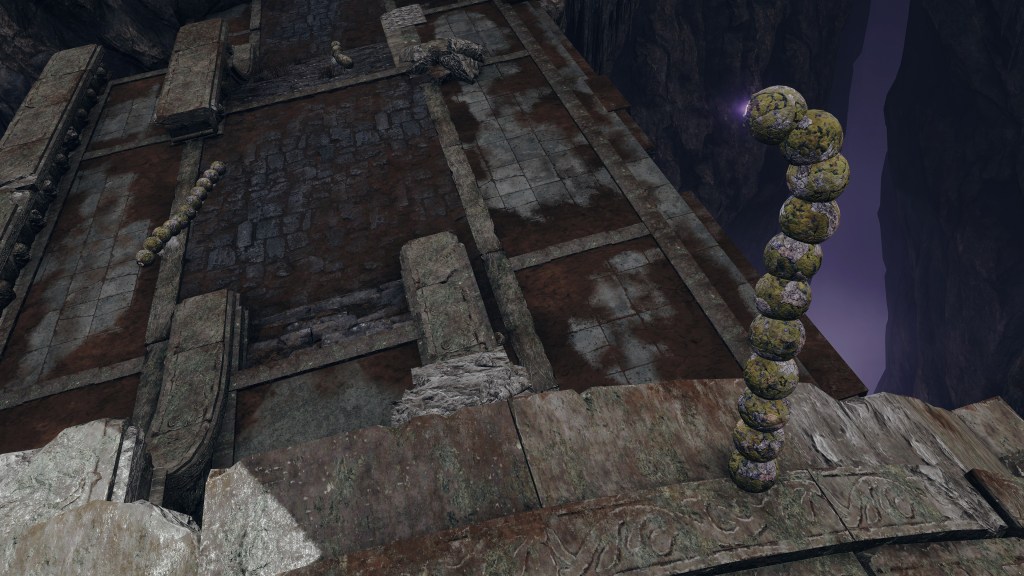
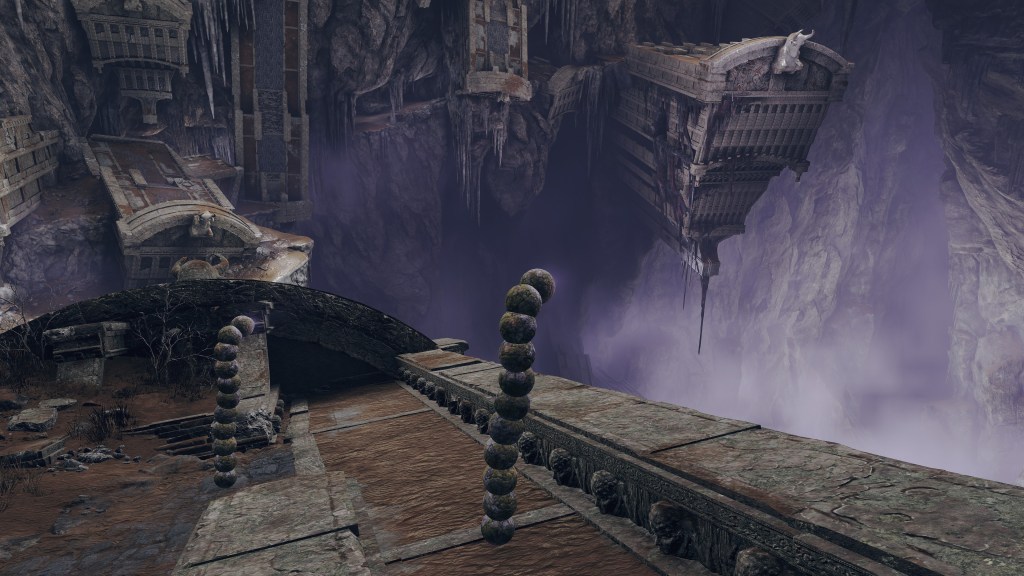
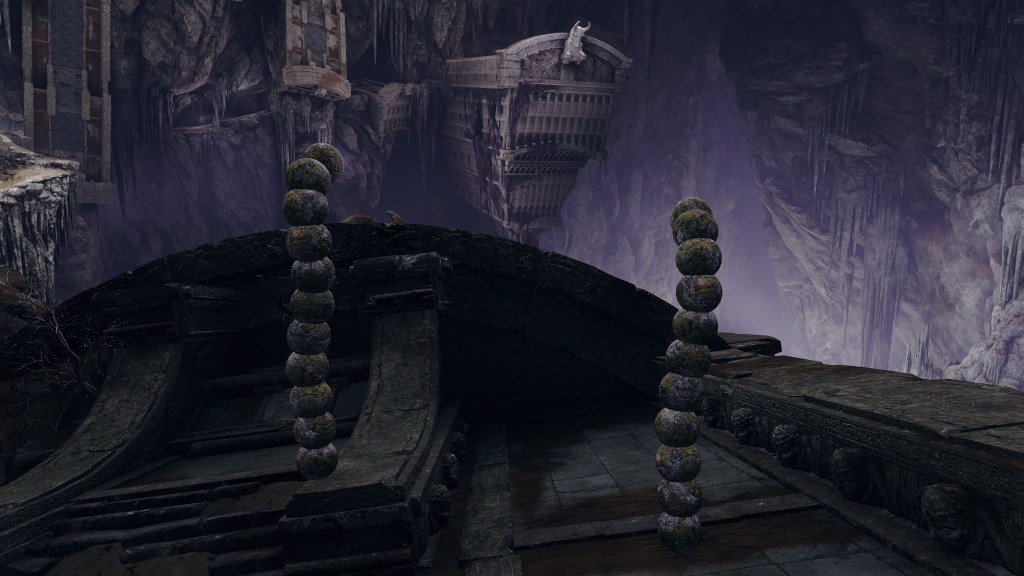
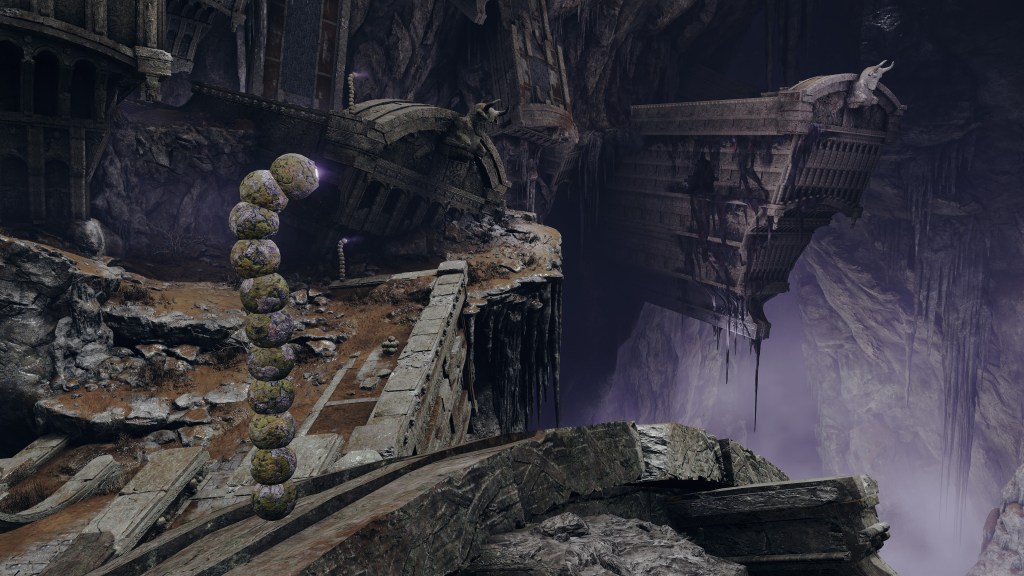
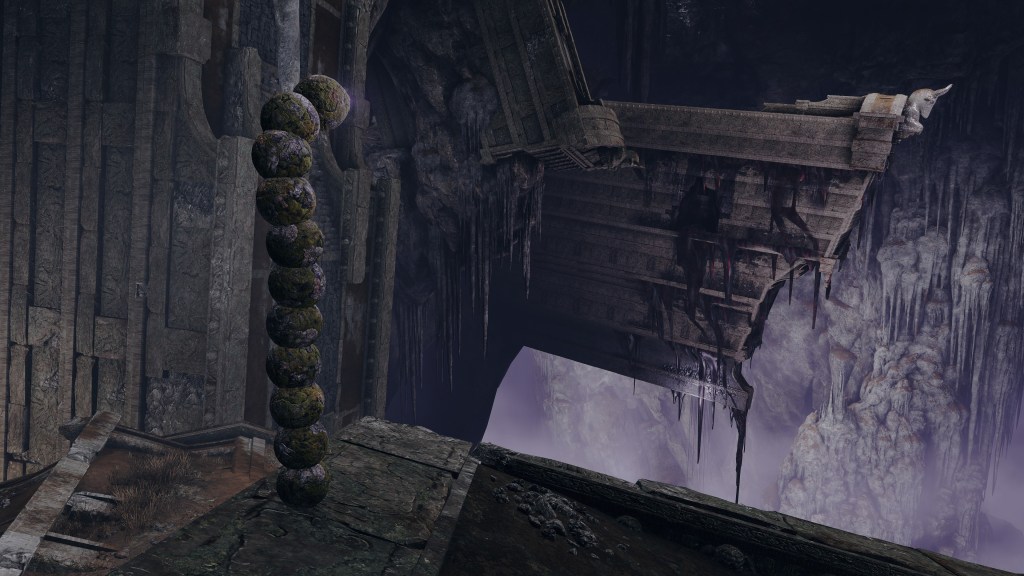
It might appear odd that the lookout stones require so much maintenance, especially compared to other golems. However, even Burial Watchdogs have begun malfunctioning in the erosion of time and dispatching threats. Lookout stone might even deal with more frequent threats than graverobbers. Among the many pieces of trash demi-humans everywhere collect, ruin fragments are perhaps the most peculiar. This is because the Farum Azula ruins don’t exist in the places of the northern tribes, especially in the Realm of Shadow. Why the simple-minded savages collect the stones themselves is no mystery; the mentally regressed pumpkin head warriors similarly hold onto sanctuary stones. Like glass shards, they can emit pretty lights. But where do the disparate tribes find their precious shinies if not from fallen ruins? Maybe from the inedible worms just as widespread as them? Certainly, the one demi-human tribe in the Realm of Shadow is located not far from Stone Coffin Fissure. The lookout stone therefore must weather regular attacks from the barbarians, the pumpkin heads and Erdtree nobles adding to their threats.
The world is a dangerous place, even for constructs. But in the end, the lookout stones have outlasted their creators, continuing their work long after the evergaols have become a convenient tool for later peoples to utilize. They were programmed to act independently and they do so with surprising efficiency. The fact that they suffer from the likes of demi-humans or madmen makes their great number all the more impressive. Kingdoms may rise and fall, but they will still go on, watching the integrity of the seals. That assuredly wasn’t what the evergaols’ architects had in mind, but it is more than they could have hoped for them — once you get a ball rolling, its momentum always might surpass you. Like the ancient golems, the lookout stones are a relic of the past, but their momentum isn’t slowing down anytime soon.

