
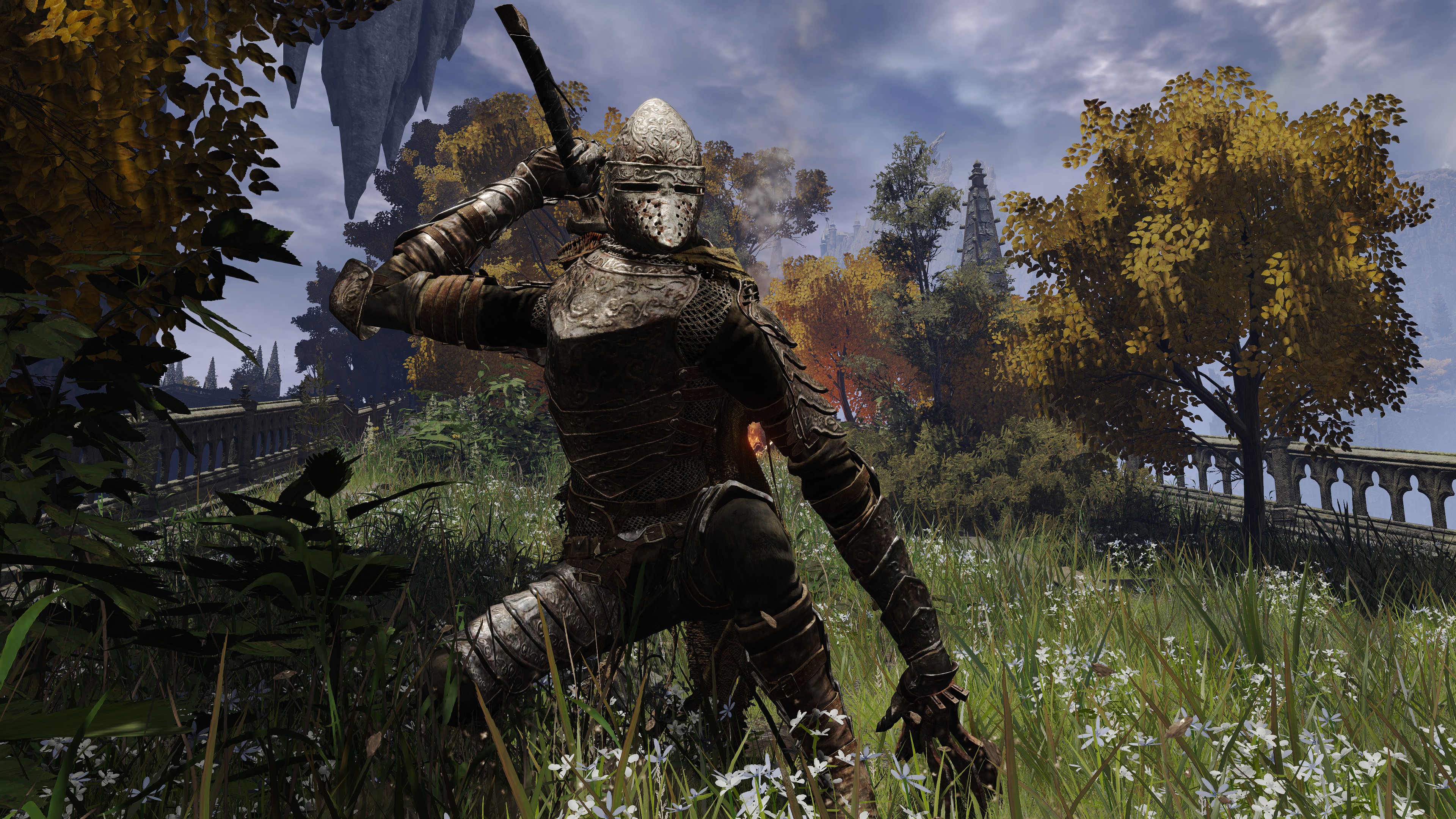
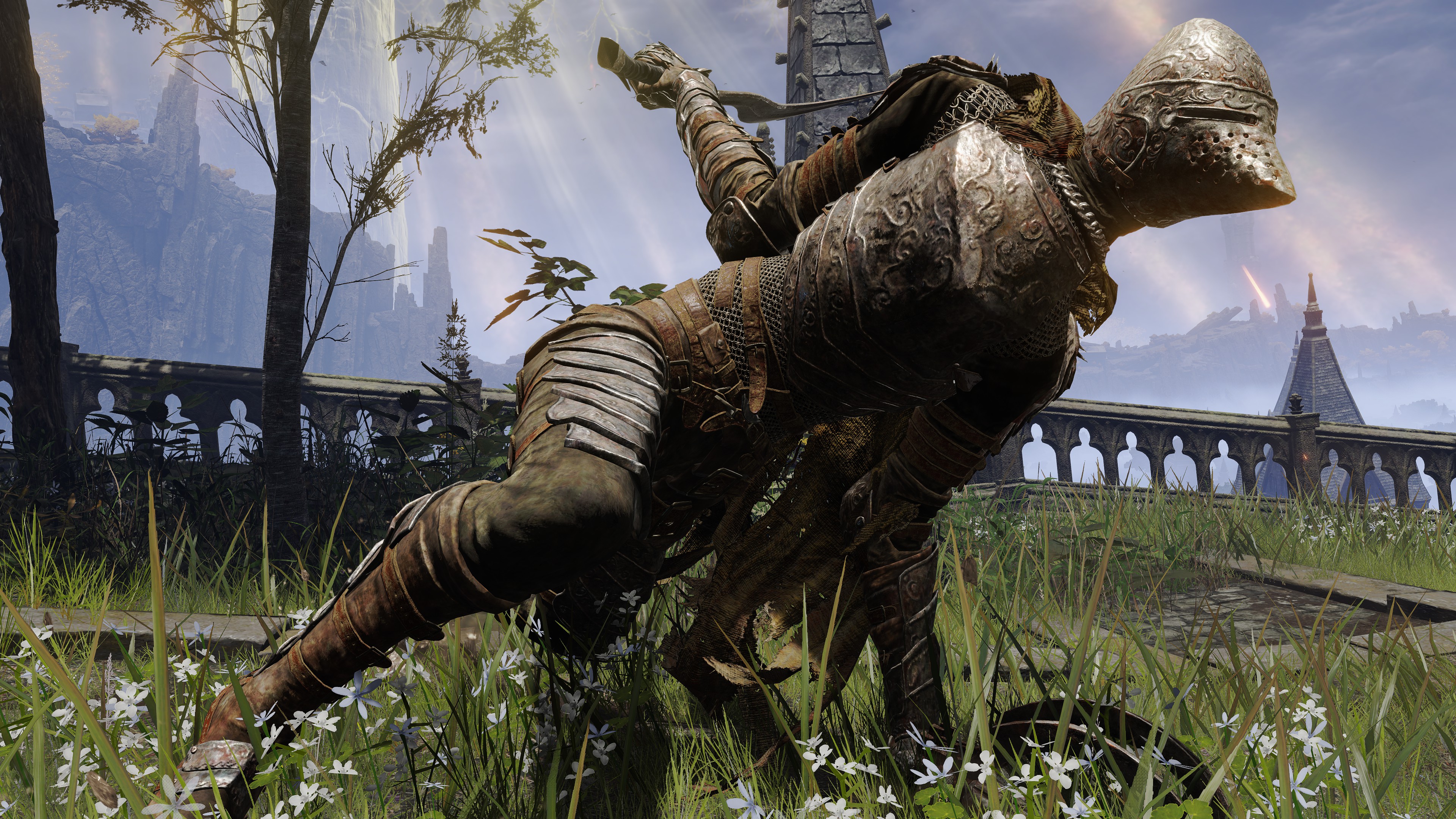
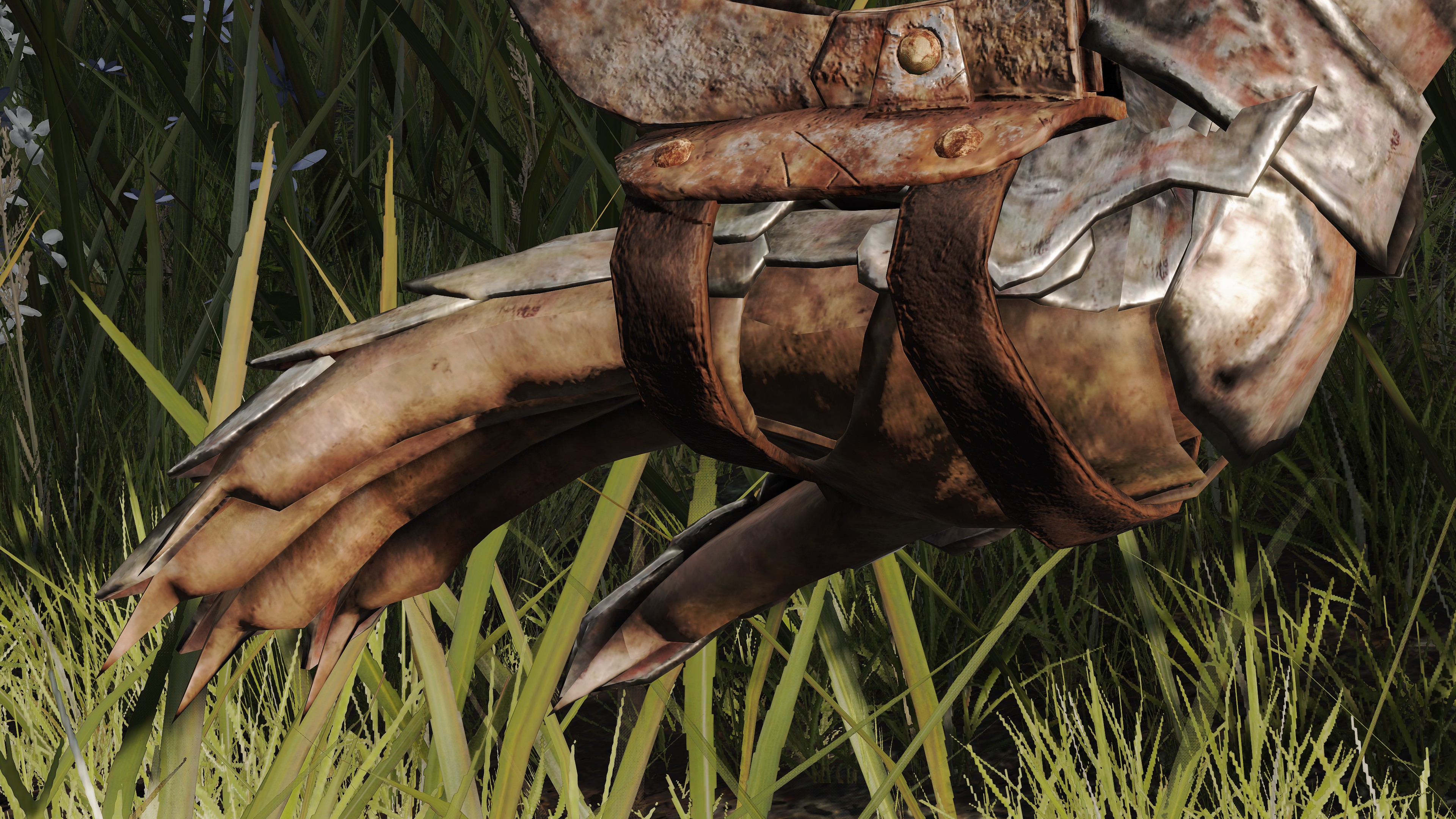
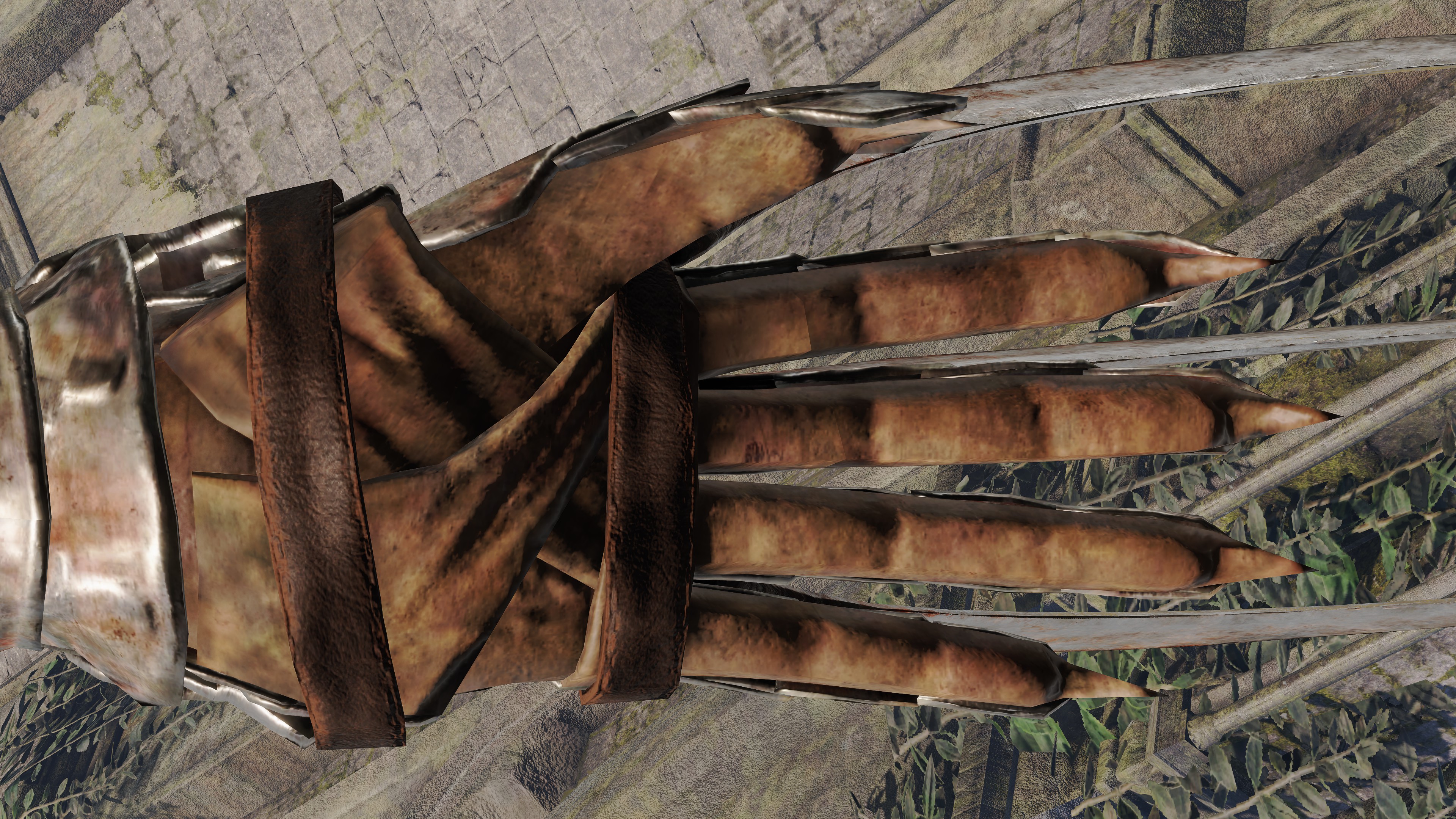
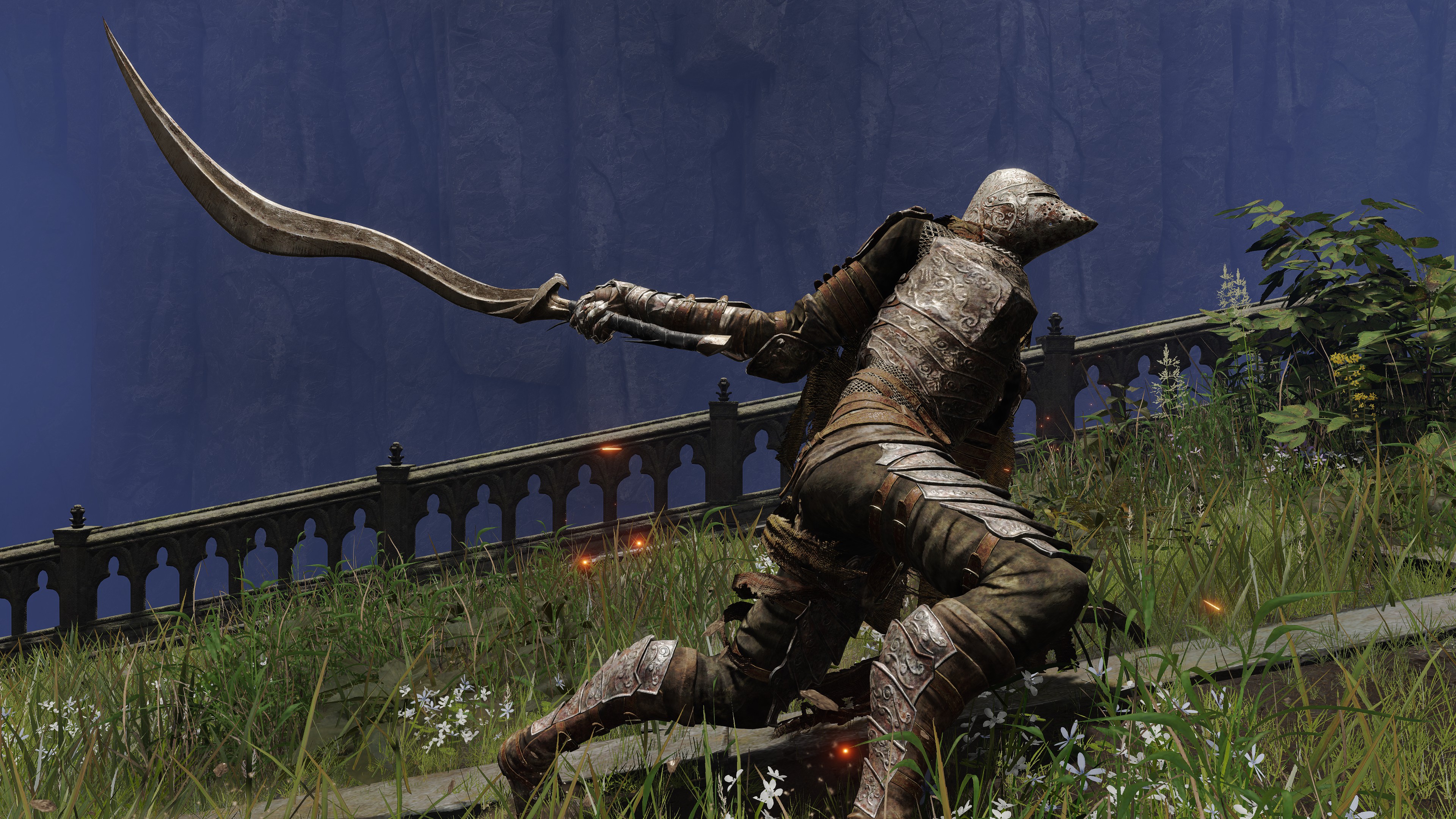
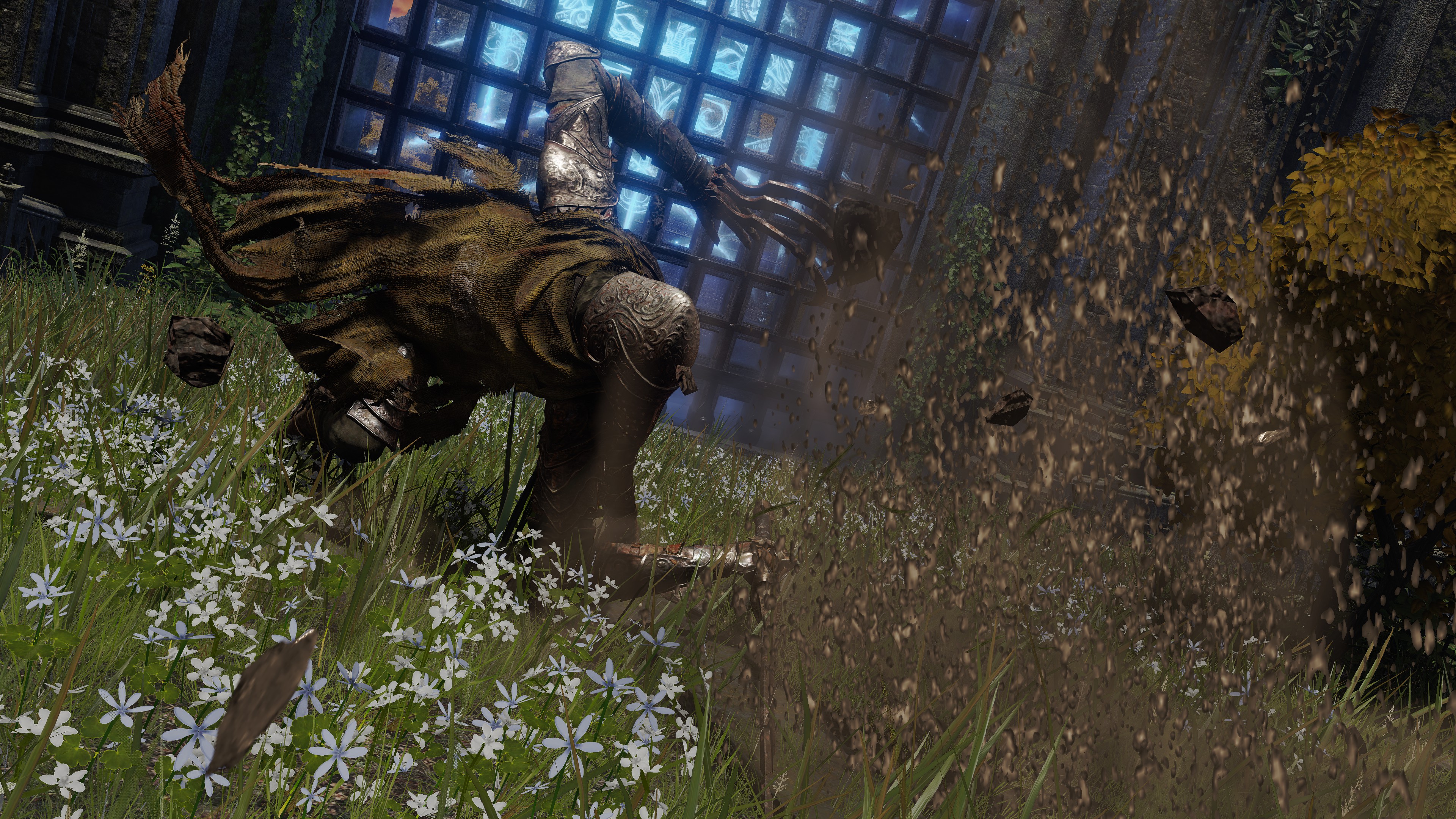
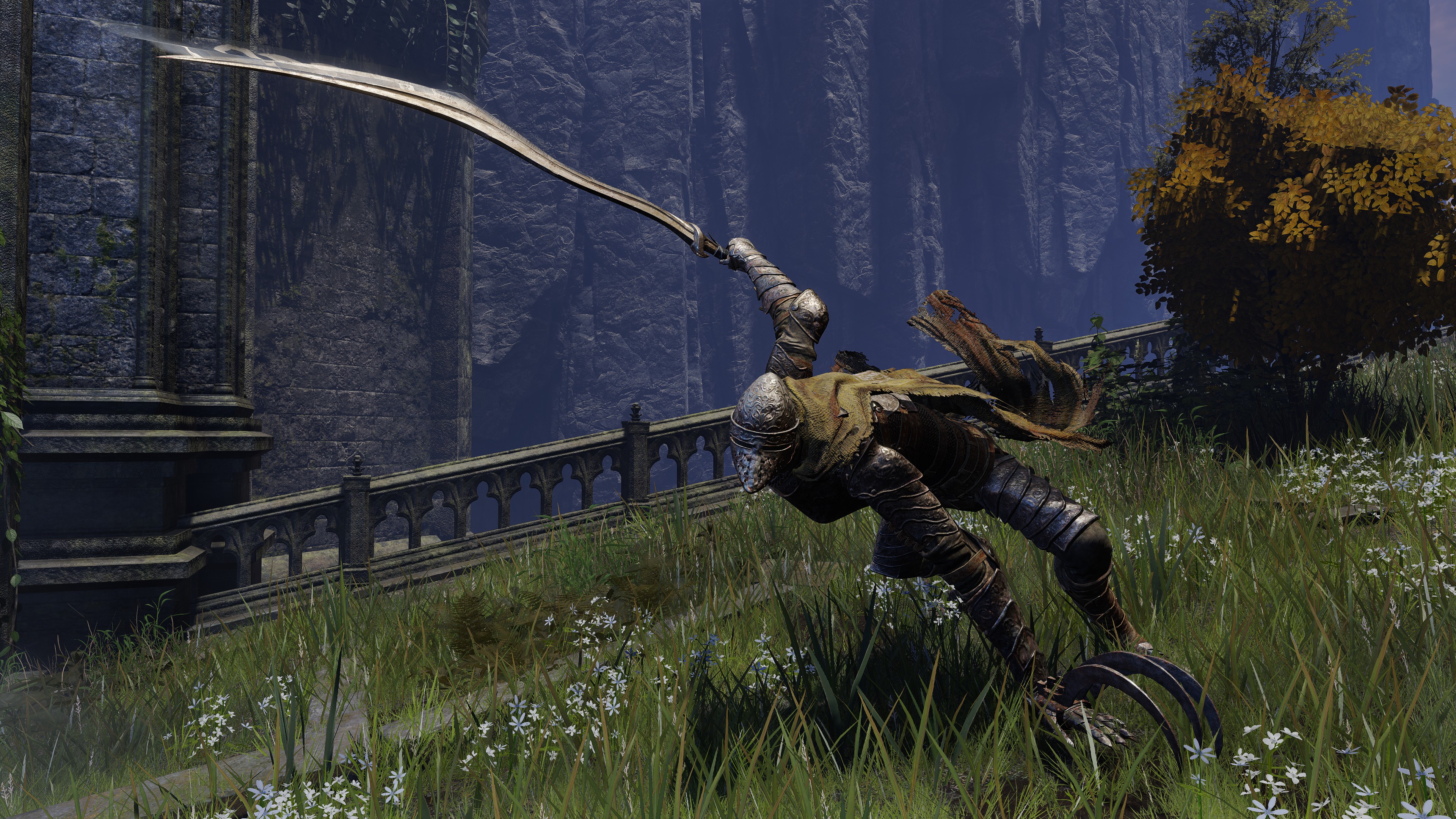
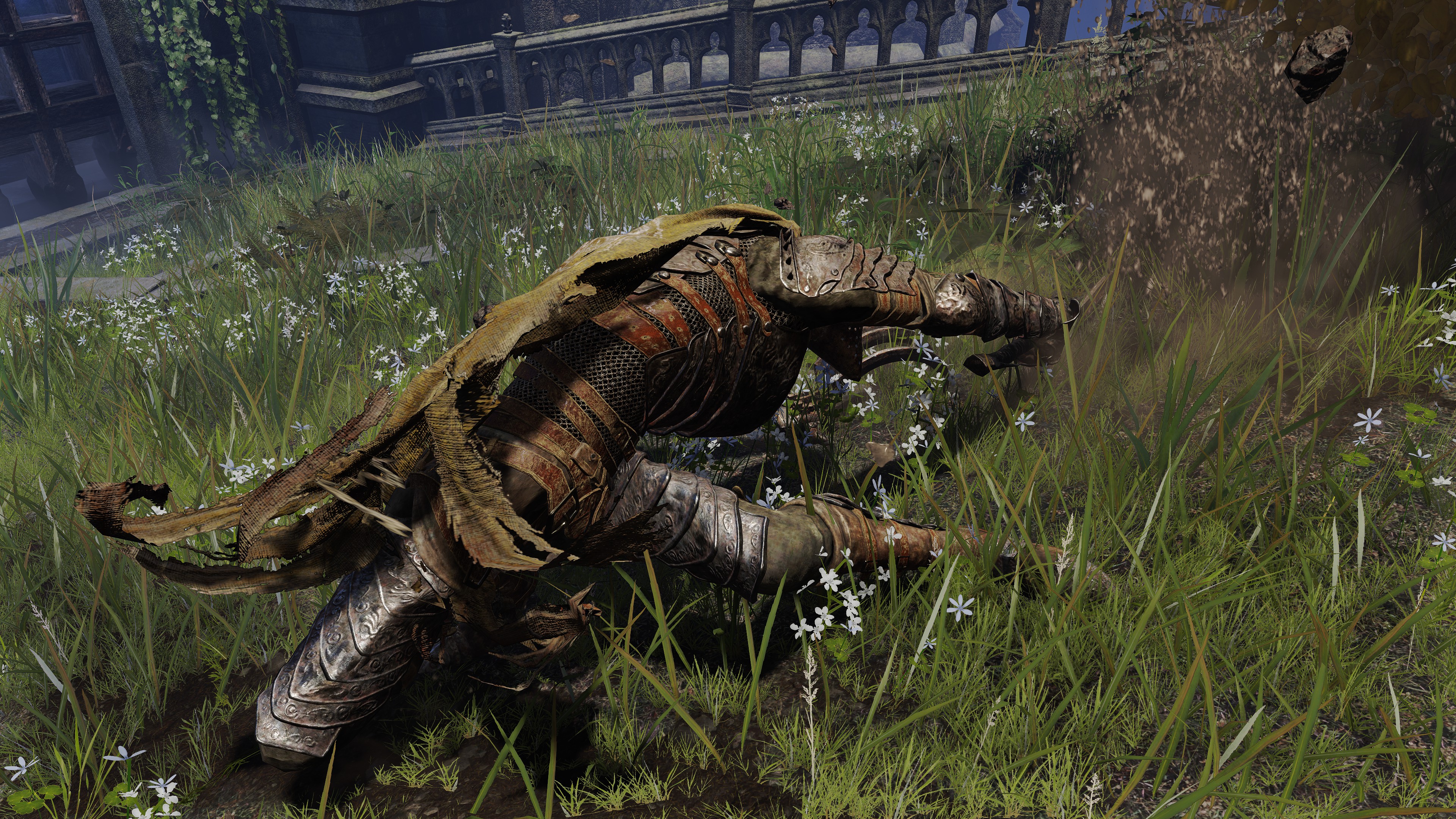
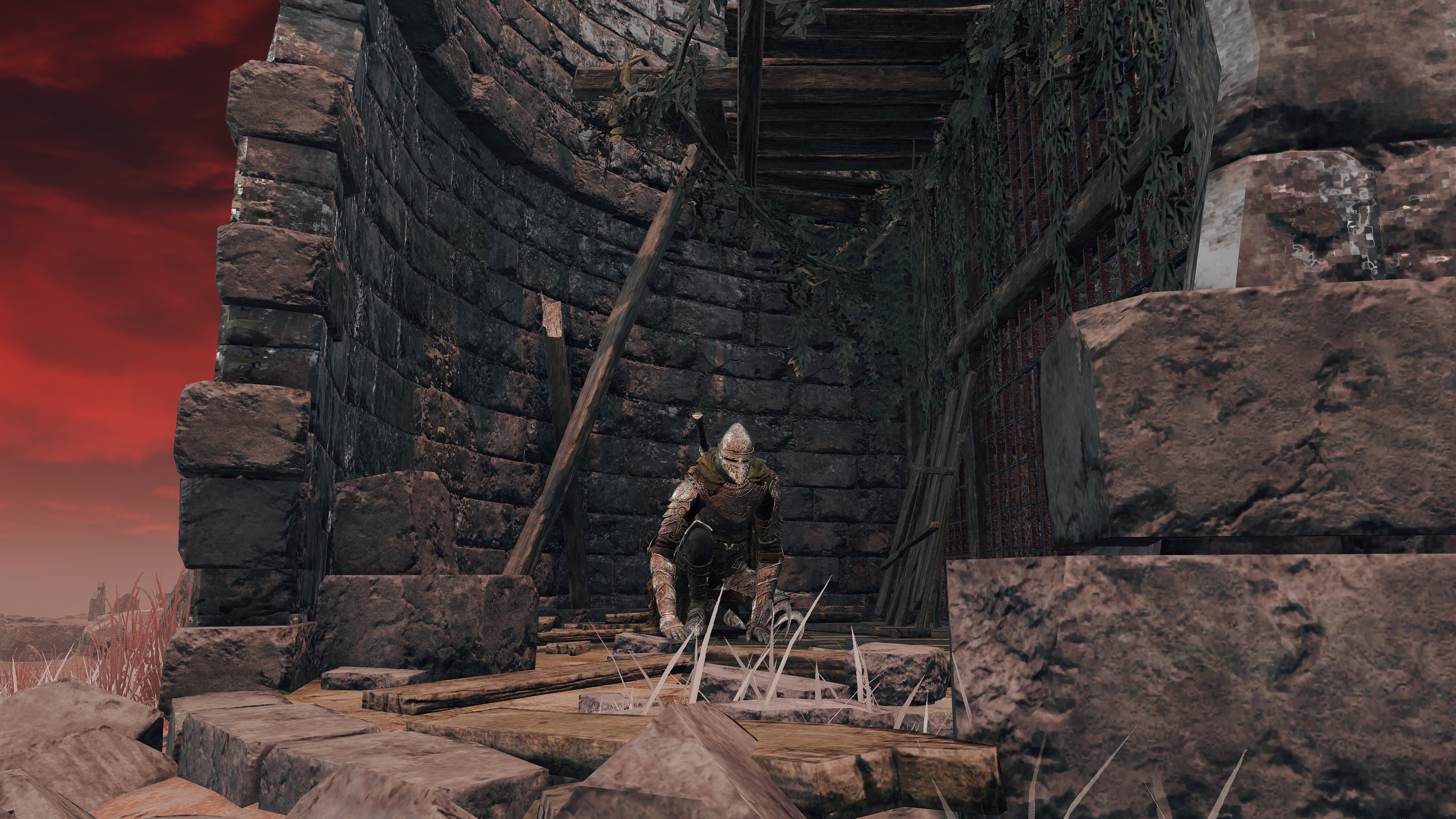
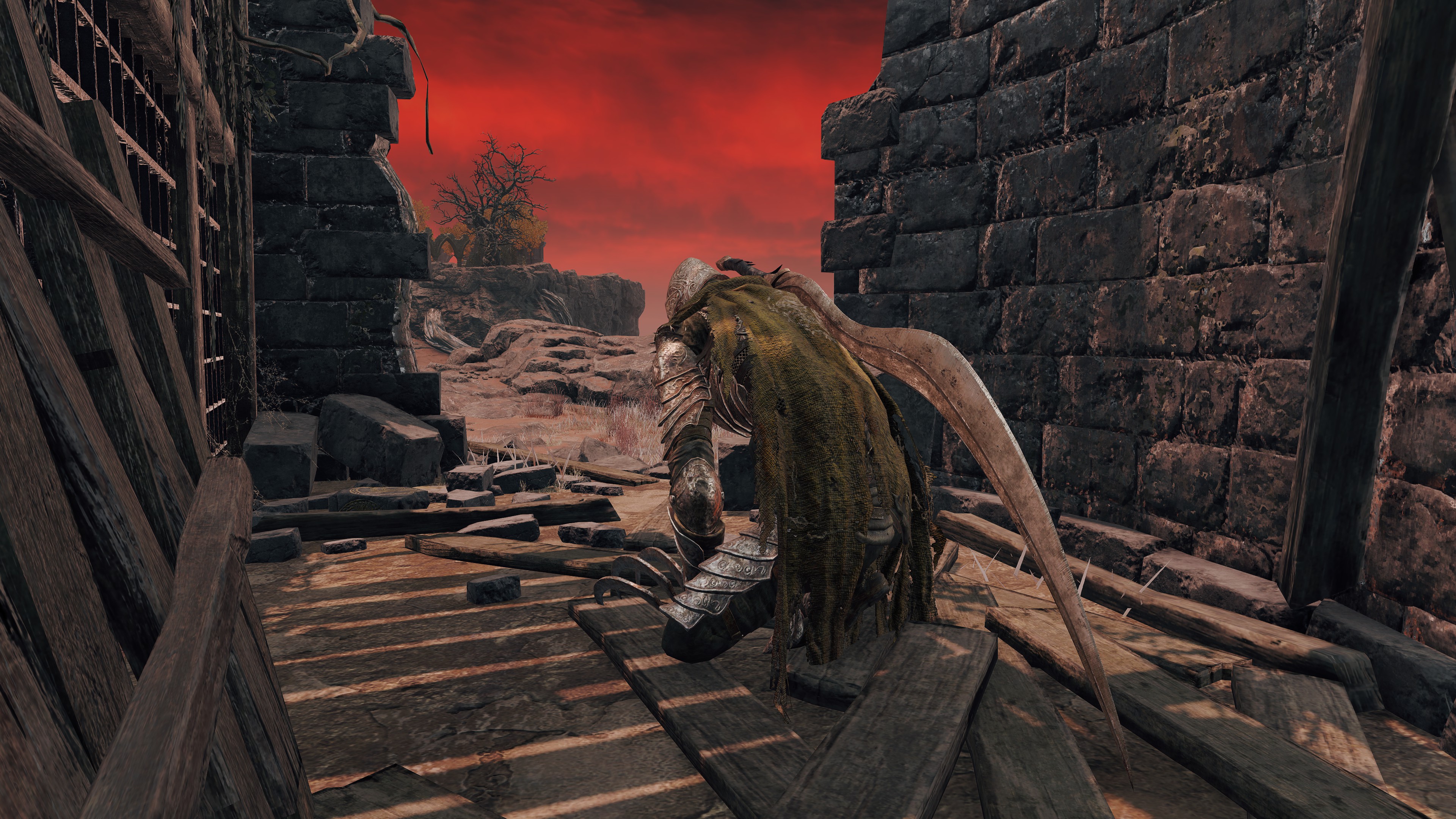
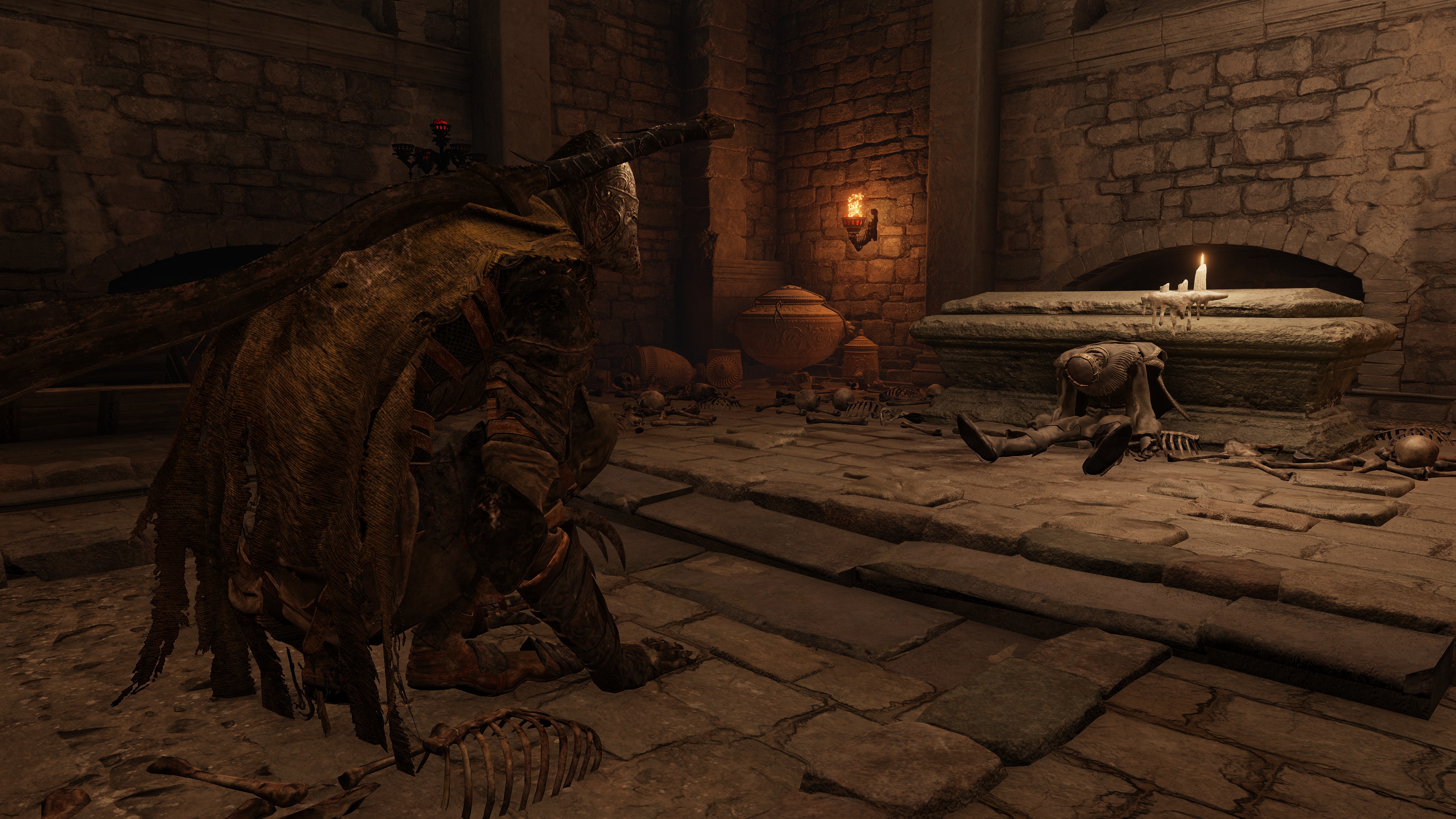
Dispersed across the Lands Between lurk the Bloodhound Knights. Despite the name, they prove human, not hound. Close inspection of the warriors reveals hands with long, sharp nails but no fur, as well as feet standing on tiptoe in boots far too long for them regardless. Their weaponry adds to this impression, wielding a curved greatsword resembling a beast’s fang in one hand and a claw shaped after bestial nails in the other — if they had actual claws and fangs, why not use those, like genuine beastmen? The fact that such dog-like fighters even wear a houndskull bascinet, named for the “snout” to the helm’s design, speaks to their desire to appear like canines when they are anything but. True to cut text for their armor, their behavior is just as beast-like. The way they stand, sit, walk, run, jump, even fight, all mimics a dog. They go so far as to forgo the human tongue, choosing to communicate with body language instead, further highlighting the commitment to this playact. And finally, there is what these so-called hunting dogs choose to tenaciously track down: a master to serve devotedly for life.
Large curved sword gently undulating. Choice weapon of hound knights.
Assault sword that even excels in jump attacks.
Metal helmet with pointed beak. Equipment of hound knights.
They who received training as hounds are known as tenacious trackers. Without communicating in human language, each chooses a master to serve, and it is said that, once served, they never betray.
Helmet that the beast-like Hound Knights use.
There is reason to accept the knights as pets. The hounds achieve bursts of high speed when making a long step, turning momentarily invisible to the naked eye as they close or widen the gap. Combine that with their ability to spin and flip in flowing motions, and their aggressive swordplay has the finesse of a beast’s agile struggle. For strict offense, their curved claws slip past the enemy’s guard, and both of their weaponry bleed prey dry. Start a fight with a Bloodhound Knight, and he will relentlessly hunt you down. That is also what makes them excellent escorts and guard dogs, needing only basic metal armor to protect the master they serve. However, it is clear that they “choose” their owner, once again, the same way a dog is said to. Everything about these warriors makes them less an order of knights and more a collection of wannabe bloodhounds. The only thing uniting them is their shared interest in doghood and the training they have received.
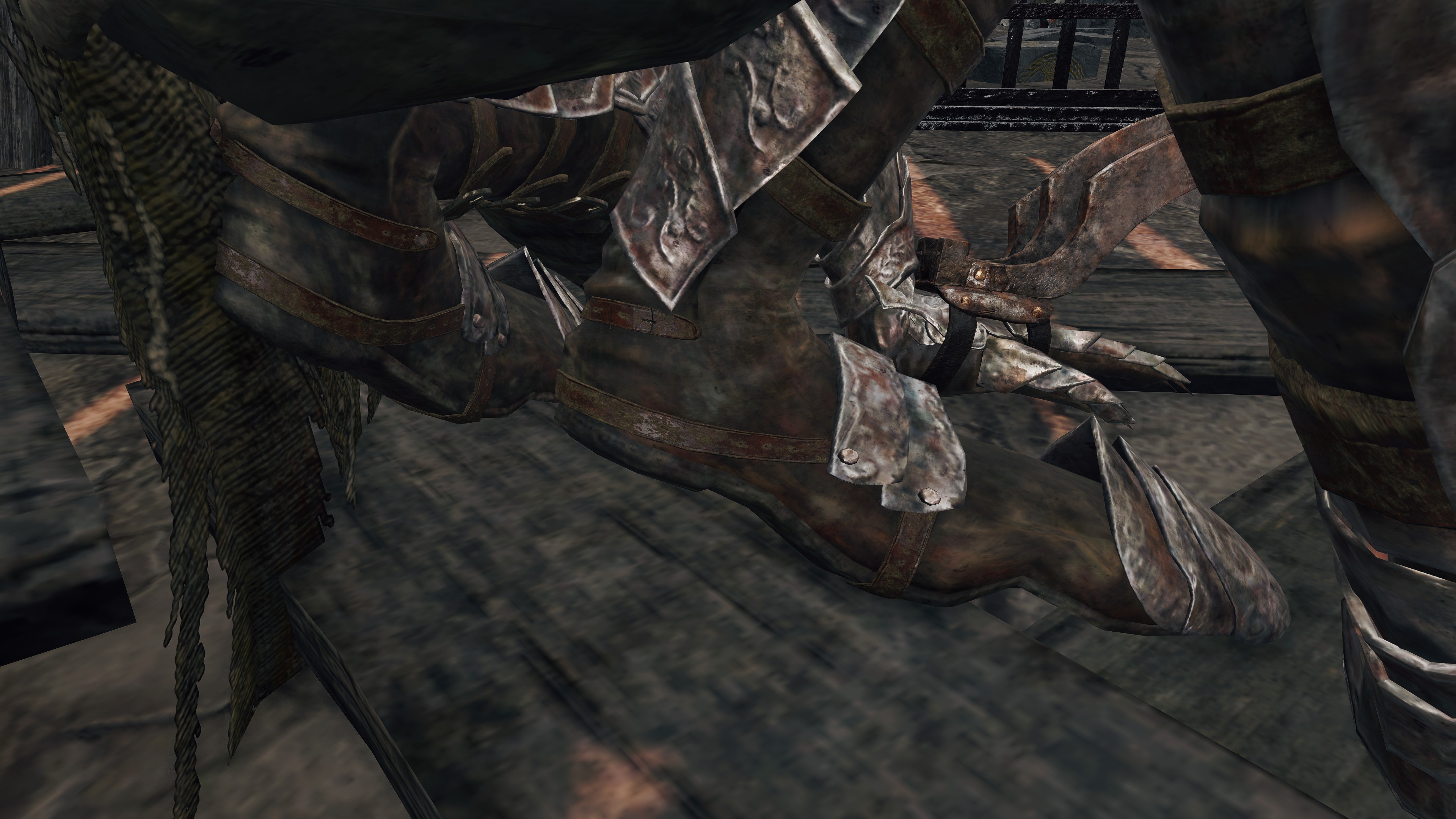
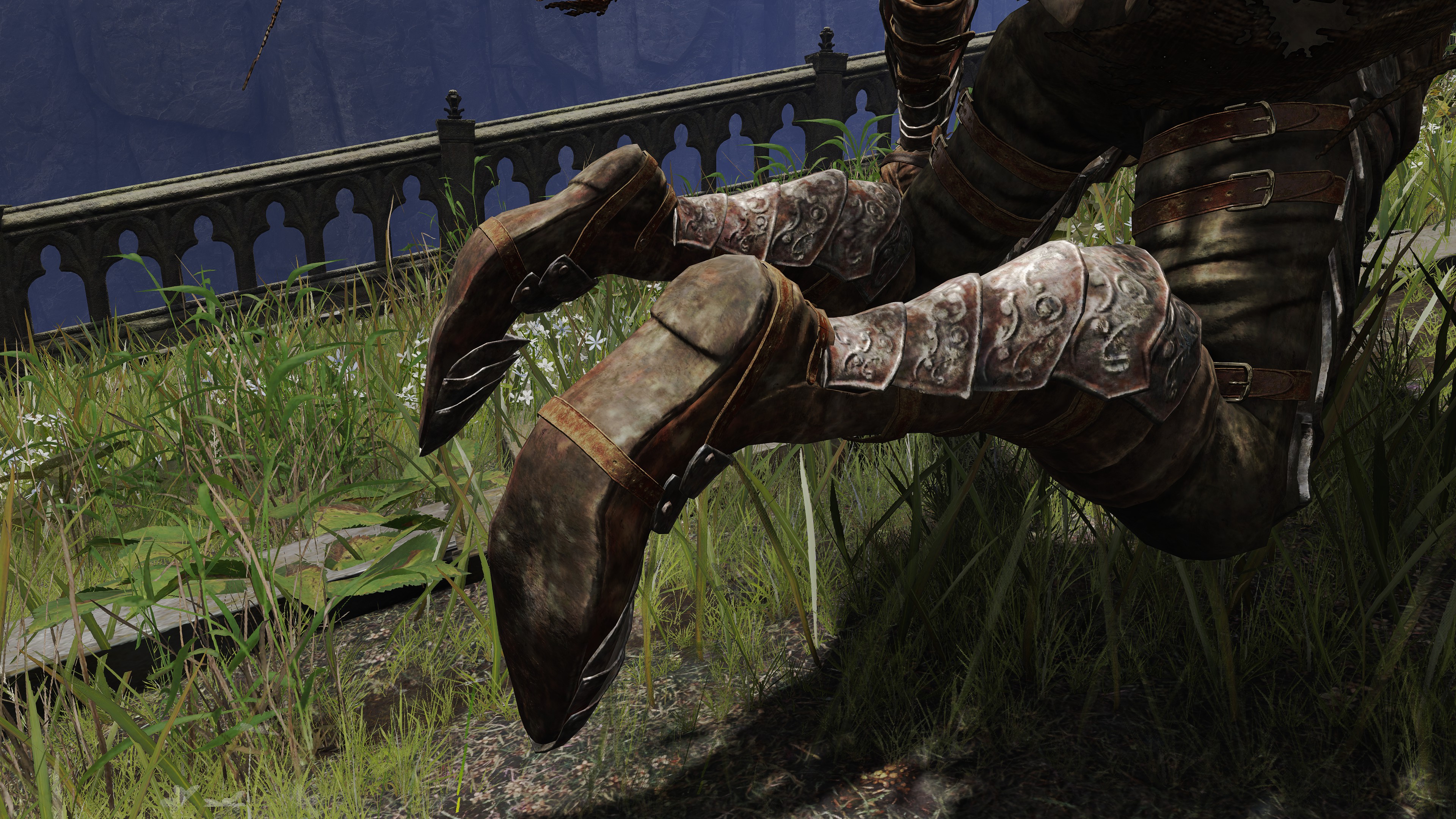
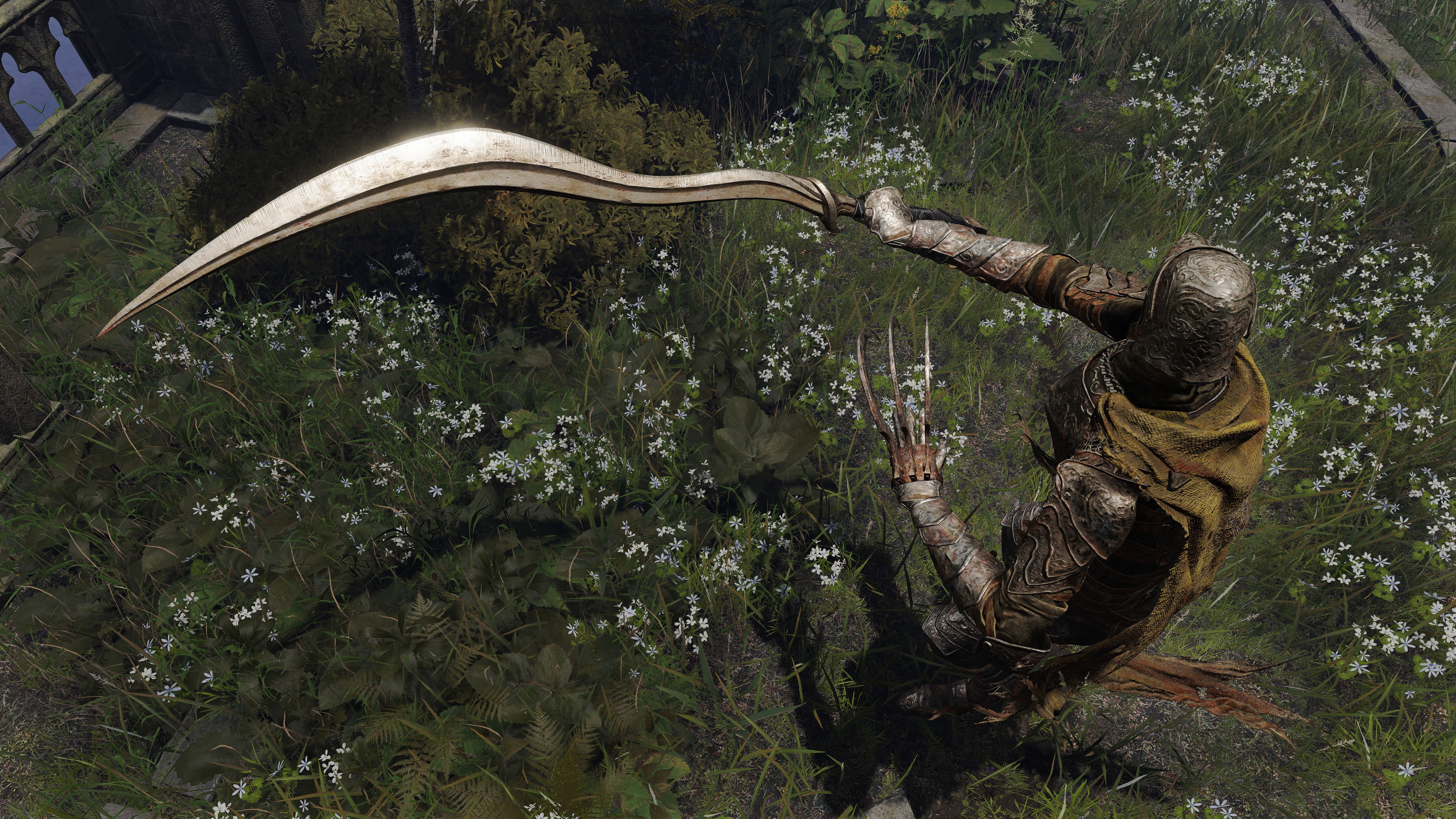
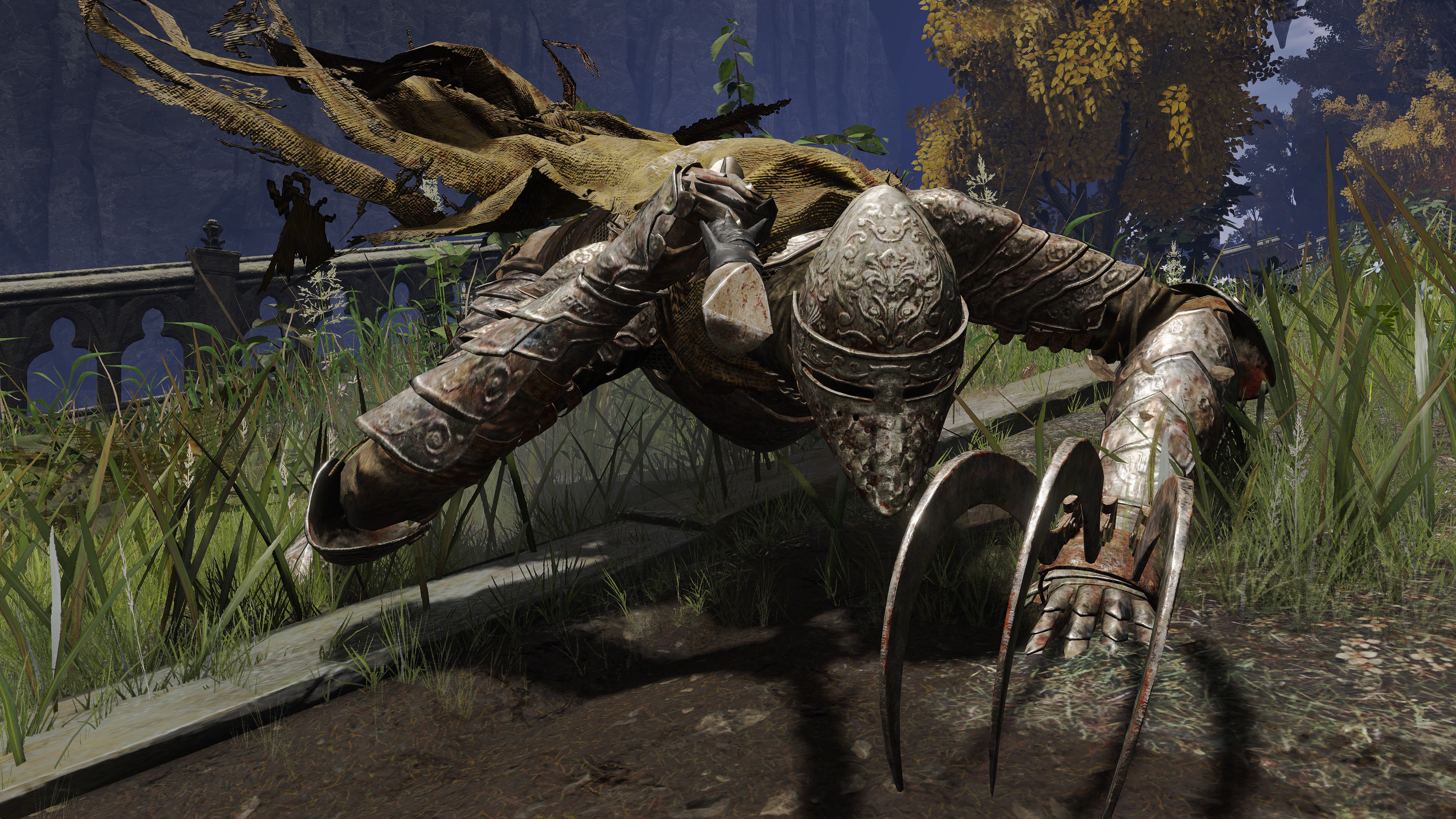
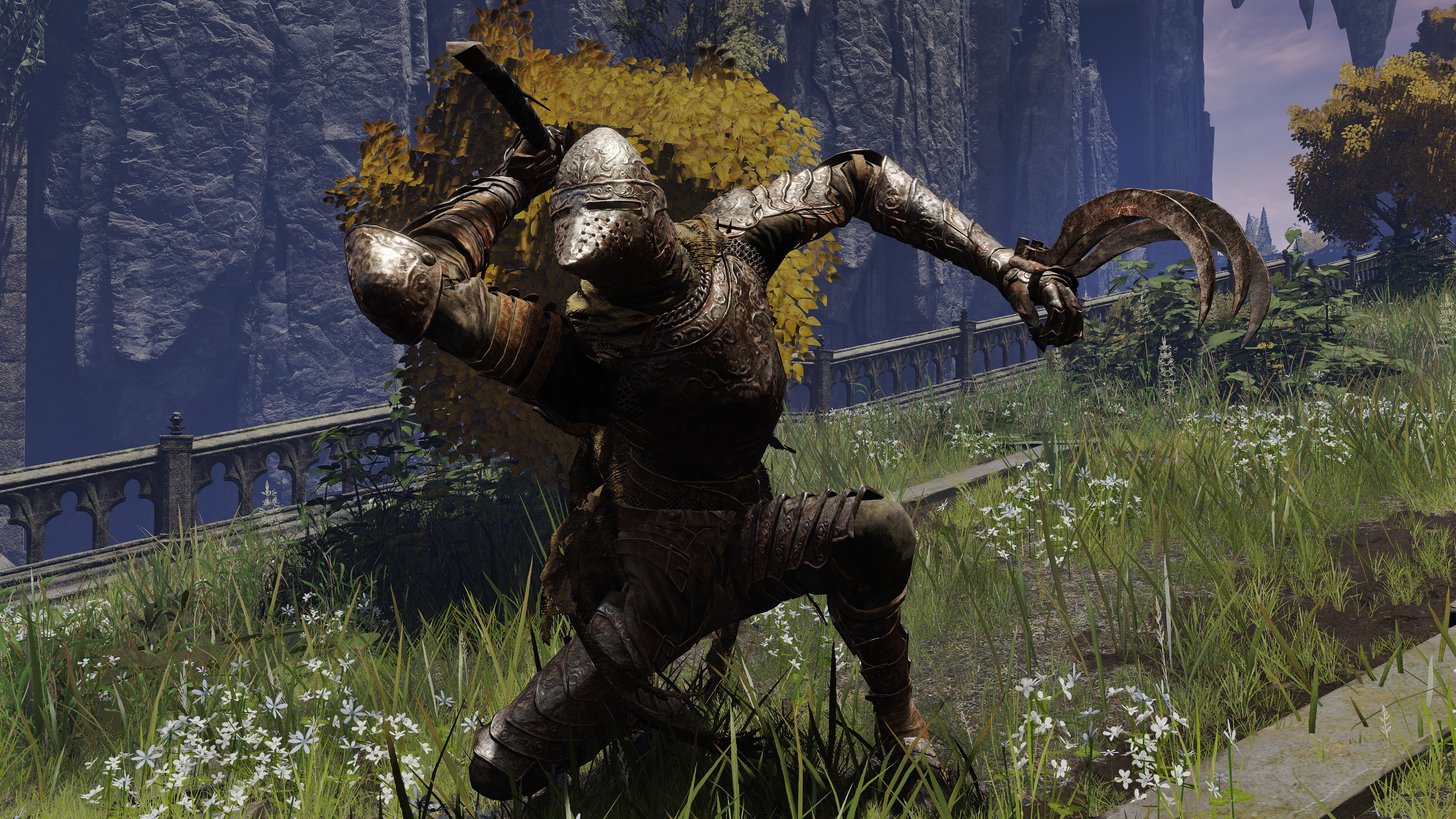
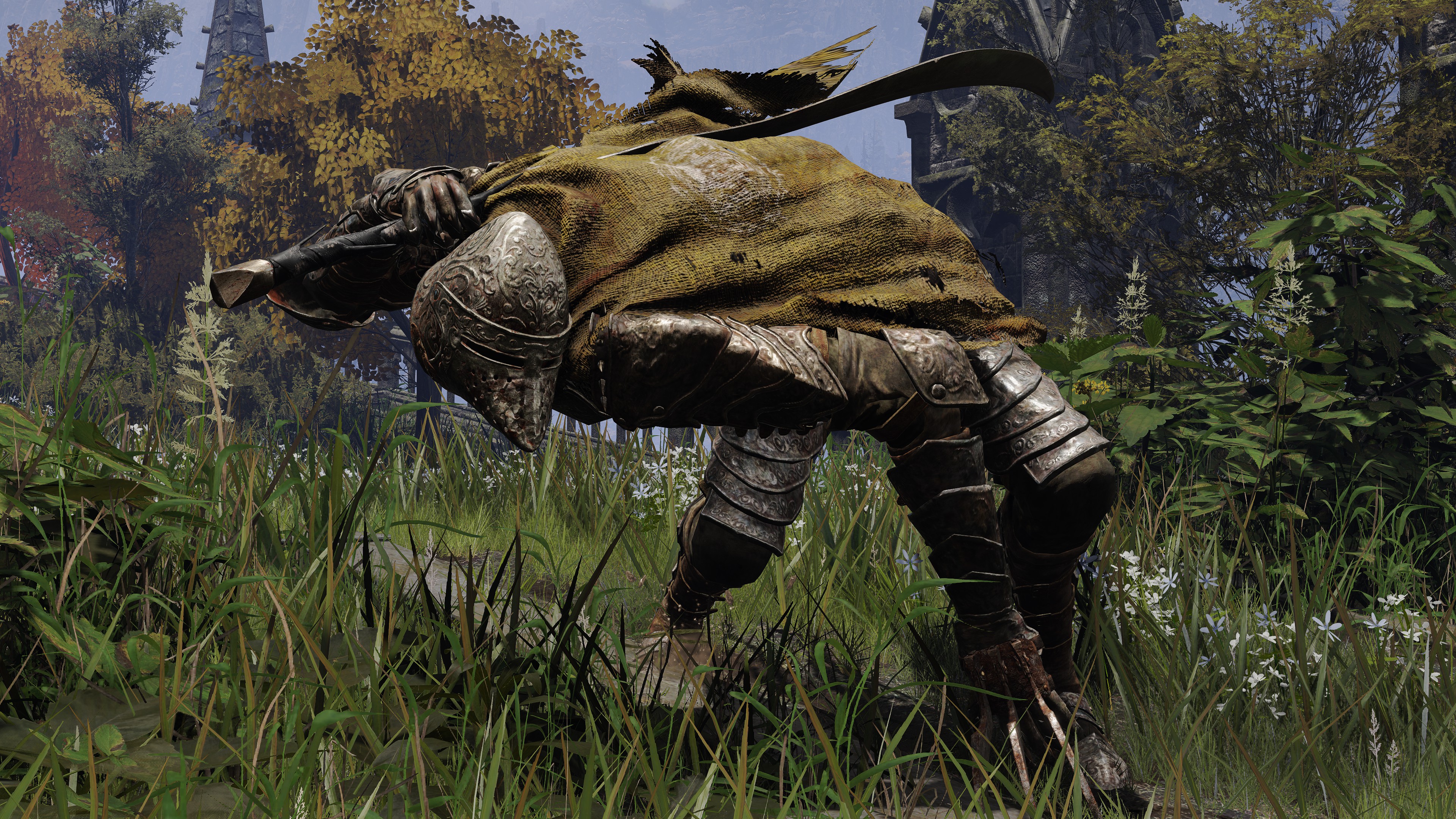
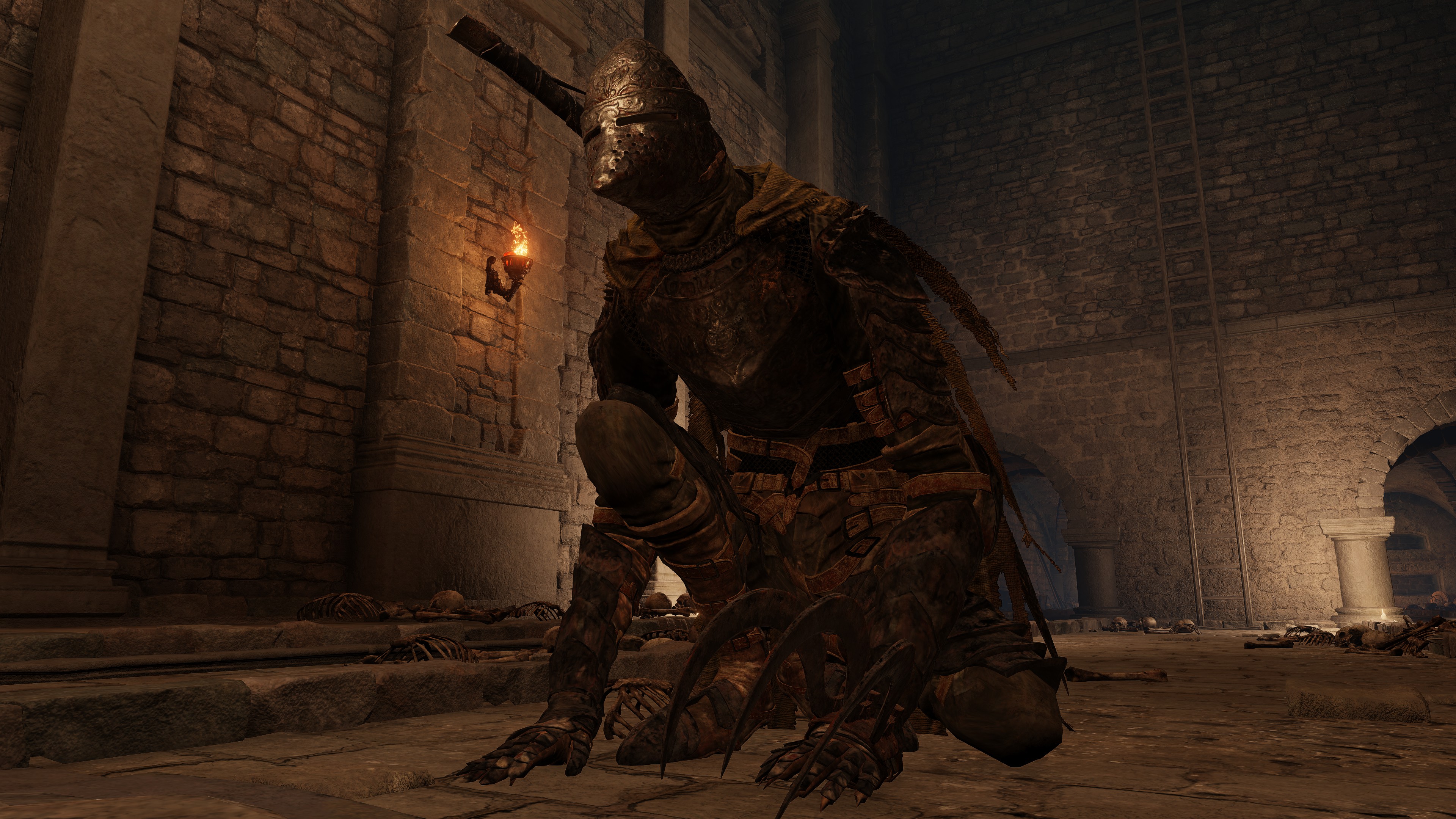
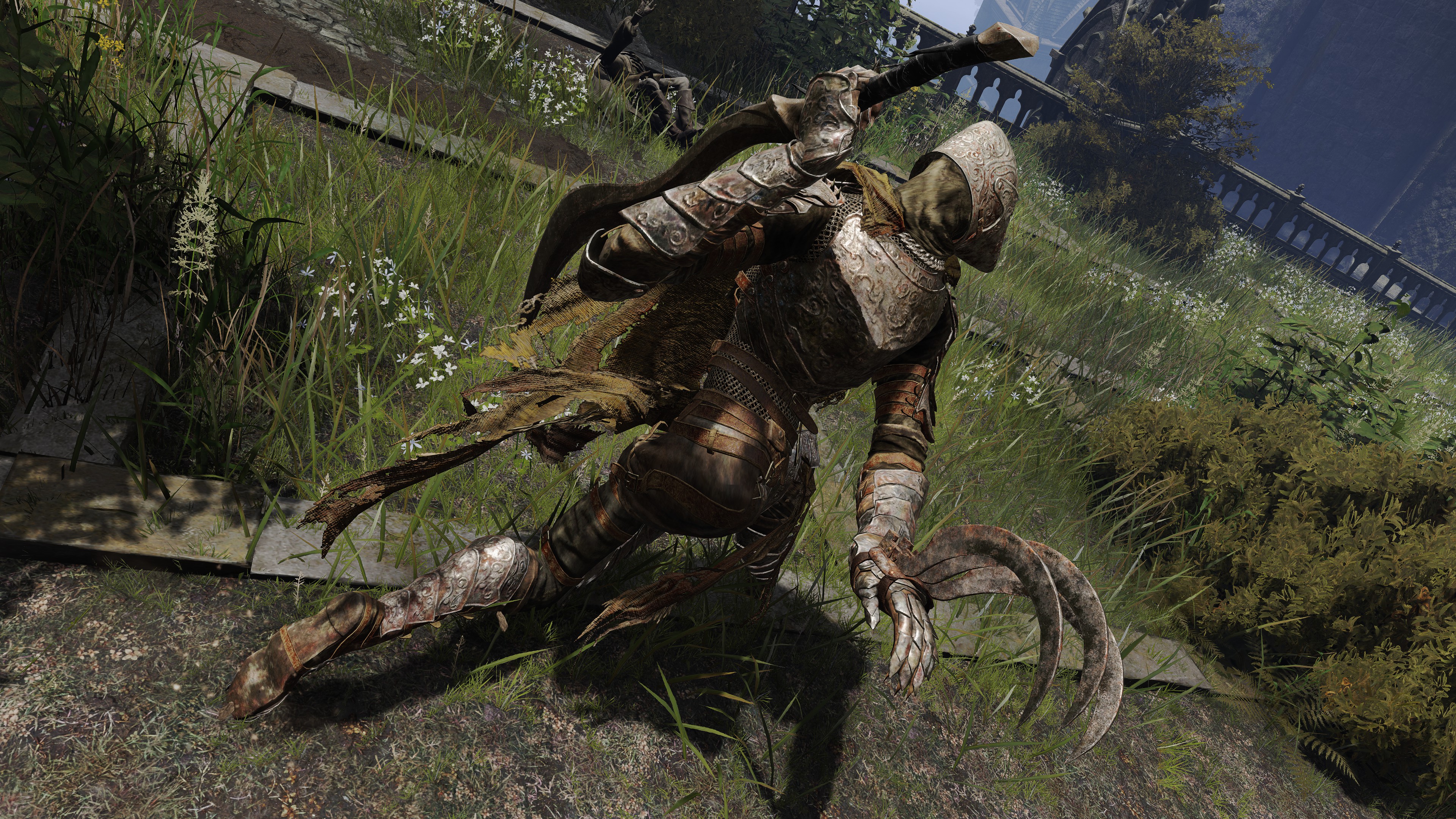
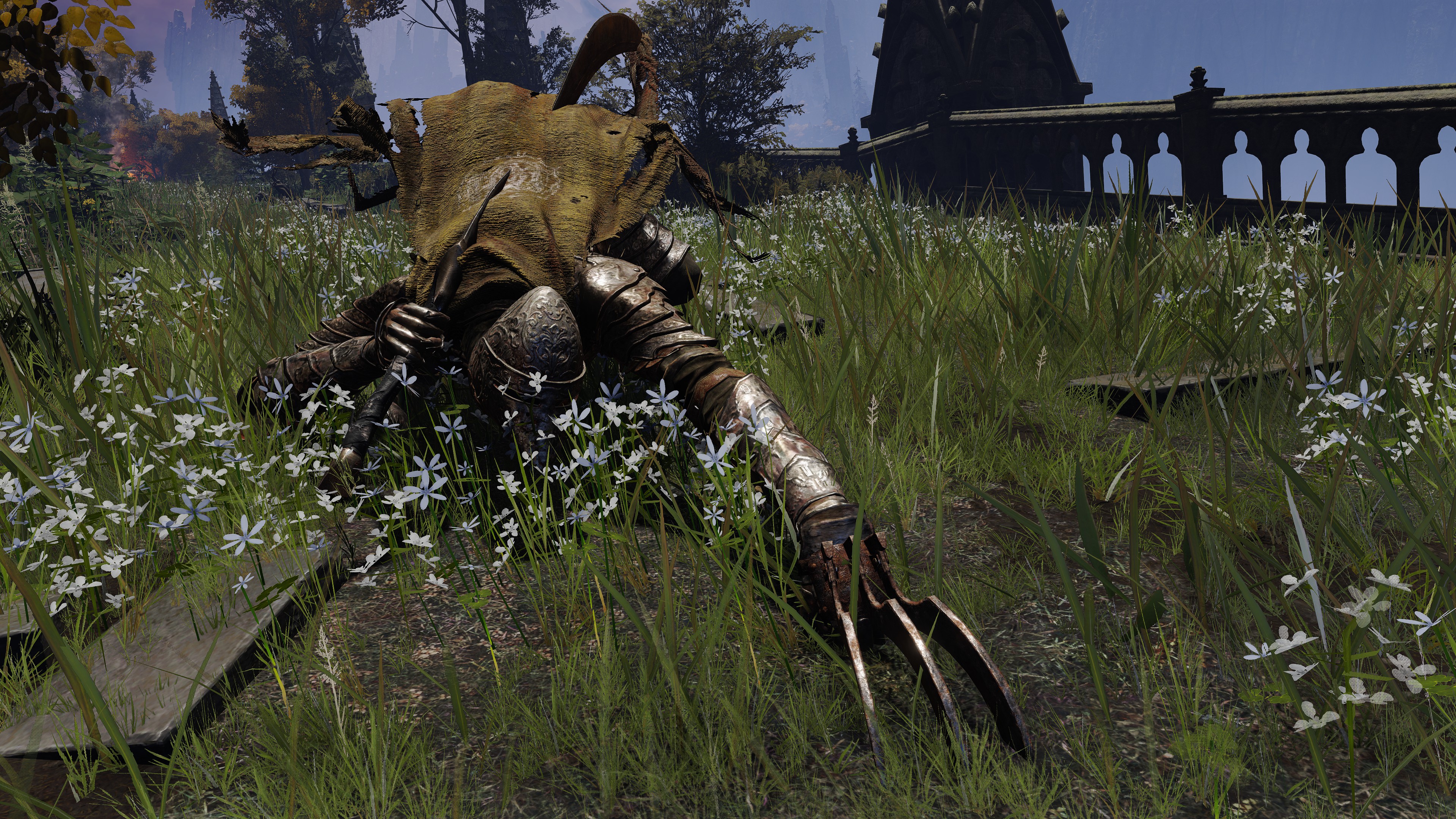
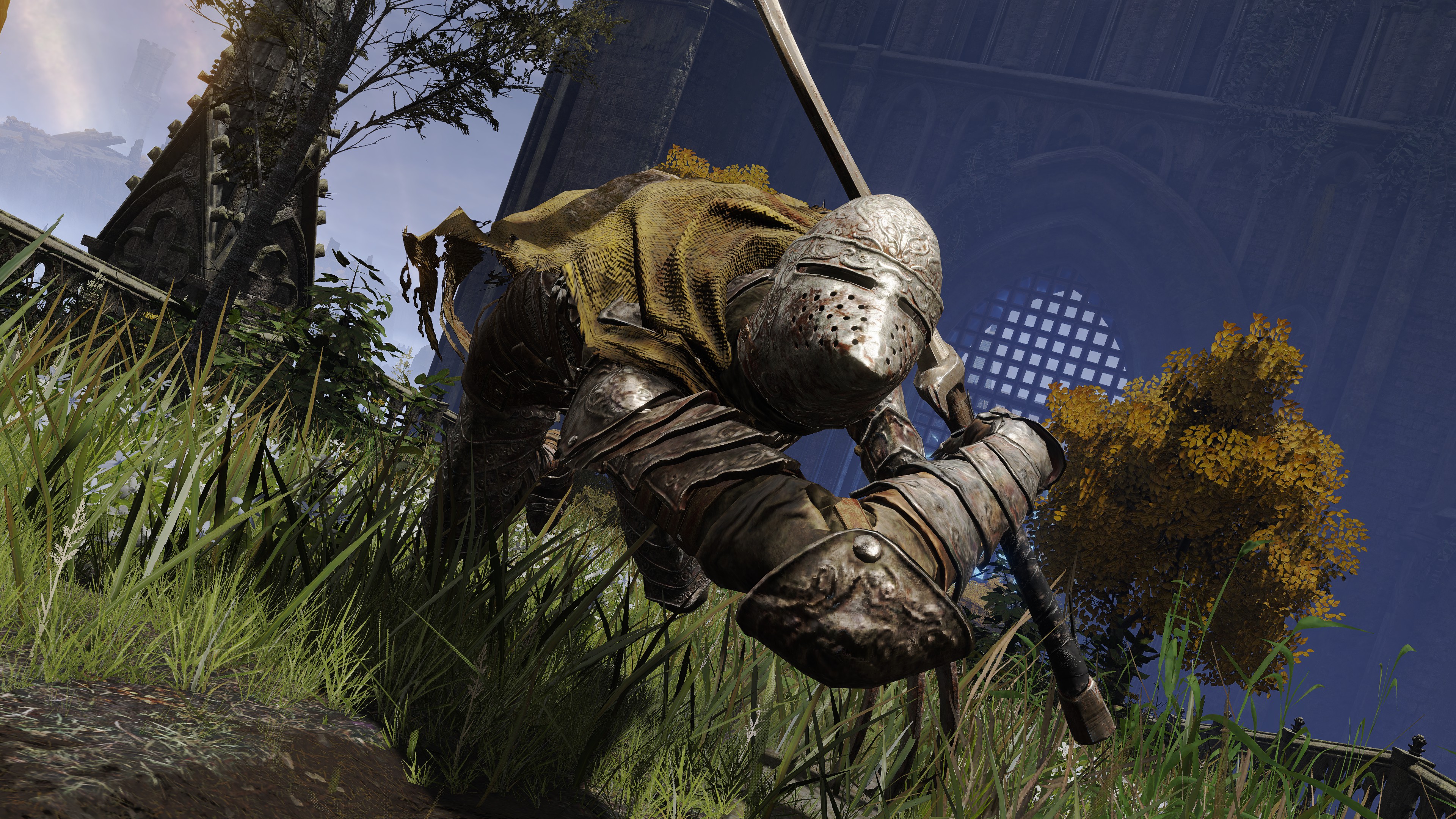
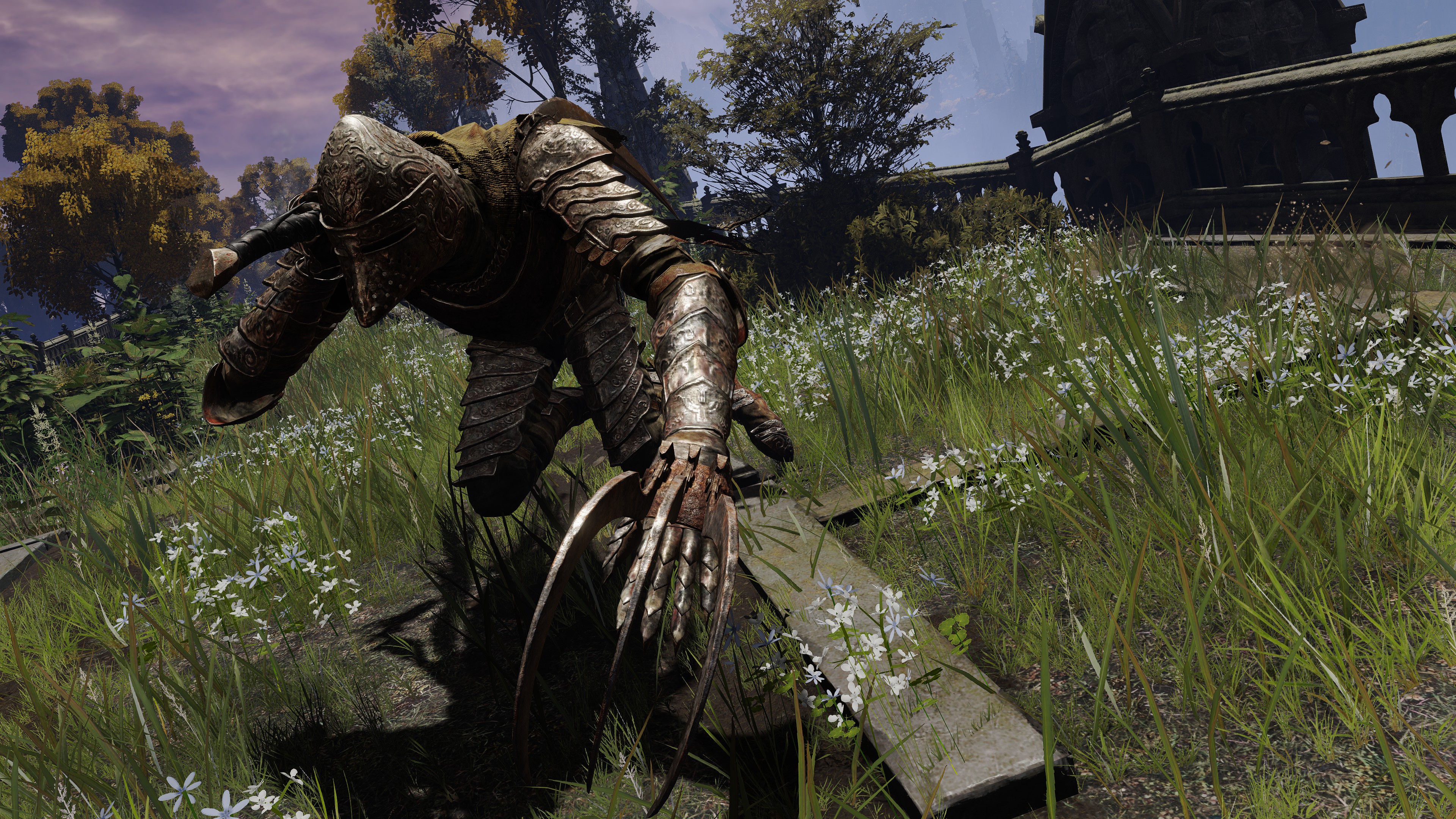
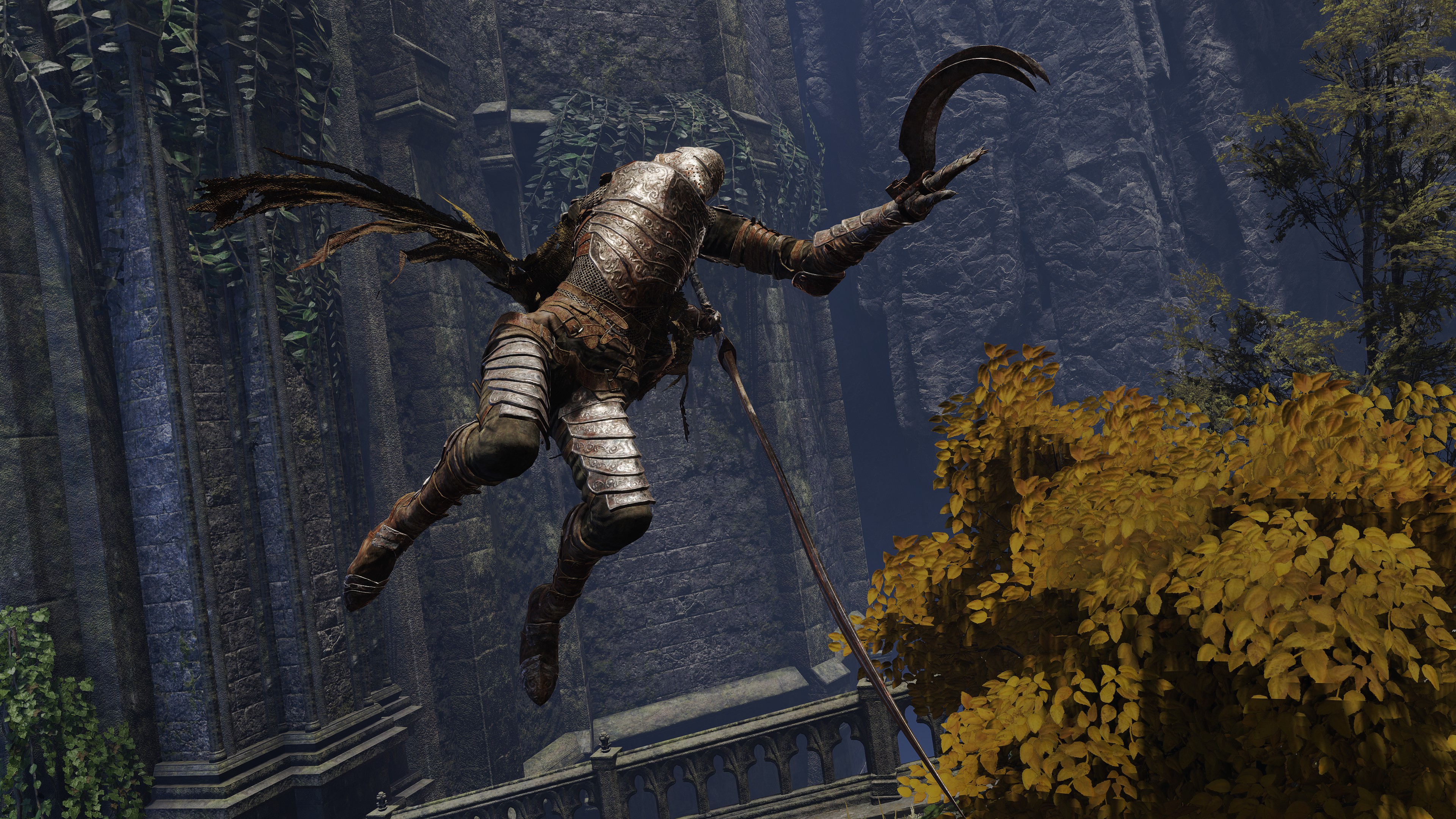
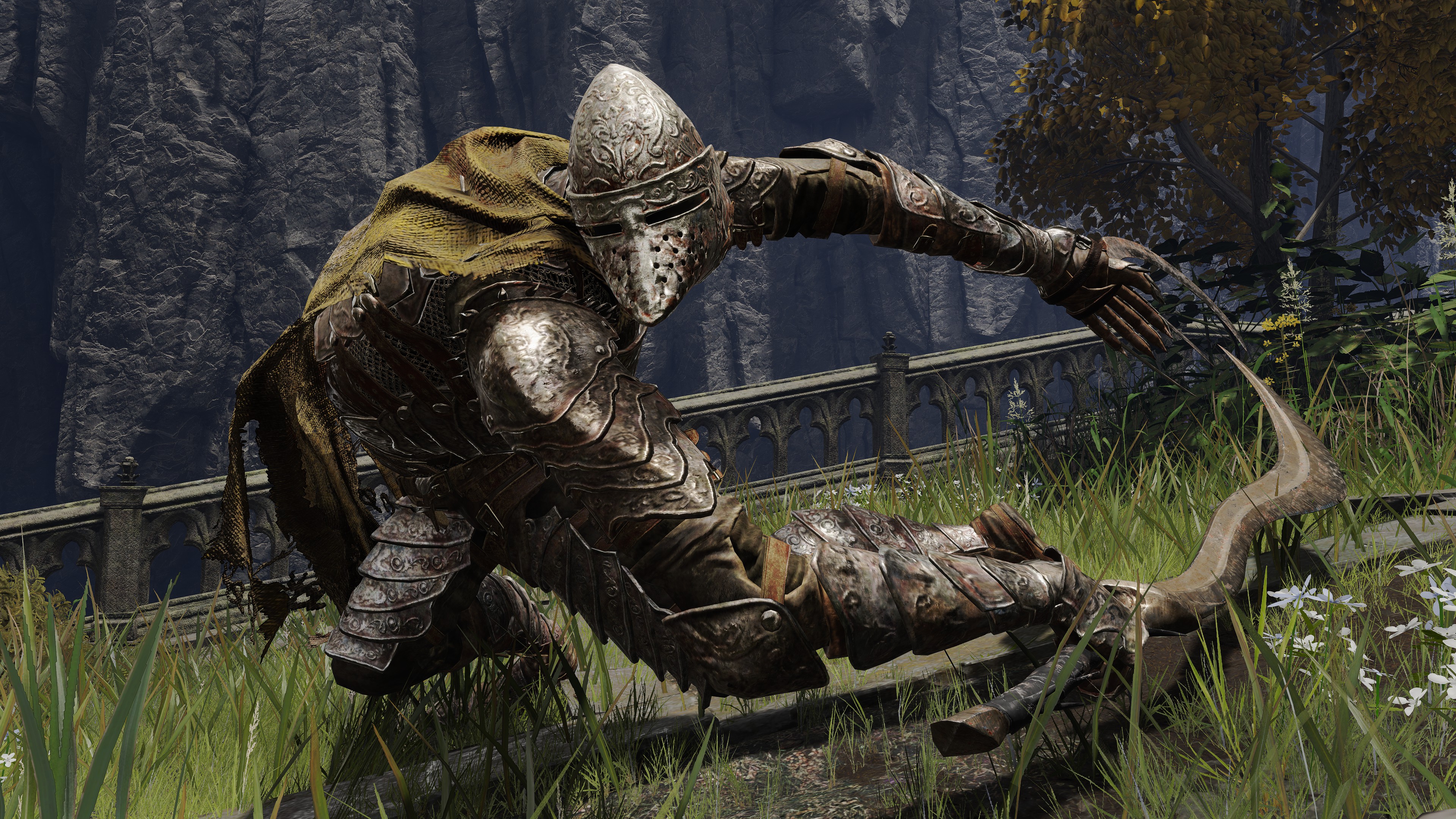
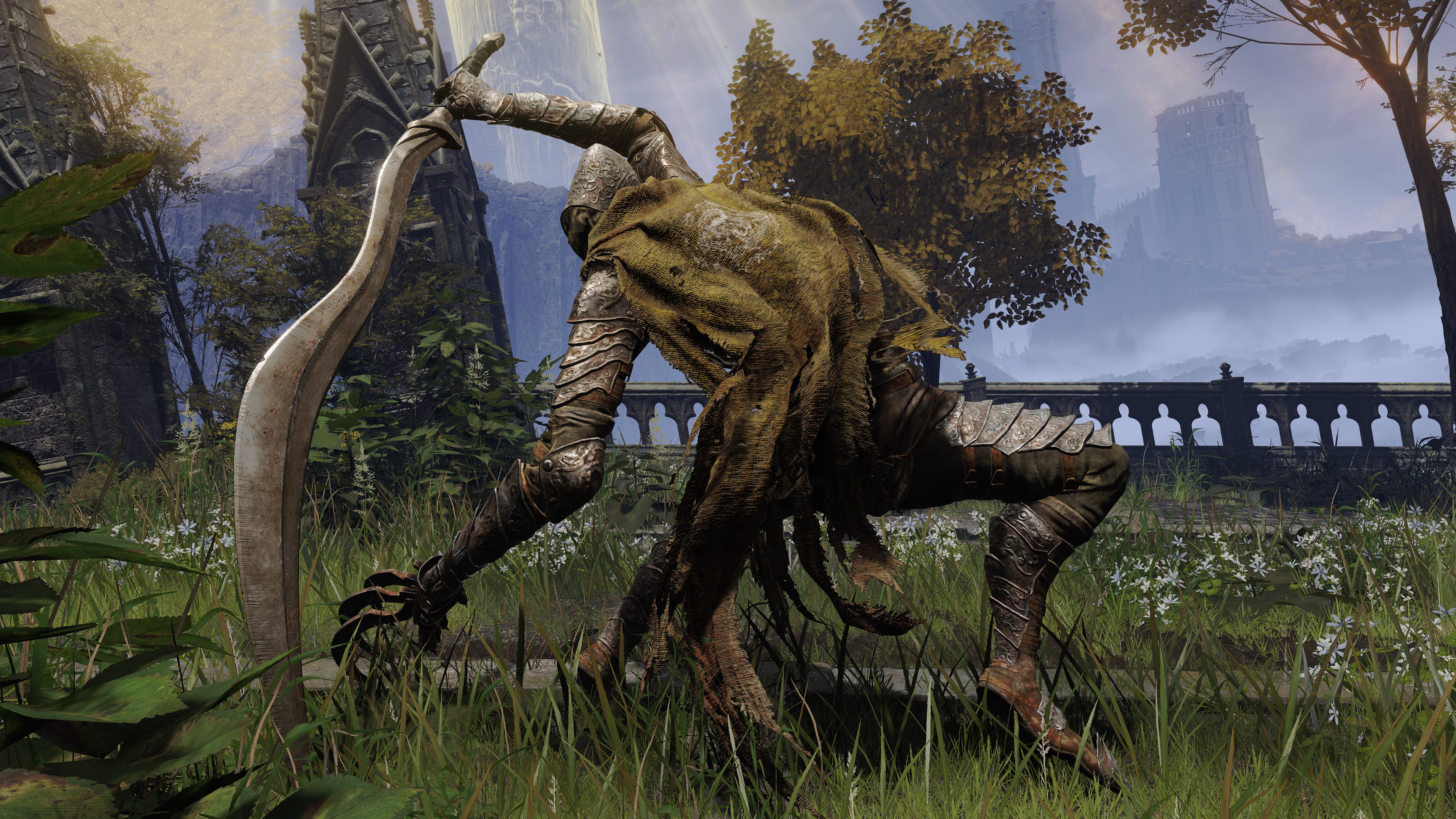
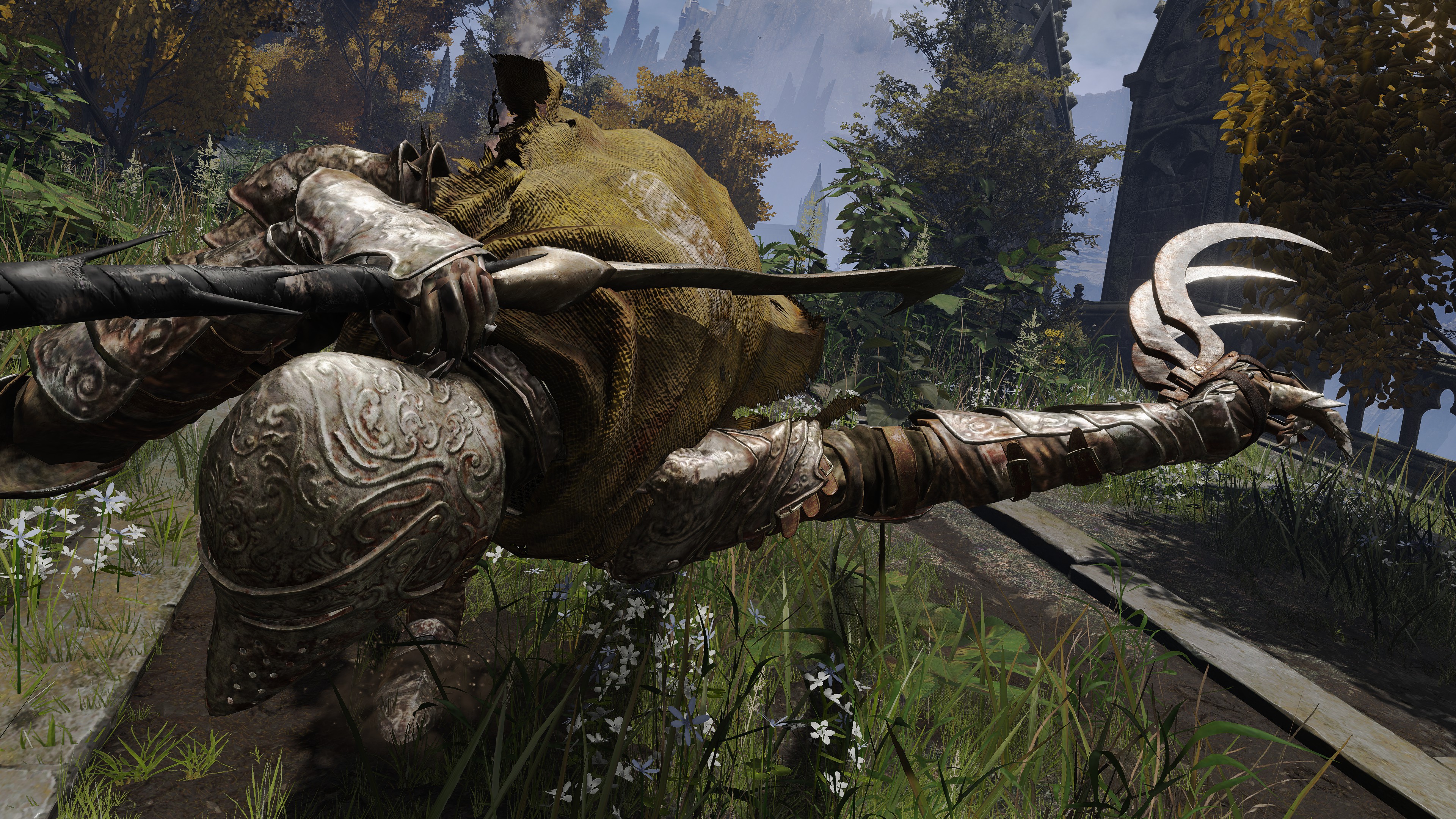
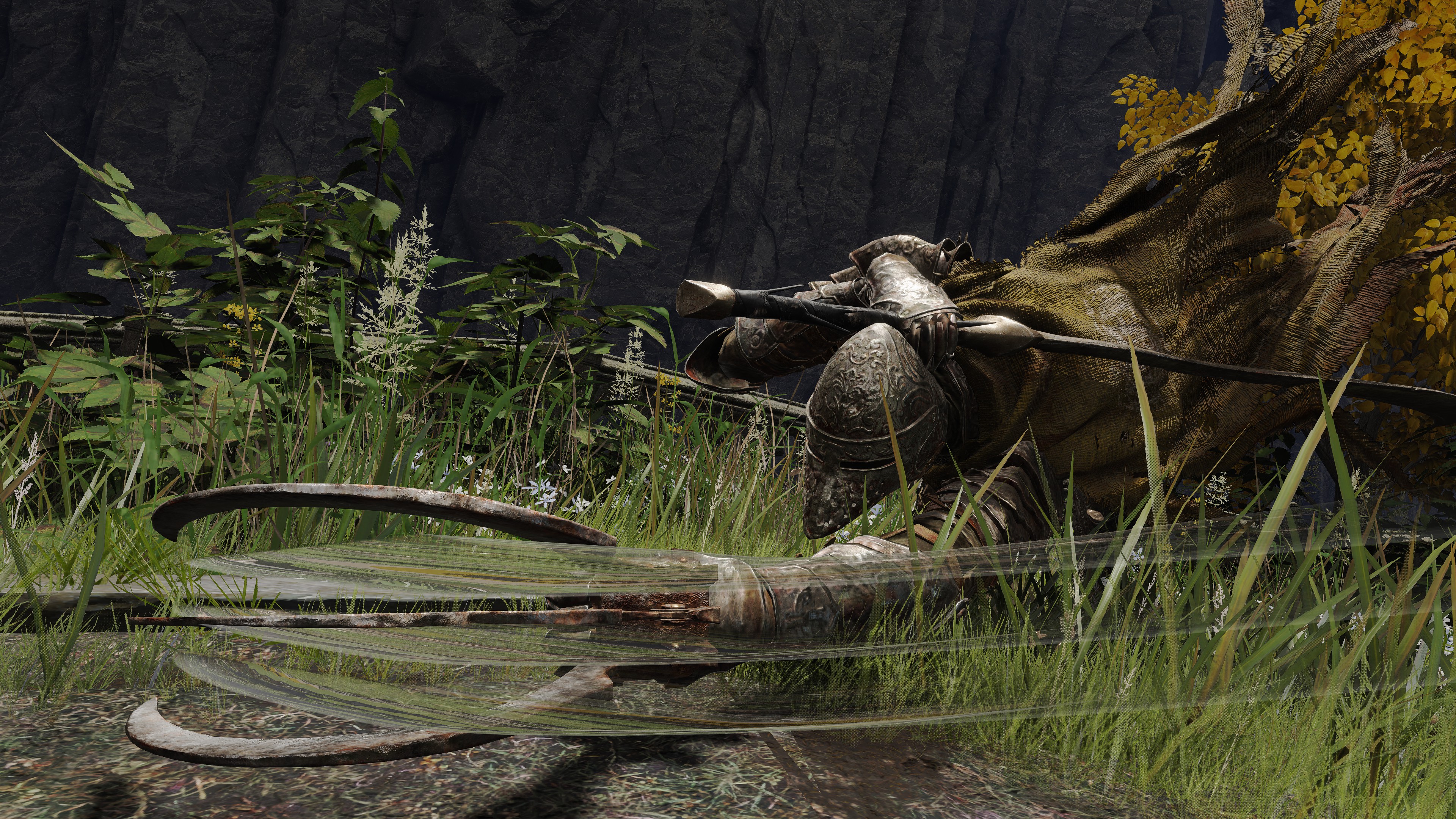
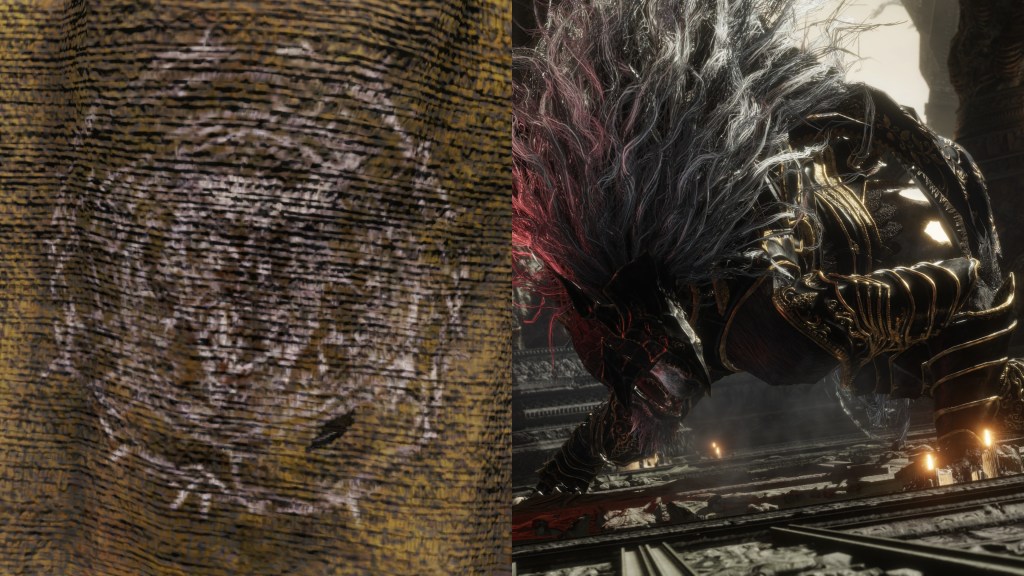
That such knights receive training to become able, if beast-like, warriors demands that someone first learn the ways of the beast and teach it to others. As to why, it might be answered by the crest on their cape, featuring a canid within rings of thorns. Since briars are a mark of punishment for sin in the Erdtree kingdom, then the knights must view themselves as either the sinners or the punishers. And when it comes to beastmen associated with punishment, none better fit the bill than Maliketh. Stories of the vassal beast who faithfully served Marika all his life spread far and wide, especially after he heroically punished rebels who blasphemed against his master and became Death of the Demigods. Many before Vargram had assuredly heard these old legends and were inspired to become the loyal wolf of another. In other words, the Bloodhound Knights may have emerged to emulate that hero of legend.
This is consistent with their few known names. Darriwil and Floh are Japanese renditions for the Darriwilian and Floian stages (ダリウィル and フロー) of the Ordivician Period. Considering that said period inspired the name of a Crucible Knight, it begs questions of a connection to Ordovis or his order. However, the Bloodhound Knights don’t necessarily serve the Golden Order, donning mundane metal armor while employing no magic. Therefore, the names best serve to root them in that broader Age of Plenty, the period when Maliketh’s legend rose to prominence. In a time when manifesting animal traits put people on a pedestal, it is no surprise that some denied the physical transformation would adopt a behavioral transformation instead. Like the Crucible Knights, their entire identity remains tied to a bygone era that celebrated a fad. All it took was word of one person in the kingdom studying dogs or wolves for a bunch more interested individuals to flock. Each learned the ways of the canid, acquired some equipment, and went on his way to find a master somewhere in the Lands Between.
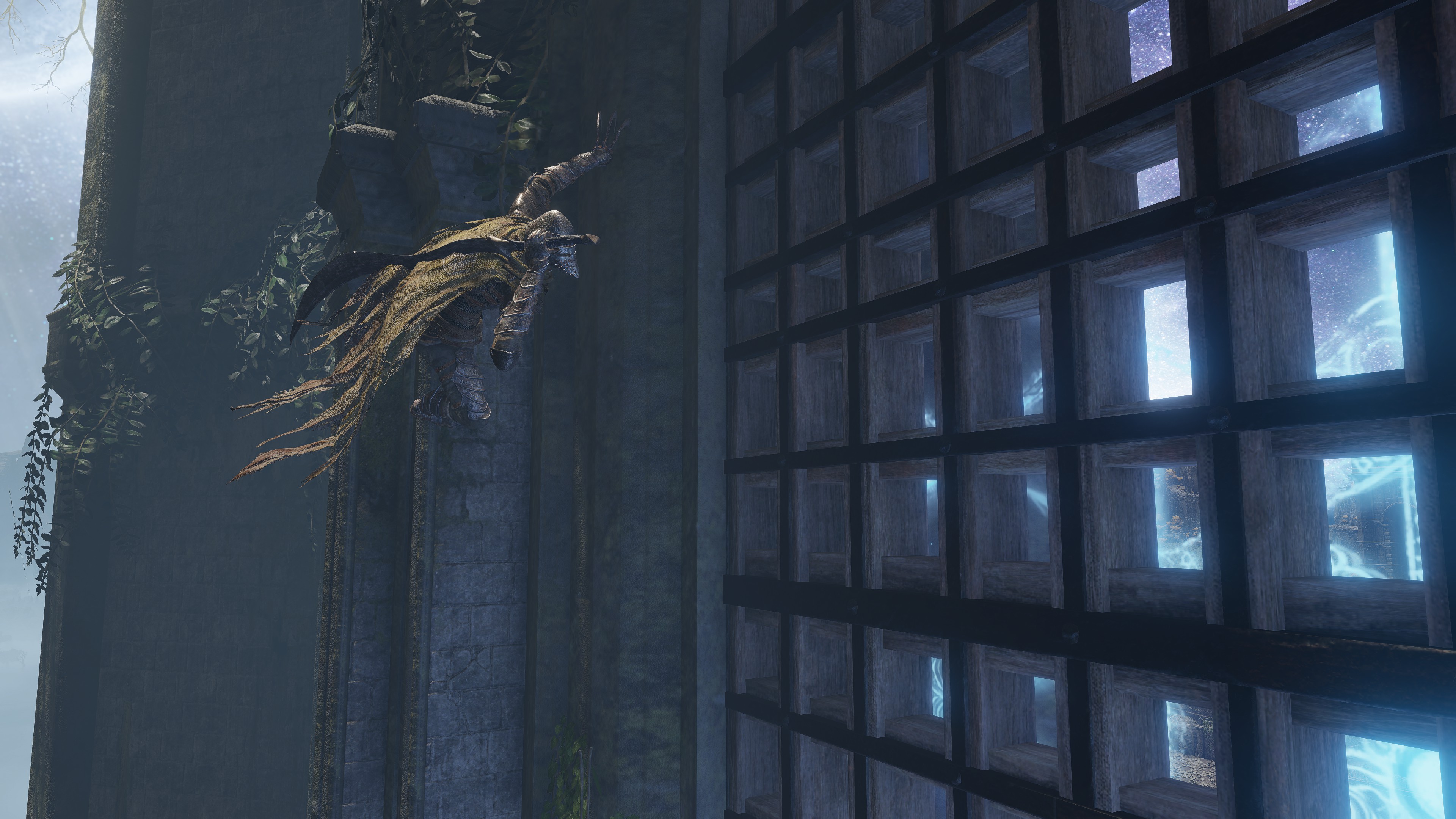
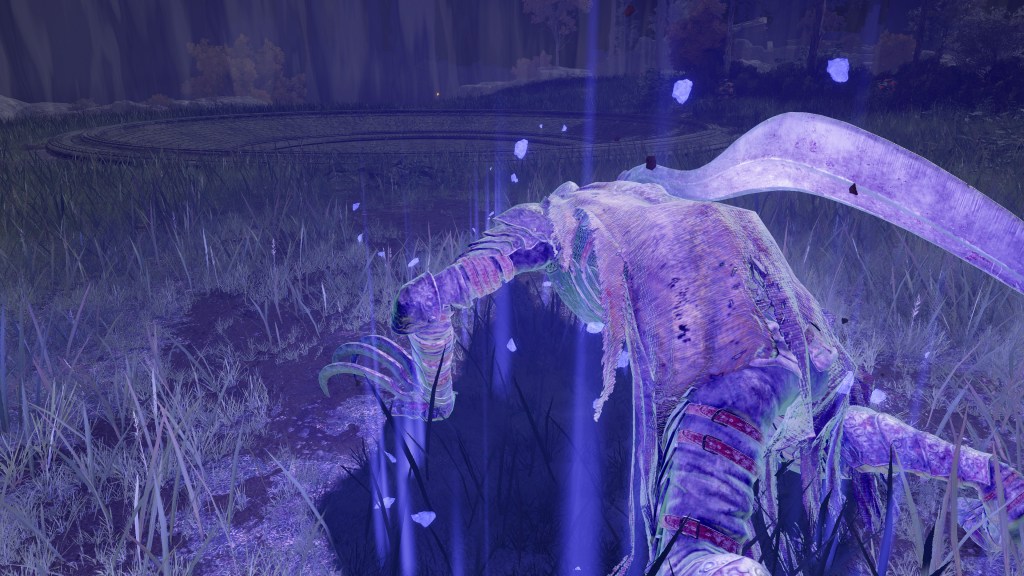
Their choice doesn’t always arrive briskly. One bloodhound chose Rennala back during her hero days, swearing an oath invoked during her boss fight. He may be the same hanging off the academy’s southern gate, ready to ambush infiltrators; evidently, the students imprisoning his charge didn’t explain the gate’s seal to him either. Another knight keeps watch over the sorcerer jailed in the Swamp Lookout Tower, preventing the secrets of Eternal Darkness from spreading for Sellia’s peace of mind. Others could only make their choice later, like the hound serving Gideon. He has ruthlessly guarded the way to Latenna at the end of Lakeside Crystal Cave per the All-Knowing’s wishes. Then there is the ash of war for Bloodhound’s Step obtained from the Night’s Cavalry on the bridge to the Bestial Sanctum, a knight clearly tracking down Gurranq in the hopes of learning from the actual vassal beast if not serve him — at least until he crossed paths with the hand of the Fell Omen. Even Tanith keeps a hound to prevent guests, her daughter especially, from discovering the hidden side to Volcano Manor.
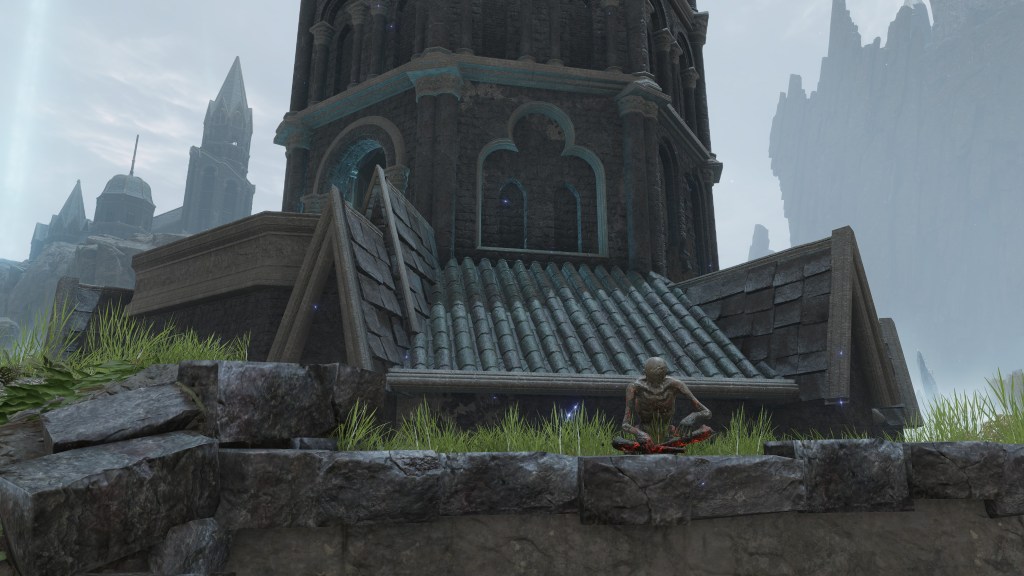
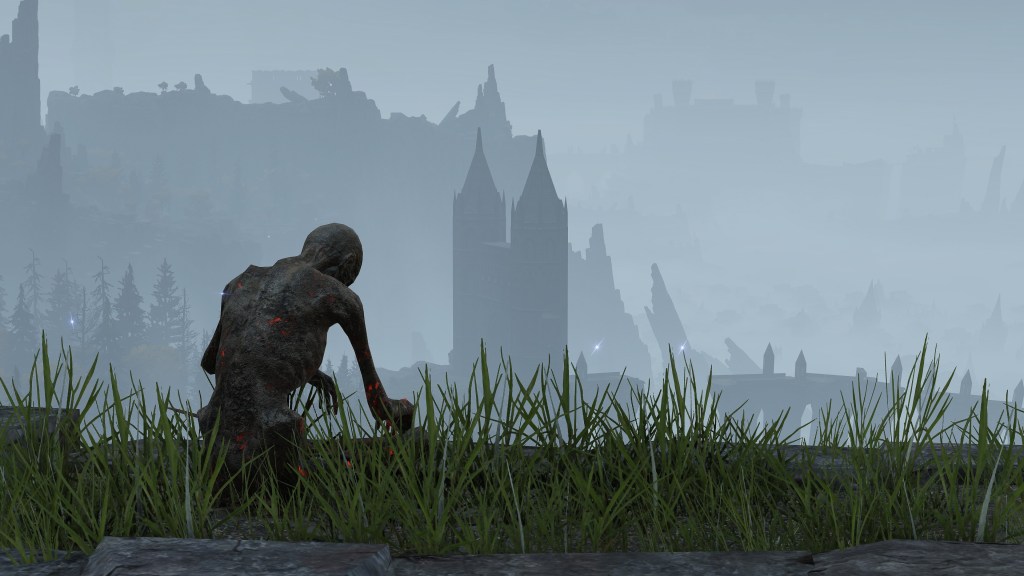
Overall, each bloodhound knight has their own criteria for who they wish to serve, willing to wait as long as possible before making a lifelong commitment. Floh took this to the extreme. He became regarded as the masterless mad dog, so quick to bite despite being so slow to bark for an owner. That is because Floh swore only to serve the person who would be the next King, which was impossible to foresee during the smooth transition from Godfrey to Radagon. After the Shattering, he finally got an inkling. We receive his ashes for defeating the red wolf watching over the root sanctum in the Gelmir Hero’s Grave, suggesting that Floh joined the escort to Rykard’s party exploring the grave. We do find another bloodhound knight sitting over the body of a Gelmir knight, doubtless a traitor to his demigod master that needed to be cut down. Floh, however, didn’t yet commit to the Serpent King ushering in a reign of blasphemy, which proved wise with how Rykard fell off the path. Instead, he latched onto the wolf who did serve a future king, inspiring an affinity that would see him returned to the roots after death.
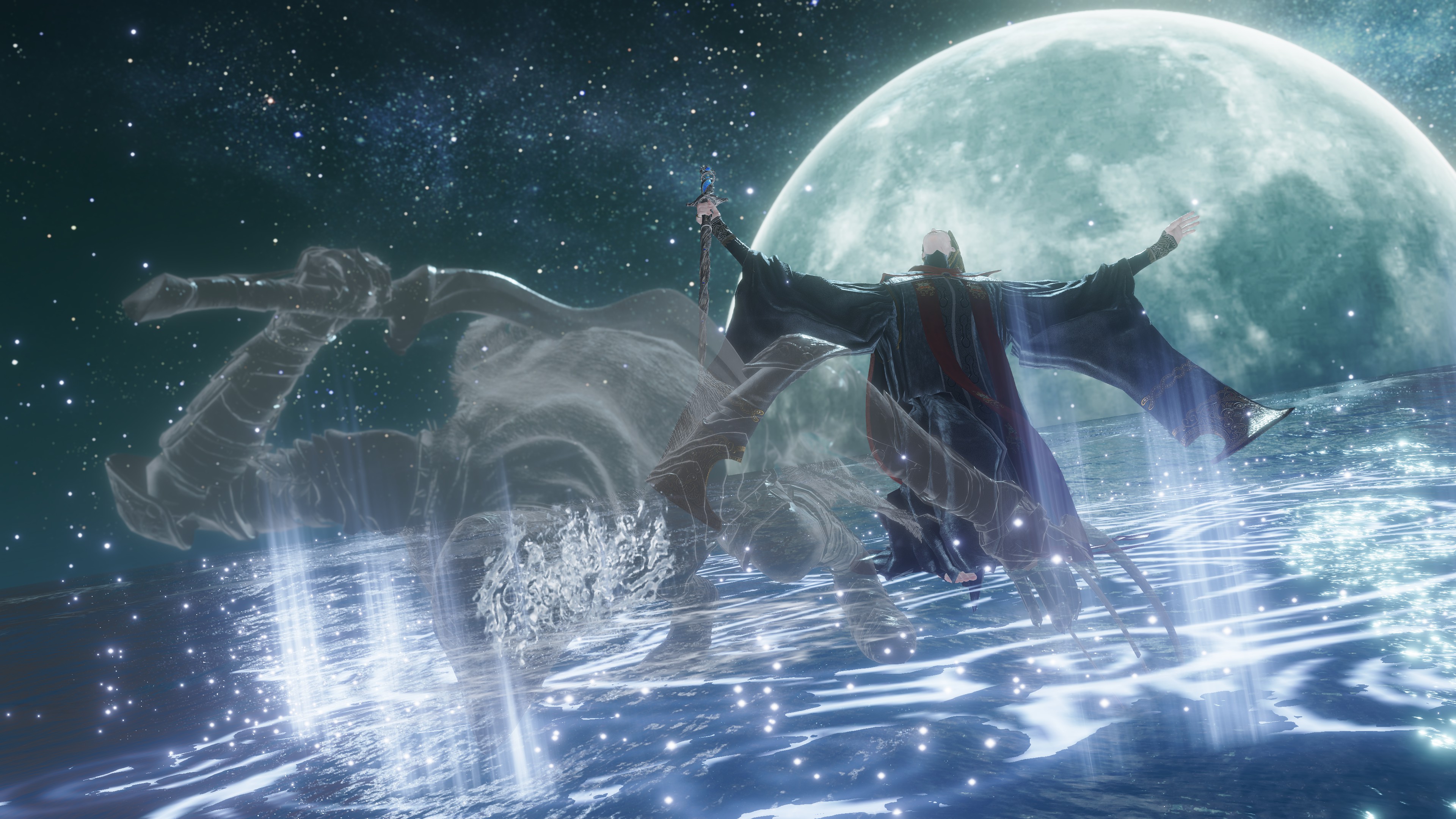
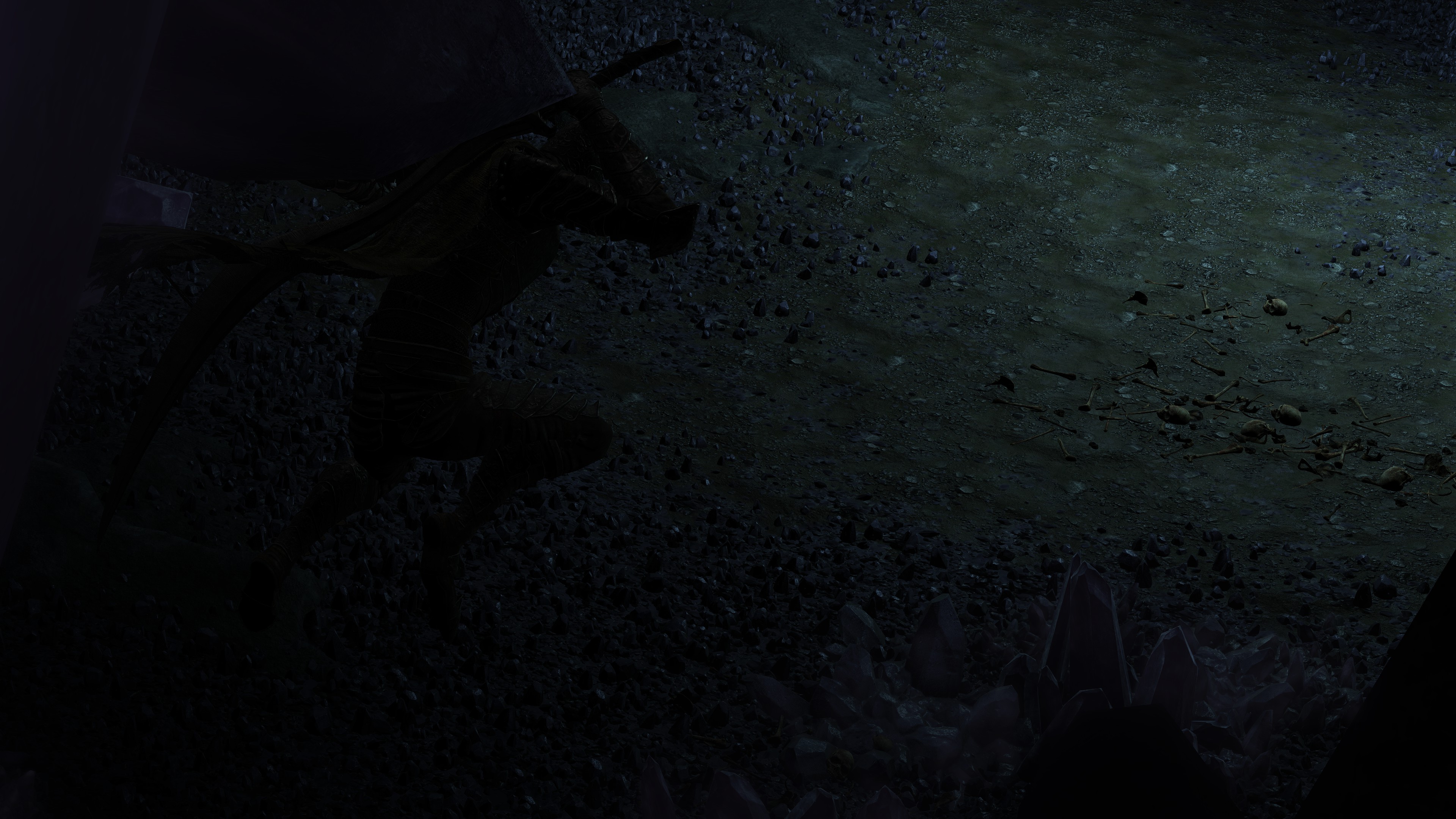
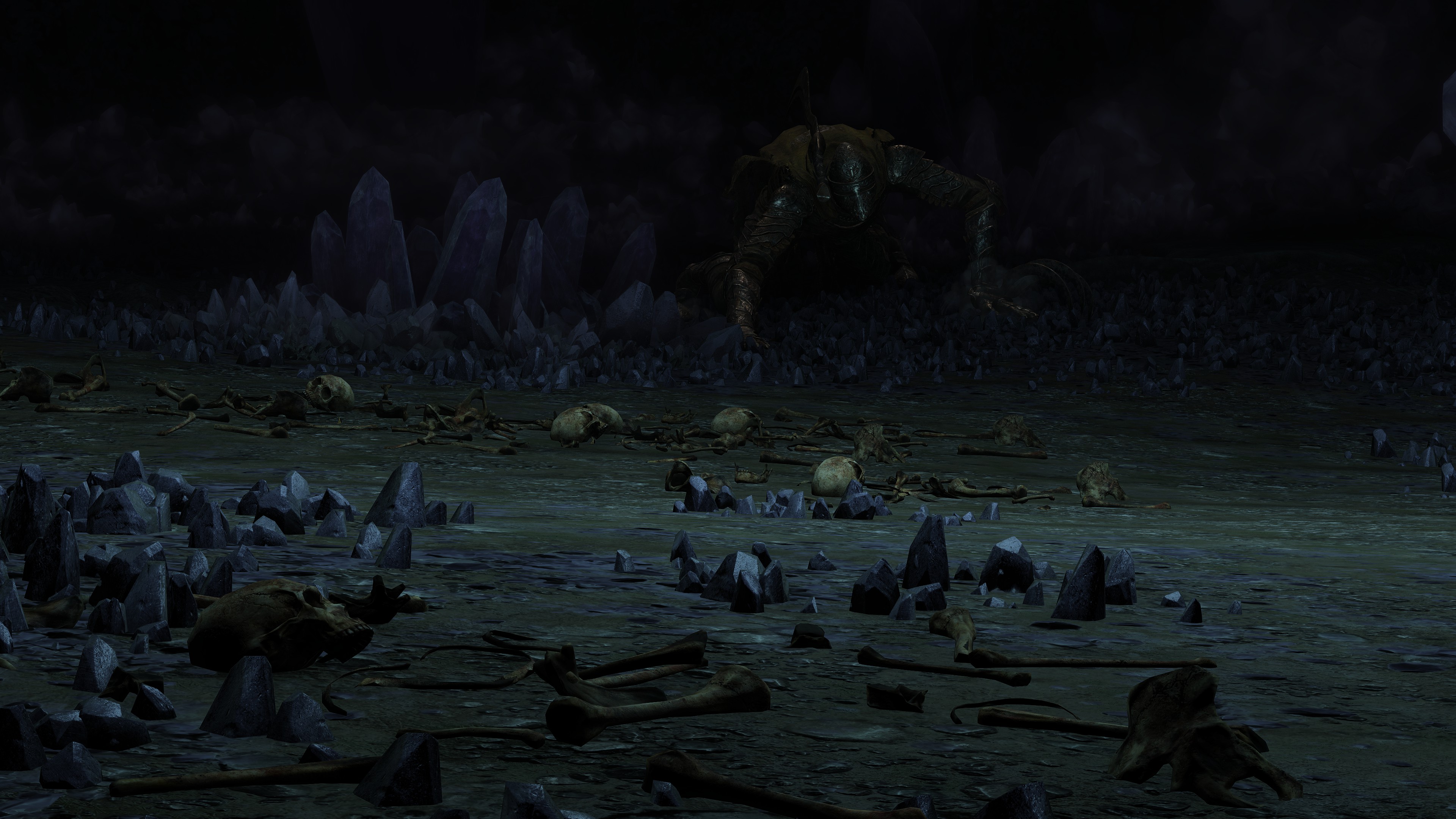
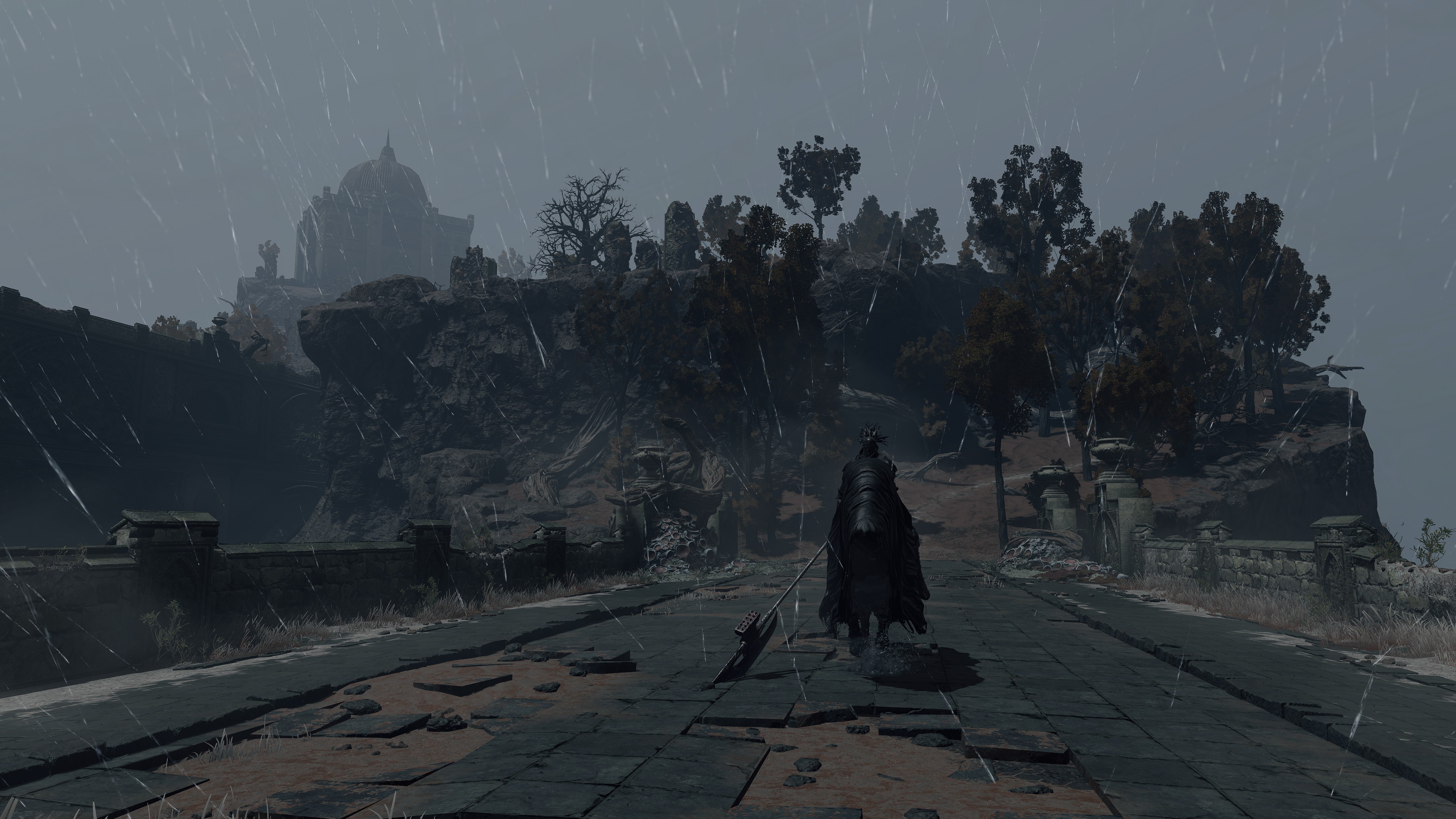
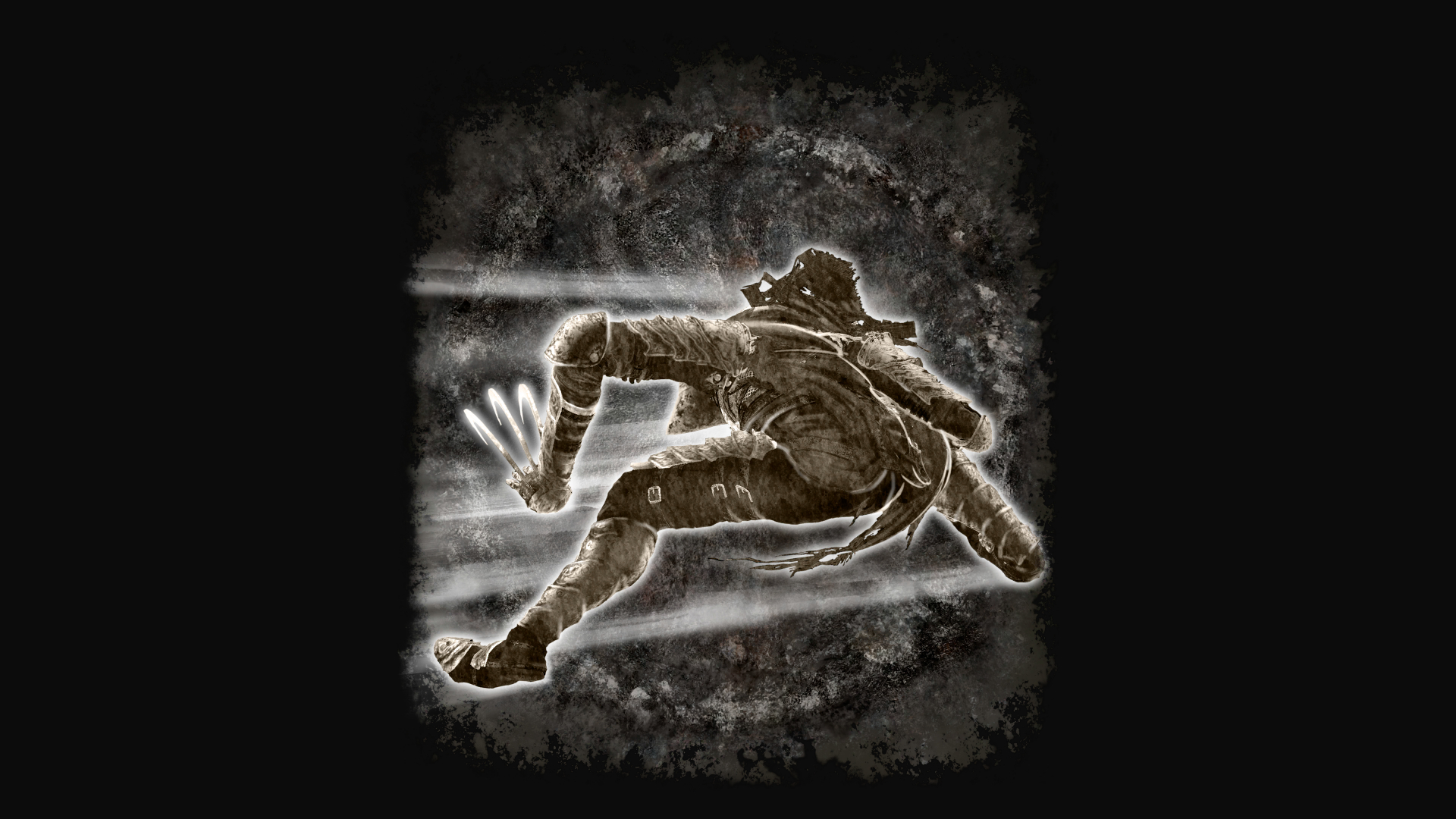
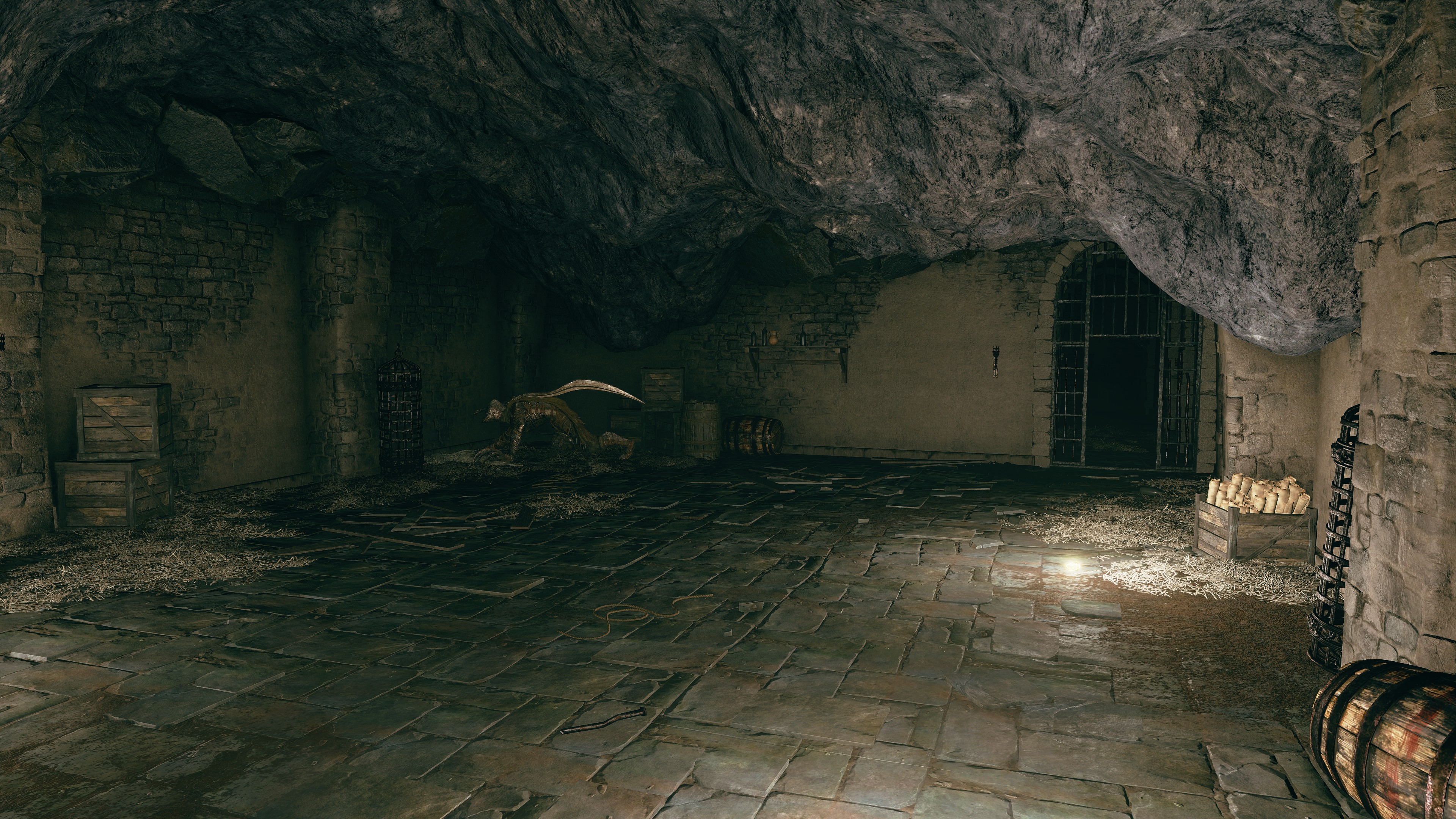
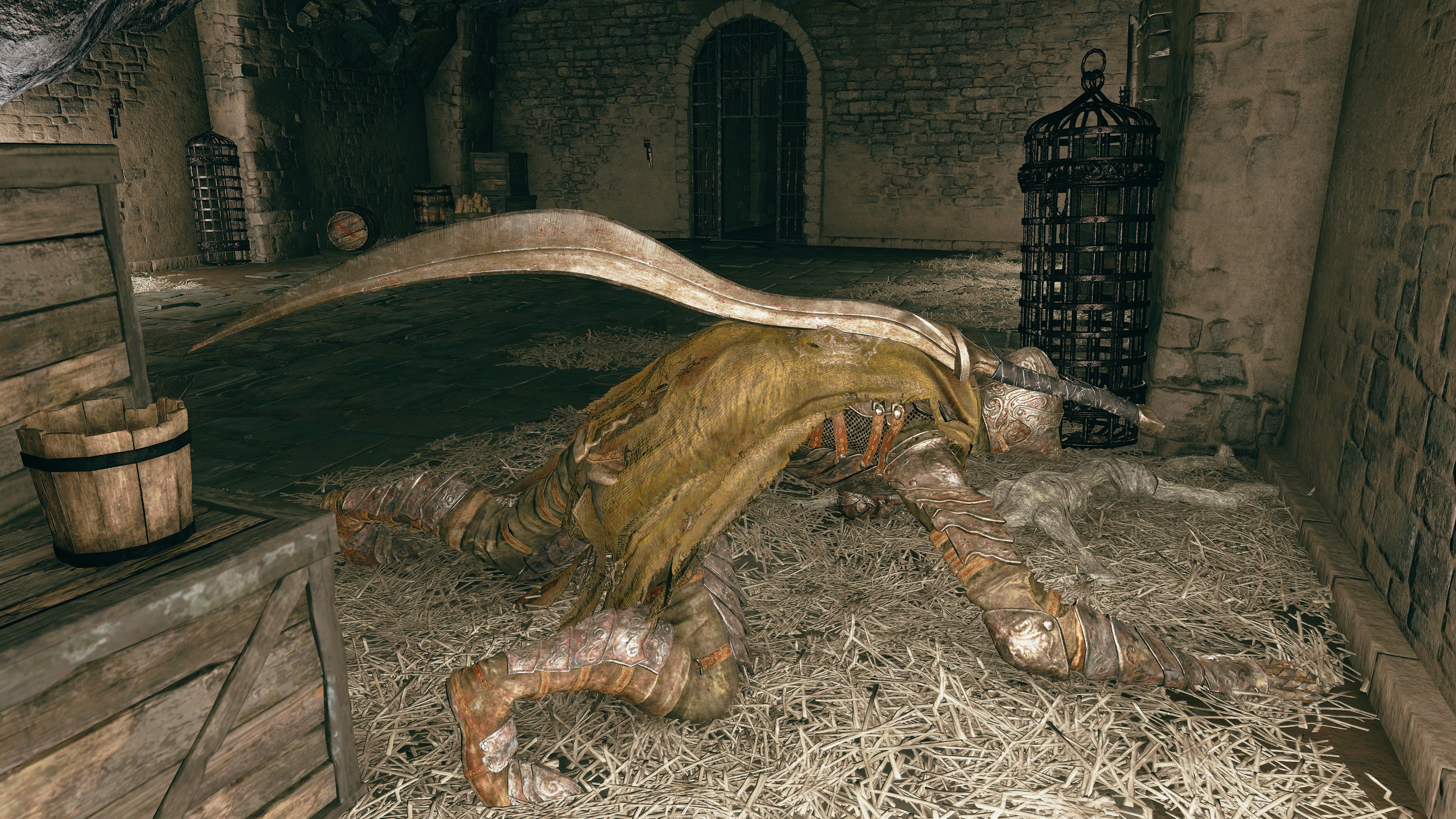
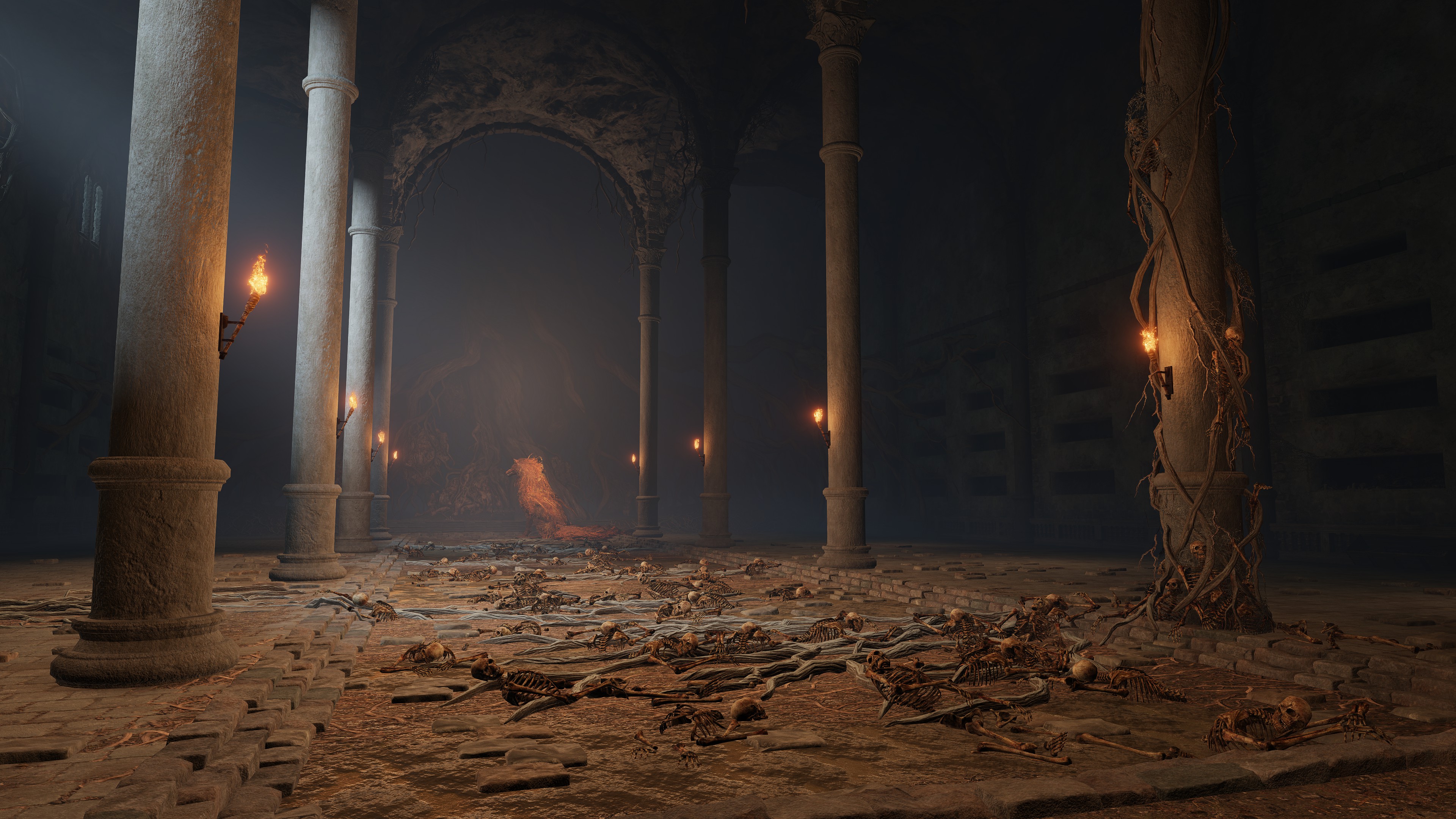
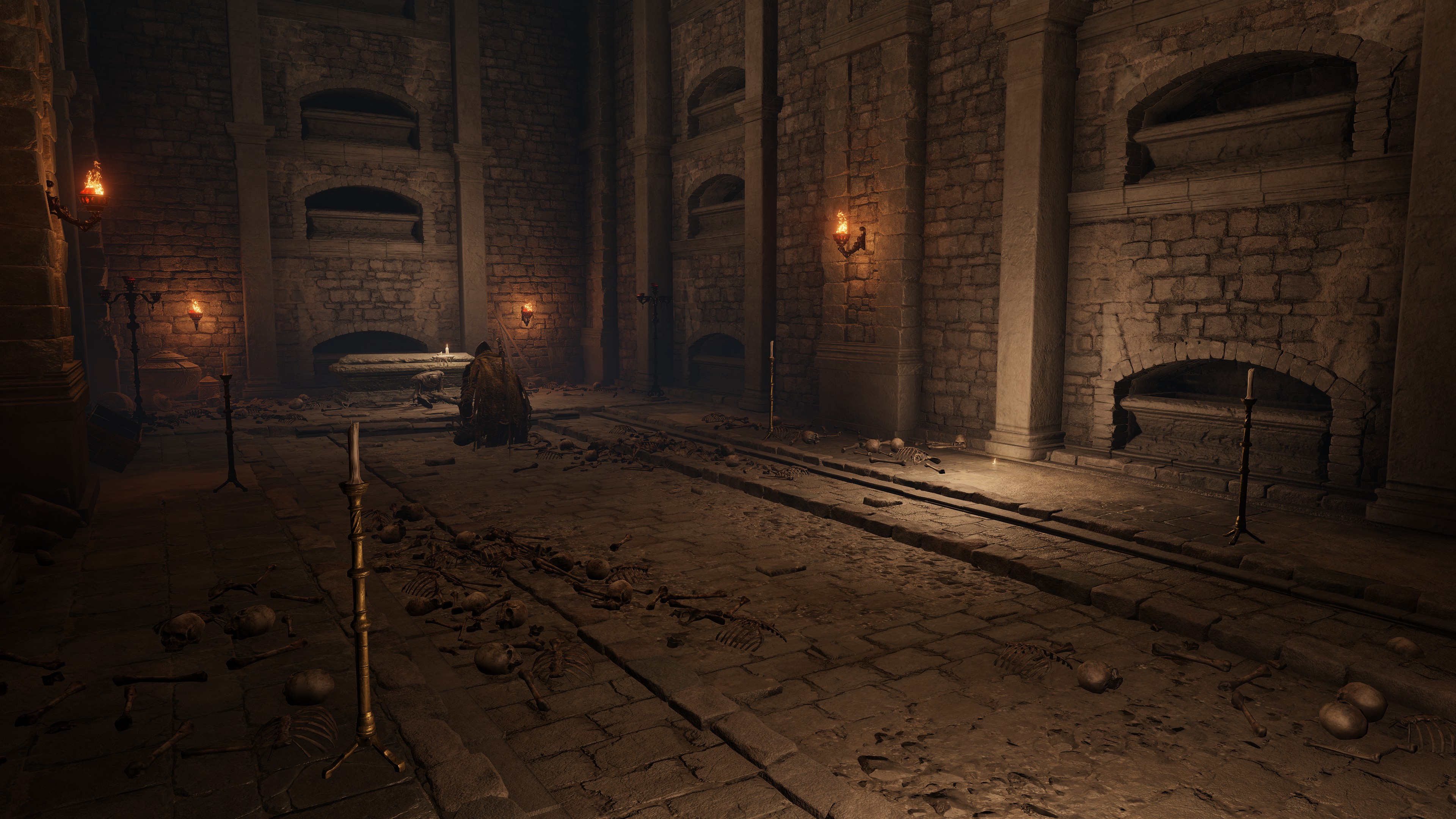
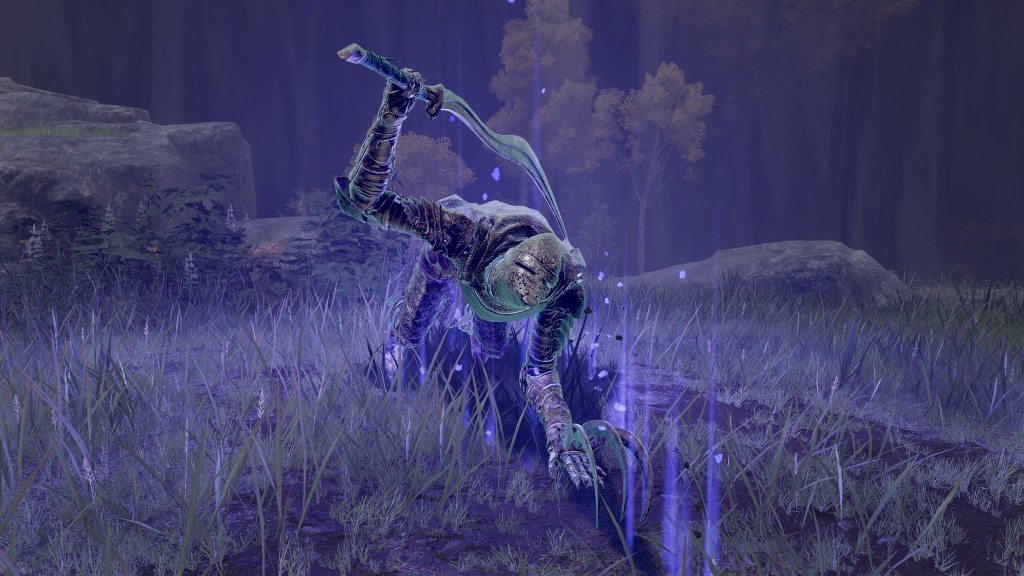
Ashen remains inhabited by spirits. Summons Floh, Hound Knight, spirit.
Spirit of a hound knight who was called the masterless mad dog. Simply keeps fighting immediately after being summoned.
My master is only the one to be king. Floh swore that. Ultimately, he never met his master.
The respect the red wolf shows its “friend” also highlights how affable the knights can be, wanting only to be a more faithful companion to that one person. Perhaps that is why Blaidd takes Darriwil’s betrayal so harshly, the vassal beast tracking the bloodhound to Limgrave for the purposes of payback with extreme prejudice. The wolf respects the warrior’s abilities in Japanese dialogue, appalled to see the man fall so low as to become sealed in an evergaol. Clearly, the two fought together in shared service to Ranni, comrades whom Blaidd deeply values. For a friend to become his enemy explains the bitterness. But what did he do to betray Blaidd? When killed by our hand, he calls us a traitor, too, worthy of immediate death for threatening Ranni. Therefore, Darriwil must have done the same. It wouldn’t be unprecedented, since an assassin did disguise himself as Blaidd with an accurate mask to get close to the witch without raising suspicion. In fact, that assassin might well have been Darriwil.
I’m Blaidd. I am currently searching for a man called Darriwil. I’ve heard that he took refuge in this land… If you find him, I want you to call for me. I’ll even promise a little reward.
… Darriwil is a traitor. He needs a suitable end.
… Darriwil. To think a man of your caliber ended up becoming a seal-cell revenant… Begone.
… Damned traitor. You’re a danger…
… Well, fine. If someone poses a threat to Ranni sooner or later, might as well kill them sooner…
Given the nature of a Bloodhound Knight’s loyalty, it is unlikely that Darriwil actually thought of the wolf’s master as his own. The mask is likewise looted from atop the wall behind Seluvis’ Rise, hinting that the assassination attempt was another one of the professor’s schemes to subvert the Carian princess. Moreover, there is the clarification that it is a “relic”, an item left behind by the perpetrator. Where did that perp go? Typically, ihin (遺品) refers to keepsakes left after death, though it also labels general lost property. In that case, it is possible property lost to a runaway bloodhound hiding out on the frontier — the same frontier that Seluvis helped Sellen go into hiding in. Taken together, the good professor may have introduced Ranni’s inner circle to Darriwil as someone interested in becoming Ranni’s knight, when in truth the hound had already sworn himself to Seluvis. The plan was to get close to the group, study Blaidd, then don the disguise to pull off the assassination. When that failed, Seluvis had no choice but to direct his knight to the remote reaches before a connection to him was uncovered.
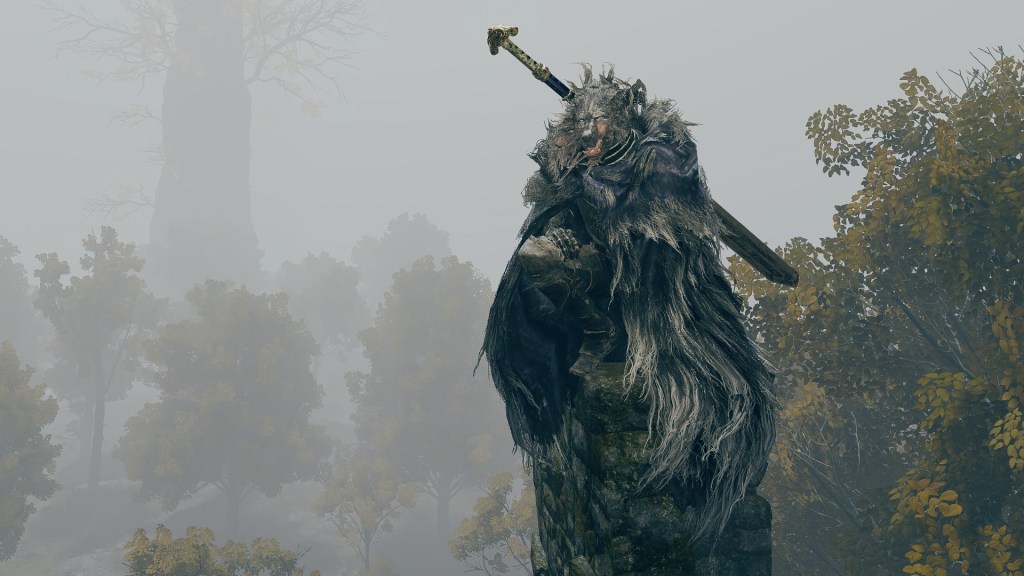
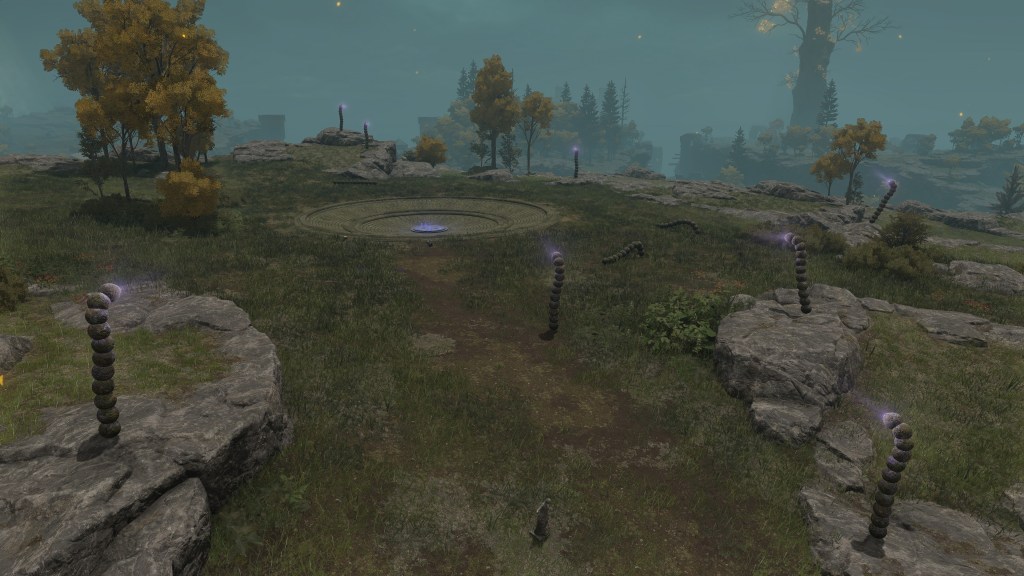
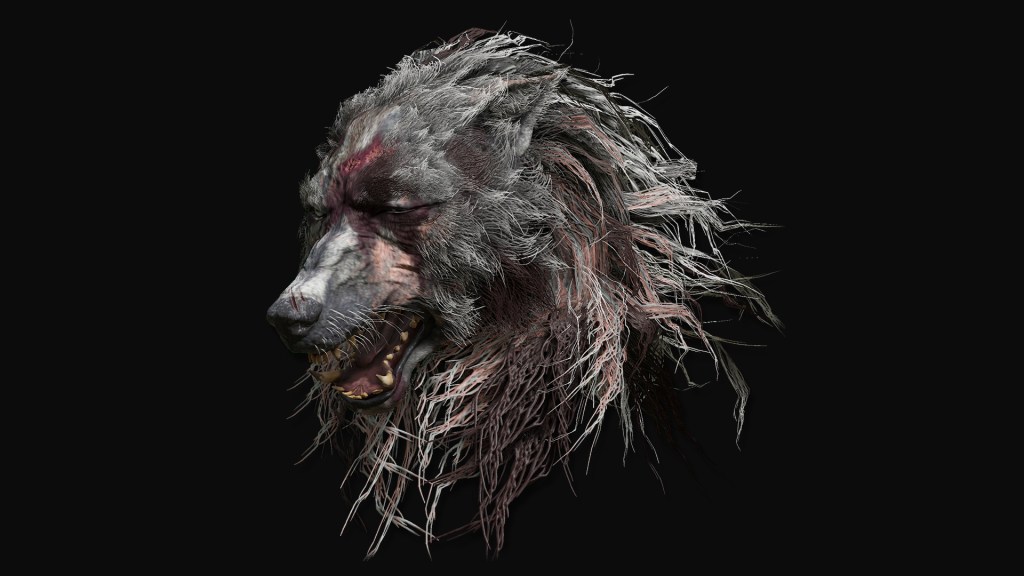
Masked modeled on a black wolf’s head.
Relic of one who once assumed the guise of that shadow vassal and tried to assassinate the witch Ranni. It looks just like the real thing.
If so, then Darriwil chose poorly. The evergaol establishes him as a “masterless hound” (主なき猟犬) and so his place is likely punishment for his failure; Blaidd’s dialogue, at least, casts doubt that he would be imprisoned under normal circumstances. Why the assassination failed isn’t immediately obvious — did Blaidd return from a mission just in time to stop his doppelganger, or was Ranni alerted by subtle differences in the demeanor of her lifelong brother and bodyguard? Whether any of it was Darriwil’s fault matters little at this point. For his loyalty, Seluvis abandoned him as another loose end to clean up. However, that is the failing of all Bloodhound Knights. They choose to make themselves tools of their masters, subjecting their fates to the whims of an owner. Many care not if the tool is broken, as proved to be the case for Marika with Maliketh. When you emulate virtue, you should take care not to also copy its vice. But it is too late for them to learn this lesson — you can’t teach an old dog new tricks, after all.

