
Preface
Considering the limits to the aesthetic of a particular era named for a specific country’s queen, FromSoftware has done wonders to invoke the vibe of a wider world in Bloodborne. Perhaps that shouldn’t come as too surprising when the country of said era was a global empire, with legends like Lawrence of Arabia to draw inspiration from. Still, the world we explore leaves so much history to construe, with cultures as varied as they are alien to us. The glimpses we get go a long way to impressing majesty in what is otherwise a small-scale setting. For that reason, I can forgive the developers’ struggle to express that with such few assets.
Disease of the Dunes
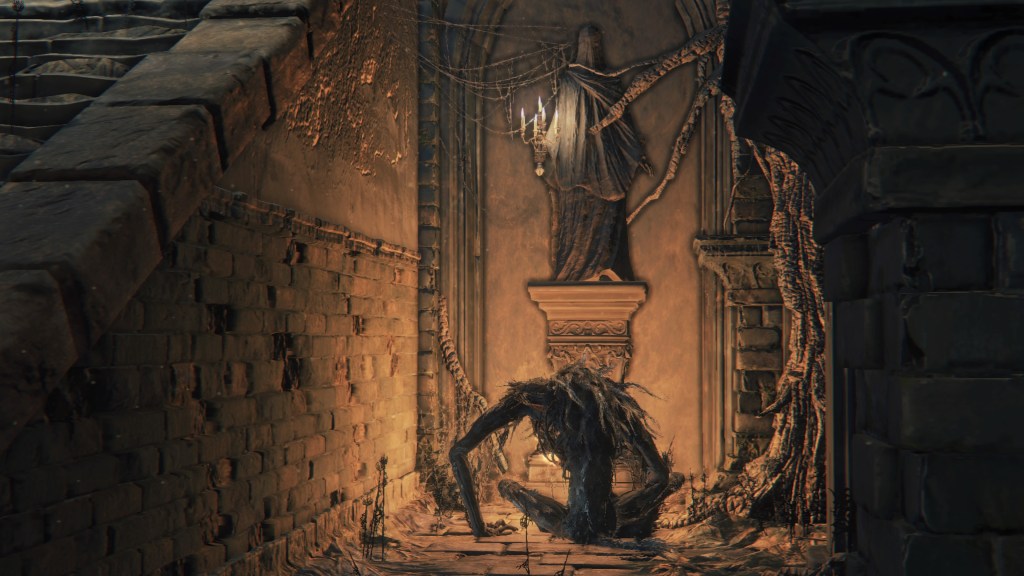
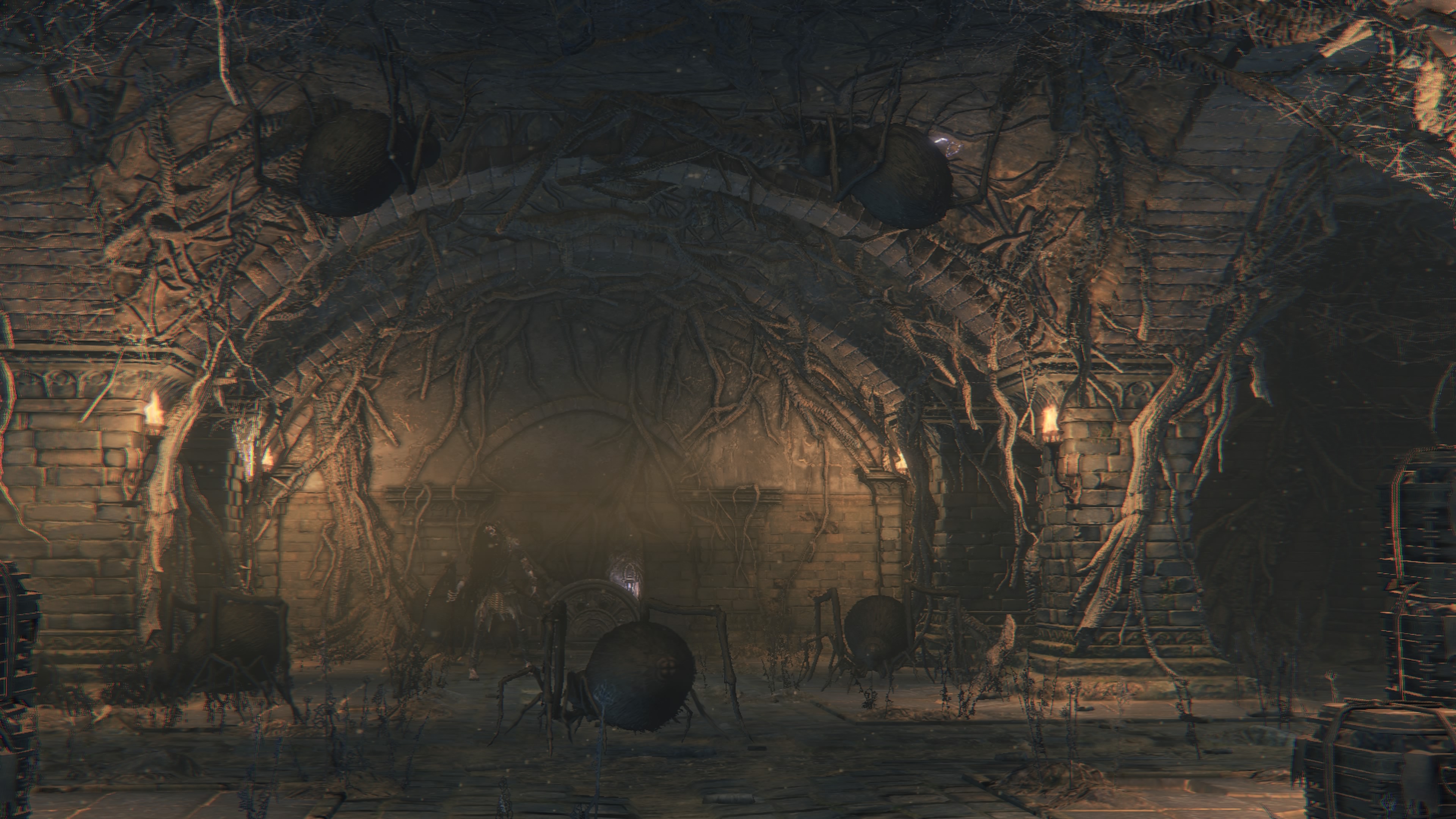
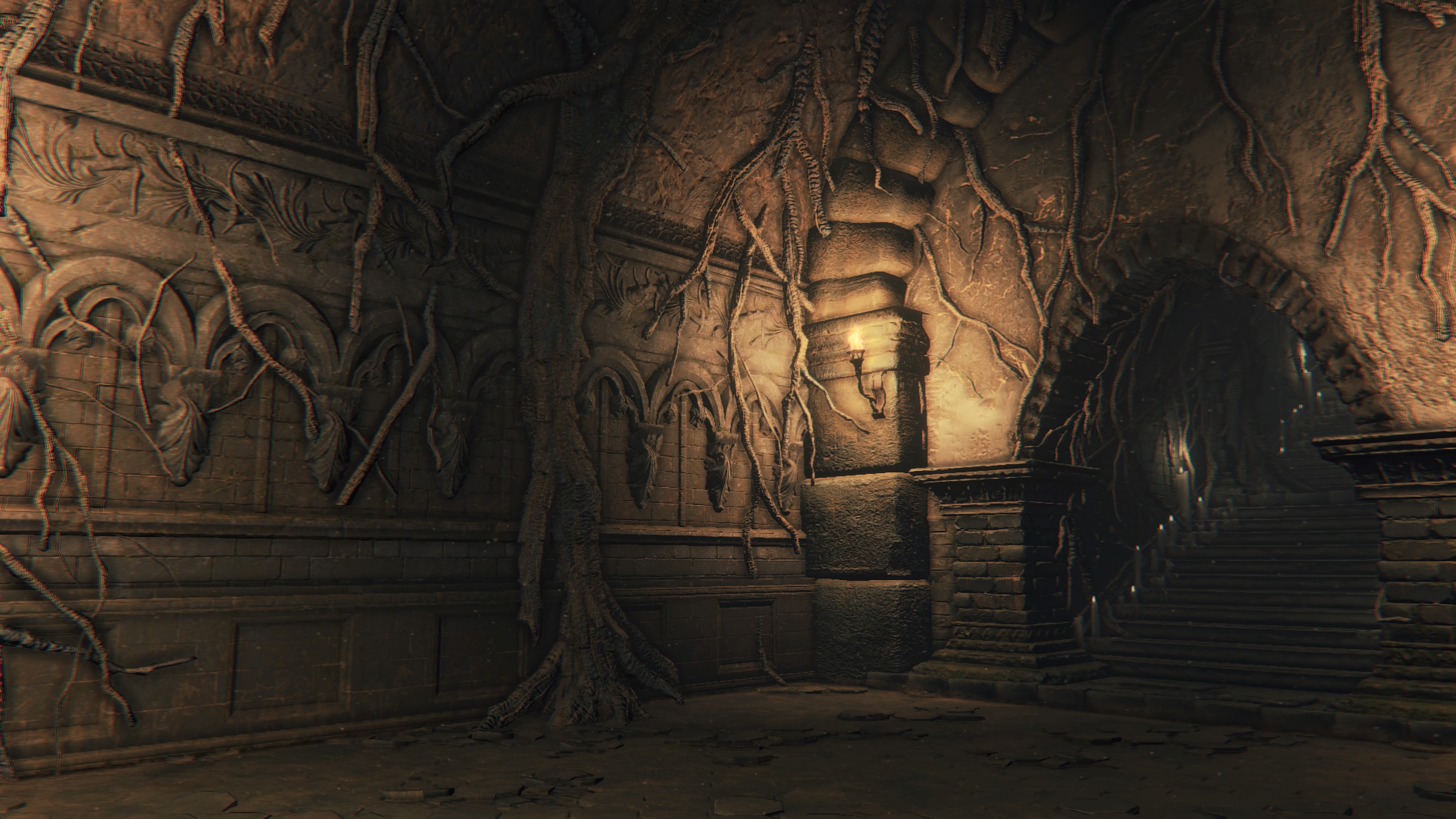
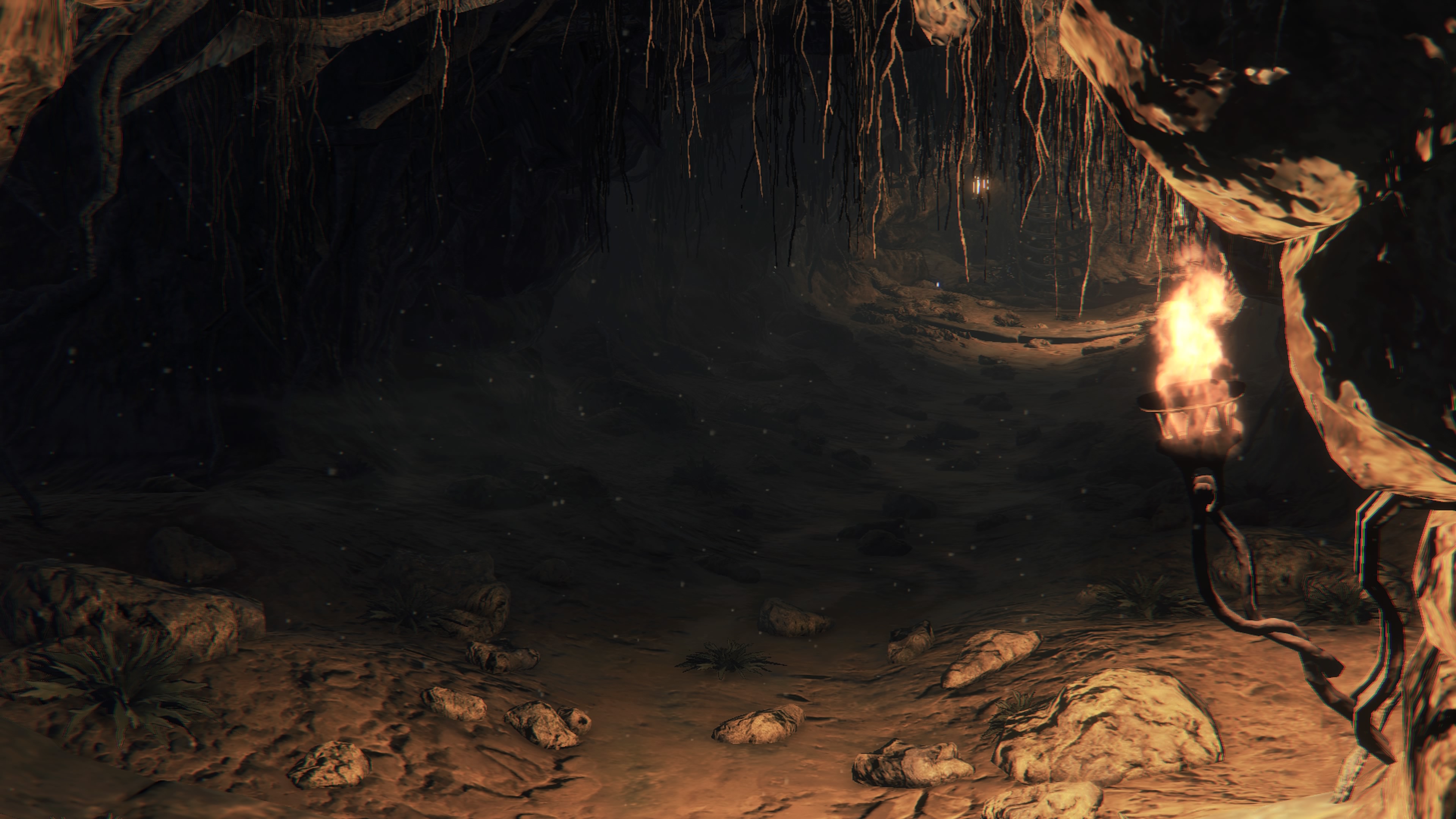
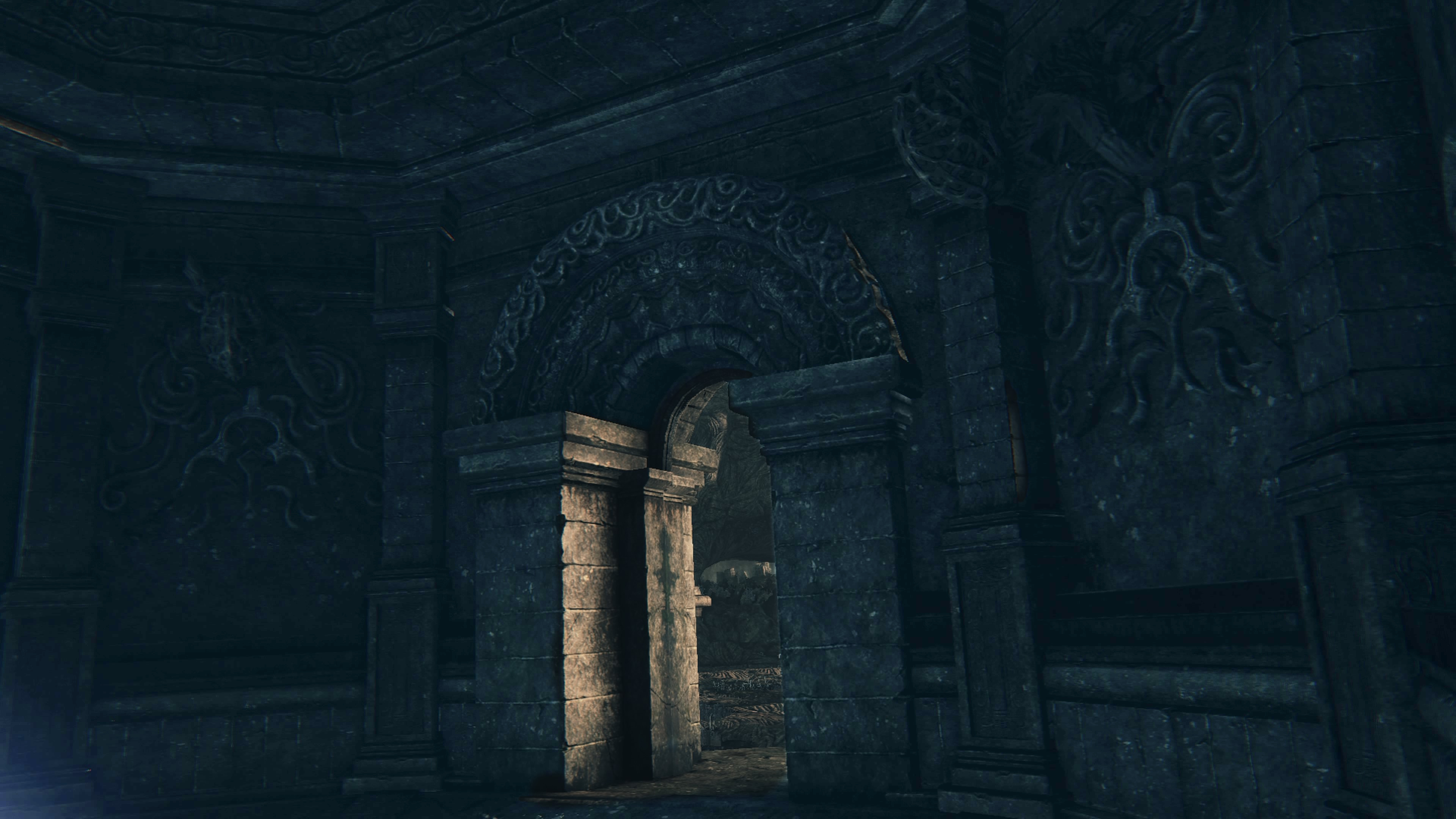
Loran was a desert nation, lost to the sands after its collapse. We can see this sand still littering the tombs, sometimes even gathering up into miniature sand storms within certain chambers. This idiosyncrasy of the tombs raises eyebrows because of their location. Loran dungeons are featured at both Depths 4 and 5, placing Lower Loran alongside Isz and Pthumeru Ihyll. And yet, neither tomb shows any sign of existing in a desert. It is only Loran which seems to have subsisted amongst the sands. This implies that Loran didn’t build itself up like Pthumeru, but rather down. Put another way, Loran wasn’t established until long after the other two in Depth 5. After both the Gravestone of Isz and Pthumeru Ihyll were buried in dirt, the climate above ground began to change, becoming a land of sands. The capital of Loran was built in that desert land, until its collapse. It then became buried like its predecessors, this time in sand, and the climate once again returned to its old environment after more eons. If so, then Loran must have dug downward to establish its lower reaches in Depth 5.
Proof you acquired the “Diseased Loran Holy Grail” that is the seal for the land of tragedy lost within the sands.
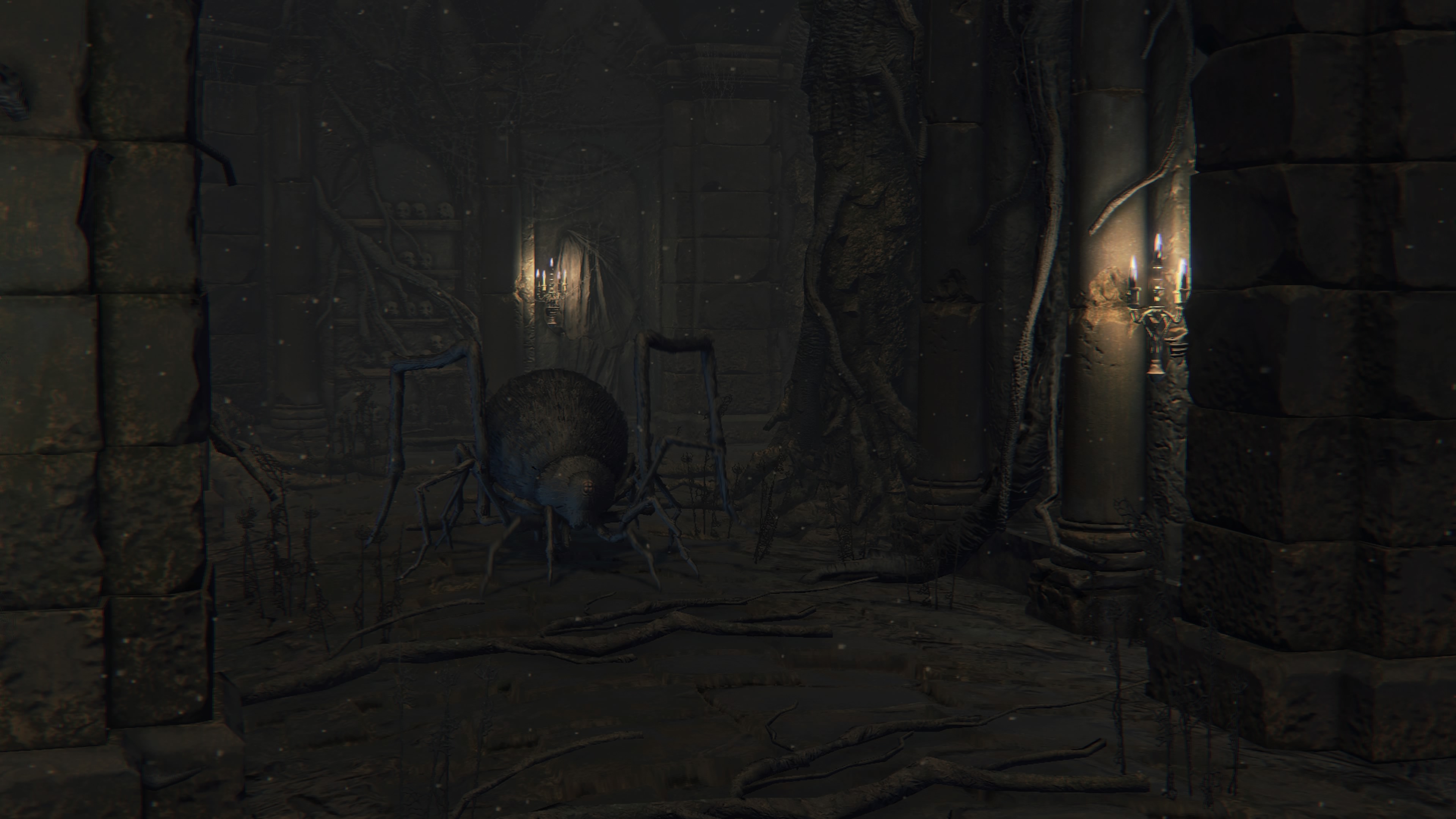
Why a nation would decide to build itself underground instead of upward or outward is simple to imagine. Deserts are generally known for their blistering heat, making natives’ first concern mitigating the effects. One popular method is to insulate themselves with the earth beneath their feet, carving out holes and underground passages for subterranean living. Loran would have the wildlife for reference. Exploring the root dungeons, we may occasionally come across tangles of venomous snakes, a classic desert hazard. What makes the more dangerous is when these balls of serpents ambush prey, small dens erupting out of the ground in a cloud of dust. And if a snake ball can burrow beneath the earth for survival, why not a man? At the very least, seeing how the beasts adapt would give the desert nation ideas on how to escape the sun’s burning rays.
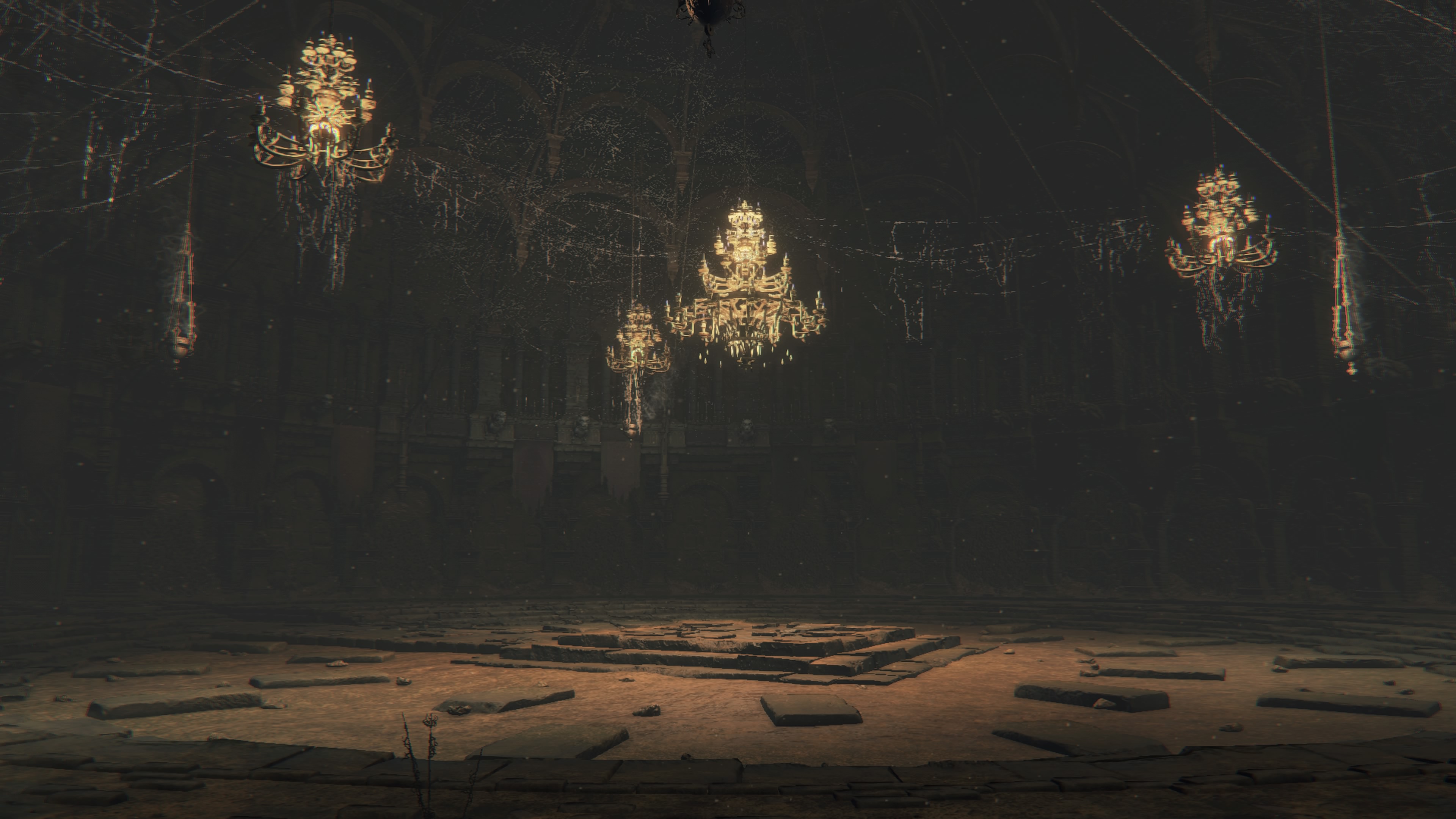
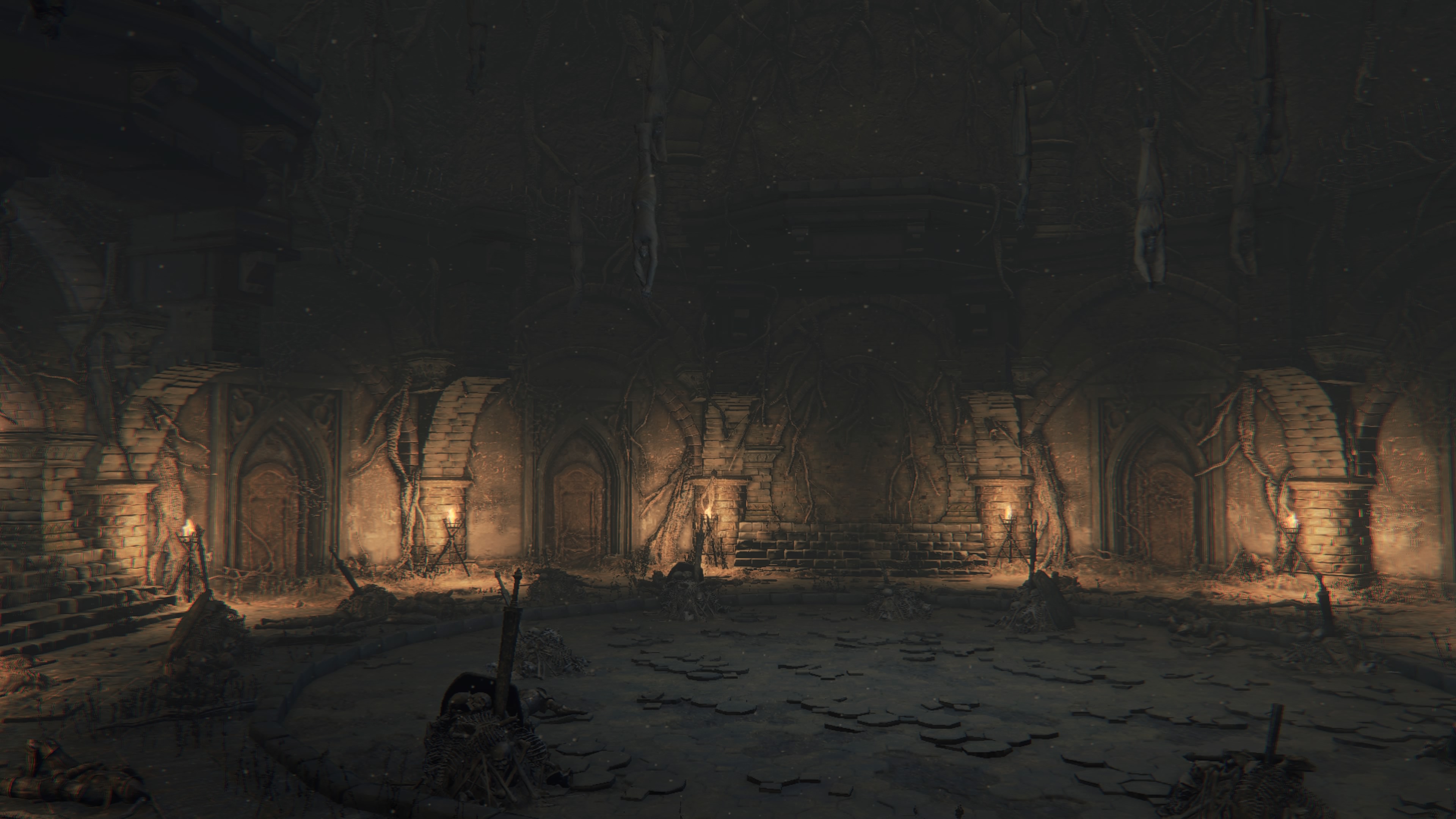
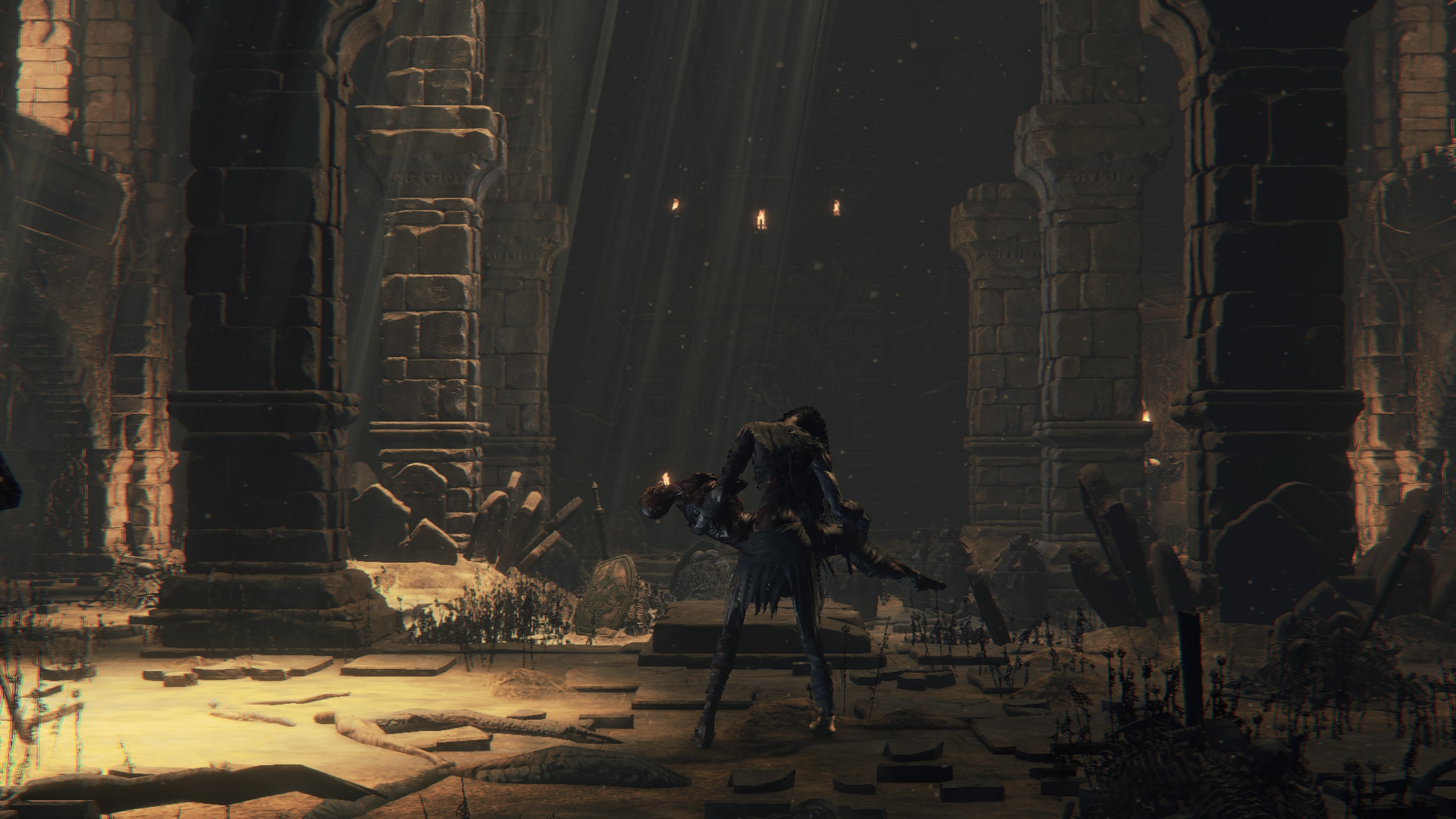
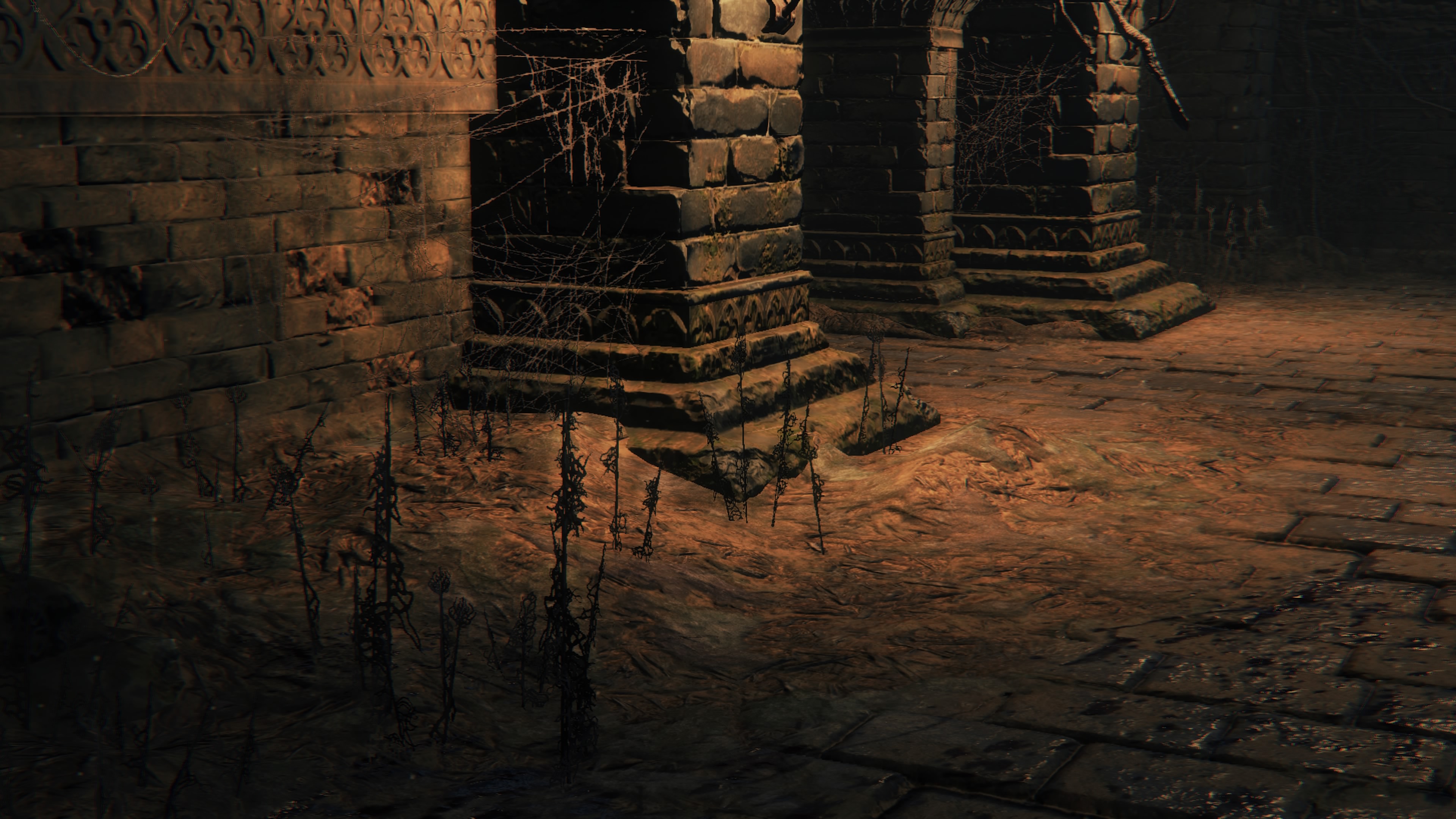
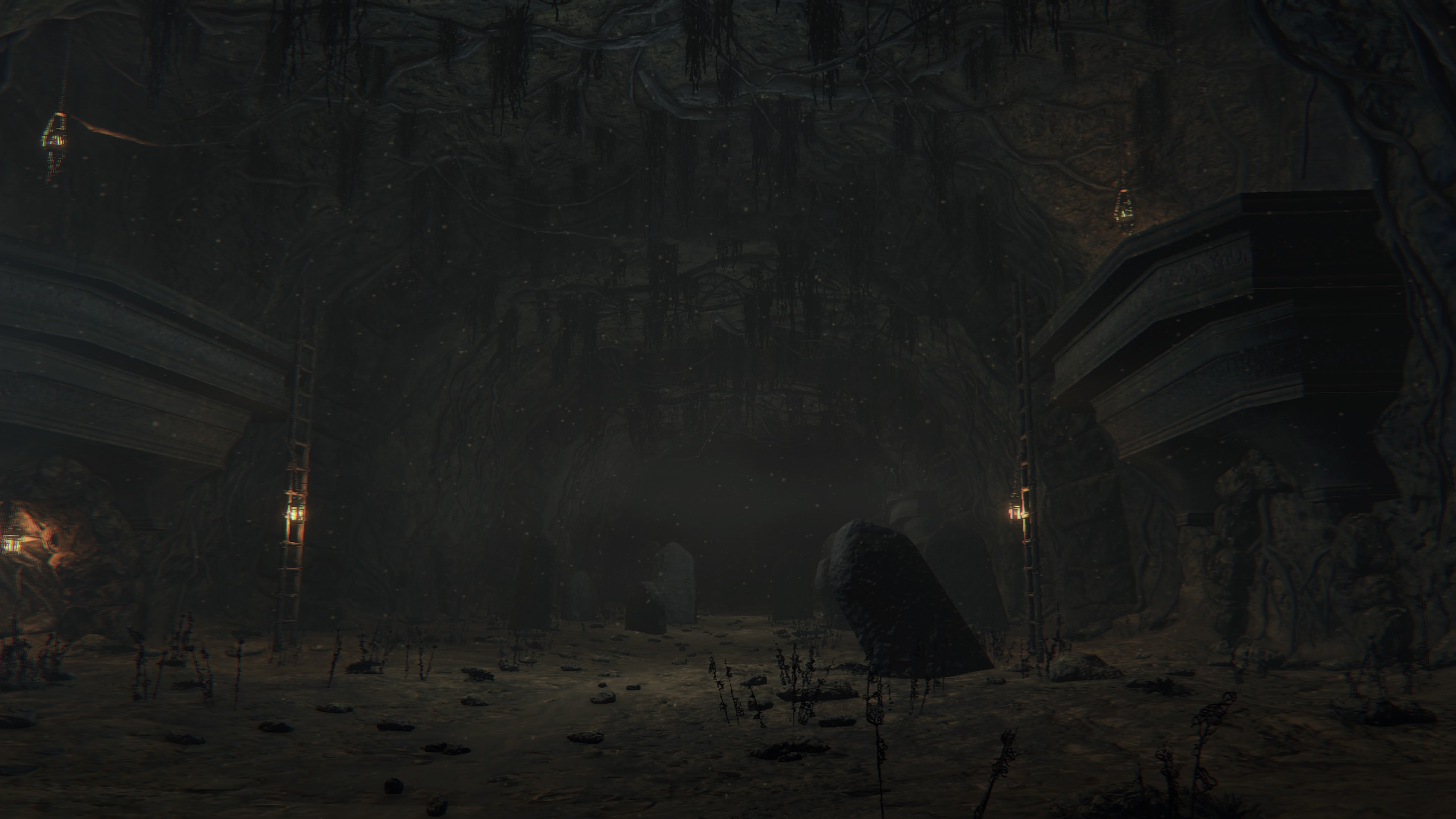
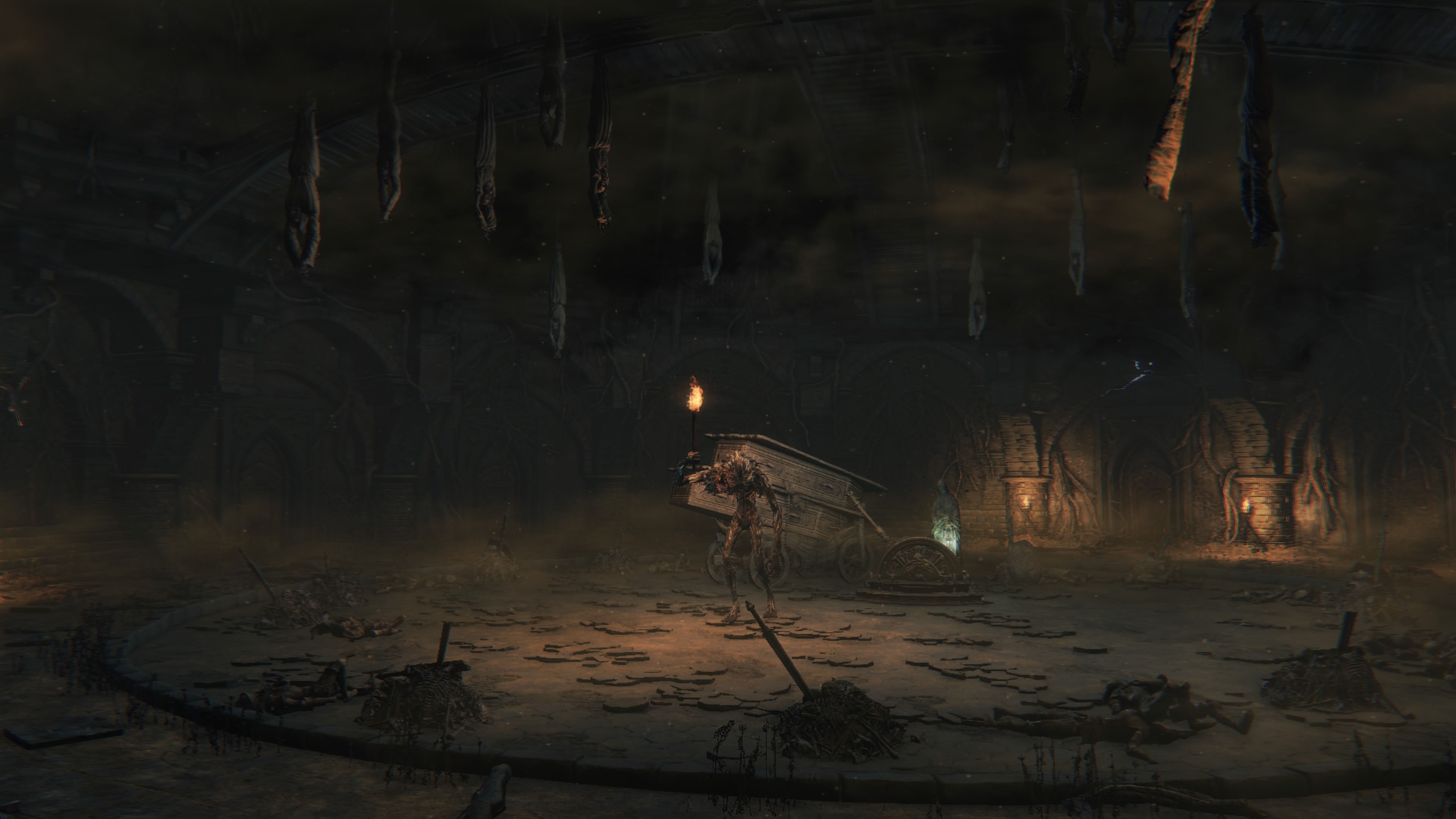
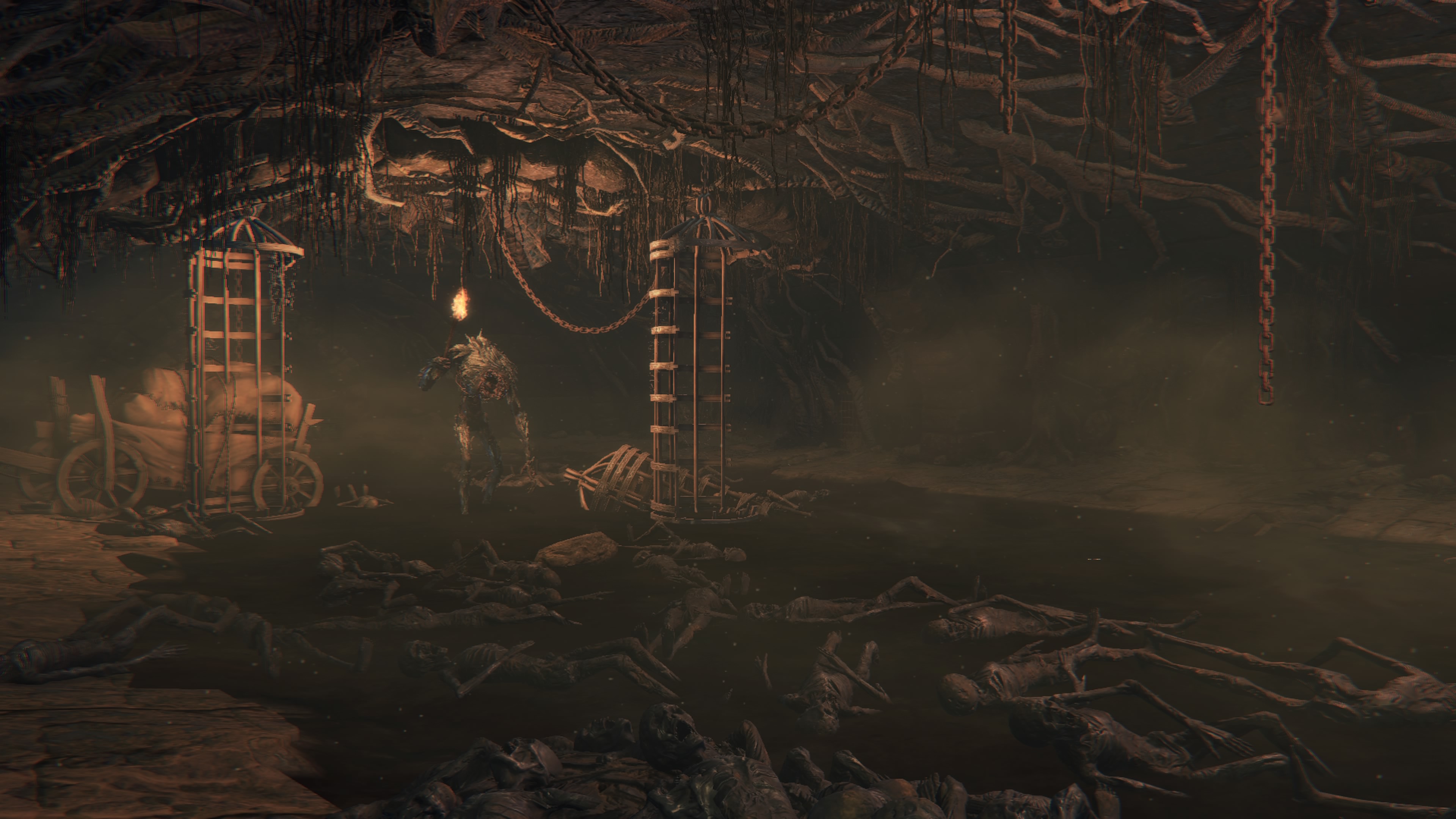
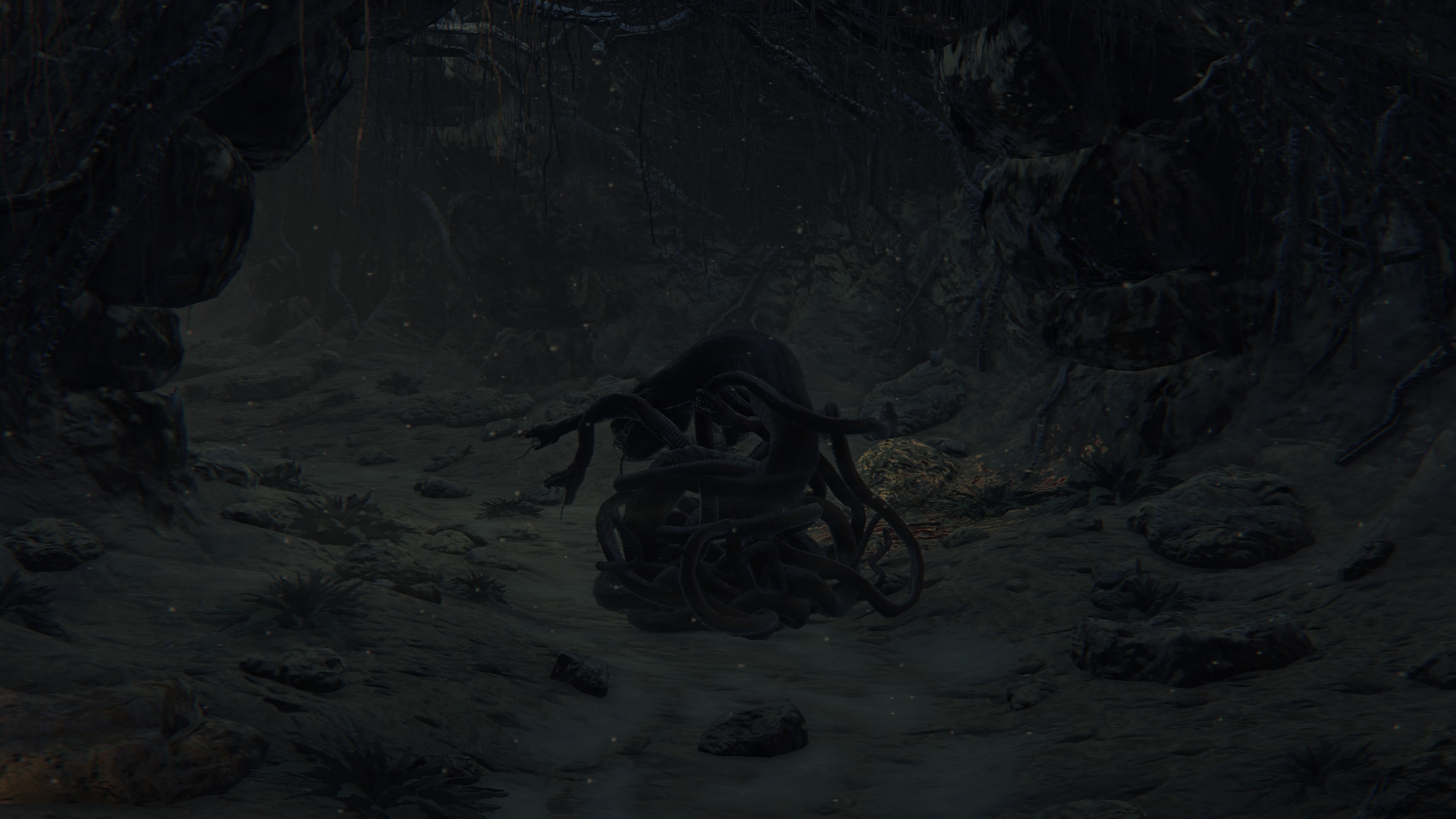
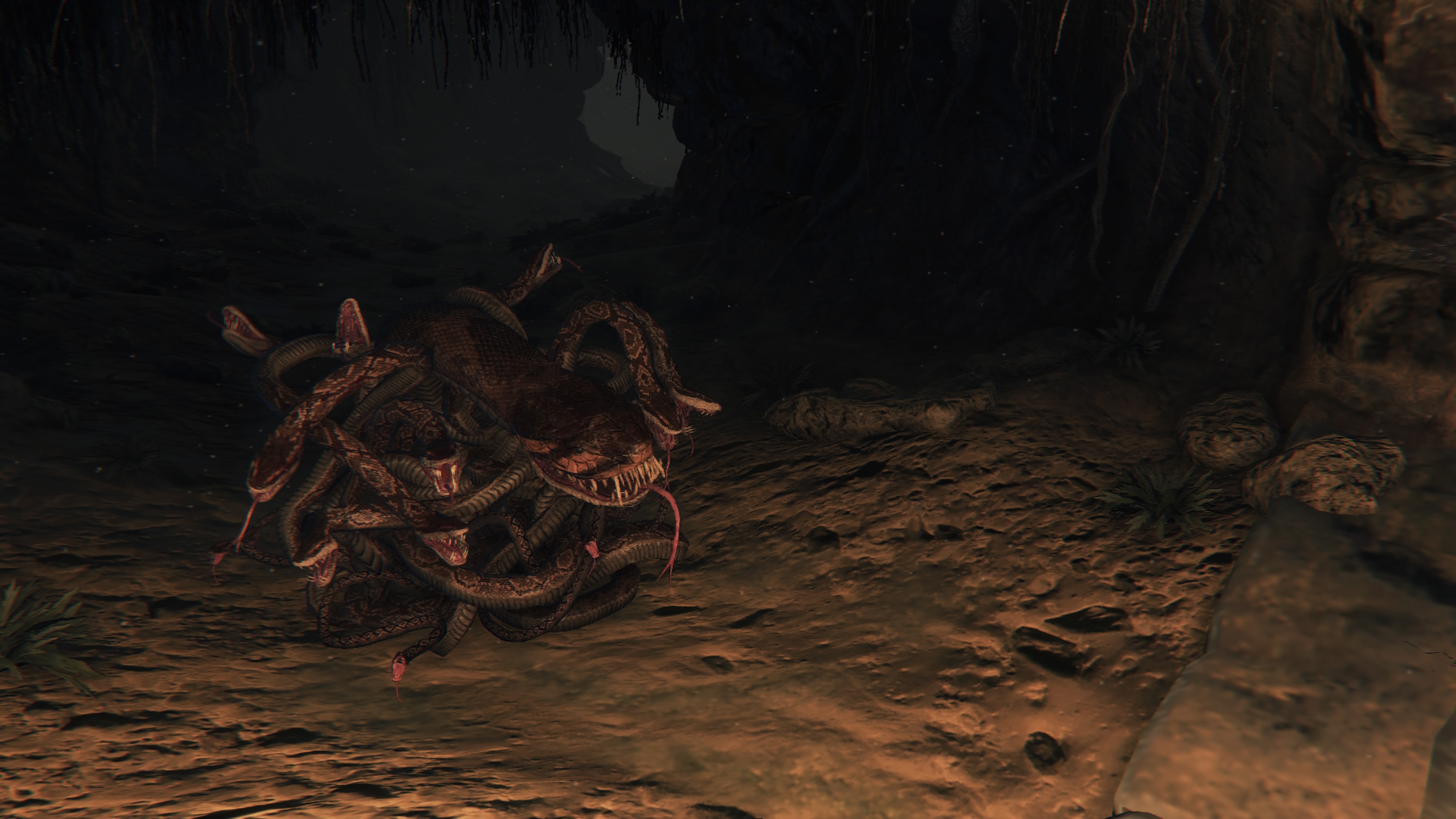
Based on the size of Loran, this could be done at scale, leading to a massive construction project building bigger and deeper to cool down greater. This naturally led to Loran discovering the underground labyrinth, ancient ruins which they never could have imagined existed. We can determine this from the fact that the country adopted blood drinking, with its own ritual chalices and its final destruction at the hands of the beast scourge specifically. Suddenly, the nation had stumbled upon an unknown world parallel to theirs. Curiosity almost begged that they explore it, and the shining coins in Lower Loran’s story dungeon suggests that a trade relationship was established. Even if the underground folk kept secretive, the desert would learn through cultural osmosis. Eventually, traders or explorers would bring back the bizarre blood to their masters ruling the surface, and that is where Loran’s tragedy began.
One of the Holy Grails that lifts a seal on the underground ruins. Loran is a land of tragedy that disappeared within the sands.
The reason for the tragedy is said to have been the “beast disease”, so is this diseased land possibly Yharnam’s future?
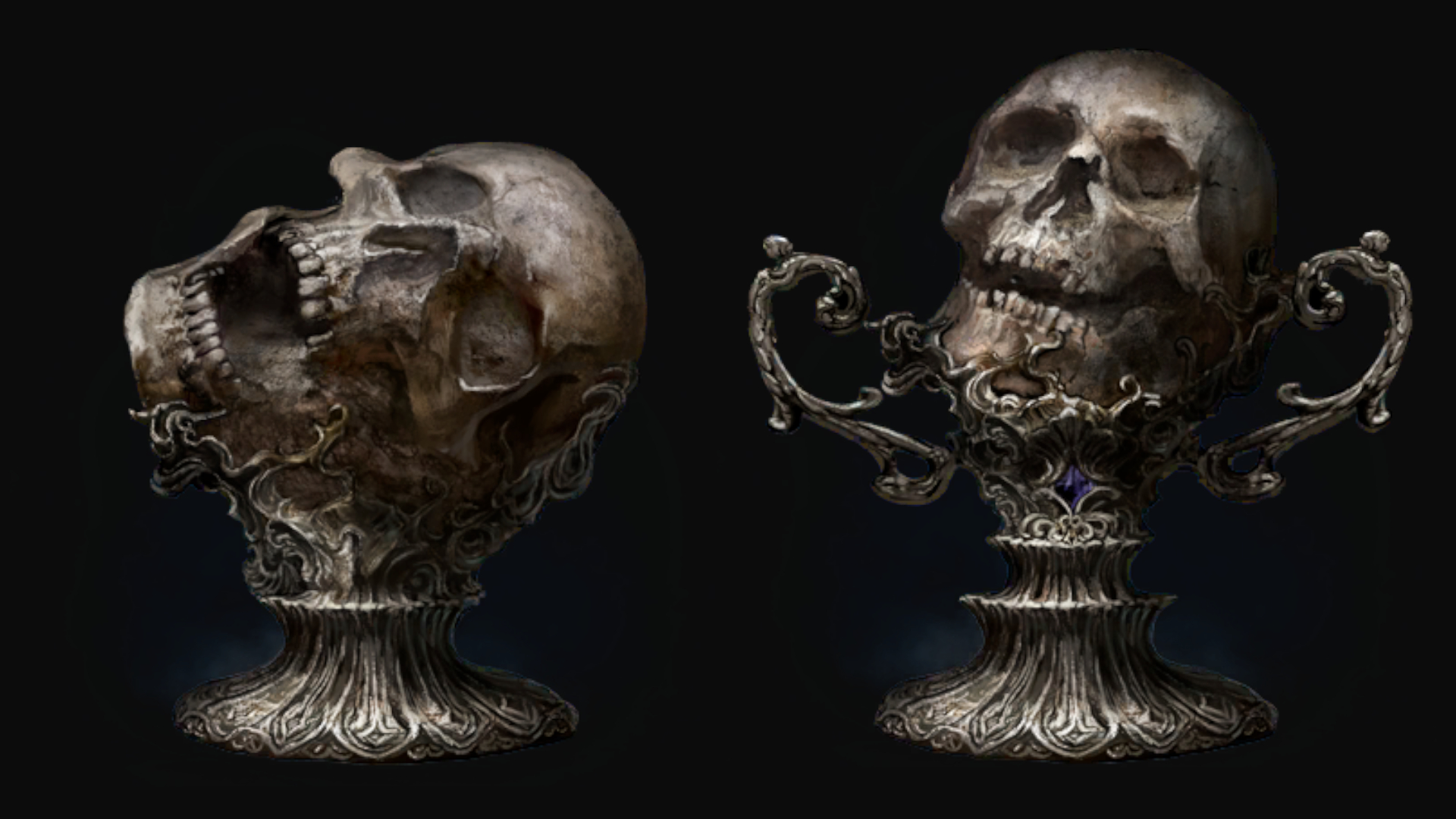
The Loran chalices portray a consistent motif: a human skull slowly being infested by abstract, fiery tendrils rising from below. Losing your humanity, your human intellect, to the “disease” unleashed from the underground was well recognized in the nation. The desert country certainly suffered an epidemic, with more beasts found in Loran dungeons than anywhere else. For that reason, the standard dungeon is known as Ailing or “Diseased” (病める) Loran. That level of outbreak could only happen, however, if imbibing the high quality blood of the underground ruins had also become widespread. Indeed, exploring Loran dungeons, we can loot pungent blood cocktails. The citizens noticed the restorative and addictive qualities of the blood and began to regularly imbibe, fermenting blood instead of standard alcohol to suit their new tastes. Blood had become all the rage, and so beasthood exploded among the populace.
Society, of course, noticed the strange epidemic as it emerged and began investigating the cause. The descriptions to various Loran chalices note traces of a particular kind of medical treatment all around the place. Considering the number of blood vials lootable in the dungeons, this must be referring to blood treatment. While seemingly ignorant to treat the “disease” caused by blood with blood, that assumes the goal was to counter the scourge — instead, the descriptions ponder if the goal was actually to prime it. The name “Lauran” (ローラン) bears an obvious resemblance to Laurence, (ローレンス) the name of the Healing Church’s first Vicar. The Ailing Loran Chalice description likewise wonders if the ruined land rife with beasts portend Yharnam’s own prospects under said church. The clear implication is that Loran was destroyed because its medical institutions took over to propagate the beast scourge further like in Yharnam. Even if using blood as treatment initially was reflexive, soon enough, someone would realize the truth behind the mysterious “disease” plaguing the country. At that point, continuing with the blood treatment was either malpractice or malice.
One of the Holy Grails that lift a seal on various parts of the underground ruins. “Holy Grail Dungeons” which have their seals lifted via a pan-Holy Grail ritual are known to change their appearance with each ritual.
There are traces of a certain kind of medical treatment in various parts of diseased Loran. Were they to counter the beast disease or prime it?
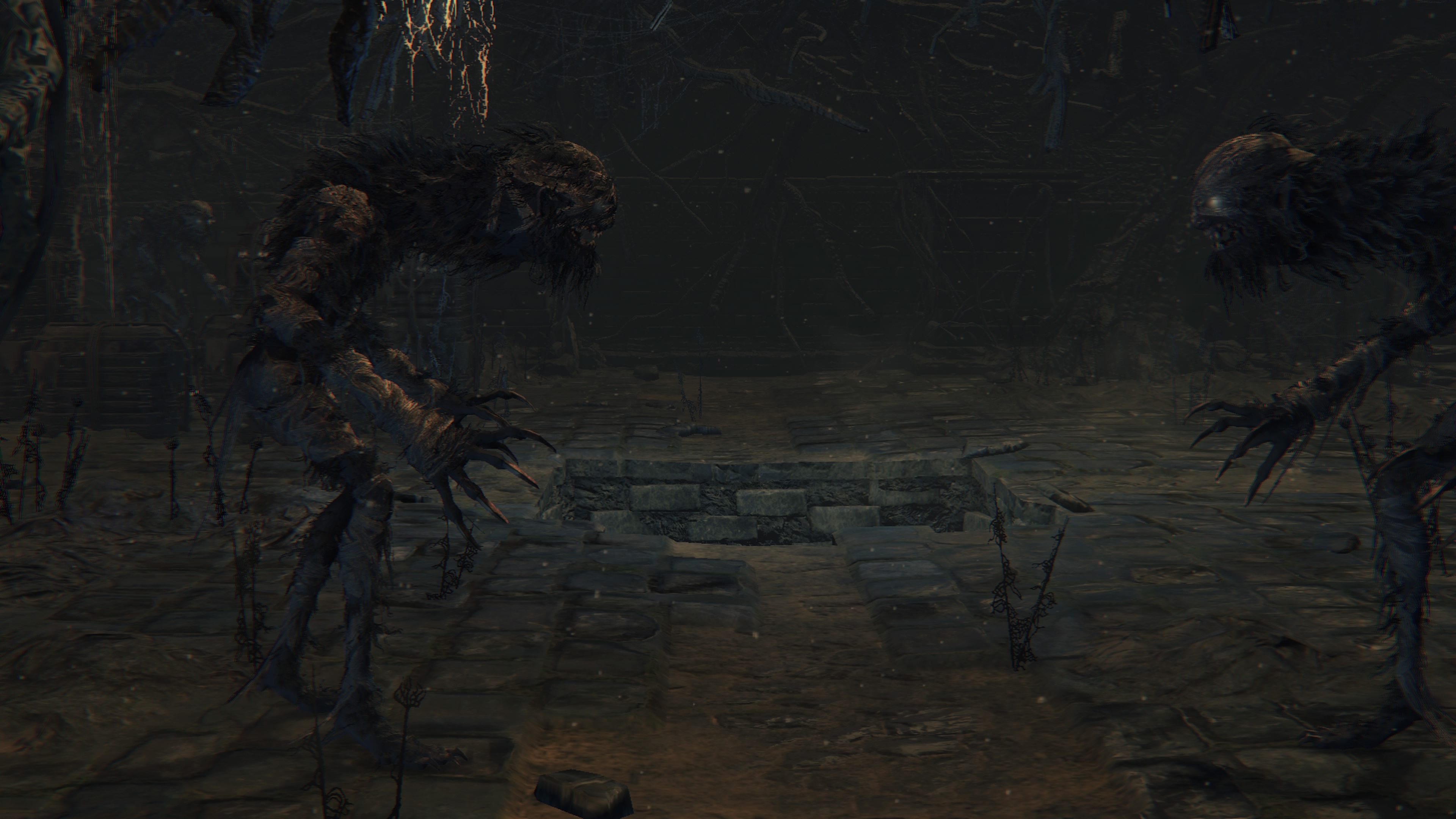
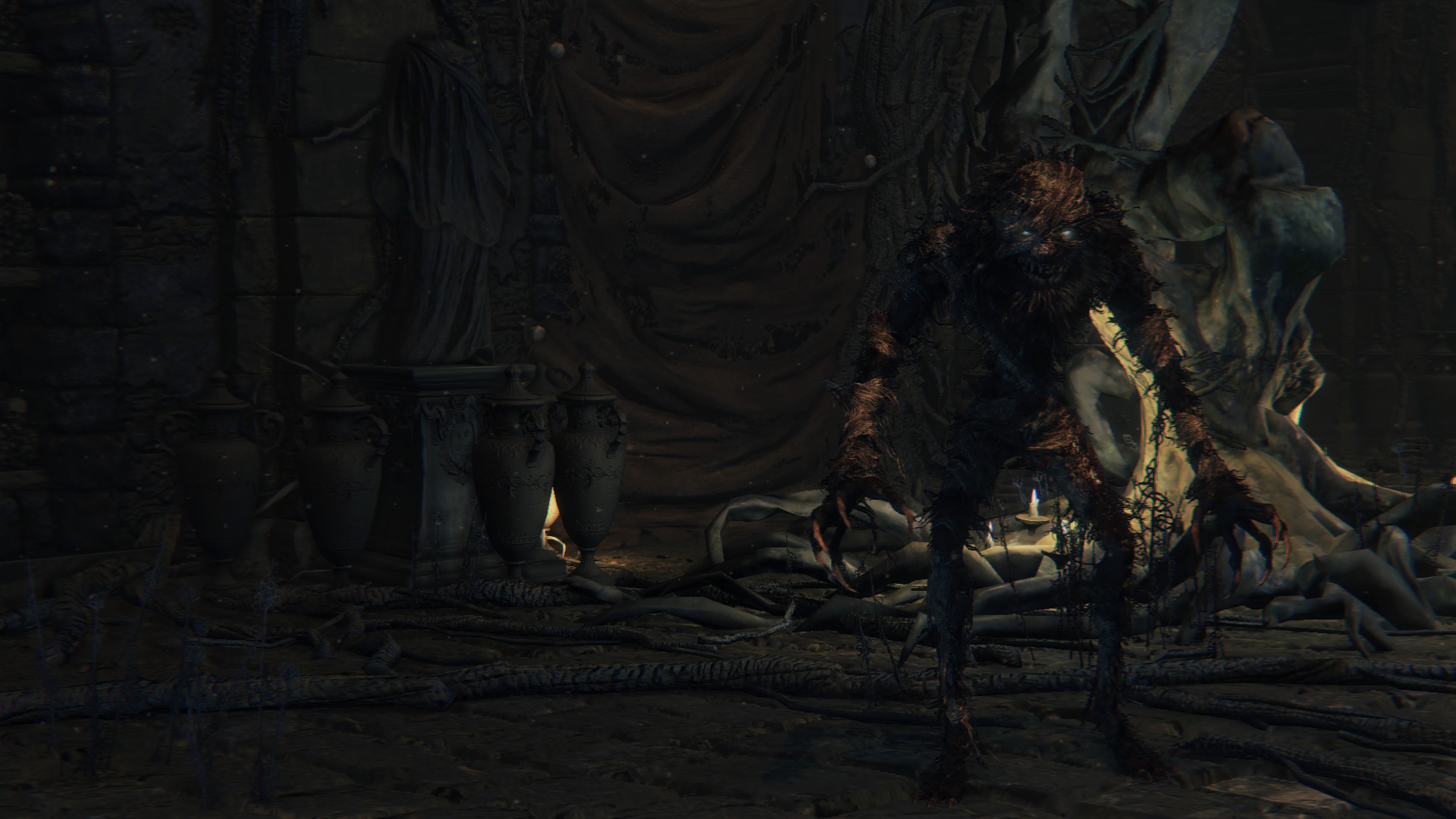
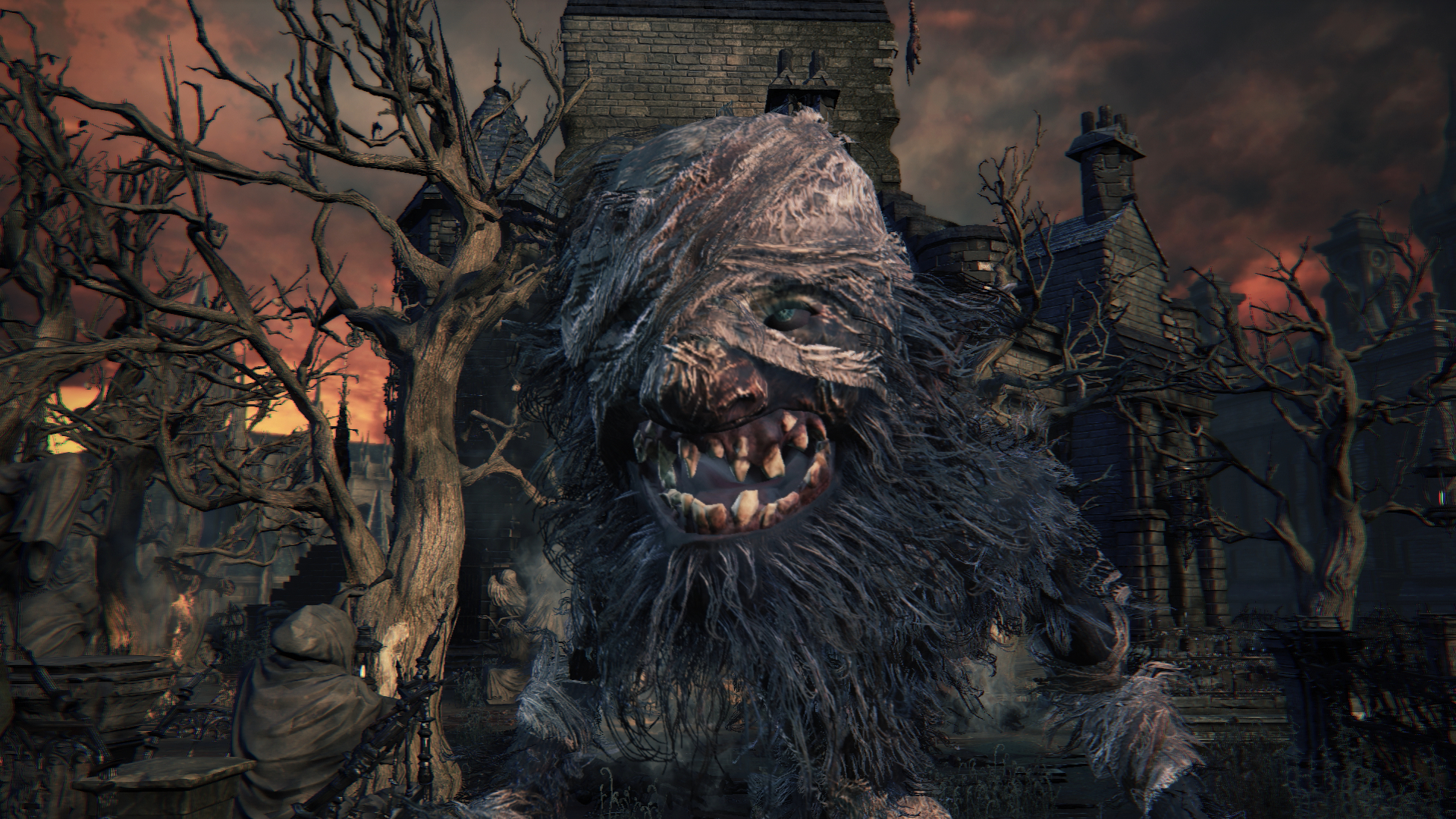
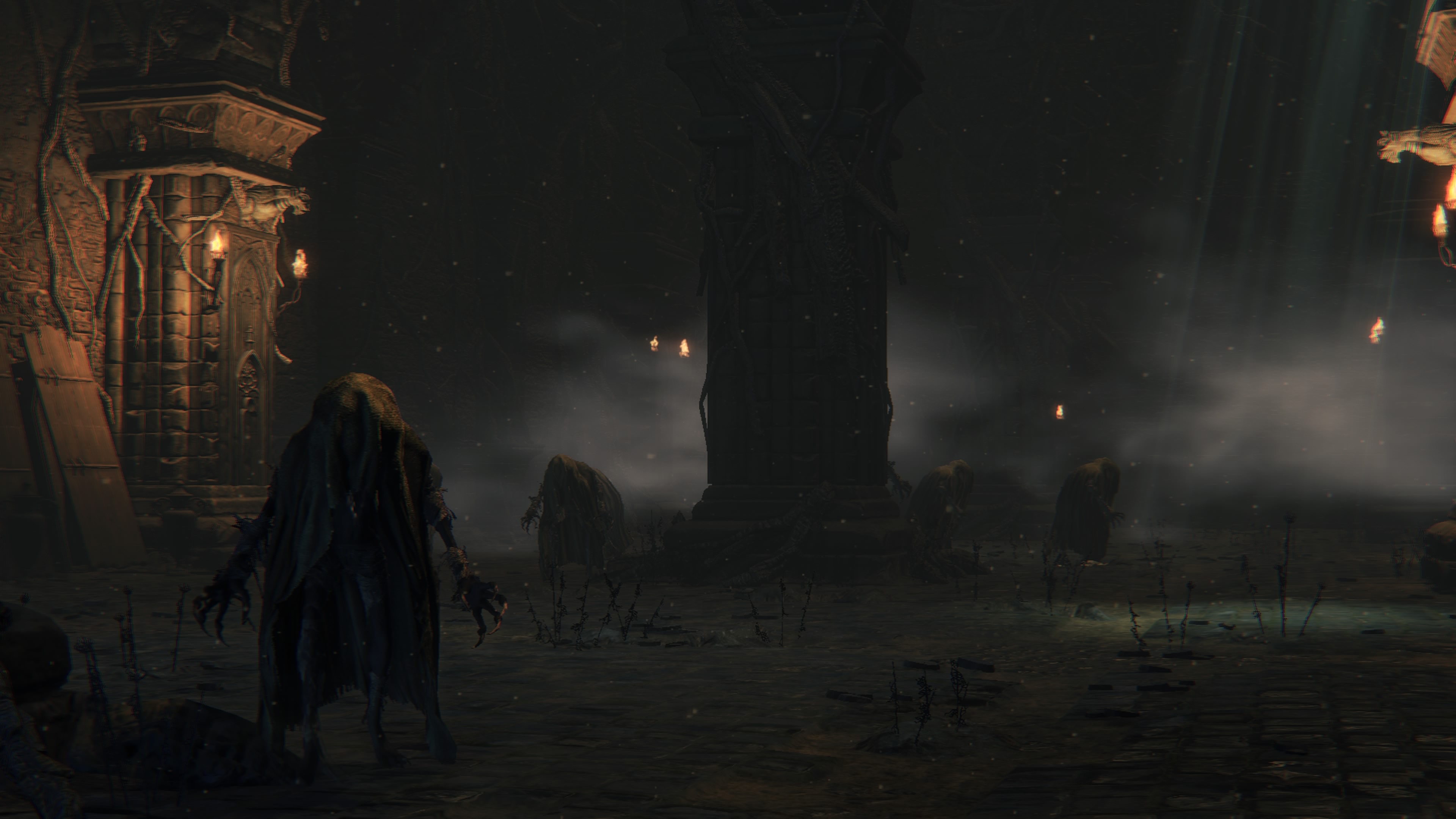
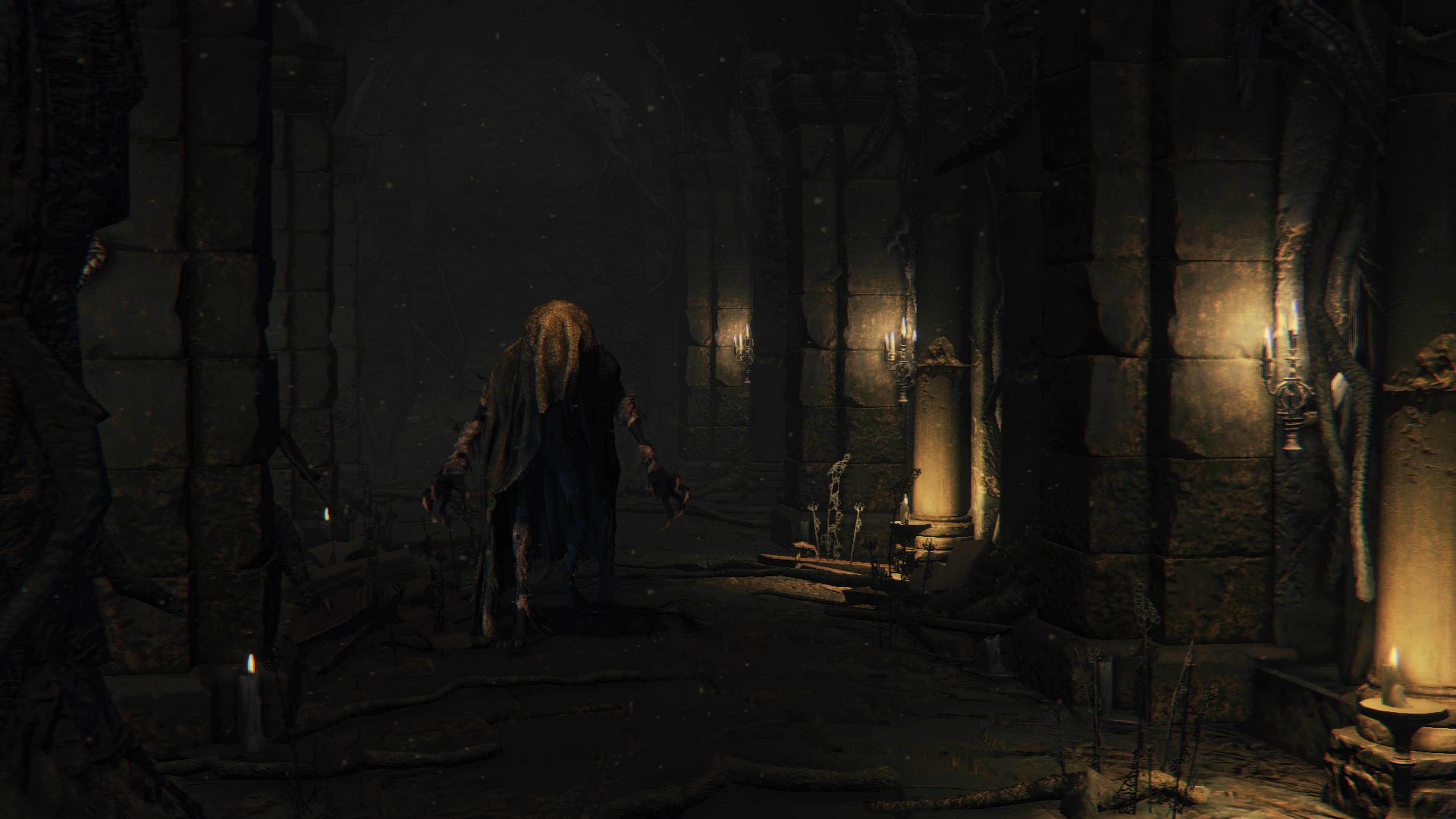
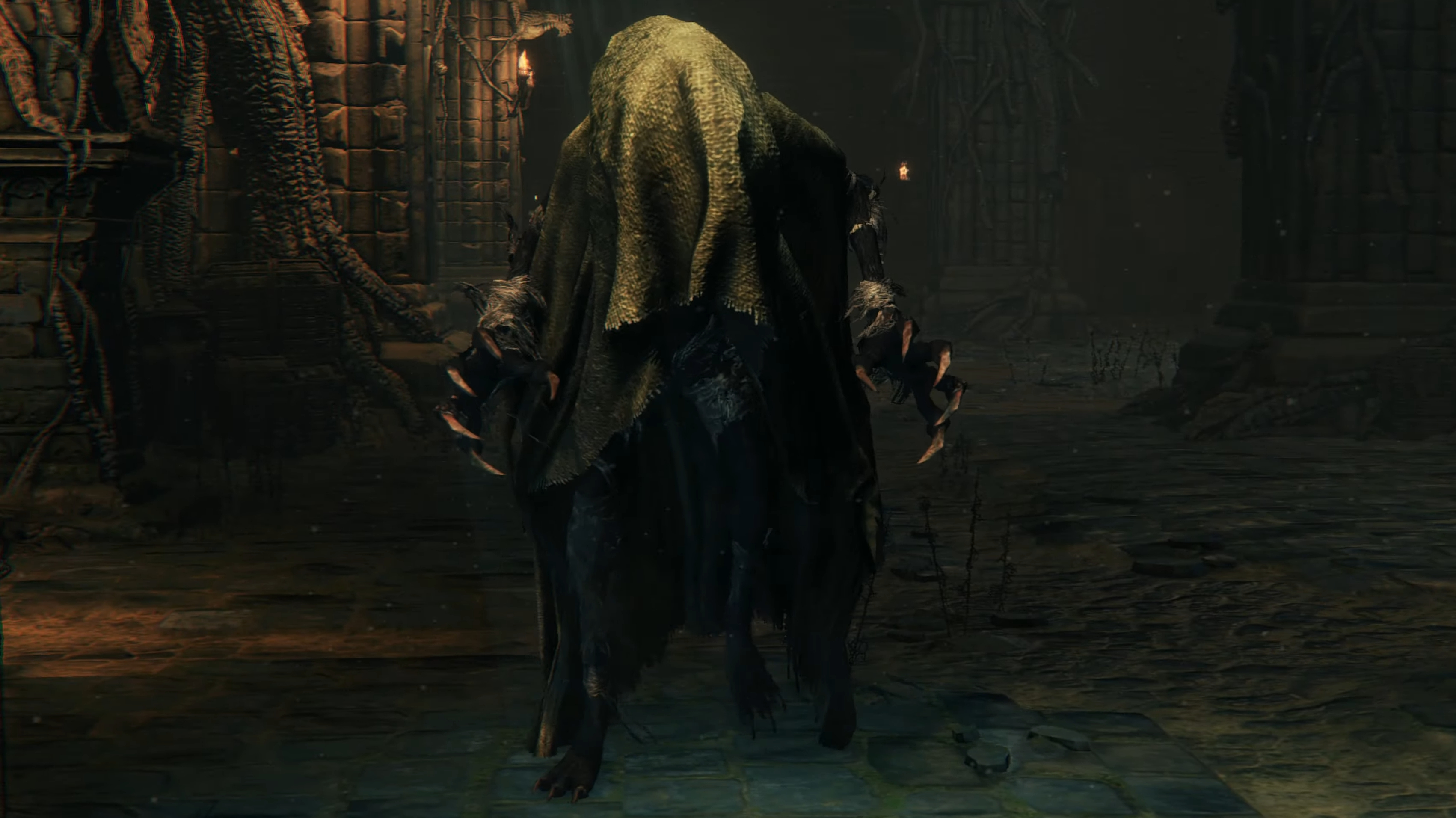
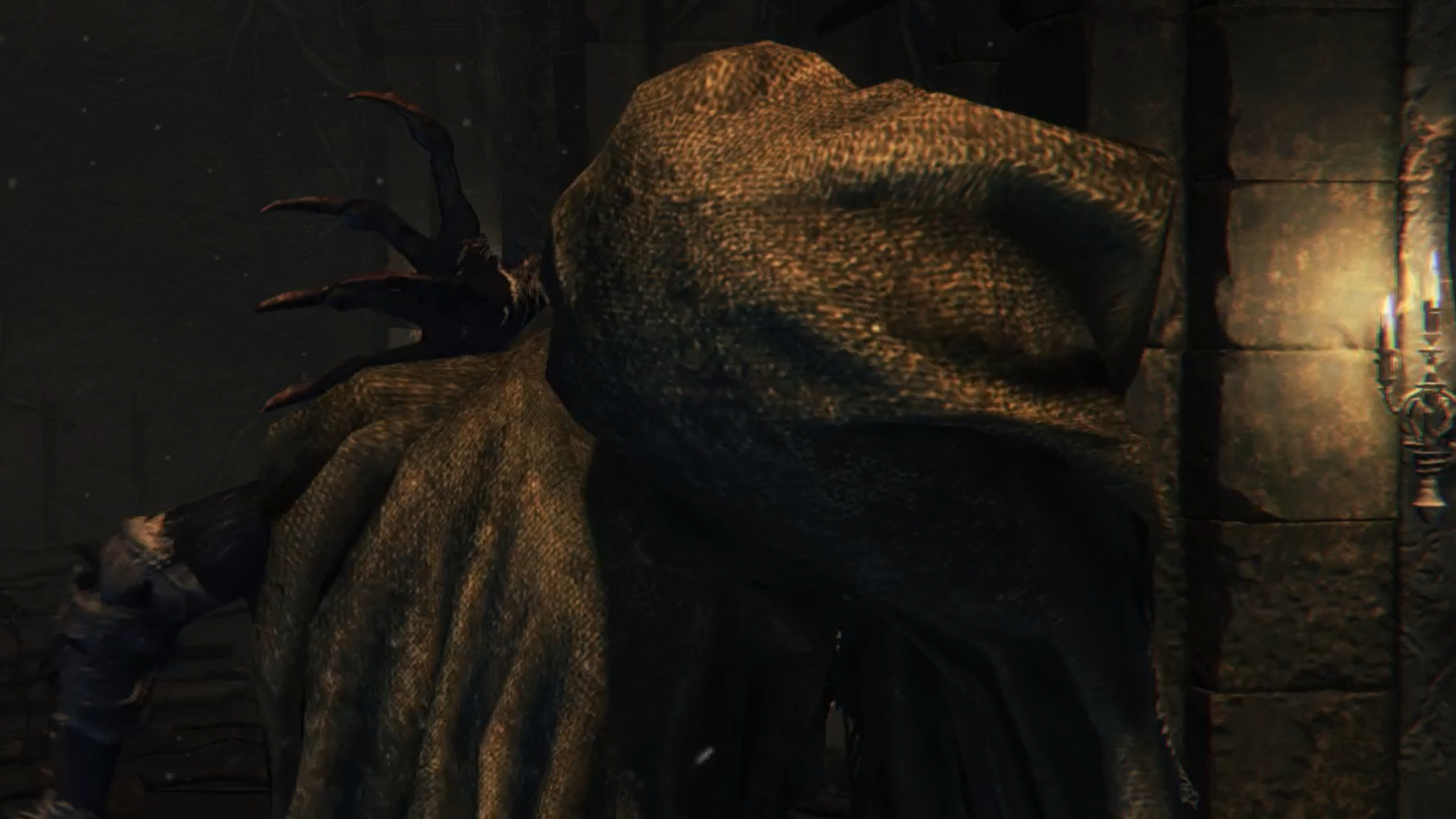
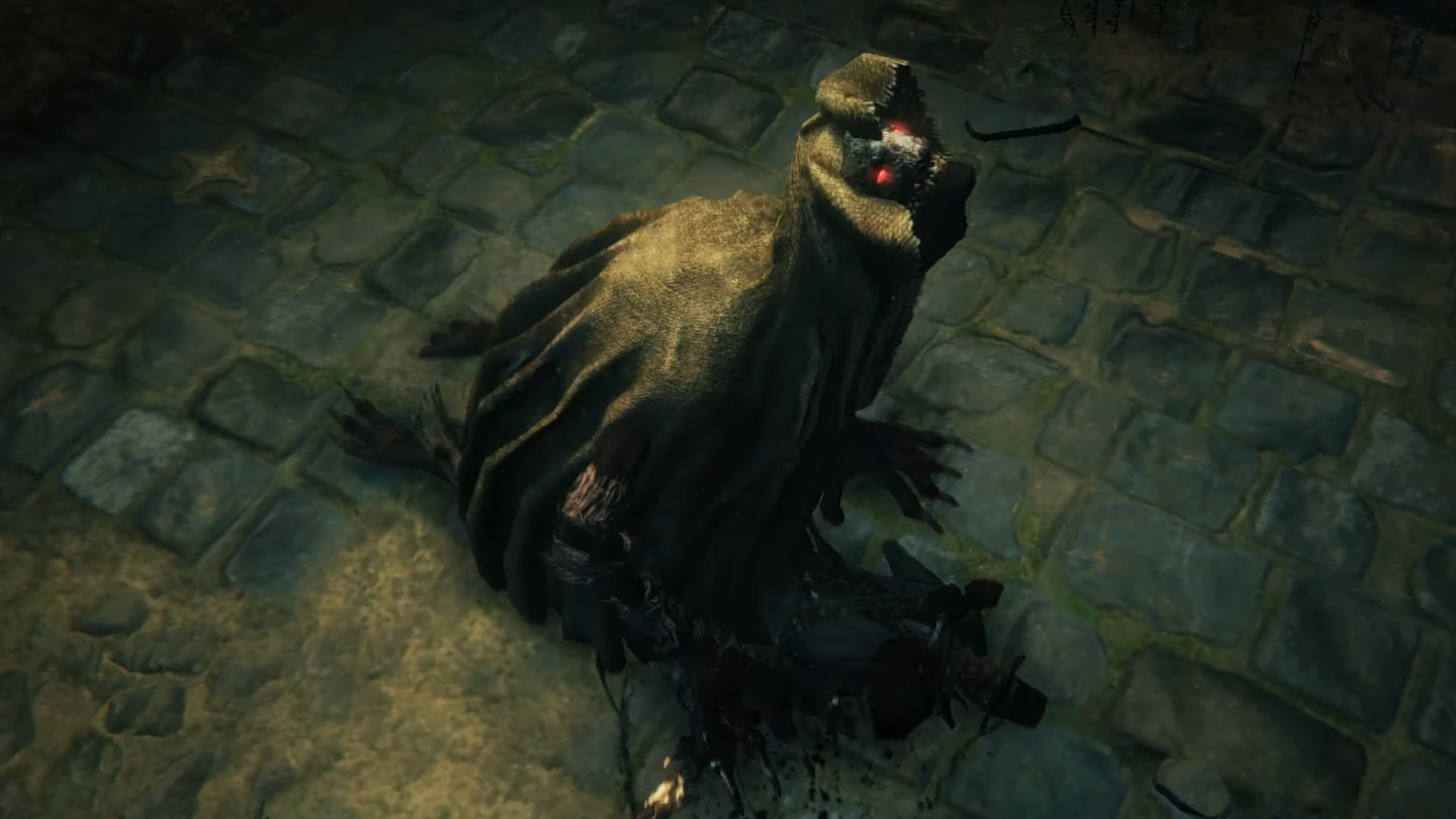
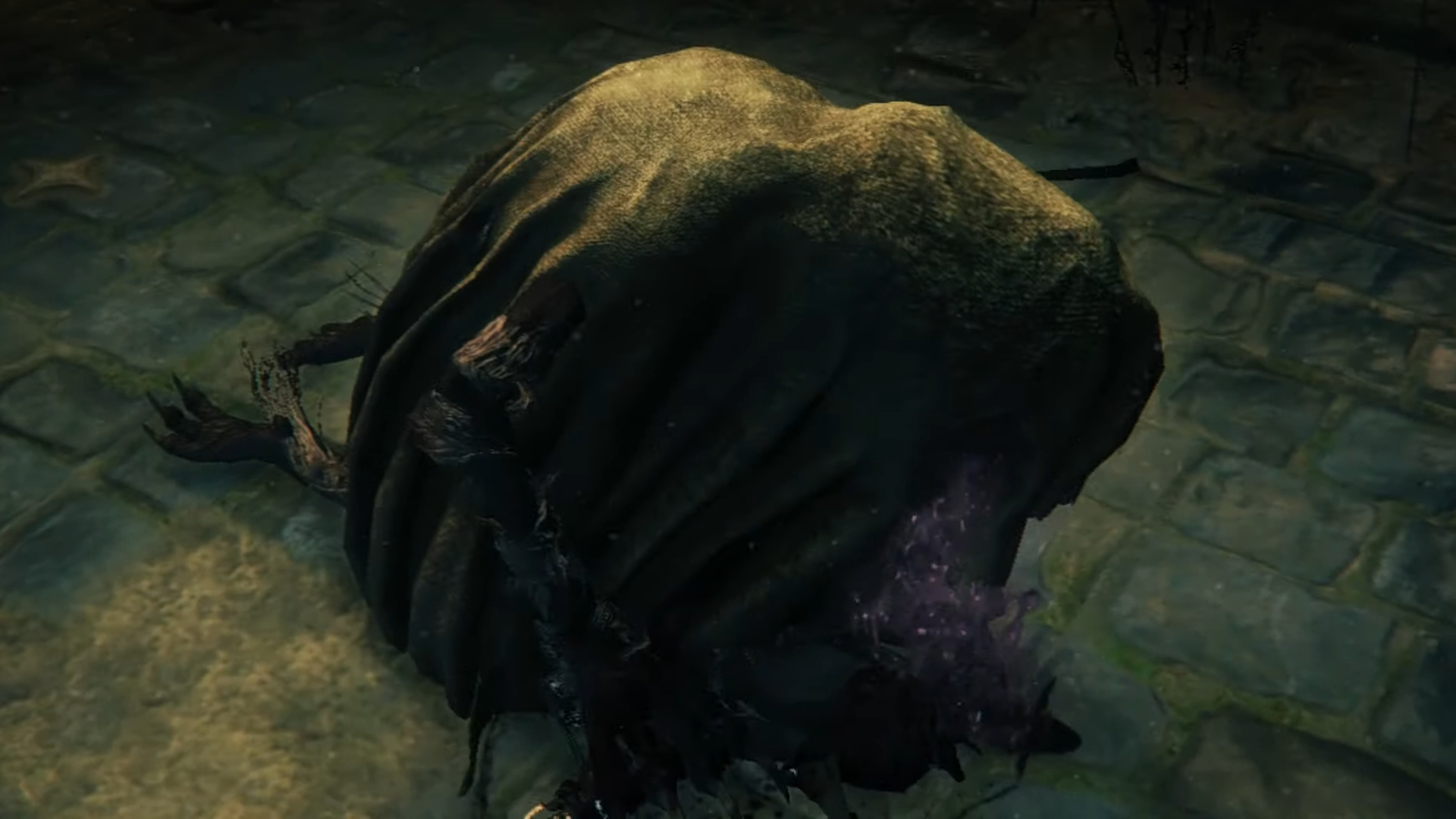
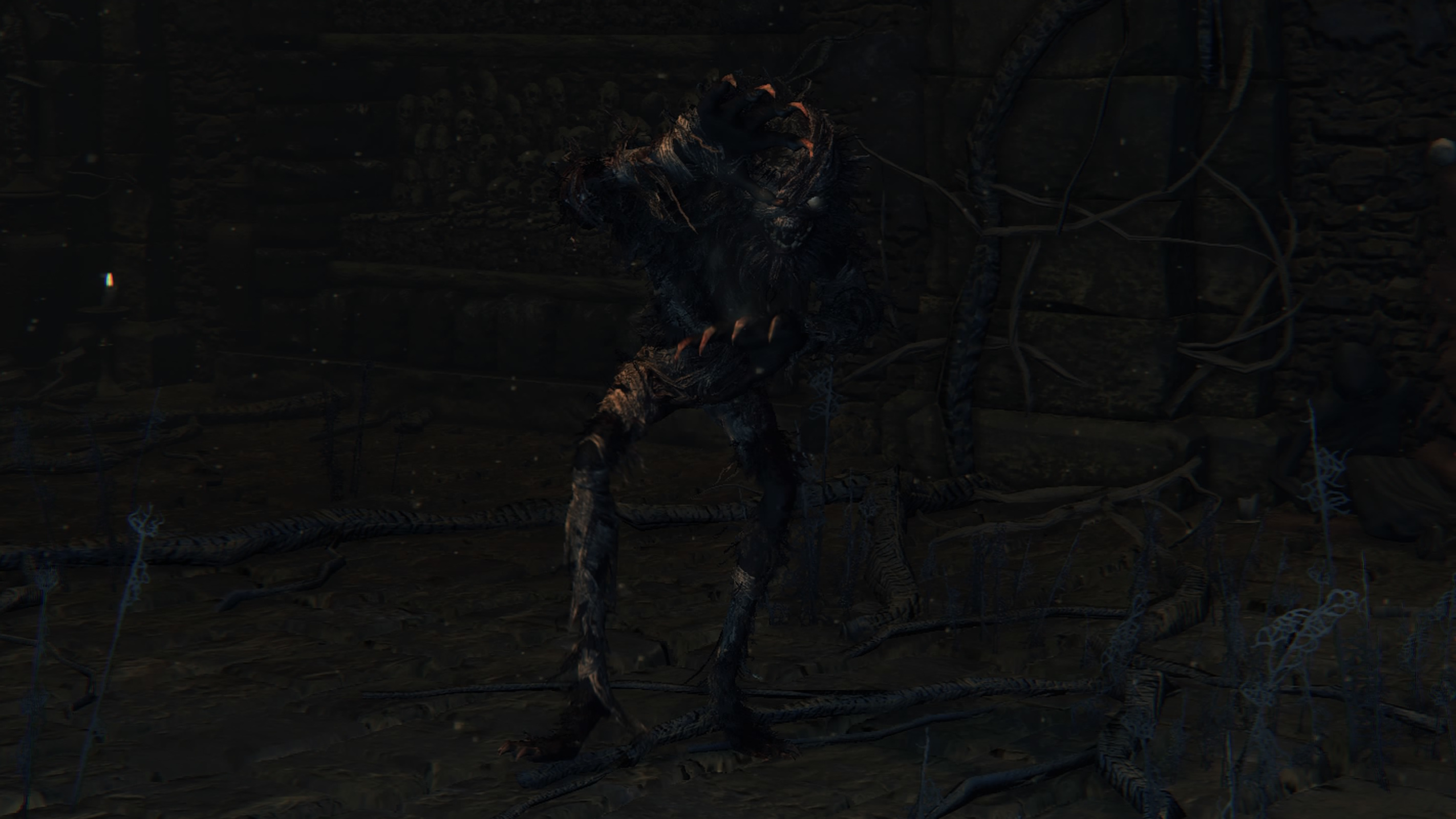
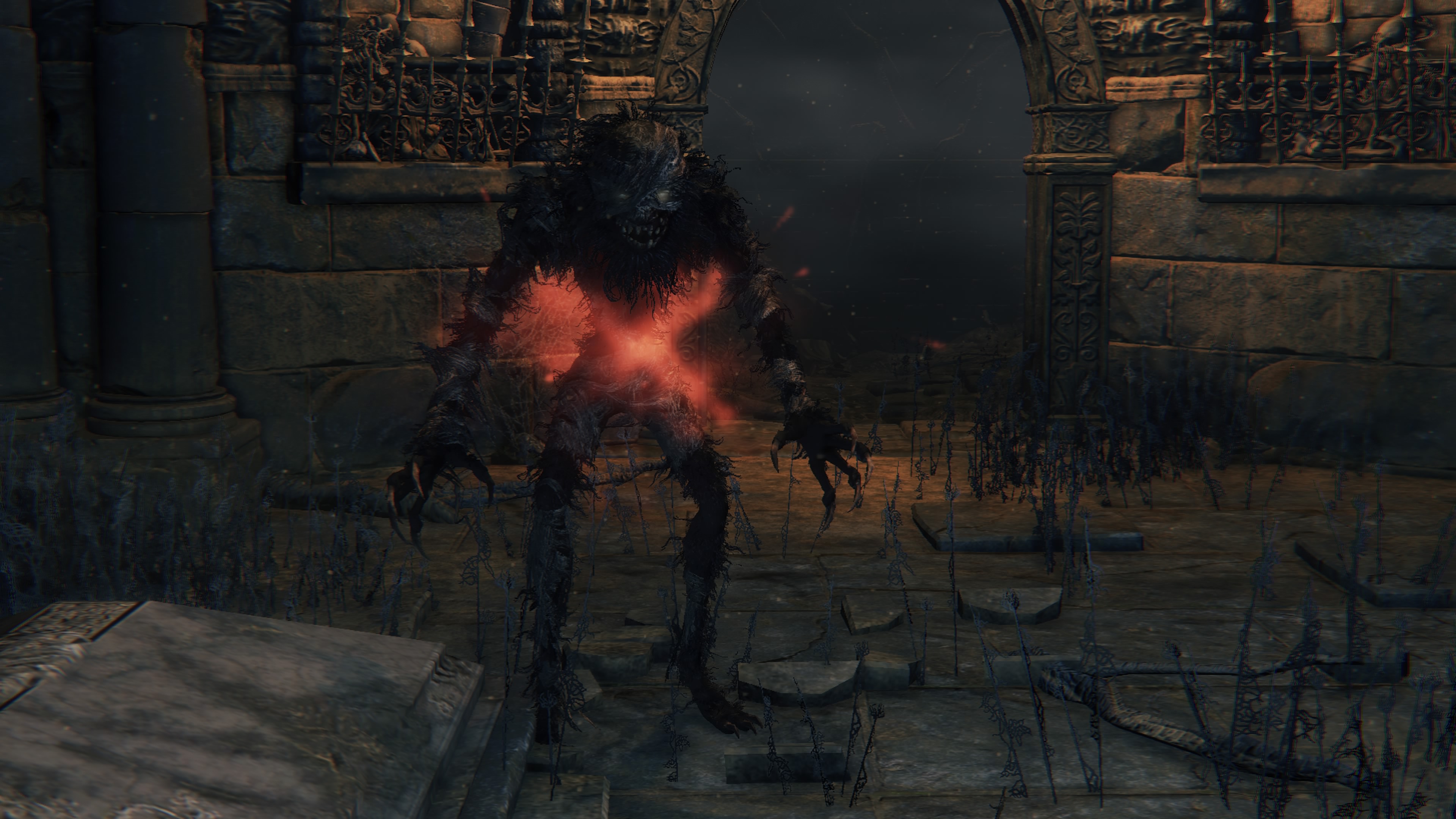
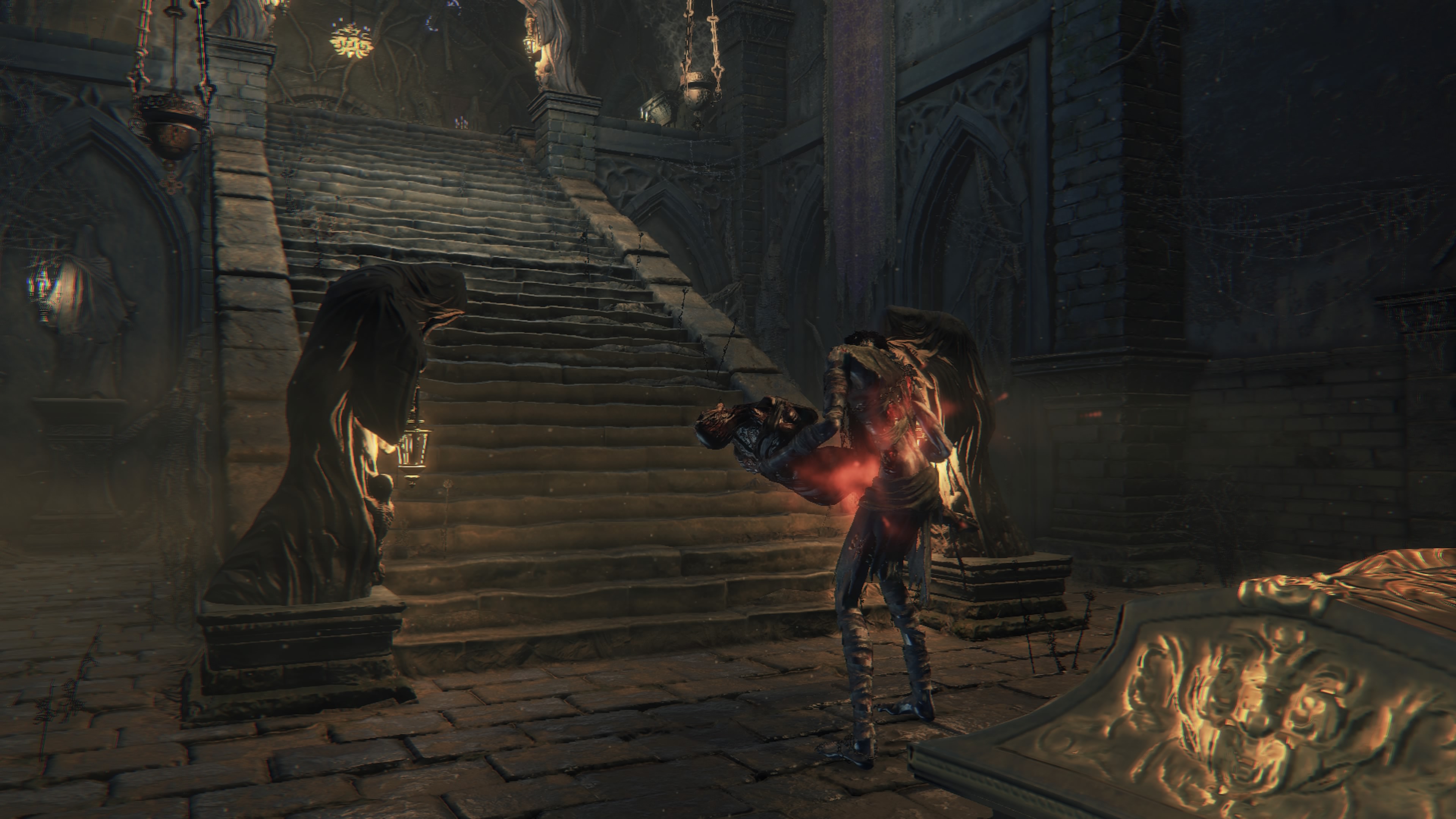
We definitely cannot exclude deliberate intention. Many of the beasts we encounter are patients, standing on their hind legs wrapped in bandages. Among these slobbering, bloodthirsty patients are another type, sometimes larger than the others and almost always hiding their faces beneath a shroud. Internally, this kind is referenced as “female” versus the previous “male” type — maybe they are too ashamed to show their feminine beauty tarnished. Surviving shreds of sentience aside, the females are notable for commonly inflicting a slow-acting poison with their jaws and claws. When grabbing us, this “ash blood” beast patient (灰血の獣患者) will vomit loads of purple poison down our throats. It isn’t just them either, as these ladies’ shrieks do more than stimulate the vitality and strength of surrounding beasts with a morale boost; they draw out an aura of ash from those other beasts so that they inflict the poison as well. The description to antidotes indicate that they all suffer from an ashen blood disease, making the status effect just a byproduct of the ash poisoning them.
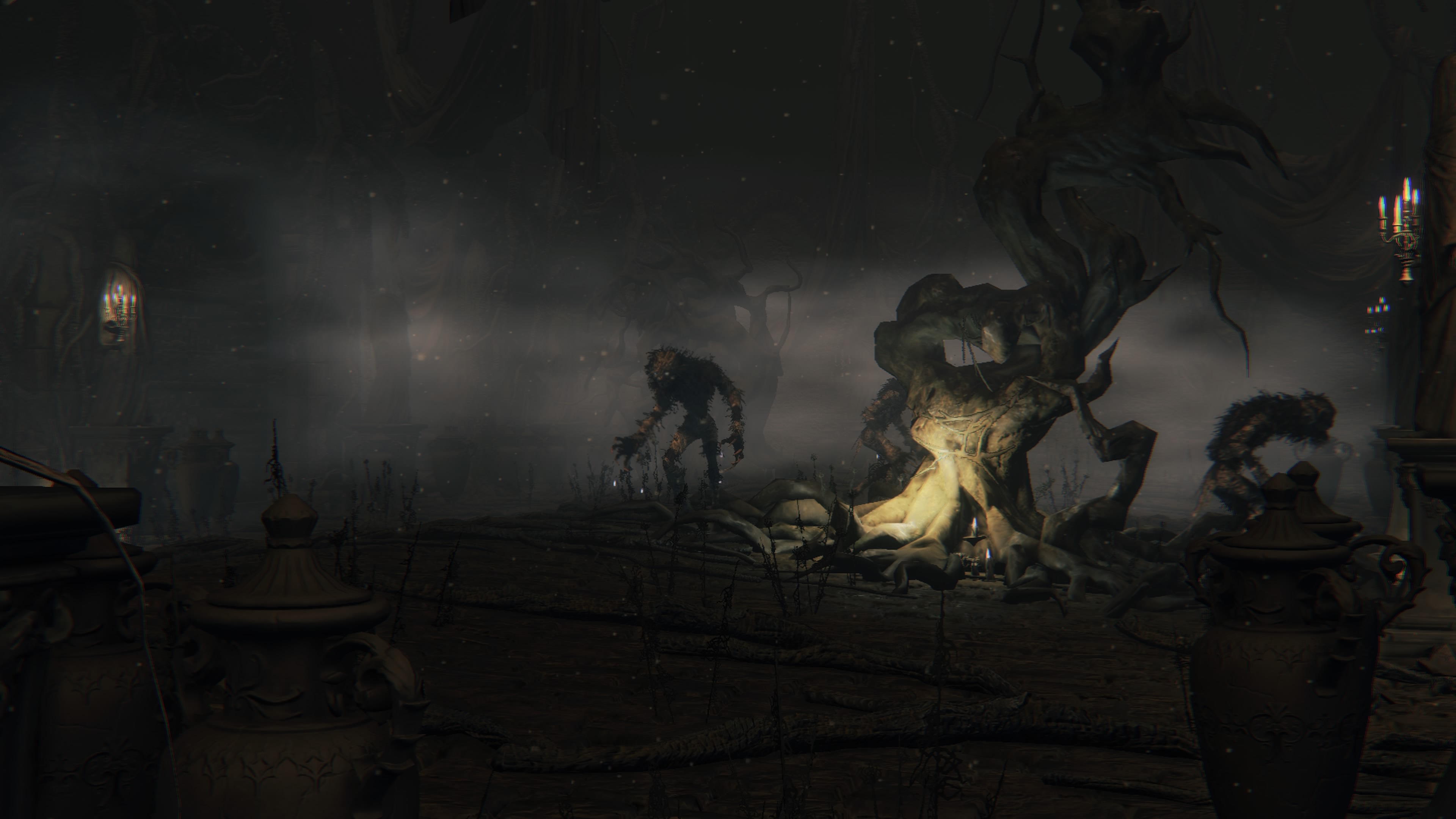
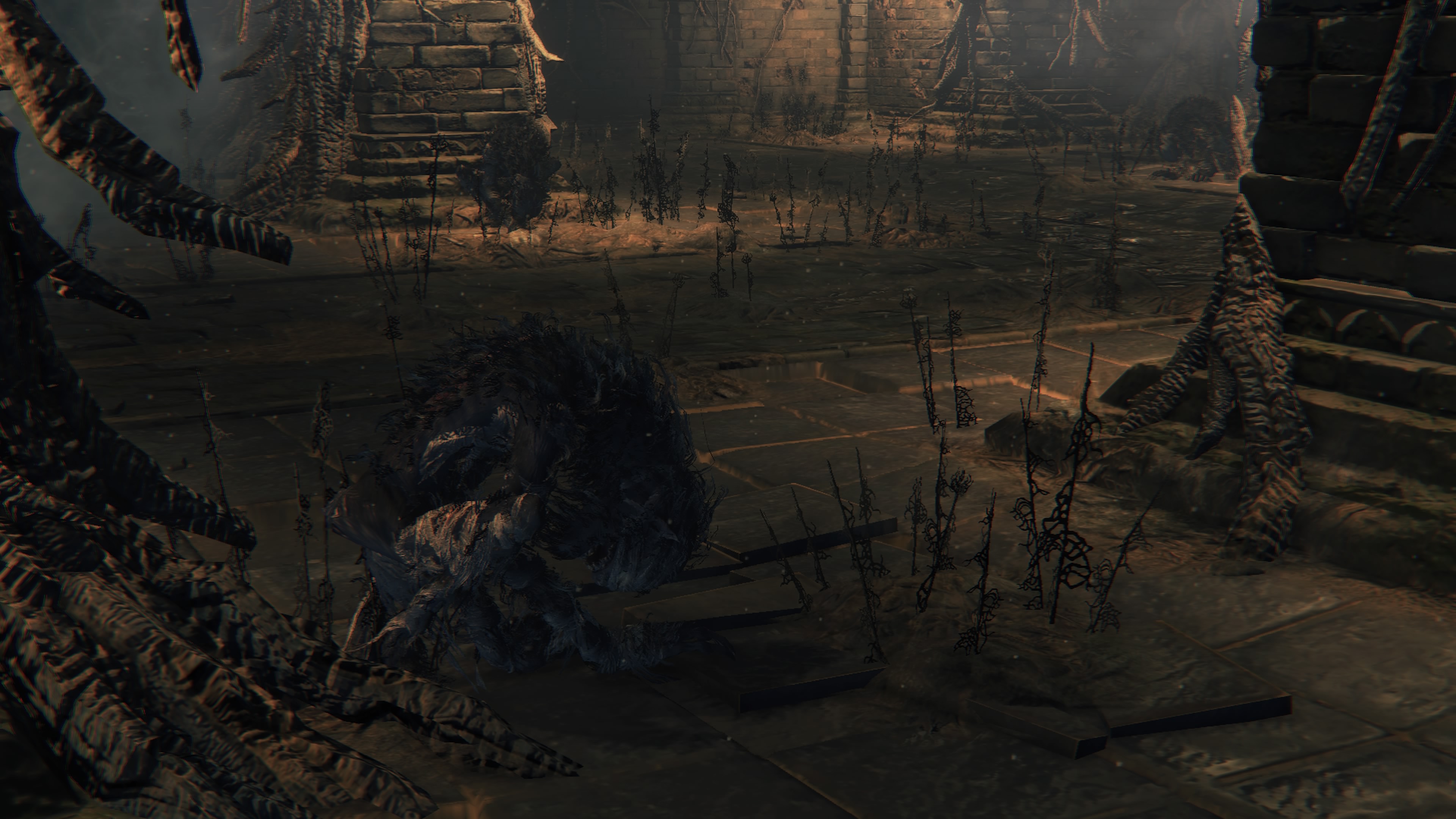
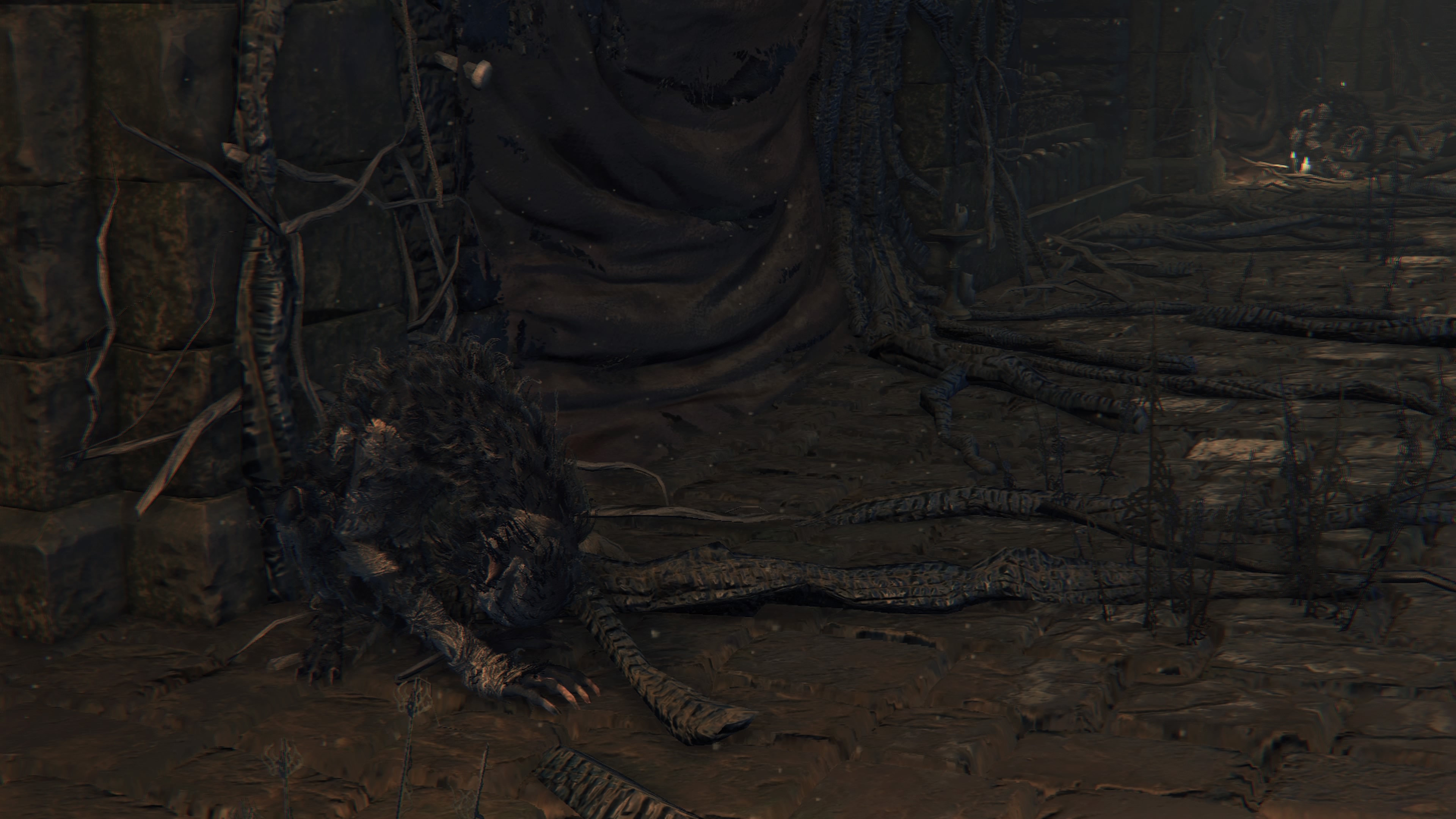
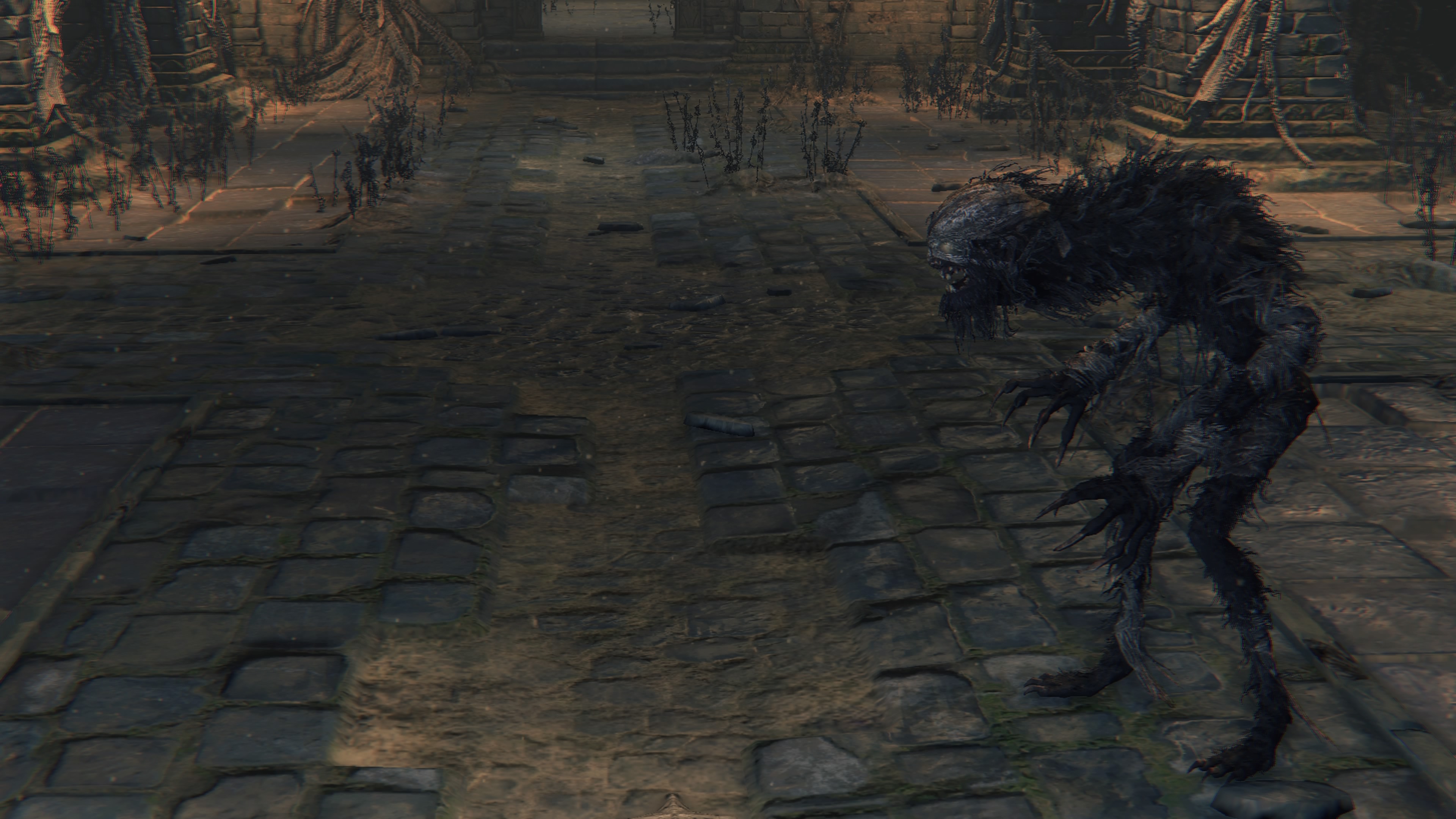
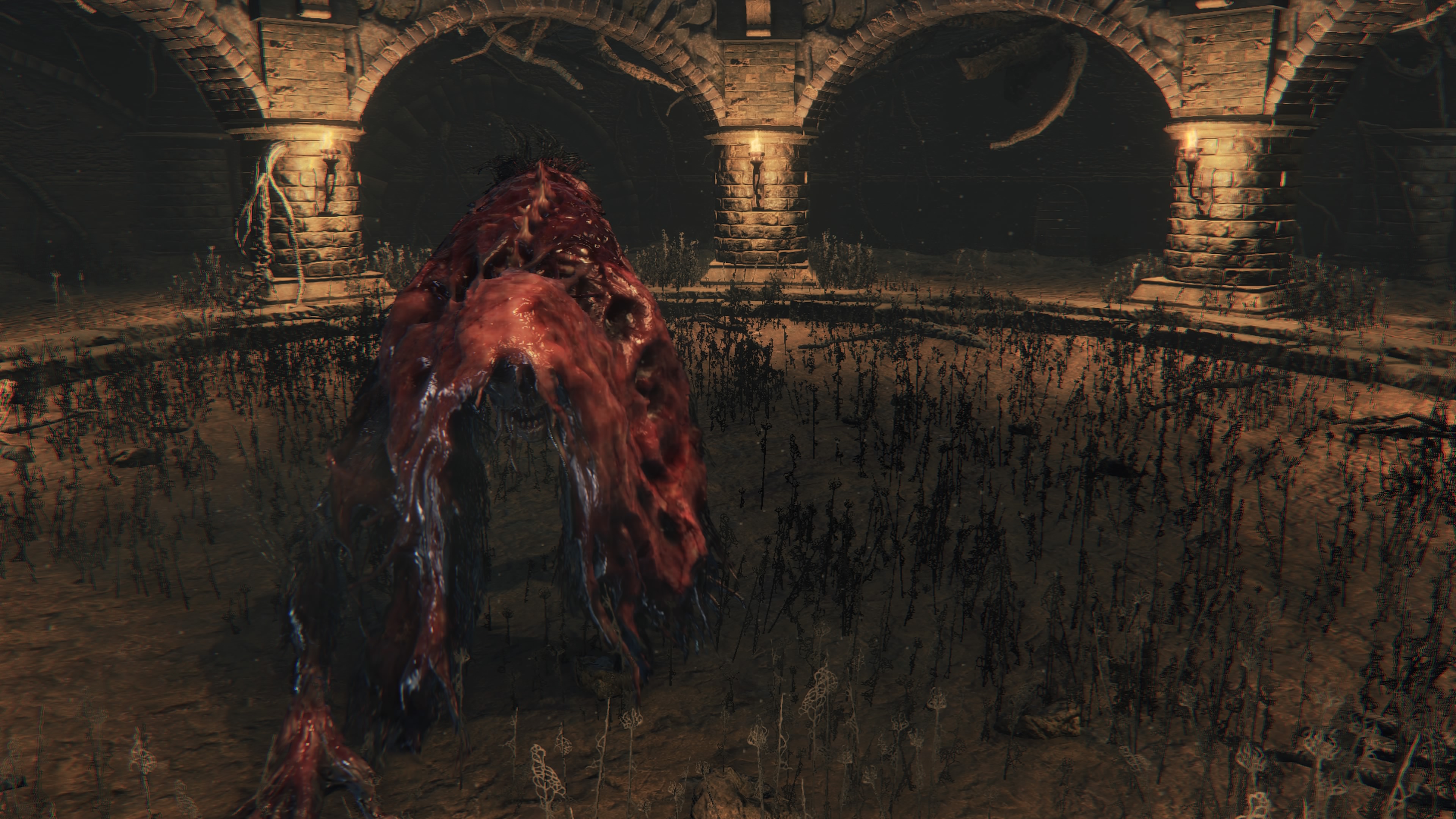
The blood-starved beast is another example. True to its moniker, the beast proves so “bloodthirsty” (血に渇いた獣) that it has torn the skin off its back, cannibalizing itself so as to guzzle more blood. The horrific mauling has left bones and flesh exposed, its precious blood leaking out with every movement. But despite not healing from the severity of the damage, this “self-skinner” (己皮剥ぎ) as it is internally named still has a beast’s vitality. And when its own howl further invigorates that blood, it draws out the latent poison. This becomes especially potent when the beast nears death, billows of ash seeping out with the blood until it explodes with another bestial cry, the leaks now as dangerous as the swipes and bites. While only for itself, the blood-starved beasts still shows the same abilities as the female beast patients, and it too hides in Loran dungeons, along with Clear and Stunning Deep Sea runes tailored for resisting such poisons.
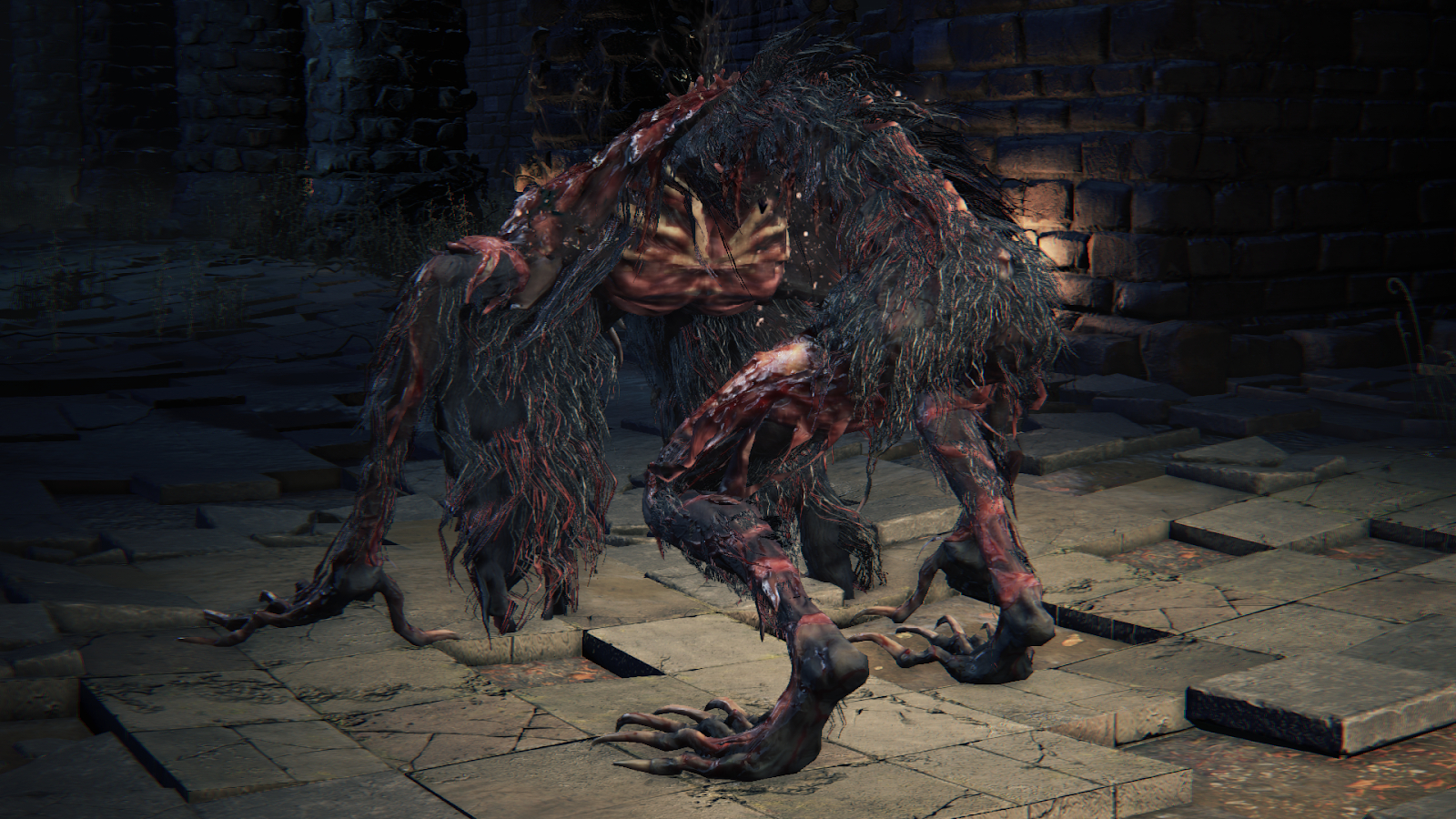
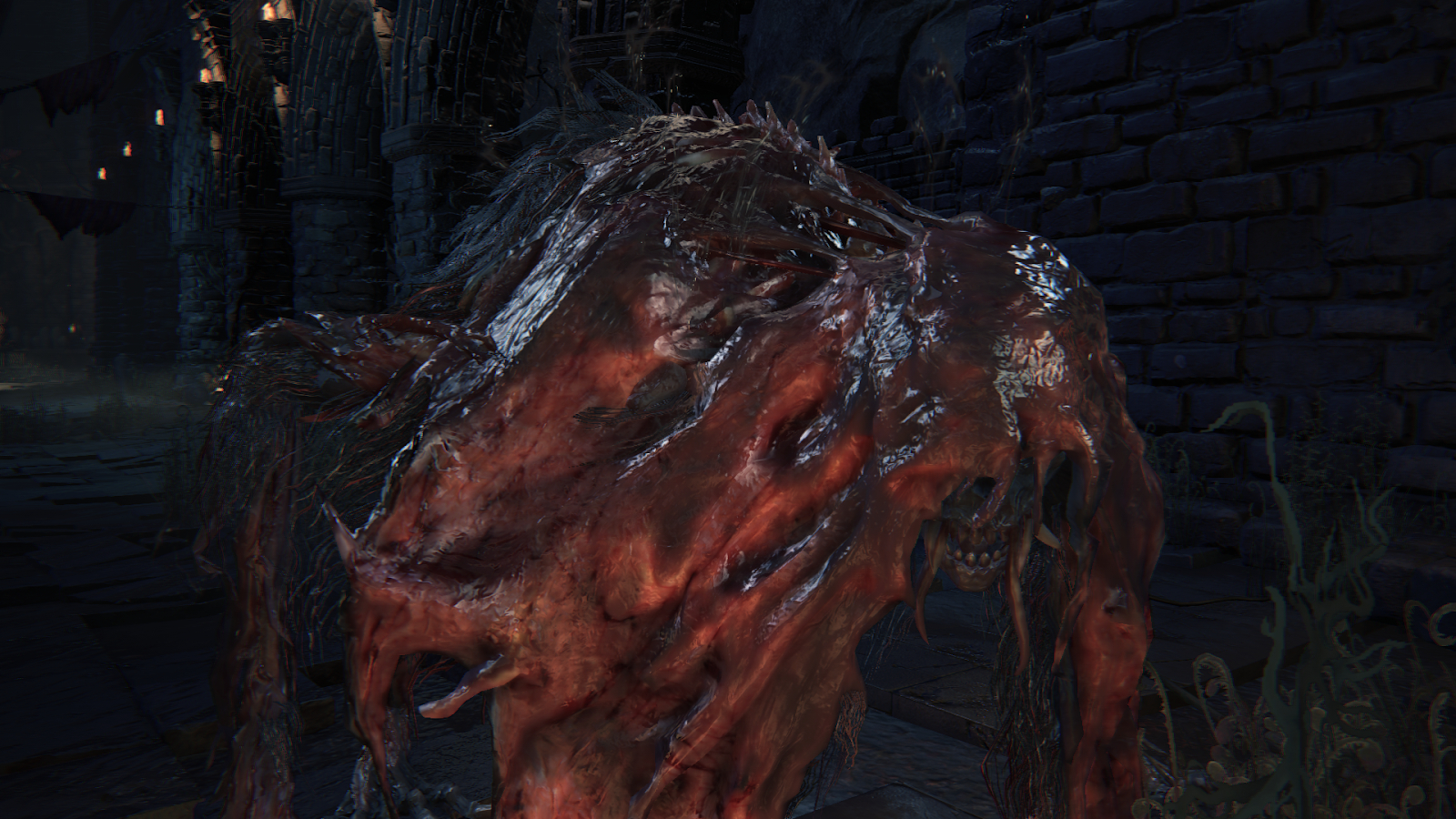
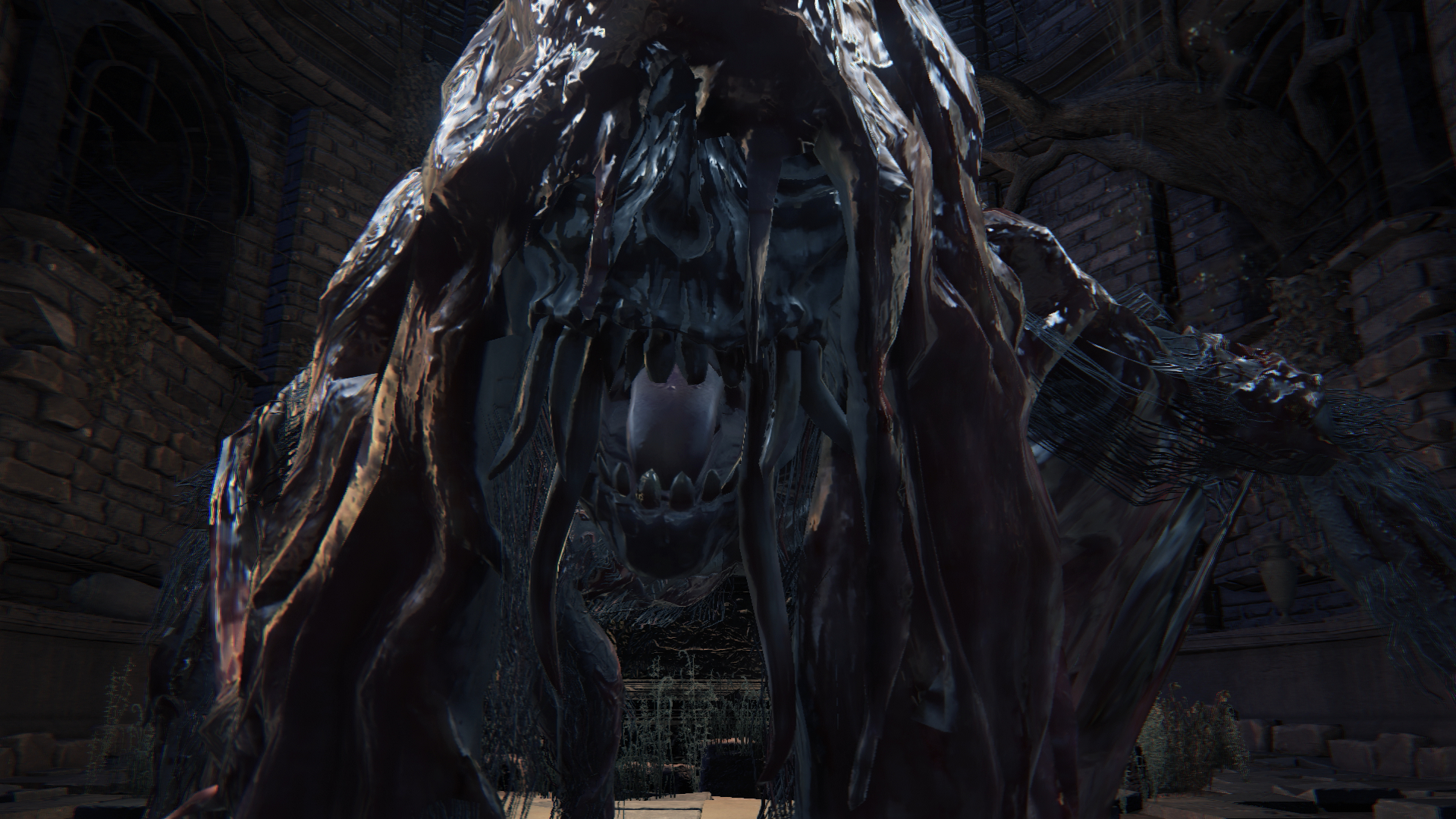
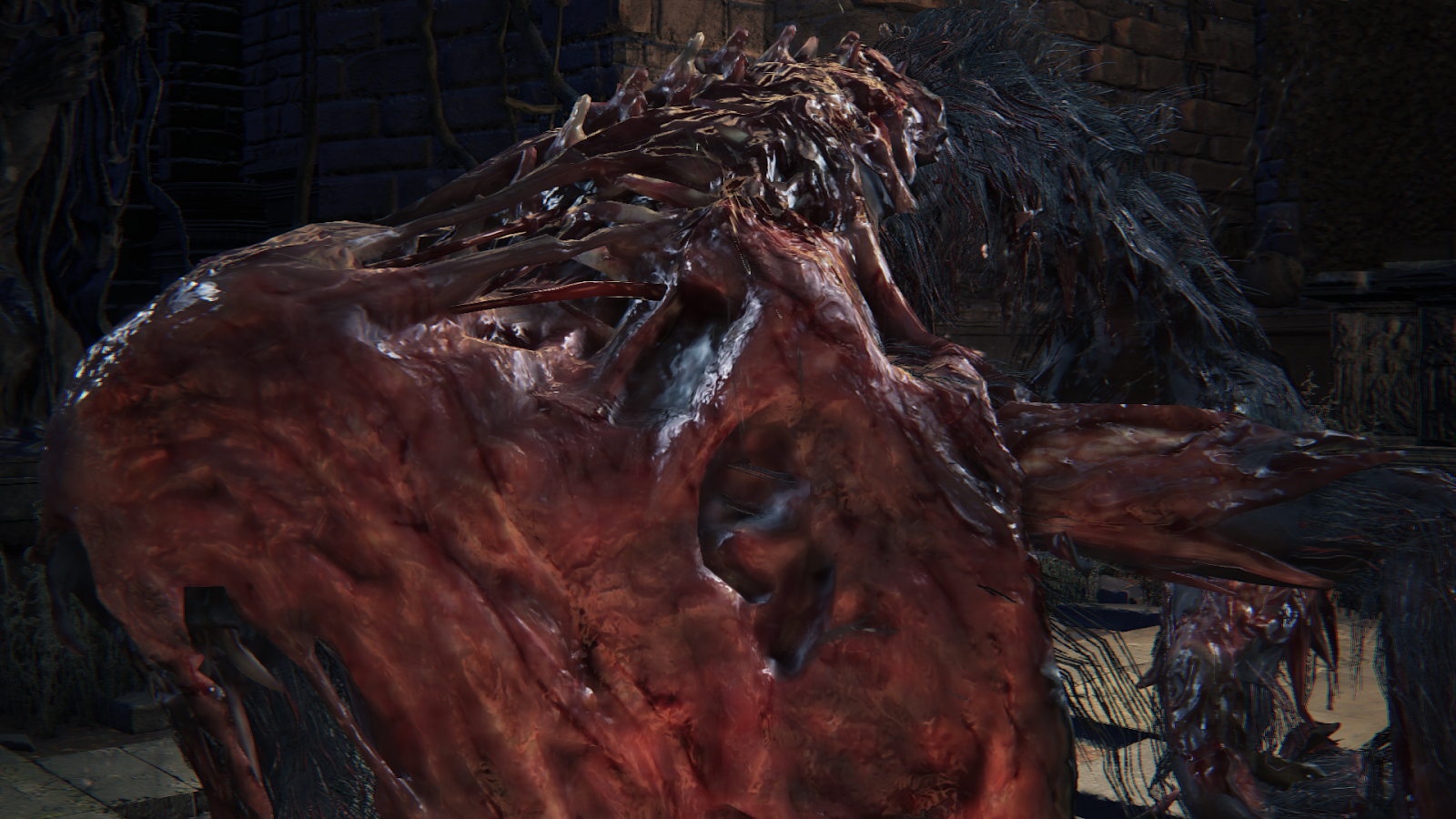
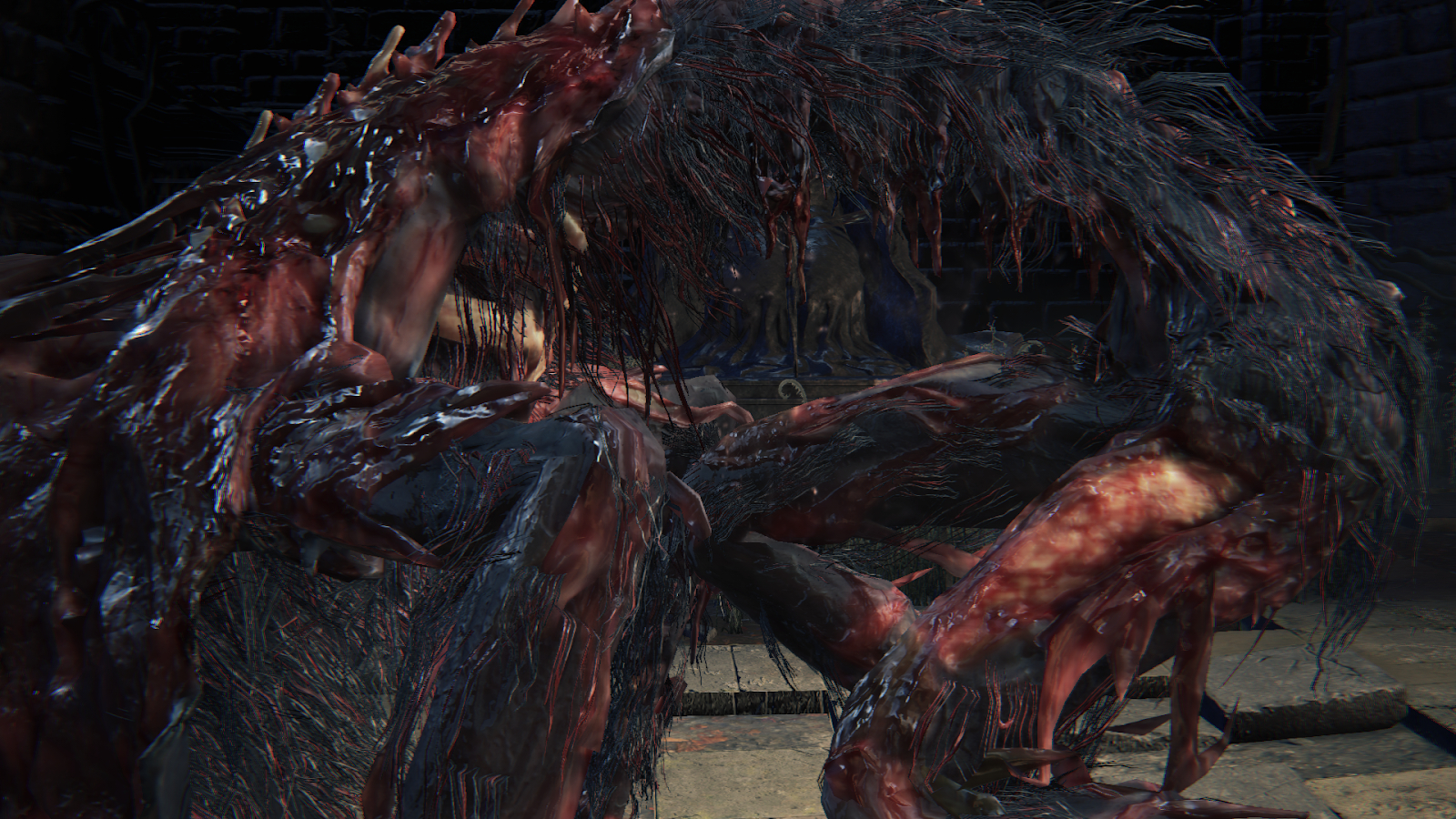
Put simply, many of Loran’s citizens appear to be suffering from more than beasthood in their blood, even if the symptoms don’t always manifest without stimulation. Moreover, this poison seems to synchronize with the power of bestial life. Why? Antidote’s description notes that an ash blood disease in Old Yharnam was followed by a beast epidemic. This hints at Loran experiencing a similar incident, the populace falling ill to this blood disease before transforming en masse. The timing is suspicious. How do so many get ash mixed into their blood? From either the blood they drink or the blood they transfuse into them as part of treatment. In other words, Loran must have mixed the ash into the fluid they received as part of treatment. And judging by what it presages, the ash was likely intended to magnify and accelerate the beastification process within patients. If so, then the powers that be in Loran operated with the full knowledge that they were “infecting” their populace.
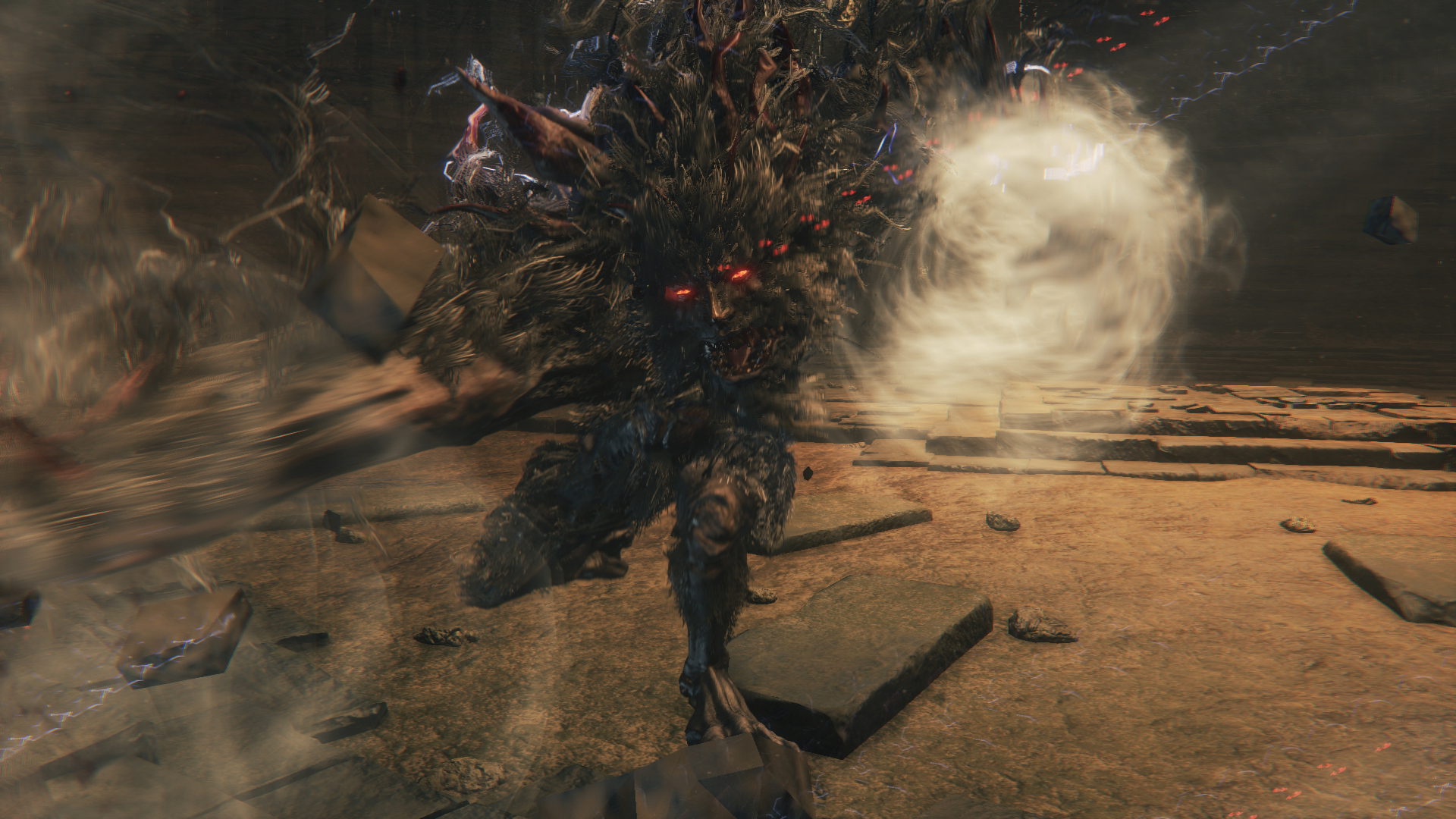
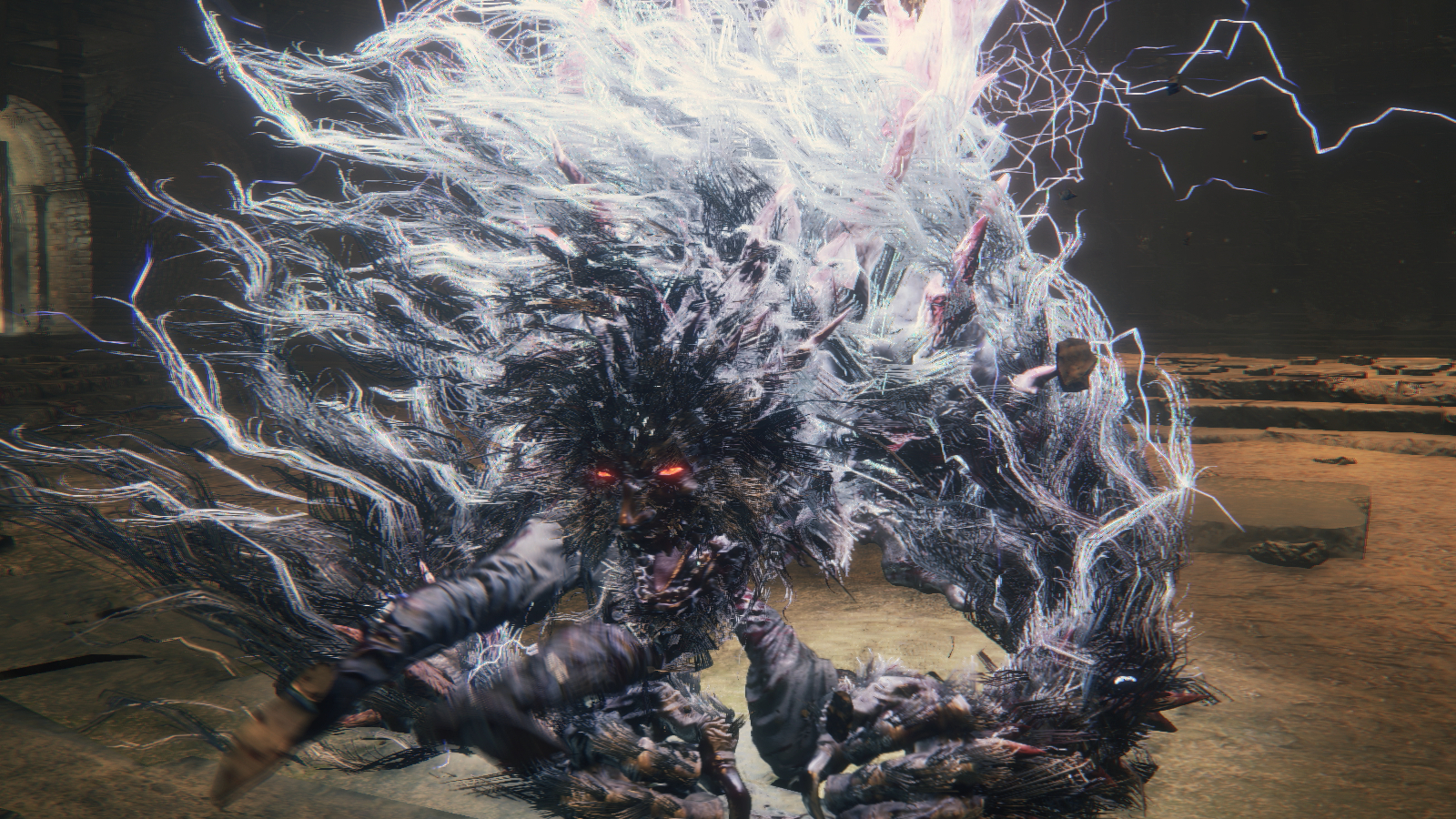
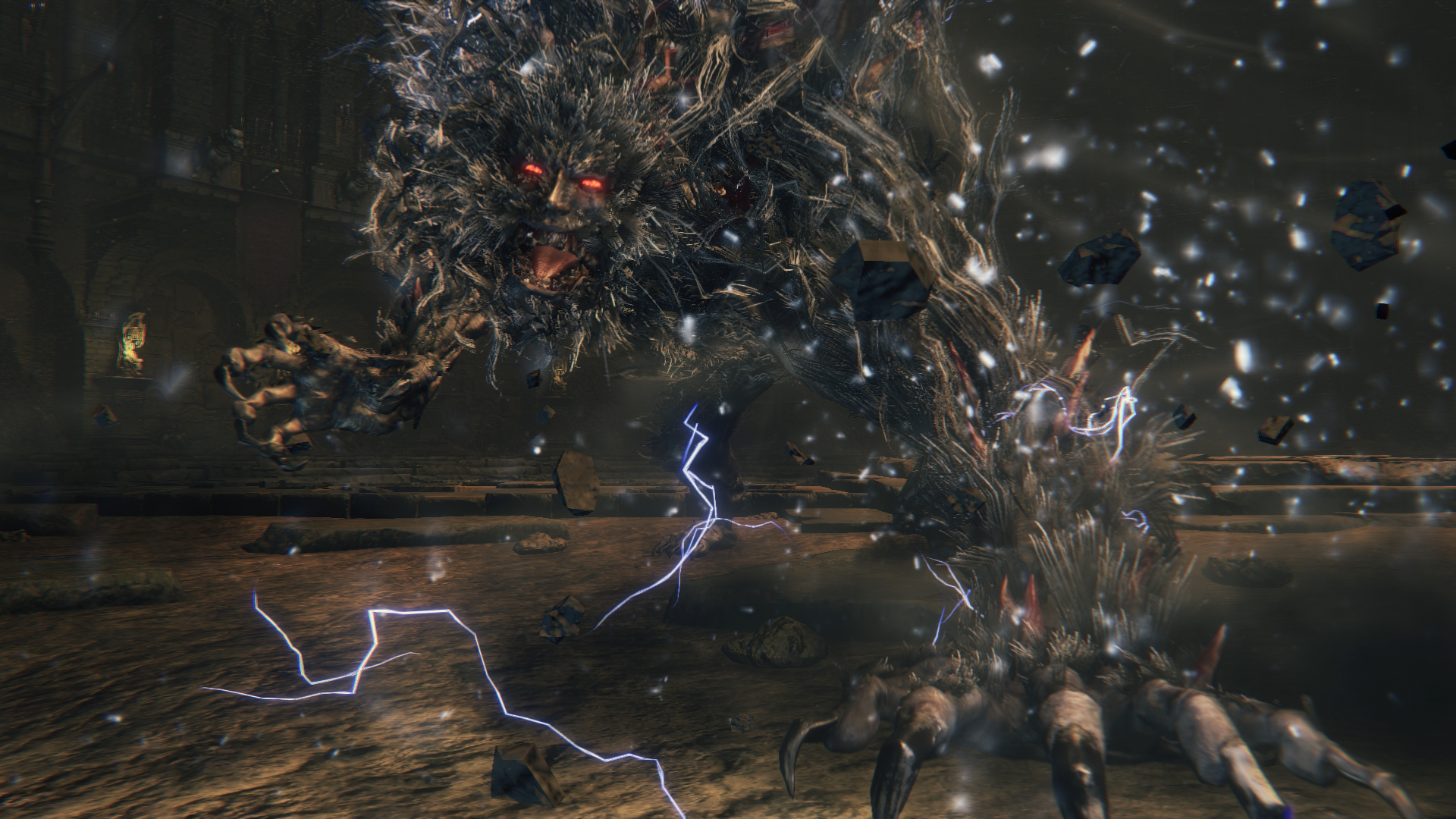
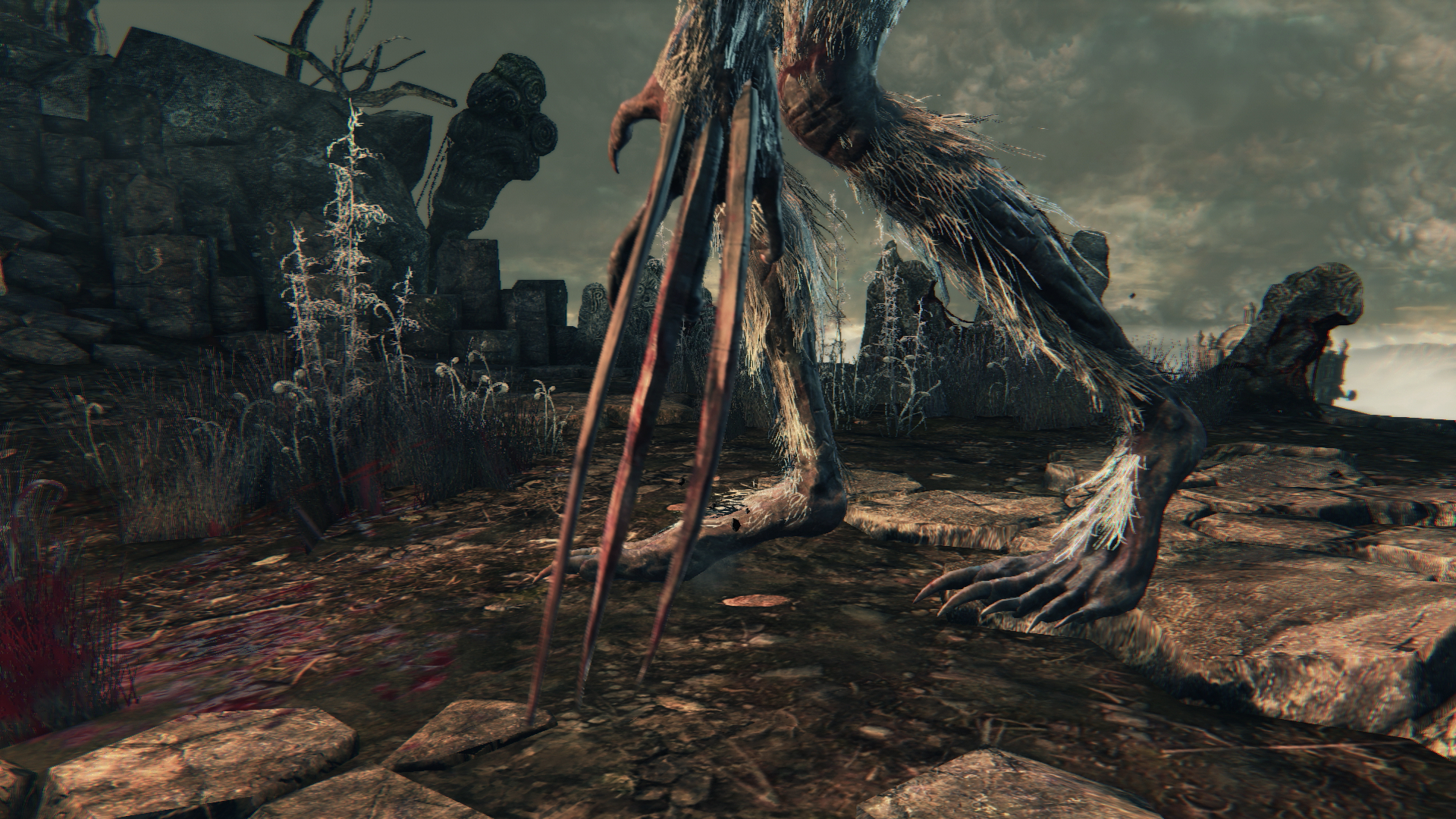
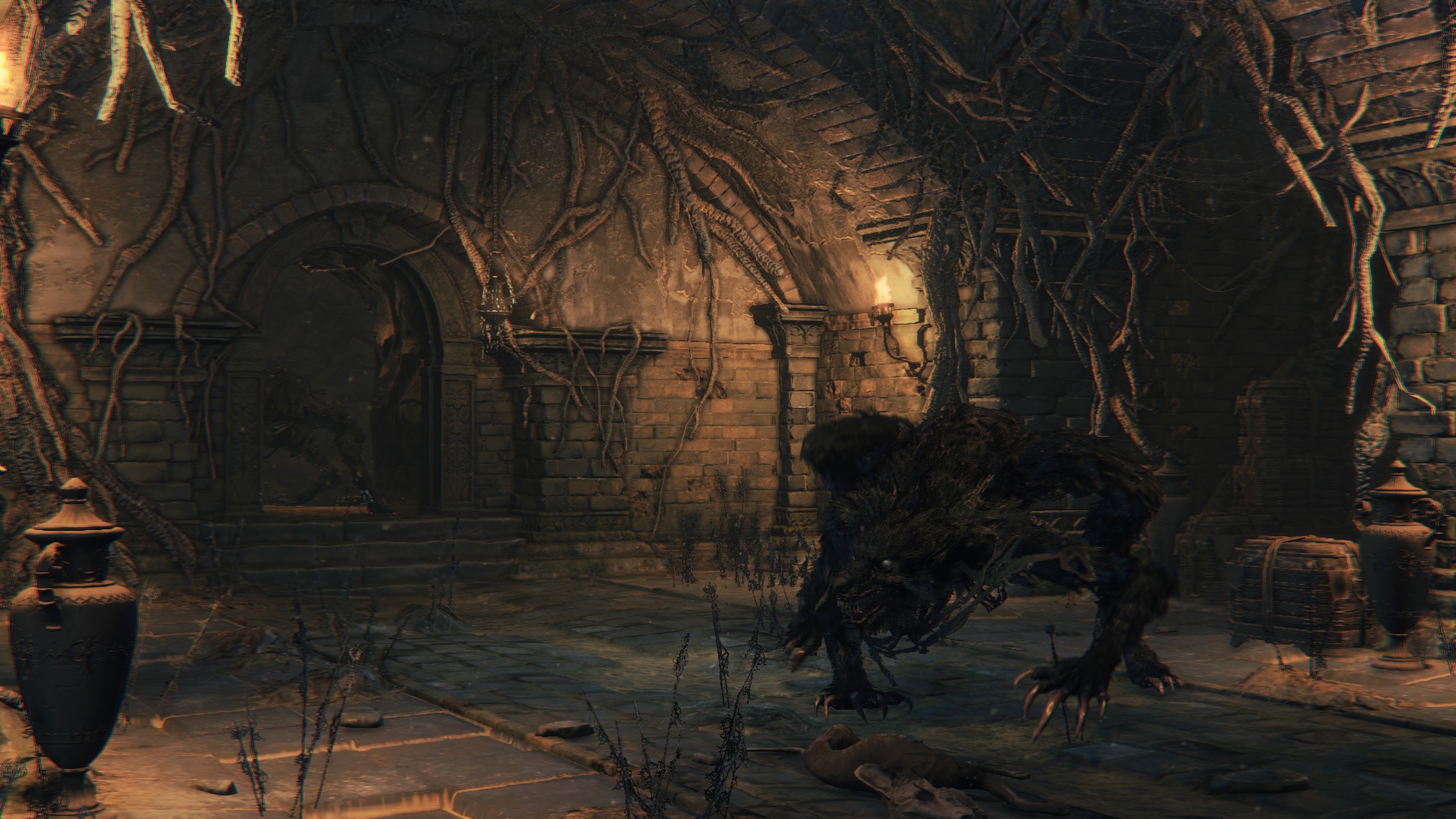
The reason why is made clear from the prevalence of more advanced beasts in Loran tombs. The so-called abhorrent beast is the most straightforward example. The abundance of vitality in this hulking monstrosity is evident from its two tails, not to mention the giant horns growing wildly from its head, down its back, and out of its forearms; two more also jut out the beast’s knees, but they are broken at the base so as to not limit its movement when on all-fours, implicitly. Perhaps their length acts as a lightning rod to help generate the electric field keeping the beast’s hair on end. Using that energy, the monster conjure miniature storms in its claws, unleashing torrential winds and bolts. Aiding that along is the elasticity of those arms, stretching them to unnatural lengths which each jab and swipe before instantly snapping back into place. And with a simple roar, the beast can double the bolts it is generating for even more deadly tornadoes. Horrifying as it is to see, the beast no doubt is bursting with vitality.
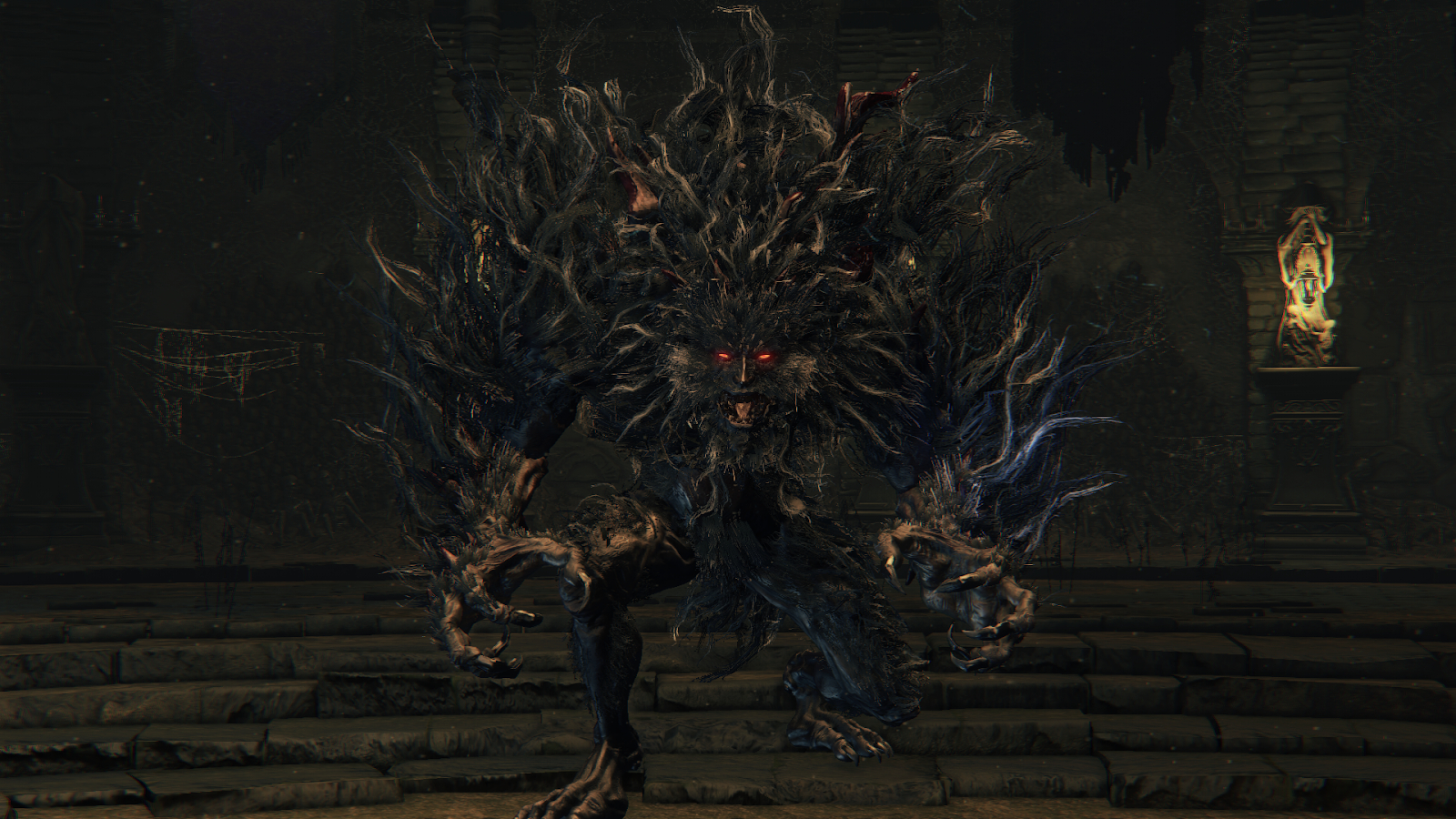
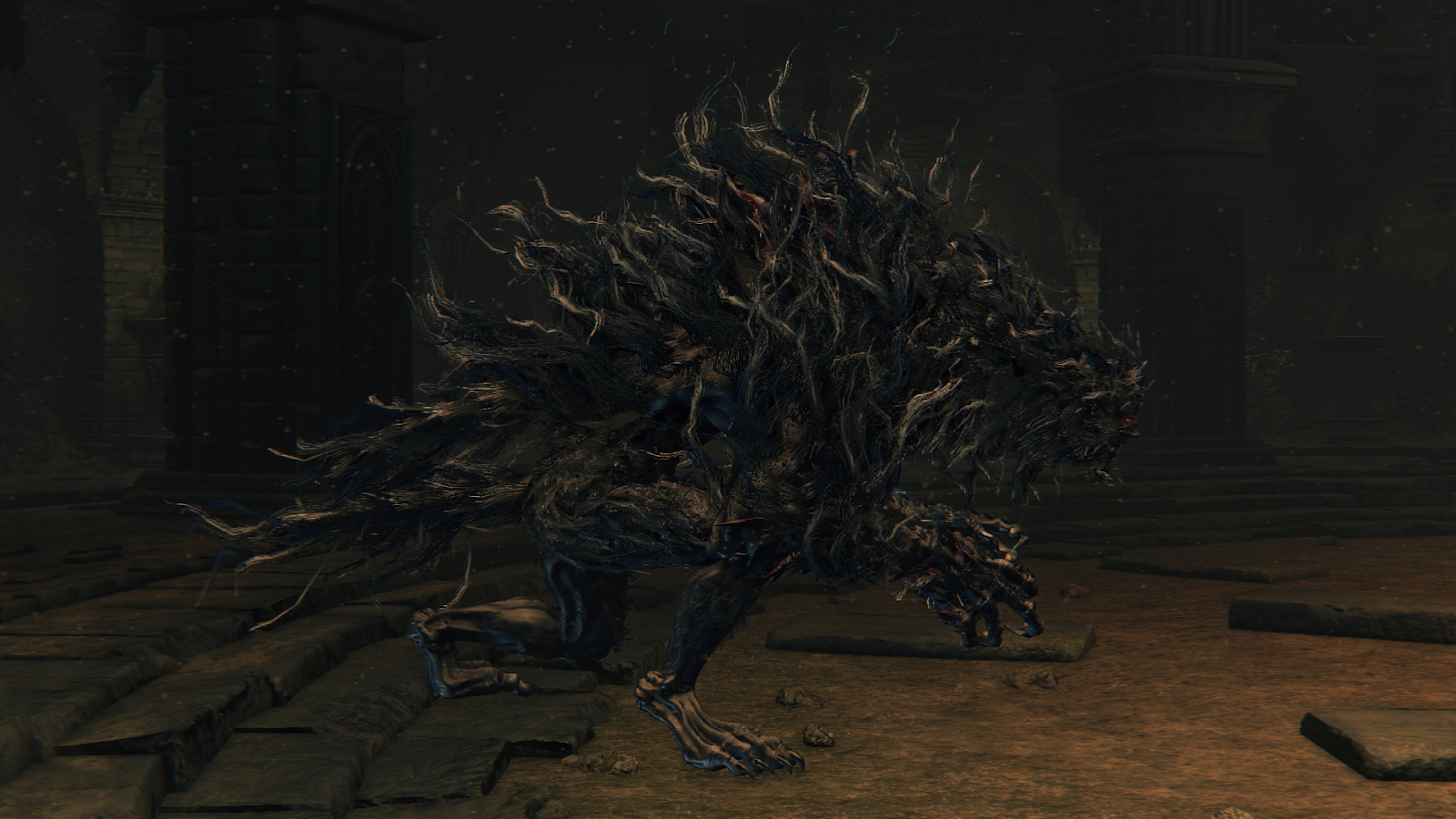
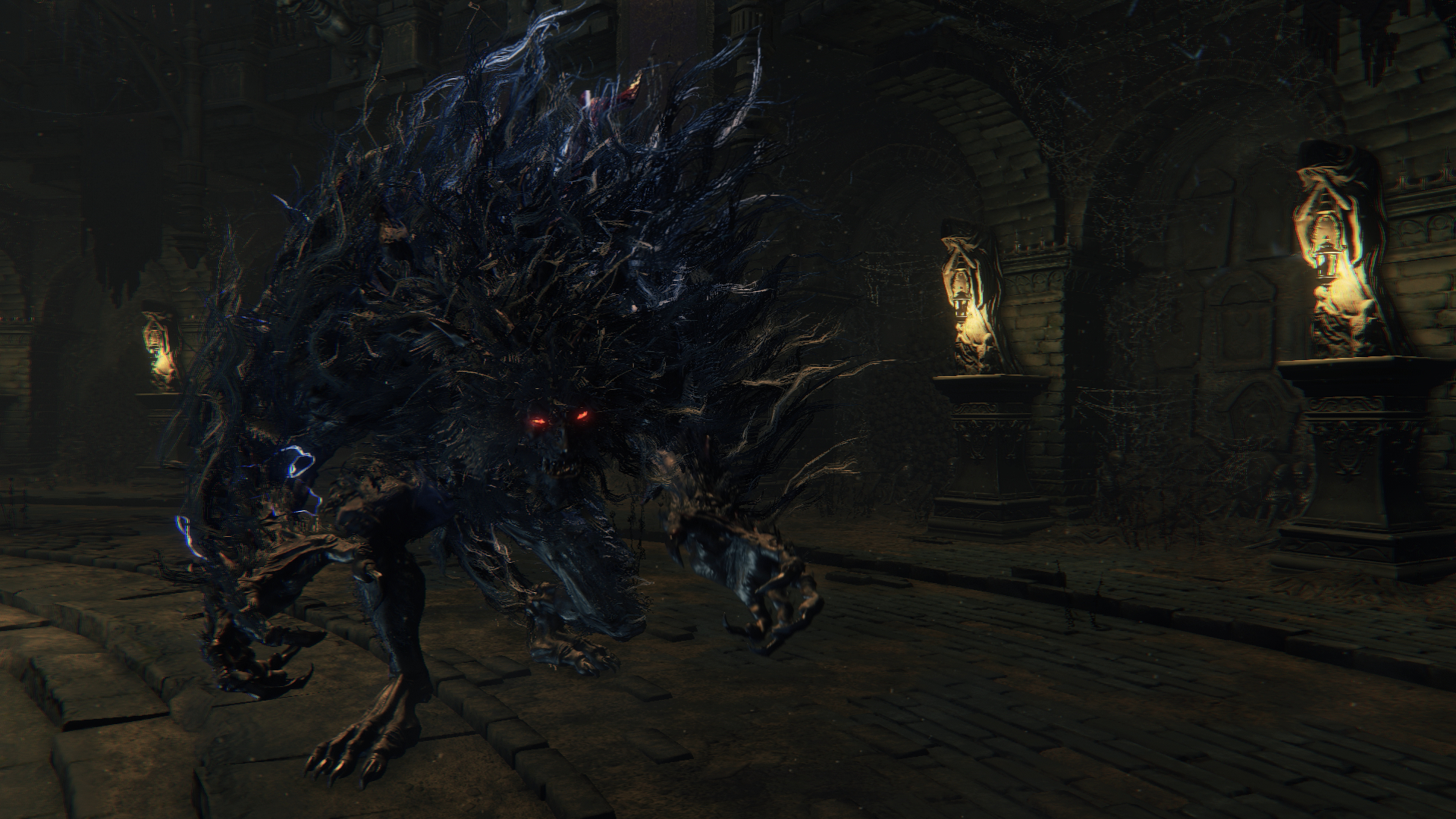
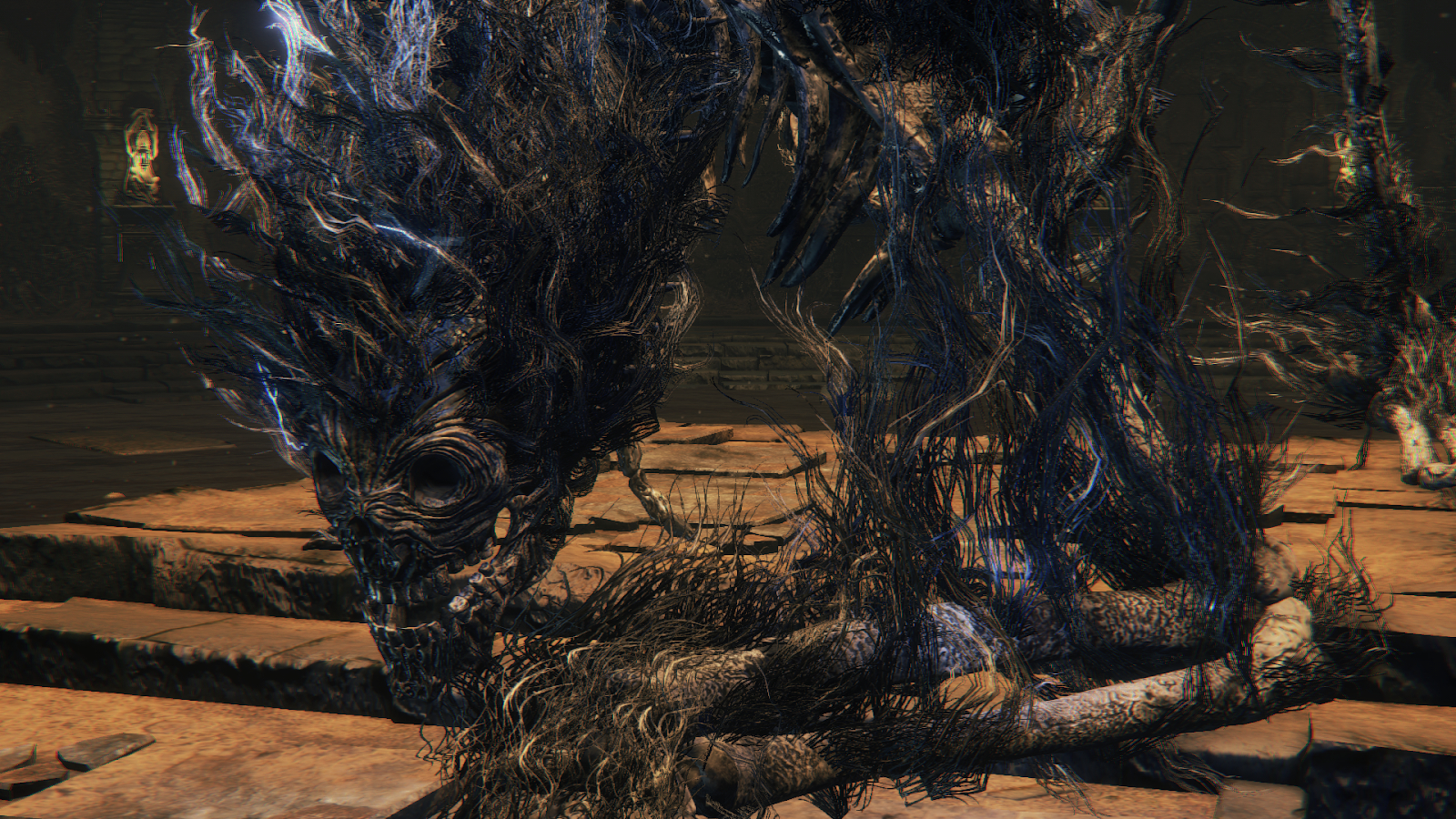
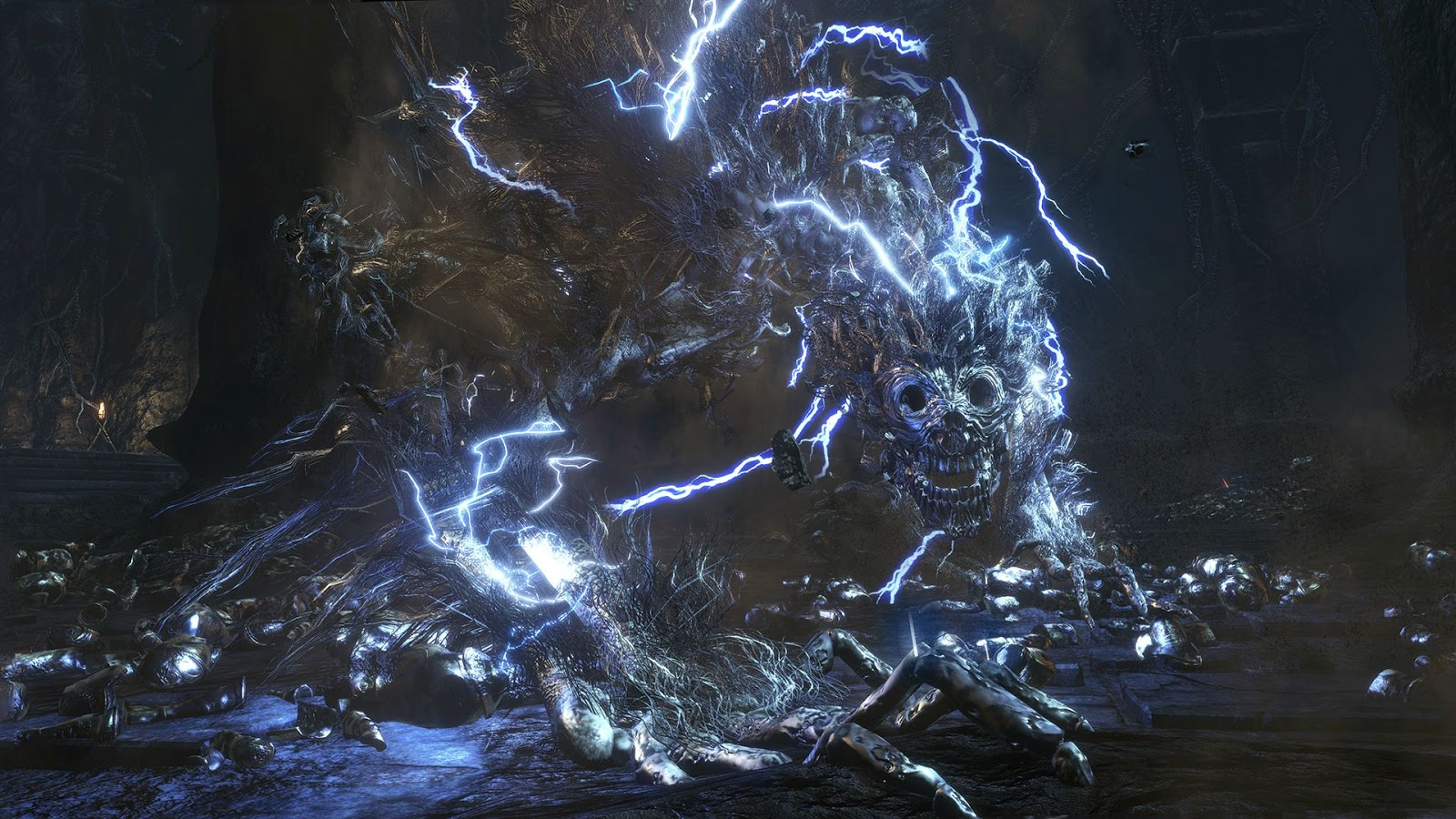
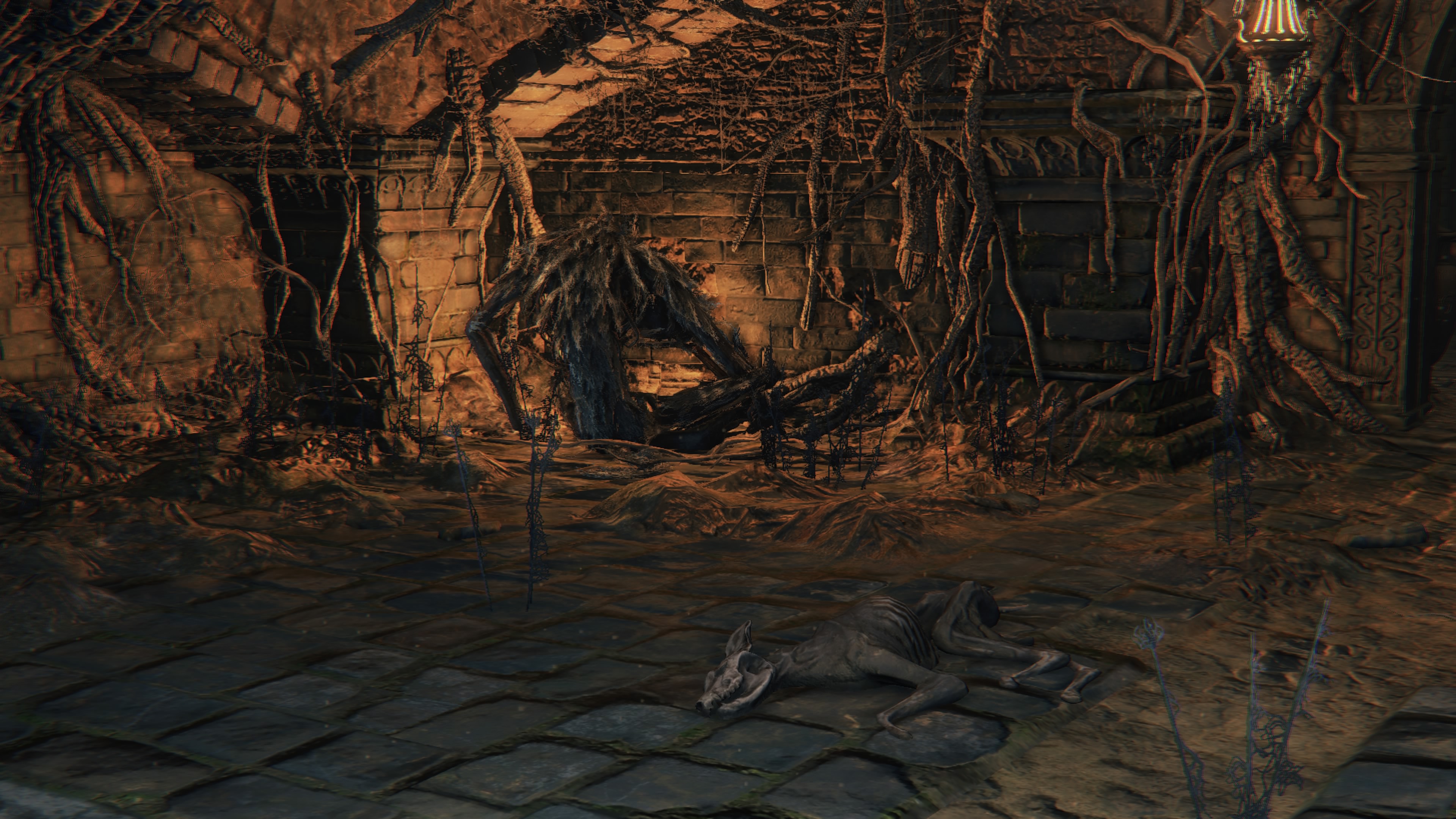
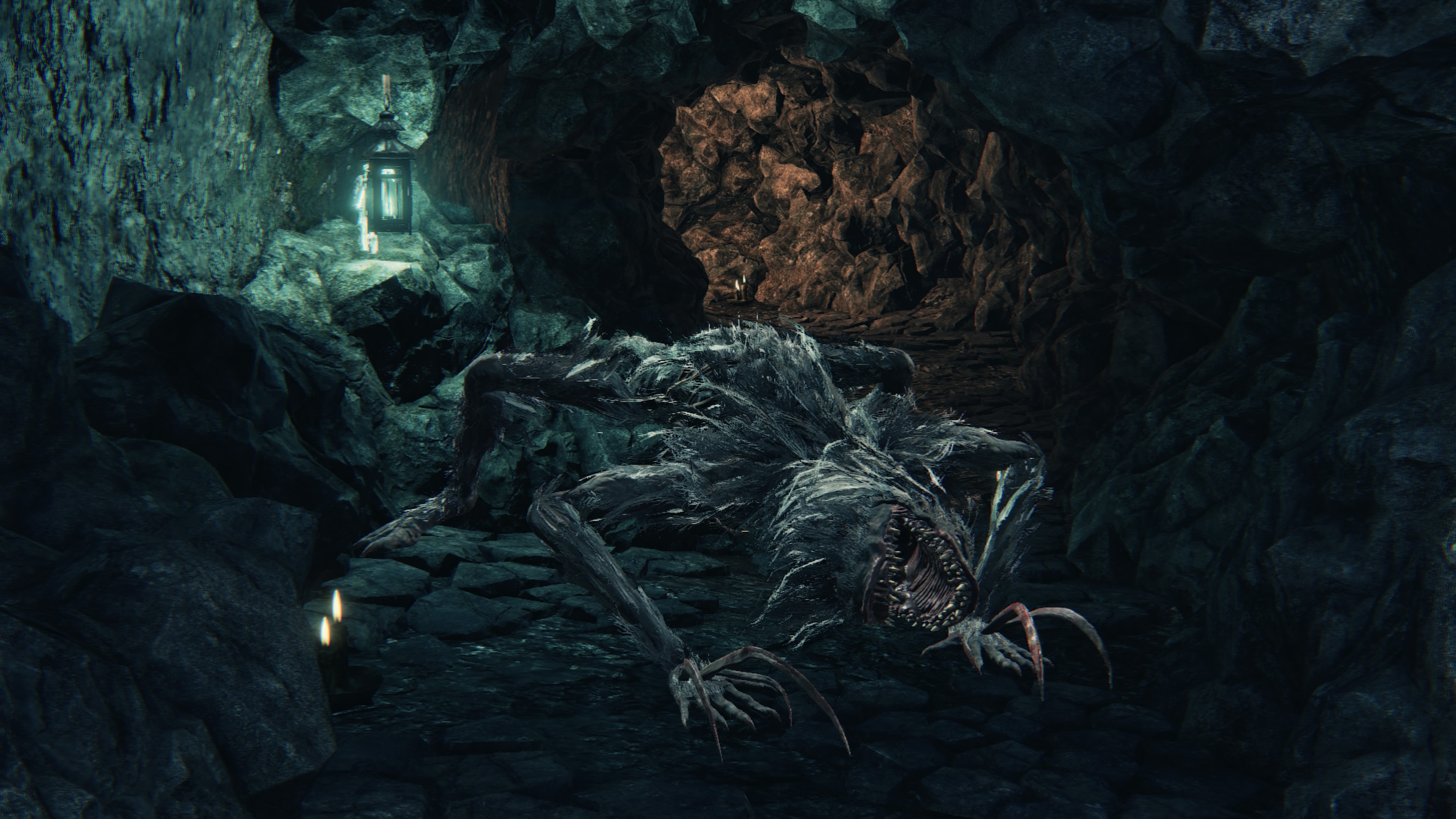
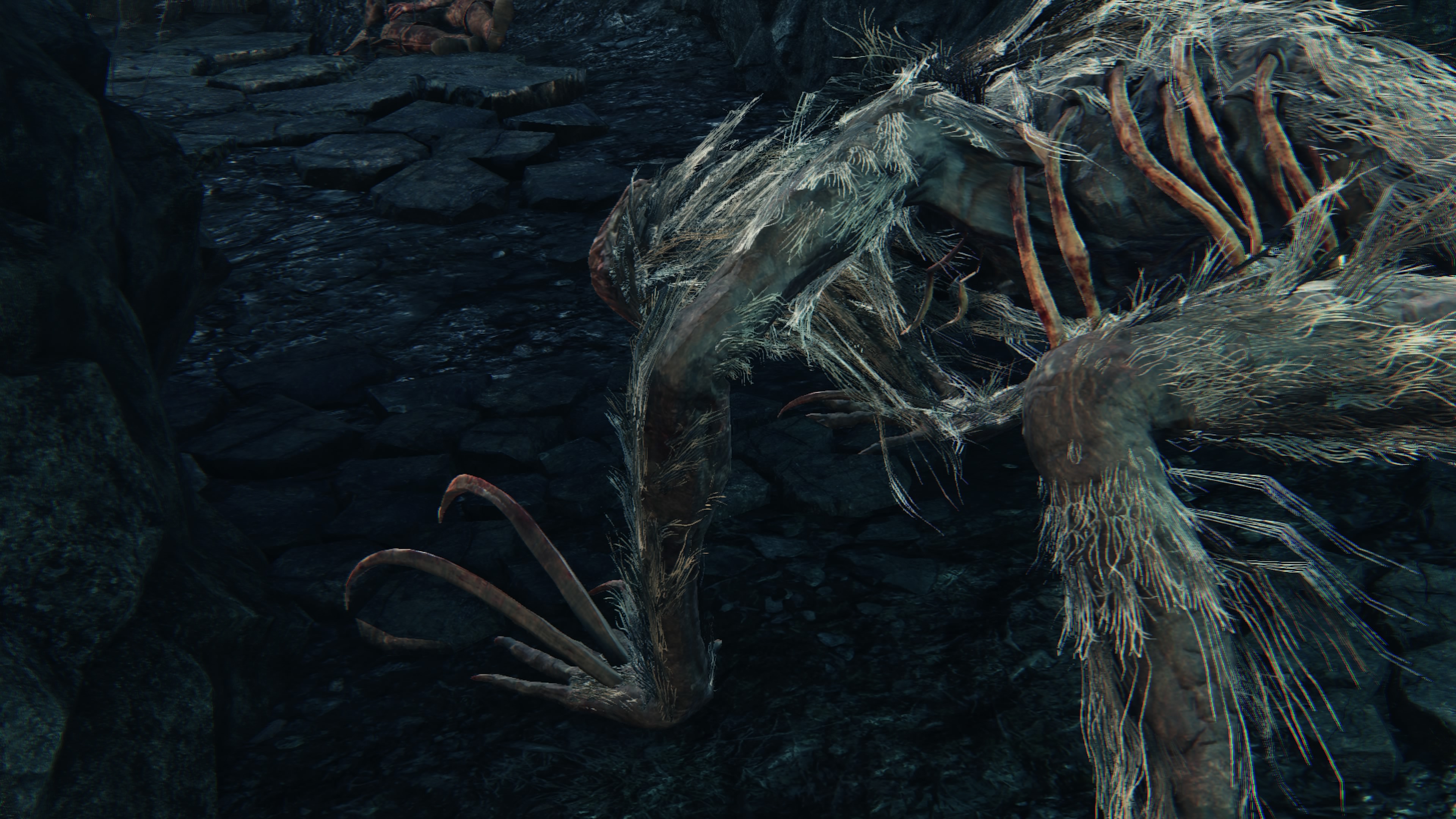
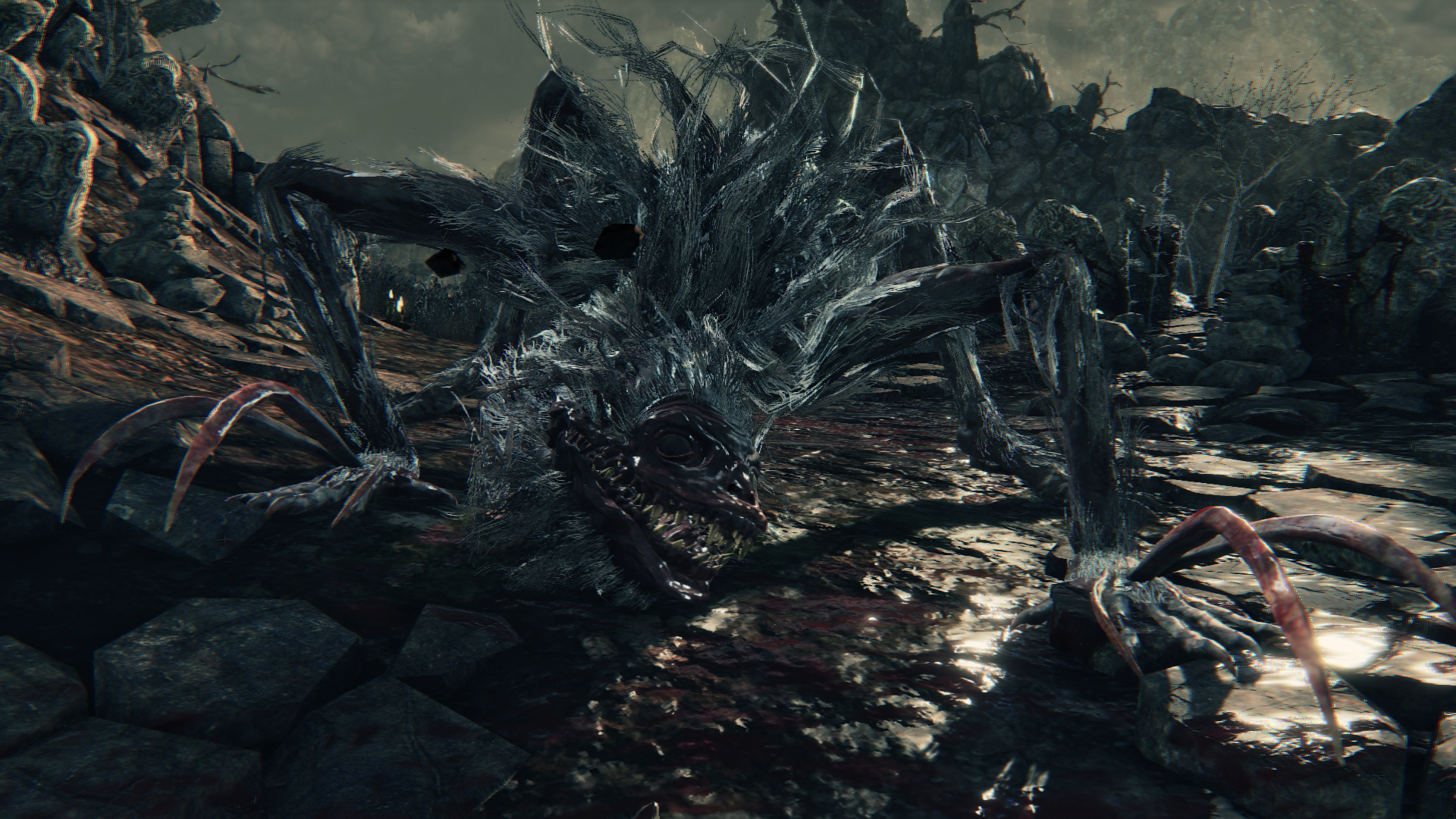
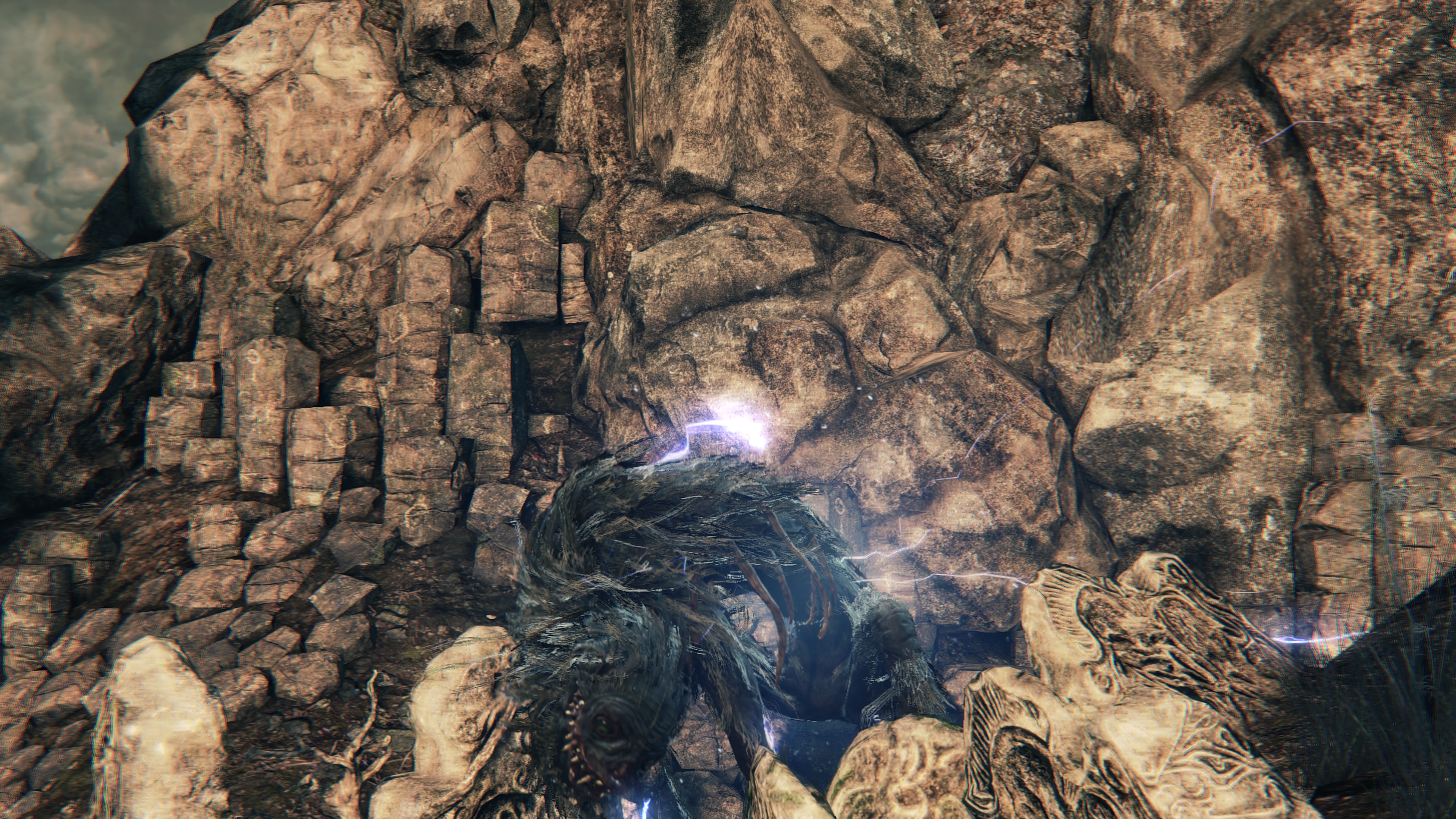
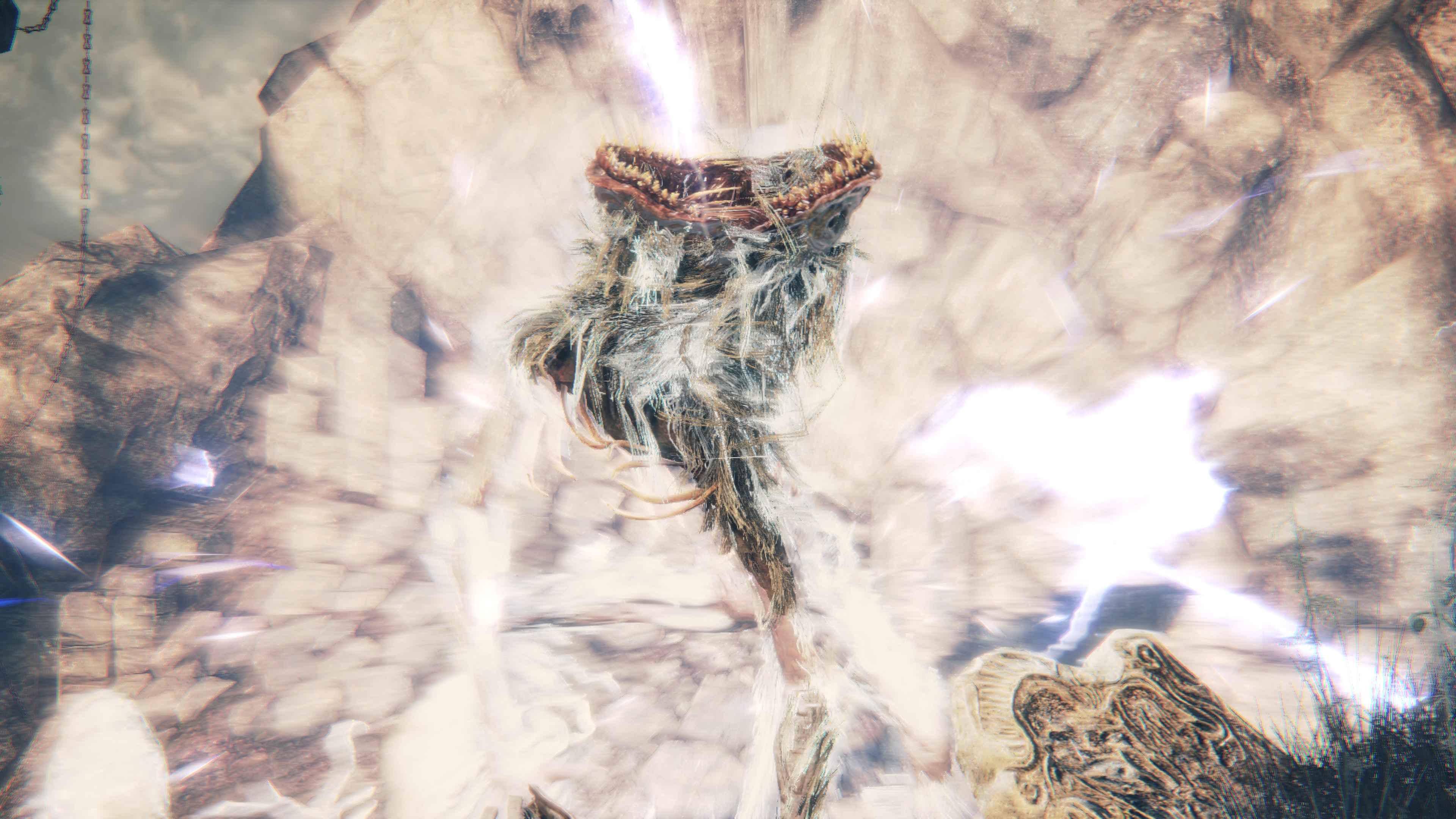
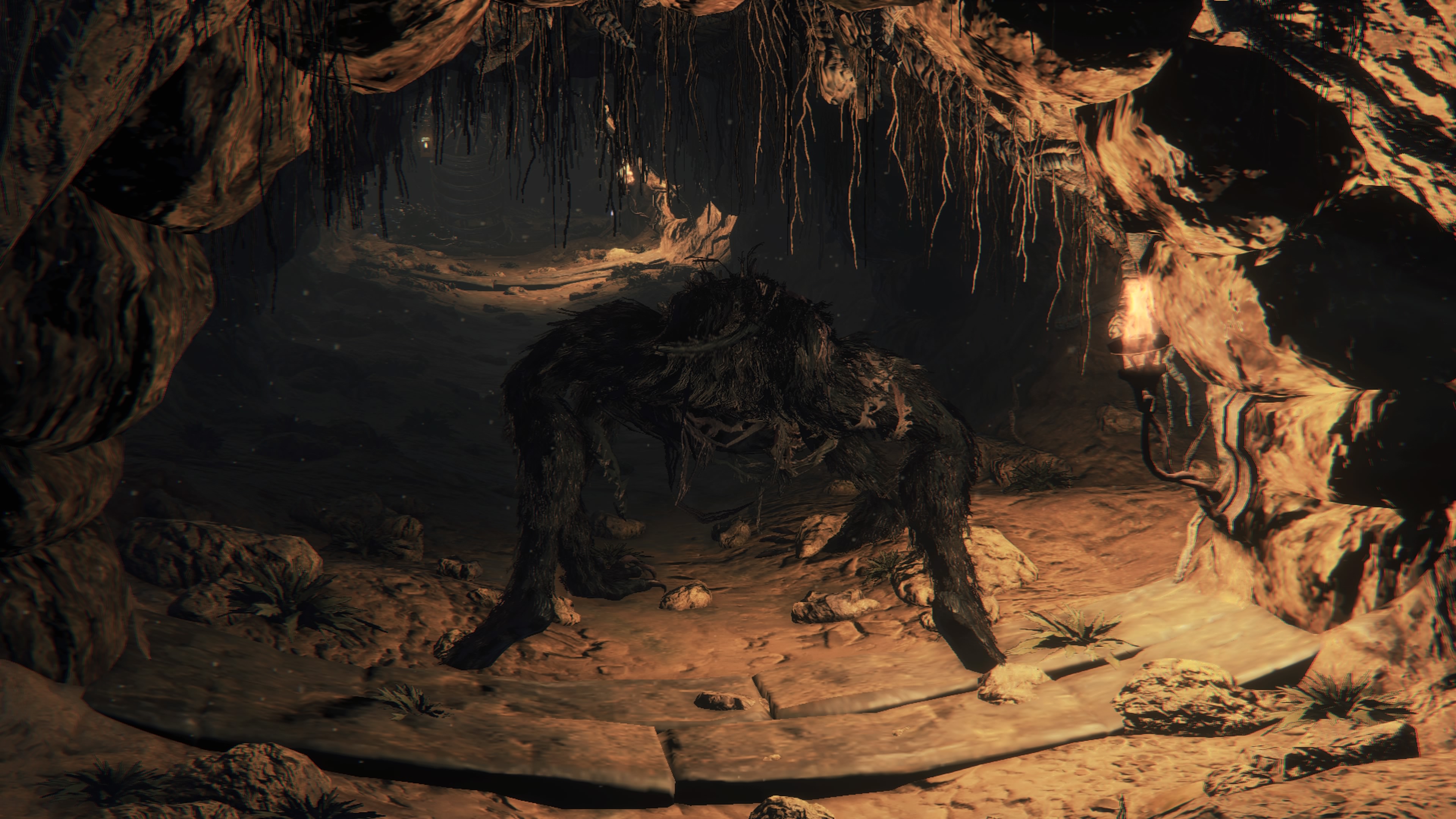
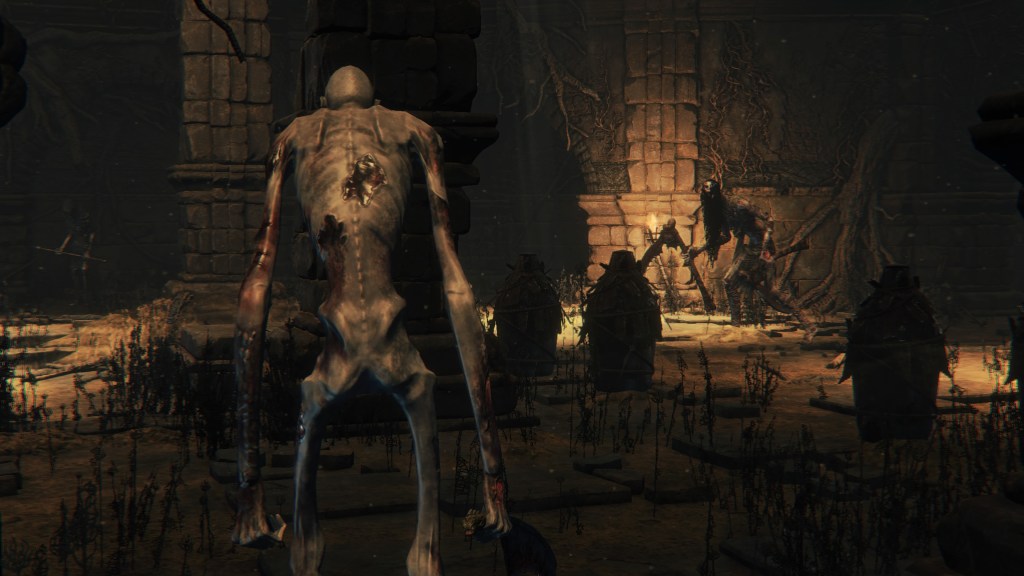
To exemplify that undead quality to their blood’s will to live, we have the Loran Darkbeast. Although the boss is identical to Darkbeast Paarl encountered at Old Yharnam, the official website confirms that this “darkbeast” can be ancient and features promotional images of exclusively the boss encountered in Chalice Dungeons. We initially come across the skeleton laying in the ruins before it springs back to life. Like how the abhorrent beast is internally named “Storm Beast”, (嵐の獣) the Loran Darkbeast is labeled “Storm Beast (bones)” (嵐の獣(骨)) for its own ability to generate an electric field which kicks up winds around its standing hairs. Even after all the decay, those old bones still grow fur. And while it can occasionally lose that field when staggered, unlike its fleshy counterpart, it is still able to unleash a few small electrified claws, and a hearty roar can always goad out more bolts. The darkbeast is proof that the soul present in the bone marrow is more than enough for yielding a tremendous amount of power.
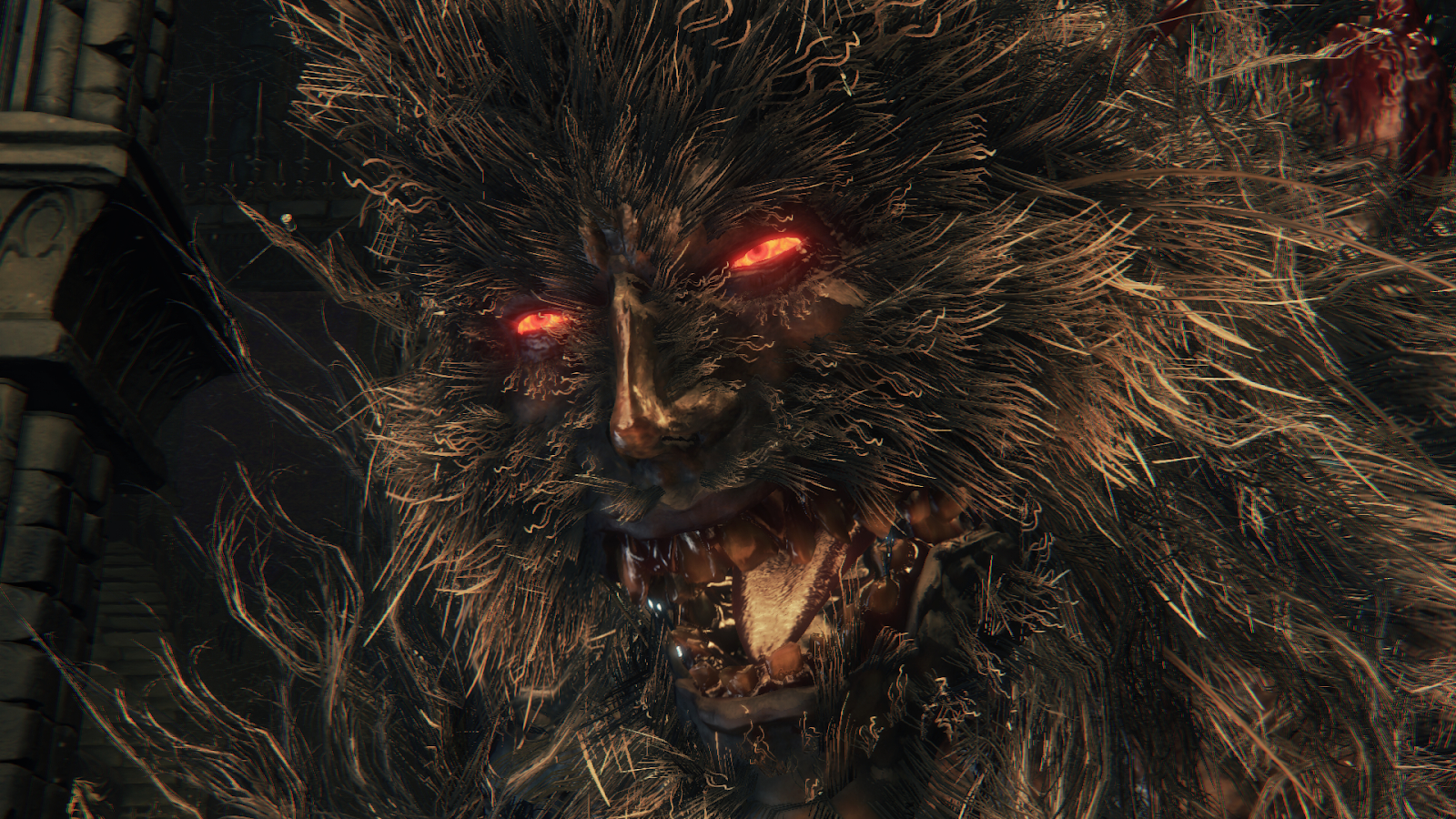
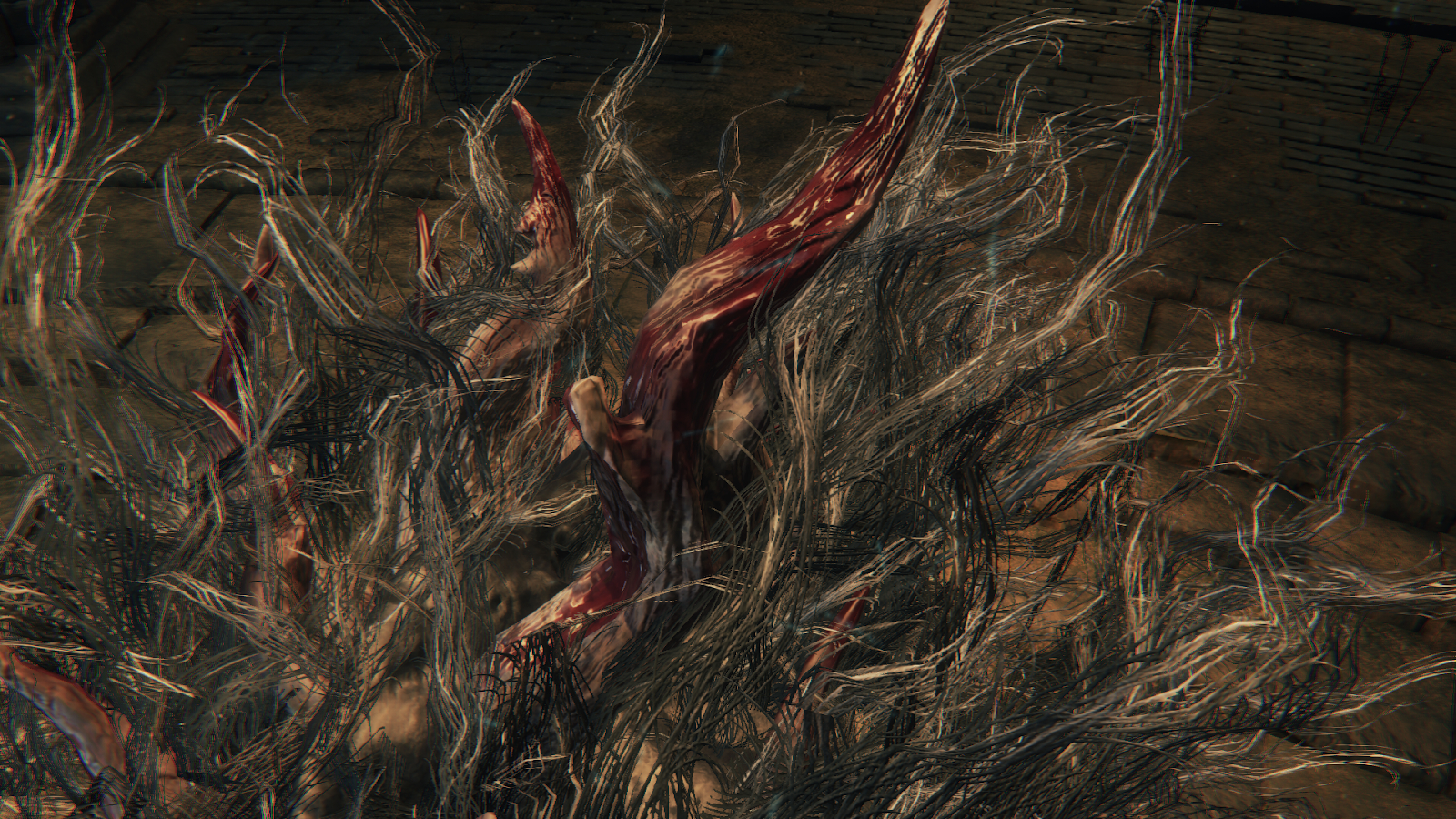
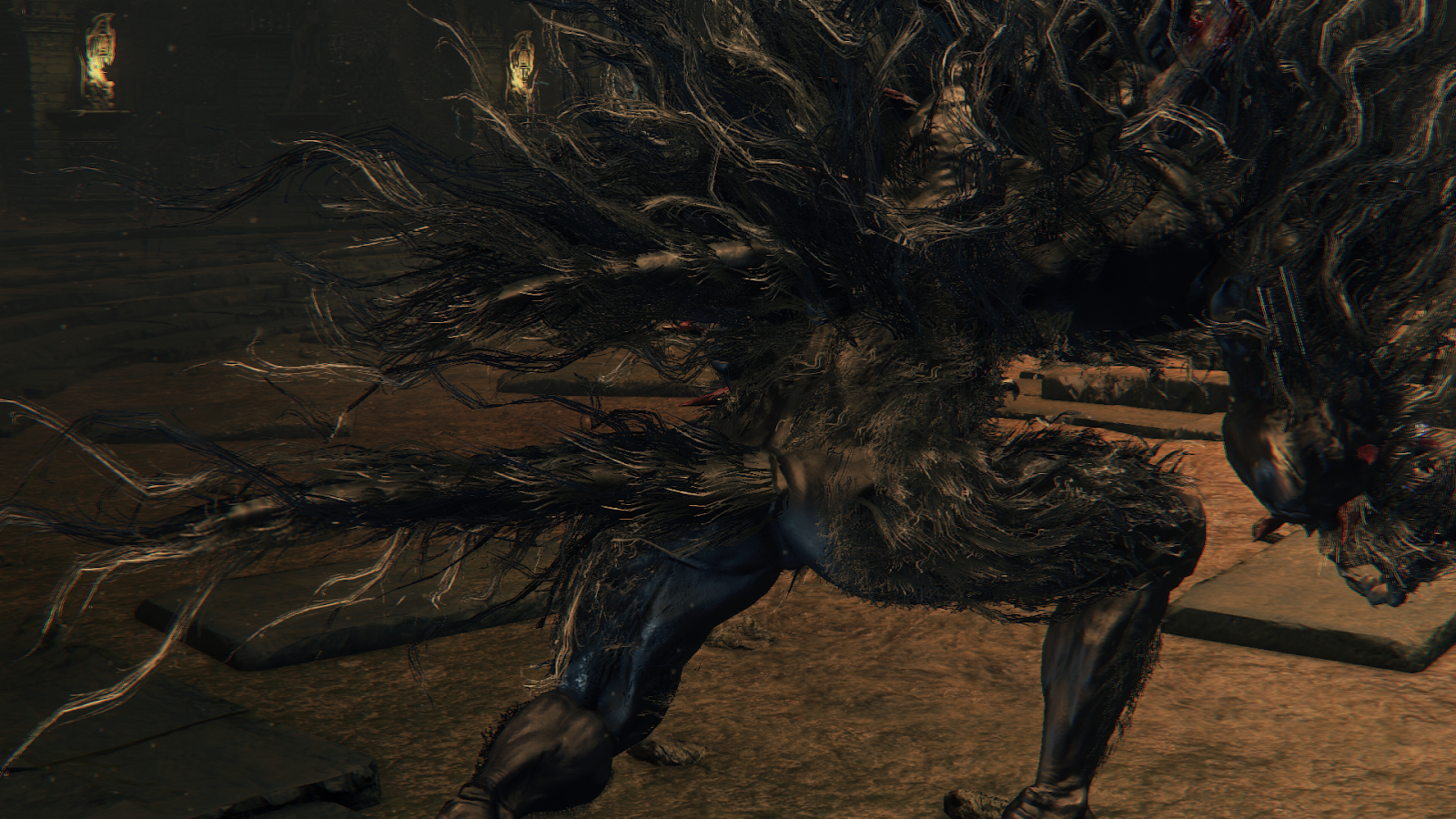
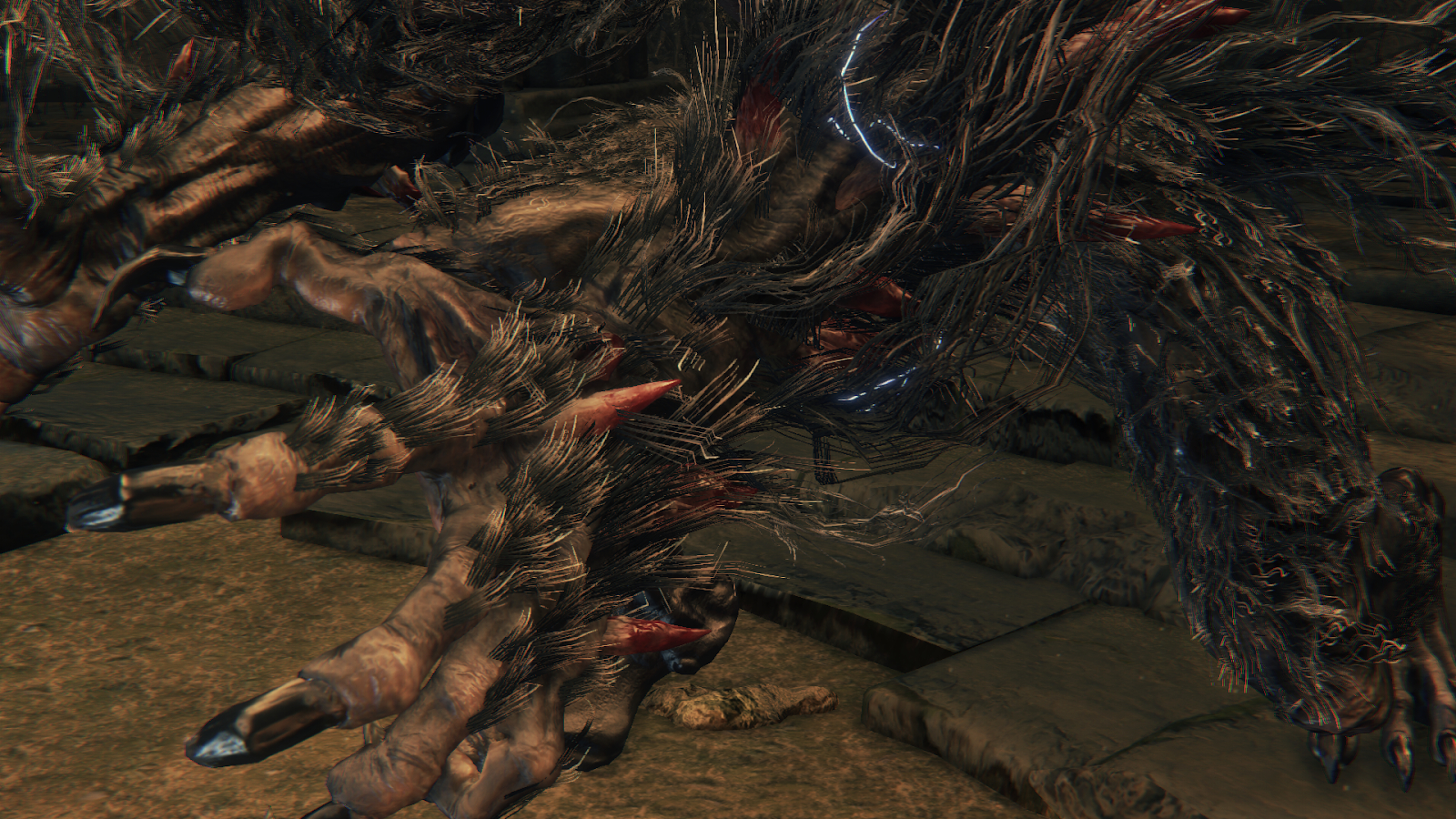
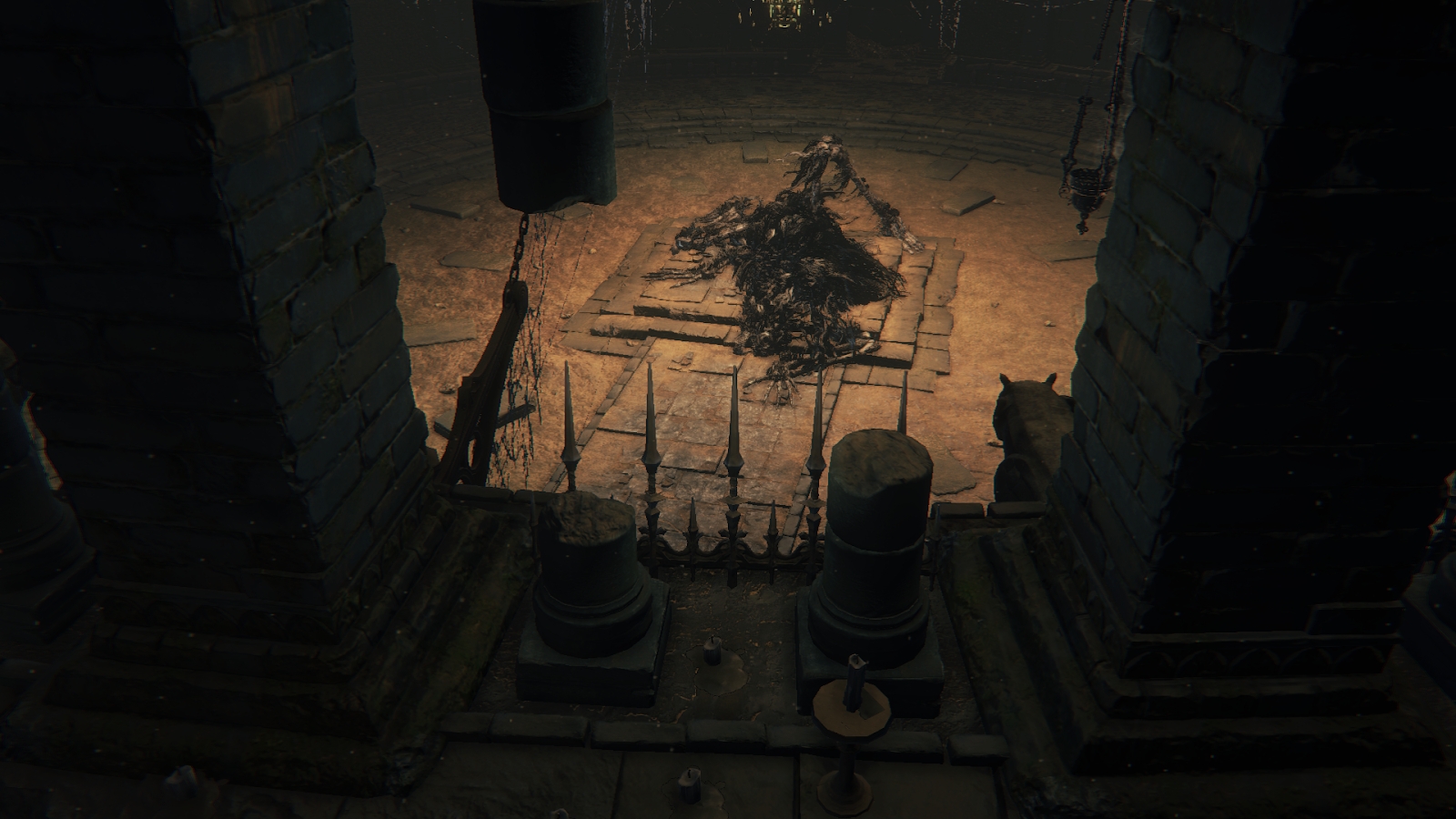
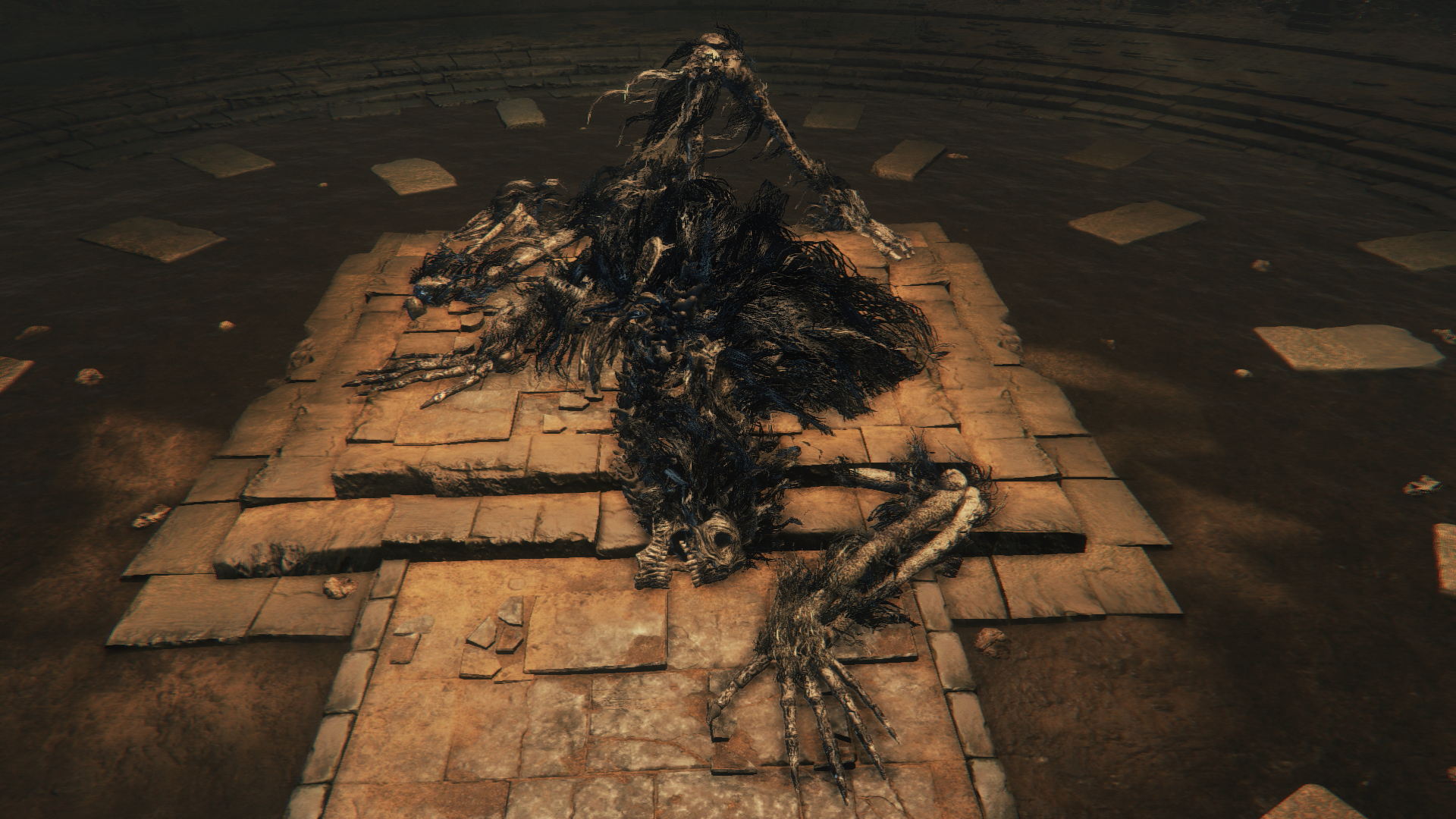
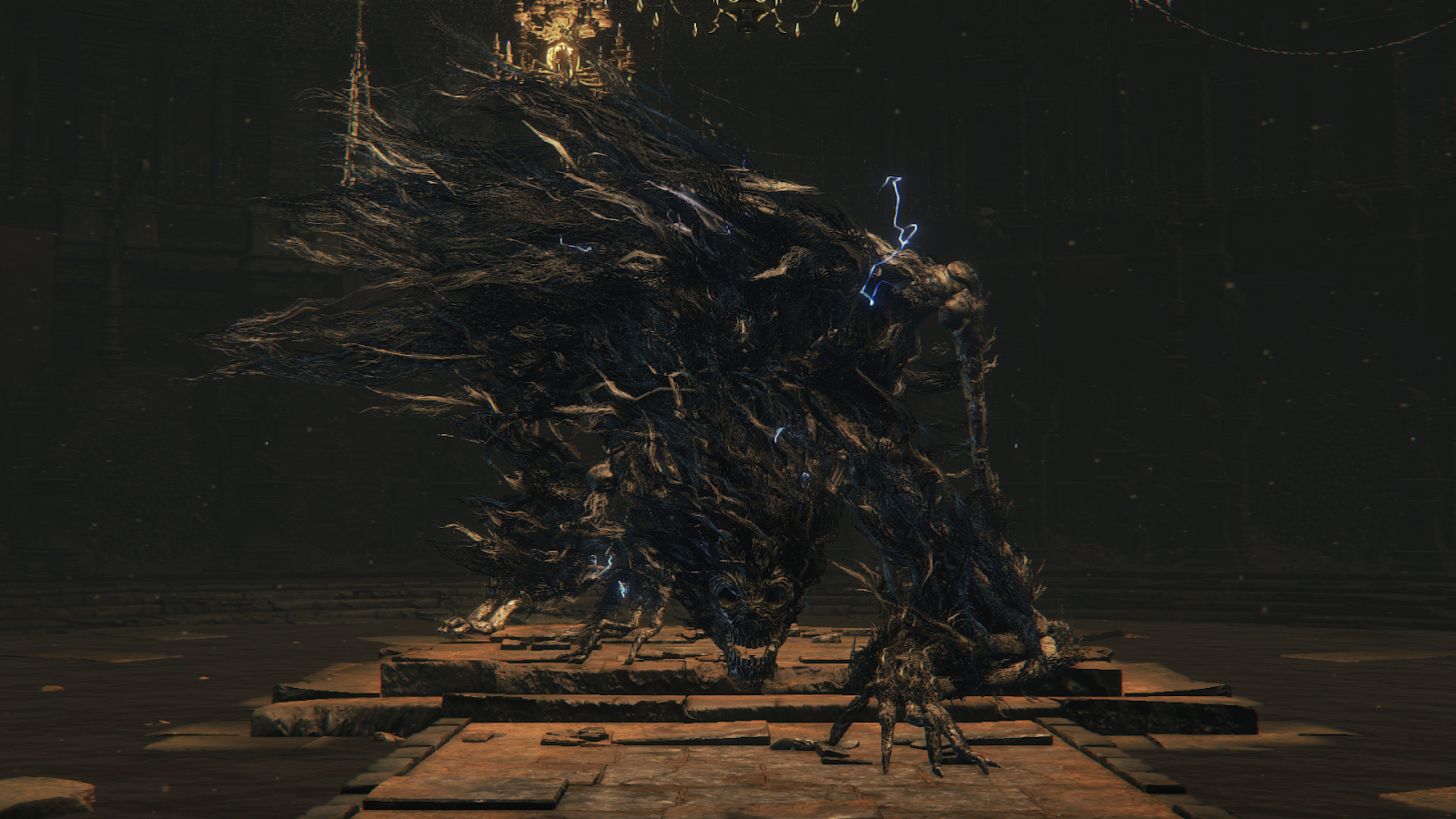
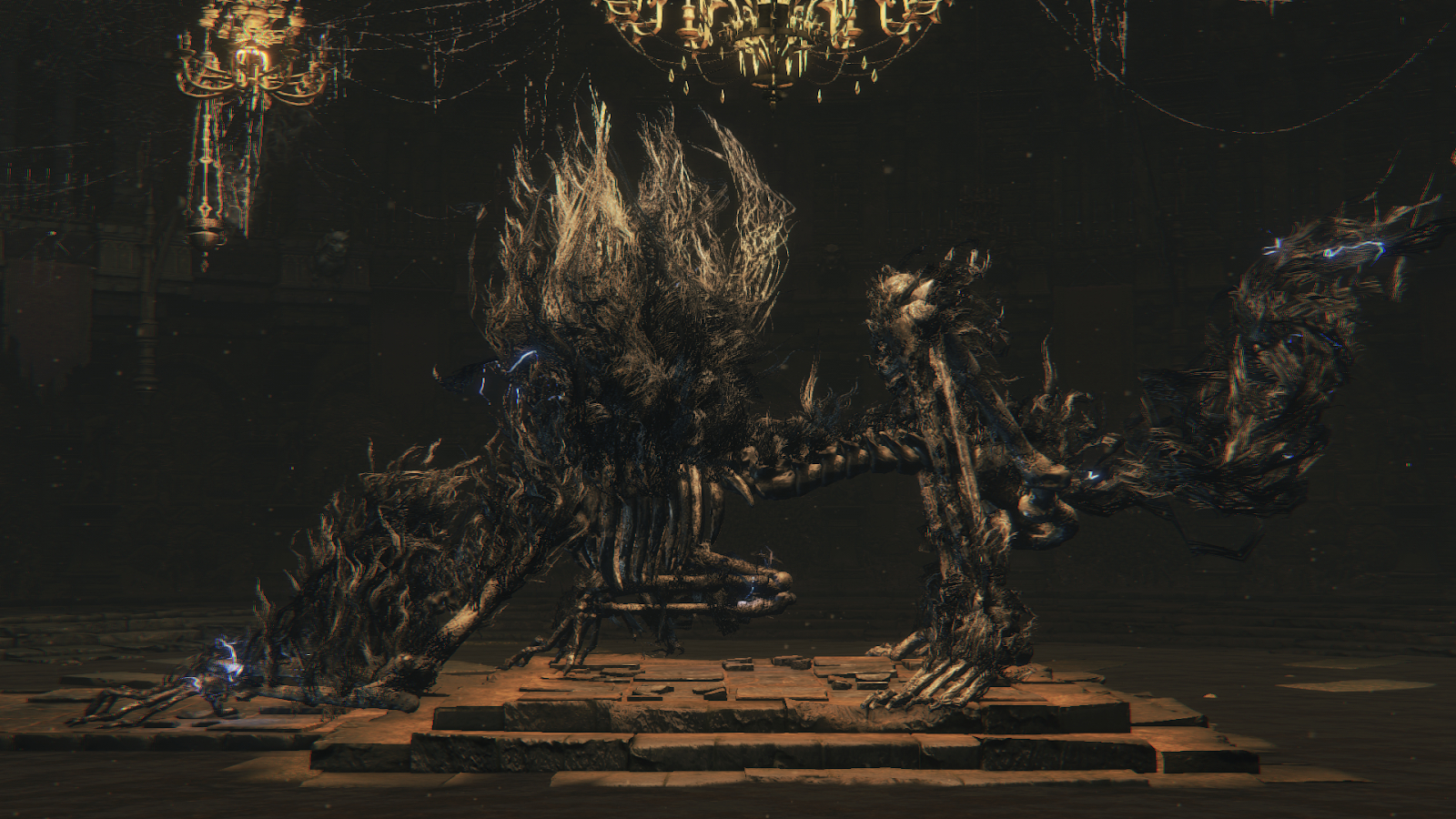
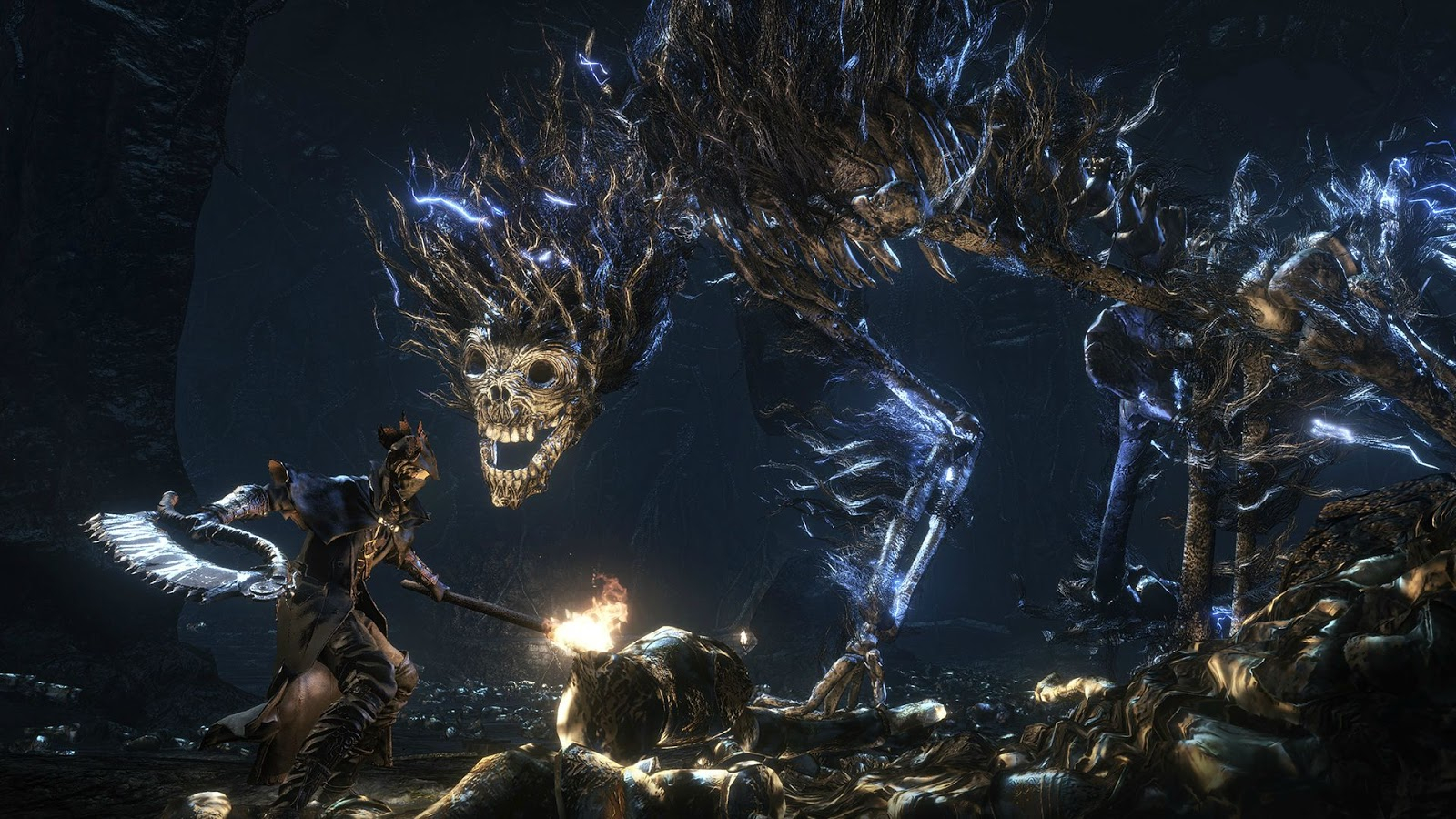
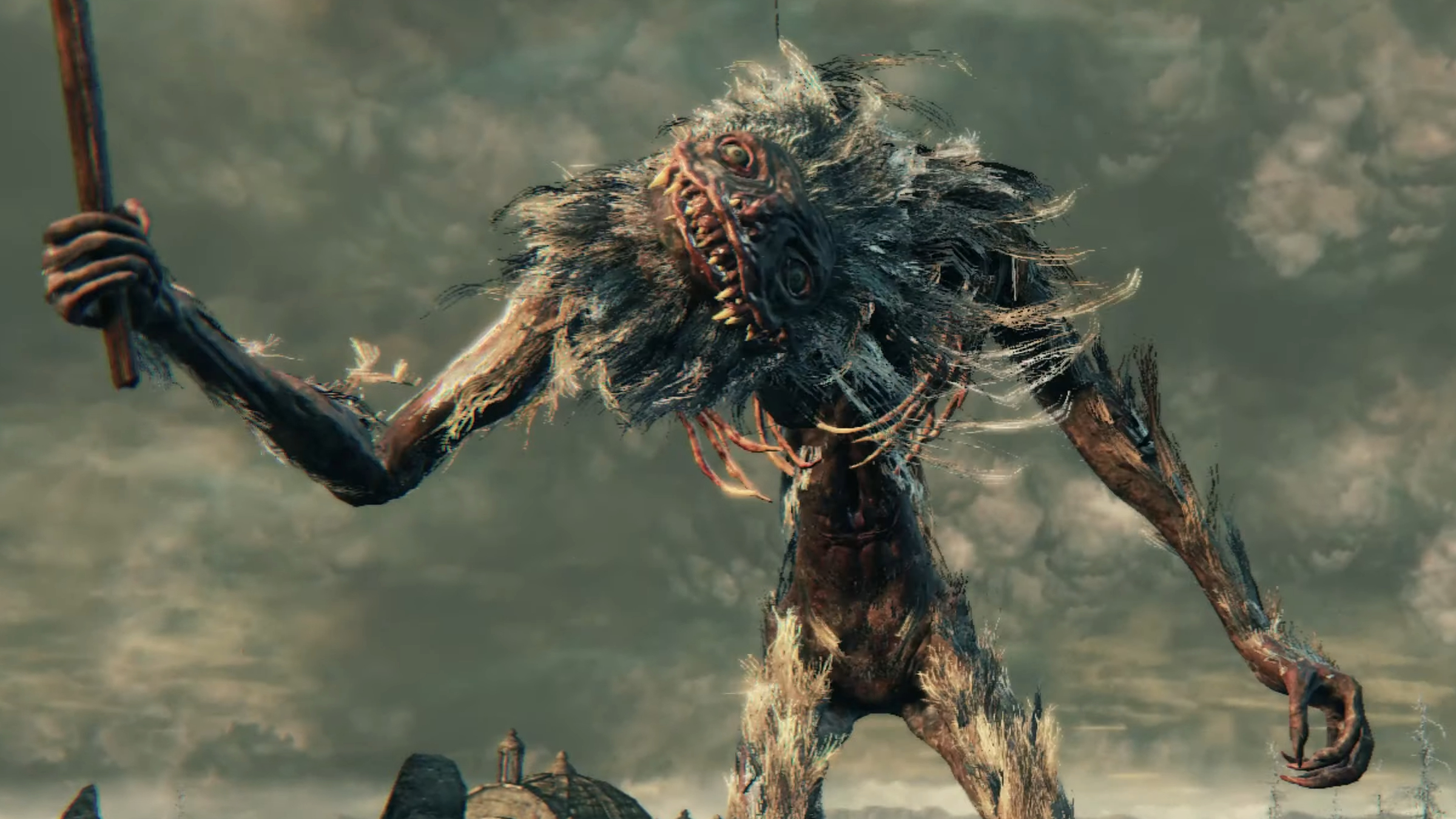
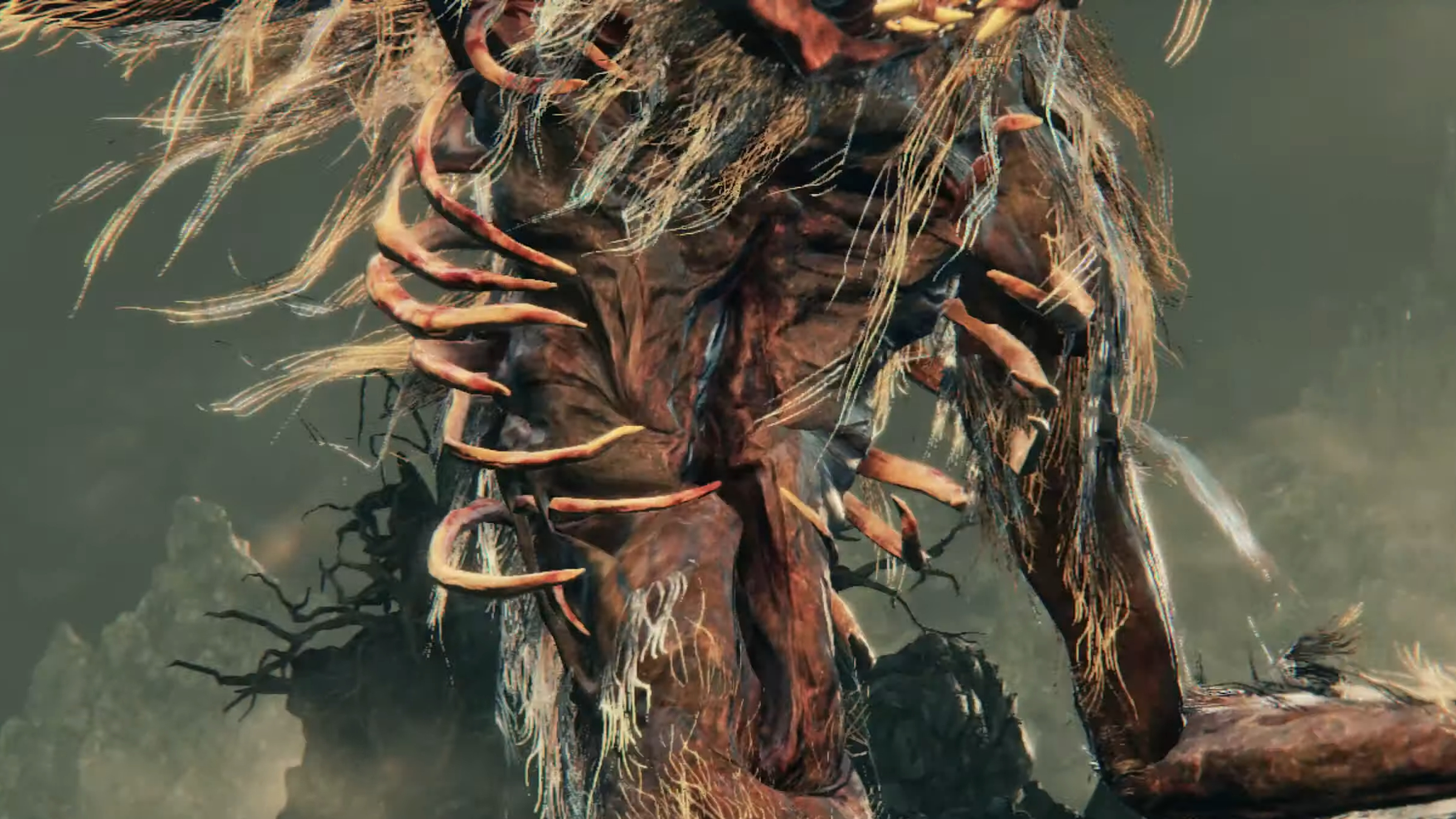
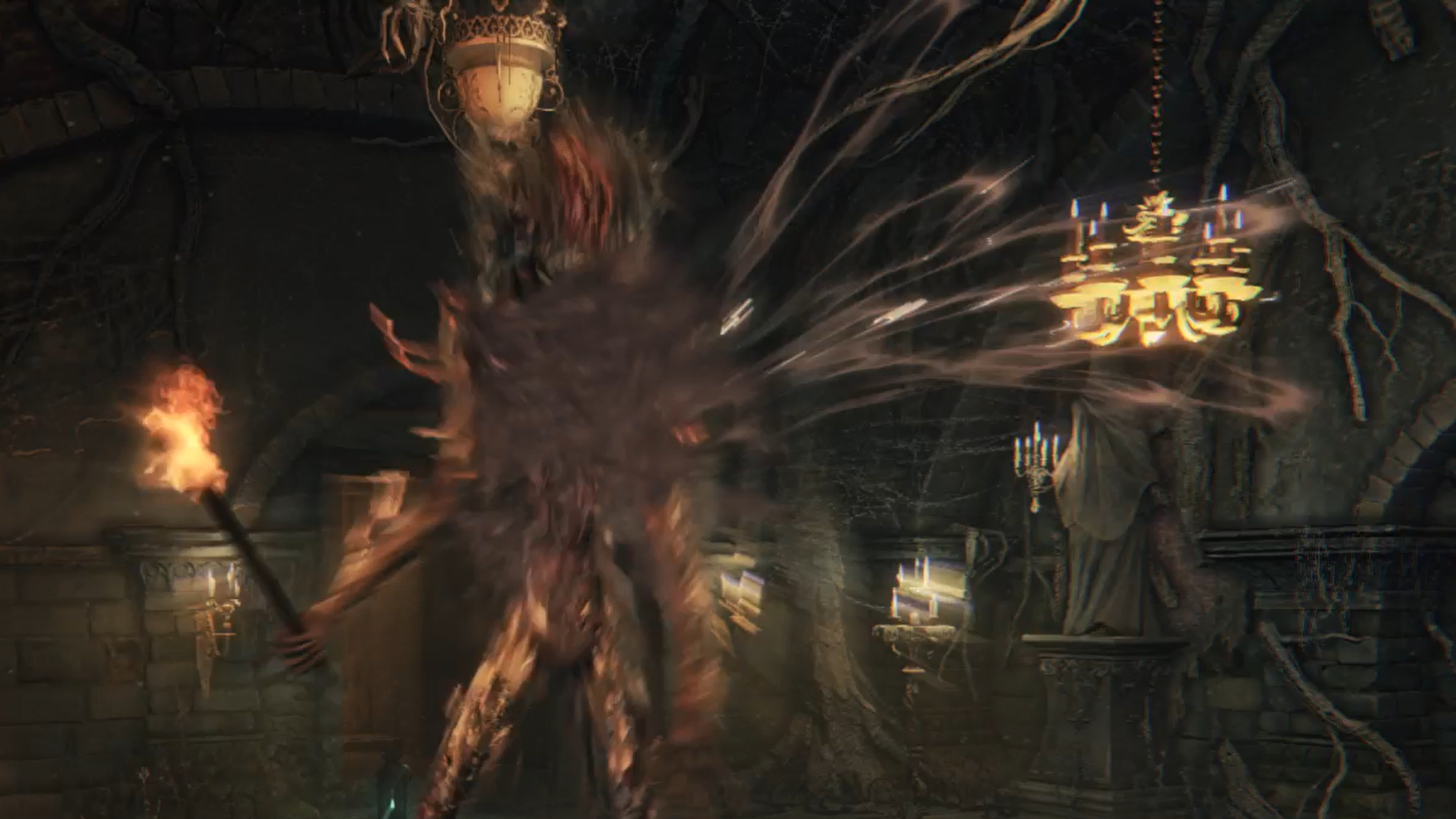
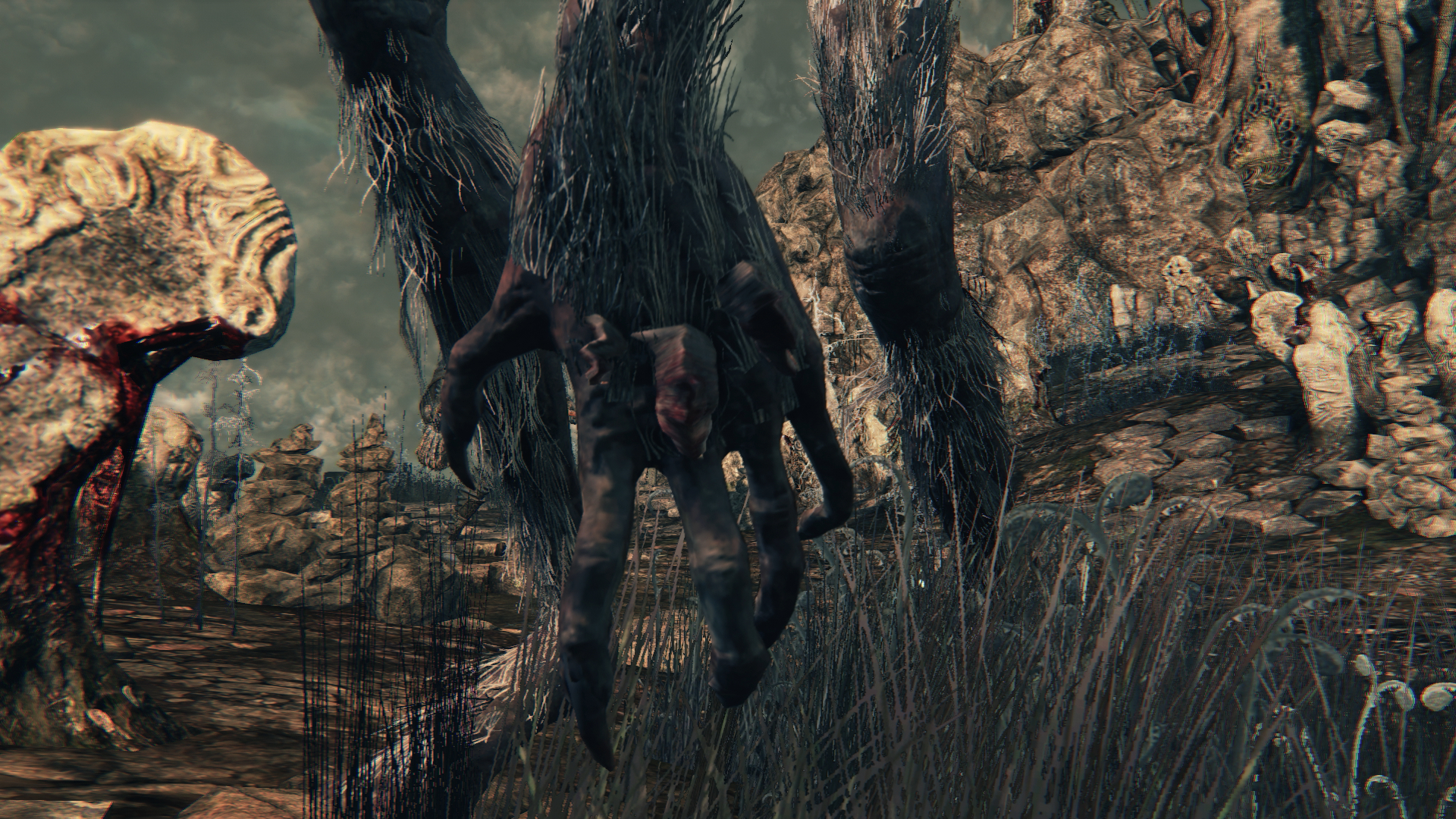
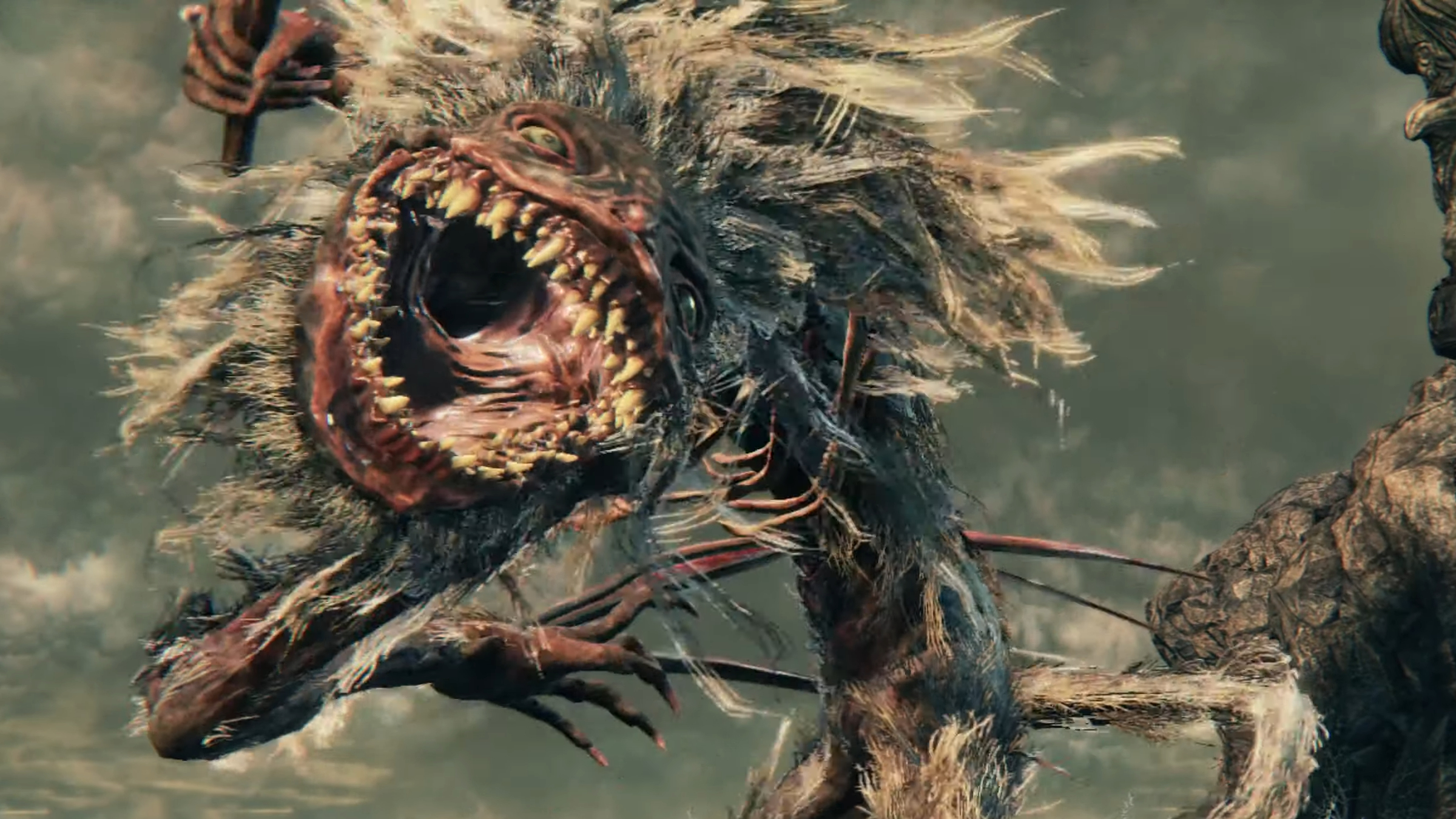
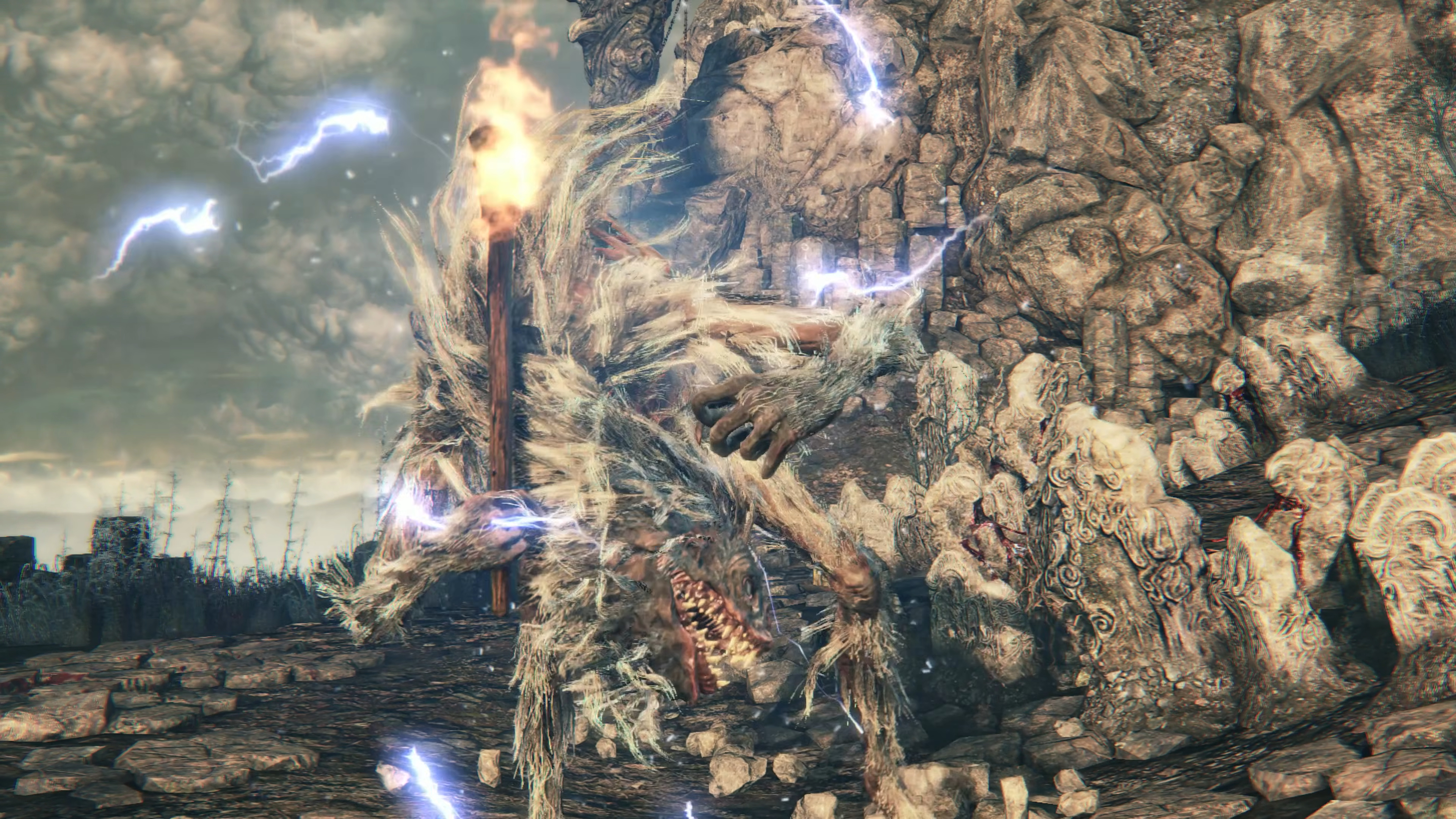
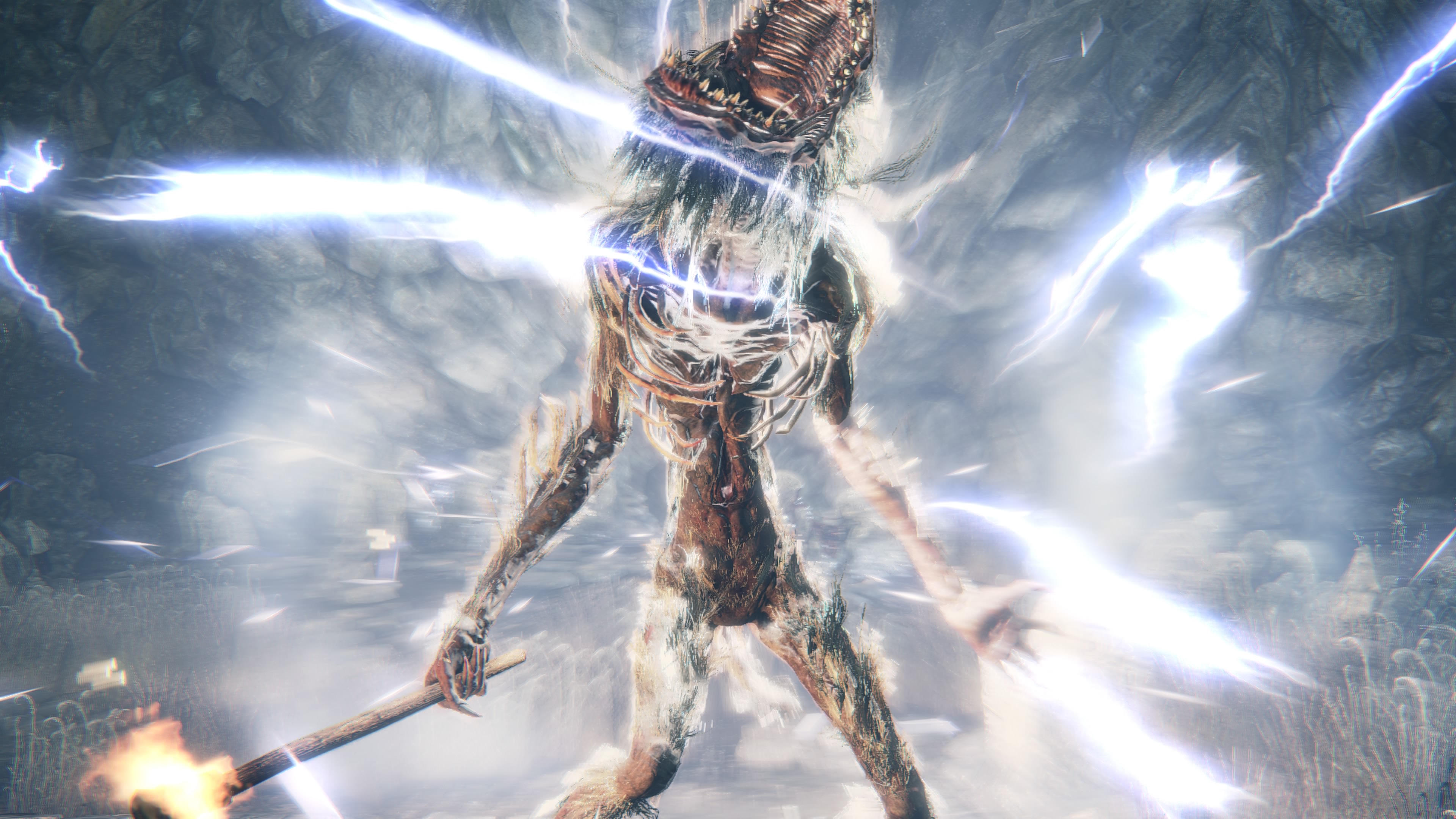
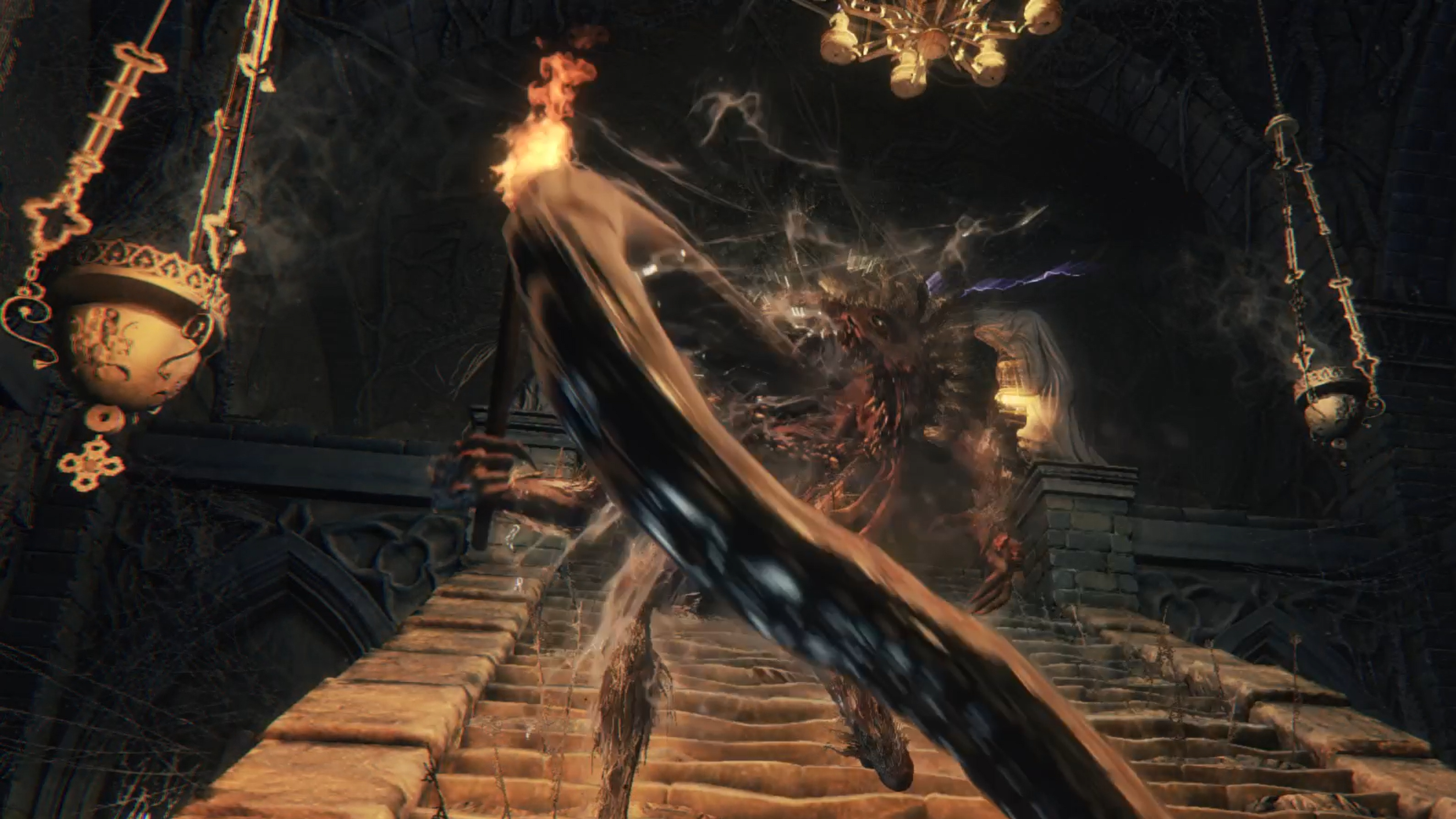
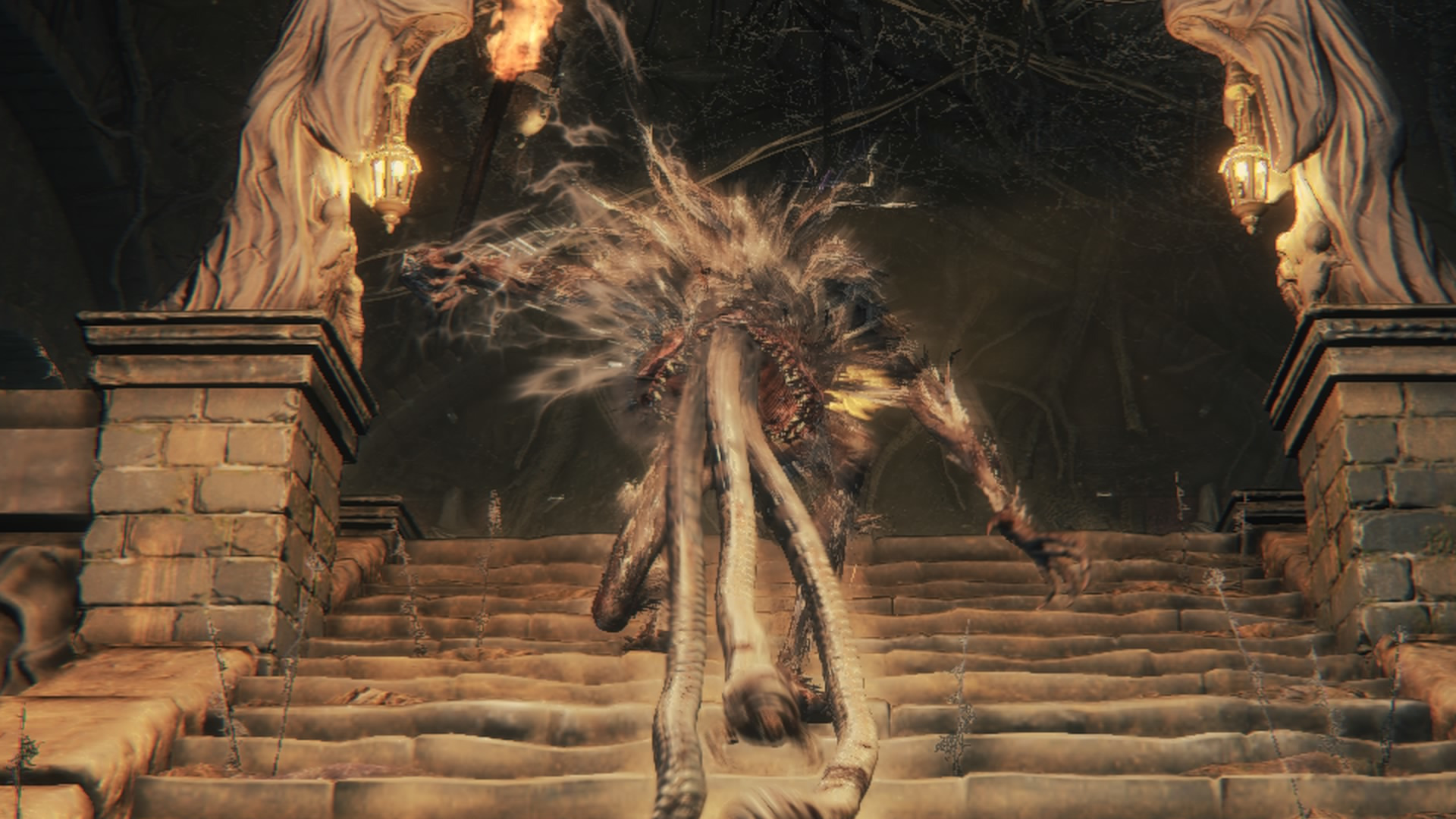
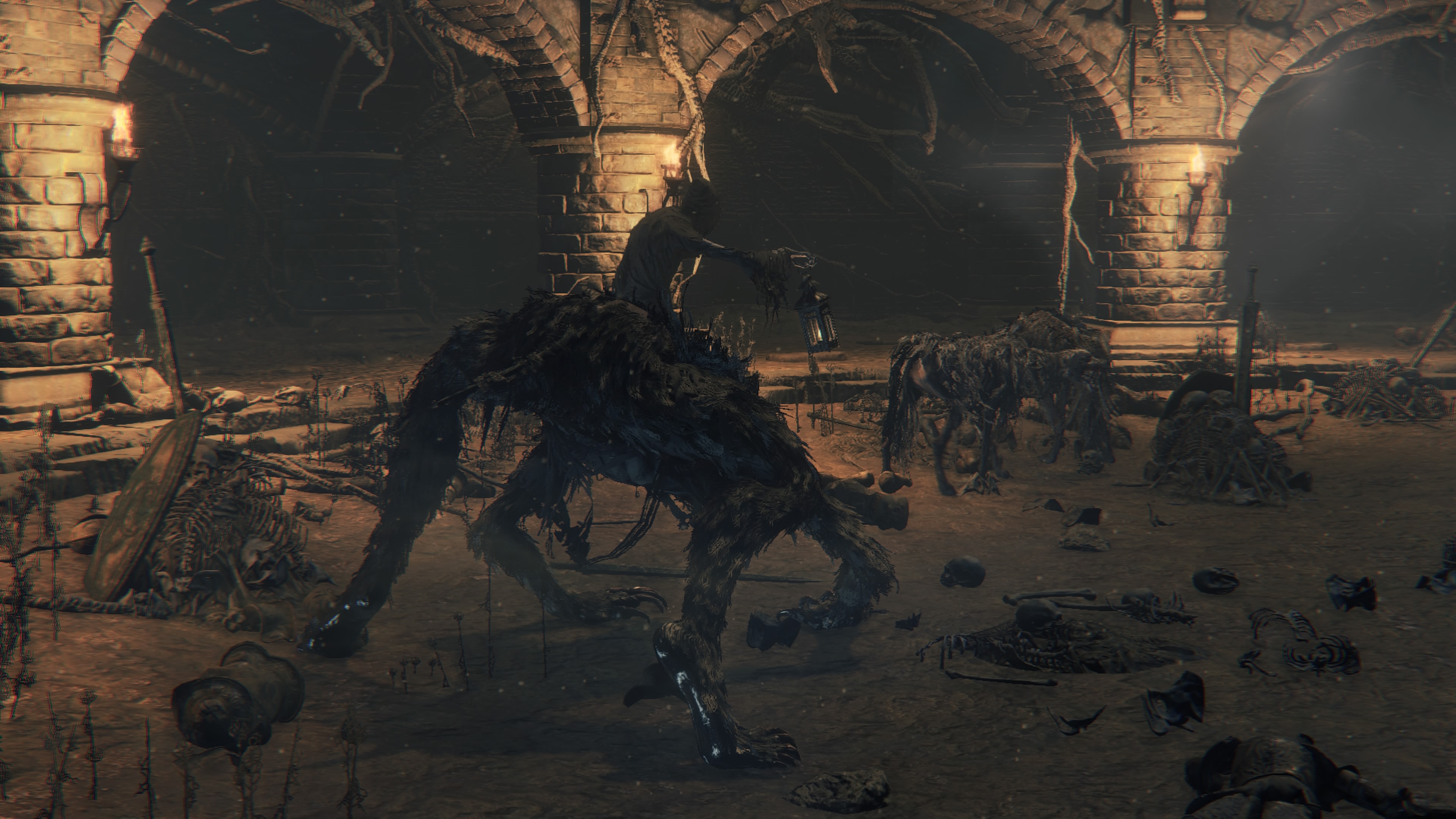
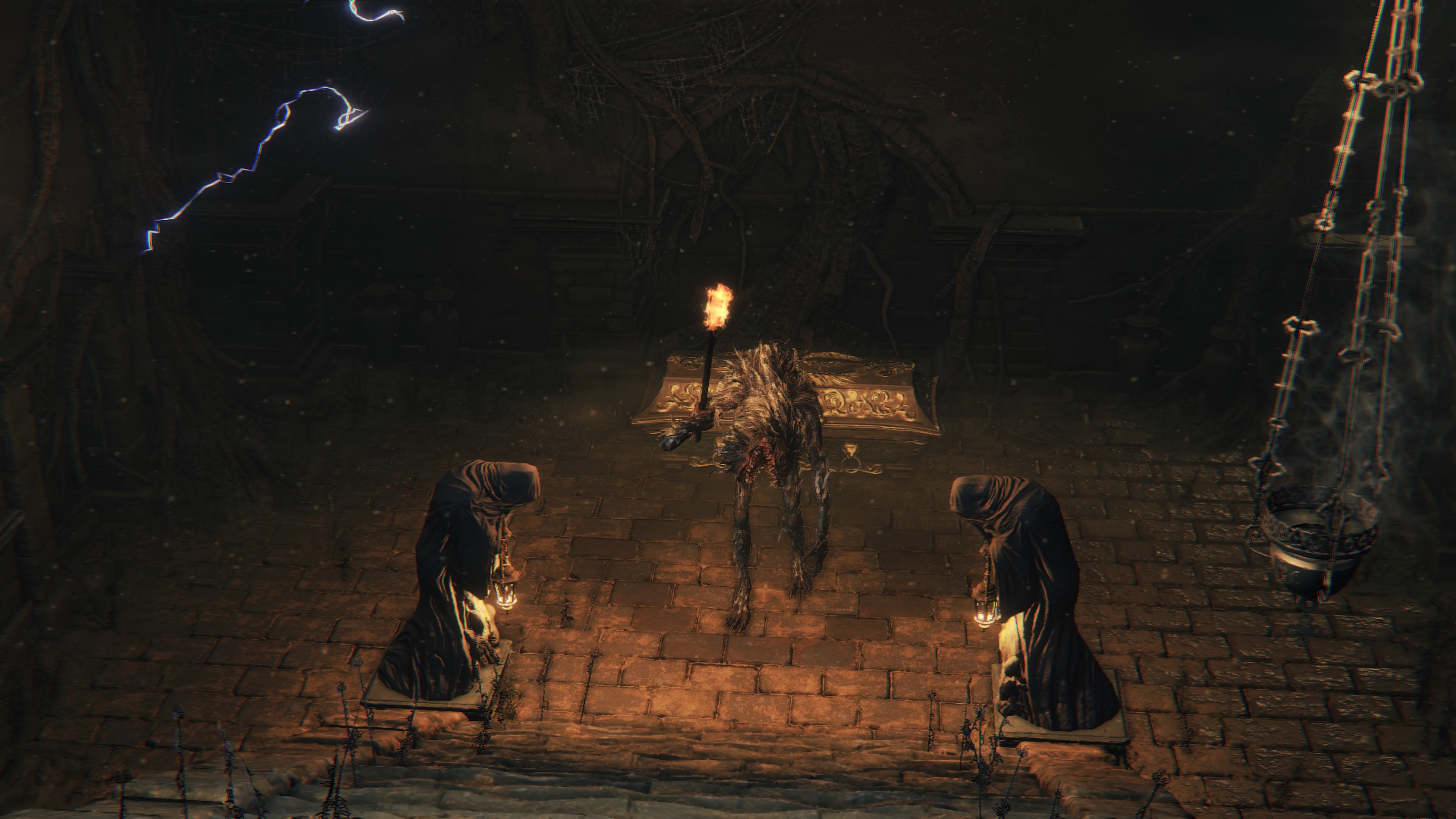
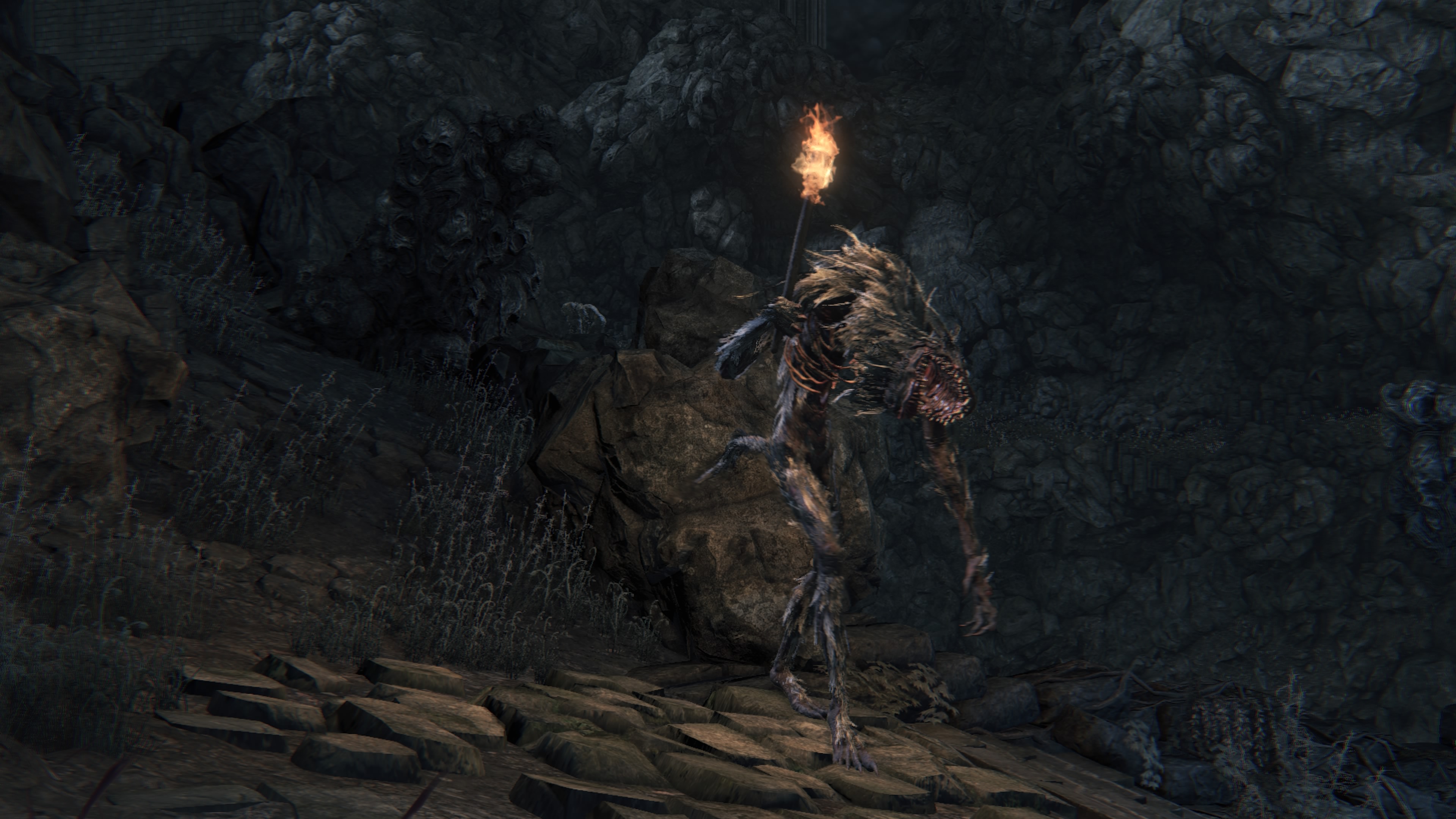
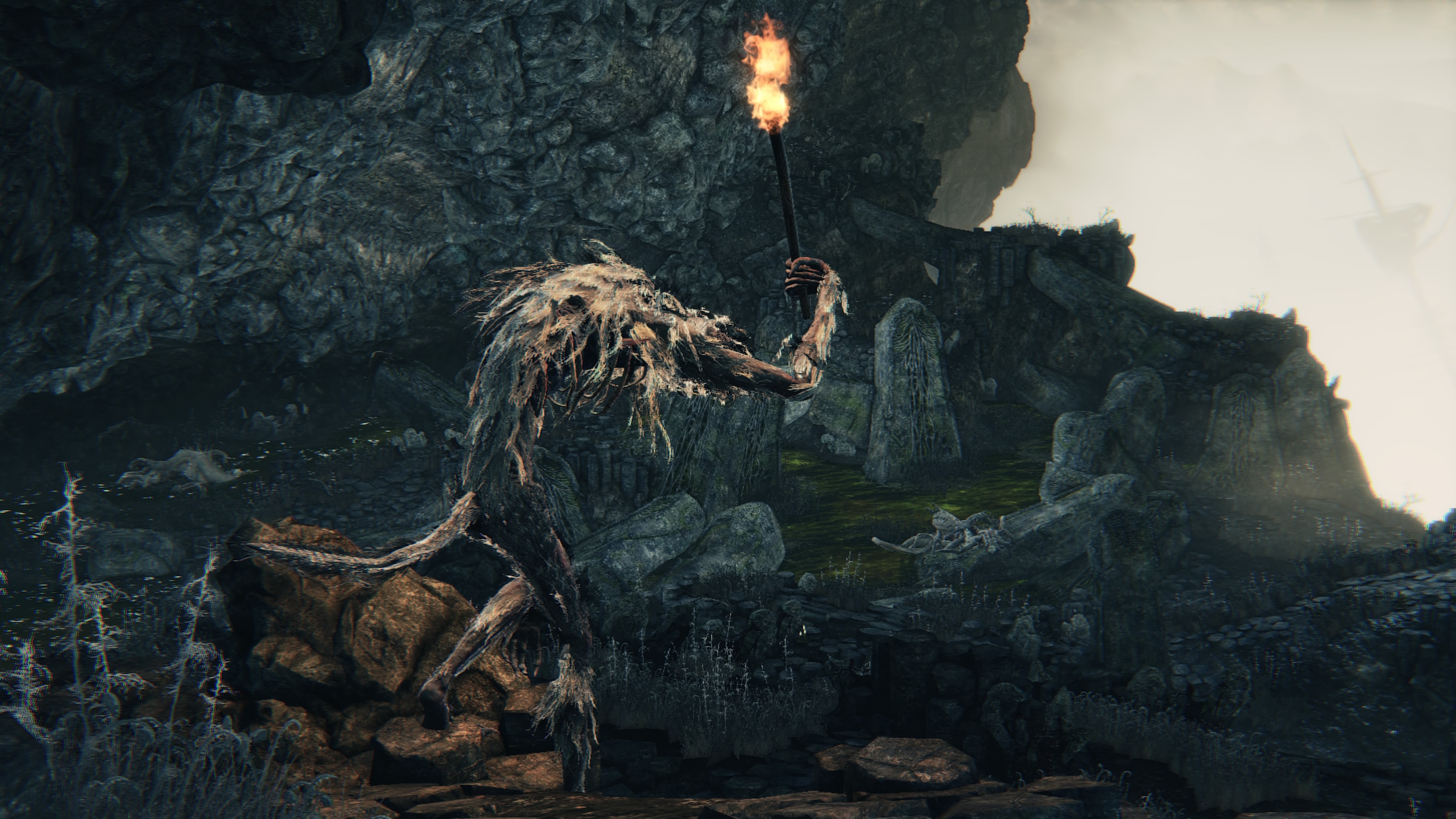
With beasts like these emerging exclusively in Loran, it is plain that beasthood was not just more widespread but more evolved. Loran’s medical practices were resulting in more and mightier beasts, hardly an accident. They deliberately engineered blood to achieve these results. The precise goal was probably to create beasts who could retain intellect, with the Loran silverbeast showing the fruits of their labor. Like the beast patients, this creature stands on hind legs and even wields a torch to great effect. In many other ways, however, it is far more twisted a beast. Its round head hangs at a permanent tilt, its gut has jaws, its chest has fang-like tendrils, and more fleshy tendrils on the back of the hand extend into retractable claws. Add to that the electric field it can generate for a quick burst, and it is far more similar to darkbeasts than your standard scourge victim. That makes its human intelligence all the more impressive, even using the vermin inside its throat as a whip. The only problem is that it can all too easily slide back into beasthood, tossing the torch aside to get on all fours when “intelligence” fails them.
To summarize, the desert became a laboratory for experiments. With what little they learned from the Pthumerians, Loran wholeheartedly embraced a culture of blood drinking for both healing and evolving, humans wishing the degeneration upon themselves. And in total opposite of Isz, the nation of the sands never learned to go beyond that level. More promising would be the odd spider kin or the kin coldblood in Lower Loran, perhaps present due to its proximity to the other dungeons at Depth 5. However, the frenzied kind is standard in the depth above, Ailing Loran forever remaining bound to the disease that guaranteed insanity. Perhaps it was inevitable when one was liable to witness only beasts in limited exposure to the labyrinth. Whoever did gain a fuller picture of the labyrinth and saw the benefits to forgoing beasthood, their discovered never gained traction. Blood transformation in itself was what held currency in the culture — the more horrible the beast, the better. Missing Isz for Pthumeru, Loran took the road less traveled, such madness sealing its doom in a fate most tragic.
The Hunt for Heaven
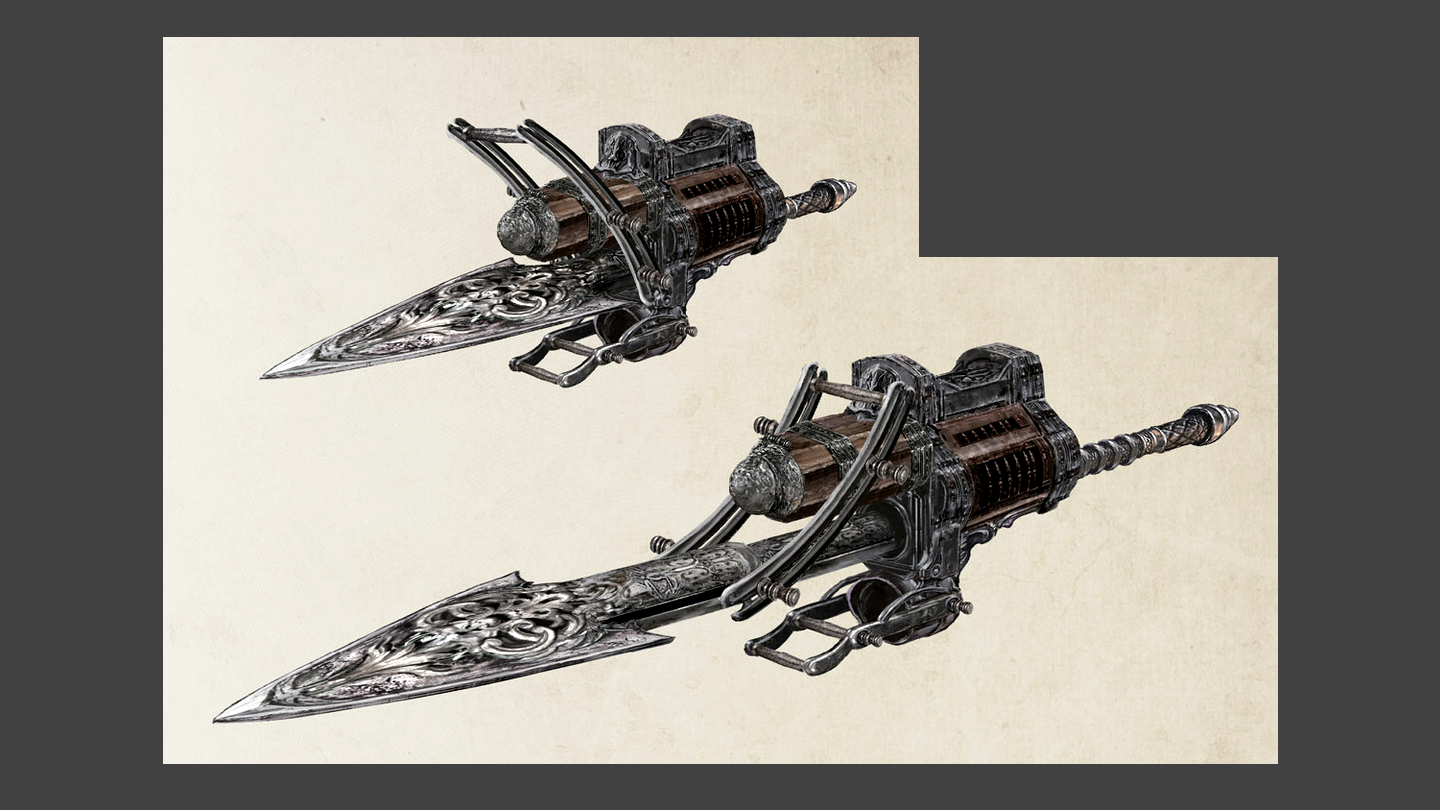
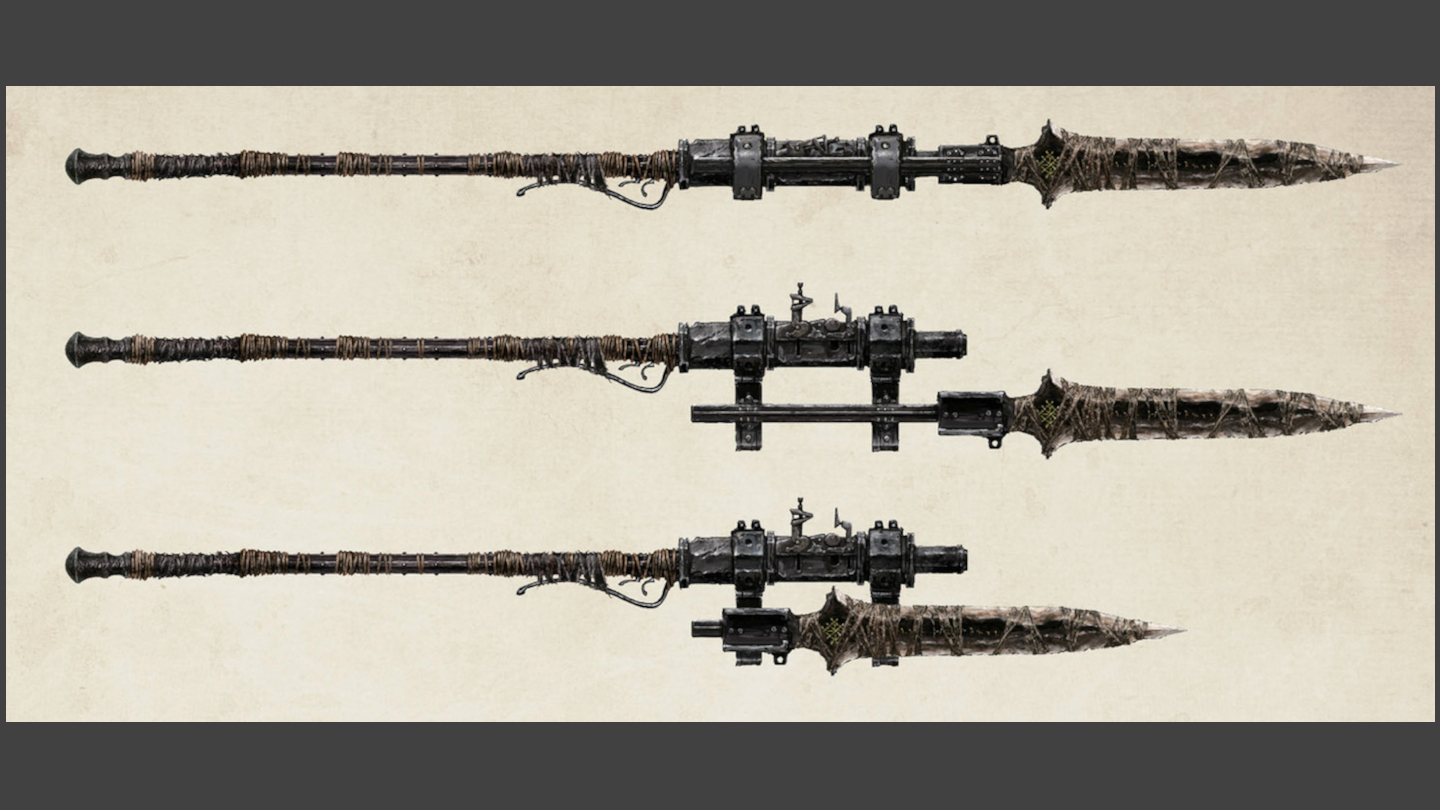
Naturally, the people didn’t want to all be slaughtered by their creations. We thus see a hunting culture develop, the same as Pthumeru. So dedicated, Loran began inventing trick weapons and other tools. The Hunter Axe highlights willingness to act as the beast’s executioner, with no hope of rehabilitation. Soon, more creative inventions emerged, such as the rifle spear crudely combining a polearm with a firearm. It is possible that this took inspiration from the gun sword of Pthumeru Ihyll. When it came to impaling, however, nothing had the same power as the Stake Driver. This “Pile Hammer” (パイルハンマー) uses its complex mechanism to drive the metal stake through the beast’s tough hide and straight into the heart. Joining it were an arsenal of flame to purge the disease thoroughly. Besides oil urns and Molotov cocktails, the inclusion of the beast-possessed soul as a story dungeon boss emphasizes the pyromania — as does the beast patients’ reflexive aversion to mere torchlight. Add in the silverbeast’s torch skills, and the response was very much to find better ways to end the local terrors.
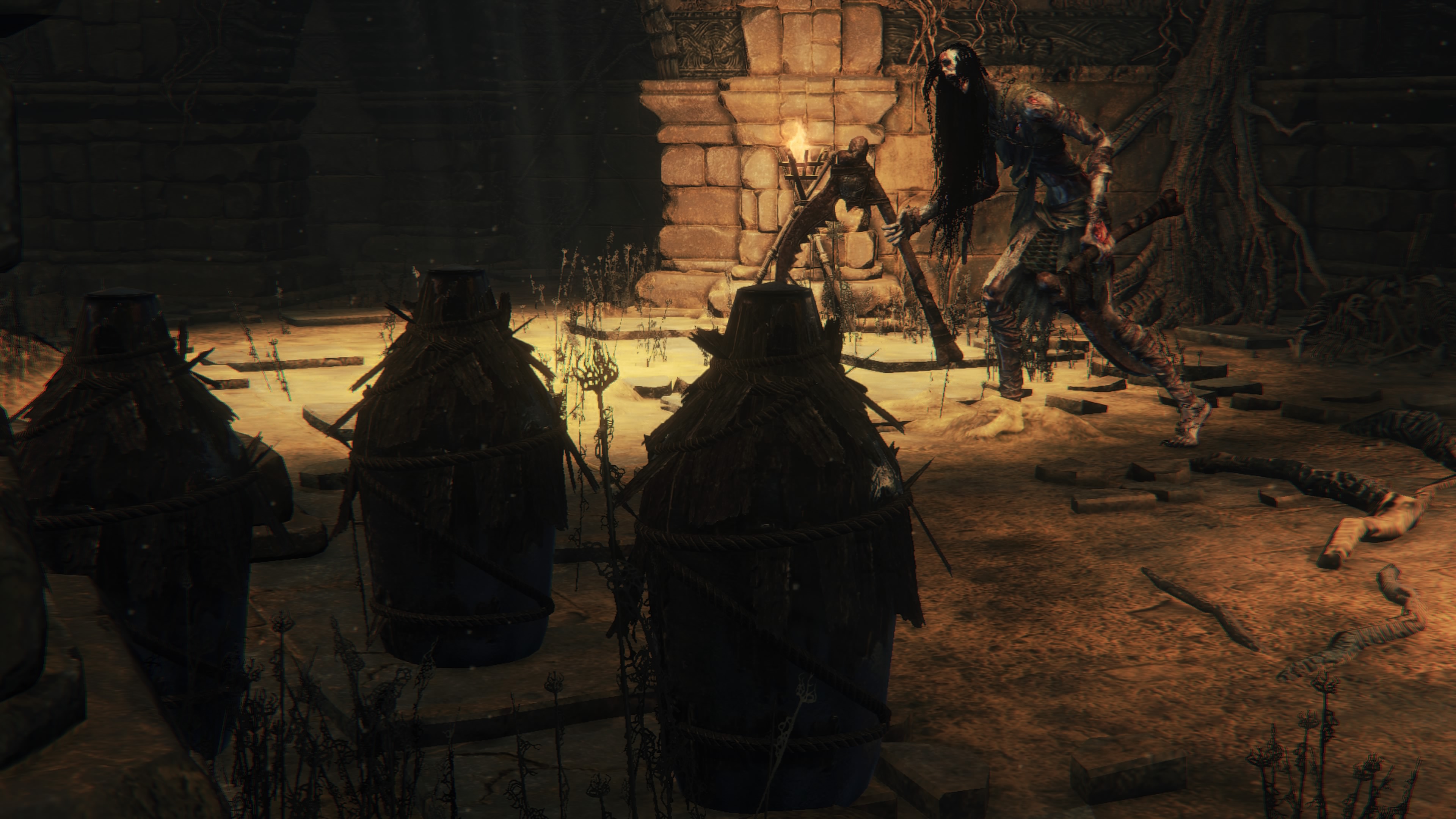
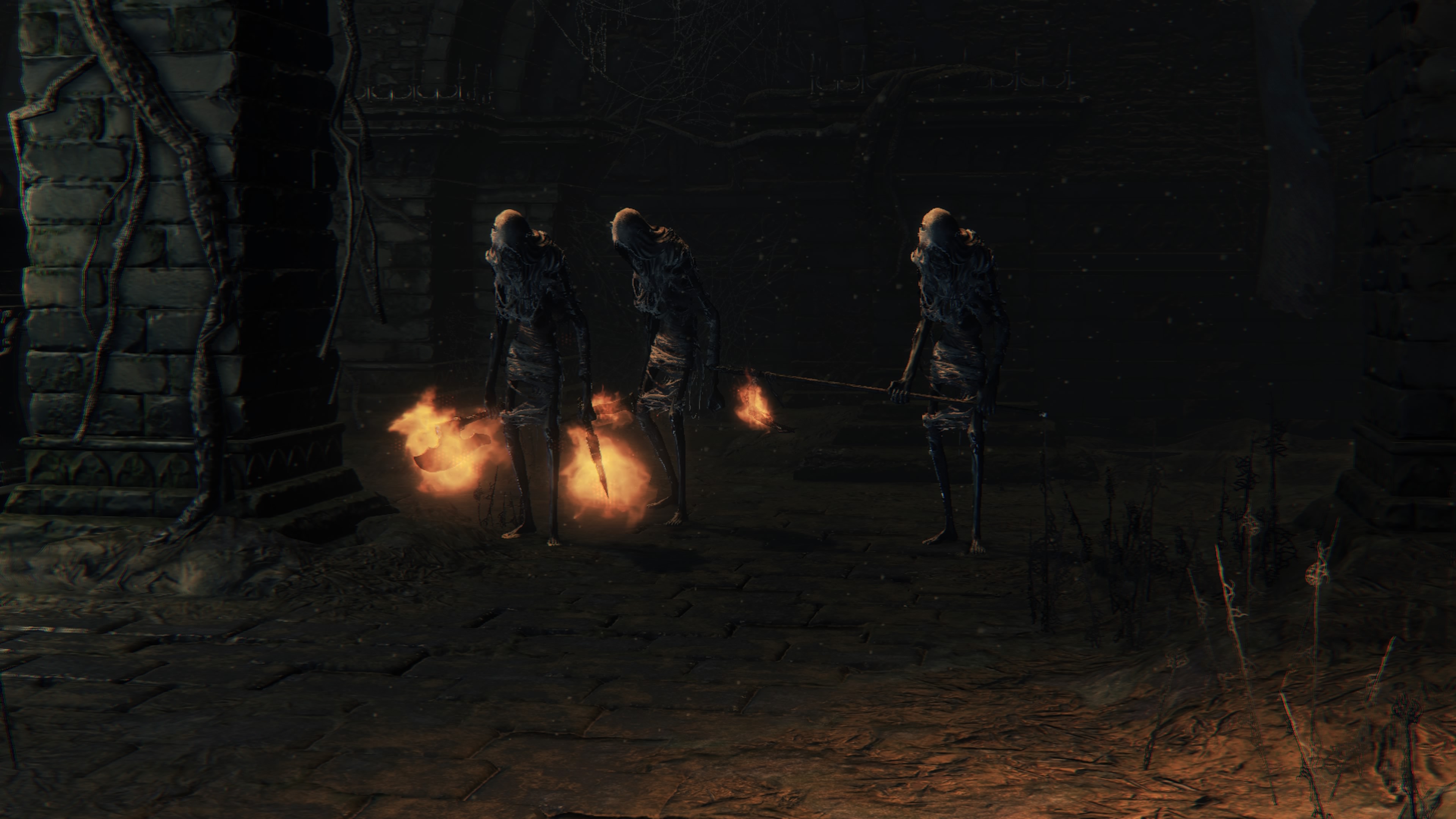
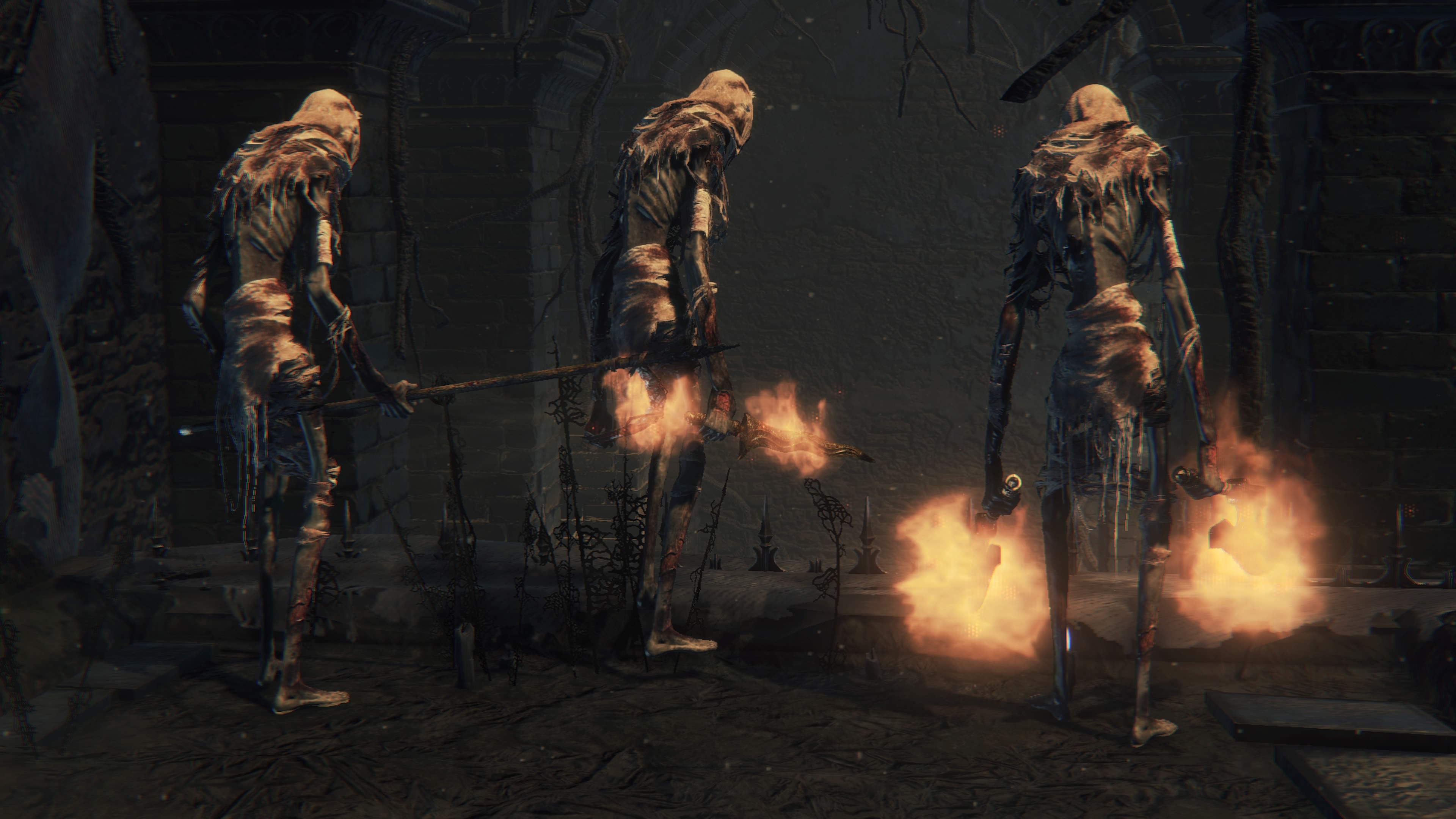
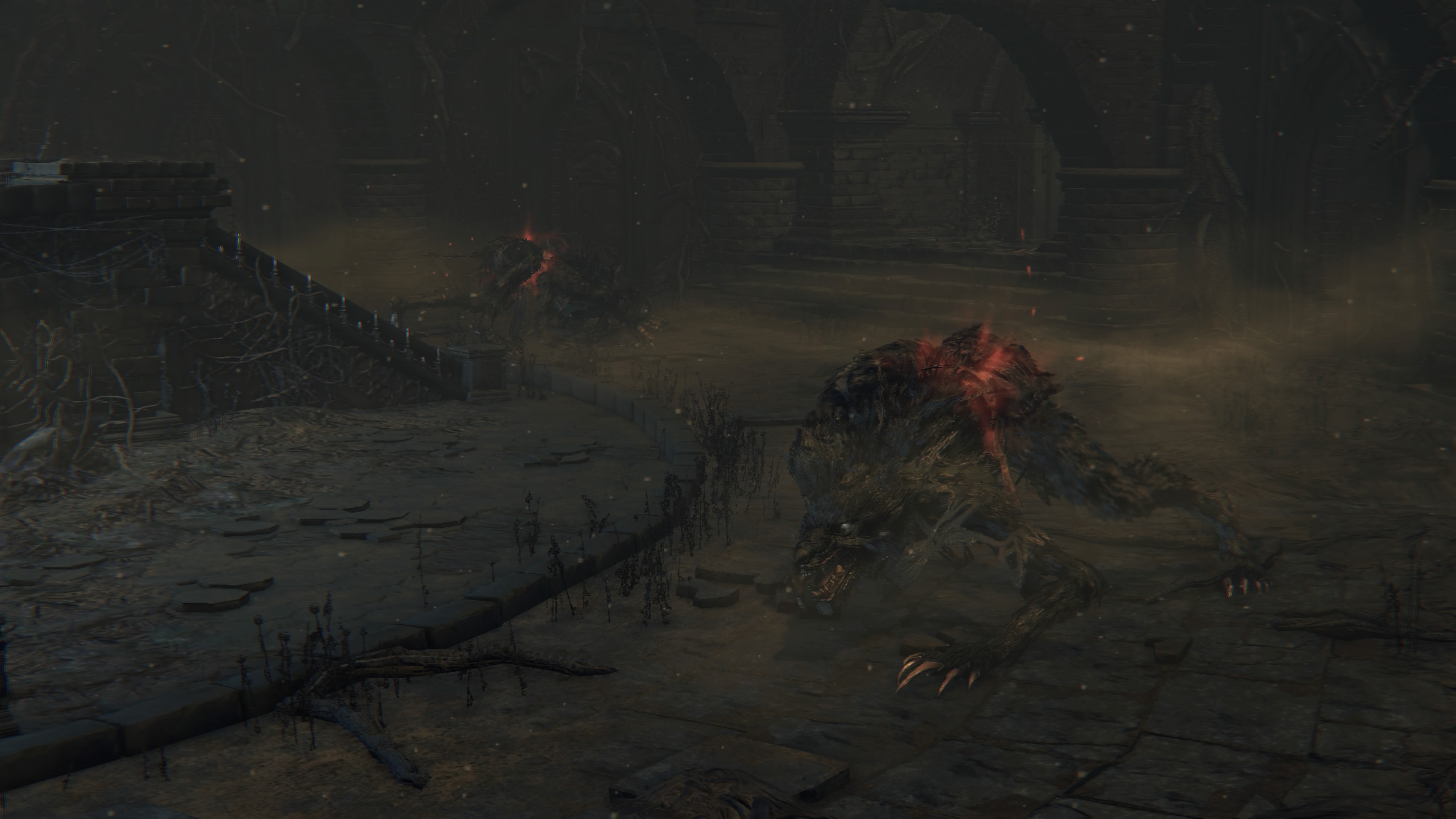
All that said, there was a darker aspect to Loran’s hunt. The axe’s heavy blows provide not just a swift death but excellent rally potential for the owner. This mirrors the red aura which occasionally manifests in labyrinth madmen, male beast patients, and scourge beasts of Loran dungeons, granting them their own rally ability. Hunters could enjoy taking blows from the darkbeasts as they stimulate their own vitality in the heat of mortal battle. And once those immortal beasts were finally slain, they dissected their bodies and fashioned those deadly claws into new weapons, their “trick” being the partial beastification hunting with them induces. In this, they discovered runes like Beast and Clawmark, furthering their descent down the bestial path. Rolling up congealed beast blood into a pellet also apparently became commonplace, these “beast blood pills” (獣血の丸薬) unlocking the ingestor’s power from showering in the blood of foes they tear apart. Such drugs are the cause of the rally beasts, each possessing them along with cursed bloodgems. Embracing the beast within clearly became a fad.
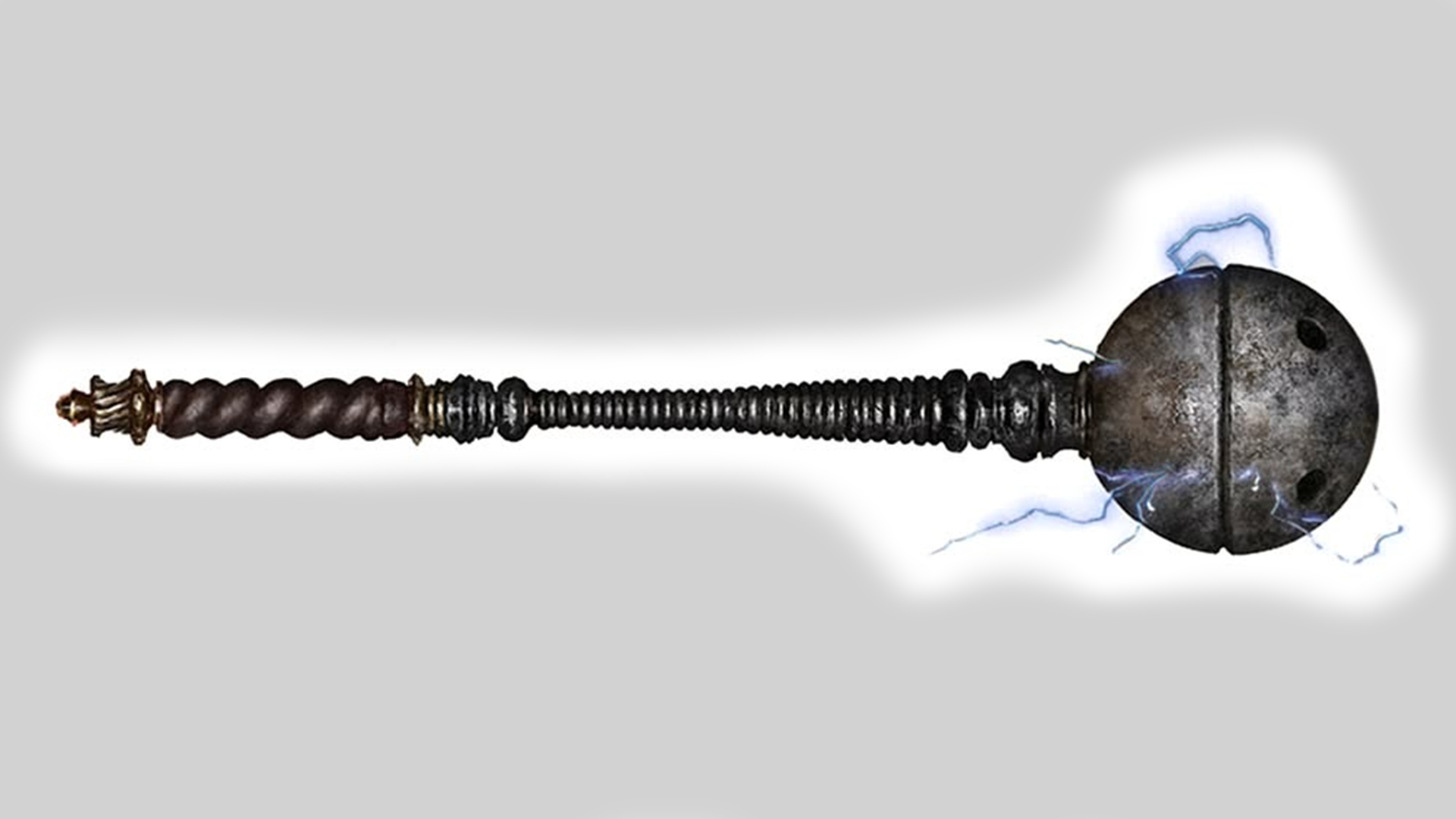
There were more measured approaches to this attraction to beasthood. Loran is home to copious amounts of bolt paper along with the Tonitrus. This weapon generates the same bolts as darkbeasts, earning it the Latin name meaning “lightning” and its place in hunter’s arsenals if electrifying their existing armaments with paper didn’t suffice. Unlike the beast weapons or blood pellets, these tools didn’t risk creating more beasts for matching their strength. Admittedly, it still played on the hunters’ curiosity, so can be considered a gateway drug. Even burning the bodies might have had a more cynical purpose. After all, the incineration produces ash, and ash is what was seemingly used in Loran’s blood transfusions. Therefore, the country probably used the cremated remains of beast scourge suffers, adding their sickness of the soul to the blood they deliver to the sick. In a sense, the country looks to have turned hunting into a method of recycle, culling the weak in order to create yet stronger beasts.
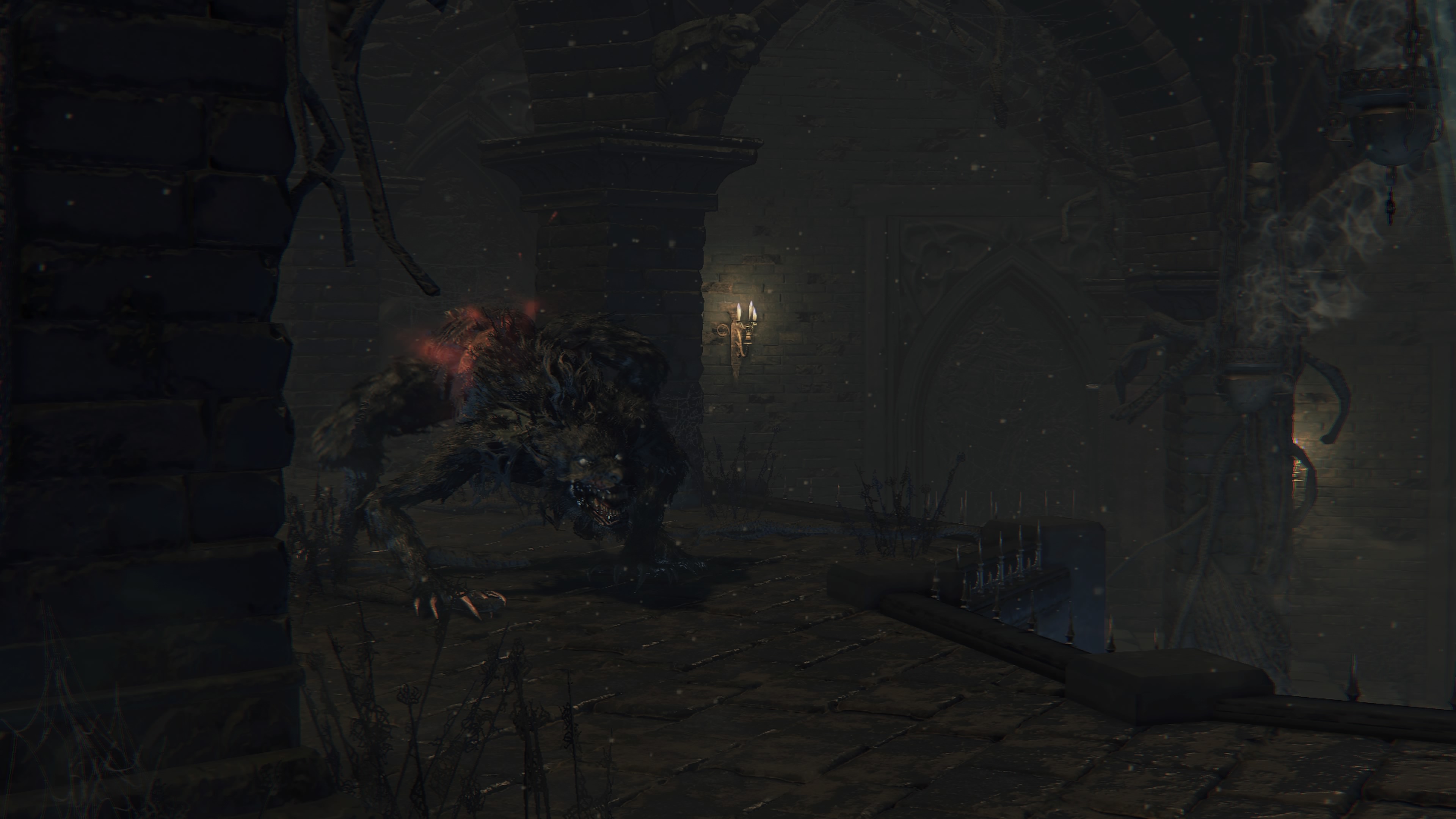
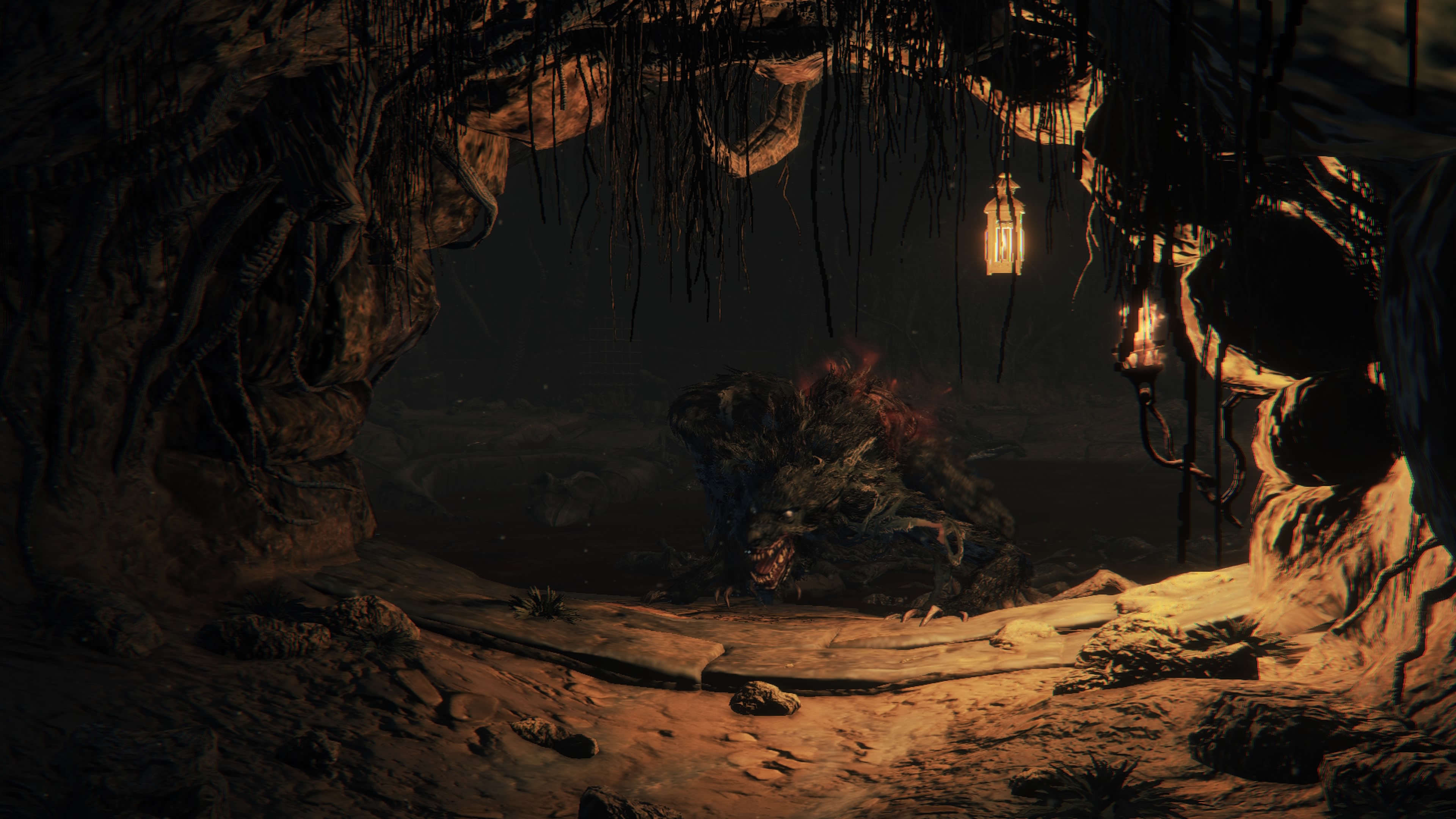
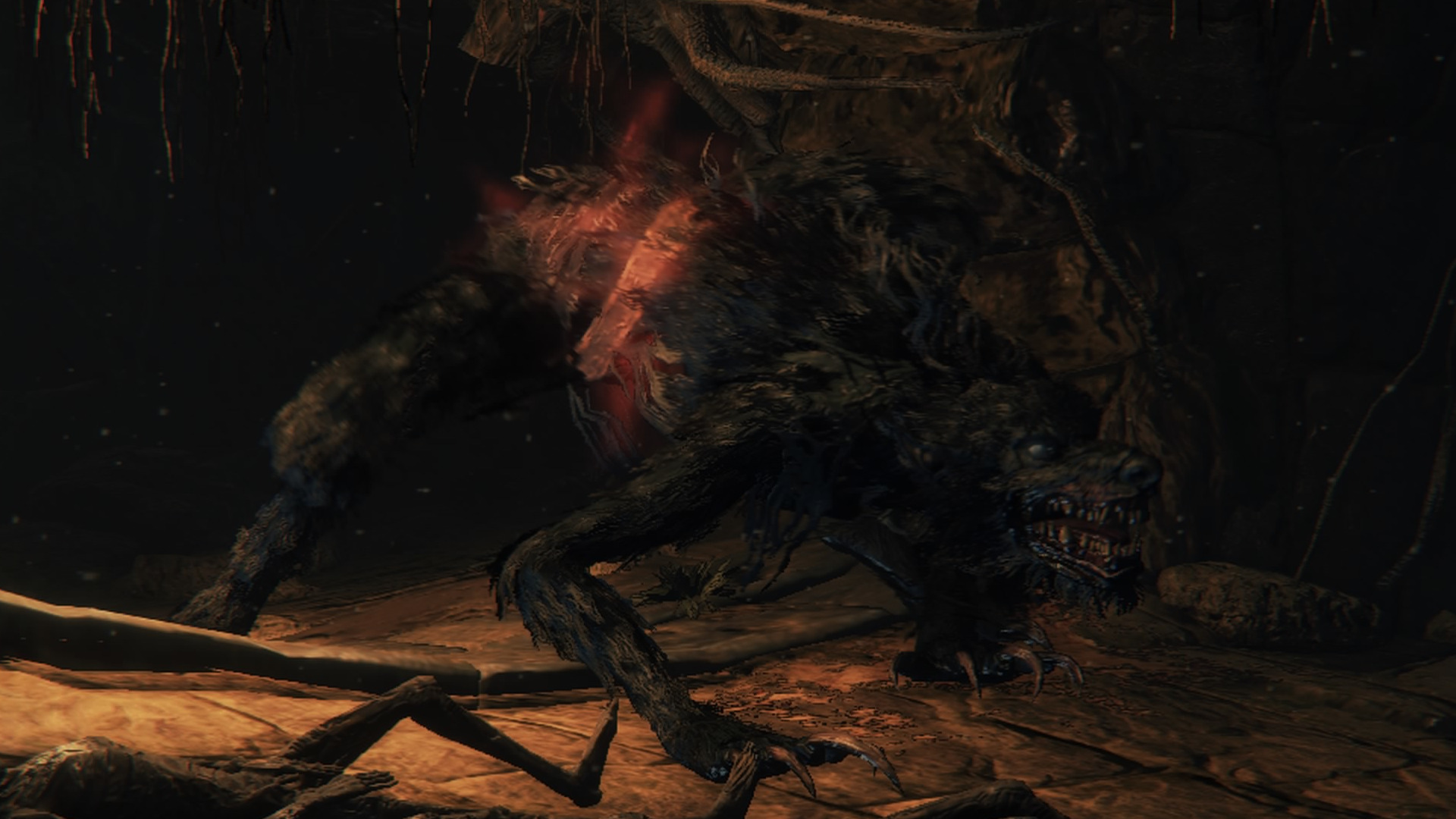
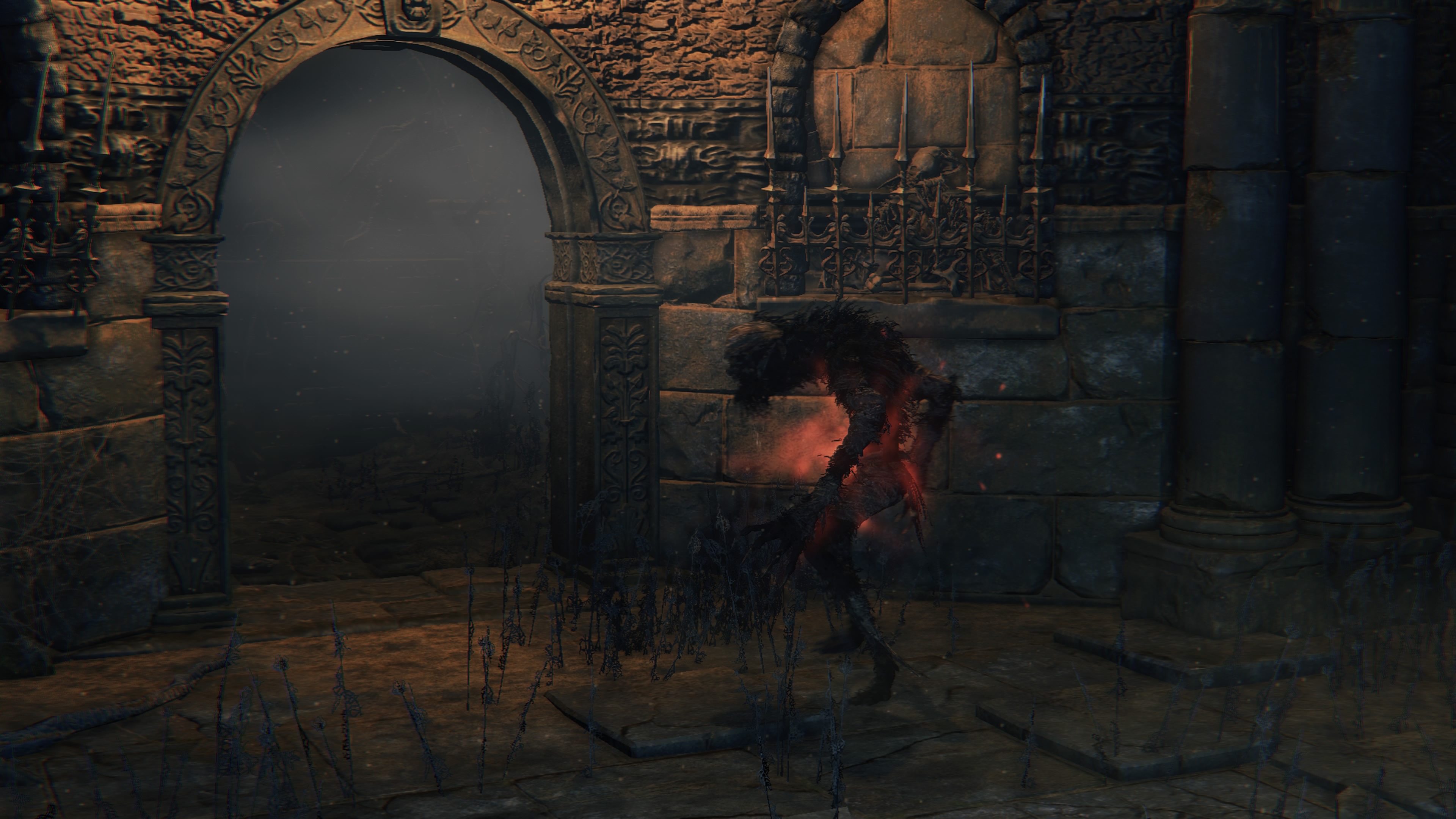
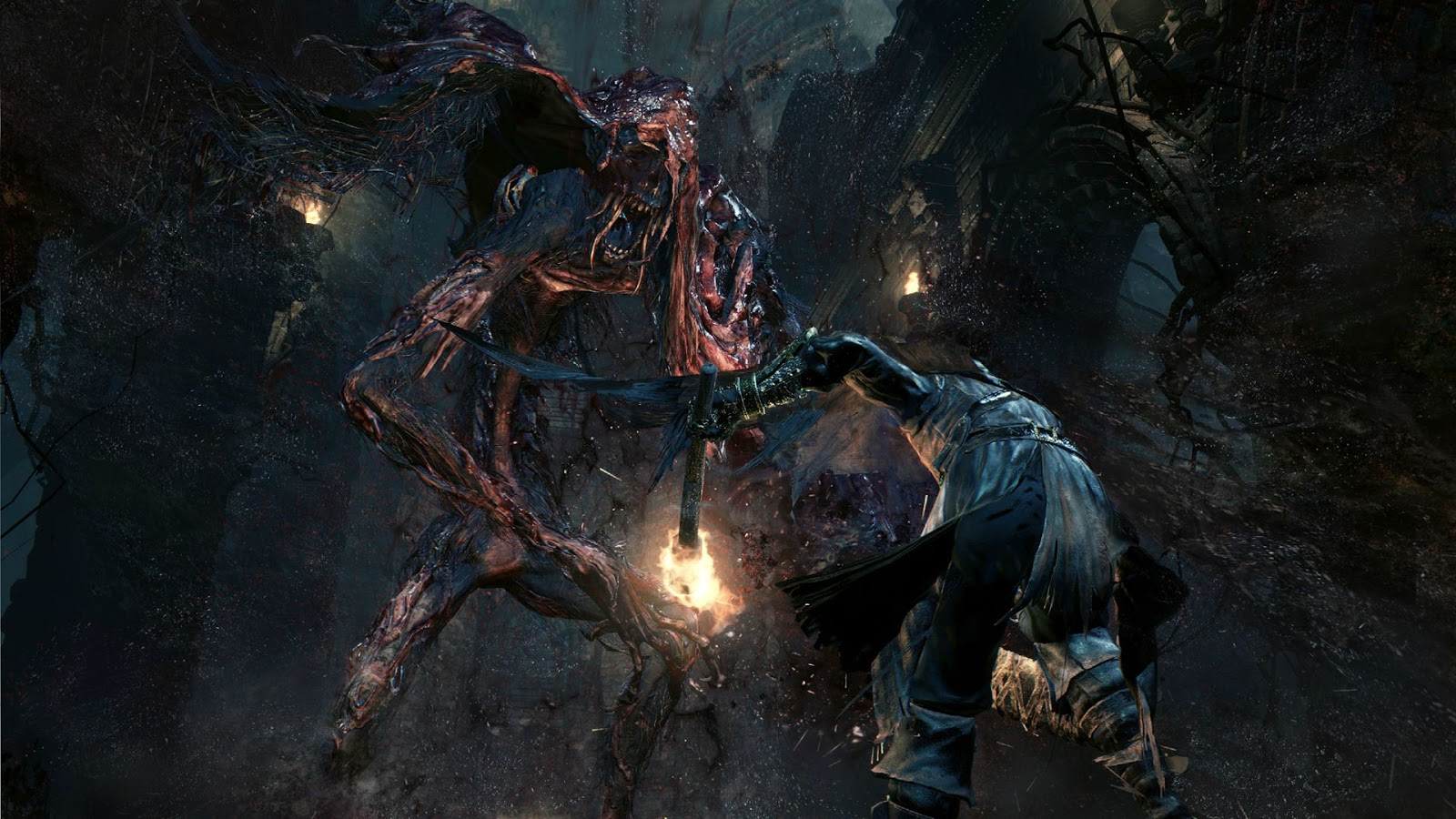
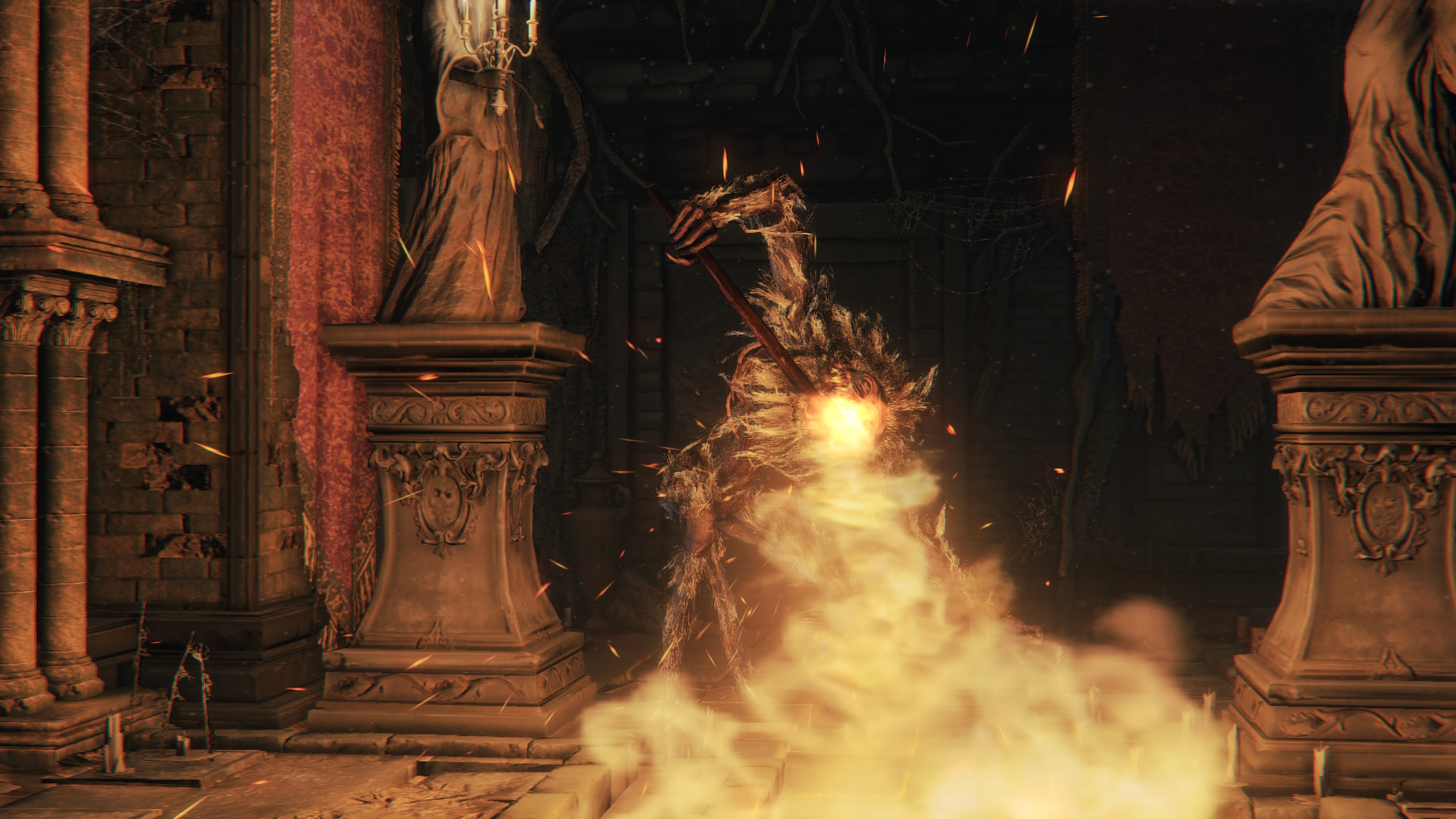
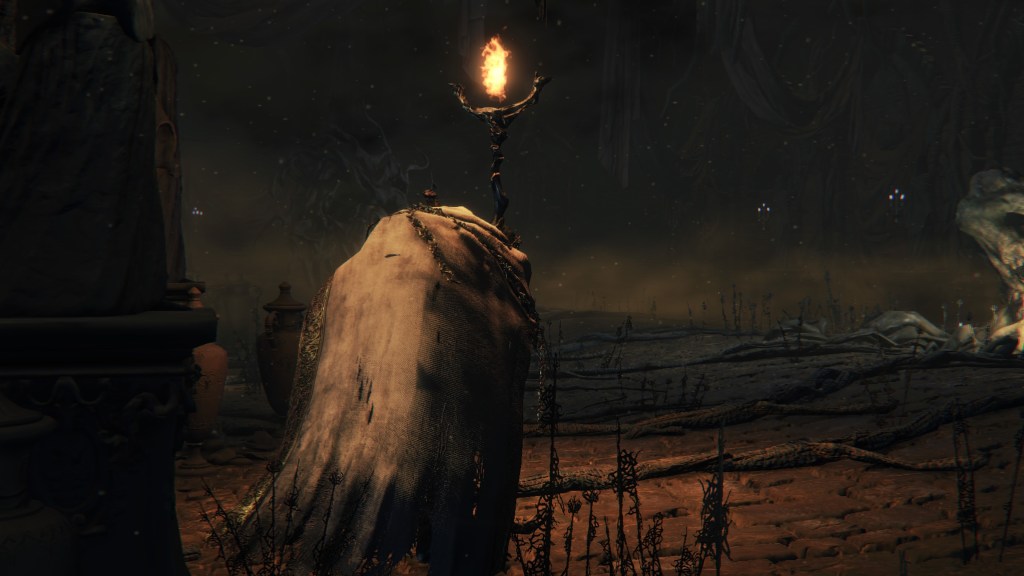
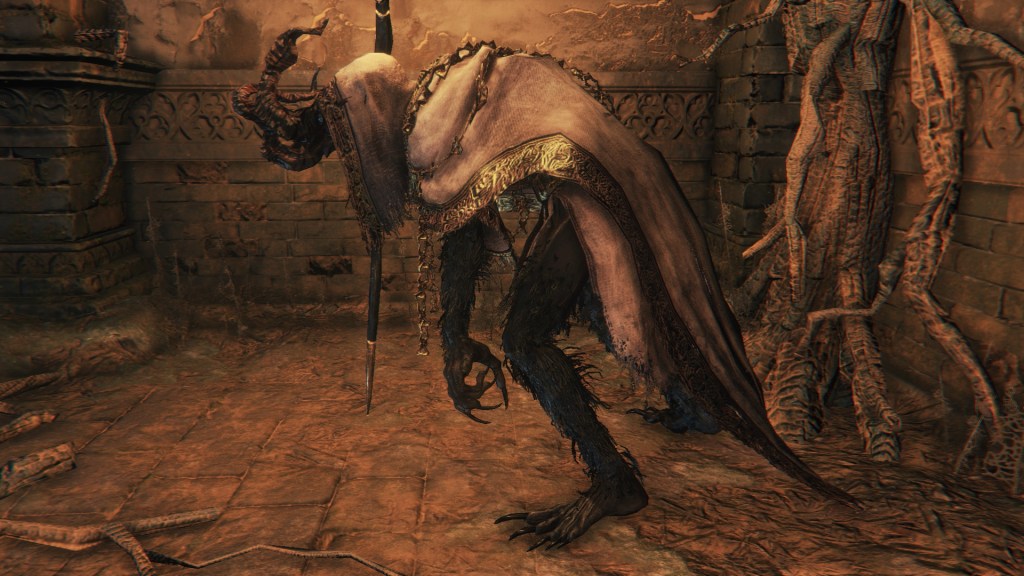
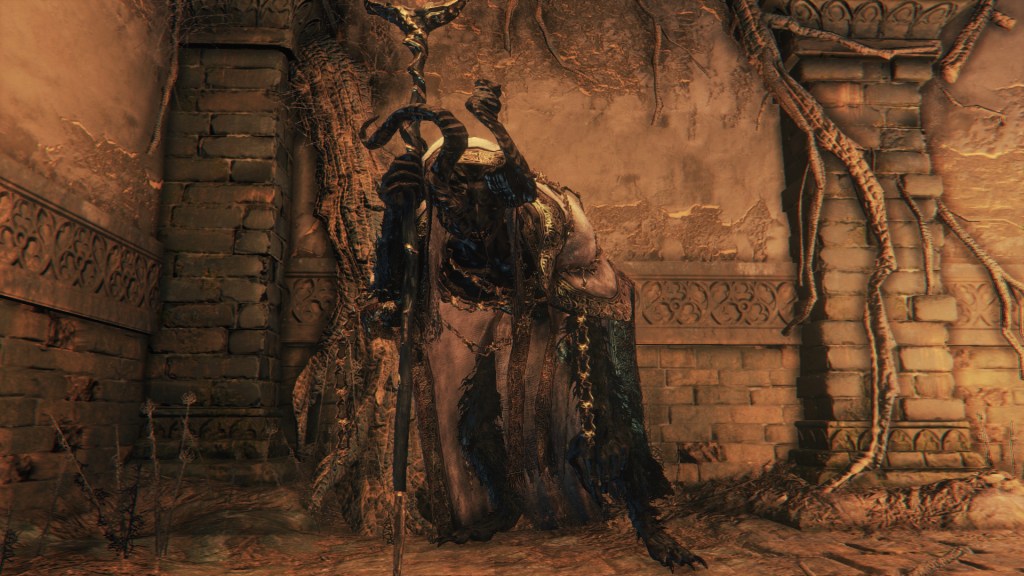
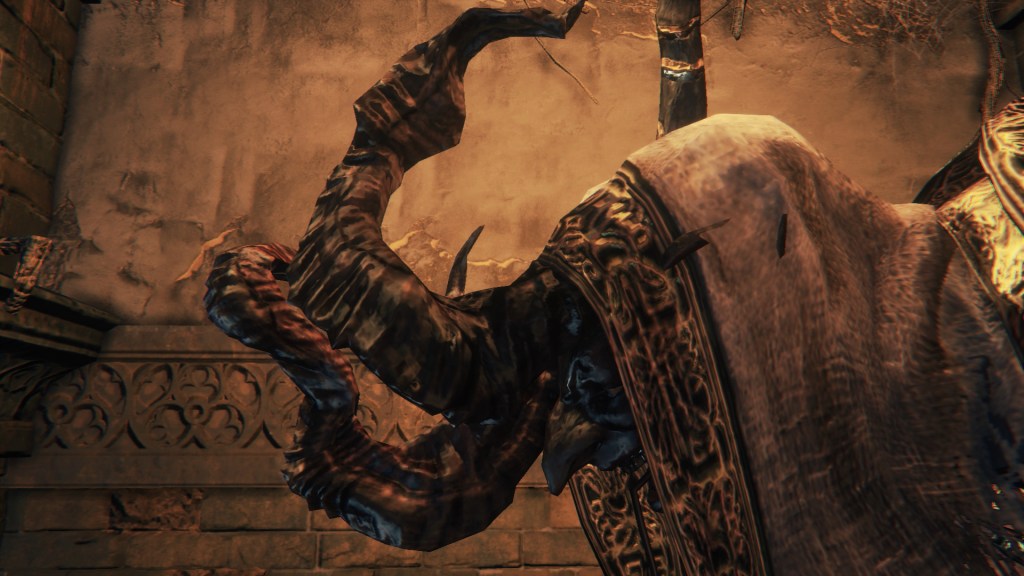
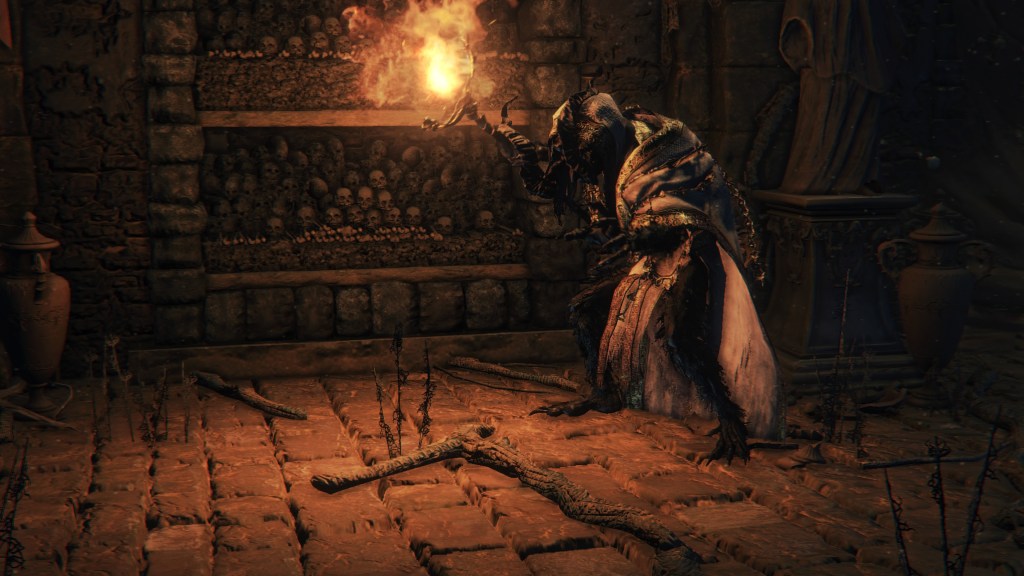
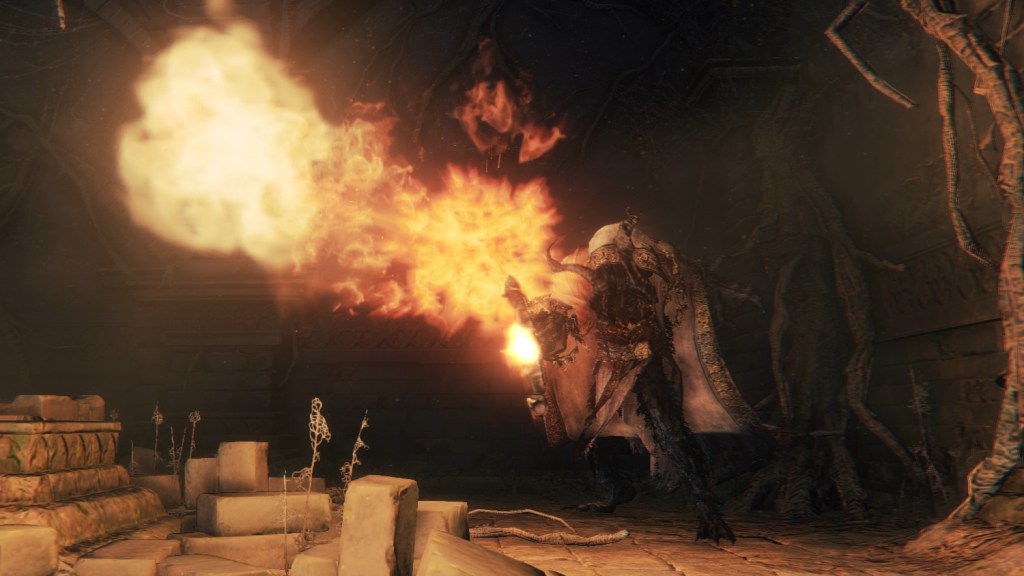
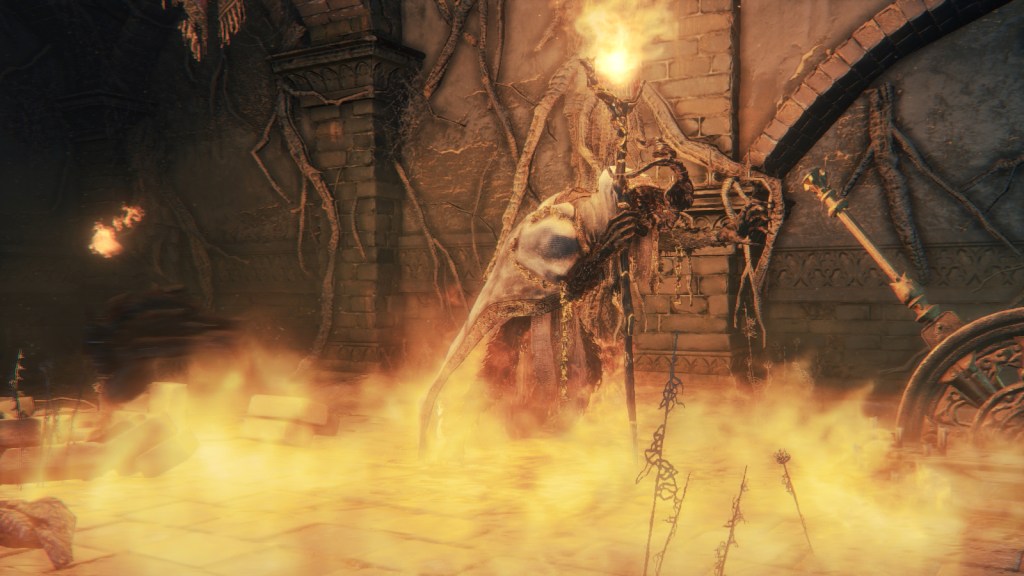
The religious element adds to this impression. Loran clerics appear all throughout the dungeon. With their staffs, they cast arcane fire arts, similar to the Pthumerian elders. Essentially, the country’s priests were leading the way in “purifying” the vile beasts with the burning light. And as a guiding light for their flock, the clerics hold major responsibility for promoting the use of flame in the society’s beast hunts. Add to that the parallel to the Healing Church in Yharnam, and we can infer that Loran’s clergy were also administrating the blood treatment which benefited from the cremations. Internally, the enemy is regarded as a “degenerate” beast, (堕落者の獣) invoking “fallen” like an apostate or corrupted angel, and for good reason. Their white robes fail to hide the hairy creature underneath, their long, thin tongues and massive horns robbing the face of their last bit of humanity. Given that “mad ascetic” (狂った修験者) also defines them internally, practice failed to restrain degeneration into irrationality. Their beast-purifying arts are now hypocritical at best, revealing the true intent behind those flames.


That spiritual angle takes especial meaning in light of the Great Ones. Some of the weapons found in Loran include the Blades of Mercy and Burial, meaning that the country had access to meteoric iron to forge them. This requires at least some level of contact with the “gods” who commonly respond to calls from the earthly plane with a meteor. In all likelihood, Loran came to recognize Pthumeru’s gods and prayed to them for answers, explaining the various runes we can acquire throughout the dungeon. This isn’t a surprise for a desert culture, who historically develop a reliance on the stars to navigate the dangerous dunes and barren expanses. With astrology likely already holding critical importance to the people, it was only natural for worship of the Great Ones to explode after discovering their connection to the stars in their interactions with Pthumeru. From the swords forged out of meteors, the desert folk interpreted the cosmos’ cold response to their pleas as the gods gifting them the means to take the solution in their own hands, mercifully killing and burying the beast menace.
Undergirding all this is the implicit connection between the engineering of blood and veneration of the divine. More than likely, Loran’s goal wasn’t strictly to create sentient beasts but gods, the same as the Pthumerians. In their case, the nation mistook how the recluses of Ihyll embraced blood drinking and became beasts as a necessary step in the transformation process, as evidenced by the existence of the Anti-Clockwise Metamorphosis rune in their dungeon. To transform into something lofty, they had to undergo the ugly metamorphosis as a beast — the pupa before rebirth as a butterfly. That explains Loran’s obsession with using blood for beasthood, contrast to Isz or even Pthumeru’s method. They believed that so long as they refined the perversions out of the alteration, they too could become the stars which shined brightly for them on their darkest nights. The silverbeast shows some progress in this regard, though it is still far from ideal. Even so, they remained fixated on the beast, leaving kin a rarity.
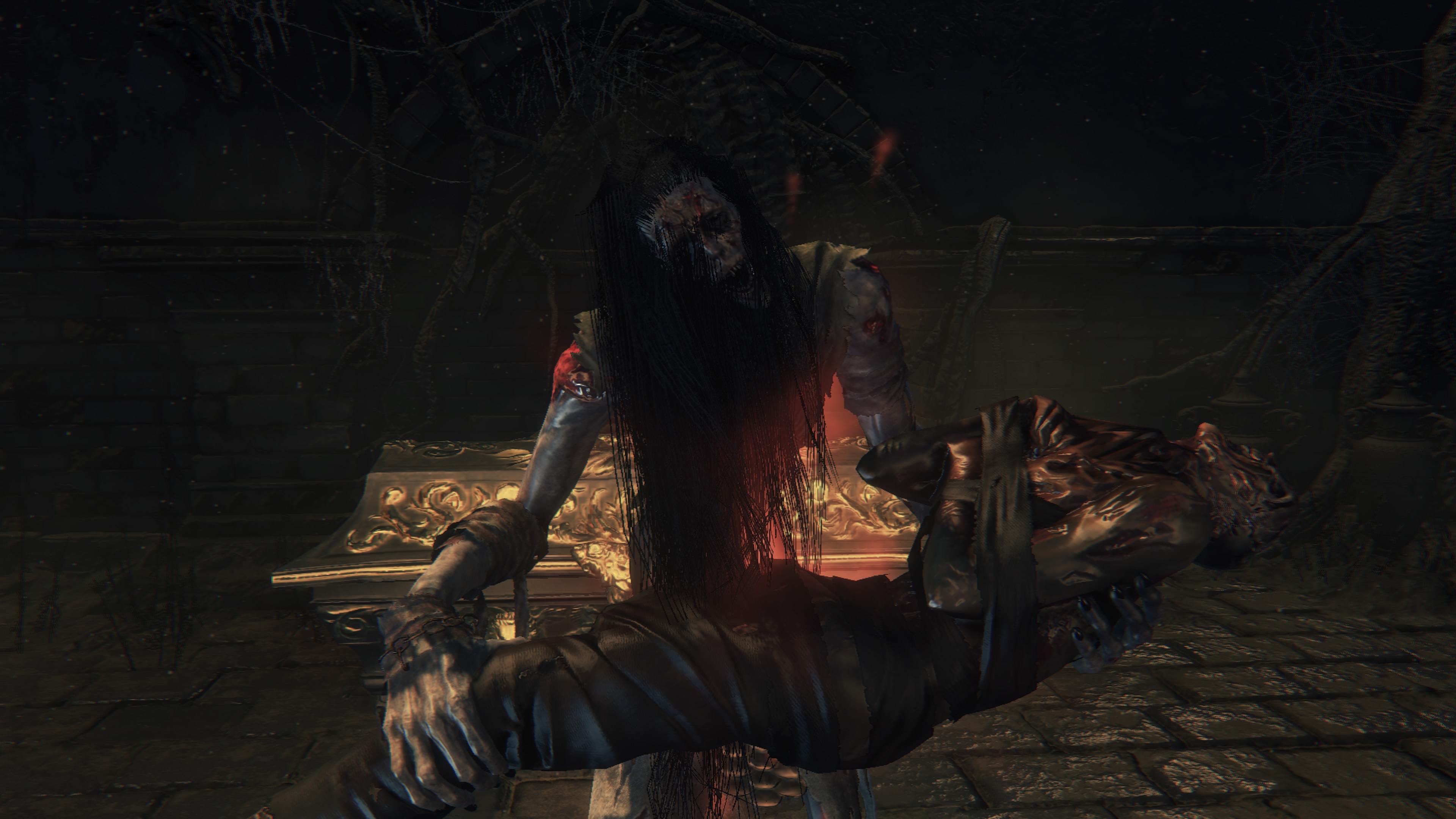
Because priests saw beasts as the state of transformation on the pathway to godhood, the clergy allowed the beast scourge to run rampant. Their attempts to balance the hunt for beasts with the hunt for beasthood led to a bizarre sense where the disease was both, publicly, a corruption to purify and, privately, a stigmata to glorify. The end results were abominations such as the bastards of Loran. Like the lost children of antiquity, these entities are Loran’s “spawn” (ローランの落とし子) with a negative perception due to the overt bestial qualities. The small corpses were no doubt born from beastly mothers, inheriting the parent’s illness and becoming a half-beast hybrid before even being born. The fact that they are corpses implies that the children were either stillborn or, more likely considering a beast’s vitality, killed immediately after exiting the womb. That alone speaks to just how deep the scourge invaded Loran society. It was a new reality for the desert tribe: they couldn’t go on without this affliction remaining part of everyday life. A subset of the population were permanently beastified.
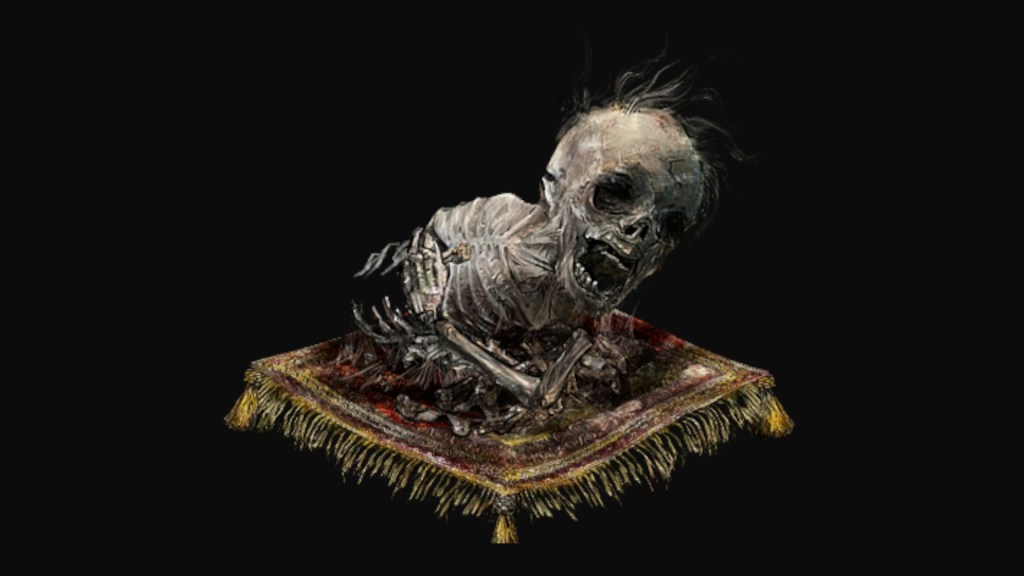
Of course, turning into a mad beast was still horrifying, so the clergy couldn’t stop the humans from slaying their erstwhile brethren. They may risk not killing a sick mother with child, but if the newborn itself proved ill, neonaticide it was — and the mother might soon follow. The hunt’s victims weren’t even necessarily devoid of all rationality; both hunted and hunter might pray for the Fading and Dissipating Lake runes for resisting fire and bolts, found with the dead in Loran. It didn’t matter if the beasts retained their humanity to some degree, their very existence was unacceptable. Even those becoming beasts themselves might have participated in the slaughter, hence why we see silverbeasts seem to keep up the hunt with their torches and the bastard corpses they hold onto. Meanwhile, the priests collected the corpses for their research. Even as the hunt went on, they continued adding to the beast population, eventually including themselves among the casualties.
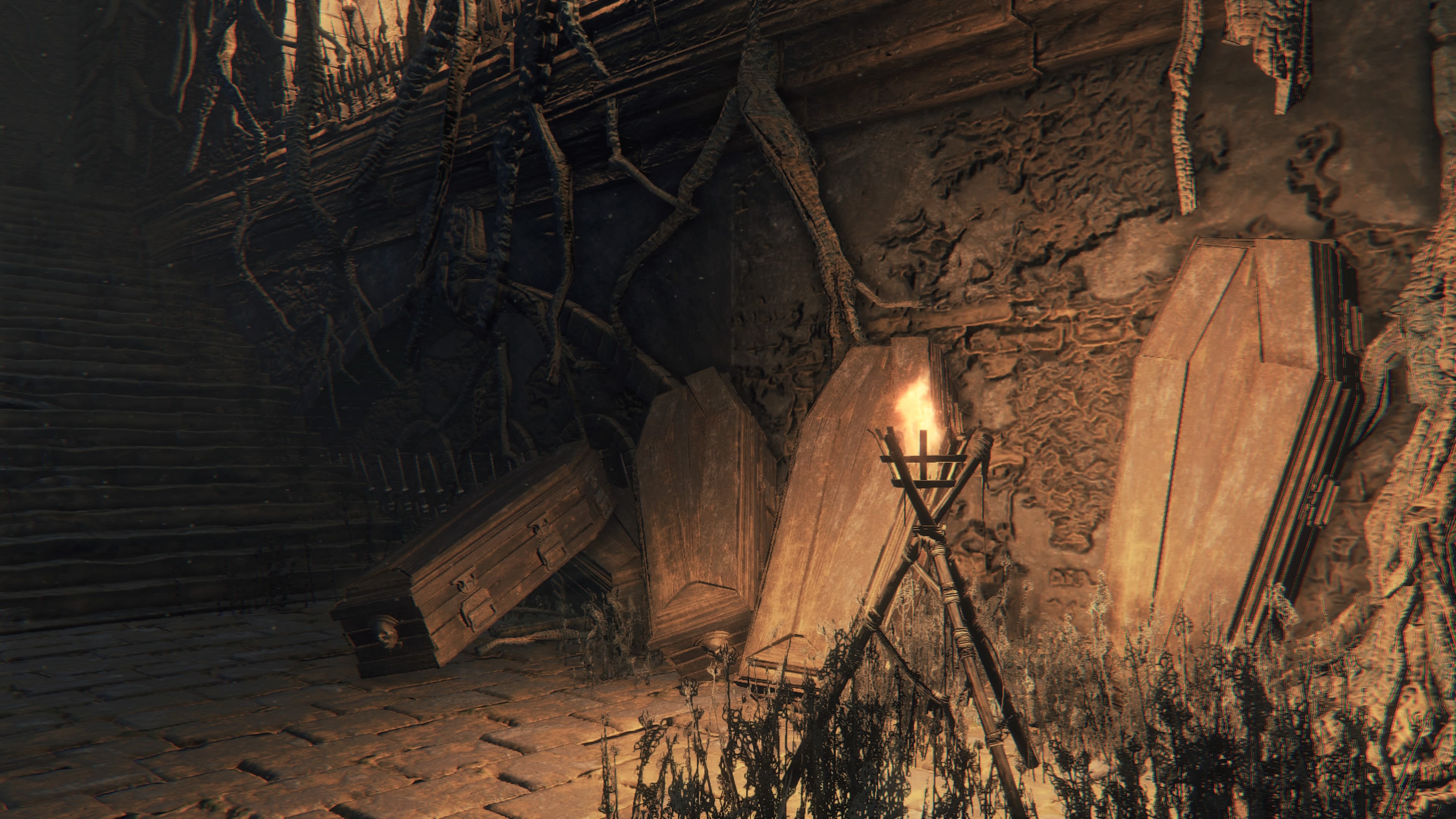
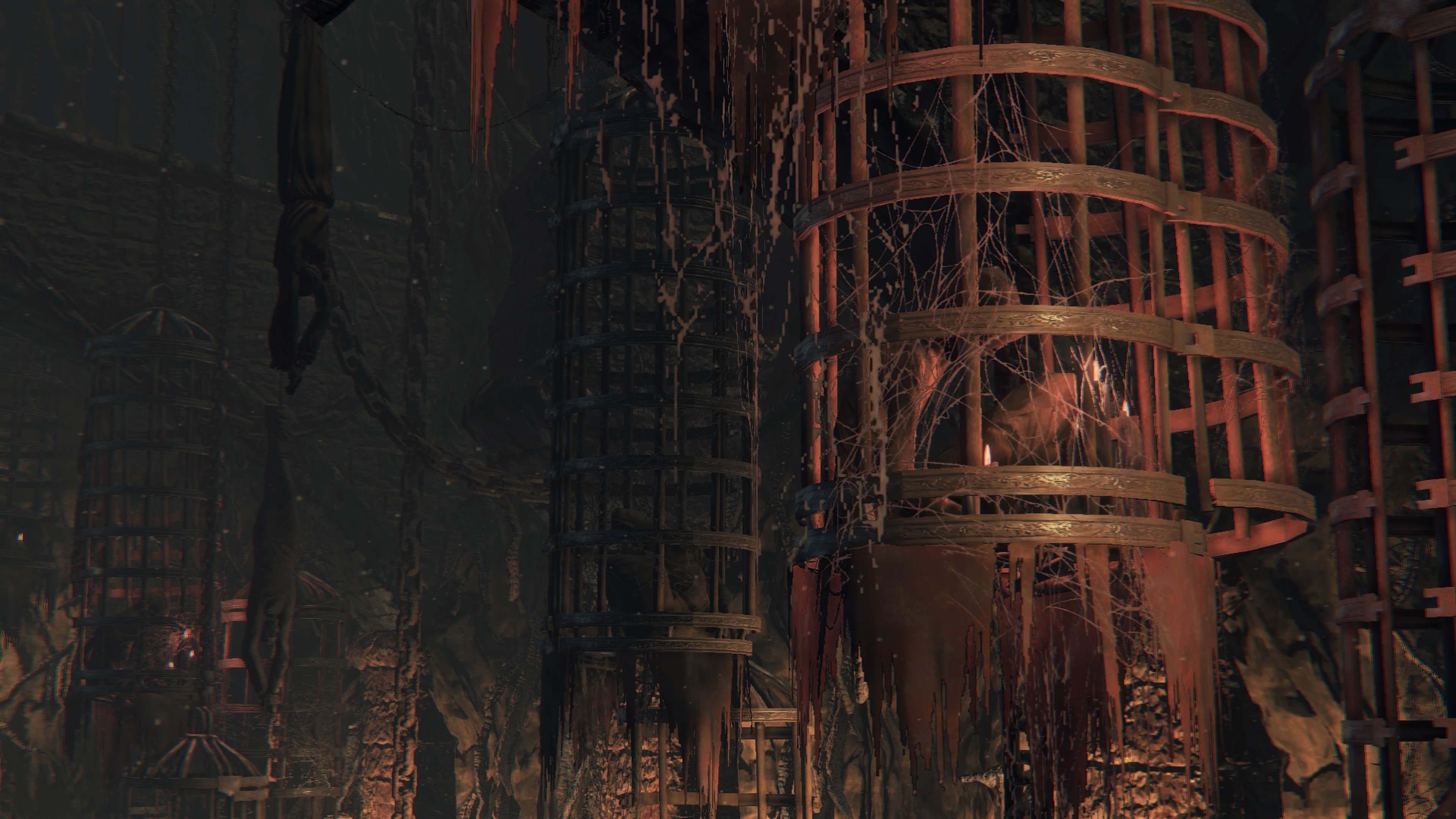
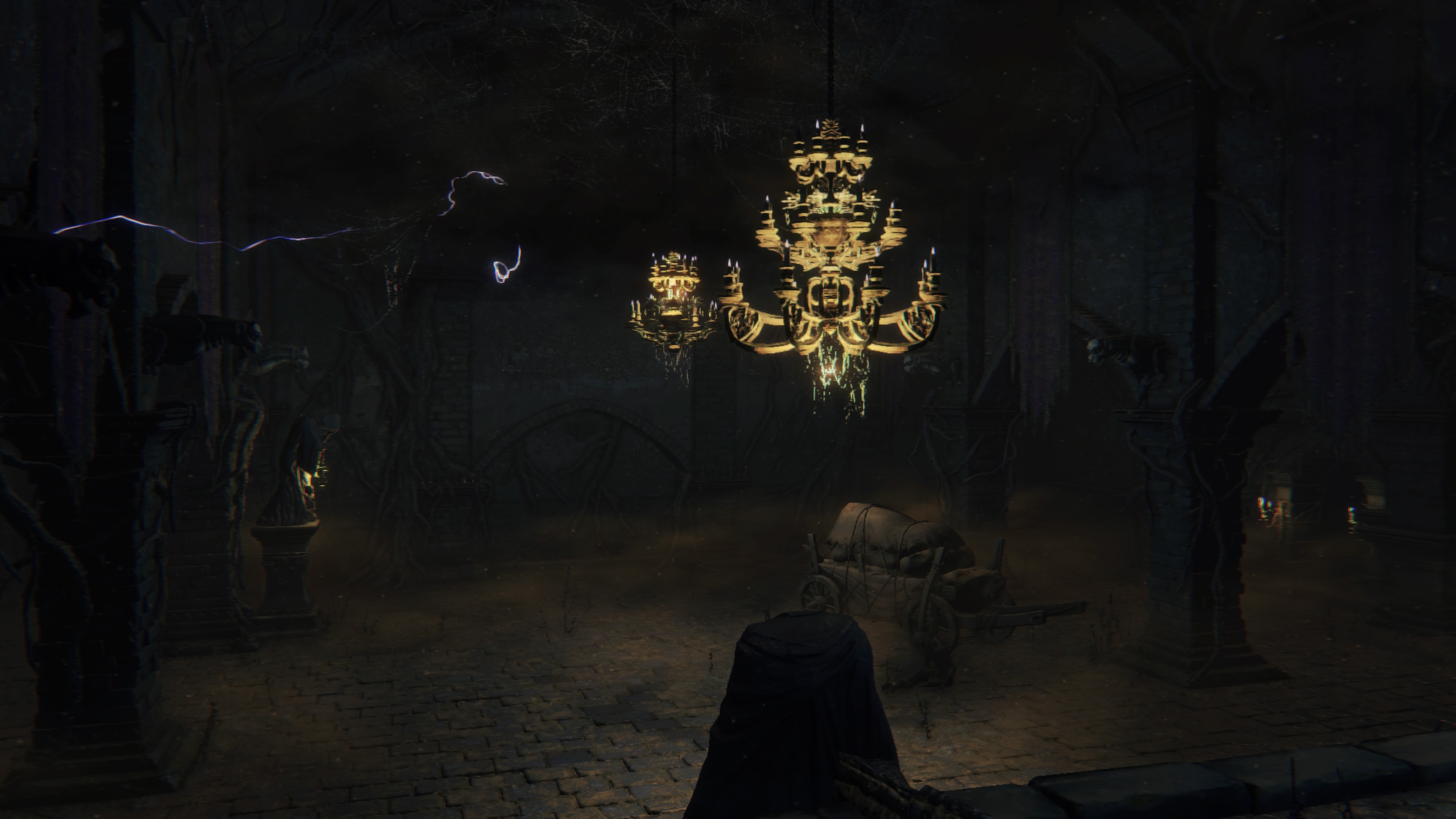
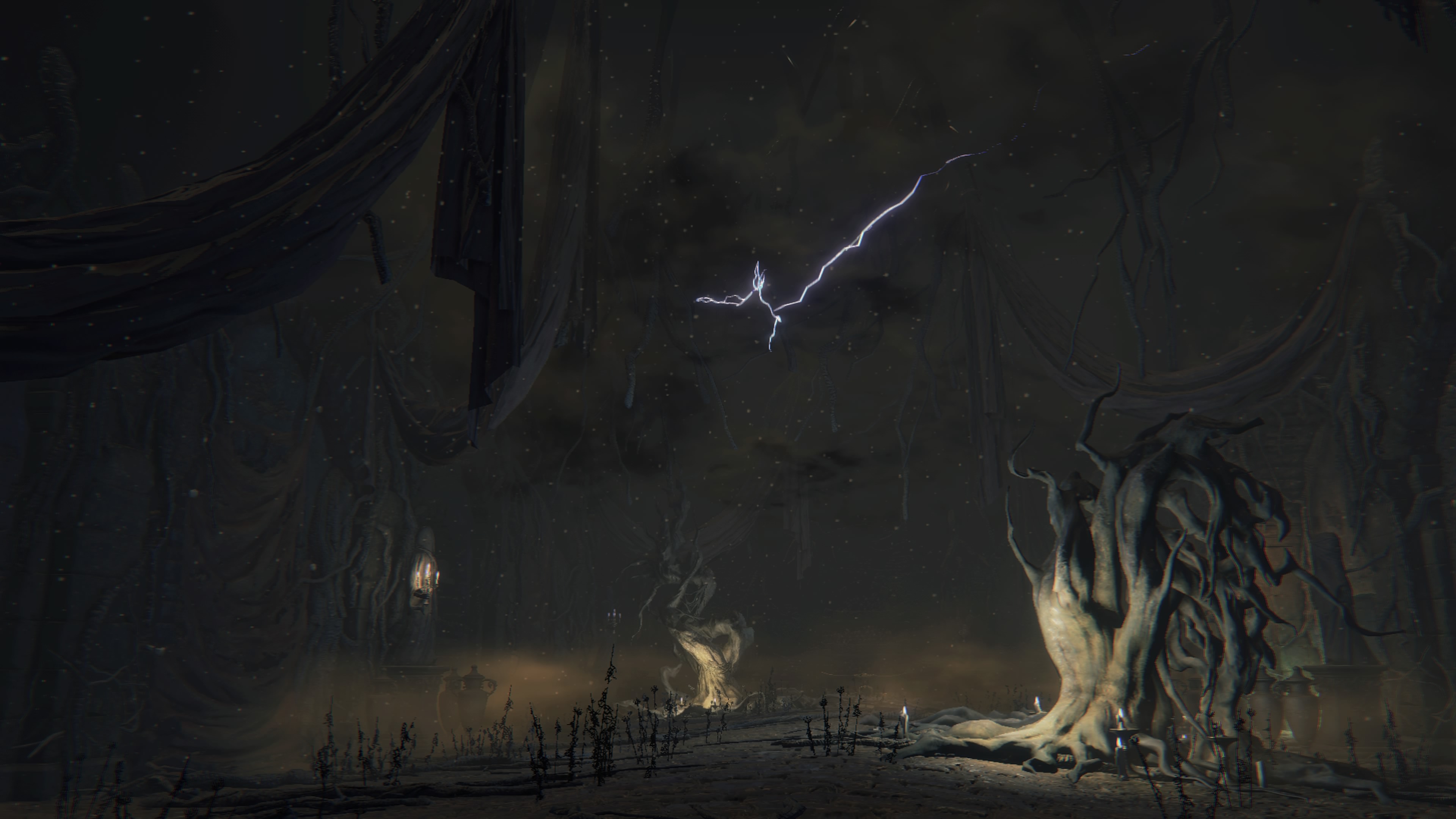
That was how Loran met its end. Rather than a precipitous decline, the human-to-beast ratio gradually shifted until civilization collapsed, leaving the derelict capital to be covered in sand grain by grain. Every citizen had become a beast with enough sense to carry on the hunt or too far gone to take part. Thanks to all the darkbeasts, far too many of the latter survive. To this day, countless chambers sustain storms charged with bolts, the legacy of the innumerable darkbeasts which still stalk this dungeon. Even after all these years, there are skeletons rising up to threaten the land once more, proving just how ineffective Loran’s hunt has been. Maybe that doesn’t come as a surprise when the hunters themselves barely hold on as beasts, the country truly blurring the line between man and monster. Blood might take the blame, but it was ignorance which destroyed Loran. Had the elite probed deeper into the work of their predecessors, maybe their country wouldn’t have become just another ruin in the labyrinth. In that sense, the beasts manifest the idiocy they had always owned — truly tragic.
Dream of Another Path
Although the central part, the story of Loran doesn’t end with the Chalice Dungeons. Exploring the Nightmare of Mensis and its Frontier, we encounter numerous Loran silverbeasts, with plans for Loran’s priests to also appear as enemies earlier in development. On the item front, bolt paper is looted in nightmare and dungeon both. The Nightmare Frontier also shares many of the same runes as Loran dungeons, such as the Clear and Stunning Deep Sea runes or Fading Lake. Even the area’s boss, Amygdala, rewards us with the Ailing Loran Chalice upon defeat. With every other relevant chalice acquired in its story dungeons, our introduction to Loran is essentially predicated upon completing this Nightmare Frontier. This naturally raises questions about a connection between these floating “islands” of the nightmare and the desert nation. If dreams are based upon past memories, then was the Nightmare of Mensis constructed, at least in part, from the memory of Loran in the cosmos?
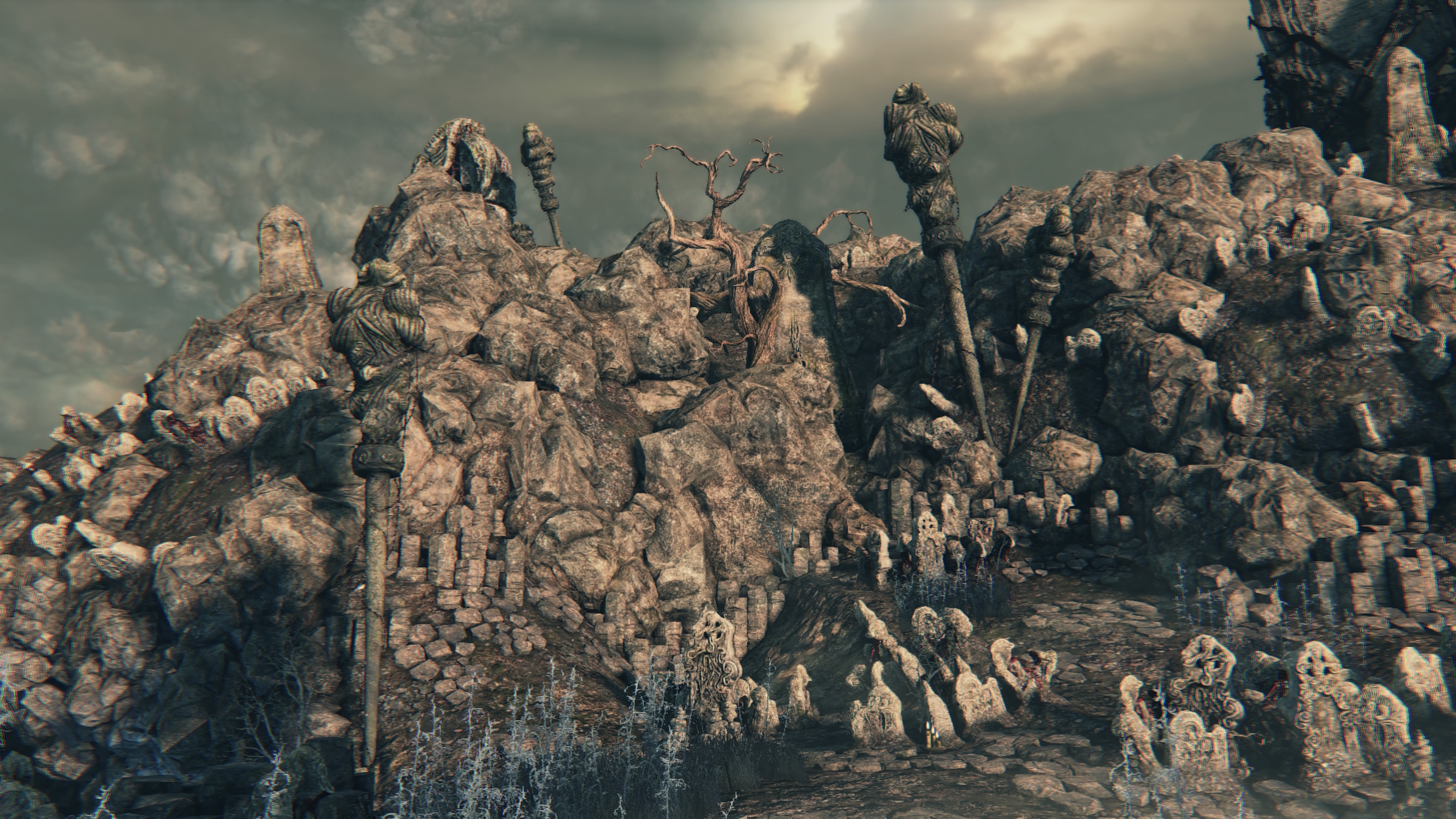
A connection isn’t readily apparent from the environment. The area is by no means a traditional desert, with sparse grasses and flowers plus dead bushes and trees dominating the dusty, mountainous landscape. Granted, a desert isn’t necessarily devoid of mountains or foliage, and even Loran dungeons continue to feature trees and grasses as overgrowth alongside the sand. Some tombs retain garden chambers with lush greenery, not to mention the massive rock gorges we may occasionally cross. Clearly, Loran was more than just a flat expanse of dunes with a metropolis plopped in the middle. Like any habitable land, there was some level of geo and biodiversity. This makes it possible for the nightmare to be simulating a part of the land which is less sandy but still part of the nation’s territory. The only problem with this assumption is the nature of many of the rock formations.
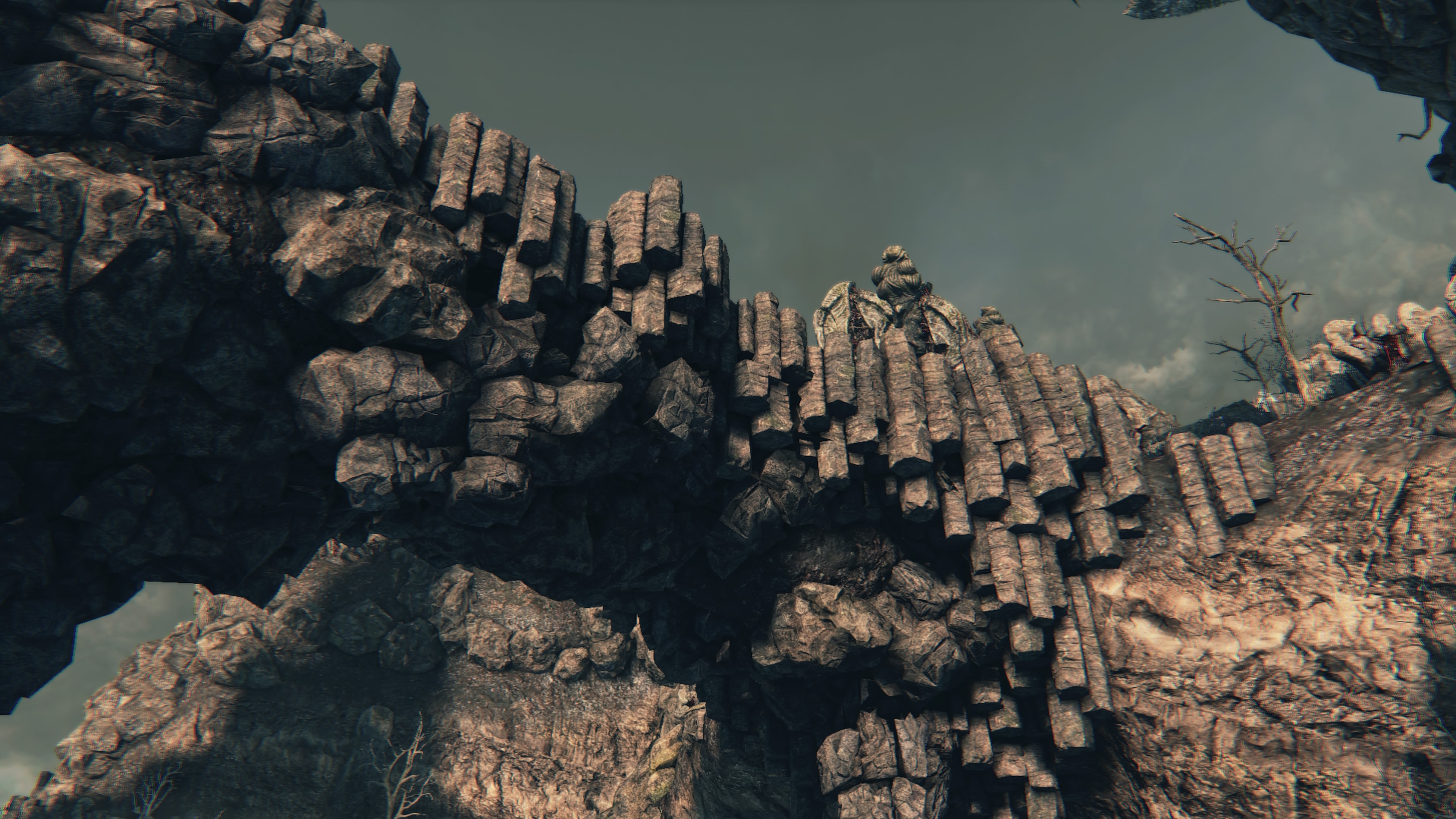
Close inspection reveals many parts of the mountains have formed close hexagonal shapes indicative of columnar jointing derived from cooling magma. But we don’t see volcanic activity in the region, nor anywhere else in the game. This leaves nowhere we can tie the nightmare islands to, assuming that these are indeed volcanic formations. However, that may answer the dilemma. In truth, there exist no signs of a molten mantle anywhere underground — just layers upon layers of crust endlessly piling up over the eons. If the world of Bloodborne has no molten core, then it is possible that these volcanic formations have been reimagined in the game’s setting as the products of a vaguely hot and dry environment. Regardless, the developers seemingly intend for the Nightmare to recreate a small slice of Loran before civilization completely disappeared from the land if the enemies simulated with it are anything to go by. The advent of messengers with lanterns along the roads matches their role in the Chalice Dungeons, providing lighting to the various civilizations long after they have perished.
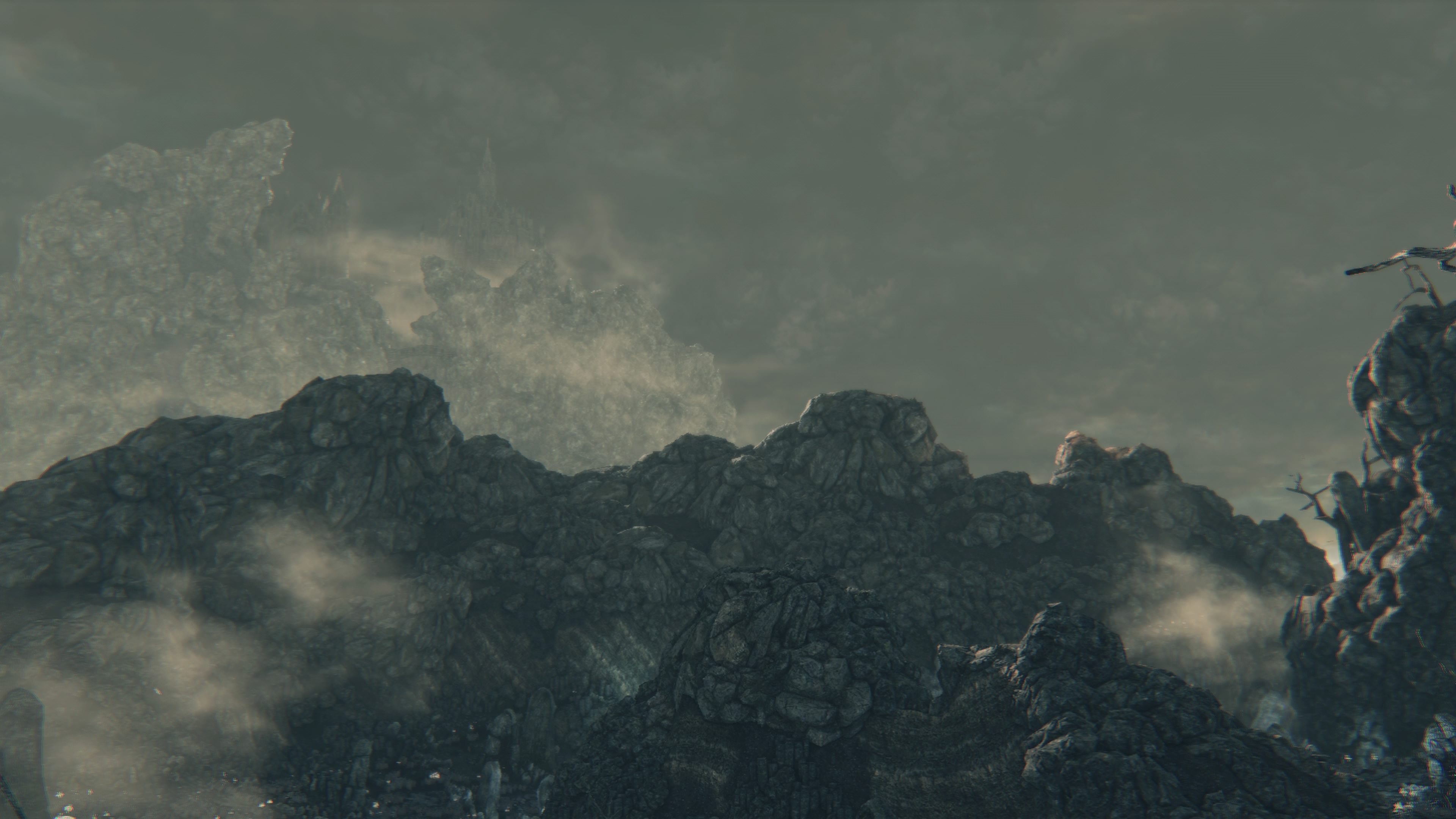
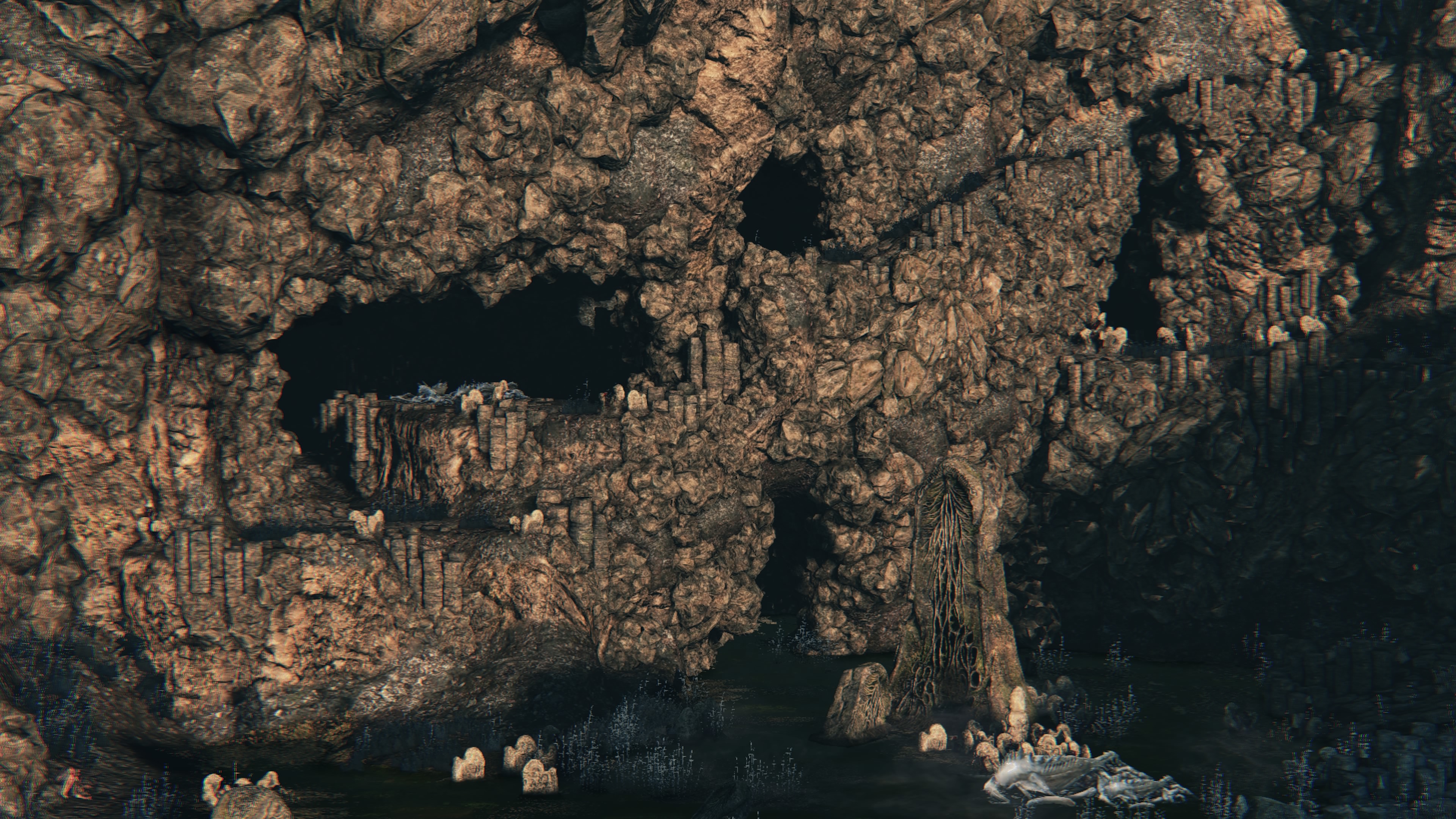
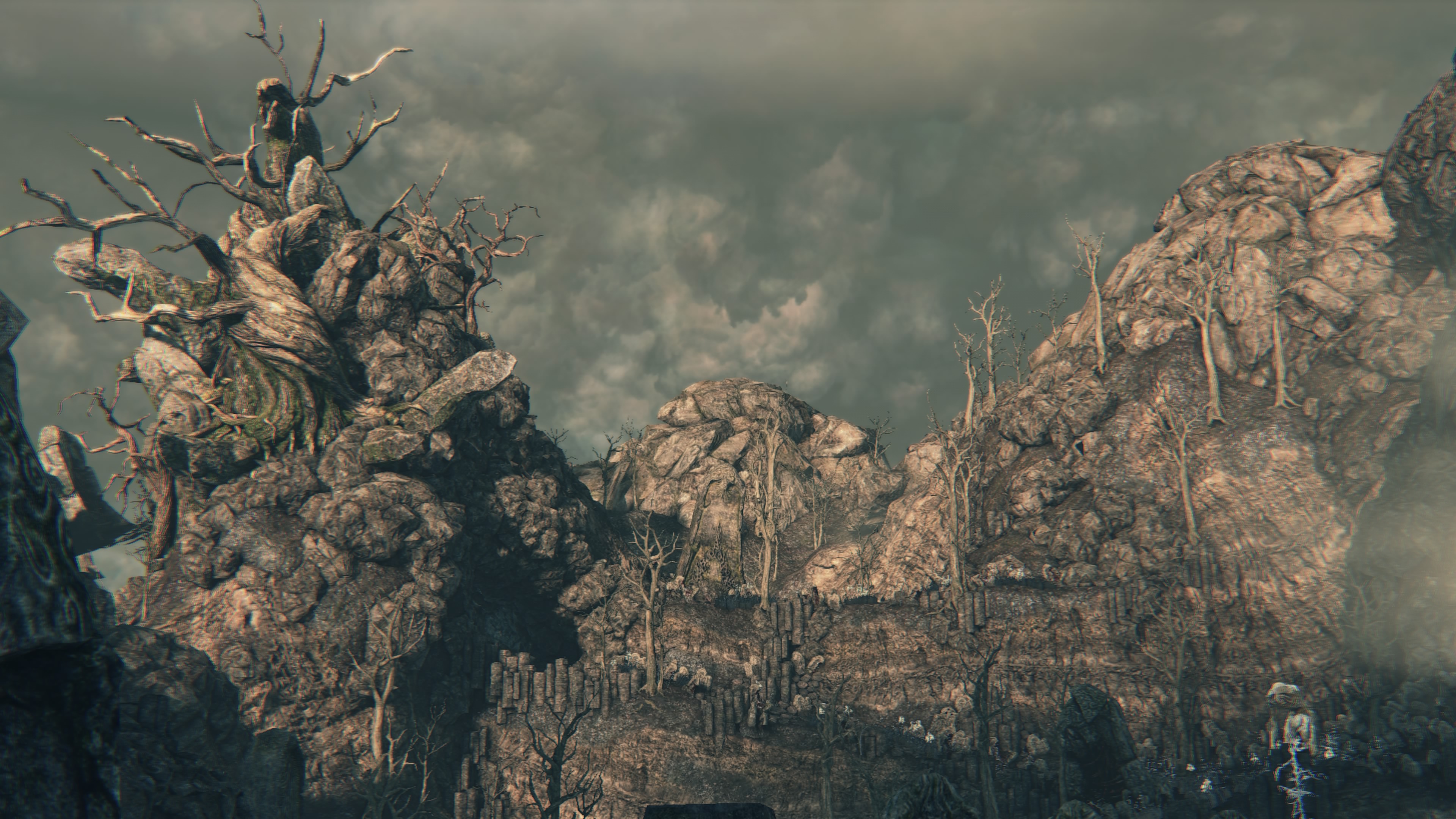
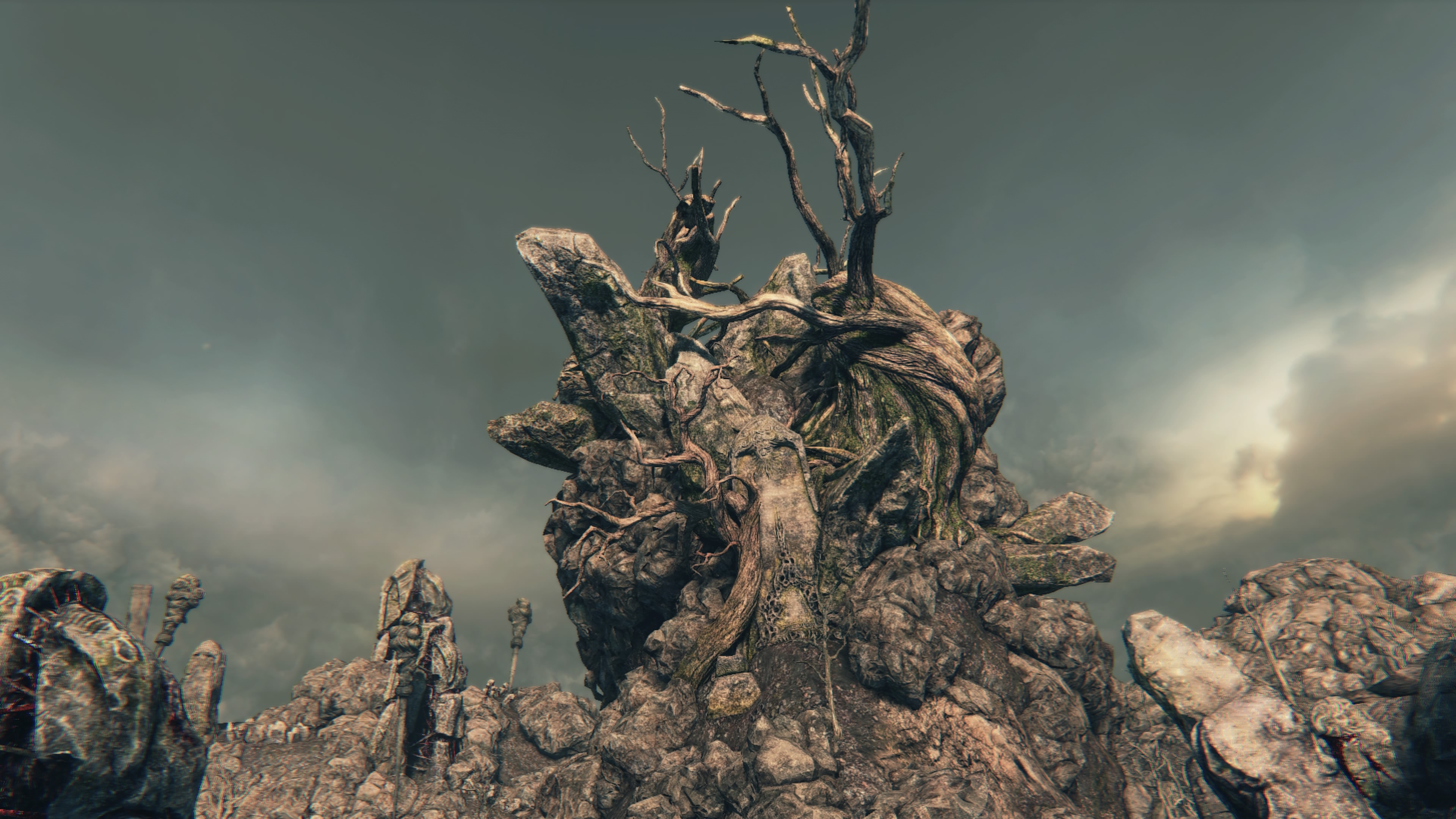
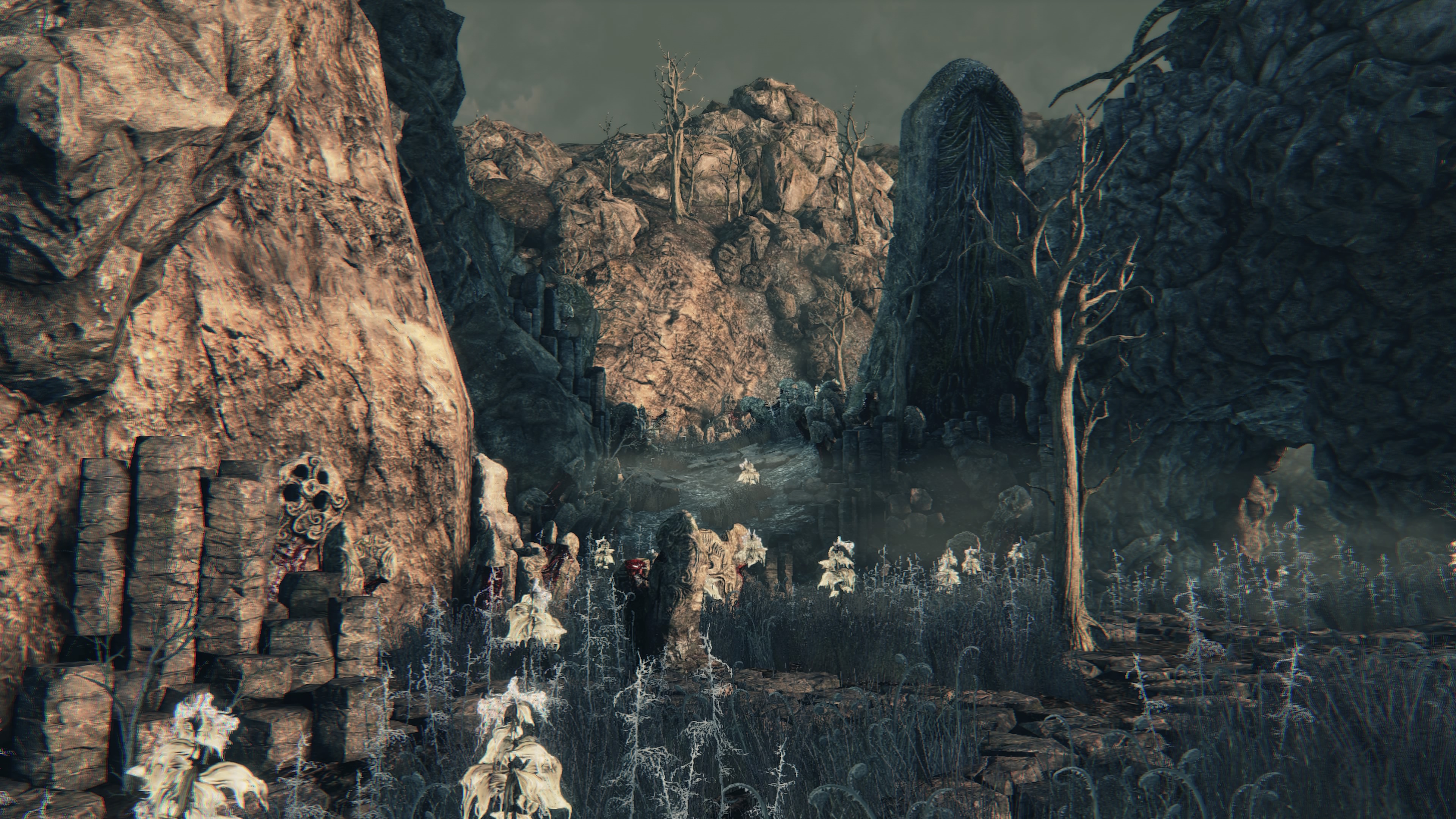
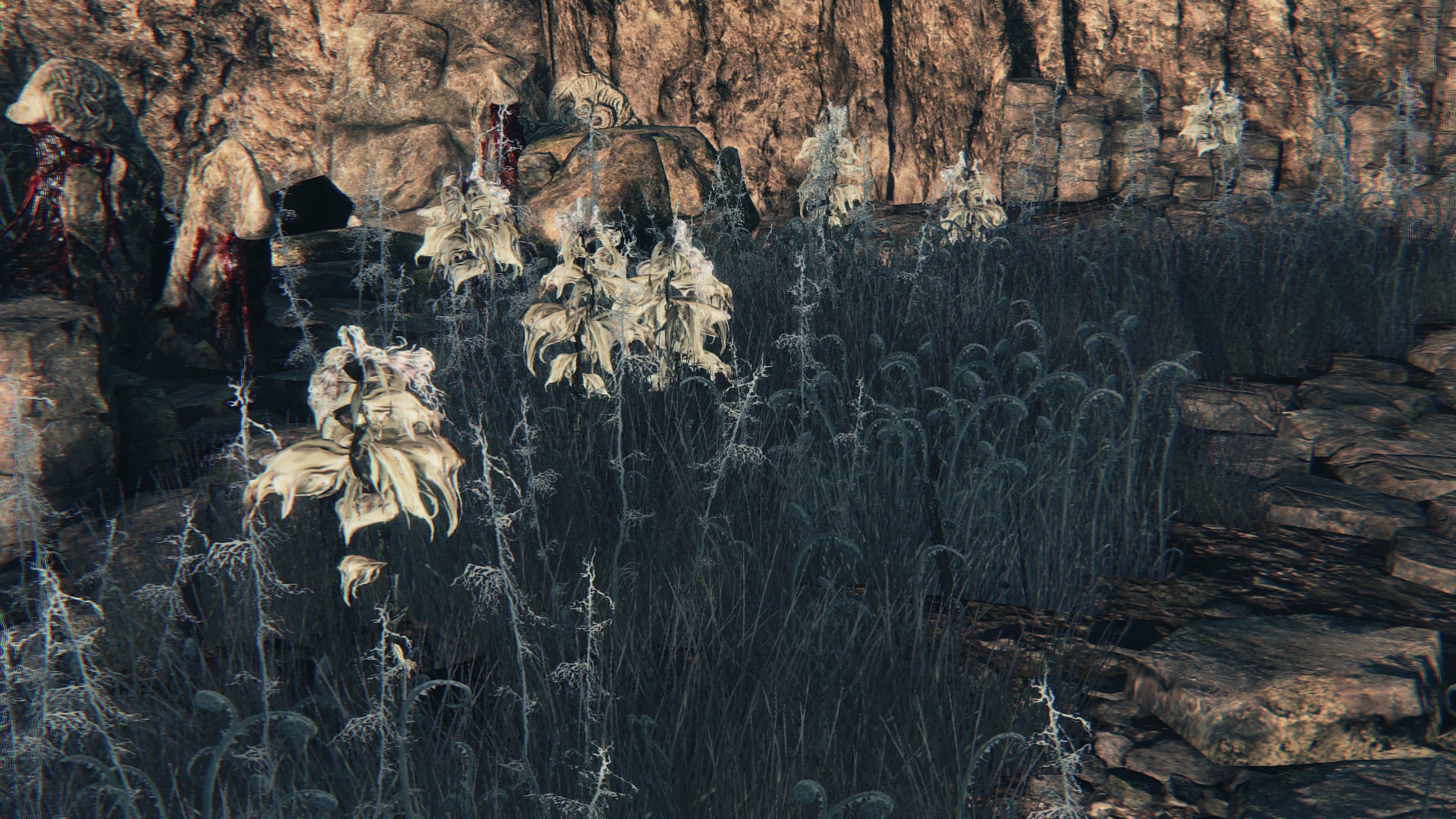
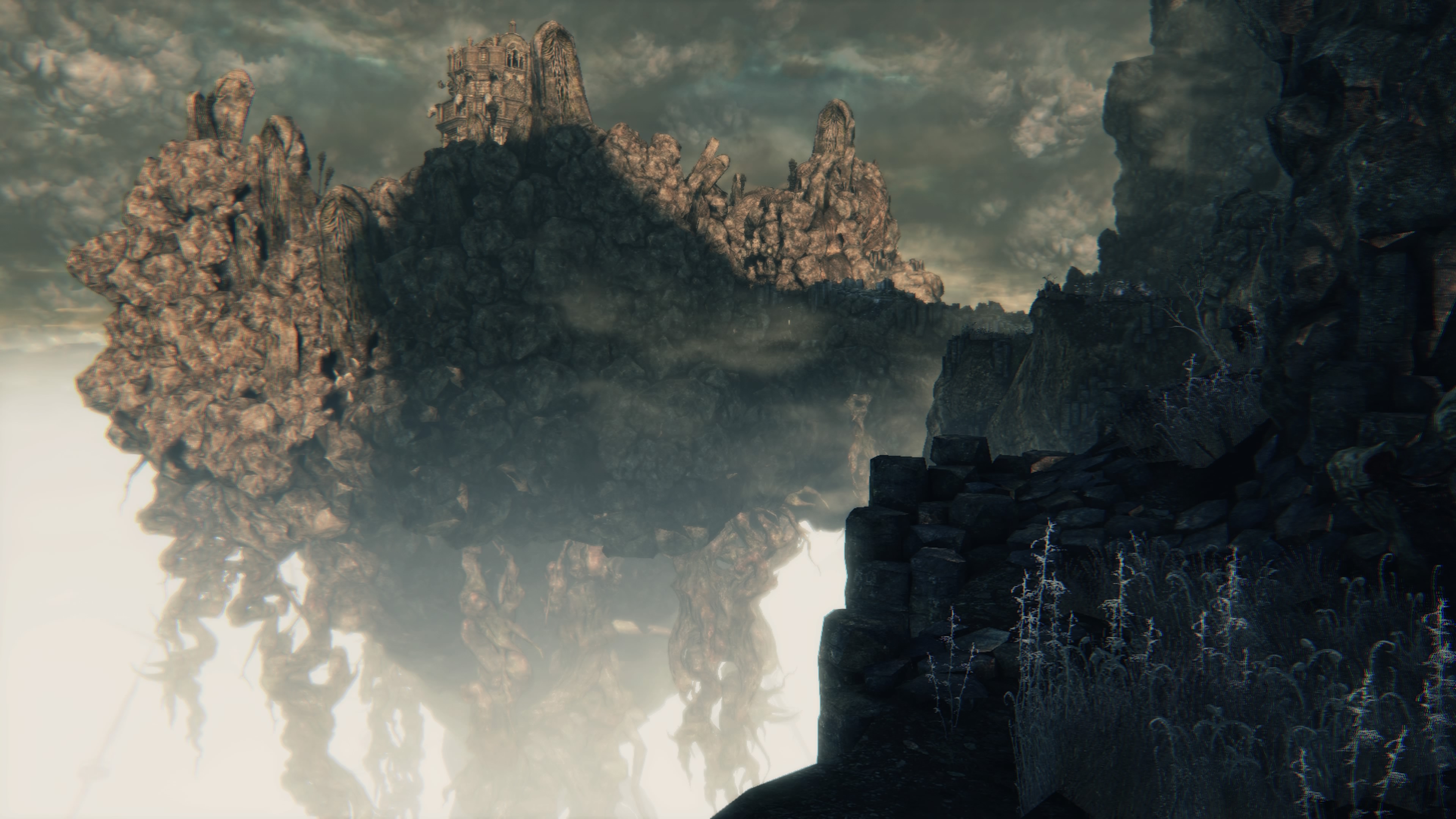
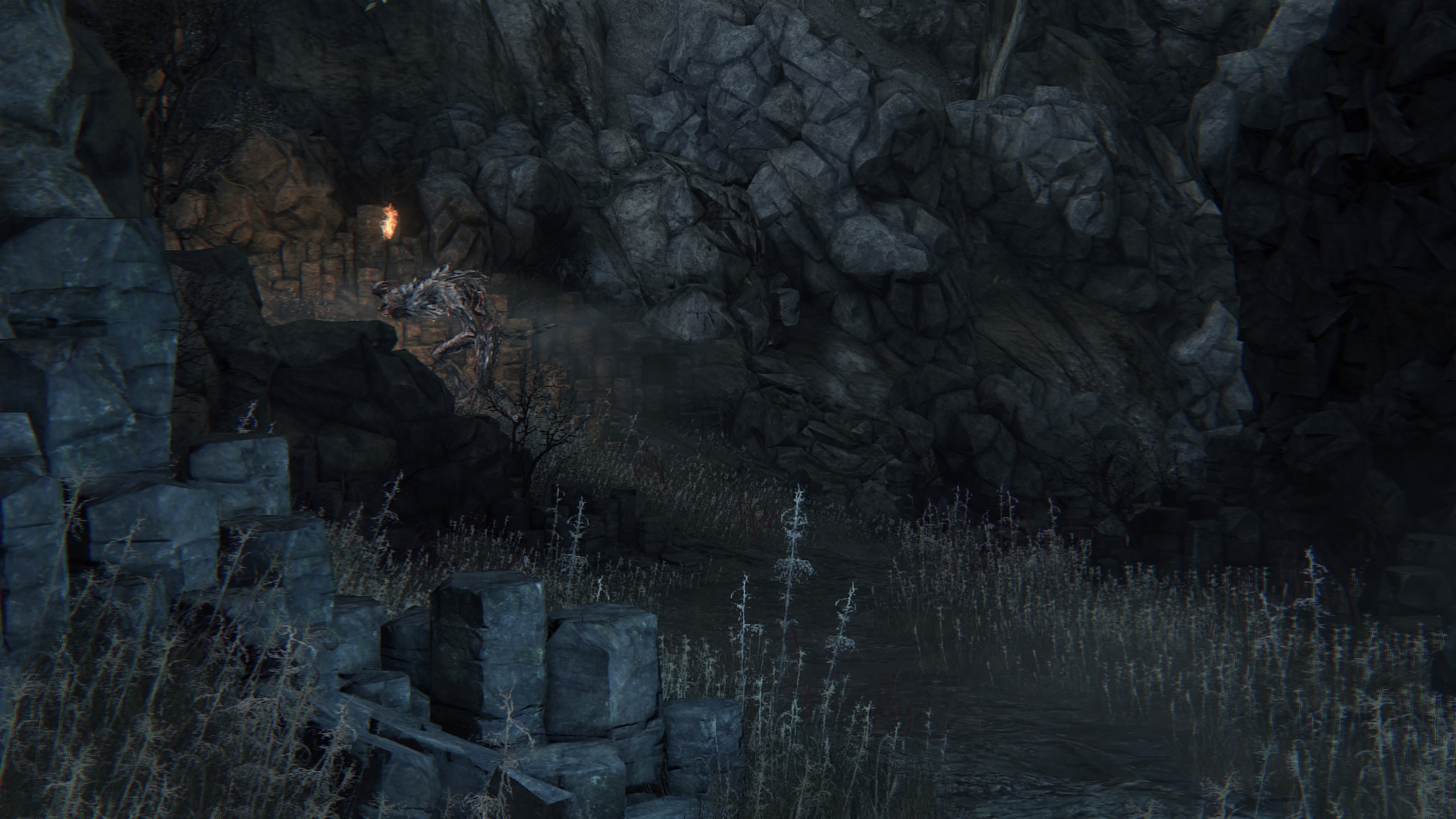
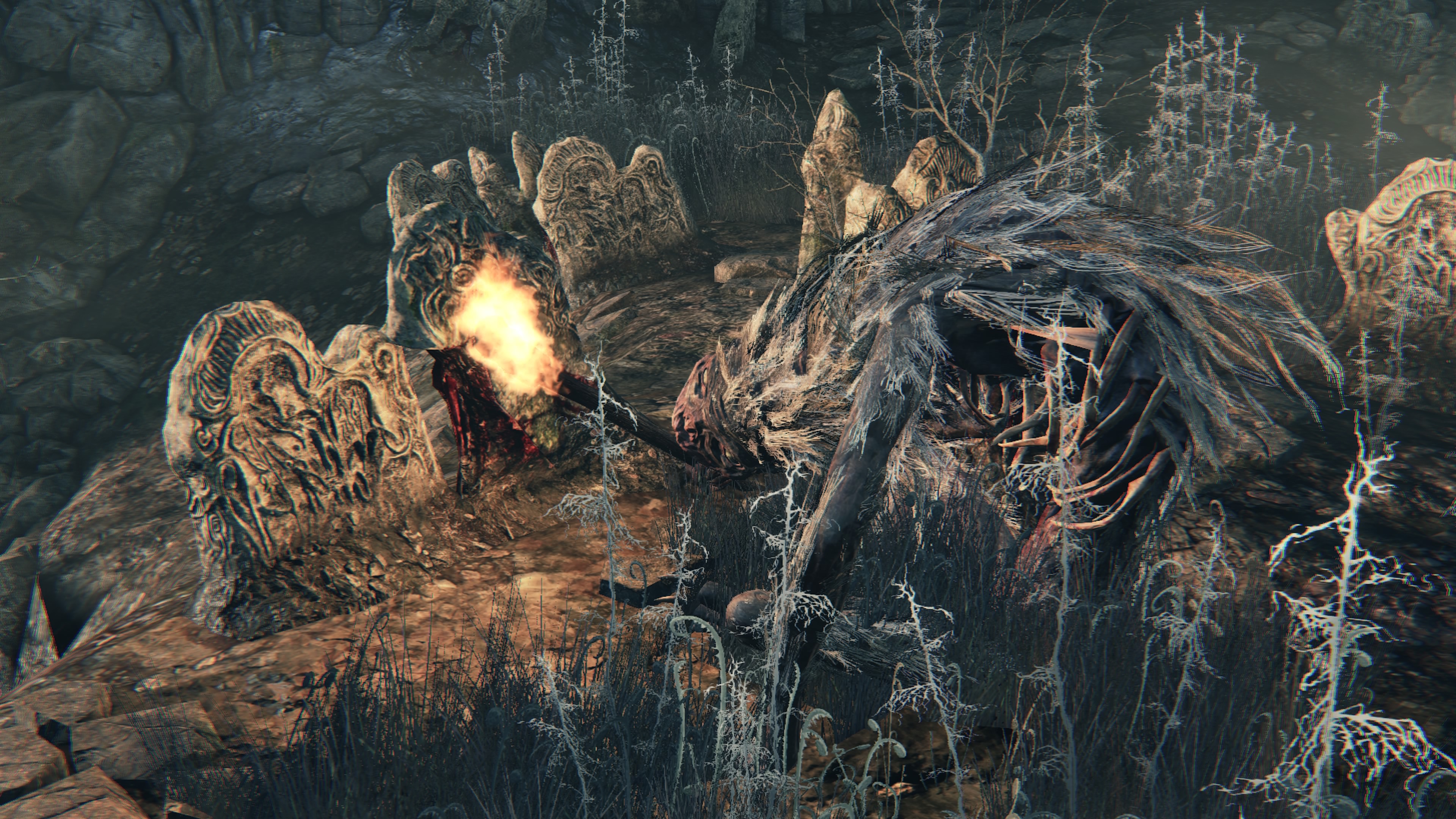
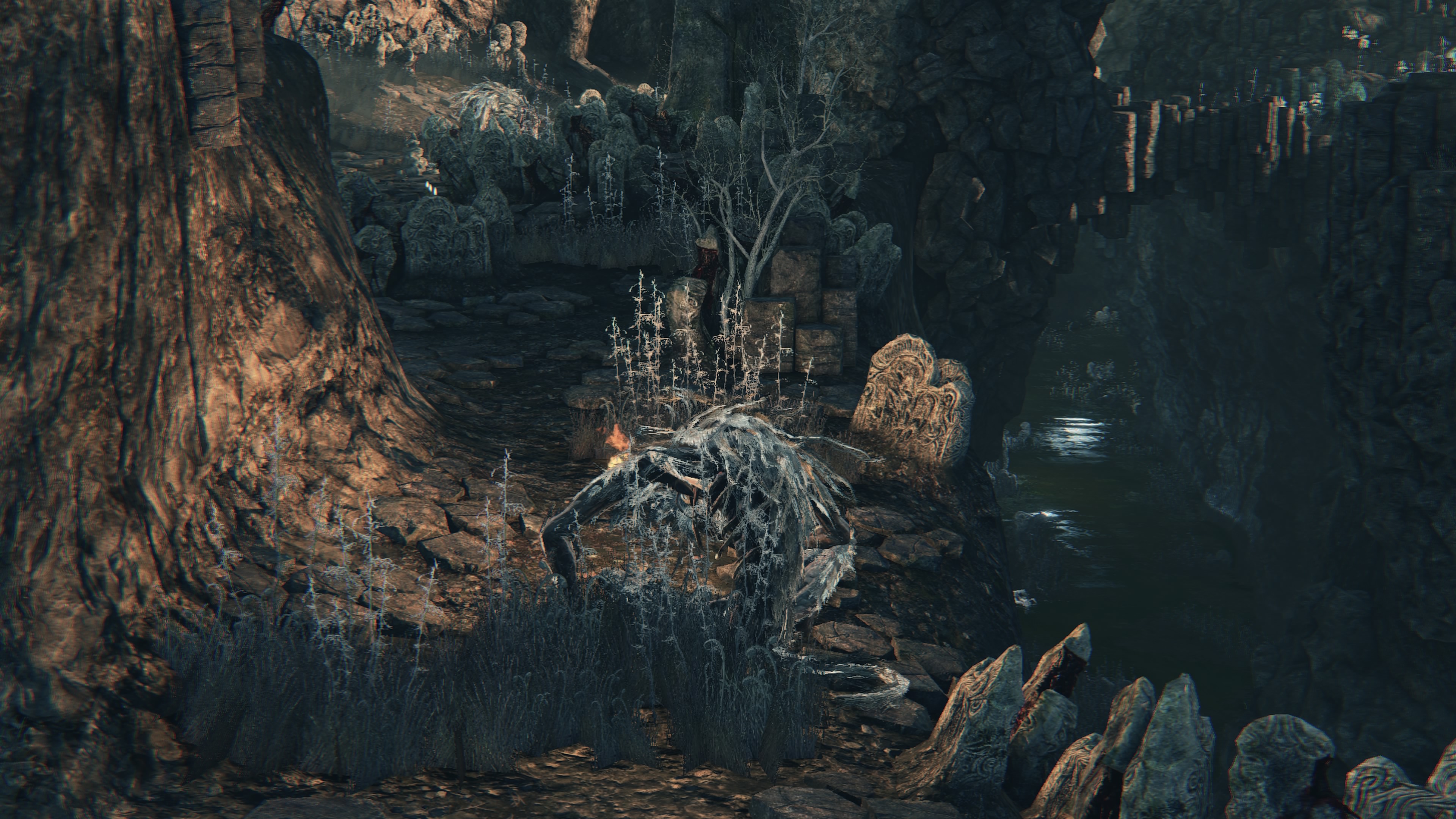
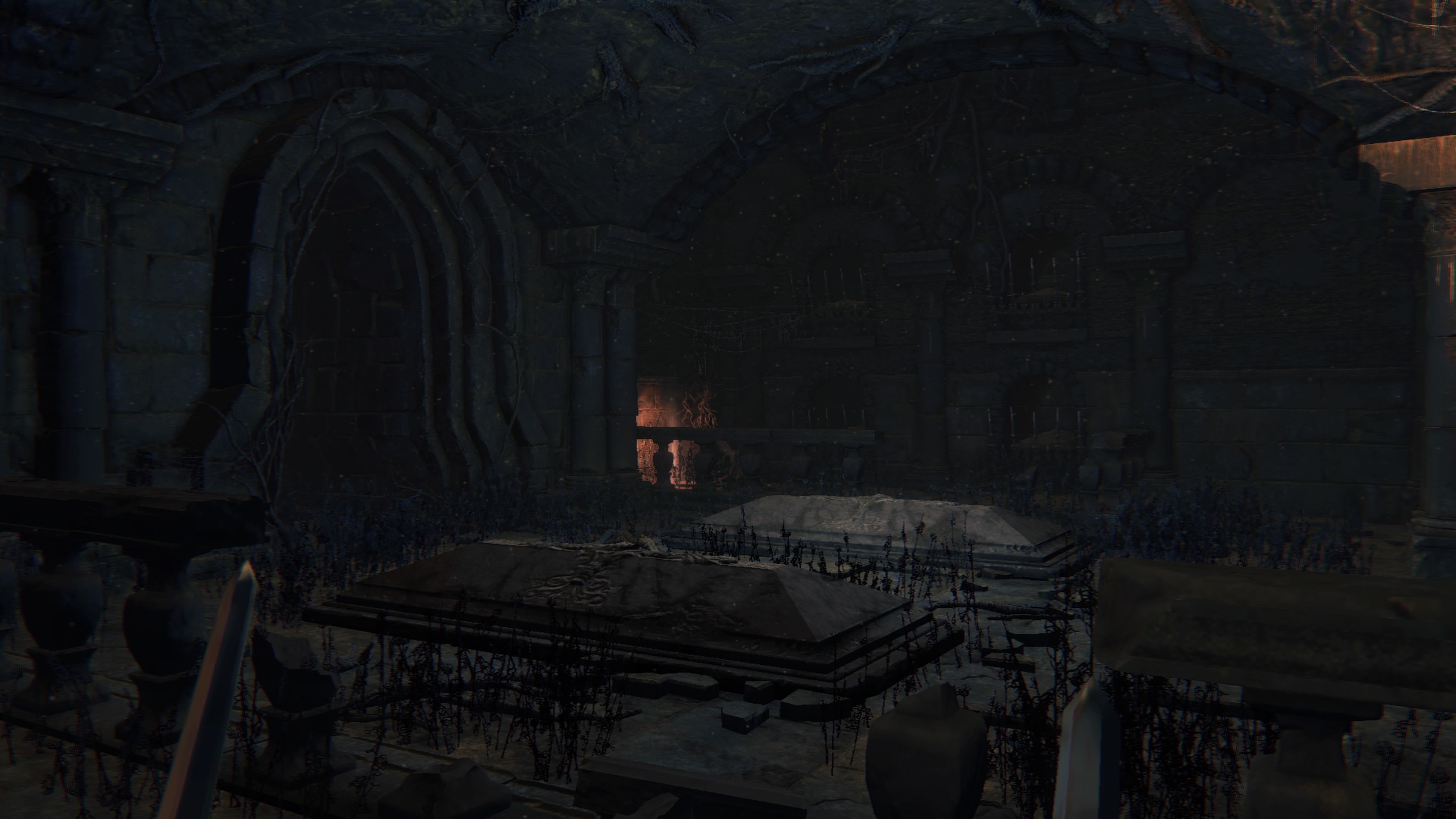
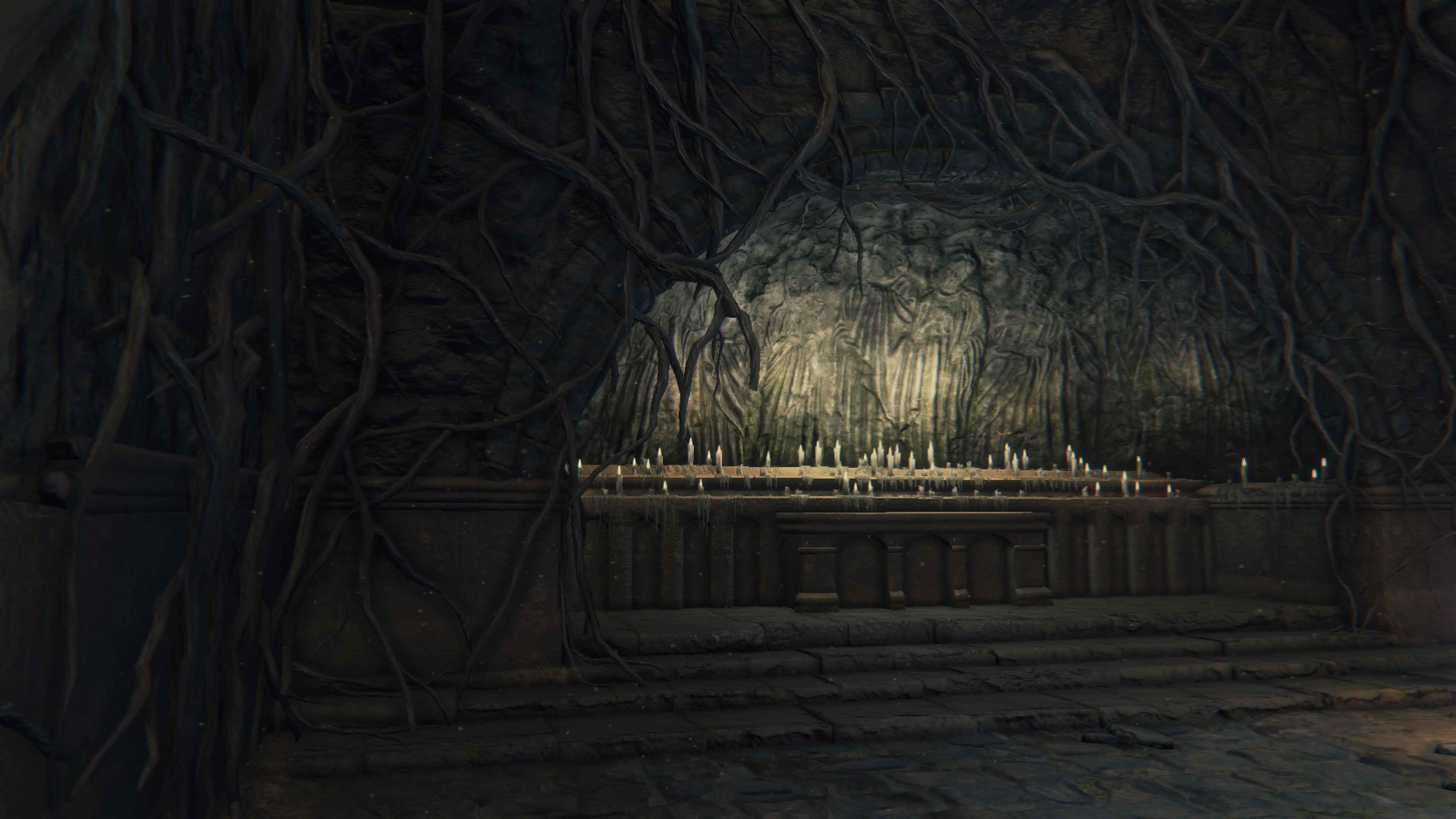
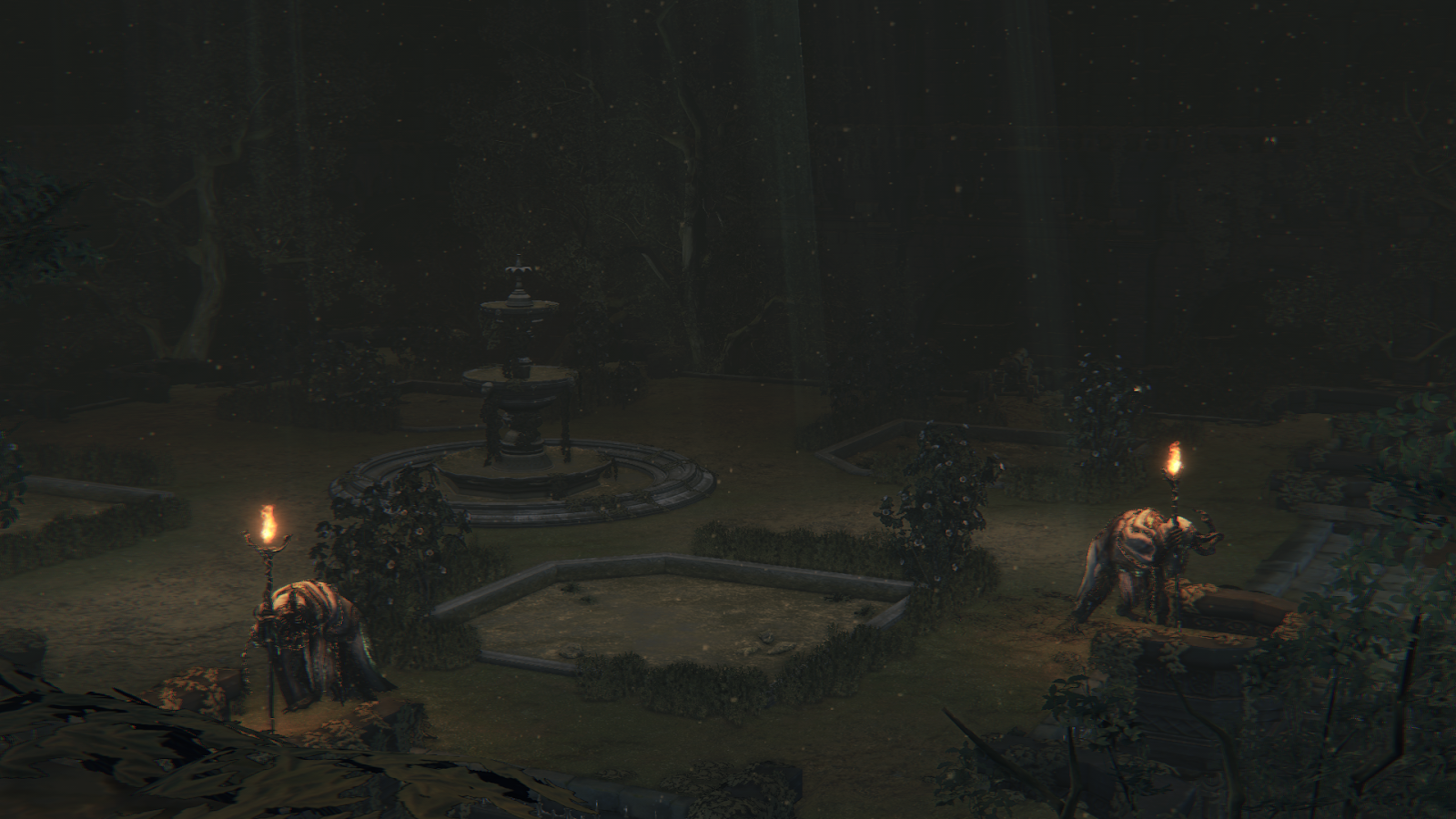
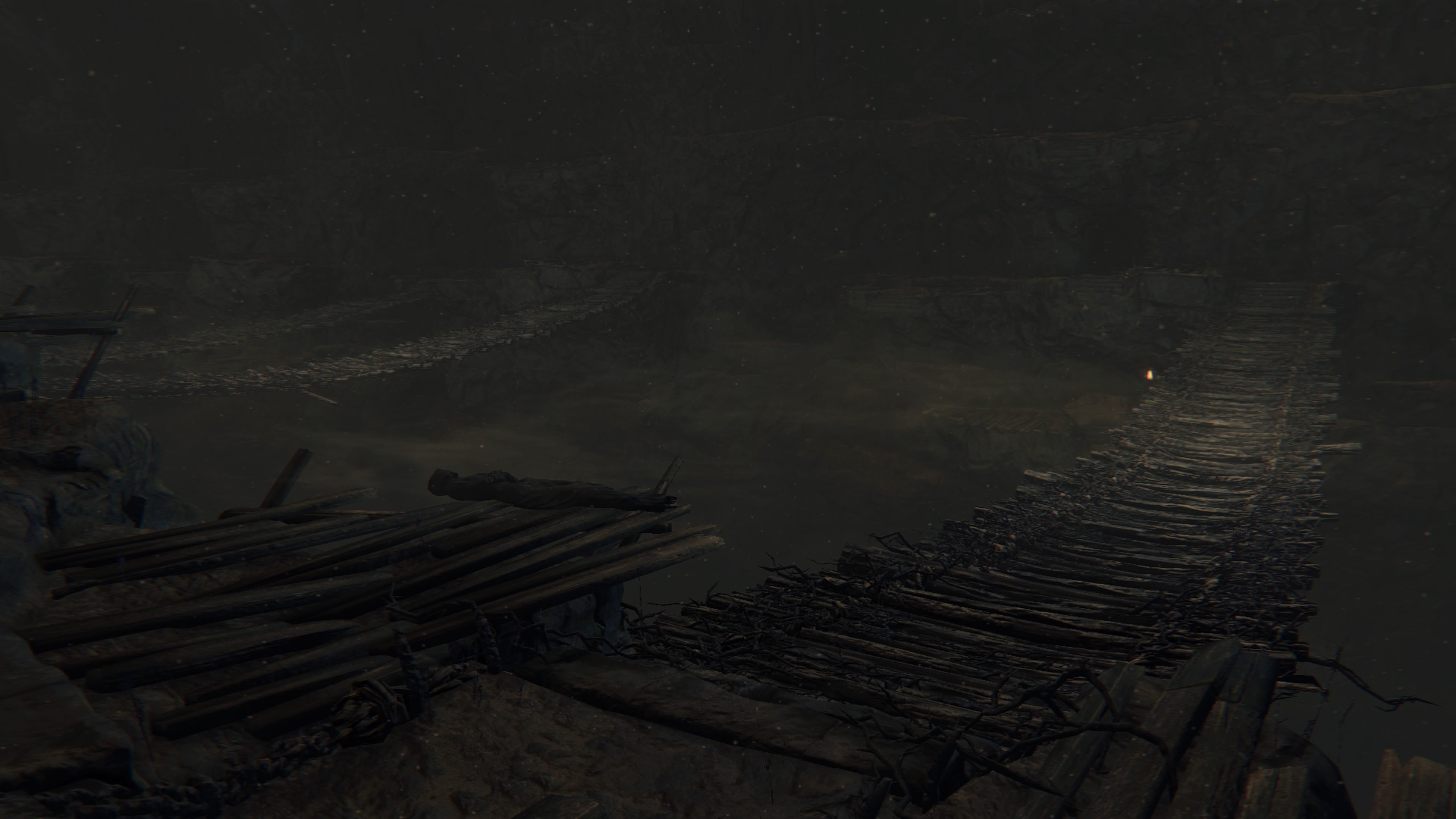
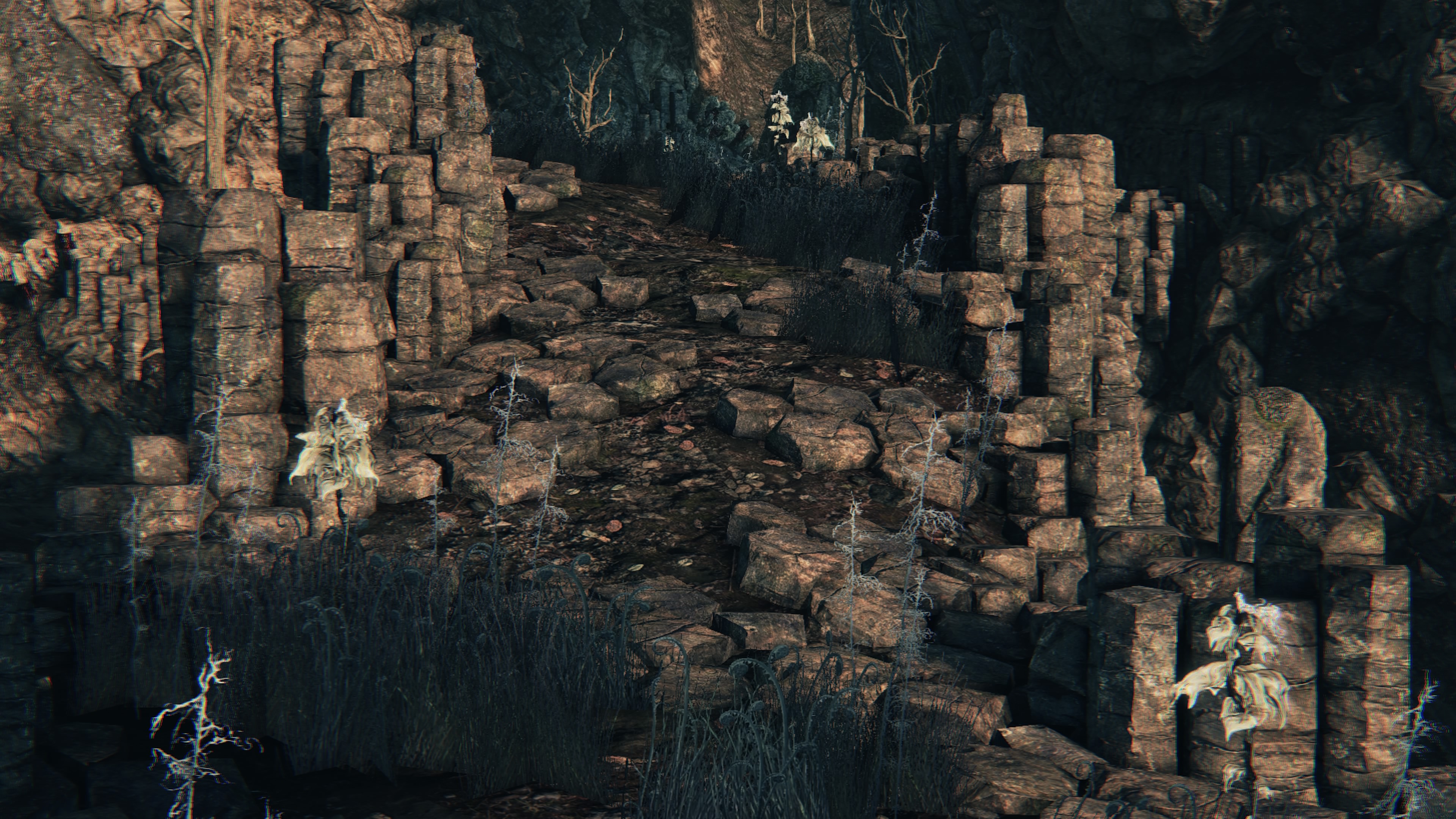
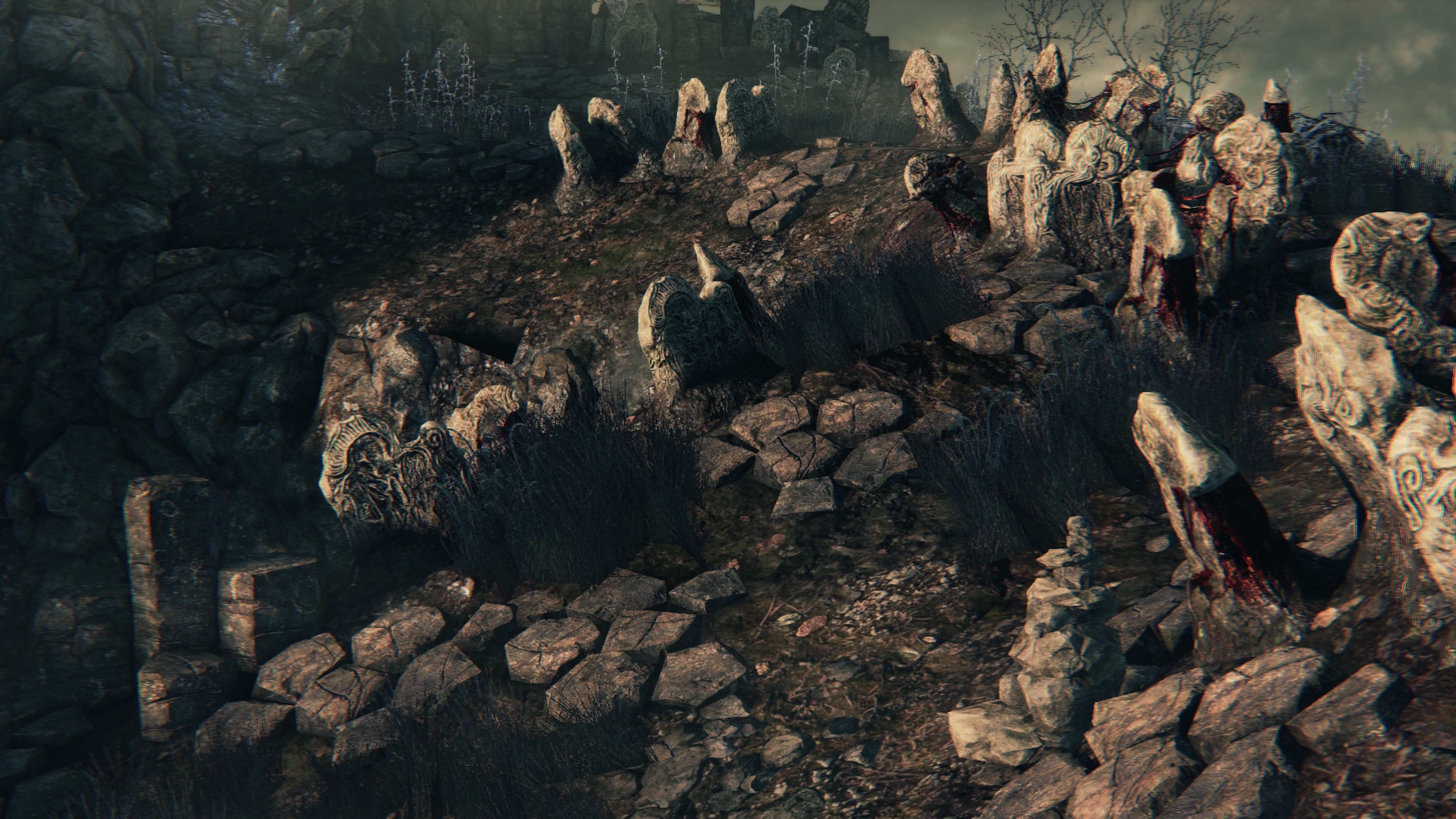
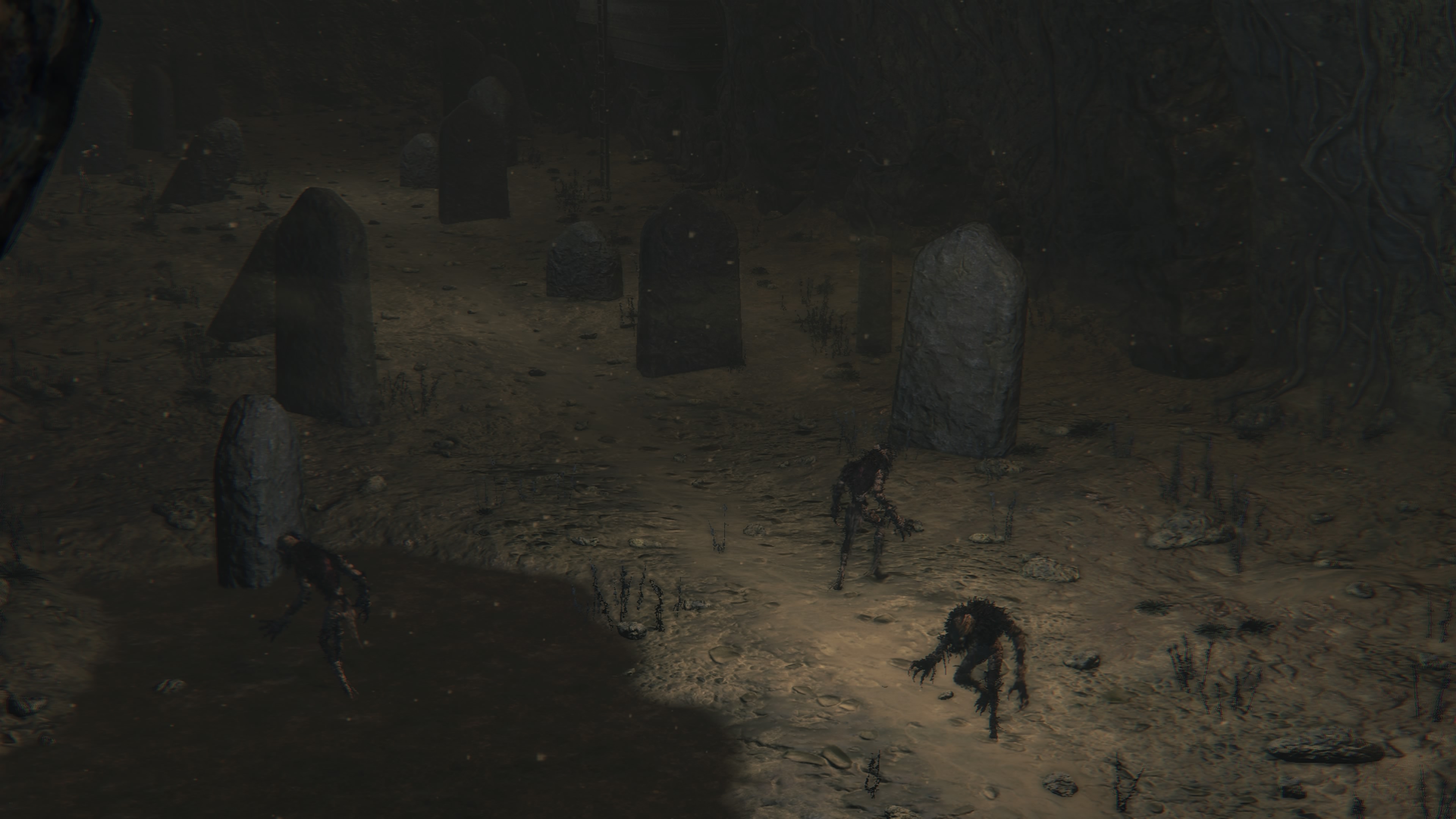
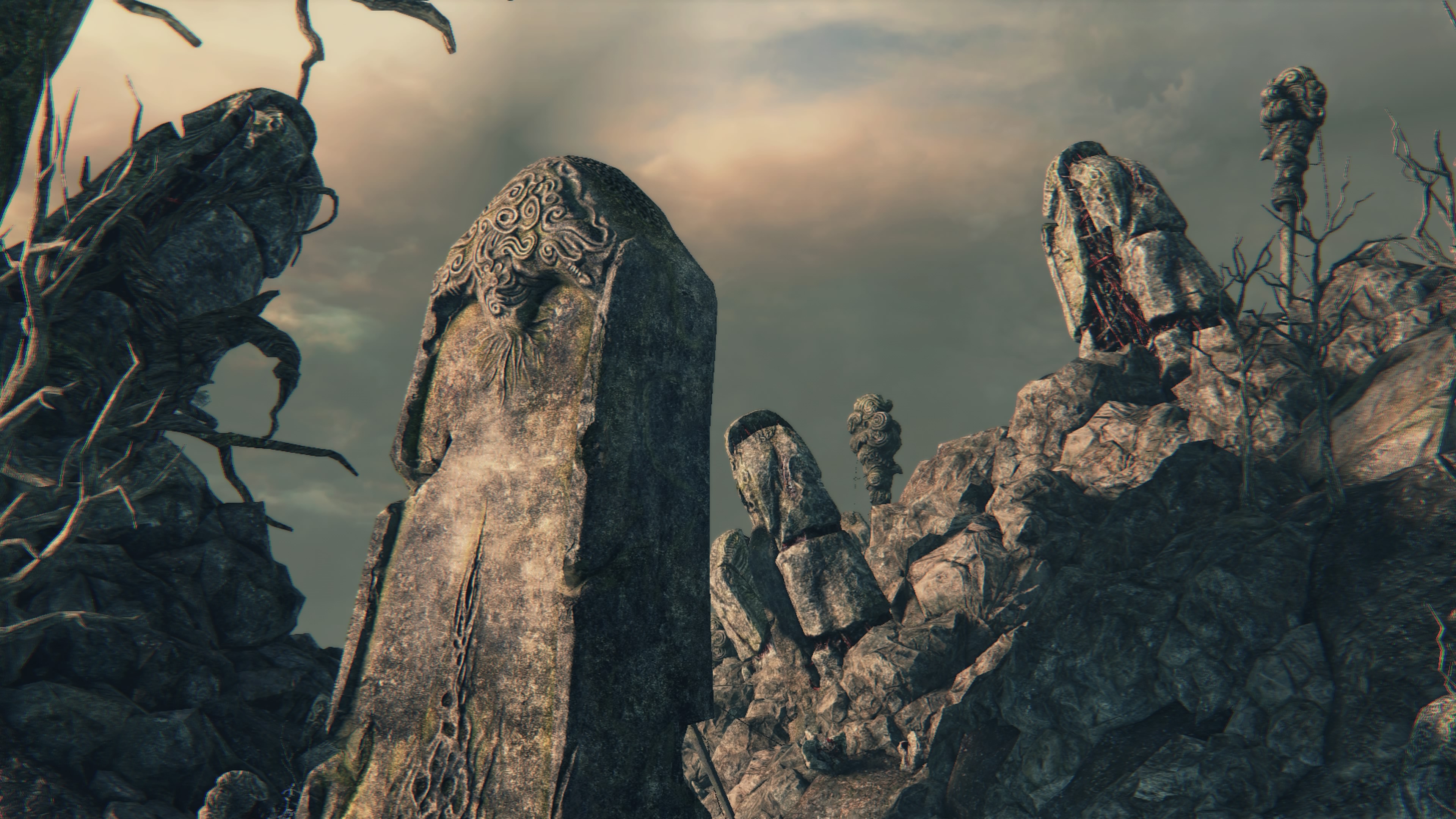
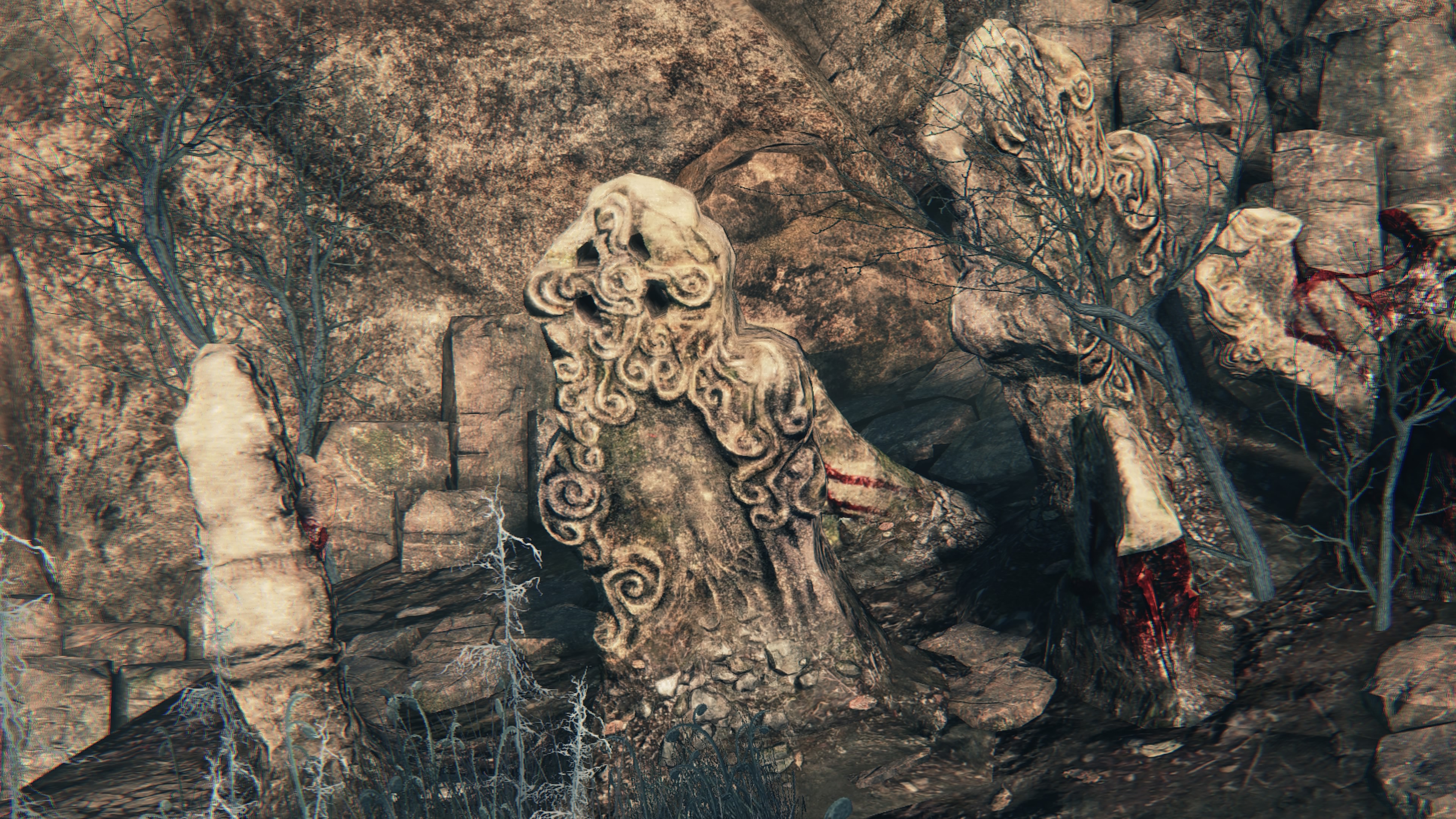
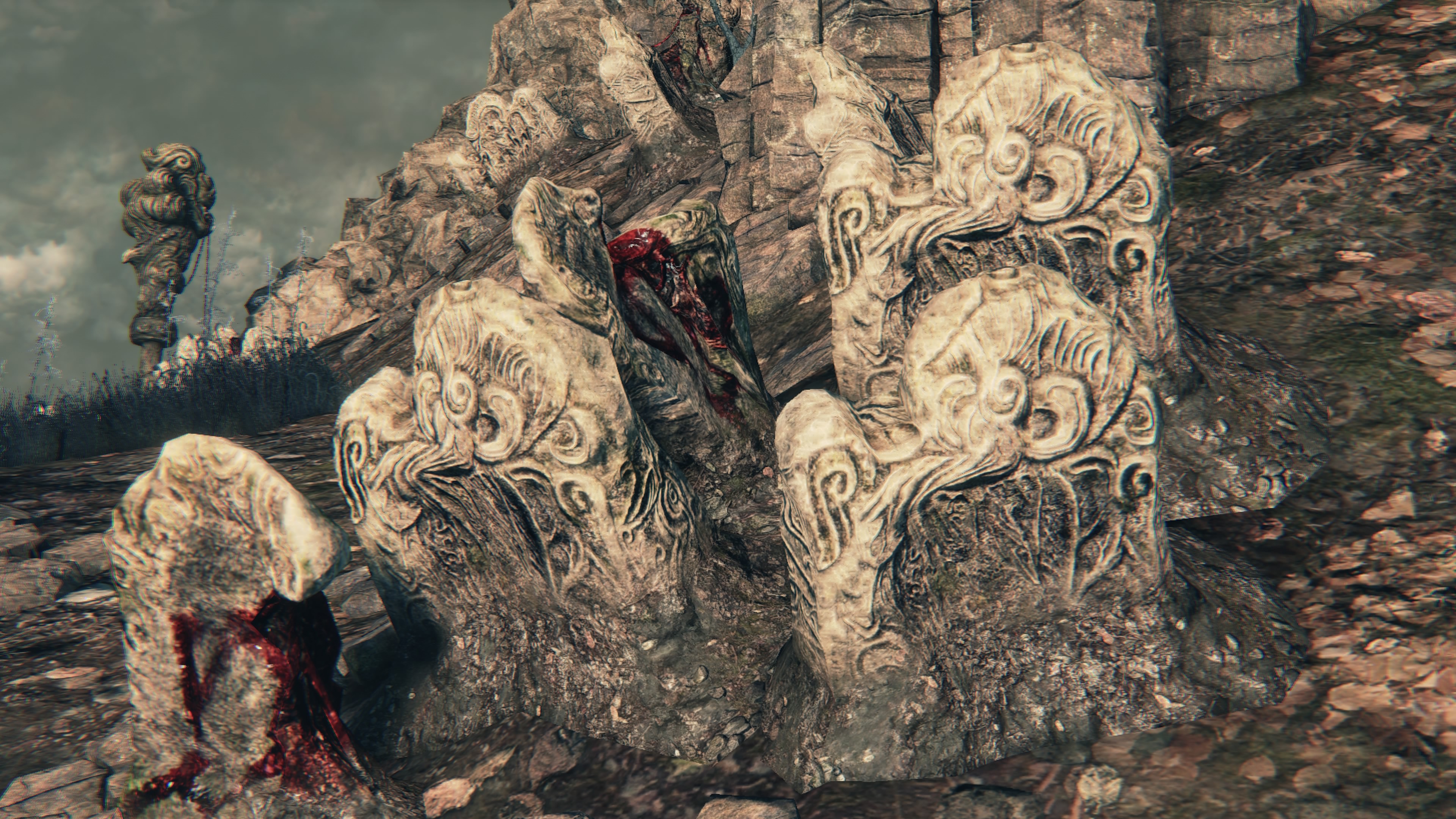
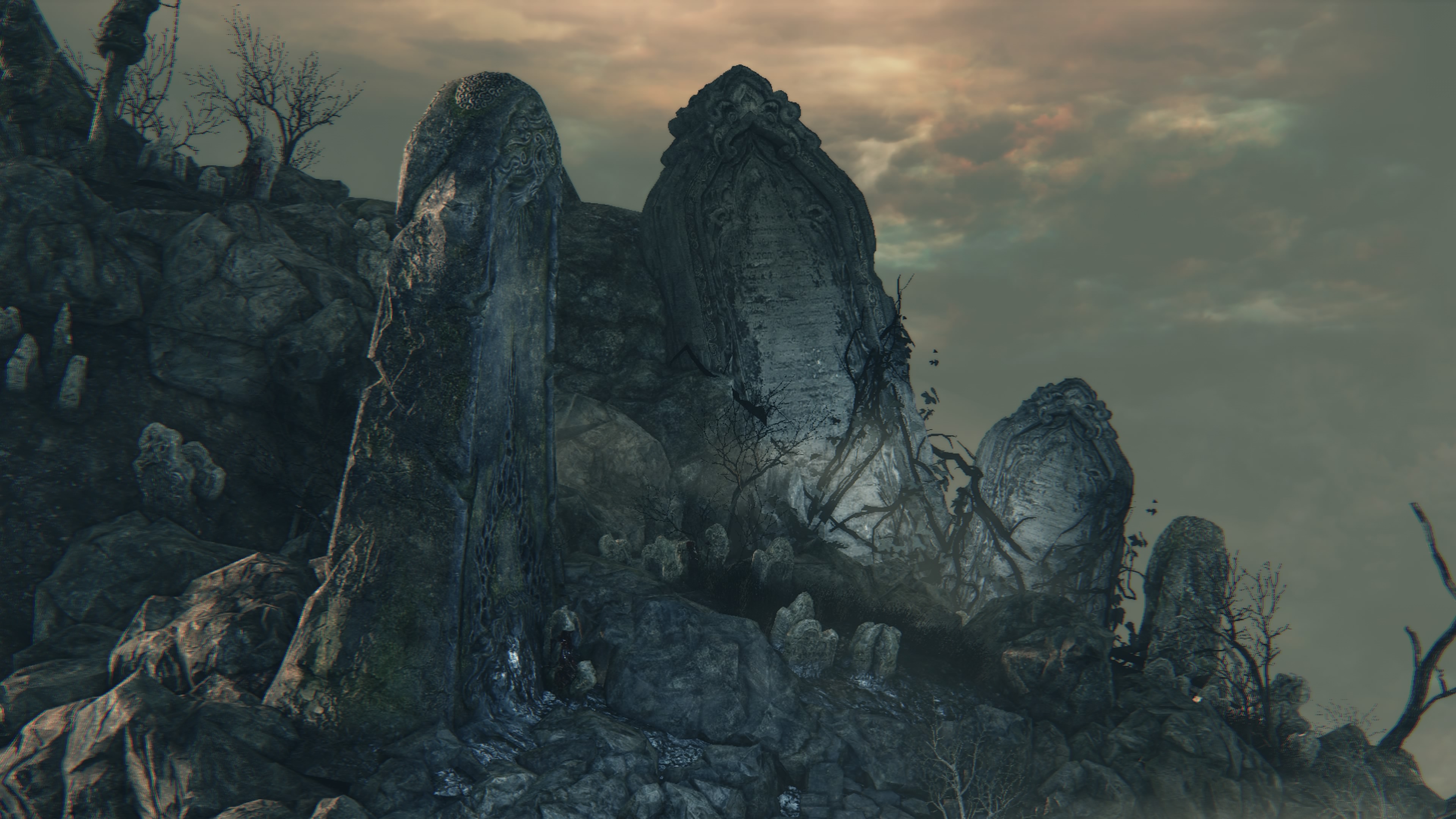
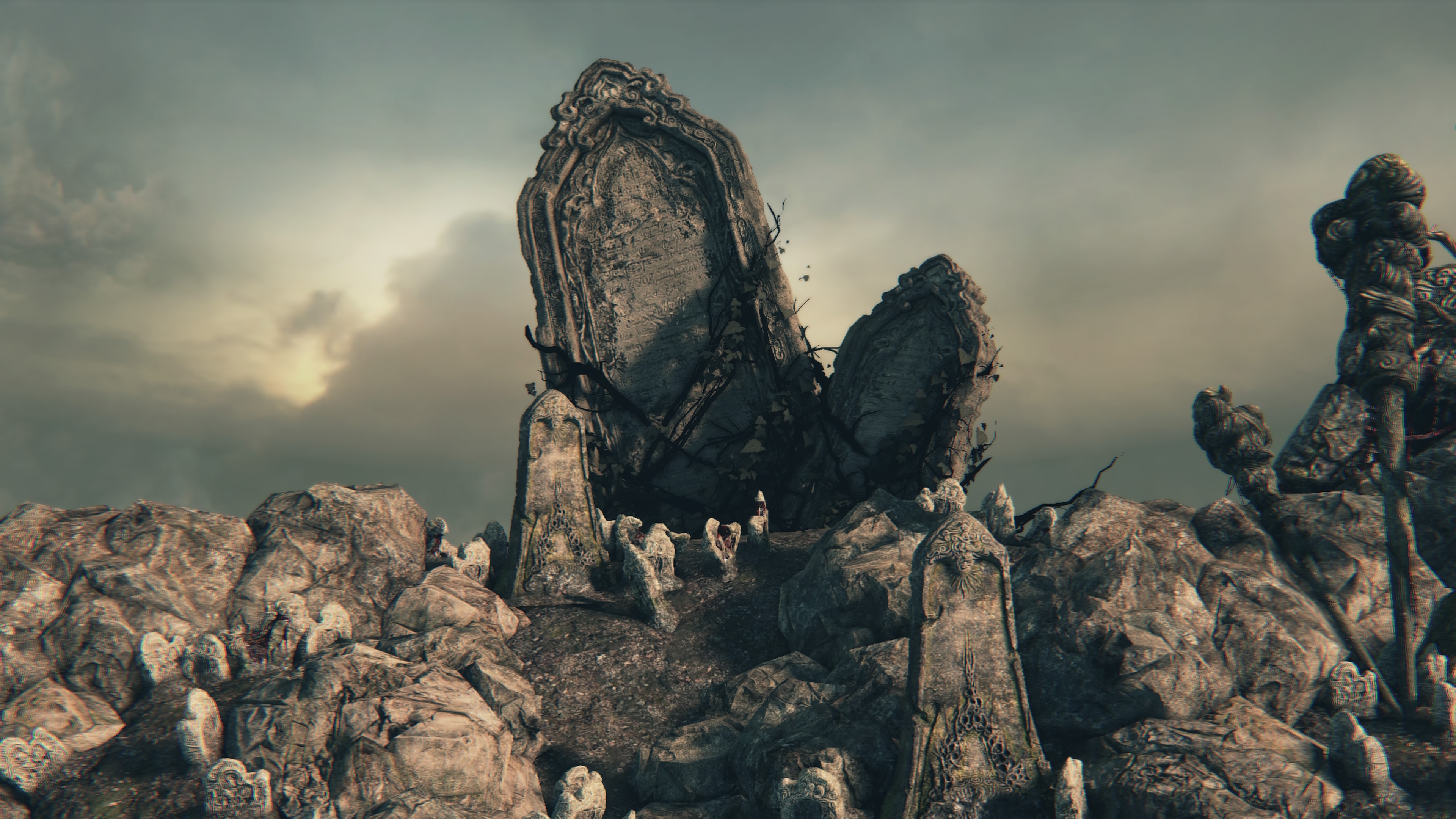
In short, the Nightmare of Mensis probably uses part of Loran as a base, from a time after the tragic land encountered the arcane and delved into blood and beasts. If so, then what we find in the Nightmare Frontier should be informative. The fringe consists, by and large, of a graveyard, tombstones crowning the mountains and valleys. While distinctive, these same stones appear in the Hunter’s Nightmare, so it is possible that they are just inventions of the dream. Both areas do also have unnatural protrusions with messy, tight grooves. These are clear distortions in the land, making for potential byproducts of the imperfect simulation. The same can be said for how certain graves split apart, revealing viscous blood inside. However, it is also possible that these assets were simply reused in a DLC area for their previous connection to a nightmare. The land distortions in the frontier, for instance, are limited to the Amygdala’s “Roost” (アメンドーズの寝所) and so may have been specifically terraformed to better serve that Great One. Both may thus precede the dream, which can apply to the graveyard by extension.
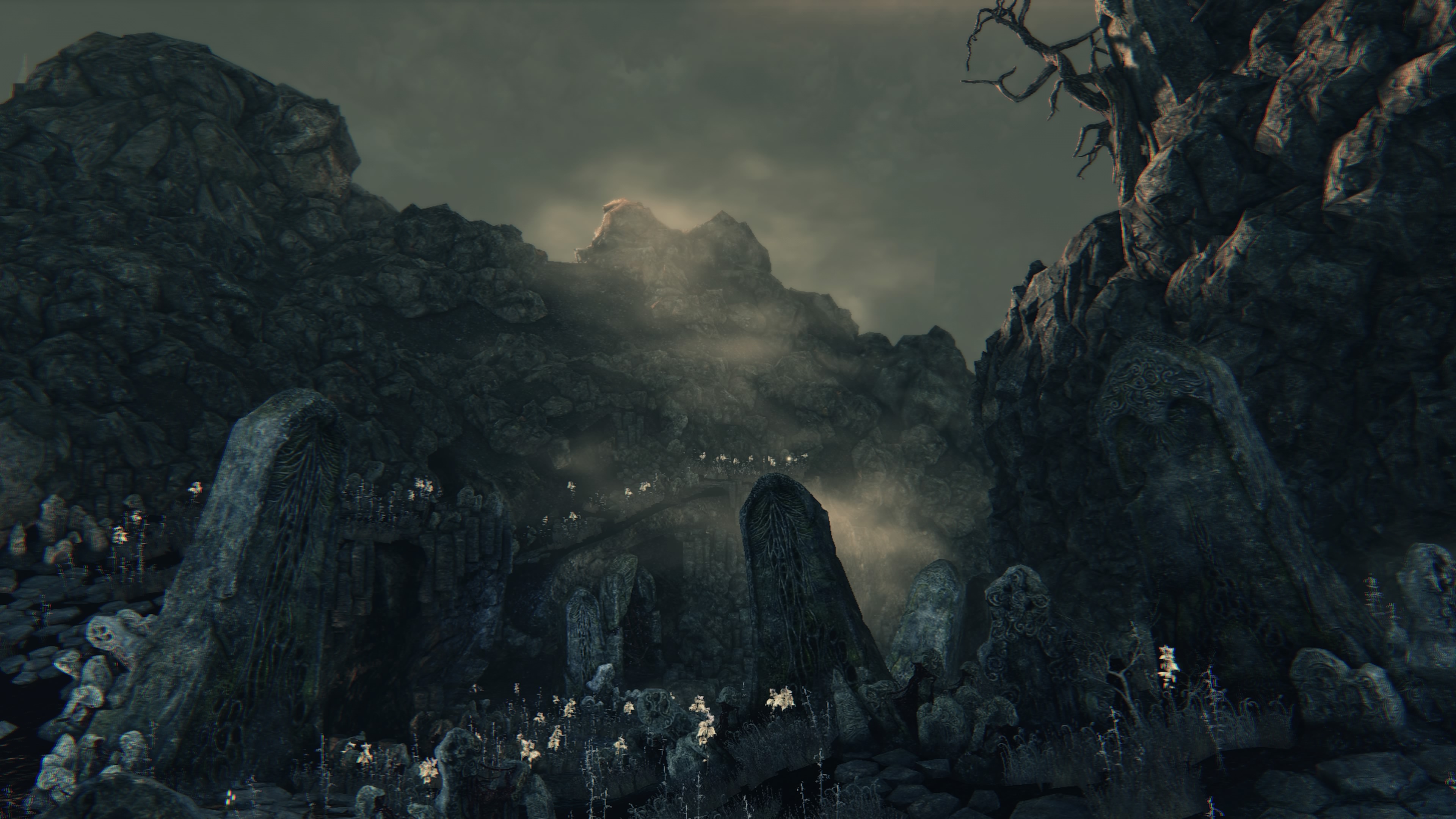
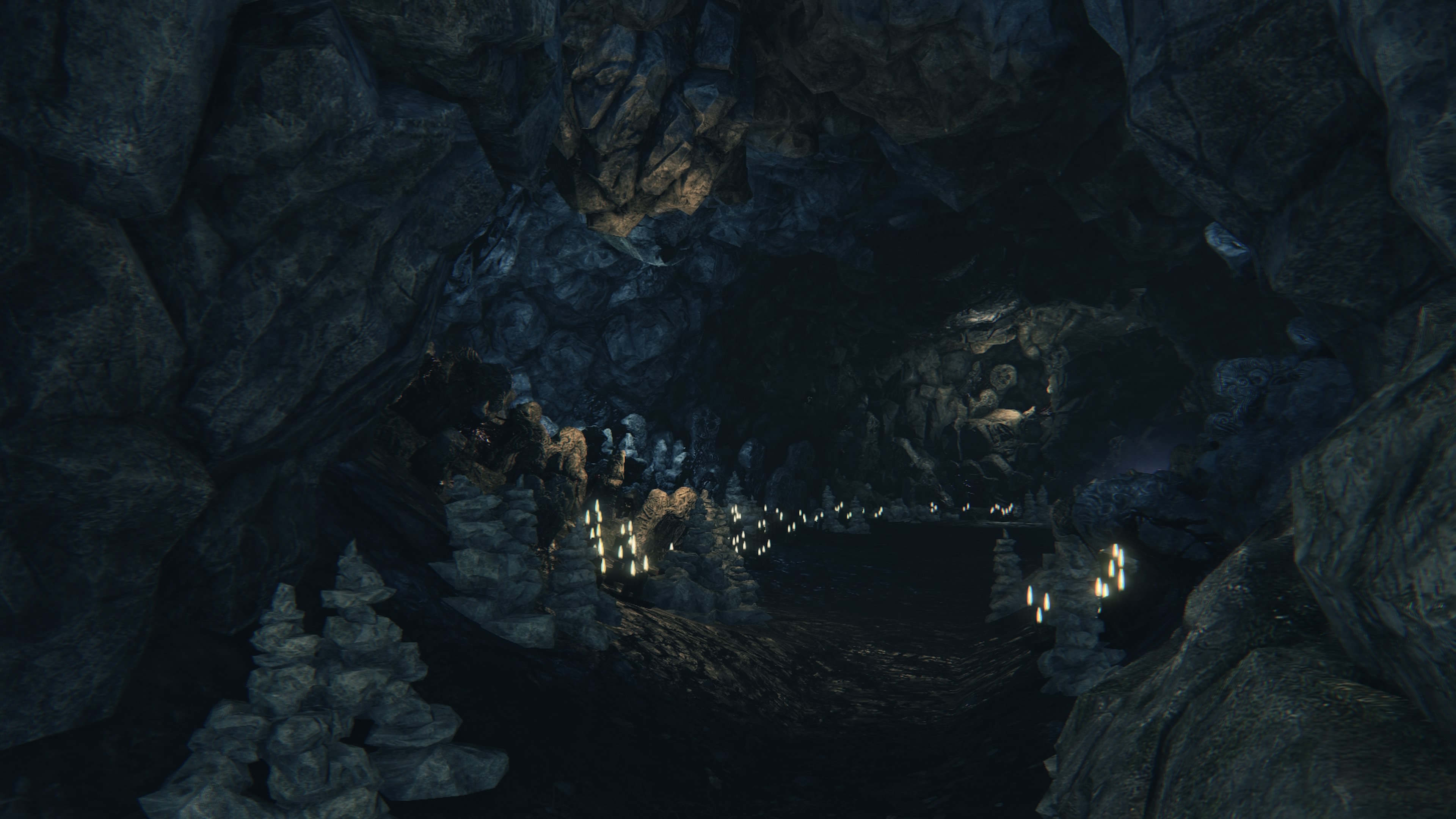
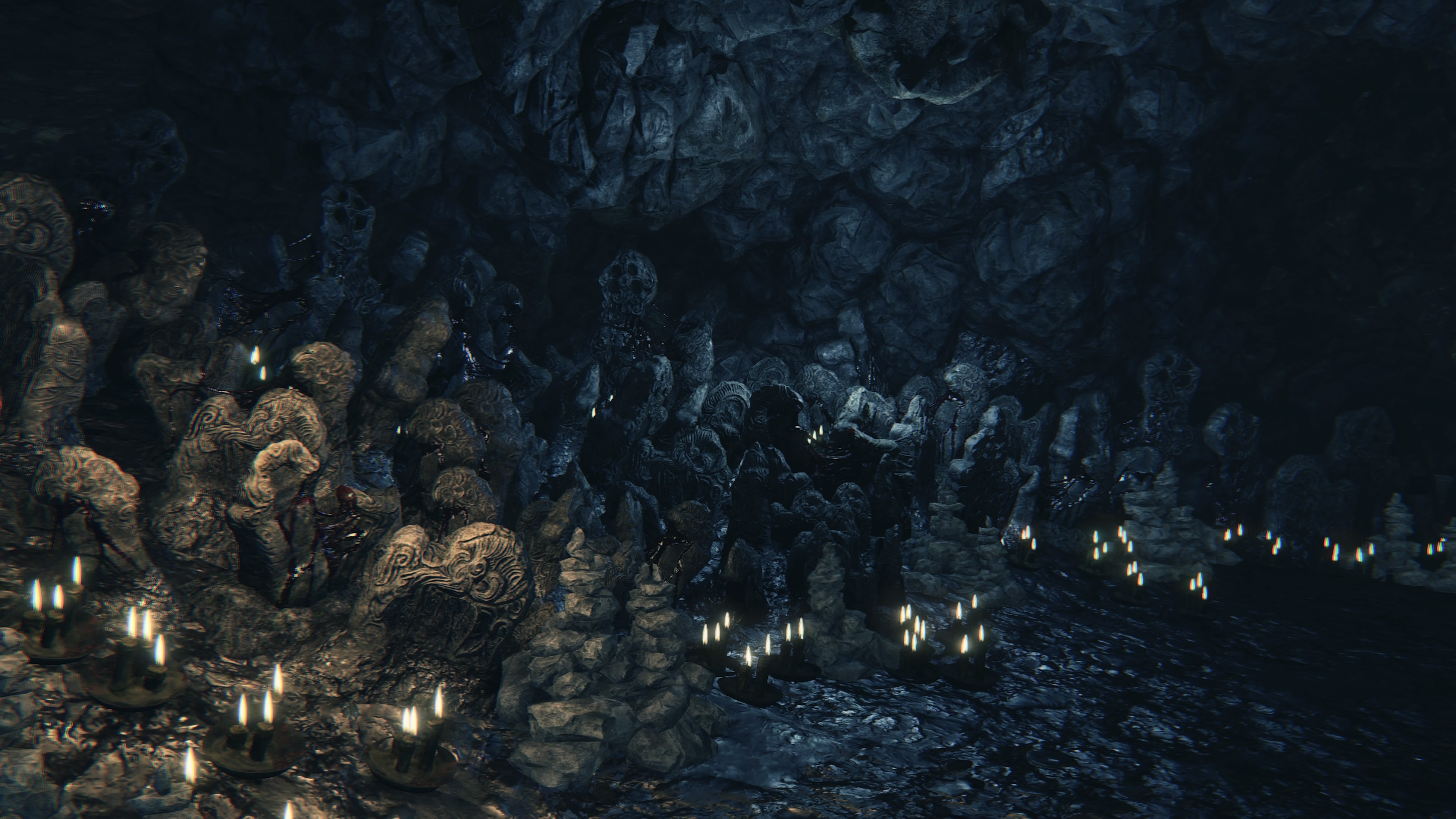
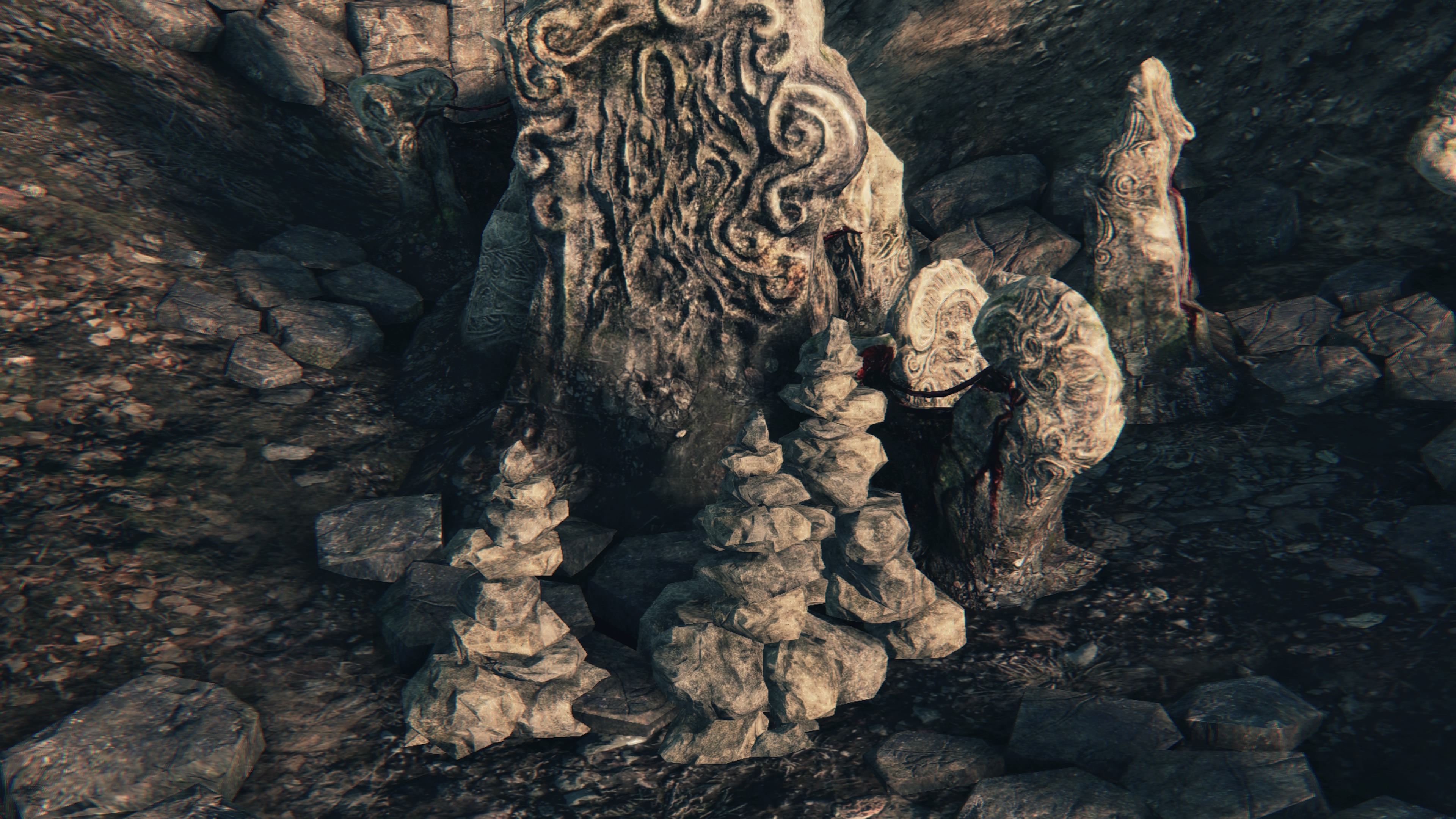
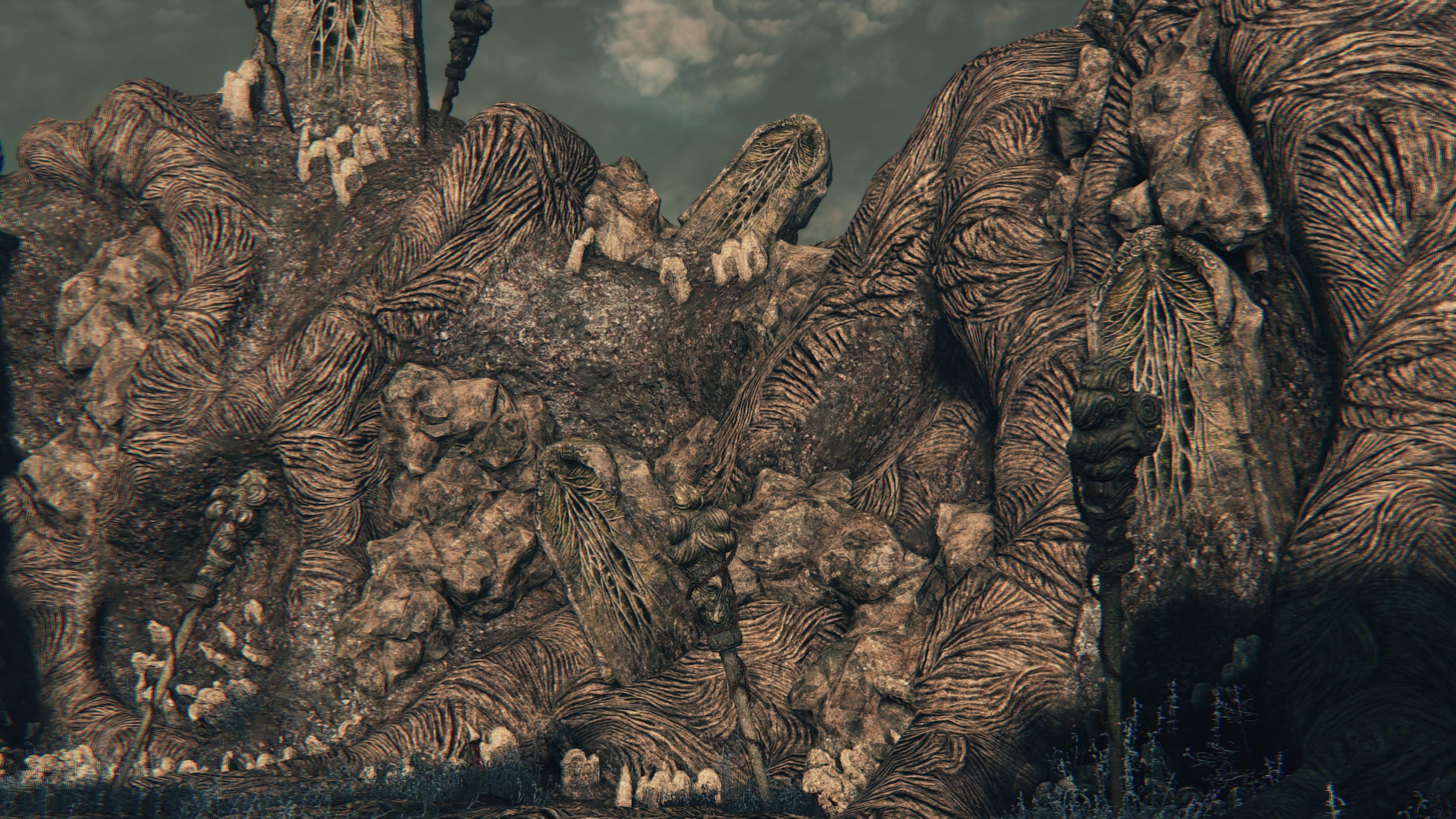
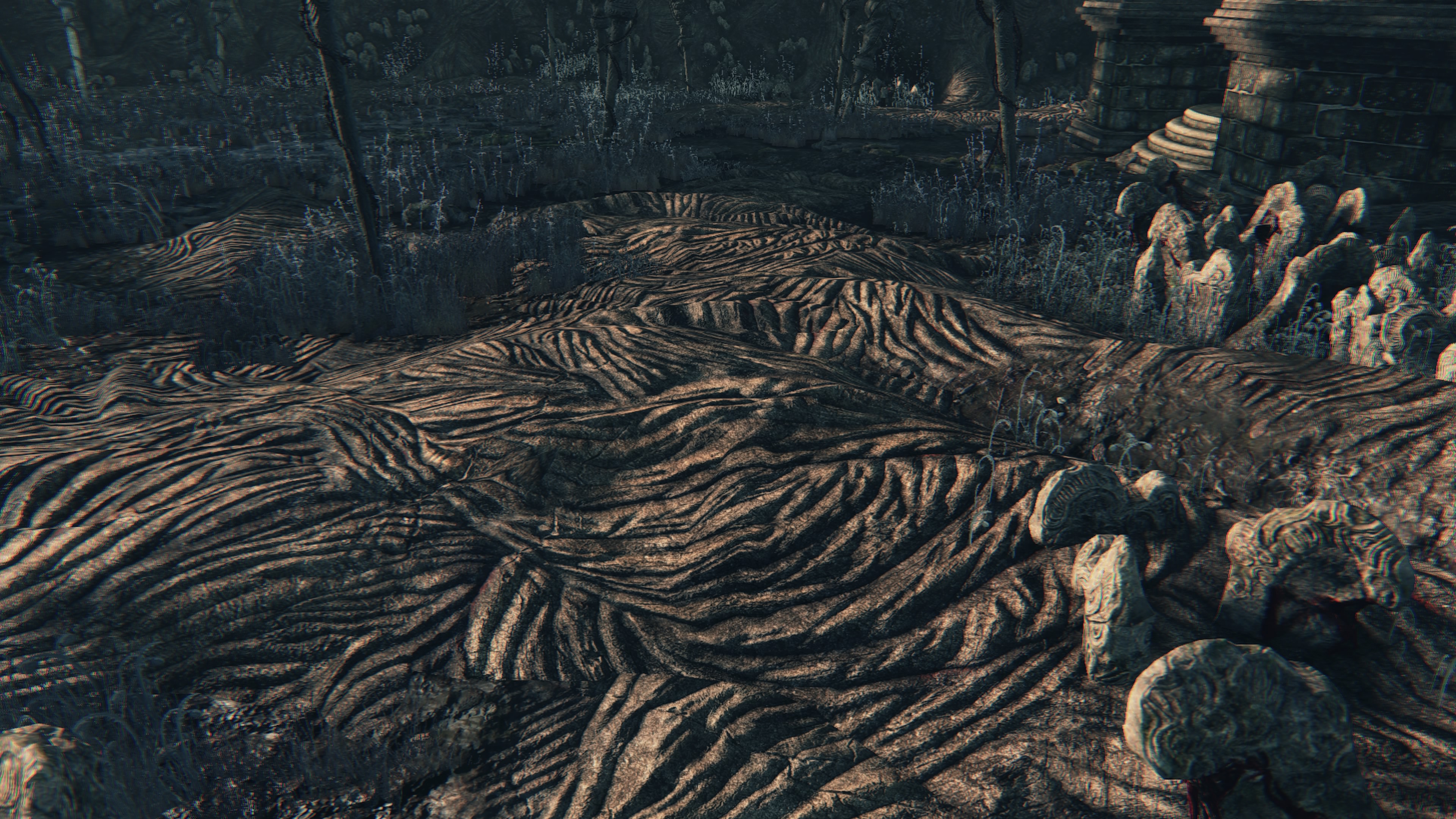
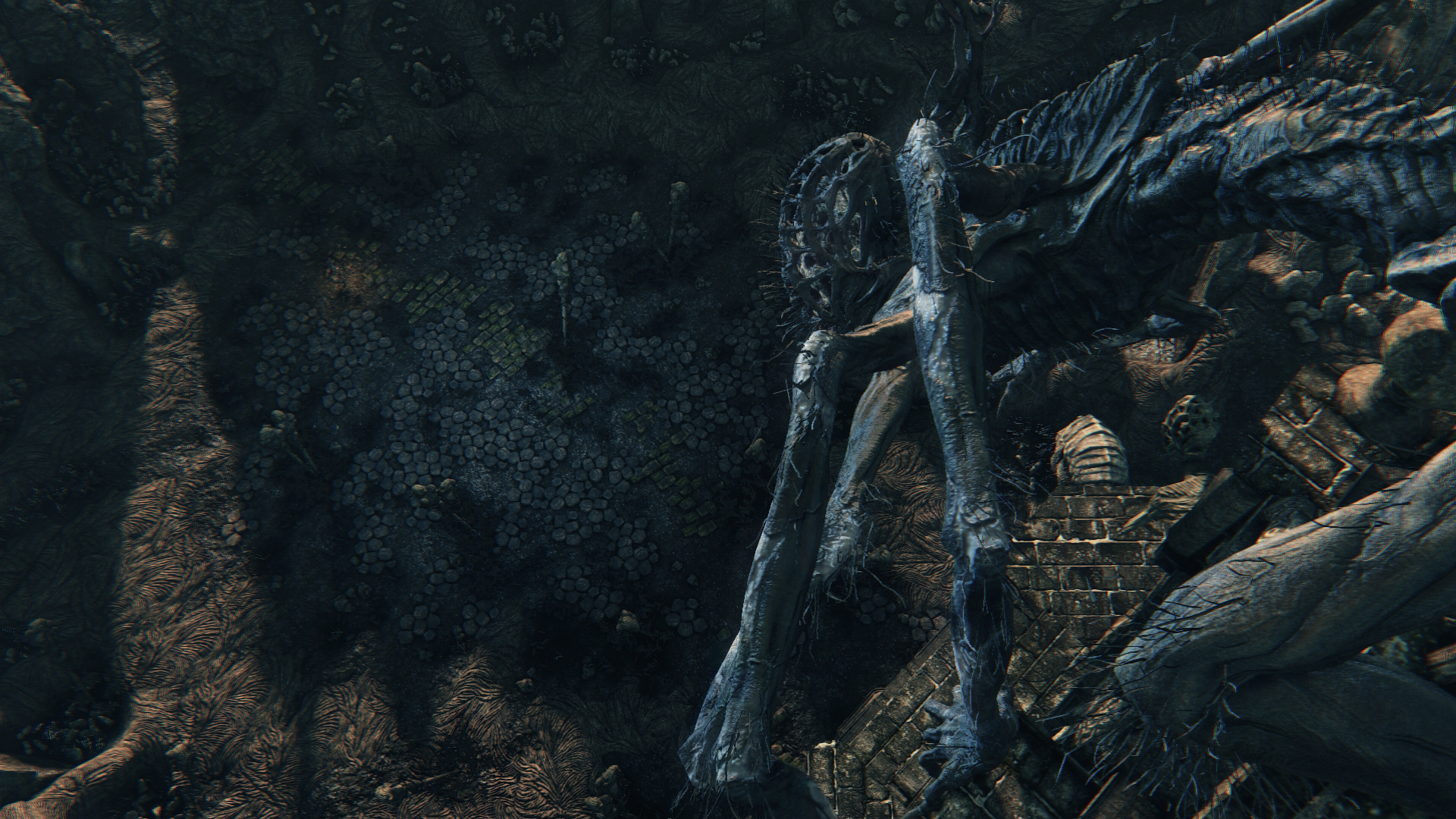
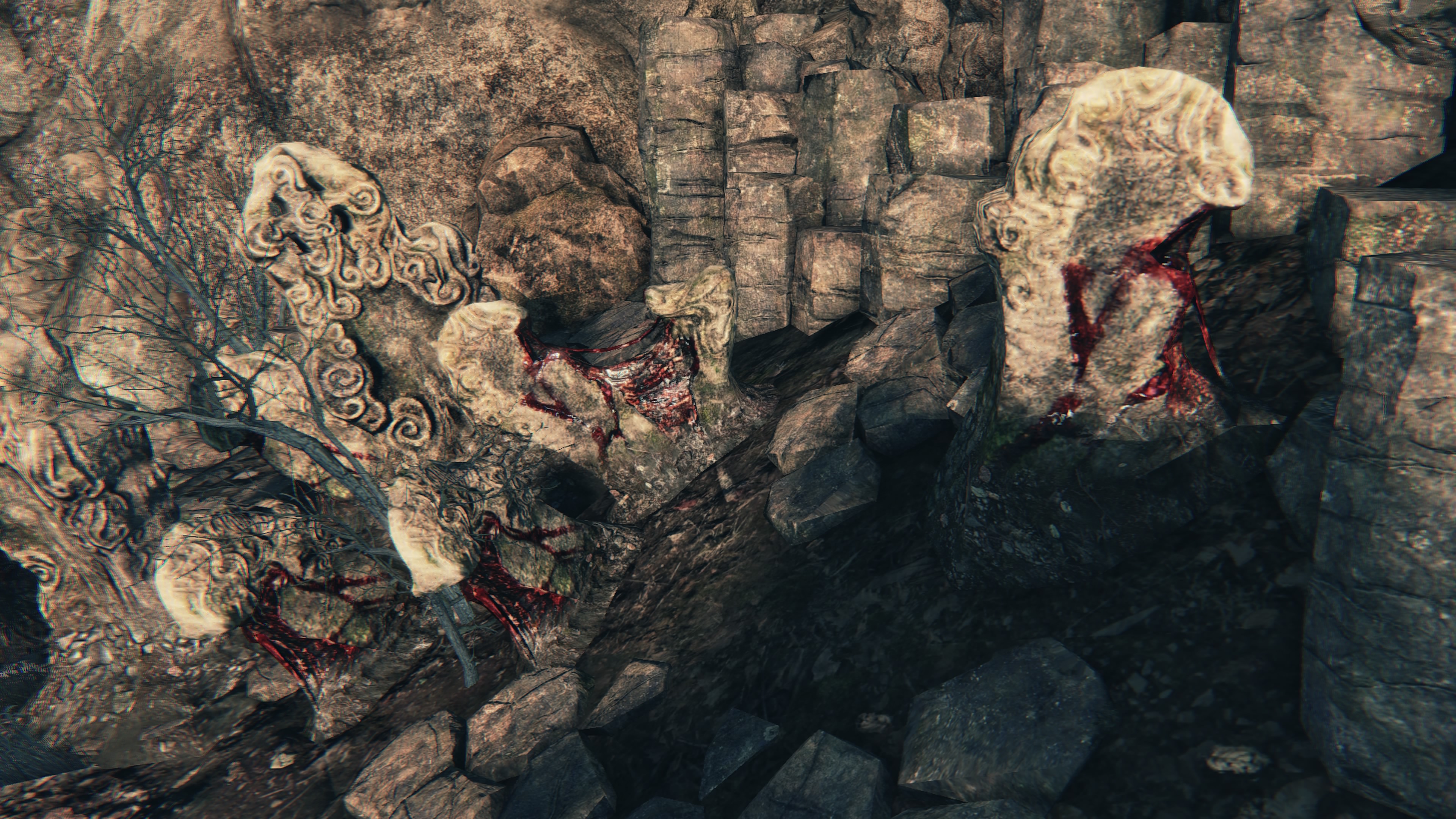
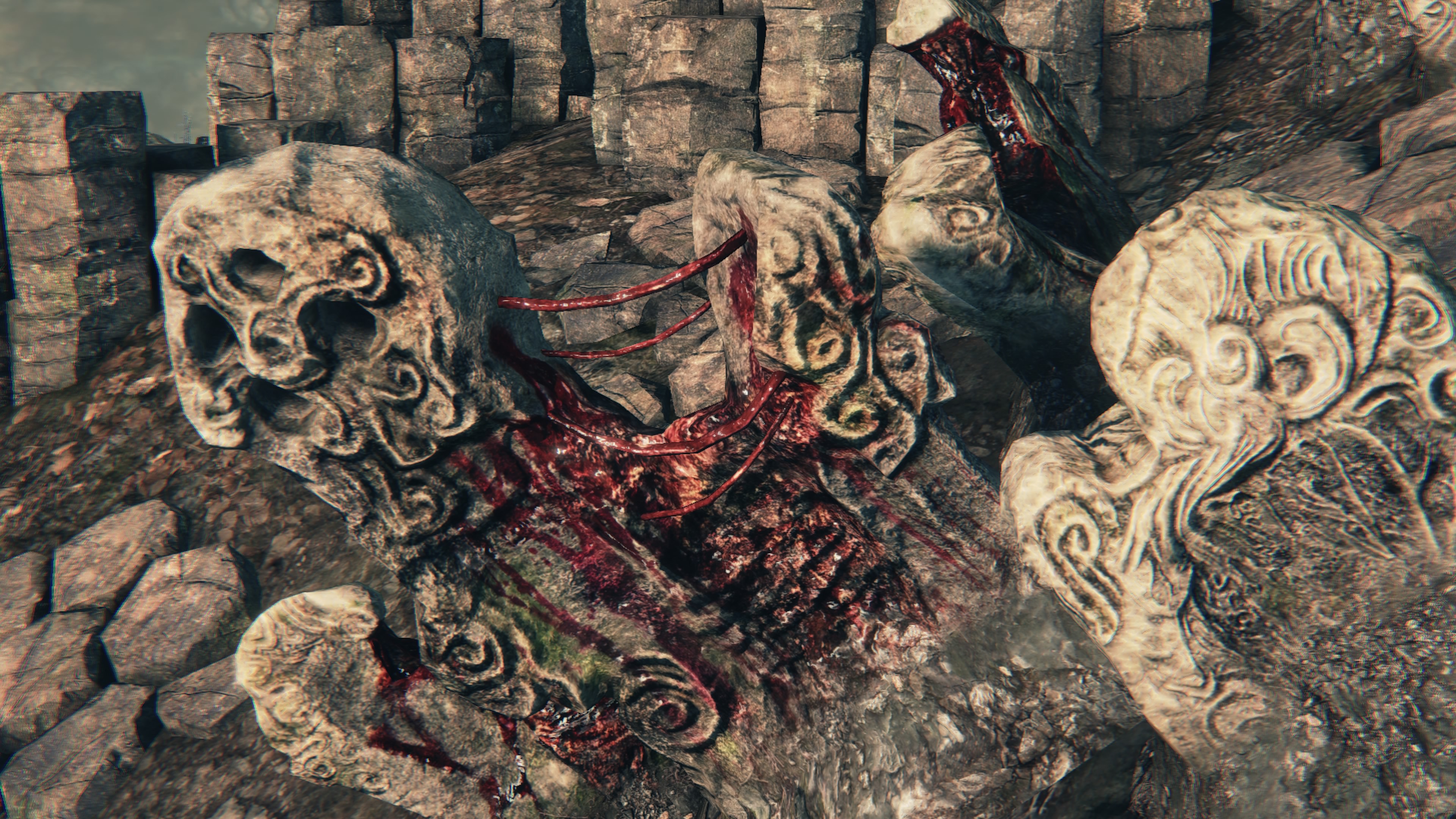
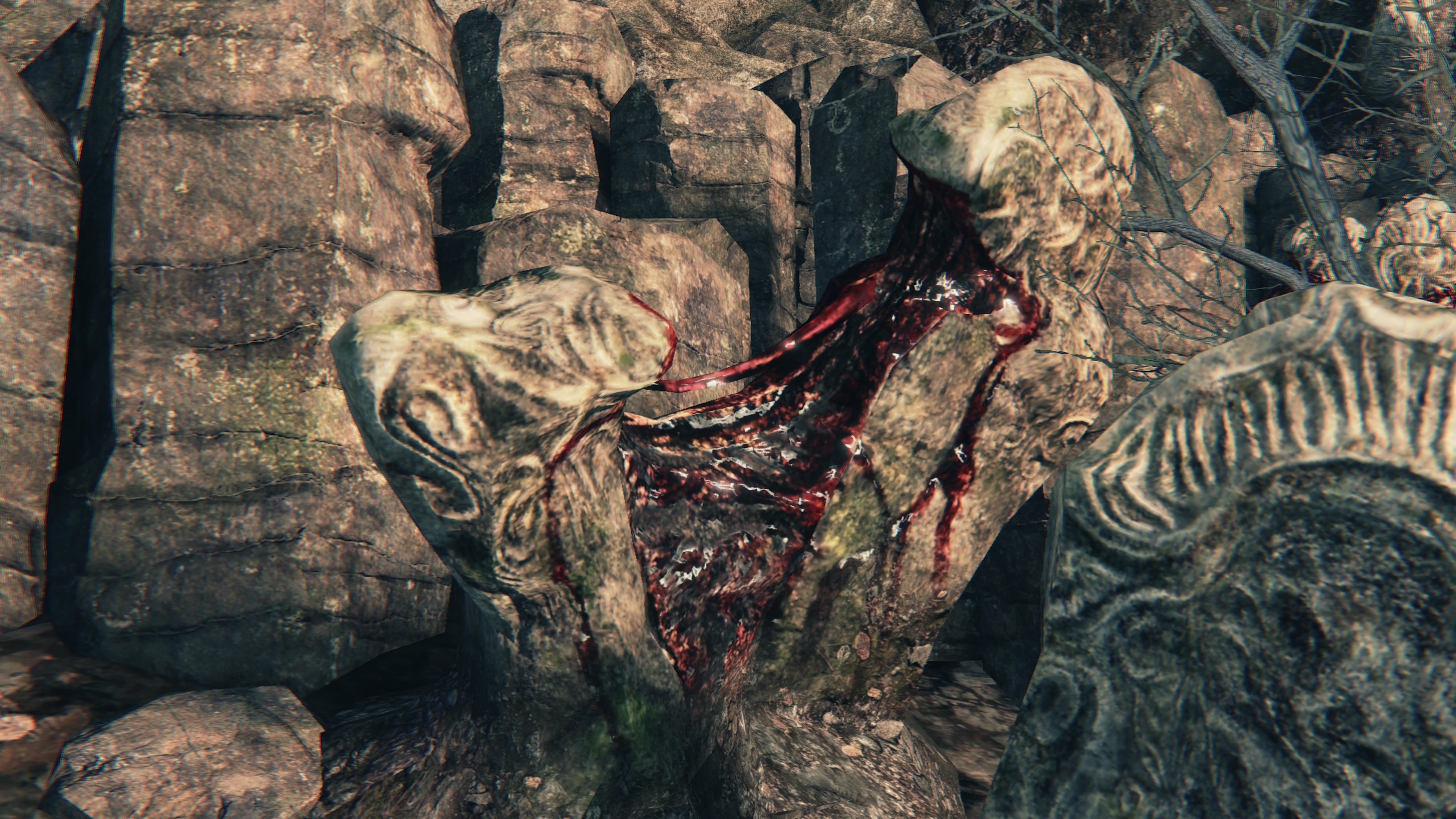
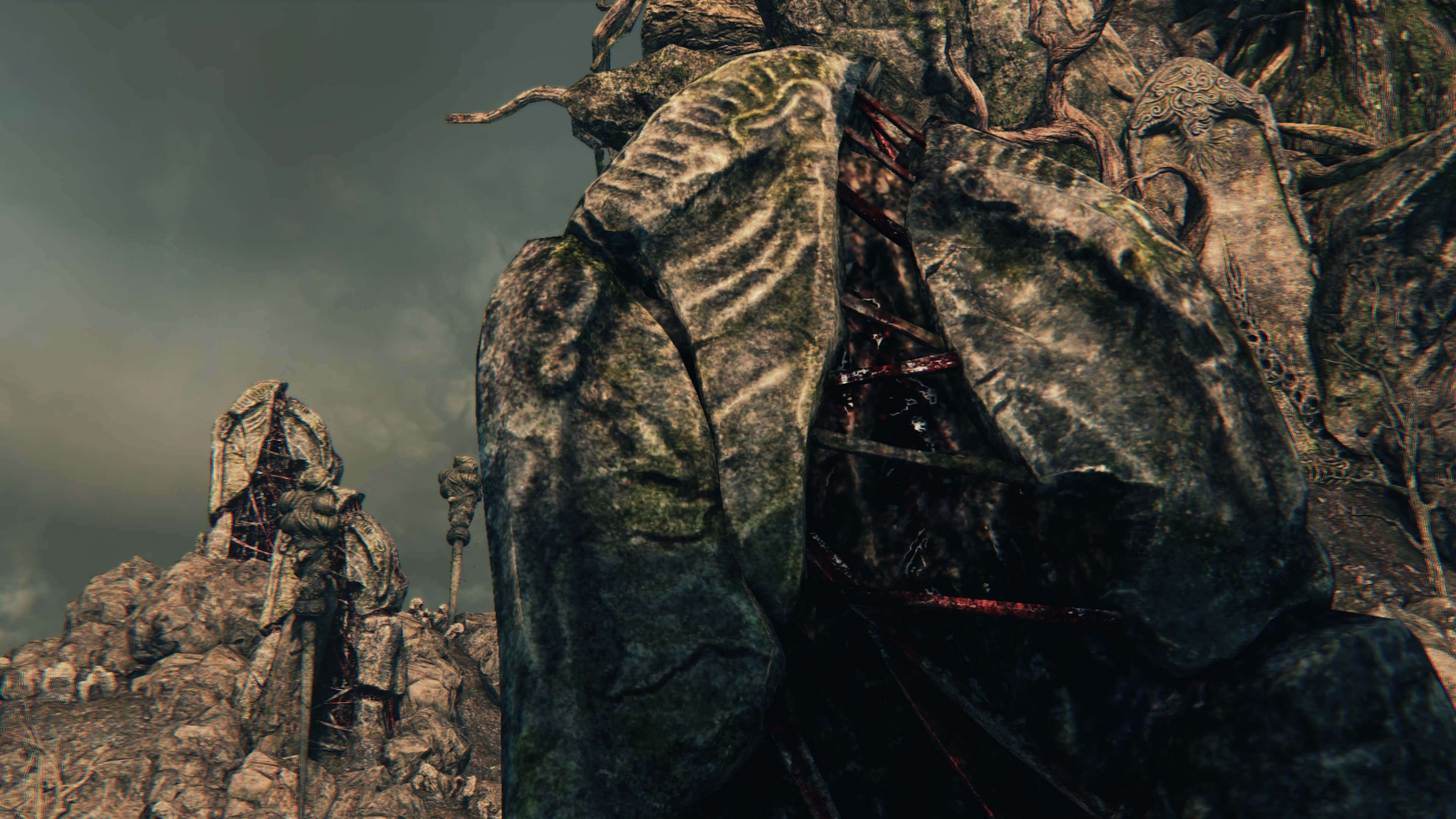
Taken in context, even the odder features of the Nightmare Frontier still look to reflect part of Loran’s history. The assets don’t necessarily serve the exact function as in the Hunter’s Nightmare, but they can’t be disregarded easily either, like the floating island element can. And if they do capture an accurate snapshot of Loran, then it confirms a cemetery outside the city, though the unique architecture indicates the construction of more than just gravesites. Loran holds no shortage of graves within the Chalice Dungeons, so why make a separate burial ground? It is possible that there was simply an overflow, too many dying for local burial before the metropolis collapsed and was converted into the necropolis we explore. But assuming that the grave split open with blood is significant, it suggests that many souls of the dead are agitated, maybe even gone mad — a splitting headache, as they say. Such turmoil demands something major occurred on these grounds. Was it always just beasts, or did a subset in Loran pursue an alternate method? Only the dream can detail the answer.
The Moon Says to the Wolf
The entity we can encounter at the very end of our journey is known to us as only the Moon Presence, but this Great One has a name. Occasionally, the doll in the Hunter’s Dream will pray to “Flora” of the dream’s moon among others, which corresponds to that moon turning blood red in the Great One’s presence. We see that the moon in Yharnam similarly turns red when “beckoned” through arcane ritual, hinting that the glowing celestial body is included among the godly stars. This leaves little doubt that the Moon Presence is the Great One being called, its approach marked by the lunar eclipse in a given area. That star is only identified in one note as the moon’s mamono, (魔物) which refers more literally to some kind of bad or evil thing. But that moon fiend’s actual name seems to be Flora. Gehrman lends this insinuation further credence in cut dialogue for his boss fight, referencing the Great One who proceeds him by that same name. Like Ebrietas, this Latin term denotes a god and so bears a human history.
… Laurence, this also ends now. The dream will completely burn out, and Flora will return from the moon. So, hey… shouldn’t I fulfill my last promise? Hunters are needed no longer. You and I will fight to the death, and the one who survives will be eaten by her. That was the end the three of us decided, yes? Hey, aren’t I right, Laurence…?
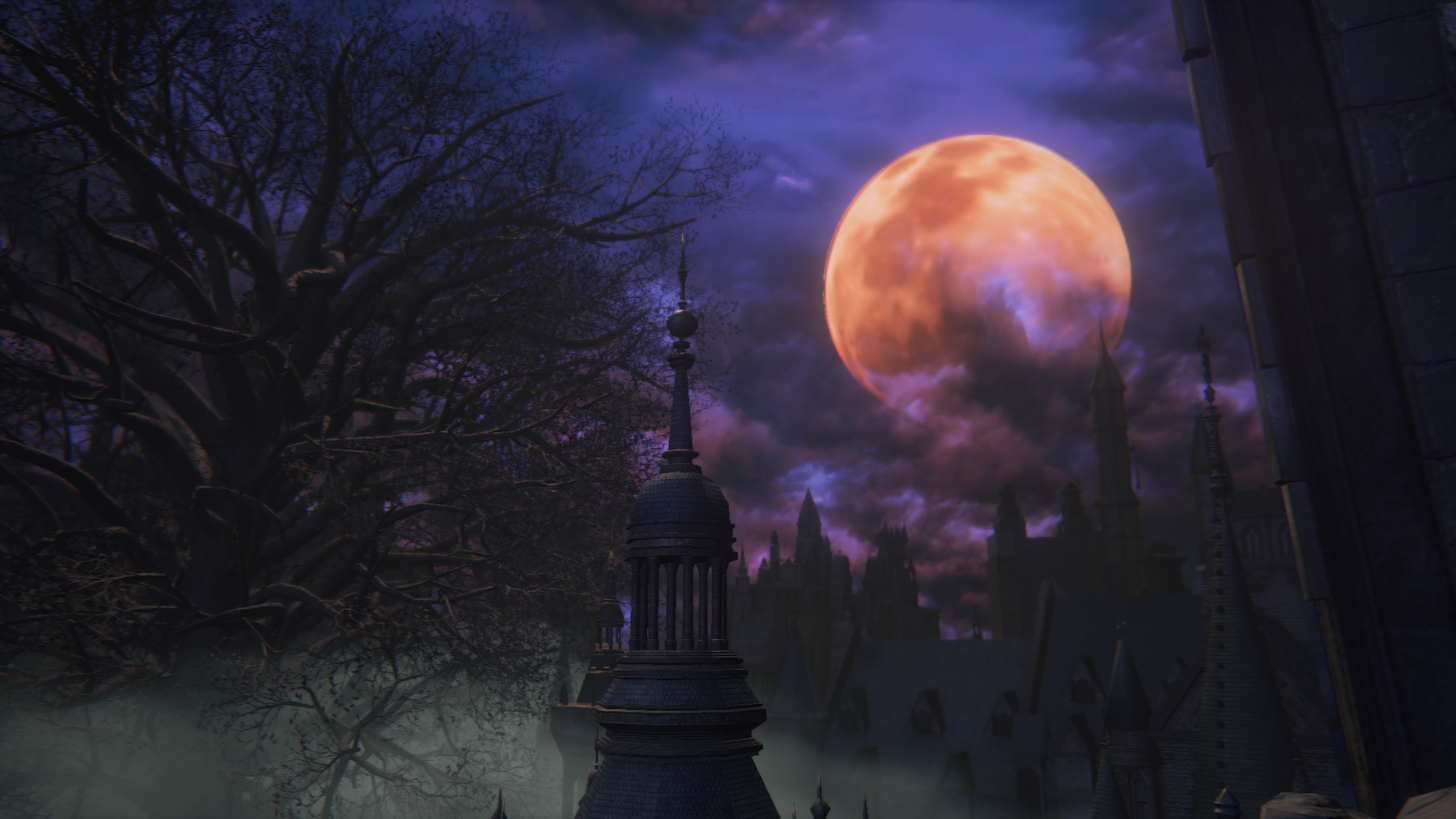
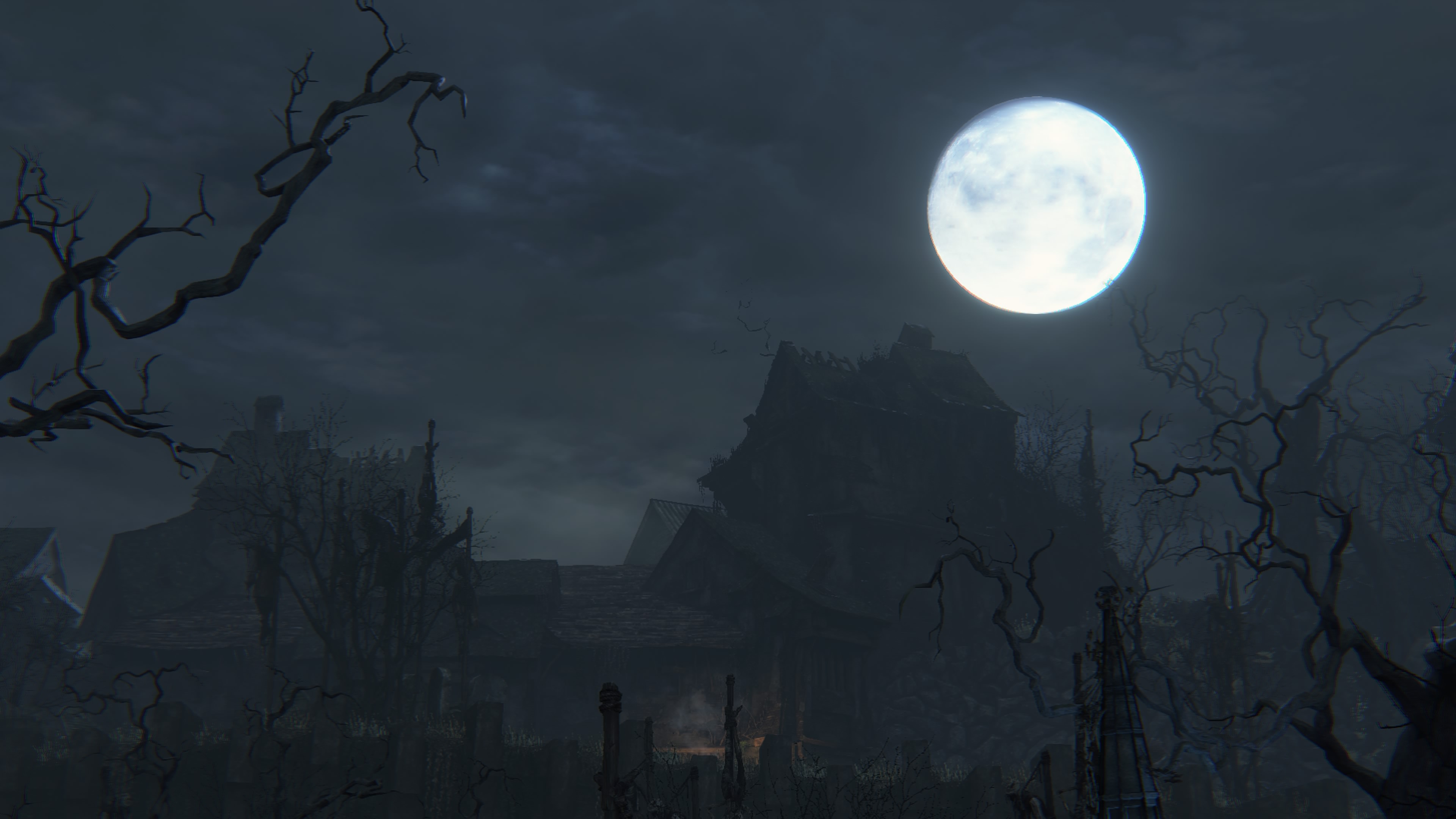
Whether Flora was anyone of import prior to her ascension to the cosmos, she undoubtedly has become a prominent god. The reason that she is known as a devil is likely because the red moon is associated with disaster, with notes and firsthand experience communicating that beasts and madness multiply as the ominous body emerges in the sky. Fitting as it is for the full moon to be linked to werewolves and lunacy, this might explain why areas outside of Yharnam don’t experience the lunar eclipse — because the change in the cosmic body only occurs in the perceptions of those under the arcane influence of the Great One’s imminent presence. The closer Flora “approaches” an area on earth to make contact, the more she exposes others to arcane realities that minds cannot comprehend, agitating blood to inadvertently produce insanity and evolutions. Nonetheless, she is a Great One trapped in a higher plane, her thoughts unintelligible to ordinary men. It is only within dreams that she can manifest in her “true” form, which appears more humanoid than most in possibly another testament to her power.
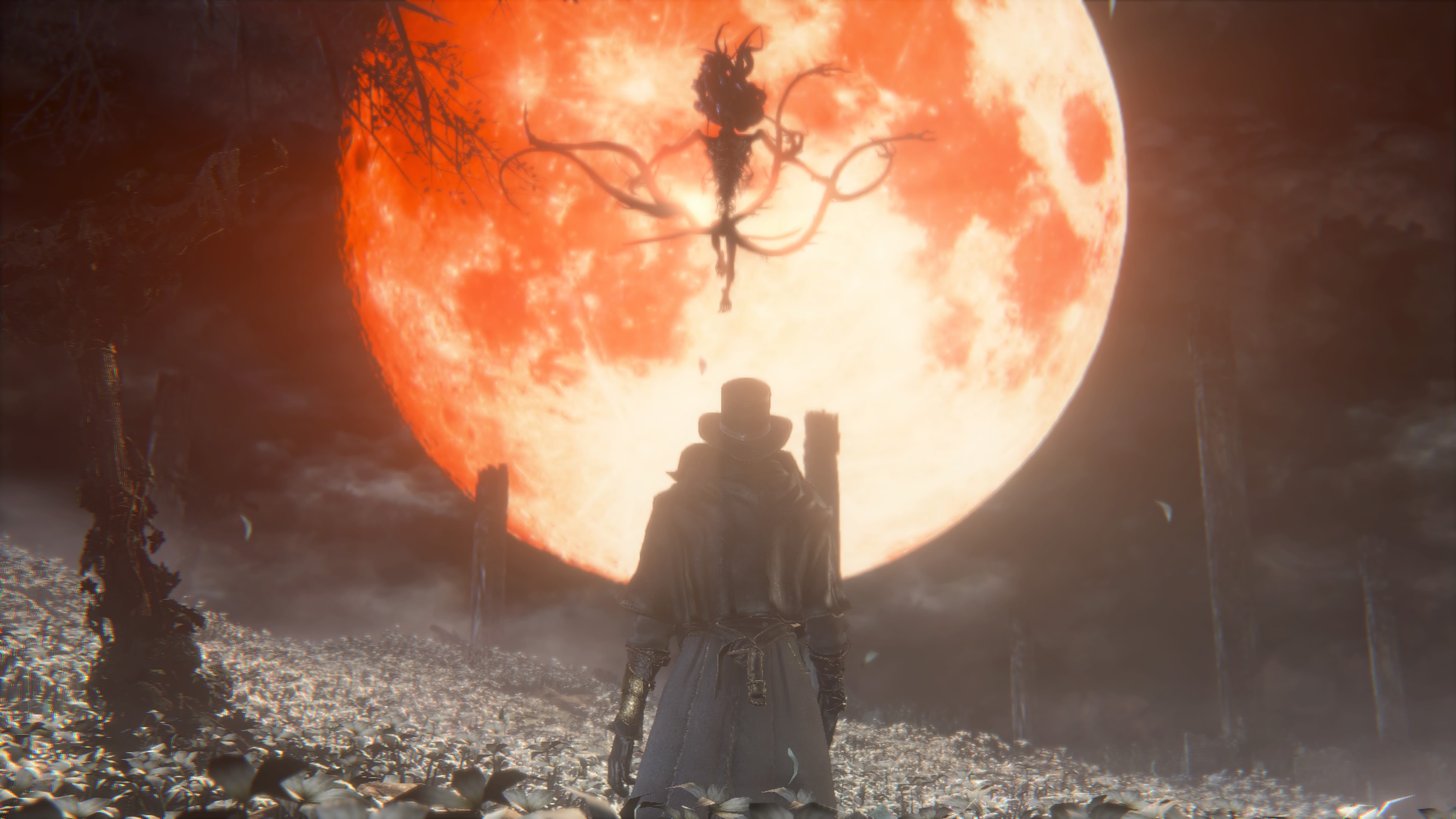
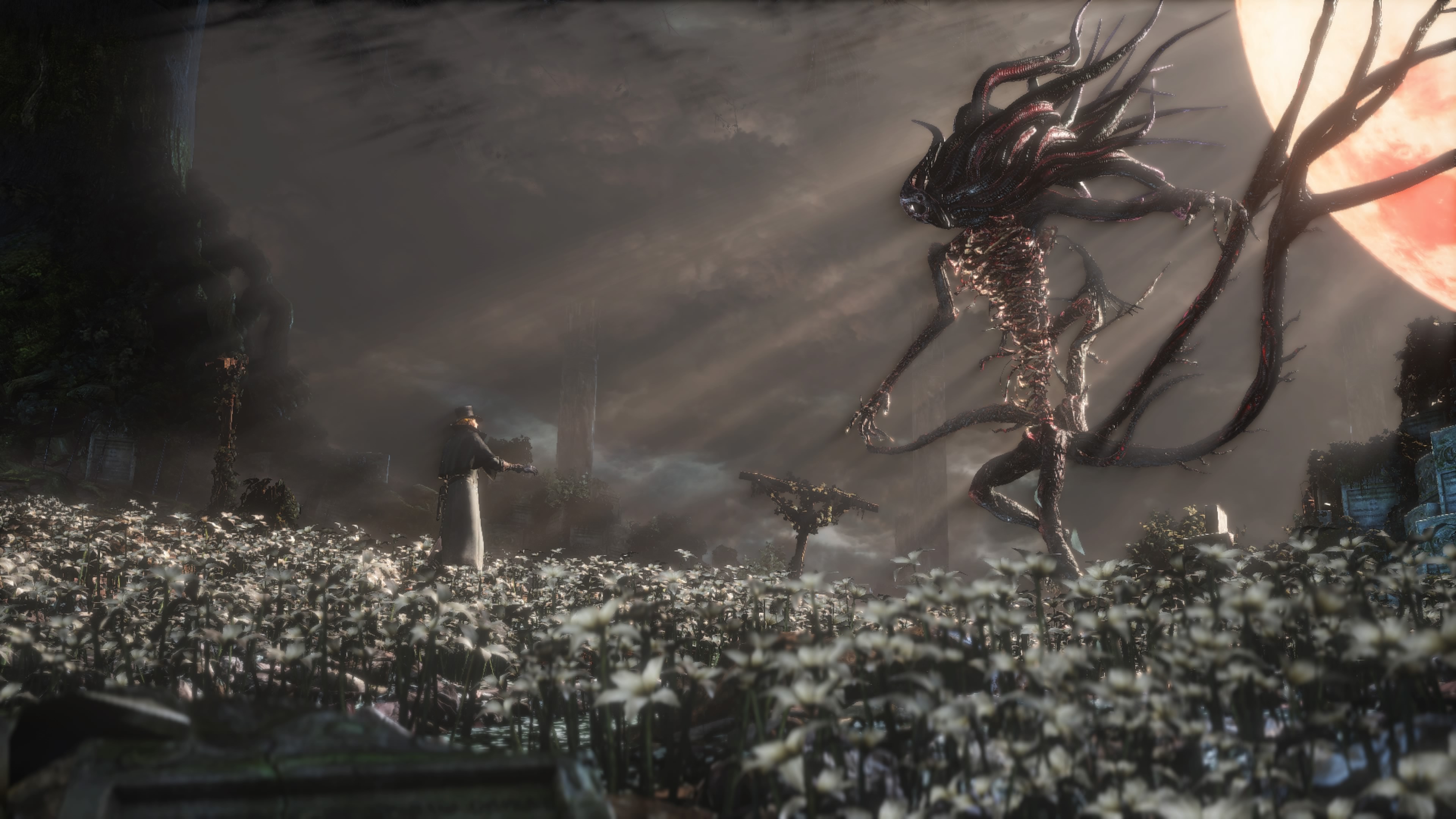
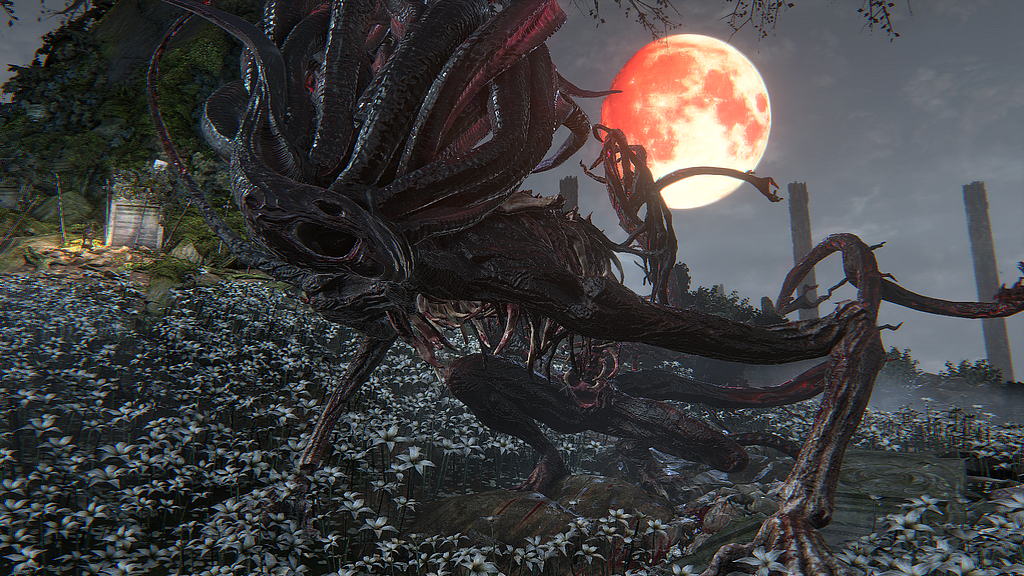
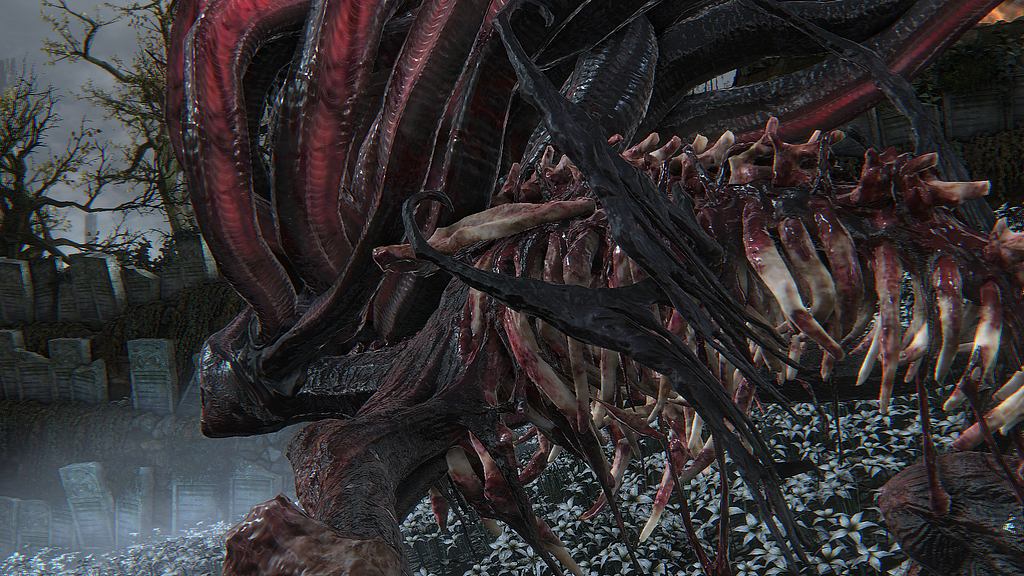
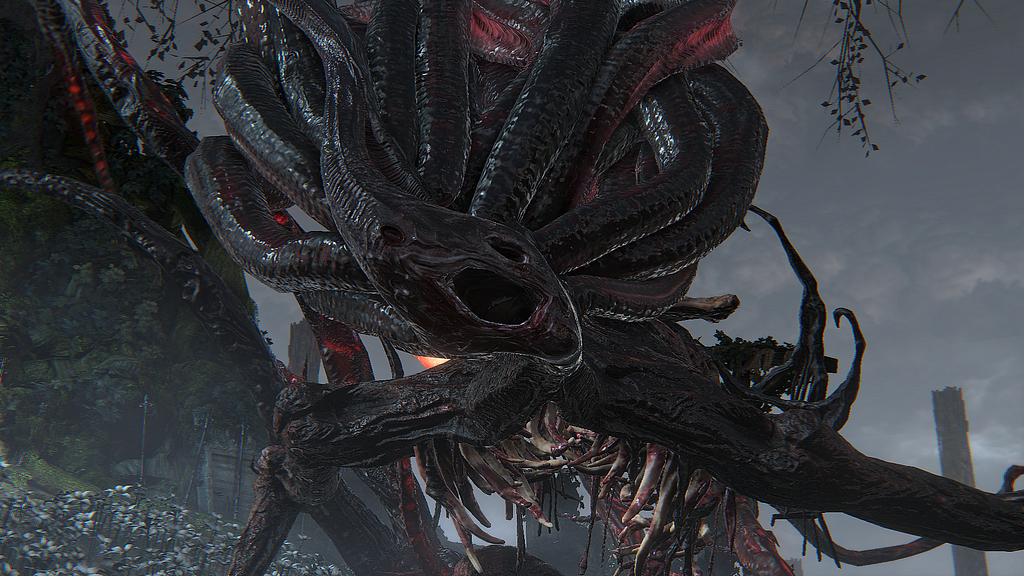
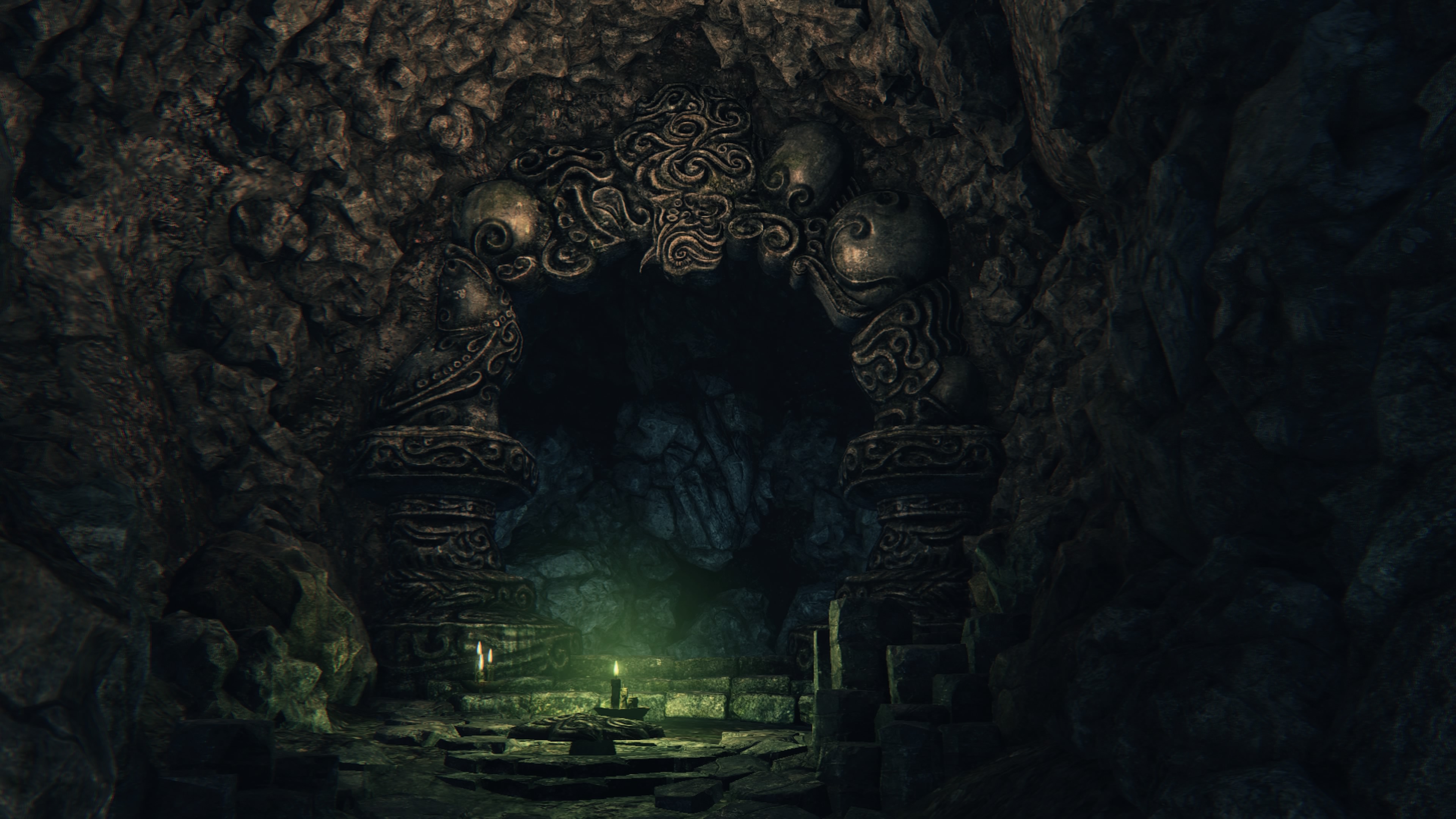
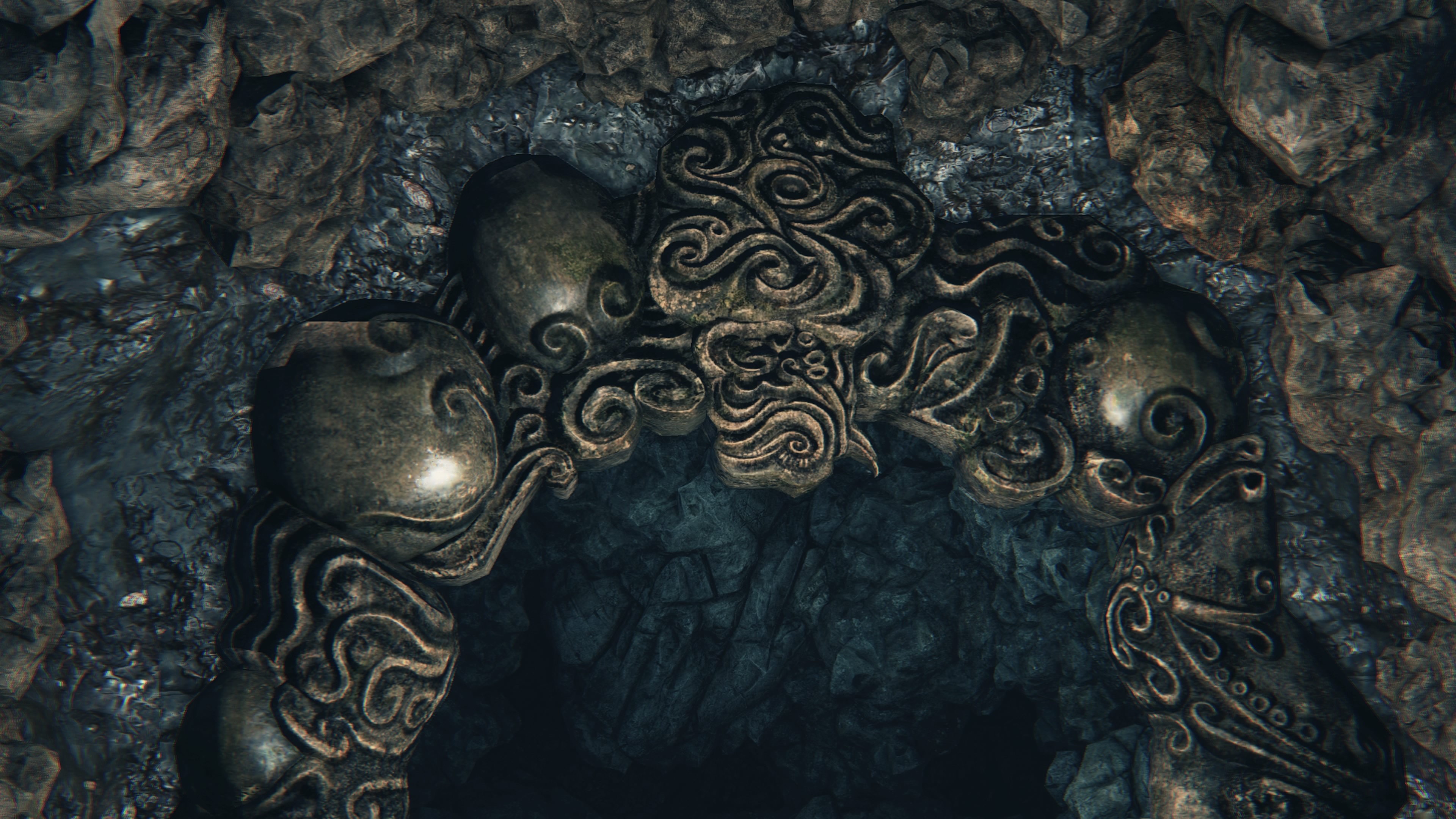
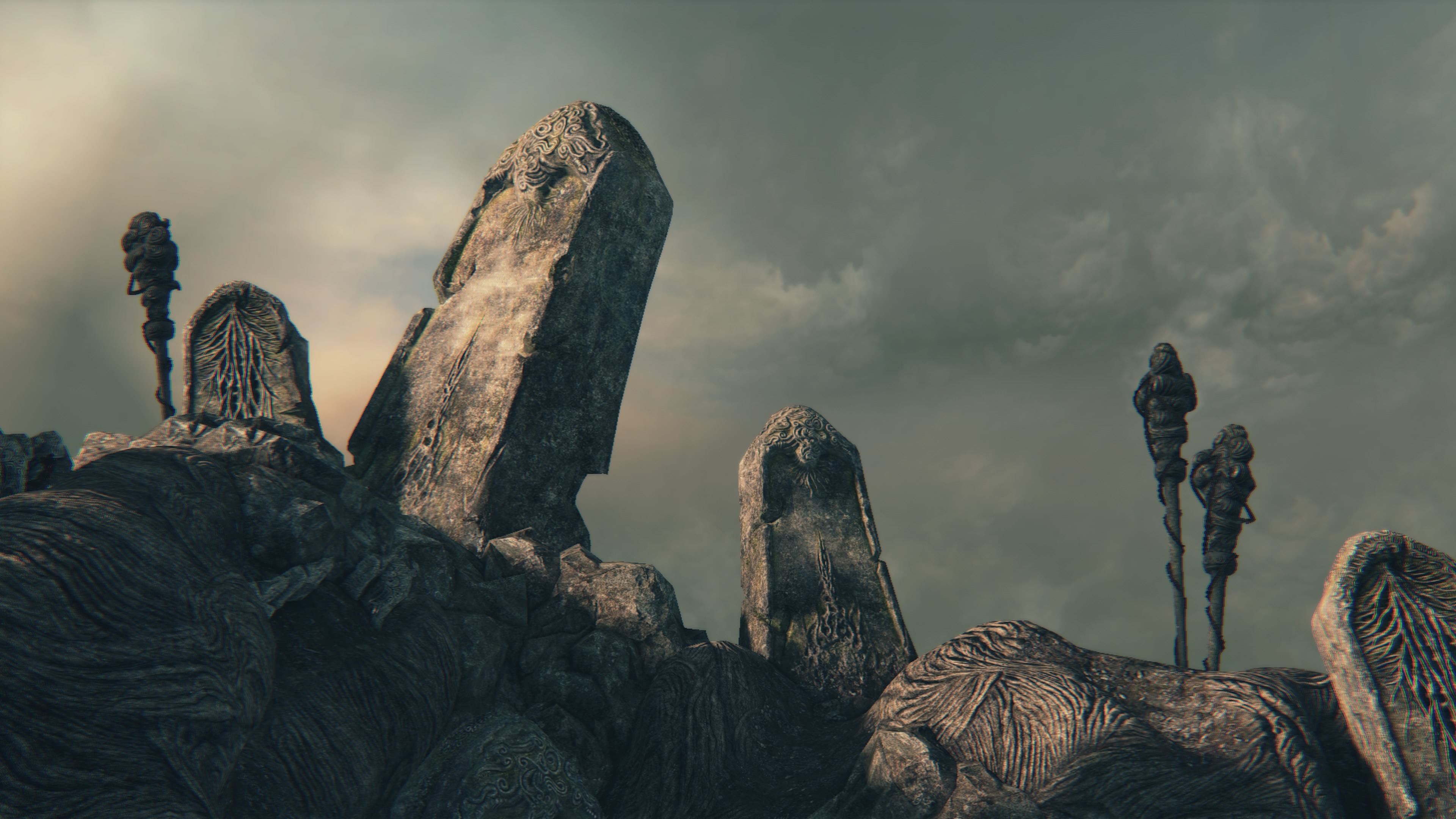
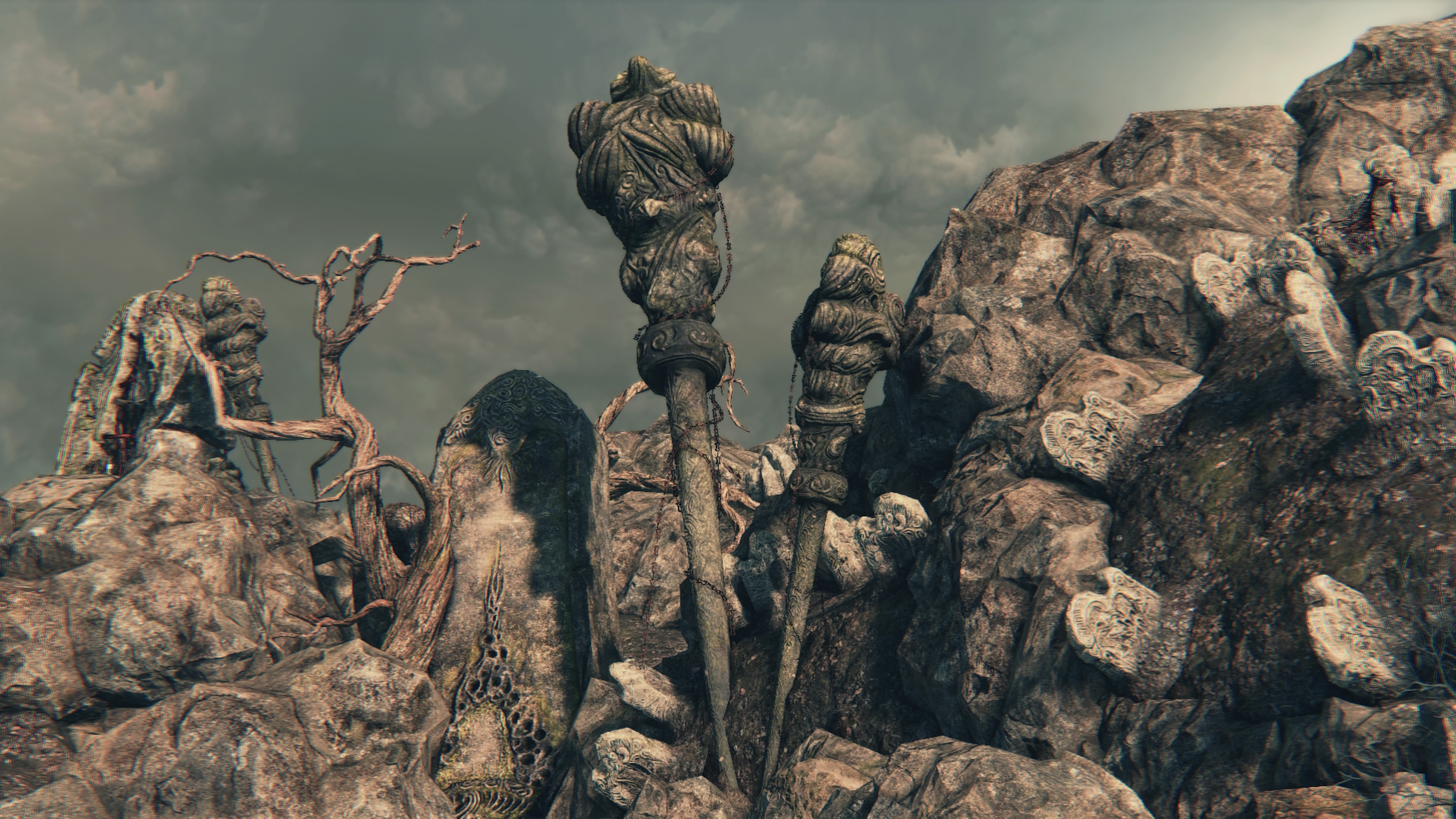
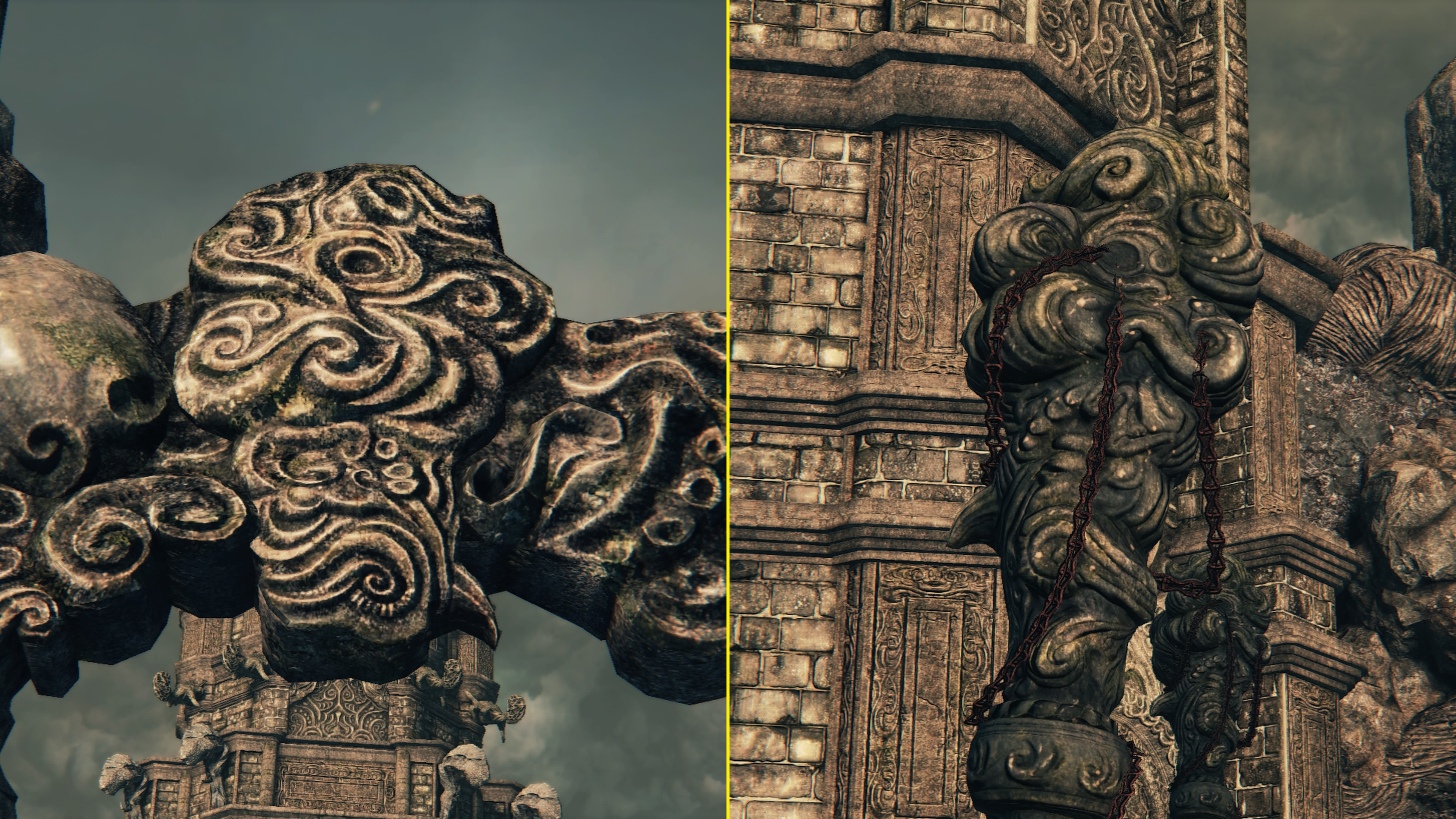
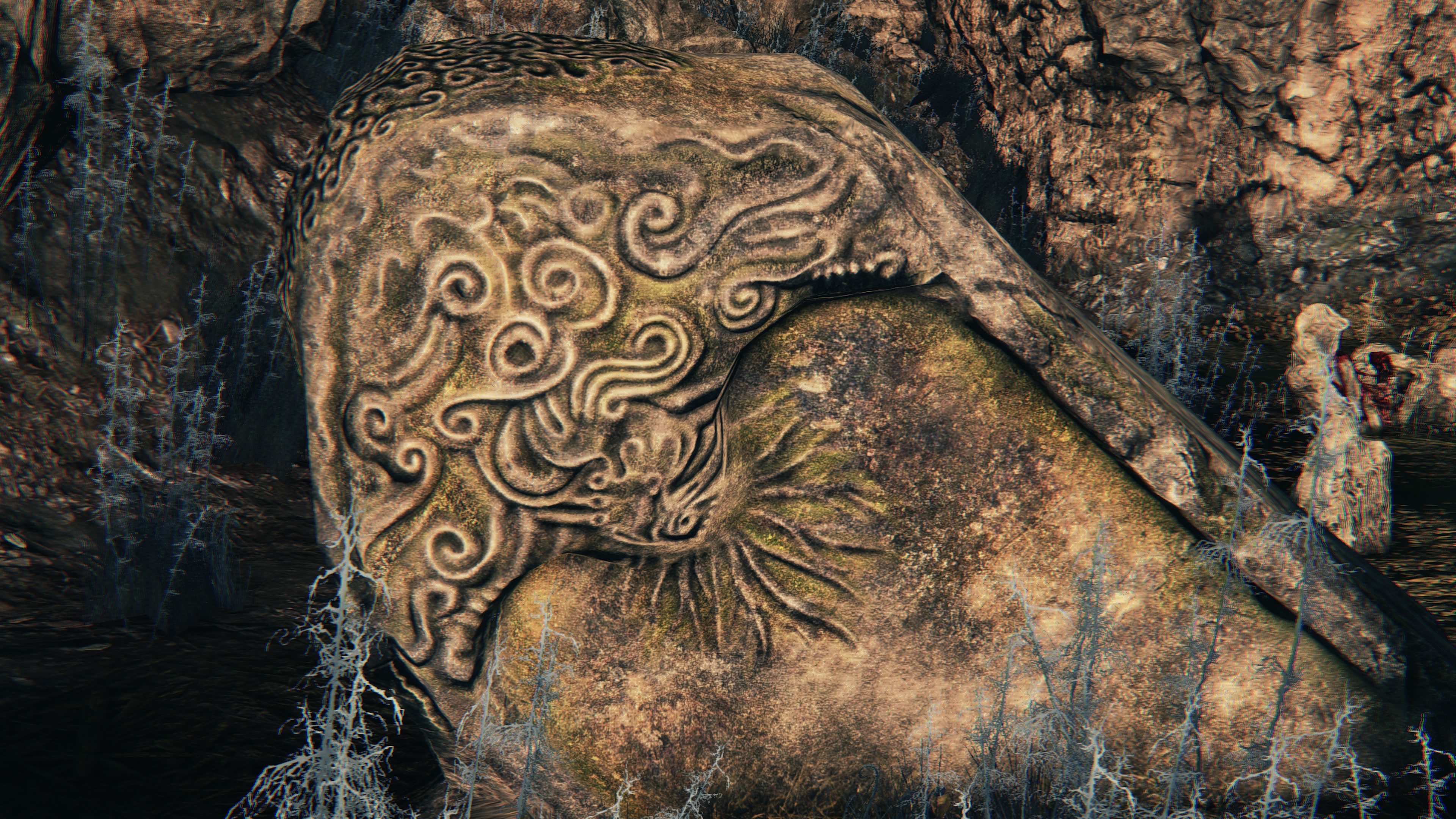
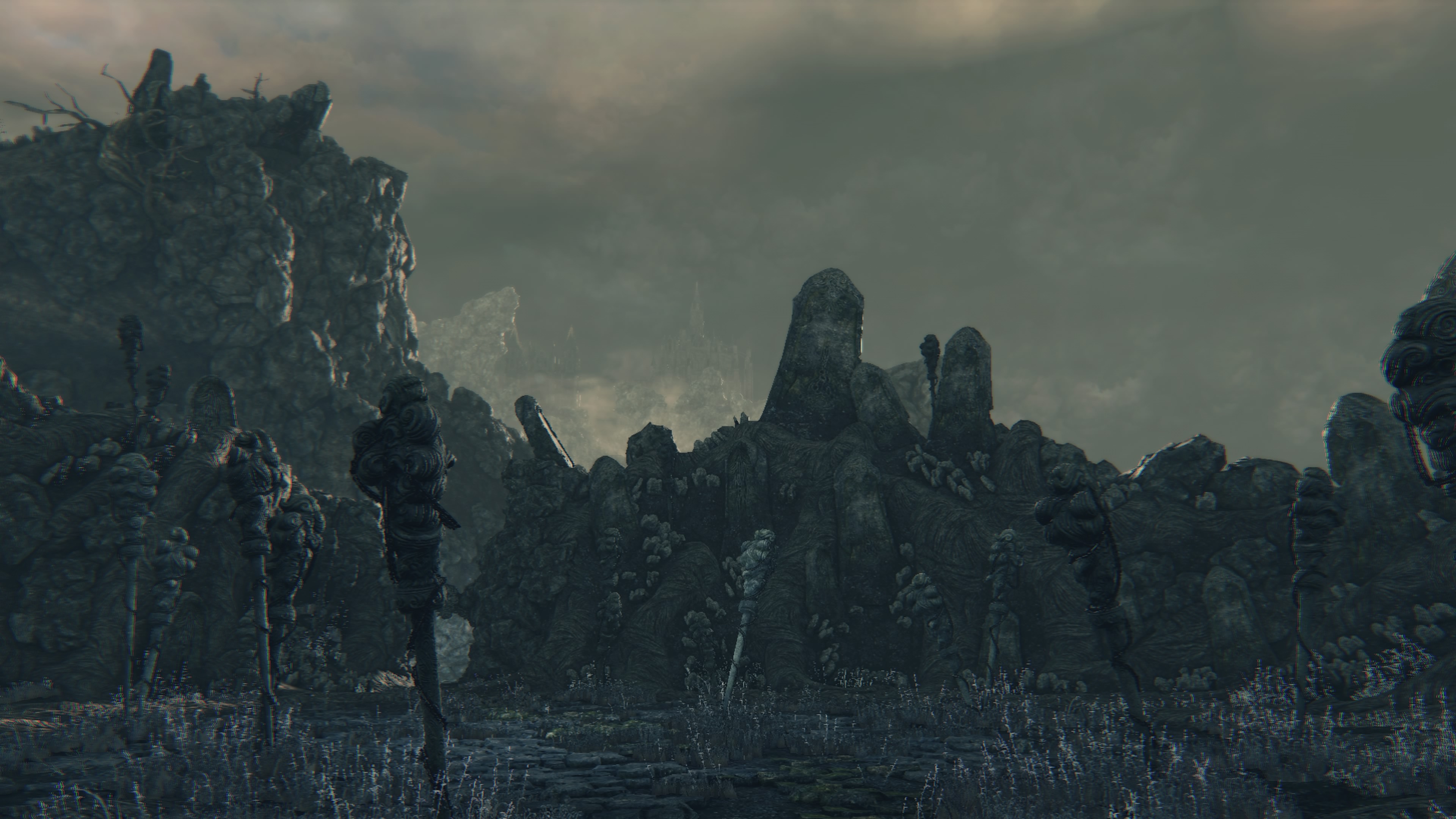
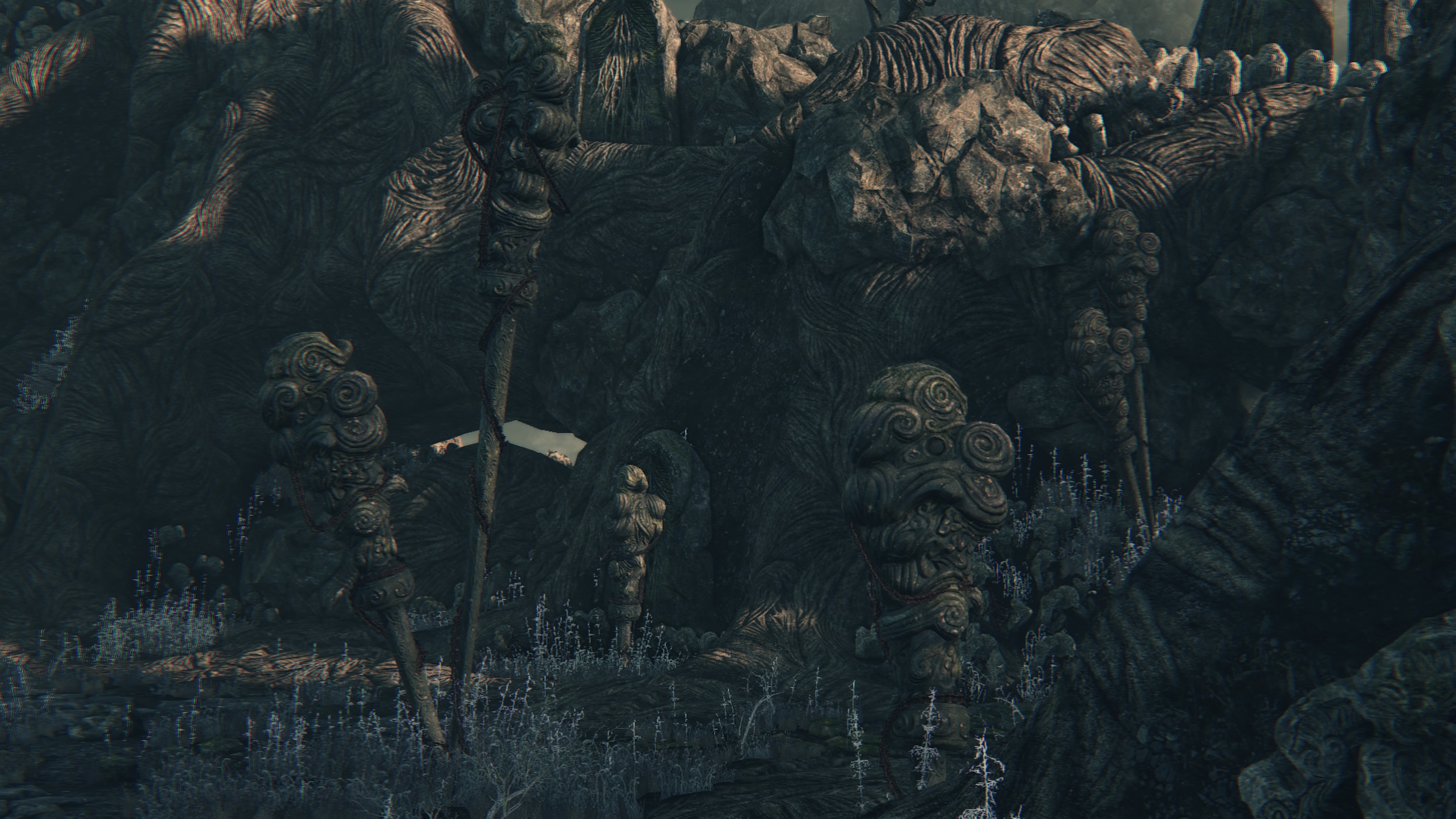
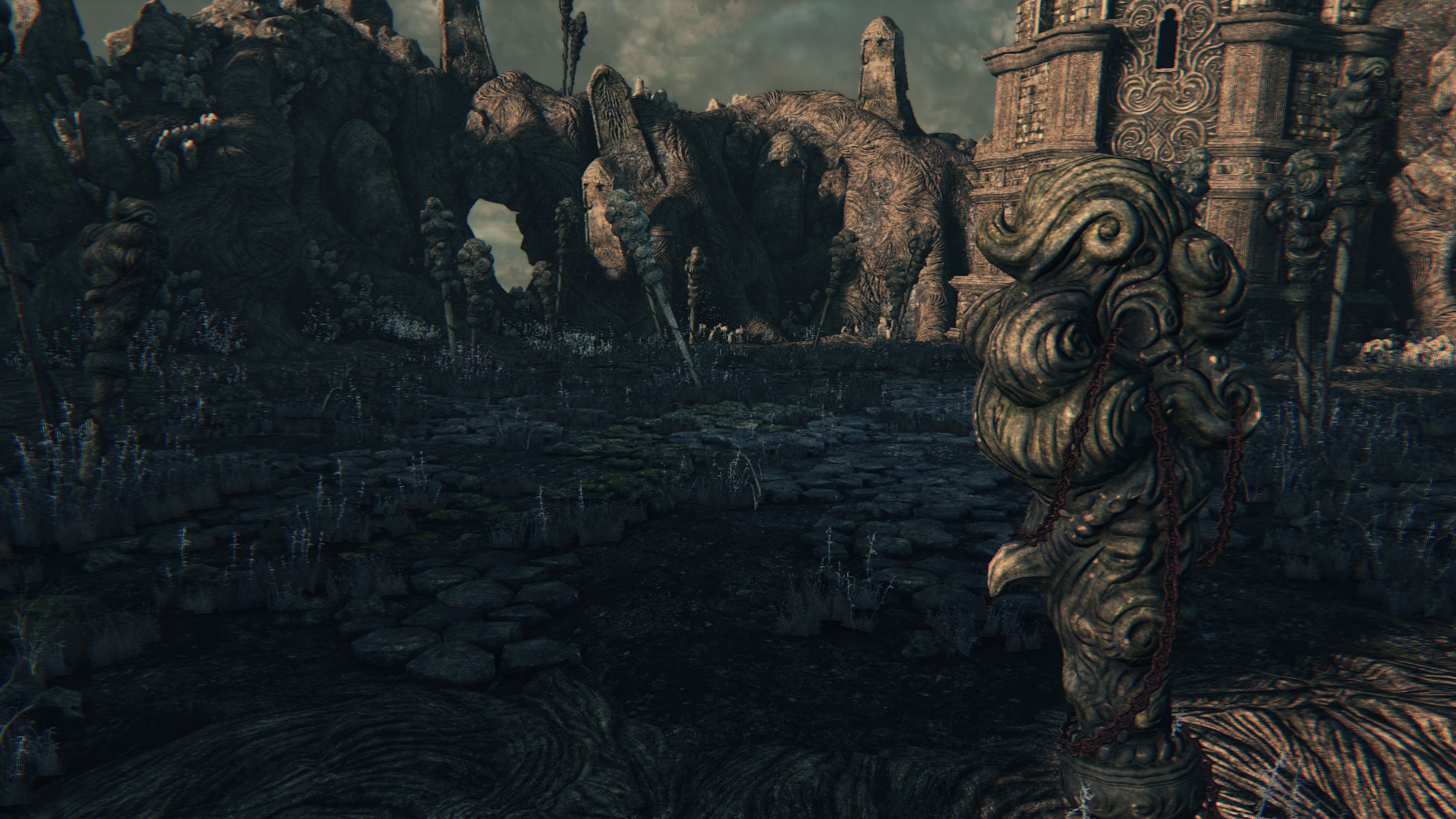
All of this is to say that it stands out when her true form appears in iconography. In the Nightmare Frontier, large metal totems protrude along the path we start, her gaping hole of a “face” and tentacle “hair” ornamenting the tip. The same imagery is incorporated into the lift designed in a similar Lovecraftian style as well as the various gravestones erected throughout, giving a sense that the cemetery’s builders knew Flora intimately. This implies that Loran communed with the Moon Presence at some point, which would be possible assuming that the moon predated their civilization. In truth, Flora almost definitely originated from Isz before its collapse. Cut content affirms a “moon” variant of scourge beast with white skin and grey fur was planned for Isz dungeons earlier in development. More pertinent to the final fame, both her and Ebrietas share Latin words for names, with flora meaning “flower” in obvious reference to the plant imagery heavily associated with Isz and its “blossoming” of enlightenment. But the ties between them run even deeper, looking back at the game files.
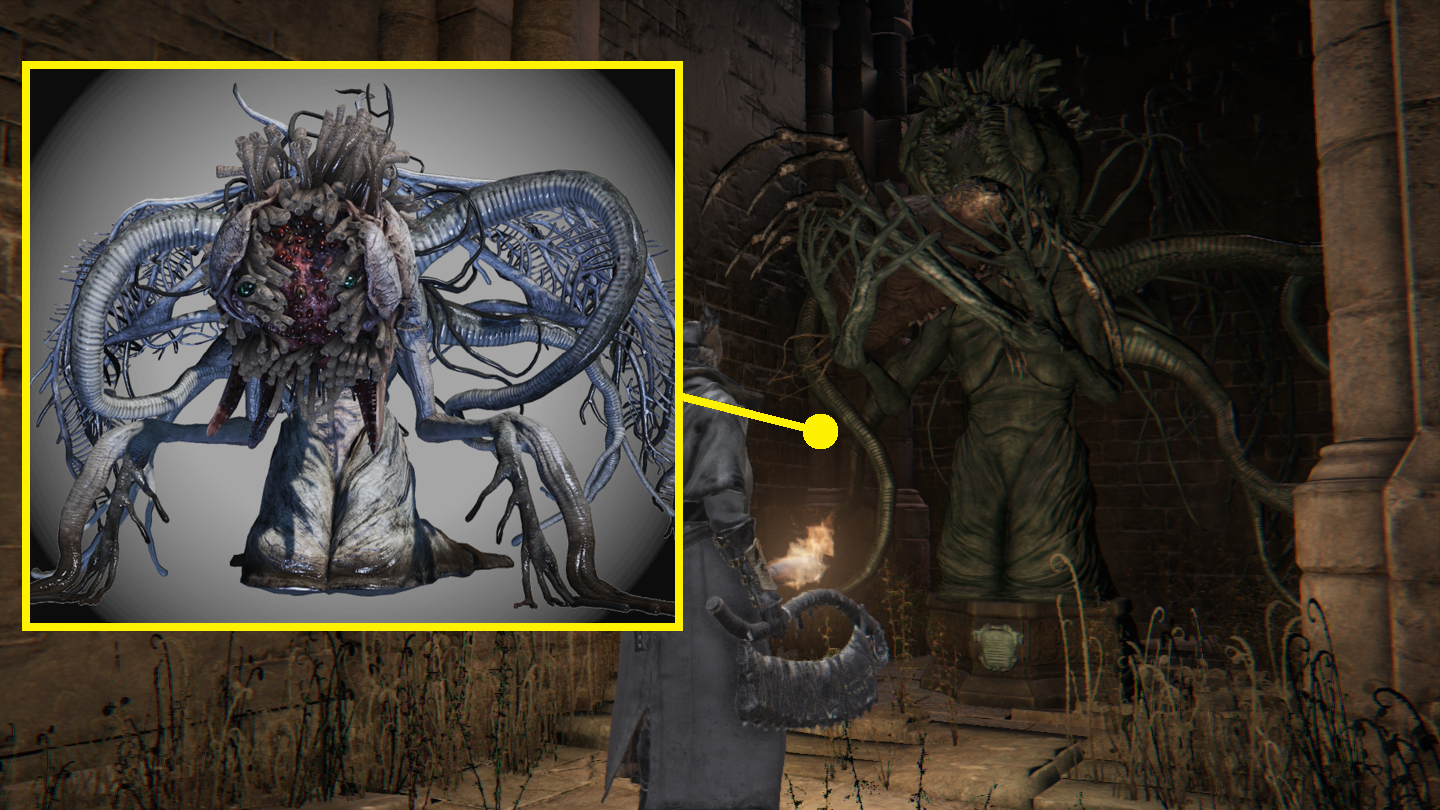
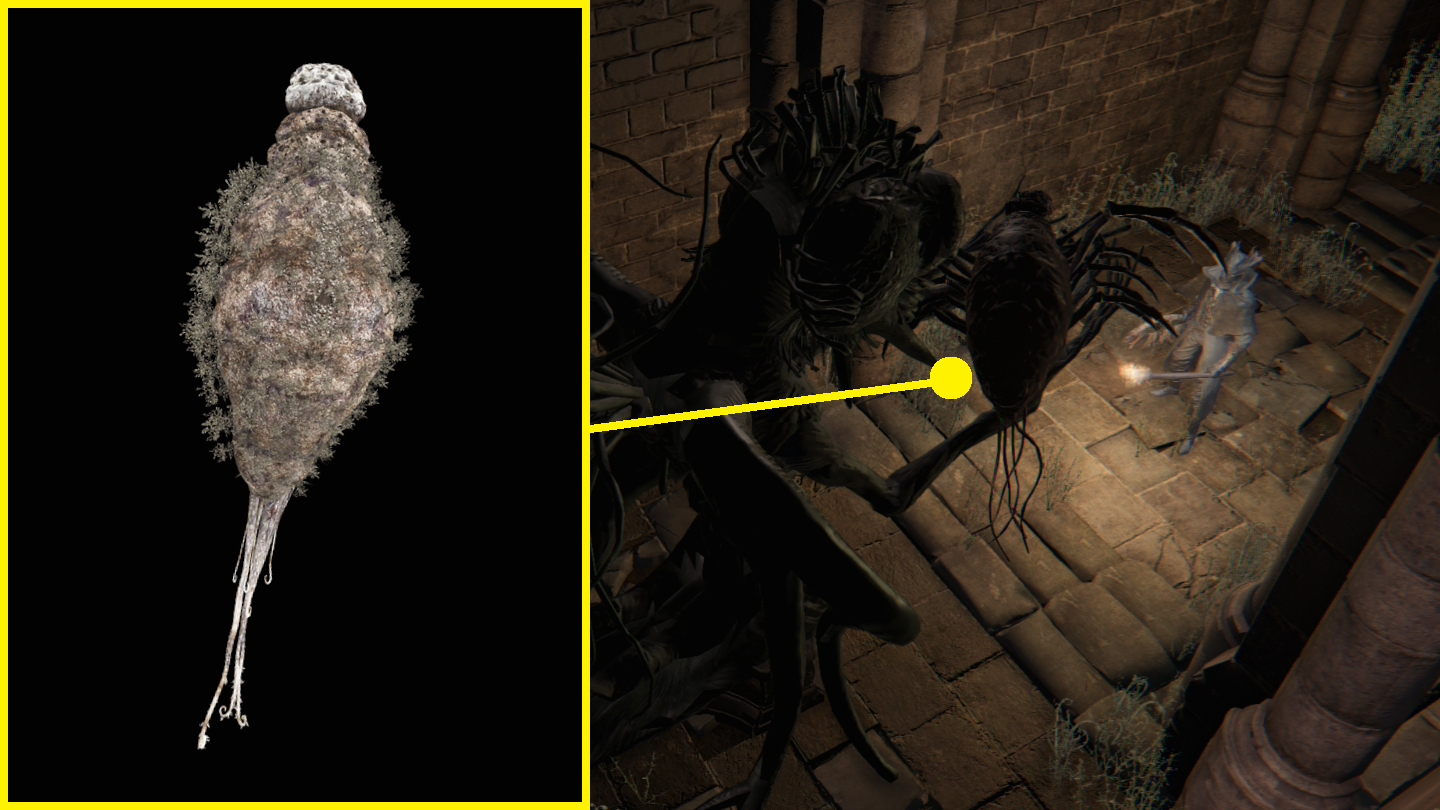
Originally, Ebrietas was named Kos, or “Ghos”. (ゴース) This ties into the Great One’s heavy association with phantasms — shouryou (精霊) identifying spirits of the deceased, or ghosts. A statue of “Kos” holding up Rom was also planned for Yahar’gul, which complements Micolash’s appeals to Kos for enlightenment on Rom’s example. Kos eventually became a separate character, but the daughter of generic stars is still internally known as a “moon spawn” (月の落とし子 ゴース) by that name. Meanwhile, the name Ebrietas belonged to Flora, with the blood minister roping us into the happenings of Yharnam in order to bring the “mud” of the cosmos to all; praying that Ebrietas wakes from presumably the Hunter’s Dream where we face the boss. Given her influence upon blood drunks in the final game, the moniker is fitting. And internally, she is dubbed “One who Inherits Ebrietas” (エーブリエタースを継ぐ者) in reference to the Japanese name for a popular sci-fi novel, Inherit the Stars. The Moon Presence was still central to the narrative, with a close relationship to the ironic inheritor of her true name.
I knew it, it was as I diagnosed. You’re in a bad dream, right? The dark, depressed dream I and the like ultimately haven’t reached, right? A magnificent story, isn’t it…?
Ah, I can’t say any more. I’m just a guide, and the duty was done. Hereafter… it’s just as you desire. The dark, kind mud will be brought to us equally this time for sure… By the waking of Ebrietas…
Factored as a whole, it is probable that Flora and Ebrietas remain closely linked as children of the same civilization. Whether or not there is a familial connection or just a broader clan affiliation, the two exemplify the dual fates for transcenders in Isz, Flora showing the success while Ebrietas embodies the failure. Flora, in fact, appears so successful that she has become, not just any star, but the moon, the largest celestial body in the heavens from our lowly perspective. The moon does grow larger as it “hangs low” with Flora’s approach to the earth, so this may be partially due to personal interest. But none of the other Great Ones in the cosmos compete for size despite demonstrating comparable attention to mortals. Therefore, we can assume that the Moon Presence is markedly more powerful amongst the stars, with an enlightened mind deeply attuned to manipulating the arcane. That outsized influence explains why her presence causes such greater effect upon the wider area when compared to any other communion with the gods, signaled by the larger moon red as their enlightened blood.
As to why such a dangerous fiend repeatedly appears to man, the Moon Presence was at one point beckoned with an eye cord, meaning that she is concerned with acquiring children. Like her ilk, this descendant of Isz can no longer readily produce a living legacy, and so she follows whatever trail might lead her to adopting progeny of a higher plane. This presents a chance for Loran to bargain for enlightenment. Lower Loran is where we acquire red jellies, the failed infants illuminating the country’s similar investigations as Isz and Pthumeru before it. True to the Clockwise Metamorphosis rune acquired in the Nightmare Frontier, blood brought Loran a dream of evolution, with the beast just the ugly first step in a glorious process. Like the Pthumerians, they too wished to join the gods in the cosmos, yet were largely stuck as simple beasts. And so, it would behoove them to also secure the assistance of a past Great One like Flora. For that, they would trade a newborn for them to be newly reborn.
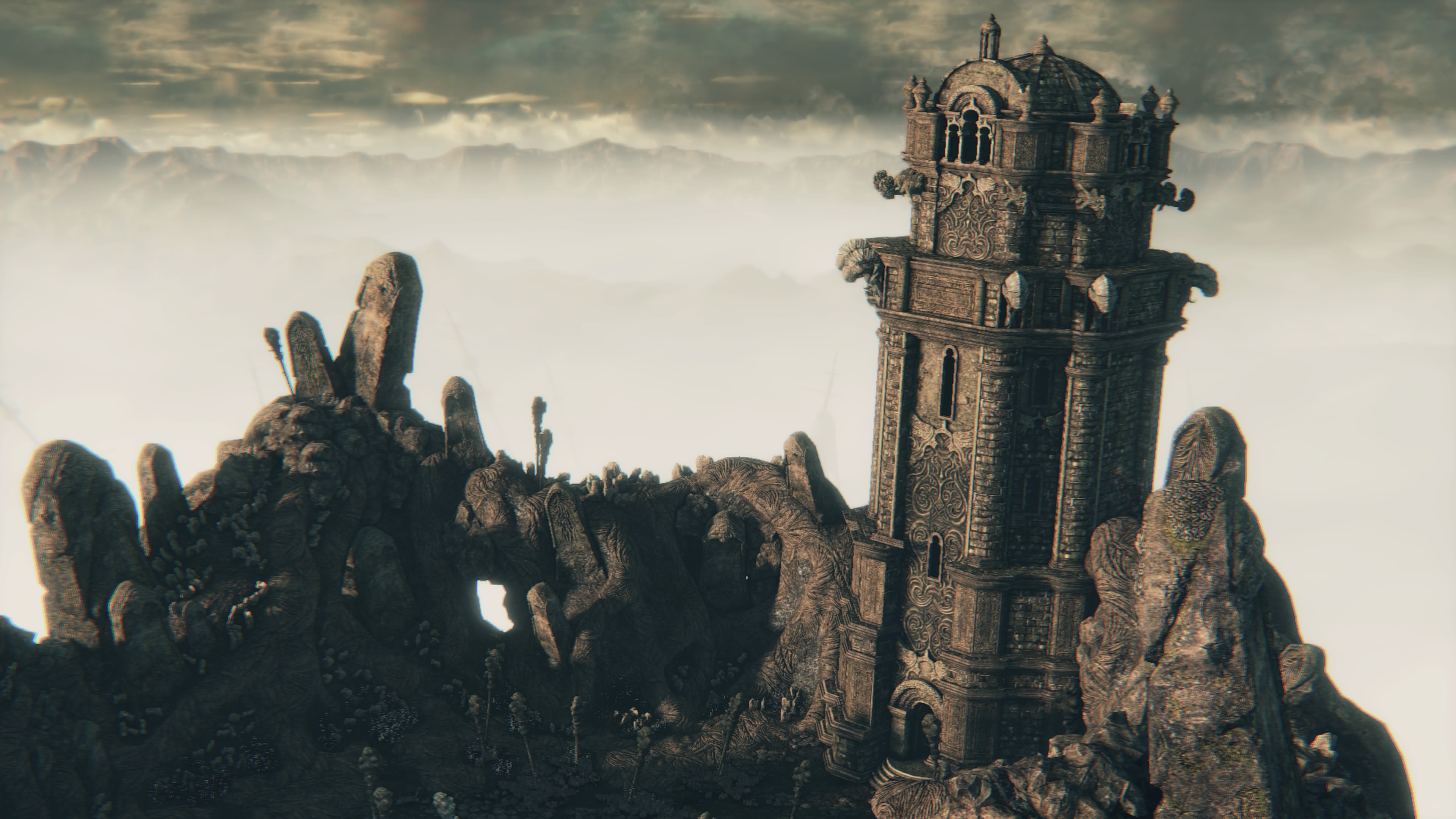
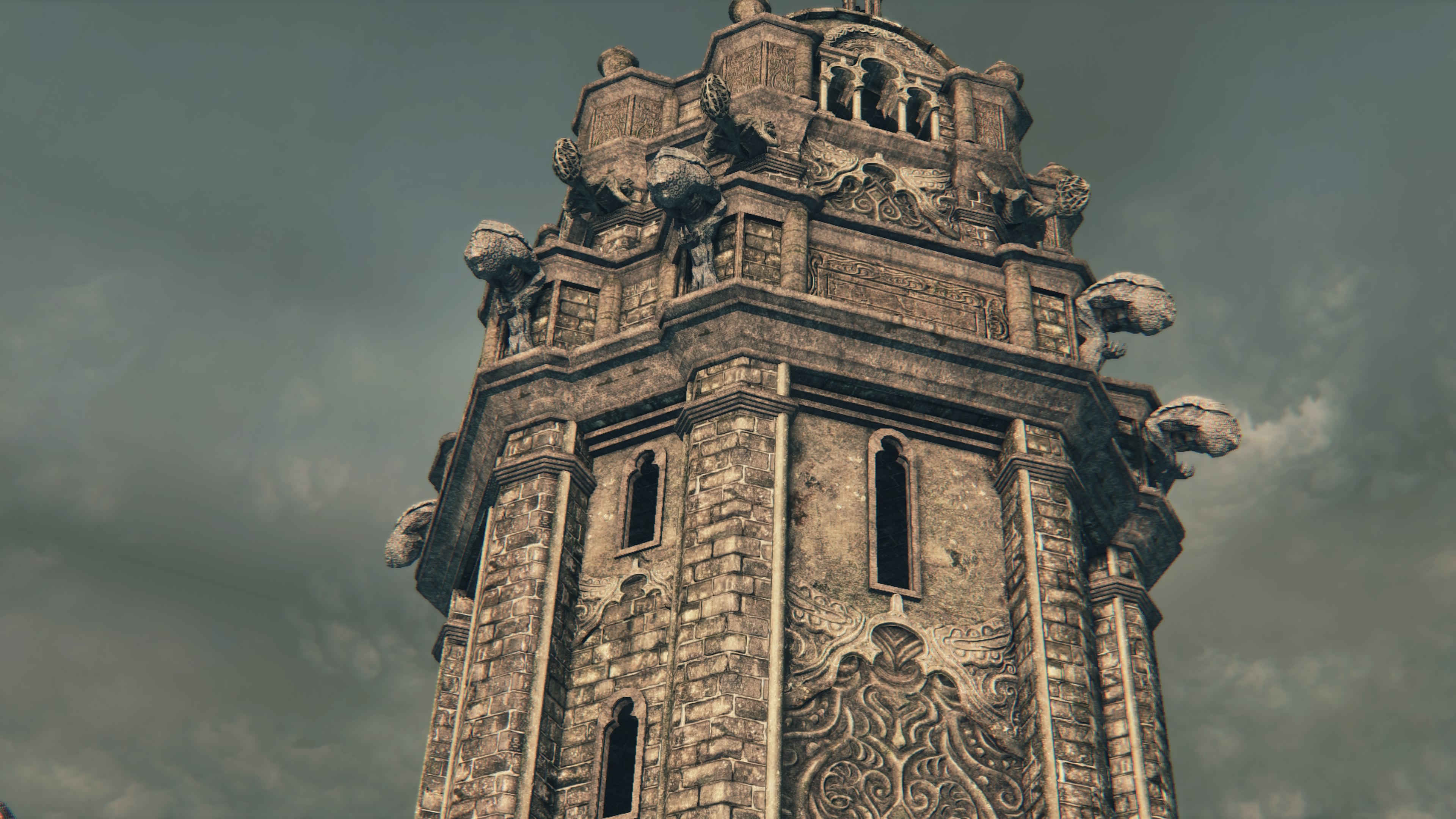
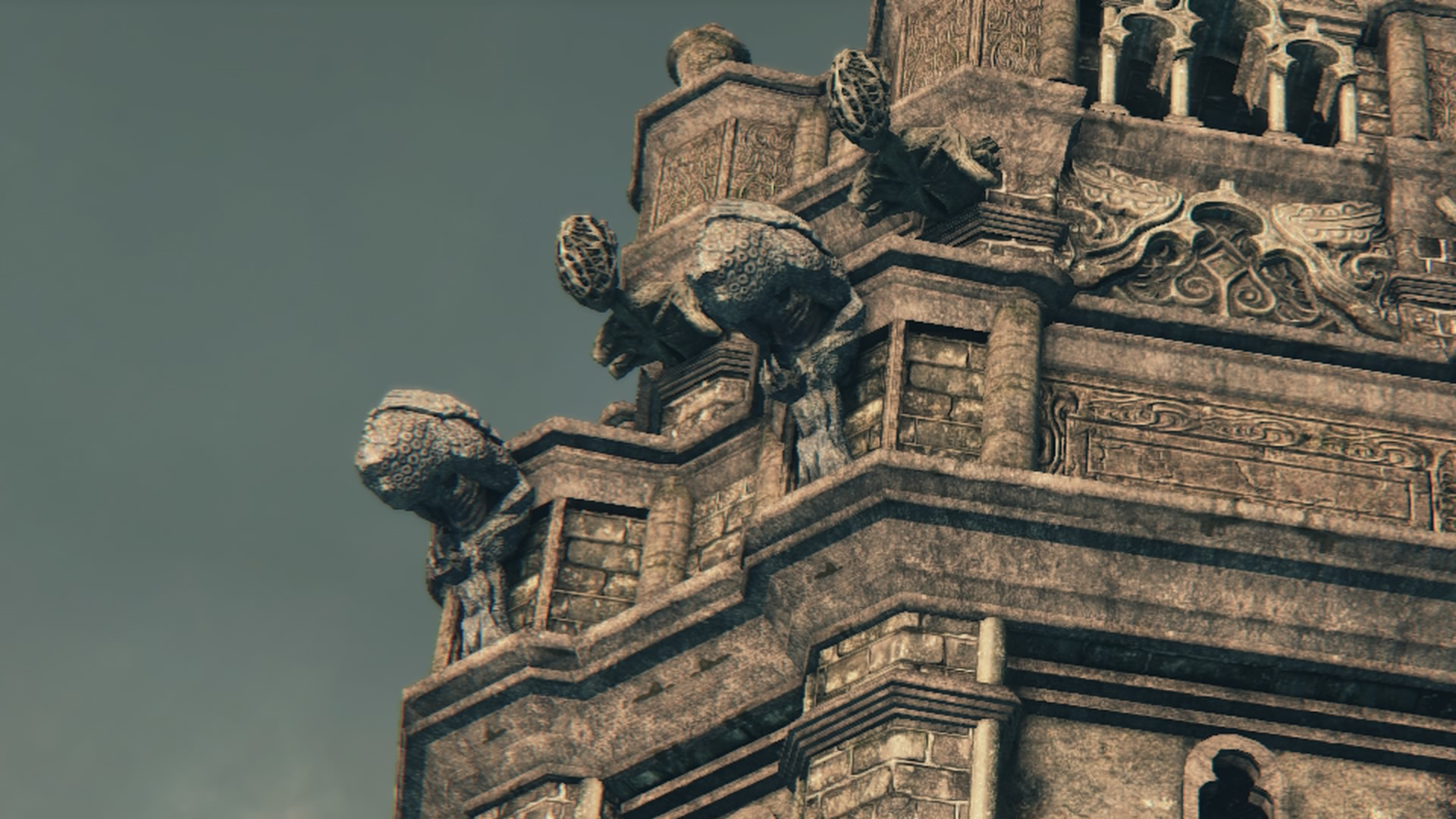
The Nightmare Frontier served as the ritual site where the two parties made contact. The tower at the end of the area, through an archway and past many more totems, is ornamented with idols of Amygdala plus an eldritch figure with eyes covering its body from head to toe — probably a representation of the Great Ones’ boundless insight. That same tower is where an actual Amygdala jump downs to defend its roost, another sending us on the path to this boss after we obtain a meteorite suspiciously shaped like their heads. Altogether, the facility was most likely a “radio” tower, men of Loran attempting to reach out to gods like Flora for guidance. This would also justify the mountainous terrain as opposed to a proper desert; when studying the stars, it helps to stand closer to the sky. The chains enwrapping the totems similarly reflect a desire to chain down the Moon Presence to the earth, keep her in their sphere to communicate and secure assistance. Once a Great One responded without a meteor strike, the site became a meeting point to deliver the infant that the cosmic entity sought from the country.
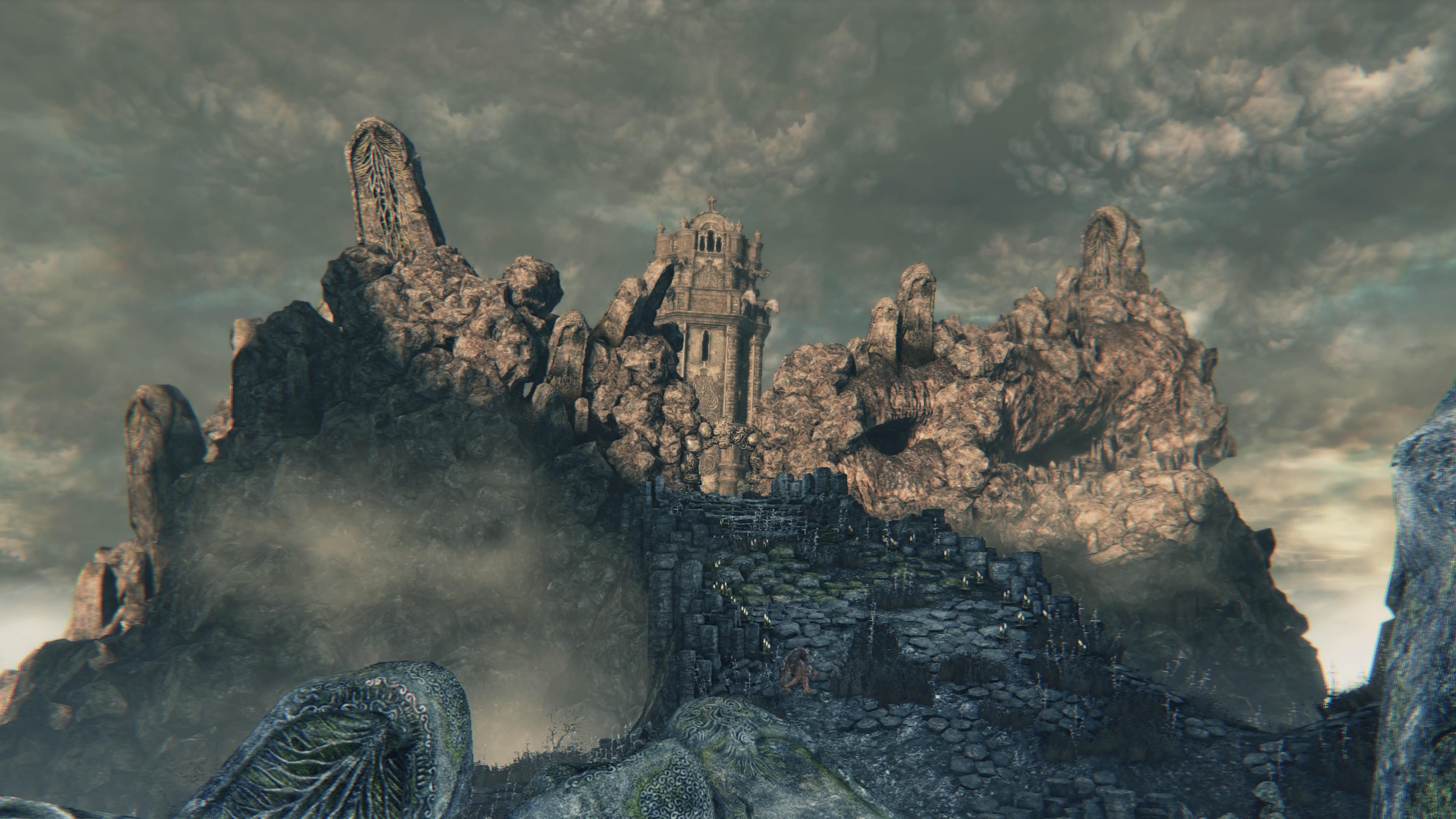
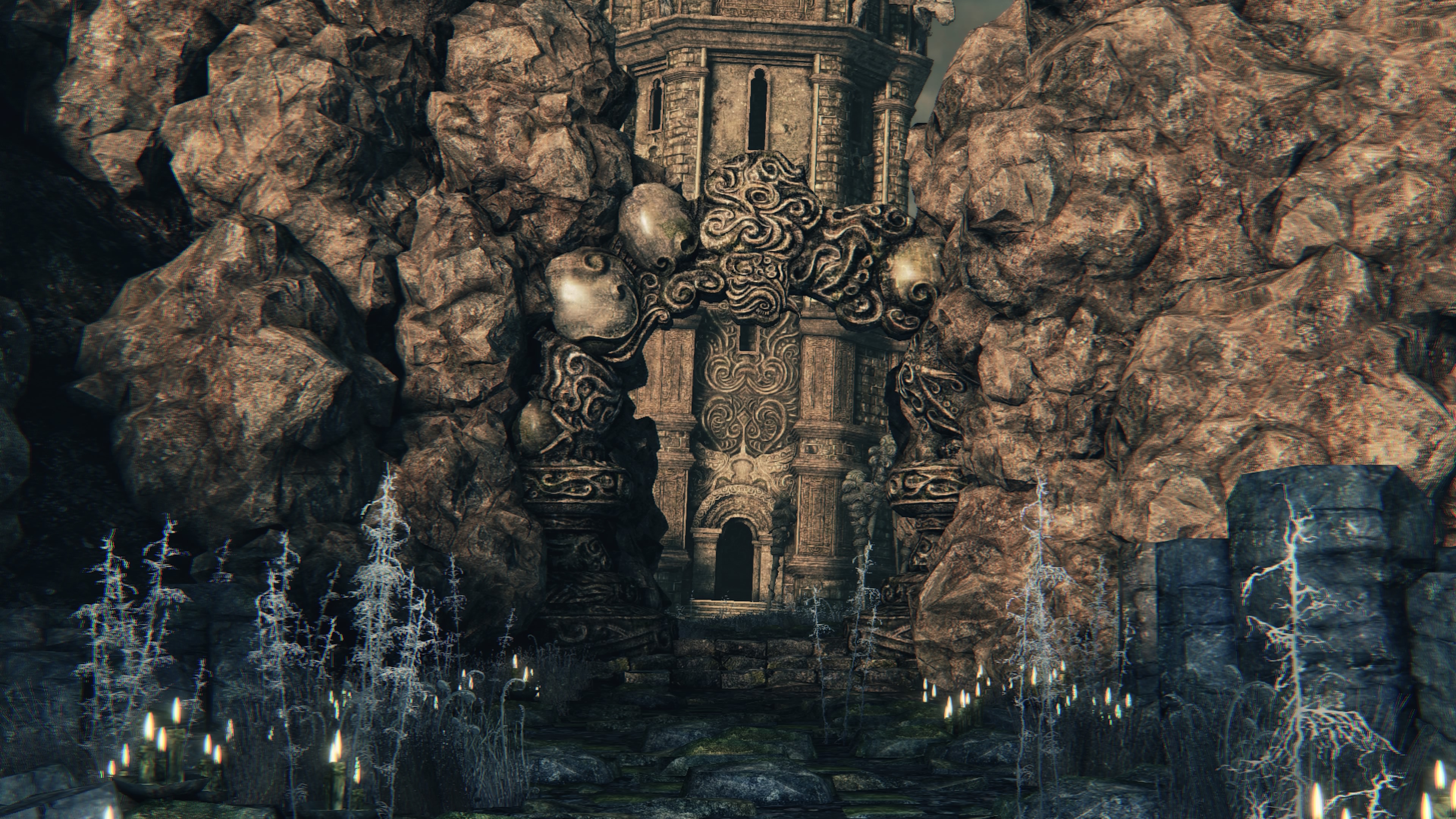
Warped stone stuck with a mesh. Or is it a kind of meteorite? Seems meaningless, but it has a curious gravity where you can’t let it go. That strange man said:
Visit the hidden old church, right of the Cathedral… It has a mystery and will surely empower your hunt.
These attempts to bring the Moon Presence a child for their own transformation led to a stream of bodies buried in the surrounding area; failures in these experiments, or those hopefuls looking to lucid dream in eternal rest. We do see that headstones in cavernous parts of the graveyard, hidden from sunlight, have produced glowing white sunflowers, which resemble the buds in the Upper Cathedral Ward’s Lumenflower Garden. Those “star flowers” (星輪草) mirror a Japanese name for sunflowers — “day” flowers (日輪草) — and are apparently of the same stock as the so-called “lumenwood” generated on our heads with the Milkweed rune. And since sunflowers are famed for their buds following to face the sun, star flowers likely do the same for night’s celestial bodies — only instead of sunlight, they hope to absorb phantasms. The Nightmare Frontier is also where we can loot coldblood flower bud, reminding us of the blood’s potential to bloom spiritual liberation in dark places. Kin coldblood is lootable in that cave of flowers, so some of the dead have received enlightenment and begun to bloom.
One of the materials needed for holy grail rituals.
Pale plant said to bloom in death blood in abandoned places. But, that which has bloomed large is a bright red flower of spiritual liberation.
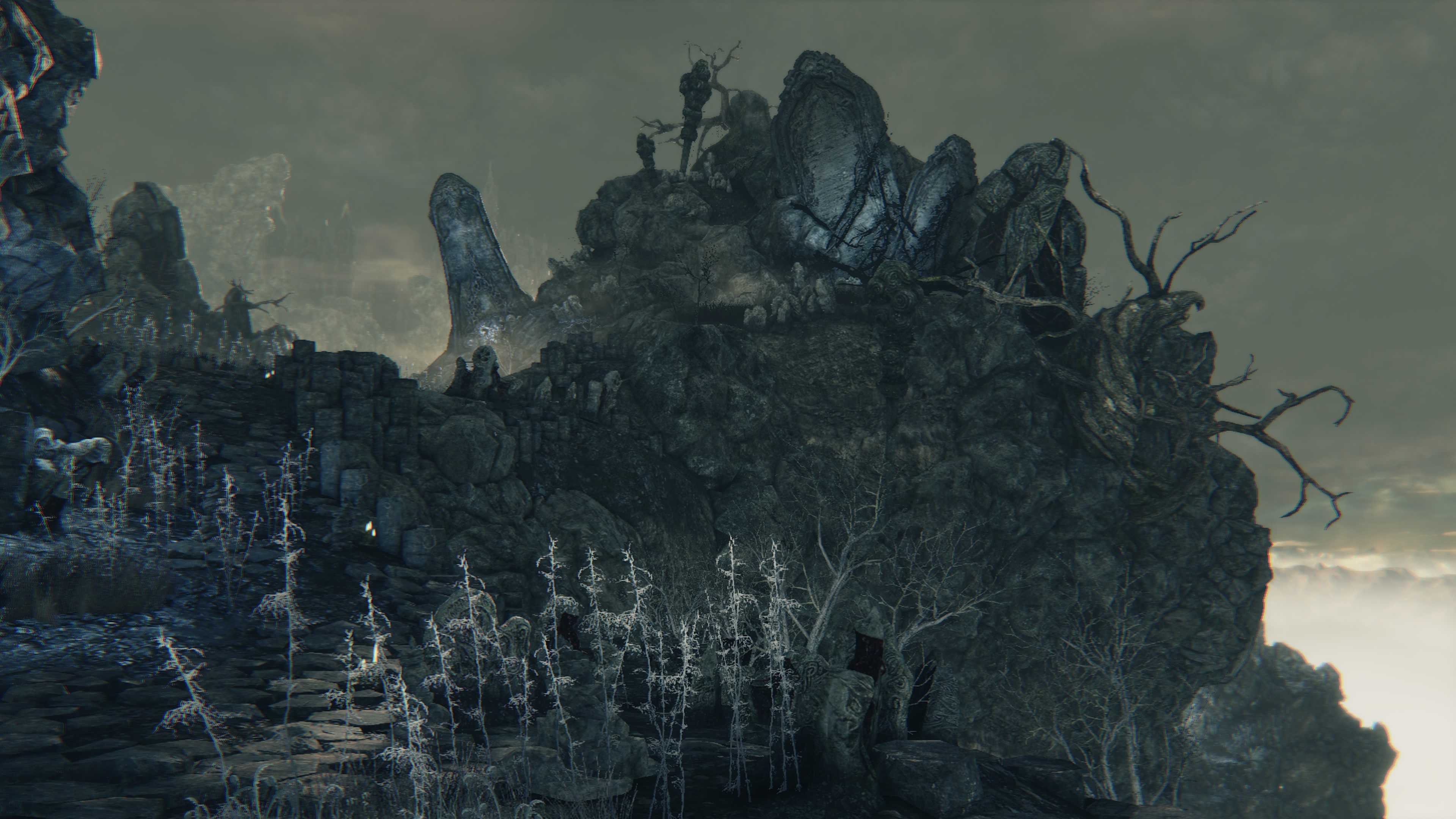
Put simply, the graveyard is a product of the stars communing with the dead, filling their minds with phantasms which may blossom with insight. This is liable to be Flora’s work, in lieu of her namesake — not to mention her appearance on the graves. The large tombstones especially appear to represent a scene to this effect, despite the abstract style. The spirit of the blood rises from skeletal remains buried underneath, toward the Moon Presence high above in the sky up top. Her enigmatic nature in the cosmos, beyond the physical form we perceive, is depicted as the complex tangle of roots stemming from her on the backside. This was how outsiders imagined their ascension to stardom under this singular Great One’s watch would manifest, leading to an evolution of existence they could barely fathom. Based on the number of headstones with this design, they were confident that it was the process through all the deaths and burials.

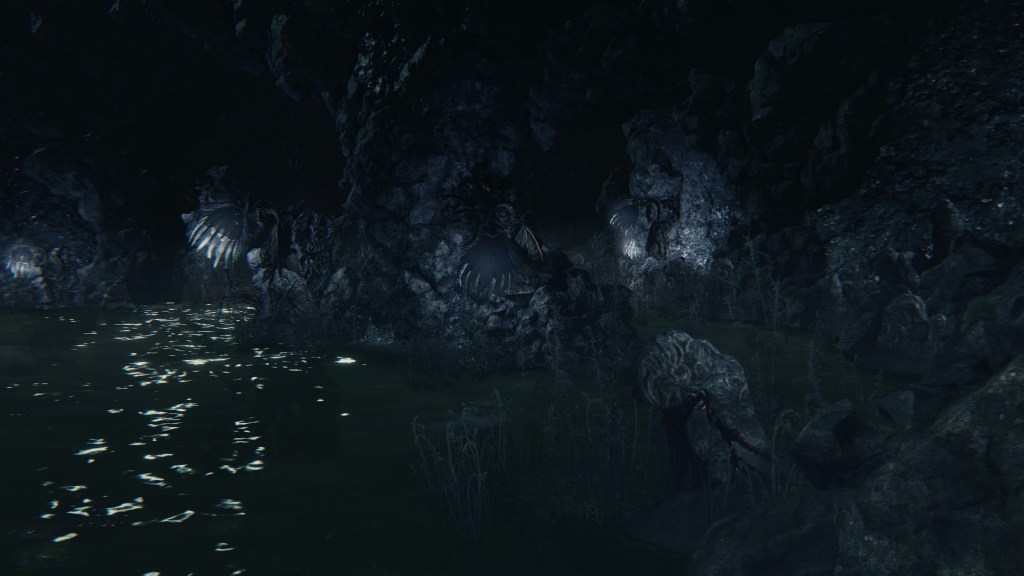
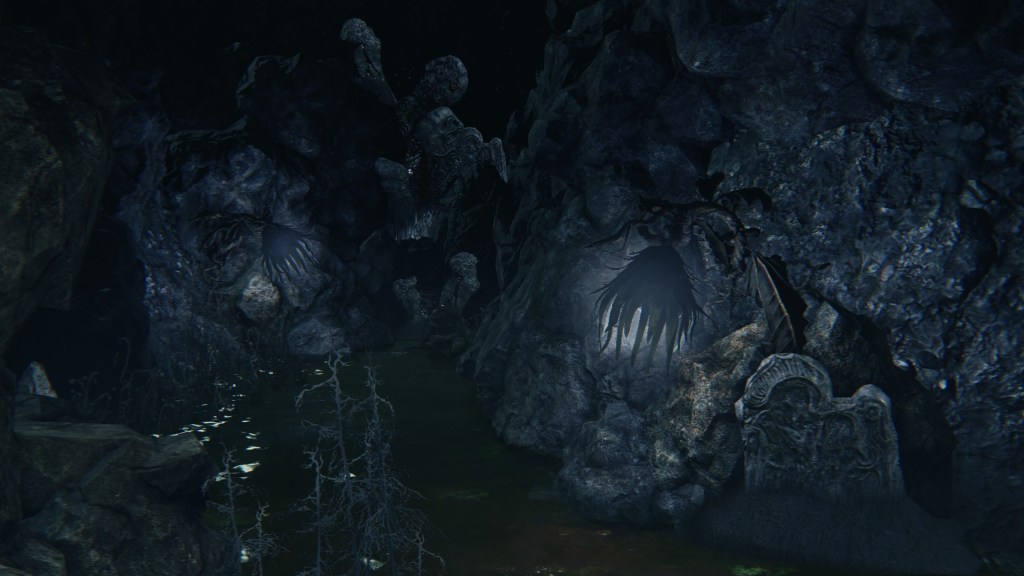
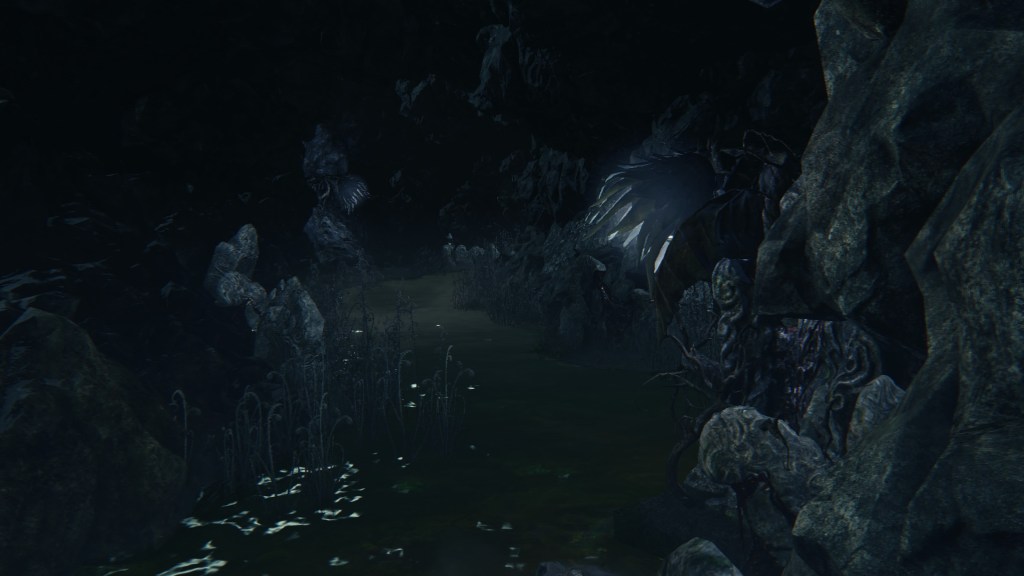
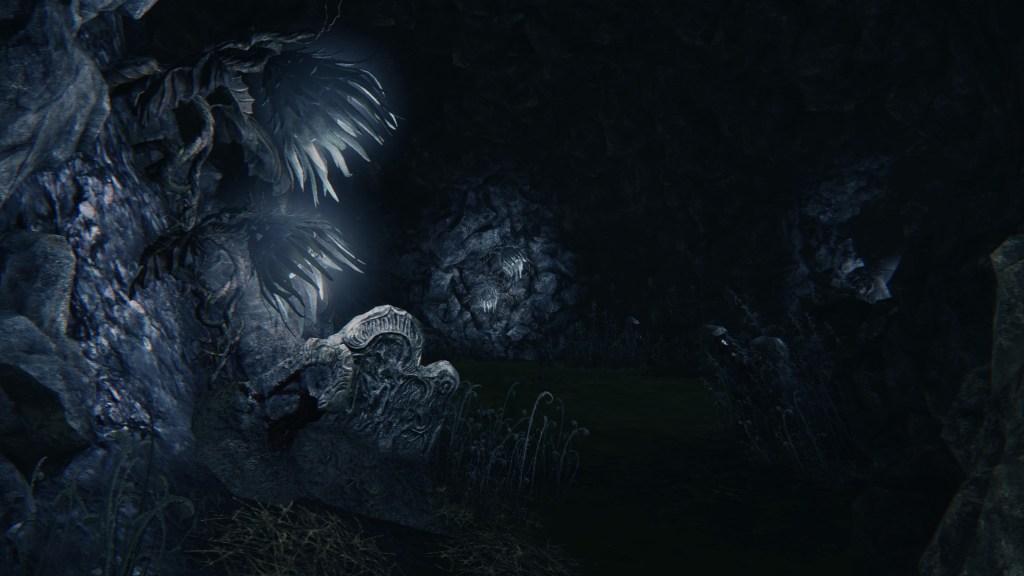
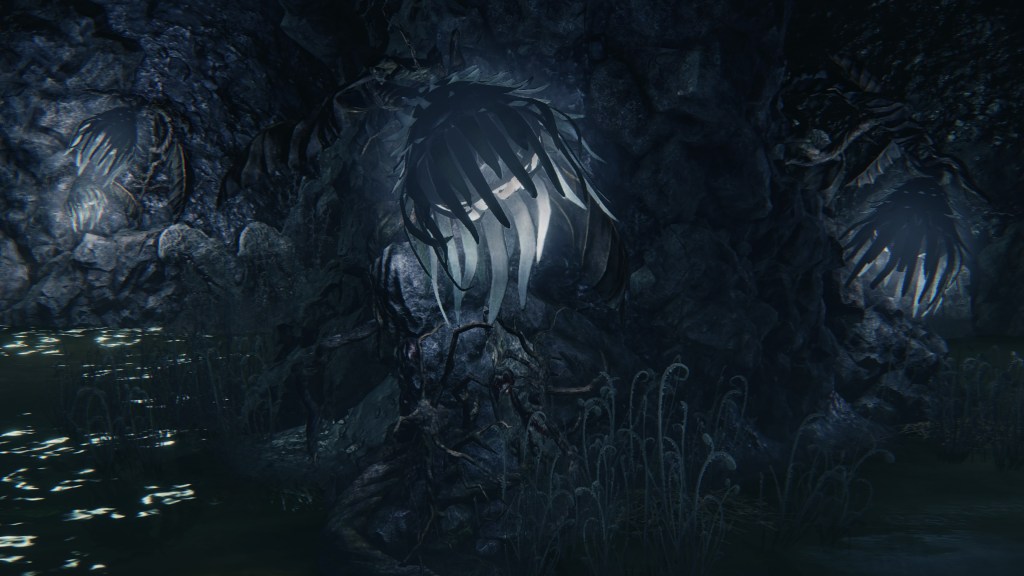
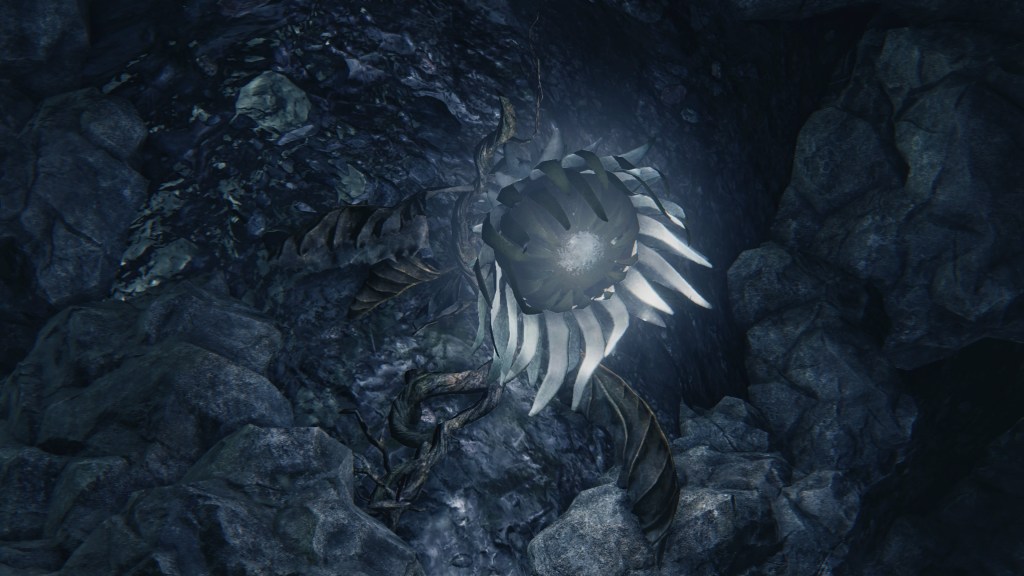
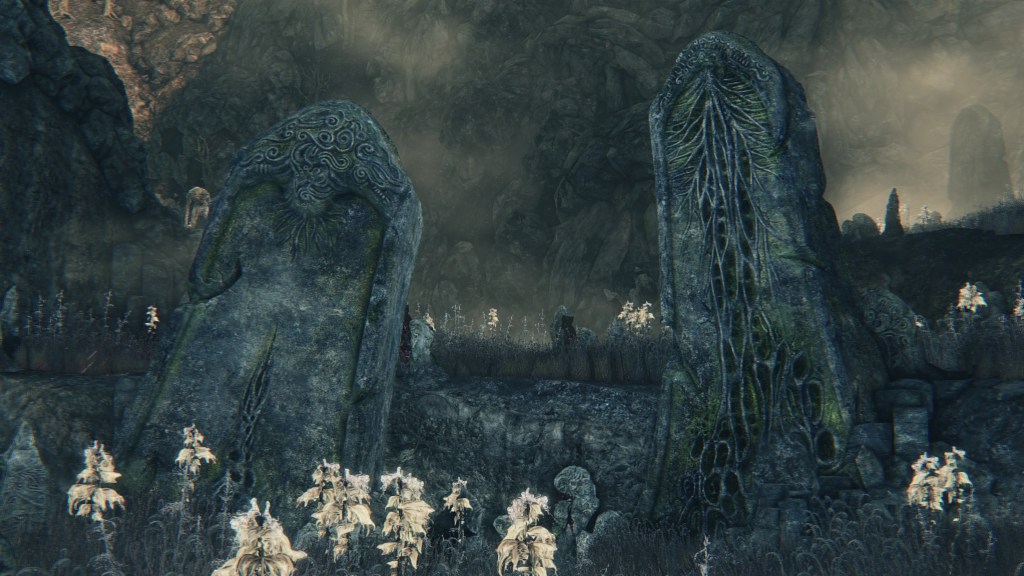

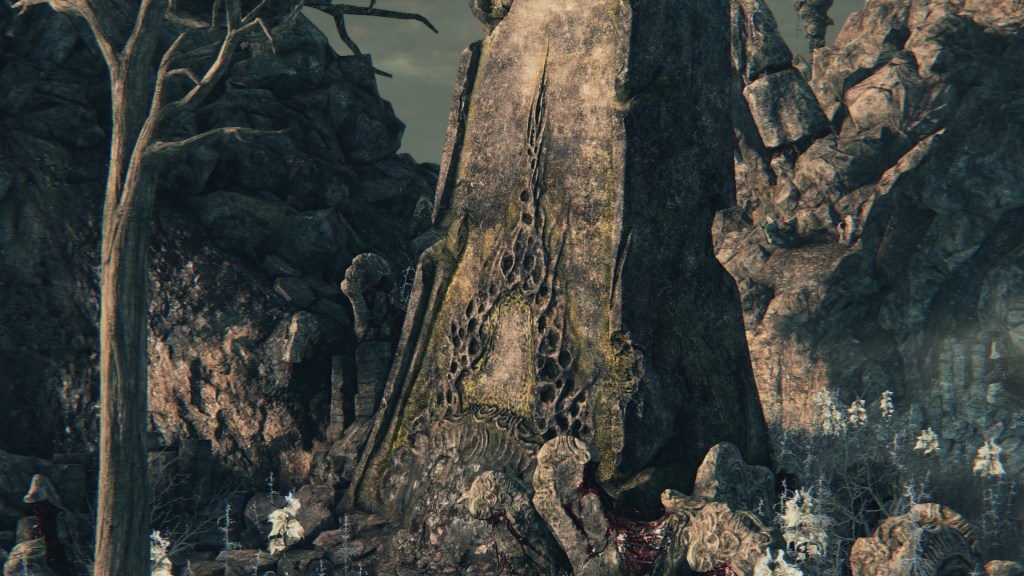


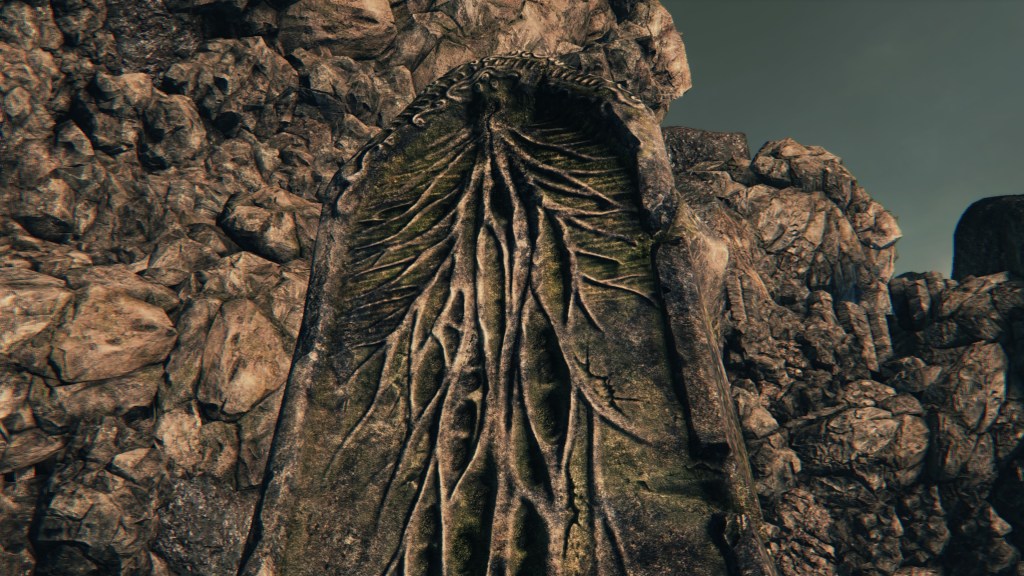

As to specifics, it is Loran clerics who carry the coldblood flowers in all their states, so they were unquestionably the ones behind this star flower project. Regardless of whether it was truly the moon’s blessing, the phantasms sprouting flowers seems to be thanks to their proverbial seedbed’s relative darkness in the caves, strengthening the deceased’s connection to the arcane and thereby bringing the mind some enlightenment. Such progress alone would encourage Loran’s continued cooperation with the Great One for babies, though it is imperfect and the flowers are struggling to survive in the poison swamping their soil. Setbacks like these can be preempted by obtaining runes like Great Deep Sea to protect them, its presence there doubling to reinforce this desire to cross the barrier between man and the cosmos. As the Clockwise Metamorphosis rune looted in the same area indicates, they were still in the early stage of this grand dream and must accept short lives for eventual longevity.
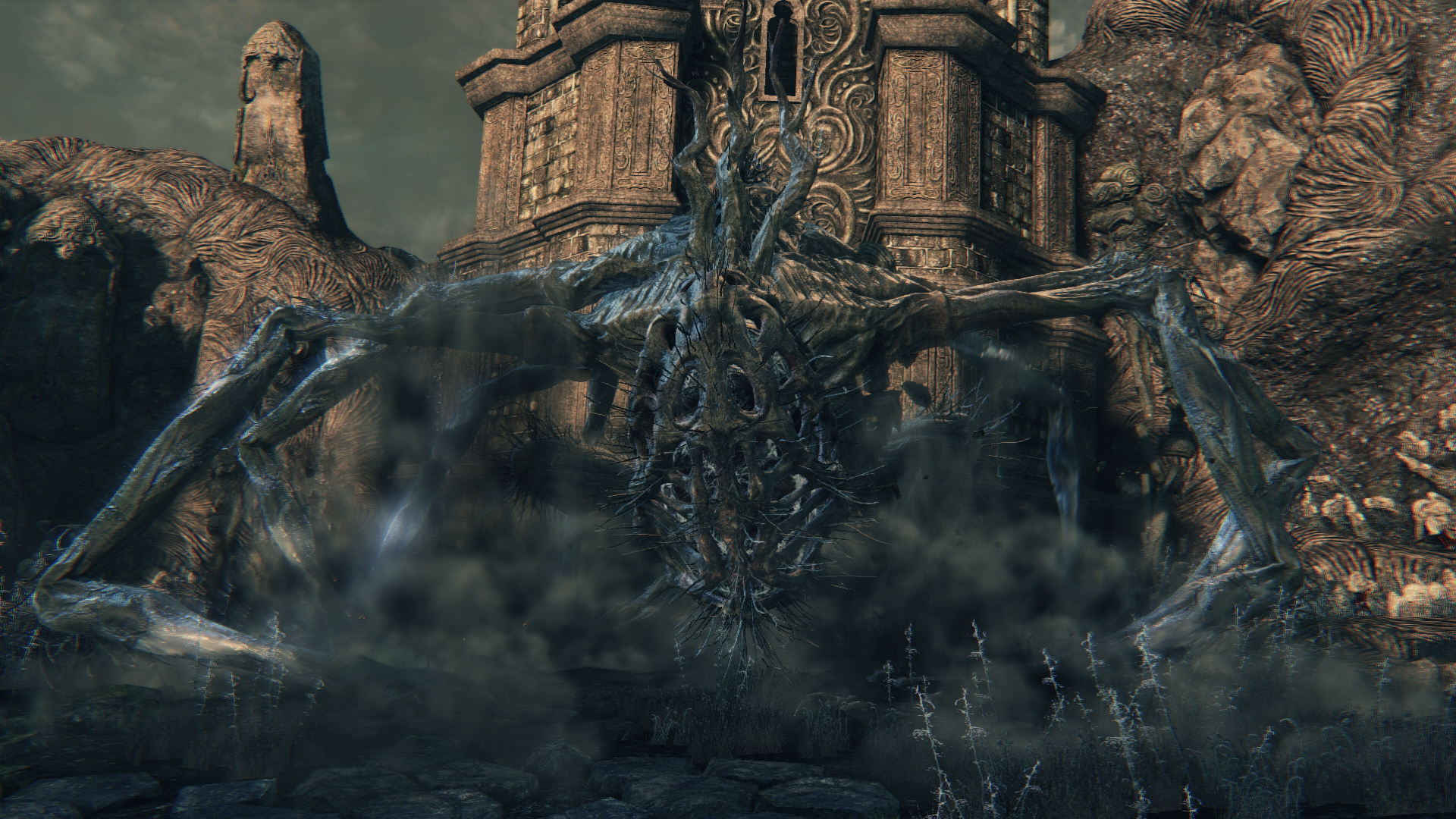
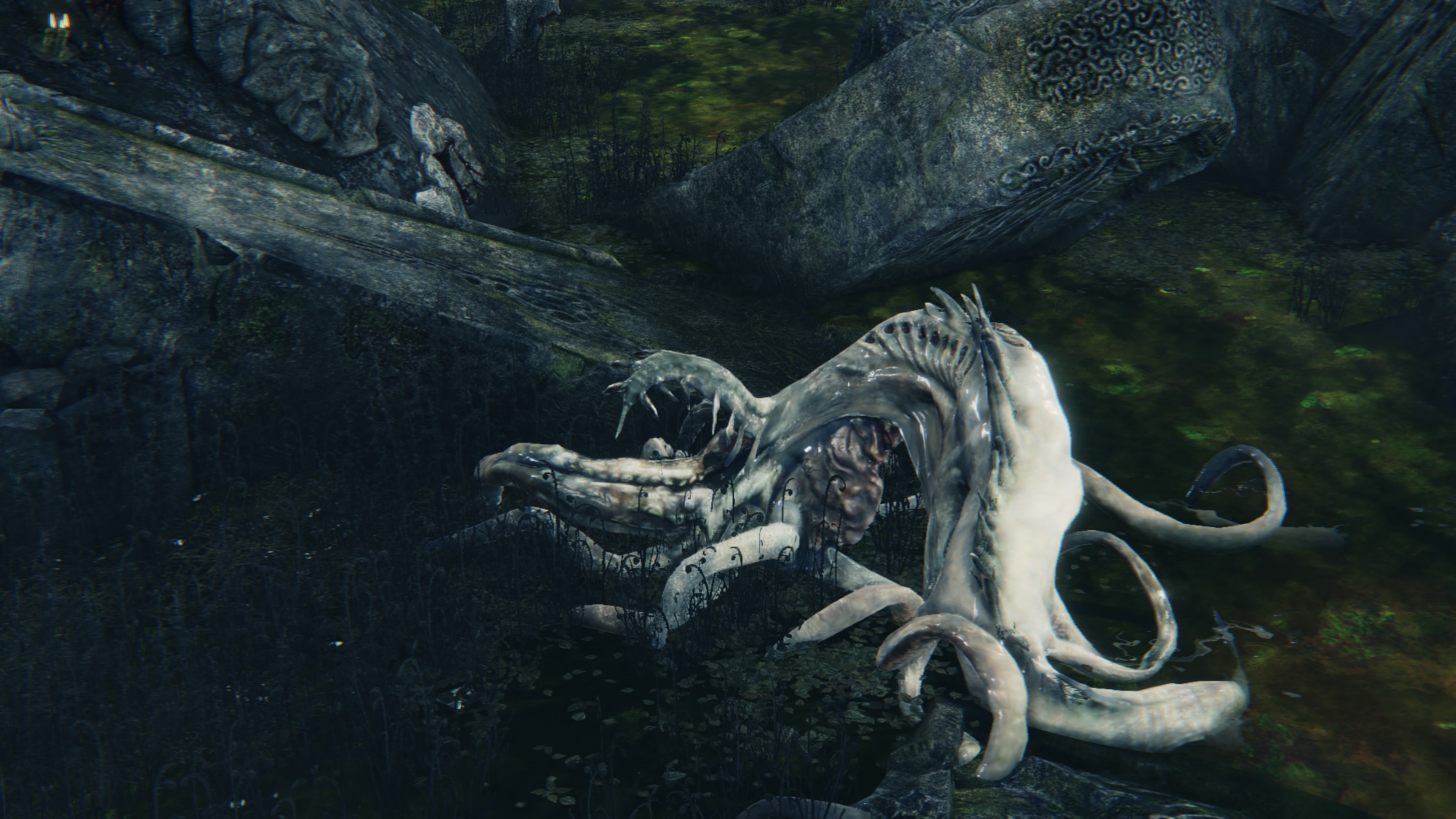
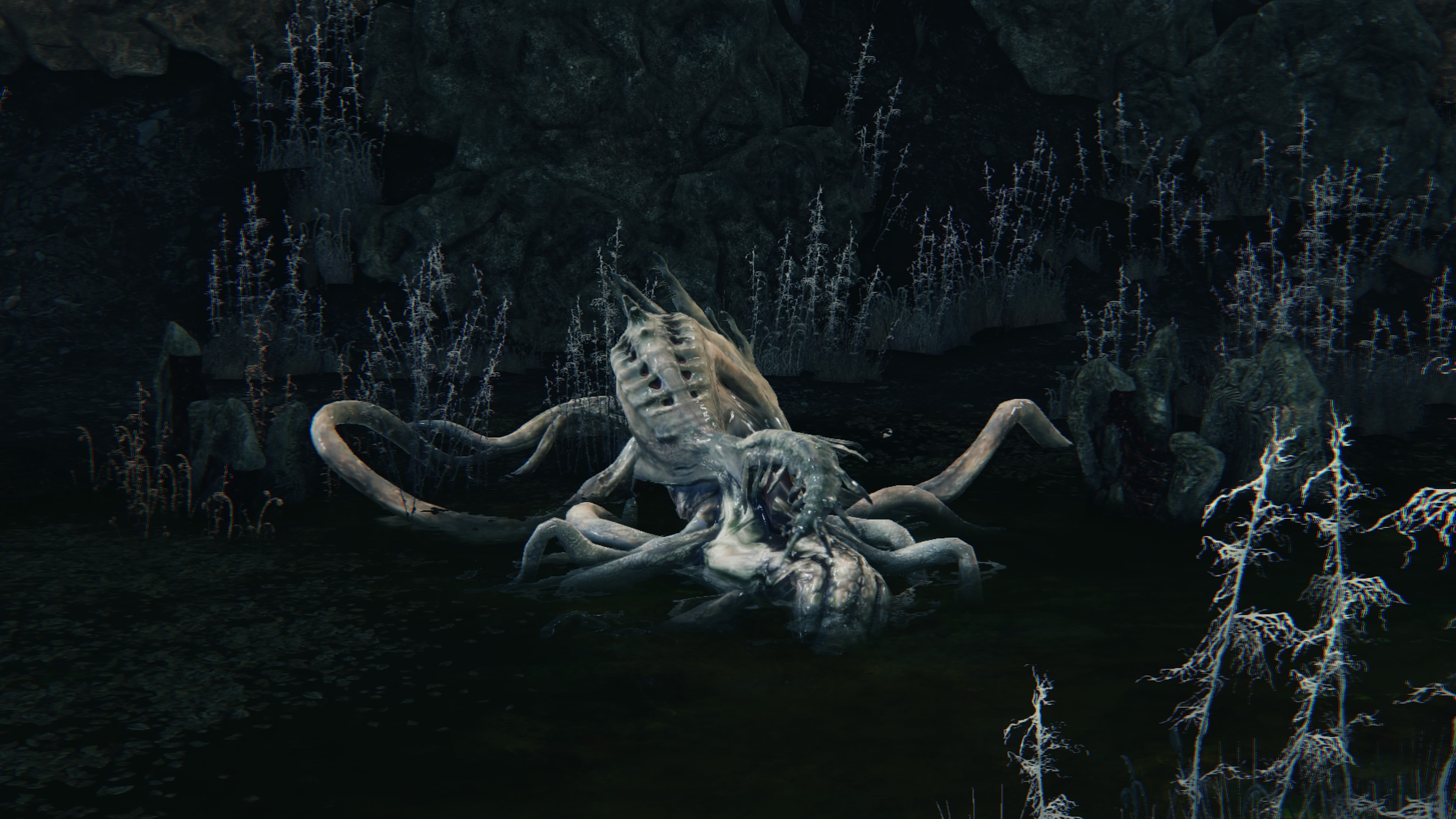
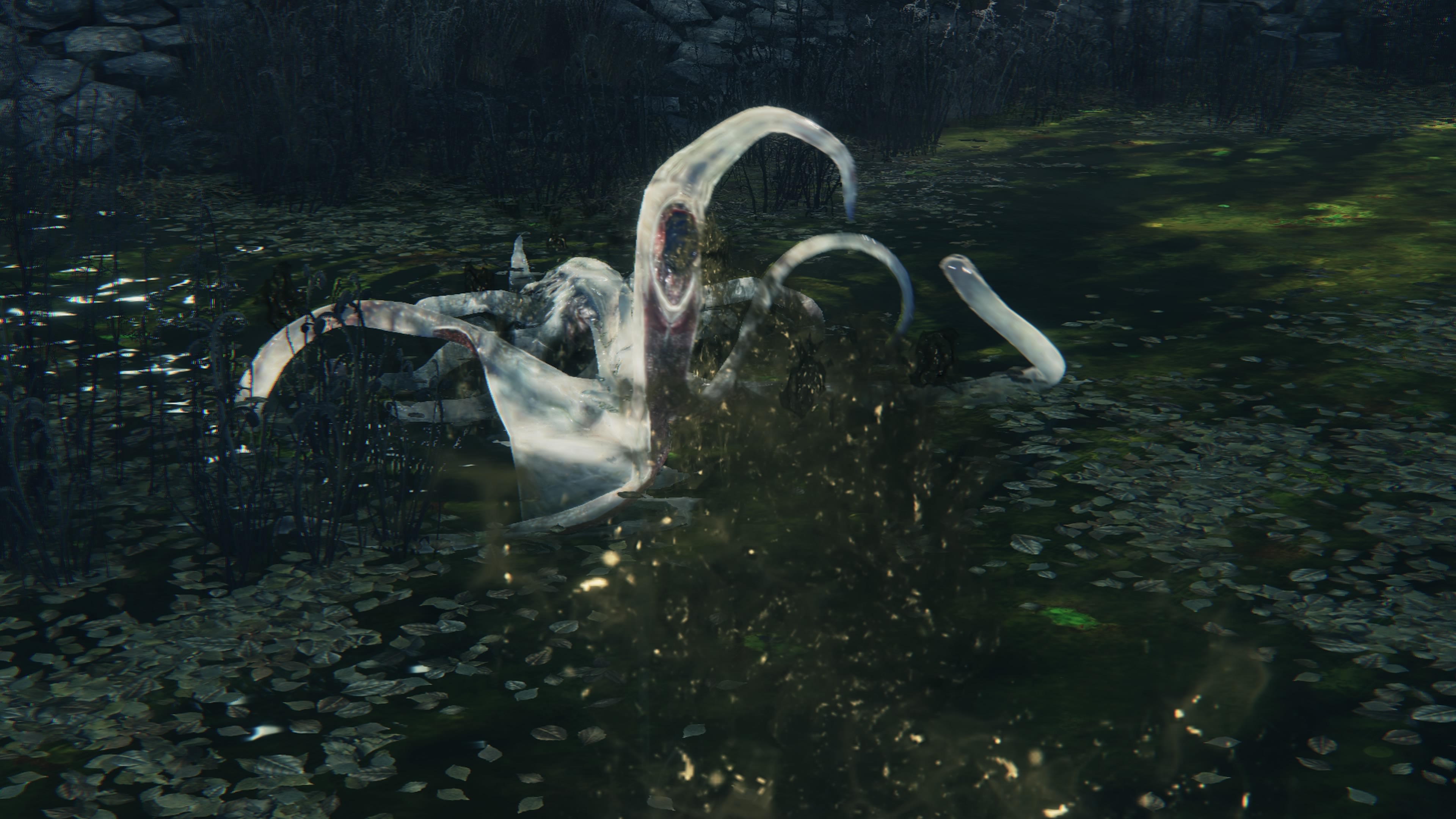
The aforesaid poison swamp is a byproduct of this trial and error. The crawling ones of the Nightmare Frontier are tentacled monstrosities, having long, slender bodies with smooth skin befitting a more aquatic habitat. And yet, there their pale forms are, on dry land, wallowing in the toxic waste they excrete. The reason for the waste appears to be because of something wrong with their bodies. Occasionally, they will open their underside to reveal messengers bursting from within, positing attempts to produce some manner of progeny despite faults in the process. This brings infant Great Ones to mind, but appearances and certain weaknesses notwithstanding, the crawlers, big and small, aren’t considered kin and possess no more than thick blood. They aren’t the products of partial enlightenment in the traditional sense and show far more defects than anyone on the road to Great One status otherwise owns. In that case, perhaps Loran artificially engineered people into becoming these monsters, the purpose evident from their “brood” and the totems to Flora surrounding their swamps.
In short, the crawlers were likely one of the country’s projects to produce an infant Great One to offer up to the moon. Unable to transform humans into Great Ones outright, the idea was to instead make an entity that could convert their own spirits into an infant. If the resulting creature succeeded, Loran would harvest the child and immediately bring it to the tower. When this failed to materialize, the monster was left to squirm in the valleys, failure after failure kept around in the small hope that fortunes turned and they did produce a proper infant. This has sabotaged their dead who do show progress with inheriting phantasms, which only highlights the stagnation to the whole process. The Clockwise Metamorphosis rune lies on a body ironically swarmed by a bunch of failures, reinforcing the impression. The perverse transformations were growing pains, but there is a difference between exercising and amputating a leg. Loran simply wasn’t making much meaningful progress in their dealings with Flora.
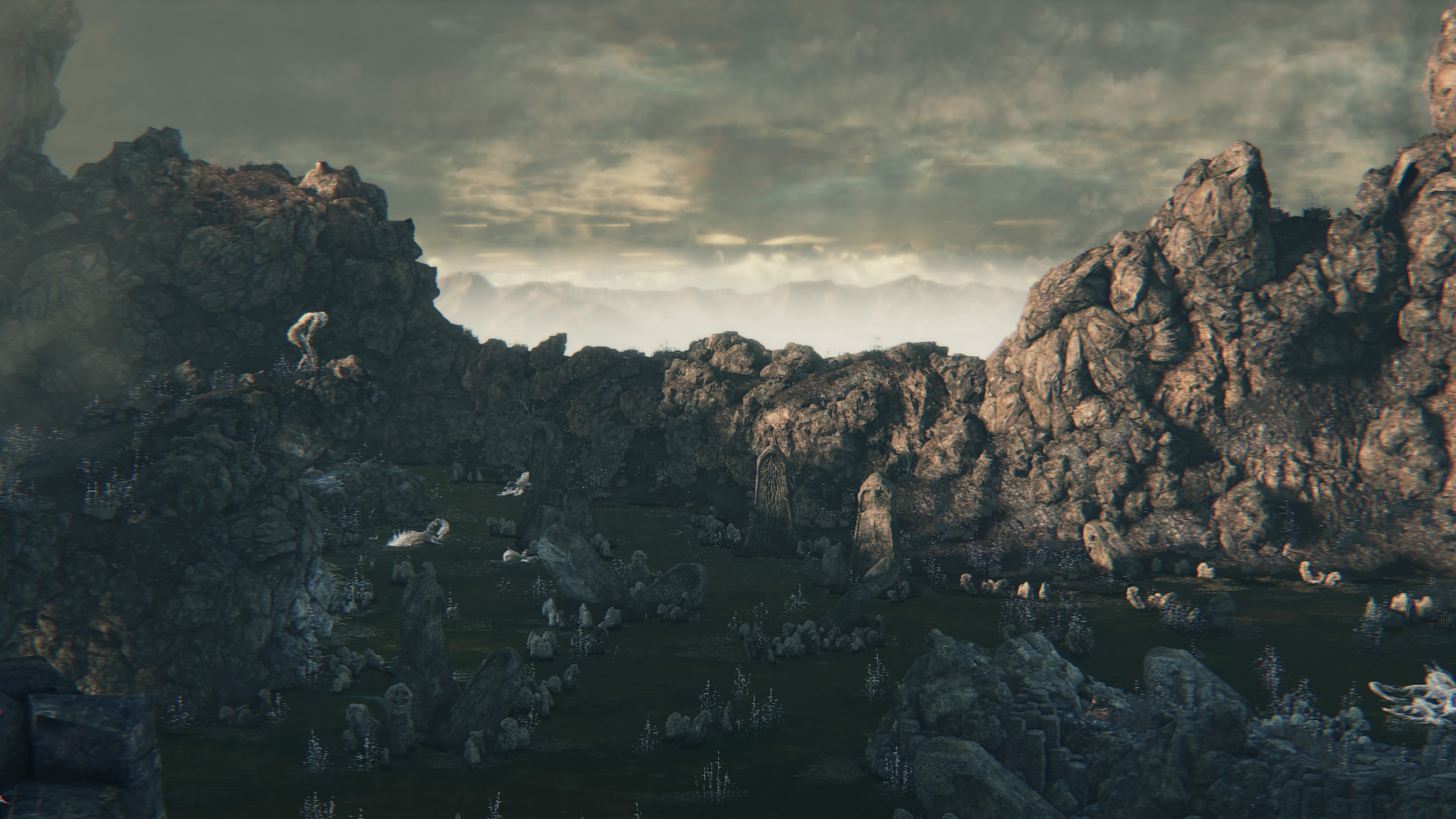
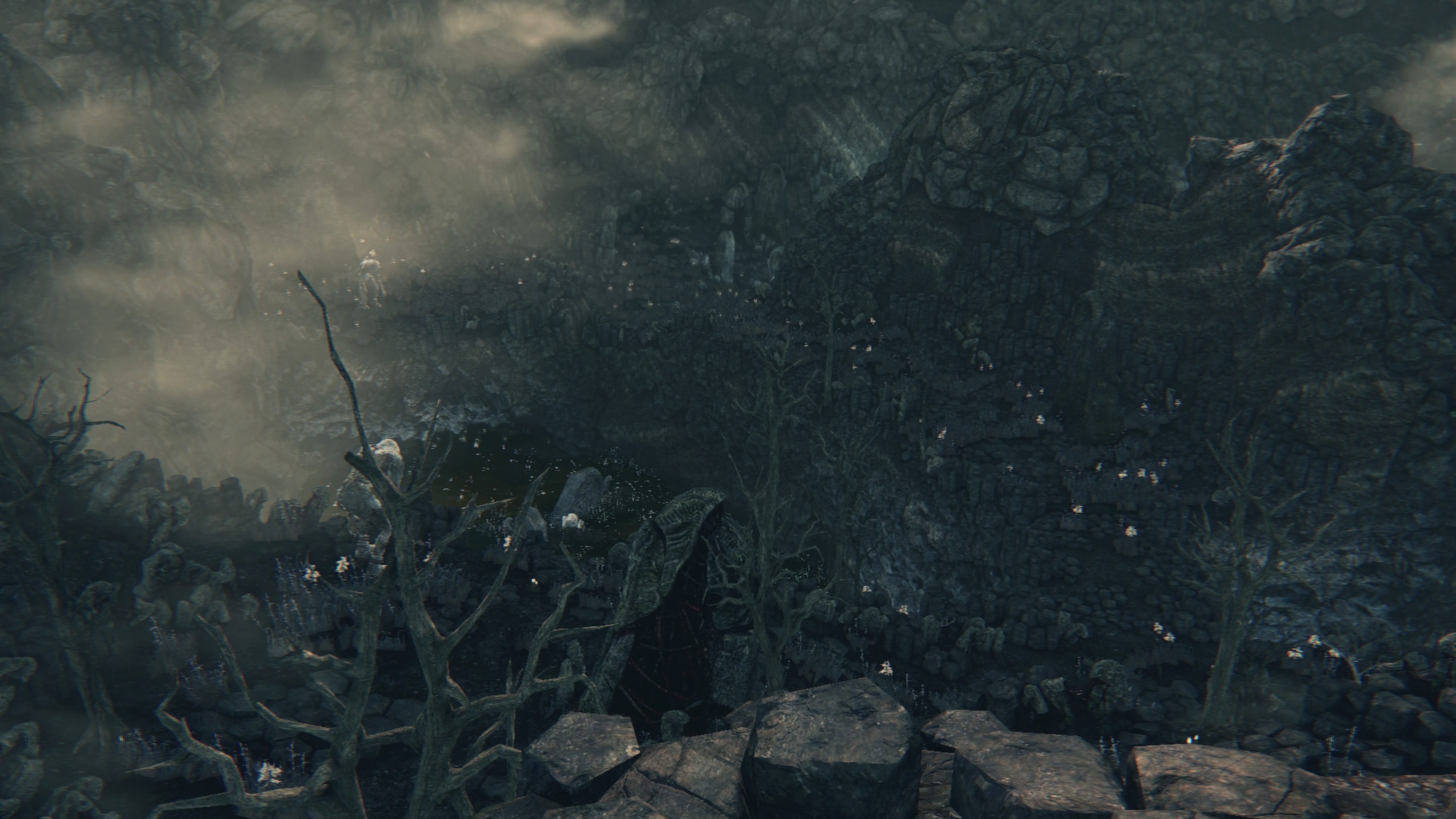
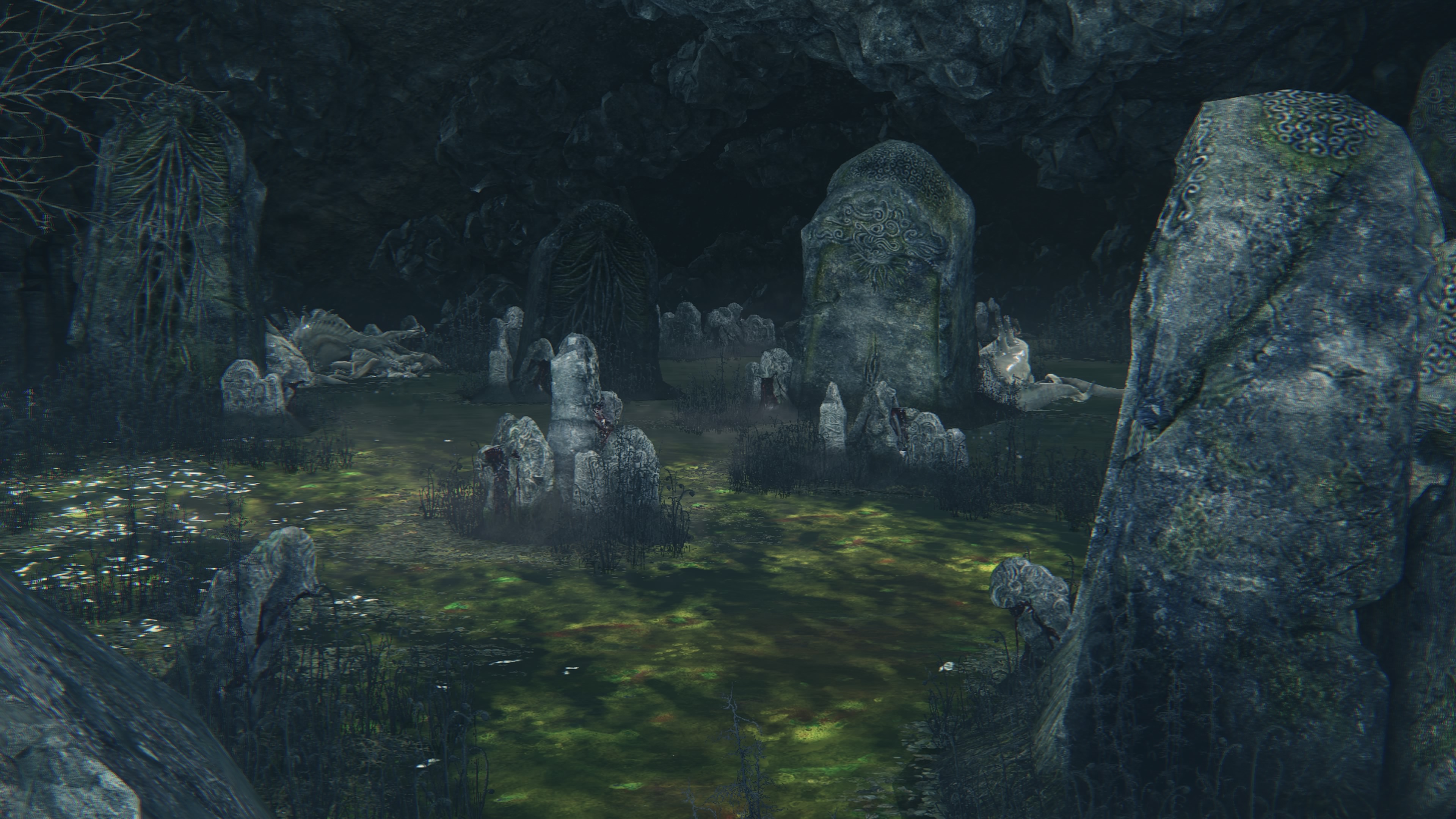
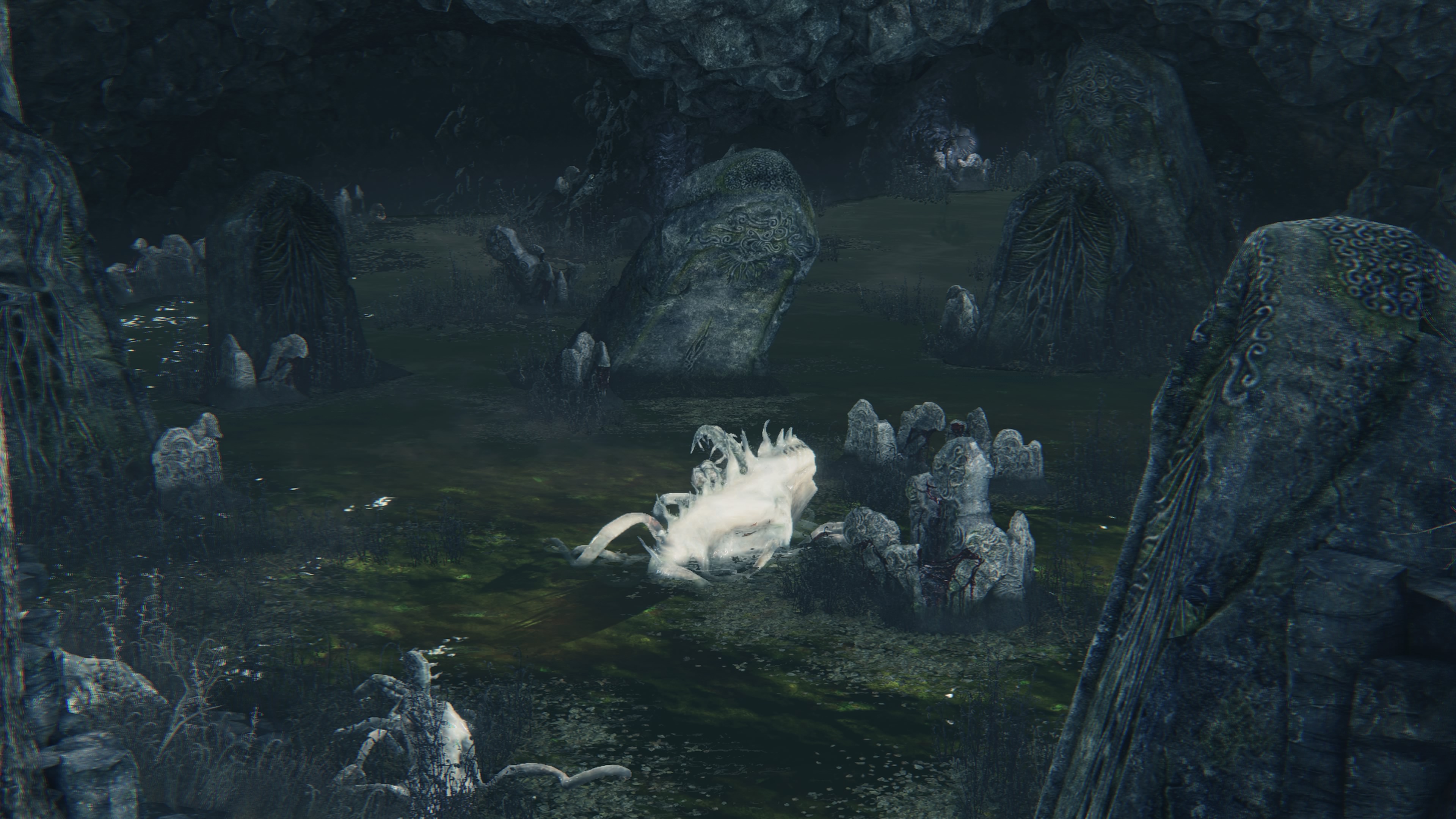
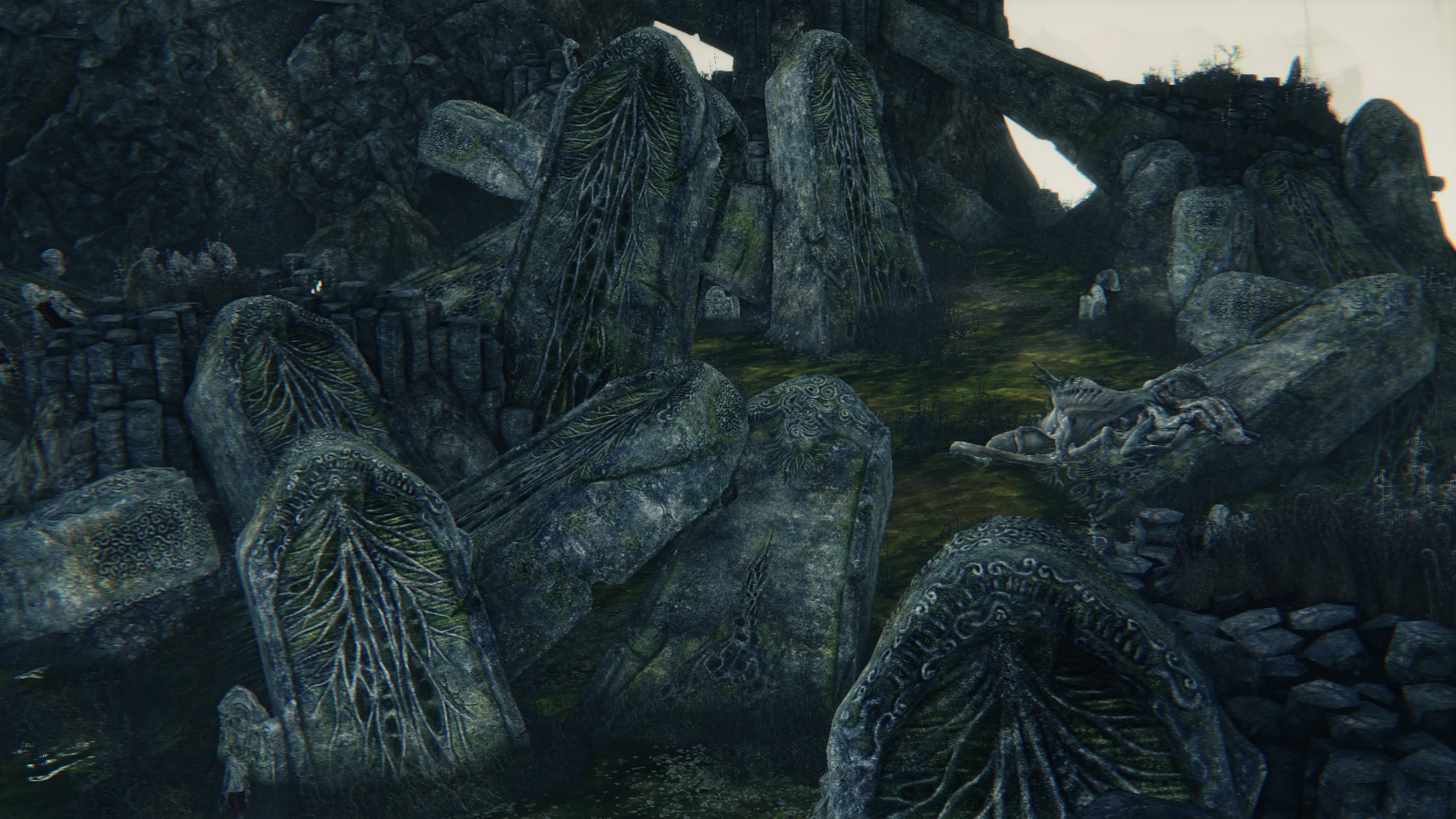
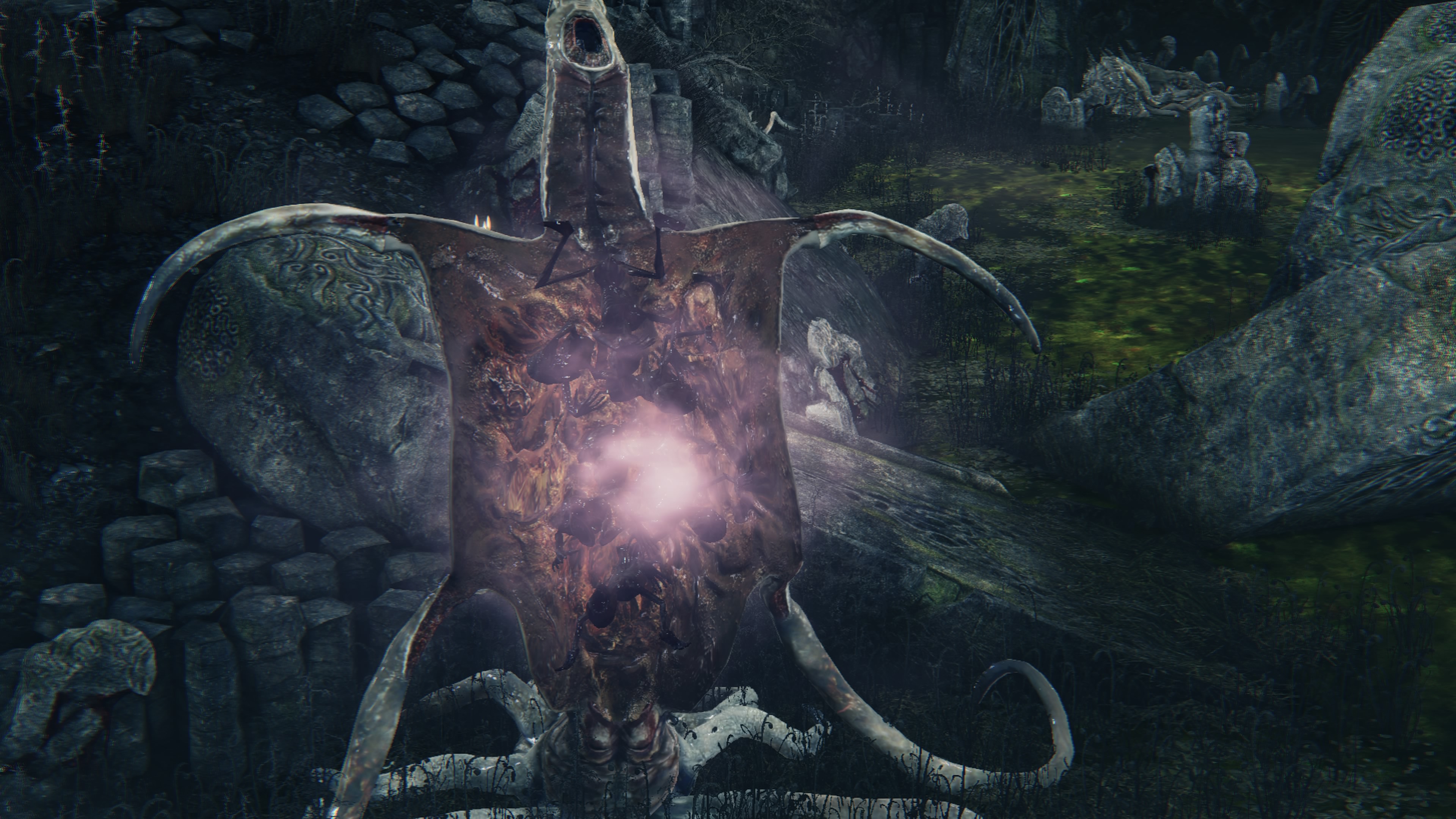
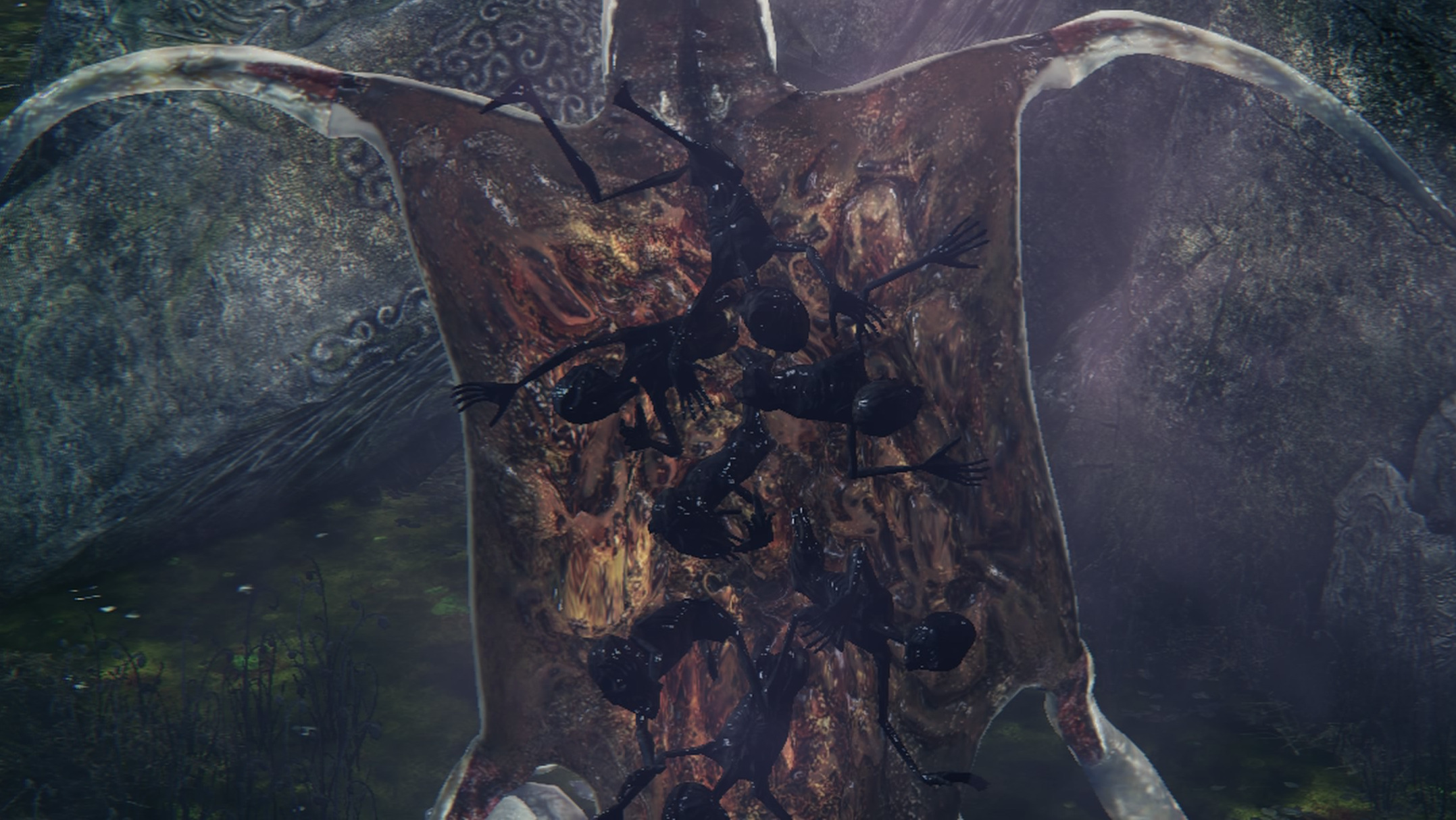
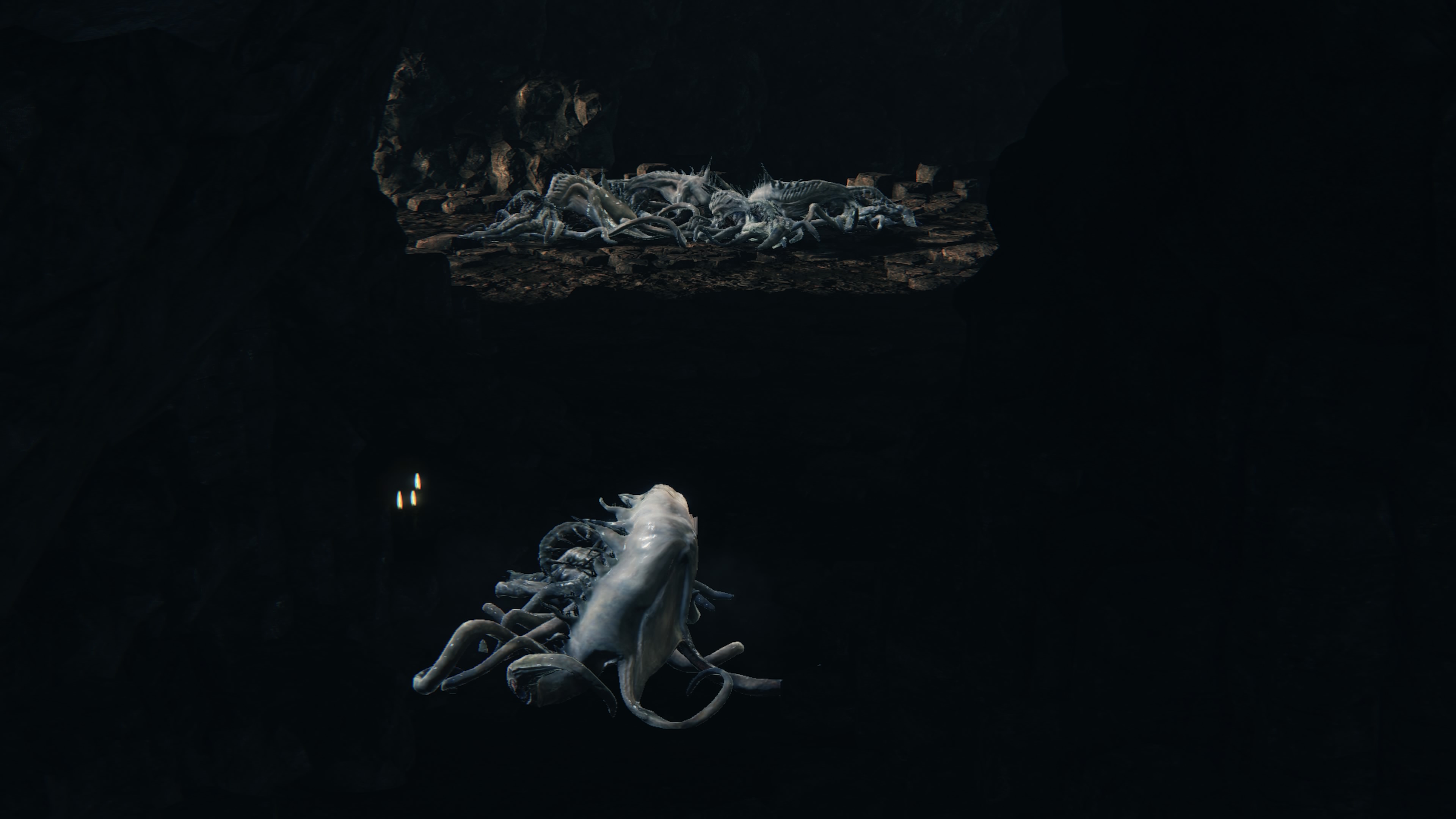
Of course, we do see signs of success cases among this den of beasts. Among the various tombstones on the Nightmare Frontier, several stand out for their more conventional style. Although we cannot examine them closely from their place high atop the mountain peaks, concept art describes these as the “gravestone of an elder god” (旧神の墓碑) and thereby implies that the large monument marks an equally grand Great One’s burial. This is consistent with the Amygdala roosting atop the tower, as well as the boss encountered again in the Loran dungeons. Even if they failed to become proper stars, some amidst the men and beasts did rise to the next level. The elder gods buried in the Nightmare Frontier especially may have been products of the experiments performed there in relation to Flora. With their example as the ultimate “proof” that the Moon Presence could enlighten them about the divine mysteries, Loran had every incentive to continue pursuing a Great One child for that revelation to reach the masses. It would be another misunderstanding, but clearly it benefited at least a few.
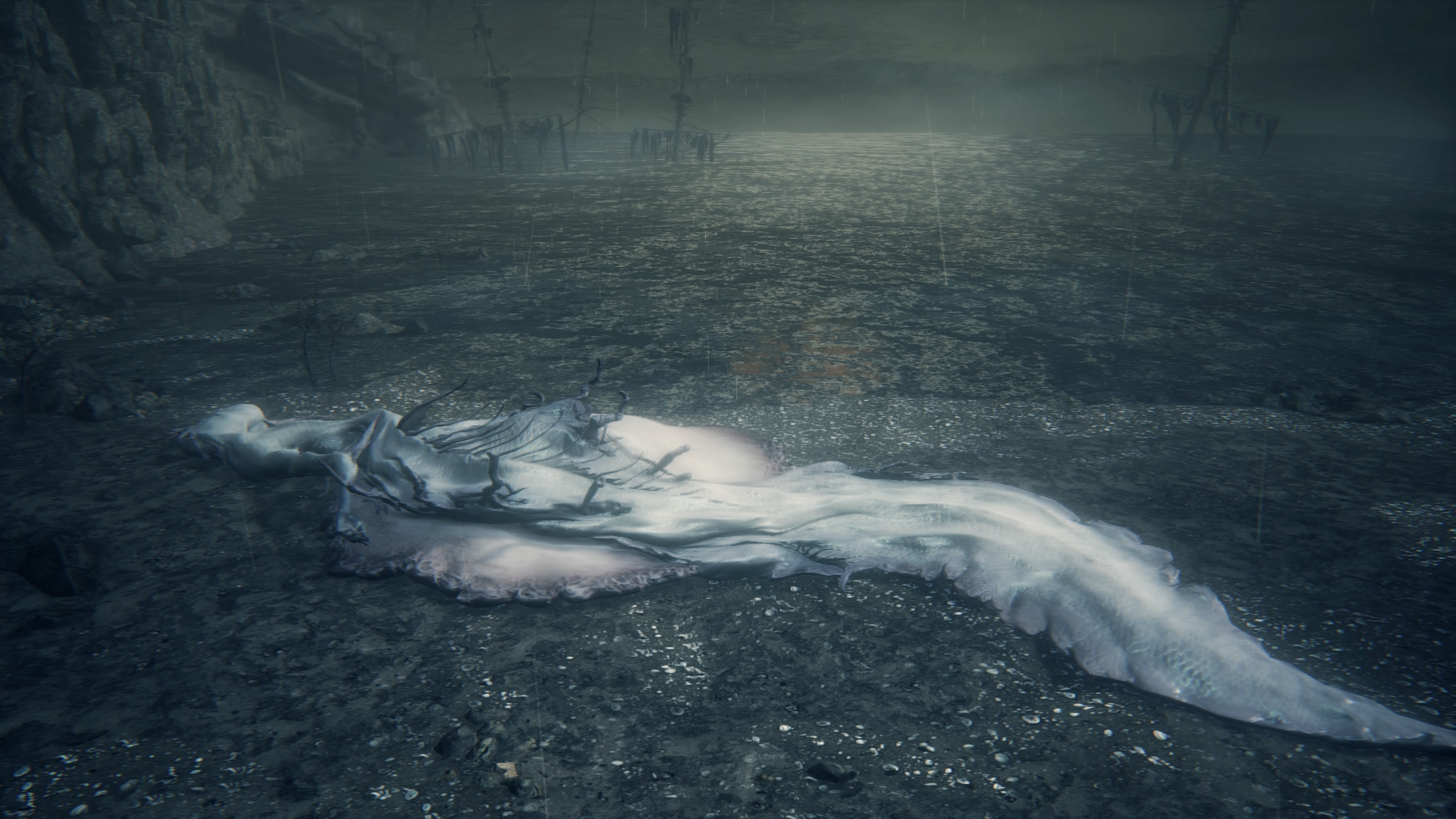
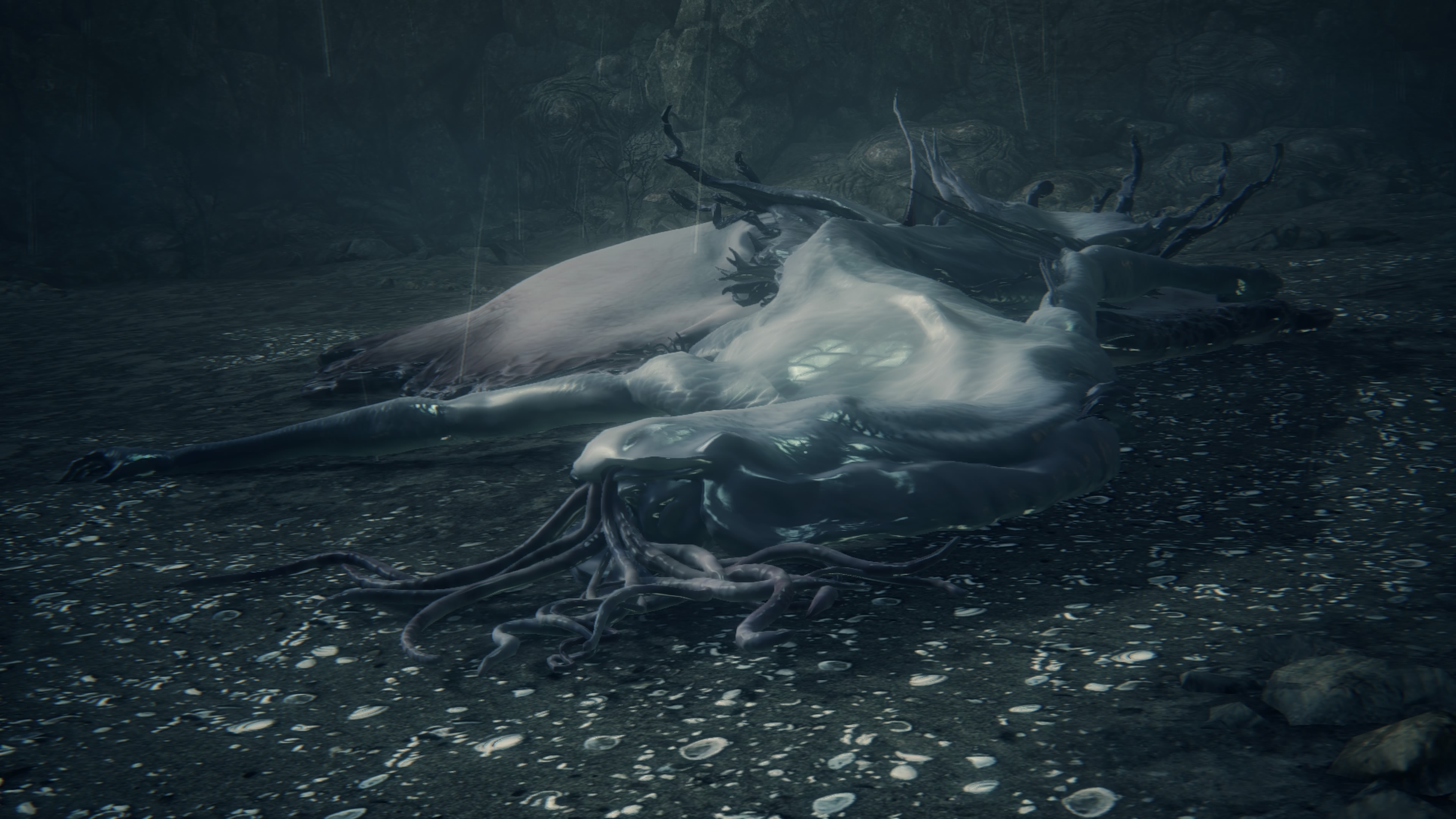
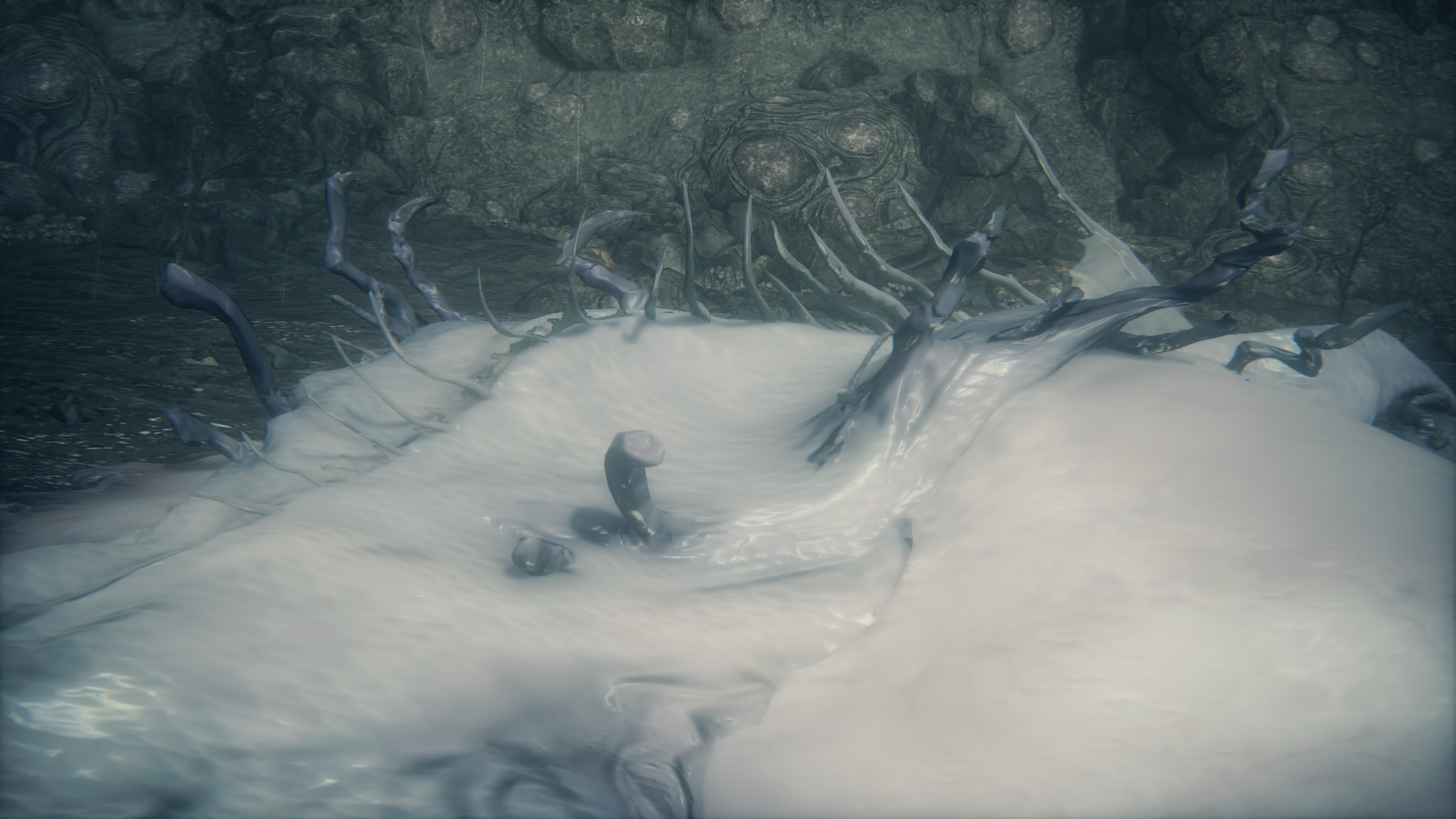
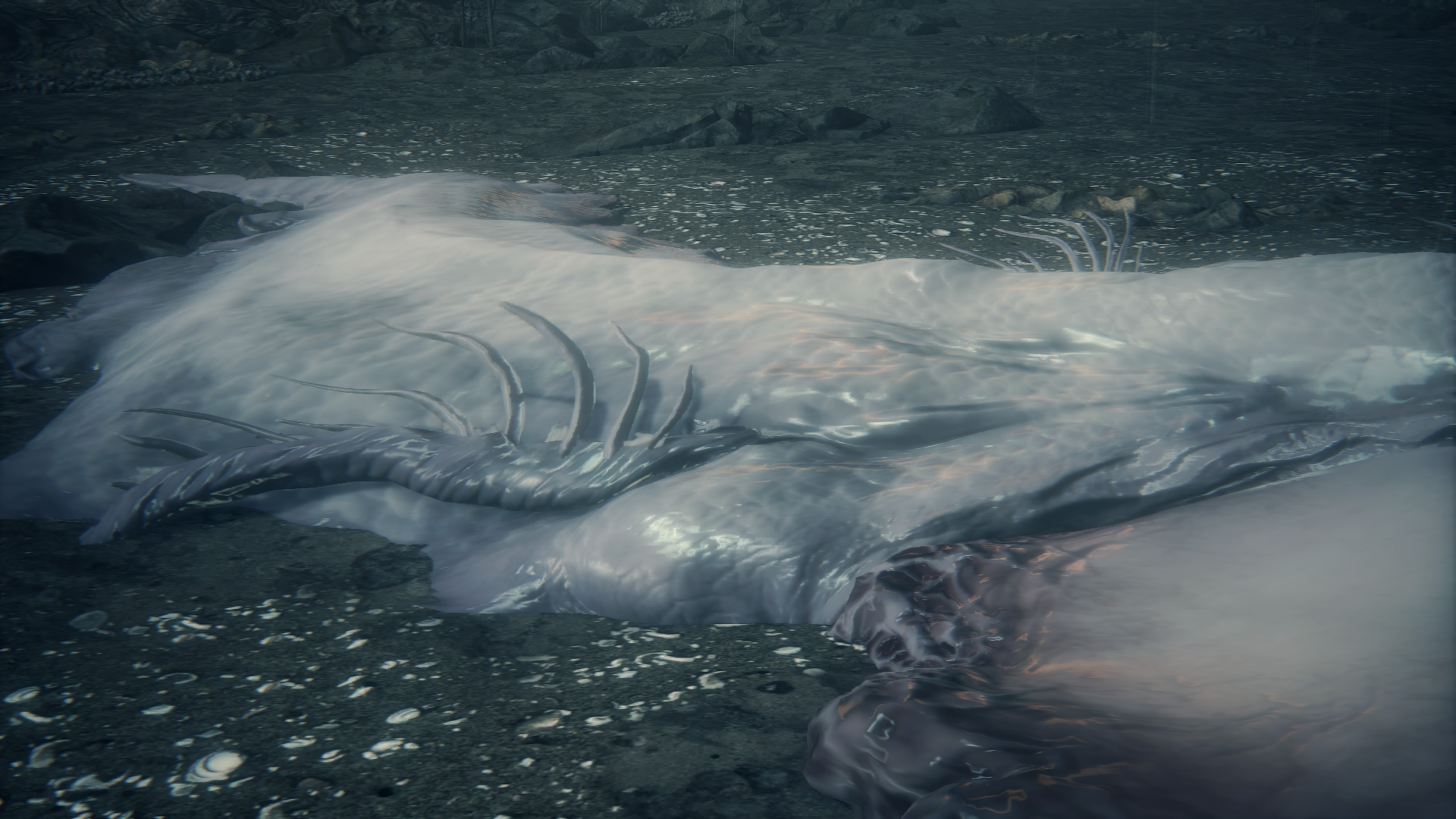
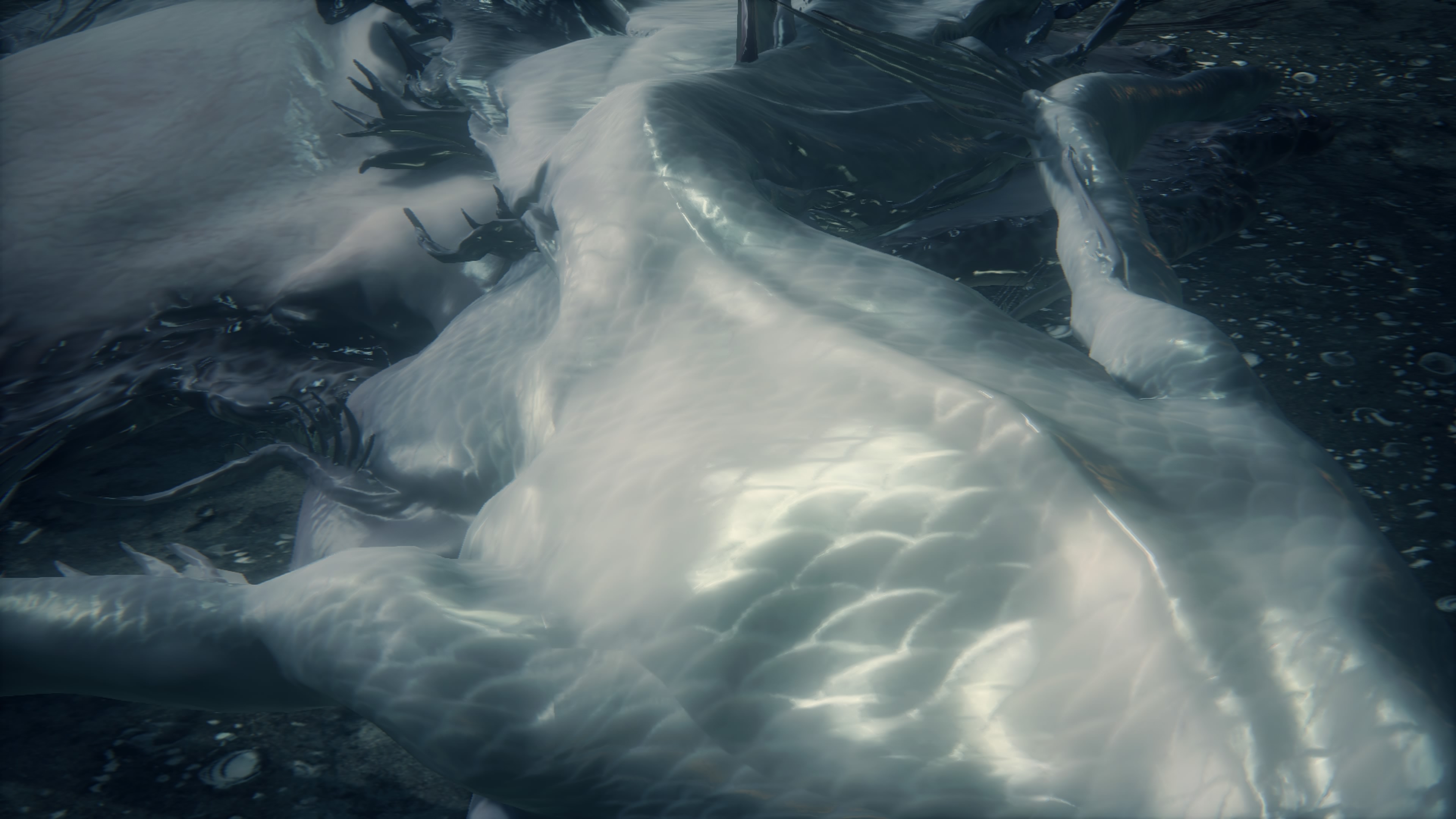
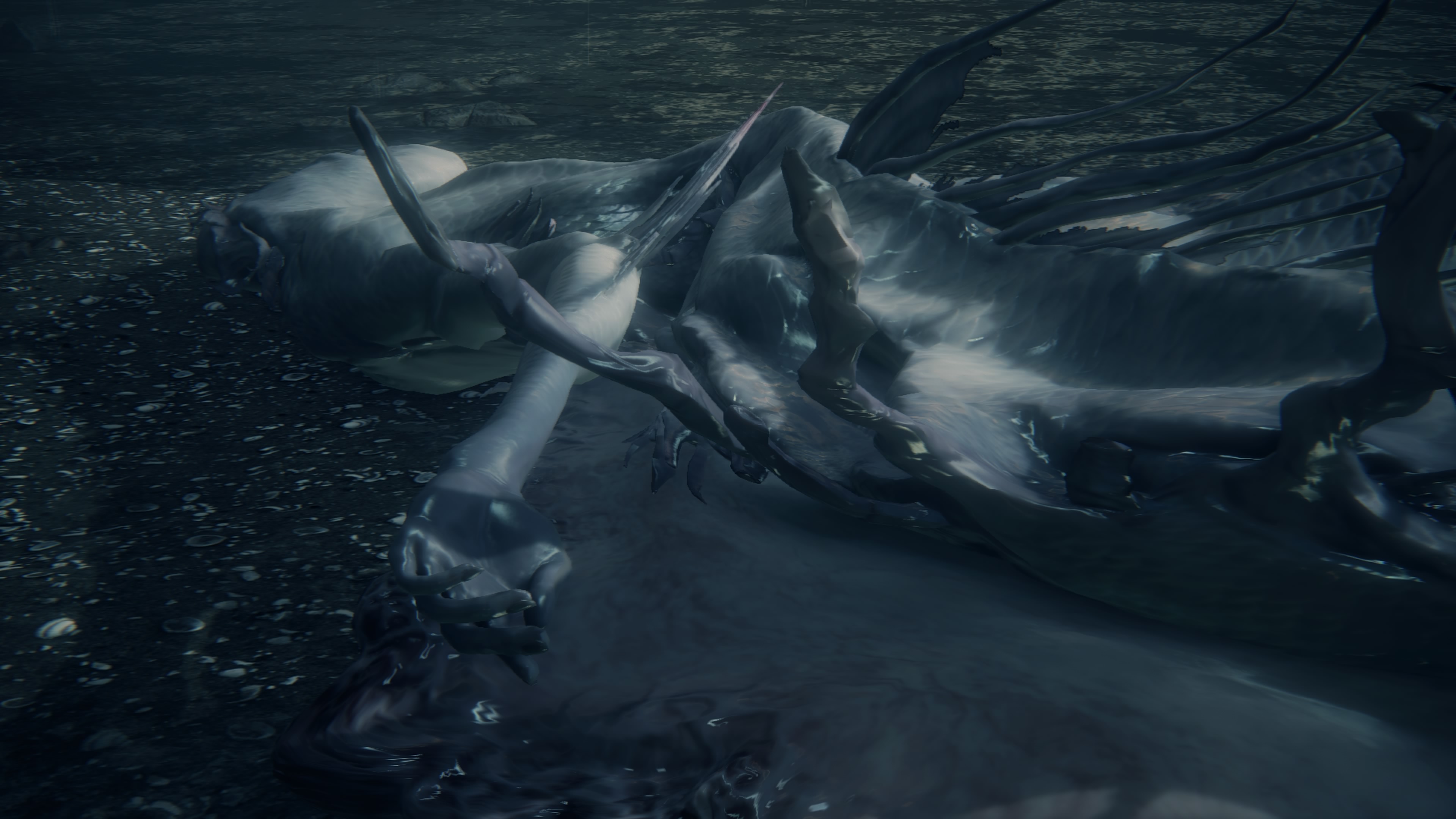
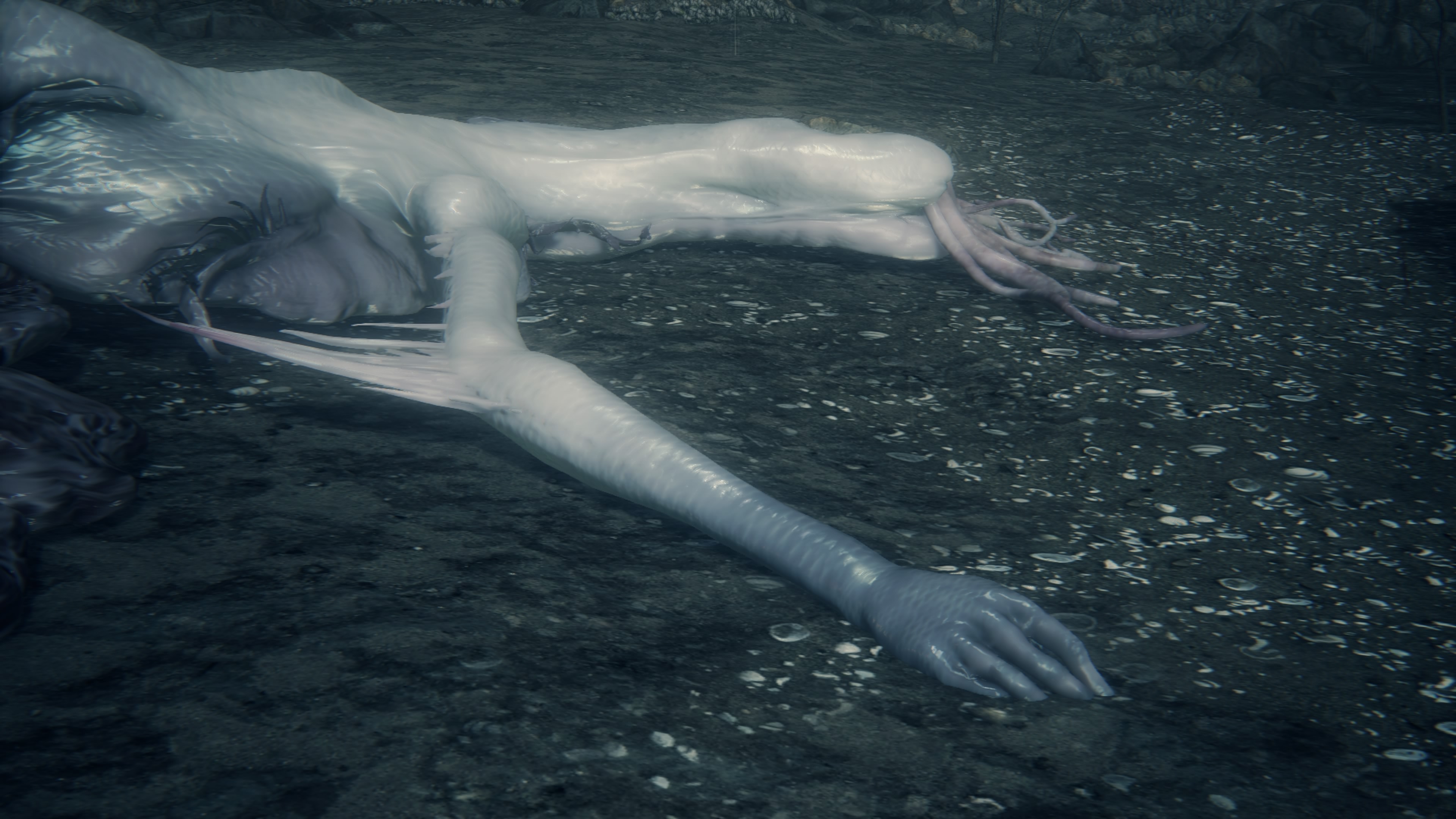
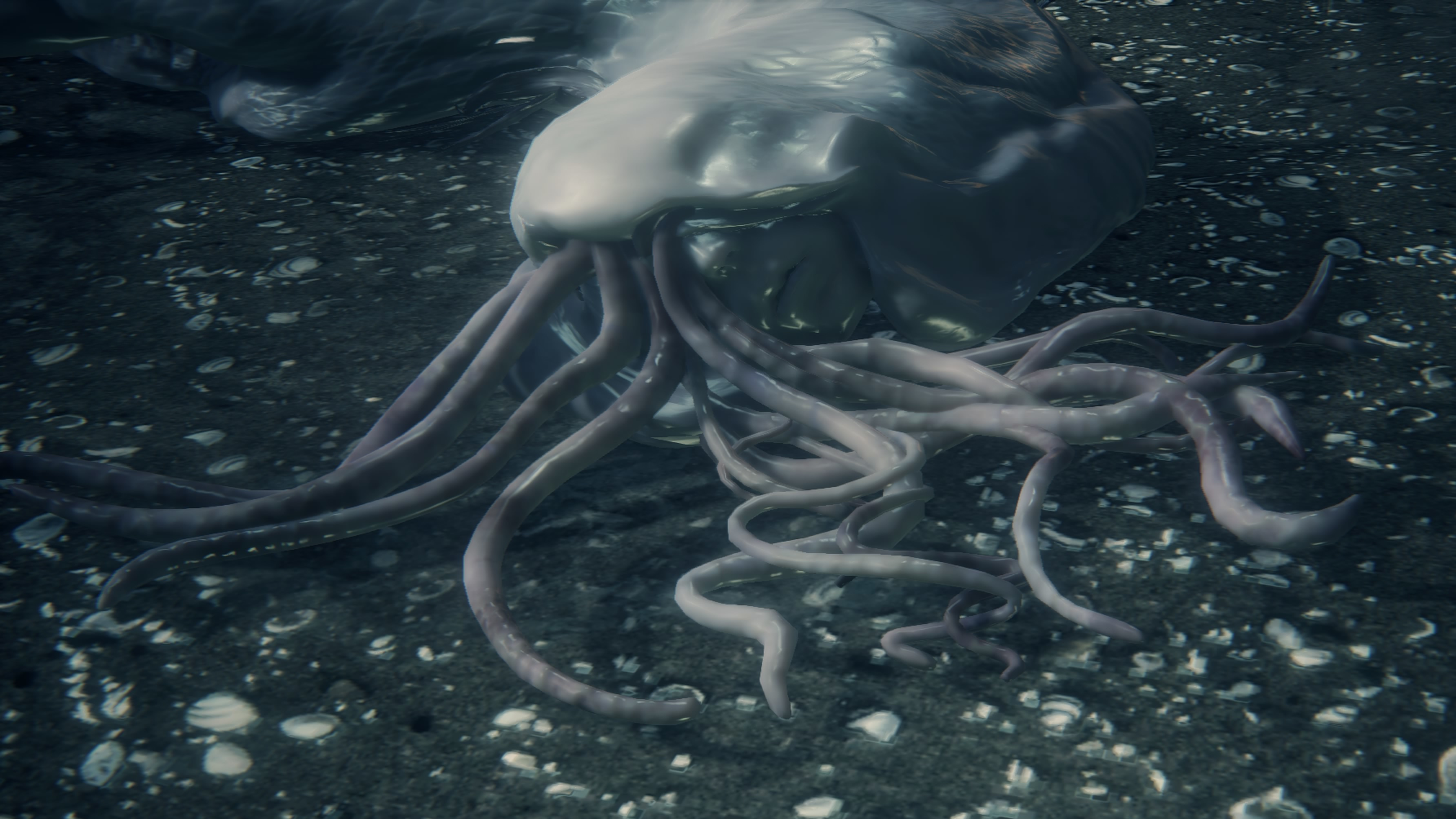
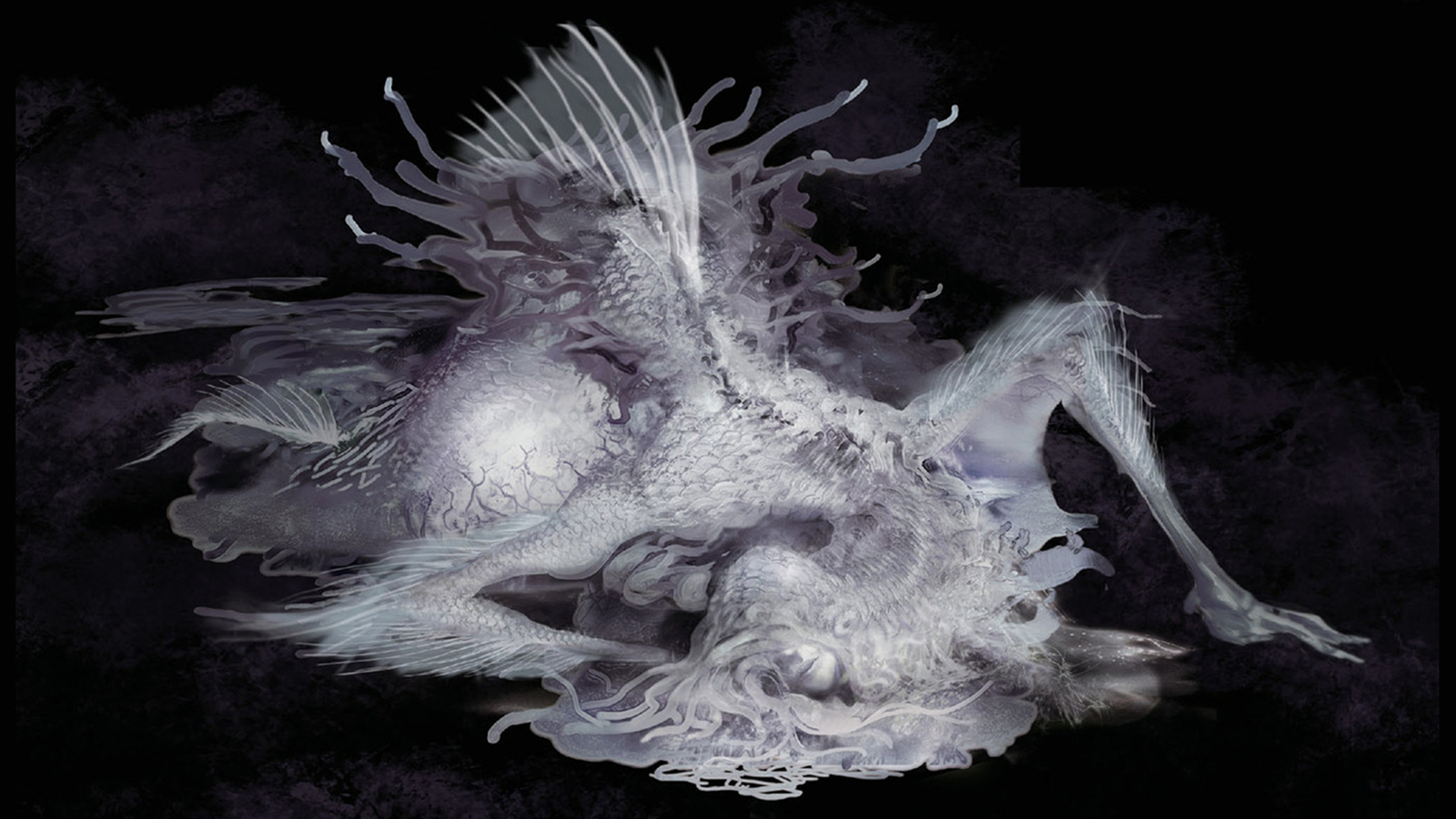
Kos is a particularly aquatic Great One, her corpse found on the shoreline with a pale body appearing more like a fish or jellyfish than anything human. Nonetheless, close inspection reveals humanoid arms and even a face beneath all that piscine element, and her existence on the ground world — even if, admittedly, recreated in the simulation of the Hunter’s Nightmare — rather than amongst the stars betray her as an “abandoned” Great One like Ebrietas. Kos’ main credit to fame is the infant Great One she successfully birthed, the orphan we encounter. In that light, she can be viewed as the “perfected” version of the crawlers. Kos may well have been one of these test subjects, only to become a proper Great One herself by the end of it. Her apparent infatuation with the ocean may well be due her background in a hot, dry desert. A former citizen of Loran would have seen the change in climate a godsend, disappearing deep beneath the waves where she might enjoy the cool, wet abyss for who knows how long.
Another possible success case hides in cut content. As with other enemies related to certain bosses, the Loran silverbeasts are internally labeled as the kin of another silver beast (銀の獣の眷属) who doubles as a Great One. This “Great One Beast” (大いなる上位者の獣) would have been named Fauna, (銀の獣 ファウナ) which is the name used to describe the silverbeast “kin” (ファウナの眷属) in other parts of the game files. In other words, there is no doubt that Loran silverbeasts were initially intended to be derived from this Great One boss, presumably as humans “enlightened” from firsthand experience with that beast. This would explain why these beasts nonetheless possess silver fur, a color otherwise associated strictly with the enlightenment seen in Great Ones and their kin. It also explains their relative intelligence at a baseline, not to mention their ability to generate bolts like darkbeasts; looking at the boss’ animations, bolts were planned as Fauna’s primary means of attack. Overall, there is a clear-cut concept for a Great One to be responsible for the beasts infesting Loran.
The Loran connection may have always been intended in development. Cut content reveals that Fauna was intended as a boss for the Chalice Dungeons, though the exact dungeon remains ambiguous. One can certainly draw parallels between Flora in the final game and Fauna, both bearing Latin names used to classify the classic biological kingdoms of life: plants and animals. If one originated in Isz, then the other would logically suit Loran. If one lay seated in the heavens, then the other would walk the earth. The concept of a Great One Beast also isn’t so odd. If beasts evolved into men by acquiring intelligence, why can’t they hyper-evolve by acquiring super-intelligence? It is easy to imagine a man finally achieve enlightenment in the course of degenerating into a beast, the resulting beast becoming a Great One. The silver beast’s “kin” would then be further proof of success, albeit to a far lesser extent. Fauna might thus serve as a role model for Loran, pursuing transcendence through beasthood. This beast remains on the same level as Kos or Ebrietas, but it is still one of the great higher beings.

However, there is no trace of Fauna in the final game outside of its supposed kin, who may no longer be intended to bear a direct connection. After all, their unique traits already serve as the proof of concept for Fauna’s transcendence, so it is possible that the Loran silverbeasts are simply those who independently achieved an imperfect transformation, similar to the brainsuckers for traditional kin. Perhaps Loran did have individuals who became Great One Beasts like Fauna, but this doesn’t necessitate that Fauna exists, or ever existed, within the dungeon. The idea of a Great One Beast arising as the ultimate darkbeast, even if doomed to be a mind and body trapped on this mortal coil, remains purely theoretical. If any human of the desert achieved success, they became one of the stars, or Amygdala, or Great Ones like Kos, not a beast.
Suffice to say, the entire quest for Great One status was another fool’s errand for Loran. None had evidently succeeded in providing Flora with a baby, leaving their longstanding communion a waste of time. In the meantime, everyone else was becoming some manner of beast. It is no wonder that the entire country of Loran collapsed soon enough, doomed to be forgotten beneath the sands until that ocean rolled in and helped revitalize the land into the forested mountains and valleys we know today. Kos, for one, welcomed this change and indulged the water, no longer needing to cooperate with Loran’s authorities on their baby-making project despite having the capability; when the Great One did inevitably seek a child of her own, it would be on her own terms. But at this point, she would have already experienced a long dead civilization, similar to Ebrietas. There was nothing keeping her there, especially when new people were calling the land home.
But It Does Rhyme
As the country was gradually buried, the Pthumerians expanded out to incorporate the ruins into the larger labyrinth. Lower Loran was probably first to be converted into just another tomb complex, with the upper city added after it became part of the underground. Along with this, the actual main Pthumerian urban center was also built out, the first layer added since Pthumeru Ihyll’s construction. This section has become the Cursed Pthumerian Defilement, chalices retaining a portion of this arcane affliction capturing the Great Ones’ wrath. Any ritual with these corrupted holy grails results in our health alone being halved in the subsequent dungeon, so it may not be reflective of the actual curse experienced in these ruins. Nonetheless, it presents an idea of the kind of hardship the local residents live through because of the malediction.
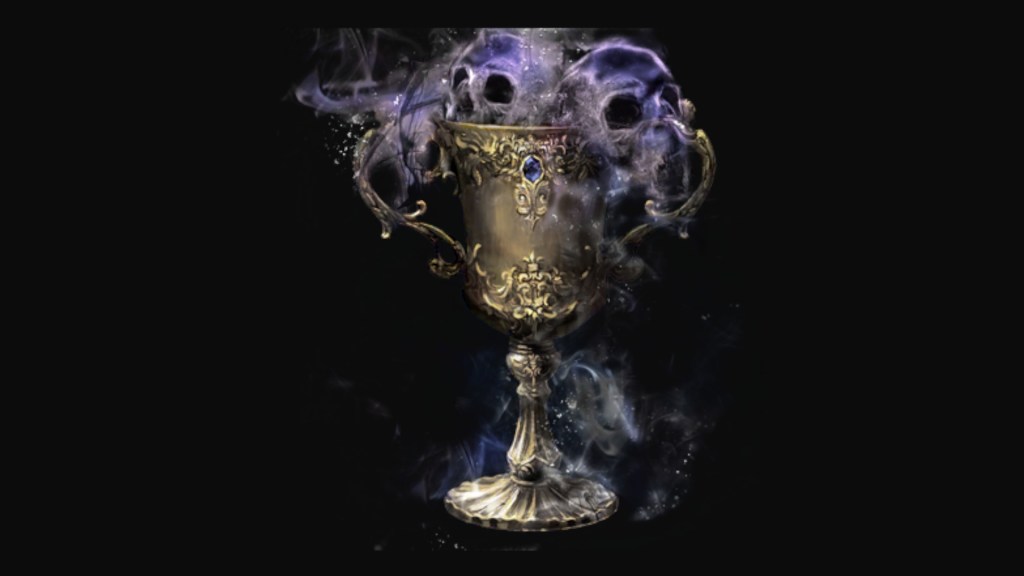
One of the Holy Grails that lift a seal on the underground ruins. However, this blasphemous Holy Grail is cursed.
A curse is proof of experiencing a Higher One’s wrath and a malediction, so special materials are needed in order to complete this ritual.
If tackling curses, seek the “Spawn of Loran”.
There have at least been attempts to appease the angered gods; exploring the three levels, we encounter the Keeper of the Old Lords, the Watchdog of the Old Lords, and Amygdala in that order, presenting the idea that Isz’s ancestral guardians attempt to satiate their masters in the cosmos with hunts dedicated to their intermediaries. Obviously, this hasn’t abated their wrath, assuming that their sincerity even reaches them. Even so, the oldest servants are cognizant of their masters’ displeasure with this tomb specifically. The “defilement” (冒涜) in question more precisely refers to blasphemy — some kind of sacrilege made against the divine. Their wrath is a response to some insult directed at them, real or interpreted. Still, the pertinent question is why that section of the tombs, and only that section, has felt the wrath of their gods. However, it is likely because of the tombs’ connection to Ailing Loran at Depth 4.
When entering the cursed dungeon or adding the curse to the Depth 5 root dungeons, we always require bastards of Loran for the ritual. The item’s description clarifies that it is a symbol of blasphemy and beckons the curse. This suggests that it is specifically the bestial spawn of man which blasphemes against the Great Ones. In that case, the Pthumerians of the cursed labyrinth must have also used the bastard in their blood rites. Why, unless something in the area inspired them? Expanding out Pthumeru in conjunction with incorporating Loran into the tomb complex, the builders would inevitably come across the remnants of the foreigners’ research as they were connecting the two ruins. They were liable to take particular notice of the disproportionate number of beast babies in the fallen country. To then use such babies in their own ceremonies, they either plundered the vile spawn from the desert ruins or produced spawn of their own. Whichever the means, Loran assuredly prompted the decision.
One of the special materials needed for Holy Grail rituals.
Corpse of the spawn born in Loran, which was smeared in the beast disease. It is a symbol of blasphemy and calls a curse.
The blasphemed dungeon eats away at all due to the additional rite of “Curse”. The hunter’s HP will be greatly reduced, but you will also be able to discover the cursed blood gems that can only be found in blasphemy.
Considering how Pthumeru Ihyll offered babies to the gods as core to their culture, this holds ominous implications for the first settlers outside the capital. With the newfound separation from their leaders in the royal court, it is easy to see how these fringe trailblazers would be tempted to experiment with their familiar culture. It wasn’t as if the Pthumerians had cracked the code on transcendence for their whole race. Maybe the people of Loran had discovered something they dungeon folk didn’t? Maybe it wasn’t children more like kin that the Great Ones wanted, but children resembling beasts? Put another way, the soon-to-be-cursed Pthumerians confused degeneration for elevation in their own misunderstandings of these outsiders whom they retained limited contact with. They offered the unwanted children and, for their foolishness, were punished with curses. The irate Great Ones answered expecting progress, and were met with the greatest insult, something which no enlightened mind could mistake for a peer.
Loran’s legacy thus became a curse which apparently persists to this day, long after the labyrinth expanded up three additional Depths. We don’t find any bastards of Loran in the labyrinth, so the people there have realized their mistake and gotten rid of what brought on the curses. But by then, it was too late. From the purple wisps in the shape of skulls that the cursed chalices exude, it may have only been ritual blood drinkers who suffer the burden. But now, what is left of those spirits eaten away at by divine wrath have seeped into the objects and stonework. The blasphemers themselves permeate the entire tomb, spreading the curse along with doubtless their own resentment — if they must suffer, so should everyone else. For that reason the dungeon is identified as the defilement of cursed Pthumeru itself. The Pthumerians learned the wrong lessons from Loran, and unfortunate for the region, they wouldn’t be the last.

