
Preface
When I first started working on this topic, I didn’t expect it to be as enamored with the subject as I ended up being. Alken and Venn are two kingdoms that have a very simple dynamic fleshed out to an absurd degree, comparable probably only to Drangleic itself. While their duality mostly plays out through the disparate stories of other characters, it all ties back into one thematic whole that brings some much needed cohesion to the narrative and overall setting of Dark Souls II. (DS2) Much of this is thanks to the addition of DLCs and subsequent updates to relevant lore text, which do much of the heavy lifting. But there is no such thing as good writing, only good rewriting. DS2 has received its deserved scorn for lacking these elements on release, especially compared to its sequel Dark Souls III, (DS3) so I am satisfied with the developers at FromSoftware responding to these criticisms and refining the lore for their game at all, even after the fact. The end result is a far more compelling story of two countries than what we started with.

A House Divided
Alken and Venn always despised one another. The Ring of Blades makes a point of the two countries’ deeply hostile relationship in its description, each apparently becoming belligerent regularly if its inspiration from an Alken knight and boost to attack power are any indication. Both “Aaken” (アーケン) and “Vein” (ヴェイン) were also kingdoms with their own royalties, so this antagonism was as much a personal vendetta between families — nothing keeps a cycle of war going like a blood feud at the highest level. This further implies that the two nations existed close enough to come to blows, which begs the question: where can we find their territories? The kingdoms collapsed well before the events of our journey through Drangleic, but we can still locate their capitals thanks to the bell towers established during their heyday.
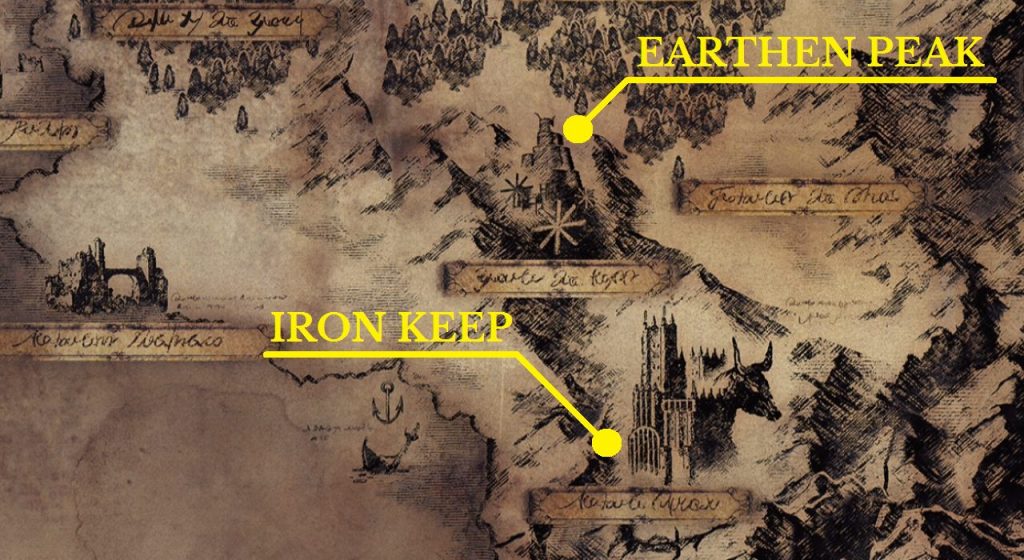
Belfry Luna stands at the Lost Bastille; Belfry Sol, at the Iron Keep. Luna houses the Bell of Alken belonging to the princess of Venn, who crafted small puppets to guard it. The same holds true for Sol, the Bell of Venn, and the prince of Alken. The talkative puppet guards further reveal that the princess’ bell is in Alken and the prince’s bell is in Venn. Some fans have thus interpreted the Bell of Alken as existing in Alken while the Bell of Venn exists in Venn. However, this requires that the princess and prince send their bells to each other with their puppets. Two hostile countries might exchange bells for diplomatic reasons, but allow small armies into their territory? Unlikely. In other words, the Bells of Venn and Alken are more liable to be named for where they are from, not where they are at. The prince and princess did gift bells they made to each other, whereafter their new owners employed guards from within their own countries to protect those bells on the gifter’s behalf. This would make the Lost Bastille part of Venn, and the Iron Keep part of Alken.

Which is which aside, dialogue and item descriptions do establish both areas as people’s castles in the past, so it would be appropriate if they had been used as the residences to these two countries’ royalty. Those places for the seats of government fit on the wider stage as well, with the official map of Drangleic showing the Iron Keep and Lost Bastille relatively close along that western end of the continent. With Alken situated in the south and Venn based in the north, they almost certainly bordered each other. It is no wonder then that they share a long and spiteful history together, constantly disputing where to draw the line between them as is so often the case with medieval kingdoms. Being overland neighbors probably plays into their origins as well, given that they are actually one and the same.
The kingdoms share a “founder” (祖) per the Ring of Blades’ description. Although not necessarily a man as the localization claims, it is impressive for someone to be the founder of even a single nation, let alone two. Did this person really establish them separately, right next door? Or, perhaps the countries’ two histories once one? Put another way, Alken and Venn may have been founded as one country that split into two competing states later down the line as a result of some civil conflict. This way, they could both claim lineage to the same founder despite having become different entities. That scenario would also clarify the bitter hatred — a divide in society, culture, and politics across a wide geography can easily escalate into civil war that ended in stalemate, forcing both sides to develop into independent states whilst they continued vying for supremacy. Further evidence to this notion is the fact that both the prince and princess create identical puppets, insinuating that both Alken and Venn shared knowledge of this specific art. If the two kingdoms had originally been one, then this comes as no surprise.
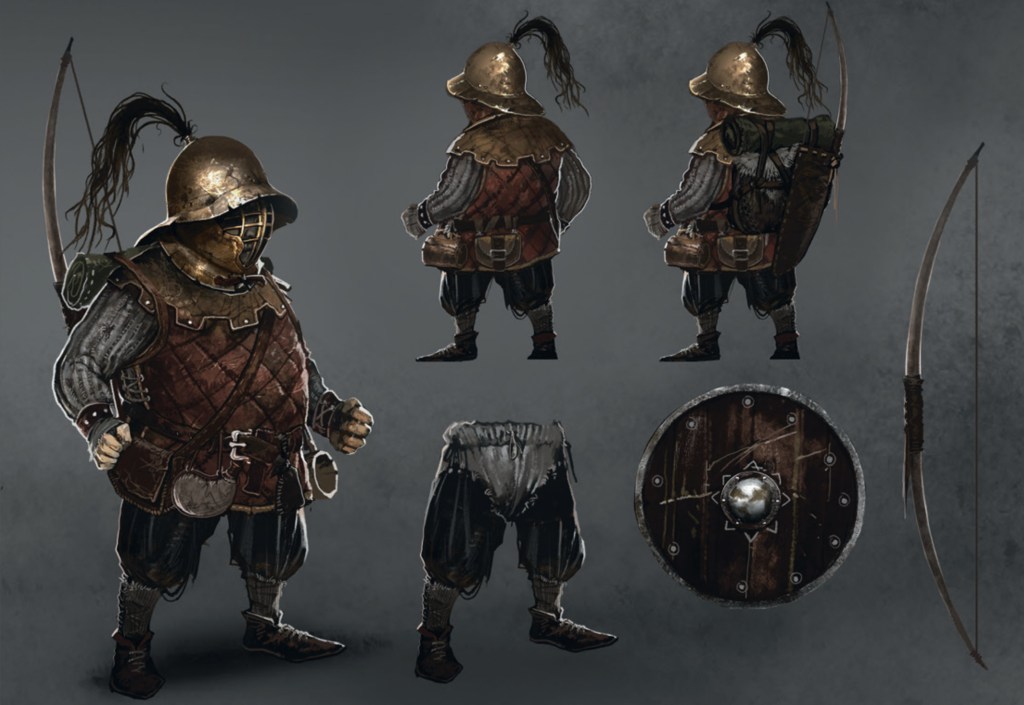
Ring of power modeled on the choice weapon of Adgarz, imparted as the mad knight of Alken. Boosts the equipper’s physical attack power.
Alken and Venn, two countries that once existed in this land, had an intensely hateful relationship despite having the same founder.
Questions about the founder and the resulting split abound. We can, at minimum, determine that these nations weren’t around until after the collapse of Olaphis. Belfry Sol’s bell keepers carry the instructions for Flame Swathe, one of Straid’s inventions, while Belfry Luna was added onto the existing architecture from the Olaphis castle. The original one country accordingly seems to have salvaged some of the old magic kingdom’s legacy prior to the split. Of course, knowing its place in the timeline doesn’t narrow down the founder’s true identity much. That said, the individual is possibly connected to Havel. Past Belfry Luna in an obscure corners lies a corpse with the Dragon Tooth, the great hammer wielded by Havel and his warrior followers who imitated the revered knight of Gwyn’s equipment in the original Dark Souls. (DS1) While it does boost resistance to fire and magic, it is still odd to find in a castle-turned-prison when other Havel equipment isn’t acquired there. Might this have some link to Venn?
According to the armor set’s description, conflicting accounts claim Havel to be the name of warriors that wore the armor as well as a country destroyed by war. DS1 affirms the former, but this doesn’t mean the latter is fiction per se. In the Cave of the Dead, we encounter an ancient warrior armed and armored like Havel. This Hollow is dubbed Varg, originally Warg (ウォーグ) in obvious reference to “war”, (ウォー) and he may well be a soldier of this hypothetical Havel nation. The corpse with the Dragon Tooth likewise carries a brightbug and petrified something, indicating a similar visit down below to the Shrine of Amana. Combined with the armor and shield obtained in the Gutter, and there is no doubt that warriors of Havel or like-minded imitators have explored Drangleic’s underground. Maybe these soldiers had hoped to learn more about becoming “rock-like” immersed in actual rock, or maybe they were seeking out Sinh to relive the Rock’s dragon hunt. Whatever their motive, their presence says it all: if there is a nation named after Havel, it should be in this land.
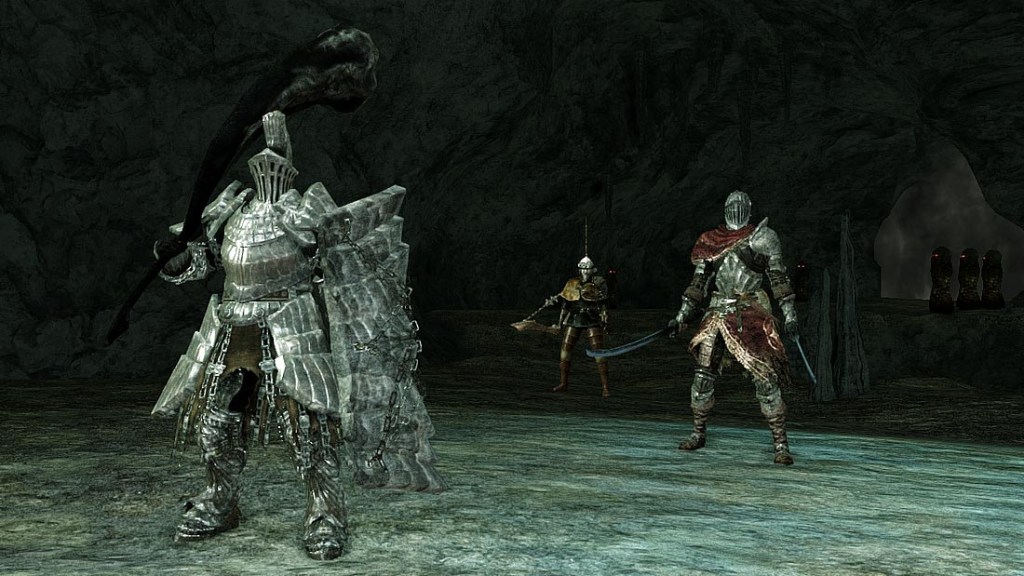
Helmet that is likened to a giant rock. Boasts tremendous defense power while also exceedingly heavy.
The origin of the name “Havel” isn’t known. It is said to be the name of warriors who favored it once or the name of a country that was destroyed by war.
And yet, we never come across ruins overtly linked to this supposed country. But, if the country was destroyed by war from within and split apart, there wouldn’t be any. Therefore, it is possible that Havel, one of his warriors, or a similar imitator founded a country in the god’s name sometime after the destruction of Olaphis. The founder would need to have an exceptionally high opinion of Havel to name an entire country after him, and outfitting its soldiers with Havel’s equipment would explain the confusion in the modern record. Stories exist of a country called Havel, but tales of warriors of Havel go back even farther than them, leading to doubt over which is the accurate account. In reality, both existed concurrently and took after the examples of the original Havel and his warriors from DS1. If so, how did a nation founded upon something as solid as rock crumble apart? The Dragon Tooth’s description alone notes the equipment’s resilience to fire and magic. Perchance that reliable protection made Havel complacent to such threats over time, in unexpected ways.
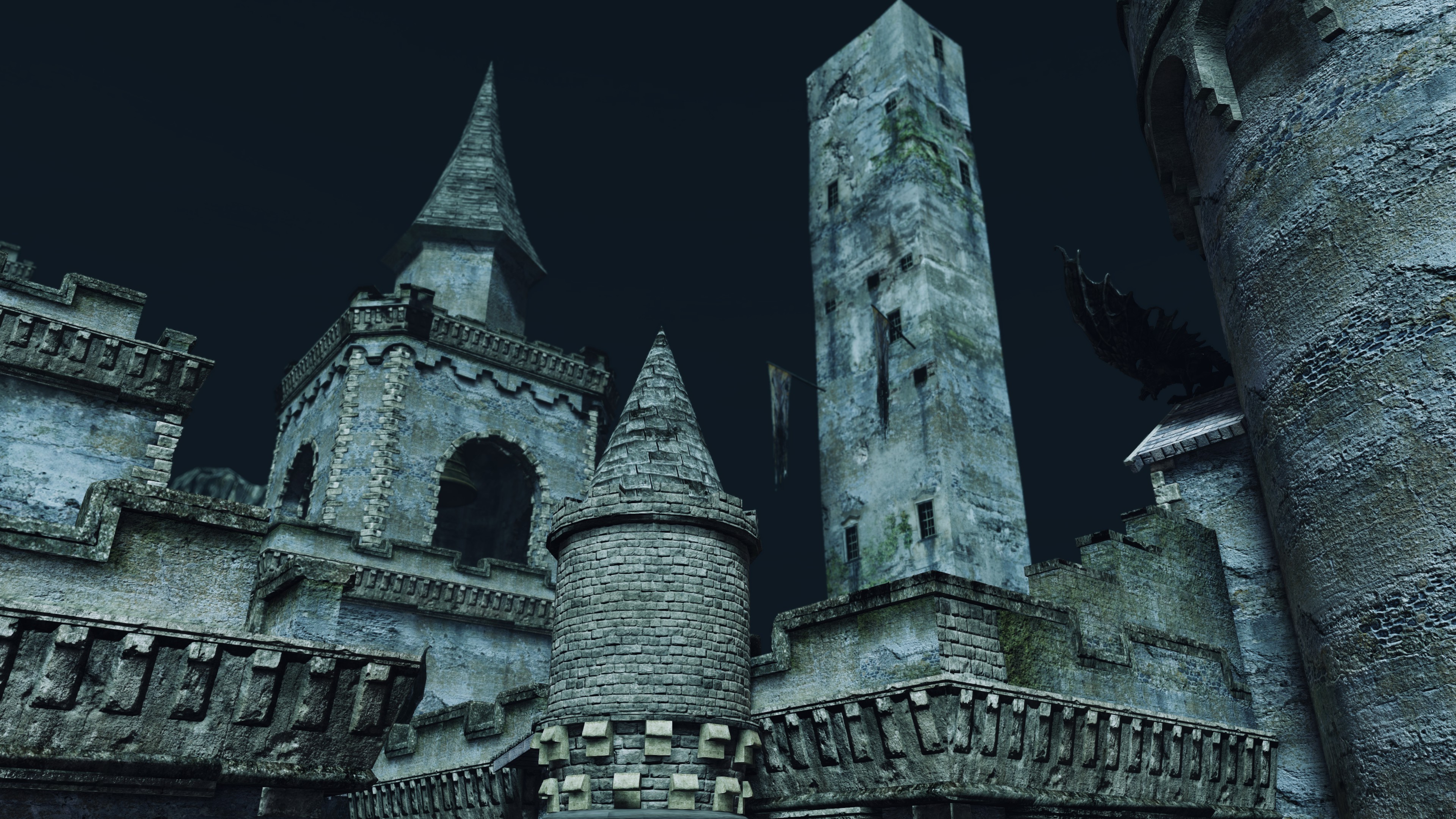
Aspects of Alken and Venn bleed through in the characters of the prince and princess and the bell towers they built. The “sun bell tower” (陽の鐘楼) in Alken reflects a land bathed in the warm colors of glowing red lava. Meanwhile, the “moon bell tower” (月の鐘楼) in Venn captures a land basked in the cool blue hues of the night sky and surrounding ocean. Besides reinforcing the thematic designs of each area, these belfries remind us of how the sun is associated with fire and the moon with sorcery. This is pertinent since areas within Alken’s territory usually provide pyromancies while areas within Venn’s territory typically keep things related to sorcerers, mostly works originating from Olaphis; in Belfry Luna alone, we can loot the Southern Ritual Band and an enchanted falchion. The association with the color blue wasn’t lost on the kingdom either, looking at the blue banners with gold trimming and no crest throughout the Lost Bastille as a whole.
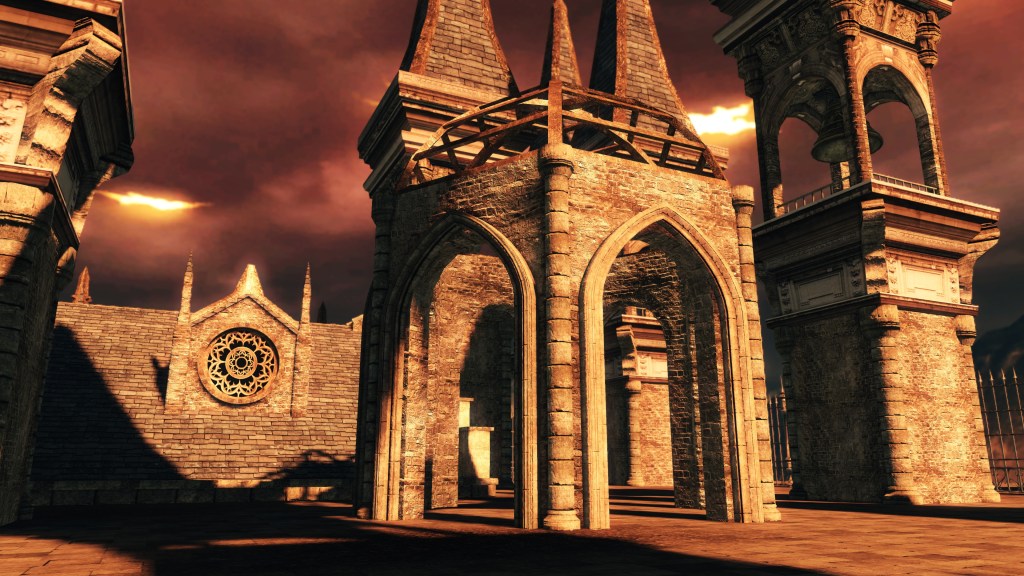
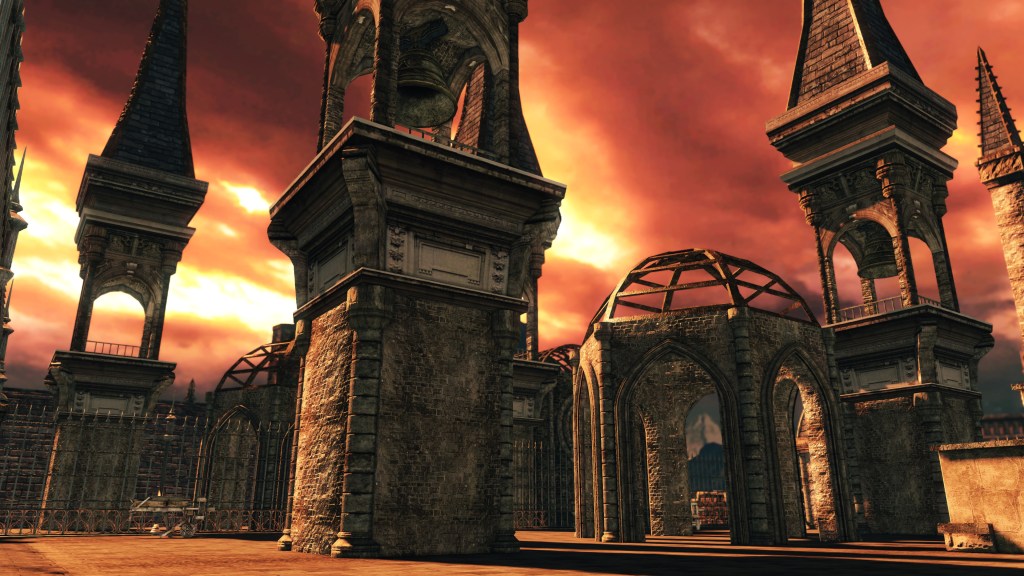
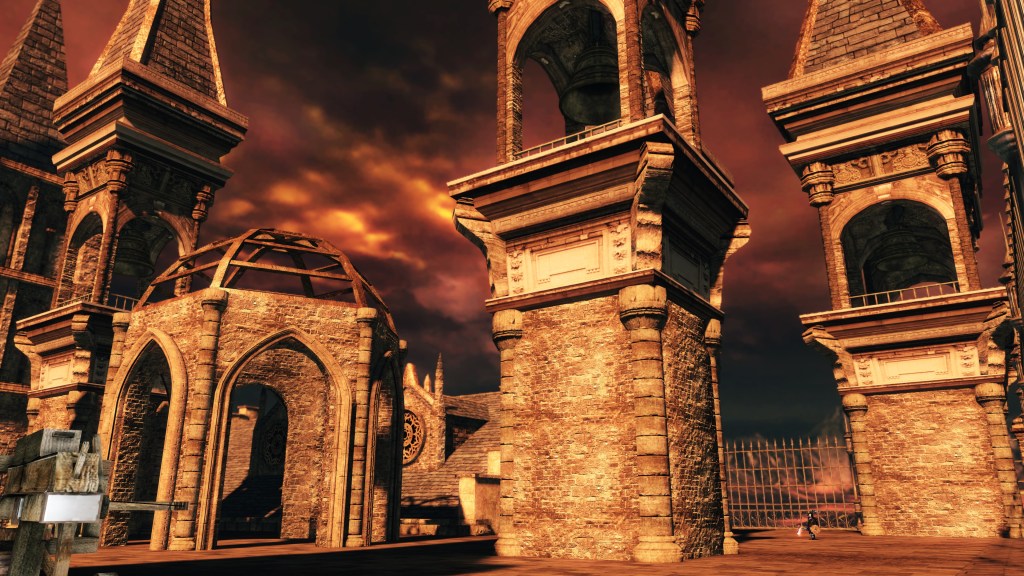
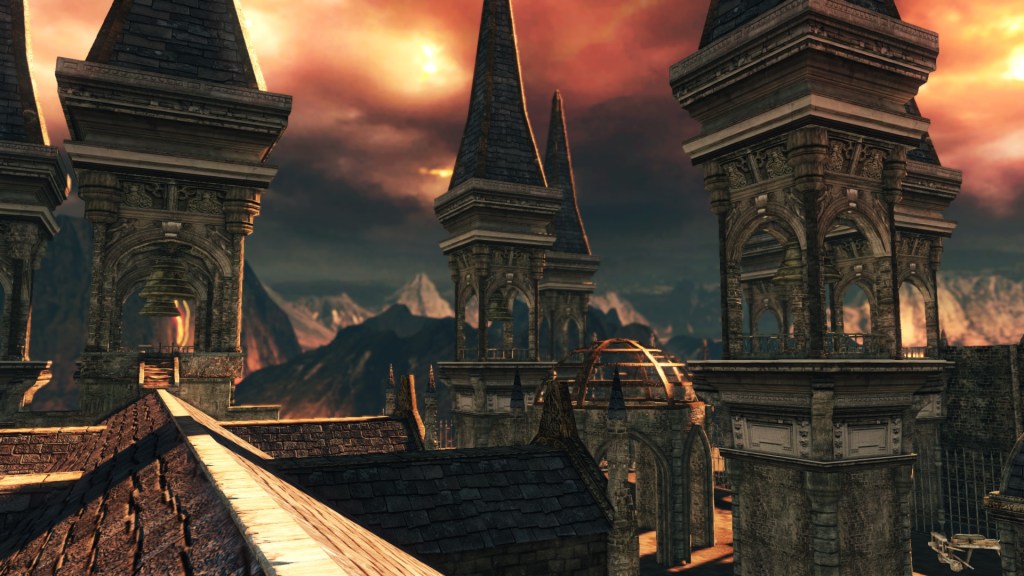
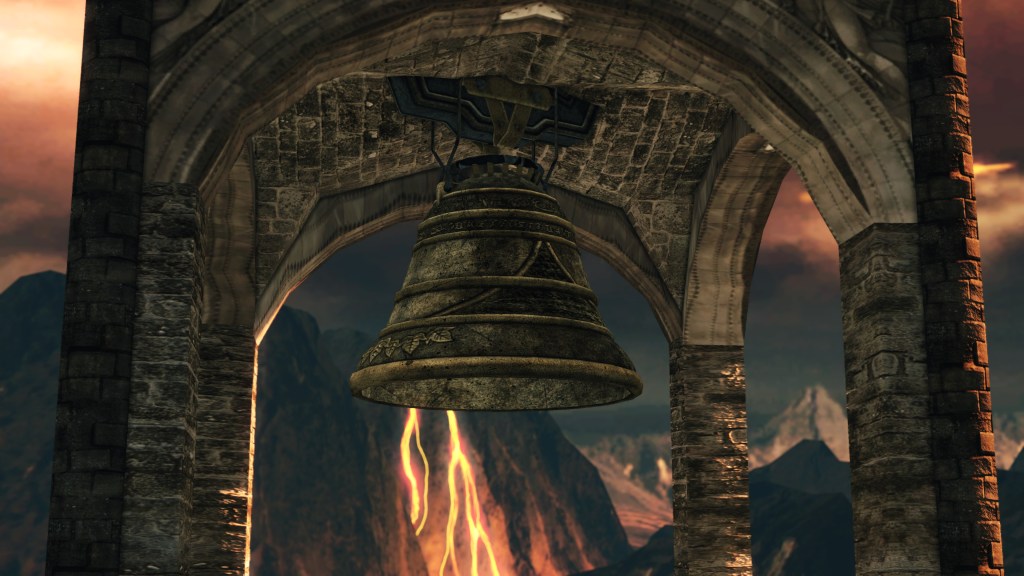
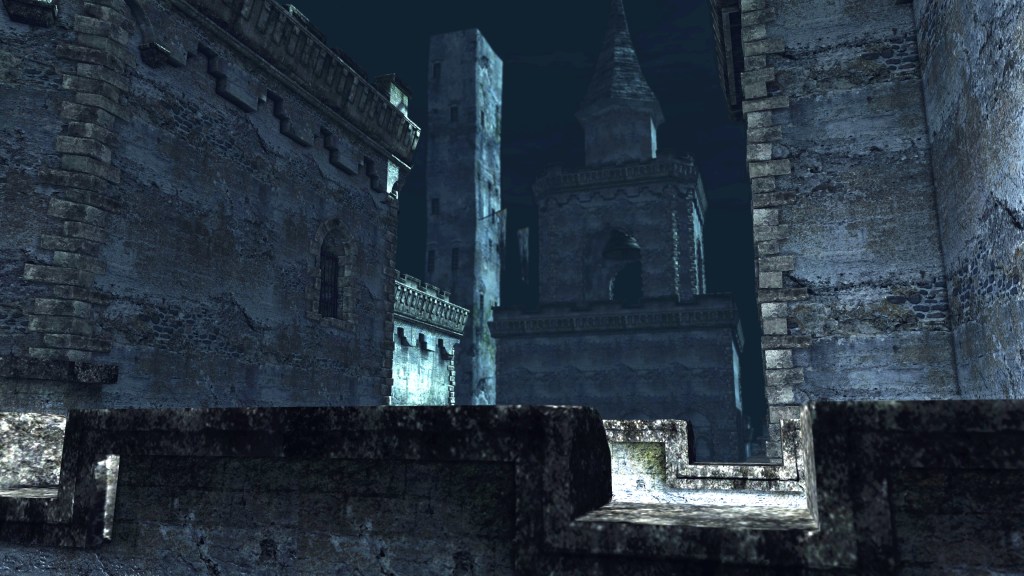
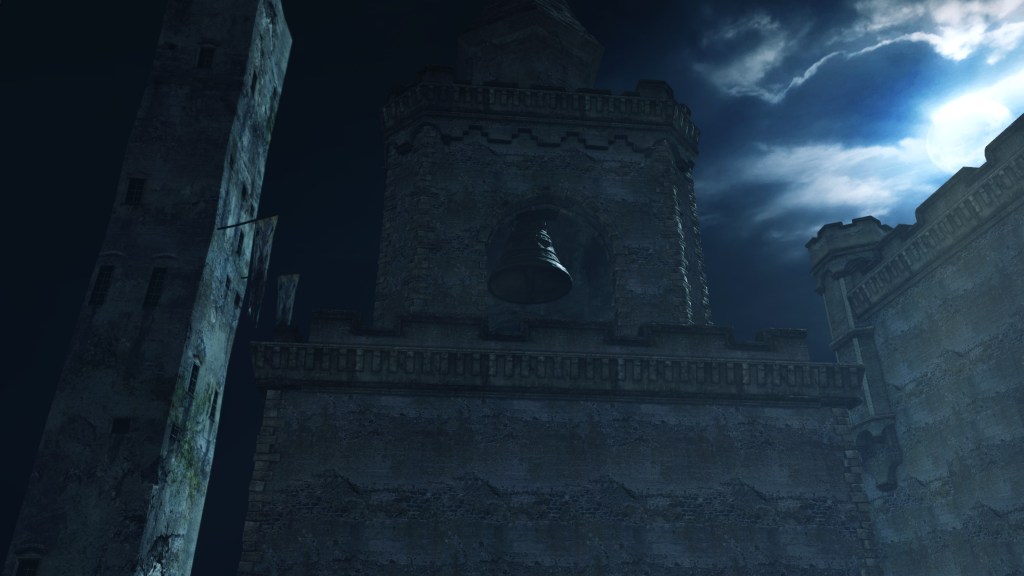
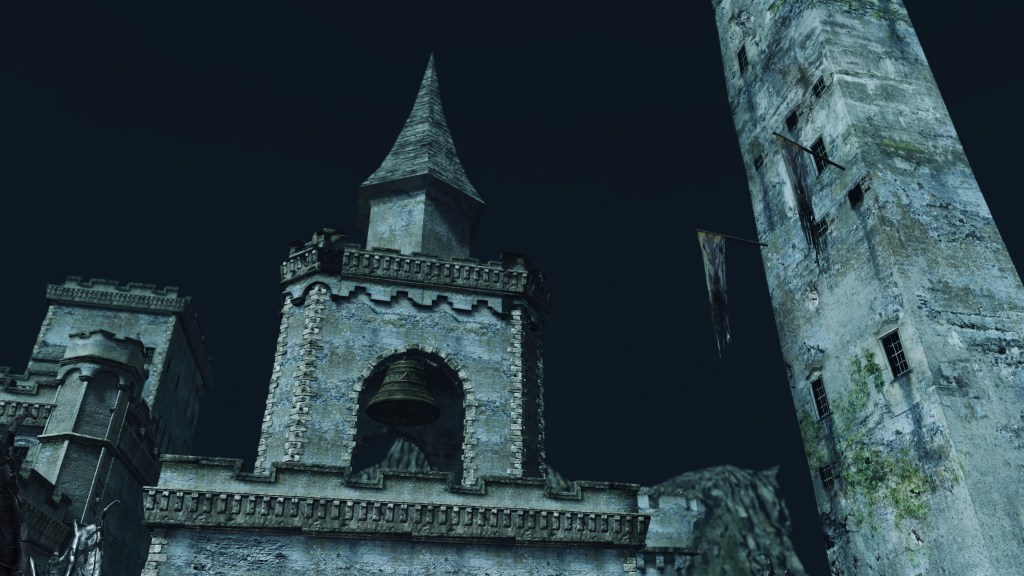
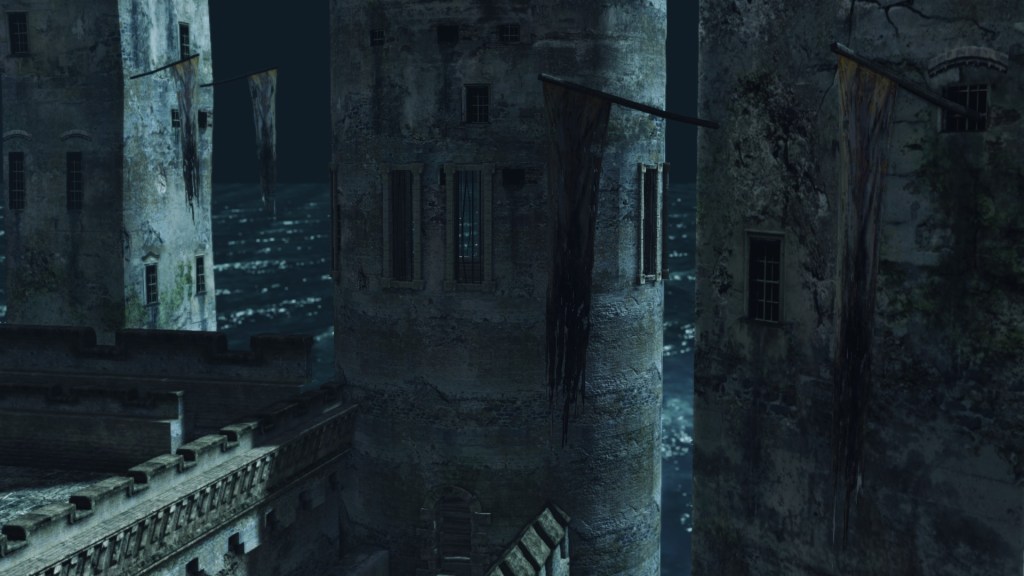
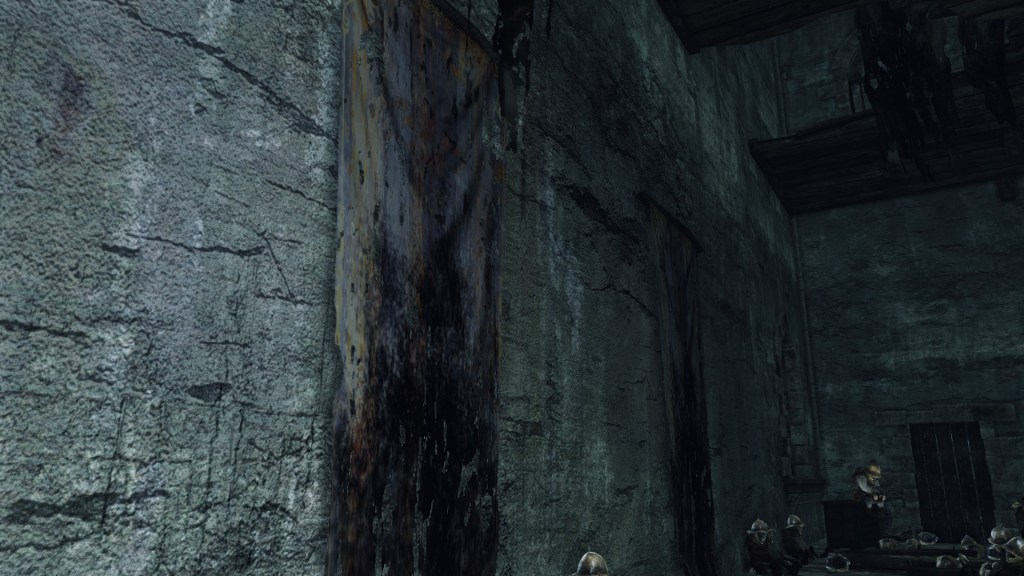

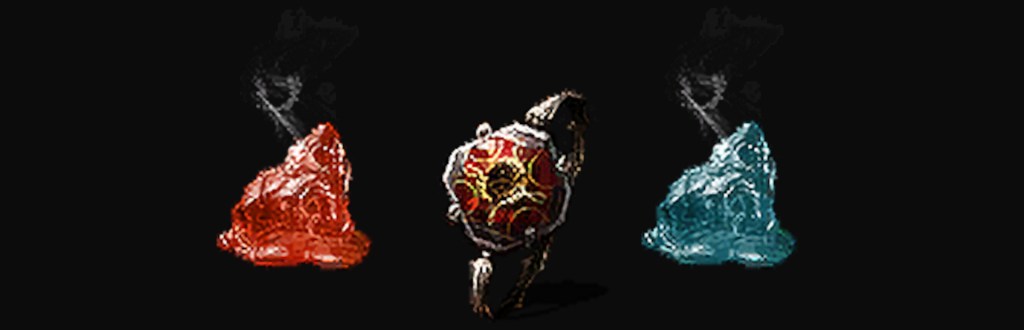
This color and magic dichotomy is further emphasized by the incense prevalent in these areas. Although the Simpleton’s and Skeptic’s Spices aren’t specific to these two countries, one or the other is overwhelmingly found in Alken or Venn — Alken hoarding the spice for fools and Venn enjoying the lion’s share of spice for nonbelievers. Perhaps each is endemic to its respective region, but it is definitely fitting that the former is red while the latter is blue. The spices are a substance that makes it easier to perform certain kinds of magic through inhaling the peculiar aroma they give off, the Skeptic’s Spice lowering a spell’s faith requirement while the Simpleton’s Spice lowers a spell’s intelligence requirement. These seemingly magical aromas don’t actually improve one’s conviction or reason, just substitute for one’s deficiencies with their particular magic power so that it is easier to perform a given spell. This would imply that Alken was deficient in reasoning, whereas Venn was deficient in faith.
This does make sense so far as Venn’s association with sorcery, but Skeptic’s Spice is used for merely hexes and miracles, not pyromancies. Granted, this could be purely for reasons of game mechanics, as faith does factor into a pyromancy’s damage. (and later serves as a requirement for casting pyromancies in DS3) That idea finds further support in the Simpleton’s Ring, which looks to be modeled on the red flower the incense derives from and turns the wearer invisible while rolling. Based on the effect, the fool’s incense possesses power related to holy light magic, which can manipulate time and space to cause invisibility. Whatever the details, the smell of incense surely isn’t strengthening the wearer’s faith or miracles. And in that case, these magic substances likely have wider applications than what is reflected in-game. Moreover, Alken does appear to have been a country of faith as much as flame.
Behind a false wall in Iron Keep, we can rob chests of the Protective Chime, Grand Spirit Tree Shield, and Black Knight Greatsword. The holy bell commonly used in Lindelt is self-explanatory, as is the shield invoking the holy tree and god of dreams Quella. Even the sword belonging to Gwyn’s knights since their war against chaos demons demands faith of its wielder, which wasn’t true of its DS1 iteration. This hidden storage isn’t the last of it either. A Monastery Charm is looted from a nameless soldier elsewhere in the area. Then there are the separate chest and corpse holding onto a Thunder Quartz Ring plus a lightning short bow, lightning being the element most associated with gods of Anor Londo. Heading through the neighboring Earthen Peak leads us to a renown knight carrying a Divine Blessing, a different corpse owning another along with a firedrake stone in the valley outside the tower. While the collection of pyromancies — including chaos pyromancies — can be divorced from religion, all the above items cannot. Alken’s religiosity is undeniable.
There are thereby plenty of signals to an ideological rift between the countries north and south, and it is see how the united nation diverged. Seated at the heart of Olaphis, Venn’s ancestors naturally held a profound interest in sorcery and the lost technology of the magic kingdom. By that same token, Alken’s predecessors established themselves on the rivers of lava flowing out of a nearby volcano, demonstrating their deep fascination with fire. Fire is considered holy in the faiths descending from Lordran, making the settlers susceptible to the new religion arriving from overseas. Converted to the Archdrake Sect, at least in part, the southerners gave no attention to schools of magic based on reason, only the conjury rooted in primitive spirituality. Meanwhile, the northerners continued to deepen their knowledge in the more sophisticated arts. They did retain common ground on universal techniques like golemcraft. But gradually, the two regions lost their shared identity until they formally split along those lines, becoming the oft warring kingdoms with whom we are familiar.
How ironic that Havel’s resilience in the face of fire and magic taught its people to embrace those powers wholeheartedly to the exclusion of rock. Its founder could never have imagined the people warring with themselves after discarding their roots — though, in fairness, soldiers gallivanting off on subterranean misadventures probably didn’t help with retention. But for a country founded upon a warrior’s memory, this outcome may be inevitable. Without any obvious external enemies, it isn’t uncommon for citizens to turn their aggression internally. In the end, Havel simply couldn’t hold together long-term with such deep divides. Dark Souls often puts peoples of faith and reason at odds, the faithful in militant opposition to heresy. Alken was doubtless no different in this regard, and its concerns about Venn’s sorcery were well and truly justified. The puppets of Belfry Sol use fire weapons, as expected, but the dolls in Belfry Luna utilize dark weapons. In short, Venn didn’t just learn sorcery, but dark magic.
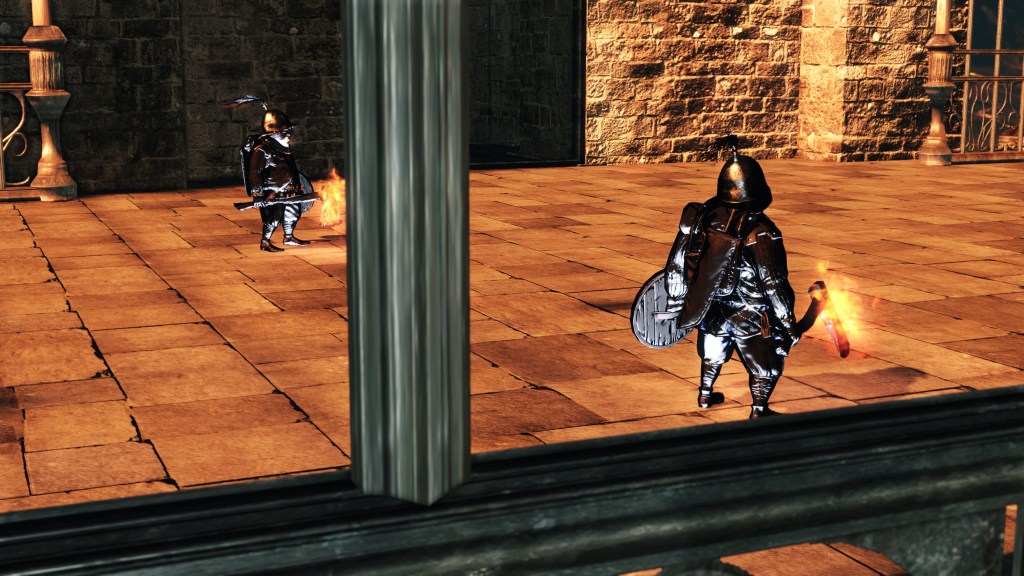
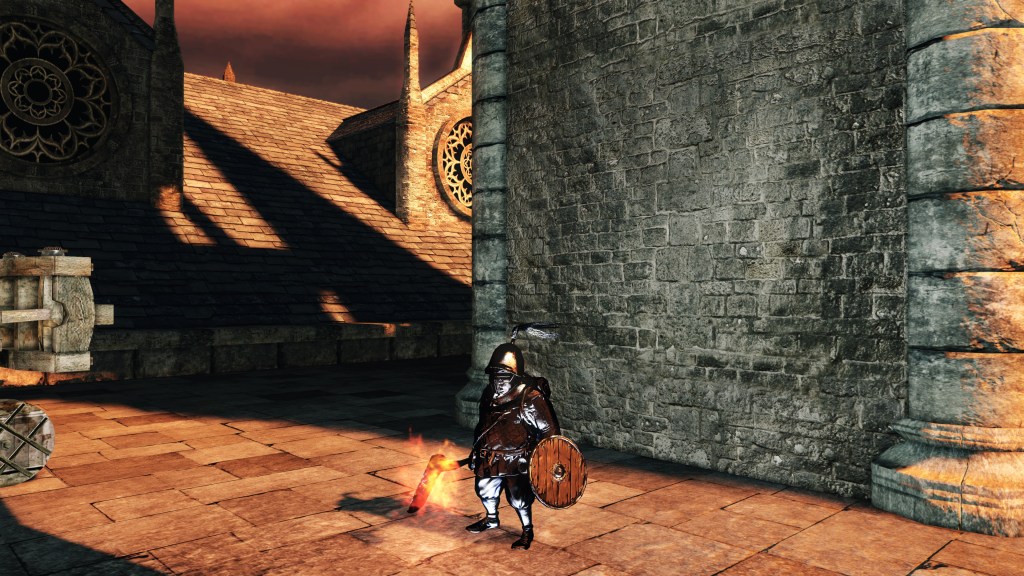
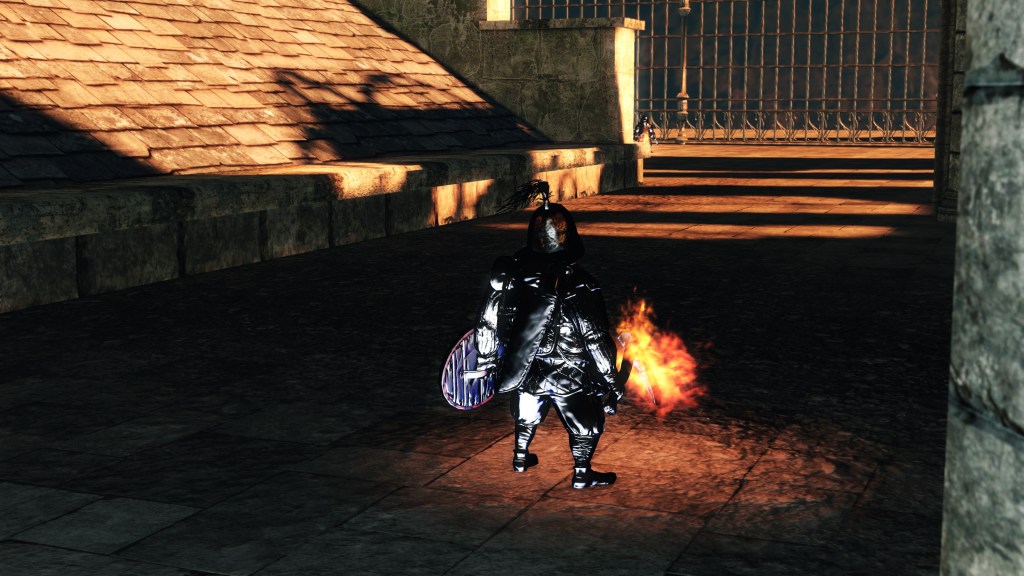
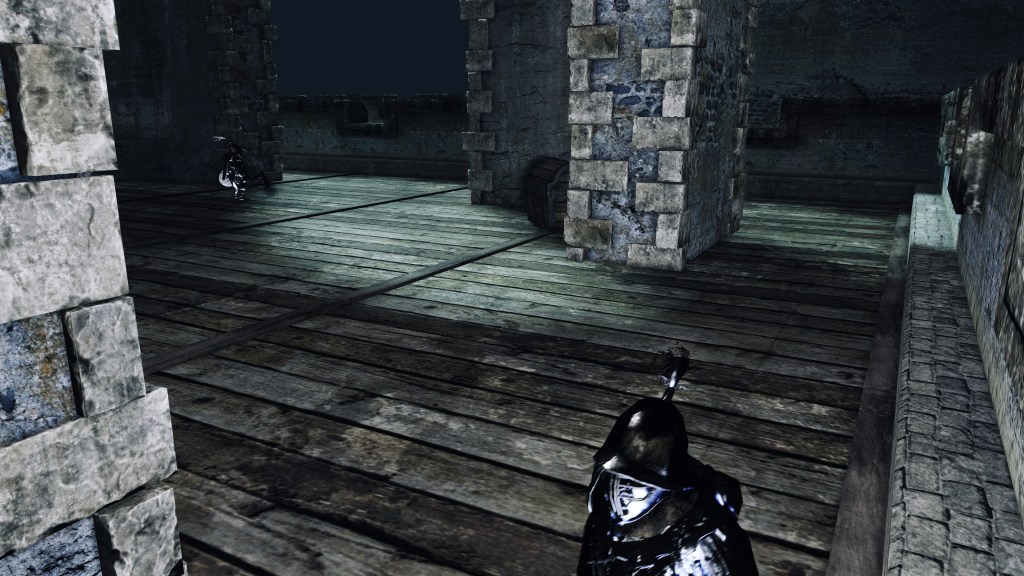
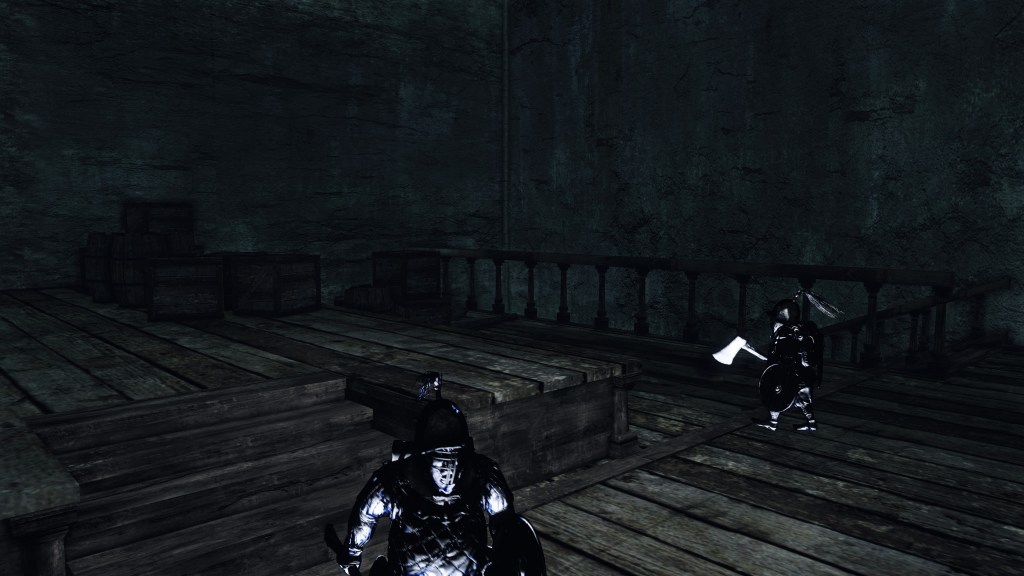
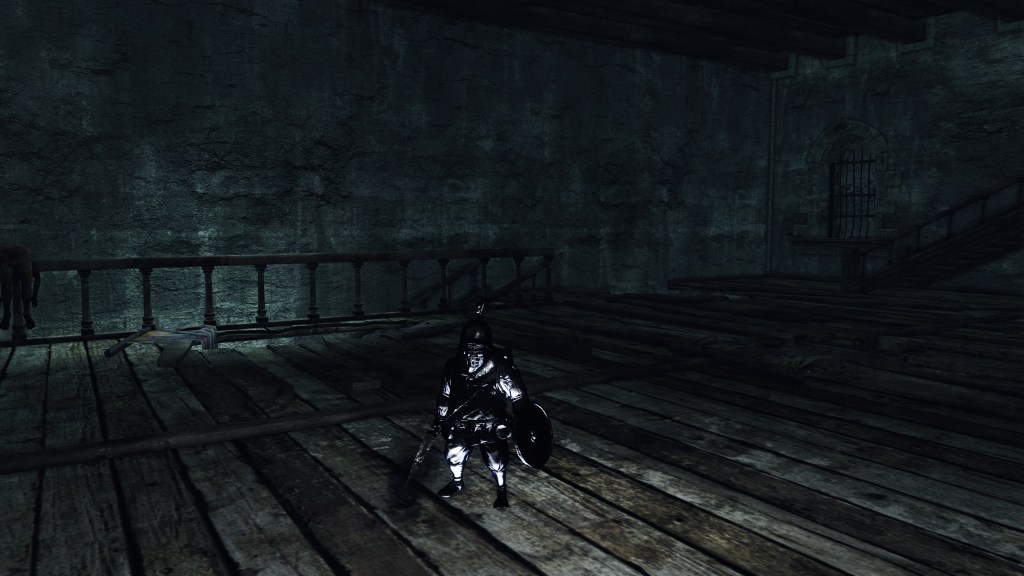
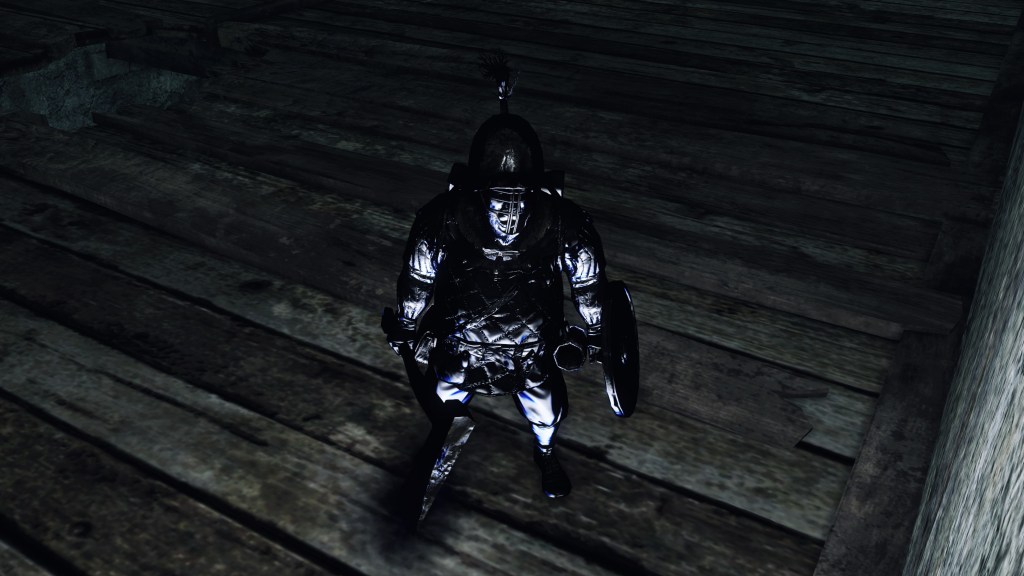
In all likelihood, this was thanks to the Undead prisoners leftover from Olaphis. With so many of the cursed trapped in one place, it is easier for residents to study the Darksign, and in doing so condition Venn to tolerate the Abyss as just another intellectual curiosity. Adding to the impression, a chest in the Lost Bastille contains the Covetous Silver Serpent Ring, a human effigy, and a Fragrant Branch of Yore. The greedy snake band increases the souls acquired from slain enemies, the faux humanity brings to mind the Dark, and the branch comes from a sweet-smelling tree that stirs up nostalgic memories powerful enough to even reverse petrification. Together, they paint the picture of a people invested in acquiring dark souls out of some longing to remember the past, a past stirring something deep within their souls. Had they been working to revive the dark sorcery of Manus, or learn the truth of the pygmy Lord? Either way, that practice would have been enough to incite the south against the north, and subsequently Alken against Venn.
Indeed, Alken was the probable aggressor in most of these military confrontations. We can acquire a zweihander as well as pieces of the Catarina set in its territory. These are weapons and armor associated with knights of Catarina, who are characterized by their pious, straightforward nature and love for battle as alluded to in the set’s description. Alken may have thus been influenced by the old tales of these warriors. Such belligerence is decidedly expressed in the Ring of Blades. The Japanese description clarifies it to be modeled on the weapon of a “mad knight” of Alken, whom it also names. This “Adgarz” (アドガルズ) must have been unrestrained on the battlefield to earn a title synonymous with overwhelming aggression invoking a berserker. That rationalizes the ring’s effect and depiction of multiple swords, embodying a never-ending flurry of attacks. And with that offensive power, Adgarz gained renown, enough for several rings to be created in the knight’s memory. Whatever else the kingdom valued in a knight, crushing the enemy appears to have been the nation’s pride.

All that being the case, any civil war and subsequent conflict would likely be prompted by the south against a defending north, evidently more interested in intellectual pursuits than invasion. Even this aspect of the quarreling kingdoms seems to be embodied in the prince and princess behind the bell towers. Western cultures have historically associated the sun and moon with masculinity and femininity respectively, making it apt that the prince of more active Alken build Sol while the princess of more passive Venn built Luna. Whether or not this was true of the prince and princess themselves, this likely was the dynamic of their two kingdoms. But even if masculinity is normally imagined as passion and violence, and femininity is viewed as wisdom and harmony, neither Venn nor Alken were willing to bury the hatchet. However it started, it was now guaranteed to have devolved into a continuous tit-for-tat. Even still, the prince and princess’ own dynamic convey an attempt to defy this bloody history. More than royals of enemy nations, they were star-crossed lovers.
Love Never Meant to Be
The prince and princess had most likely first met on the battlefield. Both prove to own mighty souls, which is common among great warriors. And with the two countries constantly at war, they must have frequently led troops into battle, where they came face-to-face with the enemy commander. From there, they ultimately entered a clandestine relationship. To immortalize their bond, the royals each commissioned a bell to keep at the other’s castle. Perhaps it was under the guise of a temporary truce, but the two managed to exchanges the gesture without the opposing families discovering the true meaning. And once the bells were installed in their individual towers, the lovers were adamant to protect their sweetheart’s gift from intruders. This prompted each to create puppets commanded to slay any who approach the bell and ring it, a job they have done and will continue to do so long as they are able. This is the basis for the Bell Keepers covenant and demonstrates the depths of their love.
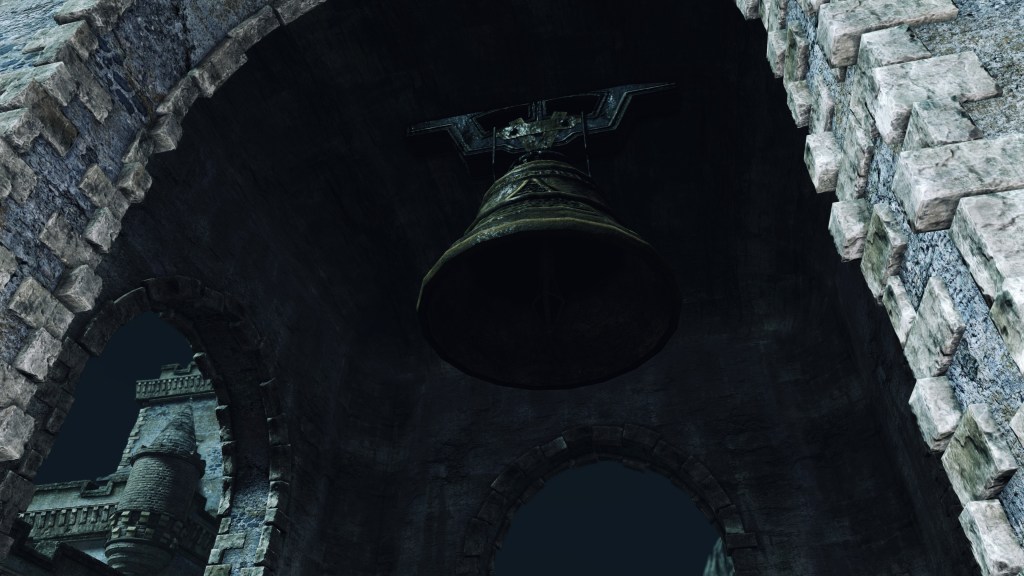
Aside from an army of puppets, Belfry Luna is additionally home to gargoyles. According to their soul’s Japanese description, these stone statues were specifically built at the bell tower and so don’t predate it. Furthermore, the English text’s claim that they “mysteriously came to life” spontaneously is more accurately worded as “one day came to possess life” in the vaguest terms. In order to possess life, one must have a soul. In other words, these statues were granted souls much like the puppets guarding the bell towers. And with the timing of their construction, it is no mystery as to why — the princess of Venn probably wanted these gargoyles to serve the same role as the puppets she created. The description for the Gargoyle Bident does imply them to be part of a long tradition of defending castles and forts with such elaborate statues, well predating the two warring kingdoms. Even the weapon is a reproduction of the spear mentioned in some ancient book the princess apparently referenced. However, that indicates that she wasn’t the first to think of making these statues guardianship more than symbolic.
Soul of a gargoyle of the Forgotten Prison.
The splendidly crafted stone statues were made at the bell tower, and one day they came to possess life.
The special soul this living stone statue possesses is used to acquire a vast amount of souls or create a great power.
The fact that both Alken and Venn are able to install souls into artificial constructs to create living minions betrays how they inherited the art from Havel. But where did that country inherit it? Olaphis? But its origin would have to go back even farther if we are to believe the bident’s description. The art of crafting golems and gargoyles was first mastered by Anor Londo, with Heide carrying on knowledge. Maybe it was Heide who introduced the New World to the concept then? The bastille gargoyles already use similar fire and lightning attacks, not to mention the same boss music, as DS1’s gargoyles. Moreover, New World gargoyles are imagined as protecting castles and fortresses from “curses” in particular. This is an obvious reference to DS1, where they protected Sen’s Fortress and the castle of Anor Londo from the cursed Undead attempting to pass through. And when it comes to the reproduced spear, close inspection reveals it features elements of those very gargoyles, including the head, shield, and tail axe. This weapon for gargoyles appears to be a corruption of the gargoyle design itself.
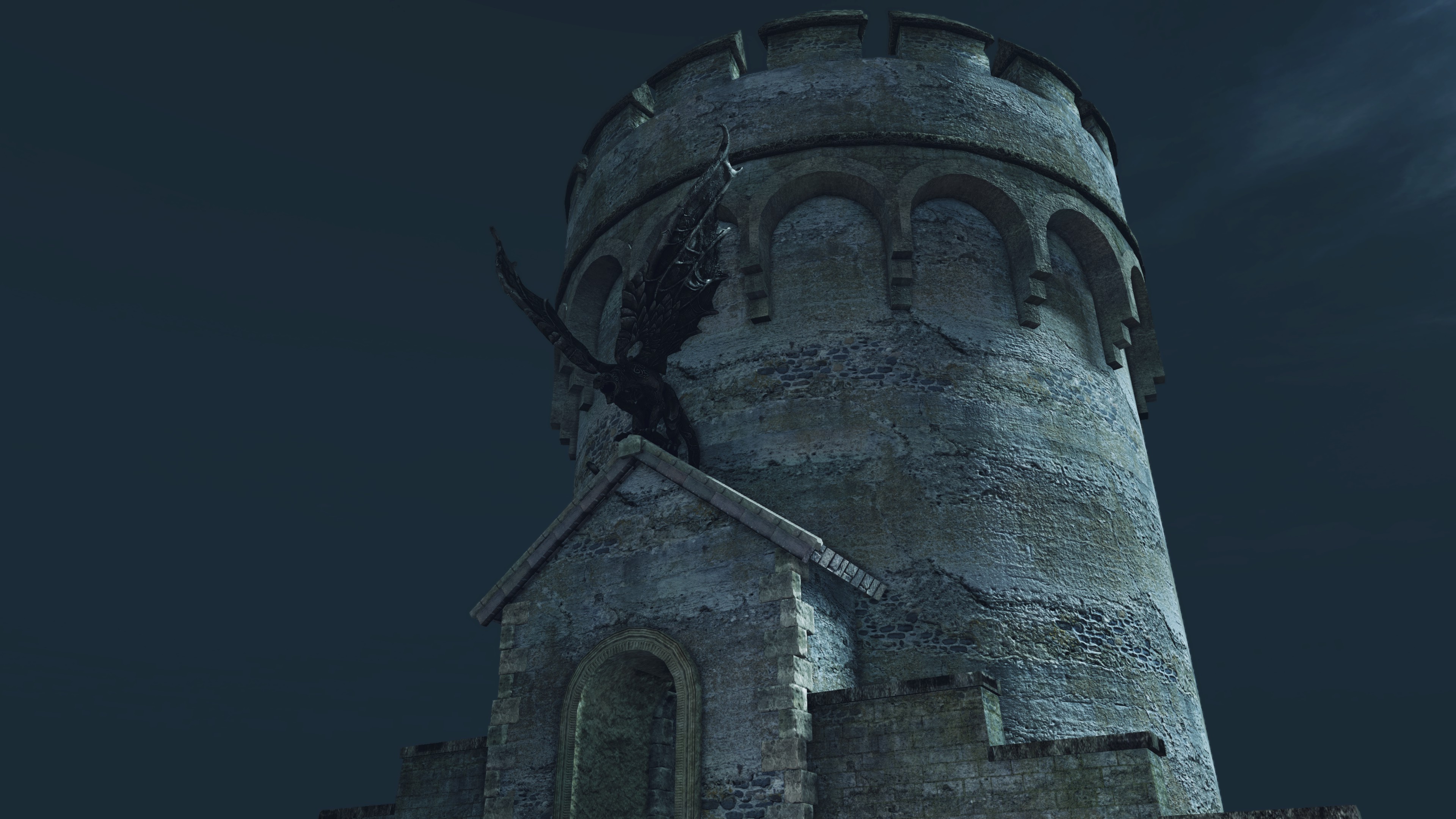
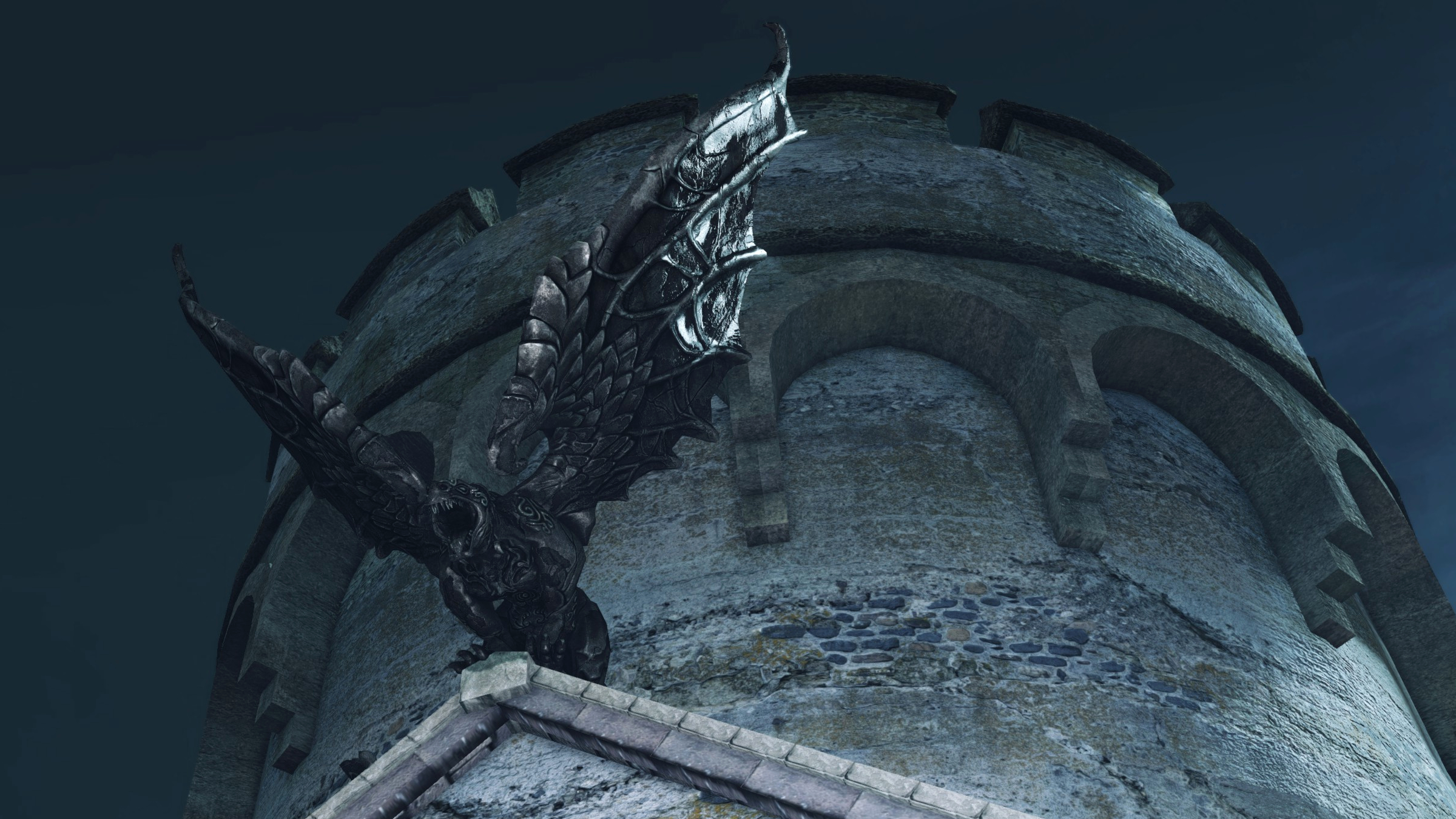
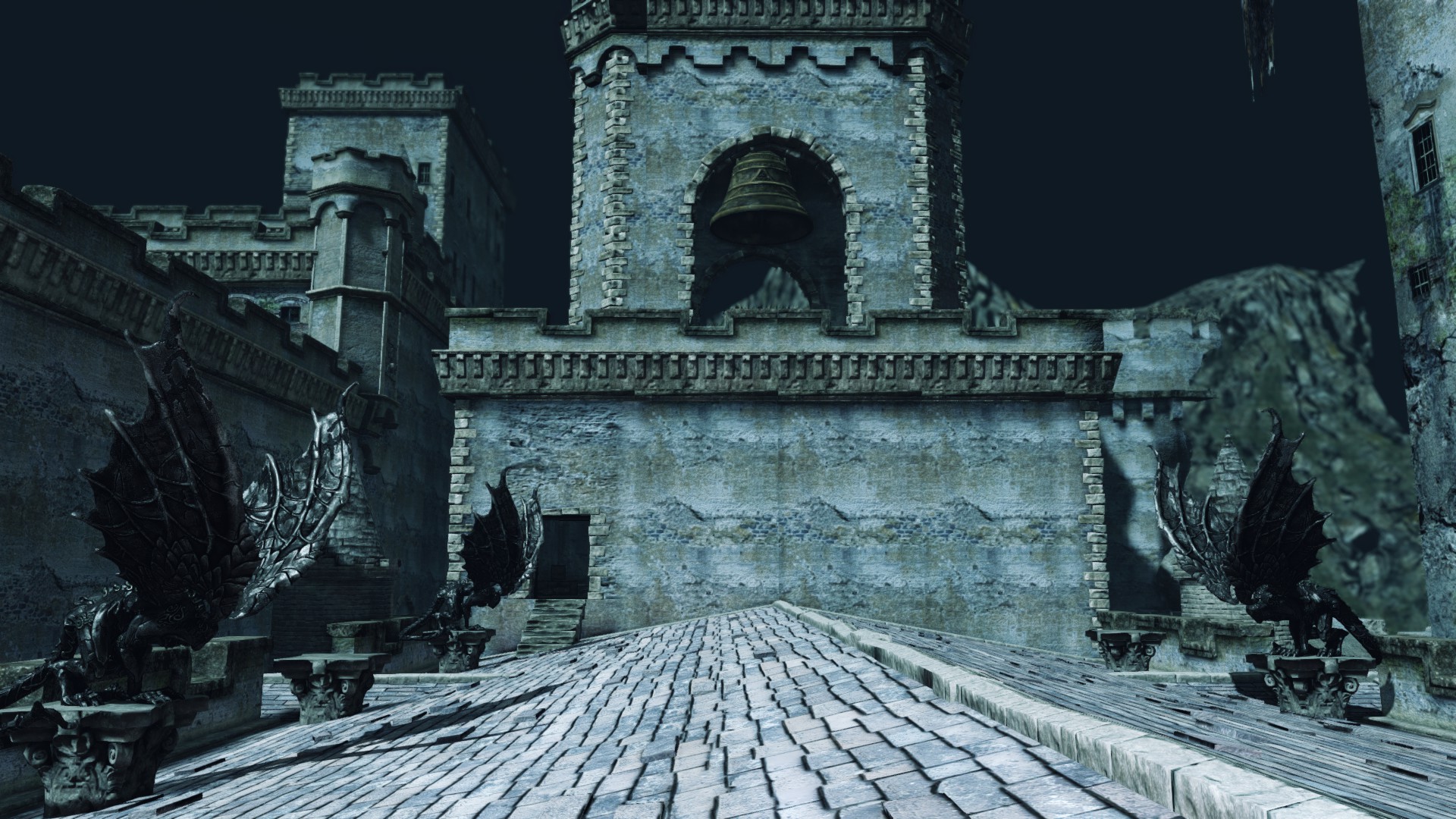
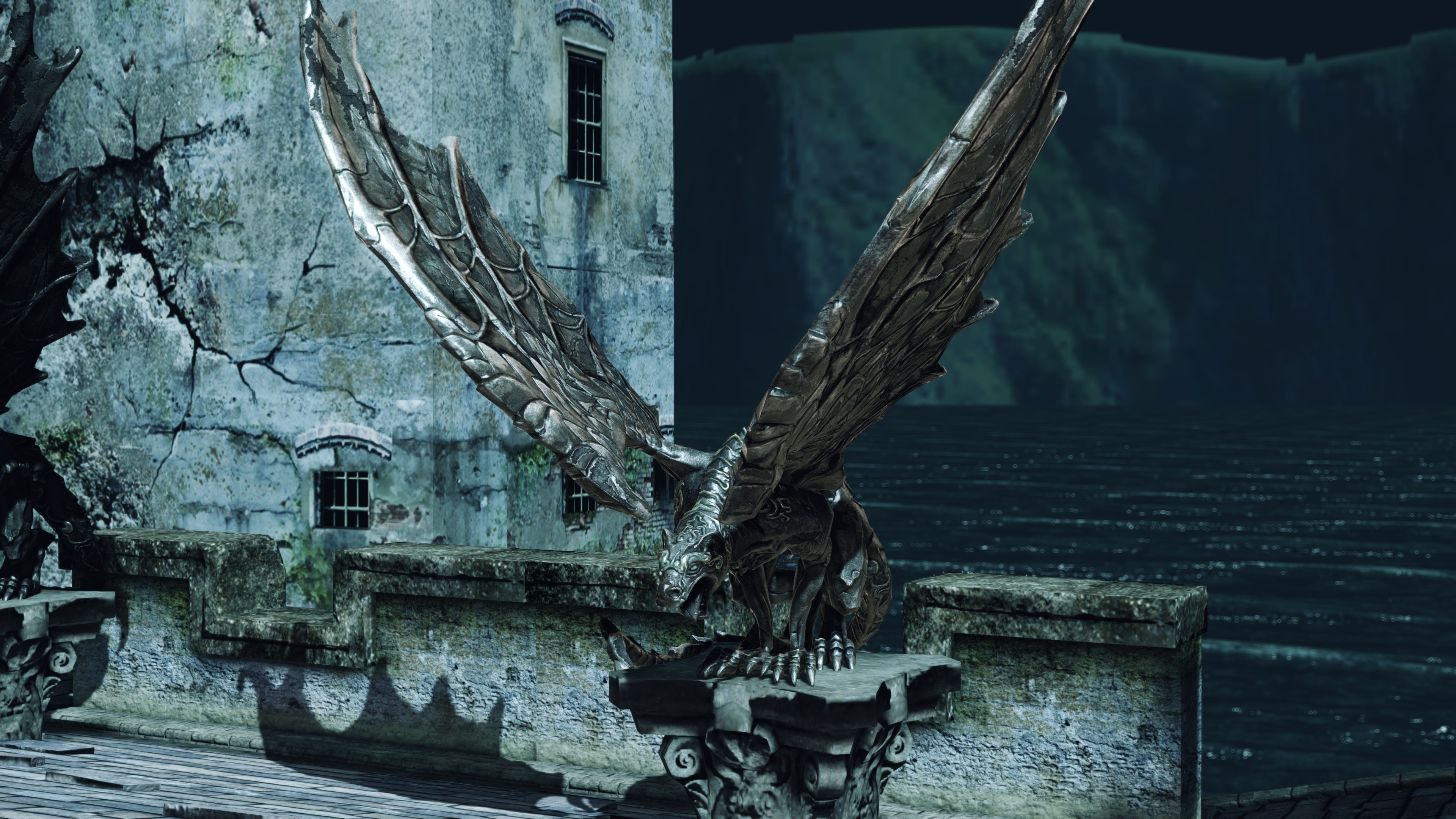
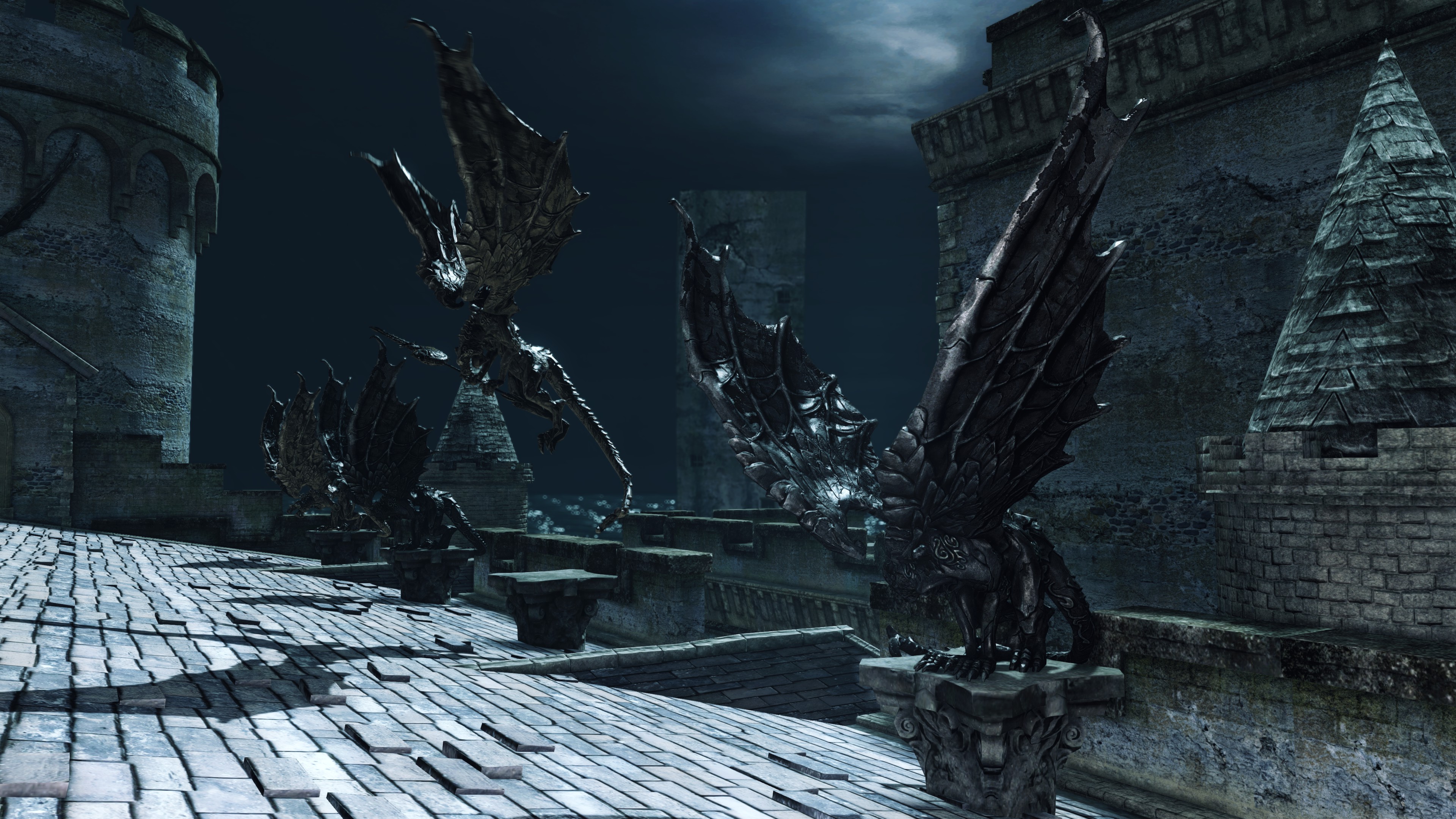
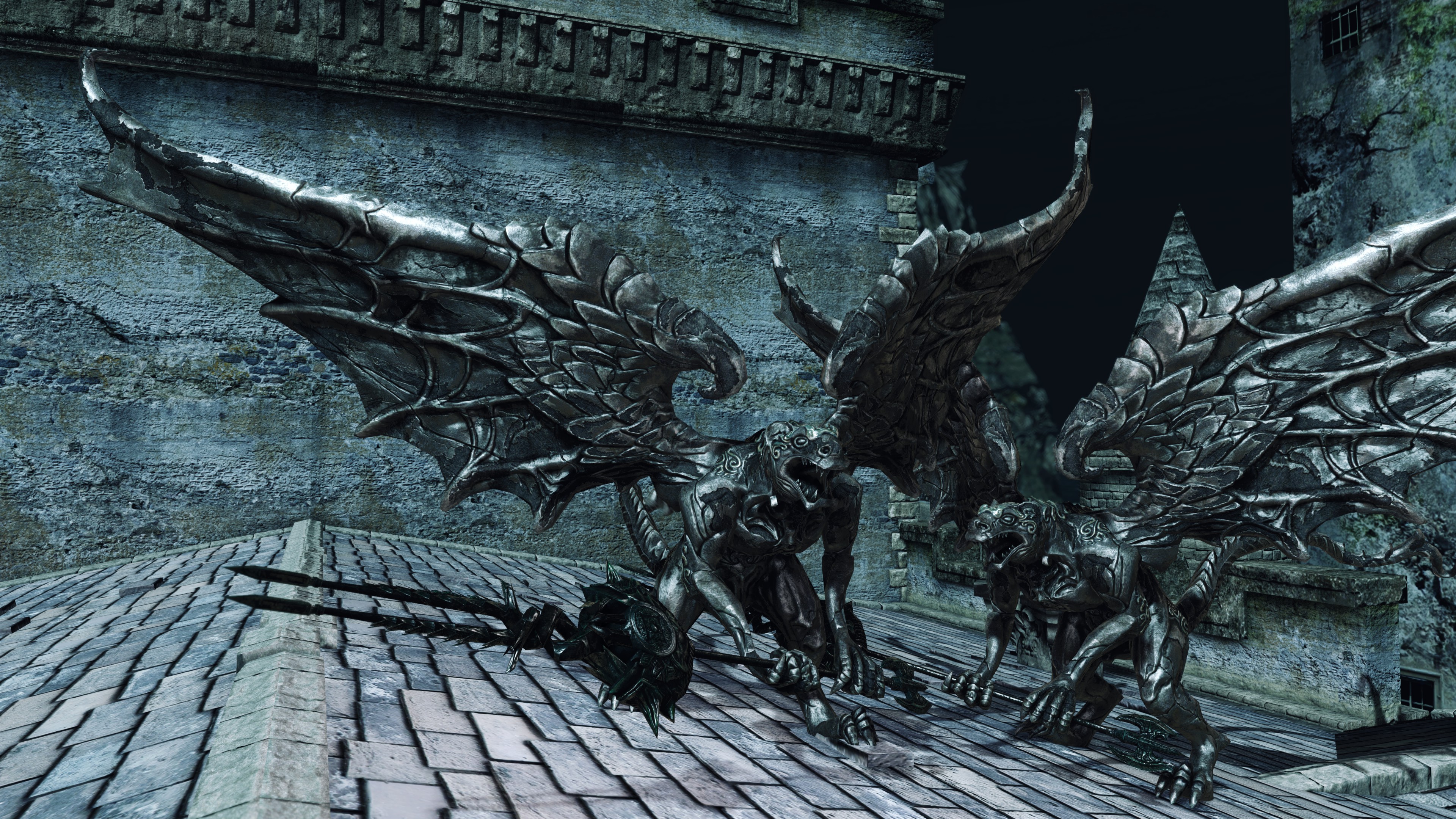
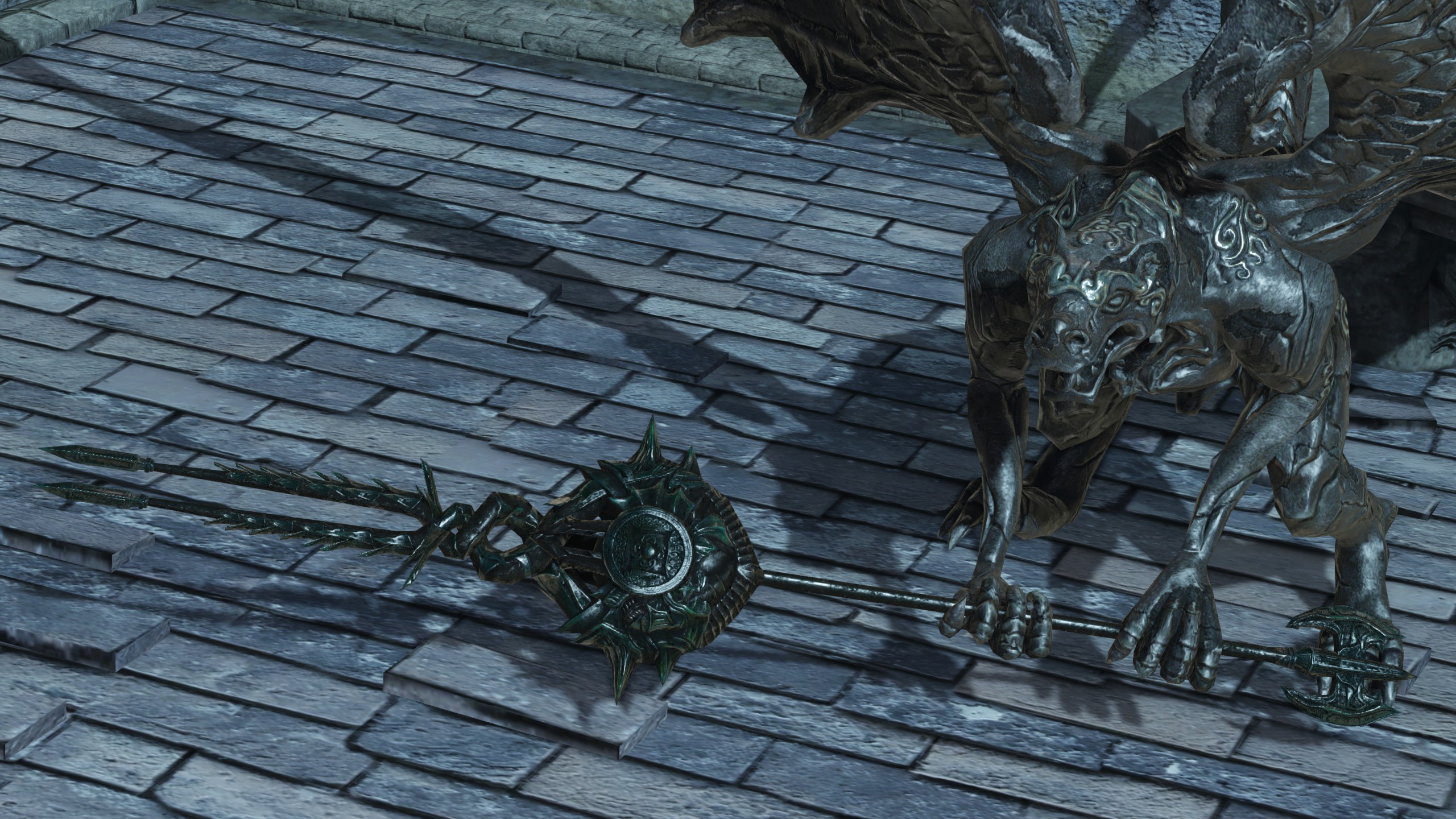
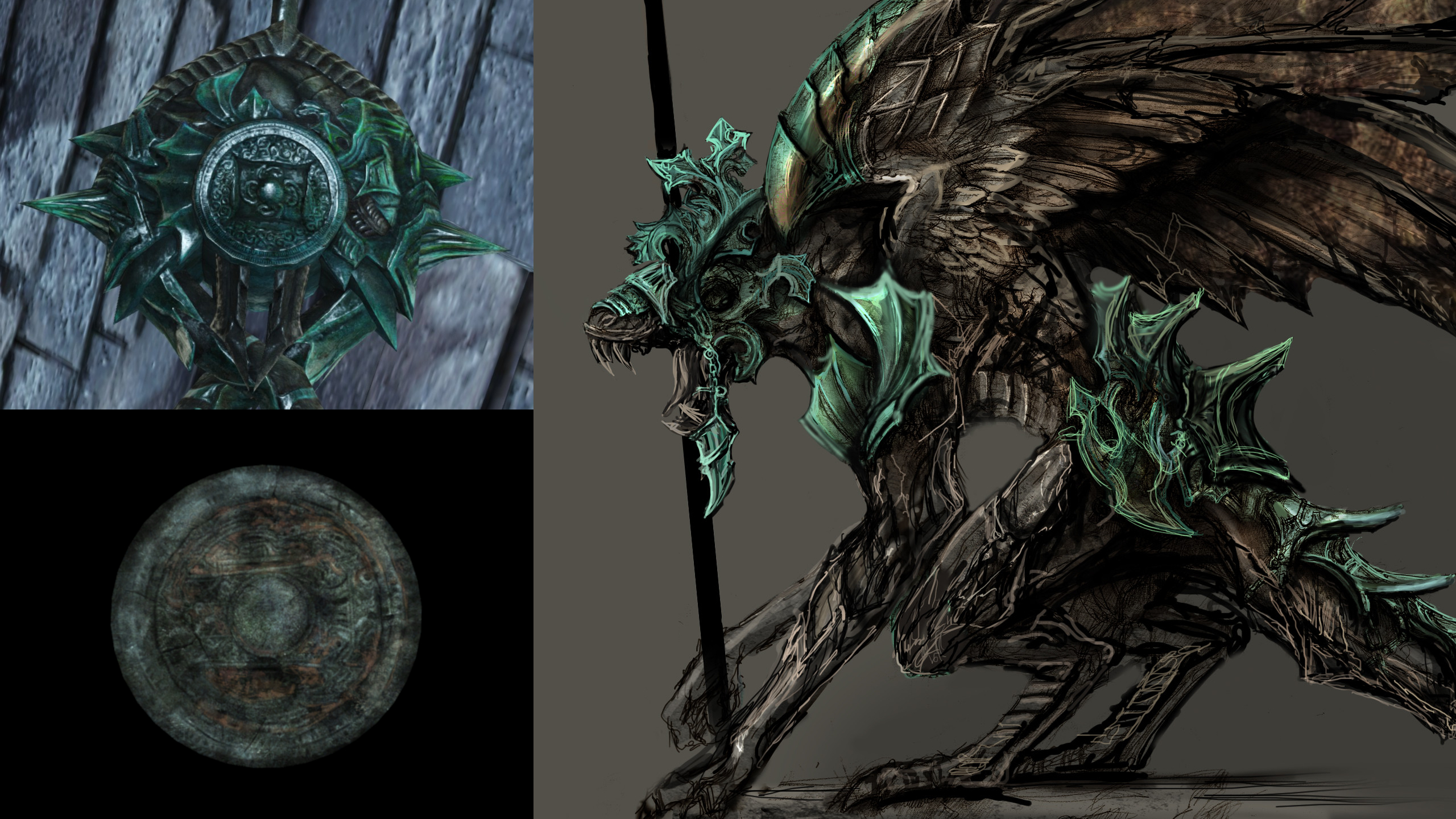
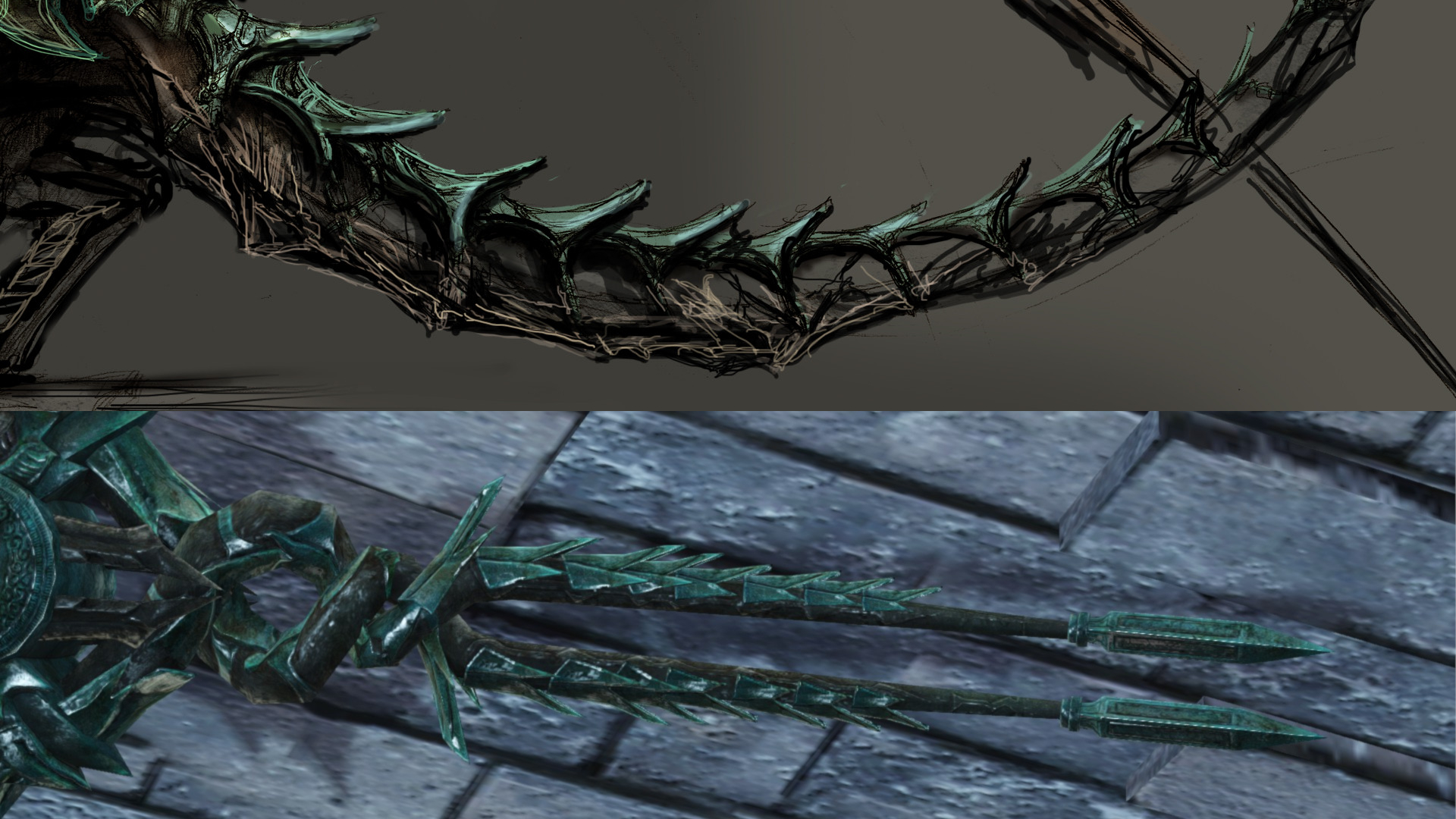
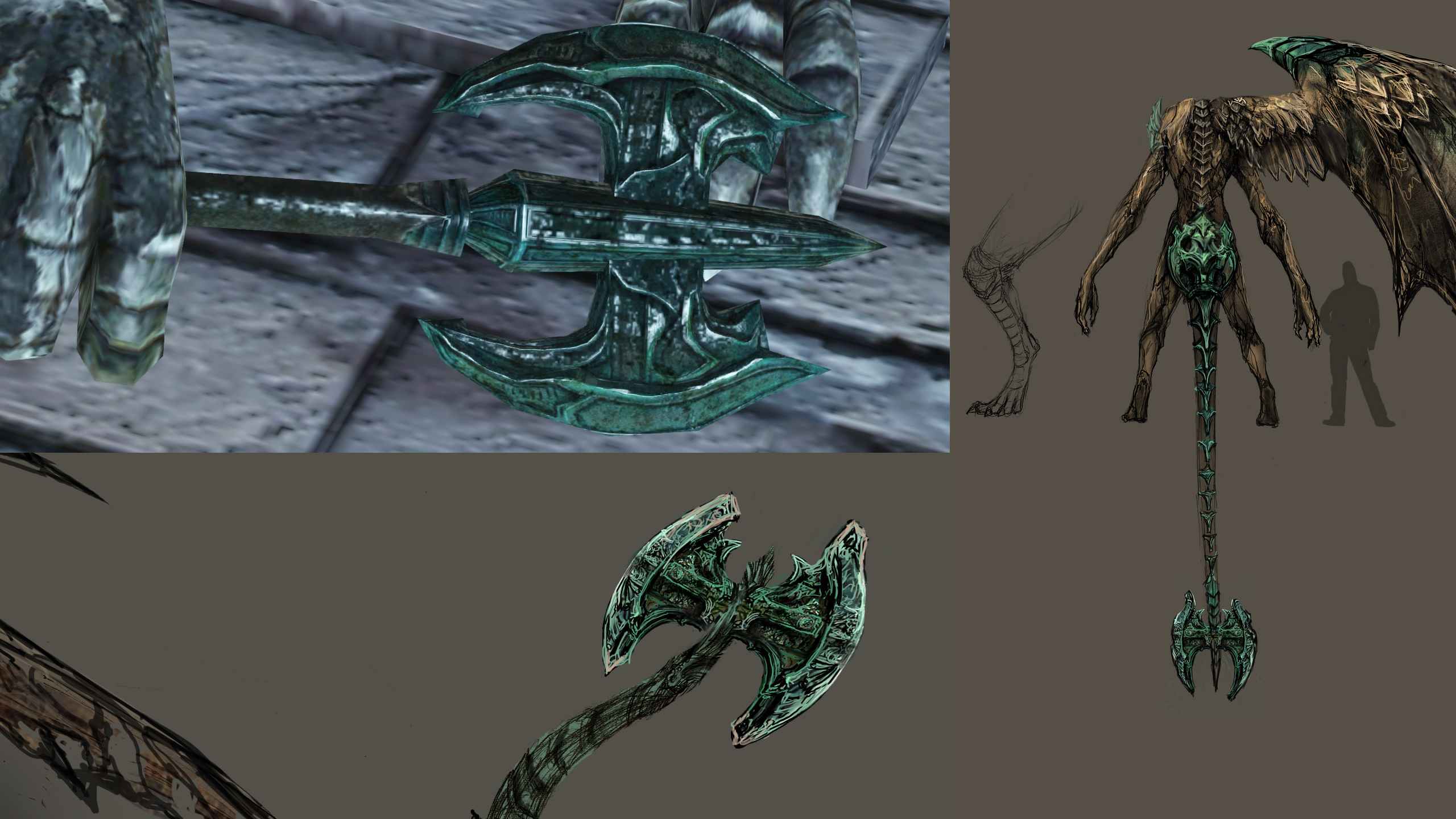
Two-pronged spear reproduced based on old books.
Gargoyles are considered beings that protect castles and fortresses from curses, and various kinds have been made in successive countries. It is said that, among them, there were also those elaborate enough to look like they have life.
Altogether, it is clear that these elements of Anor Londo culture survived Heide’s destruction. Like with so many others, the received history had already become distorted, resulting in the New World mimicking merely the outward statues. What wasn’t passed down as superficial accounts became twisted and fragmented almost beyond recognition. Still, the idea of living draconic statues survived the rise and fall of nations, so some of Heide’s knowledge of the process may have collected dust in obscure corners of archives when not rediscovered by subsequent nations like Havel. The same is undoubtedly true of golemcraft, the concept simply applied to smaller dolls in Alken and Venn. The end result was Venn’s princess ordering a multitude of statues for her to later bring to life like her puppets.
While edifying apropos to the prince and princess’ puppetry, it doesn’t explain the existence of the Bell Keepers covenant. Members are given a ring emblazoned with the seal of a bell which allows them to be warped to one of the two bells as a grey spirit whenever someone approaches them. And after the trespasser is slain, the puppets ring the bell as they have done since their creation. Why recruit outsiders at all? The lovers plainly didn’t want anyone approaching the bell towers, and yet the puppets’ request for help from visitors and these rings’ function encourage just the opposite. Was this truly part of the puppets’ original mandate or an independent decision they made long after the deaths of their creators? Should it be the latter, then what purpose did the rings serve originally? And why be so defensive about anyone entering and ringing the bell? Most likely, it was the lovers’ secret rendezvous point.

The royal sweethearts can’t be hiding bell towers visible, and audible, to anyone at the castles, nor can they be protecting them from random destruction. That just leaves hiding something within them, which is supported by the Bell Keepers providing Hidden Weapon as a covenant reward. However, what is there to hide beside the love the prince and princess secretly shared? And what evidence is there to find in an otherwise unassuming bell tower? None now, but at the time the puppets were created, it may have been the site of clandestine meetings. The seal is designed to summon the wearer to the location of the nearest bell tower that a human entered, perfect for the prince and princess to meet up in secret. At the same time, it would be disastrous if someone else saw the royal of an enemy nation warp in right before their eyes, so guards were created to prevent trespassers. The bell’s toll is an all-clear signal for the prince or princess to put on the ring and visit the other. This is why the covenant keeps trespassers from ringing it; it prevents false flags.
Of course, there is no point to the Bell Keepers’ mission after all this time. Both Alken and Venn have collapsed, and the prince and princess are unlikely to still be having any secret trysts. However, these puppets are essentially magic automatons and thus bound to follow their programming. As item descriptions poetically allude, the two’s love for each other which motivated the puppets’ creation binds them to protecting the symbol of their love for all eternity. These dolls are not operating on true logic so much as what is within the parameters set by their creators. If not commanded against recruiting outsiders even as the number of broken puppets pile up, they will. And until commanded to do otherwise, they will continue to enact their original duty. In this way, the prince of Alken and the princess of Venn’s eternally unfulfilled love is also a curse. But curse or no, something did happen to the prince and princess and the kingdoms they represented — for the Japanese description of the Bell Keeper set doesn’t refer to them as prince and princess, but king and queen.
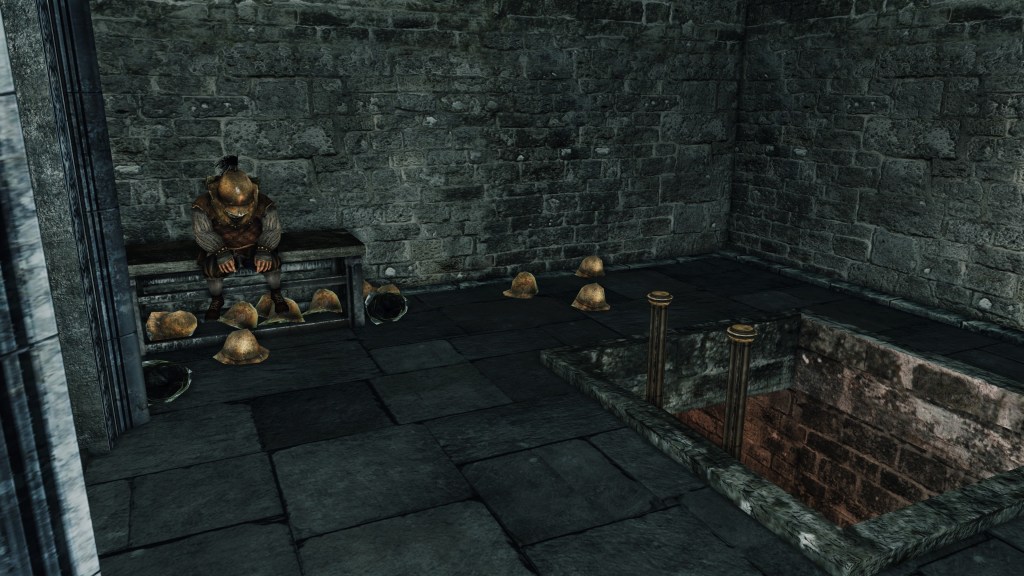
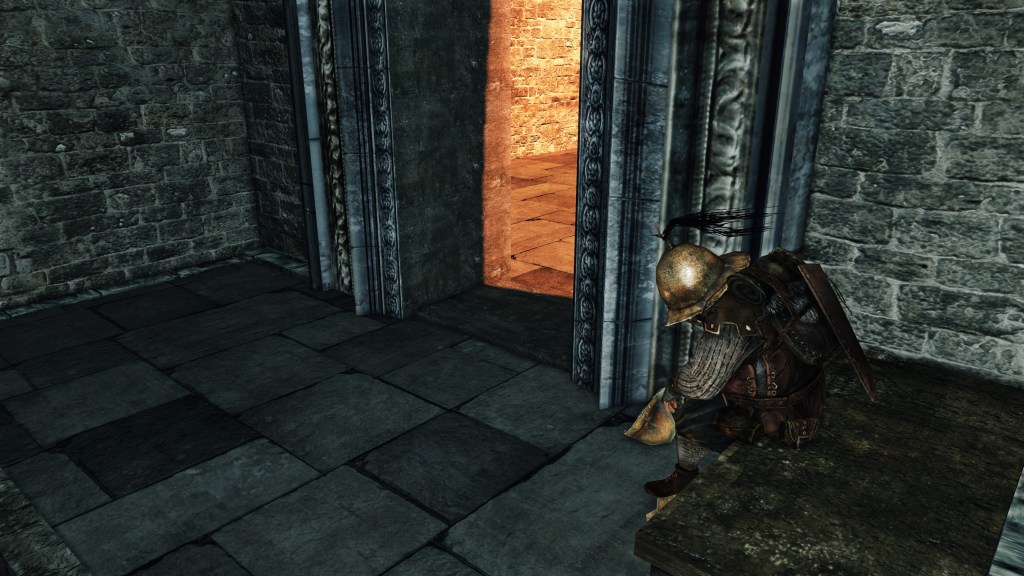
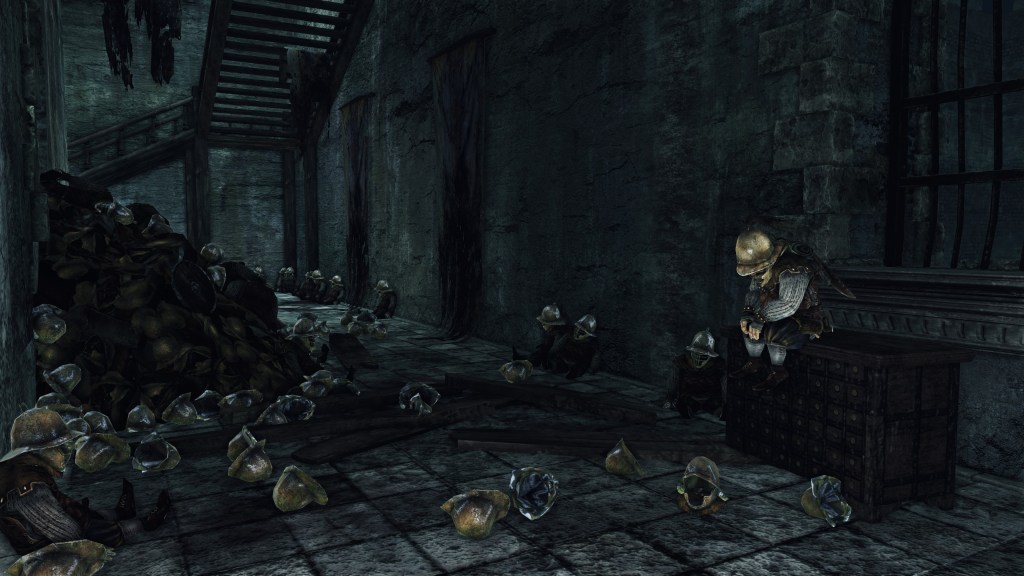
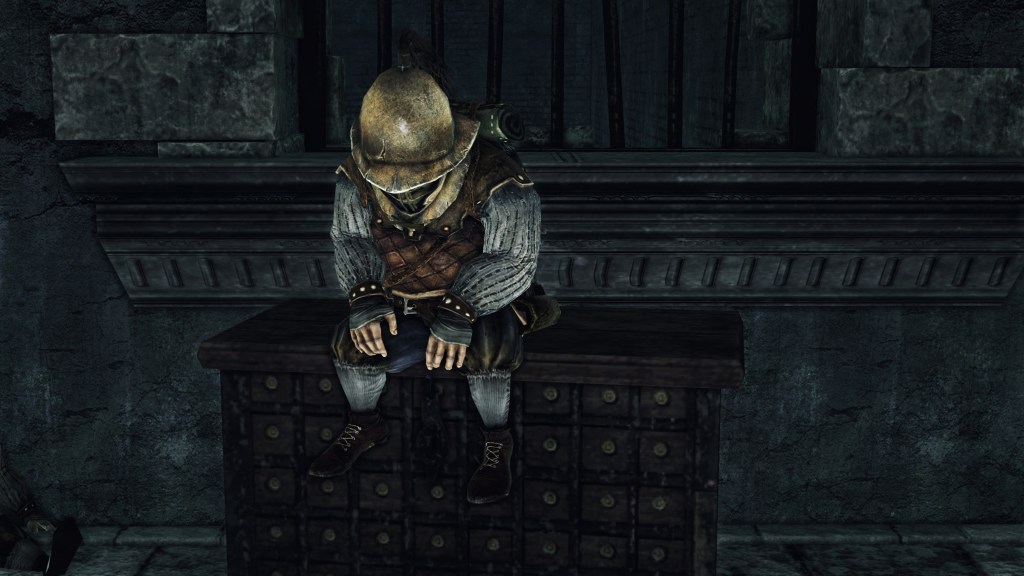
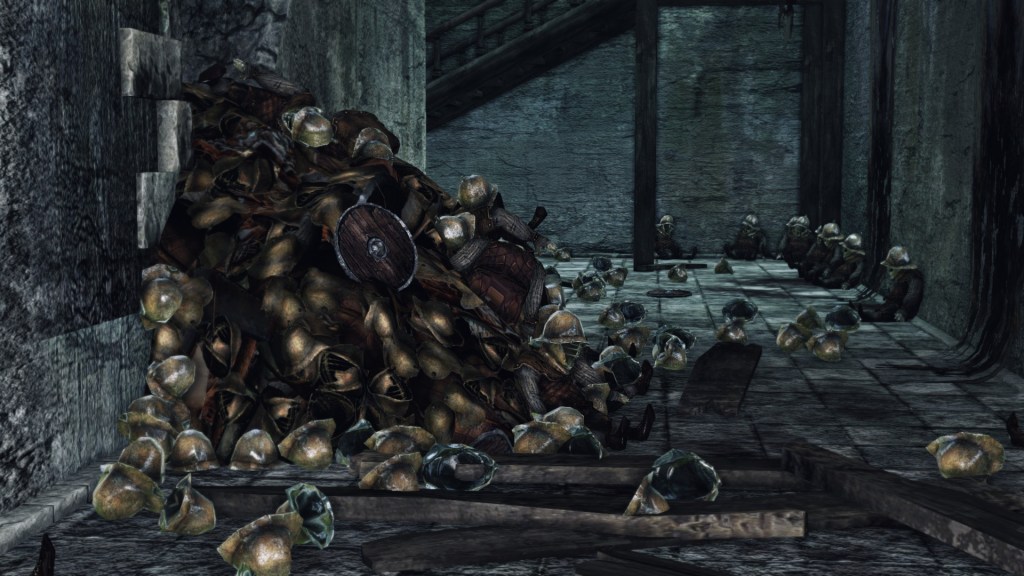
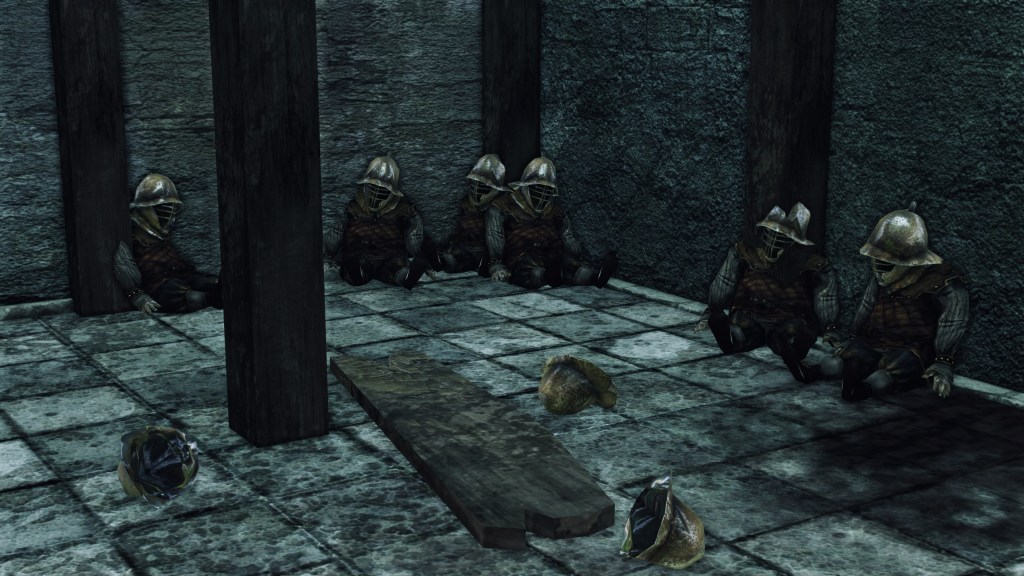
Old helmet that is deceptively comfortable to wear. Personal effect of the bell keepers.
The secret love of the former king of Alken and queen of Venn binds these small dolls even now. Even though the king, the queen, and their countries are already lost now.
Evidently, the lovers had eventually become leaders of their respective nations following their predecessors’ deaths conveniently around the same time. This comes with the consequence of marrying different partners per their royal duties, though it is possible for the princess to have assumed the throne by herself if there were no other legal claimants; matriarchy would also be consistent with a magic nation when women hold a special capacity for souls. However, this political reality didn’t necessarily end the love affair or at least the mutual pining. The bell towers lingering with their keepers hints to neither having the resolve to give up so long as they were both willing and able to do so — key words: willing and able. We cannot confirm that the king of Alken and queen of Venn are actually dead. The Japanese description broadly asserts that the king, queen, and both their kingdoms have been lost. Does that mean they are both dead or just no longer king or queen of a country? Did they turn Undead and hollow after their countries’ collapse? When and how did their countries fall apart?
Forged by Iron
The Old Iron King was a “weak” king lacking in wealth and power until he plundered the iron located in Venn. This alone proves that this king, whose name has been lost to history, was a contemporary in the histories of Havel’s feuding successor kingdoms. Moreover, Belfry Sol is located at his castle, meaning that the Iron Keep was likely built directly on top of Alken’s royal residence in its capital. This opens up the possibility that Old Iron King was, in fact, a king of Alken. Without a doubt, Queen Mytha’s manikins are created with the same art of puppetry from Alken and Venn, and Gilligan recounts her marriage to the ruler of the castle “beyond” the Earthen Peak, namely the Iron King of Iron Keep. Gilligan also claims that Mytha’s husband was originally in love with someone else, which lines up perfectly with the former prince of Alken’s forbidden romance. And so, the Old Iron King with his mighty soul and the later king of Alken with his tortured heart are undoubtedly one and the same.
Iron rod tinged with strong heat. Gives heat to the Tower of Black Fog and is used to operate devices.
The Old Iron King who plundered this remote region from the Kingdom of Venn was a weak king. But he became the king to rule this land thanks to finding this place where iron is born.
Why then was the new king of Alken so weak? It may have been a result of Alken’s aggression. If a kingdom constantly invaded its neighbor since their two countries’ inception but failed to either conquer the opposing kingdom or make any noticeable progress against them, the stalemate would inevitably tax their coffers. Basically, Alken’s endless onslaught wasted wealth and resources throwing itself into a brick wall until its offense finally burned out. That the prince even became king intimates that disaster befell the previous monarch. No matter the new king’s personal ability from a soul forged in battle, this would greatly diminish Alken’s military strength and threaten the royal family’s hegemony over its territories. What would stop infighting by self-interested noble factions from further destabilizing the kingdom? The king of Alken needed some saving grace to consolidate power around his central government and turn things around, and he found that in the form of foreign aid.
A strange “knight” from the East happened to be visiting the Kingdom of Alken. This knight-errant must have demonstrated his fighting prowess, as it caught the feeble’ king’s attention. He begged the foreign warrior to train his soldiers in his people’s unusual swordplay. The stranger, for his part, accepted the request. But skill aside, the foreigner’s fighting style stood out simply because the so-called knight named Alonne is actually a samurai. Alonne wears armor not too dissimilar from Shiva, another samurai of the East from DS1. He also wields a katana, specifically a nagamaki with its extra-long handle, and the knights he taught use asymmetrical greatbows resembling those specific to samurai martial arts. Like Shiva, Alonne looks to have been a ronin, wandering the world west of home. However, the company he keeps suggests that this isn’t because he is Undead. Rather, it is probably his weapon that is to blame.

Soul of the knight Aaron, who once served the Old Iron King.
It is said that Aaron, who came from an eastern land, was the one the king had the most faith in.
The special soul this knight possesses is used to acquire a vast amount of souls or create a great power.
Alonne’s katana is a kind of cursed sword infamous in Japanese legend. These youtou (妖刀) tend to become possessed by evil due to their makers or the sheer amount of blood they shed. The enchanting ripple pattern on the blade practically asks for flowing blood, and it speaks to Alonne’s skill if he killed so many. However, these cursed swords are also dangerous, bewitching to their owners as much as the enemies struck down by them with such mastery. We can witness the dangers for ourselves. Alonne occasionally draws out a black-and-white aura which he can unleash as a wave. When stabbed with this latent evil, the cursed aura turns red and empowers the weapon; this also occurs should the wielder stab him or herself by performing seppuku. The sword thrives on blood and death, indifferent to the source. Some legends even say that youtou cannot be sheathed without a kill, even controlling their owners to this end. When failing to land a single blow throughout our entire duel, Alonne does commit seppuku, possibly to appease the blade’s bloodlust as much as atone for the dishonor.
The underlying cause of this is sure to be the souls imbued into the sword from the blood of its victims plus, perchance, its maker. The aura’s color invokes humanity, implicating a dark curse which demands more death. The obvious reason for the victims to have this sentiment is spite, dragging down others to vindicate their own deaths. After accumulating so many deaths on the battlefield, the collective curse gains strength over the sword’s owner, the very image of blood flow upon it bewitching them. Alonne must have a strong will to resist this siren’s call when his blade has no sheath, or maybe he just accepted that there was no point if war was his everyday. But that wouldn’t matter to his peers in the East. A man compelled to kill would sooner be driven out for the threat he poses to everyone around him, foe or friend. Forced into vagrancy through no fault of his own, the banished warrior trekked aimlessly until finally entering the king of Alken’s court.
Despite the country’s circumstance at the time, Alonne apparently saw the man’s potential to be a great king, ultimately deciding to serve as the monarch’s knight. Perhaps it was because the vassal was rejected by his lord back home for simply serving his purpose as a fighter — after experiencing something like that, an honorable samurai would want to serve someone of virtue who actually required his talents. Still, Alonne had made a name for himself as the Iron King’s right-hand man and most trusted counsel, having contributed to his lord’s acquisition of the throne. That level of involvement is no doubt why the Eastern warrior’s name is “Aaron” (アーロン) in reference to the Japanese spelling of the English “iron”, or airon. (アイロン) A weak king placed his faith in a stranger during his hour of need, and his desperation was rewarded. With Alonne’s help, Alken turned its bleak situation around.
Based on the Scorching Iron Scepter’s description, the king had discovered massive iron reserves where Brume Tower was built. It may have been Alonne who noticed these during his travels and relayed the information to his new lord; it would, feasibly, be fresh on the mind as he was passing by. Magerold states that the castle’s fine quality iron was harvested from “this area” during his stay there, which can be referring to the wider region. Surveying the geography of Brume Tower reveals a rocky terrain similar to the mountain range the Iron Keep is situated in. Likewise, pools and rivers of lava dot the entire land, whereas said castle sits on a lake of volcanic magma visible upon a distant highland from Harvest Valley — comparable to a caldera lake on a plateau according to the game’s director Yui Tanimura in the Dark Souls II: Design Works interview. Although this still doesn’t justify the nonsensical lift straight up to the Iron Keep from inside Earthen Peak, Tanimura later in the interview confirms that Brume Tower is, indeed, an extension of the same place.
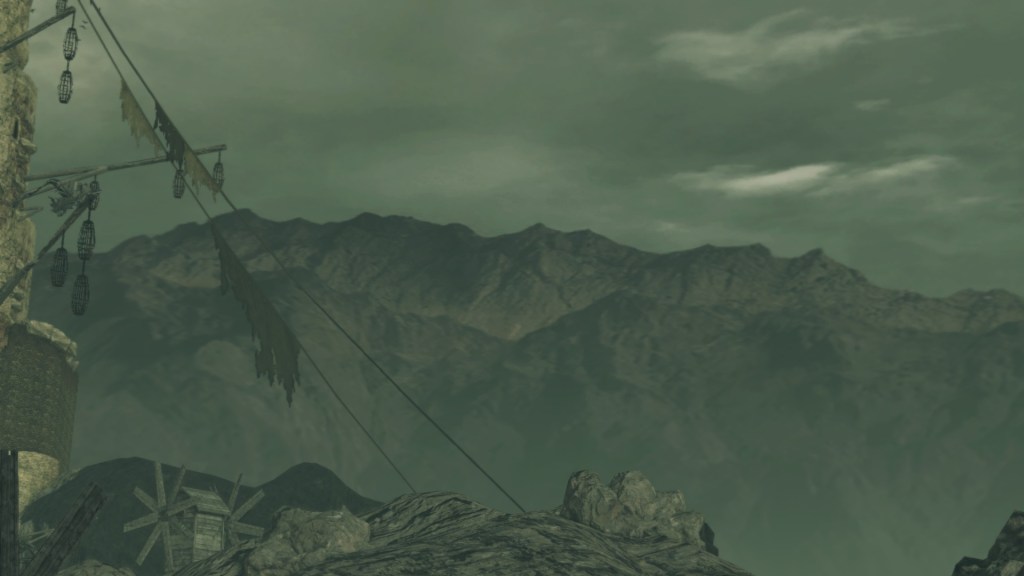

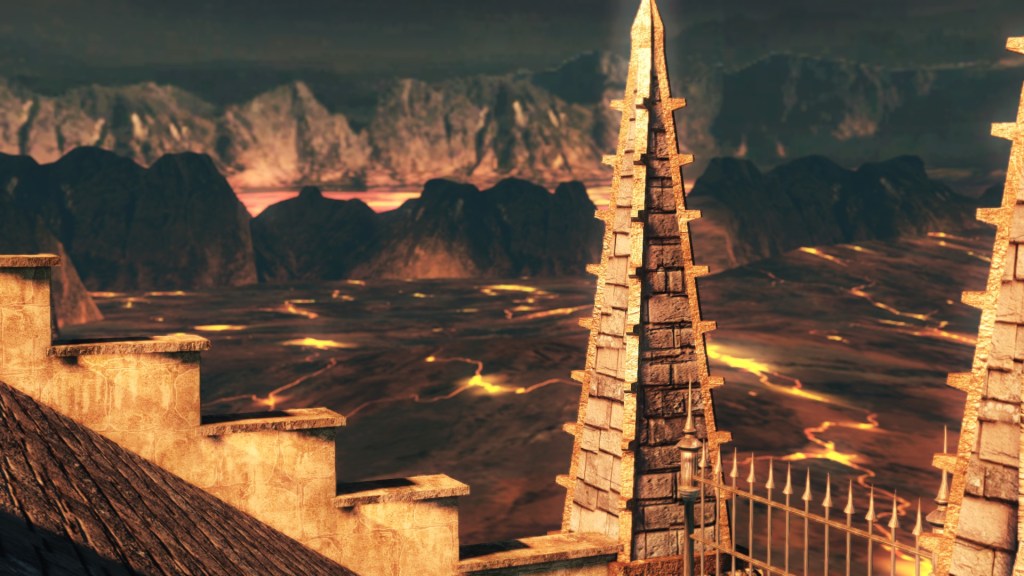
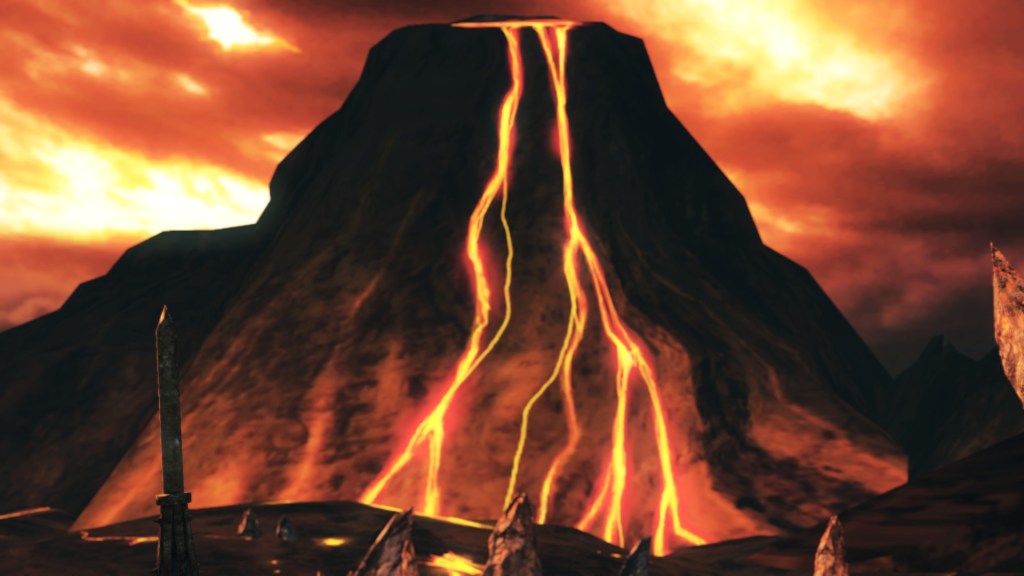
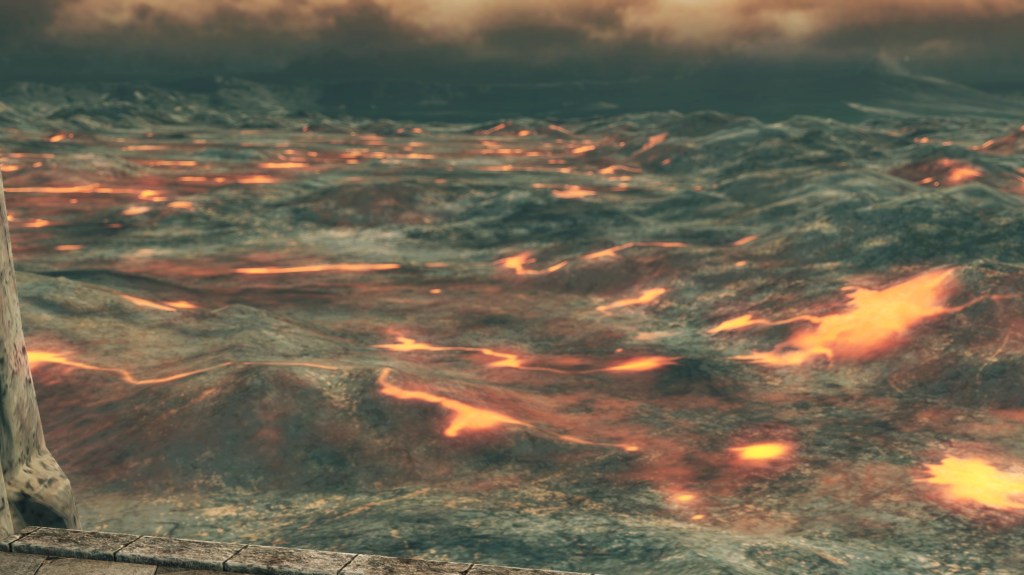
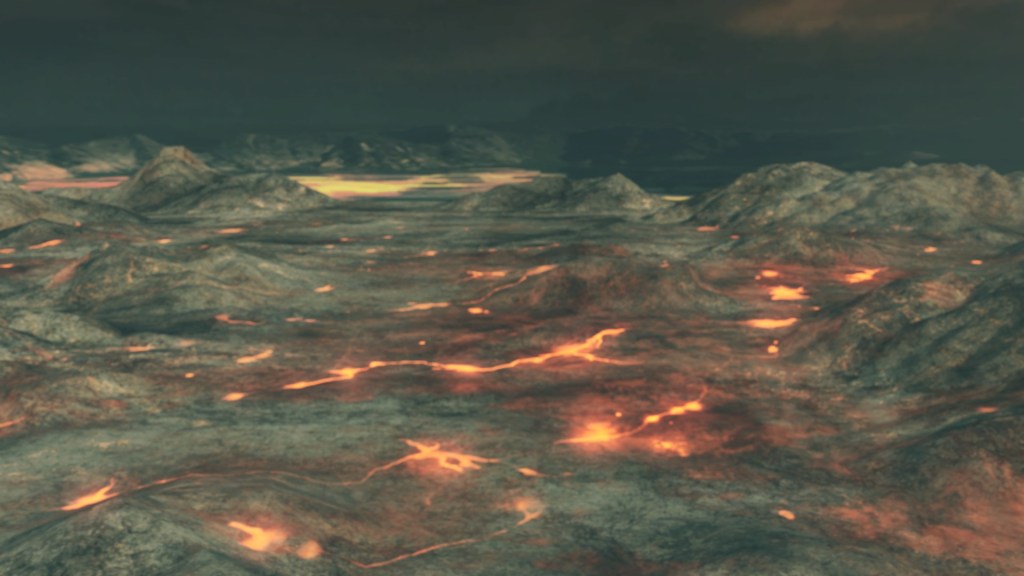
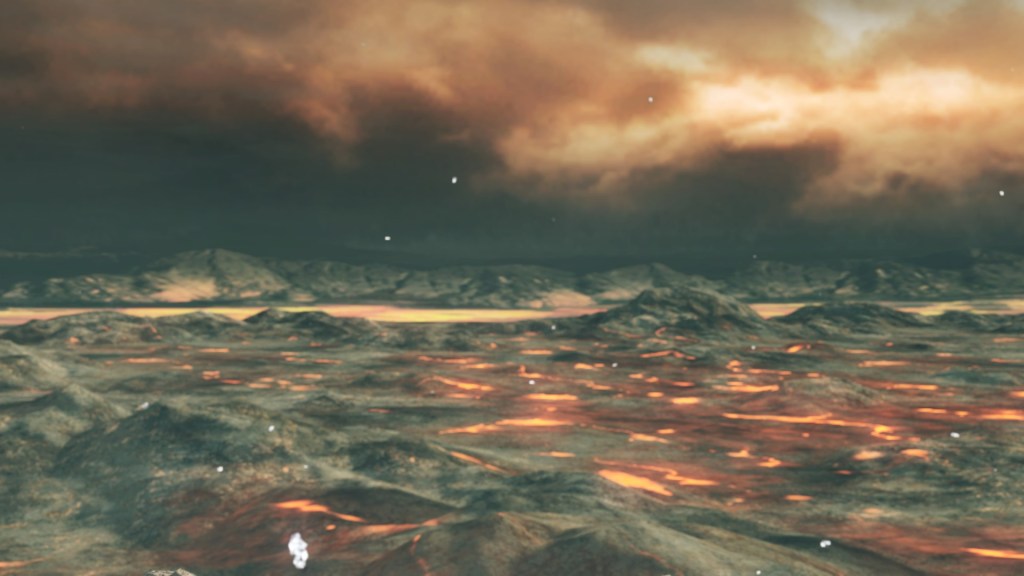
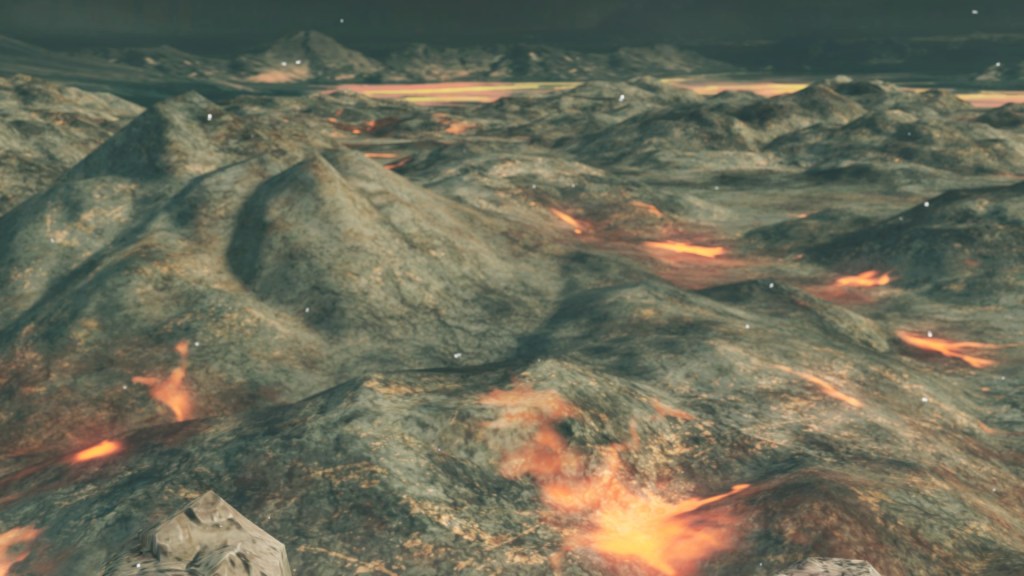
Wonderfully fine iron can be harvested from this area.
We can therefore assume that this so-called remote region of Venn was still relatively close for the king of Alken’s castle to find, on the border even. A corpse in Brume Tower carries the Simpleton’s Ring, worn by warriors who received the king’s “divine protection” when they departed for the front — making the future tower’s location the edge of enemy territory. The fact that this area was previously controlled by said enemy speaks to the king’s weakness, Venn having pushed its borders all the way up to Alken’s heartland. The kingdom owned so little territory when Alonne finally entered the picture. Furthermore, Venn’s implicit ignorance about its own iron reserves clarifies why it failed to prevent such a weak kingdom’s conquest. They simply didn’t know the value of this otherwise barren land far removed from either side’s main traffic and so didn’t adequately defend the border.
Ring modeled on a fool’s flower. Form becomes invisible while rolling.
It is said that warriors who received the divine protection of the Old Iron King wore it when departing for the front.
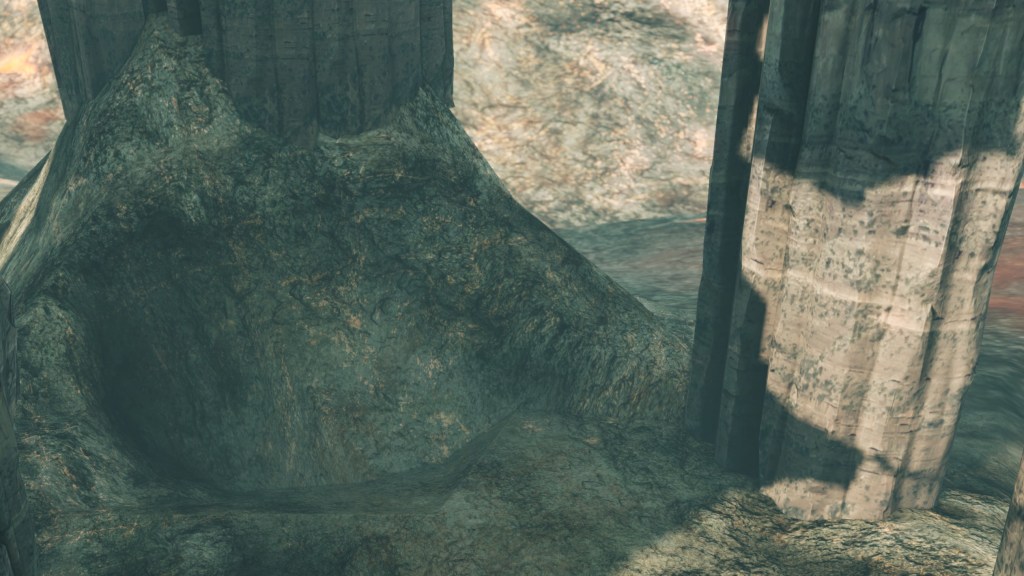
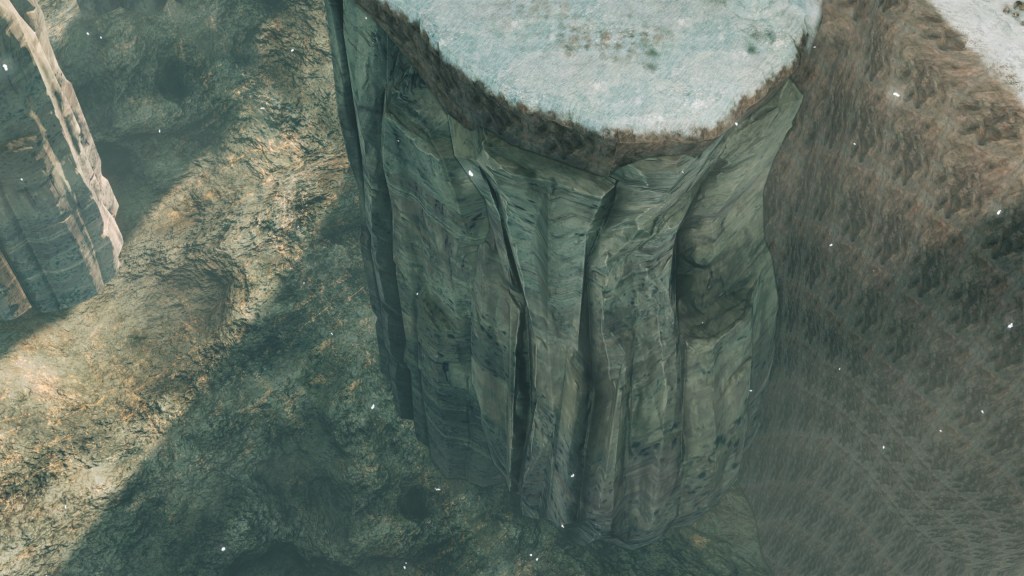
Granted, the truth should have been apparent at a glance. Brume Tower and its satellite facilities, linked by gargantuan rusted chains, have all been constructed atop huge light grey pillars jutting out of the charred ground, those supporting the main tower integrated into a more conventional mountain. We can navigate inside one of these pillars after descending into the bowels of the tower; the area’s name? Iron Passage. In other words, all that grey rock is iron ore ready to be processed. However their bizarre formation came about in this volcanic land, anyone on the horizon could have identified the rock if they had the curiosity to investigate. That such striking oddities went unnoticed for so long almost beggars belief. Being a borderland is thus the only explanation for neither country exploiting these deposits sooner. That also makes Alonne, a foreigner exploring the western world as a free spirit, that much more likely to have stumbled upon them first.
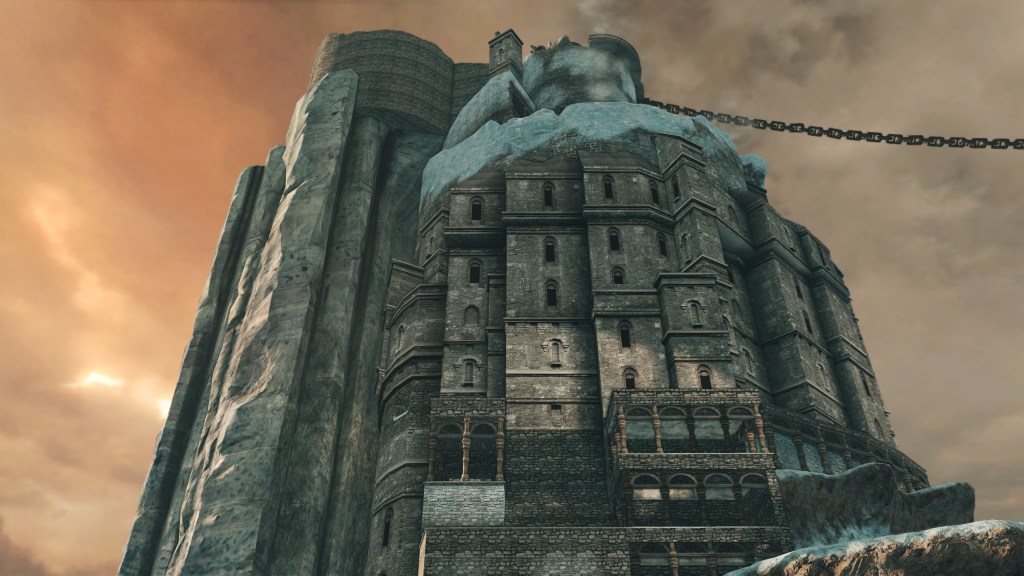
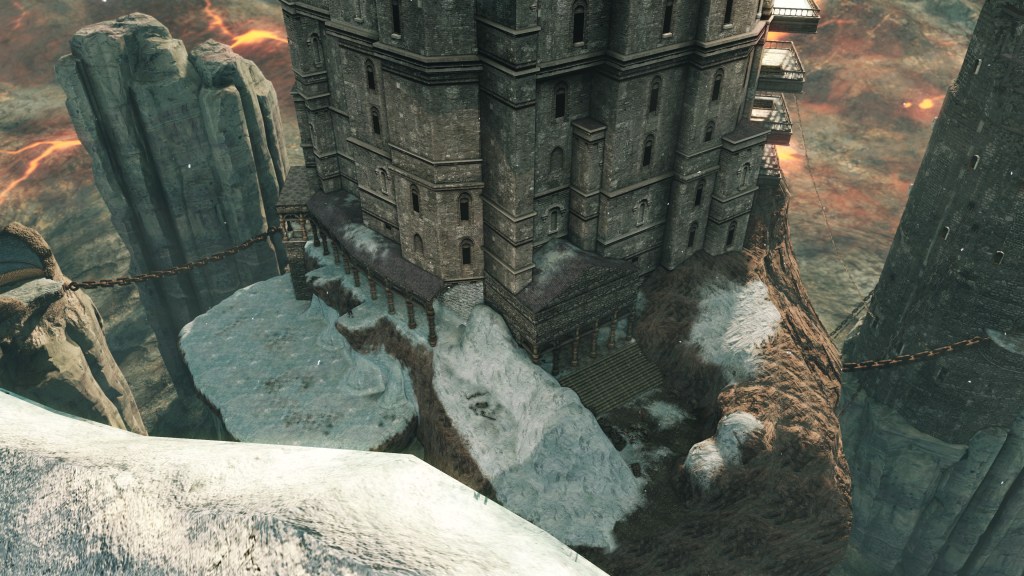
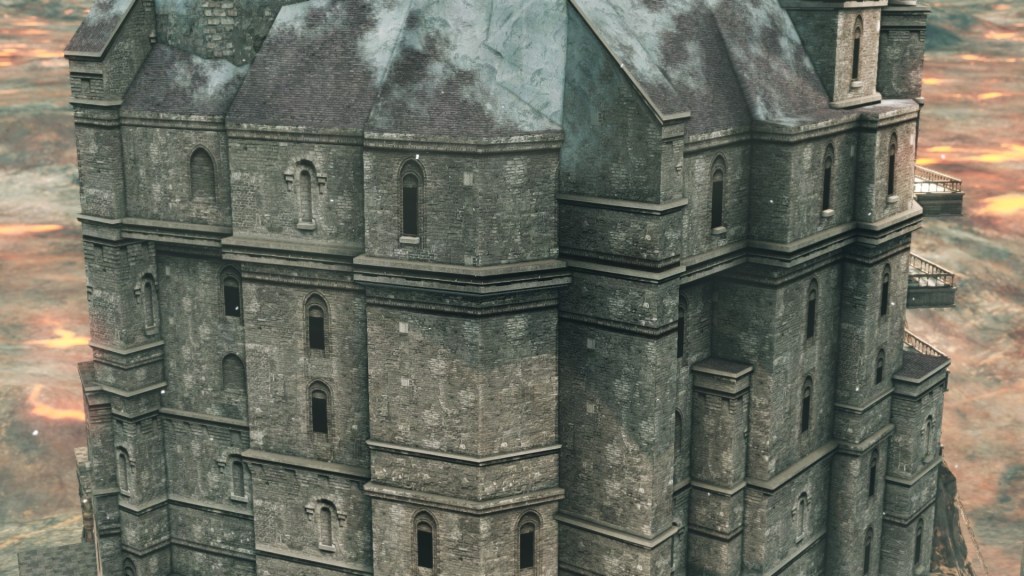
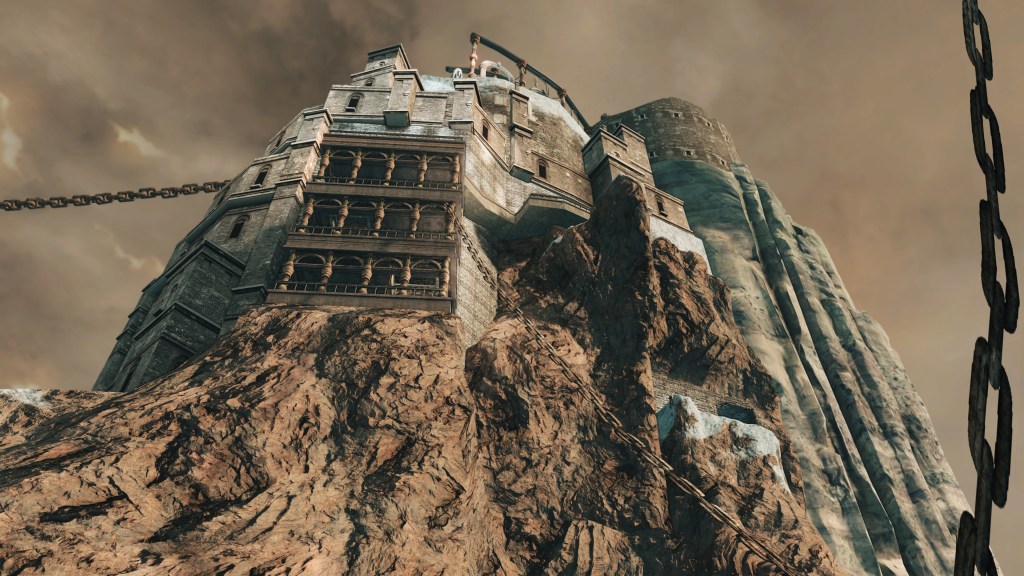
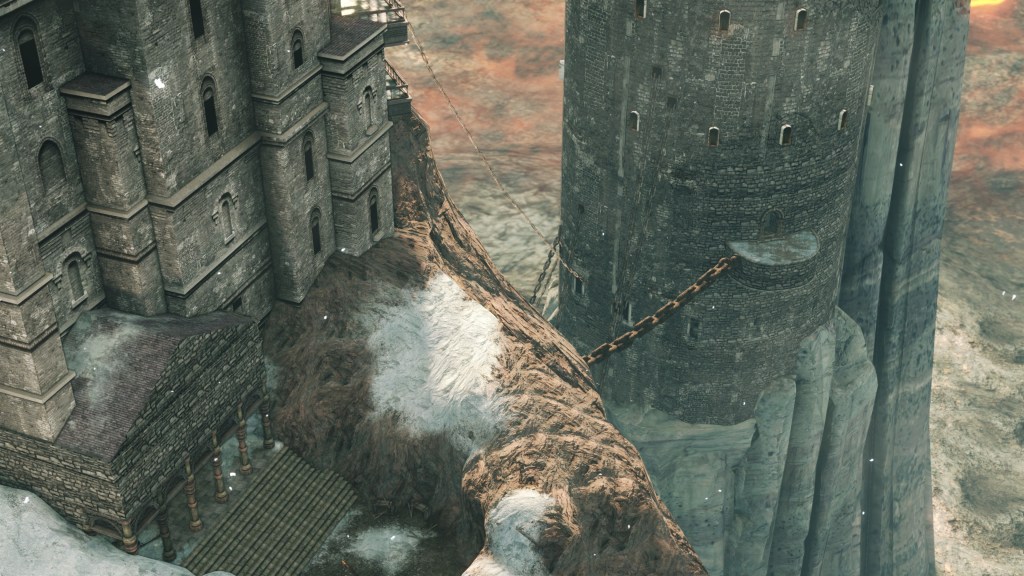
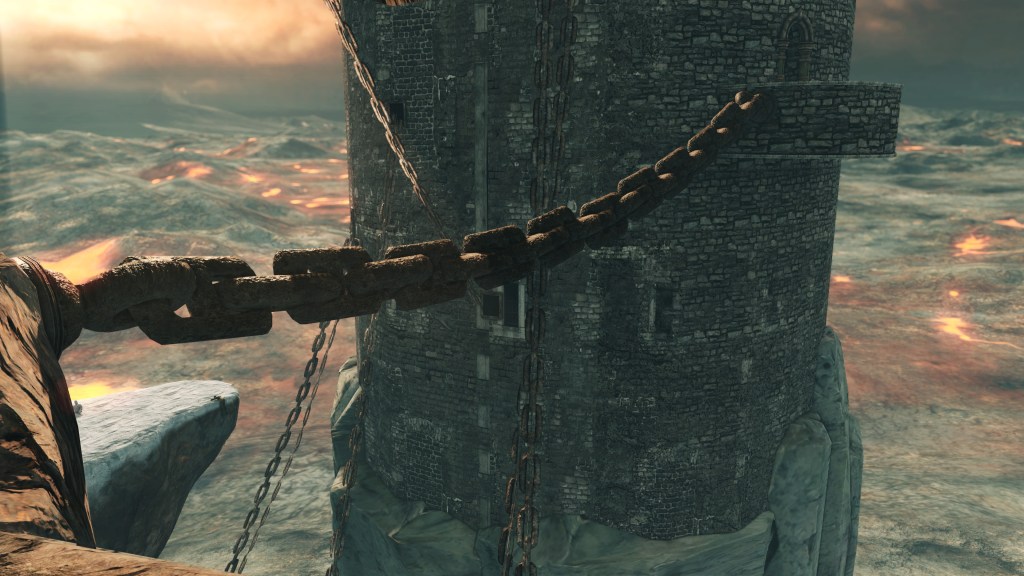
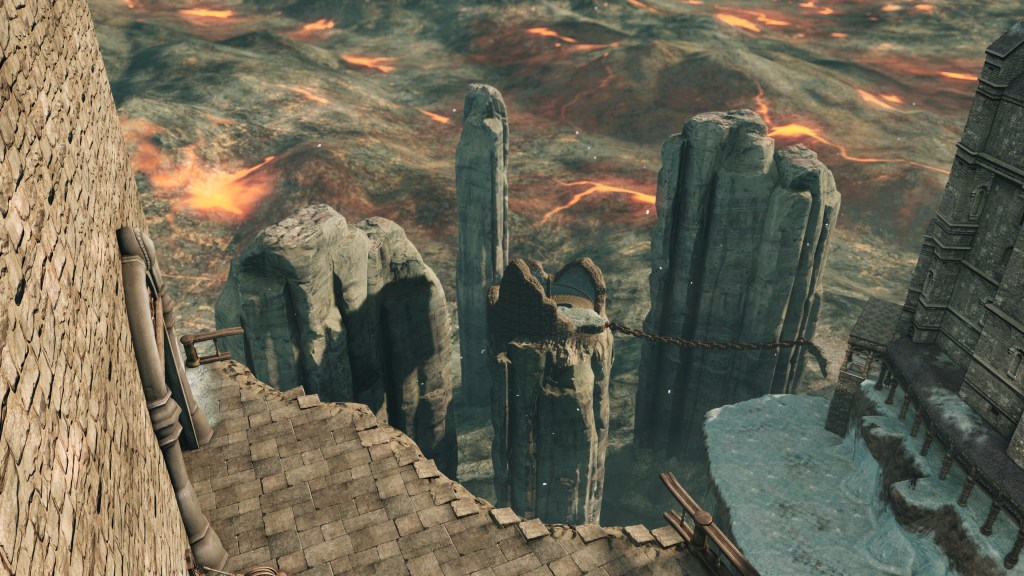
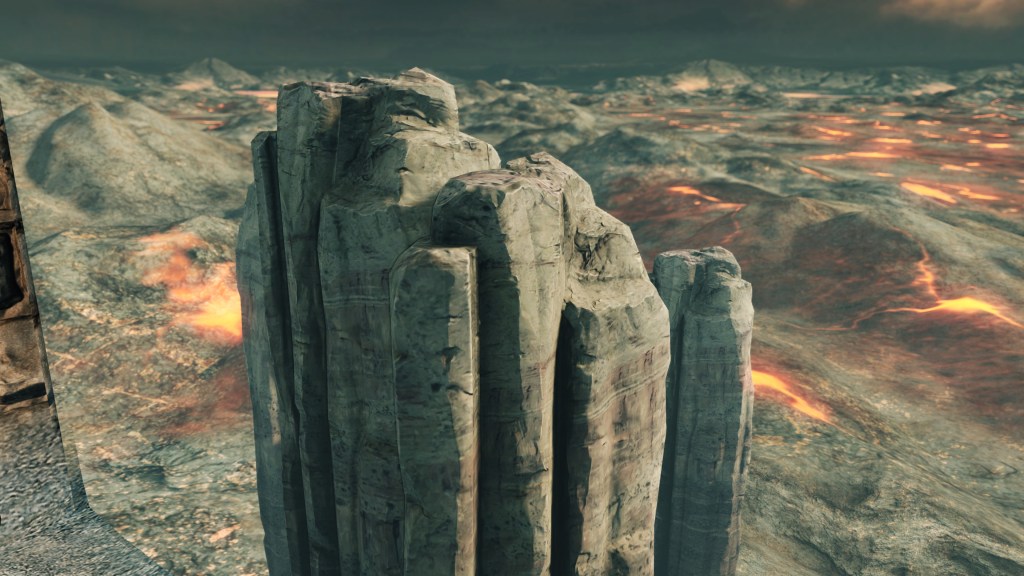
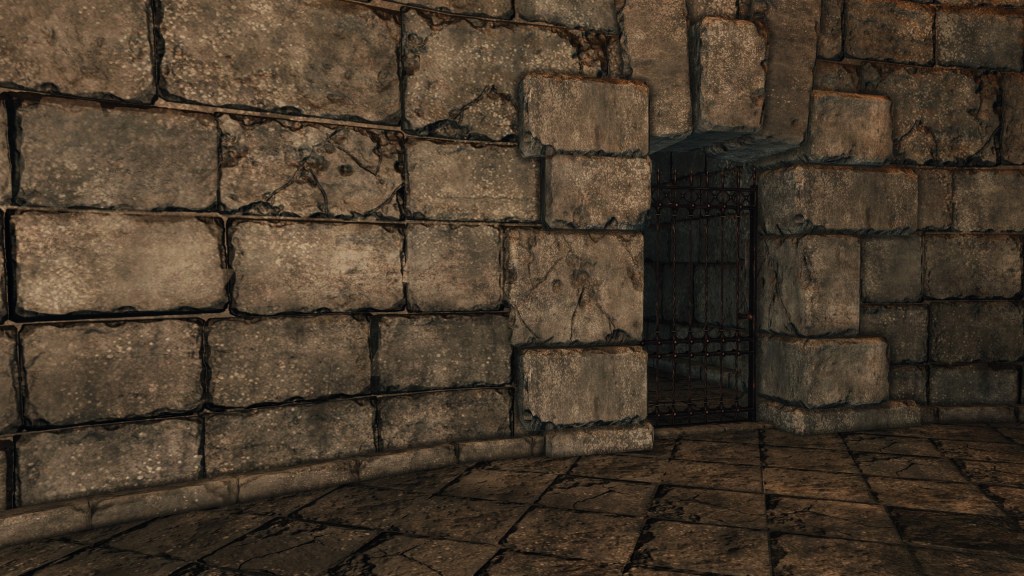
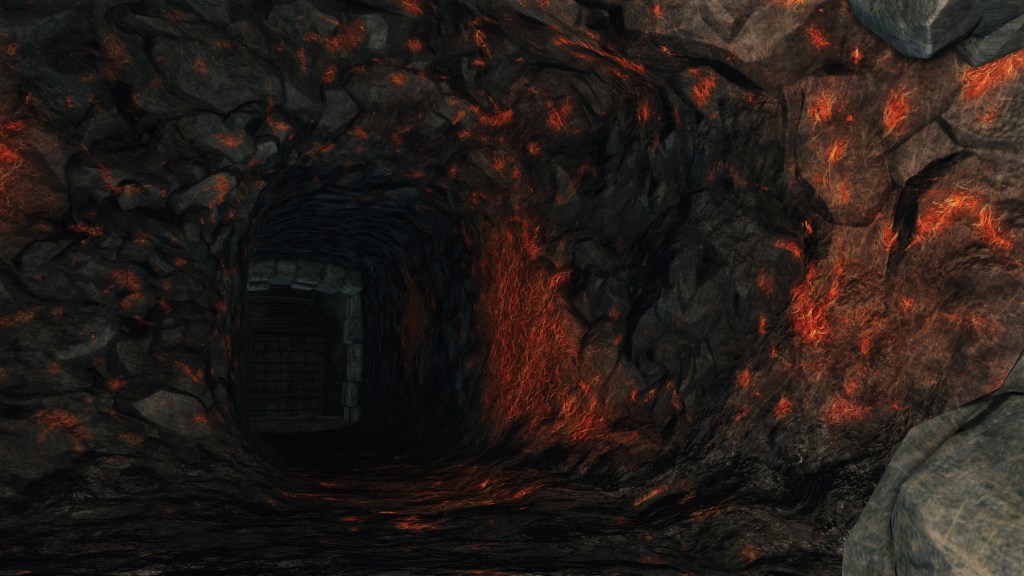
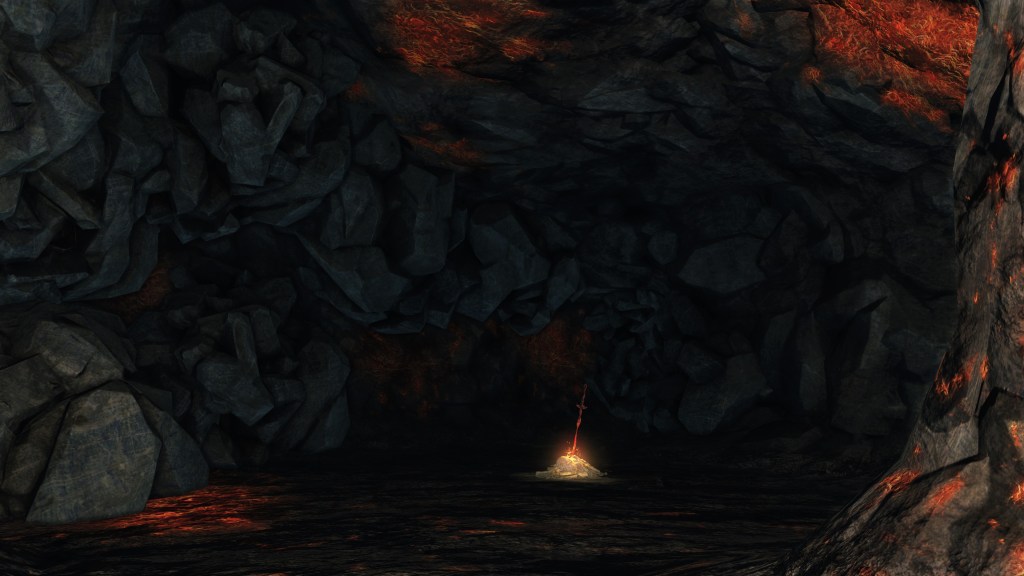
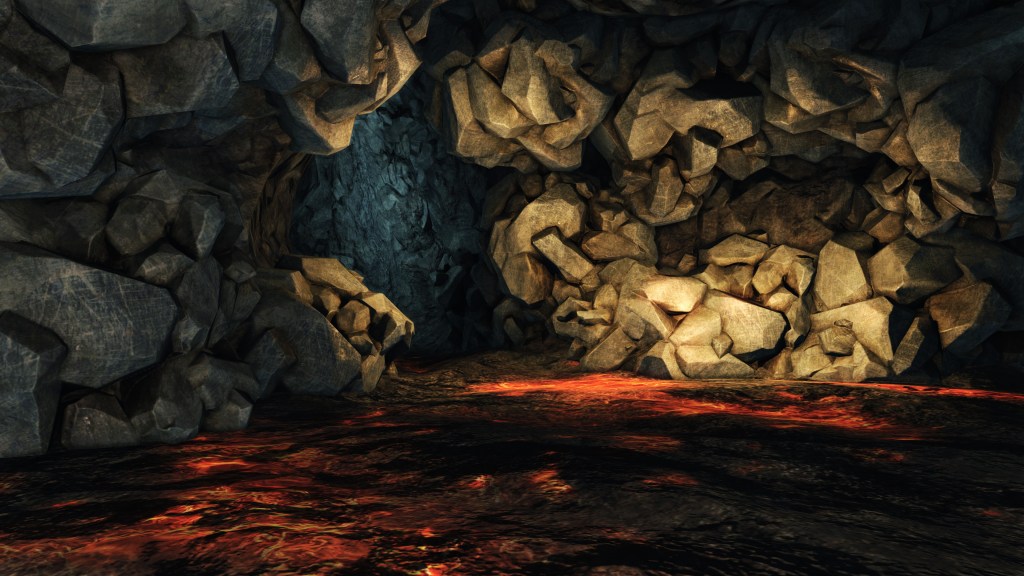
Even if he did have only the Easterner’s word to go by, it was still the perfect target with the perfect solution to the king’s perfectly hopeless situation. With his back against the proverbial wall, what did he have to lose on one gamble? Now that the knights were trained in Alonne’s peculiar Eastern swordplay, Alken might as well risk invading to take the land. And once conquered, the weak king built towering facilities to mine, smelt, and forge the iron, architecture decorated with images of blossoming flowers and the sun — holy icons used to symbolize fire in Anor Londo religion since DS1. The king’s faith was rewarded, and he didn’t take it for granted. Venn wouldn’t be taking Alken’s invasion lying down. The enemy most likely did try to take back lost ground, once they had realized the king’s maneuver. But by the time they mobilized a concerted effort, it was simply too late.
It is no mystery why this region had become so critical for both countries. Controlling the iron was a matter of both economic and national security. Iron is, of course, essential to a medieval society’s military prowess. The Iron King’s knights wore iron armor taking inspiration from Alonne and wielded steel katana, which were “beautiful” and “solid” thanks to the excellent casting techniques of his new iron facilities. And with an abundance of iron to spare, Alken was capable of mass-producing arms and armors as showcased by the various accoutrements found throughout the ironworks. For example, both the Strength and Dexterity Rings are malformed iron bands imbued with the metal’s “divine protection” to help give the Iron King’s soldiers an edge in combat. More importantly, their shoddy craftsmanship shows a willingness to experiment with this surplus, something can be seen with the melted iron axe that became the Smelter Hammer. As the rings’ descriptions relate, the King now had the power to freely transform iron as if he were creating life — in some cases, pushing the limits for the actual creation of life.
Curiously warped iron ring. Increases the physical strength if worn.
The Old Iron King amassed a great age via the divine protection of iron. That power was used to freely transform solid iron as if it was the creation of life.
The ironclad soldiers are golems the king crafted with iron for the soul’s frame. Such heavy iron soldiers are a huge step up from the puppets of Belfry Sol and make for a far more formidable opponent than your common soldier, but they weren’t even the end goal. As we explore Brume Tower, we see chains raising and lowering frames of Heide’s old knight golems. The Iron King had seemingly been attempting to recreate the ancient country’s mighty puppets. A corpse found in Harvest Valley also carries their pike and great shield, reaffirming this implication of prior research. This explains why the Full Moon Sickles wielded by certain Undead associated with Alken are made with bradden steel — it also proves that Drangleic wasn’t the first to try reverse-engineering Heide’s special alloy. That said, the lack of active Heide golems in Alken lands and bradden steel in Alken wares insinuates that they had only just started manufacturing them when the ironworks halted production completely.
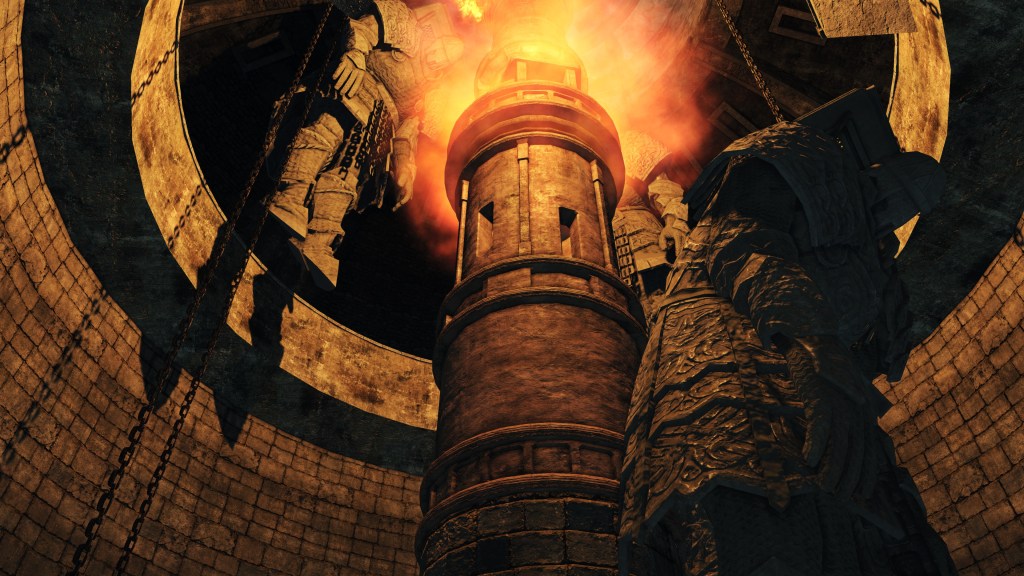
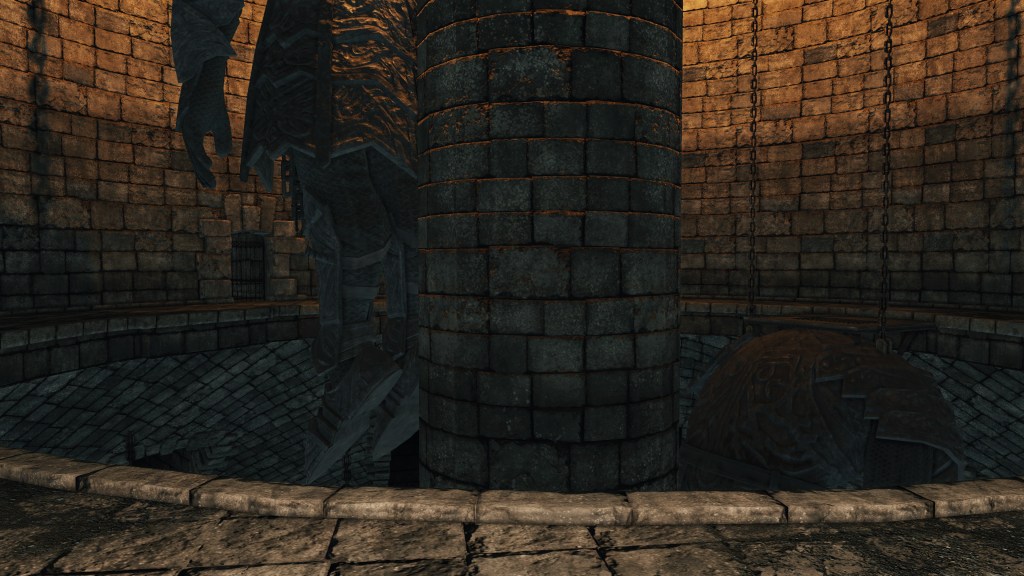
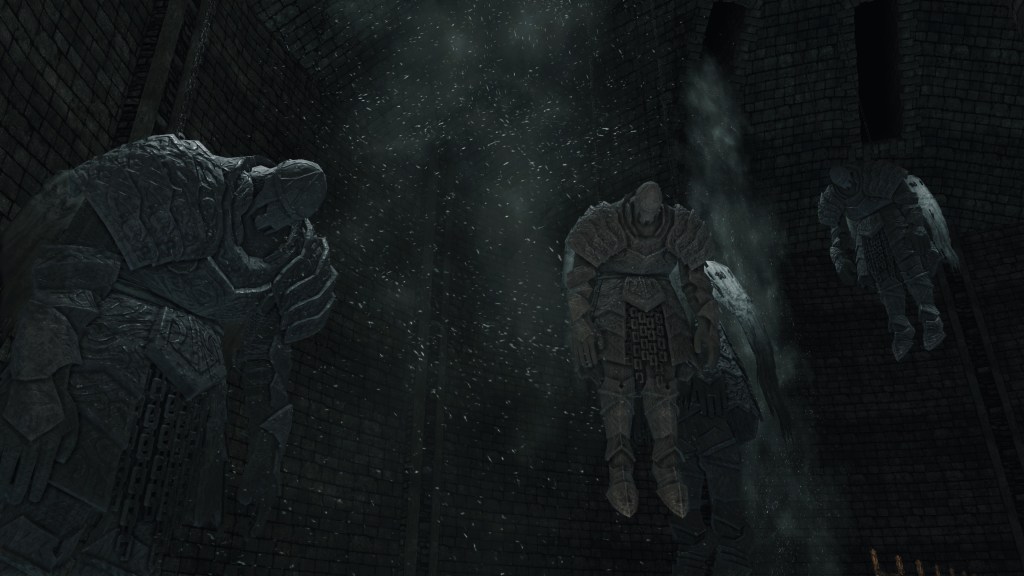
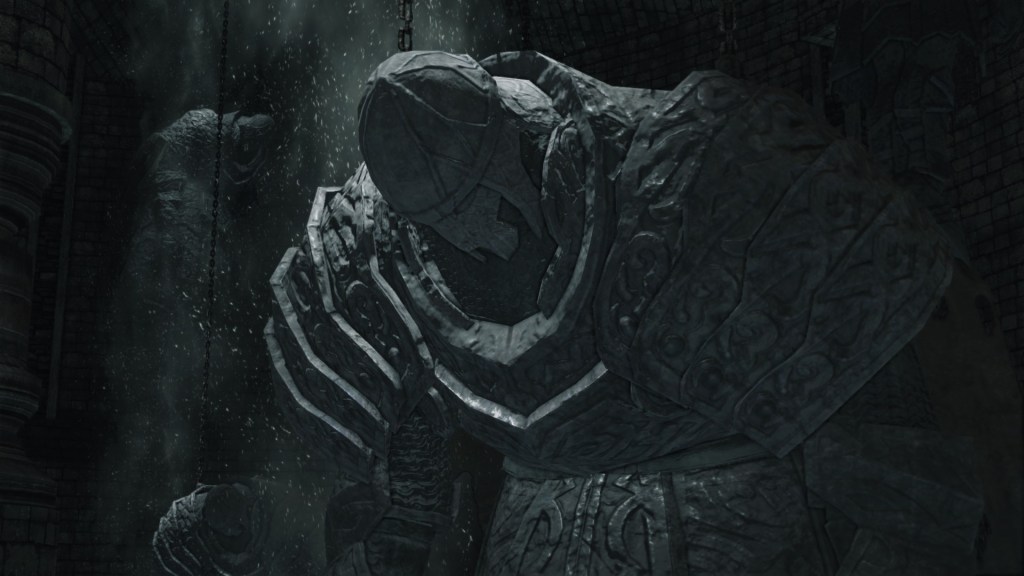

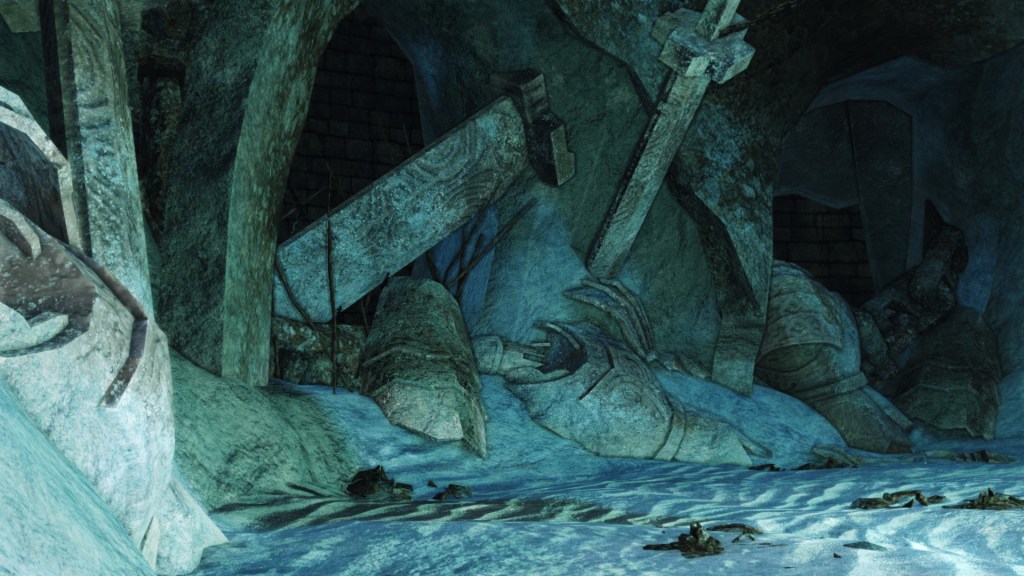
Even so, drawing a continuous line from the Iron Keep to the Huntsman’s Copse, which is linked to the Heiden ruins via the loop temple, gives Alken a pathway for investigating this civilization. There is only one problem: it completely surrounds the Lost Bastille over land. Considering how close Venn bordered the king’s castle, it is hard to imagine the country allowing such a massive territorial advantage during its period of weakness. In fact, its holdings must have extended as far out as the Shaded Woods, given that the Bell Keepers know a recreation of Oolacile’s Hidden Weapon spell. Therefore, all of these areas in-between must have been part of Venn’s domain at the time. But after securing the iron at Brume Tower, Alken pressed the offensive north and then west to seize these lands, gradually boxing Venn in. That would also fit with why Alken looks to have only just begun replicating Heiden golems before its collapse; it took time to establish that territorial land bridge. In that case, the only thing that stands out about Alken’s sweep over the periphery is leaving the heartland.
There is no evidence of subjugating the Lost Bastille, taking all of Venn’s holdings along with its capital outright. Instead, Alken seemed to have deliberately avoided striking directly at its age-old foe. Why? The obvious answer would be the Iron King’s affection for the enemy queen. Perhaps this small mercy was his gift to her for their eternal if unfulfilled love; he may have even been returning the favor. After all, why hadn’t Venn taken advantage of Alken’s previous weakness? Was it not the perfect opportunity to rid themselves of their nemesis once and for all? Maybe they were just that dedicated to their intellectual pursuits. But if its queen, partial to Alken’s new king, had lobbied against a counterattack and sued for peace, then this gave the ample opportunity for Alken to make its comeback. Now Venn was essentially under siege and would never threaten the kingdom again. The Old Iron King would at least leave her and her home with their pride as an independent nation.
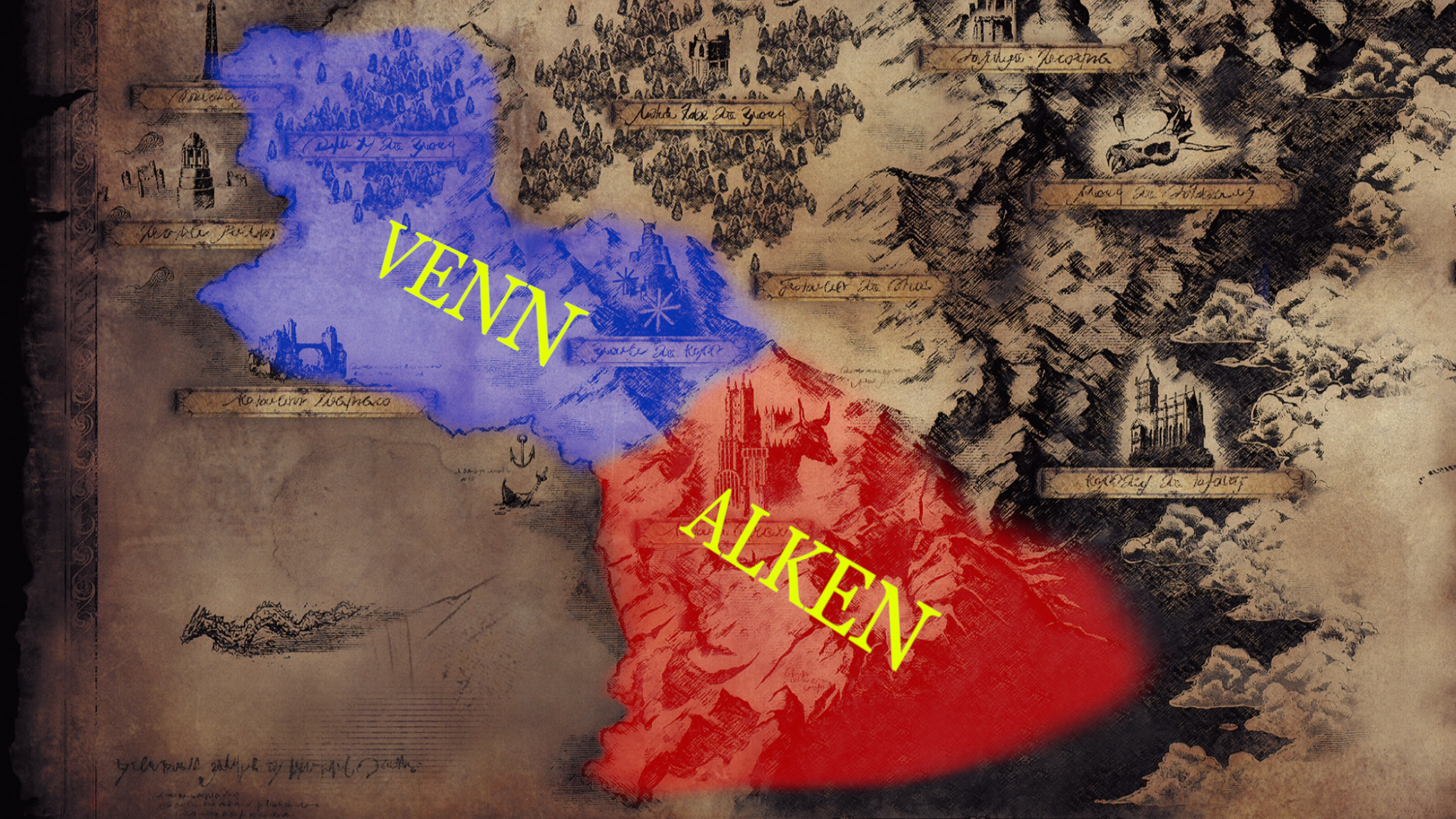
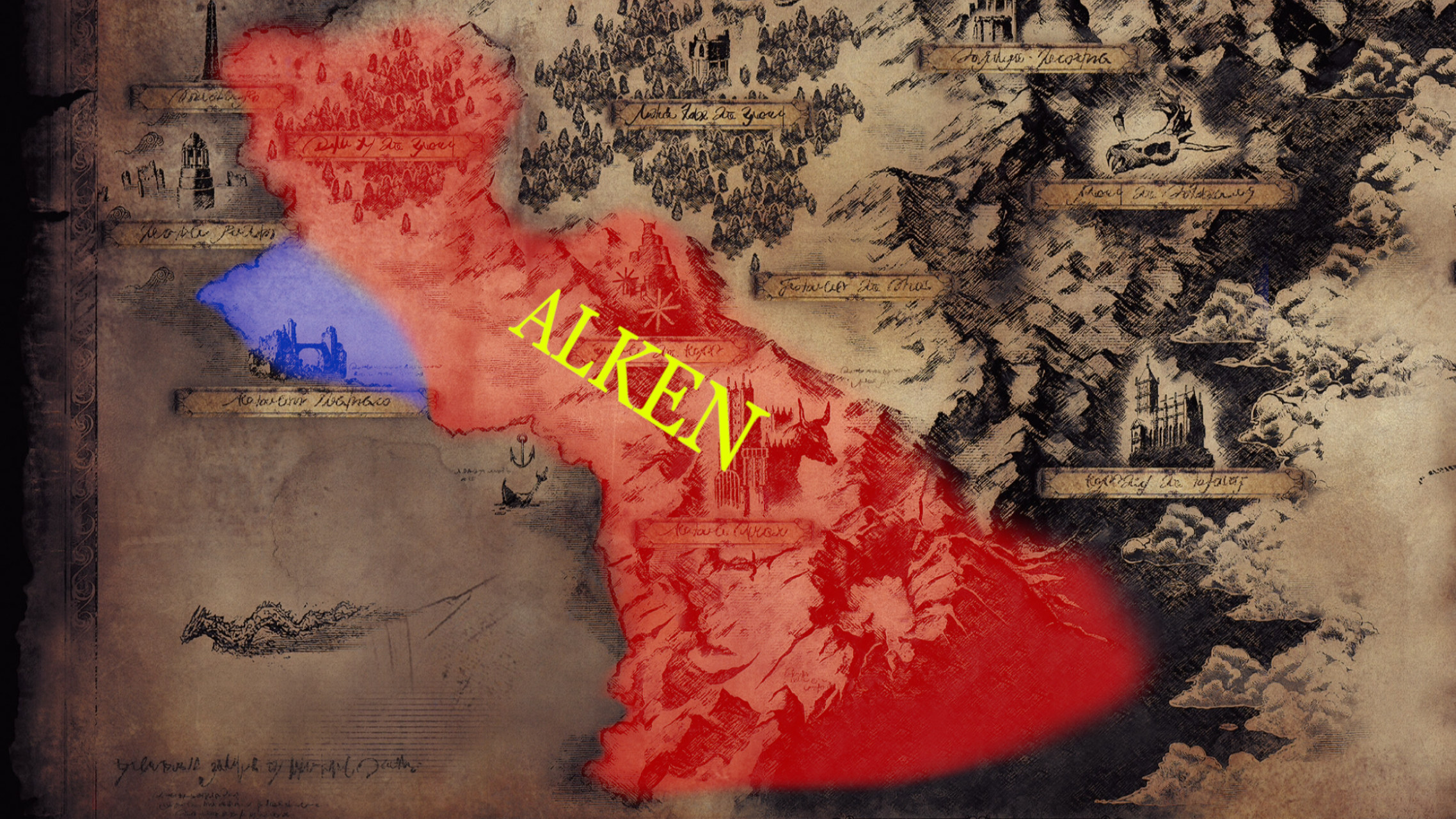
Whatever the case, these huge strides in technology and territory show just how major the massive iron reserves really were. But even that paled in comparison to their economic impact. Any country that mined such a huge supply of iron would see its price plummet within its borders. Production of not just military wares but general products would become dirt cheap, and the rest of the surplus would be used to make the country a major exporter. And since these iron mines and factories were royal-owned, it reaped all the rewards of these sales. In one fell swoop, the Iron King stimulated his country’s economy, expanded its border, acquired the means to defend his assets, forced his governing nobles into dependency, and amassed a tidy fortune. This was the political calculation behind a weak king invading Venn, and Alonne was invaluable in this effort whether his contribution was drilling, apprising, fighting, or strategizing. And it all paved the way for a golden age built on iron — so much iron that excess amounts were used in the various doors, keys, and ornaments created during his reign.
Drown in Decadence
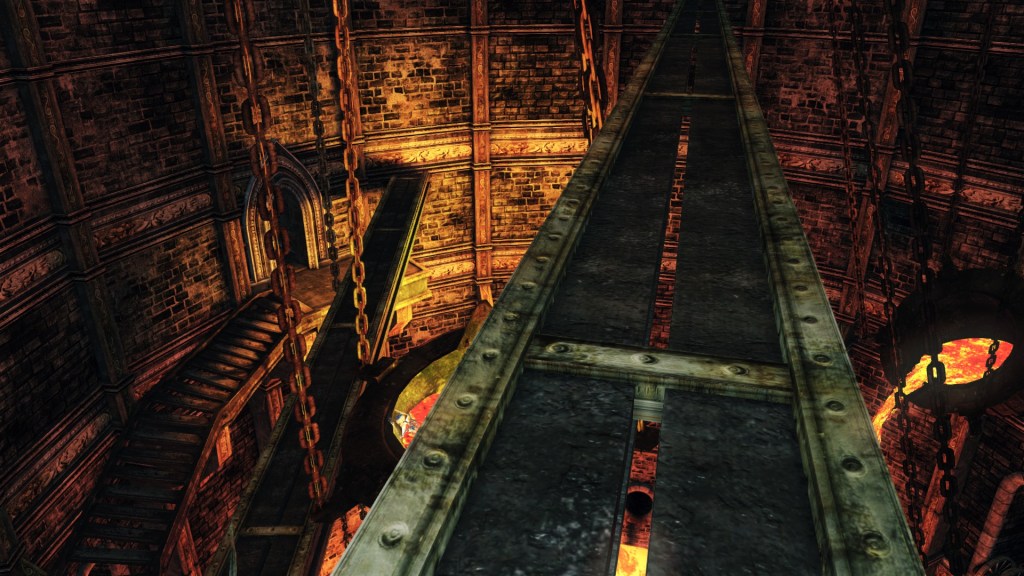
Because of its importance, the Old Iron King personally oversaw the whole creation process. The main tower is divided into five stratums, with throne rooms located at both the top and bottom floors. This indicates that the monarch made regular visits to the facility, where he would supervise production from the gears moving iron production to the residue piling up at the base. His involvement went even deeper thanks to the Scorching Iron Scepter, a ceaselessly hot rod usable as a staff for a king to wield — namely, to light the flames powering the different towers’ mechanisms covering the place in soot. Controlling every facet of production, the king had made sure that he was the undisputed ruler of this land. So often he wanted to leave for his second “castle”, the king made travel between the two easy; the altar in the deepest depths of Iron Keep warps us to the satellite tower we exit to explore Brume Tower proper. The ironworks truly couldn’t run without its Iron King.

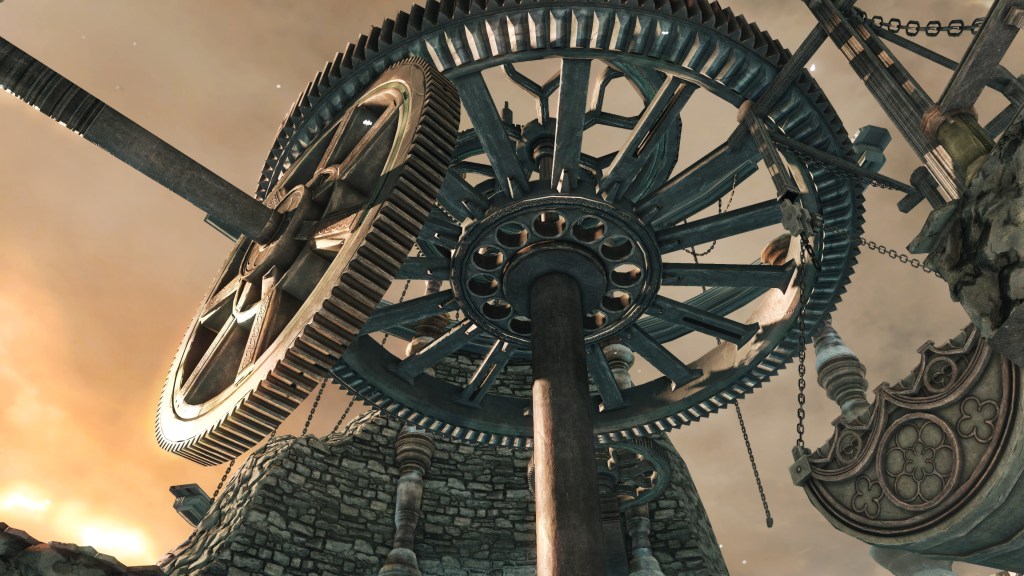
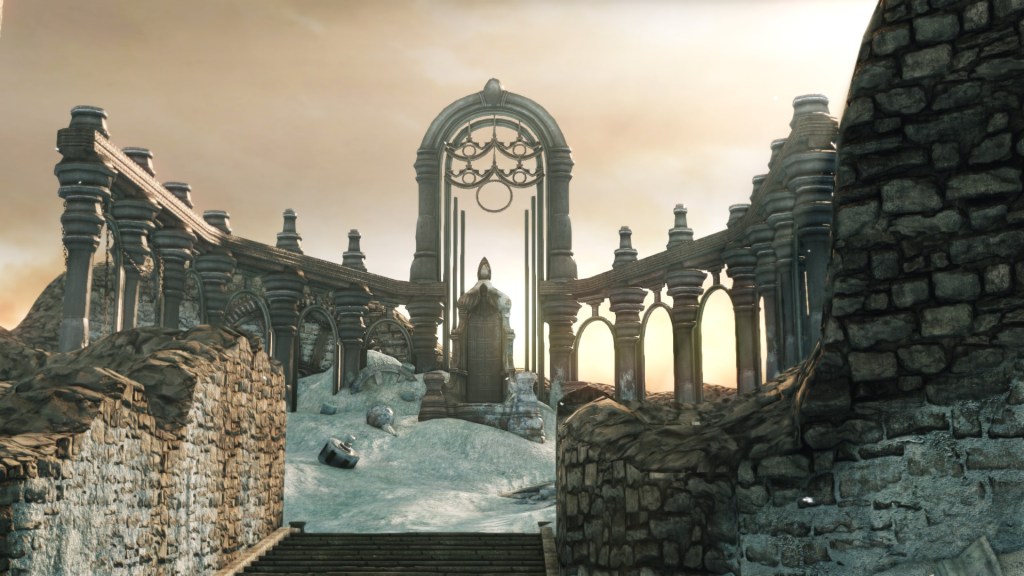
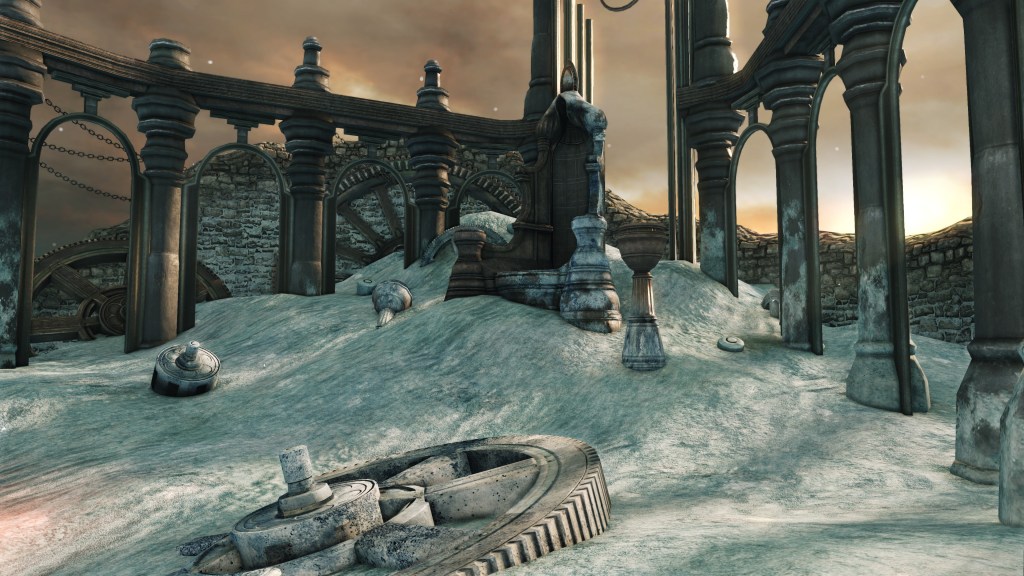
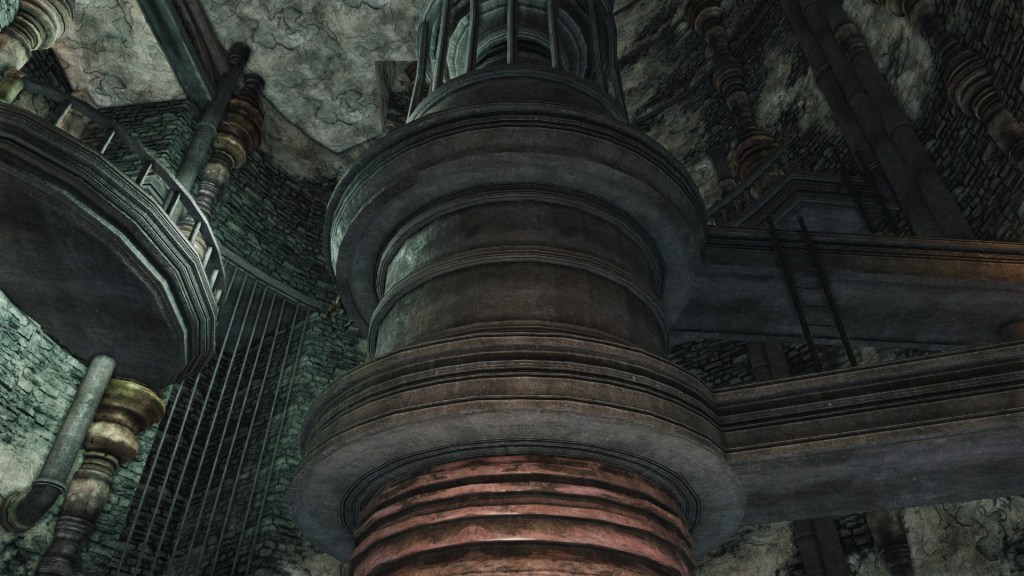
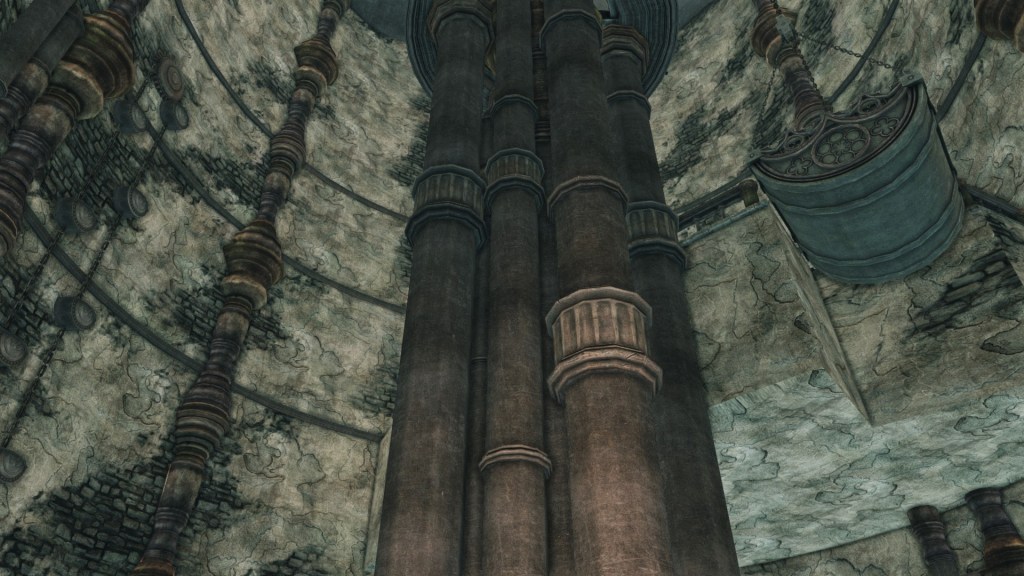
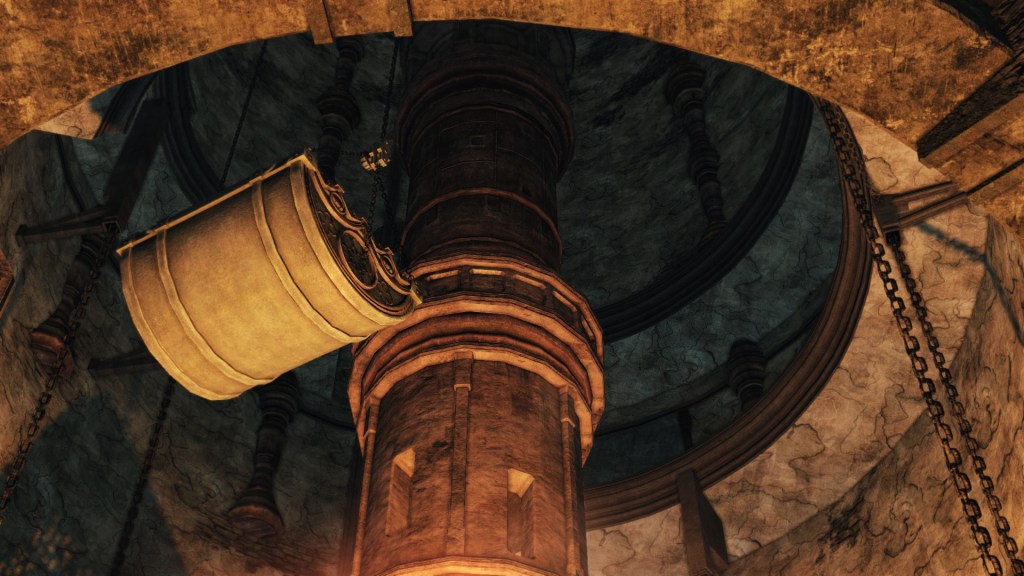
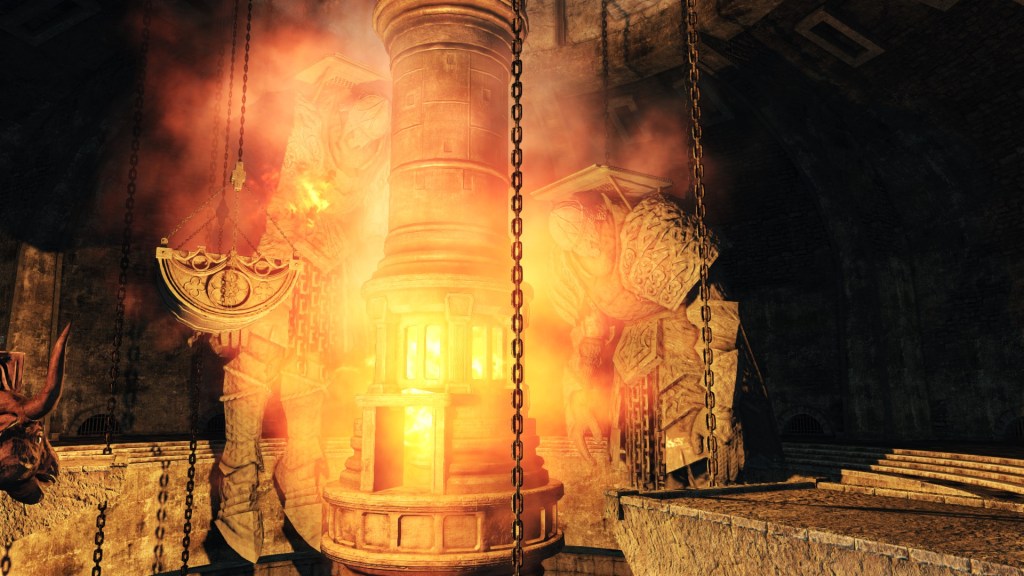
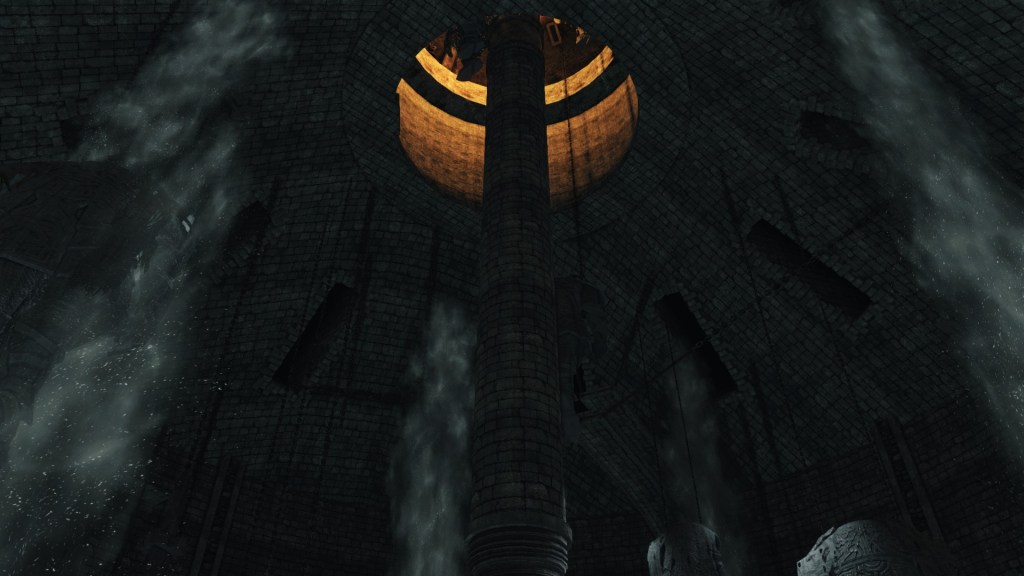
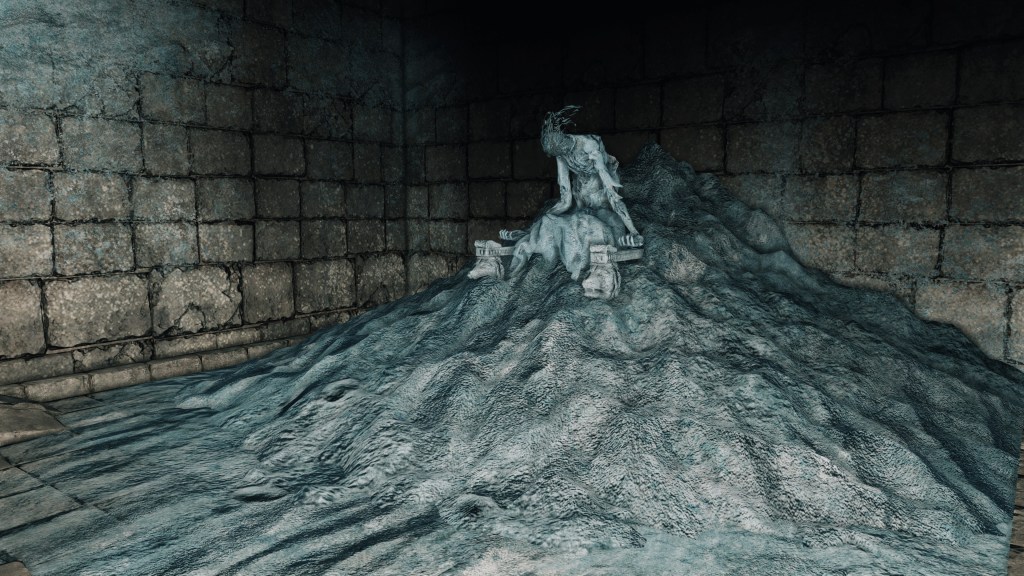
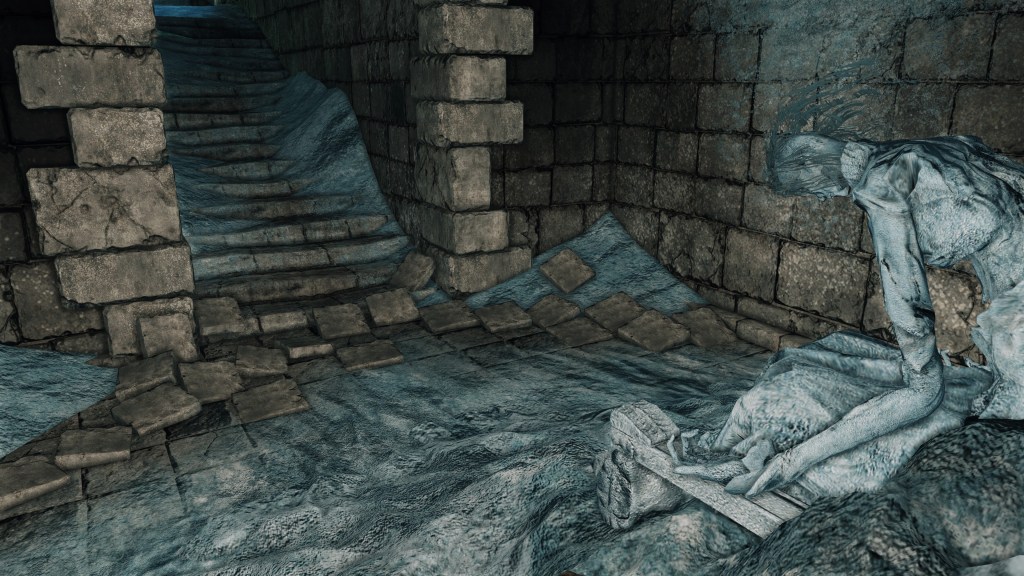
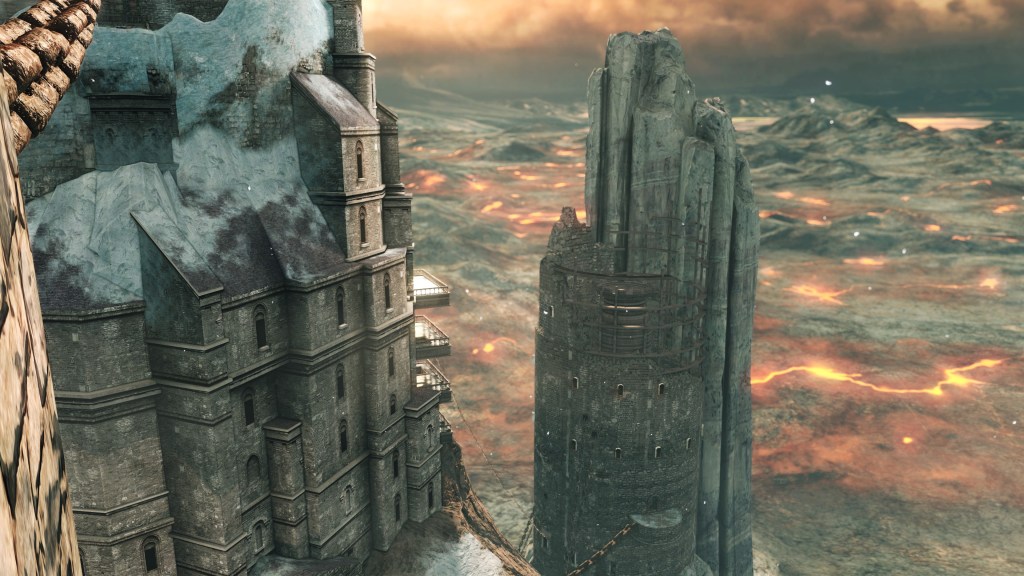
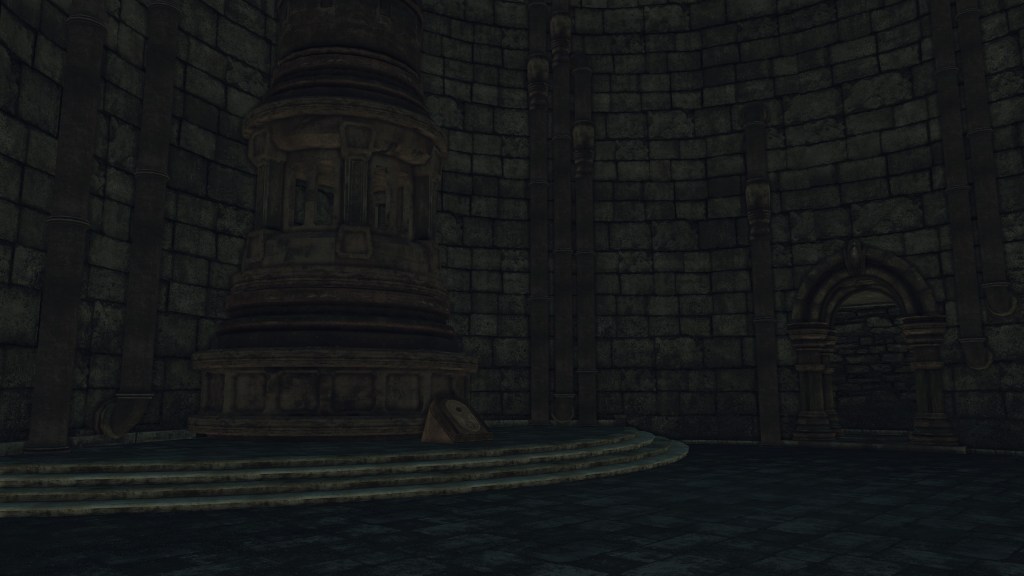
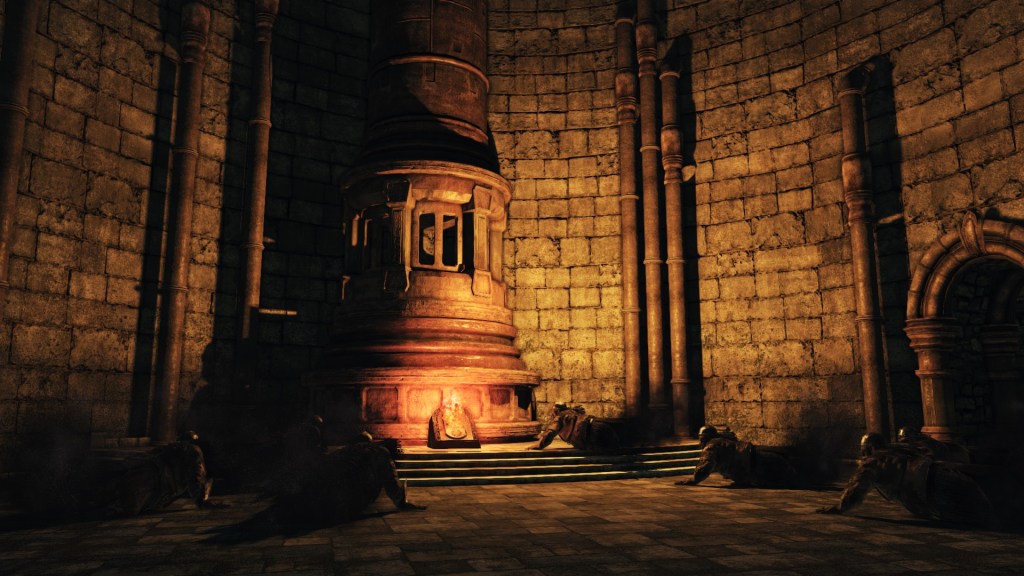
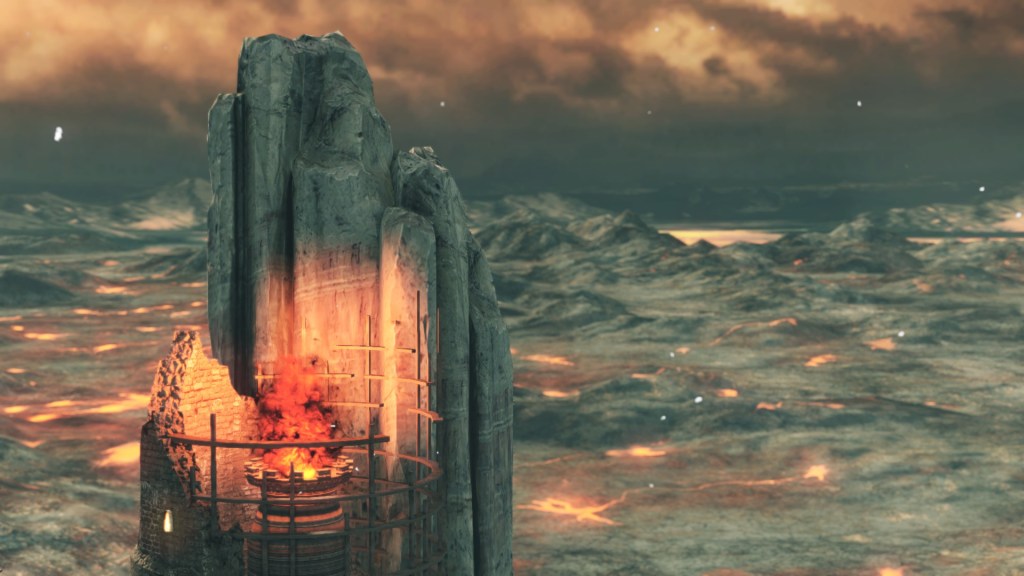
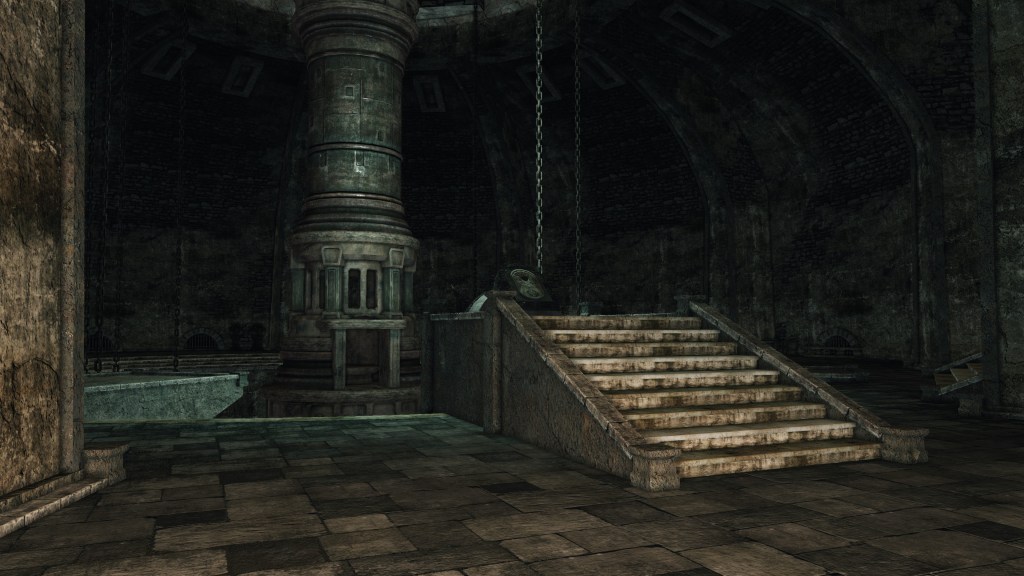
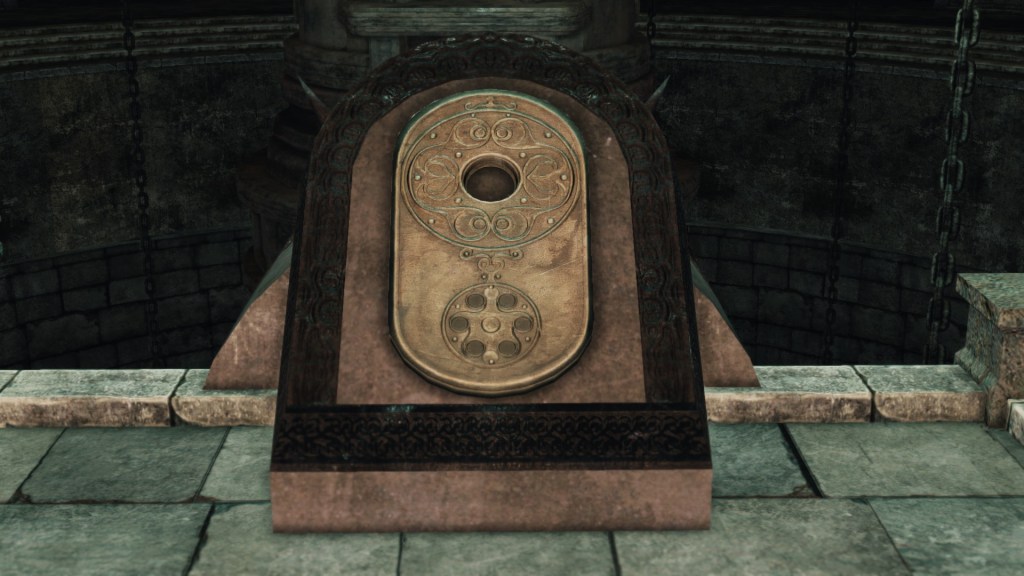
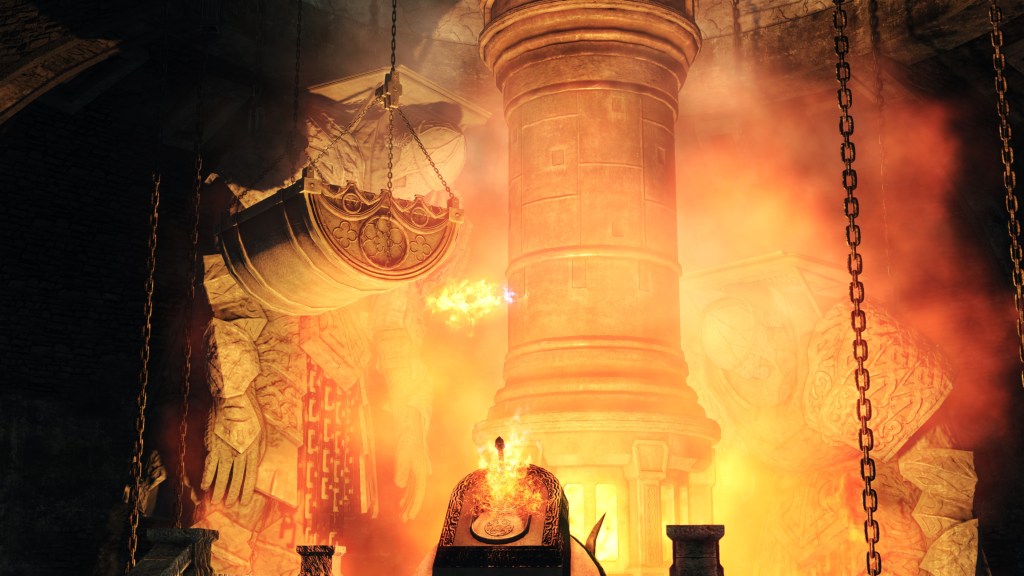
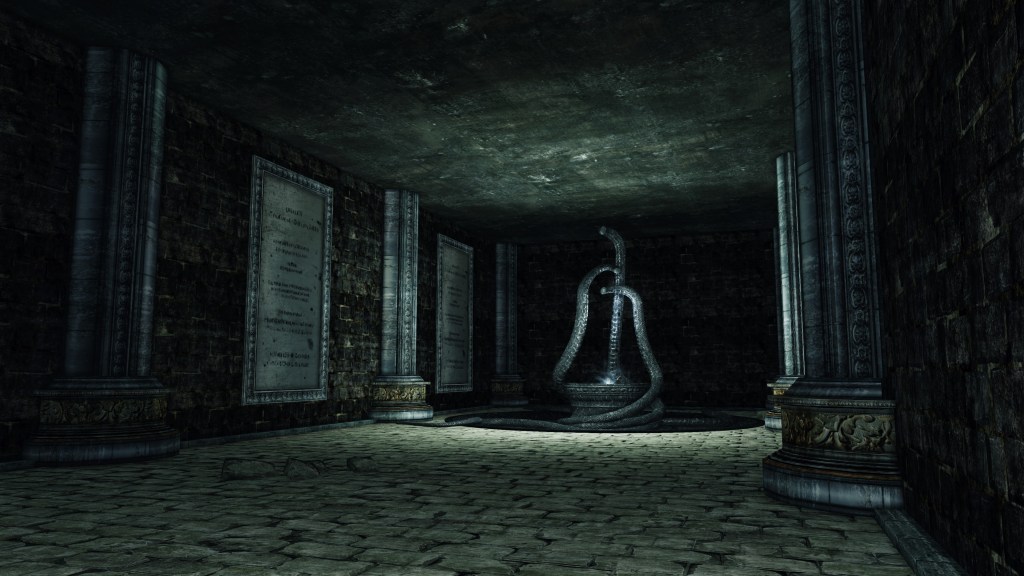
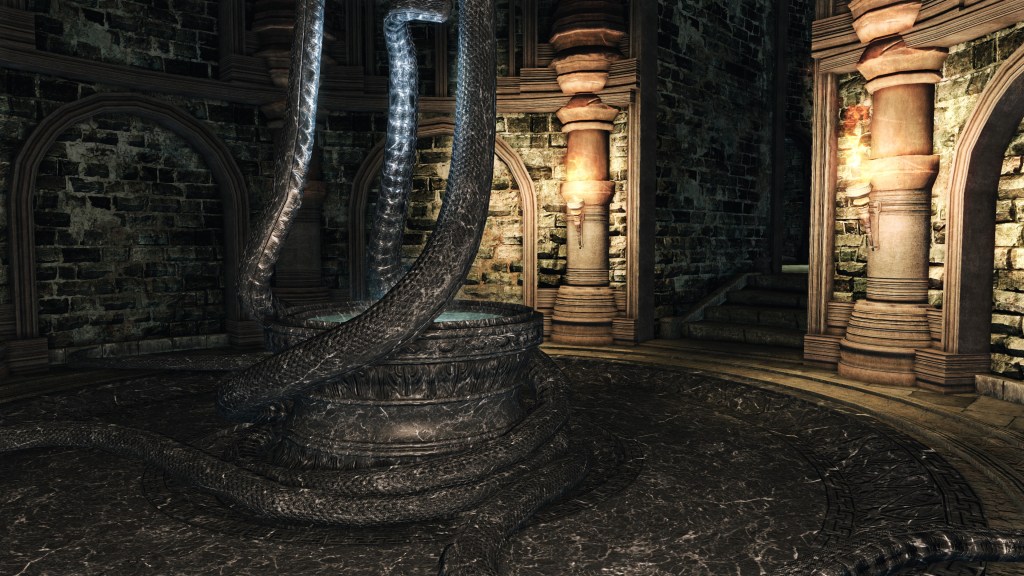
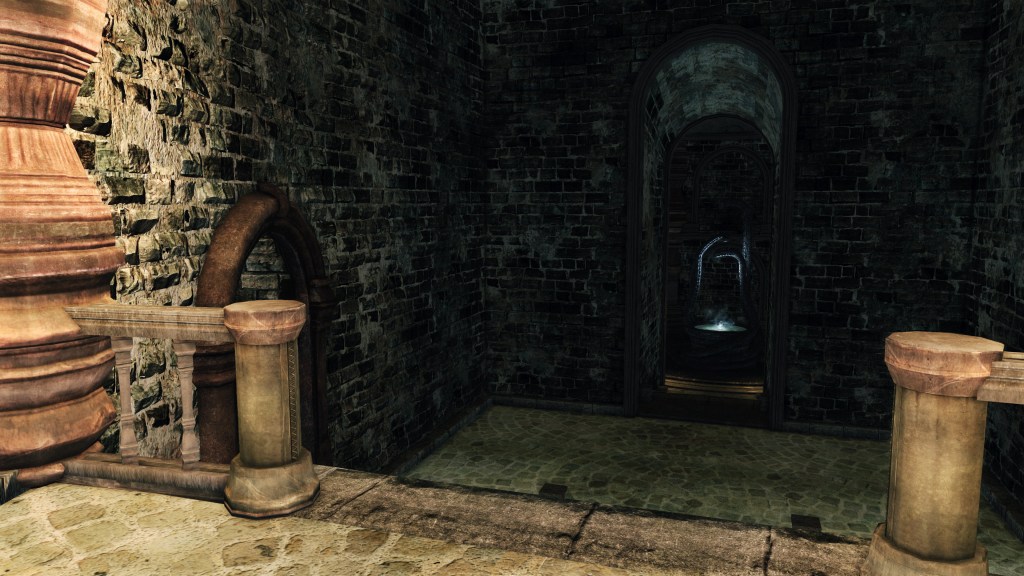
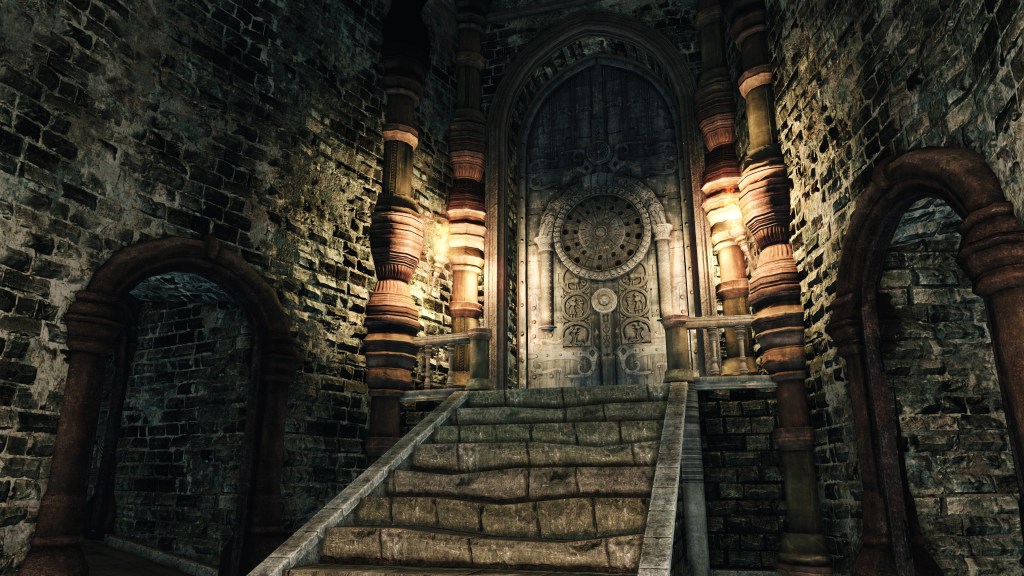
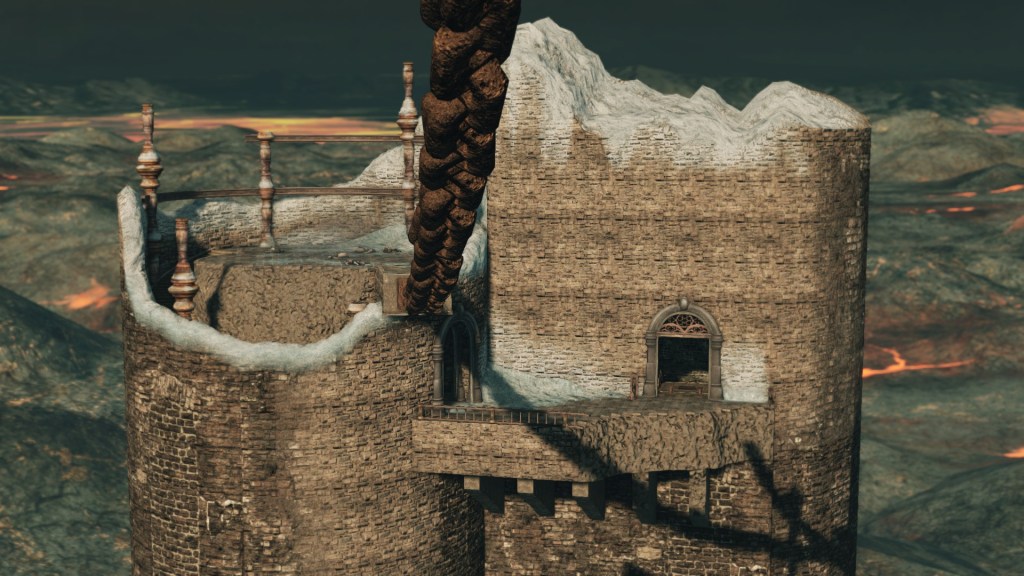
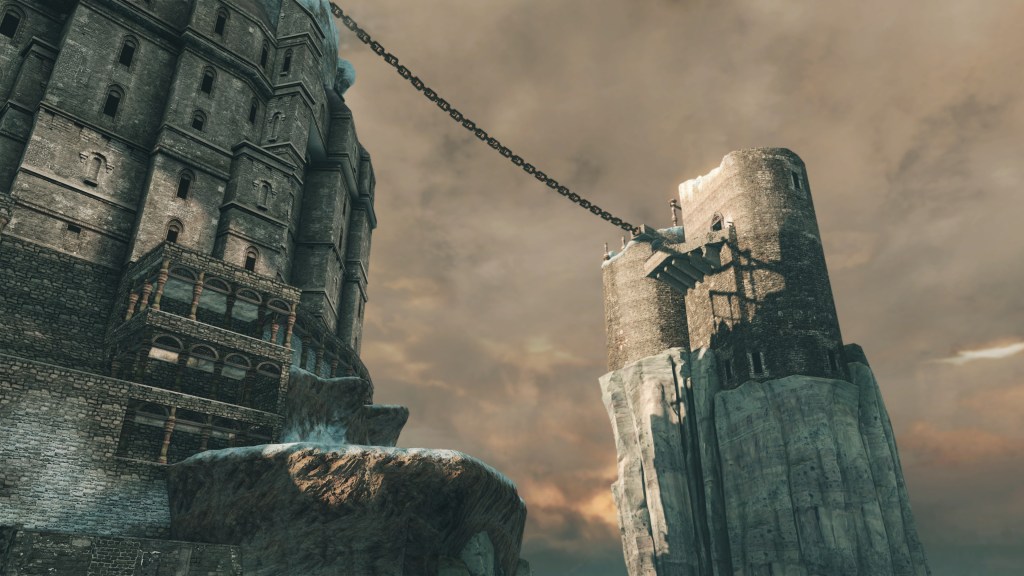
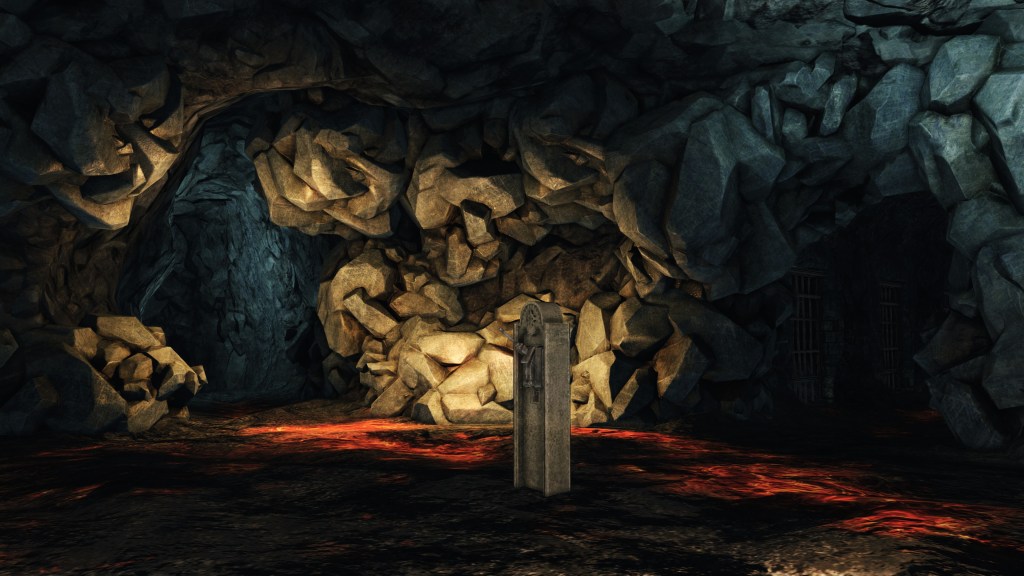
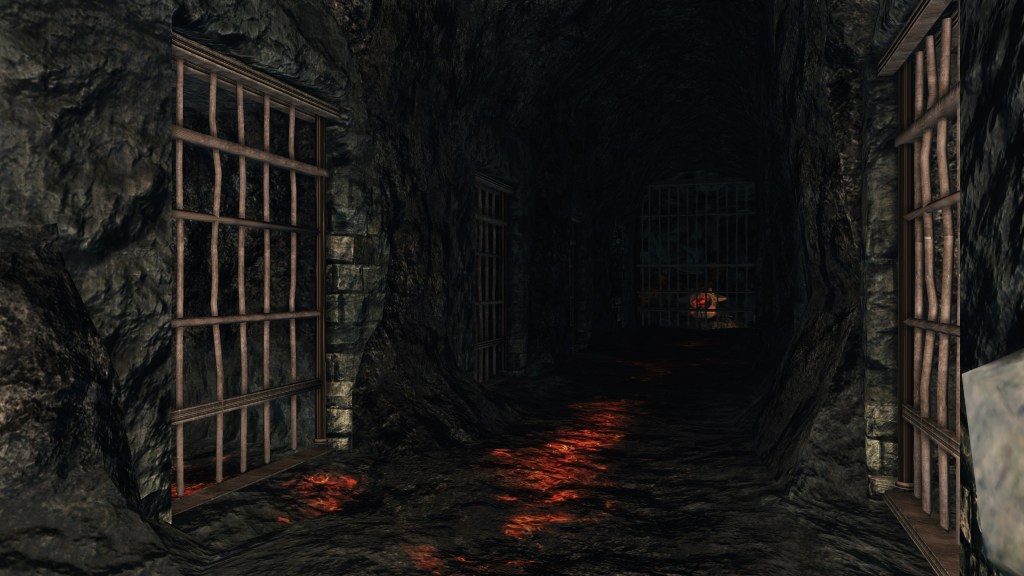
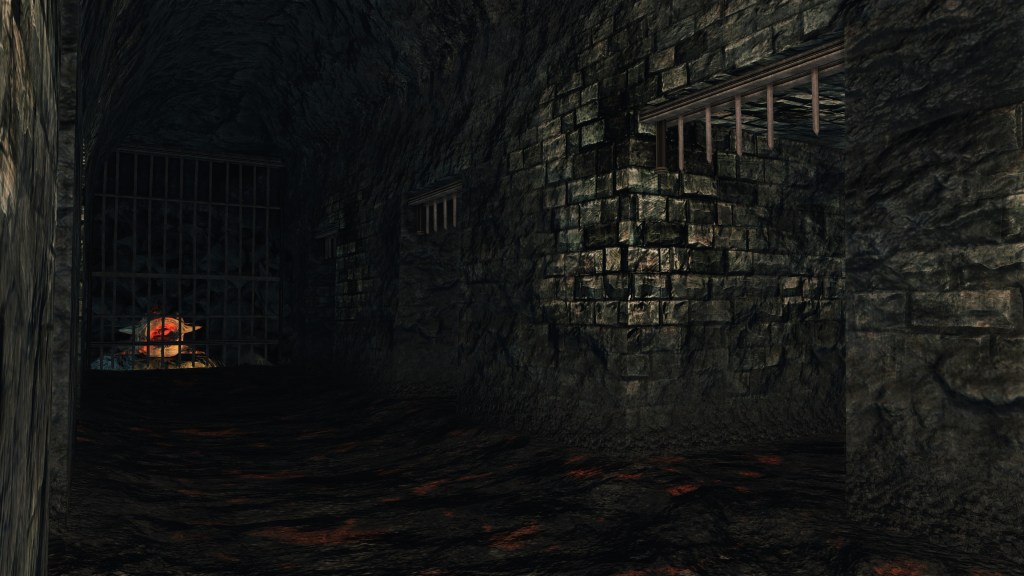
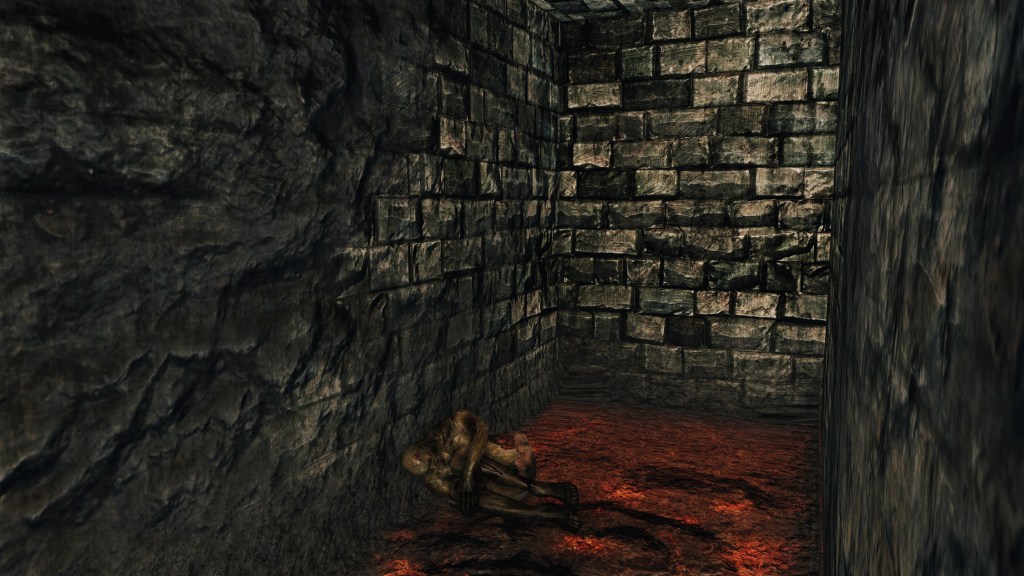
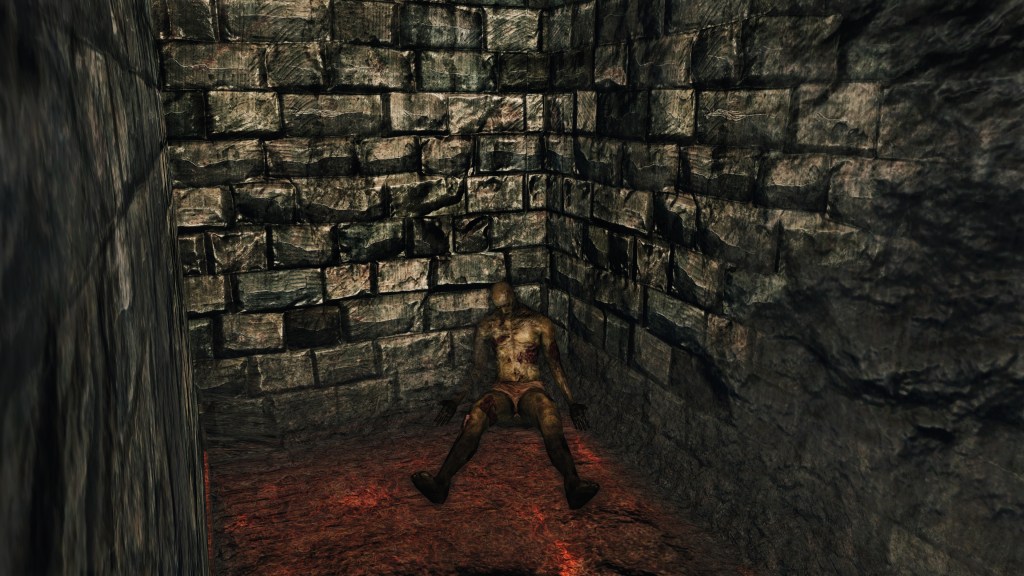
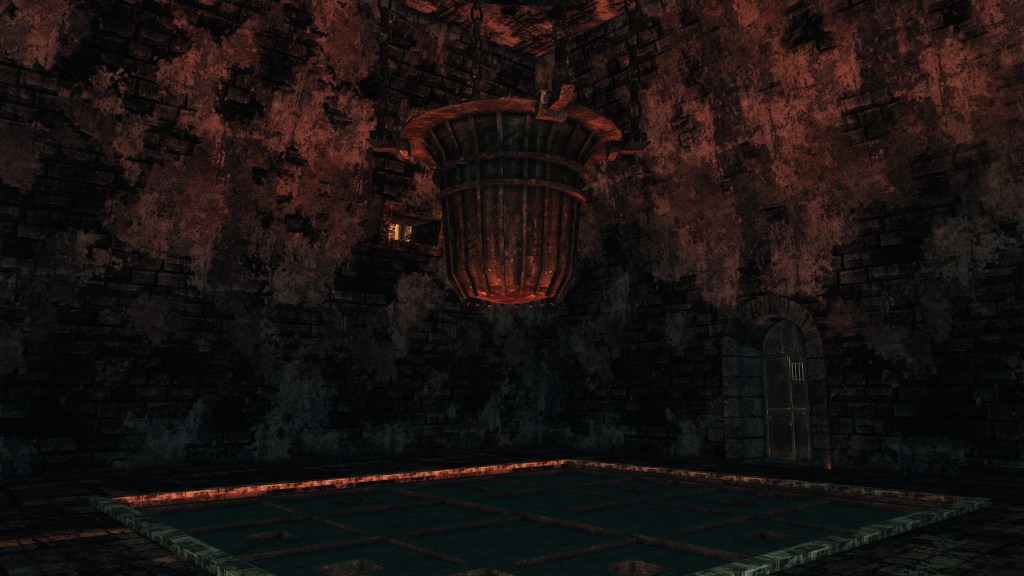
These personal chambers were also a necessity in the event that Venn came to take back the land, requiring that he take to the field with the garrison. Even this might have been fed back into managing iron production. More than a few jail cells have been carved out in the Iron Passage where mining operations should be occurring, installing levers to open each cell block and fireball traps to dissuade rushing out before the overseers were in position to act. This suggests that Alken relied on forced labor to handle the digging, and who better to make their workers than prisoners of war? Put simply, the Iron King probably began enslaving Venn’s soldiers to shuffle into the mines, letting the enemy fuel Alken’s war machine as he expanded its borders and “recruited” more workers. They were definitely expendable if the corpse with the Dispelling Ring created by Straid is any indication, trapped behind a destructible wall in the tower. It was a ruthless if effective policy that benefited from his presence on site.
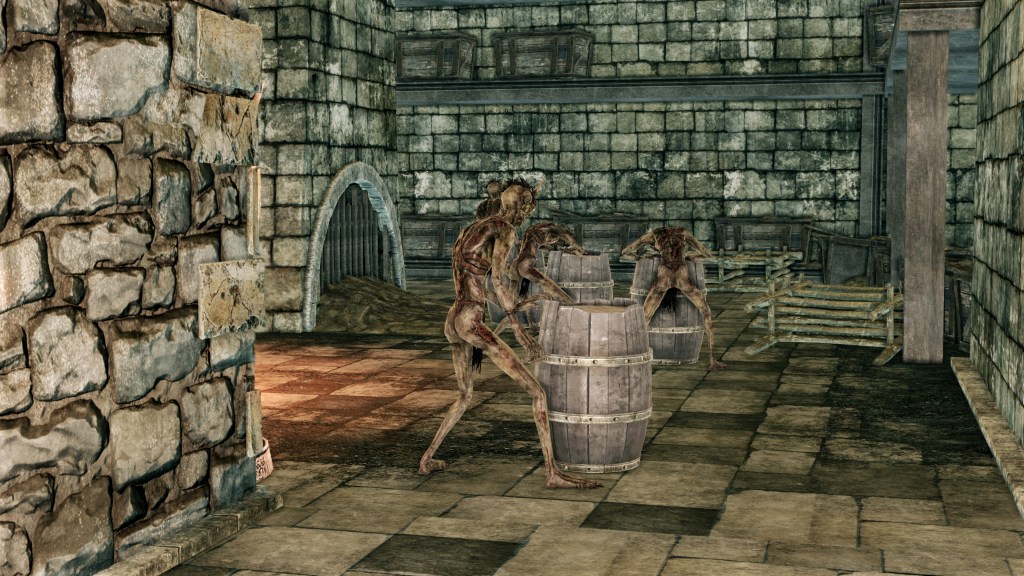
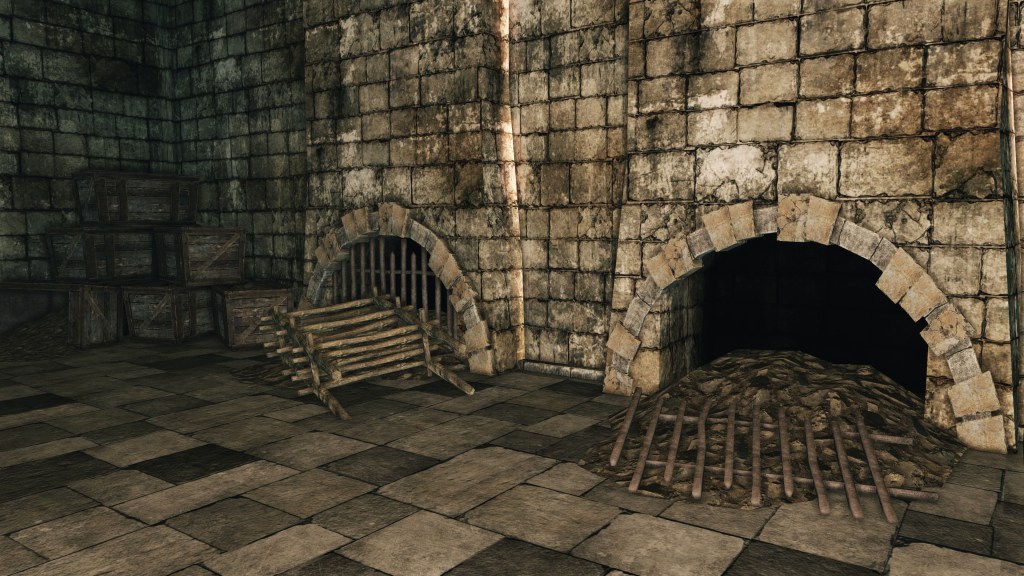
Admittedly, the practicality of it may have been overshadowed by the king’s artistic whimsy. Shalquoir ponders whether all humans’ tendency to show off reflects a desire to be beautiful, specifically mentioning the “unsightly” iron castles they build in pursuit of that end. This is an transparent reference to the Iron Keep which the Iron King constructed and implies that his involvement in production was motivated as much by his sense for aesthetics as anything sensible. For sure, he created the needlessly Heavy Iron Key to enter Brume Tower as a show of his newfound power. The metal became profoundly tied to strength for him, skyrocketing its appeal to his mind. The beauty of strength made iron his obsession, immersing himself so deep that it became more a pastime. A chest in Iron Keep stores Destructive Greatarrows specialized in breaking armor. While his knights love to employ them with their greatbows, the king may have liked them for experimenting with his iron’s resilience.
Do you think all humans want to become beautiful? Cats are beautiful from the outset, though. Heh heh heh. They want to display themselves… That’s why they make such unsightly iron castles and don’t realize the ugliness of their deeds. But, points like that’re cute though. Heh heh heh.
Iron mass shaped like a key.
Opens the door lying beyond the altar in the innermost depths of the Melted Iron Castle and leads to the tower where the Old King created his iron.
This unusual weight is also said to be a remnant of the former king’s power.
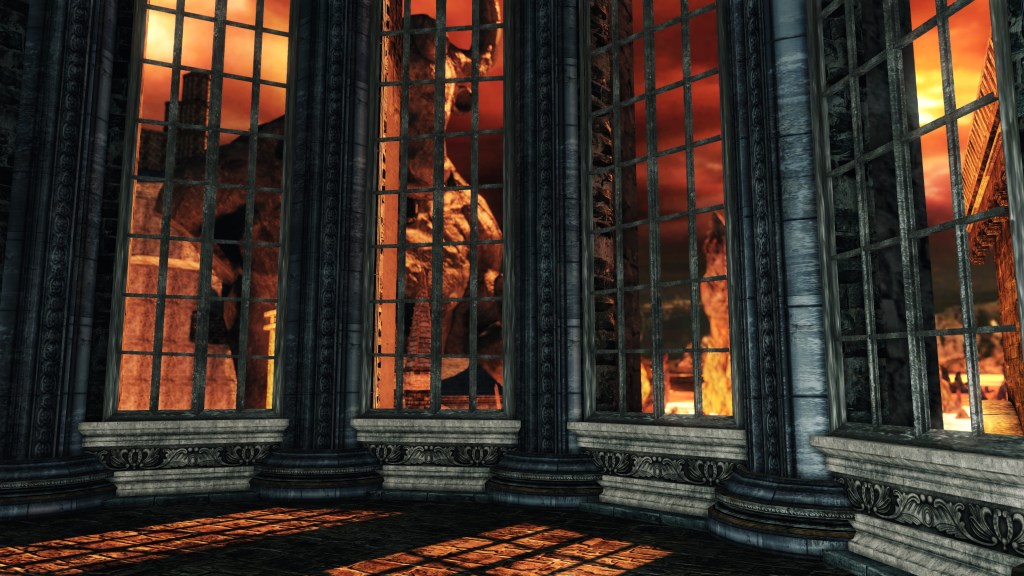
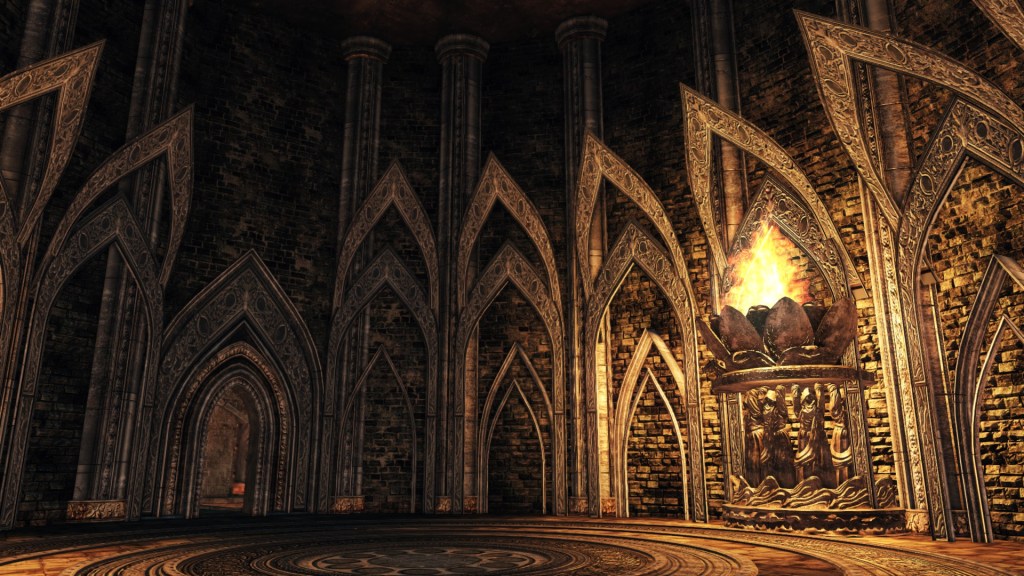
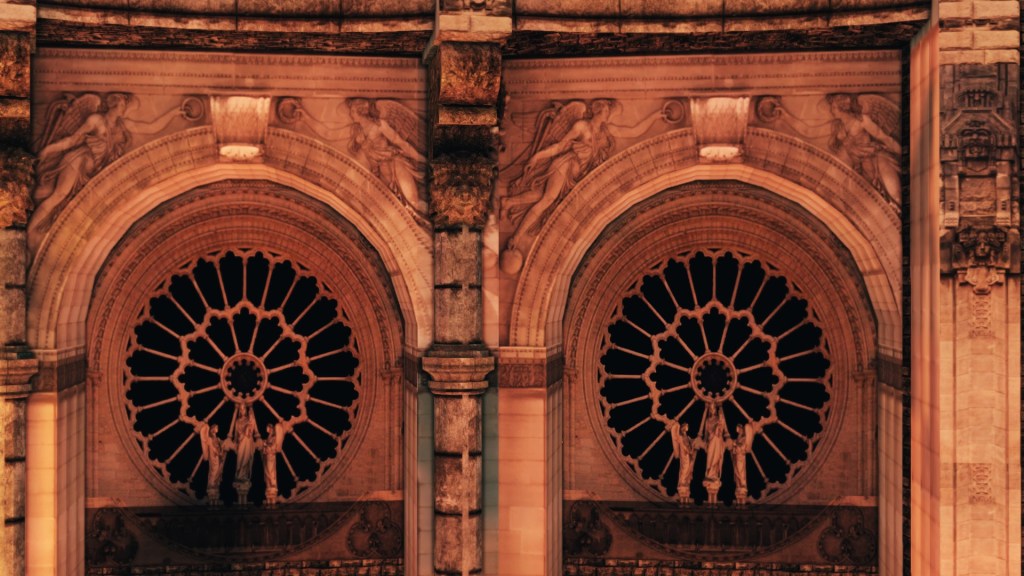
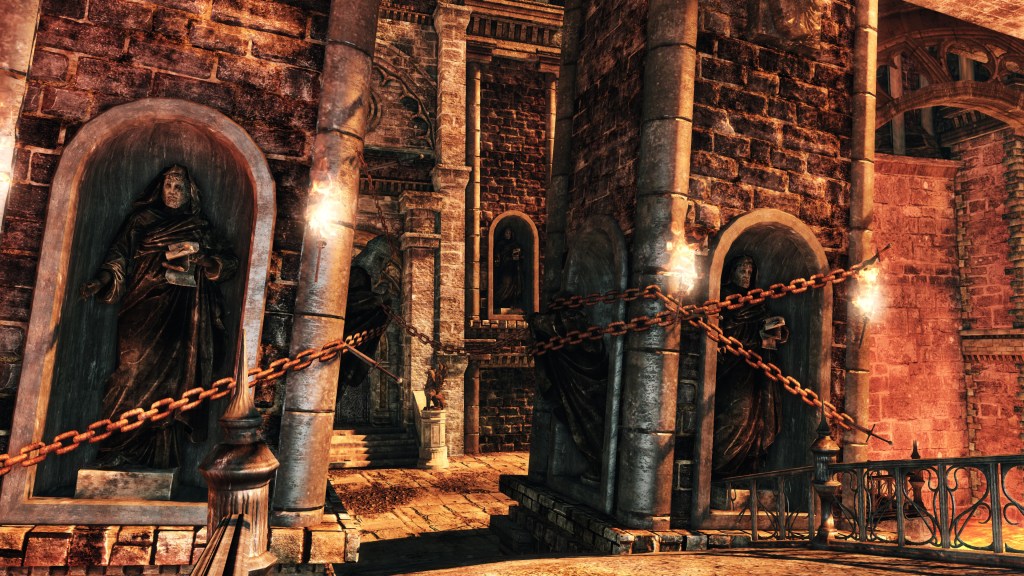
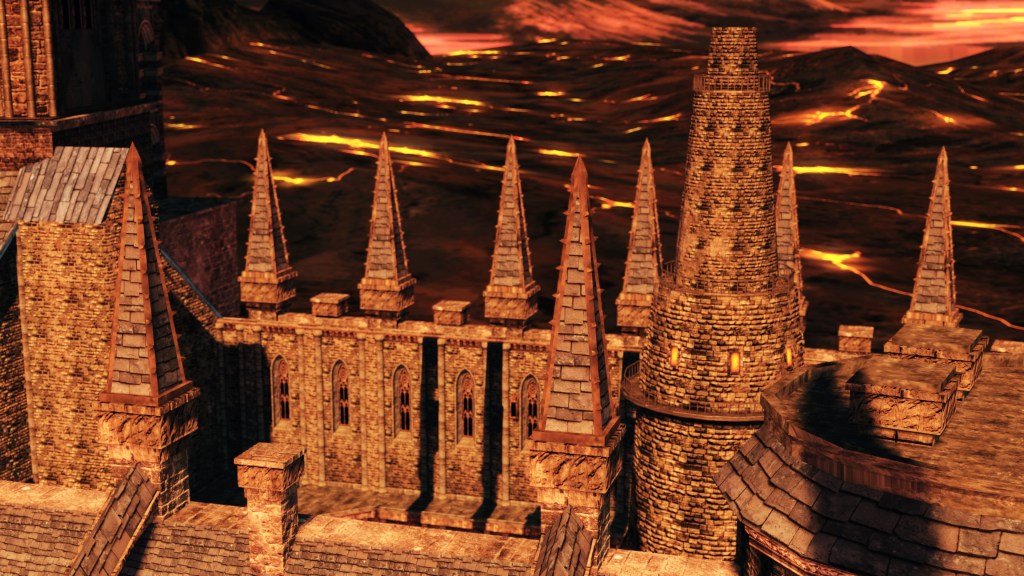
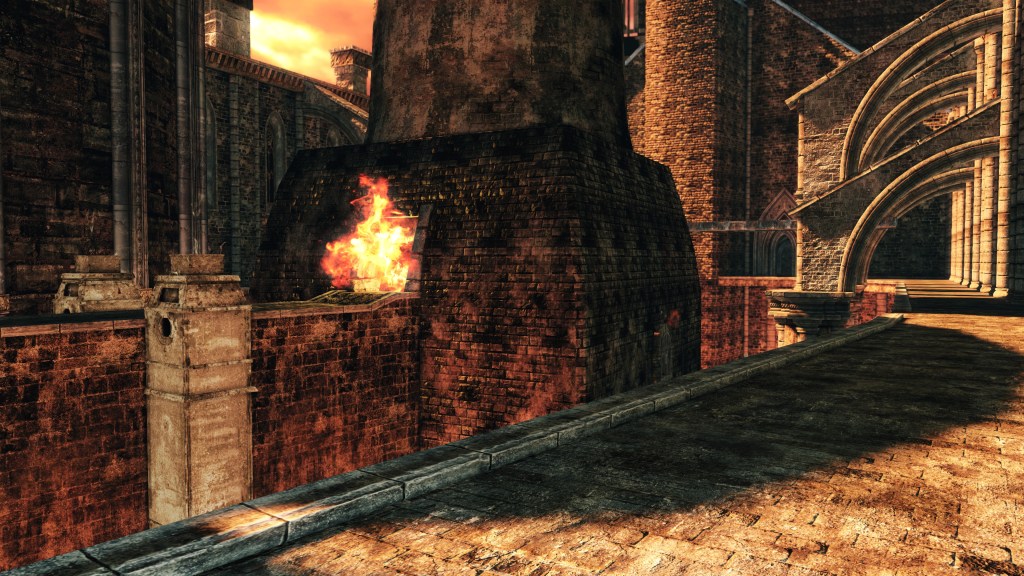
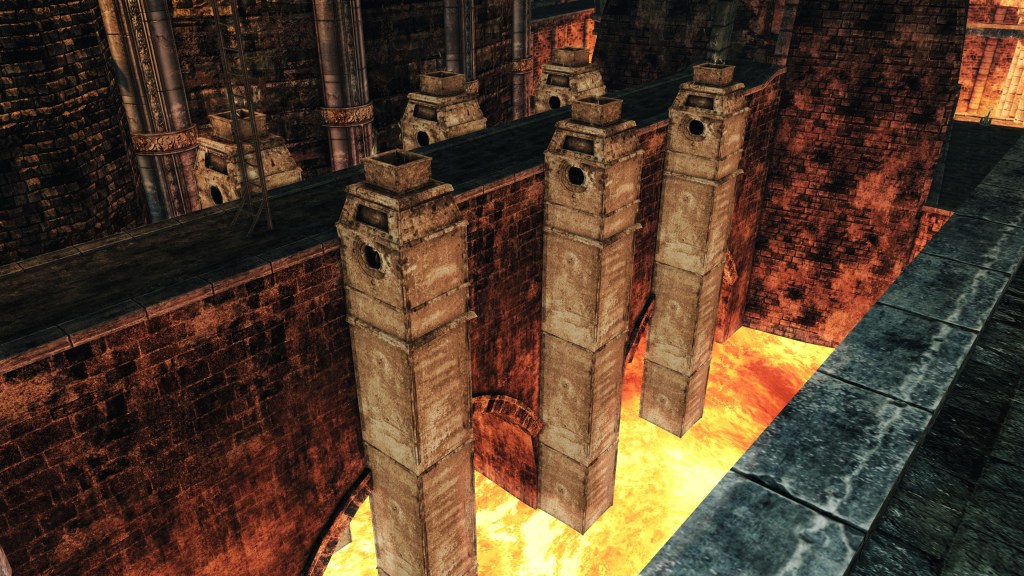
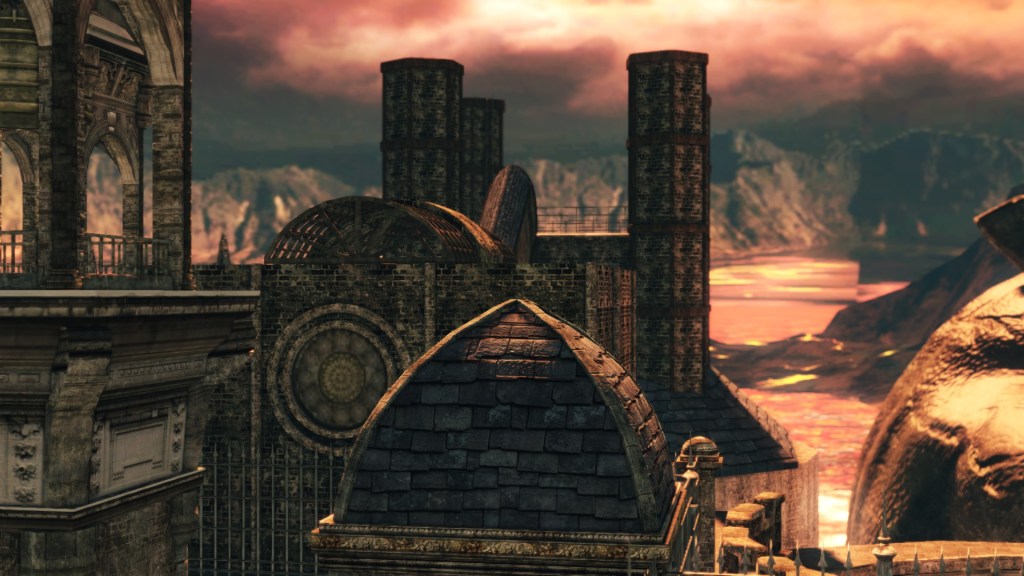
All of this culminated with the construction of Iron Keep. The area is more precisely a “melted iron castle” (熔鉄城) in reference to it sinking in lava to varying extents. The term localized as “smelter” in other instances uses the same kanji as “molten” iron, (熔銑) so it refers to when the metal has been affected by flame in some way. It isn’t the castle’s formal name, but is nevertheless the one that Iron King built, though how much so is ambiguous. Despite the name, the vast majority of the area is comprised of stone and marble, not iron. And accounting for continued existence of Belfry Sol, it is possible that the Old Iron King simply built upon the existing architecture, renovating the original royal palace with new iron adornments. Given the importance of religion in Alken, the statues of robed men orating with an open scroll lends further credence to this idea.
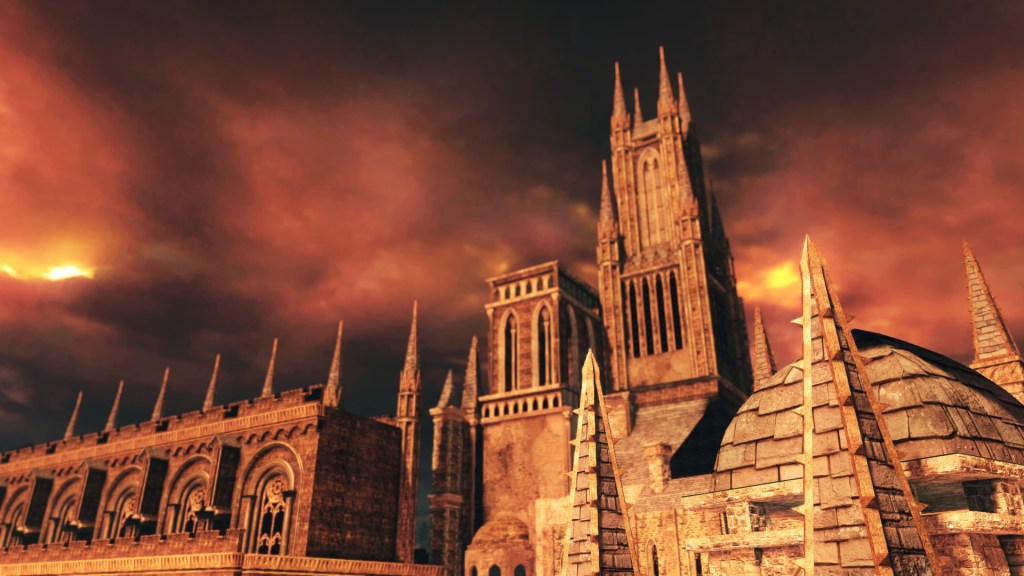
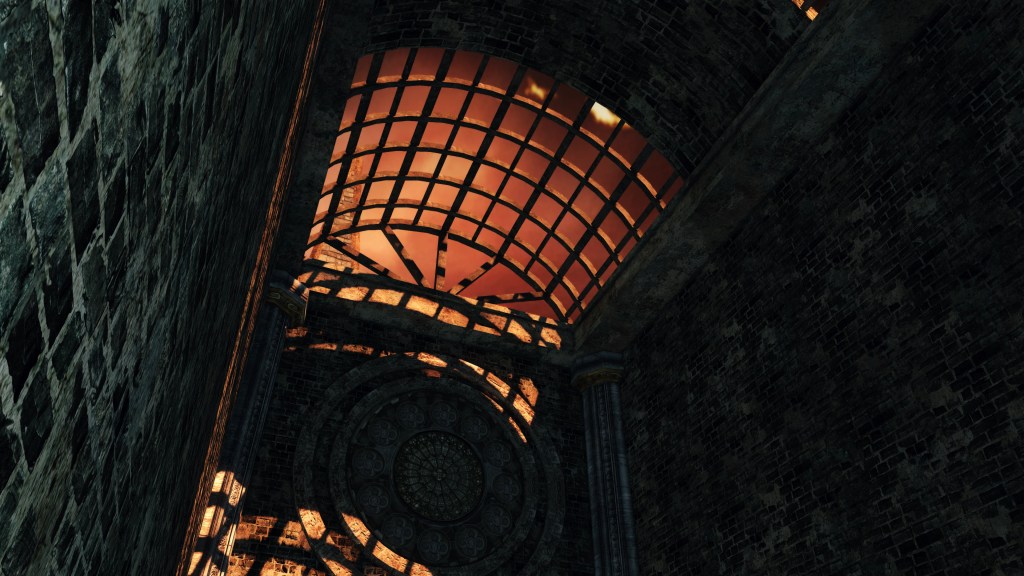
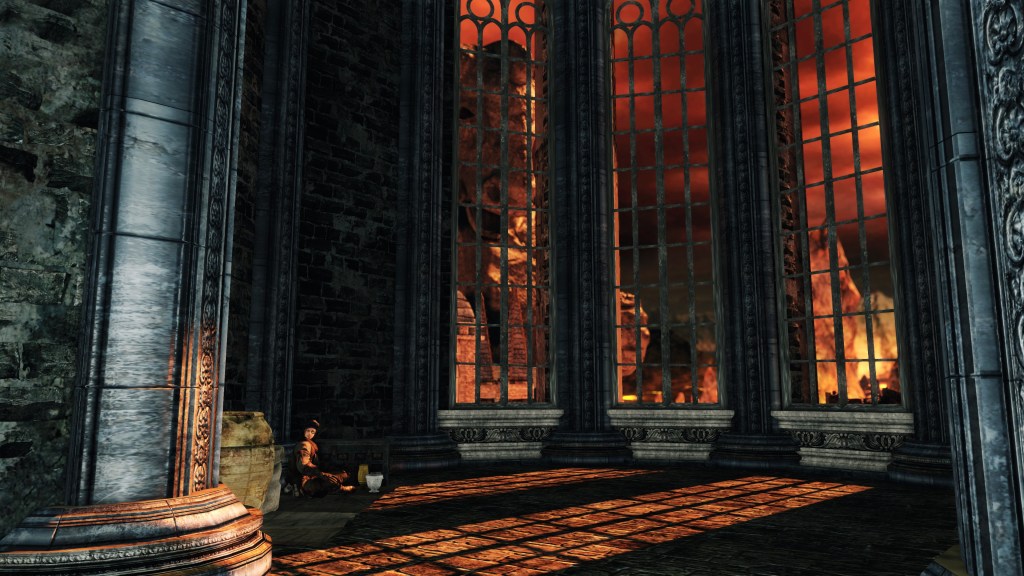

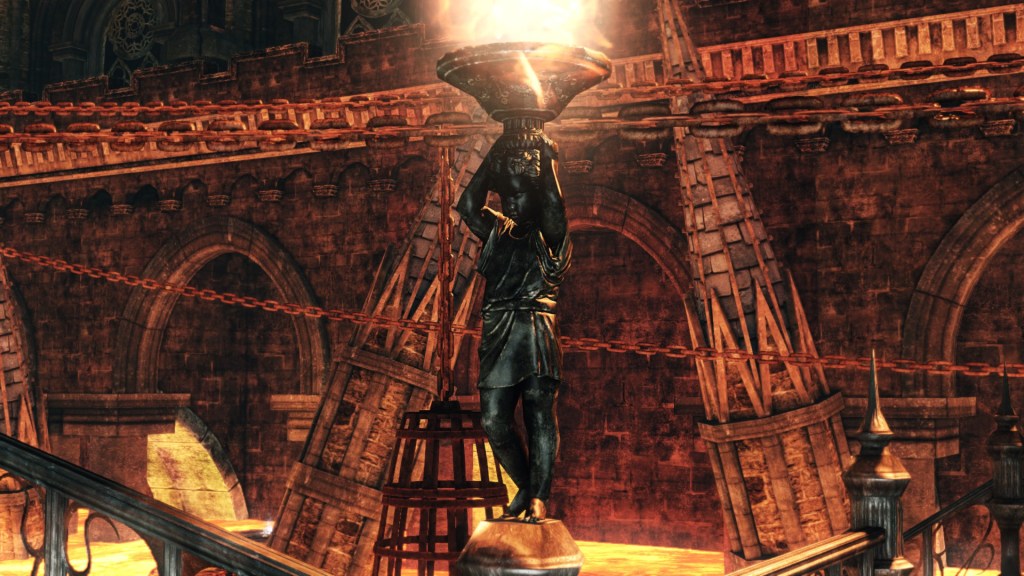
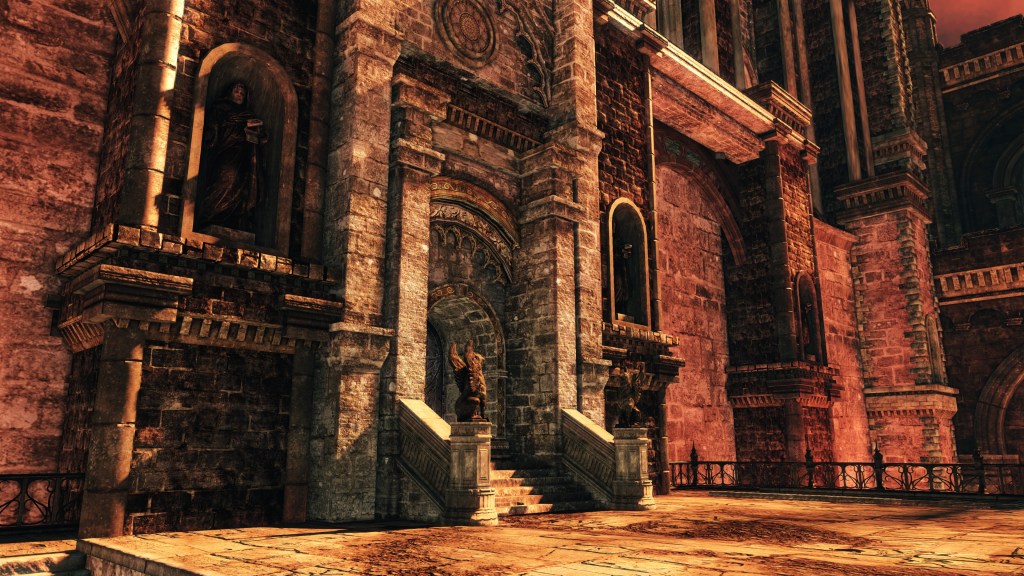
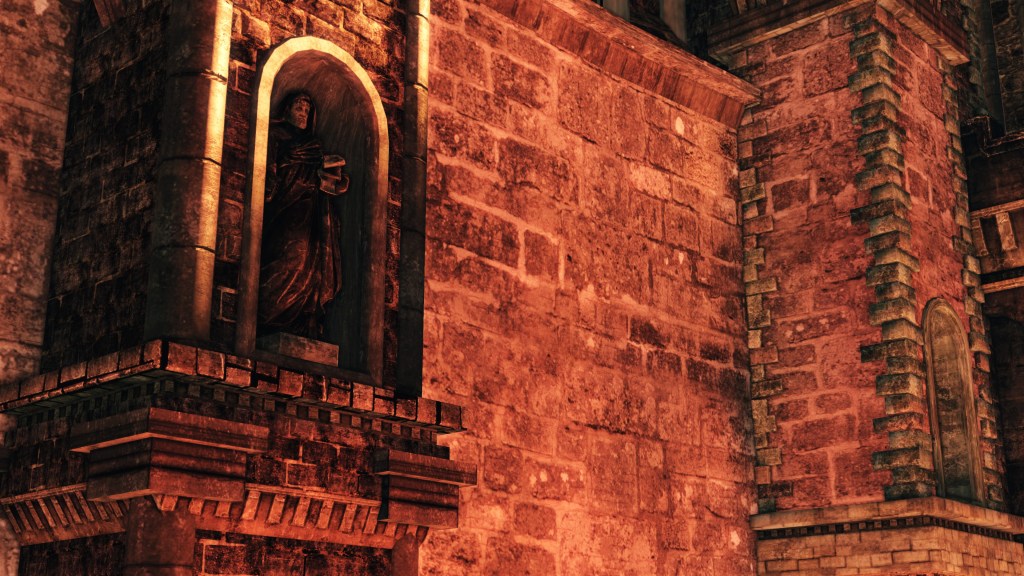
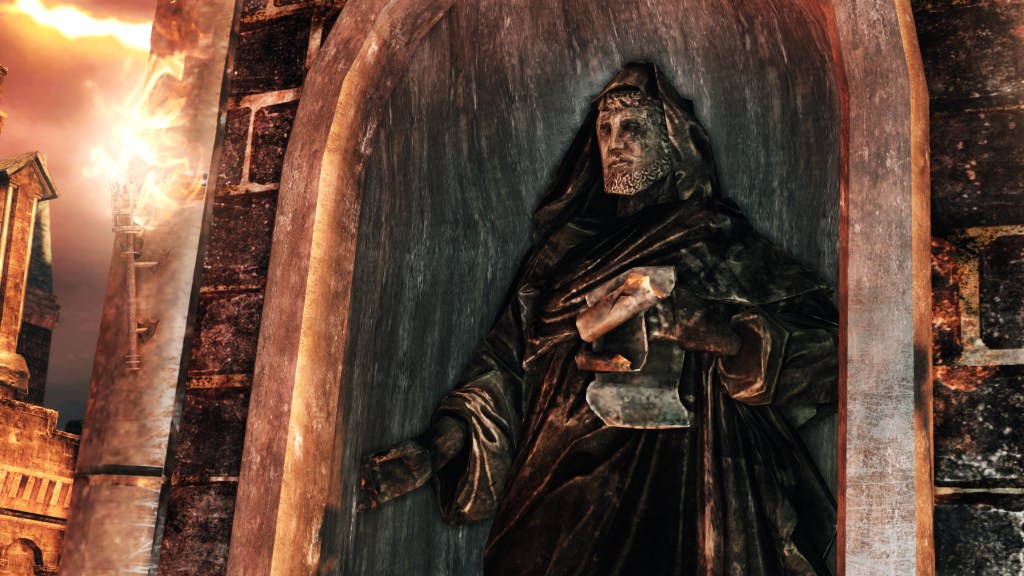
Even if not a castle of pure iron, he added more than enough to attract triclops snakes. Pills for the three-eyed serpents are typically acquired underground, sold by the Rat King or looted from certain enemies beneath the surface. This intimates the reptiles as mostly subterranean. And yet, a single other source for triclops snake troches is a corpse in Iron Keep. Why there when there is nothing petrifying to resist with the pills? The most likely answer is because of their diet — why have a third eye to petrify potential prey, unless that is the ideal? The serpents must prefer slithering through rocky caverns deep beneath the surface because they eat minerals, rarer metals naturally being their favorite. And with so much iron ornamenting one castle, it is just as natural for some to be drawn to the place and be stamped out like the vermin they are. It is thus still fair to say that any renovations constituted constructing an Iron Keep.
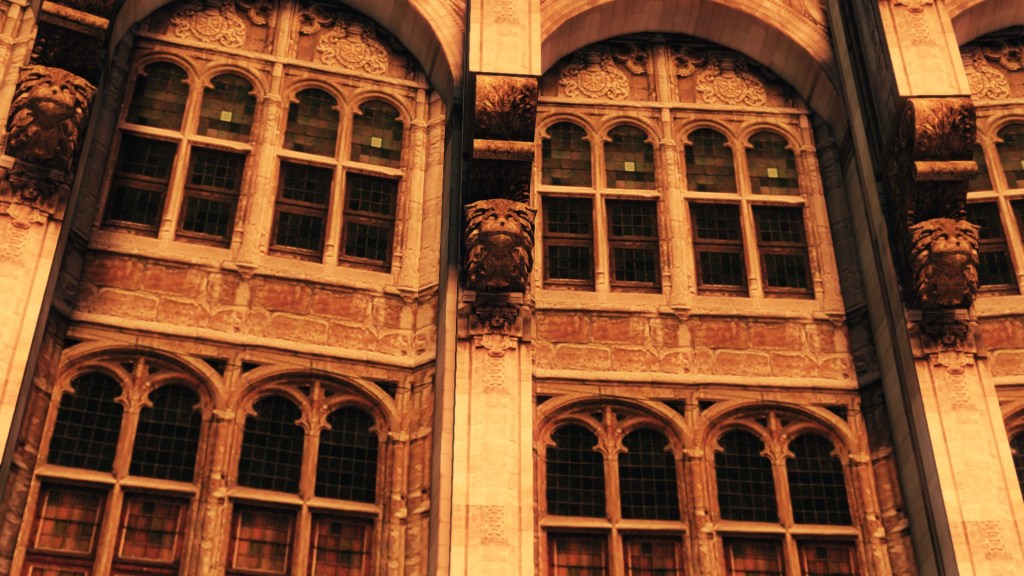
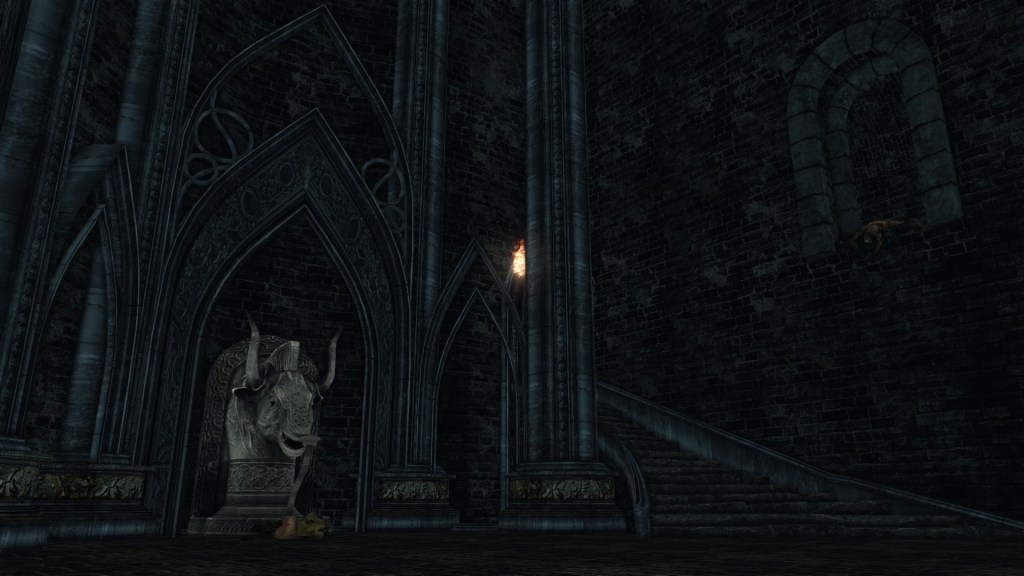
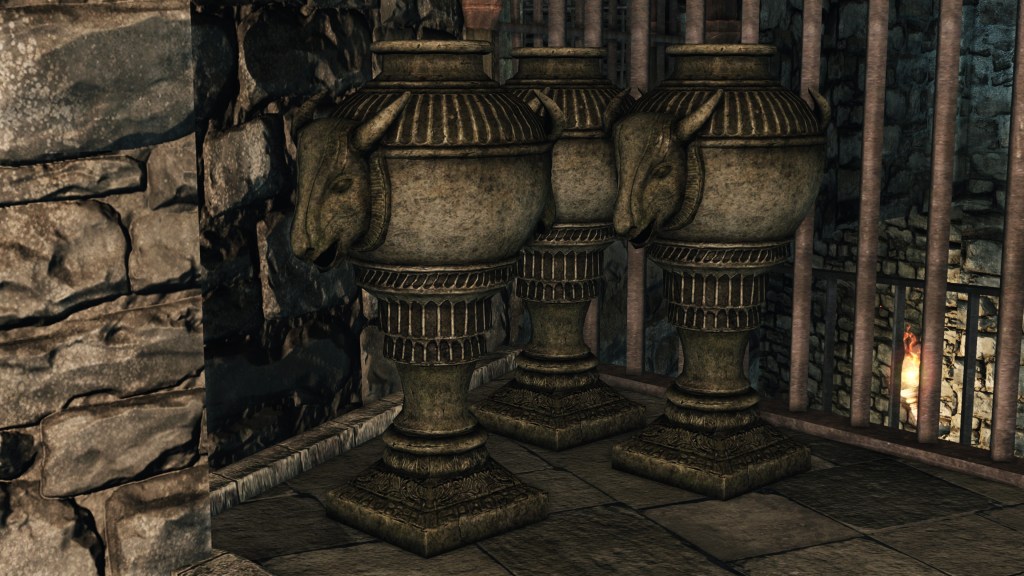
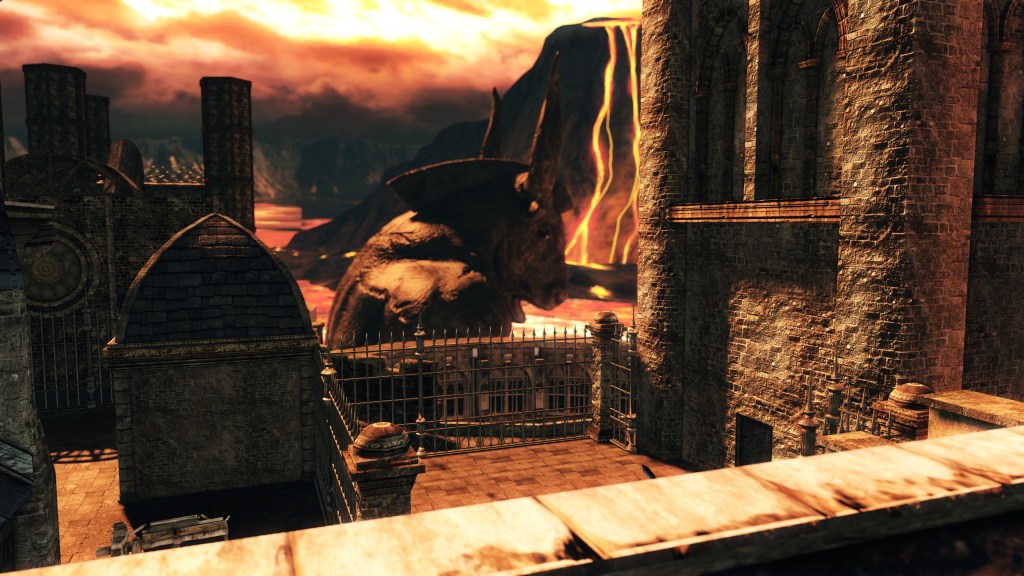
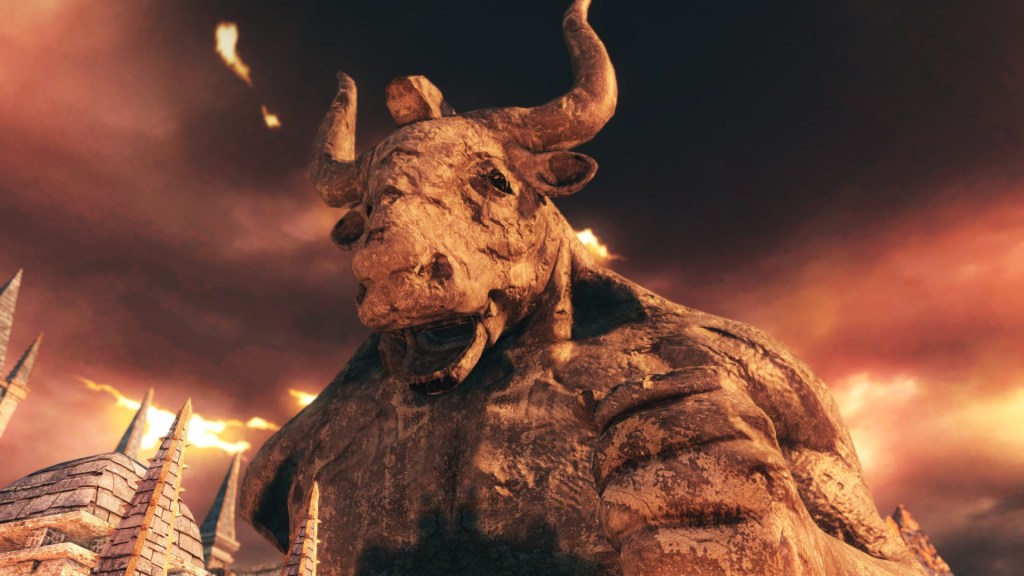
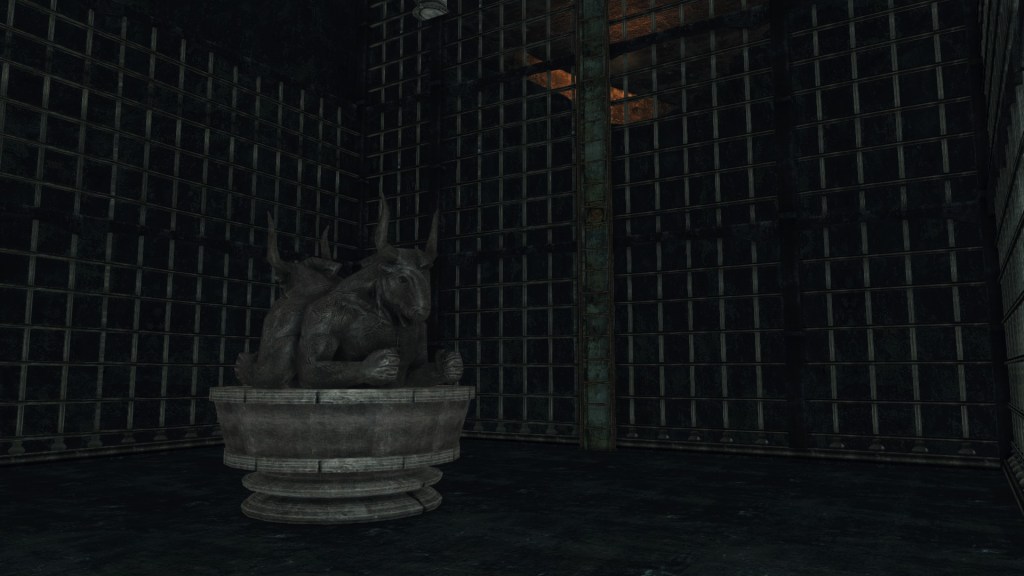
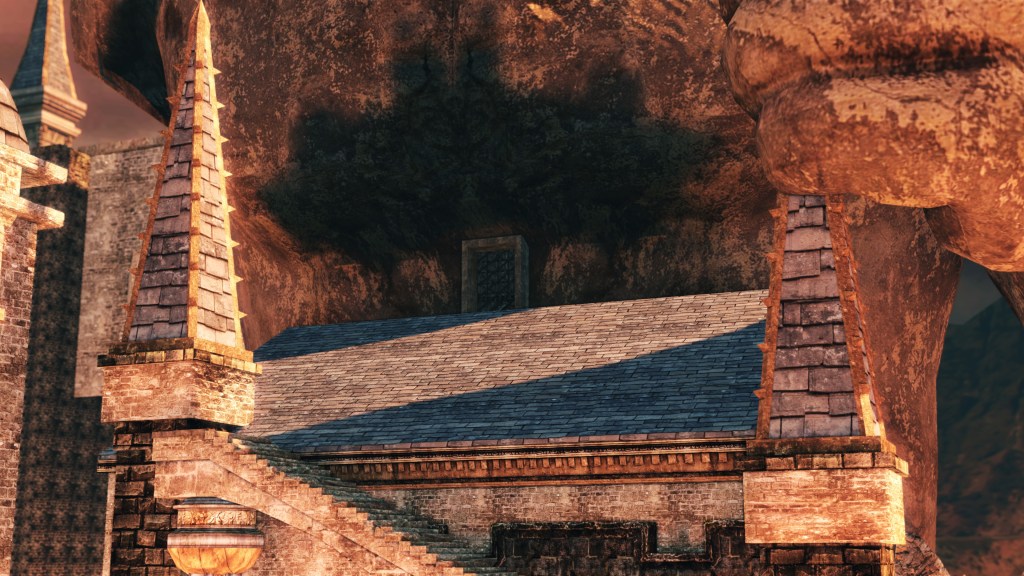
Whether his new home’s construction was conservative or radical, the king made sure to display his power both literally and figuratively. For both the castle and Brume Tower, walls and furniture are often decorated with symbols for strength, power, boldness, and courage. These include statues of griffins and ornaments of lions, but the most pervasive is images of bulls, so much so that an iron bull arguably emblemizes the Old Iron King’s reign; even the copious water urns for dealing with the heat feature the horned bovine. Collectively, these icons convey an image of dominance contrasting his prior weakness as king. Was this warranted? His past political and financial vulnerabilities clearly made him feel insecure, to say the least, no matter his aptitude as a warrior. From the Iron King’s perspective, he needed to project strength, at home and abroad.
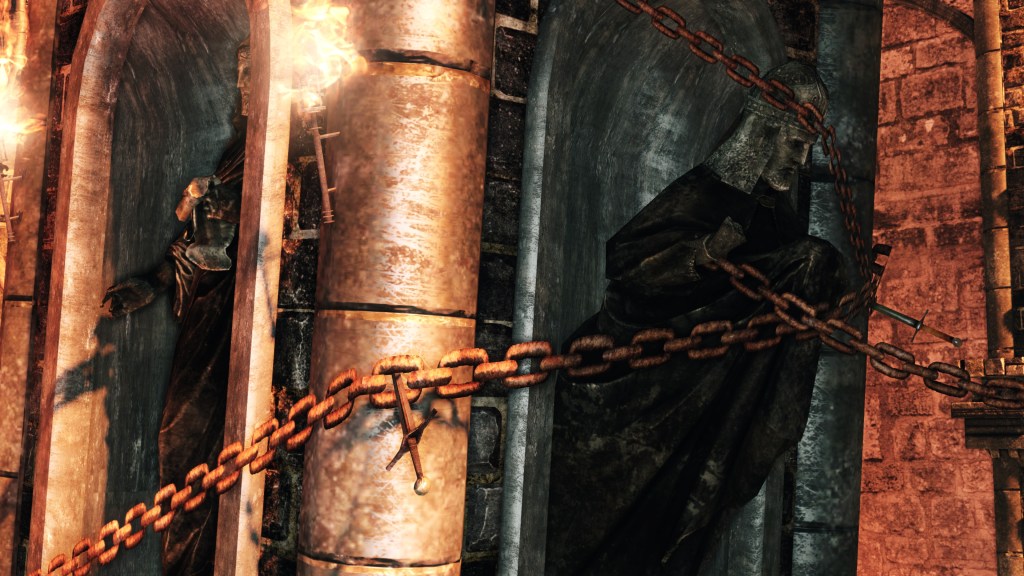
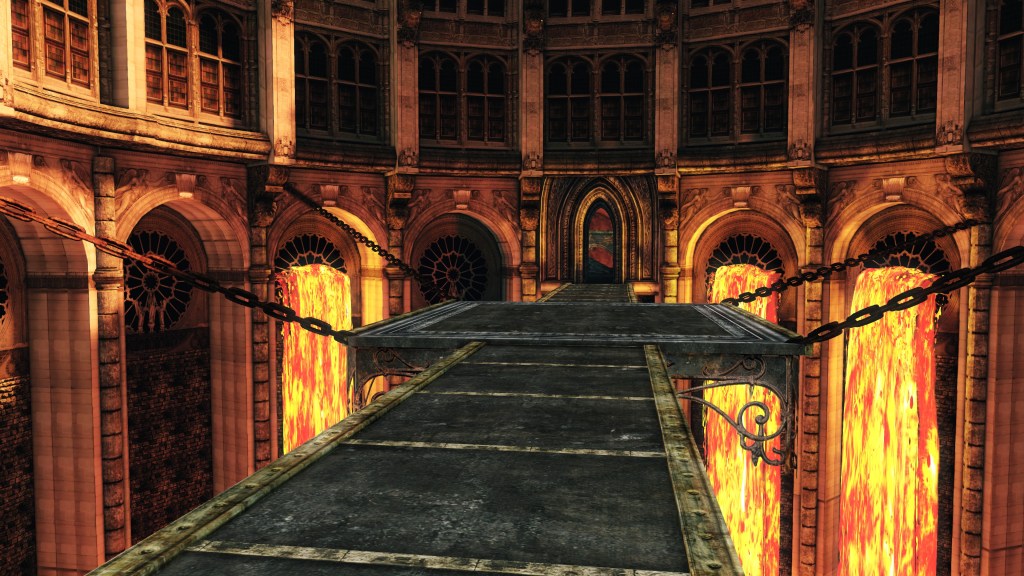
Besides iron arms and armor, his forces also associated with the Wooden Shield bearing the image of a lion. Gilligan sells one from Queen Mytha’s tower, and it also serves as the basis for the Bound Wooden Shield linked to Huntsman’s Copse. The enemy needed to know that his kingdom was a formidable player on the world stage. After reaching the Iron Keep, we need to cross a bridge before entering the actual castle. Along the way, we pass under an archway inlaid with the aforementioned statues of holy men plus warriors, only they have been wrapped in chains pinned with swords. Chained cages also hang over the lava moat on either side of the bridge. Both of these trace back to the same source: another statue holding the “reins” front and center atop the arch. The meaning would be clear to any visitor, and whether political dissident or prisoner of war, the message was the same: in this king’s domain, iron rules, and he is its sovereign.
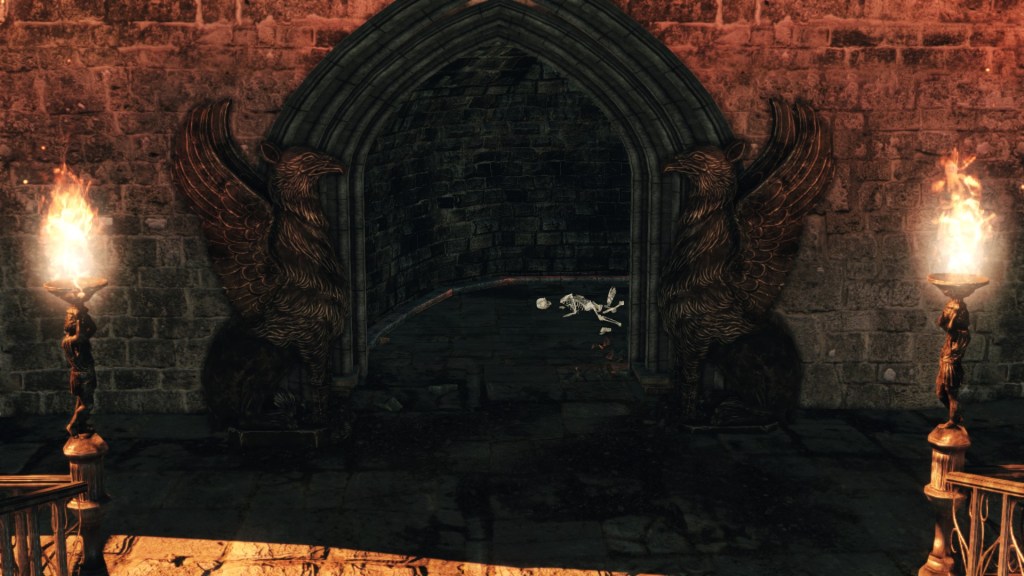
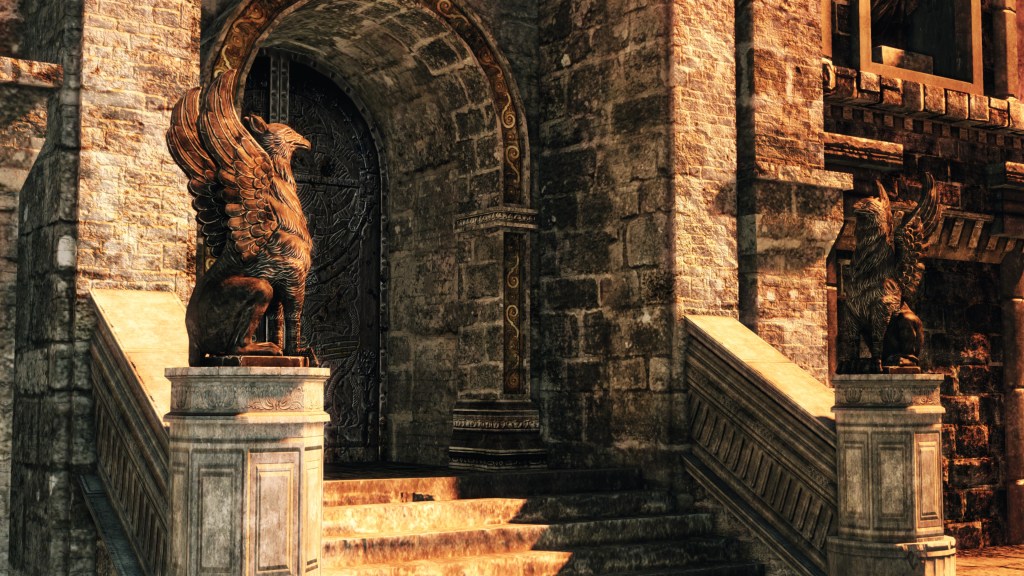
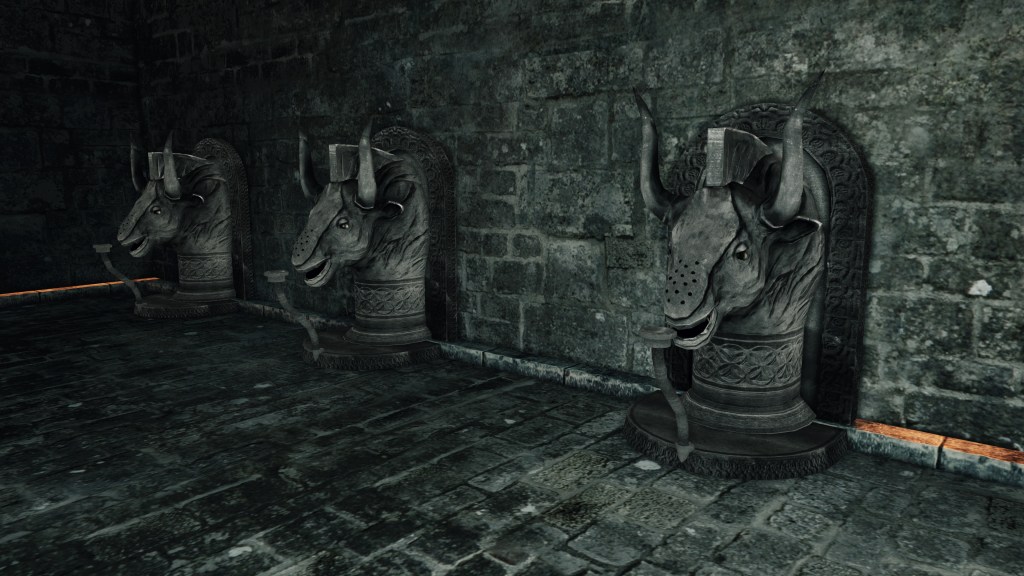
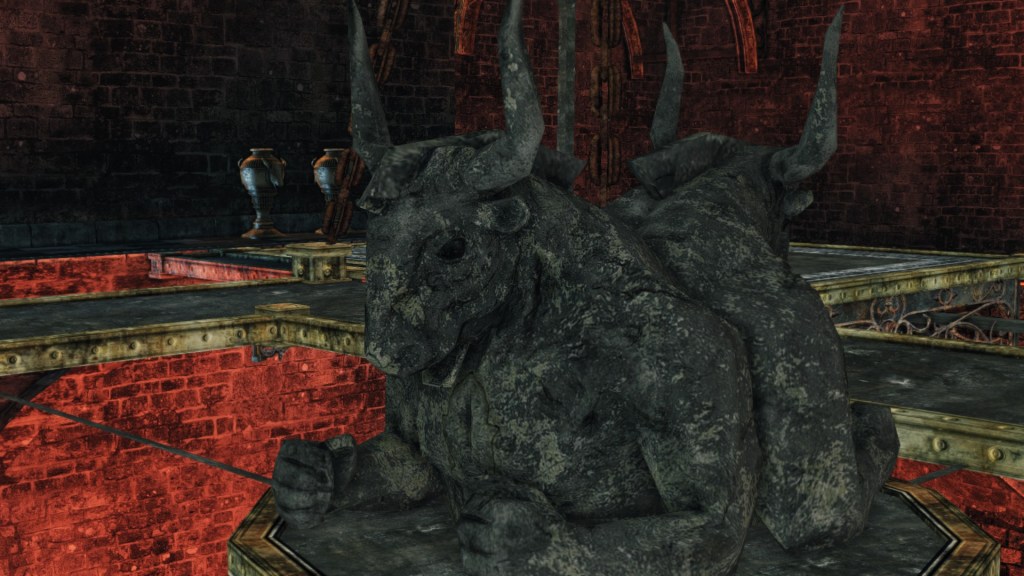
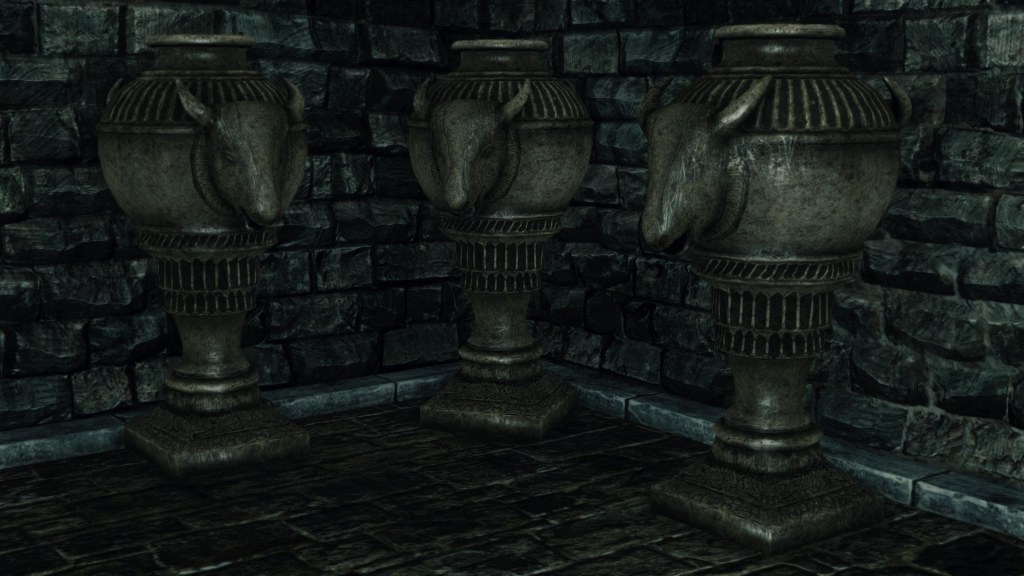
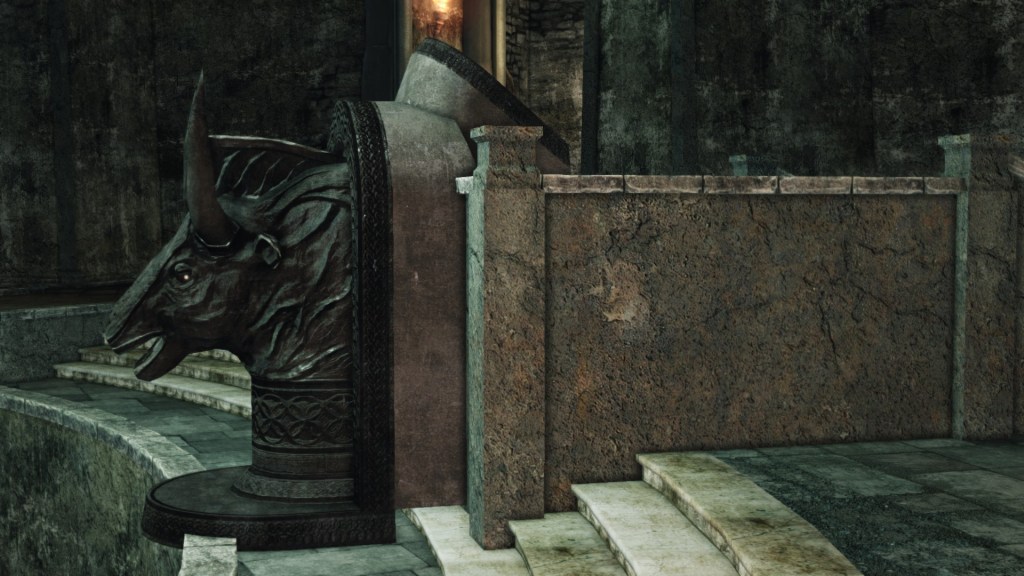
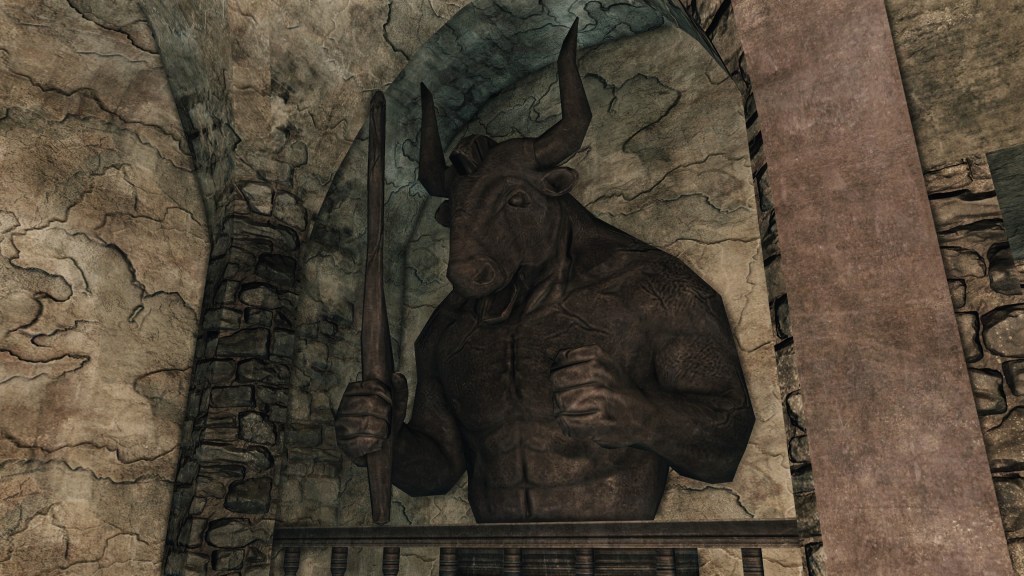

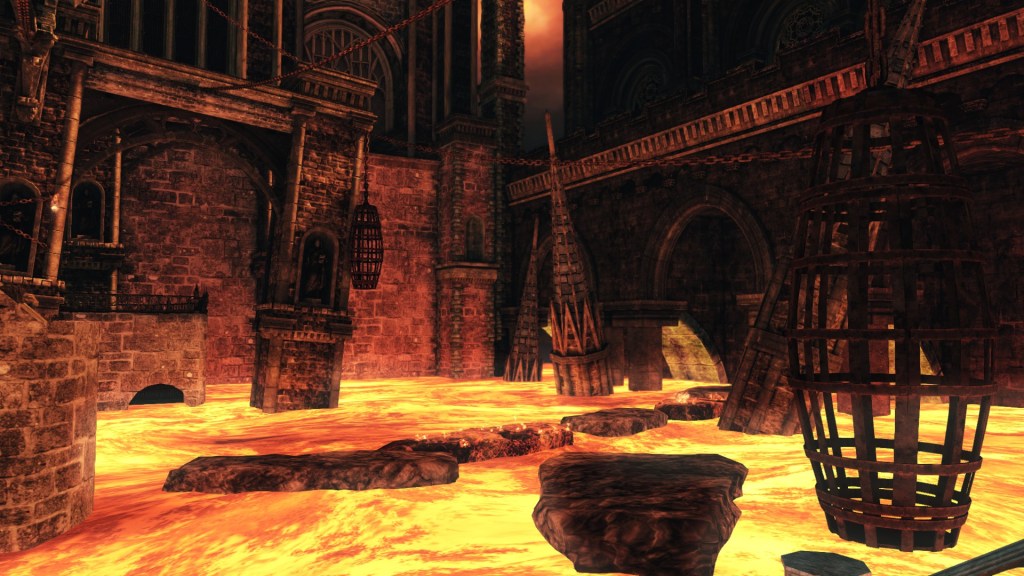
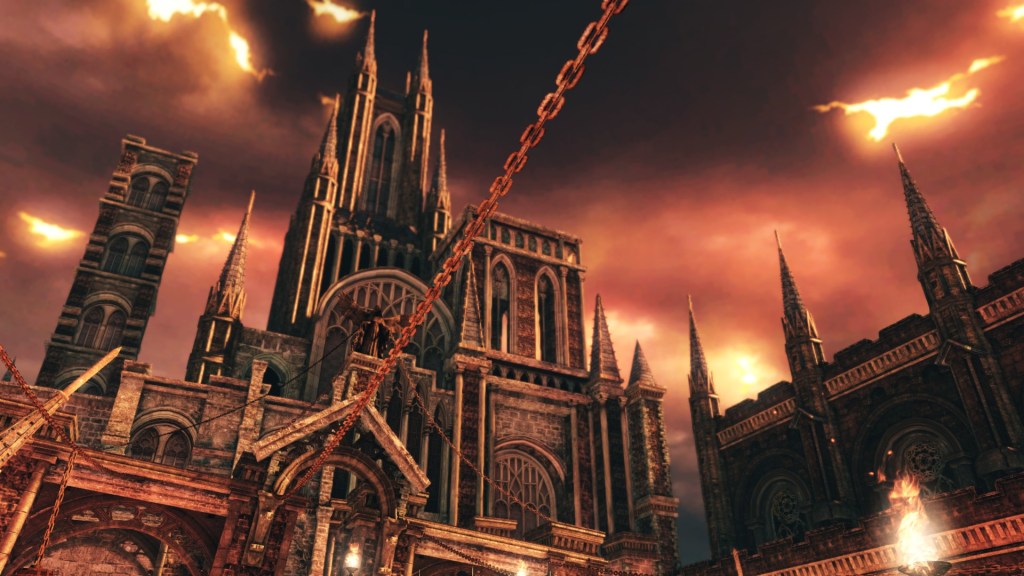
This propaganda extended to his private life. As his cavalier use of iron swords at his doorstep would signal, the Old Iron King collected many weapons merely to exemplify his authority. Along with the Black Knight Greatsword, there is also the Black Knight Greataxe kept in a separate chest, with others storing away a number of unique shields like the Phoenix Parma. Assuming that these are just a taste, the king had accrued a wide assortment to show visitors. This hobby might seem excessive, but what real harm was there in amassing fancy arms befitting a rich warrior like himself? As the Covetous Gold Serpent Ring found at the castle elucidates in its description, only a coward would miss out on a good opportunity simply for fear of the danger, and there was none yet. However, these small indulgences snowballed soon enough. The man wanted to make himself look better by trumpeting the power and riches he adopted, so his greed continuously fed into his own ego until it was nothing but excess.
The Japanese description for the Ironclad Helm notes that the Old Iron King had at one point approached the “profound mysteries” of the soul the same as Vendrick and Aldia after him. This makes sense so far as he alone had both the knowledge and resources to investigate the nature and origin of the soul through the golems he was creating. Had the man considered the deeper implications to the power behind life, he may well have discovered the Throne of Want and become a Lord of Cinder. Instead, he drowned in the pleasure his vast fortune afforded him. Aside from boasting the depths of his coffers and the strength of his ironclad army, the king had tried creating an iron dragon. As proof of this endeavor, we find plenty of petrified dragon bones and somethings in his castle, with more at Brume Tower. There were serious attempts to understand the original mineral life and how to replicate it with metal. But whatever the military applications to a golem of this scale, it is very revealing about where the king’s priorities lied.
Helmet of heavy iron soldiers. It is terribly heavy for its high defense effect and requires considerable power to move decently.
The heavy iron soldiers are dolls that the Old Iron King created and move by the command of the one who infused them with souls.
That Old King who once had a mighty soul approached its profound mysteries at one point, but fell before his vast fortune and drowned in pleasure. He ended up becoming a vulgar character.
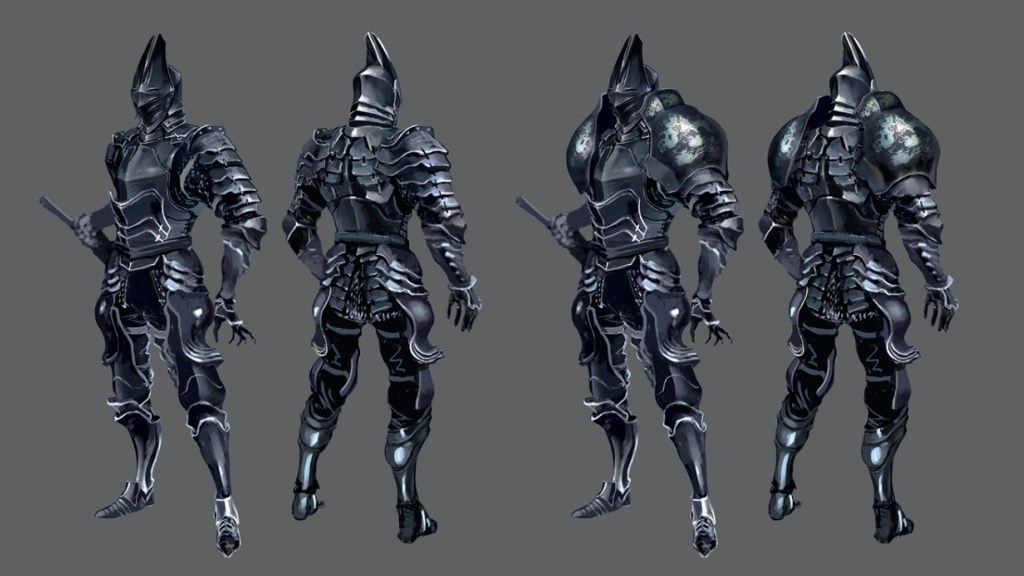
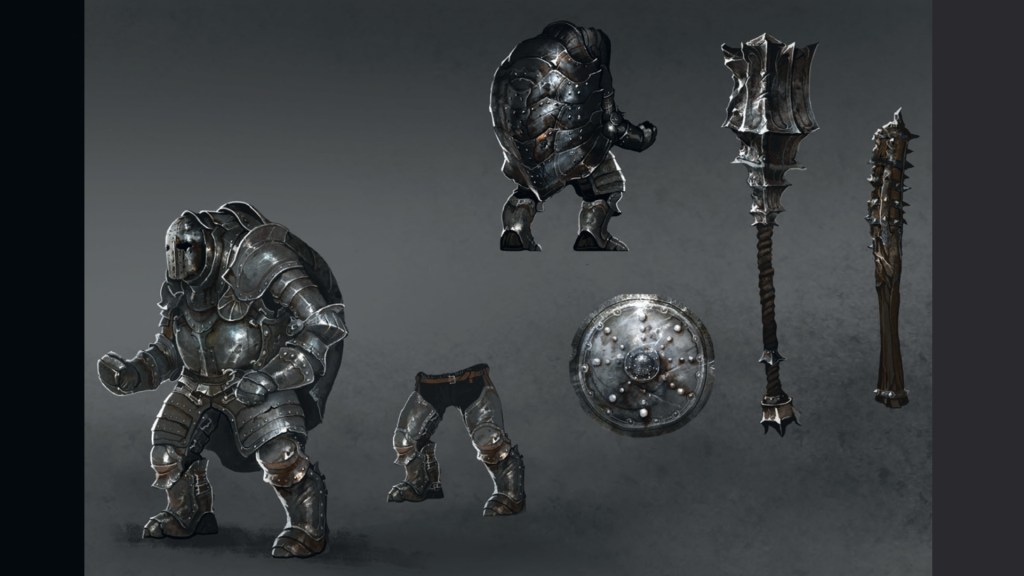
Dragons are associated with strength thanks to their resilience and might. Although there may be value in researching the nature and origin of these qualities, replicating a facsimile with iron serves no purpose other than to produce yet another symbol of the king’s power. Indeed, while concept art only depicts vague brushstrokes, his knight captains in-game have the dragon crest featured on Yorgh’s Ring plastered across their oversized shoulder plates. The same is true for the Yellow Quartz Shield native to the Iron Keep. The dragons’ significance certainly wasn’t lost on the monarch, pious Alken likely inheriting the symbol from the religion which Yorgh inadvertently spawned. But the iron dragon itself would bring the Old Iron King no closer to the truth of the soul. There was no deeper contemplation of the power he toyed with, just shallow and uninspired shells to house it.
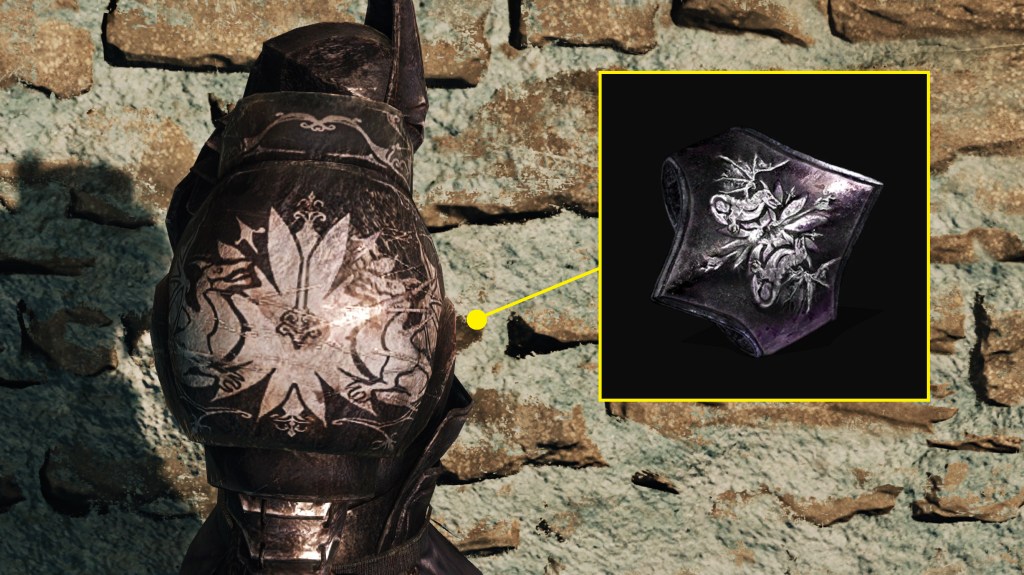
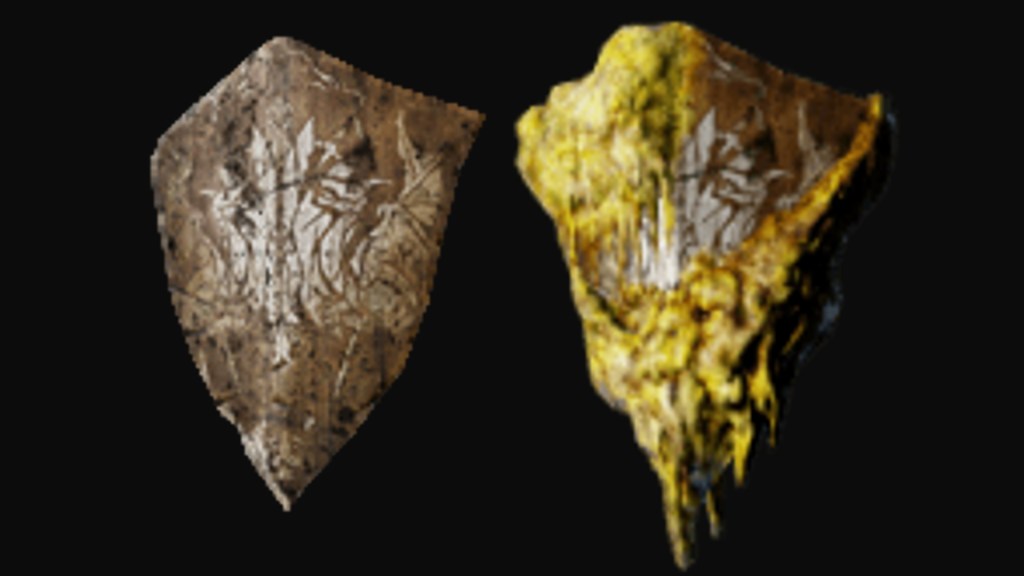
Key that opens the door of the Tower of Black Fog.
Much iron was born from the tower once. The king made soldiers of iron and built a castle of iron. And it is said that he even tried producing a dragon of iron.
This superficiality extended to the Old Iron King’s personal relationships, too. The kingdom’s prosperity allowed him to invite various dubious guests from foreign lands into his court. This openness may have come from past experience, but the fact that it was specifically his opulence which attracted them proves how misguided he was. Many of these foreigners were charlatans, all too happy to feed the Iron King’s ego in order to earn his favor and maybe a smidgen of his assets. Only a few actually contributed anything of value to his kingdom, the most notable of which is Eygil. This pyromancer is the only named individual known to have served the king besides Alonne, implying that he was held in a similar standing to the trusted knight — and just as Alonne reference’s the king’s love of iron, “Egil” (エギル) references his love of sword, meaning “sword’s edge” in Old Norse. The spells he created are only found at Brume Tower, so if nothing else, he was definitely a legitimate spellcrafter. More importantly though, their location is proof that he was present in the king’s precious ironworks.
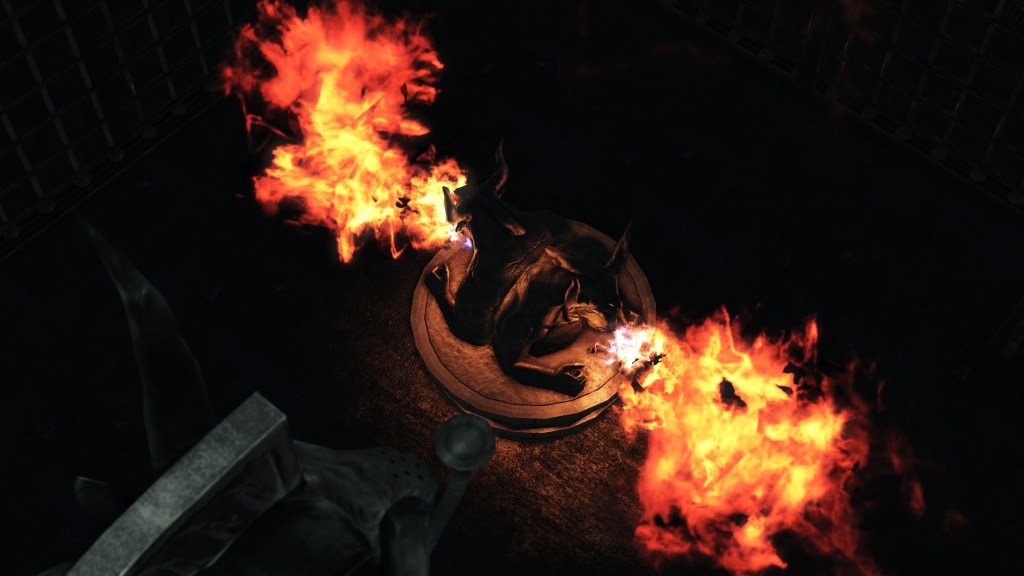
Eygil had more than likely curried enough favor with the Old Iron King to be entrusted with managing the iron facilities in his lord’s absence. The monarch did need to run a nation, or bask in the comfort and luxury of home. Likewise, Eygil’s use of pyromancy indicates that he was more interested in using an iron furnace than joining the king’s exotic company. Therefore, putting him in charge was the most logical decision; that doesn’t make him any different, of course. The massive iron bull statue ornamenting the Iron Keep is dubbed “Eygil’s Iron Statue”, (エギルの鉄像) meaning that he was the one who gifted his lord such an oversized icon. This feat would be impossible without access to the kingdom’s ironworks, and the lever inside controls the flames which other bull constructs flare out throughout the whole castle — he was in charge of all things fire-and-iron-related. It shows that even the king’s most competent retainers knew to tickle his ego to get in his good graces, and it worked.


All of this debauchery must have brought Alonne no end of frustration, horror, and disappointment. This was no longer the noble, ambitious king he chose to serve. He saw money and power turn him into a depraved, corrupt hedonist hellbent on wasting away his life in the lap of luxury. What was the point of helping the king achieve that prosperity? What was the point of him even being there? To try putting his lord back on the right path? But whatever attempts Alonne may have made to advise the Iron King, they evidently all failed to convince him to reform. As Shalquoir infers, the monarch didn’t realize how truly ugly his actions had become beneath the superficial glamor. In his strive to improve his image, he instead ended up becoming more vulgar than ever. And after a certain point, Alonne just gave up on him, deciding to leave his lord for a new land when his master’s kingdom had reached its zenith — or at least, he should have.
Helmet of the knight Aaron, who served the Old Iron King.
Aaron, who came to this land from the East, once chose the power-weak Old Iron King as his master and contributed to his acquisition of the throne.
However, it is said that he left to seek a new land when the King’s power reached the height of prosperity.
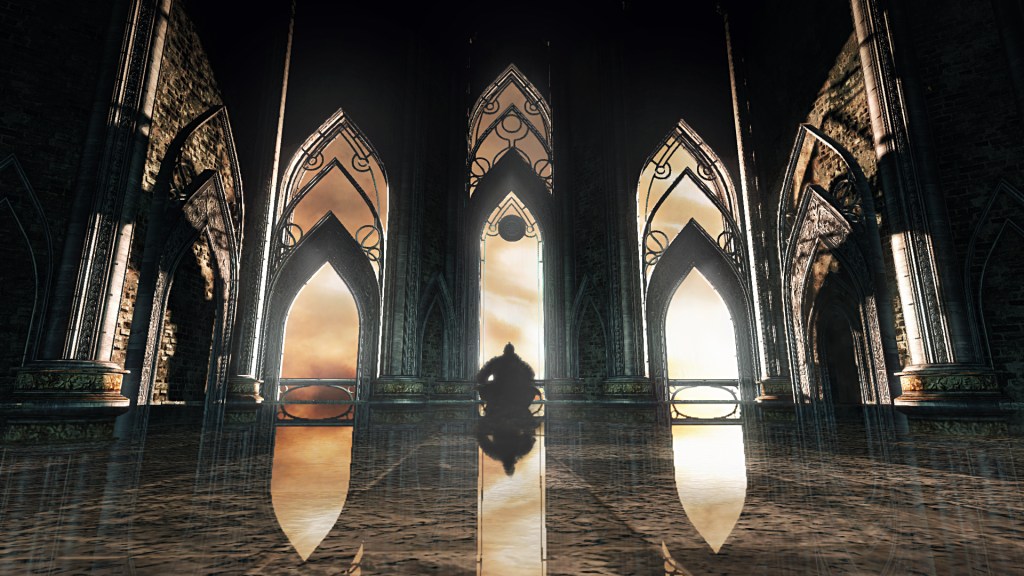
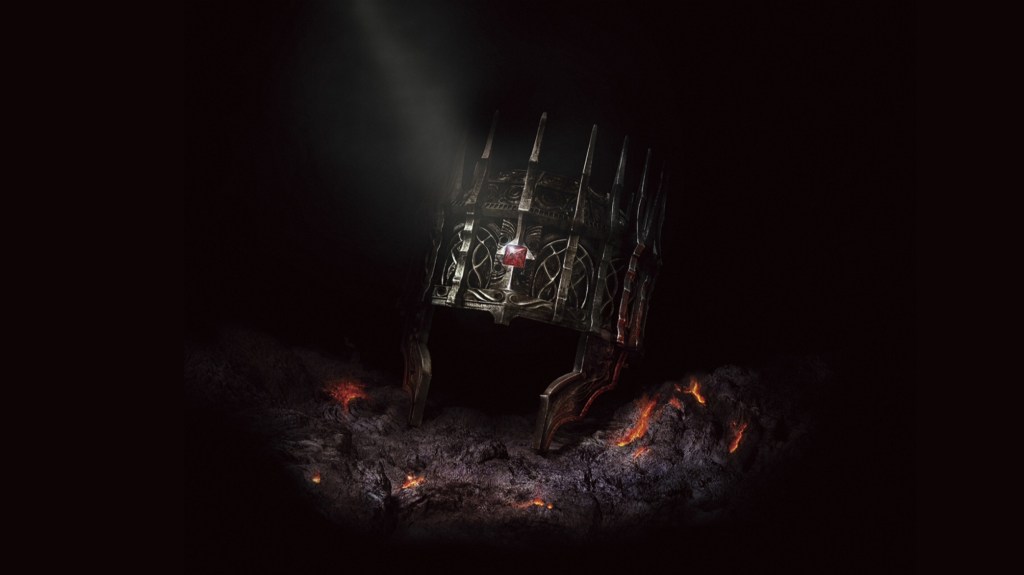
After we acquire both the Ashen Mist Heart and the Iron King’s crown, the latter seems to react to Alonne’s sword and armor set up in a kind of display room beneath the topmost throne of Brume Tower, triggering a memory residing in the crown. If we enter the world of that memory, we will find ourselves at the Iron Keep, going by the architecture. This is a part of the castle we cannot explore in the present era, presumably the innermost portion which has completely collapsed into the lava and become the Old Iron King’s boss room — only his private teleport point to Brume Tower remaining. The boss room for the memory is an antechamber to another throne room, flooring a shiny marble reflecting the twilight clouds outside the arched windows; the iron throne in the next room identical to the one half-buried in ash at the bottom of Brume Tower. However, in order to reach this throne, we must fight through not only his knights, but even Alonne.
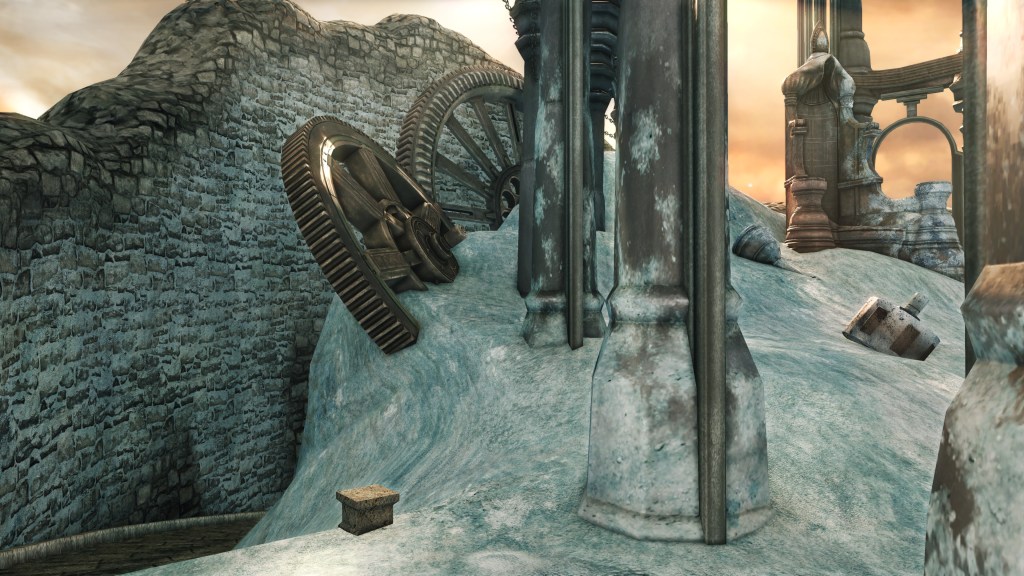
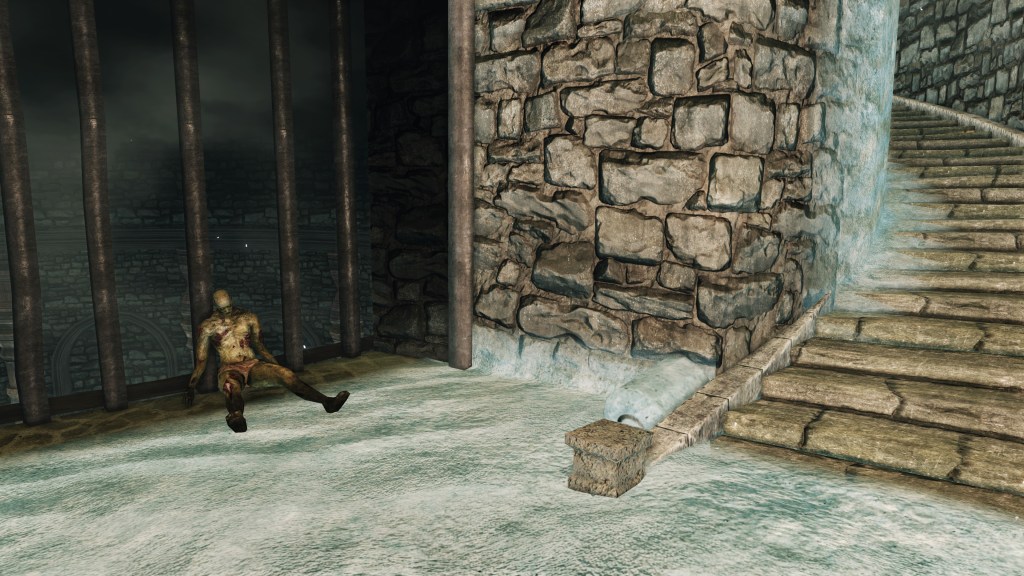
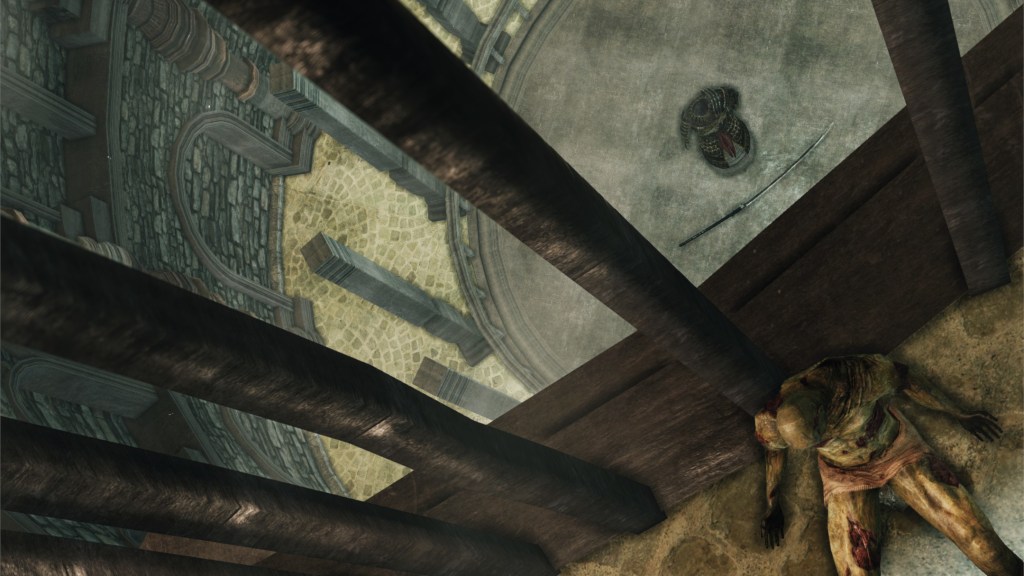
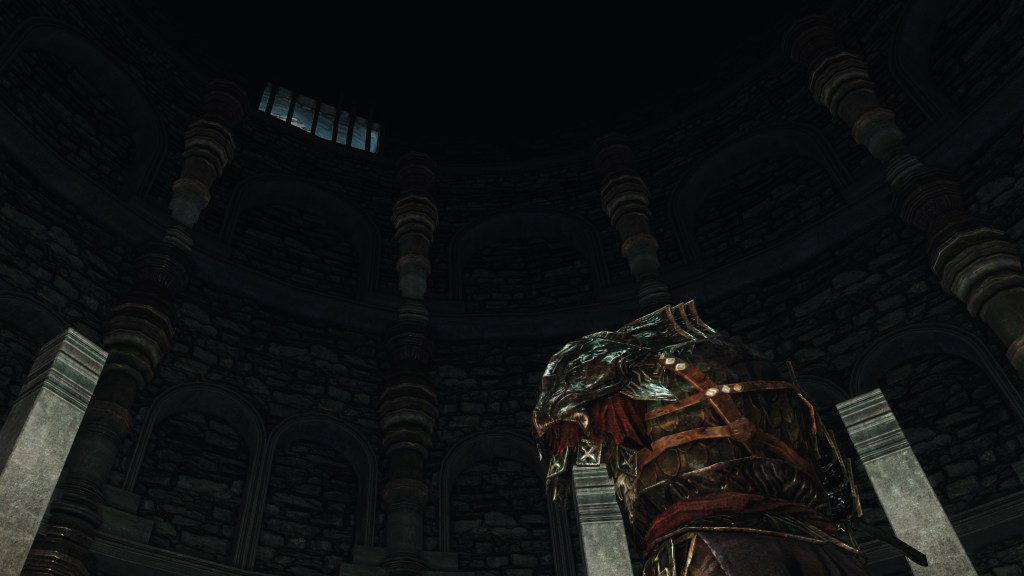
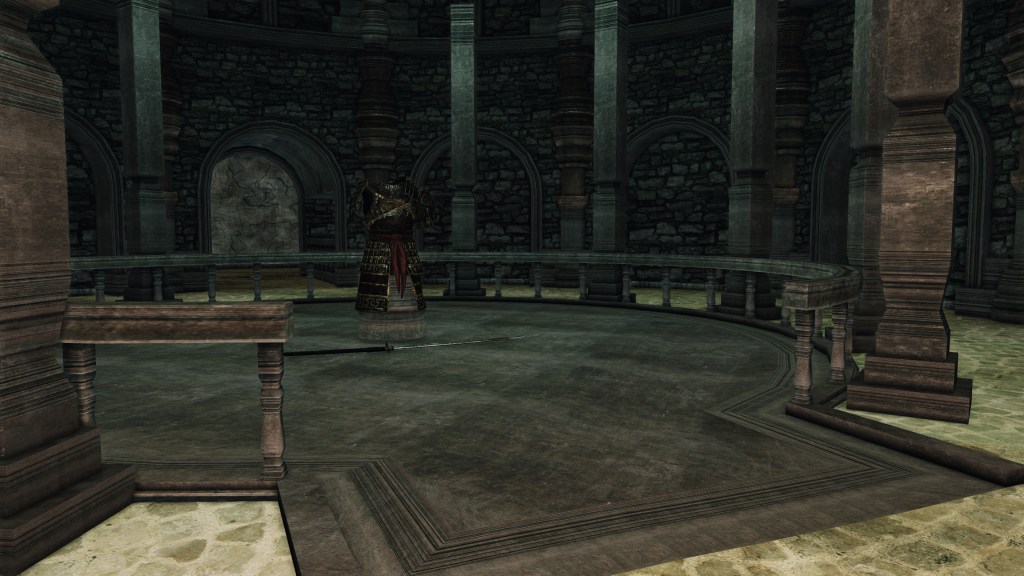
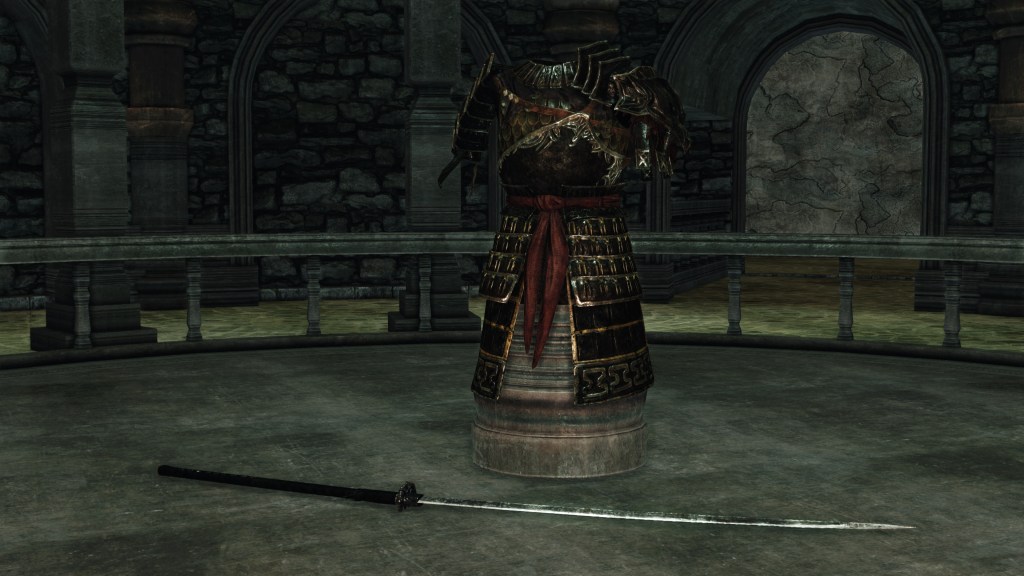
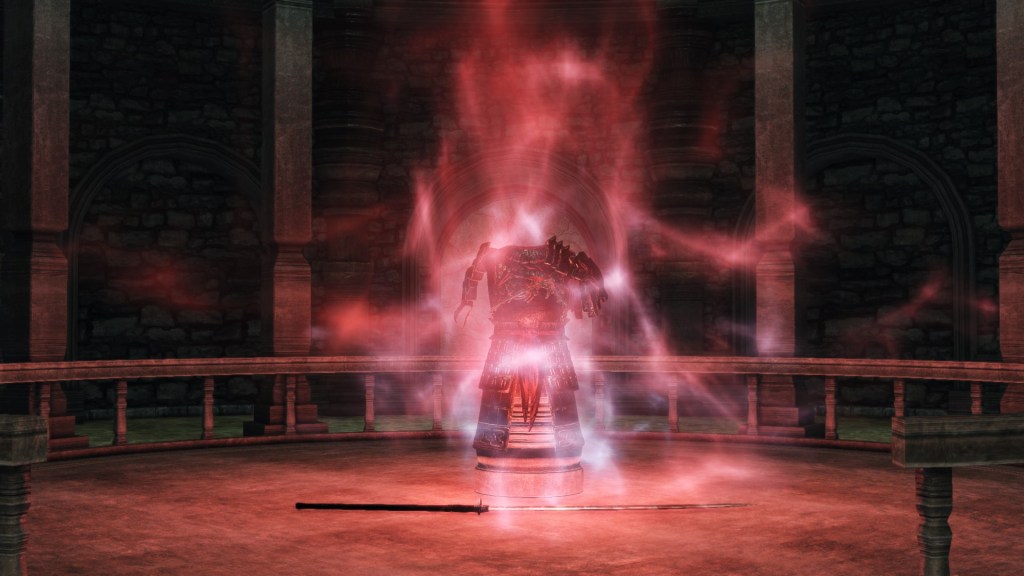
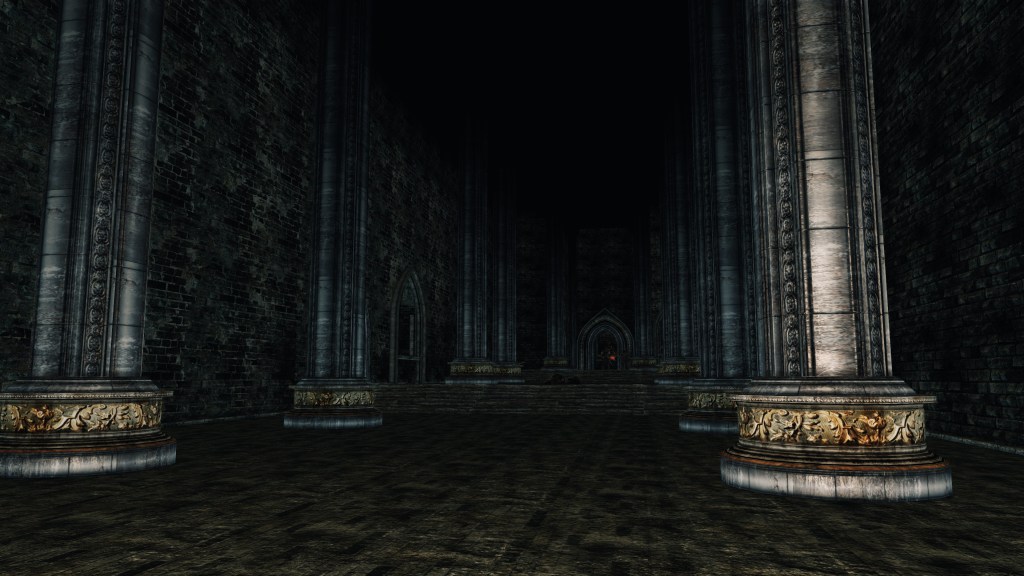
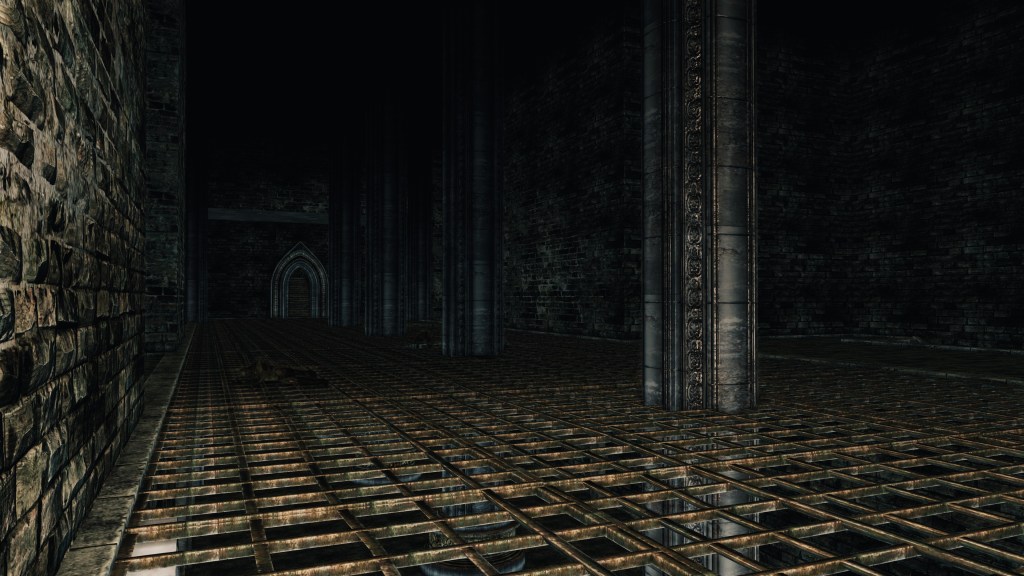
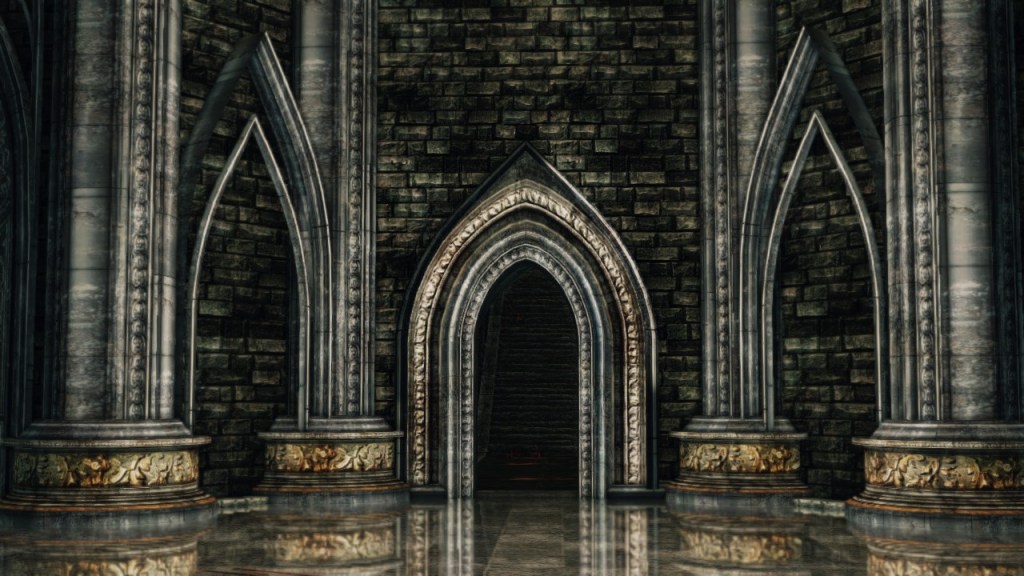
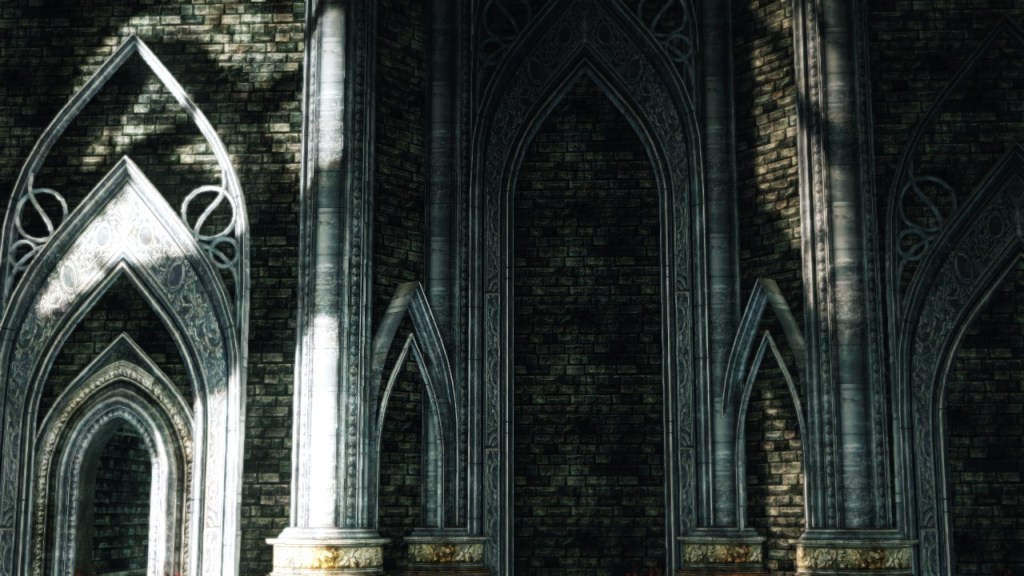
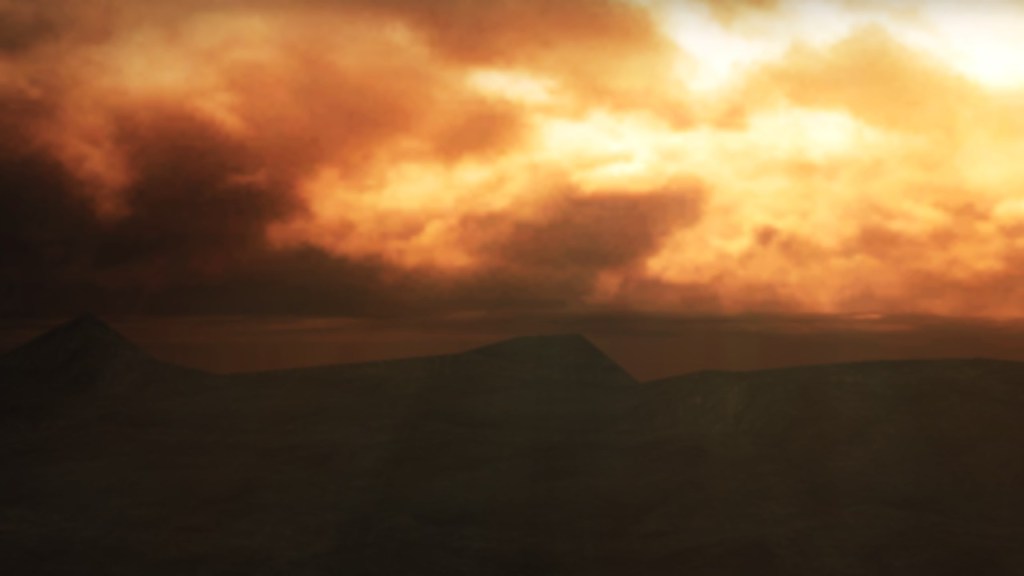

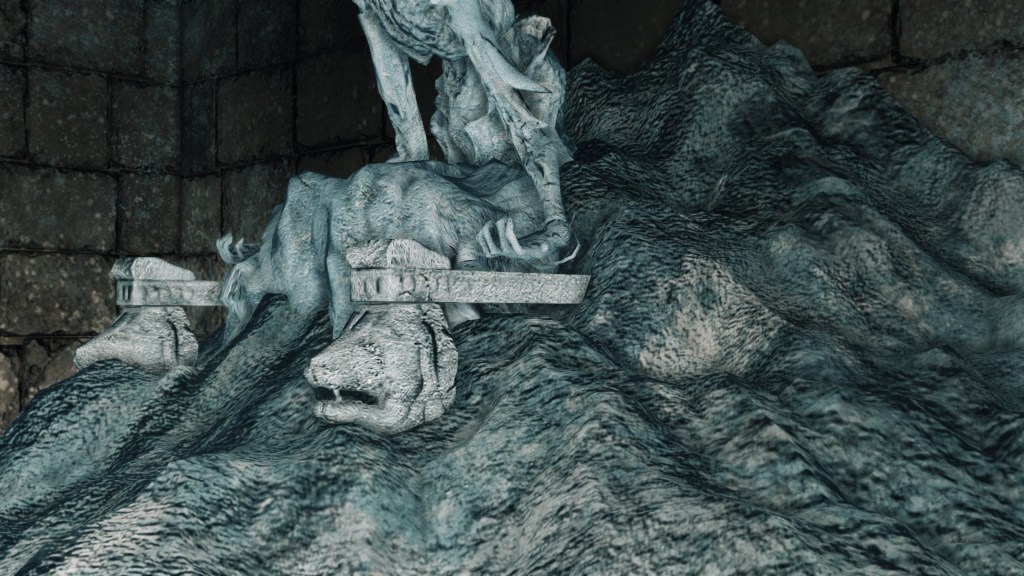
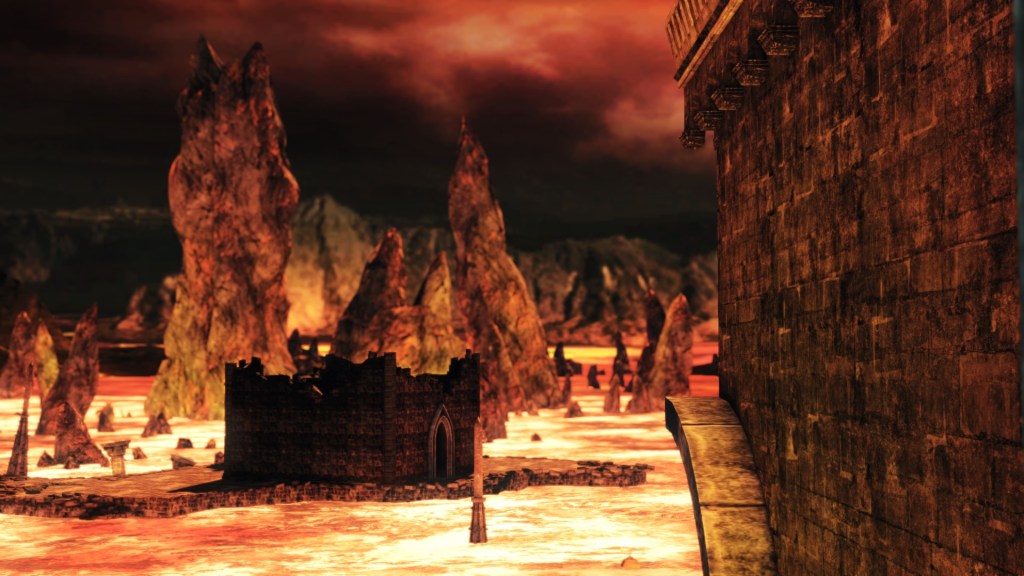
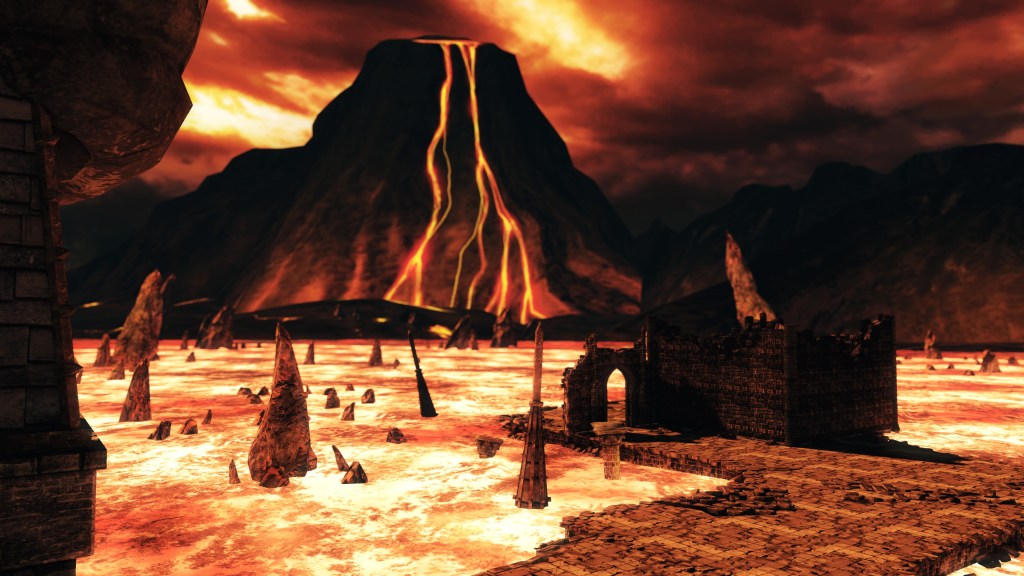
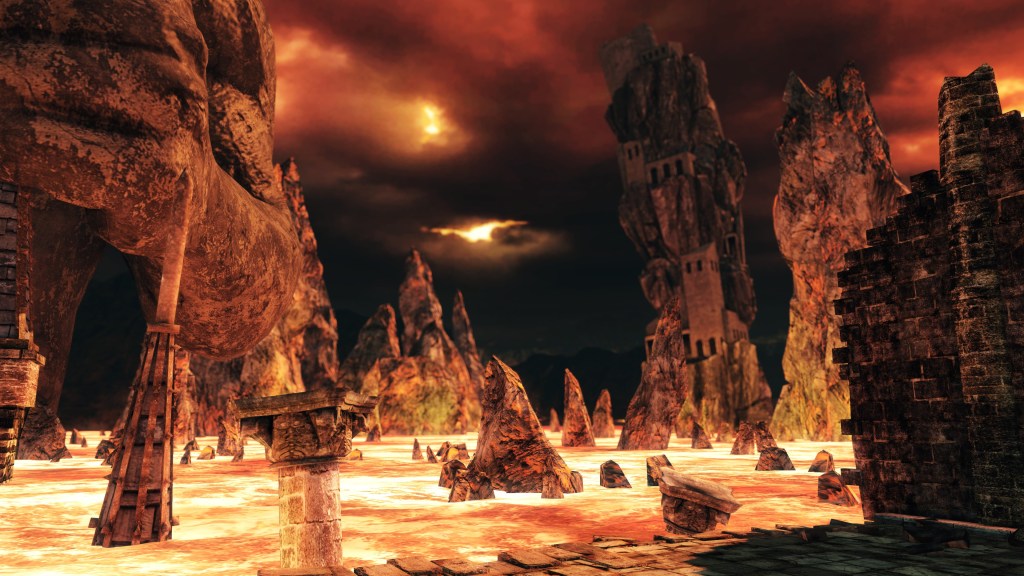
The boss is sitting on the floor when we enter the antechamber and immediately engages us in combat. If we happen to defeat him effortlessly, he will technically deal the final blow, but we undoubtedly cause the death of the knight who had supposedly left on a new journey regardless. This apparent contradiction is unlikely to be a developer oversight since the description for the Alonne Knight Captain set reiterates his loss of faith and departure following the big fix. So, why is he there? This is a period when the Old Iron King was still alive and recently present in the area. In fact, the smelter wedge left on his throne suggests that he had only just returned from the ironworks, where we acquire so many. Meanwhile, Alonne is assuredly minding his etiquette. The way he sits cross-legged was common for samurai during Japan’s warring states period, only becoming offensive in a lord’s presence after the united country entered peacetime. Given his violent background, the warrior is showing courtesy as a vassal when his king could walk in at any moment. It is almost as if him leaving with disdain never happened.
Helmet of the Aaron Knight leaders.
Those Aaron Knights who served the Old Iron King dressed themselves in beautiful and solid equipment that was born via an excellent casting technique.
Its design resembles a strange knight who once imparted his techniques to the iron knight order but gave up on the fallen king and disappeared.
Combined with the above details, the presence of Alonne’s unique armor and weapon at Brume Tower posits that his death at Iron Keep is part of yet another time loop scenario. In all likelihood, the samurai did leave for foreign lands, only to later return to the lord he abandoned in an attempt to reconcile; he was awaiting a formal audience with the king, only to die just before they could have a proper reunion. Perhaps the warrior didn’t want to return to wandering unless his country, once again, forced him out. It is reasonable for his close relationship with the king to give him seconds thoughts about labeling him a lost cause after the two spent some time apart. If the Iron King valued the swordsman at all, he might still find it in his heart to listen. Thus, for closure’s sake, Alonne chose to either convince his unrespectable master or face expulsion — from this earth, it turned out. And for what it is worth, his lord did seem to want him back.
Alonne’s departure prompted the Old Iron King to name the knights he had trained after him. And following his death to some random assassin they never managed to capture, the monarch had the samurai’s equipment enshrined below his throne in Brume Tower. Maybe he intended to make it the basis for future designs, with plans to update the Alonne Knights’ equipment; Brume Tower does look to have been experimenting for their sake particularly. Invading us in one of the satellite towers is Rachel, a fencer who loves to coat her mundane bastard sword in a variety of oozes and resins for power. Her off hand carries the Hollow Soldier Shield, which serves as the basis for the Yellow Quartz Shield. On top of that, she dons the Old Knight set with an Alonne Knight Helm. In short, the swordswoman appears to be a knight of Alken who was testing the new golem armor for the Iron King, seeing its potential to replace their iron. And once finished experimenting, why not model the final iteration more closely on Alonne?
Whether the samurai’s equipment was expected to serve as a reference point or mere novelty for the Old Iron King, it nevertheless demonstrates his care and respect for the man who helped prop him up. Reinforcing the impression, Nadalia holds the crown he forged with iron from his bottom-most throne at the ironworks, as if the monarch left it there in the ashes feeling unworthy of its weight alone. Not having his closest confidante by his side all of a sudden may have taken the royal by surprise and made him reconsider how he had disregard his knight until then. If the memory is any indication, he could be rushing over upon hearing of Alonne’s return as we carve our own way through, ready to talk things out — being greeted with only a fresh corpse must have been devastating. “Had I only heeded you sooner, this never would have happened,” might have crossed his mind. That being said, Alonne’s tragic death wasn’t enough for the king to mend his hedonistic ways. If anything, the grief drove him to drown deeper in the pleasures which debauchery afforded him.
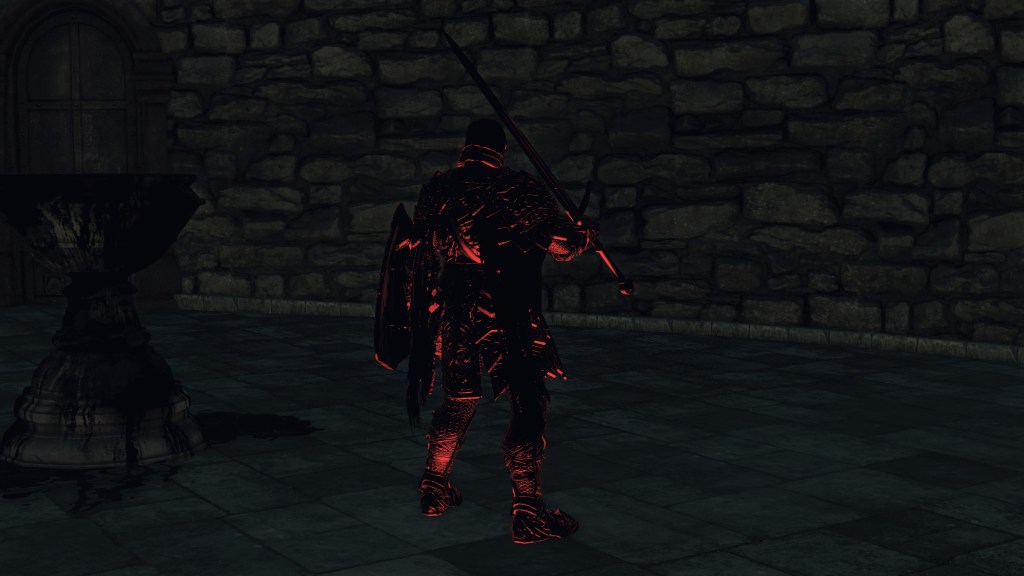
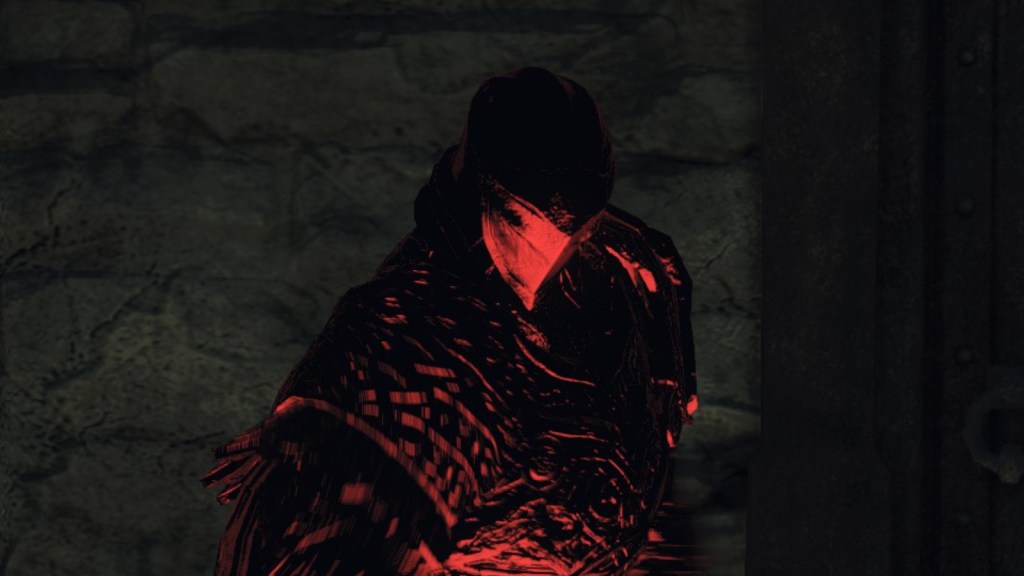
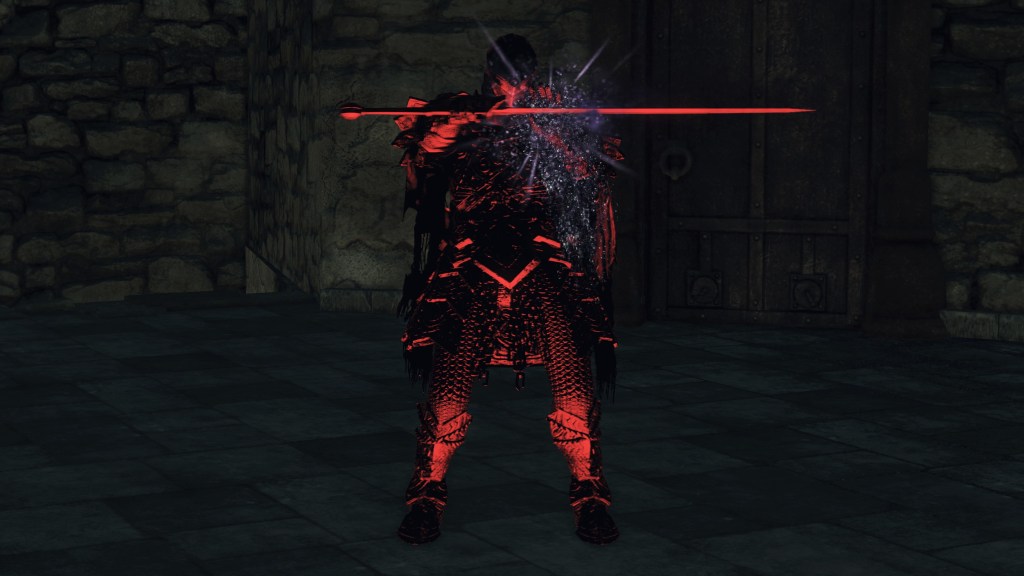
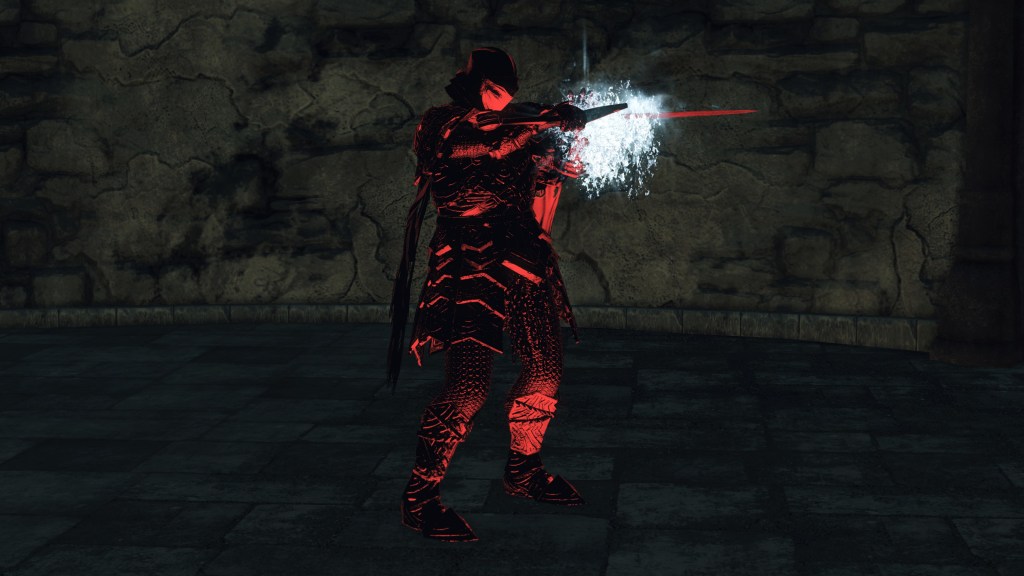
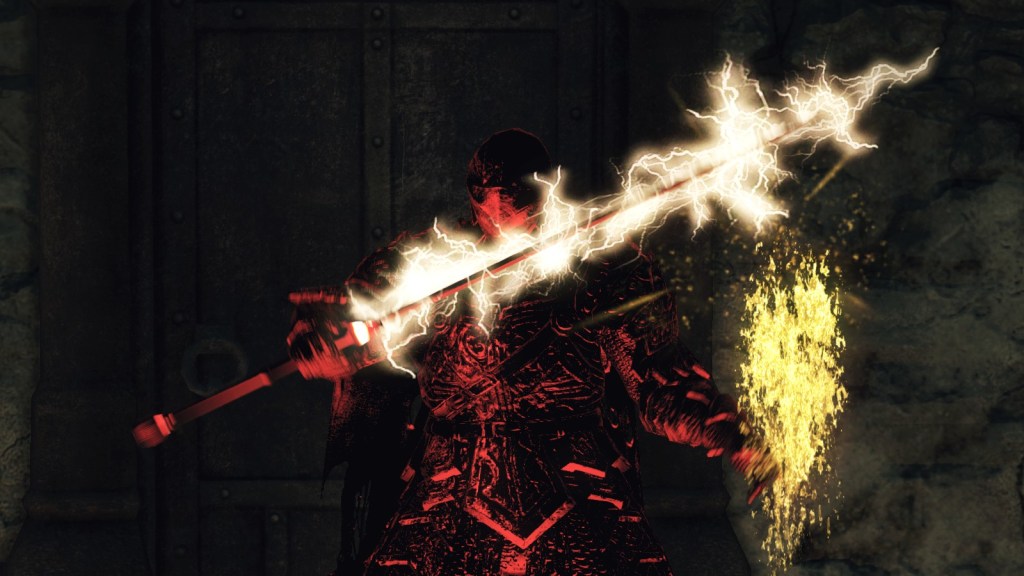
Katana created from the soul of the knight Aaron. Is the ripple pattern that seems to enthrall man a kind of bewitched blade?
Aaron visited from the East and made a name for himself as the Old King’s right-hand man. After he left, the Old King gave his name to the soldiers born from iron.
Corrupts Absolutely
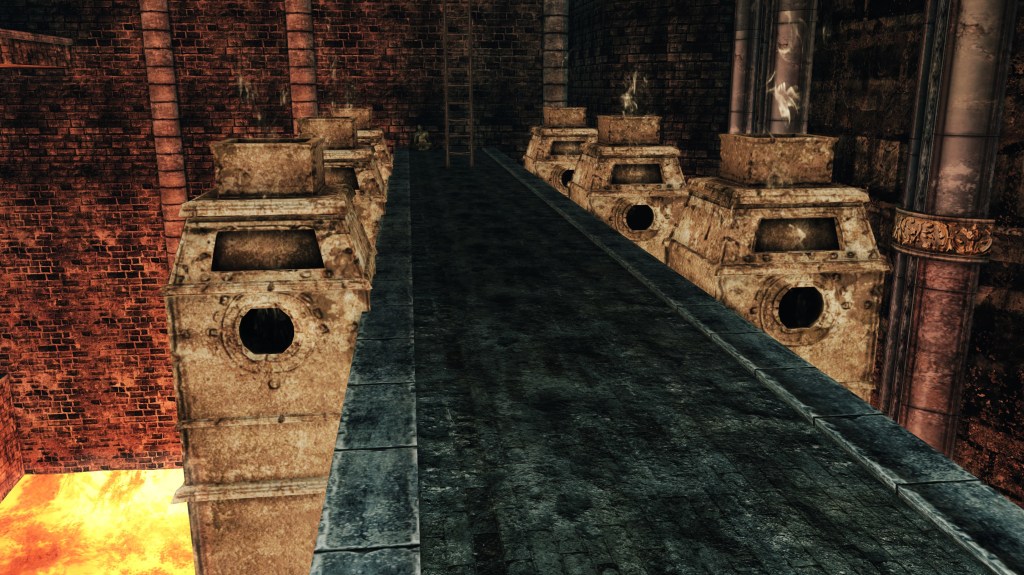
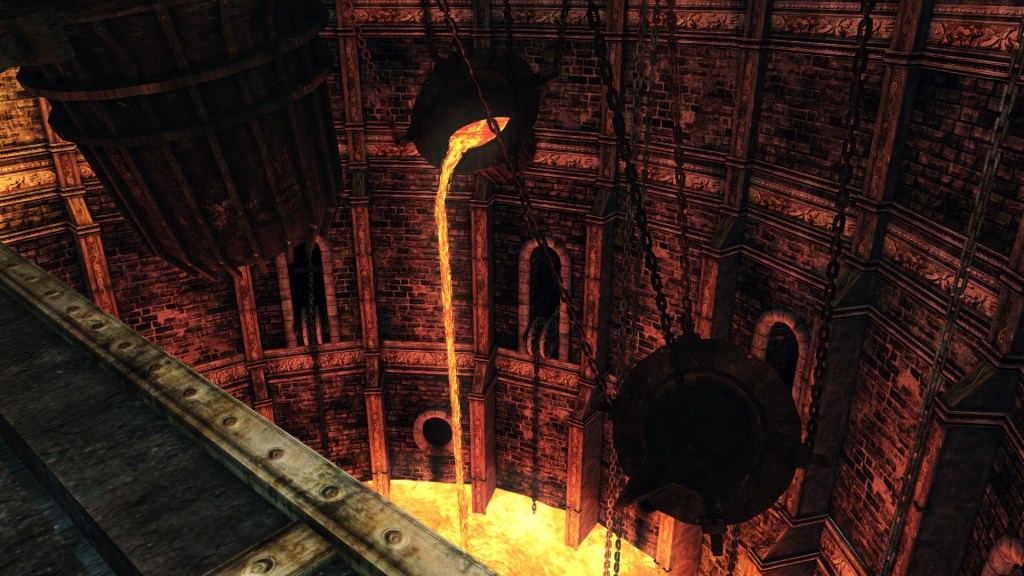
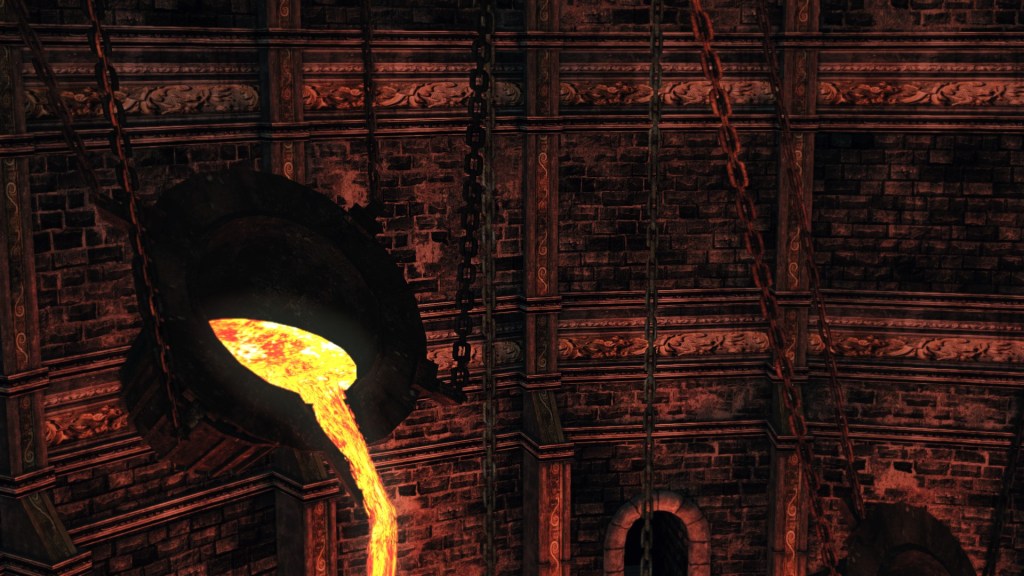
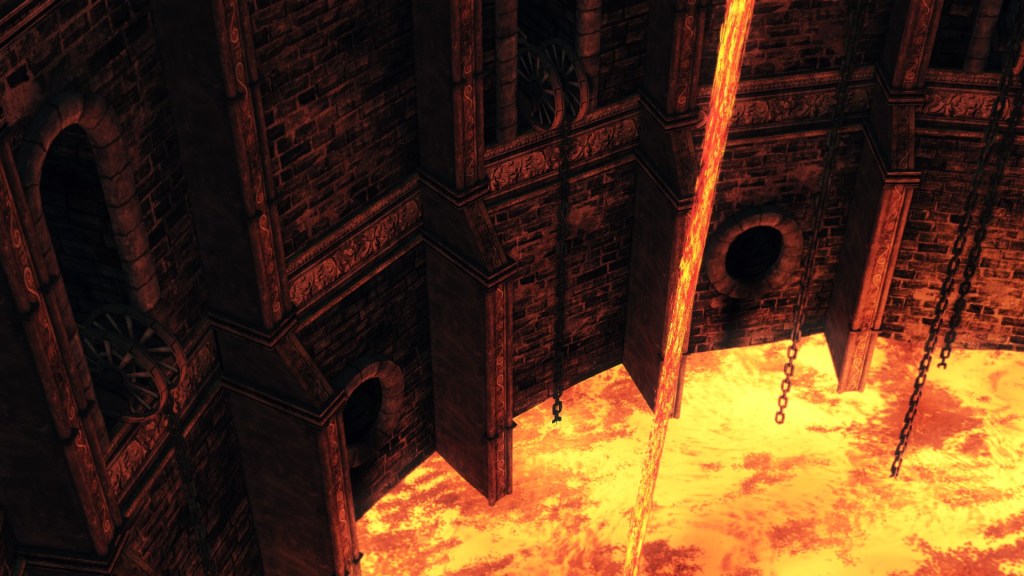
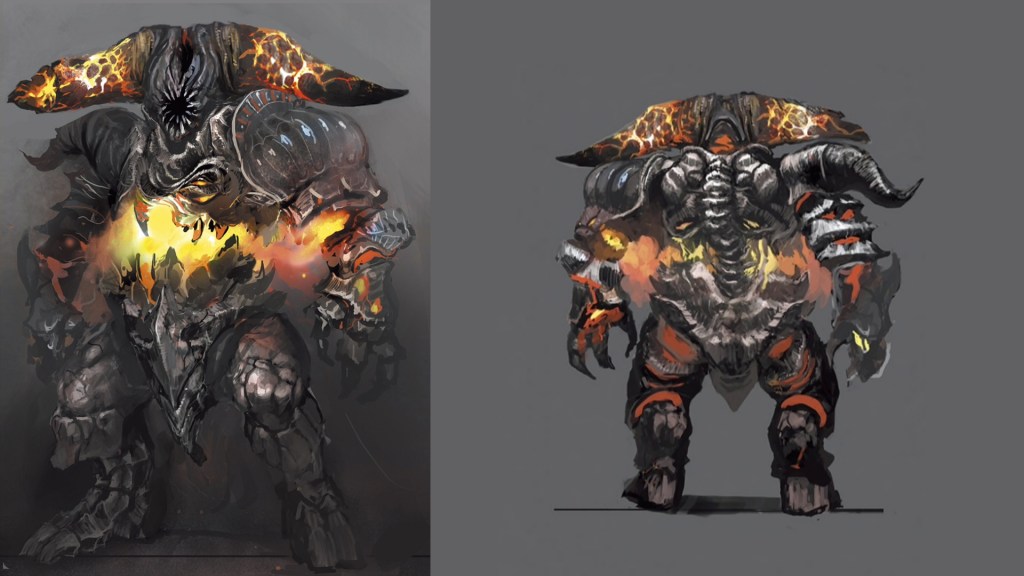
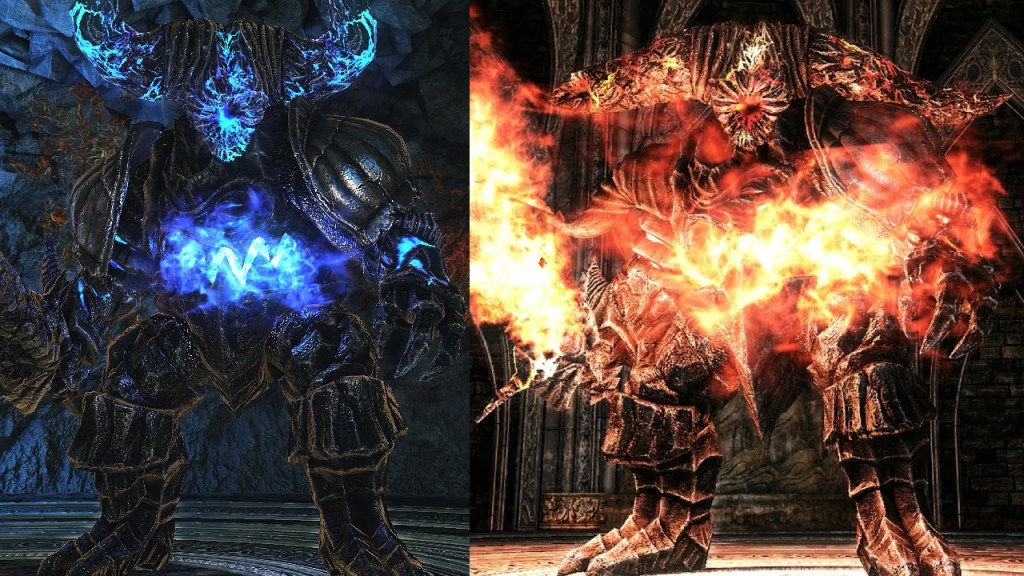
As we explore the king’s castle, we come across blast furnaces, iron smelters, and even platforms to lower into the lava. He clearly turned his home into a factory, but why? Brume Tower fulfilled all his needs, so what was there to manufacture there that he couldn’t create elsewhere? The answer is his ultimate creation. The Smelter Demon was to be another of the Iron King’s golems, only this puppet would be forged with the lava the castle stood upon. He likely wanted to imbue both body and soul with the power of fire which the magma radiated. Conveying that exact concept, a local chest stores the Life Ring with twinkling titanite, the minerals for each infused with life or light. As for the actual boss, its two halves are connected by a spinal column far too thin to support the weight without the help of the flames blazing in the gap, pointing to it being intrinsic to the design. By using lava to construct the frame and power the core, the puppet’s resulting strength and agility puts even Anor Londo’s Iron Golem from DS1 to shame, and that in itself was probably the goal.

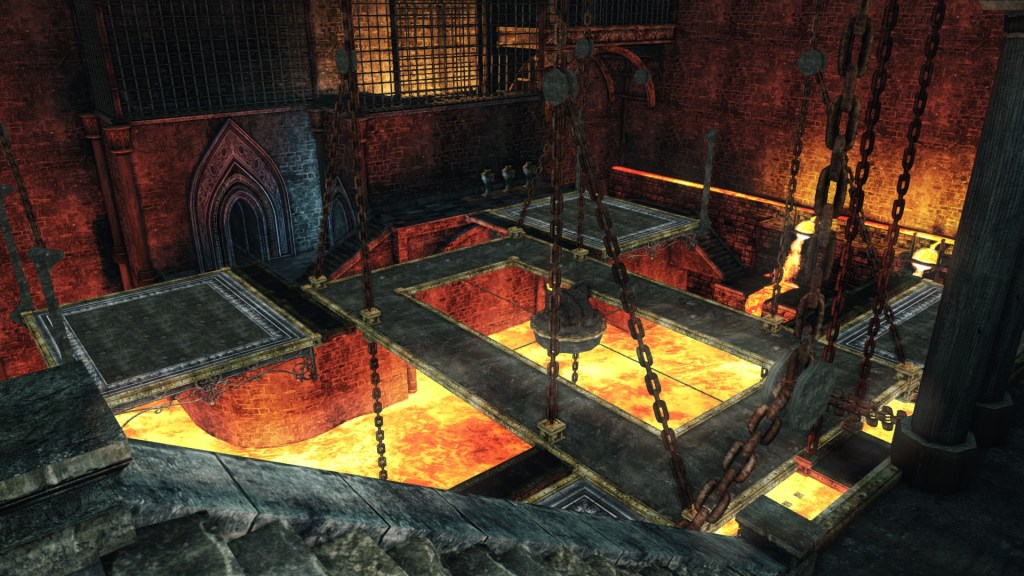
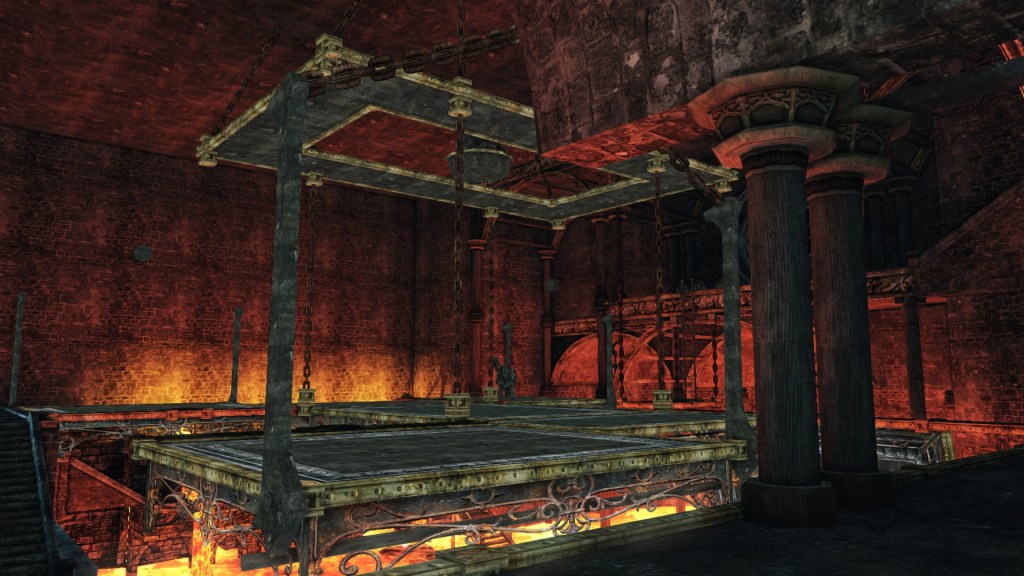
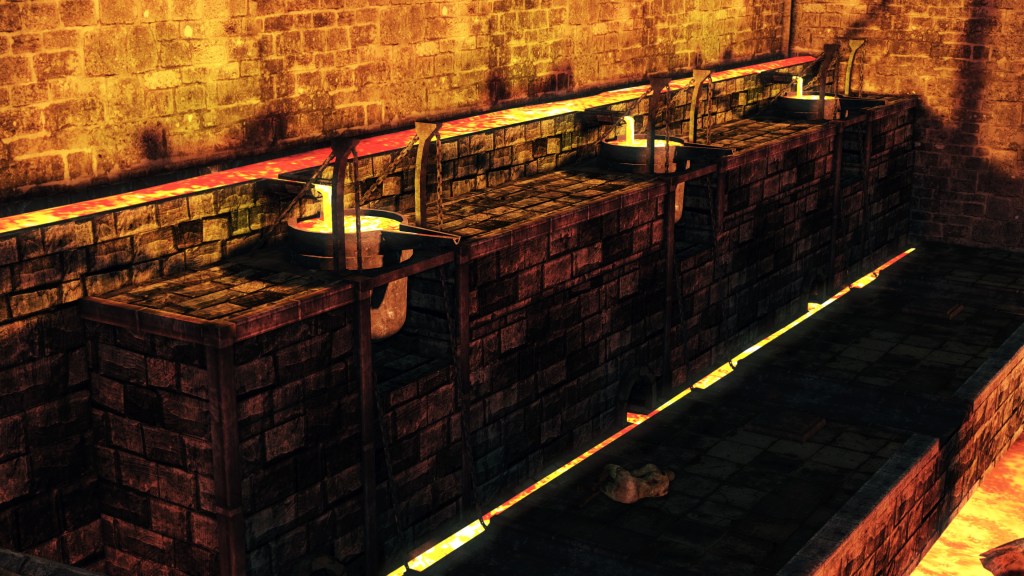
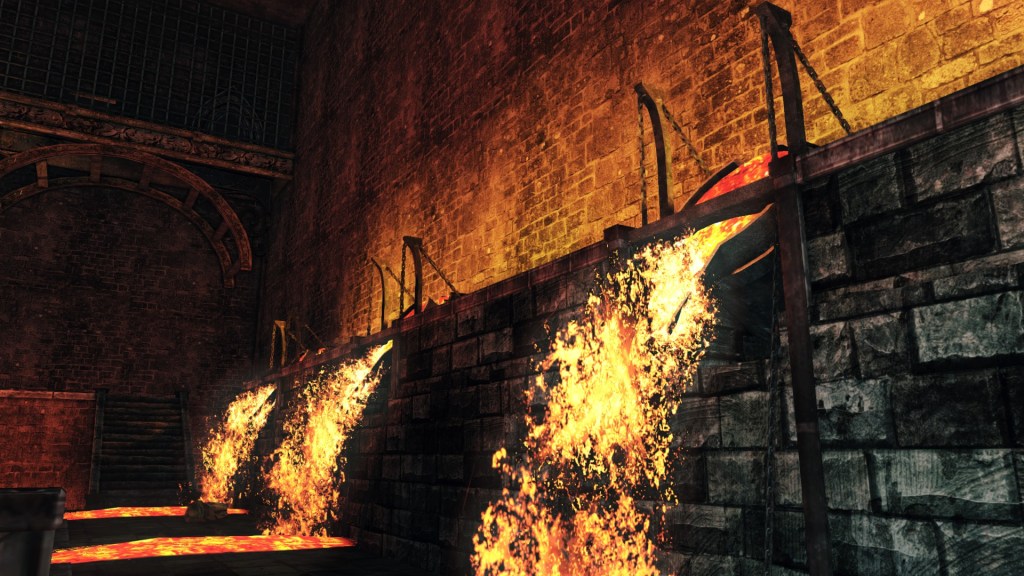
Extra large sword created from the soul of the Melted Iron Demon. The blade keeps the power of a fierce fire. Unleash its hidden power via a strong attack.
The Old King who acquired the power to give life to iron manufactured puppets of various forms. This iron mass may also be of one of them.
Like the Old Iron King, the Porcine Shield is worthless for its expected purpose, only reminding onlookers of greedy, gluttonous pigs. Conveniently, it is part of his weapon collection, stored within a chest right after the Smelter Demon. Kept with it are a bunch of flame butterflies, whose firepower we use to light a torch. Taken together, bringing the lava golem to life was to be this insatiable king’s greatest extravagance, the crown jewel of his debauchery. With the horns and claws unnecessarily included in the design, this puppet might also be the iron dragon he had been working towards. Indeed, the gaping hole for a face could easily facilitate fire breath, and Venn’s gargoyles prove that the kingdoms knew how to imbue a mineral body with fire to recreate those circumstances for dragons. If the idea was to create an iron dragon which retained the form and fighting prowess of a man, then this was undoubtedly the king’s most ambitious, and excessive, project yet.
It comes as no surprise then to encounter a prototype in the Iron Passage, opened with the Tower Key whose description makes sole mention of the dragon. It is nigh identical to the frame found in Iron Keep but significantly older and embodying blue flames of a sorcery nature — the Sorcery Clutch Ring within a chest close by in Brume Tower reaffirms the hint. The magic power was likely intended to substitute for that of the lava and serve as a proof of concept for the golem’s design. As to its origin, Eygil was the probable caster, and not just because the test model tries appealing to the king with more bull-like horns. Although we can only acquire his pyromancies, the man himself is never actually called a pyromancer. Instead, he is identified by the much vaguer term “arts expert” (術師) at the root to both “pyromancer” and “sorcerer”. Eygil may have been fascinated with fire, but that doesn’t limit him to just one school of magic, especially considering how often sorcery and pyromancy are taught in tandem in the New World. And this magus certainly had motive for contributing to this particular project.
Pyromancy created by Eygil, caster who served the Old Iron King. Fire many fire pillars in front of the caster.
Eygil sought something resembling a will for fire. For example, the name “fire snake”, due to it wriggling like a snake that bites its prey, is a vestige of that.
Eygil wanted to imbue fire with the appearance of a will at minimum, essentially making the flames look as if they were alive. This is why he dubbed one of his spells “Fire Snakes” after its flames’ resemblance to wriggling serpents biting at their prey. The concept is feasible with humanity, but Eygil was apparently only just beginning to see the potential of the Dark arts. While still dealing fire damage, his Dance of Fire resembles the dark pyromancy Outcry in both its actual flames and menu graphic. (his research is later completed in DS3) That being the case, directly imbuing a soul with fire power so strong it melts rock, encasing it in a suitable shell, and then inducing a will in it sounds like the next best thing. It may even be that the Old Iron King had gotten the idea to create such a golem from the spellcaster. But regardless of whether Eygil had lobbied for it, it is hard to believe that the man didn’t know about or participate in the Smelter Demon’s creation. The older model encountered in the tower he oversaw had wandered into the mines if not been stationed there, after all.
With the prototype a success, they could move onto the final product. The golem’s iron frame was completed, its core was set within it, and its body was submerged in the lava. Whether this event was intended to spark the soul’s will or just imbue it with fire power and be brought to life at a later date, things don’t go according to plan. The fire at the bottom of the earth responded to this new element, causing a chain reaction. The Smelter Demon sprung to life and gushed out of the lava along with a surge of flame. In a single swing of its blade, the beast killed its creator with the very fire he thought to control. The chest in the Iron Keep containing Chaos Storm highlights the irony; the pyromancy’s description makes the Witch of Izalith into an allegory for those seeking power beyond their means inevitably being consumed by it. The text for Immolation, acquired from a Belfry Sol chest, ponders a similar sentiment: nothing will stop someone from acquiring what they want, even if they get themselves burned.
Helmet of the Melted Iron Demon, an iron mass that possessed life. Has high fire defense power.
The Old Iron King acquired a vast fortune via an abundance of iron, but was burned by a fiend that was born from among the fire at the bottom of the earth.
Extra large sword created from the soul of the Melted Iron Demon. The blade keeps the power of a fierce fire. Unleash its hidden power via a strong attack.
The fiend that appeared from the fire that gushed out from the bottom of the earth burned up the foolish king with one swing, and then the castle was swallowed by fire.
Pyromancy that envelops own body in flames and burns approachers to ashes. Naturally comes with huge risks, so HP decreases while burning.
Even if it means burning yourself to ash, if you say there is something you must attain, nothing will stop that.
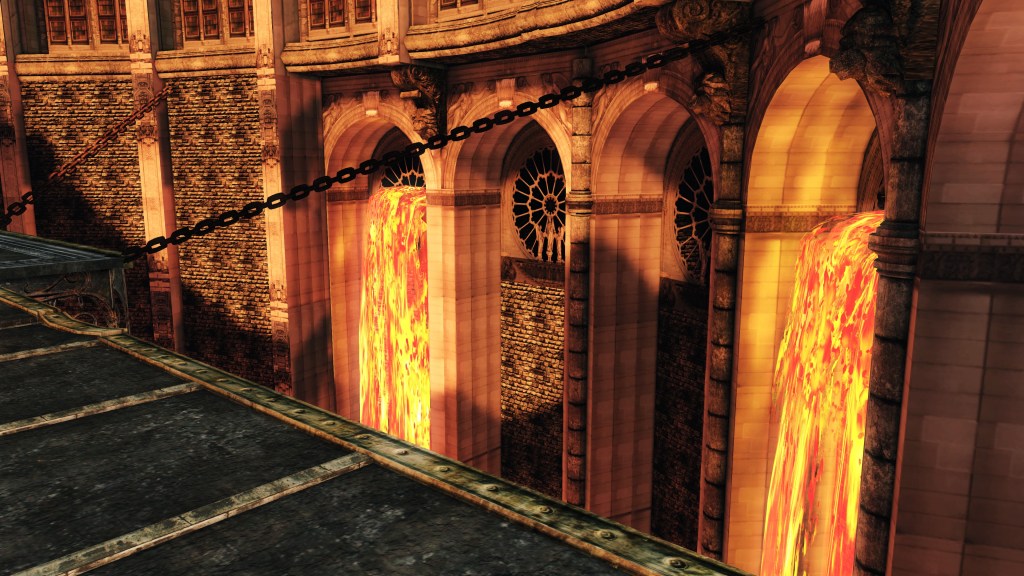
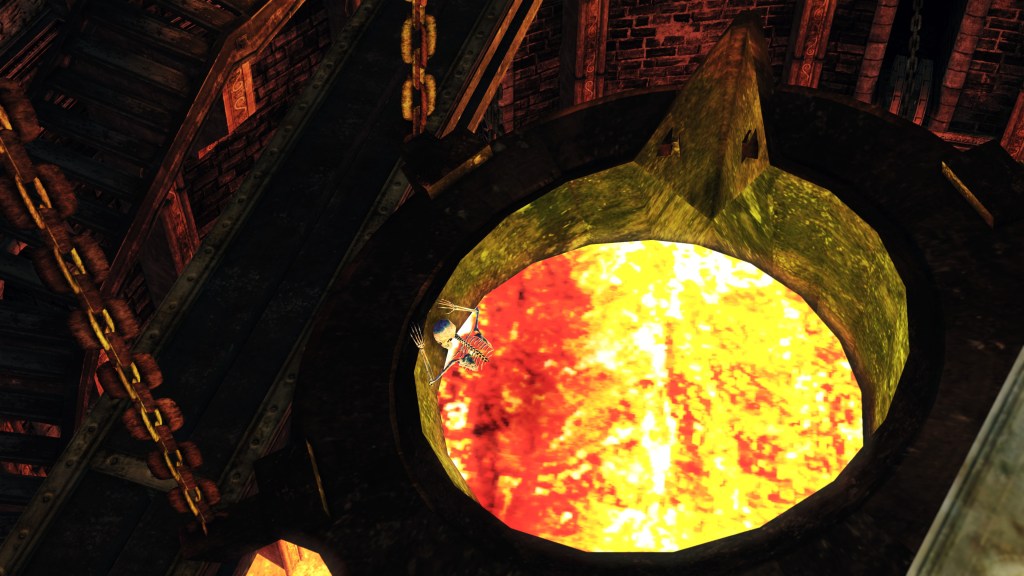
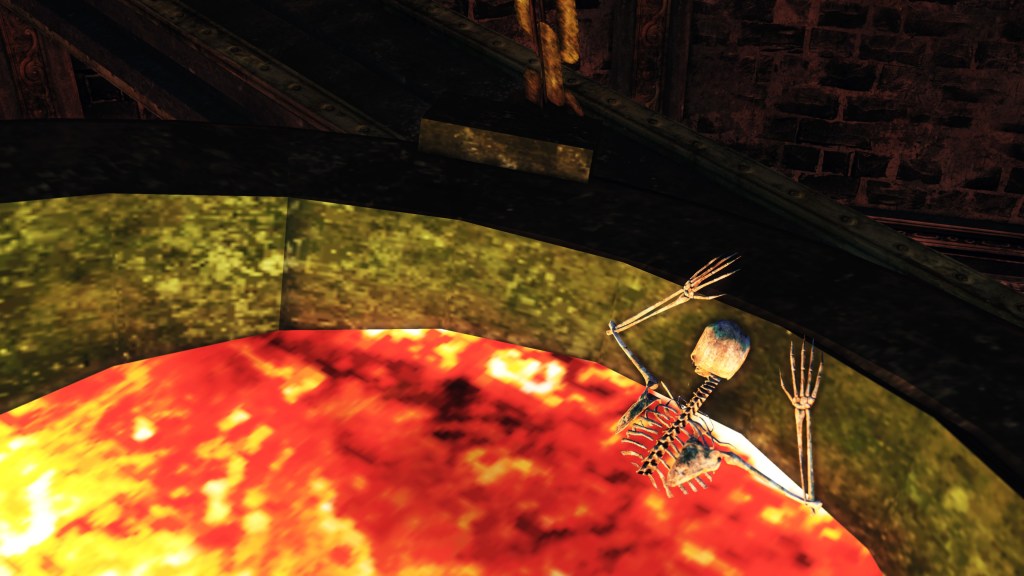
The king’s death wasn’t all, of course. The surge of magma had destabilized the Iron Keep, causing the whole castle to sink beneath the weight of its iron. What few parts we can still explore stand lopsided or flooded with lava. And floating on this magma is a chest containing the Phoenix Parma, the fire bird on the face ironically surviving the gushing flames if losing its original golden color. From this, we can be certain that much of the castle’s lower levels have been submerged in the molten rock with the king’s collection, though Magerold’s secondhand account of the incident suggests that the castle was already gradually sinking from its weight even before the fire swallowed it — it was just the tipping point. Nothing speaks more to the Iron King’s hubris than the castle showcasing his glory being swallowed by the earth he was convinced would be conquered like the rest. And just as we acquire the Gold Serpent Ring from a skeleton burning inside the lava filling one of the ironworking ladles, the king, in his greed for material possession, ended up sinking into the flame brought up by his precious iron.
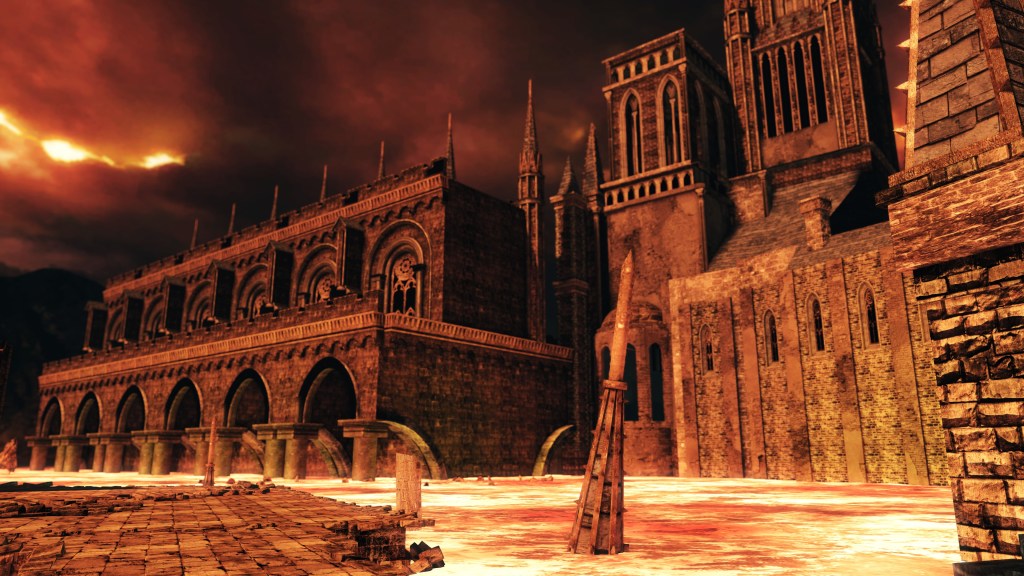
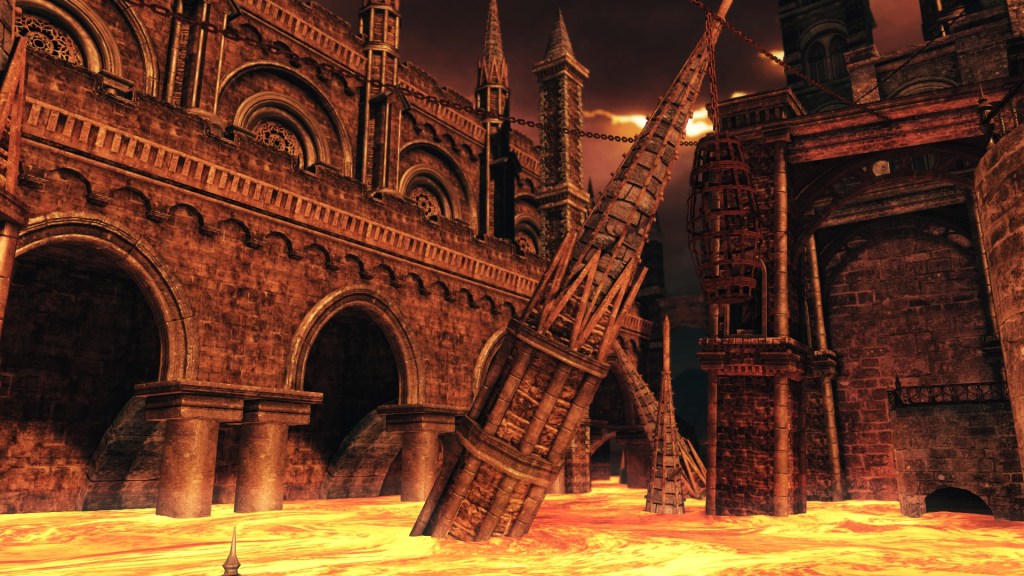
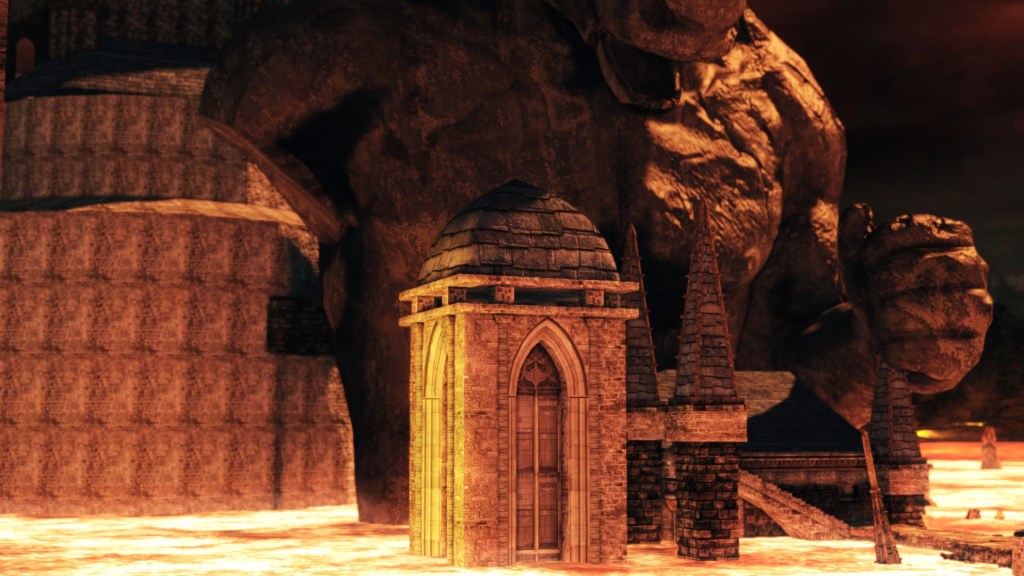
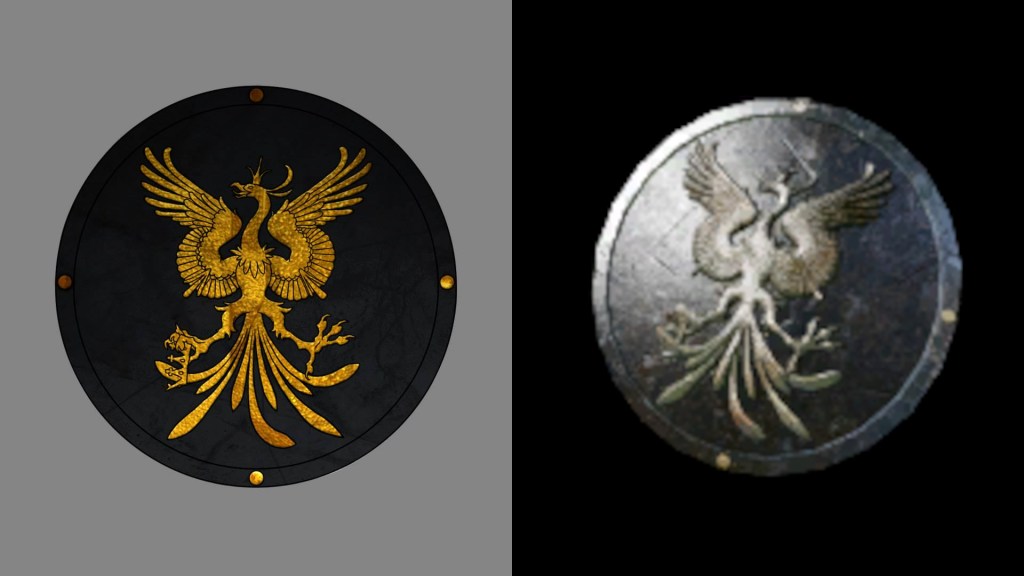
Small shield with a bird seemingly resembling fire engraved into it.
It was swallowed by the fire that gushed out from below the Melted Iron Castle and its original color has been lost. But strangely enough, the shield itself is somewhat unharmed.
So, some former king made the castle here with that iron. Then it somehow became a little too heavy and gradually sank the castle. After that, fire gushed out from the ground and, with that, it became what it is. Well, it is a secondhand account though.
Helmet of the Aaron Knights.
The Aaron Knights who served the Old Iron King were tied by bonds even stronger than iron. And so, they were ultimately swallowed by fire along with the castle.
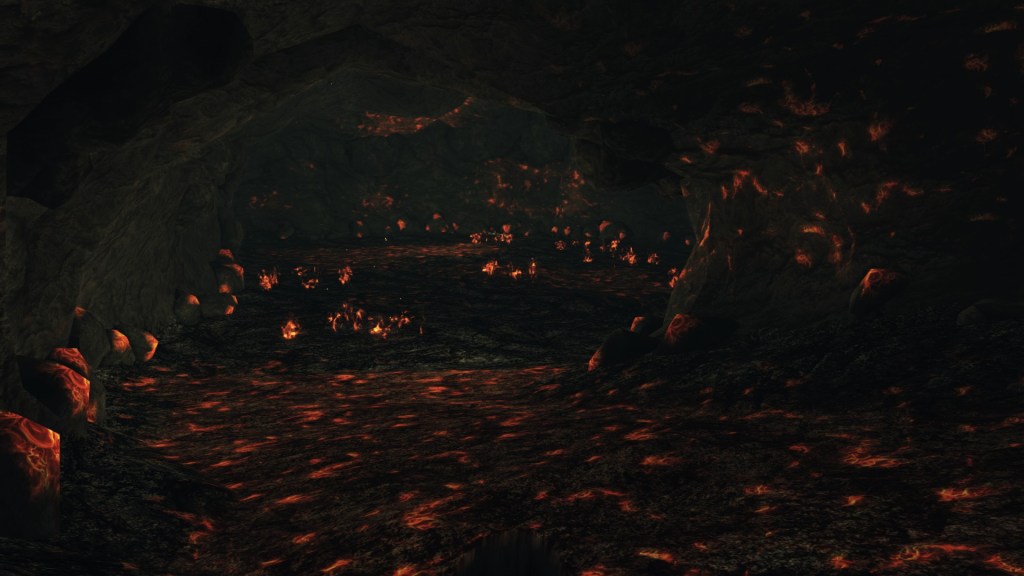
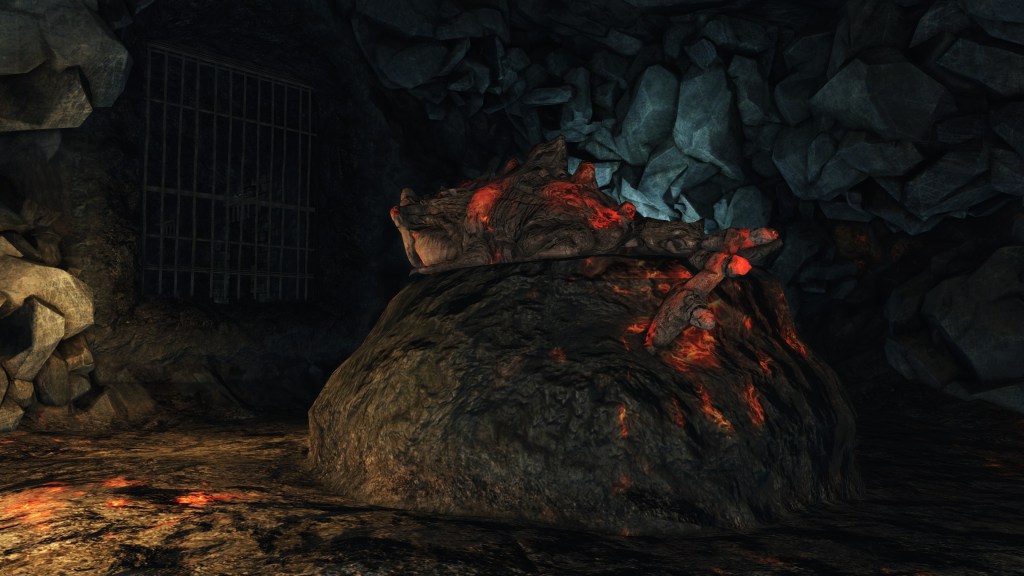
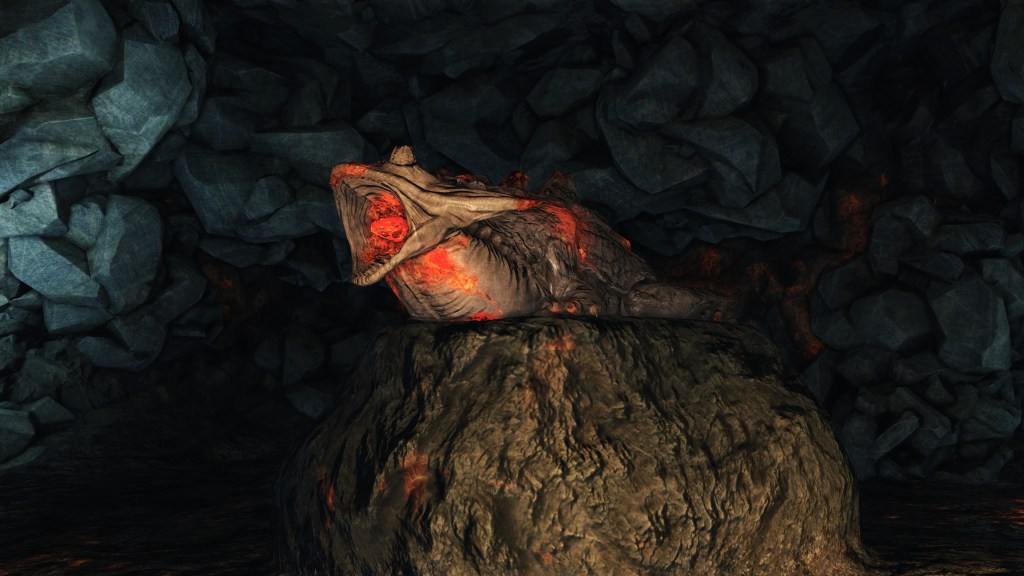
But for all his arrogance, Alken still owed its resurgence and prosperity to their debaucherous king. The military especially benefited from his patronage. We encounter flame lizards in the Iron King’s memory, aiding the knights with the fireballs they spew. They are most likely local fauna, using their rocky hide to absorb and channel the lava’s power to their advantage. They emanate such fuming heat, we witness them transform a corner of the Forest of Fallen Giants into a hellscape with just their presence — once every one is killed, the pillars of fire billowing from the charred ground cease. They look like oversized salamanders because “fire lizard” (火トカゲ) is the literal meaning of “salamander”, (火蜥蜴) but they function in Iron Keep akin to war hounds. It isn’t easy to train them, based on the various fireball pyromancy texts we loot from their bodies. But at risk of being eaten, the Iron King permitted the beasts for military use, with even the fireball trap in the Iron Passage being modeled on them.
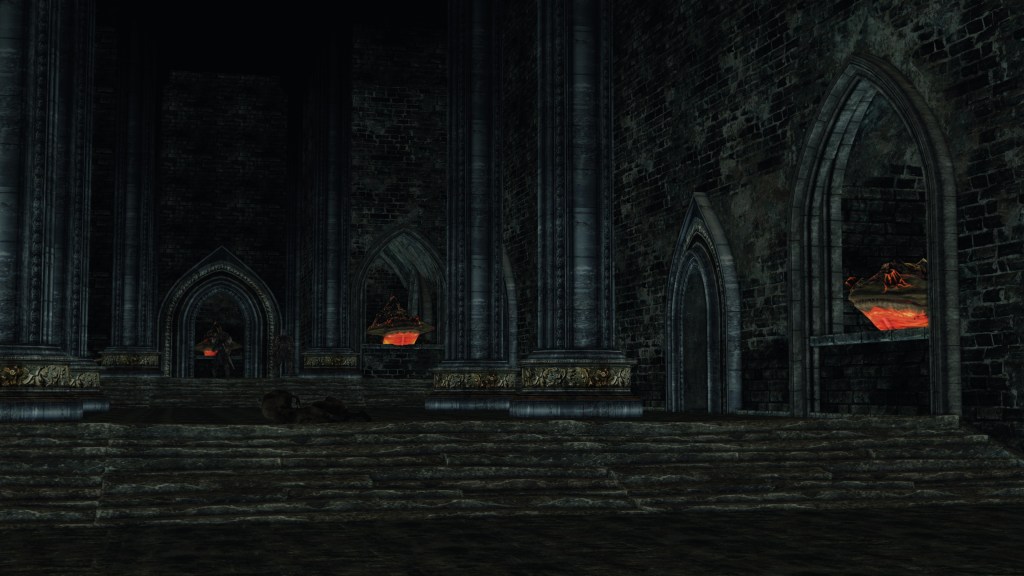
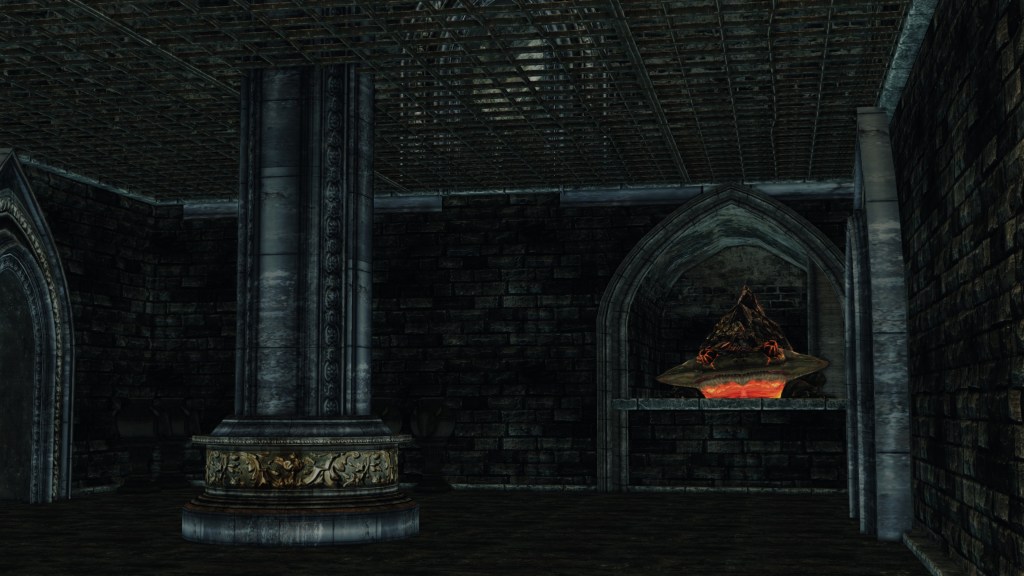
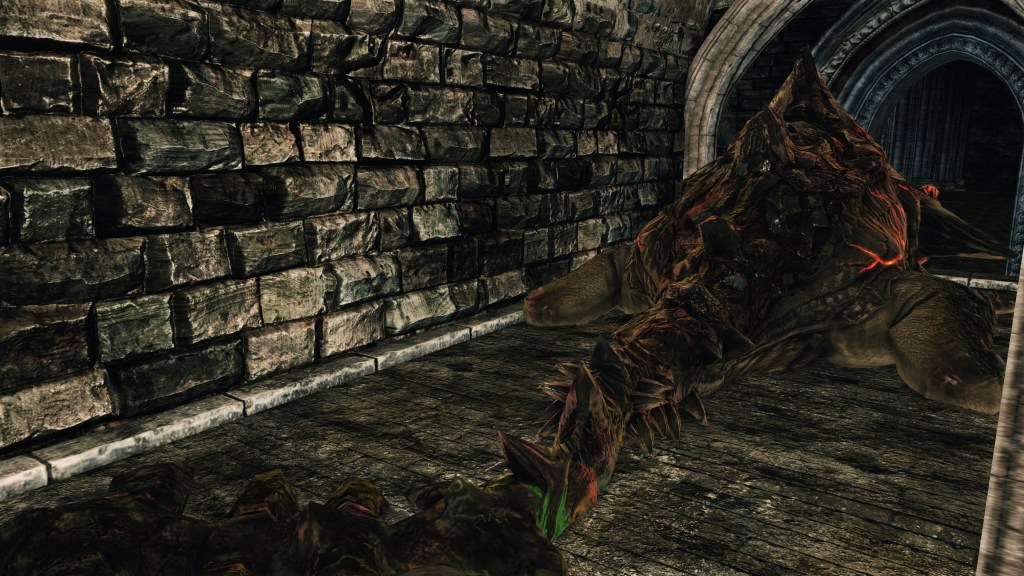
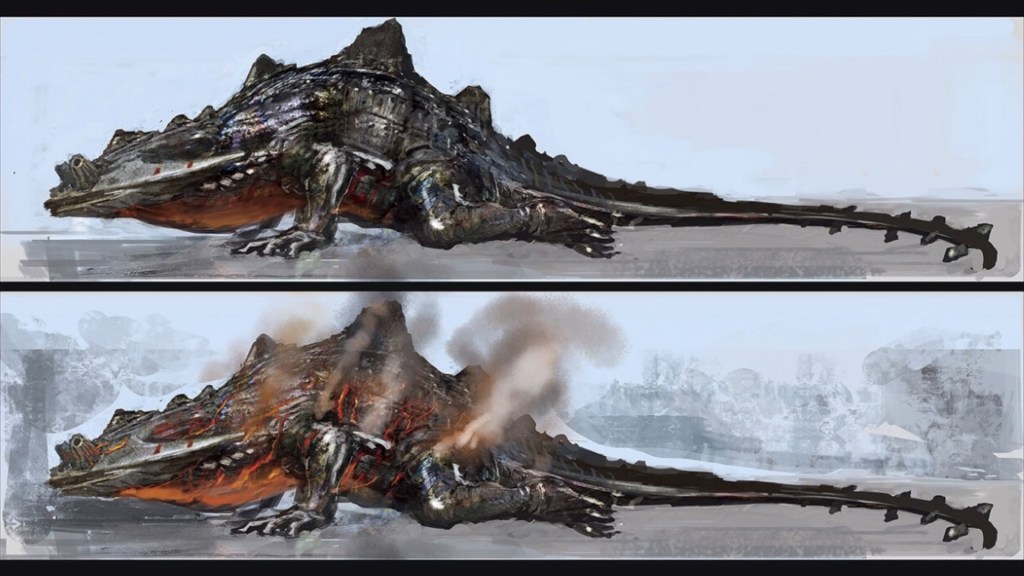
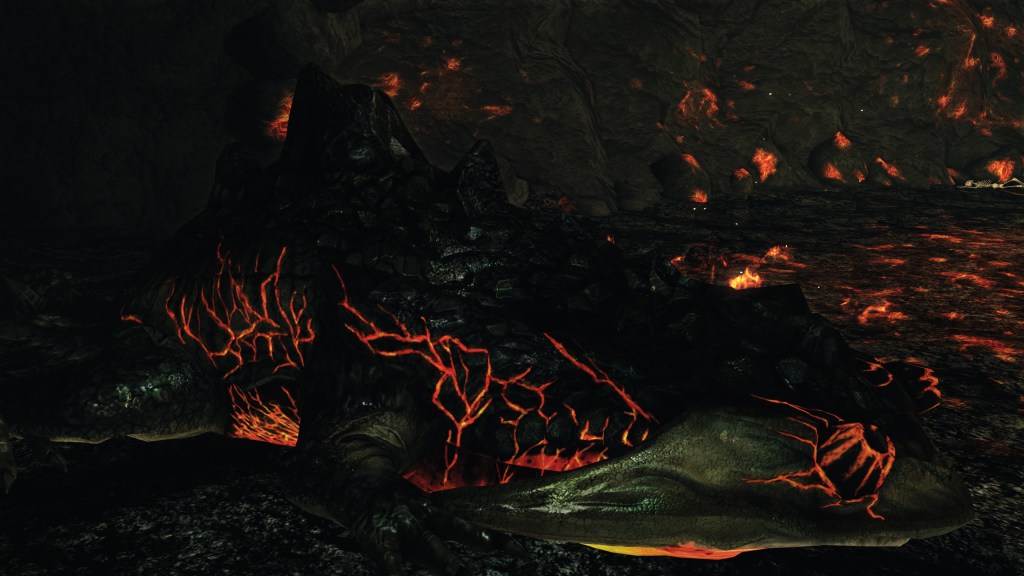
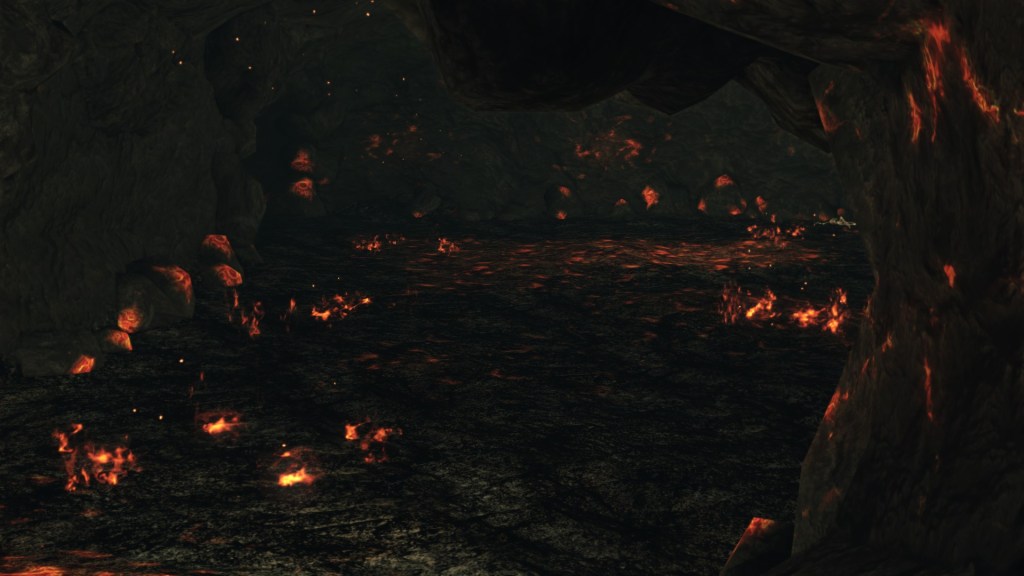
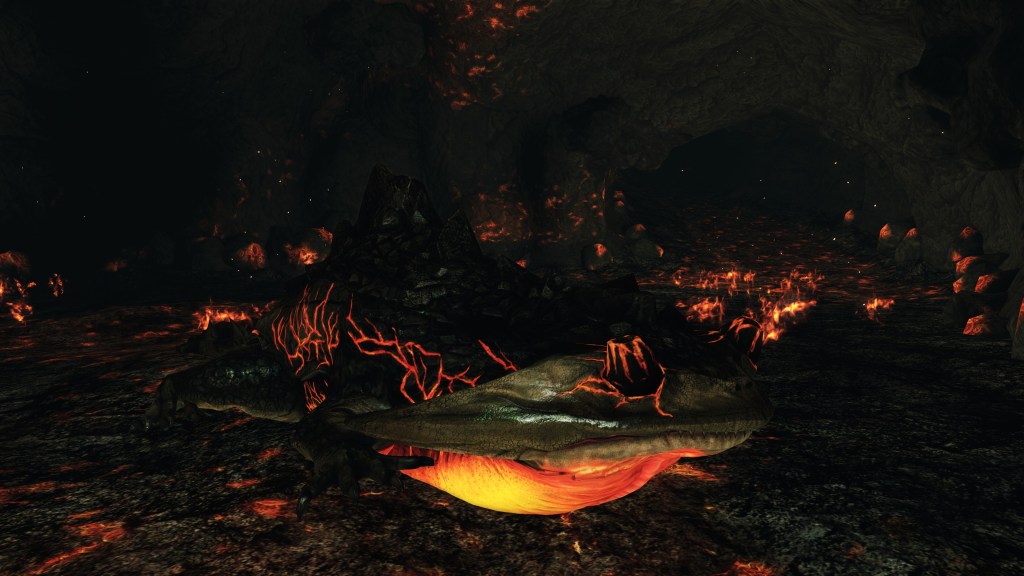
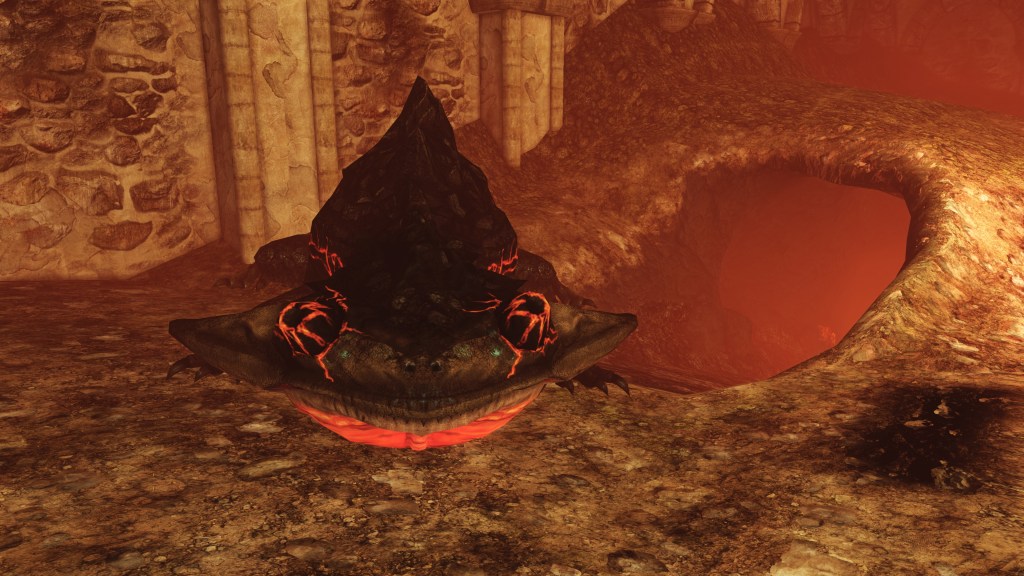
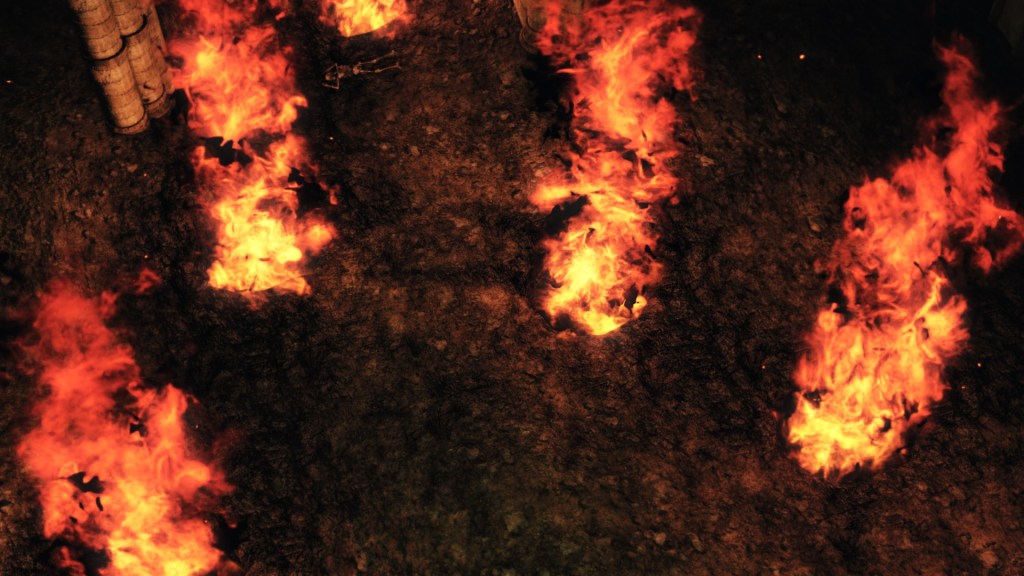
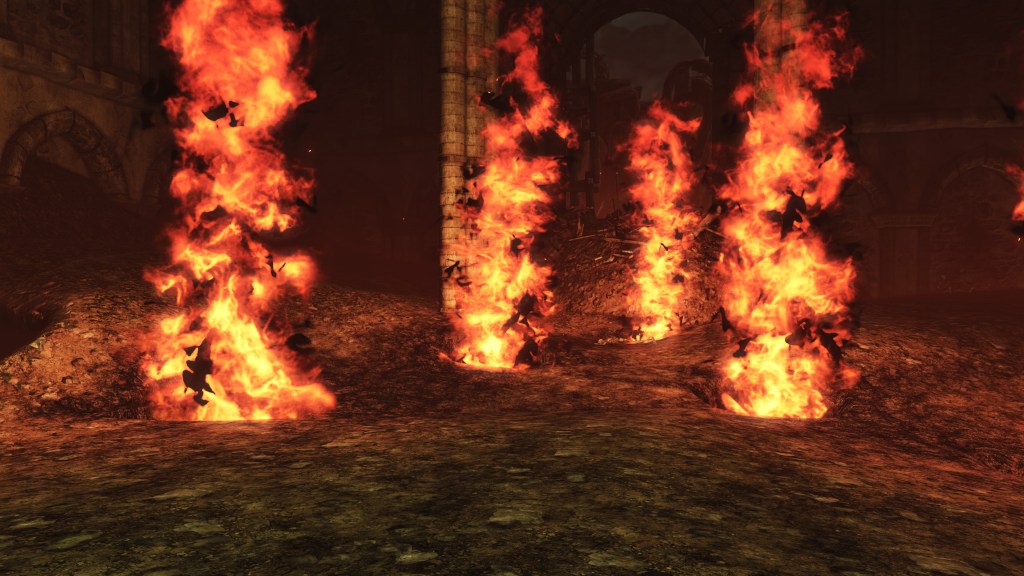
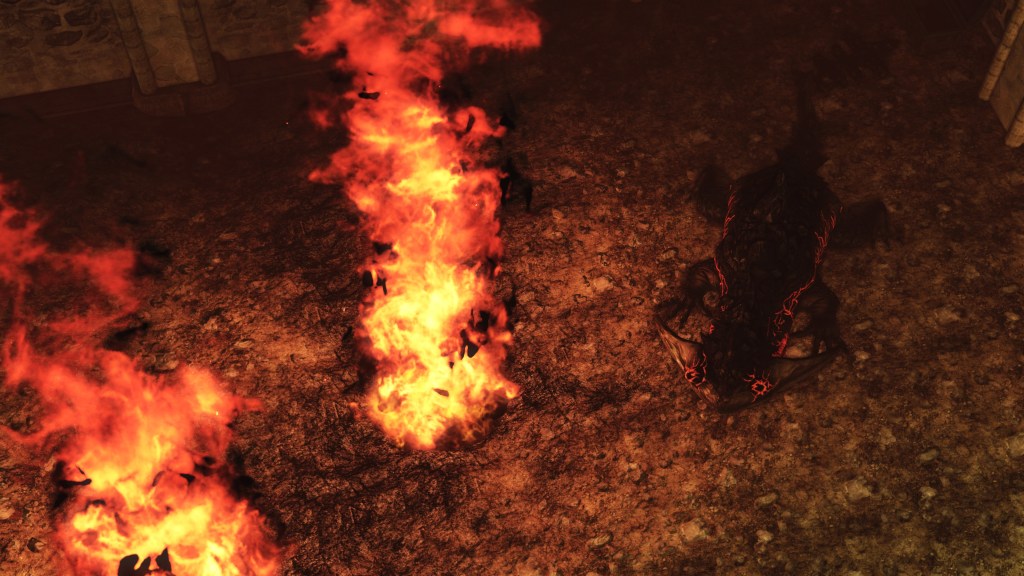
In this instance, we can ascertain how the mighty king of Alken always remembered to support the troops, even ignoring the iron. This was arguably still him doing the bare necessity, since no king of a large realm can make do without a happy and healthy army. But considering the extent of his debauchery later in life, it would have been easy for the royal to turn his attention away from military affairs. A warrior king through and through, he hadn’t neglected the true source of his strength. No matter his personal foibles, the ruler made sure that they — and their families — lived better than when he first assumed the throne. The Alonne Knights, at least, seemed to recognize that fact, for their loyalty was “even stronger than iron”, and this led all of them to follow their lord to their graves. As the melted iron castle sunk, the Alonne Knights stayed behind to be swallowed by fire, perhaps inspired by example.
Recall that several Black Knight weapons exist at the Iron Keep, with their wielders implied to still be remembered as servants of the King of Light in the descriptions. The Black Knights had also shared in their lord’s demise by fire out of loyalty, and the parallels don’t end there. Although the knights guard the castle to the present day, they are unaffected by Soul Appease and so not Hollow and probably not even Undead. Instead, they were scorched by flame, though their excellent armor remained mostly untouched — it only looks dull and dirt, in contrast to the shiny and clean variant left in the game files; it also possesses notably higher fire resistance. More than likely the Alonne Knights faced in the Iron Keep are just their strong wills animating their tarnished equipment after their bodies had burned to ash, the same as the Black Knights. Some might argue that they can suffer from bleeding and poison, but so did their predecessors. Plus, they share the same ghastly death rattle.
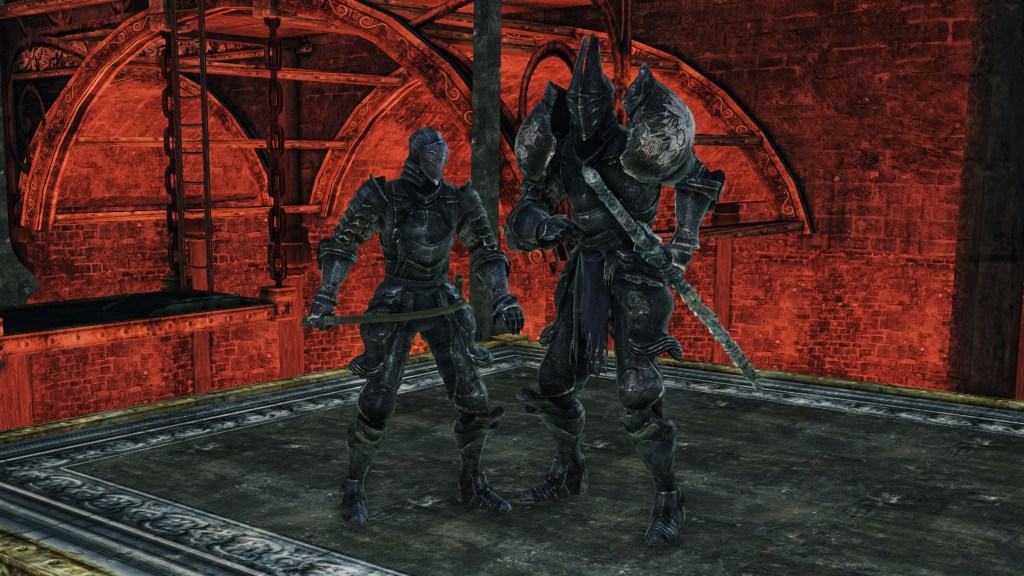
Intended emulation or not, the Alonne Knights’ similarities to the Black Knights extends to their respective lords as well. Shalquoir alludes to a resemblance between the gaudy conceit of the Iron King and the vanity of Gwyn, and the connection isn’t limited to their personalities. After his body and soul were swallowed by the earth, the deceased king encountered the soul of the ineffable Gwyn at the bottom and was possessed, twisting him into the demonic giant lurking beneath the surface of the molten rock lake prior to our arrival. The Great Lord’s presence there isn’t as random as one might think. Ask yourself: Why did the Old Iron King lose control over the Smelter Demon? Why did the lava react to his experiment? Why did he want to acquire the power of lava? Why was the capital of Alken founded upon a lake of lava? Why did the resulting country based around lava skew toward faith? All of these questions can be answered by the lava being a byproduct and extension of Gwyn’s soul.
Lava and volcanoes aren’t natural-occurring phenomena in Dark Souls. There is no mantle beneath the earth’s crust, just the Lower World. There can thus be no plate tectonics triggering earthquakes that split the ground and upwell magma. And yet, we can see lava spewing from a mountain. How? The Design Works interview allude to a special reason for the magma’s existence there. We can infer that it is holy in nature from the well-worn Pilgrim’s Spotoon — a sorcery “staff spear” (杖槍) — in the Iron King’s collection at Brume Tower. Some pilgrim escaping Lindelt for heresy believed in something significant this far south on a lava plateau. In DS1, lava was the product of the Flame of Chaos — flames derived from a Lord Soul so great that lava continued to spew from Izalith’s cavern walls long after ravaging the land. But despite Alken’s collection of chaos pyromancies, there is no evidence of the Flame of Chaos ever being present there. Instead, if the Witch of Izalith was capable of melting the very earth with the power of her Lord Soul, surely the soul of the most powerful of the four Lords could do the same.
Soul of the Old Iron King, who was swallowed by the earth along with the castle.
The body of the King of Iron was burned, and his soul was possessed by the one who was at the bottom of the earth.
The special soul this old king possesses is used to acquire a vast amount of souls or create a great power.
Crown of the Old Iron King, the king who controlled this land once.
The King encountered one whose name was forbidden after sinking in iron and became molten earth. The King’s name is already lost.
Staff spear that traveling pilgrims used. It is worn out after long travels.
A sorcery catalyst is affixed to the tip, and it can also be used as a spear. It was probably an item for pilgrims for whom nimbleness was a strong point.
Shalquoir indicates that Gwyn has since become Ichorous Earth, or “molten earth”. (熔けた土) This a very obvious reference to lava, and the term is reused in various item descriptions to describe the magma the Iron Keep sank in as well as what both the Old One’s soul and the Iron King had become. In other words, Gwyn is the molten earth surrounding the melted iron castle. The power of his soul generated heat that melted the rock of the nearby mountain, creating magma radiating his power. This is why the Yellow Quartz Shield and Longsword are covered in crystals found at the “bottom” of the sunken castle. Crystals of this color are otherwise only associated with holy lightning, the power of sunlight that Gwyn’s Lord Soul held dominion over. These minerals are likely the crystallization of the earth liquified by Gwyn’s fire. (an idea DS3 further explores with chaos gems) If Alken heard stories of this molten earth being divinely derived, then the country’s fascination with it and emphasis on religiosity is no mystery.
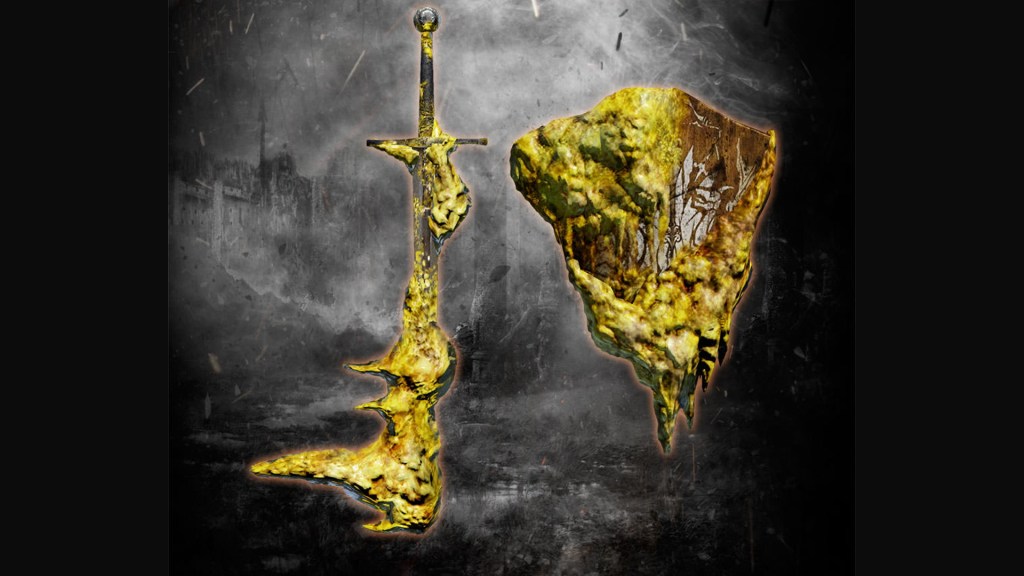
Which reminds me, there was someone like that long ago. He was a vain liar, so he ultimately threw himself into fire. Surely, he should be “molten earth” by now.
Long sword with a yellow crystal clung to it. Found at the bottom of the Melted Iron Castle. It is fragile due to corrosion but light and not inferior in might.
The old king built a castle of iron and collected many weapons to exemplify his own authority. Its glory was his own arrogance and thus sunk into the molten earth.
The rock of this mountainous region has been imbued with the power Gwyn wields and so can be manipulated as an extension of his will, hence the lava’s surprisingly violent reaction to the Iron King’s direct attempt to harness its power — as well as that of the Smelter Demon. The description for the golem’s soul wonders if the iron mass that possessed life had been in the molten earth from the start. This clearly isn’t referring to the Smelter Demon itself given its unambiguous origin according to other item descriptions. Therefore, it must refer to the essence of the iron mass, the will animating it in soul and body. As the name captures, it is a demon of “melted iron” — that is to say, iron that has been altered by the power of Gwyn. And if the King of Light controls the molten earth, would he not also influence the melted iron? The Smelter Demon came to life because the fire imbuing it with power had also granted it the will of another soul, a more powerful soul.
Soul of the Melted Iron Demon that wanders the castle which sank in iron.
The Old King of Iron was destroyed by a mass of iron that possessed life. Was it there from the beginning, or was it created by the king’s conceit?
The special soul this demon possesses is used to acquire a vast amount of souls or create a great power.
And what was that soul’s will? To indiscriminately rampage? Unlikely. Gwyn had spent his final centuries in the flesh as the guardian of the First Flame, his soul both fueling the fire and protecting it from any potential threats. In fact, it is possible that his soul’s ability to produce fire is linked to his onetime role as Lord of Cinder, as it was only after linking himself to the fire that the god was able to conjure and wield flames. This would imply that his soul is still tied to the First Flame despite their long-time physical separation. (a concept expanded upon with the Lords of Cinder in DS3) Regardless, it isn’t an overstatement to say that the Great Lord’s final will was the preservation of fire. In that light, his soul’s generation of fire and violent reaction to attempts to subsume it make sense. This will behind the fire would also explain why the Smelter Demon’s armor set possesses petrify and curse resistance, attributes most commonly seen in tandem with magic casters and cursed individuals.
Why possess the Old Iron King then when Gwyn’s soul had no apparent interest in directly controlling the iron puppet? It is possible that the god’s soul felt an affinity for the other due to their like-minded egotism and so instinctively assimilated it, at which point Gwyn’s strong will reanimated the charred corpse and twisted it into a new form. Still, the Iron King is nominally in control of this body, so the Old One’s influence may just be limited to exacerbating their shared feelings. When it comes to specifics, the king more resembles the Smelter Demon — rather, despite the demonic overtones, many of the boss’ traits also overlap with dragons, from the wings to the horns to the snout to the fire breath. Put another way, the Iron King became exactly what he wanted: a dragon-man, the ultimate symbol of strength. He is essentially living out his fantasy, soul basking in the glow of flame he can now freely wield. What mind has he to care about the destruction of his castle? This scorching hot feeling is everything he could ask for! Captivated by flame like the god possessing him, a human king has reached his final debauchery.
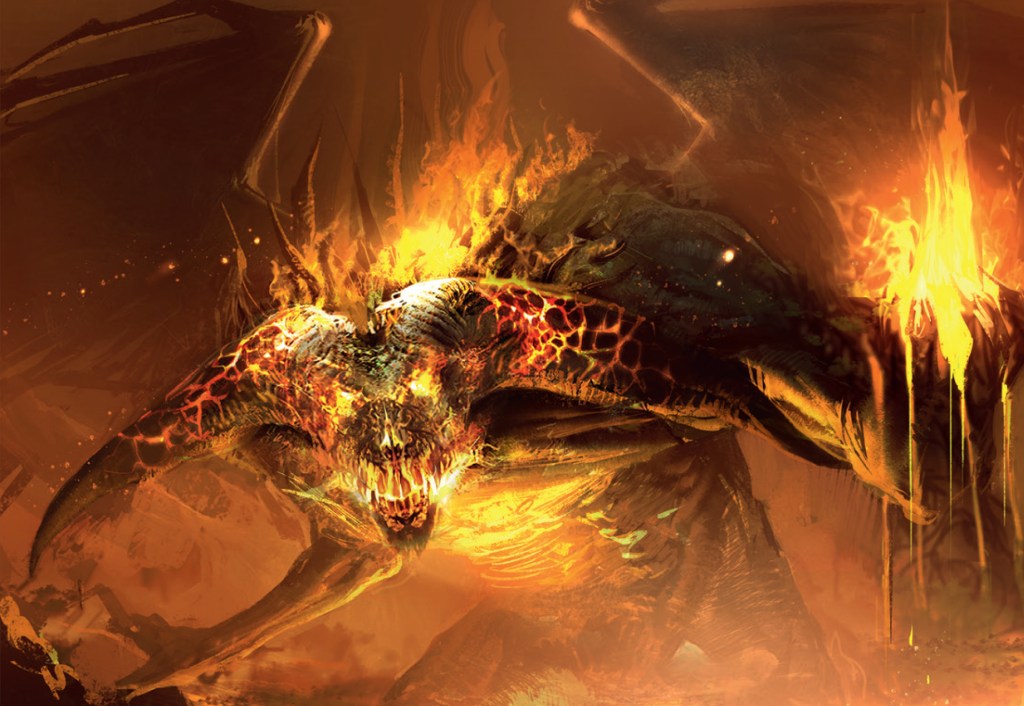
Otherwise, not much has changed for the dregs of the King of Light’s once mighty soul. Until we approach the more ruined parts of Iron Keep, the Old One remains beneath the surface of the molten earth with the Iron King. Unless someone is disturbing the king’s fantasy with their distracting presence, neither cares for what goes on in his territory. Meanwhile, the Smelter Demon has been left to “wander” the sunken castle, though we appear to catch it resting when we first enter its boss room. The chamber also reserves the same giant braziers which react to the demon unleashing its fire power as in Iron Passage where we fight its blue counterpart, but this may be just for gameplay purposes and not reflect on the demons’ interests. Regardless, the Alonne Knights and ironclad soldiers continue their duties as if the castle is not halfway submerged in lava. And with the collapse of the government, the kingdom as a whole fell into chaos, including the ironworks.
Great hammer created from the soul of the Old Iron King. The rock at the tip is condensed molten earth.
Something which became molten earth acquired the Old Iron King’s remains by possessing it.
Even now that the earth has cooled, solidified, and become a solid boulder, it is tinged with heat inside of it. Unleashes its hidden power via strong attack.
The soldiers and laborers of Brume Tower are all Hollow. With no sign of enemy combatants, the Old Iron King’s troops more than likely turned on each other, probably vying for control over their dead king’s iron and by extension his kingdom. Whoever controlled Brume Tower controlled the wealth in the nation, and the fair number missing their heads or legs suggests that greed brought out their brutality. Some were shoved into vats of liquid metal, charred bodies still leaking the stuff from melted equipment. Others were jailed in place of workers to contain the growing Hollow menace. Yet more were reduced to ashen silhouettes. But when the soot finally settled, the only ones left standing were the mad and immortal. Similar events probably occurred across the rest of the land, fracturing the country until it was inevitably reduced to ruin. In his avarice, Alken’s king of iron destroyed all he had, leaving behind only crumbling monuments of his arrogance haunted by monsters. His inebriation in flame aside, one must wonder if it was worth everything he sacrificed, and everyone.
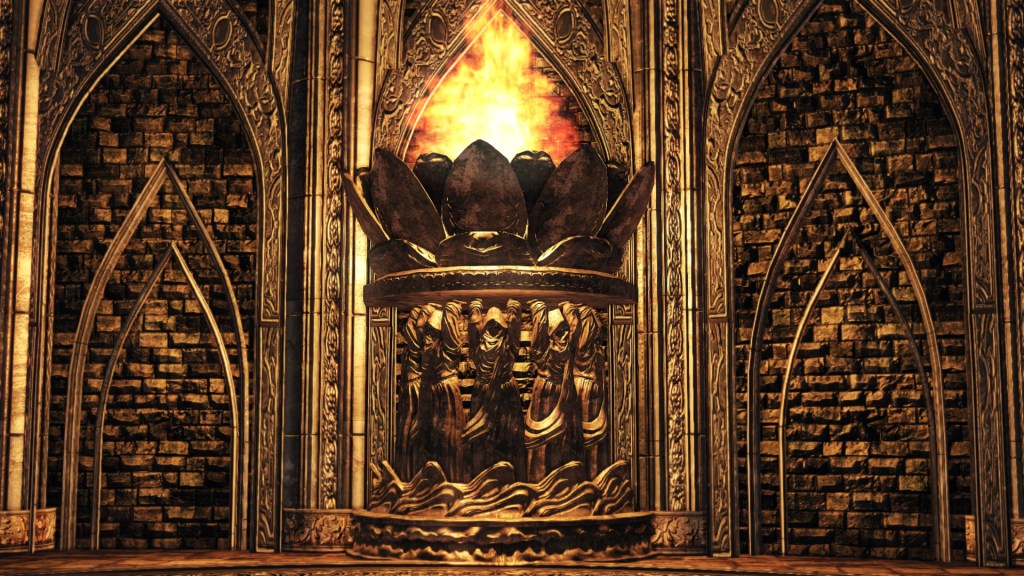
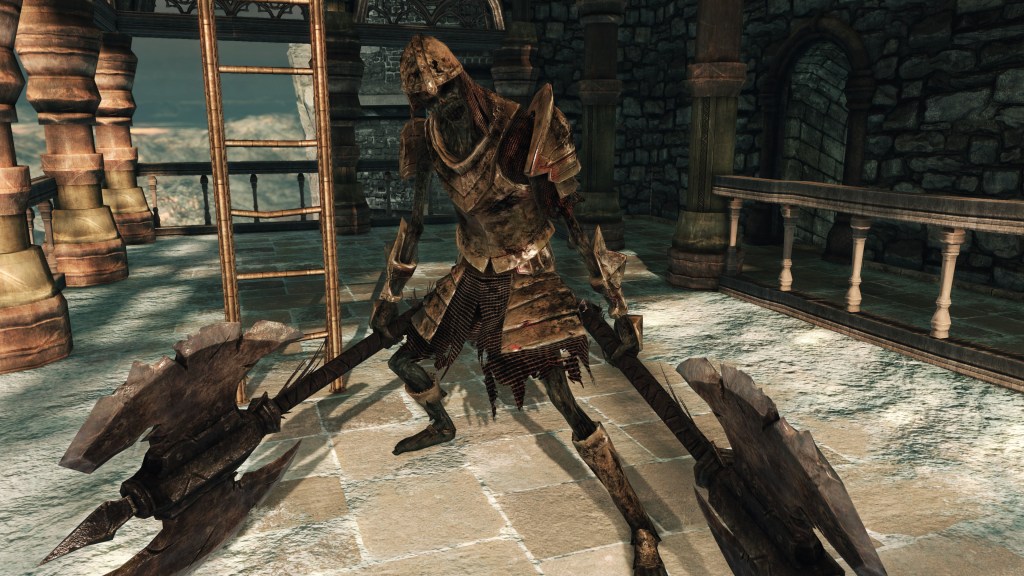
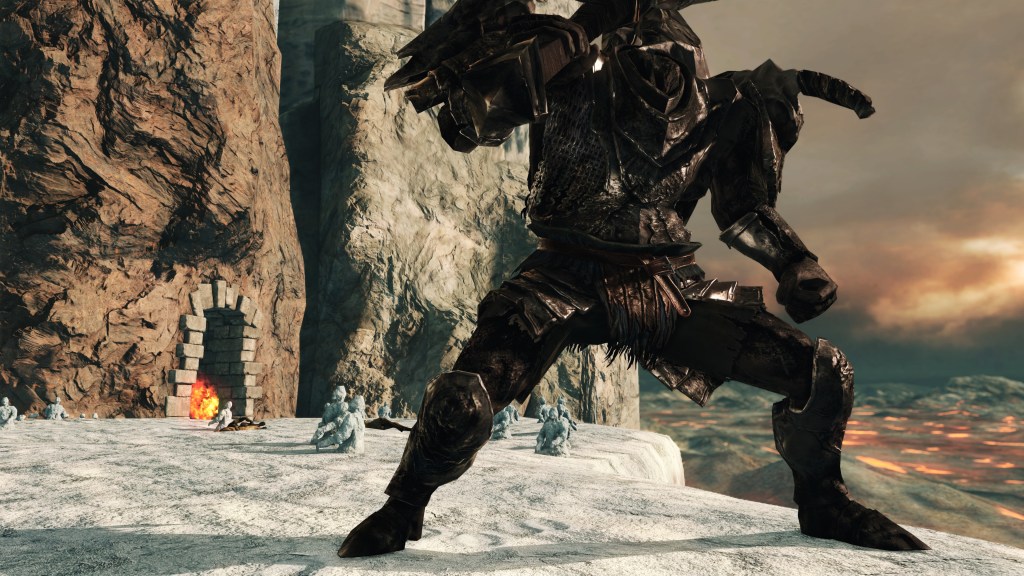
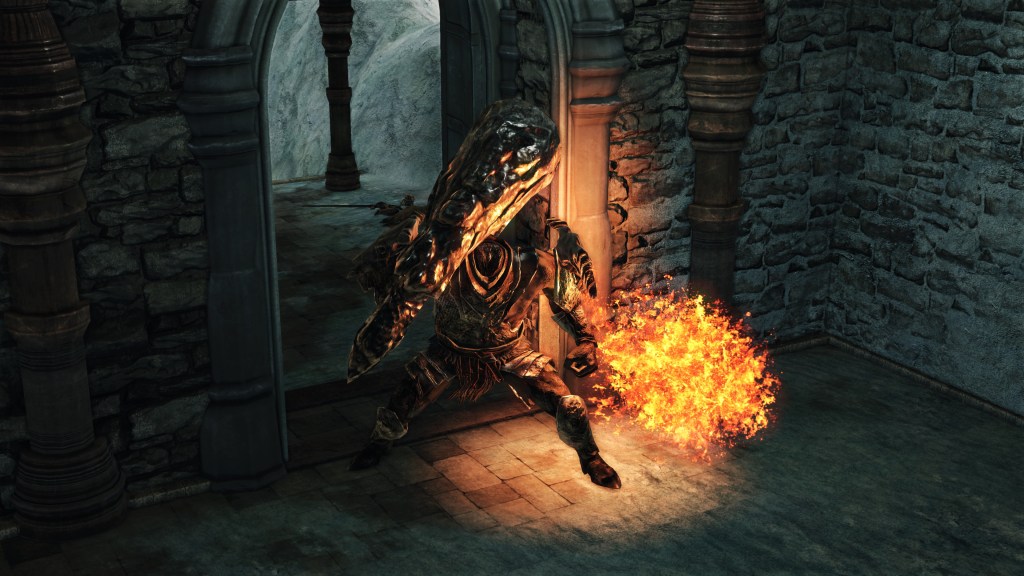
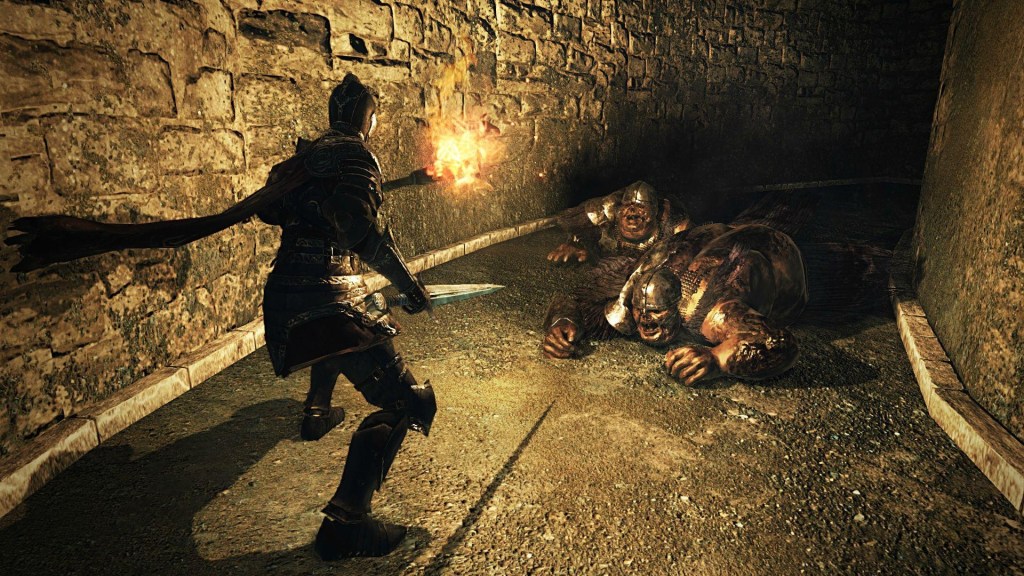
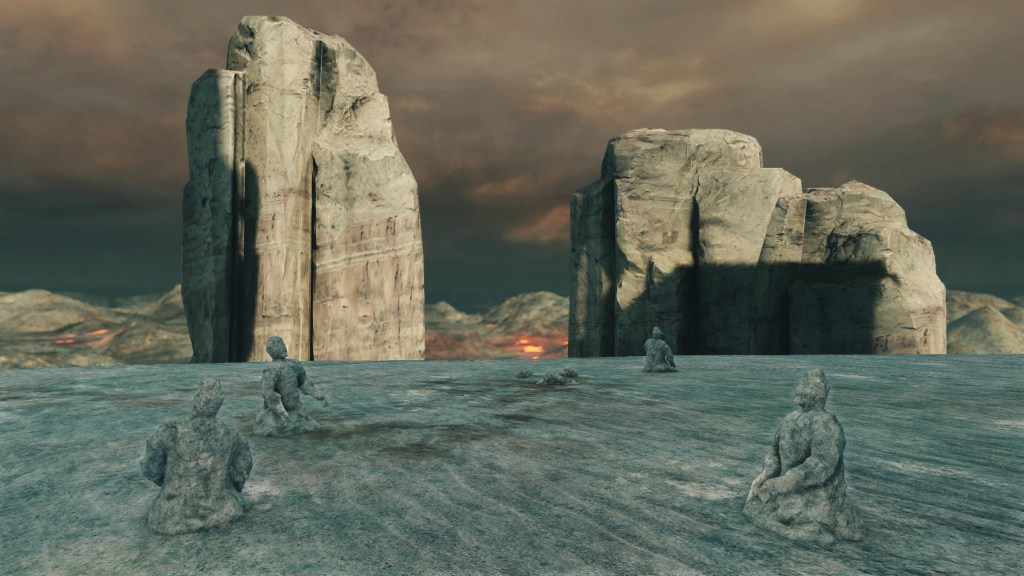
Condemned to Oblivion
With the Old Iron King’s fall, we must turn to the fate of Alken’s rival and its unnamed queen. How did she feel when the beloved whom she had shown mercy suddenly struck back before going on to essentially cage Venn? It must have been humiliating for the kingdom, but more than that, it must have been heartbreaking for her. A chest in Belfry Luna contains the Blue Tearstone Ring representing the blue tears Caitha sheds for those who have lost loved ones. While the loss the goddess cries over is specifically death, it is true that the princess of Venn had forever parted with her beloved ever since becoming queen. Nowhere was this loss more evident than after her sweetheart carried on Alken aggression. Were they not both in the position to end their two countries’ long history of bloodshed? Was this not the chance to unite their kingdoms if not their hearts? Perhaps he still felt the same, but power and pride superseded his love for her, which likely came as a betrayal — for it made her the fool and, worse, complicit in sabotage by the enemy. It is these circumstances that led to her becoming the Lost Sinner.
There are two prevailing theories about the identity of this “forgotten sinner” — one, that the prisoner is the queen of Venn; the other, Eygil. Both assume that the person was imprisoned for attempting to create a First Flame thanks to Shalquoir’s dialogue, but this misunderstands who the cat is referring to. In all of her commentary on bosses possessed by the Old Ones, Shalquoir starts by musing on the person possessed or location where we encounter the boss. However, she invariably ends with a veiled reference to the true being behind the battle, using a double entendre for the current states of both souls. In the case of the Lost Sinner, the cat contemplates the role of the prison before relating about the “stupid” forgotten sinner who tried creating a First Flame occupying the equally forgotten prison. This is an obvious reference to the Witch of Izalith and doesn’t necessarily reflect the crimes of the prisoner, thereby leaving an open question to the actual nature of the convict’s sins.
Long ago, there were humans who tried to contain Undead like you. Did they think if they imprisoned them all they’d thereupon end it? They made a big prison… but in the end, it was all pointless. There’s a “forgotten sinner” in the far back of that prison. A stupid sinner who tried to birth a First Flame…
Assuming that the Lost Sinner is Eygil, the crime is easy to imagine. He was a magic caster employed by the royal court of an enemy nation. There would be every reason for Venn to capture him after the collapse of the Old Iron King’s regime. Likewise, the height, physique, and beard beneath the mask lead many fans to conclude that the Lost Sinner is male — indeed, the gender is never made explicit in any item’s Japanese description. There is also the boss being accompanied by two pyromancers in NG+, each drop down a chute from adjacent cells. Eygil himself practiced the flame arts Izalith invented, and the penal set provides a similar resistance ratio to that of a pyromancers’ tattered cloth set; the slightly more resistance to the Dark than magic can be attributed to exceptionally long confinement in a dimly lit cell. Some fans even point to the Lost Sinner’s wooden handcuffs as an attempt to prevent the criminal from casting pyromancy. However, there is reason to be skeptical.

Nothing precludes Eygil from being killed by the disaster at Iron Keep or the infighting at Brume Tower. Moreover, the Lost Sinner’s masculine features don’t exclude the character from being a woman — the butch Hollow cooks from DS1 are a testament to that. And underneath the penal clothing, the boss does wear women’s underwear. As for the other two pyromancers, they can just as much be referencing the founder of pyromancy possessing the Lost Sinner as the Sinner being a pyromancer. The same can be said for the penal set, which has similar resistance ratios to not only clothes worn by pyromancers but also armor directly burned by fire or long immersed in fiery environments; we cannot exclude the effect that Izalith’s soul has on the sinner’s being either. Finally, if they intended to prevent the sinner from conjuring flame from the palms of the hand, they would do more than just bind the wrists with wood. But we never once see this supposed pyromancer cast pyromancy. And so, there is no reason for the boss to be strictly a pyromancer, man, or Eygil.
So, what can be said for certain about this forgotten sinner? For starters, the criminal was locked up in a large cell in the deepest, most isolated parts of the prison. Two adjoining towers on either side rise into the rock overhang beneath the rest of the facility, but we can only reach the main entrance by way of a single, narrow bridge across the ocean from the “Sinner’s Tower” (罪人の塔) opposite them; even getting to this Sinner’s Rise requires we cross a similar bridge. Countless shackles hang from the barred ceiling, with over a half dozen more dragging across the floor from the walls until they converge to a single spot at the center — presumably having restrained the boss when confinement was still regulated. And besides chutes to other cells, the jail itself is installed with extensive oil lighting on top of several wall torches. Red banners also hang from the back walls. This is an extremely luxurious cell for just a single prisoner, indicating that its occupant was a VIP of some sort. And yet, this luxury didn’t extend to the VIP in question.
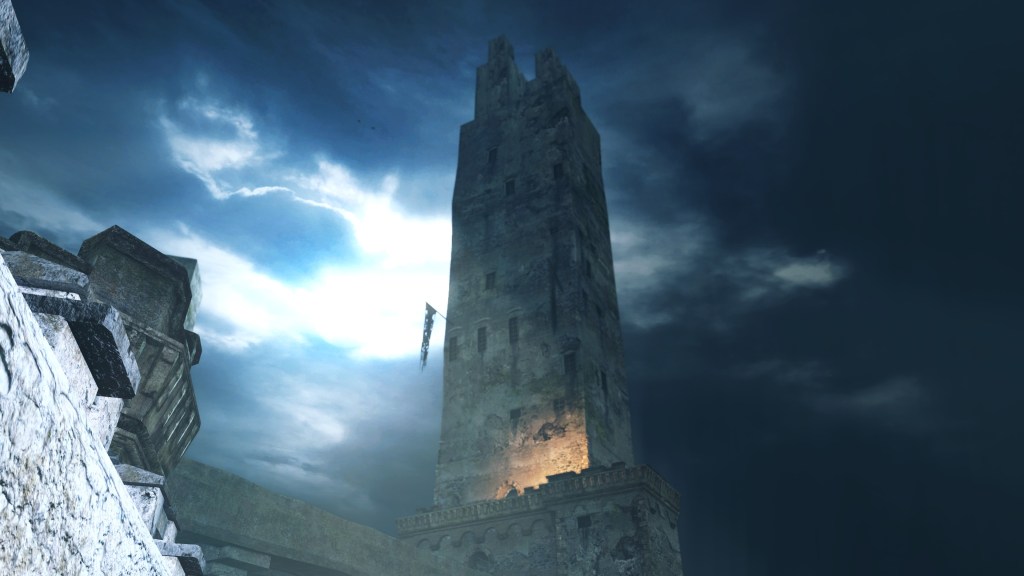
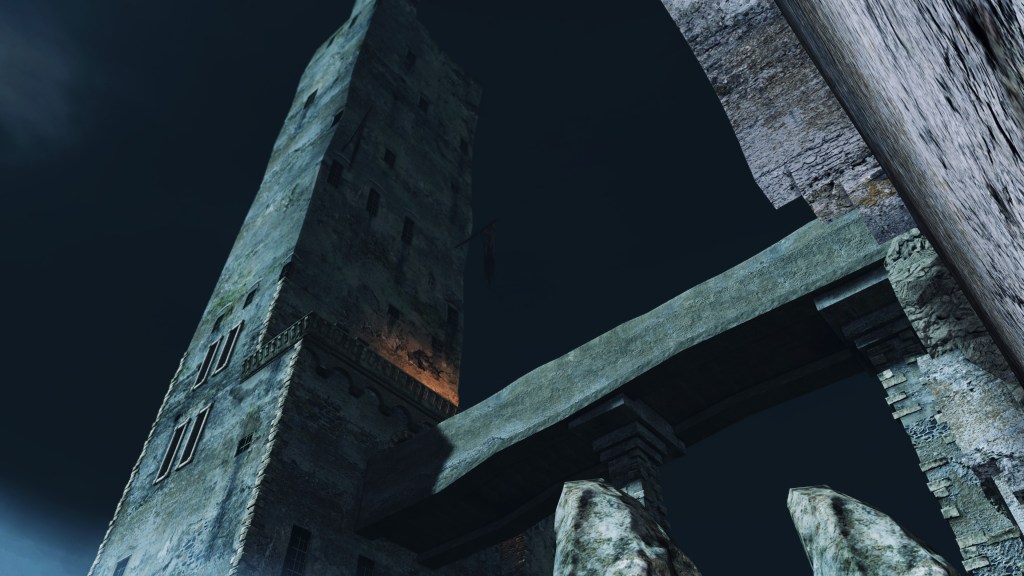
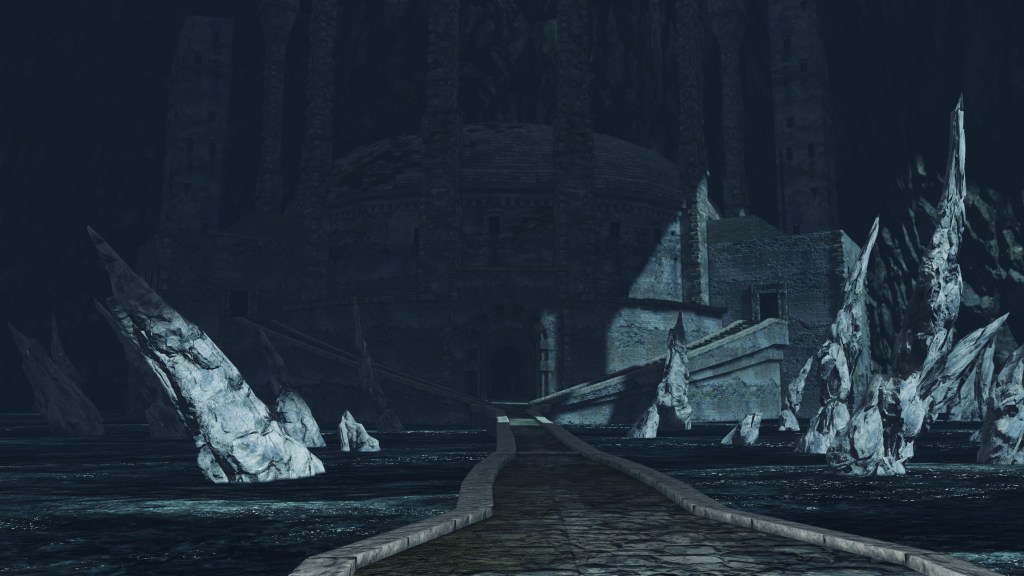
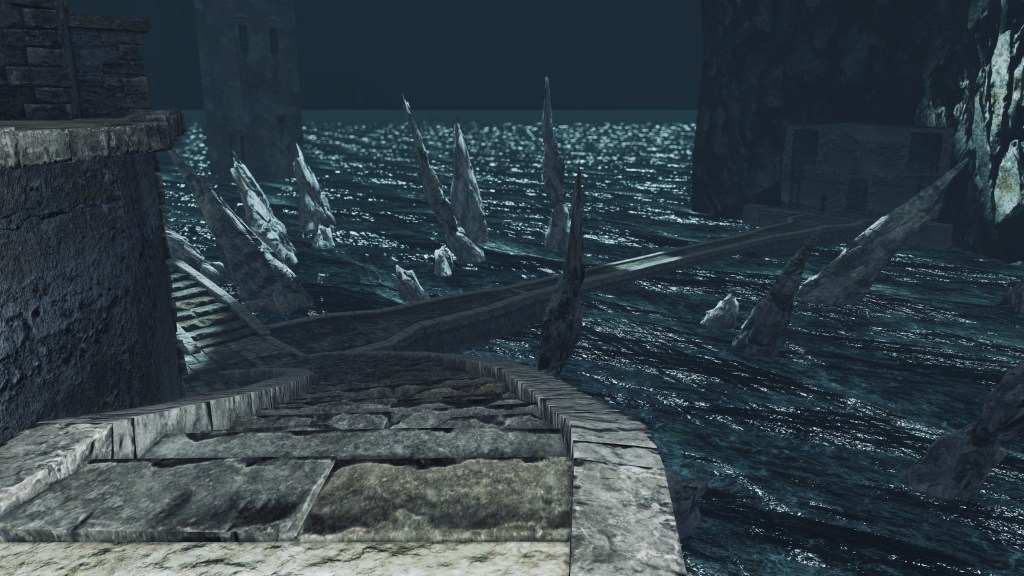

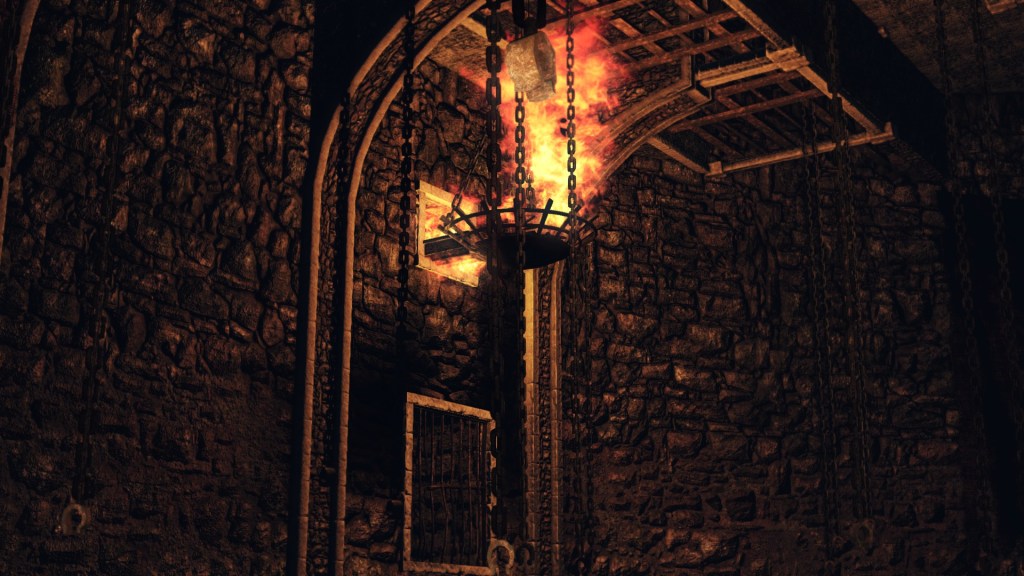

Handcuffs, a straitjacket, and a heavy metal mask poking spikes into the face — the intention was to torture the Sinner. This justifies the boss having a sword on-hand. While the blade’s English description claims its true nature to be unknown to even the boss, the actual text merely repeats the same statement made in the penal set descriptions: both the prisoner’s background and crimes are now long forgotten. In truth, she wields what is, by all appearances, a normal, unassuming sword. The blade we acquire harms us when swung and deals less damage to enemies as we increase our sin level, but this is likely because it derives from the Lost Sinner’s soul — a soul that was charged with self-punishment for sins and consequently creates a weapon maximizing self-harm for fellow sinners. Mayhaps it had originally been a means to have a dignified way out, but this was a prisoner who felt duty-bound to suffer, and the faded bloodstains on the cell floor suggest much suffering.
Extra large sword created from the soul of the Forgotten Sinner. The power of its blade shaves off the life of the wielder.
Her background and the sin she committed are now long forgotten. The one who handles this sword will be burdened with the punishment that was imposed on the Sinner.
Soul of the Forgotten Sinner, who was captured in the Sinner’s Tower.
The Sinner bore the responsibility to continually punish herself as retribution for the sin she once committed.
The special soul this sinner possesses is used to acquire a vast amount of souls or create a great power.
Another element to consider is the boss’ soul. The menu graphic for the Soul of the Lost Sinner matches that of the Old Iron King as well as other monarchs of similarly great prominence and strength. Put simply, the Lost Sinner would need to have acquired the same amount of power as a heroic ruler before her crime, something few humans outside royalty have accomplished. She is, for sure, no amateur with a sword. The way the criminal nimbly leaps around with a practiced hand, confident enough to snuff out the lights before the fight, she may well be a sword master. And if the physique is masculine, then she has definitely undergone a warrior’s training. The only thing holding back her skill is her refusal to leave her cell and return to normal life. Therefore, the boss must be someone comparable to royalty, experienced in combat, and self-loathing over misconduct — the queen of Venn checks all the boxes.
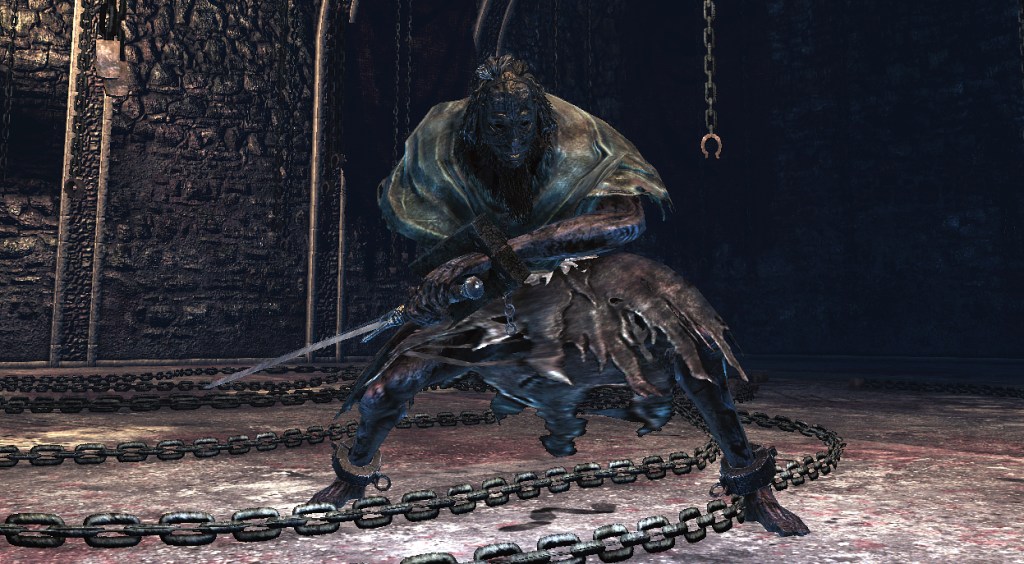
The queen had every reason to feel culpable for the king of Alken’s continued aggression, and there may have been suspicions thrown around of her fraternizing or even conspiring with the enemy among the court; assuming that her forbidden romance wasn’t somehow exposed. And whether at her suggestion or public condemnation, she would be imprisoned while still given some luxuries befitting her status. Either way, she would cooperate with her torturers. Behind the doors at the back of her cell is a chest containing an Elizabeth Mushroom. Its healing powers make it useful for surviving harm while its description casts doubt on the supposed beauty of the woman behind it, which mirrors the prisoner if she is the queen who once caught the eye of an enemy prince and now tortures herself — in more ways than one.
Stored with Elizabeth’s secret medicine is a Fragrant Branch of Yore. Combined with the red hue of her cell’s banners, and the queen likely spent much of her time reminiscing about her old flame. Her romance was a time she dearly missed, a time when she was young and ignorant and enraptured in a love she believed would last forever. But no matter how much she pines for those memories, it won’t change reality. She has been unable to let him go, and as a result felt fooled, betrayed, heartbroken, and deserving of all the world’s hatred because of it. And because of that, she eternally punishes herself all the while wishing she could return to those happier days. Maybe that is why writings in the stone plaster her cell, signaling its occupant to be very bored, lonely, or not the picture of mental health.

This is, in all likelihood, what drew the soul of the Witch of Izalith to her. Upon entering the boss room, we see a tiny insect hanging from an eyehole in her mask. This bug is identical to the parasite found at the core of the Bed of Chaos in DS1, only far smaller and without the chaos flame effect, and thus liable to still be the witch’s true body. Considering the specific power of her Lord Soul and the flame it sparked, it is possible for the dregs of Izalith’s soul to reconstruct her living vessel. And no longer host to that flame she created, the bug apparently roamed the land until finally coming upon the Lost Sinner. Both were once royalty who had made mistakes that were ultimately rejected by the world and left to suffer in isolation. The witch probably saw in her a kindred spirit, much like Gwyn and the Old Iron King. And knowing heartbreak herself, the parasite did what they do and latched onto the prisoner.
This possession explains why the Lost Sinner seems to survive the ages without food or drink, cursed by the strong will of a powerful soul similar to Ichorous Earth. However, the differences between the two couldn’t be clearer. Nothing has stopped the Sinner from leaving her cell, yet we find her kneeling down with her head low quietly accepting her confinement even after everyone she has ever known is dead or a monster. Compared to the ambitious witch who turned her mistake into — at one point — a thriving civilization, and it is plain to see who arrogantly embraced her sin and who contritely accepted it. This is only emphasized by the underlying nature of the boss battle. Izalith crawls into the mask’s eyehole before seemingly burrowing into the Lost Sinner’s head, which is naturally painful for the queen. It is only afterward that the boss takes up her sword to attack us. In other words, it is the Witch of Izalith inducing the body to battle, defiantly challenging anyone who might dare slay the tortured soul she haunts while the queen herself has merely wallowed in misery.
Perhaps the witch wants the Lost Sinner to come to terms with her sadness on her own, but she definitely won’t allow anyone to end her life before that, not even the Sinner herself. Of course, part of this may just be self-interest. The singed holes in the queen’s palms raise suspicions when Izalith had always wanted to hold flame in her hands. Their appearance brings to mind the Darksign, yet the designer avoids confirming the intent in the Design Works, pointing to an additional possibility of torture. Since they are hidden during cutscenes and the boss fight, it could just be a discarded design element. But if they do hold relevance, perhaps the parasite carelessly channeled flame through the Sinner’s body during a prior attempt to control her. Put another way, Izalith is possibly trying to fully pilot the prisoner’s body so that she can regain a familiar form. If so, then the queen’s stubborn will to remain might be the one thing preventing the Old One from assuming greater command of an otherwise perfect vessel.

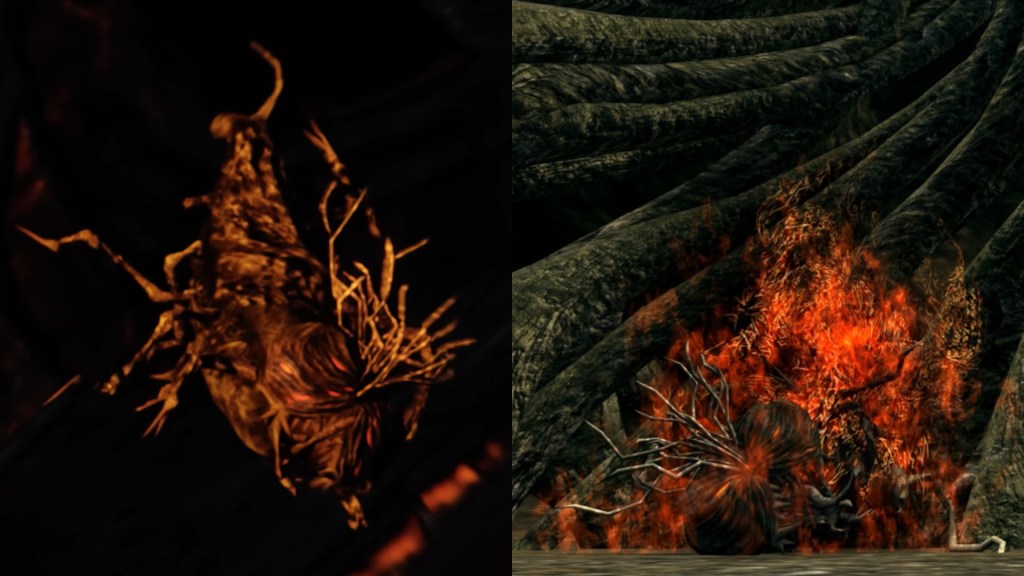
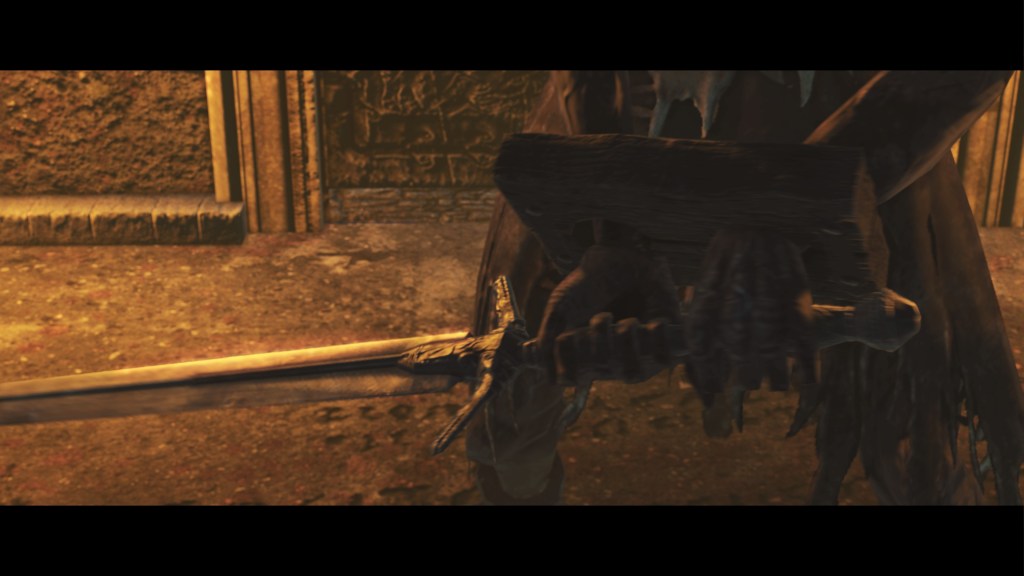
As for the rest of Venn, it may have carried on as normal. The fume sorcerers were among the “many” soldiers dispatched to take over the Old Iron King’s iron facilities after his supposed death. Specifically, they are assassins, their Umbral Daggers invoking the night as they fatally stab unknowing targets from behind. The fact that they are women dressed in blue wielding magic daggers in their other hand to conjure what appears to be a kind of lightning sorcery certainly fits Venn — its gargoyles can do something similar with their spears, after all. The country would also undoubtedly be interested in retaking lost land, especially with more subtle infiltrators navigating the chaos that befell Alken. Maybe Venn was initially unaffected by the imprisonment of its queen. But if there wasn’t a clear successor, the country might have become swept up in the disarray after this subterfuge operation failed, lost without a uniting leader to guide them. In the end, both kingdoms fell apart by Drangleic’s time, leaving only two belfries that continue to herald the love of a star-crossed pair to this day.
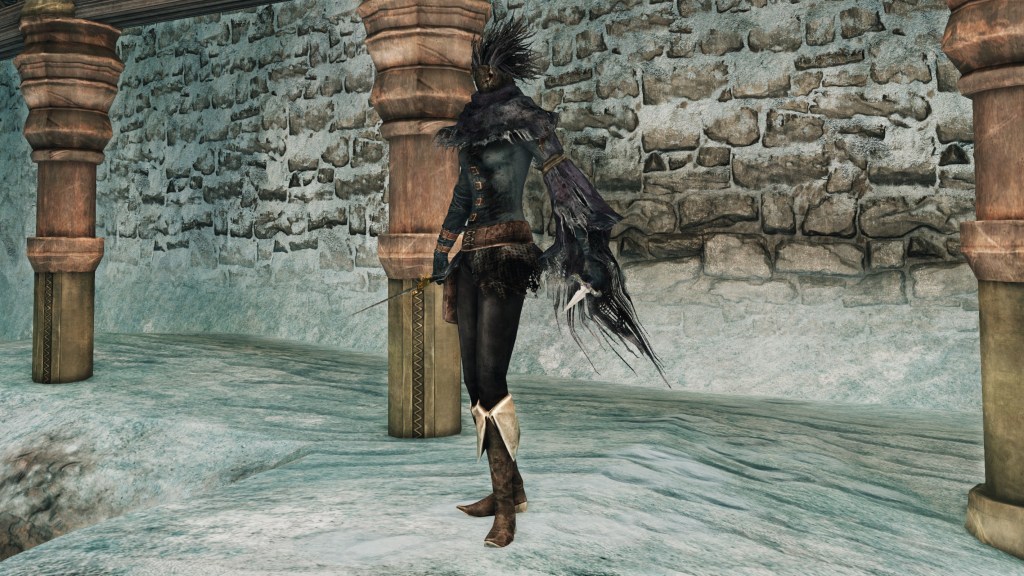
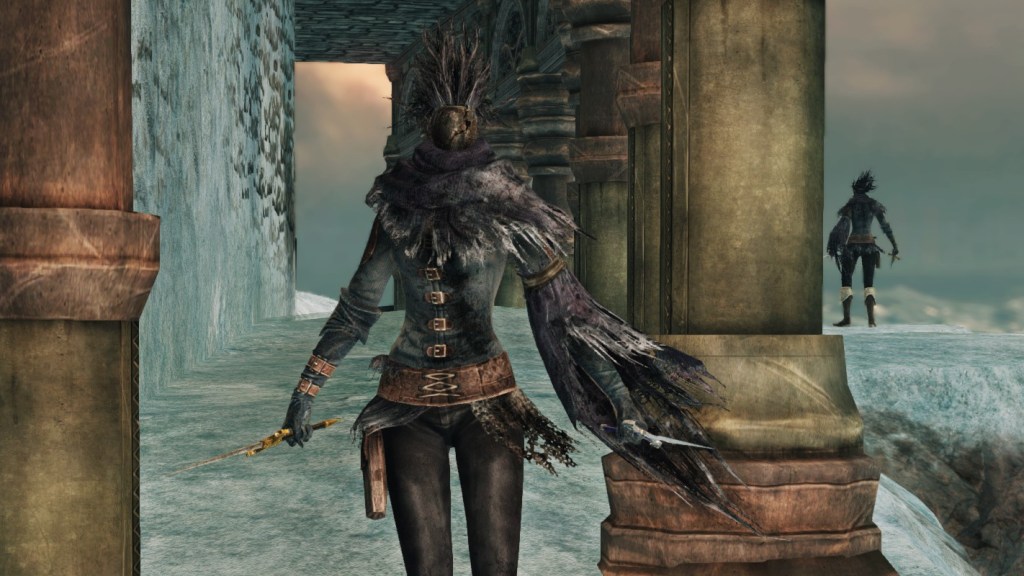
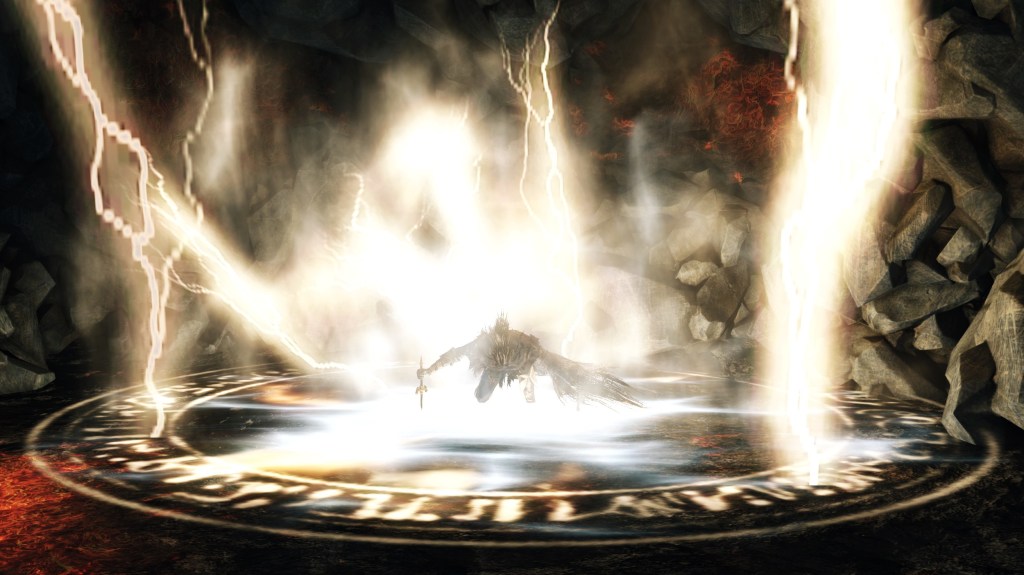
Dagger possessing a sharp blade. It was made for assassinations and specializes in fatal attacks from behind.
If you can deal one solid blow, there is nothing more you need, as they say.
Dagger of the smoke casters. Thing that the sorcerers use to aid in battle.
It looks like a simple dagger, but magic power has been applied, so raises the might of spells. In exchange, lowers resistance against spells.
 Lokey Lore