
Preface
While the Dark Souls narratives are designed for player choice, Director Hidetaka Miyazaki makes no stranger his bias. The theme of stagnation pervasive throughout Dark Souls III is perhaps his most overt criticism of the subject. As I am often asked about the “best” ending, I feel obliged to point out that the series’ creator hasn’t diverted course: holding the world back is the great evil, and the greatest good depends on how to approach rectifying it. Under that paradigm, only one ending rings with any sense of triumph, acknowledging and nonetheless embracing the flaws of the human condition. For many, it is very familiar. For others, it is bizarrely different. The truth is, it is Miyazaki’s same answer, reshaped by new circumstances to justify and deconstruct another sequel’s existence. This was a story that should have ended two games ago, for better or worse.
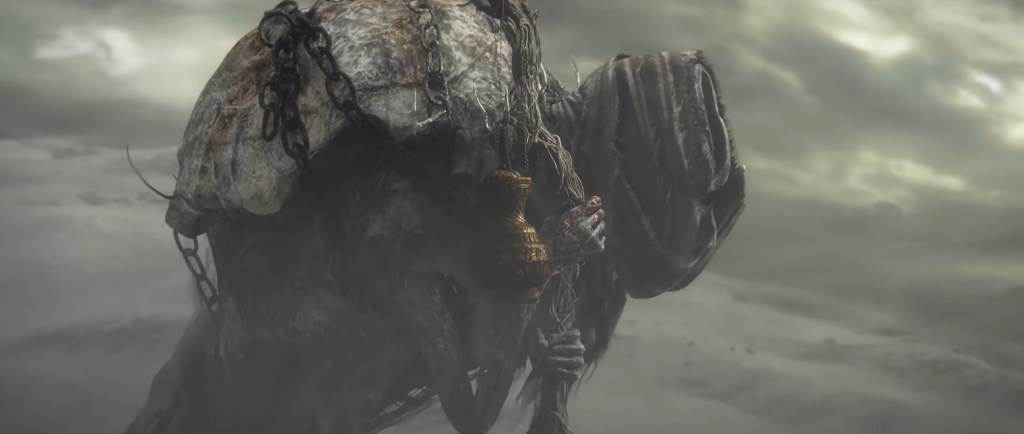
Death’s Long Shadow
Hollows coming together to form a country isn’t an absurd proposition. Hollowing has always existed on a scale in Dark Souls, with various examples of Undead throughout the series exhibiting some degree of social cohesion despite their hollowed appearance. The line between the physical and mental decay is more nuanced than exposited. The idea that they could form a state was therefore always theoretically possible. The problem is not the feasibility, but the practicality of such an endeavor. In all cases, Hollows were forming niche communities in relative isolation. Outside those circumstances, the cursed would be immediately suppressed by “decent” folk in the wider world for fear of their eventual insanity. In the case of a mass outbreak of Undead, any Hollows still sane would be caught up in the same chaos causing so much undeath in the first place. Insanity in Hollows is thus a self-fulfilling cycle. And without a large enough population of the sane, it is almost impossible to establish an entire country. And yet, Londor managed to accomplish it.
It is easy to construe this nation’s circumstances as dire. Among our various face options for character creation, the “Dead Look of Londor” (ロンドールの死相) conveys the lifelessness of its population. Hollows typically have a decrepit and scraggly form just by nature of their bodies rotting, which plays into the terminology; mouja (亡者) always holding a generic connotation of “the dead”, contrast to non-Hollows referenced as the living. However, many of Londor’s Hollows apparently are physically aged, which also shouldn’t come as a surprise. After all, factoring out infant mortality, death skews heavily among older generations — the longer you live, the more likely you are to die. While there are always accidents and war, most in any healthy society will reach middle-age before they kick the bucket. This means a disproportionate number of Undead will be elders, which naturally translates to a similar proportion of Hollows. Londor accepts all these cadaverous sort, leading to every citizen looking like they already have one foot in the grave. It certainly isn’t a promising sign for most body politics.
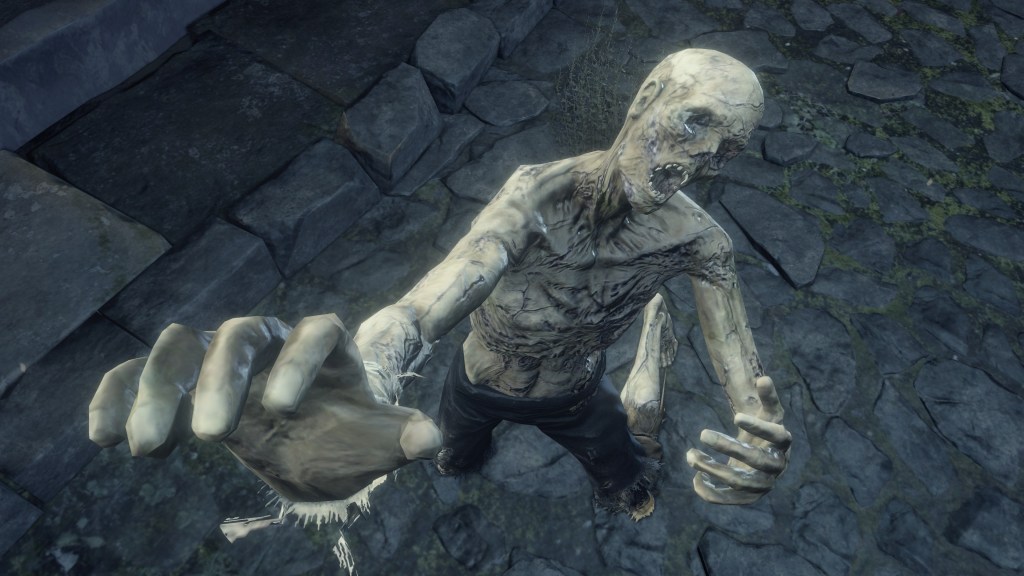
Death Appearance of Londor
Lifeless, quite Hollow-like countenance. Londor is the country of the old and Hollow.
Even so, the country seems to carry on just fine. Being immortal, the Hollows don’t need to concern themselves with the same needs, though doubtless they still enjoy indulging in the small pleasures like food and drink. As with other Undead communities, their survival hinges more on morale, everyone retaining the collective strength of will to resist further hollowing. Barring a mass lapse into mental decay, there is nothing worrying with having Londor full of physical decay. Its cursed citizens can live some measure of normality by remaining united and dealing with those who do inevitably succumb to madness. If anything, Hollow society’s greatest threat would come from its possible neighbors. Indeed, as the only country publicly recognized as by and for Hollows, one might question how they approach foreign relations in light of the general attitude toward their kind. Luckily for Londor, it has a governing body to handle all these matters and more.
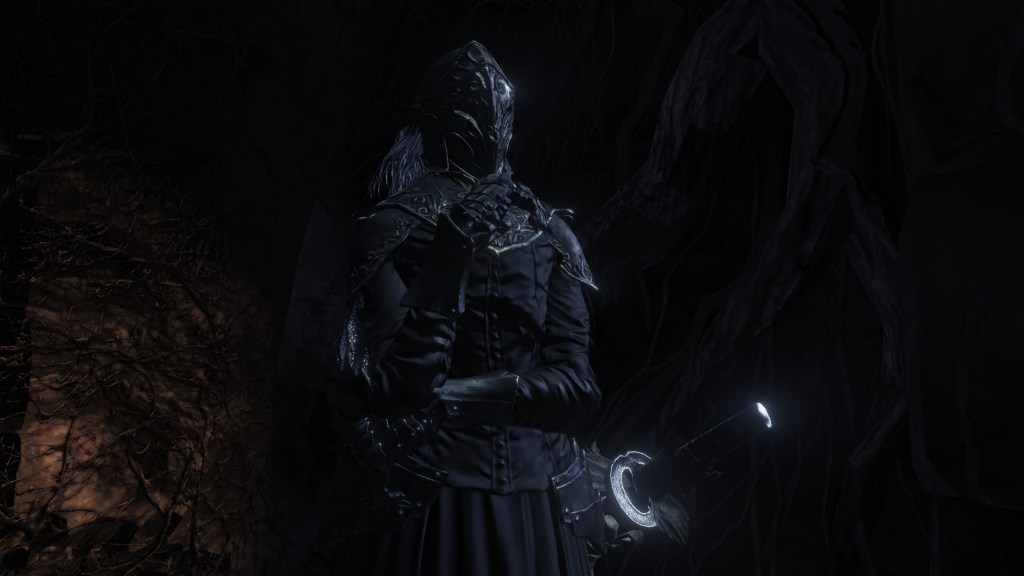
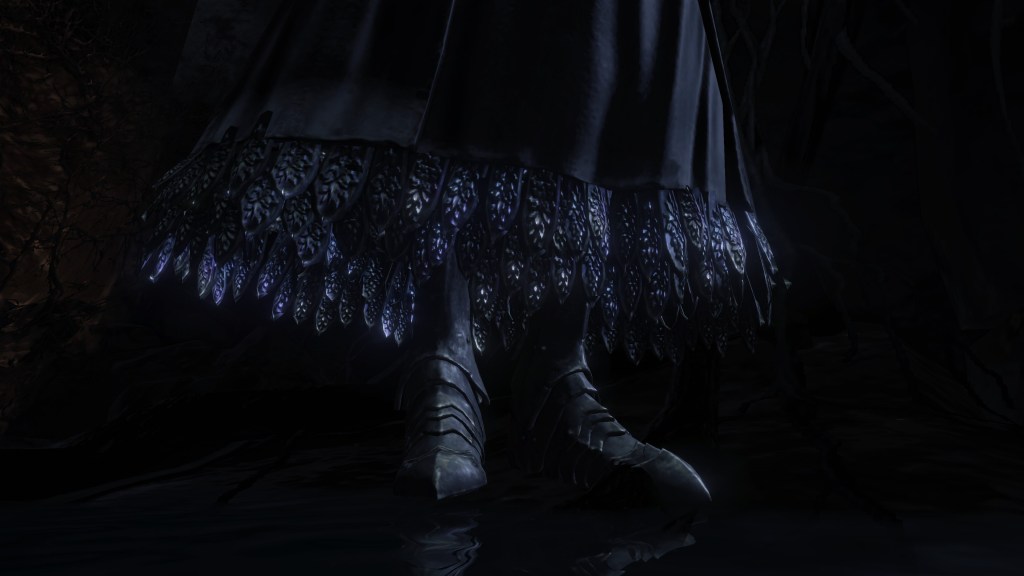
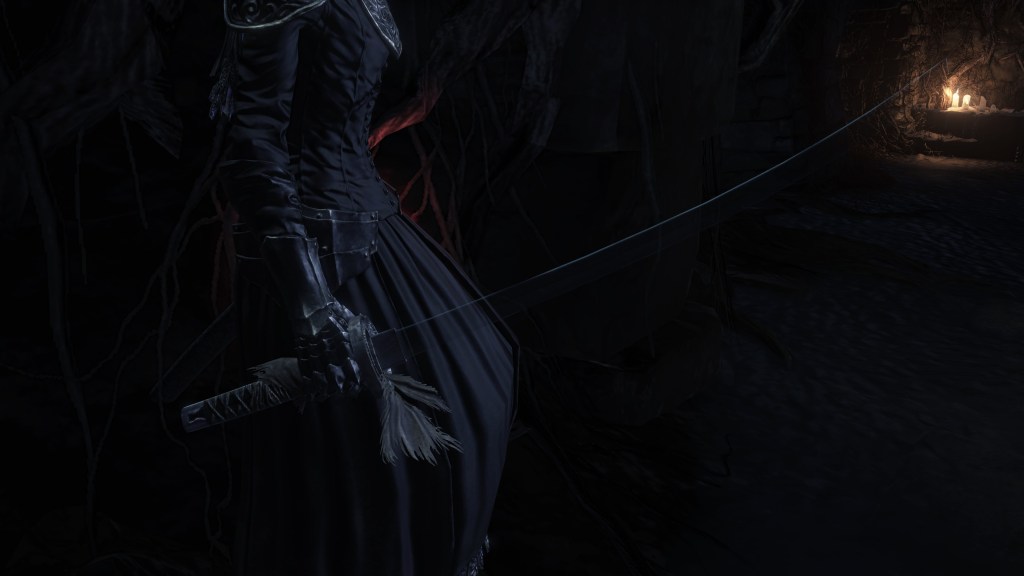
The Sable Church is the only institution of authority mentioned to exist in Londor, its founders regarded the saviors of Hollows in the Billed Mask’s description. We can thereby assume the country to be a theocracy where this “Black Church” (黒教会) dominates in place of the Way of White. And at the head of this church were three maidens, each garbed in jet-black that fittingly resembles a mourning dress. These church leaders are all sisters, Elfriede being the eldest followed by Yuria and finally Liliane. Although remarkable for all three to coincidentally manifest the Darksign, that probably did occur given how Yuria demands souls for services and the Hollowslayer Greatsword affects her. The siblings are also described as young “maidens”, (娘) which is consistent with Elfriede’s appearance. Even assuming that Londor’s founding was relatively recent, it is hard to imagine all three still being considered young if aging normally. In short, every sister is cursed with undeath like the flock their church shepherds.
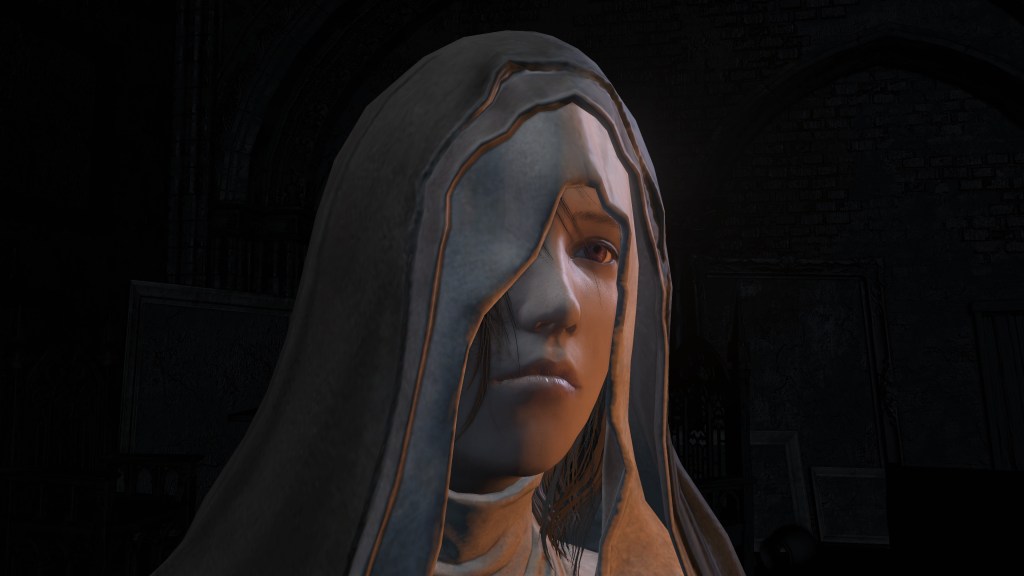
Apparel of the three leaders of the Black Church of Londor. The billed mask is a thing of the second daughter, Yuria.
They are the three maidens of a world serpent and are known as the originators of the Black Church. In other words, as the saviors of Hollows.
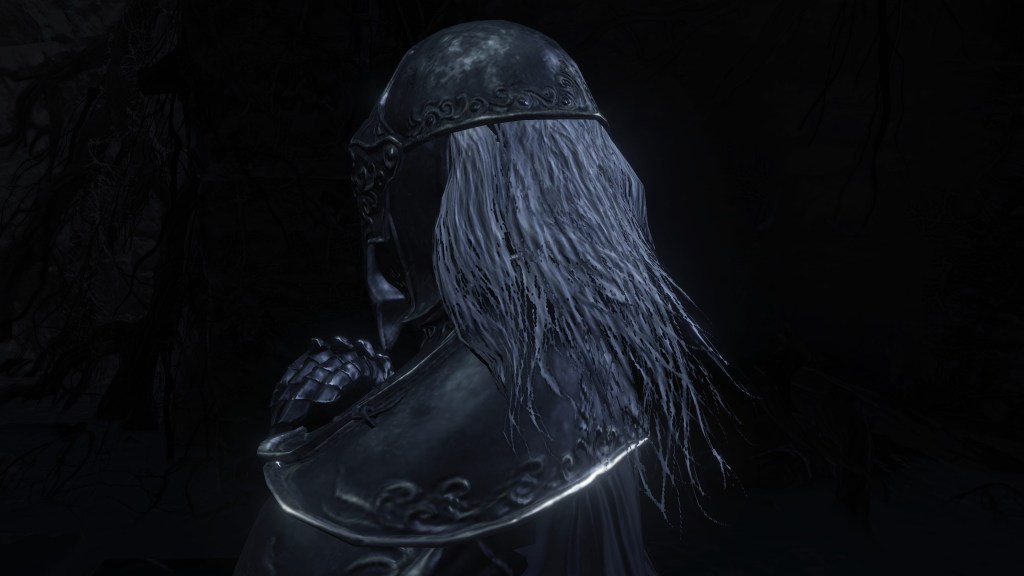
It is only natural that the country of Hollows be led by actual Hollows. The maidens died around the same time, potentially to the same cause, when they all became cursed. They subsequently hollowed before taking up their roles in the Sable Church, as exemplified by Yuria. The white hair attached to her Billed Mask isn’t her actual hair; her older sister sports brown, and hollowing doesn’t whiten hair — if anything, the decay should cause balding like with generic Hollows throughout the series. Contrast this to Ciaran’s Mask, whose very description in DS1 pointed out that the headpiece we wore included her ivory locks. The Billed Mask’s hair is more likely symbolic ornamentation, same as their black dresses. They don black and sport white hair to convey solidarity with these elderly walking corpses they guide. In Londor, these young ladies alone “weep” for the cursed and put effort into granting them a proper eternal rest, being wrinkly Hollows themselves. It is all about optics.
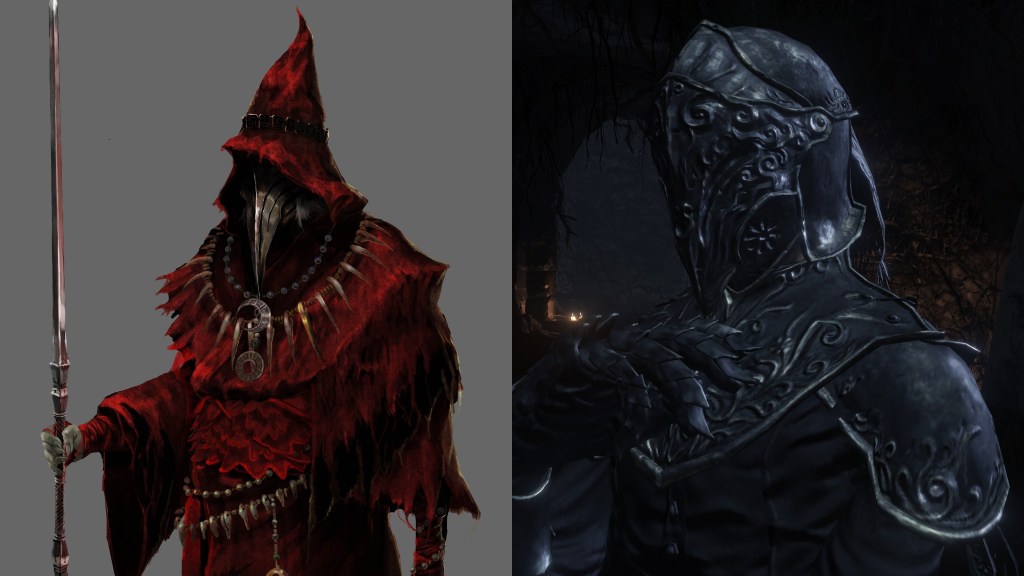
As fitting as the funeral analogy is, that idea of creating a resting place for the dead who fail to die holds a deeper significance to the sisters’ mission. The name Londor takes clear inspiration from New Londo, a country of Undead whose name marked it as a haven under Anor Londo’s dominion. The Sable Church leaders’ Billed Masks likewise draw comparison to the beaked masks of DS1’s seal sorcerers, who held a similar spiritual role in New Londo society. Even the death motif was reflected in the small country’s knights. The maidens blatantly wish to recreate a haven where cursed around the world can come together as one people. In that case, why make it a country for Hollows specifically? Because the Sable Church is dedicated to the Dark of the Darksign, its founders educated on the Abyss of humanity as disciples of Kaathe.
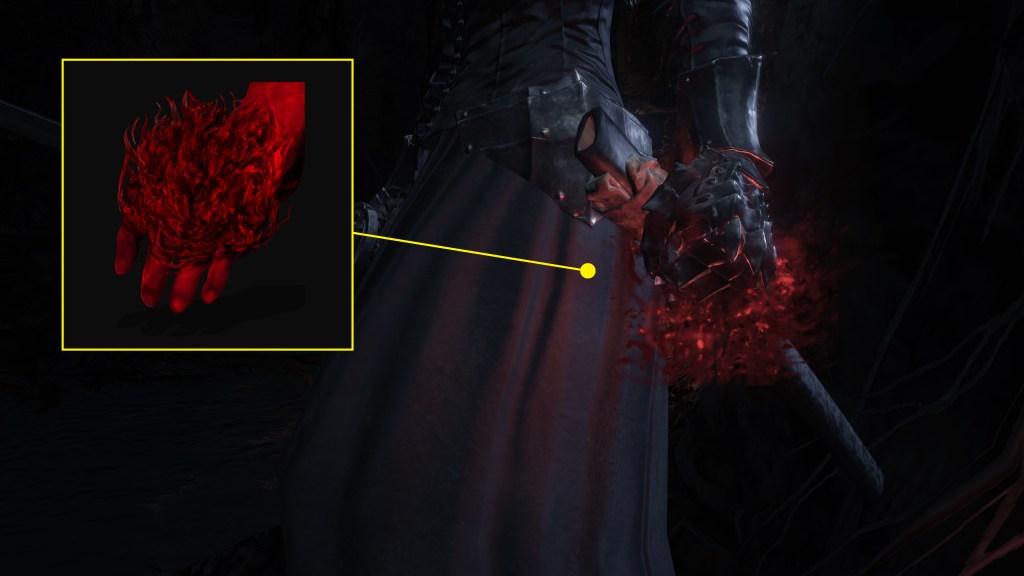
Descriptions to the black set affirm the three maidens’ association, Yuria mentioning the primordial serpent by name in her last moments. Cut dialogue has her blame the “shackles of the gods” for her death to, she presumes, a mad Hollow, terminology previously exclusive to Kaathe. Moreover, the Dark Hand is “unique” to Londor when both it and its Lifedrain ability were previously bestowed to Darkwraiths. Even to this day, the former knights of New Londo rely on this power. But with New Londo defunct and the Darkwraiths scattered, Londor is the only place to continue disseminating its secrets, Yuria willing to share this art she wields for a price. And the reason is because of its continued connection to Kaathe, having bestowed the weapon to the three maidens. It is obvious that members of the Sable Church learned how to warp space and suck spirits from their leaders, who in turn learned it from Kaathe. And if the Darkstalker was sharing the power of the “Dark Lord” as he claimed in the original Dark Souls, (DS1) then he must have trusted the sisters’ dedication to his cause.

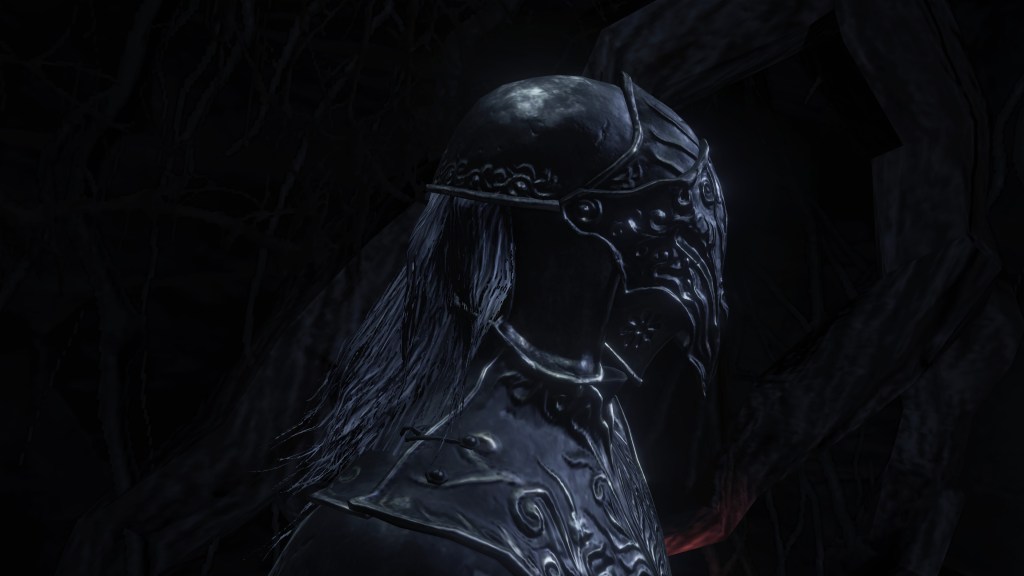
Is this the shackles of the gods…?
Art unique to Londor, country of Hollows. It has been said to even be the legacy of a world serpent.
Performs the repulsive Spiritsucker and becomes a special shield. Also, cannot be two-handed.
Battle art is “Spiritsucker”. Embraces the opponent and steals their HP. Also, Spiritsucker can only be performed on man.
Why was Kaathe interested in these three? Maybe whimsy. One can only imagine the tragic circumstances leading to a trio of sisters dying, presumably, together. Perhaps the snake happened upon their situation and took pity, deciding to enlighten them about the good fortune to their subsequent curse. There was also his age to consider. While Yuria’s English dialogue only bemoans how she failed Kaathe in perishing, the Japanese script specifies her regret to be over his “dying wish”. (遺志) The Dark Hand’s description similarly regards the weapon as his “legacy”. (遺産) In other words, the primordial serpent isn’t still around, the Sable Church carrying on his memory in Londor. And if he was able to convey his last will, then his death wasn’t sudden or unexpected. Kaathe and Frampt are the oldest mortal characters met in any of the games, so them passing away from age is reasonable. Add in the fact that no world serpent intercedes on our journey, and the whole race is liable to have gone extinct. Kaathe might have thus felt an urgent need to pass on his mission during his final years.
Kaathe, your dying wish will…
Ultimately, Elfriede, Yuria, and Liliane proved worthy of inheriting the world serpent’s will. His tutelage explains why they are so familiar with a long dead nation like New Londo, and not just that. The Sword of Avowal is Londor’s ceremonial blade, and its hilt incorporates the exact ring motif ornamenting the Ringed City, capital of the ancient pygmies who found the Dark Soul. The country of Hollows proudly represents all human culture which embraced humanity, and this is thanks to three students of the serpent alive to witness the whole history. Their resulting Sable Church is devoted to the Hollow as the true form of man. Even establishing a country honors Kaathe. Despite ending as a servant to the Dark, New Londo was originally a tool for preserving the Age of Fire. Kaathe only came to influence the tiny nation after the fact, and he ultimately considered his efforts to instill his message into their Four Kings a failure. But what if New Londo was built upon the primordial serpent’s principles from the outset? That appears to be the intention behind Londor, to form a proper state aligned with the Abyss.
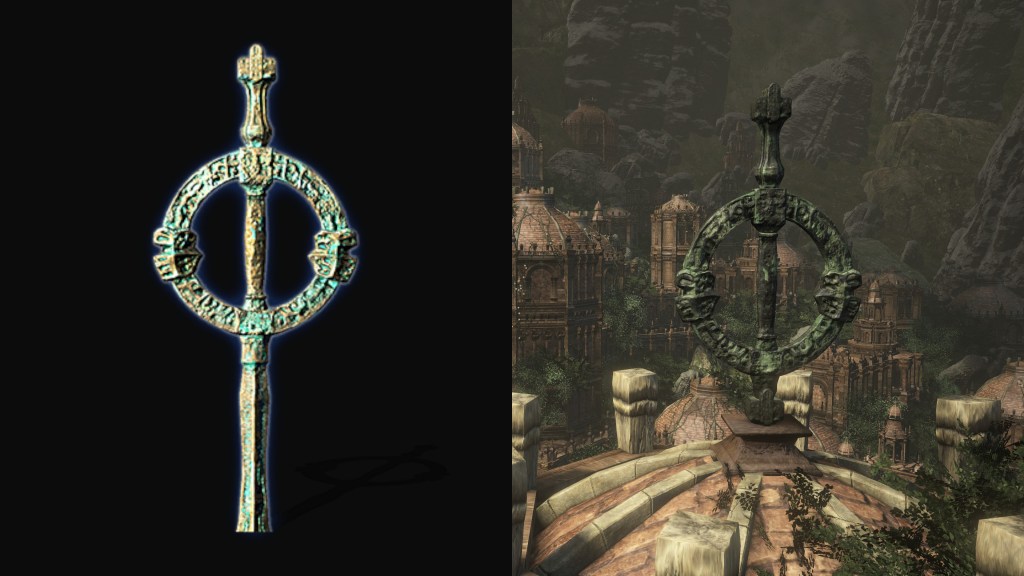
Just as New Londo was arguably successor to the Ringed City, Londor clearly imagines itself successor to the small Londo. If New Londo was haven to Undead, Londor will be haven to Hollows. If New Londo was to be led by a Dark Lord, Londor will be led by a Lord of Hollows. The three sisters are trying to execute Kaathe’s original design, this time with the moral fortitude sustained by a religious institution. Put another way, the Sable Church exists to impose the primordial serpent’s message for man on Hollow society so that there will be no deviations, no slips into depravity. Where the Four Kings failed, the three maidens hope to succeed, armed with heartfelt dedication to effectuating the will of their great emissary. In that respect, Kaathe is as much an “angel” for Londor as Frampt is for Lothric, a heavenly messenger from the gods in men rather than the gods of men. To fulfill that divine revelation, the Hollows needed a king. But before that king arrived, they needed to prepare his or her kingdom on earth.
Memento Mori
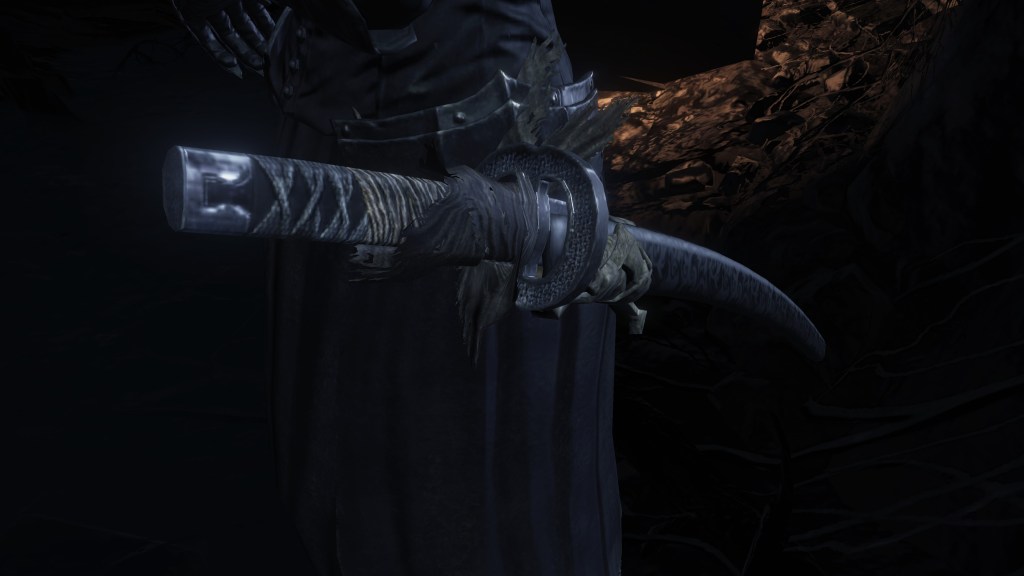
Where to establish a country for Hollows? The natural choice would be someplace obscure, on the frontier or otherwise isolated from the world of man. But Londor didn’t begin by avoiding conflict. The Sable Church leaders wear armor over and under their dress, denoting their skill as swordswomen — Yuria alone slew a hundred with her Darkdrift. The sword’s Japanese description affirms that this was specifically a hundred knights, implying conflict with the most highly trained warriors another country might have. The description to the sisters’ armor likewise relates how their skill was enough to establish the Sable Church with just them three, meaning that they needed to fight to create the institution which constitutes Londor. Even Elfriede’s trousers suggest that death by the blade was required to protect her church and country during the founding. These three were essentially Valkyries, carving their way through countless to plot out space for Hollows to live in their new country. And they weren’t finding knights among their own, in the middle of nowhere.
Apparel of the three leaders of the Black Church of Londor. Black gauntlets concealed within the dress.
That denotes how the women who wear the dress are also skilled swordsmen. Enough to establish the Black Church with just the three of them.
Choice weapon of Yuria of Londor. Cursed sword possessing an unseen blade.
Yuria, who was one of the leaders of the Black Church, was an excellent swordsman, and it is said that she buried a hundred knights with this one blade.
Apparel of Friede, nun of the painting. That which was concealed by the pale blue dress are nonetheless swordsmen’s trousers.
If it is to protect something, a blade and death will become needed someday. Like when she established the Black Church once.
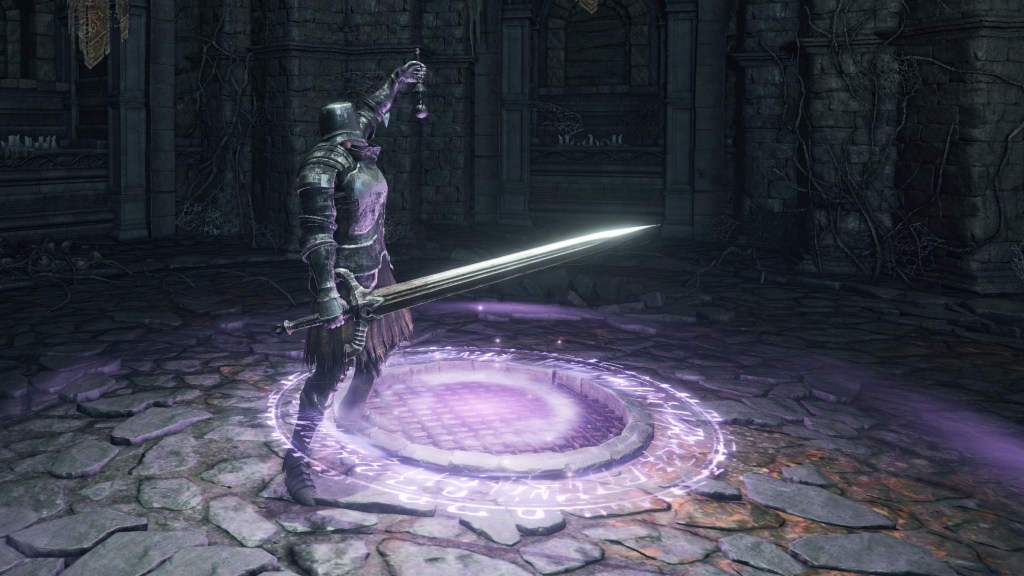
The Sable Church’s holy book preaches salvation to all Hollows and conversely curses to all the living. Examining the scriptures, miracles like Dark Blade tell the tale of Hollows’ hardships and battles, with the name “Black Sword” (黒剣) straightly linked to the “Black” Church and the sword used in its leaders’ battles. Then there are stories like Dead Again, which blesses corpses to become Dark bombs. Based on the name “The Dead’s Activation”, (死者の活性) it triggers the body’s humanity into exploding, hence the “blessing” — which is nonetheless desecrating a corpse. Even so, the Japanese description encourages us not to hesitate because, in Londor, any corpses wouldn’t be its Undead citizens but “the living” who were “ultimately incompatible” with them. Basically, it would be the decent folk who lacked the respect to leave the “dead” alone, so Hollows shouldn’t show them respect in death either, especially after first killing them for the hostility. And why would both cursed and uncursed be in Londor unless the former inserted themselves into the latter’s society?
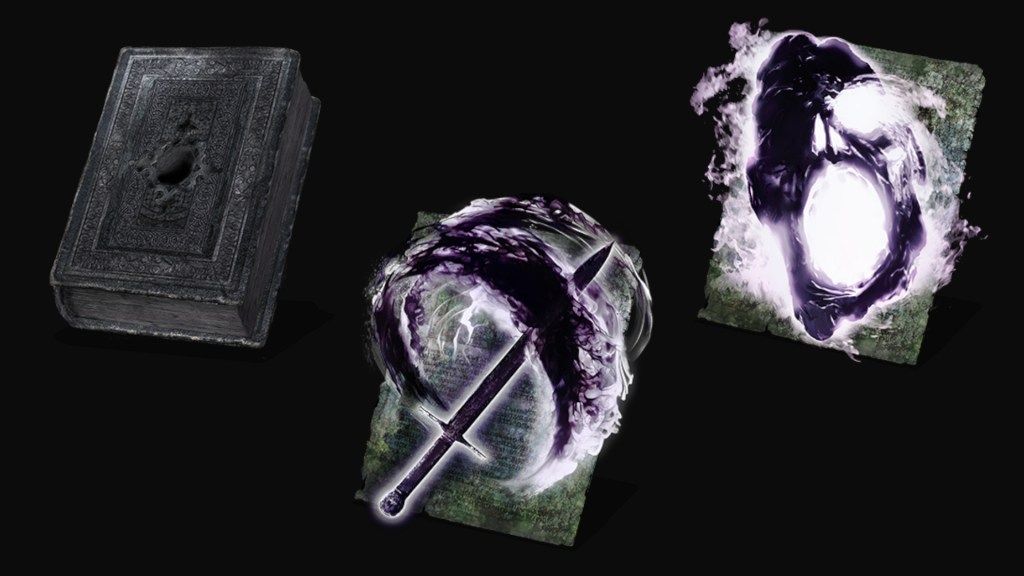
Braille scriptures of Londor. Thing recited by Liliane of the Black Church.
Can learn miracles of Londor by giving it to a storyteller.
It is the salvation of all Hollows and also a book that curses all the living. Thus, this is a taboo.
Miracle of the Black Church of Londor.
Enhances the right-hand weapon with Dark.
It is said that one of the originators of the Black Church, the third daughter Liliane, was a teller of the hardships and battles of Hollows.
Profane miracle of the Black Church of Londor.
Bless corpses and transform them into Dark bombs.
In the country of Hollows, Londor, Undead for sure are its people; corpses and the like, mere shadows of the living’s former selves, who were ultimately incompatible with each other. What need is there to hesitate the blessing?
Put simply, the Sable Church promotes mutual antagonism because that was its policy, fighting to establish Londor within another nation in the world of man. Considering how often countries in Dark Souls are city states, this isn’t unreasonable. Sure, the heads of state have knights for protection as well as entire armies, but a surprise raid on a palace will still have you facing just a small portion of those numbers. With their extraordinary swordplay, it is easy to see the three sisters succeed in single-handedly toppling the government after infiltration. Cutting off the head naturally destabilizes the country on down. Thrown into chaos, the populace end up fighting amongst themselves as they split into factions, the corpses piling up until they produce Undead and Hollows. And there would be the new Sable Church to enlighten these Hollows to their salvation in Londor — if they were willing to take up those miracles and fight for that Promised Land. The plan is almost too simple, but it evidently played out in exactly that way.
This was nothing less than a revenge tour. Undead had suffered for so long at the hands of god-fearing men, fighting just to survive in this cruel world. Now, the Sable Church brought that fight to the living, committing no less than genocide to make a statement for the god-fearing world and all Hollows. It was an unnecessary way to start a country, but it certainly put Londor on the map. No surrounding country would miss their neighbor collapse and an Undead nation replace it. Word of Londor was sure to spread across the world of man like wildfire, heralds bringing news to every church in the Way of White of this catastrophe. As a result, many more would know where to go if they ever did turn Undead, a place that was easy for travelers to find relative to other countries. True to form, the Sable Church bent over backwards for Hollows’ convenience. It came at the cost of its reputation, but the living were always going to abhor an Undead state and call their Dark arts profane and taboo. Now, Hollows had a home in Londor, once the discordant humans were cleared out.
As the crowning achievement of their efforts, Kaathe’s war maidens formally built the Sable Church as more than just an organization between the three of them. The Morion Blade modeled on its spires give us an idea of the actual church building. True to its name, the exterior is black as morion quartz, with unique gothic architecture featuring sharp edges and spikes that emphasize its opposing nature — which translates to lacerating lethality for the blade. And just as how the treasure has been cursed to empower the wielder at low HP, the hilt grotesquely spawning black tendrils, the Sable Church’s so-called blessings only comes to those Hollows in crisis; a church for the cursed in more ways than one. Liliane seems to have taken up the duty of ministering the flock from there, being the one to recite Londor’s scripture. It is she who teaches about the history of Hollows to give them a shared national heritage. It is also she who imparts the secrets of enhancing armaments with the Dark among other miracles, assuming that the listener has the requisite faith and, occasionally, intelligence to perform them.
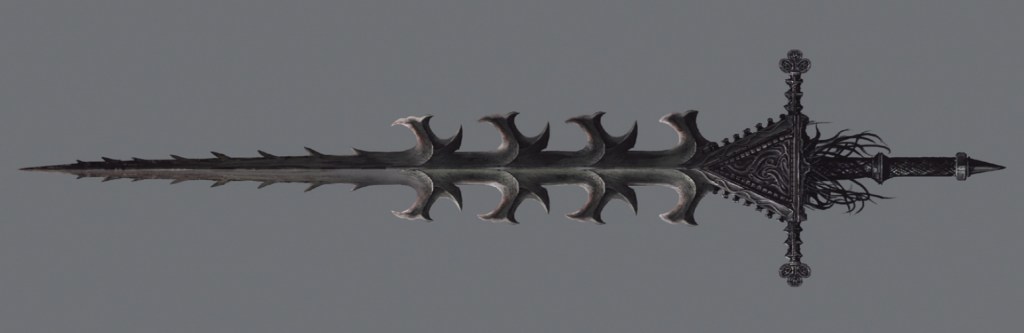
Grotesque sword modeled on the Black Church’s spires. Possesses eight branching blades and countless thorns, so forces bleeding.
Also, the Black Church’s blessing is said to rejoice in the user’s crisis, so temporarily boosts attack power if HP is greatly reduced. It is probably a sword that has been cursed, appropriate for its grotesque form.
It is unclear if the saviors began construction of this formal house of worship during or after the war of the founding. Whichever the scenario, Liliane only took up the role of Londor’s sole storyteller after retiring from the battlefield, more than likely. The fact that Londor has braille scripture implies that the maiden herself is blind. If this was the case from birth, then this complicates her ability to help found the Sable Church as a swordswoman. The Fire Keeper proves that there are workarounds to this, but then why the need for braille? Clearly, Liliane’s lack of sight has never been remedied. Either her sword skills surpass Hawkeye Gough’s archery, or the youngest sister was blinded in battle during the founding in their description. If the latter, such a debilitating injury would require healing power from humanity or a miracle of the gods. Liliane assuredly abhors the last option, especially if she makes it her job to repeatedly stoke animosity against god-fearing society. Better to serve as a living example of the Undead’s trials and tribulations she recounts.
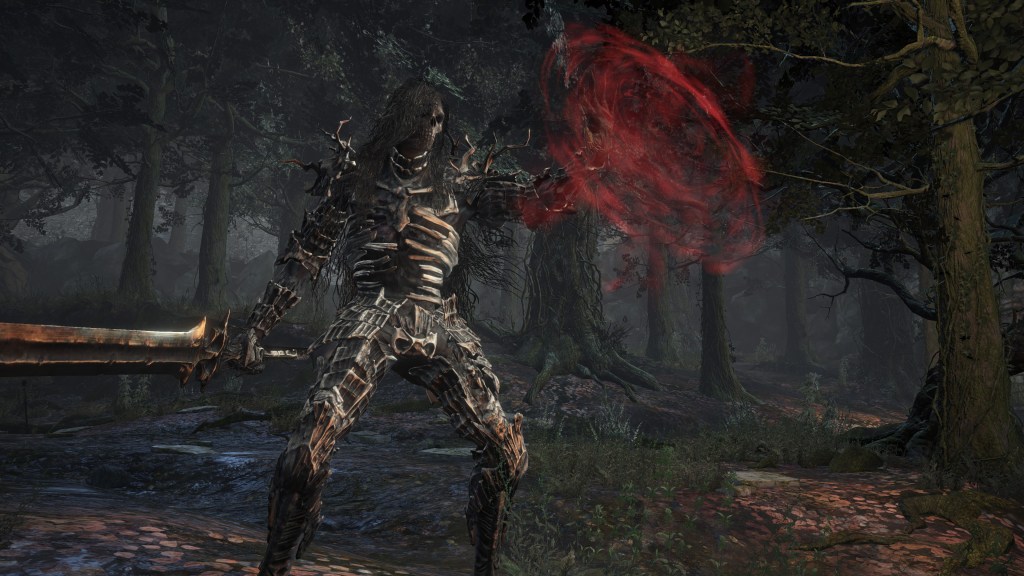
Overall, Liliane’s blindness captures the three sisters’ sacrifices to achieve their hard-fought success. But after gathering allies and constituting an army, the Sable Church were positioned to claim the land as their own. Many of these Hollows likely become the first knights of Londor, exemplified by Vilhelm. While it is called his armor, we acquire the Vilhelm set from a corpse pile in the crypt under Ariandel Chapel, which we can only access after defeating the knight in question at the Corvian Settlement. Basically, we collect his armor from another knight, outfitted uniformly as we would expect from a chivalric order. Knights seem to be individually assigned to each church leader, Vilhelm having served Elfriede. According to the description for his Vow of Silence miracle, these members of the Sable Church are all as skilled as their masters. Since Vilhelm additionally owns the Dark Hand, this must be thanks to direct instruction; perhaps from Elfriede specifically, going by how she later trained Corvian Knights. Nevertheless, they comprise an elite force of assuredly battle-hardened individuals.
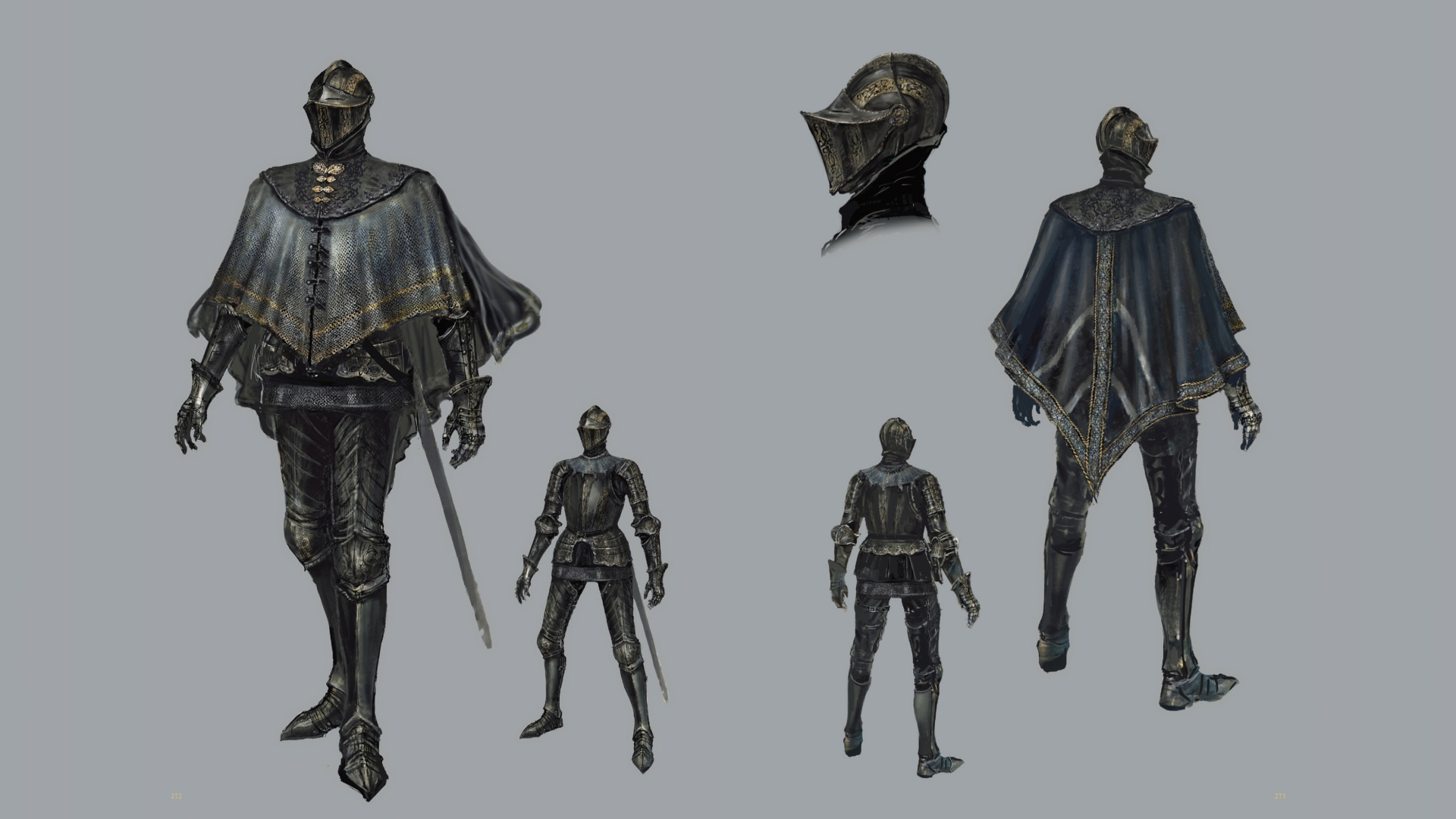
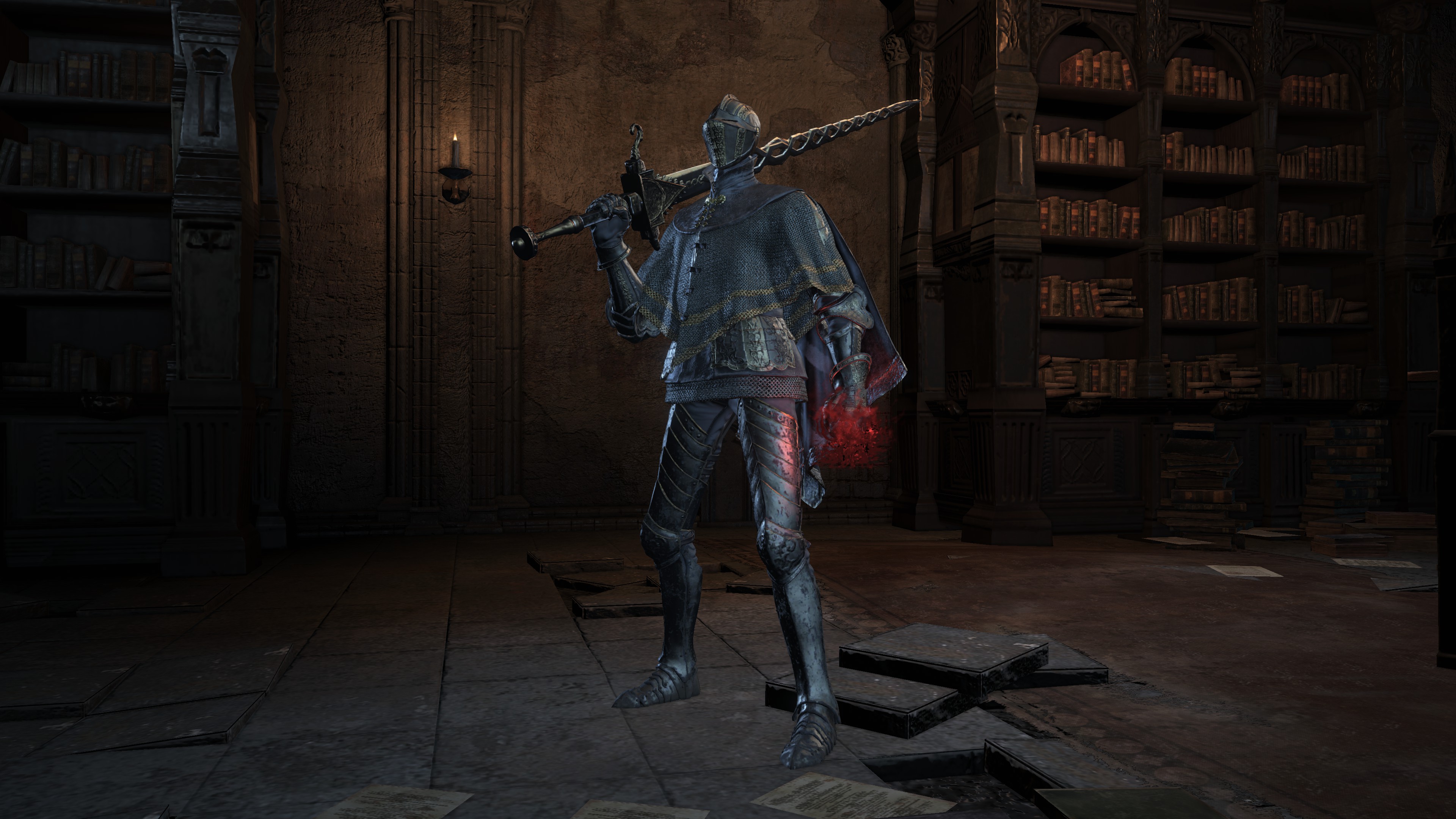
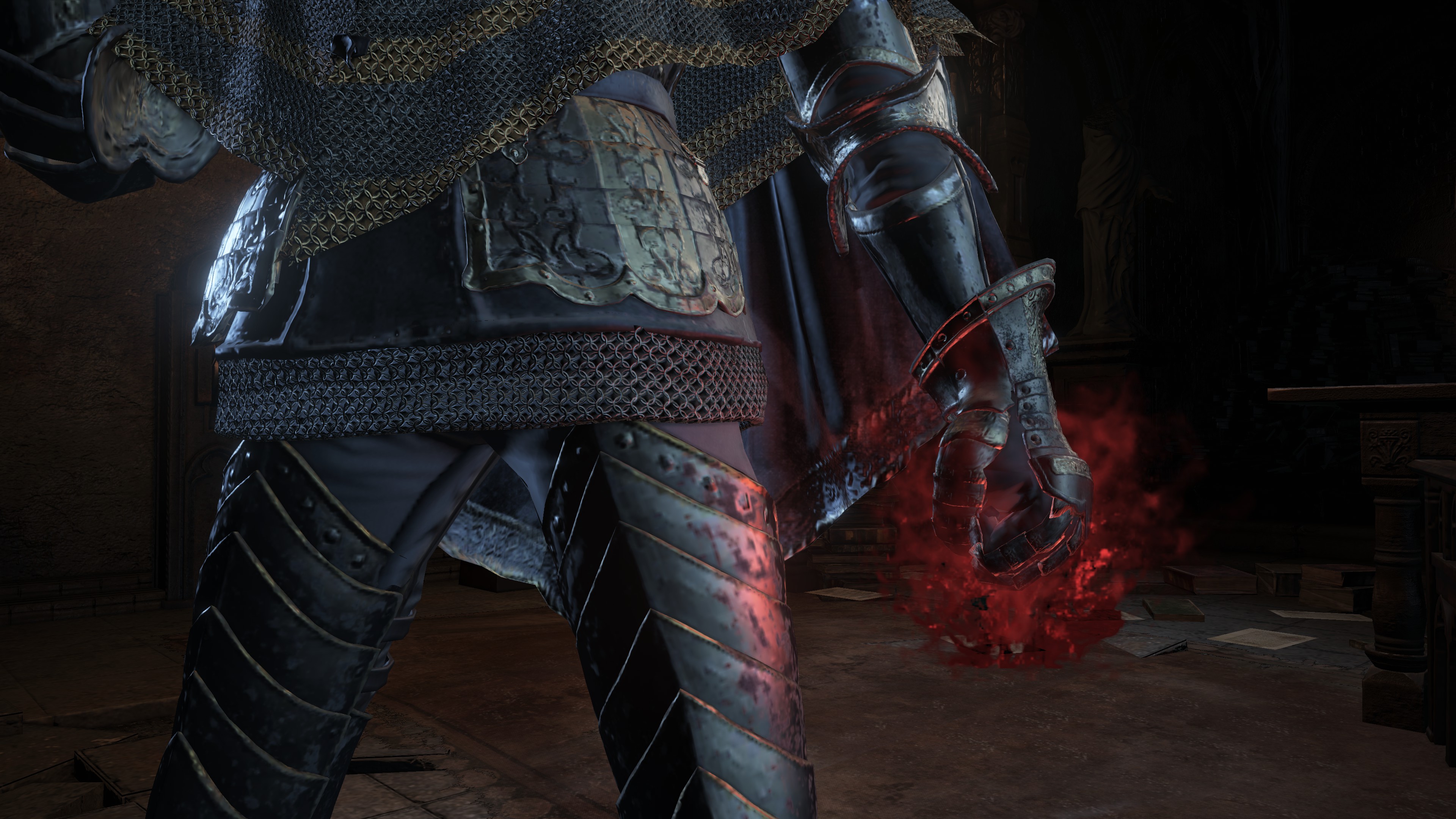
Although his armor’s English description says that Vilhelm was once a hangman, this wasn’t his occupation. The Japanese terminology more accurately describes a “burial escort”; (葬送者) someone who sees off the deceased in the funeral process, potentially as a participant. The wording is partially an inside joke from the developers. Vilhelm’s armor, added in the Ashes of Ariandel DLC, replaces a cut set in the game files. This “burial knight” set (葬送騎士) would have belonged to an order whose gimmick was apparently dressing for a funeral on the battlefield. This scrapped idea of fancy black gilded armor for knights giving their enemies a sendoff was later resurrected for the DLC and became Vilhelm’s design, making the reference to “burial” in the final game an amusing allusion to the original concept. And from this, we can infer that Vilhelm was never any kind of formal executioner, just a knight who coldly ensured his every opponent would end up six feet under — not unlike how Yuria supposedly “buried” one hundred knights swinging Darkdrift. The man was merciless.
Black armor for a scraggly Hollow. Helmet of the “Knight of Londor” Vilhelm.
The Hollow knight, who particularly served the eldest daughter of the three sisters who founded the Black Church, was known as a cold-blooded burial escort.
Helmet favored by the Burial Knights, which once existed.
It is formal wear often misunderstood as being for ceremonial purposes, but it is made with the same kind of alloys as those used on the battlefield and, although slightly heavy, fulfills its role as armor sufficiently.
With knights like these surrounding the three maidens, it is no wonder that Londor pulled through the civil strife that the Sable Church instigated. This is especially true when they possessed spells like Vow of Silence, sealing all magic for both parties in their duel to the death. As the description acknowledges, the silence of Londor is always with its swordsmen, as only the sword never betrays. Hollows might not be able to put their faith in larger human society or even each other, wagging tongues and fickle hearts constantly leading them down a winding road to destruction. But they can trust a weapon to perform its function, quietly and forthrightly. And when it was just a matter of ability, that weapon would consistently deliver. For the new nation, the world was a cruel place, made crueler by the nature of men. That was the reality, and these Undead were willing to face it. Their old lives among god-fearing frauds are over. Now, it was time for the dead in spirit to cut their own path.
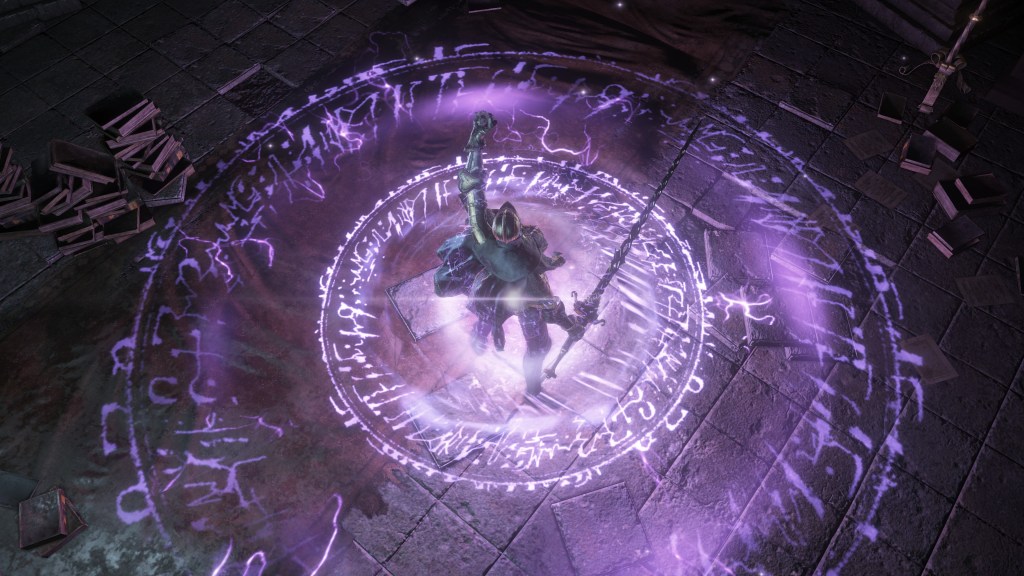
A Massacre Most Foul
Among the most pressing questions for fans, none invites scrutiny like where Londor is located. The Hollow pilgrims travel north to Lothric, implying that their country originates in the Old World. So, which country fell to Hollows? One possibility is that it is someplace familiar from DS1. There are Old-World countries which now go unmentioned, such as Zena. However, that doesn’t guarantee that the nation has been destroyed, let alone replaced; it may well still exist but is simply irrelevant to the happenings in Lothric. The only one which reasonably has collapsed is Thorolund, thanks to the religious revolution in the Way of White. None of these require Londor be the reaper of their demise. That leaves either a country never before mentioned, or established to no longer exist at present. And for the latter, the obvious candidate is Astora.
Item descriptions consistently reference the country of nobles as ruined or fallen. In this case, “fallen” (没落) isn’t limited to physical ruination, such as when falling into bankruptcy or falling into enemy hands. That last connotation may allude to the specific cause of Astora’s collapse. Indeed, how does an entire nation get destroyed without having suffered some great catastrophe — like an Undead outbreak — or assault from a hostile force? Its people weren’t wiped out, as some took refuge in Lothric. The Dragon Crest Shield with the garrison on the bridge to the kingdom originated in Astora. Likewise, the rapier we loot from the city barracks might belong to any duel-happy noble, but the chest storing an Astora Straight Sword indicates that former knights did integrate into Lothric’s military. The Astoran knights buried in the Cathedral of the Deep surely also made their pilgrimage from Lothric. Even we can bear features of Astoran nobles, down to their golden hair and blue eyes. The firelinking country noticeably gained an influx of migrants from the now ruined nation, the high-class ones at that.
Noble-born Face of Astora
Noblish and well-proportioned facial features. Many also have golden hair and blue eyes. A small pride that remembers the past of fallen Astora.
Overall, it appears that aristocrats escaped a terrible situation unfolding back home, one they weren’t willing or able to fight against. This might seem odd given that, before its destruction, Astora was the same as ever. The country still took pride in its noble blood, as captured by their fancy yet high quality swords. We even learn that the knights’ sword is modeled on an original belonging to the “truly noble” among them. This wording serves as a callback to the Blueblood Sword derived from Maiden Astraea, one of Astora’s inspirations. And just as Demon’s Souls’ Sixth Saint was noble in character as much as in pedigree, Astora’s famed aristocrat demonstrated virtue wielding a blessed straight sword against the Evil Eye. The fiend’s assault had brought the country to the brink of collapse, making this noble the savior of the nation for defeating it. It is no wonder that the country conflated nobility with sacrality, all of its aristocratic ranking knights aspiring to reach that truly noble standard with their matching holy swords. Evidently, the refugees failed to meet the bar.
Ring confining the evil spirit of the Evil Eye, a fiend said to have attacked Astora once.
Recover HP when defeating enemies.
It is said that the dreadful Evil Eye put Astora on the brink of collapsing and nevertheless suffered defeat before the “sword of the truly noble”.
Still, why haven’t any of these nobles returned home? Even assuming that the reason they left was because of the incident precipitating Astora’s destruction, they could just rebuild. Why give up the comforts of noble life, along with the rich and proud history accompanying it, to become part of another country? The destruction didn’t stop Anri from visiting. Having taken the armor of one of its knights, it is no surprise that the fugitive from the Cathedral of the Deep, along with Horace, heard about Astora at some point. Maybe it was from a survivor who recognized the armor on their travels, but in the end, Anri understood that the country’s name invoked “homesickness” (郷愁) and wished to also have a home to miss dearly. And the two did travel to that distant homeland, since Anri now owns the fabled sword of the one most noble and claims to be “of Astora” when we first meet. If an Undead could adopt the land as a home and retrieve its ancient relics, so could genuine natives. The only countervailing reason is that the incident in question somehow preempted that possibility for them and them alone.
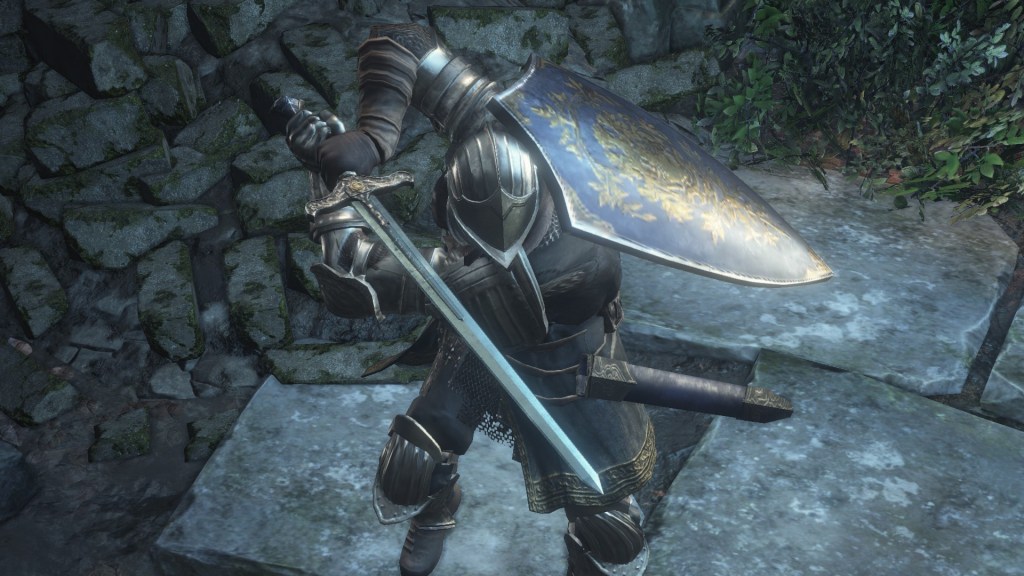
Helmet said to have been given to high-ranking knights in fallen Astora.
The name of Astora coincides with homesickness, and Anri also sought that, right? In a distant home known only by name.
Beloved sword of Anri of Astora, one of the fireless ashes. Considered the dullest in the destroyed country of Astora.
But it is the “sword of the truly noble”, so its attack power increases via luck, an innate power of man.
Enter Londor, a country built on the ashes of its predecessor, hostile to anyone missing the Darksign. It could be responsible for the sudden destruction of a nation in the events since DS1. It would also explain how Anri came into possession of such an ancient relic. If Astora was simply in ruins, why wasn’t the sword previously looted by bandits, who were sure to be attracted to the valuables the nobles left behind? But if Londor took its place, then thieves would have a much harder time stealing from a ruthless theocracy which might collect these relics for themselves. The Sable Church bestowing the sword to Anri is equally as feasible in light of the faux knight and Horace being Hollow. We also know that the two have connections to Londor, since Yuria is both aware of Anri’s status and ropes the warrior into becoming spouse to a prospective Lord of Hollows. How convenient that an Undead heads to Astora for a proper home and ends up becoming a Hollow of Londor.
It is not just Anri with suspicious connections. Why are so many knights of Astora buried at the Cathedral of the Deep? Because they sought cleansing from the Deep pool. We can see from the Crest Shield left on the earliest graves, in fact, that Astoran knights were among the first to hear rumor of the holy spring and try it out, before there was even a church. Keeping that all in mind, the refugees must have suffered from either undeath, which wouldn’t be tolerated in Lothric, or the Dark of the Abyss. For the latter, survivors could theoretically live with and hide mild corruption up to a point, though they would inevitably need to seek remedy to their symptoms — especially once they have Farron Keep at their doorstep. This begs the question of why a disproportionate number of knights, defenders of Astora, would be afflicted by the Abyss before fleeing to Lothric. The straightforward answer is that the source of the country’s destruction employed the Dark of humanity, like the Sable Church. Between the Dark Hand and its miracles, the foundation of Londor presents the exact threat to Astora’s continued existence.
And so, the country of Hollows did cause the country of nobles to fall, in all likelihood. As to why target it among the many nations, the decision was likely based on the history detailed by wise Kaathe. Recall in DS1 that the life-leeching Evil Eye was hinted to be a product of the Abyss, implicitly created by local Dark practitioners. Whether the work of some bad actor or simply an experiment gone wrong, this incident justified the country’s pivot toward the Anor Londo gods more than most, part of the larger push of man’s Dark heritage to the fringes before the Way of White began to formally stamp out that heresy. But while the sword of the truly noble does possess a blessing empowered by faith, most of the weapon’s damage comes from the wielder’s luck, which the description acknowledges is innate to man. Aside from another reference to the Blueblood Sword, this implicates the power of humanity in the Evil Eye’s defeat — the blade is the country’s dullest, nowhere near the quality of later recreations. In other words, it was by luck that “true nobility” succeeded, not Anor Londo’s pantheon.

And there lies the issue for Londor to seize upon. Much like how noble Astraea was elevated to a holy woman because her luck was mistaken for providence in Demon’s Souls, the gods and their followers falsely took credit for the truly noble’s humanity. One might wonder if even the blessing itself is derived from the Abyss, a facsimile of the genuine product not unlike the Profaned Flame. If the person was such a lucky individual, then being deeply in touch with his or her own humanity is a given. Perhaps the noble prayed for the strength to save dear country, a fervent will which by chance stirred the dark soul sealed within to infuse the weapon in hand with power. The hero’s “faith” would have been rewarded by the Dark, the Evil Eye’s defeat blessed by the good fortune inherent to it. Man was the cause of Astora’s problem, but also the solution, not any so-called god. And yet, the gods used this opportunity to paint the Abyss as inherently a threat, subverting the country’s future on the basis of a lie.
Therefore, conquering Astora and turning it into Londor was the perfect statement to the world that mankind were reclaiming their forgotten heritage, making right the wrongs of the gods. After Kaathe shared the true history, Elfriede, Yuria, and Liliane knew exactly where to create their haven for Hollows. If Londor had to replace an existing country, it must be one where god-fearing society wouldn’t fail to notice, even should most miss the symbolism behind the gesture. Recall also in DS1 that Astora was located in the Old World, along the northern border between the world of man and Lordran but still very much integrated in the cultural sphere. This enabled the refugees to flee further north to Lothric, and it allowed the Sable Church to insert itself right in the middle of the fire-worshiping scene. Add in that past perverted by lies, and the land of nobles simply checked all the boxes. Finally, the maidens’ knowledge explains why Londor preserved the lucky sword for Anri to later inherit when they might have otherwise rejected it as a holy relic. They recognized its true message for man.
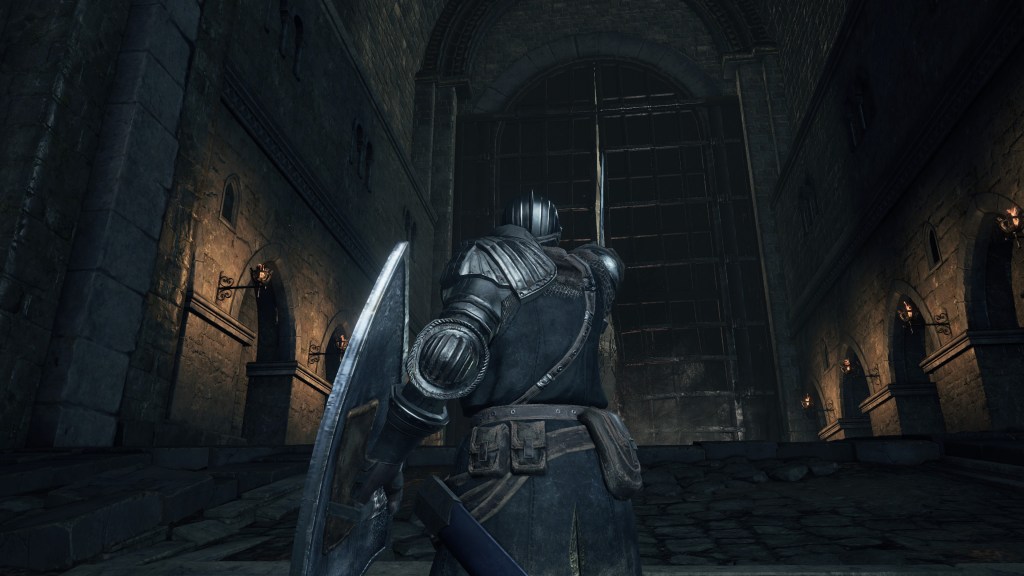
The country’s military also couldn’t be underestimated. Even if rich with posh blood, it was still a land of elite knights. The Astora Straight Sword captures this sentiment. Unlike the version acquired in DS1, the latest lacks the blessing despite retaining the faith requirement. As a result, faith only serves to make the weapon more unwieldy. The detail is probably intentional, however; the actual faith requirement is slightly lower than in DS1 even as strength and dexterity requirements remain identical. Rather, something occurred to diminish the sword’s potent blessing, leaving only an artifact of its full power. And among powers that can sap holiness of strength, there is only the all-consuming Dark. Clashing blades with the forces of Londor, with their Dark Weapon spell, may have thereby stolen almost all of the light’s potency, though saving the steel from corruption. This would have made the standard knights of Astora a fair match against the second coming of New Londo.
Meanwhile, the Astora Greatsword possesses neither a blessing nor faith requirement. Instead, the ultra greatsword focuses on being the lightest of its class, using its hard, sharp blade for thrusting. It is essentially an oversized rapier used in their duels; it even features the Charge skill otherwise limited to spears and halberds. Clearly, not every weapon of the high-ranking knights embodied the truly noble one’s legacy, with the Japanese description confirming that the rapier-like greatsword was bestowed only to select knights — presumably those who were simultaneously physical overachievers and spiritual underachievers. Their threat uniquely came from impaling opponents before they could even get close enough to engage in a proper clash. That may be why the owner became corrupted before the sword, buried as a hero in the Cathedral of the Deep’s graveyard. They would give Londor even more trouble, though the unchosen knights’ defenses were similarly resilient.
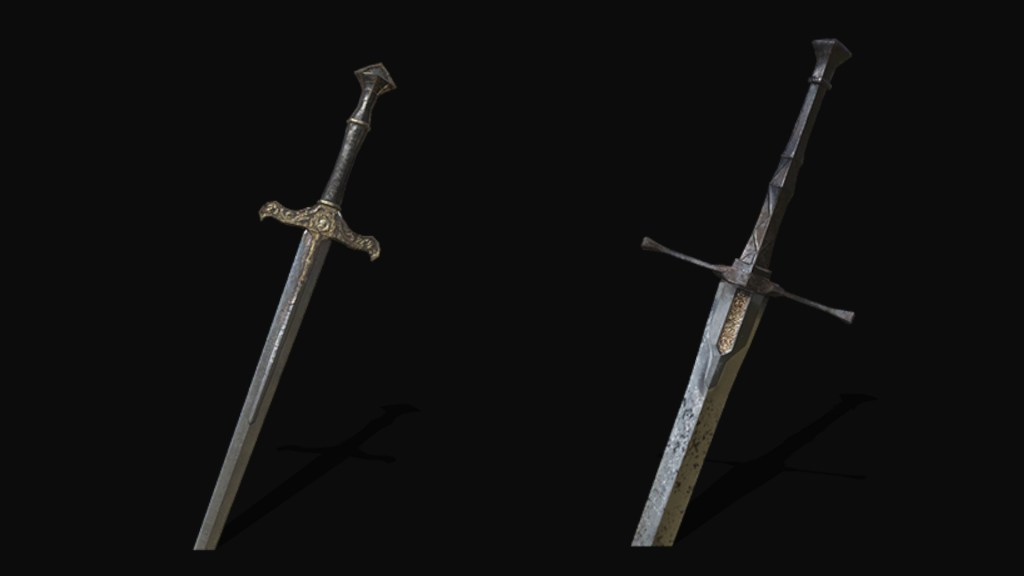
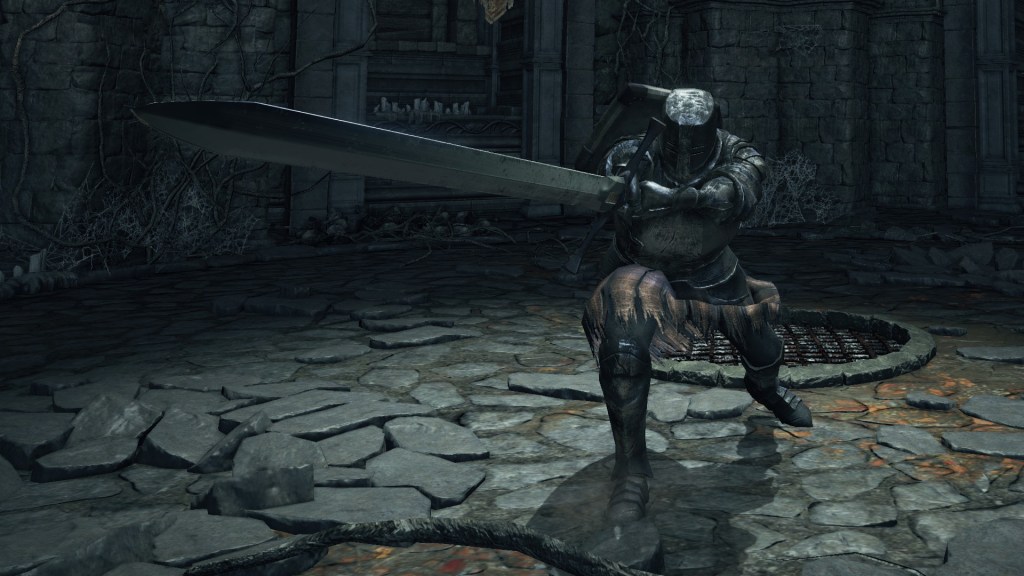
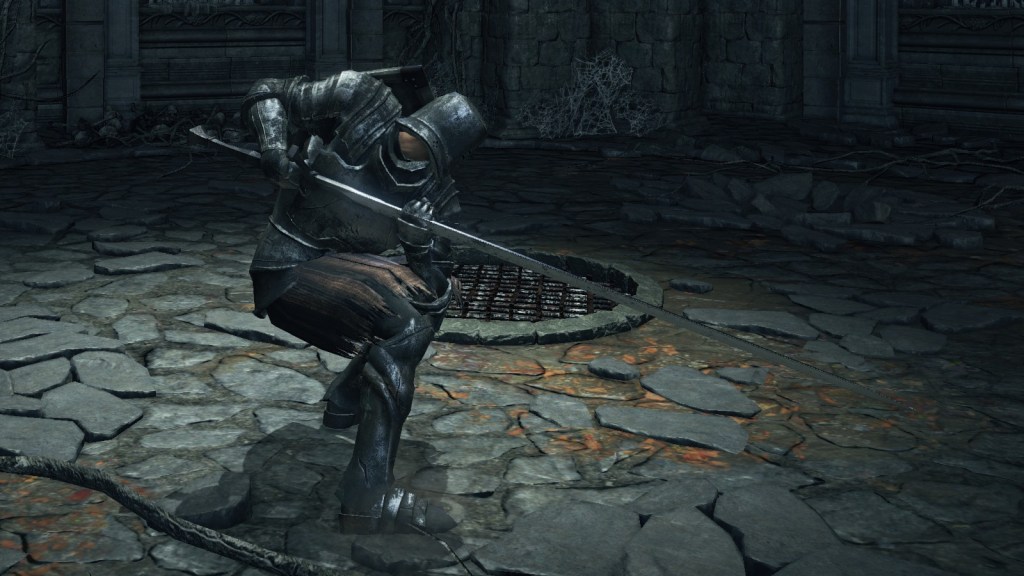

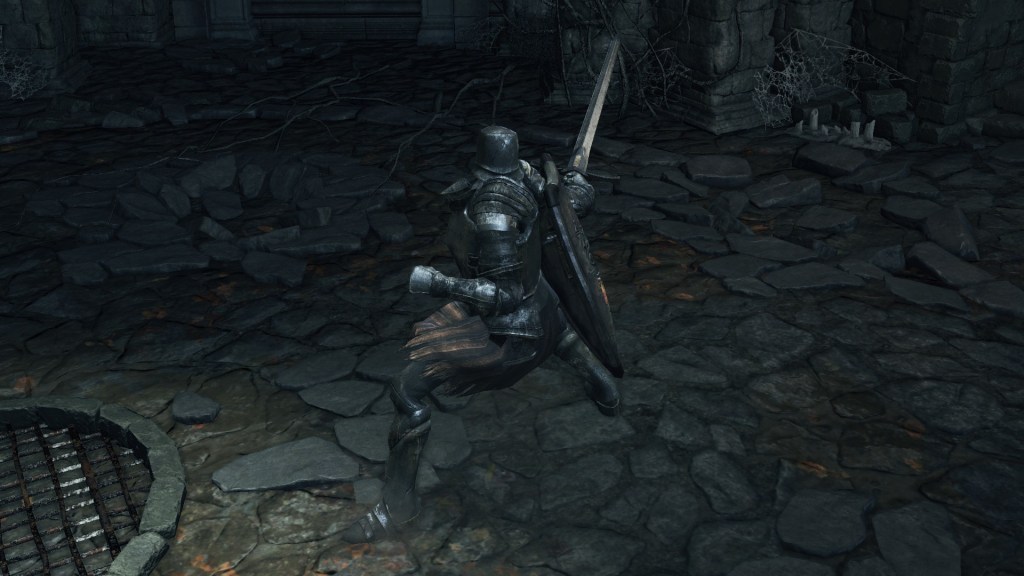
Greatsword said to have been given to chosen high-ranking knights. One of the legacies of the destroyed country of Astora.
Emphasizes hardness and sharpness over weight, and even tactics are assembled with thrusting at the center.
The Crest Shield plainly differs from its DS1 counterpart, greatly mitigating damage of the Dark variety instead of general magic. This change can be partially blamed on how the blue “crest” shields from DS1 have now become a quartet with the addition of two from Dark Souls II, (DS2) each specializing against a specific damage type. The Spirit Tree Crest Shield similarly resists lightning to a far greater degree than its Dark Souls II (DS2) counterpart. This leaves only the Dragon Crest Shield and Golden Wing Crest Shield to accurately reflect past iterations — so far as fire and magic are concerned, respectively. With the blue shields no longer Astora exclusive, FromSoftware needed to better distinguish them all from each other. The Spirit Tree Shield as a result lost its ability to parry spells like the Golden Wing Shield, while the Crest Shield was made to not overlap with that same spell-parrying shield’s magic resistance. By incorporating the DS2 shields into the DS1 shields’ elemental niche, the developers simply had to pick one or the other.
Blue knight shield engraved with a crest.
Since it is one of the blue shields tinged with magic power, the Crest Shield has high Dark cut rate in particular.
Granted, that doesn’t necessarily make the changes arbitrary. Recall that the “holy tree” (聖樹) depicted on the one shield is Quella, who was worshiped as a god in DS2. That notion of holiness can justify the lightning association; being especially apt at channeling the power of sunlight would also explain previous hints to the tree’s deep investment in the Age of Fire. In the same vein, the Crest Shield originally appeared in a game where the Dark wasn’t a dedicated damage type, instead relegated to the magic attribute oftentimes. It may have always been intended to represent pious Astora’s stance against the unholy. The descriptions to all four shields likewise mention how they are tinged with magic power like the two in DS1, and even the two in DS2 made mention of a similar enchantments. It didn’t affect the variance of elemental resistances in those games, so the effects of “magic power” has never been consistent. Put simply, discrepancies with the Crest Shield from DS1 can be safely ignored.
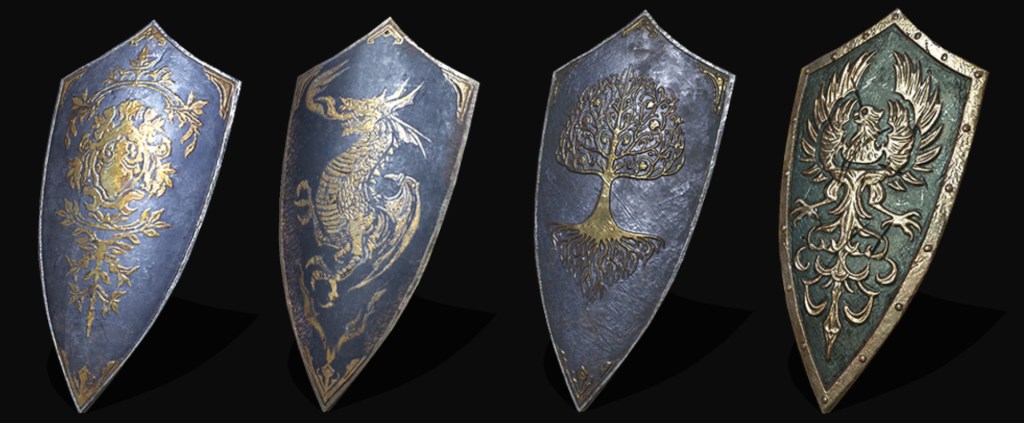
Altogether, Astora’s knight possessed both powerful offense and ironclad defense to counteract the Dark wielded by Londor. Even with the Sable Church’s expert swordplay and effective miracles, conquering the land wouldn’t have been easy, just as indicated. Whether it is in term of history, symbolism, or military, there is simply no country more viable as the three maidens’ target for attack. And despite the difficulties with their choice, the sisters’ decapitation strike ultimately proved fatal. Without leadership at the top, Astora couldn’t hold together against the chaos, confusion, and multiplying invaders. What noble fighters didn’t flee in the face of the Abyss met a miserable end, to say nothing of the innocents. Come the conflict’s conclusion, Astora as a sovereign country no longer existed. In its place emerged the state of Londor under the Sable Church. People may speak wistfully of the country of nobles, but for the Hollows, there was nothing more noble than a land just for them.
Funeral Party
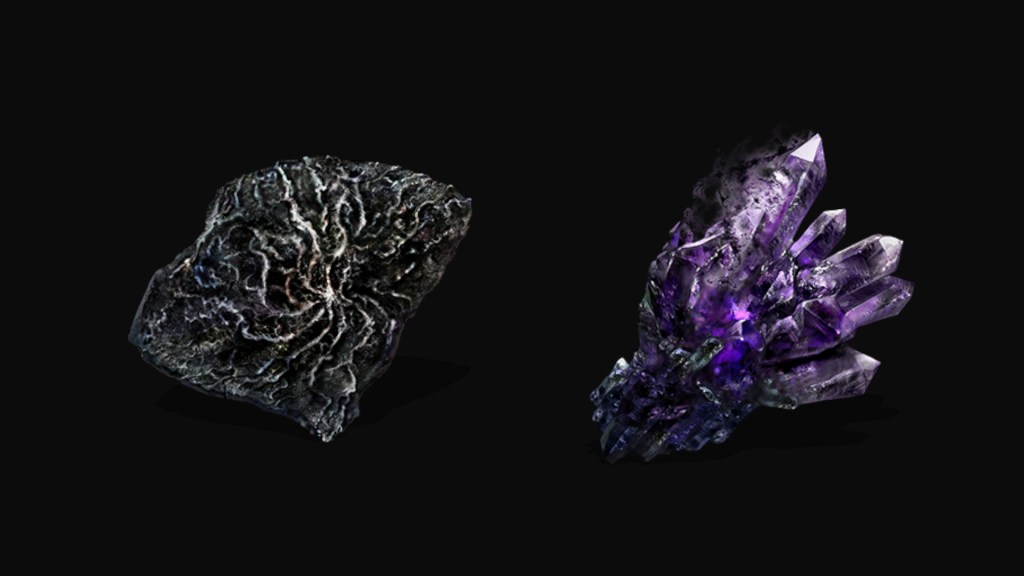
A country of Hollows, naturally, develops a unique culture. Titanite is considered to have “grace” (恵み) in Londor if it becomes a hollow gem, the stone itself looking to grow heart roots from hollowing. Most likely, a portion of the curse is passed onto the titanite, through a similar process as a purging stone. It can’t be simply from proximity, as no shortage of Hollows hold titanite. Corvian storytellers conversely insinuate that the curse can be extracted willfully. It isn’t enough to substitute for a purging stone, but it does transform the bond stone’s properties differently from a dark gem. It not crystalizing, for instance, suggests that the stone isn’t overwhelmed by raw power. If dark gems result from ownerless humanity, then the humanity in hollow gems must be infused along with power from the ring of fire constraining it. In effect, these are Darksign gems, the power refined as much as restricted. The result is that while dark weapons can be wielded through faith or intelligence, hollow weapons draw upon luck like Anri’s Straight Sword. And conveniently, being Hollow grants bonus luck.
Precious stone said to be transmuted bond stone. Graced stone of the country of Hollows, Londor.
Use in the transmutation enhancement of weapons and make hollow weapons.
Hollow weapons are said to see the essence of man, so their attack power rises via luck.
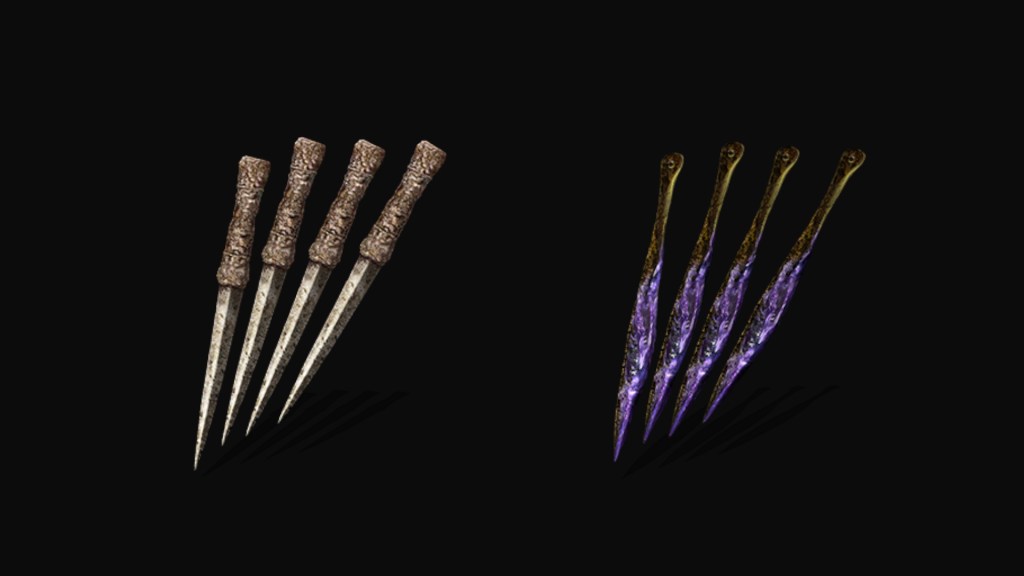
Even without that utility for the fortunate, it is easy to see why citizens want to believe that their curse is a blessing. Too often, they are forced to hide their decrepit forms due to wider sentiment; the Untrue White Ring makes them appear like a friendly phantom while its Dark counterpart simply lets them appear unhollowed. The irony is that this “lie” (偽り) only reinforces the stereotype of Hollows being weak and deceitful, making them abhorred anyway — they are not just disgusting to look at, but disgusting to look at and hide it, the nerve! There is a reason that the poison coating throwing knives in Londor is ridiculed as the blood of Hollows. Committed to the form of man they know thanks to the gods’ lies, average humans see the cursed as the height of sin, making any attempt at honest interaction futile. When faced with such hostility, why not embrace deceit and be the underhanded sinner the living so desire? At least then they might get through one day outside home without issue.
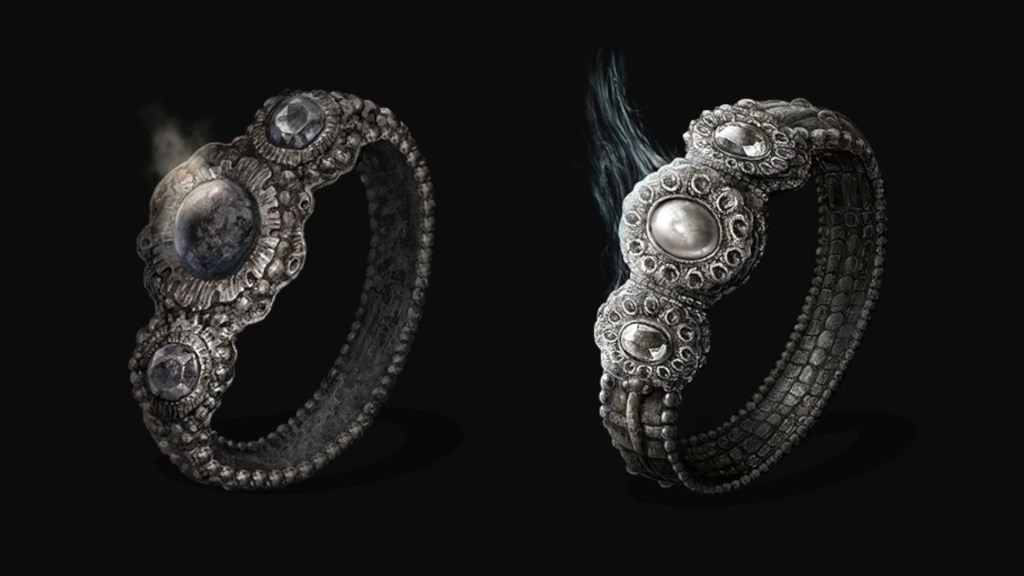
One of the lie rings that Hollows of Londor use.
Attains outward appearance of a spirit body, not a Hollow.
They are powerlessly decrepit, full of deceit, and not showing themselves. Thus, the Hollows of Londor are abhorred.
Small knife for throwing covered in poison. Throw at enemies to deal damage accompanied by poison.
Weapon of assassins of the country of Hollows, Londor. Its poison is ridiculed as being the blood of Hollows.
It is a vicious cycle which encourages Londor to feel so ominous, though its actual people tend to act as cordial as any other. Being a melting pot of Hollows from all walks of life and all over, variety is to be expected. Yoel was apparently a sorcerer before becoming a citizen of Londor. From his reference to the “famed” Vinheim, the old man is probably self-taught and has only heard stories of the amazing spells produced there. This would explain his generic repertoire of sorceries to teach, from Soul Arrow to Soul Greatsword. The only spells which have any connection with Vinheim specifically are Magic Weapon and Shield, but applying sorcery to armaments is such a basic concept, they might be Yoel’s own invention. Even if he did briefly attend as a student, the elder died and became an Undead welcomed into Londor, where many like him practiced no better level of sorcery. Londor seems to thus collect plenty of dilettantes, with old Yoel showcasing the average charm.
Ashen remains of a Hollow who served, and strayed from, a certain woman. The handmaid of the ritual place will make use of the new items.
You will probably see it if you look at those items. The ominousness of Londor, country of Hollows.
As I first mentioned, I am originally a sorcerer. The sorcery of Londor doesn’t compare to the famed Vinheim, but let me teach you the extent of my knowledge.
Of course, Londor did also pick up truly exceptional individuals. The stone-humped hag is one such example. As a former High Priestess of Lothric and wet nurse to Prince Lorian, she sat among the kingdom’s elite, educated in matters of faith. That life of religiosity shines through when, from her vantage above the Dreg Heap, her mind immediately goes to how a god might see the world. One can likewise imagine her pride in raising Lothric’s greatest warrior, who continued to share stories of his exploits with her well past him needing a nanny. It was a genuinely loving relationship. But a woman can only get so old, and the High Priestess soon passed away. The Darksign buoyed her life, but she could no longer be welcome in Lothric. Rather than settle in the Undead Settlement, however, the priestess went on a journey with a scant few belongings she holds little regard for. Becoming one of the “sinners” appears to have shaken her faith, hence why the old woman downplays herself being anything more. Without her position, she has no mission, no purpose, in life, as she indirectly mourns.
When the Age of Fire ends, all lands drift to the farthest end. Countries of kings, lands of beggars, everyone’s the same. The work of man and the like, that sort of thing… That’s why I love this scenery. It’s just like I’m God, isn’t it?
… You’re not going to reconsider, are you? Well, that’s fine. Not everyone has the likes of a mission. Cherish it to the utmost. That’s surely for the best for you and iron-mass boy.
For sure, “weak” Hollows who had no chance even attempting the firelinking ritual are naturally more likely to end up in Londor, and clerics must be hit especially hard by their undeath. Vilhelm casts not just Vow of Silence but also Great Heal, and with a Canvas Talisman. Odd for a knight of Londor to perform miracles of the gods, unless he has a history with it. Together, the miracle and catalyst submit that Vilhelm was once a high-ranking traveling cleric, most likely a holy knight like the owner of the Paladin’s Ashes. Recall how that paladin was killed for sticking his nose in any perceived injustice or iniquity he came across, his foolish arrogance punished. Vilhelm makes a point of these “madmen” who boast about justice while pursuing fugitives and uncovering plots, unprepared to be the one receiving punishment — as if he speaks from experience. He himself seems to be one of those cats curiosity killed, a former paladin who never imagined defeat as a holy warrior of justice. That paladin had to reckon with such naiveté on top of becoming Undead. And it led him to Londor.
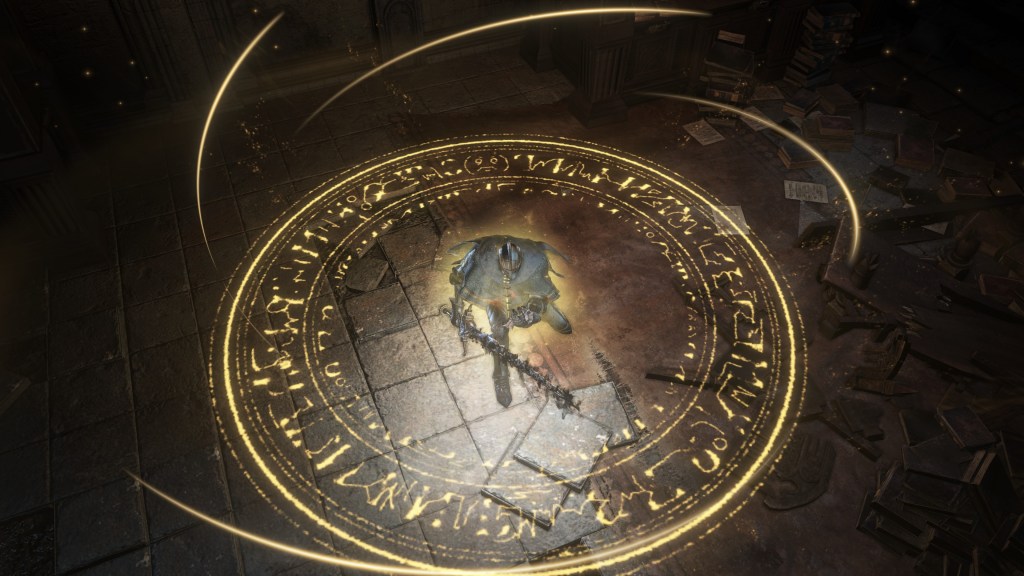
… They are everywhere, all the time. Madmen who pursue the fugitives, uncover the concealed, and boast of justice. And often, the only thing they lack is readiness. For the retribution they will have one day…
That appears to be the uniting factor stitching these disparate Undead into one nation. In manifesting the curse and devoting himself to Elfriede and the Sable Church, Vilhelm was now on the other side. Too often, he would see his old self investigating something that really wasn’t their business, all in the name of what is “right” according to society. They assumed morality decided their victory, only for Vilhelm to show them otherwise. In fact, becoming a coldblooded “burier” may be his way of teaching the harsh lesson he learned. Even against us, he doesn’t treat our defeat as a final farewell but a teaching moment, telling us to put aside our curiosity about Ariandel. With their new perspective, Hollows see the hypocrisies and lies in the gods’ system, how “sin” is arbitrarily decided and “evil” is branded from ignorance, before they ever hear Liliane speak. The living have the gall to complain about honor and methods, believing their success comes purely from virtue. But the good aren’t necessarily strong, and evil doesn’t strictly belong to the weak. Londor liberates man from this judgmental world.
That said, the country didn’t accept just anyone. In every society, there are rabblerousers and malcontents. Those who fail to respect Londor’s laws are seemingly exiled, handed a copy of Atonement before they leave. Unsurprisingly, these criminals know no other miracle of the Sable Church, and their lack of piety is duly rewarded. Because it is literally named “redemption of sin”, (贖罪) the exiles naturally assume that the story offers forgiveness, Londor wishing the Undead well after they endure wandering the wild a little as punishment. However, astute readers might notice how saying that “even cursed journeys will come to an end one day” can hold ominous implications. In actual fact, the miracle makes it easier for enemies to notice the worker. And for a Hollow, virtually everyone outside of Londor is their enemy. The more they attract attention, the more they turn to religion to save them. But it is too late; Londor has no more salvation to give. Faith in this miracle only perpetuates their crisis, until someone or something finally brings their “cursed” journey to its end.
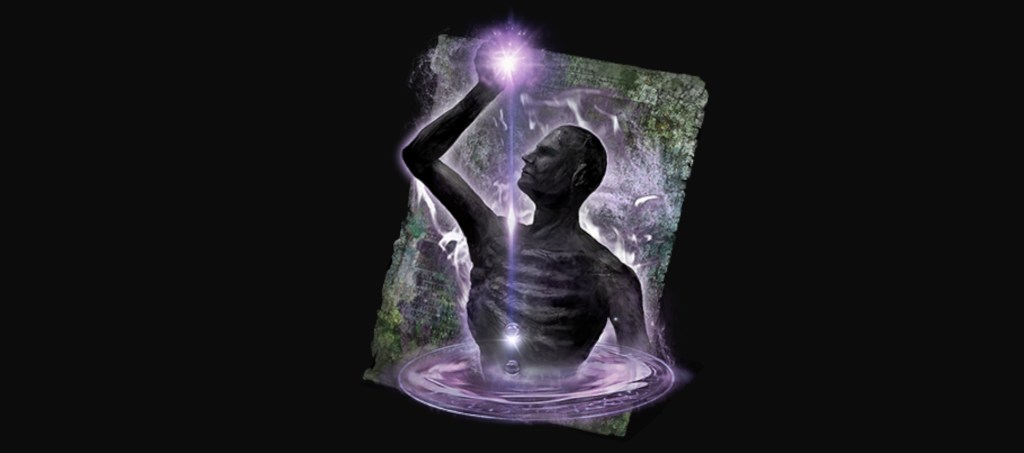
Miracle that the Black Church of Londor bestows to exiles.
Makes it easy to be targeted by enemies.
The exiles know no stories other than this and also believe that story to be forgiveness. “For even cursed journeys will come to an end one day.”
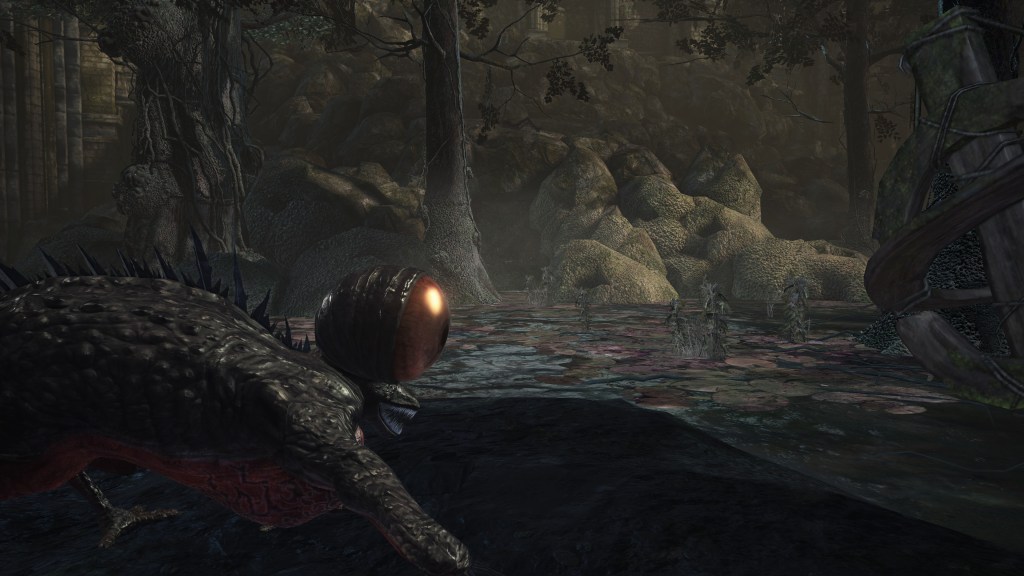
Retribution of this nature truly lives up to the Hollow stereotype. It is a devious trick presented to those who might otherwise believe that they are getting off easy. In reality, it is just a delayed execution, designed to extend their torment while the condemned remain not-so-blissfully ignorant. Maybe at the end, the sinners will understand how they took Londor for granted, but they still must atone with their deaths. Emblematic of that outlook, we can find the miracle on a corpse alongside another holding a hollow gem in Farron Keep. In their search for some sort of reprieve, these exiles were forced to come to a poison swamp and ended up trapped on a small cliff surrounded by basilisks — truly, a terrible day to be them. Without a doubt, those Hollows were missing their safe haven, at least until their cause of death arrived. After all, it is as we approach the duo from the Keep’s entrance that the Pale Shade of Londor invades.
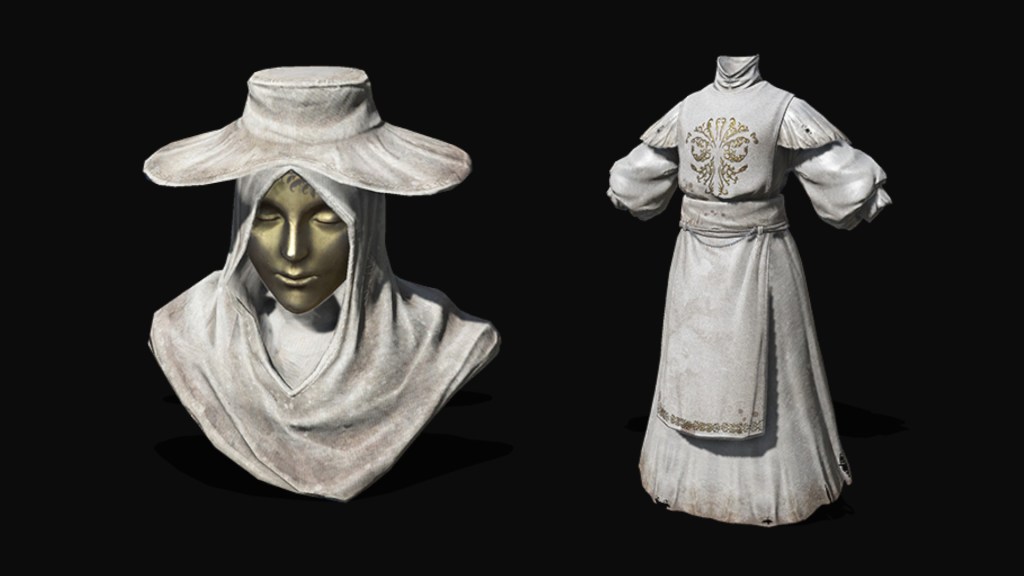
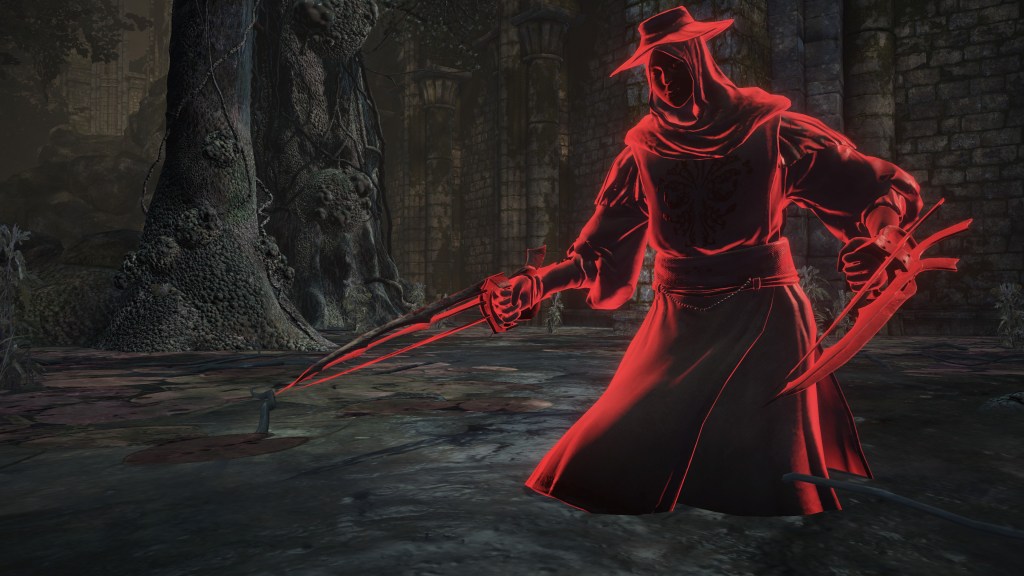
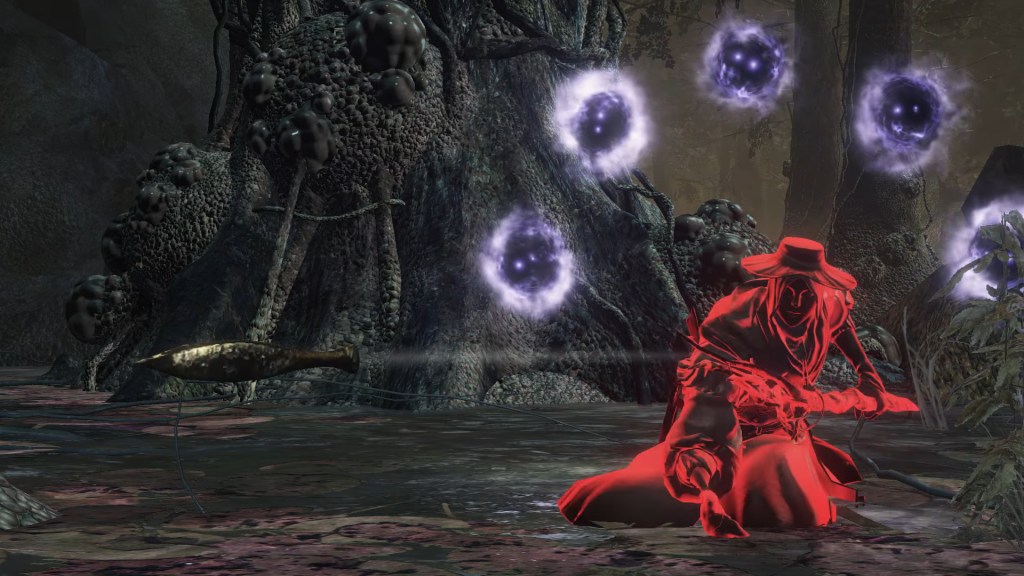
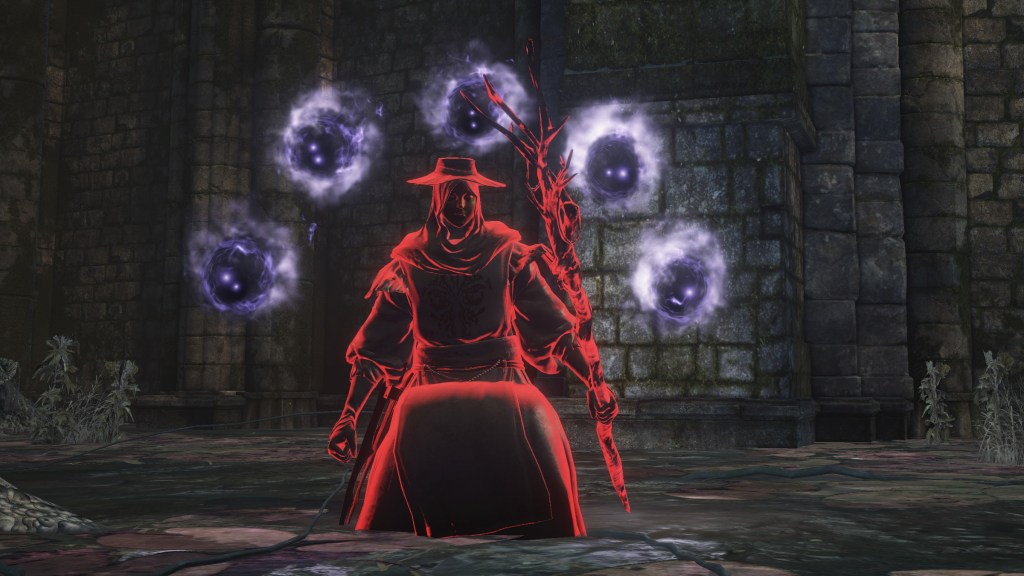
The Hollow is one of the country’s assassin, dressed in ghostly white. There is a certain irony to a country represented by a black church casting a “white shadow”, (白い影) but the assassins do their job. The gold mask of a kindly woman smiling invites people near, but it is still a shriveled face of gloom underneath, readying the kill with neither honor in their battles nor cheer in their victories; just the same disheveled moans. Predictably, the men are feared as Harlots of Death, seducing the unsuspecting in spite of their abhorrent station. And the foreplay? Quicksteps around the target with Manakin Claws, poison knives thrown in-between. If that fails, Witchtree Branches to quickly cast sorceries like Affinity. Worse comes to worse, there is draining the life out of them with the Dark Hand. Because so many of their tools were only more widely available in DS2, it is possible that assassins are recruited or trained in the New World. Nevertheless, a pale shade’s appearance so close to exiles suggests that he was sent to be their executioner, once there was no place left to escape — and it is a miracle finding them.
Gold mask of the assassins of the Black Church of Londor.
A woman’s kind smile sticks to its surface, and thus they are called Harlots of Death.
But beneath that smile, there is only the gloomy, shriveled face of a Hollow.
Apparel of the assassins of the Black Church of Londor.
The white shadows of the Black Church are all undead Hollows and thus are extremely feared and abhorred. “For there is neither honor nor exaltation in their battles, only scraggly moans.”
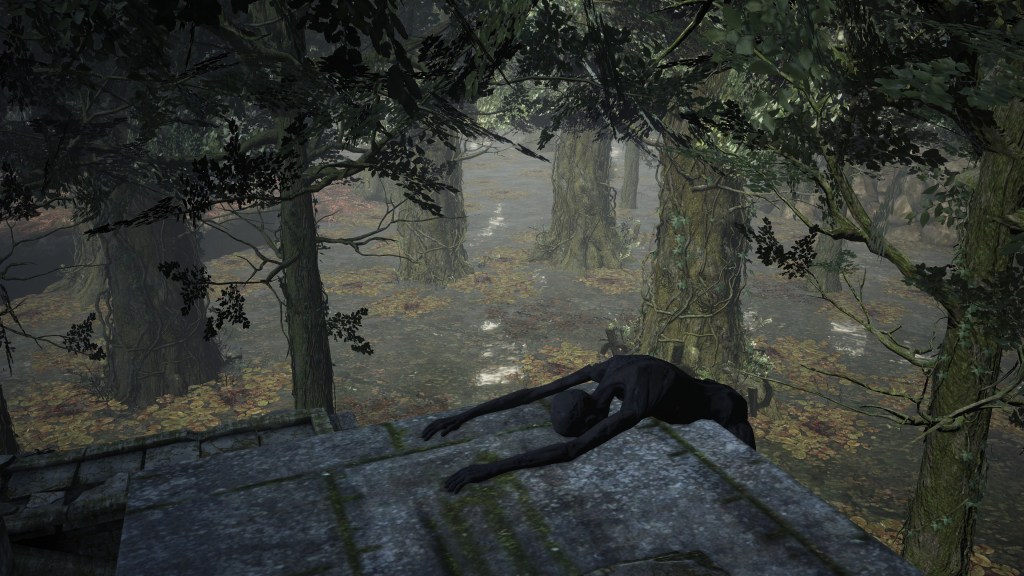
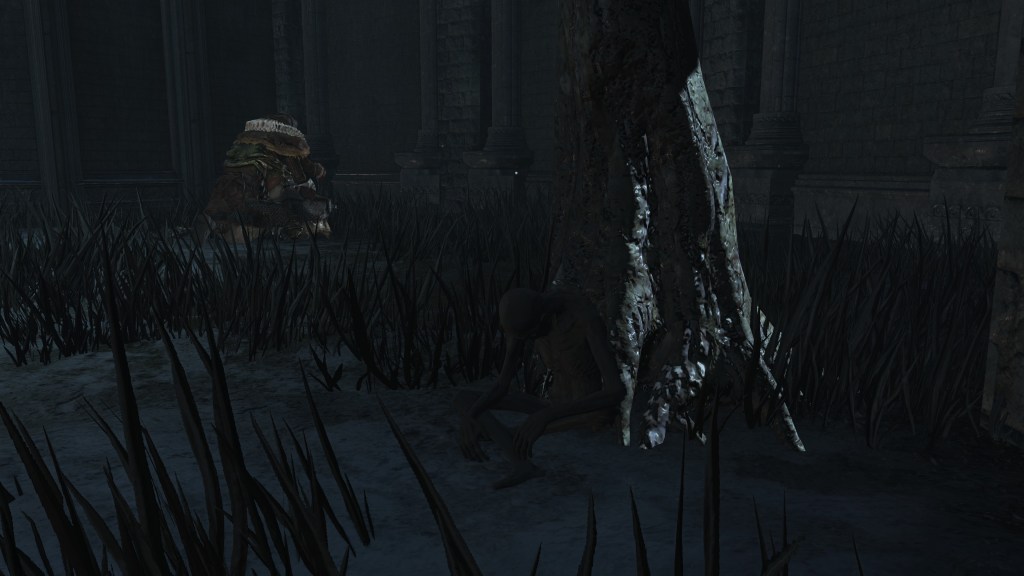
Wordplay aside, Atonement isn’t a death sentence for everyone. Not too far from the executed duo, a corvian storyteller ministers to a new flock, eager to hear his message. This is curious, since Farron is a land filled only with barbaric Ghrus or vengeful Darkwraiths, not the kind to hear out the good word of Ariandel. What Undead were there to convert? The answer can be inferred from the corvian a little ways off to the side from the group; collapsed on his knees, limbs limp, as if exhausted from a long journey. The only ones so desperate to trek this deep into the Farron woods without rest would be exiles of Londor. The storyteller was just as liable to notice them as any pursuing threats, and they were sure to welcome Ariandel’s salvation after experiencing deprivation of Londor’s deliverance. In their case, Atonement really was a vague hope for finding a new life in exile — one might even say that they had the luck of Londor. Certainly, an emissary from the land of the undesirables is the one exception in a Hollow’s terrible world, exiles in any other circumstance facing certain death.



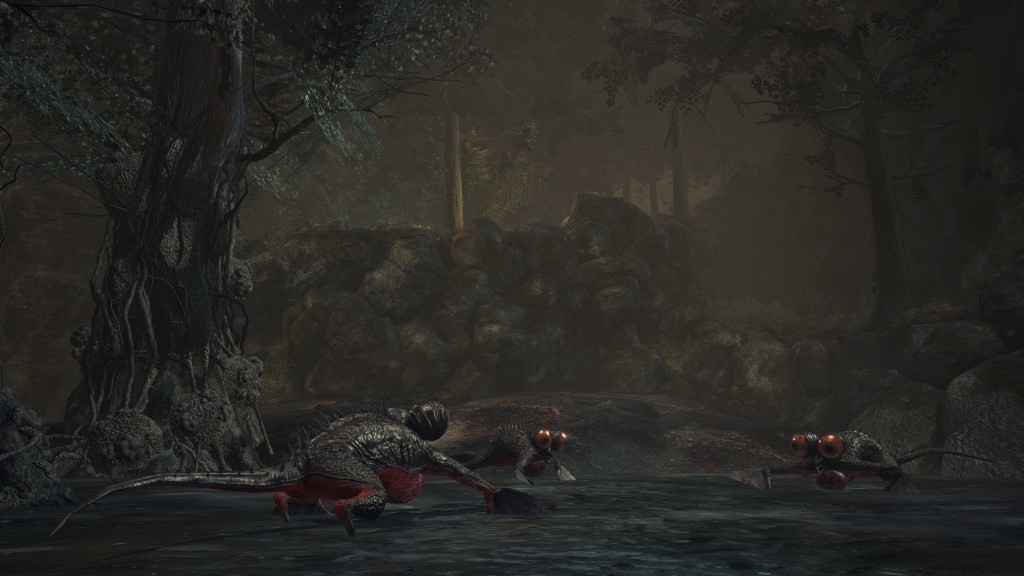
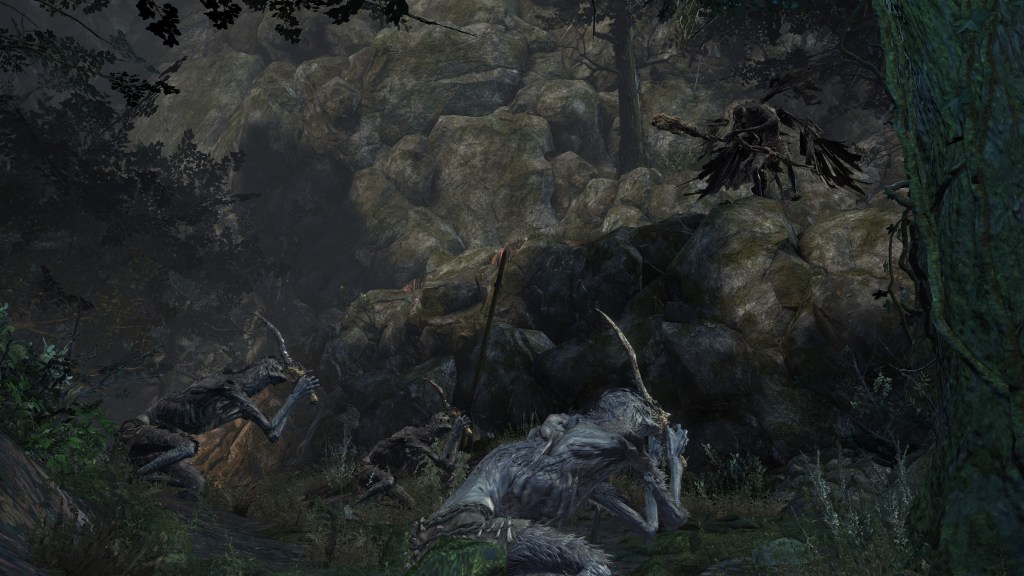
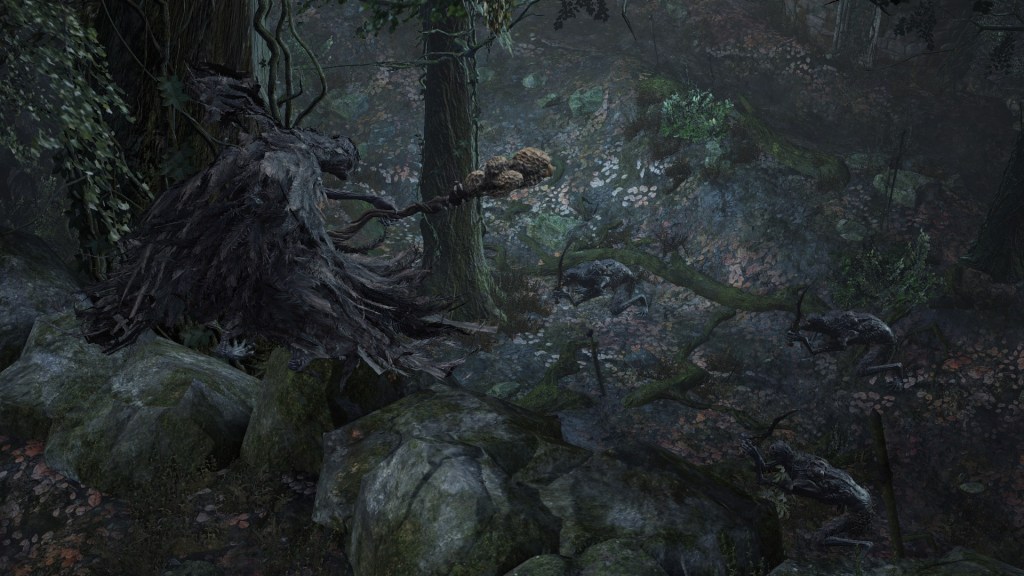
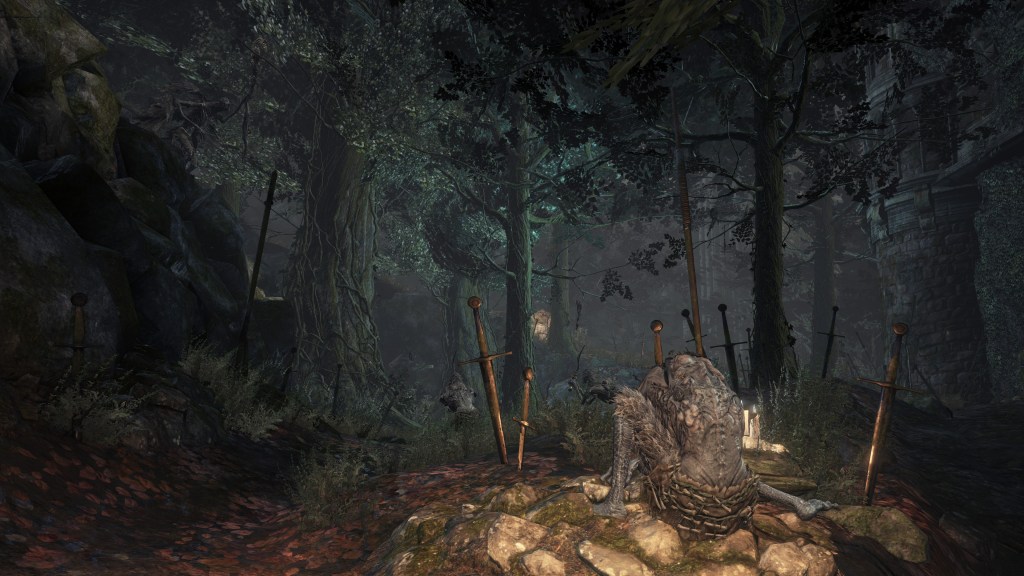
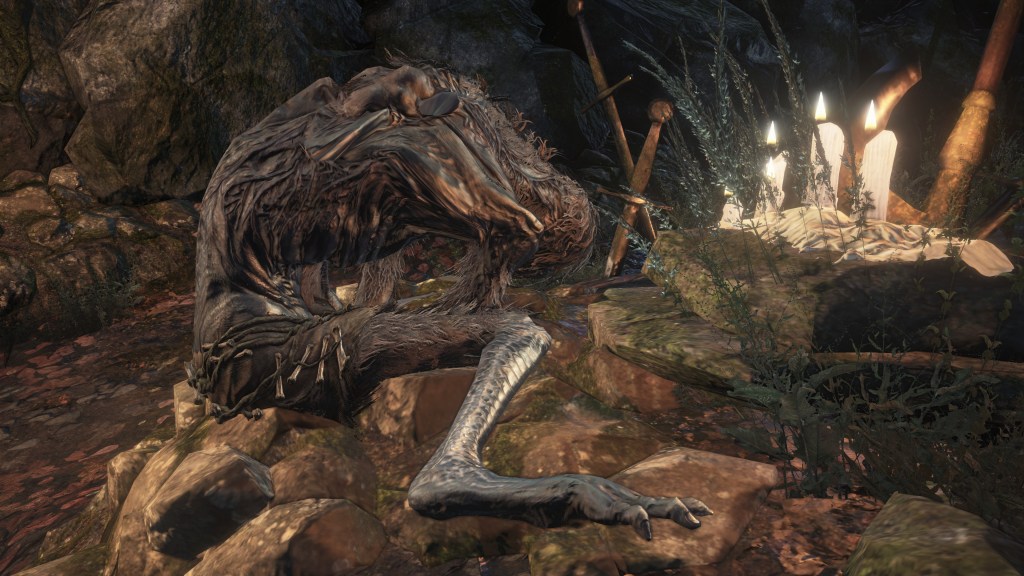
But even if some did manage to escape their pale reaper, this system of exile showcases how little the Sable Church tolerated misbehavior. It didn’t matter where the Hollow originated. Like any decent country, law and order was paramount, though issues in society still persist. Take hollowing, for instance. Regardless of precautions, Undead going mad is inevitable. Whether from fatal accidents or losing heart, a certain percentage of the population would become soul-starved monsters assaulting anyone, something that Yuria and Vilhelm both express disdain about. Yuria goes so far as to excoriate this quality in Hollows’ prospective king, decrying us as bonpu (凡夫) — a mundane individual with Buddhist connotations of being unenlightened, similar to Kaathe’s chastisement of a treacherous Chosen Undead in DS1 for not realizing “the truth” he revealed. A country of Hollows cannot be led by the worst among them, and neither can a king rule a madhouse. What hope was there to exile these lunatics? Londor is better off putting them out of their misery on the spot.
Hmph, Did Sir Yoel misjudge? Becoming a Hollow and losing sanity, how can such a mundane person be our King!
A similar situation arises thanks to Londor’s culture of deceit. As much as it loves hollow gems, purging stones are a secret treasure in Londor which the Hollows will occasionally use to lie about their circumstances, pretending as if they aren’t Undead. Some among those few fall so far as to believe the lie, becoming traitors to Londor. How does one resolve the delusion that a person is one of the living hostile to Hollows? The only choice is to treat them according to their wishes, putting down the “living” unwilling to live with Undead society. They won’t be missed. Yoel is a proud Hollow and bemoans the hypocrisy of a cursed hero like us unhesitatingly killing fellow Undead like him. It apparently doesn’t matter how deceitful the population might act in daily life, there is still no excusing betrayal in Londor. The Sable Church exemplifies how Hollows look out for Hollows, even if they must make exceptions.
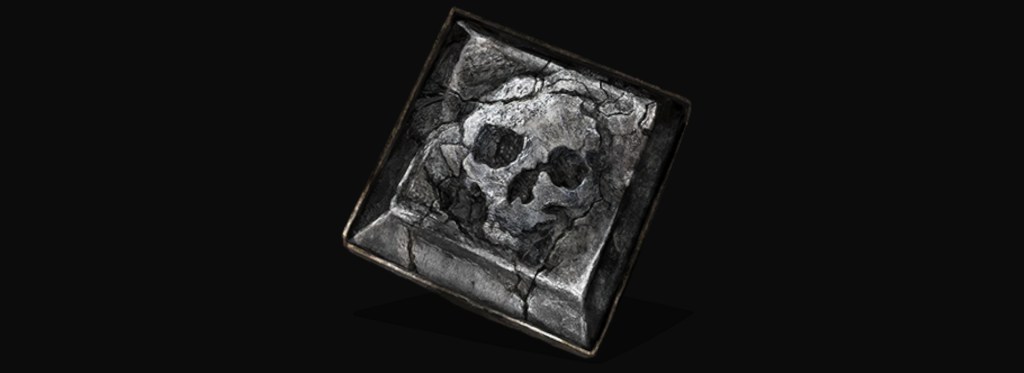
Ashen stone blending with a small skull.
Reduces curse accumulation and rescinds Hollow status.
It is a secret treasure of the country of Hollows, Londor, and they occasionally use it to lie about themselves.
It is said that they occasionally sink to traitors who themselves believe that lie and cast aside Hollows.
Killing Undead with pride, huh? Cursed hero.
Part of this might have been mitigated if they relied on traditional methods to stave off the curse. But Yoel is amazed to see an Undead bonfire in Firelink Shrine, insinuating that none exist in Londor. The reason is clear from its connection to the gods, the divine mystery maybe intriguing to the sorcerer but not the Sable Church’s dogmas. Yuria and the pale shades do drink Estus for healing, but that might be because they are currently operating in Lothric where the bonfire is prevalent; when in Rome, as the saying goes. Back home, they aren’t willing to sacrifice bones of even their criminals to bask in the First Flame’s warmth. The common Hollows are sure to discard any Estus Flask they might own before joining Londor — they will have no use for it. But without the heat of the bonfire to keep them sane, they must turn to more dubious means of alleviating the Dark’s gnawing. That need ironically left them at the mercy of the gods anyway, a particular god named Velka.
Oh, Person of Ash, you have returned? A pilgrim who fails to die seeing the likes of such a mysterious fire. If not accepted as your servant, I never would’ve expected to realize it. Thank you so much… Again, allow me to serve you.
The Fourth Last Thing
The Goddess of Sin holds an undeniable connection to Londor. The country adopts her Rings of Sacrifice, and Vow of Silence was originally her secret rite. Her priests were also described as “excellent swordsmen” (卓越した剣士) just like members of the Sable Church. Even the Clutch Rings associated with the wicked god are now part of Londor legend. According to this old tale, the crow’s leg clutching a stone in its talons represents an inviting hand when people have become heartbroken with despair. The crestfallen hollow, so this is a story of giant crows reaching out to Undead in need just as they become suitable for Londor, likely whisking them off much as the giant crow did in DS1. Considering hints to the crow acting as the witch’s familiar, it implies that Velka had her servants find and collect prospective citizens for the Sable Church early on, resulting in it becoming legend for later migrants. Such a peculiar “invitation” was no longer needed once the country of Hollows became better known, but it nonetheless involves the god in Londor’s origin.
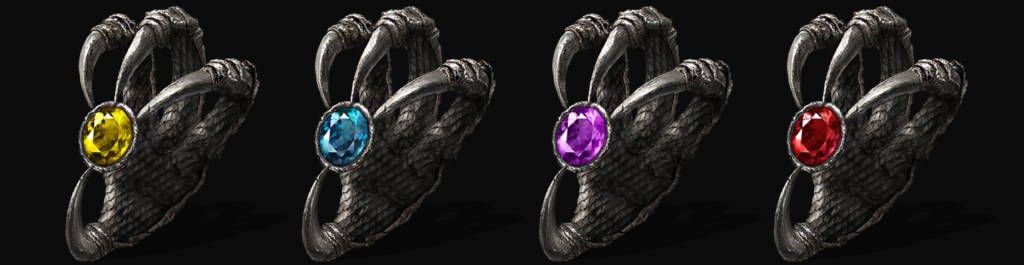
Ring of a strange hand that clutches a purple stone.
Boosts Dark attack power but will lower cut rates.
According to an old legend of Londor, the invitation of a strange hand will appear before those very people who have become heartbroken in despair.
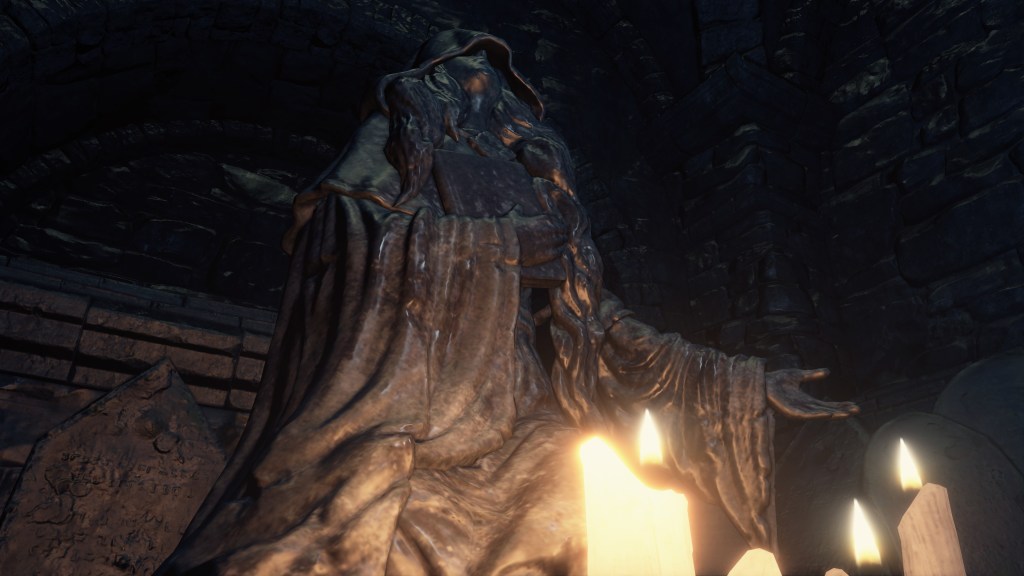
It appears that Kaathe wasn’t the only “angel” mentoring the three sisters until they established a nation. This might explain why Yuria wields Darkdrift. In DS2, the katana belonged to Agdayne, overseer of the Undead Crypt, and was previously property of his creator, Nito. However, there were oddities which opened the prospect of Velka actually creating it. Even if not, she almost certainly had passing familiarity with the weapon due to her collaboration with Nito in the Crypt. Consequently, it isn’t shocking if the goddess retrieved the weapon after the events of DS2 or created a new one, which she then gave to the second sister. Yuria may not have been special in this regard, as we don’t ever see the swords that Elfriede or Liliane wielded. But even if they too received similar weapons, it would still imply that they are being trained and facilitated with the black-haired witch’s help. Even after Kaathe has died, Velka continues to support them from her place in Carim, it would seem.
Besides both countries sharing “gloomy” people and “ominous” products, the Morion Blade’s attack boost at critical health resembles the Red Tearstone Ring, which was said to come from Carim in DS1. Recall also from DS1 how purging stones were Earl Arstor’s secret treasure, the infamous lord of Carim bearing similarly suspicious ties to his resident Goddess of Sin. Indeed, when praying to the statue of Velka, we can beseech the god to not only absolve us of our sins, but also dissolute our hollowing, reversing any visible decay from the curse. With this service functioning identical to the purging stone, the connection between Arstor’s products and the Goddess of Sin’s sacrificial rites couldn’t be more blatant. And now those stones born of human sacrifice have found their way to Londor.
On the subject of the Impaler’s works in Londor, Elfriede holds onto the Chillbite Ring. The Bite Rings are expressly products of Carim’s clergy, and their locations are mostly consistent with that origin. The Bloodbite Ring came to the Undead Settlement with a cleric, as they so often do, before a giant sewer rat gobbled up both. The Fleshbite Ring fell into the custody of the Grand Archives as a kindness from the clergy visiting next door. The Poisonbite Ring landed in the Cathedral of the Deep since the bishops are always in need of new blood. The only exception is the Cursebite Ring, which uses a purging stone as its gem; it, and the many purging stones in the Profaned Capital, are independent inventions of the city’s equally shady clergy. Therefore, it is more likely than not that Elfriede procured her ring thanks to Carim connections.
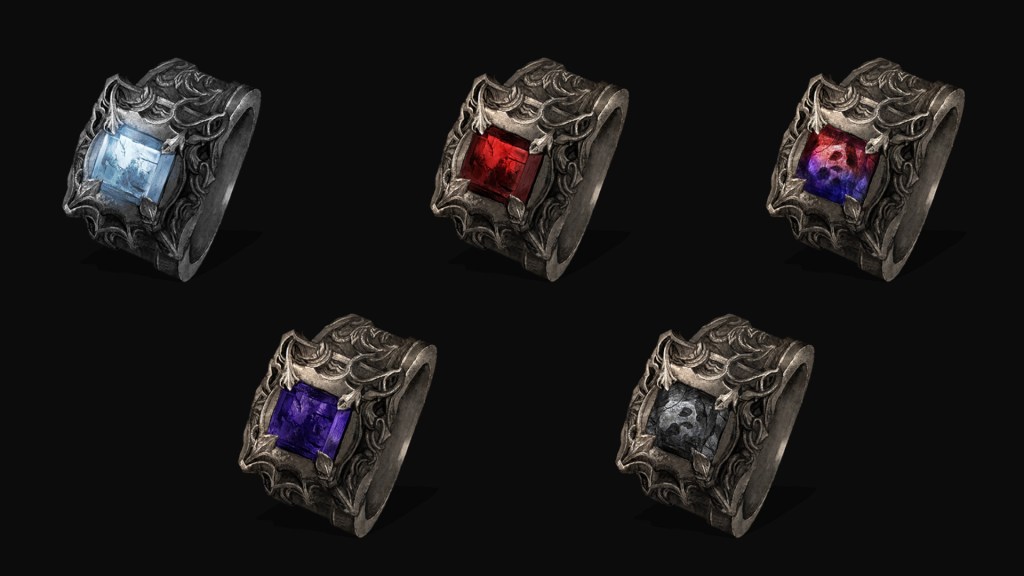
For the witch’s charity, Velka seems to be using Londor to help her maneuver. Recall the body with the Ring of Sacrifice failing to infiltrate Irithyll. If this was a spy acting on her behalf, then it is also possibly one of the Hollows who own them. A pilgrim in service to Yuria does slip into the city successfully, disguising herself as a statue in the Church of Yorshka, so it isn’t beyond the pale. A similar situation arises within the High Wall of Lothric where we find more pilgrims, the Ring of Sacrifice left on a corpse that failed to scale the buildings. Yet another ring lies in the Consumed King’s Garden, its owner face-down in the toxic swamp after barely entering. The one ring not tied to an obvious spook lies at the Road of Sacrifices, its holder dangling from the ruins — this person may be just an exile, lagging behind the others over in Farron Keep. Back in Irithyll, however, there is a body sitting in the prison pen with Dorhys. It carries the Witchtree Branch used by the pale shades, one of whom can be summoned to help slay Sulyvahn. This assassin seemingly got caught by the Pontiff’s Knights.
The Clutch Rings of Londor legend leave no further uncertainty. As already established, the Dark Clutch Ring in Irithyll Dungeon betrays another infiltrator, looking into what Pontiff Sulyvahn has to hide. The Magic Clutch Ring is likewise collected from a corpse inside Irithyll, hanging from a broken balcony behind an illusory wall. With the Pontiff’s revived sorcerer knights currently out on patrol, this must be a spy among their number, the Hollow executed on the spot and quickly hidden as the true knights move on with restoring order to the streets. The Lightning Clutch Ring implicates a Londor citizen who tried and failed to breach Archdragon Peak. The Fire Clutch Ring shows another spook embedded among the zealots in the Undead Settlement, ironically getting burned by that same fanaticism. Consistent with all these locations is that they are where Gwyn’s children survived, at least in the general region. Londor seems to be helping the goddess monitor and manage the last of the gods.
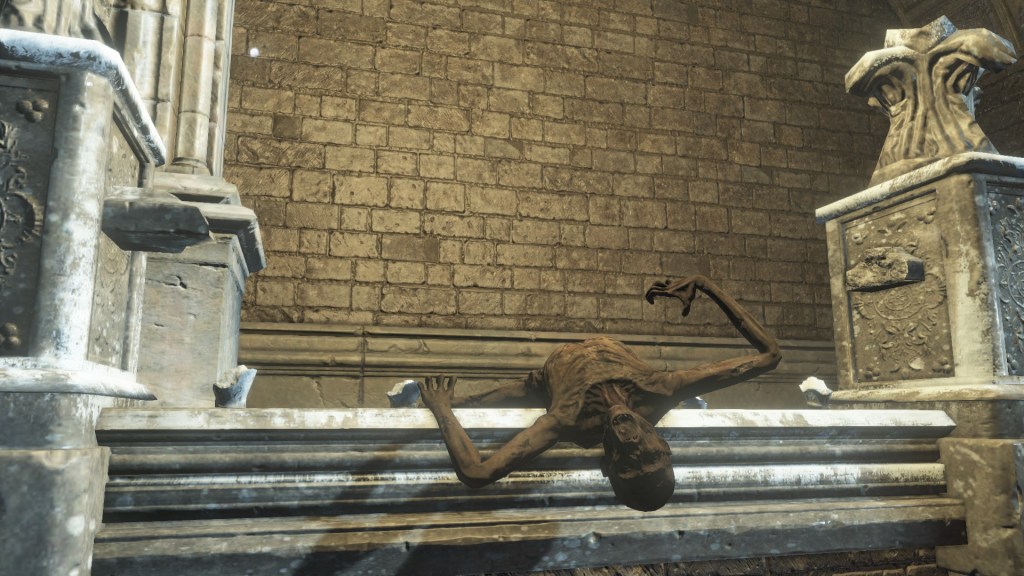
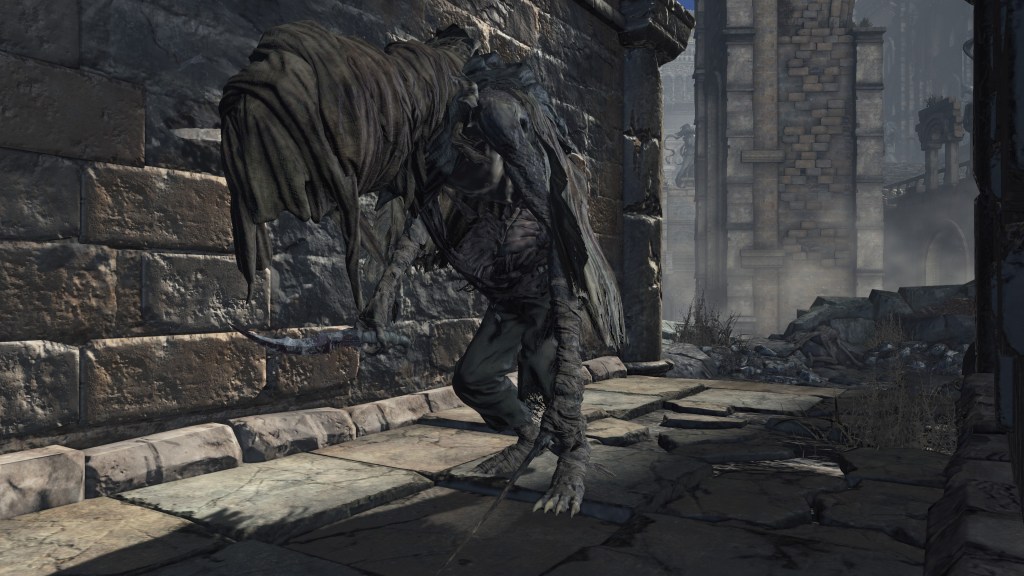
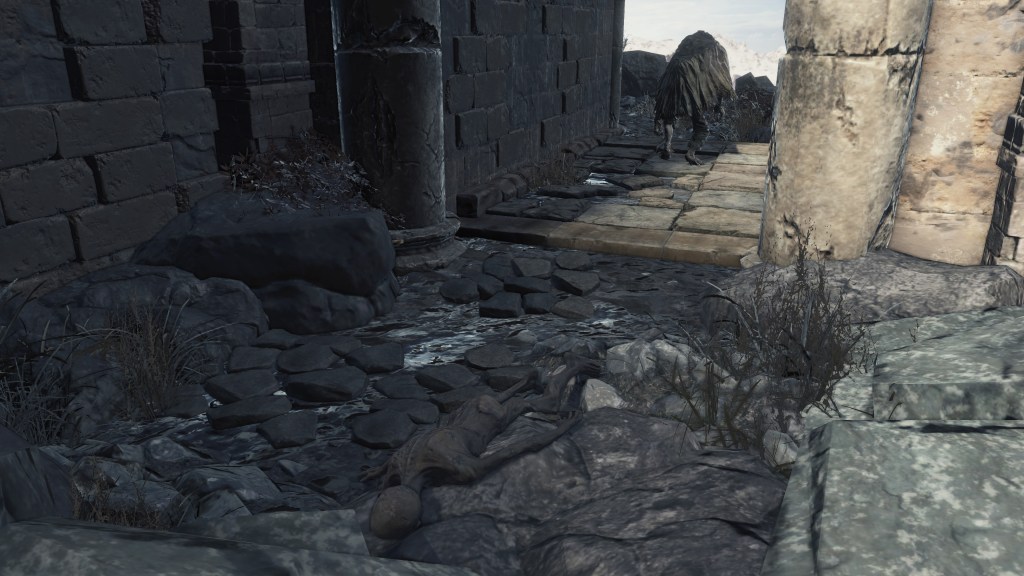
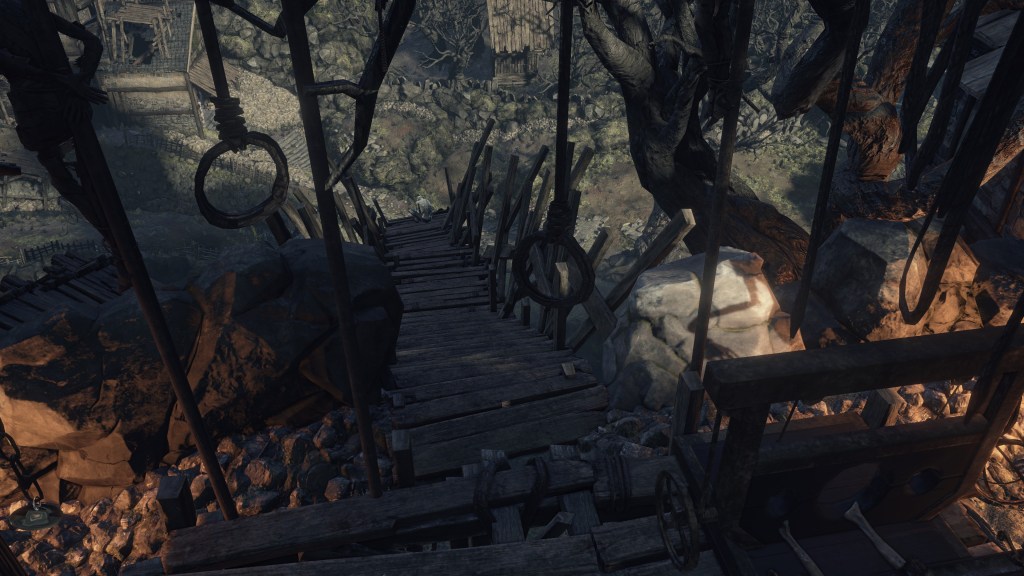
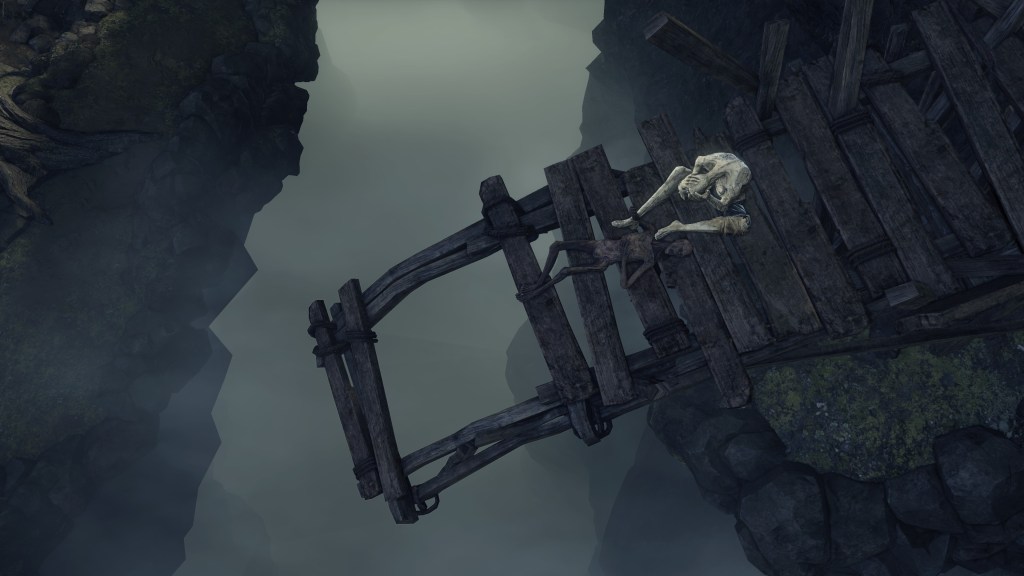
The assistance goes both ways. A functional country of Hollows must terrify the world of man, yet nothing would suggest that Londor is constantly beset from all sides. Shouldn’t a country which so openly embraces the Dark be unacceptable to god-fearing men? Why haven’t the various countries formed a united crusade against it? Perhaps because the Way of White is compromised by “Caitha”, the god in Carim leveraging her authority to convince churches throughout the Old World to moderate? The only one who might surpass Velka’s influence over the region is Gwyndolin, and he was being imprisoned by a self-proclaimed Pontiff. With Sulyvahn himself immersed in Dark magic, he wouldn’t feel invested in the geopolitical situation of some far-off country. As a result, Velka could cushion Londor from consequences, insisting to the world that she is already containing the threat or needs to await a better opportunity to strike back. Between that and delivering her various products, the Hollows’ assistance to Carim in these covert operations are a fair trade.
None of this is surprising when factoring in the Goddess of Sin’s clandestine goals. DS1 subtly indicated Velka to be Kaathe’s collaborator, helping to undermine Anor Londo from within. Her actions always left plausible deniability about her involvement or intentions, but associating with the primordial serpent’s maidens and their subsequent country makes the reality of her treachery transparent. The witch has never forgiven Gwyn or the medials for their treatment of her and her daughter — destroying everything the so-called Great King held dear has been her lifelong revenge. The arbitrator of crime and punishment has put her position to good use excusing the “guilty” living true to their nature and penalizing the “innocent” who first sinned against them. And her crowning achievement will be to see this entire fire-based system crumble. Even with Kaathe and his ilk gone, the goddess continues to work with Londor for presumably this objective. The old gods will collapse, and man will take their place on the pedestal. It is just a question of how they will accomplish this.
That Hideous Strength
As stated earlier, Londor seeks to have a Lord for all Hollows, reminiscent of the Dark Lord for man that Kaathe proposed in DS1. This King of Hollows is patently more restrictive than the King of Dark ever was, albeit with one caveat: arguably all humans will be Hollows in a dark world without fire. The Dark Soul within man is still central to the one kingdom heralding the new Age after Fire. However, Hollows as they exist comprise of not just humanity but also the shackle of the gods enclosing it in a ring of fire. The Lord of Hollows likewise assumes that fire will still exist in some form, with Yuria asking us not to snuff out the First Flame but to usurp it for our coronation. This thus seems to run counter to Kaathe’s past goal for a human Lord to bring forth the Age of Dark specifically. And yet, the Lord of Hollows is exactly what Kaathe was championing at the end. Yuria thinks of the primordial serpent’s last will when killed by her prospective Lord, implying that his will she and her sisters inherited was for Londor to have a king. The country of Hollows is following his wishes.
As odd as this might sound, it isn’t contradictory. At no point does the Sable Church clamor for an Age of Hollows, only a Lord. The Age of Dark is the end goal as always. However, as we see when the Fire Keeper ends fire on our behalf, it isn’t actually the end. Embers harbored within past Lords of Cinder still remain, the Kings free to run off and hide with the surviving flame. As the chaos demons demonstrate, such remnants can be persistent, even leaving open the hope of reviving the First Flame in total. Meanwhile, fire will continue to exert its influence, exacerbating the stagnation slowly but surely. What is the benefit to ushering in a false Age of Dark now, beyond the temporary illusion of darkness it will bring? Kaathe must have recognized how Lothric’s firelinking system has complicated the world’s problems. Had a Dark Lord slain the one Lord of Cinder and let the Flame at the source fade before all this, Londor wouldn’t be necessary. But as things stand, ending the Flame will just create a bunch of little independent fires to find and stamp out. Fire won’t simply disappear.
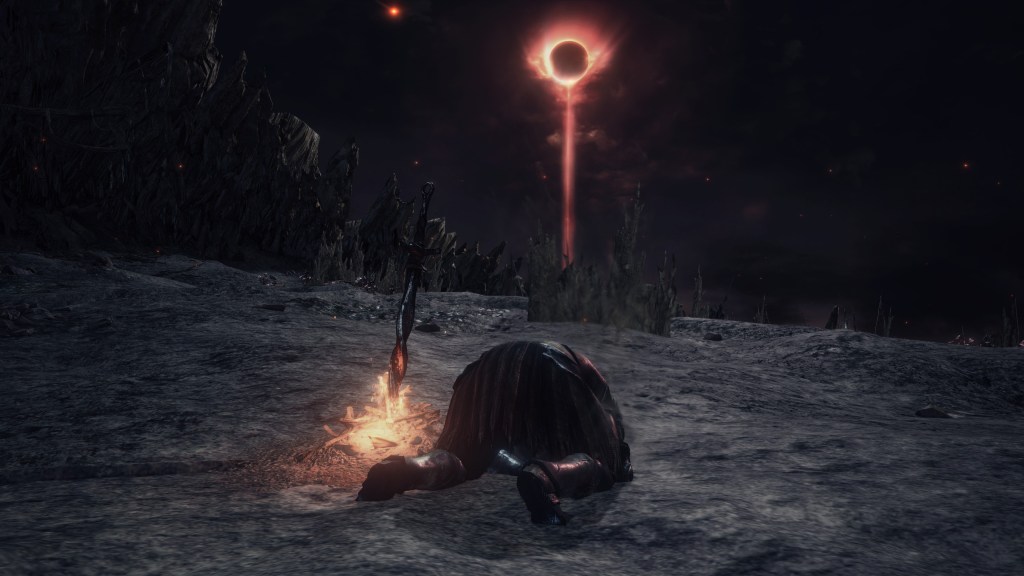
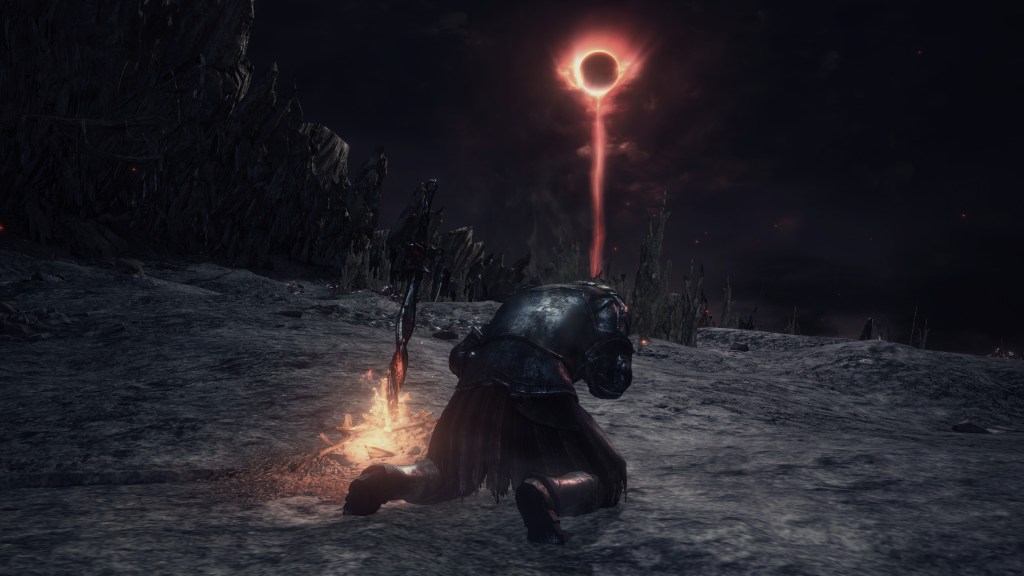
This explains the plan to usurp the First Flame instead. If ending the Flame will just disconnect the disparate pieces from the source, then the Lord should just snatch it without snuffing it out — inherit the Flame, but with full control over it. By keeping the First Flame alive but in man’s possession, the usurper can moderate the power of all fire, including the embers of the Lords of Cinder. We see this play out after performing the usurpation, the eclipse which appeared after defeating the Lords of Cinder changing its aura from red to white. Recall how souls become more fire-like as they ascend in power, white souls generally gaining new auras of color from yellow to orange to red. We are seeing the reverse, the sun covered in darkness at its weakest so far as its influence upon the universe is concerned. The dying flame may yet live, but never has it burned so meekly. As the Lord of Hollows, we have suppressed the power of the First Flame and all flame by extension. It is the closest we can get to the Age of Dark without letting the fire die, giving the Lord leverage over the Lords of Cinder.
Naturally, this is accomplished utilizing the power of humanity. The dark sigil serves to mark the Lord. Going by the menu graphic and Yoel’s dialogue, this gaping “dark hole” (暗い穴) on the body looks to be the non-fire element to the Darksign, the humanity confined within the shape of the ring which manifests on the Undead’s back. That resulting hole is allegedly bottomless, with our dark soul leaking out in an amount corresponding to the number of dark sigil items collected in our inventory menu. This game mechanic clearly reflects the density and strength of the humanity, endlessly spilling power as it is accumulated or drawn out. The more power leaks, the greater the curse takes effect, causing us to more quickly hollow after death; this despite us not suffering visibly from the curse without a sigil. The developers wished to highlight the power of the hole’s Abyss, which can apparently overpower the ring of fire itself as it leaks out unimpeded. And if the gods’ seal cannot contain the Dark exposed on our back, what then would become of the First Flame?
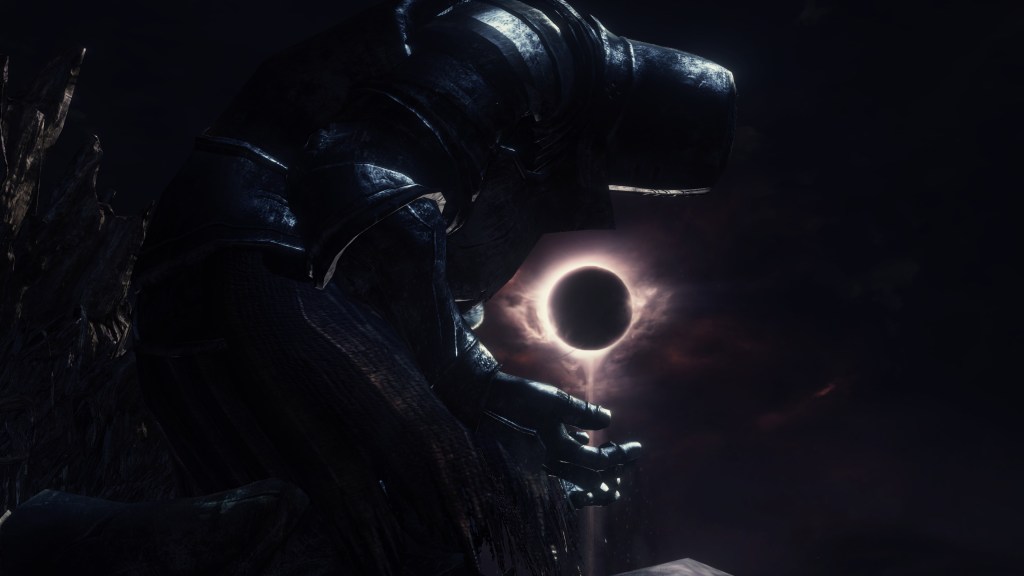

Dark hole resembling the proof of an Undead. It is gaping open on the body.
There is no bottom to that dark hole. The Dark of humanity gradually leaks out and the curse accumulates in exchange.
It is the sign of a curse that will never disappear, but it is said that a single Fire Keeper who returned from the Abyss once soothed that curse.
… And one more thing. I will be able to draw out your true power. A pilgrim of Londor knows. Those engraved with the Dark Ring hide power, every one…
The answer is as we witness: the dark sigil cages the First Flame after linking. Instead of using fire to harness the Dark as Vendrick once espoused in DS2, we use the Dark to bind fire to our will. Inheriting the Flame still necessitates we become its fuel, but only to the extent we choose. Our Dark Soul is the one in control, no longer constrained by even the bonfire network as we become part of the fire. And just as Yuria claims, we rob the bonfire of its Flame, usurping the proverbial throne from the Lords of Cinder. Without help of a Fire Keeper, we have taken the fire to decide the fate of the world as it marches, if still slowly, toward the Age of Dark proper. We do this neither to indulge our Unkindled nature nor to rush our way to ultimate darkness as in other endings, but because it is the will of all men true to their nature as Hollows. If the eclipse ominously resembles the Darksign, then its new form evokes humanity — a world where the Abyss finally overcomes Flame. This is the best path to Kaathe’s ideal.
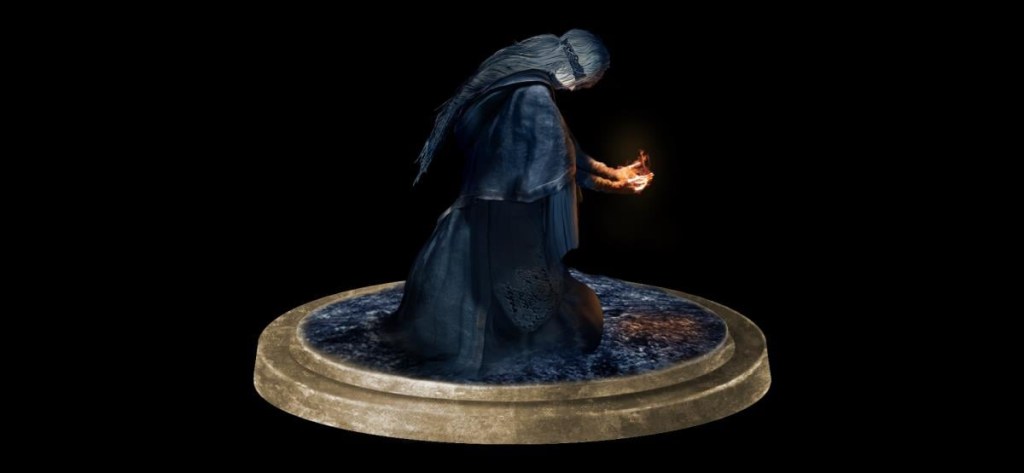
With all that established, we evidently weren’t the Sable Church’s first attempt to crown a King. Before her death atop Firelink Shrine’s belltower, our Fire Keeper’s predecessor returned from the Abyss with the power to alleviate her “hero” of the dark sigil. This implies that Londor sent someone with the hole of effused humanity through Lothric’s firelinking system once before. The Fire Keeper thwarted this plan, having learned how to use her nature as a vessel of humanity to absorb all that power the Darksign was leaking out before the champion could link the fire. The timing is reasonable. Recall that Fire Keepers are replaced once they succeed in guiding one hero into becoming a Lord of Cinder, as a precaution. The only known Lords within the past century or so have been Yhorm, Aldrich, and the Abyss Watchers, the last taking place a few decades or more prior. This leaves plenty of time for the previous Fire Keeper to operate before ringing the bell awakening us. Serving Londor’s would-be King would be limited only by how long she might survive with a corrupted soul, perhaps years.
Soul of a certain Fire Keeper said to have once returned from the Abyss.
It said is that she maintained the bonfire as well as served one hero, soothing and receiving even the dark hole. Thus, that soul has been corrupted.
And the Fire Keeper’s soul will dwell in another Fire Keeper.
In short, the Sable Church set up a Lord of Hollows long before our journey. And who was this failed candidate? Elfriede. Upon seeing her disembodied soul, Yuria laments the “pitiful” sister who abandoned Londor after turning to unkindled ash. Why cast the country she helped found aside unless her becoming ash was somehow connected? Unkindled typically result from a failure to link the First Flame. Why would Elfriede make the attempt when simple firelinking is antithetical to her church’s goals? Moreover, her form as ash lacks any indicator of hollowing. Even if she no longer considers herself part of Londor, why remove her curse? Since we lose our Hollowed appearance after the Fire Keeper suppresses our dark sigil, it logically follows that Elfriede endured something similar. The oldest of the three maidens immediately recognizes the dark sigil of a potential Lord, as she likely bore the sigil which the Fire Keeper had soothed. The woman tried to become king, and failed.
… Ah, you, our King. That soul is that of my elder sister. A pitiful woman who became ash and cast aside Londor… Elfriede…
As the oldest of the Sable Church’s three leaders, Elfriede is the natural choice for Londor’s king. Current events in Ariandel likewise showcase the woman’s authoritarian tendencies, meaning that she definitely possesses a willingness to rule over others. So great was her ambition, Yuria assumes that fueling the Lord with her soul would fulfill her truest desire. After Kaathe’s death, Elfriede likely believed that she was the one destined to fulfill his wish by becoming the Lord. Just as it would have been the eldest sister’s responsibility to take care of Yuria and Liliane growing up, she would now take charge of protecting the true humans in the new Age. But this ultimately did not come to pass. Elfriede linked the flame and instead turned to ash. Her hood and hair even hides a burn scar. Generally, Undead bodies are restored to their original state from before first death; even Unkindled tend to bear no visible signs of burning. But considering Elfriede’s circumstances, this may well be a lingering scar from her firelinking. If so, then she suffered an especially nasty incineration for her efforts.

You, could that soul really…… No, it’s nothing. That woman was once of Londor, you see. If she becomes provisions for the King of Hollows, it’d surely be her long-cherished wish… And I hope you’ll remember even a little. Those in fire’s shadow who were with that woman to the end…
In truth, the burning is proof that something went wrong. Looking at Friede’s soul, the nun is nothing like your typical heir of fire. Rather than the standard boss soul, hers appears as a long, thin black-and-white wisp, almost resembling a flame. We can presume that it is the source of the black flame smoldering within her, which flares up for the final phase of her boss fight. Elfriede bestowed the Onyx Sword harboring these same flames to her knight Vilhelm as a parting gift, so they have existed since before abandoning Londor. In that case, why would a Hollow retain the power of black flame, to the point that it defines her soul? Black flames are ignited from humanity, yet the soul in the menu graphic looks nothing like a dark soul. If the shape as a lick of flame is intentional, then her humanity burned in such a way that it consumed even her other soul, akin to deep souls. What would cause humanity to burn to that degree except when there is so much of it to burn a bigger flame? And it is the dark sigil that accumulates the power and amount which might feasibly raise that exact flame.
Greatsword modeled on flames which the nun Elfriede, who was leader of the Black Church, is said to have bestowed to her knight.
But it is said to have been a parting gift indicating the end of their relations as lord and retainer.
Battle art is “Elfriede’s Black Flame”. Clads the blade in black flames. It is a division of the same-colored flame continually smoldering within her.
Put simply, Elfriede’s body couldn’t properly contain the power of the First Flame with just her dark sigil. We undergo something similar during our own usurpation ritual, falling to our knees clutching our chest in pain after inheriting the fire. Taking in the world’s most powerful flame in its entirety unsurprisingly comes with some growing pains. But after taking a moment to process, we successfully internalize the flame as Lord of Hollows. In Elfriede’s case, inheriting the full First Flame overwhelmed her. While her body struggled to isolate the fire within her bottomless black hole, the burning Disparity ignited the Dark, causing it all to burst into a conflagration. As the Black Flame pyromancy alludes in its Japanese description, fire born of the Abyss cannot be separated from man’s flesh, for it burns off the dark soul flowing through it. In effect, Elfriede’s body overflowing with humanity’s power had become a giant tinderbox, and the First Flame triggered the explosion. The black flame threatened to consume her body utterly, leaving nothing but ash.
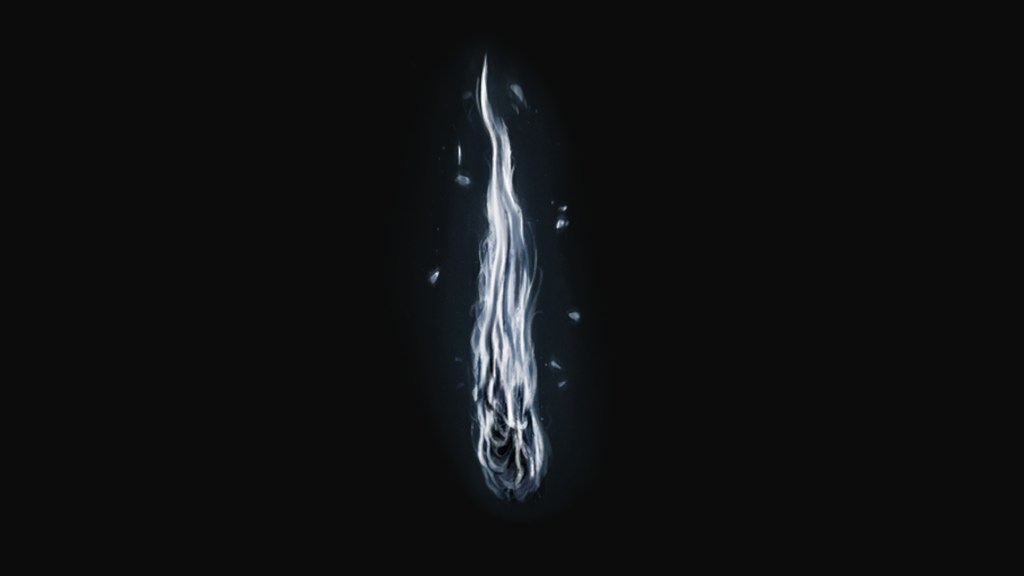
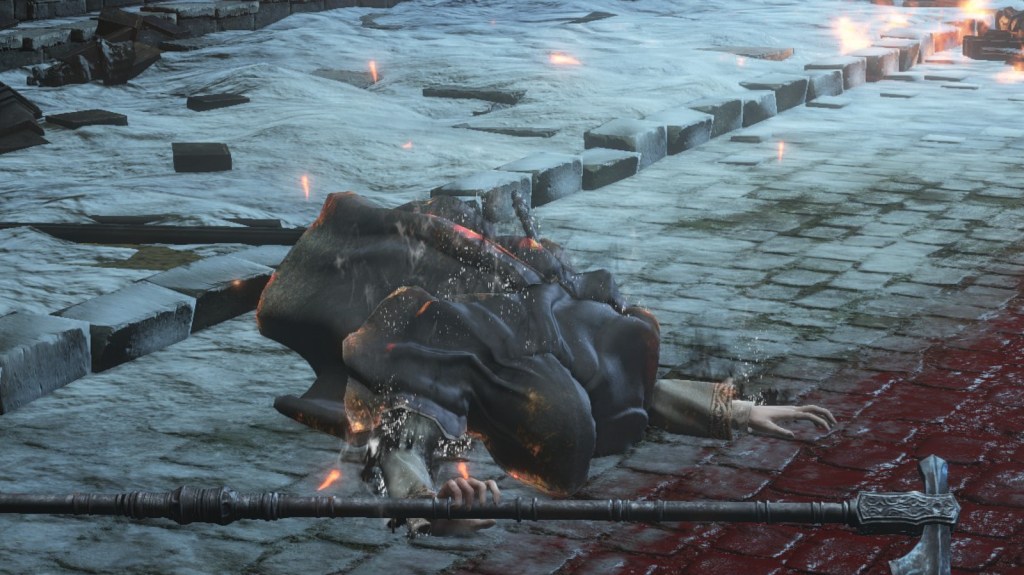
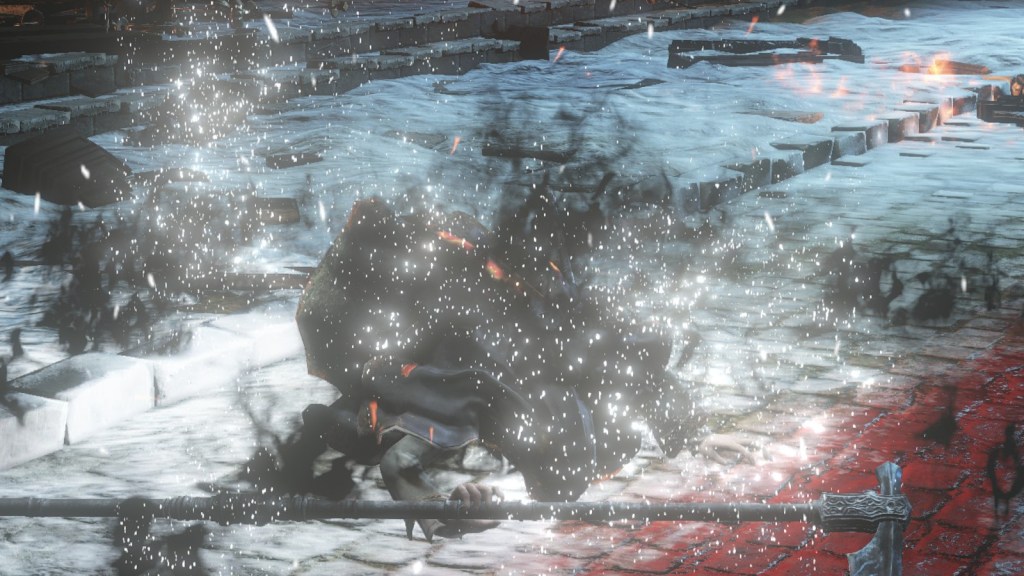
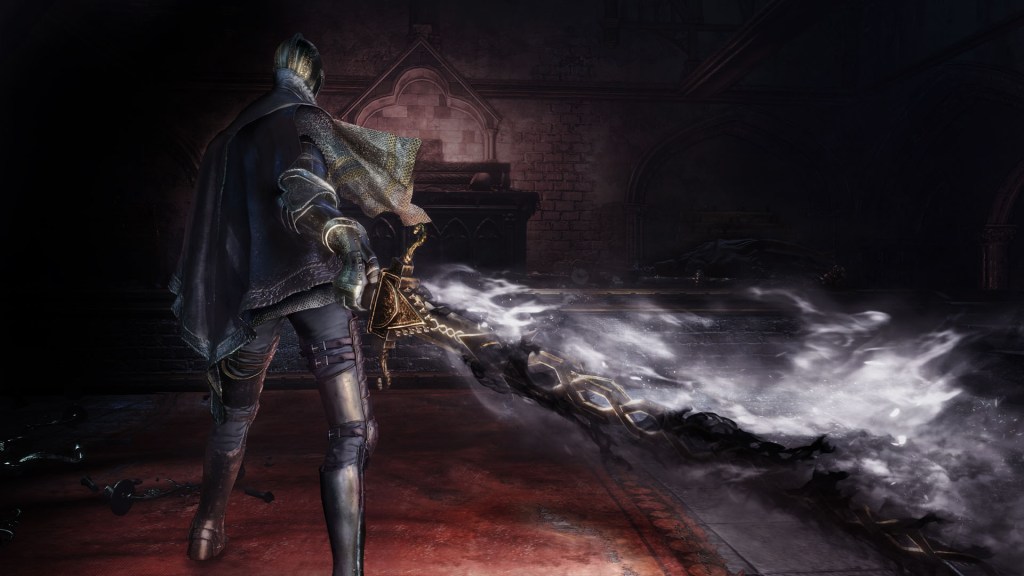
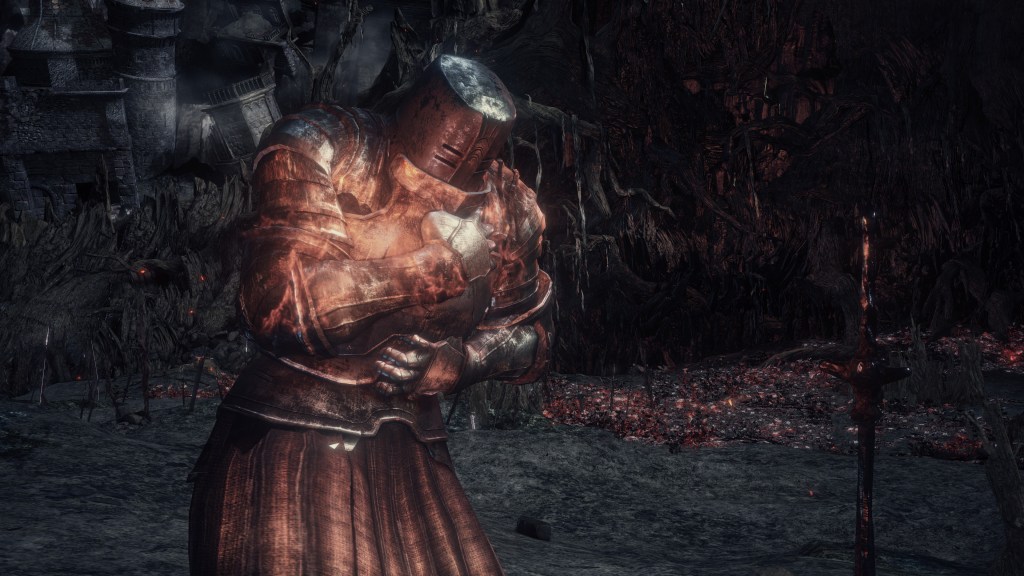
This is likely where the previous Fire Keeper stepped in. The current Keeper defers to our will when it comes to accepting forbidden eyes or smothering the flame, going so far as to keep our betrayal confidential as a knowing accomplice. Her predecessor was probably similar, realizing Elfriede’s plot but choosing to remain silent. At most, she took the time to learn how to alleviate the curse, maybe plead for her hero to reconsider the usurper’s path. But the leader of Londor wasn’t going to suddenly have a change of heart, and ultimately, the Keeper serves the Undead hero’s mission — whatever it may be. That is the lesson our Keeper took from her training, and her mentor seemingly gave her that impression. Shared resignation notwithstanding, the previous Keeper must have stepped up to save her hero from total immolation. Even if servile to her master’s will, survival was assumedly preferable, and this was the one time she wouldn’t need the hero’s cooperation to act. How to kill a flame at its source? Deprive it of fuel. And so, she absorbed the dark sigil’s humanity along with the curse manifest like she wished.
The result? Friede’s enduring undeath was able to reconstitute her body as ash. The black flame left lasting damage upon Friede’s soul, with a smolder remaining within her, but the maiden herself survived. And all it cost was the Fire Keeper becoming corrupted. She continued to serve countless more failed linkers before the corruption took its toll, maybe because her body and soul were already optimized to handle the gnawing humanity. How convenient that it is only when manifestations of the Abyss, like the pus of man, began to surge that the Keeper’s health started to deteriorate rapidly, just as she went to ring the emergency system. The imminent Age of Dark is likely what roused her corruption into becoming terminal, ironic in light of her passive contribution to it. Meanwhile, the unkindled “hero” the Keeper once served had escaped before she could be sealed in the Cemetery of Ash like the others, returning to Londor a failure.
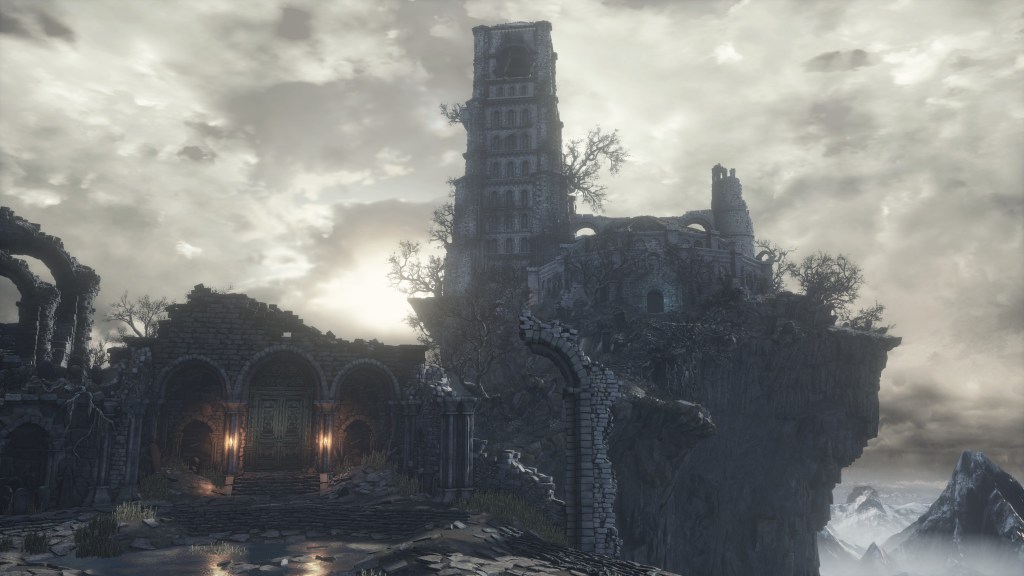
The Sable Church learned a lot from this incident. For one, the dark sigil wasn’t enough to control the First Flame; the body itself needed to be capable of containing it. In this respect, Elfriede proved to be an excellent test case. Recall that unkindled ashes are natural vessels for flame, Elfriede demonstrating just that with how black flame continues to smolder within her despite everything. Basically, Londor requires an Unkindled to be their Lord of Hollows. This cannot be Elfriede, apparently — most likely because of the black flame inside her. Being part of her very soul, she cannot easily remove it. Therefore, if they were to amplify her humanity, it may well cause the fire to spread and revitalize her self-immolation. This means that even attempting to return her to a Hollow state poses a health risk. Basically, Friede’s potential as a Lord is already exhausted, all thanks to her initial failure. They needed to find another, and it would not be with Elfriede.
Like Gloom After Snow
Following the black flame incident, it is easy to see why Elfriede decided to abandon Londor. Once we have met the maiden in Ariandel, Yuria will notice a “nostalgic” sweet scent upon us, warning how sweetness can cloud pride in the Japanese script. This comes across as wordplay, being sweet potentially holding connotations of naiveté, indulgence, and inadequacy. Put another way, Yuria suggests that Elfriede’s overoptimism, while dearly missed, is what ultimately brought her shame — to herself and Londor. Harsh as that might sound, the sister in question is liable to have agreed. The Onyx Sword was crafted to resemble flame, a reflection of the power infused into it. Bestowing the blade was thus a silent explanation to Vilhelm as to why their time as master and retainer was coming to an end. The black flame made her, for Londor’s purposes, an invalid, and the swordswoman couldn’t suffer the humiliation.
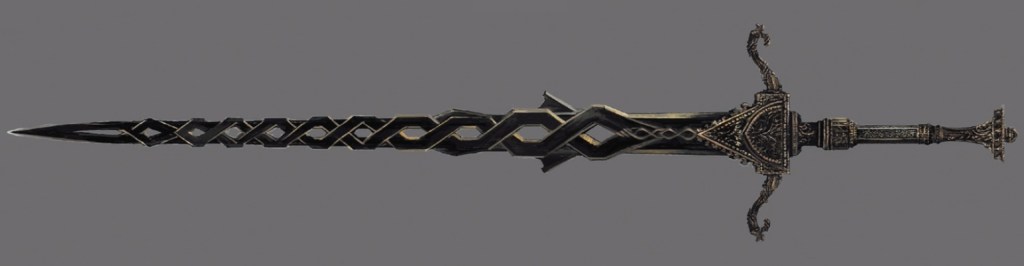
… You have a nostalgic scent. It is sweet… But we lost it long ago… I know not where you associated with that scent, but do take care. Sweetness can cloud pride at times…
Indeed, the only reason for Elfriede to abandon her people is personal pettiness. Having sincerely believed that she was the rightful King, the revelation that she never would be must have been soul-crushing. The role is no figurehead. Just as the Age of Fire’s devotees wish for the flames to guide us, Yuria prays that the dark sigil will be our guide, and one of the pilgrim’s dying wish is that we, in turn, guide all of Londor in Japanese dialogue; the same dialogue narrated over us taking up the mantle. Serving as Londor’s guide into the new Age is a king of Hollows’ primary duty, and Elfriede could no longer fulfill it. Why stay as a leader of the church if she couldn’t become the true guide? Yuria doesn’t have these same pretensions. She is more than happy to serve as mere counsel to another, just as the Primoridal Serpents were willing to bow their heads to a Dark Lord. But for Elfriede, it was impossible to accept.
You, let’s meet again. May the dark hole guide you.
Oh, our King of Hollows… please guide Londor…
None of this demanded she leave. The youngest sister Liliane made the most of her disability for benefit of Londor, and the Onyx Sword itself is proof of the black flame’s utility to the nation’s arsenal. Giving a knight like Vilhelm a share of such power further reveals how much she respected him as her bodyguard and more, and he in turn is proud to wield it. Even if she could no longer be one herself, her skills and disposition were very much welcome in the country of Hollows. Still, Elfriede simply couldn’t separate Londor’s mission from her ego. She was to be the Hollows’ savior — now she just looked like a fool. While it is selfish, her damaged pride at least seem to have been well-meaning. To be regarded as sweet betrays an aura of genuine love and kindliness. The problem was that Elfriede was spoiled by her position and her confidence. By the time she realized her hubris, she felt stranded from everyone else. The woman envies those who have a place to belong. For her, staying, with her imperfections, the constant reminder of how she was lacking, only inflamed her insecurities and sense of isolation.
… Return to your place to belong. You have one, after all.
And so, after making her formal goodbyes, Elfriede departed Londor. From there, she ended up in the painting world, which was probably planned from the start. The Chillbite Ring she carries protects against the cold. While it is easy for her to procure this thanks to Londor’s Carim connections, it is hard to believe that she meandered into this snow-white land and just happened to bring the perfect ring. More than likely, Elfriede was aware of Ariandel and deliberately went there for a refuge from her troubles. In fact, given Carim’s involvement, it may well be Velka who informed her about the painted world, providing the ring as part of her recommendation. Considering the Goddess of Sin’s relation to Ariandel’s prophecy, she certainly has motive to direct ash there — one might even question if the witch knew how events would play out, going back to the botched usurpation, and chose to not interfere. But putting Velka’s possible machinations to one side, the oldest sister knew that she was going to a place for outcasts like her, where she could again feel belonging.
After entering the painting as the first ash, the eldest of Kaathe’s three maidens took on a new identity as a simple nun. Her name changed from the Anglo-Saxon Elfriede, meaning “elf-strength” in reference to supernatural ability appropriate for her skills, to the Germanic Friede, meaning “peace”. Her life was no longer based around fighting for Hollows’ survival, but caring for the inhabitants who needed someone to fill the hole left by Priscilla. To that end, she hid her embarrassing past and changed whatever possible to appeal to them. The swordswoman couldn’t break all her habits, hence wearing the appropriate trousers underneath her dress. But overall, she reinvented herself as a gentle sister of the cloth. She finally found her place to be a guide, and it was to a people who were so honest and kind. It is no mystery why she readily gives away the Chillbite Ring during our first meeting in the Ariandel Chapel. More than just mastering the magic, she has long since fully embraced the cold world. Her time there gave the former Hollow much needed peace of mind.

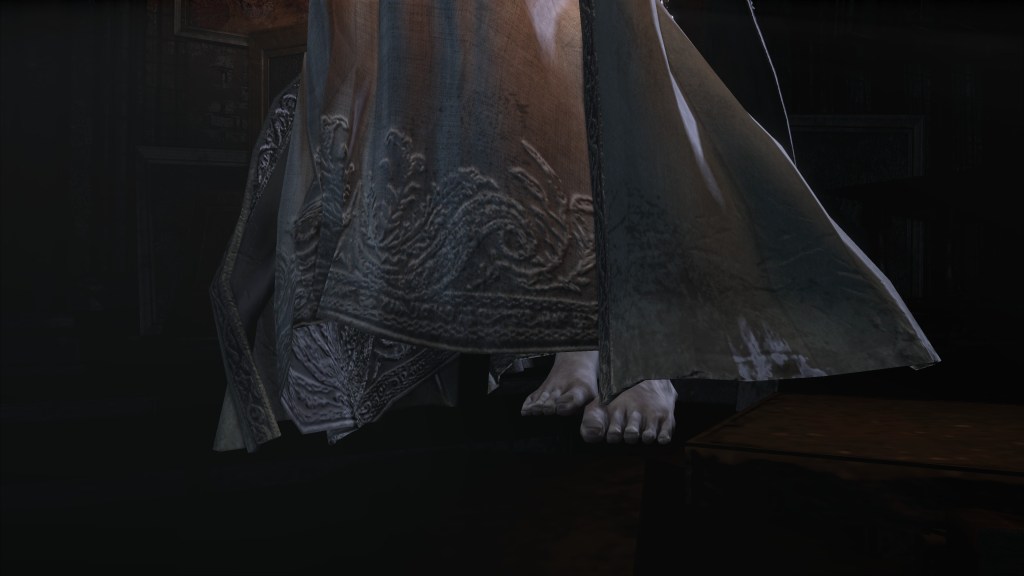
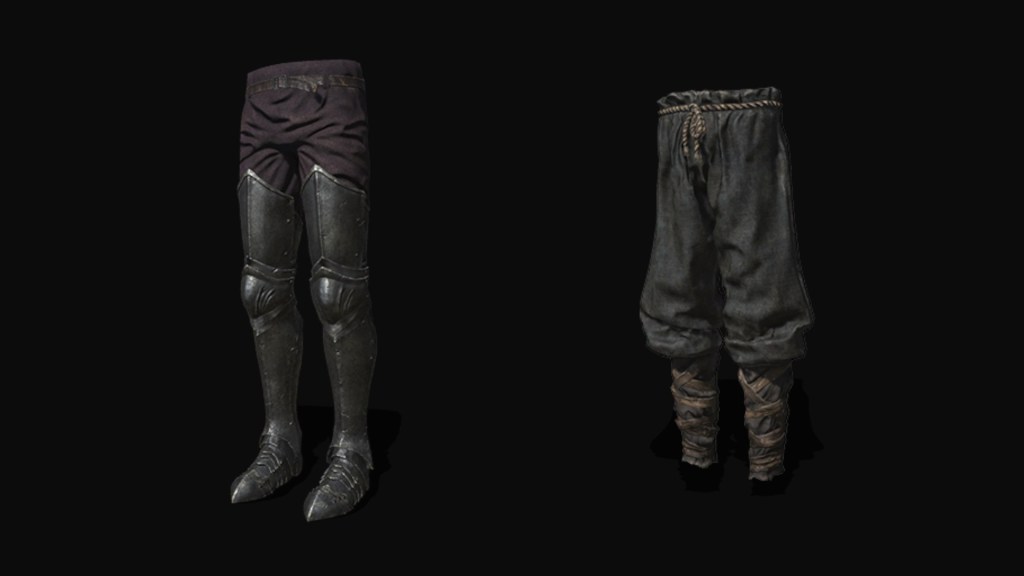
It is no wonder that she has become so ideologically possessed by the painting’s preservation. After spending so long with Father Ariandel and the rest of the undesirables, she truly came to love this place as home. However, the encroaching rot changed everything. Now, the denizens were talking of abandoning their home, to let it burn down and make way for a new one. Once again, Elfriede saw her purpose in life about to be consumed by flame. How could she not seethe at the tragic farce? She doubtless realized, too, Velka’s role in this whole affair. There was no way a nun of the chapel remained ignorant of the prophecy; she knew what role that she was expected to play. Everything was that witch’s scheme, using both her and Londor — how that thought must have stoked Elfriede’s fury in that moment. Old habits die hard, and with her back against the wall, to her mind, the nun fell to many of her base impulses. She raised an army, coaxed the Father to her side, and destroyed the wicked god’s idols. A slave to her insecurities, Friede refused to give Ariandel to flame, even if it rotted totally.
Welcome, to the Painting World of Ariandel. I am Friede. The one who has been with the good Father and all of the undesirables for so long.
The nun had the help of Vilhelm, though she isn’t aware of it. From the knight’s first appearance, he remains out of Elfriede’s line of sight, standing outside the door to the Ariandel Chapel off to the side. Never once does she reference him, and not once do item descriptions allude to their interaction since last parting. It is Vilhelm who takes the painter girl to her prison, with no explicit orders from his former master. When his captive returns to the chapel, Friede has nothing to say, as if the girl’s confinement had nothing to do with her plans. In other words, Vilhelm is simply acting on his own initiative. Most likely, the knight has been continuing to act as a bodyguard from the shadows, assisting Elfriede in her plans however he is able without her notice. He has certainly been there for some time. When struck in front of the chapel, the knight dissipates into a chilled mist the same as his master, showing similar mastery of the painting’s cold. Through illusions, he could monitor her without much risk of being discovered. Even still, the knight has remained close by.
To formally reach the lower levels of the crypt beneath the chapel, we must dispel illusory walls. But after heading downstairs past the two, we can find a curious setup: a small collection of books and jars on a ledge, a box on the floor beneath. The items in themselves aren’t peculiar for the location; plenty remain scattered amongst the corpses on the level above, likely provided as grave goods. What is odd is how neat and organized this setup is, as if someone were sitting down to read or drink. And with how we collect Vilhelm’s armor from one of the corpses near this hidden chamber, Vilhelm would be the obvious loiterer. The crypt help bridge the chapel to the archive where he imprisons the painter, not to mention serves as an excellent hideout beneath Elfriede’s notice. The corpse with the armor further insinuates that it wasn’t just him, and Yuria explicitly notes multiple who were with her sister to the end, in fire’s “shadow” as she puts it. Another body with a hollow gem sits just around the chapel corner from Vilhelm, in fact — though this might be the storyteller whose corvians await sanctuary. The illusory walls were put up to keep visitors from discovering the trespassers from Londor.


Please, do make it your provisions, King… And, if you permit, please remember even a little. Those in fire’s shadow who were with my sister to the end… And, King, please become the usurper.
Vilhelm and one other knight at minimum followed after Elfriede, for simple reasons. When killed, he asks for his lady’s forgiveness with his final breath, ashamed of his failure to stop us as her knight. The swordswoman may want to put Londor behind her, but they were still her knights. Whether Vilhelm was the only one to receive the Onyx Sword or not, they felt equal loyalty to the Sable Church’s leader. Kaathe gave her purpose, and she did the same for them. If she didn’t want reminders of them, fine; they would pursue their duties from her shadow. The knights were apparently even willing to die to the rot of this painting if it meant assisting her with this tyranny; anything to assuage her insecurities. Yuria knows about all this, so they made no secret about their intentions before abandoning their post. She is right to call her sister pitiful, remaining blind to the love and support she had this whole time. The eldest sister, ever the over-optimist, thinks that she can handle it all on her own.
… My deepest apologies… Even though I am your knight…… Lady Elfriede…
Truly, it takes an idealist to think that fate can be defied by throwing out a bell. Things, of course, don’t go as planned. When we unexpectedly turn up, Friede does everything possible to peaceably avert the prophecy. With barely a greeting, she insists that we don’t belong as stray ash, redirecting us to the bonfire she has already set up. At further prodding, she will even hand over the Chillbite Ring so that we may remember the cold world’s help on our mission. Although she doesn’t know the cause, Friede is quick to have us warp back out into the outside world before we get ourselves involved. After we have witnessed the rotten state of the Corvian Settlement, her urgency rises to subtle annoyance, politely advising we leave without caring for the undesirables as is typical. And when we finally open the inner sanctum where Father Ariandel suppresses the flame, she sounds exasperated at ash’s nature to seek fire. She tried being calm but forceful, but a peaceful resolution was simply not to be.
… Allow me just one piece of advice. Even if this world eventually rots away, Ariandel will be our home, nevertheless… Leave us already. Best pay us no mind. Just as your kind have done for so long now.
… So ash really does seek fire…
Since she has been acting through a chill illusion this entire time, we can assume that her real body has been beside the Father in the sanctum. We are, after all, able to hear the crow cleric self-flagellating until the way is open, Friede subsequently disappearing with his flail. Evidently, she went off to grab her weapons, perhaps believing that the confrontation to come will be too distracting for him to continue shedding blood in their presence. Either way, she is quick to return after we have approached the old crow. Overhearing his cries for the whip as the flame flickers, she notes how it is just responding to our presence and asks he look away while she, uncharacteristic of her new persona, “cleans up” the stray ash. What follows is our boss battle, where the master swordswoman faces surprising defeat. Her partner-in-crime’s embers give the Unkindled a second wind, but even together, they cannot bring us down. Try as she might to heal their injuries with miracles, both Friede and Ariandel suffer mortal blows. Down for the count a second time, all her schemes seem to have fallen to shambles.
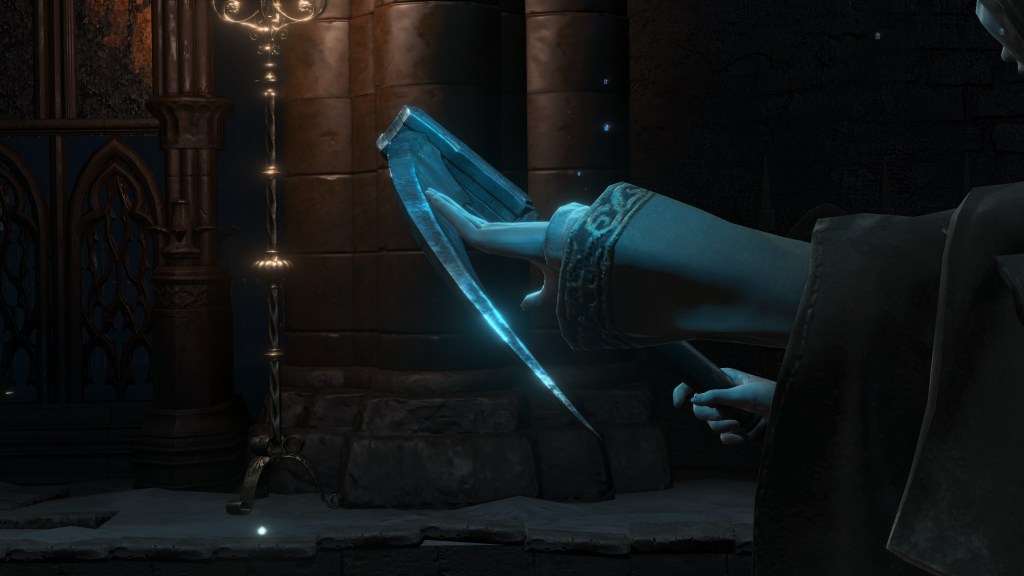
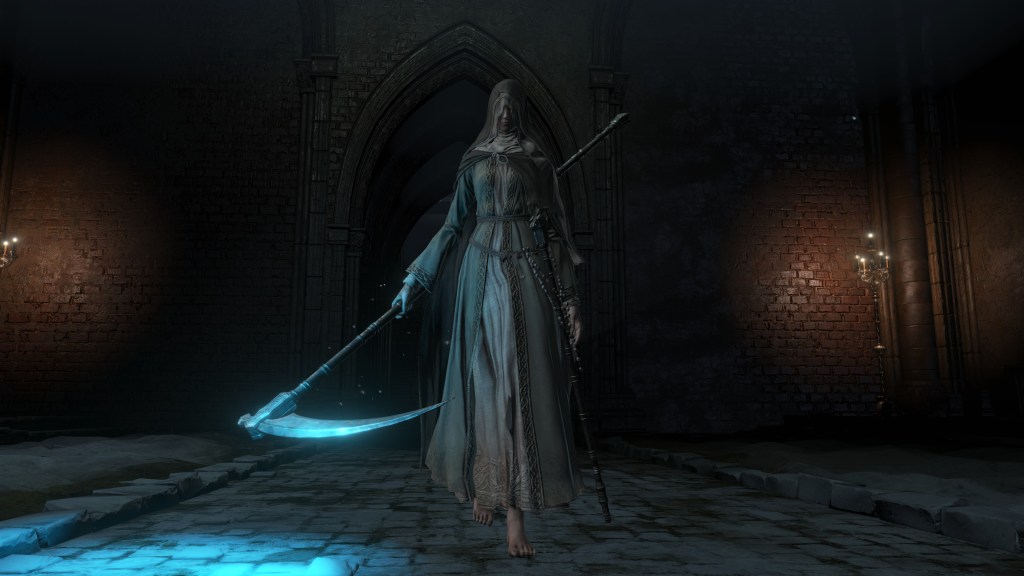
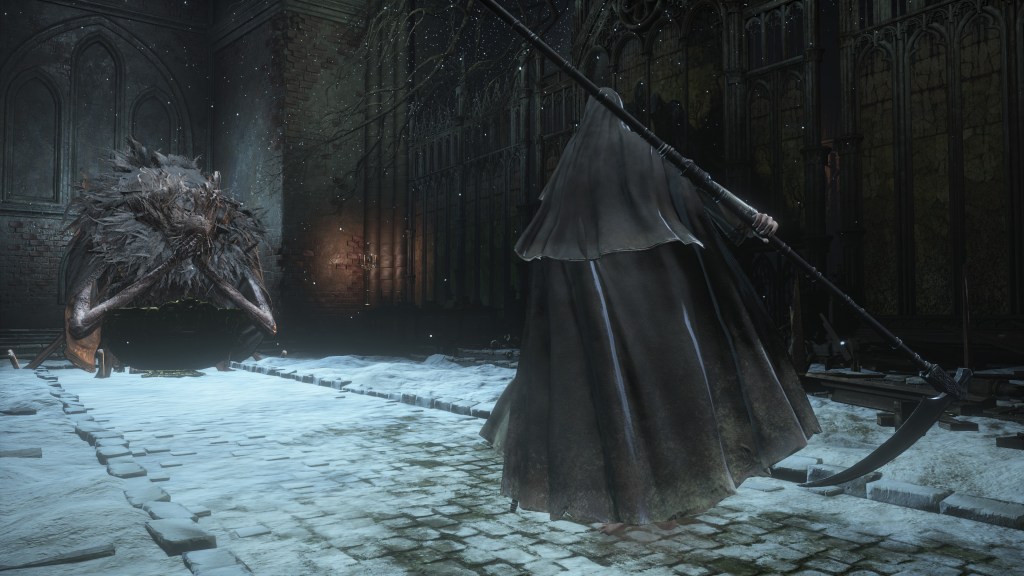

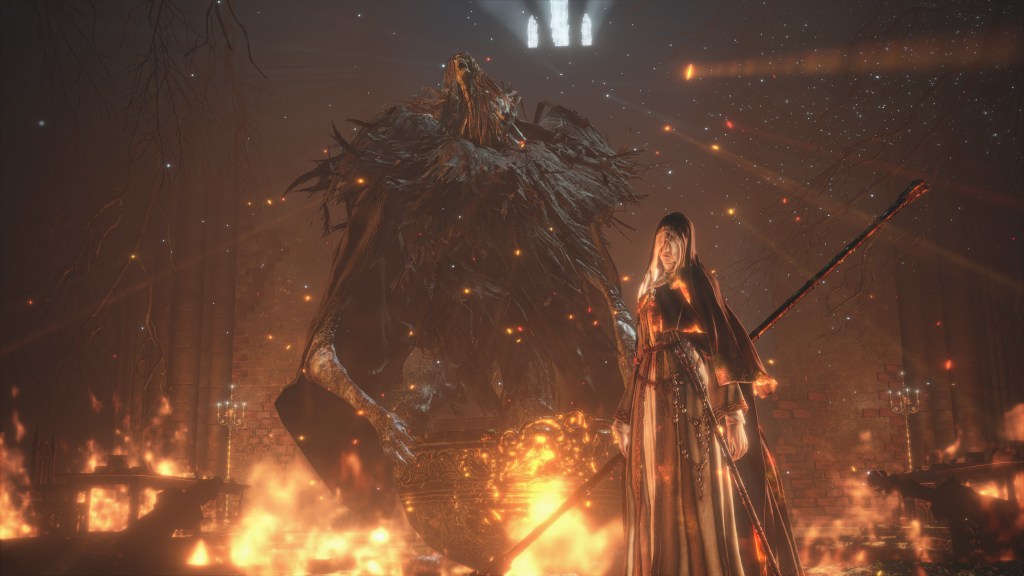
Good Father, it is all right. The whip is not needed yet. The fire is merely trembling at ash that has strayed in… Please, kindly lower your eyes. I will dispose of the ash immediately.
And yet, that isn’t the end for Elfriede. The Unkindled’s dying body is soon revitalized by flame once again, this time the black flame inside her. Perhaps her greed rouses the humanity within. With the painting’s flame unleashed all around, she surely understands the meaning of dying there. The first time, there was still Father Ariandel to entrust her hopes, but now? She is the only one who can “save” their home. Combined with the maiden’s delusional level of self-confidence, it is no surprise if her yearning to get back up and become the painting’s messiah moves the dark soul she has been suppressing. Either way, its power reignites that smolder within her into a mighty conflagration, which she wields along with the cold for one final duel. It is ironic how the failed Lord of Hollows comes to accept the power she reviled for so long, but needs must, as they say. After all the atrocities she has committed to “protect” the people she loves, the maiden is far too desperate to let it be for nothing again. Once more, she must debase herself for her inadequacy.
For what it is worth, Ariandel dies seemingly believing that Friede fulfills the prophecy, gaily commenting how fire suits her as ash with his final breath. Seeing such power, he can at least take comfort in believing that Friede will emerge victorious, that the prophecy was simply misunderstood; that their efforts weren’t a waste. Elfriede, for her part, takes his words to heart, accepting this saving grace and putting her all in that final leg of the boss battle. Delusions are still delusions, so their plan finally ends in failure, but this shows the two’s resolve for a world they loved, even if entangled with personal ego — not unlike Gwyn, though Elfriede might be loathe to admit it. Yuria is understandably perturbed to learn of her sister’s — and, she can presume, her knights’ — deaths form the soul we carry, but she maintains composure. In the end, the sister she assuredly respected lost herself to her own demons. Yuria might pity her, but the Sable Church still has a mission that even absconding Elfriede had wanted to see completed. The best she can do for the tragic woman is see it through, for everyone.
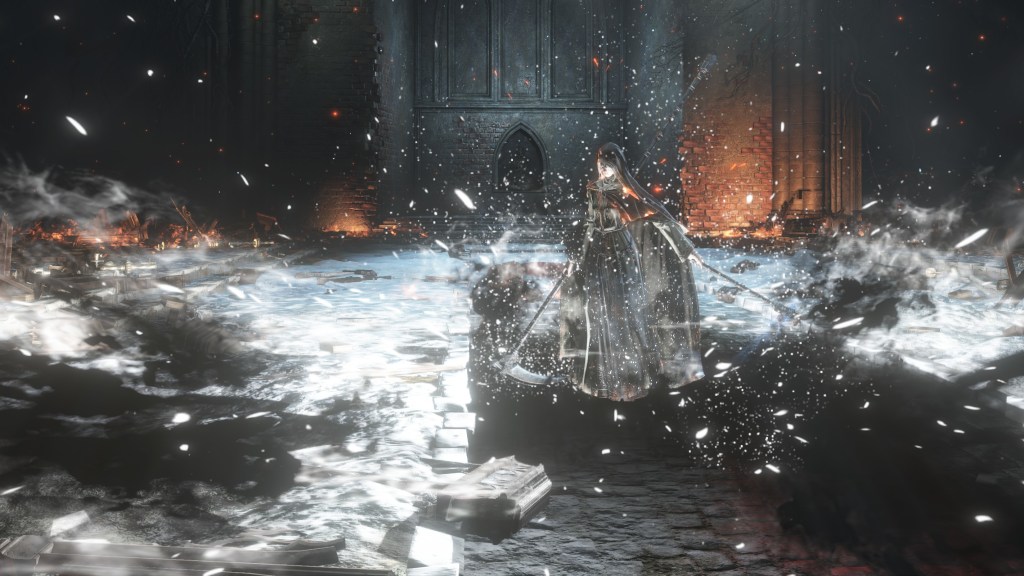

March for the Cursed Land
From Elfriede’s dialogue, it was already expected for Yuria to lead Londor in her absence. As the second eldest and one not reliant on braille, she was the natural one to take over. However, as the description to her ashen remains note, her will for usurpation, per Kaathe’s wishes, would likely be carried on by her sisters should she perish. Even after everything, Elfriede might return to Londor if she were to learn that she was the only one of the three left, and Liliane is the only sibling we never have the opportunity to slay. On balance, it doesn’t matter who carries out Londor’s mission, since none of them are required to complete it. The Hollows just need to find an Unkindled willing and able to become their king. As a result, Yuria’s prime focus has been setting up ash to be the First Flame’s usurper. But with exception to Elfriede, Lothric has sealed away the ash in coffins and keeps them under strict watch. How to go about recruiting cold and slumbering Undead to the Hollows’ side would be tricky.
Ashen remains of Yuria of Londor. The handmaid of the ritual place will have new items to offer.
There are three originators of the Black Church, so Yuria’s dying wish will probably be inherited by her two sisters. May there be the usurpation of fire by the King, for the sake of all Hollows.
One solution was to create the Unkindled themselves. Anri attests to being ash and insinuates the same for Horace, who is introduced to us as another knight journeying alongside the Lordseeker. Although they omit the fact that they are Hollows, the claim itself isn’t disingenuous, given how Unkindled are readily identified by scent. Therefore, the two must have tried and failed to link the fire, likely at Londor’s direction. Perhaps the Sable Church had goaded them with promises of revenge on their father. Unkindled are put in the perfect position to kill a Lord of Cinder due to the nature of the emergency system. Even when the thrones go abandoned, the ashes have an excuse to hunt Aldrich, which Horace and Anri take full advantage of. It was to their benefit to cooperate with the country of Hollows on this, especially when their opponent was so powerful. As we can see after their reawakening, both remain in contact with Londor. Not only does Anri casually comment about a pilgrim providing information on Irithyll, that pilgrim is presumably the reason that both faux knights are Hollow.
Yoel posits that every pilgrim of Londor knows how to draw out the power of the Darksign to create a dark sigil. When performing this art himself, the sorcerer is providing a free level up, manipulating humanity to augment our abilities much like a Fire Keeper does with her soul. Since it is our own dark soul, we don’t need to sacrifice our soul currency with Yoel, though the process is too taxing for him to do multiple in one sitting. Still, raising stats on solely the Dark Soul’s power has only hollowing as a downside. This utility would be very tempting for Horace and Anri, hoping to challenge Aldrich. And as part of our coronation as the Lord of Hollows, we acquire additional dark sigil items from Anri’s body. And so, the wannabe knights almost certainly became Hollows after awakening from their coffins, each granted a dark sigil along with more power thanks to a helpful pilgrim. Londor very much seems to be grooming the two as candidates for a Lord, though Horace will go mad after falling into Smouldering Lake and Anri will take on a different role for our ascension to the throne.
And there lies the underlying problem with this solution. While planting the seeds does help, the Sable Church can hardly send enough Undead to become Unkindled, especially when their members are mostly the old and frail. Horace and Anri aren’t even fully aware of Yuria’s scheme. The two Blue Sentinels still invokes flame’s guidance and retain charcoal pine bundles in anticipation of facing Aldrich. It takes a pilgrim abducting the Astoran impersonator to assist in our coronation. Clearly, Yuria had no intention of converting them to Londor’s cause until after the two’s revenge was completed, if that — and regardless, without Horace, Anri chooses to go mad; either at his memorial the sibling sets up after we share where we put him down, or at the grave of the first Astoran buried at the Deep. This method is simply not reliable, even assuming that they had the numbers. After all, how many Unkindled have been recruited in this way? As far as we are made aware, only Horace and Anri. With most Undead of any skill never seeking Londor before firelinking, the false knights’ situation is the exception more than the rule.
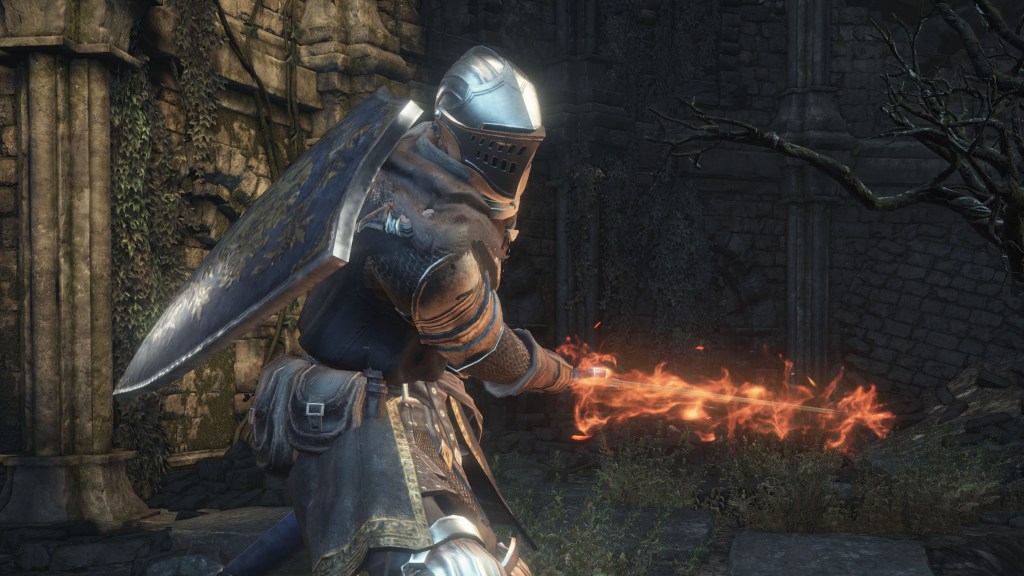
The reality was that Londor needed to recruit Unkindled which Lothric was already creating, after they were unsealed. For that, the firelinking kingdom first needed to engage its emergency system, and the Sable Church was ready for when it did. Countless pilgrims have journeyed to Lothric, the line of travelers ending at the entrance to its main church and castle. If all have been trained to draw out the Darksign’s power, then their goal must be to access Firelink Shrine beyond the castle. Since it is considered a pilgrimage, the Sable Church might deem Lothric to be a kind of holy site. Yoel’s name does mean “God is the Lord” in Hebrew, reinforcing how the nation treats their Hollow King as a messiah. According to Yuria, we are to be the ideal human, a Hollow worthy of standing above all Hollows, enlightened with the strength and wisdom of the Abyss. None better represent the will of the true mankind than us, so it is only right that we take custody of fire from the old and dead gods on their behalf. And Lothric is the place where this human god-king of theirs will be born — the pilgrims will ensure it.
You, our King. Please become the usurper. At the moment of the coming firelinking, please snatch away the fire… The Age of Fire is an age continuing since the old gods, and firelinking is their inheritance. But, the gods are no more, so the power of fire should be transferred… To the ideal form of man, in other words, our King of Hollows.
Ah, you, our King. So you are heading toward firelinking? Usurper, please, snatch away the fire. That power, in the hands of the ideal form of man, in other words, us Hollows.
The Hollows are certainly eager, having been visiting since before the High Wall emerged. Besides the numerous pilgrims already inside the city walls, one more has been stranded outside on the broken bridge, blocked by a portcullis, with many more stopping along the viaduct’s ruined start. Evidently, the steady stream of migrant started when there were still no Unkindled to coronate. Londor had thus been acting on foreknowledge of Lothric’s emergency. This is consistent with the opening cinematic, where the pilgrims follow a prophecy of the Lords abandoning their thrones while fire goes dark. For the source, the words were maybe first spoken by Velka, like with the case of Ariandel. As Londor’s secret backer, it is reasonable for the god to have some level of involvement in the operation. Her church did have a presence in Lothric’s government, so she could have leveraged that influence to allow the otherwise suspicious string of elderly Hollows through all the checkpoints and into the city. Why not help this pilgrimage at both ends with her foresight?
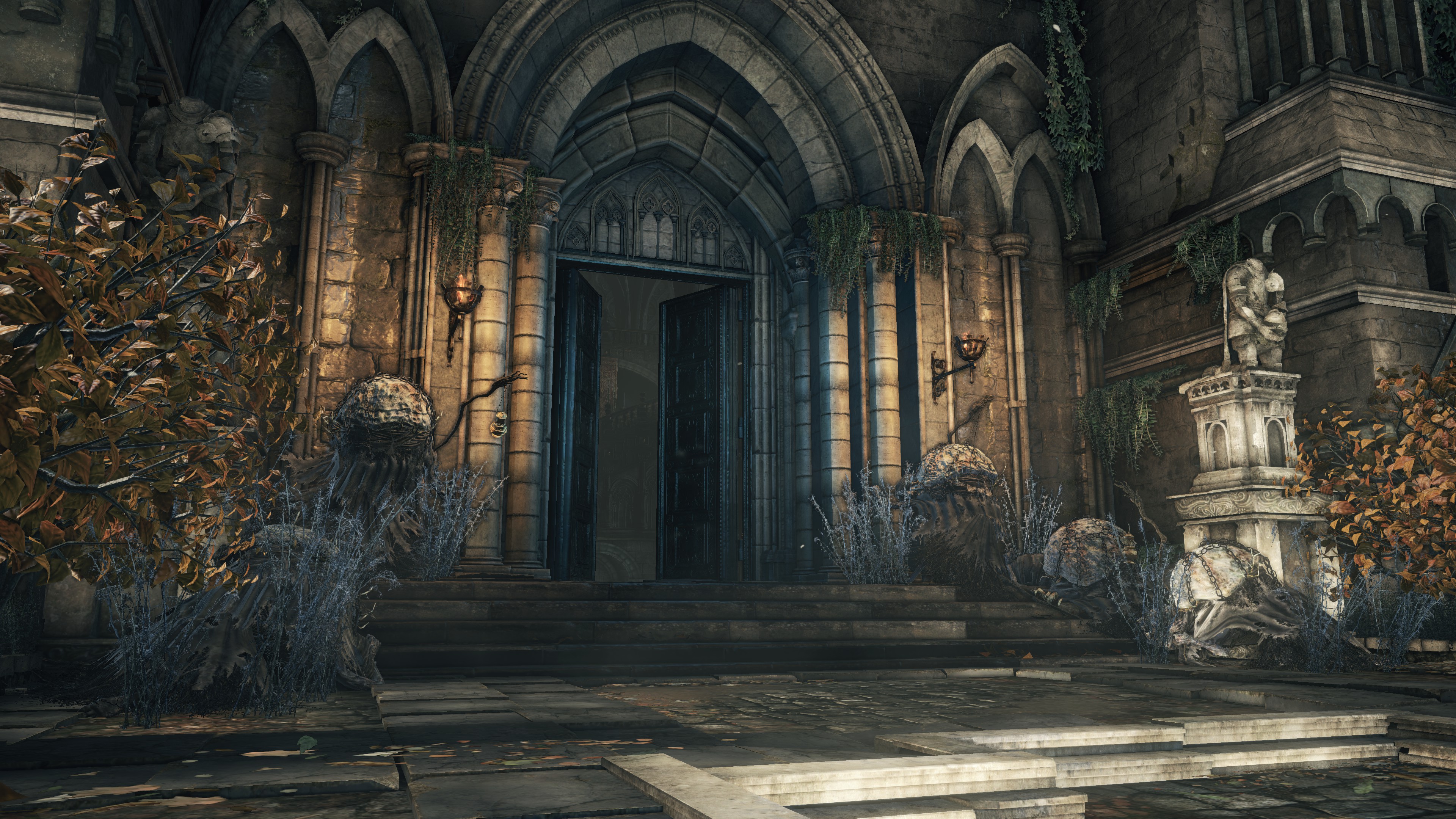
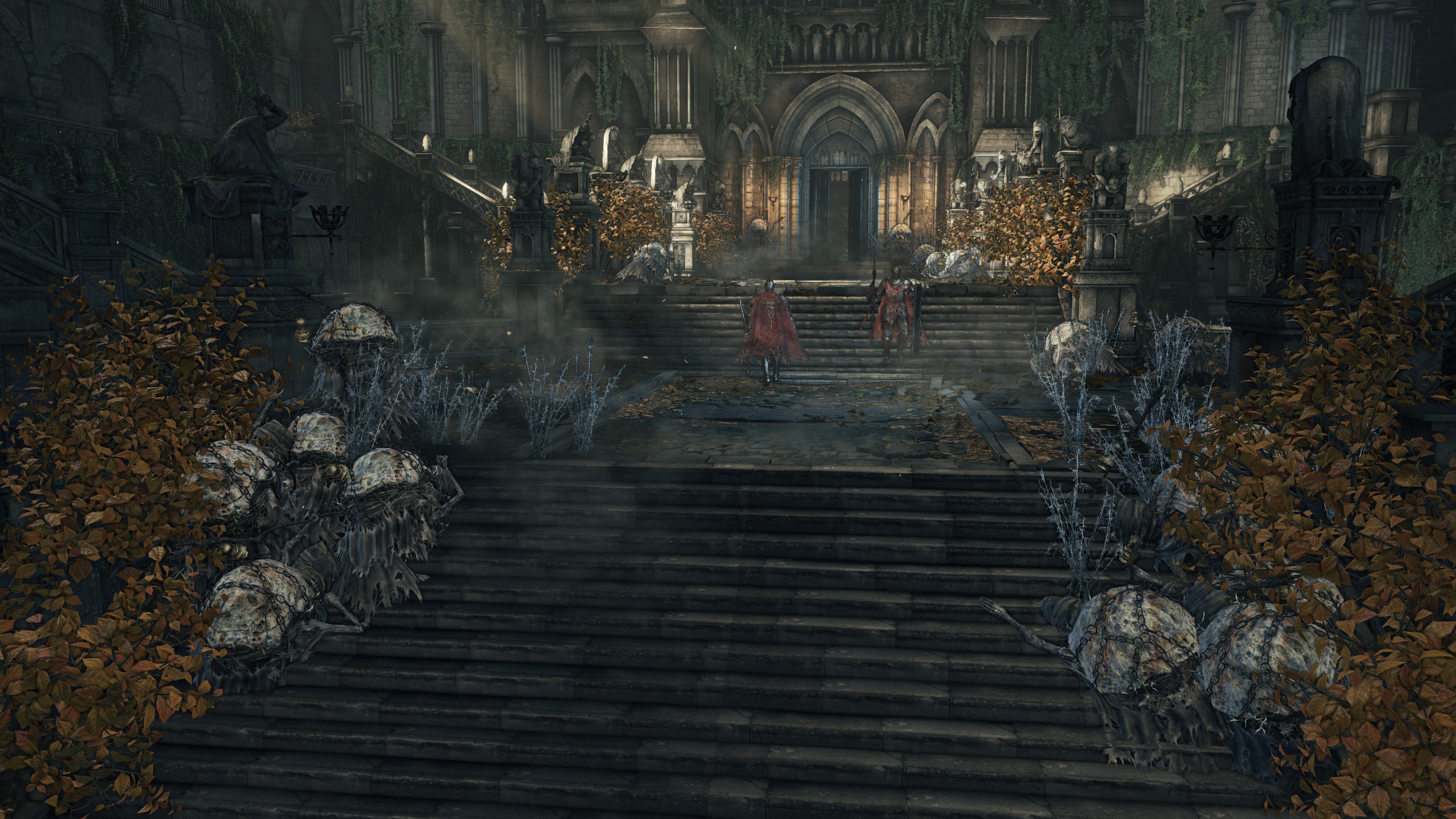
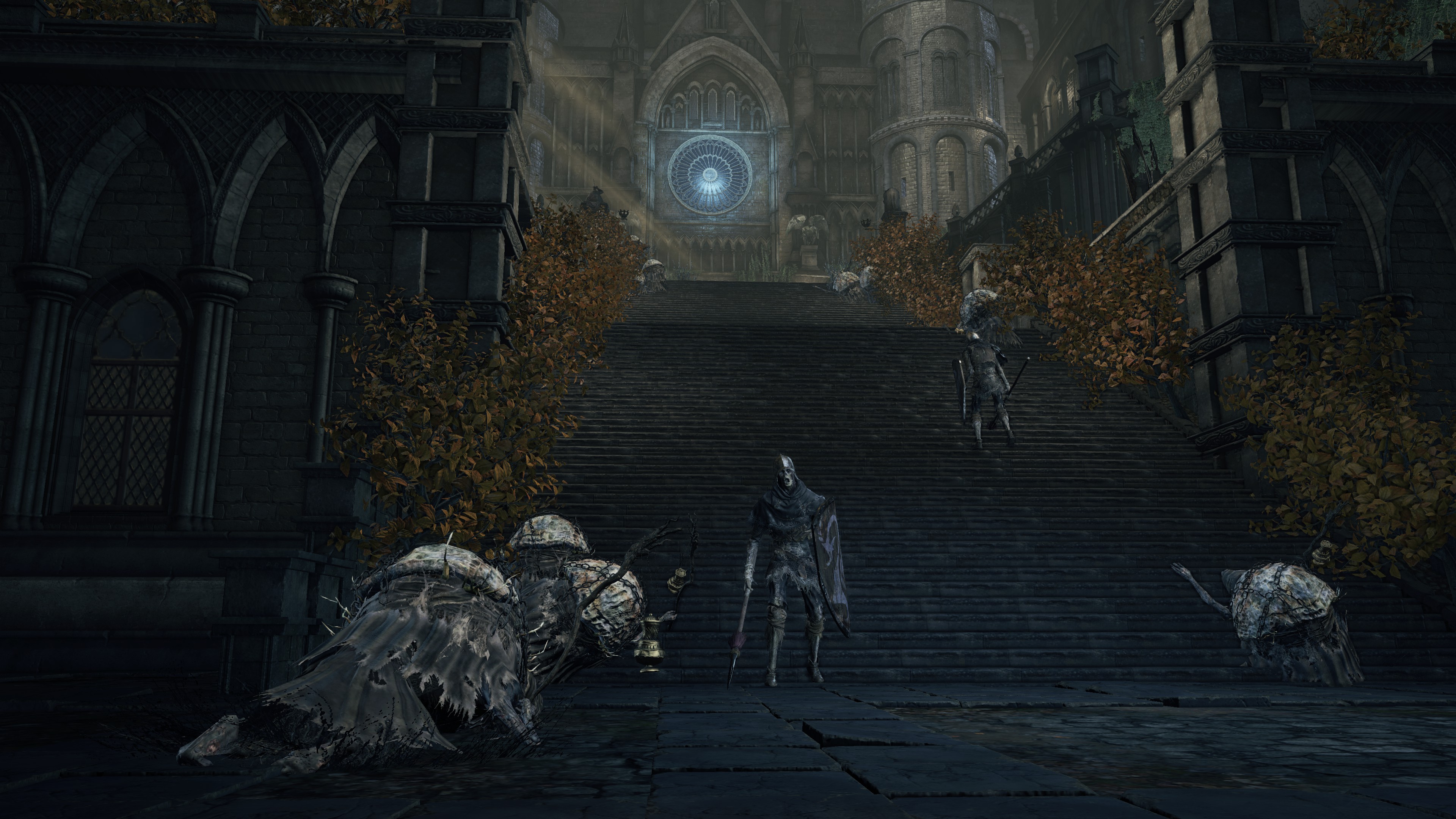
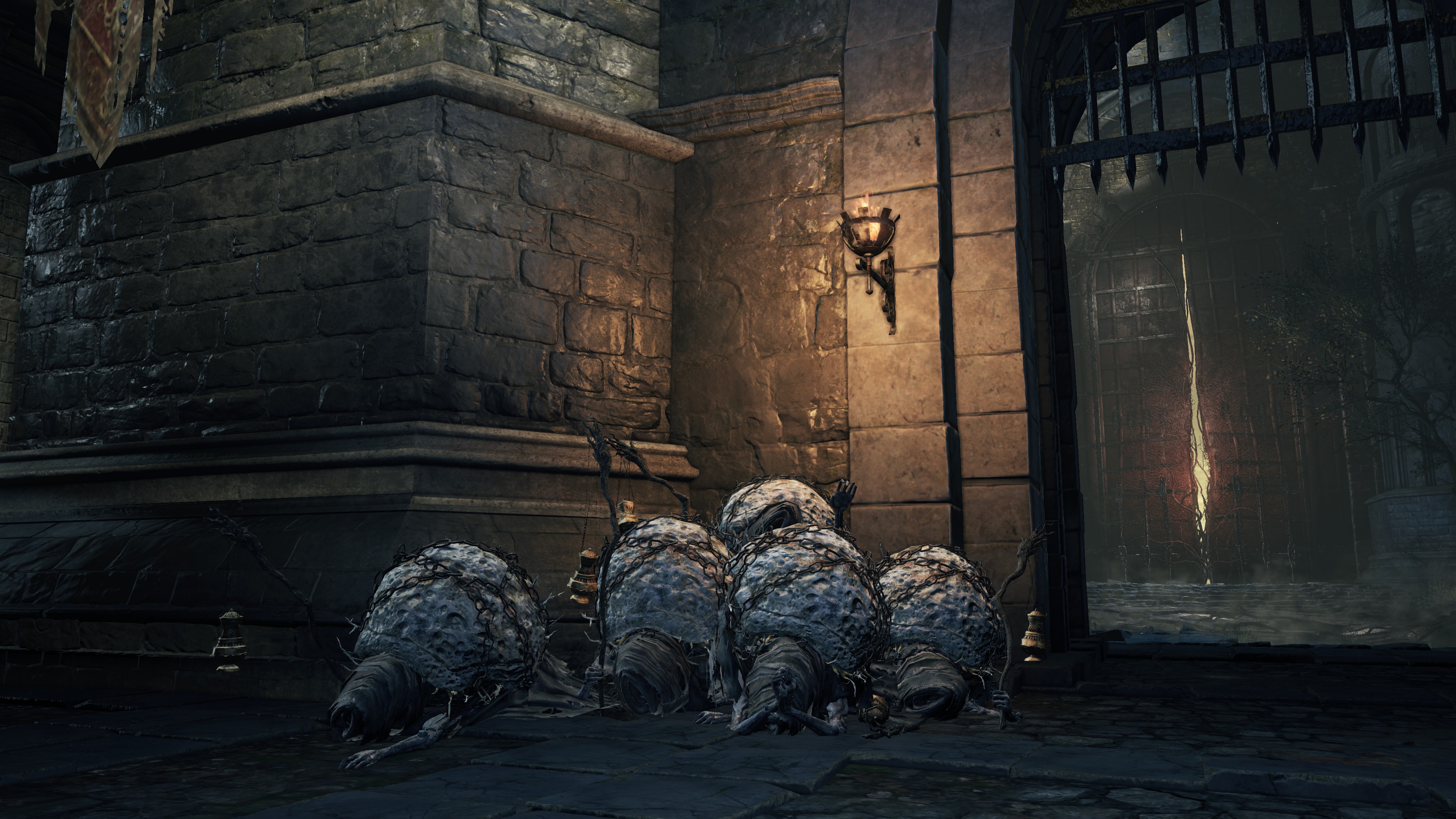
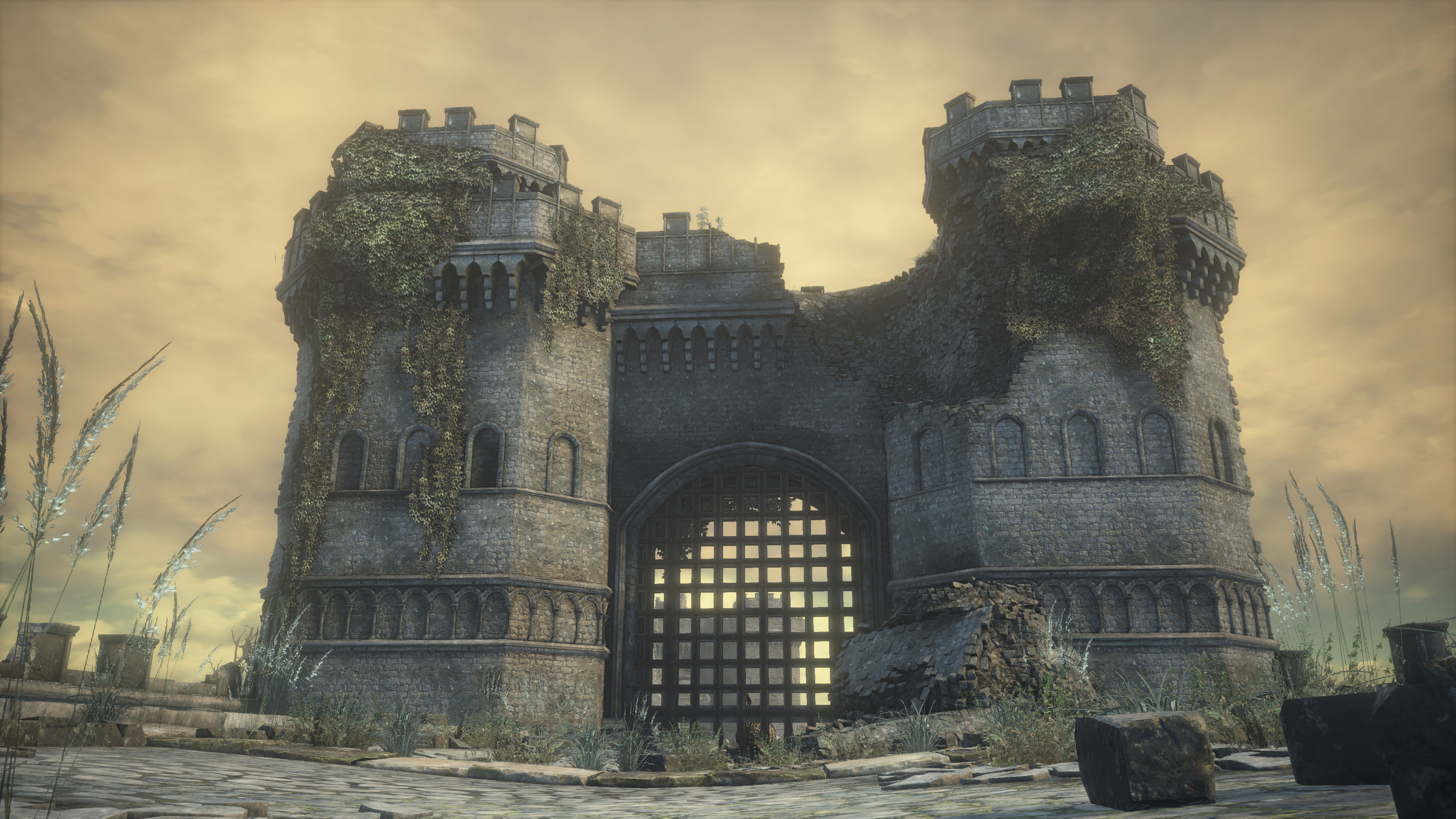
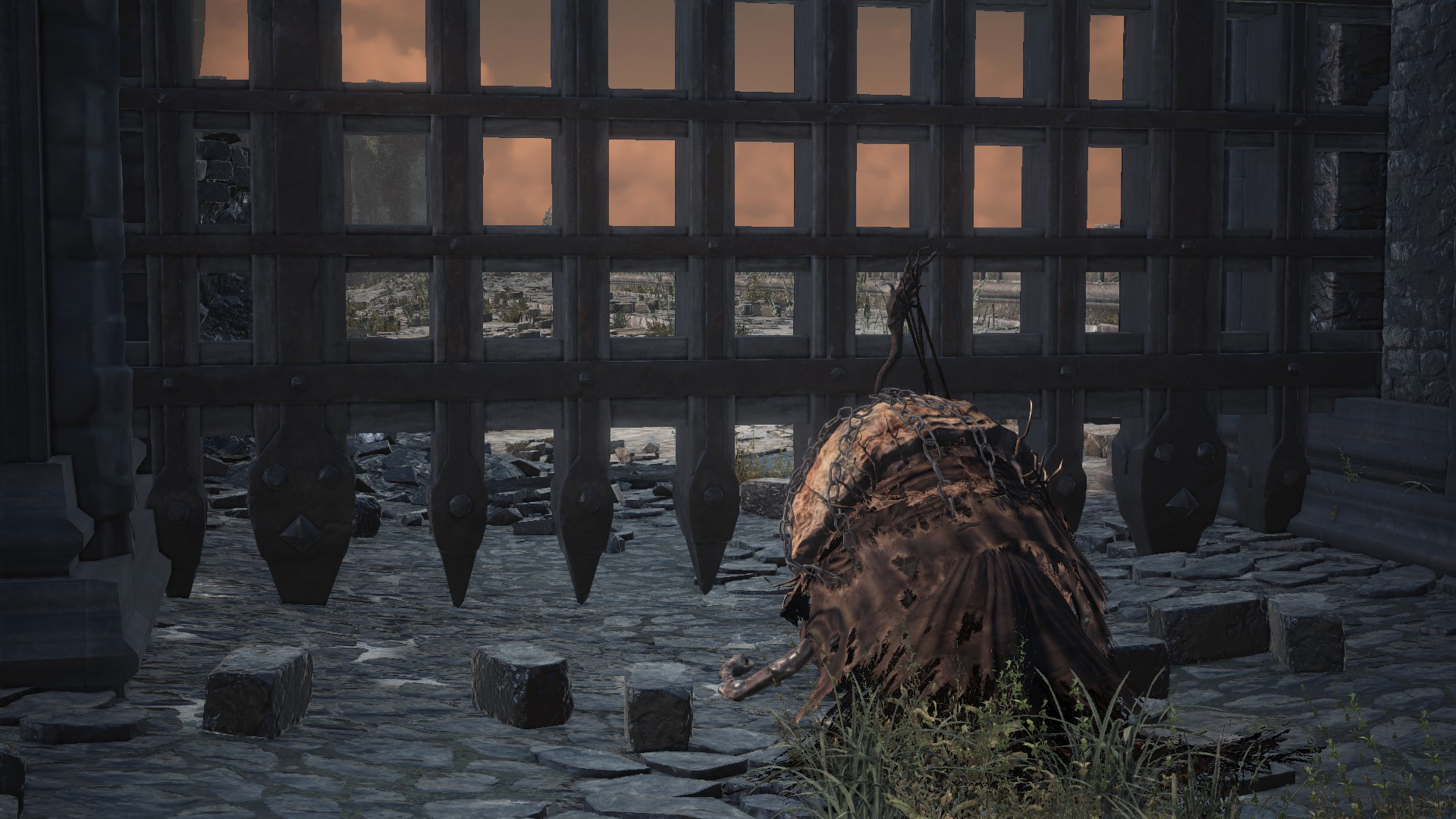
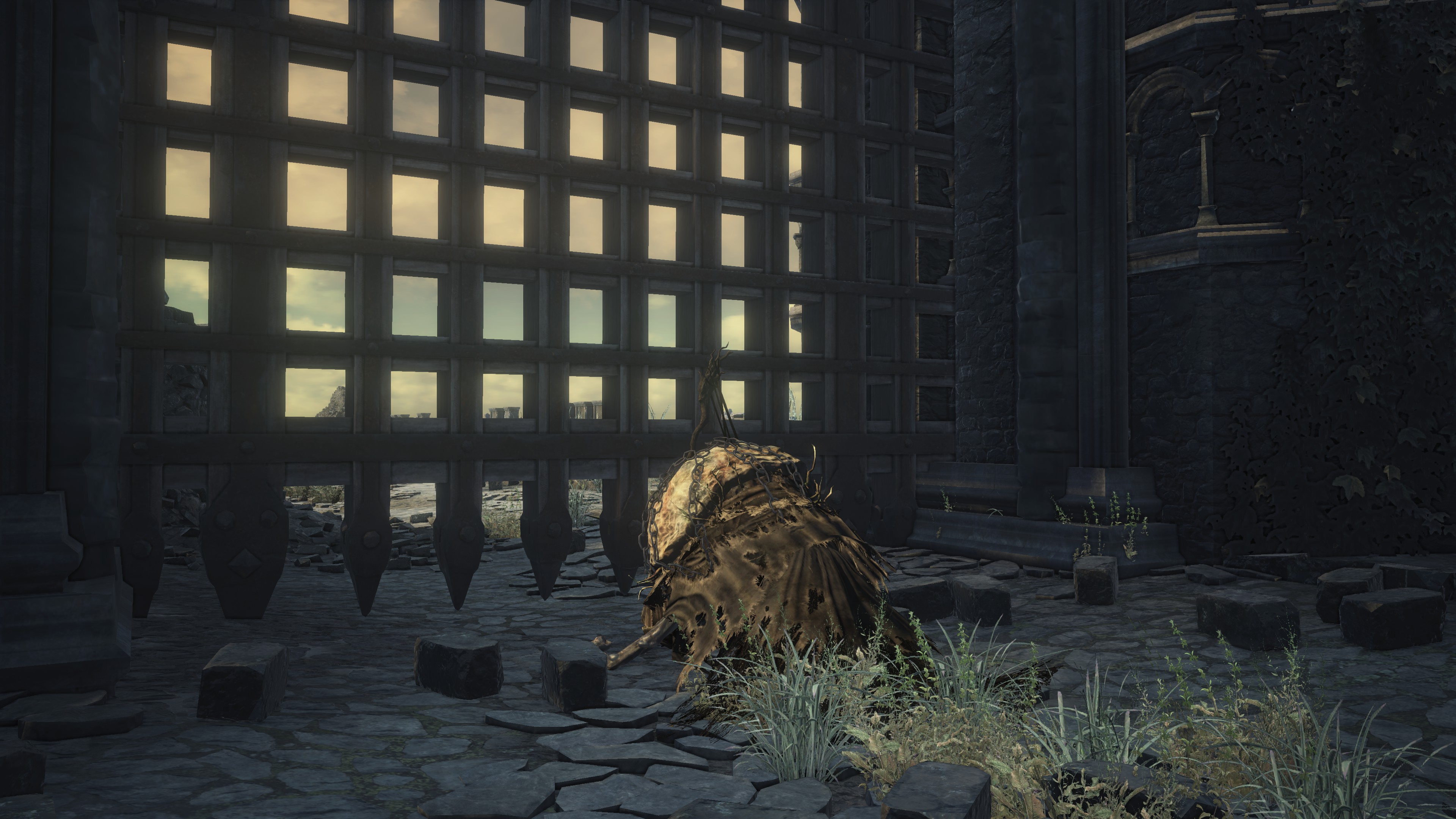
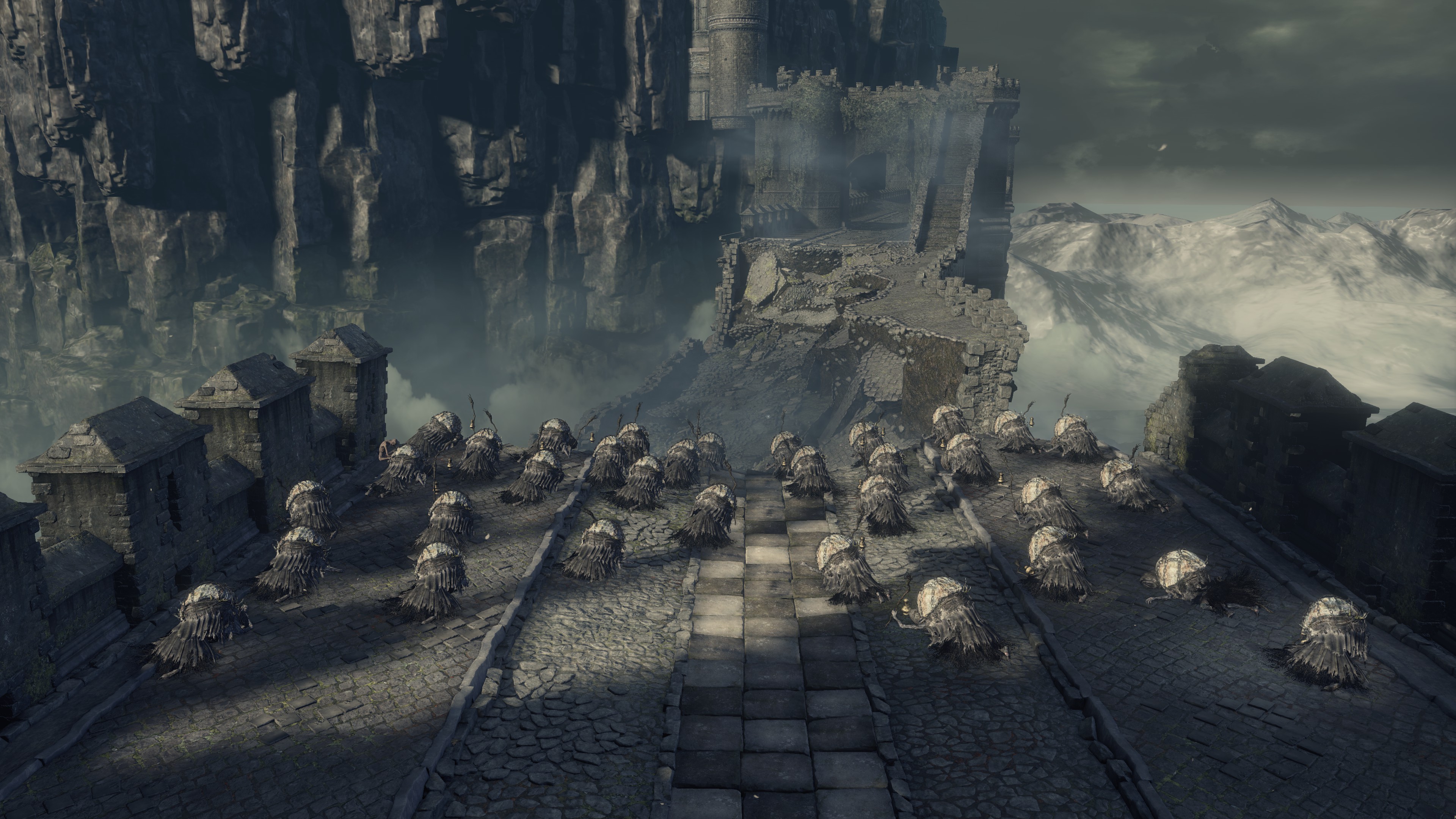
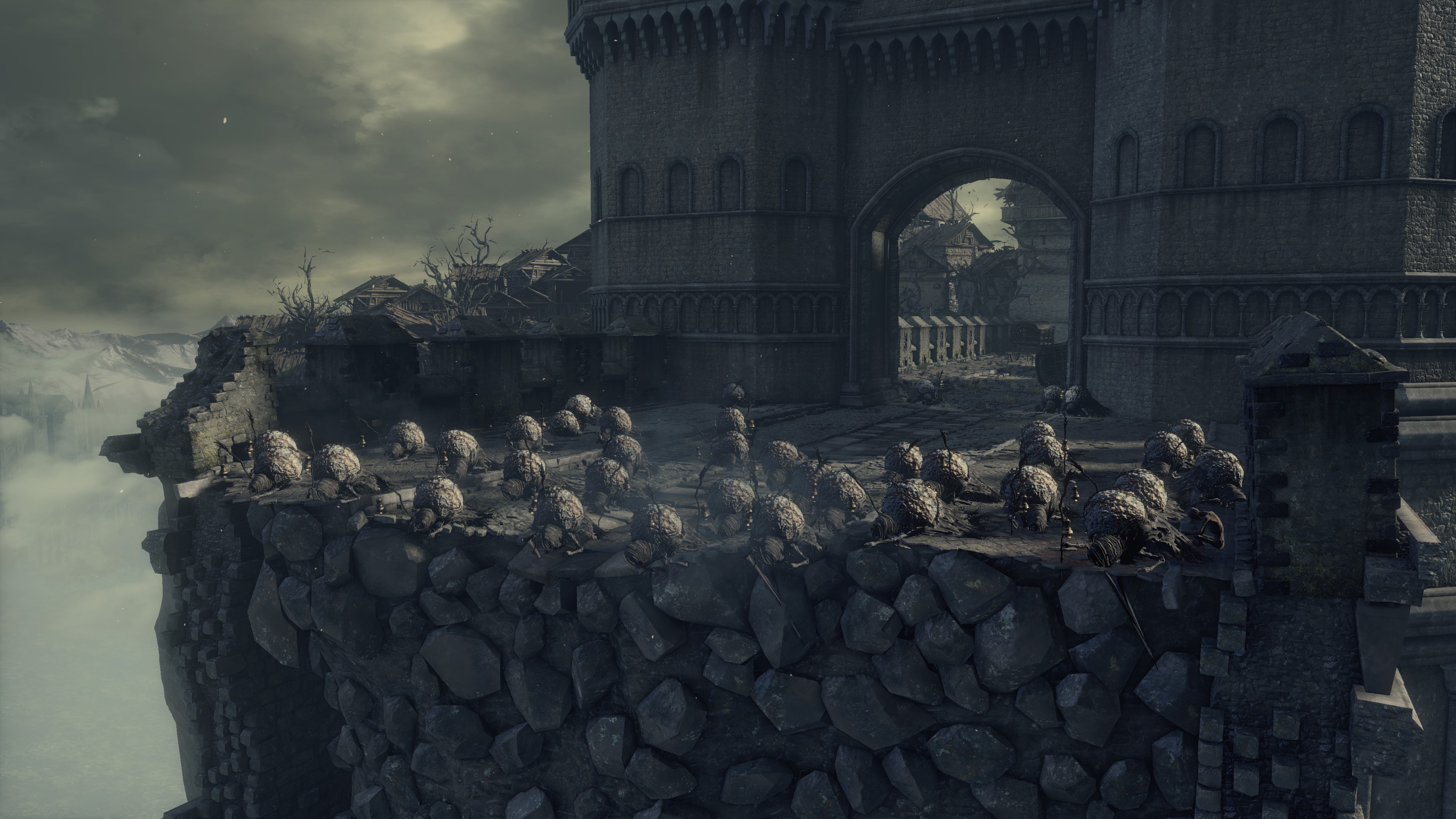
It is possible that some of this prediction was mundane. After all, the two Carim clerics in Lothric Castle both lie dead near the lift up to the Prince’s tower. If the foreign agents had been keeping close tabs on him especially, then it is feasible for those clergy to gain insight into the twins’ recent thinking, perhaps even learning about the secret instruction the younger prince was receiving. The clerics would then just pass that information onto Caitha who would pass it onto Yuria, who would send the pilgrims on their mission. However, Lothric’s rejection of firelinking wouldn’t be enough to extrapolate the Lords of Cinder proper abandoning duty also. In that case, maybe Velka was contributing her personal divination as well, using intelligence on Lothric to narrow the scope? There must be some limitations to her seer ability if the witch hasn’t used it more often, especially in past games. If she can only fish out so many details, that leaves room for uncertainty, justifying Kaathe’s lack of victory up until now. The Sable Church would have ample warning of the opportunity, but it was up to them to capitalize on it.
Whatever the specifics, one might still argue that the pilgrims were arriving early, in part, to help engineer Lothric’s collapse and the activation of the emergency system. One of the more peculiar enemies contributing to the chaos are the pilgrim butterflies, whose name immediately begs a connection with the visitors from Londor. They do look more like contorted humans than insects, with flesh and exposed bone. Moreover, during the eclipse, butterflies endlessly rise from the same direction as the pilgrims beneath the High Wall. We don’t see any change with those bodies, but that is probably because we have no reason to revisit their locations for the game’s narrative. Neither are butterflies visible in the sky from anywhere except Lothric Castle. We are simply led to believe that this event transpires as we proceed with our mission to seek Prince Lothric. It has apparently predated this point; even before the eclipse, we will witness butterflies in the Dragonslayer Armour’s boss battle. Combined with the butterfly being a common symbol of rebirth, and there is no denying what the Hollows become.
How do the feeble pilgrims become such twisted monstrosities? Look no further than the powers at play. The butterfly’s wings are mere tendrils, branch-like just as their tails are root-like. Those gracefully flap while the whole body emits a deep-red aura. Gathering up this power, they can fire a bright orange beam from their featureless bulbs for heads, the trail of energy it leaves in the boss arena soon erupting in fiery explosions. This attack would indicate that the butterflies are fueled by fire. Alternatively, the power is condensed into a dark mass, big or small. It is also their power animating the Dragonslayer Armour, one butterfly hovering over the kneeling suit until we enter the arena and begin the boss battle; the remaining two perish once that suit is defeated. This detail is relevant because the Armour, which possesses a standard boss soul, is nonetheless vulnerable to the Wolf Knight’s Greatsword like Dark affiliates. This would suggest that the fiery power is related to humanity, resulting in their lives becoming tied when investing some into manipulating the soul leftover in the armor.
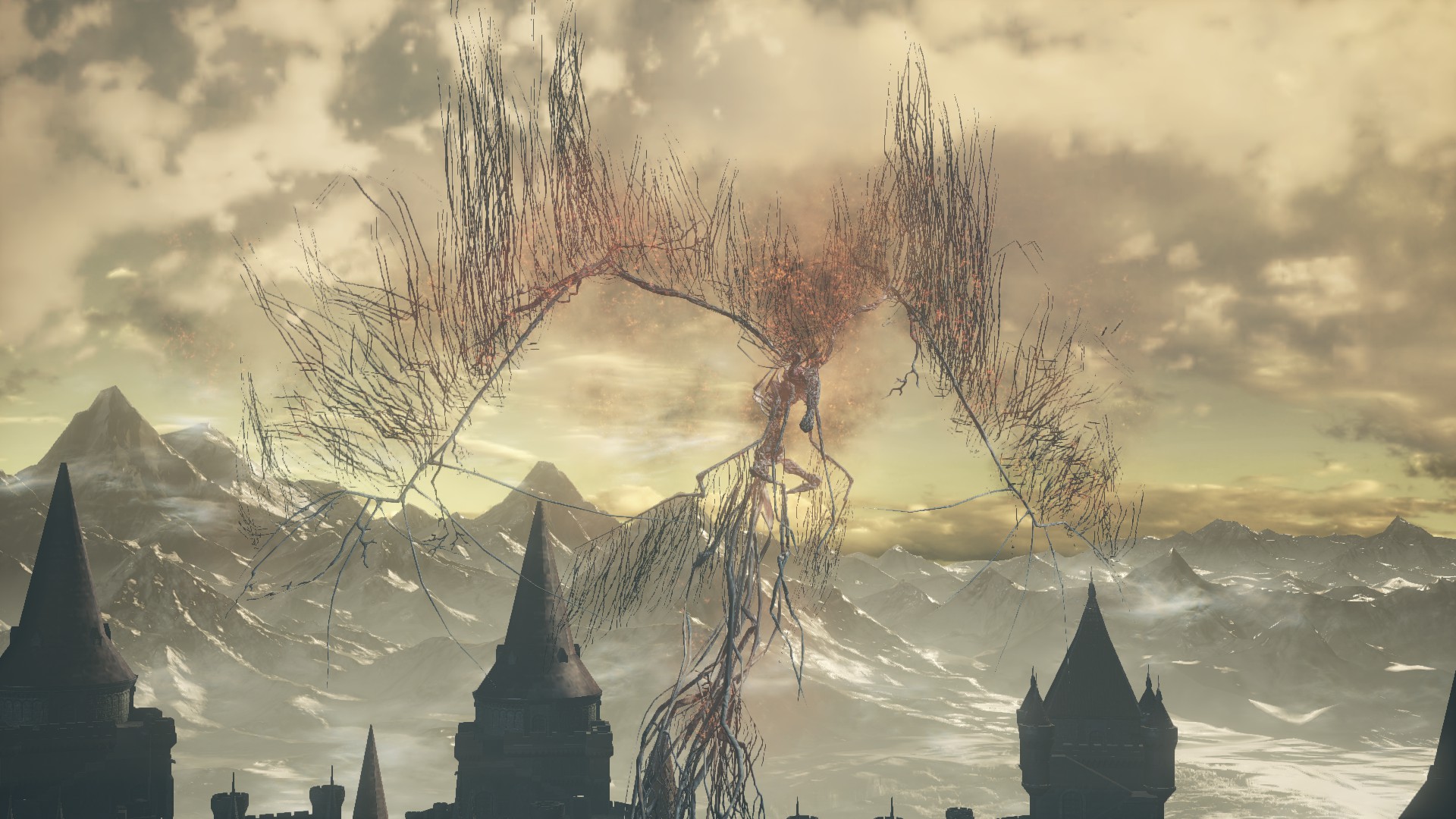


In short, the pilgrim butterflies possess qualities of both light and Dark, much like the eclipse or the Darksign. The parallels are no accident. When we first meet Yoel, he is crying out for death, praying for the removal of his “shackles”. With how he has collapsed like the others, we can presume that they too have died as the shackle of the gods, the Darksign, fails to revive them. This by itself would be odd, since the curse is usually not something the bearer just wills away. And yet, Yoel speaks ill of his failure to die, as if he should simply perish like the others. Something is causing the pilgrims to drop dead, and they are expecting it. It assuredly relates to the “lid cover” (蓋かぶり) on every pilgrim’s back, the stone dome secured with chains far surpassing the protection worn by Undead clerics. Londor has taken great precautions against the Darksign’s humanity bursting out, even while their bodies grow the same roots of stagnation as Aldrich and his followers. Why them specifically? Perhaps because their curse will produce something more impressive and volatile than the pus of man.
Simply put, the pilgrim butterflies are most likely what the lids have contained, the powers of humanity combining with the ring of fire sealing it to produce for them a new body for their reincarnation. The Sable Church is more than likely responsible — if training the pilgrims on how to draw out the Darksign’s power, why not experiment with the curse in other ways? The gods did it with Fire Keeper’s modified souls, after all. Londor’s governing body is just as liable to tinker with the pilgrims before sending them out on their mission, manipulating their “shackles” to come undone and unleash the butterfly after a certain point. The Hollows are fully aware of this, Yoel consequently at peace with death — though to his misfortune, Untended Graves reveals that cinification gets to his body first. But so long as they don’t crumble to ash, Londor ensures the frail Hollows acquire renewed life as a butterfly. DS2 showcased the potential of manifesting Abyssal creatures from the dual aspect of the Darksign. In fact, the butterfly doesn’t even appear to be the pilgrim’s final form.

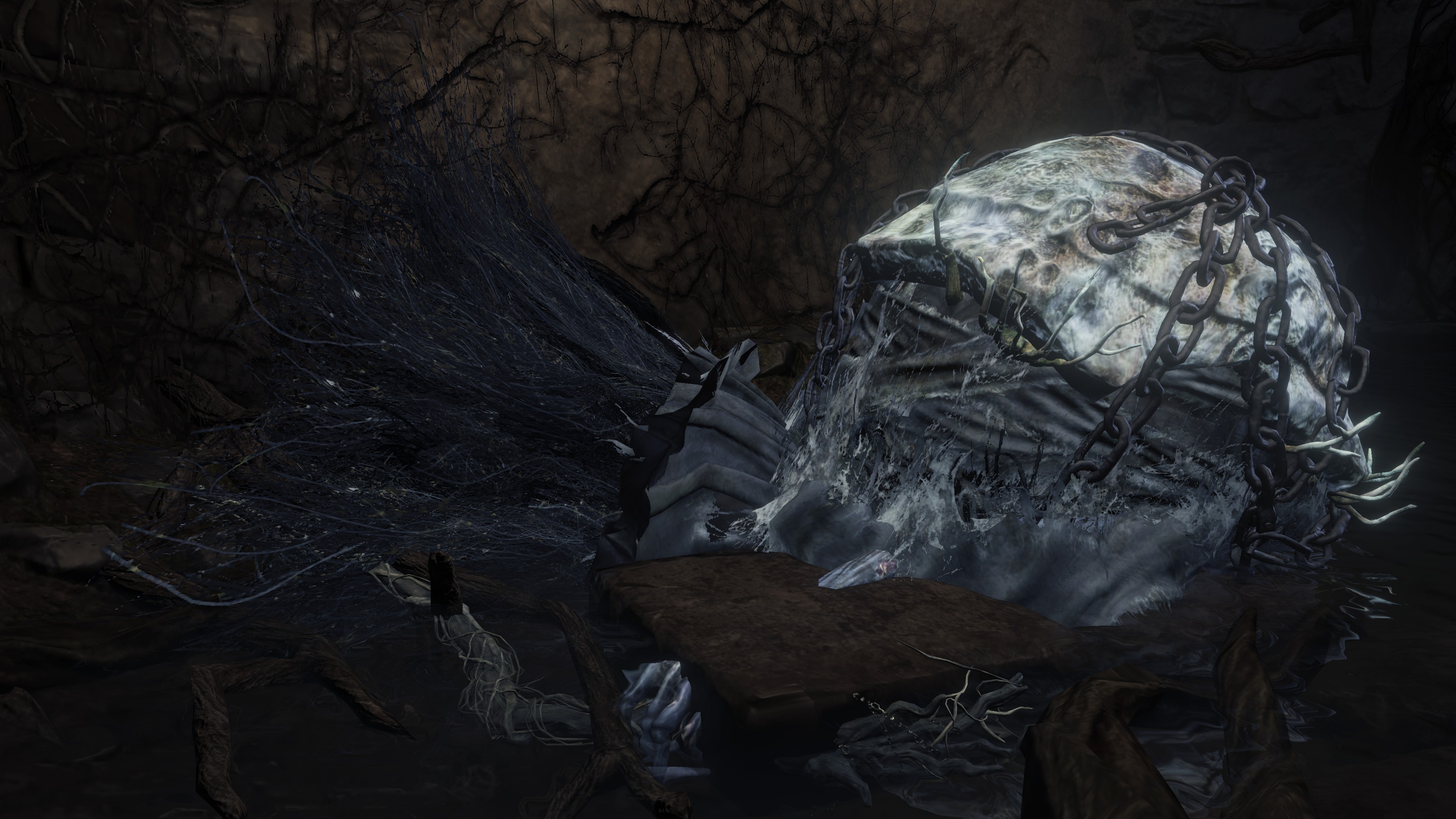
Farther into the future, more of Londor’s traveling Hollows lie dead around the Dreg Heap. From the lids of certain cadavers have emerged pilgrim pupas, their insectoid human form rooted in place but quick to summon an “angel” with seemingly white light. The angel possesses a similar form resembling both man and insect, with many small, segmented legs and veiny membrane wings. Various parts of this body, including the indistinct face, produce tentacles and tendrils akin to the pilgrim butterflies. If the angel dies, the pupa will just conjure another. But if the pupa dies, so too does the angel. Meanwhile, their wings constantly shed particles of that white light along with feathers, bringing Rosaria’s maggot-men to mind. Certainly, the angels uses those wings to launch similar beams of this feather-producing light until the target takes cover, where the angel switches to generating a petrifying cloud of light. That last attack adds a similarity to the pus of man into the mix. Together with the time period, the angel seems to be a more refined evolution of the pilgrim butterfly, creating the light itself from Dark.
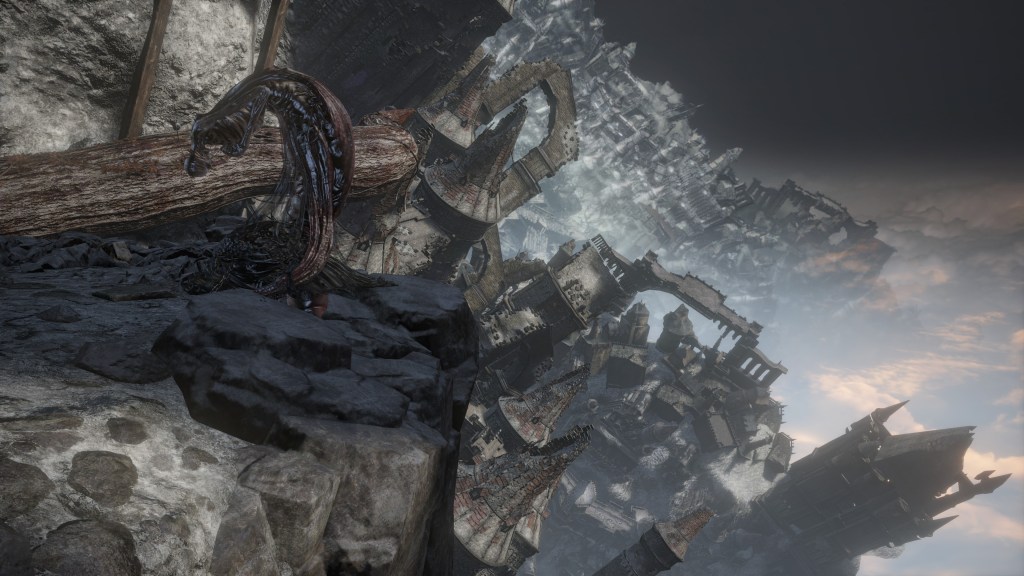
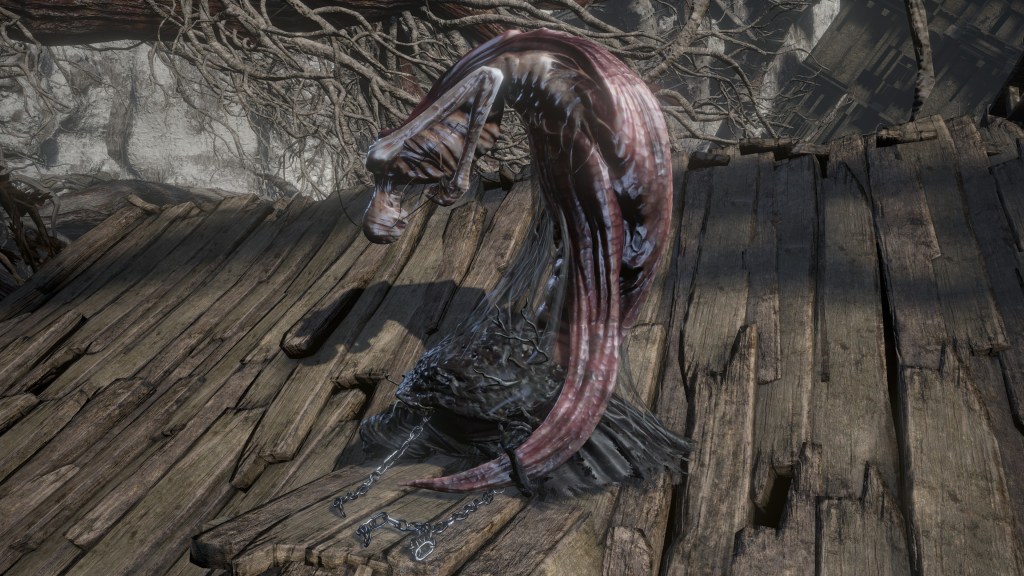


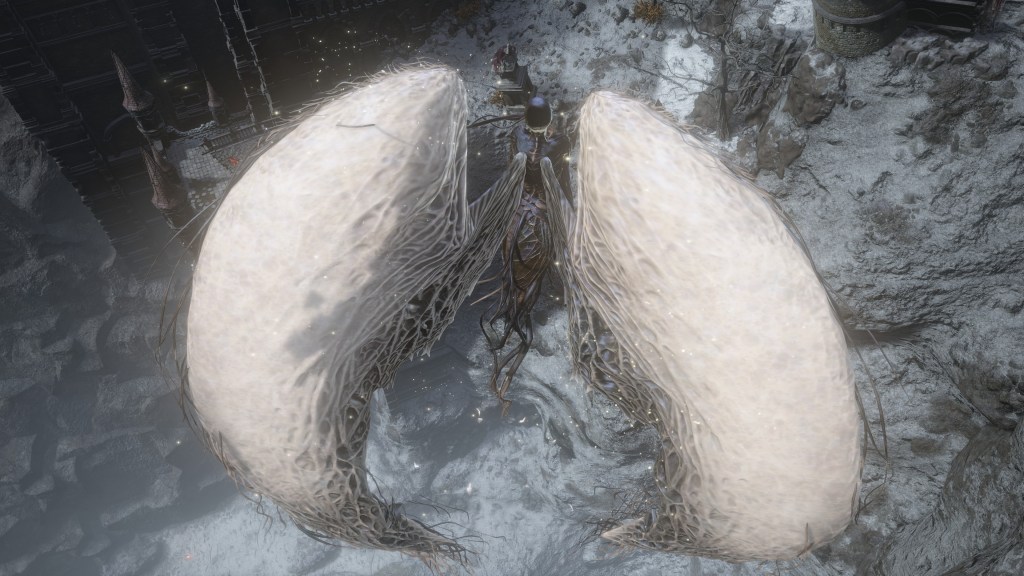
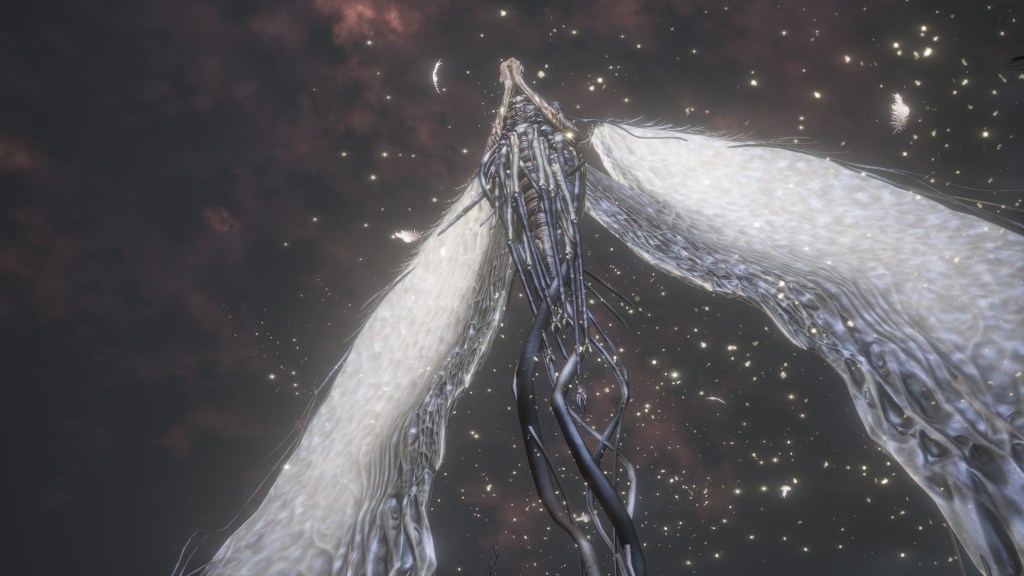
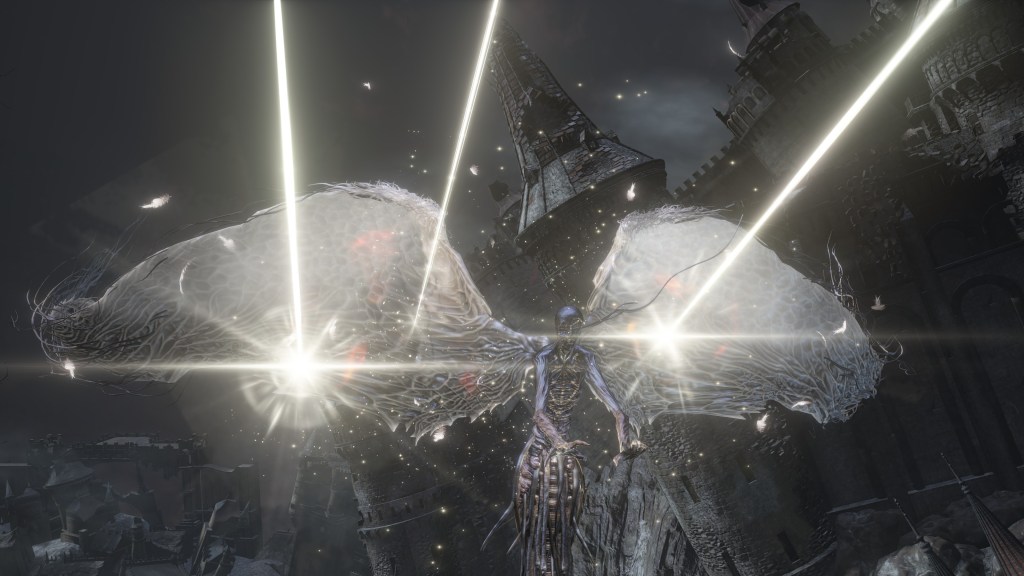

A pupa is a butterfly’s transitionary stage from larvae to adult. The pilgrim butterflies would be the larvae in this scenario, early bodies for the Hollows to pilot like a drone as the “chrysalis” takes shape from their Darksigns, hence their cruder nature. Once the pupa has matured from the back, it utilizes its stronger grasp of the Abyss to transform their vessel. It is still odd how the two bodies act independently, even if the angel’s life is tied to the pupa. But the mediator’s very existence might signal a problem. After Lorian’s wet nurse dies, an angel eventually takes her place, yet no pupa appears. This may be the intended end state, where the pilgrim’s soul fully abandons the human body for an angel. The more humanoid pupa conversely betrays a pilgrim’s incomplete rebirth, creating a pseudo-independent proxy to compensate. Even in this, Hollows struggle to break free of their shackles and fully integrate their two souls. Nonetheless, it shows promise, which brings us back to the choice to evolve the pilgrims specifically.
It is easy to imagine the Sable Church’s reasons for having their own “angels” appear in a kingdom like Lothric. There, at firelinking ground zero, where men strive to be divine servants, the pilgrims demonstrate the other meaning to an angel: humans themselves can transcend to divinity. The Hollows hope to inherit Flame with Dark, and the butterflies make the case for why they should be the stewards, having mastered the fire of their own curse. Once they achieve angel status, the beings of Dark have internalized fire to create light of their own. This paints the straightforward message that holy flame isn’t beyond the Abyss — along with transformation into a higher being. Dark gives man not just eternity but variability, the opportunity to redefine what it even means to be human. Mankind thus has infinite potential, shackled by Fire. Hollows are willing to accept the light, welcome the light, reinvent the light in a new Age defined by its eventual absence. The question posed to Lothric is why not join this dark yet bright future for mankind. Now was the time to embrace their estranged heritage.
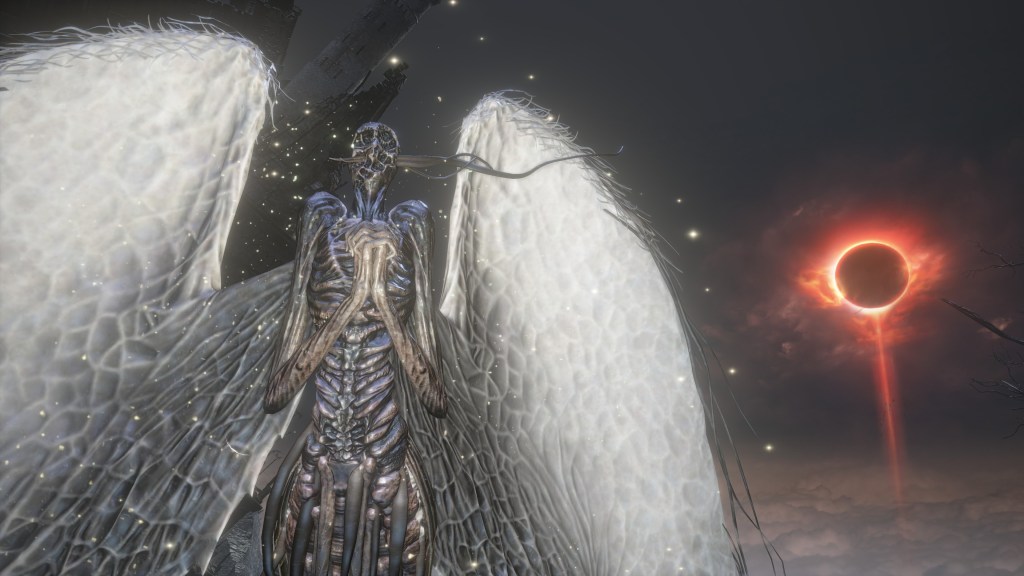
But beyond making a statement, the pilgrims’ new form gives them a better ability to maneuver for Londor’s interests. There is no reason to manipulate the soul leftover in Lothric’s old armor like a golem unless the intention is to sow chaos, the butterflies choosing to just watch from the sidelines until they see their golem creation — and lifeline — begin to falter against us. The goal is to destabilize the government, giving Yuria cover to subvert the firelinking system for the usurpation. Before we even meet, we can find her hideout in the rafters of Firelink Shrine, a small space hidden behind an illusory wall. The determination it is hers comes from the chest containing the Silver Serpent Ring, which has associated snakes with greed and the Undead since DS1. Add the new description, which analogizes a snake swallowing larger prey whole to how greed may be necessary to overcome “shackles” limiting us, and the soul-sucking effect, and it is obvious why Yuria suddenly shows up as if it were natural. She has been lurking in the area this whole time, working behind the scenes while her servants help distract.
Since Liliane is most suited to Londor’s magic, it is no surprise that Yuria has left her to keep the walking angel timebombs coming while she went on ahead. It also explains why Yoel “strayed” from her, the woman he serves, while following the regular path; they departed together, but the maiden rushed off without him. Meanwhile, the prophecy has supplied the pilgrims with all knowledge needed to act independently. Following the eclipse, we see that the new pilgrim butterflies are flying to circle Prince Lothric’s tower. From the innumerable feathers littering inside his bedchamber, the endless swarm have been turning into angels, no doubt dispatched by the princes shortly before our arrival. It justifies the prince’s annoyance to see us turn up, someone “again” disturbing his rest in bed without taking the hint — all because they need him to cooperate. Indeed, the angels, too, have apparently asked that he take up his mantle. He did well to disrupt the firelinking initially, but now the emergency system needs him to act as the last Lord of Cinder, and so does their Lord of Hollows.




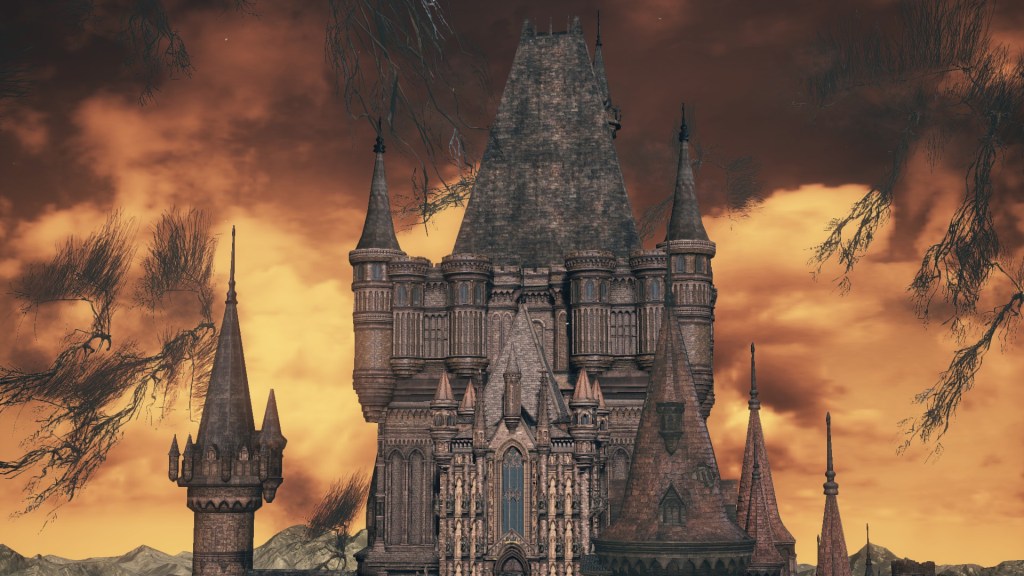

Oh, coming along undeterred again? Welcome, fireless ash, purloiner of kindling.
This is Yuria’s plan. Pilgrims will swarm Lothric, subvert the kingdom however they can, convert whoever they can, and maybe empower an Unkindled into becoming their Lord beforehand. It isn’t the most elegant scheme, but Londor has always thrived amongst chaos. As we potentially prove, they just need one Unkindled to accept the dark sigil and pass the firelinking trials. The country isn’t even particular about how their Lord accomplishes this, the pale shade becoming a cooperator instead of an invader for the battles ahead where present; even joining Yuria as a comrade against the Soul of Cinder. The Hollows are doing everything to contribute to our ascension, when they know who we are. Prince Lothric doesn’t appreciate their preaching regardless, forcing us to put his cinders on the throne. But if those cinders will go toward crowning a Lord of Hollows, the humans reborn should be satisfied.
Make Us Whole
Our journey to the throne begins at the Undead Settlement. Yoel is just another pilgrim who came too late to enter the kingdom, begging for death on the bridge. Before he can join the others, however, the sorcerer notices our arrival and, considering this to be fate, offers to become our servant with his useful knowledge; even willing to wait at that dreary place until we accept. Once welcomed into Firelink Shrine, Yoel immediately embarks on his “last role” as a sorcery teacher and, at his prodding, unlocker of “true” potential. Yoel takes it upon himself to draw out the Darksign’s strength from within us, the curse hollowing our form at the cost of powerups. He cannot do this for too long and requires breaks in between, but so long as we regularly undergo the process while continuing our mission, the old man will drag out his life long enough to see his king reach his full potential. After drawing out sufficient Dark, he happily addresses us as their king, even if we choose to slay him. He is content with finishing his part.
… Ah, ah, I understand. The likes of a cursed pilgrim isn’t suited to be your servant. But Person of Ash, if a pilgrim who fails to die appears to a great hero and all, I think it must be fate… That’s why I will be here the whole time. Praying that you have a change of heart someday.
… Oh, thank you for listening. Please give a last role to this one who fails to die… I, Yoel of Londor, become your servant.
… And, one more thing. I can probably draw out your true power. Pilgrims of Londor know it. Those engraved with the Dark Ring all hide power…
It is after Yoel finally embraces death that Yuria appears, claiming to be a friend. After giving her thanks, she reveals how Londor, her included, will obey us as their king bearing the dark sigil, asking we speak freely. Even should we subsequently abandon the mark of kingship with the help of the Fire Keeper, she remains polite in parting ways out of respect for our short reign. However, her dialogue remains casual in the Japanese script, and she refuses to share that Elfriede is her sister. She only recognizes us as the true King and speaks with the appropriate decorum once we have secured our regal position by marrying Anri. Yuria argues that a king requires a spouse, and another of her “friends” is already guiding the Hollow to Irithyll by this point; Yoel lasts until we defeat the Abyss Watchers and Anri takes the path through the Catacombs of Carthus with Horace. She decides to change the imposter knight’s role before revealing herself to us, giving her servant new instructions for once they reach the Boreal Valley. If Anri is already dead, Yuria simply won’t appear despite Yoel’s efforts.
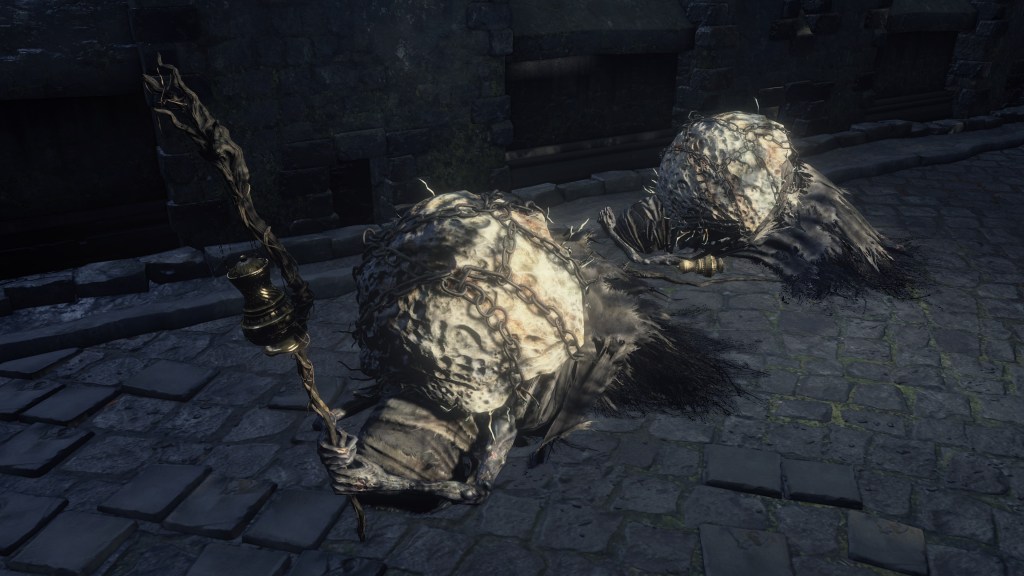

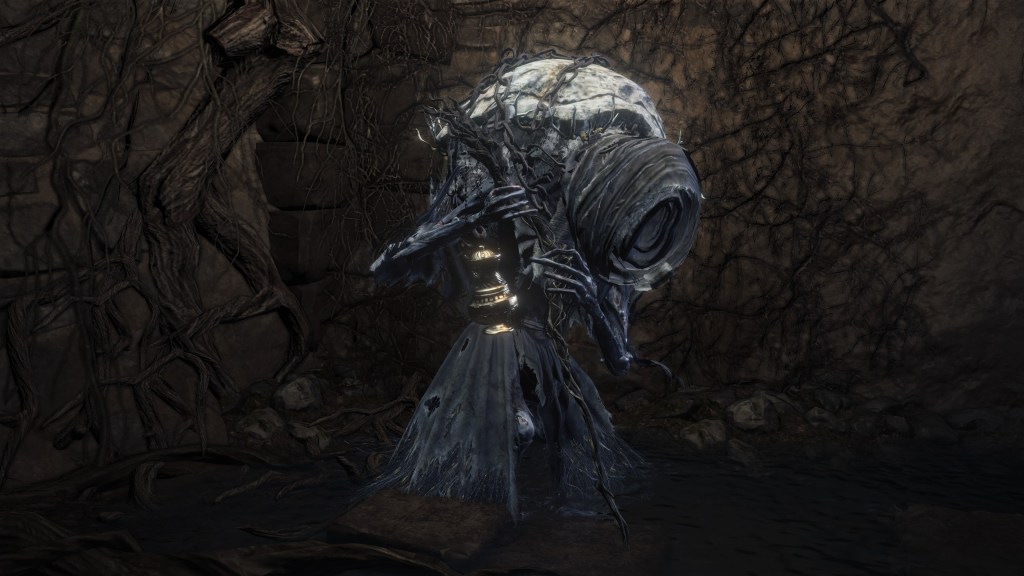
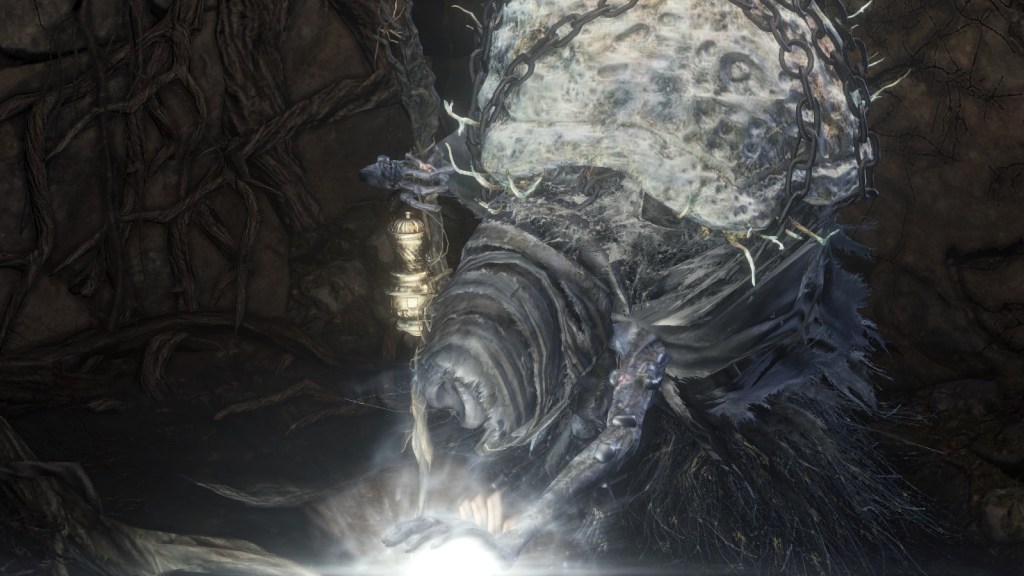
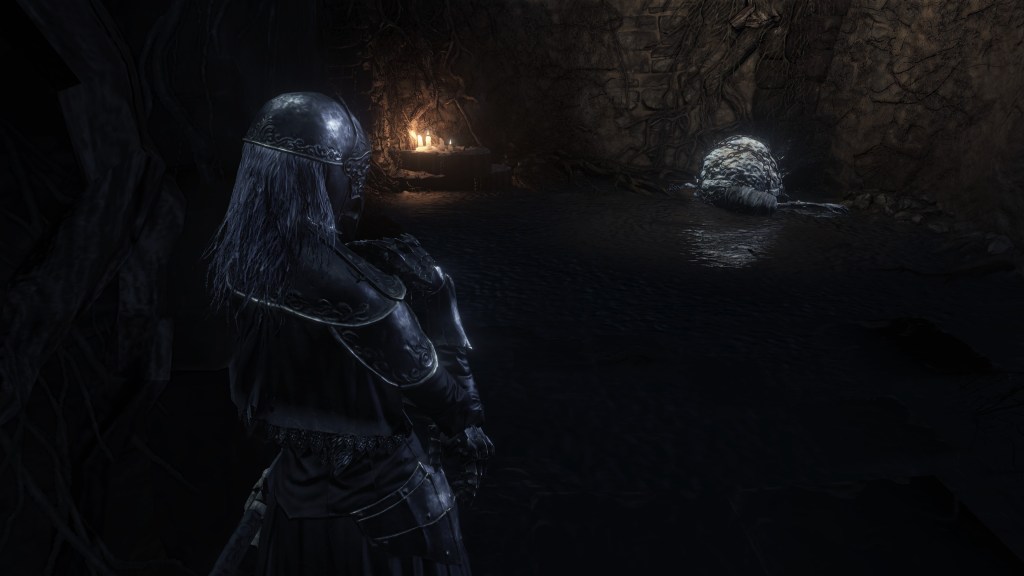
… You cast aside the mark of kingship. In that case, there isn’t any point exchanging words anymore. Farewell, you. The one who was our King, even if for a short time.
You, our King. Know a girl called Anri? That one’s a Hollow, and the one who will become your spouse. Currently, my friend’s guiding her. When the time comes, you best go and greet her. You, the one to be King, require an appropriate spouse, don’t you?
Although the Sable Church’s leaders insistence on protocol sounds arbitrary, it is because this “wedding” isn’t your typical affair. If left alive, the pilgrim in service to Yuria manages to abduct Anri to the Darkmoon Tomb before the church leader sends us there. Using the Sword of Avowal the old woman offers before death overtakes her, we stab our fellow Unkindled, laid out like a funeral corpse, through the face and draw out shadowy power for our dark sigil. Just as a marriage is often considered a union, the sword serves as our wedding ring, binding us together and thereby allowing the transfer of the Dark from one hole to the next. In exchanging vows as part of this arranged marriage, we are dedicating ourselves not so much to our spouse as to our royal prerogative — to the good of Londor and all Hollows as the enlightened philosopher king. Anri is stand-in for the “dead” Hollows. Add to that, we accumulate the power necessary to usurp the First Flame. Overall, Yuria’s demand is practical. The fact that this ceremony is framed as marriage is presumably the sole reason that Anri’s sex is always opposite ours.
Ah, you, our King. So you have finished the wedding without incident? Splendid. Then you are truly our King of Hollows. You have acquired a spouse and acquired the power to become fire’s usurper… O King, please snatch away the fire. For the sake of the king of we, Londor, and even I, Yuria, all of us.
Narrative convenience aside, the symbolism behind uniting man and woman as Hollows befits the Sable Church, which extends to the wedding venue. However Yuria came to learn about the Darkmoon covenant’s hidden chamber, it is no mystery why she wanted to cut Anri’s revenge short to hold the marriage there, before the Unkindled potentially died to Aldrich. Gwyndolin’s old hideout is his father’s mausoleum. No body is interred, but the Lord of men accepting the coronation before Gwyn’s tomb is a clear-cut taunt, akin to spitting on his grave. After all the sacrifices to preserve the Age for his own vainglory, the Lord of Sunlight can do nothing to stop humans from reclaiming their legacy and usurping Fire; the cutscene even has us mirror the Soul of Cinder in the cinematic for added mockery. The Sword of Avowal’s connection to the pygmy capital cements this inheritance of man’s cultural lineage from the original Dark Lord, the very Lord whom the god tried so carefully to erase. All those precise schemes, all that self-serving fearmongering — it will amount to nothing. Kaathe would be proud.
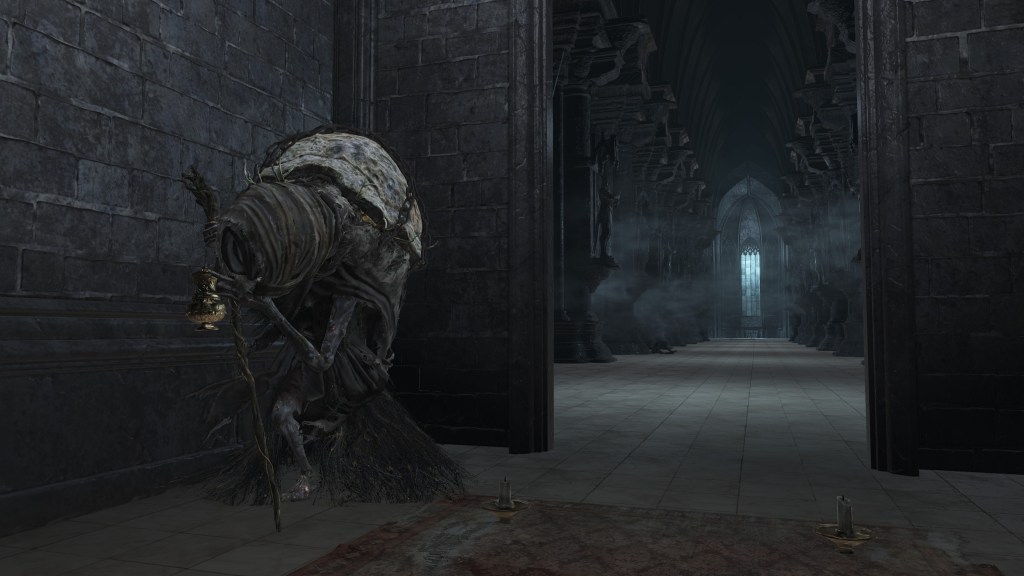
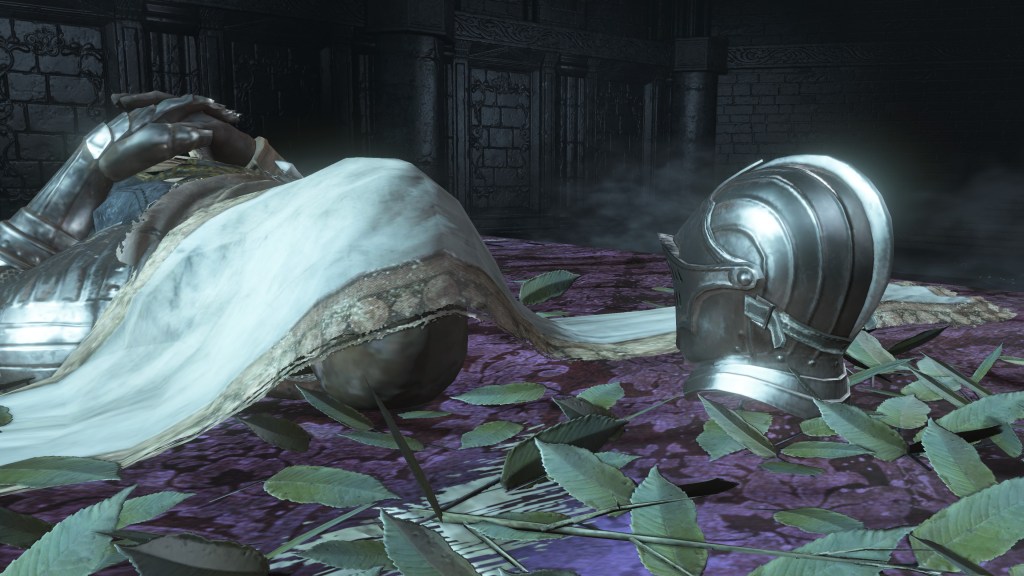
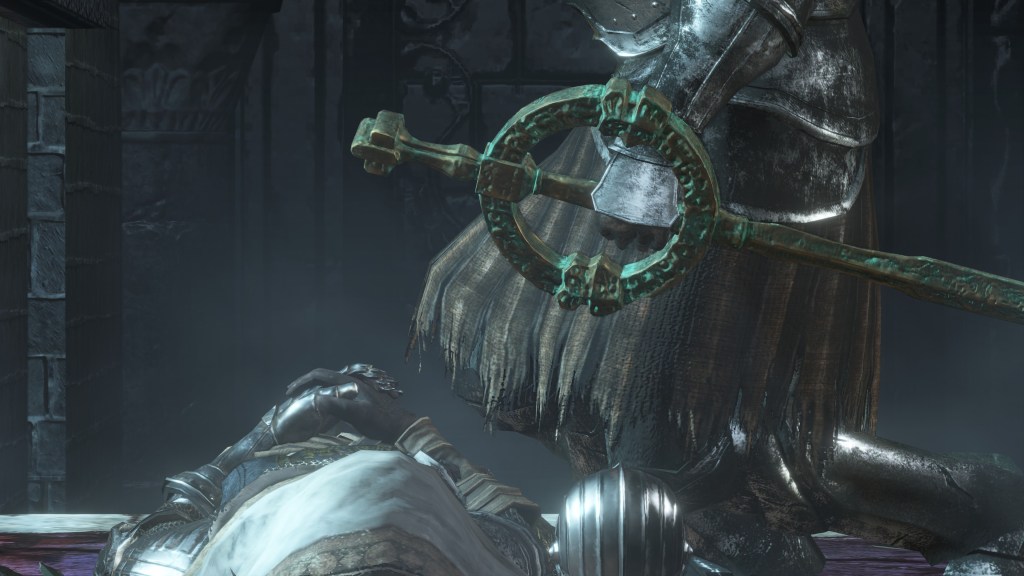
It is no wonder that Yuria acknowledges our commitment to the cause upon this moment, refusing to even fight back should we try to kill her at this juncture. Despite lending Londor’s assassin to assist against the Abyss Watchers and Sulyvahn before this, now she has truly placed all her trust in us, making the decision to remove the dark sigil all the more disappointing for her to be sure. She can only pray that we collect the Cinders of the Lord, link the fire, and steal that inheritance for Londor. But that requires waiting farther into the future, at the Kiln where she and a pale shade will leave their summon signs. In the meantime, Londor continues its pilgrimage, even as every land and age coalesces into the Dreg Heap. Based on their orientations plus the cinematic, the pilgrims are heading toward the ashen desert at the bottom where the ruins of Lothric ultimately settle. If we don’t fulfill our mission, they must hope that some other Unkindled will still be there to pick up the baton.
Any hope for a savior in these circumstances is almost certainly wishful thinking, which is probably why Lorian’s wet nurse lacks motivation. The Hollow doesn’t bother to unlock our dark sigil like Yoel, and is reticent to even trade her trinkets for souls. This includes the Splitleaf Greatsword, which resembles the Chinese guandao and belongs to a foreign country caught up in the drift — somewhere to the far East, perchance. The feeble old woman apparently picked up the exotic weapon on a whim, intrigued by the detailed design which evokes a veiny leaf split by a whirlwind as demonstrated when spinning it around for the Wind Wheel skill. Already, she was getting distracted. Perhaps seeing some of the ruins of her old kingdom was the last straw. Either way, the former High Priestess has defaulted to pulling up a chair and taking in the sights until death, only hoping to see an angel; so long as we don’t hasten it, her angel won’t act hostile. There is hardly the same enthusiasm as when the citizens of Londor first started this pilgrimage. We need to guide them.
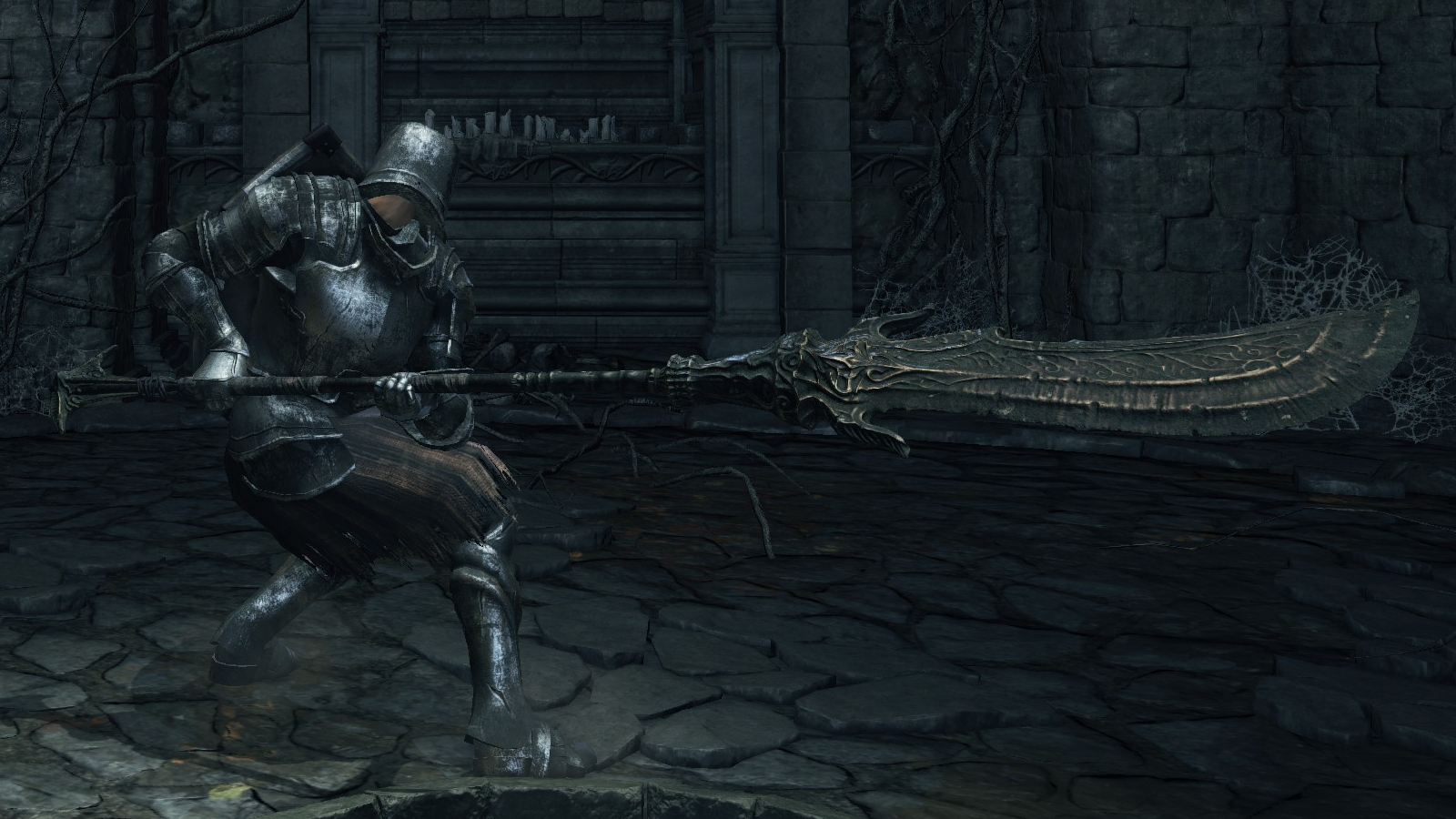


Long-handled great katana that drifted in from a foreign country. Made entirely of steel, so terribly heavy.
Splitleaf indicates the shape of the large blade, and it is said that the design denotes leaf veins.
If we do answer the Hollows’ prayers, we are greeted by the Sable Church’s two maidens and an entourage of commoners, all kneeling to the new king about to begin leading. Some fans have raised eyebrows to this cutscene, since we can kill Yuria and collect her ashes prior to the final battle. One might argue that the other maiden is Elfriede if not for the Ashes of Ariandel DLC enabling her to die by our hand as well. The two church leaders must be faithful Yuria and Liliane, even when one should be dead. The same can be said for Anri, whose armored form kneels with the other rabble. By all indications, FromSoftware wants to convey that the dead are alive during our usurpation. How is this possible? It might be the power of the Abyss. With all of Londor’s experiments on the Darksign, not to mention the immortality inherent to humanity, it may be that the country devised a method to resurrect Hollows without them becoming mad. Assuming that they just need a good part of the body and soul, even Liliane’s blindness might be cured with this hypothetical method.
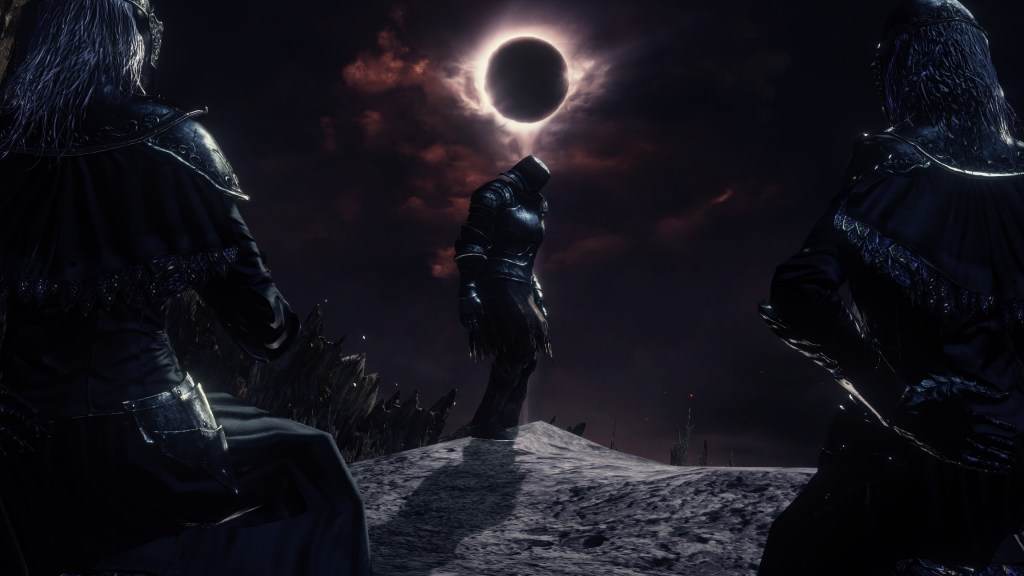
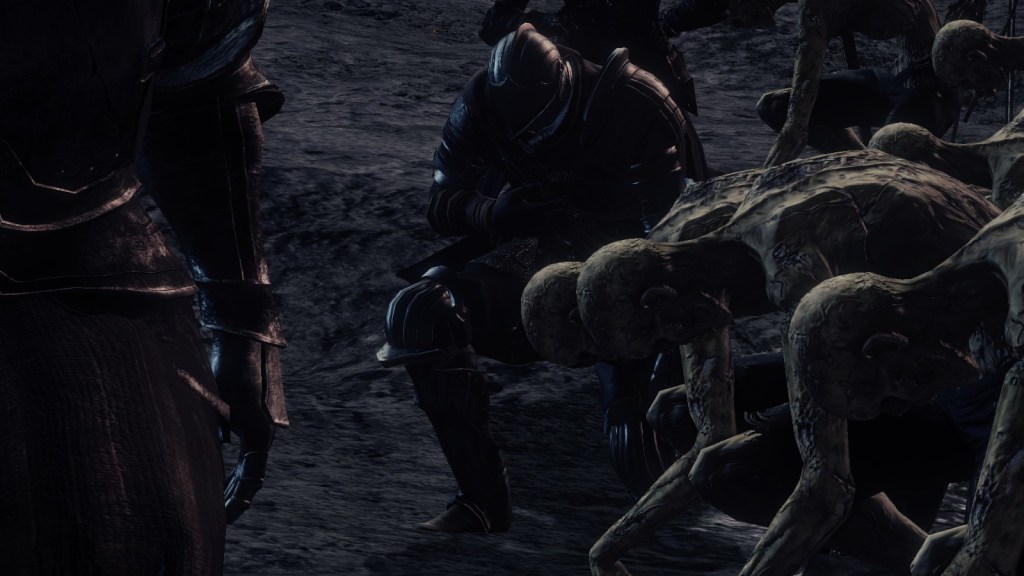
If Yuria is reconstituted with just her ash, then it is promising for the world. The damage caused by overextending the Age of Fire might be reversible in the Age of Dark, which we catch a glimpse of with Firelink Shrine’s appearance in Untended Graves versus the Dreg Heap. In a world of infinite space without time, the possibilities seem endless, and that future belongs to man. The only question is if we will be the one walking mankind through fire to that new Age. Yoel remains cagey about the implications to drawing out the Darksign’s power, arguably roping us into lordship of all Hollows through deceit. Neither does Yuria feel pressured to argue usurpation’s case until we have already followed her instructions. Both act as if power and authority are all we require to stay committed to their path for us. Kaathe fumed at past failure for relying on strictly such criteria, and he led with the historical explanation. But with his heirs repeating old mistakes, the world’s fate might just rest on our greed.
 Lokey Lore