
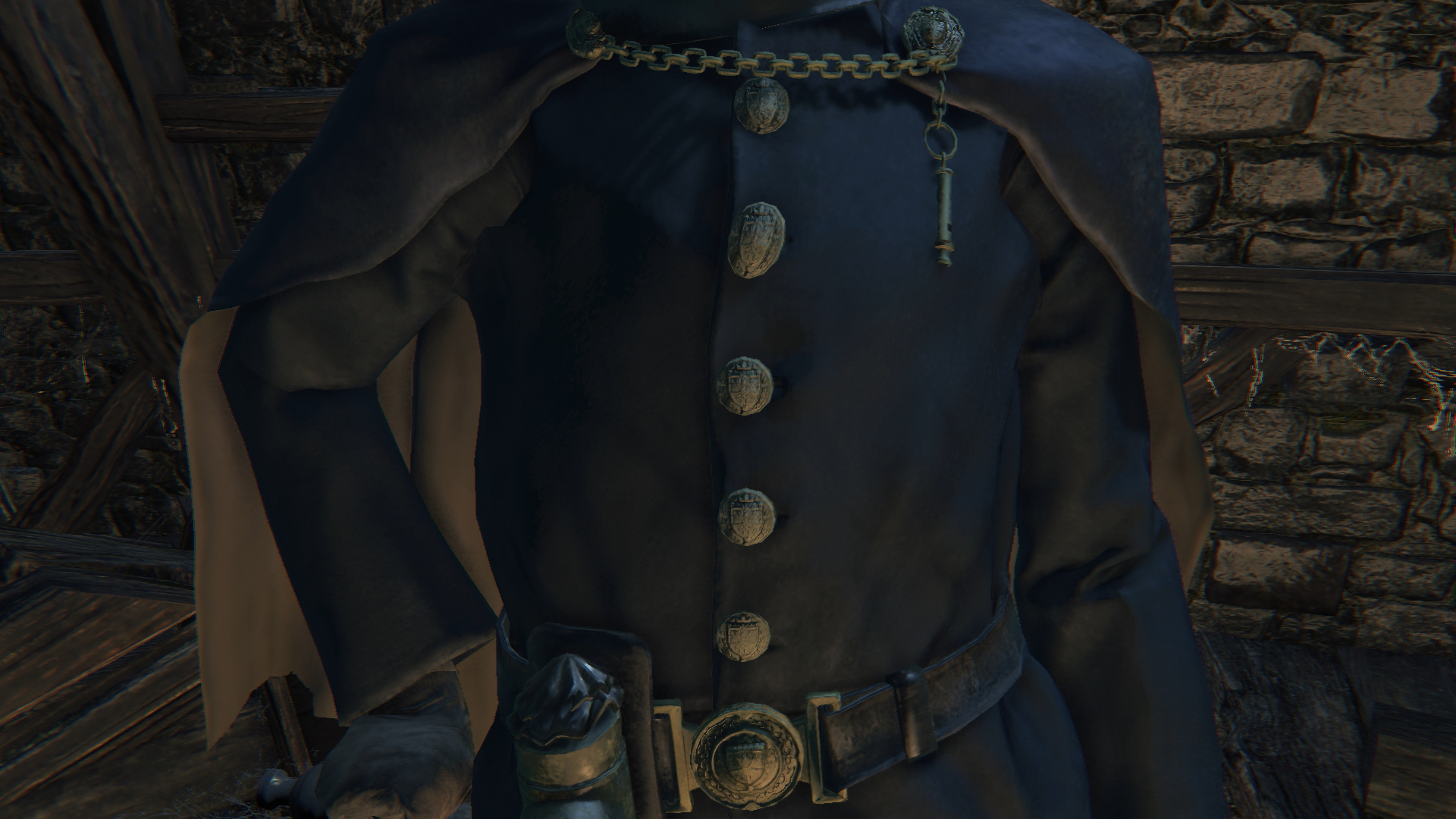
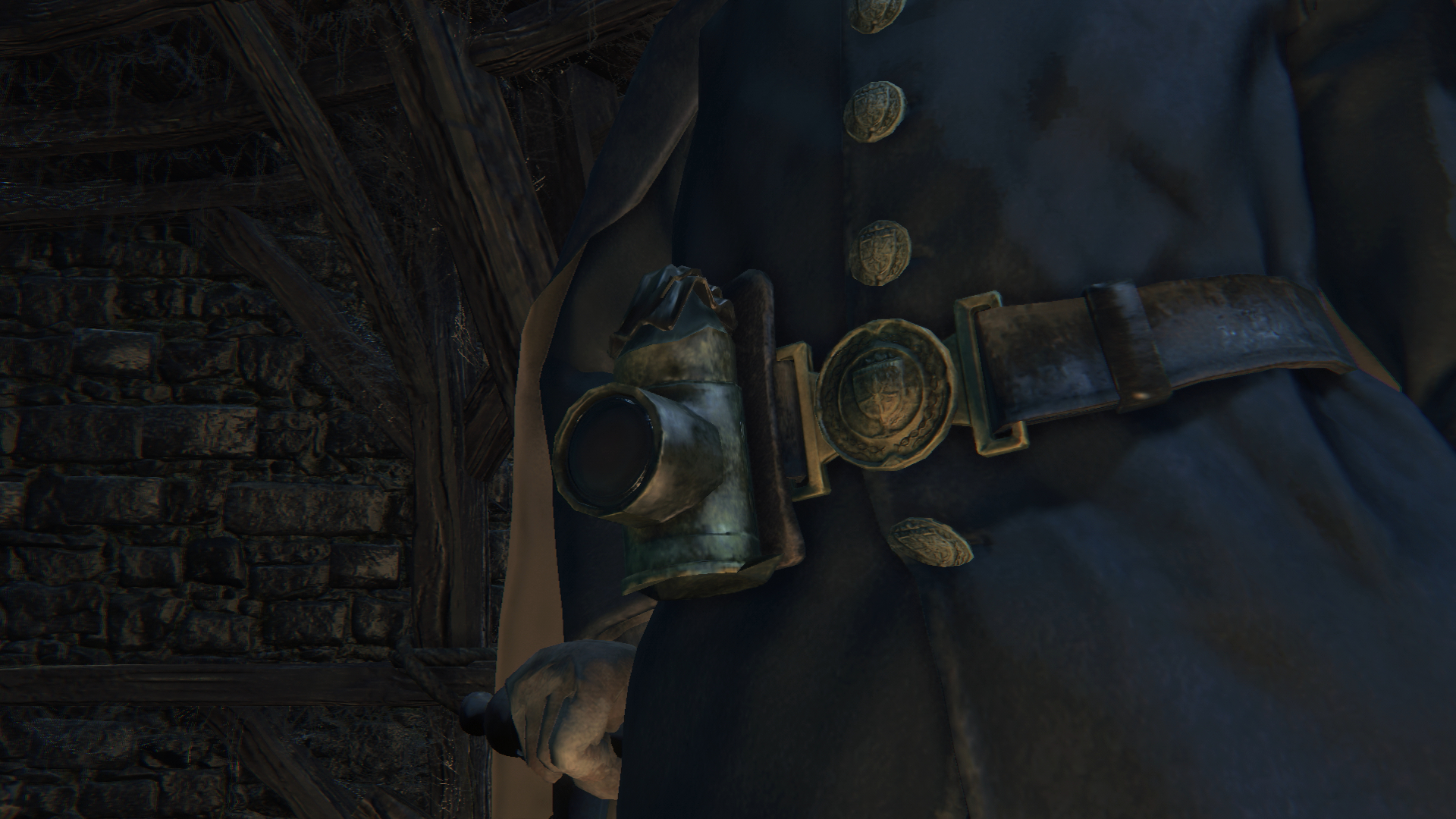
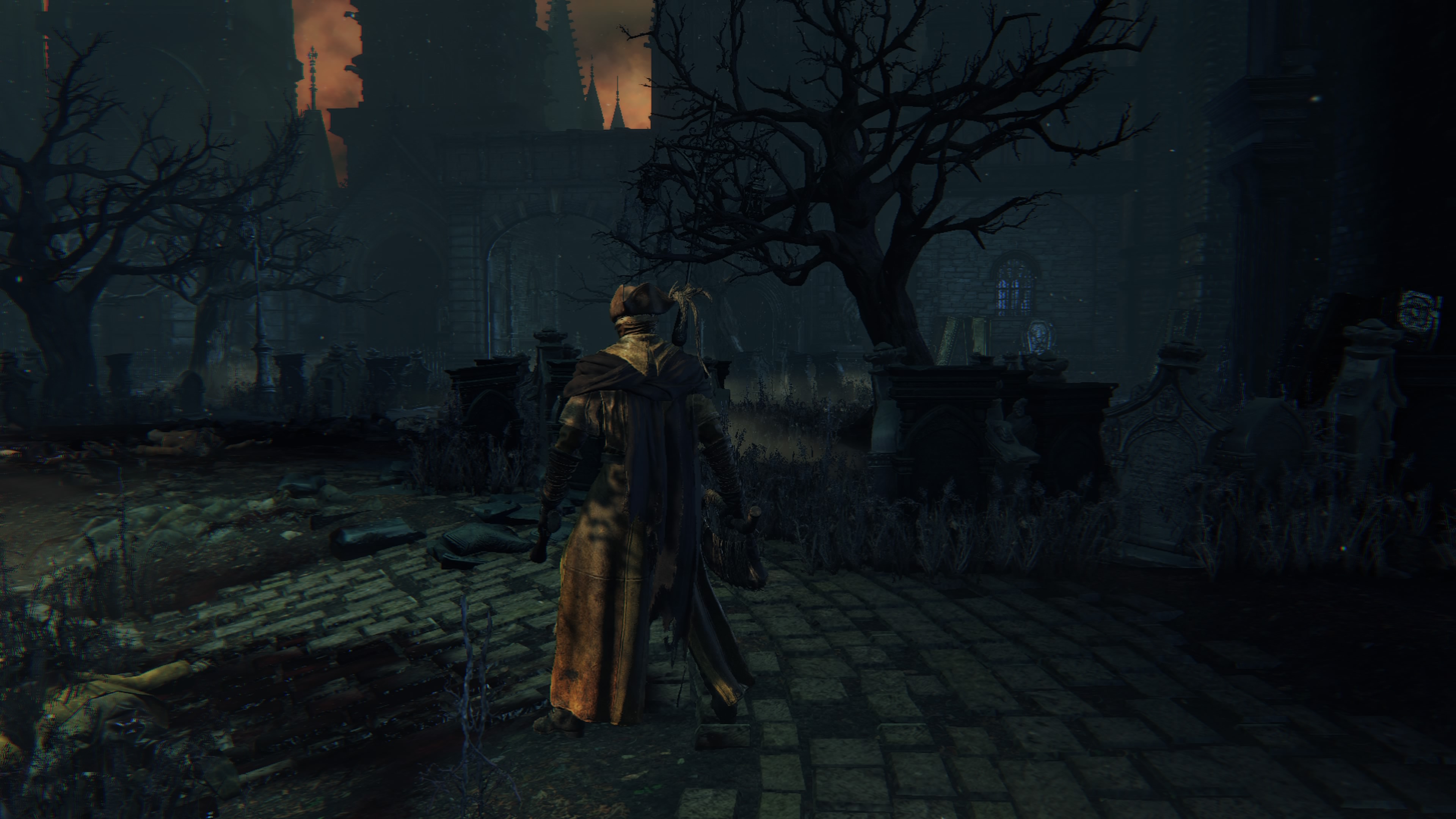
The League began in the Forbidden Woods with Valtr, whose uniform identifies him as a foreign constable. Just as central-organized, salaried police officers began to emerge in Victorian Europe, so too did such authorities patrol the streets of the towns around Yharnam. In the case of Valtr, he and a group of colleagues came to Yharam pursuing a beast, doubtless responsible for terrorizing the public and possibly even killing some of their own. In the end, only one of them apparently survived after cornering the monster in the Forbidden Woods, where we find said survivor. This isn’t surprising. It would be easy for even locals to get lost in the twisted tangle of trees and uneven terrain of the forest. Between all the snakes and other threats, the outsiders would have plenty to distract them as the beast hid in the brush. Soon, the pursuers became the pursued, hunted by a predator that could pick them off one by one before disappearing back into the shadows. Together or separated, the end result is certain: Valtr alone managed to slay the beast, after all his comrades were dead. And then, he did the unthinkable — he ate it.
Uniform of the authorities who once visited Yharnam pursuing a singular beast. It is said that they all became the beast’s prey and that the one person who survived ate the beast.
It is the kind of hearsay that Yharnam citizens like. The overbearing, prejudiced foreigners don’t understand Yharnam. Thus, they expose bloodied bodies in its darkness. All the more gratifying.
In all likelihood, the Beast Eater did this purely out of desperation. Lost as they were, the overeager constables would have been trapped in that forest for days at minimum. Food might have been scarce, and that is assuming it wasn’t poison. By the time Valtr engaged in that final struggle with his quarry, he was surely half-delirious from hunger. Add in the sudden high from his life and death struggle, and it is easy to see him devouring the flesh of his hunt in the moment, payback for all the friends the monster stole. That, of course, is forbidden in the same way that using beast parts to create weapons and other hunter tools is taboo, the upstanding cop reducing himself to the very mindless beast he chased out of town. Such evil earned him his epithet, but it also came with a blessing of sorts. After eating the beast, Valtr discovered the Impurity rune inside himself, revealing to his eyes the stagnation hiding within “filth” of blood. Tasting the vermin with the beast, he now formed the insight to identify it.
One of the Karel characters which phoneticize inhuman voices. The one said to have been discovered within the forbidden Beast Eater has been given the meaning of “stagnation” and become the oath of the League.
Those who are in this covenant cooperate with hunters of other worlds and discover “insects” upon the hunt’s completion.
That is the source of man’s stagnation that squirms in hiding within filth. Trample it without hesitation.
It was with this knowledge that Valtr began the League. Having subsisted on beast flesh long enough to make it back to civilization, the new “hunter” took up residence in the forest village, operating from one of its grain mills to this day. Why stay and not return home? Because he was a man with a mission. Valtr wears a unique helmet, which the League master passes onto the next generation upon retirement. However, it is obviously just an old metal bucket with a hole repurposed to see out with one eye — the kind of scrap collected in that ramshackle village. Clearly, the former constable decided on his covenant with “confederates” while witnessing the vermin all around him in that settlement. It didn’t matter if the person was beast, kin, human; all of them possessed some level of stagnation, and it was offensive to the eyes. Despising this fact, Valtr created an organization which would trample the insects polluting the world, hunting every day regardless of Yharnam’s sanctioned beast hunt nights.

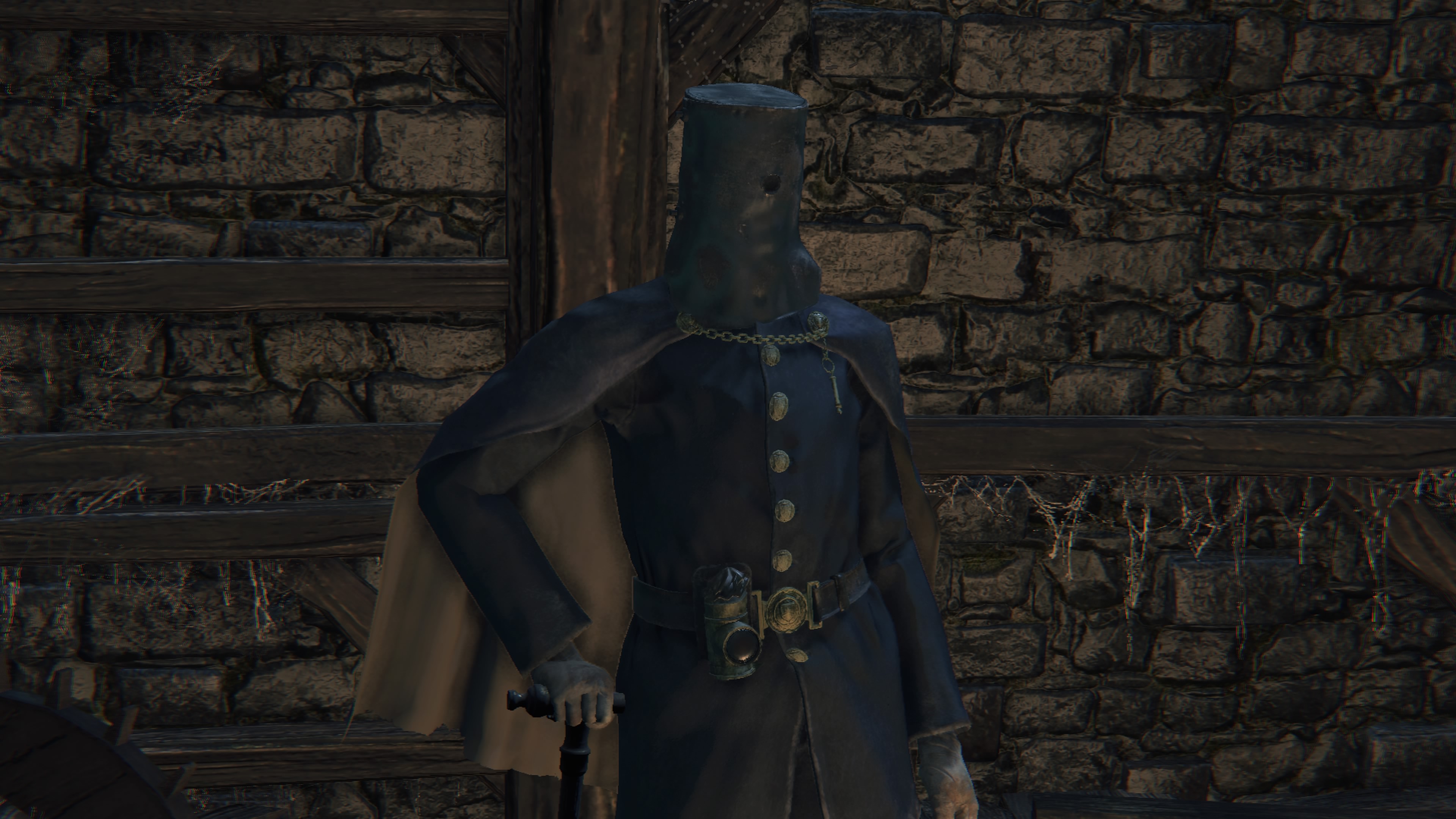
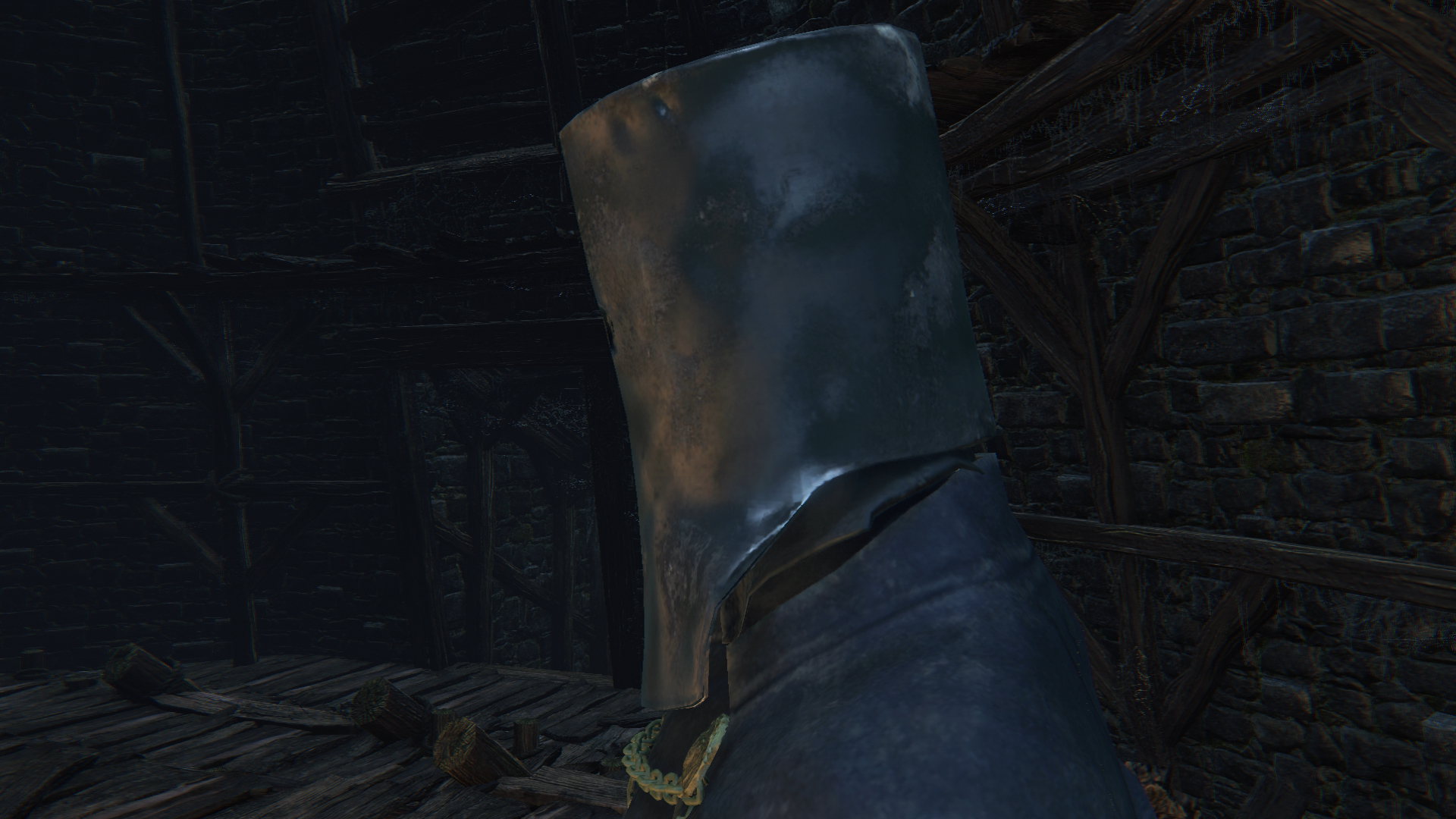
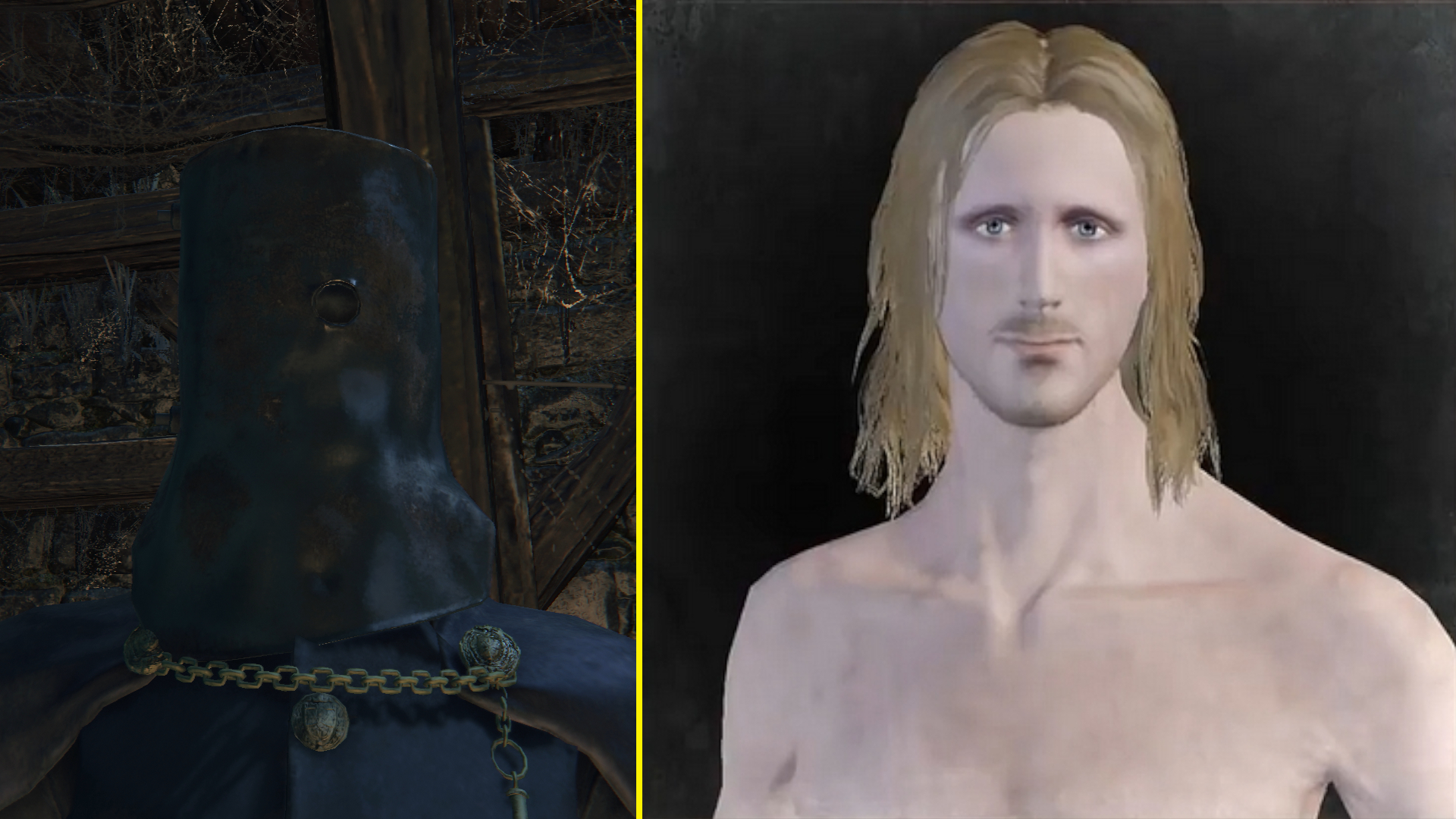
Iron helmet like an upside-down bucket. It probably was that for the original owner. Only one eye has a peephole.
It is an emblem passed down to League leaders for generations. Valtr was unable to see the “insects” for a long time now.
Oh, you’re a new face, are you not? And from the looks of it, an excellent… hunter. Keh heh heh… Oh, I am Valtr, leader of the League. The League is a compact to eradicate all the filth which squirms on the hunt night. As a hunter yourself, don’t you feel the same? Aren’t you tired of the corrupted beasts, sickening slugs, crazed treaters, all of it? That’s why we kill them all. The League hunters will cooperate with you. How about it? Would you too like to join our League comrades?
… Oh, I see… Well, I don’t want to force you. You’re another hunter, so you will realize it even if you hate it. That the hunt night, no, even any other, is nothing but shit-like filth everywhere…
At the same time, the League master finds this world overflowing with such filth wonderful. Before, this law enforcer never knew who he crossed harbored ill intentions unless caught in the act, forced to abide by protocol to protect the innocent. Now, he can make no mistake of who hides evil, and it was everyone. Perhaps it was the trauma of the beast slaughtering his comrades, but Valtr sees the universal “sin” which produced that beast as freeing. In his eyes, everyone is guilty and justice is no longer blind. With almost maniacal laughter, he revels at the corruption, seeing people no different from the insects the League’s mission crushes underfoot — and who cares if you crush an insect? Indeed, the former lawman encourages confederates to kill whoever, whenever, knowing how indiscriminate this looks to everyone else. Without the rune, they can never understand the world’s plight, and so it is up to Valtr to enact this bloodstained mission. But the man himself has no pretensions about his coldblooded murder. It is an outlet for his deepest fantasy, a world where he need not worry about the innocent.
Ah, confederate. How terrible is it? The world of man is corrupted and wonderful. Everywhere is full of “insects”. Just like our mission. Keh heh heh. Kwah hah hah hah!
Oh, let me give you one piece of advice. Those who engrave the League’s Karel discover “insects” via that oath. Those are the source of man’s stagnation, wriggling in hiding within filth… Trample them without hesitation. The ultimate goal of our League is to trample all the “insects” and eradicate man’s stagnation… That is why you keep hunting and killing until you know there are no more “insects”. That is our bloodstained mission. I surely doubt anyone will understand. That is why I love my confederates. Try hard not to forget that.
That said, one vigilante couldn’t hunt the whole world alone, and actual indiscriminate killing would make it impossible for a group to function. No one better exemplifies this restraint than Valtr. When hostile, the man doesn’t hesitate to blame the vermin crawling inside for our violence. And yet, he otherwise welcomes us into the League, as he has done for so many before. Not trusting mere insects, the man donning a bucket demands hunters vow to a covenant, promising to honor the League’s mission in exchange for the sight. True to his Germanic name meaning “army ruler”, he establishes a private militia with his bucketed head at the top. Indeed, the master will offer any hunter of clear skill the rune for sight, but it is only after they crush a vermin that he will consider the oath fulfilled and deem them comrades.
A disgusting “insect” is squirming… A shitbag bastard…
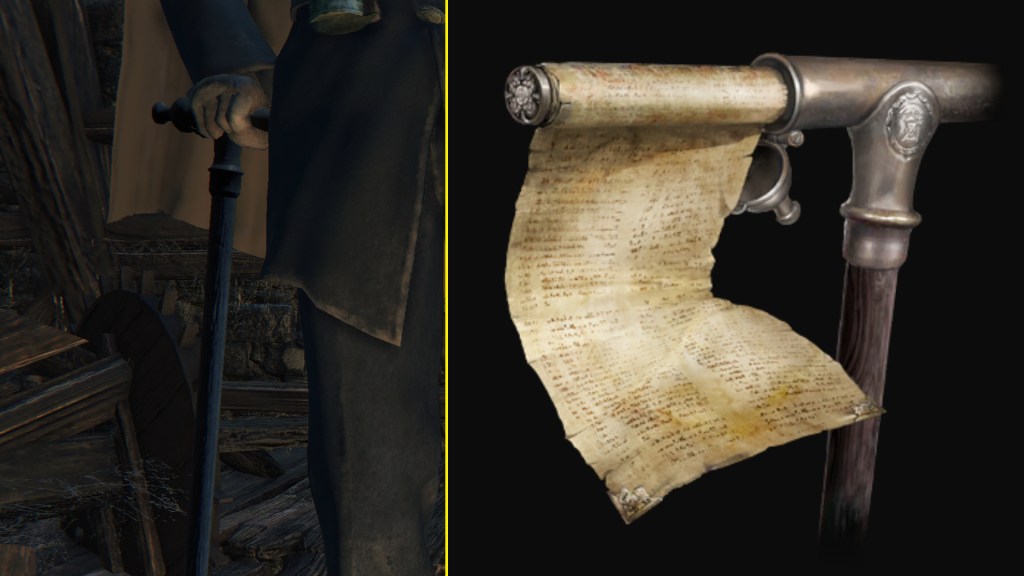
As proof, he hands over a cane raised in a gesture of solidarity with the organization. While providing a status symbol of a Victorian gentleman is certainly impressive considering Valtr’s environment, the staff’s main purpose is to contain a roster in the handle, listing the names of every League member. The master likely handles informing those members of new recruits, adding their names to each roster so that the hunters can always know a confederate when paths cross. This way, the League has no chance of killing a confederate when out on their murder sprees. Add to that, the League hunter doesn’t have to fear a crazed “insect” stealing a member’s staff and passing off as an ally. Neither do they have to worry about working with hunters who might find their choice of prey distasteful for one reason or another, betraying them as the vermin they truly are in the League’s mind. It was an effective solution for a group of likeminded radicals, seeing corruption in every corner.
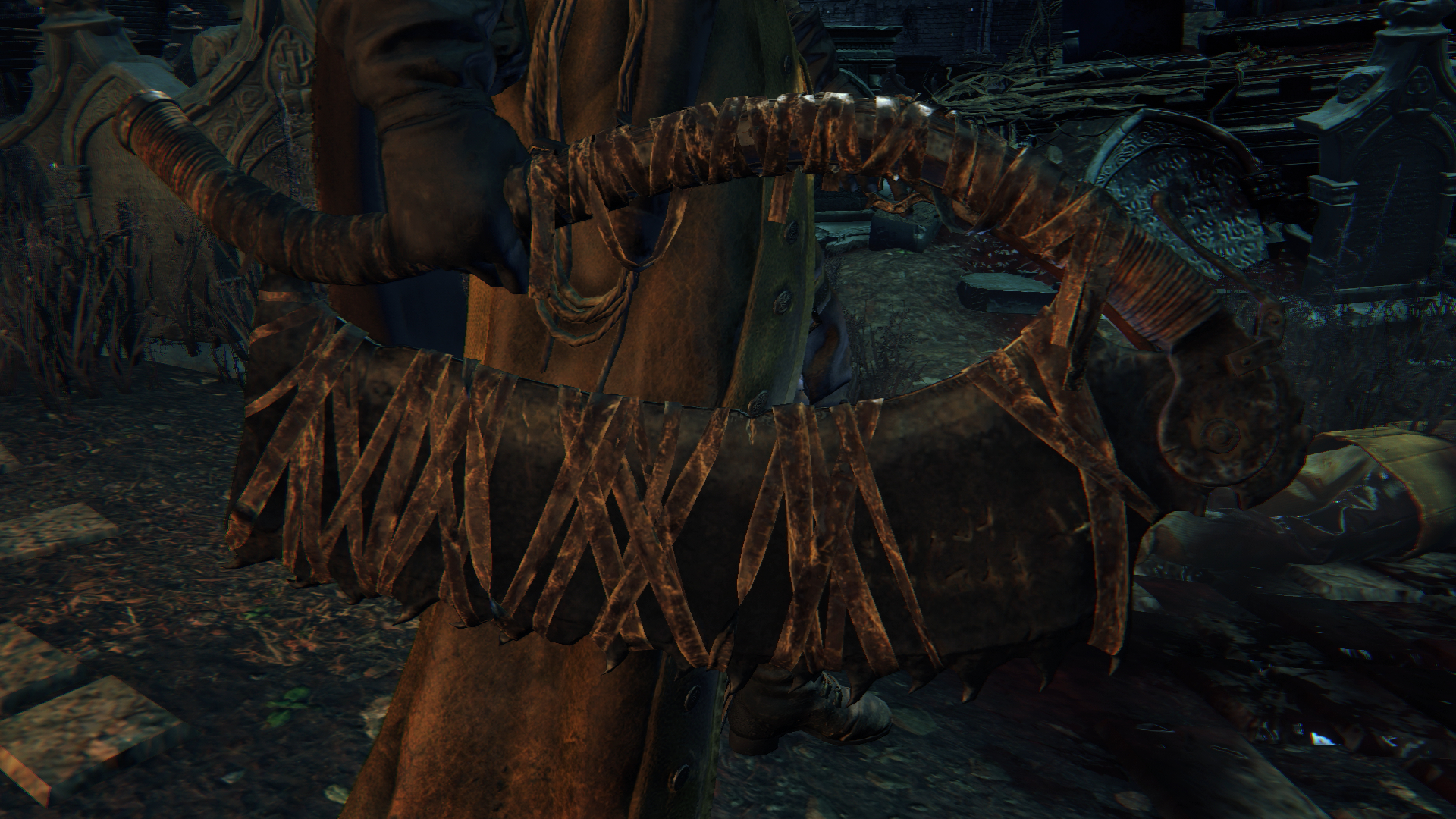
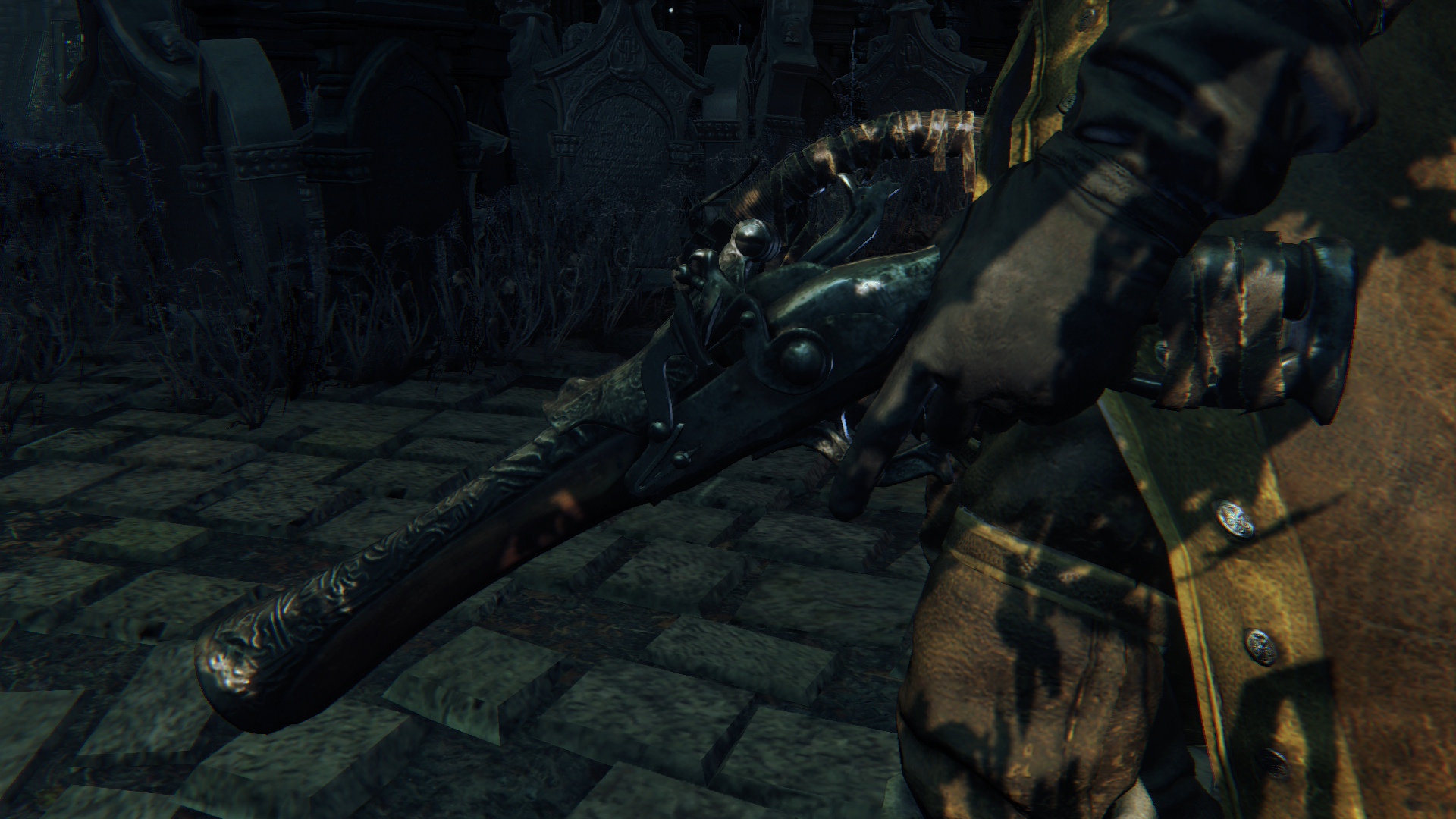
Recruitment might have started slow with Valtr’s secluded base of operations. If he did ever set foot in Yharnam, his reputation as the Beast Eater would soon get him exiled back to the village. Nevertheless, he was a hunter and managed to establish a connection with the Powder Kegs in Old Yharnam. Perhaps he had first heard of Oto by reputation, given how his trashed prototypes end up in the woods. Regardless, he leveraged the heretical workshop’s need for testers to get his hands on their supply. The latest invention the Powder Kegs shared was an impromptu cudgel which can be turned into a buzzsaw by adding a single part, the high-speed rotation mechanism allowing Valtr to shred through a beast’s skin and flesh in seconds — faster than any saw weapon prior. This relationship with Oto’s workshop ended when the old city burned, but the League no doubt benefited from access to third-party weapons given its independence from both Gehrman and the Healing Church. Factoring the mechanism involved, and the heretics might even have been tasked with fashioning the League’s roster canes.
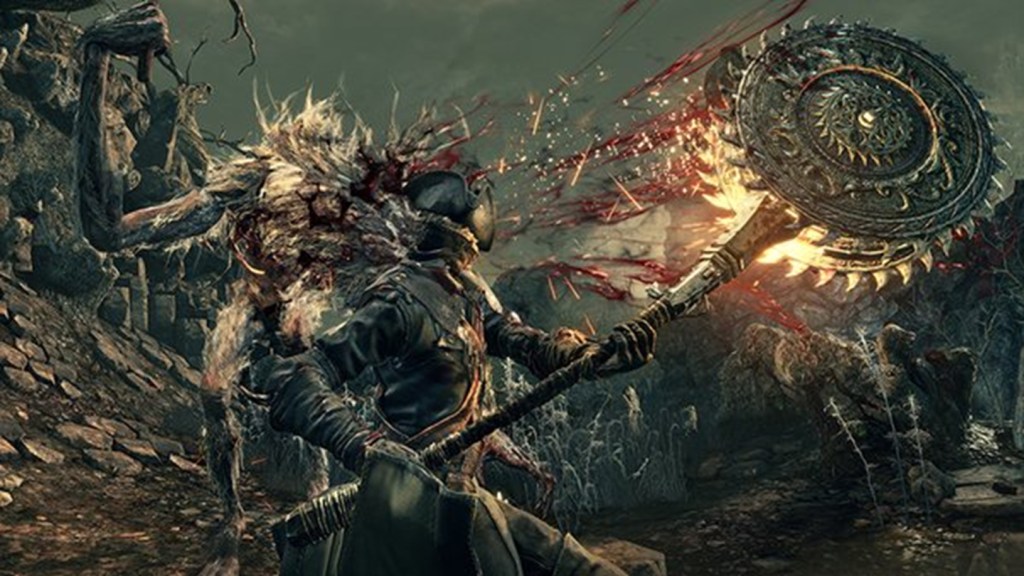
Atypical “trick weapon” produced by the workshop heretics, the “Powder Kegs”. Also known as the choice weapon of the old hunter Valtr the Beast Eater.
Normally, it is a kind of mace that knocks down beasts, but its true value lies in the rotating saw of the additional part. That which overlays disks with sawblades along the rim rotates at high-speed via the mechanism, shredding beast skin and flesh.
Thanks to the master’s work, the organization got on its feet and has stood the test of time, even after the woods have become forbidden. Part of Valtr’s success was that his covenant focuses exclusively on cooperation. Unlike the more adversarial hunters to be found in the Vilebloods or the School of Mensis, the League doesn’t use their mandate as an excuse to invade, killing whatever easy prey they come across. Whether or not the hunter is connected to the mainstream workshops, the confederates leave them alone unless already facing violent hostility, otherwise remaining insular. This in-group behavior avoids conflicts with the Healing Church or others, though Valtr always welcomes members from the other factions and doesn’t prohibit cooperation with them either. Ultimately, it is up to the individual member on how to approach the hunt. The roster framework just exists to ensure the League operates smoothly and, preferably, under the radar. However it happens, Valtr is glad to cultivate that look in the eyes when a true confederate tramples vermin, as if a fire is lit in the soul.
… Oh, you. It would appear you have crushed an “insect”. I am leader of the League, I can tell such things looking at your eyes. But that’s good. With this, you too are a true member of the League… a confederate. Now, take this staff. It is proof of the vow of our bloodstained mission. Everyone will welcome a new confederate. Endeavor freely… And I am looking forward to it. Eventually, the mission will give you a rise…
Although he hopes to turn that into a blazing inferno purging all the stagnation, the spirit of vigilantism has other kinds of utility for Impurity bearers. The League is unique in that several members can only be summoned after we kill them, whether real or in dream. It contrasts most of the old hunters we beckon; as an example, Gascoigne becomes unavailable once we encounter him as a boss, for obvious time paradox reasons. These hunters have a history, but the arcane bells don’t normally enable time travel, beyond the bends caused by instantly crossing spaces from wherever they were summoned originally. In that case, summoning League members after death must be because their spirits respect us for ending them — their strength of will responding to our call from even the Hunter’s Nightmare. We do see the Madaras Whistle accomplish something similar for a snake, and the summon locations appear to correspond to the emotional attachments of the relevant League hunters. As to why they respect dying, it is presumably due to the fact that we put them down as madmen.
Yamamura was a samurai from the far east, wearing his homeland’s signature haori and hakama. Nonetheless, he came to Yharnam pursuing a beast, similar to Valtr. In his case, the creature was his mortal nemesis. Maybe it killed his family or other precious persons tying him to his country. Whatever the specifics, he sought revenge, enough to never again see home tracking the beast to foreign parts. After arriving in Yharnam, he joined the League, probably at the forest village. At the time, he received the symbolic cane along with a hunting hat, “very” standard according to its description. Perhaps the beast mortally wounded a nondescript League hunter in the woods, leaving without finishing the job as it sensed its pursuer’s approach. Then, in his dying breaths, the failed hunter passed on his rune and mission to Yamamura, wishing that he complete both their hunts. Honor-bound, the samurai took up this duty as he continued the search for his nemesis. This inheritance of last wills explains his oath to the League. It was his failure to kill the beast back home that cost even more lives — this was his burden to bear.

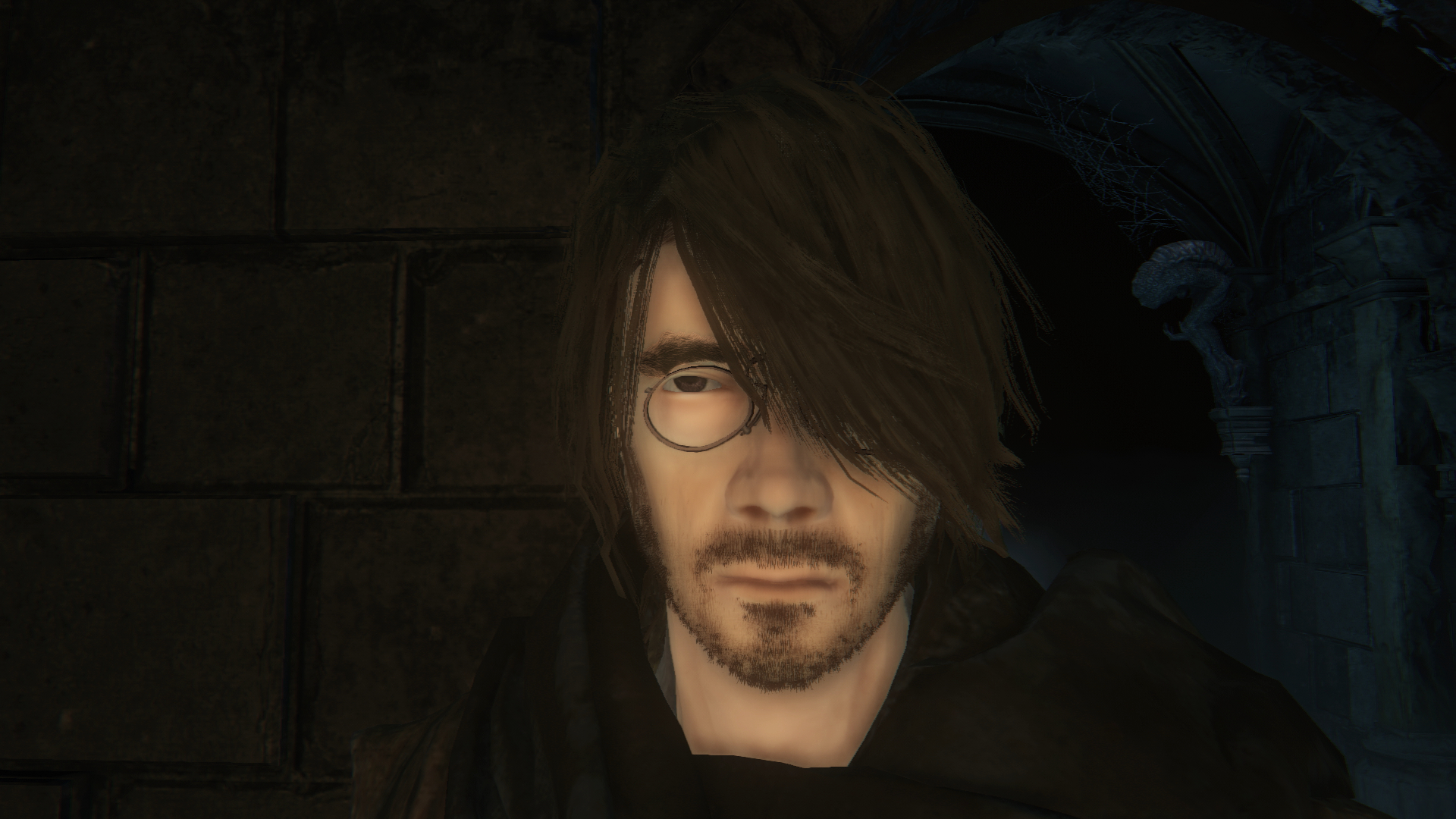
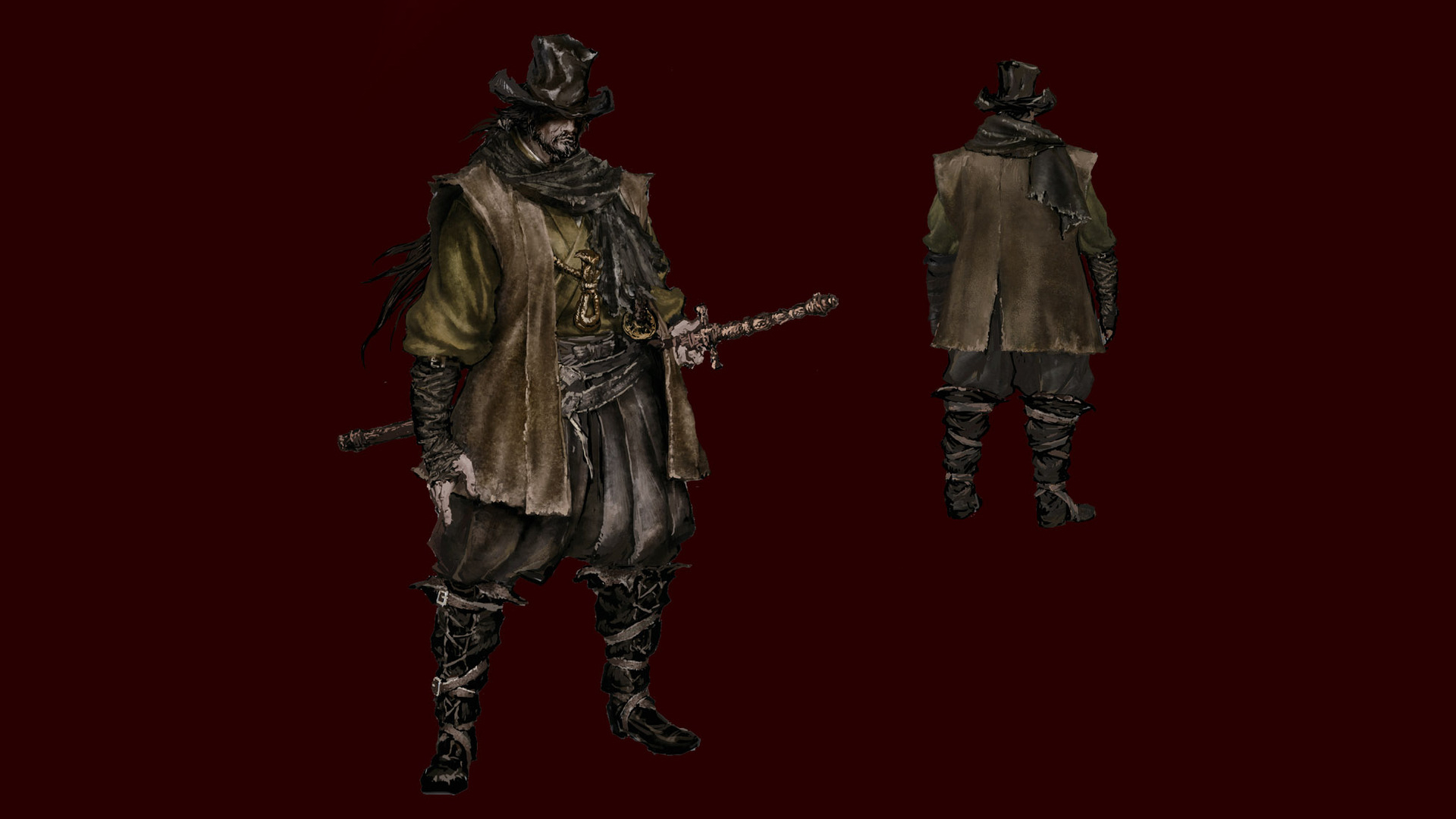
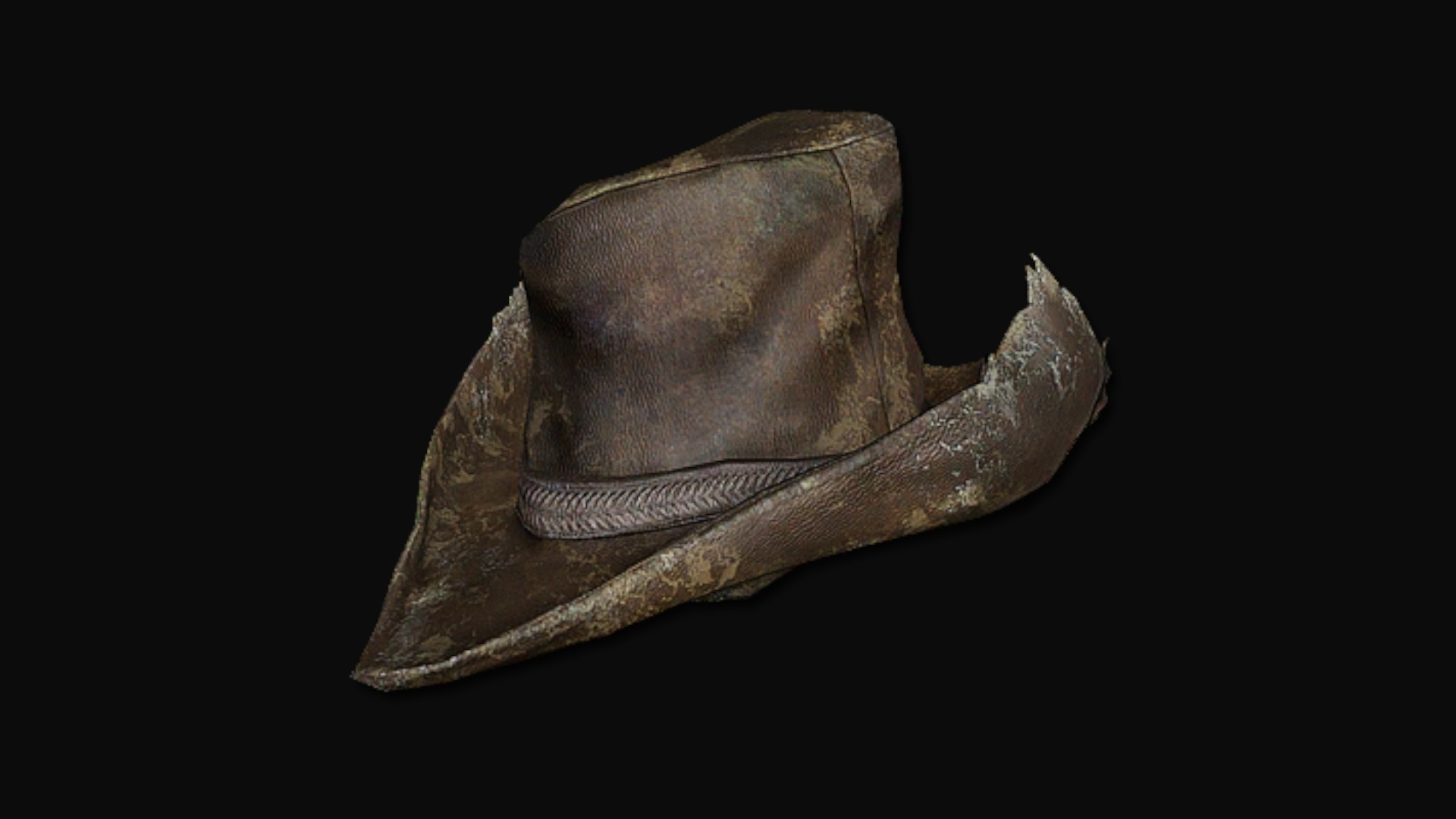
Very standard hunting hat. Hunting apparel of Yamamura, the wandering hunter.
But it was handed over along with a cane as proof that he became both a hunter and confederate of the League.
While noble, ferreting out his nemesis became even harder with the sight of vermin in everyone and everything around him. Yamamura became a “wandering” hunter checking every narrow street and alley for his elusive beast, armed with a Piercing Rifle. We see this reflected in his summon locations, cooperating to defeat Paarl at Old Yharnam and more generally in Yahar’gul. He would leave the beast of his enmity no corner to hide, though it was obvious the man was out of his element; the foreigner perhaps only knows the Holy Blades’ mantra because he equates “knights” to samurai. He needed some sort of grounding, for staring at the world’s stagnation, he went mad. After all, with vermin, his beast became no different from all the others. Whether or not he ever completed his revenge, Yamamura could feel no closure when the world was still filled with the same filth. The confederate’s hunt thus never ended, more and more caught up in this cycle of carnage. And eventually, he too began choking on the bloodlust.
… Existing but not lost in the night, stained with but not drunk on blood. Honorable church hunter. Beasts are a curse, and curses are a yoke. And so you all must be blades of the church.
Garment of a distant eastern country. Hunting apparel of Yamamura, the wandering hunter.
The samurai who pursued his beast of enmity afterward became a hunter of the League. And then, he stared straight into the stagnation and went mad.
We first find Yamamura locked inside the Grand Cathedral dungeon in the Hunter’s Nightmare, banging his head against the bloodied wall endlessly repeating the knightly mantra. The blood-drunk is resisting the creeping beasthood as best he can, but it is too late. The samurai wields the Chikage, assumedly a stand-in for the katana brought with him from home. Either way, he uses it to perform blood blade arts, likely self-taught. That explains his paranoia about infection, tightly wrapping up his hands he cut to bloody the blade. He didn’t know that the rumor was baseless and that it was the smell and splatter of blood driving him insane, worsened by digging out vermin to trample. Now, all he can do is fall back on his “knight” background, appealing to honor and discipline, to hold on. His ultimate fate was to be experimented upon, hence his summon in the Research Hall. Whether he became another failure buried in the lumenflower gardens or a disposed specimen, his soul is probably happy that a confederate stops him from becoming his nemesis in the nightmare.


Apparel of old hunters. Thing which wrapped cloth tightly many times to prevent infection. Although, the infection itself was nothing more than a baseless rumor.
Henryk has a more storied past. A quiet man, he apparently focused more on the hunt than socializing. Based on his wrinkles, greying hair, and absence of church uniform, he began in the old workshop before Ludwig’s era. It explains his choice of a basic Saw Cleaver and Hunter Pistol, and Henryk is undoubtedly a veteran, loving to throw knives as distractions for those agile beasts as he closes in. He is especially experienced against darkbeasts, wearing specialized bolt-resistant attire in garish yellow. Despite this, he partnered up with Gascoigne previously, liable when the two workshops were still working together. The two colleagues must have been close. Gascoigne’s youngest mentioned a granddad as the third person she loves most after her parents. This is unlikely to be biological given Gascoigne and Viola’s situation, and oji-chan (お爺ちゃん) can just be an affectionate term for an old man. Henryk fits the bill, with even his Germanic name meaning “lord of the household” like a grand patriarch. Clearly, the elder wasn’t so taciturn to not play with the kids visiting his partner’s home.
Throwing knife with finely serrated blade. It is favored by the old hunter Henrick in particular.
You can’t expect great damage against beasts from it, but if ably used, it will probably demonstrate might in diversion and leading around.
Hunting hat of the old hunter Henryk.
This quiet old hunter who was once Father Gascoigne’s partner was a strong one but thus couldn’t obtain his place to die as a hunter.
But his unique, yellowish apparel is strong against bolts in particular and will probably help hunters who inherit his left will of beast-hunting.
Mhhm, I understand! Thank you, Mr. Hunter. I love you after Mom, Dad, and Grampa.
However, Henryk had motive to act the kindly grampa. The Heir rune shows how he had long embraced the darker hunt, reaping sentiments from the dead in blood. It benefited him when increasing his strength within the Hunter’s Dream. But being so strong, the hunter couldn’t find a place to die, leaving only madness in his future. He later joined the League, his cooperation at the Forbidden Woods and Byrgenwerth showcasing his deep connection to the area. In all likelihood, the enthusiastic hunter regularly helped to cull the village’s beasts before it became forbidden. It was there where he may have encountered the more beastly kind of hunts to acquire Heir, and definitely where he met Valtr to acquire Impurity. With the insects confirming his compulsion, Henryk only further indulged his desire for bloodshed, now willing to take it from everyone. The Fishing Hamlet massacre likely unphased him, as did the Old Yharnam Incident. Even when his partnership ended after the workshop was cut off and Gascoigne left the Healing Church, Henryk persisted with the hunt until becoming a blood drunk.
All of this is to say that Henryk’s life was doomed to self-destruction, something which he must have known prior to becoming Eileen’s prey. Even now, the man comes to Gascoigne’s turf after the boss is dead, where he attacks without a word. Maybe the drunk just smelled all the blood and would have dueled his old partner to the death. But before he fell to beasts or beasthood, the hunter might have originally sought an heir, the rune he leaves alluding to plans for Gascoigne to succeed him in the League remaining somewhere in his mind. In that case, it is possible that he was considering this since he first partnered with the good father. Like those with Impurity, Gascoigne began seeing beasts in everyone, human or not. It may be that old Henryk groomed a rookie to follow this path, seeing potential. His plans were derailed by events, but like the King in Yellow of Lovecraftian horror, the hunter in yellow left his mark on Gascoigne, cursing him to assume the heir position knowingly or not. So far gone was Henryk, his soul is surely glad to be stopped before the bad outweighs the good he did in life.
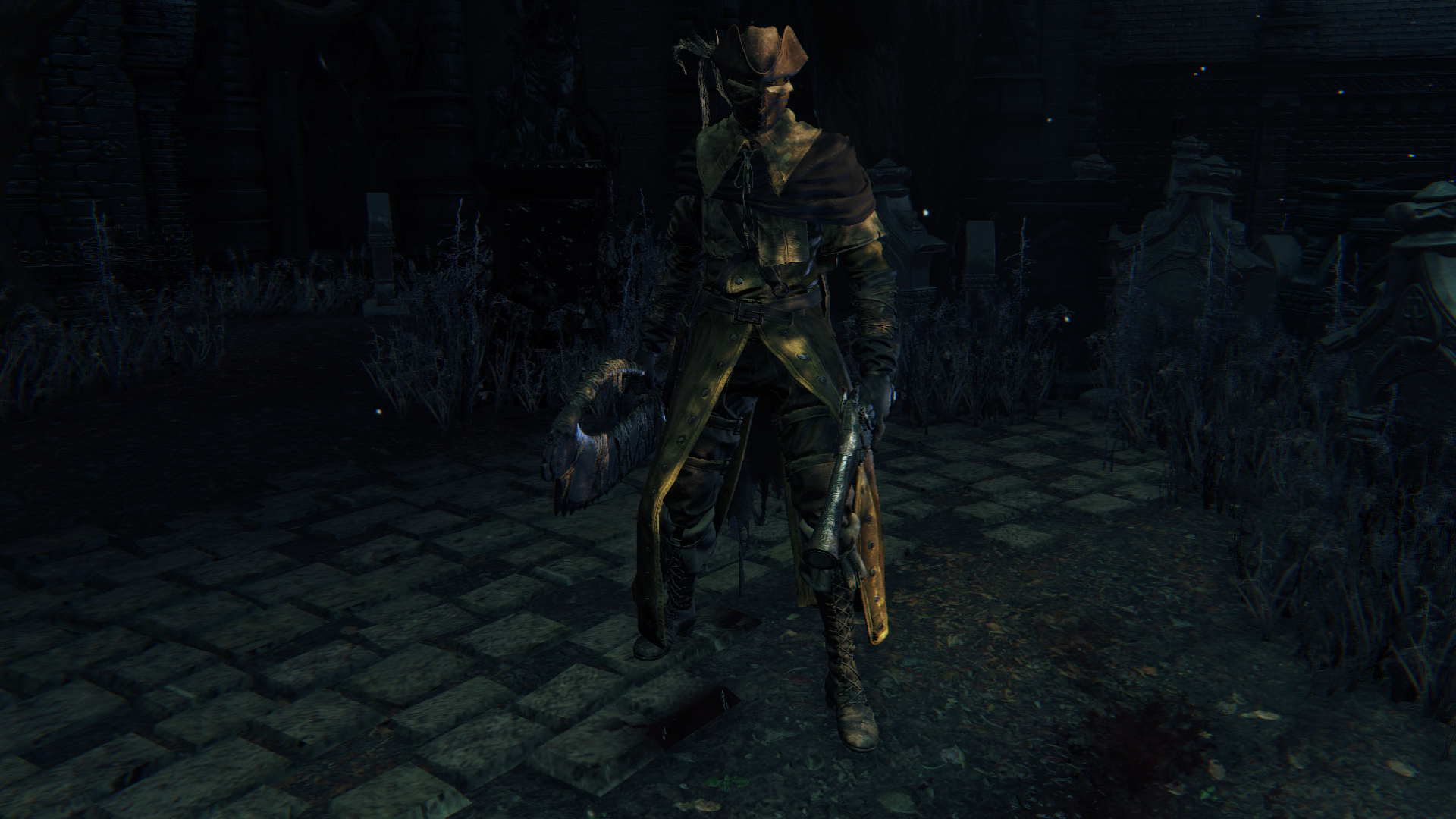
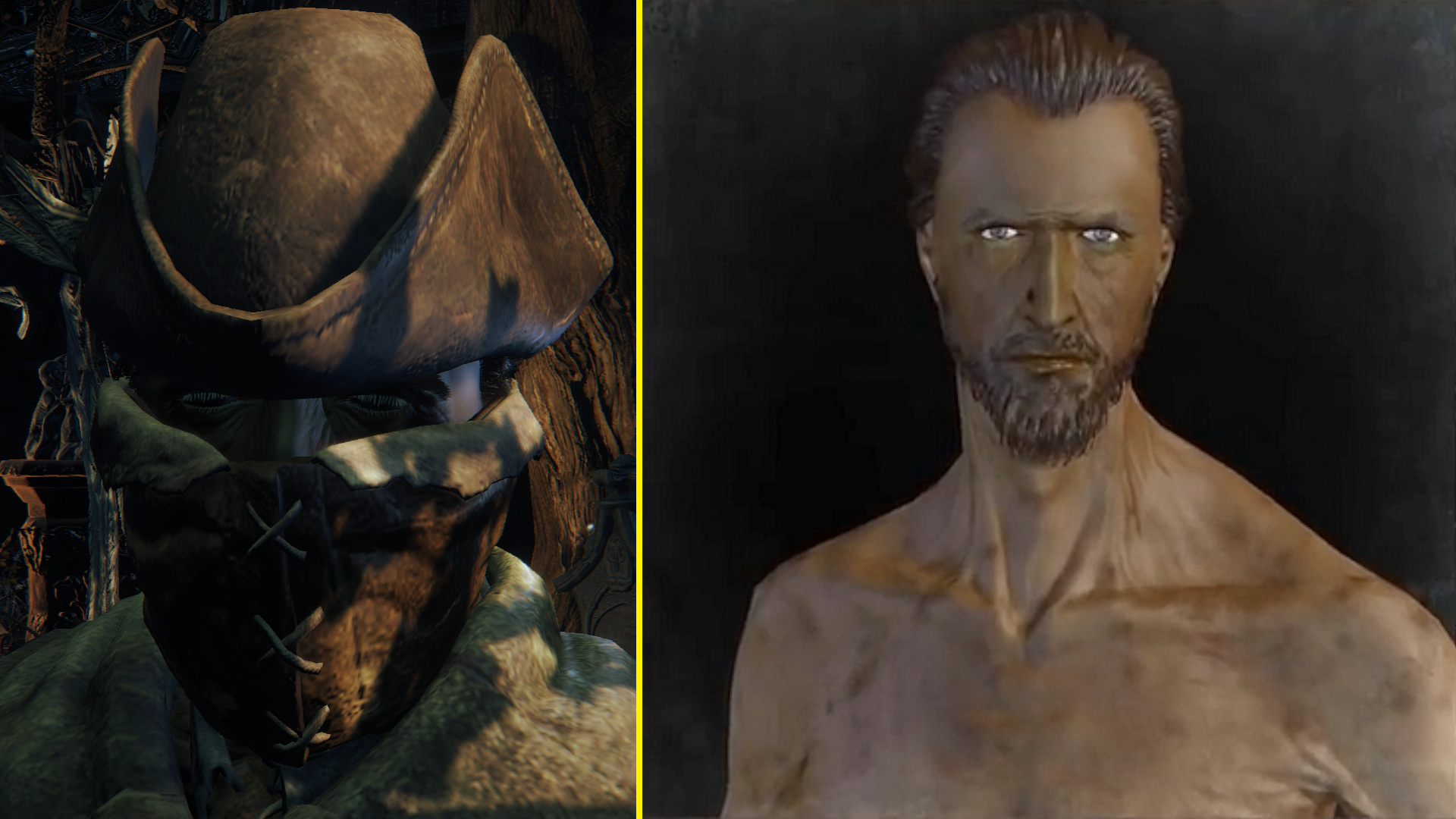
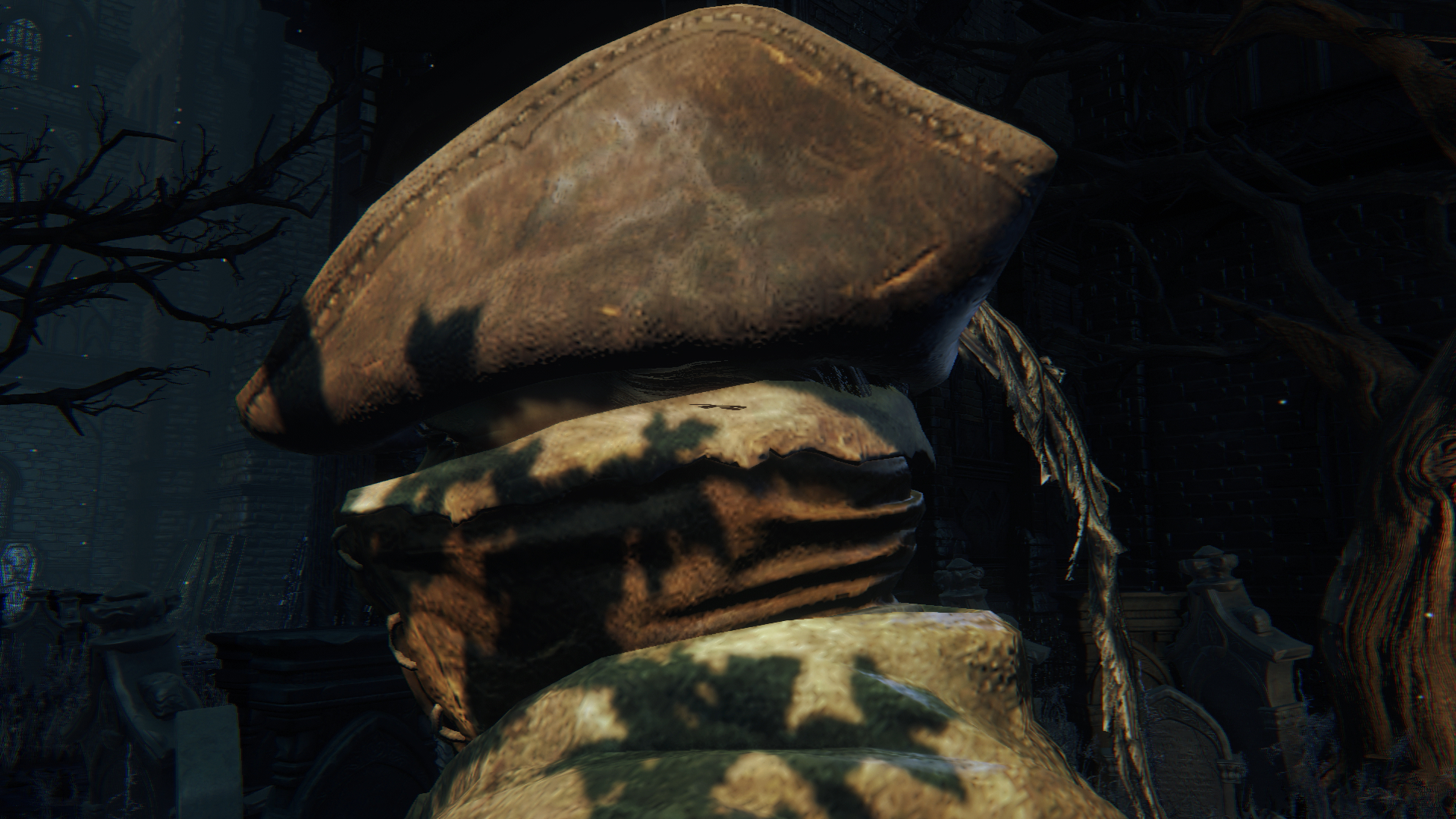
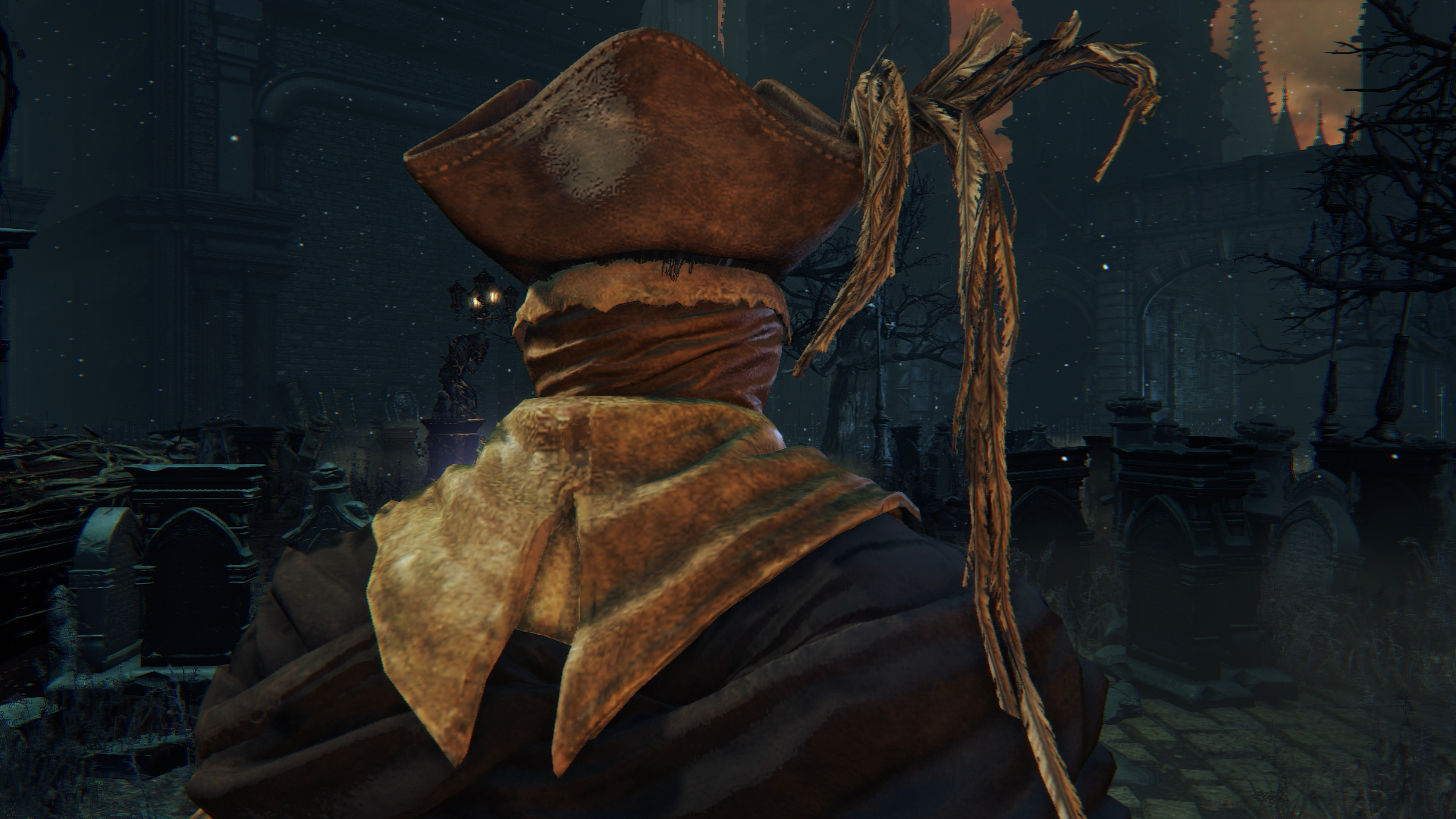
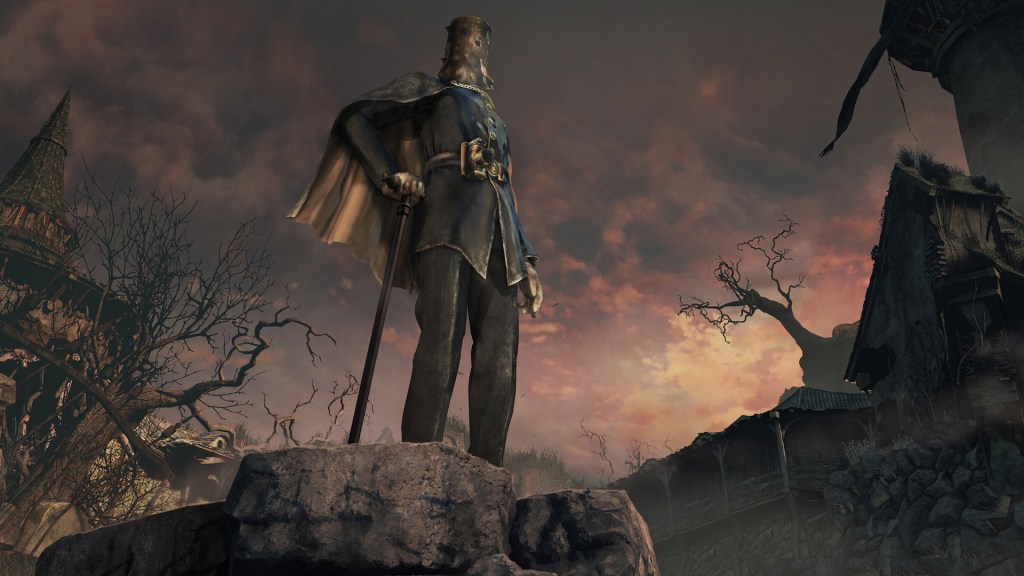
Not all confederates appreciate an early grave, however. The younger Madaras twin remains fiercely loyal to Valtr even being the League master’s clear elder. If we kill the former constable, the twin immediately arrives to hunt us in turn. Should the master otherwise leave his post, the younger Madaras still appears outside the grain mill, seeming to still assume us responsible for his absence. In either scenario, his soul has no interest in helping us after death, only cooperating while still alive. Besides the expected appearances in the Forbidden Woods and Byrgenwerth, the twin may also be summoned in the Hunter’s Nightmare, presumably because it is where both his old brother and their beloved snake ended up. His brother is likely one of the countless hunters whom Ludwig has slaughtered to create the Nightmare’s river of blood. The younger Madaras may have murdered his twin for murdering their animal friend, but he never intended to condemn him to this eternal torment, so he tries alleviating it at the source. And it is that same guilt which probably drives him to serve the League ever more faithfully.
In all three of these examples, we see the fragility to the League notwithstanding Valtr’s precautions. Even the master has his own struggles involving inheritance. After performing admirably as vermin trampler, our leader resigns himself to completing his final big task. In spite of our deep familiarity with the filth smearing this world, we never break, thus he can be confident in leaving the organization in our hands — entrusting the will to eradicate all the vermin for every League hunter, past and present. After that, Valtr disappears. Why, when he is still relatively young? If we don’t kill him before he relinquishes his position, the helmet he leaves mentions how he had long since lost sight of vermin in its description. As the text to vermin acknowledges, the Impurity rune is a mercy since it makes seeing vermin everywhere a choice, and choosers will have an endless mission to satiate their wish. It is, as their cane’s text notes, a fantasy solely for League members. That likewise implies that anyone with the rune who still doesn’t wish to see such vile filth won’t either, Valtr included.
… Ah, confederate. You have gotten good eyes. The eyes of a hunter who has crushed, crushed, crushed, crushed, crushed “insects”… knows of the filth-smeared world of man… but won’t break… The League was fortunate to welcome you. It was my final big task… Heh, Heheheh…
… Say, confederate. Surely you shall eradicate the “insects”, man’s stagnation. For all your confederates, bloodstained hunters of the League.
A kind of centipede that League hunters discover upon a hunt’s completion.
That which cannot be seen by the eyes of anyone besides the League is said to be the source of man’s stagnation, squirming in hiding within filth. Finding and trampling it is their mission.
Perhaps it is a mercy. For only those who wish to see them can, and are given an endless mission.
Cane of the League. Proof that you became their confederate. Within the handle hides a roster where the names of League members have been written.
League members raise this staff and confirm confederates. After all, others don’t comprehend the likes of their bloodstained mission. For their fantasy undoubtedly requires the oath.
Simply put, the man has grown soft. As master of the League, he has welcomed countless hunters into the organization, adding name after name to each roster. And with each one, he sees himself surrounded by more and more comrades. Recall that it was the loss of his prior comrades that helped pushed the Beast Eater into extremism. Before that, Valtr was probably a starry-eyed young man who recently joined the force, believing the authorities could work together as unbeatable heroes of justice. The trauma of his first beast hunt may have tarnished his naïveté, but he couldn’t fully abandon that fantasy when in need of allies. If not for the others in his old group, the young constable may not have survived long enough to devour the beast, and it was mourning them that surely contributed to him establishing a new league of justice. It is doubtful that he wanted to see his constabulary as insects, and over time, he would feel the same about the members of the League. And once that cynical fantasy that everyone was beasts is broken, Valtr’s mind could no longer see the vermin in people.
That isn’t to say that the vigilante doesn’t recognize the evil of stagnation. Even after leaving his bucket behind, we can summon him as a member of the League to confront Ludwig and Laurence in the Hunter’s Nightmare. One is the most grotesque of beasts born of a man who led countless souls down the path of false heroism; the other, the arguable cause of all the vermin thriving in Yharnam. Retired or not, Valtr wants nothing more than to see the wicked crushed underfoot. But he well knows that the master of the League is the greatest extremist, someone who can never see a person in the individual man. A confederate must be willing to sacrifice the possible good for the definite greater good, and for all his maniacal tendencies, Valtr is no longer that confederate. Pervasive rot requires radical solutions — done unflinchingly, unhesitatingly, in the face of whatever opposition. And if you cannot enforce it to the end, best step aside and let the next generation carry on your dream. That is what it means to be a hero of justice.

