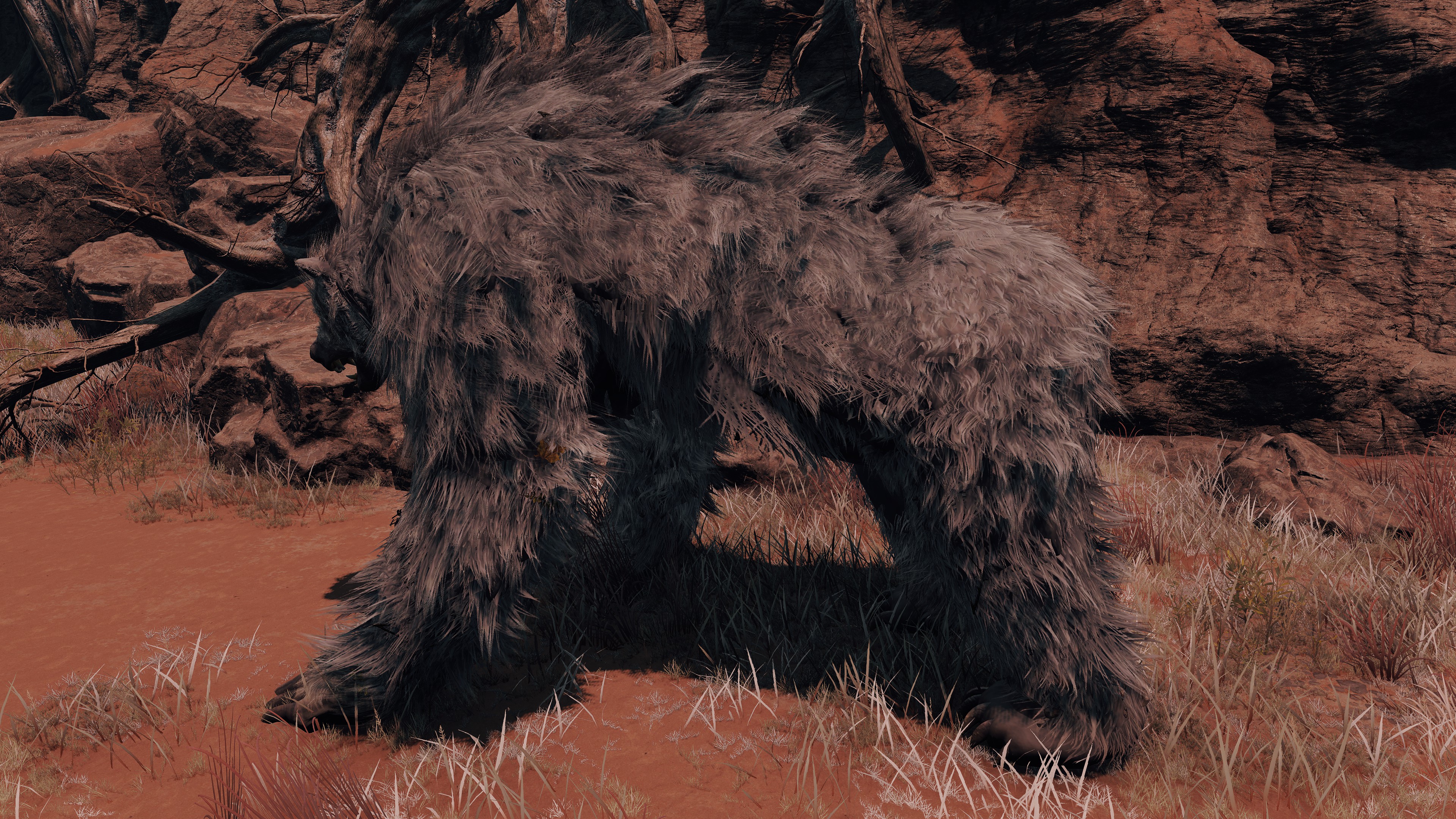
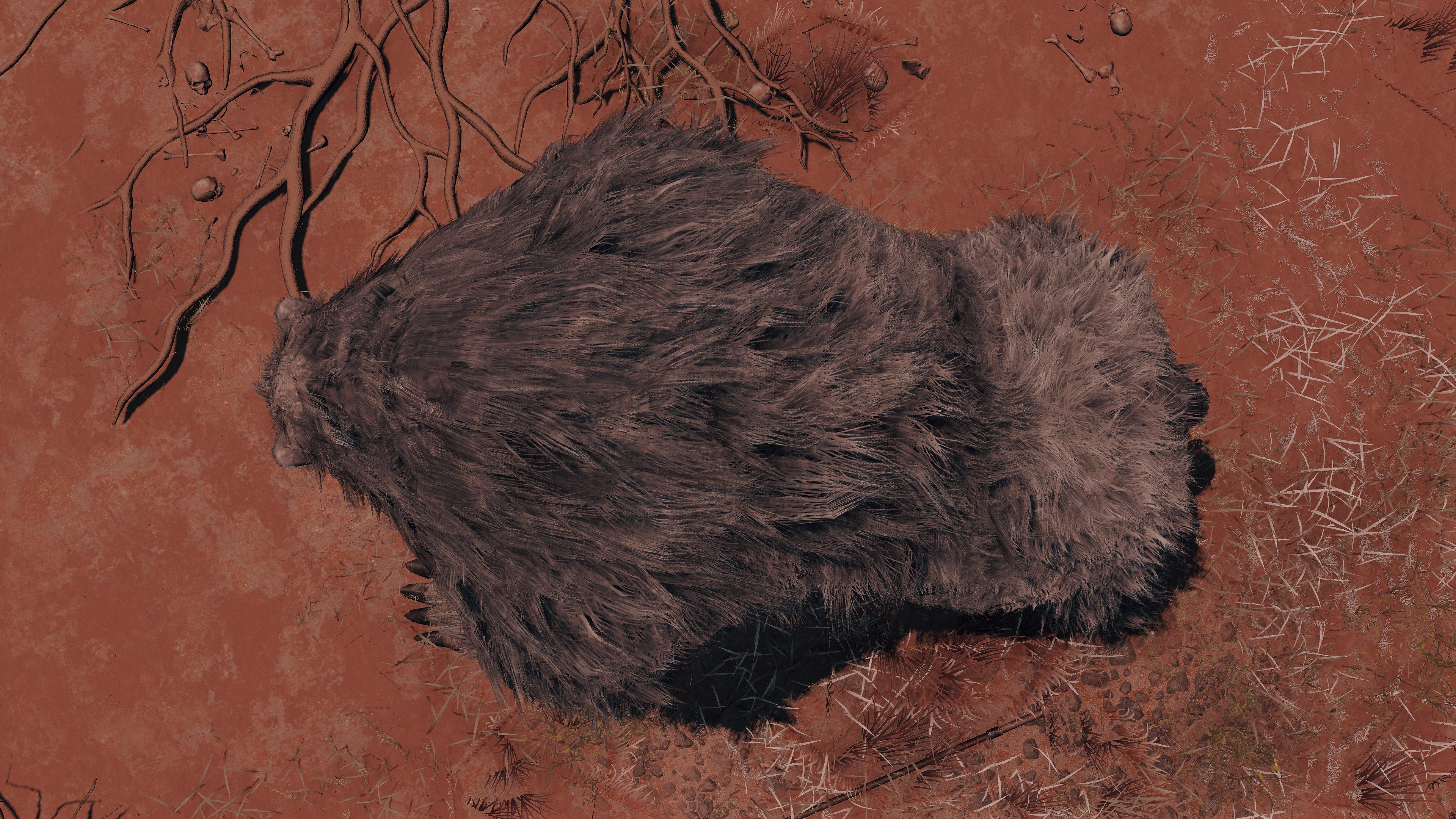
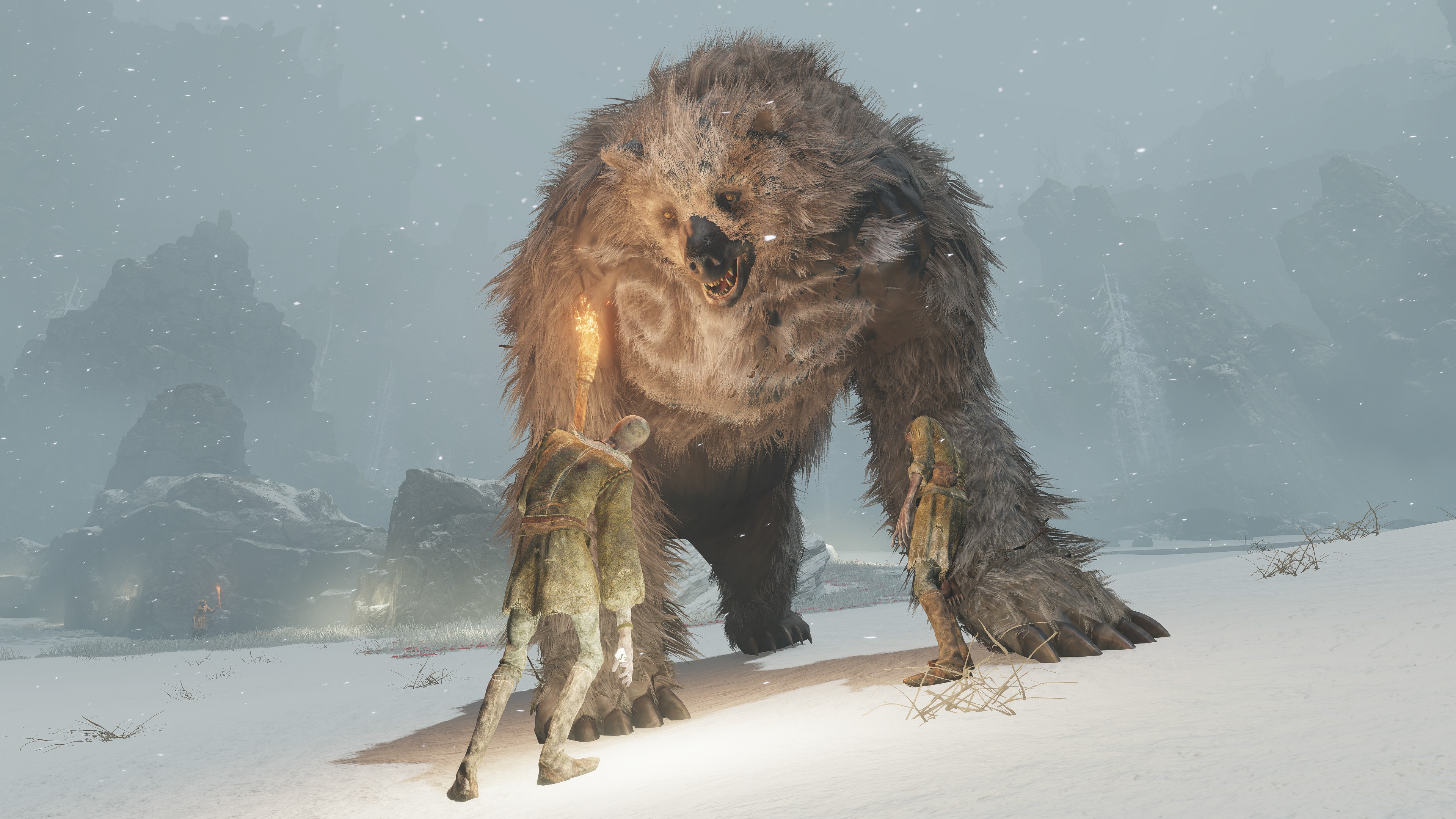
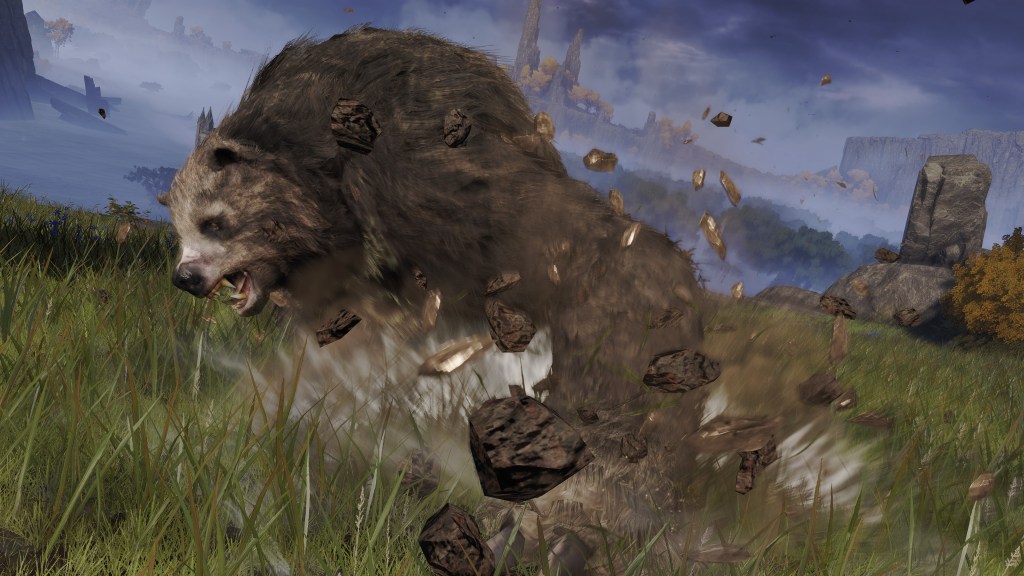
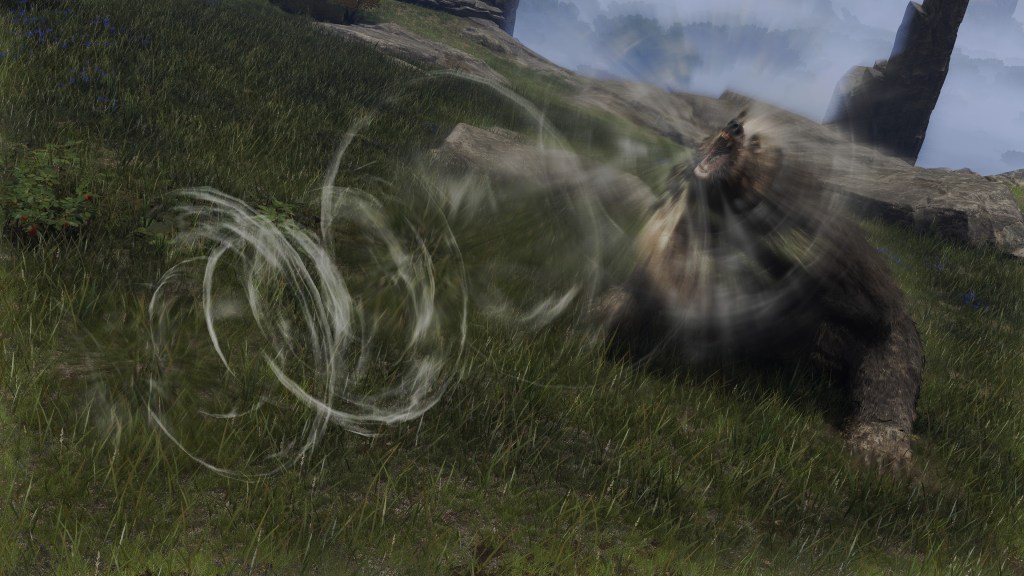
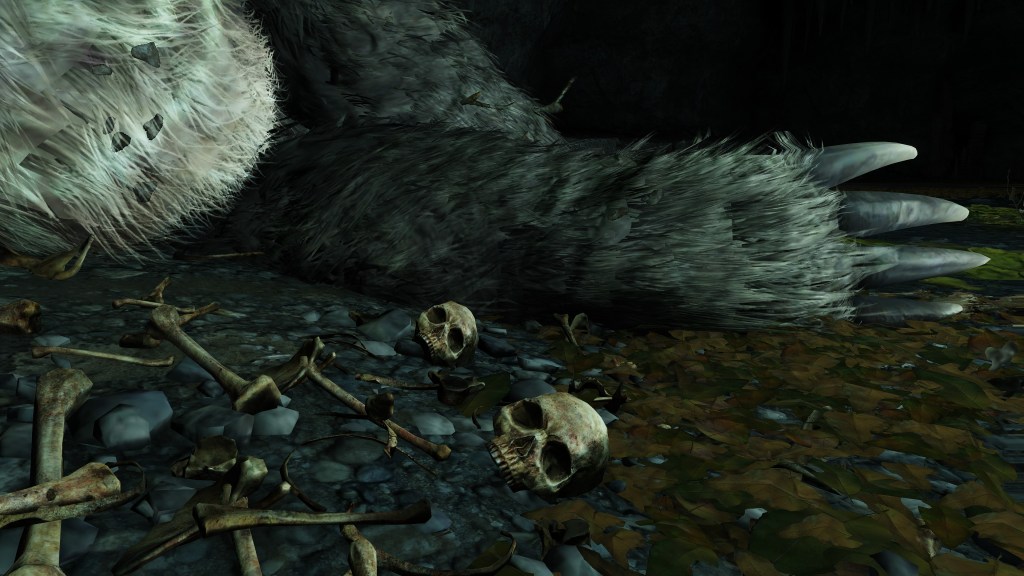
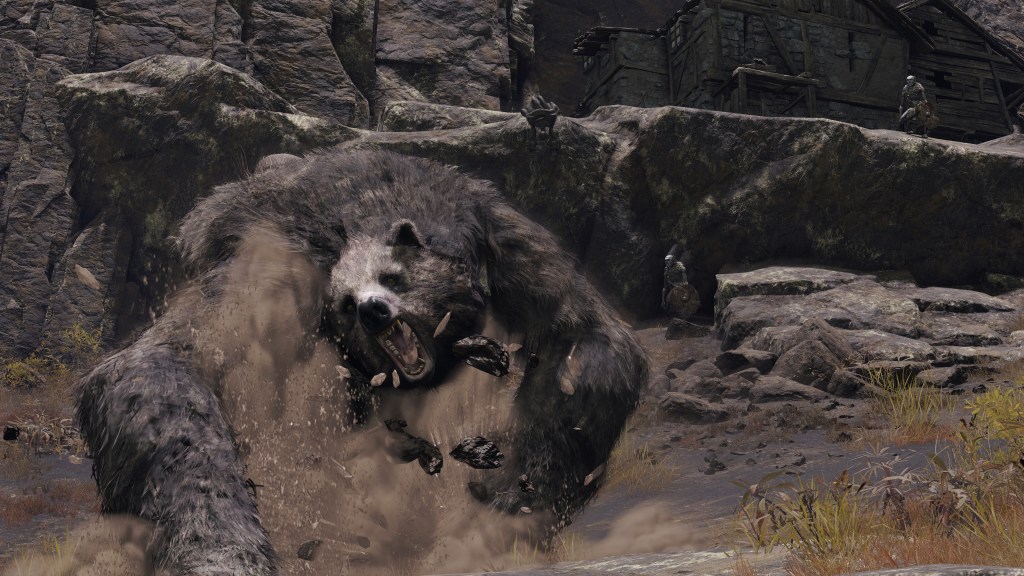
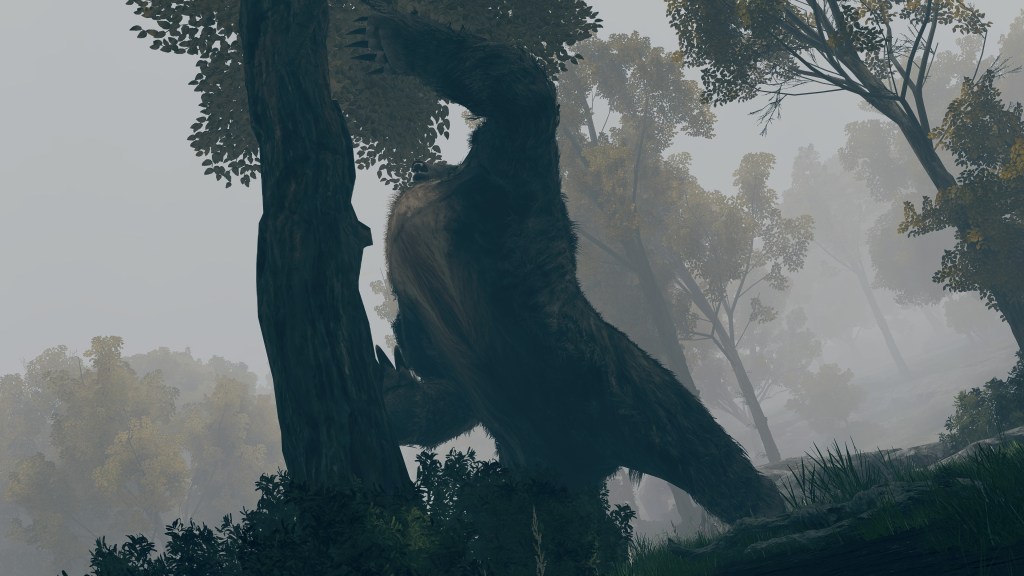
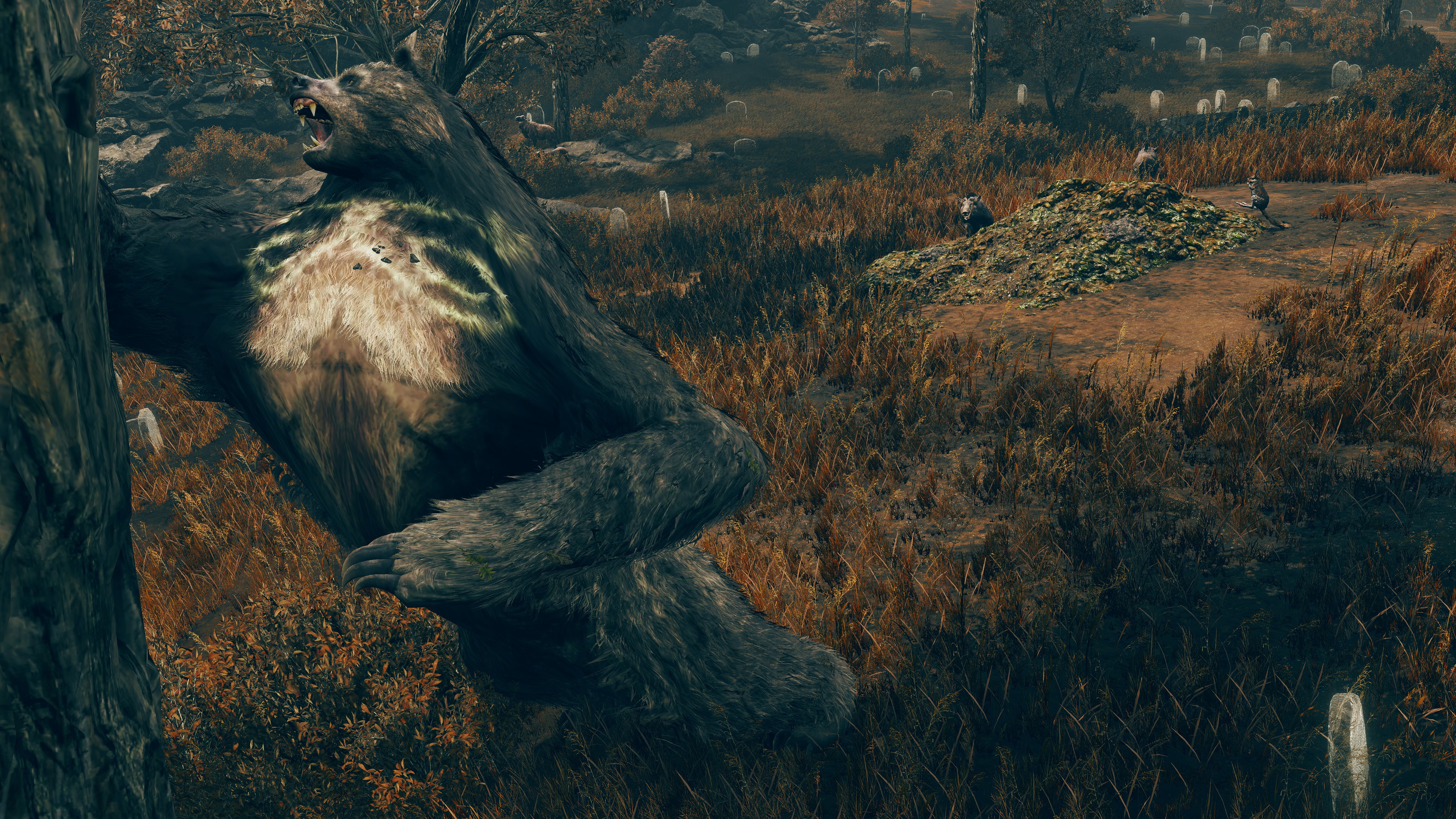
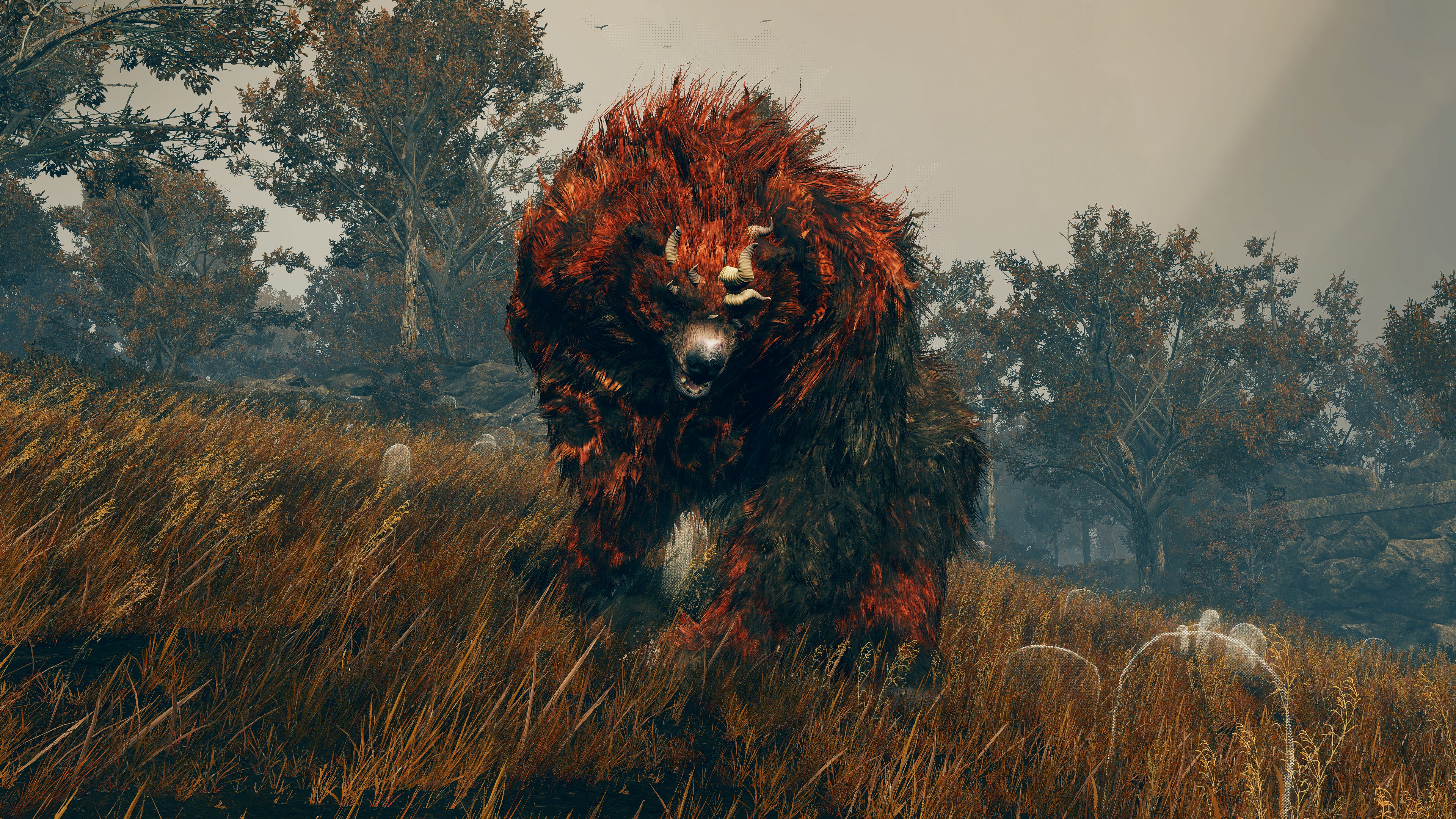
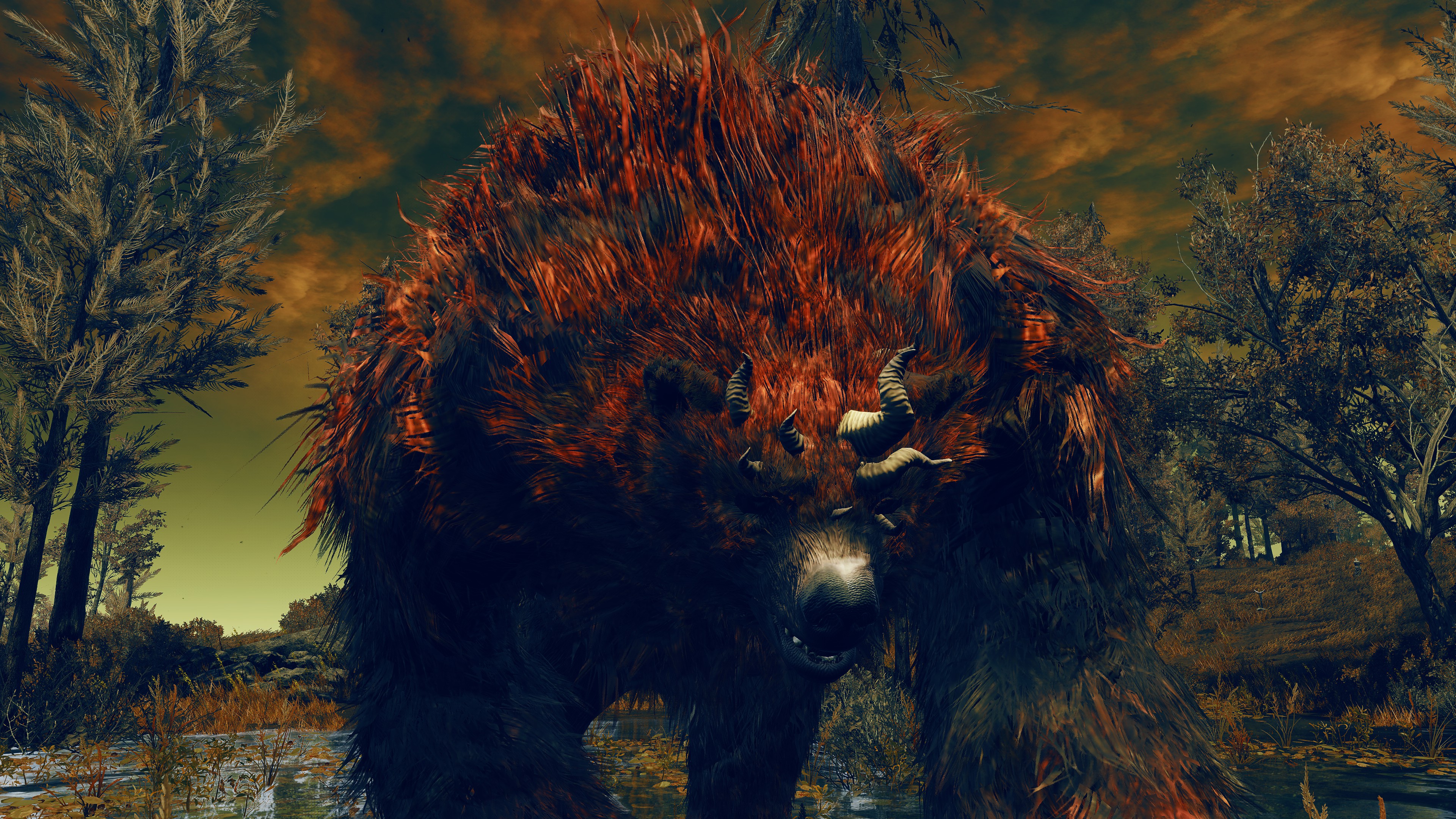
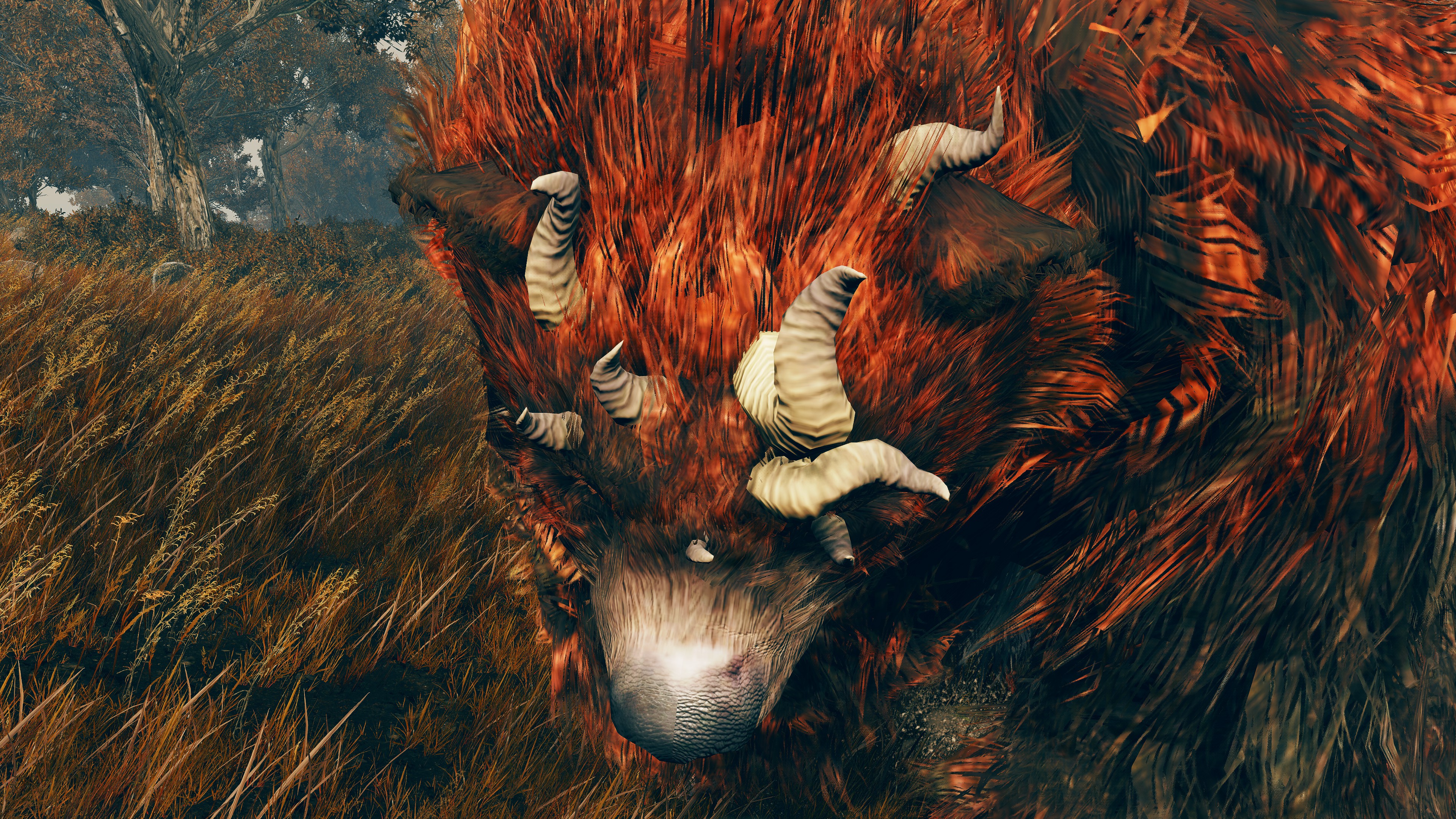
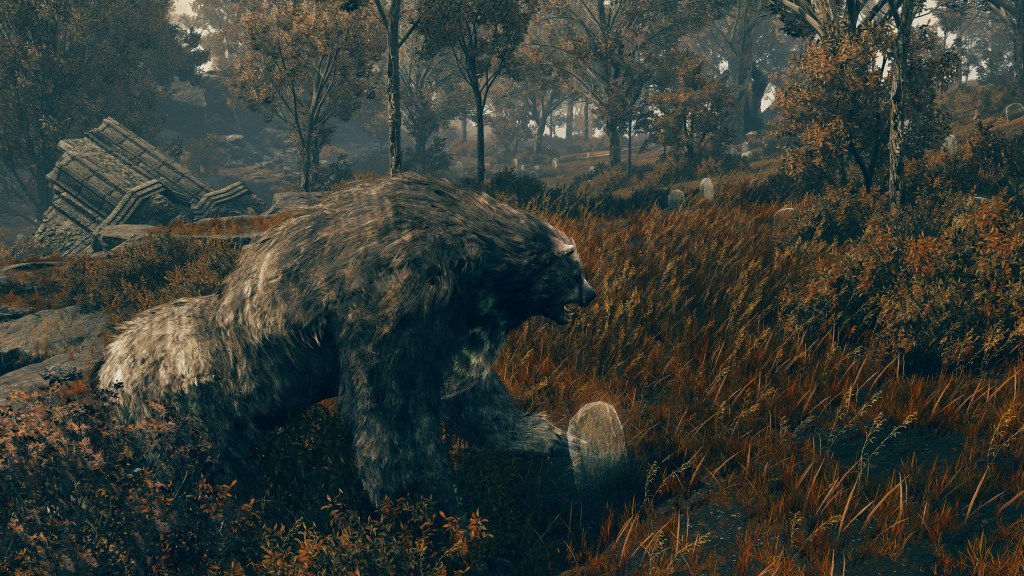
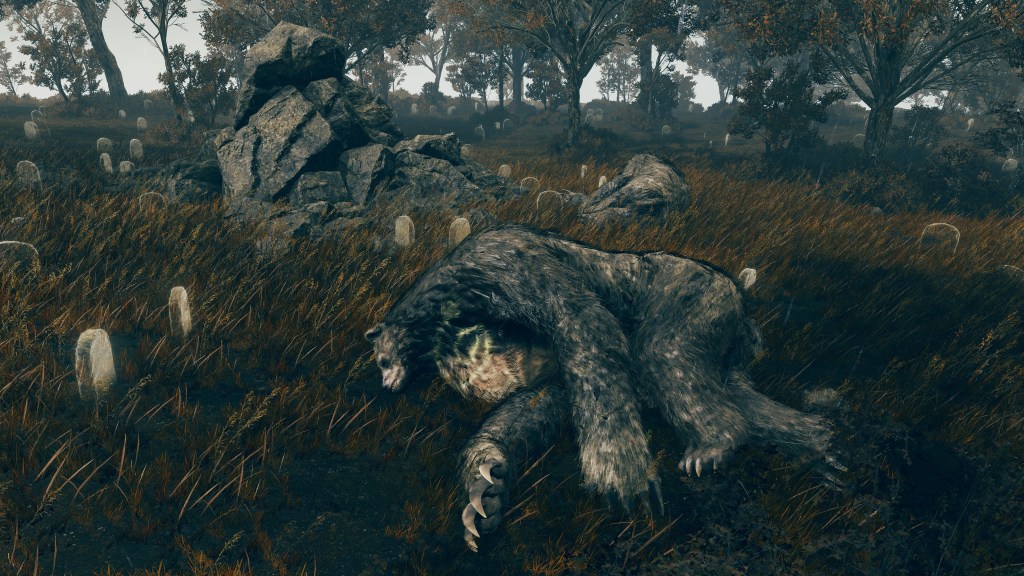
For all the wildlife populating the Lands Between, none leave as much of an impression as the runebear. The size of ten brown bears, this hulking mass of muscle and teeth knocks over trees in its rampage, sprinting after prey at ferocious speeds. Its claws smash through the earth, and its literal bear hug crushes bones before its jaws swing the body around like a chew toy. Even when outside of its immediate grasp, the creature’s bestial roar throws its opponents off-balance. Anyone would be intimidated to see this lumbering predator pass you by, and it is a relief when it is distracted by something as simple as a tree turned into a scratch post. Even so, the beast is more than just a monster. Many a runebear appears to lead a sloth of brown bears, respected as the alpha in the same way as white wolves in grey wolf packs. Said alphas might similarly congregate with each other. They thus can be social animals like their brown bear cousins, though they are also perfectly happy to den alone.
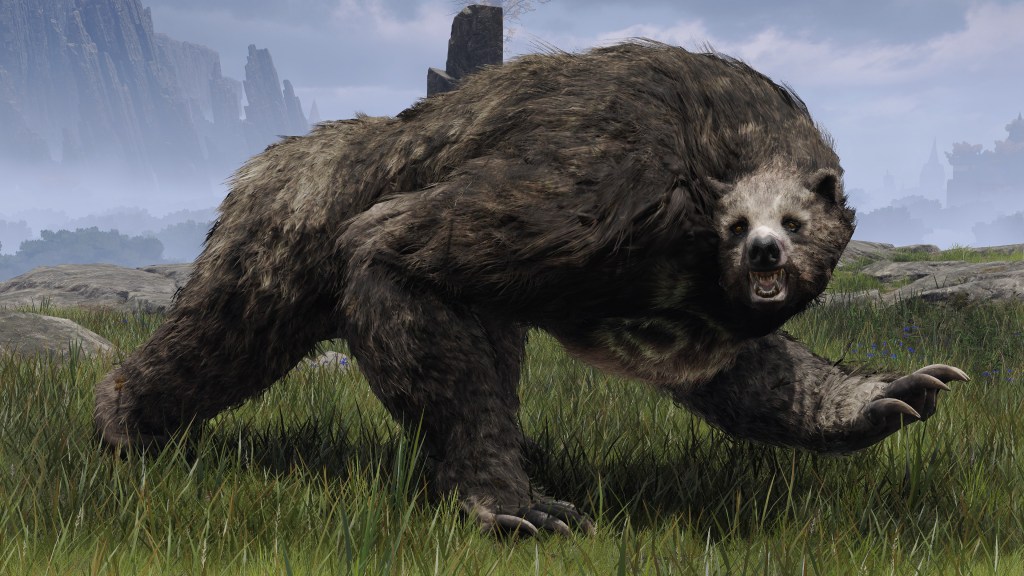
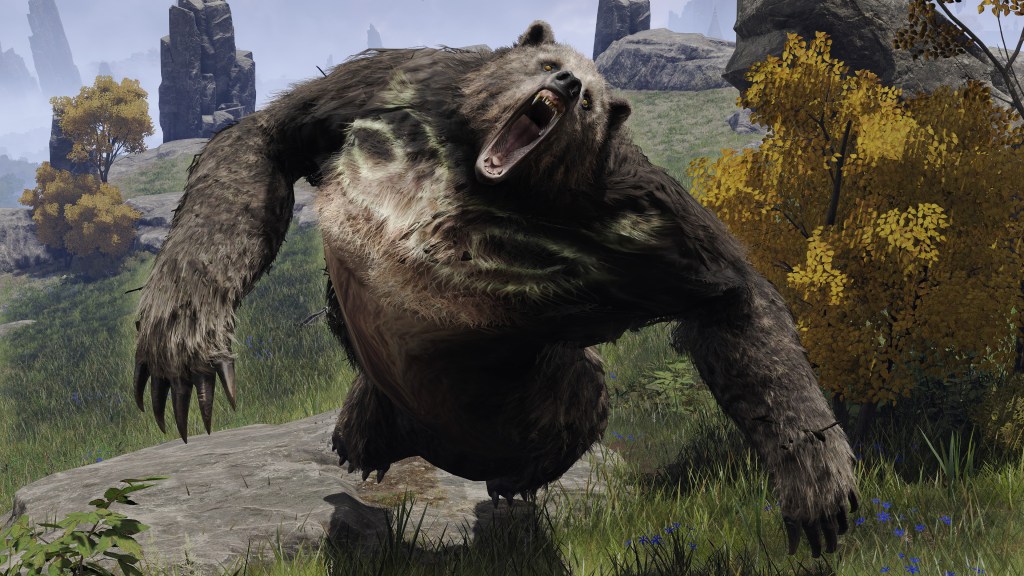
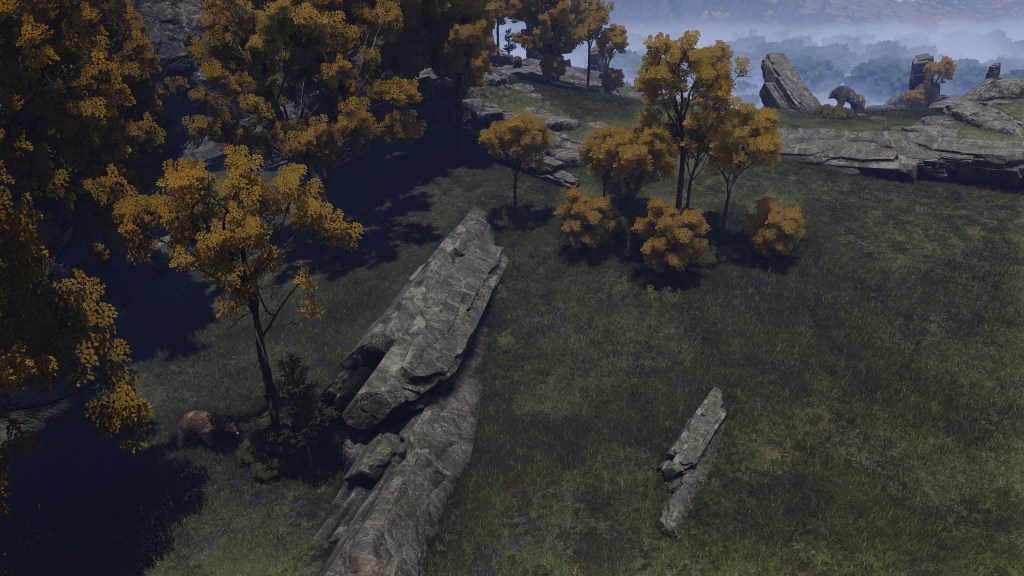
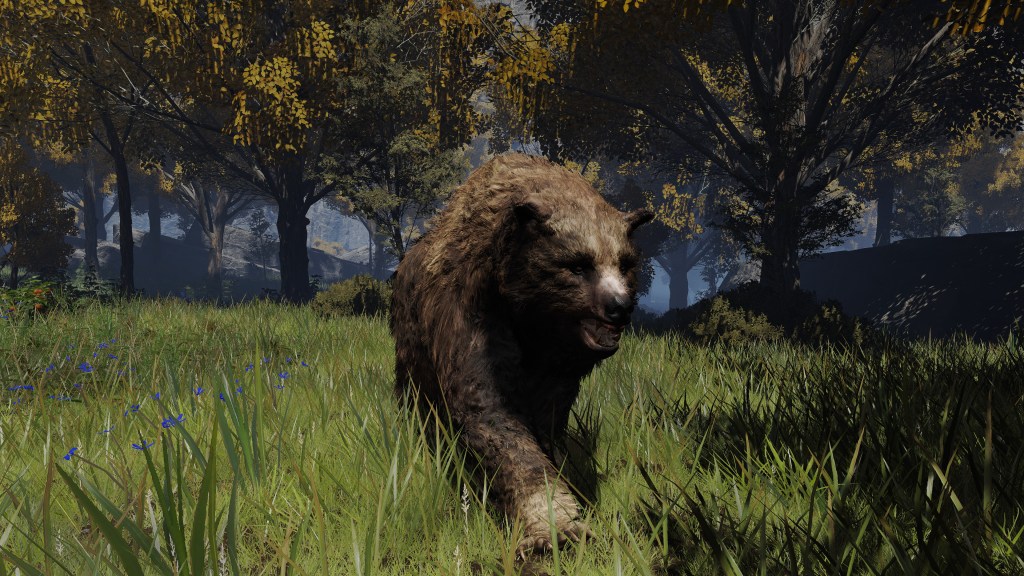
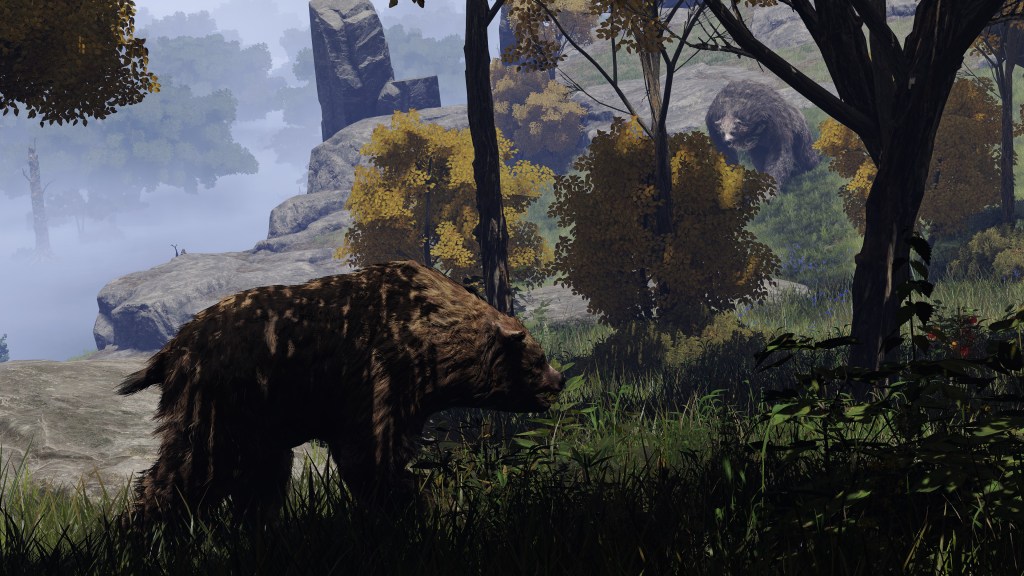
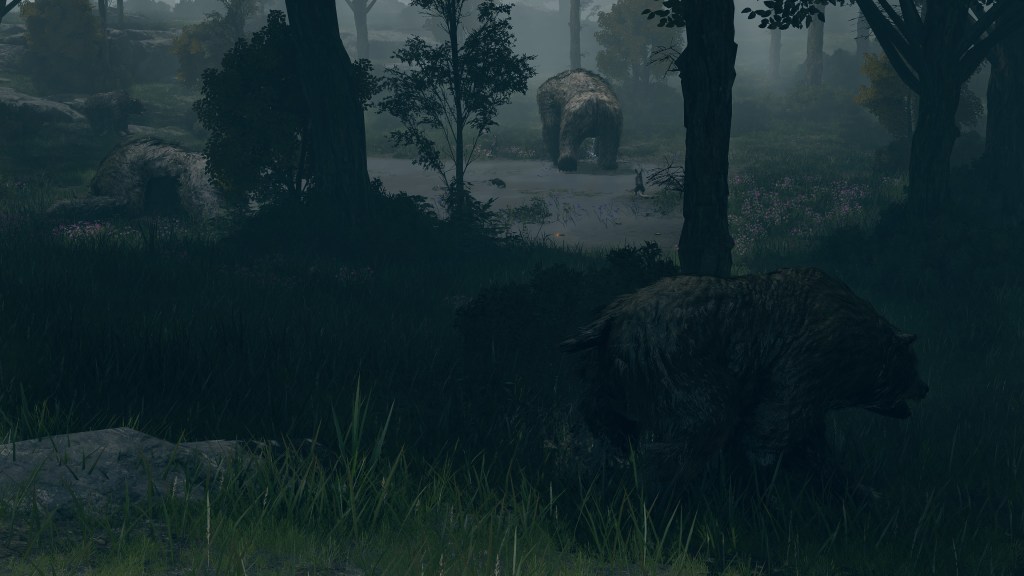
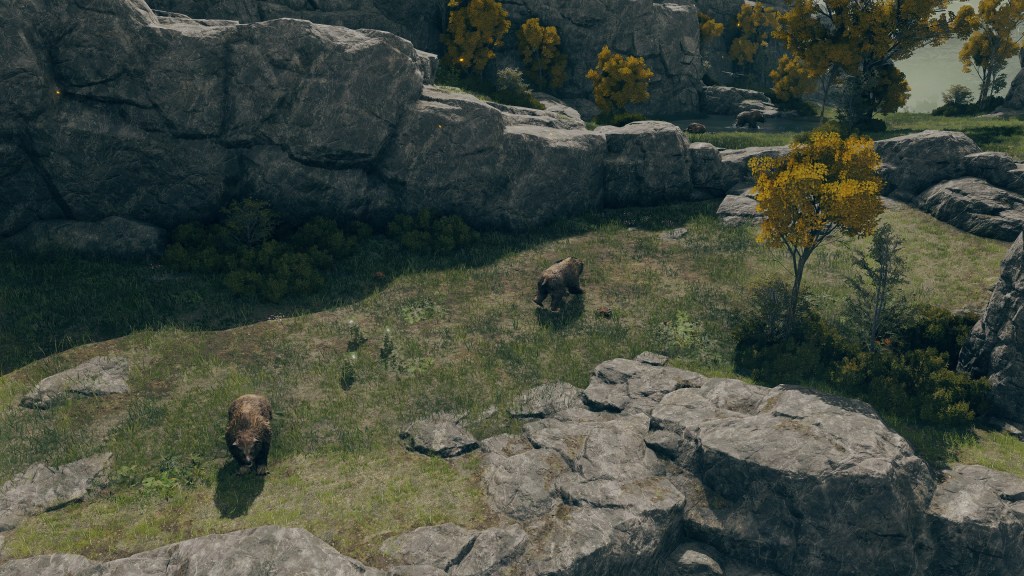
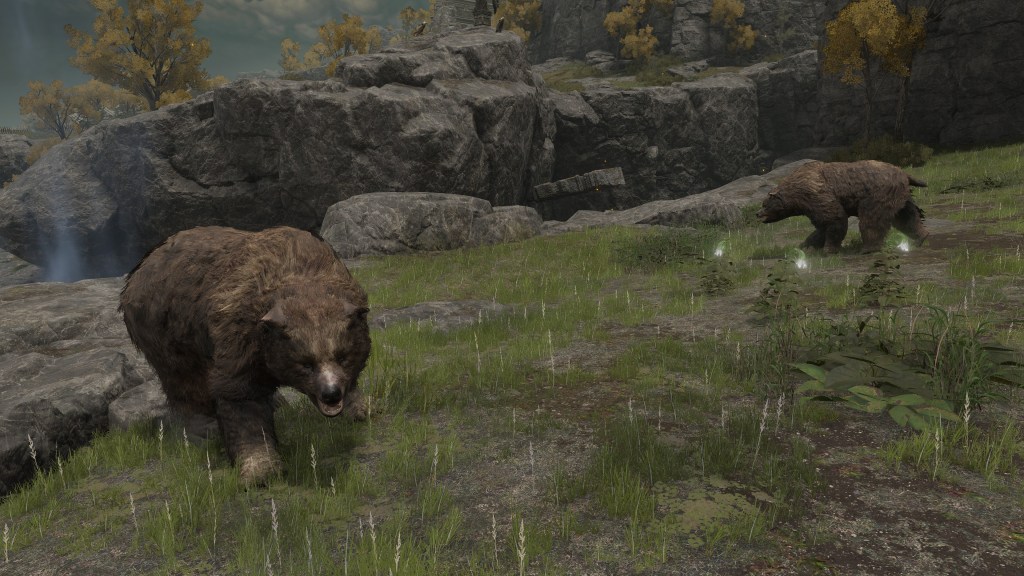
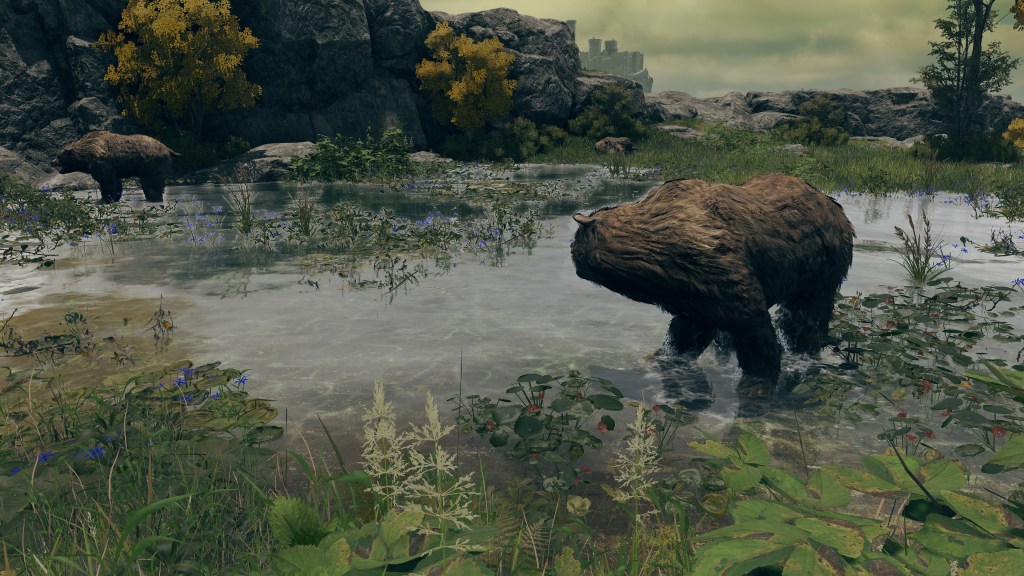
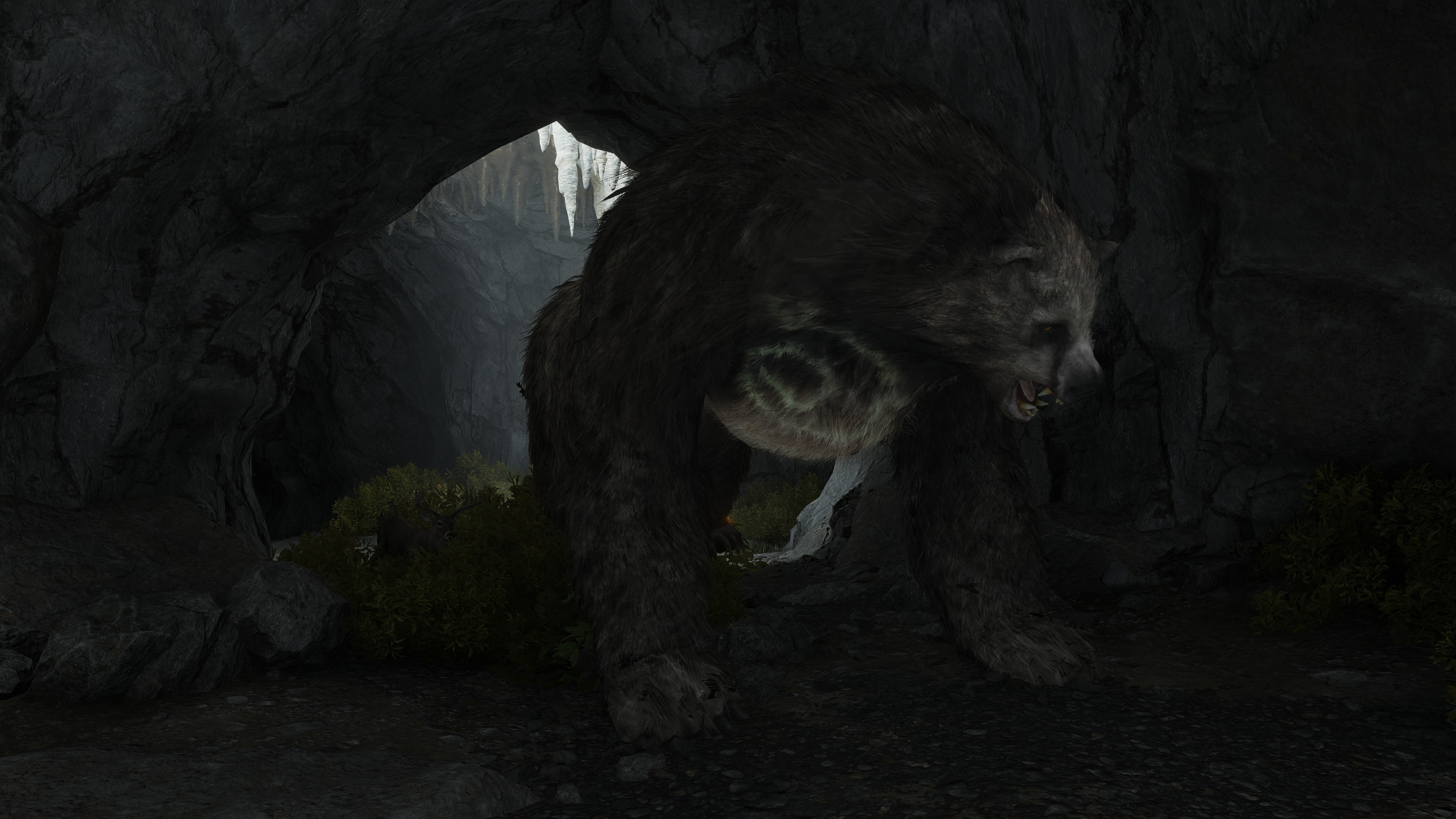
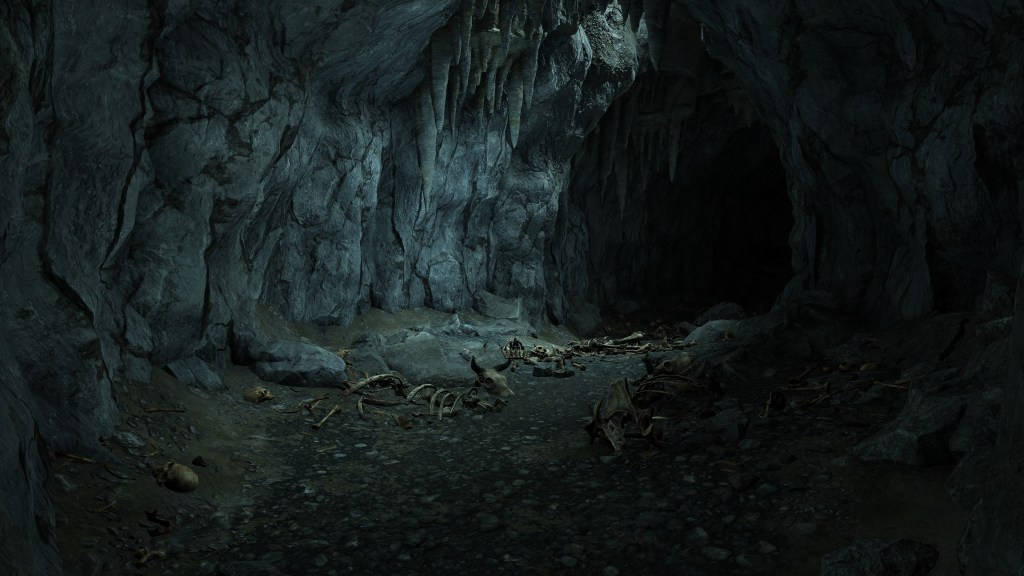
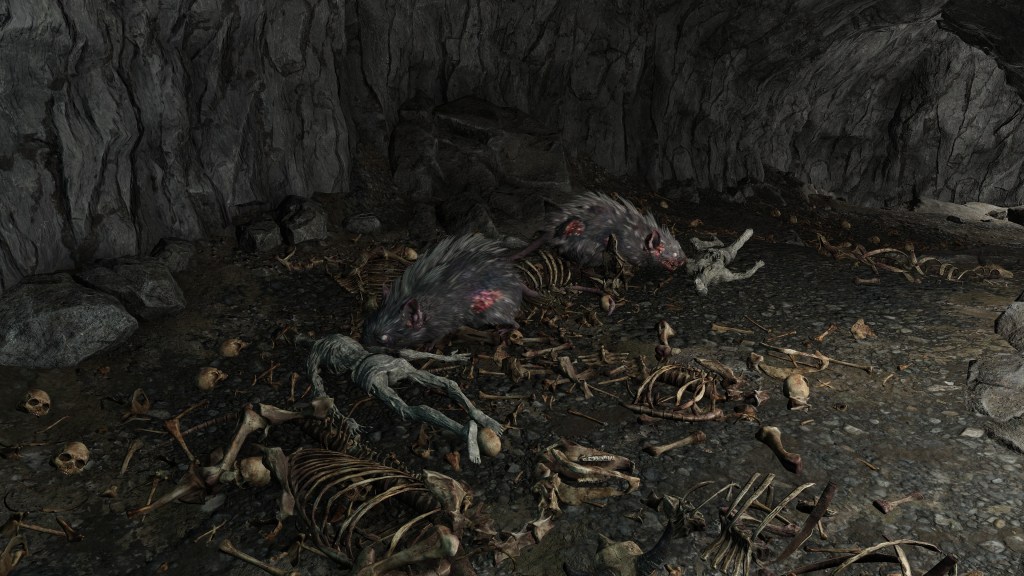
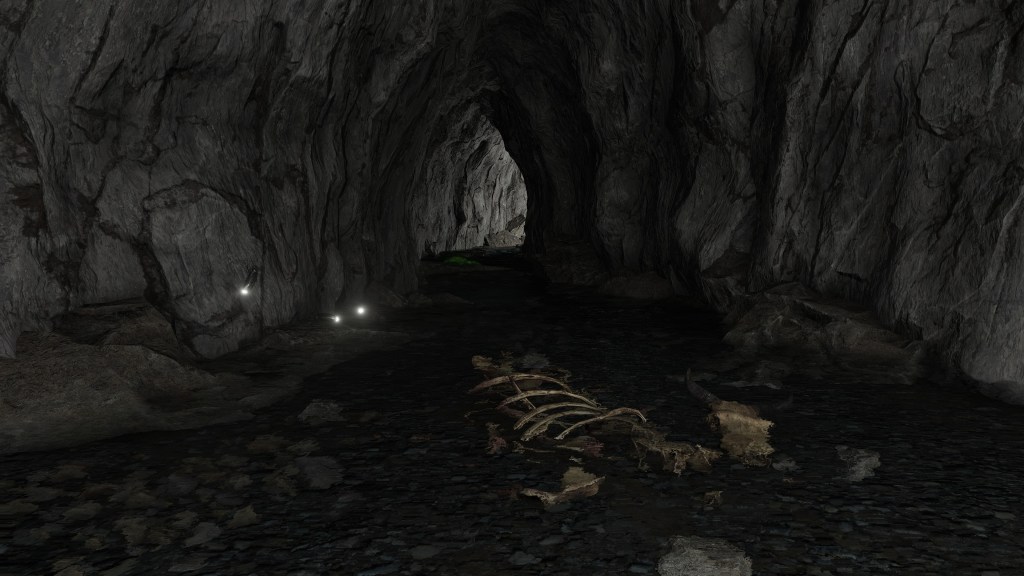
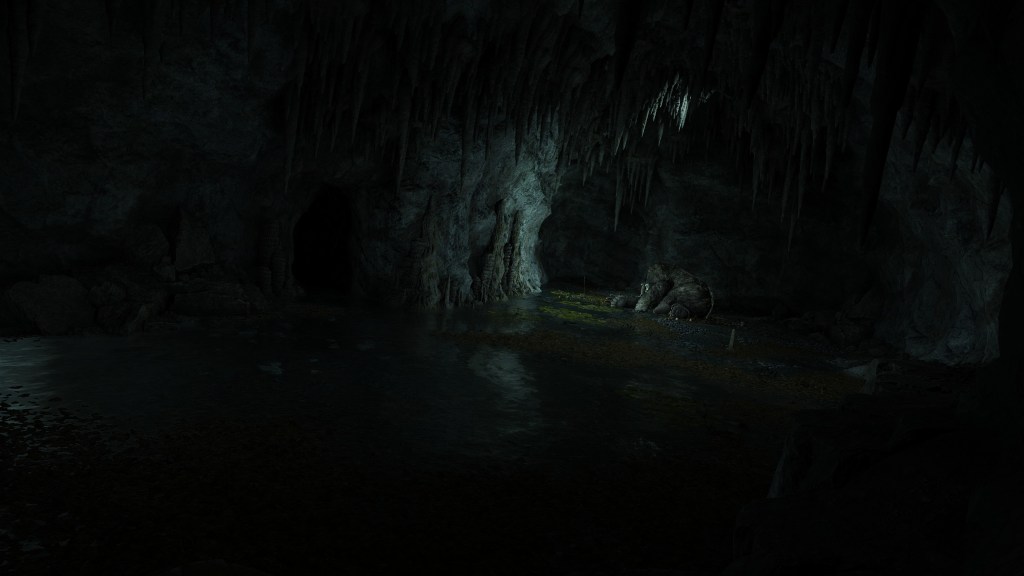
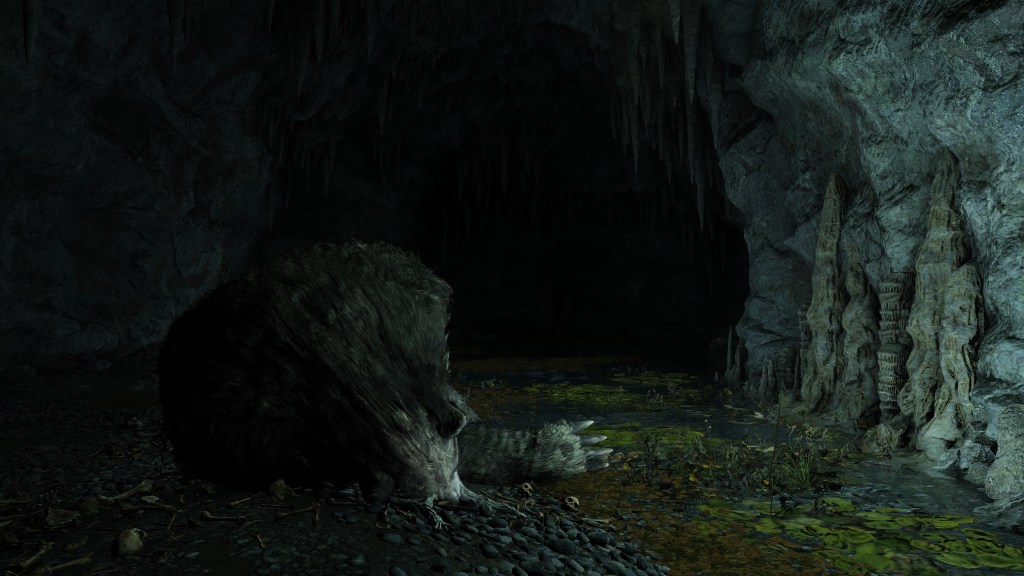
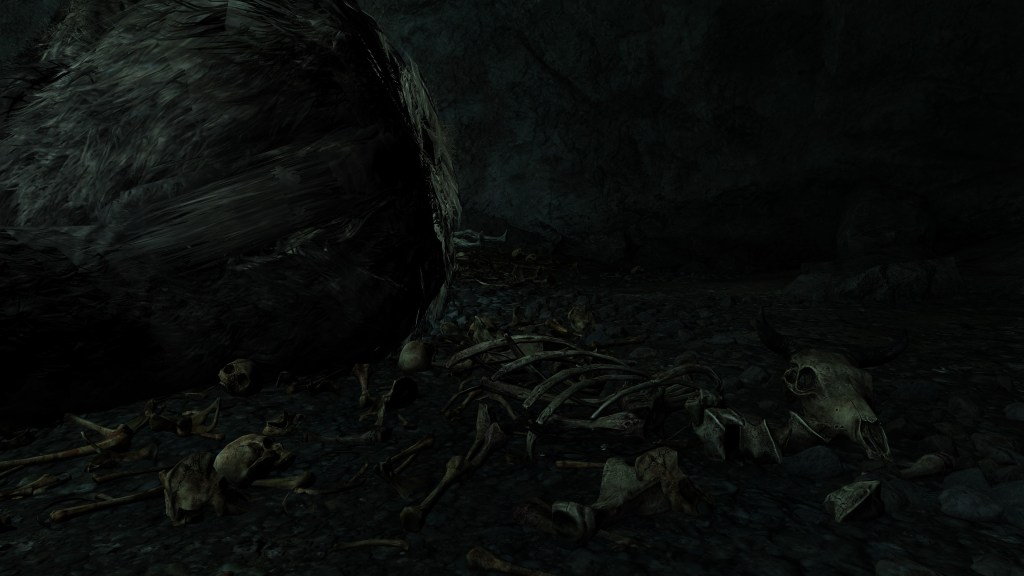
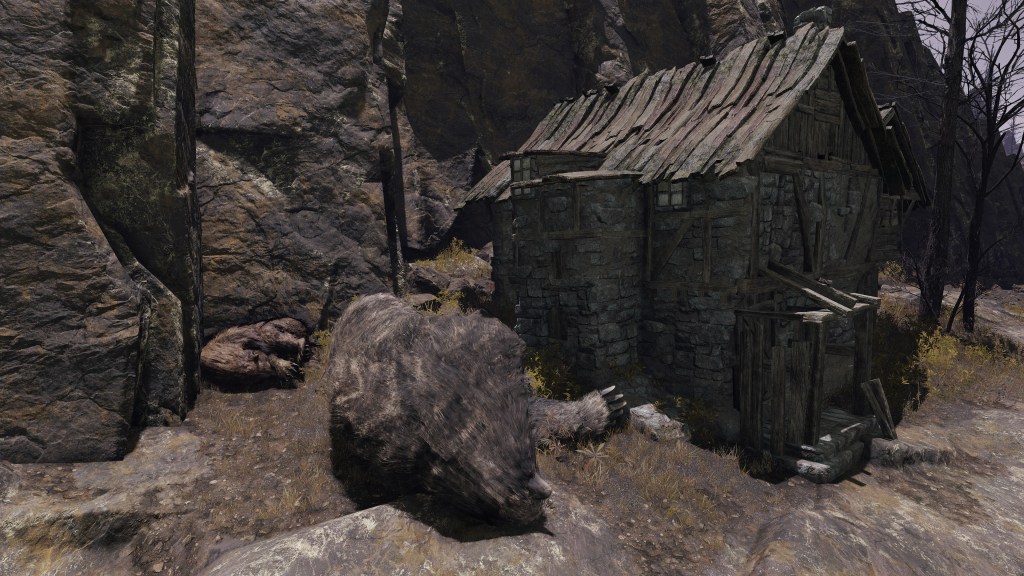
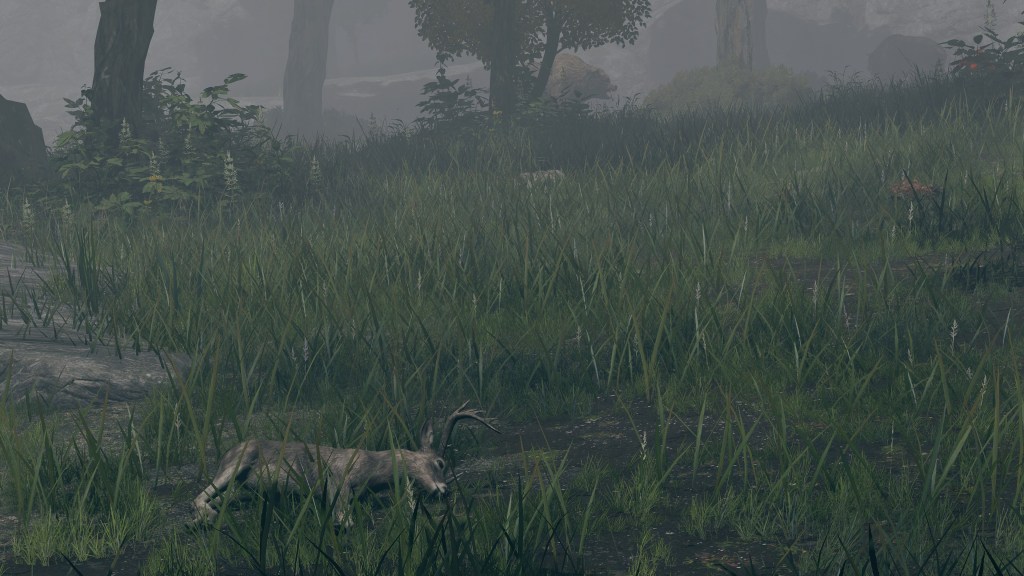
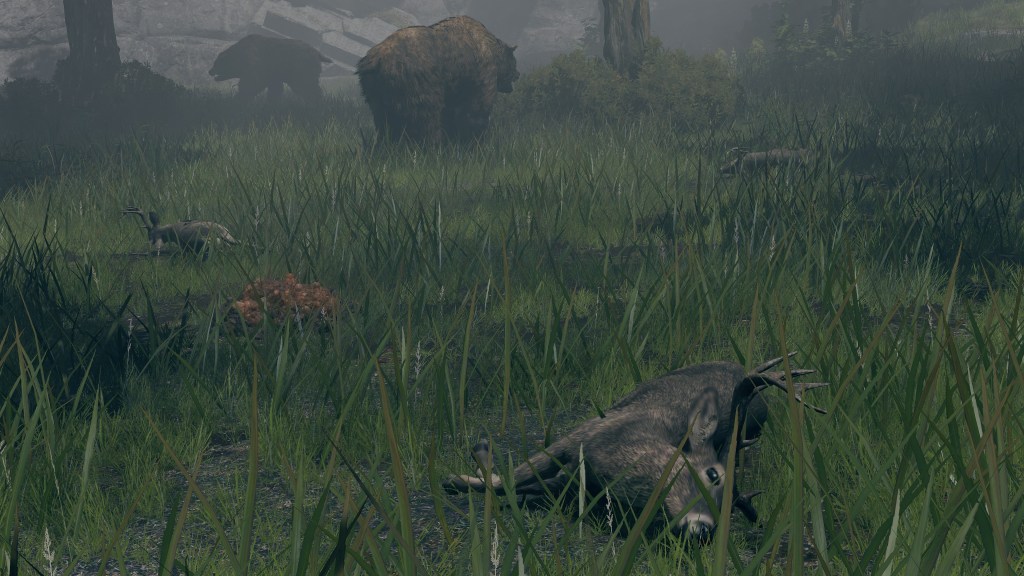
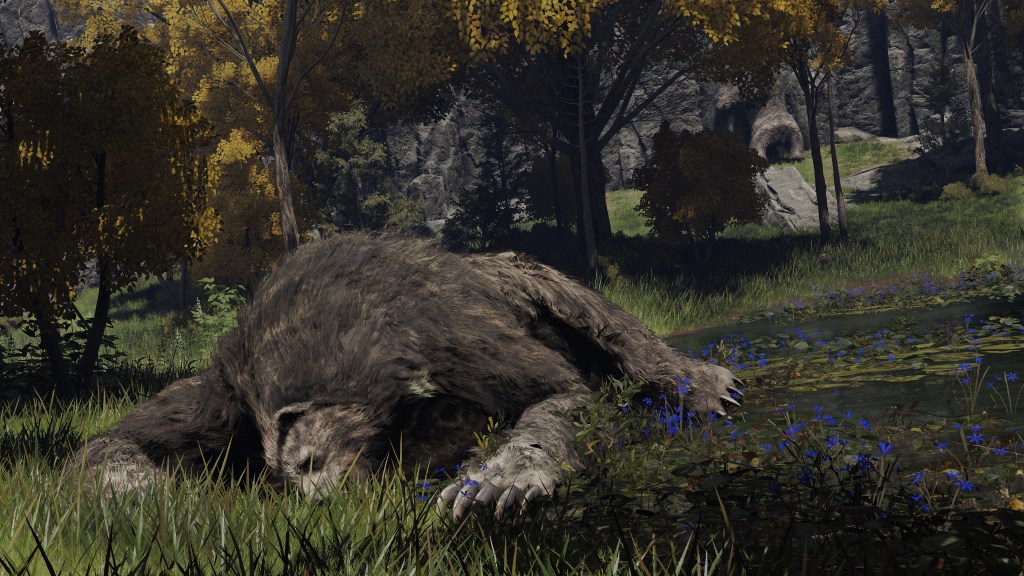
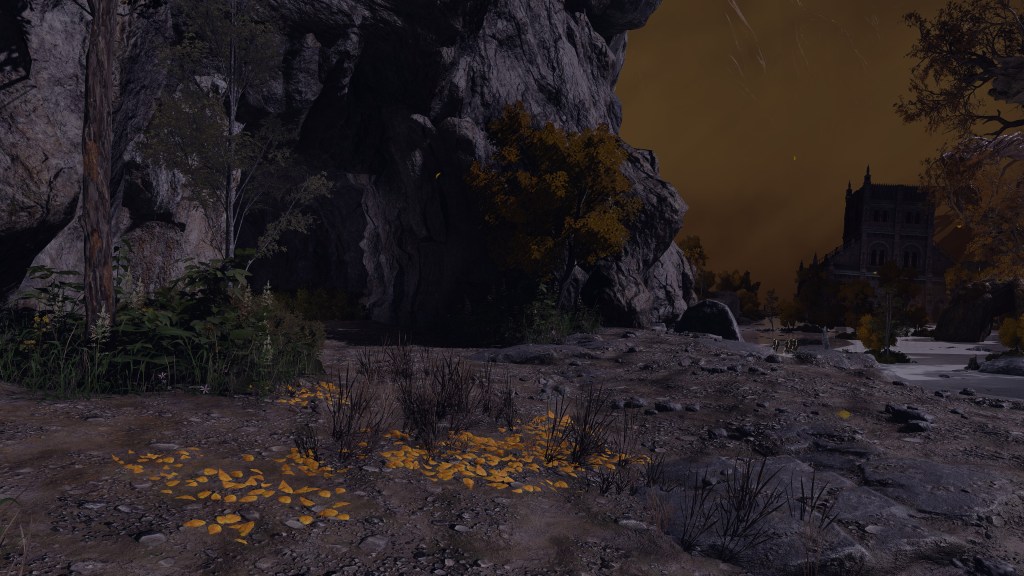
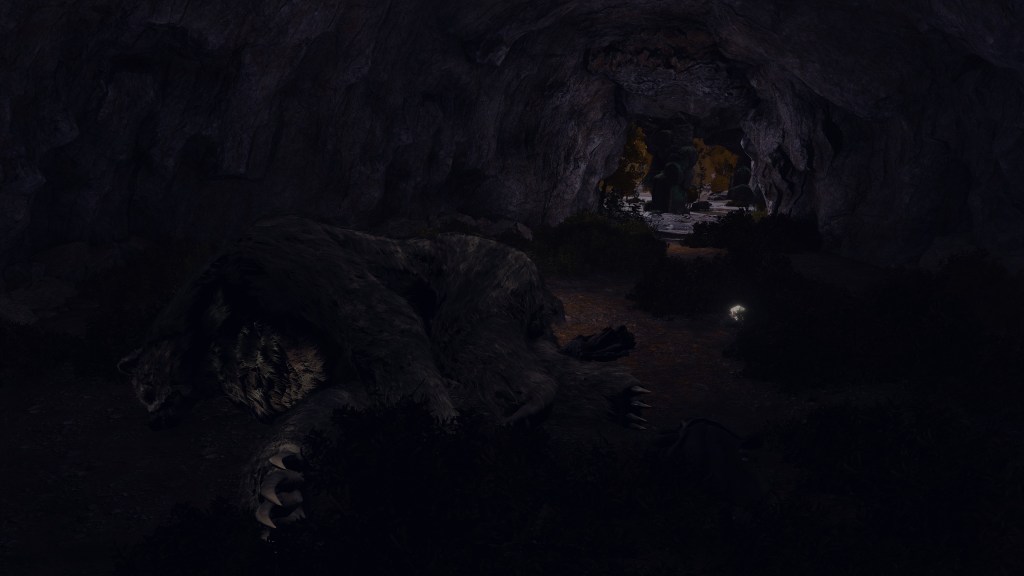
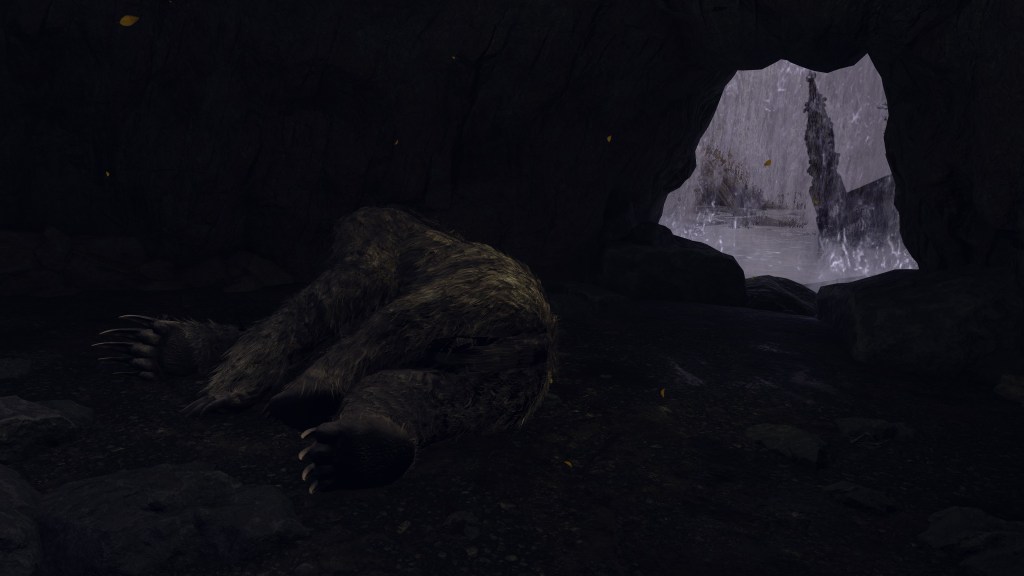
Earthbore Cave highlights this point, rats feasting on the scraps left by the one runebear slumbering deeper within. It doesn’t matter if it is animal or human, any who has the misfortune to stumble into its lair, or get dragged back, will be gnawed to the bones. Brown bears are infamous for eating their prey alive, and the bears of the Lands Between are certainly so needlessly violent. Among the many ursids living in the Mistwood, one pair wanders amidst the litter of deer prey and dung. We likewise find a trail of dung leading from the Artist’s Shack in Limgrave to several group of bears inhabiting the lakeland cliffs north — evidently returning time and again to descend upon whoever takes up residence in that now dilapidated hovel. Taking all this into consideration, their larger kin may present one of the gorier fates for travelers exploring the wild.
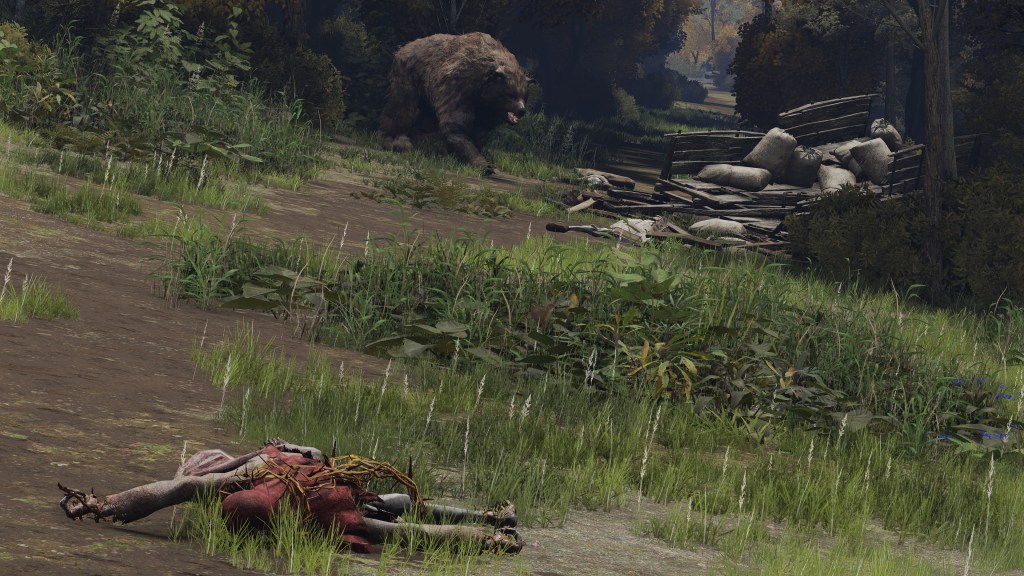
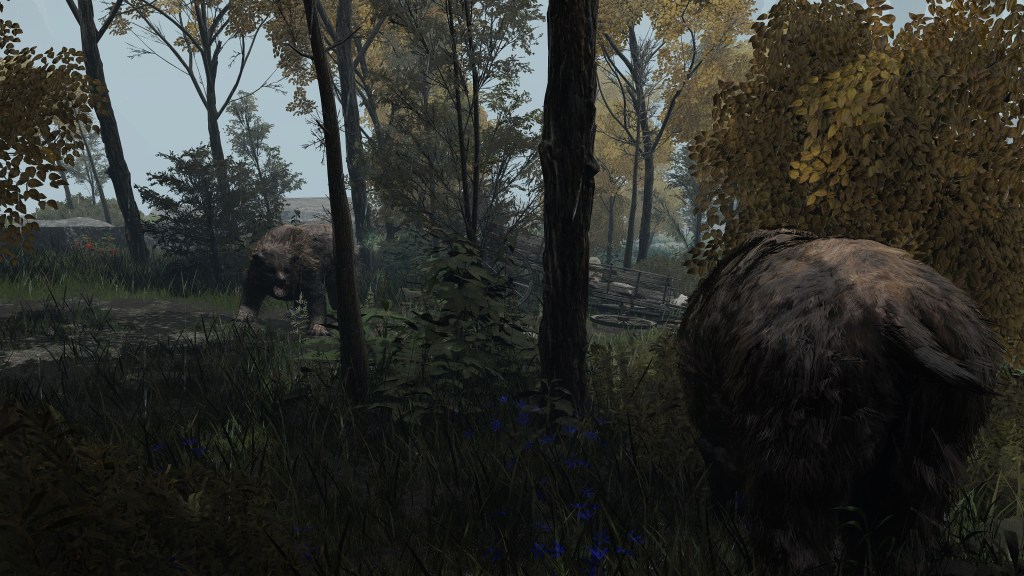
At the same time, runebears tend to keep to their own territory. Despite the number living in the Mistwood, it was only recently that its local village fell to ruin to one, which can be faulted on an inexperienced bear hunter’s misused lure. So long as they have prey to tide over their appetite, they will keep to their own. But if any, like the demi-humans in the Mistwood, provoke their ire, they will be met with blind rage far outlasting them; one “mama bear” even lashes out at another tribe threatening its “cub” on Gelmir. Like wolves, boars, or any other predator, bears most often kill people because travelers risk crossing paths in the wild. Loving to claw objects or cool off in water, they very much are just bigger brown bears.
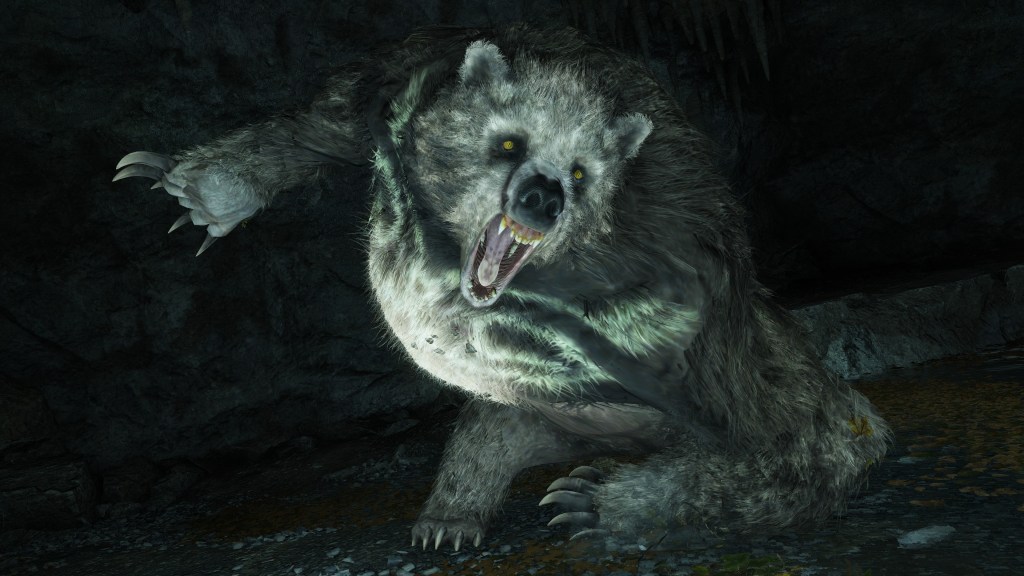
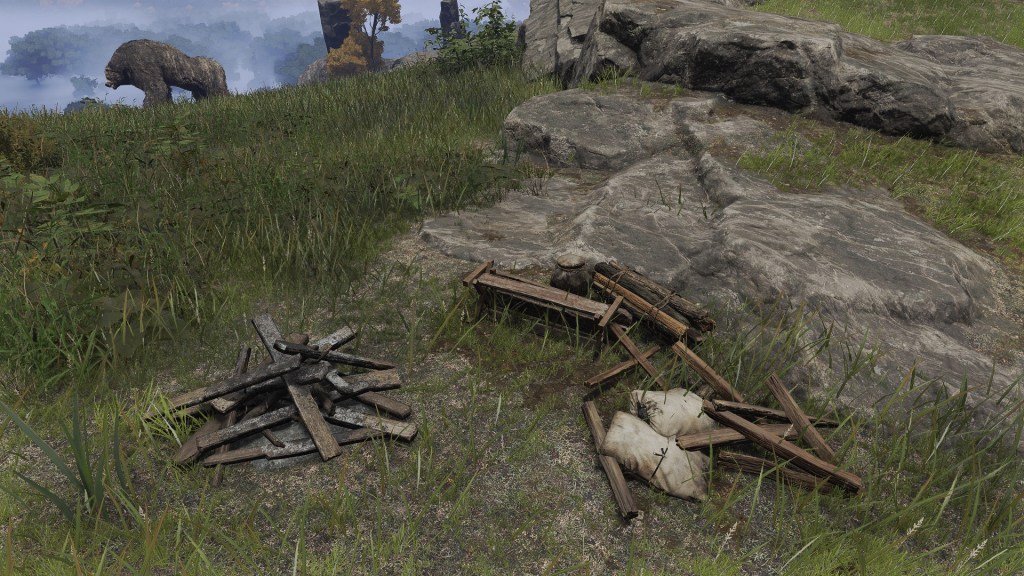
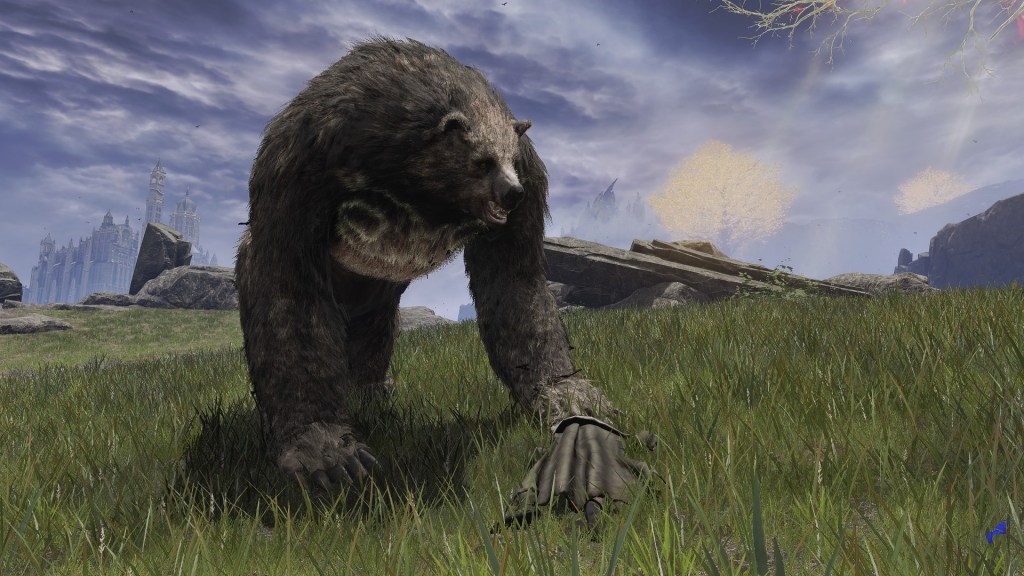
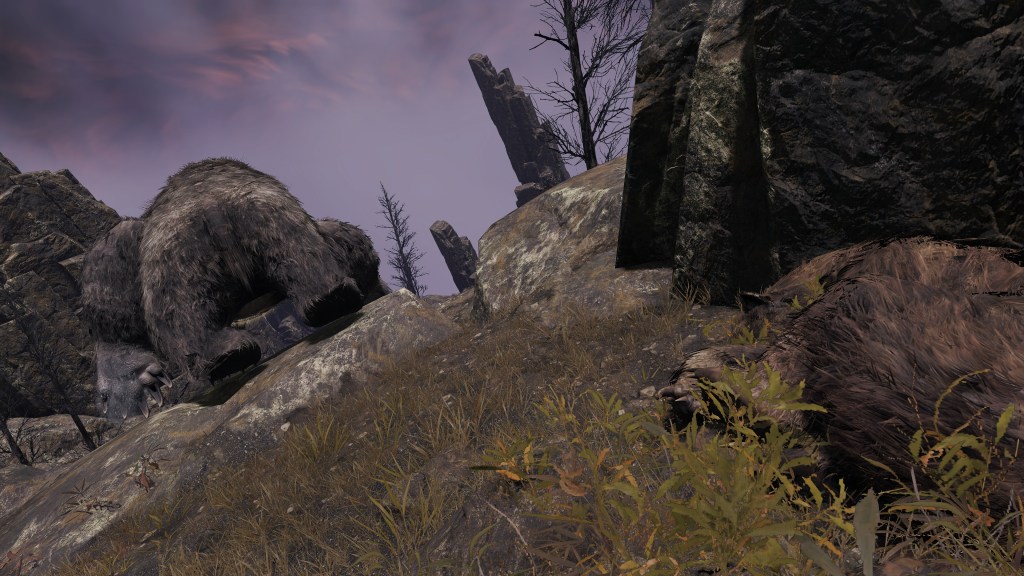
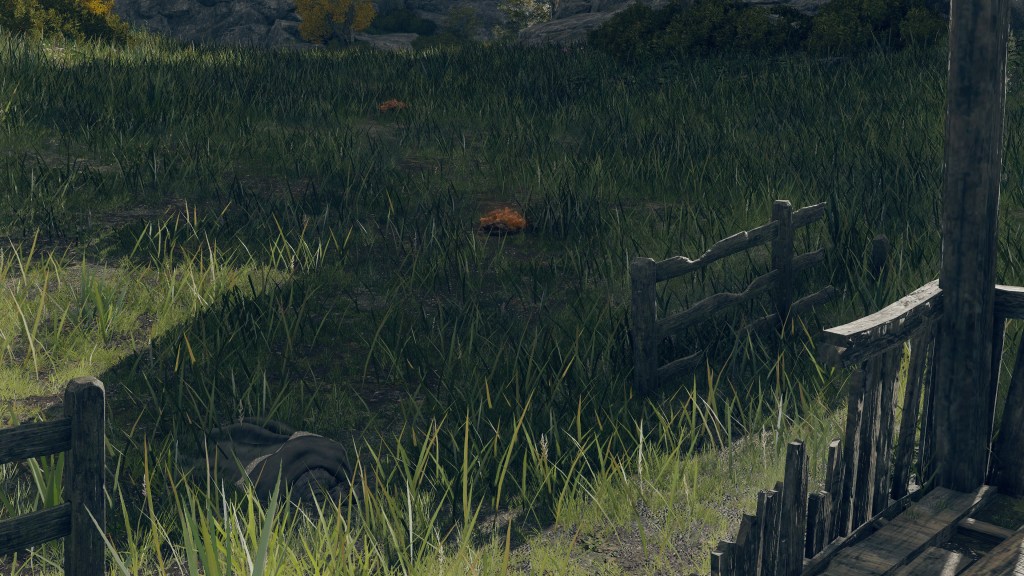
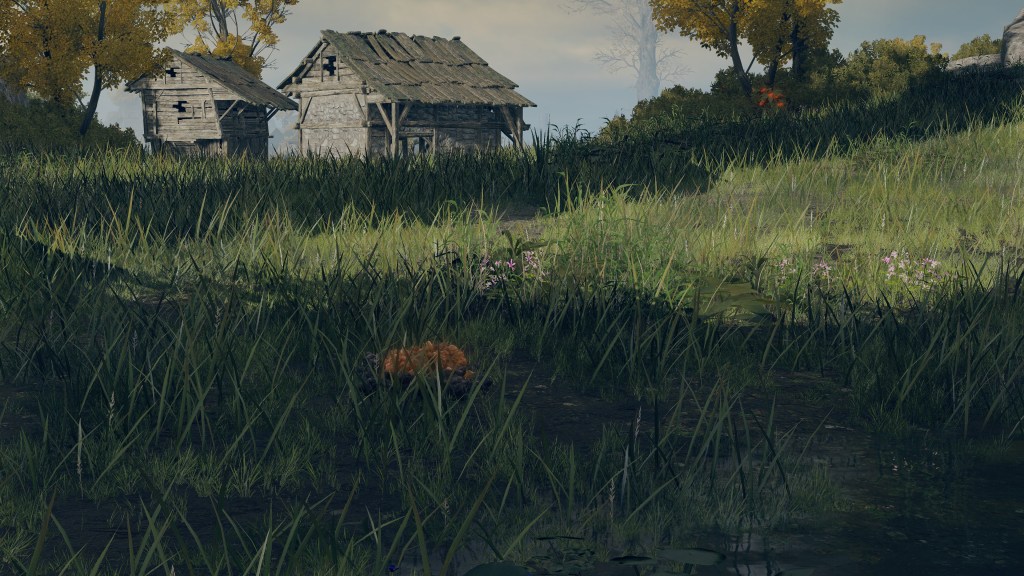
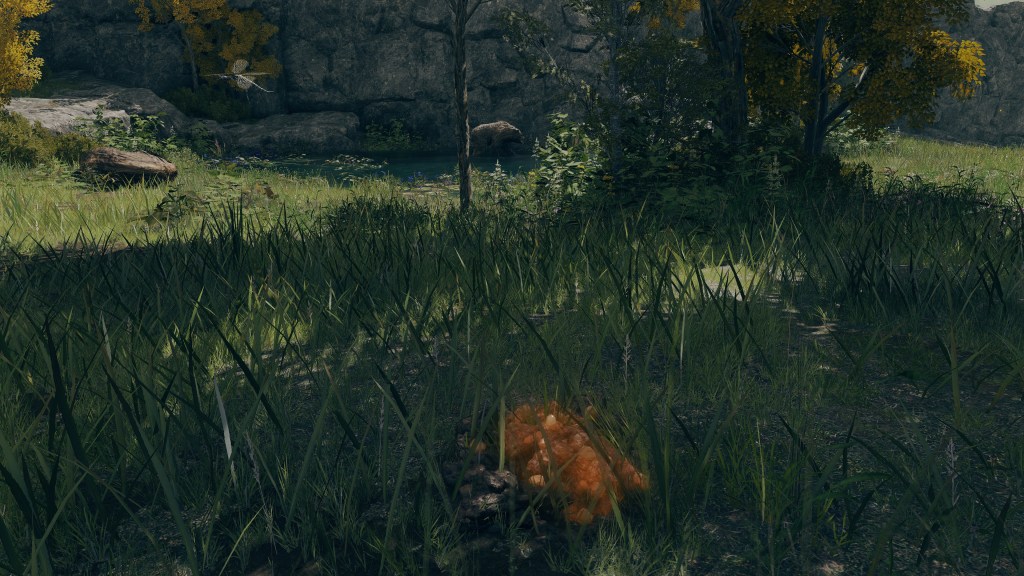
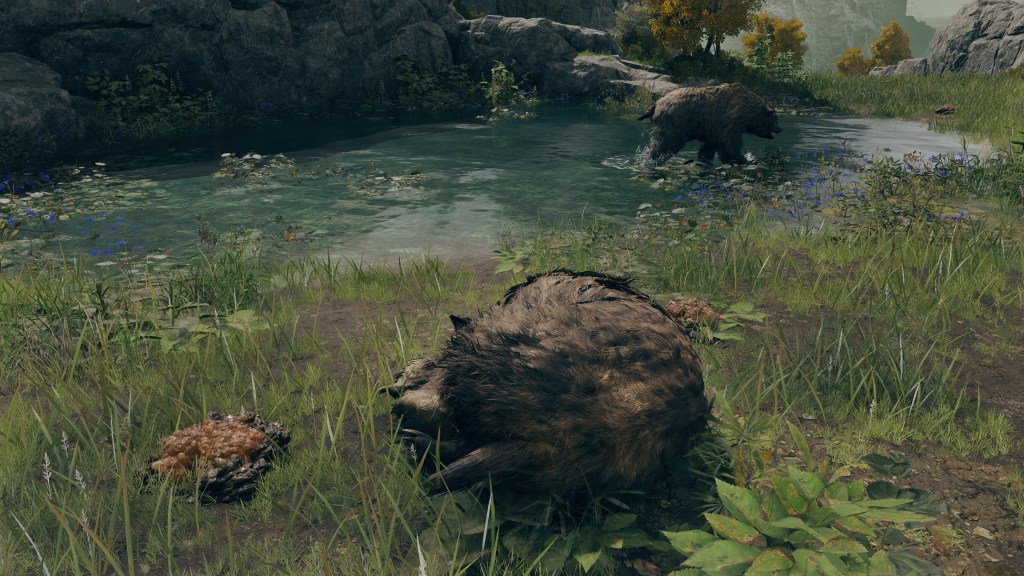
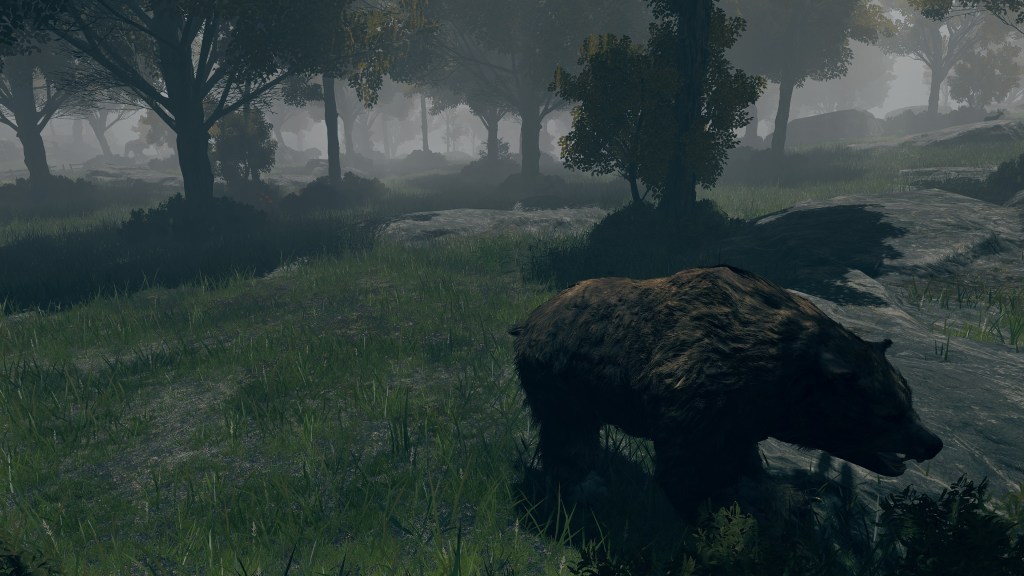
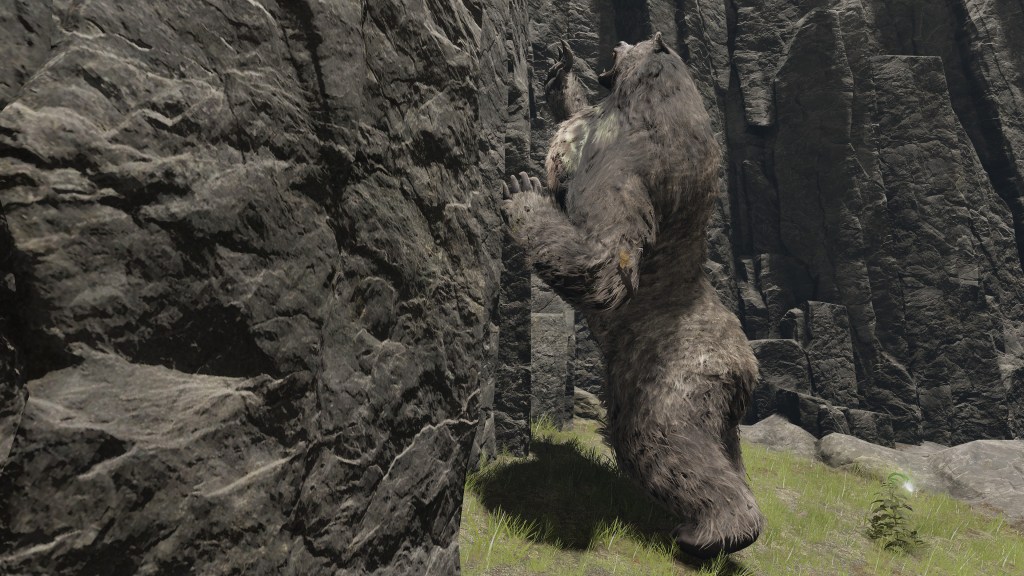
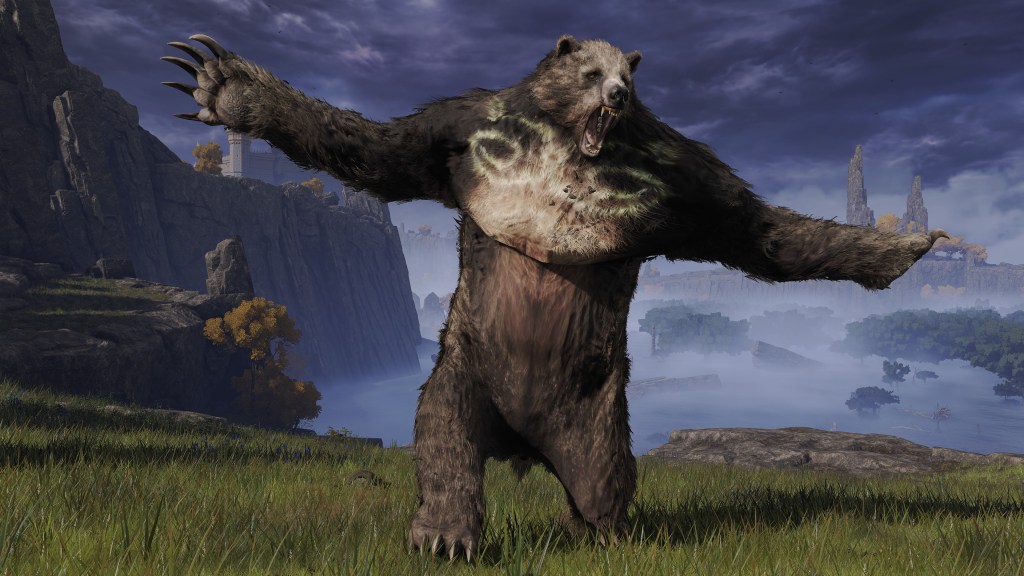
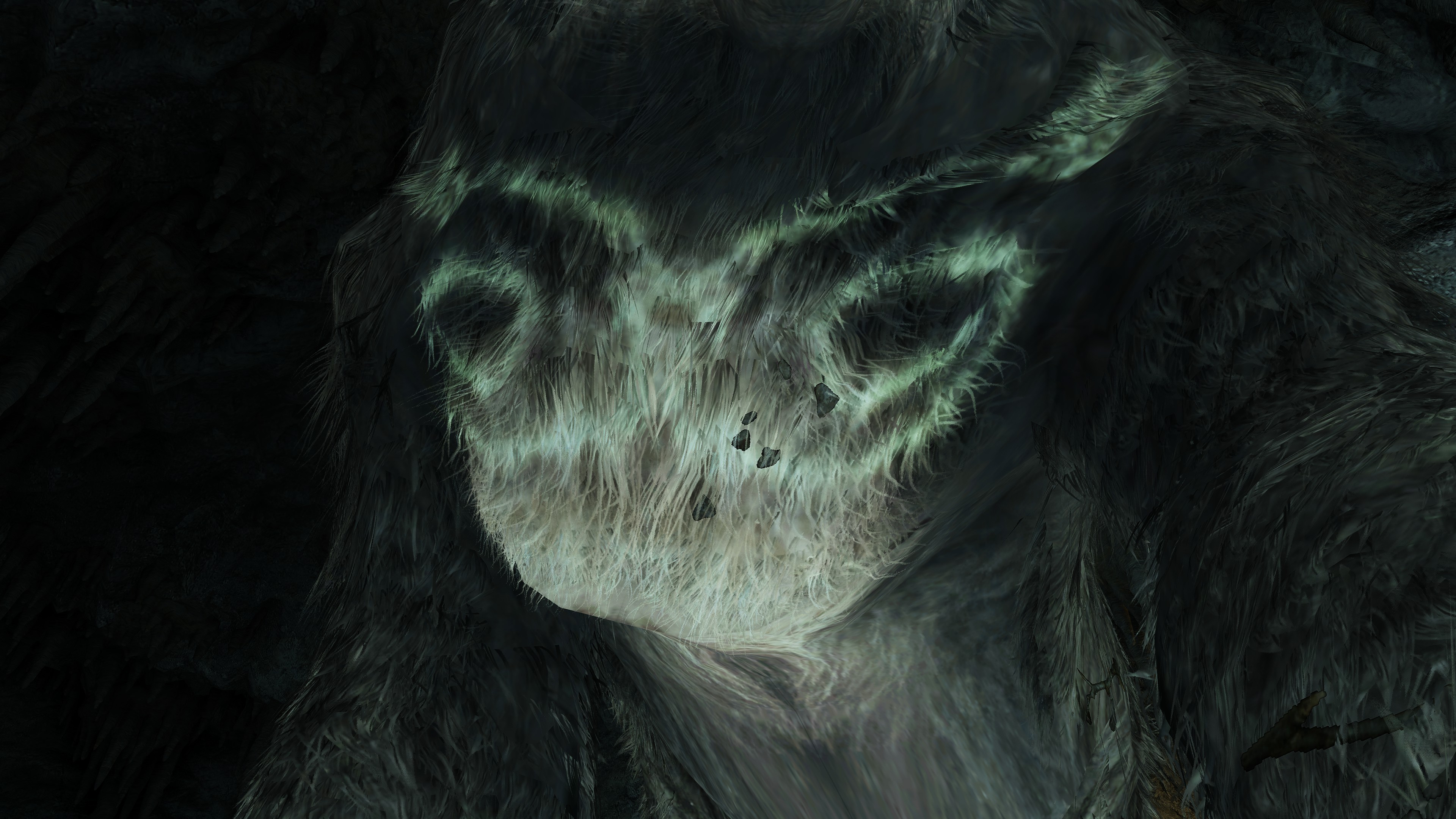
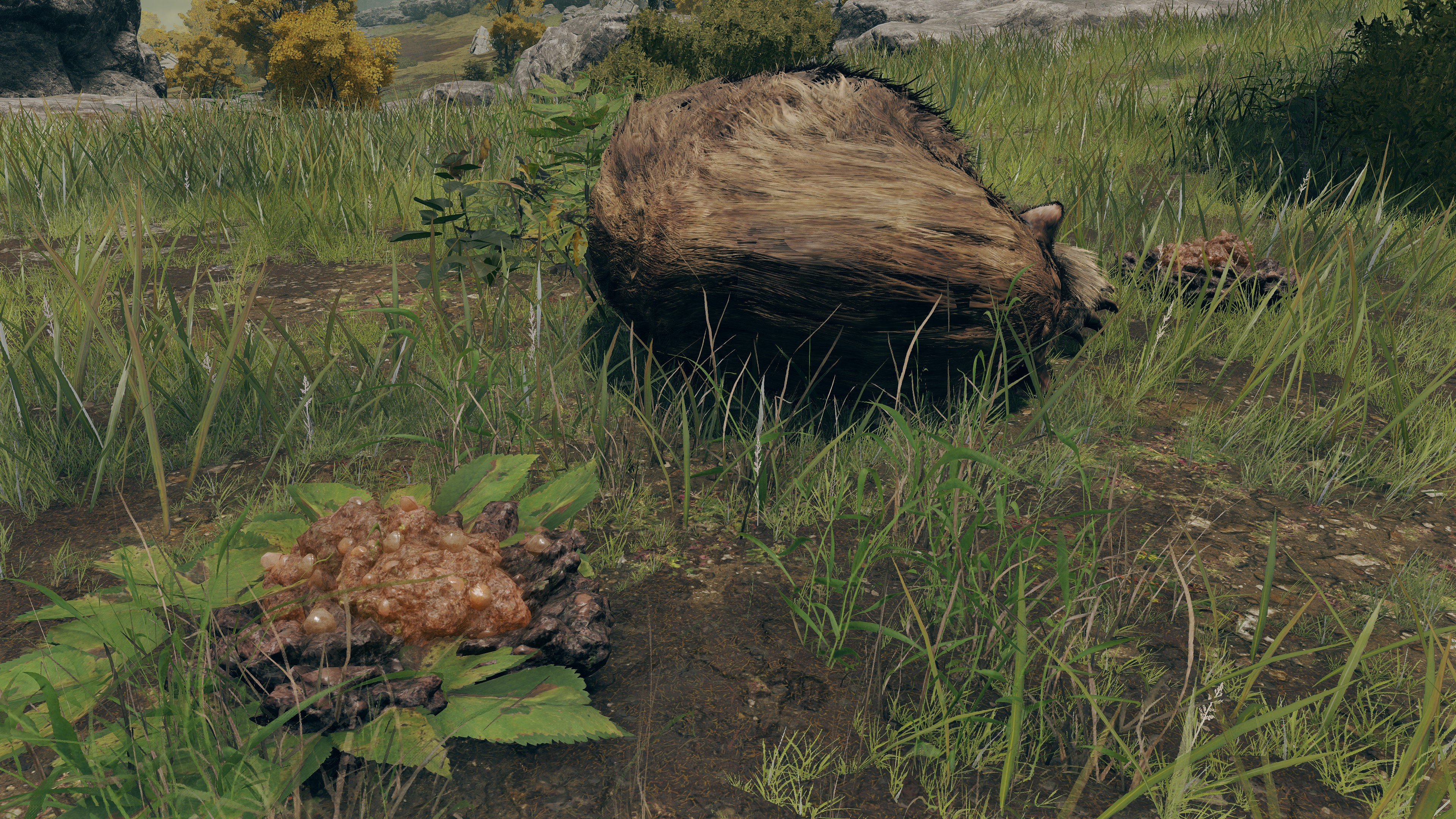
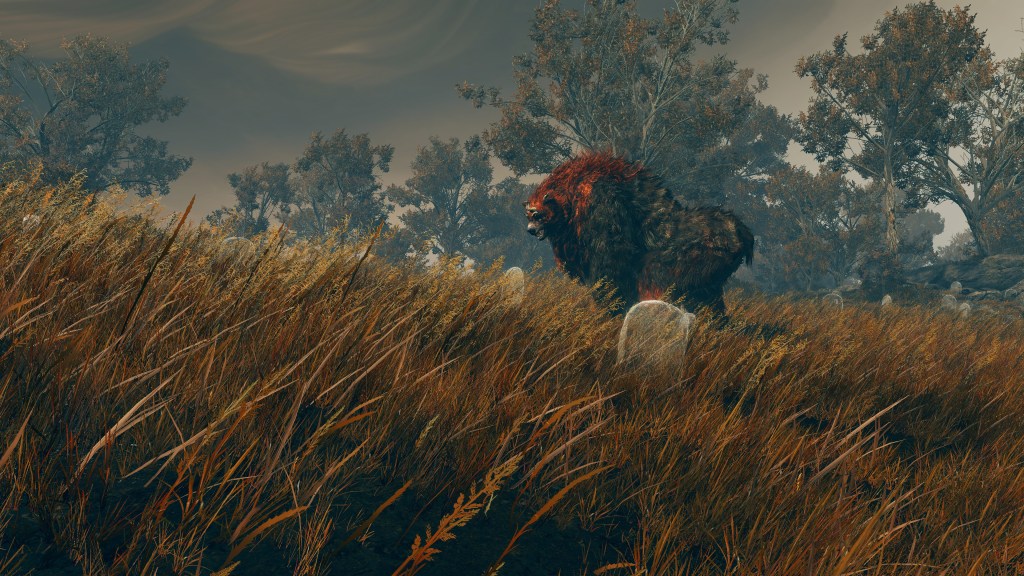
However, runebears still stand out for their namesake, a pale yellow character faintly glowing across their large chests. Without a single incantation or other holy magic to their name, the power of this rune seems to only justify the beasts’ incredible size and physical might. Indeed, we witness even larger, stronger “red” bears among the crucible beasts in the northern Realm of Shadow, local runebears synchronizing their existing gold with that primordial aspect. This begs questions about the origin of the species — how does a brown bear gain the power of a massive rune? Like boars, bears and runebears leave gold-tinged excrement, sometimes a large pile of it for the latter. Perhaps then it is simply an excess of the golden runes consumed with their prey. At the same time, this giant rune doesn’t manifest on the bears living normally on the snowfields of the Mountaintops, and they excrete the same dung. If the cold ice is having an effect, then it is possible that the appearance has more to do with heat than the actual food.
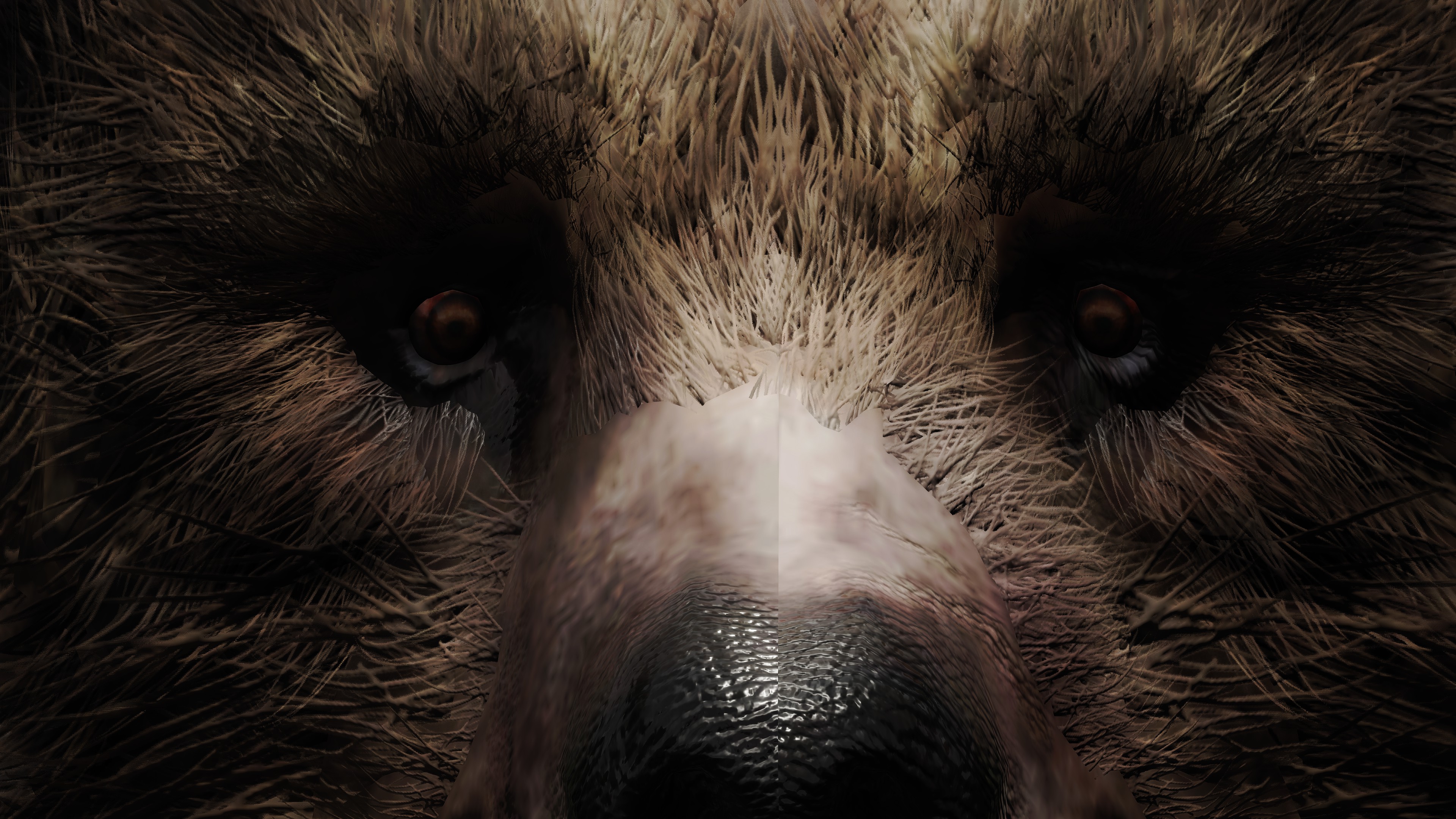
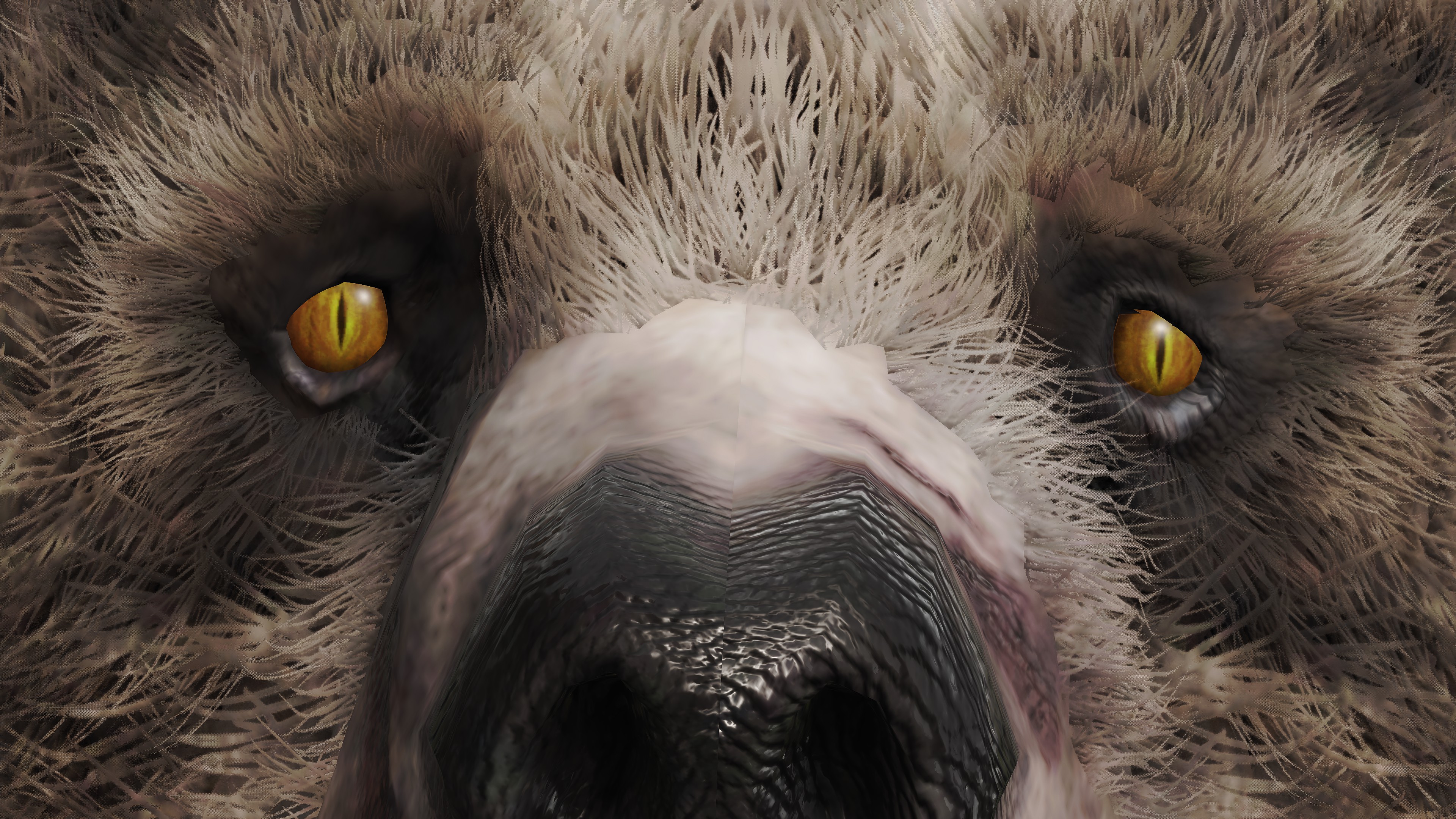
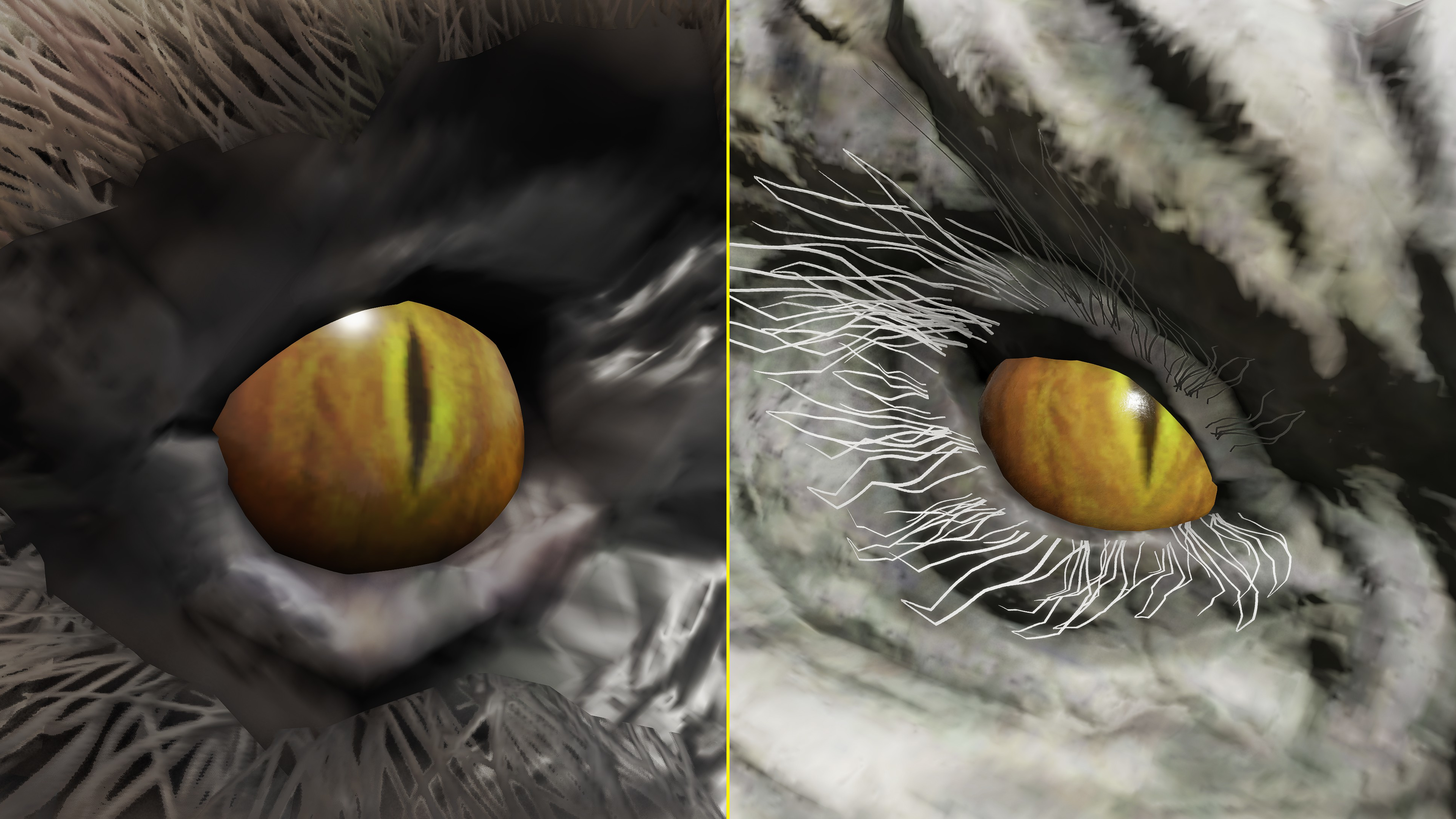
On that note, there is one other oddity about them. Close inspection reveals that the runebear has draconic eyes, the slit pupils unlike any other mammal. This draws immediate comparison to dragon communion, which produces similar eyes in adherents on the road to becoming a magma wyrm. Hunters of the great red bears likewise coin the incantations derived from their inherited spirits as “bear communion” despite the greater similarity to Hornsent divine invocation. This implies at least an indirect link between the bears and dragons to warrant the joking nickname. Cut content also reveals plans for the runebear to award a dragon heart upon defeat. Taken together, it suggests that every runebear has previously consumed a dragon, inviting the insinuation that dining on wyverns is responsible for the bears’ enhanced state. Certainly, as descendants of the beings of rock and gold, they possess a heat driven by the primordial life of the Elden Ring.
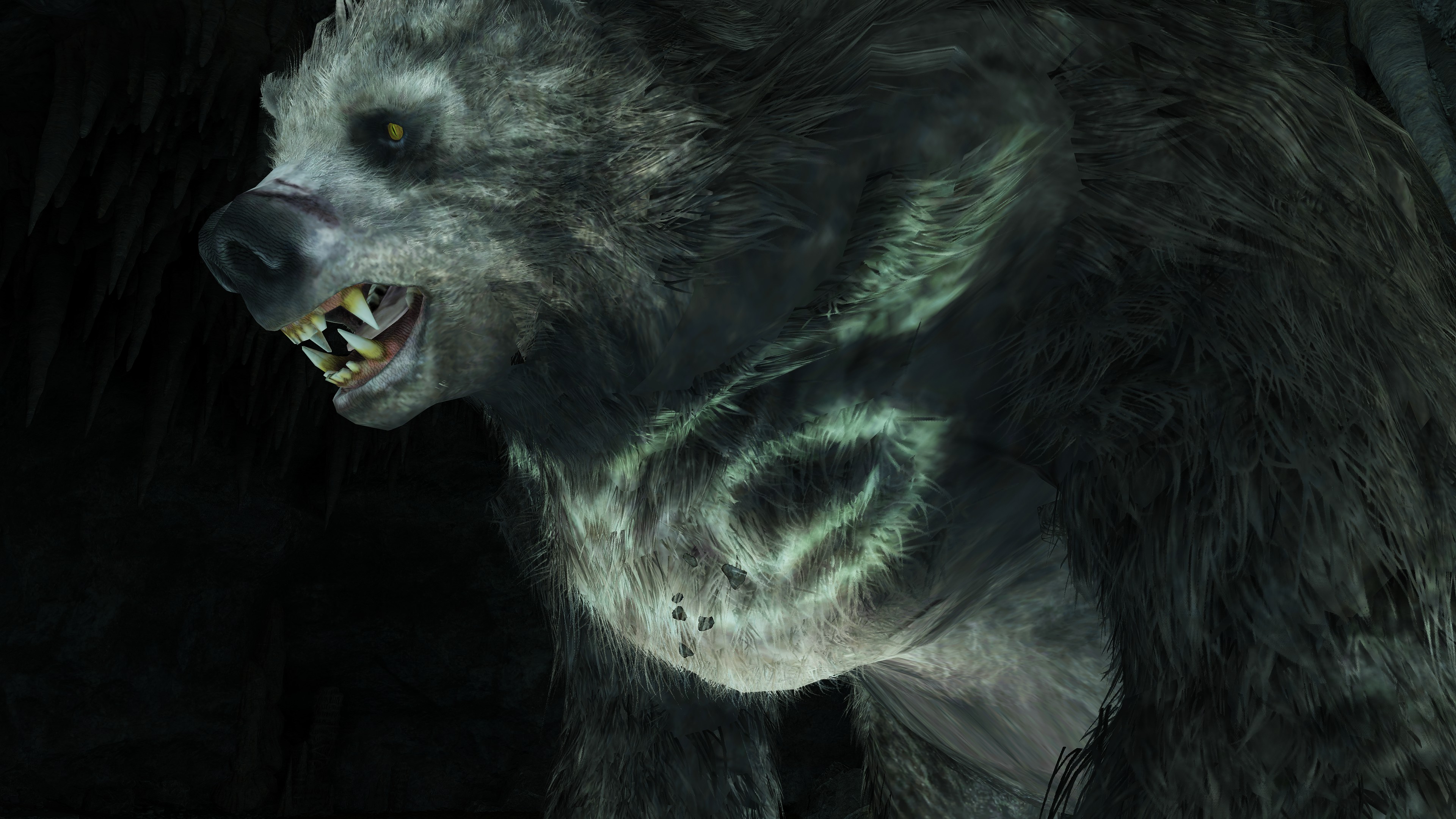
The implication also lines up with the recurrence of runebears across the various lands. In Liurnia, we only encounter them on the east side, the farthest west being the one roaming the edges of the Academy Gate Town. Western Liurnia is, of course, territory of the Carians, who swore an oath to defend the region’s dragons. And as we see, wyverns only persist on that western side. Therefore, it would be unsurprising that only dragons who ventured outside Caria’s protection have been preyed upon by bears — that one runebear could be the single reason that vengeful Smarg hasn’t descended upon the Gate Town already. The same holds true in the Consecrated Snowfield, where a large number of runebears congregate in the ancient forest; reflecting the entire dragon population driven there from the Mountaintops. The pattern repeats in the highland population, with one bear at Gelmir, two more on Altus Plateau, and another two in the Deeproot Depths once properly connected to the plateau. Before the Farum colonists wiped them out, wyverns in that region were already bear prey.
That covers the Northwest lands, and it continues to the South and East. Many runebears live alongside Ralva in the Scorpionriver woods while Rugalea lurks amongst many more brown bears in a grove preceding the Shadow Keep. This makes sense in light of the colonists’ arrival to Altus Plateau, their hunts sure to prompt many a wyvern to flee south where the robust bear population would then descend upon them. We don’t see any in the rest of the Realm of Shadow because, south of Scadu Altus and Rauh Base, most wyverns are either long-rotted drifters to the central cemetery or in an active war zone on Jagged Peak. Then there is the runebear at the border between Caelid and Greyroll’s Dragonbarrow plus another denning with its sloth in Dragonbarrow Cave, a small number corresponding to Greyoll and her brood’s recent return to the area. Finally, we have the large number in Limgrave, particularly concentrated in the Mistwood, plus the stray in Weeping Peninsula. Wyverns there were the farthest removed from dragon hunters for the longest time and so boasted the largest population for runebears to flourish from.
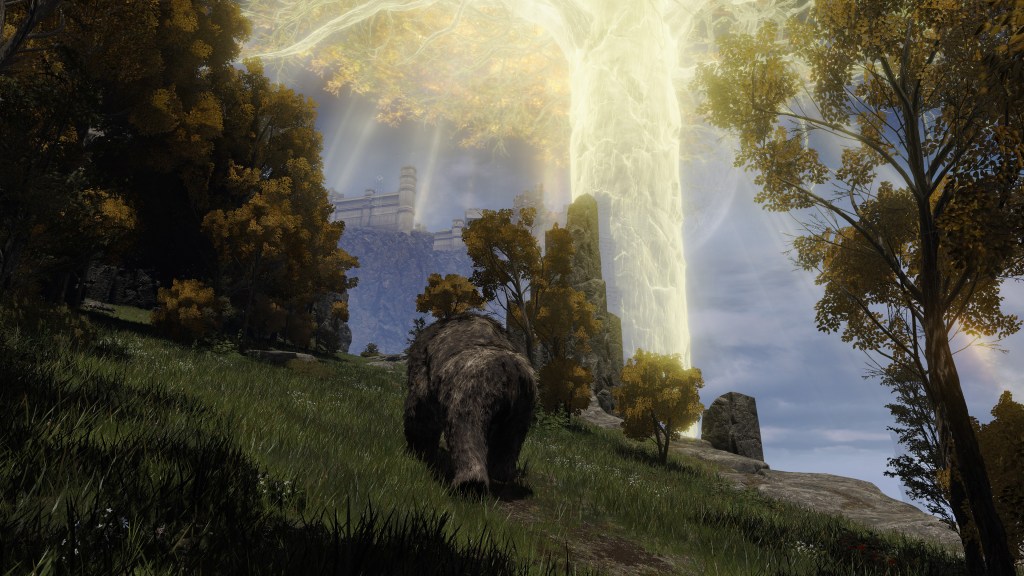
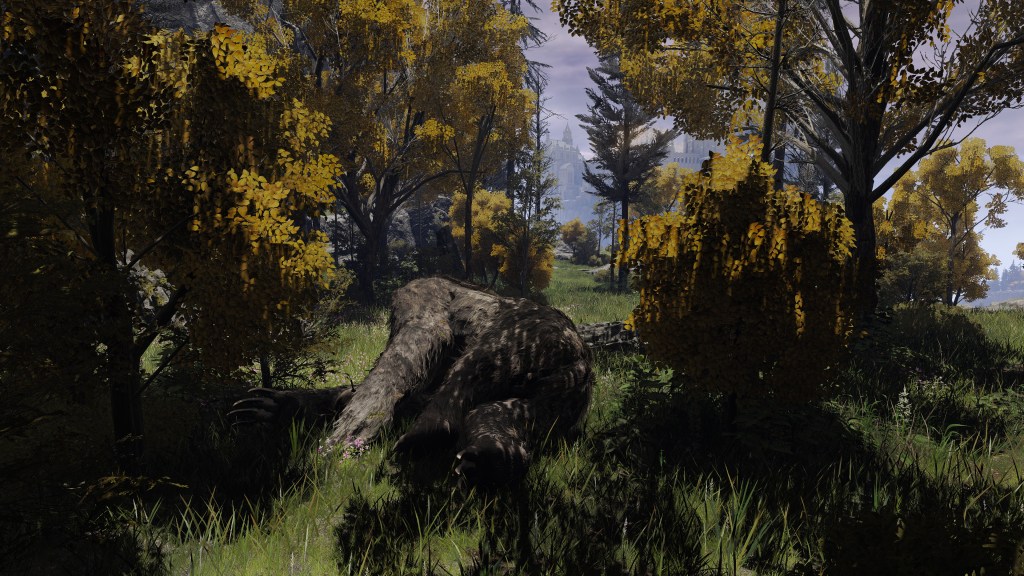
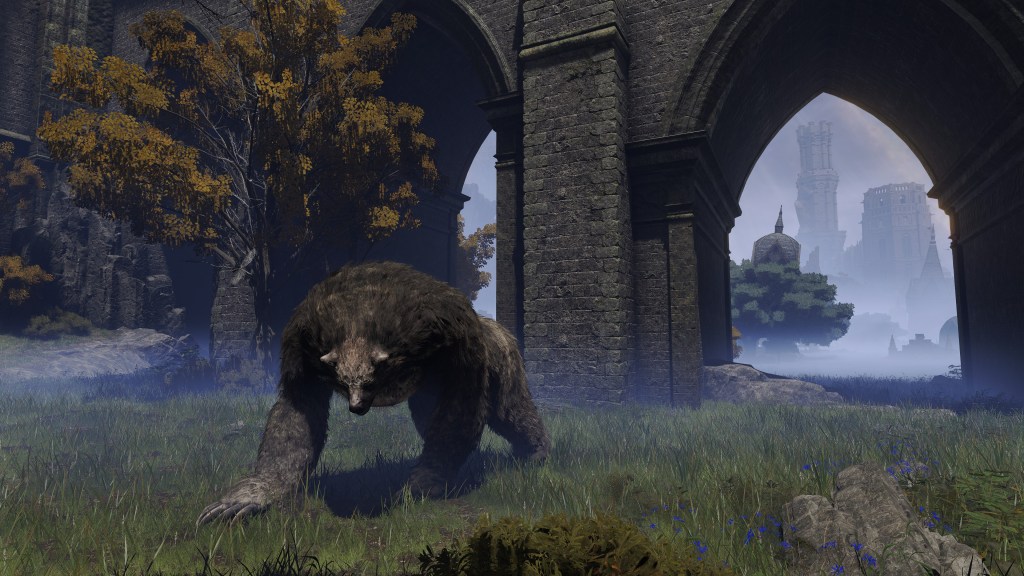
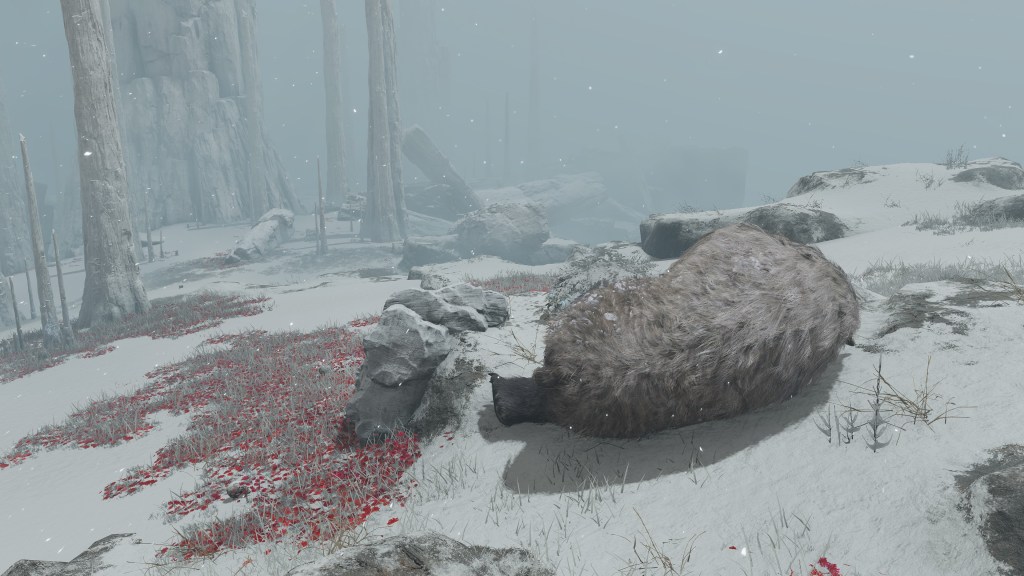
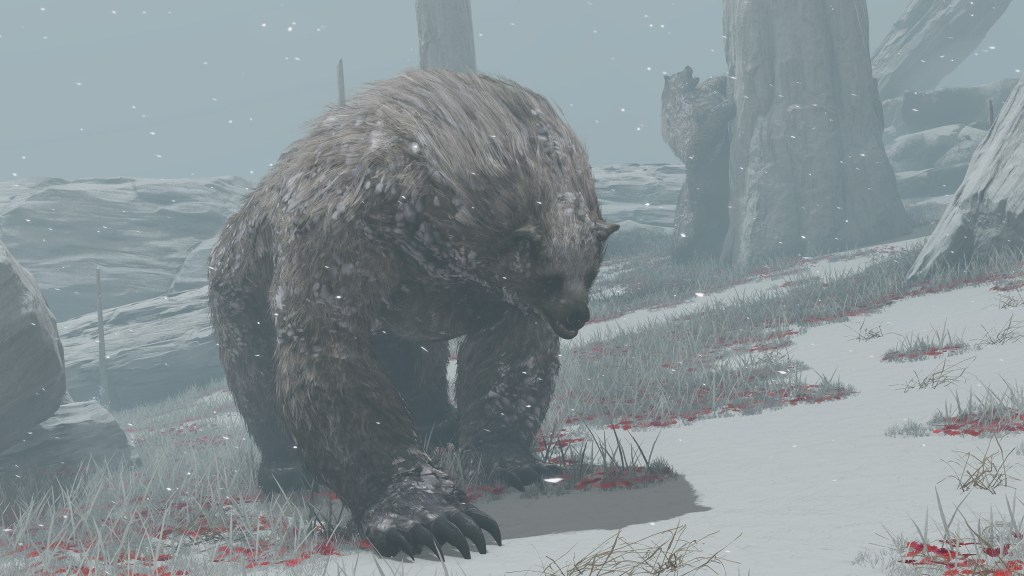
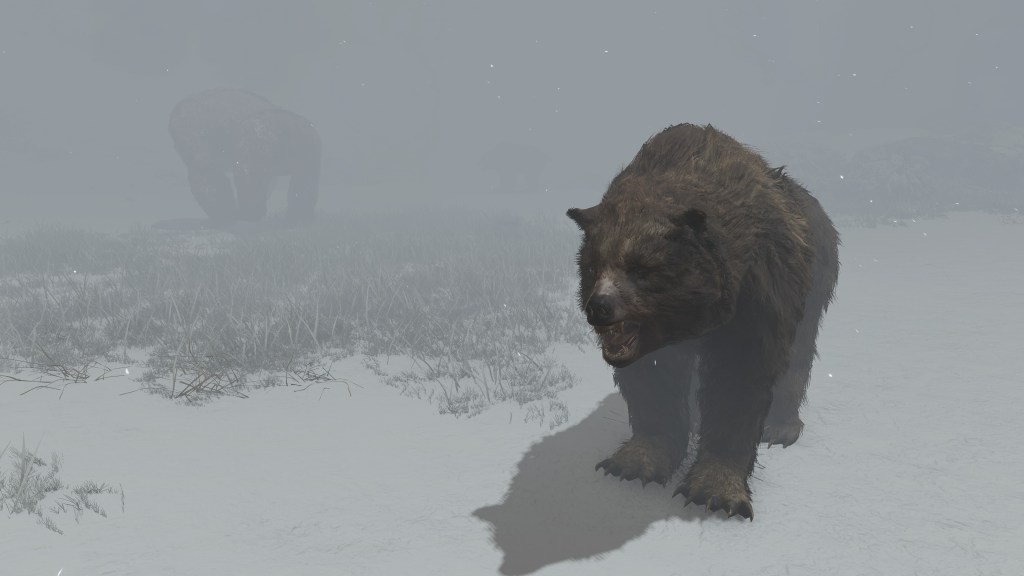
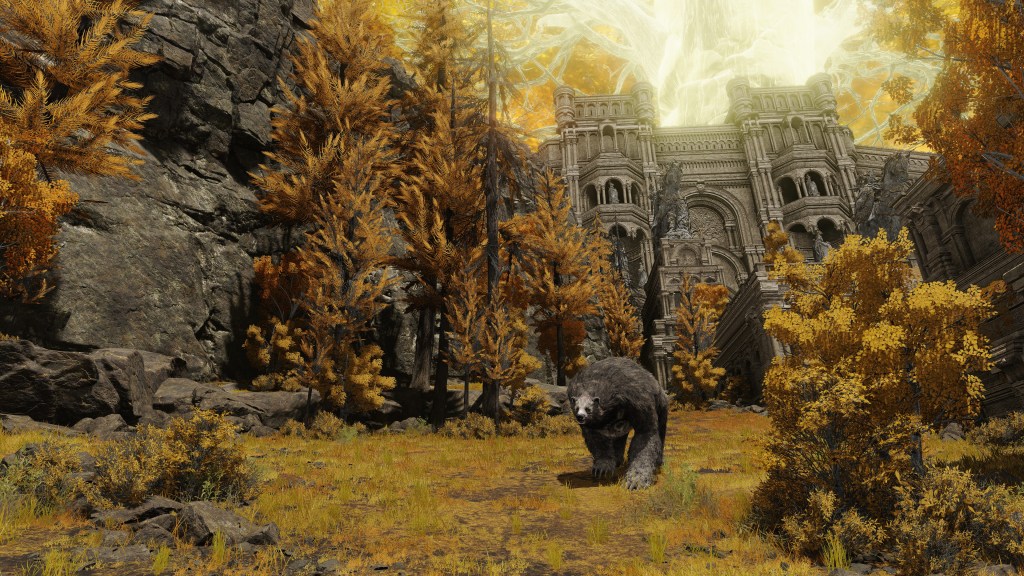
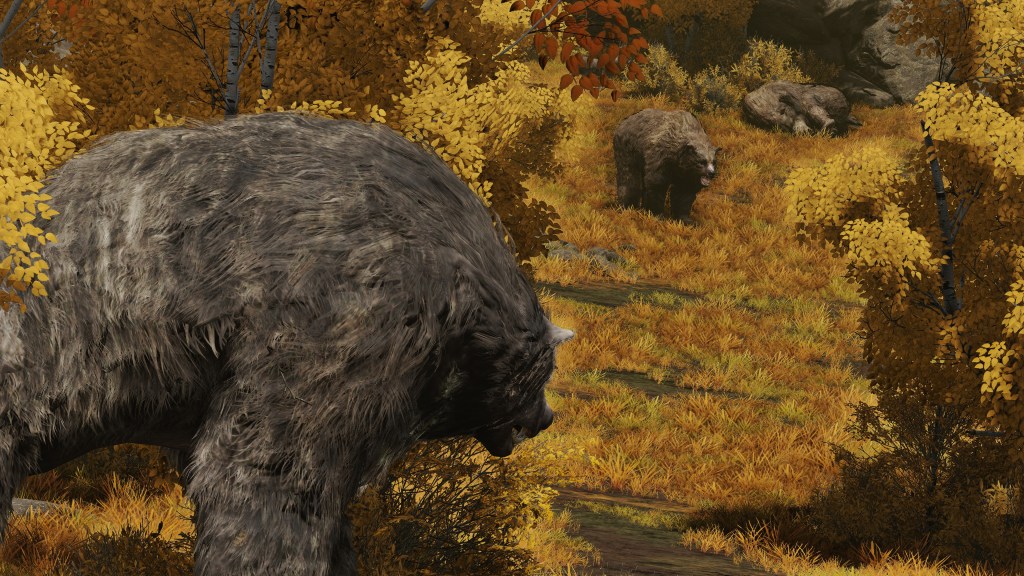
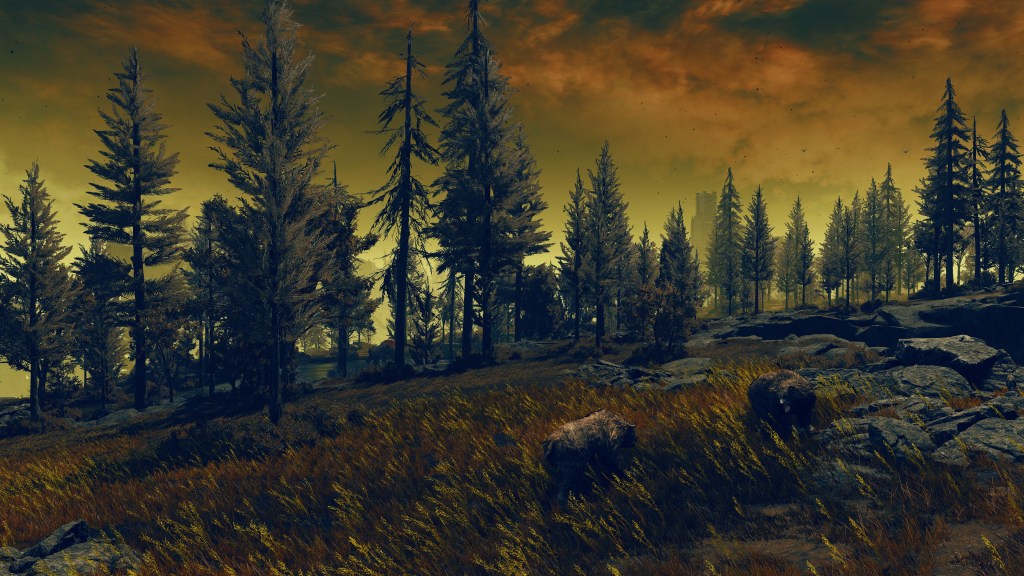
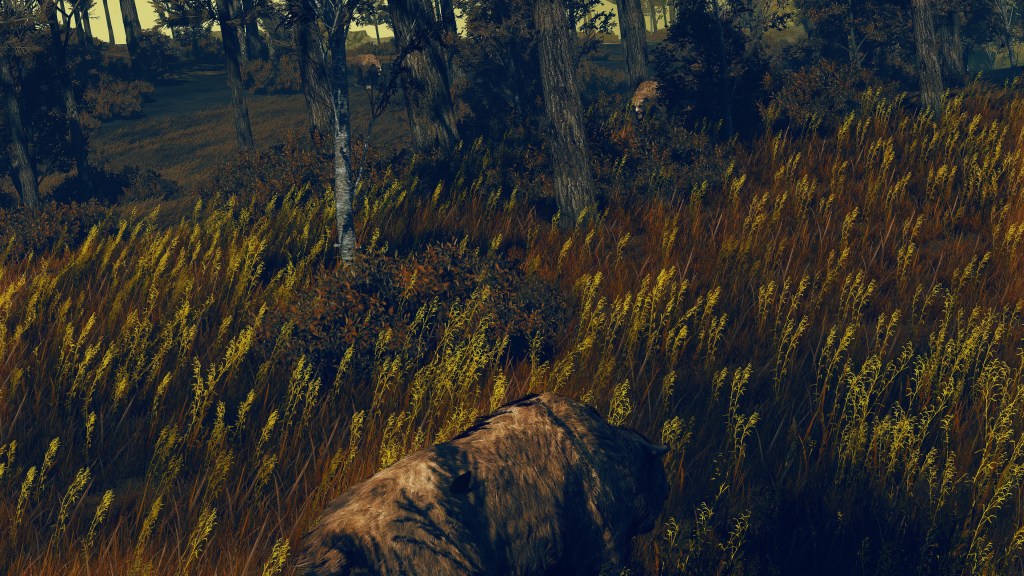
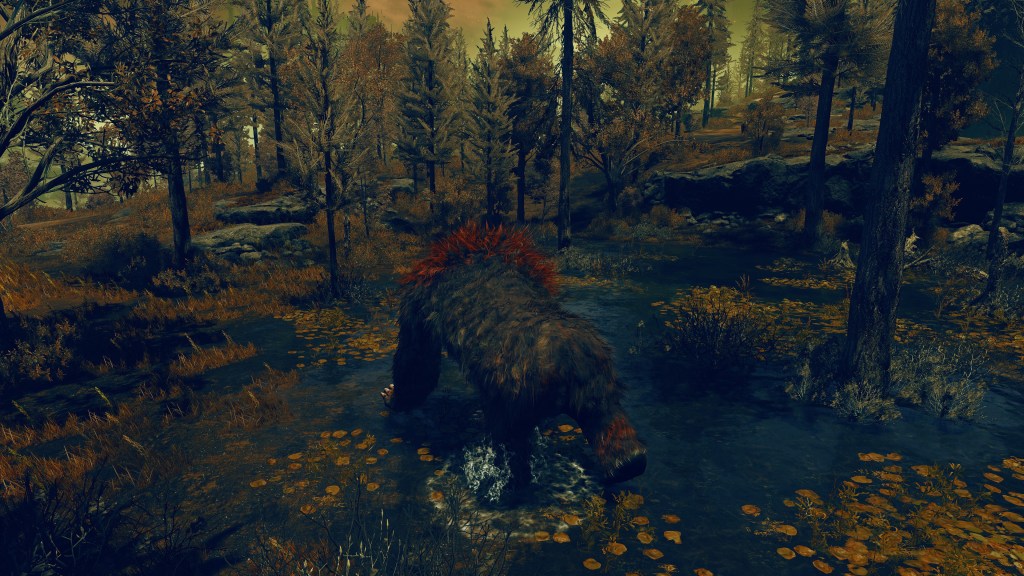
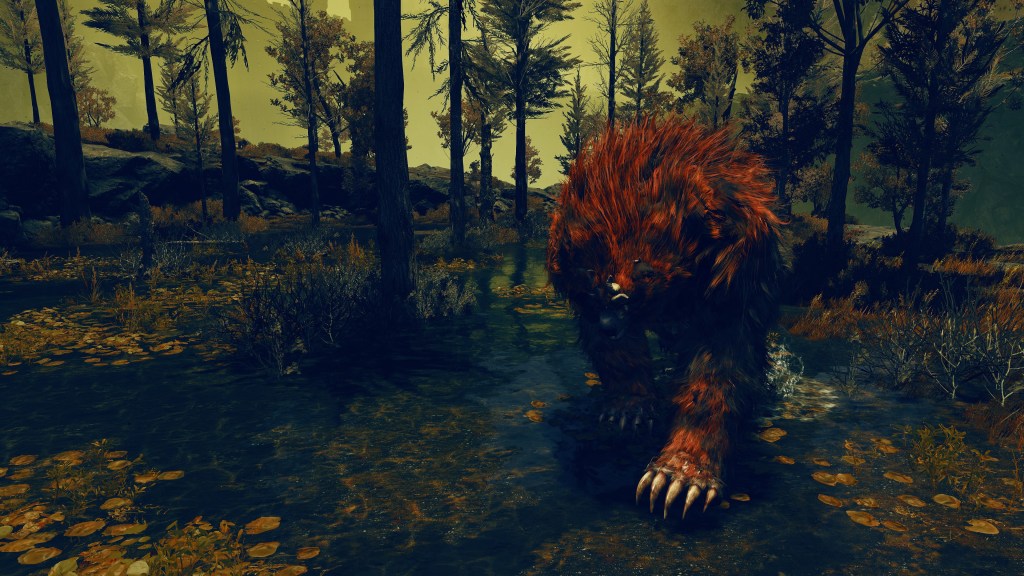
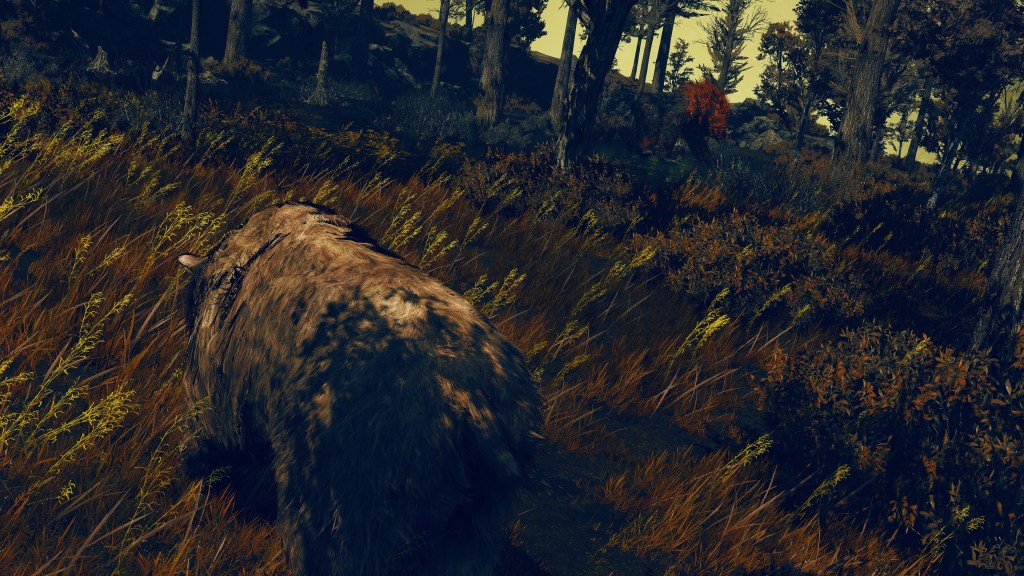
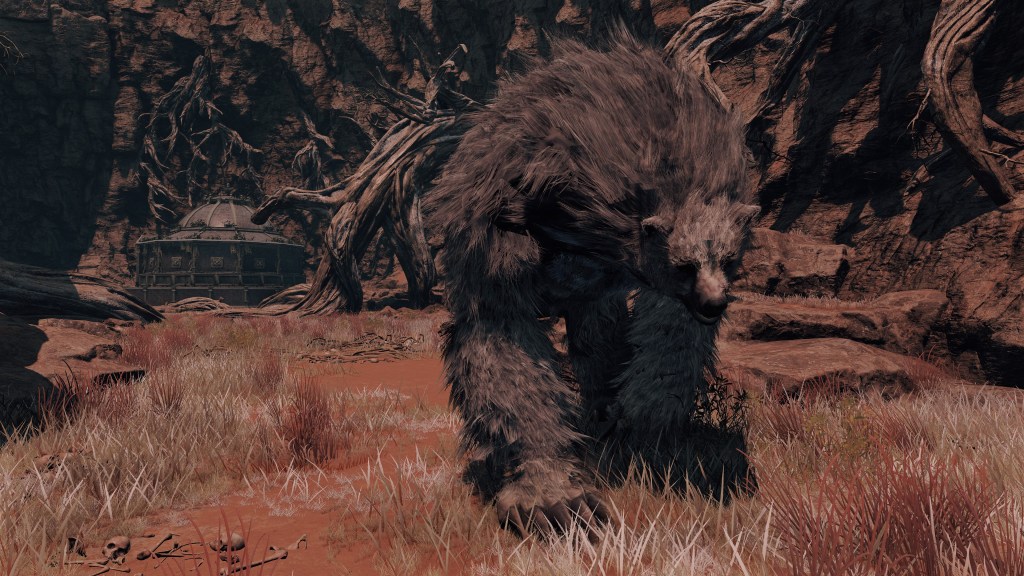
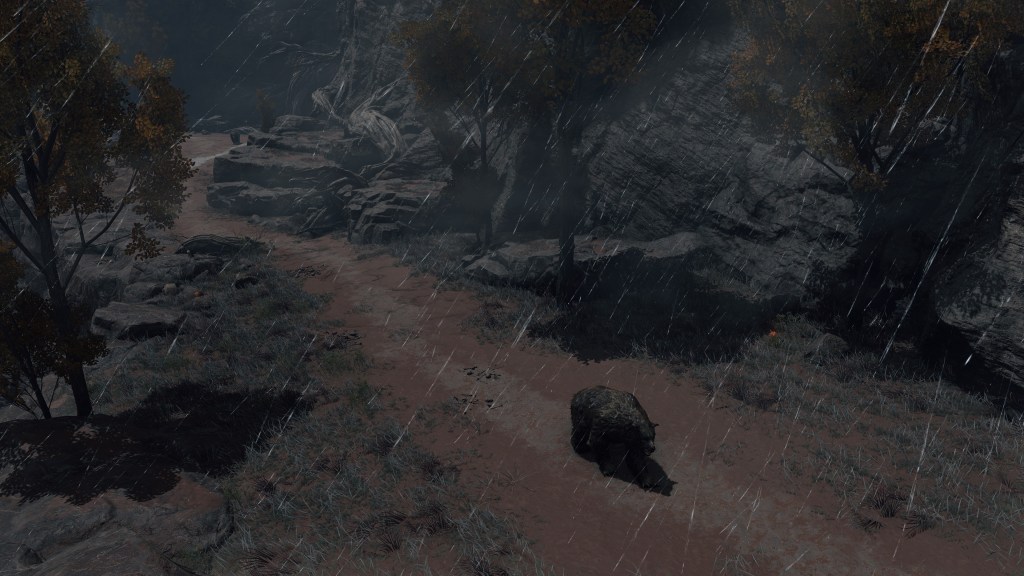
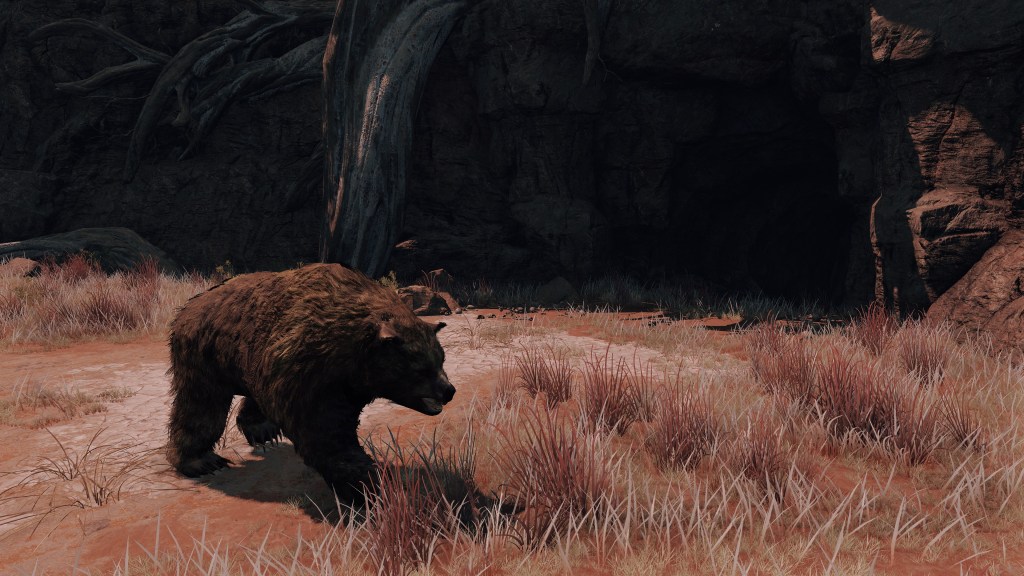
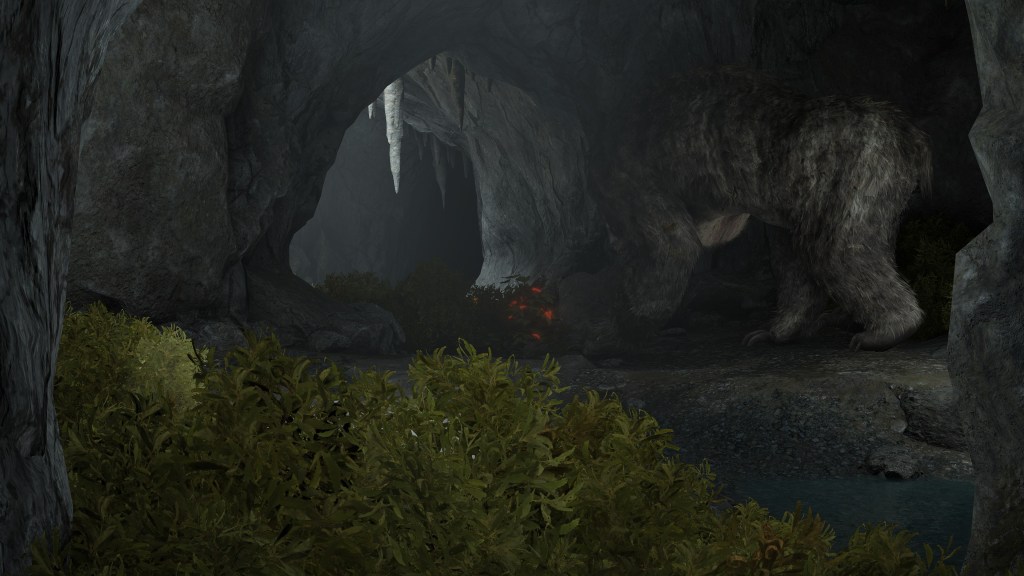
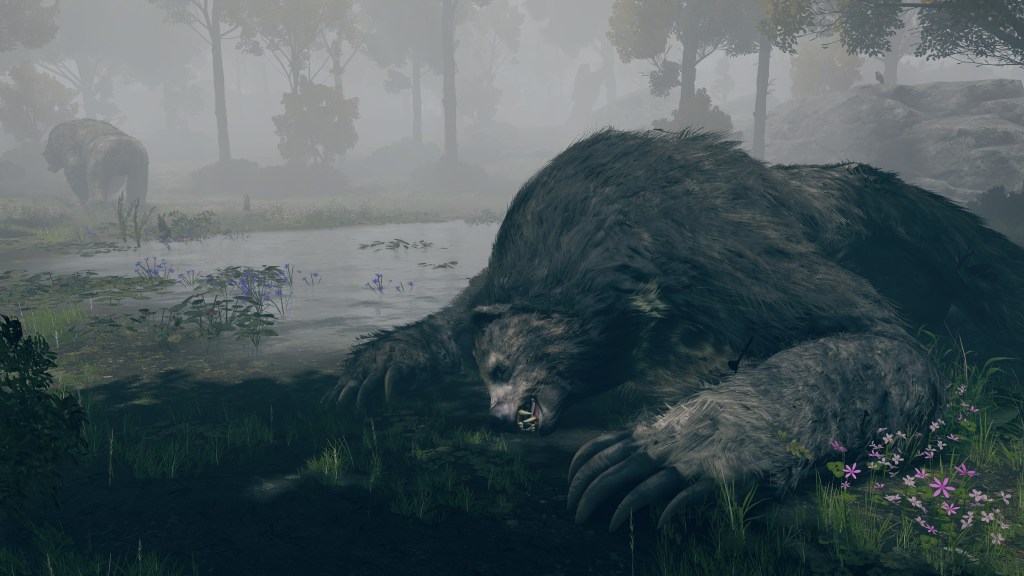
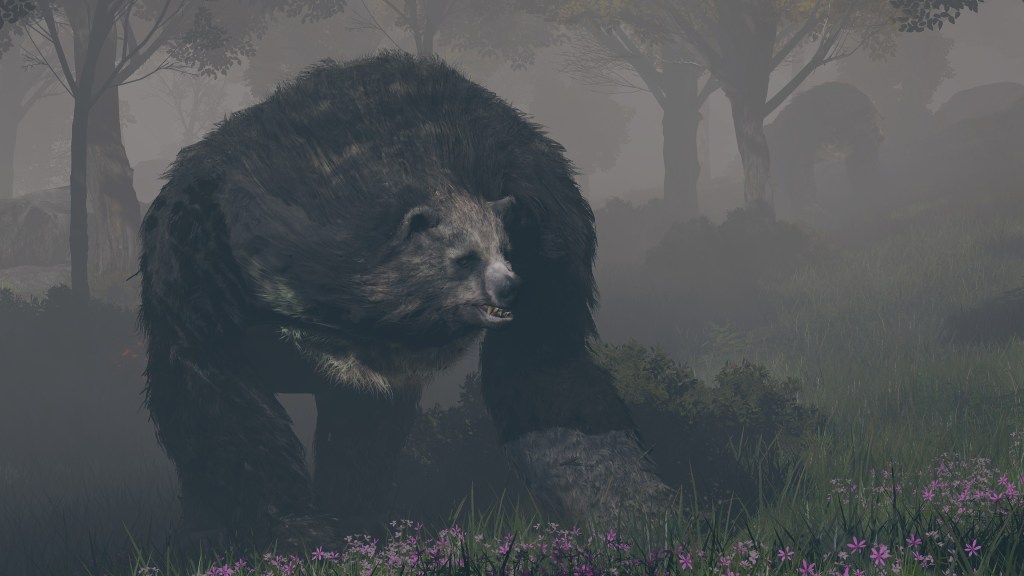
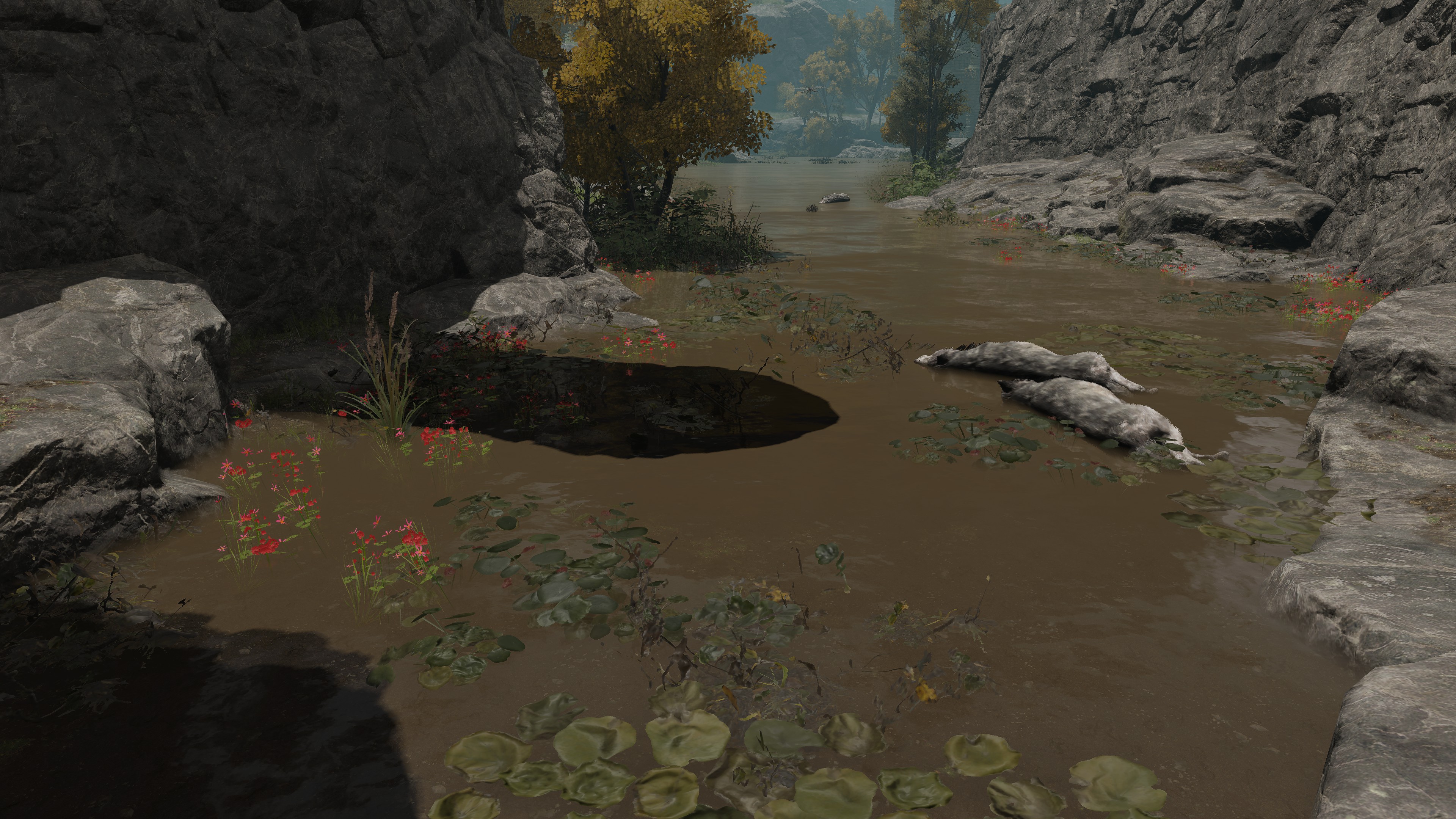
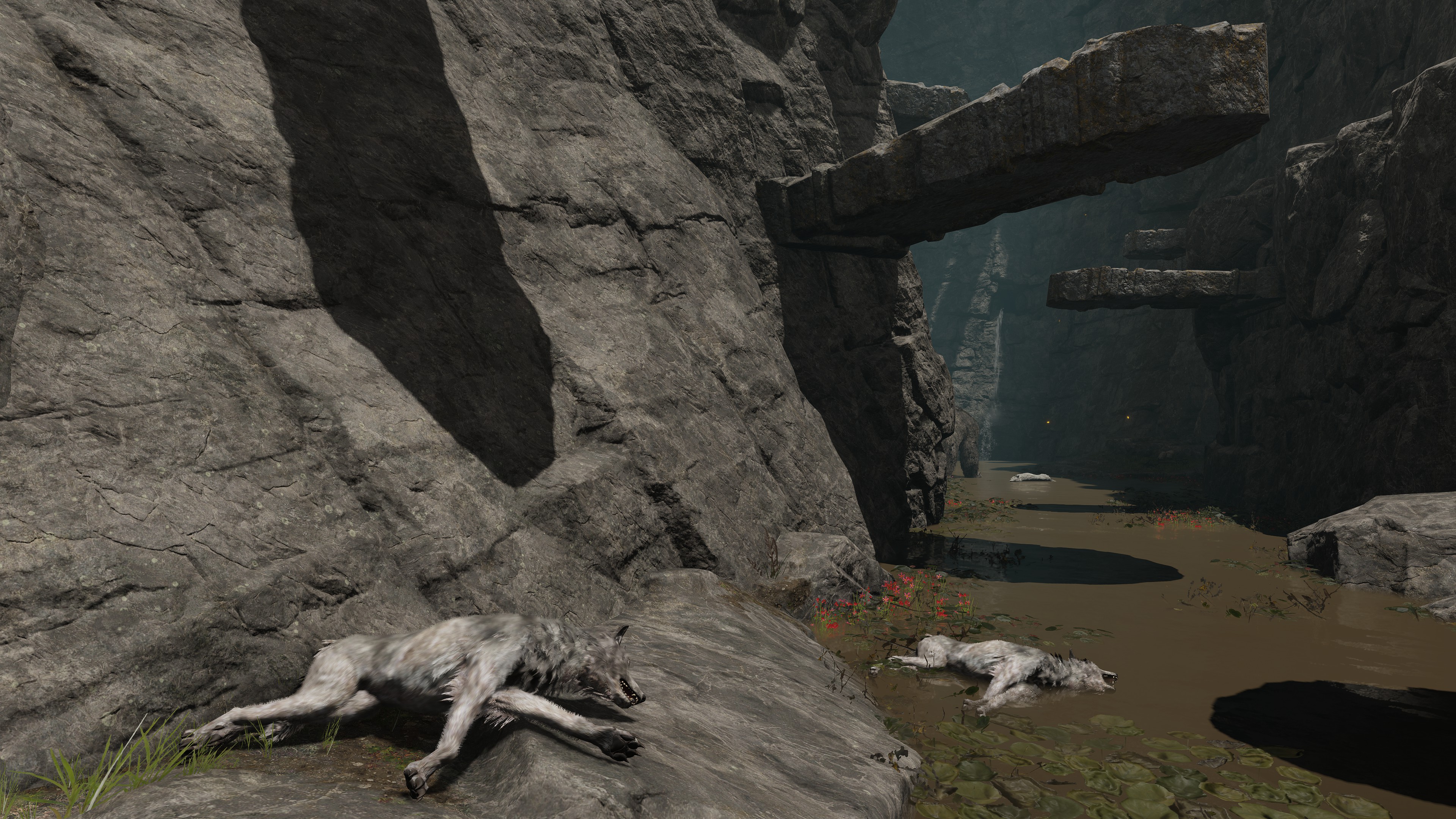
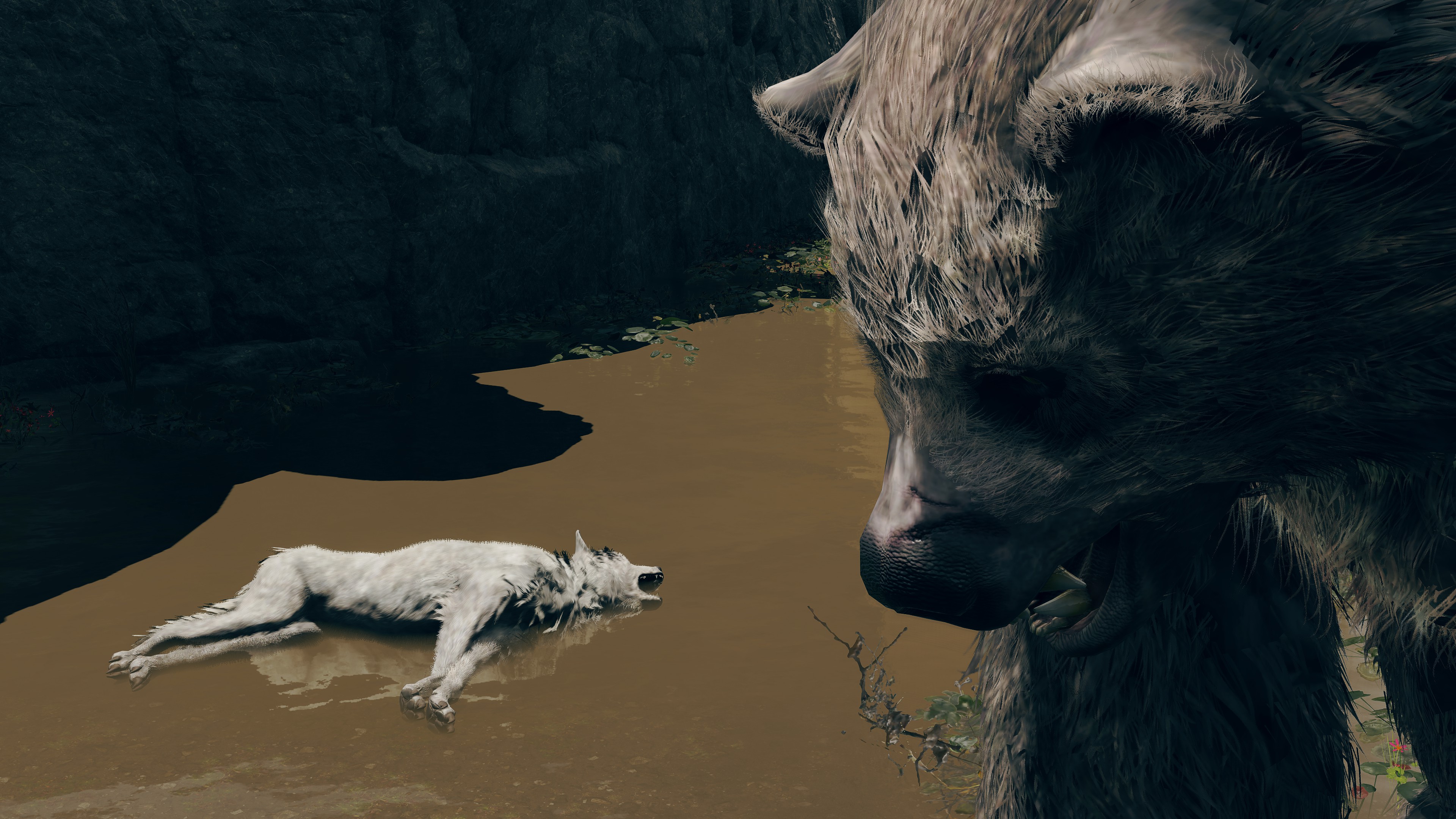
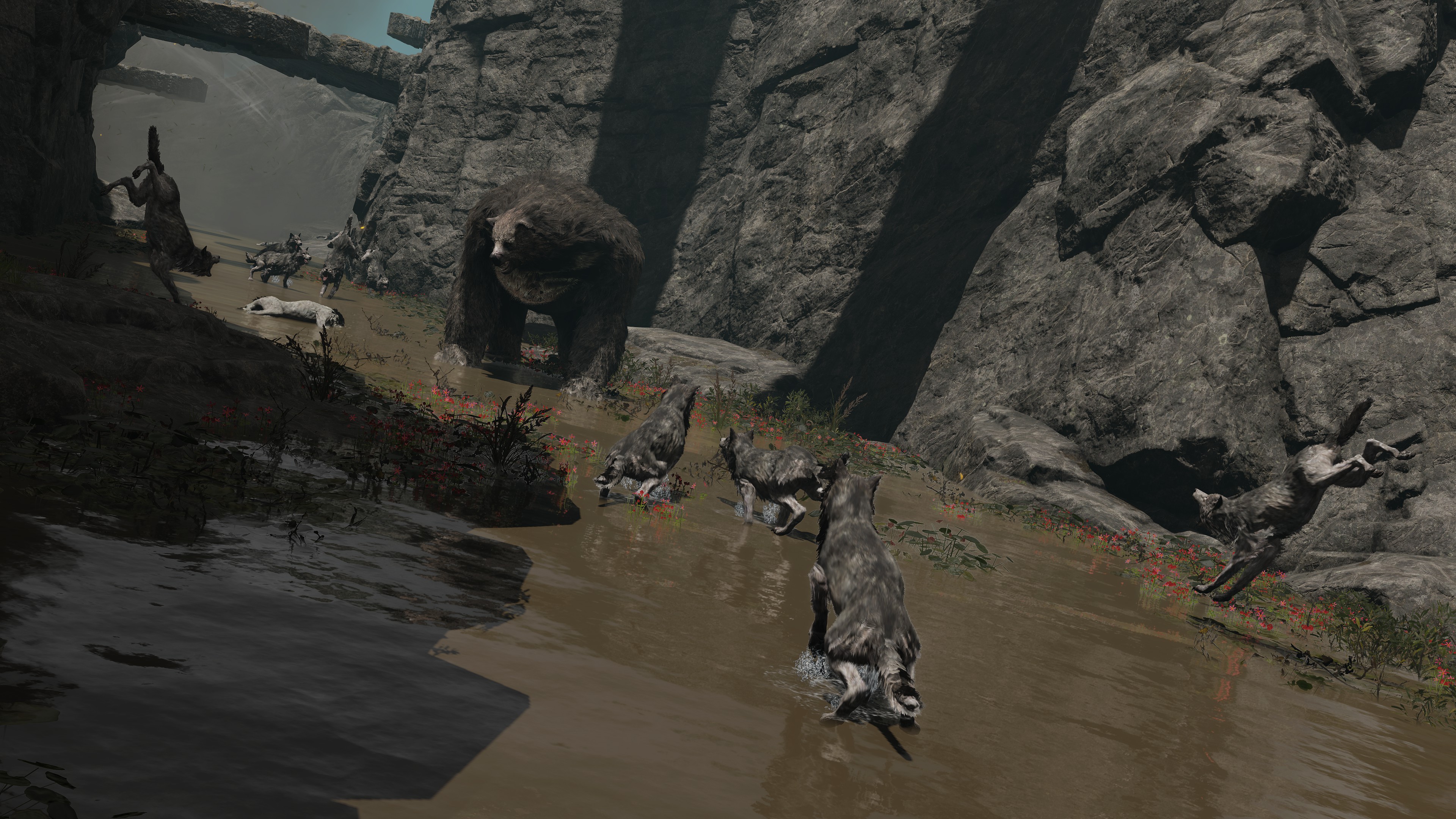
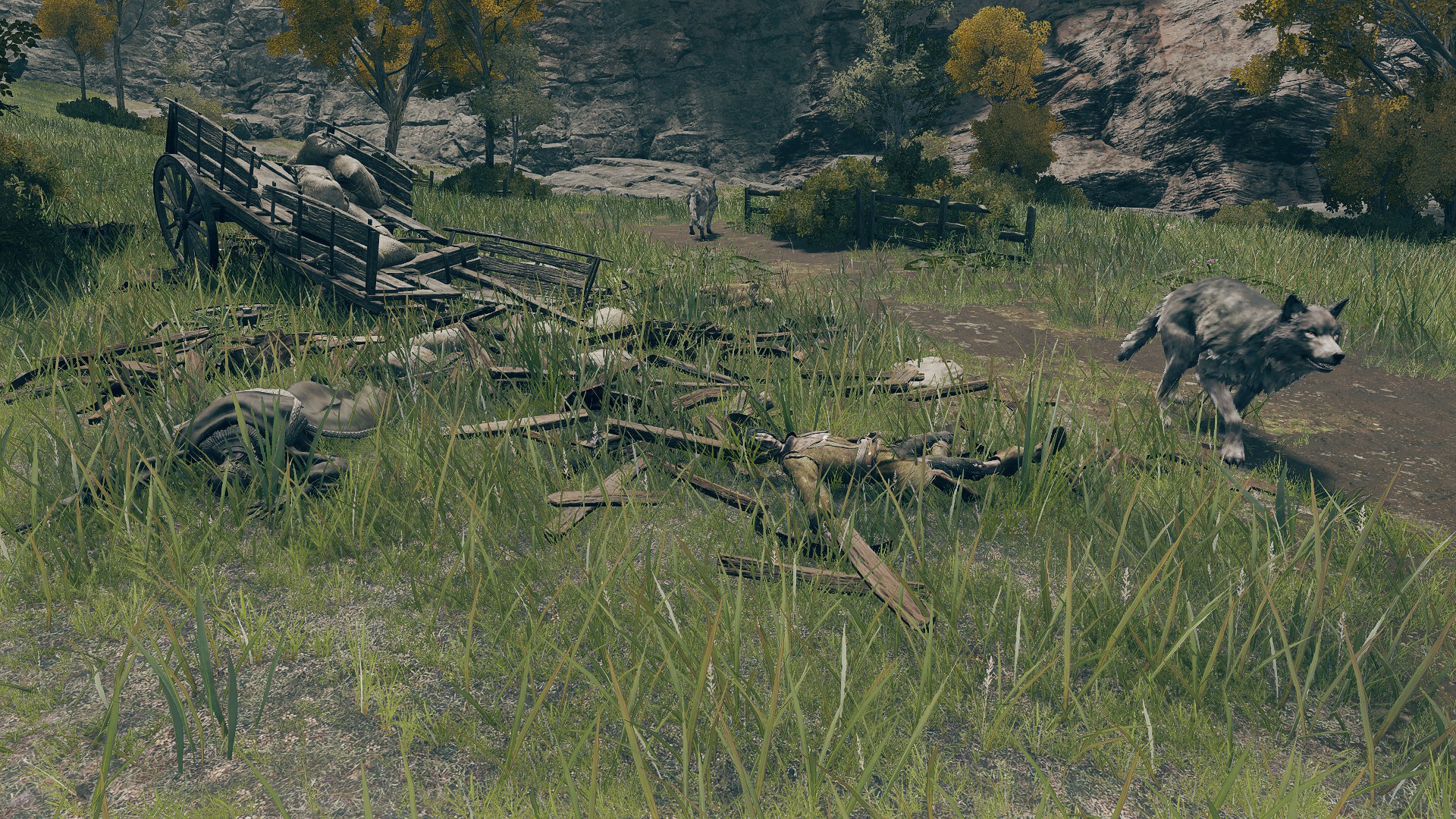
When examined on the whole, the runebear populations do look indicative of wyvern migration patterns throughout all the Lands Between. How bears manage to accomplish this feat isn’t immediately obvious. Perhaps they pounce on the dragons while they sleep, or perhaps the predators just overwhelm the even larger predator with numbers. We do see a huge number of grey wolves descend on a runebear in the valley north of Mistwood, having apparently infringed on their territory and slaughtered a number of their kind. This may be what first occurred with the wyverns invading longstanding bear territory. Once one was killed and a bear enjoying the lion’s share of the meal transformed, it became that much easier for more dragons to fall and more bears to join their ranks. The heat of golden runes indirectly inherited from the ancient dragons turned a fearsome carnivore into an even more dangerous threat, as strong as it is robust.
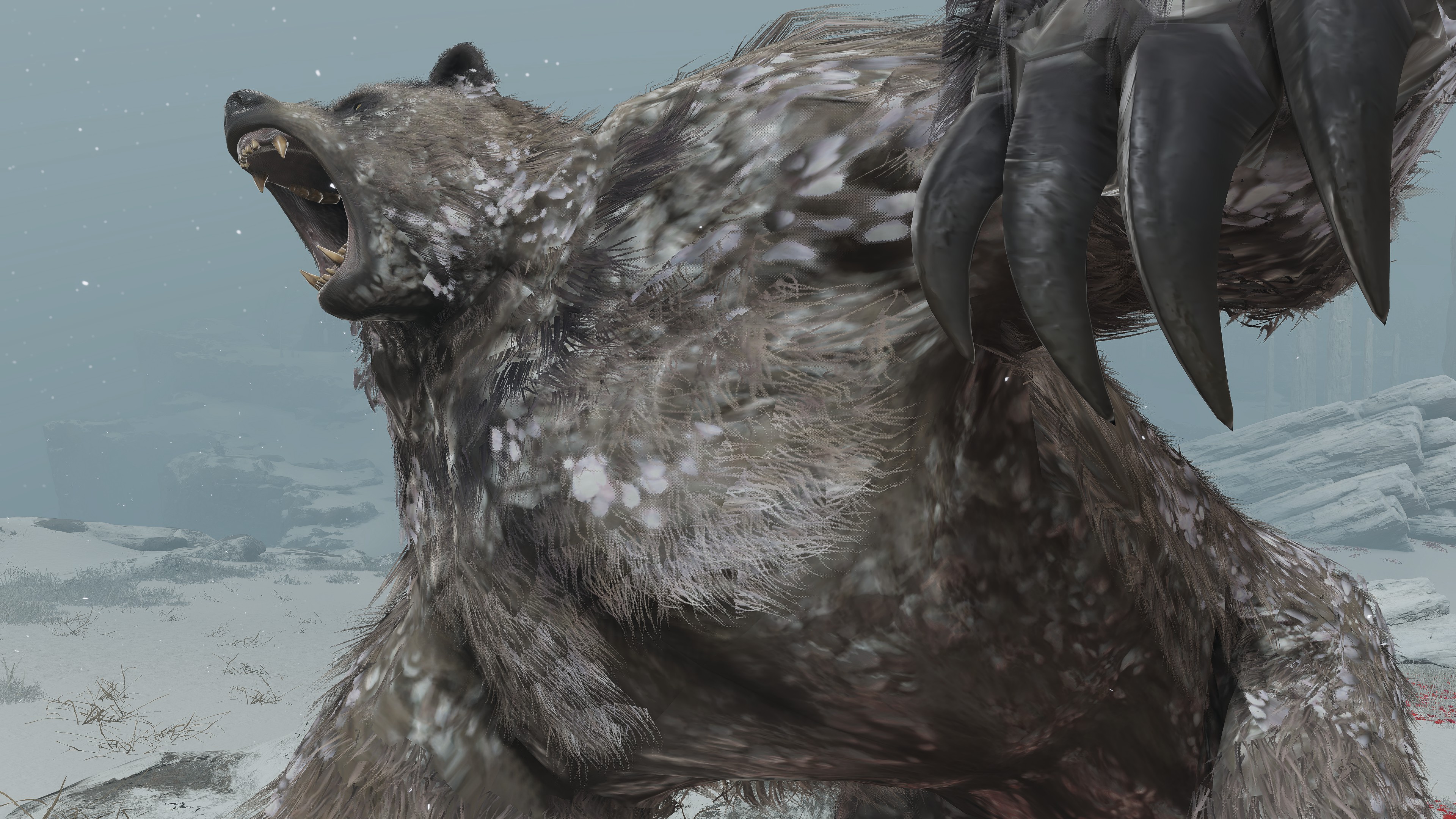
The runebear in the valley dividing Greyoll’s Dragonbarrow from the rest of Caelid looks worse for wear, with fraying and greying fur. This could just be age, but we otherwise only see this kind in the Consecrated Snowfield; specifically, when a mimic tear disguised as a noble on the path to the Haligtree transforms into one. The one commonality between both areas is the Scarlet Rot infesting a number of enemies. As added evidence, the other runebear lying deeper in the Dragonbarrow remains unmolested, comporting with the lesser corruption in the area and nonexistence of it in its cave den. We can thereby conclude that grey bears have weathered the Rot. If so, then they join local giant dogs and crows in withstanding decay, with no signs of actual corruption on their bodies. Runebears are, to put it plainly, highly resilient to all manner of threats, and worth fearing in any habitat. Other creatures might be able to transform the same, but none better suit Godfrey’s inspiration — Arthur Pendragon roughly translates to “bear-like head dragon” in Welsh. In the end, it is thanks to draconic bears that a rune king was born.