
Preface
If Dark Souls III is truly the end of the series, then I am glad that its final swan song was introducing the Ringed City. True, previous games had already set up all the key points for the origins of man and undeath, so the final DLC doesn’t tread much new ground in that regard. What it does do is take what was left to subtle implication and condense it all into a tangible setting. The city is essentially a composite character, enriching the existing narrative with a clear through line while integrating seamlessly into the larger whole. By bringing back so many old threads to tie together, the game’s last and arguably most consequential gauntlet wraps up the franchise with a beautiful bow.
Cycle of Origin
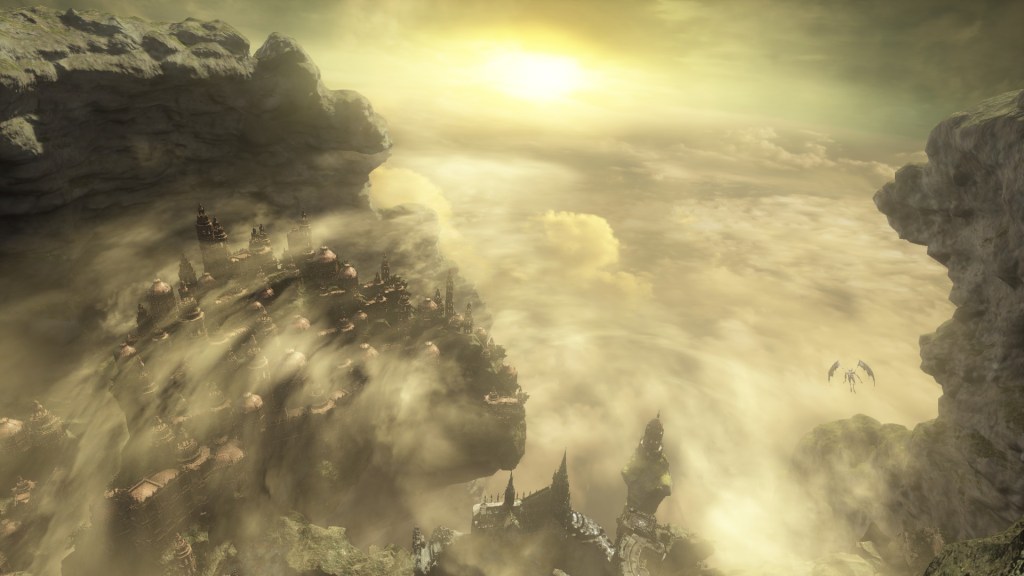
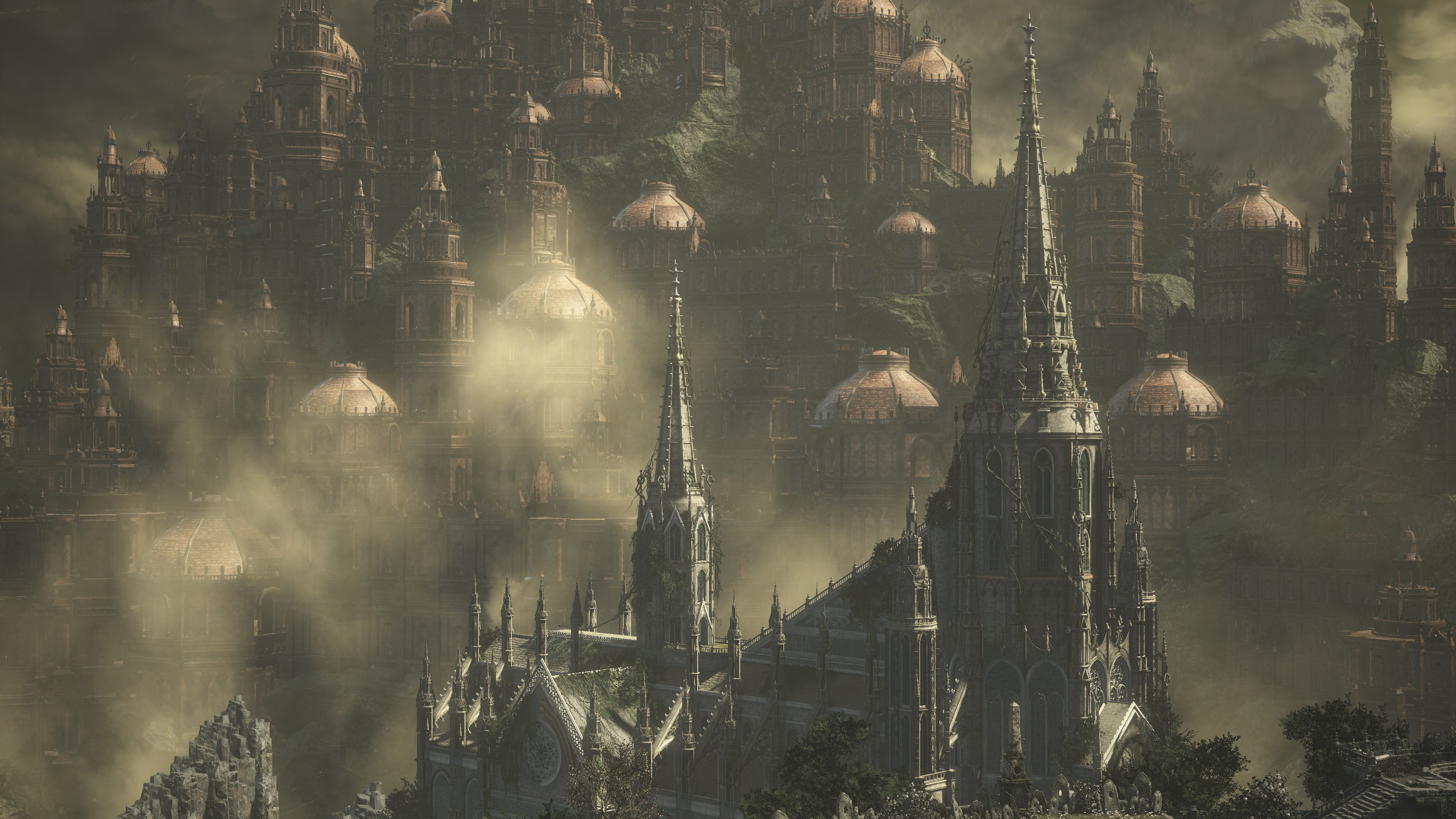
Located at the ends of the earth, the Ringed City is a massive metropolis belonging to the pygmies, the original tribe to whom the whole human race owes their existence. As Lapp acknowledges, their clan was the one to find the Dark Soul during the early days of the First Flame. Attracted by the exotic light like so many before them, the meager race basked in its warmth until one among them came across the last Lord Soul. It was like a small flame, unlike any of the others, but it was still the soul of a King, and it changed everything for the discoverer and the race as a whole. The now forgotten pygmy Lord freely shared pieces of that power with his kin, providing each with the humanity so integral to man in the present day. The Dark aspect of Disparity came to characterize the pygmies and all subsequent generations as their true soul, making the Lord ancestor to mankind. Fire ascended another savage to civilization, the pygmy Lord prepared to build up his kingdom. It might come as a surprise then to hear Lorian’s wet nurse mention that their city wasn’t built by them but the gods.
That’s why I’m constantly searching. For the curse-lifting monument said to be there, at the town of the pygmies who found the Dark Soul at fire’s beginning, the Ringed Capital.
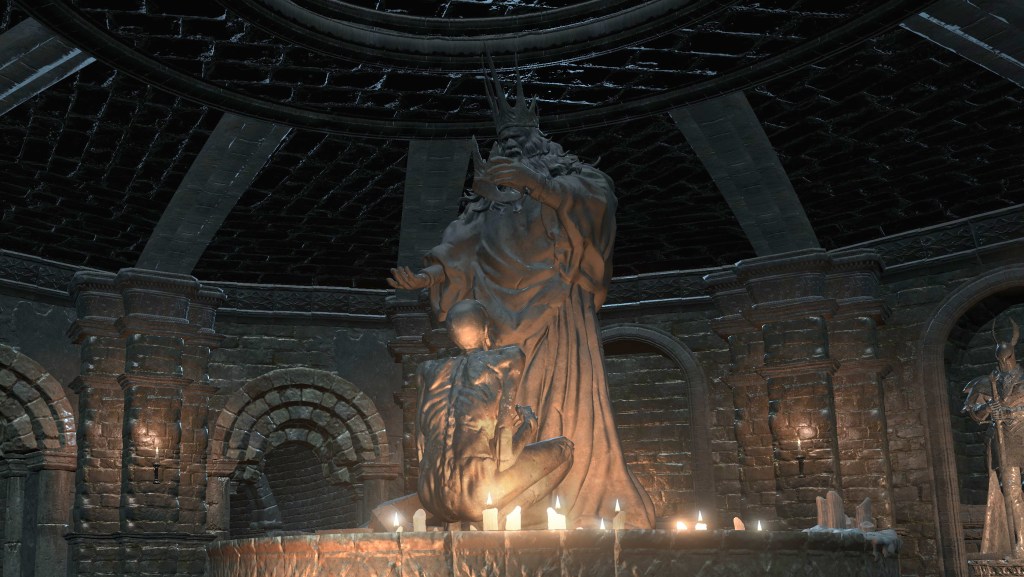
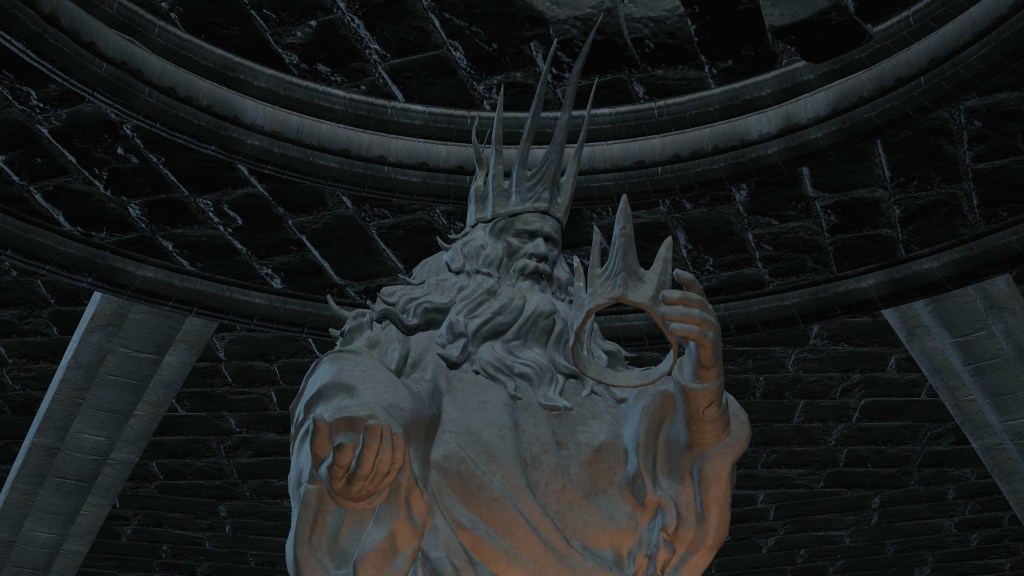
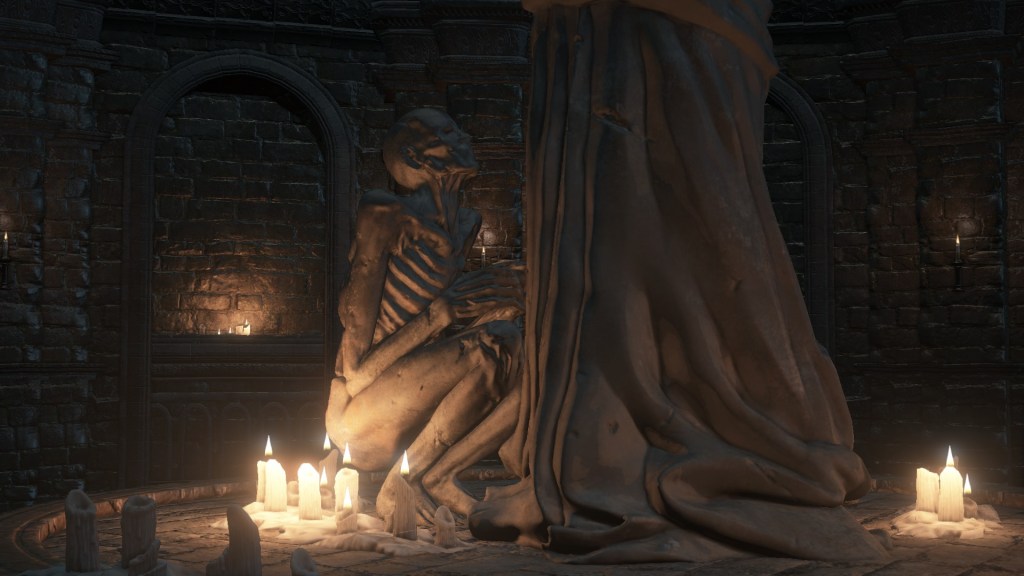
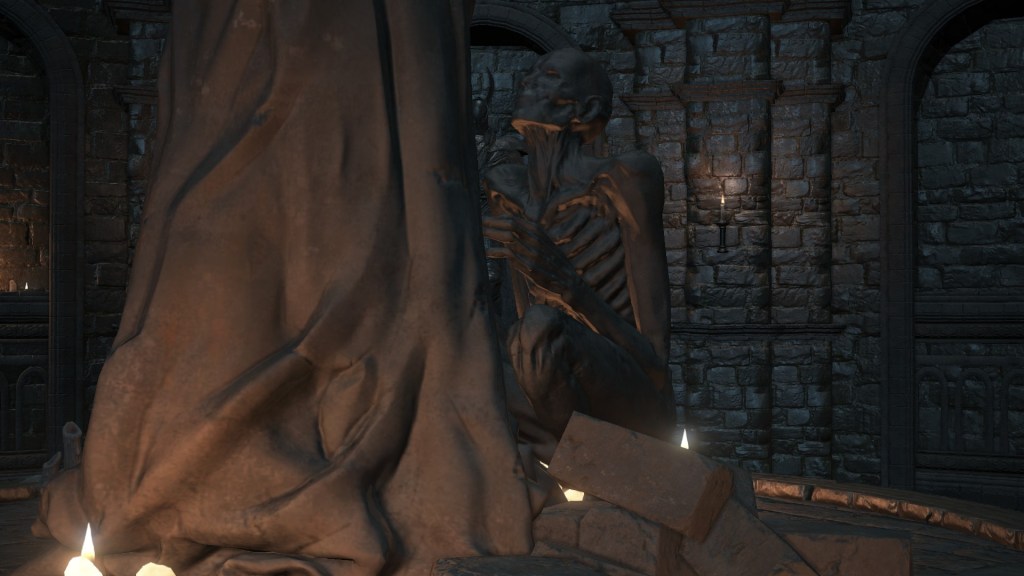
As revealed in the description of the Small Envoy Banner, it was Gwyn who gifted the pygmies a capital. Indeed, the metropolis possesses the hallmarks of medial construction, with architectural elements and flower species otherwise unique to Anor Londo or Irithyll. The city is also home to a rare statue of Gwyn not wearing armor — draped in long robes, the king of the gods offers a crown to a naked man crouching at his feet in awe. This scene is evocative of the pygmies as depicted in the original Dark Souls (DS1) cinematic. Gwyn’s appearance likewise evokes a time before the dragon hunts, where that same cinematic first portrayed him in his iconic fashion. Together, the statue clearly represents first contact between the pygmies and medials. The Lord of Sunlight appeared before the fledgling Dark Lord and offered the pygmy a crown, a kingdom, and a place on the alliance of Lords. In other words, Gwyn was offering to help bring this barbarian to “civilization”, the Ringed City just one part of it.
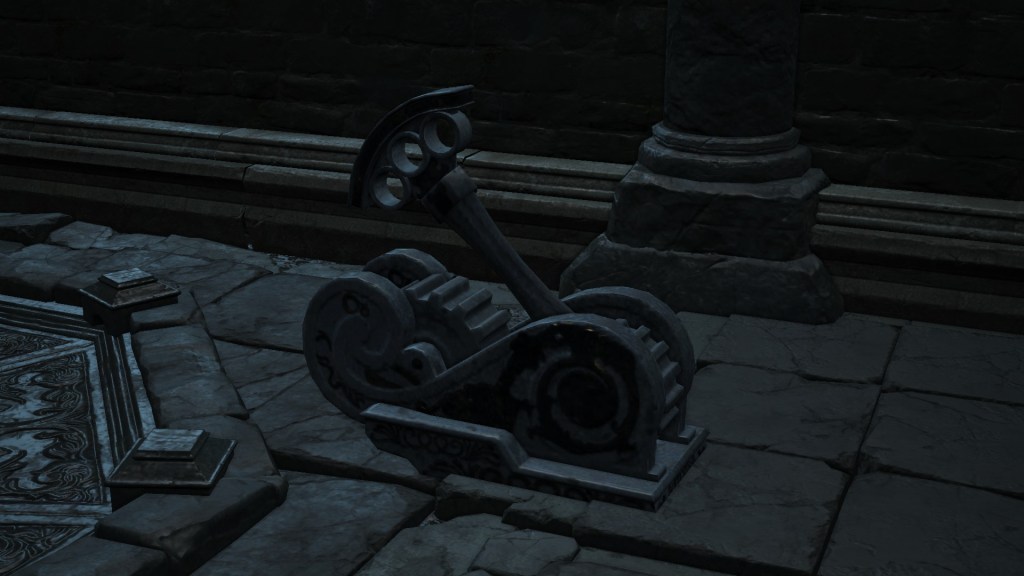
Small ring banner that envoys of Great King Gwyn used long ago.
If raised facing the ringed rock wall, carriers will come along.
It is said that the Great King gifted the pygmies who acquired the Dark Soul the Ringed Capital cut off at the farthest end and his beloved youngest daughter.
Promising to come pick her up someday.
DS1 had already implied the gods’ key role in the development of mankind, collaborating with the pygmies from the start. The pygmies themselves had no concept of a crown before the medials introduced it to them. They were still in the earliest stages of societal advance when Anor Londo first took notice. The Dark Soul was found by a minuscule race who had always been beneath the medials’ notice, passed over for slave labor and disregarded as pets. It was these animals, too simple to even cover their privates, who acquired the last Lord Soul and split it among the whole clan. Anor Londo might have scoffed at the circumstances, but Gwyn still wanted the aid of every Lord Soul in his future campaign against the mighty archdragons. It was thus incumbent upon the Lord of Sunlight to catch them up to speed, make the tribe a worthy ally. That means that a lot of thought and planning had to go into this alliance before the king first approached his shadowy peer with his offer.
Constructing a city in the farthest reaches of the globe was well within the gods’ means. As the path to the Kiln of the First Flame from Firelink Shrine showcased in DS1, those medials had a mastery of light enabling translocation magic. And as the Undead Burg demonstrated in that same game, giant labor could finish a massive city project within a century. Therefore, it was feasible for Anor Londo to scout out a suitable location on the fringes and construct the bare minimum for the capital before the pygmies had significantly developed. Gwyn then just needed to waltz up with the promise of heights never before seen for this new people. Become a proper kingdom and gain a fancy new home along with all the knowledge cultivated by their greatest predecessor. For a man who just gained a greedy nature, this prospect of “civilization” must have felt irresistible.
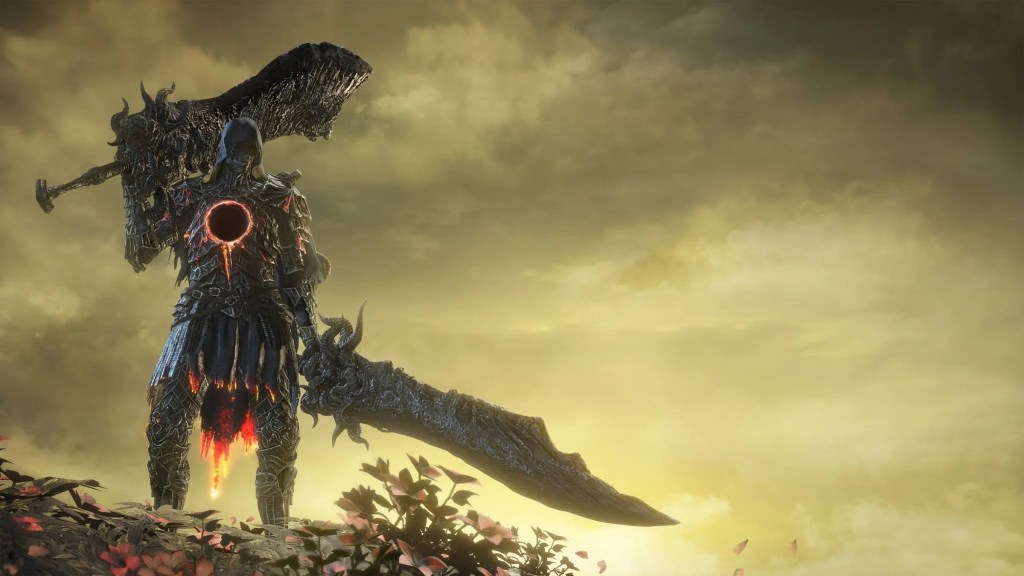
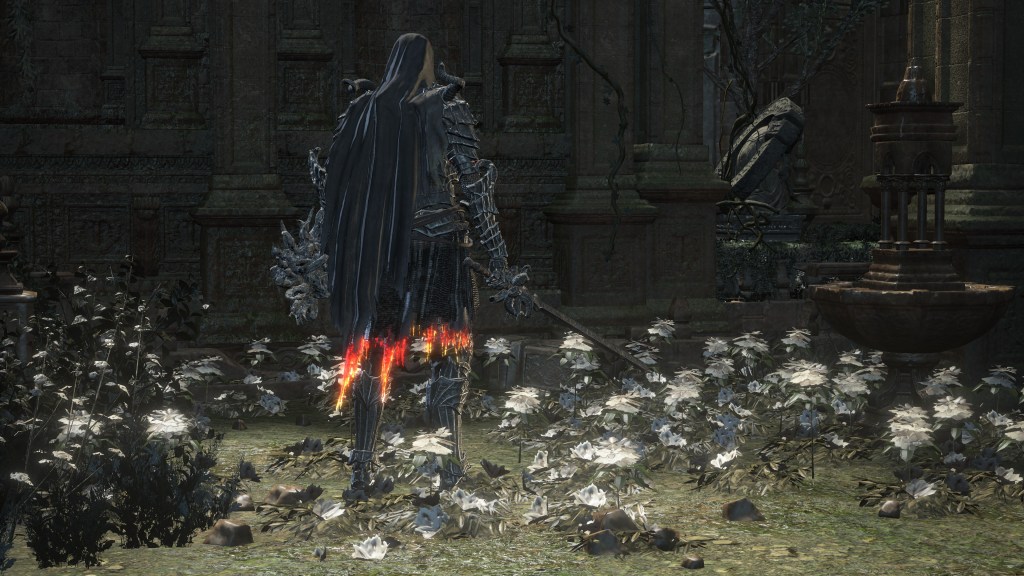
The spiritual ancestor to mankind accepted the crown and became a Lord, forming a royal government with knights in imitation of Anor Londo. Unlike the Silver Knights, however, this pygmy order relied on their humanity for power. Their swords, spears, and armor were forged by the Abyss rather than conventional flame, which is evident in the twisted horns growing sporadically from the metal. Such dark vitality is likely why the suit of armor has higher resistance to curses than the average. Of course, their equipment was also augmented by the gods’ titanite, one knight owning a whole slab while the rest still possess chunks and fragments. With the medials’ support, owners of the Dark Soul were able to flourish in ways unthinkable for a people at their level of development. Weaving, reading, writing, language, etiquette — such knowledge and resources from the sunlight race let them comfortably hone their newly-incorporated abyssal powers. However, this would only last for the initial buildup.
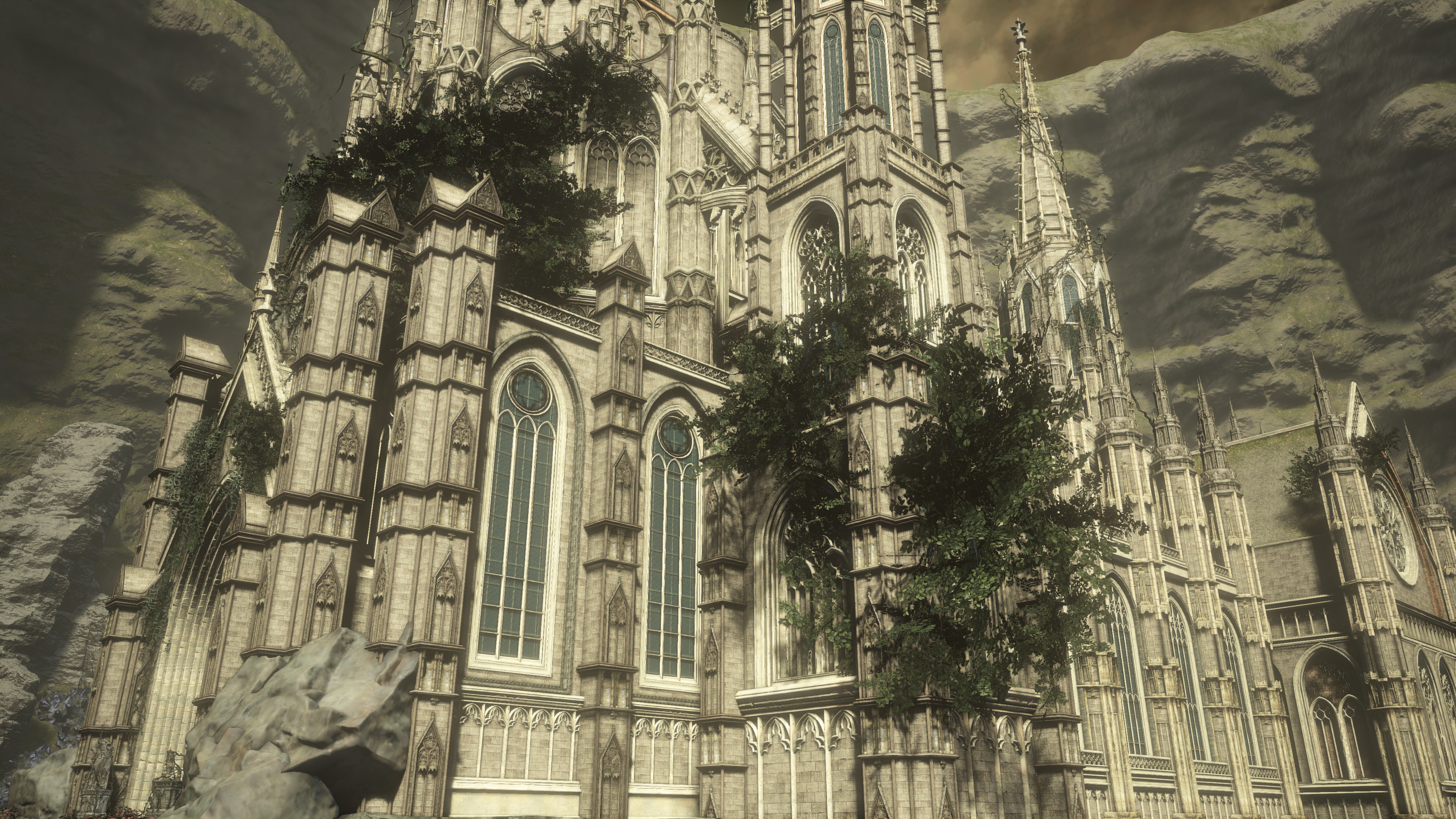
While rings are a common motif in the capital’s architecture, the Ringed City appears to have earned its name for the large ring-shaped wall enclosing almost its entirety. The barrier looks like a natural rock formation if not for its convenient shape. Assuming it isn’t artificial, the locale’s selection likely was deliberate at least. Although not as explicit in the localization, the stone-humped hag describes the Ringed City as a pygmy penal colony, literally “land of exile” (流刑地) they would flow into as punishment. Put simply, the wall was designed to confine them. Whether this occurred before or after the occupants moved in, it reveals Gwyn’s intention to isolate ancient man in a controlled environment. This explains locating the city as far from civilization, Lordran, as physically possible. Recall that Gwyn and his clan feared the Dark, so putting so much distance between them and the pygmies is hardly a shocker — wanting the Lord of man as an ally in the war to come doesn’t suddenly change that prejudice. Their aid would come at the end of a ten-foot pole, after they accepted captivity.

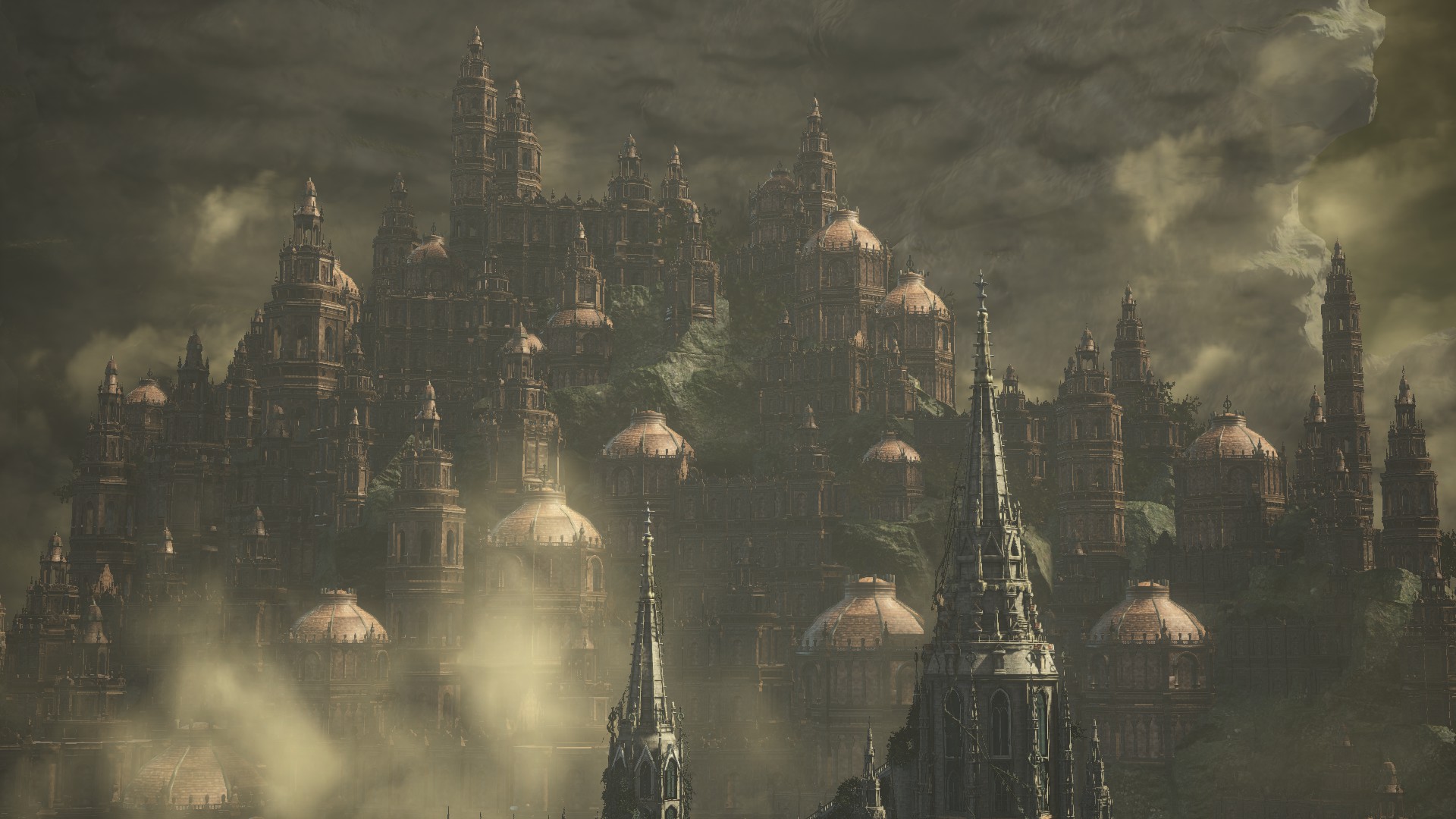
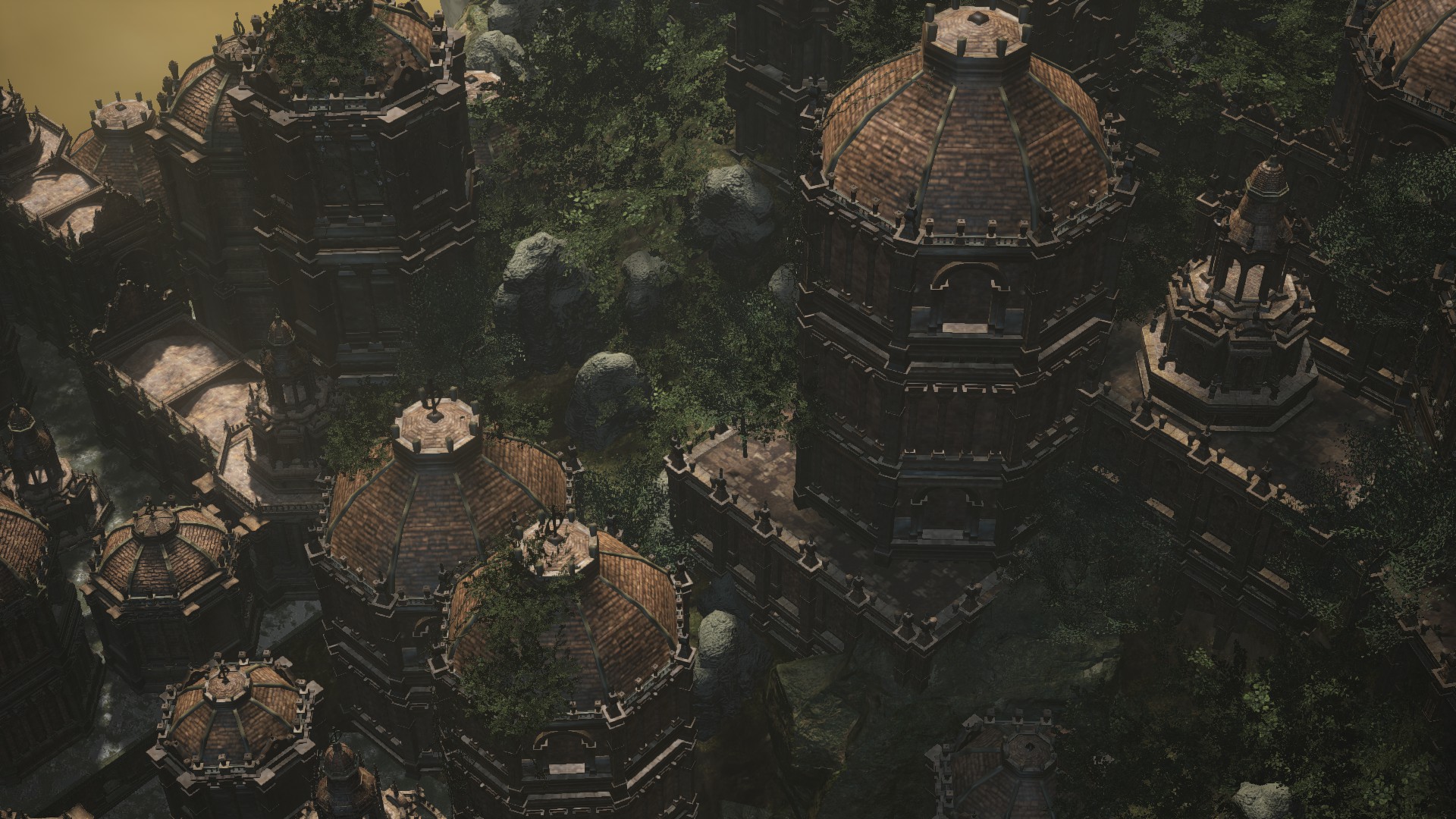
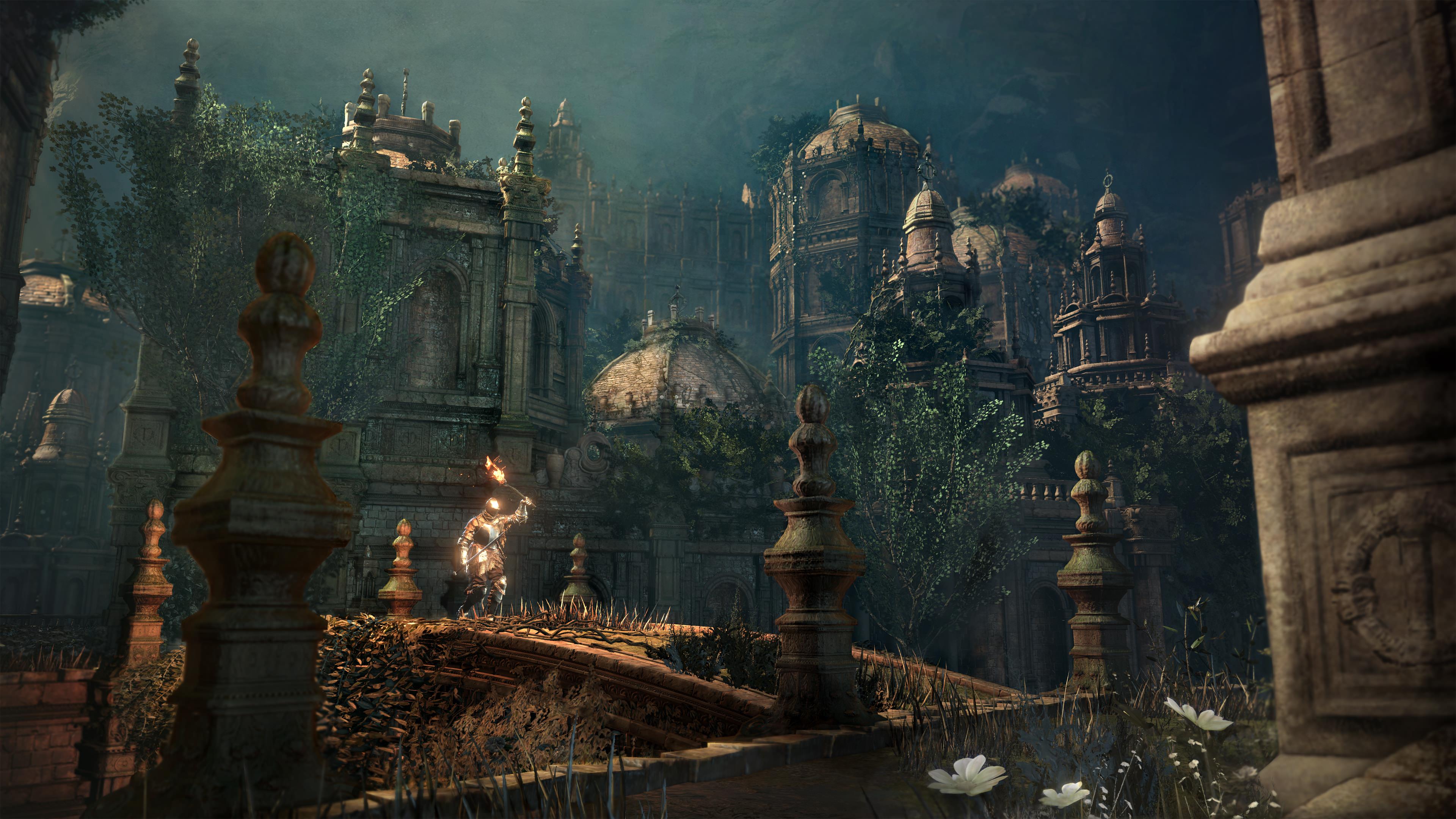
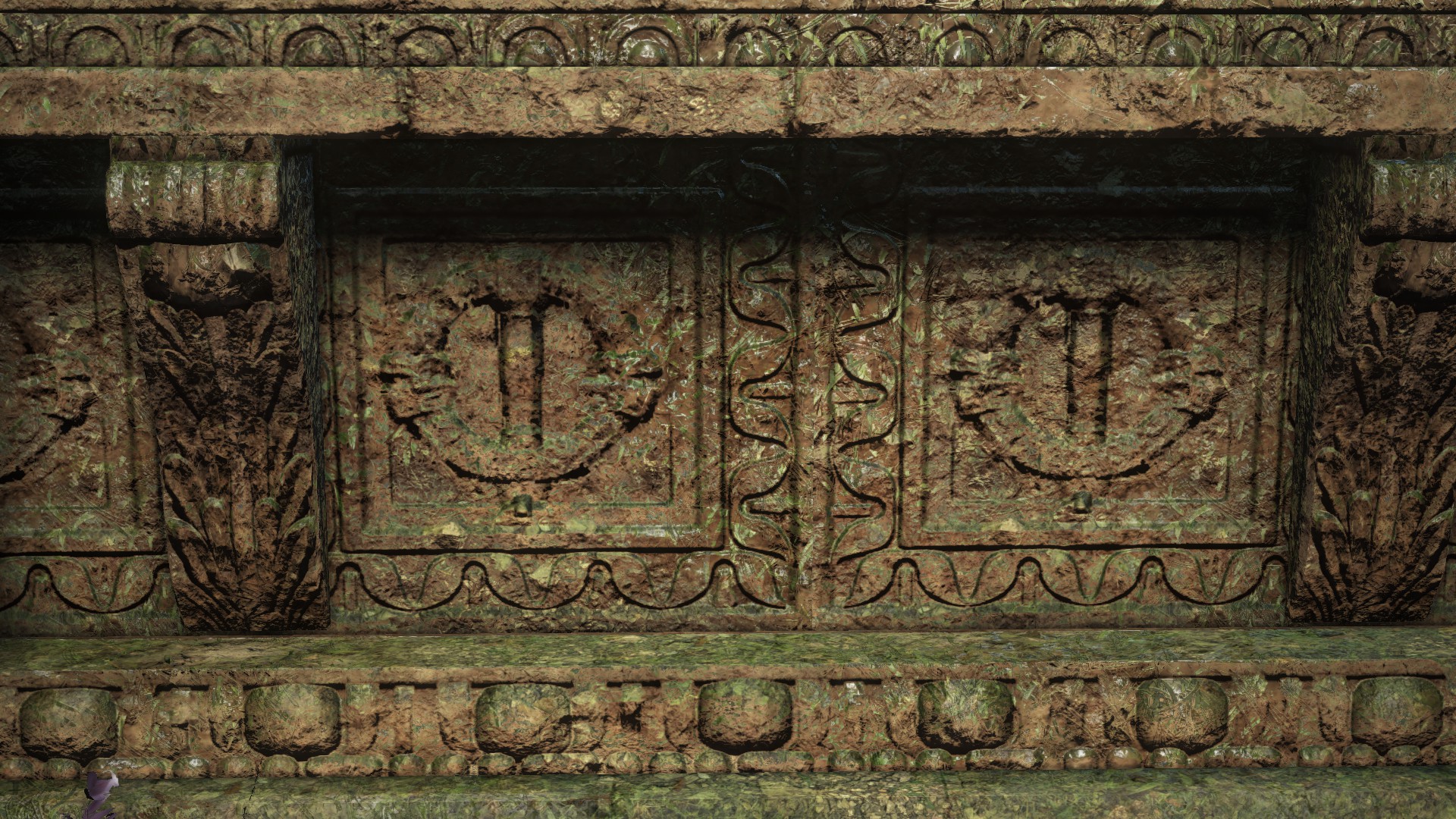
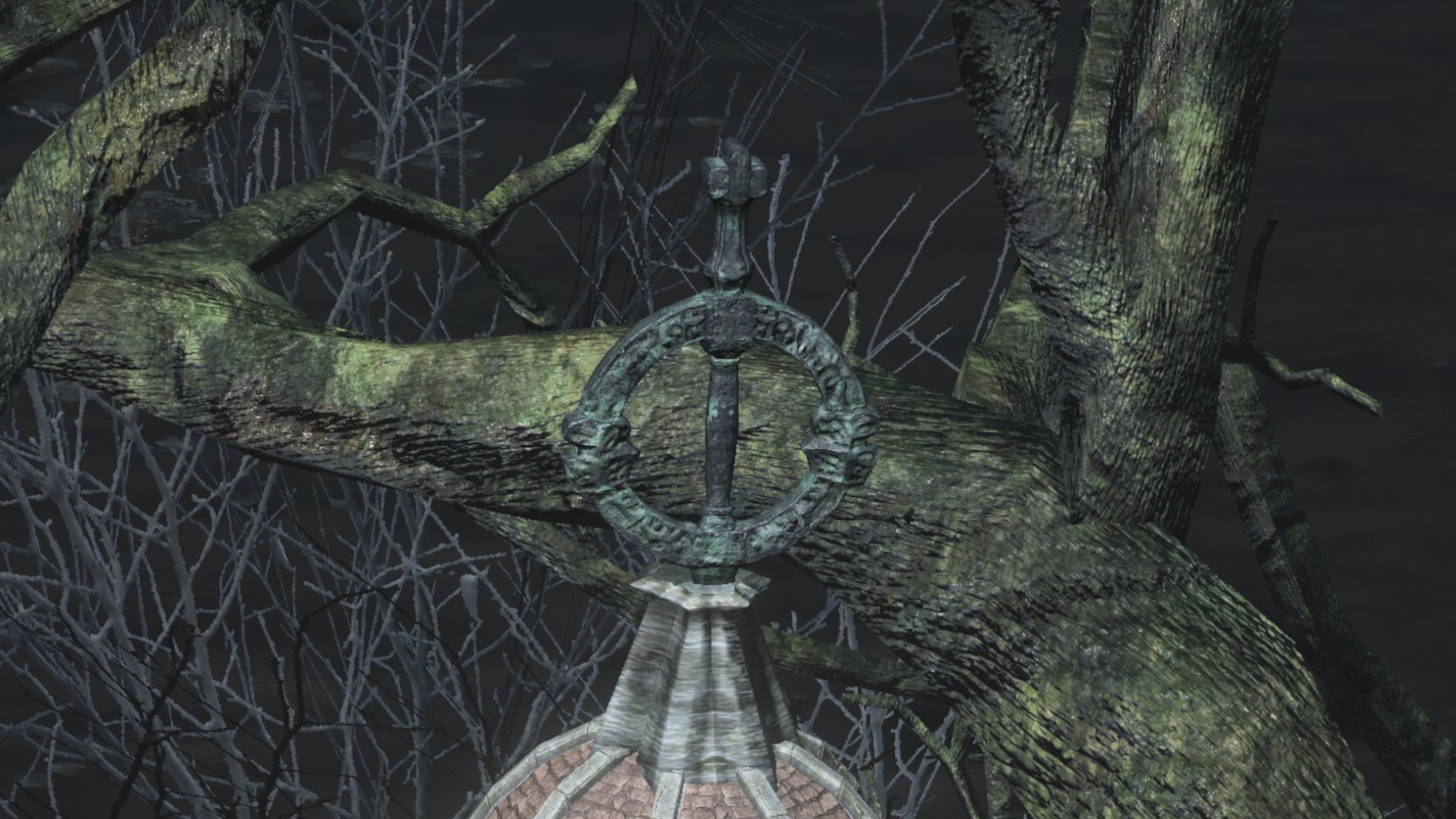
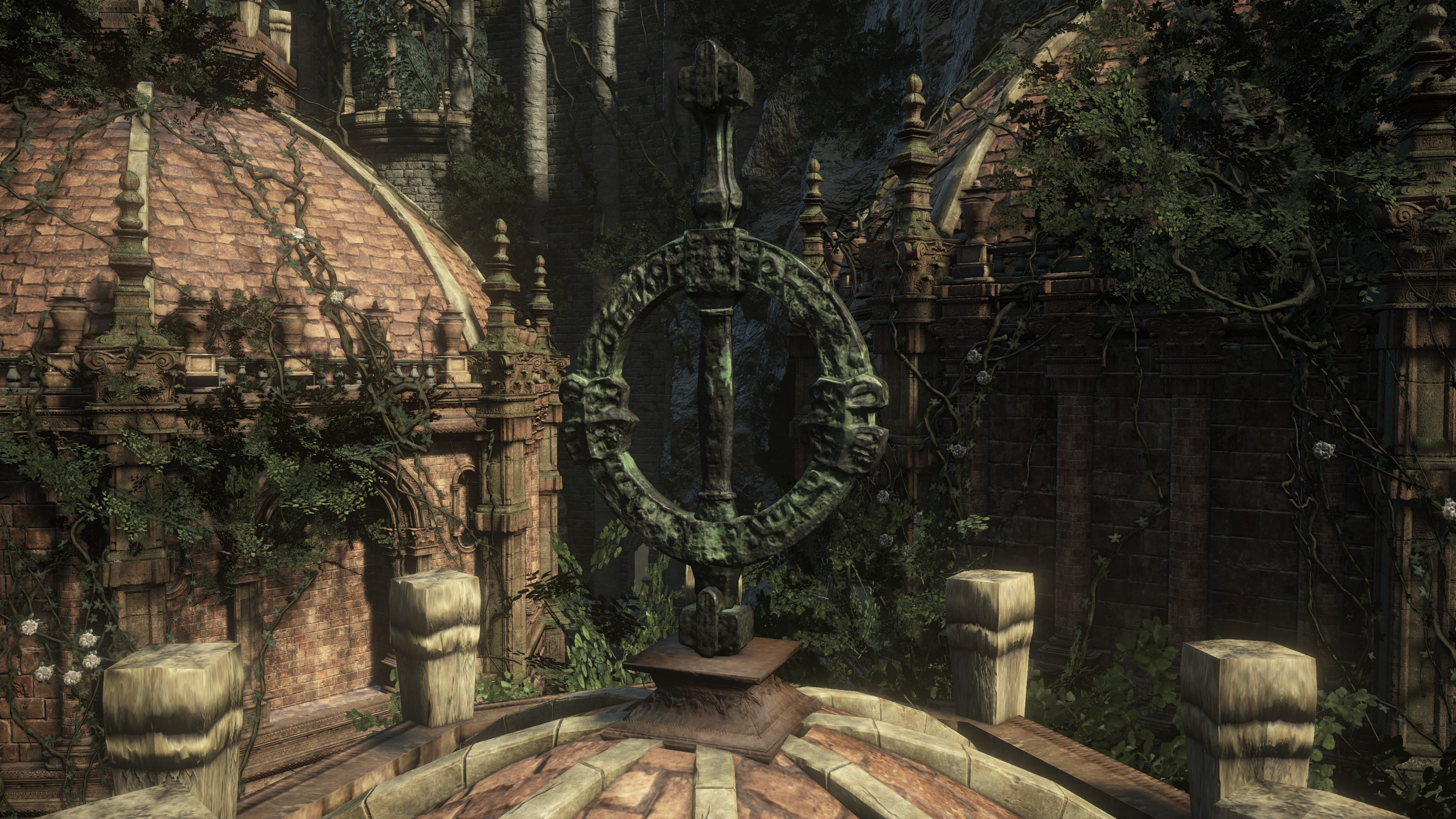
Where did you hear that name?… Well, it doesn’t matter. I’ll tell you what a hag knows. According to legend, the Ringed Capital lies at the farthest end. It is definitely past this Drift. Past the deepest of it, anyway… However, you ought to reconsider. The Ringed Capital is the pygmies’ land of exile that the gods constructed. A town of rejection enclosed by a wall… You shouldn’t go near the Dark Soul.
With that in mind, the gods’ initial support for the Dark’s development feels more like cheese in a mousetrap. Gwyn needed his third ally to build up power with his Lord Soul, but he didn’t want that same fearsome power to be later used against him. And so, he first enticed the fourth Lord into a cage with sweet promises, allowing the pygmies to develop only within the constraints of Anor Londo’s control and supervision. The city, the technology, the knowledge; it was all bait to lure them into their own imprisonment. And what an enticing lure it was. Gwyn’s statue presents the pygmy Lord with not just a crown but also the Chloranthy Ring. Given that the green flower represented the Anor Londo faith in its earliest days, this stamina-boosting ring must symbolize the gods’ support in fast-tracking pygmy civilization. It may now be long faded, but that beautiful green luster perfectly encapsulates that shiny promise to distract man from the so-called gods’ true intentions. Moreover, the ring’s image subtly emblemizes Gwyn gifting them his own lovely green flower.
A Gift Not Present
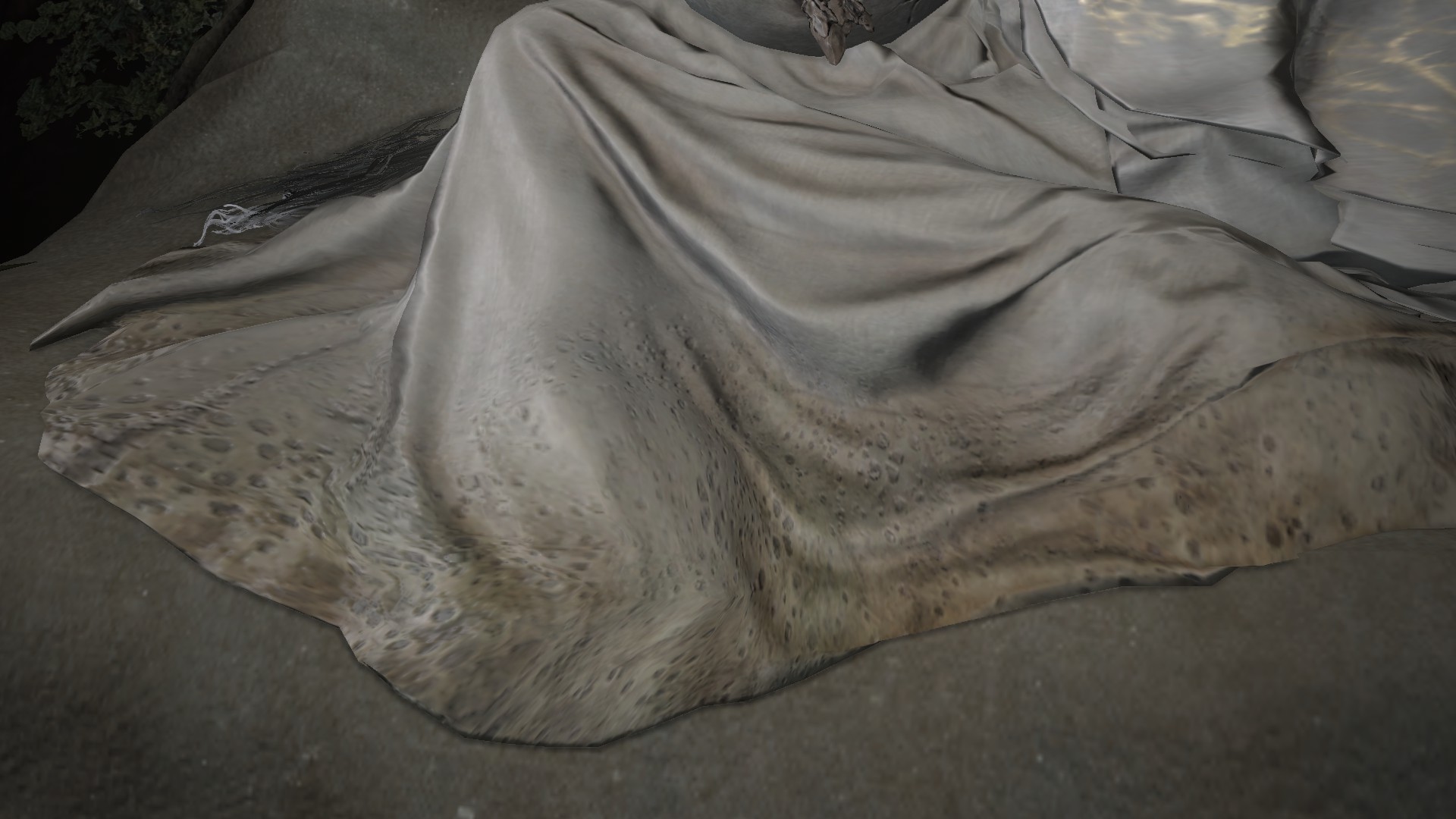
Gwyn’s youngest daughter Filianore emulates her older sister in many respects. Both goddesses bear a strong association with nature, for instance. Filianore is surrounded by it in her bedchamber, overgrown with bushes and vines. This might just be natural overgrowth, but it is unique to her church in general. And even if the overgrown interior is coincidental, she does possess dirt and grass stains at the bottom of her otherwise immaculate white dress. The princess was no stranger to getting dirty to be closer to nature, not just sitting around being served hand-and-foot from the safety of well-kept urban dwellings like her socialite sister. But while Gwynevere’s connection chiefly concerns crops for harvest, Filianore’s symbol is green grass. Part of this may reflect their respective roles by order of birth: the eldest takes the forefront as the appetizing, towering fruit tree, leaving the youngest in relative obscurity as the lawn in her shadow.
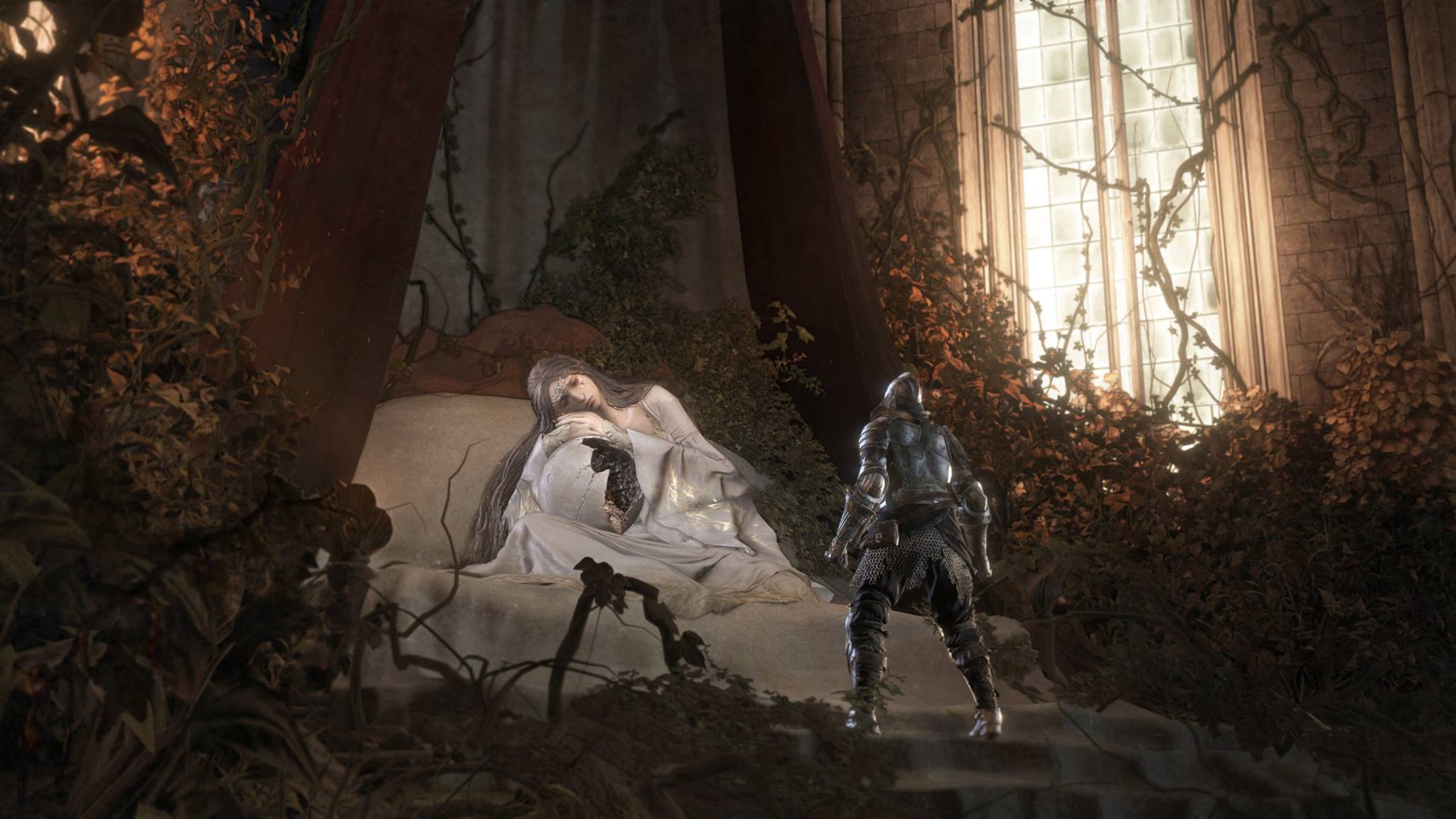
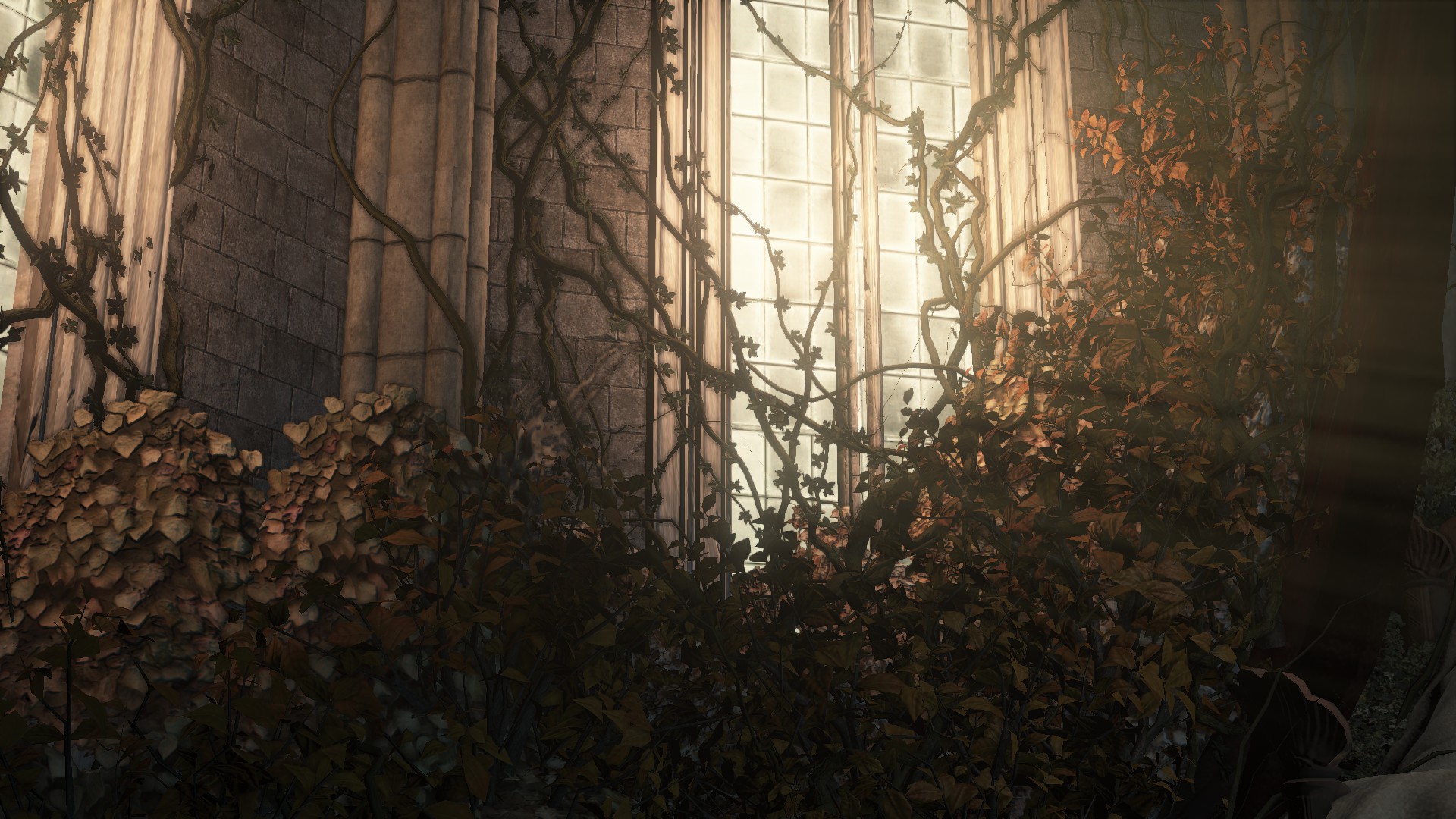
Regardless, Filianore’s specific association with “young” grass does highlight her greenness in age compared to her sister, the mature crop. This inferiority to Gwynevere extends to their majesty. A model of the younger princess’ symbol in her possession was once decorated with gemstone, giving the crest its green color. But this was a semi-precious stone, not emerald or some other, more valuable rock. Though still ostentatious and blessed with divine power, it also conveys the humility of the youngest daughter. If Gwynevere adorned herself with gold, Filianore preferred silver. She was never going to be the Princess of Sunlight, nor could she escape her example.
Small, perfectly clear, semi-precious stone said to have once decorated a green young grass crest.
It is said to be an honor Spears of the Church obtain after battle and to slightly increase the power of the divine protection bestowed. (if you possess this, it will activate the effect automatically)
And so, Filianore carved her own niche within that framework, a fact best demonstrated by her Sacred Chime. This silver bell has received the princess’ divine protection, providing it with unique effects. For one, it extends the area of effect for all the relevant miracles whether they recovery health like Heal, cure abnormalities like Caressing Tears, or enhance abilities like Sacred Oath. Then there is its skill. Prayer of Favor (恩恵の祈り) functions identical to the Gentle Prayer (恵みの祈り) of most other holy bells, hence both are a prayer of “blessing” in the Japanese script. However, while synonymous, the term for Filianore’s “blessing” (恩恵) still differs from that of others’ “grace”. (恵み) Why? The choice for the distinction is itself not important; both are labels for a miracle’s power. Rather, it seems simply to highlight how the gradual healing from Filianore’s blessing additionally extends to those in the caster’s area. Thus, purely in function, the catalyst is already distinct from its peers.
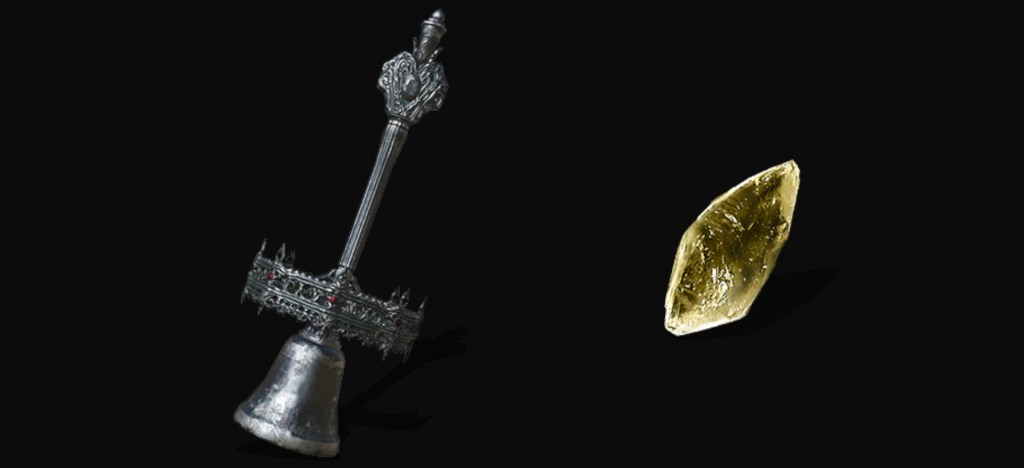
However, there is also the form of said catalyst. Recall that cloth talismans were the standard among the gods originally. Although the New World later popularized sacred chimes, Filianore was apparently the first to employ such holy bells as miracle catalysts, long before the events of Dark Souls II. (DS2) Maybe she just preferred sound as a medium for performing miracles. A physical talisman is limited by the confines of its space — no matter the power weaved into the fabric, it remains restricted to that visual element. But a sacred chime carries its power through sound, thereby possessing a greater potential reach. As someone living in her big sister’s shadow before Gwyndolin, Filianore might have uniquely recognized the value in that less flashy form of magical expression. Whatever the case, the princess settled on the audio factor for her brand of divinity. If history is anything to go by, she was ahead of her time.
All of this reflects Filianore’s desire to provide blessings widely like her sister, though to a far greater extent. While Gwynevere typically reserves her blessings for warriors, Filianore makes no such distinctions. Everyone may receive her favor, just as grass grows wherever it is able — a goddess of the people if ever there was one. While Gwynevere has become popular for bringing sustenance to the common man, Filianore would be the one to bring him quality of life. That said, she would never get the chance to fully realize her niche to wider mankind. She was gifted to the pygmies along with their capital, where she has stayed ever since. It is certainly appropriate given how her name “Firianor” (フィリアノール) derives from J.R.R. Tolkien’s Sindarin to mean “Sun of Man”. But why would Gwyn consign his youngest daughter to blessing the penal colony?
In truth, the choice was excellent. Even assuming that the Lord of Sunlight might be biased toward his eldest daughter, his youngest was still more suited to living amongst the race the gods all feared. Between her relative age and overall disposition, she was most liable to tolerate their company, perhaps even interact without prejudice. A prolonged stay at the secluded capital would thus be less taxing on her compared to a social butterfly of god society like Gwynevere. Conversely, her sunlight powers possessed no less utility than her sister’s holy magic, specifically in terms of ingratiating man to the medials’ self-professed divinity. Gwyn may have loved his daughter dearly, but prior games prove his willingness to sacrifice his children for politics, using them in whatever his ploys required. And if he had to choose one of his only three children at the time as a gift to the pygmies, the young goddess was the optimal option. The only question then is why the wily king felt this “gift” necessary.
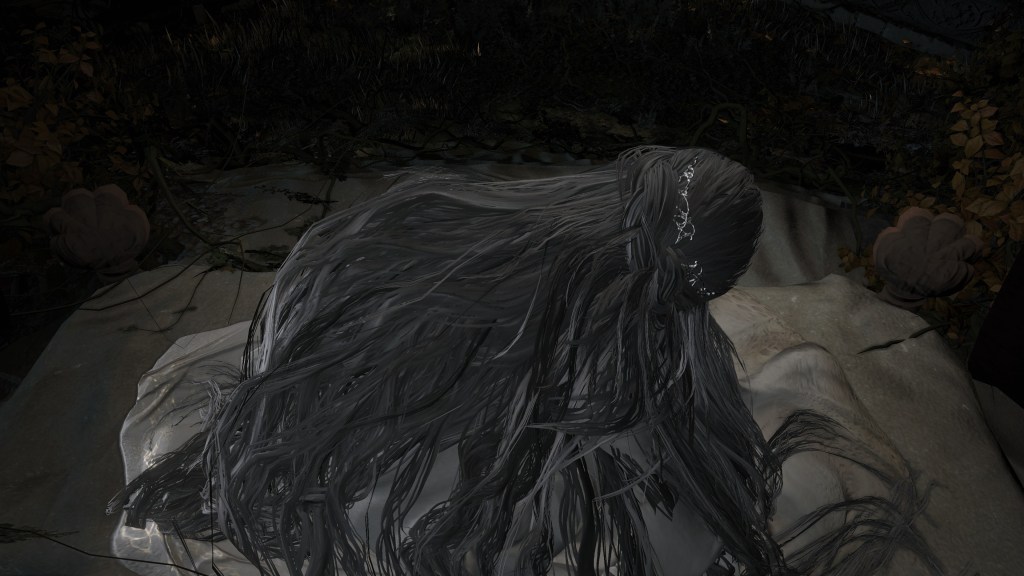
The answer partly lies in the nature of his gift. Why send a young maiden to another king? For a marriage alliance, typically. It isn’t uncommon for princesses to be traded as spouses so as to secure agreements and strengthen diplomatic ties. If Gwyn offered his daughter along with Anor Londo’s support to the pygmy Lord, then he was already treating Filianore’s situation no different from an arranged marriage. She wasn’t being sent off as a slave, at least. After being attacked by Gael, one pygmy king desperately crawls to Filianore’s tower, calling out to her for help. This betrays the royal’s trust and respect for Anor Londo’s princess. And yet, the lack of titles or honorifics suggest that the man isn’t necessarily subordinate to her either, treating the goddess like one would a longtime friend. Put another way, Filianore seems to be considered an equal by the pygmy royalty. This makes sense if she was gifted to their founding king to be a liaison, ambassador, or nominal bride.
“Nominal” is the appropriate descriptor. Filianore remains a princess, with no evidence of a consummate marriage. Gwyn was not sending his beloved daughter with the intention of siring heirs of mixed royal blood — if anything, he would prohibit it. If the princess was a wife, it was to the royal line as a whole, her virtue never sullied; not unlike a concubine in an imperial harem left ignored for life. The Lord of Sunlight’s actions appear to simply pantomime the marriage alliance concept, Filianore acting in that capacity of a political wife while never assuming the corresponding titles and responsibilities. The allusion itself is definitely the developers’ intent, as she is referenced as “Wife” (妻) internally. In practice, however, the princess was little more than a political hostage — collateral to demonstrate Gwyn’s sincerity to the pygmies. She occupied that vague space as a foreign royal staying amongst fellows of a smaller ally.
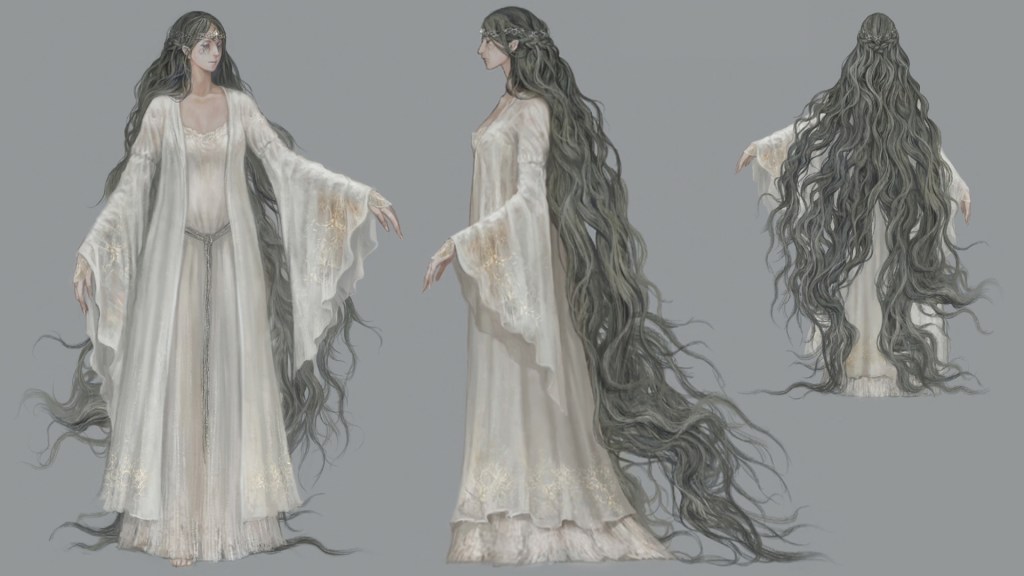
Put plainly, Gwyn gifted the pygmies his daughter along with a city to assuage any suspicion regarding the latter. It sounds too good to be true, as the saying goes. Any primitive, avaricious or no, would be on guard against random kindness from a stranger. But if the newfound pygmy royalty held the Lord of Light’s precious daughter, surely there was no cause for concern — should he actually prove duplicitous with his aid, they could always threaten to harm their hostage. The fact that Anor Londo’s king was offering such a disadvantage to himself right out the gate would inspire confidence in the pygmies. Add in their predilection for taking, and the promises Gwyn made became too good to pass up. But in truth, Filianore was a Trojan horse. Gwyn’s ingenious trick was not making a deal the tribe he feared would accept, but to use that faux fairness to enmesh Anor Londo deeper in pygmy politics.
The issue when a weaker party takes a hostage is that it is their only leverage. Once that option has been exhausted, the hostage takers have nothing else to deter the other party. They thus couldn’t just resort to maiming or killing said hostage for every little perceived indiscretion. Suddenly, politics takes on a new dimension of escalation. At some point, they have to use their trump card, but they don’t ever want to end up in that position. Meanwhile, the pawn need be given all the comforts and luxuries of an Anor Londo princess, for fear of her father escalating the issue. To avoid accusations of maltreatment, the goddess would be free to move around the court, speak to members, showcase her powers — opening up potential to sway public opinion, negotiate options, steer policy. Her very presence was sure to create a faction of loyalists who recognized where the true power lied in this city built by the gods. No matter how beautiful and green, Gwyn had planted a weed which would slowly strangle the Pygmy Lord’s kingdom.
The Feeding Hand Curls
Suffice to say, the pygmies’ honeymoon with Anor Londo ended just as swiftly as it began. None of this should have been lost on their Lord. Back in DS1, Kaathe elucidated how the ancestor to modern man was thinking long-term, predicting fire’s inevitable wane and the Dark’s coinciding rise in a new age. The Dark Lord was as much using the Lord of Sunlight as the reverse. What position were they in to resist the King whose power was at its strongest in this still dawning age? Better to take the deal and make the most of it while prepping for his future dominion over the world. Let the “gods” grow complacent as they keep the Dark under their boot. Once their light did wane, the pygmies would be able to throw off the heel and turn the tables on their “kind” and “merciful” oppressors. As DS2 showed, the impatient king was already quietly preparing allies for that far-off future.
But the pygmy Lord underestimated the extent of Gwyn’s treachery. As Kaathe had revealed, the gods shackled man, which the Mound-Makers have located in the vertebrae. Past games already indicated this to be Gwyn’s role in imposing the Undead curse, the first sin as Aldia imagined it. And we see how this was effectuated in the Ringed City. The descriptions to the Ringed Knights’ abyssal weapons affirm that they received a “seal of fire” like their owners. This is an obvious reference to the Darksign, the ring of fire enclosing the dark hole just as the ringed wall surrounds the pygmy capital. Indeed, for all mankind to be shackled through every generation requires the medials of light impose this curse of flame on the first generation, sparing none. This is only practical if the whole clan remain concentrated in a relatively limited location, which the Ringed City facilitates. After rounding them up in a cage of their own volition, the gods could ensure no pygmy left the penal colony without their dark soul sealed. This is final confirmation that the so-called Dark Ring was a byproduct of the fiery gods’ meddling.
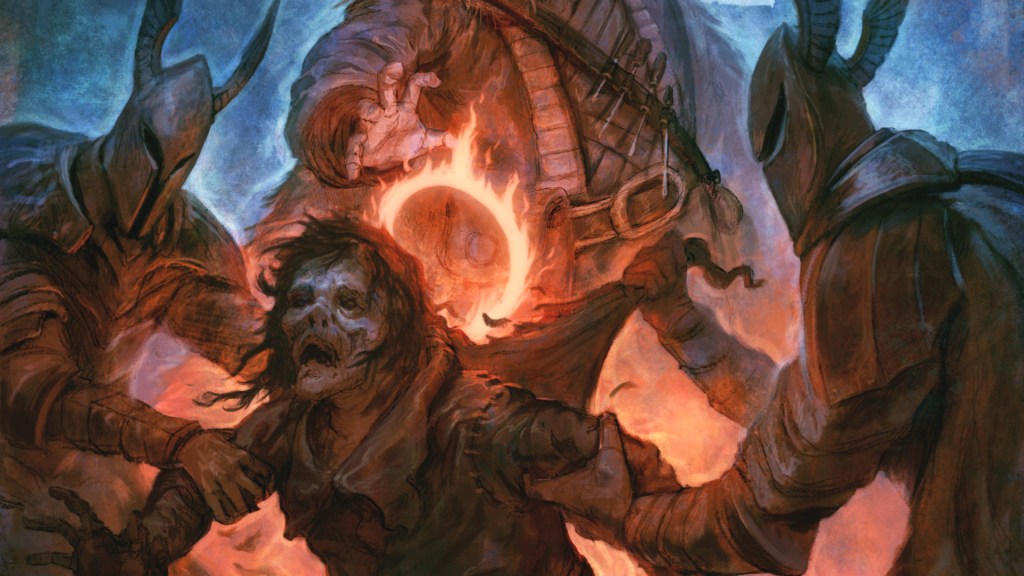
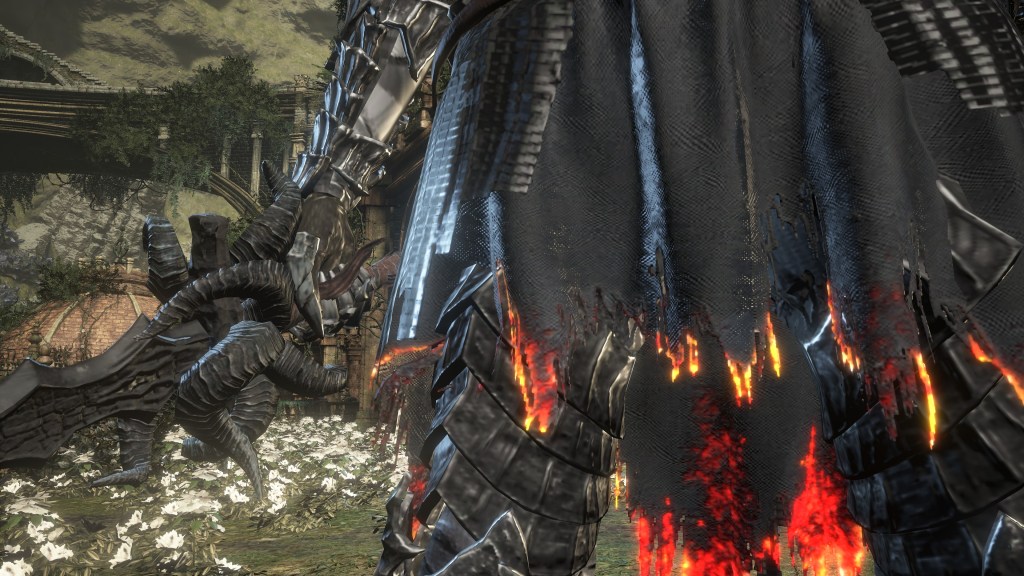
Black straight sword that Ringed Knights possess. The weapon of ancient man is forged with the Abyss, so tinged with life, if only slightly.
And for that reason, it is said that the gods applied a seal of fire to it like their owners.
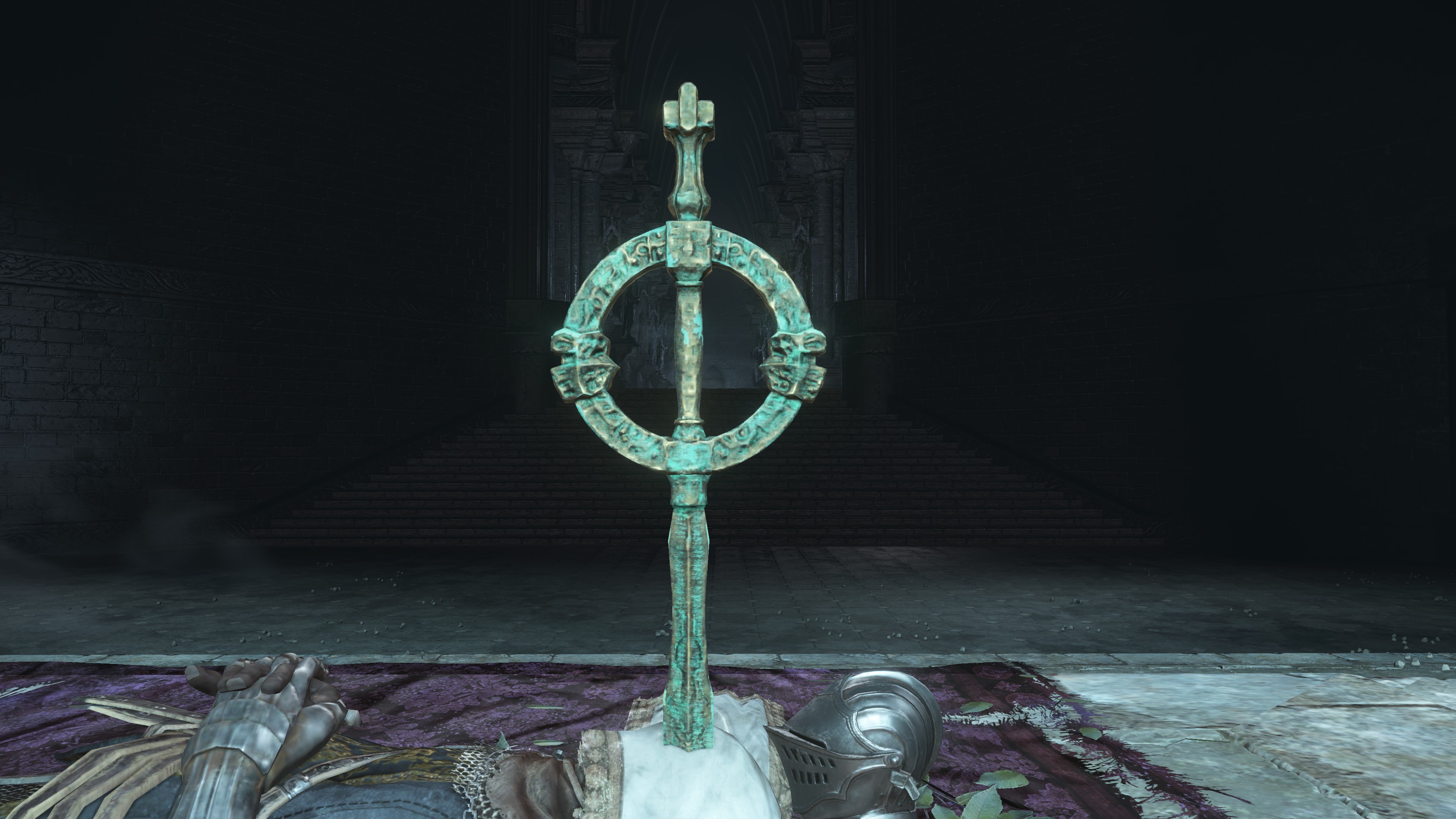
Beyond a specific location, we might even have some idea of the method. The Sword of Avowal currently belongs to Londor, but the weapon bears the Ringed City’s iconic motif and looks to be made of ancient bronze, oxidizing green. Anor Londo loved its copper-derived metals, especially for infusing holiness. Add in their responsibility for imposing the ring motif, and it appears as if the sword was something the gods had employed in their capital. But for what purpose would they need a needle-like blade bearing the ring imagery in a penal colony ostensibly run by the exiles? To carve the seal into their bones. The way the sword is used as a conduit to transfer power from one body to another comports with the medials of light infusing the fire of their bodies into the pygmies’ humanity. If this was the case, it would make the Lord of Hollow’s wedding ceremony in Gwyn’s tomb doubly symbolic — repurposing his tool to create the curse for all man to empower the curse for the delegate of man. It is no mystery why the Hollows would preserve such proof of the first sin inflicted upon their kind.
But to coerce this outcome still required cooperation from the royal government. At no point would thrusting swords into vertebrae for a magical branding add to the Lord’s political capital; agreeing almost demanded that the state be left with no other choice. This is where the poison in their midst began to take effect. How does one ensure the safety and serenity of a princess whose race fears your power? That vast Abyss might consume her tiny light at a given moment! What precautions were in place to counteract fools acting on “sinful” greed? With Filianore in most immediate danger, it is easy to see Anor Londo lobby to put “limits” on the Dark the pygmies utilized. On that thin justification, the gods pressured the penal colony to acquiesce to further constraints — not just for themselves, but for all things that might threaten the light.
The fire sealing the Ringed Knights’ weapons and armor has made the pygmies’ abyssal forging no different from mundane metallurgy. With this comes the implication that they would be forging no new equipment via those methods. The gods determined that their existing arsenal was enough, so the capital’s army has been forced to rely on the same old weapons for practically its entire history. The tradeoff wasn’t a total net loss. Even now, after so long, their dilapidated equipment retains “embers” of the seal, the knights able to draw out that remaining fire to incredible effect. The order dedicated to the Abyss had immense new power at their disposal. Still, the gods’ de-facto cap on arms and armor preempted any further military buildup. The government more or less stripped itself of its one means to resist further oppression.
The state was also complicit in the propaganda war against the public. Statues depict the common pygmy burdened by a weighty ring, evocative of Christ bearing a cross as the Suffering Servant. Much like the Christian Messiah who died for mankind’s sins, each pygmy must carry the ring of fire as his cross, a sacrifice required to repent for his own original sin of humanity. Every citizen in the Ringed City is presented a reminder that they have to atone for existing. Suddenly, the ring motif to the city the gods built becomes all the more insidious. From the start, Gwyn wanted to enculturate the pygmies to accept this imagery, using every subtle trick to move the needle when the time came to seal them with it. The Darksign was the culmination of this carefully constructed plot. By this point, the medials also impressed their authority as gods, introducing worship of his clan’s fire and light. This did ultimately take hold, as we encounter a number of clerics among the pygmy populace connected to Anor Londo religion. In every facet, the message is clear: the ring is good, it is holy, it is essential.
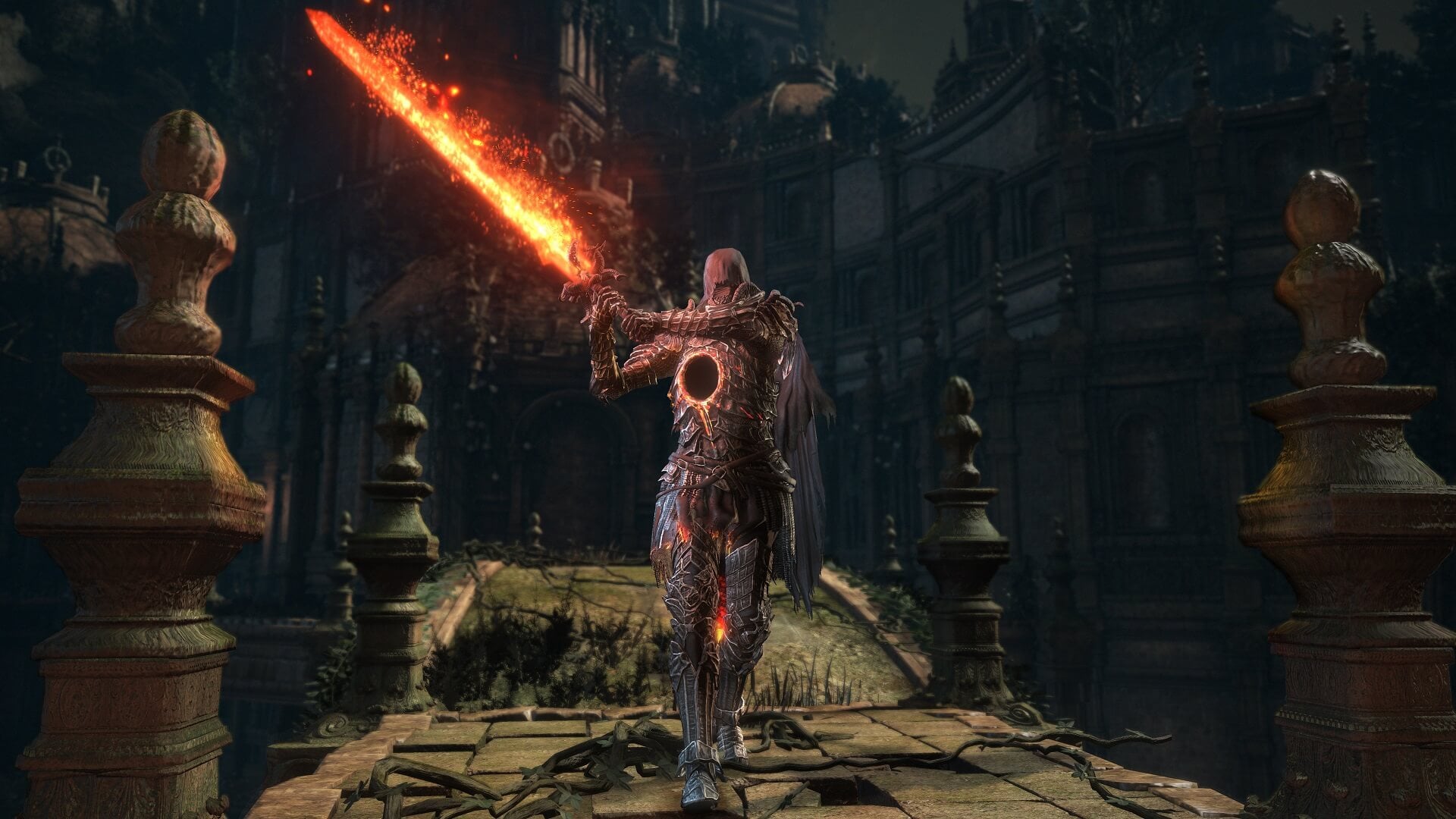
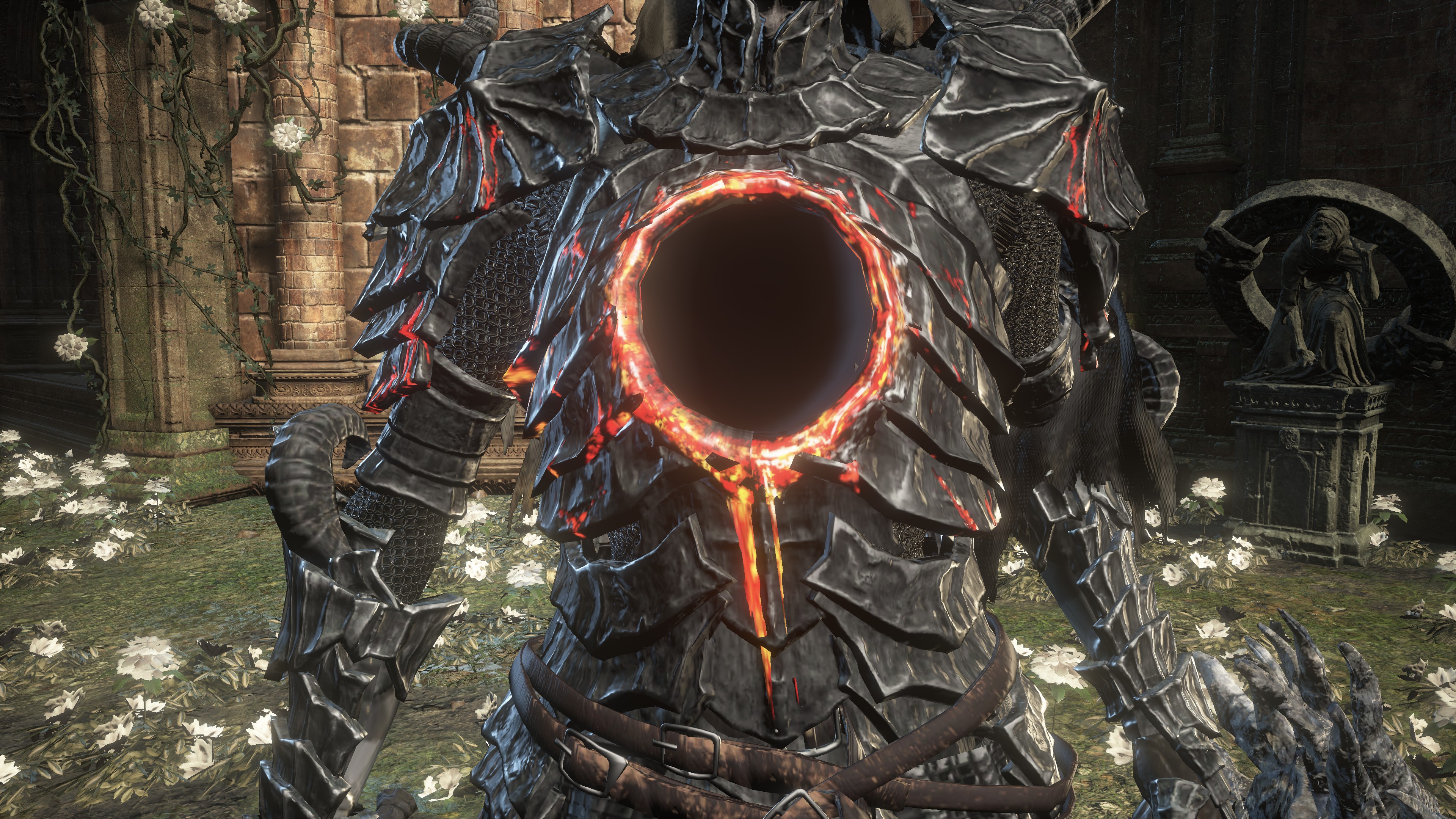
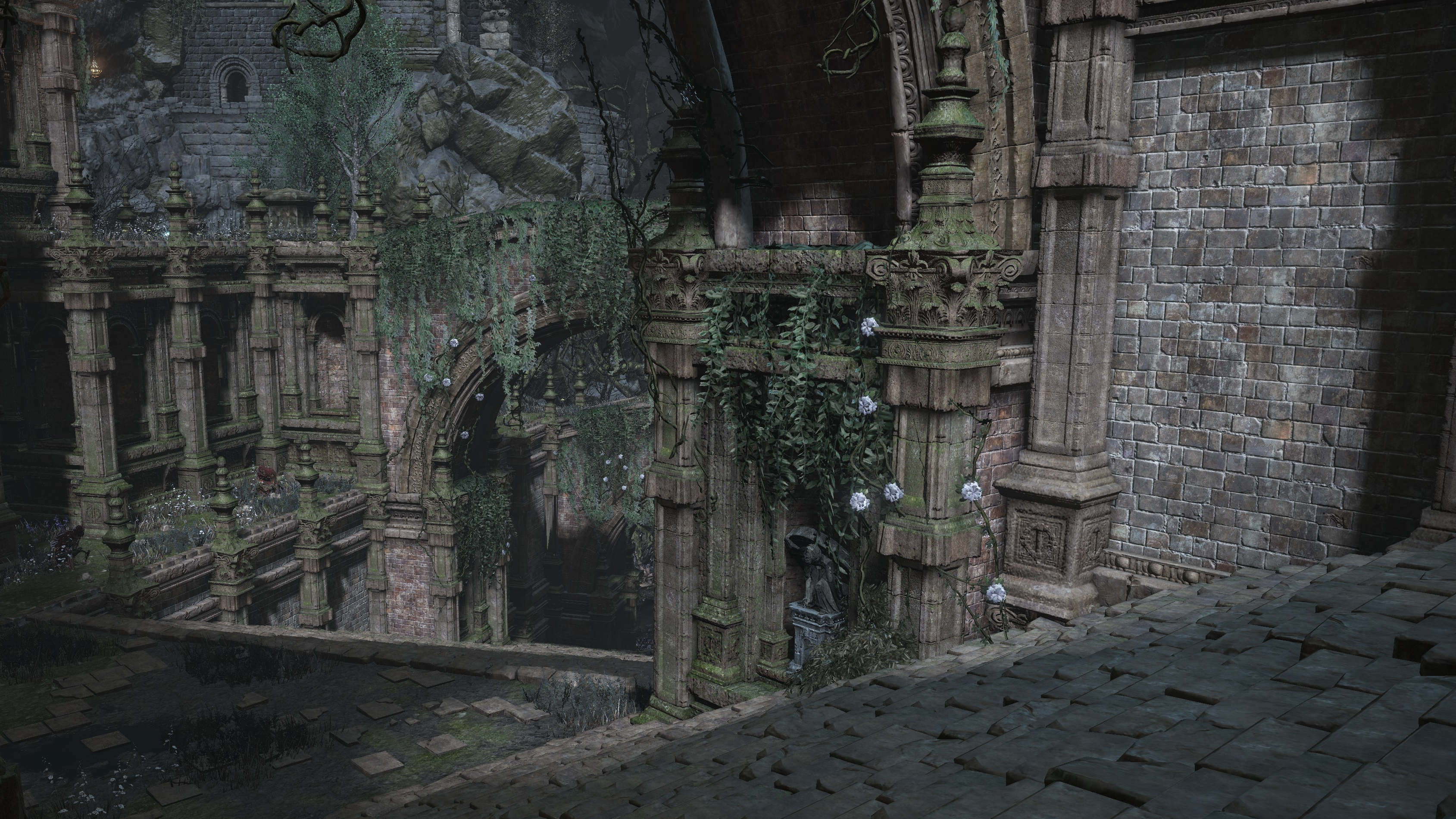
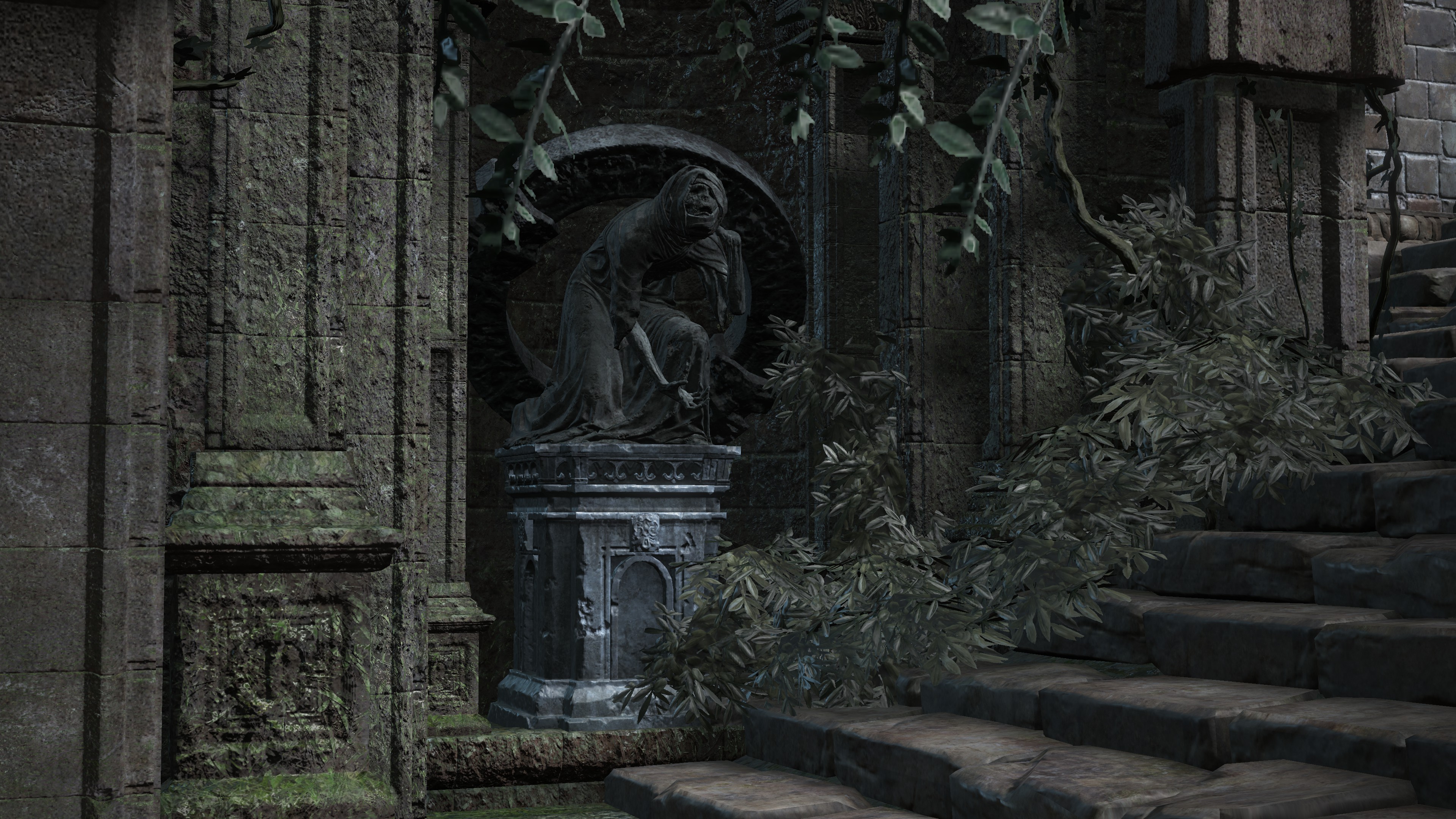
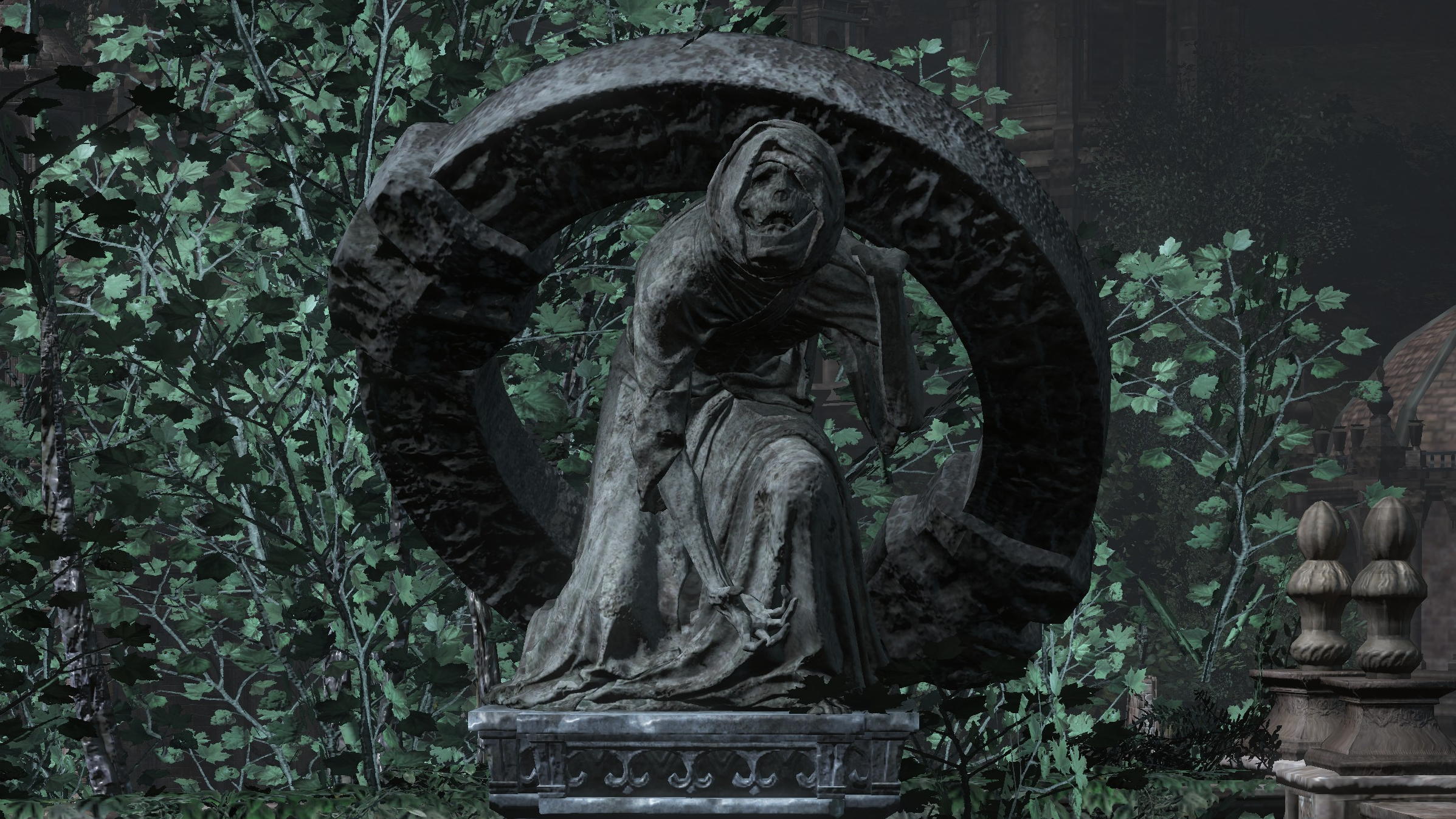
In short, the pygmy kingdom allowed Anor Londo to run roughshod over its subjects. For the fourth developed civilization in history, the Ringed City behaved as a mere vassal to its predecessors. Again, the pygmy Lord held fast to the belief that submission to the “gods” was only temporary, overshadowed by the eternity after their fire eventually burned out. One might argue that the final Lord would have the last laugh, seeing current events. But thanks to Gwyn’s scheming, he would not live to see that age of free man. To shackle humanity was to also fetter its immortality. With their Dark suppressed by flame, humans went from the longest-living race to the shortest all too soon. This was especially debilitating to a tribe reliant on other races for its development. Gods like Filianore were now the one consistent factor for future generations, encouraging them to lean on the divine in order to preserve a sense of continuity. As for past generations, they too would now be in the hands of the gods.
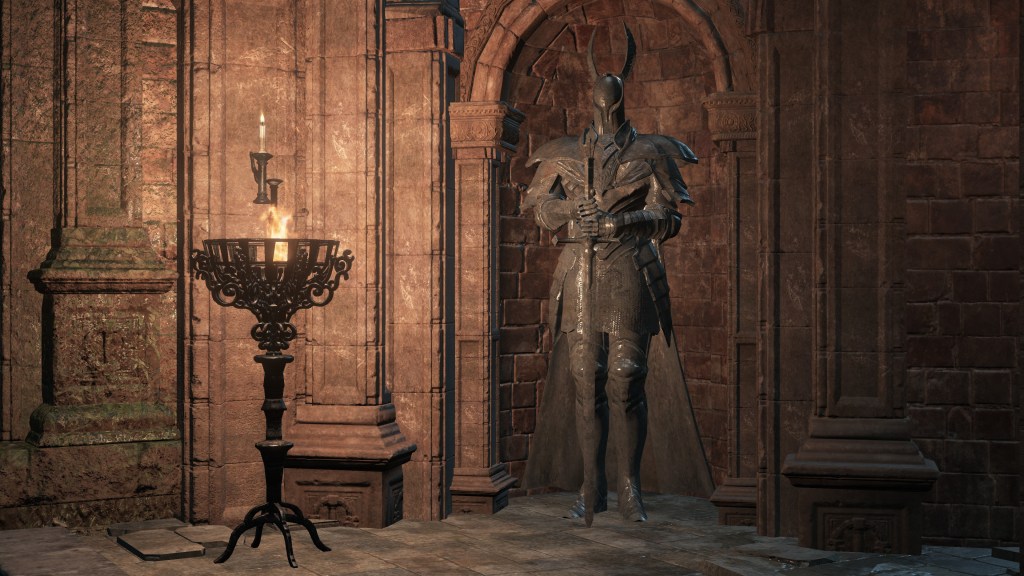
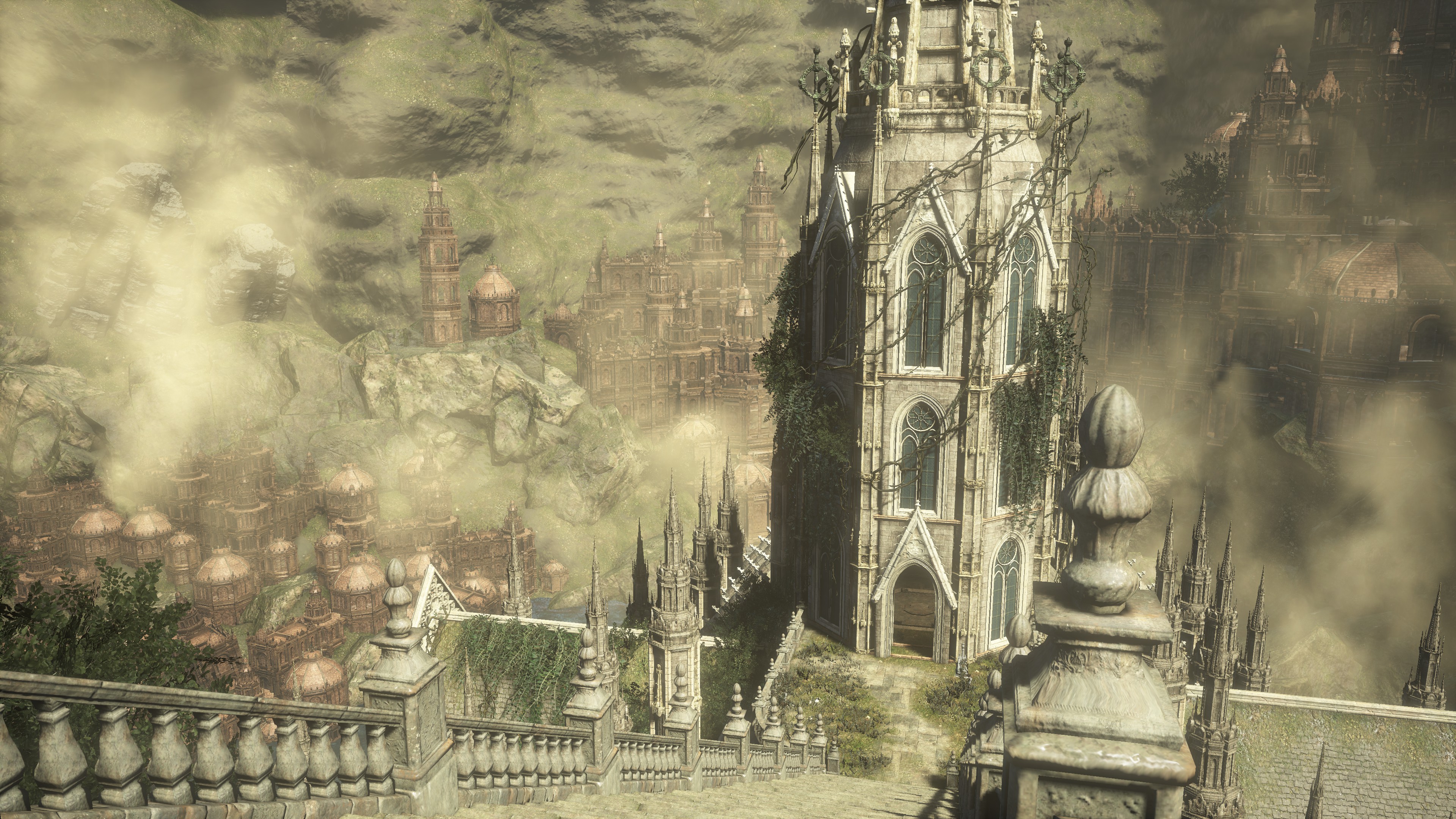
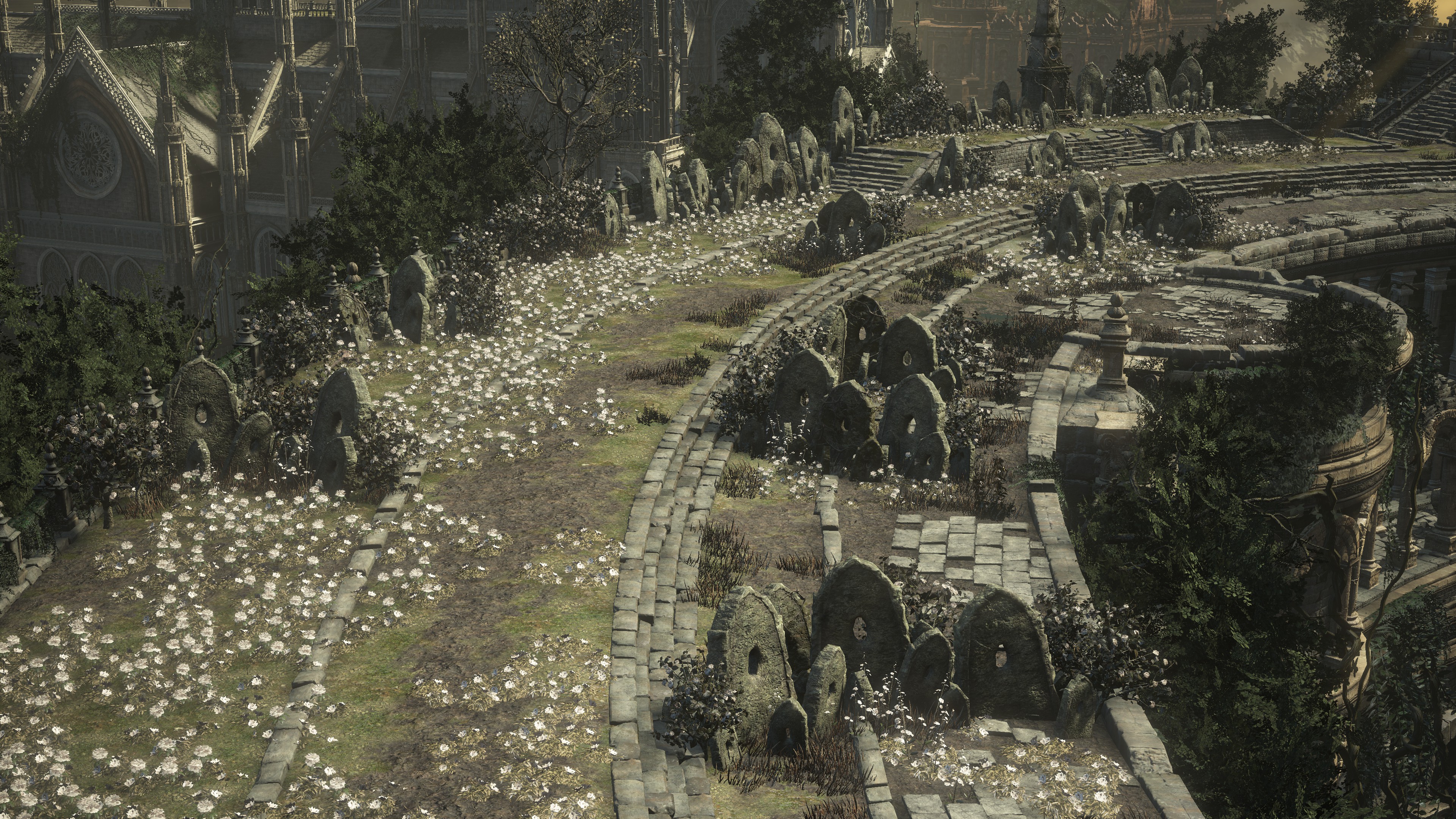
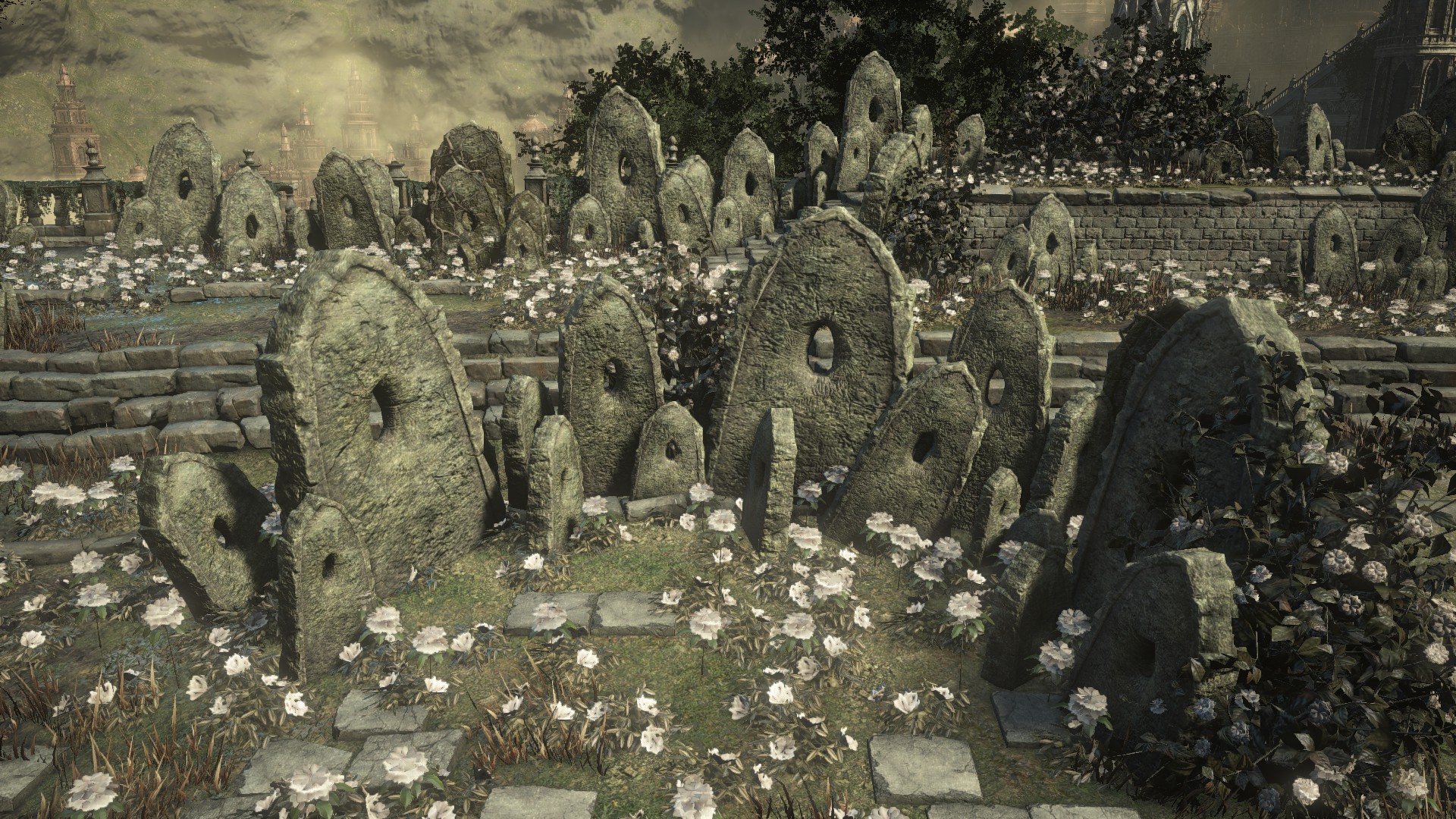
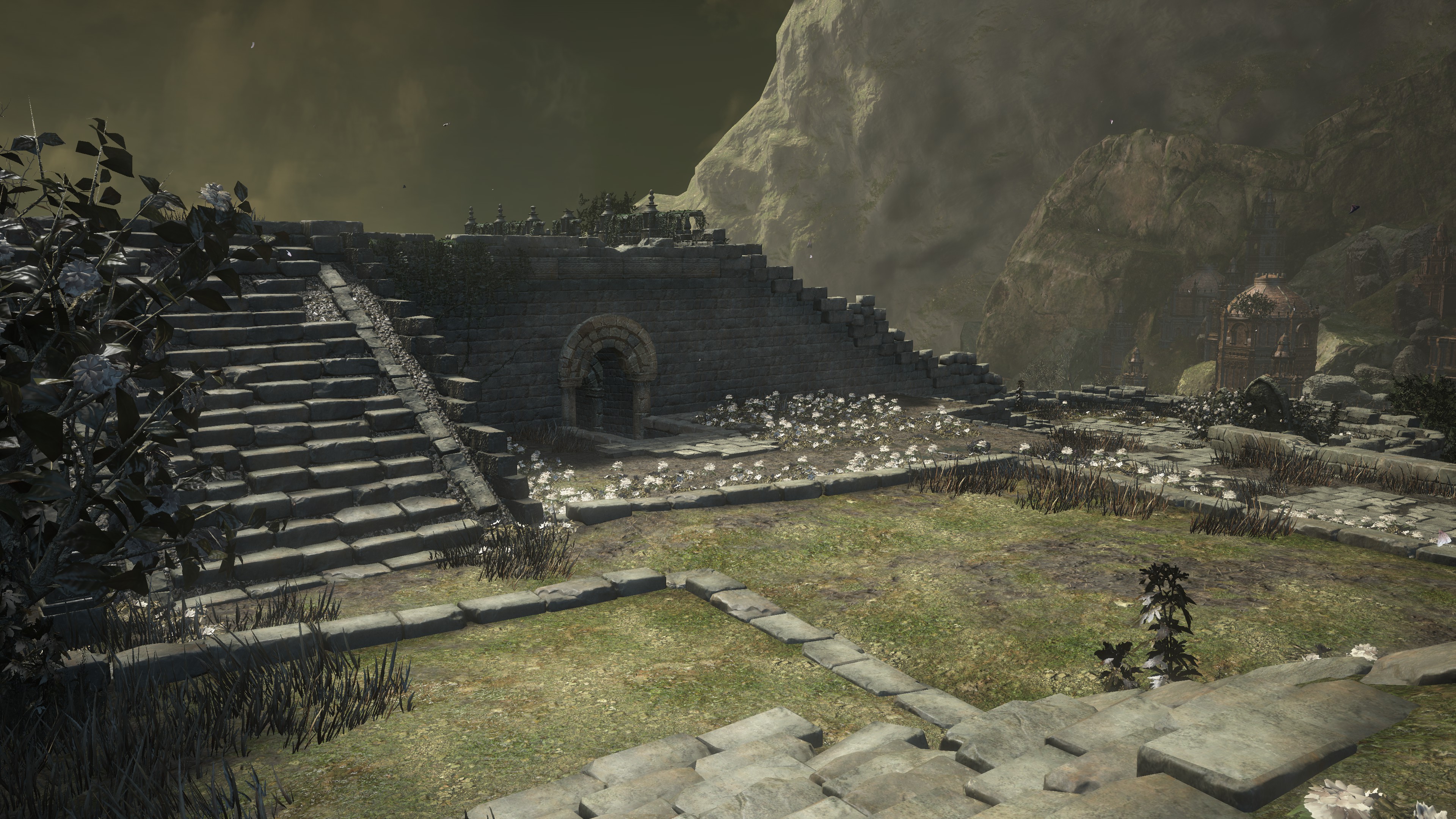
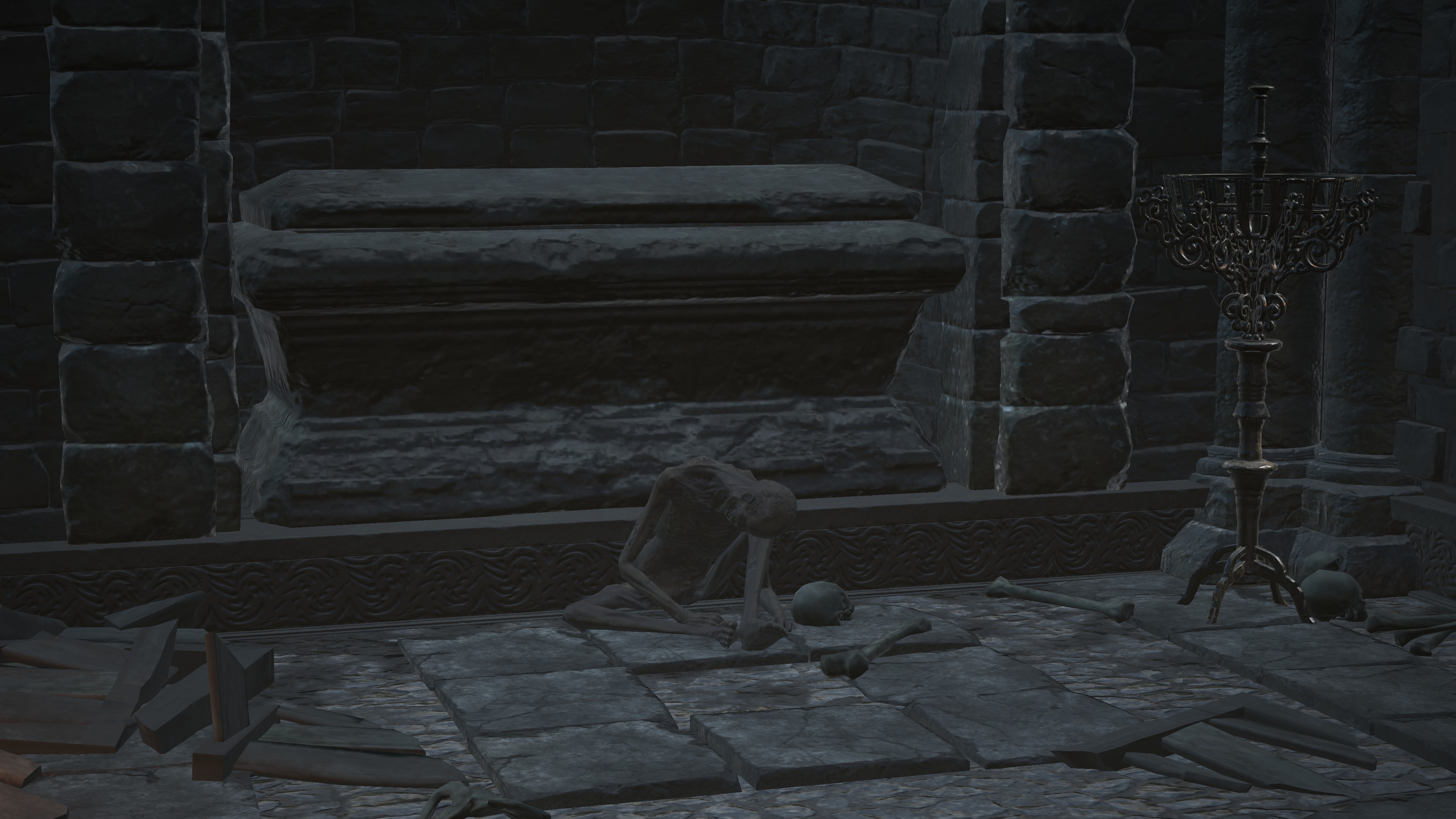
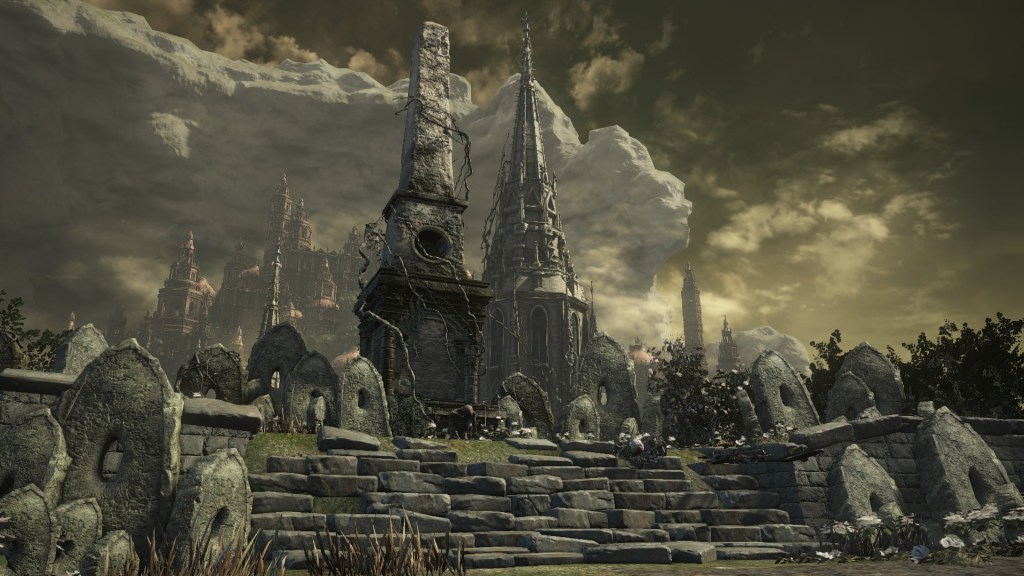
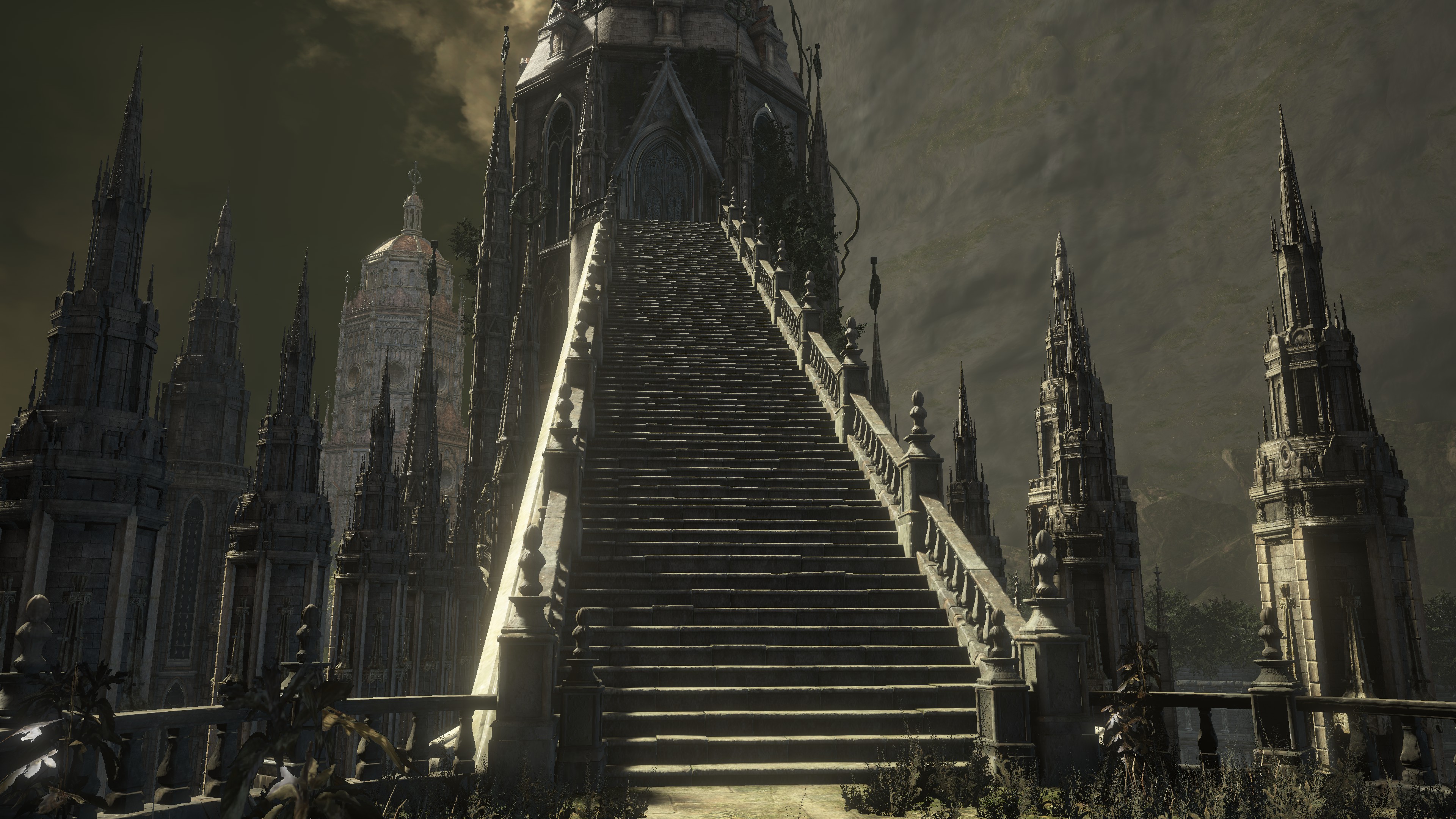
When we first arrive at the Ringed City, we are brought to the capital’s largest landmark, two towers forming a gargantuan arch. The bonfires like the Ringed Inner Wall (輪の内壁) clarify this place as a partition between the city and the “royal mausoleum” (王廟) where the pygmy royalty have been buried. For sure, across the beautiful rooftop gardens filled with budding green blossoms from Lordran stand unique tombstones with holes in their center — clear-cut reference to the Darksign. The one exception to this ring motif is the stone coffin in a separate tomb adjacent to this outdoor cemetery. The corpse with a Hidden Blessing lying against this coffin suggests that it inters a warrior blessed by Gwynevere, the holy water having cooled in the eons since it was first bestowed. Add in the Silver Knight statues decorating walls below the mausoleum, and we can determine the entombed to be one such knight, likely stationed as the gravekeeper when the mausoleum was first established; since succumbing to time the same as his brethren. Anor Londo closely watched over the royals even in death.
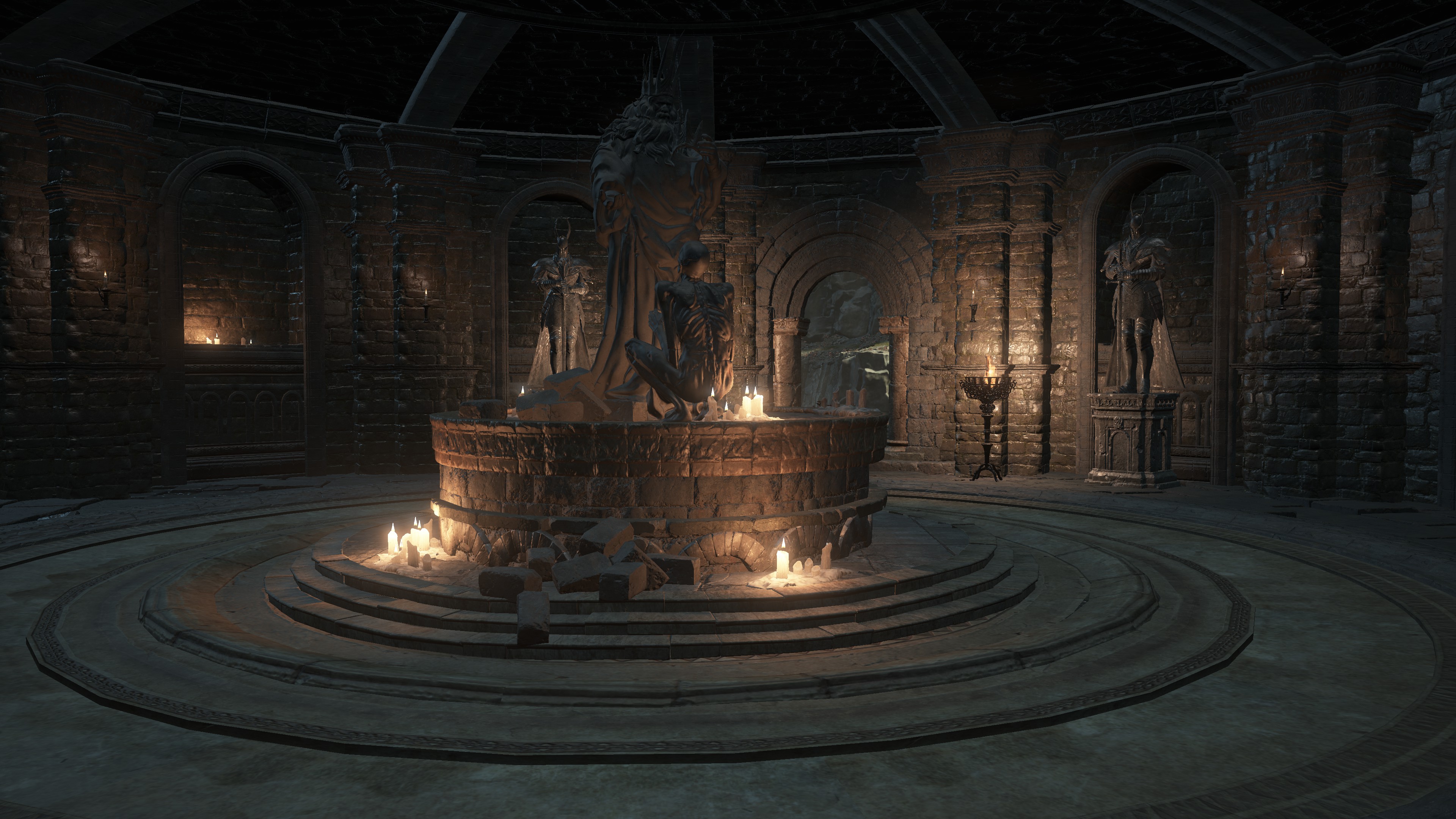
They certainly saw the royal family’s final rites as a way to further entrench themselves in the survivors’ minds. The statue of Gwyn and the pygmy Lord is the centerpiece to the foyer past the arch main entrance. From the moment the royals enter, they are reminded how their position in life is only thanks to the magnanimity of the gods. They should therefore be grateful that the deities of light have permitted them this life — and accept that they also hold the reins on their death. Pygmy royalty deserves to have the full might of Anor Londo keep a watchful eye as they proceed up the lift to bury their kin. This is very much literal, as beyond the silver gravekeep on staff, a myriad of watchtowers have been integrated into the walltop graveyard. The local bonfire identifies this “lookout”, (見張り) so these towers are absolutely intended to survey their surroundings. Not just the graves, but the entire capital, the mausoleum arch impossible to avoid seeing each day — and neither could you avoid being spied. The message was clear: not even their king could escape the gods’ judgement; beware the Eye of Providence.
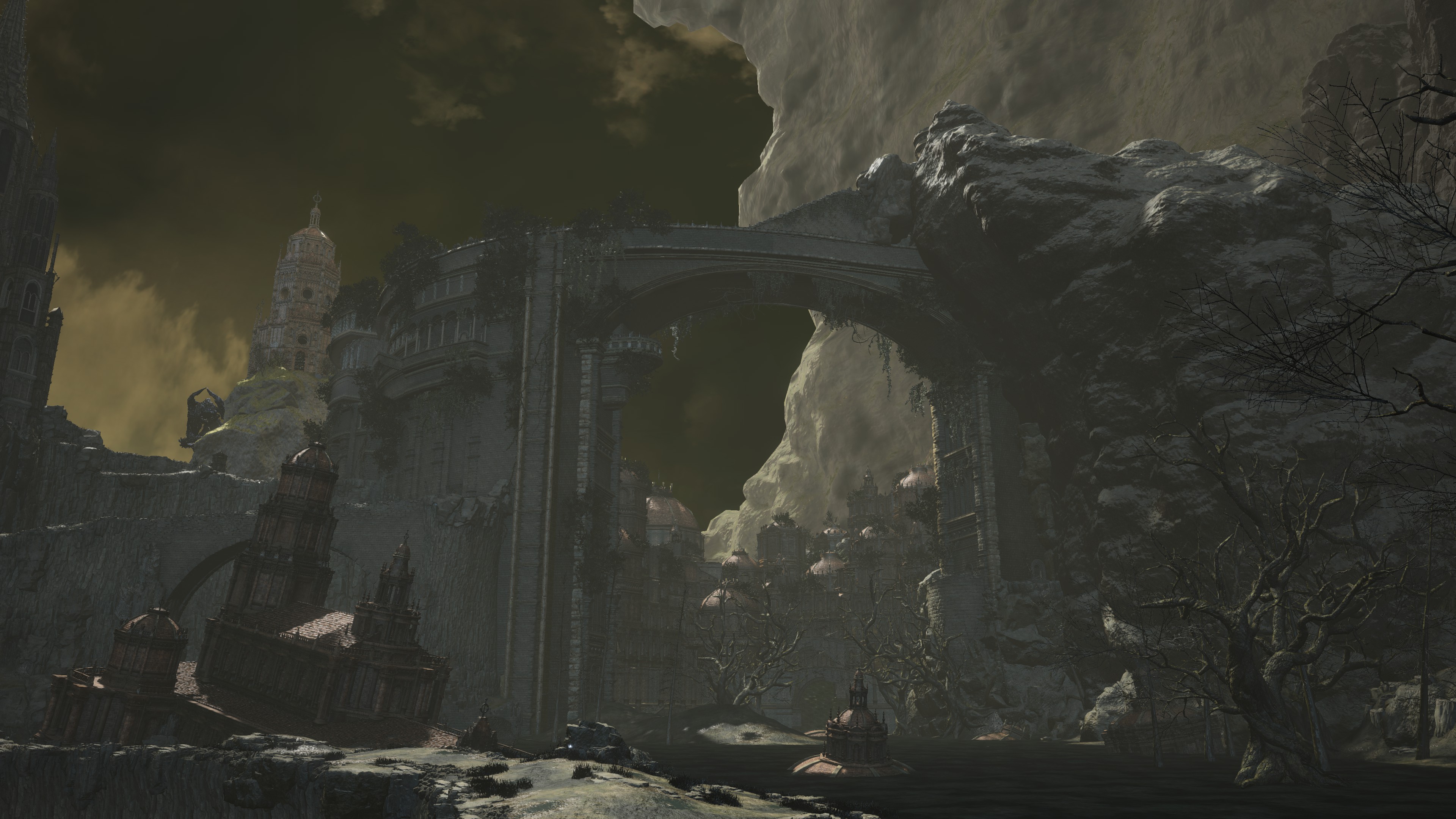
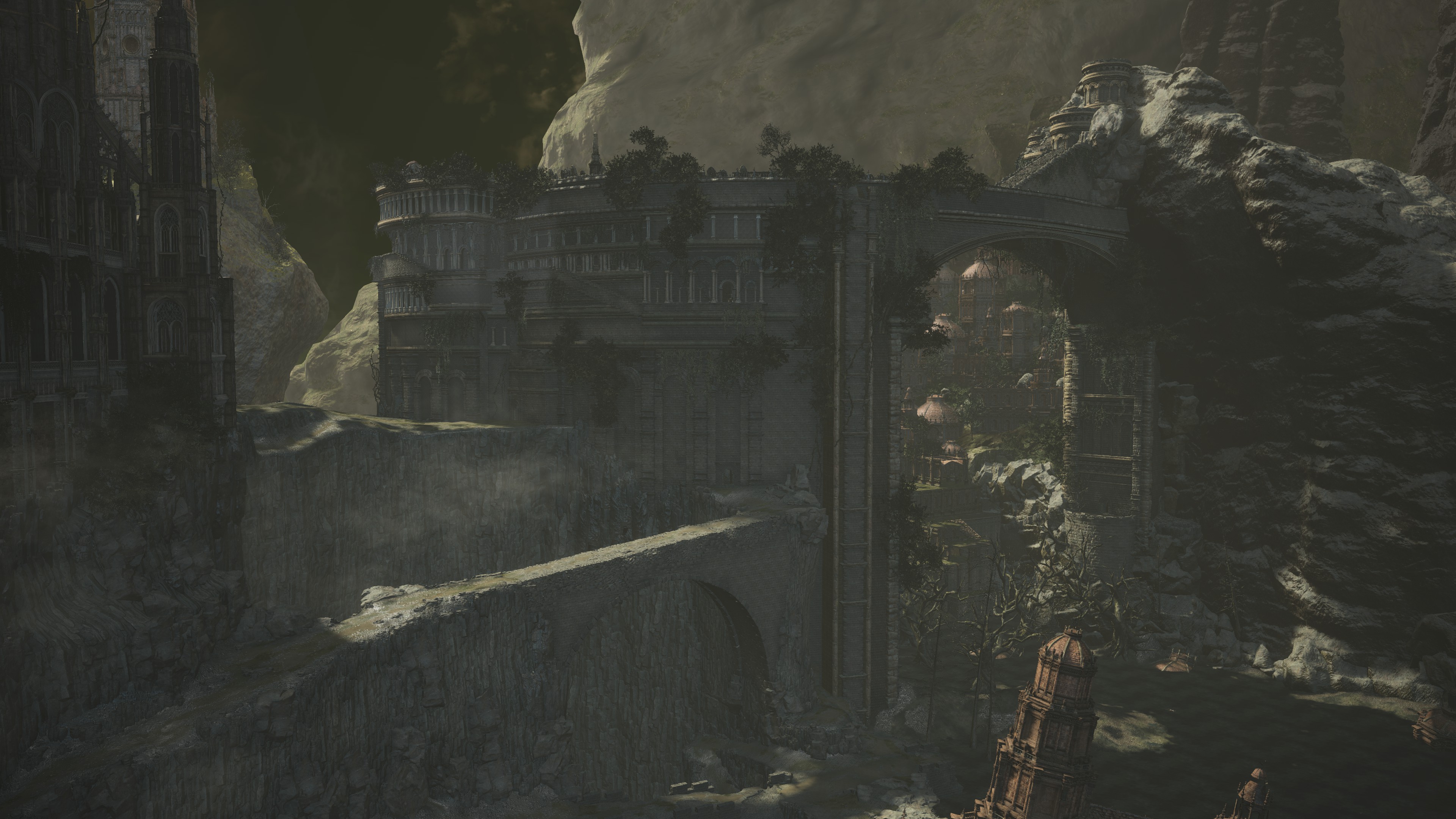
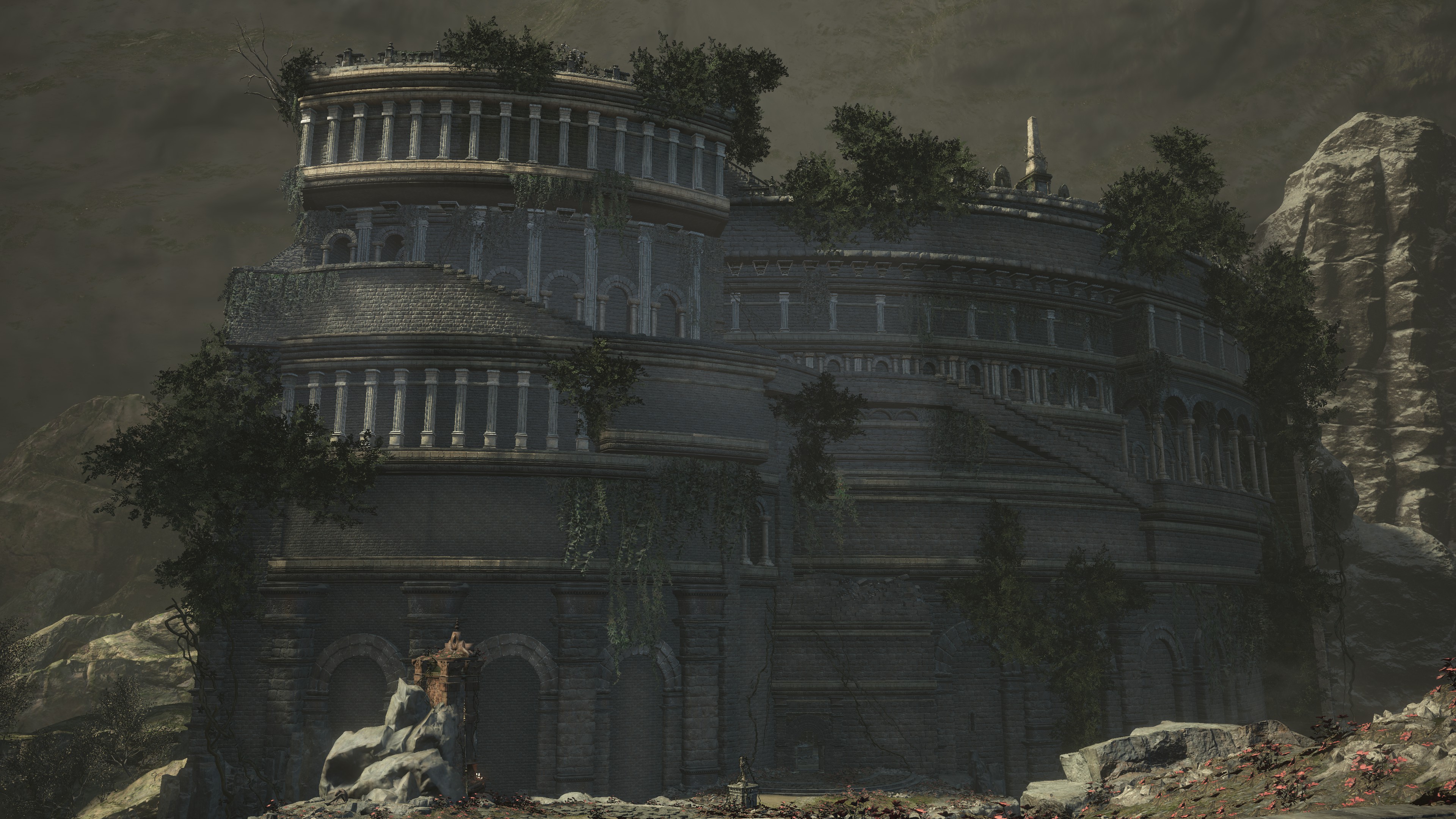
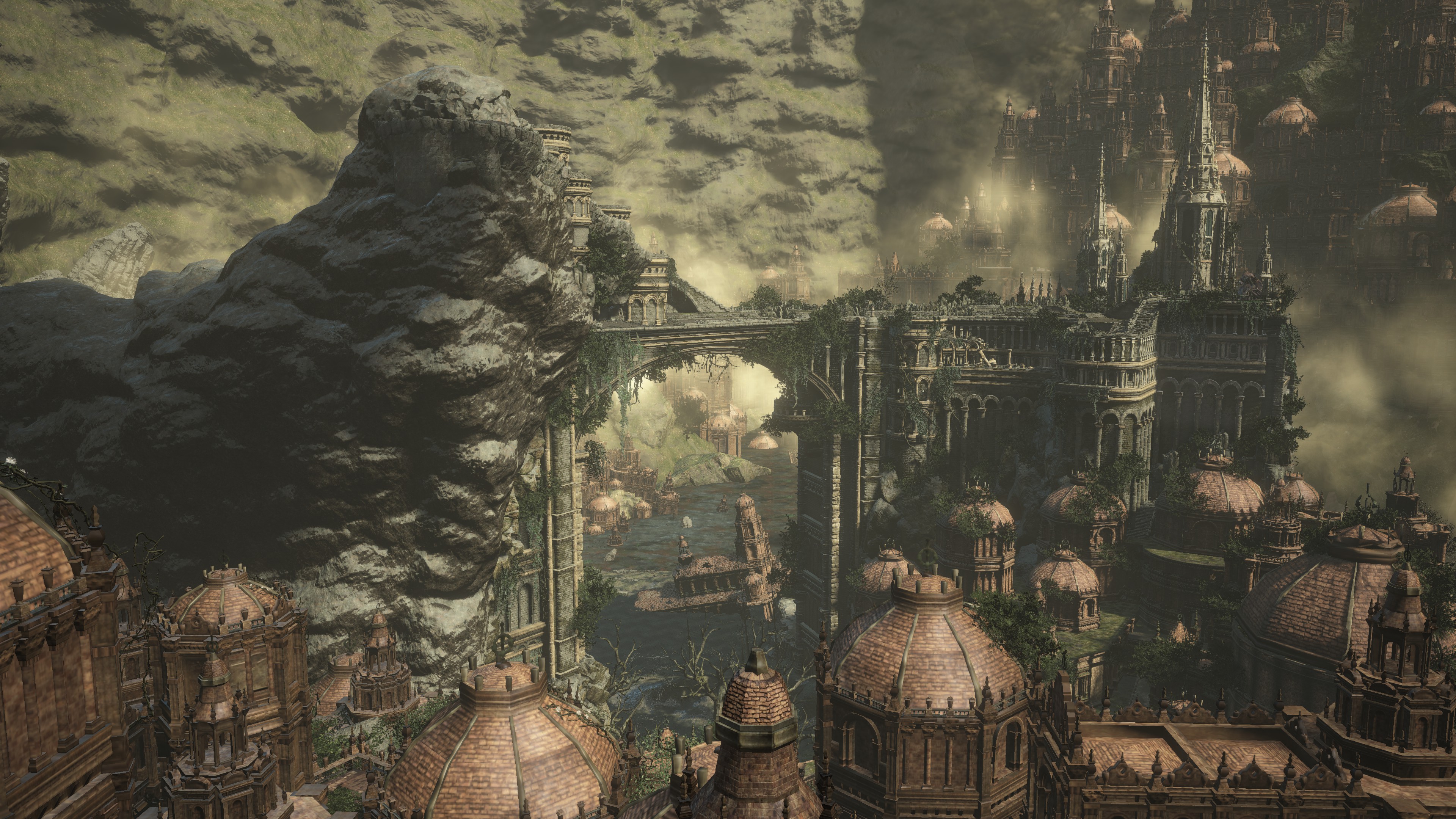
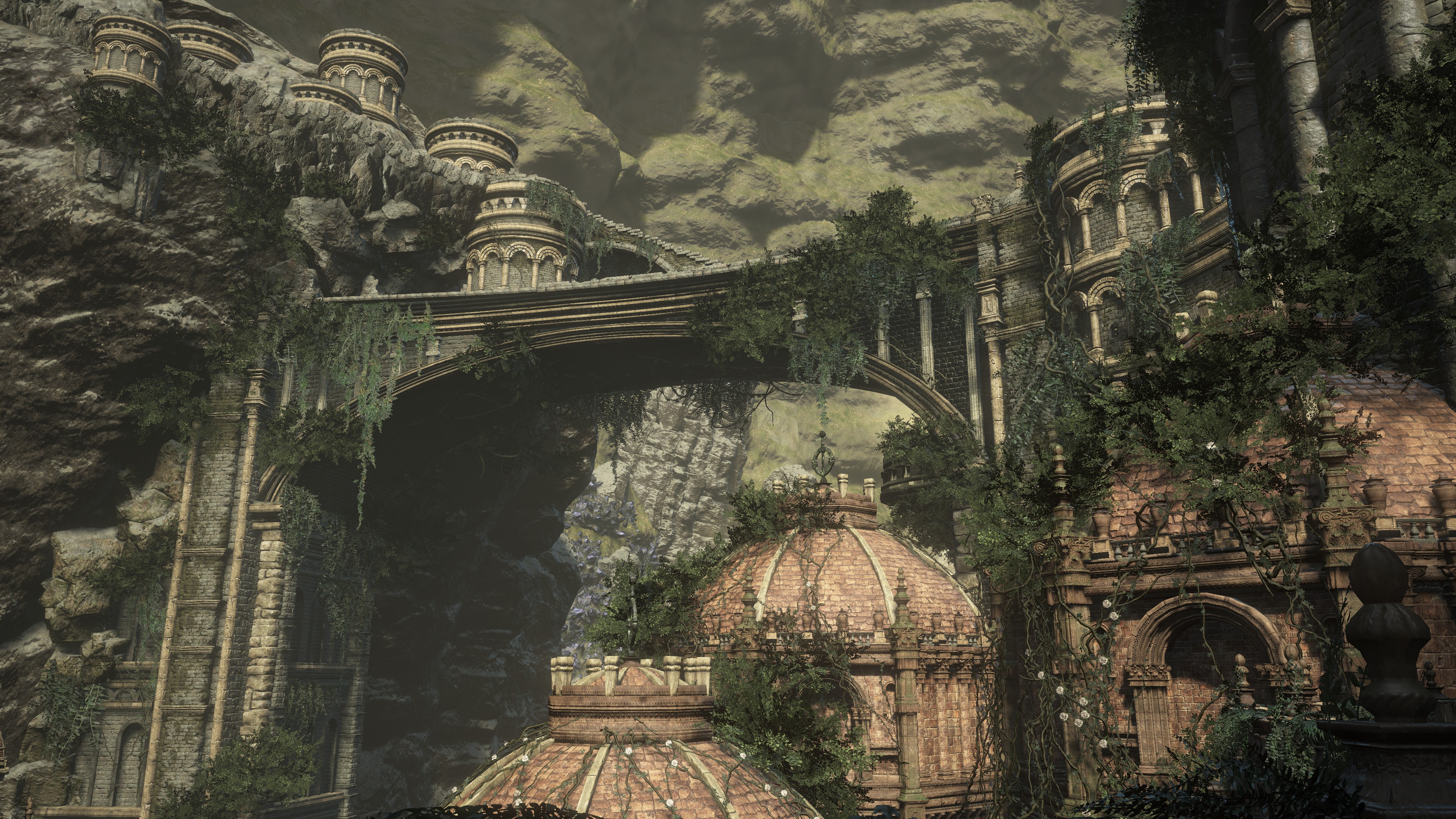
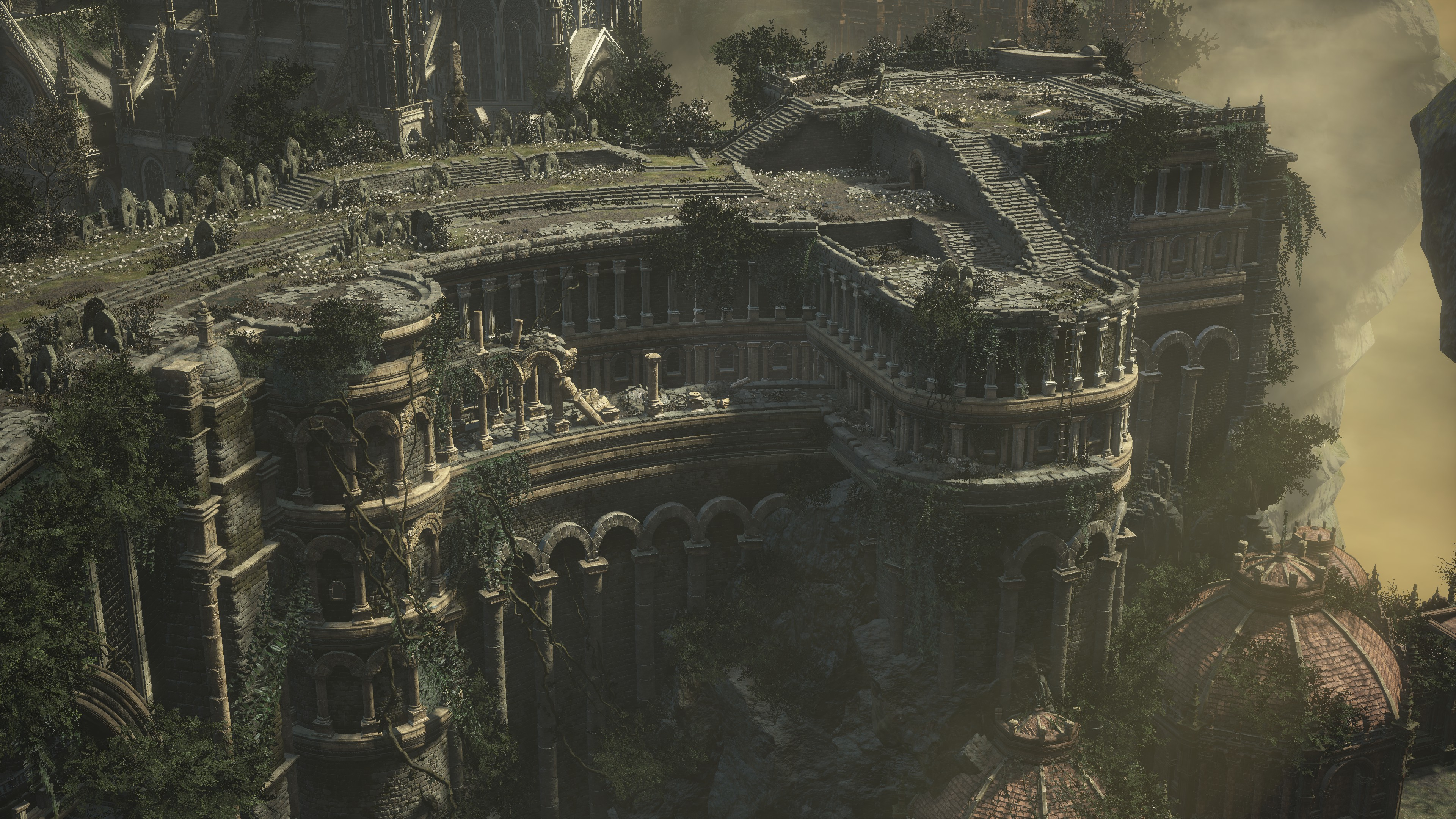
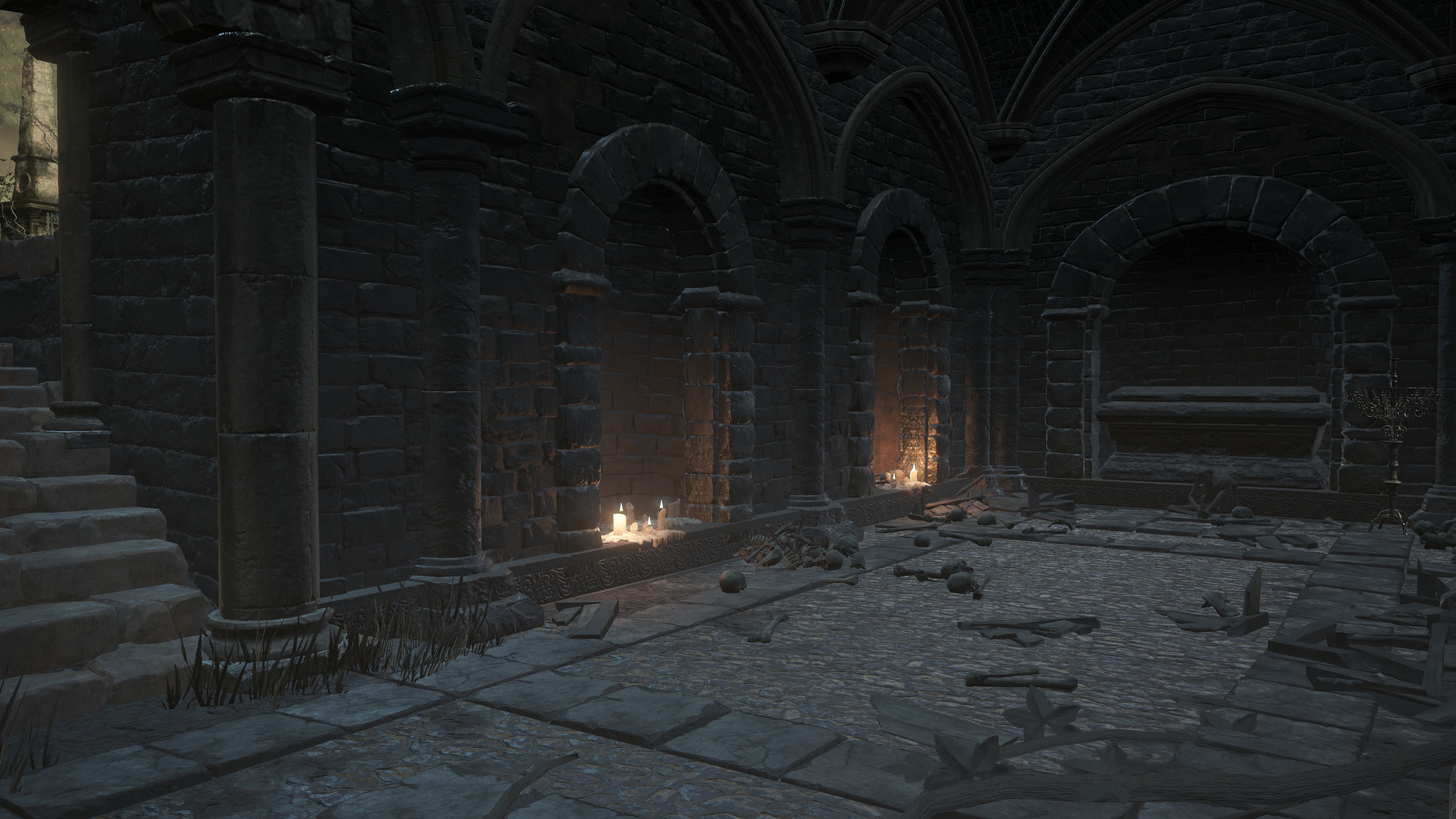
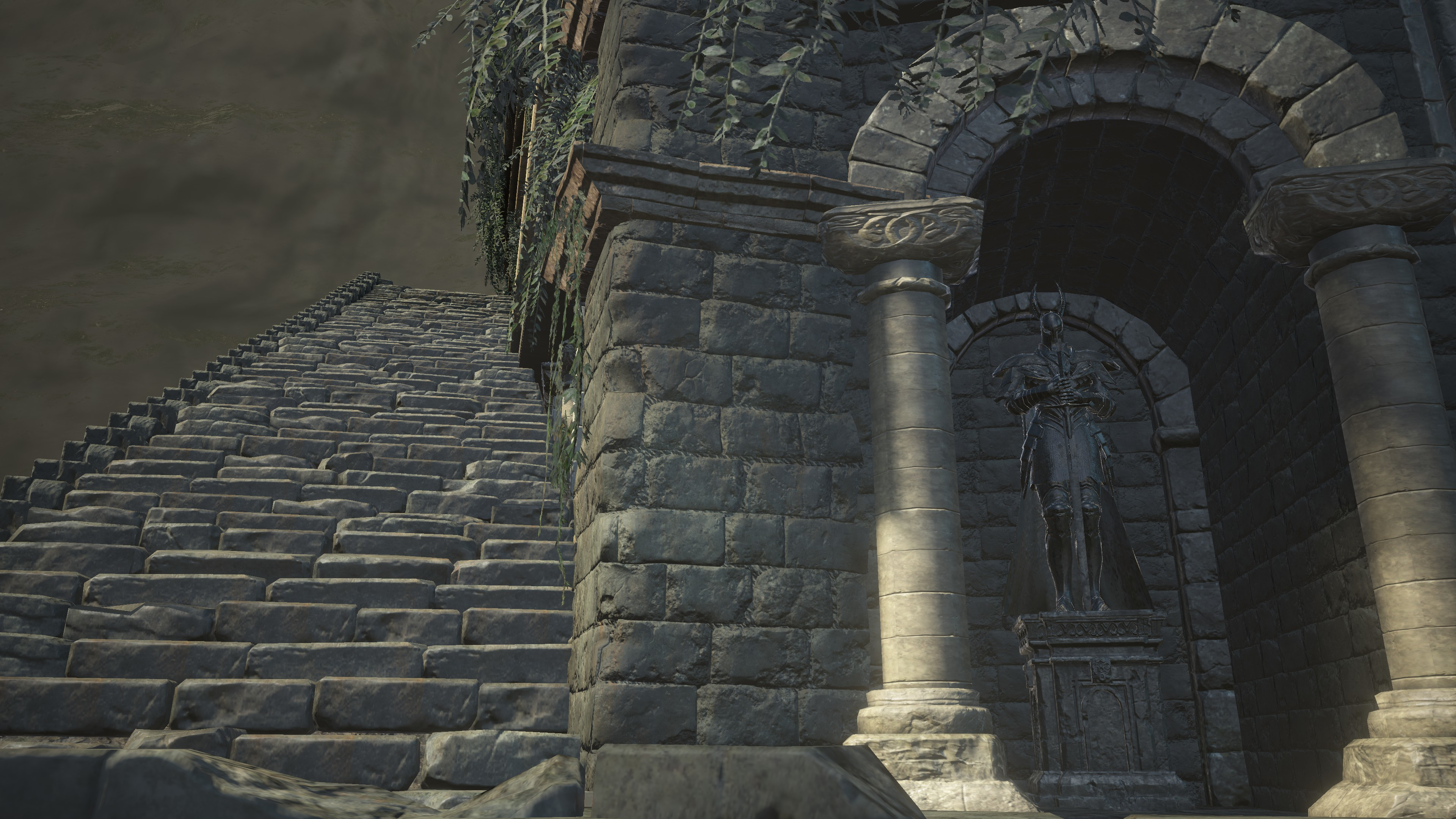
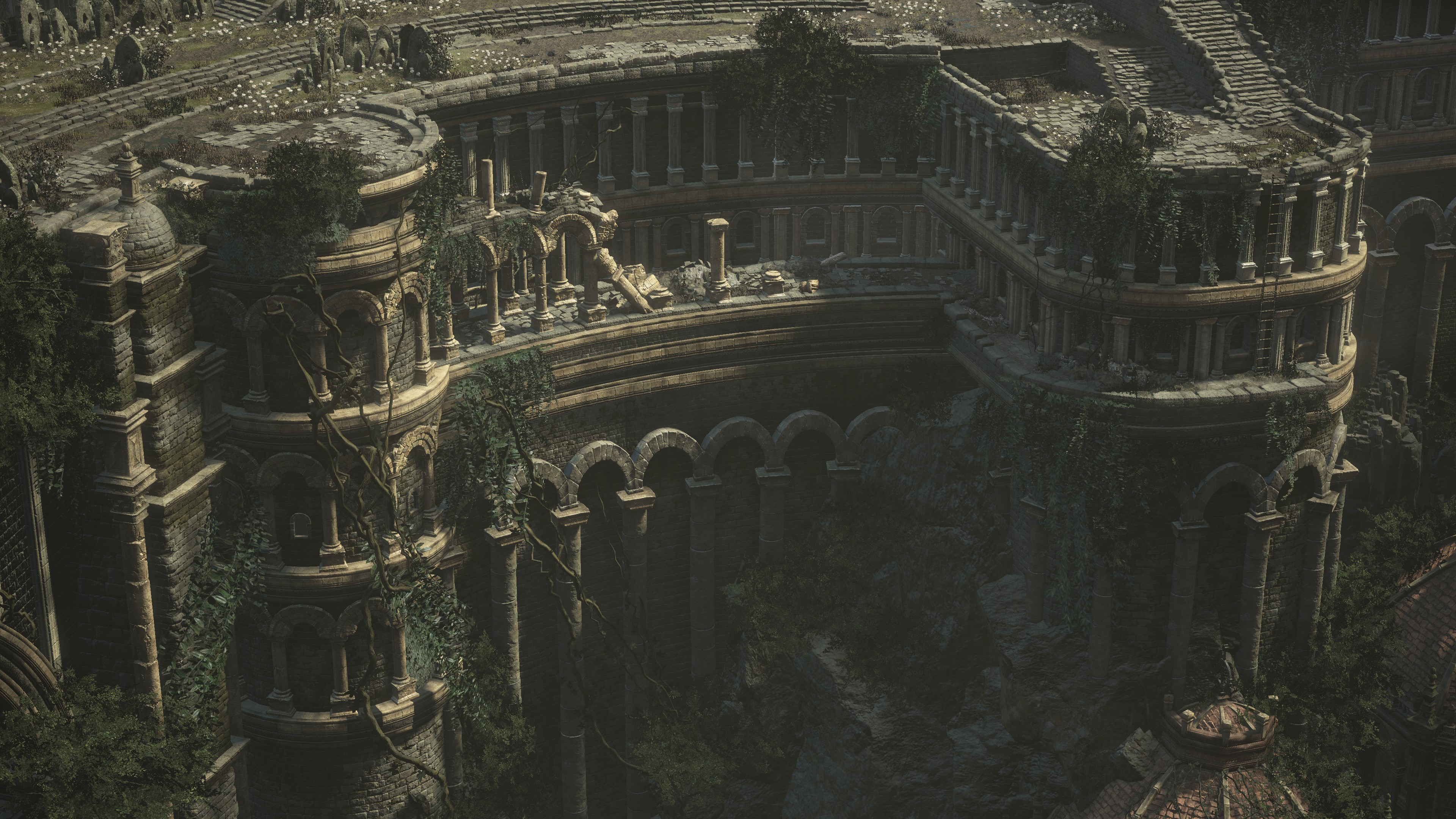
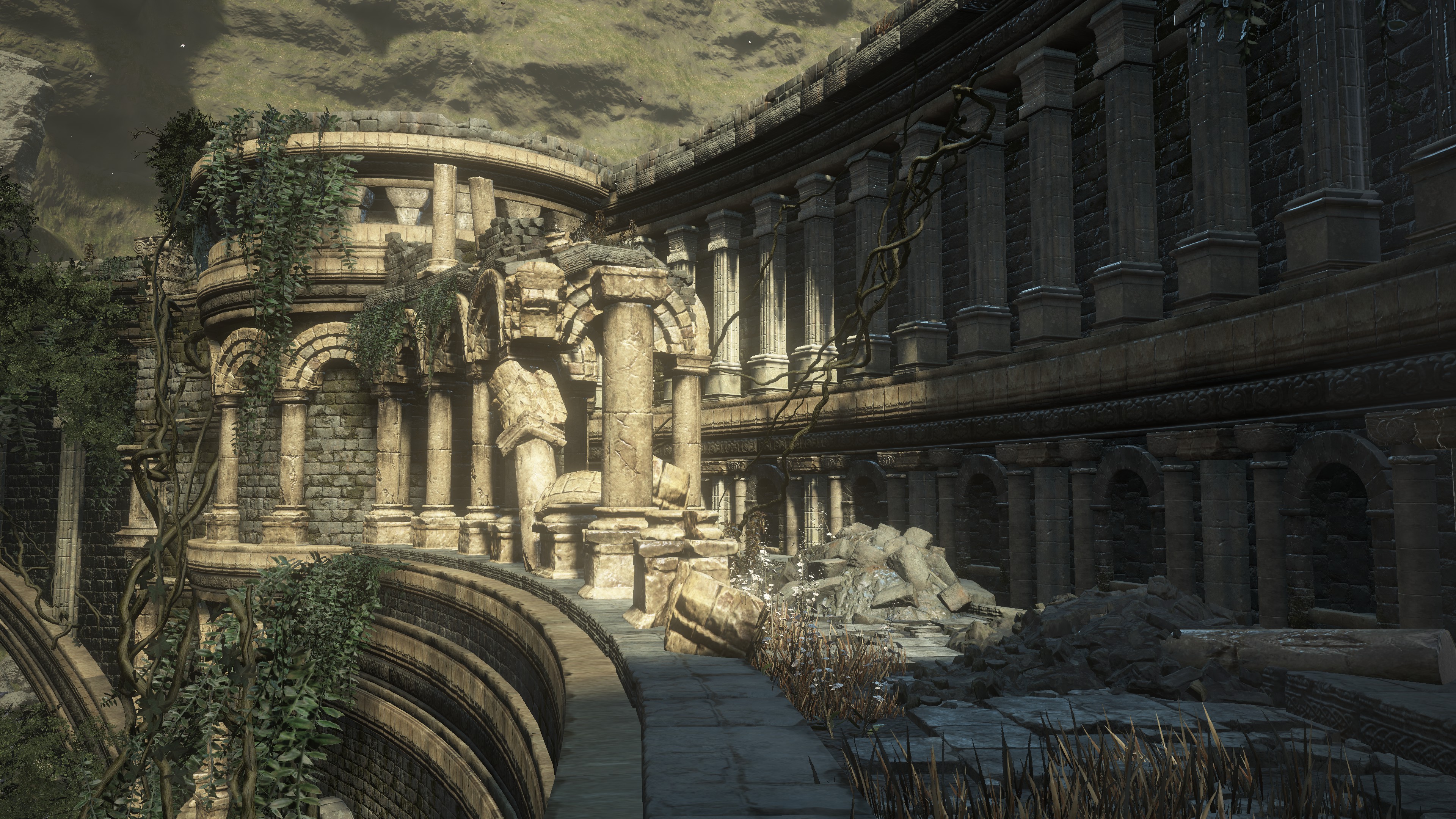
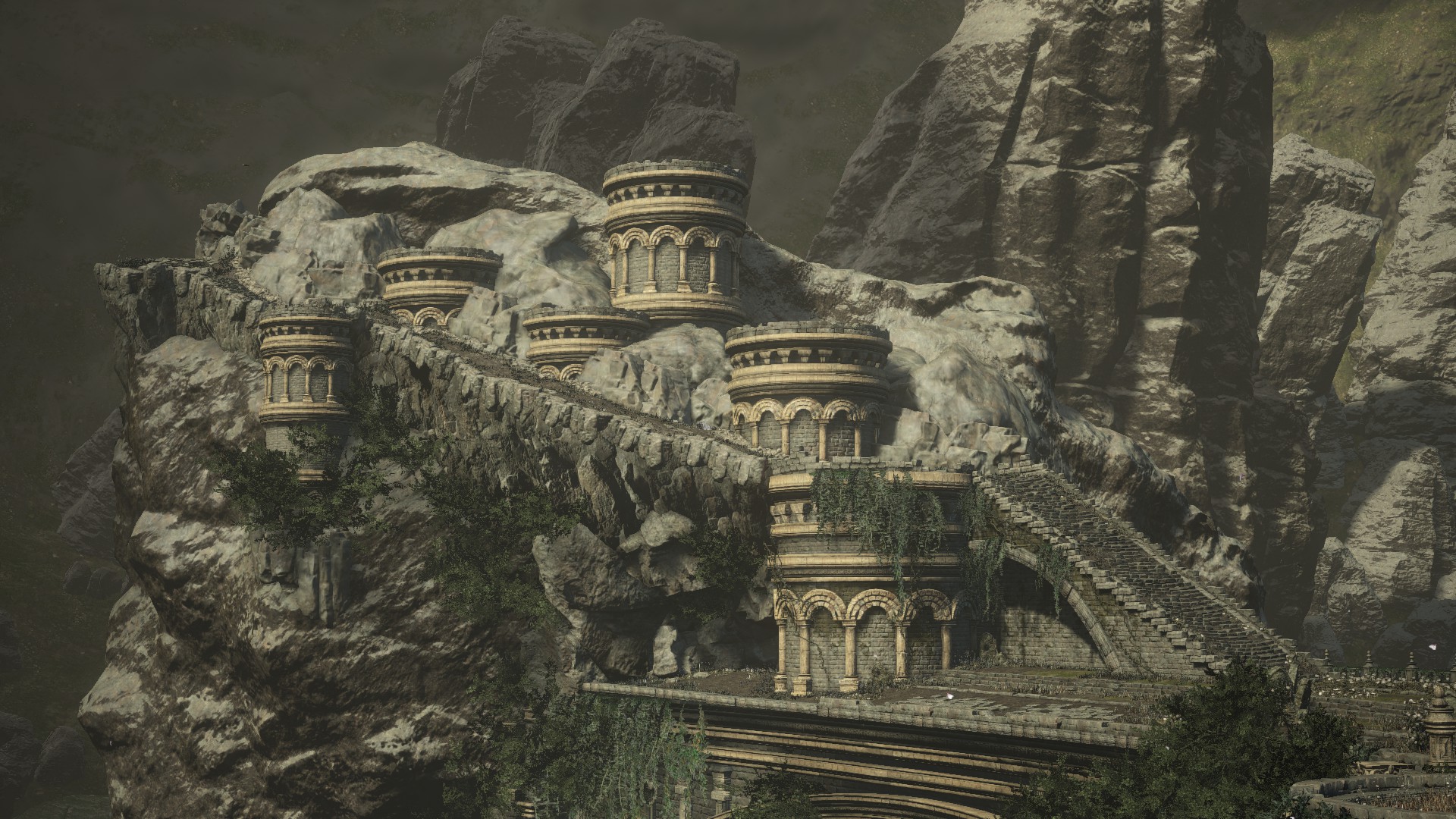
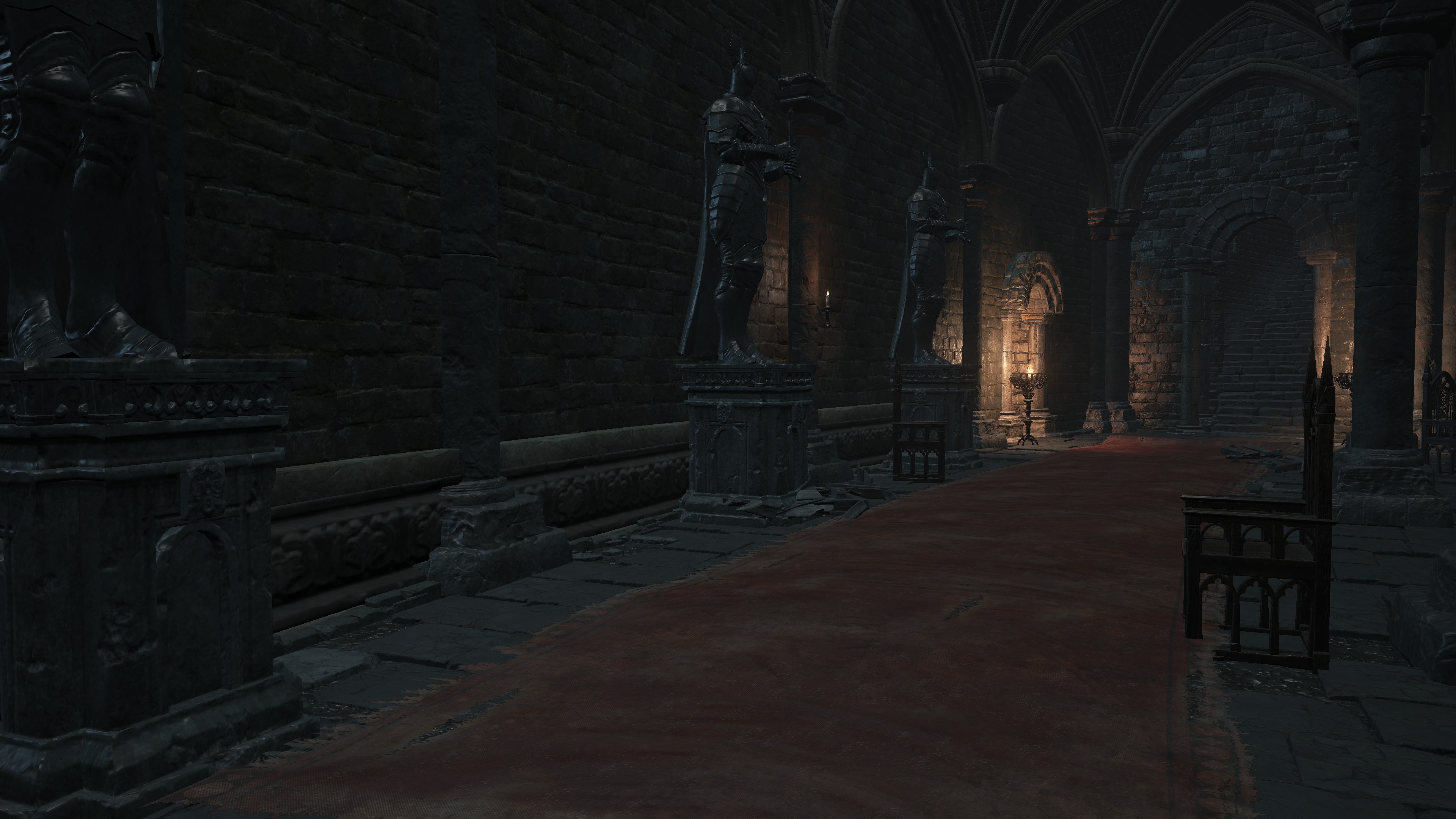
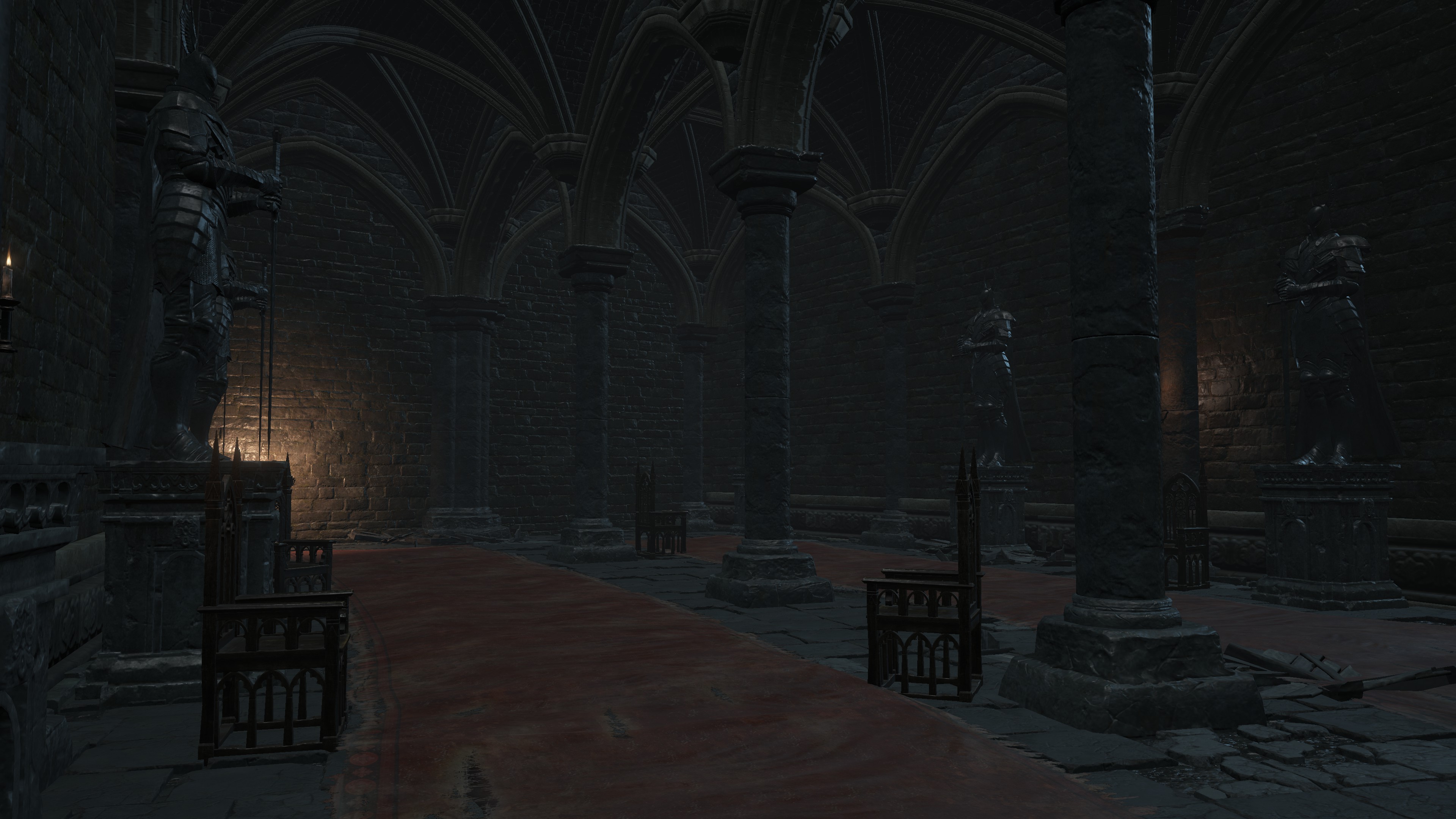
Granted, the unmissable landmark does double to elevate the pygmy royalty from their subjects. Across a bridge from the mausoleum is the much less conspicuous Shared Grave, a burial ground for the community beneath royals. This common graveyard (共同墓地) looks like your typical catacomb, putting aside the corkscrew layout evoking the predictable ring imagery. Even still, the medials seem to have felt compelled to watch over it. After entering the mausoleum foyer, visitors may take another path next to the lift up to the royal cemetery. This second path leads to a chamber laid with fancy red carpets and elegant wood chairs on top of the usual Silver Knight statues, indicating some kind of elite resting area. From there, one proceeds out to the Shared Grave bridge. Why include this casual space and put in so much effort? Most likely, this rest area served more Anor Londo knights when they weren’t on gravekeeping duty at the common grave. Their medial status afforded them the luxury, and the buffer let them act as intermediaries for other visitors — plus there are more bones lying around the one gravekeeper’s tomb.
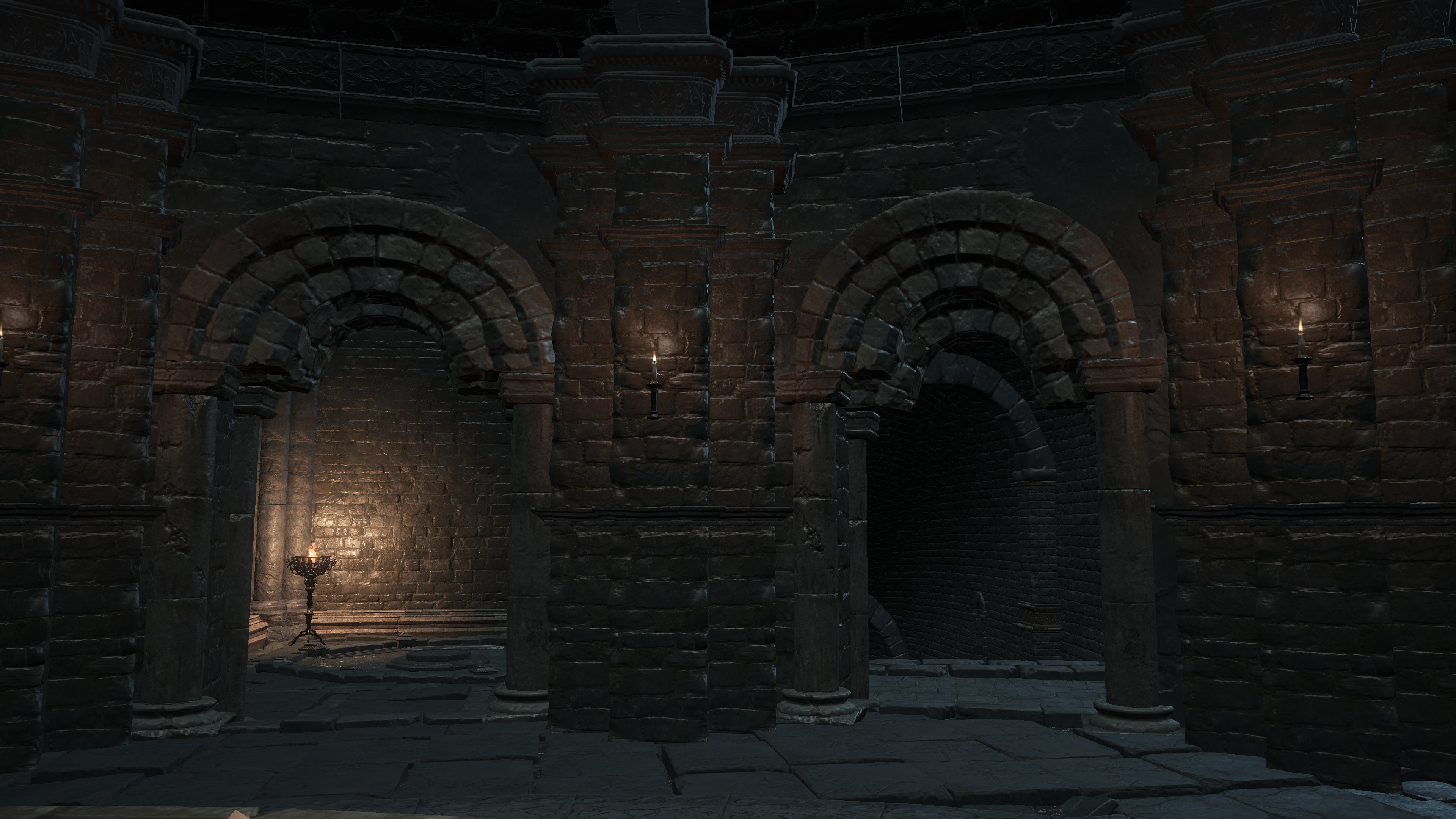
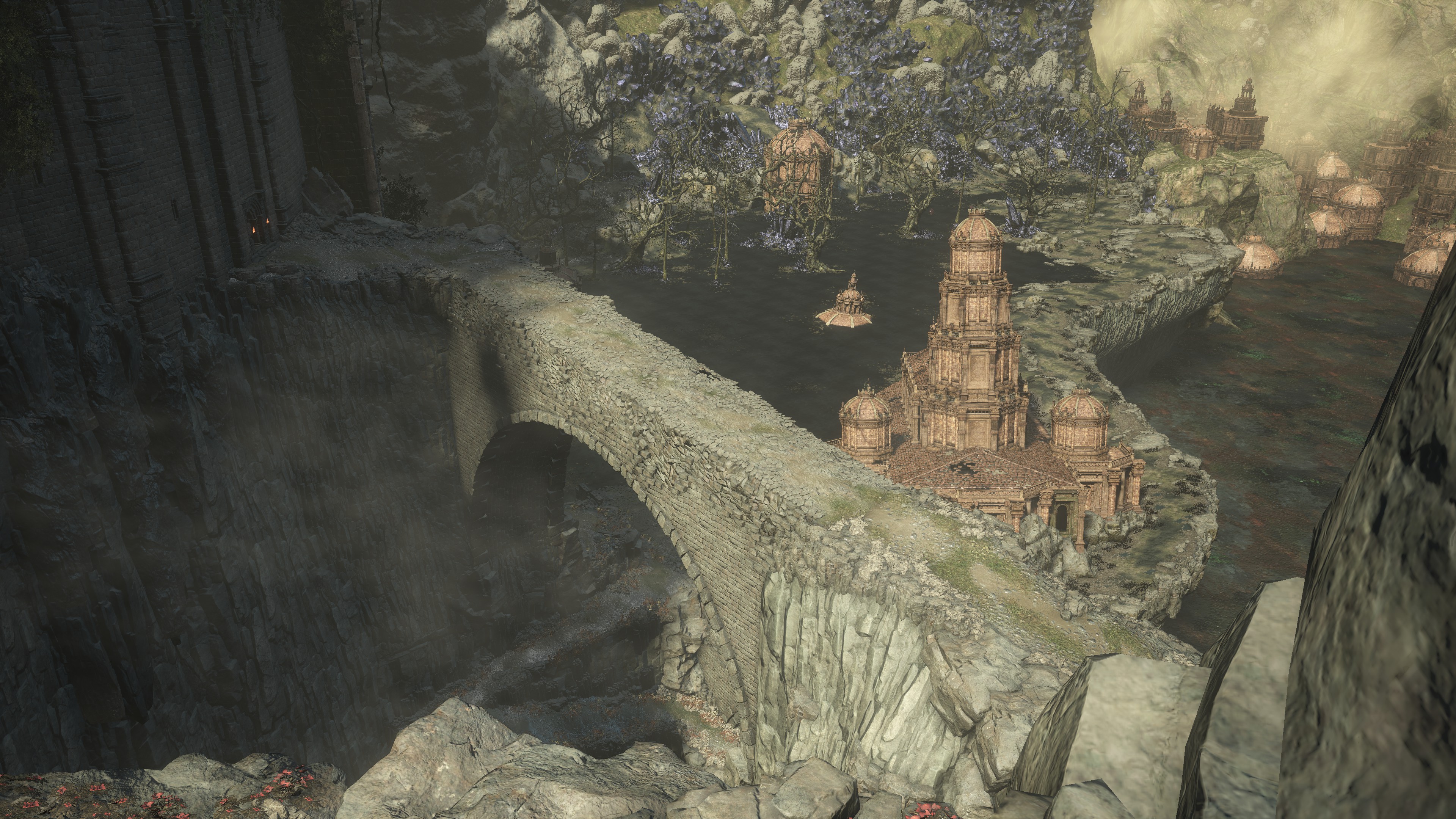
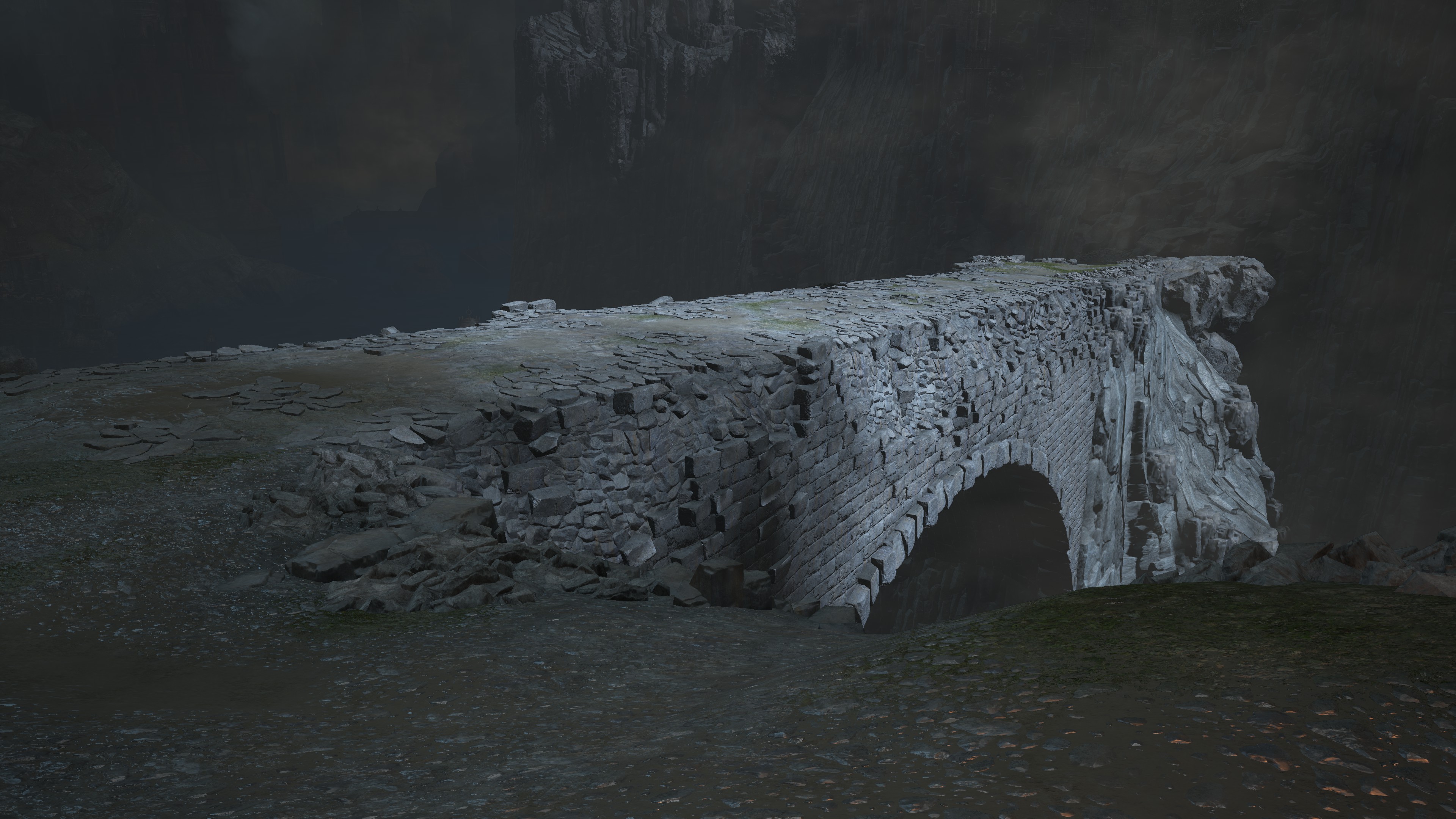
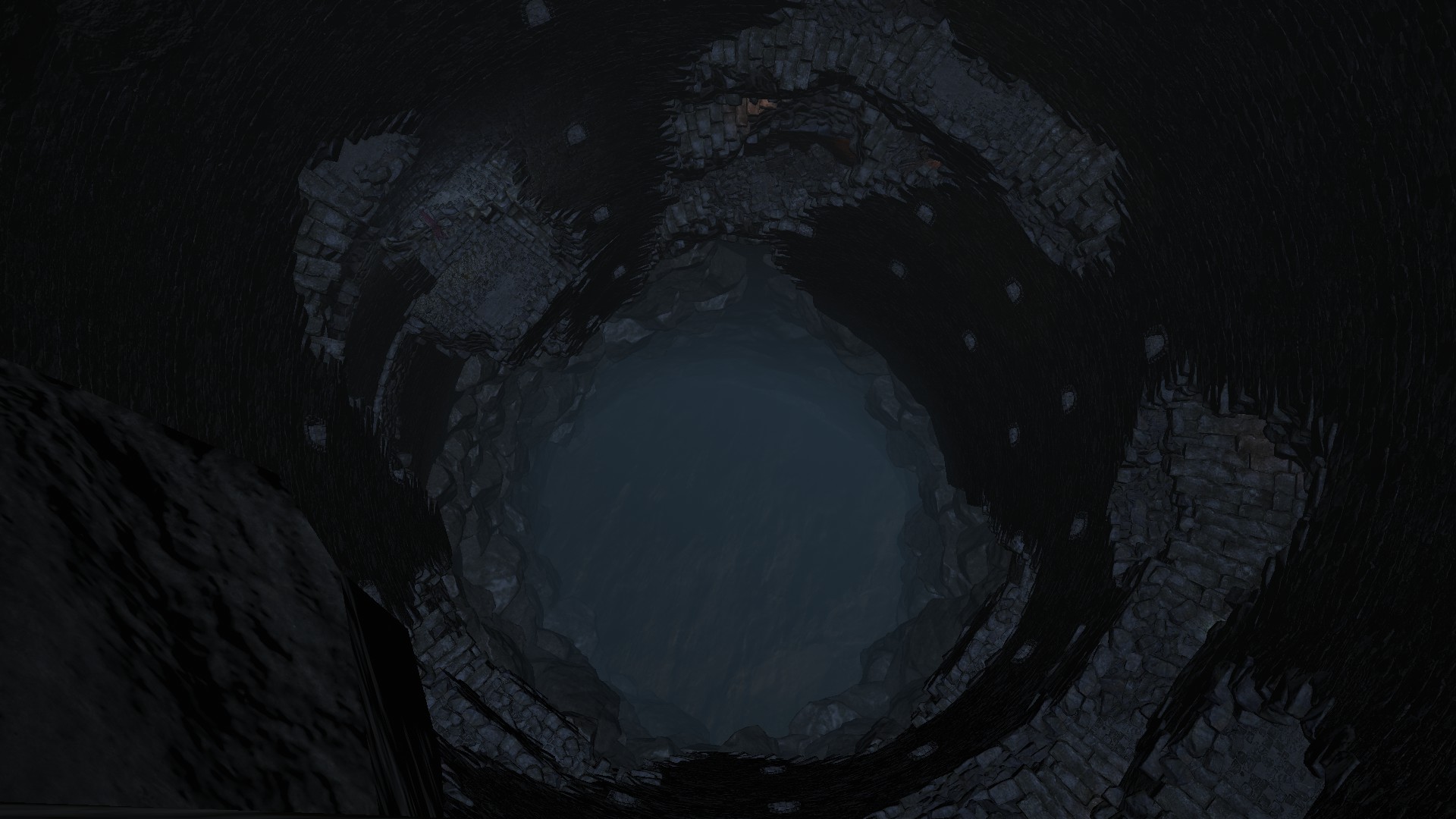
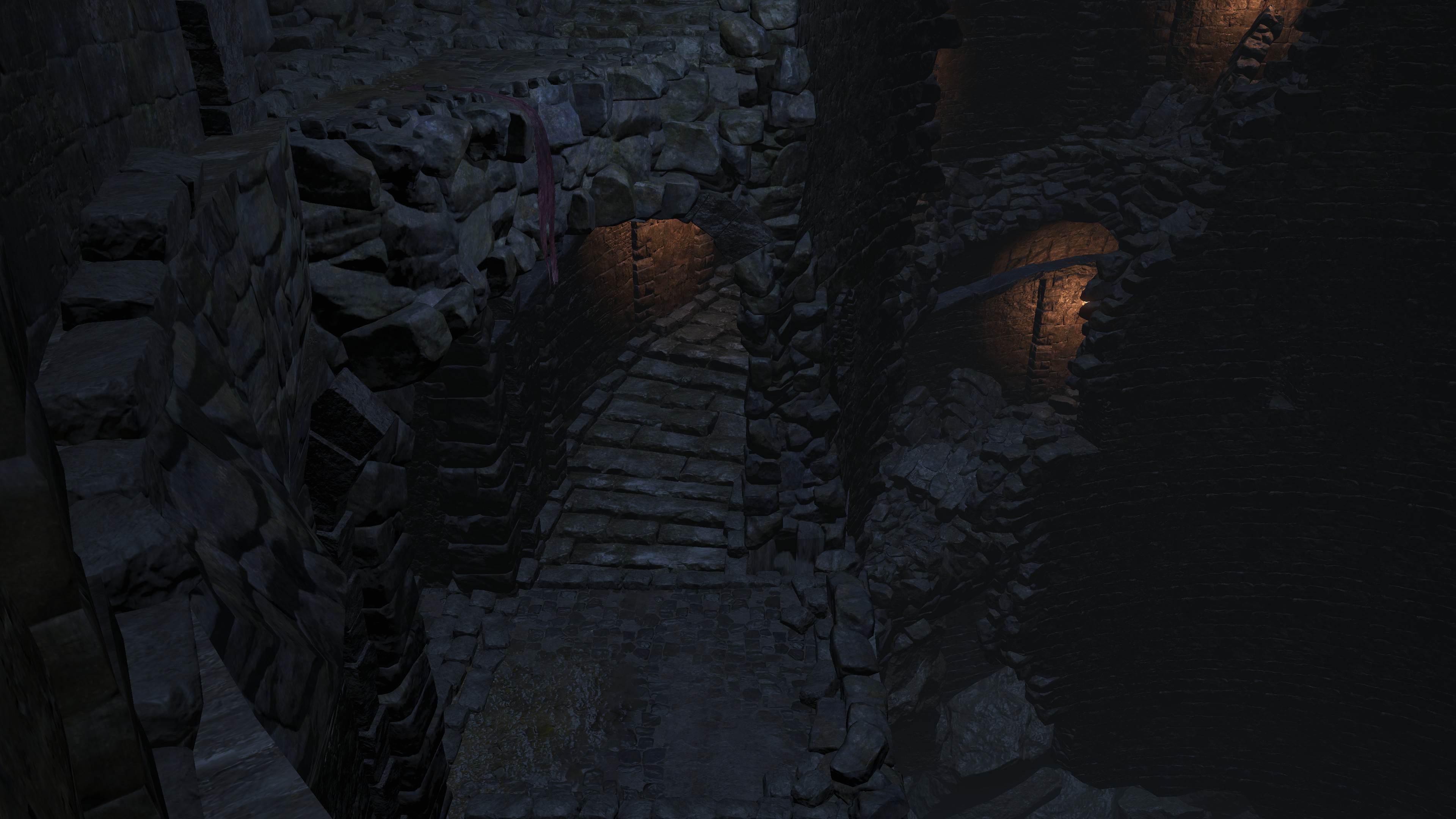
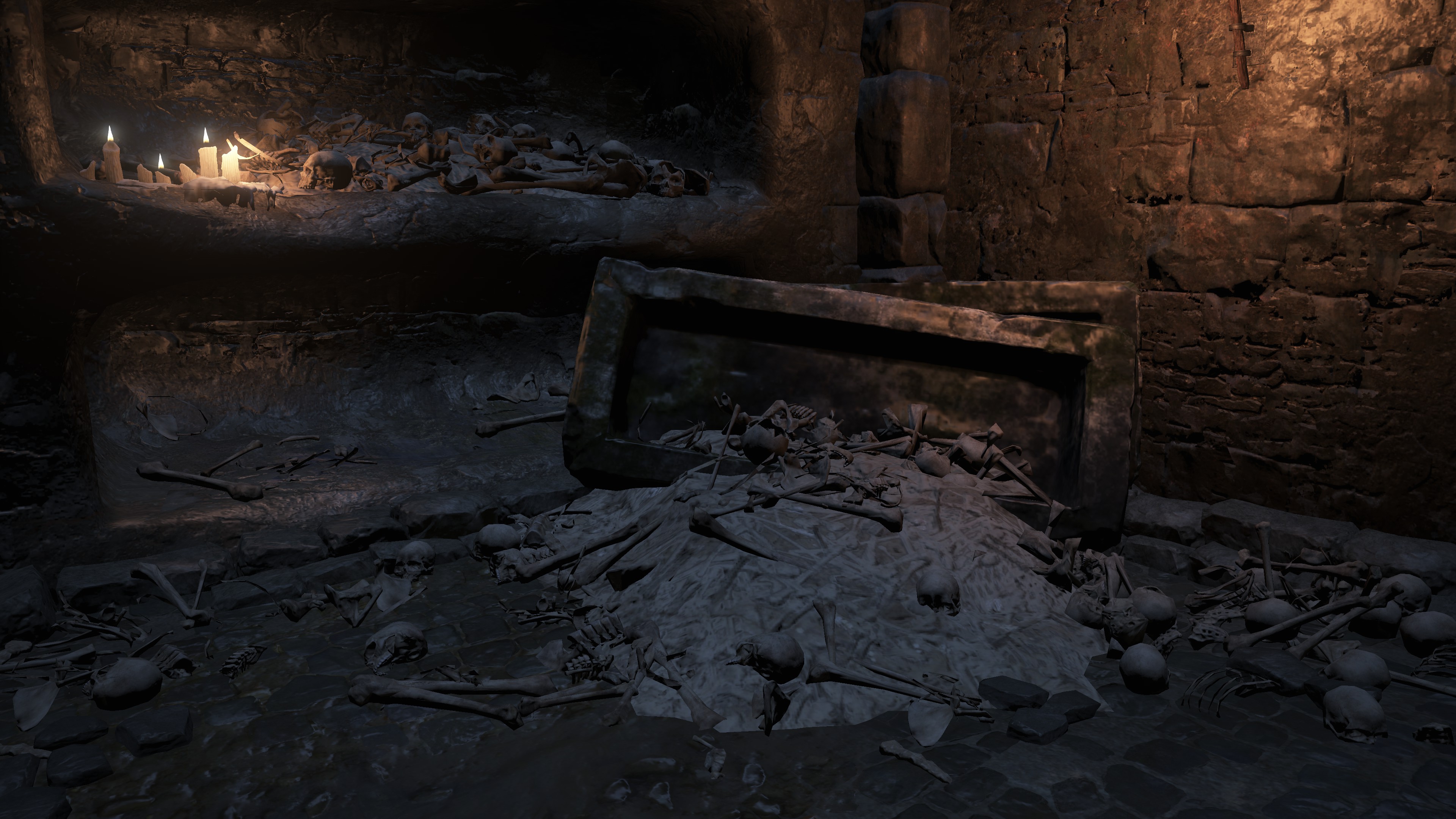
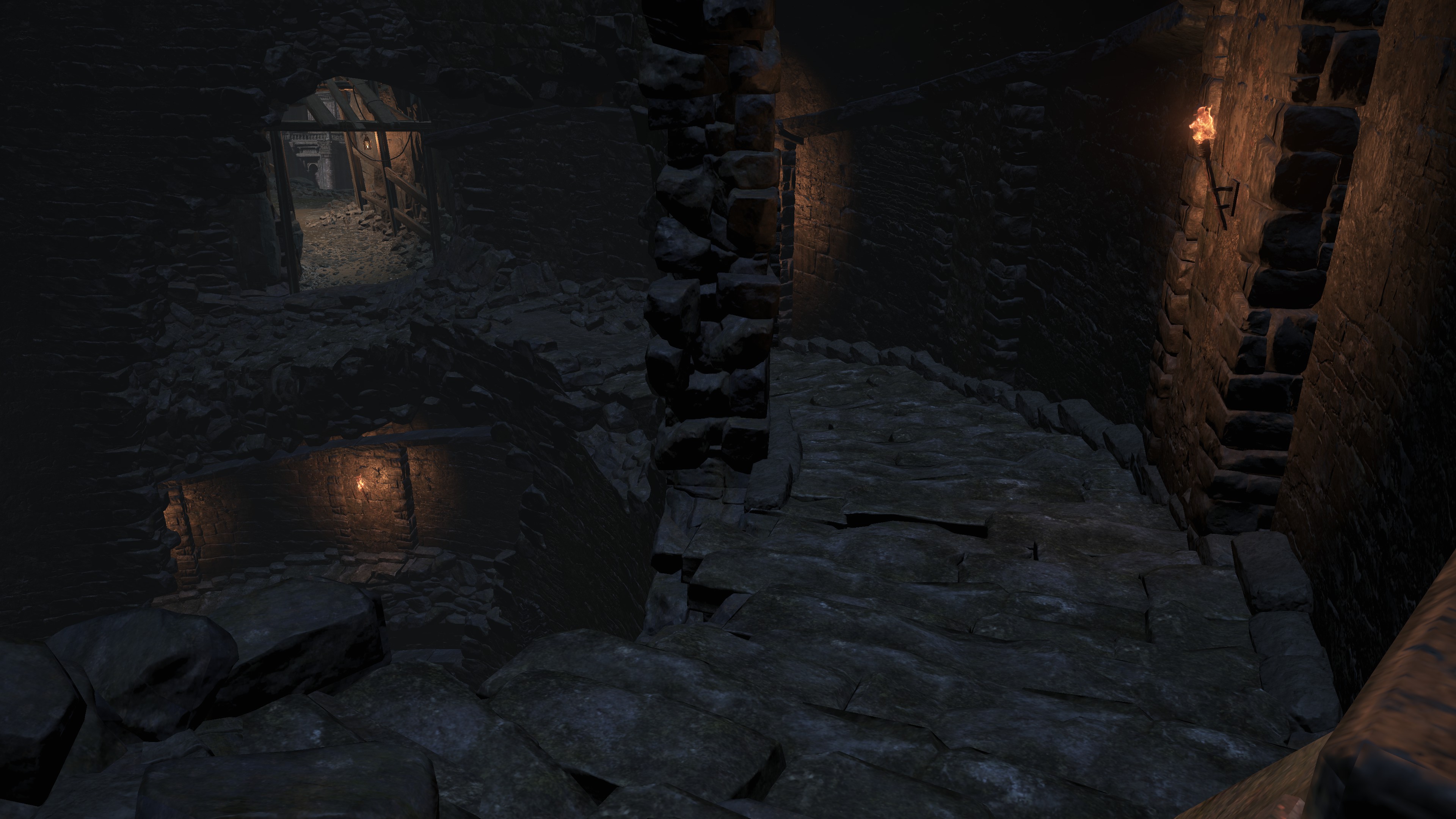
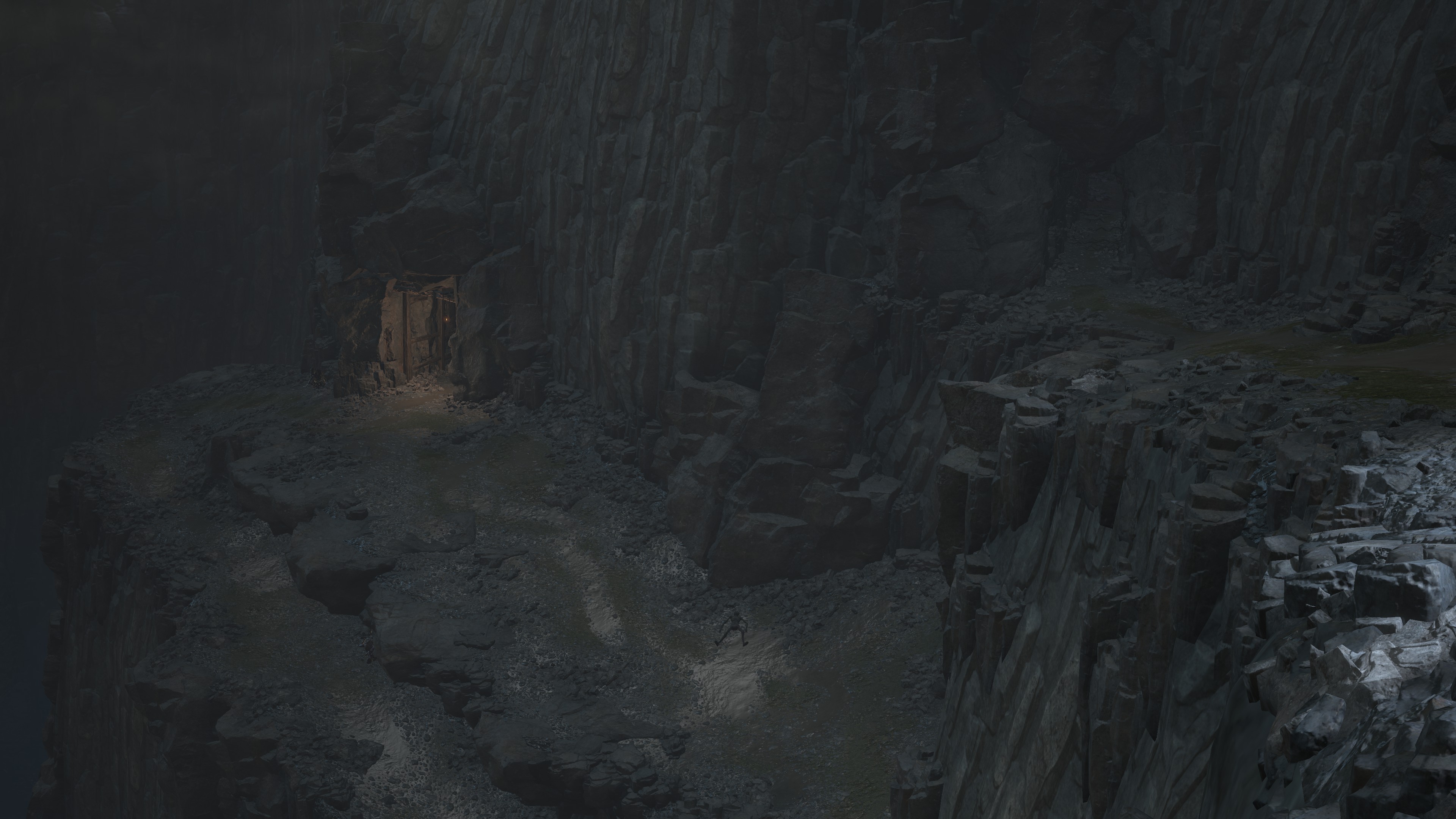
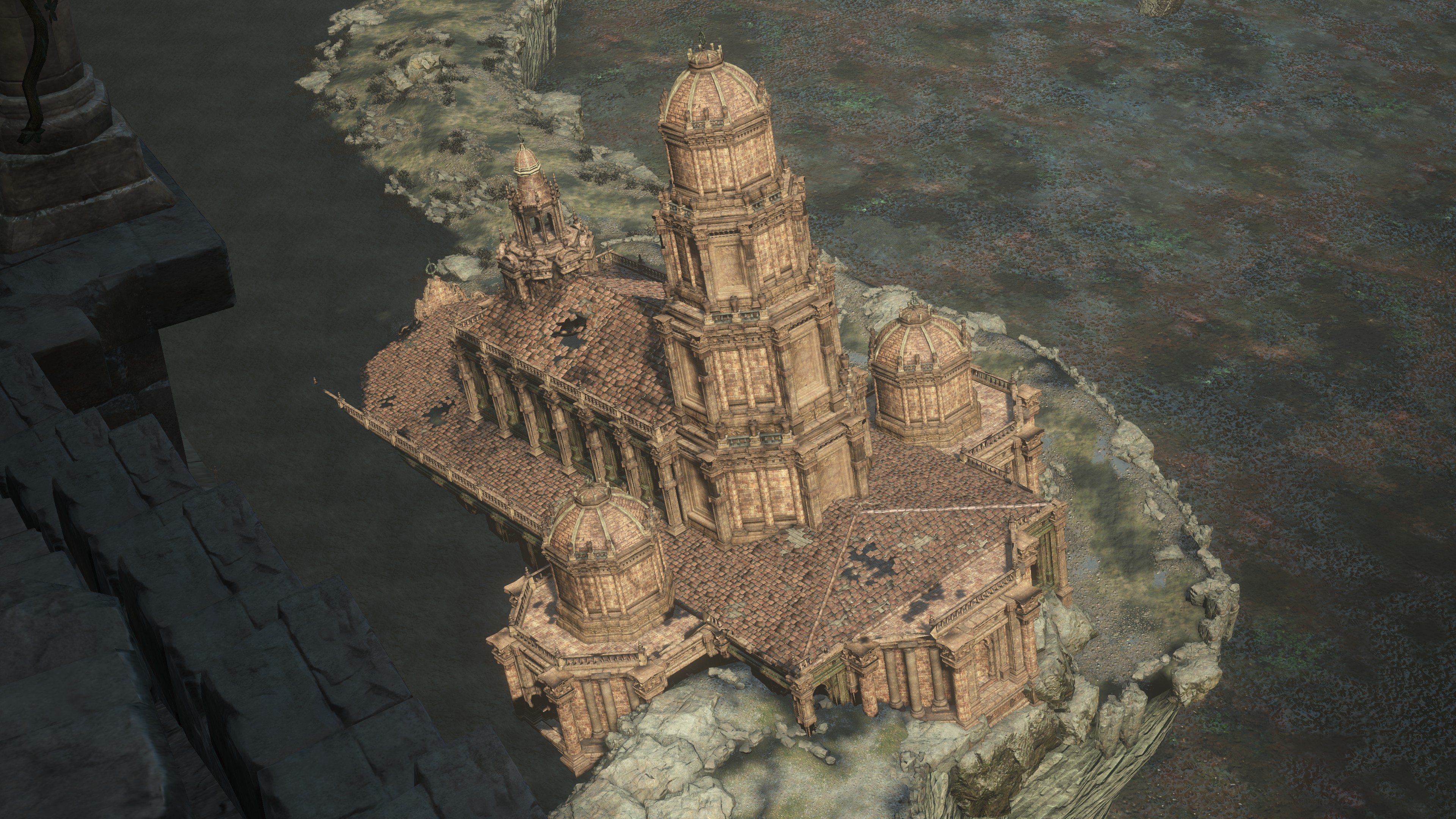
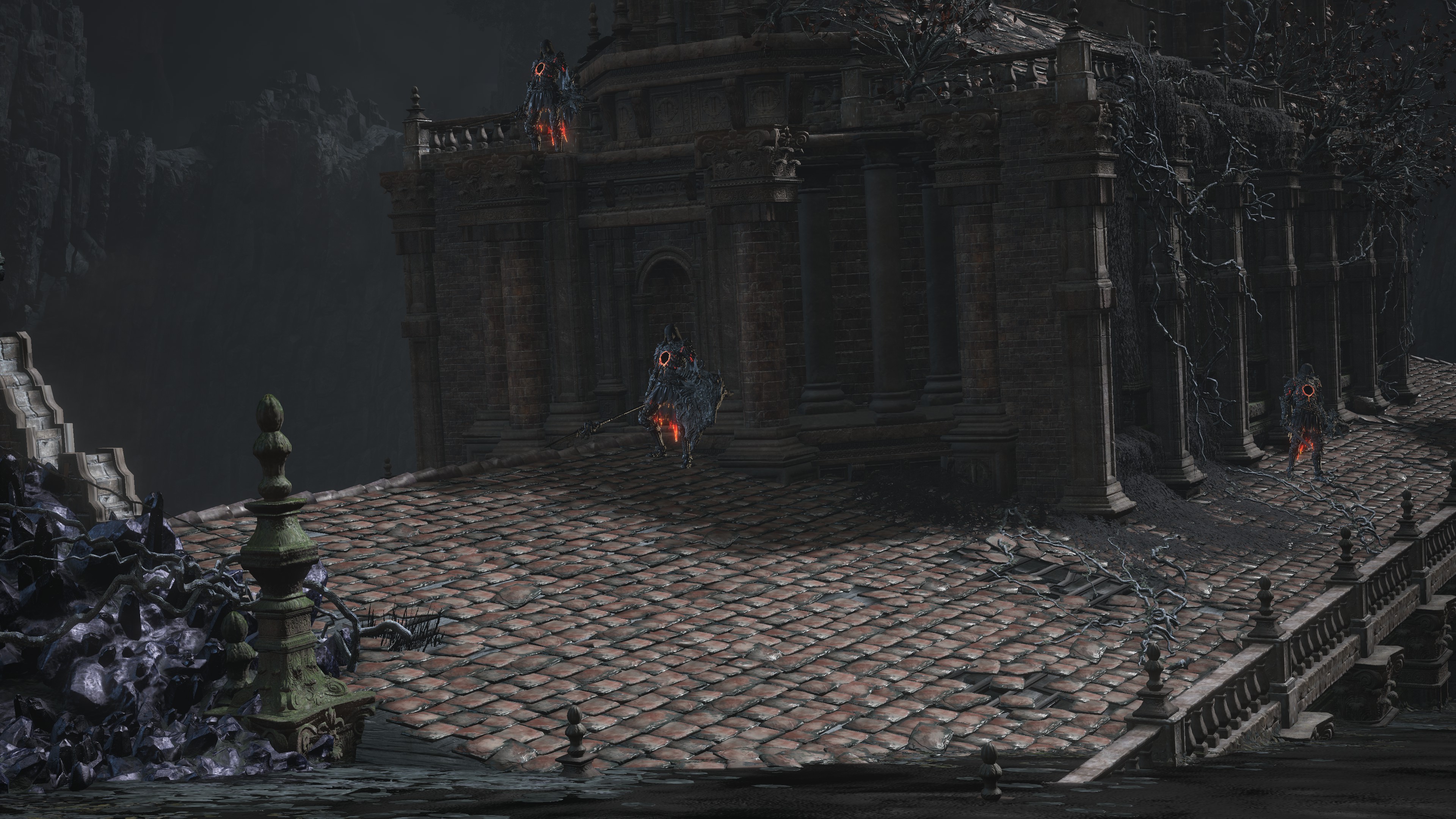
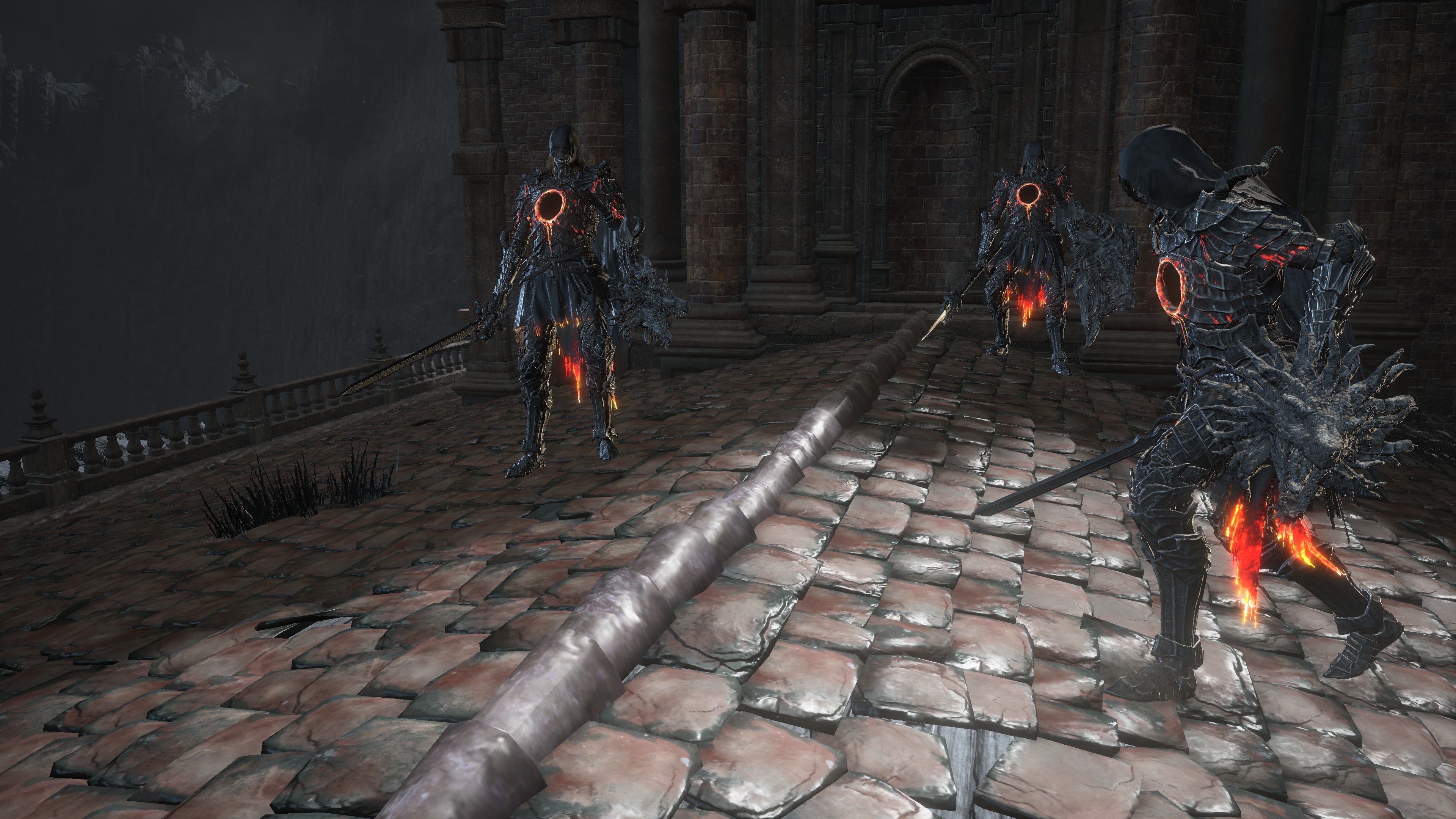
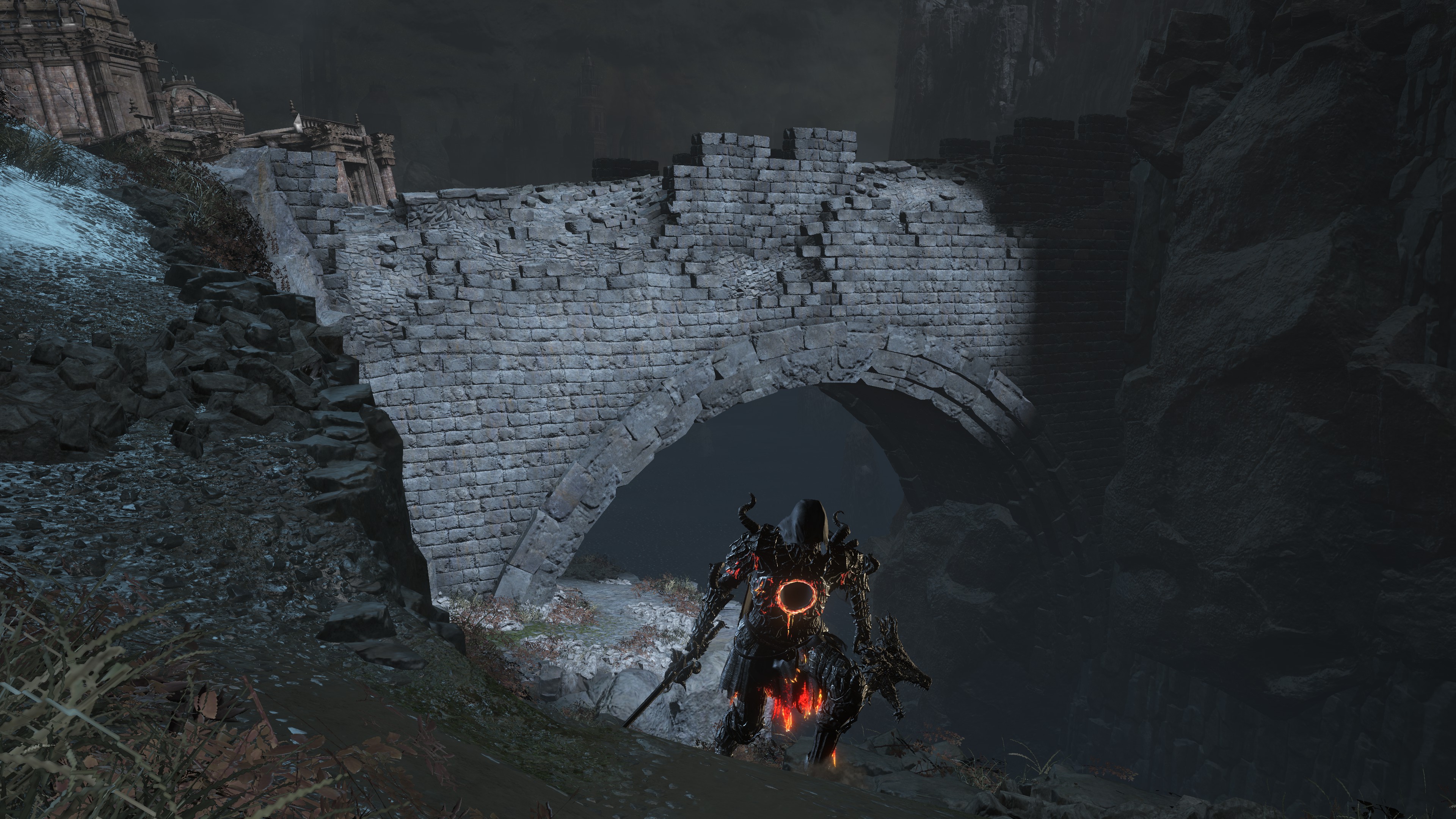
As for the actual commoners, communal visitation was naturally handled by the neighborhood watch. We reach the Shared Grave from another entrance at the bottom of the corkscrew, crossing a different bridge that once linked back to the cityscape, now sinking into a swamp. Before that, a small bypath in the cobblestone leads us to an especially large building. Besides the size, it is notable for the number of Ringed Knights still patrolling the place as it sinks. No other part of the explorable city holds such a large concentration of knights, so this building is likely a barracks or similar kind of military installation for them to operate out of. Their situation next door to the bridge thereby enables the knights to easily screen passers-by before the citizens cross to visit deceased relatives. Why the added security? Likely for fear of rebels among the masses. After all, some curious souls might use the collection of dead men in a secluded location to study the humanity, as we witness at the Undead Settlement. The pygmies were regulating themselves to ensure they complied with the gods’ ban — better than suffering a worse crackdown. In the end, it was always to appease Anor Londo.
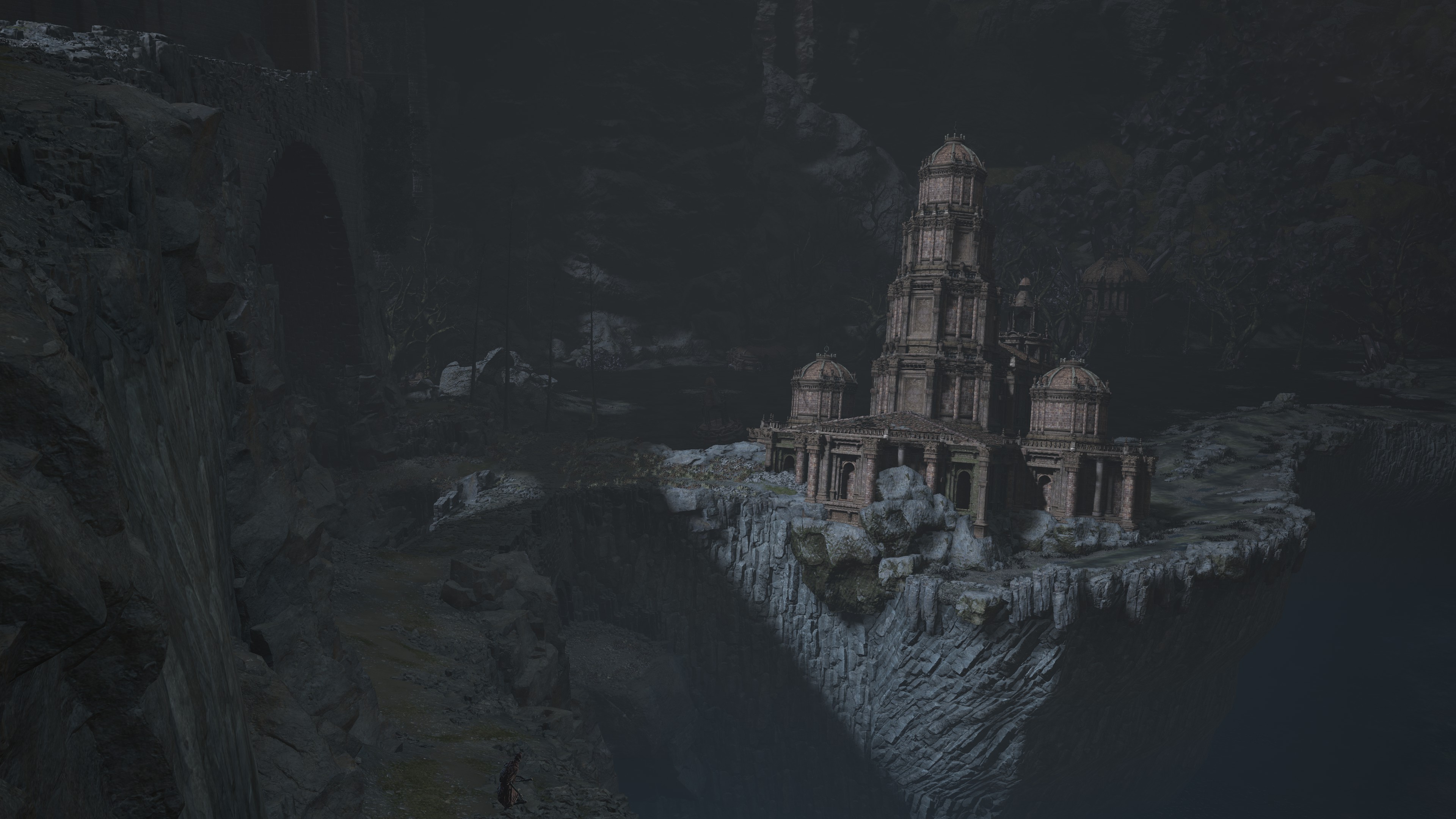
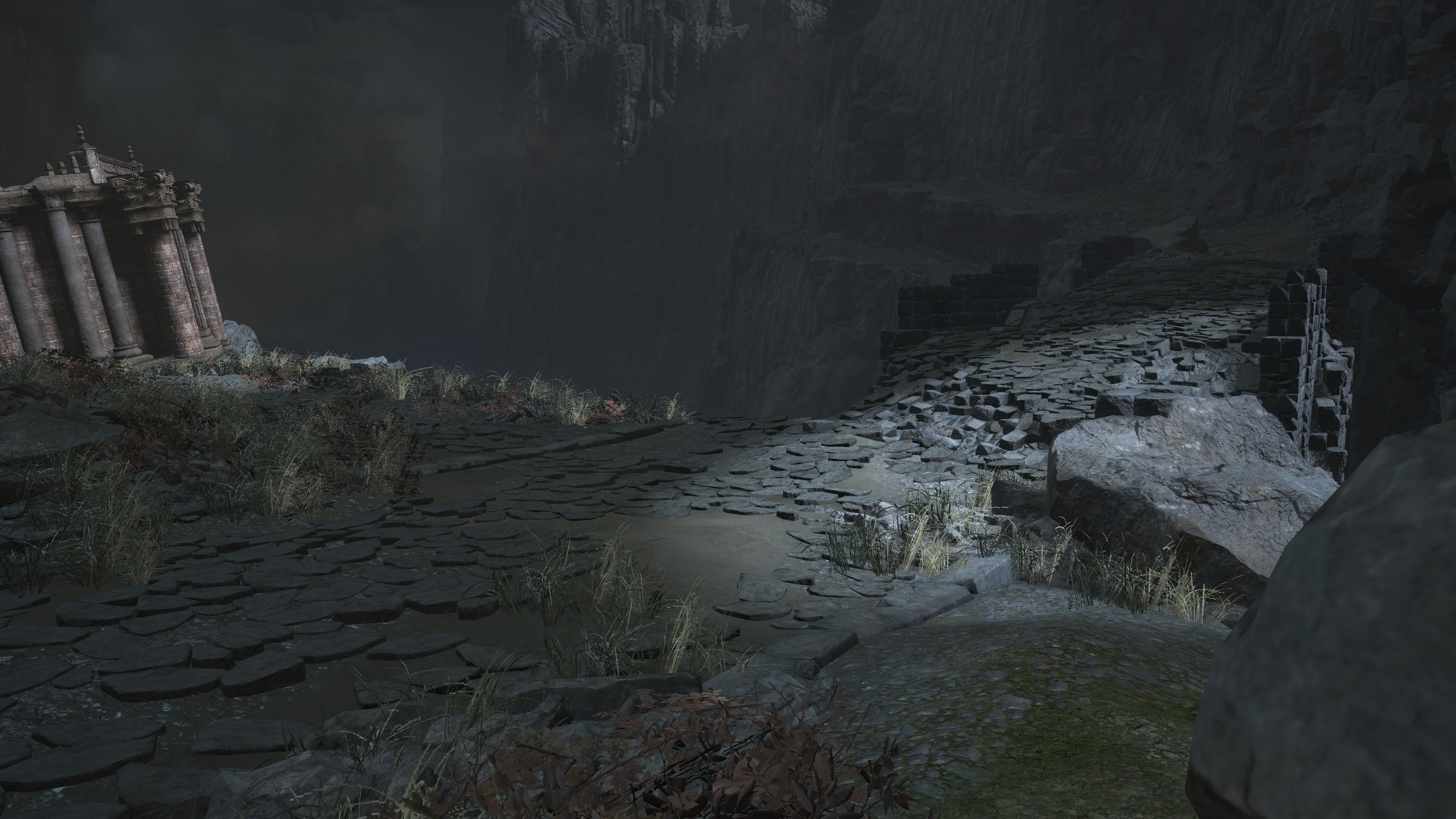
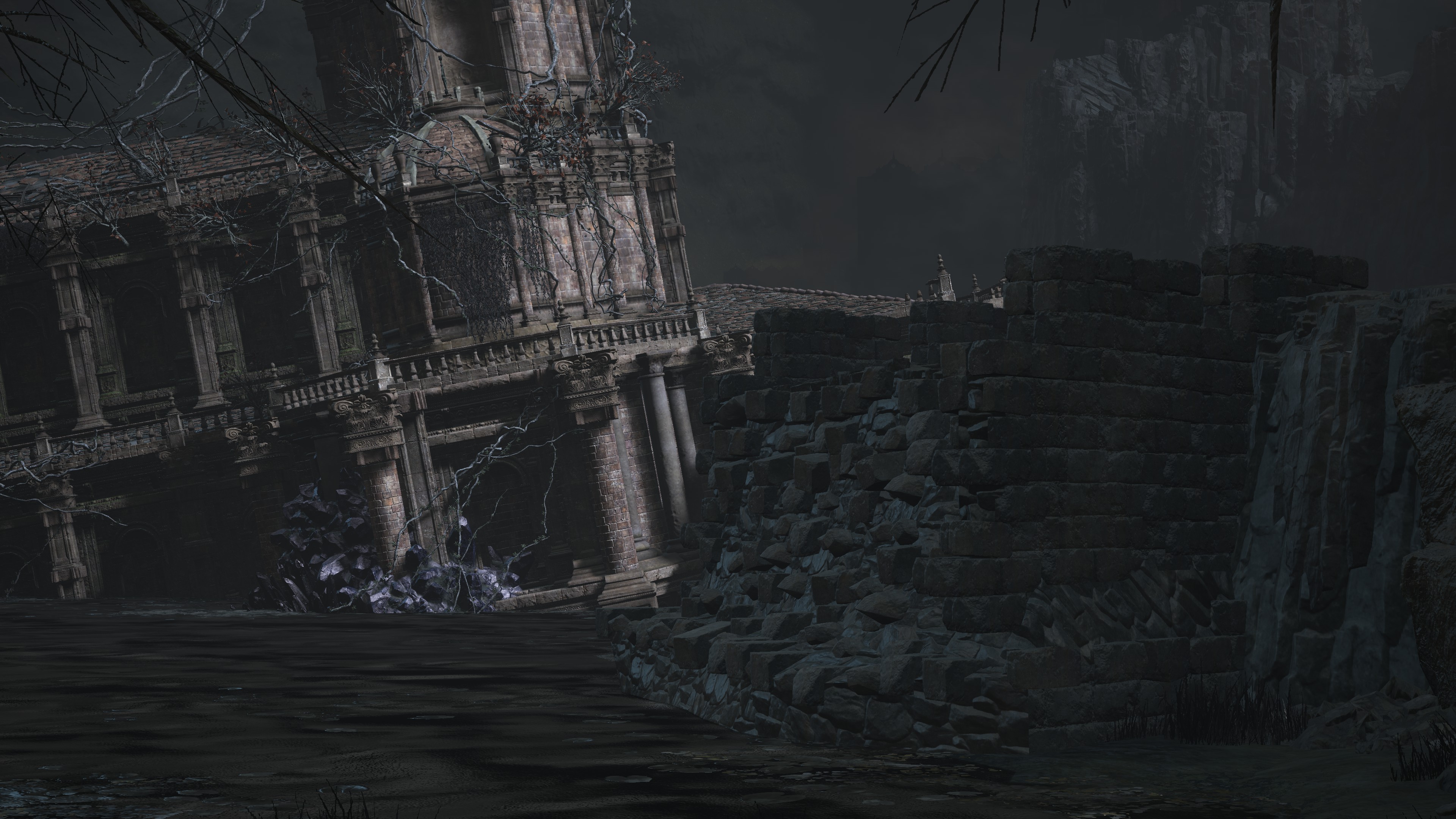
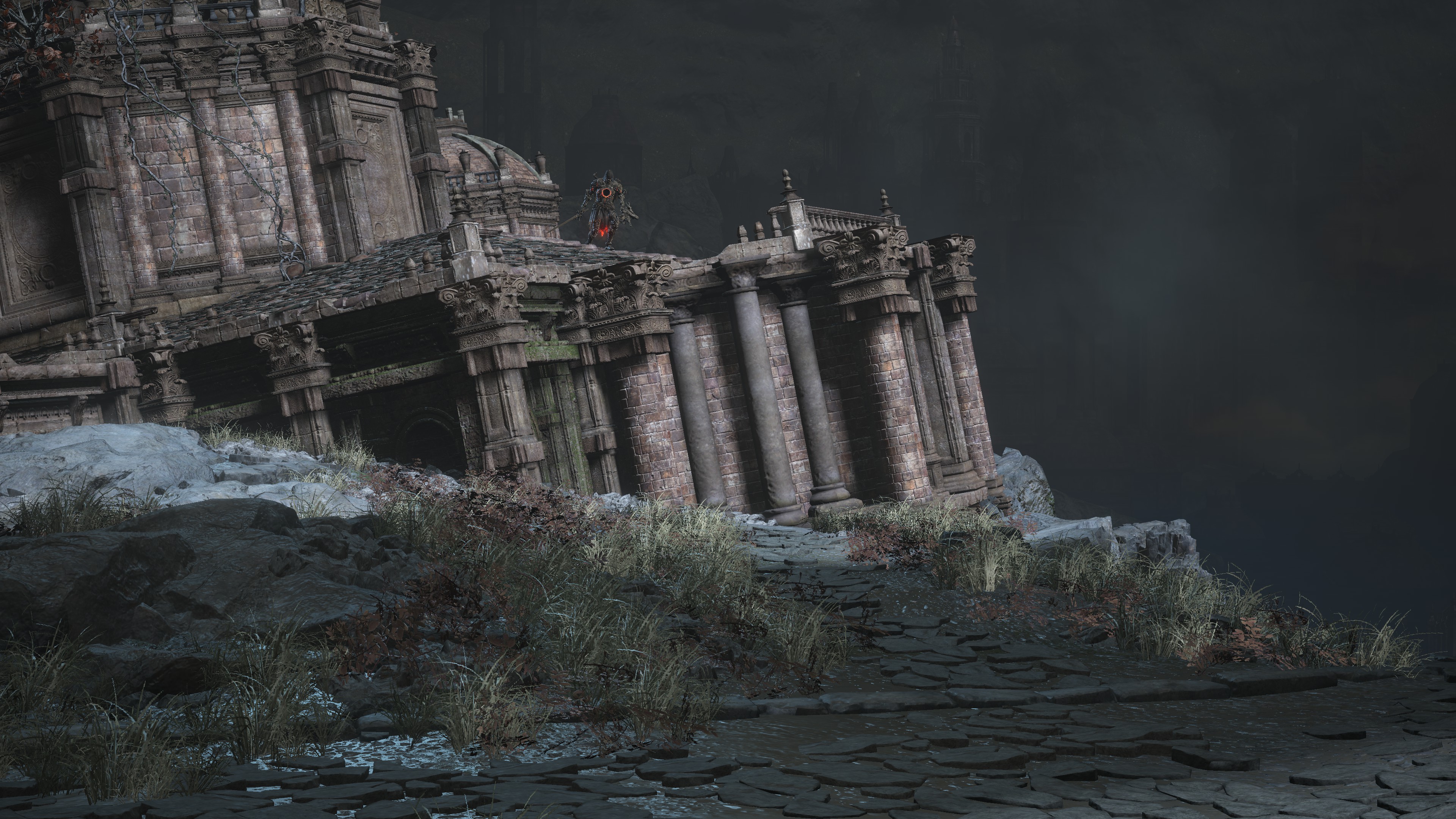
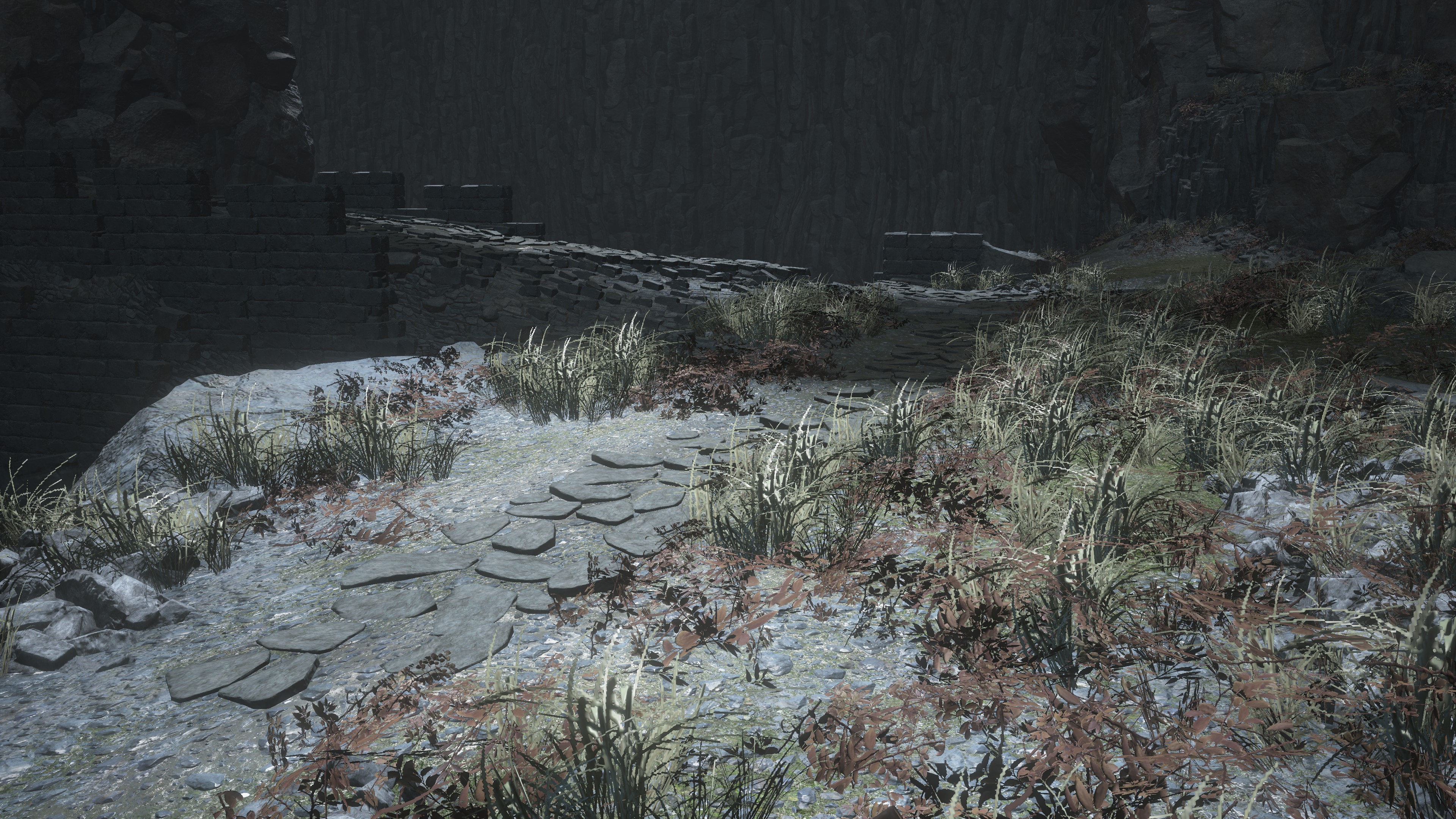
Overall, the Ringed City’s funerary system was designed for the pygmies’ subjugation and Dark’s degradation more than anything. Likely the only reason Gwyn didn’t go farther was because of the primordial serpents’ intervention. Certain chambers in the royal mausoleum complex stand out for erecting statues of the world serpents, portraying the latter with a more realistic body compared to the idealized rendition later sculpted in Lothric. Kaathe’s eyewitness account in DS1 affirms that the snakes were intimately familiar with the pygmy royalty from the start. Recall, however, that they were also close to the gods, prior to undeath’s emergence. As wise elders seeking the proper age for the universe, it isn’t a surprise if the world serpents began realigning themselves once the owners of the Dark Soul were discovered. They were liable to object when Gwyn decided to seal man’s humanity with flame. The mausoleum statues thus seem to act as a counterbalance to their Silver Knight counterparts, demonstrating their solidarity with the pygmies destined to inherit everything in the coming age.
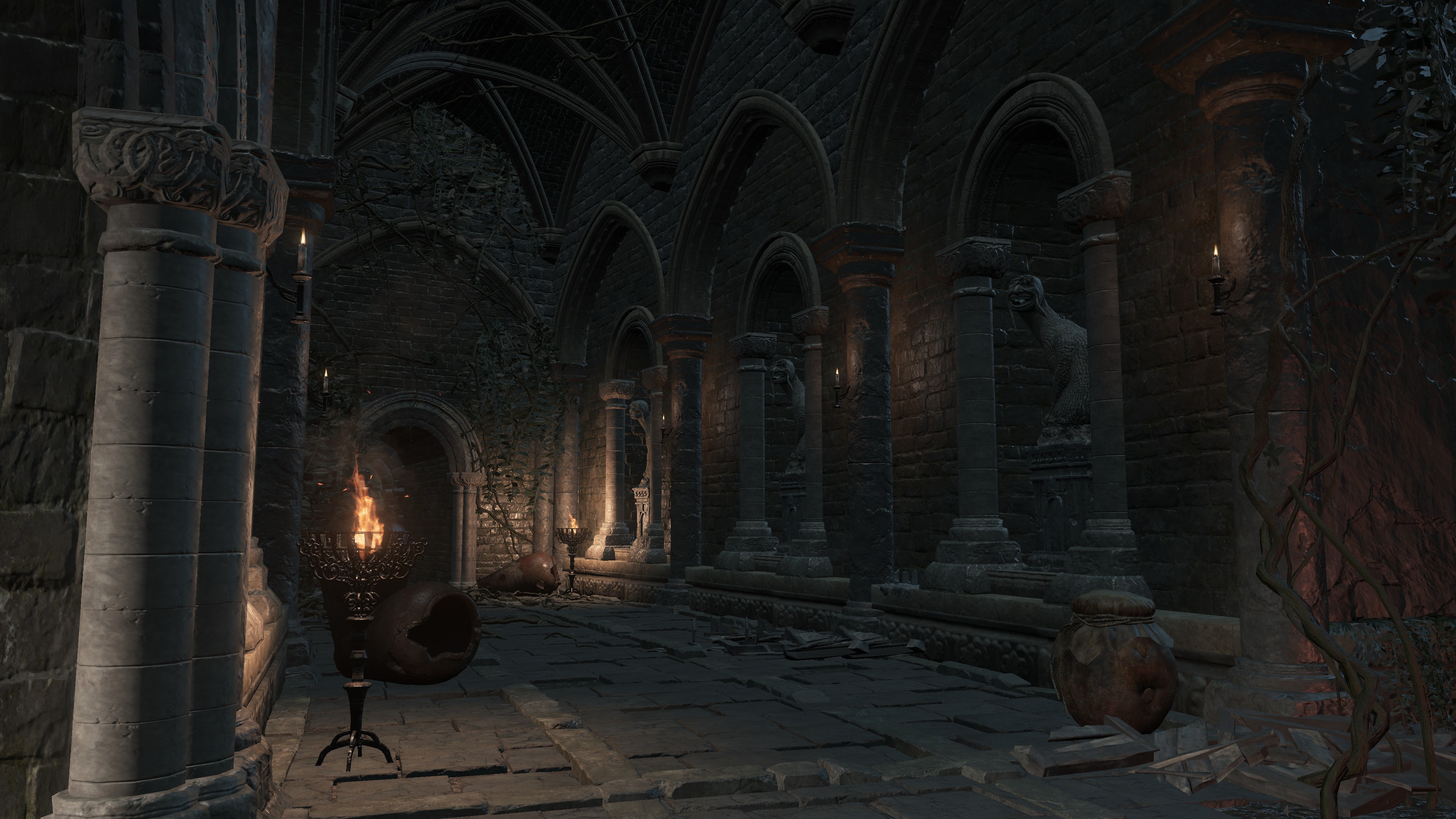
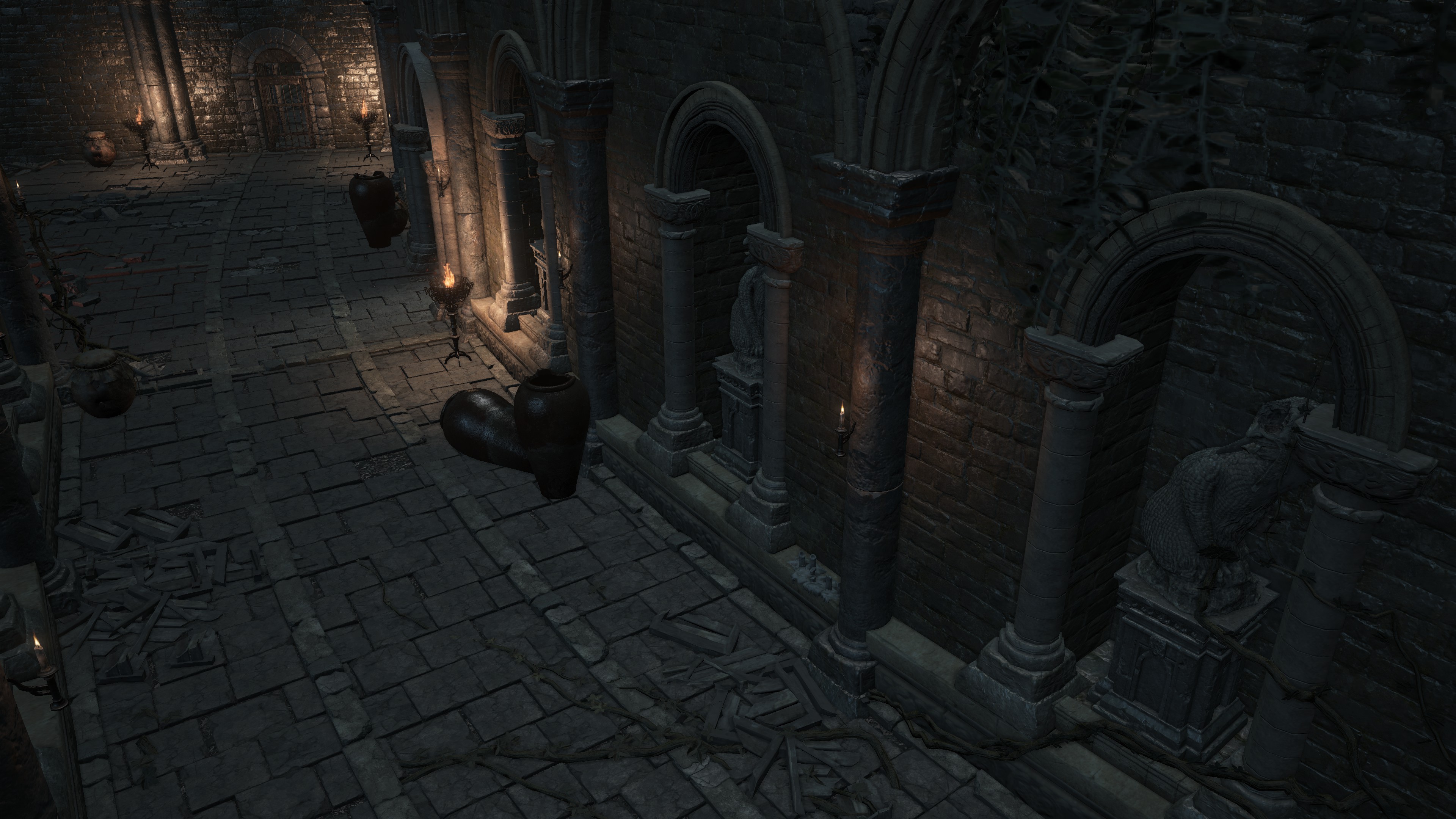
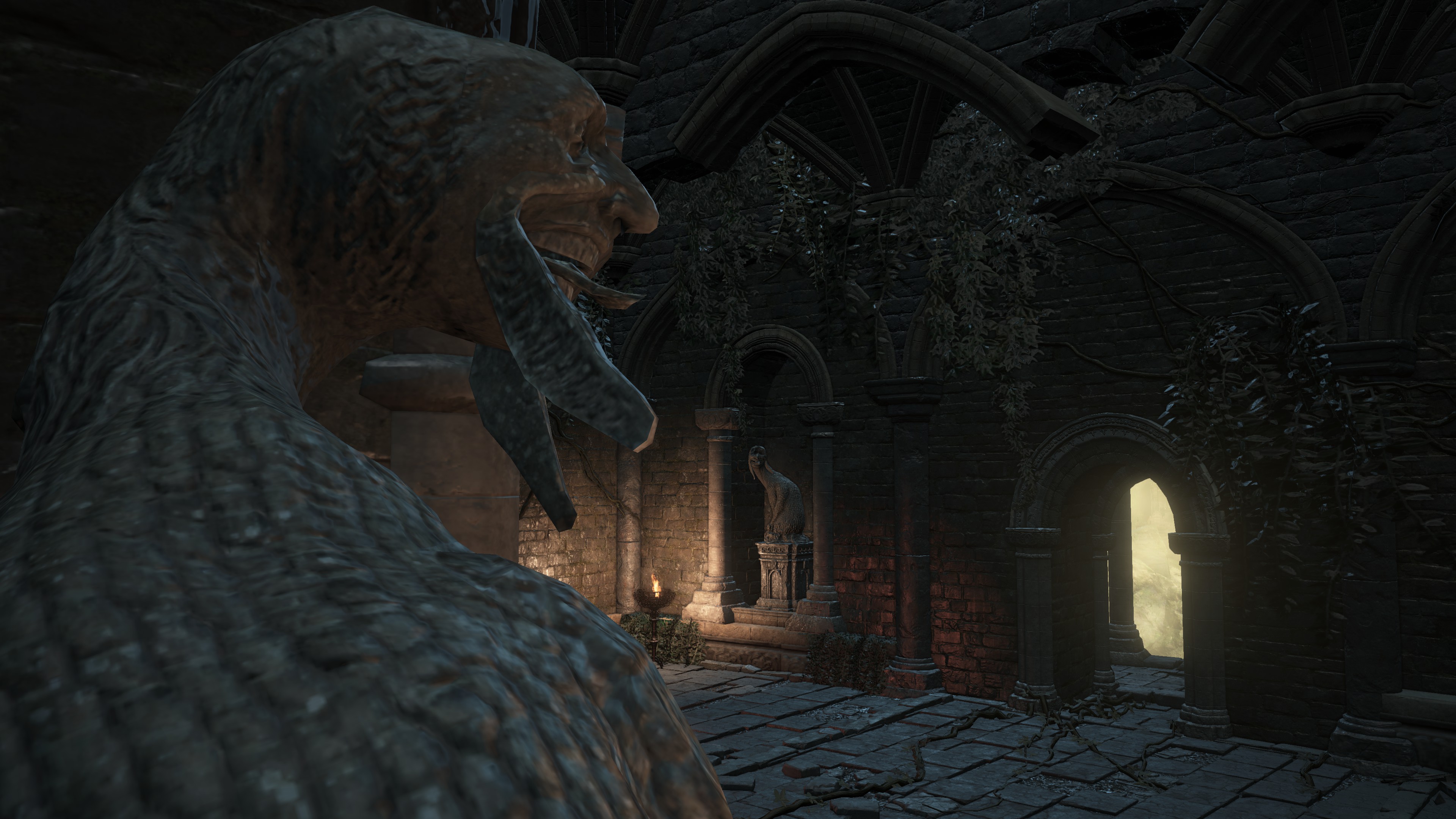
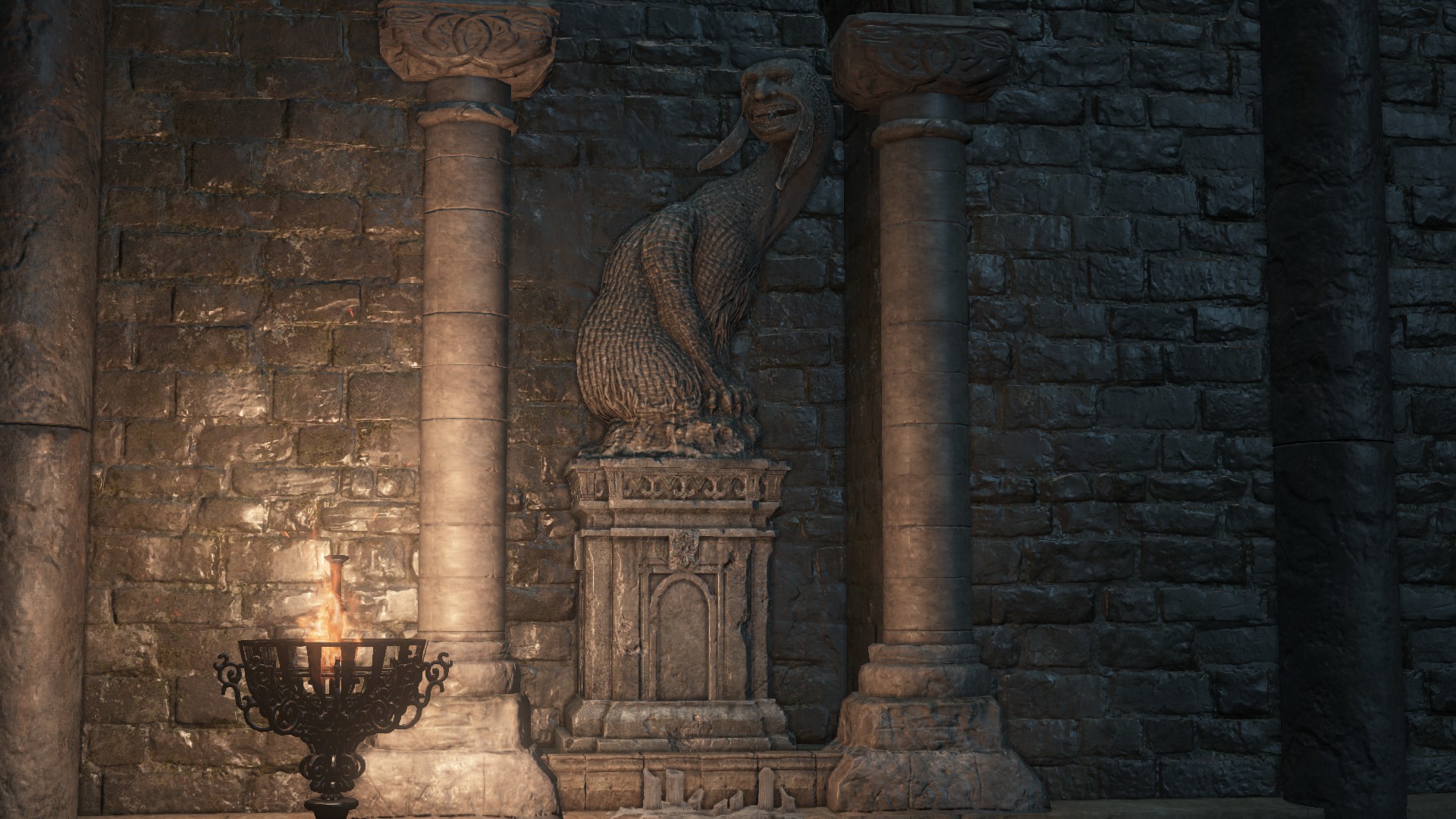
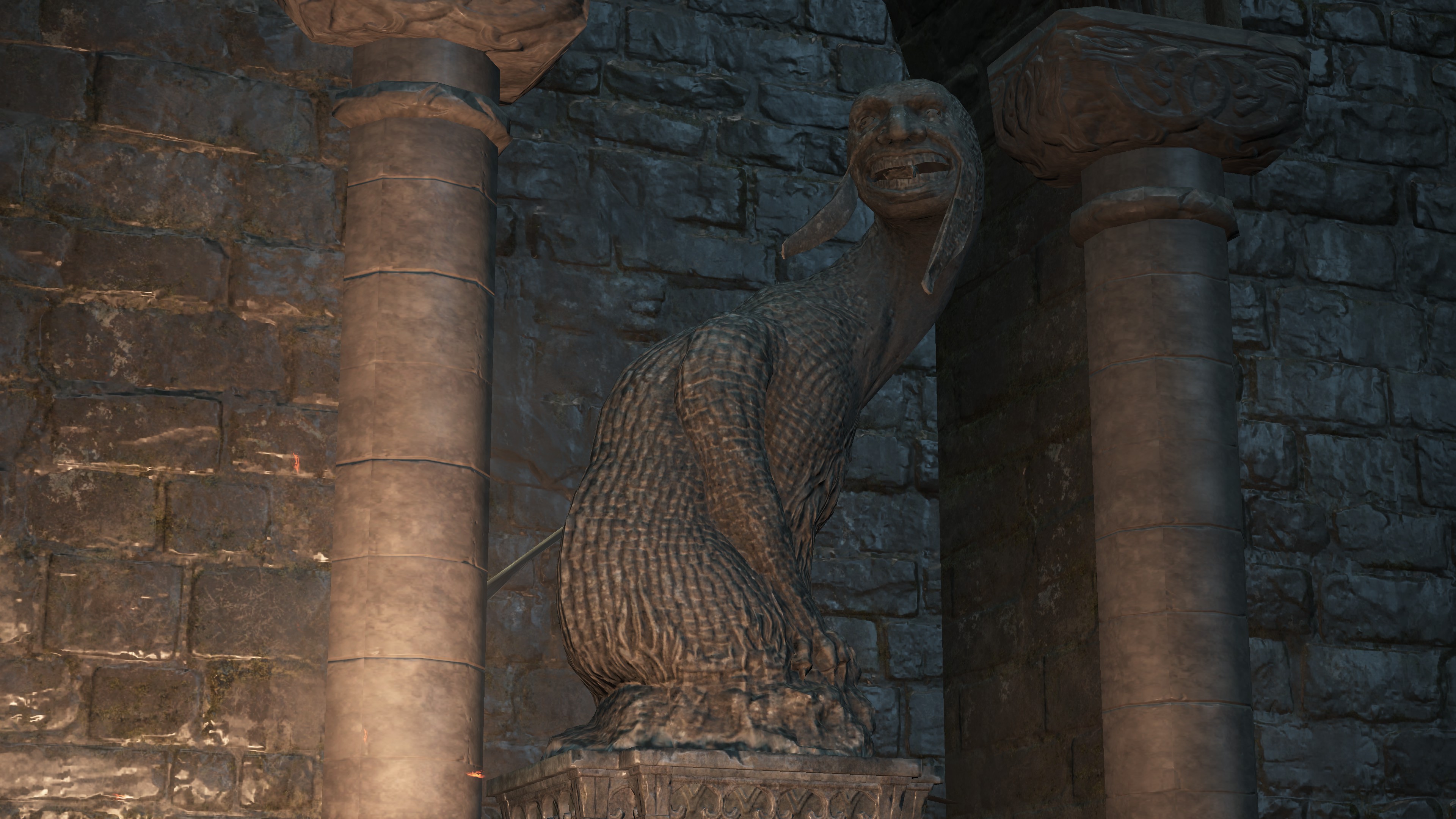
However, Frampt’s examples shows how the primordial serpents were eventually compromised for getting too close to the world’s transitory stewards. There was probably great hesitance to stand against Gwyn too starkly, especially at this crucial juncture. The Lord of Sunlight was to lead his cohorts into a new Age of Fire, characterized by the Disparity each holds. It is the nature of Disparity to clash, so wasn’t stifling the pygmies of Dark arguably unavoidable? It was too much to draw a firm line with the light while the age was still in its dawn. And at the end of the day, they were snakes; with bodies of skin, scales, fur, and draconic forearms. Even coming to possess a Dark nature themselves, they were no Lords. At best, the world serpents’ advice prevented the Dark Soul from facing total annihilation, their immortal souls allowed to rest with their mortal bodies untouched — that was sure to also please the Gravelord. Perchance they believed the gods of light would soften their stance given time. Regardless, the snakes stood as a mere speed bump in Gwyn limiting humanity’s full potential.
There is irony in the medials admonishing man’s “taking” as sin while robbing them of their eternal future. But the light’s conception of honor left them blameless. Gwyn and his Dark counterpart connived against each other, but the king of Anor Londo invented the game of politics — the pygmy Lord might have seen the big picture, but in the present arena, he didn’t stand a chance. At the center of an elevated platform, tall above the ring graves, stands a unique tomb crowned with an obelisk. Recall that Anor Londo religion uses obelisks to denote heroes or similarly high-profile individuals. Apparently, this practice dates back to the Age of Gods, incorporating the symbolism even into the mausoleum for pygmy royalty. In other words, that unique grave, the sole monument with a memorial plaque, must bury an unparalleled pygmy royal, a king among kings — and who more appropriate than their founder, the fourth Lord? The king of the pygmies’ fate was the same as his successors, dying cut off from the power which earned him his crown as a testament to light’s supremacy. All his achievements, so easily forgotten.
Turning Point
Finally, the long-awaited dragon hunts came. When the gods requested that the last Lord contribute to this endeavor, he answered. The Ringed Knights were deployed to stand alongside Gwyn’s army as the four Lords challenged the legacy of the old world. It was a hard-fought conflict, but the first kings were ultimately victorious — and with victory comes the spoils. The pygmies mimicked the gods in decapitating their prey for trophies, as DS1 had established; certain knights since using their rock-hard heads as shields. Although obviously intended to showcase prestige, it also reveals the extent to which pygmy society looked to the medials of light for guidance by this point. Perhaps fighting side-by-side as brothers-in-arms gave the soldiers a sense of kinship. However, the feelings weren’t mutual. The knights, like their King, would never be celebrated in song or annal. The Dark’s aid in the medials’ war was to be strictly forgotten by the wider world.
Decapitated head of a descendant of archdragons that was made a shield as is. The rock-like thing is certainly hard.
Once, the Ringed Knights responded to the gods’ request and took part in the dragon hunts. But that was never lauded.
Such disrespect might even be reflected in their trophies. Archdragons are typically among the largest creatures in the series. And yet, the Ringed Knights own heads so small that they are wieldable. This may simply be a creative liberty on the developers’ part — Anor Londo’s royal manor mounted similarly-sized wyvern head models as stand-ins in DS1, after all. However, the shields’ descriptions do emphasize these archdragons as descendants, so it is possible that the gods took the best pickings from the original generation, leaving the Ringed Knights with only the younger, smaller heads to claim. Of course, even with their diminutive size, they still belong to archdragons. Scales of immortality meant that this creature could survive as a mere severed head. Whether it was treated like any other animal trophy, the heads do not decay regardless, unlike the dragon zombies from DS1. Rather, the living soul lies dormant, possibly because it is cut off from the heart. The shield bearers can thus briefly rouse the dormant consciousness, inducing the dragons to breathe fire upon their enemies or knock them off their feet with a titanic roar. The descendants still possessed the power of an ancient.
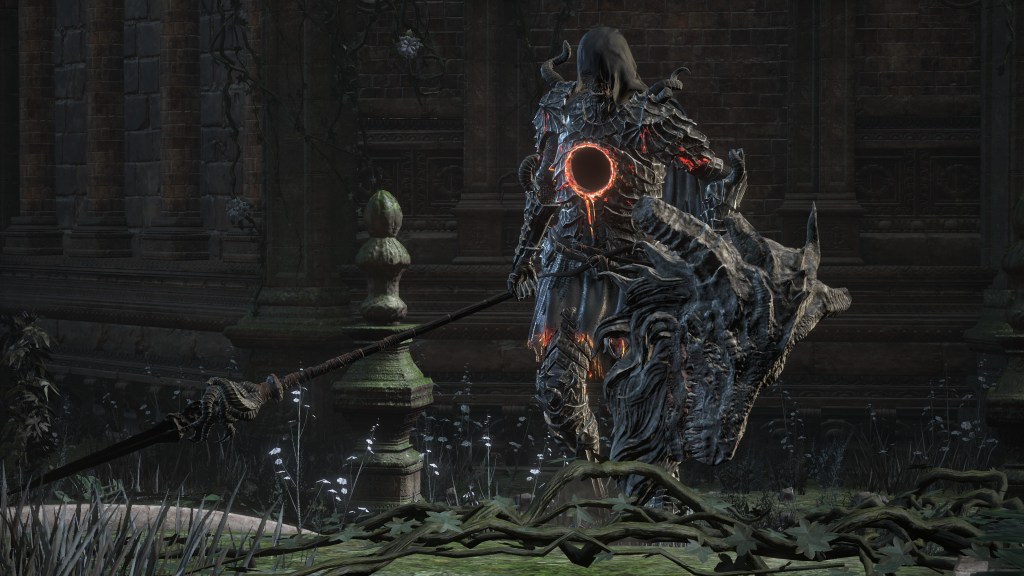
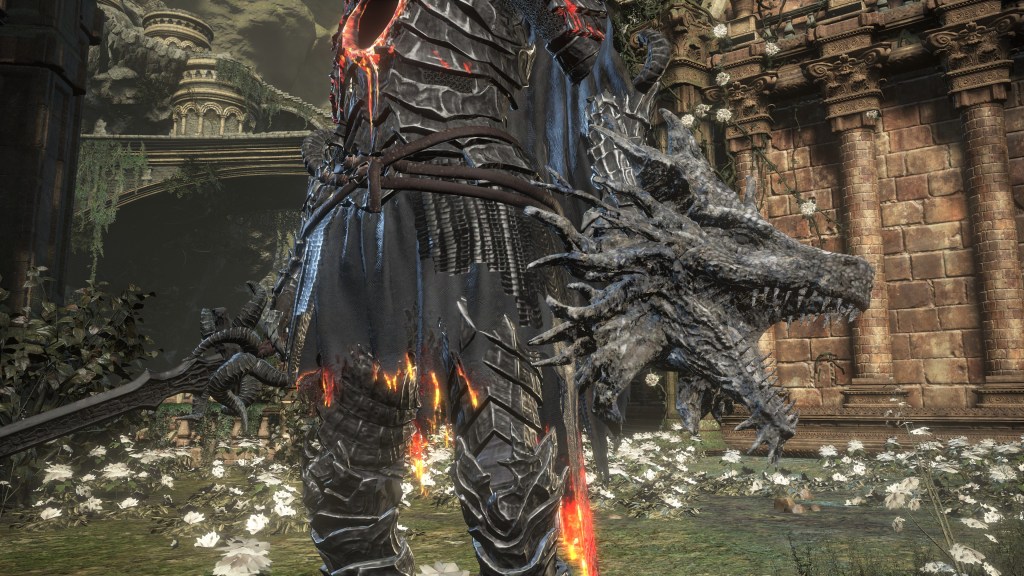
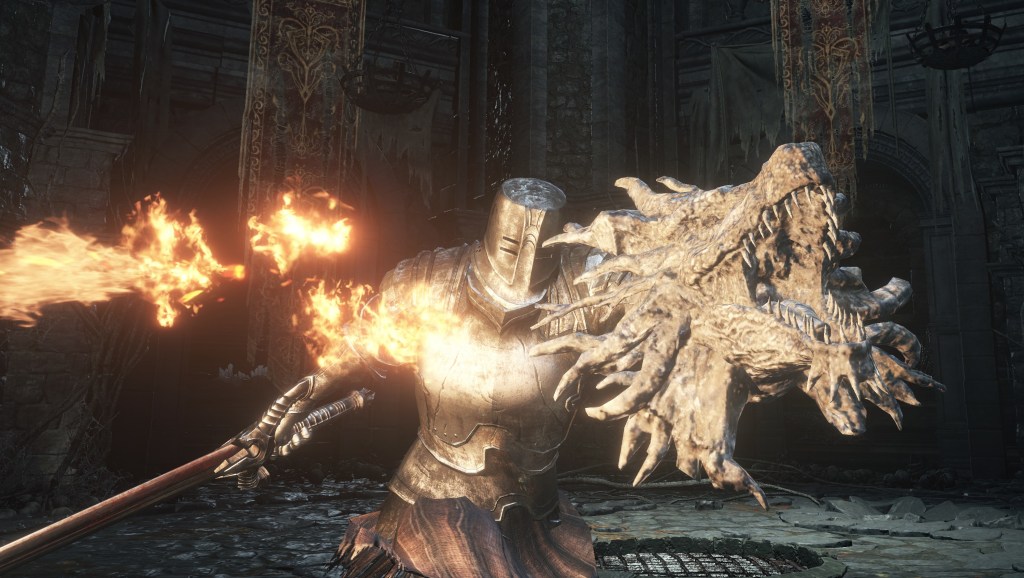
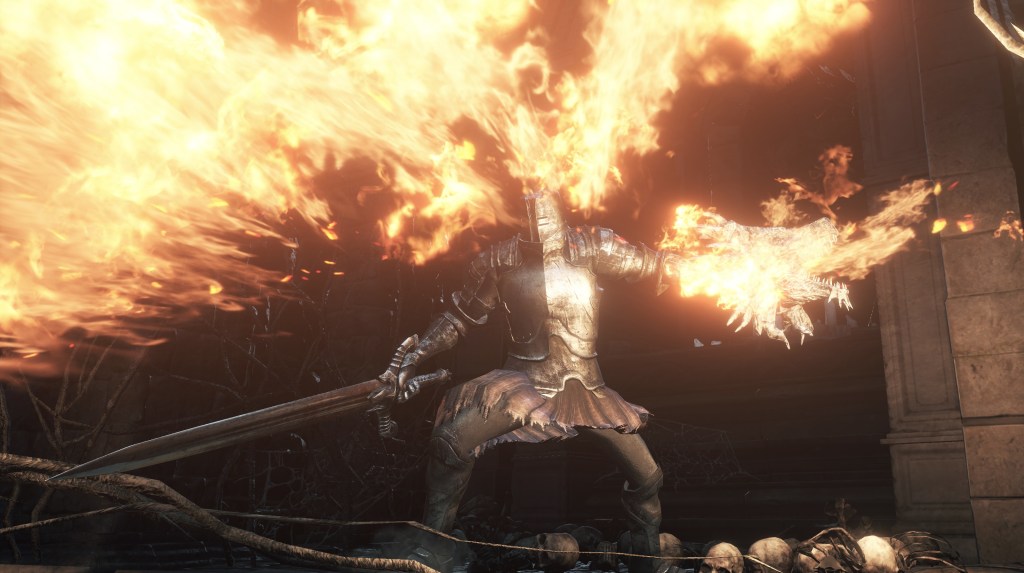
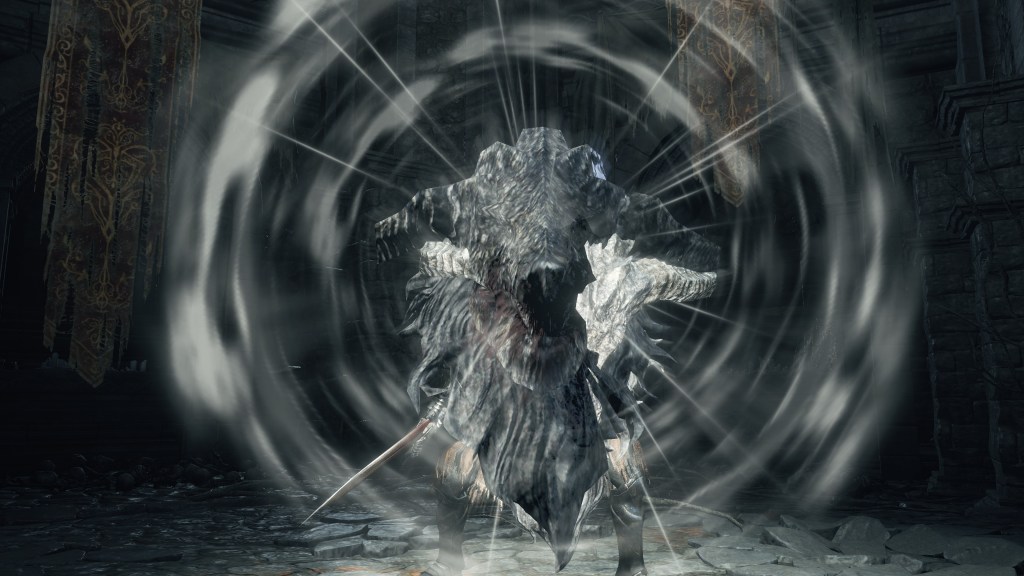
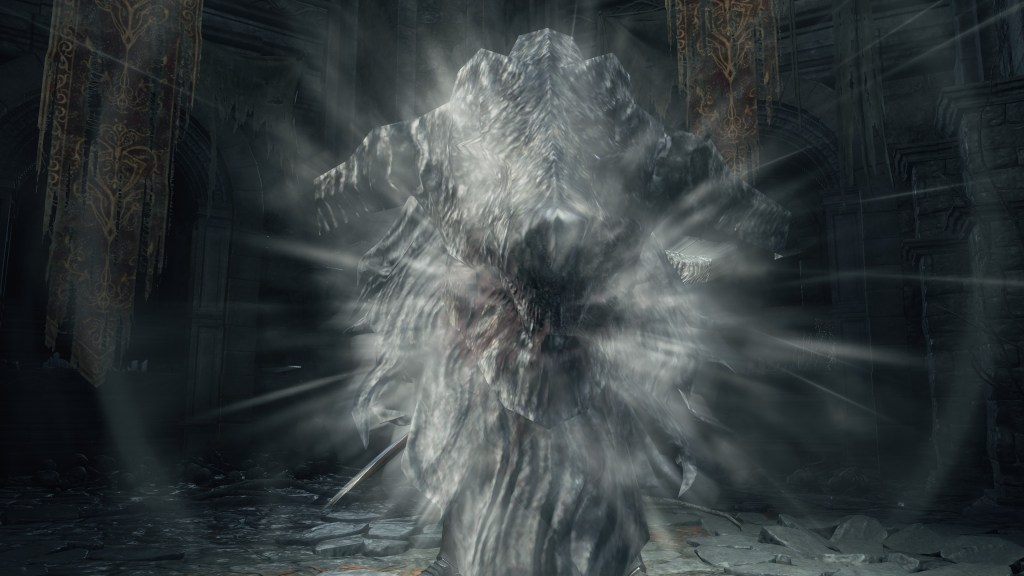
Battle art is “Dragon’s Breath”. Even if a descendant, an archdragon never perishes away. Reclaim a little of its power of olden times via the battle art and sweep ahead via dragon’s breath.
Nevertheless, the dragonhead shields highlight their mistreatment. Since DS1, items associated with the gods have had their powers defined as mystical, or mysterious — “mystery” (神秘) referring literally to a god’s secret, invoking divine mysteries. (the term shared with the godly forces of the “arcane” in Bloodborne and Elden Ring) Be it Velka, Seath, Gwyndolin, or the Fair Lady, knowledge of such magic is recognized as exclusive to the divine. This includes the powers of archdragons, rocky existence’s raw might even when colored by Disparity. It was the gods who hunted the archdragons to nigh extinction, using their bodies for experiments. Yet the mystery was familiar to more than just medials. The Ringed Knights prove man just as capable of studying draconic power and passing the knowledge down. But the gods wouldn’t allow it. The pygmies had to return to the confines of their city, never to spread word of their past triumphs or the secrets they too retain. More than fear of the Dark, this was about putting down the race of man in total.
That said, for some, they might have felt uplifted. Common to every pygmy civilian we encounter is the ability to conjure miracles. More specifically, they cast Lightning Spear and Lightning Stake, both featured in the Lords’ dragon hunts. Moreover, they produce these spells in the right hand despite wielding weapons in their left, without using a cloth talisman or similar catalyst — exactly like Gwyn and his knights during the dragon hunts. The citizens likewise carry lightning gems collected in the wake of dragonslaying. Altogether, this suggests that every pygmy fought alongside the gods, not just the knights. Anor Londo required Silver Knights at the vanguard, but couldn’t they save more lives if pygmies filled in those ranks? And why invest so much into pygmy civilization if only a small percentage would actually contribute to their hunts? Therefore, commoners were probably also conscripted into the army as fodder. And looking at the veterans’ continued reliance on these old miracles, this was likely when Anor Londo religion really began to take hold.
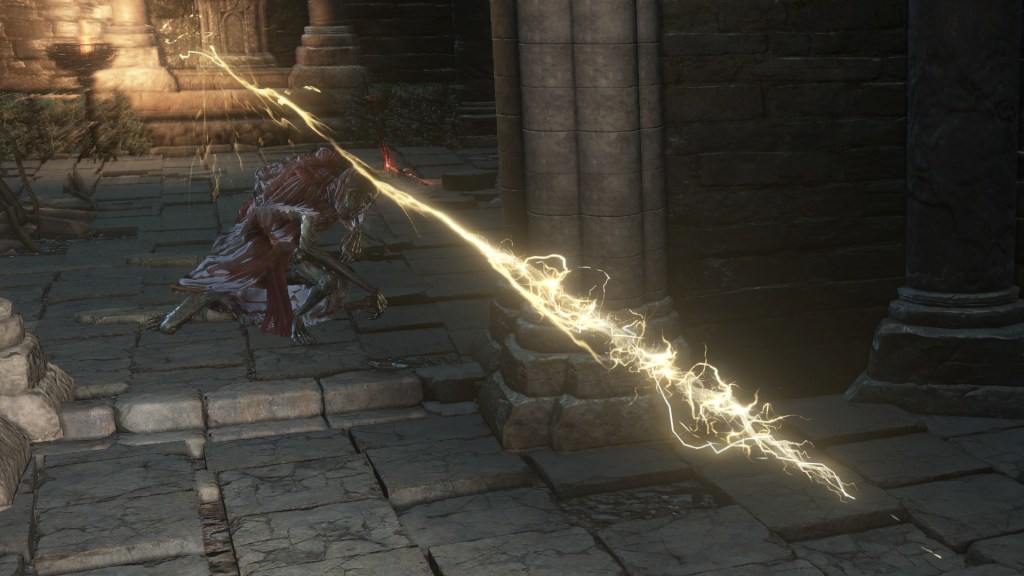
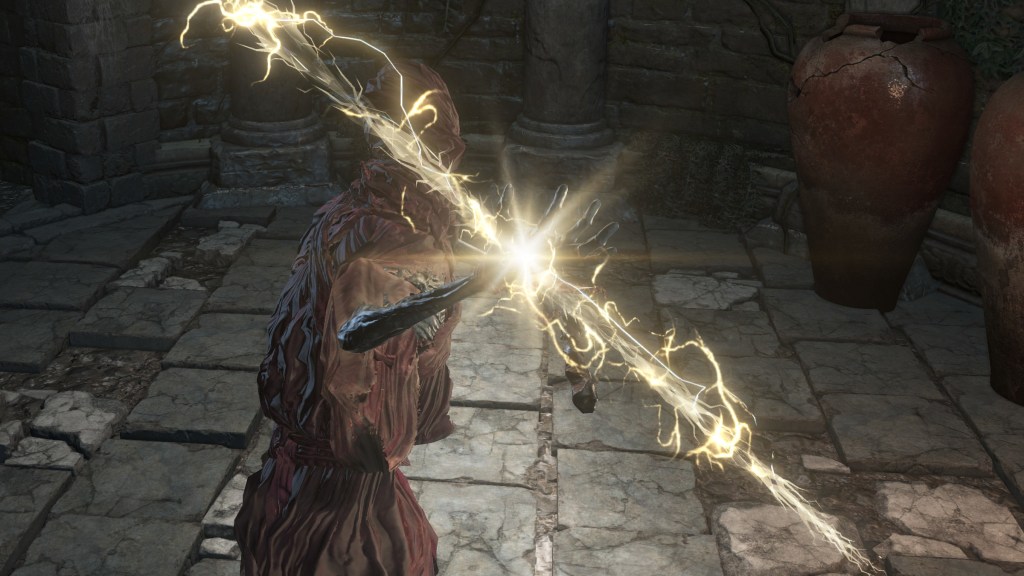
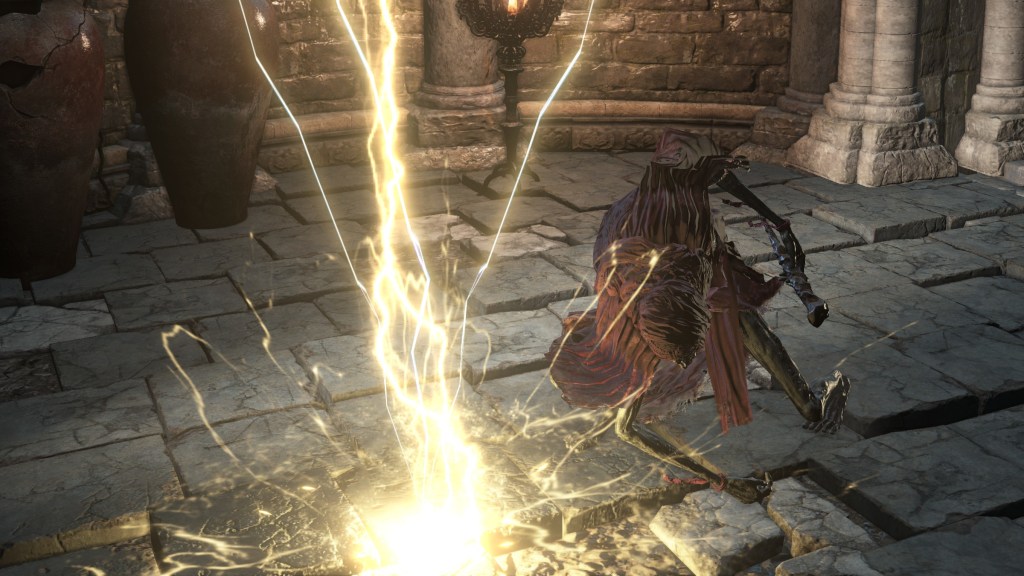
Recall that the dragon hunts did rack up a high death count for the Lords. If the knights struggled against these foes, the infantry robbed of immortality had even less chance of survival. Through hard times, they discovered god. Since they didn’t have the Ringed Knights’ elite training and equipment, the common pygmies were forced to put their faith in the gods. The medials were happy to oblige, worming their way into the masses’ hearts as “comrades” during battle. If the feeble infantry were willing to cultivate their faith along with souls more aligned to holiness, then they too could have the powers to slay these fearsome stone dragons. Anor Londo religion would thus immediately entrench itself in the population when the survivors did return home to their penal colony. The civilian body were grateful to the gods who “saved” their lives during a conflict the gods forced them to join — and those “gods” wouldn’t even remember their sacrifice.
The medials wished to take sole credit for all the age’s creation, a combination of their arrogance and prejudice. Anor Londo’s kind veneer was in service to disarming man as they were slowly emasculated. Nowhere is this more evident than when the gods did eventually allow the humans to leave the Ringed City and spread across the globe. Maybe this was justified as reward for their contribution to the hunts. Regardless, at least certain pygmies were permitted to escape the walls and settle other lands. This allowed the Ringed City to maintain relations with a non-medial nation. The Antiquated Plain Garb references a “delegation” (使節団) visiting the capital in its description. The text previously ties the attire to a country with old sorcery, which is imbued in the golden ornaments. This plus the name’s obvious allusion to the Antiquated set worn by Princess Dusk affirms that the delegates came from Oolacile. Considering the age of both countries, diplomatic ties between them isn’t unexpected. But when factored with implications from past games, this relationship takes on a new dimension.
Recall that allowing mankind to multiply far and wide was implicitly to dilute human power, fracturing the clan identity so that they were easier to manipulate — namely in the course of excising the Abyss from the culture. Oolacile was a test case for this, using Manus; creator of dark sorcery, founder of Oolacile, and progenitor of its royal line. Looking at the political climate in the Ringed City, it is hardly a mystery why the ancient sorcerer was the first to invent rational study of humanity. The gods’ crackdown on the penal colony made it impossible to develop new abyssal craft. And as an ancient man who established the “prototype” modern kingdom, Manus was most likely one of the city’s resident pygmies, which must have felt suffocating for such a curious mind. Mayhaps he devised his arts in secret despite the sealing, especially when they were faced with death and adversity during the dragon hunts. Either way, it was inevitable that he agree to resettle the forests at the foot of Anor Londo if they allowed him to freely explore the Dark’s potential.
But like the Ringed City, Oolacile was a honey trap. After his passing, the gods introduced his descendants to the mushroom men and gradually eroded the country’s ties to the Dark. The fact that the Antiquated Plain set bears signs of golden sorcery is telling. At the time of the delegation, Oolacile was already a kingdom of light. The Oolacilians still remembered their history with the pygmies but had long abandoned their Dark heritage, spoiled suckling the divine teat — and as DS1 showcased, they eventually forgot even that. Countries after Oolacile fared no better. The older ones may have continued diplomatic exchanges with the Ringed City, keeping their own memory alive. The Ring of the Evil Eye found in the Shared Grave similarly cements a connection between the city and the outside world through trade. But whichever countries facilitated that contact, it did nothing to stop the decline in Dark practice, those holding onto tradition soon shoved to the fringes of society. If any nation maintained records of the capital, they were soon buried under more pressing documents and left to rot in archives as obscure legend.
In light of the primordial serpents’ involvement, this controlled migration might have also been Gwyn’s way to string everyone along into thinking the medials were giving humans more freedoms over time. In the end, however, the Lord of Sunlight was always maneuvering to secure his kingdom’s dominance over their vassal. In the leadup to Gael’s boss fight, we see that the Ringed City is now ruled not by one king but an entire council of pygmy monarchs. We bear witness to ten kings, though only eight surviving thrones in their ruined audience chamber. Based on the seating’s circular layout, there may have been as many as sixteen pygmy lords. Whatever the exact number, it is obvious that no singular king stood above the others — with the origin of this just as easy to surmise. Recall in DS1 how Gwyn installed the Four Kings to rule New Londo, another vassal state established by Anor Londo to amass all the humans the gods feared. Clearly, New Londo was founded on the Ringed City’s precedent, so it wasn’t the first time that the Lord of Light divided man’s royal authority amongst a handpicked group either.
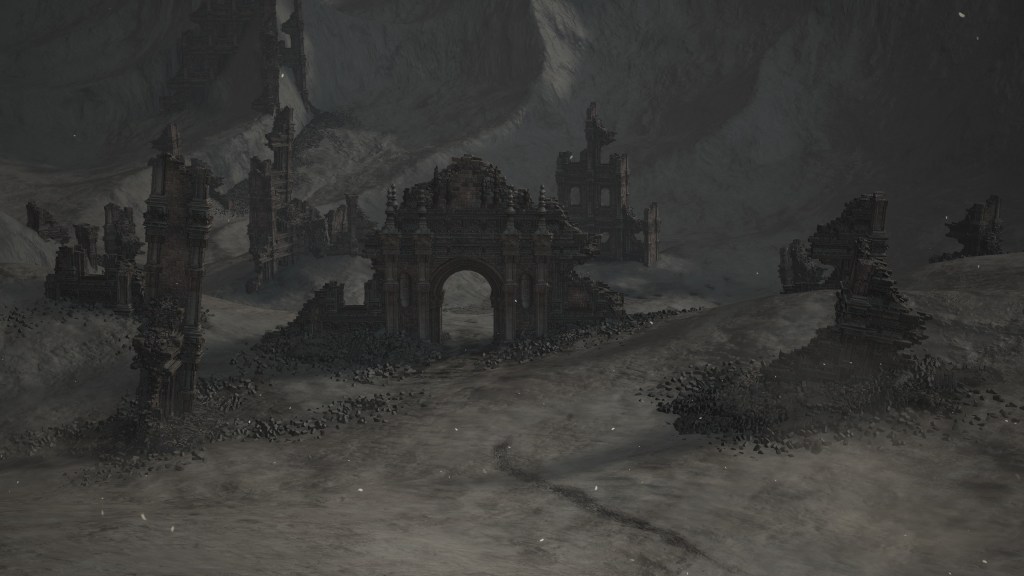
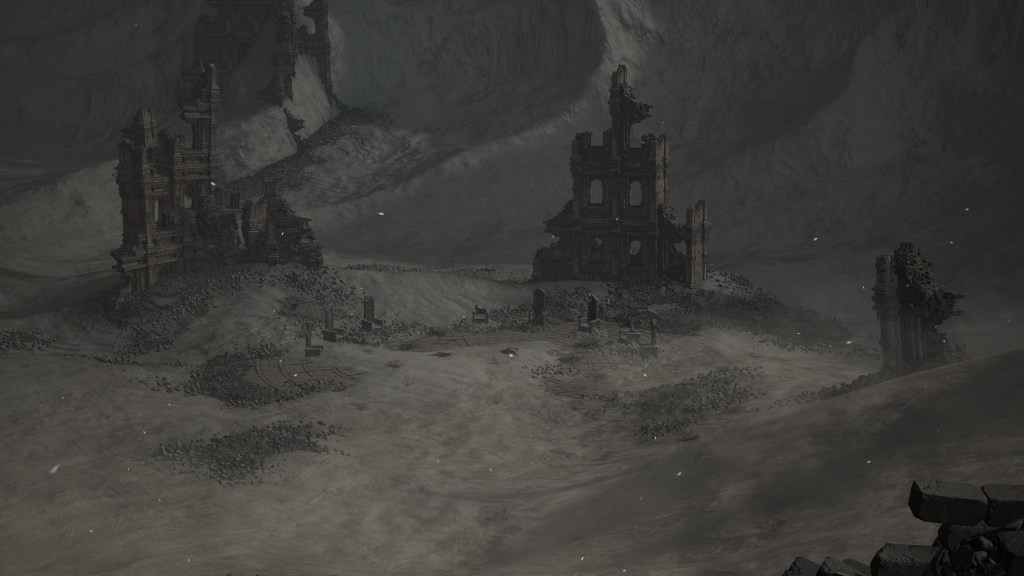
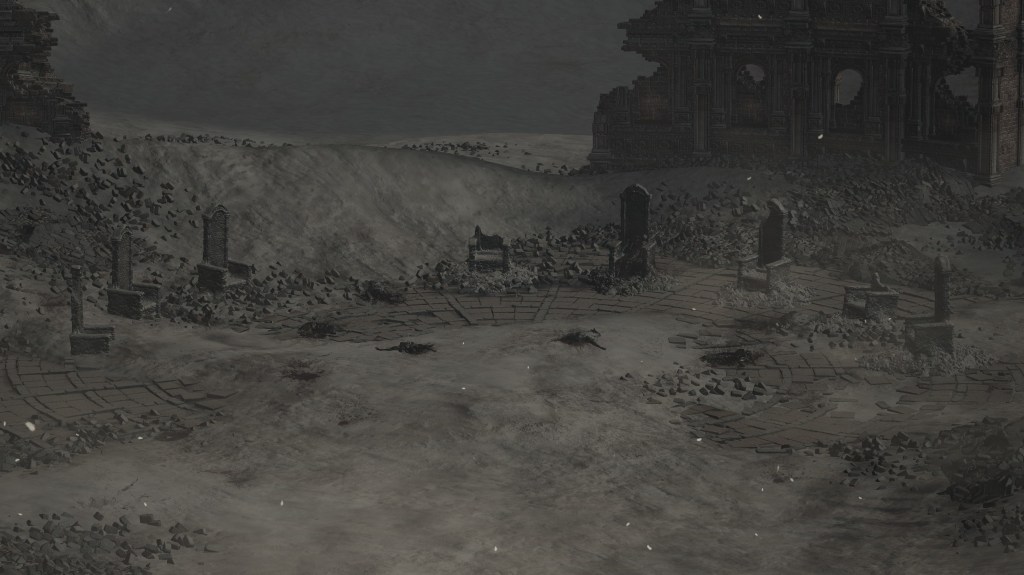
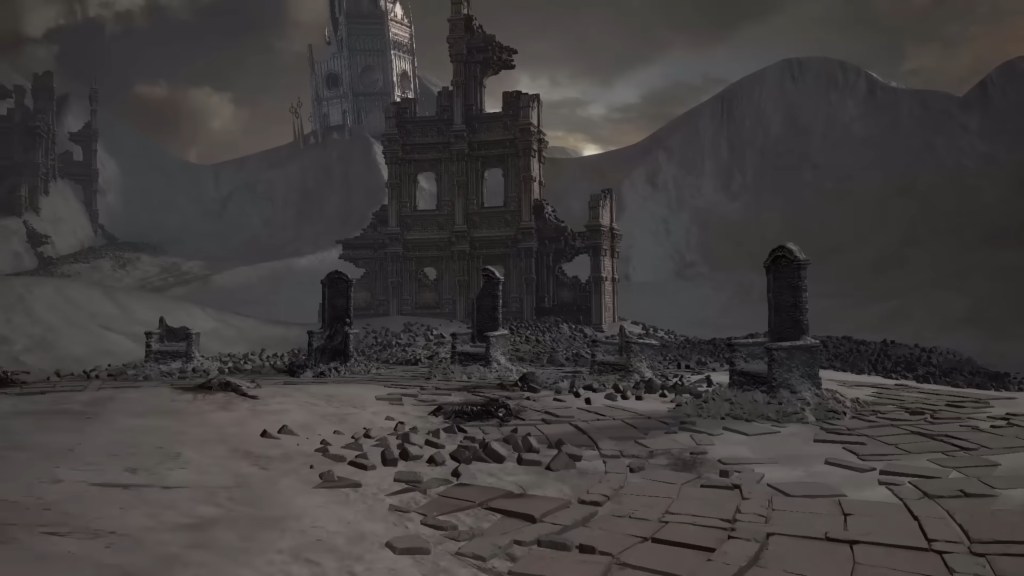
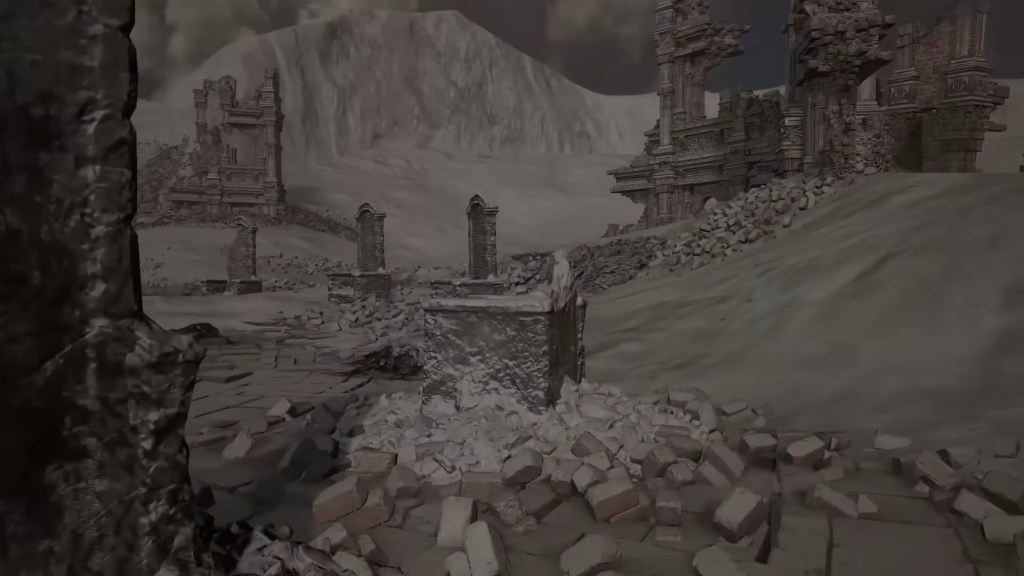
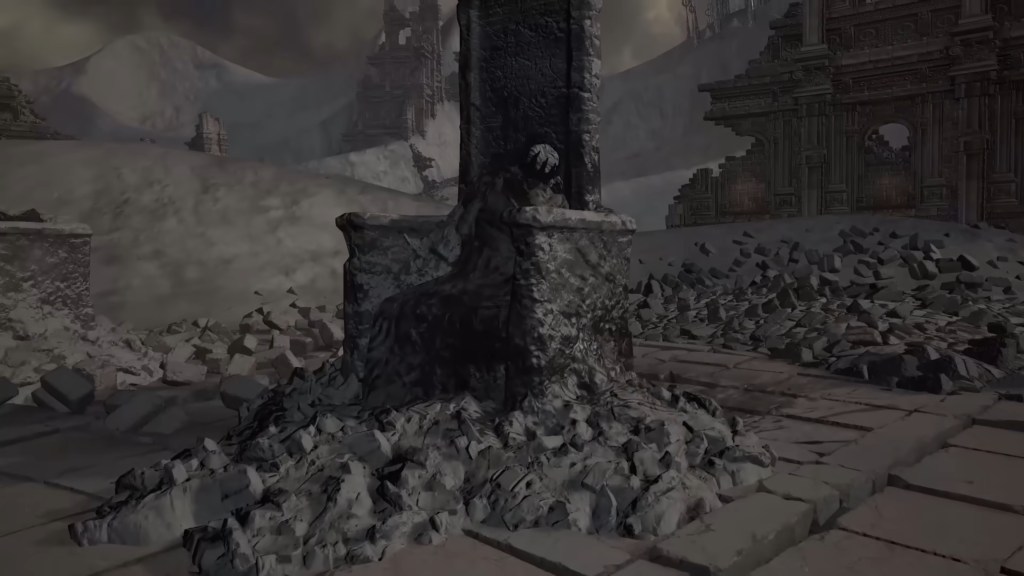
After the death of their first king, the pygmies must have suffered a crisis of succession. Perhaps history’s fourth Lord died unexpectedly, such as on campaign during the dragon hunts, before he had chosen an obvious heir. Perhaps there were simply many greedy royals contesting the claim of one successor. In either case, Gwyn likely used the political vacuum to step in and mediate, offering to grant many a share of that power for themselves. The select kings were apparently happy to allow their actual power be diluted in pursuit of possessing any at all. The result was a congress of self-serving politicians who would struggle to effectuate major policy without becoming deadlocked in endless debate. And who there would help broker compromises between them? Filianore. She could always be the outside counsel, providing insight on her father’s behalf while playing factions against each other behind closed doors. No wonder the latest generation of kings, even in their most dire hour, look to Filianore for aid. The pygmy royalty has gradually become impotent by their continued dependence on Anor Londo.
Basically, it was a shortsighted solution with disastrous long-term consequences for pygmy sovereignty. The finder of the Dark Soul truly didn’t realize the depths Gwyn would go to manipulate their nature against them — how the vainglorious liar would slowly twist perceptions in the wake of his death. As Kaathe had said, the Lord of Sunlight didn’t plan to let any “Dark Lord” step up when fire eventually did wane. Now that he had subverted human hierarchies to this extent, Anor Londo’s king was on track to making the vassal kingdom his puppet. Already, the Lord of Light was draining the Ringed City of its Dark, thinning the Dark Soul across its ever-growing human population. Given time, the short-lived species could be depleted of all their humanity, and medials had all the time to wait.
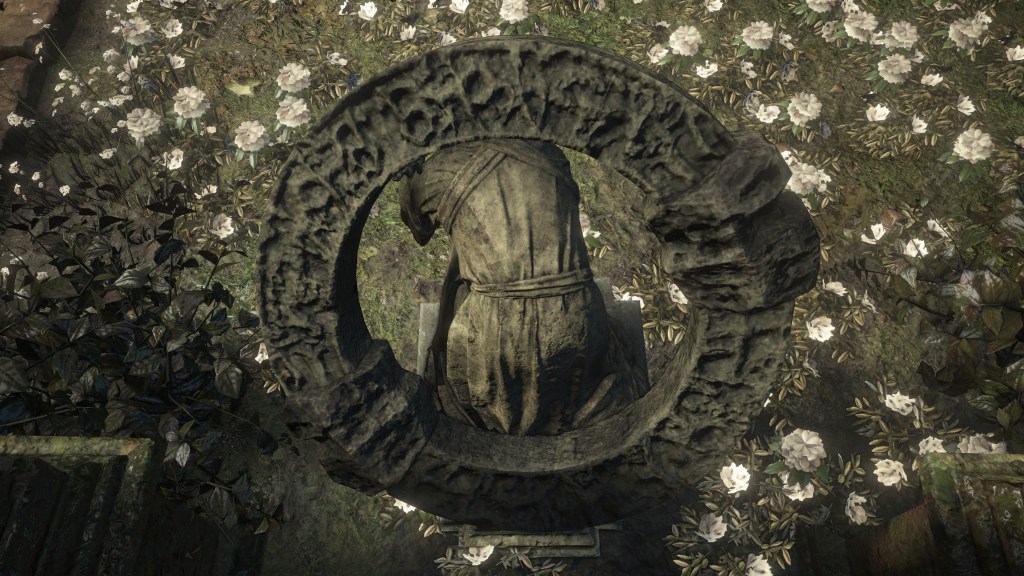
Even still, expunging the darkness from man proved an obstinate thing. The description to the Small Envoy Banner unveils that when gifting his beloved daughter to the pygmies, Gwyn promised to someday come and pick her up again. She wasn’t intended to stay under the pygmies’ care in perpetuity. The Lord of Sunlight presumably planned to bring Filianore back to Anor Londo once her role was finished — in other words, once his greatest fear was virtually neutralized. This was a slow-going process. Those whose sealed humanity progressively thinned as they multiplied while simultaneously cultivating separate, lighter souls were more easily malleable. The same cannot be said for members of the tribe who remained in the penal colony. Their confines limited the population, so their rate of dark soul dilution must have been much slower than humans worldwide. This means that, both physically and culturally, they would hold faster to their humanity.
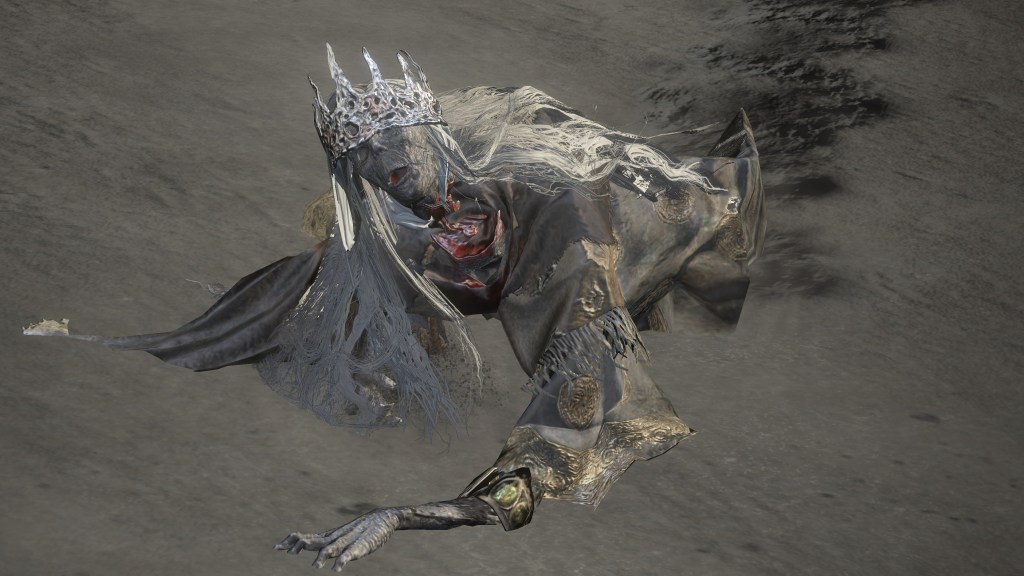
The physical element is the most immediately obvious. Going by their features in person and statue, the pygmies distinguish themselves from modern man by their wizened face and grey hair, echoing historic Zena from DS1. With this comes higher cheek bones, wider mouths, and flatter noses. These traits are especially pronounced in the kings, their noses so short that they more resemble apes than homo sapiens. This was probably a deliberate choice on the developers’ part to highlight man’s evolutionary history. The implication is that the pygmies’ more Hollow-like form, contrast to the rest of mankind resembling the medials, stems from the Dark Soul. This is consistent with insinuations concerning man’s true form from past games, but is more defined with the original human clan, culminating with the kings who descend directly from their ancestor who discovered the Dark Soul.
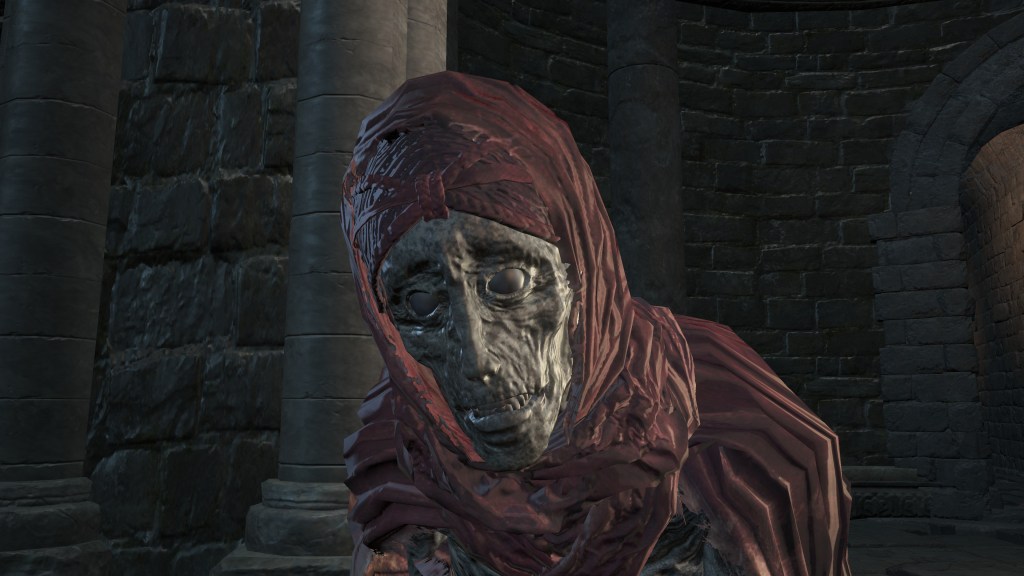
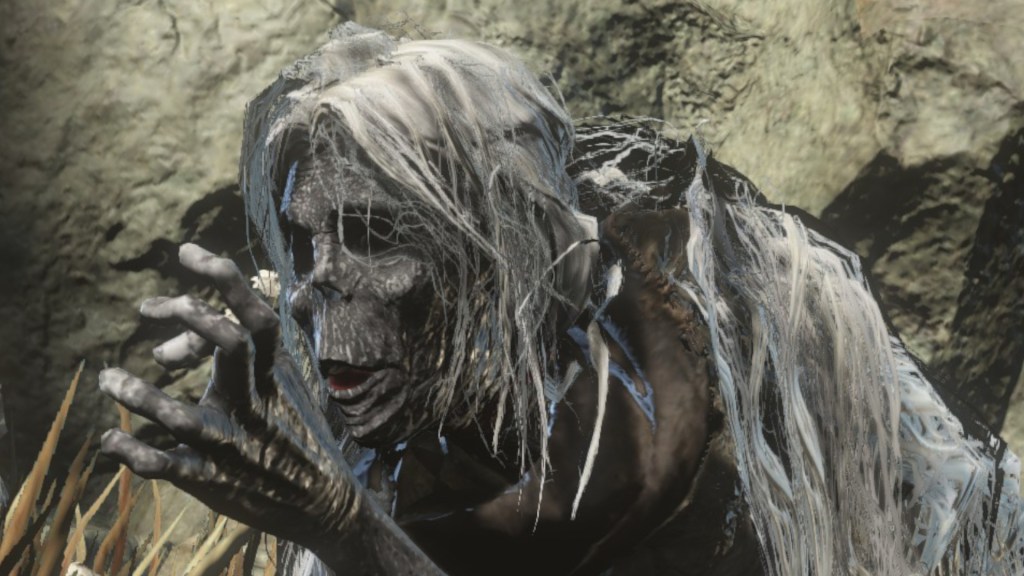
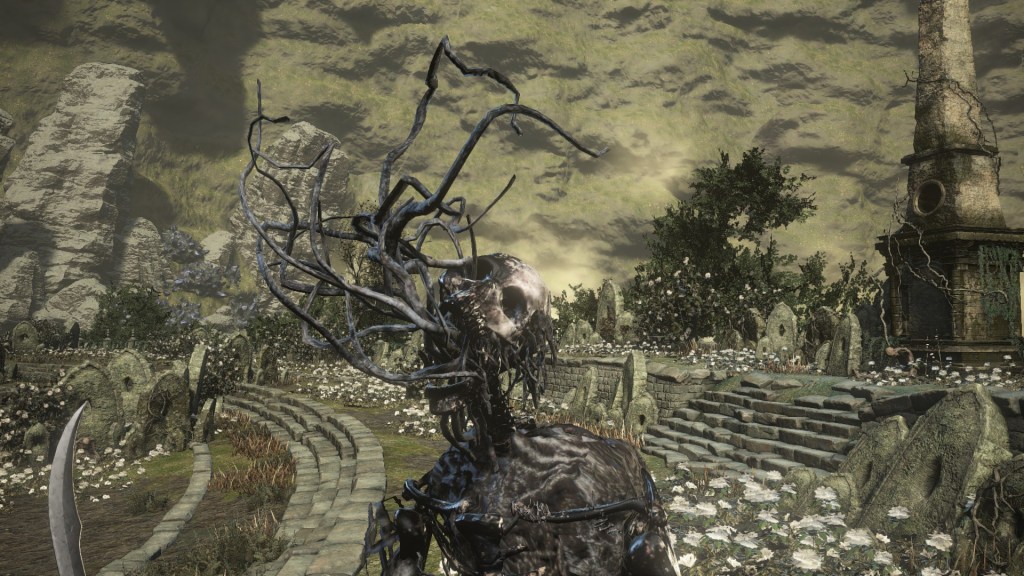
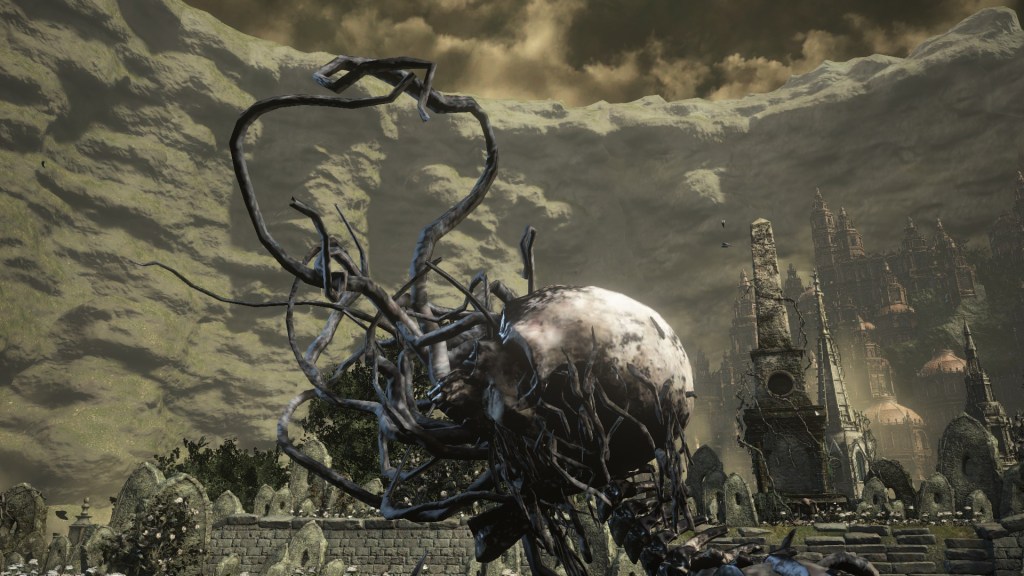
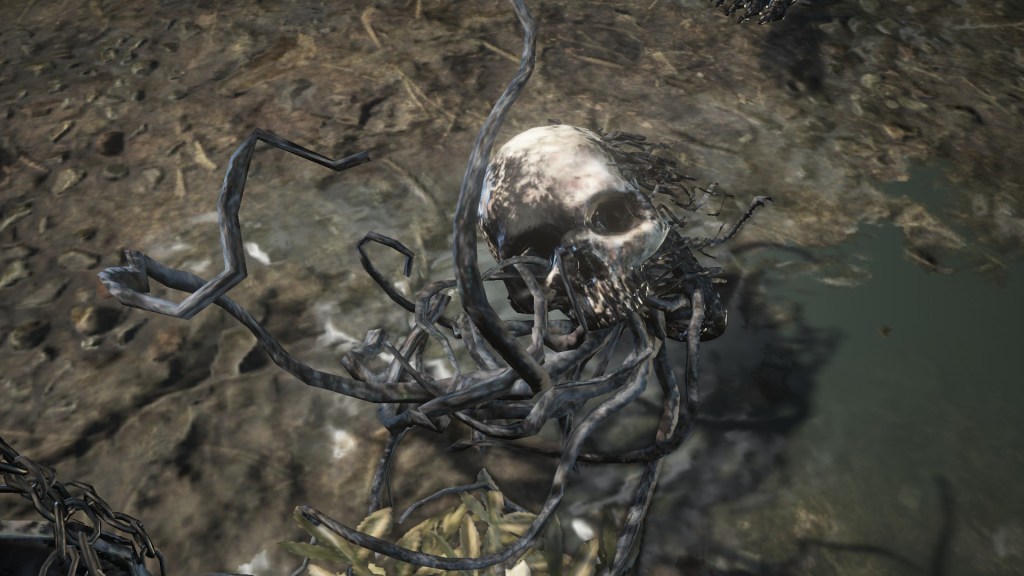
Like Anor Londo royalty with the medial clan, Ringed City royalty possess more humanity than their kinsmen. All pygmies in the capital bleed black, but Gael targets solely the kings for the “blood of the Dark Soul” he seeks; the Ringed City Hollow likewise puts us on his same path to obtain that soul. The spiritual ancestor’s direct descendants naturally retain the lion’s share of the Lord Soul split up amongst the clan. Black blood seems to merely signal greater density to humanity, as with other Dark-aligned entities. This is consistent with the skeletons occasionally rising from their graves within the capital. Although not uncommon everywhere else, this instance of reanimation appears to be due to humanity specifically. Fleshy growths with tendrils permeate the skeletal structures, bones stained with spatters of that same Dark. Why have we not seen this elsewhere in the series, unless the dark souls behind such spontaneous generation of life in the long dead are of a unique degree or quality? In life and death, the pygmies harbor the greatest dark.
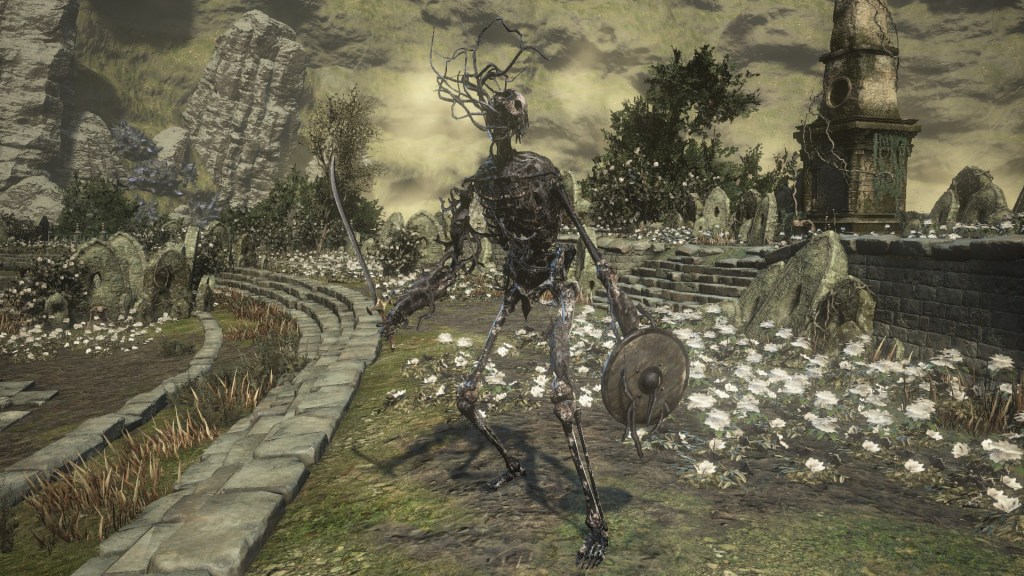
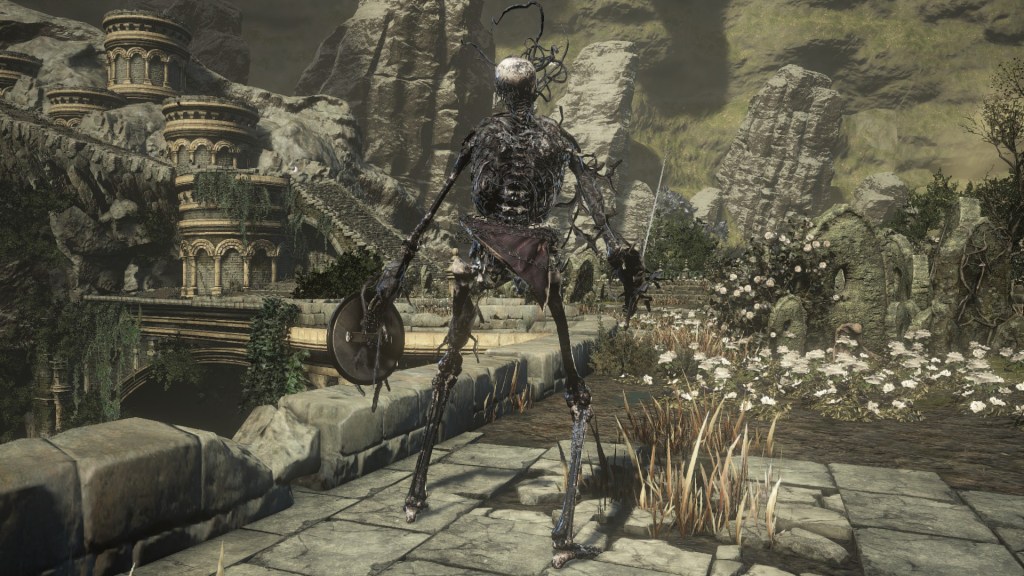
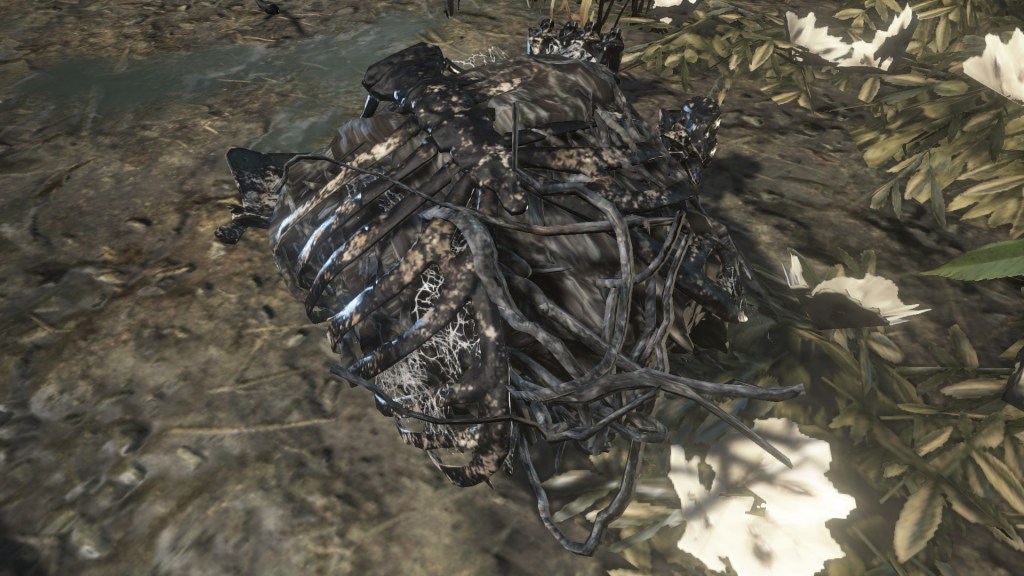
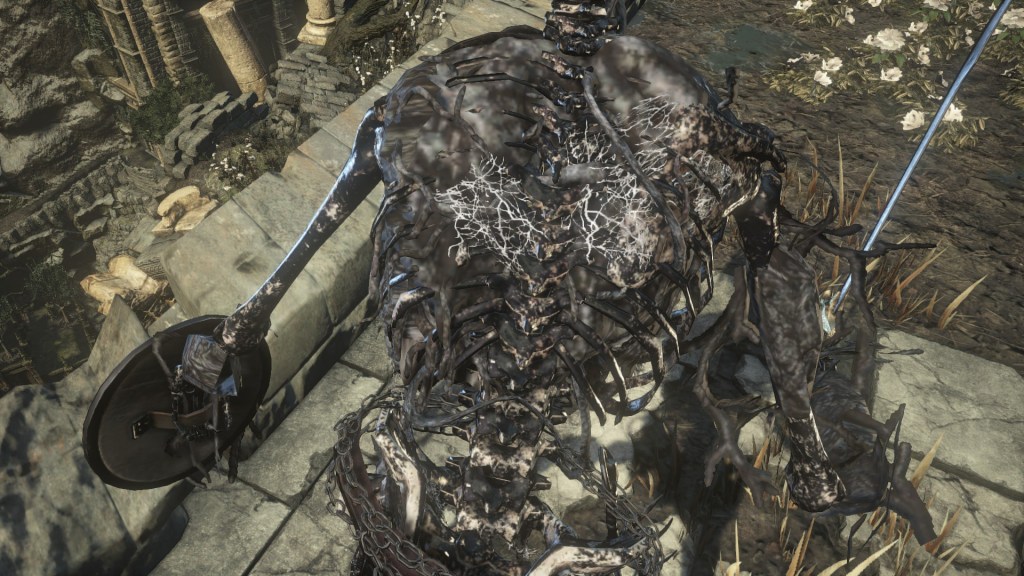
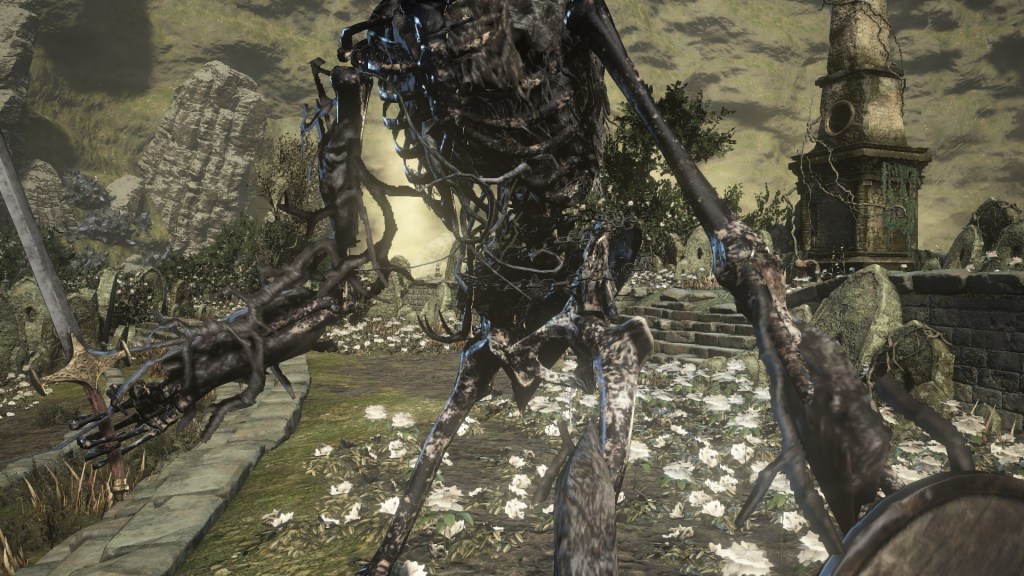
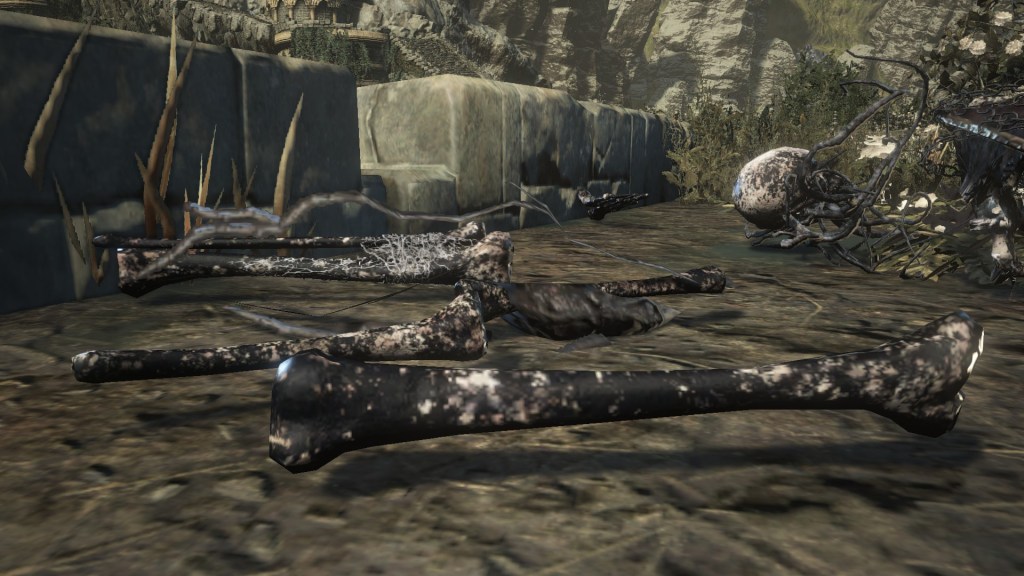
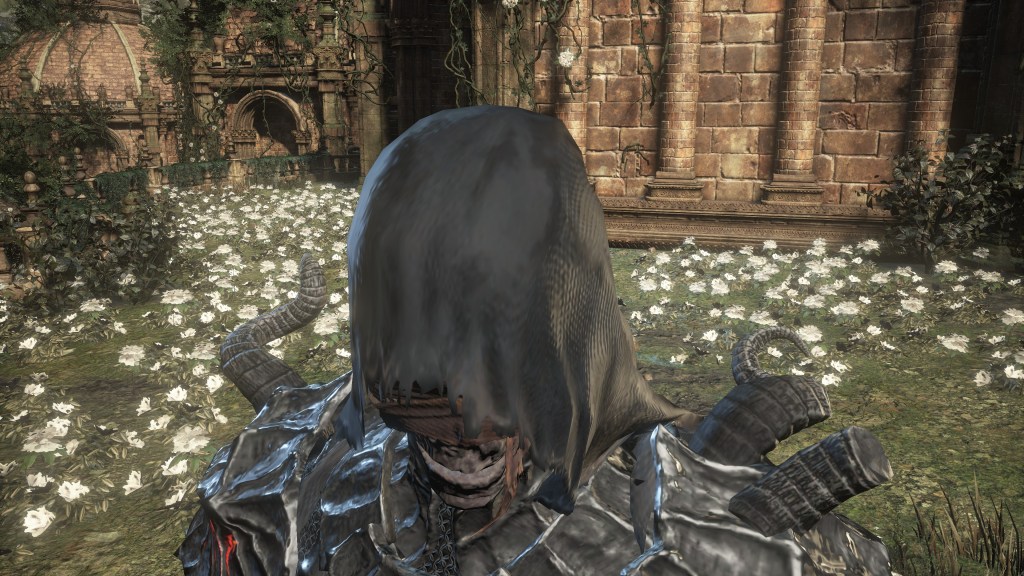
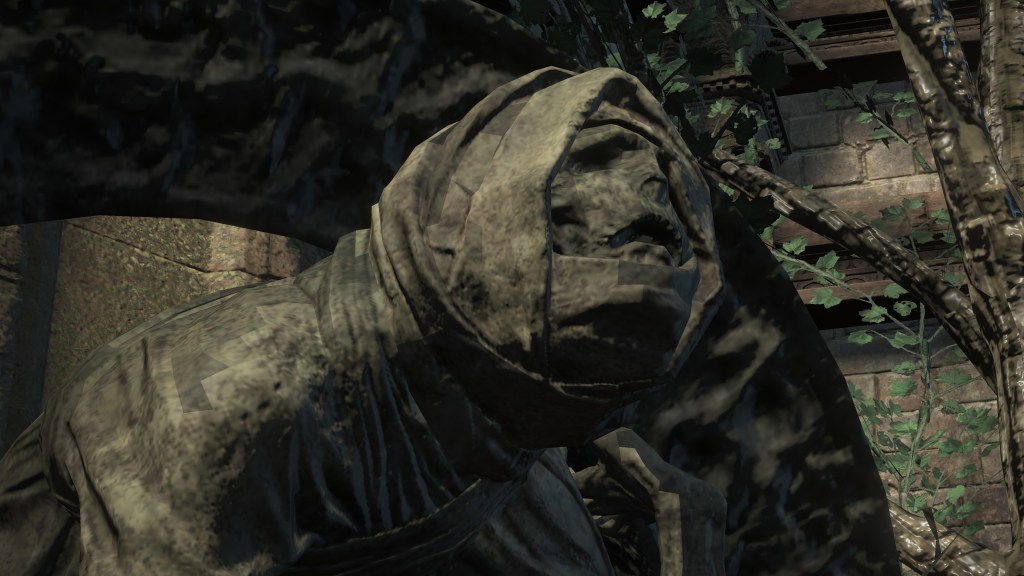
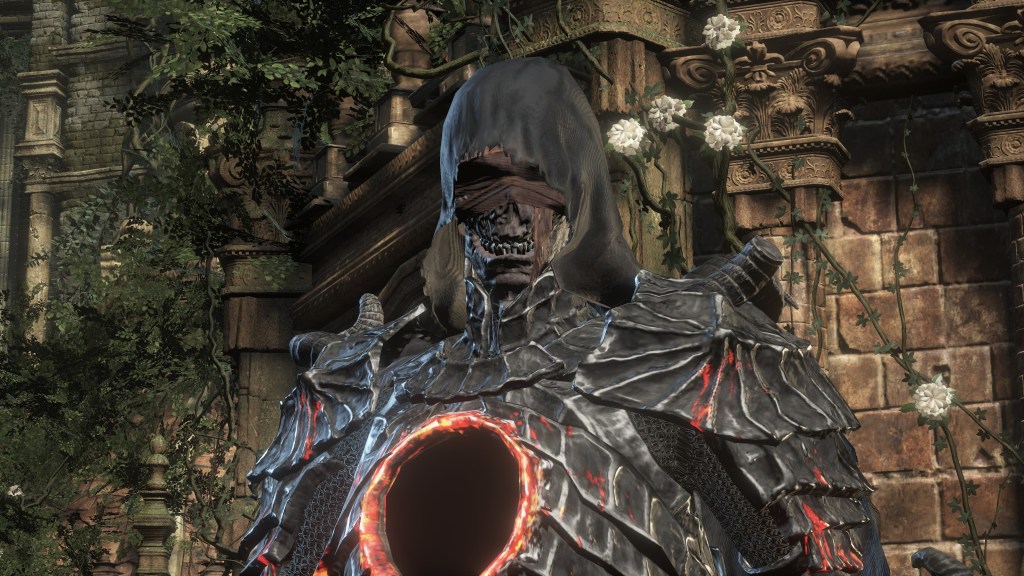
This makes it that much harder for ancient man to escape their Dark heritage, and that is assuming they wish to. To this day, the Ringed Knights forego a helmet in favor of a multi-layered eye-wrap, the cloth drenched in the Abyss. Covering their eyes with the blackened fabric doesn’t impede their sight in any way, so it must allow them to see their surroundings through the Abyss, similar to the Fire Keeper’s mask. Unlike the rest of their clothing, it is not embered at the fringes, so Anor Londo never considered this use of the Abyss significant enough to be a threat. But despite this function, it is not the reason for the fashion statement. This minor use of the Dark is their one pathetic, silent resistance against the gods, as if constantly staring into the Abyss would make up for all the Dark hidden from them by flame. It may be a childish rebellion by a feckless chivalric order, but it still shows where their loyalties lay even as they faithfully served wavering lieges.
Hood of the Ringed Knights.
They wear black cloth that was drenched in the Abyss as well as repeatedly covering their eyes.
As if un-erasing all of the things that couldn’t be seen due to the seal of fire, this was their small resistance to the gods.
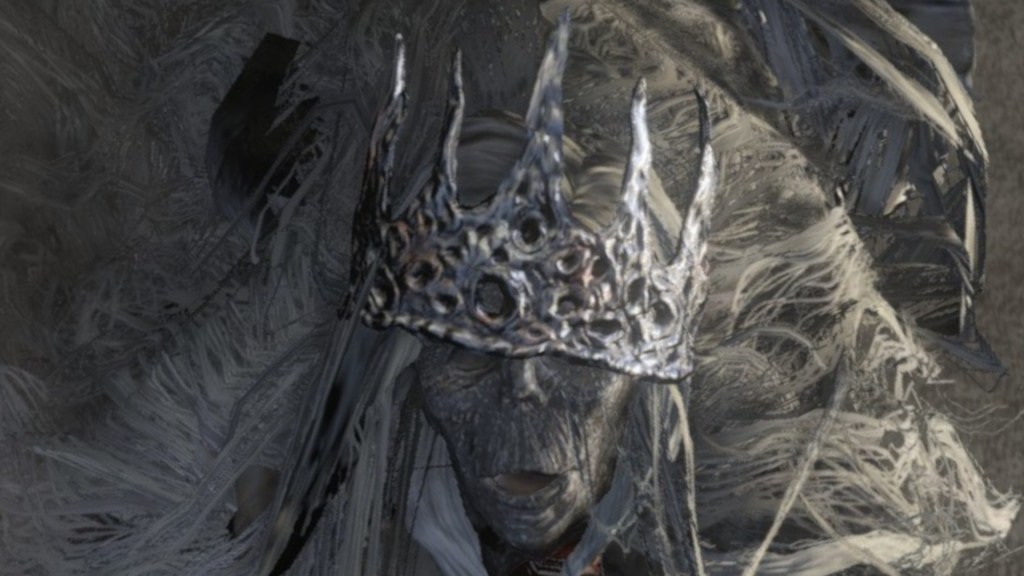
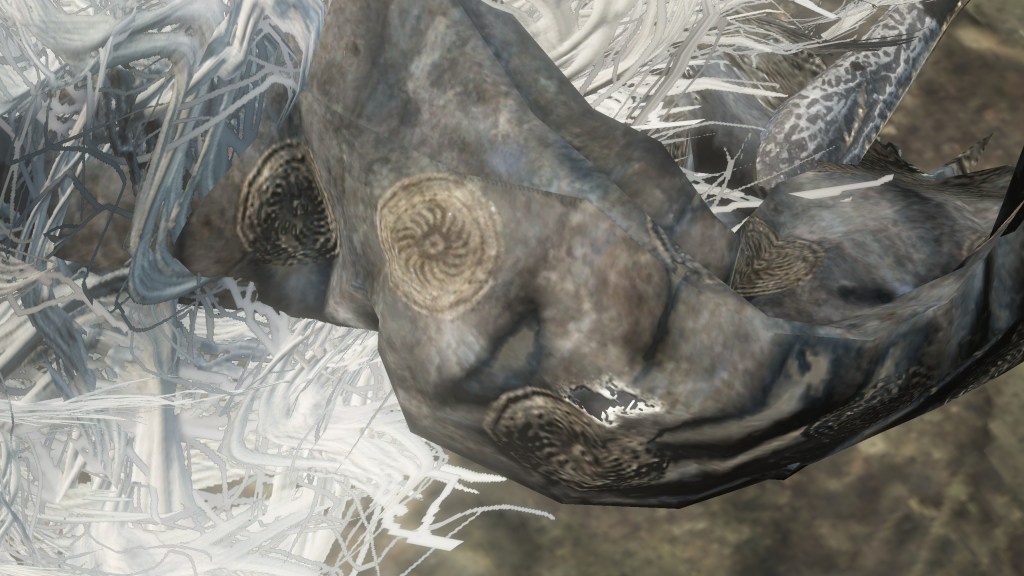
Even the royal council, with its incestuous relationship with Anor Londo, would not abandon the birthright justifying their rule over the tribe so easily. We see that the kings flaunt iconography of the Abyss, their clothes weaved with dark vortexes while their crowns bear numerous pitch-black holes. Compromised by fire or no, the Ringed City was still a kingdom of Dark, and its lords were in no position to readily relinquish that memory. If Filianore was to stay until the kings had forgotten this history, she would be waiting a long time. Granted, Gwyn was in no rush. The Lord of Sunlight was content to erode Dark culture little by little over the course of countless generations. Man was still becoming enfeebled as the Age of Fire took its course. The Dark had been gradually pushed out of human mainstream, carried on by witches and barbarians also failing to preserve adequate memory of their history. The Ringed City was little known and never celebrated. Leaving things to continue, there would be no heirs to the Dark when that Age did come. But for perhaps the first time in his life, time was not on Gwyn’s side.
The Darkness Strikes Back
As foreseen, the First Flame did begin to fade. But to Anor Londo’s surprise, the shackles they imposed upon man manifested in a more terrible curse. Estranged from their humanity for so long, undying man found their new souls consumed by the latent Dark, becoming mindless monsters starved for more souls. The pygmies suffered no different, every surviving pygmy we encounter in the city considered a Hollow. It is predictable that the common citizens carry Hollow gems, but the gods were not prepared for this ironic twist of fate. Caught unawares, their schemes were bound to come undone. Kaathe and his ilk were ready for man to lead the new age. But then Frampt betrayed them. The rogue serpent sided with Gwyn and lent credence to maintaining the current age beyond its natural end. With the Lord of Light having the cover of one dissenting sage elder among their ranks, he pushed forward with his hubris. Man at large was confused and habitually subservient. The gods just needed to get ahead of the narrative, with which Frampt was so willfully assisting.
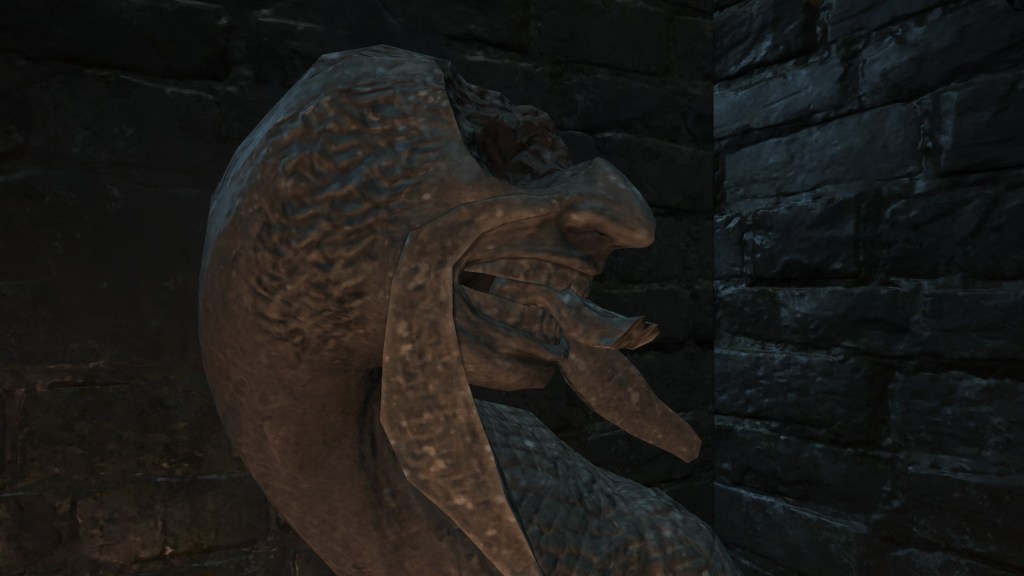
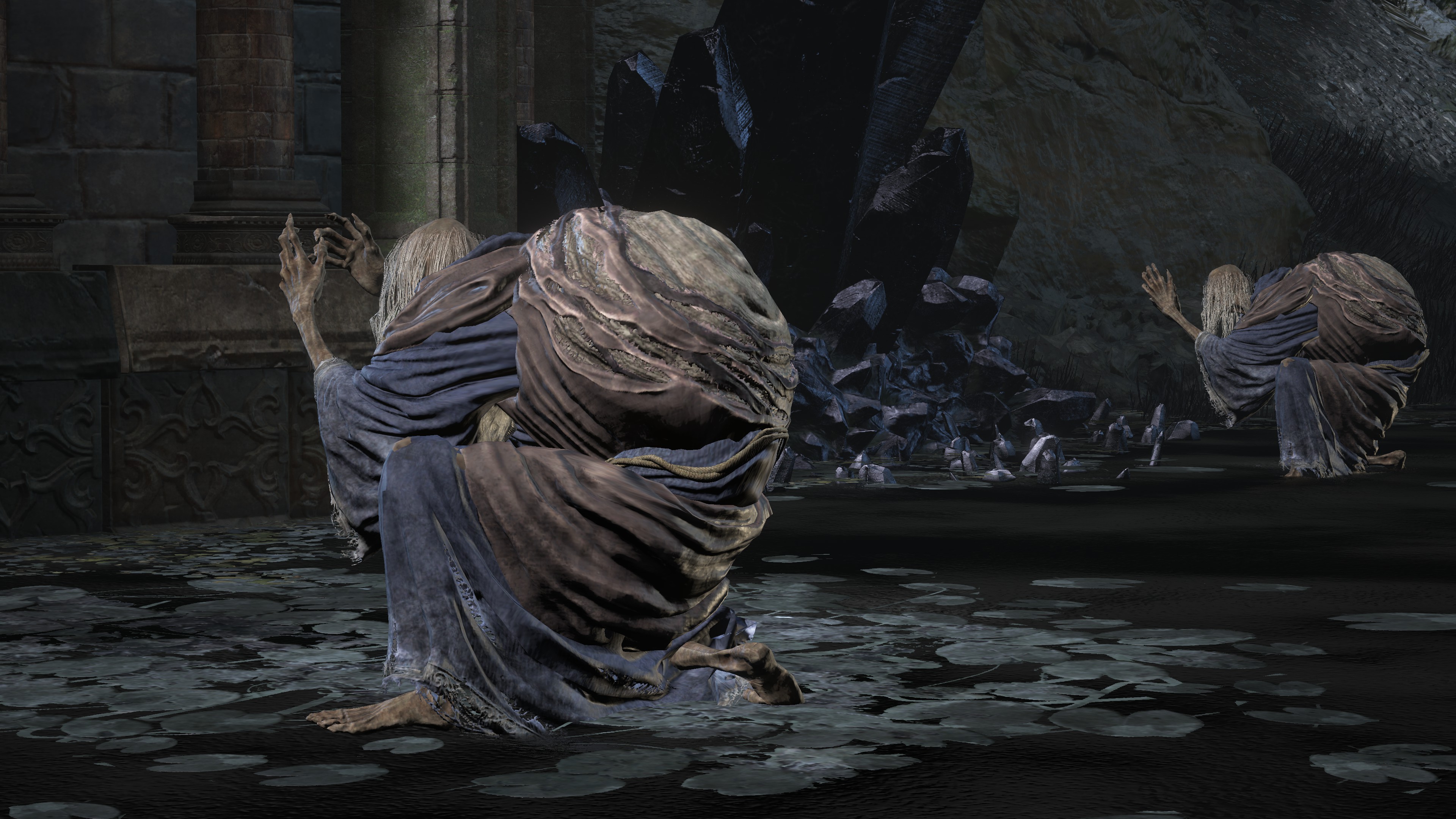
The Undead curse running rampant demanded extreme solutions, and holy light’s efficacy against the Dark supplied the means. Gwyn tasked his uncle to risk life in the field in the hopes of bringing the humans within their reach back under their firm control. And while Lloyd may have based himself relatively close to home in Thorolund, the far-flung Ringed City was no less part of the world of man within his prerogative. In fact, introducing the pygmies to the new church was paramount. And as we can see, the Way of White has been accepted by the local clergy. Certain Ringed City clerics fling themselves at us while conjuring white aureoles around their spinning bodies, this holy sawblade-type miracle befitting priests of Lloyd’s era. The Undead clerics overall likewise dress in the same blue robes as their modern Way of White counterparts. That reveals the age to this practice, but the uniform also implies the presence of the pus of man, which the clergy also try to suppress with lids on their backs.
This might sound odd, since the pus as we know it never appeared before this game. How could the Way of White under Lloyd develop a practice that the church never used outside the Ringed City until now? The obvious answer is that it was simply never relevant for the wider world of man before the history of Lothric, having previously been confined to the Ringed City. Farron Torch does suggest that pus was purged with fire in times prior, and the Ringed Knights have plenty of fire to do the purging. The gap in time is also logical. Just as how the waning First Flame has a disproportionate effect on its immediate surroundings initially, the place where the waxing Dark Soul remains most concentrated sees the answer is that it was only relevant in the Ringed City at the time. The pus first appeared there, most effects before reverberating to the fragments spread throughout the world. The pygmies’ humanity saw the most activity because it, collectively, was the most desperate for freedom from its fetters. The smaller pieces began to stir only after they had eons to stew.
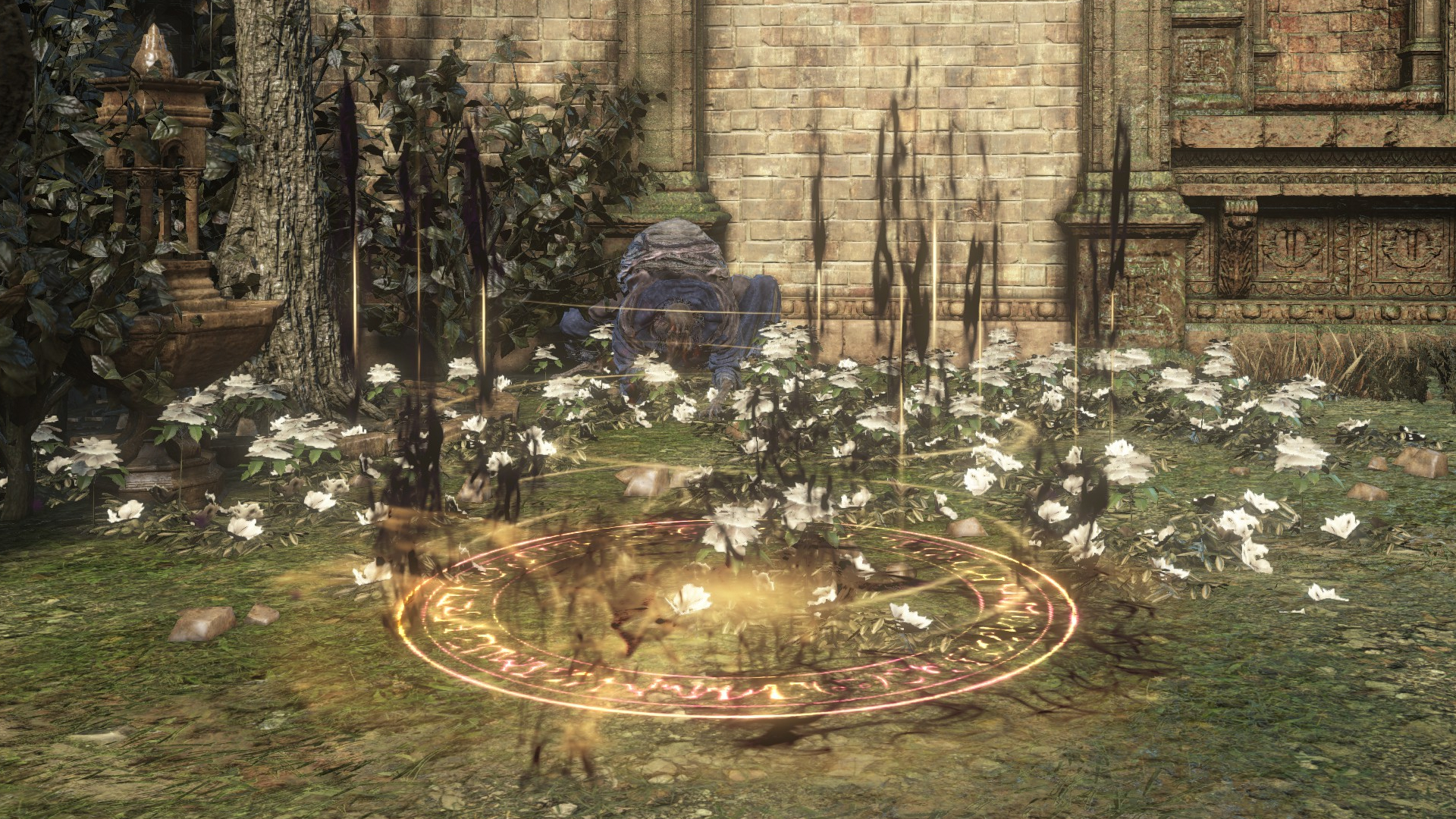
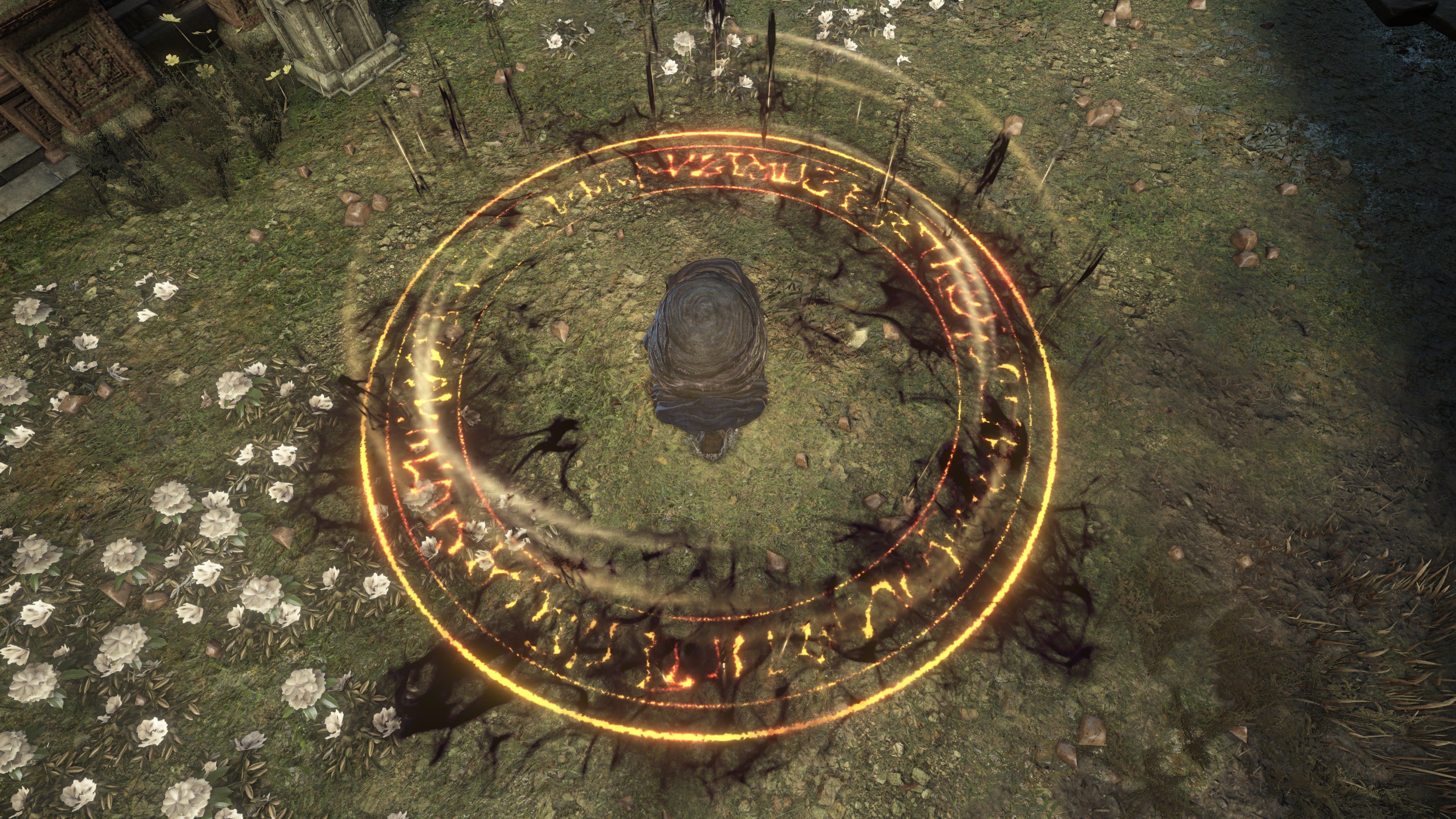
In short, Ringed City has probably been dealing with the pus since the curse’s onset, turning to the newly established church for salvation. The Undead clerics’ shells, combined with their walk on all limbs, make them resemble tortoises, which symbolize luck and longevity in Japanese folklore as havens for immortals. Whether a deliberate choice by the Way of White or just FromSoftware, the holy men embody a welcoming image to the distraught citizenry in need of moral examples. The clerics would demonstrate how to deal with undeath, stay strong against the ravenous Dark. Certainly, these clergy are experts in channeling the curse. One miracle of theirs has the typical holy sigil mixed with a Dark aura, damaging others within the area of the runic ring on the ground. Without a proper catalyst, the clerics must be drawing upon the power within themselves, their souls blessed; it explains the blessed gems in their possession. But as Undead, they also draw out the power of the humanity consuming those souls, Dark devouring the enemy along with the light of the holy magic.
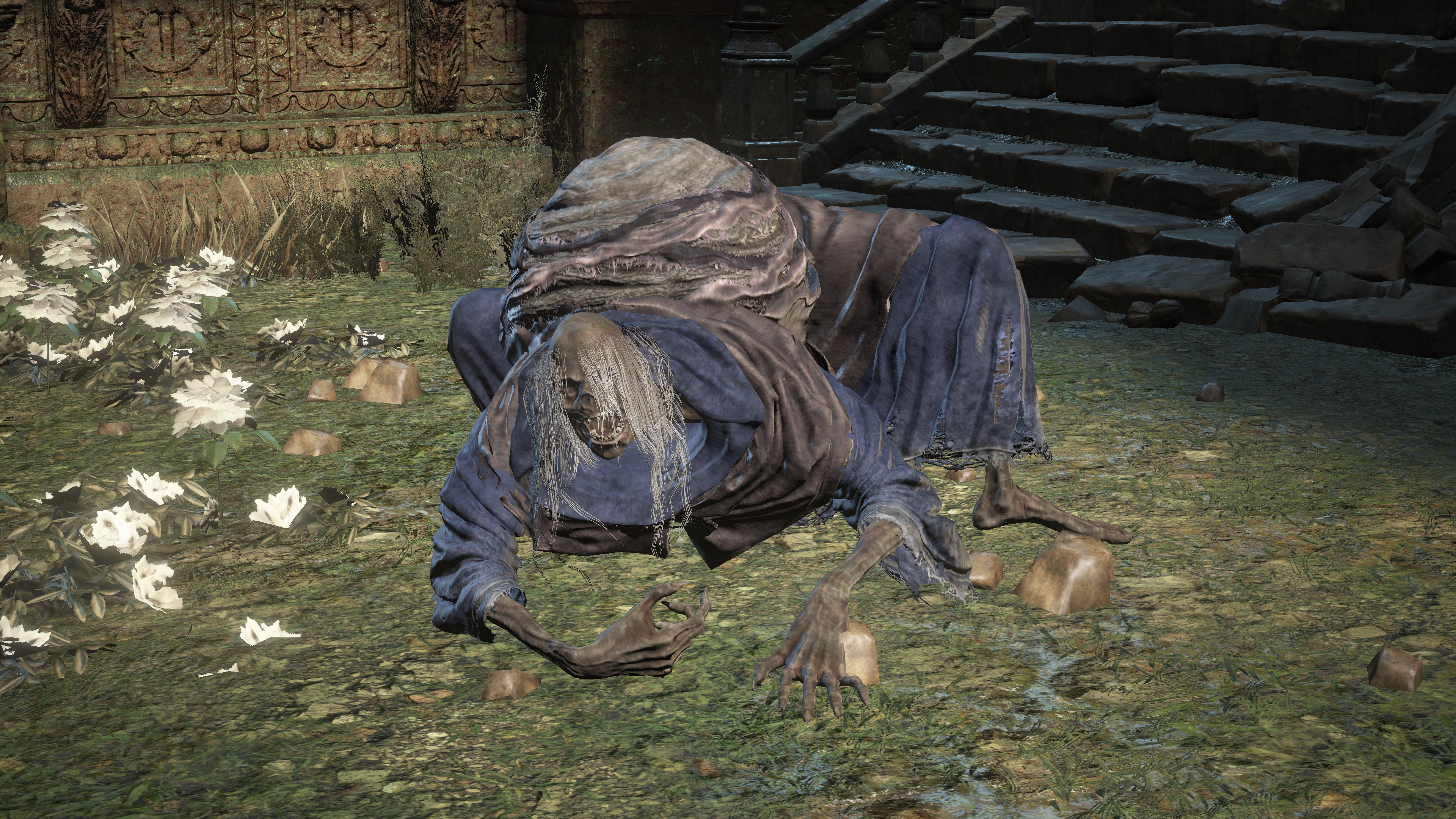
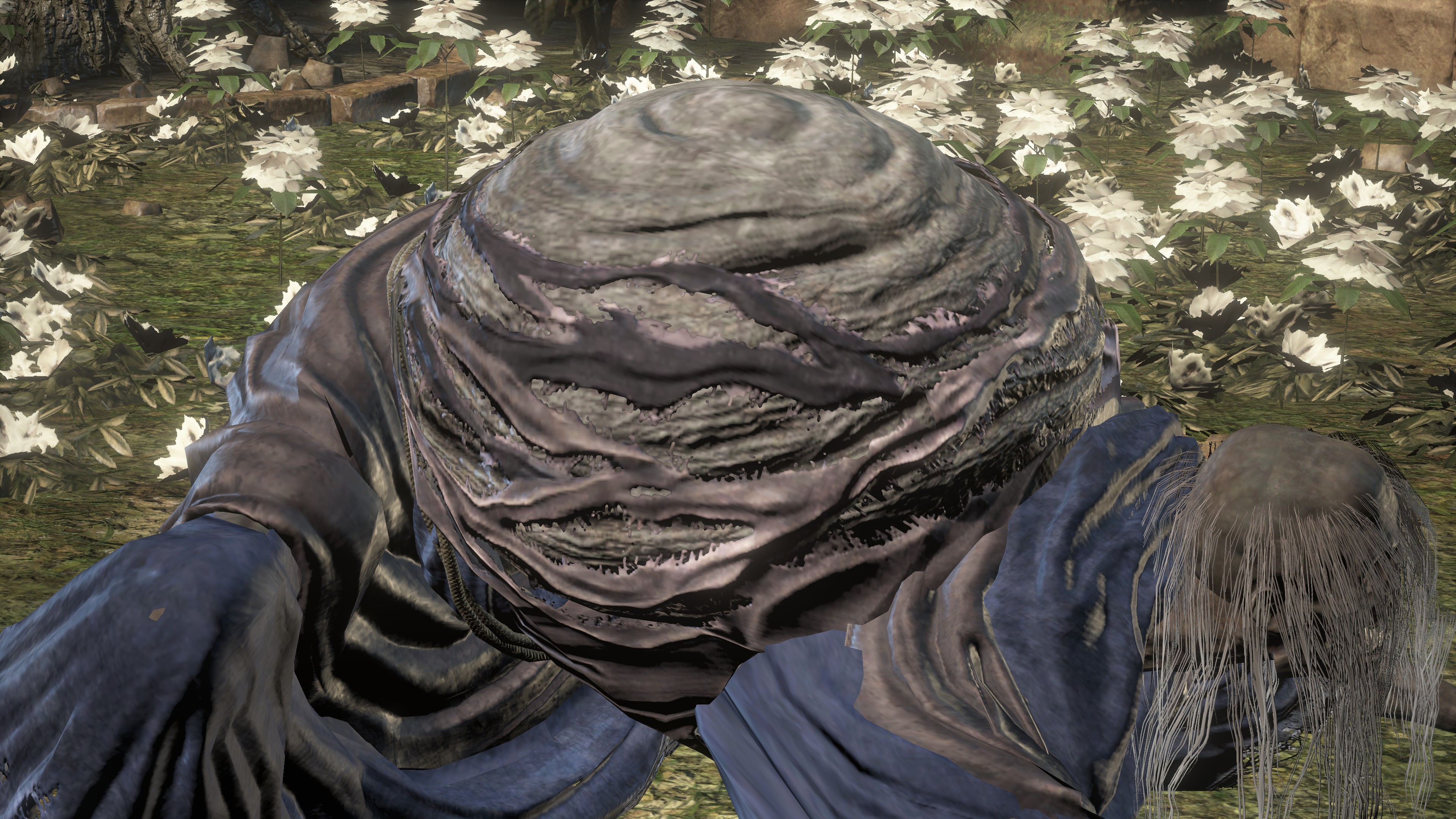
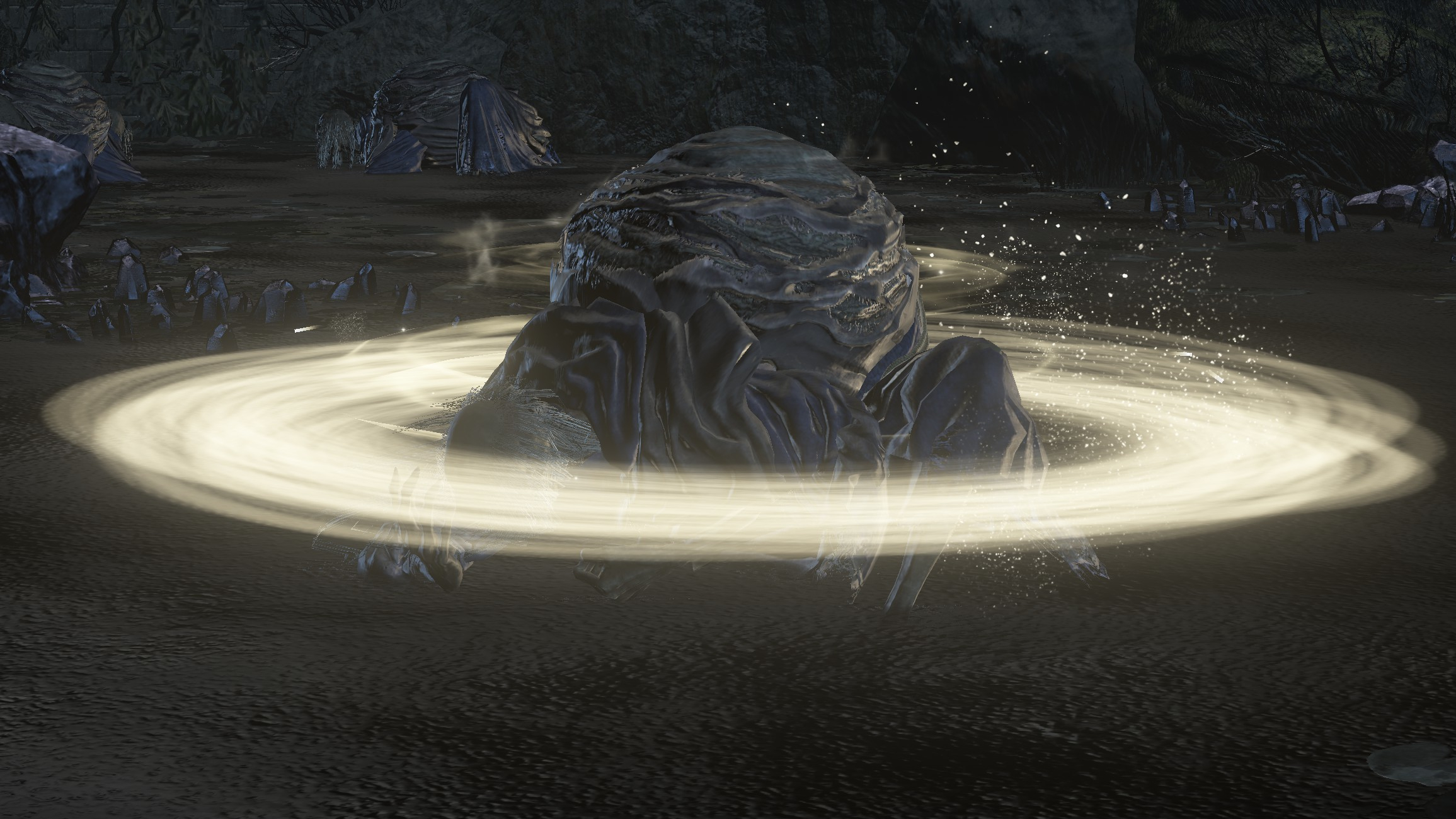
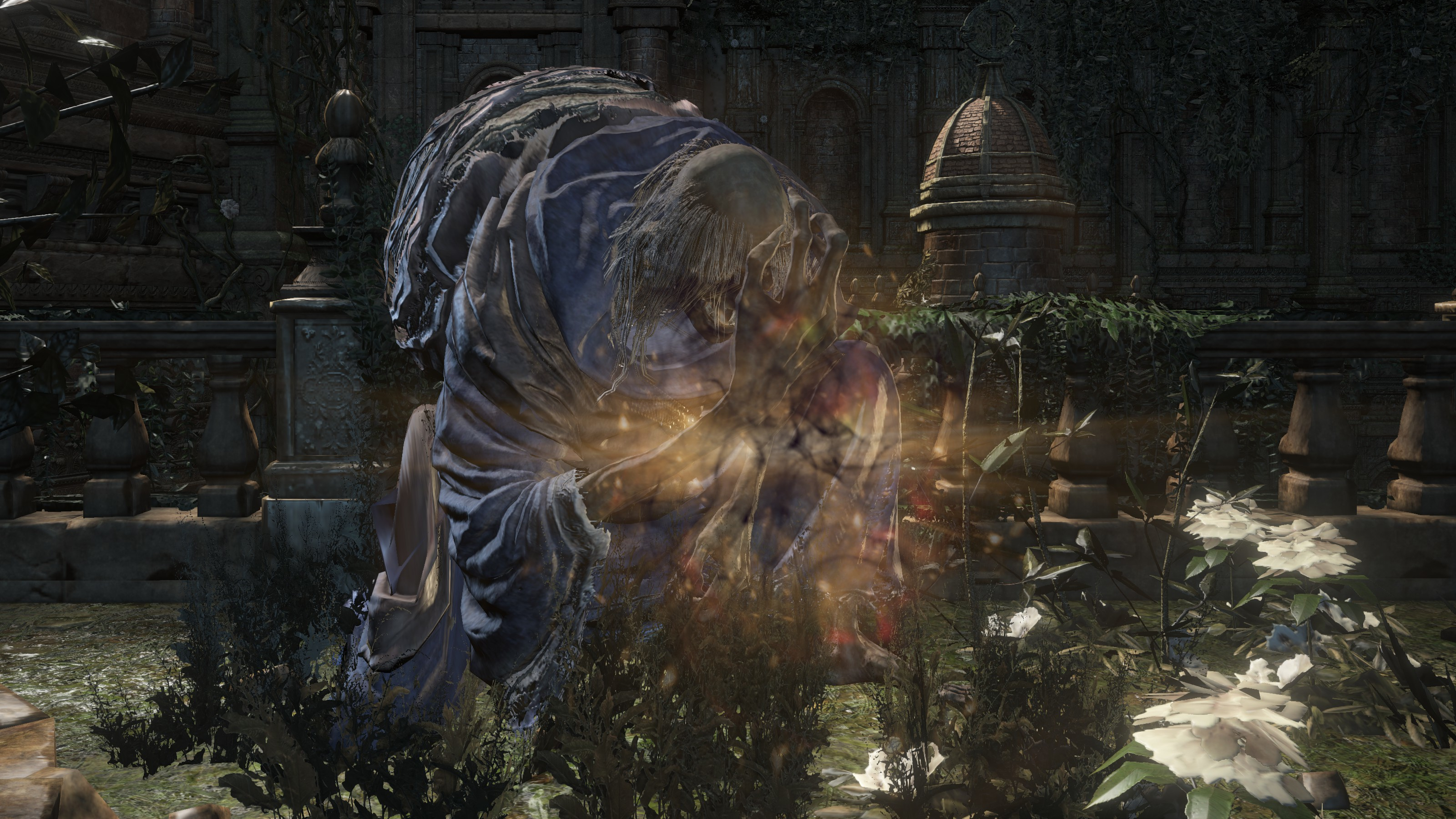
That is just one way they tried to rein in undeath. The clerics in town mostly inhabit some kind of seminary or monastery, where they roam around giving praise to the gods under the Silver Knight statues’ “watch” — bearing the most pressure to be faithful. This building has direct path to the royal mausoleum for their exclusive access, presumably for performing final rites and caretaking. That explains the pots and sealed urns shared between the two facilities. However, the mausoleum also houses wooden boxes, most of which litter broken through the complex. This can’t simply be random clutter since the same boxes remain intact only in the far tower of the mausoleum arch, disconnected from the rest of the facility. Put simply, the boxes were delivered to the whole complex but only used in the main tower. This indicates that their contents were intended for the dead reached from that section. And in all likelihood, they were brought in after the Darksign began to manifest on the pygmies.
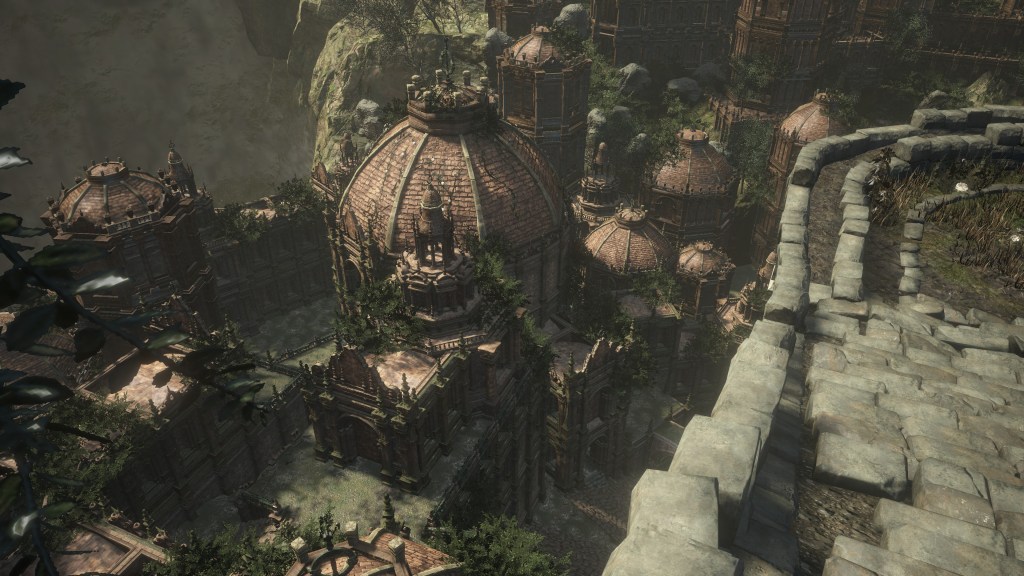
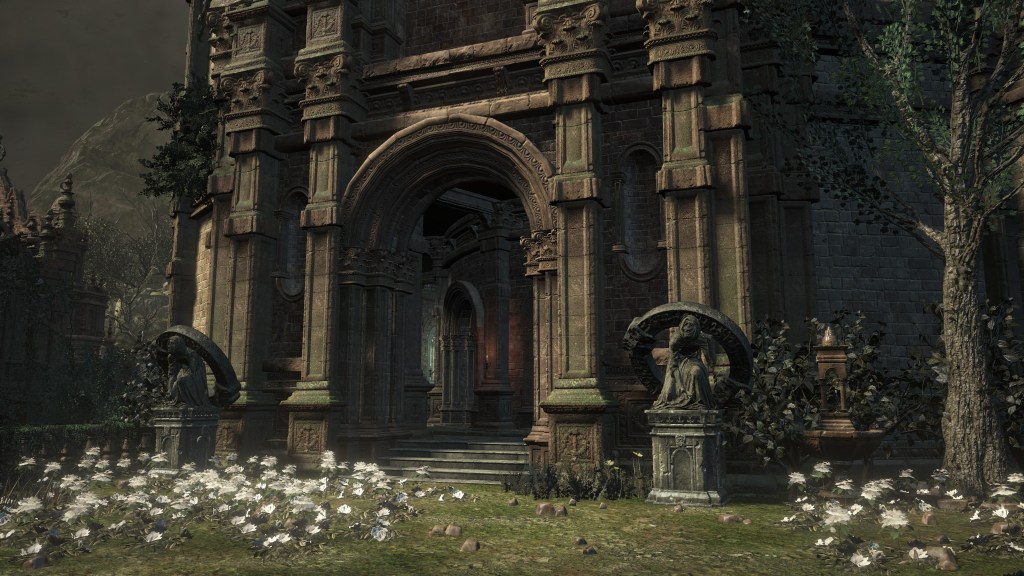
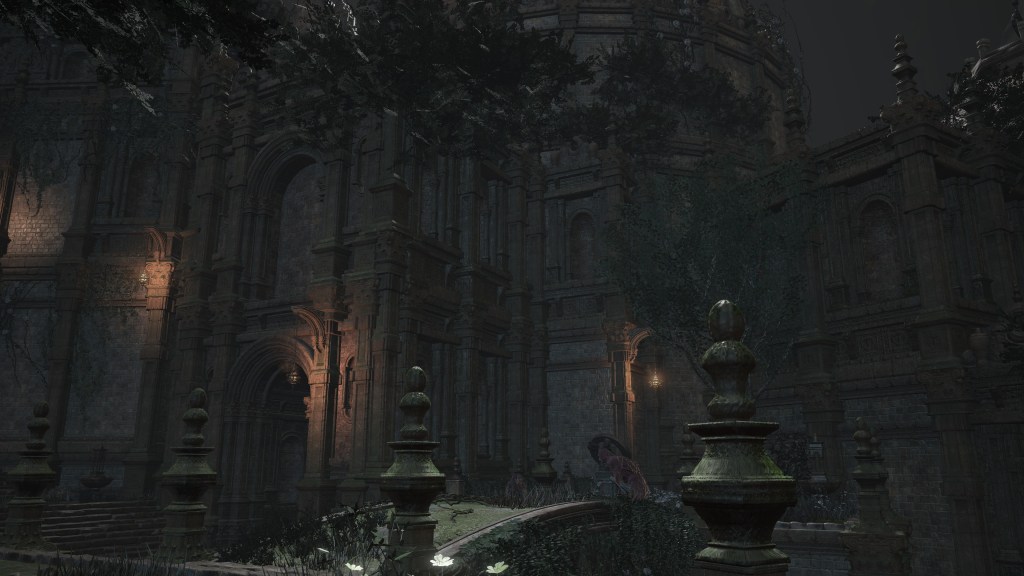
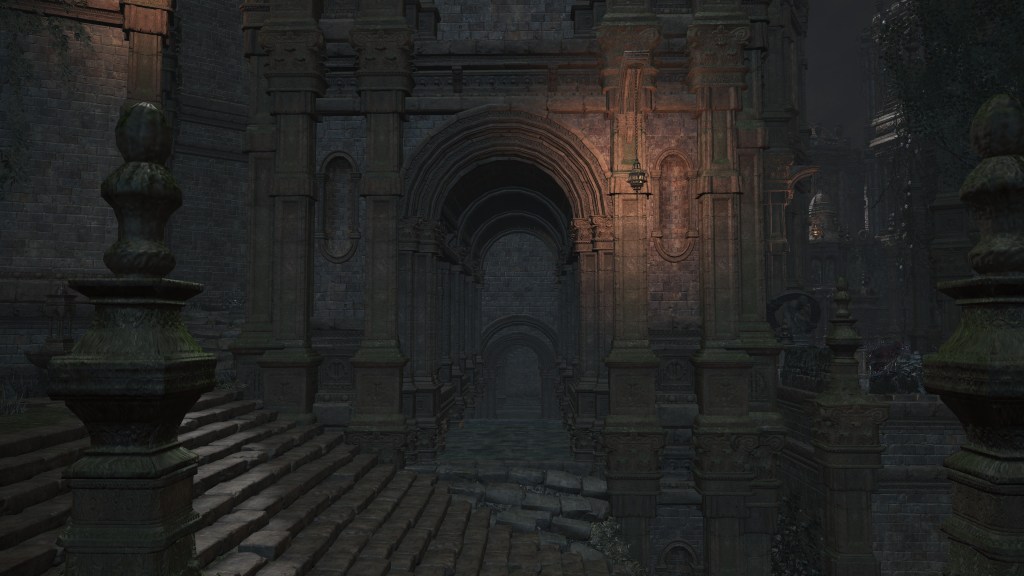
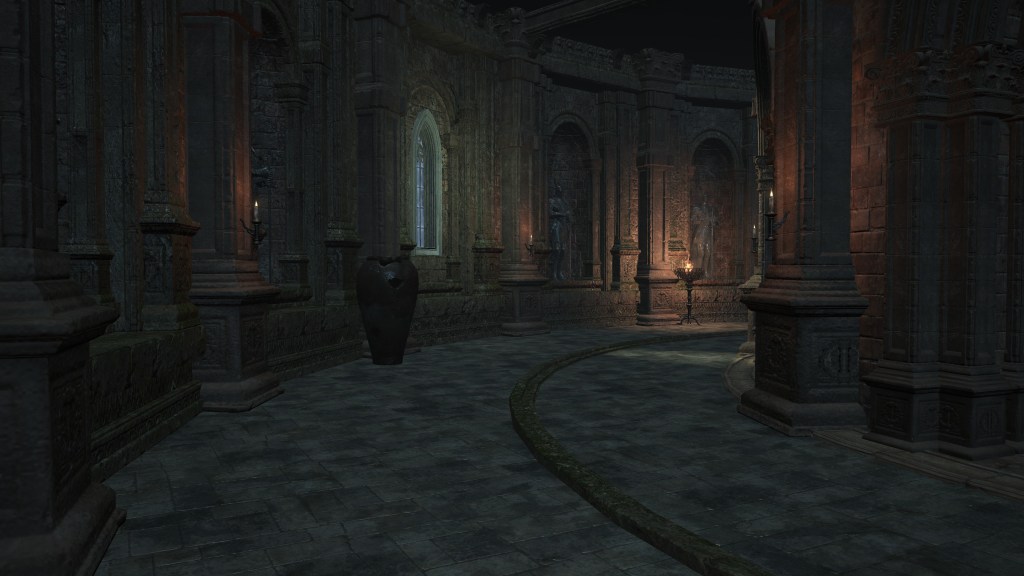
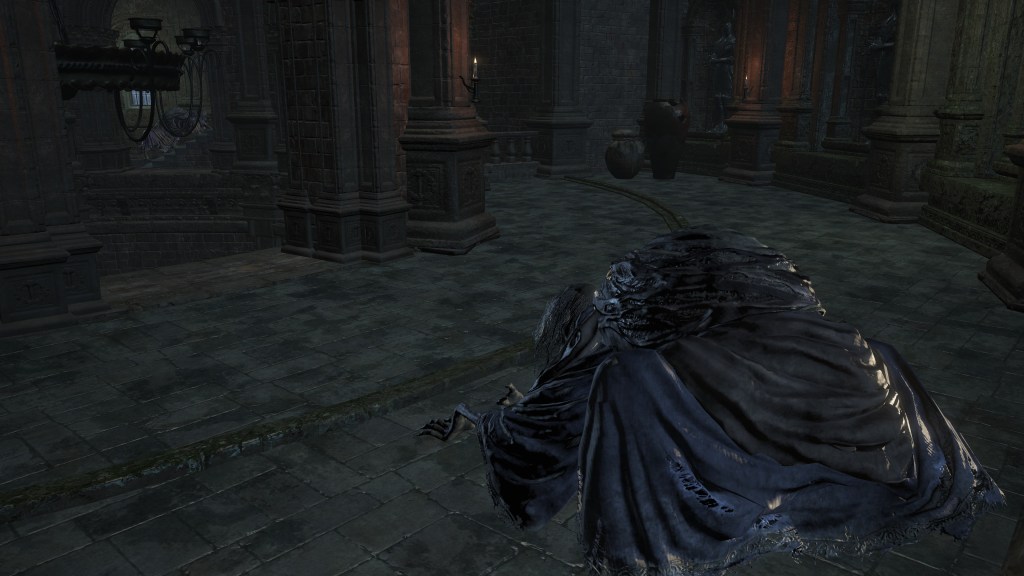
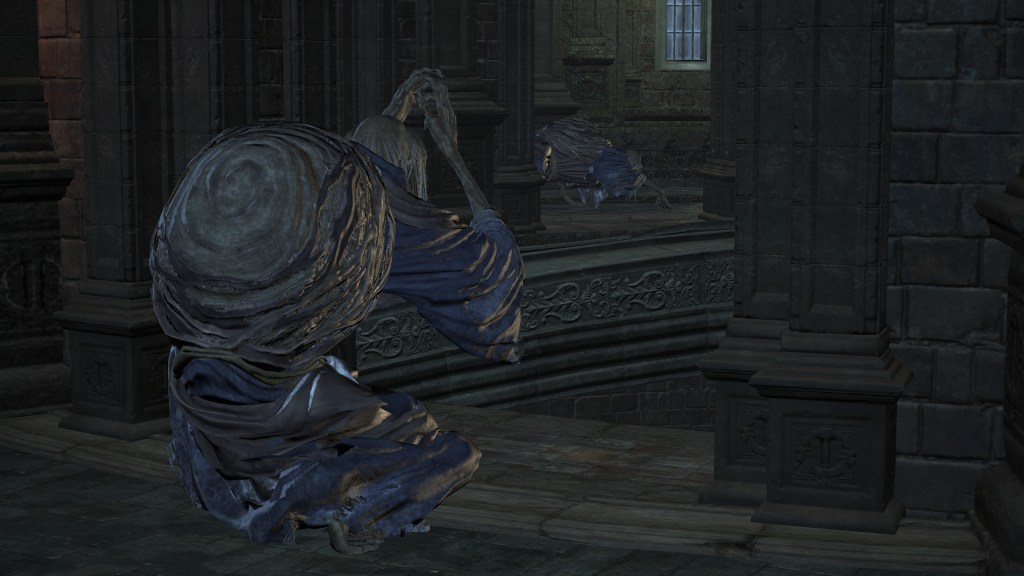
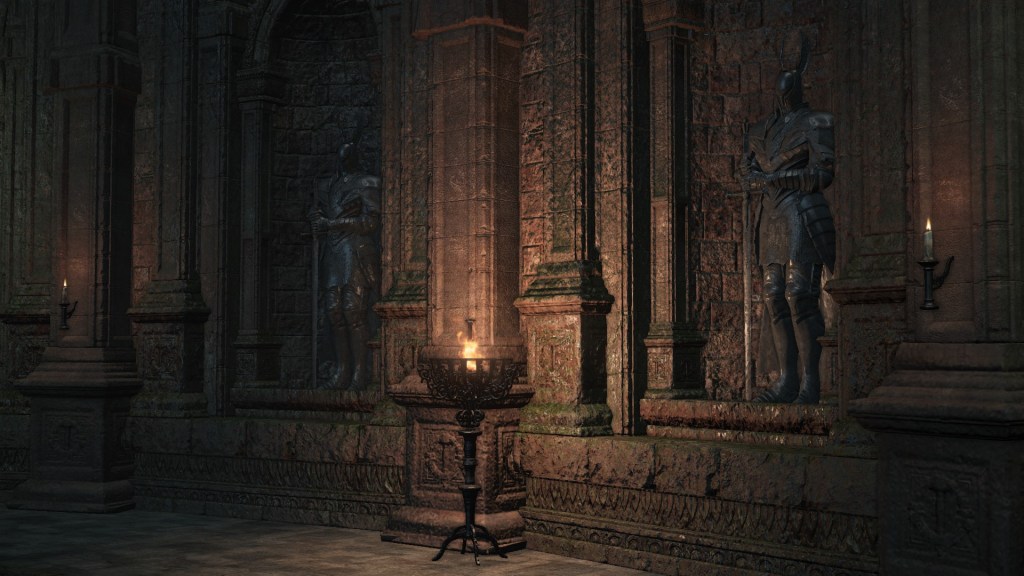
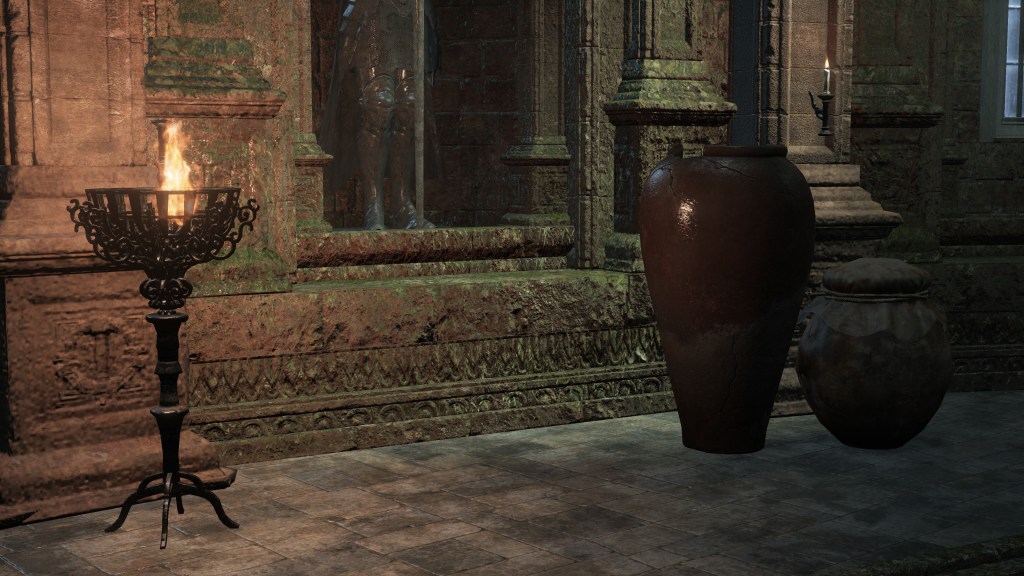
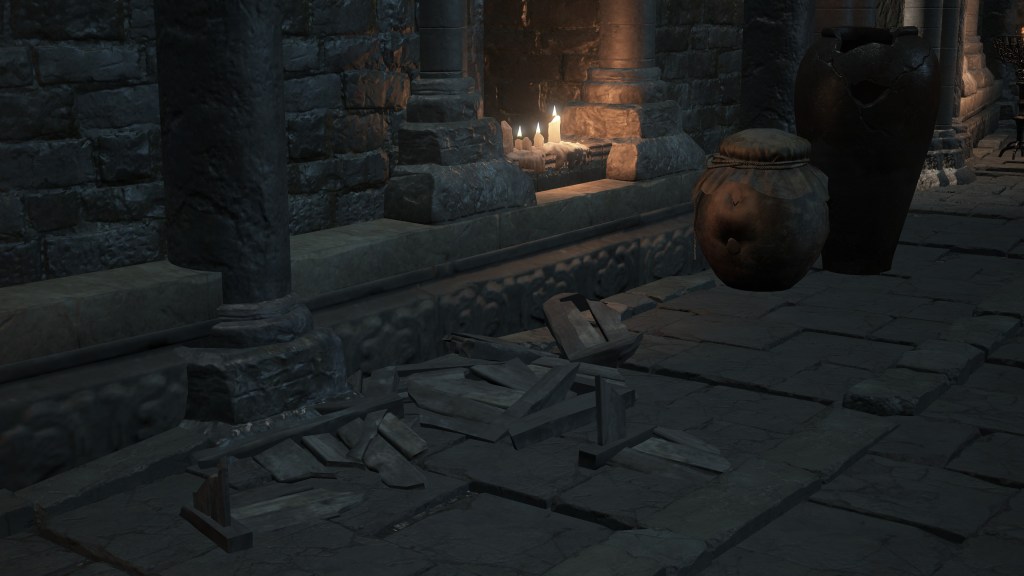
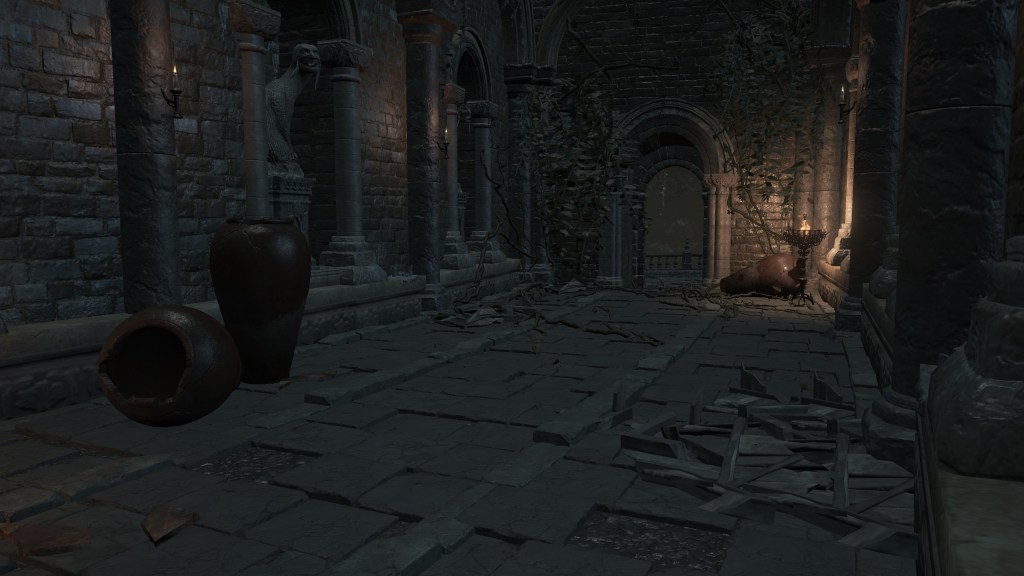
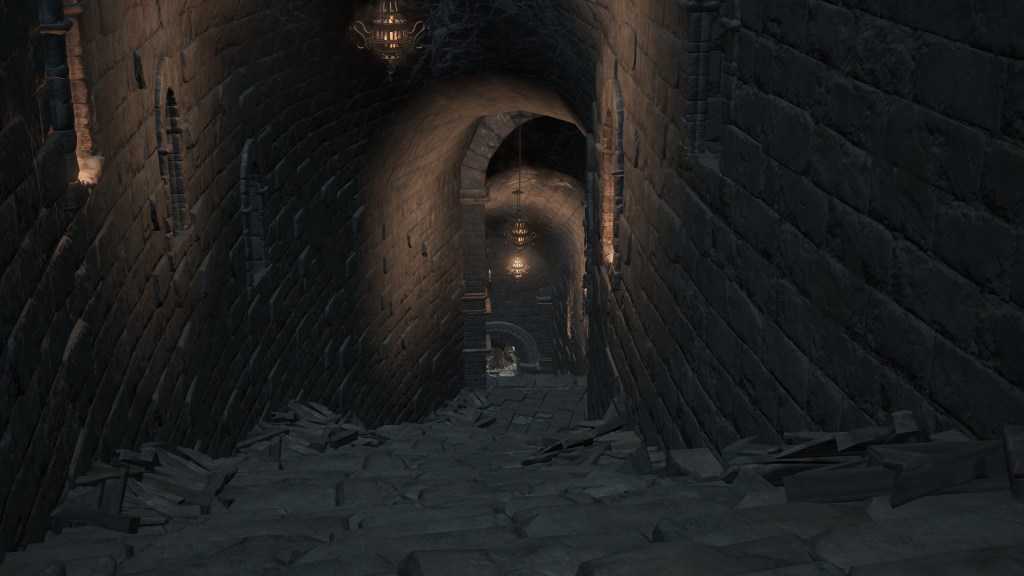
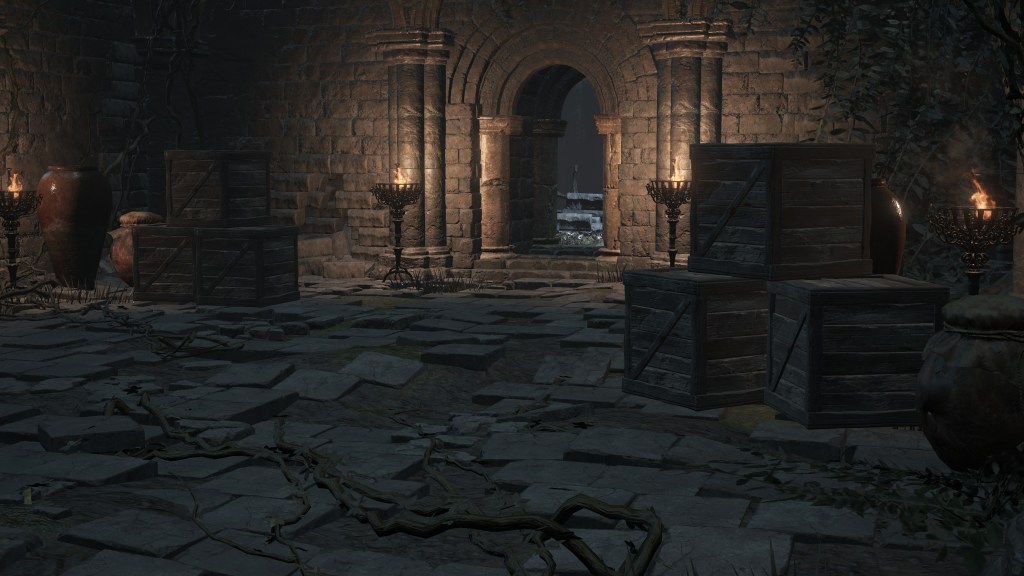
Recall that such boxes were delivered to the Cathedral of the Deep and broken at the Cleansing Chapel for the implicit suppression of the Dark corrupting the Deep. That then is likely their same purpose at the mausoleum, the clergy trying to stop the horrors of the pygmy royals rising up again. Such a scenario isn’t unprecedented, looking at Manus’ revival in DS1. If the powerful dark sorcerer possessed anywhere near comparable humanity, a pygmy king might manifest a similarly potent curse. Their revival as the gods’ shackles weakened might well have been the reason for the primordial serpents supporting the mausoleum project. More than that, they could manifest enough power to become horrid monstrosities. The potential alone gives god-fearing pygmies incentive to combat that outcome by every means. The shriving stone found in the monastery similarly conveys the clerics’ desire to shed the curse. Keeping the royals dead during this calamity was therefore an important caretaking duty. As with the Cathedral of the Deep, the Ringed City clergy have resorted to any means to curb the burgeoning Dark.
Like in other countries, their teachings spread amongst the general public. God-fearing citizens dress in deep red, likely to show solidarity with fire like bishops of the Way of White. When not using them to hang around in ambush, the Undead have impaled themselves, and each other, with crude stakes through the heart. They seem to specifically be using copper stakes in a desperate attempt to suppress the Dark, similar to the Cathedral of the Deep. Their concerns are validated by their continued survival despite the gaping holes in their undying chests and have only proved more apt over time. Some have had their souls thoroughly gnawed on for so long that their bodies have partially petrified, the voracious Dark doing the same to us by simple proximity. To completely absorb our Disparity through the air speaks to the threat of the pygmies’ curse compared to most men.
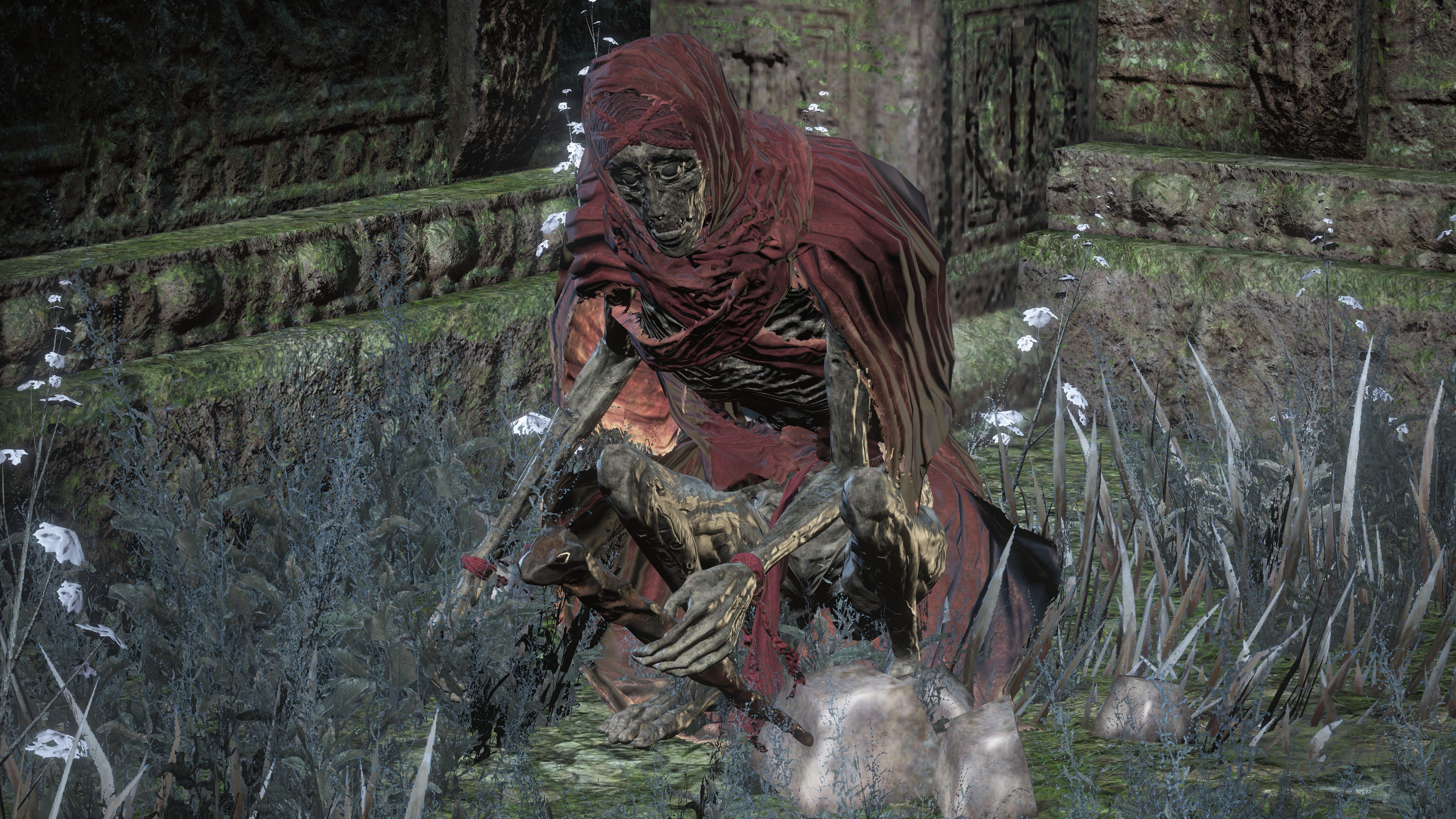
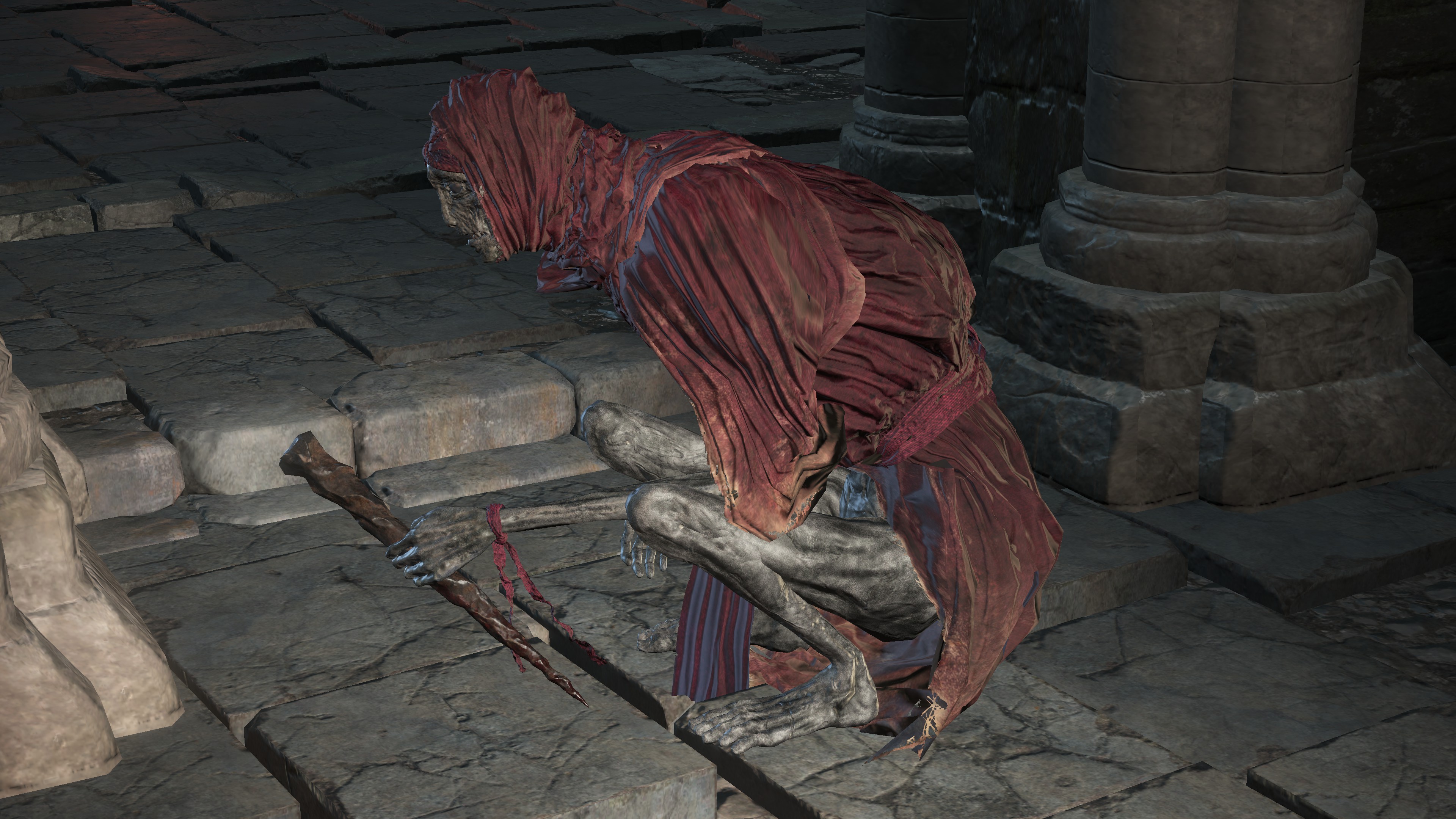
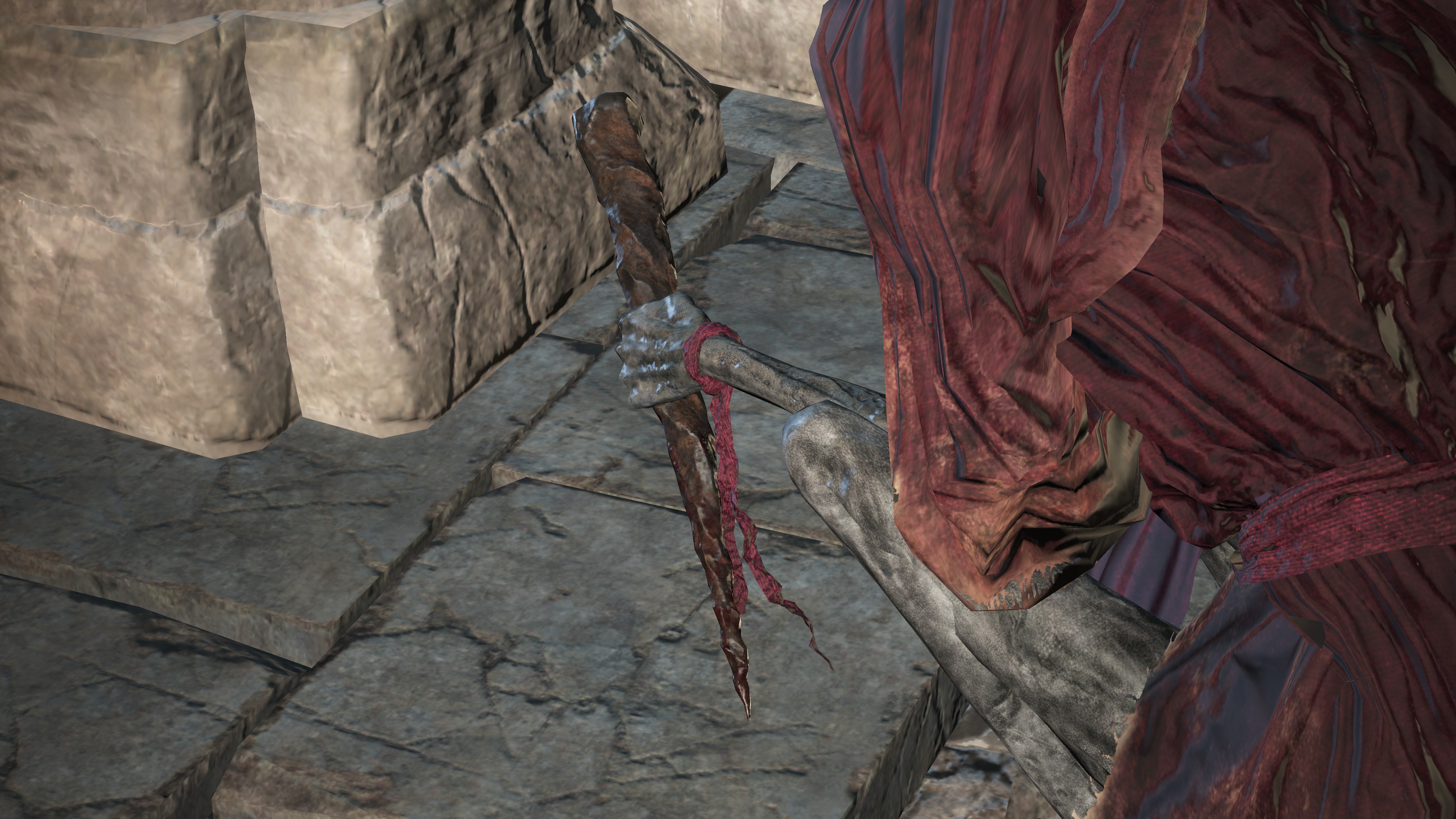
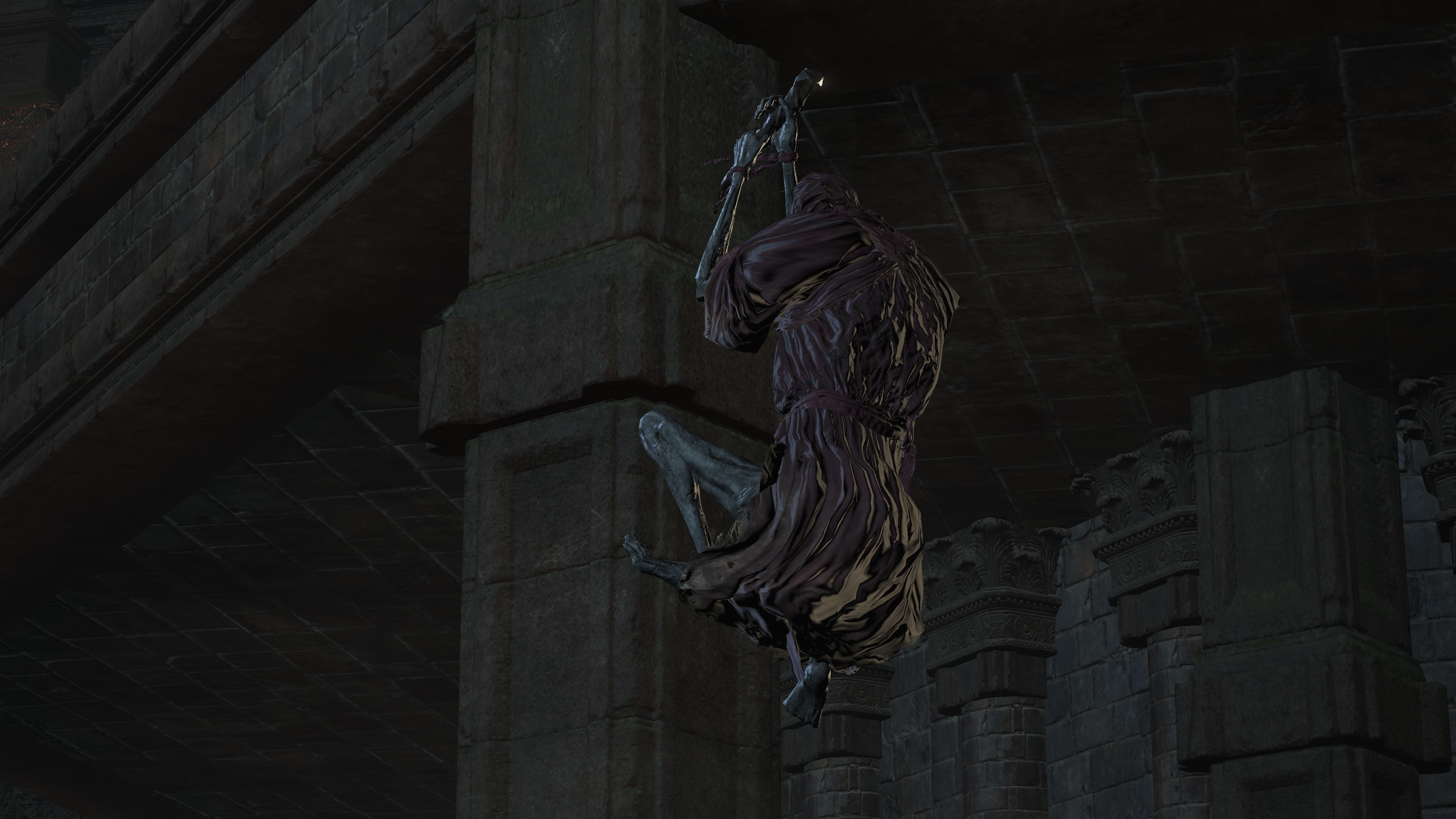
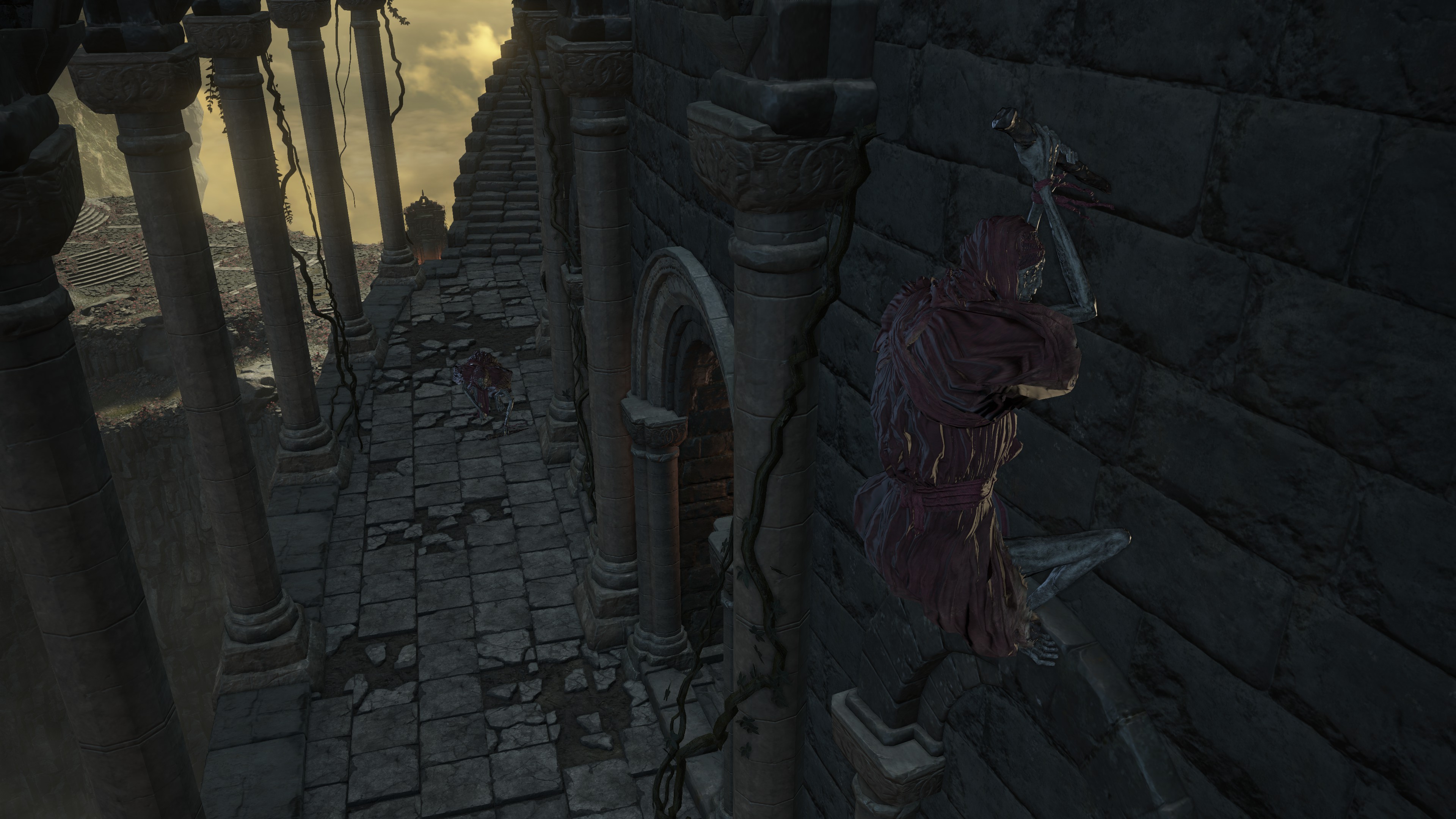
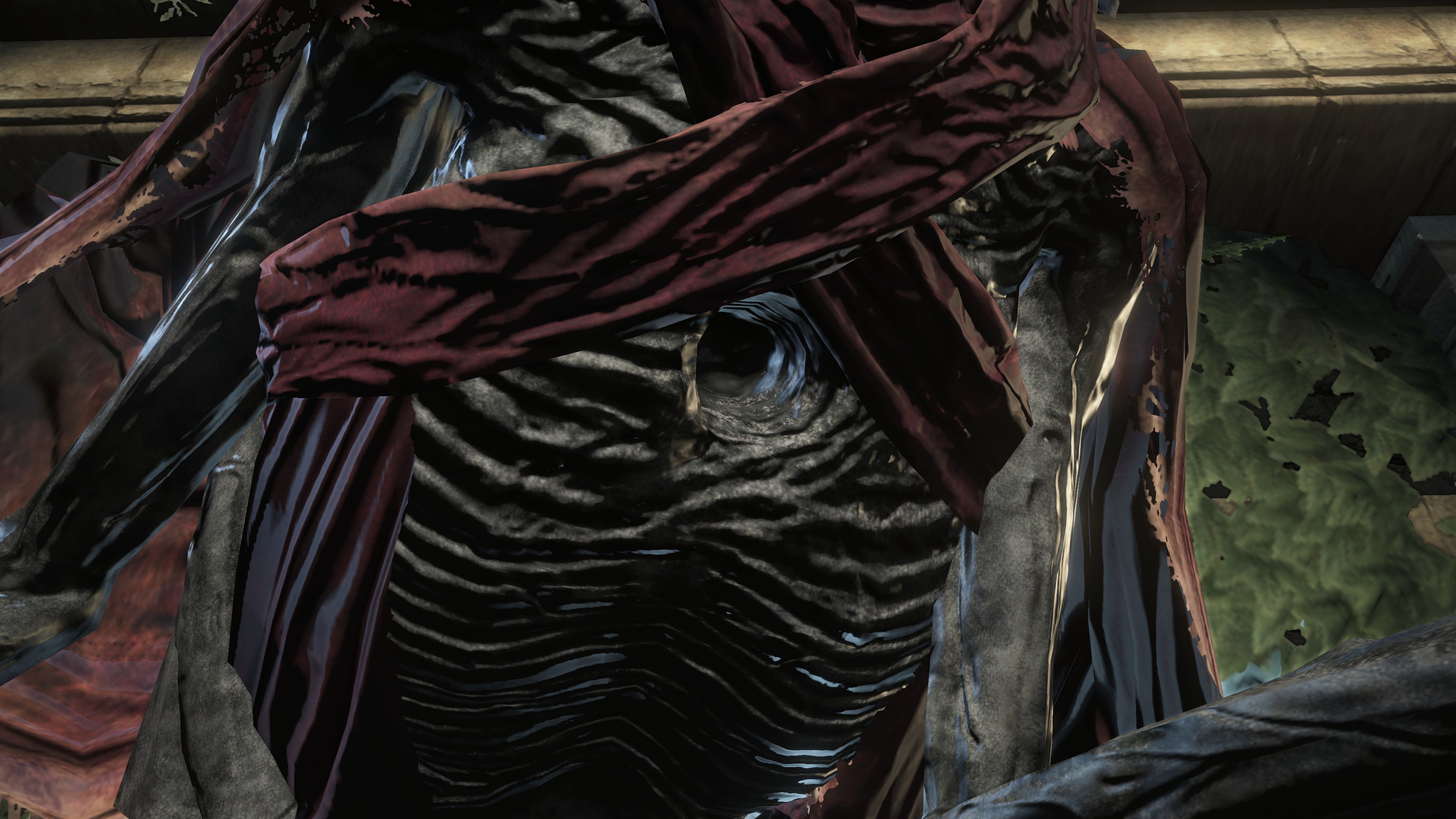
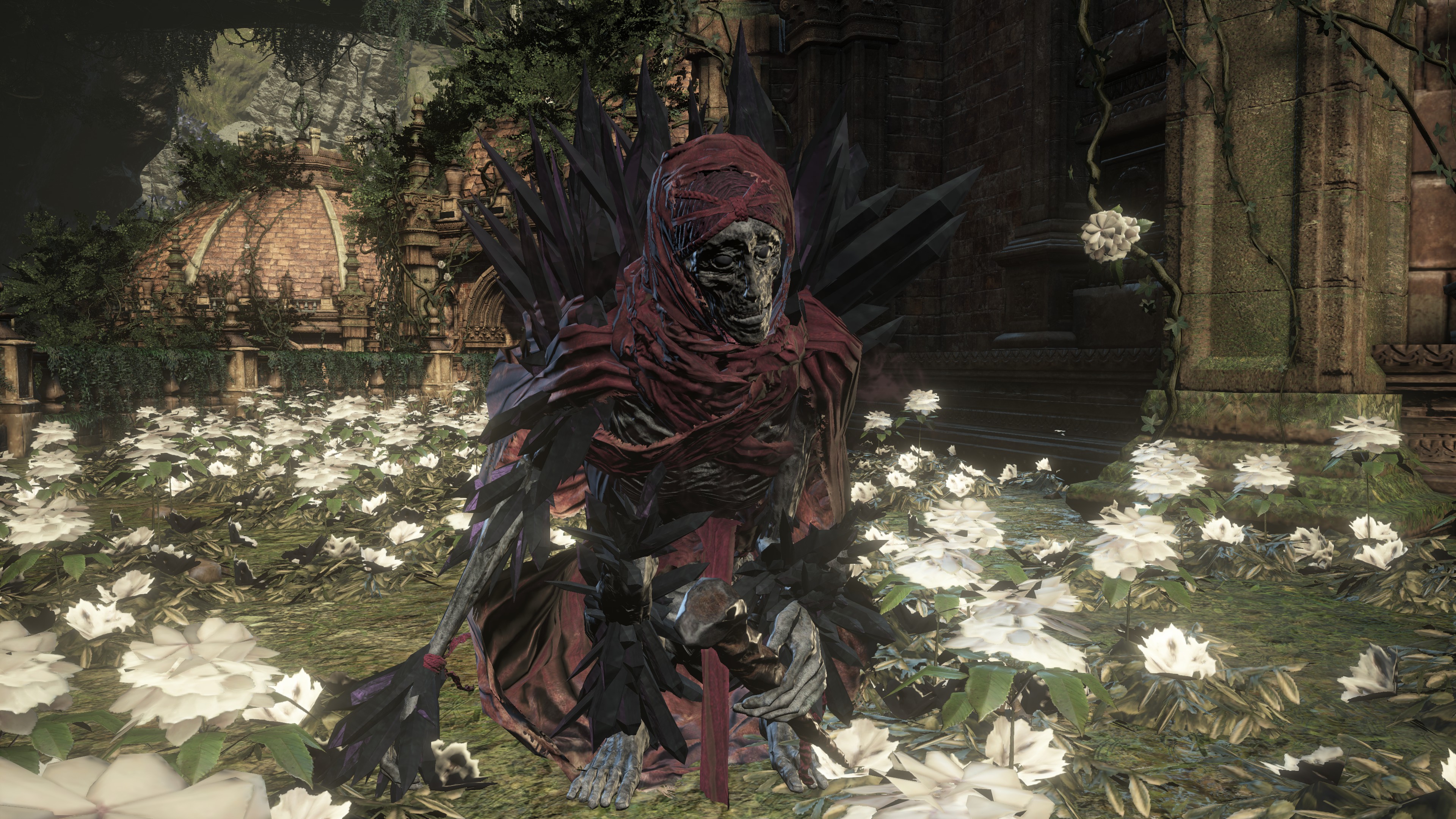
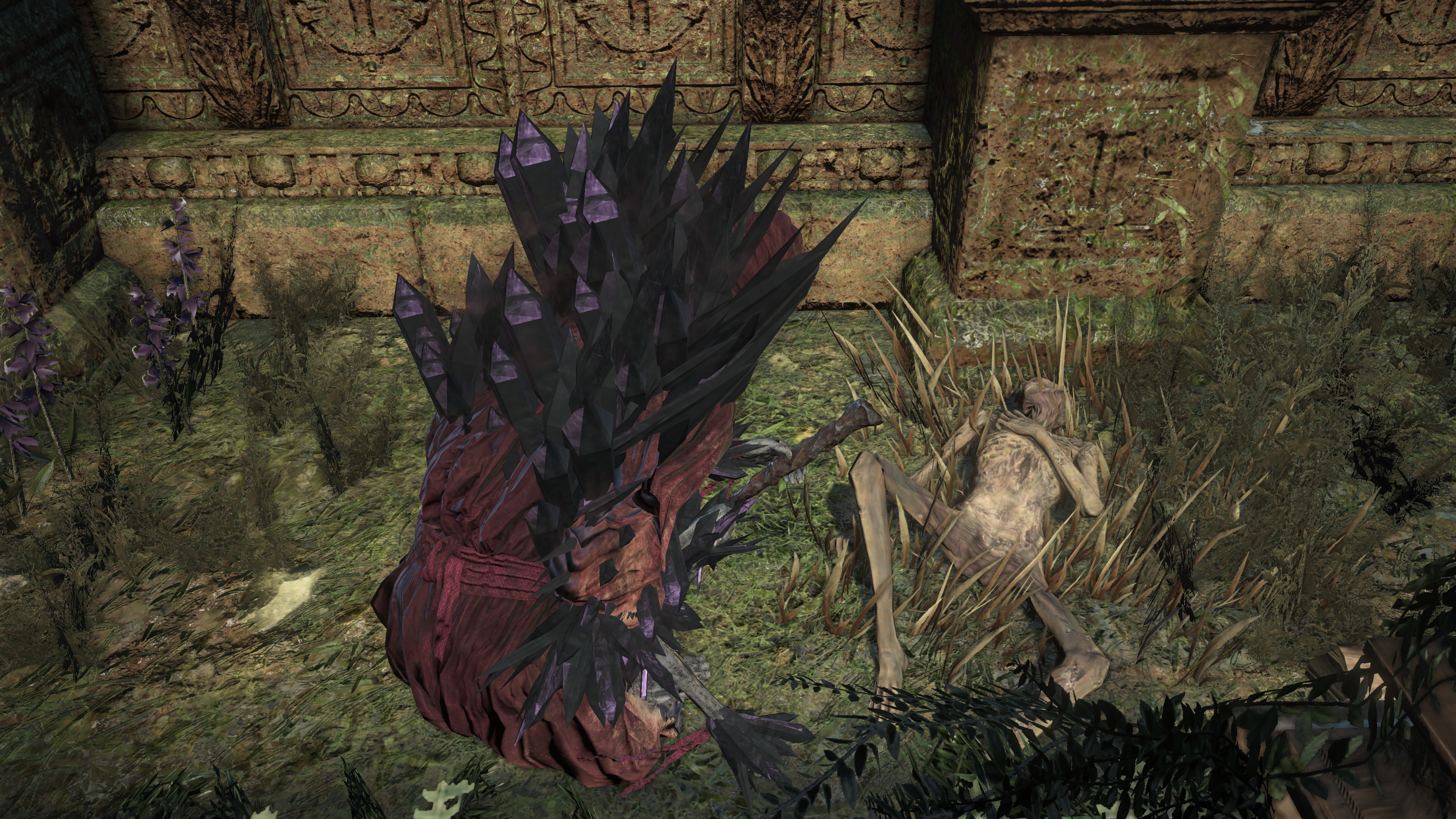
Between the pus of man and these other factors, the Ringed City was ground zero for the calamity befalling the entire world. Even if most isolated from Lordran, the Way of White couldn’t leave the pygmies to their own devices. However, there is no evidence that Lloyd left Thorolund to handle the matter in person. Rather, Gwyn seems to have sent proxies to regain control of the situation. The giant adjudicators stand out as obvious agents of Anor Londo, operating on its royalty’s behalf whilst owning Gwynevere’s Divine Blessings. DS1 proved that gods’ giant slaves could become soldiers and knights, so judges aren’t beyond the pale. Gaunt and lanky, these giants in robes enjoyed luxuries not afforded to the heavy laborers. But high status or no, the duty of a judge is to articulate the law and determine the guilt of the accused. The adjudicators were perfect for dealing with this rapid onset of “sin” on the gods’ behalf. They, alongside agents from the Way of White, would primarily guide the humans through this ordeal, all while remaining faithful to the medials.
The reason for Anor Londo stepping in more directly is likely because, beyond being ground zero, the Ringed City concerns the king’s beloved daughter. The Church of Filianore was constructed as a kind of base of operations. One adjudicator, Argo, oversees the place while its namesake rests secure in her tower. Its location across from the royal mausoleum also cannot be ignored. In fact, the building is specifically situated directly above the Shared Grave — as if to project Anor Londo’s firm handle on the populace, whose life and death should lay in their hands during this disaster. We do see the gods’ hand in regulating the catacomb, a mimic inside containing the Evil Eye ring from Astora. Apparently, the gravekeepers confiscated articles from the dead before burial, sealing even the smallest thing related to the Abyss in security chests brought from home. In this example, a pygmy acquired one of the many pieces crafted from remnants of the Evil Eye, presumably imported through trade before the undeath made the gods paranoid. Now, the person is dead and the “threat” is sealed away.
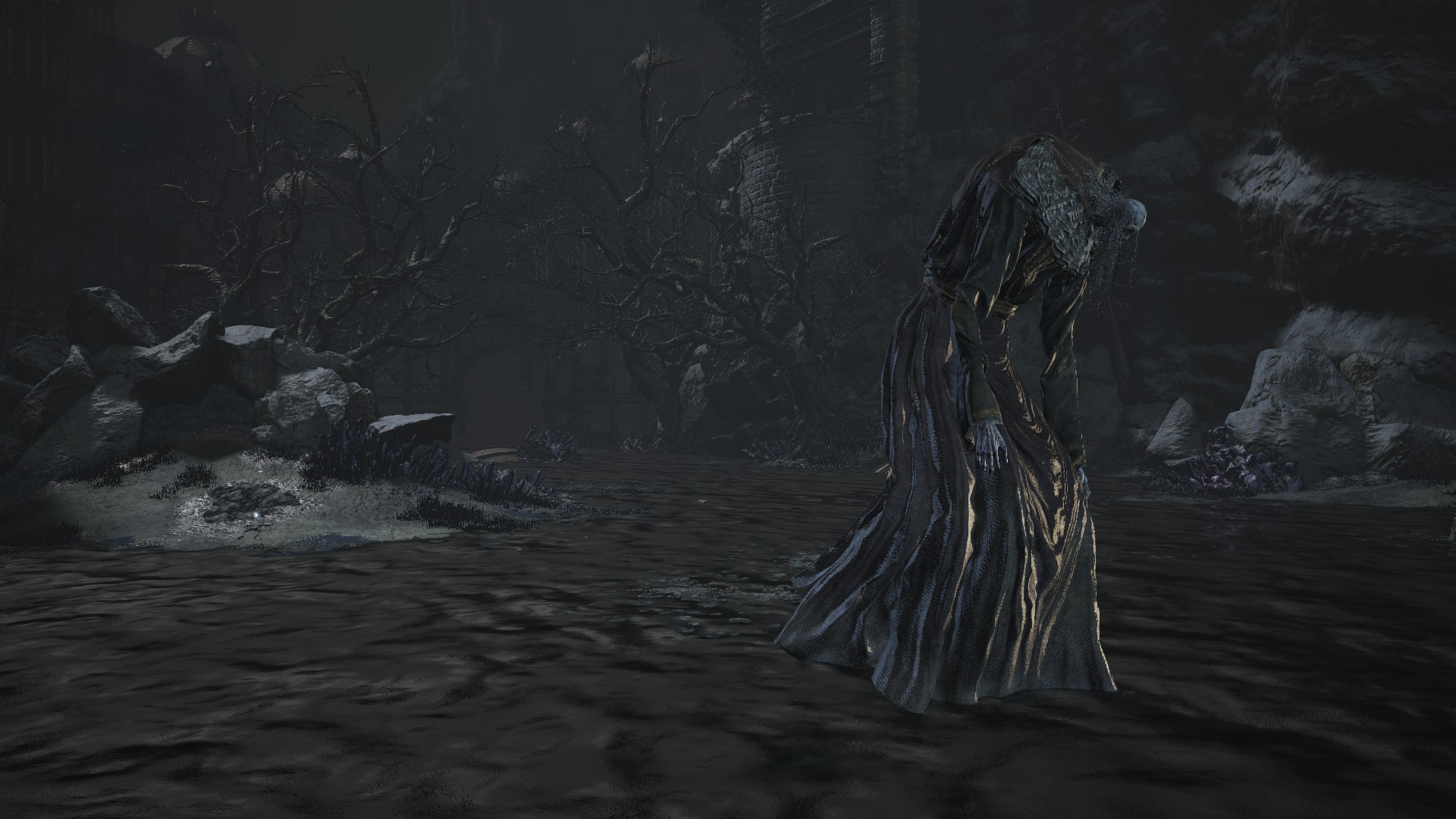
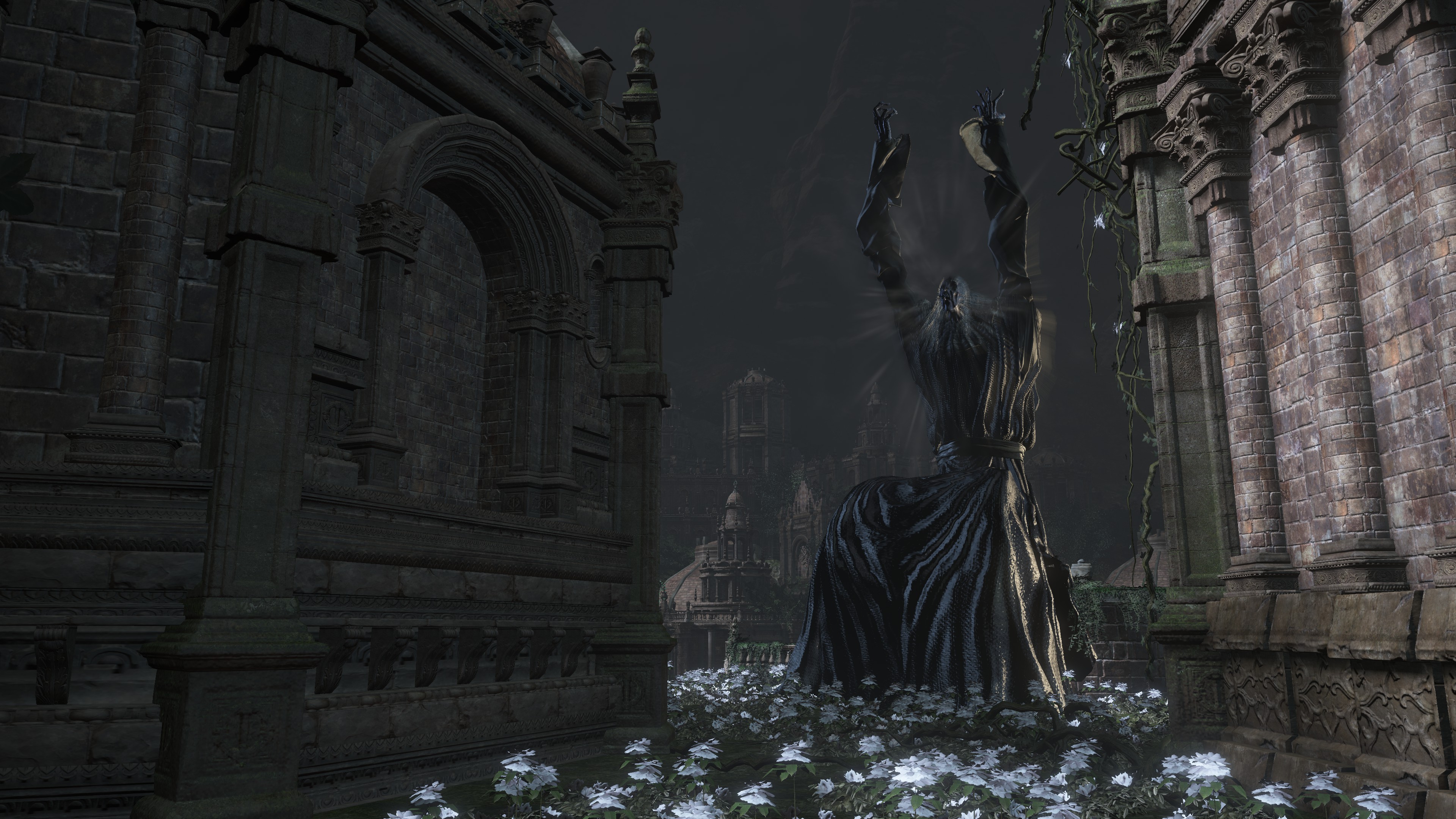
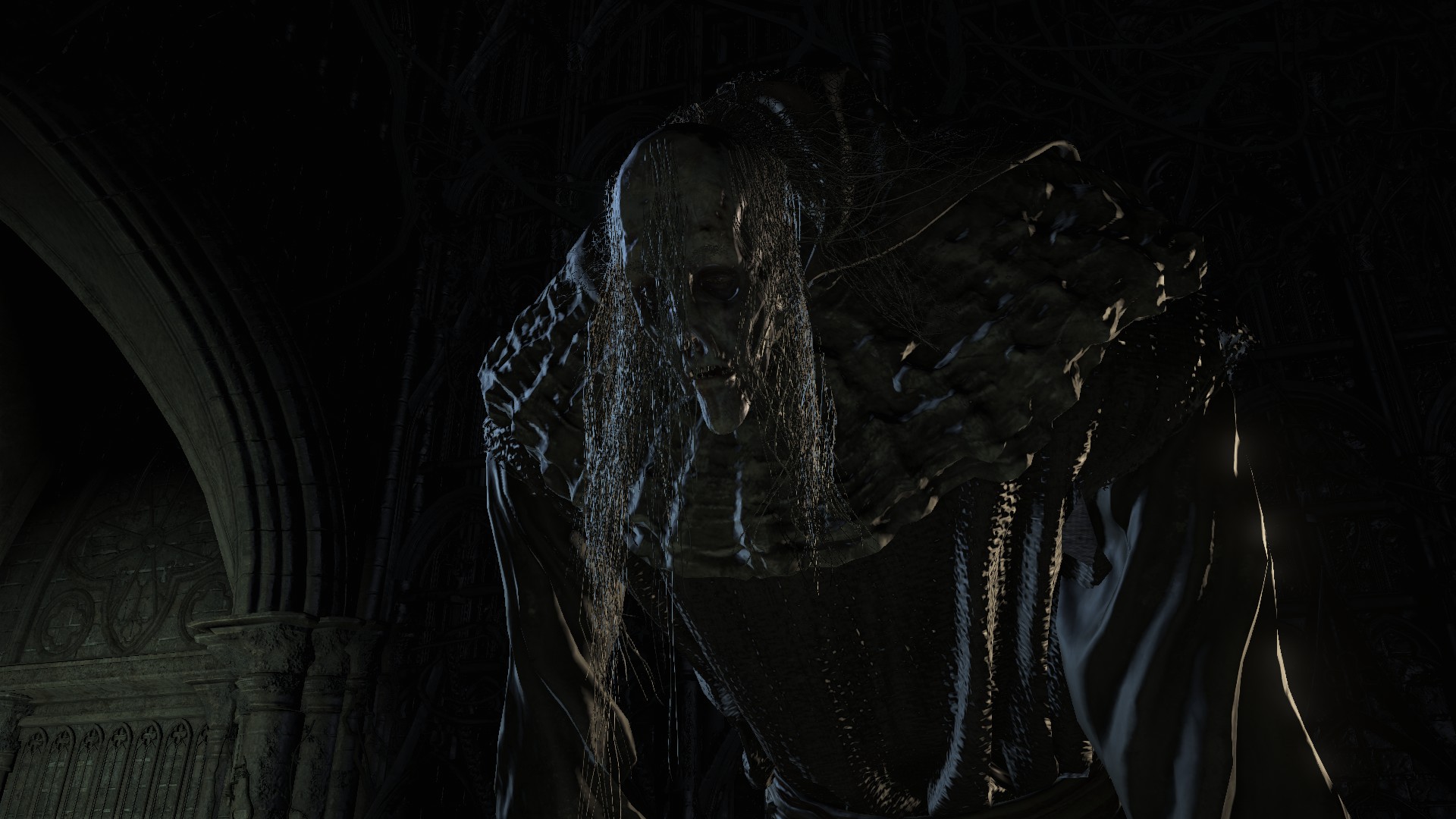
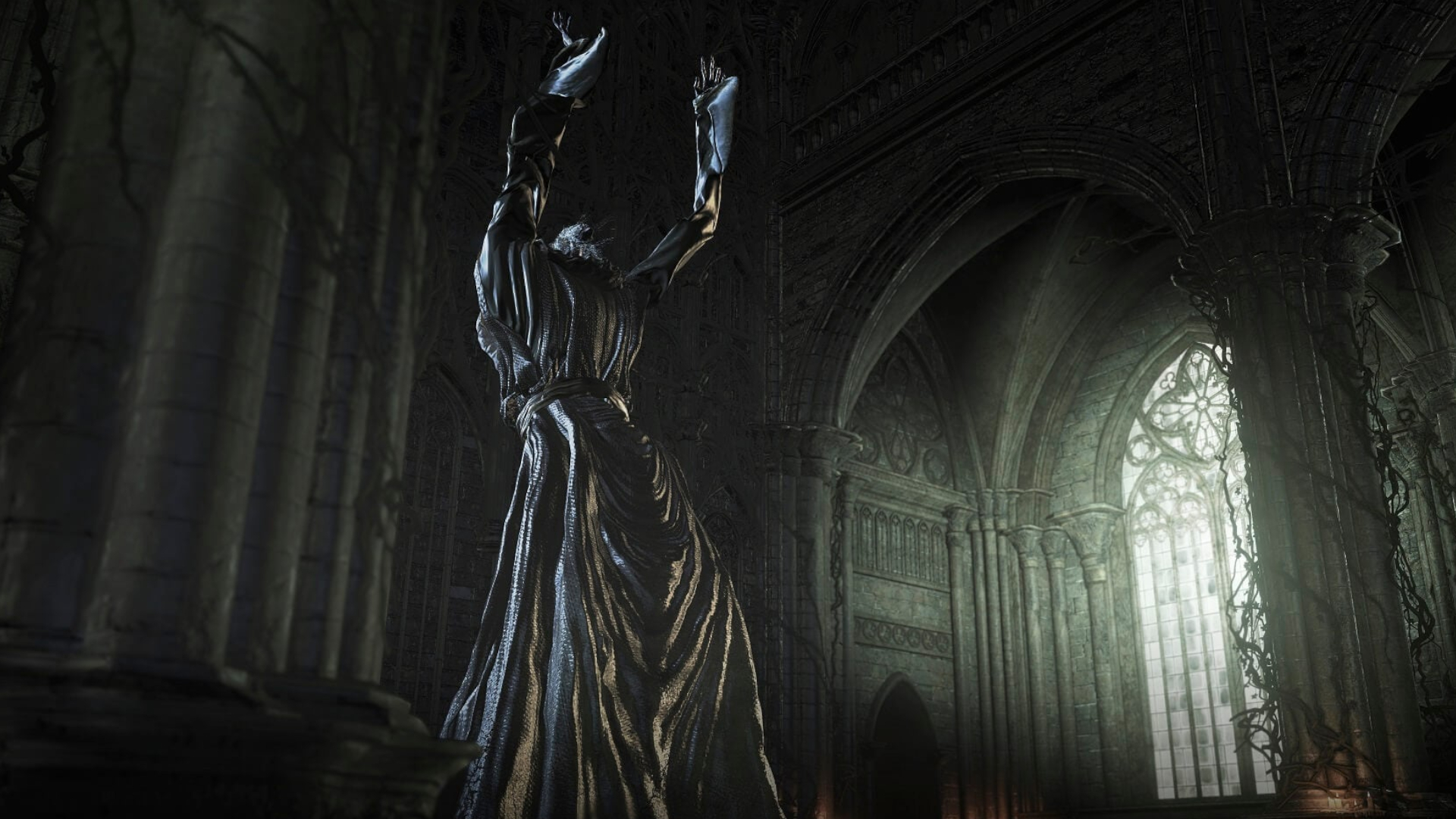
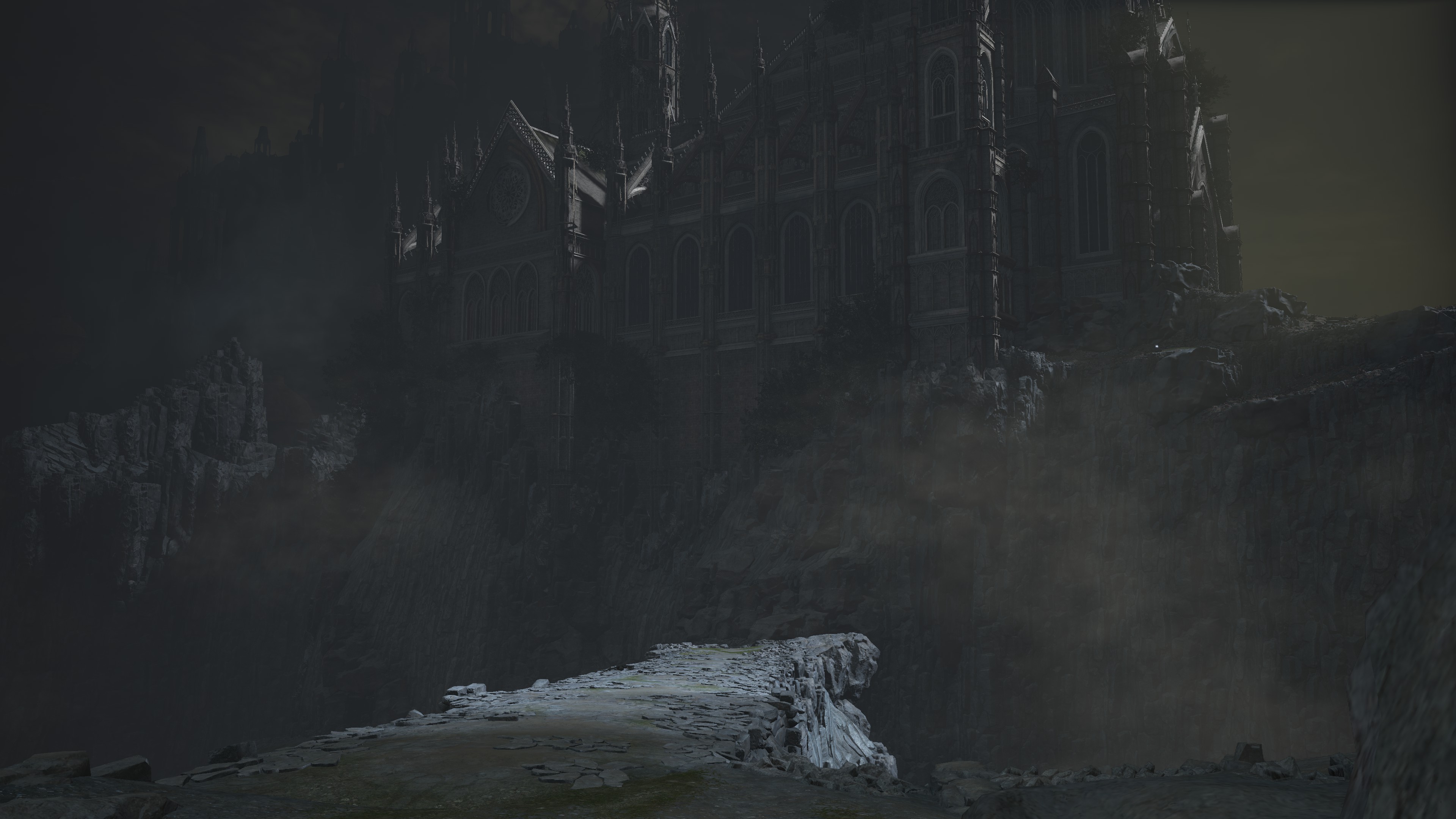
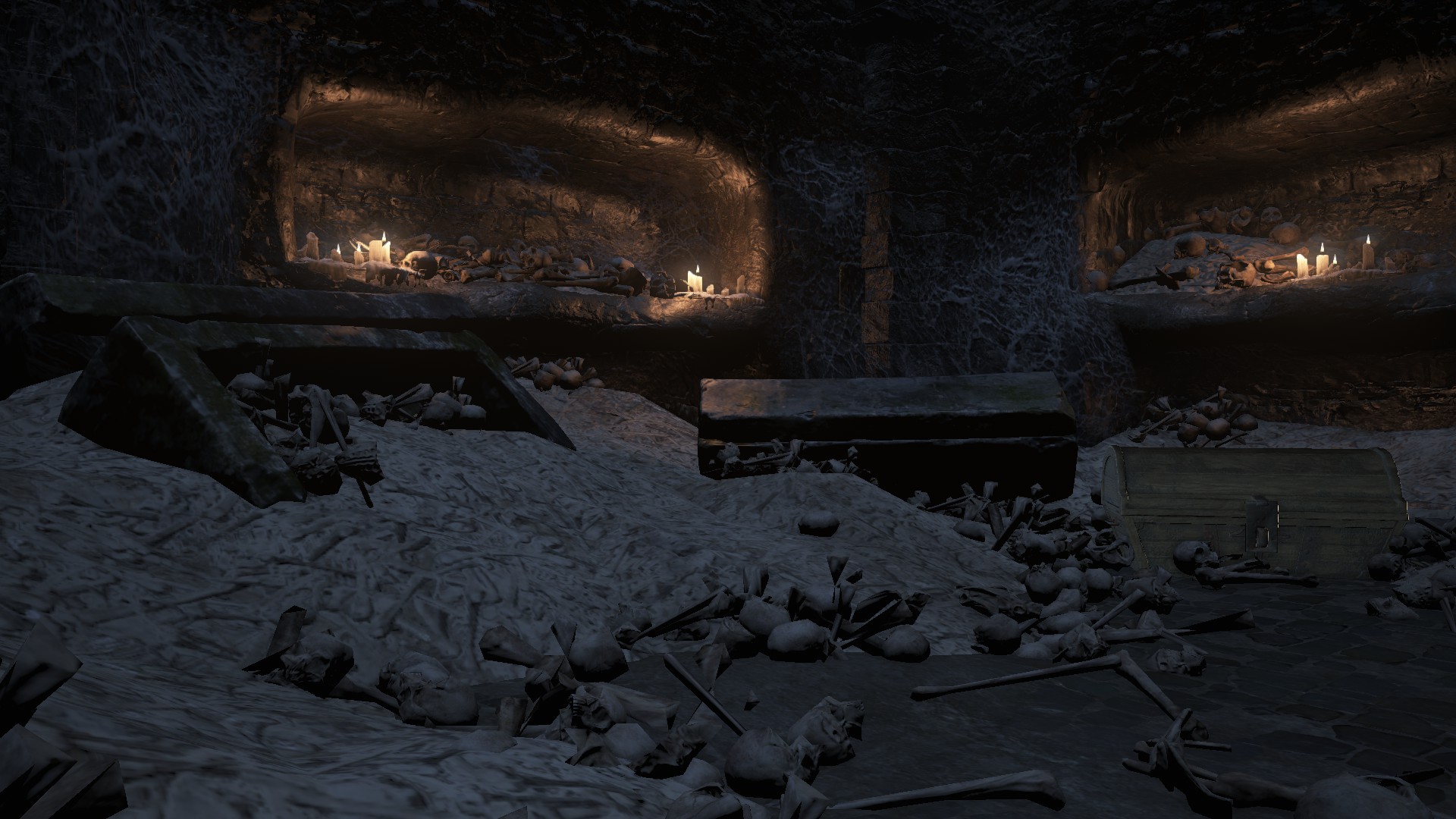
Granted, the ring does show the particular pygmy’s interest in the life-sucking power of the Dark. Anor Londo had reason to be concerned. Although it isn’t unusual to find a lightning or blessed gem within the Shared Grave, the same cannot be said for the simple gem. If there is a fool’s gem, there should be a fool practicing beginner magic. Why would a sorcery novice be visiting the graveyard? For the exact reason the gods feared: to dabble with the humanity of the dead. Curious pygmies might find the Ring of the Evil Eye, among other analogous possessions, and use them to hone their abyssal manipulation in the privacy of a subterranean tomb. The gravekeepers perhaps dispatched one such deceitful visitor, but what if one manages to slip through security? Anor Londo may have ignored such minuscule risks when fire was going strong, but the Church of Filianore cannot afford to overlook the small details. Gwynevere even gifting her blessings to non-warriors speaks to the dangers the adjudicators were expected to face at their new post.
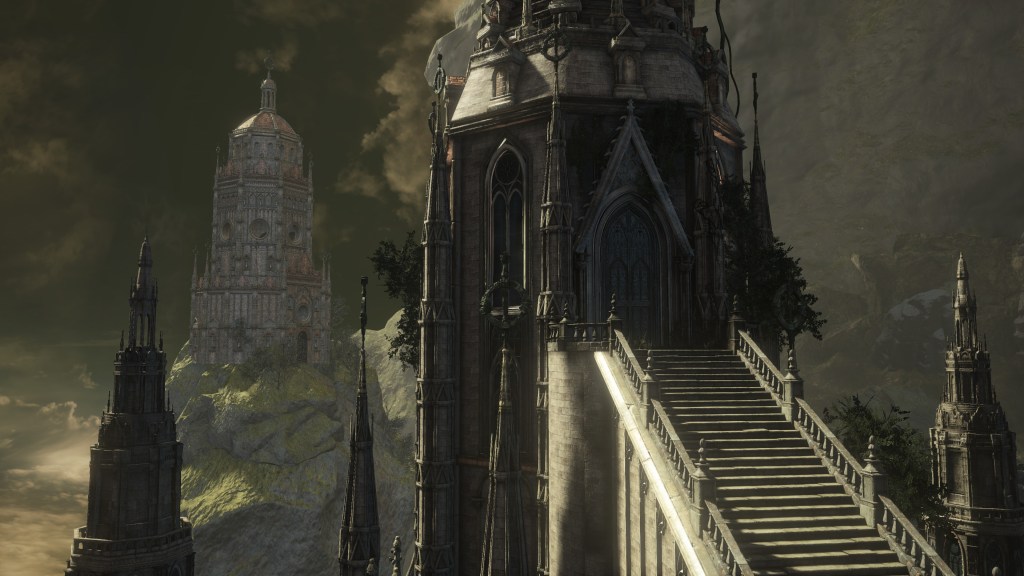
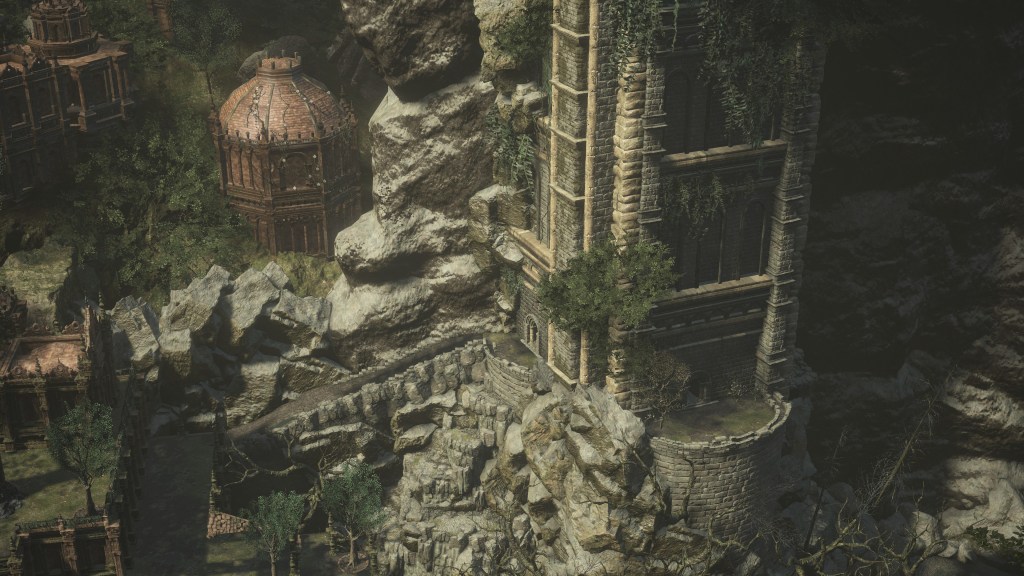
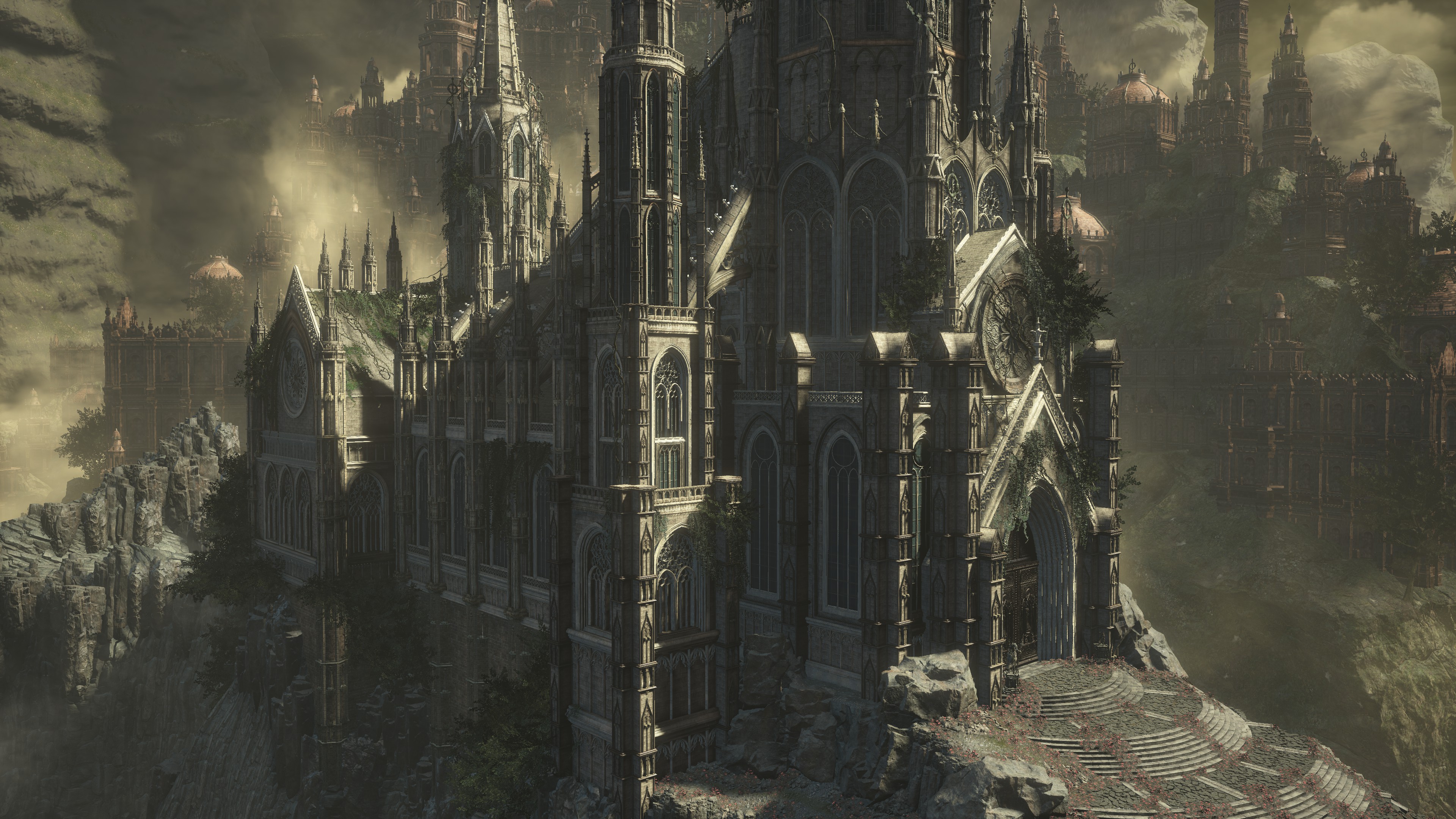
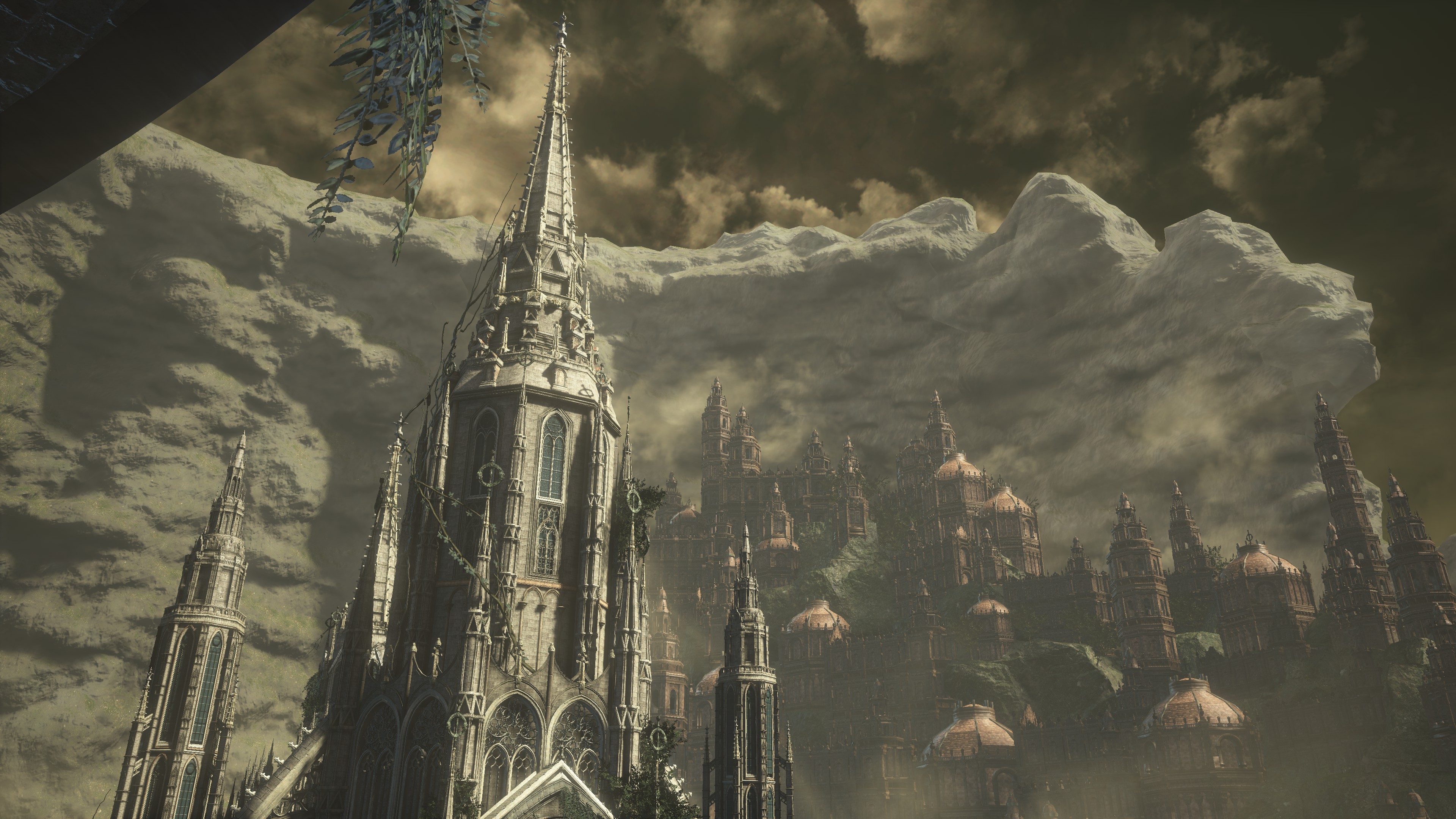
This danger extended to the pygmy kings, who were not equipped to deal with this catastrophe by design. Thankfully for the royals, Anor Londo had no intention of letting the ruling government under their thumb collapse. The kings were isolated, unreachable when we first arrive at the mausoleum. This probably ties into the isolated tower looming over the royal cemetery. The tower may have been more accessible once upon a time, as we do see cobblestone clearly collapsed in the space between the Church of Filianore and the tower. But as of now, no one can reach the tower without flying, like Midir. The edifice stands out among the cityscape, promotional artwork even giving the place central focus. And yet, it is the only landmark in the area we never explore despite seeing it from the start. After the Ringed City becomes part of the ashen desert, the same tower hangs behind the ruined audience chamber. Even though they are distinctly different buildings, the association indicates some connection between the two. And for our part, we cause this ruin in pursuit of the Dark Souls those pygmy kings possess.
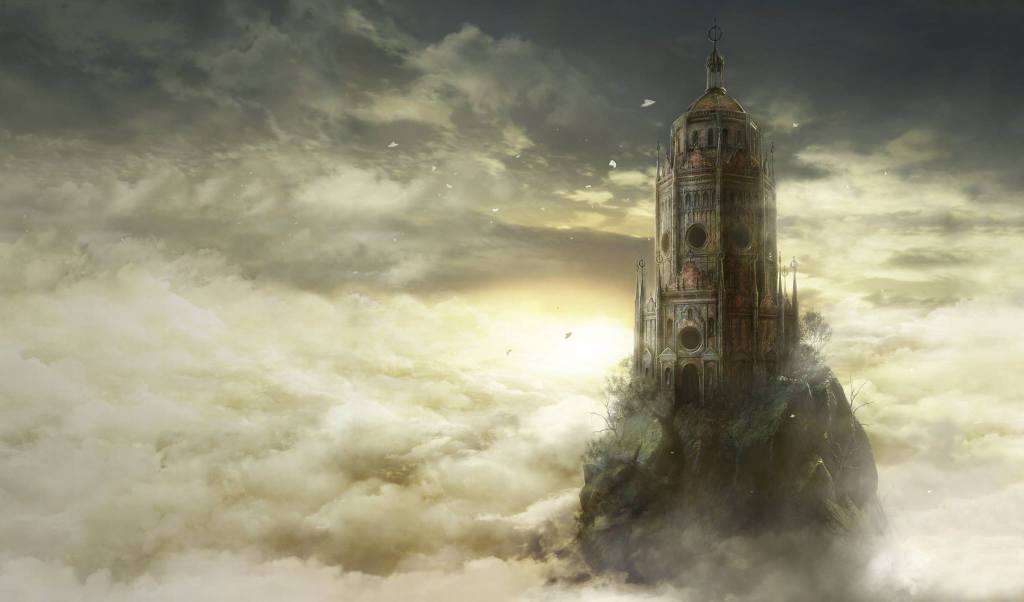
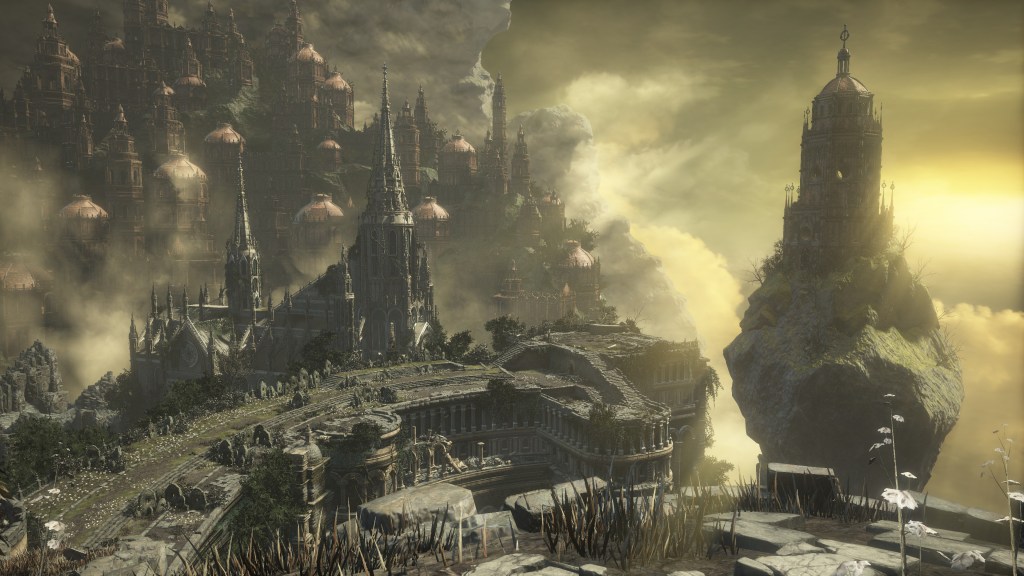
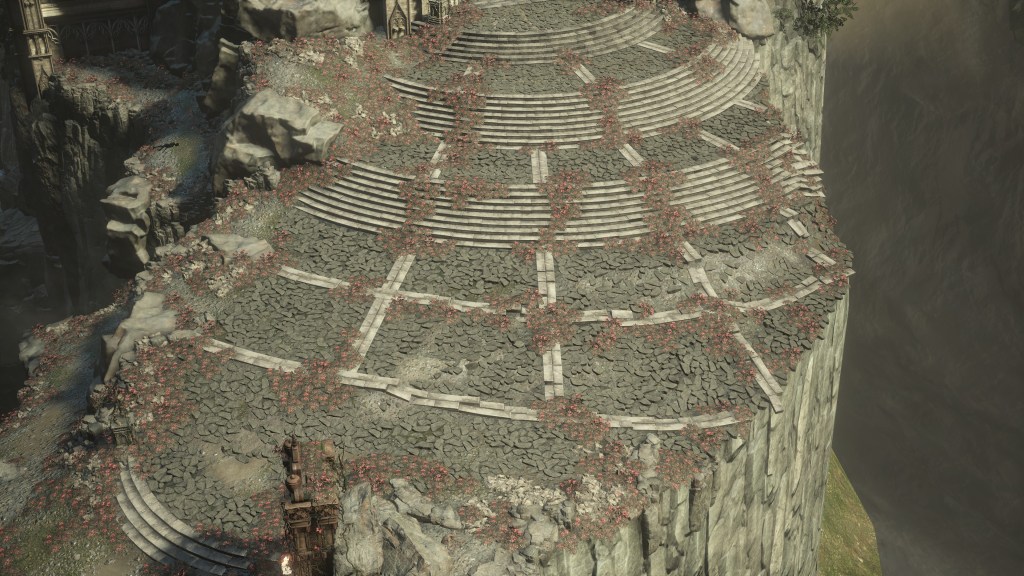
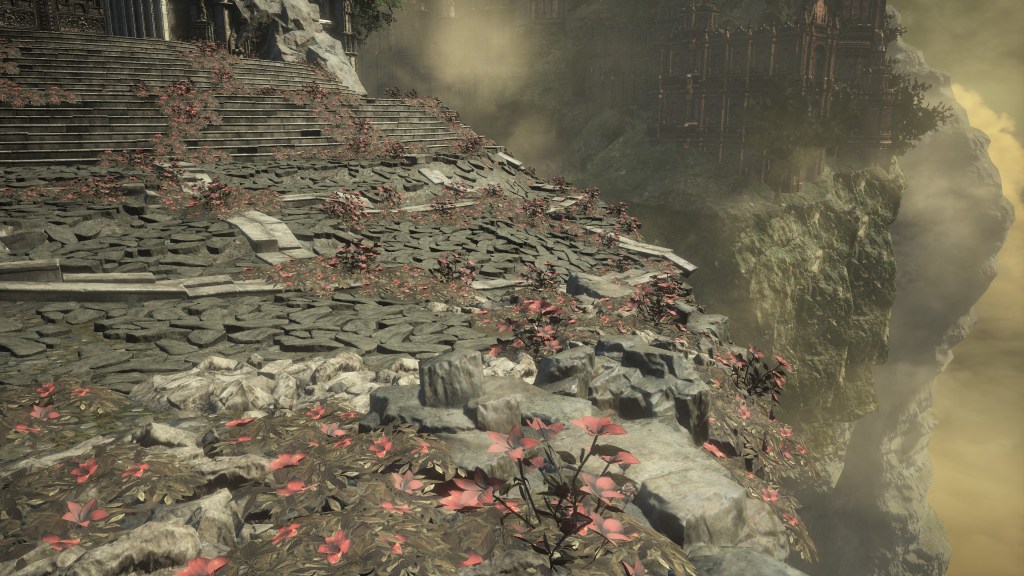
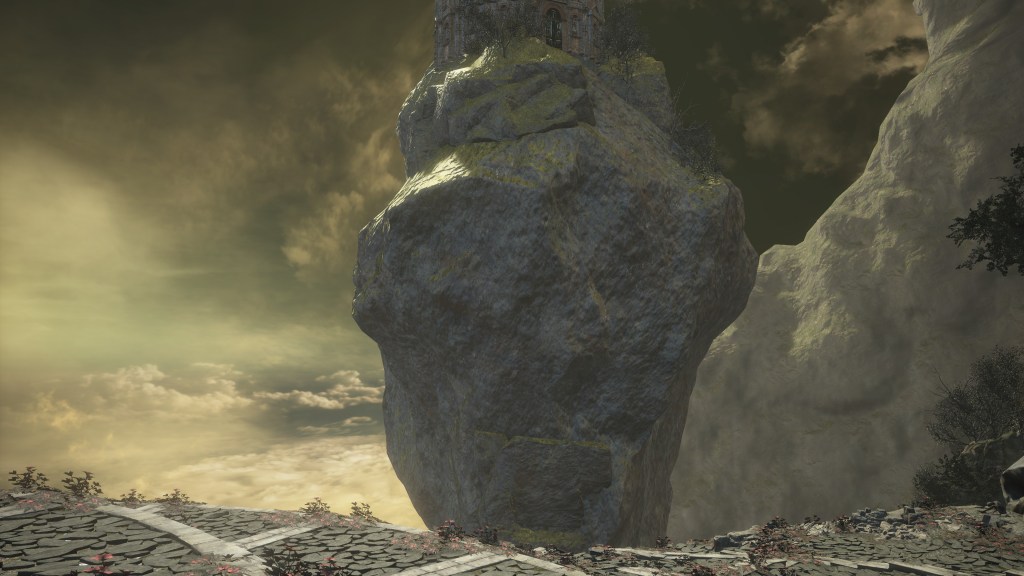
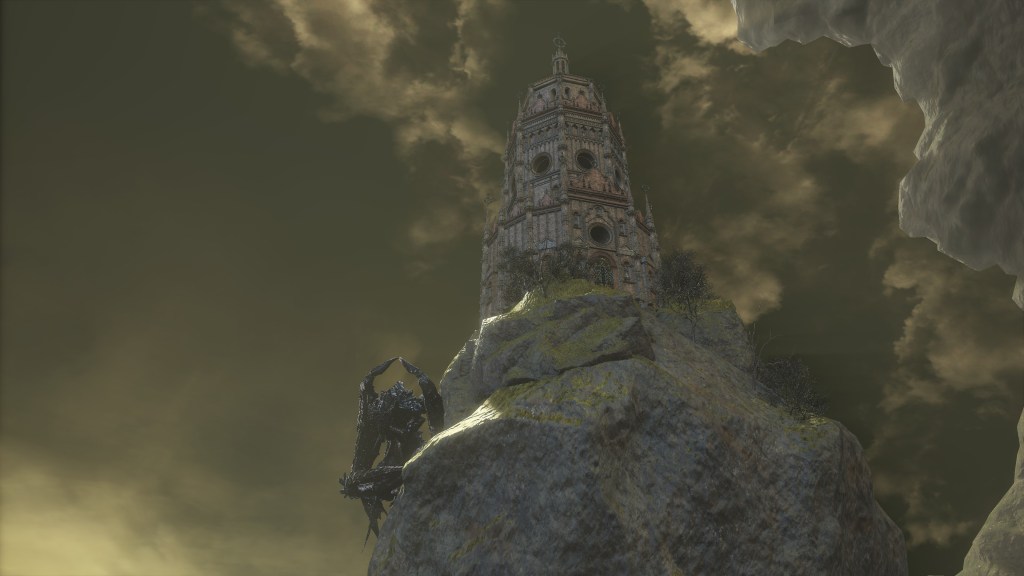
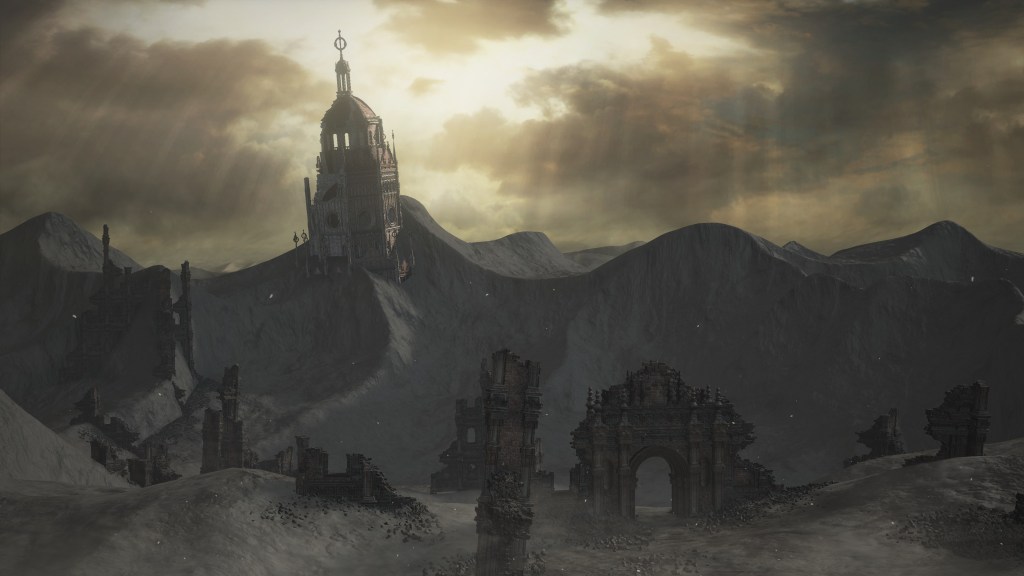
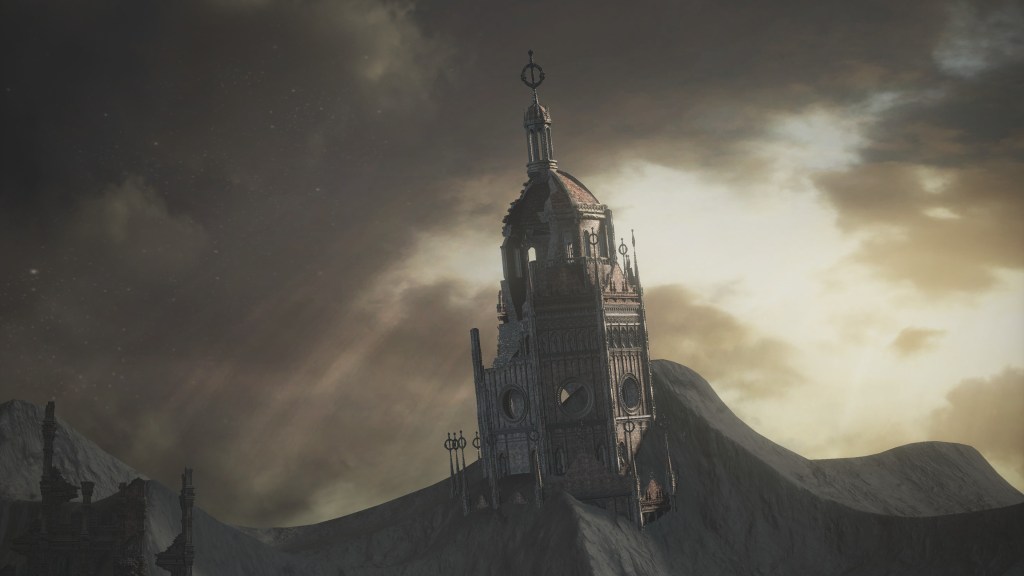
In all likelihood, the tower serves as the means to reach that throne room, via a lift or magical warp apparatus. We never spy the throne building or otherwise obvious palace anywhere in the capital because it is located elsewhere, either directly below the rocky pillar the tower sits upon or someplace similarly out of sight. Whether this separate location was part of the capital’s original construction or the result of later magical displacement, it came to require the tower in some fashion, hence situating it so close to the royal mausoleum and Church of Filianore. The gods thus made the tower inaccessible to the pygmies, cutting them off from their kings. This didn’t stop Anor Londo, obviously, so they essentially became the filter on the kings. If citizens had their concerns, they could take it up with the Filianore church after following our same path through the various graveyards and checkpoints.
However, despite their support playing key role in the Church, neither Filianore nor the giants were actually in charge of this operation. Close inspection of the front door reveals statues of Gwyndolin, holding his staff, prominently incorporated into the design. The same statues, without the staff, cover the aforementioned tower to the pygmy kings. Recall in DS1 how Gwyn left his sons to guide the humans in his absence, duties they might have already been carrying out on his behalf before his final departure. With so much importance placed on securing the Ringed City for Anor Londo, it behooved Gwyn to have someone reliable set everything up to his exact specifications. In that case, it is little wonder if the Lord of Sunlight didn’t trust management of the penal colony situation entirely to giants. With his uncle tied up in the world of man proper, another of his children with the most to prove and closest connection to the Dark would support Filianore in this endeavor. The god of the Darkmoon was the one bringing the “reinforcements” to aid the princess before the pygmies fell to the Dark.
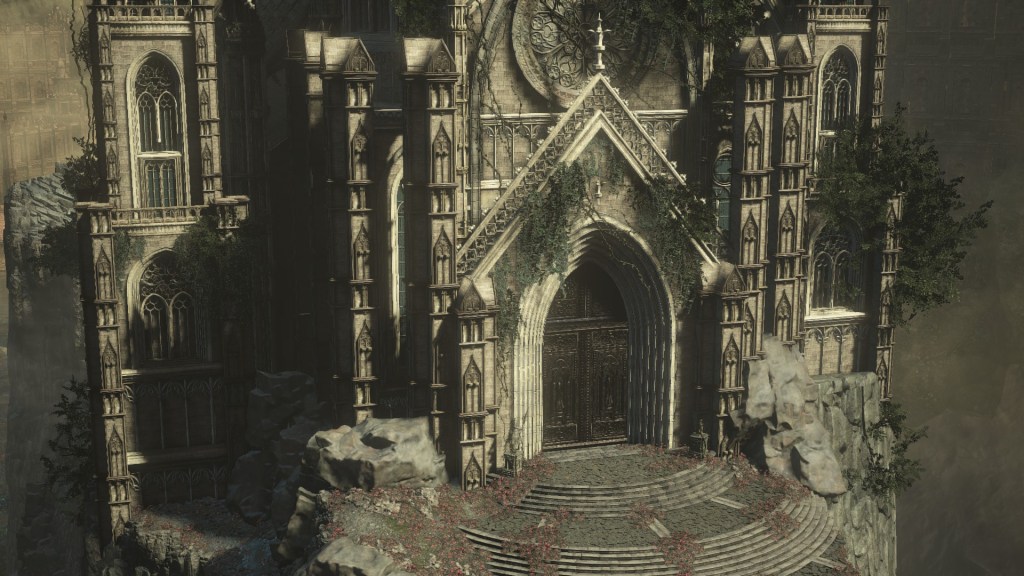
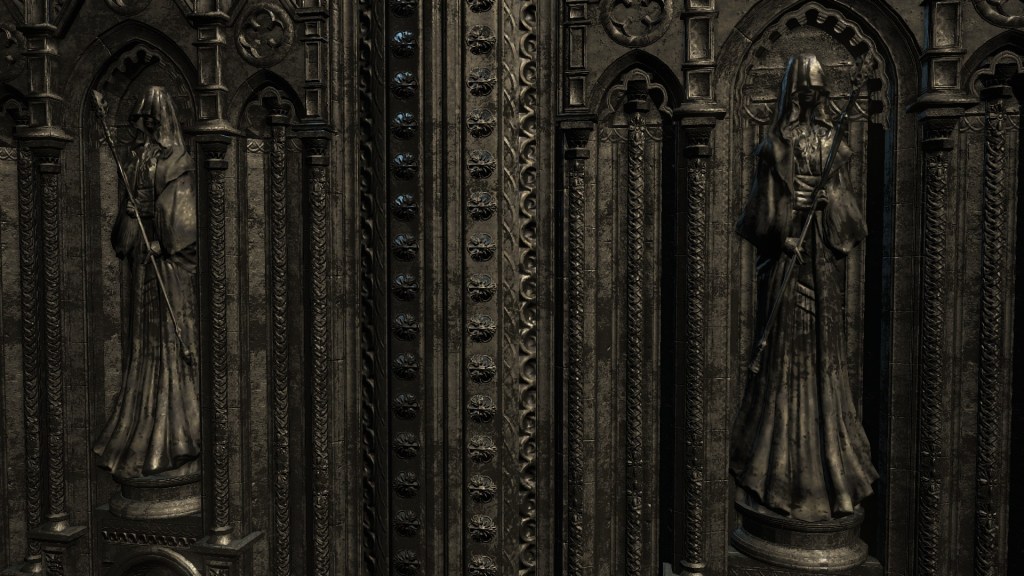
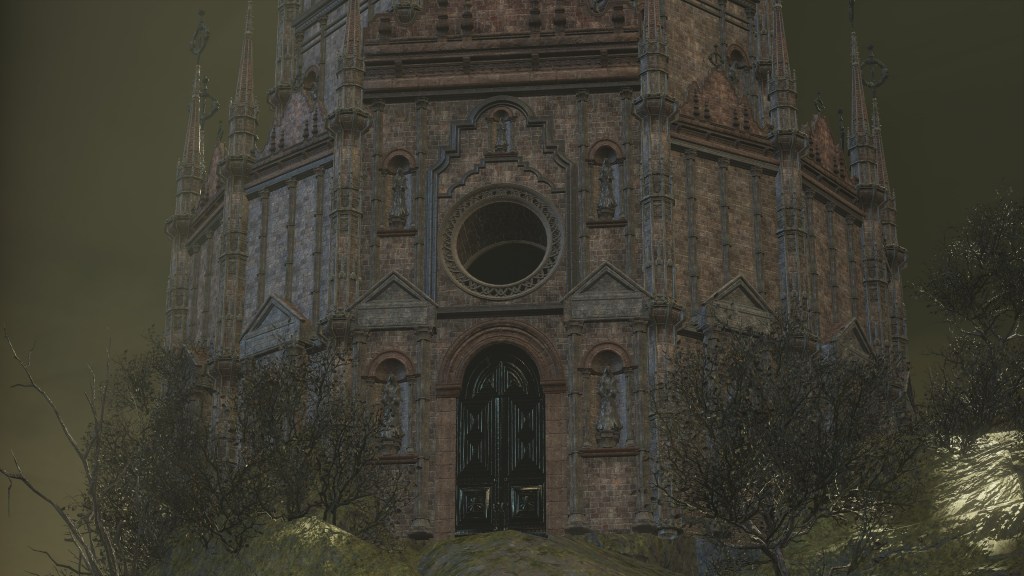
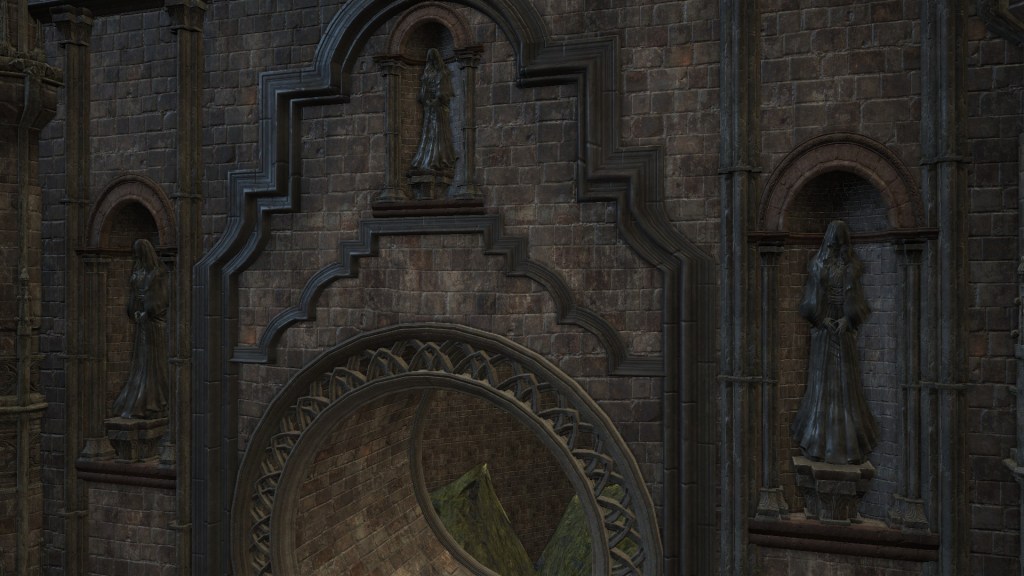
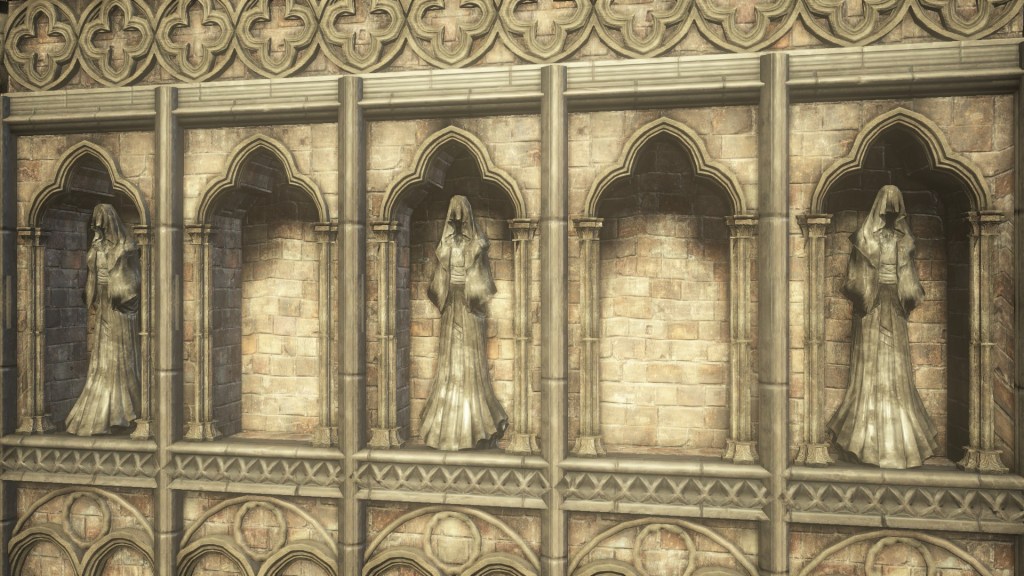
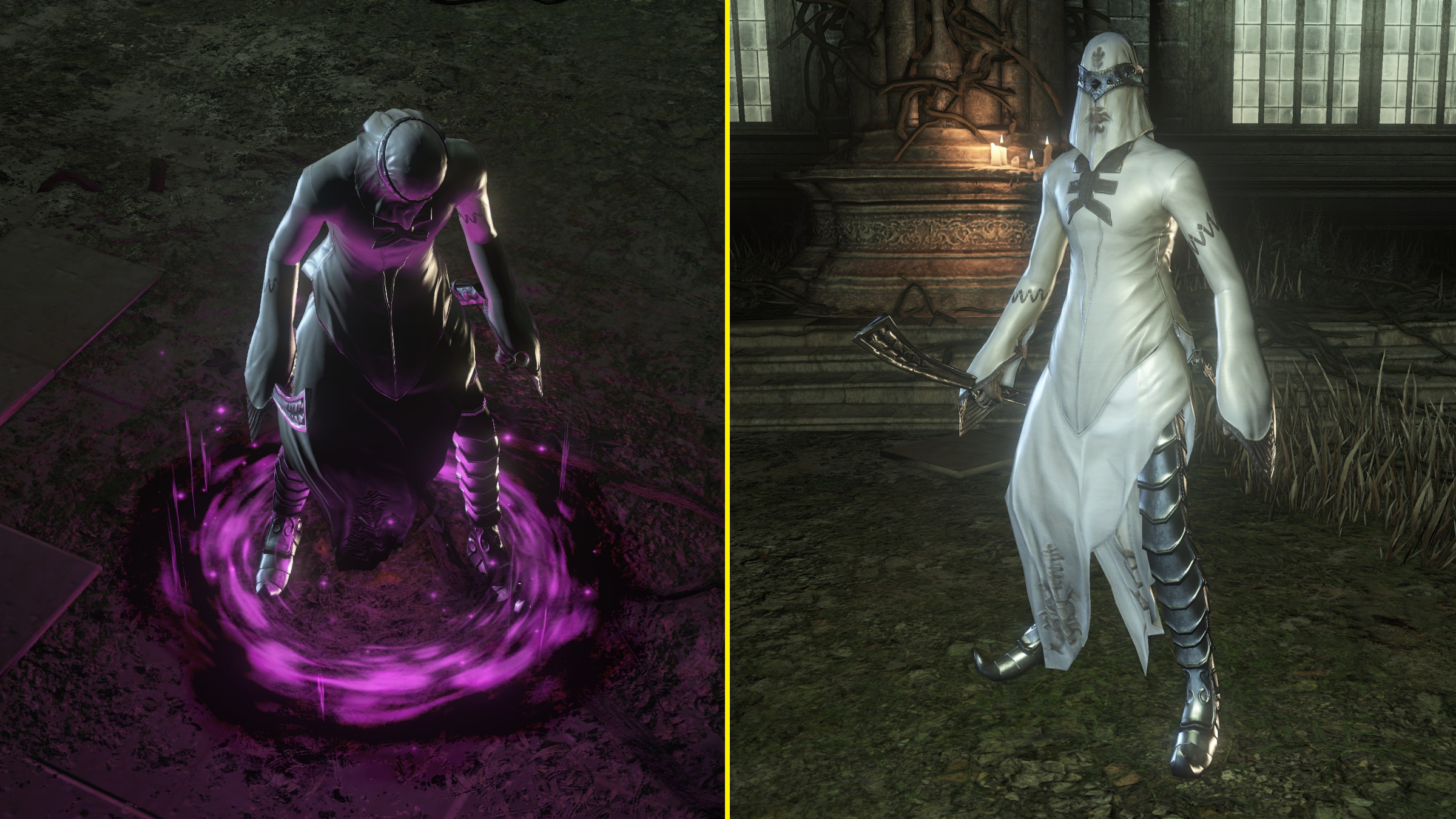
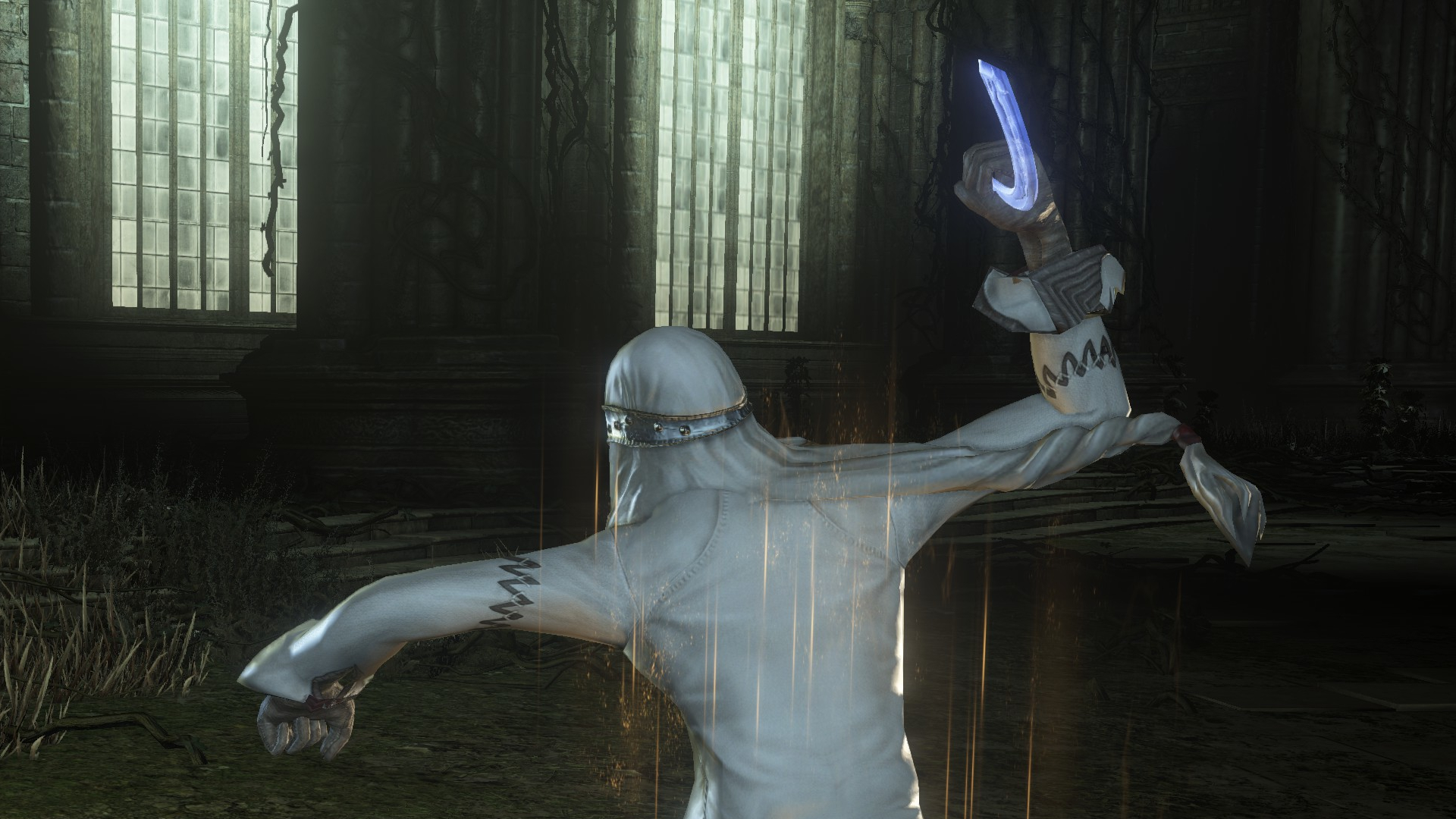
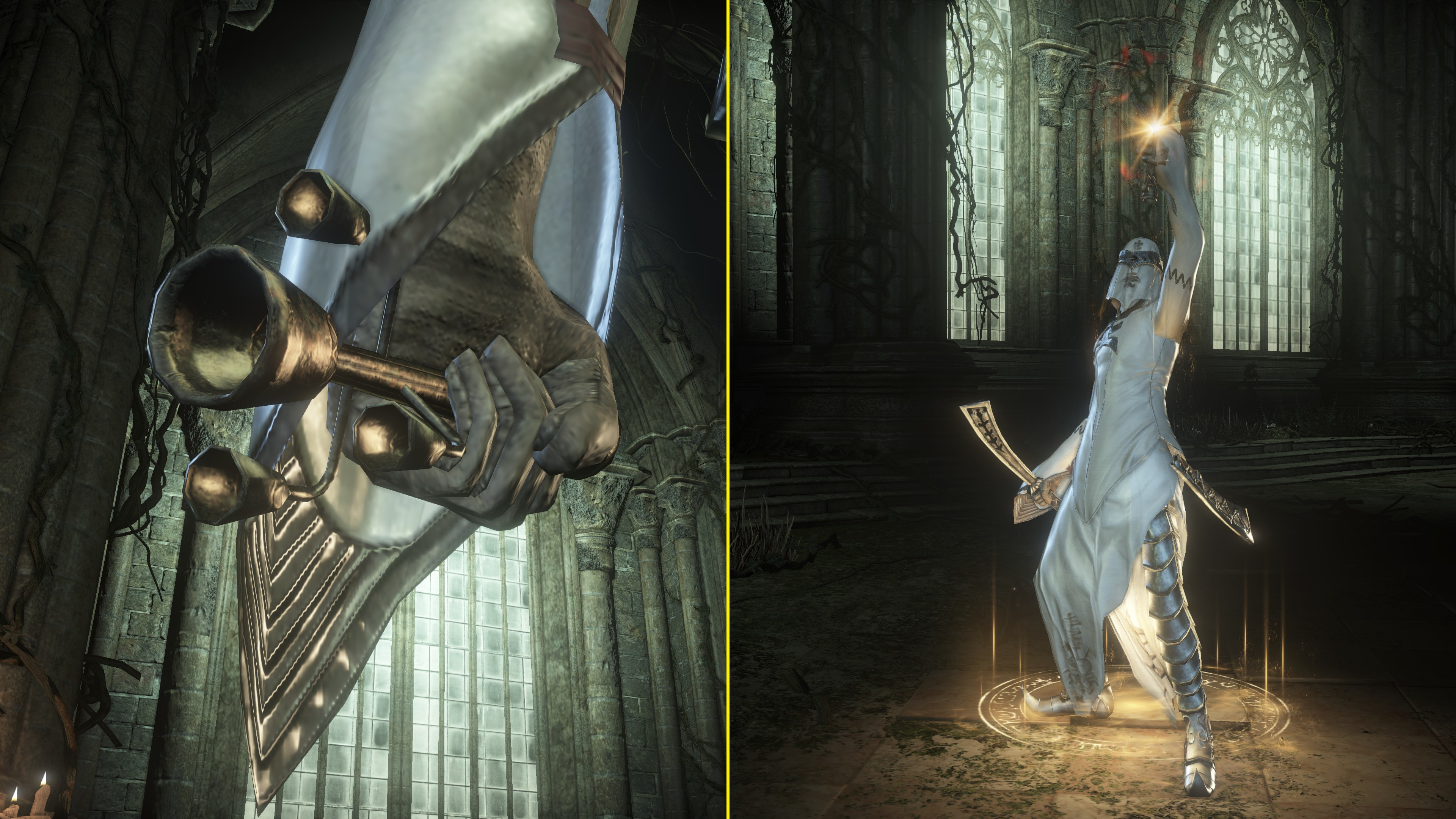
Gwyndolin hadn’t brought with him just the Way of White and Anor Londo’s judiciary. When Argo summons Filianore’s protectors to the Church, the first to arrive are the so-called church guardians. If their name wasn’t already a clue, their uniform and weapons make clear that they are the painting guardians. Why are they not defending their original namesake? Because they serve a different master. Since DS1, Gwyndolin has always had a unique relationship with the painting guardians on account of their reverence for Priscilla. In an era before the Blades of the Darkmoon, the Dark Sun would have only his minuscule cult of priests and the guardians for followers. A few might thereby elect to join the god on his perilous journey so far from his mother — was he not also a “part” of the painting to protect? Whatever their exact reasoning, we can see their dedication rewarded a number of ways at the Ringed City.
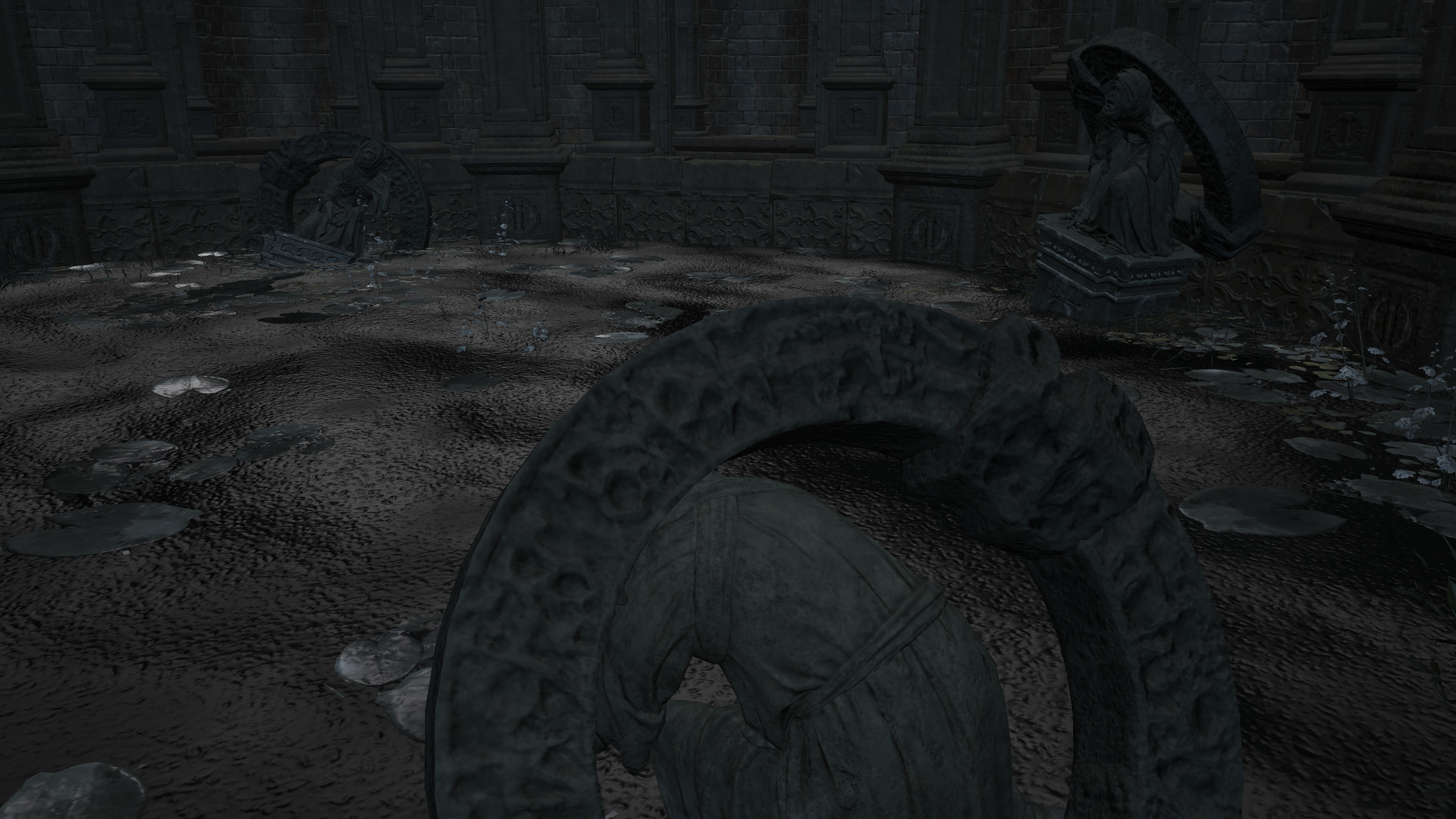
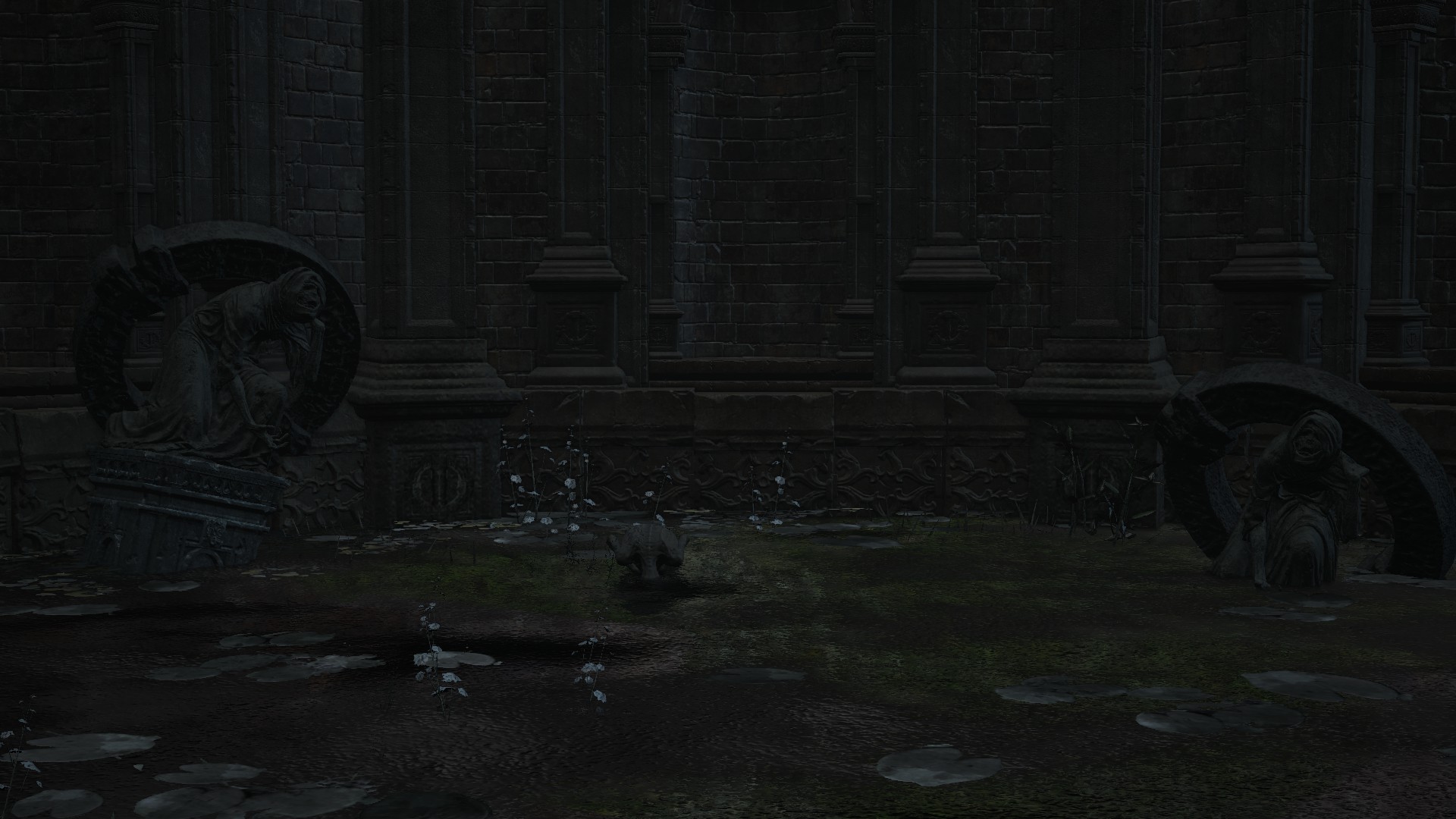
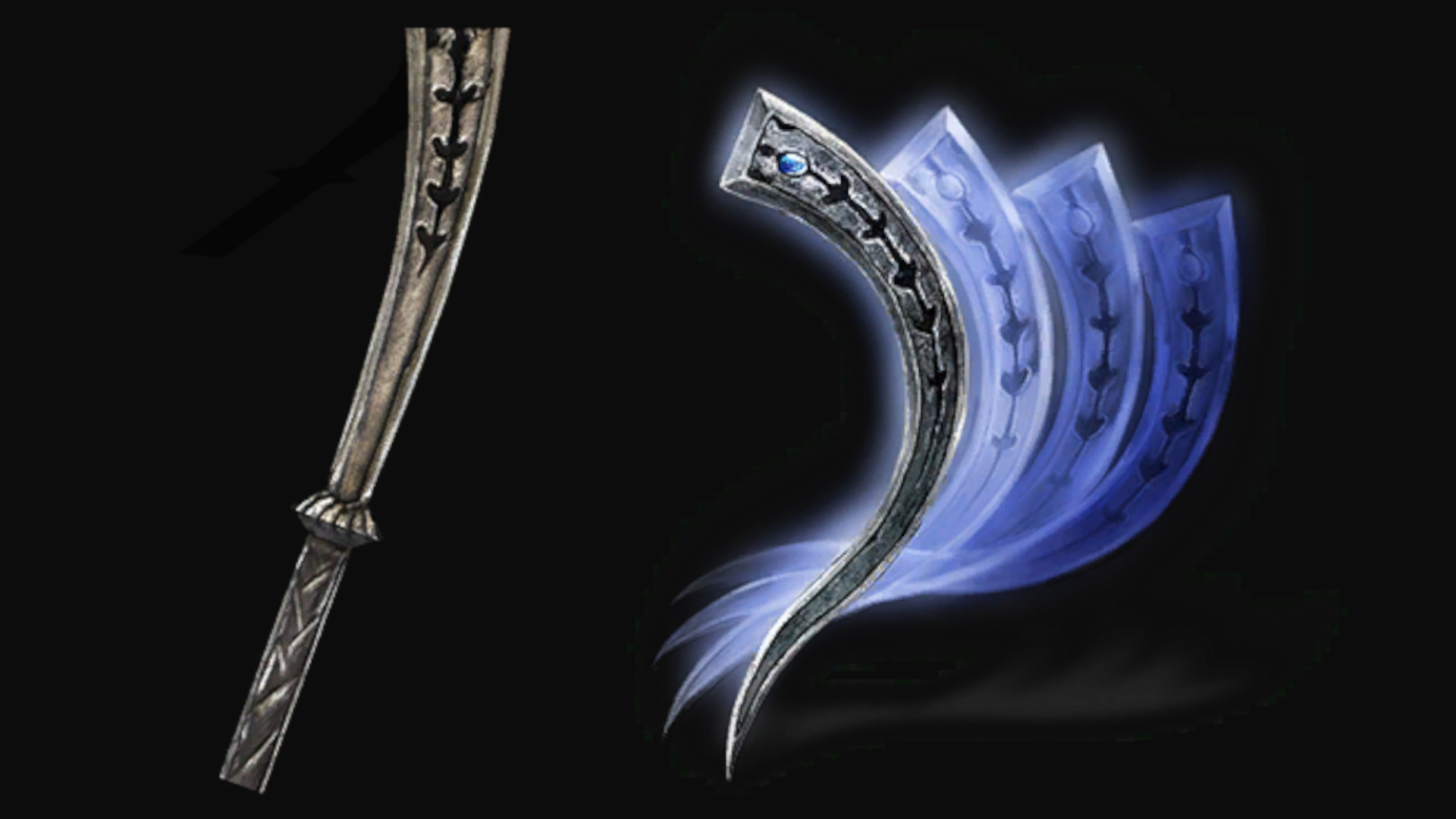
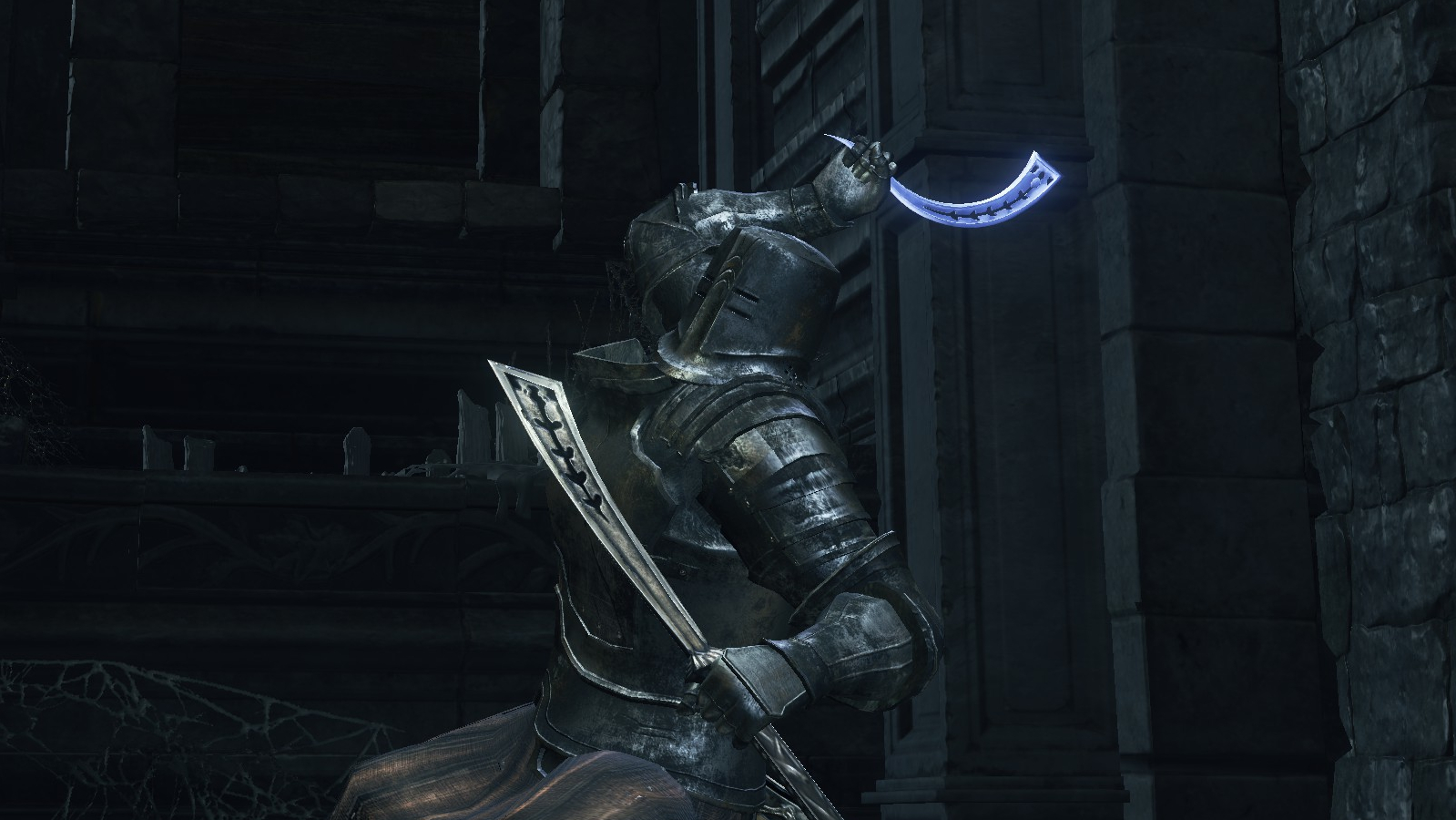
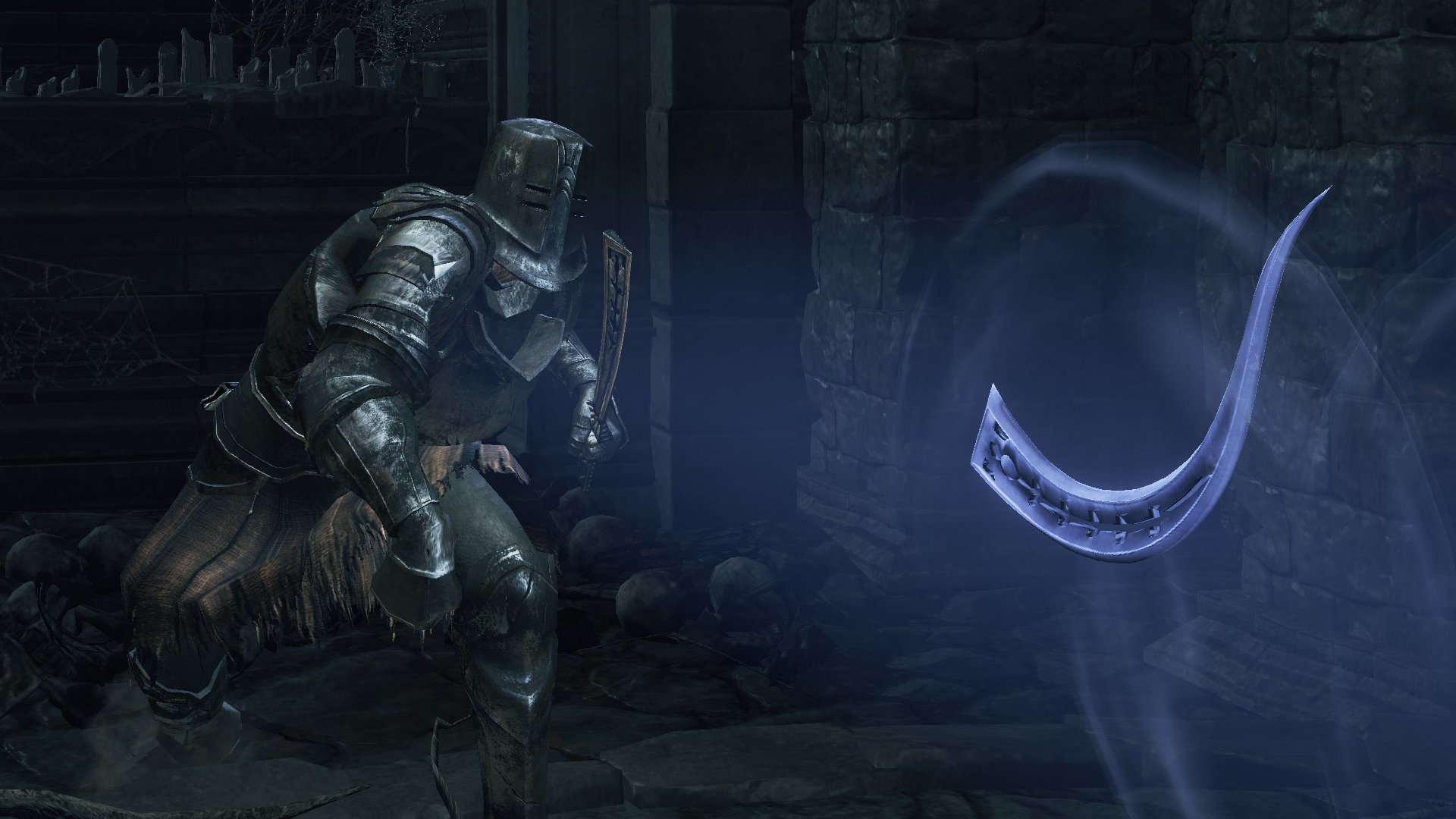
A bunch of the city’s clerics pray in a circle around a ruined building sinking into the Abyss. The surviving interior is filled with statues of the ring-burdened pygmy, this propaganda suggesting that the building was for general human use — no one else benefits from the constant reminder. And what men would faithful servants of the gods hold in such esteem? Those serving god directly. And what do we find but a corpse carrying the Church Guardian Shiv. Looking at the menu graphic, the shiv is a small throwing knife modeled on their flat-tipped curved swords. However, what is actually thrown are illusory copies limited only by the user’s willpower. The tiny blue crystal embedded in the physical shiv is the presumed catalyst for this blue magic. But the painting guardians in DS1 threw mundane throwing knives. Where did they learn this magic? From Gwyndolin, a god and sorcerer. It makes sense for those dispatched to the Ringed City with the Darkmoon deity be “blessed” with some of his magic. Likely before they left, the god created the tools to augment his servants’ strength in the trials ahead.
Thin blade with a flat tip that Church of Filianore protectors possess. Special throwing weapon. Consume FP to cast the illusion of a thing blade flying as if guided toward the enemy.
The now few church protectors are watchmen of Princess Filianore’s long sleep along with the Spears of the Church.
Gwyndolin wasn’t their sole source of god’s blessing. During our boss battle, the guardians also cast miracles with the Cleric’s Sacred Chime. This use of holy bells may be the influence of Filianore, but they cast Gwynevere’s miracle of Soothing Sunlight — and it wasn’t the first time the Princess of Sunlight rewarded the warriors for fulfilling their duty, according to DS1. Whether they received the goddess’ tale from their past work or upon choosing to stand alongside her brother, the painting guardians were well equipped for the mission even before meeting Filianore. After escorting their god’s son to the Ringed City, the guardians were given a stay in their own building within the capital, naturally, and ultimately assumed the duty of the newly-constructed church’s protectors at Gwyndolin’s command.
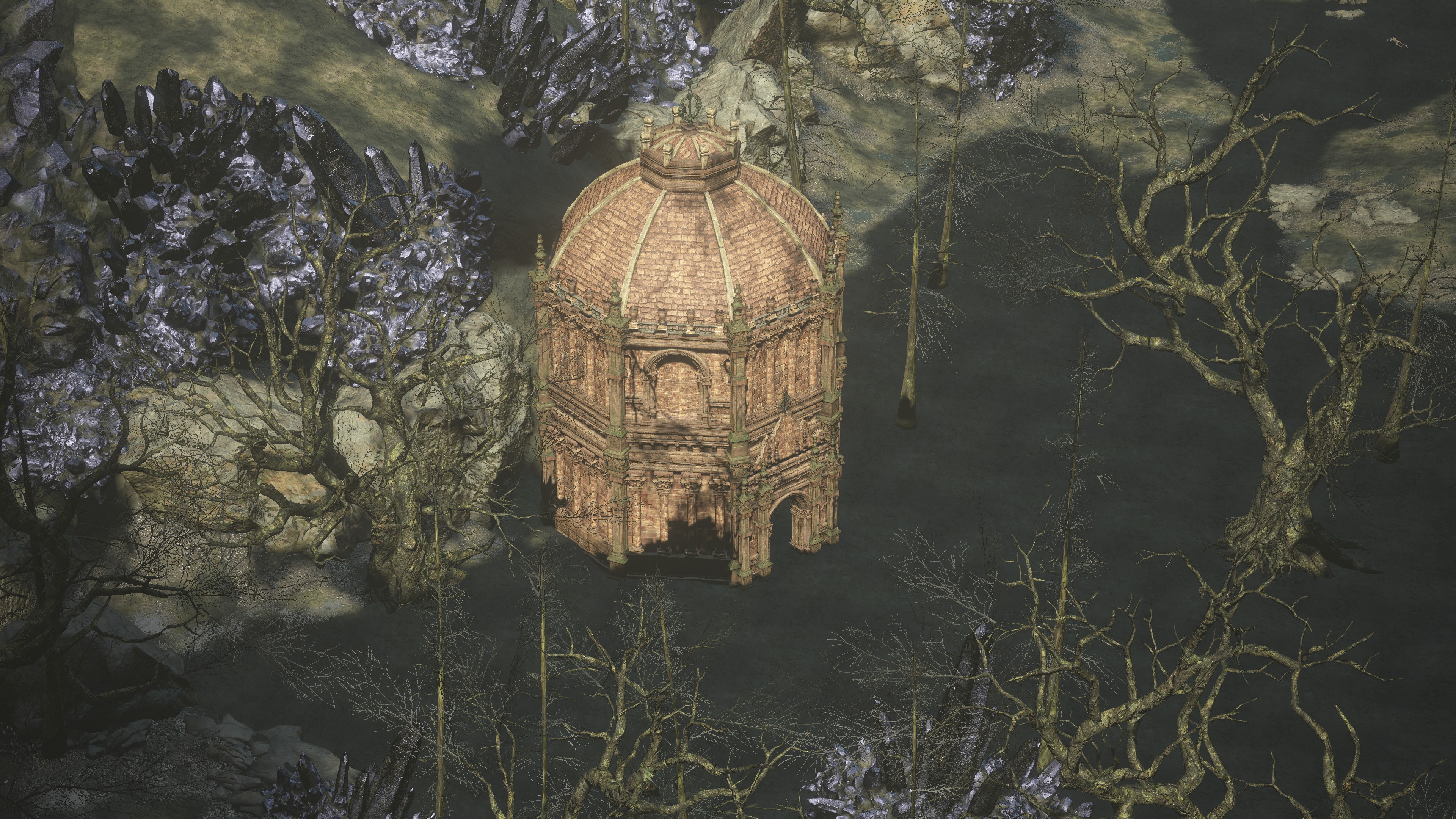
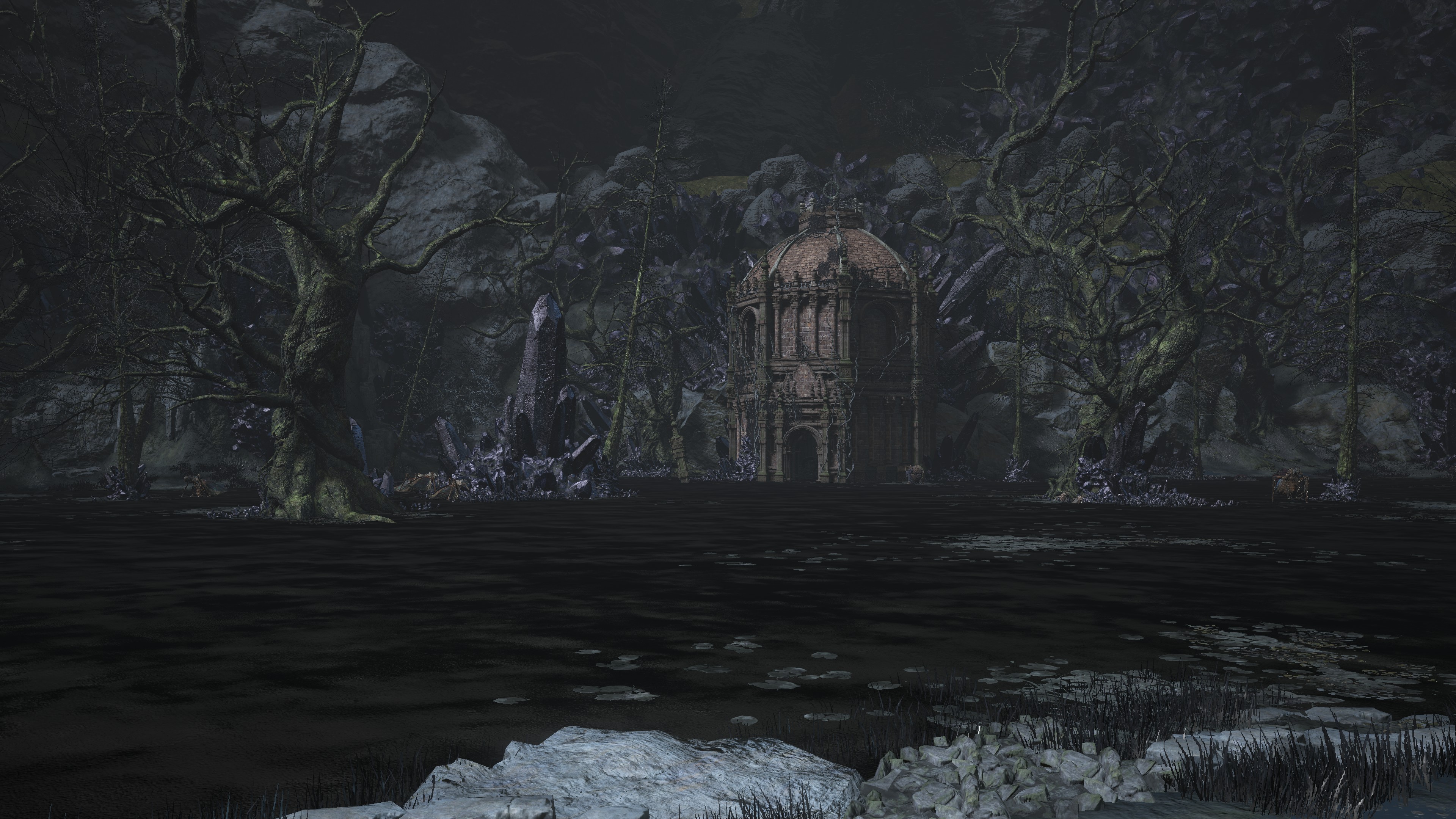
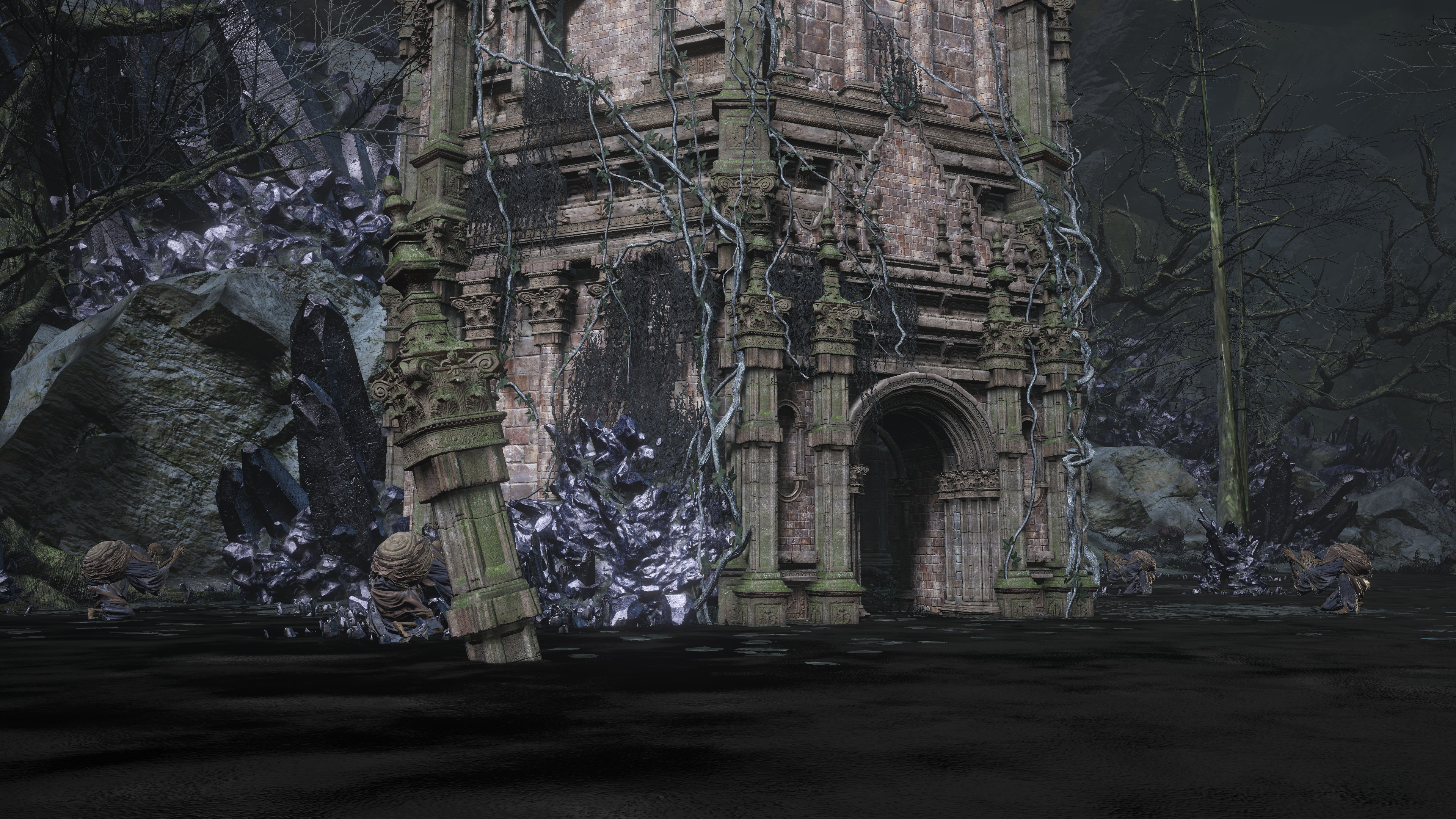
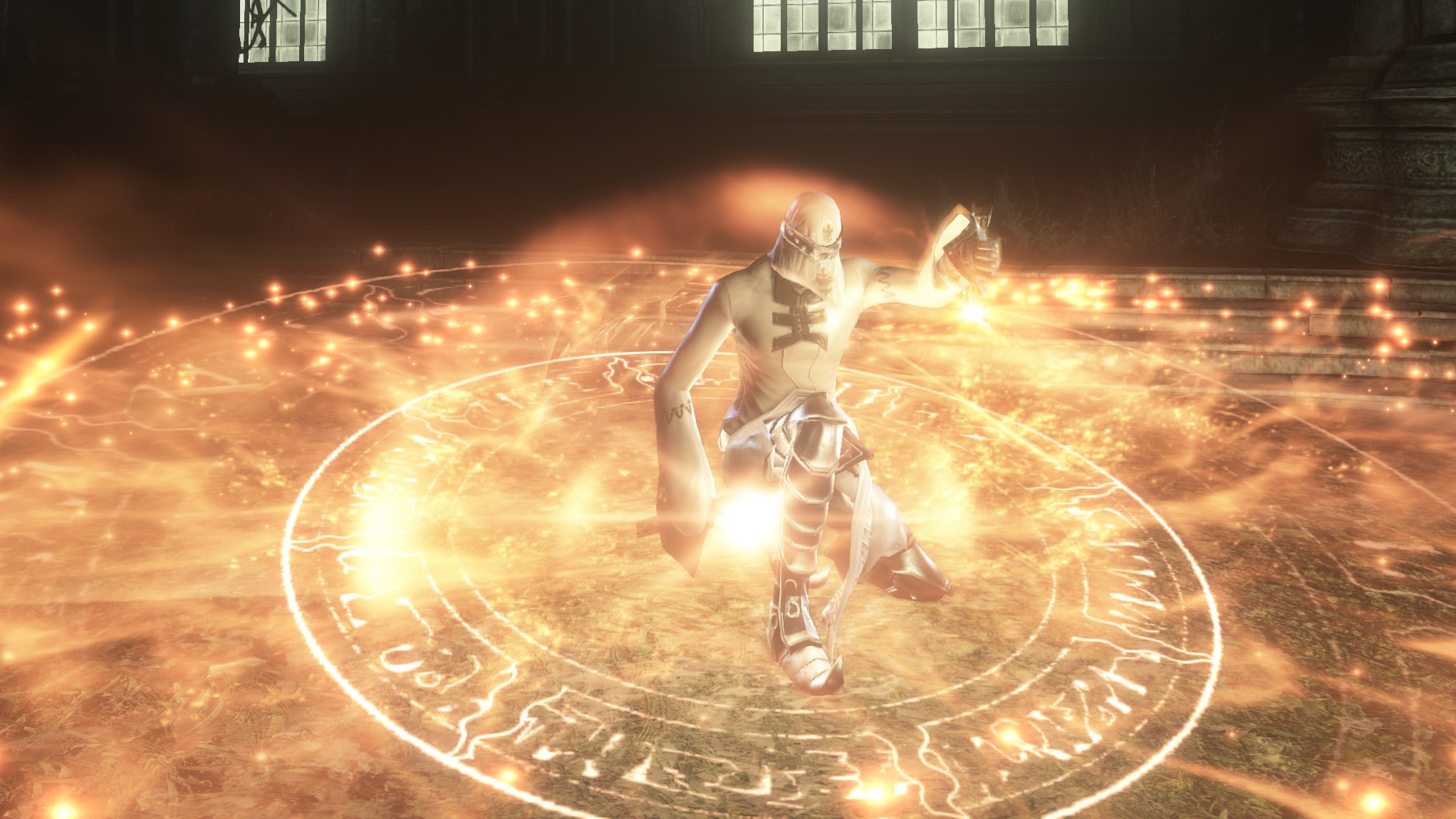
But as we know, Gwyndolin would have to eventually leave, as he needed to be supporting his brother in an era without their father. The god of the Darkmoon may have only been present for the initial construction of the facilities and systems, leaving everything to his half-sister and the adjudicators from that point on. The church guardians remained at their post, and the church itself carried on with its duties unchanged. The system in place, Anor Londo could rest easy knowing that their princess was safe and bringing the greatest hazard to medial civilization under control. If the primordial serpents maneuvered against this continued stranglehold over the pygmies at any point, they were coming against strong impediments. It would be no easy task to unseat the gods from their position. Making any maneuverings at all was probably difficult with Gwyn’s family keeping such a close eye on this weak point. The new laws were established. It was just a matter of enforcing them.
Raising the Javelin
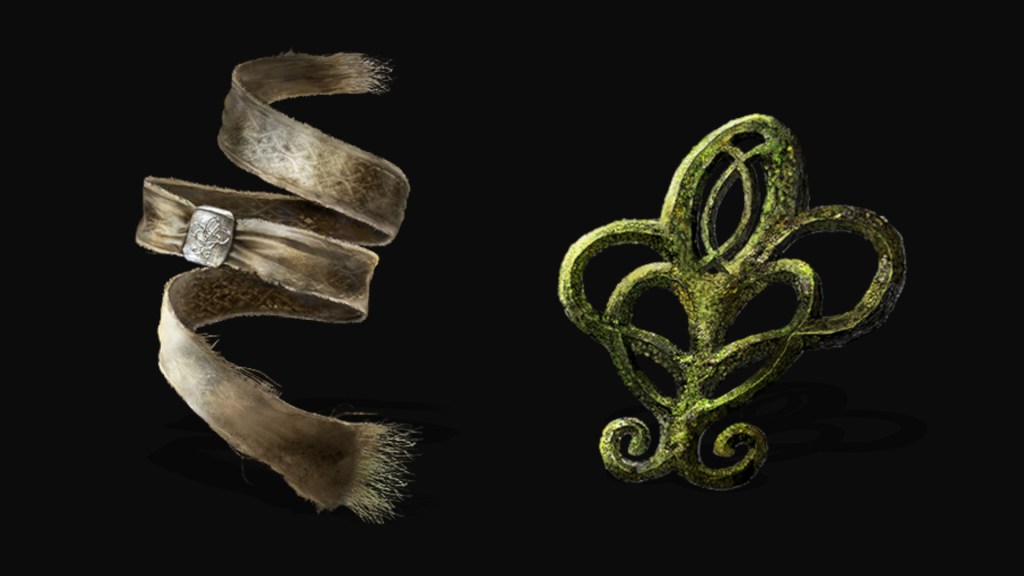
With the construction of the Church of Filianore also came the creation of the so-called “Spears” of the Church. Although the princess might have always had knights of Anor Londo protecting her during her stay, present circumstances necessitated a new order dedicated to her protection. After all, Gwyn justified supplying manpower to help existing resources combat the problem on the threat to his beloved daughter. Why not complete the hostile takeover reorganizing those combined forces into an independent paramilitary unit? Thus was a covenant established with Filianore’s blessing. Each received a decoration modeled on her crest — presumably fashioned from the gods’ beloved copper, as the grass emblem appropriately rusts green. Use of this sacred metal is all the more fitting considering how it is empowered so that persons like Argo can summon the owner to the church in case of emergencies. With this, they laid the groundwork for Filianore’s warriors, a new chivalric order bound by magic contract.
Green-rusted young grass decoration. Young grass is the crest of Princess Filianore.
Equip to become covenantor of the “Spears of Filianore”.
The Spears of the Church are watchmen of the princess’ sleep, so have a mission to respond to the judge’s summons when there are lawbreakers in the church and hunt them as covenant spirits. (if you equip this, you will be summoned automatically)
And divine protection is given to Spear of the Church covenant spirits.
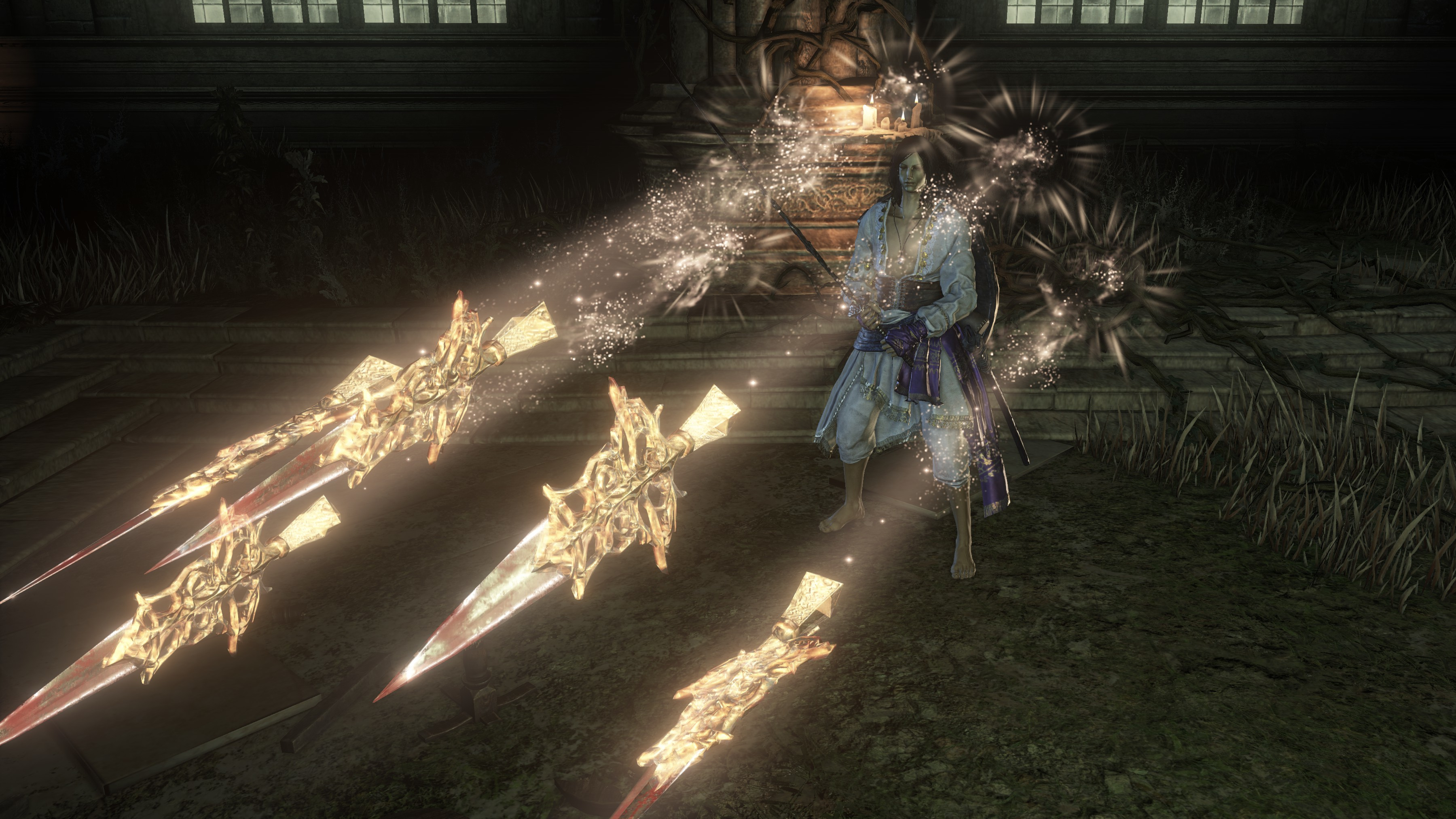
Armed with their own unique spears, these knights of the covenant pledged themselves to protect the princess. The spears are described as “ceremonial”, but this is referencing their role in magic rituals. Even just a fragment of the spearhead possesses tremendous divine power, which we can unleash as a string of phantom spears jutting out of the ground toward our enemies. Descriptions for these spear fragments attest to their former majesty, and the weapons themselves were once lauded by onlookers. These were powerful tools in the covenant’s arsenal, their holy magic with its strong tinge of lightning guaranteeing a blessing from the goddess Filianore herself. The choice of spears was likely its own bit of propaganda. The spear was, of course, the weapon emblemizing the gods’ glory, harkening back to the height of Anor Londo’s military might hunting the world’s apex predator. As a symbol, it best projected strength in the face of the rising Dark, intimidating any who might consider heresy. For a person to become a “Spear” of the Church, they internalized flaunting medial supremacy.
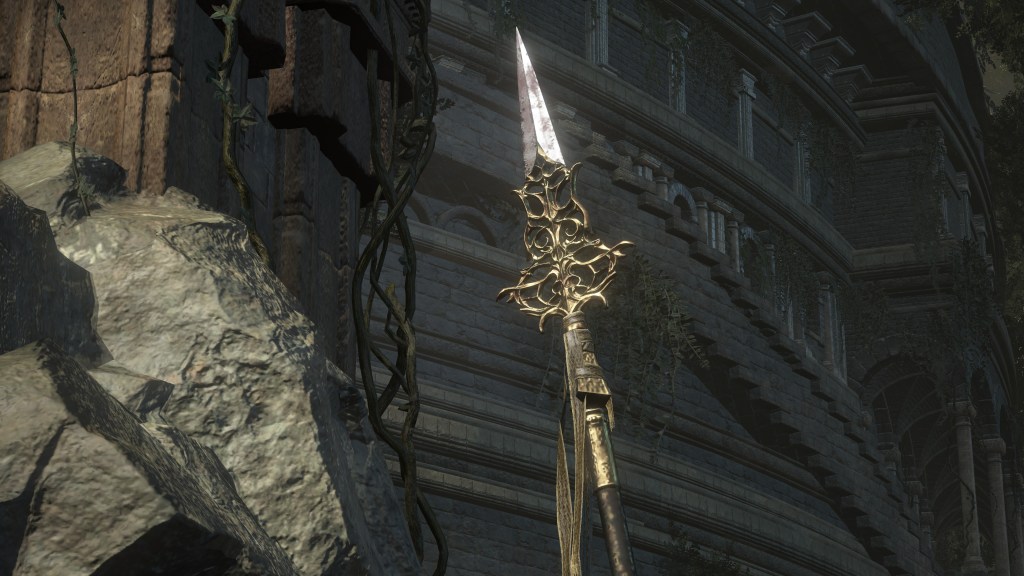
Item for online play. Fragment of the ceremonial spears that knights of Princess Filianore are said to have once possessed to match.
They are the origin of the name “Spears of the Church”.
When Spears of the Church face truly dangerous opponents, use to call upon their former majesty and summon ceremonial spears that pierce the sky in a row.
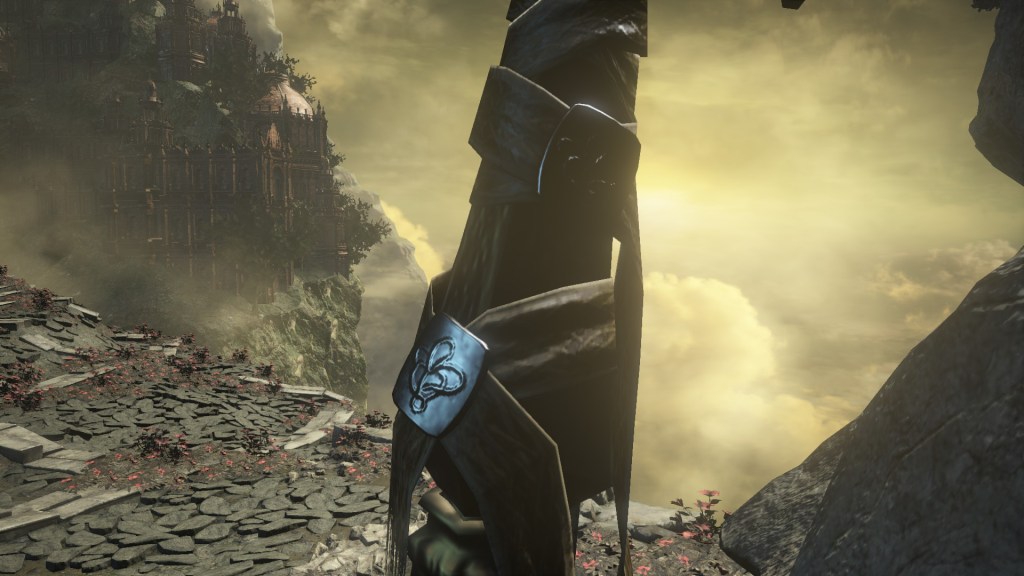
Accomplished members were awarded a fancy golden cloth fastened with the same crest, which they proudly let flutter on their spears. After receiving enough of these accolades, the knight of Filianore would then receive a piece of the green gemstone which previously decorated her emblem. Its divinity further empowers the spears in every sense. The actual covenantors feel more focused, resilient, and energized, whereas their weapons gain more power for the miracles they unleash. This divinity even synergizes with the crest Argo uses to summon us. When our spirit first emerges to defend the church, a wall of the phantom spears briefly surrounds us for protection, followed by the periodic projection of lights resembling Homing Soulmass in appearance and function, except they shoot phantom spears instead of soul arrows. Because this autonomous effect is limited to whilst we are performing duties of the covenant, it must be invoked from the crest like the actual summoning. And as with the weapon miracles, the Young Grass Dew gem enhances the spell for the Spear in question.
Proof the Spears of the Church who protect Princess Filianore’s sleep fulfilled their mission. Golden decorative cloth embellished with young grass crest.
It is said to have once been the pride of the princess’ knights and fluttered on their matching ceremonial spears, which were particularly lauded.
Although Gwyndolin might be responsible for the facilities, it is clear that Filianore was granted the lead for staff. Shira and Argo identify her as the church’s master, and even holed up in a tower for safety, the princess had been contributing what she could as a non-fighter, sacrificing pieces of her own power to supply her new bodyguards. The Spears of the Church were ultimately her order of knights bound by her covenant. And as the fairy tale princess in a tower for knights to protect, she would unquestionably award them for their chivalry. Indeed, the dedicated heroes among them are granted the title of a Divine Spear, receiving a golden spear of the same name — and power — to match. Shira implies that such recognition was traditionally only made during the Age of Gods. This isn’t unexpected considering the notion that one is holier than the rest is something that would be determined, naturally, by a god — presumably Filianore, in this case. However, we can receive the title by proxy from the covenant monument.
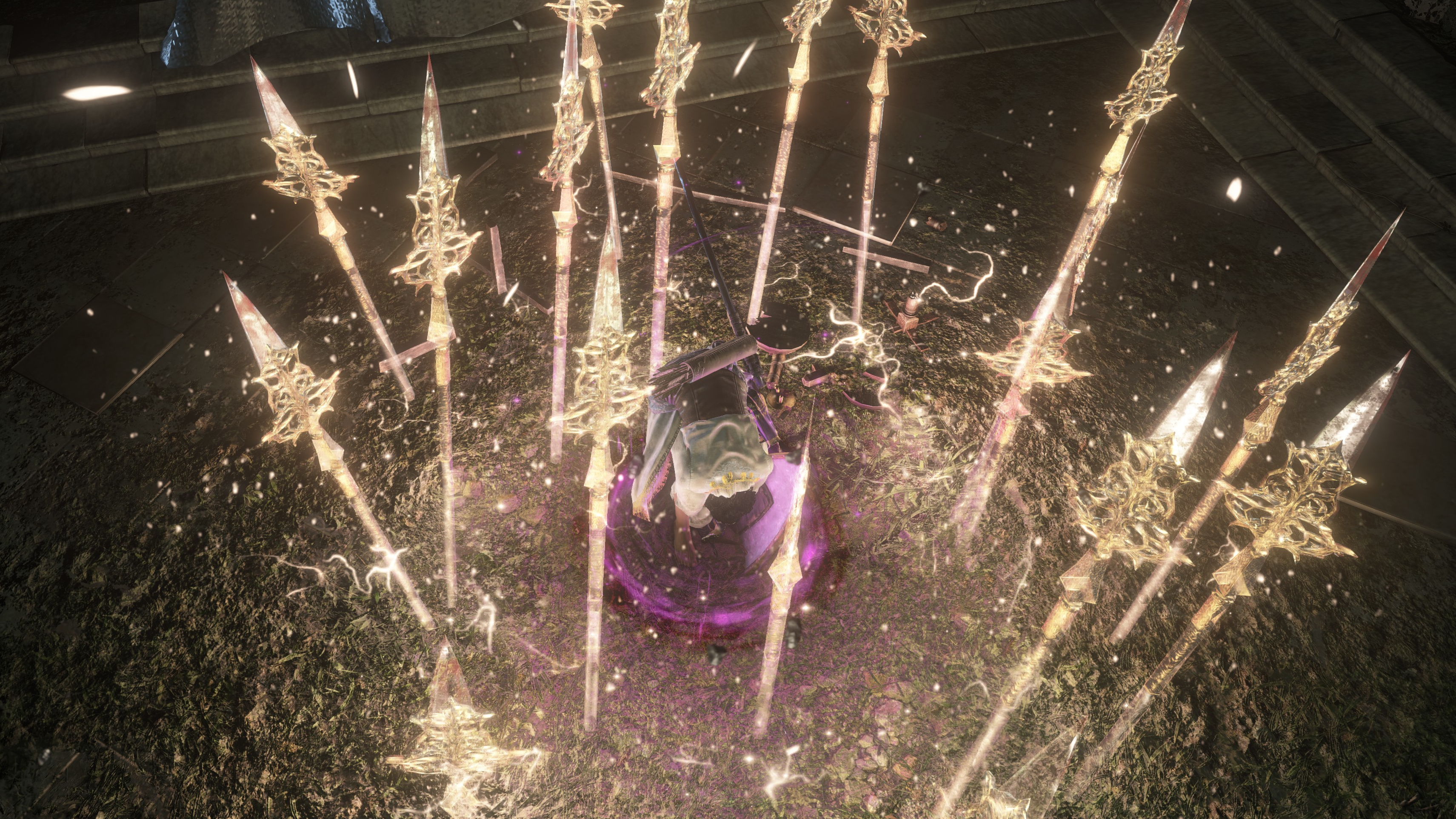
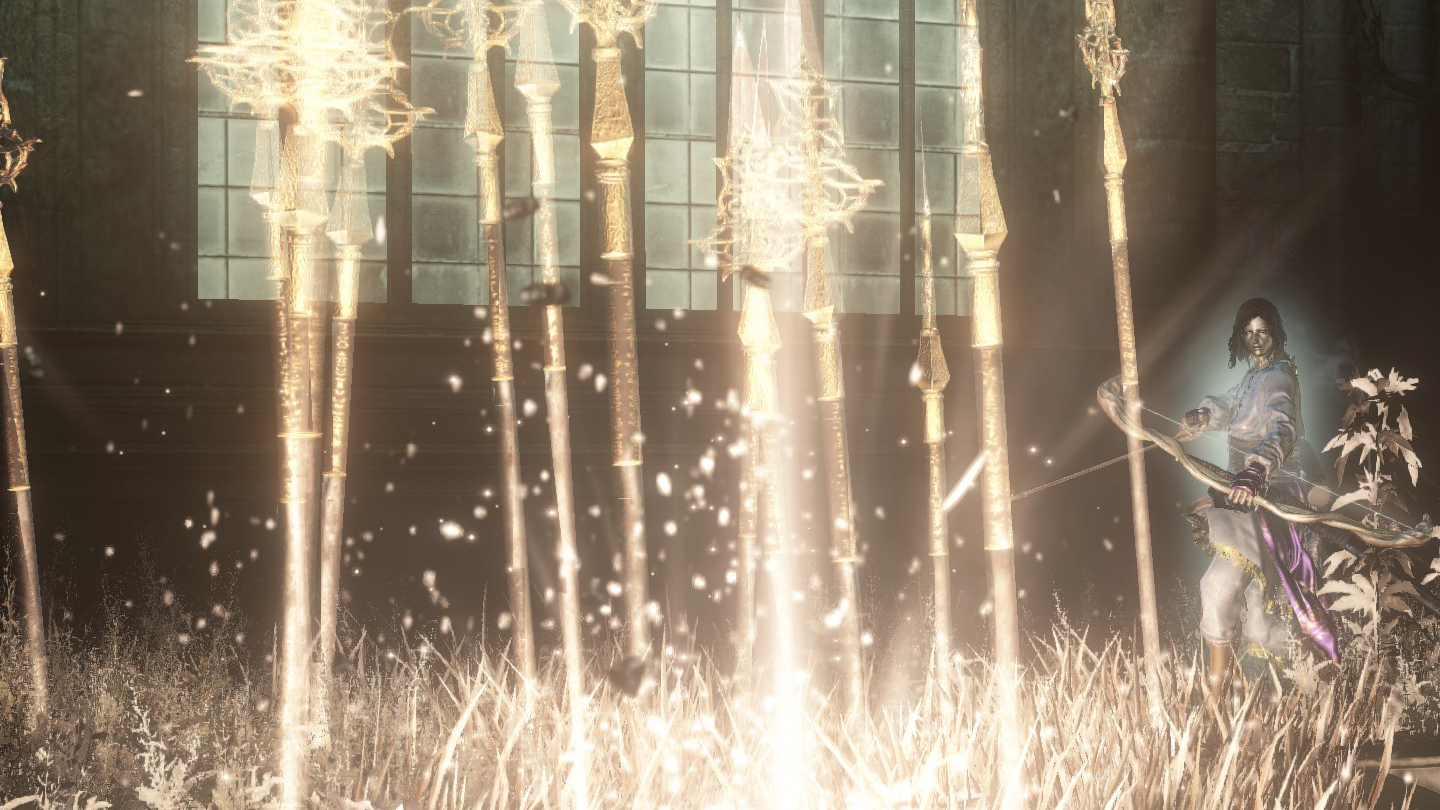
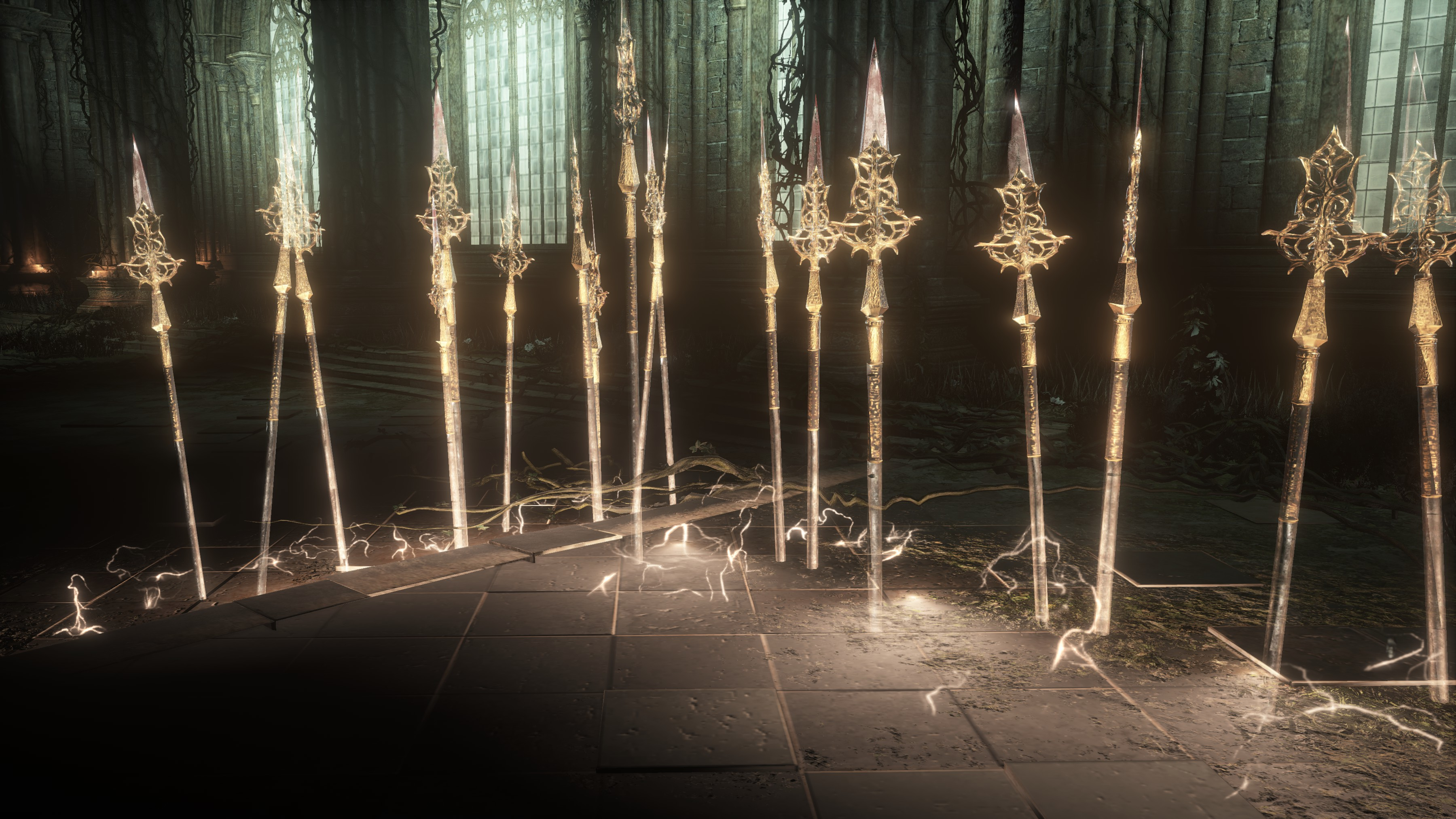
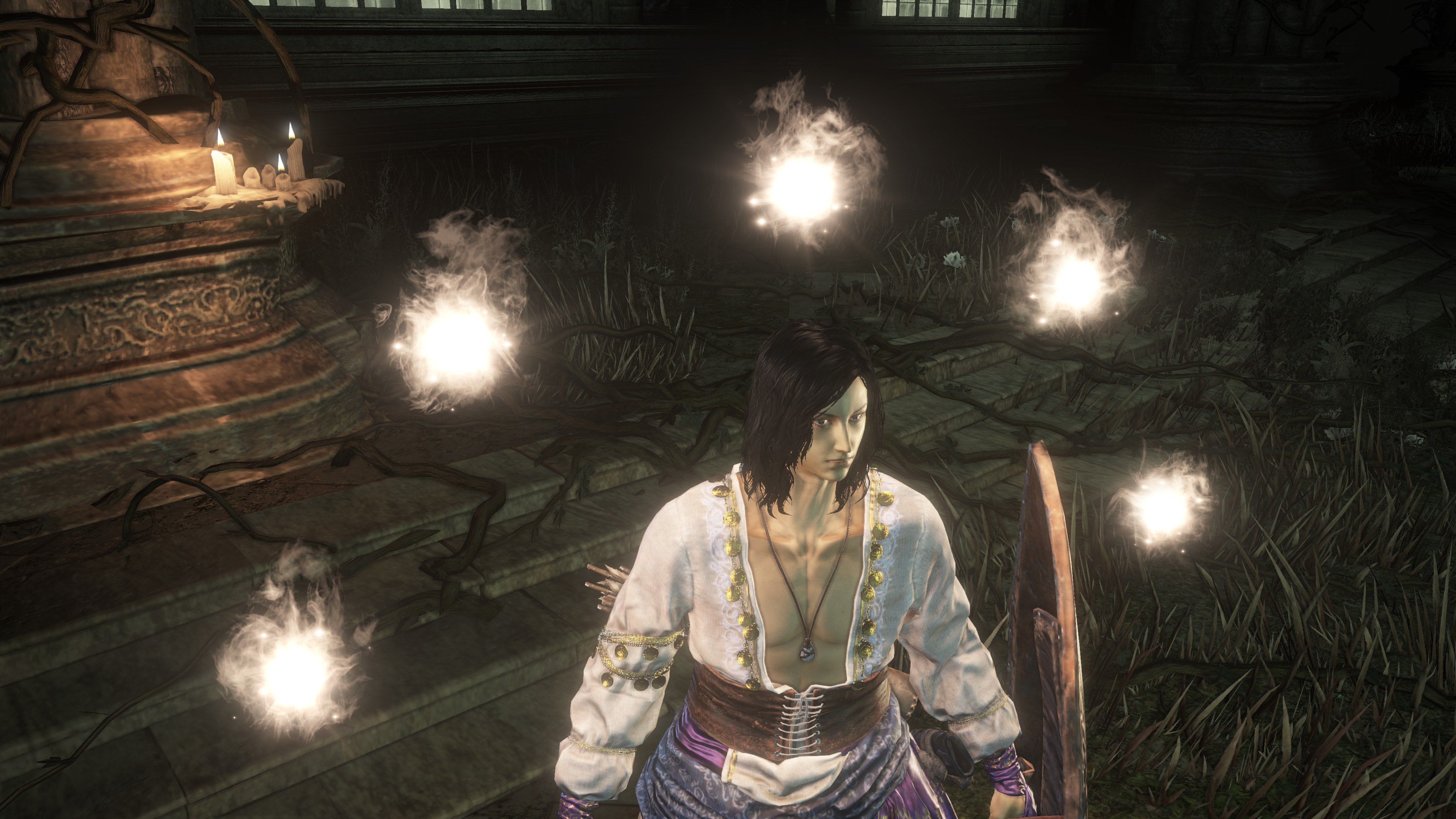
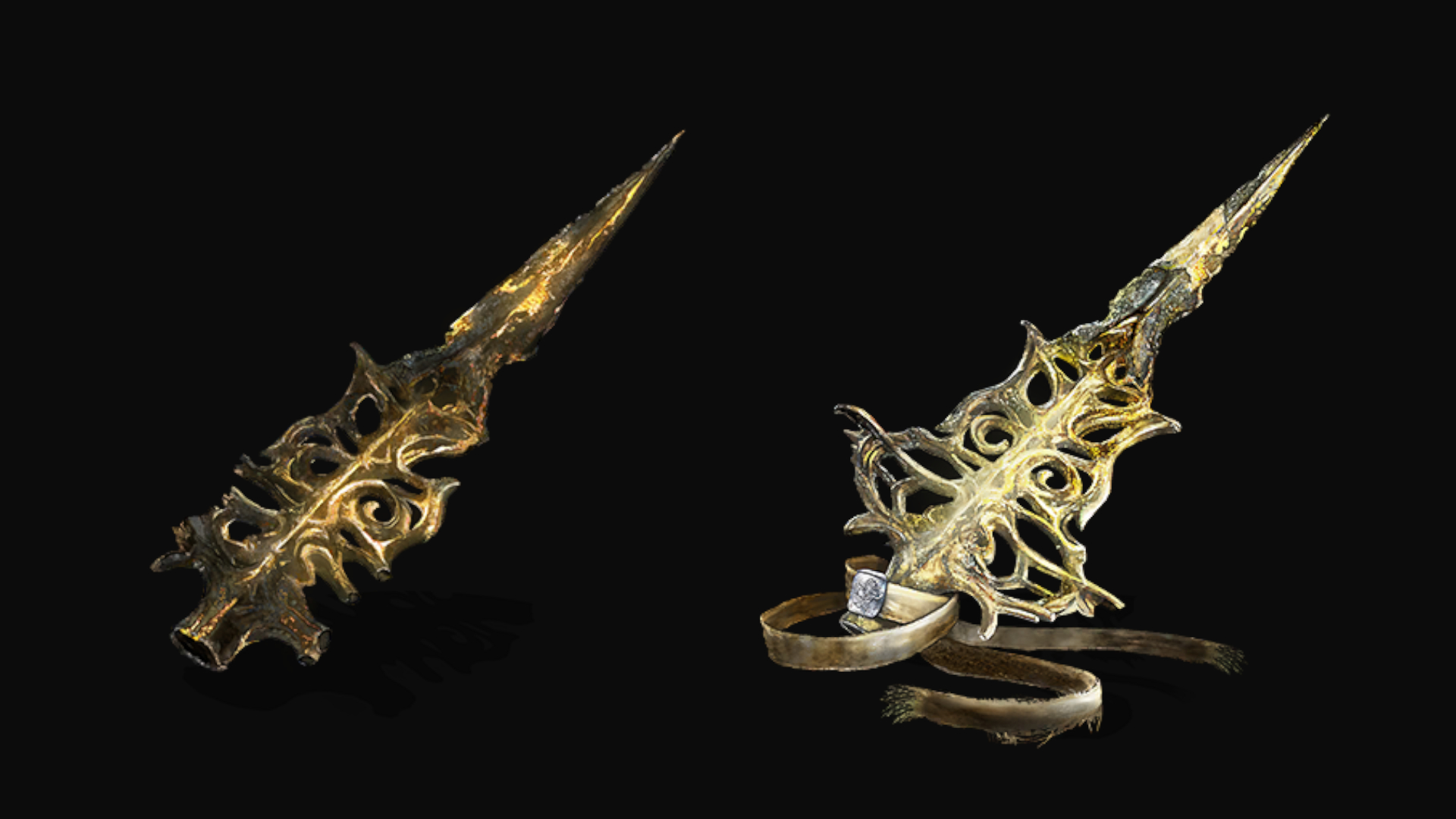
Item for online play. Fragment of the ceremonial spears that knights of Princess Filianore are said to have once possessed to match.
It is said that the golden ones are entrusted to the hands of excellent “Spears” called Holy Spears in particular.
When Spears of the Church face truly dangerous opponents, use to call upon their former majesty and summon ceremonial spears that pierce the sky in a row.
… Ah, you… have become a Holy Spear. It is the title of a hero in the Age of Gods and should in itself not exist at Fire’s end.
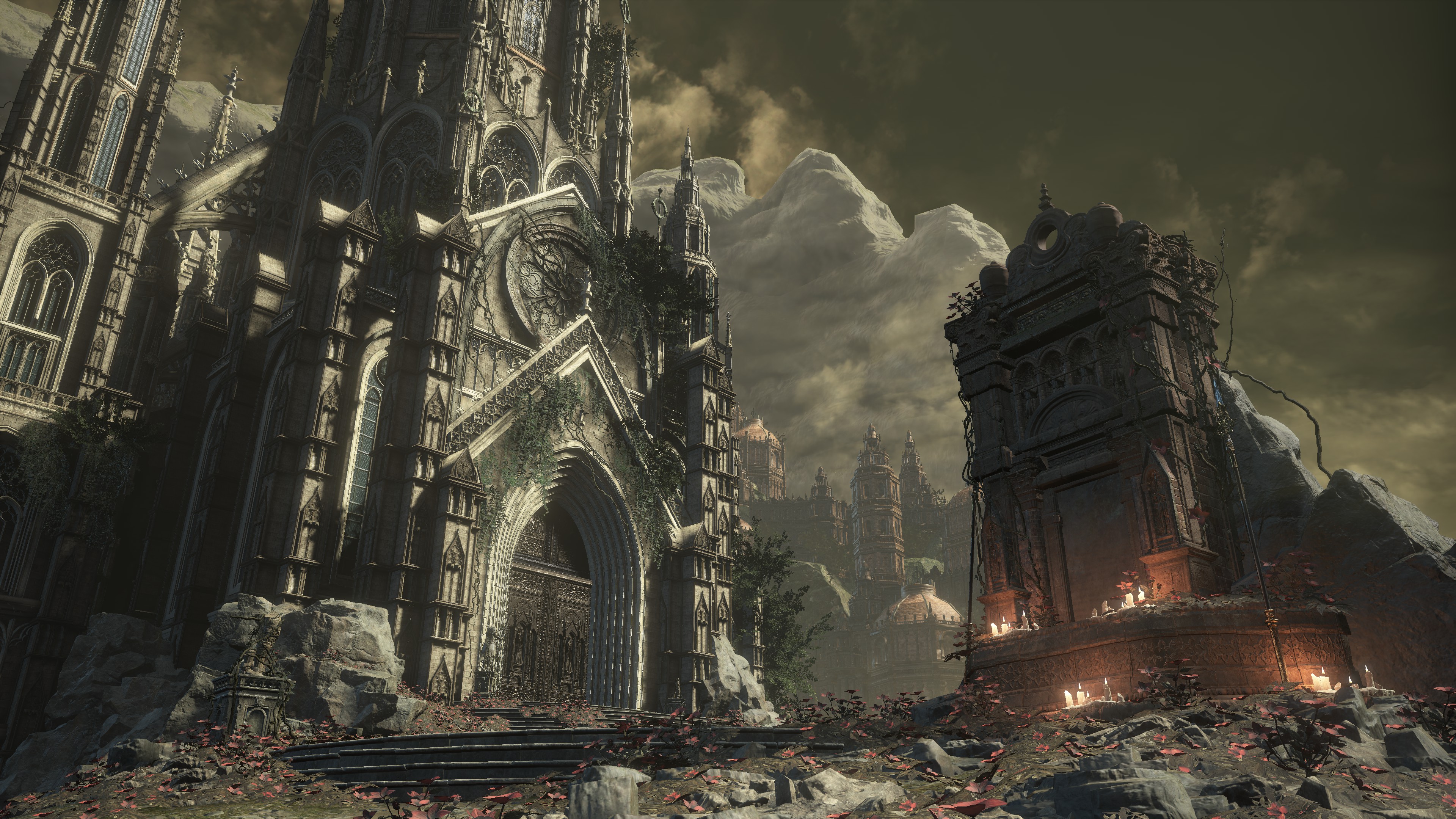
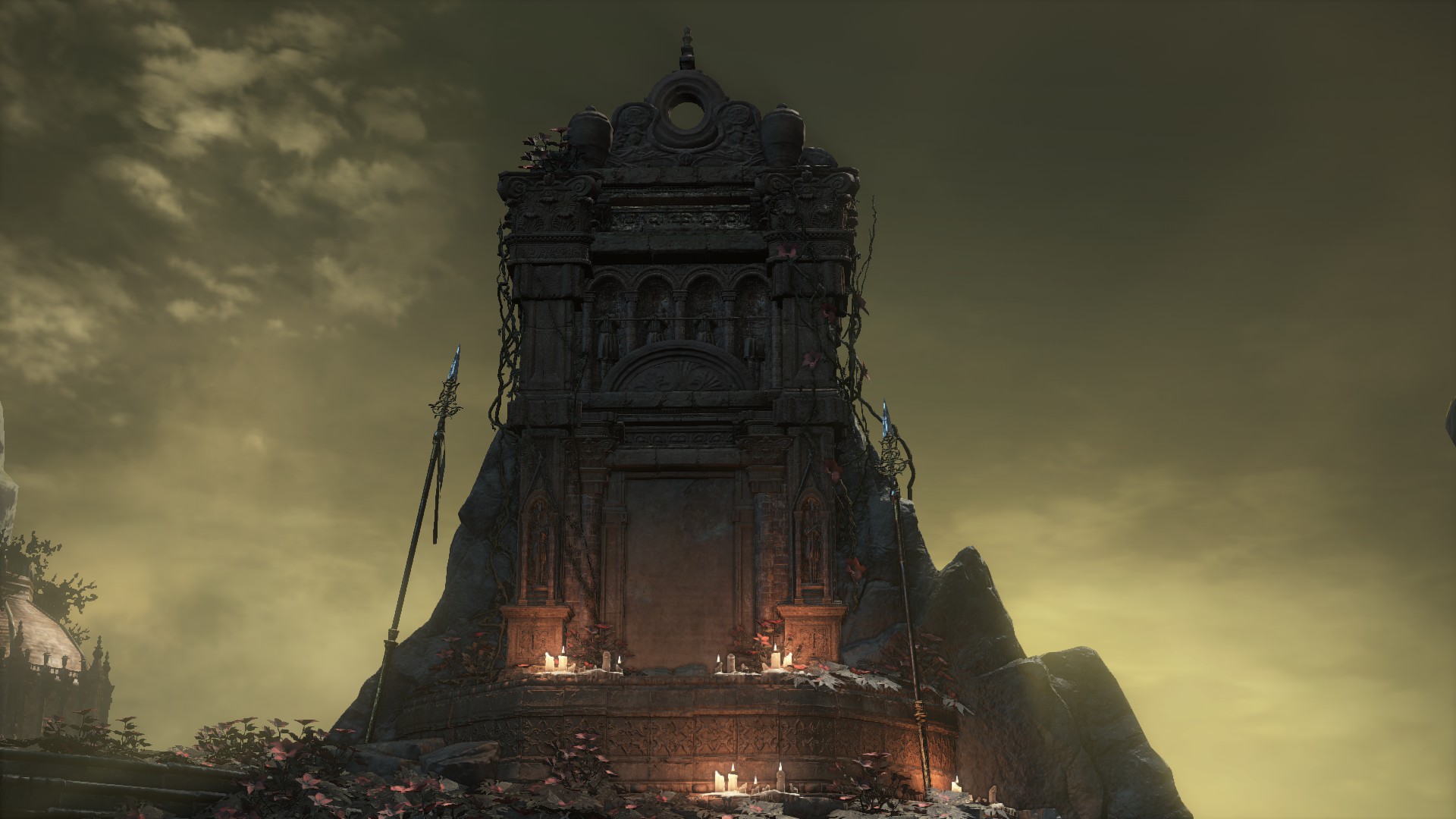
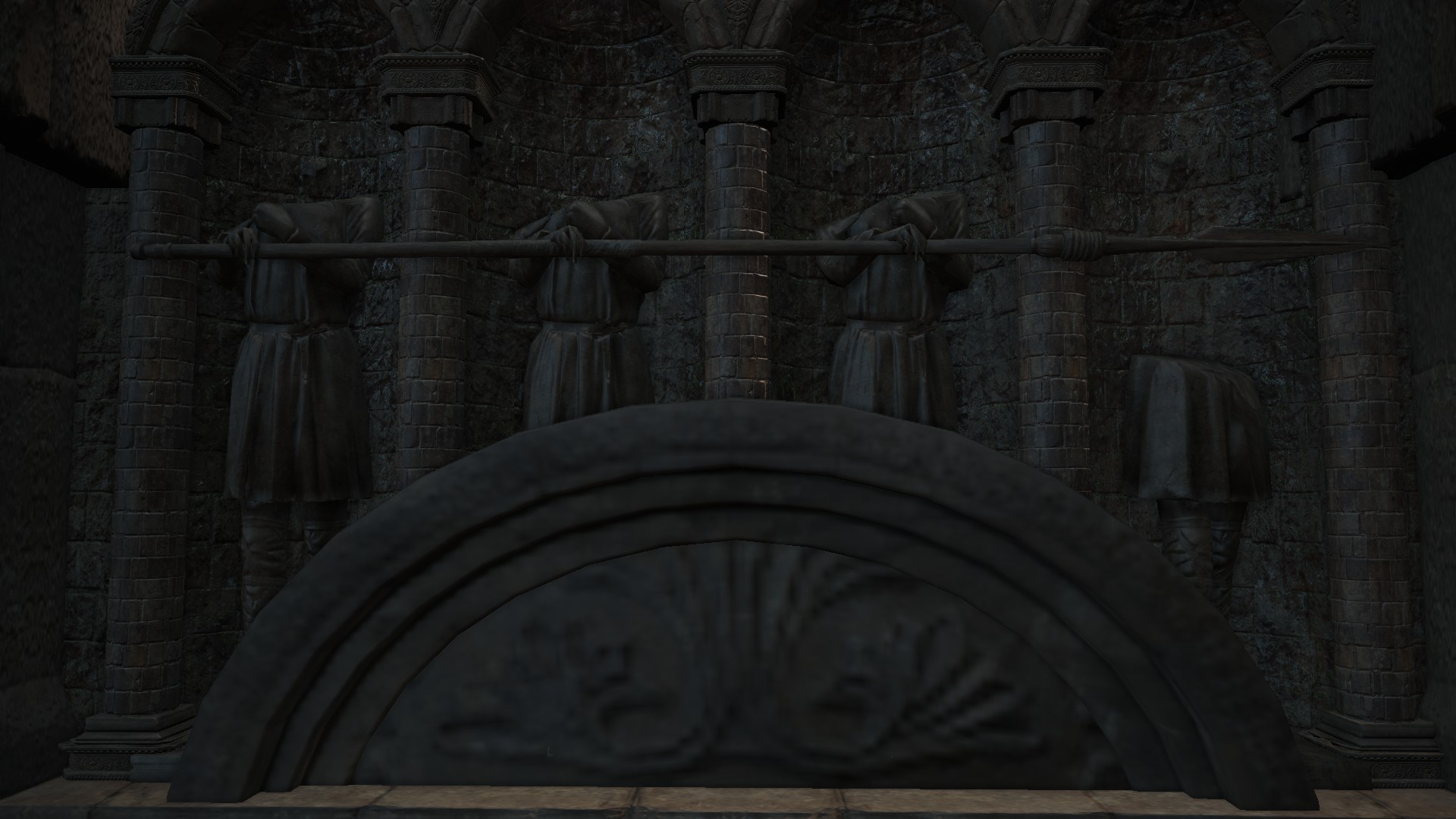
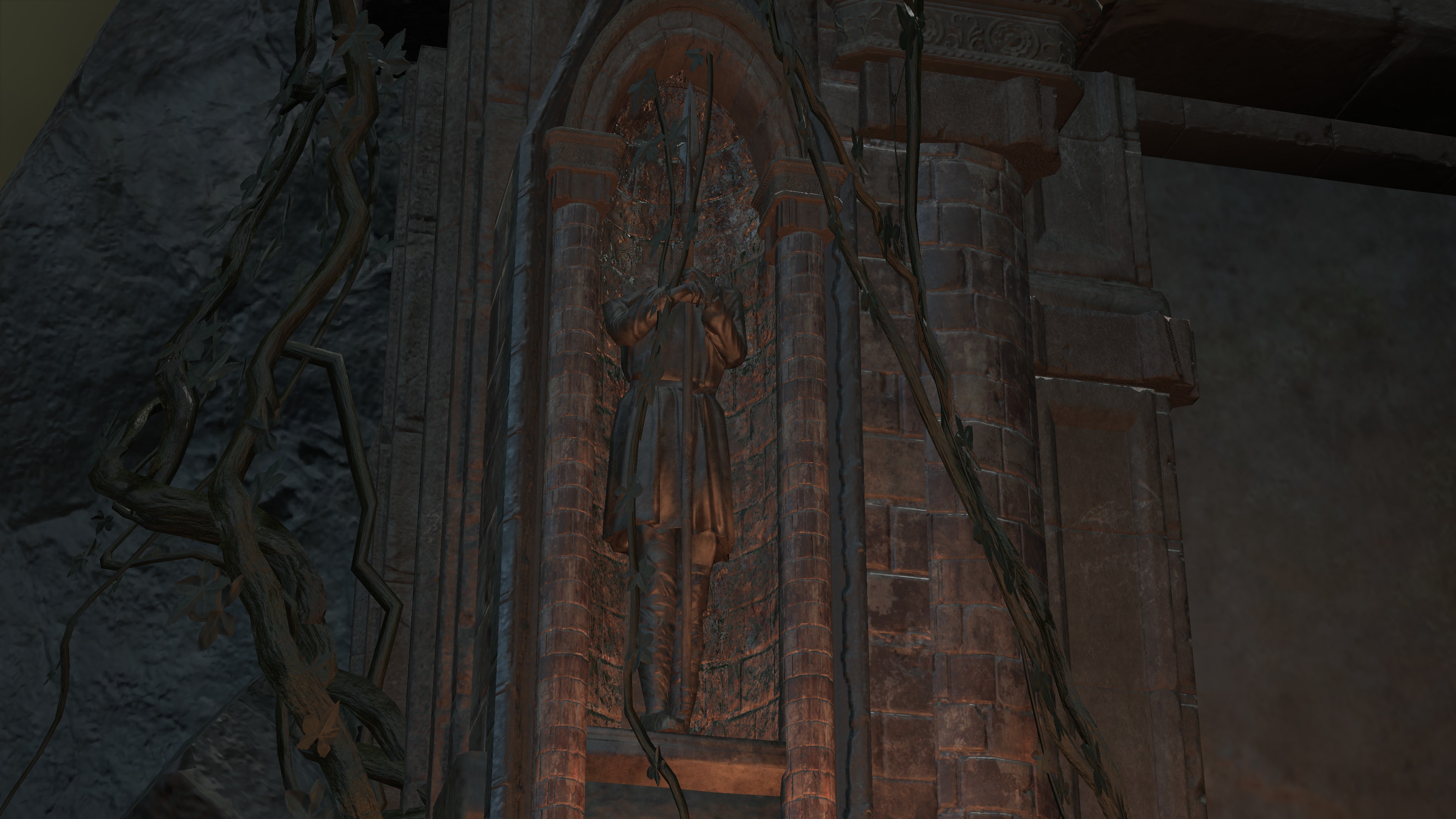
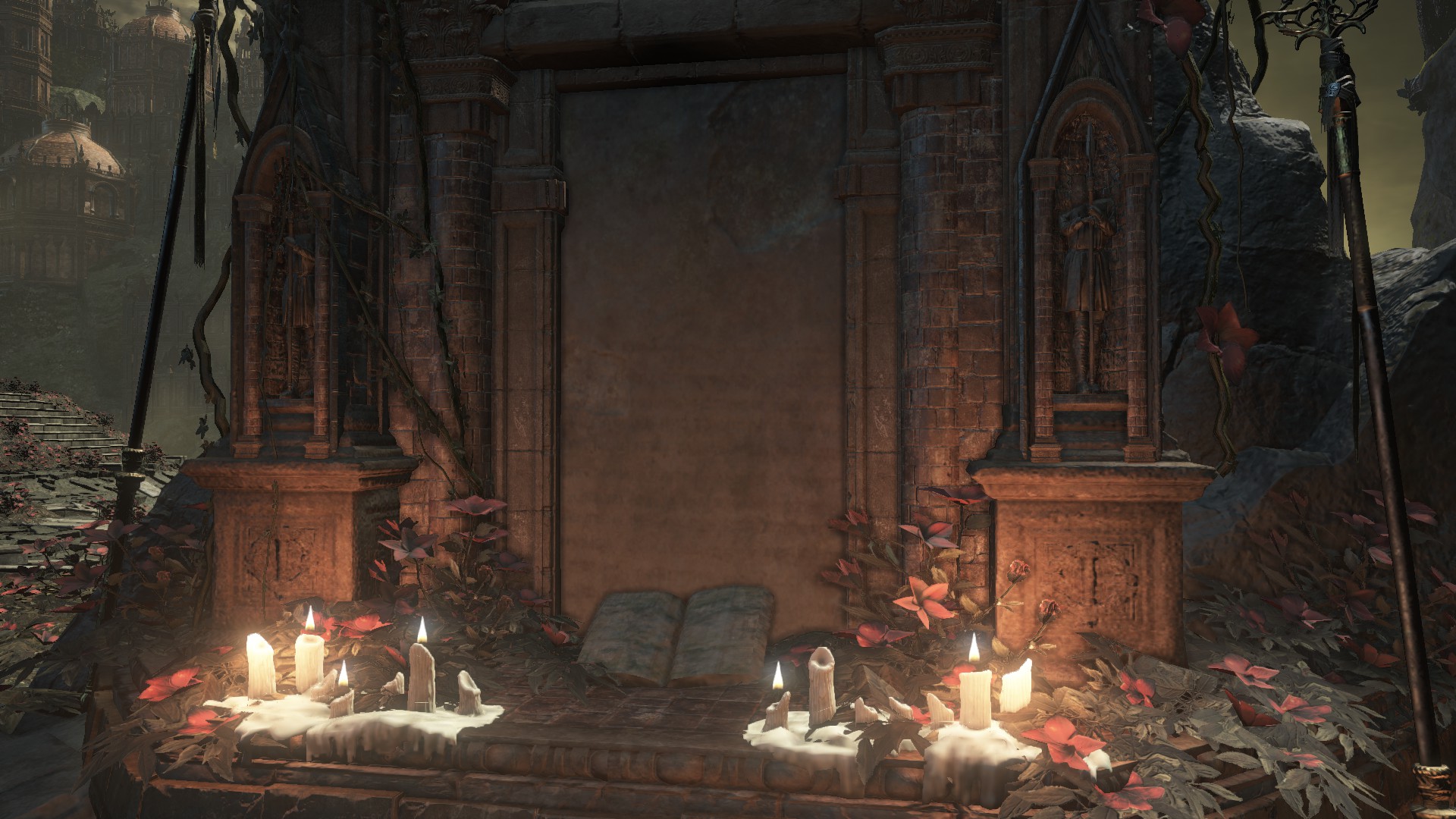
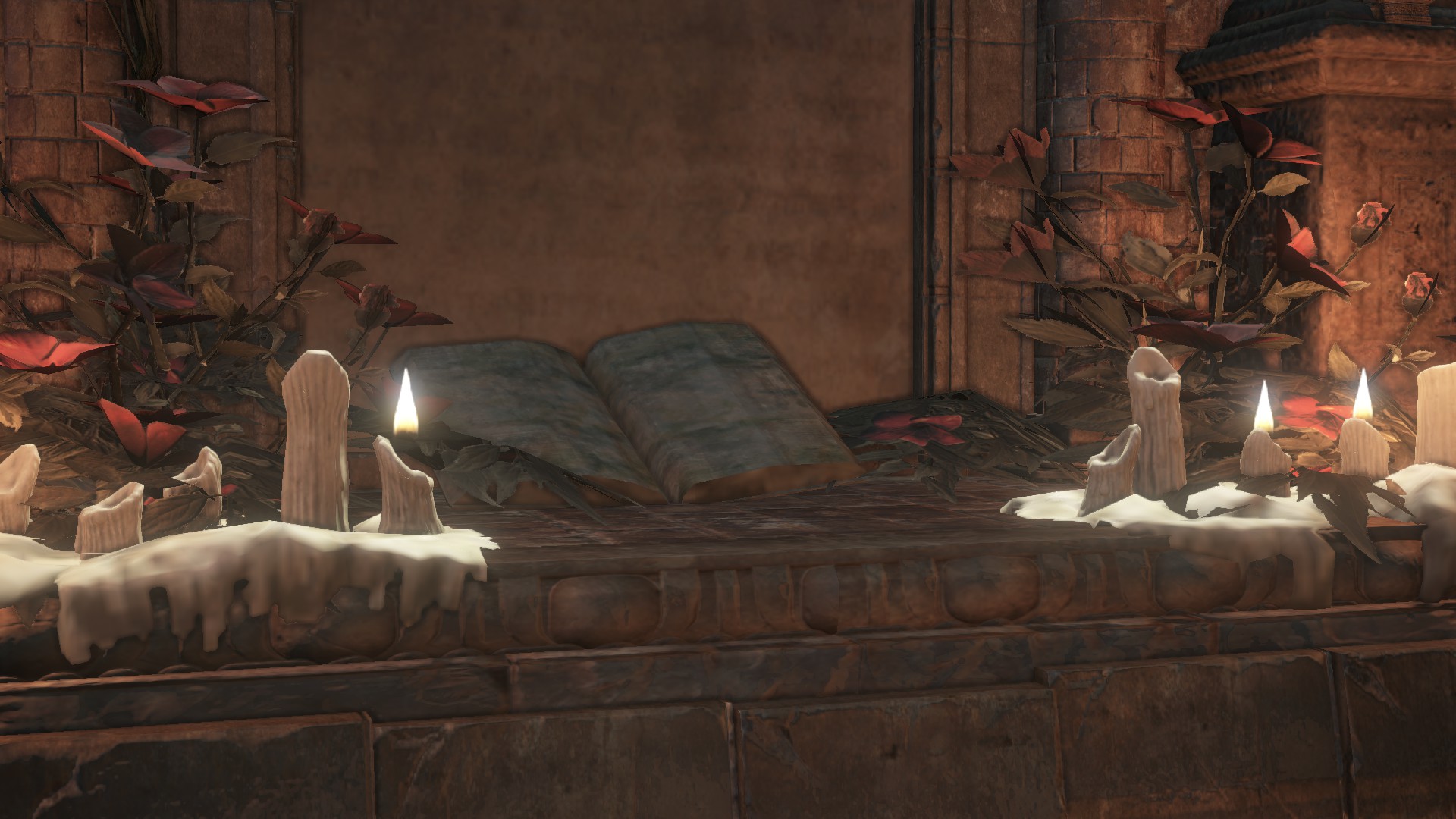
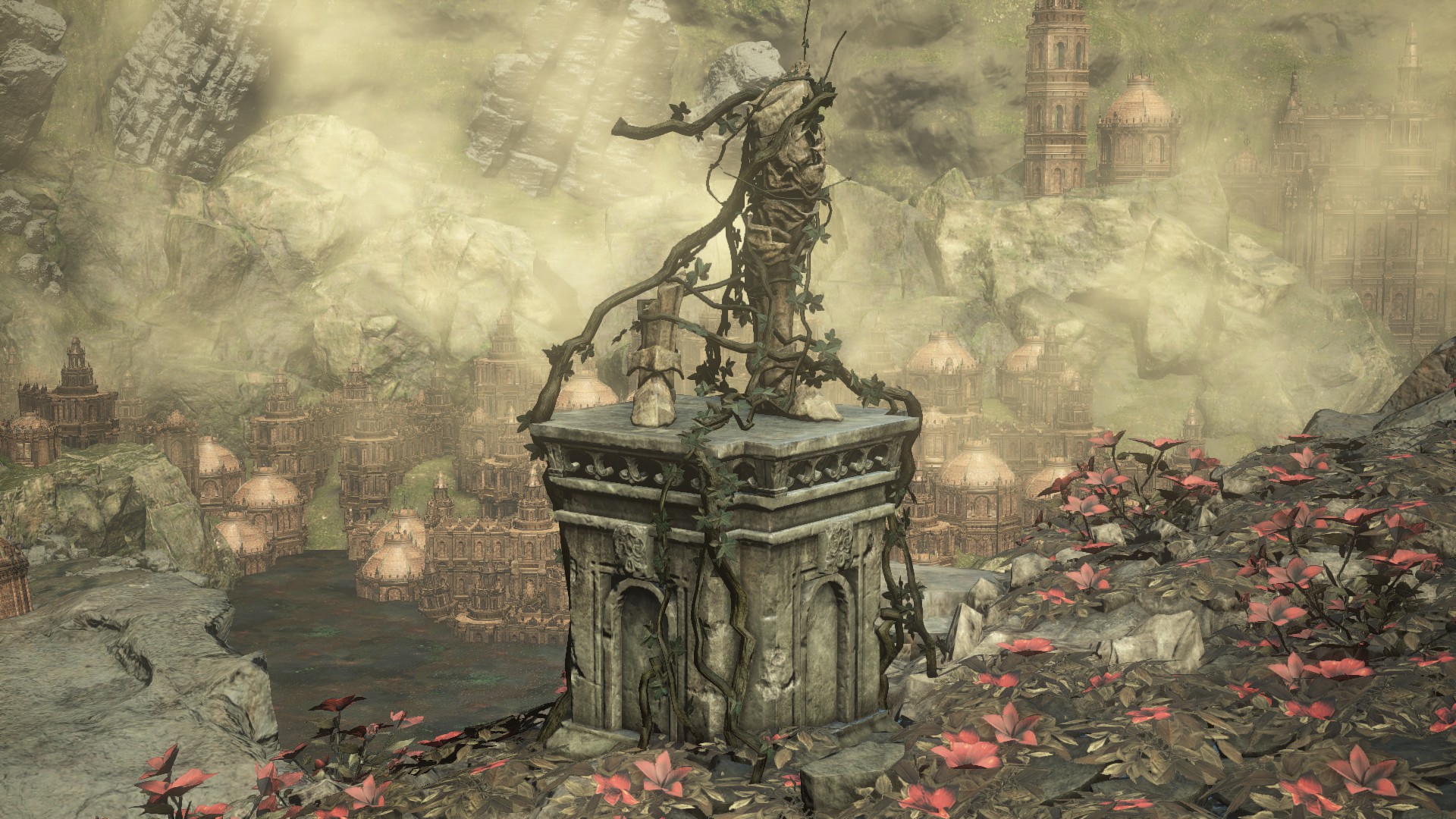
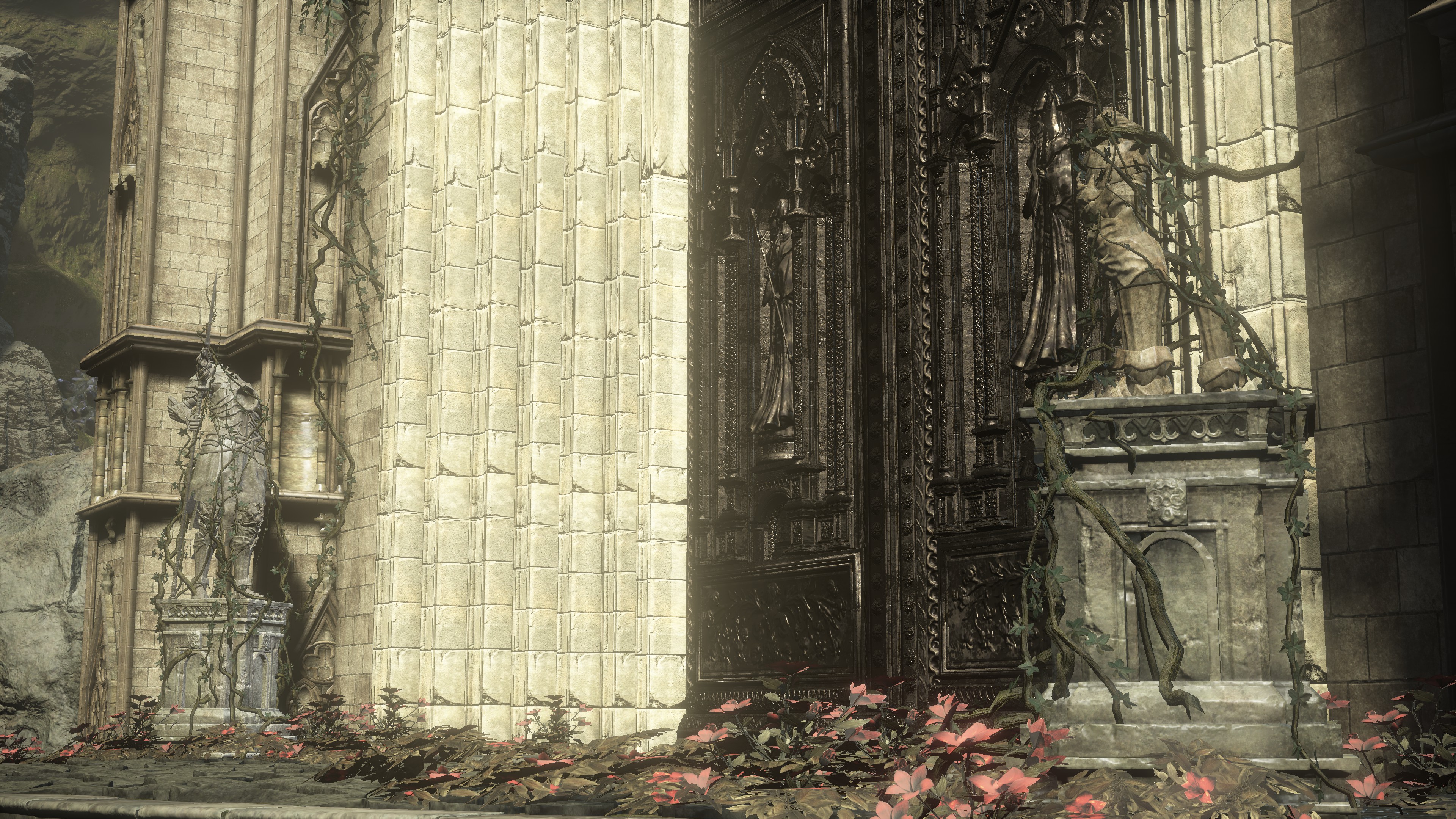
Erected in front of the church, that stone monument was likely used for recruitment. It features the same squire statues from Irithyll, only holding up spears instead of swords. The slab they flank also looks to possess an inscription, albeit long faded. The notion is complemented by the open book laid beneath the engravings, perfect for detailing their history and creed; the spears of veteran covenantors stabbed into the ground on either side likewise showcase the group’s majesty. In short, this monument probably served as a kind of recruitment notice for visitors and prospective Spears, passing the baton to the next generation. Once they officially joined, members could pray to the monument rather than interact with the princess directly, our offerings there rewarding us all the same.
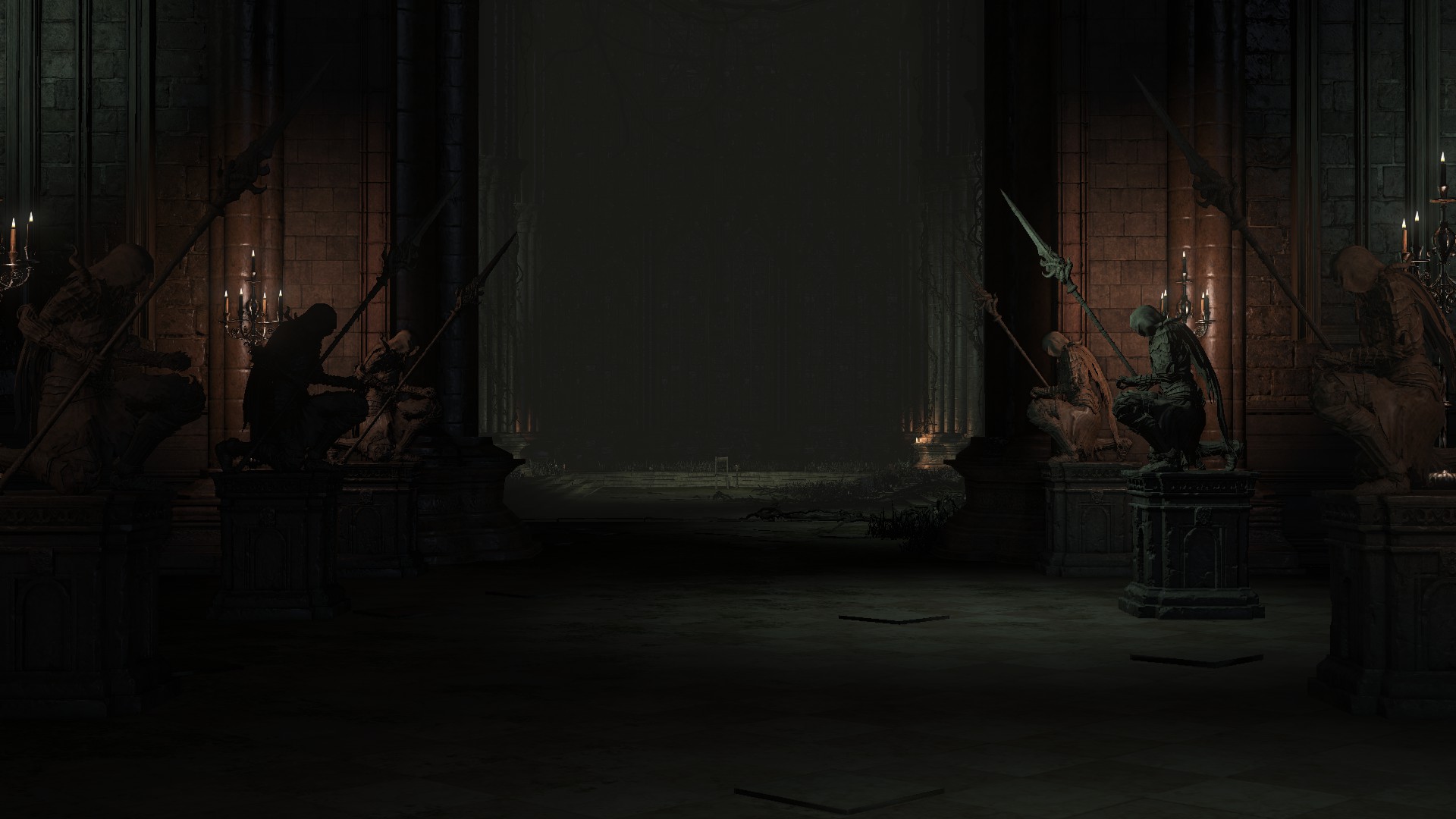
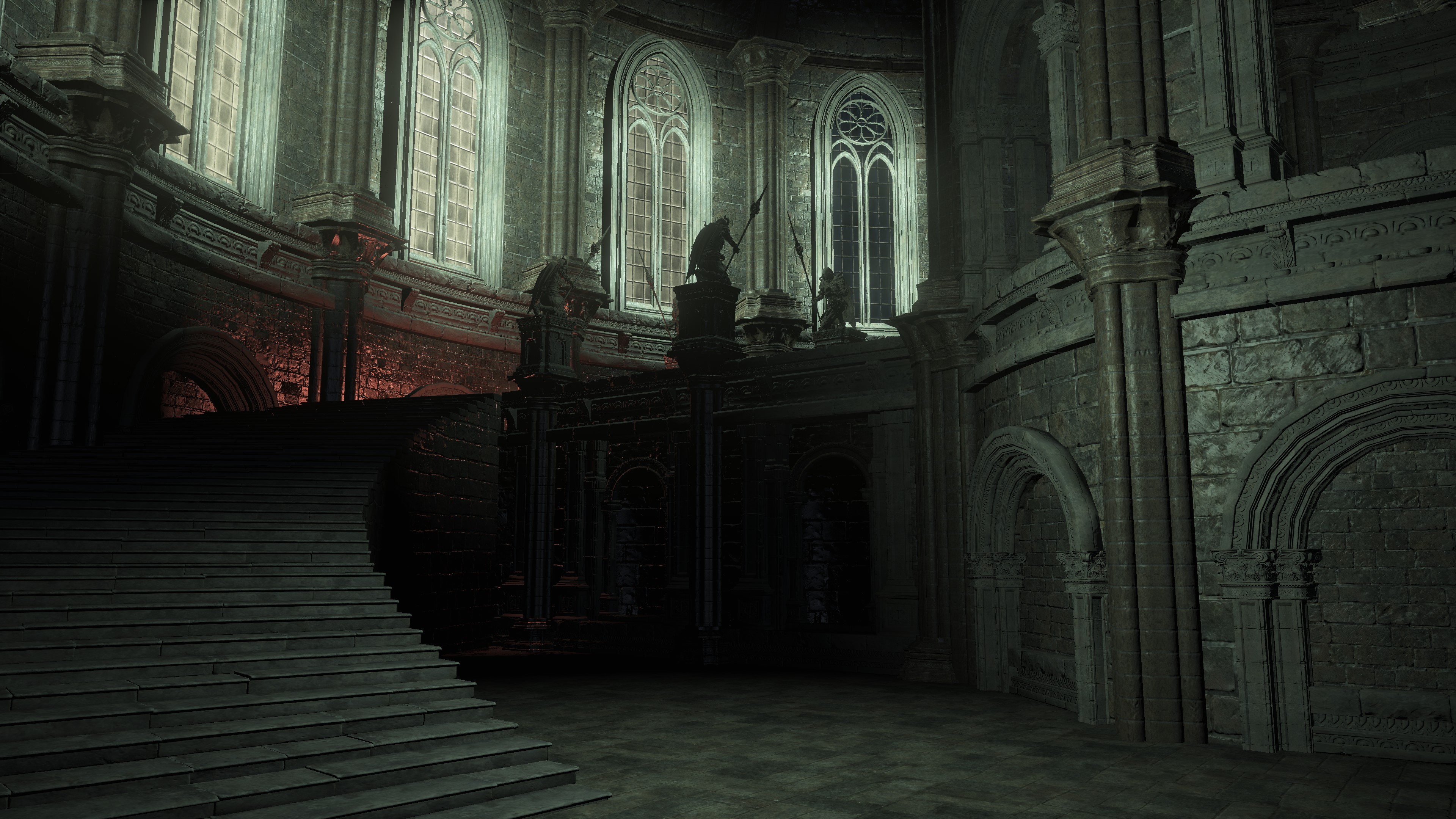
As to who joined the covenant, the job of bodyguard is available to everyone. Though presently in ruins like the cobblestone, we pass statues of Ringed Knights standing proud with their spears as we make our way to the Church of Filianore. Once inside, we pass between yet more statues, now respectfully kneeling in the lead-up to the princess. From this, we can infer that Ringed Knights were counted among the Spears of the Church. The surviving knights we come across do possess spear ornaments on their person, indicating the entire order had exchanged the covenant. This isn’t a surprise, given the knights were exemplars to their people and agents of their kings. When Gwyndolin arrived with his father’s concerns, it is only natural that the royalty give their “wife” increased security. By directing their knights to become her first Spears, the kings confirmed their loyalty to Anor Londo during this crisis and set an example for the rest of the populace to follow — did you dream of becoming a Ringed Knight, dear citizen, upholding the Abyss and national pride? Then, just as well, bend the knee to the gods.
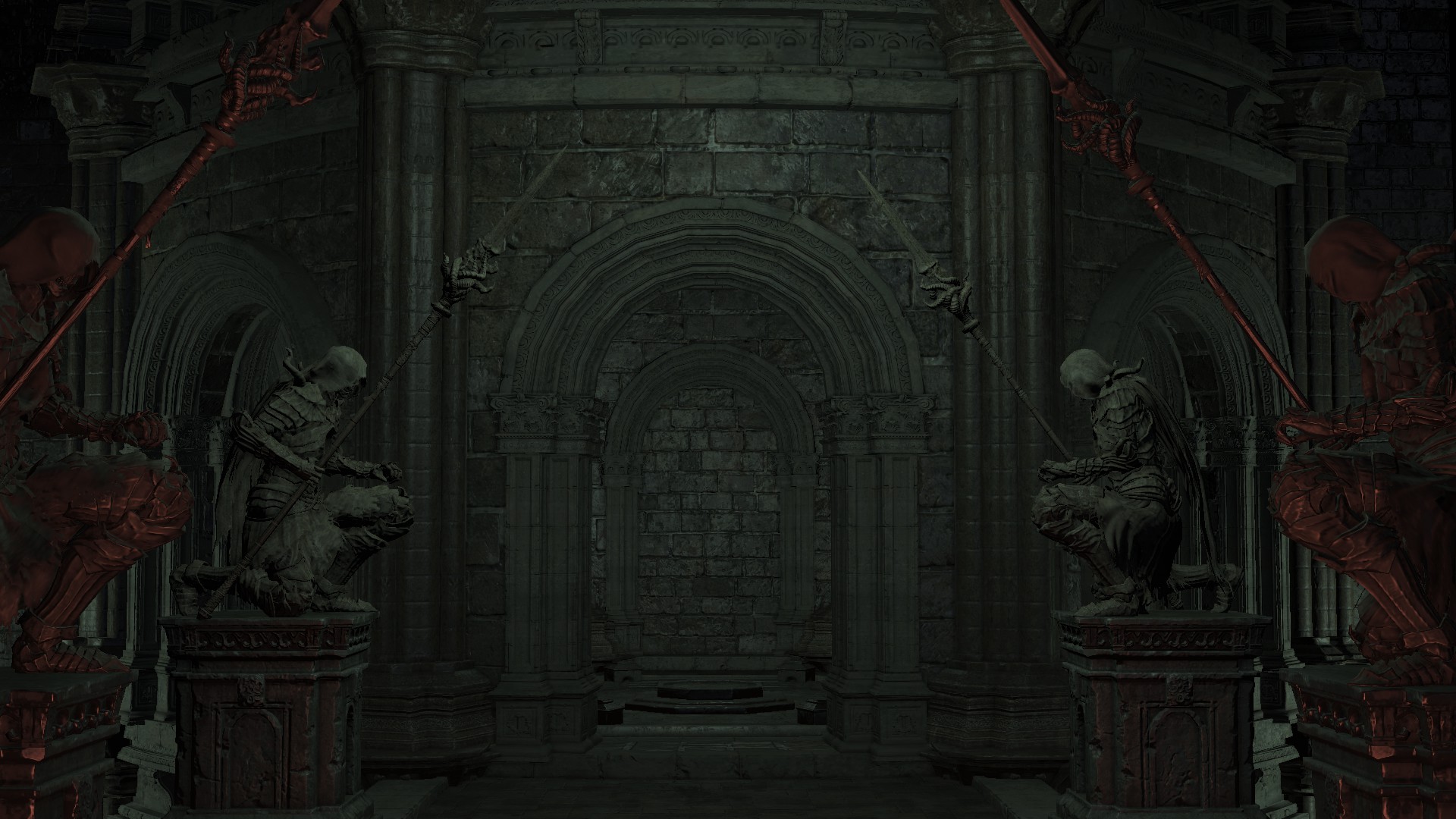
Of course, not every Spear was necessarily a pygmy — some of the original members were part of Gwyndolin’s entourage, like the church guardians. However, doubtless the covenant doubles an instrument to keep the penal colonists in line. If anyone with promise refused to join, then they were liable to be placed under suspicion. How could a capable citizen not contribute to the cause with Hollows invariably running rampant? If that person proved to be a heretic, then the Spears would enforce loyalty by force. Every pygmy was being pressured to affirm their fealty, one way or another. In other words, the order was primarily for man to regulate man. This also admits the secondary role of Filianore’s knights. More than bodyguards, they were her agents. Joining the covenant didn’t mean taking up permanent post at her Church; thanks to the covenant, Spears could be called back at any time. Their place was out in the field, proactively protecting Filianore by eliminating all possible threats.
One of the knights, Shira, reveals knowledge of a small shrine hidden within the main tower of the royal mausoleum. As she details, we reach this place from an annular chamber enshrining Silver Knights in statues. But unlike the main lobby, a knight in that round room is missing his sword. This signals it as an illusory wall hiding way to the shrine deeper down. That set up betrays this as a place for the gods’ knights; the shrine’s altar even utilizes the Lothric model, complete with the knight’s sword laid upon the royal crest banner. Anachronisms aside, the concept is clear: faithful knights furtively come to pray for blessings. Not necessarily medial knights either. Back in the annular chamber, a corpse with embered humanity kneels to a Silver Knight statue next to the shrine entrance. Pygmies who supported their Dark being engulfed by fire were pledging their allegiance, their valor earning any medial shrine-goers’ trust with the secret. Thus could Spear of the Church and Silver Knight, human and medial, both find solace there.
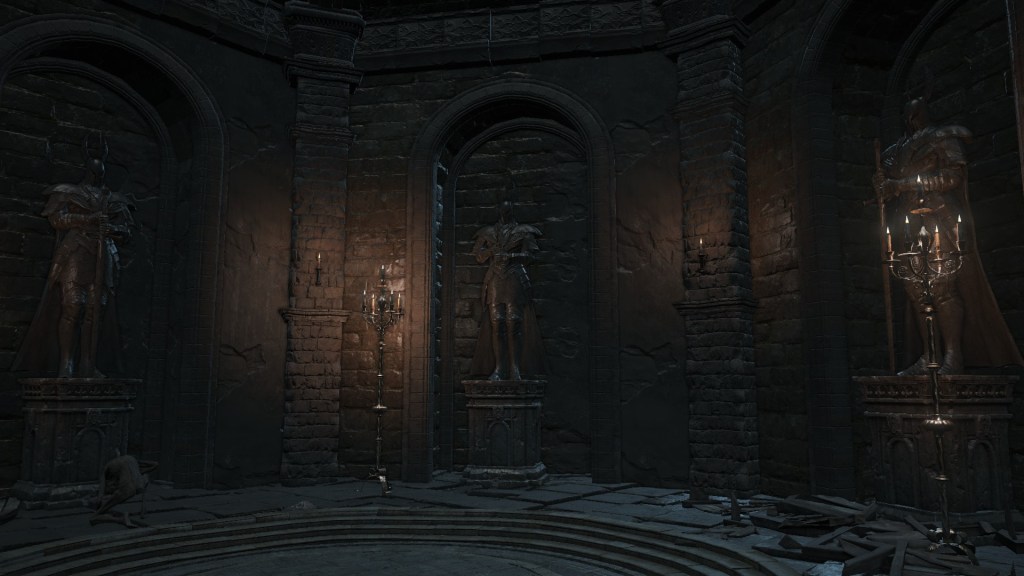
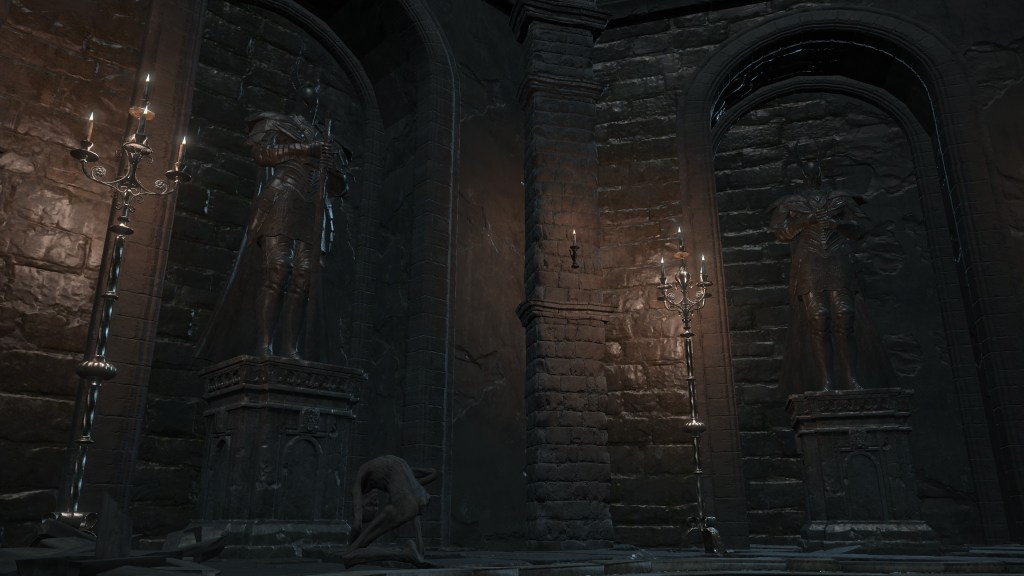
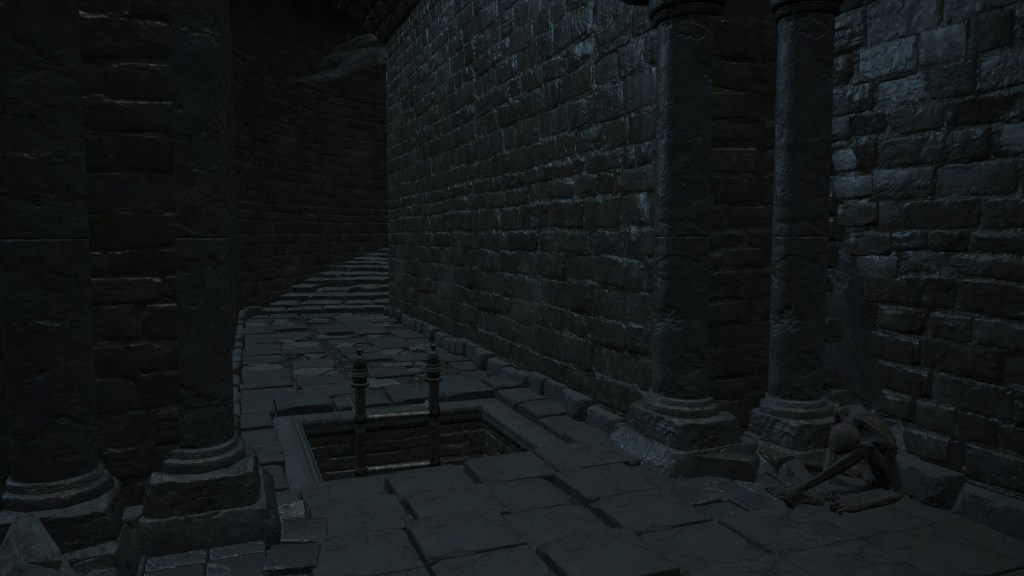
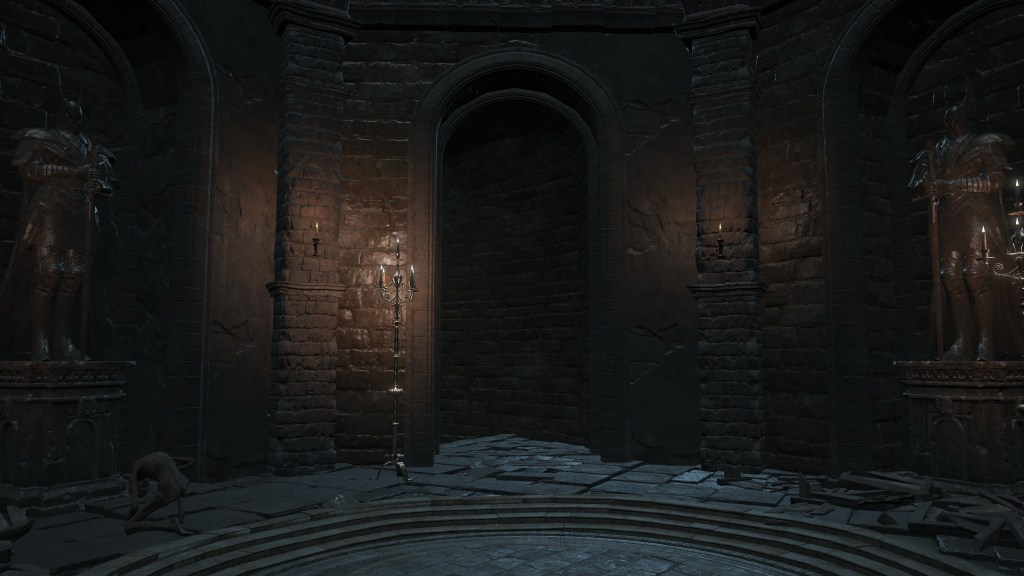
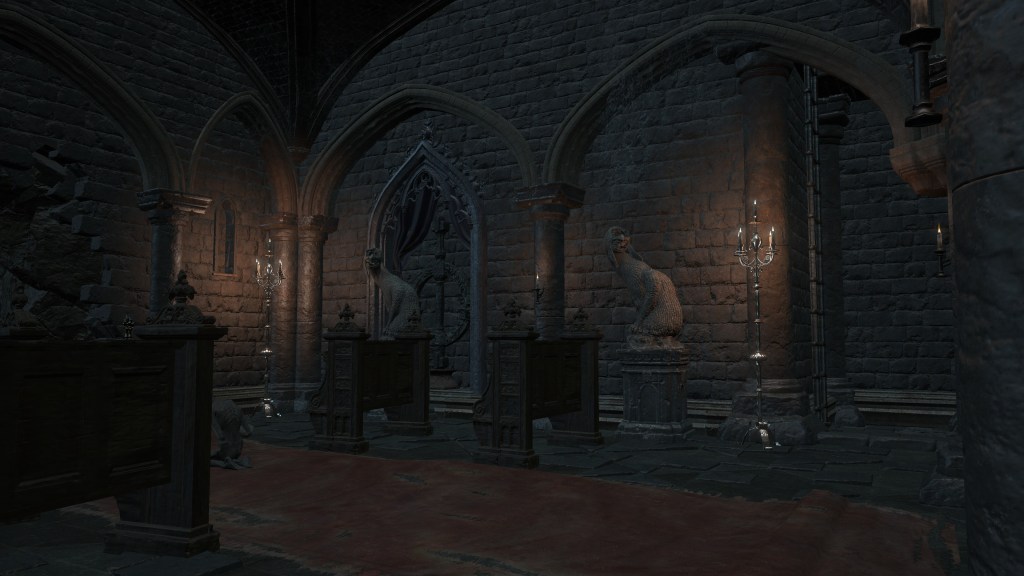
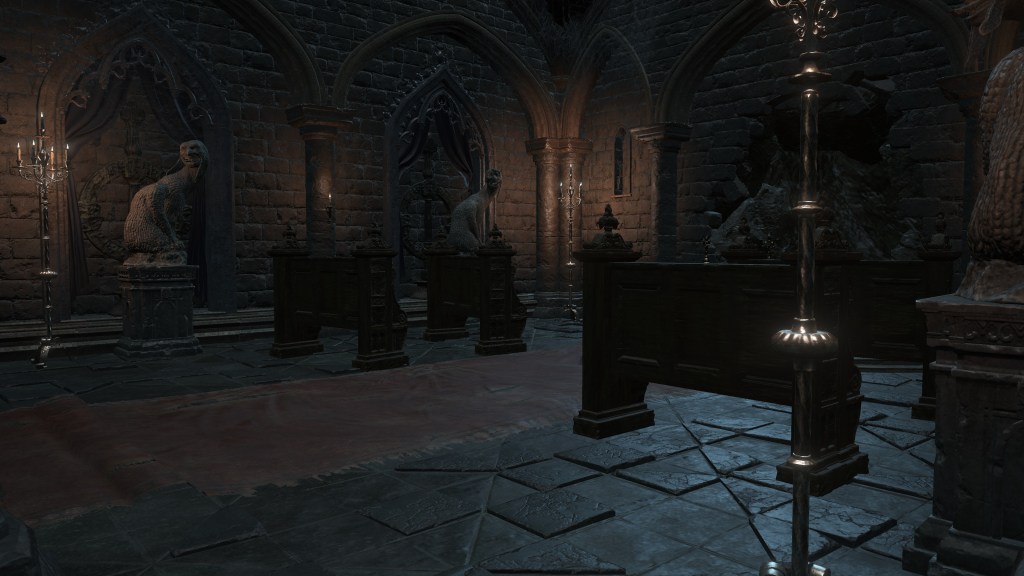
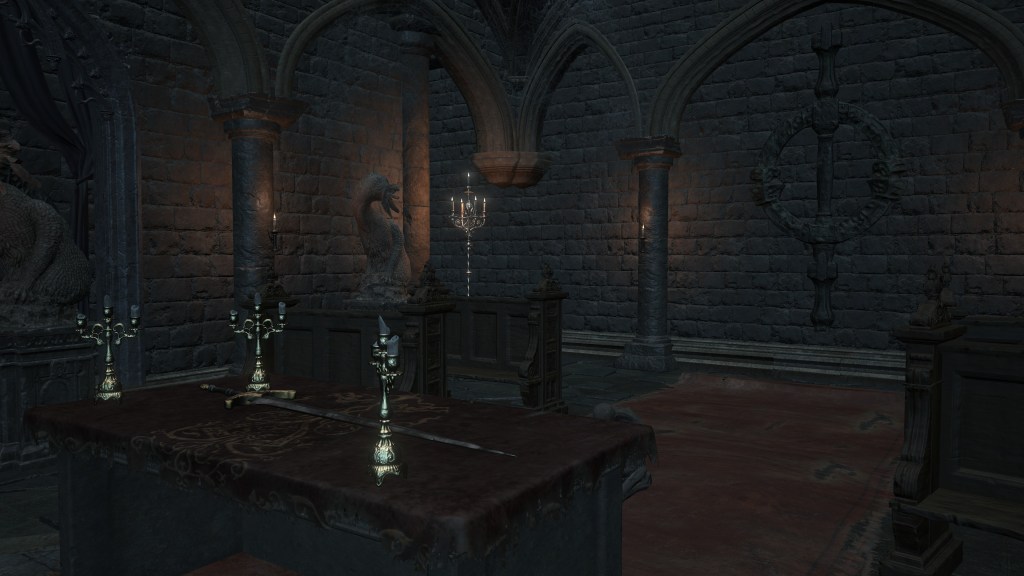
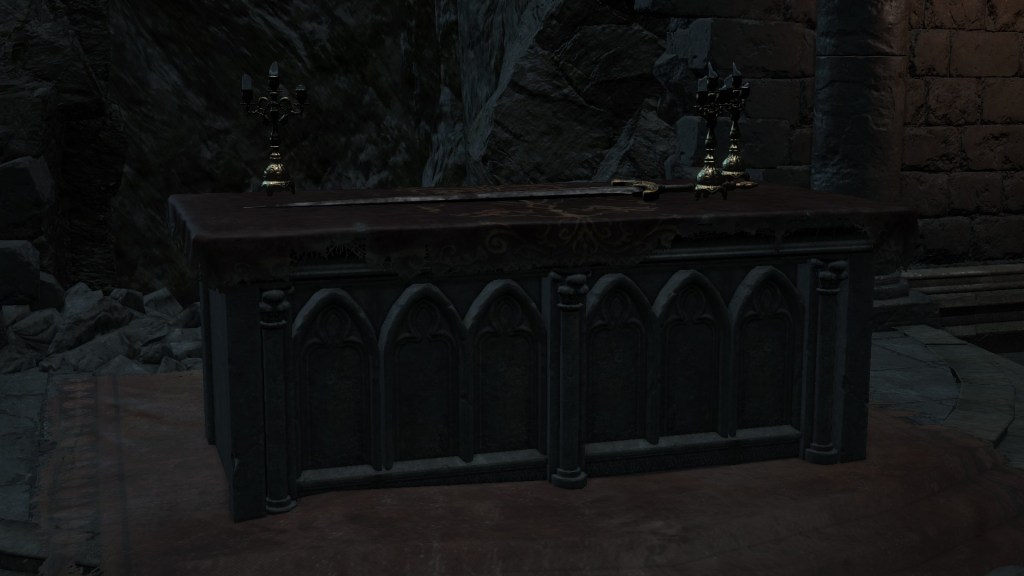
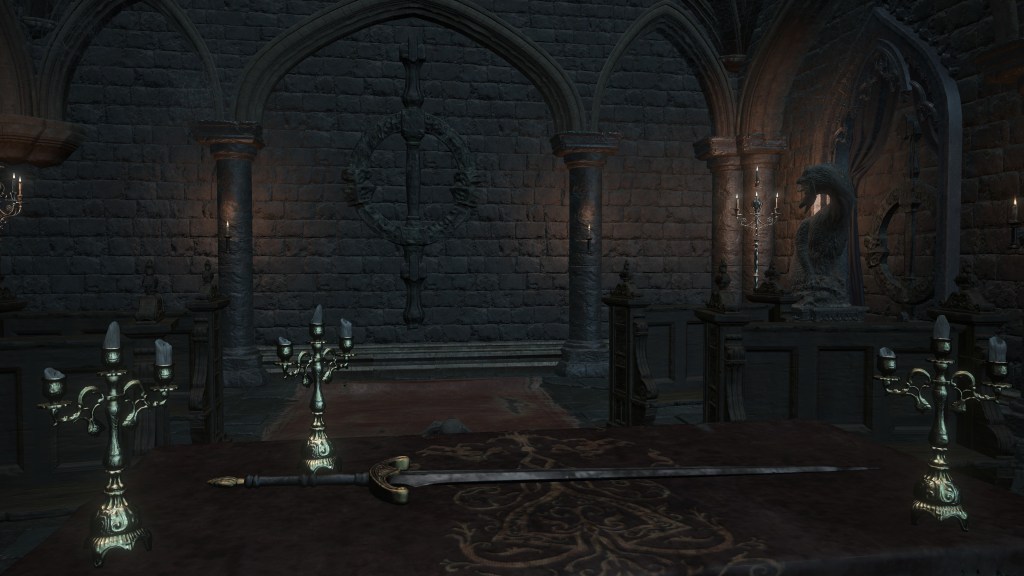
In front of the Princess’ church, there lies a tower enshrining the knights. And behind the knight statue holding nothing hides a small house of worship. If from there, you should be able to descend to the valley of Dark. Please. Do kindly defeat him.
With that established, there comes the question of purpose. When we finally reach this secret corner of the complex, we find a hole in the wall behind the altar. This opens a shaft underground, to a valley of Dark (闇の谷) as Shira describes it. It is more a ginormous cavern, but there must be openings; Midir falls in from a ledge just outside the mausoleum. More importantly, the Dark presumably refers to the dead piled up, bodies still not rotted thanks to water dripping down from the surface — for so long that some stalactites and stalagmites have fused into thick pillars. The corpses themselves are evidently human: at the height of his abyssal corruption, Midir’s roar is able to rouse dark souls in the surrounding dead, the humanity emerging to swarm the last living human they can find. Whether this is because of envy or love as Affinity explains in its description, it is obvious that the souls belong to many denied a continued bodily life. But how did a plethora of humans end up down there, and why did the knights open an informal passage to it from their hidden shrine? Likely because they are responsible.
The shrine is decorated with ring iconography, often backdropping primordial serpent statues along with curtains for a fancier flourish. That might seem odd for a holy knight’s place of worship. Why not continue with the Silver Knight statues? By this point, the primordial serpents should be the gods’ enemies, traitors who ultimately chose to embrace the cursed. Enshrining them would suggest sacrilege. But in this context, the icons are probably used not to represent the world serpents overall but one in particular, who wholeheartedly supported Gwyn’s “dark ring” for man — and Frampt always did sanction killing those he deemed to have served their purpose or lost their way. With one the of the wise serpents championing the continuation to the Age of Fire, the knights would feel empowered to silence anyone who defends an age for men. And who comes to a shrine without offerings?
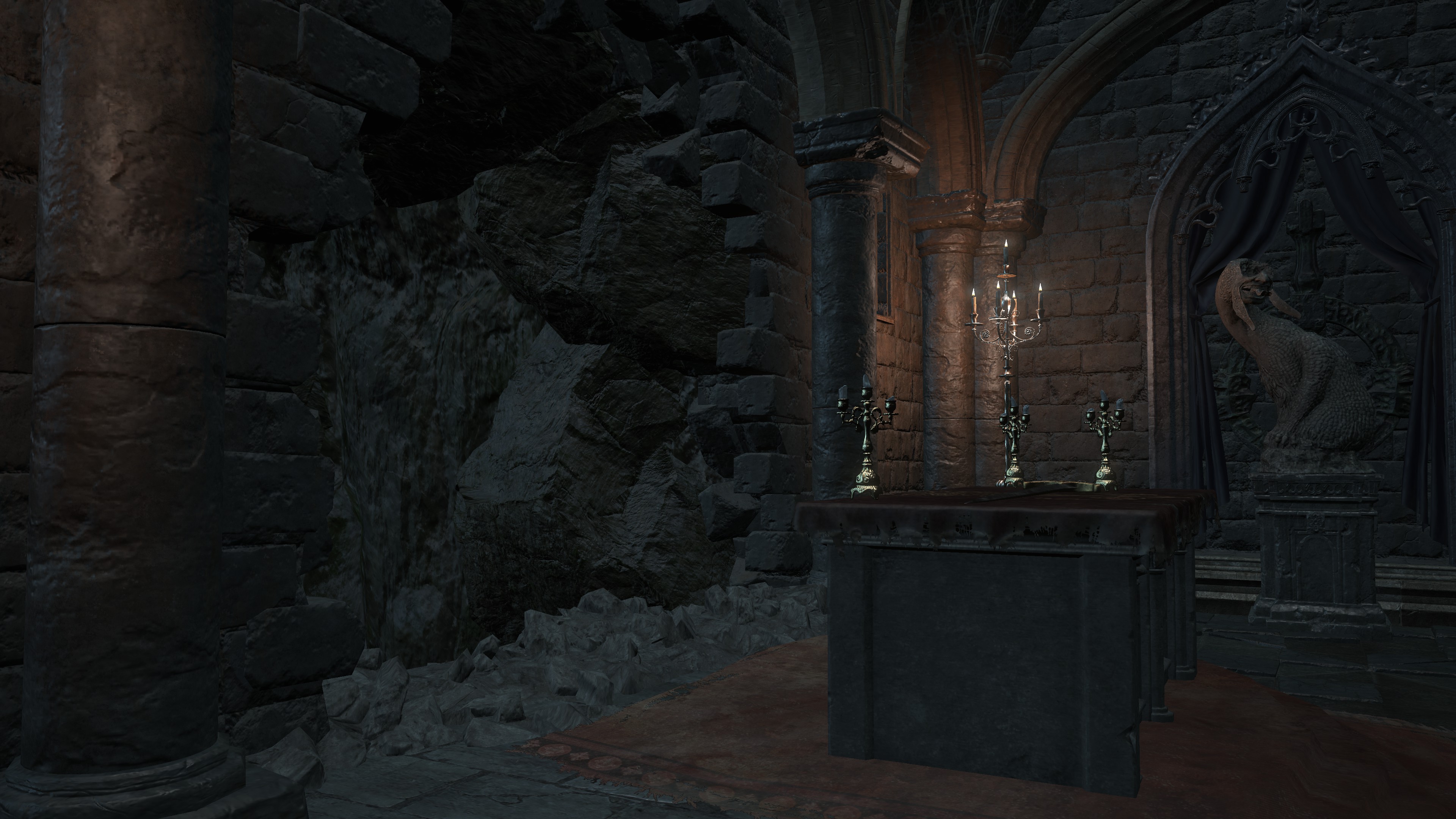
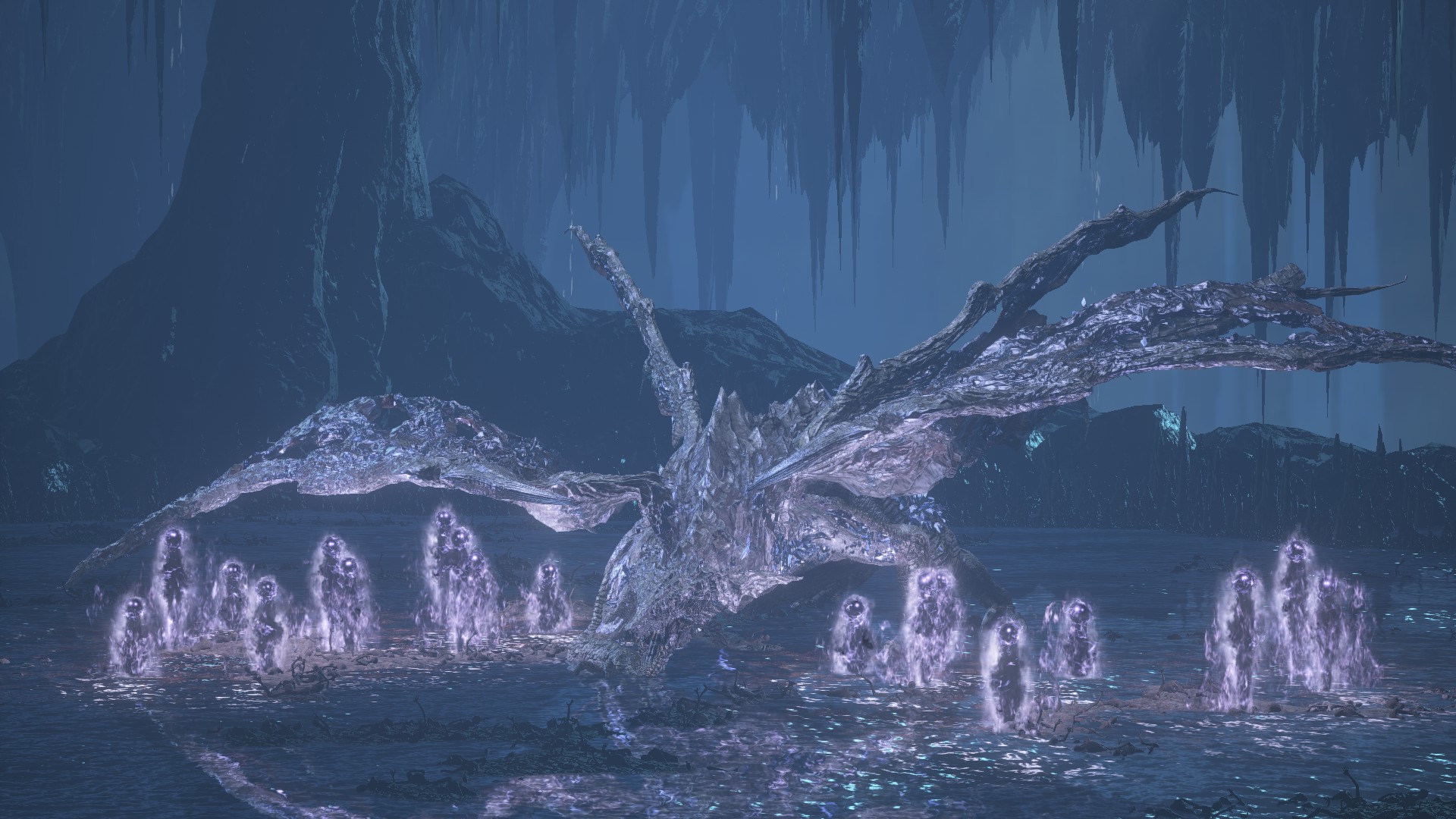
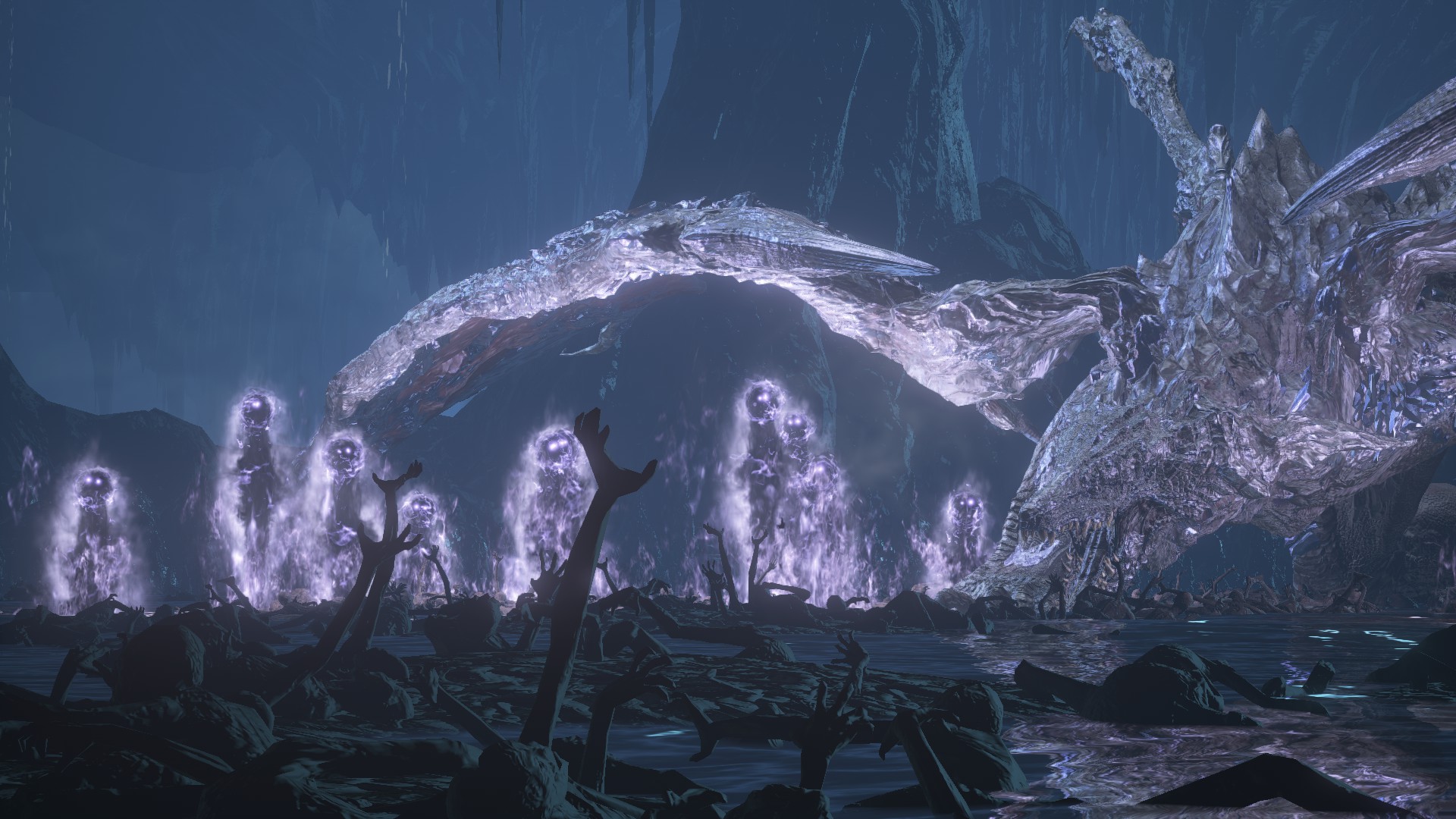
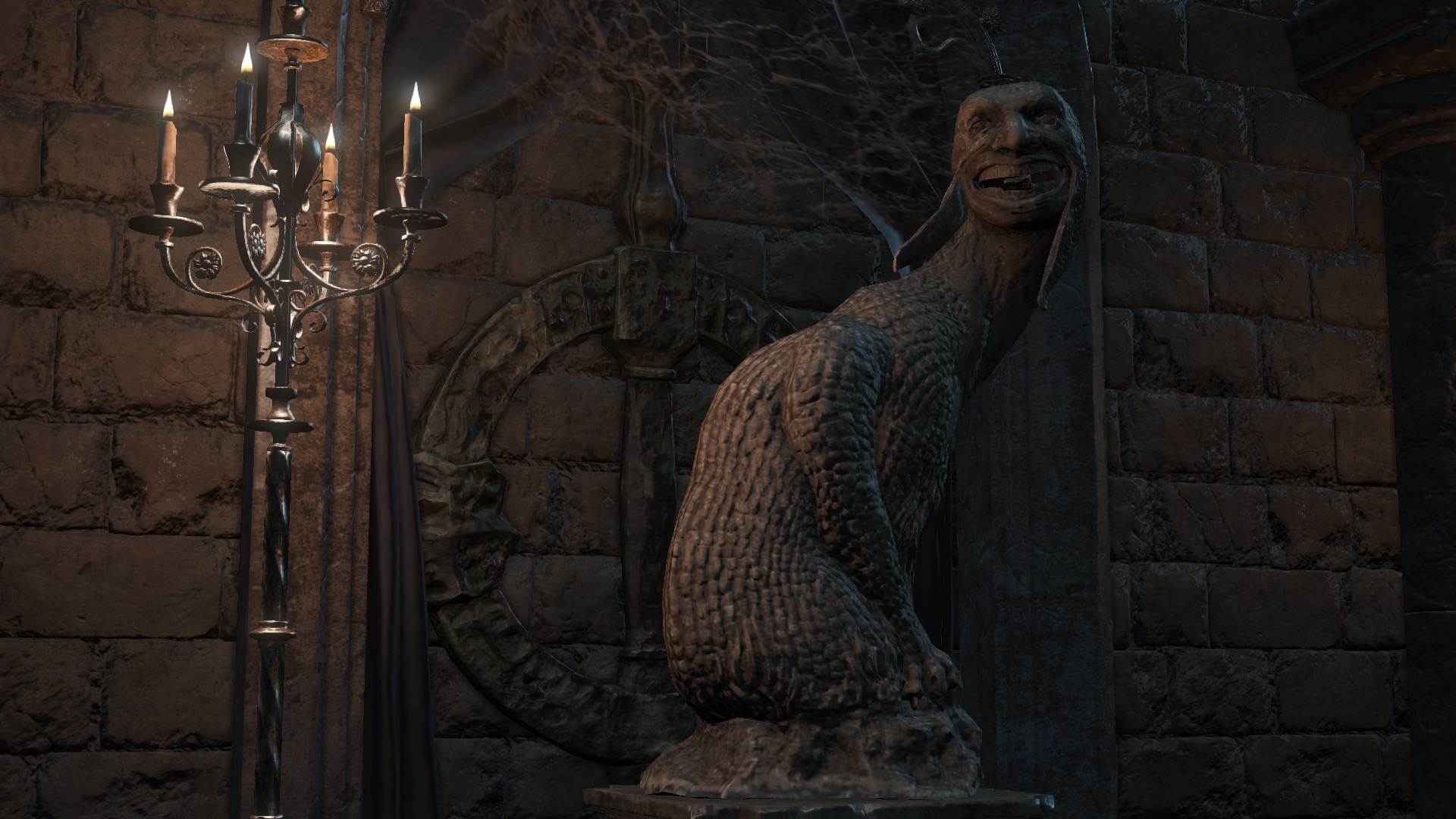
In essence, the humans of the valley are the knights’ victims, brought to the shrine as proof of their dedication as they pray for god’s blessing. The entrance to the valley behind the altar thus serves as a garbage chute, disposing of those offerings. This explains why Shira refers to it as a valley of darkness when they appear like ordinary dead. The Dark she references isn’t the actual nature to their humanity, but their heretical allegiance. They may be normal humans, but they exposed their true loyalties and so were marked for death. This also explains the need for secrecy with the shrine. What could a Spear gain by praying there over the Church of Filianore? If the goal was to avoid making an official statement, then a lot. The Lord’s Blades from DS1 proved the effectiveness of eliminating threats from the shadows for Anor Londo. When not facing Hollows or monstrosities, Spears likely mimicked their example and slew the gods’ enemies discreetly. Public displays might create a backlash. But quietly disappearing leaves much to the imagination. The people’s fears and doubts will hold their tongues.
There certainly was a silent game being played in pygmy society, with heretics among their midst. Hiding behind an illusory wall in the Silver Knight rest area of the mausoleum lurks a city cleric. Behind him stands another illusory wall hiding a corpse with a weary warrior’s soul. And behind that is one more illusory wall hiding yet another corpse, this one at peace clutching the text for Lightning Arrow close to the chest. Considering that the miracle is mainly used by Anor Londo’s female knights, the corpse likely belonged to one of the gravekeepers coming there to rest. And given the circumstances, the cleric hiding with them is beyond suspicious. Most likely, the deceitful holy man killed the unsuspecting knight while off-duty and tried to cover up the death with magic, doing the same when another tired warrior came by and risked stumbling on the scenario — just like when we break the illusion now. Whether he had fully fallen to the Dark or simply resented the gods’ repression, he still feared repercussion for his acts, a sentiment that is much more extensive than the odd rogue priest.
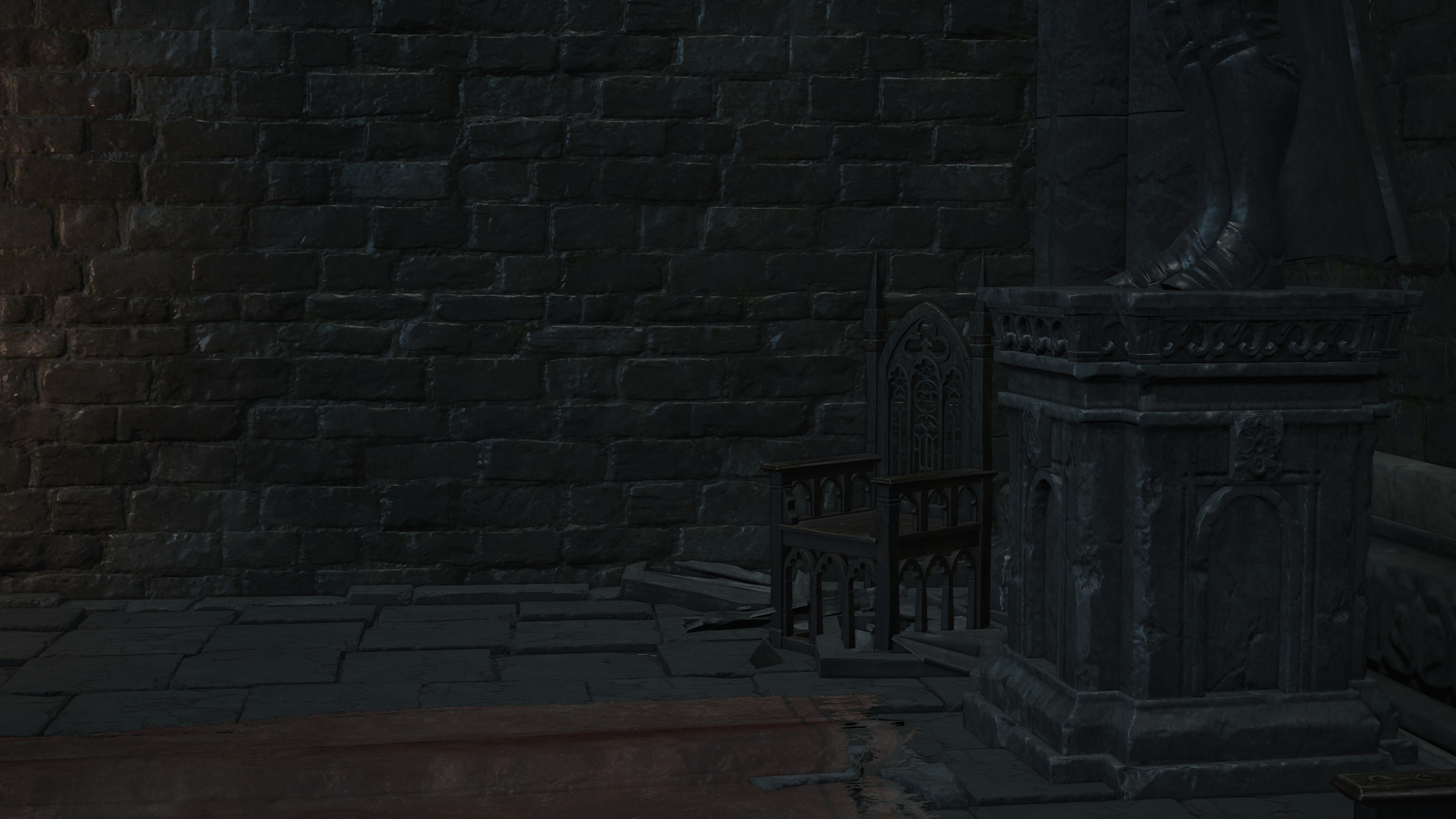
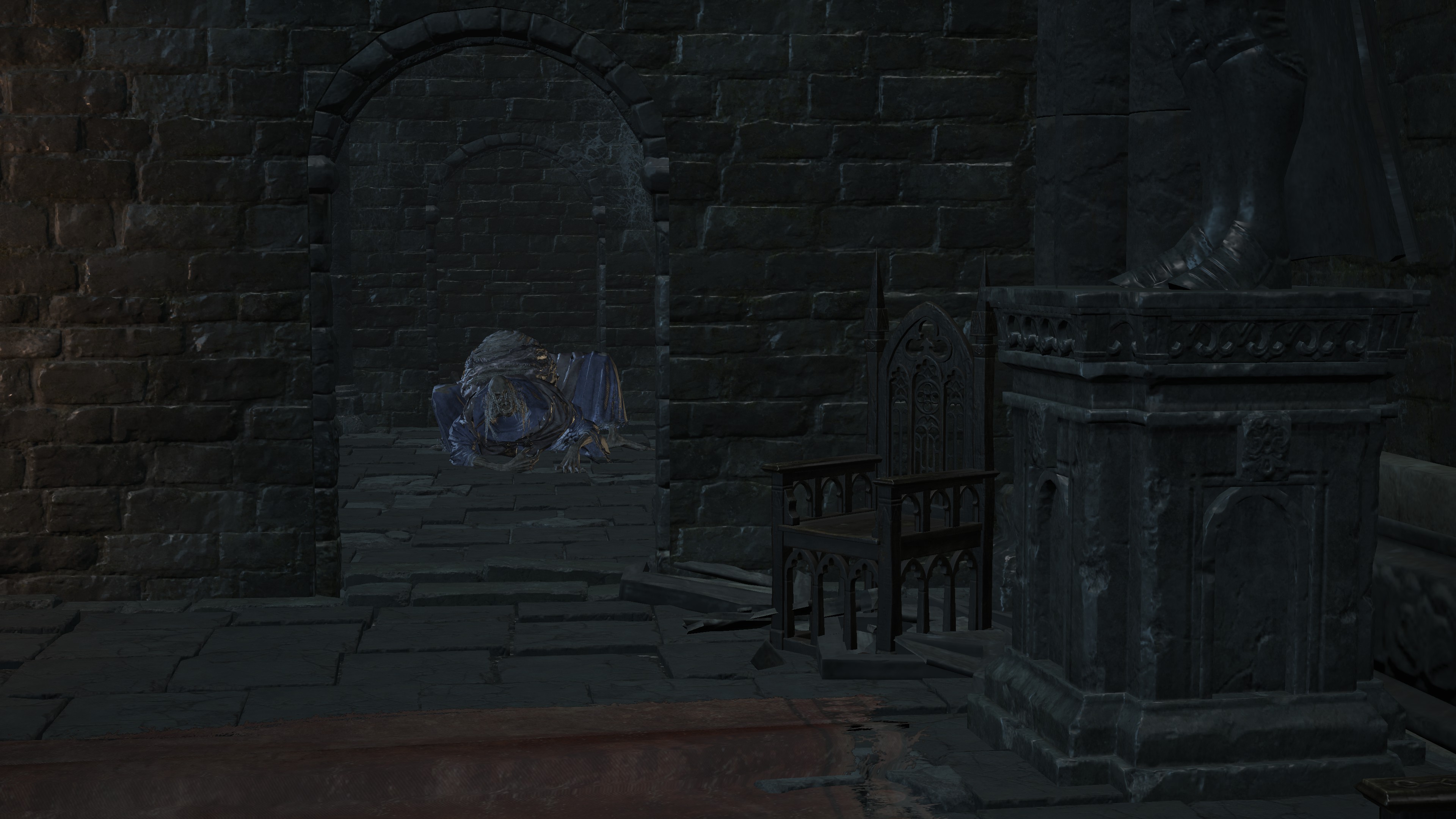
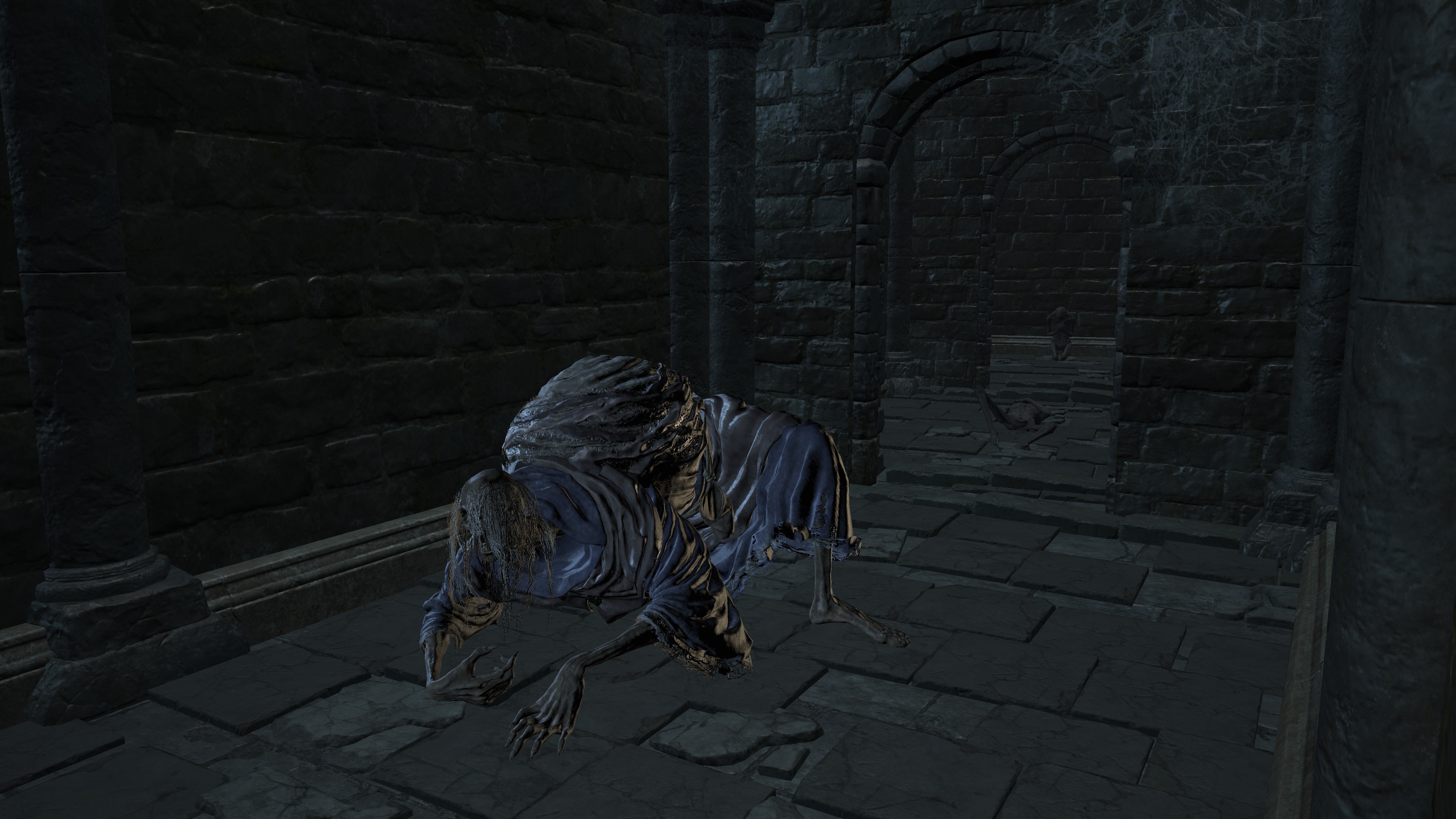
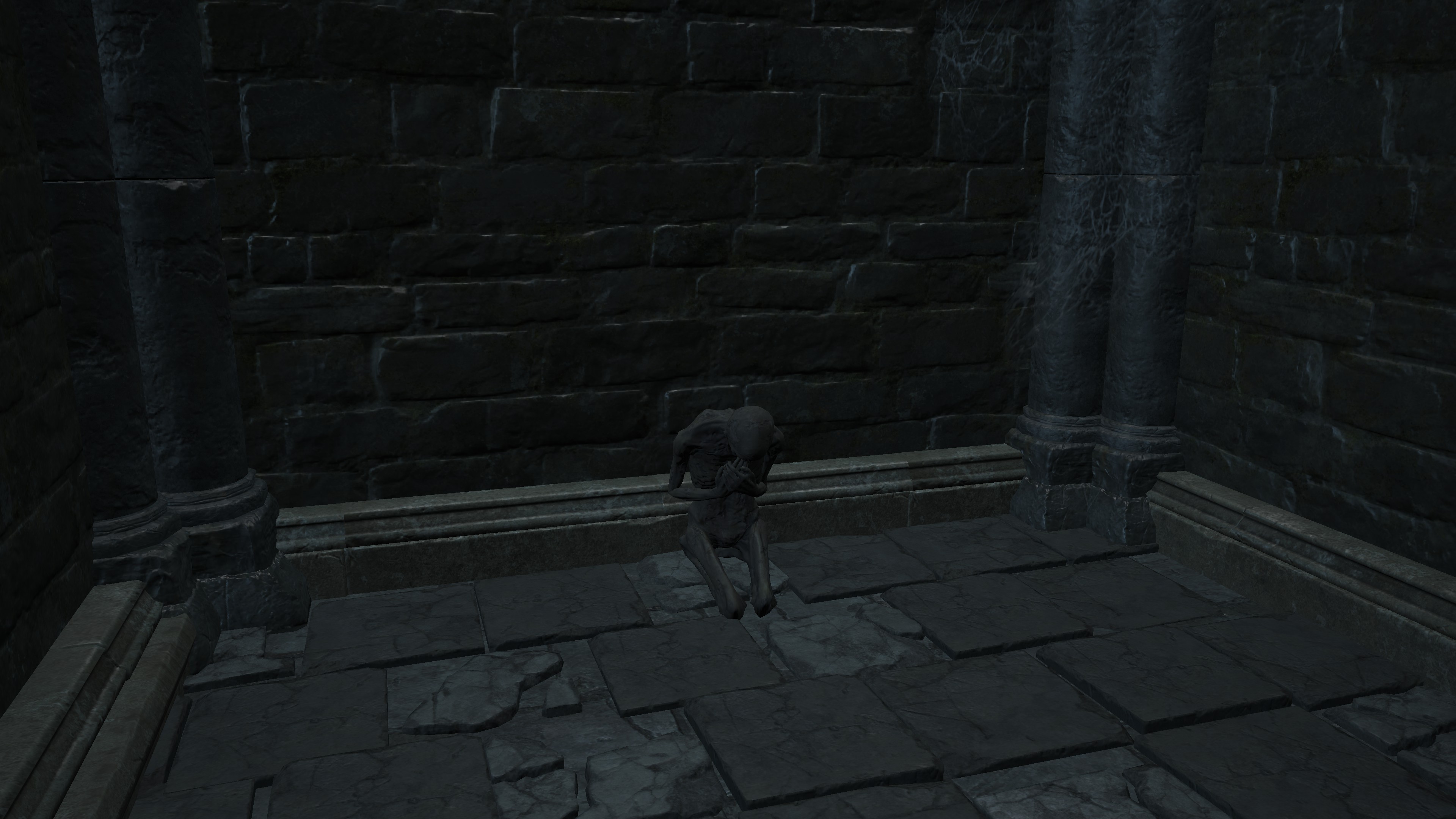
One building in the city streets stands out for its integration into the mausoleum’s main tower. This justifies the same pots and boxes laid around the interior, walls lined with Silver Knight and primordial serpent statues. Maybe the place took part in distribution between the city and mausoleum, hence the dome on the building’s second level keeping the fancy chairs designating a rest area. The juxtaposition of Silver Knights and primordial serpents nonetheless emphasizes both welcome and warning for humans entering the mausoleum from there, even though it is only one chamber. This seems to be because it is another rest area for Ringed Knights, going by the statues. This makes sense since the back entrance leads out to the checkpoint bridge, opposite the knight station — when needing a break, the watchmen could head in to sit rather than return all the way back to barracks. The same is true for knights returning from street patrol, the adjoining building granting easy passage from the city to the break room to the checkpoint to the barracks. Any Ringed Knight might make use of the mausoleum’s facility.
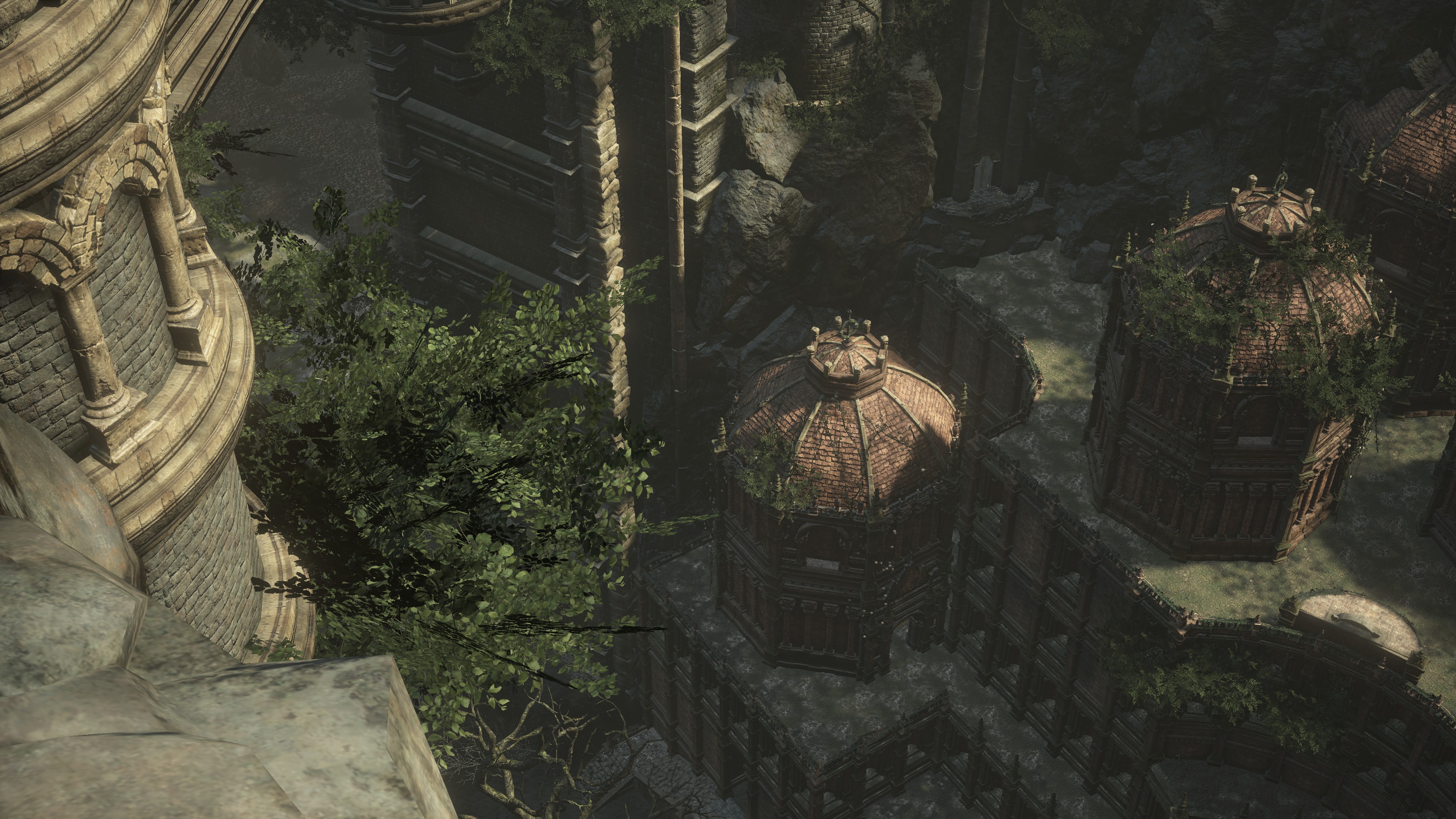
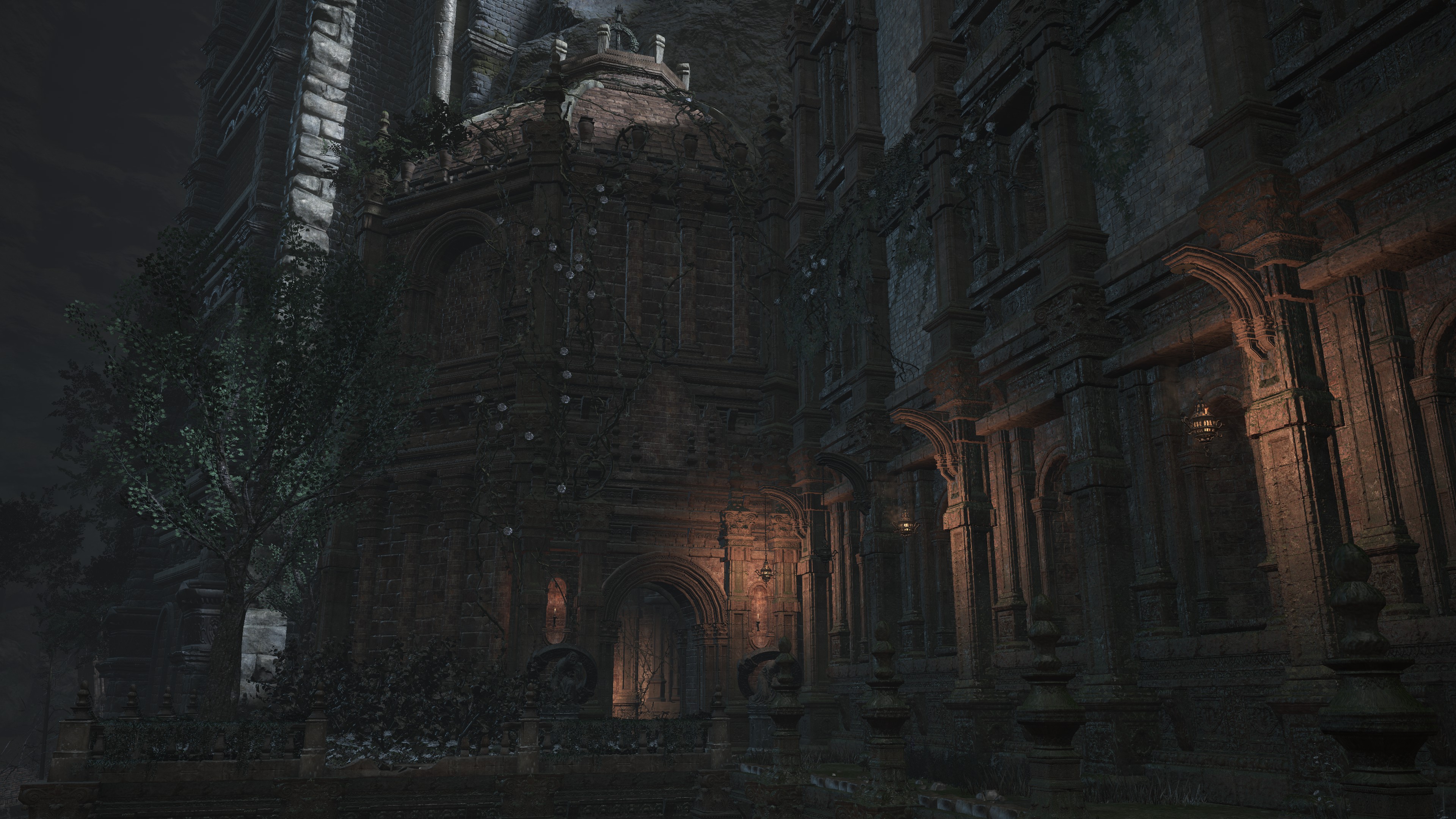
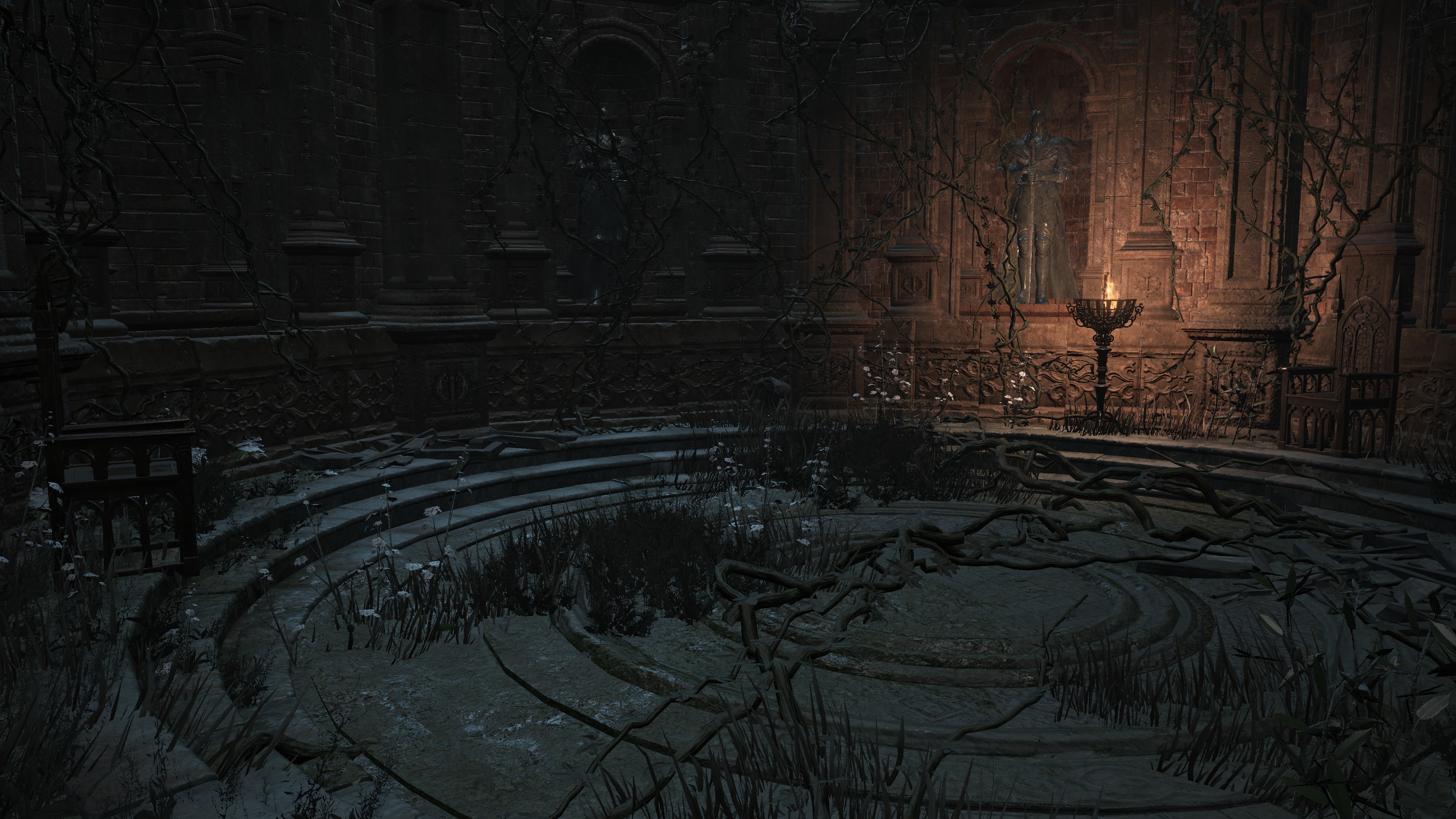
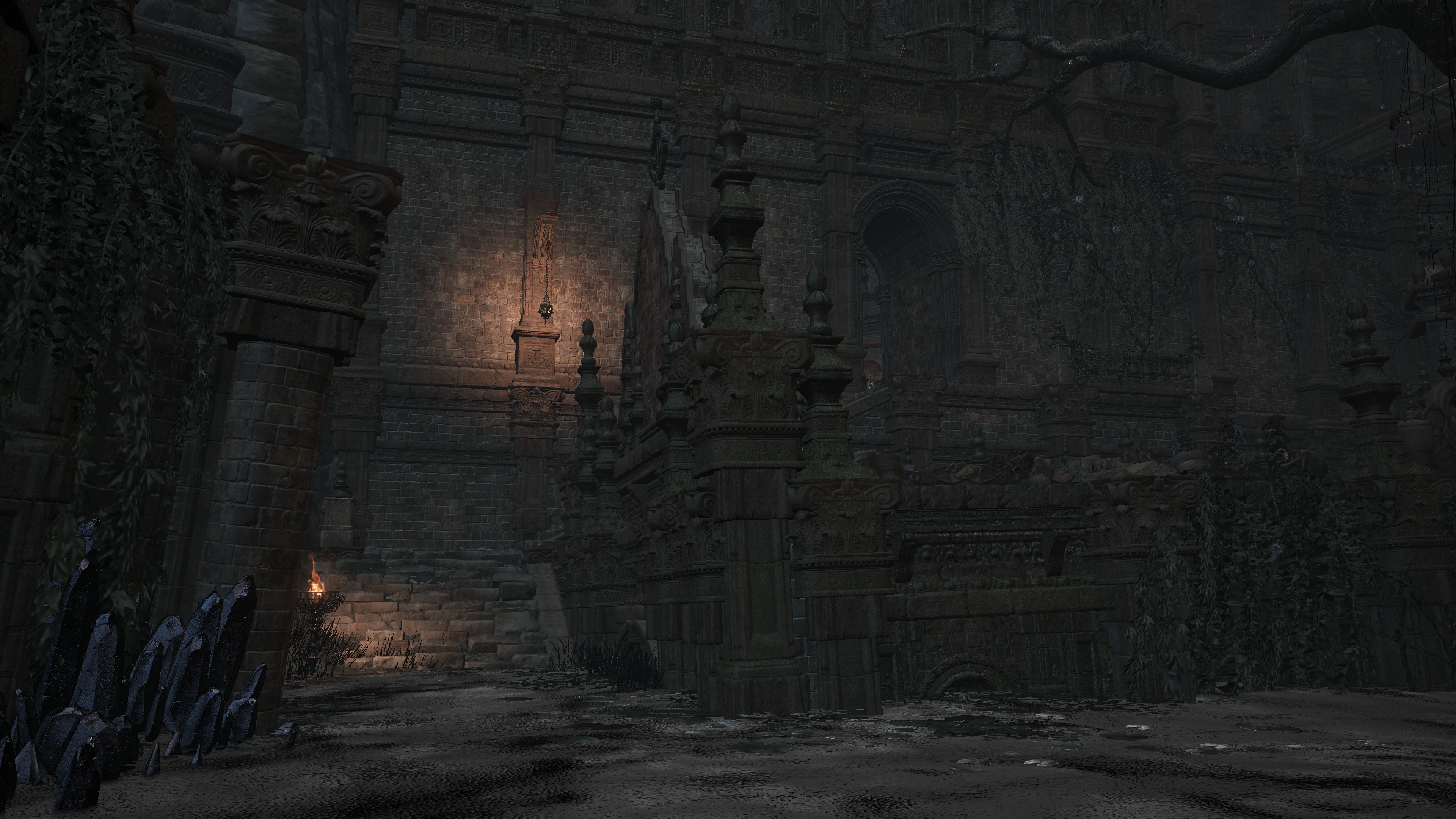
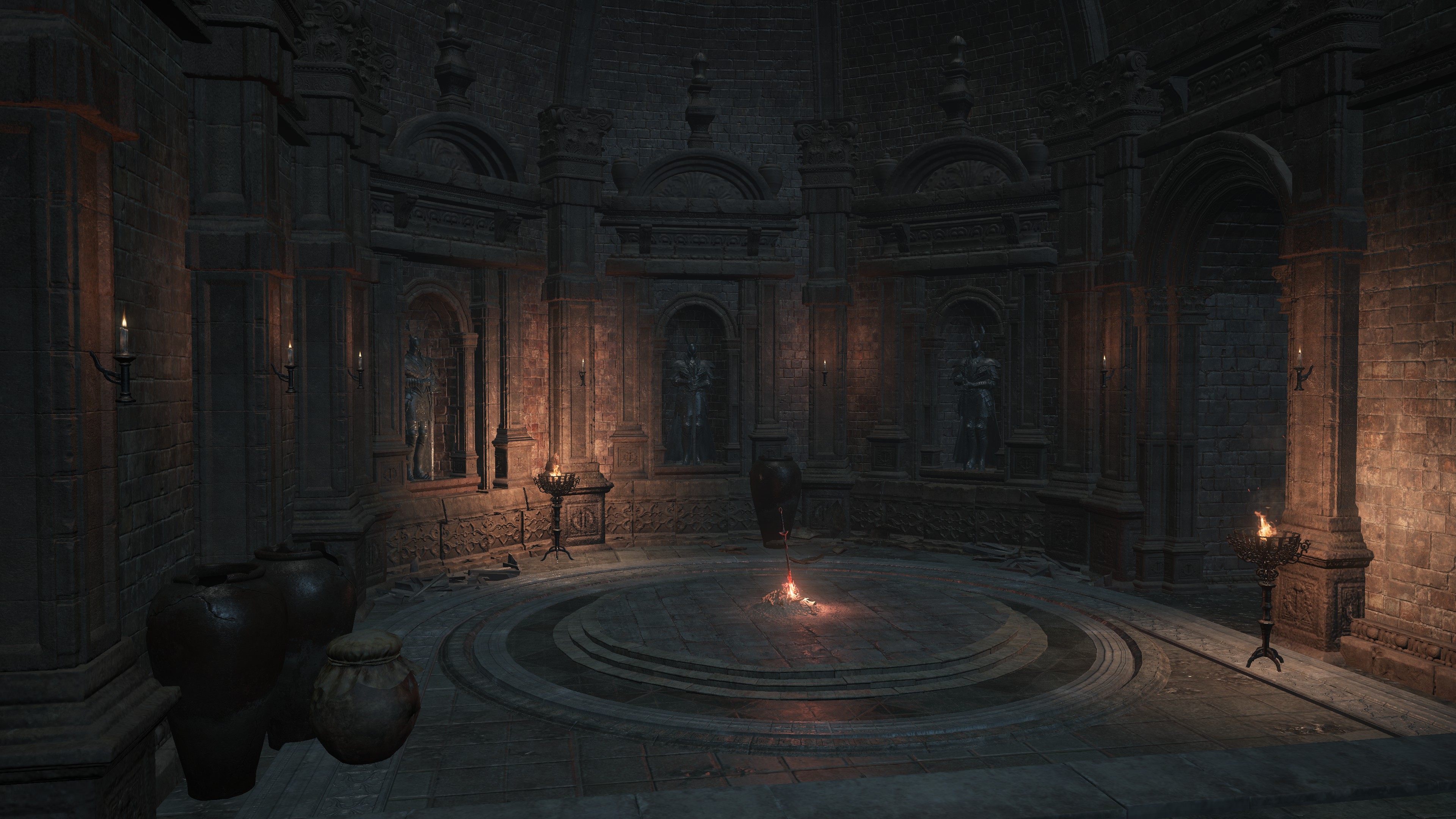
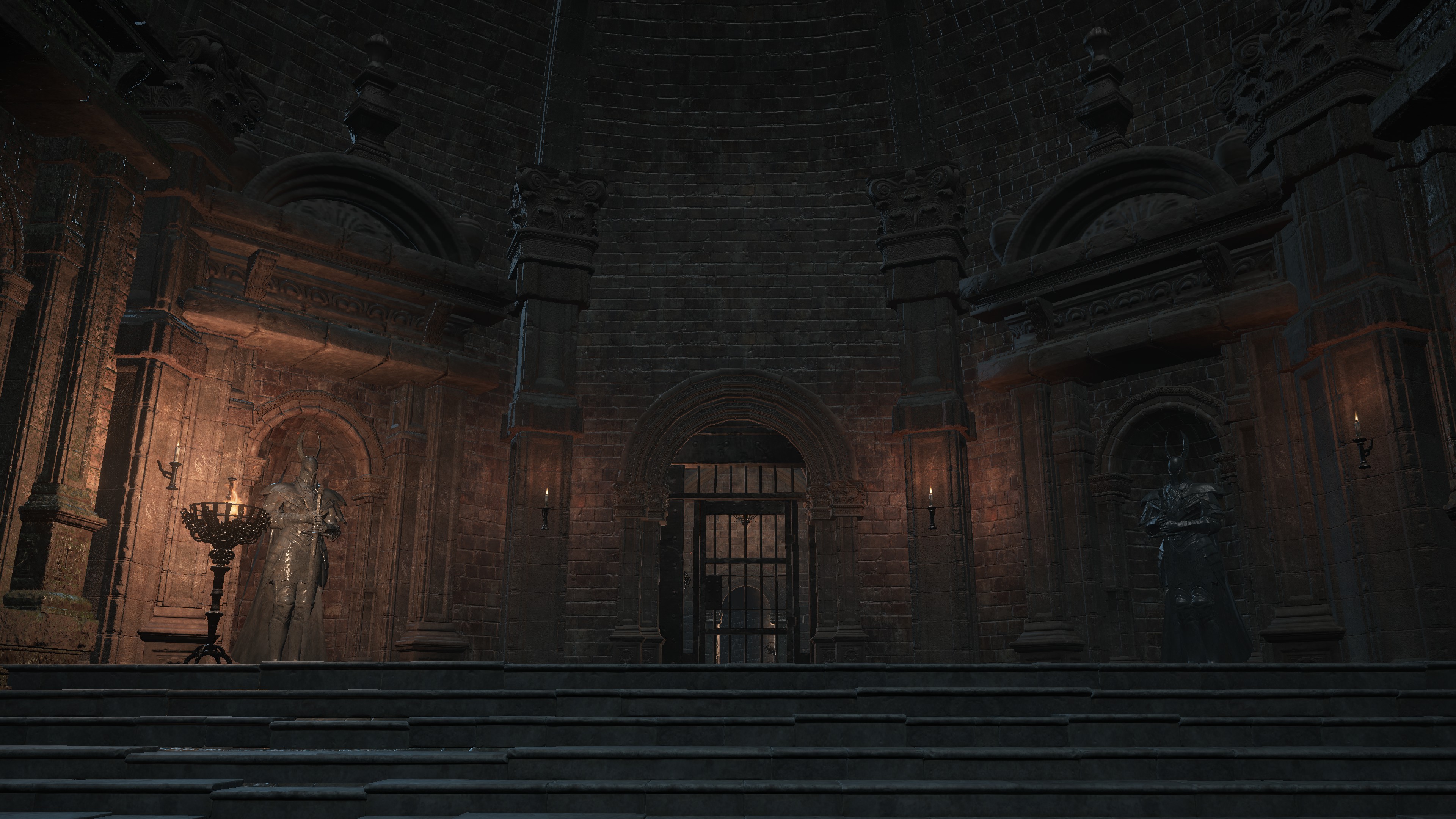
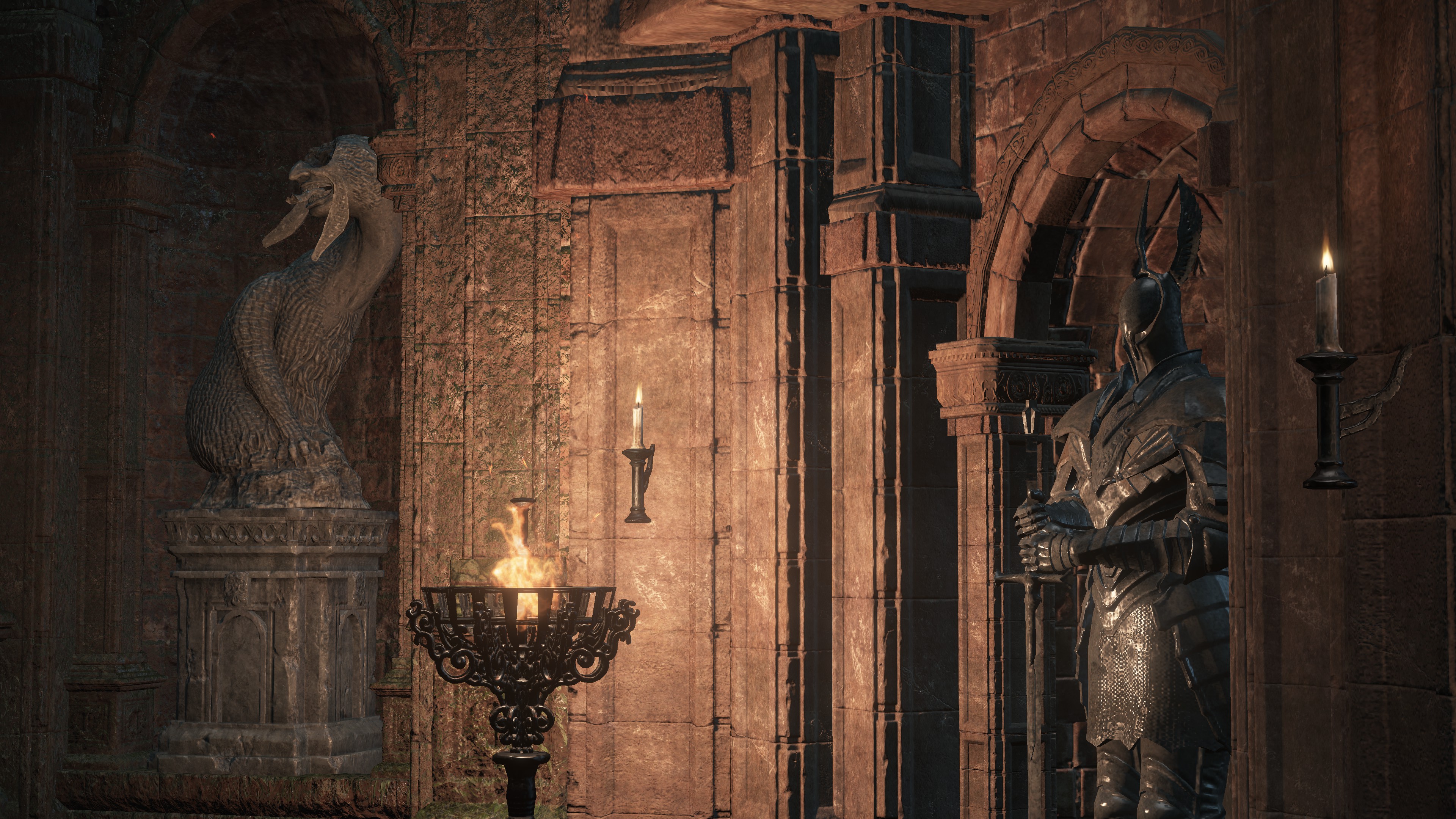
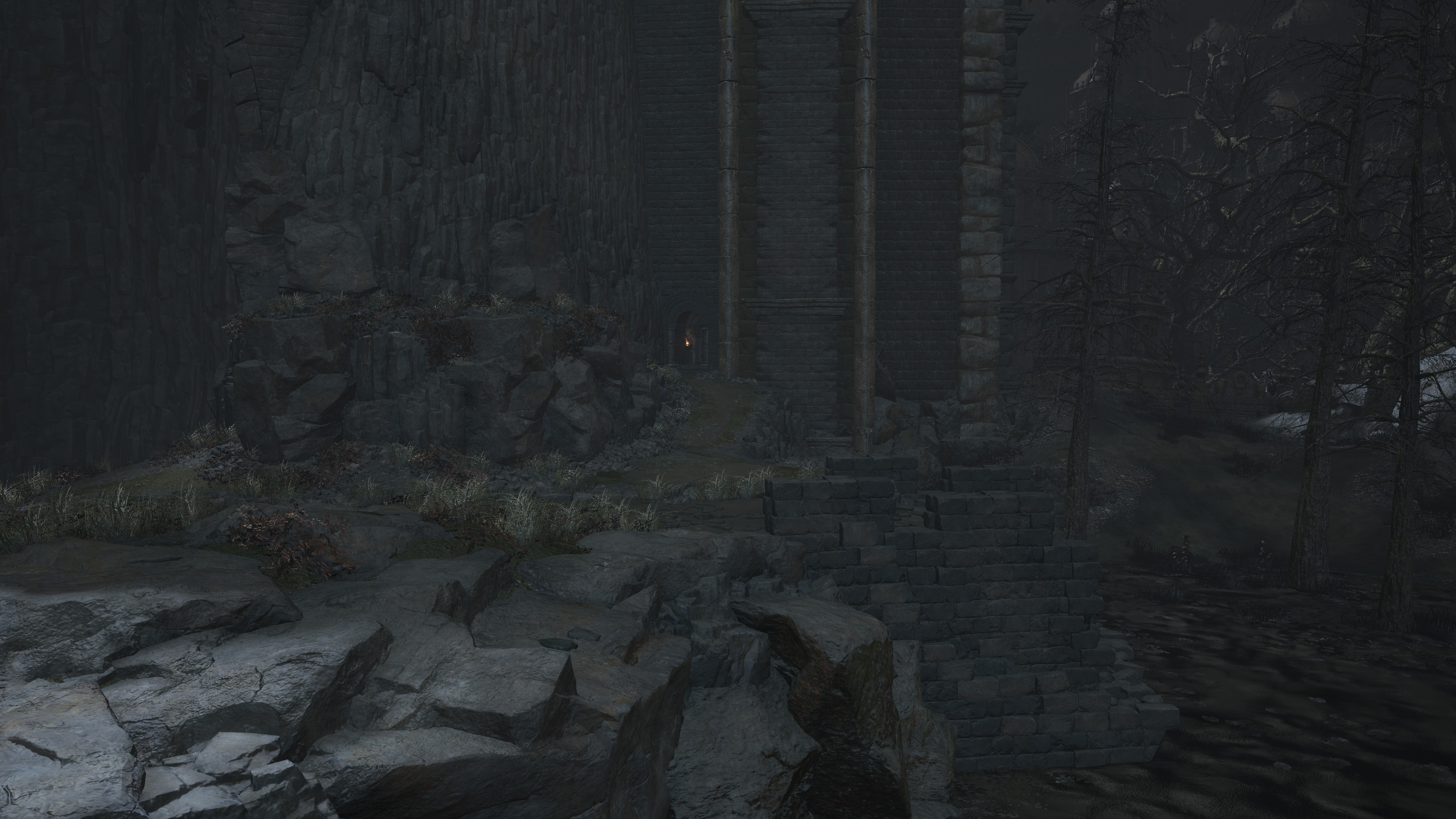
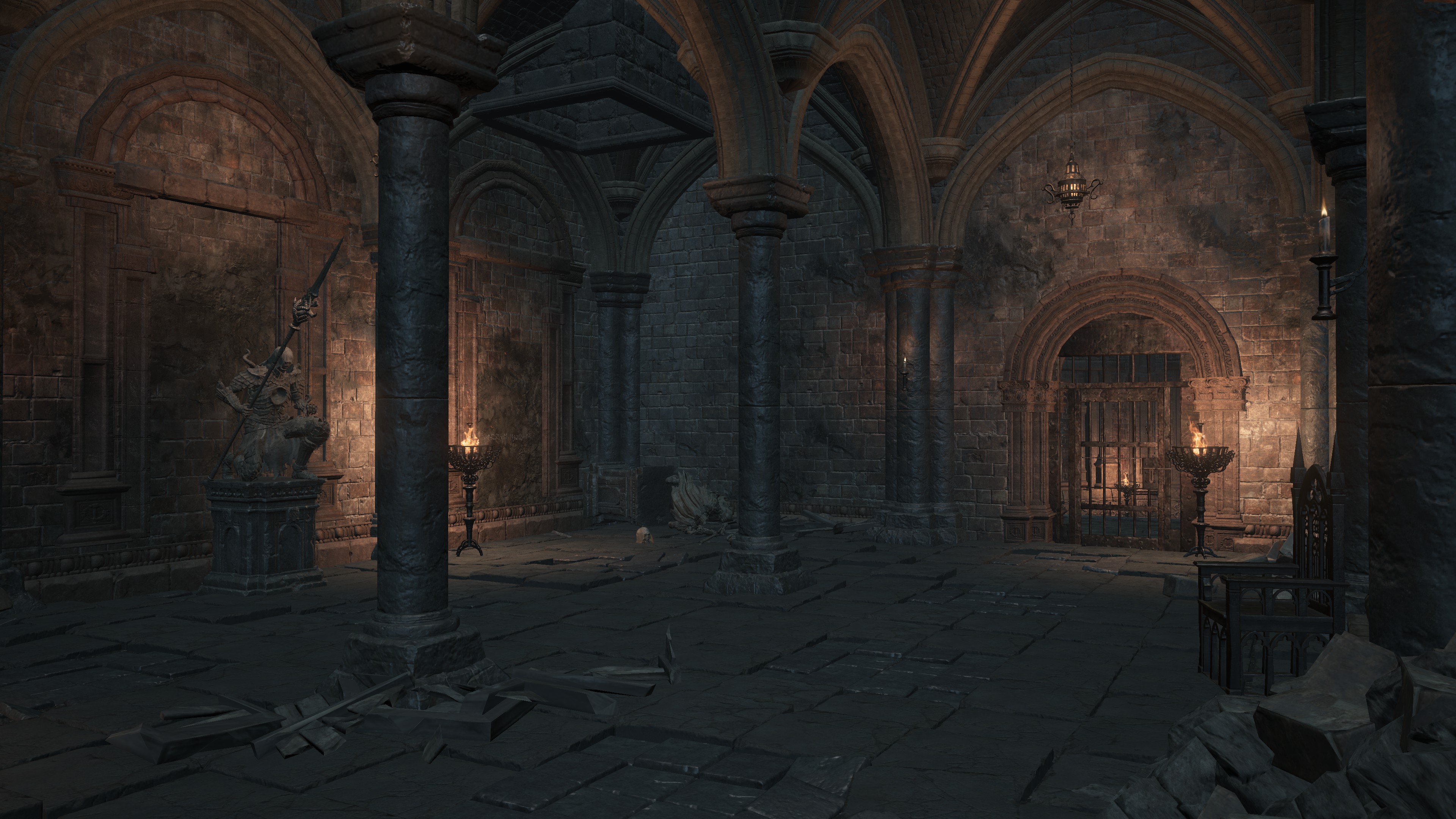
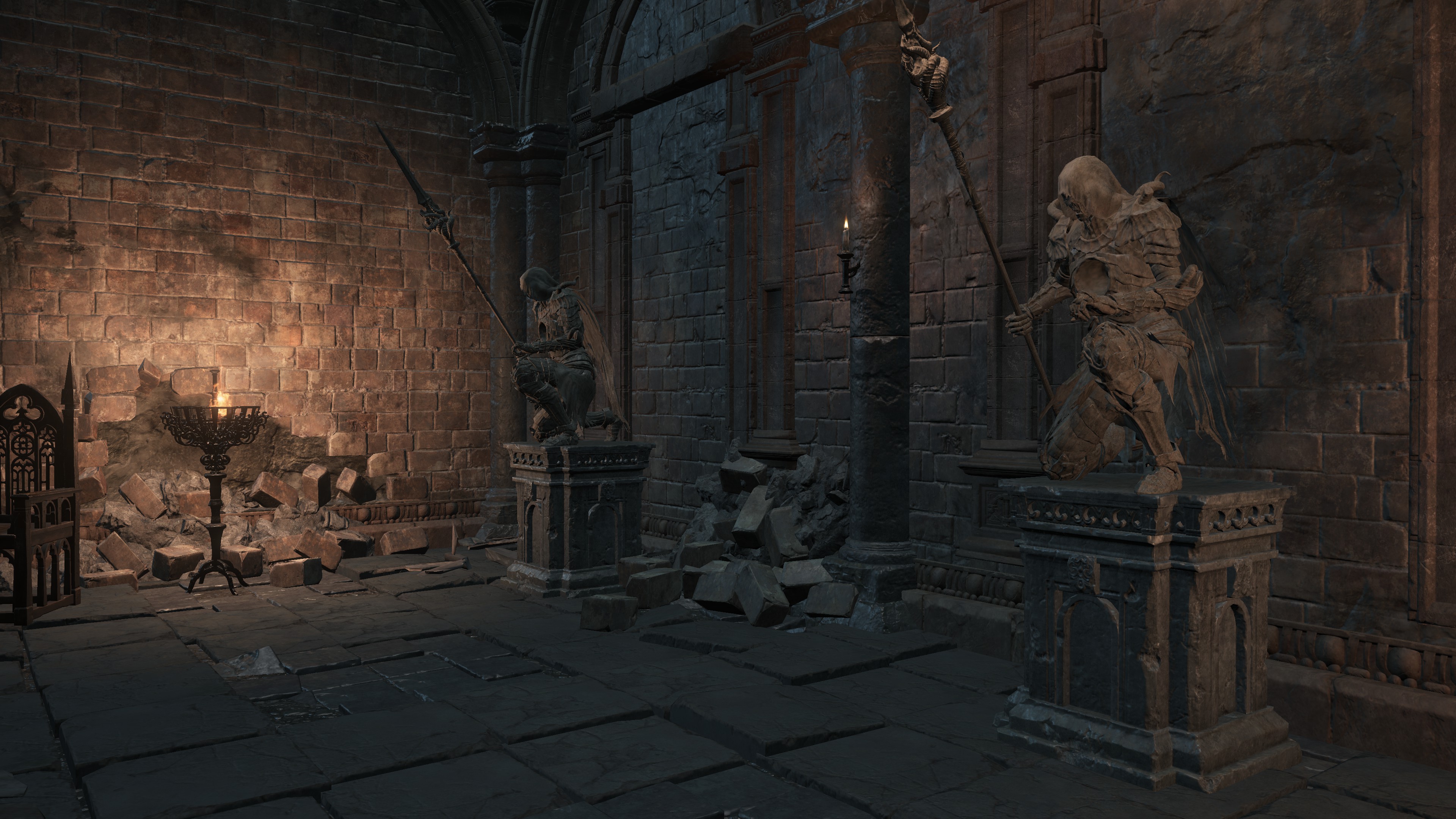
And what did they talk about in the privacy of that break room? Had they truly bent the knee like their statues? Some apparently did not. One of the kneeling statues in that chamber has been broken and thrown aside, the inscription on the exposed wall cryptically demanding a show of our humanity. If we approach while mimicking a humanity spirit, a ladder drops down, leading us up to the city rooftops which hide the Purging Monument — though how it maintains secretive status out in the open like this is an equally open question. Either way, it is odd for Ringed Knights to be maintaining a secret road to what is essentially a massive purging stone. Purging stones are used to transfer curses, including hollowing as this game demonstrates. Shouldn’t this be made available to as many residents as possible? But access is restricted to mere Hollows. We have to appear as if we embody a dark soul, with all that such entails.
Suffice to say, it takes someone fallen to resort to the Purging Monument. Purging stones are derived from people, with the number of faces emerging from the massive stone betraying the countless number of people sacrificed to create the monument. Innocent or not, killing those lives was unlikely to be sanctioned by the gods. The only other place we can find purging stones within the city is at the mausoleum, on a corpse amongst a pack of faithful citizens. They are obviously a rarity despite their utility, likely because their creation is considered unconscionable just like in the world of man at large. The fact that some conceived of purging stones seemingly well before the birth of their popularizer, Earl Arstor, speaks to the individuals’ desperation, or depravity. But Lapp reveals that the small stones have their limit; a single life can only absorb so much of a curse. And so, some pygmies petrified who-knows-how-many for a seemingly endless repository of curses capable of curing the worst hollowing, like with Lapp. If that wasn’t enough, we can also use it to absolve our sins.
Taken together, the only pygmies who would require the Purging Monument are those with advanced undeath and much to hide from the gods. It definitely explains the level of secrecy. Certain Hollows of the Ringed City used the purging stones to stave off the mental decay from their curse whilst wholeheartedly embracing it, similar to Londor. With help from the stones, they can maintain normality in public while cultivating their Dark in private. It is a monument by heretics, for heretics. This is why we can use the monument to “reinstate the King’s decree”, allowing us to rechallenge the Spears of the Church boss fight as our sinfulness dictates. The ability to request absolution on top of all this, however, is beyond curious, since these mechanics are shared with the statue of Velka in the Undead Settlement. It is the Goddess of Sin who determines the crime and appropriate punishment. Is bribing petrified souls with more souls simply for player convenience, or does the monument hide a deeper secret?
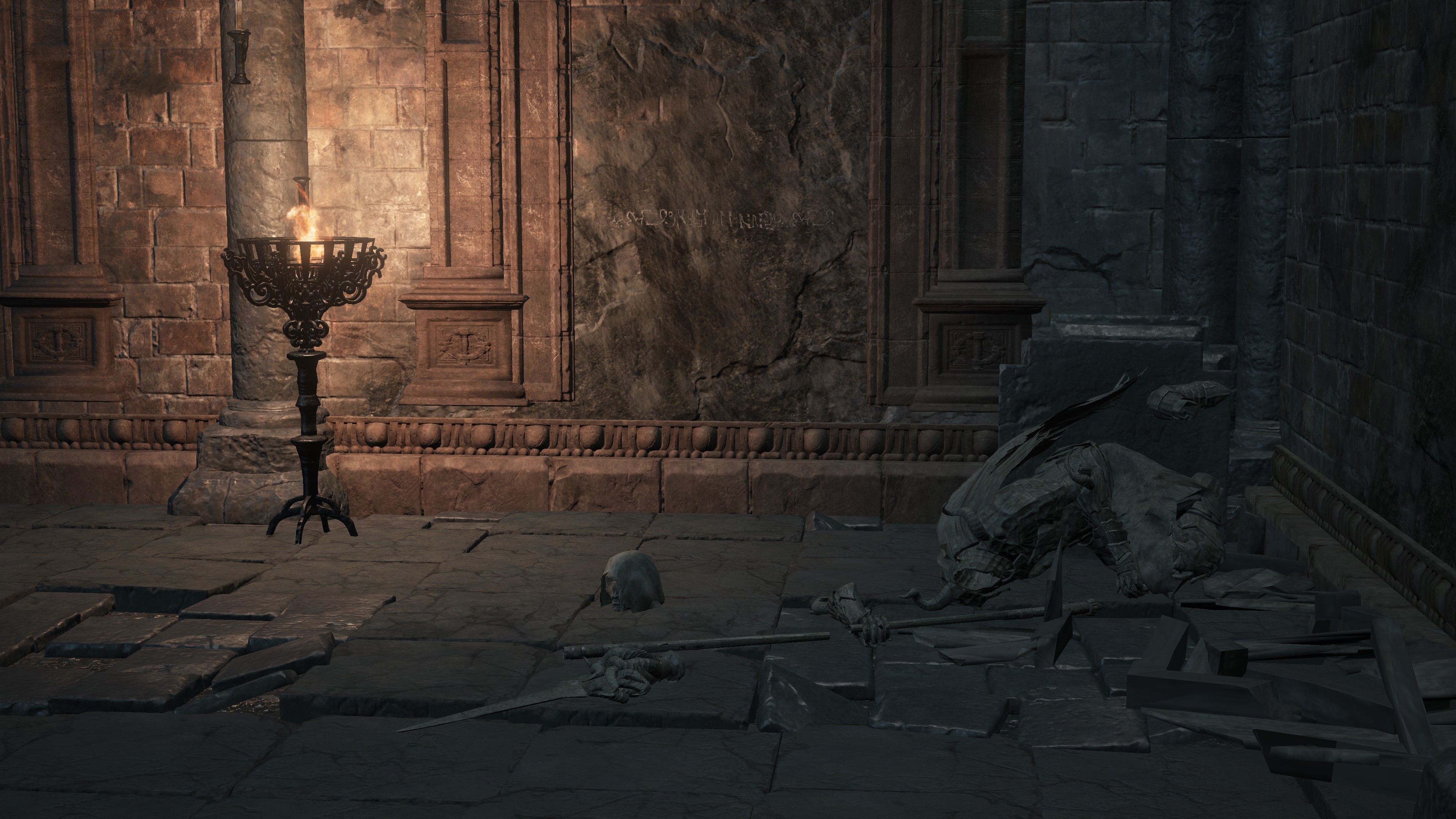
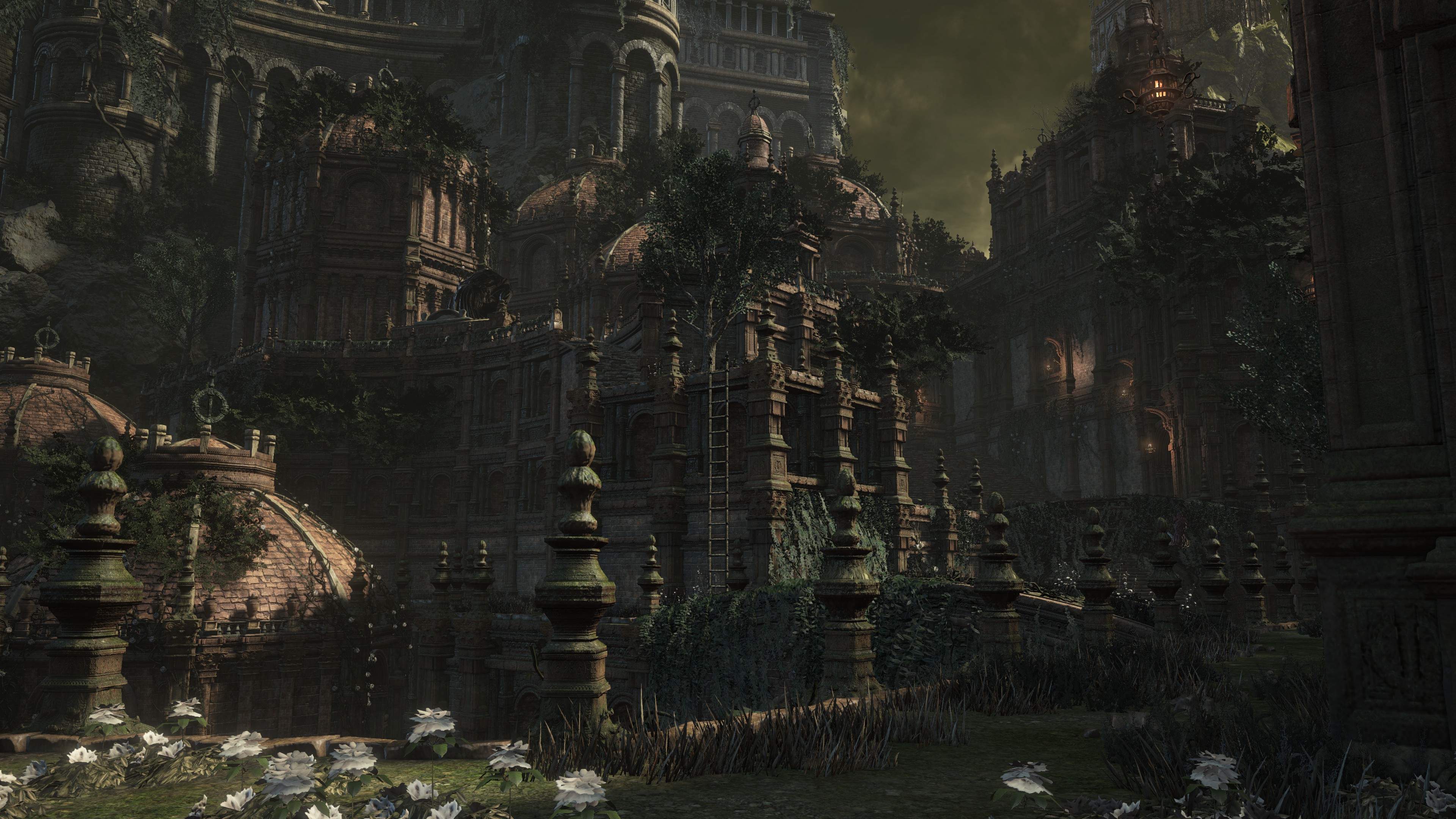
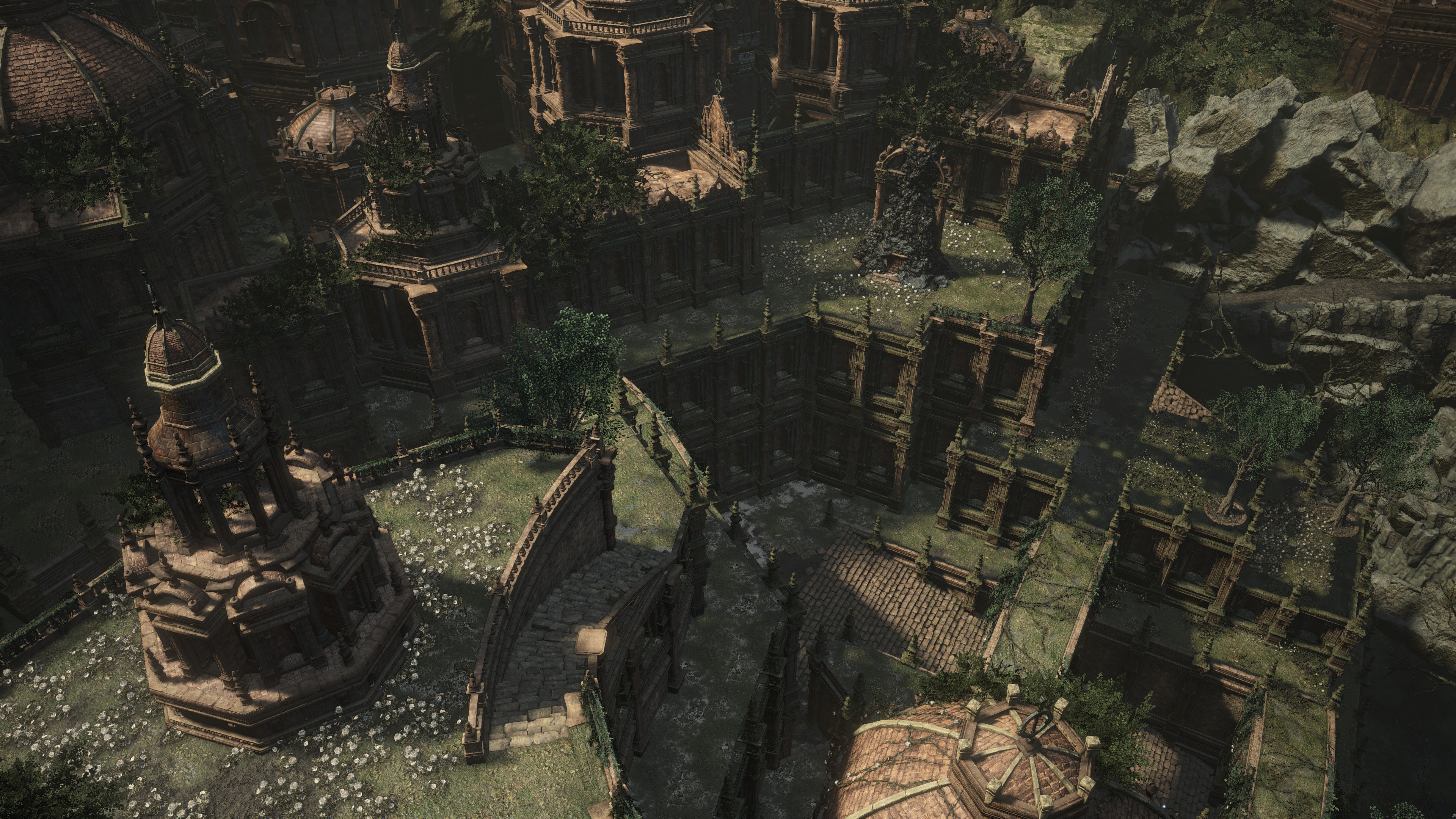
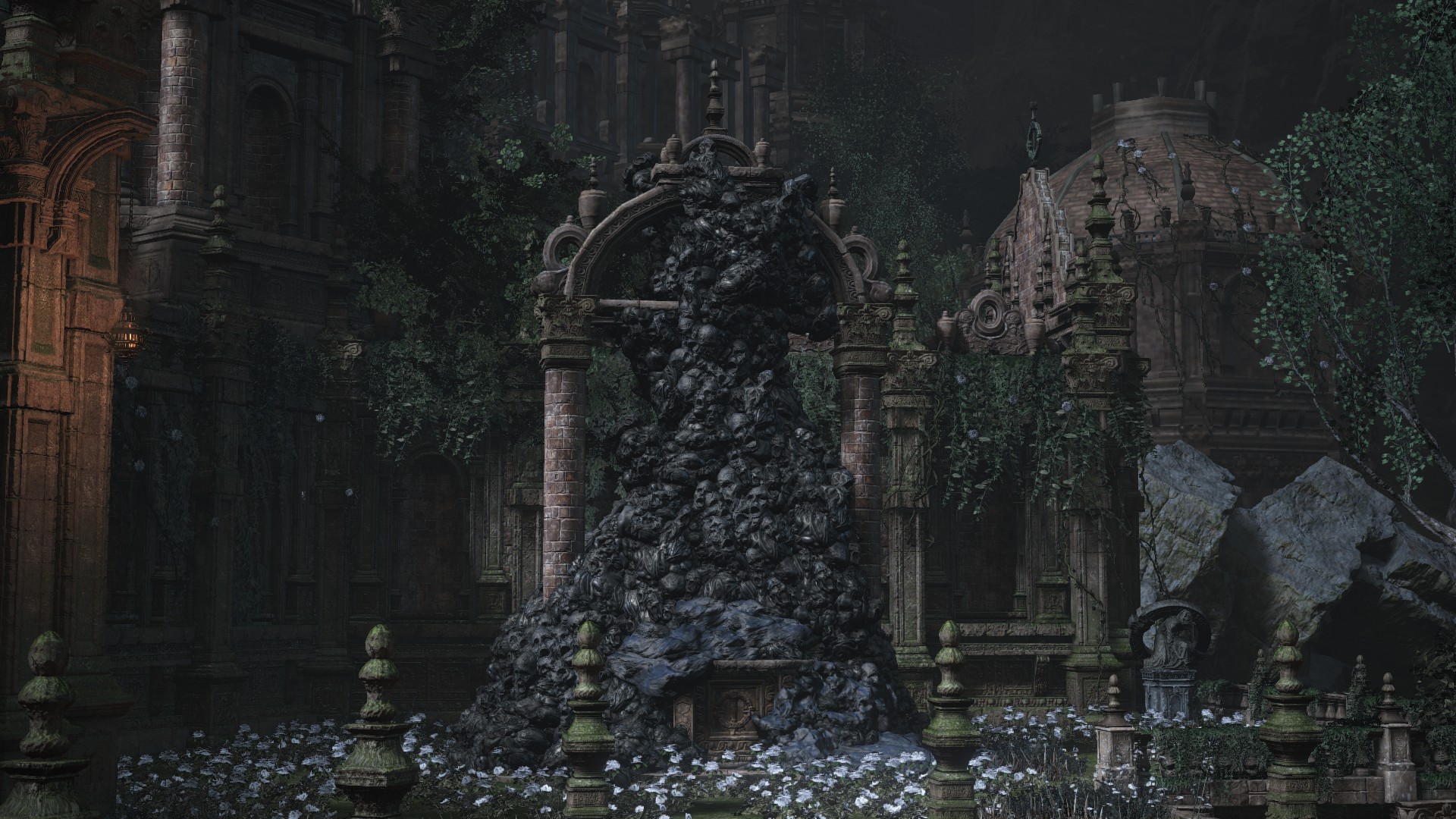
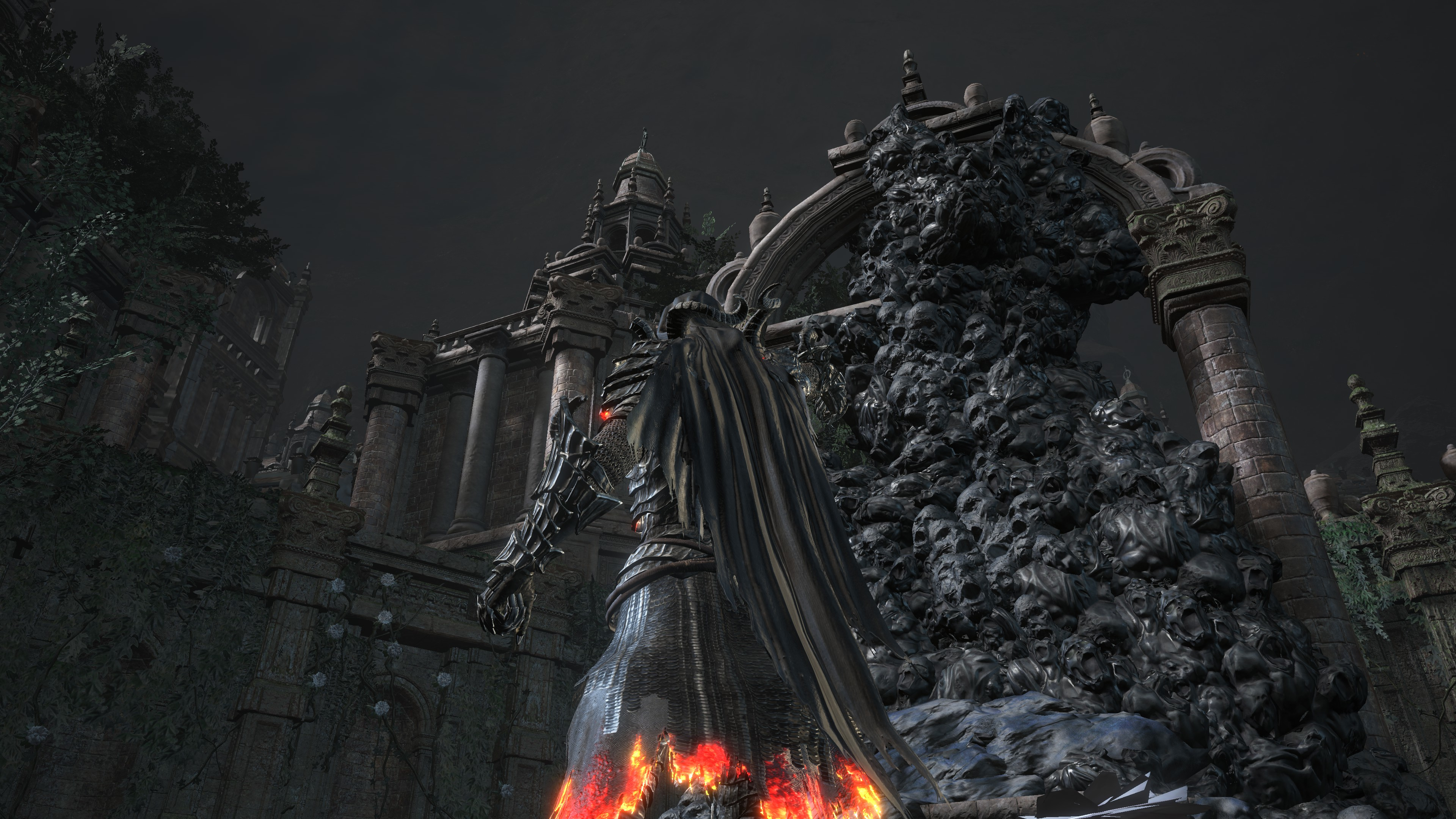
Recall that DS1 implicated Velka as the inspiration to the Earl of Carim and production of his secret treasures. If man-made purging stones predate the earl, then it is likely because she shared the manufacture method with someone else — the god is familiar with arts old and new, after all. Is this Purging Monument then connected to Velka, perhaps even hiding her statue beneath all those purging stones? DS1 already affirms that she was deeply involved in Gwyn’s projects at the time, and it wouldn’t be the first instance of the goddess seeming to subtly sabotage his efforts. Combined with circumstances in Londor, and one has to wonder if Anor Londo’s resident witch was secretly aiding the heretics of the Ringed City. She wasn’t in charge of this operation like in New Londo, so she may not have left Lordran to visit during the incident; neither do we see sign of her servants. But if sin is her domain, then adjudicators’ duties arguably also fall under her jurisdiction. All she need is for someone in Gwyndolin’s entourage to pass on this information to susceptible Undead and let their greed do the rest.
Velka’s involvement notwithstanding, the Purging Monument was a haven for sinners, with the corruption going up the chain to Ringed Knights — though if the giant on the way there is any indication, those rebels have been dealt with. Lapp’s knowledge similarly proves that word of the Purging Monument has leaked outside the Ringed City, meaning that its existence and purpose were guaranteed discovered by the authorities sometime during the crackdown on undeath. Finding and rooting out such secret circles of Hollow fanatics in the public and government was probably the norm for adjudicators and Spears of the Church. Shira implies that man had overwhelmingly forgotten their gods long ago, craving the Dark instead. It was a tireless effort to remind the pygmies of their fear, no doubt fraught with dangers. The fact that the church guardians employ a chime typically reserved for Undead clerical staff speaks to the hazards of defending Filianore. It must have been a constant struggle to prevent an all-out coup. And all this ultimately came to a head when the First Flame’s end drew imminent.
… So it would seem. Man has forgotten that long ago. That is exactly why you all crave the Dark.
Daydream
Despite all these efforts to keep the Undead curse under control, Filianore has not had the presence of mind for much of it as of late. She has been sleeping, and this, according to Argo, was decided for her by royal decree. Citing trespass as violating this law imposed by the king, the adjudicator forbids entry to the Church of Filianore, even by Spears of the Church; the one exception is when Spears are summoned to enact “retribution” against said violators on Argo’s behalf. All of this is for fear that visitors’ intention is to disturb the sleeping goddess. Protecting the princess is also the so-called law through the covenant, so arguably nothing has changed for her knights. Their job is still to preserve Filianore’s state, awake or asleep — a Spear who would disregard this new red line is naturally considered “corrupted” by the Abyss.
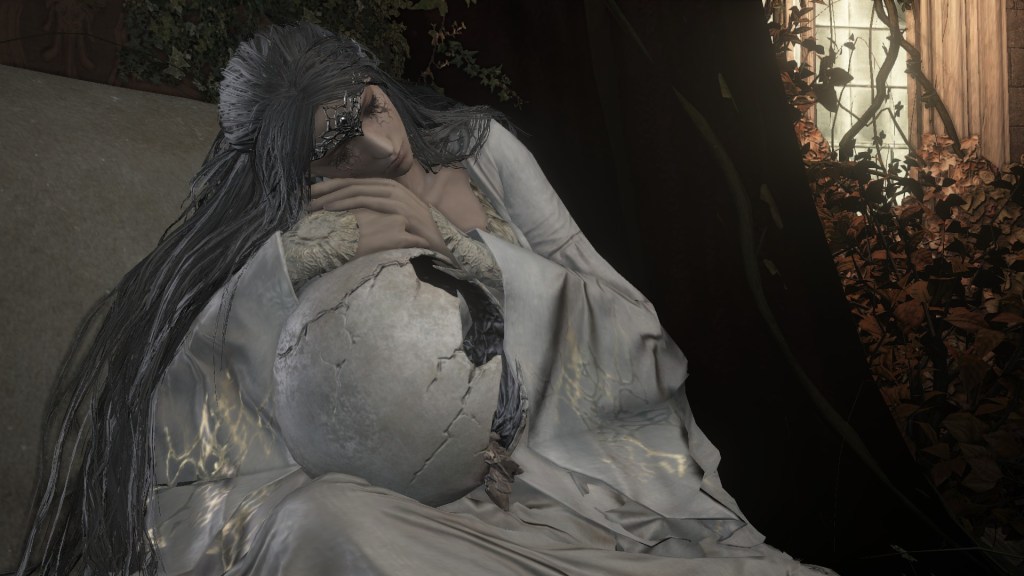
Visitor, please turn back. The Abyss is yet deep. None are permitted to disturb the master’s sleep. This is the king’s law.
Spear of the Church. Per the law, protect the princess…
How foolish. To think you would make light of the contract and transgress the king’s law. Judge Argo shall give the corrupted spear retribution.
However, this still doesn’t answer the need to keep Filianore in slumber. From Argo’s dialogue, Filianore is to remain asleep until the Abyss is suppressed. As of now, it still runs “deep”, which is most evident in how much of the city is sinking in an abyssal swamp. Black in color, this initially unassuming marsh is clearly another manifestation of humanity. Magic reinforces the insinuation. When using any kind of mimicry spell to blend in with our surroundings, we take the form of living humanity there and only there. It also refuses to drip down into the Lower World despite Midir falling through the swamp to reach that destination, like water does. Simple or otherwise, it evidently has some will keeping it at the city above, much like other collections of humanity manifest into an Abyss. And while this Abyss may not corrupt whatever it touches, as was the case in Oolacile, its instinct is still to devour.
Random areas of the explorable wetland have manifested purple crystals, especially around the buildings sinking into its depths. These presumably possess a similar constitution to dark gems, one of which hides on a corpse within the swamp. Therefore, the crystals are most likely a byproduct of the Dark eating what Disparity is present. They do seem to form rather fast, a body having been crushed beneath a particularly large crystal formation in the middle of the swamp; his belongings unsurprisingly reduced to rubbish. At the same time, the Dark bog doesn’t poison us like its counterpart in the Consumed King’s Garden. Yet like the poison swamps in Farron and Earthen Peak, the Abyss has allowed lily pads and small foliage to proliferate, though the city’s larger trees — defoliated in its fluid — haven’t been so fortunate. There is no denying the swamp’s negative effect on the environment, even when not being actively devoured and crystallizing. This Abyss is simply less aggressive. Even then, the viscous Dark has clearly been expanding, if ever so slowly, over time.
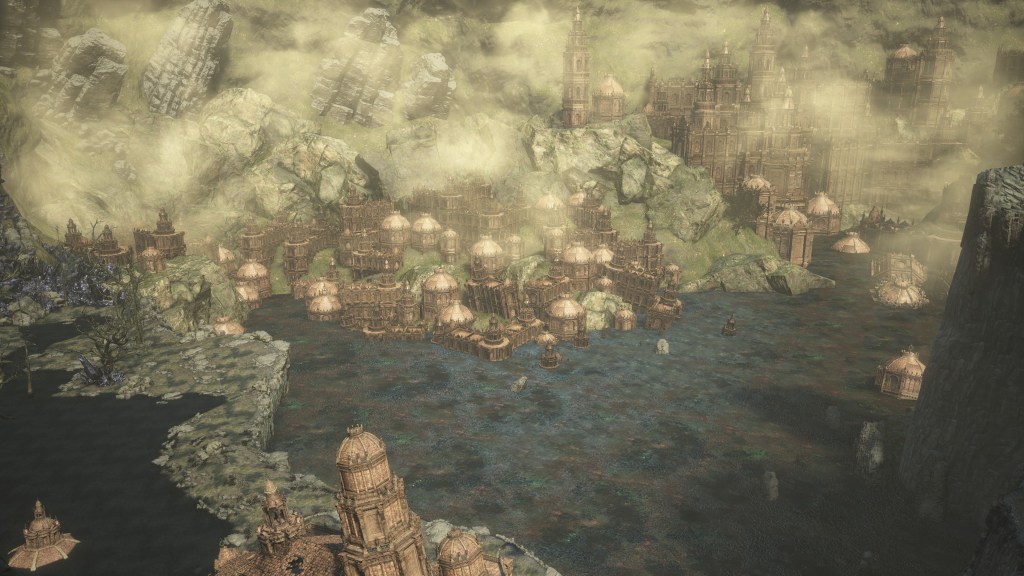
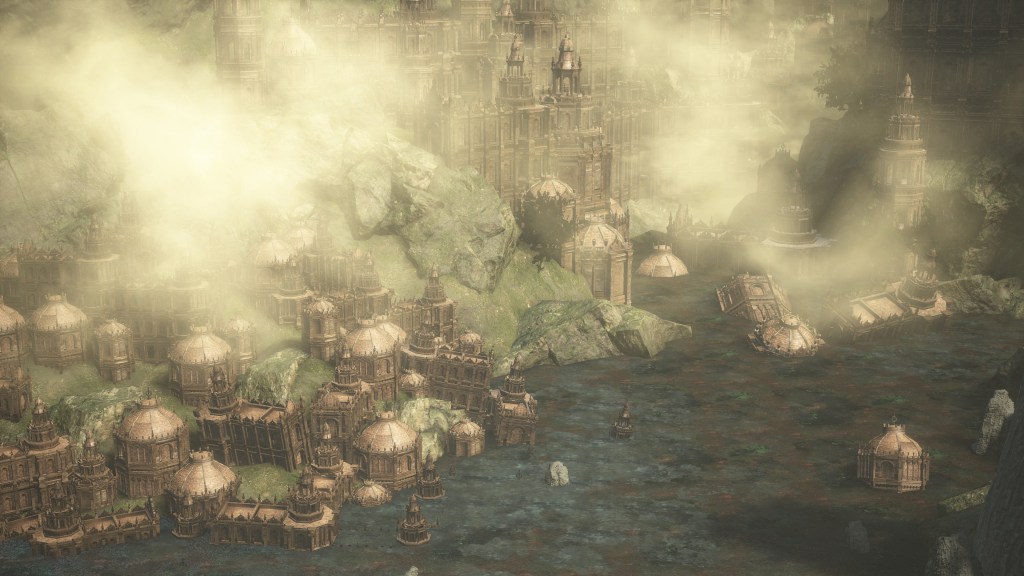
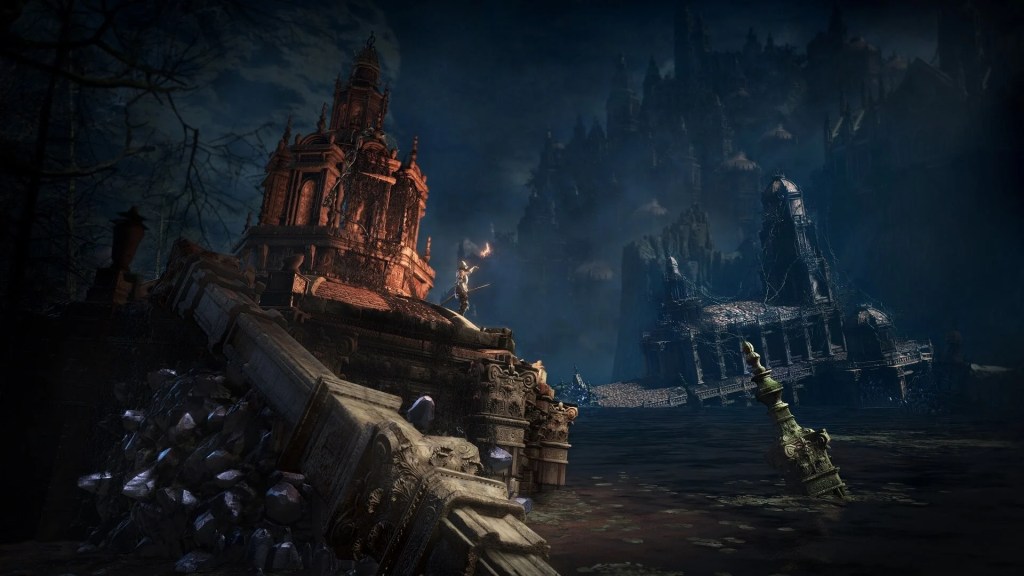
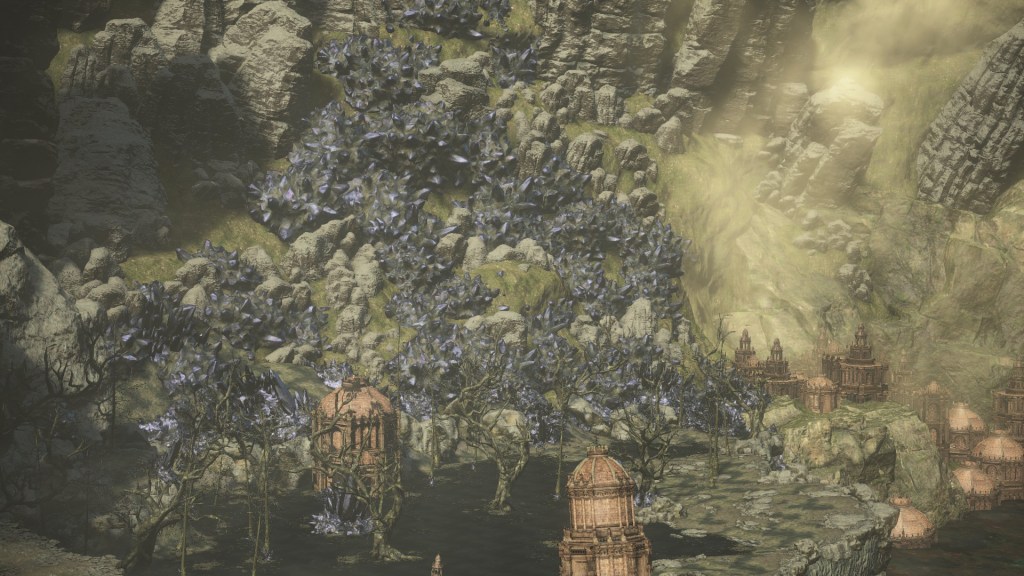
The city sinking in the swamp may be what Argo has in mind. Even if so, it is merely a symptom from a more metaphorical immersion into the Dark. Like at the Dreg Heap, the swamp can only form with the expansion of humanity, freed from its divine shackles. In short, the pus of man or similar manifestations must have been running rampant to coalesce. And even if the swamp wasn’t a concern at the time, its existence now portrays Anor Londo’s war against the Ringed City’s radical elements as a losing battle. This is consistent with Shira, who repeatedly emphasizes Filianore sleeping at the heart of the Dark as the First Flame fades. It is clearly important that the princess sleep there, in the Ringed City, during this twilight era. Still, this leaves many questions apropos to the act.
First is the question of purpose: how does Filianore’s repose rein in the Dark? Shira claims that the princess sleeps for the sake of man, but her slumber doesn’t seem to stop the spread of the Abyss or the destruction and mayhem in town. All it does is preserve the capital from the Dreg Heap, not even the daytime sky showing the eclipse. The Ringed City Hollow calls her sleep a deception and a lid on a cesspool, hiding the Dark Soul along with the nasty waste from us. And when that lid is removed, the Ringed City suddenly becomes part of the ashen desert like every other land, Filianore instantly mummified. Not every resident is affected this way; a Hollow Ringed Knight still patrols the ruins nearby. Those with some form of immortality are still able to survive regardless of the princess’ state, just like in the Dreg Heap. Only Filianore becomes a mummy, likely because of the years spent in hibernation without provision or healthcare; no pureblood medial should be able to survive in those conditions without magic. It is as if, in a flash of light, time caught up to the Ringed City — or more accurately, stagnation.
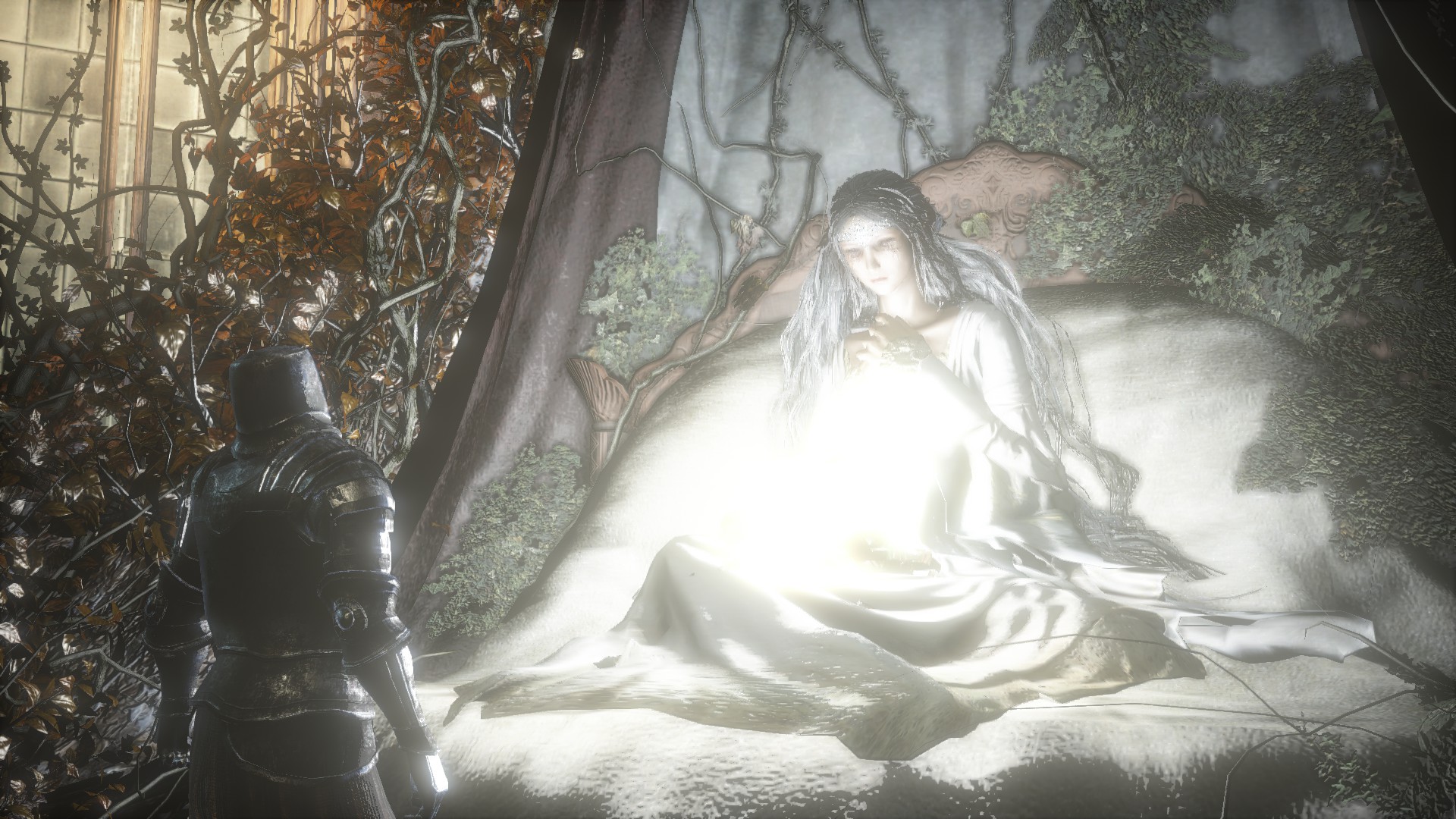
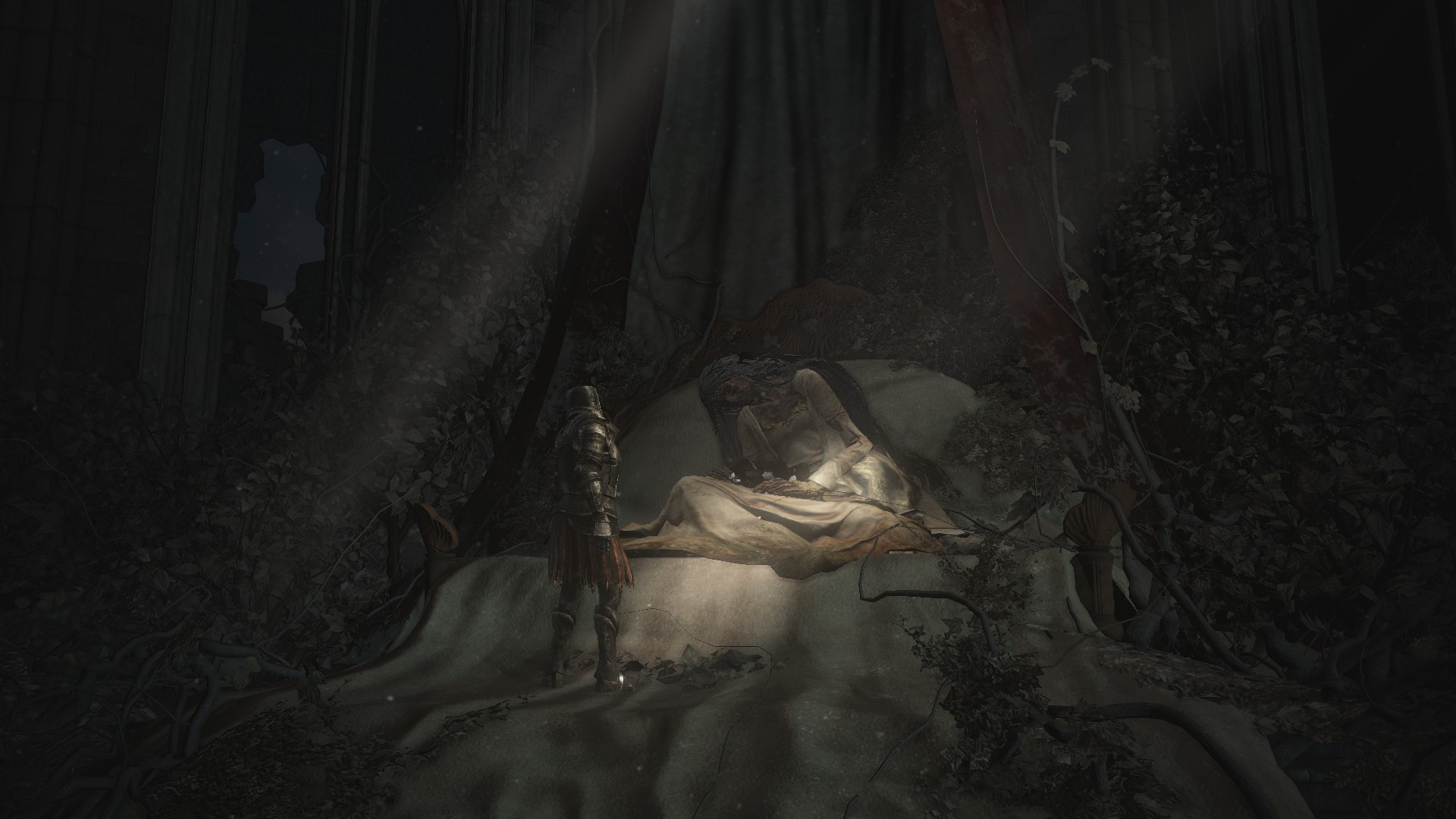
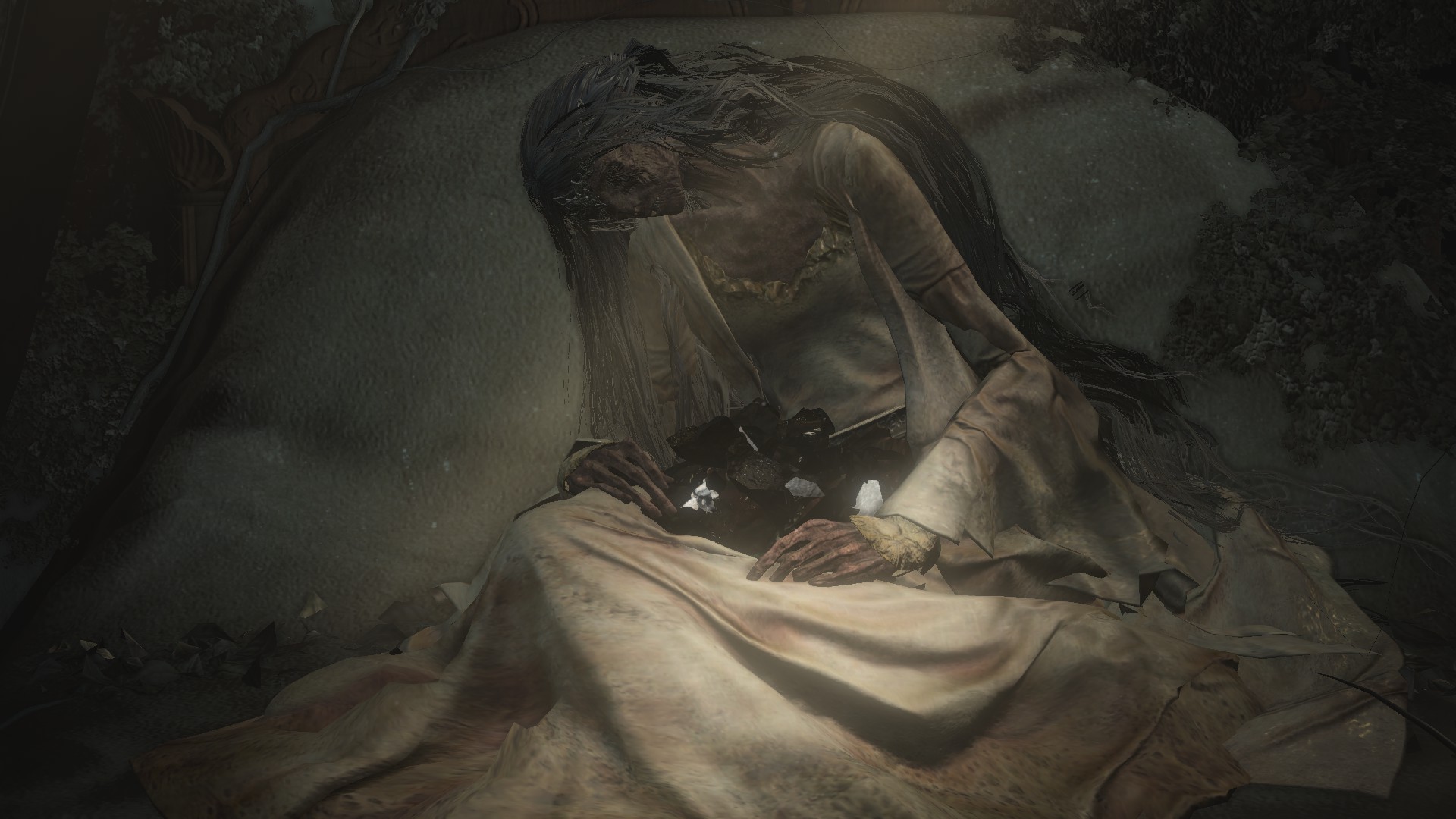
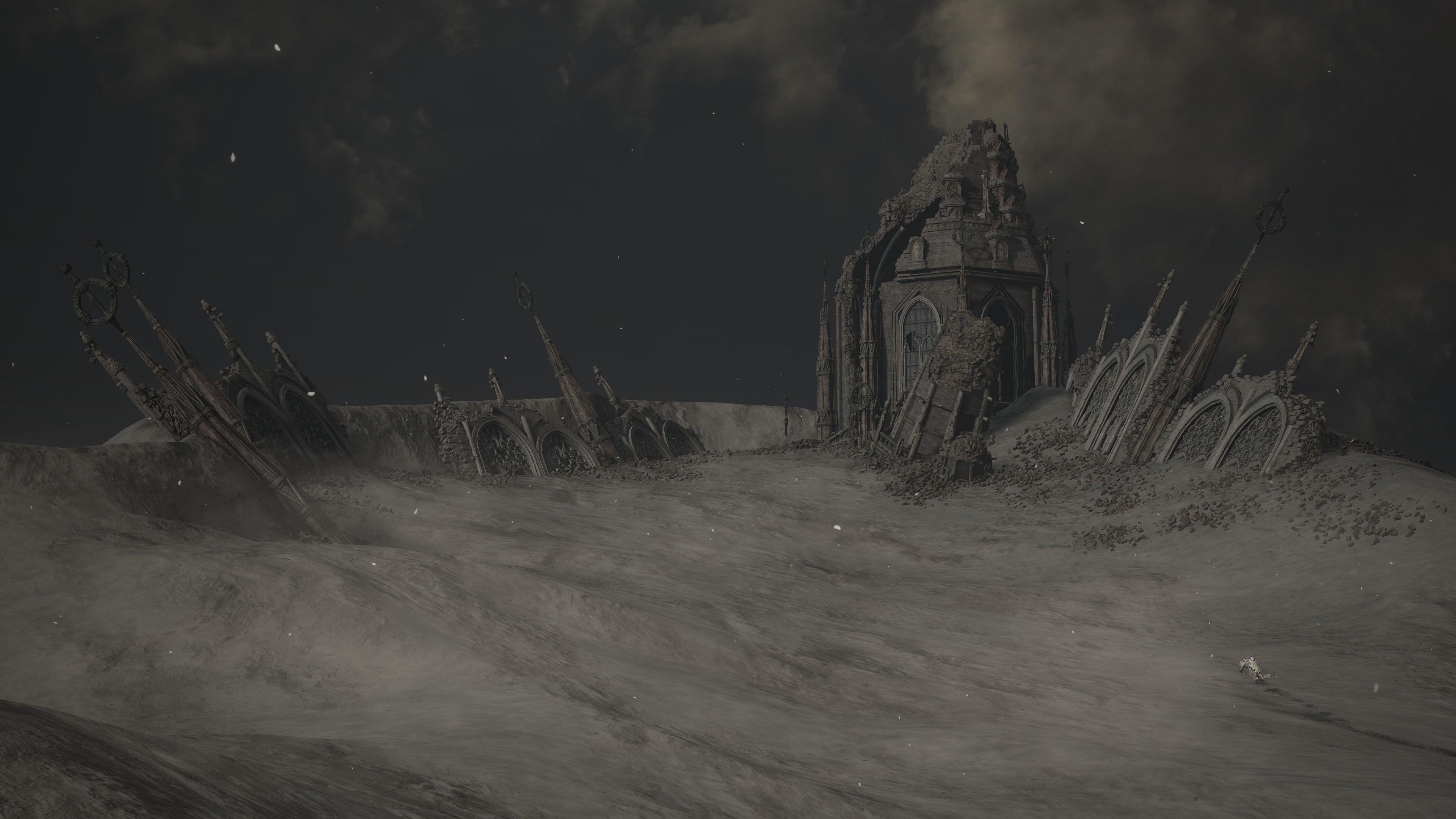
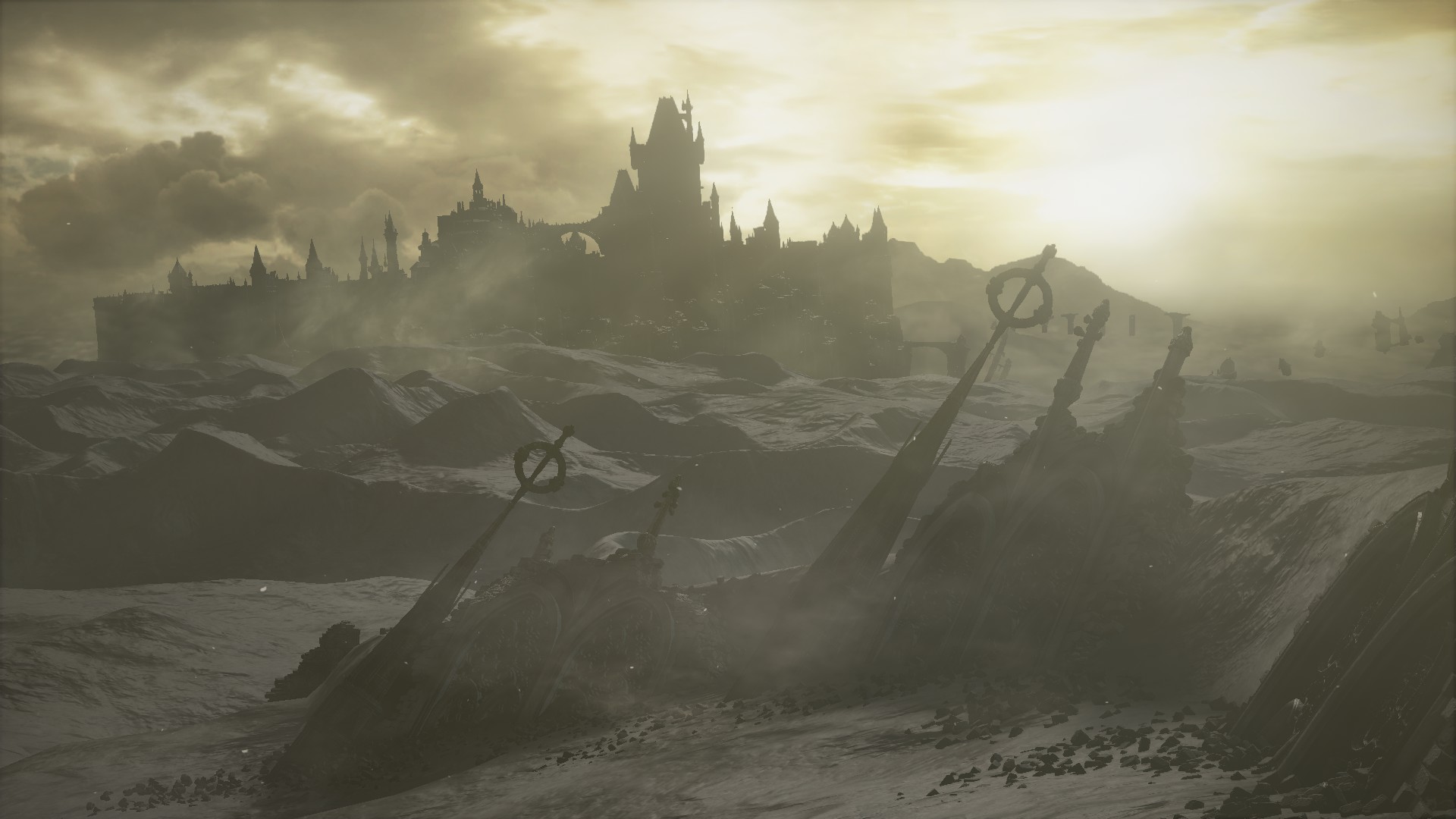
If you are a human who knows the name of god and horrors of the Dark, please, kindly infringe not on the princess’ sleep. At Fire’s end, by Dark’s side, it is simply for man.
Say, if you want the Dark Soul, head for the Filianore Church below the cliff. And there, ruin the princess’ sleep… That sleep is a deception. A lid on the cesspool, something that keeps the Dark Soul from you.
Put simply, Filianore’s sleep has created an invisible, metaphysical barrier around everything within the rock walls of the capital. The separate dimension is immune from stagnation, hence we don’t find any signs of the Deep there despite the plethora of Dark. Even as everything else is dragged down through time and space as it cinefies, the Ringed City stands a lone island at the bottom, carrying on as normal. This was the evident goal for her slumber. In that case, how the gods can construe this magical field as to man’s benefit is straightforward: if the Ringed City falls, a Dark Lord will invariably rise and lead the pygmies to end the Age of Fire; that which wider, god-fearing human society had enjoyed in blissful ignorance for so long. By preserving both the city and system constructed by the gods, Filianore keeps the kings and their Dark Soul from falling into the wrong hands. The king of Anor Londo clearly wanted the penal colony functional regardless of the laws of the universe it may be subjected to. And so, he ordered the capital be made into a time capsule of sorts.
That is exactly why I can believe it. The story that the Ringed Capital lies at the bottom of this Drift.
Then there is the question of timing. The only way to enter the Ringed City is to masquerade as a royal envoy. By hoisting up a small black banner bearing a golden ring within sight of the capital, batwing demons fly in to carry us over the walls and to the royal mausoleum lookout — it appears that the system Irithyll established with Lothric was based upon prior precedent. Although this arrangement provides envoys safe passage to the Church of Filianore, it requires the chaos demons who bloodied their hands with their own kind in the war immediately before Gwyn linked the fire. Shira also speaks of the Age of Gods as passed due to fire’s end, yet simultaneously probes whether we still recognize Gwyn as our god — not his firstborn. Gwyn must have thereby set up this line of communication with Filianore’s church after he had already committed to firelinking but before departing for the Kiln. He ordered Filianore’s sleep, with his successor entrusted to send updates should the situation change. By the time the princess received the envoy, her father may have already become Lord of Cinder.
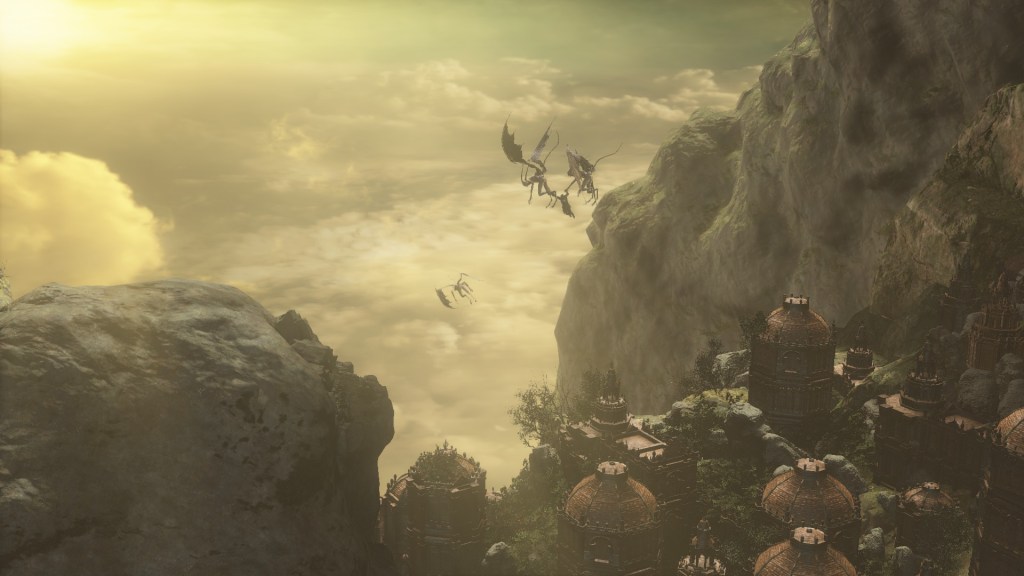
The message itself provides further context. From Shira’s dialogue, Gwyn’s decree confirmed that they would not be restoring the status quo anytime soon. Anor Londo’s golden age was officially over; the gods would need to deal with fire’s end for the foreseeable future. This doesn’t clarify how much Gwyn shared of his plans. Were they informed of the firelinking or what to expect from the homeland? As far as Shira knows, new word never came, so they might not have even been aware that the king was “dead” with a new king taking his place. What they did know was the order for the princess to sleep in order to magically maintain the capital no matter how much time passes. Gwyn’s broader message was for the pygmies and their dark secrets to remain trapped inside the city whatever the cost. With this was the understanding that the church needed to mobilize for a full quarantine.
We see this reflected in the Oolacilian delegation. The Antiquated Plain Garb description asserts that all but one of the delegates had left, the remaining member becoming the last Spear of the Church. This suggests that the mission’s departure was a direct response to Gwyn’s royal decree. With the new envoy system being set up, any other contact with the outside world was liable to be cut off. The diplomats were probably alerted to this fact and so returned home before the quarantine was finalized. Oolacile would forget everything about man’s Dark past less than a millennium later, so the gods succeeded in isolating the Ringed City totally. No longer would anyone visit, become a Spear, or achieve the rank of Divine — the potential for recruits was lost. The Church of Filianore had to make do with what they had. On the upside, the quarantine now guaranteed that no outside party would have easy access to Filianore. The church’s chief concern became solely threats already within. While those persisting dangers were subdued, she just needed to set up the citywide stasis.
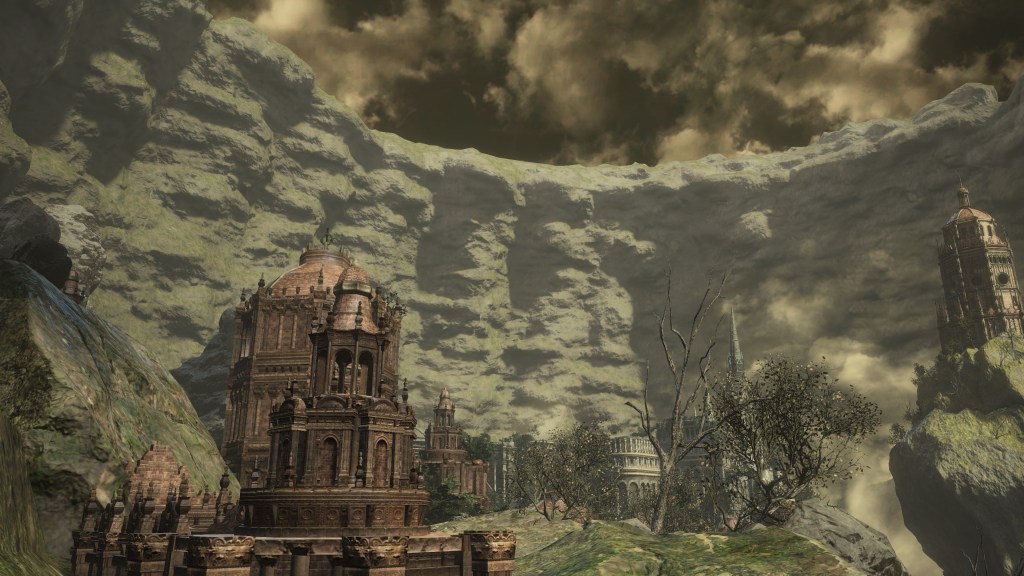
This finally brings us to the question of how her sleep achieved this. Why did something so large-scale require that as the specific means? The most obvious utility to sleep is, of course, dreams. Quella proved in DS2 that entities in the physical world can connect to other minds in dream spaces, effectuating some control over the dream. Shouldn’t that bond then go both ways? What stops dreaming minds from affecting the waking plane in turn? Perhaps Filianore performed a kind of lucid dream, her will imagining a Ringed City which would never decay and magic imposing that image on reality. Paradoxical as it sounds, the princess has crafted a mental stagnation to override the physical one. This is why the magic field requires her constant attention in hibernation. So long as she dreams that the space is free of the world’s rules, it is. But once she wakes from that beautiful dream, the false reality snaps back in accordance with its proper flow — in this case, to the end of the flow. Only in her fantasy can the sun always shine in a golden sky, uneclipsed by the encroaching Dark.
Her reverie of light is curious considering the means. As noted with Pontiff Sulyvahn, sleep magic appears more aligned with the Dark than the light. Even in this instance, Filianore has dark tendrils growing from beneath her shut eyes, some burrowing out of the lids while the rest branch out across the cheeks under the skin. This can be attributed to her uniquely lengthy sleep, her living eyes having seen only darkness all this time; conceivable, after so long, that they begin to manifest corruption. However, while ordinary darkness has historically affected subjects lurking within it long-term, not even extraordinary darkness has previously manifested such tendrils. Typically, it is only Dark stemming from humanity which produces those growths. Has the dark beneath the lids wholly consumed the light of the eyes, the souls in them no different now from natural dark souls? Or is it because she is using magic to “see” a world through that darkness? Either way, it opens the possibility that the princess is using a kind of dark magic to facilitate her reverie, which is supported by the catalyst.
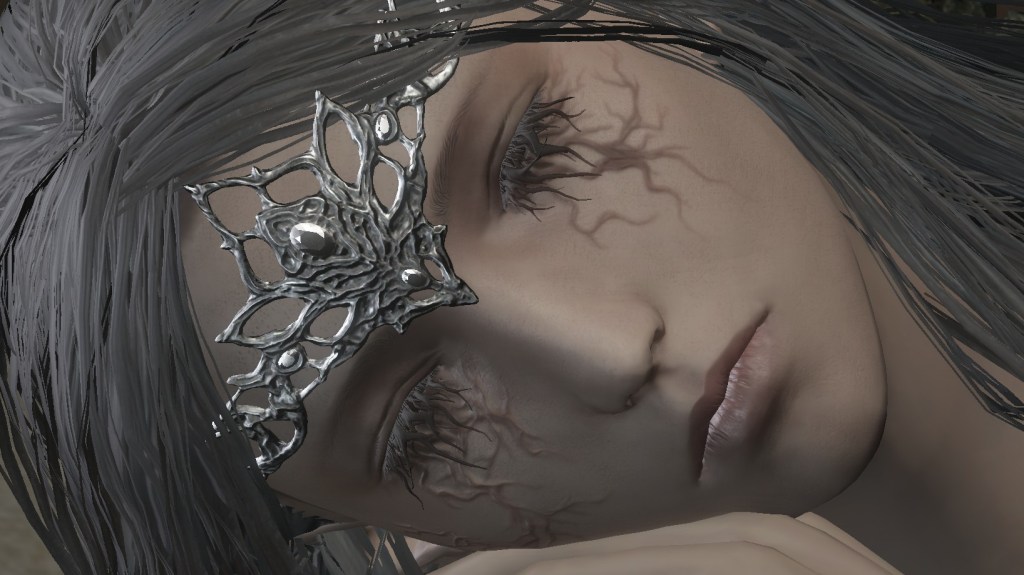
The egg cradled on her lap which she rests upon is obviously key to Filianore’s sleep. The princess slowly wakes after the egg crumbles to pieces at the lightest touch, the subsequent shell pile emitting the light that flashes before the Ringed City resyncs with the rest of reality. The only question is why she needs such a bizarre item. Some fans have suggested a connection to the transposing kilns of Courland due to Filianore’s concept art. Close inspection reveals the part of the crystal formation inside the eggshell matches the kiln’s menu graphic. However, this is a minuscule detail in a ginormous artwork, so the artist might have simply reused art assets not expecting anyone to notice. The detail certainly isn’t reflected in-game, the egg model appearing much darker overall on the inside. With so many other details differing from the final product, the concept art is probably not indicative of FromSoftware’s full intent. Rather, the crucial detail appears to be the egg’s “yoke”, the black crystal at the center.
DS1 had introduced the wandering spirits, disembodied humanity which spontaneously came to life generating all manner of traits. One of these traits included a white eggshell, often broken as more body parts burst out from the shadowy core. The similarity to Filianore’s egg is striking, a black core which has formed a white shell broken by some of the contents seeming to pour out of it. The main difference is the fact these dark contents have crystallized, implying interaction with Disparity. Indeed, why would the princess need to perform this dream ritual personally unless her soul, inherited from the Lord of Sunlight, was required to make it work? Both light and Dark hold dominion over spacetime which is now freezing the Ringed City in place. In other words, it may be the joint power of Filianore’s light soul and another’s dark soul which enables this dimensional field through dreaming. As with so many examples in-game, the combination of light and Dark catalyzed something new, the petrified spirit becoming the steppingstone to direct Filianore’s unconscious will to reshape reality.
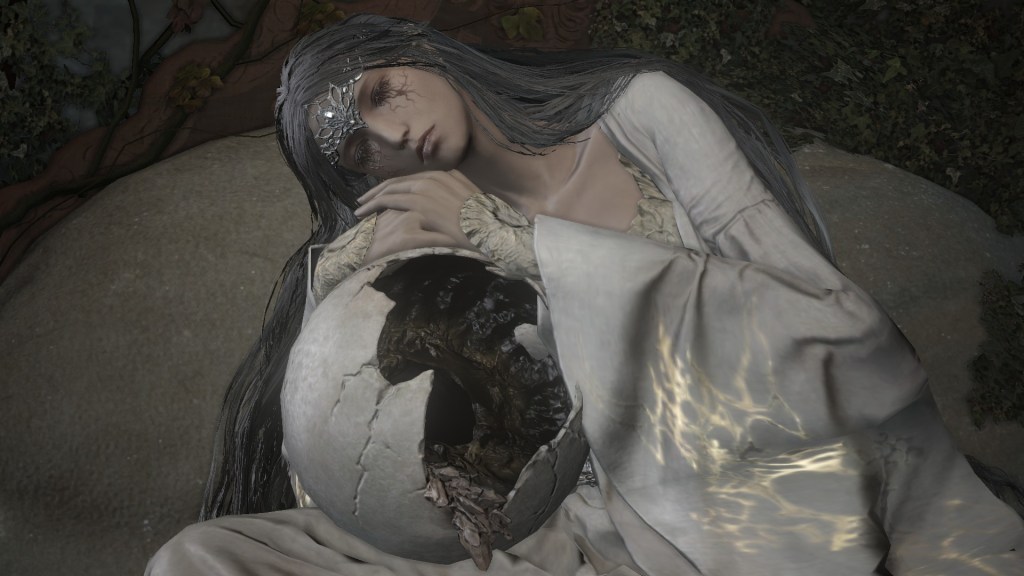
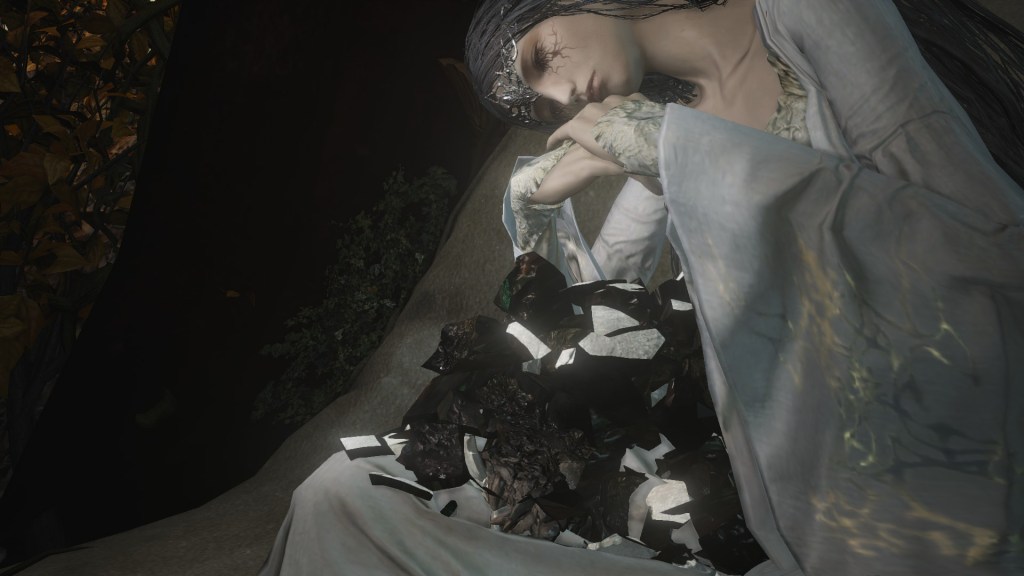
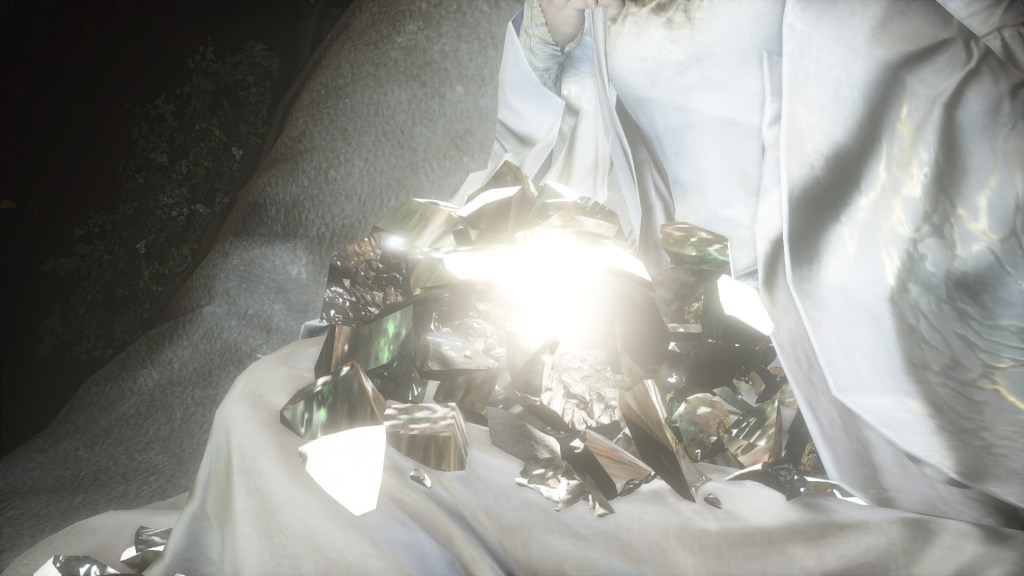
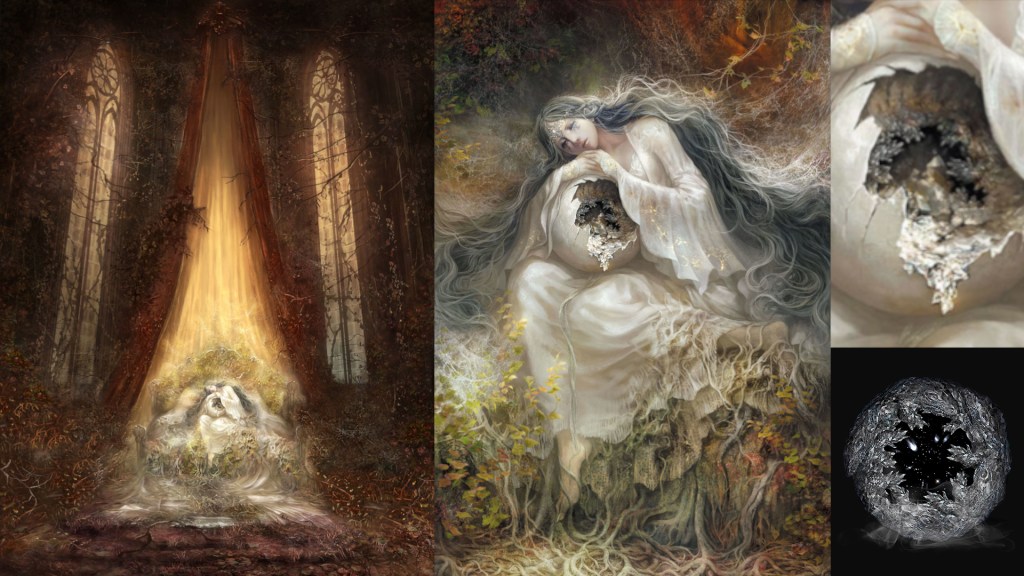
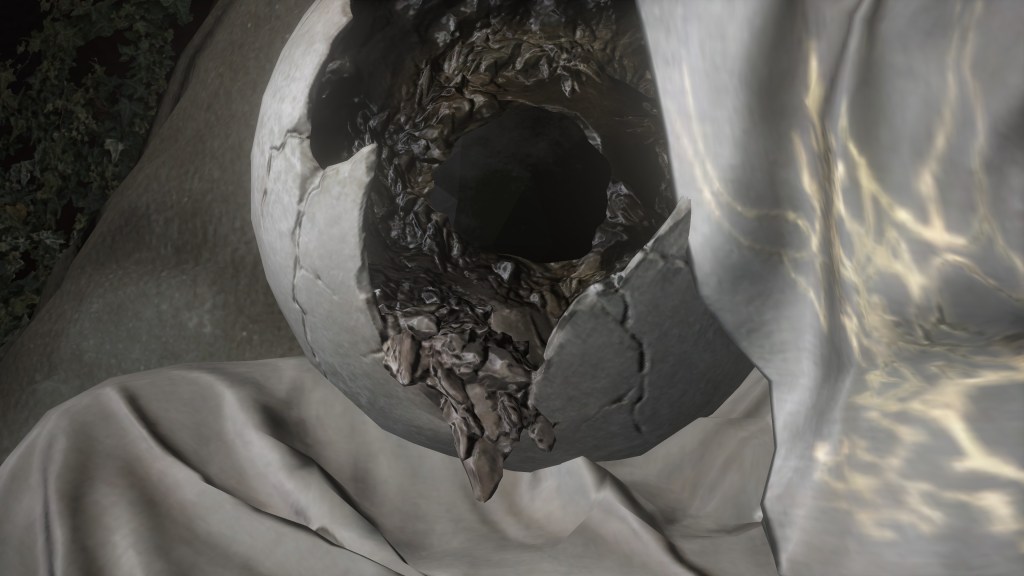
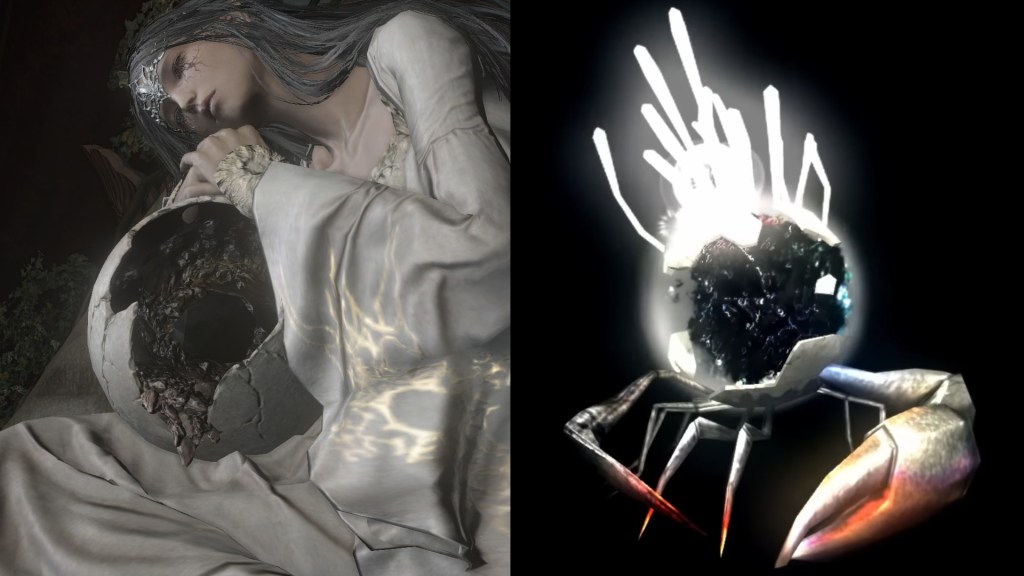
The gods using humanity to imprison humanity with light is definitely on brand. One can say that it is very much like the egg, a beautiful light shell entrapping the dark core propping it — not unlike the Darksign. The gods of light capture the pygmies of dark in a ring, a never-ending cycle. This is doubly ironic depending on the owner of that spirit forming the egg. Did the princess simply take any old pygmy’s humanity? Or did she require an especially powerful soul to match? If so, whose? The most obvious candidate is the first pygmy Lord, having likely died with the largest humanity of any royal. His soul would be ripe for the pickings buried next door to the Church of Filianore. And with fire fading, his would be most liable to rise back up again if left unattended. Therefore, sacrificing the founding king to fuel this stasis would kill two birds with one stone. If only in spirit, he finally lay with his “wife” to give birth to a “brighter” future. It explains why the forgotten pygmy remains irrelevant in his undying kingdom. He isn’t absent, he simply took a form we wouldn’t recognize, a tool to stop his dreams for his kind.
Regardless of the egg spirit’s identity, it is Filianore’s dream which meets fruition, a stagnation to stagnation as her father decreed. All of this implies that Gwyn was at least vaguely aware of the damage his firelinking scheme would do to the universe long-term. He never cared about the consequences for trying to preempt his fears. Even if never-ending fire did reduce the world to a pile of ash, it was still better than allowing the Abyss to replace him and his legacy to his mind. Was Filianore aware of the same when she performed this ritual? An entire age had passed her by, and she would be sleeping through one more. Did she realize that she might never wake up again? That her father would not be keeping his promise? In the end, it didn’t matter. With or without a heartfelt apology, she performed as instructed. Always the filial child, she was as much a prisoner as the pygmies. She truly is the Sun of Man.
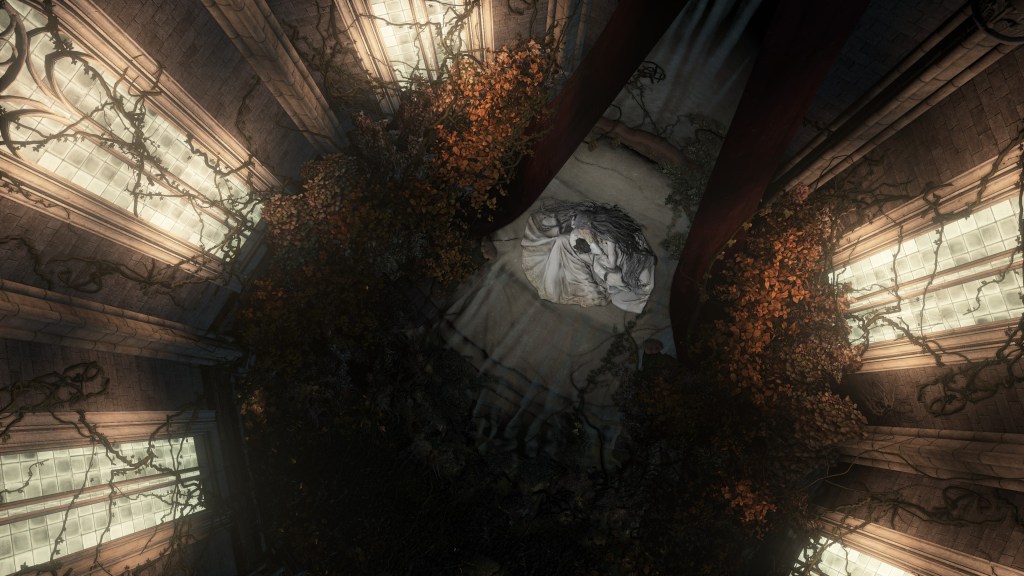
A Sinking Feeling
With Filianore asleep, the pygmies had no choice but to simply wait, holding out in the hopes that the gods would enact a sufficing solution that never came. Problems predictably arose not long after Filianore entered hibernation. Despite Shira’s familiarity with events pertaining to the princess she serves up until this point, the knight has been willfully isolated from everyone for the longest time. This is on account of the mad king impaled upon her spear. The king’s madness explains it all. Although the localization states that he was born to pygmy royalty, the text more accurately reads that he was born from the pygmy kings specifically. In essence, the lord was not literally born mad but became so in his capacity as one of the council. And after descending into lunacy, Shira slew him, only to find that he would not die; shutting herself in a room with the lunatic ever since. This incident thus must have occurred after Filianore’s sleep, and from the circumstances, likely was a direct response to her sleep. After all, his seemingly random bout of madness is due to the Dark he embraced.
Cross spear intertwined with grotesque remains.
Once, a mad king was born from the pygmy kings, and Shira, knight of Filianore, slew him.
It is said that Shira’s cross spear was tethered to the never-dying king and that she shut herself in a dark room embracing it.
Looking at the mad king’s remains, we can see the abyssal horns of Ringed Knight equipment sprouting out of the skull. This implies not just the use of the Abyss but also its concentration in the brain, the Dark’s consumption explaining the mental aberrations. We can also presume his own humanity to be the cause, the sheer power of an unfettered pygmy king’s dark soul demonstrated by his unique immortality. Even as the body has decayed to the bone, the king only slumbers, roused with just a little stimulation. The surviving skull, spinal column, plus a single arm remain connected by a bizarre flesh likely also generated from the Dark. Whether all this is a remnant of his horrific transformation or merely the decay, he is clearly kept together by the powers of his innate humanity.
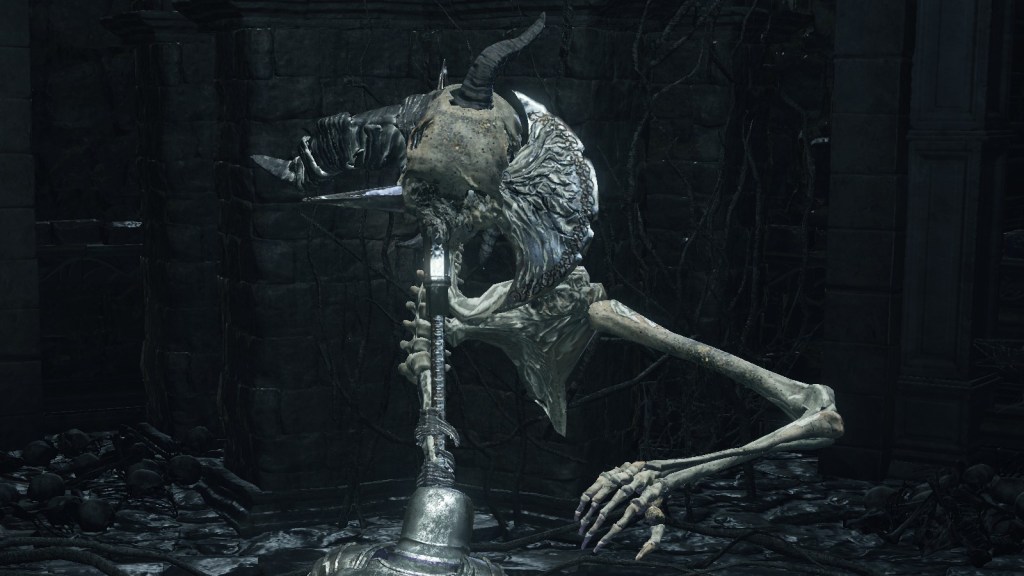
There is reason to believe that the pygmy kings reserve an especially resilient undeath. The first of the lords we encounter manages to slowly drag himself across a good distance with his head basically severed before finally expiring. Even Undead tend to die after suffering fatal damage; the curse will just restore the body to health as it pounces on the dispirited soul. For the king to live, and even speak, for so long while mortally wounded insinuates the consequences of his greater humanity. But nowhere is this to the level of the mad king — he hasn’t even properly “died” despite the bodily entropy. Maybe the lack of healing is due to the blades remaining through the cranium. That the Dark stills sustains his will when he might as well be one of the reanimated dead impresses the severity of his curse all the more. The mutations accompanying that sort of vitality should only be possible if the Dark becomes completely untethered from its seal of fire, like with Manus.
Even losing his sanity, the king was no doubt willing for this outcome. Although the localization calls it Mad King’s Folly, it is more accurate to call the weapon’s skill “Mad King’s Fancy” (狂王の気紛れ) in reference to a lunatic’s caprice. By slamming the remains onto the ground, the wielder awakens the undying pygmy. Further stimulation results in the king responding in one of three ways. Either he simply howls like a madman or invokes his Dark power to provide the awakener with a blessing or curse. His divine protection mimics the Preserverence skill of other weapons. Meanwhile, the malediction appears to ignite his target’s humanity, creating a purple will-o’-wisp to give chase before finally exploding. Truly, he is a whimsical immortal. But this whimsy highlights certain mastery of the Dark that the king could only acquire from personal desire. One of the pygmy lords harbored heresy.
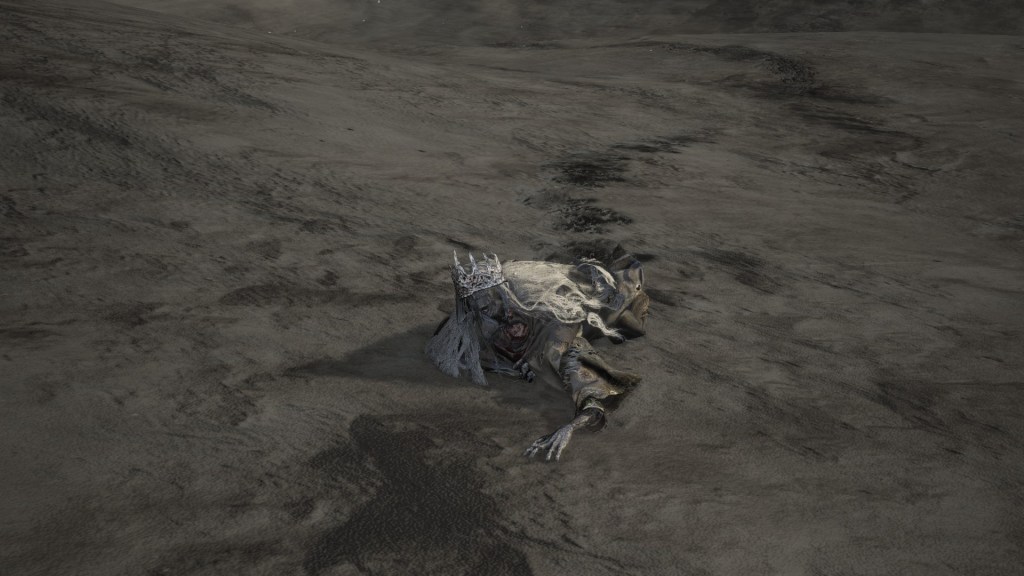
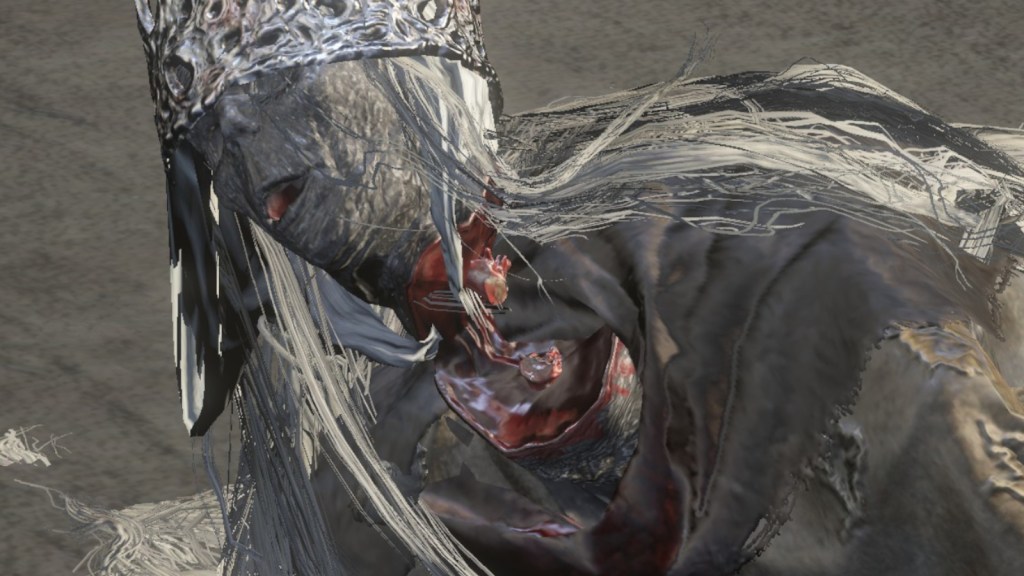
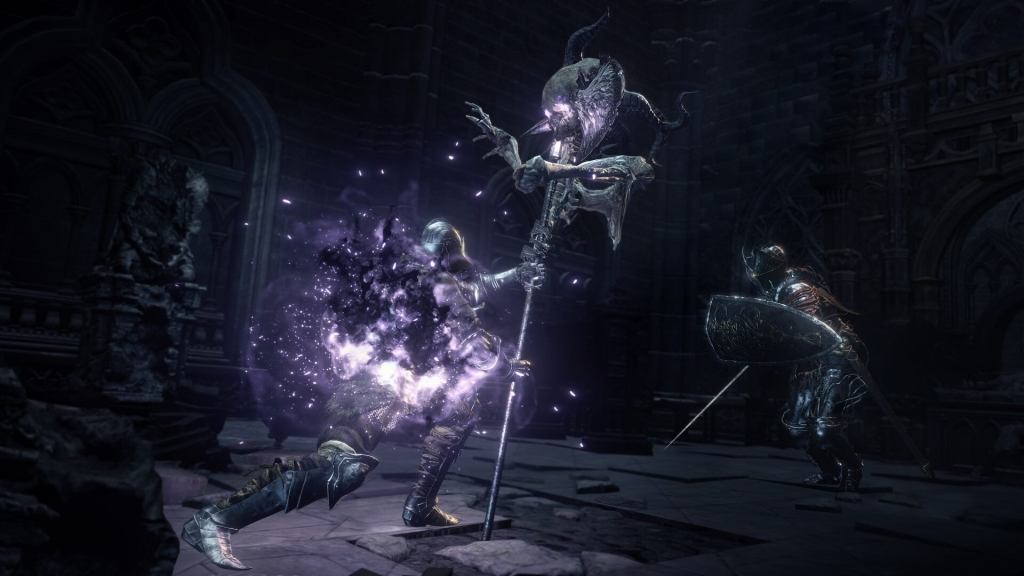
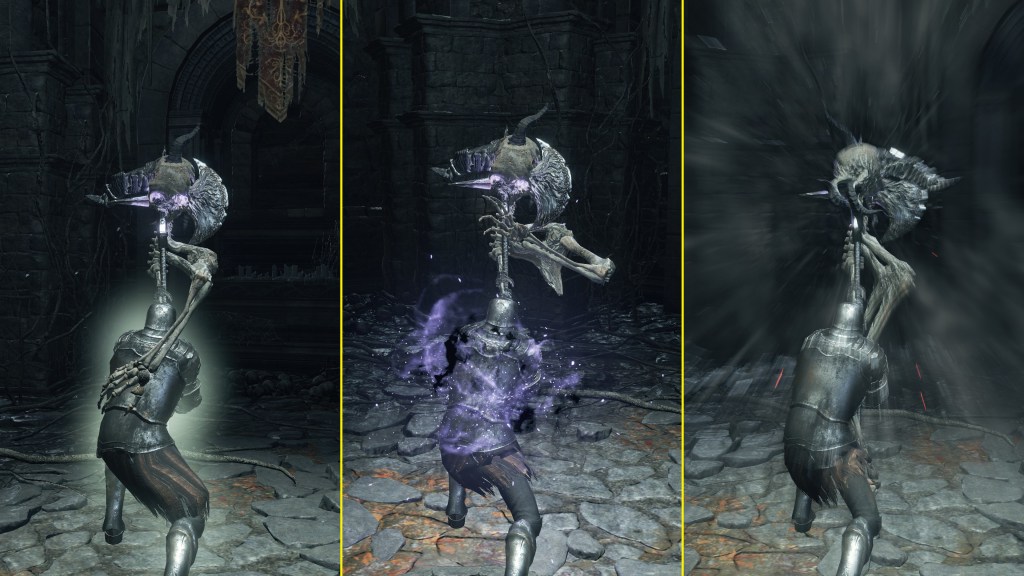
Battle art is “Mad King’s Fancy”. Strike the grotesque remains onto the ground and momentarily awaken it. Stimulate the awakened grotesque with continuous strong attack and acquire either a howl, divine protection, or malediction.
It is not unimaginable for some on the council to see the instability from the fire fading as an opportunity. Even with the crackdown, there was no better time for the kingdom of man to break away from Anor Londo and fully indulge the Abyss again. The mad king was also not alone in this thinking. The Ringed City Hollow is a former king, dressed identical to the other pygmy lords sans a crown; his location at the royal mausoleum sealing the deal. The surprisingly blunt regal calls himself an ally to those seeking the Dark Soul, believing that any human will come to understand wanting to wreck the “cesspool” the gods put a lid on. Even when slain, the man curses the gods with the Abyss with his dying breath. Since he is so informed on the Ringed City and Filianore’s state, the Hollow must be one of the latest kings, likely to sympathize with his mad cohort when he made his Dark allegiance apparent. In fact, the ex-lord’s place at the mausoleum indicates that his own heresy was uncovered and got him killed, only to fortuitously rise from the grave thanks to the curse of that Abyss he so loves.
… Keeheehee… Keeheeheehee. There’s no doubt. I am your ally. If you’re also human, you will surely come to understand. Wanting to wreck this cesspool of the gods… Kee hee… Keehee keeheehee.
Taken in total, there was an audience receptive to the mad king’s message. He might have even made an explosive pronouncement. Both the Pygmy King and the Ringed City Hollow are forced to crawl on their bellies like snakes because their right foot is partially missing. As Undead, both should have been cured of such injury, so the fact that this persists signals that it occurred before death first triggered the curse. The cause is readily surmised from the black stains on their pale skin; while some exists on the arms and a little more on the legs, the right foot was completely drenched. The two kings stepped in viscous humanity, which naturally began to eat away at them. They weren’t alone, since the other kings seem to use the same base model. But how? They should be sequestered away, far from any Abyss. If the Dark did manifest, then it must have come from within themselves. In short, a king unleashed an Abyss in their presence. Who else would be responsible save the mad king among them, happy to showcase the powers he obtained to his fellows on the throne?
Assuming this did have a purpose, the horned devil might have been appealing to his fellow royals to take charge of their fates, as he had; embrace the Abyss and be free of their fetters. With Filianore asleep, her Church was plainly desperate. If the kings only understood the power they let be sealed within them, they would realize it is better to throw off their oppressors and claim the future fated for them — to the mentally and ethically compromised, such a demonstration makes a persuasive point. The monstrosity he became forced the Spears of the Church to step in, Shira skewering the traitor. With the knight vacating the premises with the undying monarch, that emergency was settled. Any who yet shared his sentiments were similarly removed from the council with extreme prejudice. All the remaining kings would end up Undead over time, having survived all the way to the present day. But that is presumably in the course of their isolation while the knights continued battling the heresy on their behalf. The mad king miscalculated in presuming Anor Londo’s desperation meant weakness.
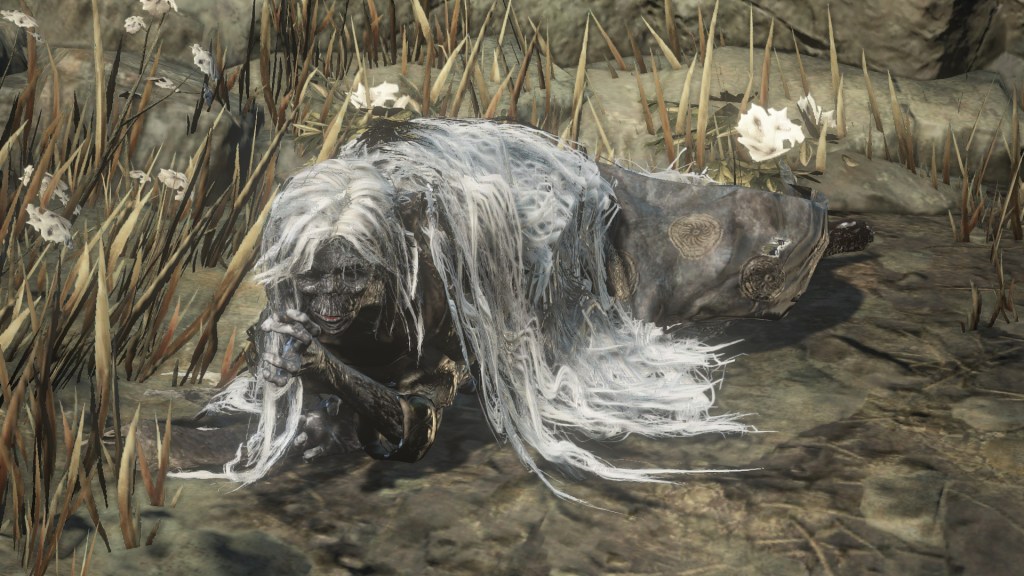
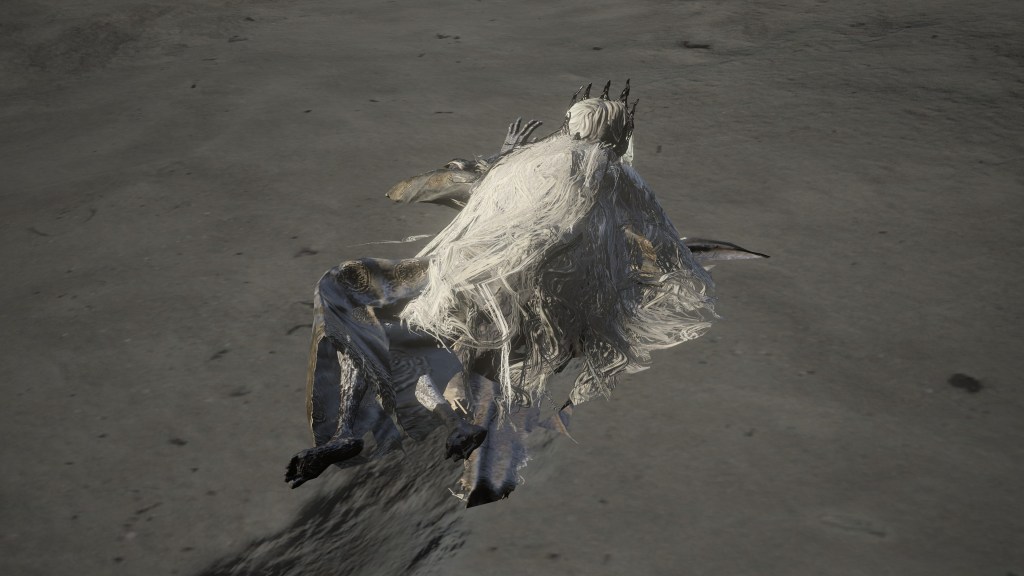
Of course, there is always a new crisis. Given the amount of titanite in their possession, it is possible that the Ringed City had to contend with the later emergence of titanite demons. To this point, the titanite scales the Ringed Knights also own may be intended to represent demon titanite from DS1. If so, however, those demons have long been dealt with, and the city is currently rife with crystal lizards. Ignoring the knights, titanite scales are only acquired from lizards and corpses within the vicinity of the royal mausoleum or Shared Grave, as to be expected. This makes it perfectly feasible for the Ringed Knights to have simply slain the gluttonous crystal lizards post-transformation, hence we don’t see any during our journey there. Even assuming that the Ringed City was too far removed from Lordran for their titanite slabs to be affected, they had no shortage of uninvited guests over the centuries.
Like Argo, the other giant adjudicators primarily rely on summoning to combat us. But unlike the Church of Filianore’s steward, the spirits they summon aren’t Spears of the Church. Rather, they are a variety of individuals, sometimes groups, from different backgrounds, united only by the compact they share with the giants. This contract differs from the Spear covenant, the spirits only briefly manifesting around the giants for simple attacks before needing to be called upon again. Based on the red and orange coloration to the spirits, this may be some type of sunlight magic bestowed to the adjudicators by the royals they serve. Whatever the case, it still seems to bring souls through space and time, the spirits manifesting enough to harm the summoner’s enemies while remaining completely untouchable themselves. That peculiar incorporeality highlights the unique nature to this compact. There is a cut “proof” of the pact item allowing us to perform the summoning ourselves. Perhaps the giants only take a piece of the soul, placing it in a medium used to conjure a simulacrum with all the person’s powers.
If there is a physical instrument for the exchange, then it explains why this contract can be coerced as opposed to covenants. The description to the cut proof affirms that there are varied reasons for the summoned party exchanging the compact, most of which are one-sided. Only in rare cases does the individual choose to exchange the pact out of friendship or mutual dealings. A possible example of the latter is the dragon-man summoned at the mausoleum. Breathing fire upon the giant’s enemies, the dragon-man looks no different from the meditators of Archdragon Peak, though he is probably just a stand-in for a generic Path to the Dragon follower. Even if just a case of reused assets, why would a dragon worshiper come to the Ringed City? The obvious reason is Midir. Recall that these path seekers traditionally pursued dragon scales to further their draconification. The visiting dragon-man might have thus learned of an archdragon’s presence in the capital, making a deal to be part of the giant’s compact in exchange for the freedom to look around for any scales that dragon might have left. It is a fair transaction.
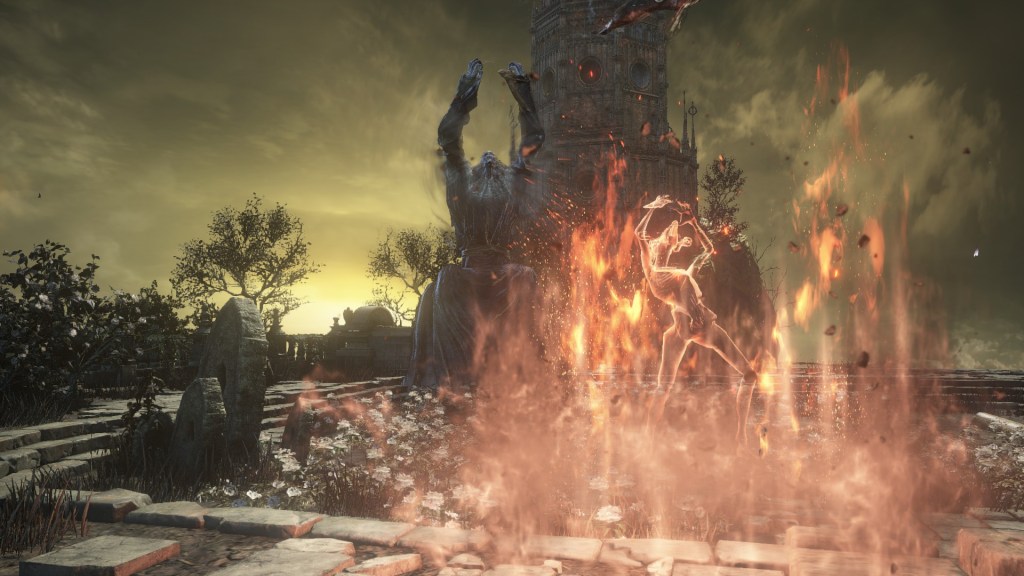
A less willing victim was an army of knights who visited in search of the Dark Soul by royal decree. The “ruin” set worn by this order references the “vacant” (虚ろ) nature of the Ruin Sentinels the knights inspired from DS2. Recall that the Ruin Sentinels were implied to be creations of Aldia, who was obsessed with learning the truth behind the Undead curse. If records survived of the knights’ final exploits, then modeling the golems upon them was likely more than just whimsy — and the names for the boss sentinels do suggest that Aldia had discovered such records. DS2 also hinted that the golems’ model belonged to Olaphis, which is consistent with this new information. Considering that the old sorcery kingdom was desperate enough to convert its castle into a prison for Undead, finding the source of the curse would be a high priority. And being such a studious nation, it is easy to imagine Olaphis scholars scrounging up scant records of the pygmy capital. If sorcerers believed this “Dark Soul” would help lead to the resolution of undeath, a king might dispatch his order of knights to acquire it.
Alas, these knights of Olaphis were never to return. Although the knights did find their way to the Ringed City, a corpse in their armor laying beneath the Royal Mausoleum Lookout informs their fate once inside. The knights are the most common compact spirit for the giants to summon, which may hint to their determination despite local resistance. Regardless of how far individuals got, they were still met with crushing defeat, survivors beaten down until they were all forced to exchange the contract with one of the giants — and after that, their lives might have remained forfeit. In the end, their homeland would never get the chance to study the Dark Soul before the Undead curse inevitably overwhelmed them. Olaphis was already buried in history by the events of DS2, so its knights fared no better. So thoroughly forgotten is their name, if anyone recognizes the armor, it is in connection to Aldia’s golems, not them.
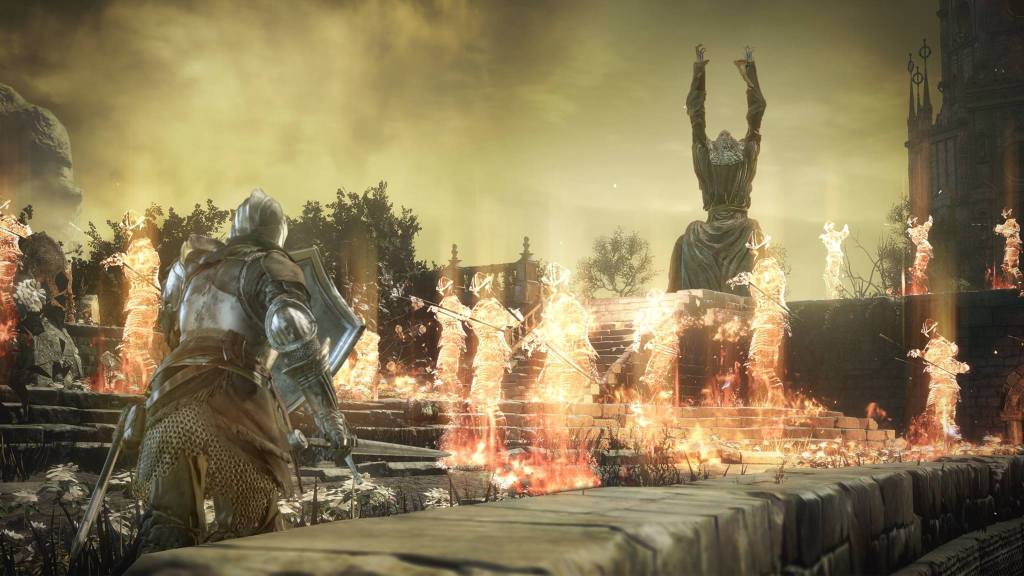
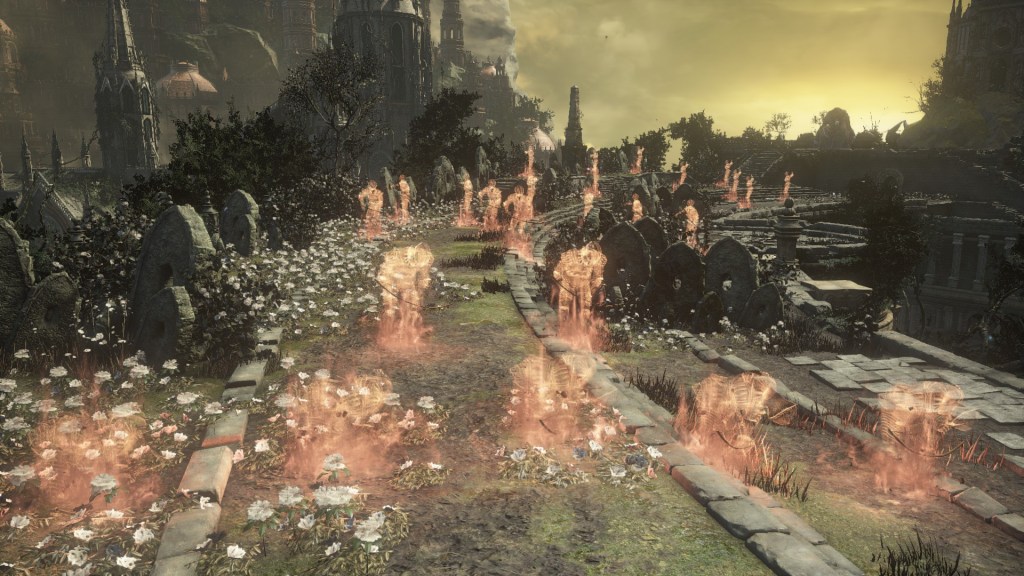
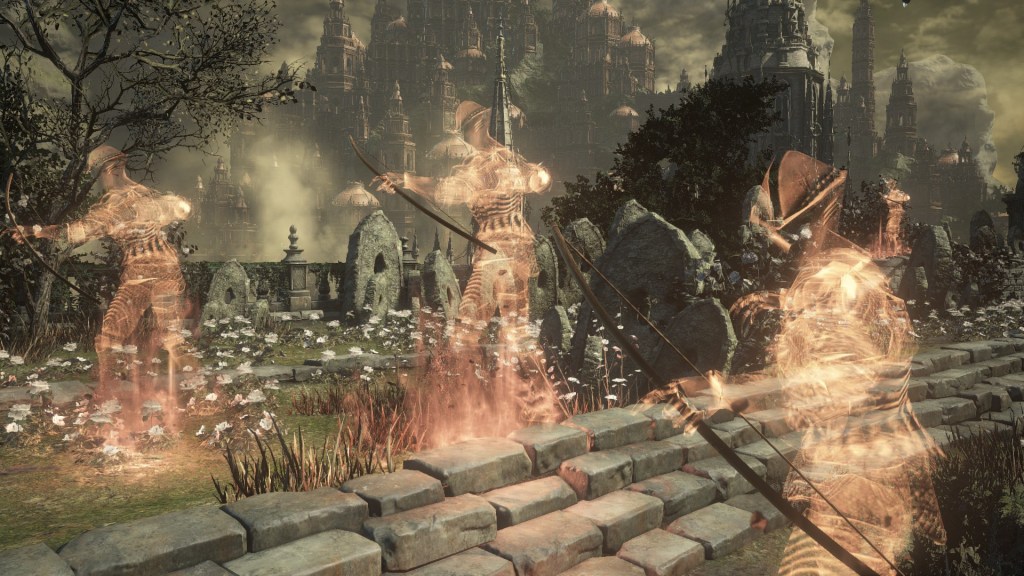
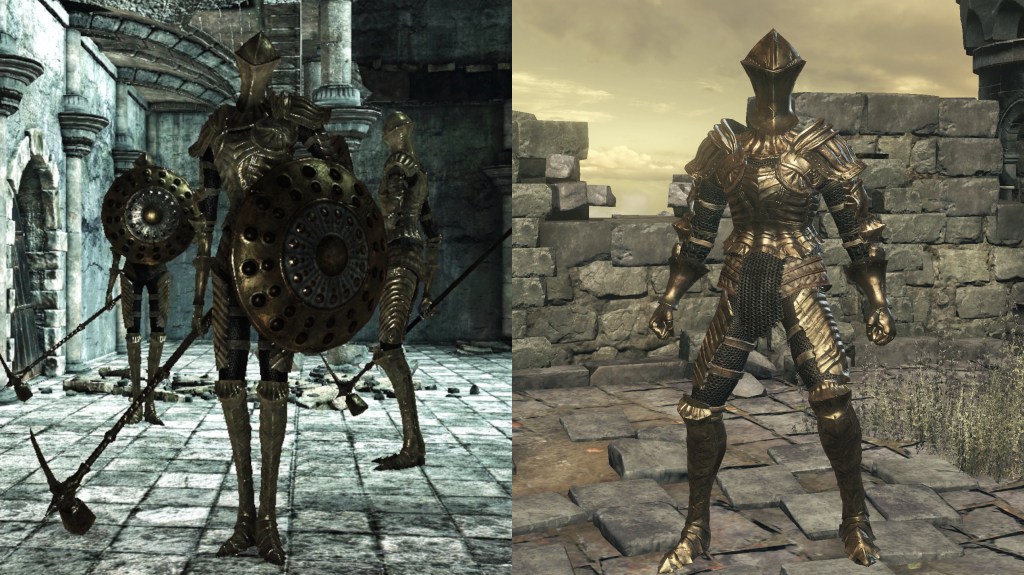
Helmet of an order of knights who visited the Ringed Capital by royal command long ago.
It is said that they who sought the Dark Soul were instead met with crushing defeat and became part of the giant judge’s contract.
The order of knights never to return eventually became a dark legend and served as the motif of a certain golem. And now, only that name remains.
Suffice to say, the adjudicators have been dealing with the Ringed City’s irregular visitors accordingly. Not everyone was given much of a choice with the pact. Conversely, not everyone ended up in a contract either. The Harald Legion also sought the Dark Soul once. Unlike the Undead Legion of Farron, this “legion” (戦士団) isn’t referencing a military troop (隊) but a group of warriors evocative of chivalric orders (騎士団) in different countries. Still, the fact that they are an order of warriors, not knights, indicates that they are an independent military unit unaligned with a specific nation, much like the warriors of Farron or Havel. For the latter, they were united as Abyss Watchers or adherents to their god. What then separates the former from sellswords? Maybe a divine mandate. Although not easy to spy in their current state, their weapons and armor are completely gilded, complimented by deep red mantles and pteruges. Combined, the gold and red fit in with devotees to fire and light. With that in mind, Harald may be a kind of holy order bearing antipathy for the Dark.
Large curved sword applied with a gold design of the Harald Warriors who once sought the Dark Soul.
It sank into the Dark with the warrior, so up to half of the blade has eroded.
If so, then the warriors, each and all god-fearing men, must have sought the Dark Soul to destroy it and the Dark with it. Rather than join the holy knights of the Way of White and be limited by their dictates, they established their own, secular force committed solely to exterminating the Abyss, similar to the Watchers. But contrasting the Undead Legion, who targeted the symptoms, the Harald Legion went for the source. Yet just as Farron honed feeble Undead into kings, Harald organized dedicated men into an impressive army. Harald warriors wear a mix of scale, leather, plate, and chain mail armor along with a hefty curved sword. The Germanic name Harald means “war chief” and they are portrayed larger than most enemies in-game, so the developers are most likely conveying them as the “strongest” warriors of their day, much like the Berenike Knights in DS1. Whether Harald refers to the order’s homeland, founder, or something else, it apparently became the name for those who reviled the Dark with extreme prejudice. And eventually, they found the home of the sinful soul plaguing man.
However, in an ironic twist of fate, they would succumb to that darkness they sought. While no Harald warrior is part of the giant’s pact — a testament to their strength and resilience while exploring the capital — the group was ultimately thwarted by the abyssal swamp. Perhaps seeing the Abyss slowly consuming the city, the Legion felt compelled to combat it. Either way, the warriors found themselves sinking with the buildings like some others, the ravenous depths surely happy to gorge on such mighty souls. The legionnaires’ bodies were consumed along with their equipment; weapons half-corroded, leather melted, metal bloated to laughably rotund proportions by dark tendrils bursting out from inside. If that wasn’t enough, what remains has been reanimated by the Abyss. The corrupted warriors dredge themselves up from the depths headless, the humanity possessing the husks flaring out the neck — their weak point, naturally, easily slain with a single plunging attack from above. The majority now roam the Ringed City mindlessly wreaking havoc, no different from your standard Hollow.
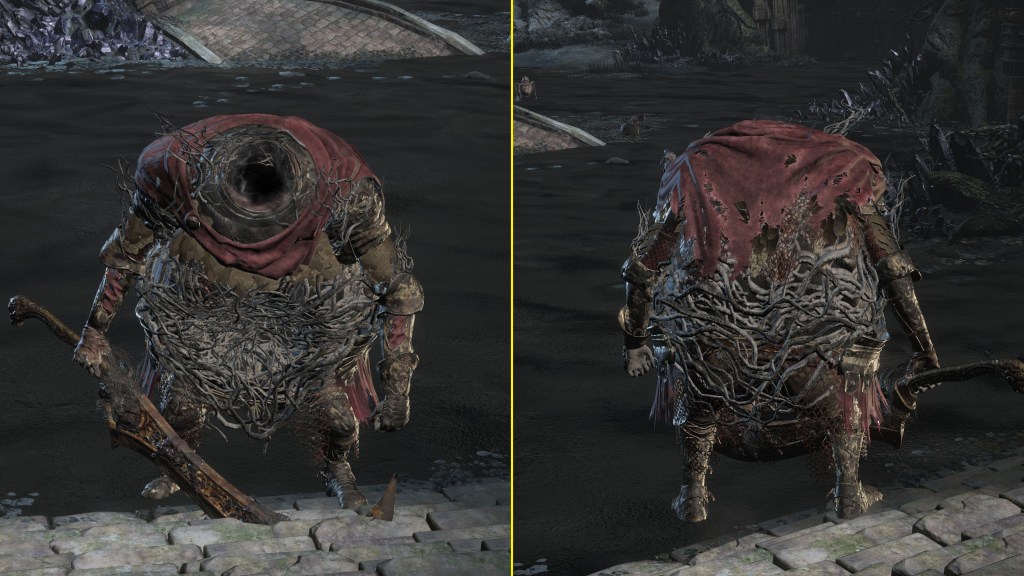
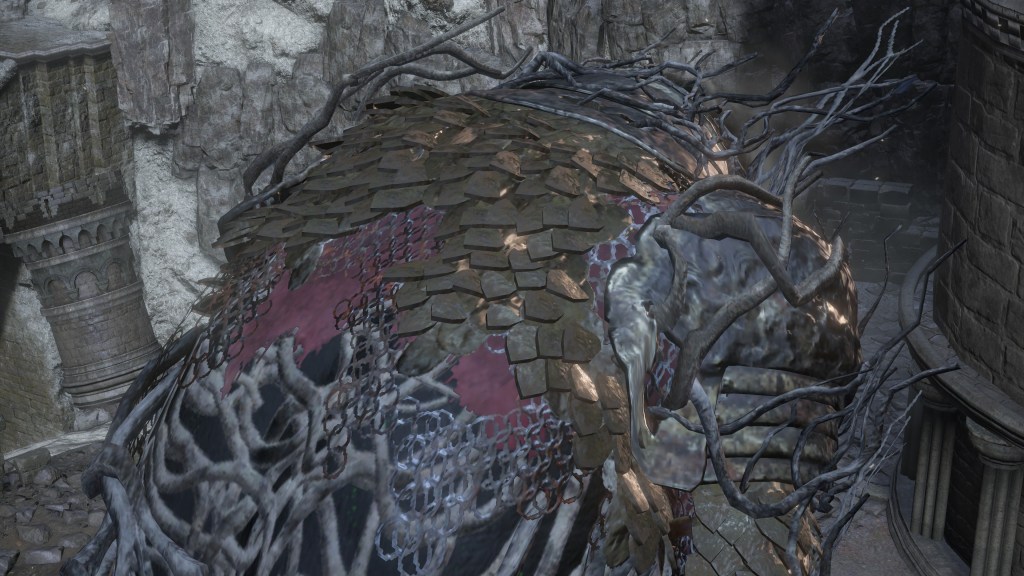
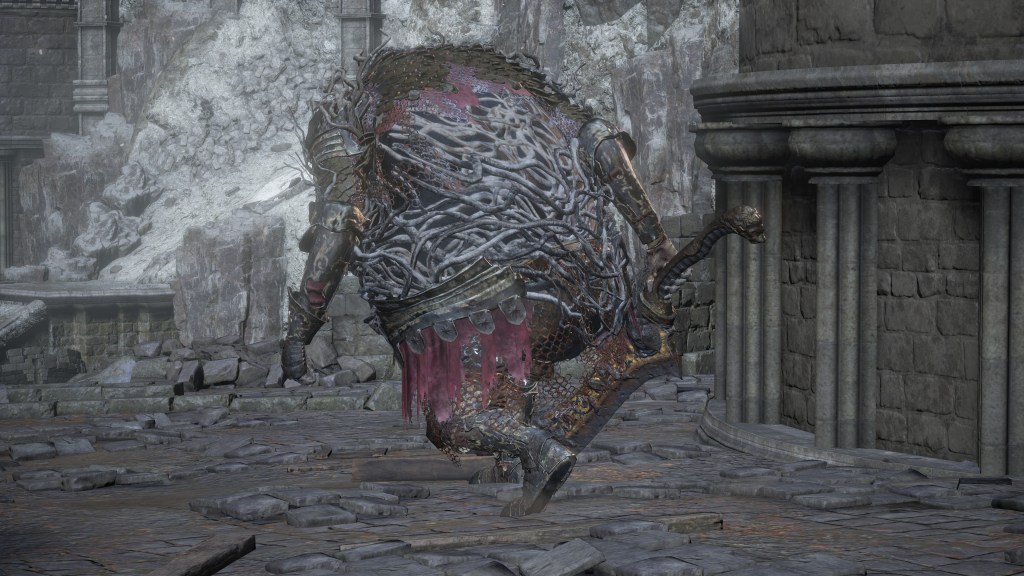
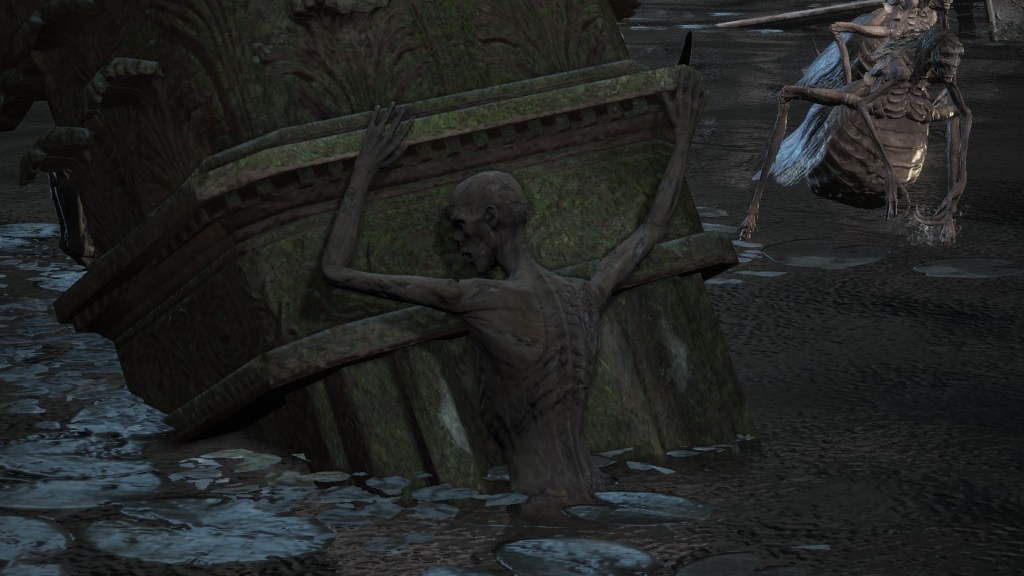
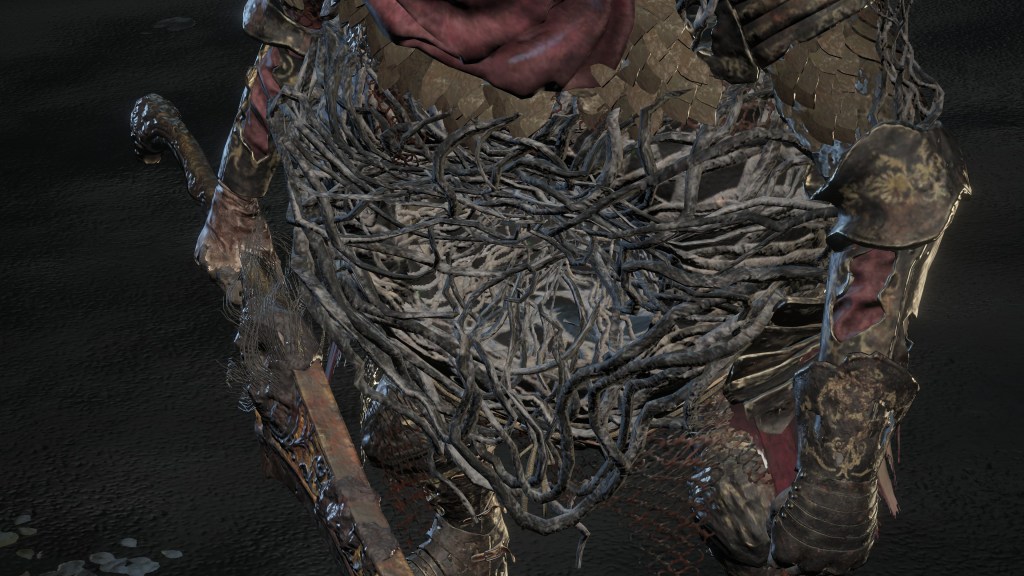
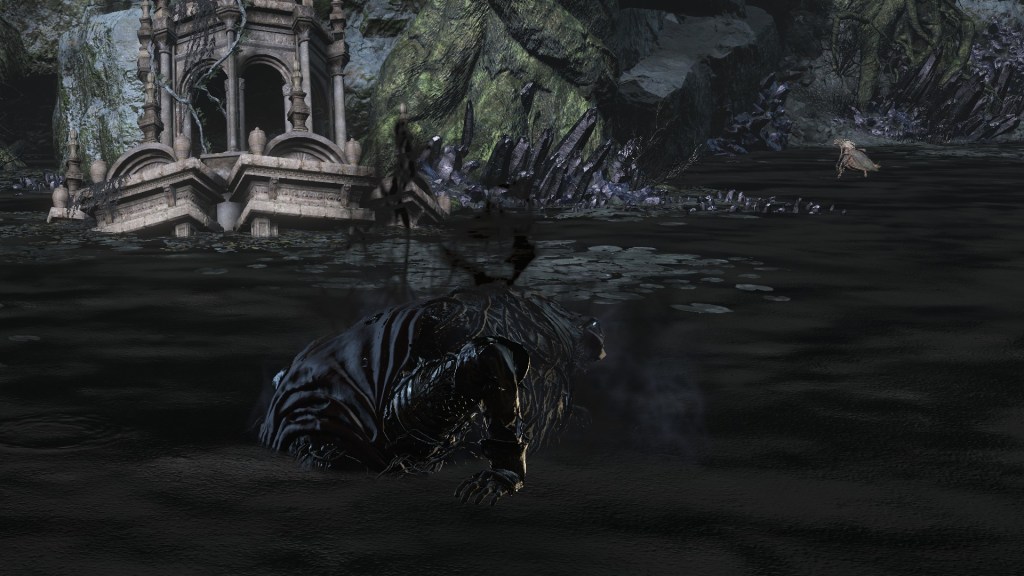
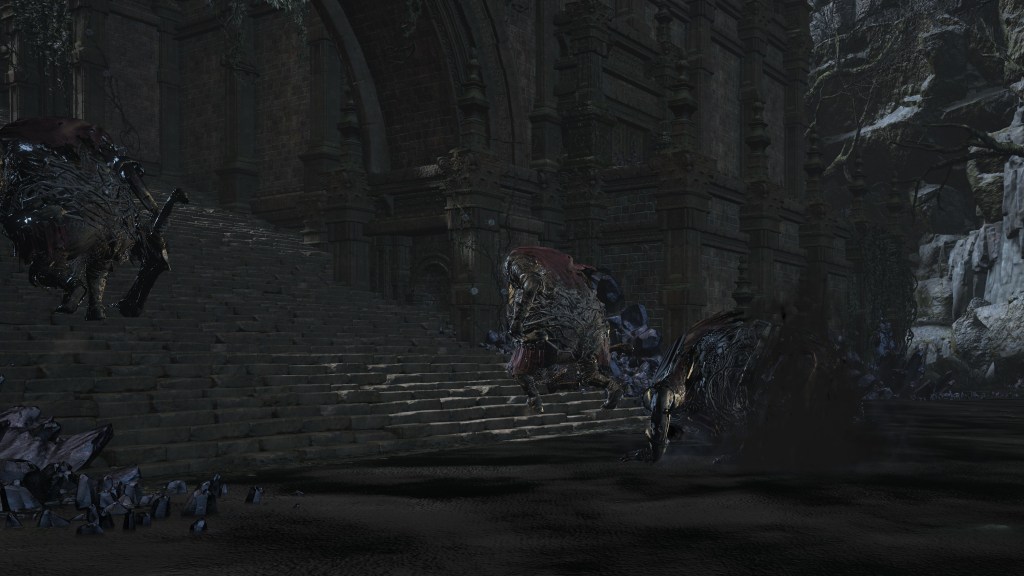
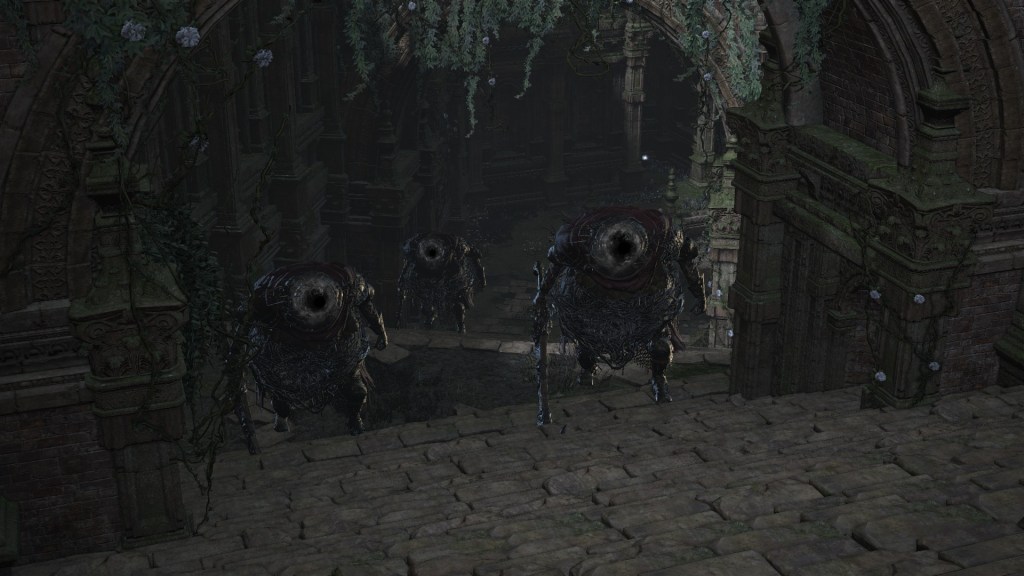
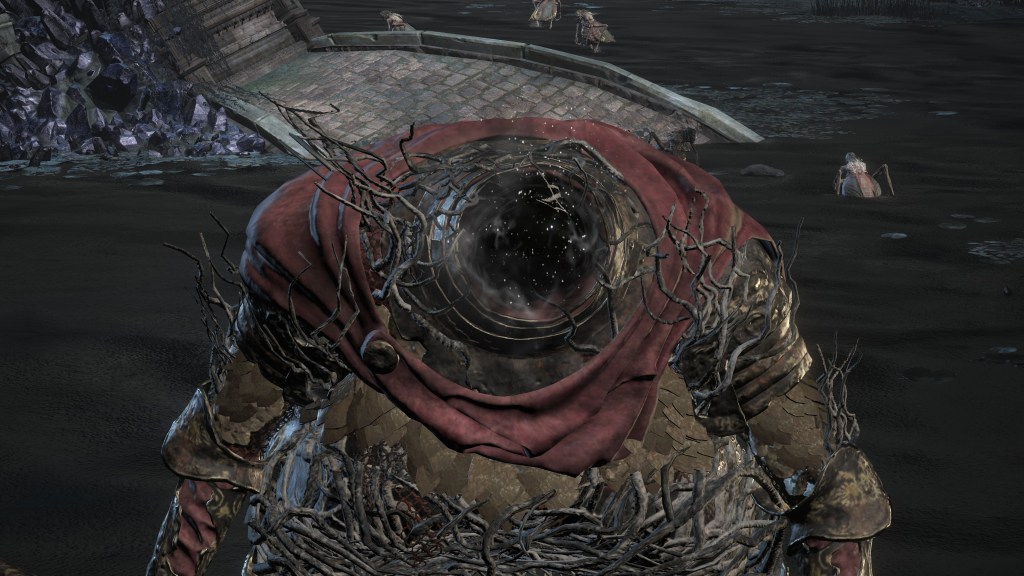
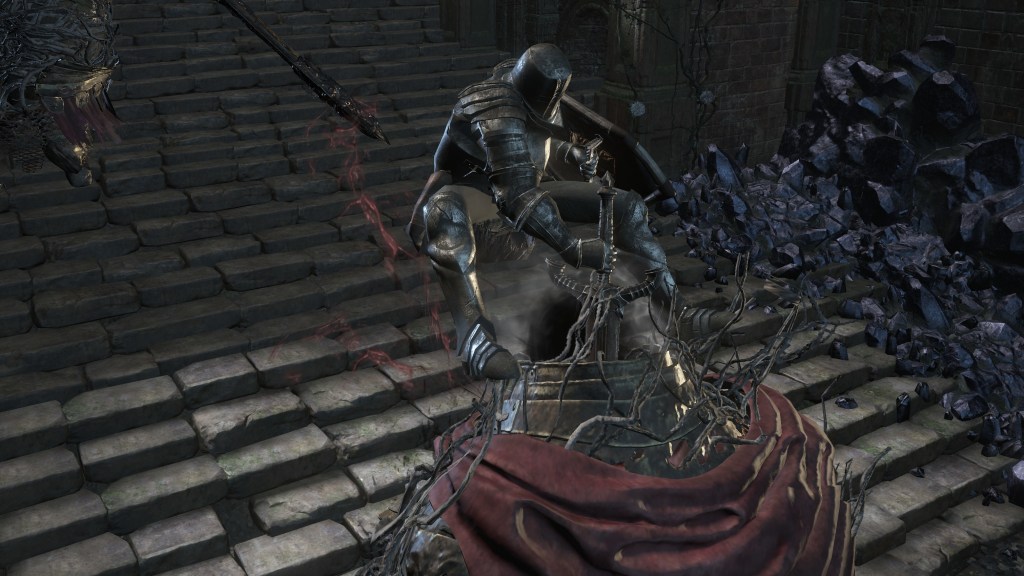
Gauntlets of the Harald Warriors who once sought the Dark Soul.
It sank into the Dark along with the warriors, so the leather parts are half-melted and lost and the metal parts have begun an unsightly bloat.
Armor of the Harald Warriors who once sought the Dark Soul.
It sank into the Dark along with the warriors, so completely became an unsightly mass, bloating the cavities. It will never suit a decent person’s physique.
In every case, these soul seekers seem to have exploited holes in the divine envoy system. The Ringed City Hollow assumes that we seek the Dark Soul because of other “pretenders” like us. We aren’t the first to make use of a stolen envoy banner. The former king has probably witnessed countless humans be dropped off by the batwing demons, only to ask about where to find the source of humanity. It is only natural that he doubt any visiting human be loyal to the gods when all have come to obtain heresy — why else infiltrate the “cesspool” medials created? No matter how many parties he actually watched pass by, it is clear that Anor Londo didn’t account for non-envoys taking advantage of the carriers’ blind obedience to the system. None had succeeded in reaching Filianore before us, but it does show how the capital’s quarantine wasn’t as airtight as the Church initially imagined. The infiltrators added just one more burden on an already strained security.
Yes, yes, it seems. Ones like you can’t be a messenger of the gods. And I know the objective of ones like you… You want the Dark Soul, yes? Who’d come to this cesspool otherwise? Don’t hide it. I am your ally… Heeheehee… Heeheeheehee.
Hey, you were brought by them, yes? Are you a messenger of the gods? Or are you just pretending?
… Heehee, heeheehee. A lie. An obvious lie. Ones like you can’t be a messenger of the gods.
By the time we arrived, all the Ringed Knights’ holy spears have broken, the Hollows carrying only the fragmented heads as they continue with their duty utilizing the embers of their sealed dark armaments. Despite these years maintaining some semblance of order, the covenant may as well be forgotten. So much time has passed since the Darksign appeared in man, at least one of the giant adjudicators’ holy waters from Gwynevere has gone cold. The dung pies looted from the obedient citizens indicates that the Hollows have done nothing but stave off the curse this entire period, not even taking the time to clean themselves. Even the kings have suffered for this, their black blood completely drying up to a sooty dust. We can assume this peculiar development the result of their inaction — still blood dries, and flowing blood circulates with activity. Denying their nature for so long, it has withered with them, their sloth solidified. Pinning all their hopes on equally idle Filianore, the royalty were really no more than puppets at the end of the day.
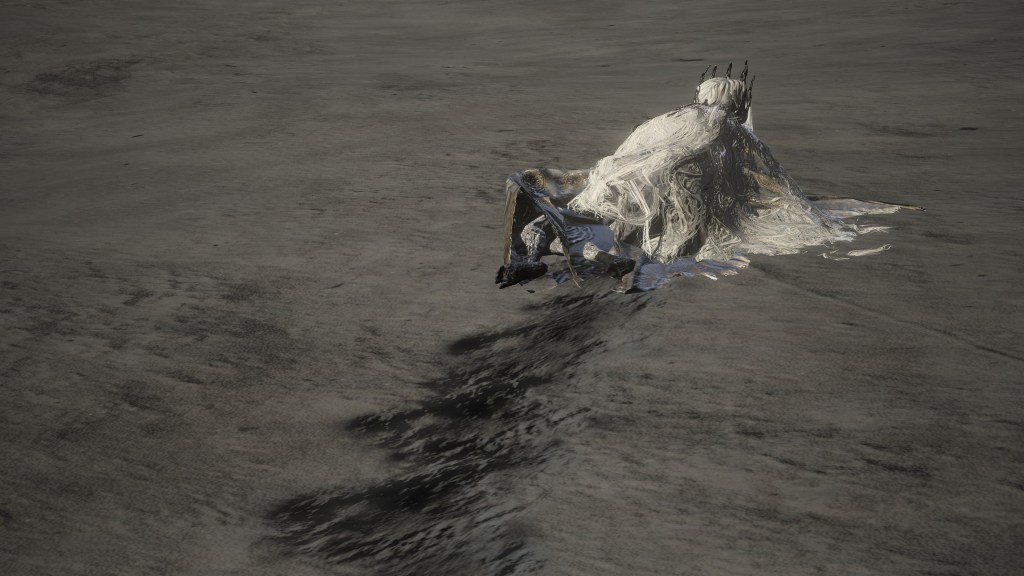
Coming Together
With the emergence of the Dreg Heap, the Ringed City has become more than just an island in a sea of ash. The Abyss remains strong within its walls, but the drift has widened its extent despite the quarantine. The Harald Legion are a prime example, legionnaires dragging themselves out of the abyssal swamp mostly buried in ash at the Dreg Heap same as the murkmen. This apparently includes the poison swamp of Earthen Peak, where not only are the warriors more numerous; there is even a corpse carrying their weapon. It is possible that the Abyss absorbed the poison in the land and turned green. The swamp doesn’t appear to be the product of mining like in DS2, where the poison released as a gas. At the same time, the poison mined was collected in liquid form, so there may just be pockets of the Abyss beneath the green pool. Nonetheless, it suggests that the Legion largely concentrated in the Ringed City sunk into one swamp only to seldom pop out of another, physically separate. These aren’t exceptions either, since the Legionnaires always possess ordinary dark gems, not deep gems like the murkmen.
Travel between the Abyss swamps isn’t unimaginable. Despite the Abyss outside stagnating into the Deep, it is nevertheless Dark, and Dark has dominion over space — it is no surprise that the two remain connected. This metaphysical link goes both ways, the Ringed City swamp also bringing in its fair share of new arrivals. One is the Dragonslayer Armour. After its defeat at our hands, the armor was apparently left discarded until the Dreg Heap assimilated Lothric, sinking into the black swamp. Evidently, even after losing its boss soul, there was still enough of the old hunter’s spirit left to reignite, the Abyss reviving the armor just like the pilgrim butterflies. By the time we arrive, it has already dispatched a number of Harald warriors rising in the vicinity in accordance with its memories of dragonslaying. Clearly, relatively small things, the size of persons, can travel across spacetime via the Abyss. Whether this is because of the Dreg Heap or was always a possibility with different manifestations of Dark, the result is some of the drift bleeding into the Ringed City.
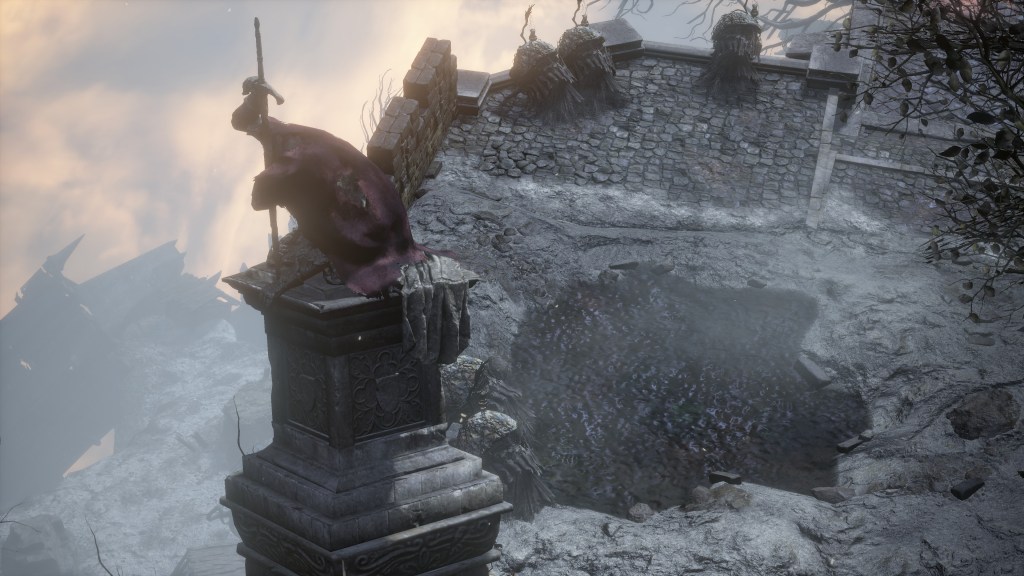
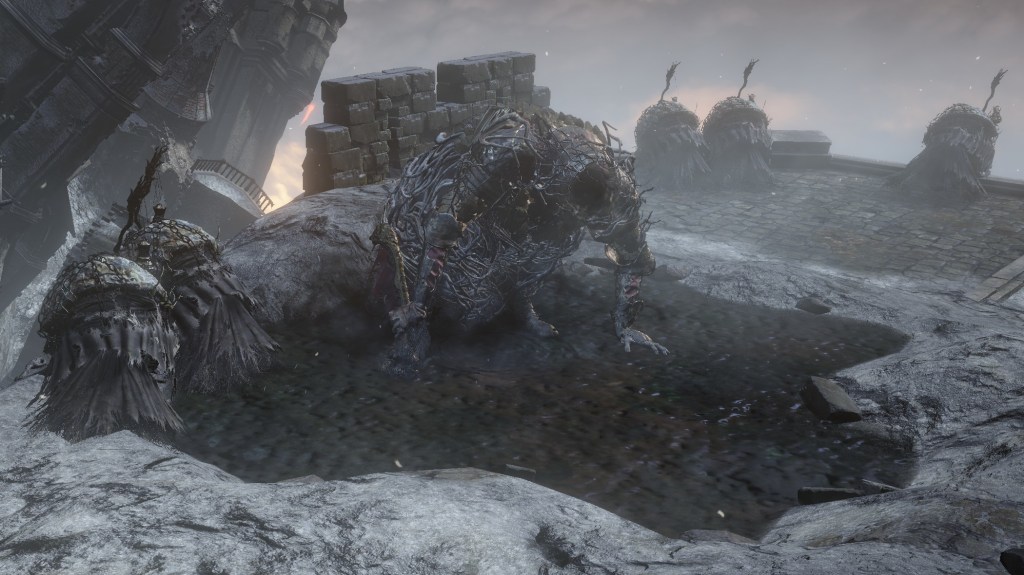
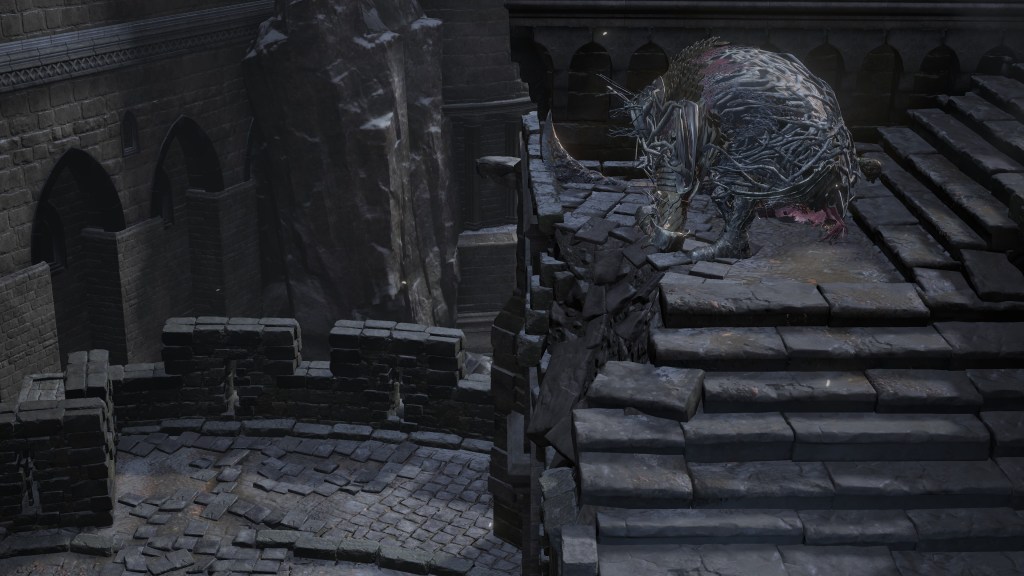
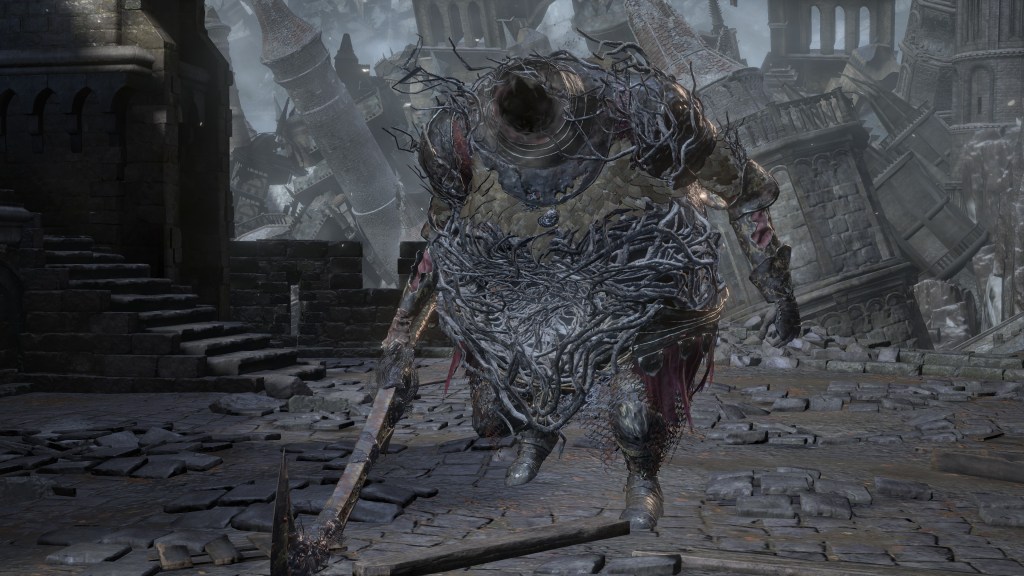
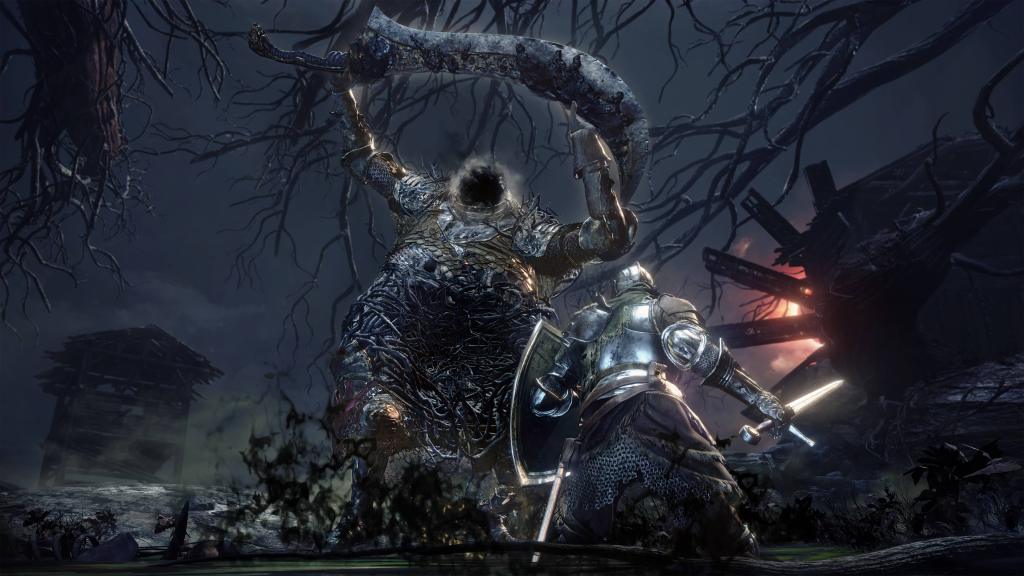
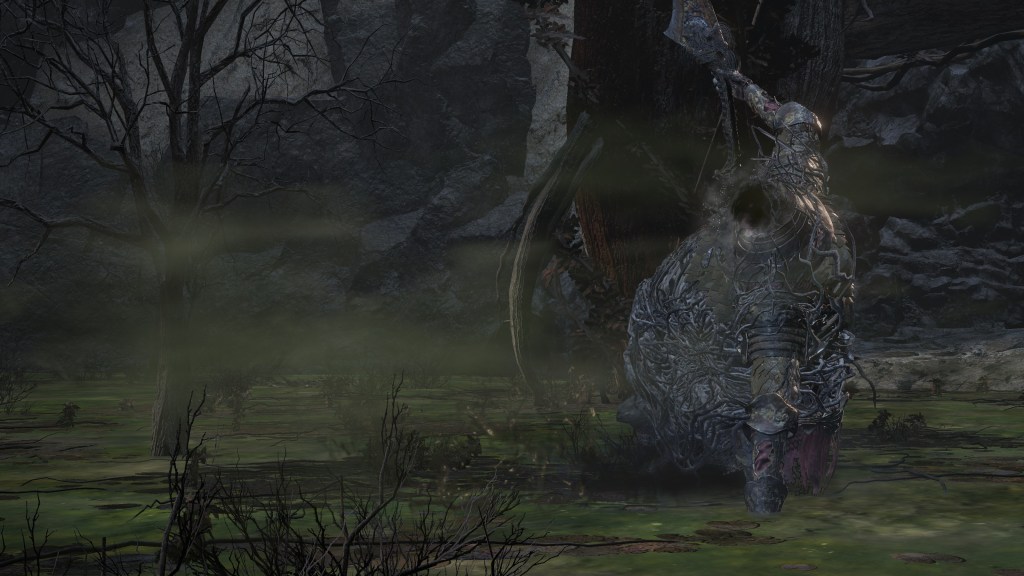
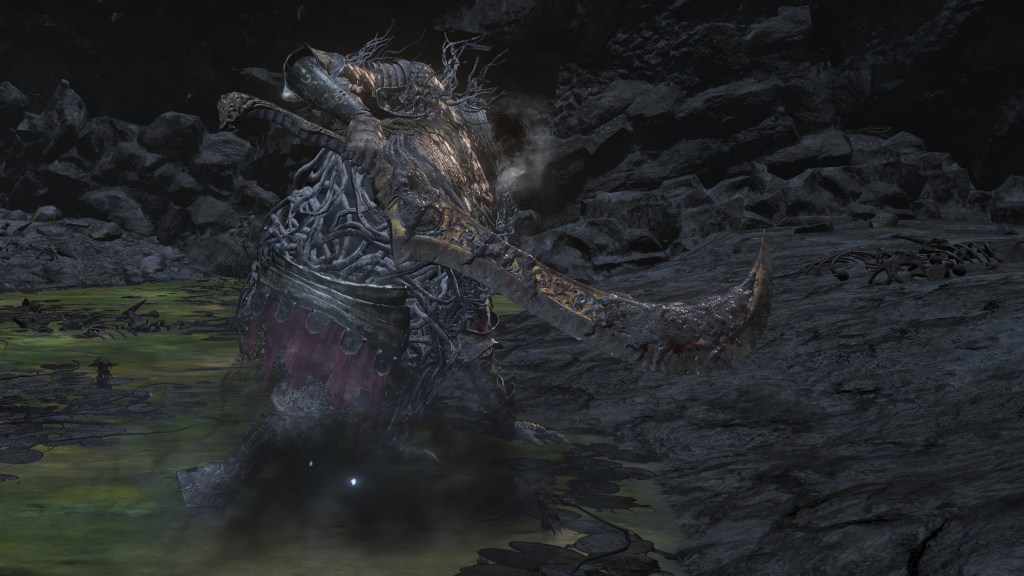
Boorish and heavy melted iron armor. Remnants of an old dragon-hunter.
It which had once been defeated by a hero of ash in Lothric was left for a long time, slipped down the Abyss swamp, and was once again controlled by memories of the hunt.
Still, the capital’s swamp remains unique, and not just for avoiding stagnation. White-faced insects resembling locusts arise from that Abyss and that Abyss alone. Item descriptions affirm that these bugs “gushed forth” from the swamp, and they are by their own admission unwanted by fire, making them spawn of the Abyss. However, they aren’t affected by the Wolf Knight’s Greatsword like other Dark-aligned entities. Rather than manifest any signs of abyssal power or corruption, the locusts showcase mastery of standard soul sorcery. Without a catalyst, they can form souls into a local branch to skewer foes. This means that the power is innate, hence their severed arm is usable as the sorcery catalyst. This is evident by them producing similar pale magical body fluids as the failed-to-be Seath experiments, which the locusts seem to shoot out of their abdomens — though the sticky white stuff from this attack functions no different from flammable candle wax. Overall, these fiends of the swamp appear to be born of moonlight more than Dark.
Desiccated right arm of a white-faced insect that gushed forth from the Abyss swamp. Somehow becomes a sorcery catalyst.
The white-faced insects should be preachers who invite man to the Dark but are now nothing but things that have forgotten themselves for their appetite. Isn’t it so deplorable?
Battle art is “Meal Branch”. Form a pointed tree branch via souls and skewer prey. Also, this battle art can be used continuously.
This in itself isn’t odd. DS1 had already established creatures of the Abyss that weren’t of an overt Dark nature. Just as a chaos demon doesn’t necessarily radiate the power of flame, an insect spawned from the abyssal swamp doesn’t need to manifest humanity. In the locusts’ case, their nature may be reflective of specific intent. Despite their insectoid form, their stark white faces more closely resemble a pygmy, with grey hair to complement their withered arms and bipedal stance. One might almost mistake them for old men-turned-locusts, and that might be the subtle intention behind their creation. Pale faces were historically associated with beauty and status in Japanese culture, elites using white makeup to embellish themselves. For the locusts to be born with such a trait, they must have been created to attract humans and impress authority as they spoke despite their alien appearance. And, indeed, they were born to preach.
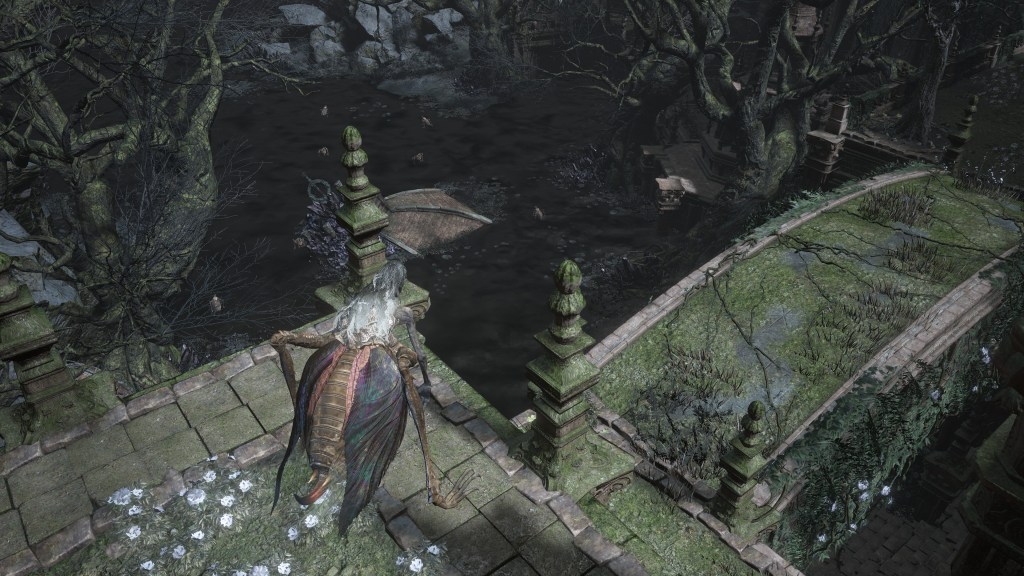
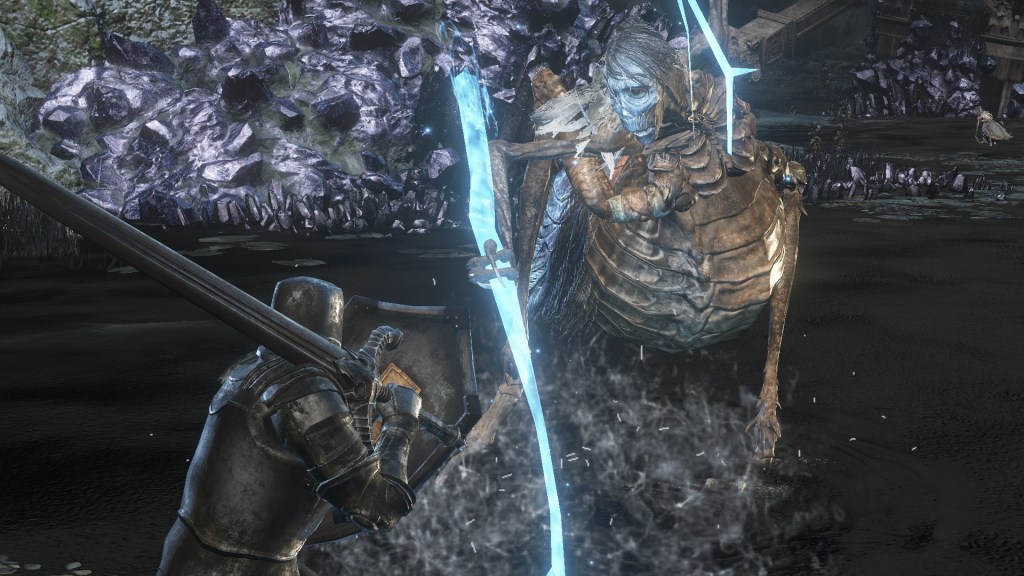

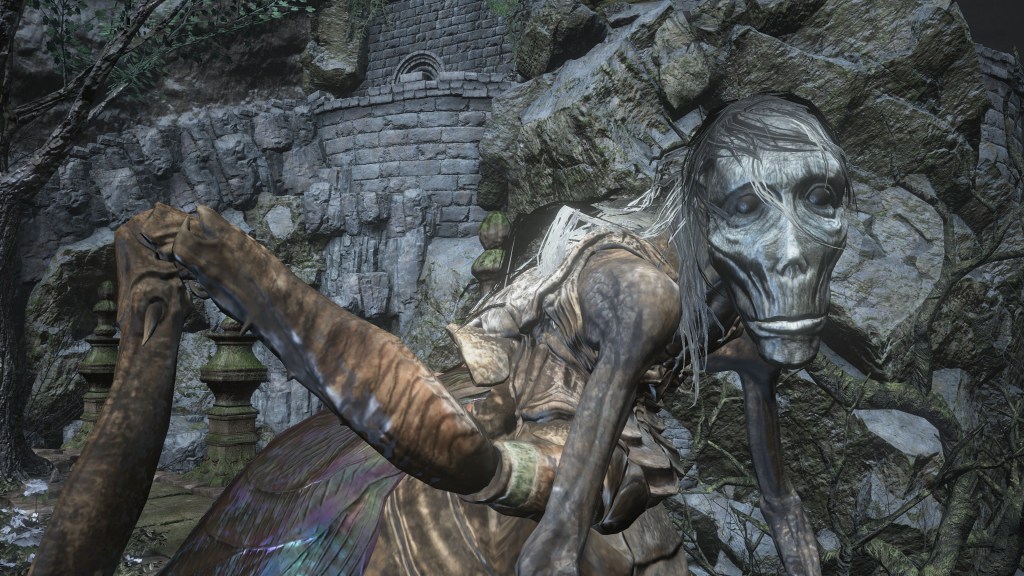
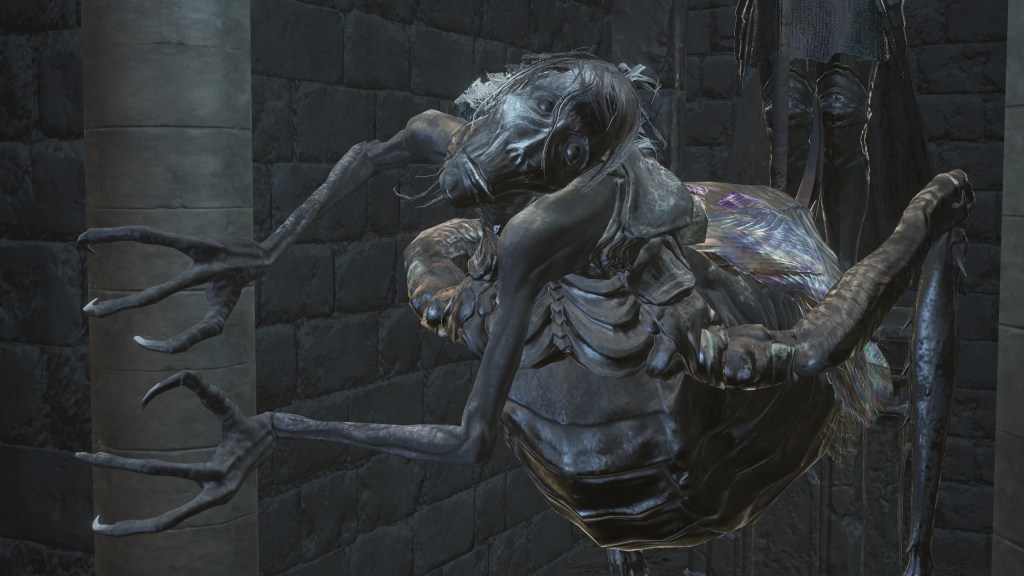
Every non-hostile locust eloquently urges us to not fear the Dark and instead accept the hour as mealtime as is in its nature. This is knowledge they are born with, as we can hear even the smallest locusts — presumably the youngest — repeating their mantra. Item descriptions likewise make a point that these insects “should” be inviting man to the Dark, the preachers illustrating the consequences of mankind denying their humanity with examples. The first points to the city full of anti-Dark sentiment, fire suppressing man all the more harshly. Subsequent preachers describe the failings of Orbeck, Sirris, Irina, and Eygon. This highlights their intelligence beyond sorcery. But more than that, how could locusts born in the Ringed City have knowledge of these individuals, many of whom are liable to be dead already by this point? Because they inherited it from the collective memory of the Abyss, the mass of humanity essentially a database for every man assimilated in the swamp both inside and outside the capital’s walls. Simply put, the Abyss created the locusts to be its advocates.
This isn’t to say that the locusts’ creation was the result of intelligent design. Everything from the timing to the location to the physical shape to the mental development was in all likelihood instinctual, just like with the pus of man. The Dark has been held back for so long, and its natural state is closer at hand than ever before. It is to be expected that where the Abyss is densest, it is also most active. As it unconsciously consumes the Ringed City, it is also producing entities embodying that desire to eat — but to eat with a purpose to swallow the entire world in what we call the Age of Dark. If moonlight is representative of an earth affected by fire, then the locusts are an outgrowth of the Abyss’ collective desire to reach out to those affected who are nonetheless unwanted. Man, who each possess a fragment of that collective Dark, is not following that will properly. In the grander scheme of things, the preachers are a simple mechanism to draw those dark souls back in line with the whole.
One can see this in the philosophical ravings. The first preacher highlights how we are obviously alike, unwanted by flame. The White Preacher Head elaborates on this in its description, noting how both man and locust gushed forth from the Abyss and do not desire the Age of Fire. This is true on multiple levels. On the one hand, a man is arguably in darkness from the moment he is conceived in the womb. That burgeoning new soul is born from that darkness and into the light. In a more abstract sense, every man is derived from their humanity defining them from other races. And all bipedal races, including man, were originally born in a world of darkness, ignorant of fire until happening upon it. The “Abyss” is our more natural friend than fire ever was. We only think otherwise because, as Aldia regrets, of a lie orchestrated by those we call gods. In their arrogance, all but one of the medials rejected the path available to them. The trueborn heirs to the final age need not share their tragic fate.
There are those who are unwanted by fire. I mean your kind, and ours. Look at this town! We are fellows, as clear as looking into the other’s eyes. So don’t fear the Dark, friend. It is time for our meal.
Hollowed-out head of a white-faced insect that gushed forth from the Abyss swamp.
The white-faced insects should be preachers who invite man to the Dark but are now nothing but things that have forgotten themselves for their appetite. One who will inherit the righteous path is needed.
Surely, that would be you, right? Gushing forth from the Abyss and not wanting the Age of Fire. The insects and man are the same. Not to mention, if you wear it, won’t you have the same appearance, too?
But time is long and few will listen. While we can come across a handful of locusts who still do their preaching, the overwhelming majority have succumbed to their appetite, single-mindedly feasting on any souls within arm’s reach. Some scrounge for scraps of Disparity from the dark crystals, others take it from their prospective flock. Based on the souls we can loot from their corpse, they have already dined on unknown travelers, nameless soldiers, and weary warriors. The only exception appears to be each other, the larger locusts leading their smaller brethren like a mother hen to her chicks. That may be why we see someone sitting in the swamp with a hollowed-out head of a locust to wear, trying to disguise himself as he crossed the Abyss — going by the ambush when we approach the body, it didn’t work. Regardless, the text for the White Preacher Head half-jokingly insists that we don it to fully become like the locusts and walk the “righteous path” preaching in their place.
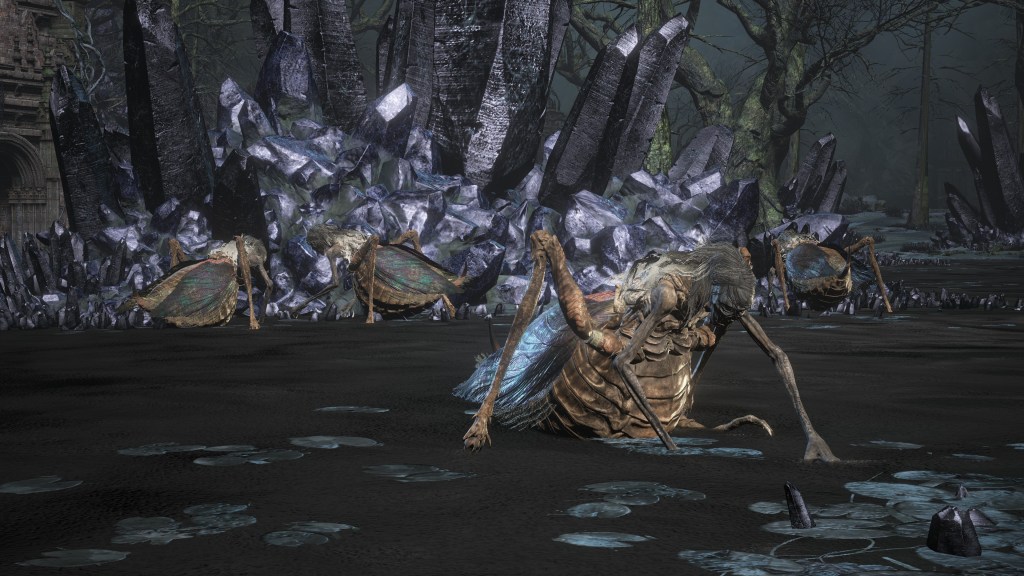
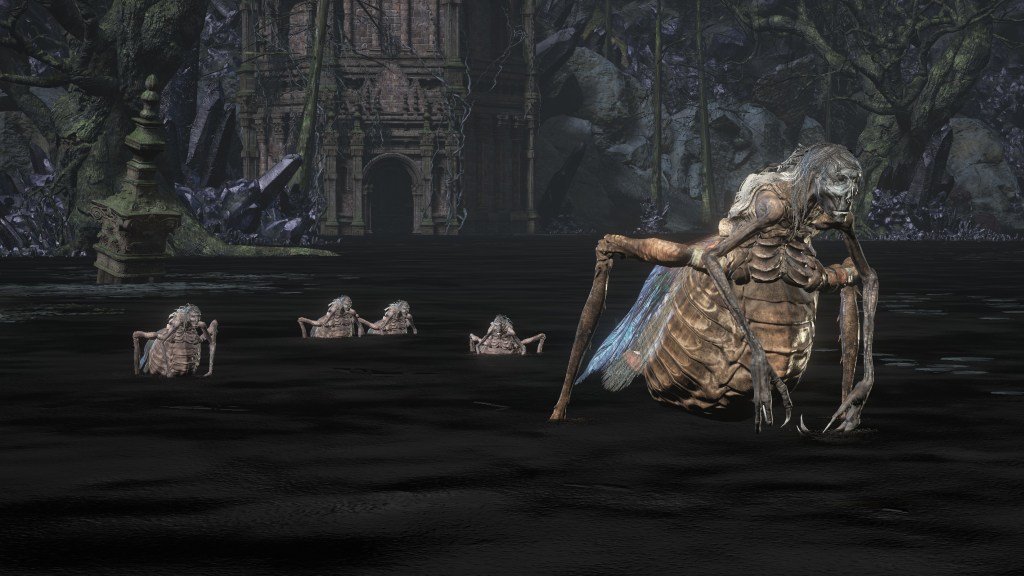
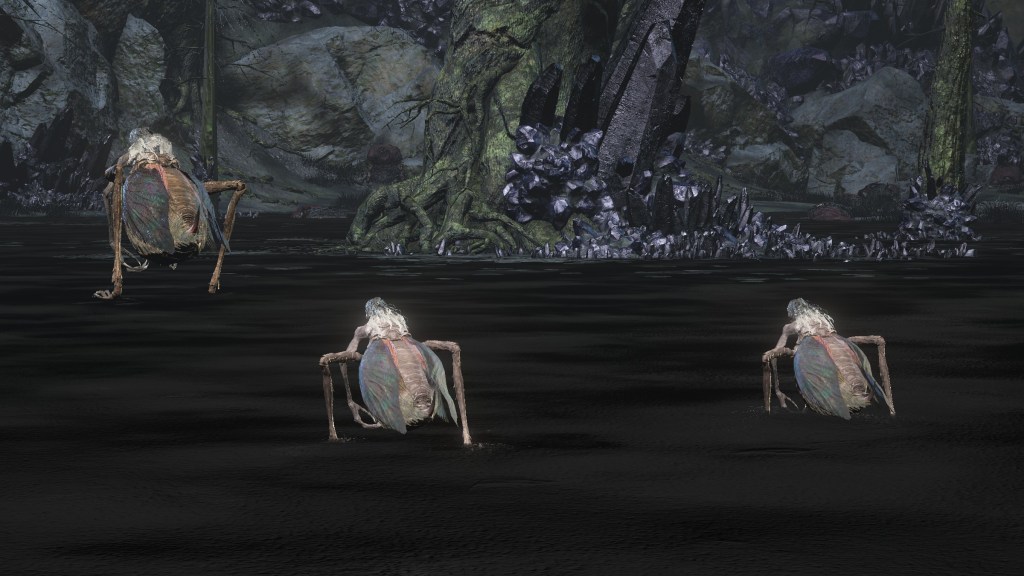
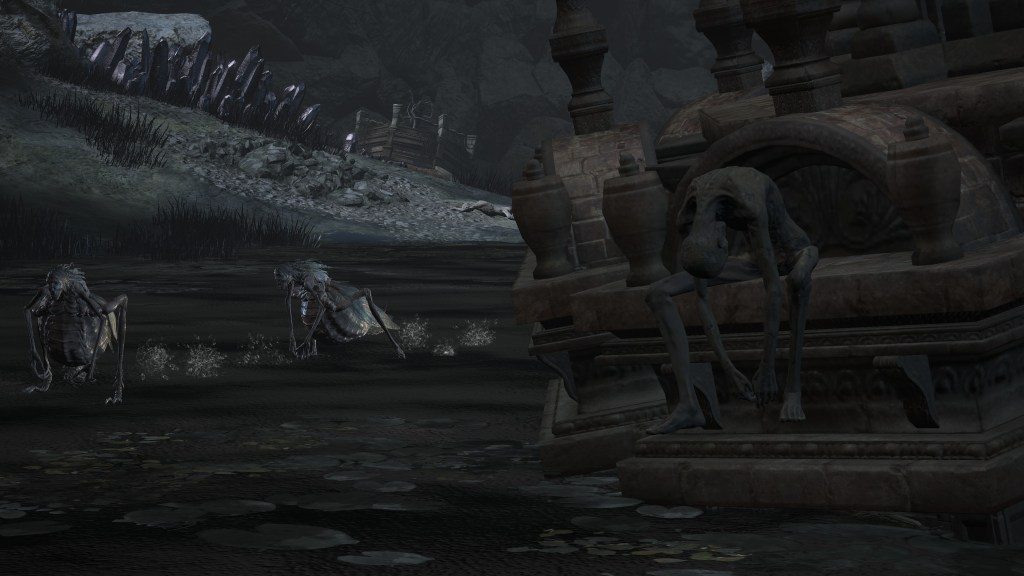
Perhaps their loss of ego was inevitable. When recounting Orbeck, one preacher describes how he thought to answer the Dark with knowledge, only to know ignorance by the end. The locust mocks his efforts, citing how obvious the outcome was from the fact that knowledge didn’t exist at the world’s dark start — of course it wouldn’t exist when it returned to Dark at the end. True enough, life was ignorant about the universe when it became shrouded in shadow where fire wasn’t. Only after fire grew to consume “society” did life become similarly enlightened. And now, as fire wanes and the universe heads toward the Age of Dark in some form, life knows naught about its state once more. In that case, isn’t the Dark’s attempts to educate about itself equally fated to be futile? Orbeck tries to learn about a world passed and soon to be irrelevant, and the preachers try to enlighten men about that incomprehensible present yet to come. If ignorance is our destiny, then knowledge of why we should eat is pointless. The Ringed City should simply devour and be devoured, as is our human nature.
There was someone who answered the Dark with knowledge. And in the end, knew ignorance. It didn’t exist at the beginning of the world and won’t exist at the end. Is that not obvious?
 Lokey Lore