
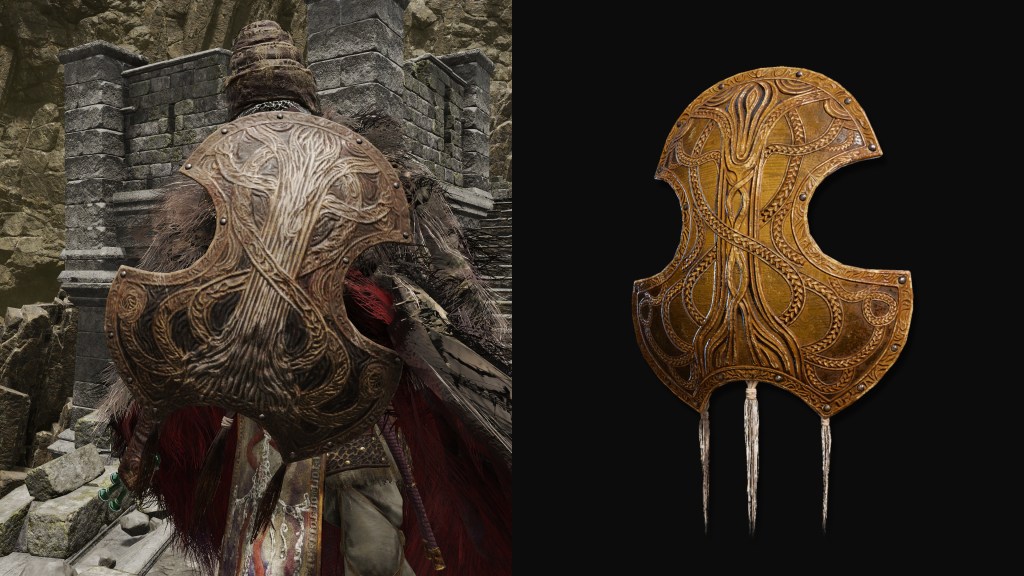
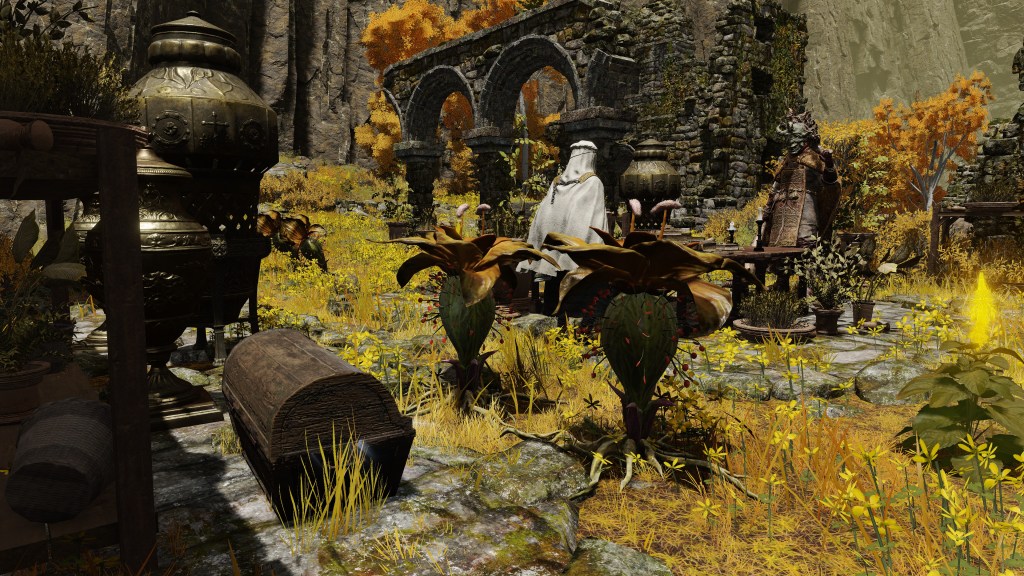
The description to perfume bottles claims that Leyndell’s secret art became known in the various Lands Between after their service in the Shattering. No one uses perfuming outside Altus except perfumers, and neither do we collect perfume bottles anywhere off the plateau save in Caelid where we find a traveling perfumer. Therefore, knowing about perfuming must refer to the art being publicly performed outside the confines of the capital for the first time. We do witness that Leyndell’s soldiers deployed all across Altus carry Spark Aromatics, so the art was shared with the army. Meanwhile, proper perfumers journey around the other regions in solidarity with Tricia. The flower garden at the plateau’s fringe was insufficient to create a drug to remedy corruption. And so, in order to “save” Omen and misbegotten, some of her colleagues left on a journey for new flower gardens and aromatics to medicate them. Apparently, this practice only begun following the war, when they already adopted military-grade shields and the spark aromatic recipe preserved at the garden.
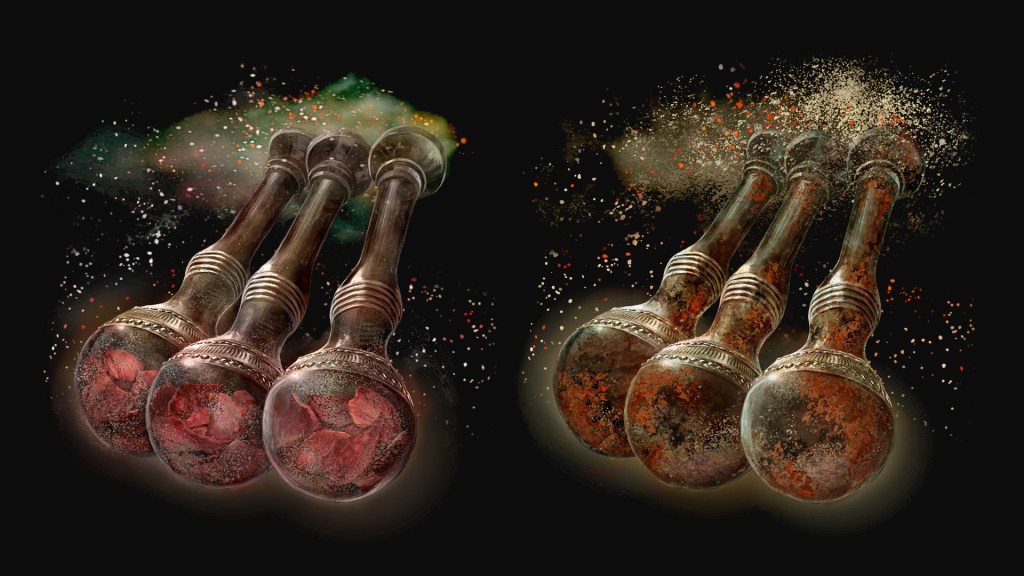
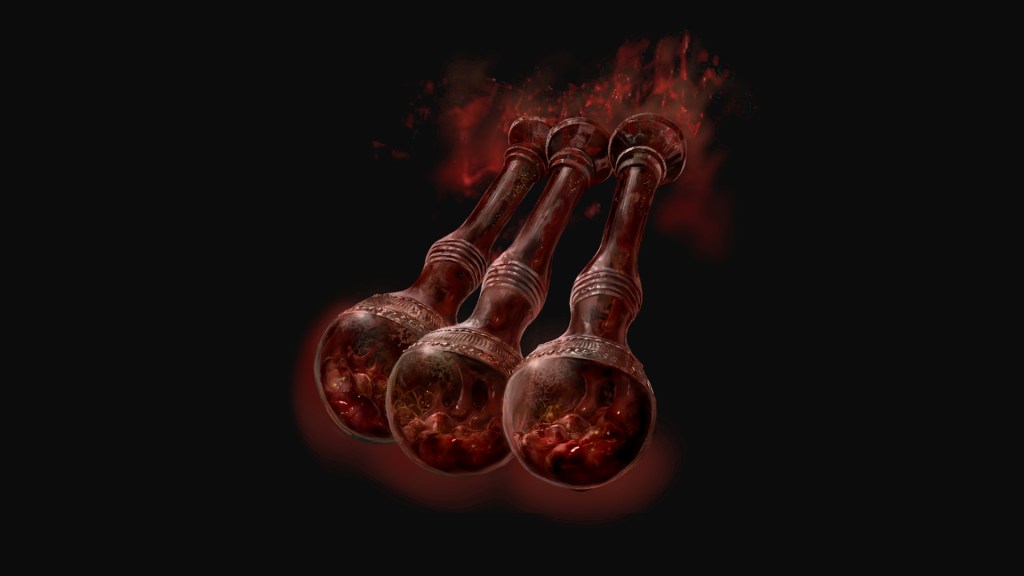
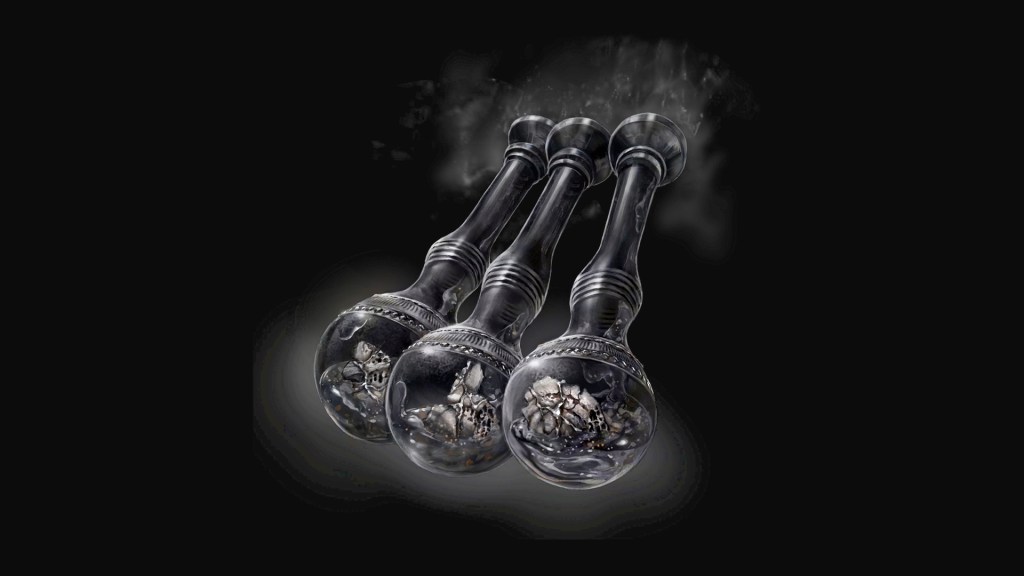
Glass bottle used by perfumers. It is used to seal various mixes of aromatic materials.
Container required for the crafting of perfume items.
Perfumes were once a secret art of the royal capital, but after the perfumers served in the Shattering War, it became known to the various Lands Between.
It is easy to see why certain perfumers suddenly took up traveling. In all the years before the Shattering, the priesthood had made no progress on this mission. Noble Tricia continues to dedicate herself to the corruption within her therapeutic grasp, but there are only so many experiments you can perform with the same materials. Now that their secret art had become part of the military arsenal, it was no longer much of a secret. Who cares if people in other lands witnessed or even received aid from perfuming? Word was sure to spread from those defeated remnants of the Second Defense of Leyndell anyway. Rather than try keeping up the mystique, it was more important to find and cultivate new materials for their medicine. This could even be justified to Morgott if needed, since anything found for medicine could also serve the war effort; the recipe book left in their laboratory does remind of this potential. For the sake of the Golden Order’s research and development, the priests retailored their aprons for comfort on long hikes and went on their way.





While abroad, we see that the perfumers went as far as the Street of Sages Ruin, all the perfume bottles and traveling uniforms located in that town of wisemen. Evidently, the travelers from the capital went to consult Sellia’s heretics about new or inventing things that could be done with the local flora. Things took a turn for the worse after the battle between Malenia and Radahn turned the fields of Aeonia into a swamp. Slowly or swiftly, the Scarlet Rot spread to the sages’ town, what residents didn’t perish becoming devotees to the Rot. These may have been the last faithful perfumers still journeying, considering that we find none alive. However, the collective’s efforts did produce good work. Poison Spraymist adds a poisonbloom to the Spark Aromatic recipe, mixing the perfume with saliva to spit out a toxic powder ignited into a spray with air exposure. This clearly borrows from the popular folk remedy to suck out venoms, the Spraymist’s description acknowledging how it was originally a remedy art. That was likely part of the knowledge which traveling perfumers picked up in the countryside.
Forbidden art of depraved perfumers. Crafting item using a perfume bottle.
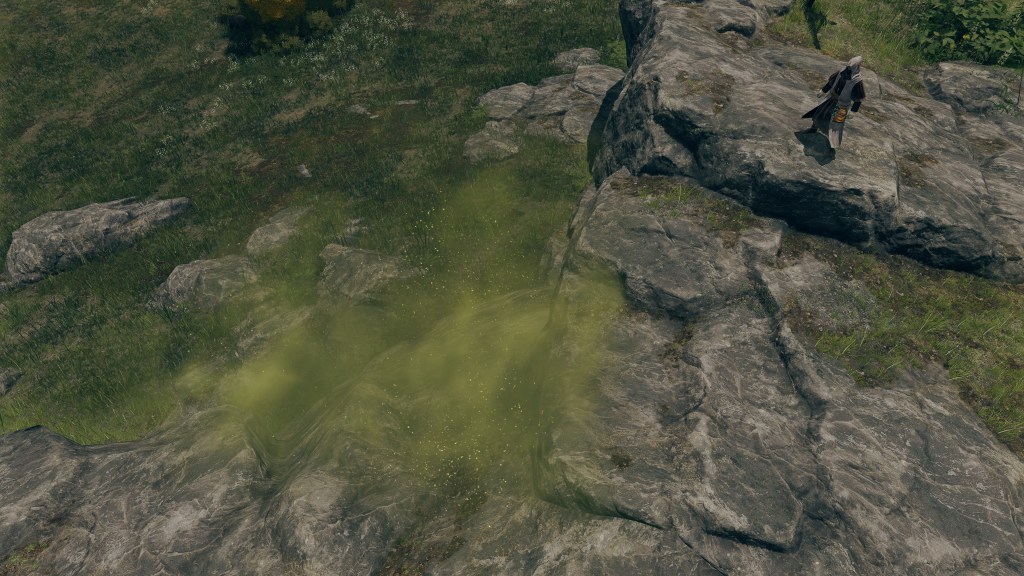
Consumes FP to spit poison powder. Poison powder accumulates poison.
One puts the perfume powder in the mouth, mixes it with saliva, and spits it out. It is said that originally that was a remedy art.
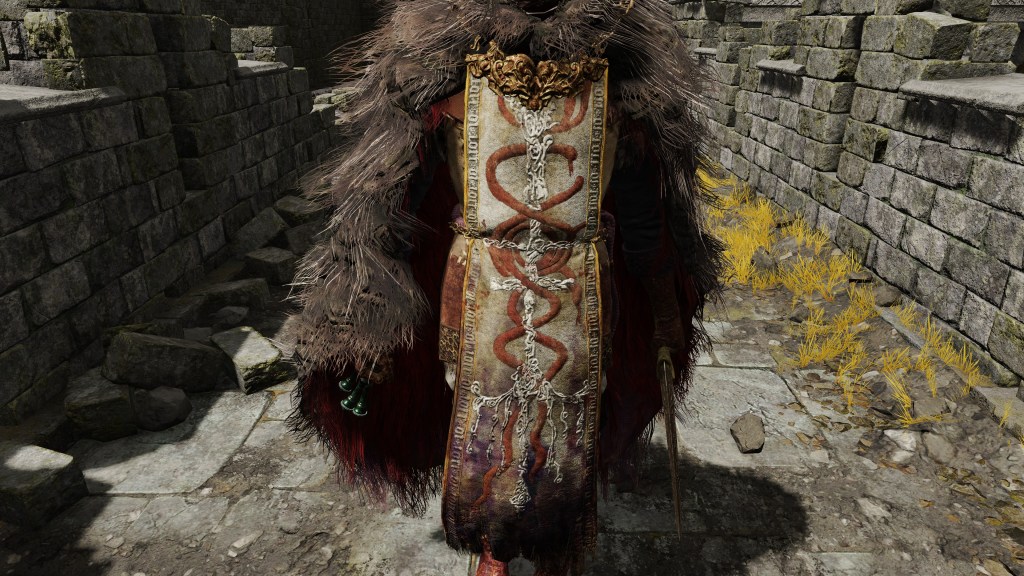
However, the fact that the remedy has become an art to attack betrays how these travelers forsook their mission for depravity. Indeed, a depraved perfumer is defined by their hazardous arts, harmful as much to themselves as to others because they ingest them. The aforementioned folk remedy is by itself a questionable reward for the risk, but intaking poison is nothing compared to strong acid powder. Acid Spraymist performs the same technique to corrode enemies’ weapons, the recipe grinding up a bunch of formic rocks instead of a poisonbloom. This implicates a perfumer in collecting the rocks the giant ants leave from the underground, and sure enough, we do purchase the recipe from a nomadic merchant camping in the Ainsel River where the ants have currently migrated. It is another dangerous work of these depraved, no doubt branched off from the faithful travelers. In the course of their work abroad, they came to curse the Erdtree as reflected in their new poison-stained aprons. That wasn’t inevitable, but perfumers apparently forbid these exact kinds of arts the depraved engage in.




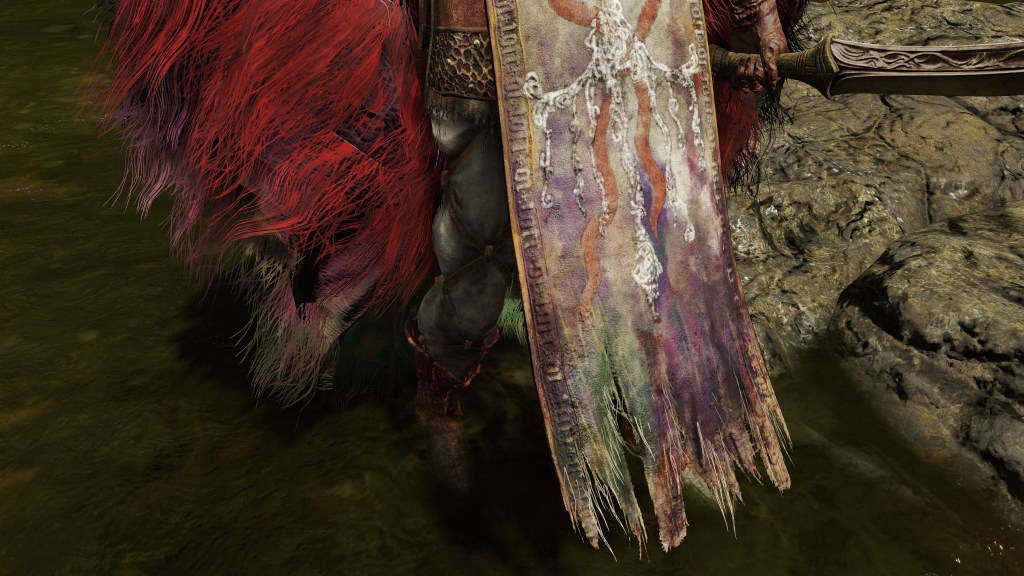
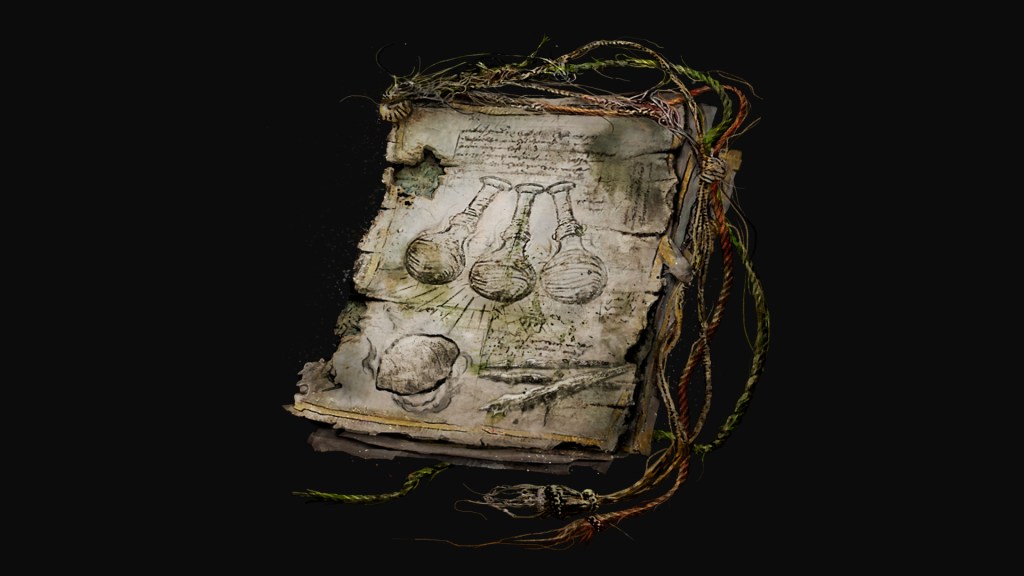
Recipe book left by a depraved perfumer. A far cry from an apothecary, details hazardous arts.
Forbidden art of depraved perfumers. Crafting item using a perfume bottle.
Consumes FP to spit strong acid powder. Strong acid corrodes weapons and temporarily lowers attack power.
One puts the perfume powder in the mouth, mixes it with saliva, and spits it out. It is said that originally that was a remedy art.
Robes of the depraved perfumers. The apron’s embroidery curses the Golden Tree.
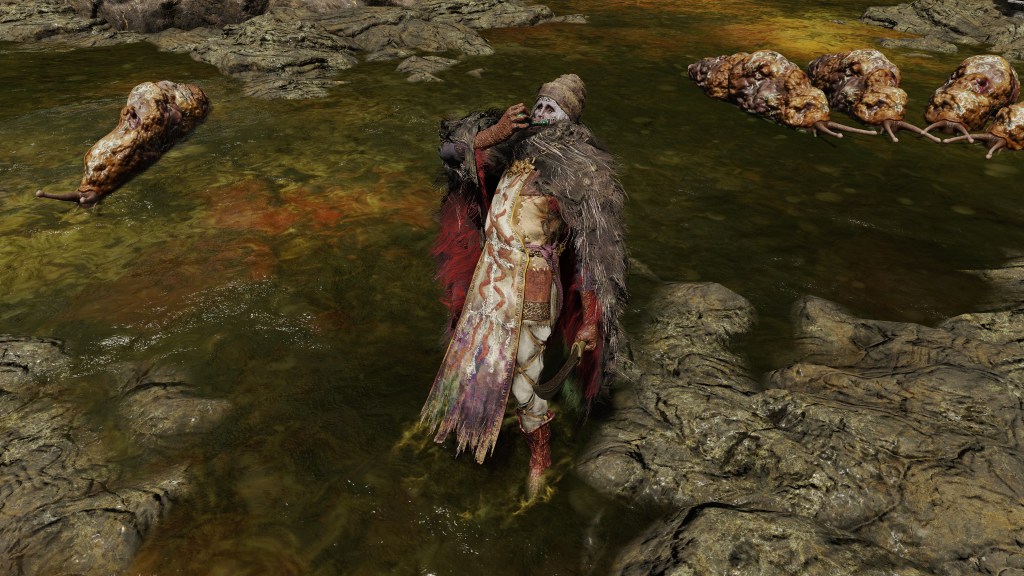
The depraved with regards to perfumers, who drink their perfume powder and let it affect their bodies and nerves, is a faction of such heresy and the popular name of those who slowly destroy themselves.
Consider their outlook. In journeying, the urbanites had their first experience with the rough life. Outside the protection of walls or secret laboratories, the city slickers saw how the backbone of Marika’s empire got by without access to the best medical care, how the war was tearing apart friends and family, how unsafe the world could be. They could provide Samaritan work, but that comes at the sacrifice to their own well-being. With no civilization or armies out there in the wild, the perfumers were forced to rely on just themselves to survive. Suddenly, that poisonbloom might decide between life and death against a predator or highwayman. Even then, to face the world’s unknowns is terrifying, the description to Bloodboil Aromatic alluding to perfumers being paralyzed with fear of getting hurt. But, by drinking a new Uplifting Aromatic concoction — replacing the silver tear husk with blood from a land octopus ovary and adding another fiery Altus bloom for good measure — they could induce a “mad passion”, (狂熱) the fervor letting them attack with reckless abandon. It was a necessity.
Forbidden art of depraved perfumers. Crafting item using perfume bottle.
Consumes FP to induce temporary fervor, boosting attack power and maximum stamina, but damage received also greatens.
Are you really afraid of getting hurt on the battlefield still? Look closely. Your limbs are paralyzed.
Of course, this use of drugs was deleterious to the perfumers’ own health, but it was better than the alternative. And upon discovering that fact, they grew to resent the Erdtree’s Order, falling into cynicism about everything the priesthood had accomplished. Why should the priests abide by a code that could only get them killed? There is also a question of why the code even exists. For what purpose are the consumption of their drugs forbidden? Grace is drunk from a holy grail. Rollo drank an aromatic drug that destroyed his heart, as did presumably all Omenkillers, but that was their intention. Whatever the side effects, the products of perfuming in itself can be useful. Depraved perfumers themselves drink an effective healing concoction from their bottles when seriously injured, so the drugs aren’t always dangerous. Why make it taboo from the outset? Maybe because of the roots to perfuming.

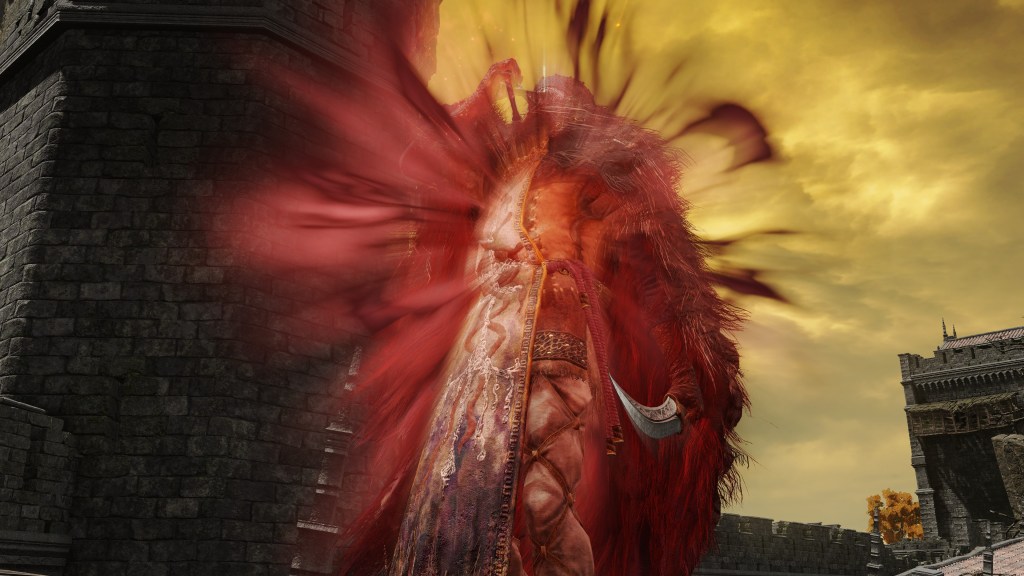

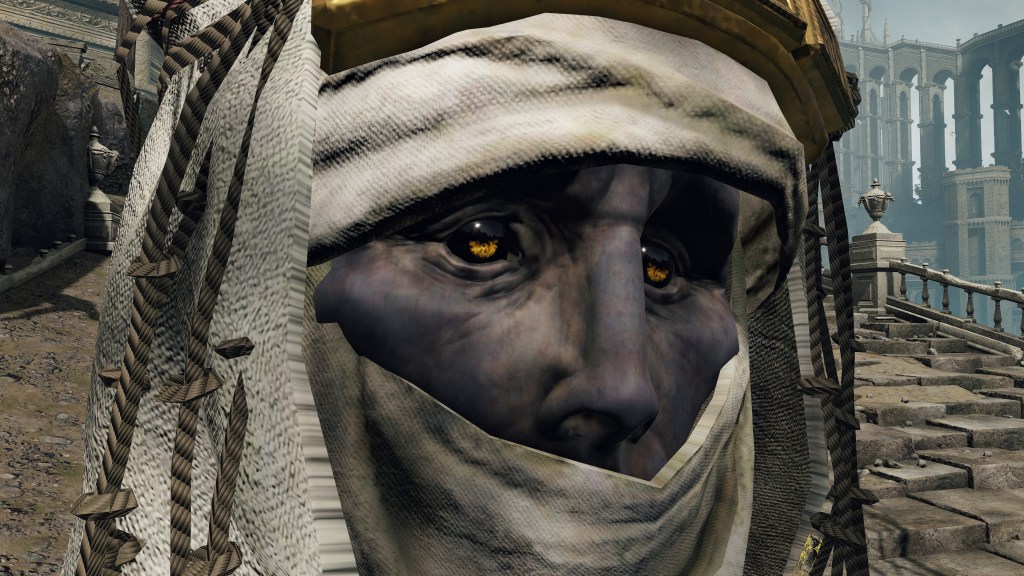
Contrast to most enemies, perfumers possess both dark skin and dark sclera, similar to the Nox. This likewise corresponds with their resistances. The Erdtree’s priests possess equally high resistance to fire, magic and lightning, but no resistance to holiness, whereas Nox enemies lie in the negative. Taken together, it suggests that a disproportionate number of clerics come from a Nox background, which is feasible given the existence of the Lower Quarter in Leyndell. The district had plenty of migrant converts to enter the ministry, and Marika may well have been biased toward having those of Numen blood be her holy men and women. This trend would only be exacerbated after half of the Quarter was destroyed in the Ancient Dragon War and never rebuilt, pushing countless more into holy orders to escape the streets. And fundamentally, the Eternal Cities’ alchemical culture is conducive to perfuming; it is possible that the clergy even made such strides in pharmacology thanks to the Nox influence, hence the similarities in priestly hoods. Either way, the perfumers’ appearance gives reason to insinuate a connection.
In that case, then perfuming forbidding drugs designed for drinking might be a reaction to the Eternal City relation. After all, the Nox’s alchemical practices resulted in drinkable drugs like their spirit draughts used for puppetry. Rather than the consequences as seen with the depraved and Omenkillers, the Erdtree priesthood potentially feared that perfuming would stray from Erdtree worship if it became indistinguishable from Noxian arts. By limiting it to fragrance, which is strongly associated with flowers and plants, then even a Nox descendant could clearly delineate the breakaway from orthodoxy. Put another way, they forbid ingestible arts because they align too closely with the subterranean culture steeped in night worship. If so, then this would make the heresy label arbitrary. The traveling priests might not care for their hypothetical Nox heritage, but they could still easily take issue with such a reflexive rejection, especially when the notion came head-to-head with practical realities on the ground. They reject the prohibition, and the Erdtree unsurprisingly gets lumped in with it.



It said to have once been prized as an ingredient for spirit drugs in the Eternal Capitals.
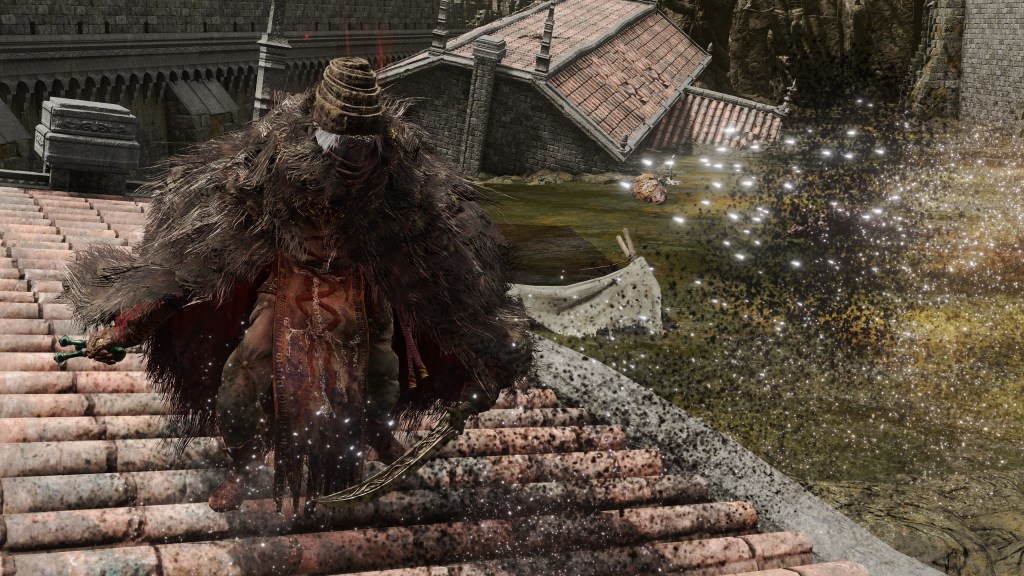
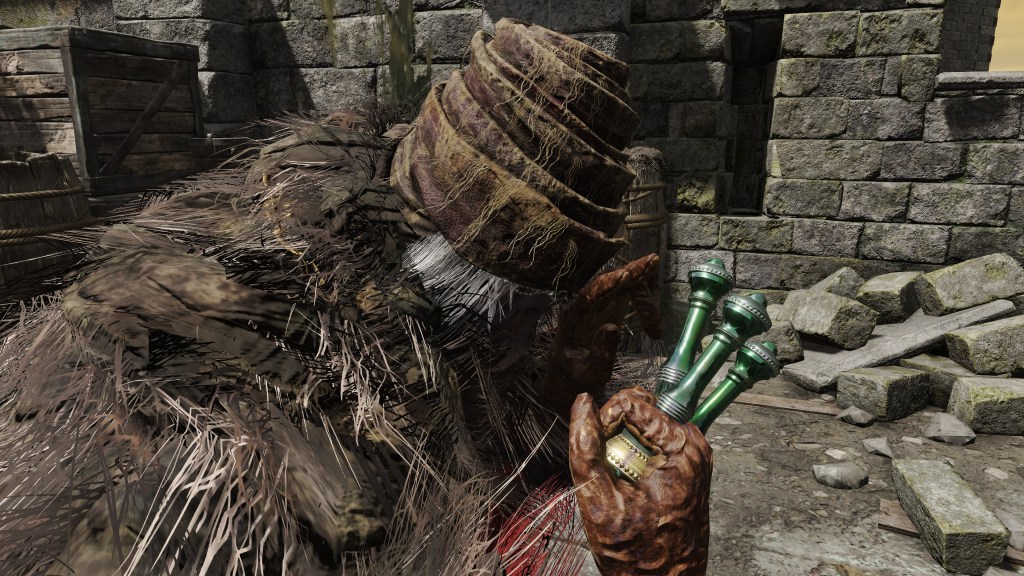
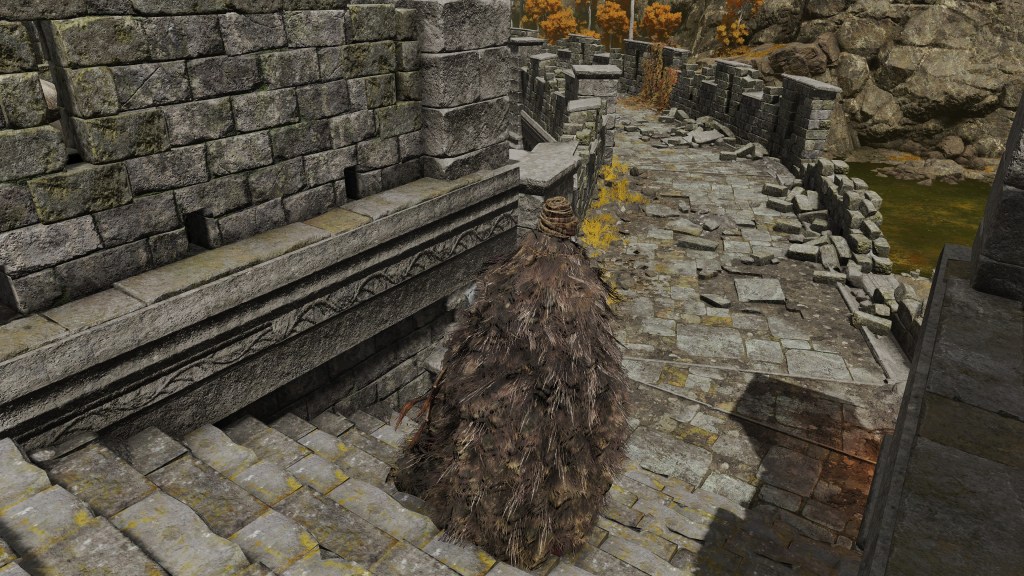
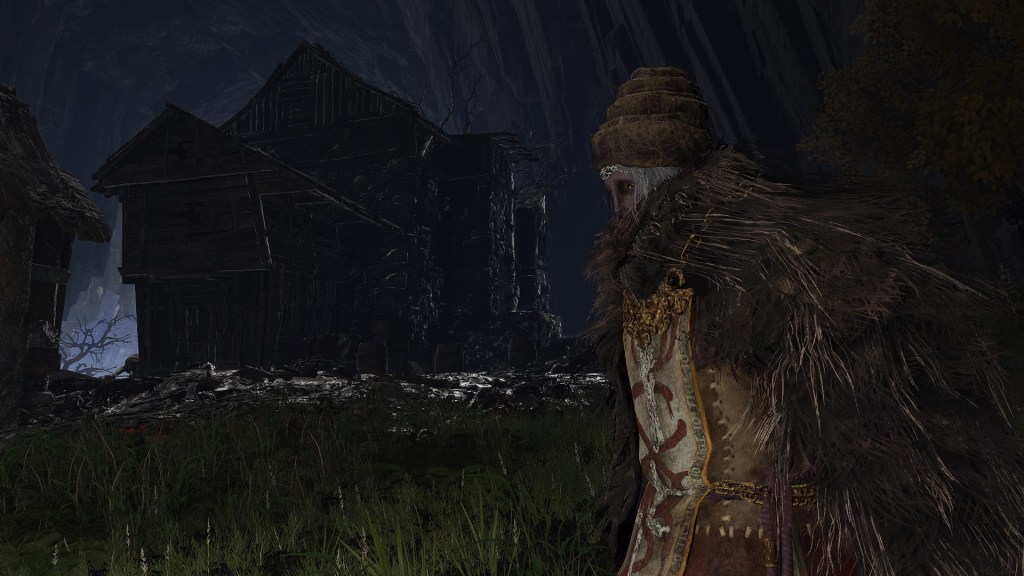
Because they throw the baby out with the bathwater, the perfumers all end up truly depraved, caring solely to develop their craft no matter the cost. This has its benefits. Out in the wilderness, the stray priests honed their skills with an Erdtree Dagger, expertly weaving swordplay with perfuming in a variety of creative techniques. While this almost underhanded fighting style more belongs to a thief grown up on the streets than a hoity-toity clergyman, these depraved perfumers still demonstrate far more combat knowledge and experience than their counterparts back in the capital. They weren’t commanding troops from the backline, throwing the odd perfume for support while hiding behind their shields — these were killers. As a show of proof, the depraved wear a hefty fur coat of the large beast they presumably skinned, complementing the rest of their patchwork attire. On their own, they come to feel accomplished, empowered. It was, in a sense, freedom.



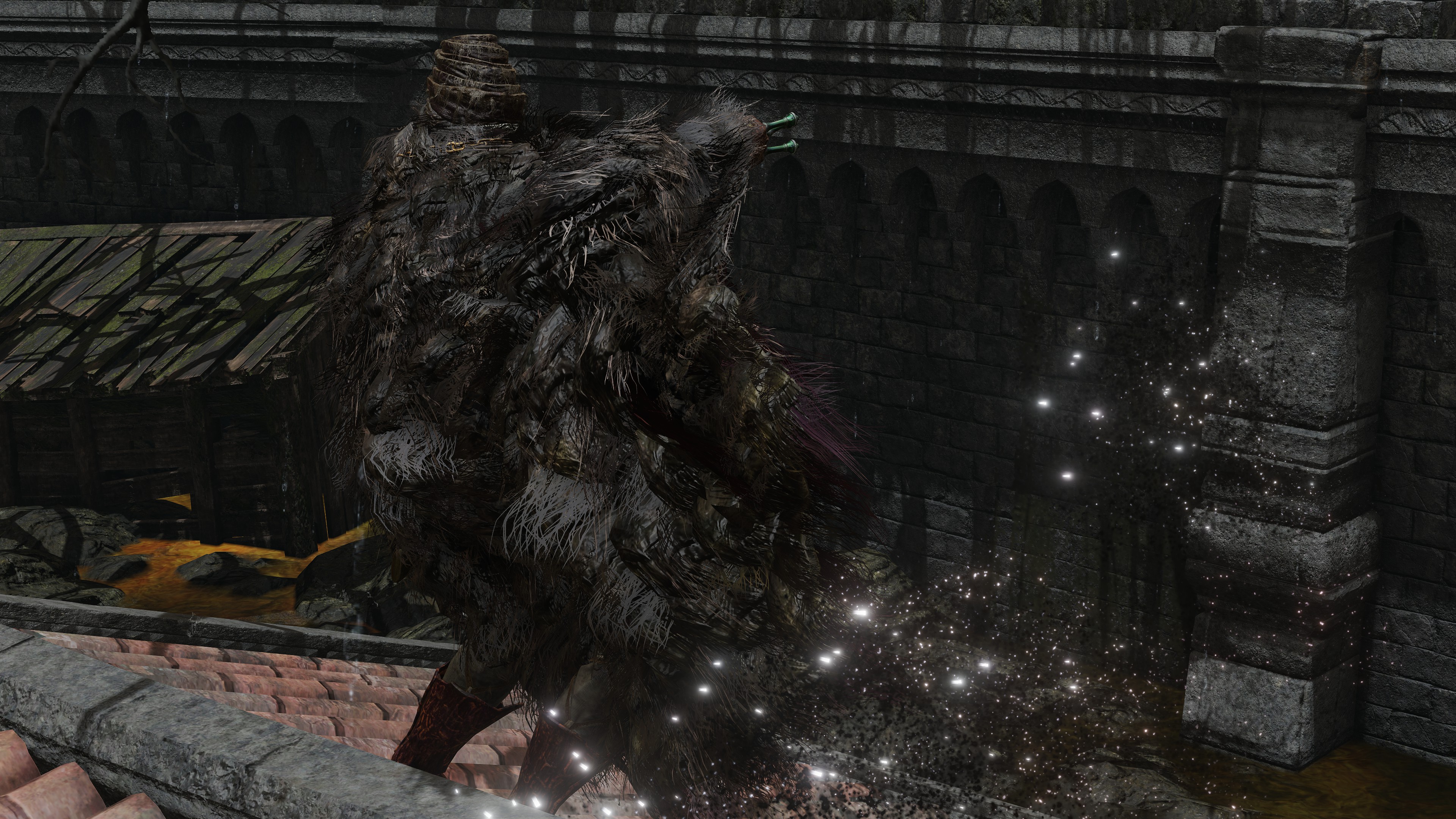


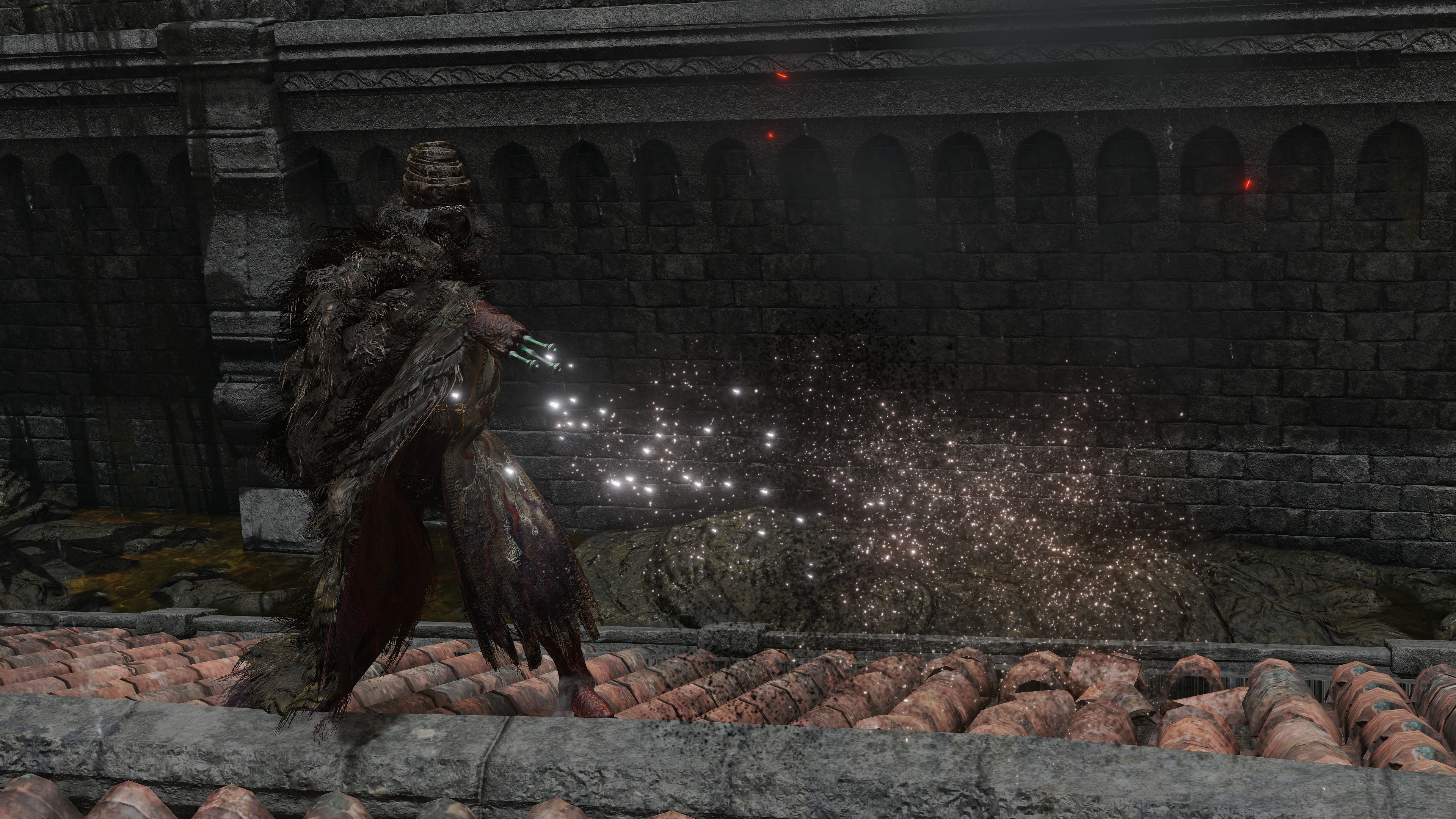








But knowing how they have perfuming to thank, not the Erdtree, this thrill has all gone to their head. They will maim or kill anyone if that is what it takes to advance perfuming. When they do perform their old prayer meditations, it is in random corners, seemingly just to center their addled minds suffering from all the side effects. The lot are totally self-serving — and it doesn’t matter, because their religion, with all its diktats, doesn’t matter. Already, we see many prowl the Shaded Castle as it sinks into poison, doubtless huge contributors to House Marais’ decline; in all likelihood, they are chiefly responsible for cultivating the toxic swamp which they can now farm for resources. A separate perfumer appears to be working alongside the Omenkiller massacring the Albinauric village on Gideon’s orders, probably interested in investigating the silver-men’s potential for perfuming compared to silver tears. Even on his own, a single perfumer can achieve so much destruction for selfish ends. With the Lands Between fractured, they have had an outsized influence.
They can even be credited for starting a new industry. The depraved perfumers deal closely with jar poachers, who hunt down living jars to sell some of their fleshy fragments. No one else uses living jar shards except for those perfumers, having invented the Ironjar Aromatic whose recipe can be fittingly retrieved from the Auriza Side Tomb filled with those very jars. With the shards, the depraved apothecaries craft another drug to ingest, mixing a bunch of pieces with budding cave moss and two Altus blooms to temporarily turn the body into iron. Logistics of fashioning such an outrageous piece of pottery aside, the fiery light seems to impel a reaction from the will remaining in the jar shards, hardened after death. That magic is what makes the drinker slower but also tougher and more resilient, so long as they don’t mind becoming a living lightning rod. That is also what makes the perfumers willing to trade for them at a high price. They don’t care how the poachers target the easy prey, the good-natured jars, so long as they do the work for them so they can focus on their perfuming.
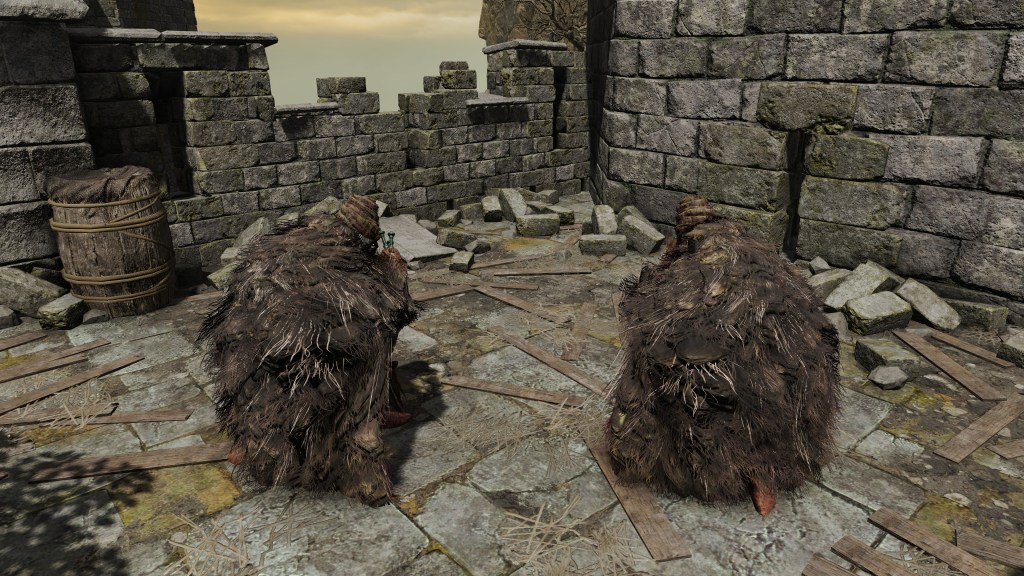
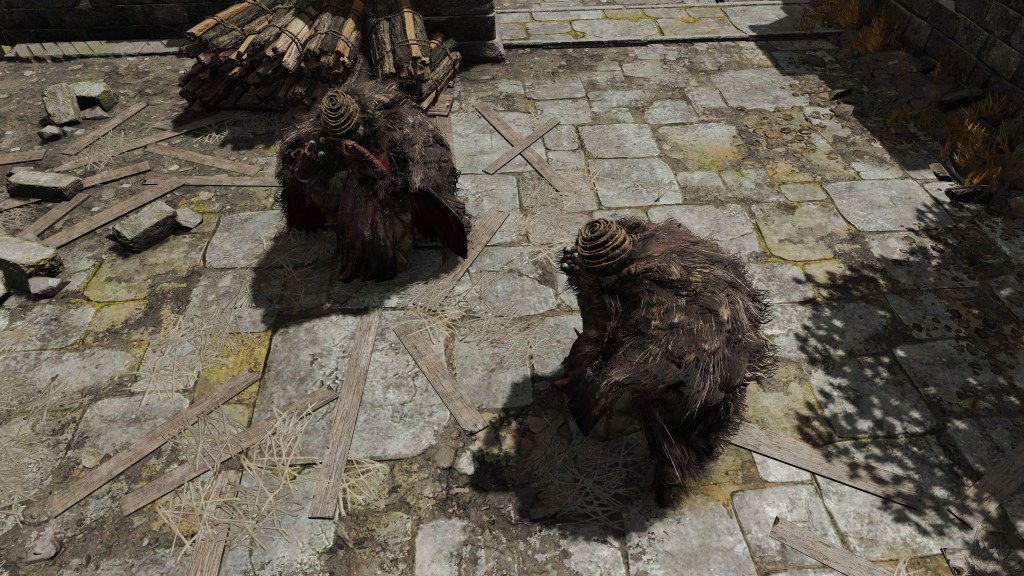




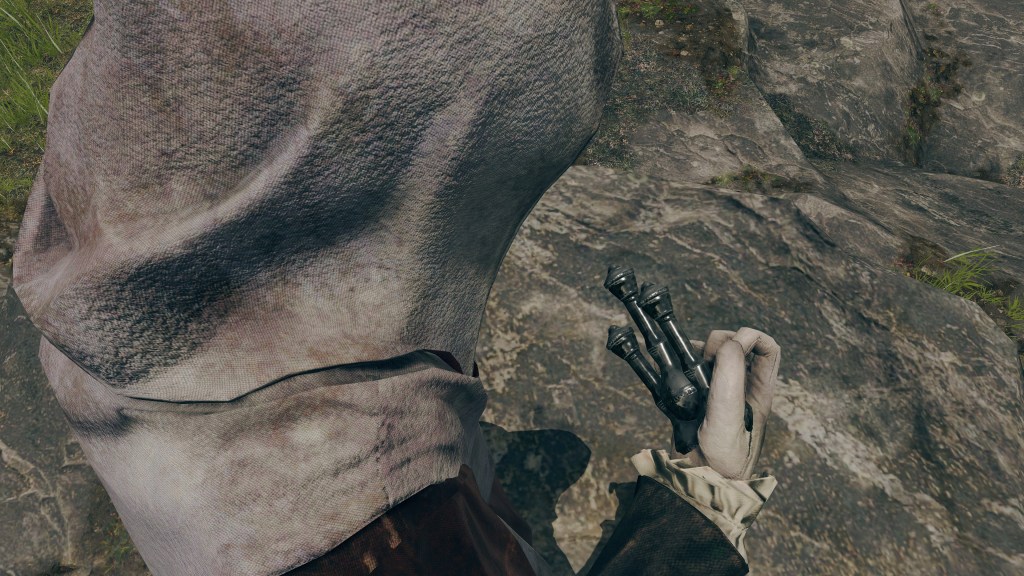
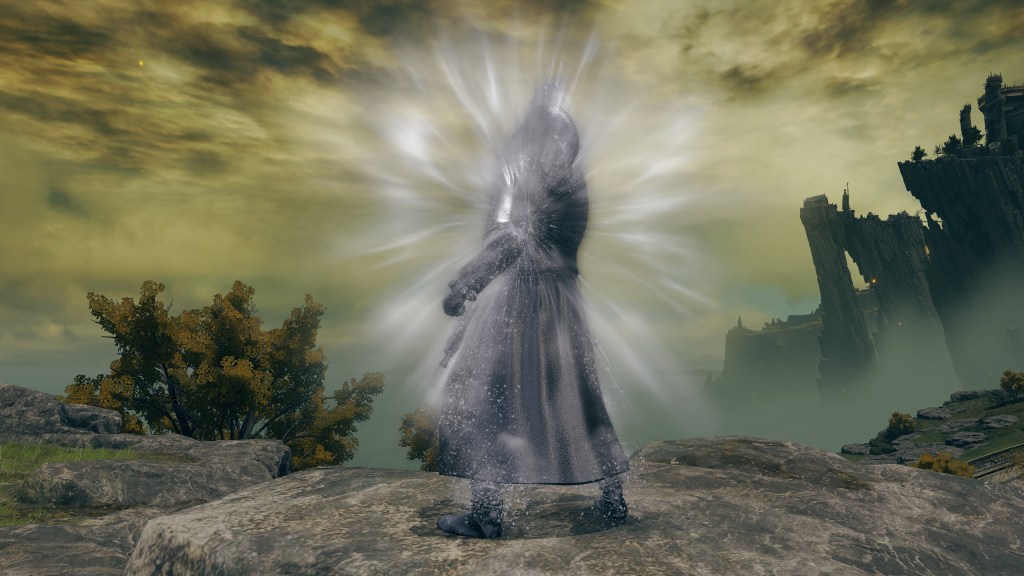
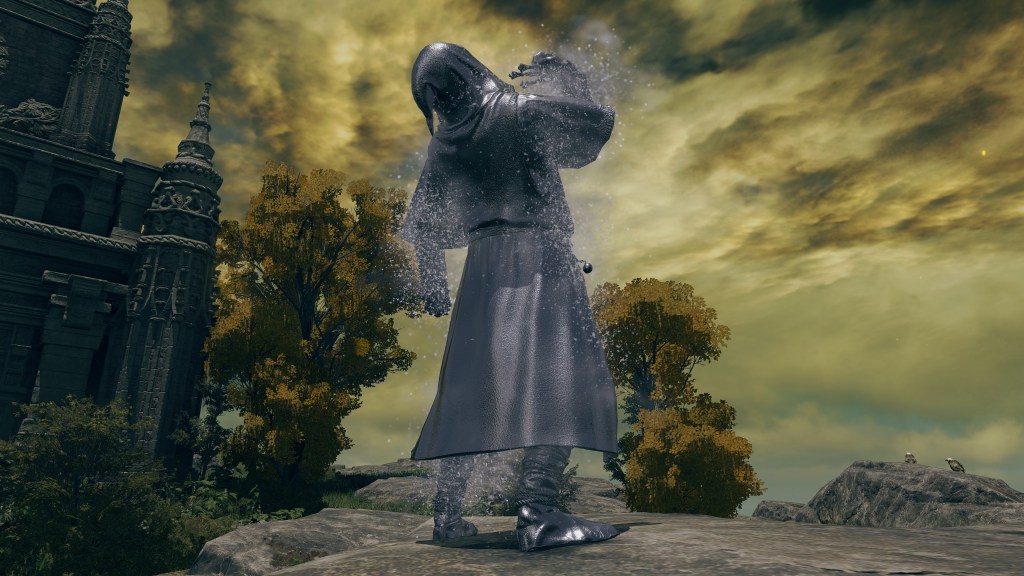

… Big bro, do you know about the poachers? They say they search for us pots, break ’em, and take ’em. This village is an absolutely secret place so I think we’re fine, but if there are such bad people out there, you best be careful too, big bro.
Forbidden art of depraved perfumers. Crafting item using a perfume bottle.
Consumes FP to transform whole self into iron temporarily. The iron body increases cut rates, resistances, and tenacity, but movement slows, and also becomes vulnerable to lightning.
Art which hunted the good-natured pots and used fragments of them. Depraved perfumers are intimate with pot poachers.
Fragment of a living pot that hardened after death. One of the materials used in item crafting.
It is considered to hide the power of a forbidden spell, so becomes the target of poaching and is traded at a high price.
Talisman the pots gift to friends. Boosts might of throwing pot items.
While they do source their lives from the flesh and blood of man, the pots are all good-natured. Or perhaps that was exactly the reason they were made?
In fairness, their selfish pursuits are ambitious. With a name derived from Hebrew to mean “garden of God”, Carmaan is one of the more impressive perfumers to have gone depraved, with power rivaling heroes. But with that power was sure to be many deleterious effects on his body. Carmaan must have known that he couldn’t continue like this forever. And so, he sought an elixir of revivification, the wonder drug none have discovered. If he could ingest a medicine that could fully restore his body to perfect health, even after death, then he would never need to be concerned about the consequences of his power ever again. And so, he went to Volcano Manor, clearly hoping to use Gelmir’s immortal snake as a specimen for his research. But this attempt to cheat death would be his undoing. We find his ashes inside one of the guest rooms, facing a sealed door. It appears that the Recusants caught onto Carmaan’s intentions and so locked him inside until he starve to death before letting him join the other “heroes” in Rykard’s gut. Alas, he knew not the illusory wall to escape was behind him.

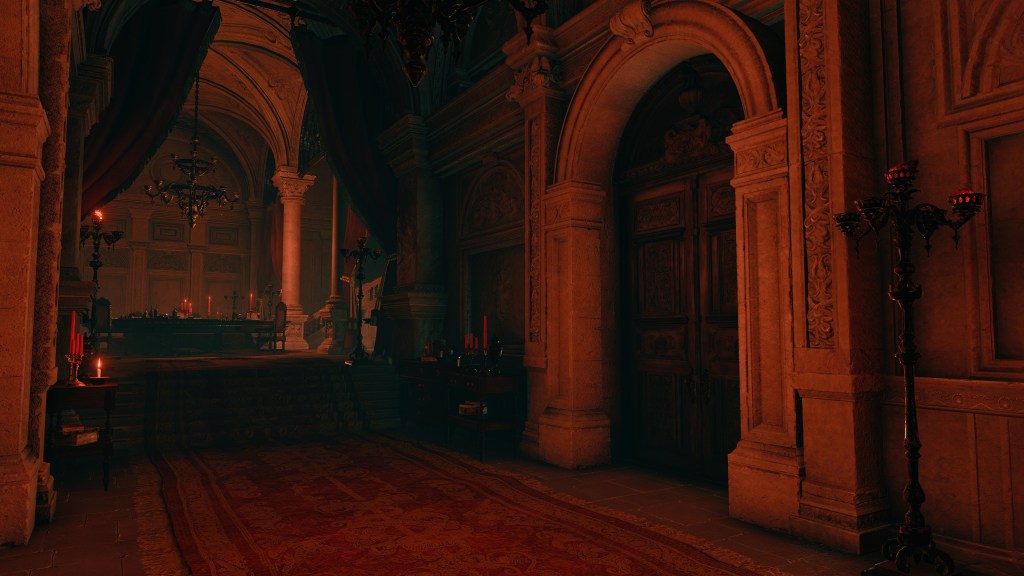
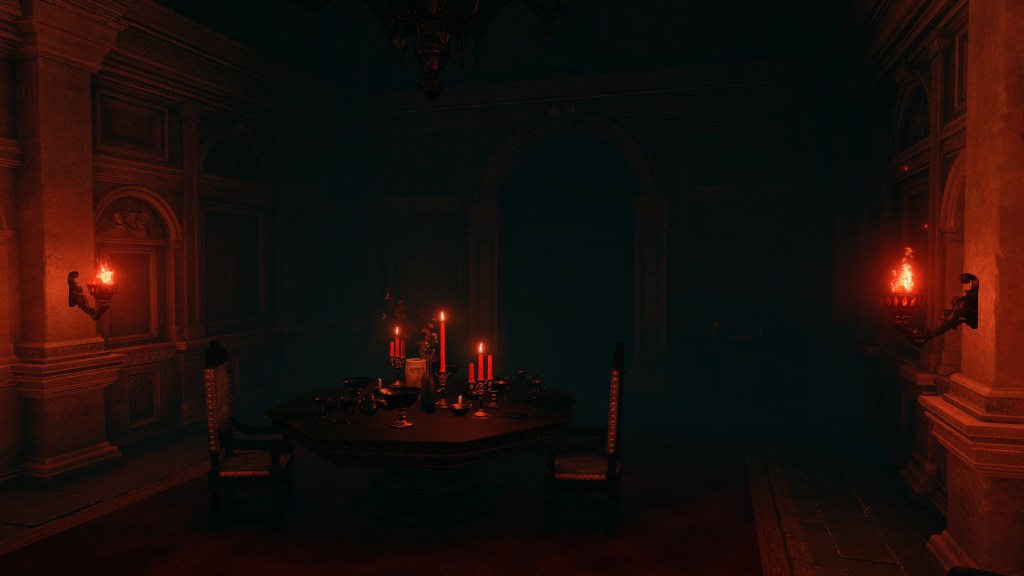
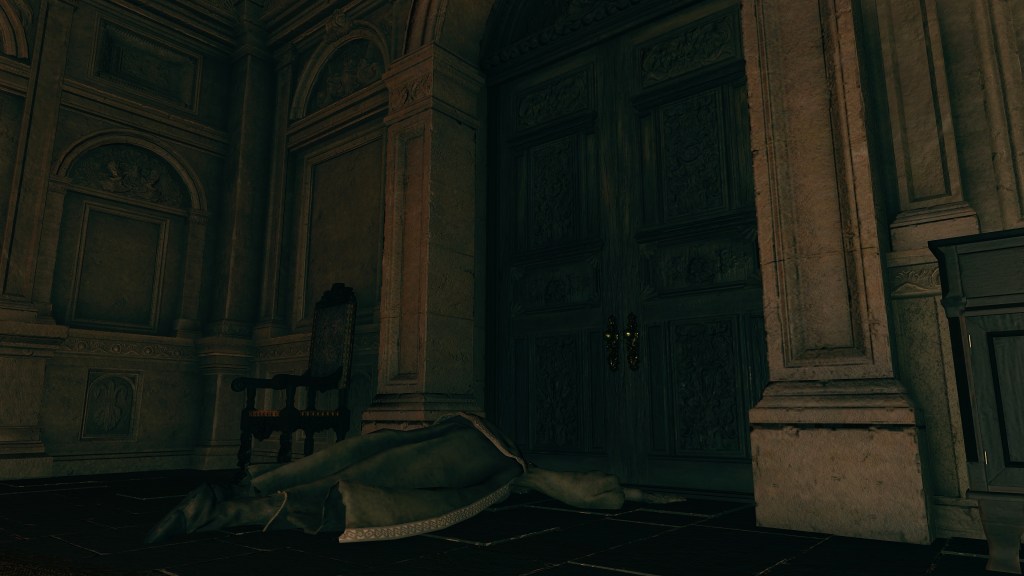
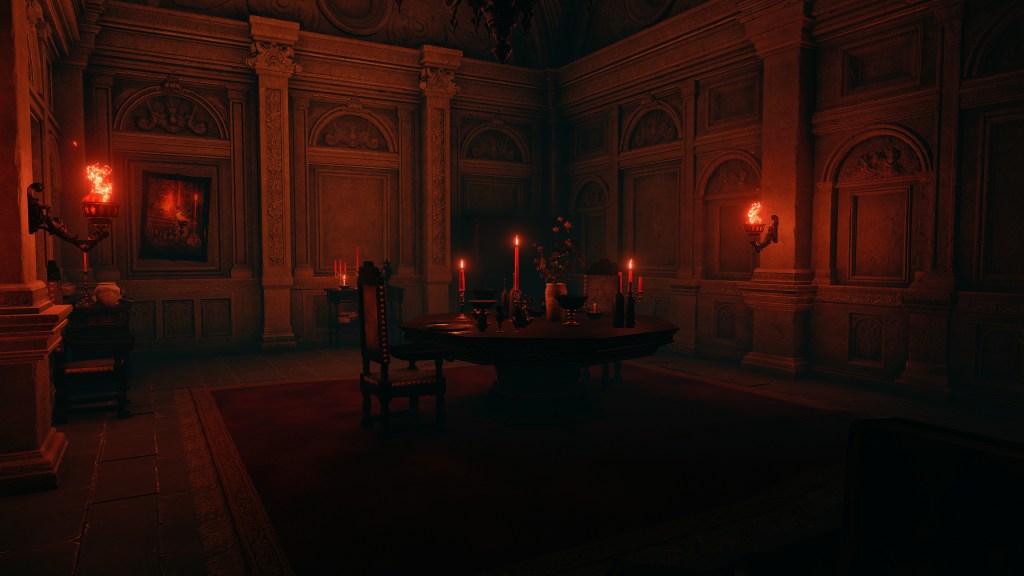
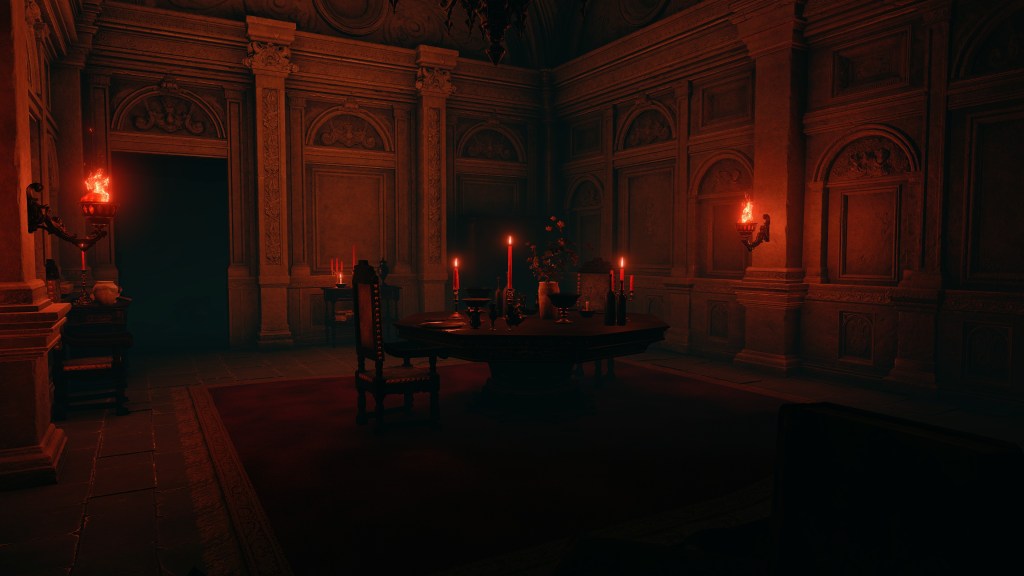
Ashen remains harboring spirit. Summons spirit of Carmaan, depraved perfumer.
Depraved perfumers wield their art only for their own power. It is said that this man in particular, Carmaan, possessed power rivaling even that of a hero and sought after the secret drug of resurrection.
Depraved perfumers hope to accomplish much with their little time on earth, not entrusting their life to the next generation through Erdtree Burial. They have spent the years of turmoil plaguing the Lands Between not helping the people, but spreading more strife and misery. When they set out from Altus, they were starry-eyed hopefuls looking to cleanse Order from corruption. Now, they are tantamount to the very corruption of Order. Although they may curse the Erdtree for holding them back, they have only themselves to blame for trudging down this path to known self-destruction. The fact that we see so few depraved perfumers alive and well in our journey may indicate that they are already a dying breed. But even if there are many more still out there, their egoistic behavior only guarantees that they will, sooner or later, die alone, having added so much less than they have taken away.
 Lokey Lore