
The holy blood utilized by the Healing Church has lasted for decades. Part of this is because it is replenishable, with reserves of the old blood just requiring a dive into the underground labyrinth. But after Laurence’s head became the new source, there was a limit to how much blood could be extracted for blood ministration. Even the Great One blood couldn’t be guaranteed in light of the threats found at their graves. At the same time, the Vicar was to be master of blood donations, providing relief to the people’s ailments along with salvation for their souls. How did the church meet demand for the entirety of Yharnam’s population? One solution was rationing. Nobody handing out blood provides more than one vial at a time. This was charity for the sick and needy, not for drunks. The church, in fact, admonishes greed, which gives them cover to stretch out supply. Another answer is mixing the holy blood with lesser blood from worshipers willing to donate a tithe. However, there is only so much that can be extracted from the congregation. Ultimately, they wanted to receive blood more than gave it, hence the dilemma.
Oh, it is you. But, don’t be greedy. “Fear blood thirst.” Even though I look like this, I was a “Blood Saintess”, after all… Eheheheheh.
Part of this problem we see resolved by using dead bodies. Iosefka spends her free time refining blood into higher quality vials for treatment, but where does her clinic get the blood to refine? From her patients. Once they die with the scourge, she can drain them of blood before or after burial. Why else inter the bodies nearby instead of sending them to the Cathedral Ward for study or to be forwarded to the frontier for cremation or burial? Iosefka needs those bodies for research, and although she may be clueless about the nature of the disease, she is still a ranking member of the Healing Church. She has the authority to keep lesser specimens in her custody for private study — not to mention the knowledge of beast blood’s role in ministration to be experimenting with combinations of it to formulate new, better forms of treatment. The tragic irony that, in trying to save lives, she unknowingly gives them a stronger dose of the plague, only to kill the terminal cases and repeat the process all over. But this too has its limits. Ideally, they want a supply of living blood to farm for donations indefinitely.
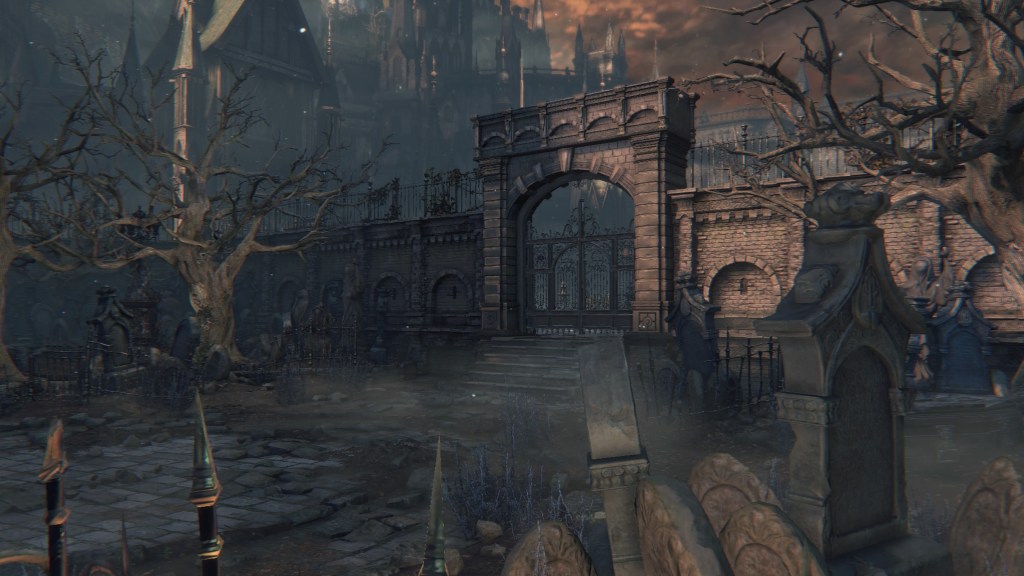
Enter the Blood Saints, or rather, Saintesses. These “holy women” (聖女) serve the church as nuns, devoting themselves to the gods as Adella often expresses. In practical terms, this means lending their blood to the Healing Church, providing the Vicar’s donations in place of the blood enshrined in the Grand Cathedral. The blood of two Saints, Adella and Adeline, do both show a certain quality compared to the standard blood vial. Not only do their vials provide instant healing, they continue stimulating our vitality for a short period afterward. This sacrality to their blood befits their Germanic names meaning “noble” in light of the cross-linguistic connotations, but it is hardly providence that brought these holy women to light. Rather, Blood Saints are “modified” (調整) by the church after a selection process. We see this in person with Adeline, tied to a chair in one of the Research Hall laboratories where experimenters have freely tinkered with her as another patient. The title, essentially, denotes special test subjects.
“Donated blood” of Adella, nun of the Treatment Church. In addition to HP recovery, continually recovers even more HP for a fixed time.
The Church’s nuns are “Blood Saintesses” chosen in order to house excellent blood and modified. Their donations are valuable symbols of the Treatment Church and receiving.
Despite the mutual terminology in localization, these Blood Saints differ from the “saints” identified in the descriptions of the so-called “Sage’s” Hair and Wrist. Those holy men are individuals the Church deem holy for their blood, which they use to lure out the underground labyrinth’s bloodthirsty gravekeepers. This comes at the sacrifice of their lives — a necessary step on the road to progress, to be sure. We see Laurence treated effectively as a saint for his skull’s blood, so it is no surprise that the honors apply to seemingly other men. In fact, based on the menu graphics, the saints are furbished as kings before their corpse parts are thrown to the Watchers. Perhaps this is based on Cainhurst and thereby Pthumeru’s understanding of kingship; the one serving as the sacred queen’s bodyguard-in-chief with first dibs on her blood should possess special blood himself. Regardless, it confirms that men and women hold different vocations within the Church for exceptional blood quality.
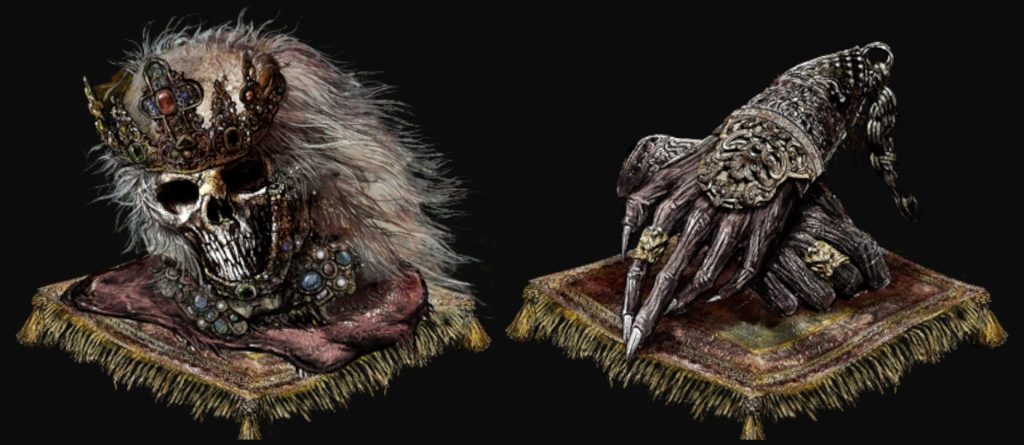
The Saints’ selection, for both sexes, is most likely made with the aforementioned blood tithes. Once the church studies a sample of the worshiper’s blood, they can determine its exact properties. Those with potential are then invited to become special clerics, which is sure to thrill the faithful willing to give blood for the cause anyway. From Adella’s black uniform, they remain fairly low-ranking, but neither are they pressed to act as preventative hunters. Instead, once inducted as nuns, the women seem to be indoctrinated with all the church’s teachings so that they believe the modifications by their white-robed superiors are simply part of their sacrament. With the blood achieving certain quality, they are released back into the public as valuable symbols of the church’s charity through Communion, Saints like Adella receiving unique knives for presumably bleeding themselves whenever a believer requires their aid in the field. This lets them hold currency with the people, like the suspicious man. And while they prove their nobility to the public, the Church prepares the next tests to subject them to.
These tests do have an effect on the Blood Saint, though the base product is what matters most. The Japanese description for her blood donations notes how Adeline is the one “meaningful” case among the whole lot, hence receiving more extensive testing in the Research Hall. As we can see, the modifications made to her blood provide more instant healing potential than a blood vial on top of the gradual healing. This contrasts to Adella, whose donations provide half the instant healing, less than a standard blood vial even, but double the gradual healing. Both have received the modifications, yet there is a clear disparity between them — even the menu graphics show Adeline’s blood brighter, clearer, more arcane. If Adella is considered a trivial case, then it is evident that blood quality varies even among Saint candidates which modifications can’t necessarily overcome. The Healing Church experiments with different kinds to see the different results; they only need one to make a major breakthrough for ministration. At the same time, lesser Saints like Adella are still overqualified for everyday blood treatment, so any gap is really only the researchers’ concern.
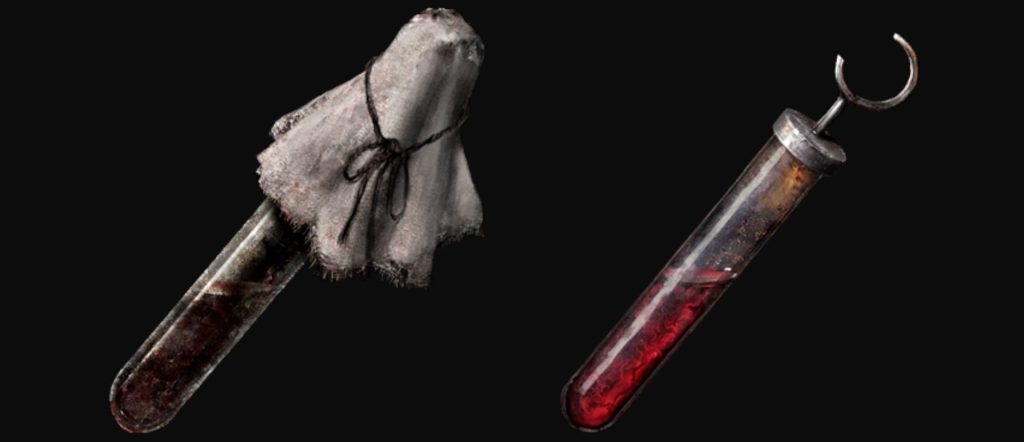
“Donated blood” of Adeline, patient of the Experiment Building. In addition to HP recovery, continually recovers even more HP for a fixed time.
Adeline was originally a “Blood Saintess” and has been undergoing the Church’s modifications in order to house excellent blood. Hers was probably the one meaningful case.
In the end, the Saints have more quality blood than anything Iosefka has accomplished, doubtless infused with the Vicar’s supply. But why does the Grand Cathedral only recruit women for the duty? Both sexes should be capable of receiving and sharing blood. Part of it might just be public image, since Yharnam women held a spiritual leadership role in the past. However, it must be more than just deciding the face of blood donations. With experiments upon both sexes in other cases, women are likely more reliable for these kinds of experiments, period. It is women who mother offspring, taking the blood of the father and mixing it with their own to create new individuals in the bloodline through pregnancy. That requires a unique capacity for absorbing and carrying blood, making women theoretically more resilient to holding various wills inside their veins. We also can’t ignore the utility of Blood Saints when it comes to potential as mother for Blood Babies. There is essentially no difference between the Pthumerian royal tradition and the Healing Church’s more clinical process.
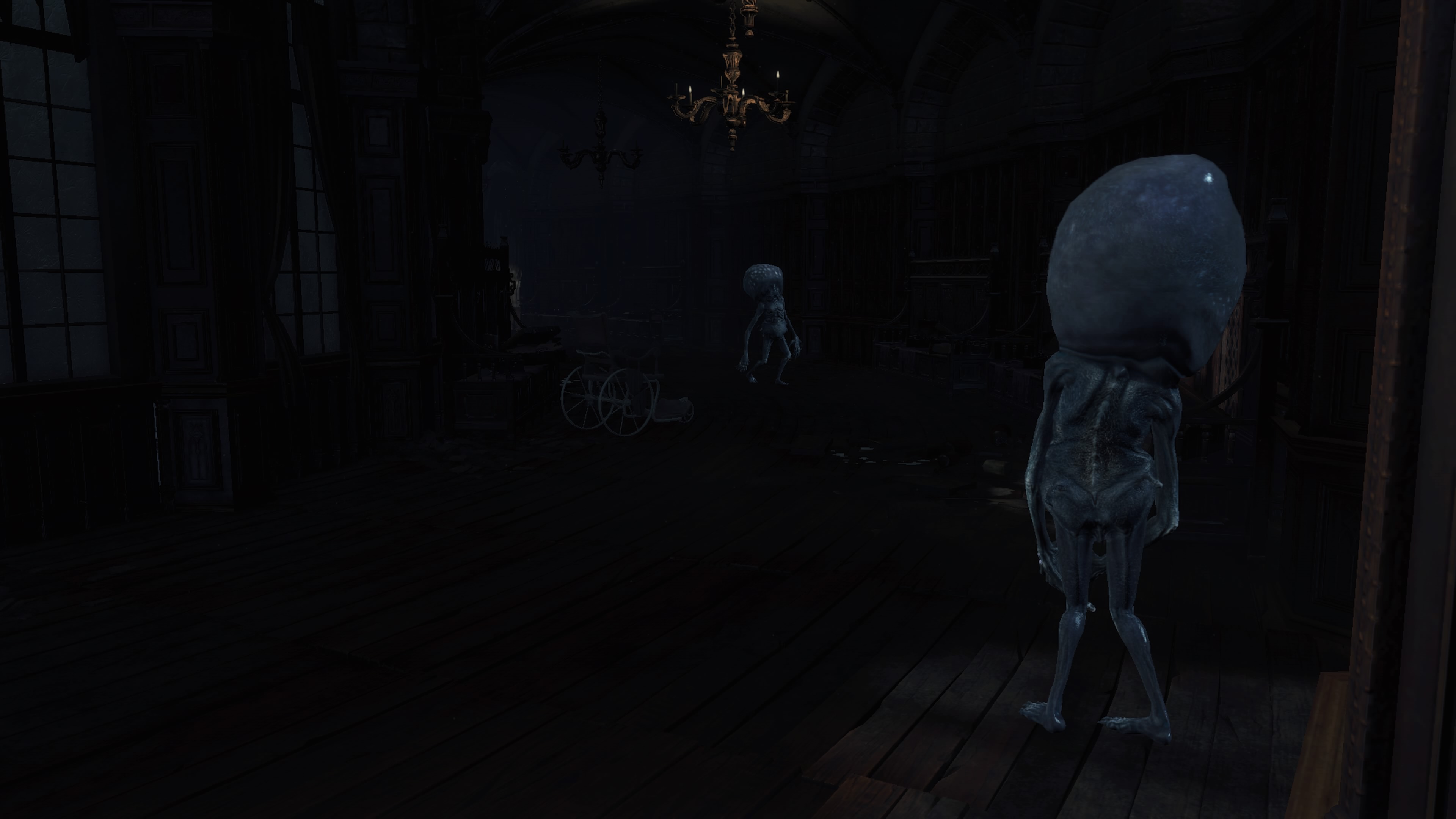
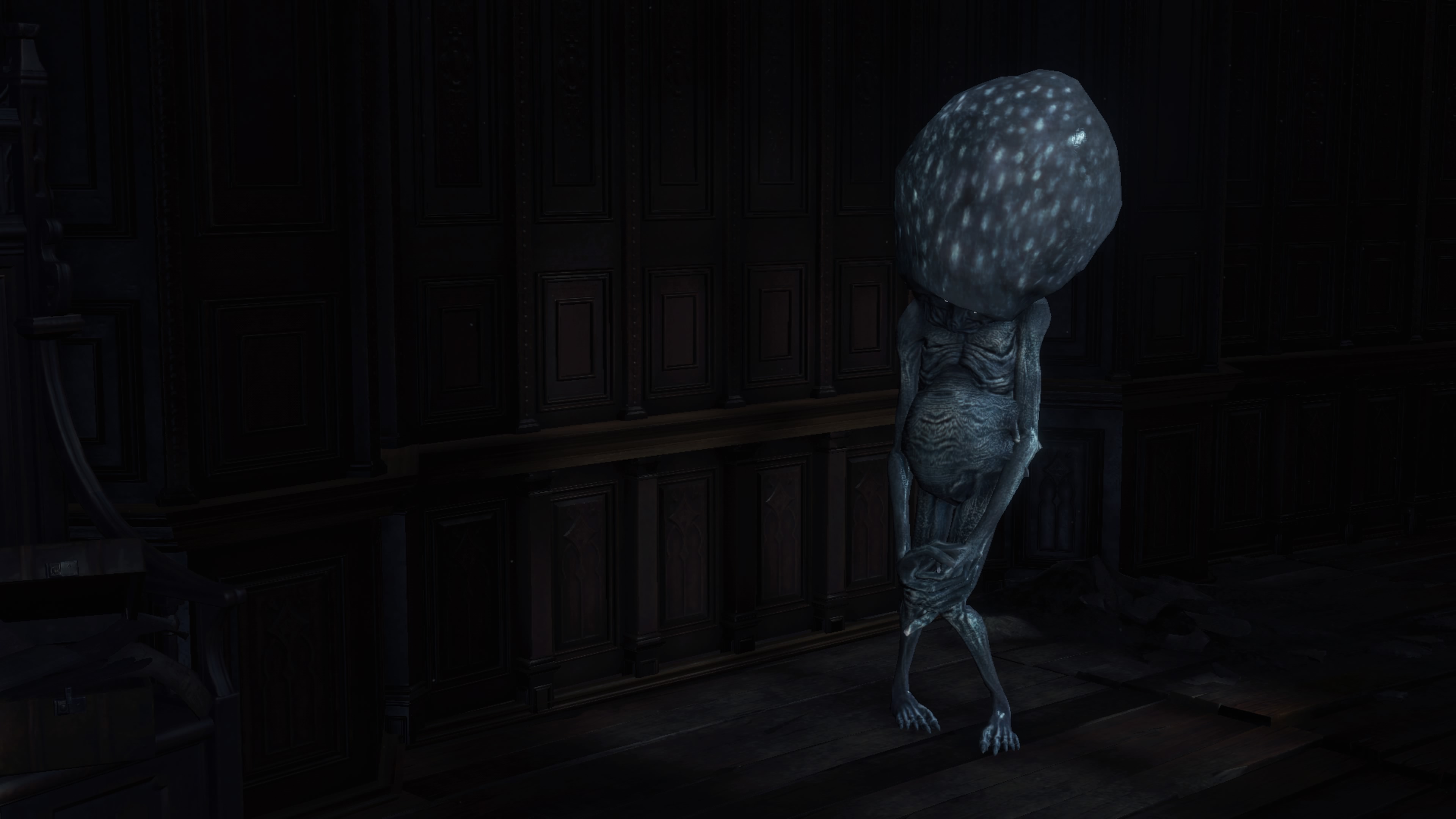
Taken together, the old Church most likely began the practice for those reasons, inspired by Annalise and her clan’s renewed attempts to bear an infant Great One from blood. Laurence and his cohorts probably secretly hoped to independently engineer the process without relying on traditional methods. This would partially explain why Adeline became part of the bloathead experiments after already becoming a Blood Saint, as the Healing Church learned more about Great One children from the Kos specimen. With each failure, the Healing Church salvages the research as a propaganda and time-saving measure — letting these holy women take the same role as the royal woman of Cainhurst, doling out rapturous blood. Blood Saints are basically a long-term project for transcendence which can be recycled for institutional longevity in the worst case scenario. And without need to dispose of the failures, the blood ministers have been able to stretch out their supply for all these decades.
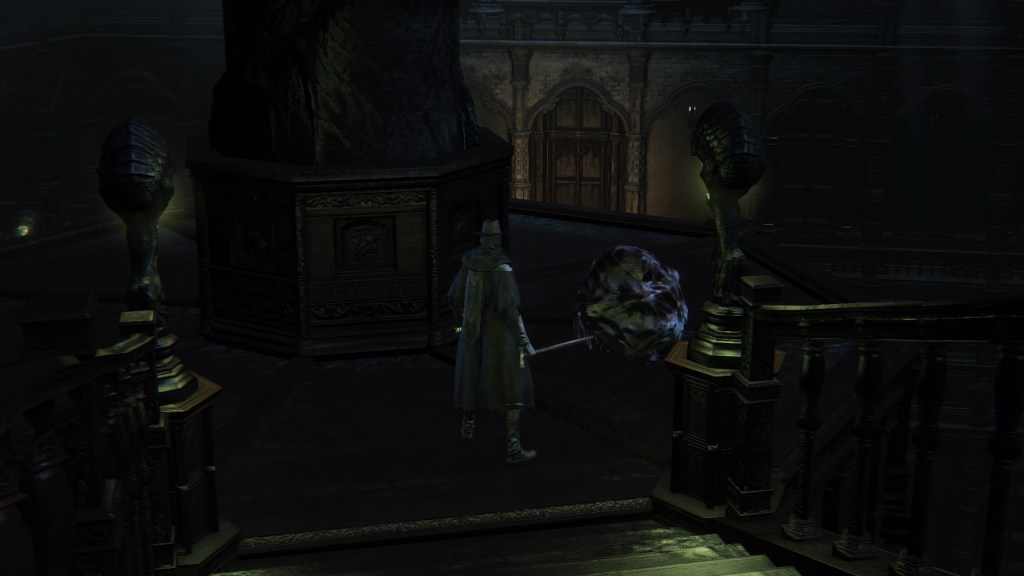
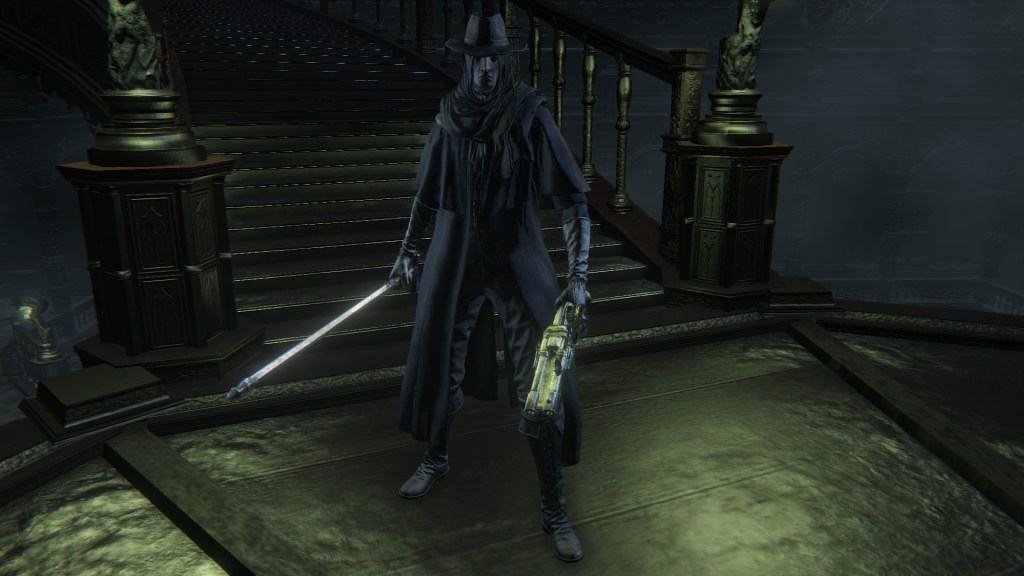
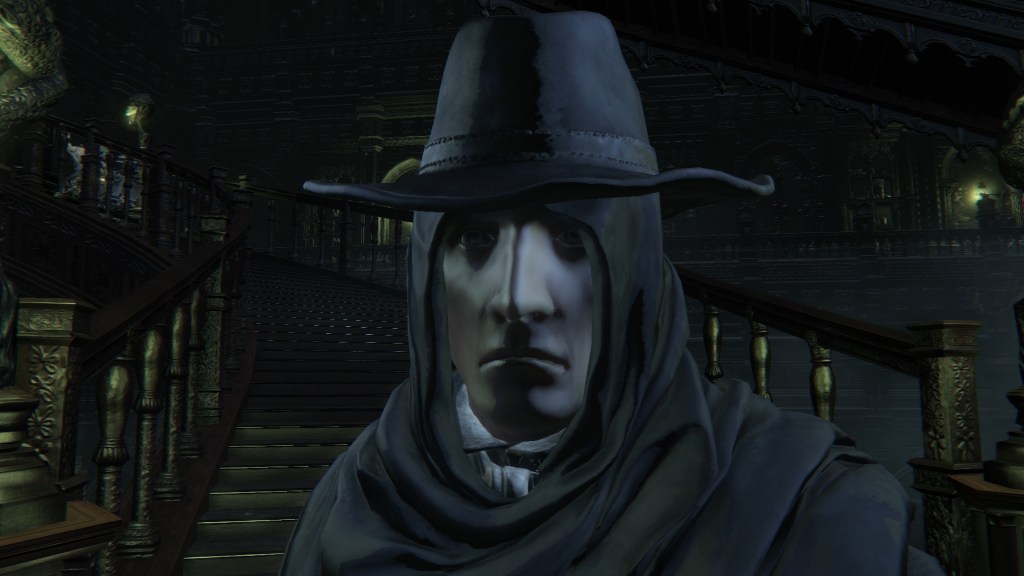
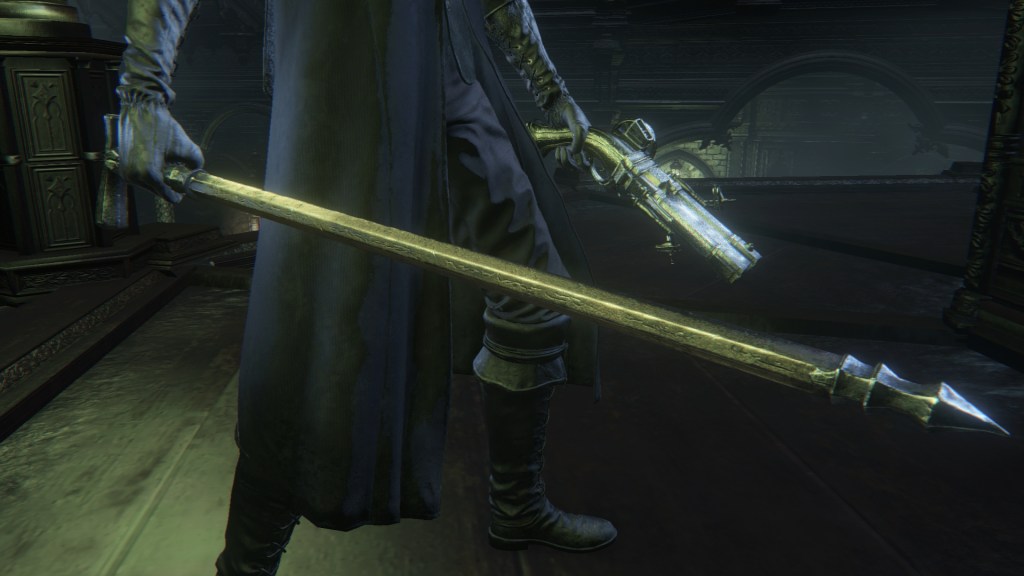
The value placed on a Blood Saint cannot be understated. The Japanese description to one brain fluid item affirms that a brother aspired to become a blood minister, and his younger sister in turn willingly became a patient for the sake of his aspiration. The sister is assuredly Adeline, considering her request for brain fluid, and we most likely find her brother elsewhere in the Research Hall. A single church hunter in black is inspecting one of the disembodied bloatheads on the central staircase, armed with the church’s double-barrel pistol and the Threaded Cane to uphold his humanity. Despite not wearing the white uniform worthy of his superiors’ expertise, he still works in the experiment building, throwing the poison knives used for surgeries. It is obvious that he has been allowed to conduct such important research despite his station. In all likelihood, Adeline agreed to take part in the church’s experiment in exchange for letting her brother fulfill his dream and work alongside the experimenters. The ministers agreed, because her blood was just that valuable to have for a Saint.
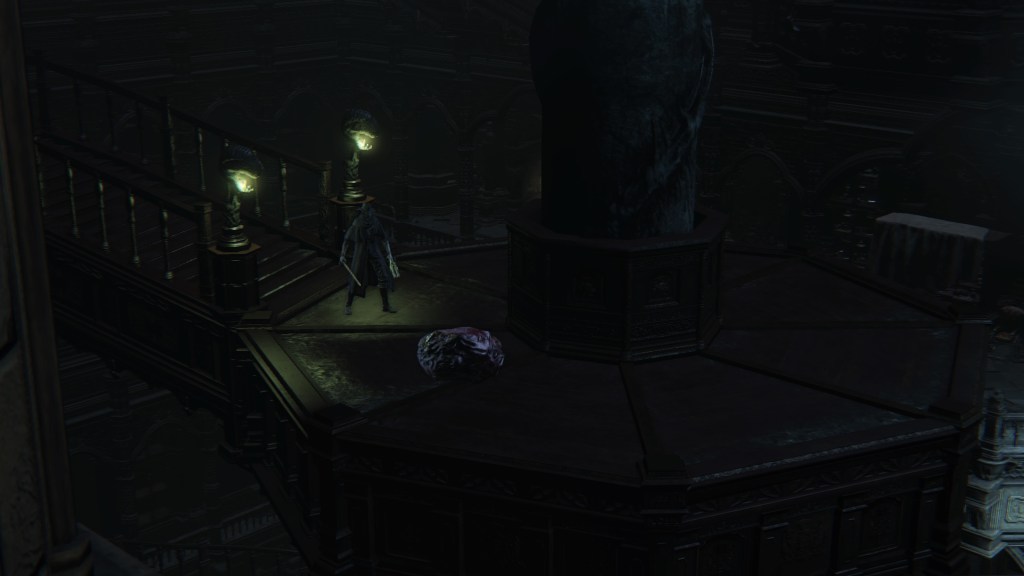
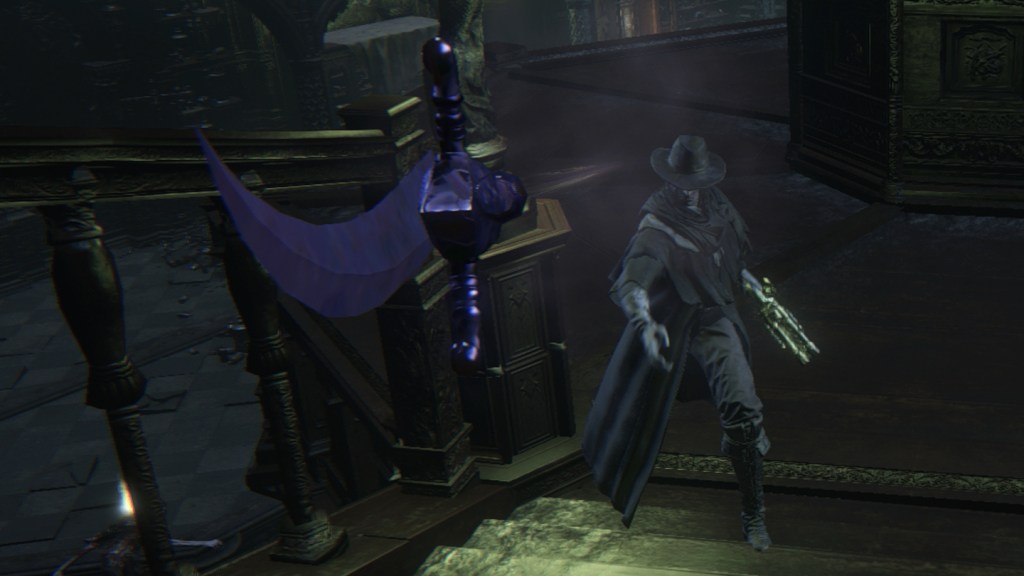
Darkish amoeba-shaped brain fluid. It has jiggling elasticity. It was collected from a patient whose head bloated and ultimately became just the head.
Once, an older brother aspired to be a treater, and the younger sister became a willing patient for that sake. Seeing dream-like mysteries as a result, the brother and sister were fortunate.
The outcome was a brother receiving a look at how the Healing Church really operated while the sister received tests alongside him. As the brain fluid’s text notes, they were “fortunate” to witness the surreal arcane happenings in the experiment building, though the number of sedatives on her brother’s person shows how unprepared he has been for the madness behind closed doors. And while he is going mad, Adeline has become a monster, though maintaining more lucidity than most of the patients. Still, the researchers have left her strapped down to the chair just in case, unable to even extract her saintly blood from the tool jabbed in her arm. This might seem a miserable existence for anyone, but she surprisingly takes it in stride. In fact, Adeline is the only sane patient reborn in the Hunter’s Nightmare to not be begging for Maria in the gentle overseer’s uncharacteristic absence. Despite appearances, she is exactly where she wants to be, and for obvious reasons related to her brother like before.
I’m glad. But I can’t move properly anymore, so could you use the tool on my right arm? My deepest apologies for causing you trouble, but is that okay?… Eheheheheh.
Indeed, Adeline has fully bought into the Church’s lies. When Maria attempted to comfort her with the key to the Research Hall’s first-floor balcony so she could at least smell the fresh air when it became too much, the girl couldn’t comprehend the so-called protective charm. She doesn’t mind being trapped in a laboratory day-in and day-out, so long as she is helping her brother and the Church achieve results and reaching her full potential. The smell of the flowers mean nothing unless she is the flower, a mind blooming with insight. Even if Maria despises the fact, Adeline is a Blood Saint and happy to fulfill her duty, keeping strictly to the church’s teachings even in her current circumstances. Her one fear is to be abandoned because she is no longer useful, no longer producing results. After all the modifications, Adeline has become guided by all the “damp” sounds “dripping” inside her bloated head. Those sounds fade away if she doesn’t receive brain fluid from test subjects further along the process than her. That is what she clings to in her darkness, head covered in a sack.
Key to the gate of the balcony on the Experiment Building first floor.
Maria of the Clocktower handed it over to the patient Adeline. So that at least the outside air and scent of flowers would be her comfort. But she couldn’t comprehend that.
Thank you, thank you, friend. For helping me. This is a protective charm. I received it from Lady Maria, but it all the thanks I can offer, besides blood.
…. Oh, even though Lady Maria hates it, I am glad to be a “Blood Saintess”.
I am a Blood Saintess too. Even for you, I want to keep the church’s teachings.
Please, don’t abandon me… I can still be useful…
Oh, you, can you hear it? A damp sound rings in my ears. Drip, drop… Drip, drop, drip, drop. How strange. Will the water drop even to the deep, deep bottom of the sea?
… Hey, is there someone, anyone, there…? Someone, please grant my, my wish… That sound I finally heard it about to fade away.”
… You? is it you? Say, please, I want brain fluid. The damp sound is about to fade.
Because the overseer’s, evidently, frequent visits have been hindering the process, Adeline asks us for the fluid after confirming that we aren’t Maria, providing her blood as reward. She doesn’t care about the risks, she just wants to become something greater to secure her brother’s position and the church’s holy mission. Before the sound fades, she demands more, giving Maria’s worthless charm if the reward will satisfy. The second results in her becoming another of the disembodied heads, though she needs yet more fluid to cross the finish line. We can accomplish this by killing her immortal head and taking the fluid from that. Recycling her own, she finally recognizes the damp whispers as Milkweed and receives madman’s knowledge, overjoyed to finally have received a divine revelation all her own. For her, it is a baby’s first bath, ubuyu (産湯) being a Japanese tradition for cleansing newborns to welcome them into the world and their family. She is finally becoming kin to Great Ones, led by the stars’ guidance to the bottom of the cosmic sea. It is what she has always been praying for.
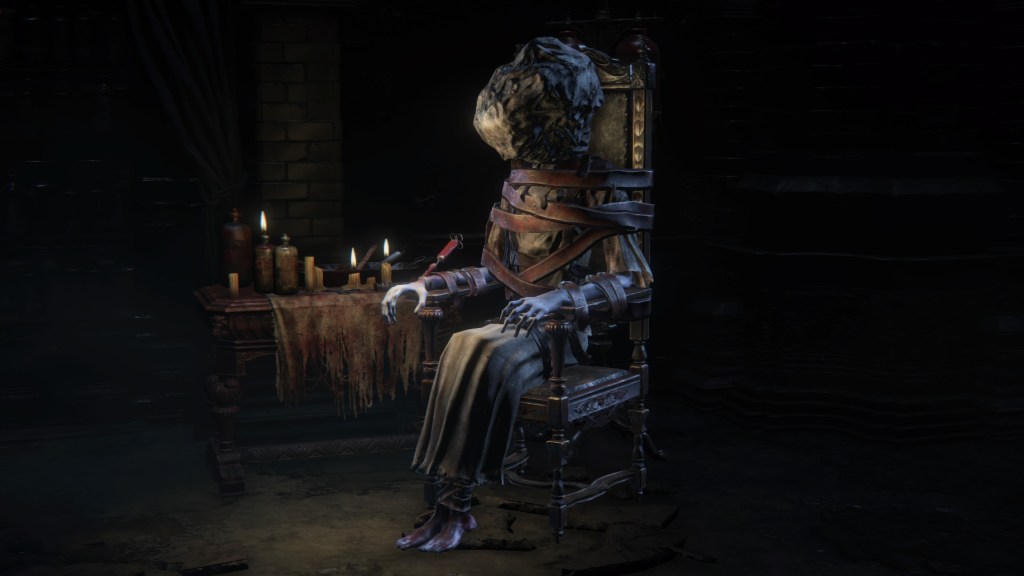
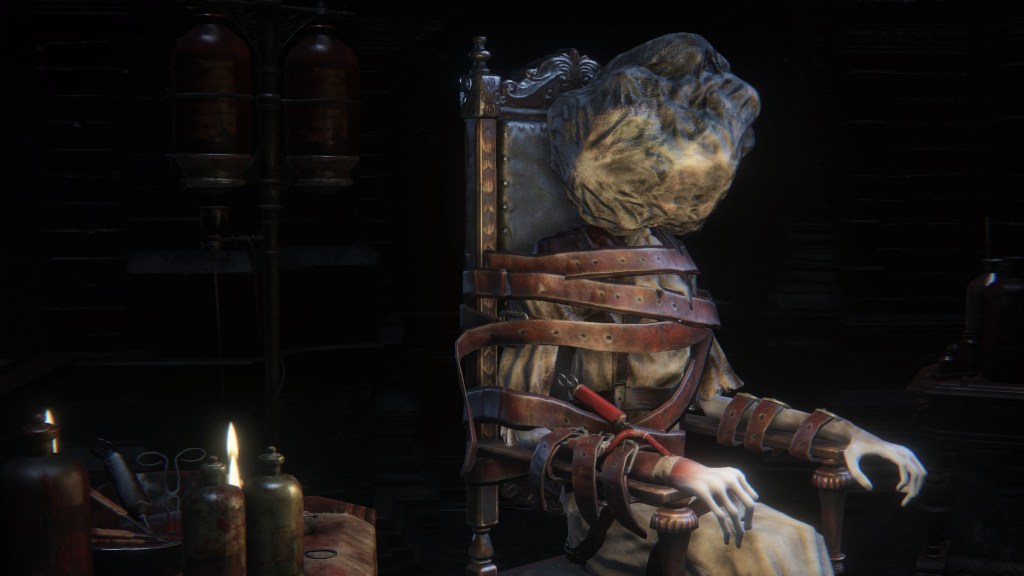
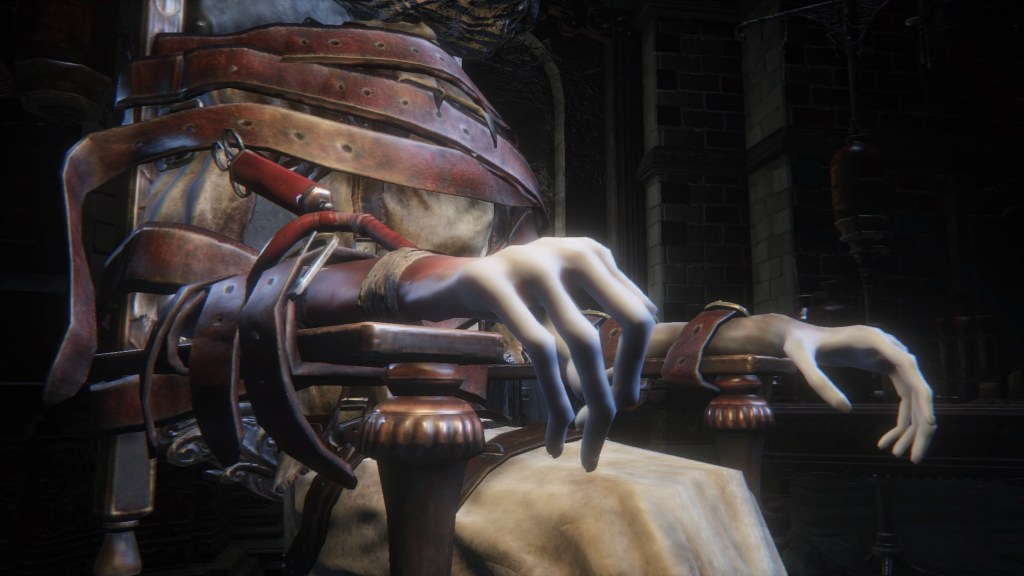
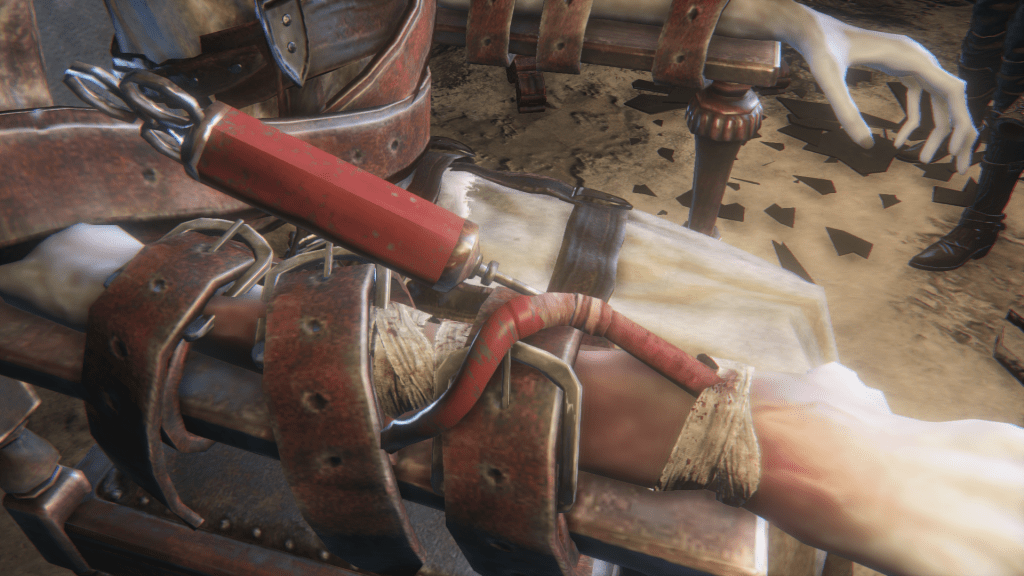
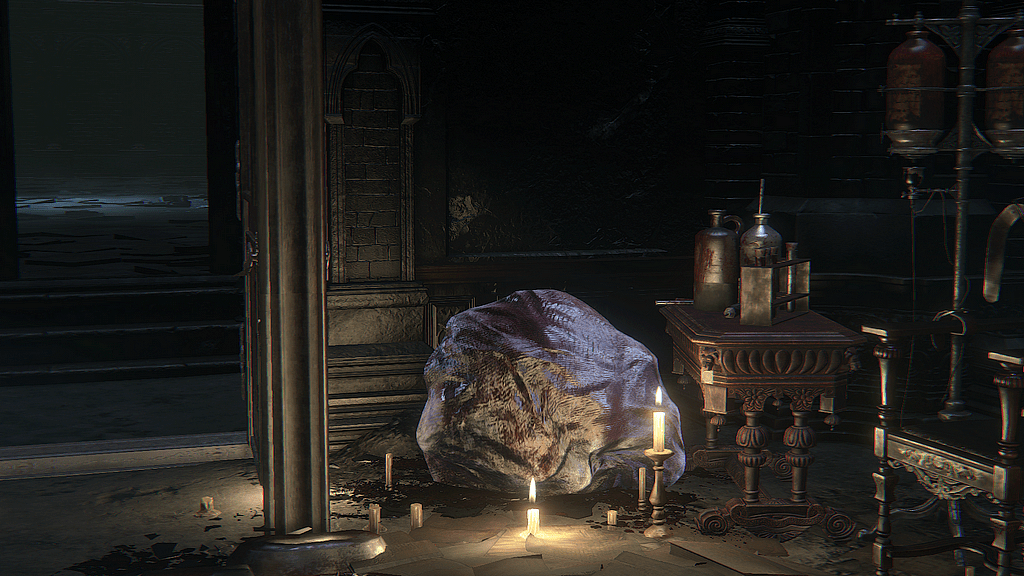
So, please, bring me brain fluid. Please… that sound will guide me… If it goes quiet, I’ll surely return. To the little me of back then…
Ahh, ahhhh! That is a shape. Guidance, I saw your voice! Clearly warped and wet. This is me, a revelation only for me… only for me… Eheheheheh… Thank you. My thanks to you…. Even I was so… little ….
That dark, mushy brain fluid that fills me up plenty. The damp sound is whispering. All the time, right there. In my head, my head of just a head. So I need a first bath.
Adeline’s example speaks to the power of faith even for such a dubious religious body as the Healing Church. But not everyone is rewarded for their piety. Unlike Adeline’s calm and confidence, Adella is a nervous wreck. Some of this might be understood if it was just because she gets kidnapped in a burlap sack, forced to listen to the wails echoing throughout Yahar’gul. But when we find her cowering in the corner, praying to god, it is just one of many instances where her deep-seated insecurity is on full display. After seeing us wearing the church uniform, the Blood Saint will mistake us for a fellow cleric and calm down, only to reveal more anxieties once we have directed her to Oedon Chapel. The Blood Saint constantly demeans her blood as “vulgar” (俗体) like laity, not priestly as you would expect. The woman even gets frustrated at her supposedly constant stream of silliness, presenting an overwhelmingly negative sense of self in almost everything she says or does. This might just be her born temperament, though it is liable to have worsened thanks to her devotion to the Church.
… Thank you so much. I was attacked by a big man in Church Town and abducted to here. There were a throng of others, but… they were all taken away…… And ever since, I have only been able to hear wailing from a distance…
… Ah, God, please save me…… In the name of the Treatment Church, please save me from the nightmare…
… Oh, you’re… from the Treatment Church…… You’ll kindly save me, yes? Oh, thank you so much. I have no words of gratitude for you… but please take this. If you are someone of the Church, I am sure it will be of help. Oh, thank you so much. God.
With her hands always clasped in prayer, even as a bloathead in Iosefka’s Clinic, Adella is obviously just as devout as Adeline. And yet, from our very first meeting, her death nets us Oedon’s Writhe as a reward. The rune was most likely a byproduct of the modifications, Adella fully aware of how clerics like arcane wisdom; the Saint even hands over a skull of madman’s knowledge she collected back in Yahar’gul for “saving” her. Whereas Adeline sprouted proper insight from Milkweed at the end of her experiments, her counterpart possesses merely the first wrinkles on the brain. The only other person to share Adella’s rune is Iosefka’s imposter, who manages to develop this into a full eye cord of insight with further modifications. But as one of the insignificant cases, Adella is unlikely to ever reach the same heights, and she knows it. The rune, of course, lets the owner identify the secret silver oozing from warm blood, so it may well be that Adeline’s paranoia about her blood’s vulgarity is because she can actually sense when someone else owns something better.
Heightened supernatural sense or otherwise, the Saint gets jealous we take Arianna’s blood, regardless. After enjoying the taste of a Cainhurst noble-turned-prostitute one too many times, Adella kills her without remorse while we are out on the hunt following nightfall, acting extra chipper as her clothes remain covered in her victim’s blood. Even as she pretends nothing has changed, she makes a creepy laugh when we leave, her mental unbalance blatant. Once the red moon arrives, she appears to lose total sanity, waiting outside the chapel to kill us — or “save” us as she believes — for our blood being sullied by the whore. Considering that she just breaks down into psychotic laughter absent any feud with Arianna, it is obvious that the moon is doing its number upon her mind, but this is still because she was unwell beforehand. Whether thanks to the modifications or something more baseline, Adella cannot hold it together with her obsession over lacking as a “noble” Saint, to the point an “ignoble” harlot sets her off. And either way, her blood doesn’t transcend or degenerate its human station.
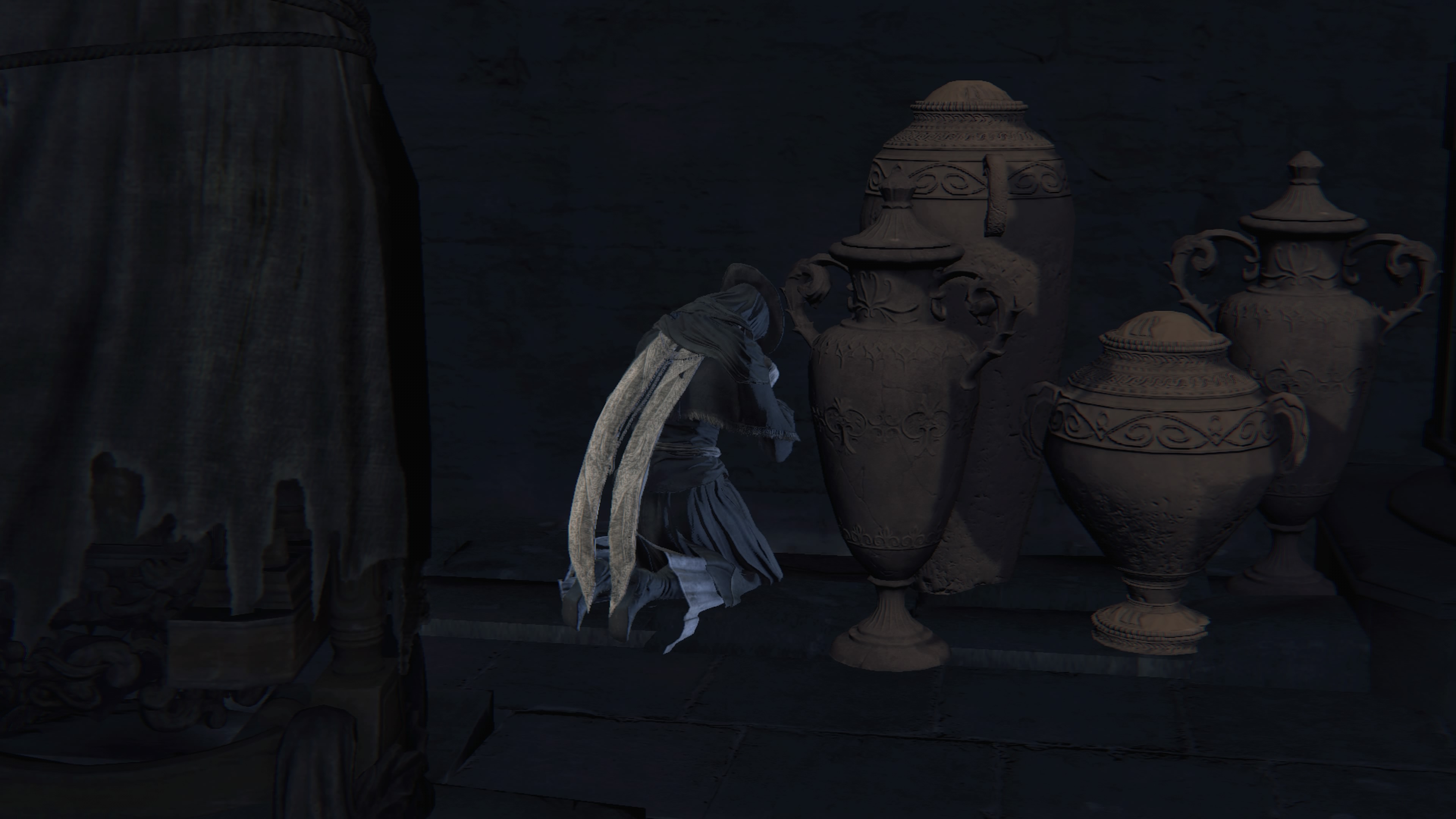
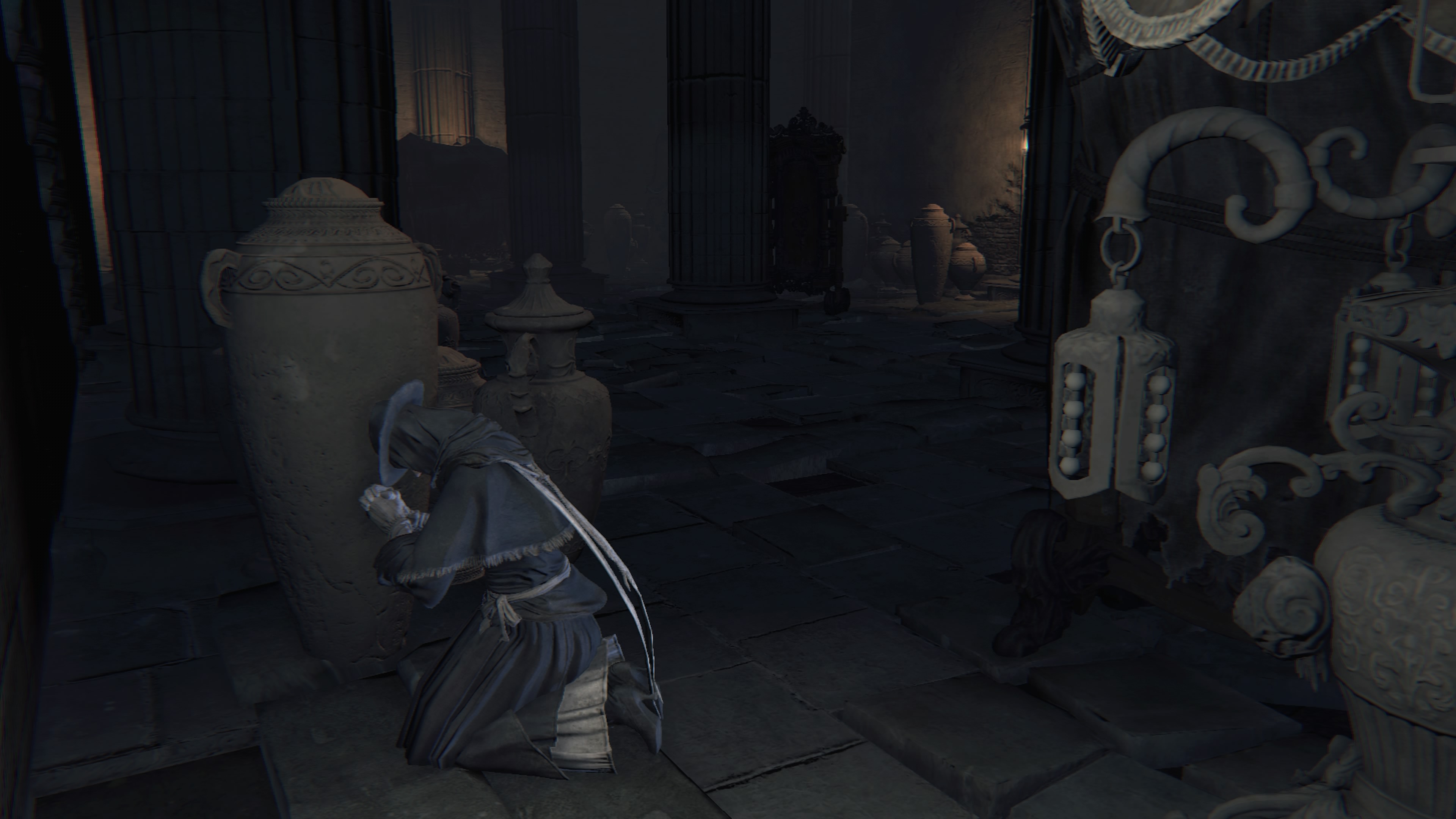
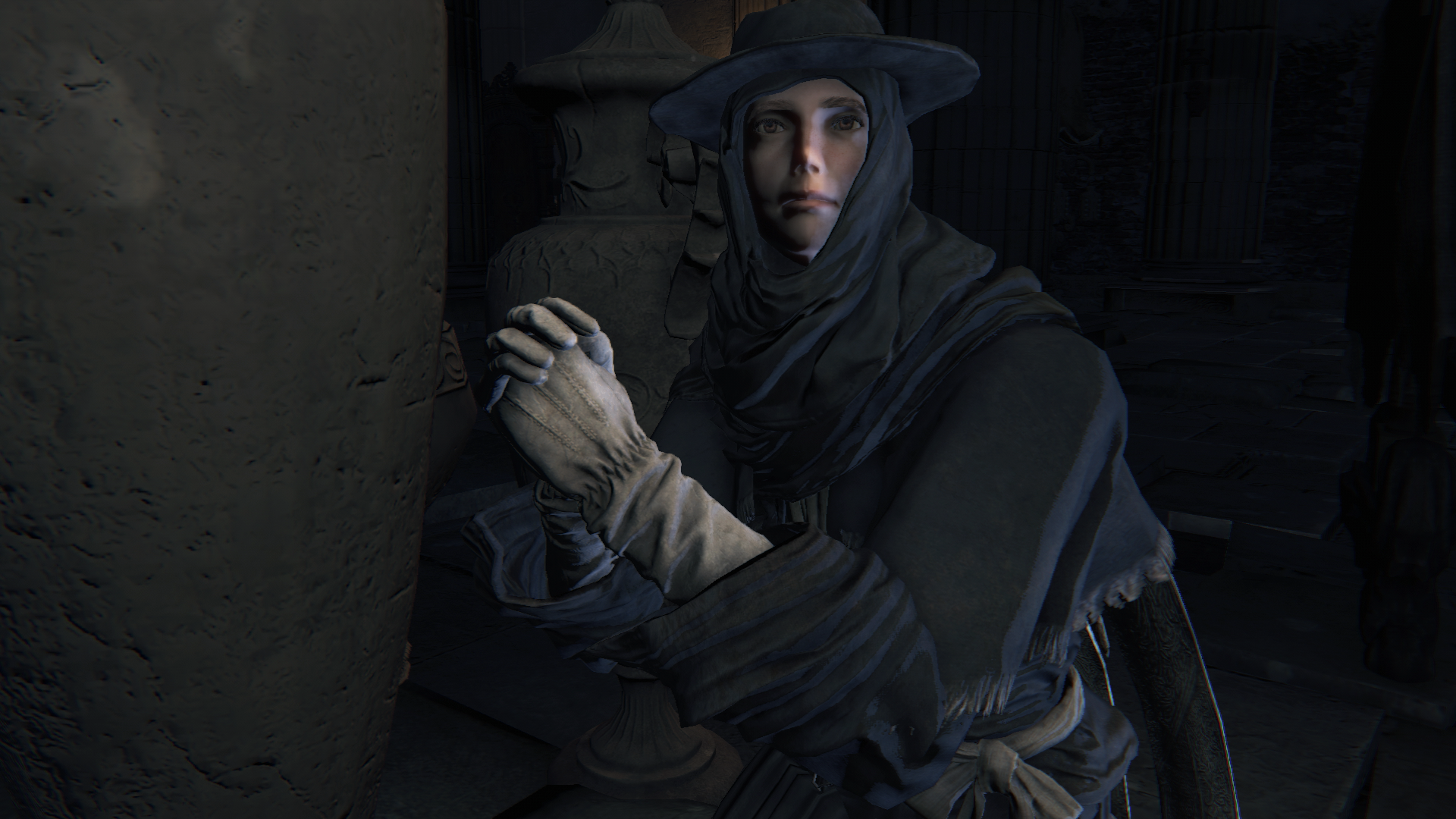
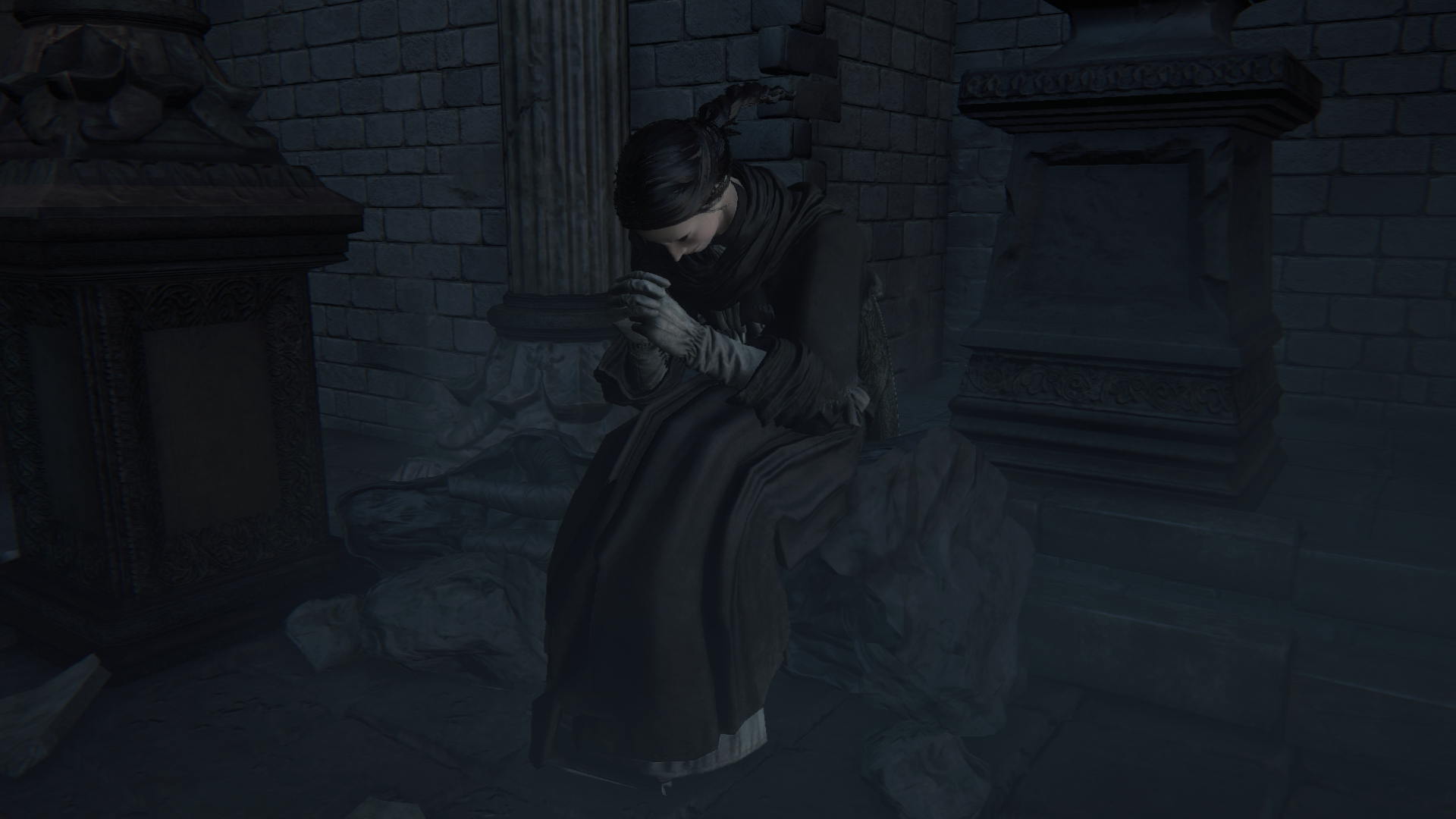
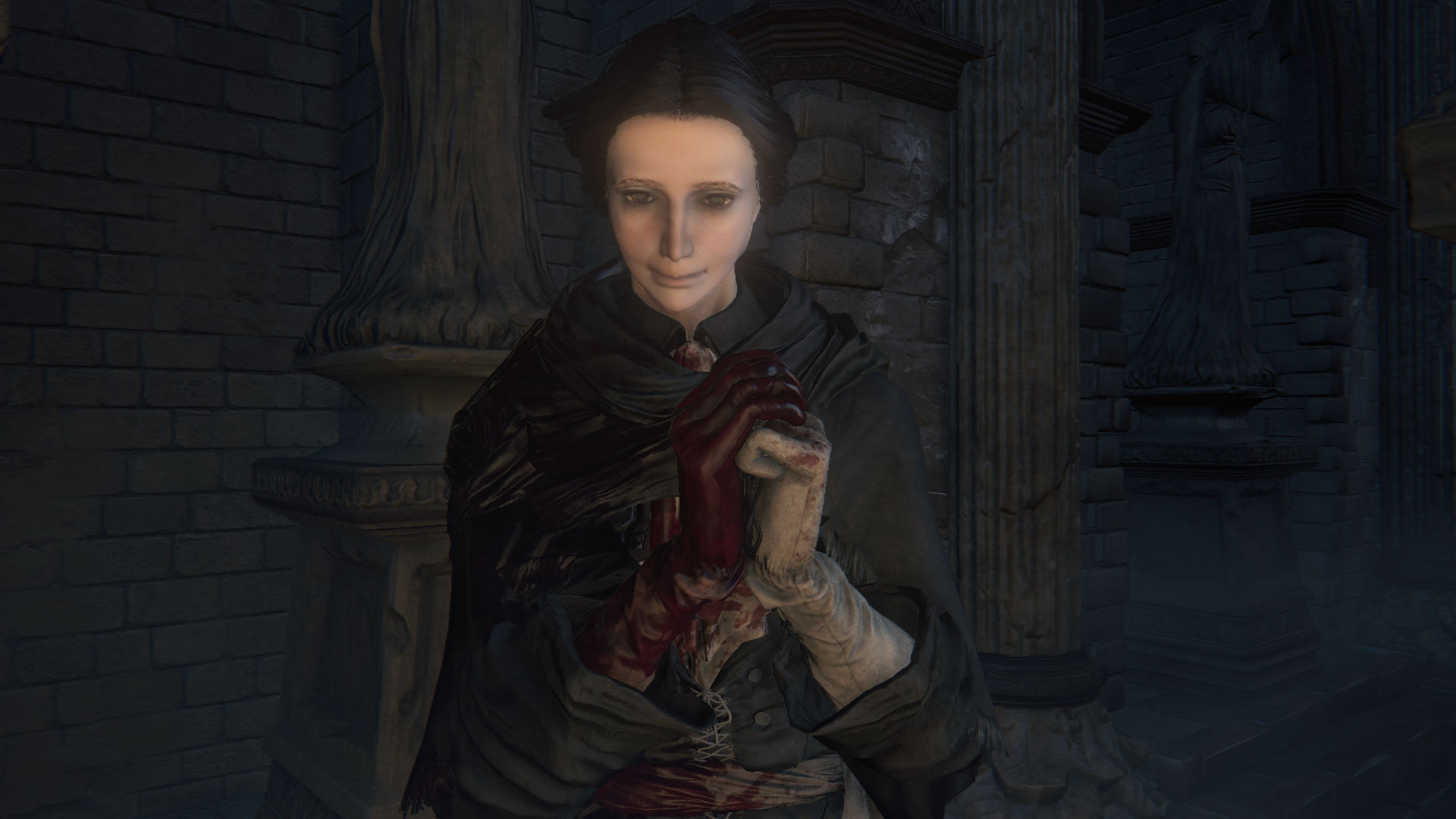
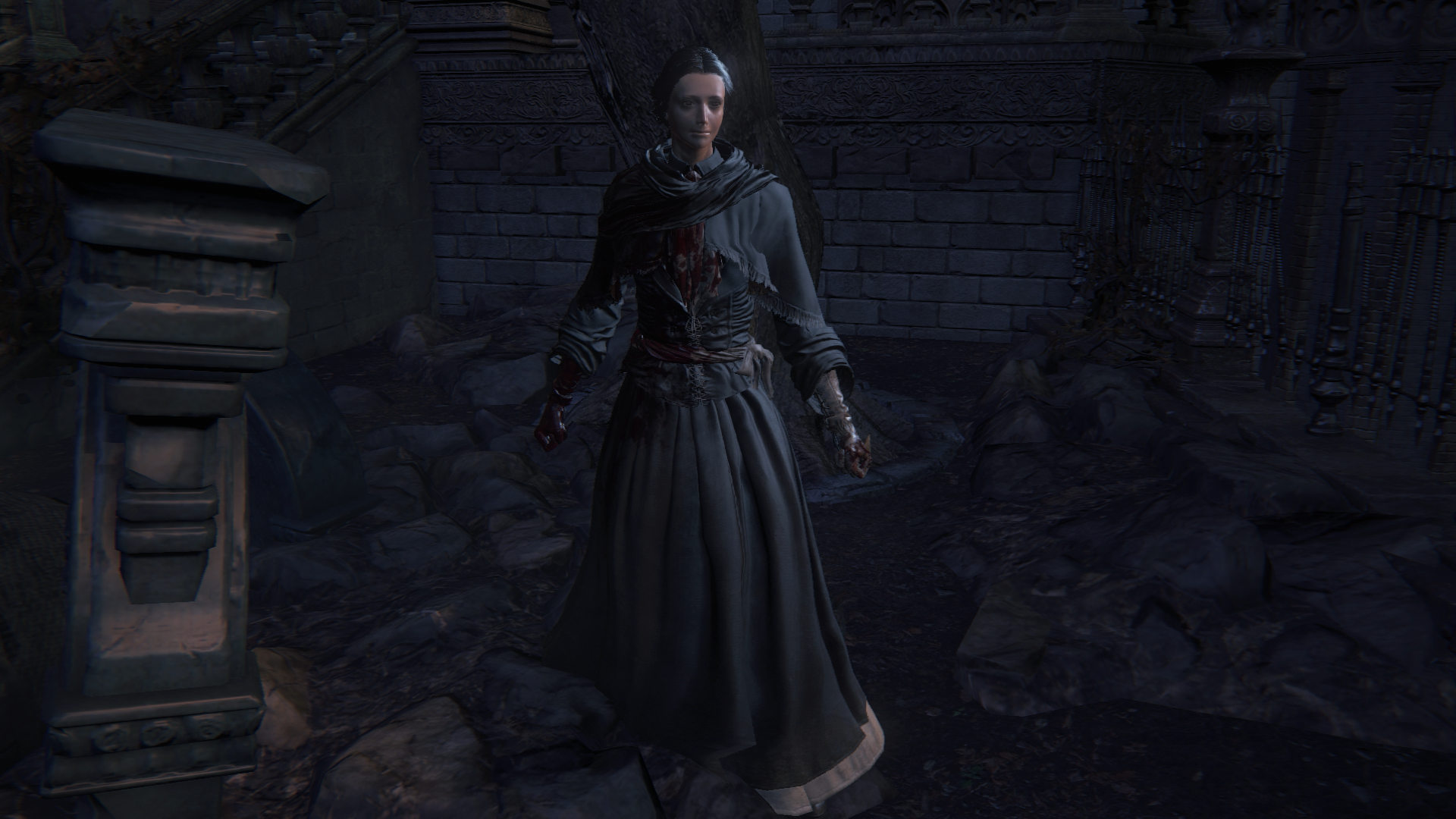
Now, I will save you…
Eheheheheh… My hunter… Your blood has been corrupted… Now, I will…
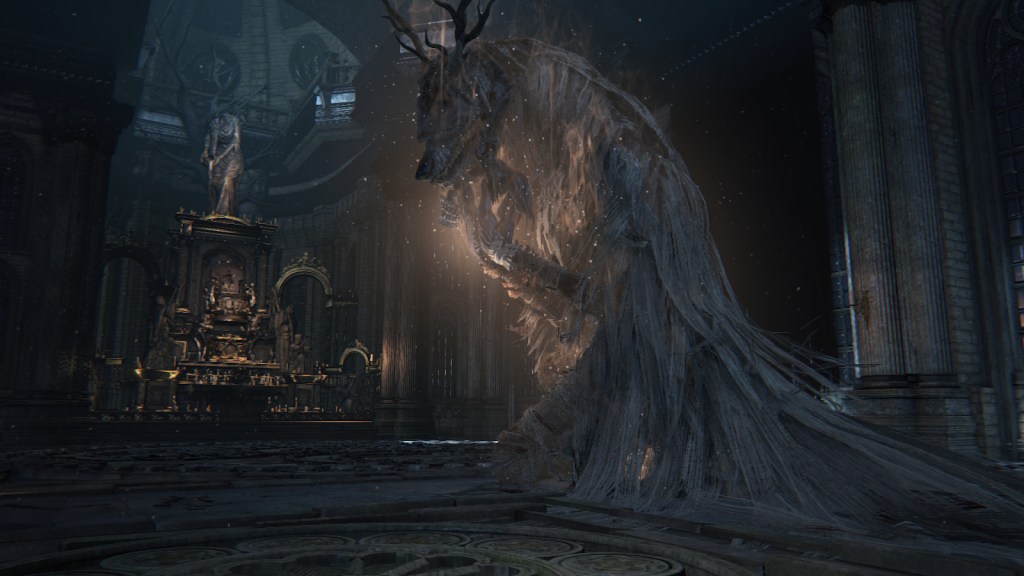
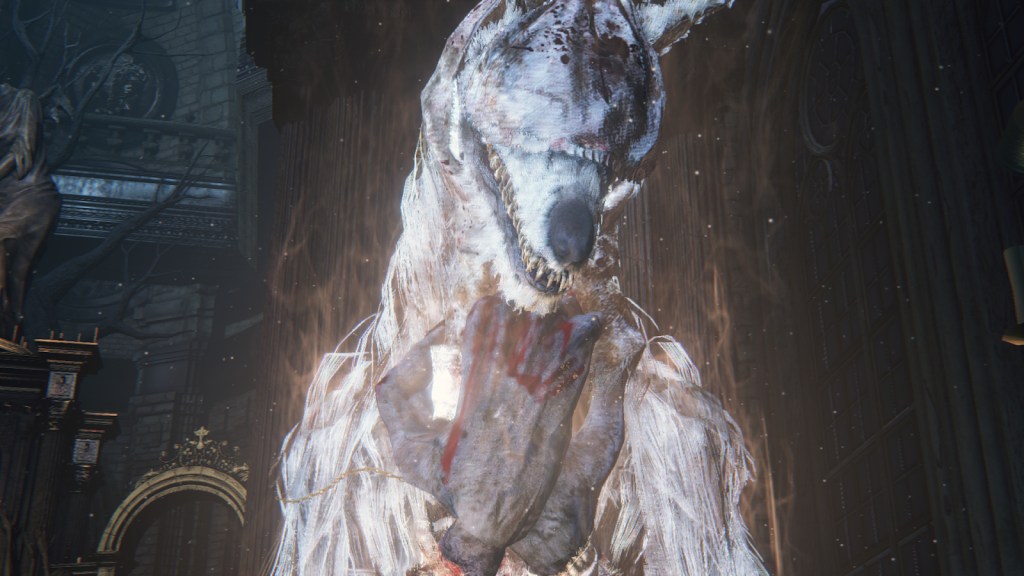
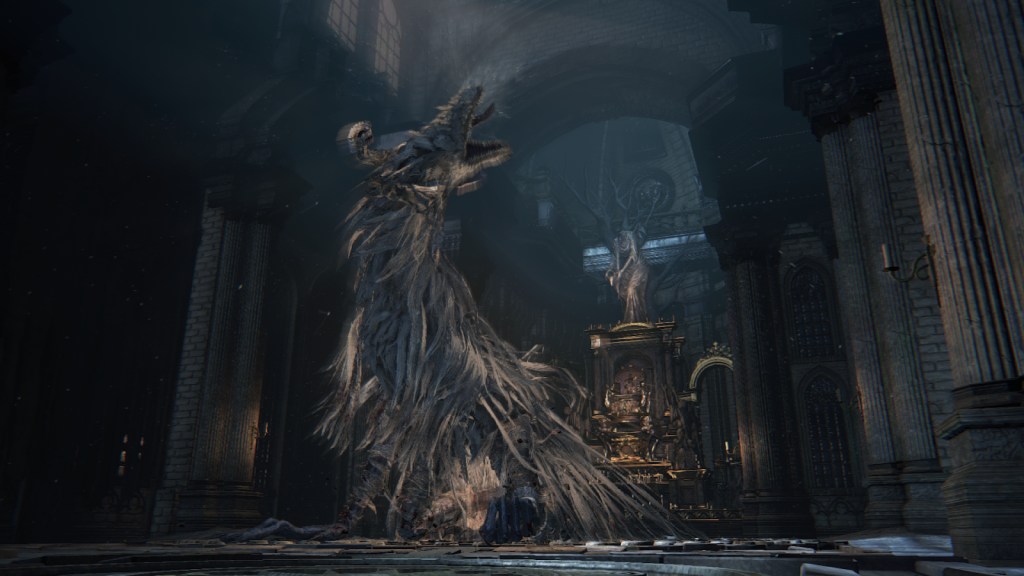
That said, supposed failures like Adella do have a place in the Church hierarchy, and they can reach other kinds of heights. After all, why was Amelia specifically chosen to be the Vicar? More fundamentally, why does she become a beast? Her answer to the current crisis is to pray, not fight. She has been using faith to hold back her scourge until it becomes too much to bear. The clergywoman certainly lives up to her name “Emilia” (エミーリア) and emulates Laurence, working hard to maintain conviction with his pendant as reminder. It is that faith which allows the beast to perform a “miracle” healing her own injuries purely through prayer. She is not a hunter relying on blood vials to survive out in the field like the hunter chief who became a cleric beast before her. How then did she come to receive the blood? Experimenting on herself? But even as the master of the donations, she clearly is no more informed about the “disease” than Iosefka, who seemingly hasn’t injected herself with the blood she refines either. So then, where did the blood consuming Amelia come from? From being a Blood Saint.
Indeed, only the saintesses receive the scourge in their blood while remaining oblivious to the faux nature of their Church. A Blood Saint possesses the status to maintain public relations while remaining a powerless figurehead, subject to the “old instructors” in the upper stratum. They equally possess the incentive to emulate Laurence, the first Vicar who also supposedly resisted the scourge by carrying the faith and becoming enlightened even as a beast. Everything about Amelia’s circumstances prior to our encounter fits if she, too, is a Blood Saint. Unlike the others, she never achieved the smallest degree of enlightenment and would eventually be doomed to beasthood, clinging to her faith ever further to resist the “sin” in her heart. That especially fervent devotion may be why she was selected to lead all other noble blood donors — it certainly wasn’t for competence. Ironic that such faith would end up as this living tool’s downfall. But that is the price a saint pays to become something more than her meager station.
 Lokey Lore