
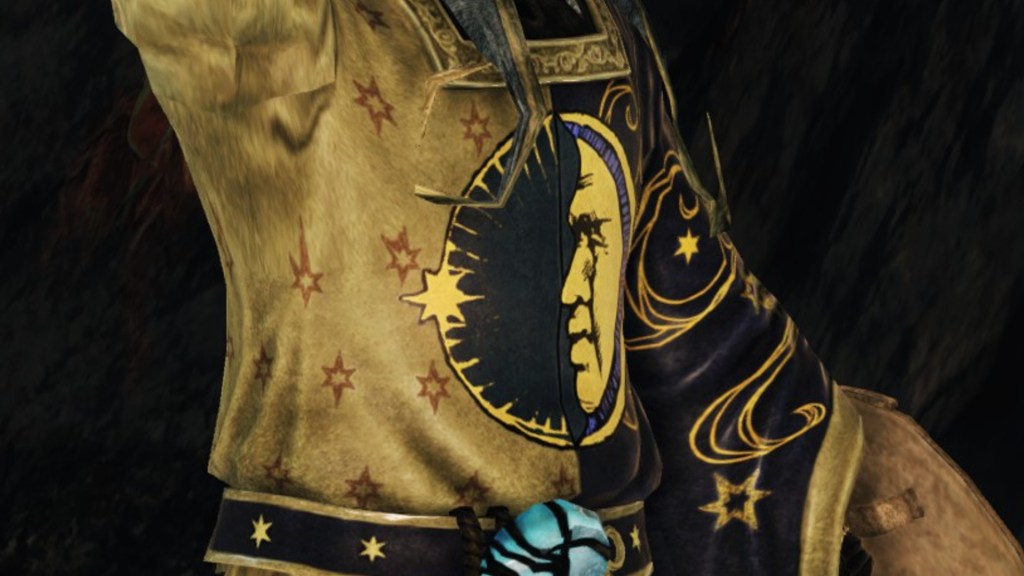
Among the various schools of magic in Melfia, astrology might be the most idiosyncratic. Astrologists study the stars’ movements under the presumption that there are rules behind their alignment from which they can derive magic power. These heavenly bodies include the sun and moon based on the designs on their robes, which explains why we see practitioners cast lightning miracles expressing the power of sunlight. Aldia proves that the Magic Academy wasn’t the first to take interest in these “star-divining arts”, (占星術) but carrying it on is still impressive in light of the study’s absence in the Old World. Indeed, considering their relevance to the various schools of magic, it is surprising that no one had considered acquiring the power of the sun and moon directly before them. But perhaps that is due to the difficulty, Melfian astrologists failing to make progress with their hypothesis despite the number of new magic tools derived from it. The magic on earth is simply far more accessible by comparison.
This brings into question why such magic exists in the heavens. Lightning is perhaps the easiest to envision, since it is typically the byproduct of storms — which we witness for ourselves at Drangleic Castle. However, it is also considered sunlight, tying its existence to the ball of fire illuminating each day. Perhaps the sunlight, blocked by the clouds, becomes infused into them, building up power until finally unleashed with the rain. Assuming that clouds are water in gaseous form as is the case on planet Earth, this would be little different from how lightning diffuses through water masses since the original Dark Souls. (DS1) Recall also in DS1, water demonstrated certain properties related to anti-time, which tied into the possibility of the sky itself being a body of water encapsulating the globe in lieu of fog after reality had filled with Disparity. This was significant since it implicated the celestial bodies as a kind of reflection of the powers this sky sea encapsulated. And being outside the bounds of spacetime, each reflection theoretically doubled as a portal to those same powers.
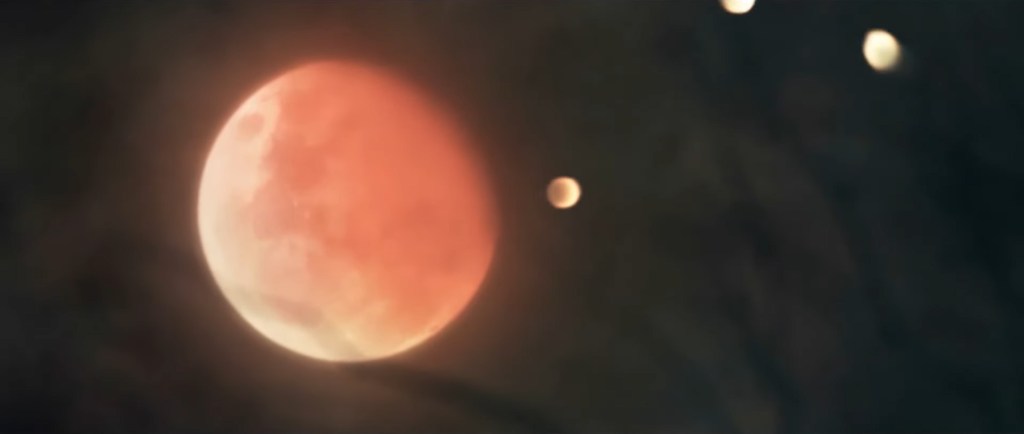
Put simply, the sky seems to act as a kind of cosmic mirror, recording the essence of the First Flame and rock globe as the sun and moon in real time. These aren’t physical bodies so much as projections within a celestial sea, like how an image may look distorted when refracted through a lens. In this case, the distorted image is the source of time captured within a space of anti-time, alongside unnegatable existence. The result is both effectively punching a hole in the freeze-frame, their innate power just as real and invariably tied to the actual entities from inside said outer space. And through their mutual link, a will might use the heavenly bodies to affect the powers on earth and vice versa. We already see this with the red moon in the opening cinematic, a body changing color — at least in the local area — to reflect the magical phenomenon occurring on the ground in connection to it. The same could presumably occur with the sun (as later confirmed in Dark Souls III) and reveals just how intimate the connection is. If fire were to disappear from this world, so would the sun, and the light of the moon.
Even if an oversimplification, the astrologists’ suspicions lend credence to this formulation of the cosmology overall. The magic in the heavens is the same as on earth, which justifies how plant life evolves and flourishes under the sun and moon. And if herbs and flowers can draw upon the power emanating from the sky, why can’t humans? Doubtless, there are no end to the applications. Why derive the power of fire from a pyromancy flame carefully nurtured with “seeds” of tiny fires when it can all be drawn upon straight from the source, hanging overhead? Why use a bell imbued with holiness or staff saturated with magic, for the same reasons? Beyond the limits of daytime and nighttime, a spellcaster can theoretically channel more power from the stars, which might aid in large-scale rituals or arts of similar magnitude. Astrologists thus have every reason to divine the meanings to their movements if it will lead to ultimate understanding. The only question is if that understanding can extend to manipulating them.
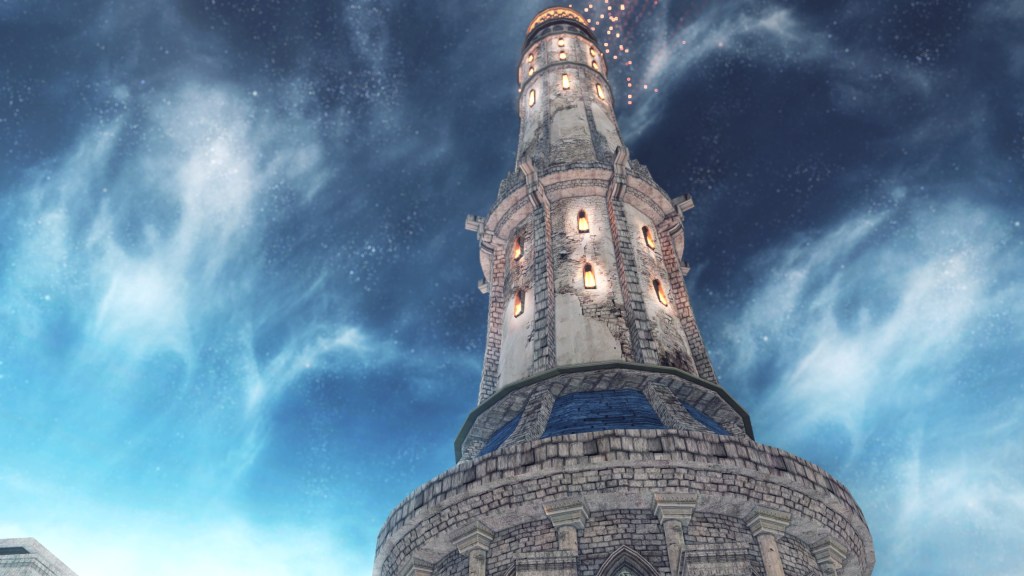
Of course, “the stars” collectively refer mainly not to the sun and moon but the twinkling lights between them. While DS1 remained silent about the existence of these stars, astrologist attire undeniably depicts them alongside the more familiar bodies, and we can see stars filling the sky in wake of the setting sun at Heide’s Tower of Flame. They are present and numerous, but what are they? They shine similar to the sun, but they cannot simply be fire itself. Rather, they appear in association with night like the moon — in other words, in the sun’s absence. Just as the sky separates flame from the rock it transforms, it brings the tiny lights and rock together. The source to stars therefore must have some presence on earth distinct from flame. And yet, just as how moonlight is a derivative of sunlight, a star can be imagined as its own miniature sun. If moonlight denotes the power of flame filtered through rock, then starlight should also tie back to flame in some manner. And when it comes to the power of fire distinct but associate with earth and distant from its source, only one comes to mind: Disparity.
In short, stars most likely represent the individual souls which have proliferated across the globe. Perhaps it is limited to souls of a certain size, such as those belonging to intelligent people or similarly impressive plants and animals. Either way, fragments of Disparity begot and behind the First Flame best fit as the lights shining alongside the moon at night. For an astrologist to draw power from the stars thereby means to perform another form of soul sorcery. This alone might explain the difficulty in advancing astrology; even if they learn to accurately interpret the stars, controlling them might be another matter, since every soul acts according to its own nature. That may also be the underlying reason for astrology never developing in the Old World, where schools of sorcery and miracles descended straight from the gods. No one accumulated more knowledge on astronomy and souls than Anor Londo, yet apparently not even Seath determined astral power to be practical for his purposes. Only man, in their ignorance, pursue the stars for more than intellectual curiosity.
Still, to subvert a will through the cosmos, in some sense changing a soul’s fate, would be a tempting prospect — not even gods would be immune, after all. Even if impossible, the very notion could spur learned astrologists on. And as we can see from those casting Profound Still, their art has them gradually stumble upon other truths. Just as outer space captures the dynamic between flame and rock, it also provides a snapshot of the Dark. By being outside the boundaries of where fire burns, the sky defaults to darkness, dispelled only by the light of the other powers the water records. And yet, night proves that this Abyss is always lurking, that cold, silent blackness prepared to swallow all souls with the earth in its deep recesses once fire no longer finds purchase. The same phenomenon is expressed in the cyclical phases of the moon, light overtaken by Dark. It is inevitable, the natural consequence for all things. Maybe the final conclusion to astrology is how all will one day end up in Dark’s embrace. But like the Lords before them, its practitioners must first learn not to be distracted by the flashy lights.
 Lokey Lore