
Gael’s life was arguably a series of misfortunes. The sole weapon he has owned before any other is his greatsword, which the description affirms was originally for executions by beheading; hence its heavy resemblance to the Executioner’s Greatsword. In other words, before undeath, Gael lived as a headsman. But unlike a certain depraved executioner, Gael was dispassionate about his work, his sword receiving no particular power whether positive or negative. His was simply a duty to execute, in every sense of the word. In truth, outside the odd depraved individual, few would covet Gael’s position. Despite their necessity to society, active-duty executioners were ostracized in medieval Christendom, denied holy communion and generally looked down upon as lowly killers. Commonly, the job fell to those whose father previously retained it, were outcast from the community, or got picked out of the crowd at random. Regardless of which Gael can claim as his origin story, there was hardly a glamorous future ahead of him. One might say he had all the rotten luck.
Greatsword of slave knight Gael. Sole weapon that has been with him all this time.
It was originally a beheading sword used for executions, but its blade has been greatly nicked and stained with blood and Dark due to its long history of battle.
And yet, he accepted his lot in life. As mentioned, the executioner is an important societal duty. Perhaps he had no say to refuse, but the man apparently took solace in that purpose, granting criminals the honor to die by the sword — not that they necessarily appreciated this. During our boss battle, a red miasma forming ominous skulls emanates from Gael’s bloodstained sword and later body. He attained these obvious vile spirits well before our clash, some left along with prior messages. They thus reflect the countless souls slain by his hand, Gael taking on their grudges along with their spirits similar to the Pursuer. Despite enduring curses from both the living and the dead, the executioner stepped up to perform time and time again. Someone has to do the dirty jobs, after all, and Gael just happened to be that person. If that was his fate, so be it. He toiled year after year, probably living in squalor, until called upon to decapitate another sinner, some days maybe a whole group of them. His grey beard is proof of a long life in this profession. That all changed when the old man finally croaked, only to reawaken among the cursed.

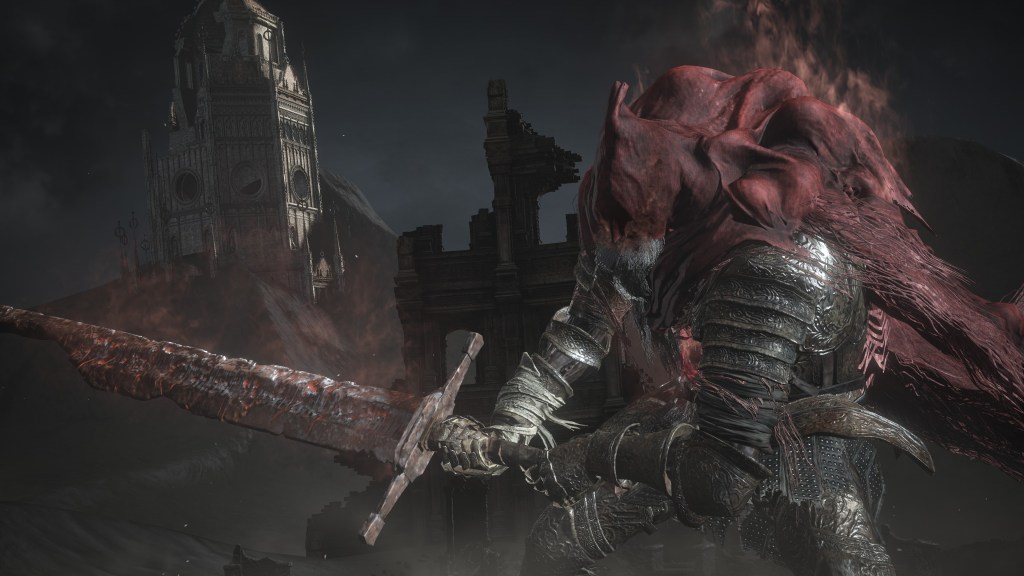
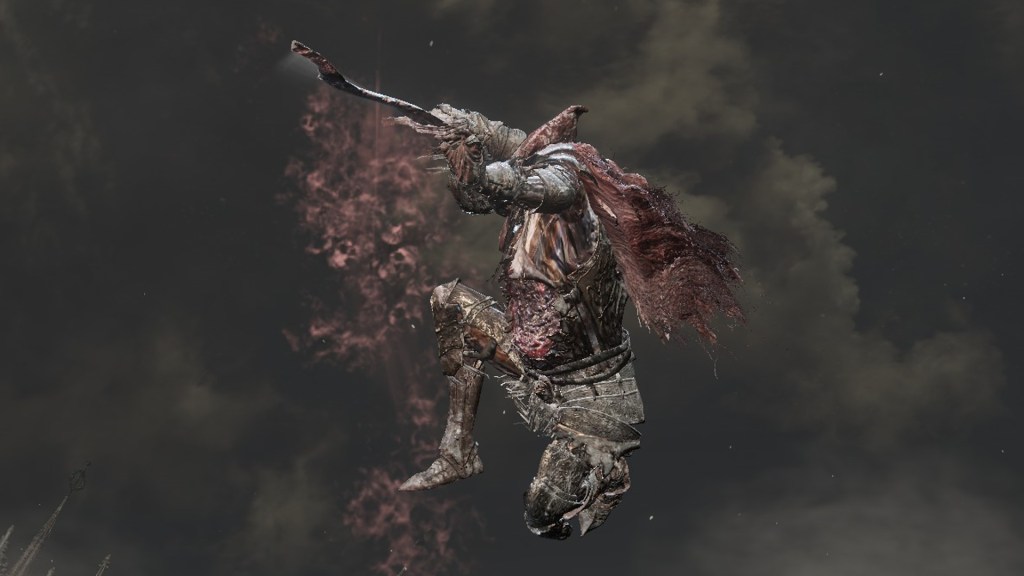


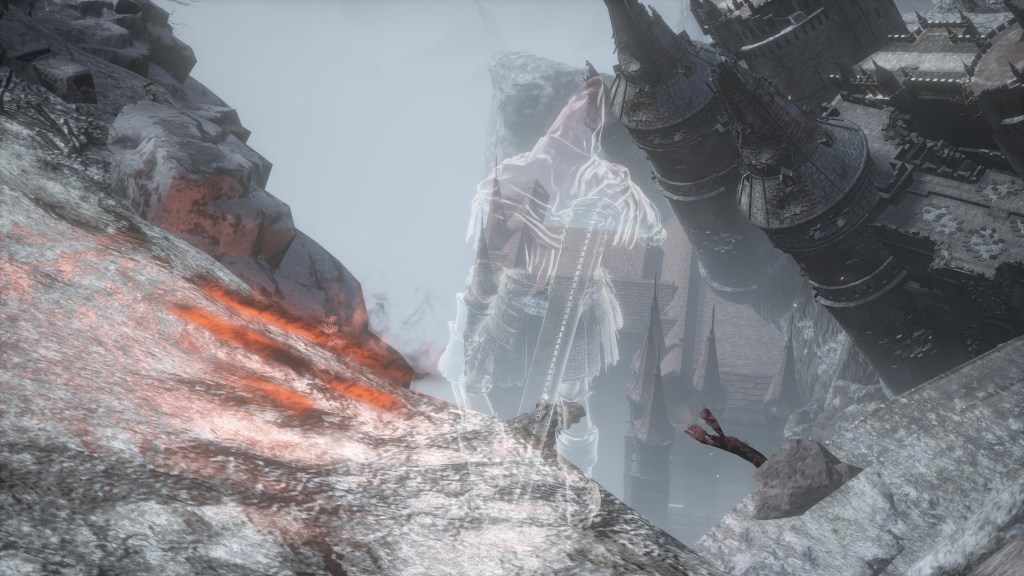

With how long the Undead curse has plagued the world of man, it was inevitable that some would consider how to weaponize it. At least one country devised the system of slave knights. Initially, the knights might appear noble. Easily identified on and off the battlefield by their striking red hoods, these knights were equipped with intricate armor reflecting the honor of their profession. And yet, they are still slaves, Undead pressed into service to their country, bestowed an honor none had asked for. The “impiety” of their existence makes conscription easy to justify as penance for sins against the gods. The practice was likewise logical for the state — why drive out part of your population when human resources can be reallocated? It was much more efficient to throw the sinners into the military meat grinder than waste possible utility. Indeed, the Undead provided a unique tactical benefit: compared to ordinary soldiers, they were recyclable, and arguably more maneuverable.
Imagine this scenario: you place your army of slave knights at the vanguard. They take the brunt of the enemy assault; volleys of arrows, rows of lances, flurries of swords. Almost guaranteed, that first unit will be wiped out. But if the opposing army subsequently charges past the front line, what happens when those Undead invariably rise back up? Suddenly, a scattering of Hollows ambush the enemy from the middle of their ranks, breaking up formations and generally sowing chaos from behind their flanks. The slave knights serve as effectively delayed land mines, going off when the enemy least expects it. It is a devious ploy, no different from catapulting a diseased cow into a besieged fortress. Still, it forces the opponent to think twice before making a push through your defenses. Granted, this scenario is already a possibility on the battlefield — any of the fallen might turn, die again, and hollow mid-battle. But the slave knights rig the outcome, setting up that potential to be much more frequent and far more devastating. It behooves any country to make the Undead time bomb systematic.
Being essentially a suicide squad, the cursed were no less expendable, thrown into every gruesome battle facing the nation. Twisted bones, incinerated skin, they likely experienced every suffering imaginable until they were reduced to nothing more than decrepit monsters. The quality armor was likely just an excuse to make them more cooperative. Recall that the Undead curse preys on weakness of the heart as much as body. If they were treated too poorly, the Undead might hollow prematurely. Abuse thus had to be replaced with propaganda, the slave knights impressed with the notion that they were valued by their country, as if their terrible curse served some higher national purpose. Unlike with Lothric, the distinctive hoods identify who to avoid rather than degrade, no sane man getting too close to an Undead who might become a mindless beast at any given moment during battle. They were nevertheless valuable assets, so their masters did everything to keep them motivated before reaching the war front.
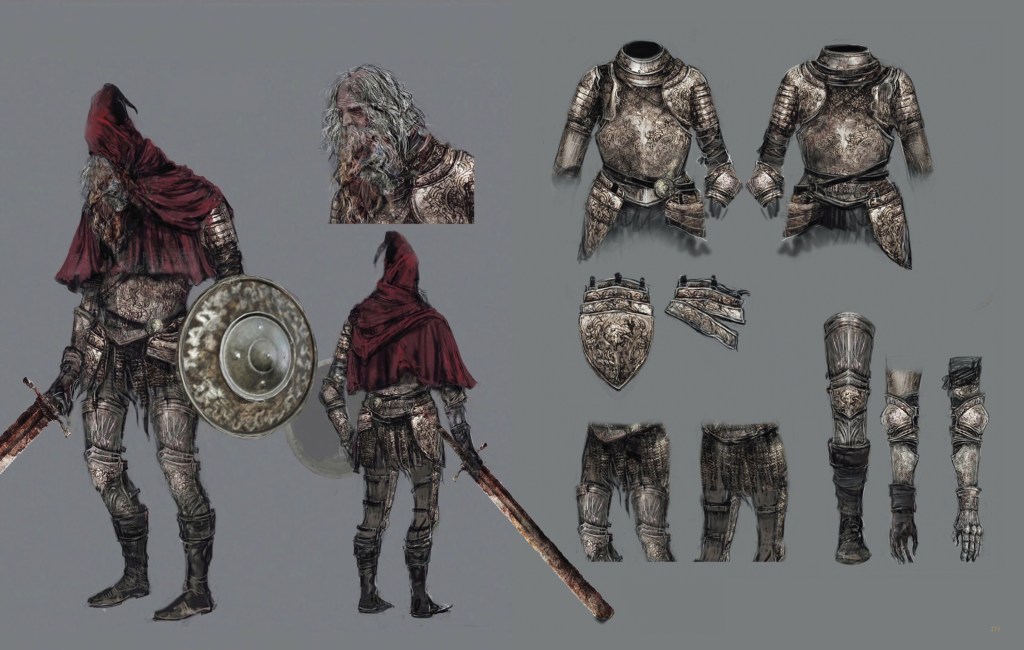
Apparel given to slave knights. A red hood that exemplifies their status to all eyes.
It is said that only Undead were conferred as slave knights and forced into every gruesome battle once.
Even though they became decrepit, their skin was hideously burned, their bones were warped, and they already lost the likes of their sanity, their battles never ended.
Gael was one of those supposedly venerable slave knights, the newly risen Undead bringing with him his old greatsword. His prior work trained his technique and desensitized him to slaying his fellow man, so he was arguably suited to a soldier’s duty. But what actually made Gael stand out was his resolve. One downside to the slave knight strategy is, once understood, the enemy will try everything to clear them off the board first thing, which is probably partially to blame for them suffering such gruesome battles. A foe exhausting itself doing its worst straight out the gate wasn’t an issue for the army proper. But for the slaves, it was brutal — most would assuredly Hollow after one battle. But not Gael. Should we kill the knight before his boss battle, he will return alive once the area resets, only mildly concerned about our random cruelty before quickly moving on. If we repeat the process, the Undead begins brushing it off as customary. The man is not only used to an unjust death, but also keeping his sanity intact despite it.
Most Undead we encounter still sane — and willing to talk — fear death all the same because it all but guarantees hollowing. The curse might give them a second chance, but it almost certainly won’t be them anymore. It is for this reason that Undead NPCs typically disappear from the game after we have slain them, their Hollow presumably wandering off or getting put down by someone else while we are away; their hollowing in scenarios where they were never killed increases that likelihood. Even Hollows who maintain their good sense, like at Londor, implicitly haven’t died since manifesting the curse. The one exception up until now has been the main hero of each game, all three behaving unchanged in spite of any number of deaths. Game mechanics aside, dying is but a minor inconvenience to these “Hollows” until the player gives up on completing their journeys — in other words, to stop playing decides when they have truly been conquered by the difficulty. For Gael to not even Hollow after dying repeatedly, his strength of heart must be equally if not more exceptional.
Perhaps it should be expected for a man capable of shouldering so many curses unperturbed, but the bewhiskered slave knight is a rare breed. That determination which had carried him through the grueling work of an executioner now allowed him to survive through every battle. Such an iron will was both a blessing and a curse. While in the army, Gael modified a standard crossbow to shoot a rapid-fire of bolts, expecting that it would be just him versus a legion of soldiers. The blood and rust is thanks to his unending journey around battling so many, the weapon quick to break from overuse. His greatsword has similarly become broken and nicked from countless battles without repair. It is clear that no one anticipated Gael to survive as long as he did, always expecting his next battle to be his last. They would repair his armor to keep up an image, the equipment looking only slightly worn. But anything else would be wasted on an Undead who would die for good in the next battle. Yet Gael always beat the odds.
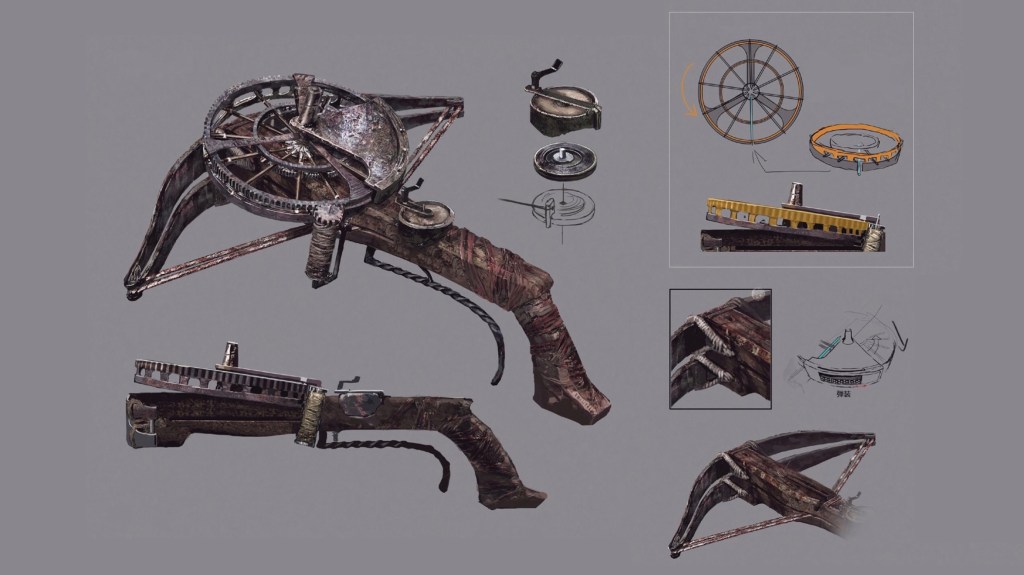
Weapon used by slave knight Gael. Modified crossbow capable of rapid-fire in anticipation of one-on-many.
It is warped in many places and rusted with blood due to unending travels and battles, so is easily broken due to overuse.
His greatsword’s skill, “Blade of Peril”, (捨て身の剣) alludes to abandoning oneself, with the meaning that a person put his life on the line giving his all — typically out of desperation. Like a cornered rat, Gael was at his most dangerous when his situation was dire. It didn’t matter if he risked dying; that was already certain. If the slave knight wanted to make it to the next day, he needed to hold nothing back in the fight at hand. And so, he threw caution to the wind and plowed ahead, cutting down anyone in his path without looking back. For Gael, it was always do or die, maybe both. And that self-sacrificial mindset ironically served him well. His sword’s description alludes to its history of battle, (歴戦) the same as souls of “seasoned” warriors available to us on NG+. This speaks to Gael’s own strength, with a death count likely to rival heroes. His retrofitted crossbow is proof that he is as much crafty as he is determined. The old man is willing to use everything available to him in order to achieve his goals. In this case, it was to just survive until the next battle.
Granted, surviving was its own bane. The storied sword we derive from his soul is stained with both blood and Dark, implying that it fell to the executioner to handle the Undead left in the wake of every battle. This would inevitably include his fellow slave knights who weren’t so fortunate. Over and over, Gael was killing faces he knew, skewering humanity until he was truly the last one standing. And then, he would meet some new comrades during their brief respite, only to watch them also be lost to the Darksign after they were thrown to the next battlefield. Worse yet, grudges on the battlefield were sure to accumulate, Gael shouldering more curses from friend and foe alike with each kill. Why did he get to live? How come he holds onto his memories? What made him so special? That spiteful instinct in the souls he absorbed from the fallen kept adding to the surviving slave knight’s burden.

But once again, Gael was content with his sorry situation. Part of it may be culture. The slave knight wields the Sunset Shield originally belonging to knights of Mirrah, the fiery design symbolic of their strength and willingness to die for their country. Mirrah might thus be Gael’s homeland. Certainly, the land safeguarding a holy spring was constantly beset by war, knighthood earning even the lowliest pauper recognition. As a country where even its spellcasters and spies had their own chivalric orders, Mirrah would think to make slaves into knights — better than banishing its Undead, knights sent on foolhardy missions to stop their hollowing with the fabled “souls” in Drangleic. With the inevitable losses in unending war, Mirrah needed all the manpower it could muster. Therefore, it is easy to see the slave knights emerge as the alternative following the events of Dark Souls II. And whether or not Gael hails from Mirrah, he has taken its ethos to heart. Just making it to the next day with the thin veneer of honor was enough to balance out constantly living on the edge of death.
However, using Undead as a buffer couldn’t prevent his country’s collapse. We can find a slave knight among the dead in the Corvian Settlement, with Gael acting like a butler or retainer to the resident painter girl. This implies that the warriors have joined the undesirables who end up in Ariandel. Considering that Mirrah may well have been rolled over by the Carthus war machine, this outcome wasn’t beyond the pale. For Gael and his surviving comrades, however, it left them nowhere to belong. They were now simply cursed Undead, without a country to serve or a purpose to fulfill. And as the description to Gael’s crossbow alludes, the masterless elder probably spent a great deal of his subsequent time traveling, adding more curses to shoulder along the way. Like so many of their ilk, the slave knights wandered aimlessly looking for a place which would accept them. They found that refuge in the world of a painting.
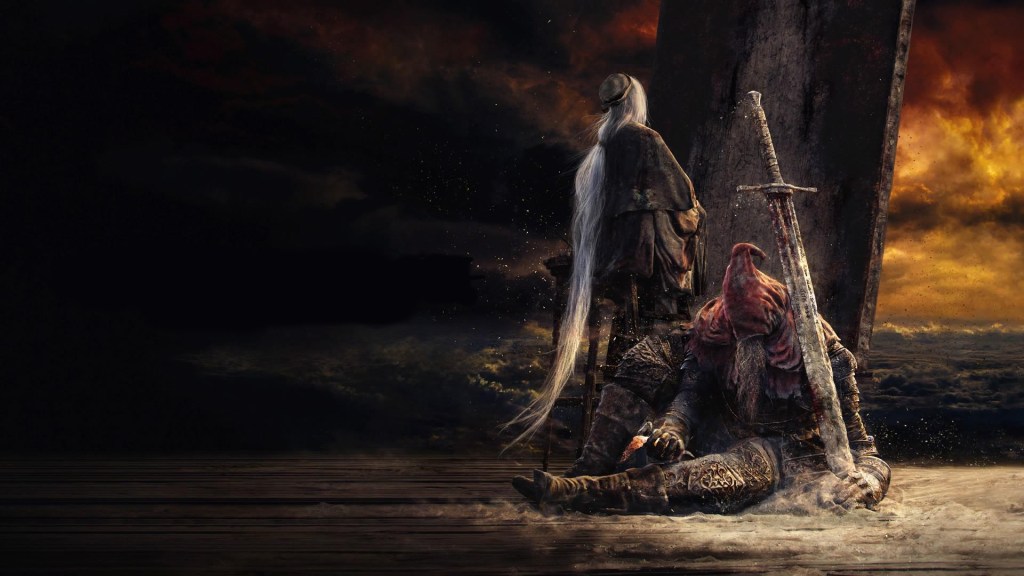
Ariandel became their place to call home, with Gael at least landing a position serving the villagers’ precious half-dragon hand and foot. The girl’s love for the knight is reflected in how she affectionally refers to him as jiji (爺) and oji-chan, (お爺ちゃん) casual honorifics for an old man befitting a child — he was basically her loving ol’ grampa. Having her and the village as a surrogate family, the slave knights no doubt felt a bizarre sense of relief and liberation from their old circumstances. Gael especially witnessed a good and innocence he had probably not experienced since maybe before his executioner days. That appears to have inspired loyalty, since he devotes himself wholeheartedly to the painter. She was now his purpose, perhaps the highest calling he had ever received. After all, she had her own role to fulfill, painting a new world for all like him. What greater purpose was there than bringing salvation to the forlorn and meek? Moreover, he was helping facilitate the dream of a little girl. Could a knight have a greater honor to his lady?
Gael’s newfound devotion manifests in his spiritual life, his conversion to Ariandel’s worship of Velka reflected in how he fervently prays to “her” statue at the Cathedral of the Deep. He has even learned the Way of White Corona from Lloyd’s followers at the village. However, the Canvas Talisman he wields to enact that miracle betrays his next long journey away from home. After Elfriede arrived and Ariandel began descending into tyranny, Gael discreetly left to find the other ash of the prophesy as well as the Dark Soul with which to color the new painting. But ignorant of the outside world, the slave knight seems to have just meandered around without finding the Unkindled’s resting place at Firelink Shrine — in fairness, there is only so much information a stray Undead could gather, especially so many years removed from current events. Based on his dialogue, his fruitless search lasted for a good while, leaving Gael in an unenvious position in spite of at least making it to the land of Lothric.
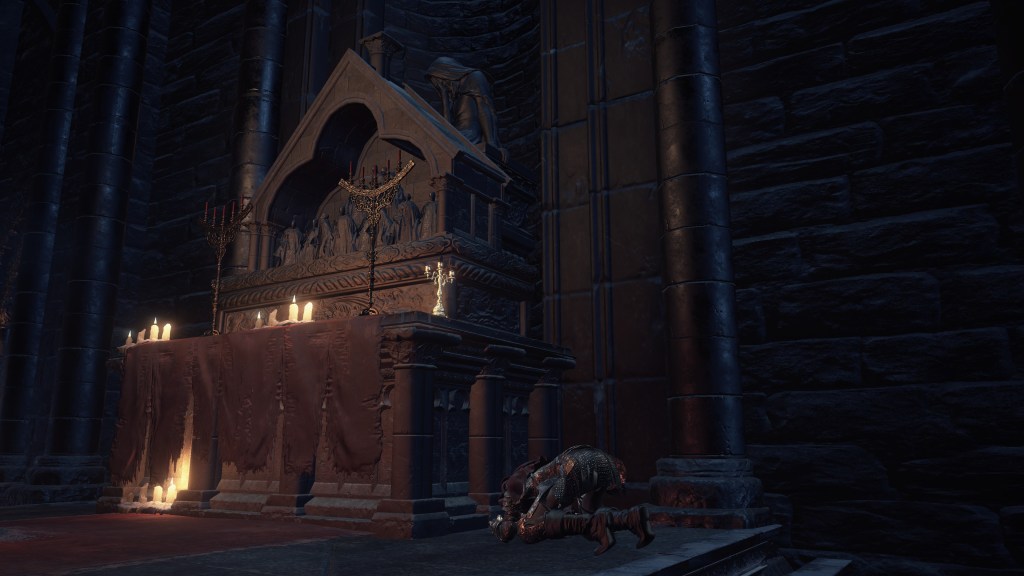
Fortunate for him, circumstances deemed the Unkindled awaken during his quest, allowing us to come across the distraught old man as he prays to his goddess. Upon noticing our scent, he presumes us the answer to his prayers and, overjoyed, beseeches our aid, understandably stunned should we initially refuse. If we do ultimately accept this mission to show his lady flame, Gael spares no time to explain further. After drawing us into his scrap of the painting, he only offers his summon sign for the final confrontation against Friede. With the prophesy fulfilled and his lady seeing Ariandel burn, the slave knight moves on without another word to her or us. And if we never accept his request for help, the old man apparently decides to entrust the fate of his new home to their goddess, leaving his scrap of the painting on the altar where curious sorts might interact with it. Whether a testament to his faith or his foolishness, the slave knight’s sole focus from then on is the Dark Soul.
Of course, Gael’s latest quest fared little better for the longest time. Needing nothing less than the source of all humanity for his lady’s pigment, he didn’t bother with collecting others’ dark souls in the meantime. While that might have seemed logical initially, the old man still didn’t have a specific idea about where to obtain his actual target, wasting most of his time wandering once more. It was only as the world formed into the Dreg Heap that the slave knight finally obtained a lead, climbing his way down to the Ringed City at the bottom. When we arrive, the slave knight has already left bonfires and messages pointing others the way to go along with tied red cloth and miracle circles, the latter of which seem to be the justification for some of the ridiculous falls we survive tracing his path. Evidently, he knew the dangers of the capital, so wanted to assist others who might fulfill his mission in his place, going so far as to leave more summon signs. In the end, however, we benefit from Gael’s efforts even while the man himself has yet to perish. And the moment we expose the pygmy lords, the so-called red hood pounces.


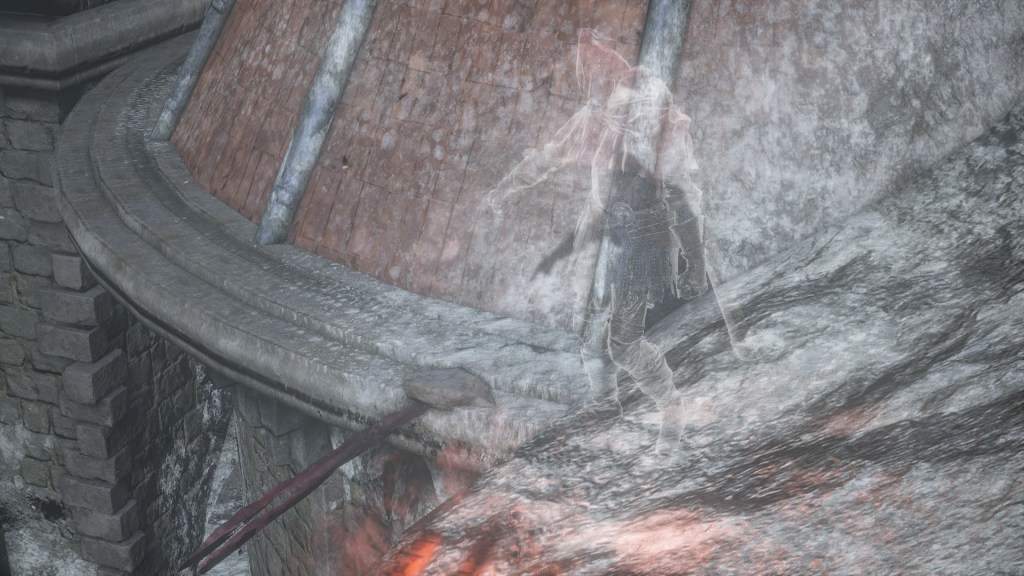


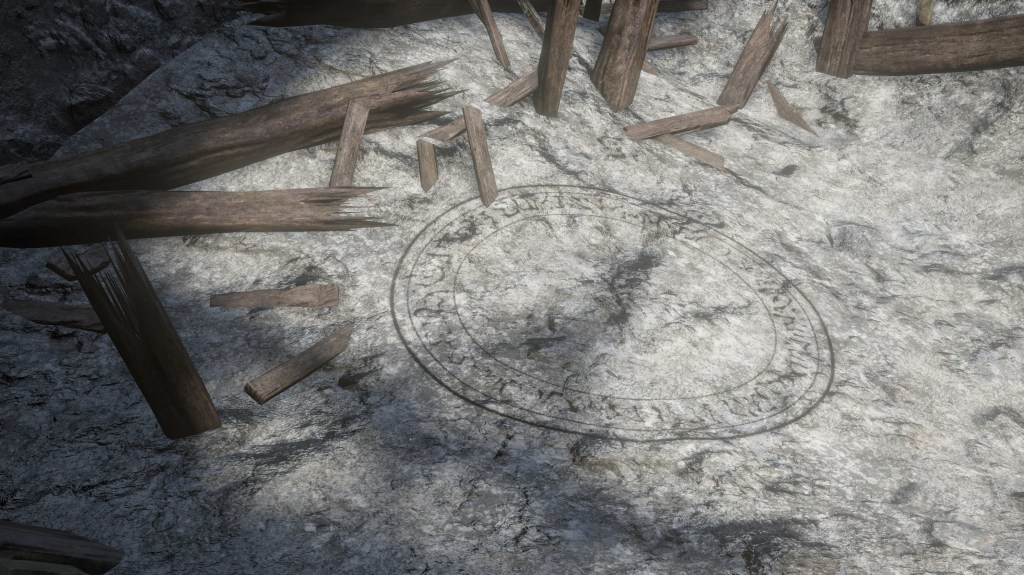
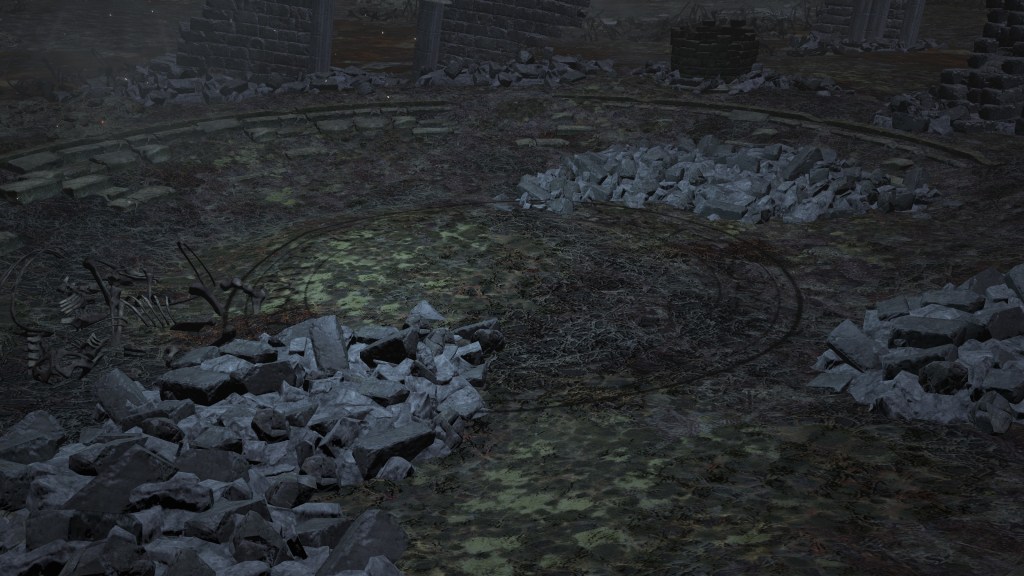
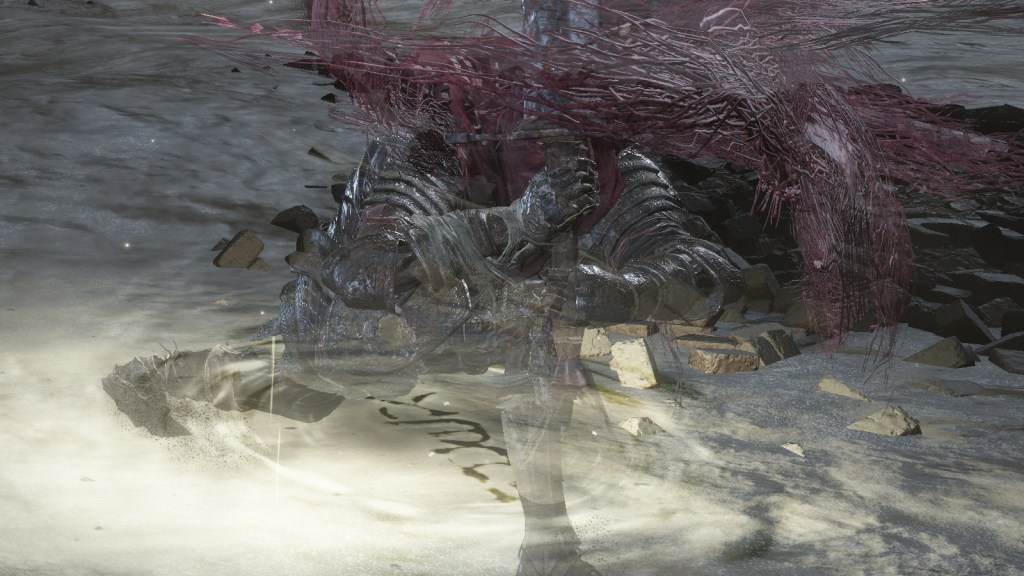
Although we just barely miss this event, what ensued is predictable from the aftermath. He slit the throats of the Pygmy Lords present. But each time, he saw the blood did not flow. The inheritors of man’s greatest legacy let it waste away, their medium for the soul as dry as their husks for bodies. As is, the Dark Soul was not fit to be a pigment for his lady. Thanks to the outside world’s dedication to stagnation, the slave knight’s entire quest for poor little Ariandel had been for nothing. Fate might as well have been mocking him — one might say he had all the rotten luck. But Gael thought of a solution: if he assimilated their souls, then their blood would become his blood, and his blood would become the viscous pigment required. To alleviate stagnation, one need only get things flowing again. And so, he began devouring the dried and dusty Dark Soul from each of the pygmies’ bodies.
Blood of the dark soul born in the void of slave knight Gael.
Becomes a pigment for the “lady” of Ariandel to depict a painting world.
When Gael saw the pygmy kings, their blood had completely withered a long time ago. And so, he ate the dark soul.
Side effects were immediate. Gael swelled to hulking proportions, armor cracking open as his heart became a large, gaping void. All the spirits inside him began flaring out the back, their faces leaving an impression on his cape similar to the Pursuers’ armor. As an Undead, taking in so much humanity only intensified his curse as well as rousing the others’ own, the amount of Dark in the air soon inviting a thunderstorm. In spite of his willpower, not even Gael could internalize that much power unscathed. His mind is already addled as we come upon him eating the last pygmy, begging for our humanity next. This initiates our boss battle, the slave knight hollowing as the fight progresses. At its height, Gael is overwhelmed by the energized spirits exploding out of him, lightning crashing down upon the dense black splotches where they land. It is no wonder that the soul we claim from the boss is humanity, though his flares like ashen dust rather than rich black tendrils as with Manus. The kings’ withering might be the one thing that kept the slave knight from becoming something more hideous.


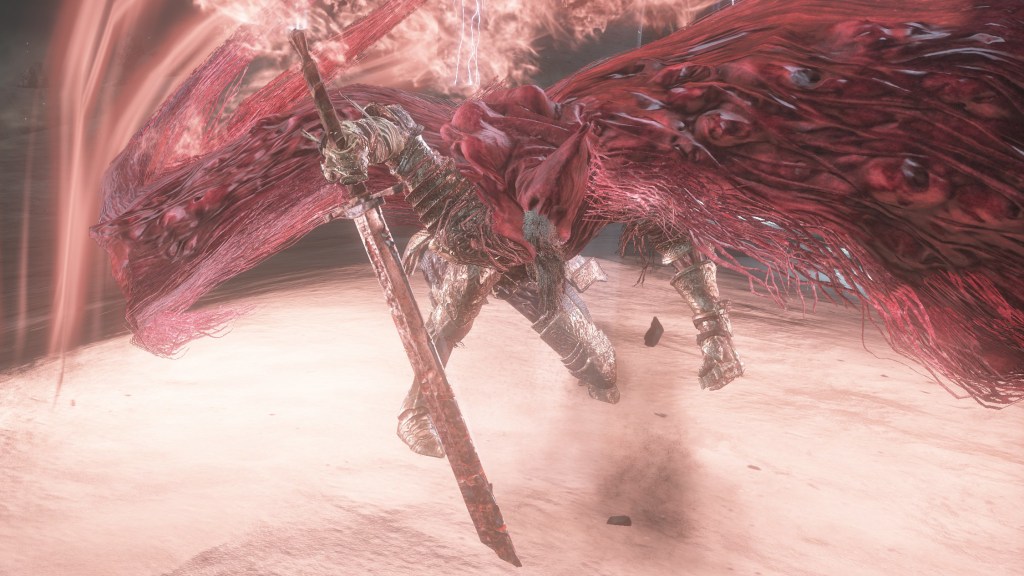
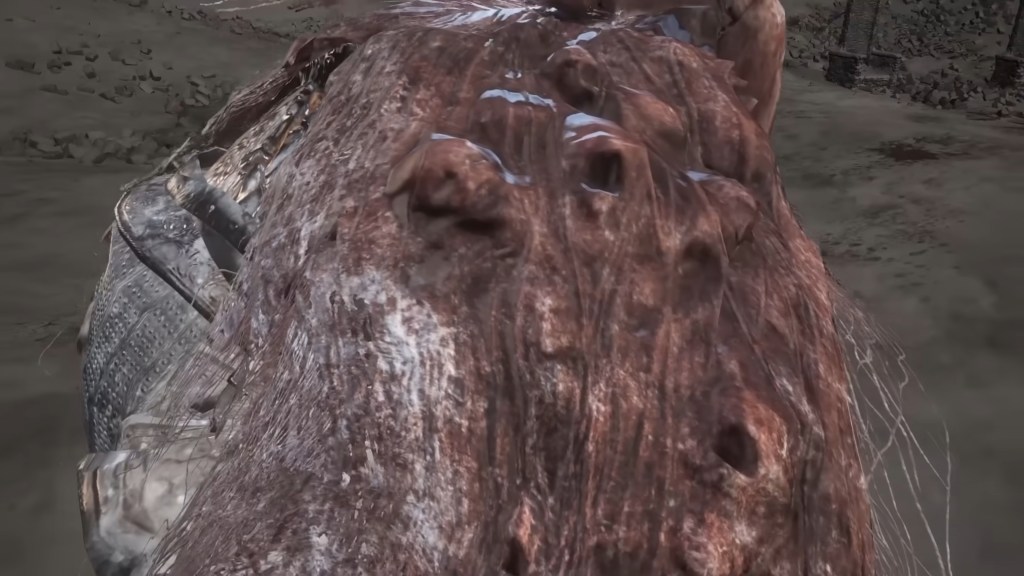
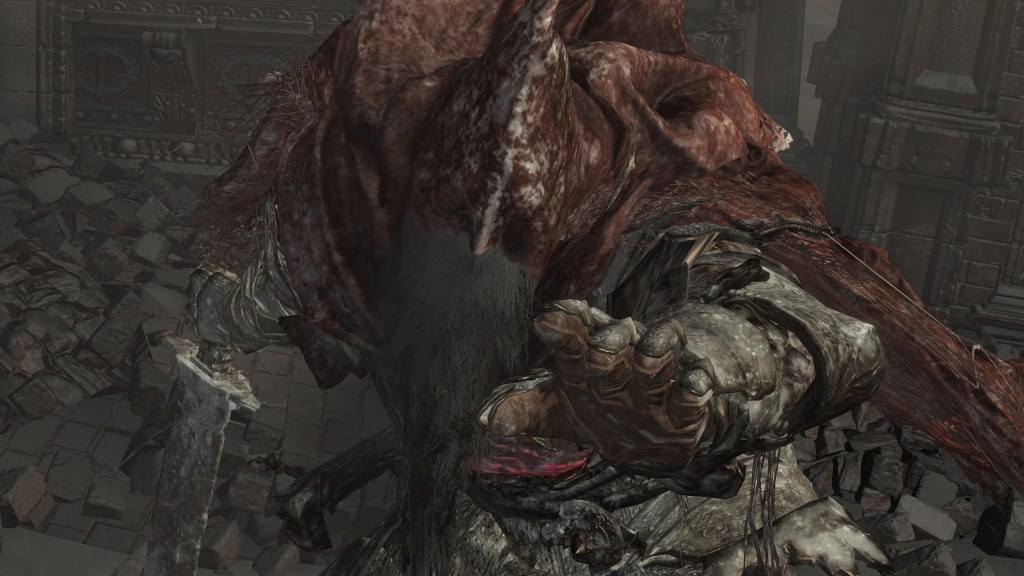

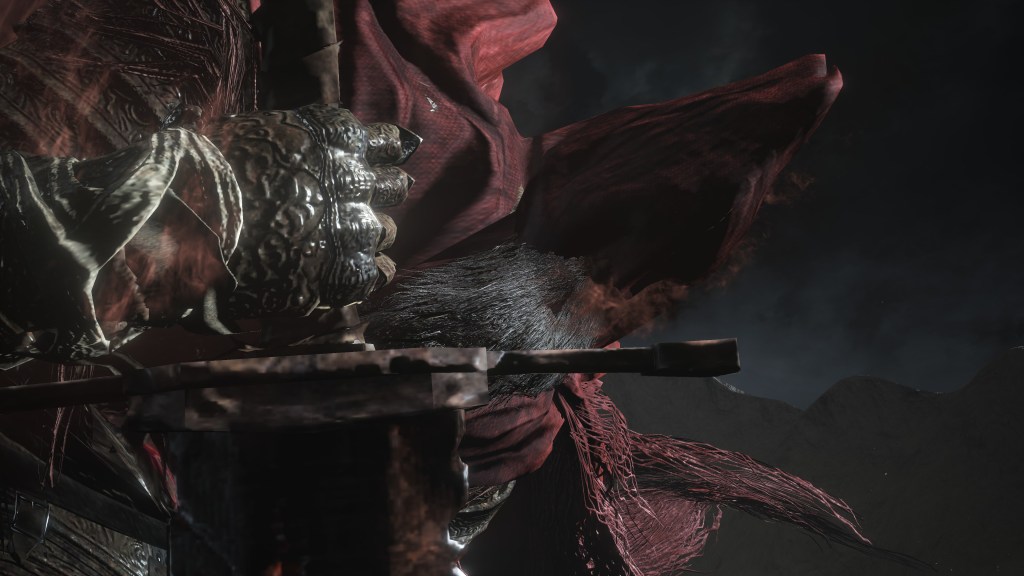
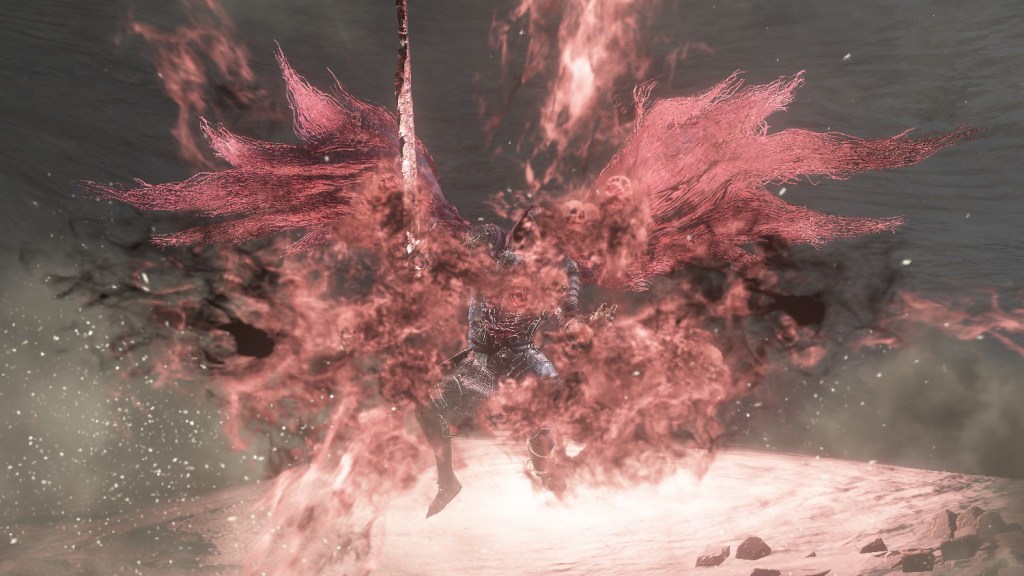


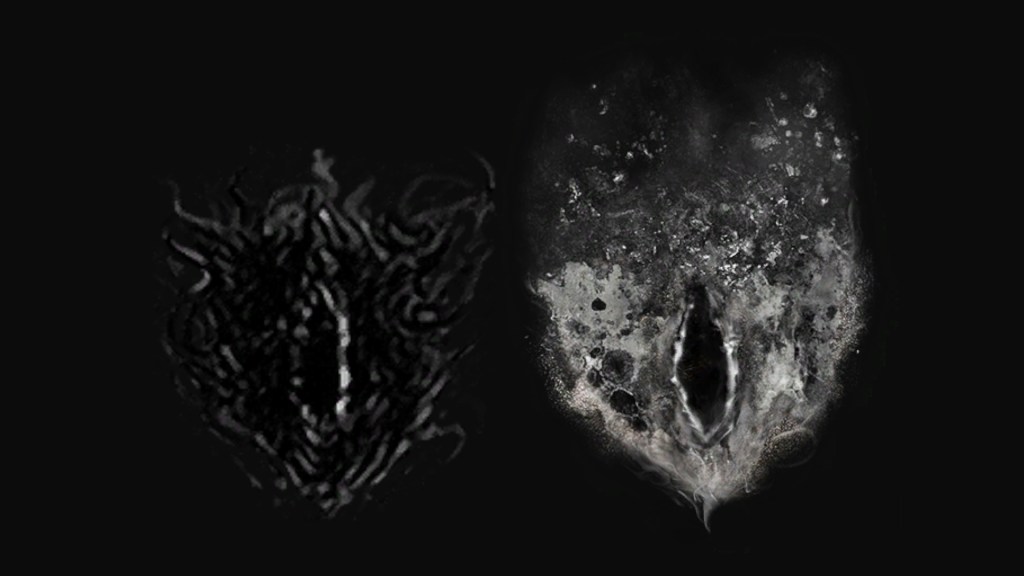
But Gael had factored in all of this. As revealed in the description to his soul, the Undead foresaw the Dark Soul’s affliction and knew his degeneration into a monster was the most likely outcome. Regardless of his past resilience to hollowing, he was never so deluded to think he was a hero like us. The world wasn’t so kind as to let a cog emerge triumphant. If he went through with this plan, he understood that he most likely would never return to see his lady again. His best hope was for another to put him down and bring her the pigment as the true hero — a slim chance, for sure. And yet, he accepted his lot in life. It is only after seeing the fruits of his labor that Gael begins to be affected by the Hollowslayer Greatsword, allowing the curse to consume him. Seeing the blood spilt from him stain his sword black provides the slave knight a moment of clarity, and he uses it to commit fully to this path of destruction. Someone has to do the dirty jobs, after all, and Gael just happened to be that person. If that was his fate, so be it.
Soul of slave knight Gael. One of the atypical souls tinged with power.
Can either use to acquire a vast amount of souls or extract its power via molding.
The red-hooded Gael, a wandering slave knight, wanted the blood of the dark soul for the sake of the painting world’s pigment. But Gael knew that he was no hero himself. That the dark soul would afflict him and that he probably wouldn’t return.
 Lokey Lore