
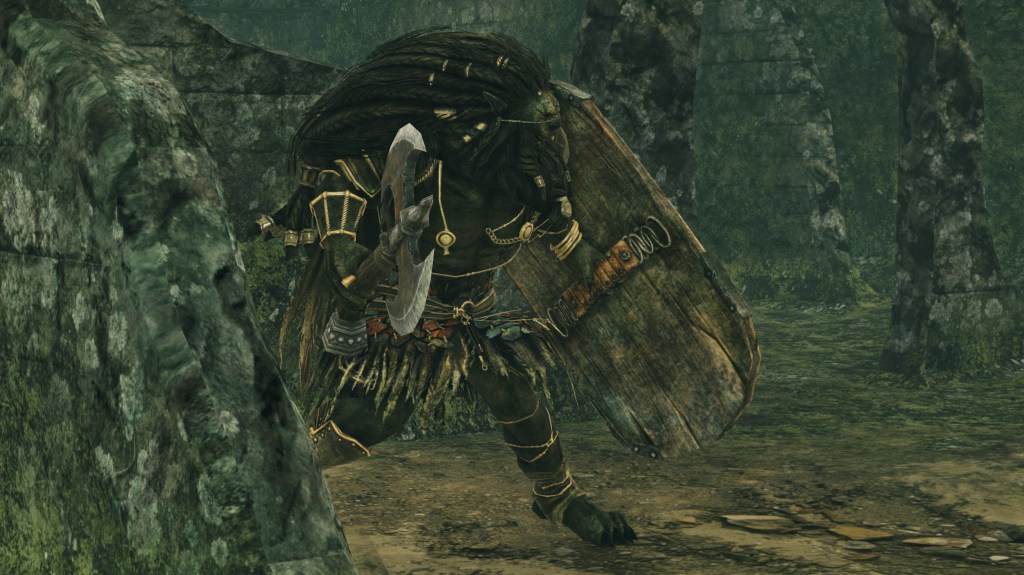
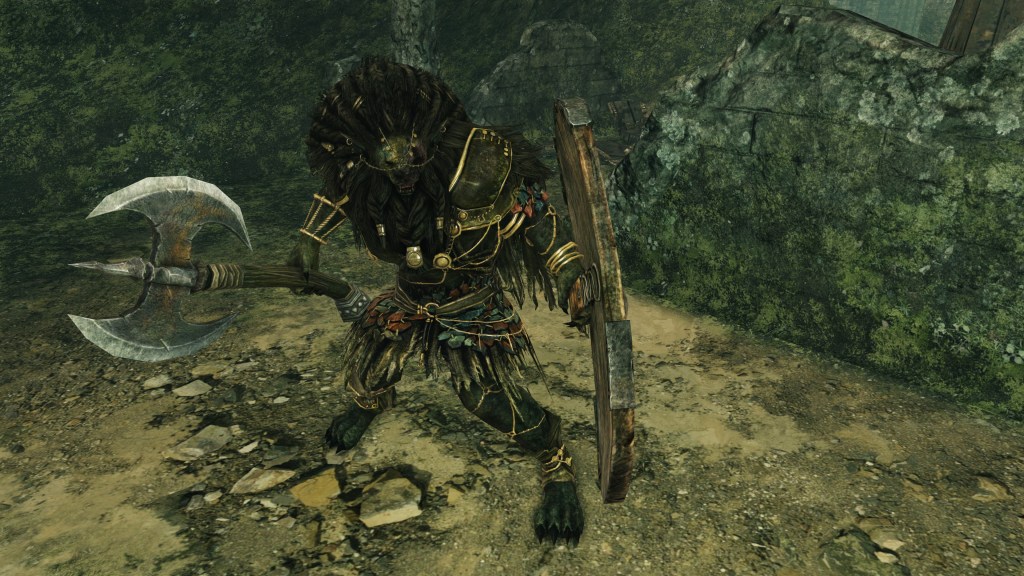
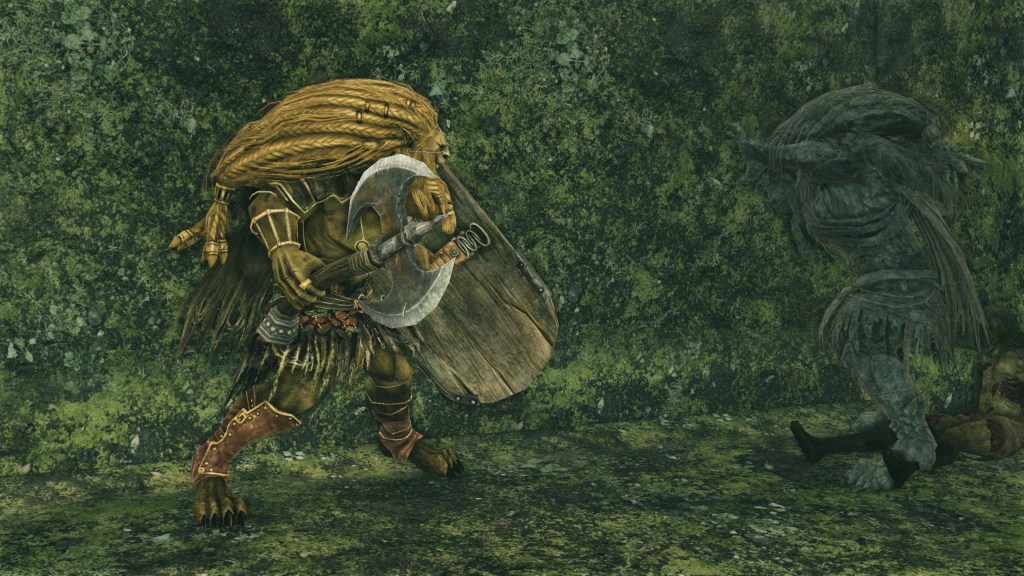
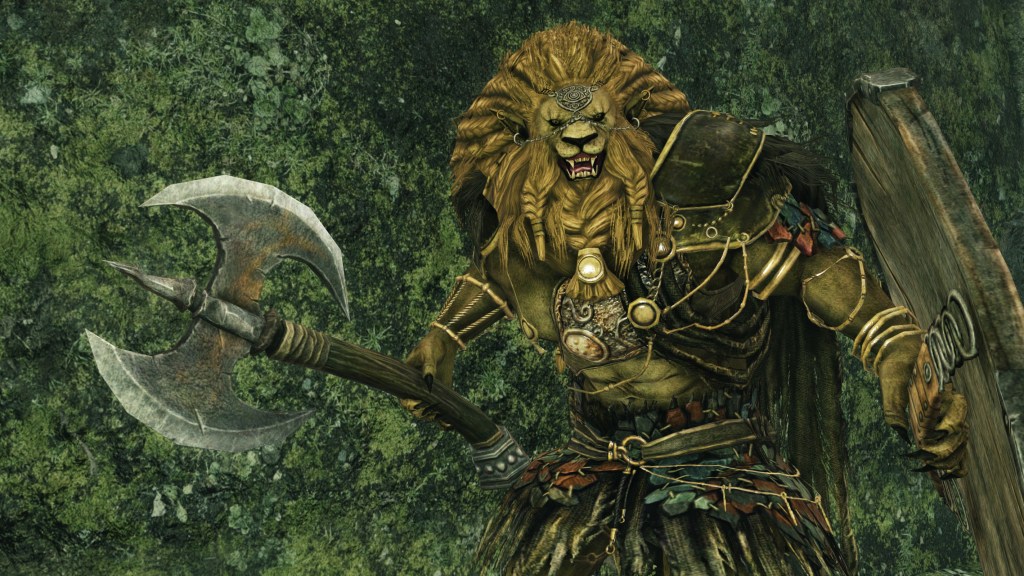
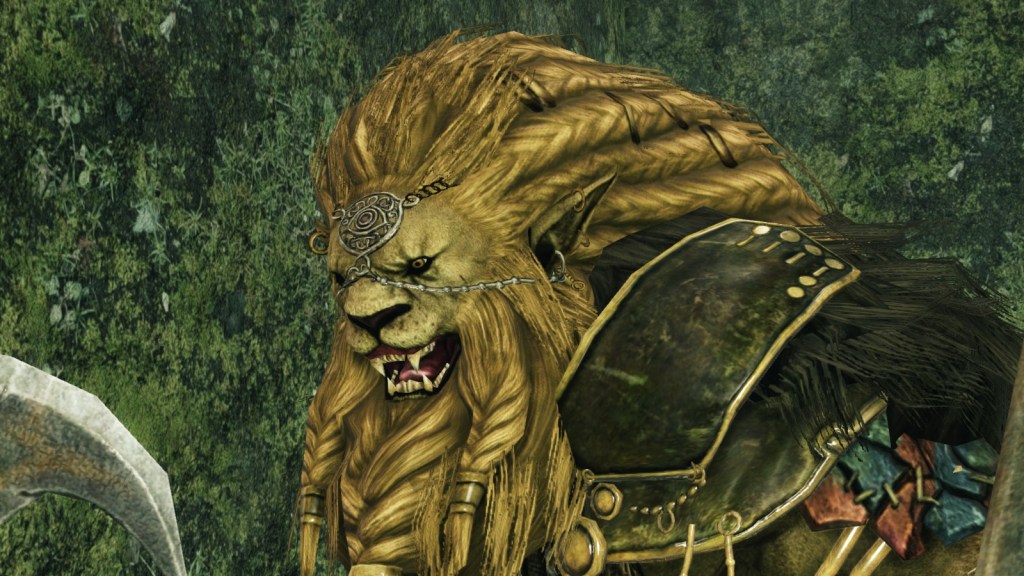
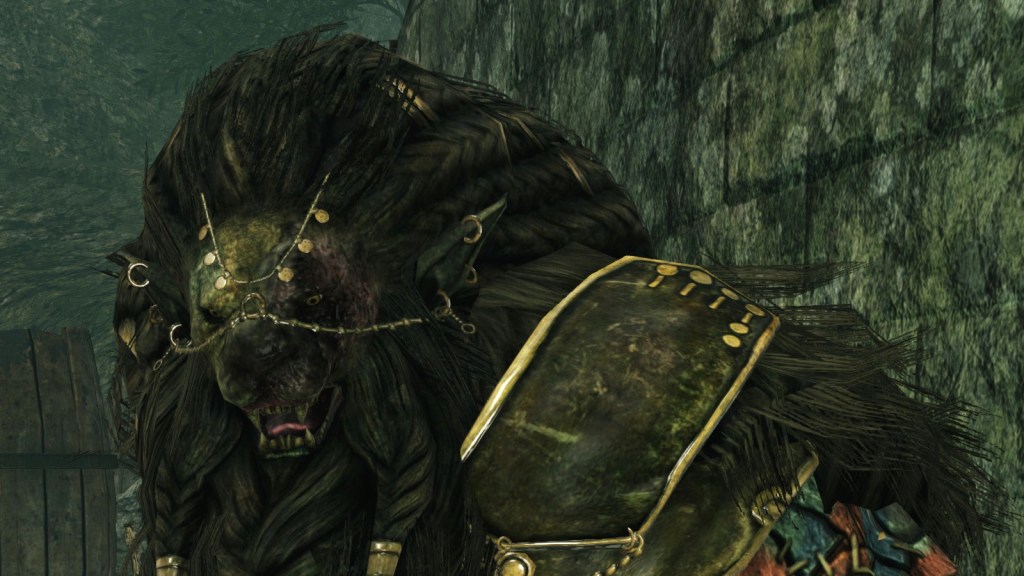
Standing on two legs, sporting brown hair and green skin, the Lion Clan don’t resemble your typical wild cats. Nonetheless, this “lion tribe” or “race” (獅子族) do seem to be authentically feline, their armored sets humorously mitigating fall damage just like the Silvercat Ring. They also seem to be aware of their unconventional look. The golden-haired anomaly among them stares at his petrified brethren with petrification-resisting troches on hand — someone both concerned and in control. This setup conveys him as the clan’s leader, elevated within the group likely for that more traditional coloration of the king of the beasts. Adding to that impression, his silver “helm” is engraved to invoke the mind’s eye and thereby indicate the golden lion to be somehow more enlightened than his ilk. In other words, the more a lion, the more the merit to your input.
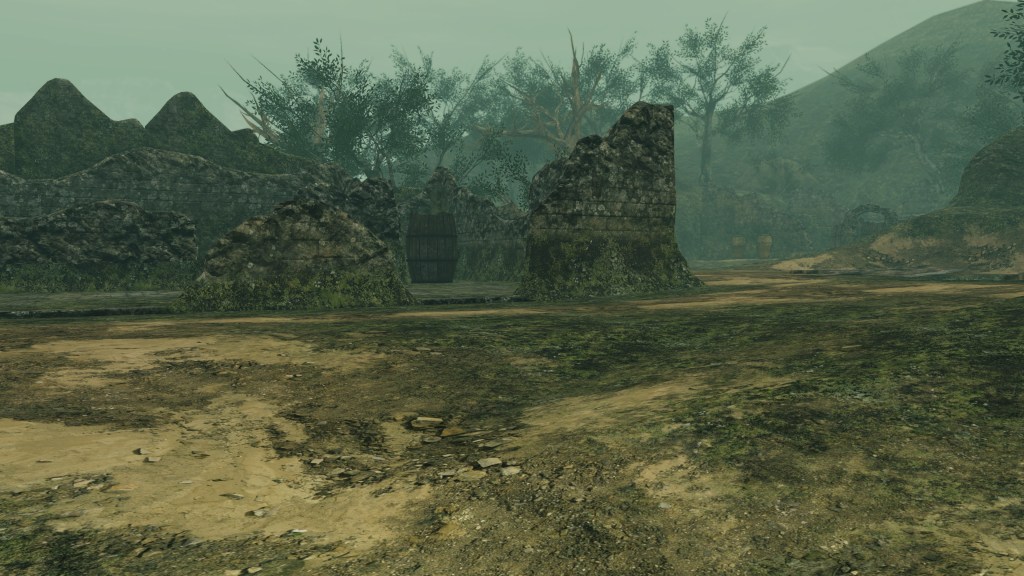
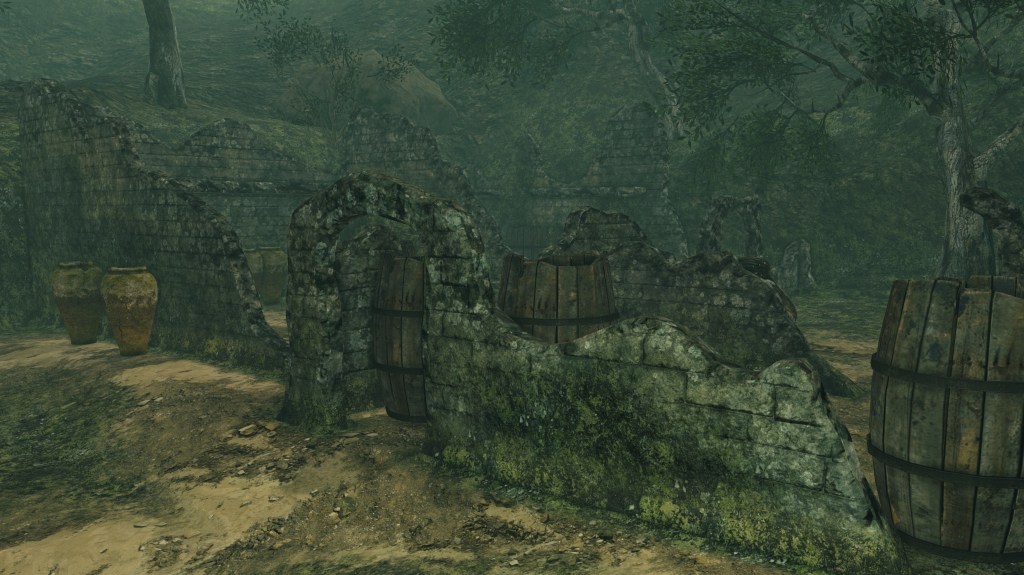
Without a doubt, these lion-men hold a degree of reverence for that lion image, though they clearly prefer to be seen more as men. Putting their use of clothes and tools aside, we encounter the Lion Clan only in the Shaded Woods, having taken up residence in the Heiden ruins. Although not expressed much in ways of renovations, various pots and wooden barrels do fill the buildings in strictly their territory, signaling the activity occurring there as unique to their habitation. Even if not rebuilding the infrastructure, the hairy race has doubtless taken advantage of the abandoned remnants of human civilization for their simple living. Shalquoir’s dialogue in the game’s original script makes their settlement in the forest’s old ruins explicit, as does the area’s internal name “Beastman’s Forest”. (獣人の森)
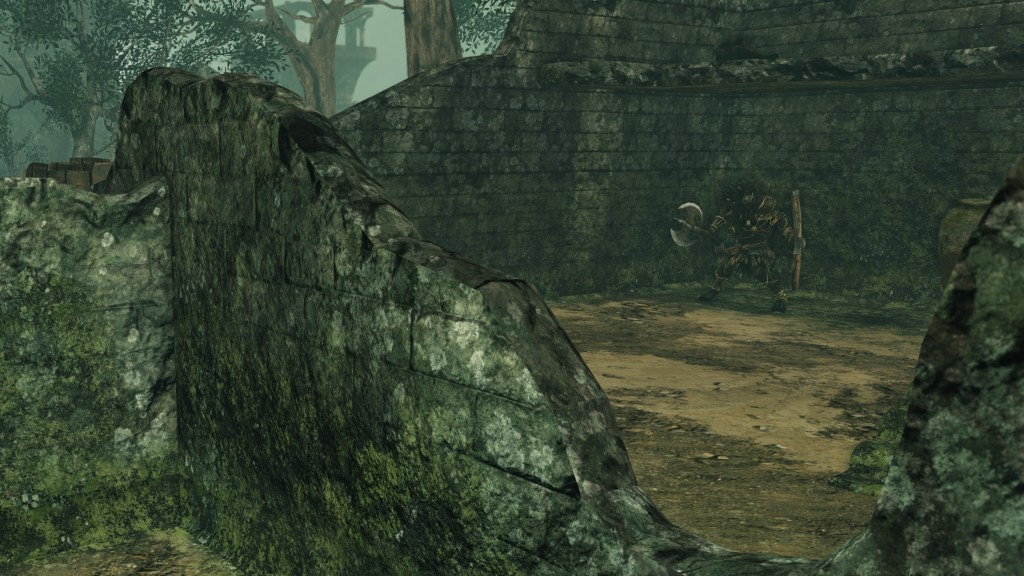
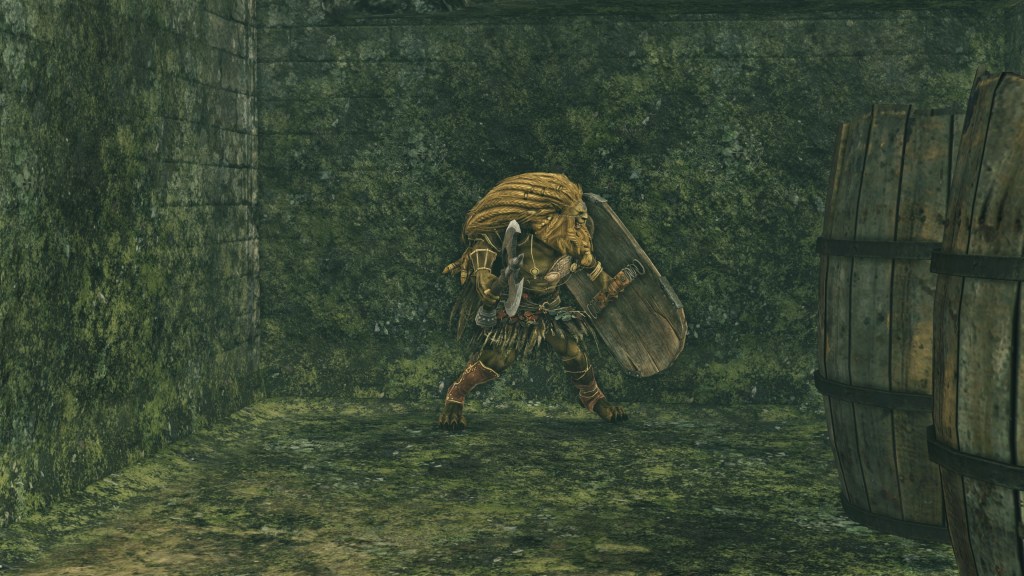
The forest stretches around the castle, but it looks pretty different now compared to long ago. The roots of the trees weren’t as spread out as they are now, and the old ruins weren’t buried.
The roots of the trees weren’t as spread out as they are now, and the ruins of the species called beastmen weren’t buried.
However, naturally-occurring beastmen don’t exist in Dark Souls, as stated in the Dark Souls II: Design Works interview, with concept artist Daisuke Satake instead suggesting that they were humans transformed by some “influence”; (影響) perhaps a curse. Indeed, the race inflicts the curse status upon attack, and exceptionally high curse resistance is characteristic of their equipment. The description for said equipment also notes their abrupt appearance in the historical record, implicating an unnatural origin. While it does also label them as “demi-humans”, (亜人) the description of their highly-refined weapons affirms them to be far too sophisticated for subhuman monsters or even ignorant yokels — this is, or was, a developed people despite the rustic look to their dress.
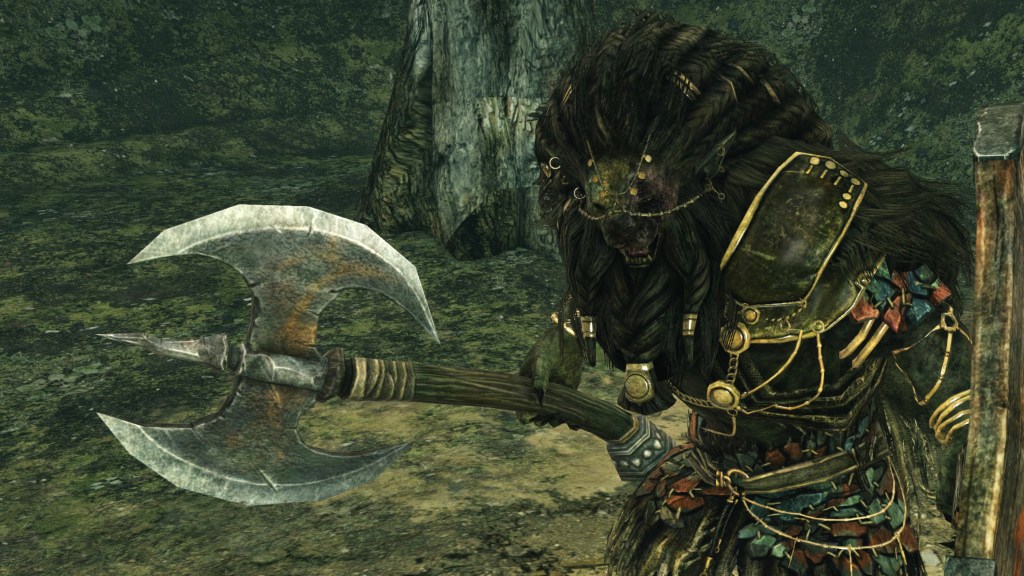
Greataxe of warriors of the Lion Tribe.
The blade forged with a sophisticated refining method possesses excellent sharpness and shows that they were no mere rustics.
Their transformation certainly wasn’t their intention. The text for their equipment notes that the tribesmen try not to have any relation to humans, slaughtering any outsiders that they come across. This is allegedly because they hate being seen, implying that they are ashamed of their inhuman form. The association with hollowing curse specifically begs some connection between their state and dark souls. The laughing pots and dark scythe found in their territory further indicate attempts to remove a curse born of humanity; their continued failure suggests that strong personal emotions are the real underlying cause. If Velka’s crow-men in DS1 were originally humans twisted by their obsession with their god, then the same can be true for these lion-men. Therefore, the Lion Clan must have originally been humans from a civilization with a developed warrior culture and association with lions.
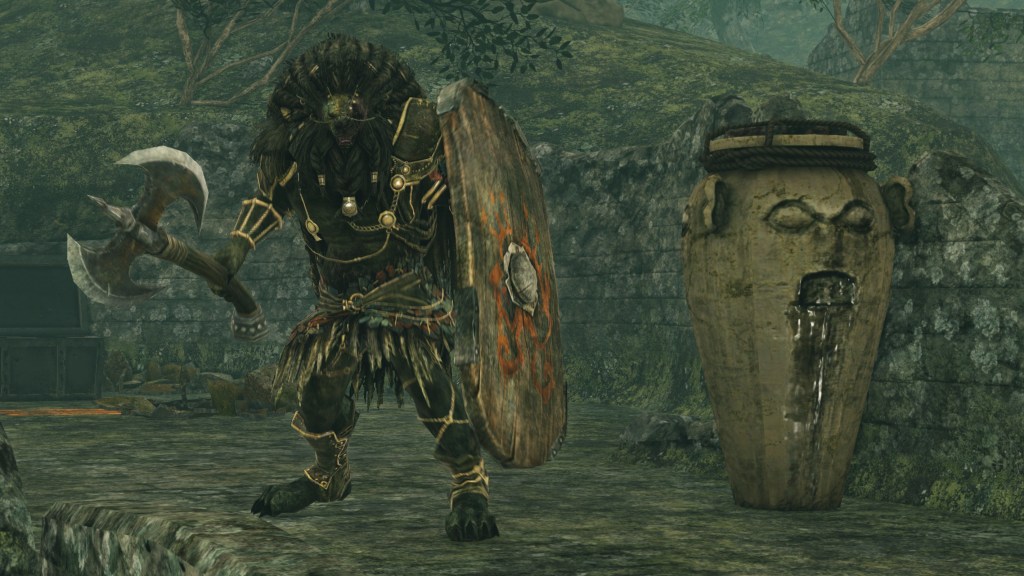


Helmet of warriors of the Lion Tribe.
The Lion Tribe are a race that could even be called demi-human but refuse to have relations with man whatsoever, and any who approach all become subject to slaughter.
Rather, it looks like they despise their own forms being seen.
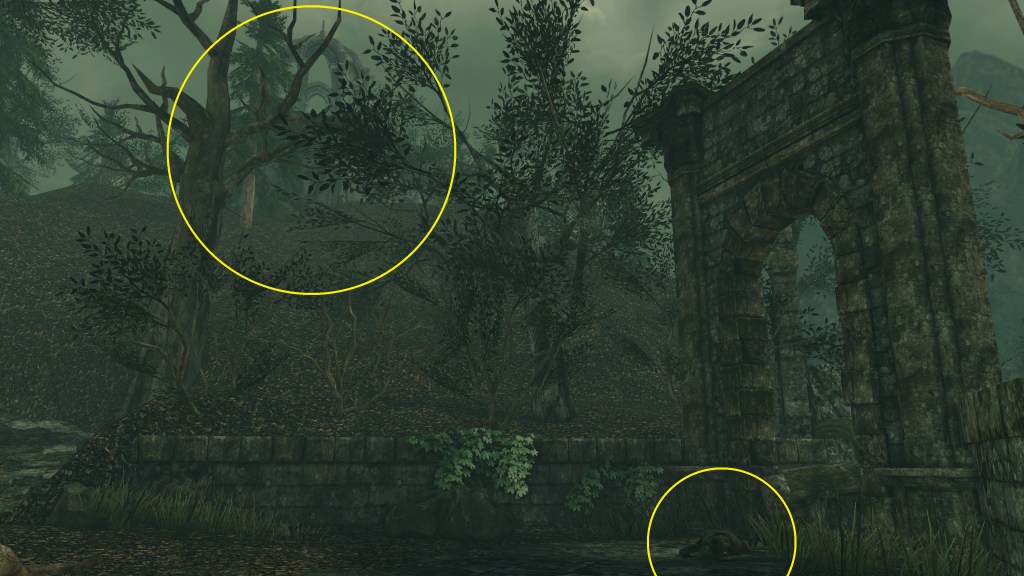
The only nation who fits the bill is Forossa, with their Lion Knights tied directly to their war god Faraam — only fitting, since the king of beasts is a symbol of courage, strength, and military might. It is also reasonable for Forossans to have ended up there. Recall that the Shrine of Winter connects the Shaded Woods to Eleum Loyce. When the kingdom established by Forossans began to collapse, some citizens might have chosen to flee rather than remain in a dying land. But with snow as far as the eye can see, surviving on foot was unlikely. And so, a desperate group would have feasibly used the altar outside the main gate to instantly warp down south. This is consistent with the corpse carrying the Dragonslayer’s Crescent Axe. The body lies just beneath the shrine, holding onto both the axe favored by Lothian and the Golden Falcon Shield employed by Hollows in the area. In other words, the owner looted it from these very woods before death. And considering Eleum Loyce’s proximity to the Dragon Aerie, it is easy to imagine Lothian stopping there on his way to hunting dragons.
If Lothian was among those at the ivory kingdom during its collapse, then it explains why his whereabouts disappeared from public record, people losing track of him after he narrowly escaped the calamity. Even if he was a hero, the famed former general and his fellow refugees were in no less dire a situation. True, they escaped the cold, but the woods was little better. Stranded in overgrown ruins without any help from the motherland, these survivors would have struggled to stay alive in this forest filled with soul-starved cannibals among other threats. And with only memory of their heritage and faith in their war god to rely upon, it is only natural that they became deeply deluded with their cultural icons until they morphed themselves into a new race.
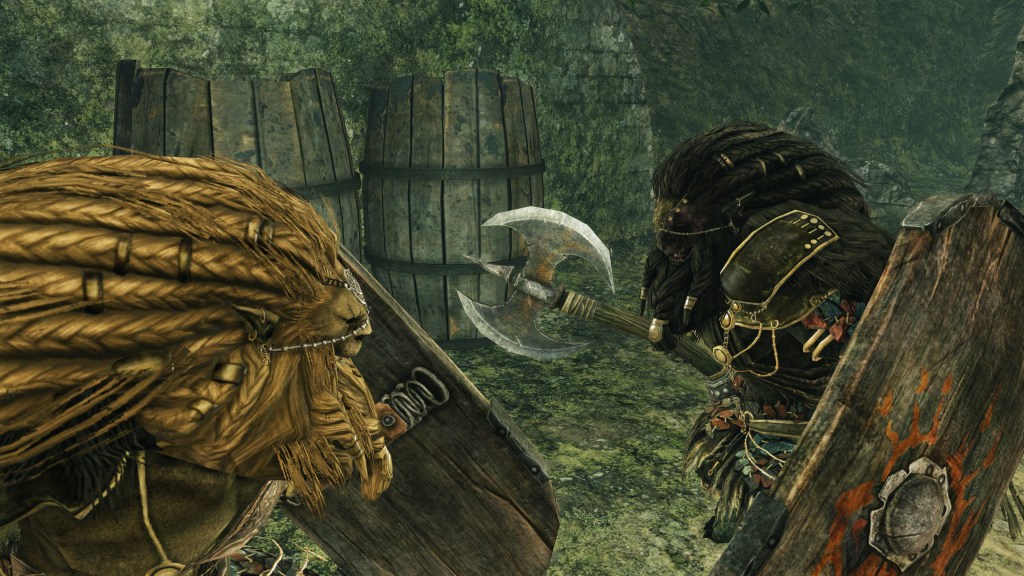
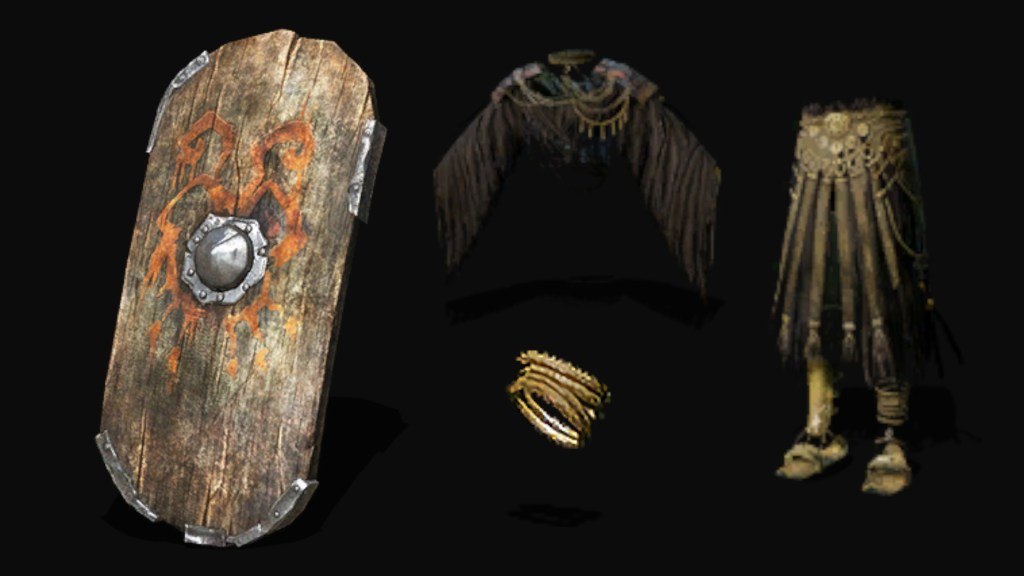
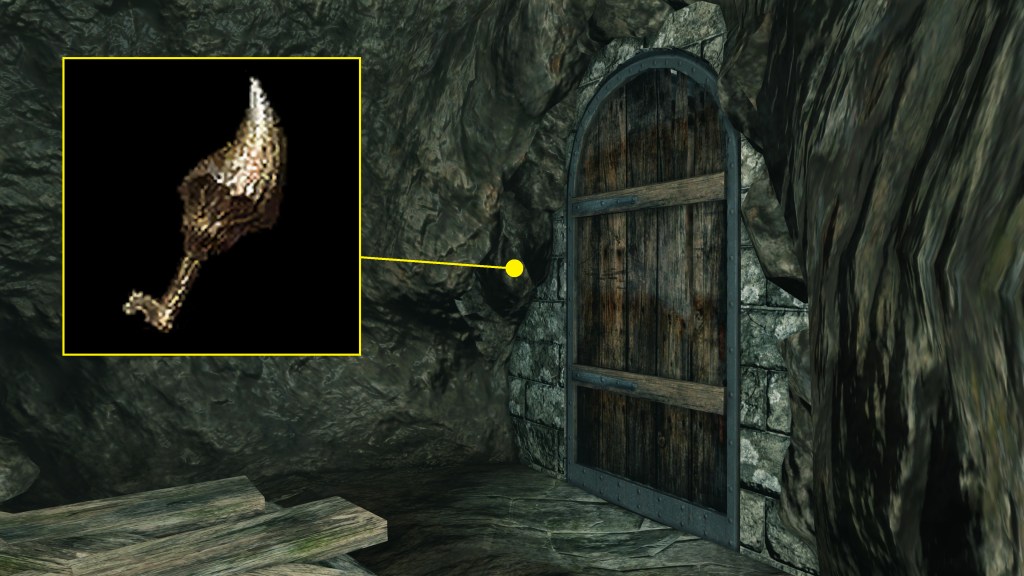
Indeed, the shields of lion warriors bear strange red markings that the description infers to be proof of some faith, meaning that they must symbolize the Forossan war god. (a fact later confirmed in Dark Souls III [DS3]) This leaves no hope for these ardent believers to ever be freed of their curse. Even if they did manage to revert their forms, their primitive dress suggests that prolonged isolation has already caused them to go native. The symbol of their war god has become an unrecognizable doodle, implying that their religion has warped over the years. (DS3 identifies the shield with a mad god) The lion mage set also confirms that some of the survivors were sorcerers. And considering the role of such wise men in Forossan and Loyce religion, lion sorcerers likely serve as shamans for this warped faith. Even the Fang Key acquired from another lion warrior gives off this primitive “hobbyist” (道楽者) impression despite their obvious sophistication in other areas, and the purpose for this beast tooth is rather ominous.
Shield of warriors of the Lion Tribe. It is wooden-made but adorned with metal reinforcement, so lightweight and durable.
Is the strange pattern on the face proof of some kind of faith? It cannot be known what they believe in.
Robe of sorcerers of the Lion Tribe.
The Lion Tribe are a race that could even be called demi-human, but their form abruptly shows up in history from a certain time as if they appeared from the bottom of the earth.
Weird key shaped like a beast fang.
It is unknown what it is used for, but likely some hobbyist made it.
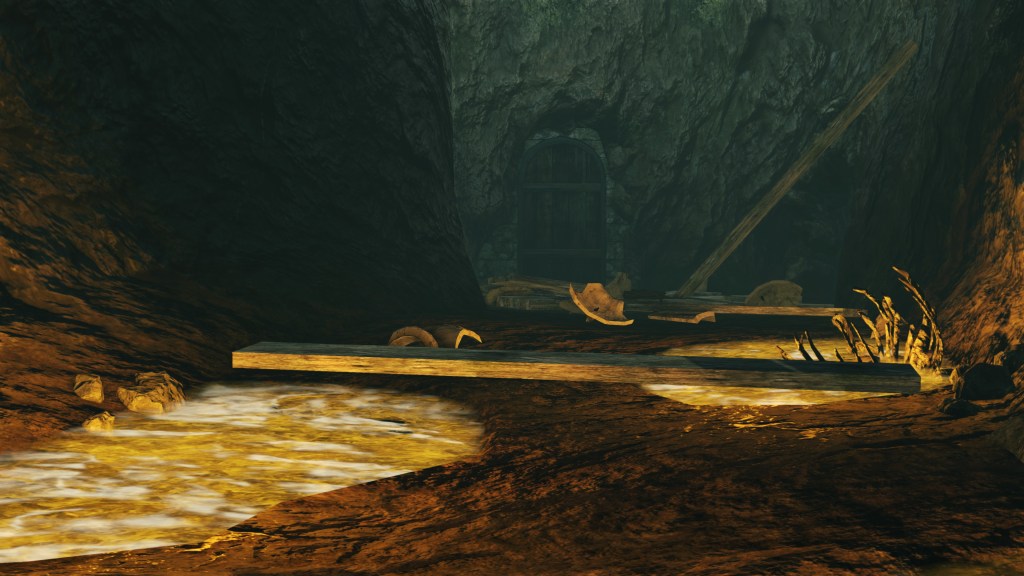
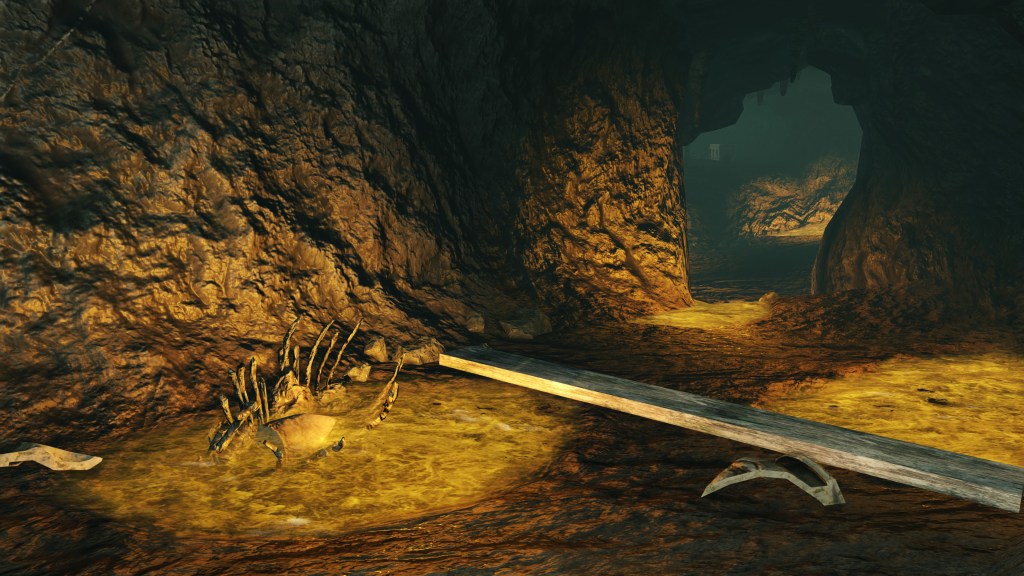
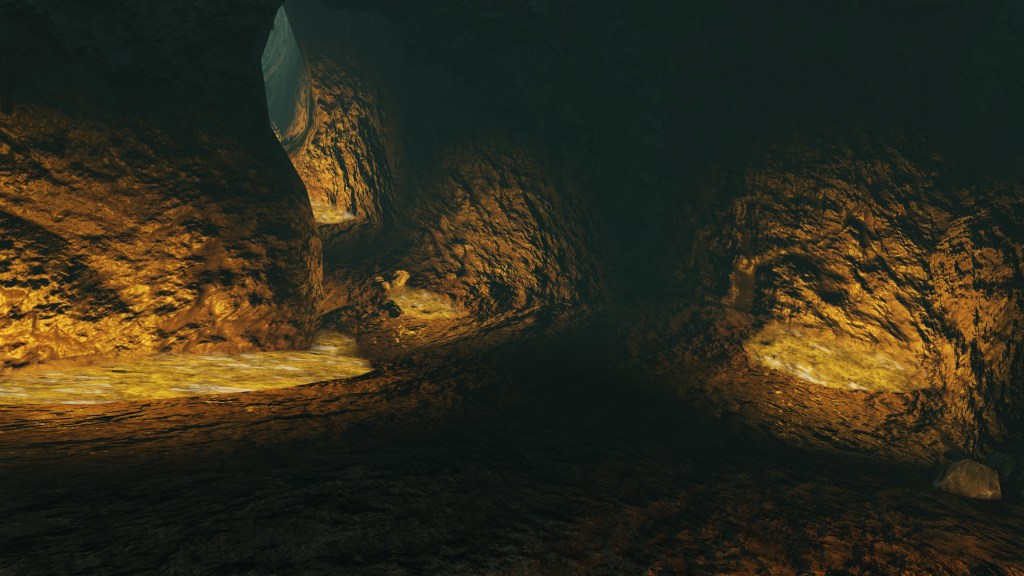
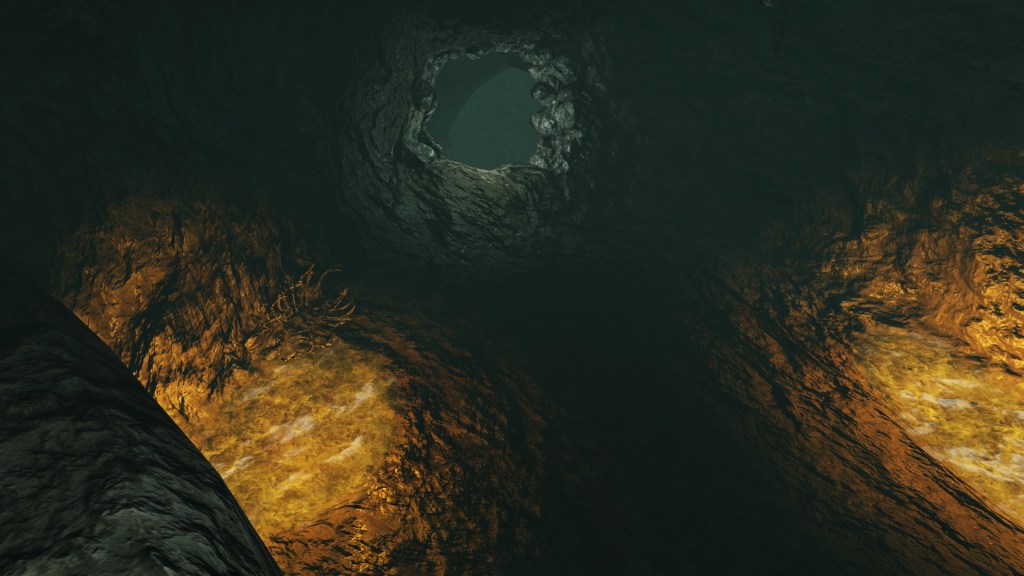
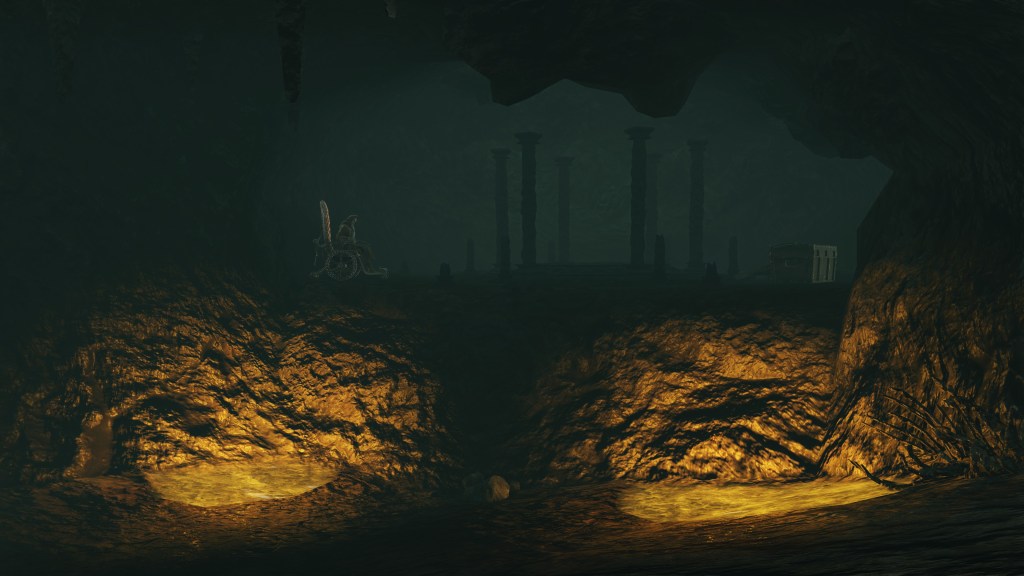
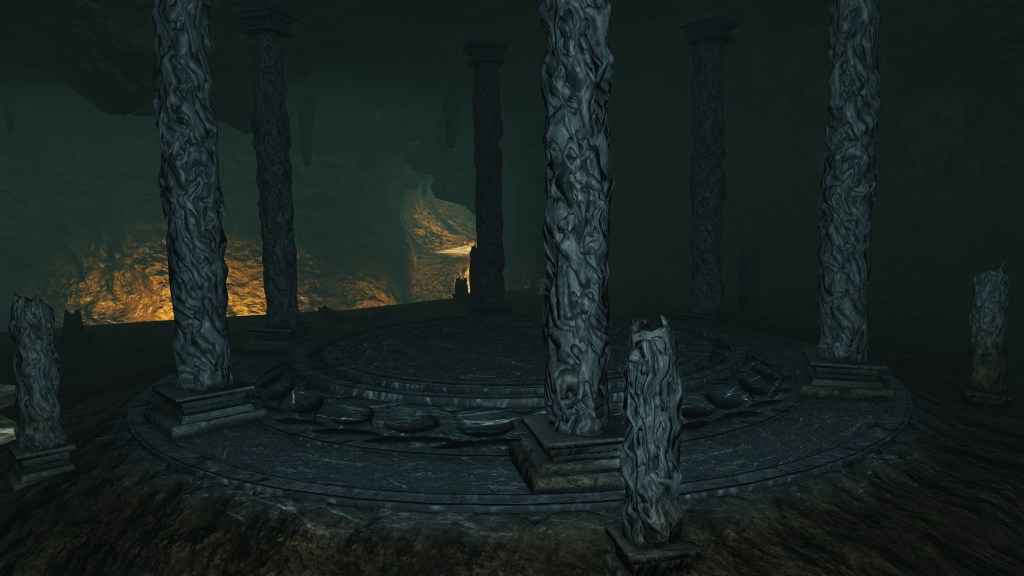
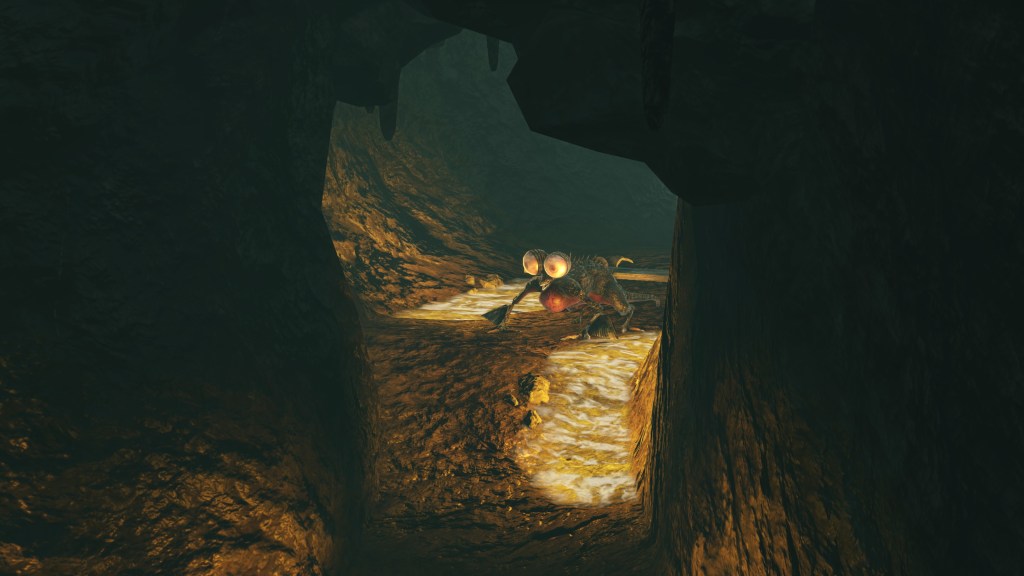
The key opens a wooden door to a stone chamber unlike the surrounding mossy ruins, likely built by the tribe. The Lion Clan apparently uses it as a dungeon, since Ornifex is locked inside against her will. But why? The answer lies just outside her cell. As we travel through the cave beneath the Lion Clan’s territory, we navigate numerous acid pools littered with beast bones and pieces of the curse pots leading up to the altar for entering the Dark Chasm of Old. The clan’s barbarity combined with its Dark obsession suggest that the lion-men perform some kind of ritual animal sacrifice in tribute to this monument to the Abyss, Ornifex captured to be the latest offering. The purpose is evident from the instructions for Homing Soulmass stored by the altar. The sorcery first invented by Logan in DS1 nevertheless behaves like the dark sorcery devised by the more ancient Manus. What we acquire might therefore be the fruits of the lion sorcerers’ initial research, learning about autonomous souls before bringing dark souls to life. The clan shamans had been trying to enrich their primitive understanding of humanity.

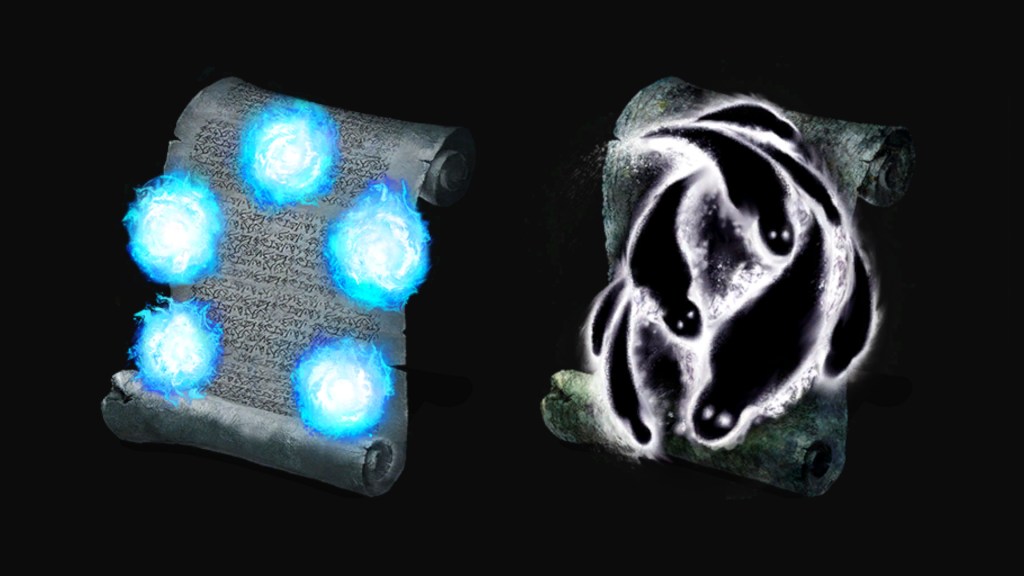
Generates and fires multiple soul masses above the head. The fired masses tracks enemies.
A certain sorcerer once called the authority on sorcery is considered to have devised it, but the name of that person hasn’t been imparted.
The discovery of this altar explains why the Lion Clan has zeroed in on the Dark. In all likelihood, the tribe innately recognizes the familiarity between the Abyss contained by that portal and their former human state. The indescribable nostalgia has driven them to find a path back to the form they once knew through those dark souls. They had embarked down this route from very early on, since we find a skeleton wearing the Faraam set preceding another Chasm altar beneath Drangleic Castle. As we can see in the Frigid Outskirts, Lion Knights of Forossa did journey to Eleum Loyce. If one escaped with Lothian and the others, then this noble warrior may have traveled north of the Shaded Woods in search of more altars on the lion sorcerers’ behalf. Seeing comrades turn into beastmen, the knight presumably wanted nothing more than to help them return to normal. And because they didn’t want to be seen, it was up to him to make this contribution. Thus, he set out. Ironic that he died shortly after finding his target in the mountains.
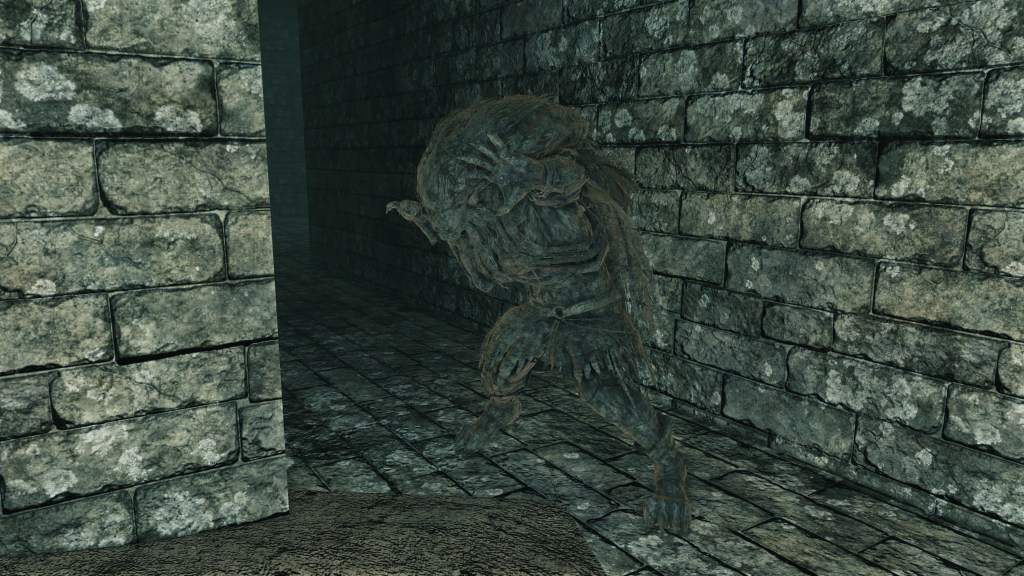
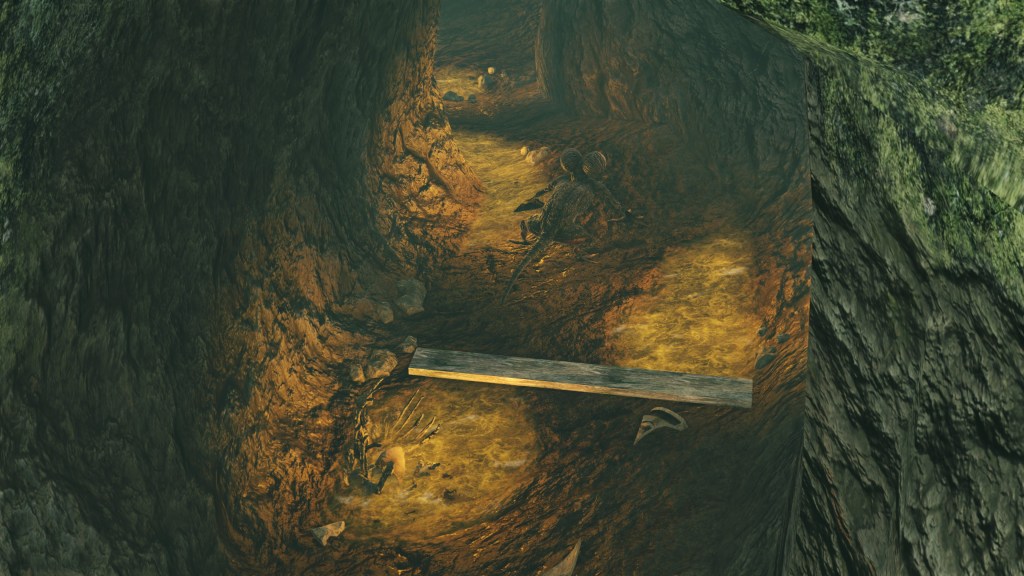
Whether or not that Lion Knight would have majorly advanced the Clan’s research is now irrelevant. Given that ruined Eleum Loyce is now an ancient kingdom, the lion-men have failed to make much progress, becoming no different from ruthless savages in their prolonged lives. The only thing saving Ornifex from their depraved “experiments” is the mess of basilisks invading the tribe’s territory, the lizards petrifying the Fang Key’s owner along with so many others she came to harm. Now there are but a handful of survivors, gathered up in one building to presumably rest and regroup; the standard warriors’ half-stony faces betray that they didn’t get out unscathed. Their one saving grace is that most of the basilisks have fallen into the caverns, crude wooden boards covering up the holes so they don’t simply crawl back out.
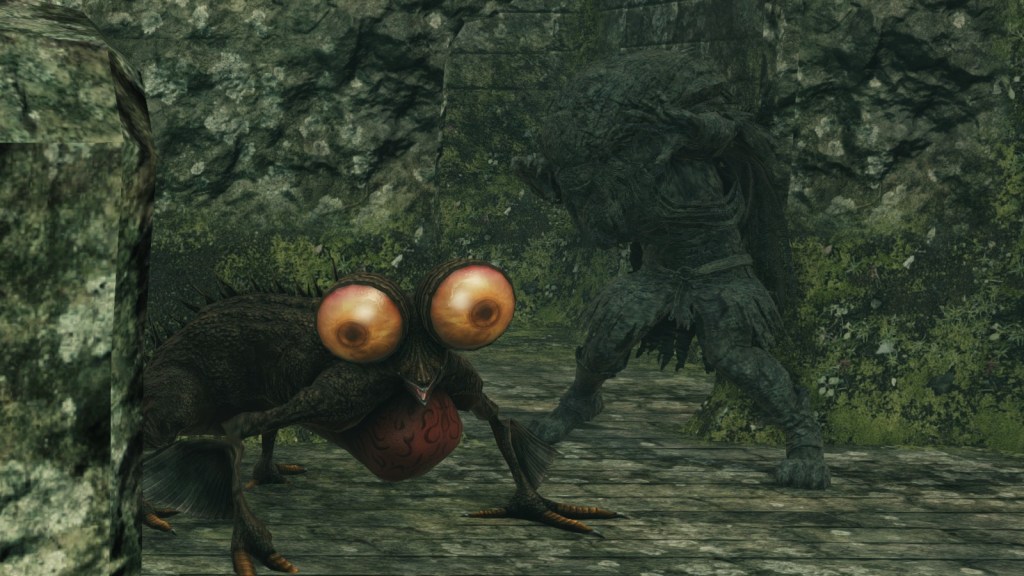
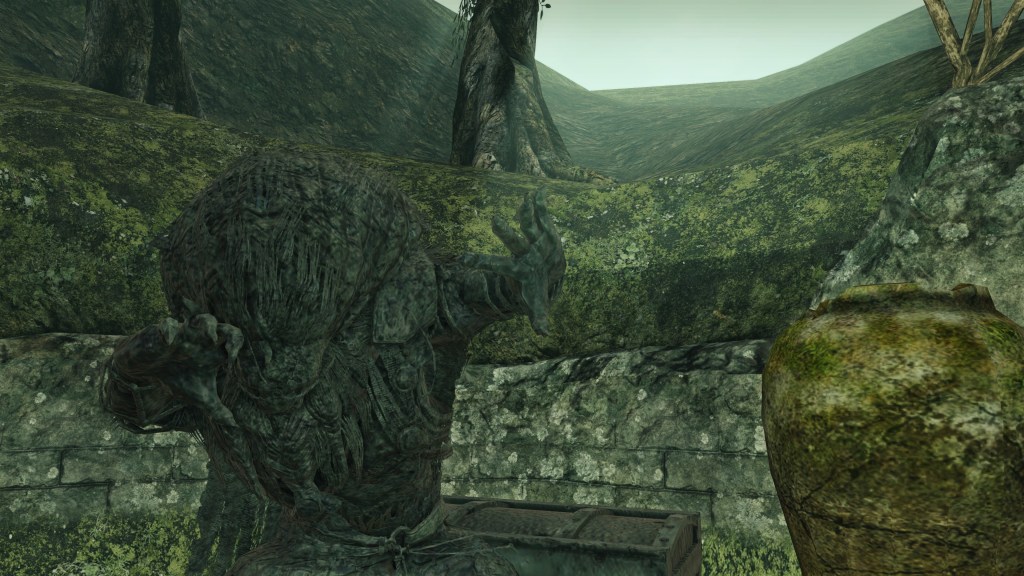
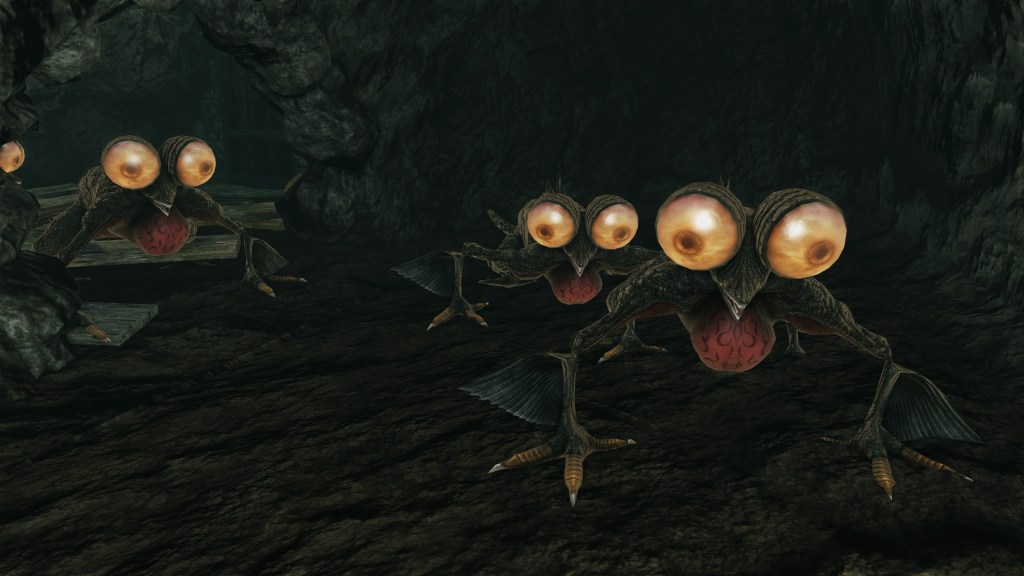
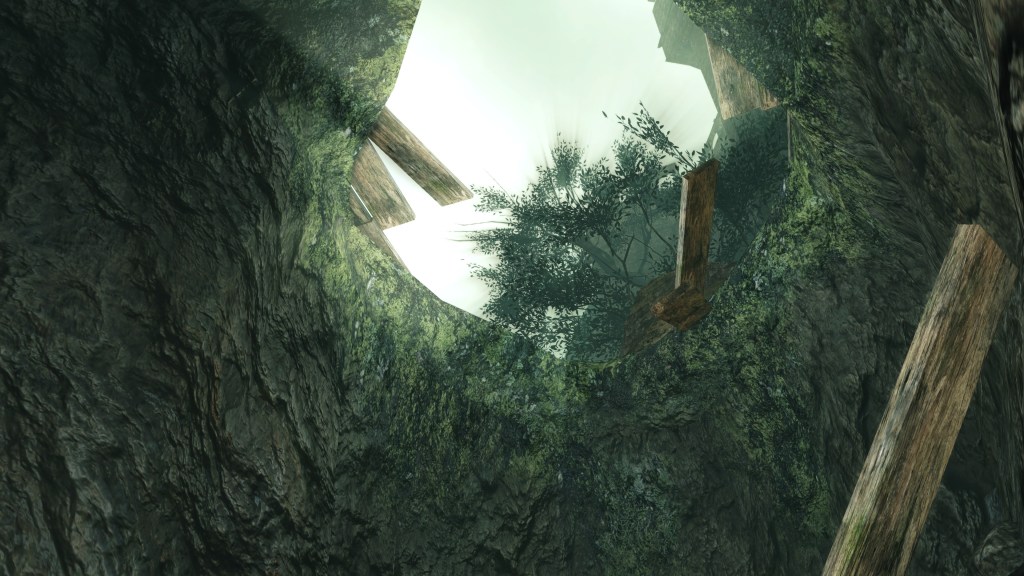

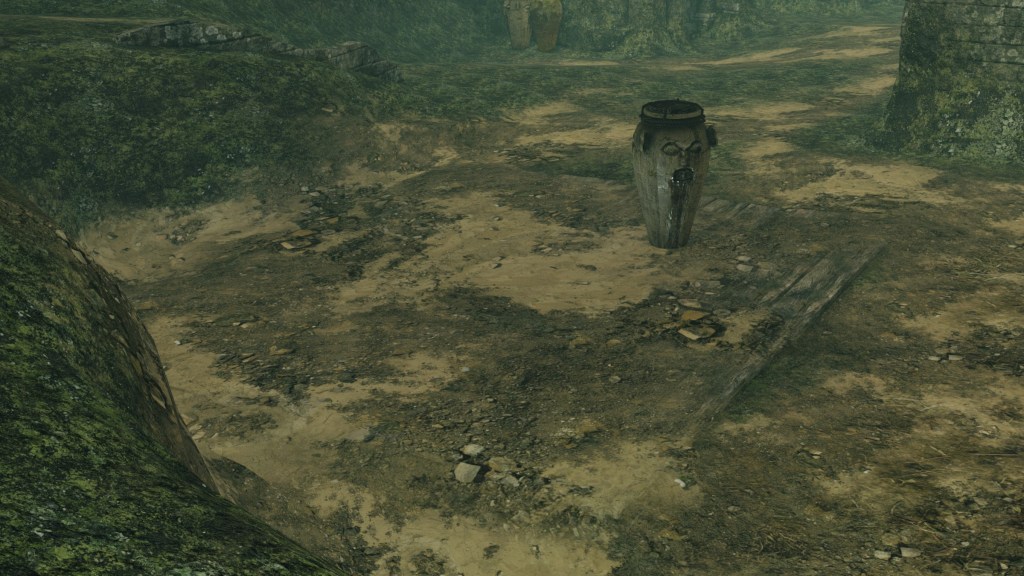
Even without the disarray, the Lion Clan has little chance to recover. They have refused to integrate into society for too long. The curse of the laughing pots is proof of the enmity they have earned toying with real men’s lives. Maybe they have built an immunity staining their hands with such indignant souls, but how they can they possibly return to the world of man as decent folk after this? Now their sorcerers are absent, presumably dead, and it would be madness to continue with their twisted research at this point in light of their lack of findings. And yet, their hostility to our presence in their hour of need shows that they intend to persist. None may see their shameful forms, differing them from “ordinary” folk. Like a certain white dragon from DS1 whose works still haunt this land, their obsession leads them to cling to things they should know will not save them — not their god, not even their humanity. They will never be Forossans again, assuming they still had that nation to call home. Their smithing and their religion are the only remnants of that once proud culture.
 Lokey Lore