
Preface
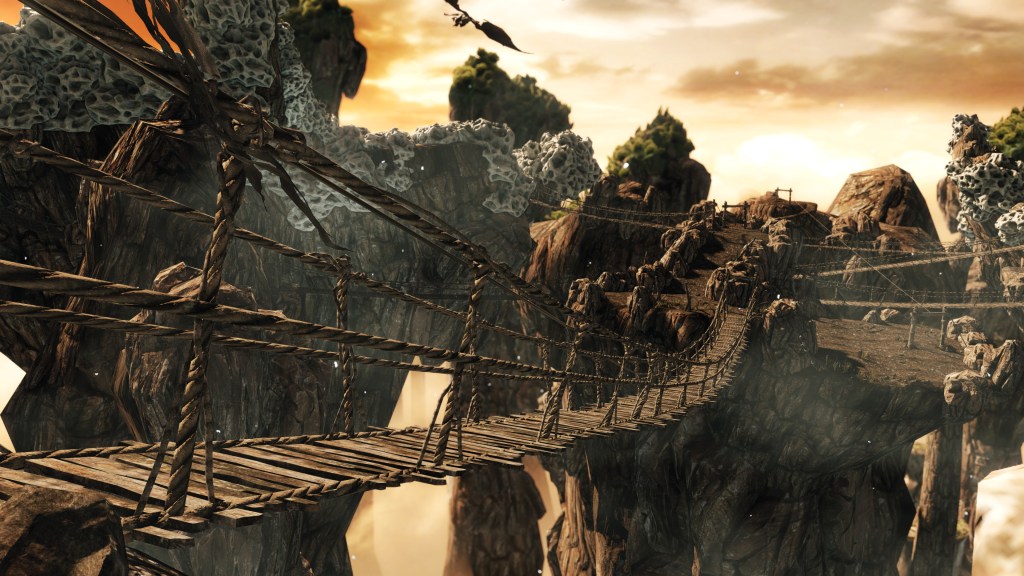
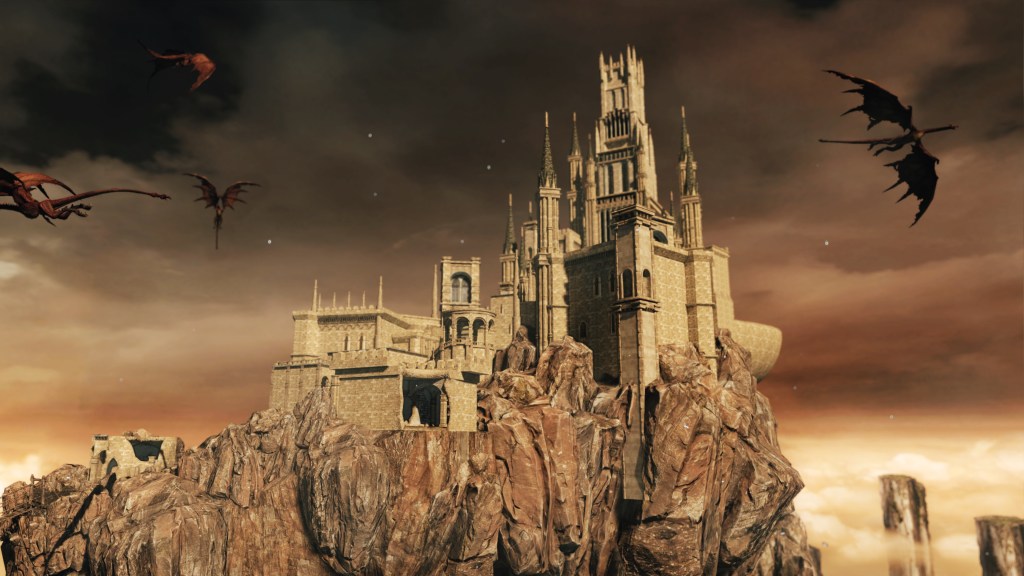
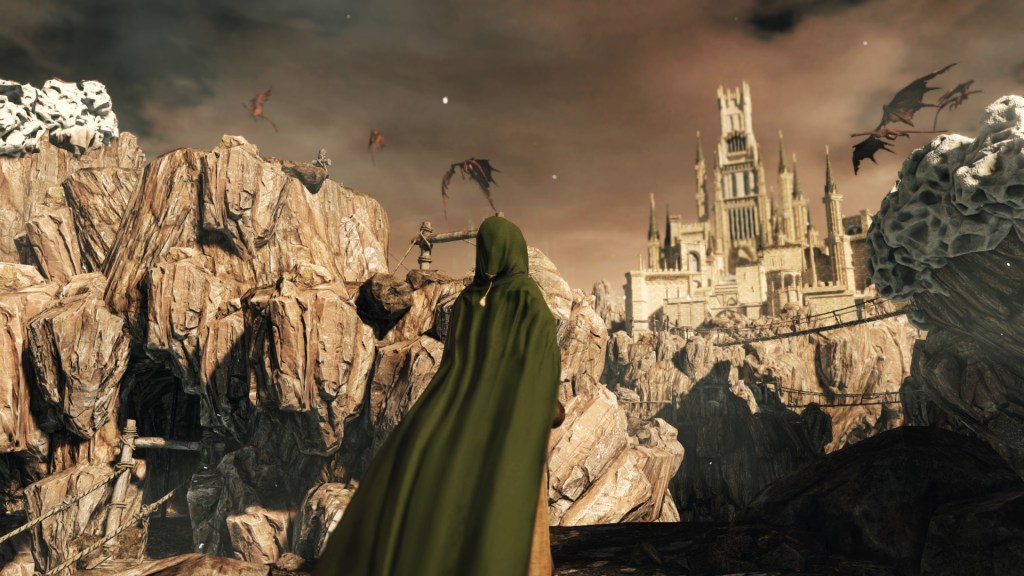
I have previously mentioned my reservations about Dark Souls II‘s main plot, and the Dragon Shrine is very much an extension of that. The area itself is somewhat iconic, essentially an island in the sky with a swarm of fearsome lizards that could swoop down and nab you at any given moment. It certainly leaves an imposing image unlike anything seen in the original Dark Souls, (DS1) and the big fix has even made the tour through the area an experience unlike anything in the whole series. If only the narrative behind it all matched the ambience.

Ideas Unhatched
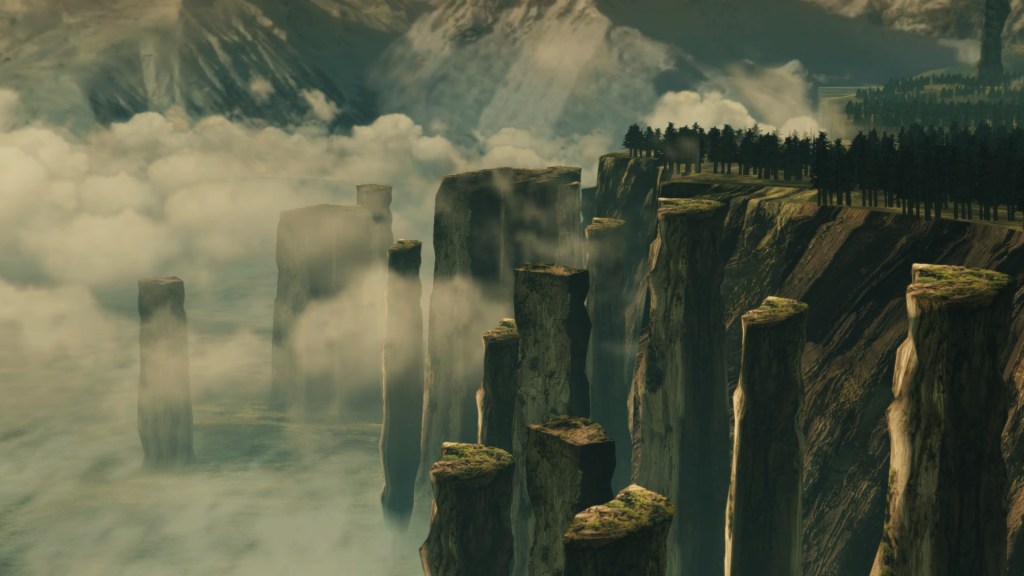
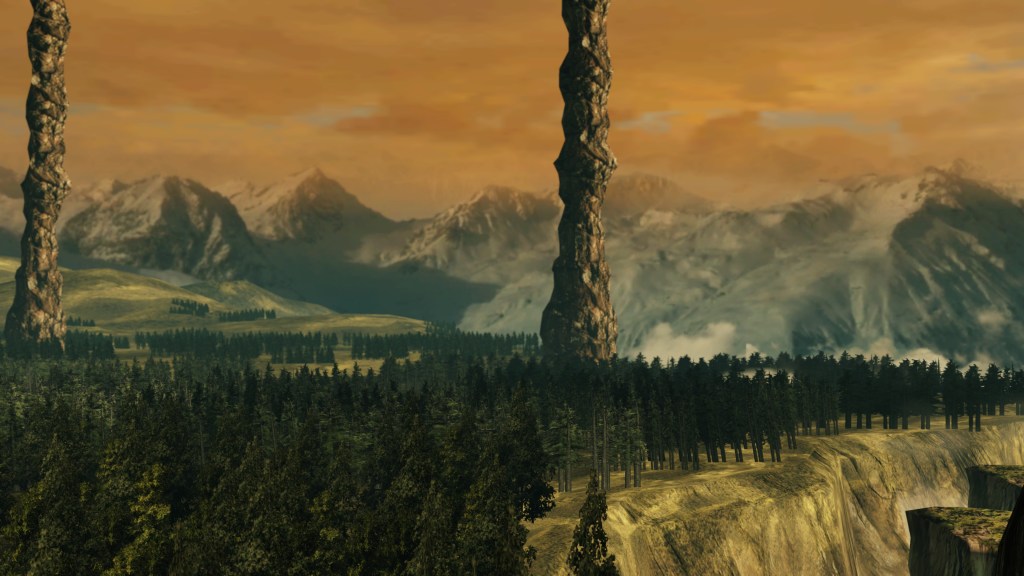
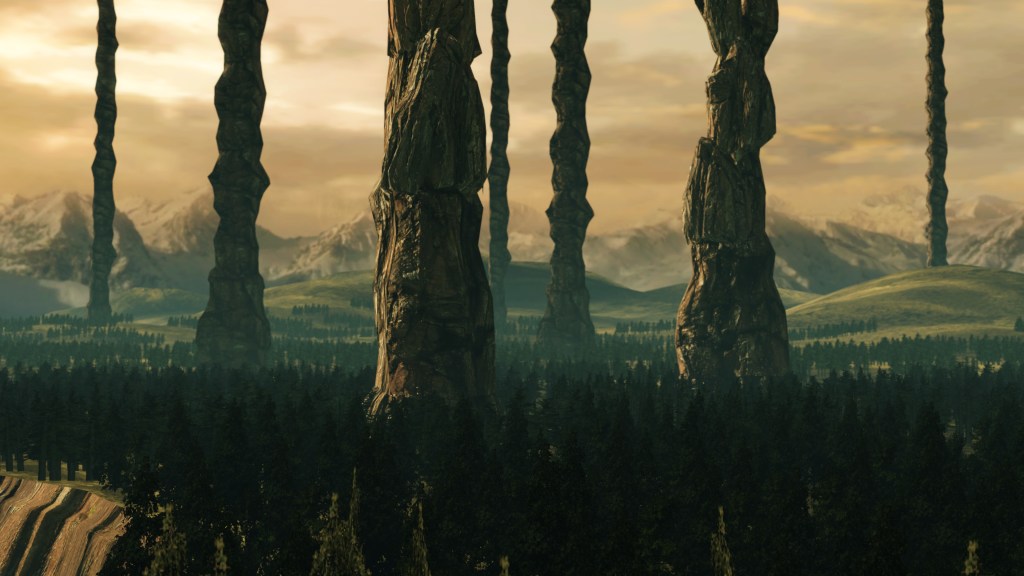
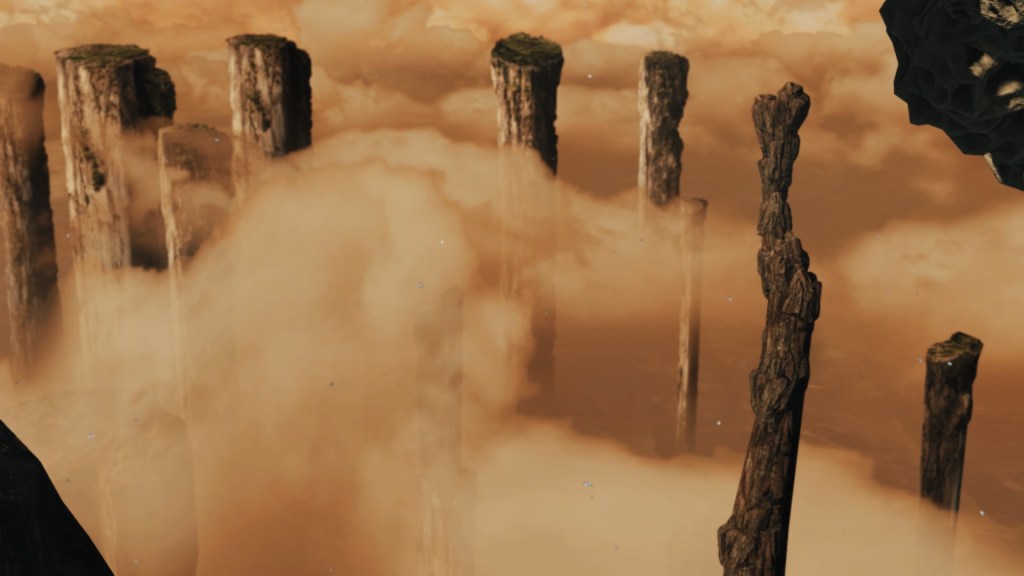
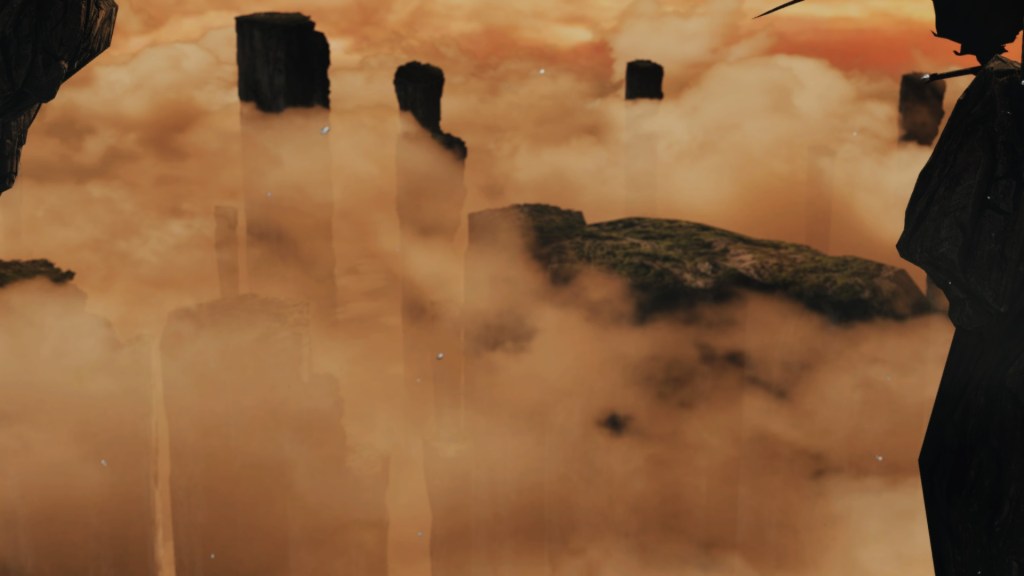
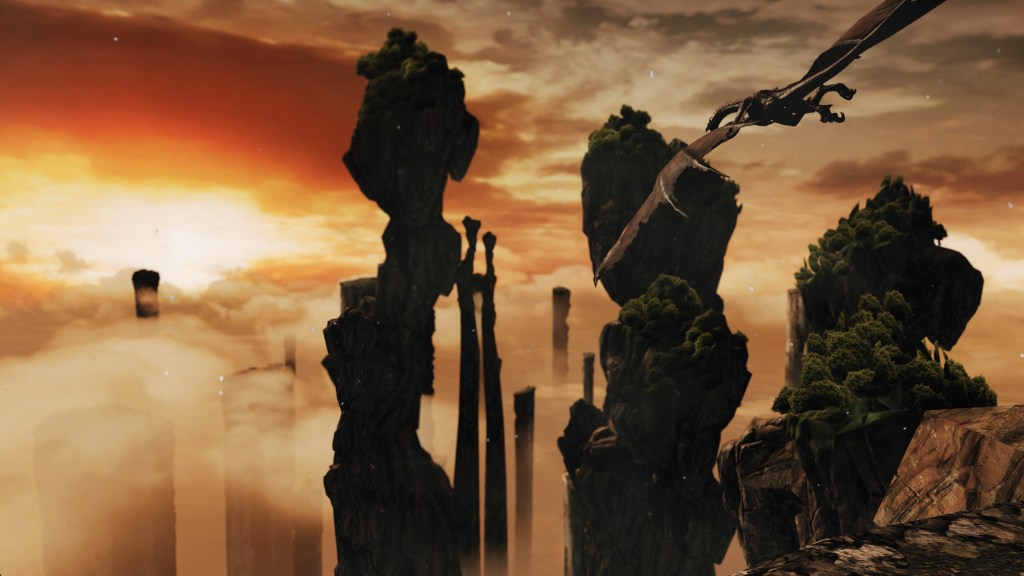
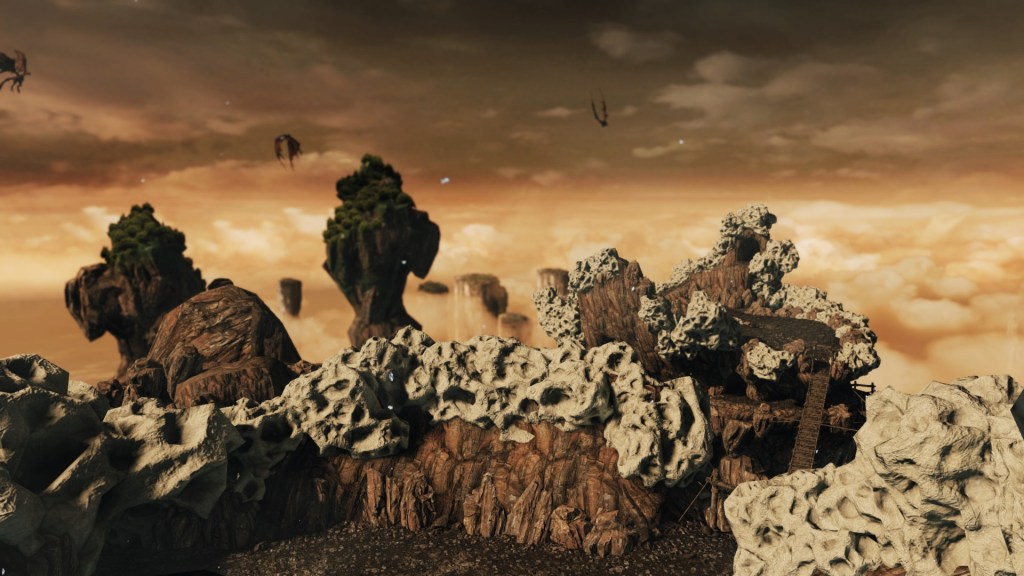
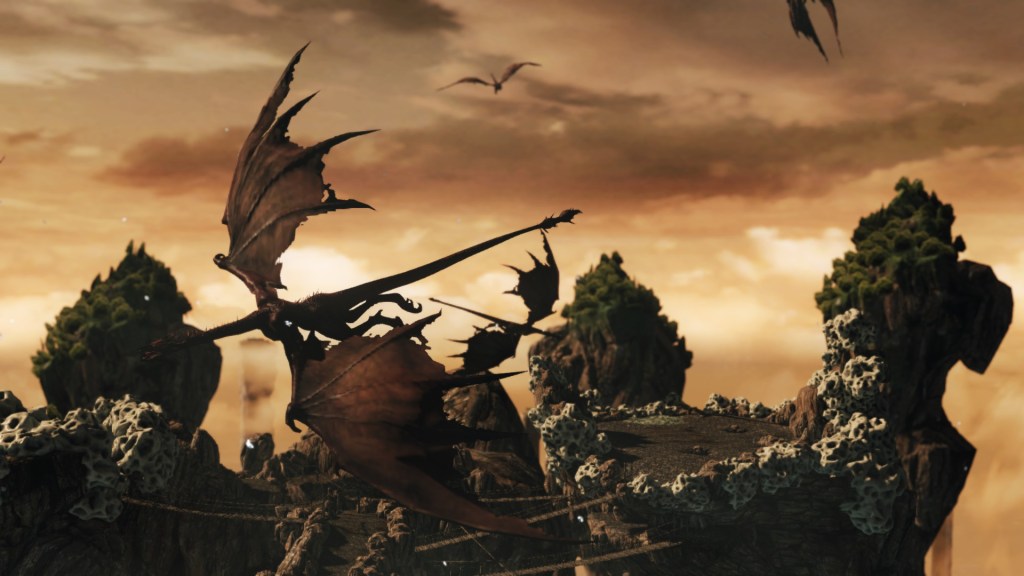
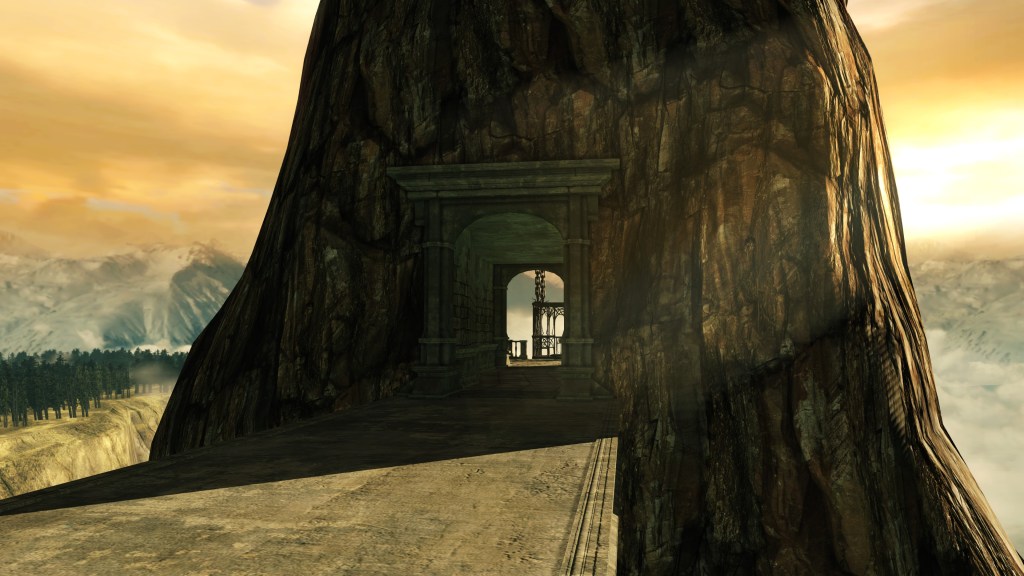
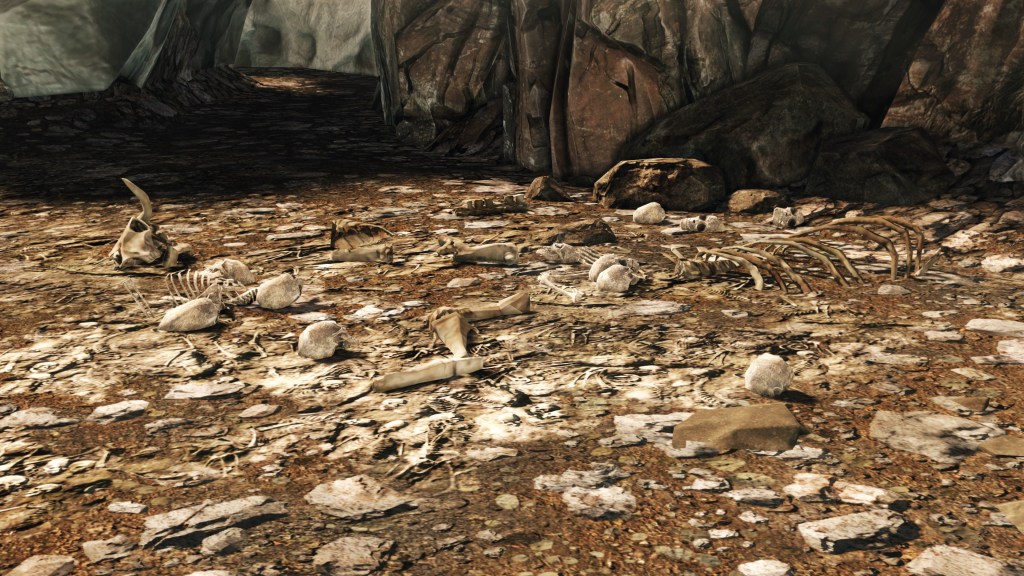
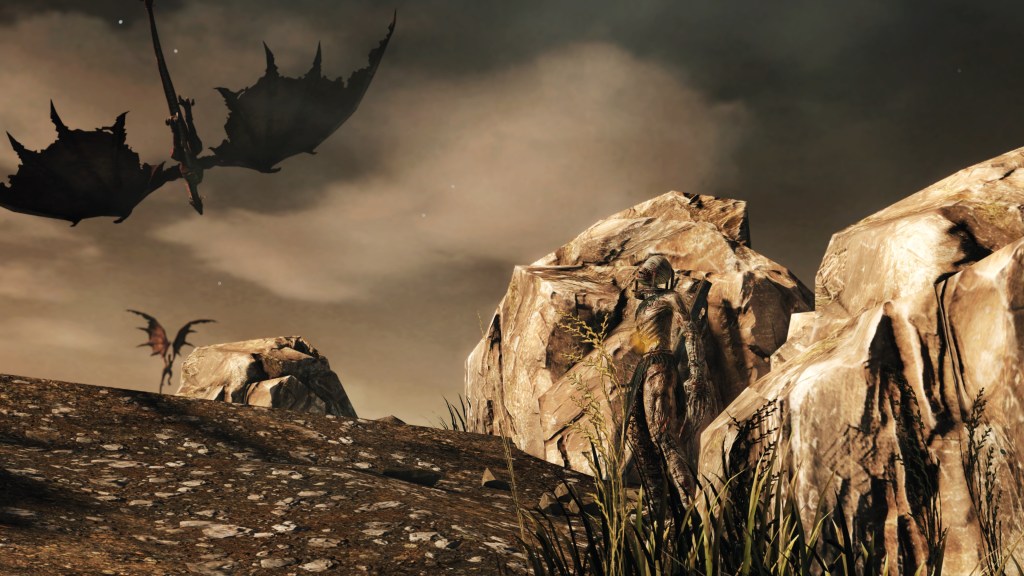
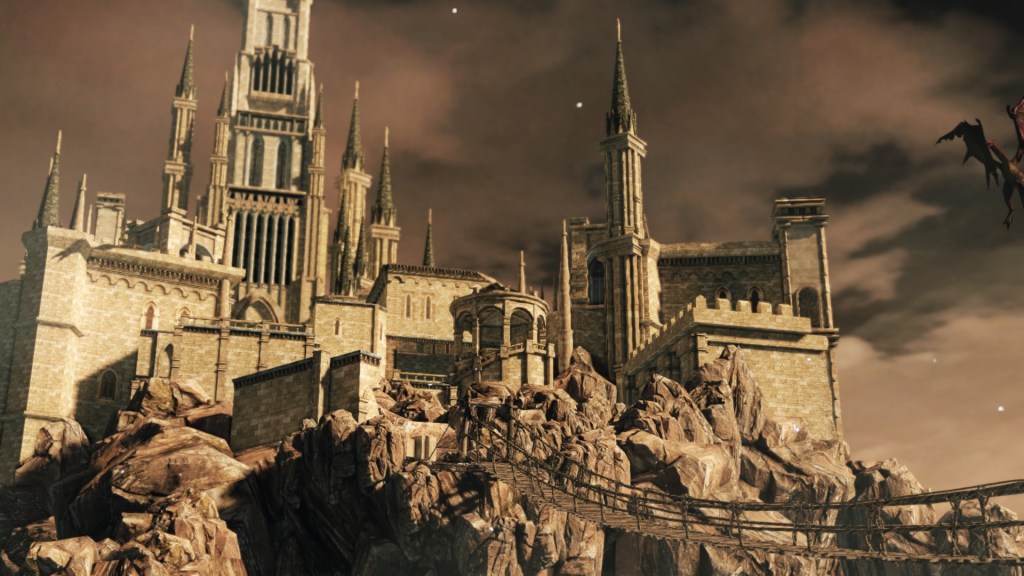
Before there was a shrine, there was already the Dragon Aerie. This wyvern nest is seated atop rock formations towering above the clouds which are themselves nested between two mountain ranges in eastern Drangleic. We can already see the beginnings of these formations after first leaving Shaded Woods for Aldia’s Keep, so they are most likely the product of longtime erosion, clashing winds from each mountain range weathering the ridges of old; perhaps exacerbated by difference in temperatures. Regardless of the exacts, the geology made for an ideal perch for flying dragons, the fossilized bones littered across the historic land above ground suggesting that they have been native to Drangleic since well before the Great Shift. Not only has that allowed for a healthy population of dragons hovering about the aerie, with plenty more on the way, but this also gave the breed a chance to develop their habitat.
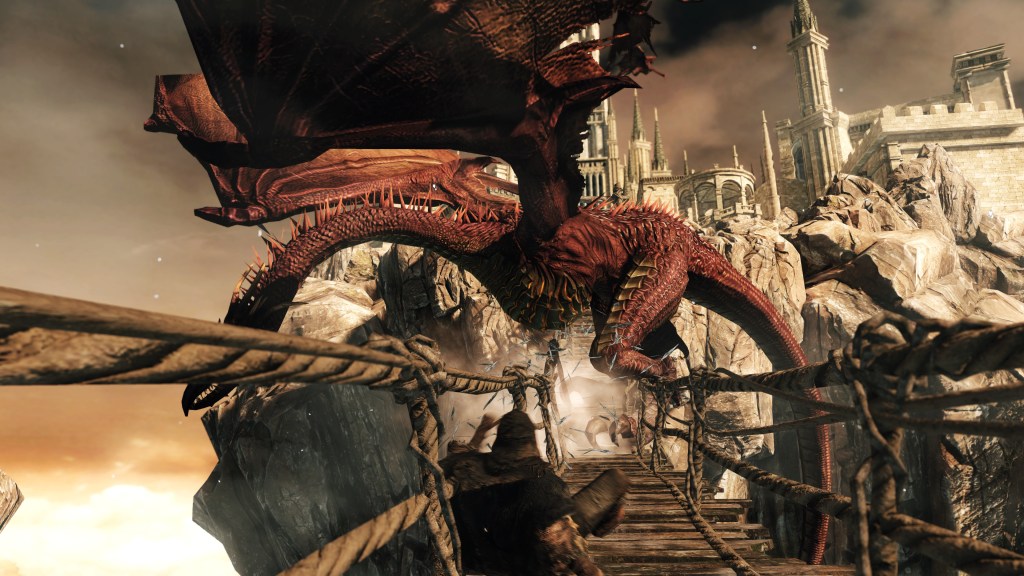
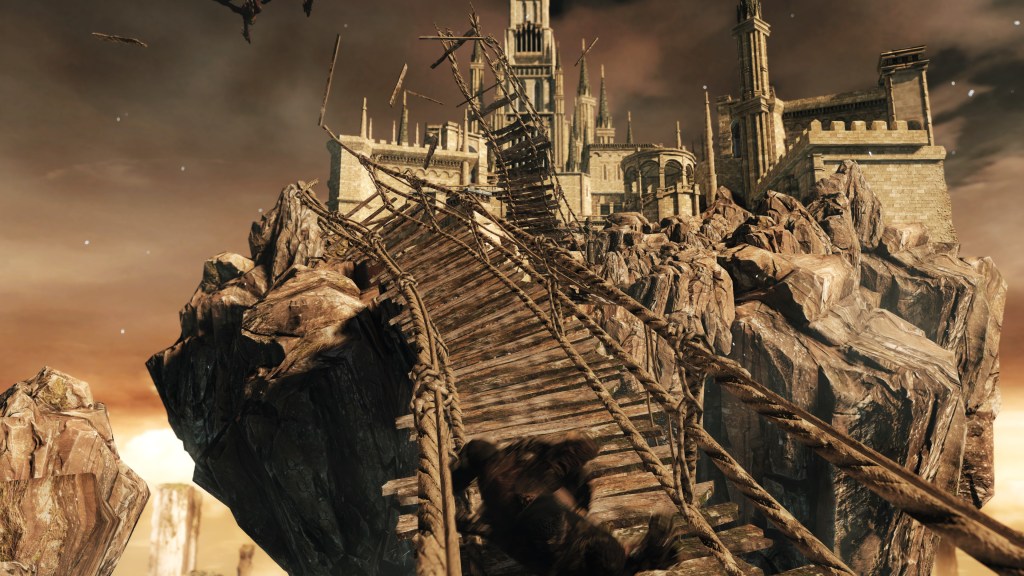
Wherever a wyvern mother rests with their eggs, that stone spire is lined with a strange white substance, hard yet porous. Considering their stinger-like tails, the wyverns probably construct a byke similar to wasps, though shaped more like a bird’s nest. With both in mind, the material might be a mix of wood fibers and saliva, which explains why the explorable spire-tops are clear of trees in contrast to the surrounding formations; alternatively, rather than dried spit, it is a kind of fossilized excrement, such as the guano deposits produced by birds and bats. Either way, wyverns chew up the foliage with their powerful jaws and mark their territory with the excretion. As the Ring of the Evil Eye we can loot implies, the slumbering mothers are always watching their young, ready to turn hostile the moment we bring too many eggs harm. Fathers soaring overhead are also enraged, destroying the bridge to the shrine as egg-breakers cross. The white markings thereby serve as a warning to anyone who might think to intrude.
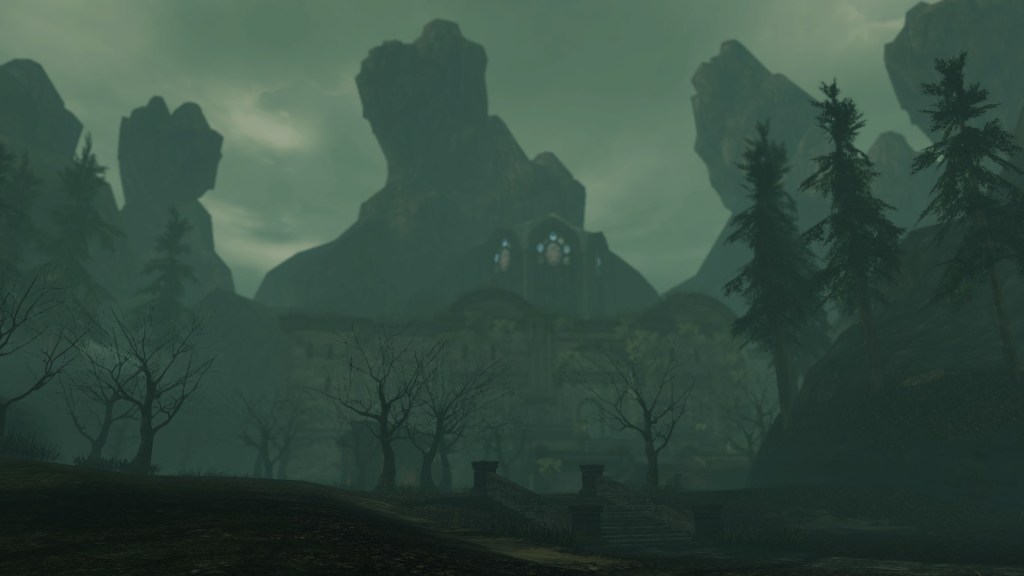
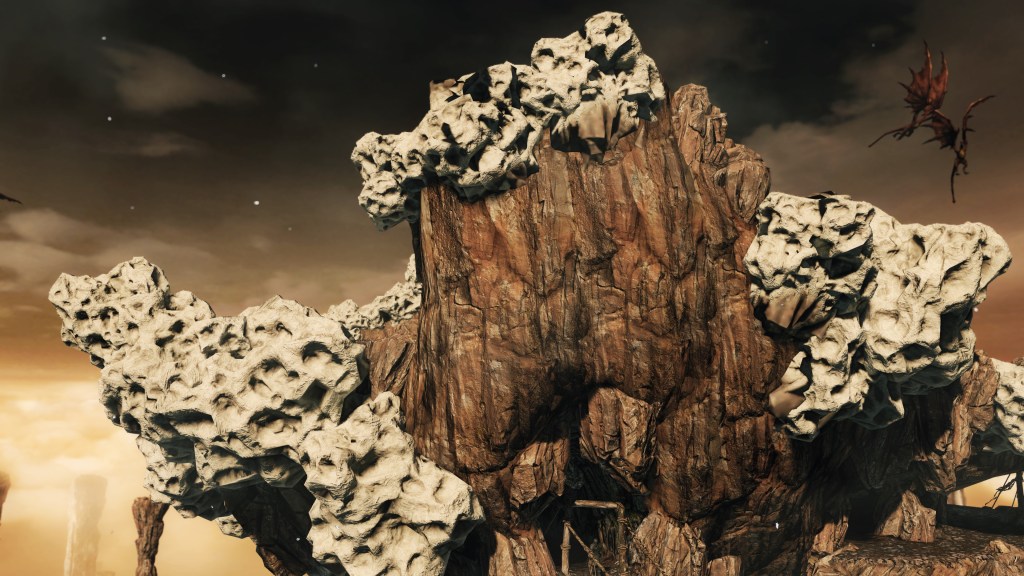
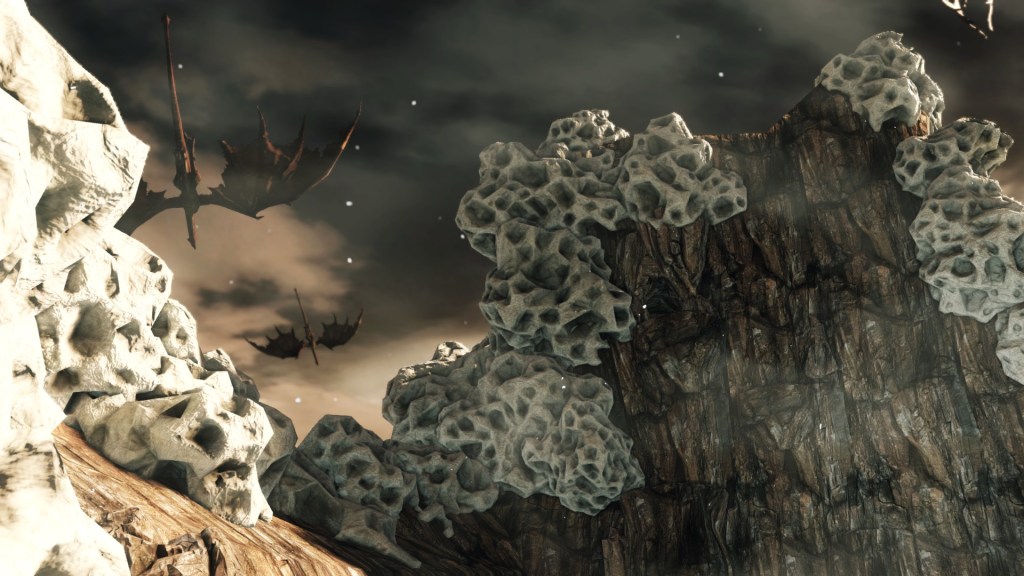
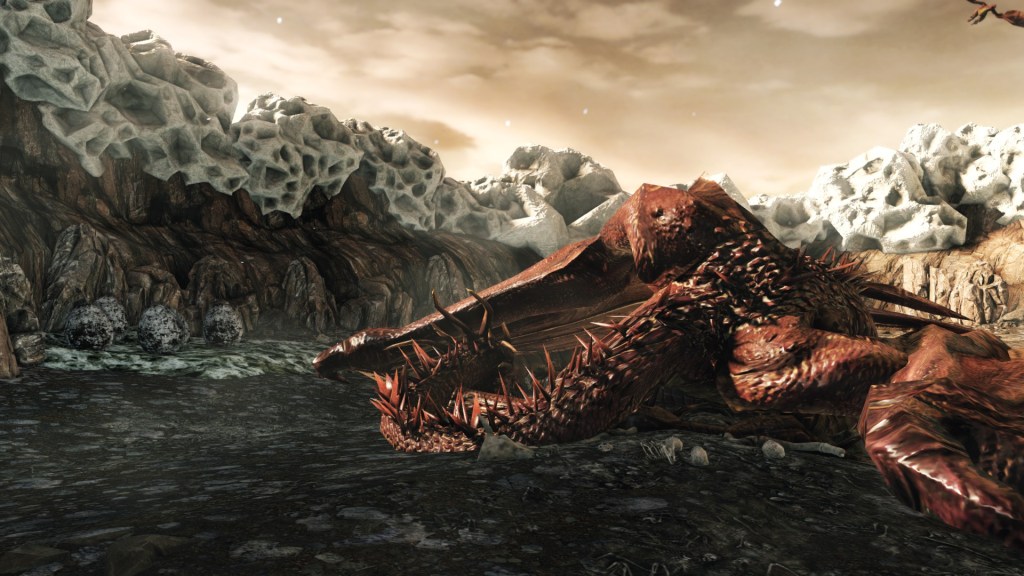
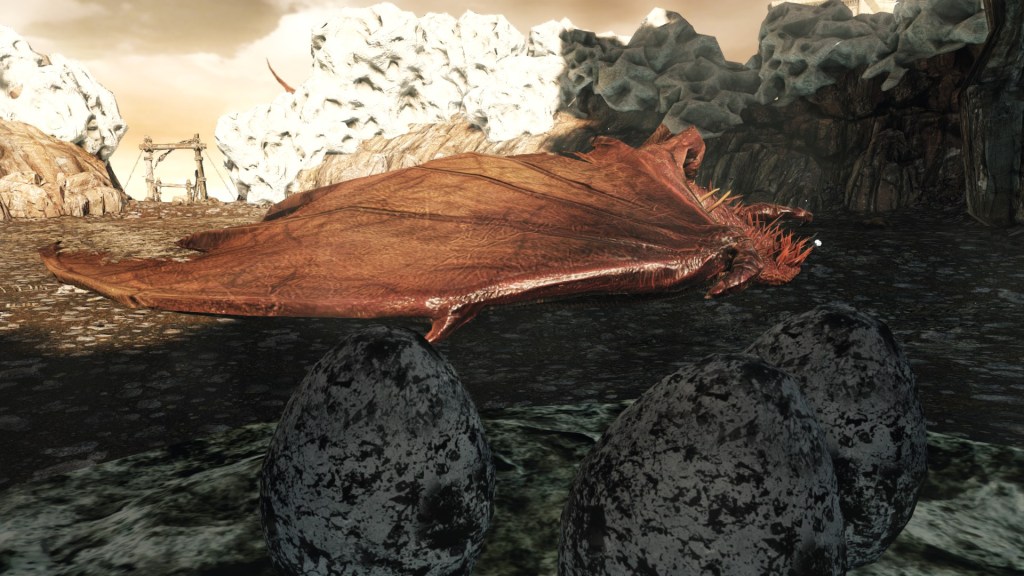
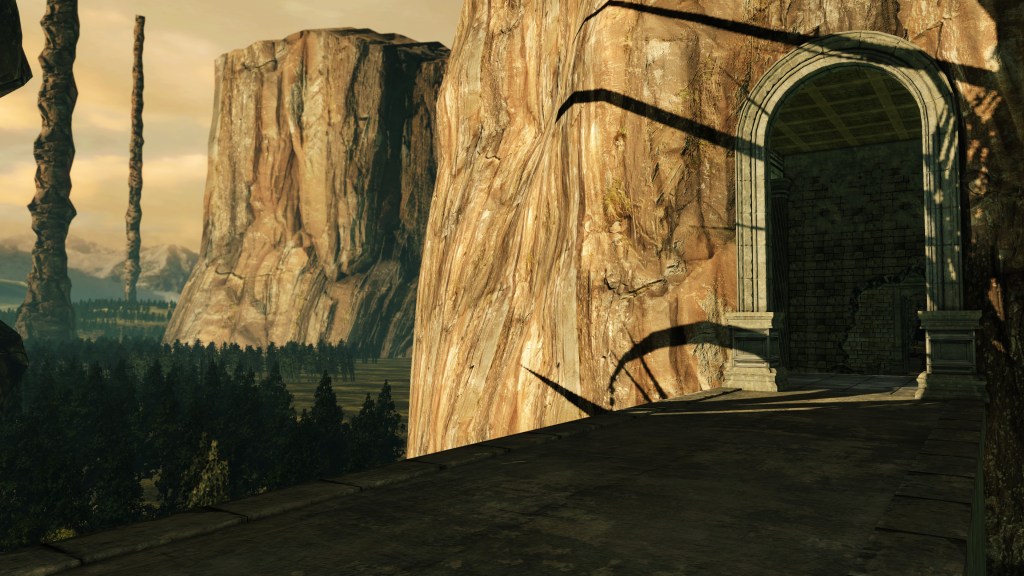
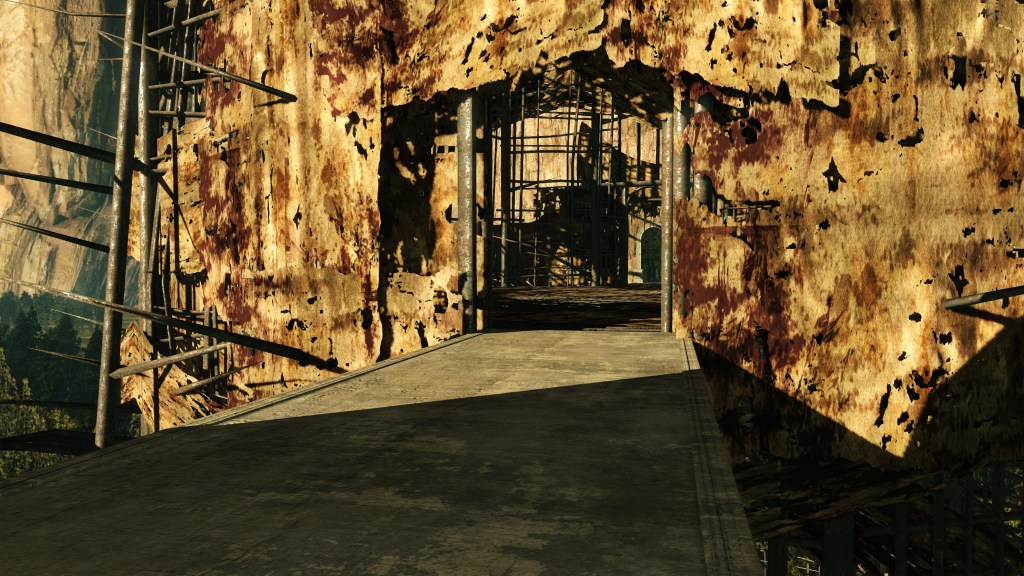
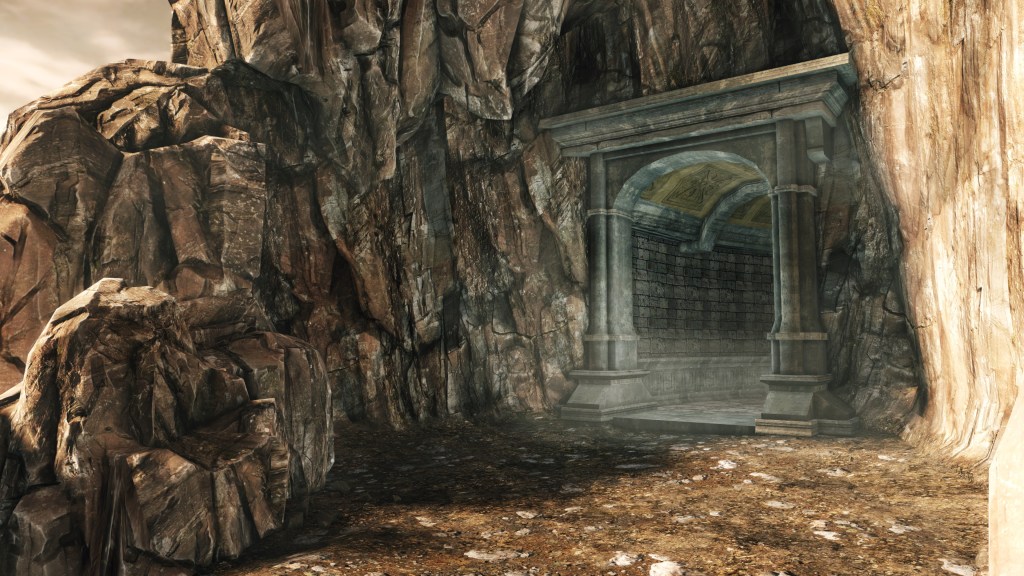
Little changed as pieces of Lordran arrived at the New World. The lootable Dragon Tooth suggests that a Havel warrior came to hunt, but if so, the culling failed. Looking at Eleum Loyce, their immediate hunting grounds became more competitive, but the skies insulated them from the human migrations. It is only when Vendrick established himself as king that things began to drastically change for the aerie. Aldia building his mansion near Drangleic’s future wyvern steeds is no accident. A giant cage is set up behind the secret ceremony building. Beyond it we can take a lift up one stone spire to the aerie. The masses of meat hanging from the Aldian acolytes’ implements affixed to the cage, however, indicates that the goal is to lure the flying lizards down to them, hence the open top. Spikes restrict the dragon’s movements once inside and hinders any outside assistance — though the boss nestled within latches onto the sides anyway, all the bloody cloth affirms the disincentive. Add in the dragon statue operated to enter the ceremony building, and it is clear that the nest was the primary reason for construction.
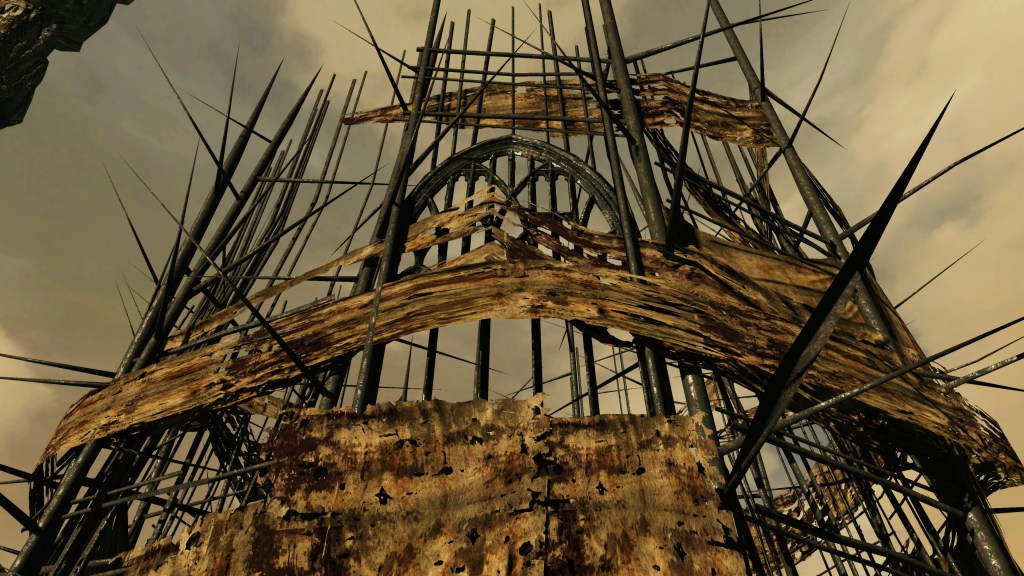
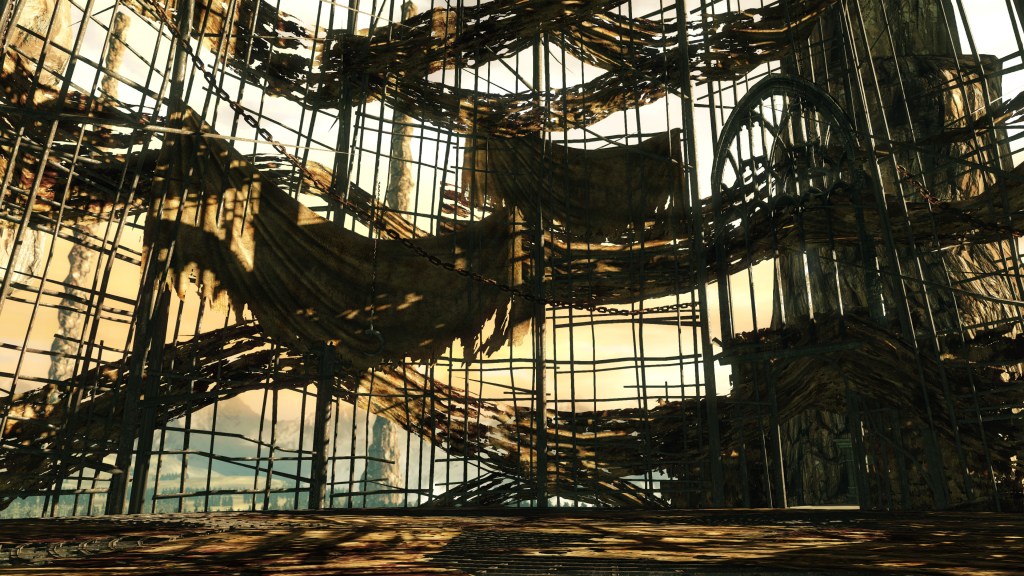
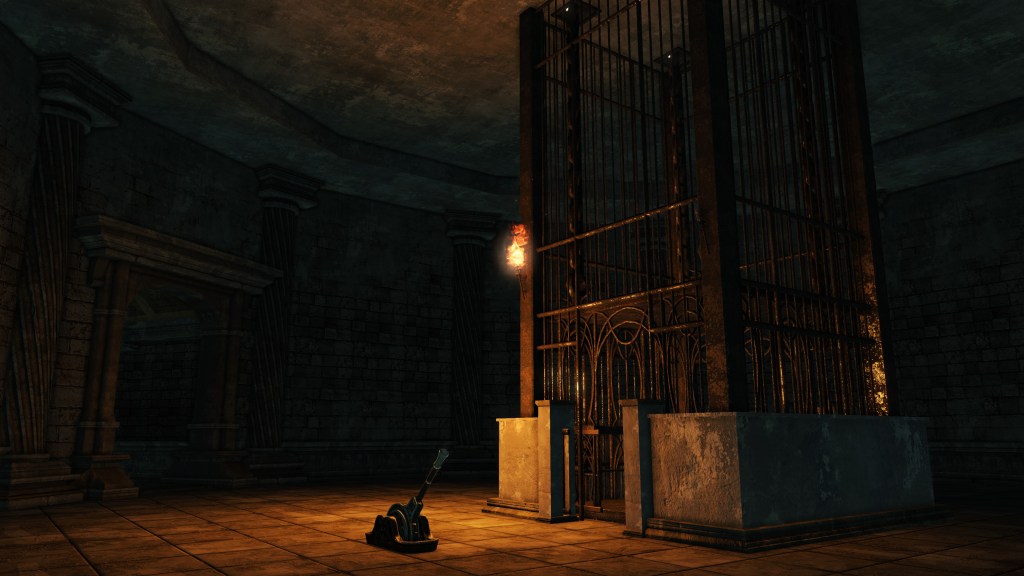
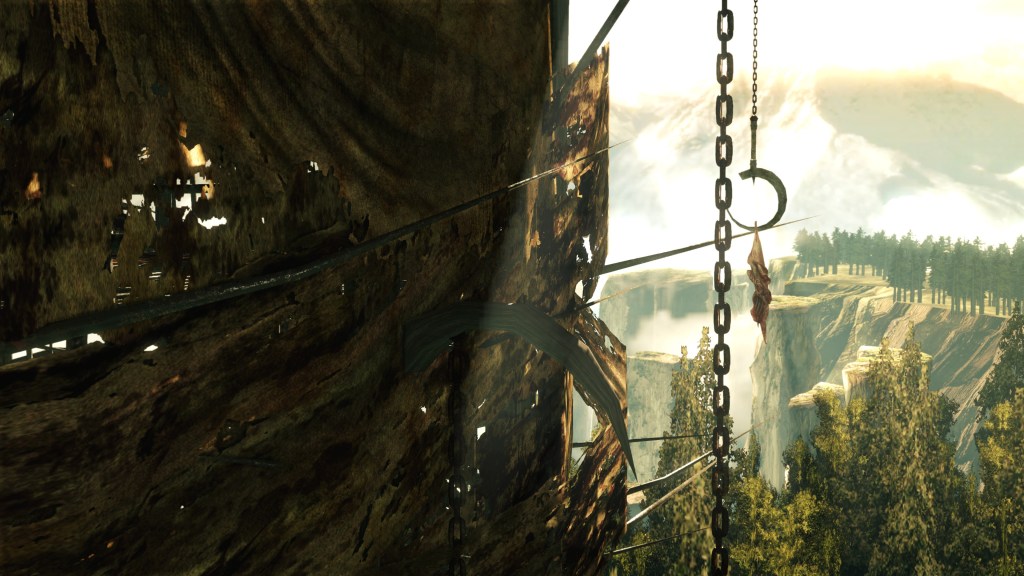
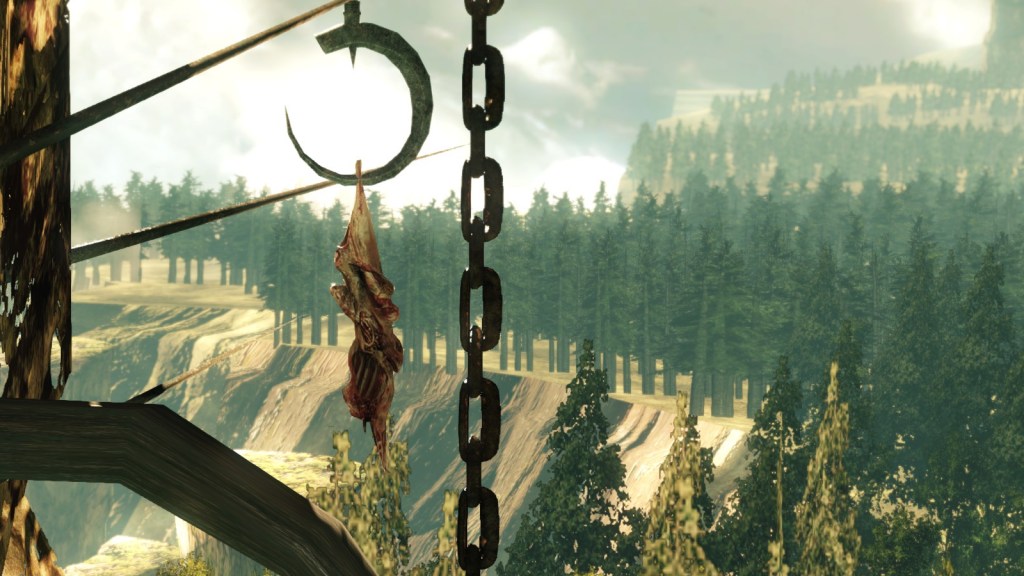
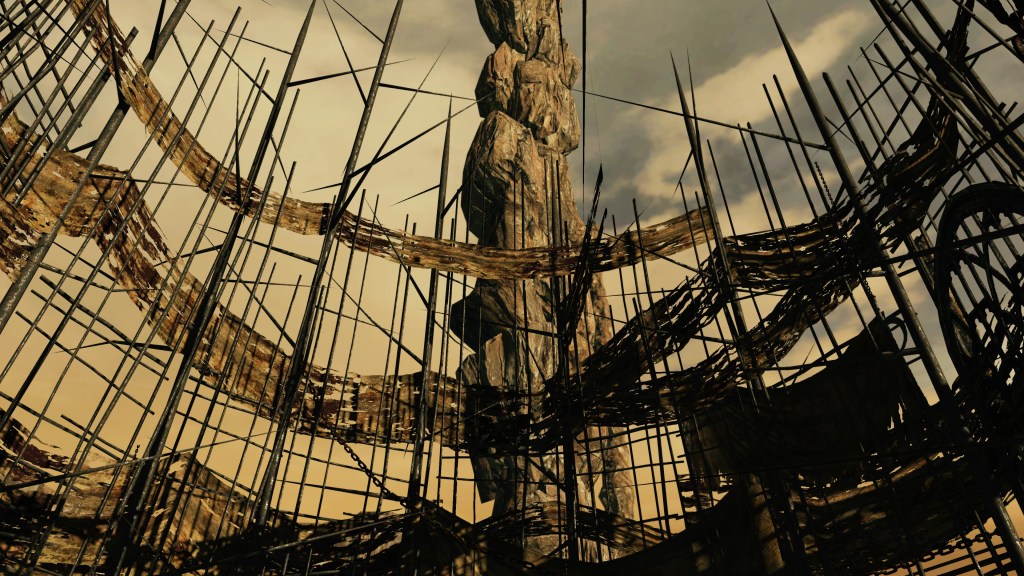
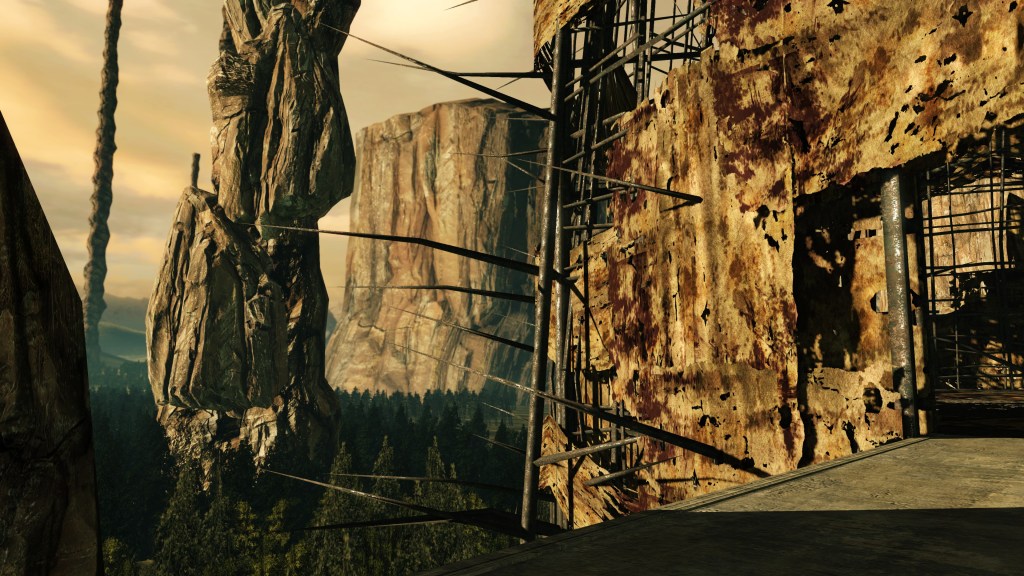
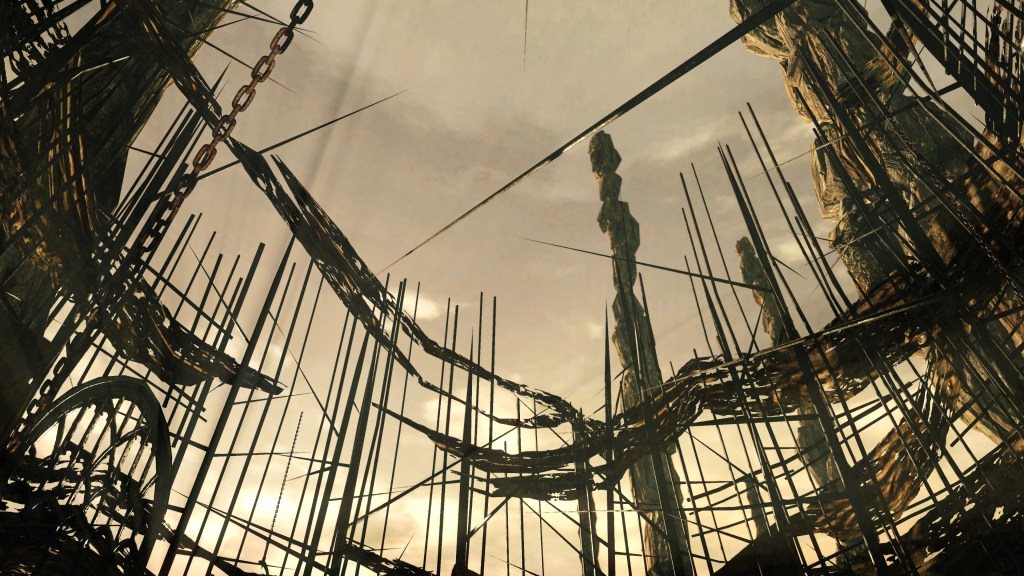
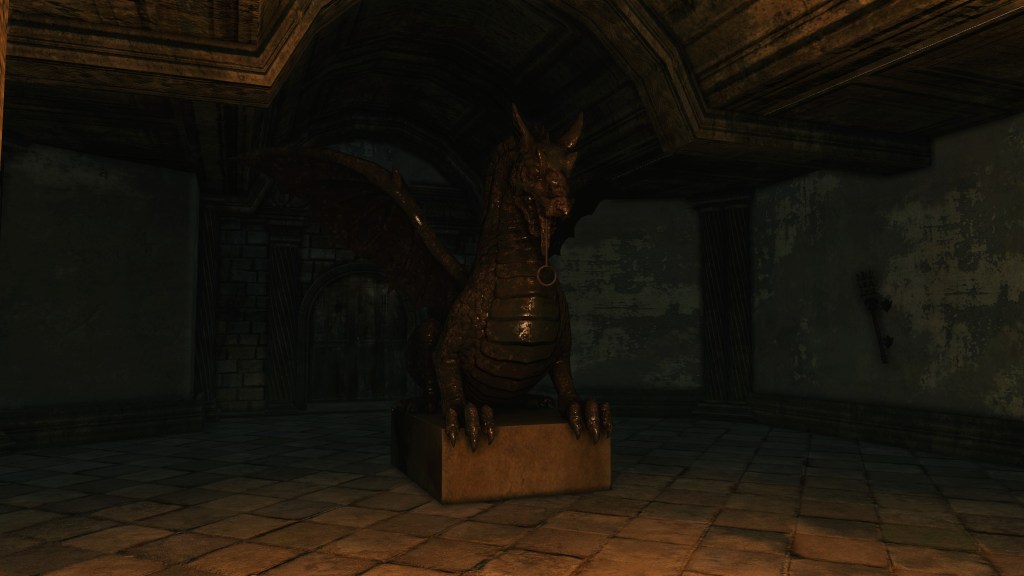
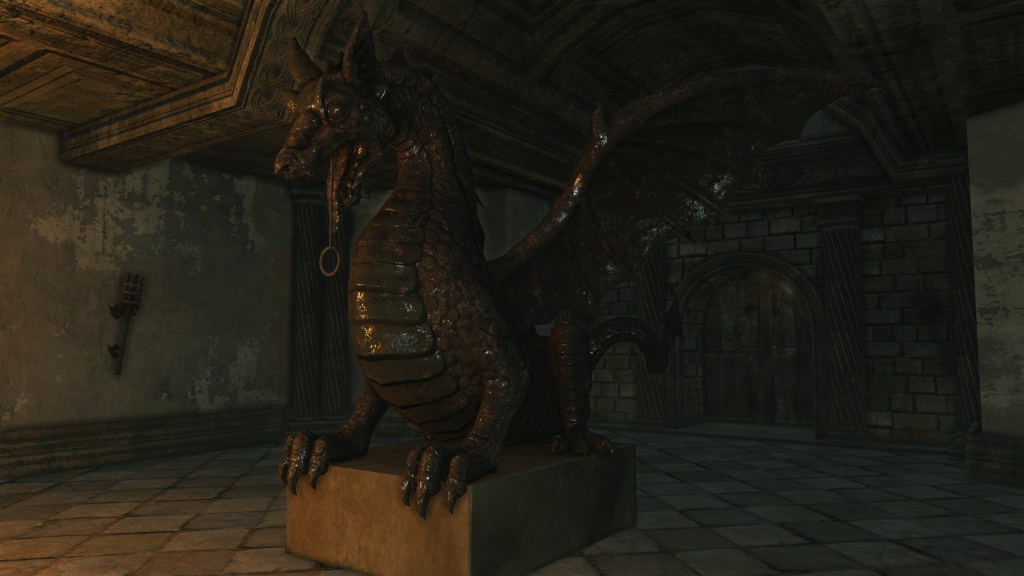
The kingdom wanted to replace the Dragonriders’ wyrms with flying steeds, so the king’s brother accommodated the country’s request. The cage’s purpose is obviously to wrangle the individual wyvern until it is tamed for the Dragonriders. The Dragon Aerie is actually named the “nest of guardian dragons”, (護り竜の巣) the description of one guardian’s soul questioning who the wyverns are guarding the area on behalf of. One suggestion is that they defend way to the shrine because Aldia’s arts compel them to. In other words, Aldia researched magic with which to control the wyverns, making them more obedient to human commands. Before the rear building became the site of abominable rituals, it was where he toiled away at means to capture and tame fearsome fire-breather — the area is fittingly named “Dragon Research Institute” (龍の研究所) internally. Considering the causality rate taming the wyrms, such a project was a noble way for a novice sorcerer to cultivate his art. And since the manor was still in vicinity of Heiden ruins, he could still pursue his interests on the side.
Soul of a dragon that protects the path to the ritual place.
Is them coming to protect this land the will of the archdragon or the arts of An Diel?
The special soul this dragon possesses is used to acquire a vast amount of souls or create a great power.
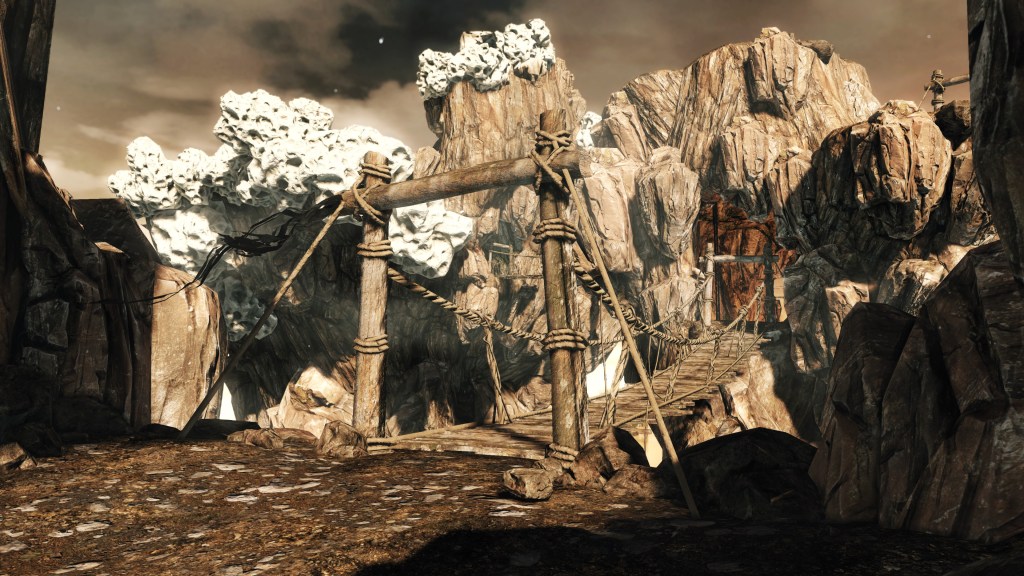
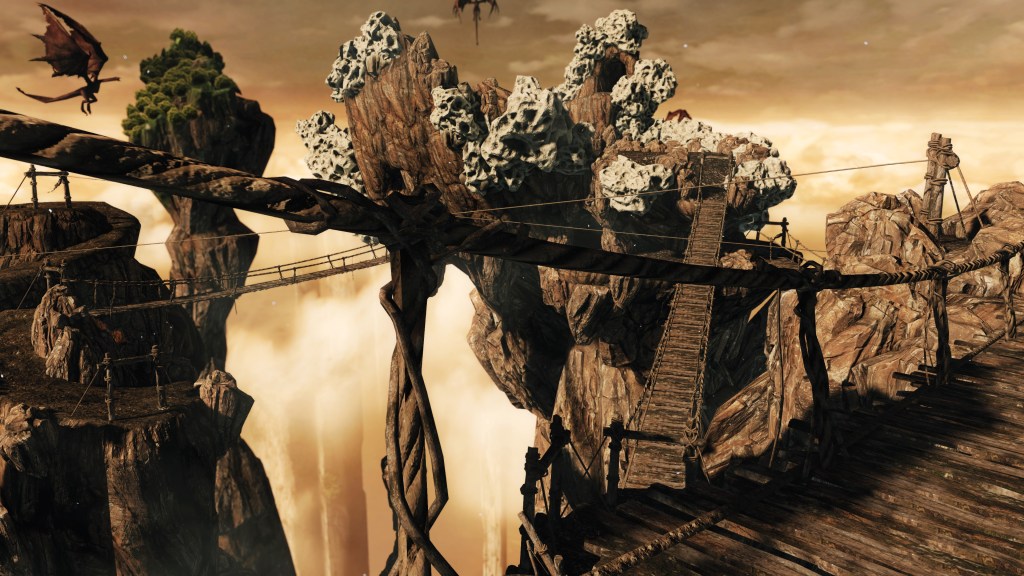
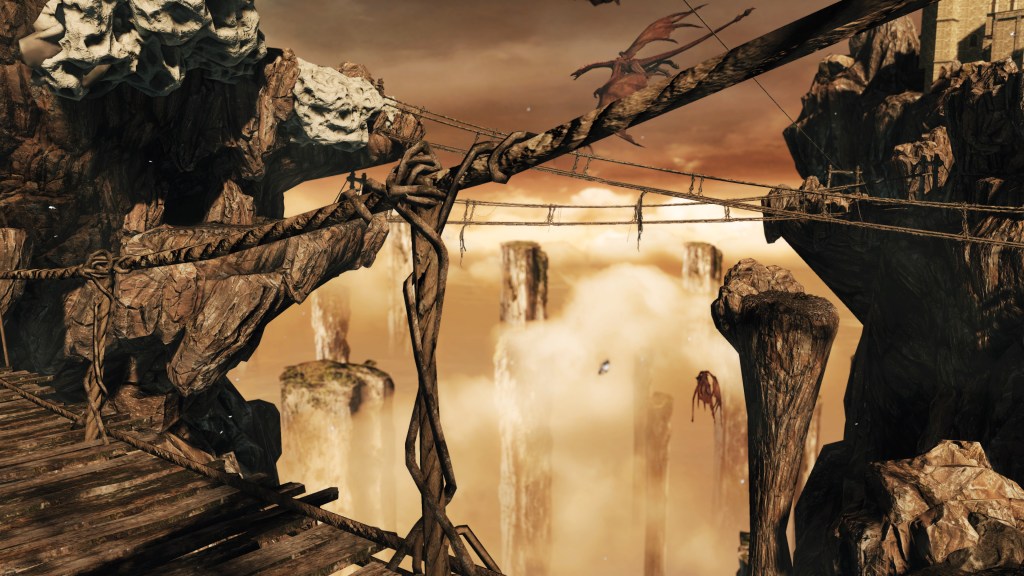
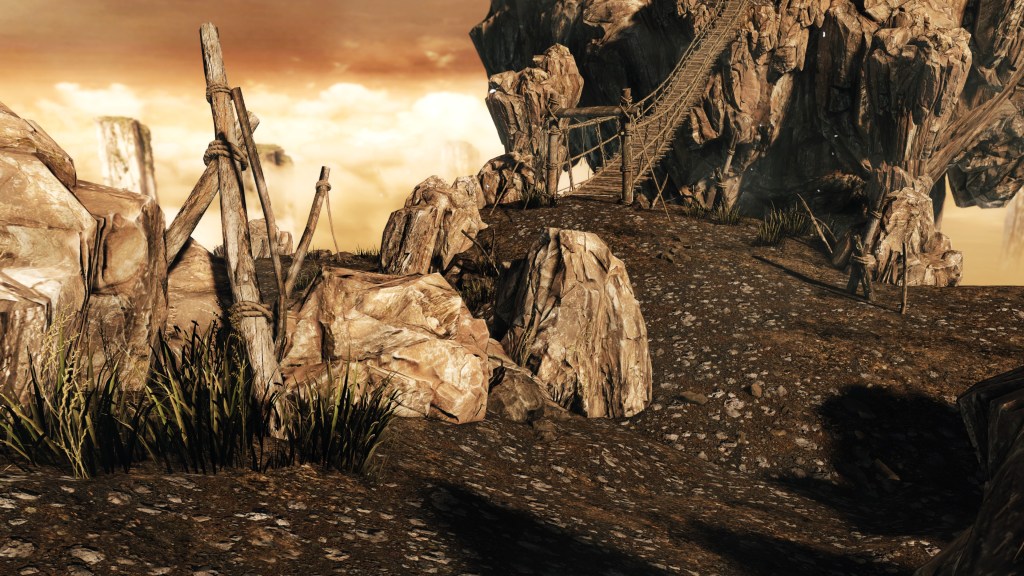
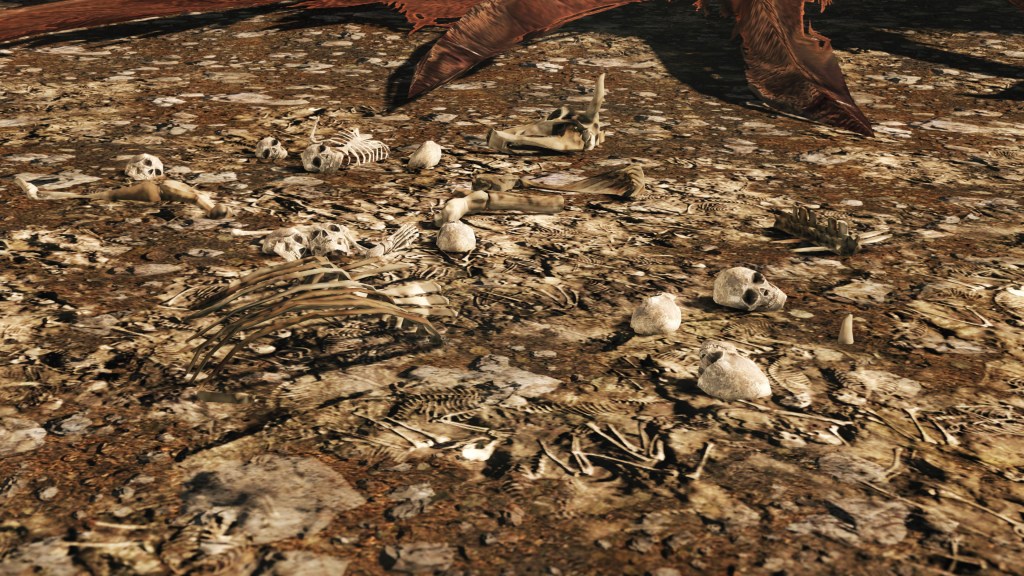
Eventually, Aldia succeeded in devising a safer method through magic, enchanting one mature wyvern after another ever since. With the resident wyverns more docile, the kingdom built a network of rope bridges and ziplines to help navigate the aerie. This didn’t mean that the beasts were completely safe. There are still far more human than animal bones in the wyvern nests, and we find brave warriors and great heroes among the dead in the area. Clearly, soldiers still needed to take care around Drangleic’s new guardian dragons, especially when it came to their young. Nonetheless, the magic allowed Dragonriders to more easily transition to flying through the skies and granted Aldia a better look at dragonkin. This continued into the sorcerer’s research of the Darksign, some of his Undead and petrified experiments left at the aerie. Indeed, among all of Aldia’s fields of research, dragons were undeniably the most prominent.

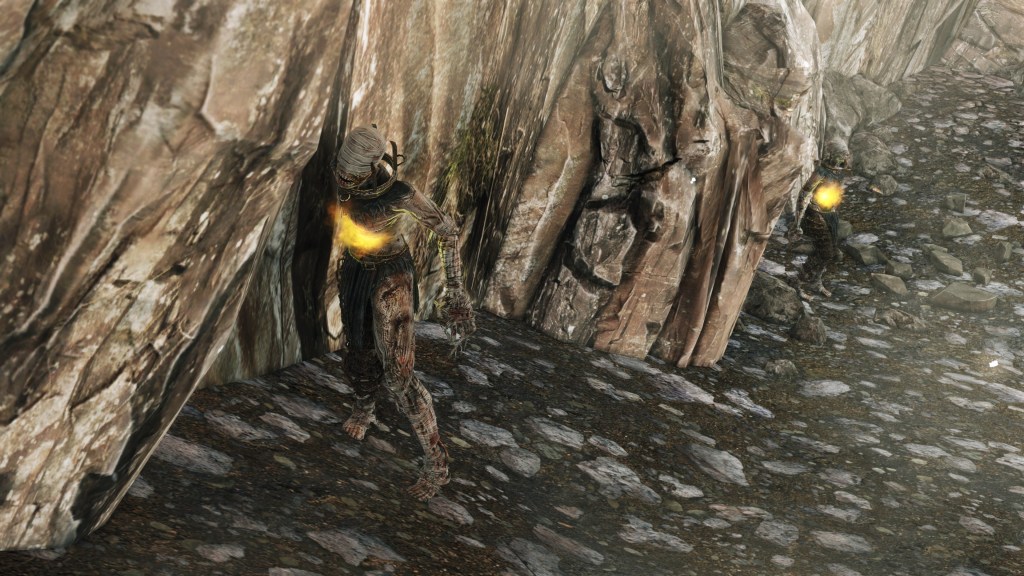

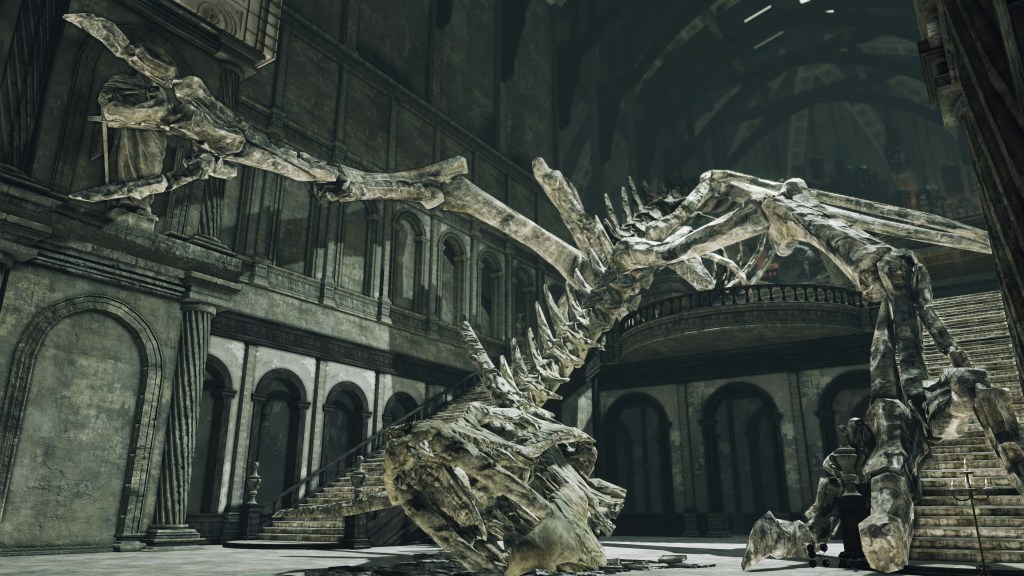
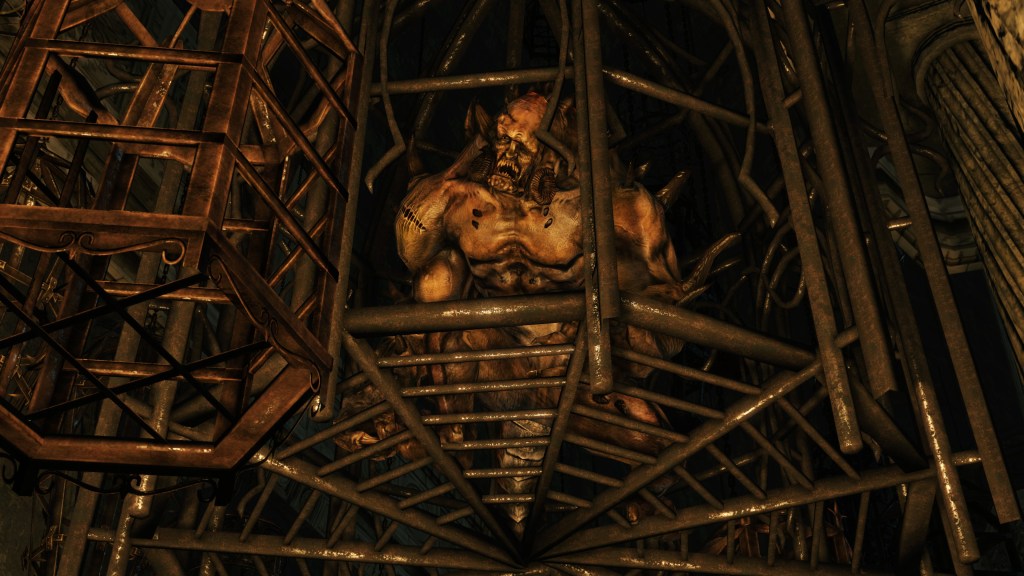
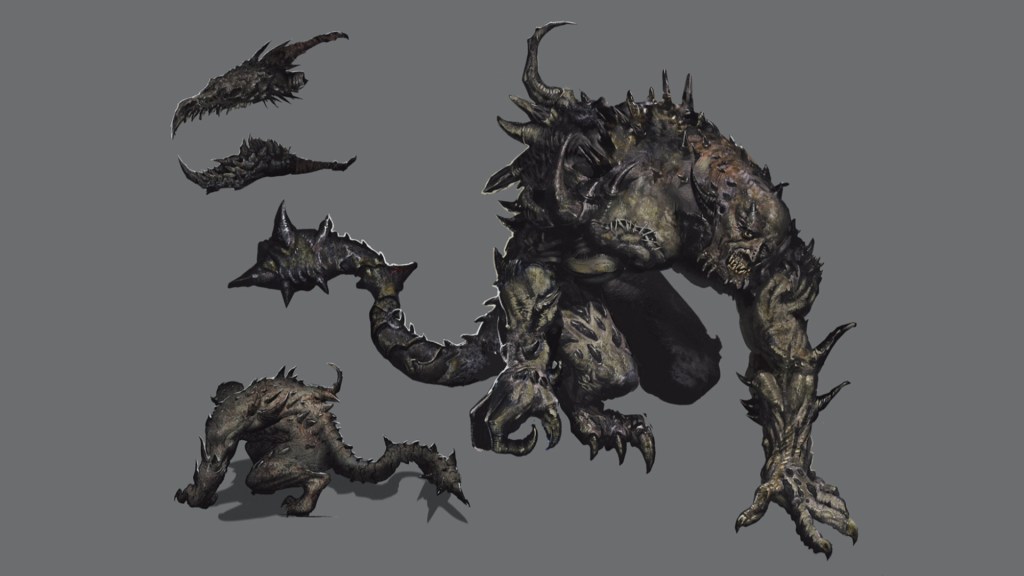
Item descriptions detail Aldia’s attempts to create an archdragon, and his surviving acolytes are officially named “dragon students”. (竜の学徒) We see the results of their studies for ourselves as soon as we enter the foyer and are greeted by an archdragon skeleton, which can later be briefly reanimated by the torch ritual performed in the mansion. A “grotesque Undead” (異形の不死) is also caged at Aldia’s Keep, a few more roaming about Sinner’s Rise at the Lost Bastille on NG+. Both locations factored together, the specimens have undoubtedly been experimented upon by Aldia. As to why, the Dark Souls II Collector’s Edition Guide notes that these hulking Hollows look half-dragon in appearance. Certainly, we can acquire the Malformed Skull — a dragon’s skull, going by its description — from their bodies. They are therefore failed attempts at making humans into dragons.
The very skull of something. Can be used as a weapon by swinging it around like a great hammer.
The skull looks like that of a dragon. Although it is quite a rare item, it probably shouldn’t be treated so carelessly if the genuine article.
Human-to-dragon experiments was probably the origin for the Flexile Sentry as well. This “enforcer of exile” (流罪の執行者) ruthlessly executed the king’s commands to send Undead out to sea, whether their final destination be prison or a watery grave. Armed with curved swords and spiked clubs, the armored watchman always enforced its captive’s punishment with brutality. This twisted nature reflected its “grotesque” form, which the description to their similarly warped straight sword implies was the result of something doing the twisting. The boss is conjoined lizardmen, the two upper bodies acting in perfect sync despite sharing only one pair of legs. Thus, they too must have been humans transformed into a single draconic entity. The sentry’s affiliation with Aldia is obvious from the location. Besides the hull of a prison ship at No-Man’s Wharf, we find another sentry operating out of Sinner’s Rise, with yet more sealed in an ice cave at Eleum Loyce. Without a doubt, these were more failed experiments which Aldia relegated to muscle for the various endeavors he participated in.
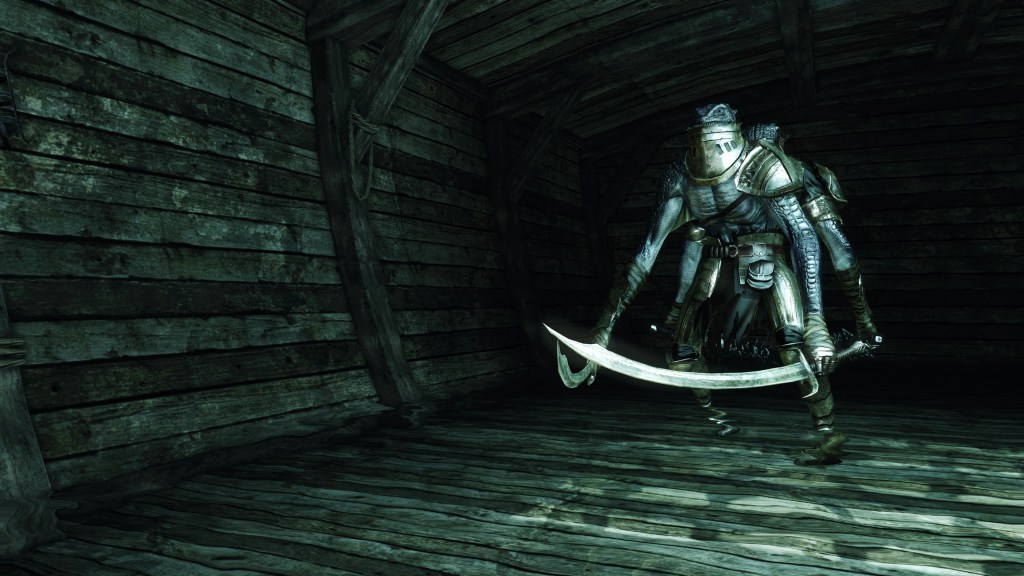
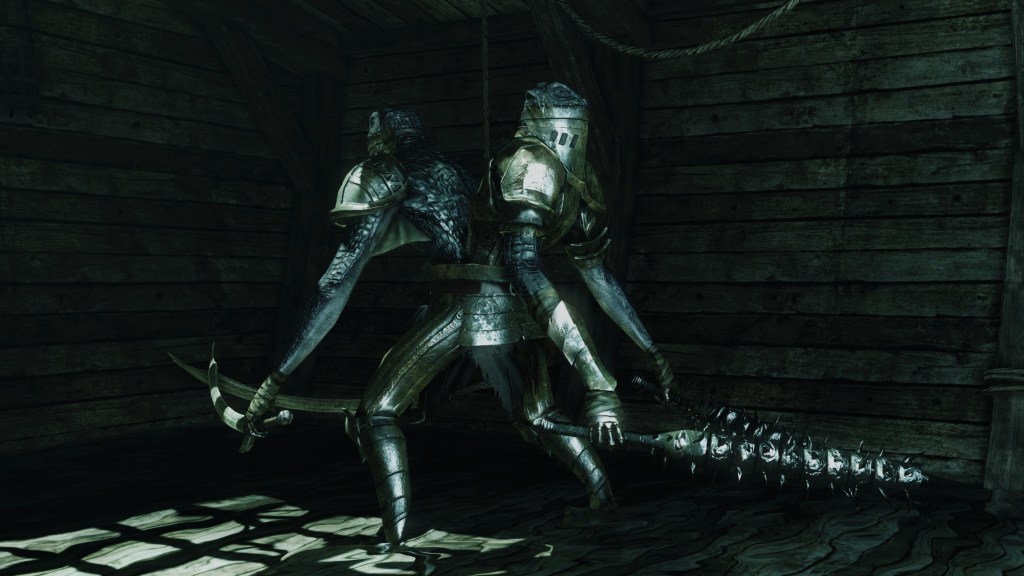
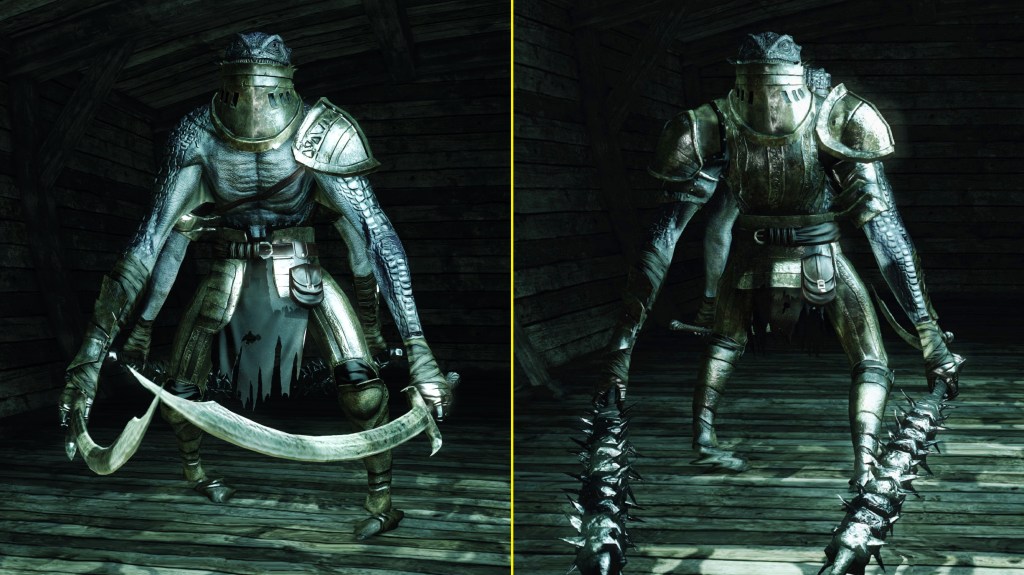
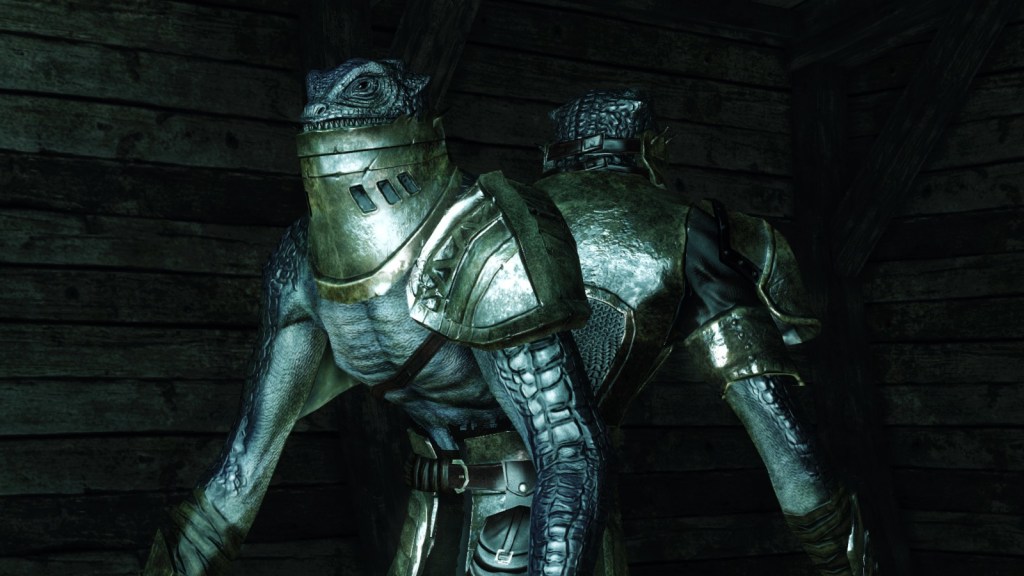
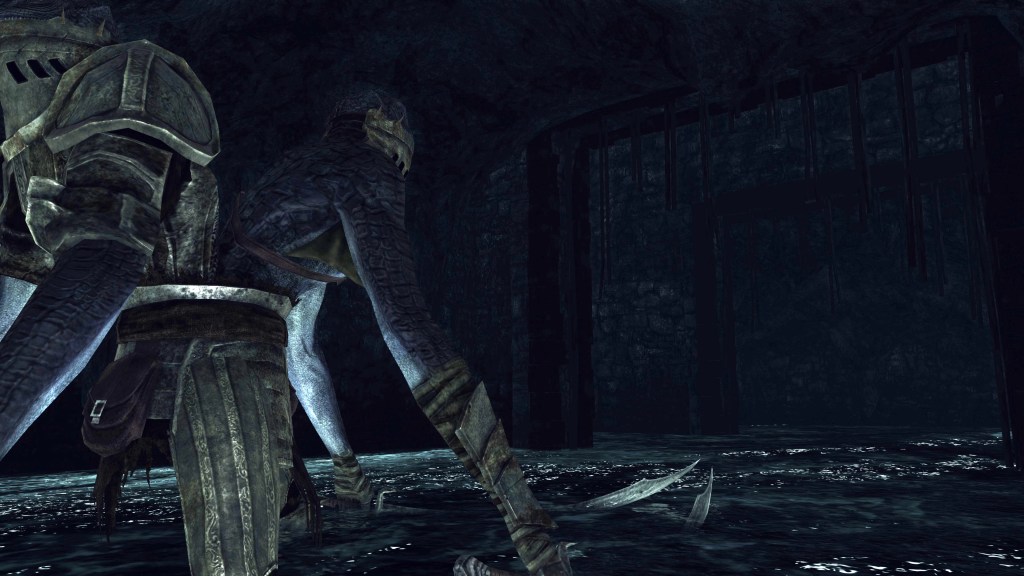
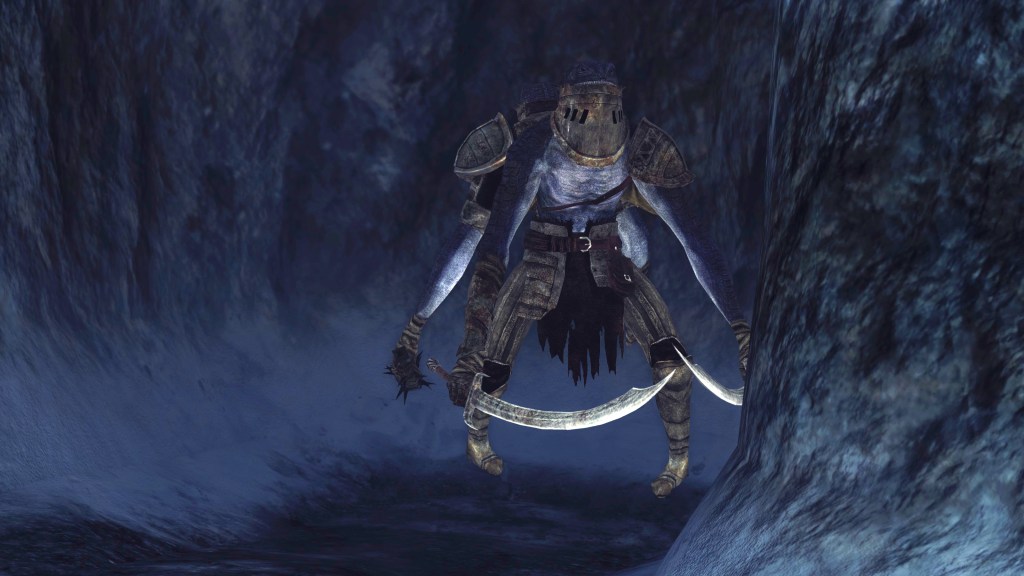
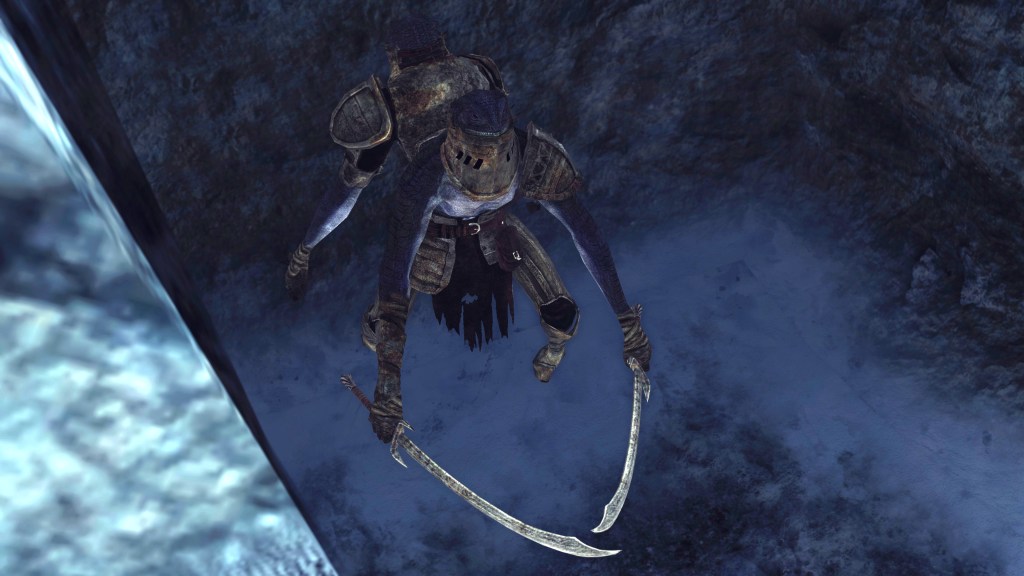
Curved sword created from the soul of the Enforcer of Exile. Originally made as a straight sword but warped as if to denote its twisted nature.
The king of its country commanded the grotesque watchman and sent the cursed who didn’t fit in the prison out to sea. Never to return again.
Soul of the Enforcer of Exile.
The watchman that bore the role to punish the Undead ruthlessly fulfilled that role to the bitter end.
The special soul this watchman possesses is used to acquire a vast amount of souls or create a great power.
Suffice to say, even when the soul and undeath had become the scholar’s chief interest, dragons remained at the forefront to his inquiries. To that end, the mansion likely used the aerie to gather materials needed for such artificial draconification experiments. We do see the Aldian acolytes curiosity about mineralization at the later Dragon Shrine, the instructions for Crystal Magic Weapon and a Fragrant Branch of Yore stored there. Even outside the shrine, the petrified specimen holds an obvious connection, and it could even explain the presence of rupture Hollows, specifically those whose unstable souls release a corrosive gas which degrade even the hardiest material. Aldia and his cohorts definitely wanted to understand the nature of rock which occasionally manifest in the scales of the archdragon’s descendants. It is not surprise that they eventually hoped to reverse engineer a genuine archdragon. The question was how many the researcher would sacrifice before he achieved it.
Worship Your Work
After acquiring giants as additional specimens for study, the Aldian sorcerers finally found success. Should we kill the Ancient Dragon enshrined at the aerie, we are awarded with the boss soul of a generic giant. It is only when we loot the soul of the alike archdragon beneath Tseldora via the Ashen Mist Heart that we acquire this Ancient Dragon’s soul, at least according to its description. In all likelihood, the soul was originally intended to be acquired from the boss but was then moved to the other archdragon killed during the Lords’ dragon hunts, the description never updated. Why? Because the archdragon with the giant’s soul is a “fake”.
Soul of the great archdragon that towers deep in the ritual place.
The great one that possessed enormous power simply continues being there.
The special soul of this dragon, which was created searching for the profound mysteries of the soul, is used to acquire a vast amount of souls or create a great power.
This isn’t to say that the Ancient Dragon isn’t an archdragon — as far physiology and capabilities are concerned, it possesses everything expected of one. While not identical, the only notable difference between the two dragons’ bodies is that the “fake” lacks a third eye on its forehead. It is still physically imposing and strong. It still demonstrates affinity for fog magic and the ability to breathe fire. Its dialogue still reflects the nature of a stone entity, viewing life’s actions within the world as disturbances to the “stagnation” of existence. By all indications, it is an archdragon in body if not in soul. The only reason that Nashandra and Shalquoir attest to the Ancient Dragon’s illegitimacy is because it wasn’t born an archdragon; it was made one. Aldia successfully transformed a giant into one of the dragons of old. How you might ask? Through the same method seen in DS1.
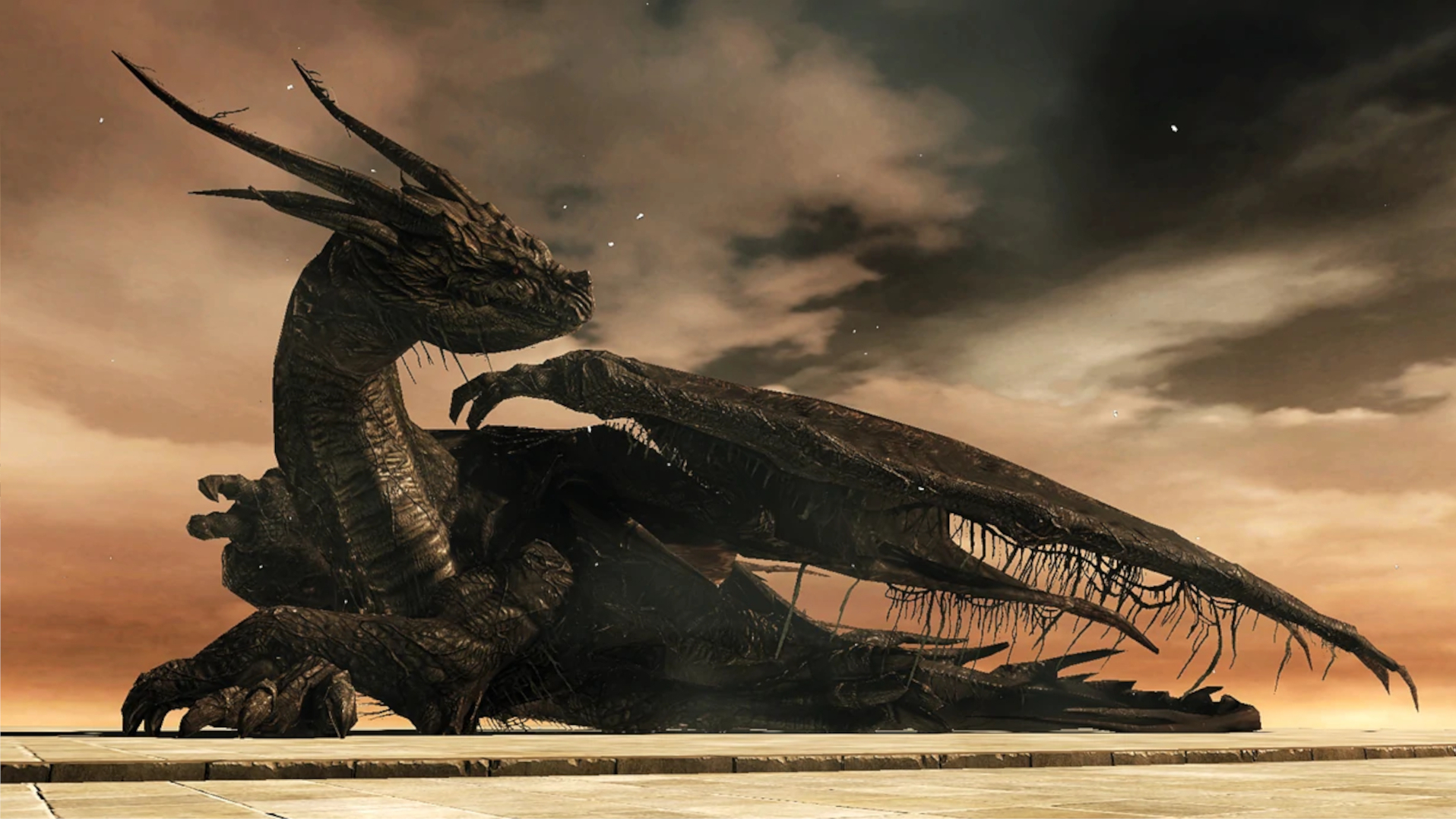


At the eastern end, there is that one. A great big one, and one that possesses strong power befitting it. A sham of that.
Undead, what have you heard from that dragon? That thing is an imposter, a false god. Don’t be deceived.
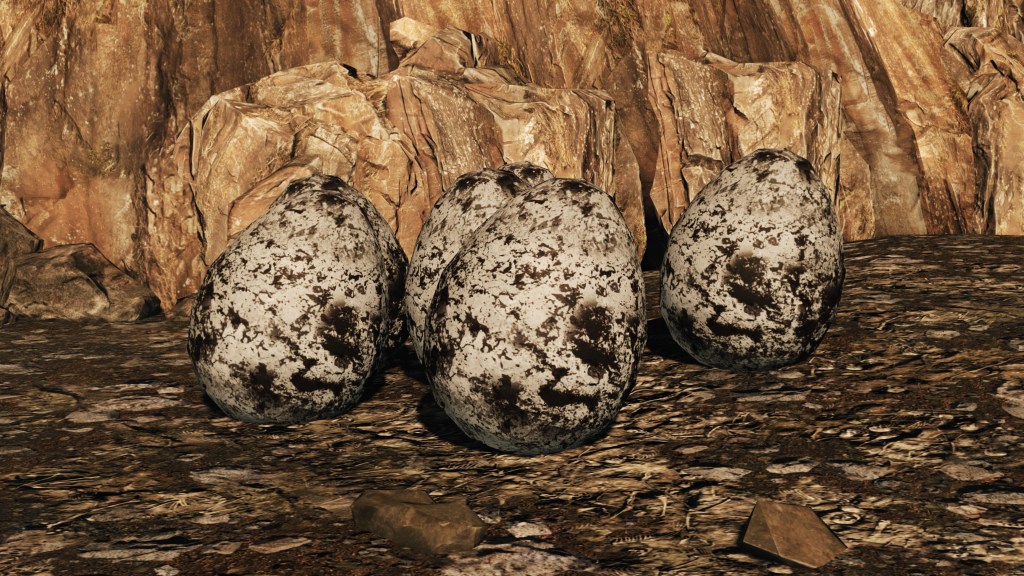
We can find a Petrified Egg in the same area as the Ancient Dragon. Magerold can feel power flow into him if given the fossil, inferring it to be a dragon egg. This suspicion proves correct since he can then direct that power into us as part of the Dragon Remnants covenant. True to its name, this “Glimpse of the Archdragons” (古竜の片鱗) grants us an “archdragon eye” (古竜の瞳) to realize becoming archdragons ourselves. Through stones similarly infused with that draconic power, we can initiate our body’s transformation into a stone-scaled beast. And if we want to improve that power, we need only infuse more power from scales of more dragons, which we can collect by performing duels to the death with other scale owners who respond to the summon sign our dragon eye projects. All of this is consistent with the Path of the Dragon covenant from DS1, only difference being that an actual living stone archdragon was responsible for infusing the power in that game.
Large egg that turned to stone. There probably isn’t anything to hatch from it.
An egg is a vessel that confines life, and also a symbol of mysteries. What did that which became stone carry?
You’re a good guy. But this thing’s amazing… Perhaps it’s a dragon egg…? Just holding it… power flows into me…
Stone that carries the power of dragons in it. If used, transform head into a dragon-like form and breathe Breath. Transformation effect doesn’t break until death.
It is believed that heretics who aimed at transcending life carried the power of dragons in stones by means of a secret ceremony. It is uncertain whether they reached their objective.
Evidently, one need not be a living archdragon to direct this draconic energy. This makes the egg the only possible source for Aldia’s success in turning creatures of flesh to beasts of stone. Indeed, the petrified somethings and dragon bones acquired from Aldian acolytes, guardian dragons, and the areas they inhabit prove the man’s interest in excavating such fossils. And why wouldn’t he take interest? DS1 has already proven that archdragon bones retain their power, and turning to stone presumably only strengthens that power. Fossilization is typically the result of bones being buried in a mineral-rich environment for an extraordinarily long time. Factor in the principles of the Dark Souls universe, and the idea that the bones of stone-scaled beasts would become stone themselves under the same circumstance is to be expected. Small bones or fragments might not hold much power still, but an egg carrying a complete archdragon, even a juvenile, would have been a monumental find.
Fossil of something. Look different and feels very nice to touch.
Without a doubt a rarity, but it’s not well known what use it has.
Large bone fossil. Enhances equipment born from special souls.
It is commonly called a dragon bone but it is uncertain whether that be true or false. The only thing for certain is that it hides strong power.
Some might argue that the Ancient Dragon couldn’t be a result of the egg’s power given the nature of our own draconification. Our dragon body is technically an armor set whose description links it to DS1’s Kalameet. The Black Dragon is similarly referenced in text for the various weapons Dragon Remnants members use, each fashioned from a piece of its tail severed in battle by a hero — an obvious reference to the Chosen Undead and DS1’s tail weapon mechanic. If the armor is likewise fashioned from Kalameet’s scales, then how is the egg draconifying anyone? However, this ignores the fact that the armor is treated as a dragon transformation. The text is a liable vestige of the original concept, the actual armor repurposed to represent the generic archdragon transformation — its key features are ultimately more applicable to the two Ancient Dragons than Kalameet. In other words, the egg is most likely to be responsible for all those who have successfully turned to some degree into dragons, the Ancient Dragon included.

Grotesque straight sword said to have been made from the tail of the Black Dragon that appears in an old legend.
It is said that the dragon that possesses the name of Black Dragon lost its tail as a result of a battle against someone of valor and that several rare weapons were born from its tail.
Grotesque shield said to have been made from the tail of the Black Dragon that appears in an old legend.
The dragon that possesses the name of White Dragon is handed down in fragments in various places, but there is little indicating the Black Dragon’s existence. It is even said to be a literary invention of later generations.
Grotesque helmet that was made with the scales of the Black Dragon that appears in an old legend.
The Black Dragon has long been considered the product of fantasies. However, this helmet suggests its existence is real.
As for the Black Dragon weapons the covenant provides, the only question is why we can acquire one from Magerold. Their descriptions denies any insinuation that the egg somehow spawned them, so it is possible that the merchant from Lanafir simply collected the greatsword during his travels without ever intending to sell it. The man does have a clear interest in dragons and their relics, and the other types of Kalameet tail weapons dragon devotees wield prove that plenty were made to go around. Basically, both parties own those dragon weapons because they are the most common, though apparently all these plus the shield made from Kalmeet’s talons are still too little evidence for modern people to believe the black beast actually existed — they instead think it was created in reaction to the legends of the white dragon. The story alone would at least garner enough attention for dragon worshipers or enthusiasts to seek them out. Magerold now has the egg and so has less reason to care about the weapon, and the others will keep theirs until they finally complete their path to dragonhood or meet their end.
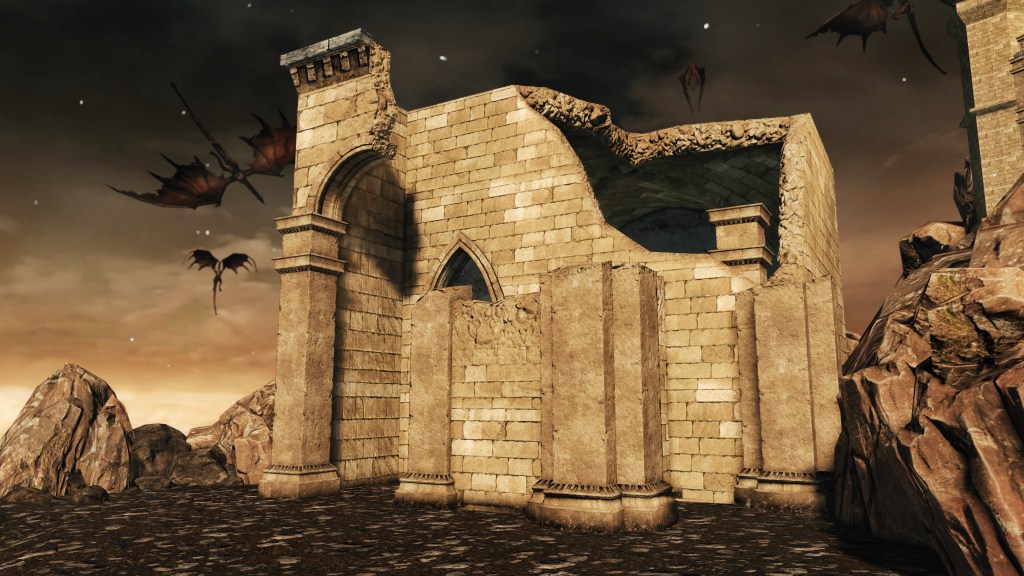
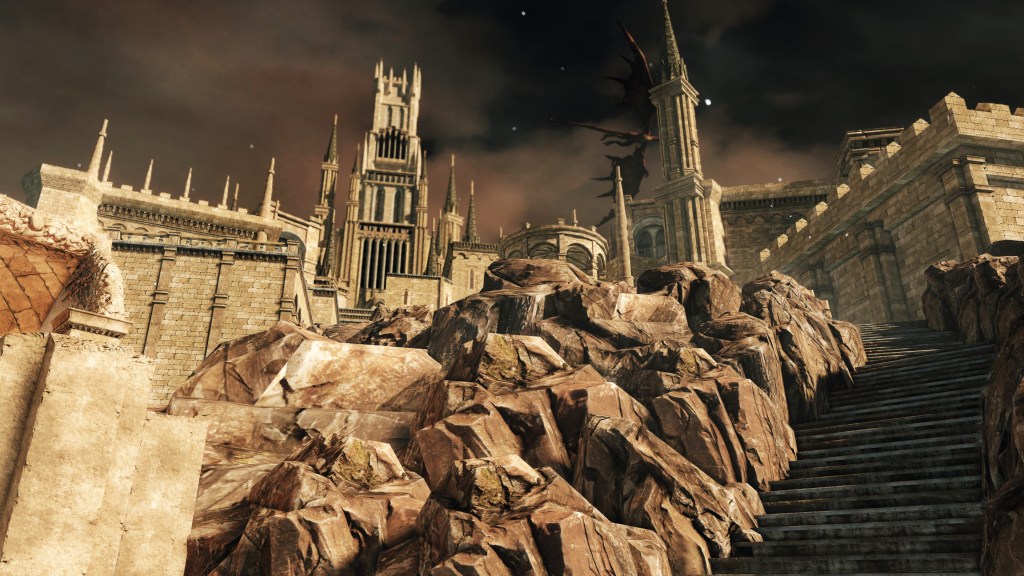
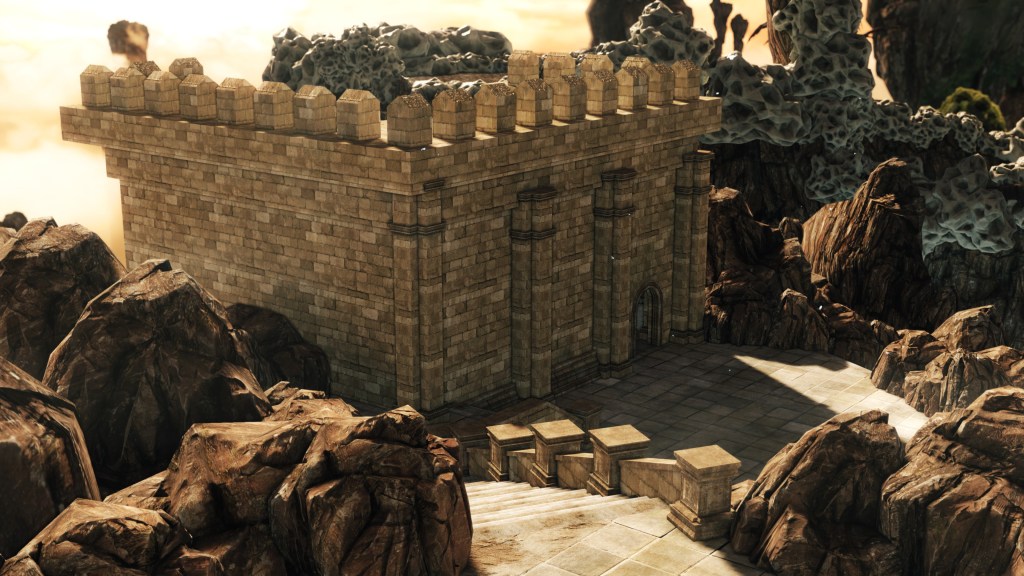
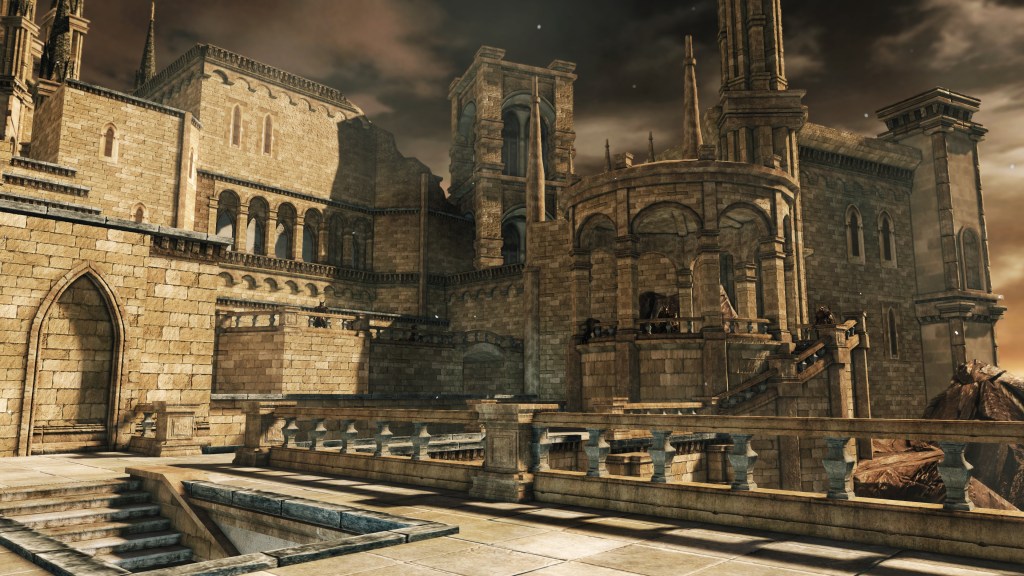
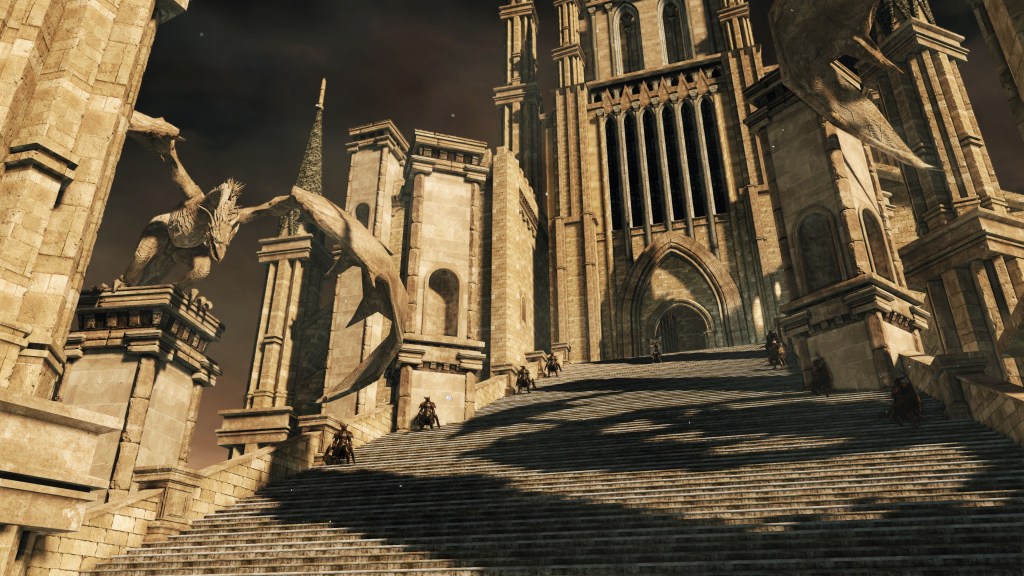
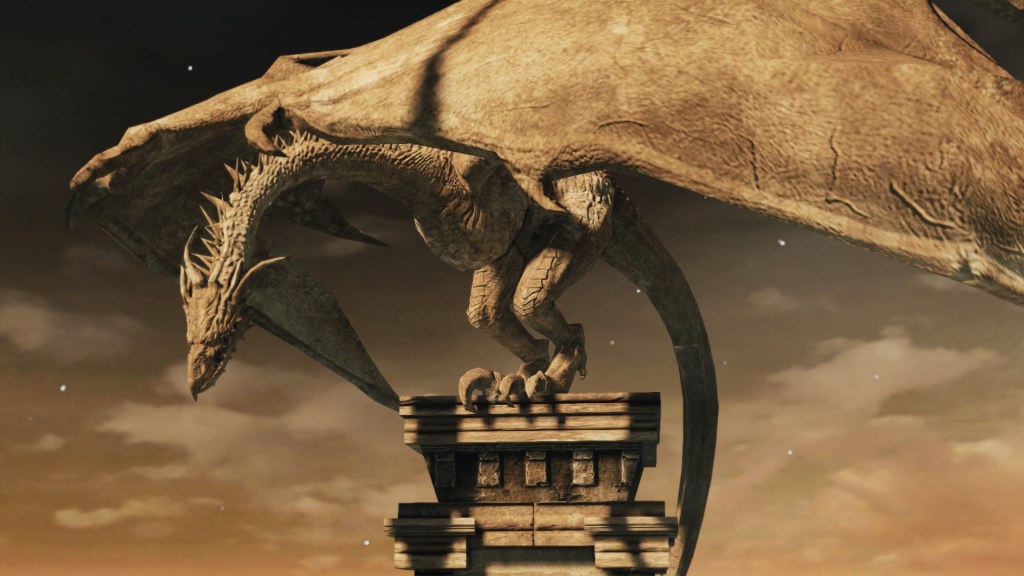
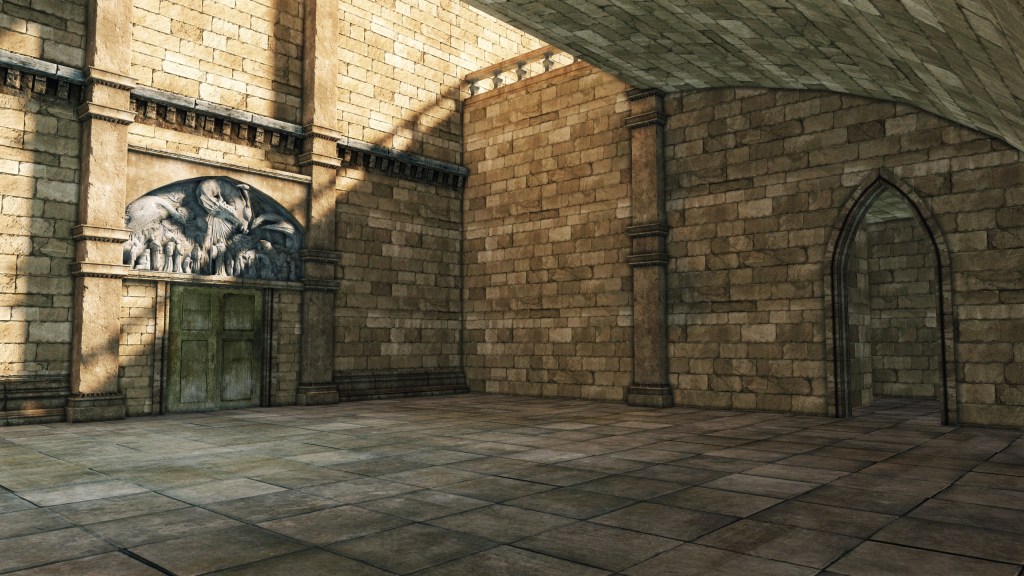
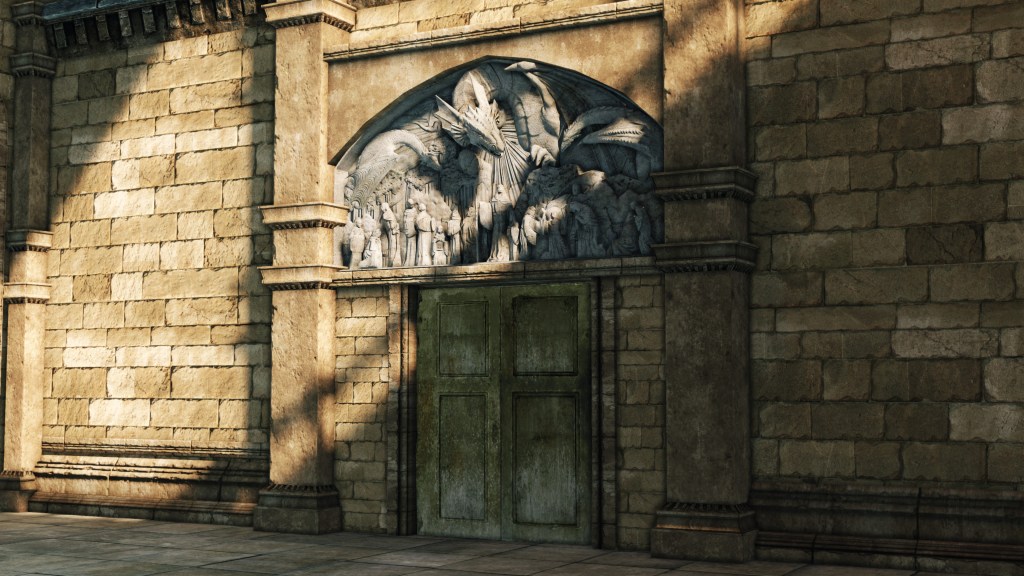
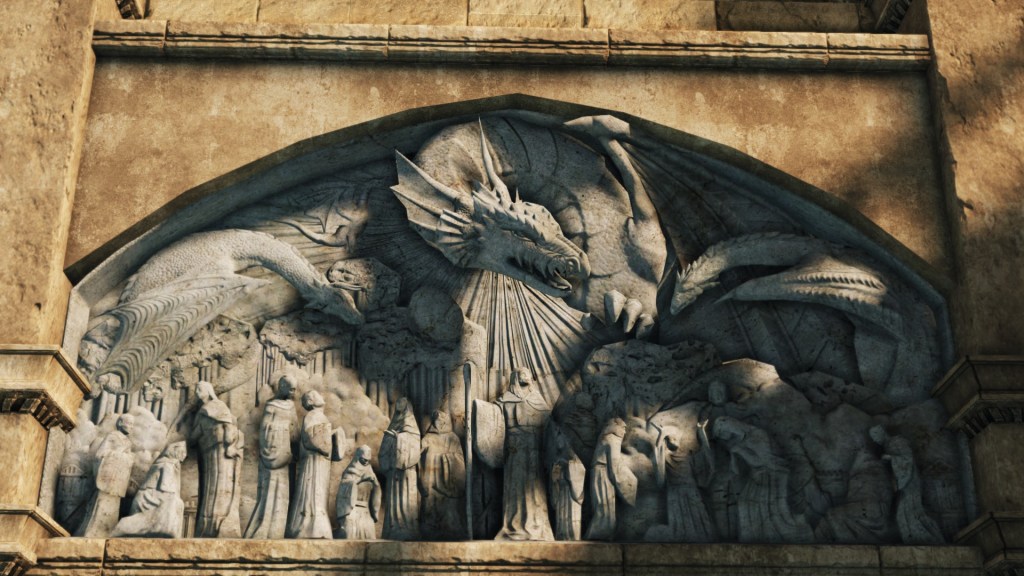
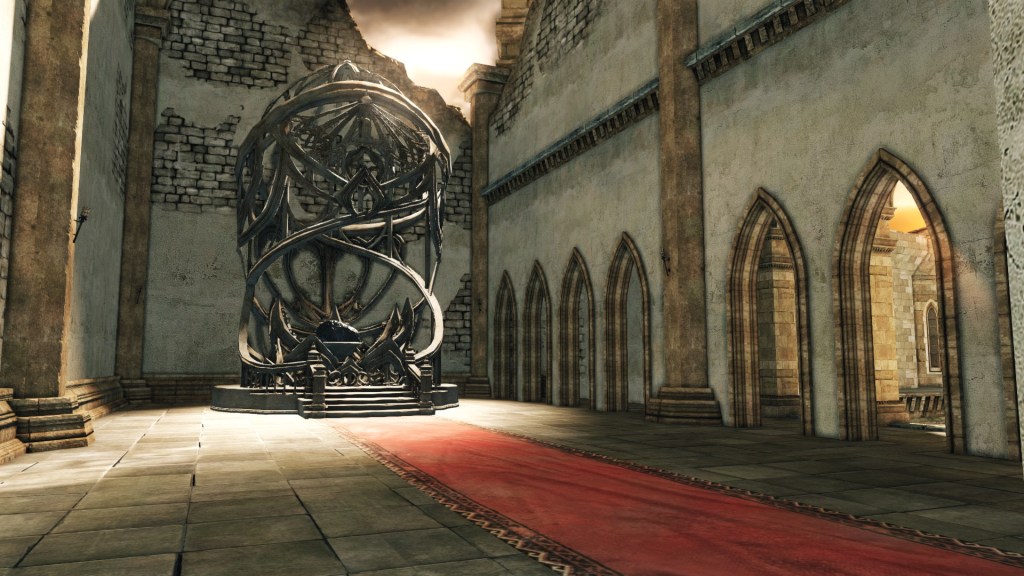
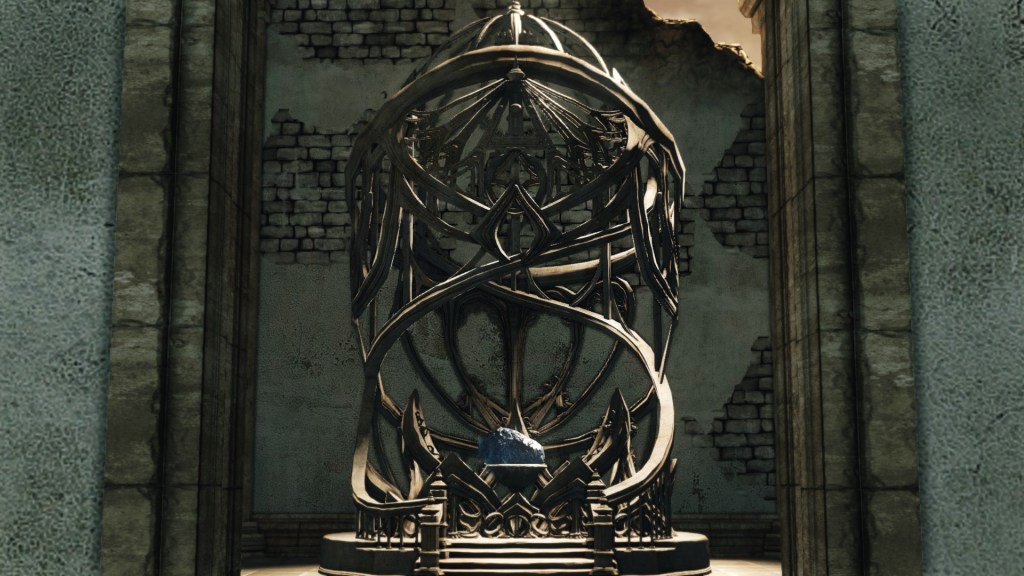
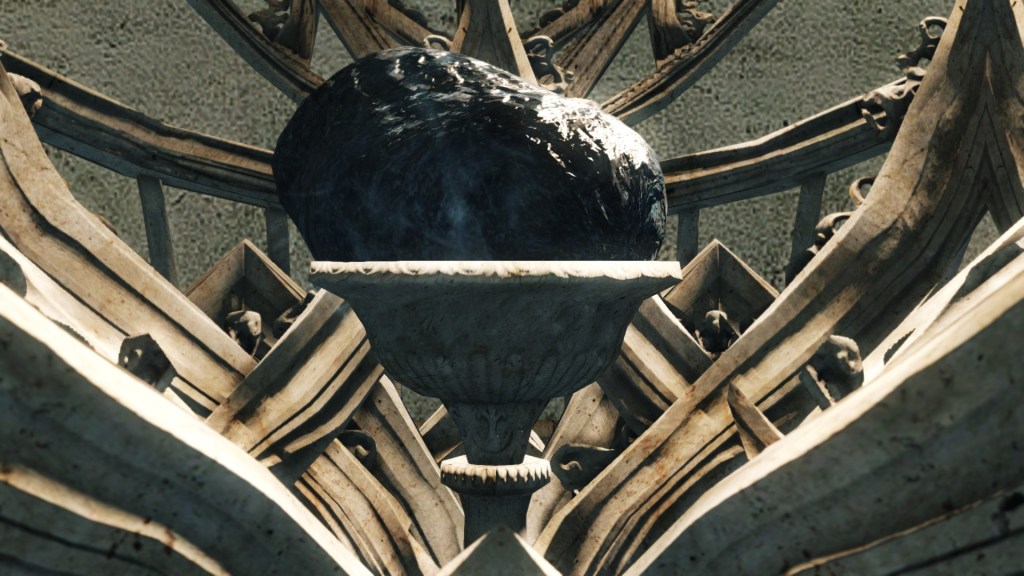
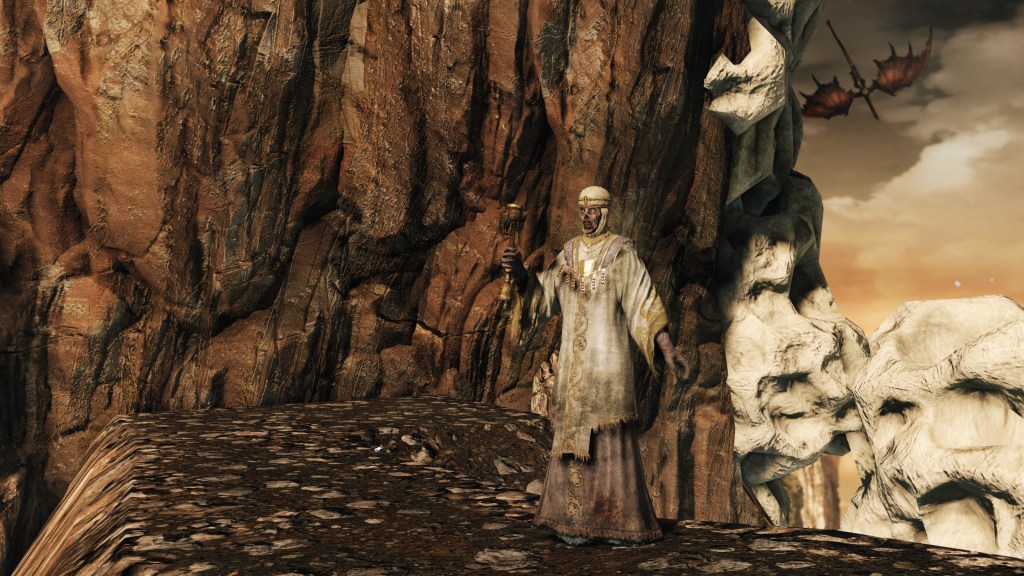
Of course, in mentioning other members of the Dragon Remnants, there is the direct implication that others made use of the egg. That seems to be the purpose behind the Dragon Shrine. That grandiose building was constructed on several particularly large stone spires behind the wyvern nests, Aldia’s everlasting creation left to laze on an open platform at its innermost depths. The stone beast is clearly treated like a god, a Drangleic priestess, a dragon charm, and a Shulvan relief further indicating the Archdrake Sect’s involvement in construction; we do find a dragon charm in the aerie. Through the door beneath the relief, we ascend a spiral staircase to an august chamber. At the end of the red carpet, we find that the egg is itself enshrined in an intricate receptacle. But the “shrine” is more literally a “ritual place”, (祭祀場) both it plus the Dragon Aerie internally dubbed the “Dragon Ceremonial Site”. (龍の祠祭場) This puts the emphasis more on the rites being performed than the things being enshrined, and Aldia’s followers are no stranger to performing magic rituals.
They say there’s a ritual place at the eastern end of this country. Apparently the old story goes it was made for worshiping dragons. I don’t know how I should go there, but it totally smells like there’s something.
What is that? An egg that turned to stone? You say you took it from the ritual place? Amazing….. Um, hand it over to me. I’m super curious about it. I beg you.
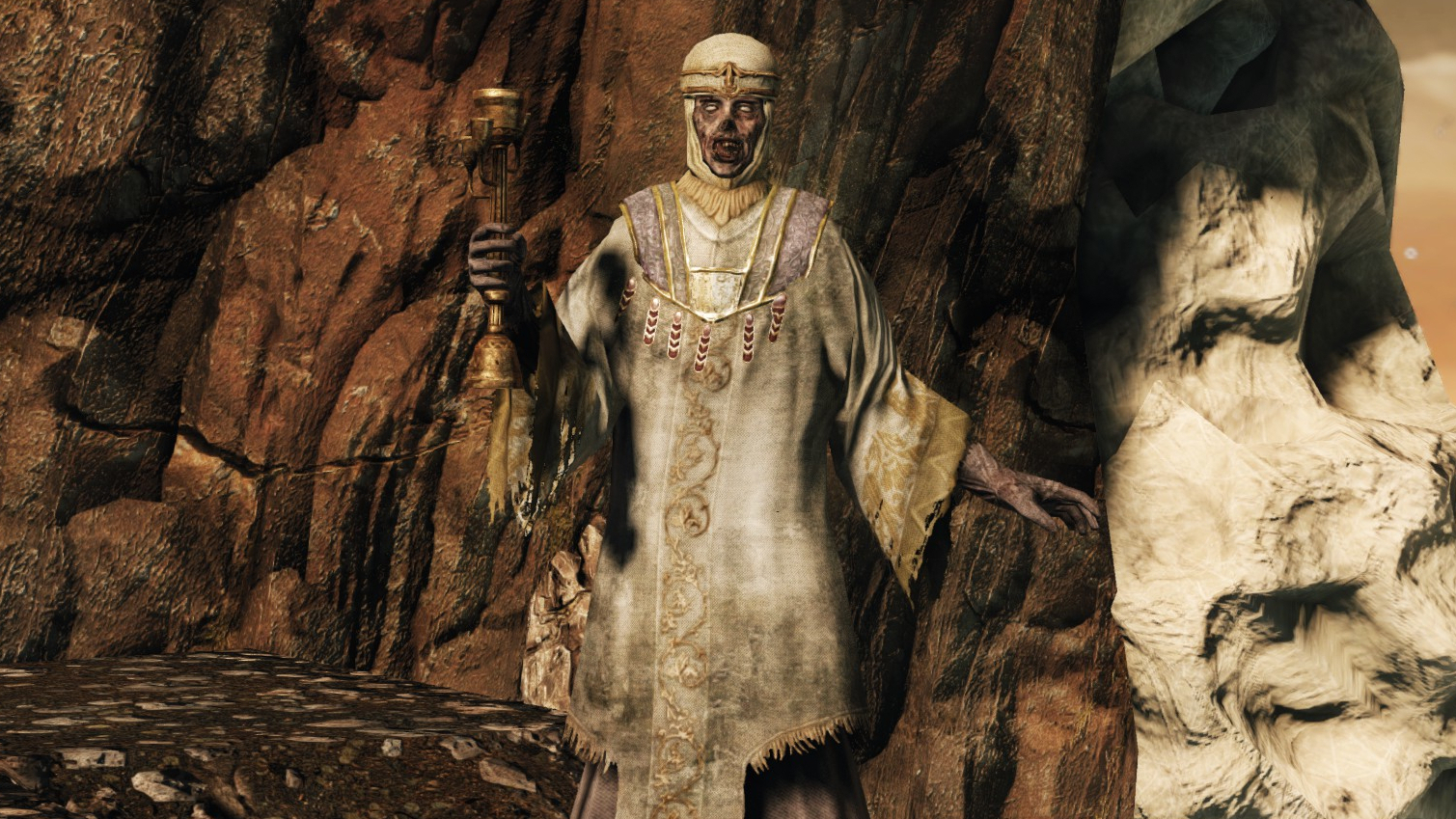
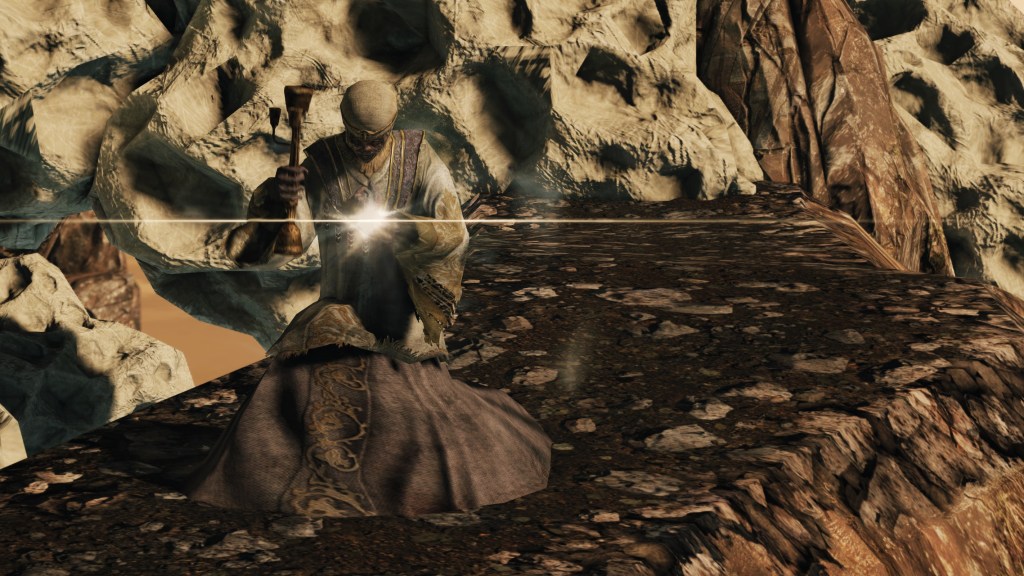
Put simply, the Dragon Shrine seems to be merely an experimental facility dressed in the trappings of a house of worship. The creation of a legitimate archdragon would garner the attention of Drangleic’s religious body, whereas Aldia would want to begin testing human draconification. The one living priestess we encounter after the big fix also possesses the Cleric’s Parma wielded by clerics who have traveled on pilgrimage. Therefore, it seems that the sorcerer welcomed in the clergy to consecrate the building and draw in worshipers, the kinds most likely to consider dragonhood. For their part, the clerics must have felt a wash of relief to be included, spurned as they were by King Vendrick. If they weren’t going to be permitted a presence in the royal castle, then they would build up their own holy center with his brother. And ultimately, they were taken in by Aldia’s plans to make man dragons. The shrine priestess carry silver talismans infused with sorcery, so these men of faith were on board with using the rational arts to imitate something local, namely the Ancient Dragon.
Small shield used in clergymen’s travels on pilgrimage. It is quite weak but it was given a blessing and can deflect spells via a parry.
Still, its physical defense power is low and is closer to a good luck charm than a proper shield.
Small charm sealing mimicry sorcery. Transforms you into something suitable to the location if used.
Thing for deceiving the eyes of invaders from other worlds.
To be fair, their heretical collaboration saw success. Preceding the egg chamber is a chest storing the Third Dragon Ring that bestows a dragon’s vitality, vigor, and fortitude to the wearer. Evidently, there were people hoping to become like dragons and maximize the chances of a successful transformation. In the end, we see the shrine attracting many warriors, one going by the name Dragonfang Villard even invades to protect the egg. As his Japanese name “Weird” (ウィアード) impresses, they are their own strange little cult obsessed with trading their humanity for stone immortality, and have already begun the journey through their secret ceremonies. Based on the dragon scale description, their motivation is also to peek at the “abyss” of knowledge about the universe which Aldia was seeking at the time.
Scale which makes up part of an archdragon’s body. You can approach the eternity of the archdragons by offering it to the dragon.
To touch a part of the archdragons is to also take a peek at the world’s abyss. For this reason, the dragon devotees look to transcend their existence.
Item for playing online. Finds a “Dragon Scale” owner of another world and invades that world to steal the “Dragon Scale”.
For if living is a weakness, then those who seek a form different from life and try to approach the archdragons are researchers of the truth.
In this light, the Ancient Dragon seems to serve more a role model to emulate rather than anything more substantial to the faith. It is the dragon petrified with its egg whom we offer scales to when bolstering our dragon stones’ power, not the boss. The former giant has nothing to do with the covenant dwelling alongside him. Even so, it is still the only living archdragon specimen they have on hand, not to mention the only example of an entity completing a full draconification. This seems to be why the dragon warriors show the creature such deference, quietly standing aside to welcome us as we head to meet it. Based on Shanalotte’s dialogue, the covenantors understand us to be a guest. So, they only attack if we show cowardice, running from any resistance along the path to the Ancient Dragon or their egg or bringing others to help. Otherwise, only one will challenge us at the very end of our path as a clear final test of our worthiness. Instead, it is the drakekeepers who serve as our main opposition.
These “dragon sentries” (竜の番兵) were assigned to protect the shrine, three gatekeeping the path to the Ancient Dragon while a fourth blocks the door to the egg chamber. Their weapons’ descriptions also make a point of their incredibly large frames, casting doubt on them being anything human. Indeed, they aren’t considered Hollow and look like knights, not immortal dragon warriors. This plus their similarity to Old Knights in both size and attack patterns suggests that they are golems fashioned after their Heiden counterparts. This fits with the drakekeepers’ secondary purpose. According to the weapon texts, the sentries exist to judge the worthiness of whoever wishes to meet the Ancient Dragon or egg they protect — in other words, they are a test, just like the Tower of Flame trials. Given their location and ability to hurl sorceries with their weapons, the shrine’s sentries are Aldia-made.
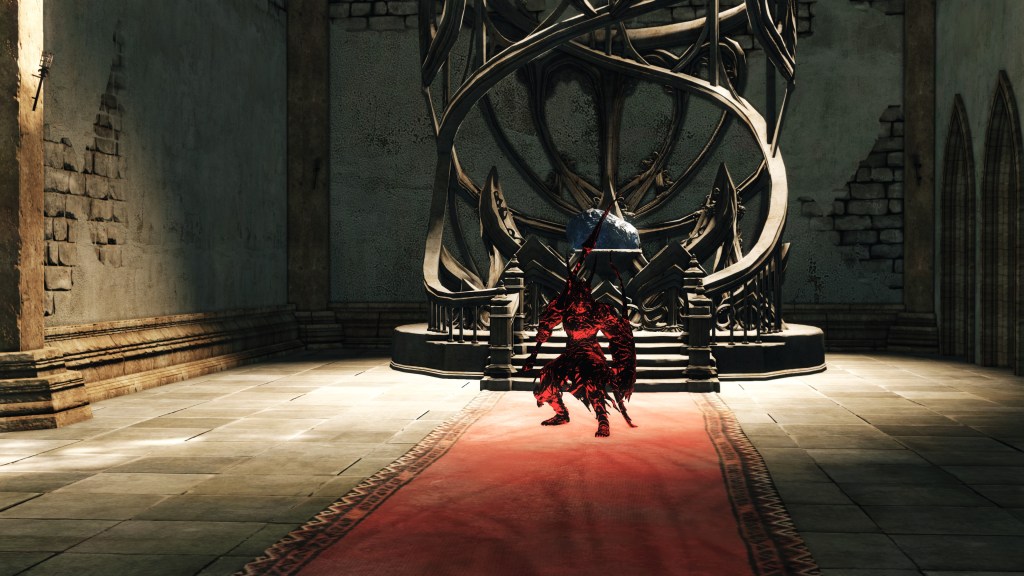
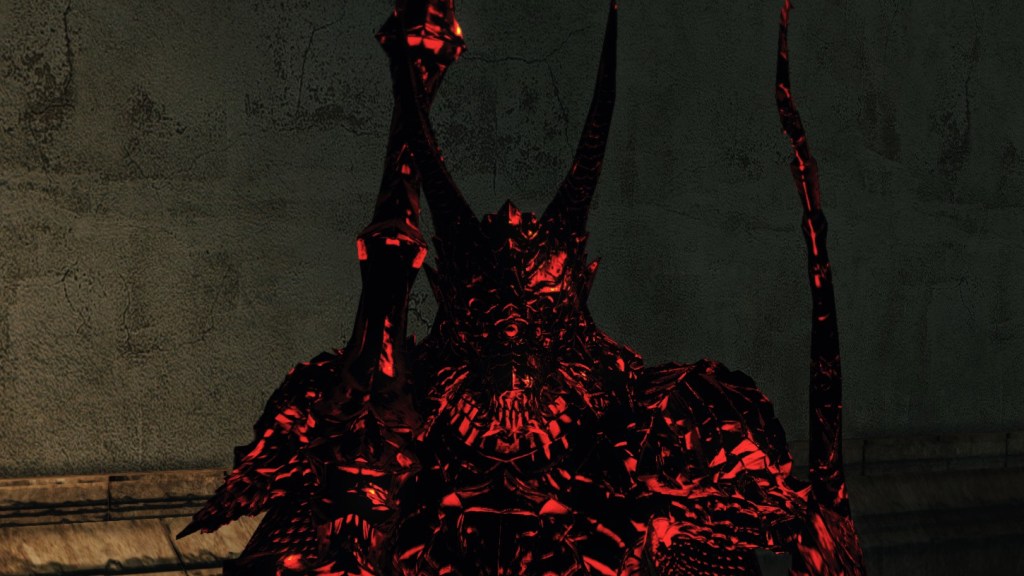

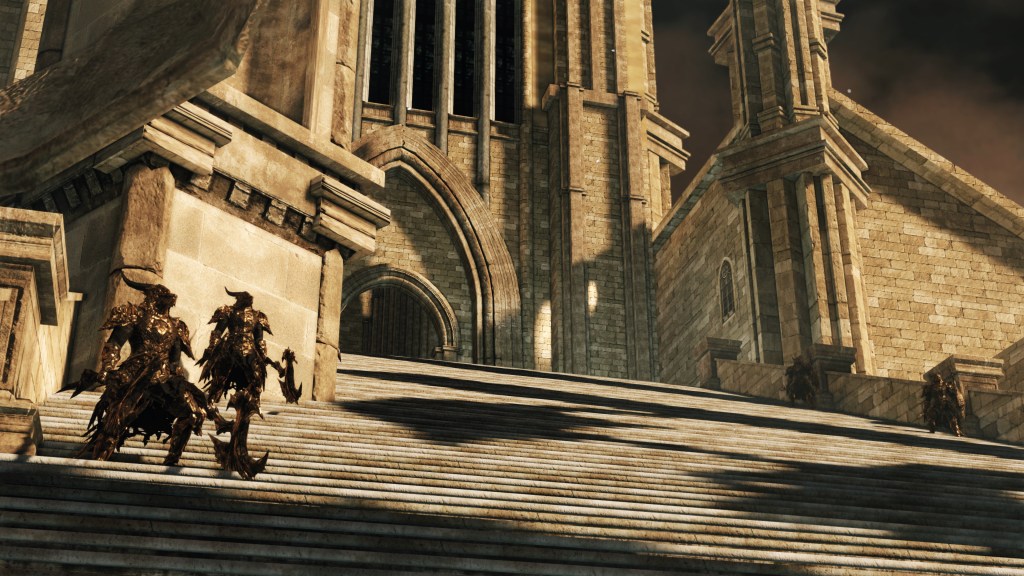
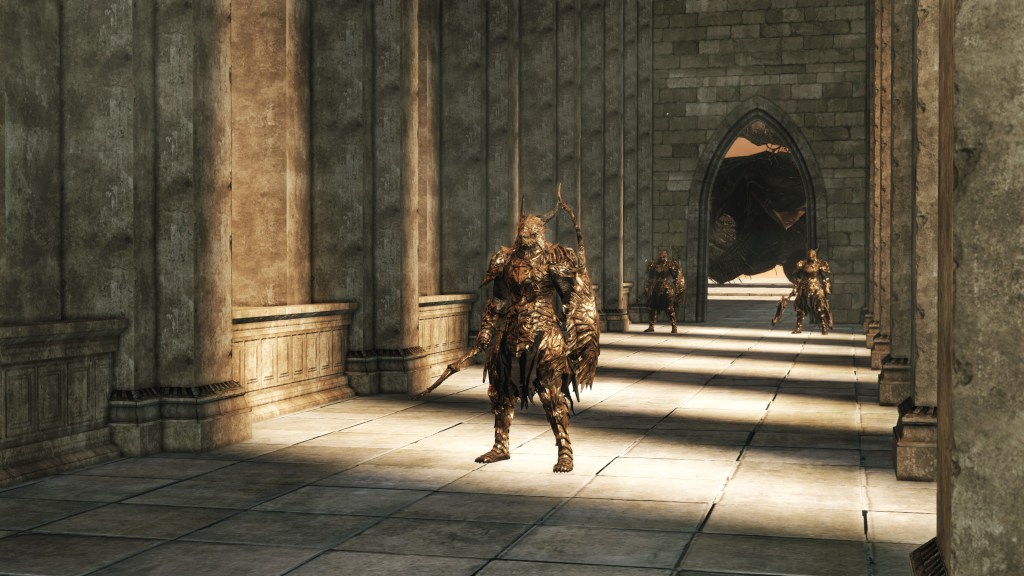

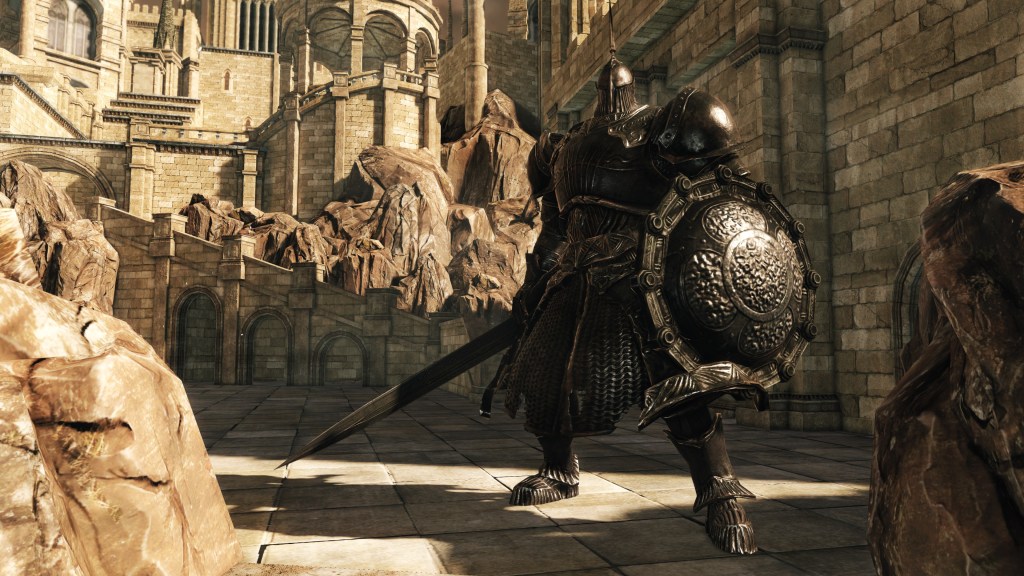
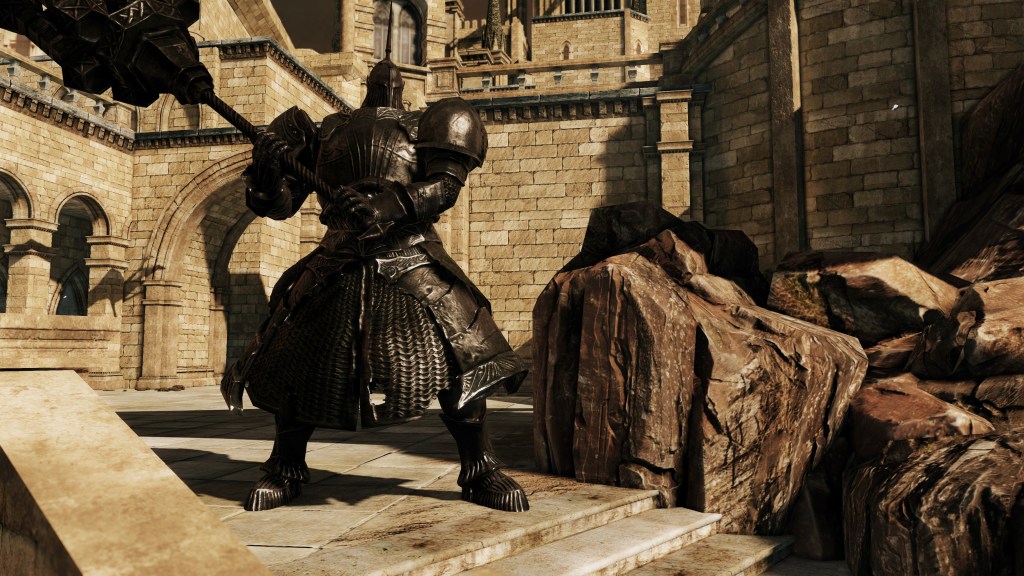
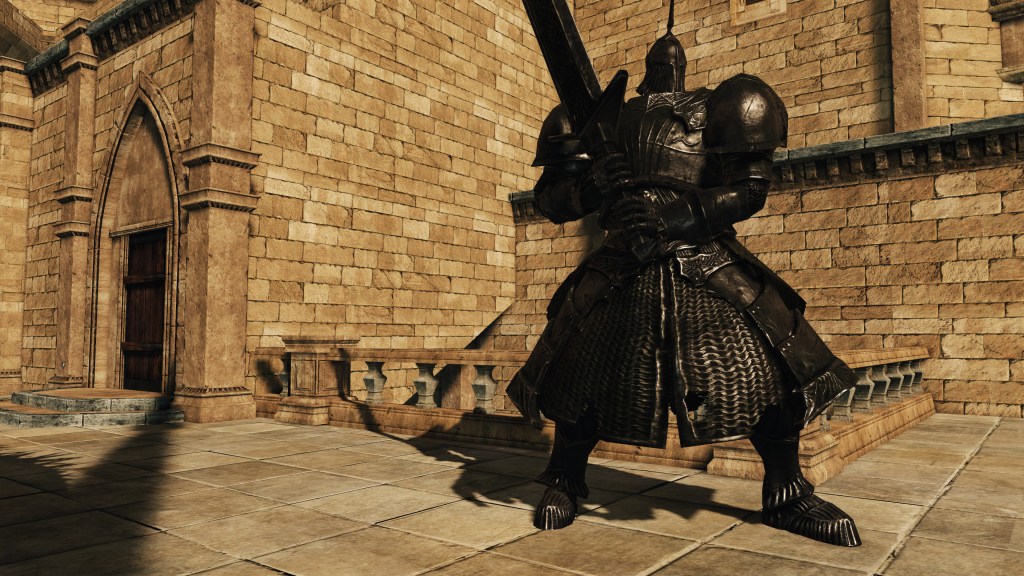
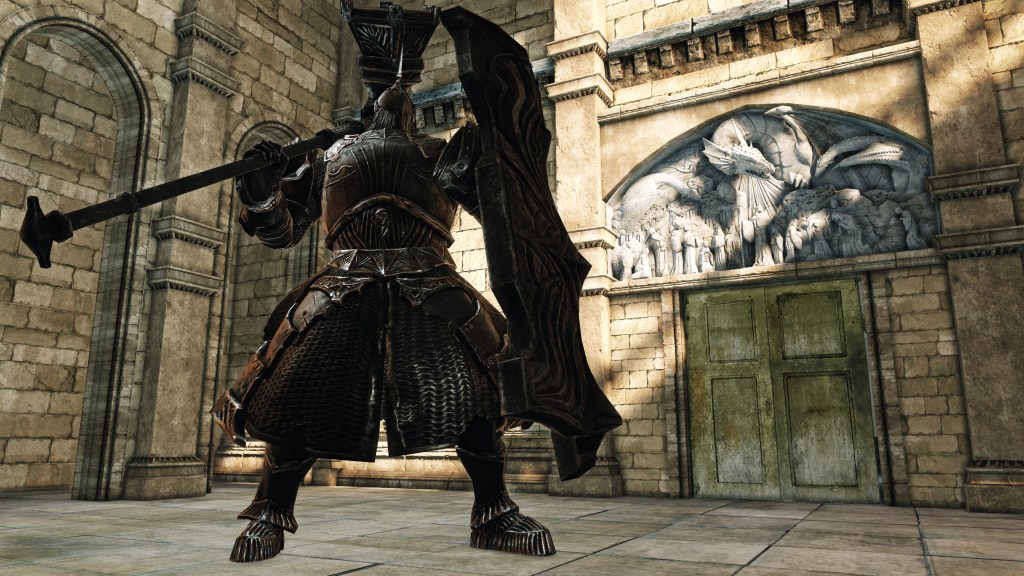
Giant jet black helmet.
Something darker than their outward appearance dwells in the sentries that have a mission to protect the ritual place imposed upon them.
Jet black straight sword endowed with an extremely sturdy making.
The large-build warriors are in the ritual place. They continually protect someone. Or are they testing the qualifications to meet them?
However, the description for the drakekeeper armor notes that something darker than its jet-black metal hides within these golems, and they are most resistant to both generic magic and lightning. Factor in the darknight stone we can loot from the preceding aerie, and the drakekeepers were clearly created using Dark magic. In all likelihood, Aldia has Velka to thank. A chest near the first drakekeeper we encounter contains the robes of the Goddess of Sin’s priests, indicative of both their presence and association with the golems. With how embedded Drangleic’s priesthood is in the shrine, they were the ones most likely bridging the gap between the Aldian sorcerers and Archdrake clerics, helping create Dark golems for Aldia and warming the priestesses to heretical sorceries. They may even be the ones who introduced the sorcerer and his followers to the Dark arts in the first place.
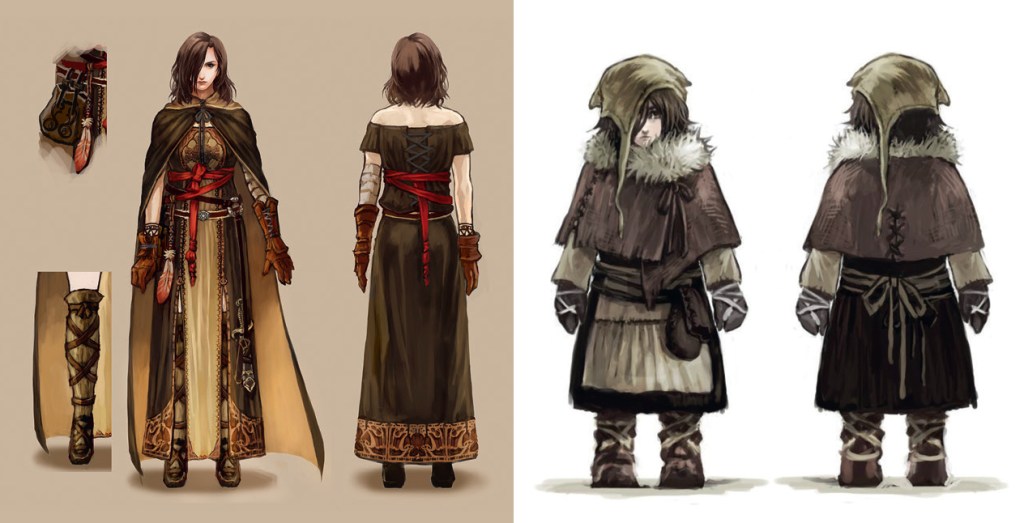
Whatever the case, Aldia was still squarely focused on dragons. Shanalotte claims to be a “dragon child” (竜の子) despite appearing human at a glance. However, the girl’s draping attire admittedly hides much of her body, with bandages enwrapping her exposed left arm and her hair always covering the right side of her face. All of this suggests that she is trying to hide something about her body, and the fact that she only mentions relation to dragons at the end of our journey together reinforces that impression. Therefore, Shanalotte is probably a half-dragon crossbreed like Priscilla, the other half presumably human based on her stature. The apparent lack of symmetry to her traits, as well as more obvious dragon characteristics like horns or a tail, can be blamed on a more artificial origin. The woman says that humans created her as part of overcoming the “karma” of undeath which Aldia is so obsessed about. This makes it safe to assume him and his followers her creators.
I am a dragon child born via man. Those who once tried to surpass the preordained karma… They gave birth to me. However, those expectations reached an impasse. I was a flop. The karma goes around even now, and man continues to be captured.
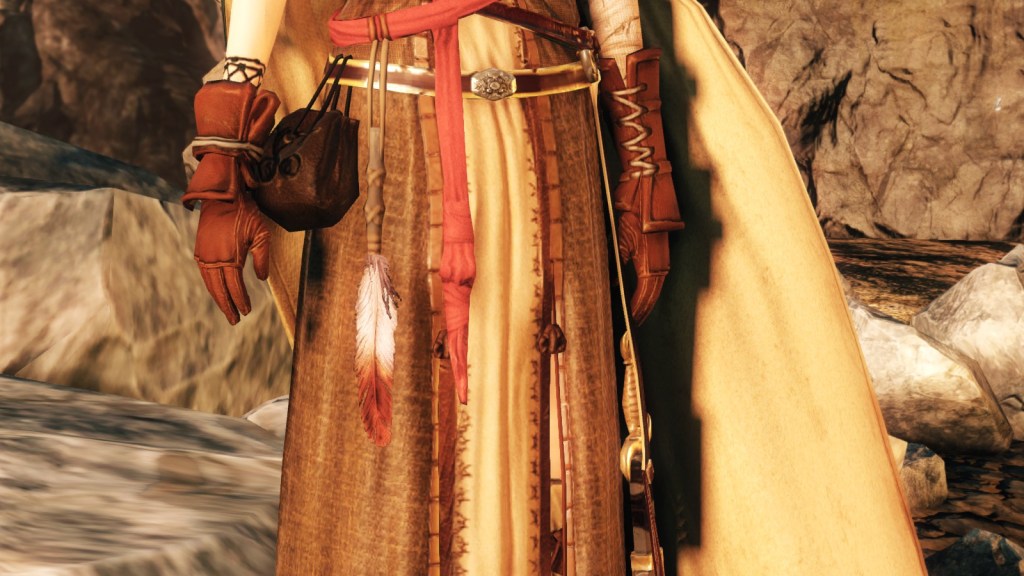
Her life of imprisonment reinforces the implication. At the Dragon Aerie, Shanalotte speaks with a higher pitch, saying that we have been guided there by her “other self”. (分身) She will then gift us the Aged Feather, which details how she has only known life as a prisoner in its description. In short, the maiden’s every other appearance is her real self projecting some sort of clone. She has never left the Aerie her entire life. The shriller voice likewise conveys her youth compared to her doppelganger, though they share the same in-game model — and the genuine article is definitely older than how she appears. This is most likely a compromise by the developers. Cut content reveals plans to encounter Shanalotte as a little girl, with the game crediting a separate voice actress for this portrayal. However, like other FromSoftware titles, the visual of players wantonly killing a child was removed in favor of the current setup. In the end, whatever her physical age, she is still trapped in Aldia’s territory.
An old bird feather. Returns you to the last bonfire rested at.
The dragon child who only knew the shut-away life continued entrusting her longing for freedom to a feather that strayed in from somewhere.
Like the Ancient Dragon, Shanalotte was a specimen to keep for continued observation. However, she also claims to be a flop, pointing to undeath still plaguing humans as proof. The reason why Aldia believed she might have been able to solve the Undead conundrum is apparent. Like those cursed with the Darksign, archdragons are immortal. But unlike the cursed, archdragons don’t hollow; both mind and body are unperishing. The Dragon Remnants proved that humans could gain the qualities of dragons. But Aldia didn’t want to make men dragons, he wanted men to be men — or at least, the form of man which the race had grown so accustomed to during the peak of the Age of Fire. If humans could obtain a dragon’s eternity while retaining their form, then they would acquire the best of both worlds, light and Dark. Undeath would plague man no longer, they would finally be free of the First Sin. And after countless failed attempts, Shanalotte was the culmination of their draconification research, a crossbreed who retained the mind and body of man — mostly.
Shanalotte’s attempt to hide her draconic features says much about her self-perception. The only reason to be so self-conscientious is because she believes that revealing the non-human side of her will put off people. What would give her this indication? First-hand experience. From who? The people who created her, of course, the only humans she would have contact with during her lifetime at the Aerie. They are the ones who would see a girl manifesting scales, slit-pupils, or claws and decry her a monster. Shanalotte would grow up only knowing that her draconic appearance was shameful. What other impression could the small girl have? In fairness, most humans probably would be wary of her more grotesque features, but that probably wasn’t the crux to Aldias concern. He wasn’t satisfied with a crossbreed who appeared “mostly” human. He didn’t want a single reminder that they were altering the human race into something else. Shanalotte failed to meet that standard, and so was deemed a failure, traumatizing their specimen in the process.
Crash Down to Earth
Although this collaboration between church and state were occurring separate from Vendrick, it would be wrong to say that the king was wholly ignorant of events at the aerie. A mimic in Drangleic Castle secures a petrified dragon bone along with the Washing Pole. In a vacuum, the connection isn’t immediately obvious. However, this mimic was originally placed at the Dragon Shrine before the big fix. There, it wouldn’t be surprising if the residents picked up the fossil or weapon from the far East, being the easternmost area we can explore. The developers’ choice to relocate this security chest to the royal castle thus highlights the wyvern nest as another of the areas across Drangleic which Vendrick familiarized himself with. Moreover, the added security betrays the king’s particular value for discoveries made at the aerie. This extended to Aldia’s research at the shrine, NG+ adding the dark spirits of a knight outfitted with a Drakekeeper’s armor and warpick as well as a Syan soldier armed with the Washing Pole to the castle. The king was at the very least vaguely aware of what was transpiring with dragons.
Vendrick’s interest is straightforward. Aldia was promising to provide a new, better option for the futures of his younger brother and all mankind, transcending light and Dark. Hearing even the general concept, the monarch was surely receptive to a third way which didn’t involve him sacrificing himself to a fire or plunging the world into darkness. His pursuit of this path is alluded to in the announcement trailer for the Scholar of the First Sin edition. The trailer begins with Aldia’s narration should we choose to reject the Throne, only it is juxtaposed with Vendrick approaching the archdragon slain by the Lords. Before we entered the picture, Aldia’s third path lay in the stone-scaled dragons of the previous Age, and Vendrick was the would-be king he convinced to embark on this uncharted route. Like everything else involving his elder brother, the Dragon Shrine was probably constructed with the king’s backing, not realizing the full implications of Aldia’s planned experiments. As always, he saw the dragon as the means to victory, his own false idol to prop up.
But it was all for naught. Aldia ultimately lost interest in dragons, turning to alternative solutions for the Undead problem. King Vendrick likewise shut the doors on his brother and his research with it. Whether from brainwashing or willful obedience, the wyverns kept nesting on their towering rock formations, attacking any who attempt to infringe. Trapped there with them, the shrine priestesses died or turned Undead and hollowed while the immortal worshipers continued along the path to dragonhood. The English description to their covenant ring asserts that they duel one another for ownership of scales. However, the Japanese description makes no such claim, and the dragon eye sign doesn’t require covenant membership to summon. The heretical cultists look to have all peacefully coexisted with one another, what scales they did own already used. The dueling aspect to the covenant thus seems limited to us for the purposes of online play.
Ring of covenantors of Glimpse of the Archdragons. Slightly increases recovery effect of Est Flask.
Dragon scales are proof of their holder’s power. Power is something constantly flourished boldly.
Those who have confirmed the covenant can conduct duels with those who likewise possess dragon scales. The one left standing acquires the dragon scale possessed by the opponent.
The only exception looks to be Transcendent Edde. As the name “transcendent one Edila”. (超越者エディラ) alludes, he has achieved partial draconification like the other Dragon Remnants and even wields the same Black Dragon Greatsword and Shield as Villard. All of this would imply that he originates from the Dragon Shrine, yet we find him with a summon sign just before Sinh in Shulva. More than likely, Edde wants to test his mettle against another archdragon, thereby getting a sense of how far he has come and still needs to go. Considering that the worshipers don’t seem to care if their god is killed or their egg is stolen so long as the person proved their worth in the trials, he must legitimately revere and respect the Ancient Dragon — or at least not want to be deemed a coward for making use of summoning for aid. So, where is a transcendent former man to find another stone immortal? In Shulva, where the tales of the Archdrake Sect taught at the shrine can ultimately be traced back to.
While its worshipers have done as they pleased, the Ancient Dragon has remained where it is along with Shanalotte, who was still unnamed before the stone beast allegedly gave her one. The reason she announces this along with her heritage is obvious. “Shana” derives from Hebrew to mean “beautiful”, while lotte is a French suffix for “petite”, meaning that the dragon essentially called her a “little beauty”. Wherever a giant learned such knowledge of human tongue, it nonetheless accepted Shanalotte’s “shameful” form and recognized her as something more than a botched experiment. She certainly appreciates it, and their bond in captivity might very well have helped lay the groundwork to our journey.
My journey has already ended. My name is Shanalotte. It is the name that dragon gave to me, born without a name.
Path to Freedom
The most bizarre aspect to the Dragon Shrine’s isolation is its flimsiness. The physical barrier of the King’s Gate and Aldia’s Keep doesn’t stop other characters from finding their way in and out, without the help of the King’s Ring we use. It should matter even less to creatures which can fly, especially from so high up on rock formations. And yet, Shanalotte still feels the need to be “released” from her place up there when we meet her real body at the aerie. It is possible that the wyverns’ programming prevents anyone from leaving as much as entering. Even so, one might think that the o-so-powerful Ancient Dragon would still be capable of whisking away a friend craving freedom. But whether because the fake archdragon had no interest to leave or Shanalotte had no nerve to ask, nothing more has come of their relationship. Instead, the crossbreed shared her longing for freedom to bird feathers that occasionally drifted in along the wind.

The half-dragon seems to be a collector given that we can spy her holding one feather while another hangs chained to her waist, even after gifting us yet another. Unlike cut content, where we hunt for the “estintia feathers” (エスティンティアの羽) the kid Shanalotte wanted as part of her ill-begotten plan to boost her popularity, the final game’s version has nabbed them to pass the time. The girl has simply loitered around in captivity, making her collection symbols for her desire for freedom. That longing becomes infused into them not unlike the principles behind Homeward Bone — we even use the Aged Feather’s magic to fulfill the bones’ same function. For someone who isn’t an Undead emotionally invested in the bonfire, however, the magic is used more creatively to project clones, whom we encounter pretty much anywhere the crossbreed wants to cross paths with us regardless of distance or barrier.
Oh… It’s called an Estintia feather. Happy times swoop down on people that’ve picked it up…
How the clones function is similar to the “other selves” conjured by Pinwheel in DS1. While the projection can be tailored to the caster’s preferences, they can still interact with the world like the real thing. But unlike Pinwheel’s clones, Shanalotte’s clones seem to retain some physical presence even in death; we can loot the Aged Feather from the “corpse” without noticing any obvious oddities — at least none worth relating to Navlaan. Even if the body itself is magic, the clone undeniably possesses an actual feather to leave behind. In fact, it is likely key to its manifestation. If we can use the feather to transport ourselves to a specific location from anywhere, then the reverse should also be true. In that case, Shanalotte may send out individual feathers the way they came in, on the wind, to manifest a clone wherever she so chooses. This would explain why she waves the feather like a wand when using her magical abilities — it is the medium for the real body with the actual powers. And whether or not they have the same autonomy as Pinwheel’s other selves, the original does share all their information.
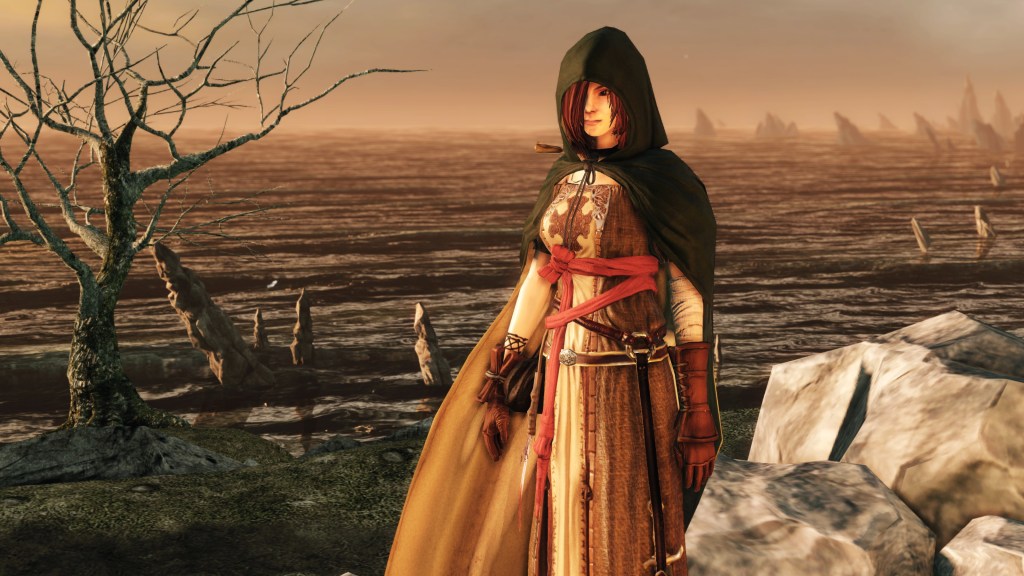
All of this sets the stage for Shanalotte to meet with people in the outside world, such as the Fire Keeper sisters. The woman serves as a Fire Keeper herself, acting as the intermediary who takes our dispossessed souls and incorporates them into our being, improving physical and mental traits of our choosing. This plus the inability to level up at bonfires affirms previous implications about the Fire Keeper’s role in this process, but it requires someone teach Shanalotte how to gain and then control this power. And with the role not adding anything to Aldia’s plans for the girl, it is more likely to be knowledge the ostensibly “last” Fire Keeper acquired later on from her still-extant predecessors. More specifically, she was probably under the tutelage of the one sister now operating outside Drangleic, reason being that her actions throughout the game only serve to help the old Keeper’s plan.
After the crone helps us along to the Things Betwixt, we exit into Majula where Shanalotte is waiting. From her dialogue, she has been providing her services to countless Undead like us, at least until they lose heart on their journey. Said journey, of course, is laid out by her. She is the one providing every direction to meet King Vendrick and take the Throne for ourselves. And while her dialogue of Kings and inheritance might be misleading to the characters, the references to firelinking and the Lord of Cinder are obvious to fans of DS1. She is, as Navlaan calls her in Japanese dialogue, the “guiding hand” (導き手) behind our journey to Kingship, much like Frampt in the previous game. This is why official materials refer to her as the Emerald Herald, more accurately the “pilgrim in green”. (緑衣の巡礼) Pilgrims travel seeking a holy place, and every new appearance Shanalotte makes along our journey brings her closer to the Throne of Want, where she finally says that her journeying is at an end. It is all to bring us closer to firelinking as the forces who brought us to Drangleic intended.
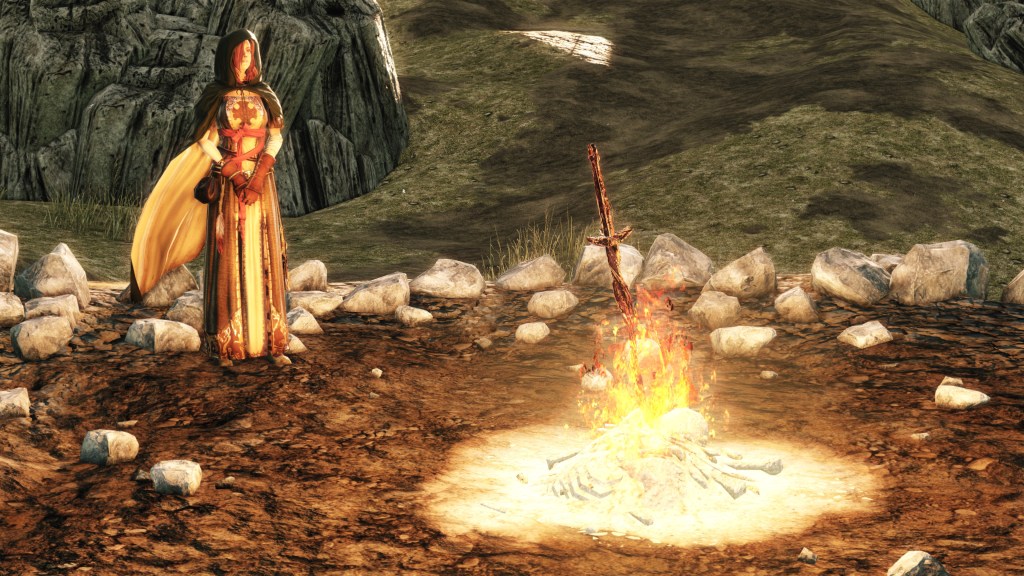
Are you… the one to link it? Or… merely one washed away by fate…? One clad in the curse, I shall always be close by. Until that small hope of yours breaks…
The curse is one with life. There is no one who can extinguish it. The one who takes on it all, the one called King, appearing… That is the sole path. Otherwise, this land will swallow you. Without a shred of mercy.
Onward, one clad in the curse. For there is no other path.
This castle is already a place shut away. However, the way you should proceed is beyond here, without a doubt. And then, an end to your journey… and mine.
For her part, Shanalotte doesn’t actually seem to be invested in the outcome, assuming that her narration at the end is to be believed. Whether we choose Cinder or Dark, she still did her job to make us a Lord, so the fact that perpetuating the Age of Fire will cause this situation to repeat makes no difference to her. Even before then, she readily acknowledges the possibility that we might Hollow and end our journey prematurely. She gifts us an Estus Flask and offers to incorporate any Estus-soaked bottle shards we find into it, but she is hardly a cheerleader. Perhaps the Fire Keeper is simply weary from all the people she has aided only to one day never return. But even as we use her services to strengthen our soul, she questions the wisdom given its joint benefit for our curse. That isn’t the commentary of someone fervently focused on us becoming fuel for the First Flame.
Those who seek hope and visit this land eventually lose that hope and become Hollows. Sooner or later… they all become such. That Knight of Blue at the base of the tower is already heartbroken. His stories will be useful to you. Because he may be a projection of your future…
The sign engraved in you will eventually completely absorb your soul… A human who has lost their soul becomes a Hollow. Take care you never lose heart or hope, even if you have little time remaining…
The soul and the curse are the same thing. Your soul has again grown stronger. Is that really what you want…?
At the same time, Shanalotte demands we suffer through hardship to collect souls from the four Old Ones. This is because our only way to enter Drangleic Castle and meet Vendrick is through the Shrine of Winter; the normal road through the Shaded Woods is blocked by rubble. Although the idea that we cannot climb up and around this obstacle is patently ridiculous, the actual requirement to open the intended “workaround” is feasible. The king was trying to prevent others weaker than himself from accessing the warp points to these forbidden lands, and the Shrine of Winter is the easiest to do so. In that case, it makes sense to add a magic lock removed upon detecting exceptionally strong souls nearby. This is why the shrine alternatively opens from obtaining an absurd amount of souls during our journey, whether incorporated into our soul or lost to our Darksign. The latter is why our Fire Keeper is so skeptical that ours has the strength to survive the castle and beyond. But even then, she doesn’t try to stop us.
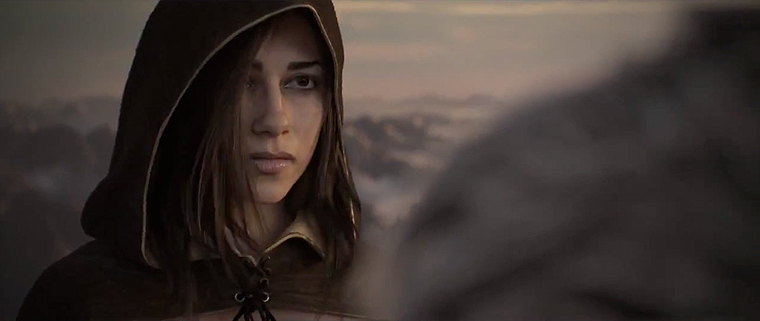
One clad in the curse, seek hardship. Great power… That is the result of hardship. Meeting the king shall not come true as a soul going-out.
Your soul is still weak and feeble… But if you proceed beyond here nevertheless, a path more rugged than either life or death will await you. I won’t stop you. If that is your want.
On the whole, the crossbreed acts more like a spectator, going through the motions to help but largely just observing from the sidelines. No heart, no expectations; simply fulfilling her obligations. Indeed, if her dialogue is to be believed, then she has already received what she wanted the moment we step into the Dragon Aerie. We have cleared the way for her escape. Her only reason to keep the clone at Majula is to fulfill her duty to the old Fire Keeper as a sign of gratitude. Likewise, she only seems to manifest another at the Throne of Want just when we are about to take it because of Nashandra. Shanalotte never once directs us to meet the Queen, despite her too advising us on how to progress our journey. That only happens as a byproduct of us searching for King Vendrick and the Throne at the castle. It is only at the end when Nashandra is sure to become a threat that the Fire Keeper warns us, having somehow learned her true intentions — perhaps from Aldia’s research. If not for her implicit fear of the world’s fate should Nashandra succeed, she would just be along for the ride.
Some have posited the possibility that Shanalotte wants to give back to the Ancient Dragon for showing her kindness. While the dragon seems perfectly content with spending eternity on that platform, its soul is still that of a giant — a soul whose grudge towards Vendrick we can use to deadly effect in the king’s boss battle. In that case, why couldn’t she be working to thwart Drangleic’s king and queen as revenge on the dragon’s behalf? The problem is that the beast itself doesn’t seem to be directing her actions. Shanalotte lies about it being older than antiquity for likely the sake of simplicity, but the creature behaves legitimately disinterested in our mission. It gives us what we want, then returns to lazing around like a rock. If its hatred for Vendrick was truly so great, surely it would move the stone beast to fly over and burn Drangleic Castle to the ground. Instead, Shanalotte is left to fulfill this secret revenge plan all on her own, when her help in our mission isn’t even contingent on the dragon’s survival. No, her old savior isn’t a motivating factor.
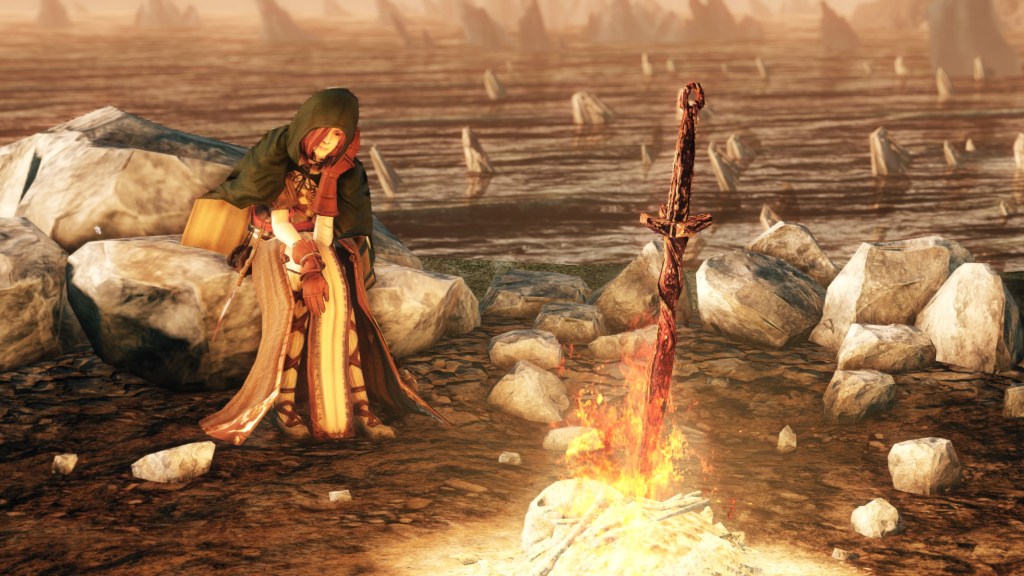
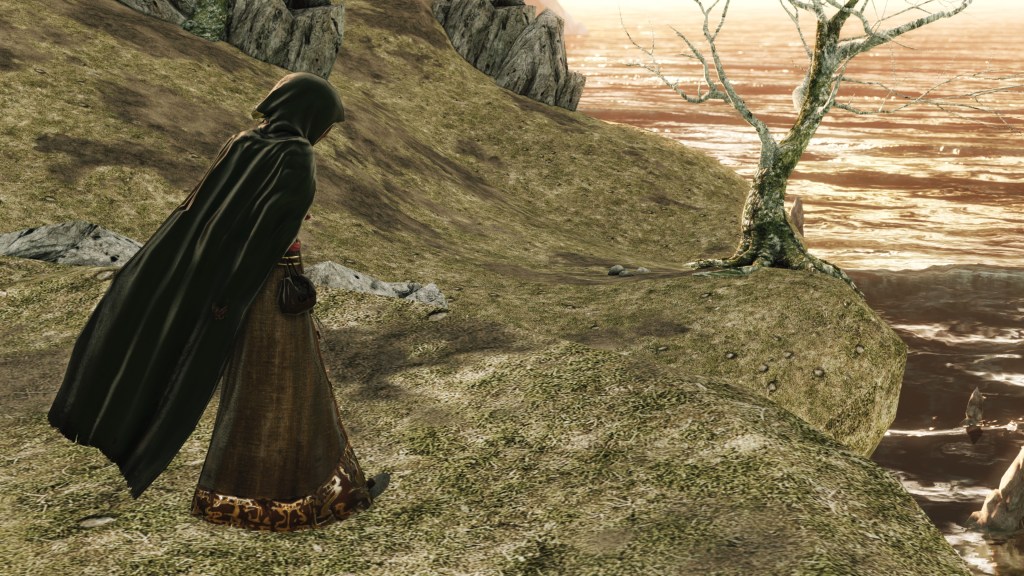

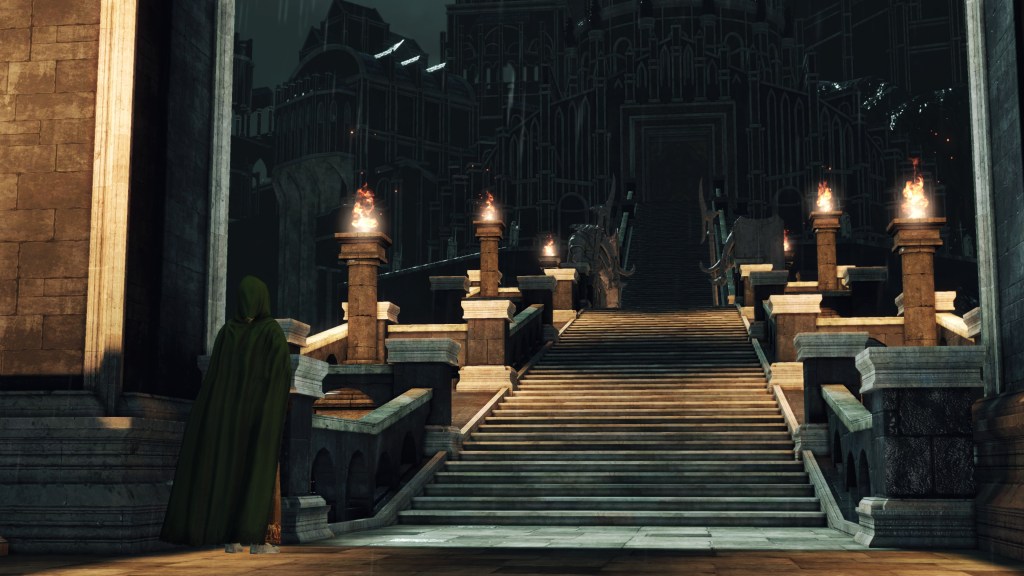
One clad in the curse, I have continued to wait for the Undead who possessed the power to surmount the karma from here. For the person who will release me. One clad in the curse, person who was led to this land by my other self. The dragon older than antiquity continues to spectate the world. Do not resist. The dragon will receive you.
The dragon should address you who is approaching the Throne, without a doubt. Listen to the dragon’s words.
In the end, whatever gratitude Shanalotte has for the Ancient Dragon, it is the Fire Keeper in a random forest hut in the outside world whom she seems to most appreciate. And that is because her desire to escape captivity is, ultimately, driven by loneliness. In the original draft for the plot, we would have encountered Shanalotte at Majula because she was waiting for someone. Continued conversation would make her realize that we are that someone, performing a bizarre ritual to then try and get us to remember her. After we later travel to the past and free her child self from a cruel slaver, we develop a bond through the estintia feathers we gift, which the little girl insists will make her popular despite no one in the — likely already ruined — village showing up. Eventually, the child would promise to remember us forever and perform a secret good luck charm — the very same ritual from before. And finally, we would leave her to wait in that town until our earlier reunion, completing the time loop. At the core, this character hungers for companionship, which carried over to the final game.
I’ve got lots of pretty things! But, I just couldn’t find these feathers at all. So finally finding one makes me suuuper happy! Cuz I’ve got something valuable forever. If I go to town, people’ll gather ’round to the max right away. So I’ll be popular wherever I go! (giggles) But, nobody in this village ever comes… I will become popular here, won’t I??
Who at the Dragon Shrine does Shanalotte have to assuage her loneliness? Not the wyverns who care only to breed and keep her trapped there. Not the priestesses who all died or turned Hollow. Not the Dragon Remnants who want to relinquish every last shred of their humanity. Not the Ancient Dragon whom all the others put on a pedestal. There is no one, not one person who this pretty little half-dragon can relate to. Even with a taste for freedom through her clones, she only meets Undead whose bodies will be consumed by fire or their minds by Dark. So, when an old woman offers her a chance at freedom, she takes it. The Ancient Dragon gave her the confidence in herself. Maybe she will find her someone out there in the wide, wide world, someone who will accept all of her and be accepted in turn? She won’t know until she tries, and we won’t ever get the chance to find out.
 Lokey Lore