
Preface
I do not hide my personal antipathy for Dark Souls II, but that can be faulted primarily on the gameplay side of things. Unfortunately, that doesn’t mean that the story side of things are much better. Unlike the original Dark Souls, (DS1) “dense” doesn’t describe its sequel, with FromSoftware‘s smattering of ideas building an incredibly vacuous world. For all its inane or repetitive details, Drangleic simply isn’t that well-fleshed-out of a place, serving basically as just an extension of Vendrick’s story. And with the constant repetition in the text, Vendrick’s own tale doesn’t have much to say, certainly nothing as deep or coherent as the writing tries to portray it to be. Even after getting a second shot at making this mess into a cohesive whole, the developers still left a terribly uninspiring main plot full of holes. All of this is to say that this was incredibly difficult topic to cover, for the tedium if nothing else.
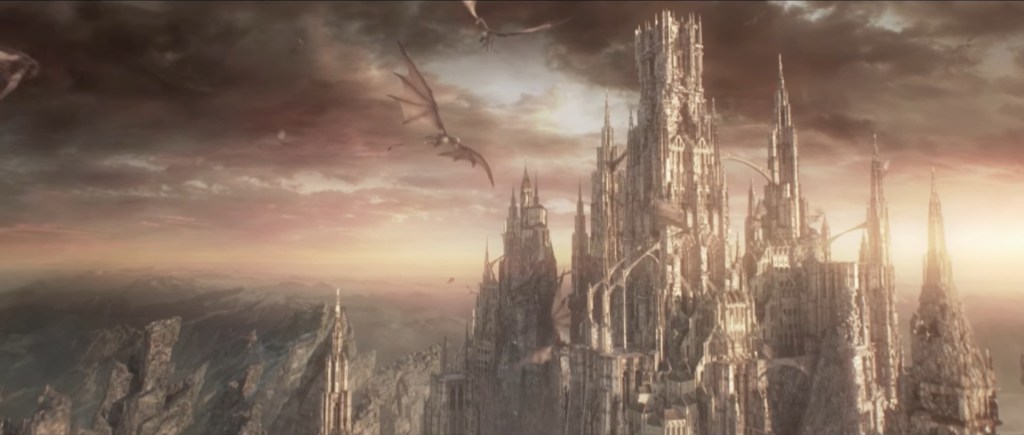
On Dragonback
What is most striking about the foundation of Drangleic is its spontaneity. Vendrick suddenly appears out of seemingly nowhere with an entire army, ready to sweep over the continent. Was the swordsman some disaffected noble? Mercenary leader? It is true that the man speaks with archaic language unlike any of his contemporaries, showing an attempt to project preeminence much like Gwyndolin did in DS1. This makes it possible that Vendrick wanted to convey kingship despite less than kingly origins. But even if this speech pattern is simply a creative liberty taken by the developers, there is no denying that someone who is already king wouldn’t establish an entire new nation somewhere else to become king to. There is also no indication of family besides Aldia, so the two brothers’ actions were entirely independent. Considering the impressive size of Vendrick’s soul, the man had plenty of battlefield experience, his life of war eventually giving him charge of his own troops.
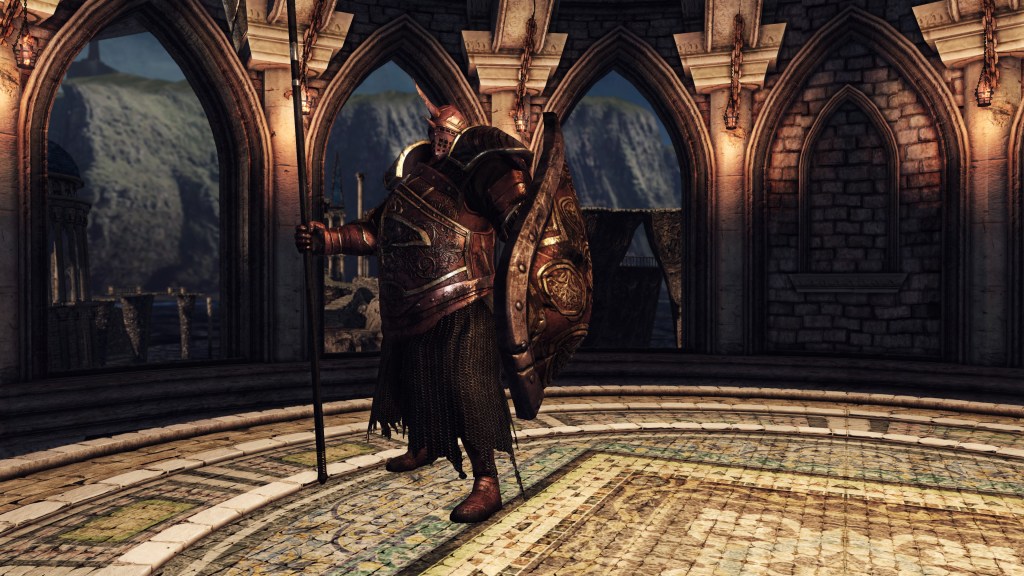
The Dragonriders, more accurately “dragoons” or “dragon cavalry”, (竜騎兵) are exactly what you expect: cavalrymen riding dragons instead of horses. To be specific, they originally mounted wyrms or “land dragons”. (地竜) Much like how wyverns lose their front limbs to become “flying dragons”, concept art reveals these wyrms to have lost their wings to become purely terrestrial. However Drangleic’s founders came about this otherwise unseen species of dragon, they ultimately managed to tame the beasts, which wasn’t easy. According to their armor’s description, the steeds often ate prospective riders if they weren’t careful during training, though the end result was a peerless army boasting strength beyond ordinary men. Only the most dedicated would take such risk to begin with, and only for a man or cause they truly believed in. That is to say, Vendrick already had their loyalty, and he didn’t waste it, swiftly overtaking the land they would ultimately call Drangleic.
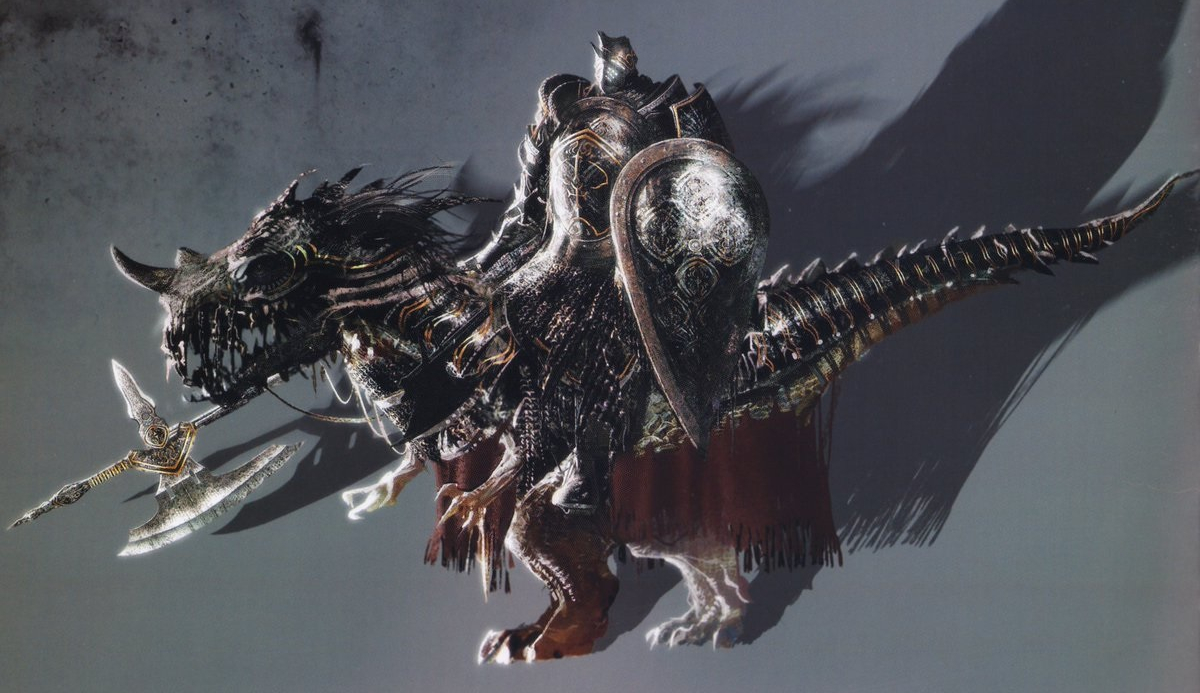
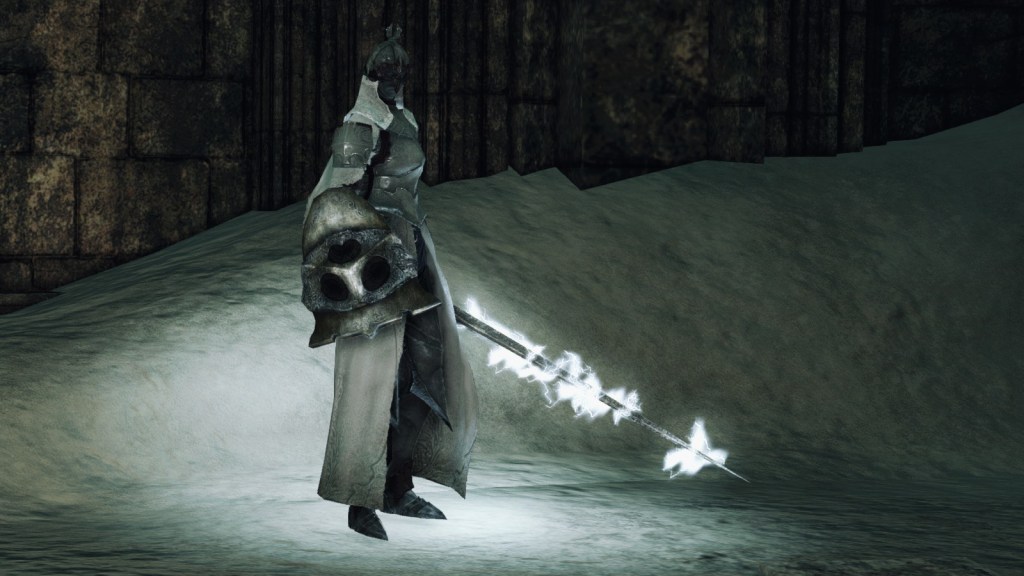
Helmet of a dragoon, who is King Vanclad’s warrior entourage.
It is imparted that the king’s cavalry, as their name implies, once rode wyrms, not horses.
A dragoon boasts strength like a demonic god, and it is said that those who didn’t have their groundings were devoured by the wyrms in the process of training.
Greatshield of a dragoon, who is King Vanclad’s royal guard.
Dragoon is the name that was given to the warriors of the founding, who contributed to the foundation of Drangleic.
The king trampled this land underfoot and raised up a country together with them.
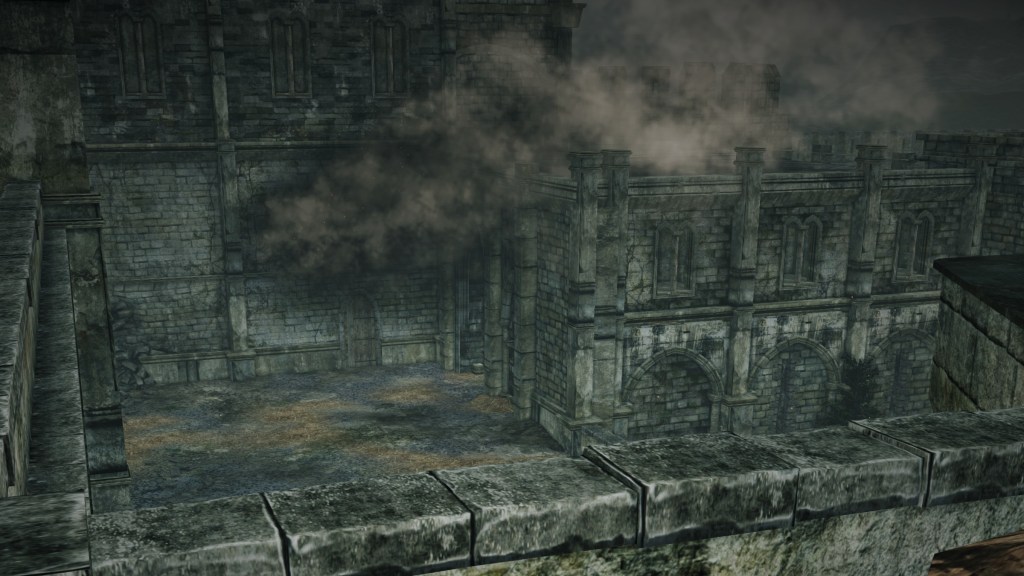
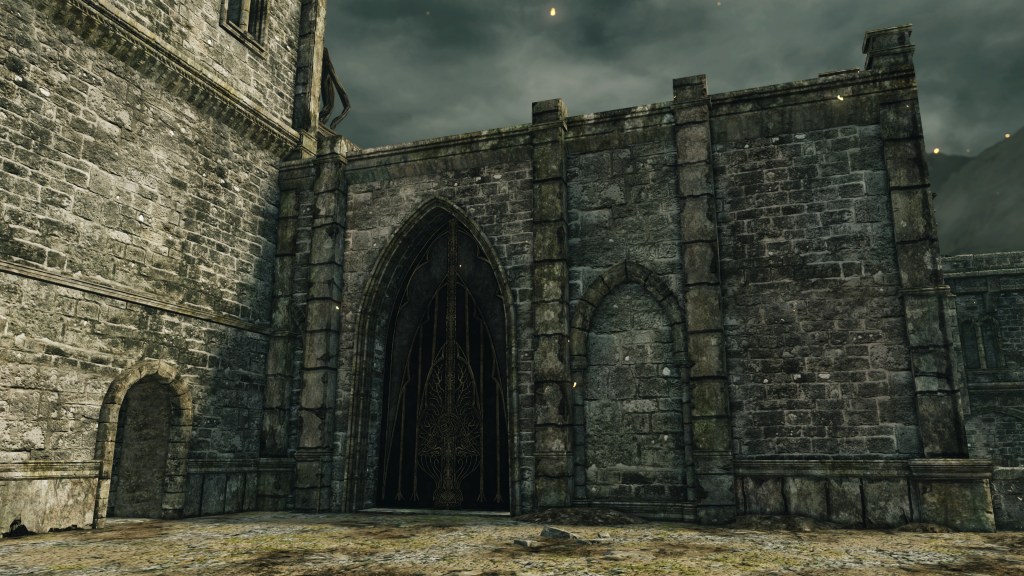
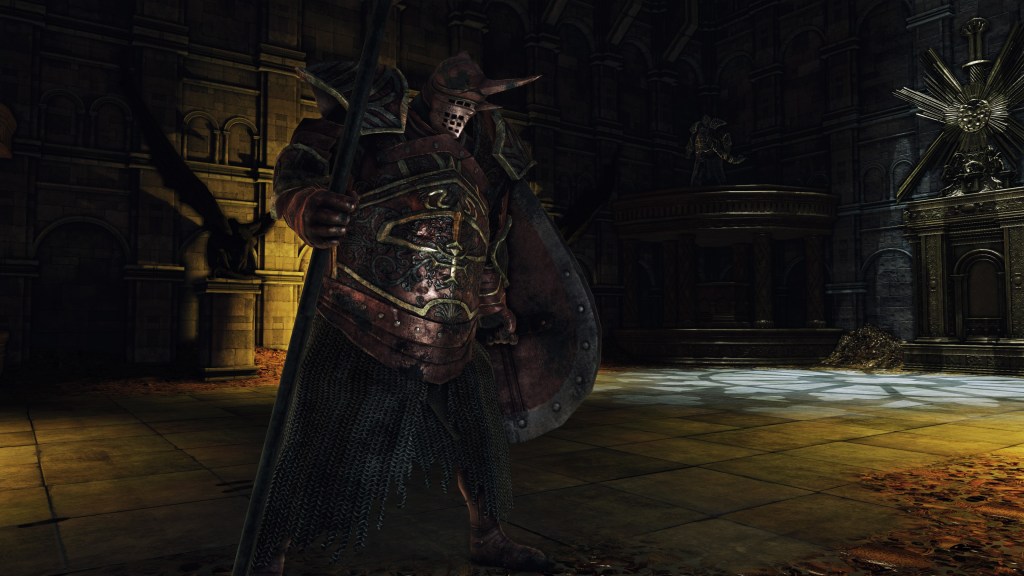
Indeed, as a physical fighter himself, Vendrick had a liking for the plain warrior and strove to have an almost intimate relationship with his army. One of the King’s Gates opened with his special ring can be found at his nation’s seaside fortress. While the chamber beyond is destroyed in the present era, we can see the unruined building exterior in the Memory of Vammar, complete with a fancy doorway opposite side of the Gate. From this, it was most likely Vendrick’s personal quarters, revealing a desire to living alongside his men during wartime rather than safely tucked away in his faraway castle — the name “Vanclad” (ヴァンクラッド) couldn’t be more appropriate for a king at the vanguard clad in armor. Moreover, all but the most basic infantry are identified as “kingdom” (王国) soldiers and swordsmen, with their high quality equipment naturally provided by their liege from his castle’s own blacksmith. Those who proved particular excellence in the line of duty were also given rings to help manage the weight of their heavy armor. It was brute strength and uncomplicated thinking that the monarch respected, and likely shared.
Ring applied with the wax seal of a warrior. Has effect that boosts equipment weight.
It was given to excellent warriors by King Vanclad as proof of meritorious deeds. It is said that the king liked simple, honest warriors who rely only on their own brute strength.
Helmet of a kingdom soldier of Drangleic.
Equipment forged by the blacksmith of the royal castle. It is well maintained and will probably stand up to even fierce battles.
Although his dragoons’ magic halberds and brother’s expertise prove that he wasn’t intrinsically opposed to sorcery, it was clearly never a priority, perhaps owing to his own unsophisticated intellect. In any case, piety wasn’t one of the king’s strong suits either, showing contempt for clerics and their miracles. This may be due to their overreliance on defensive arts. Sure, healing magic saves lives and allows for comebacks, but wouldn’t it be better to just straight-up kill the enemy before getting hit in the first place? And what can be done with a lightning bolt can be done just as well with a spear, without all the added memorization and prayer. He had no plans to uproot the land’s age-old religious traditions, but he wouldn’t upraise them either. At best, a fabled knight of old — the paladin Leeroy from DS1 — would serve as the model for his high-ranking soldiers’ armor, and likely only because of the religiosity demonstrated by his army overall. There simply wasn’t a place for something as complicated as magic in the king’s roadmap for conquest.
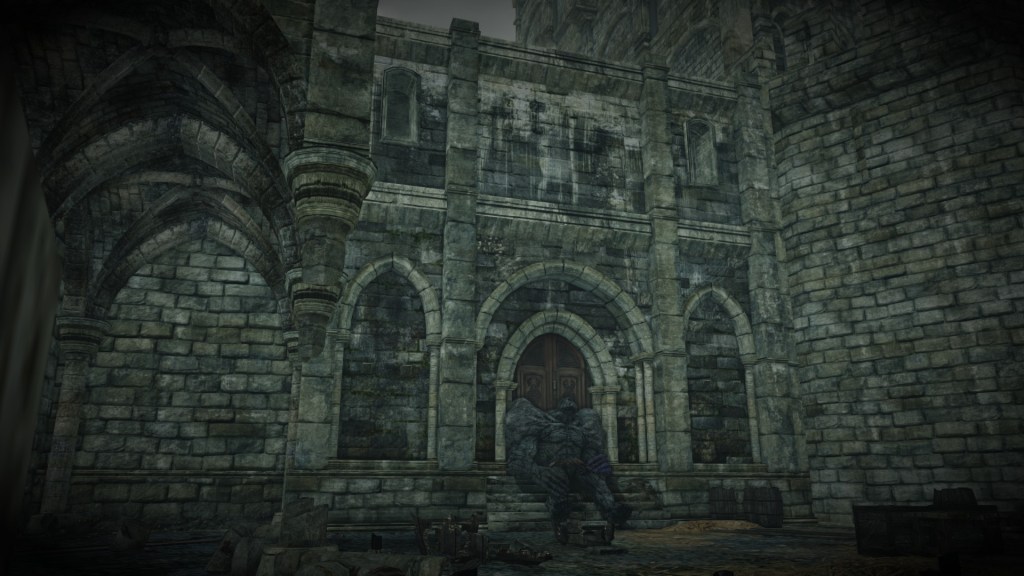
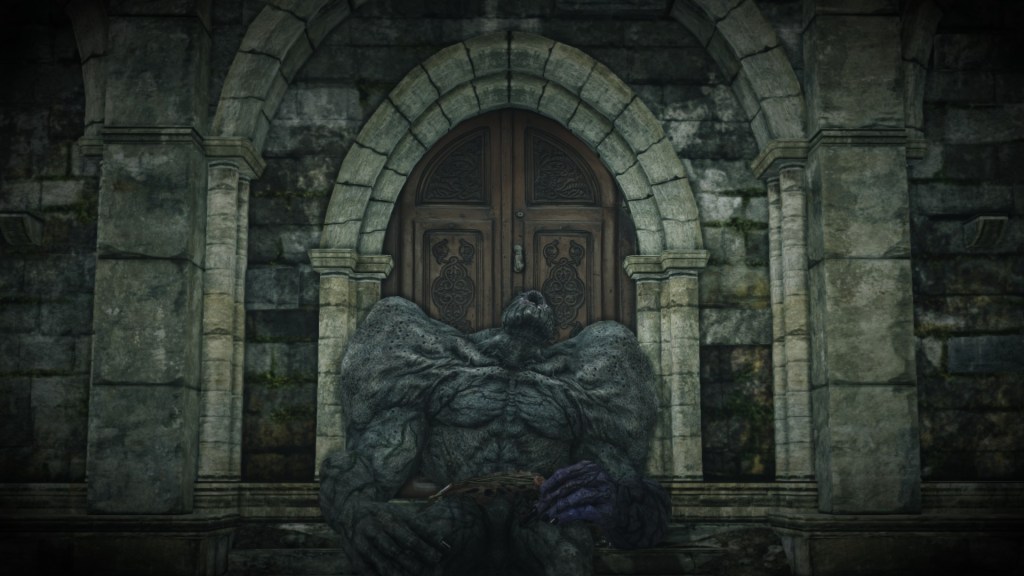
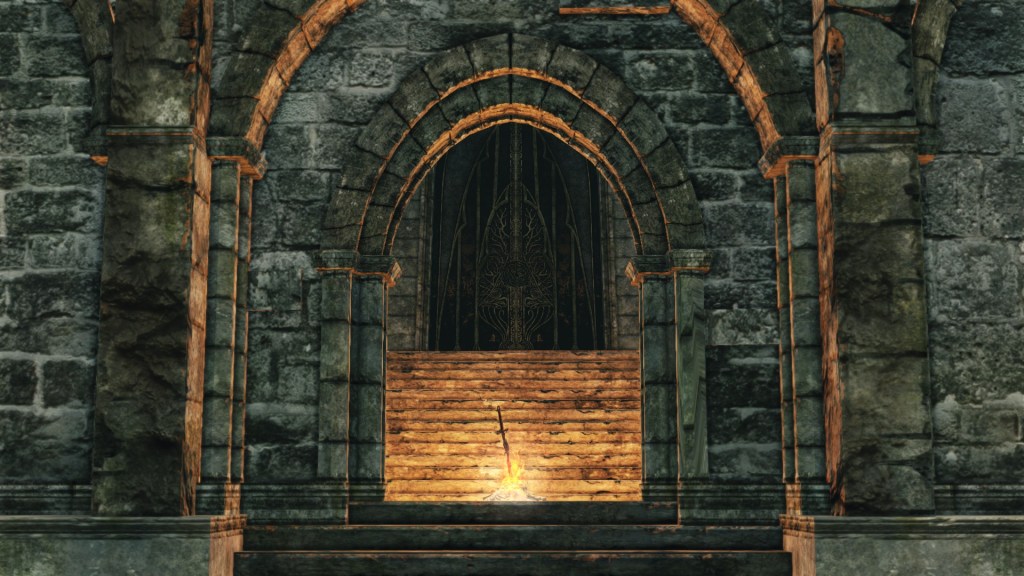
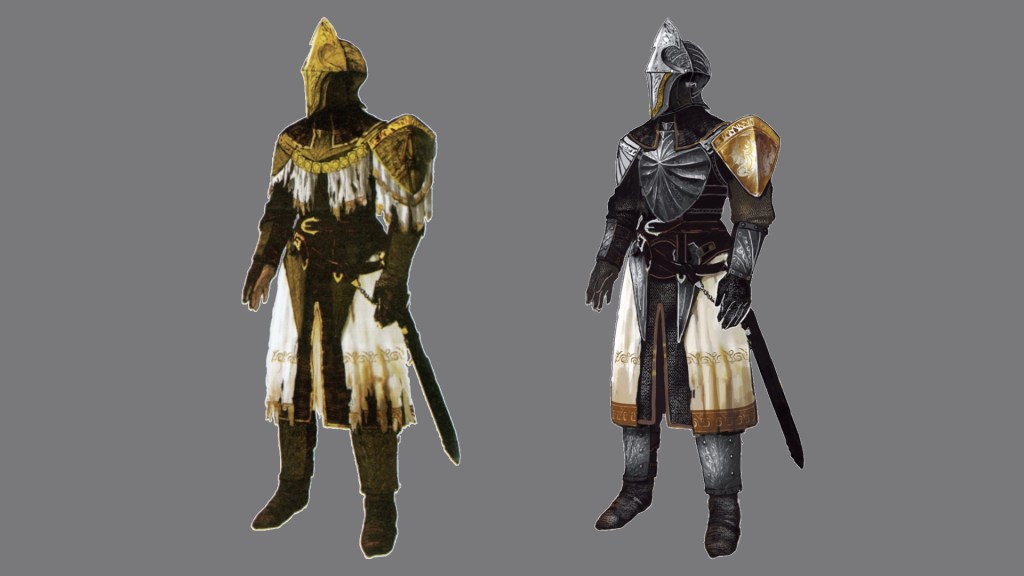
Crown of a clergyman from long ago.
The clergy of this land are ones that were inherited from long ago, but were kept a fixed distance from the royal family. To be a slight, as it were.
Even though particular dressing depending on gender is customary practice, its significance is unknown. This is one for women.
Holy bell given to high-ranking clergymen. Becomes a catalyst for miracles and hexes.
Clergy existed even in Drangleic, but King Vanclad made light of their power and simply had them in accordance with tradition. In that sense, clergy of this land were unfortunate.
Shield of a kingdom soldier who became a Hollow. It is tattered and will only fulfill its minimal duty.
The equipment of the kingdom soldiers depicts the form of a knight who exists in old teachings.
As to who the future King and his retinue of troops were subjugating, it is liable that they cleaned up remnants of Alken and Venn. Parts were stripped from Iron Keep down south to help create the new kingdom’s fort up west, while the Lost Bastille was completely taken over; the golden border design of the prison’s blue flags reused for Drangleic banners. The two warring states of old evidently had some of the best preserved ruins for Drangleic to build upon, parts of which remain infested with Hollows among others. This leaves no evidence of a major country uniting the land in the interim, meaning that there would have likely been many fractured peoples for Vendrick’s forces to war against. To that point, we do see twelve smaller heraldry amassed beneath the dragon crest adopted as his kingdom’s symbol in several instances, including on the king’s shield. This at least implies that there were disparate remnants for the kingdom to unite under its new banner. In other words, Drangleic succeeded Venn and Alken as hegemon of the continent, its fractured peoples carried together again on dragon wings.
Key to an iron door of the Melted Iron Castle.
The Old Iron King’s castle sunk into fire. A consequence of the weight of its iron, or his hubris.
The iron that was left in the castle was altogether taken away by those who came to this land later on. The iron door too may be somewhere far away.
Dragons were obviously of immense import to Vendrick. His castle alone is filled with dragon imagery, even excluding the national crest. Even the name “Drangleig” (ドラングレイグ) looks to be a partial corruption of the English “dragon”. (ドラゴン) Respecting that leig is the Gaelic verb “to permit”, it is possible that the king dubbed his country as the land where dragons would be allowed. Whether or not that is the intended meaning by the developers, Drangleic was undoubtedly the kingdom of dragons. His choice for the coat of arms is nonetheless curious. The image of two dragons facing each other flanking a bright light was previously employed by Alken, at least under the Old Iron King’s regime. Did Vendrick adopt that crest because he saw it as a way to bridge the gap between conqueror and conquered? Or did it resonate with him because there was a shared heritage to draw upon? Put simply, is it possible that Vendrick and his army of Dragonriders originated from Lindelt?
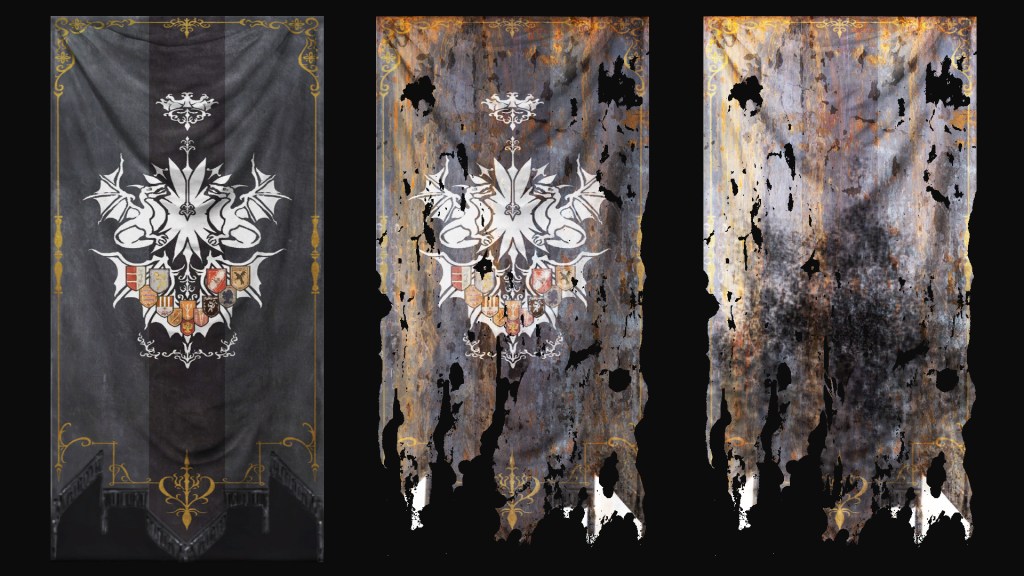
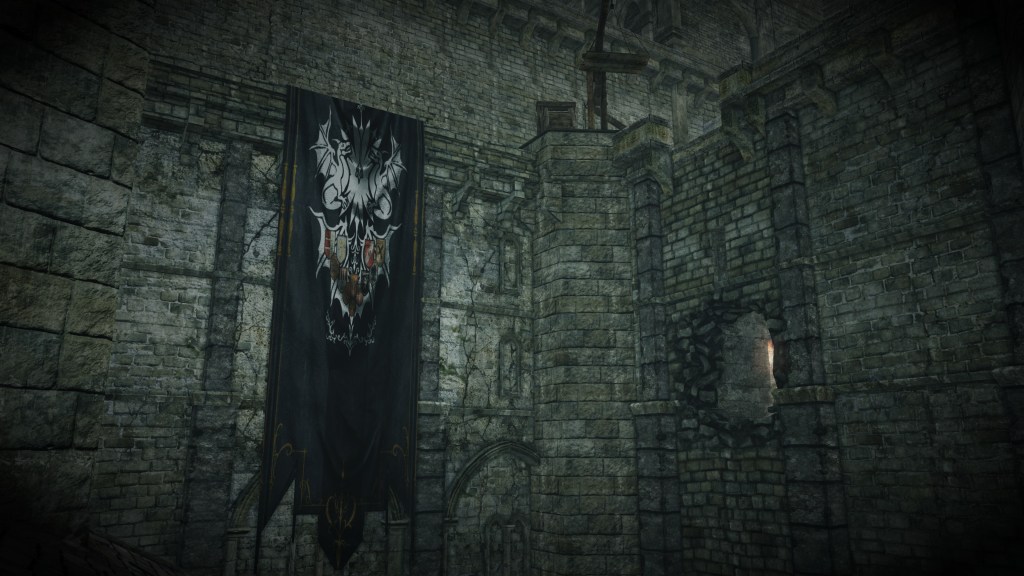
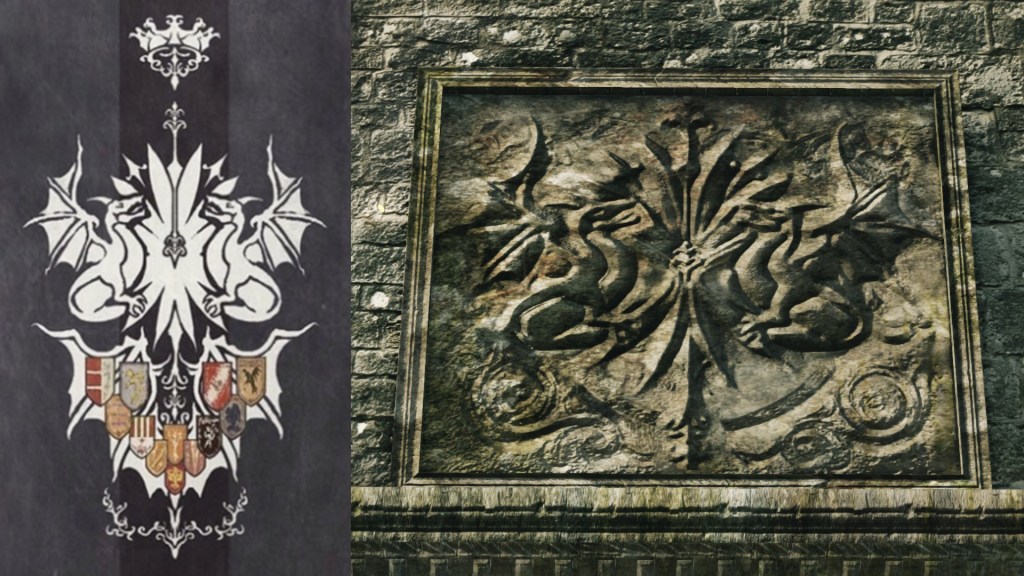
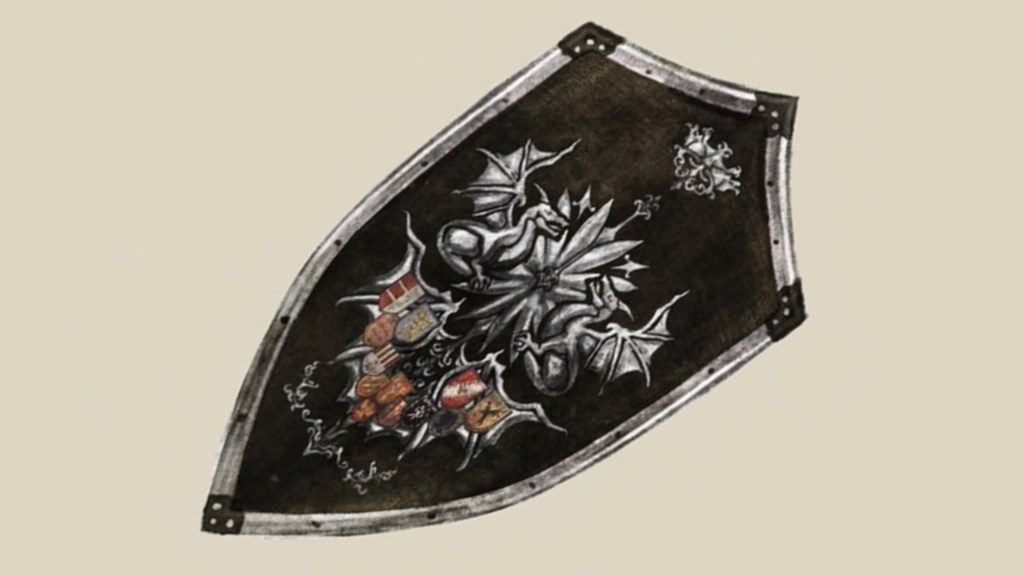
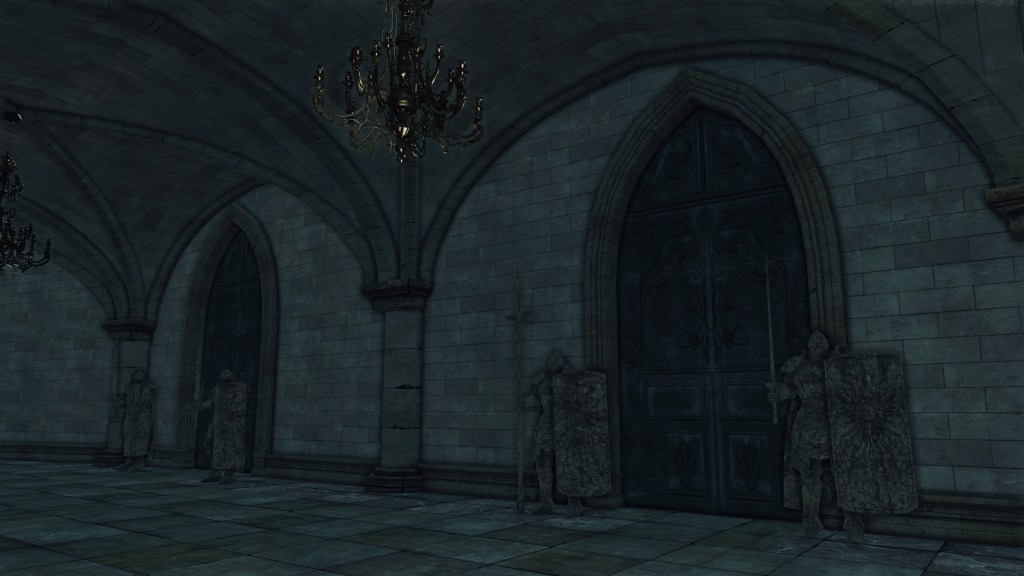
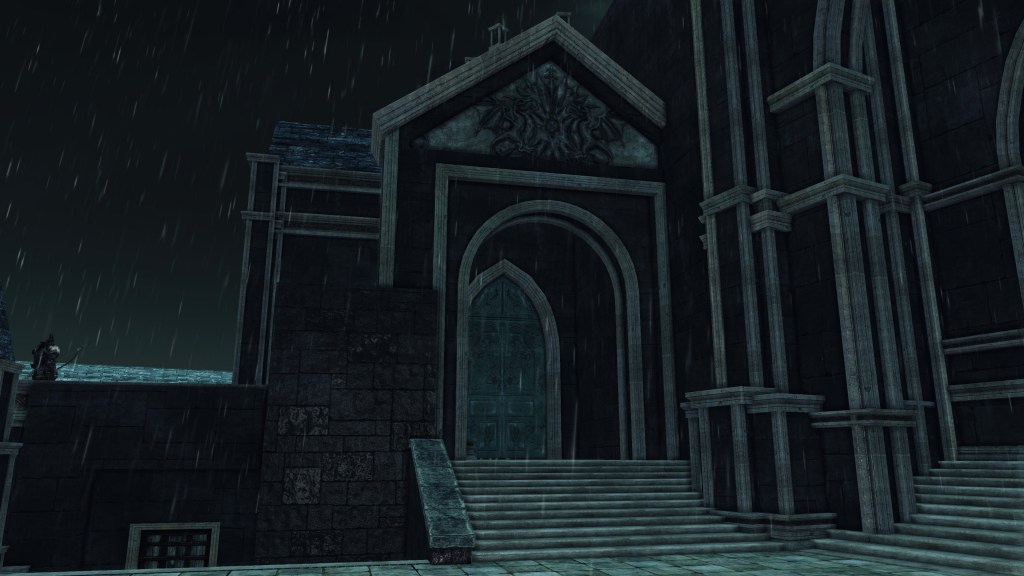
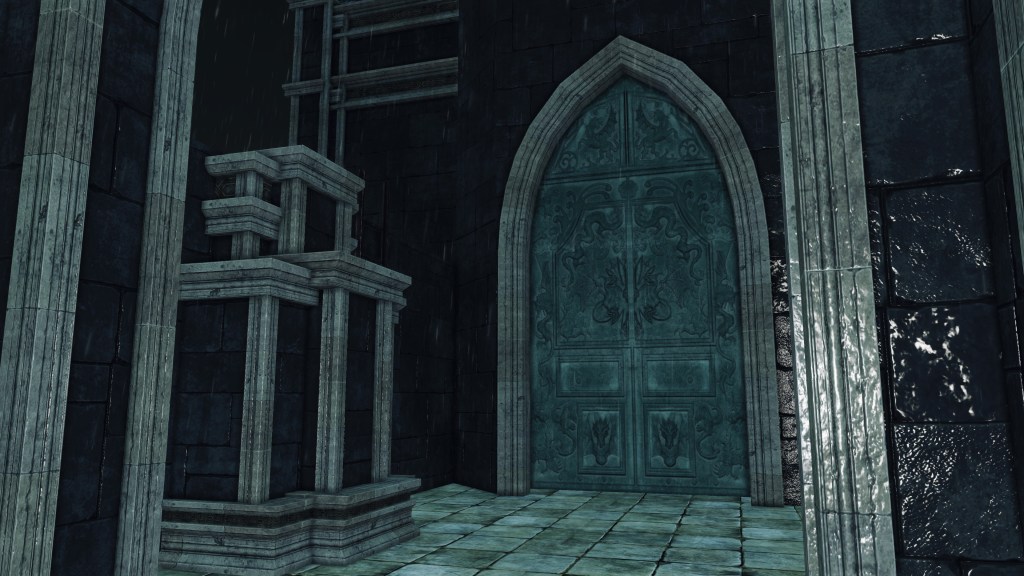
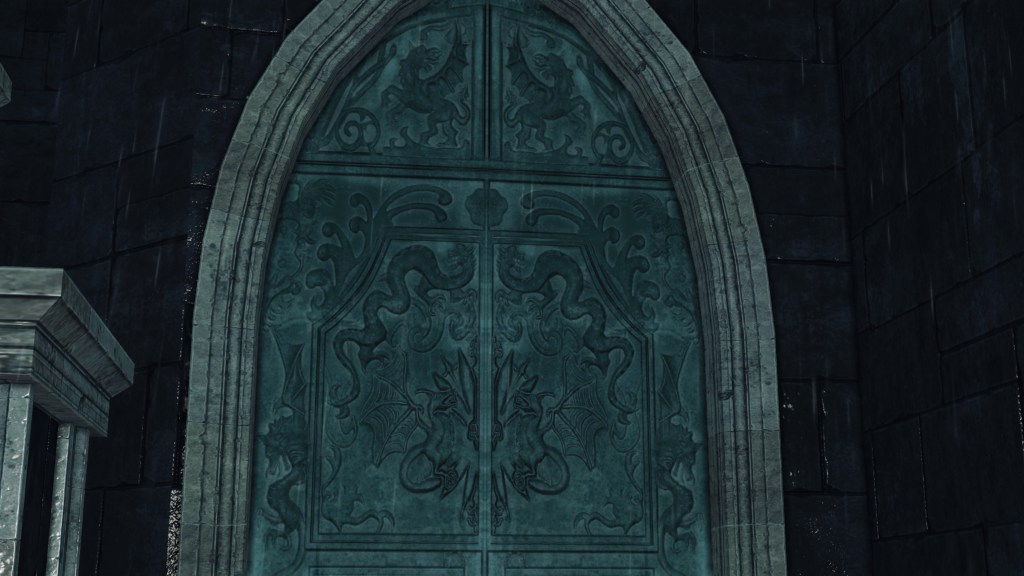
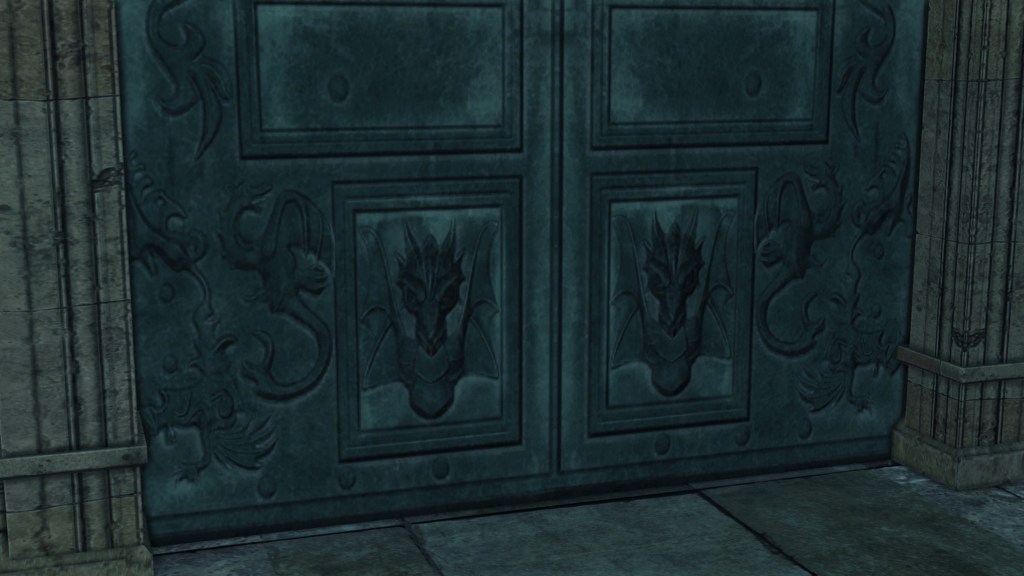
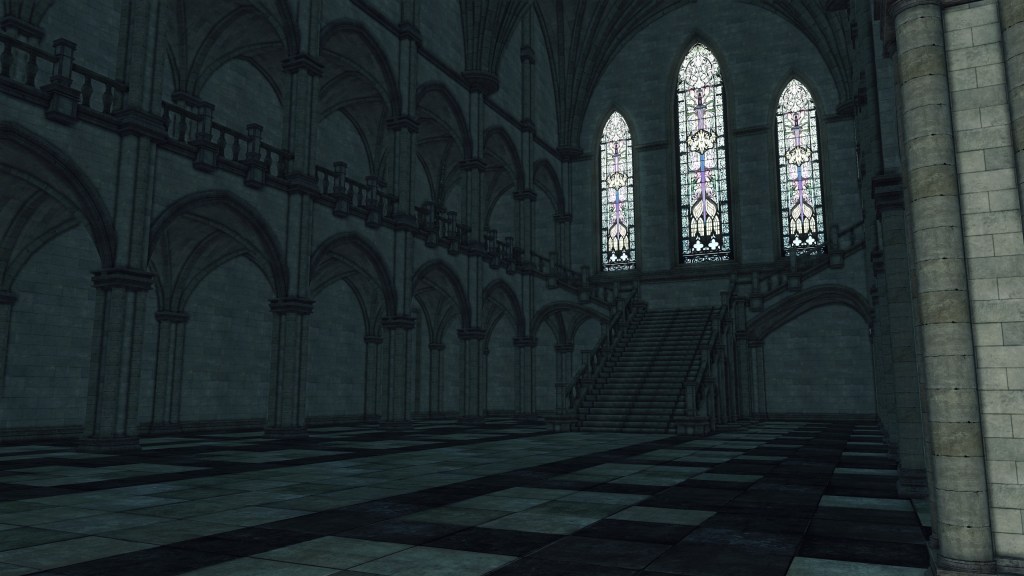
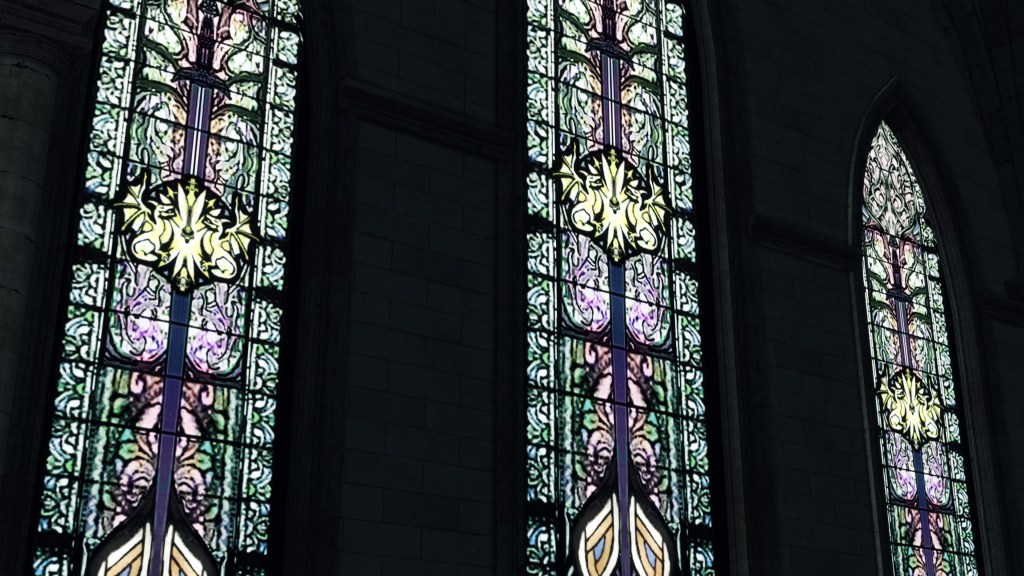
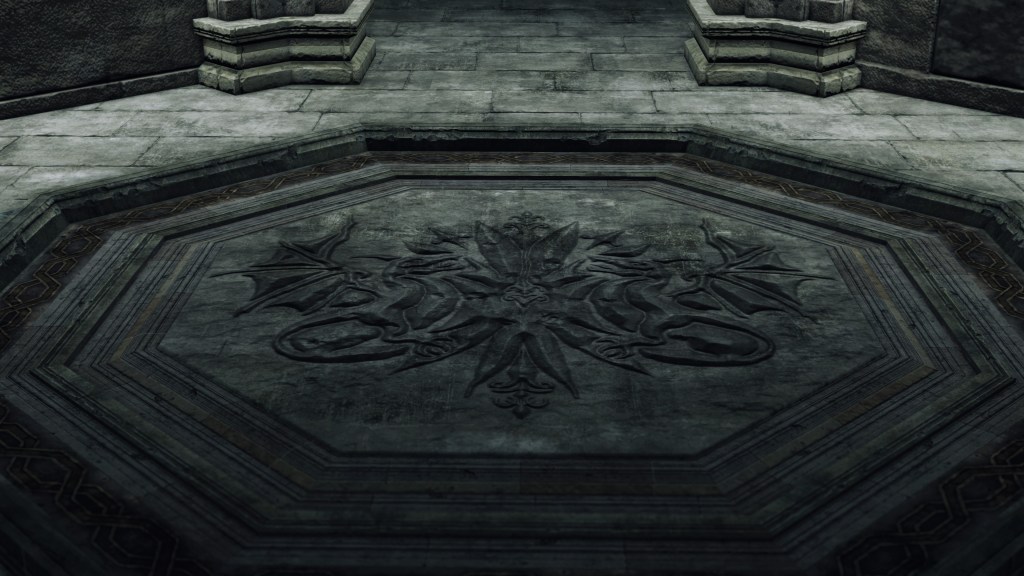
Recall that the dragon crest traces back to Yorgh, whose surviving knights turned their homeland into the religious capital of the New World. The original description for the Archdrake set notes how Lindelt currently has the power to rival Drangleic during its heyday. However, was that the case when Vendrick’s kingdom was still around? If nothing else, it must have taken time for the temple to take over the culture, the old symbols from Yorgh’s time still able to seep into the Iron King’s court. Alken was a religious kingdom, but the sea separated it from the revolution occurring over in Lindelt. Drangleic religion was its own thing, and there are still no shortage of nations who subject dragons to veneration. The temple demonizes dragons as creatures to kill, but Alken’s last king held no such animosity; in fact, quite the opposite. Even should the debauched monarch be alien to Alken’s history and tradition, it is obvious that there was still friction between Lindelt’s old ways and the relatively new institution.
Helmet of the Archdragon Temple of Lindelt.
The true state of the Archdragon Temple which imparts secret ceremonies is unknown, but it is said to have the power to rival the former Drangleic due to its miracles honed and faithful hearts unafraid of death.
Enter Vendrick, a minor lord or warlord who cultivated a small but unmatched army riding archdragon’s descendants they tamed from their area. The Drakeblood Knights specifically sought blood of nigh-extinct archdragons, leaving their attitude toward the species’ more prevalent lesser cousins an open question. The Archdrake Sect leaves no such ambiguity: they used the bones for miracle catalysts. In the generations since Alken’s collapse, Vendrick might have been the last remnant of that old dragon-worshiping culture. And to the authoritarian theocracy emerging in Lindelt, that lingering vestige would have been anathema. Between its tolerance of dragons and sorcery, it is easy to imagine the pressure placed on Vendrick and his family to let Lindelt’s past to be forgotten. But rather than give up their wyrms or magic, the future king would have resisted with his army of cavalry. Yet despite the Dragonriders’ undeniable strength, they were still one troop versus an entire nation which would prove to be a rising power. The battle for the people’s hearts was already lost.
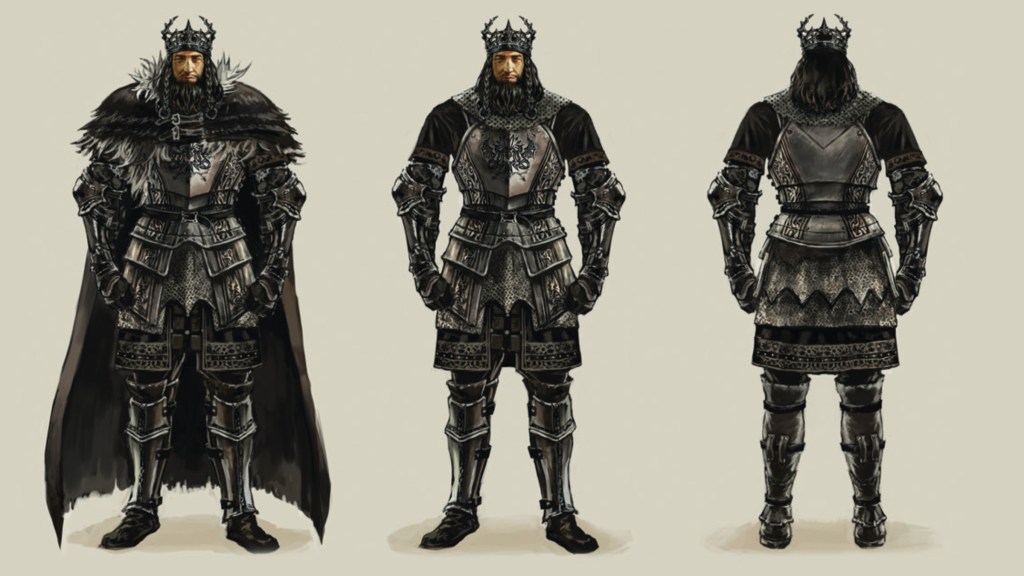
Vendrick must have seen the writing on the wall. And so, it isn’t a surprise if, after so many hard-fought battles, he ultimately chose to simply leave with his brother. Instead of risk being executed as rebels and heretics, the man would take their wyrms to a new land where they would be permitted to live alongside their owners. Their voyage landed them in Drangleic, where they had a much easier time rolling over the inhabitants. Whatever the details to these campaigns, Vendrick soon crowned himself king of the lands he united, only to be faced with a new problem: Drangleic religion shared roots with the Archdrake Sect, and personal feelings aside, he couldn’t simply root it out. He needed those pious men to field a larger army and secure his holdings. And so, he would respect their traditions while keeping them at arm’s length. Conversely, the local clergy was forced to accept that dragons were there to stay, no matter the word coming from Lindelt going forward. Thus would humans and dragons be allowed to live in harmony under the auspices of the gods.
This Lindelt origin for Vendrick further explains his continued ambivalence to religion in the face of his army’s widespread enthusiasm for it. He wanted the freedom to be a good lord to his people, to defend them by every means available. Their faith was not his concern, only their loyalty. As king, he could do right by his soldiers, who risked life and limb to ride those wyrms, and by his people, who suffered the pains of subjugation. To both, he delivered a new national identity to inspire pride — they were not a dozen peoples, but one. And regardless of Vendrick’s exact background, this call to unity is embodied by the banners hanging in the entrance hall leading up to the royal audience chamber of Drangleic Castle. Before meeting the king, visitors would see the kingdom’s crest, with the collection of vassal heraldry, flutter on a red background; the color of blood and passion. Whichever side they took during the wars, those sacrifices showcased courage and valor and led to a united kingdom. The bloodshed was behind them. They all must recognize the ruler who would carry them to a better tomorrow.
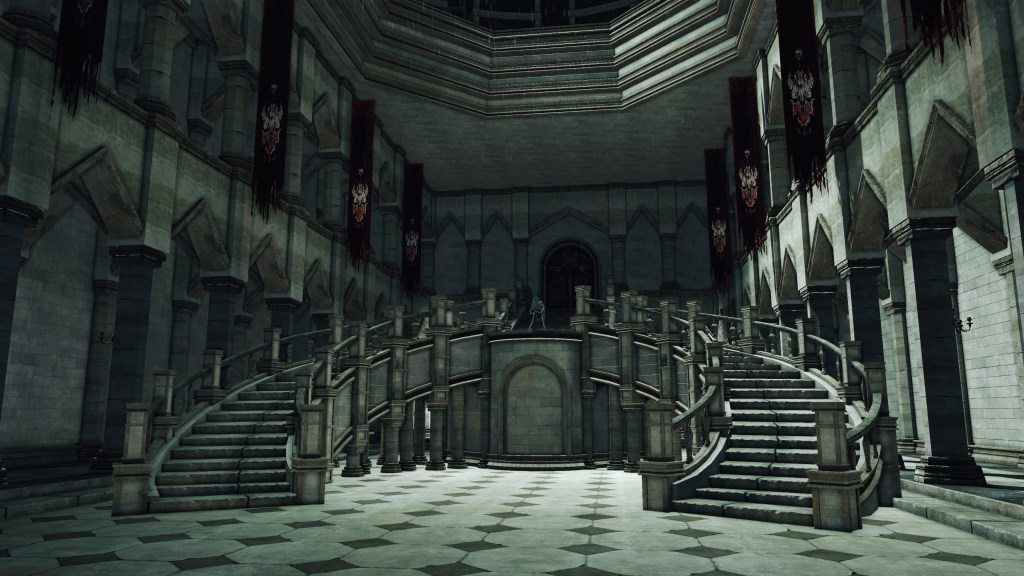
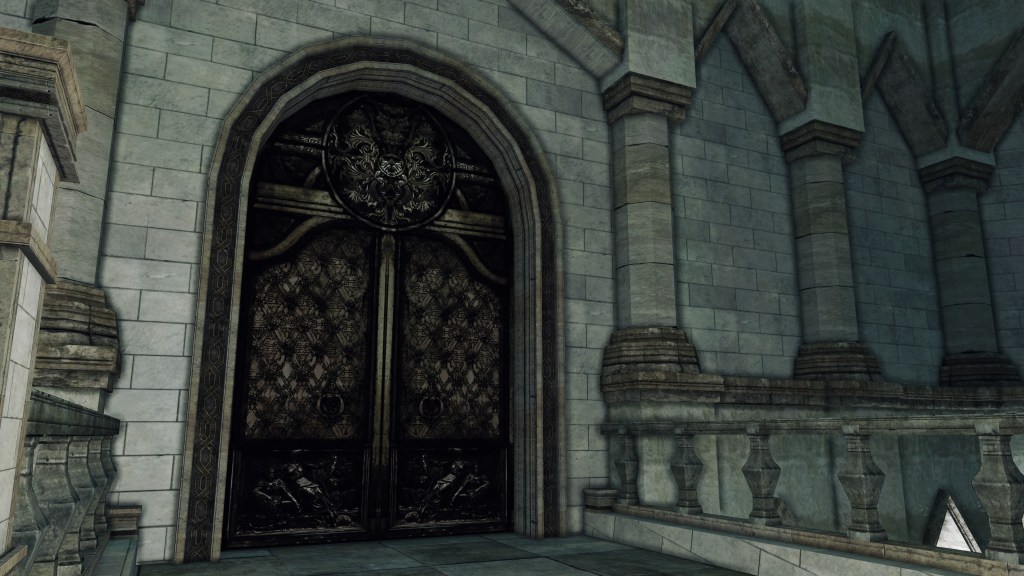
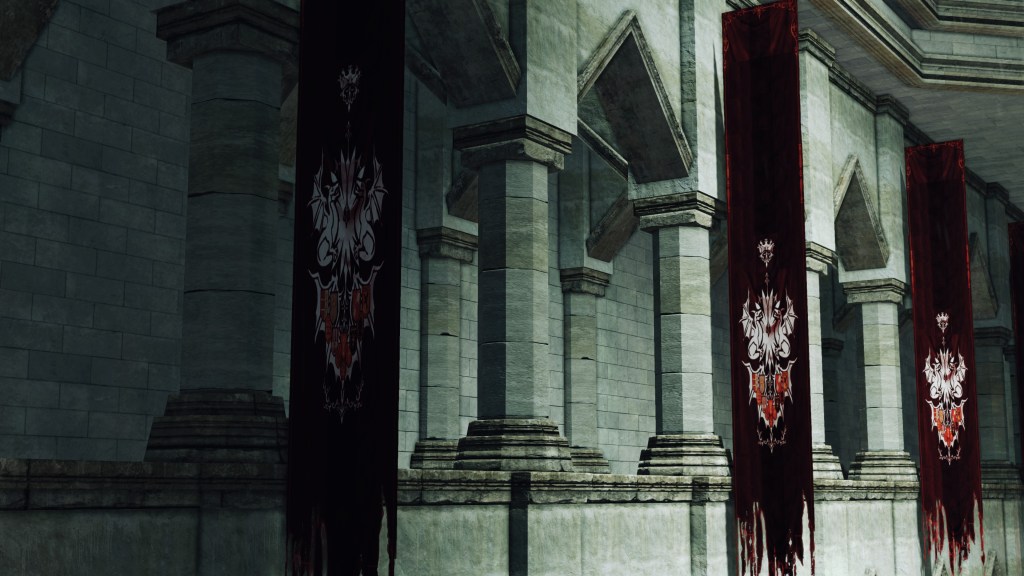

According to Wellager, Vendrick had also defeated the Old Ones and used their four souls to help build his kingdom, but this notion is entirely nonsensical. Two of the four have been possessing certain individuals since well before Drangleic’s foundation, with the other two possessing entities contemporaneous with its history. This makes it impossible for the king to be using their souls in any capacity at the time. At the same time, it is bizarre for the kingdom’s chancellor to know enough about them to boast such a claim with that degree of specificity. He gives no impression of lying, nor does the rest of his dialogue reveal any obvious exaggerations. At the very least, Wellager seems to believe he speaks truth. And based on the rest of his dialogue, he is attesting as witness to the early events of his King’s reign. In all likelihood then, this odd line is simply an overlooked vestige of sloppy revisions to the script. Vendrick absolutely took interest in great souls and their power, but only well after establishing his kingdom.
Defeating the Four Great Ones… His Majesty built this country with the power of their souls…
Where is the Line?
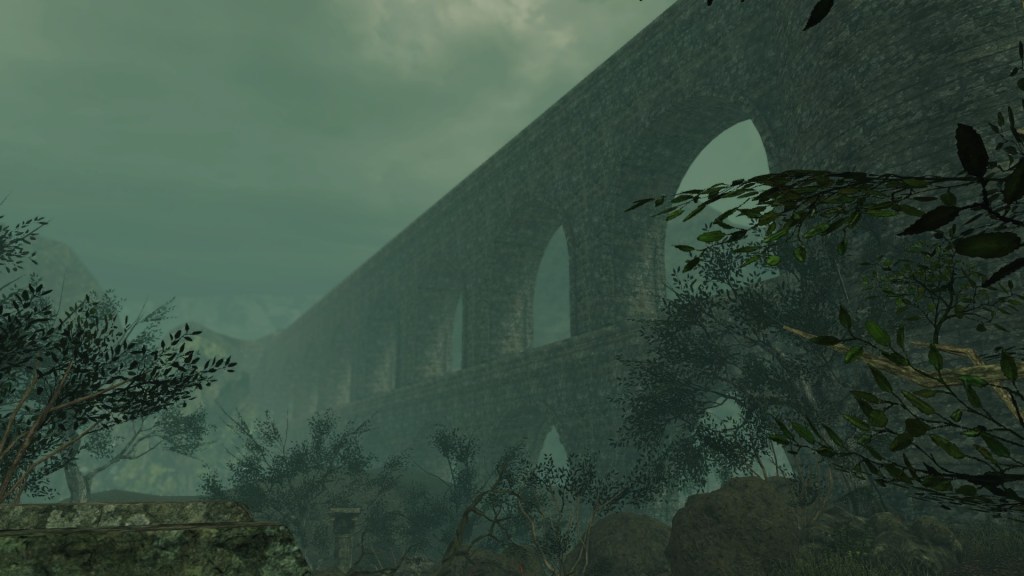
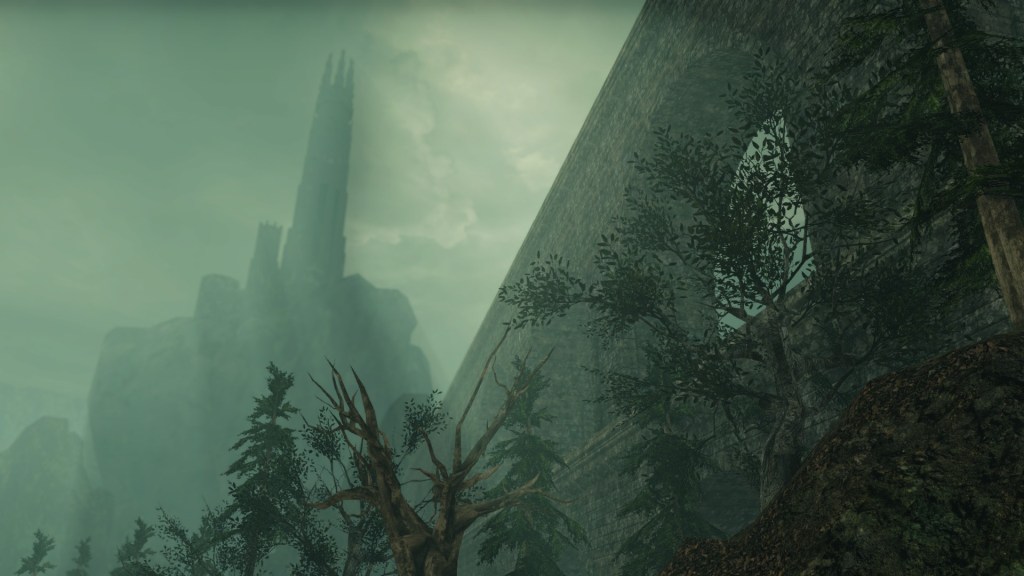
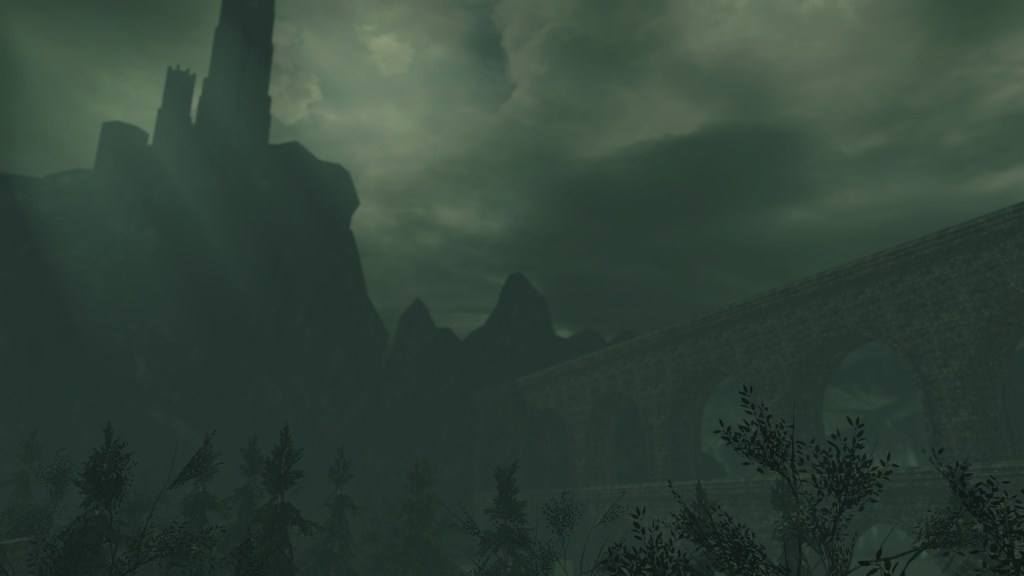
On the note of sloppy development, there are questions about the full extent of the king’s domain. Considering Dark Souls’ penchant to reduce countries to city states, it is surprising that we even visit one town outside the capital. In point of fact, we never do come across a Drangleic capital, nor hear mention of it. This is especially curious given how Wellager claims that Drangleic Castle, the ultimate center of the kingdom, wasn’t built until well after the founding. Where had the government been seated then? Simply put, while we may find neither hide nor hair of a royal capital, it must have existed, and perhaps still does. Second to the castle, the most prominent landmark is the massive viaduct stretching across the Shaded Woods roughly east to west. Even though there is no sign of it once we reach the castle, we can see it unambiguously heading in its direction — cut content confirms plans to connect the two at one point. In that case, what would we find on the other side except the capital city, the one place you would expect to have a direct link to the royal abode?
Cut content reaffirms this implication. Originally, we would have explored Drangleic’s capital on the way to the castle looming over it, much like the relationship between the Undead Burg and Anor Londo in DS1. Shalquoir mentions this “Dran Town Below the Castle” (ドラン城下街) as well as the gates connecting the two in her original scrapped dialogue, so there is no doubt of FromSoftware’s initial intention. And while the Dran area was ultimately relegated to the village of Majula, the idea of a capital connected to the castle seems to have been carried on into the final game, with the viaduct hinting to its existence somewhere in the western mountains further south; bordering between Huntsman’s Copse and Earthen Peak. Indeed, much of Drangleic’s holdings are found in the mountains, so it complements the setting. We simply never explore the capital, much like any other old town or village that might stand in ruins somewhere across the land — though that phrasing may be too broad.

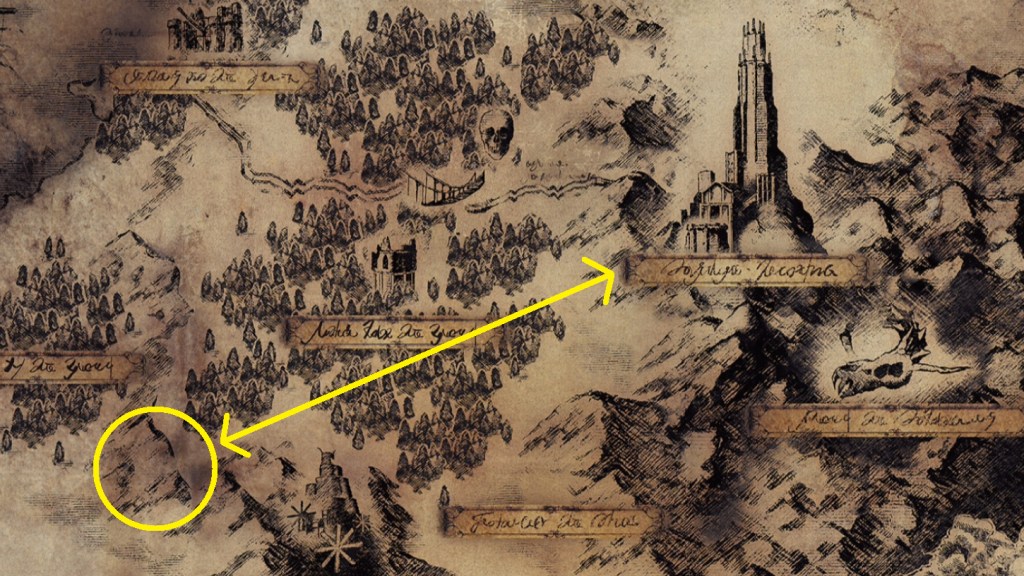
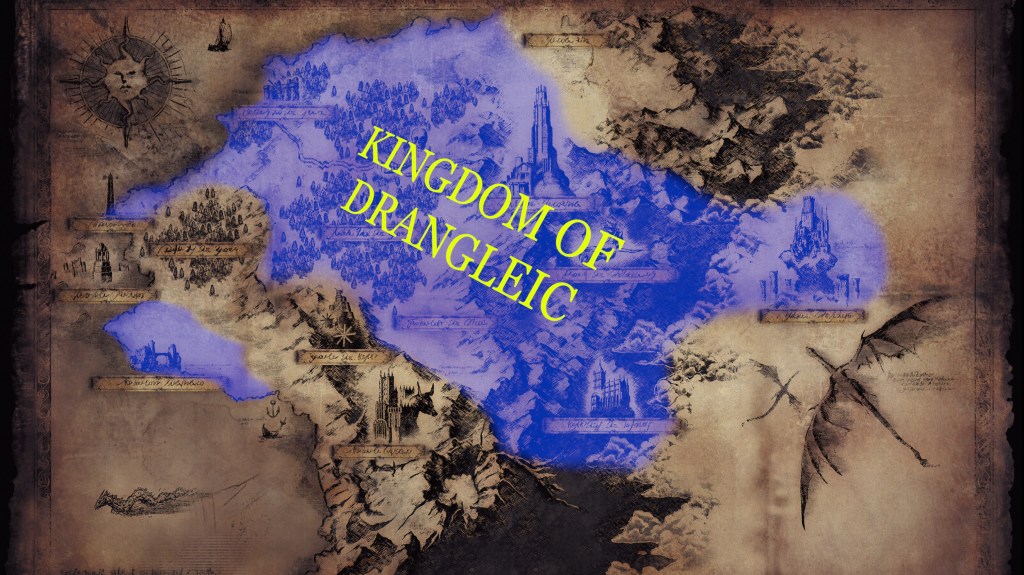
Looking at the official map of Drangleic, the kingdom firmly controlled the central slice of the continent. Excluding less than ideal properties like Heide and the Undead Crypt, the only areas left untamed were the Alken territories stretching from south to west; the adjacent Shaded Woods arguably isn’t much better. This is especially awkward when Drangleic controlled the Lost Bastille, creating a huge disconnect between the lands of its territory. It isn’t as if the kingdom completely ignored these unconquered lands either. As we explore Drangleic Castle, we find plenty of enemies native to other areas seemingly captured and repurposed as guards. These include old knights from Heide, wall ghosts from Undead Crypt, a belfry gargoyle from Lost Bastille, an Alonne knight captain from Iron Keep, an Executioner’s Chariot from Huntsman’s Copse, manikins and desert pyromancers from Earthen Peak, and pursuers. (the last only in NG+) Drangleic had clearly swept through all the continent, but only conquered portions. Why?
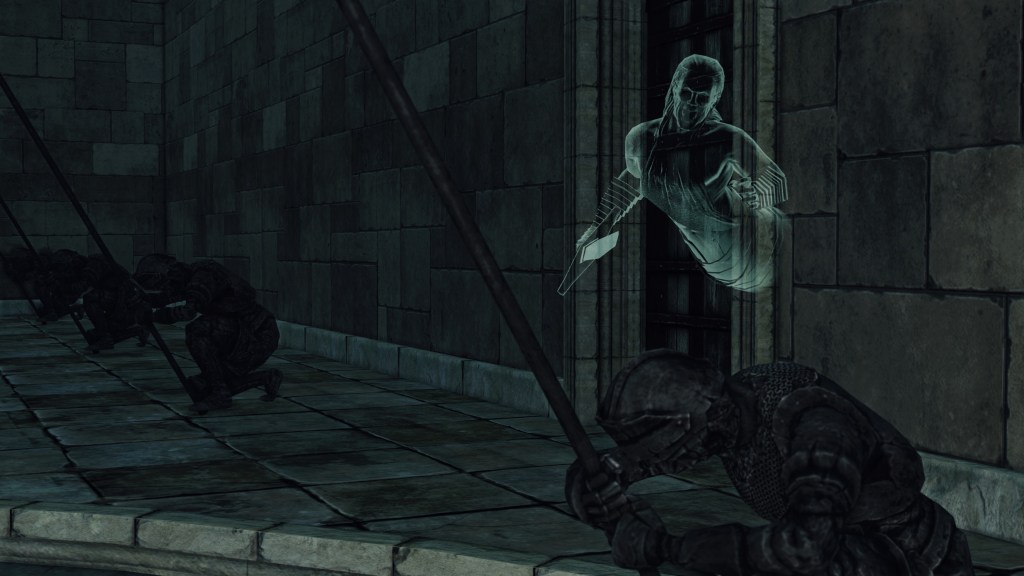
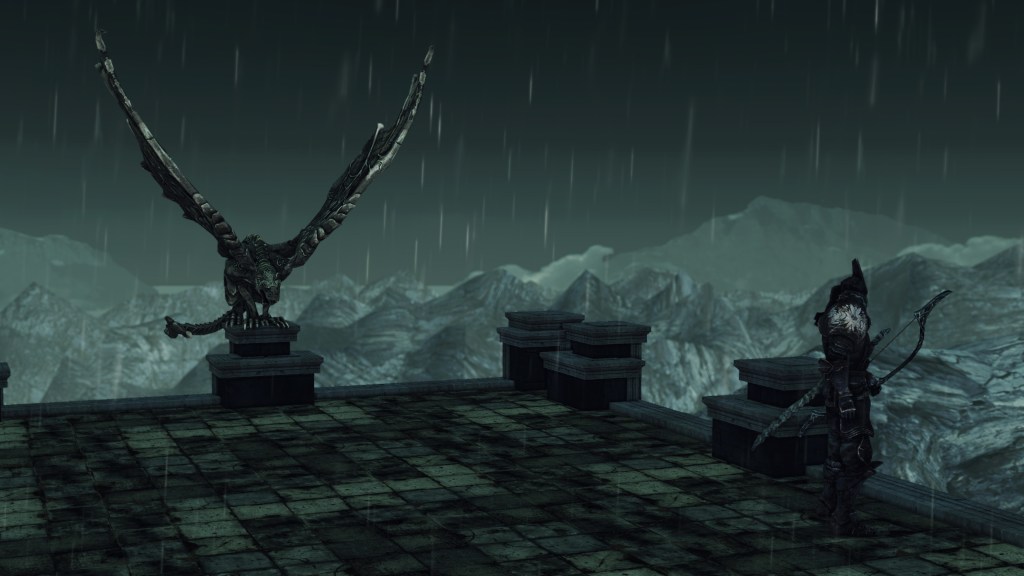
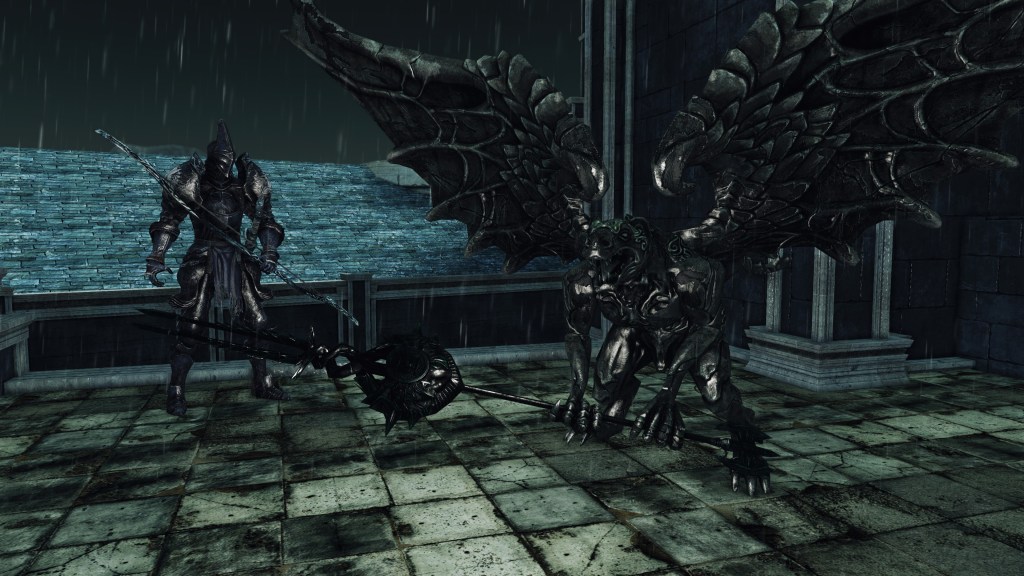
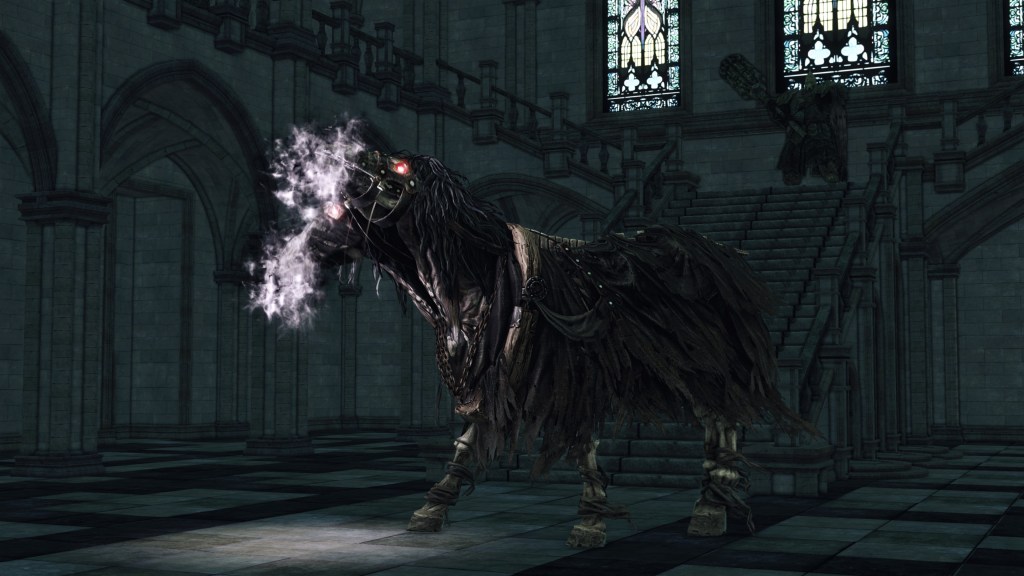
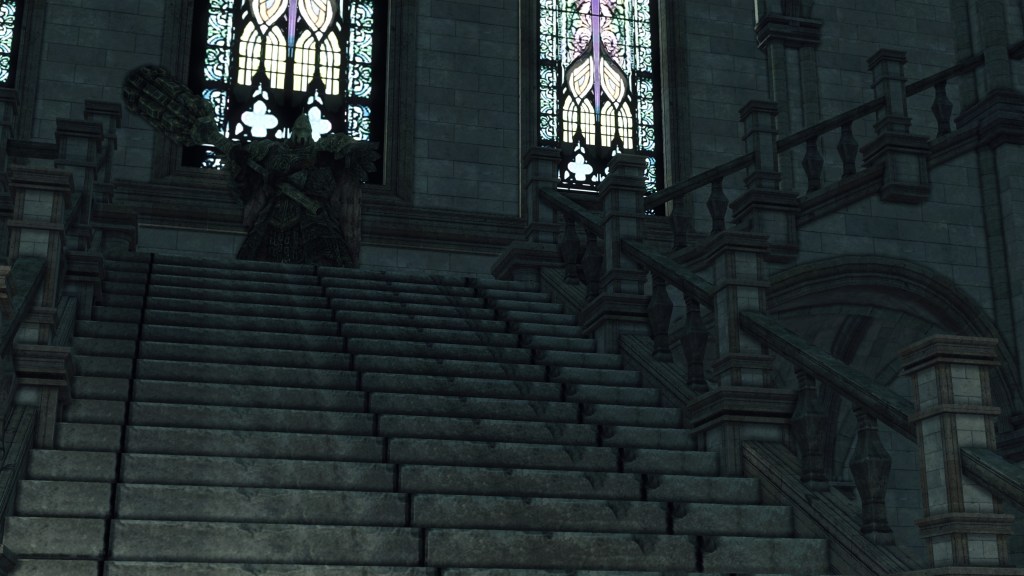
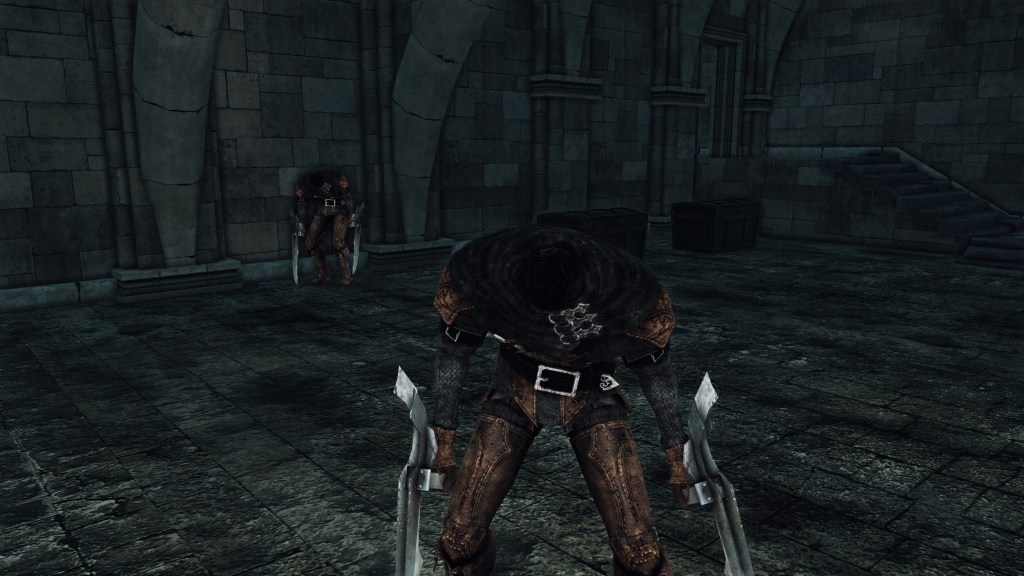
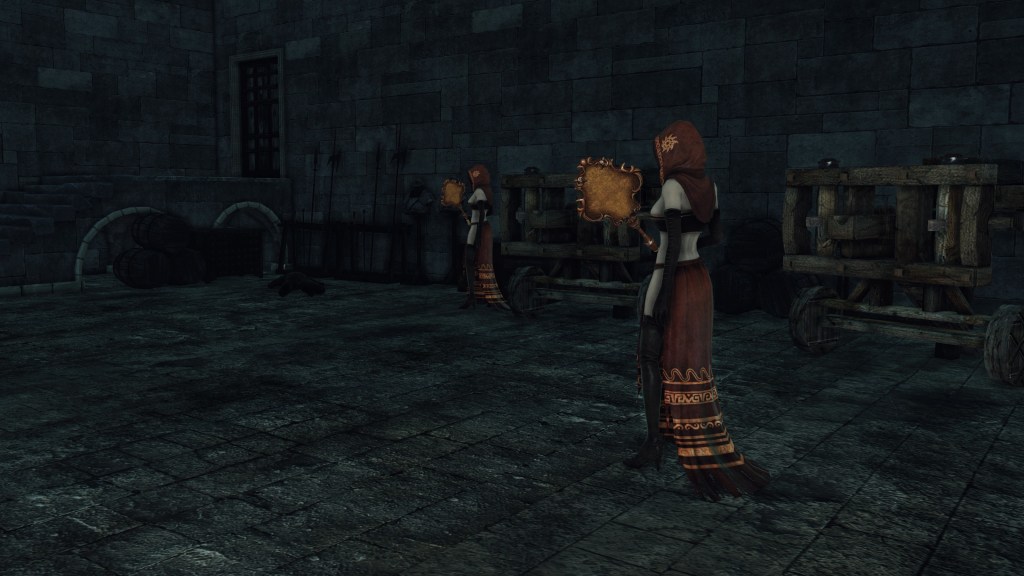
Even assuming that Vendrick was only interested in lands with normal people to rule over, would he really be unconcerned with the threats so close to his border? At the very least, all the Hollows and necromancers lurking within the Huntsman’s Copse should have been worth clearing out, to say nothing of the witch running her own operation out of the valley yonder — doubly so if the capital lay anywhere within the vicinity for her puppet abductors. Wellager isn’t shy to claim that his king had been protecting the nation for so long. And with how much item descriptions tout the Dragonriders’ military prowess, one would think that exterminating these domestic threats would be of no issue. Yet Vendrick apparently chose the inconvenience of needing to sail to his own bastille over the trouble of subjugating the areas surrounding it. This brings sloppy worldbuilding to mind, the developers wanting us to explore the remnants of Drangleic’s predecessors before considering the integrity to the setting. It certainly wasn’t that Vendrick ignored his kingdom’s security.
For since ages long, long ago… His Majesty had continued to protect this country…
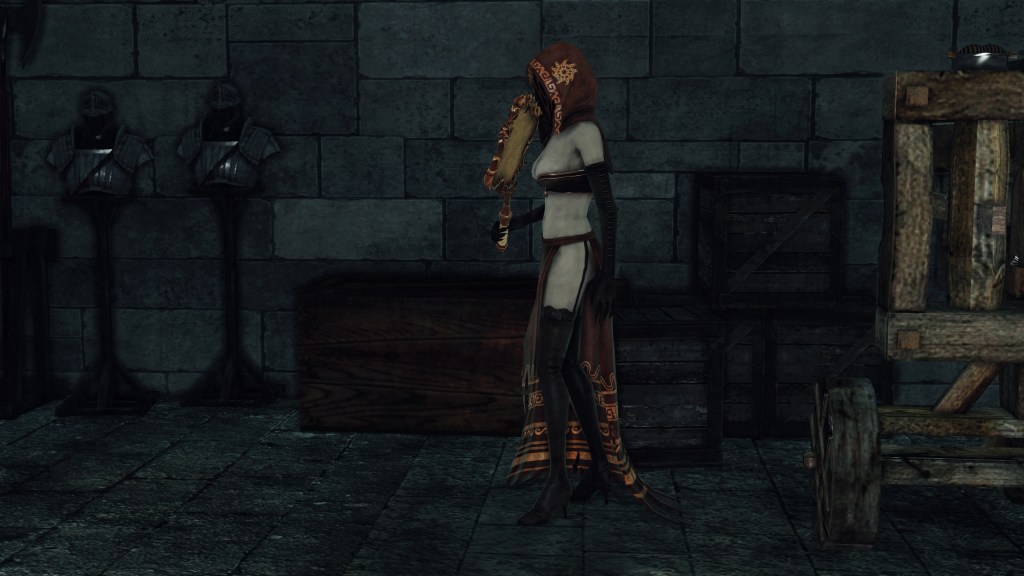
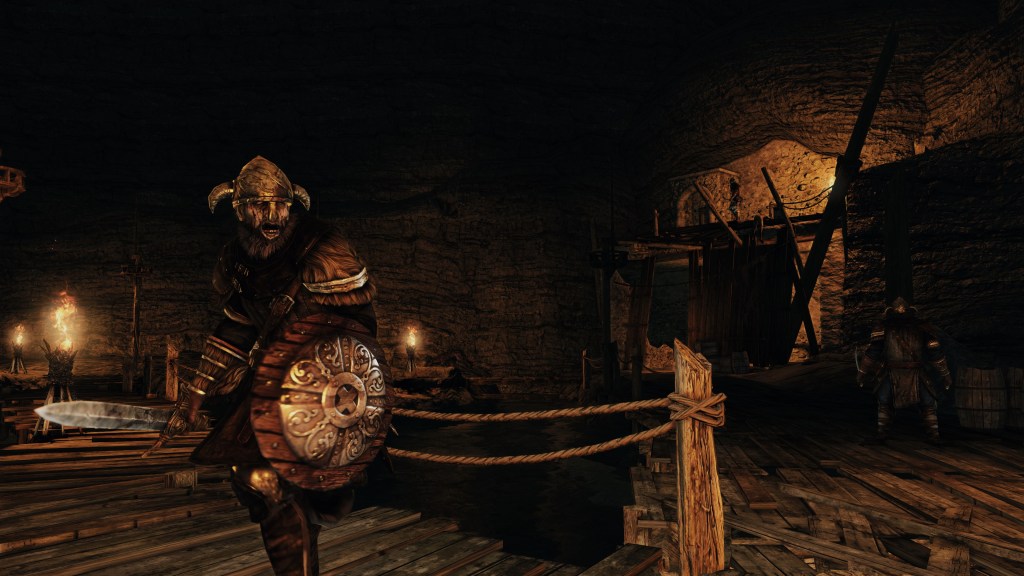
As their English name and stereotypical Viking attire would suggest, the Varangians are “barbarian” (蛮族) raiders from overseas who sailed down to Drangleic to pillage its riches from people living along the northern coast, killing any in their way. Cut dialogue reaffirms this notion, with Shalquoir revealing that they would have originally raided Dran after Vendrick’s disappearance threw the government into disarray; the castle shutting its gates to save itself while the capital’s residents were left to suffer at the barbarians’ hands. What else to expect from warriors who engrave skulls in their sword hilts? They are the type to throw an oil instead of fire bomb just so that their fire arrows will burn foes all the more painfully. One would have to be hard of heart to constantly sail the high seas, their aptly named “Tide Bow” (潮の弓) used to shoot at sea monsters from a safe distance before the fiends sank their ships. By all indications, they were a brutal lot harassing the citizenry. The barbarians more than likely were the impetus for building the seaside fort.
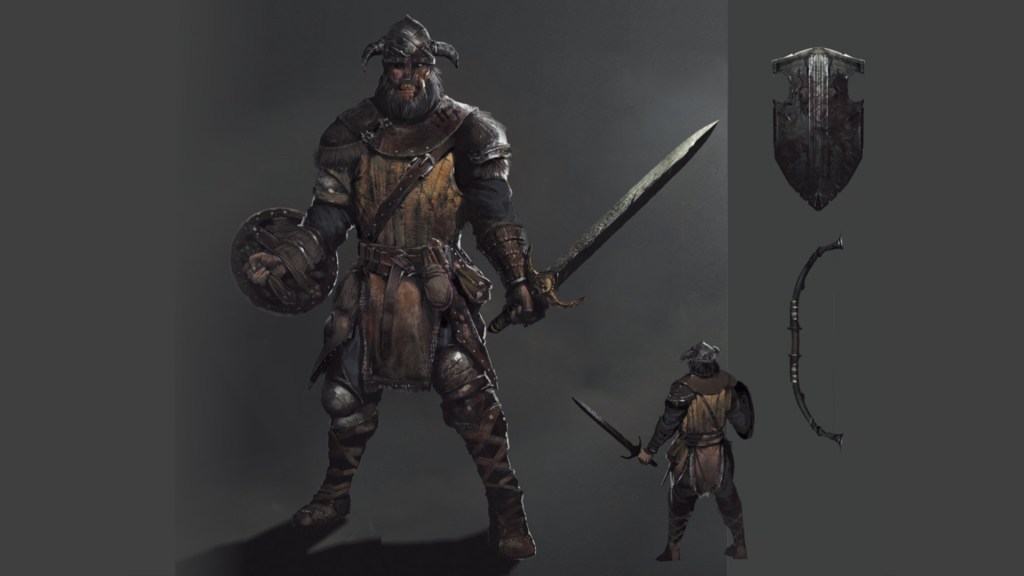
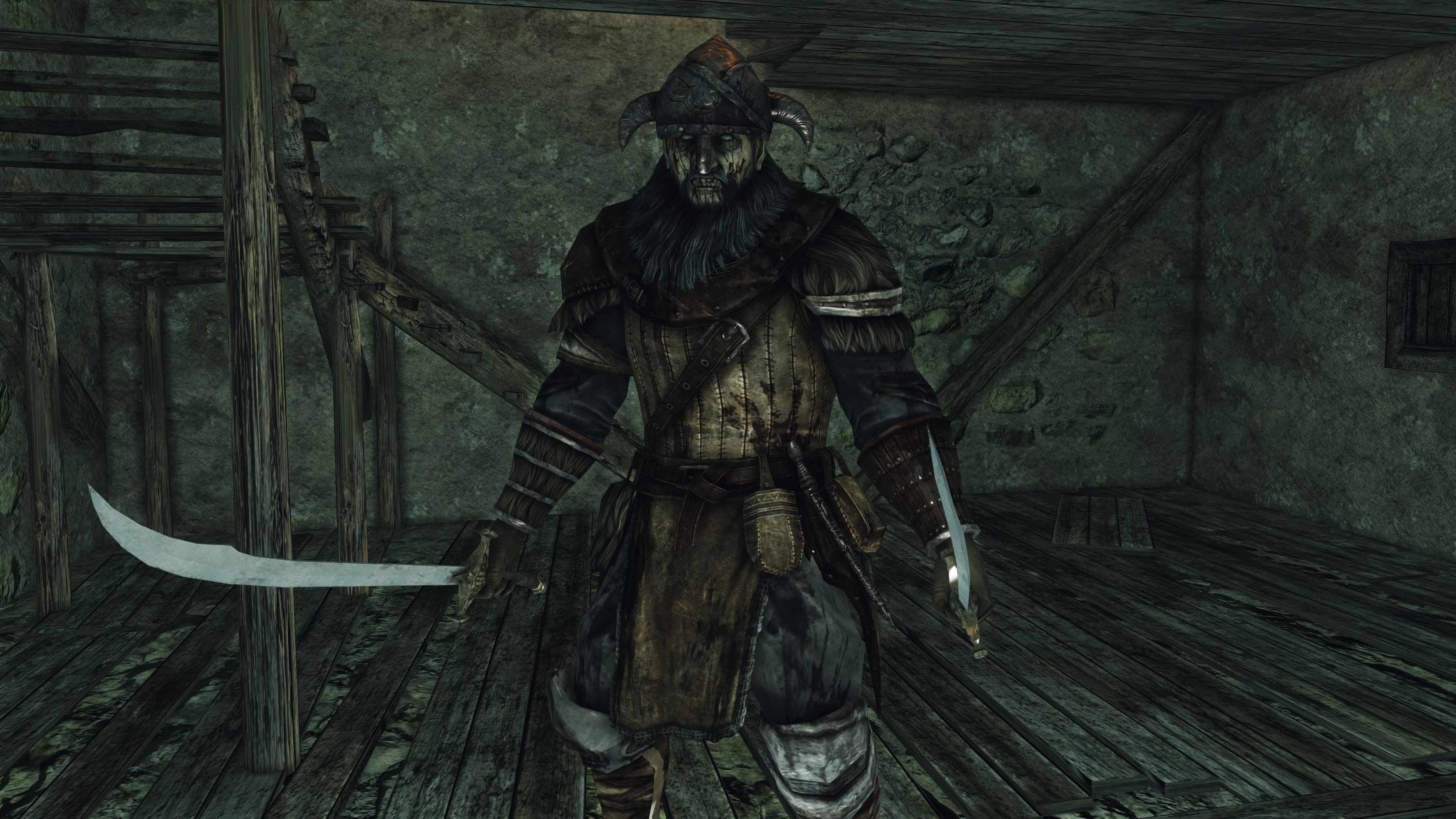
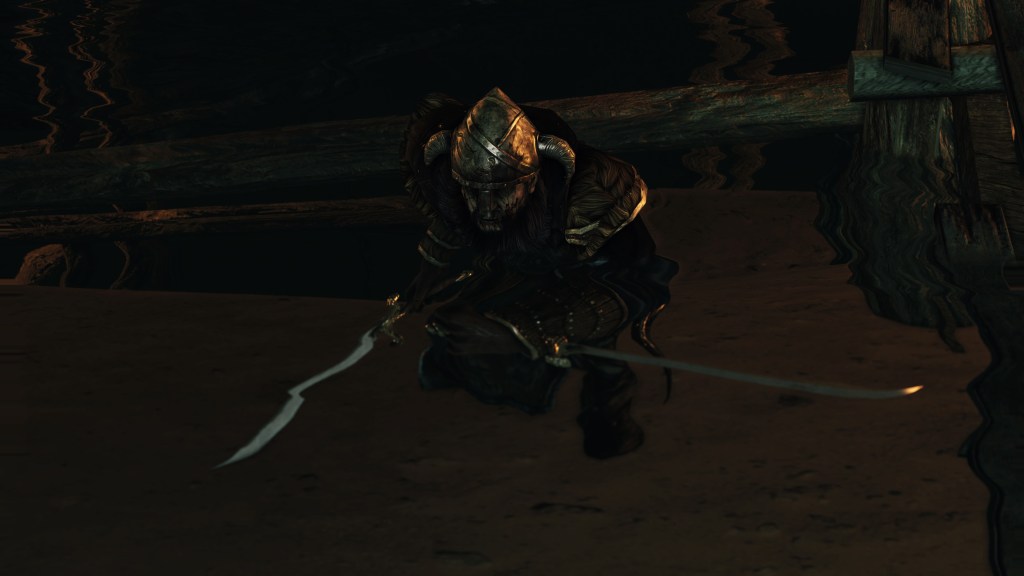
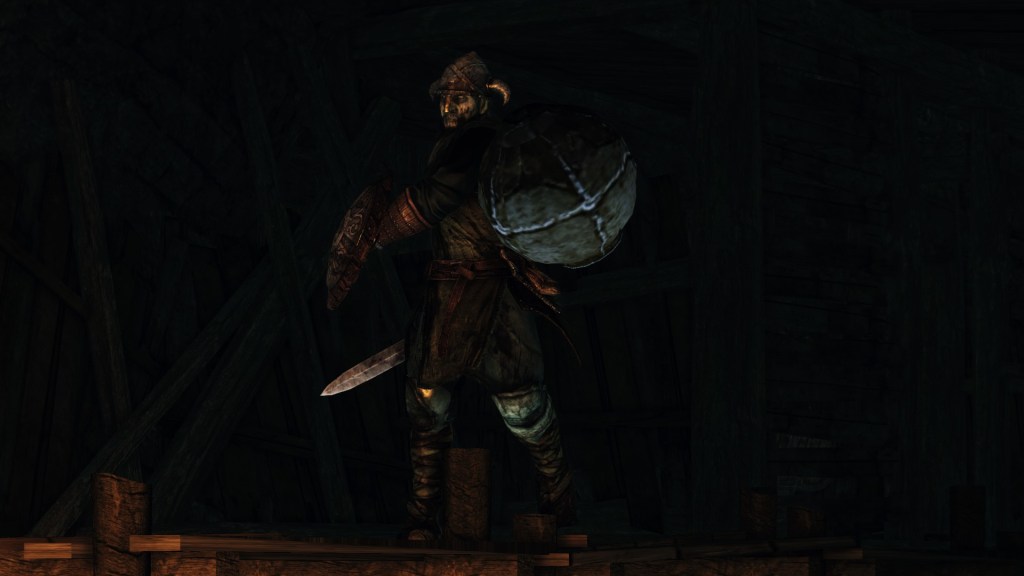
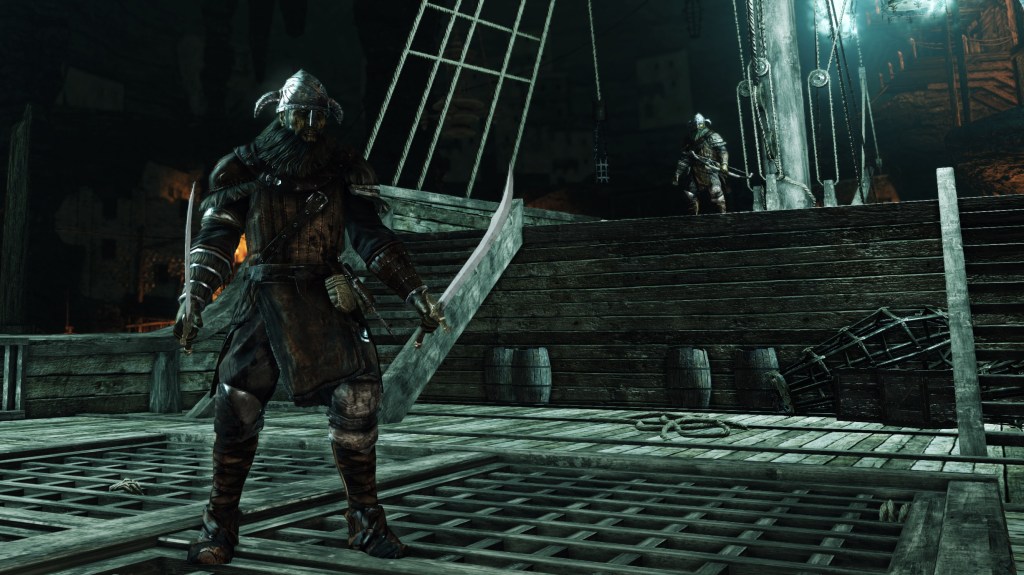
The “Dran Town Below the Castle” has been closed. Reason’s that it was attacked by barbarians long ago. They aimed to take advantage of the chaos at the castle caused by the king’s disappearance. The strategists blockaded the main gate, so invasion to the castle was fended off, but the people of the castle town were forsaken. They did something so cruel to those who were probably just awaiting help…
The gate over there is the entrance to the “Great Fire Tower of Heide”. There is a church within it. A place without anyone anymore. And then the other path… beyond it has long been shut away.
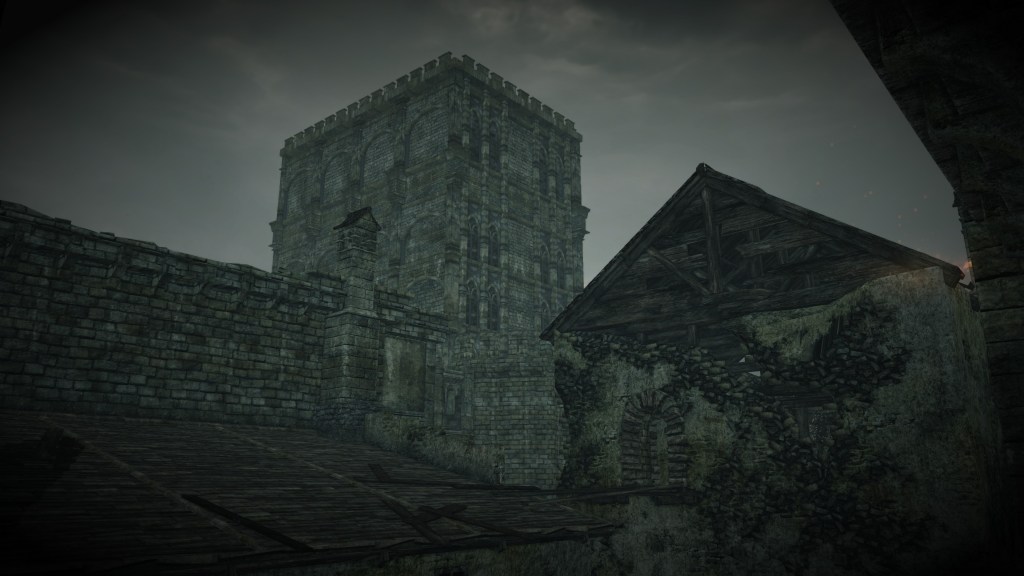
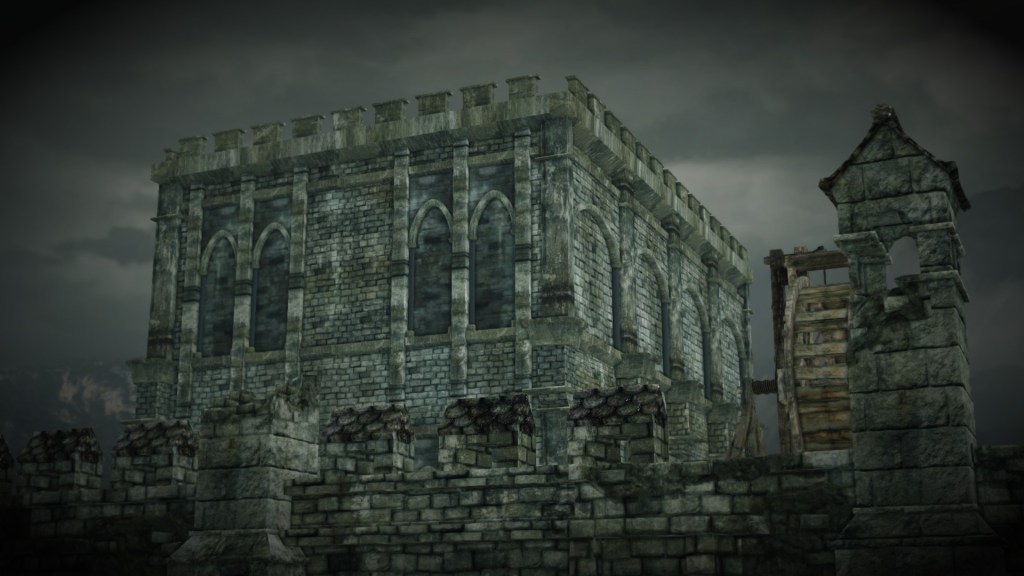
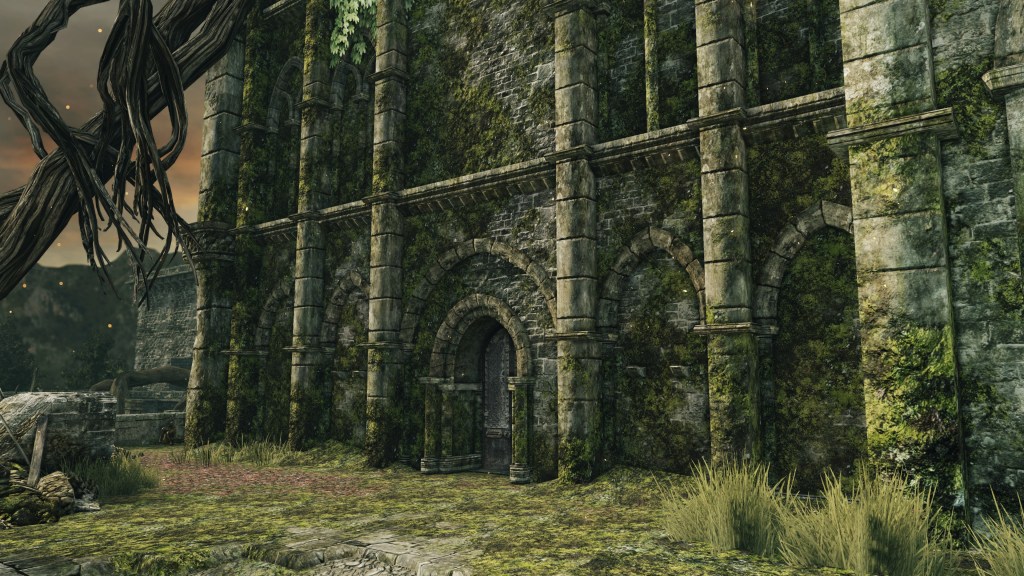
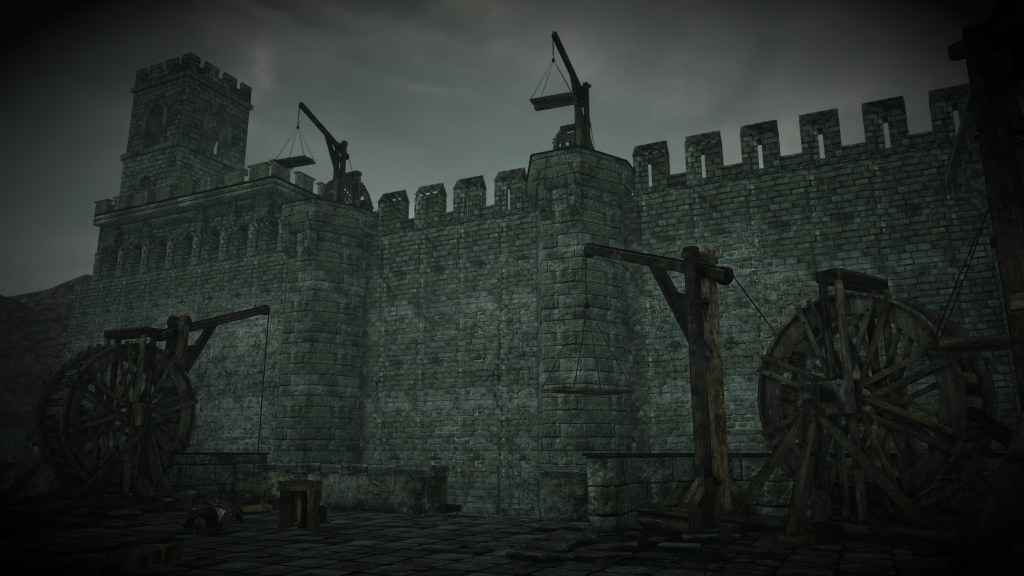
Even in its ruined state, the fortress is a massive complex with high walls and towers for a sizable garrison to man alongside other essential facilities. Its full scale is shown in the Memories of Orro and Vammar, where even larger defense towers stand tall to the east and south on the horizon. Perhaps the idea was to reach this perimeter of outposts through the network of tunnels dug into the eastern cliff the fort is built up against, allowing soldiers to safely travel to and from all the facilities via underground. Though now covered in rubble, the formal entrance atop the battlements does see the most defenses, and it is seemingly the same tunnels used to reach the walls on the western side of the fort. Alternatively, we can spy a wooden platform that connects the southern bastion to the surrounding cliffs in the memories — maybe there were roads through the forest. Whether the troops employed either, both, or none of these options, it is apparent that this is the single most robust network of defenses in the entire kingdom. The question is, to what end?
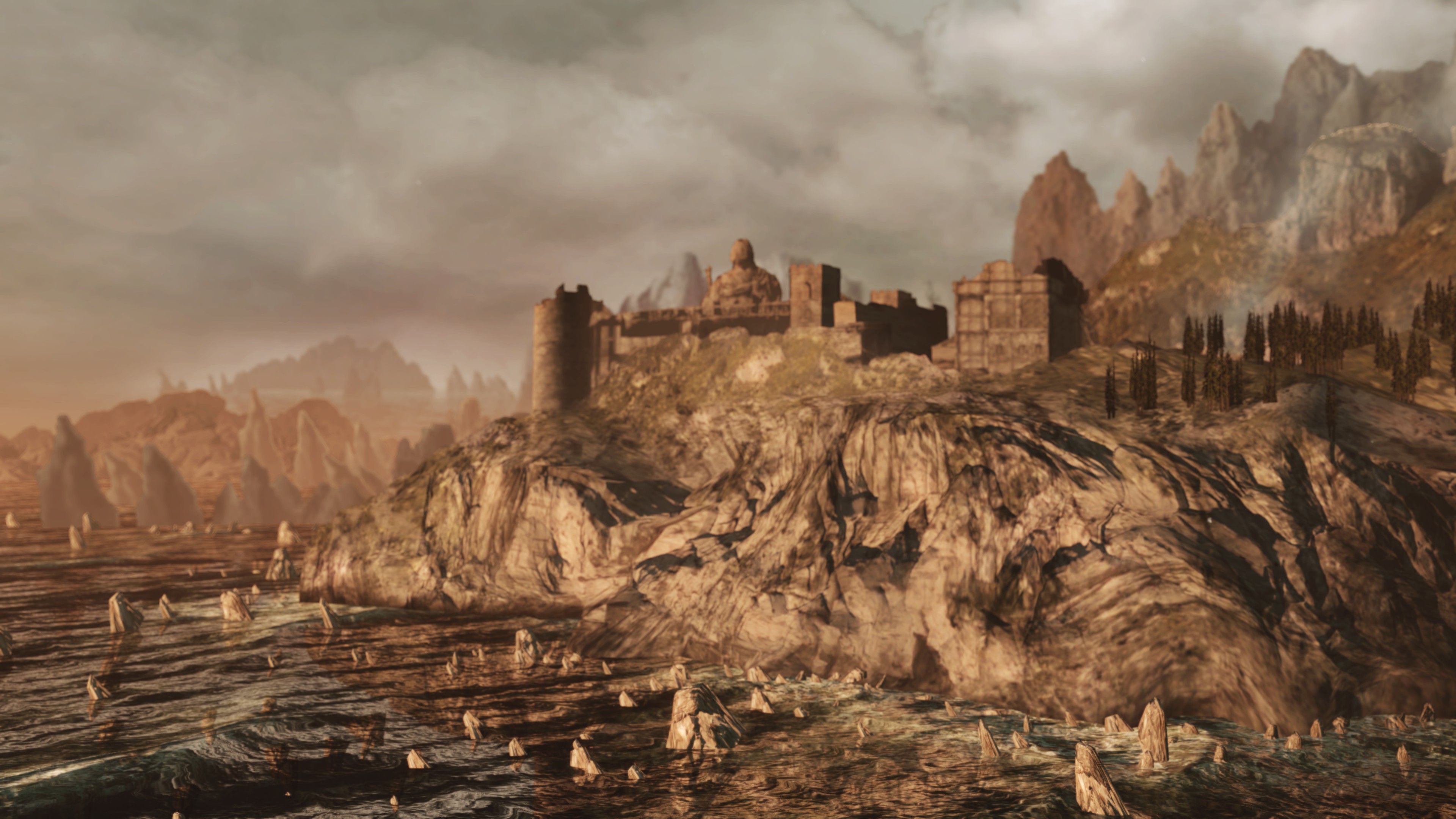
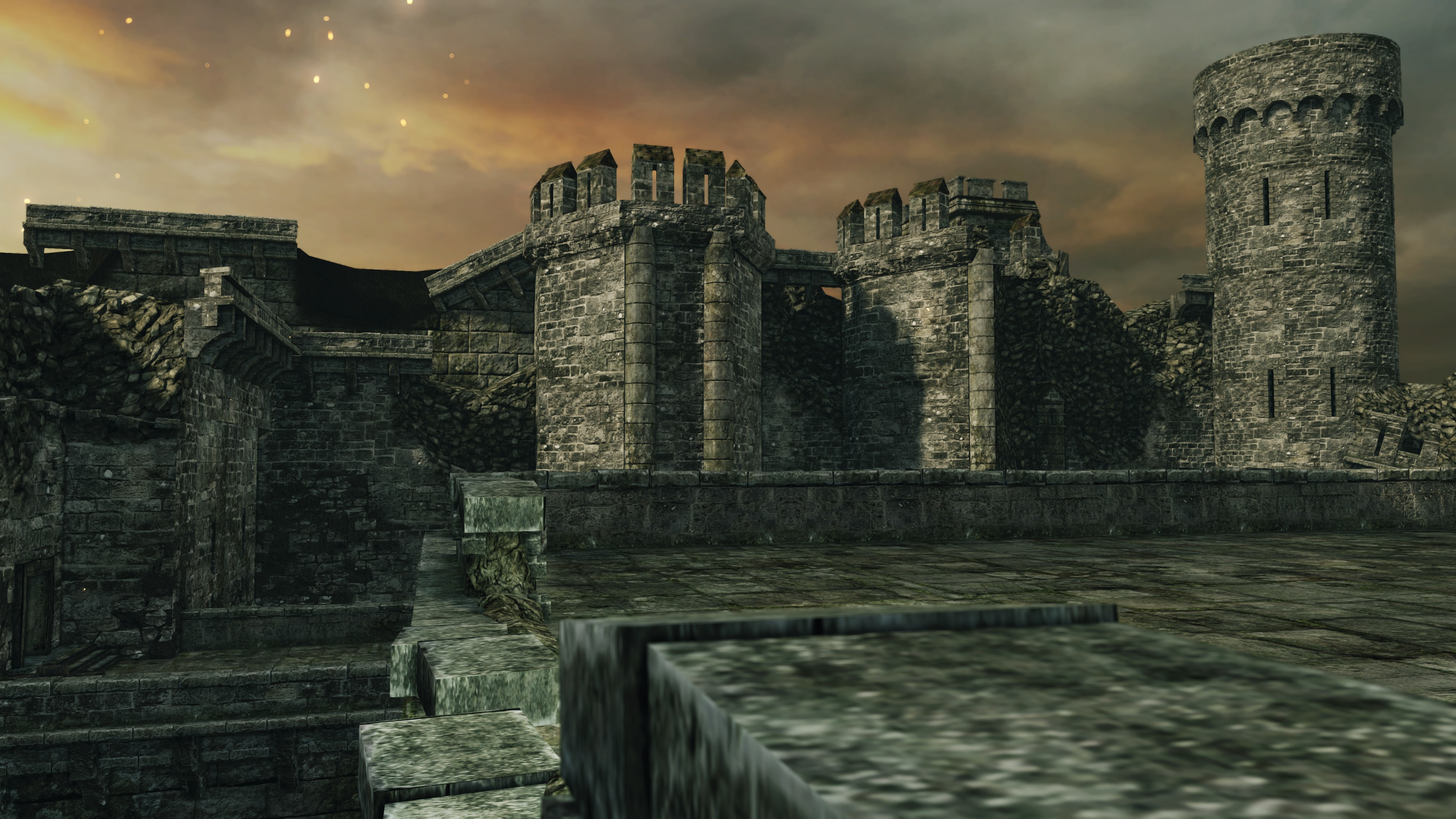
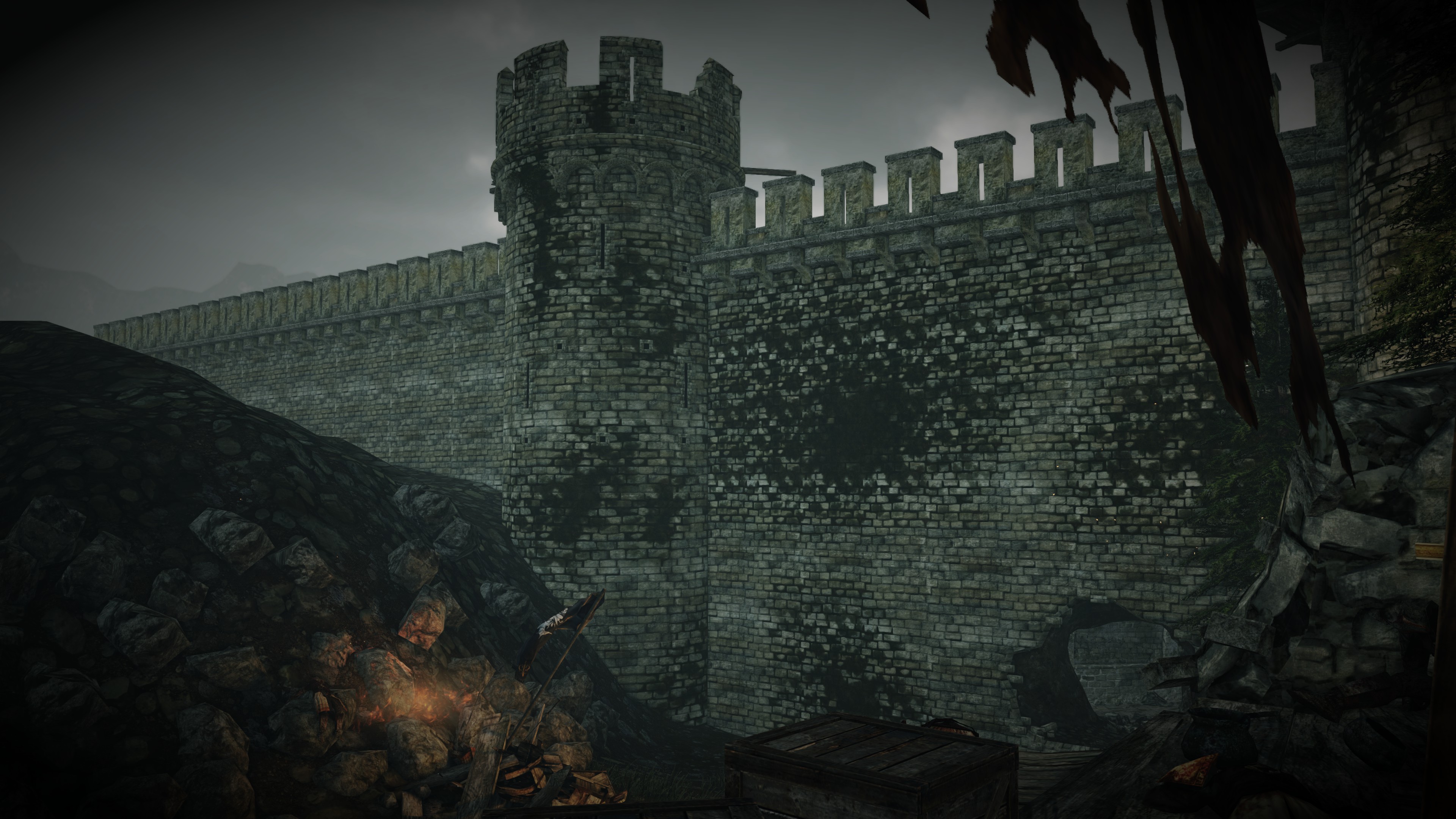
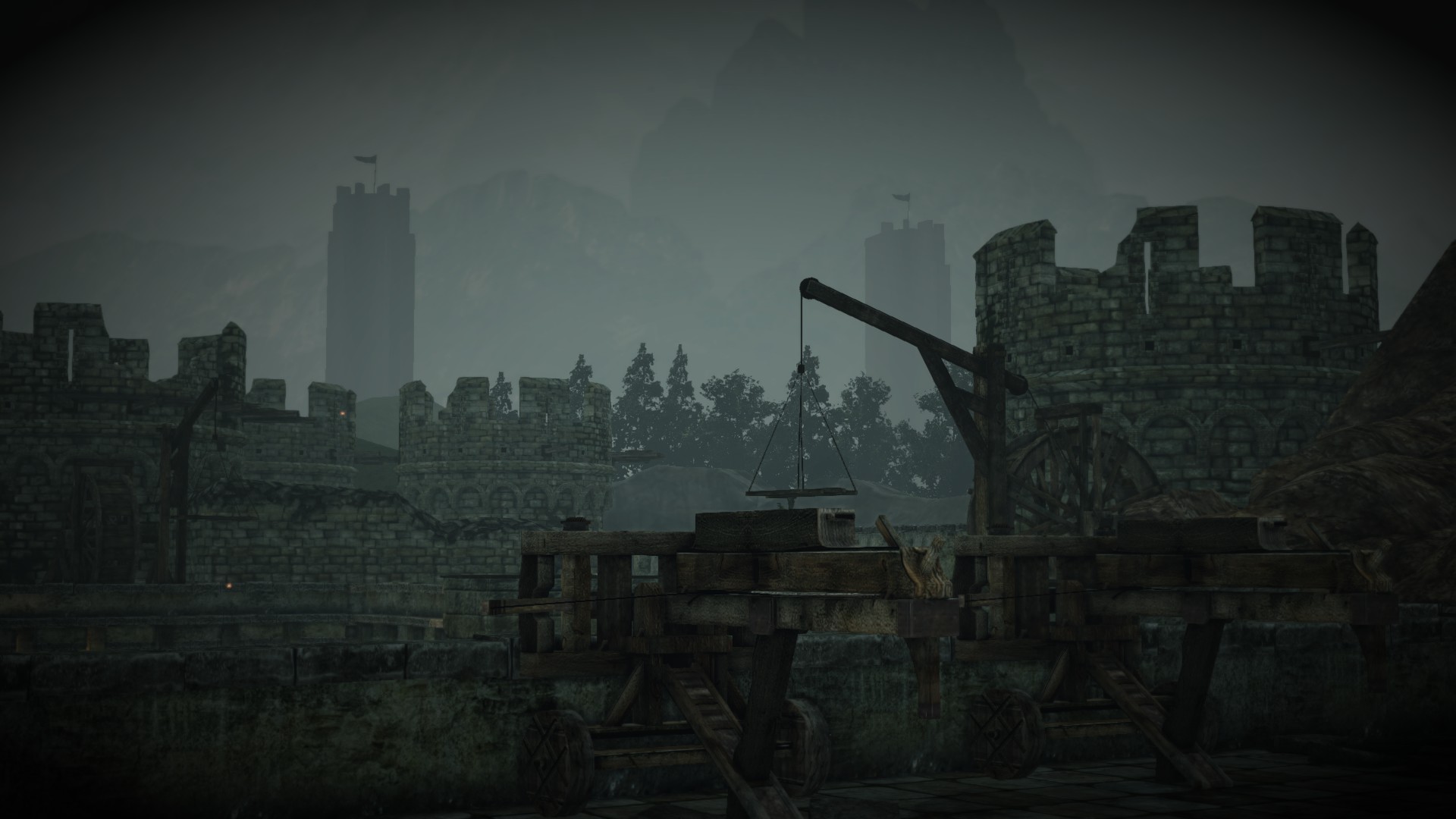
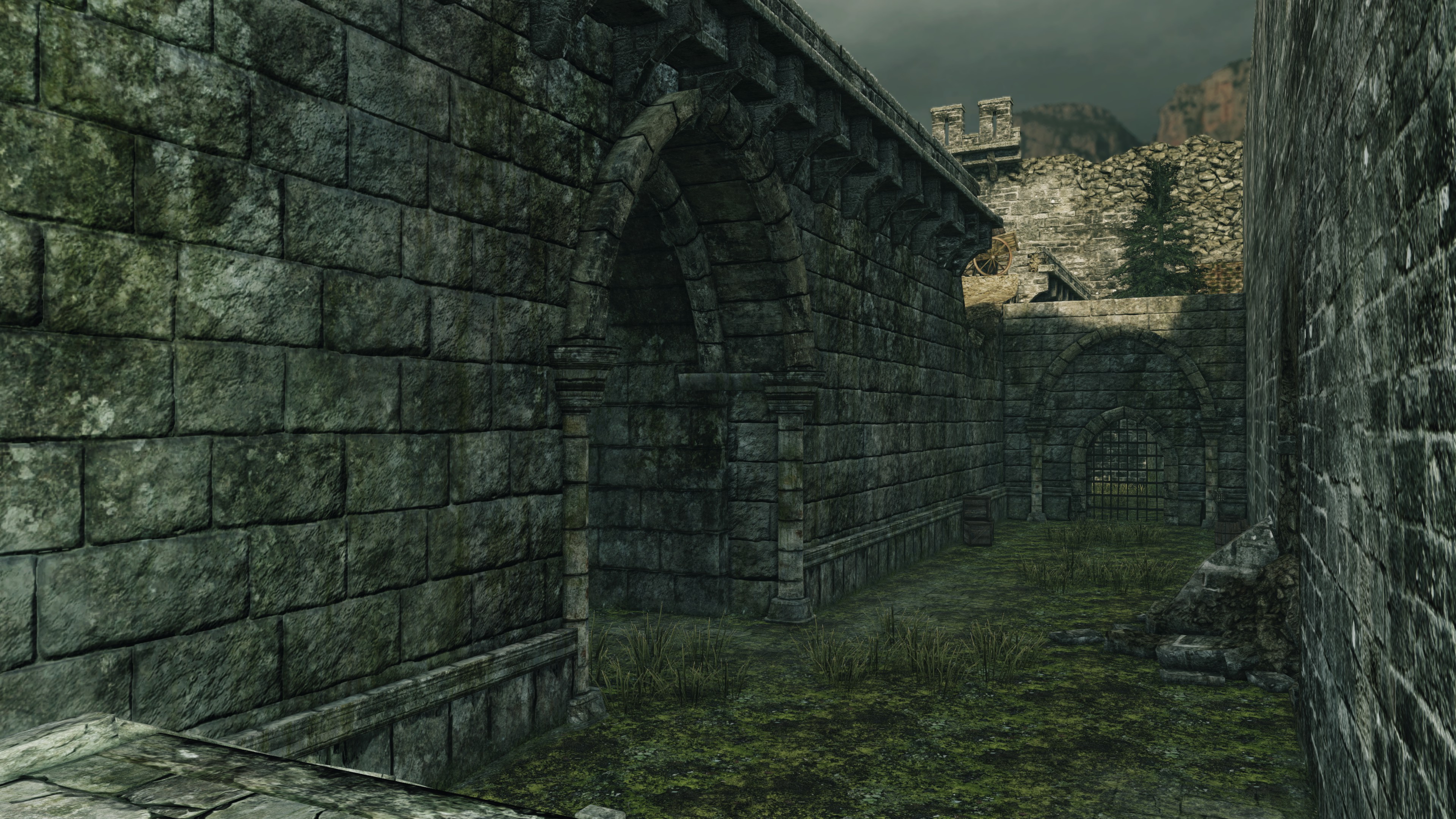
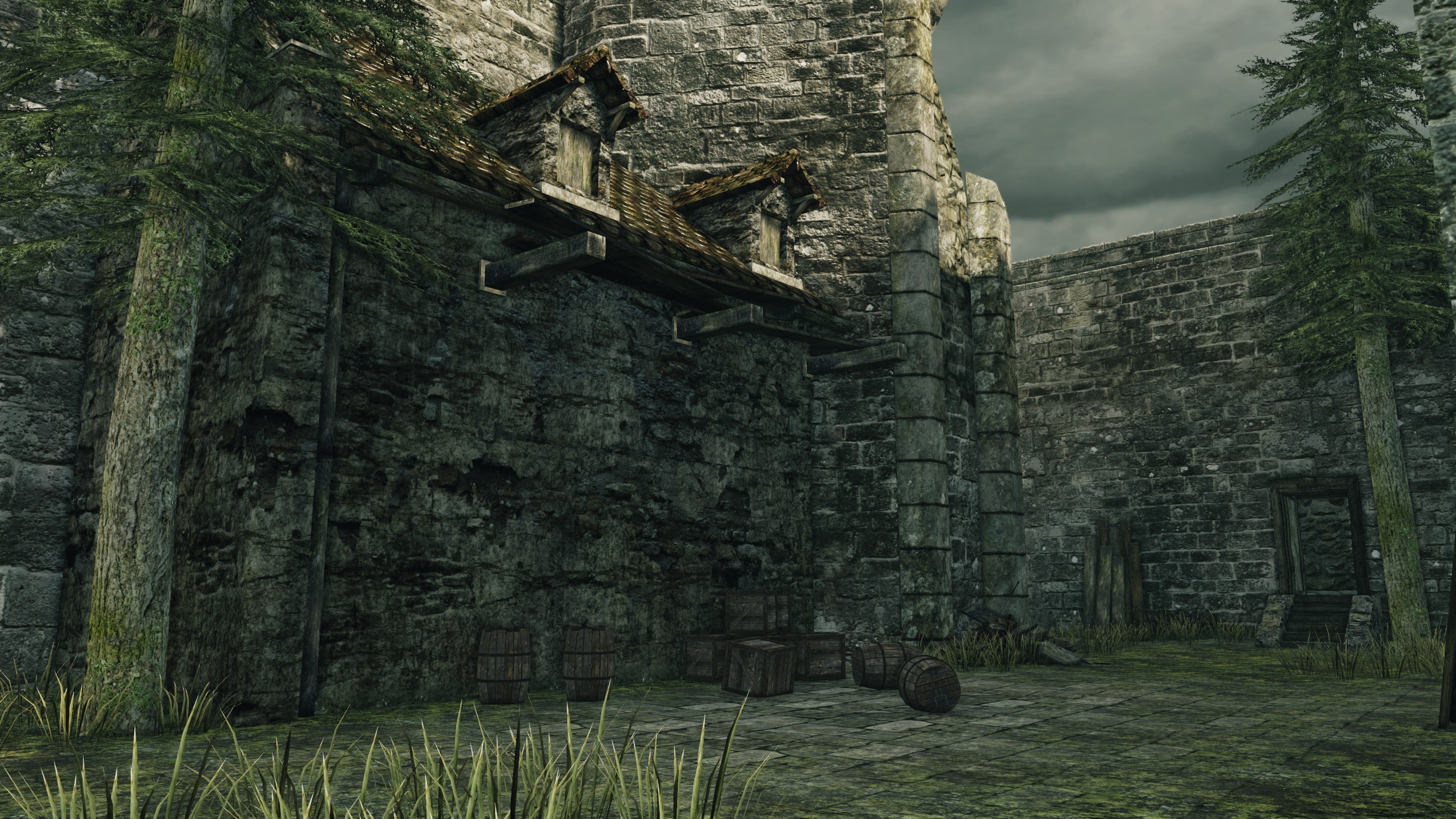
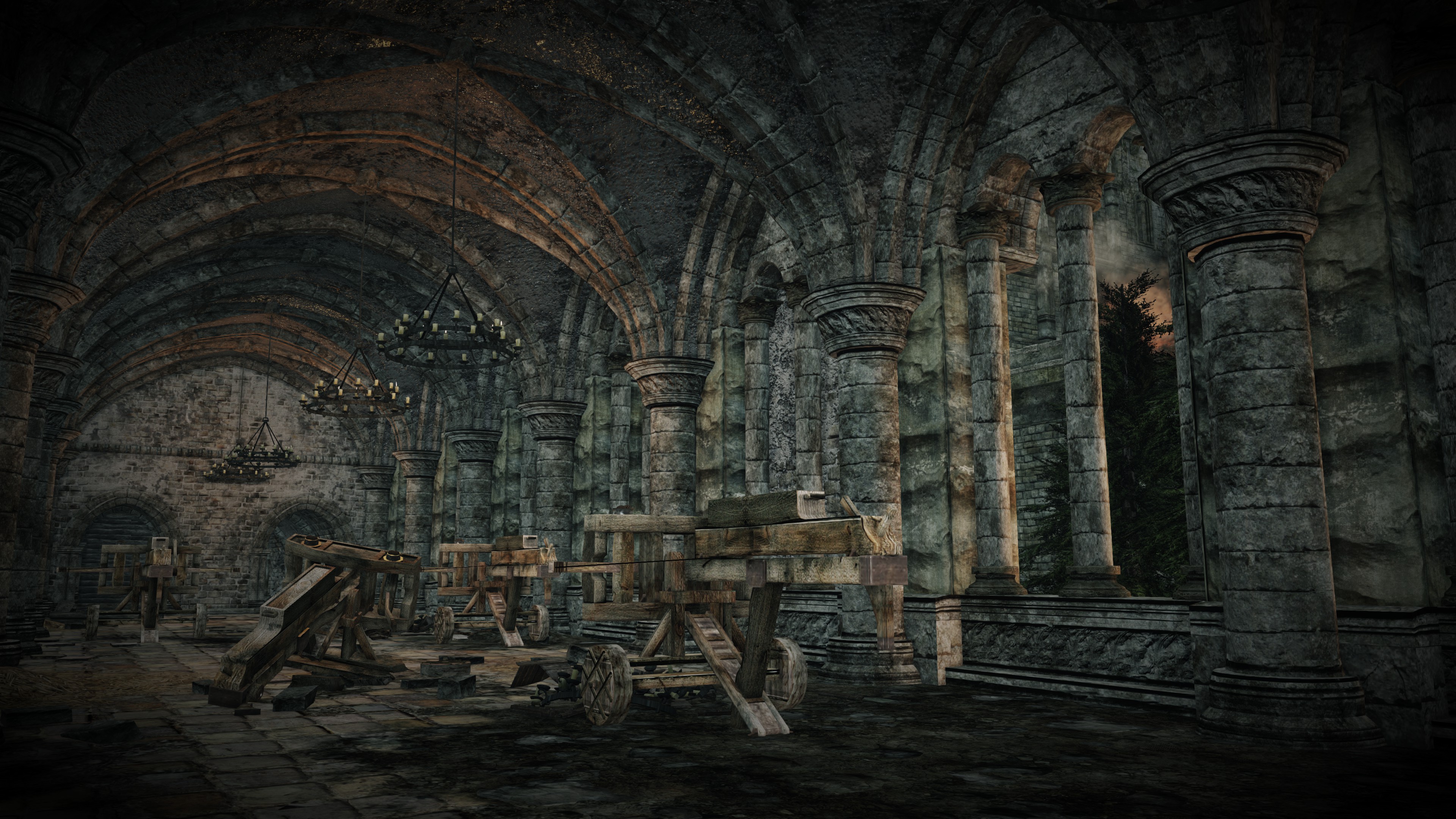
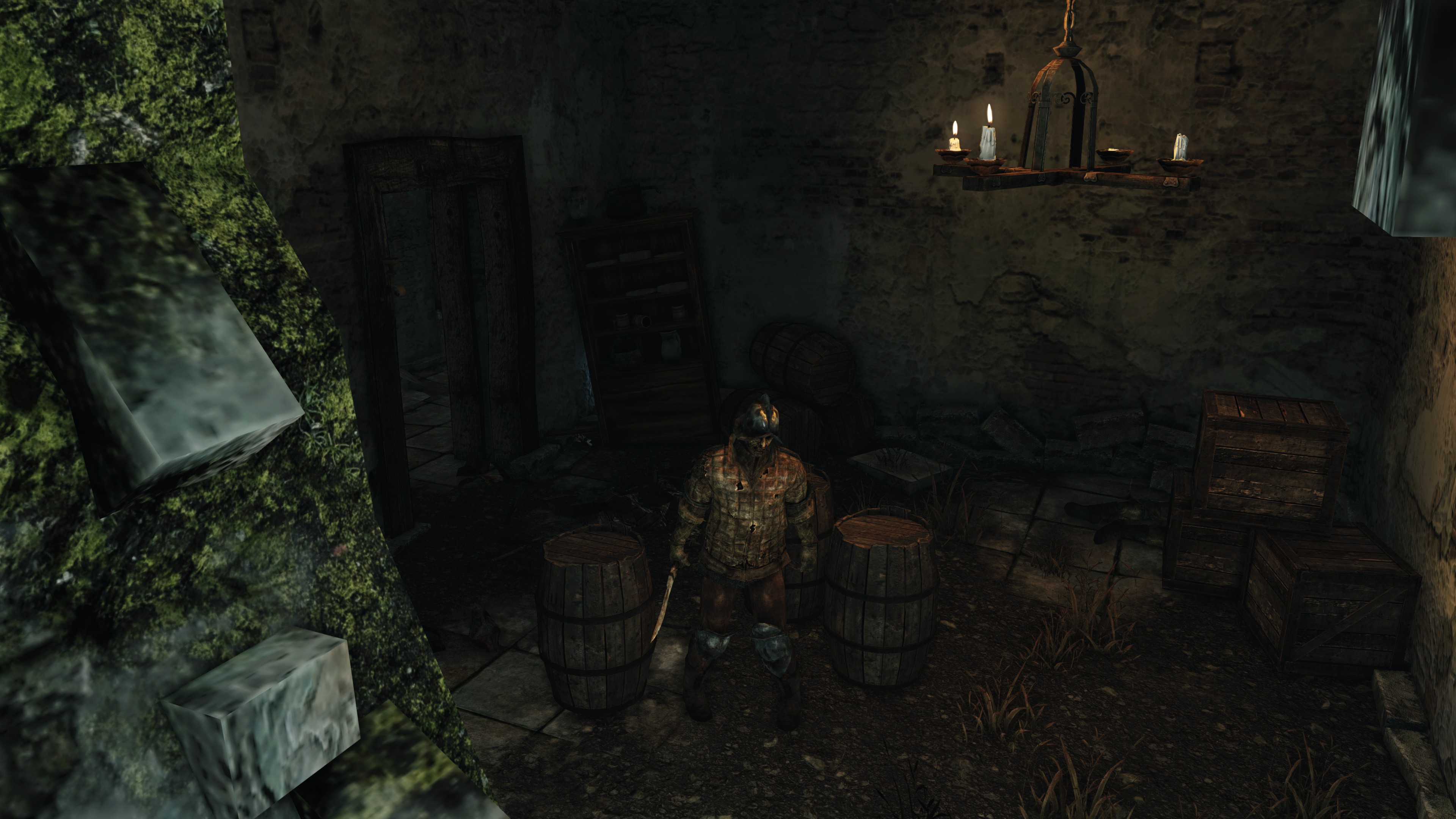
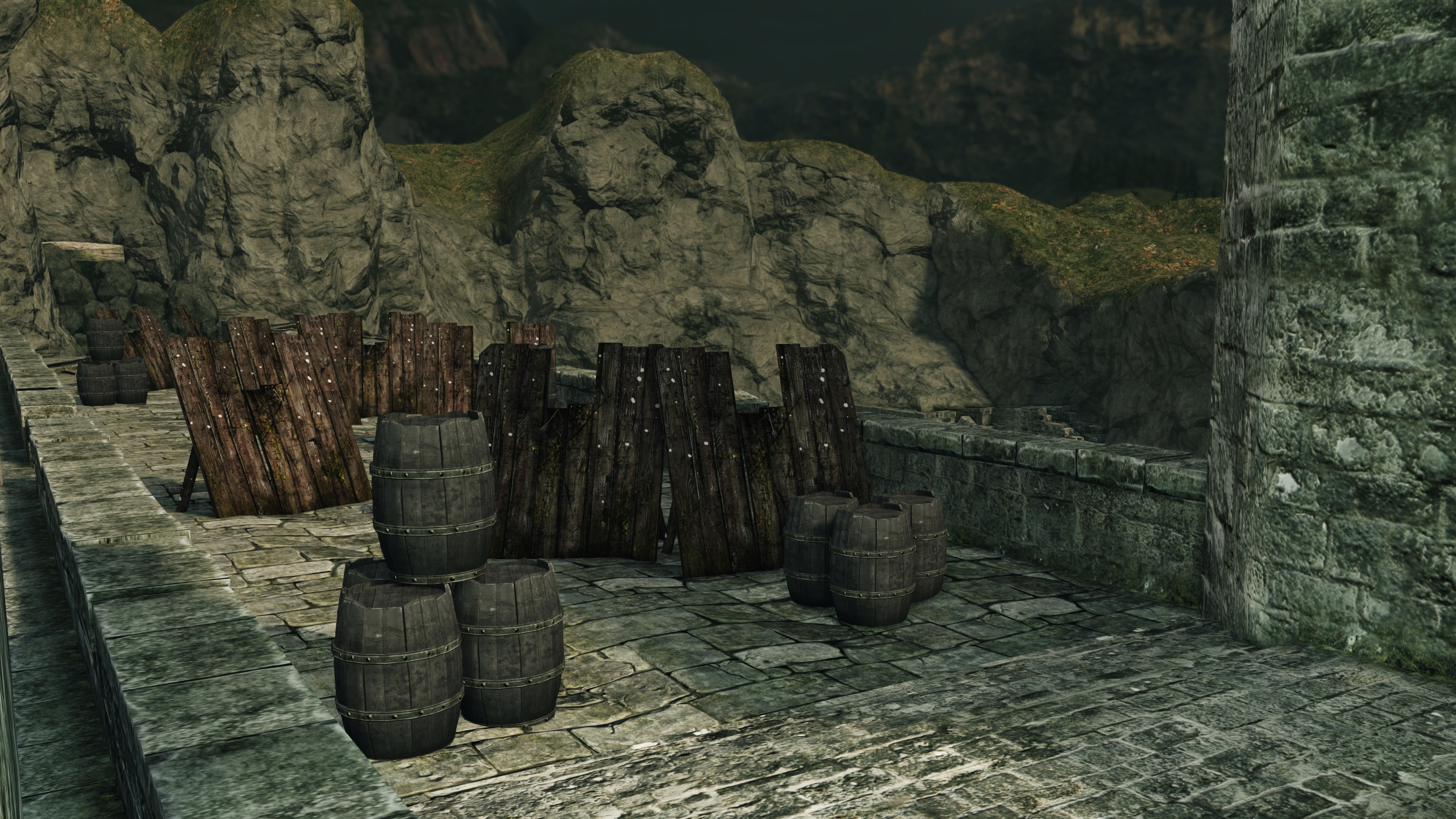
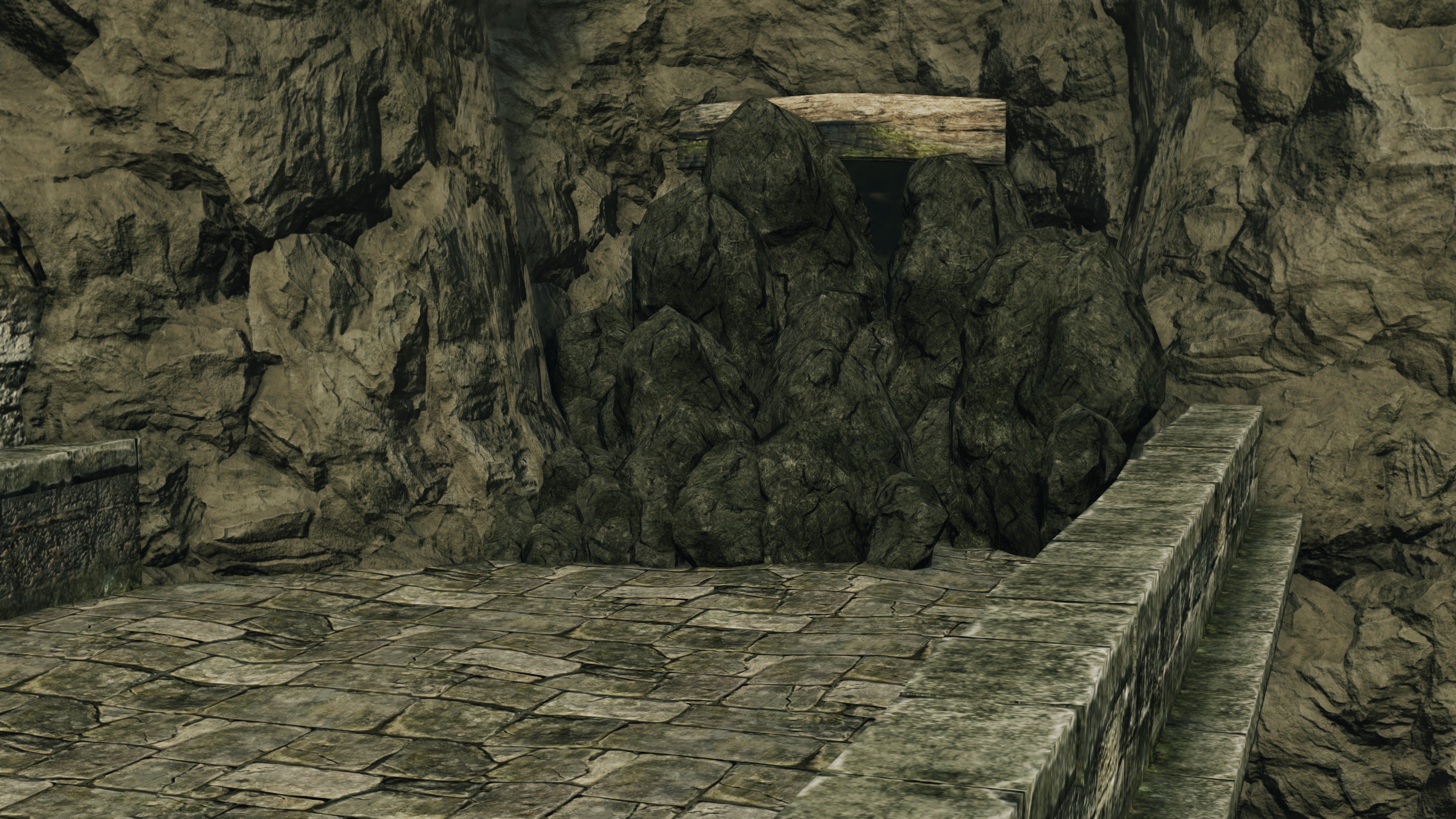
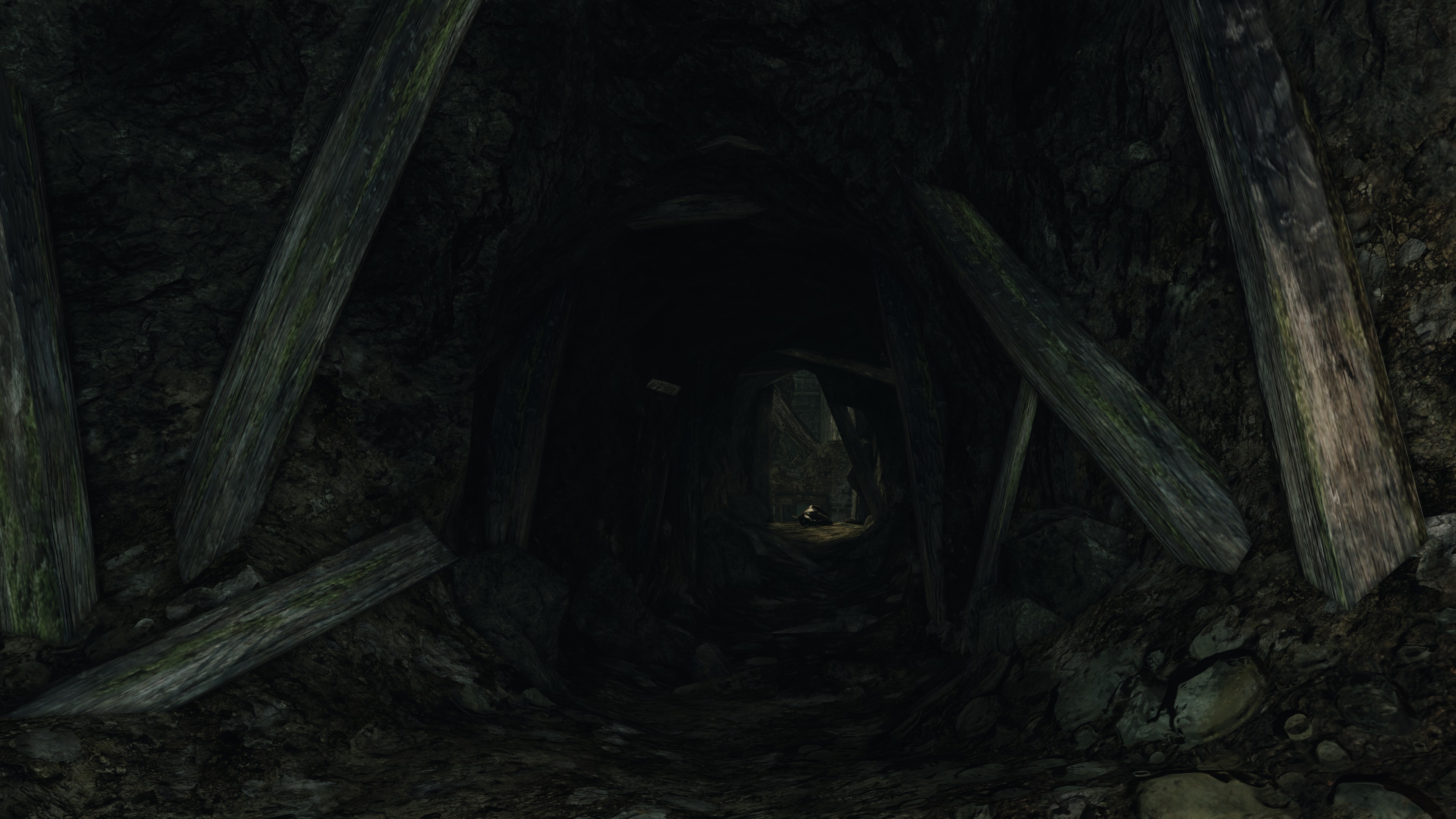

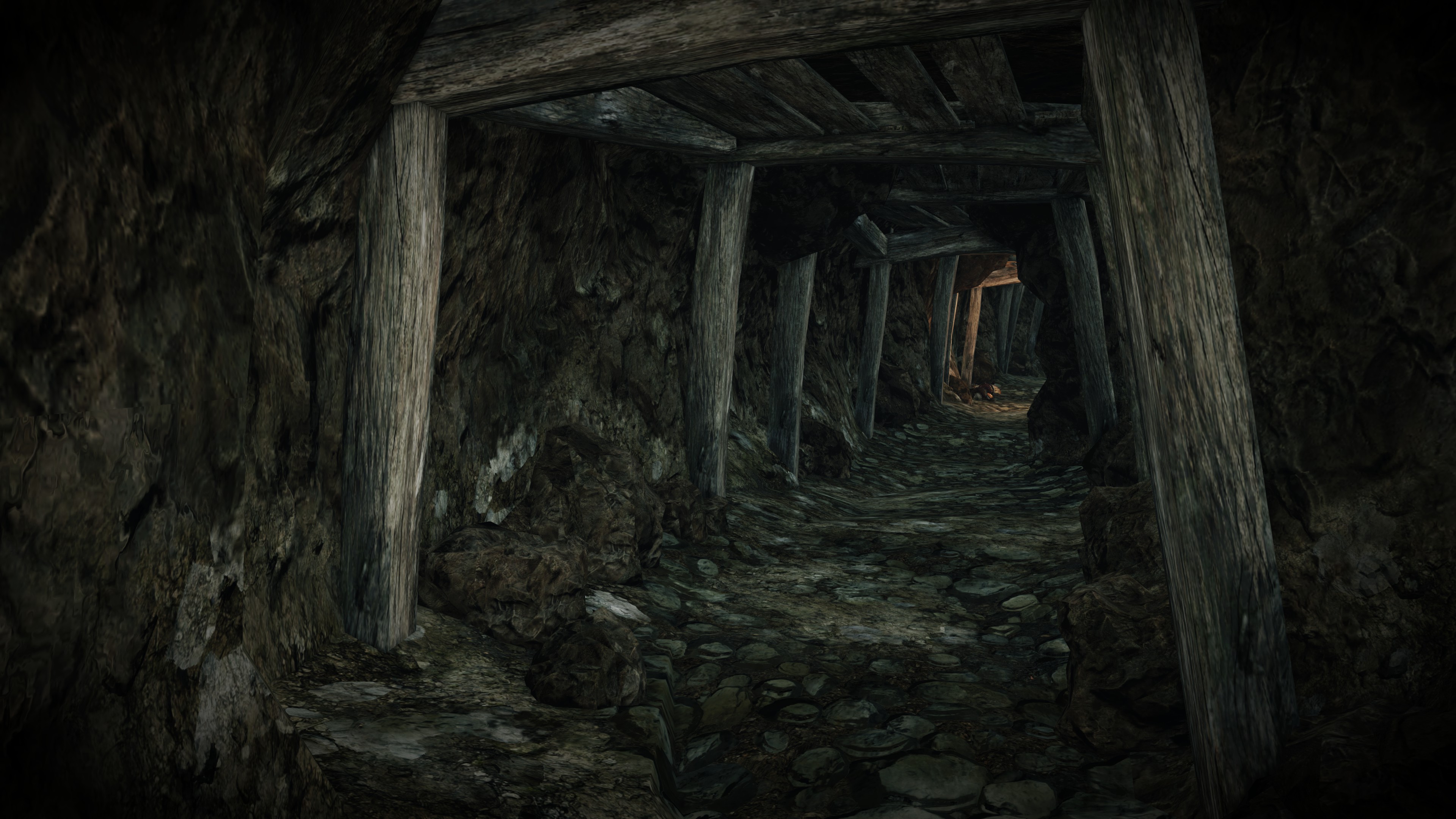
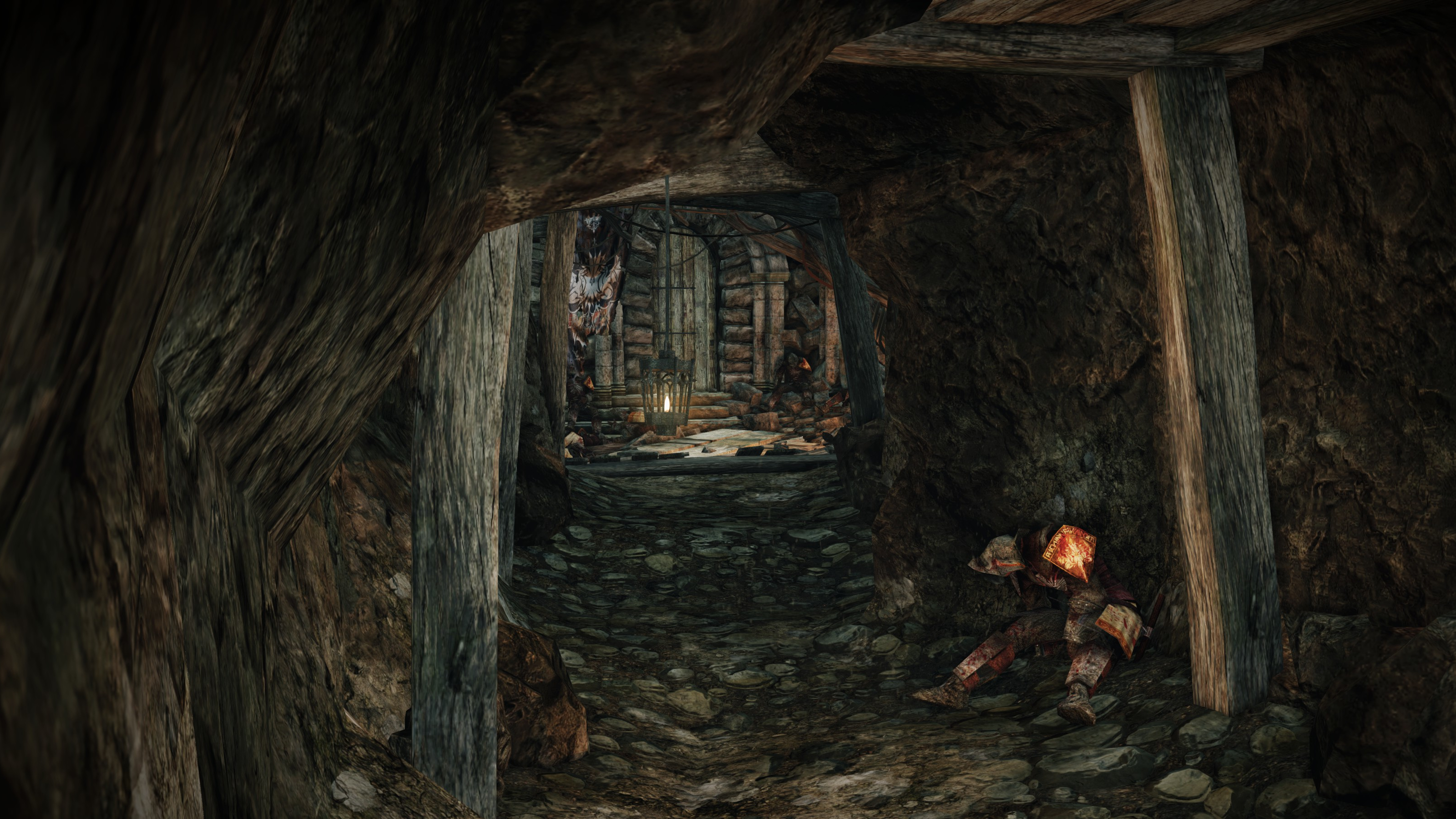
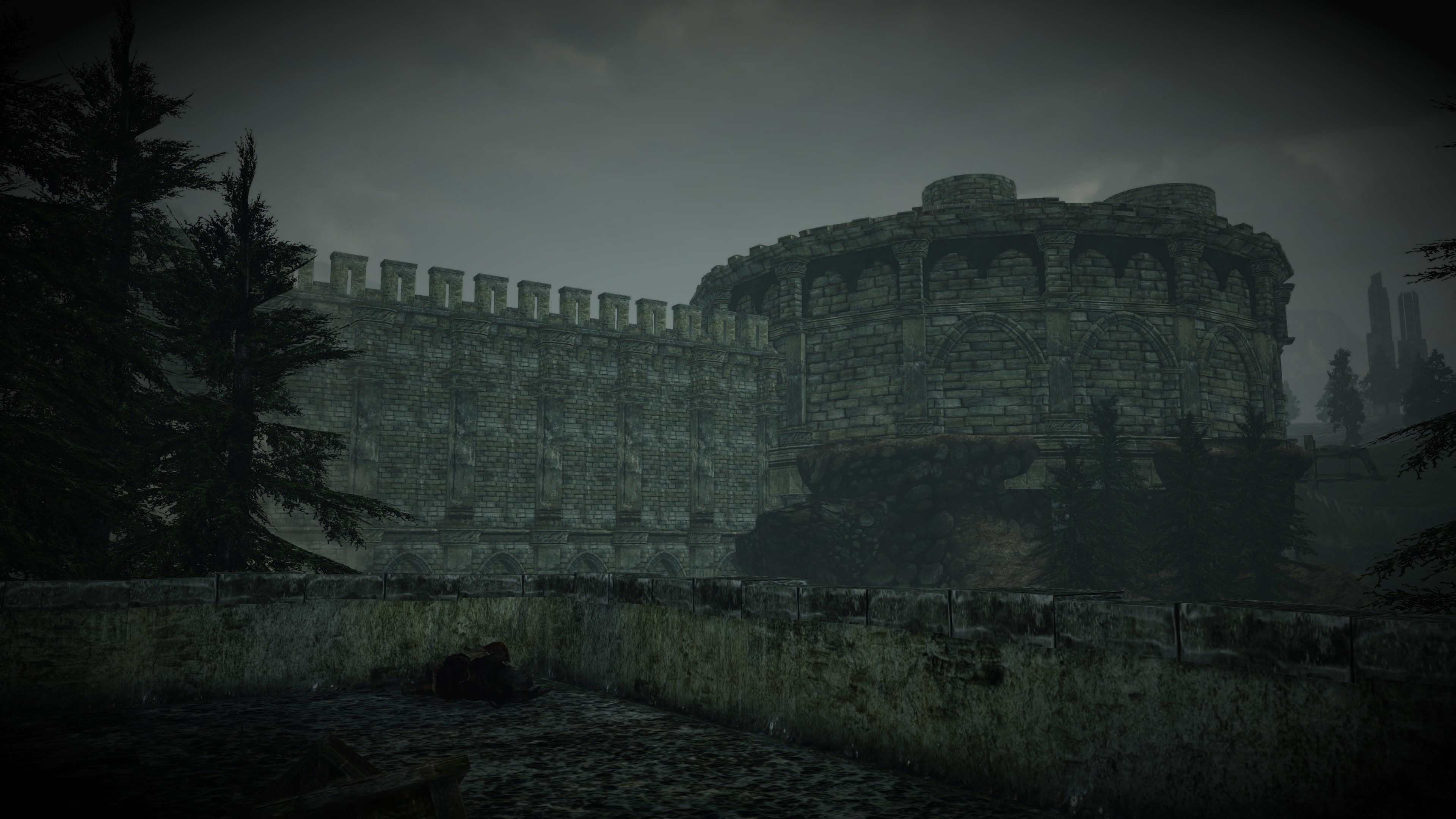
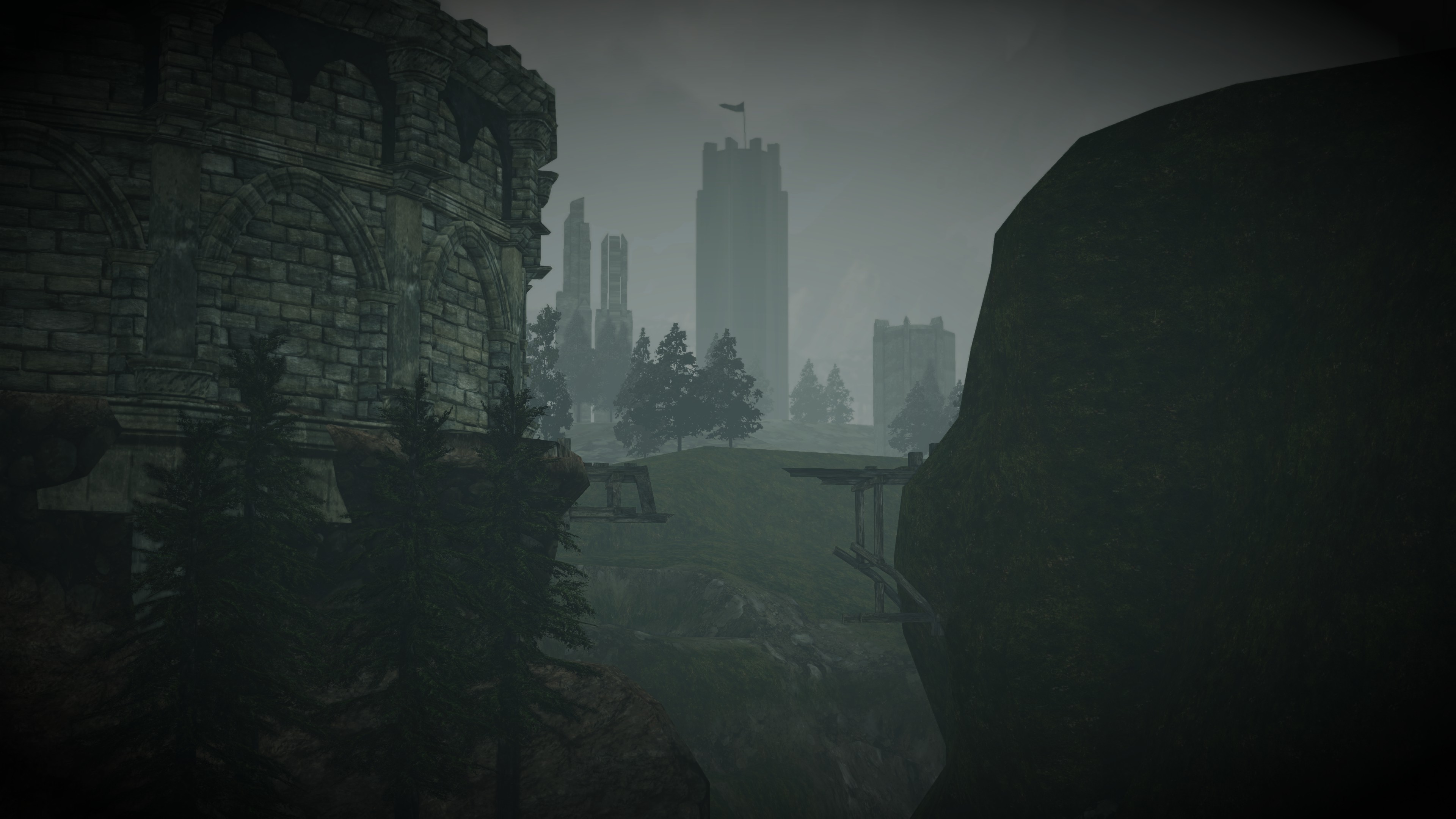
The fort was undeniably built to withstand heavy siege. At the back, behind all the walls, hides the “soldier’s shelter” (兵の避難所) for the garrison to use as a barracks, an excellent place for rest and retreat while under bombardment. Highlighting that aspect, a broken wooden platform would have connected the southern bastion to these facilities via another blocked tunnel. Conversely, this passage would have doubled for swift deployment. When the time finally came to man the battlements, the soldiers’ had items like the Chloranthy Ring with its powers of stamina regeneration to help them endure longer enemy assaults, especially behind a shield — such as the Blossom Kite Shield with a similar effect removed from there with the big fix. Someone was even keeping the heavy steel armor of the “strongest” knights in history on hand to weather those kind of heavy attacks. Between the soldiers and their walls, anyone trying to come up from the sea and make landfall there would face solid resistance.
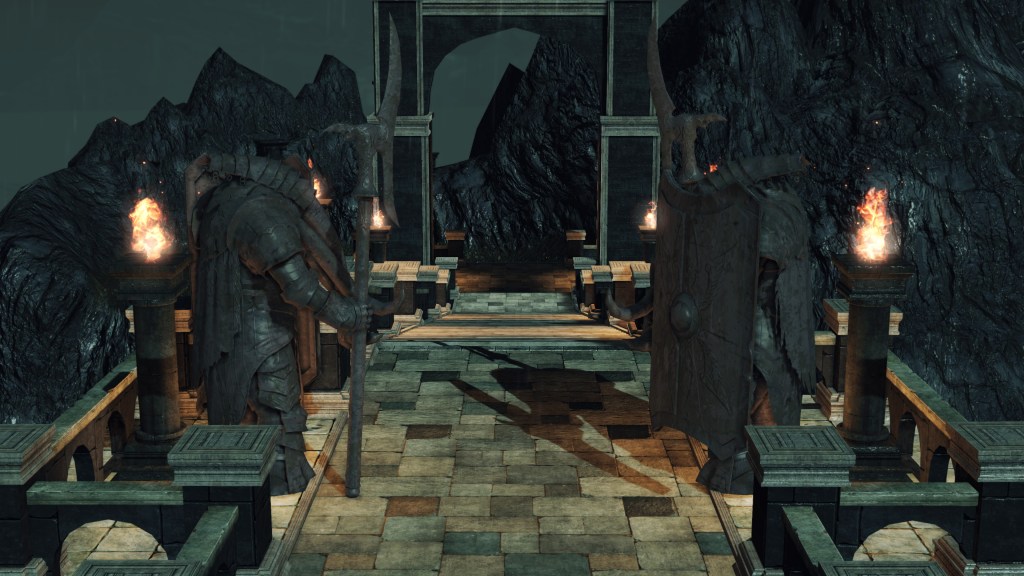
On the flip side, the army stores held no shortage of black powder for firebombs to throw in their own barrages. The fort is also home to large and small leather shields preferred by hunters, a chest storing the full leather set for such woodsman from DS1 along with the soul of a renown knight — appropriate for a military installation surrounded by wood. However, beyond foraging, the Hunter’s Hat there plus Hunter’s Blackbow at the royal castle betray soldiers’ wish to snipe foes from the ramparts just as the legendary “Evlana” would; the Hawk Ring acquired at the same fort reinforces this impression. The colossal statues of elegant swordsmen with equally impressive greatshields facing out to sea couldn’t convey a more accurate message: the royal army of Drangleic is ready to defend against any invader.
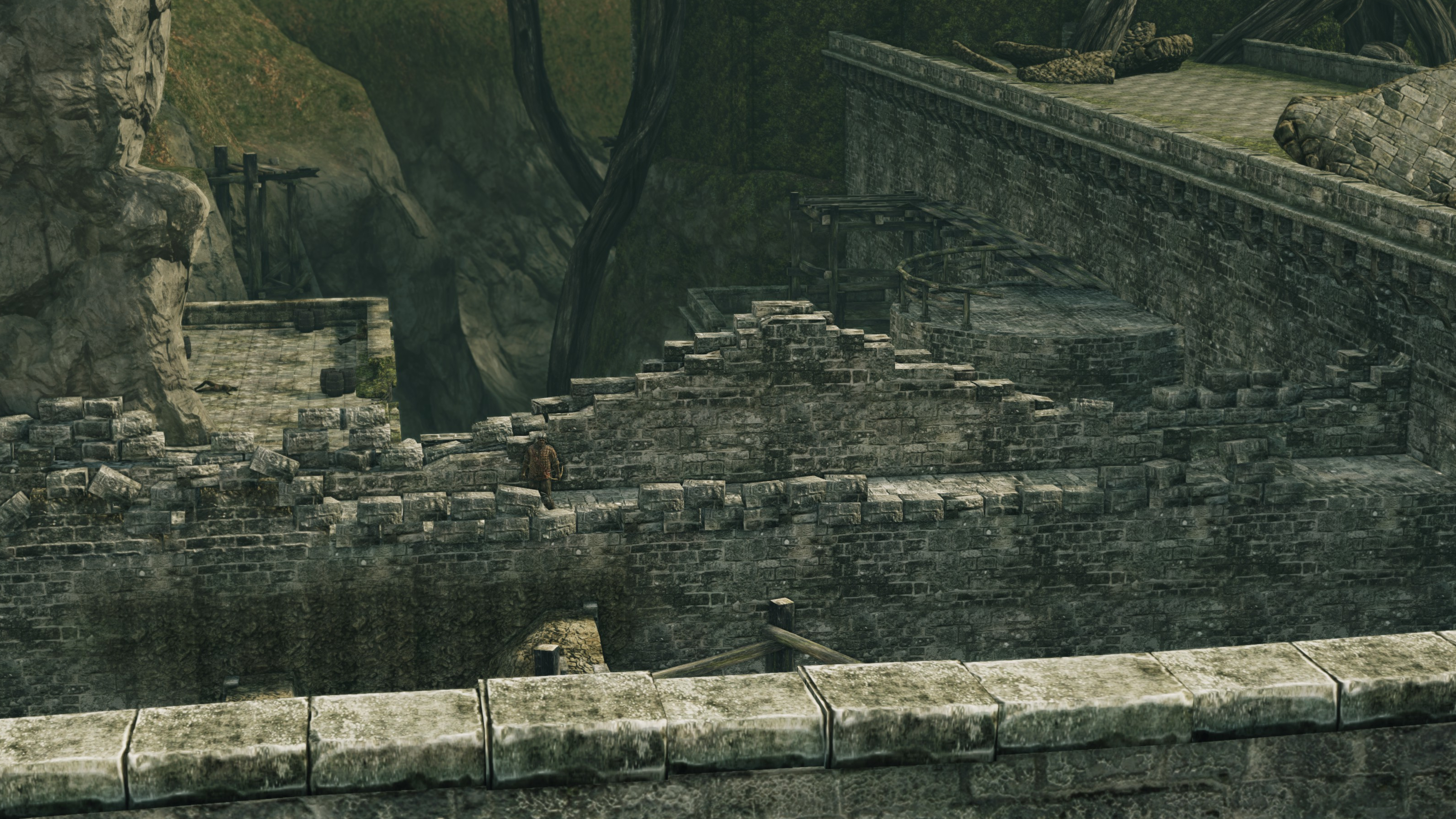
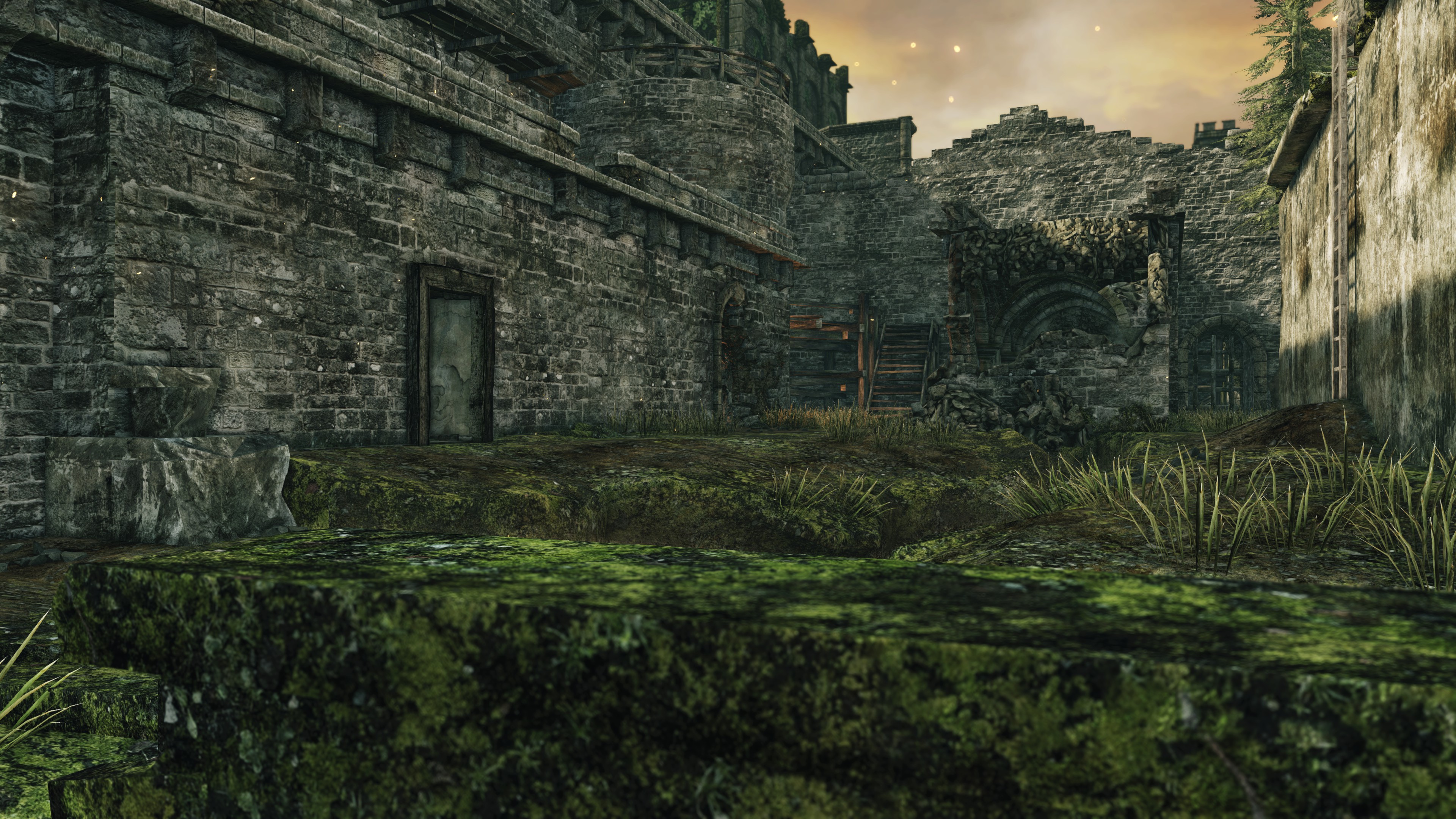
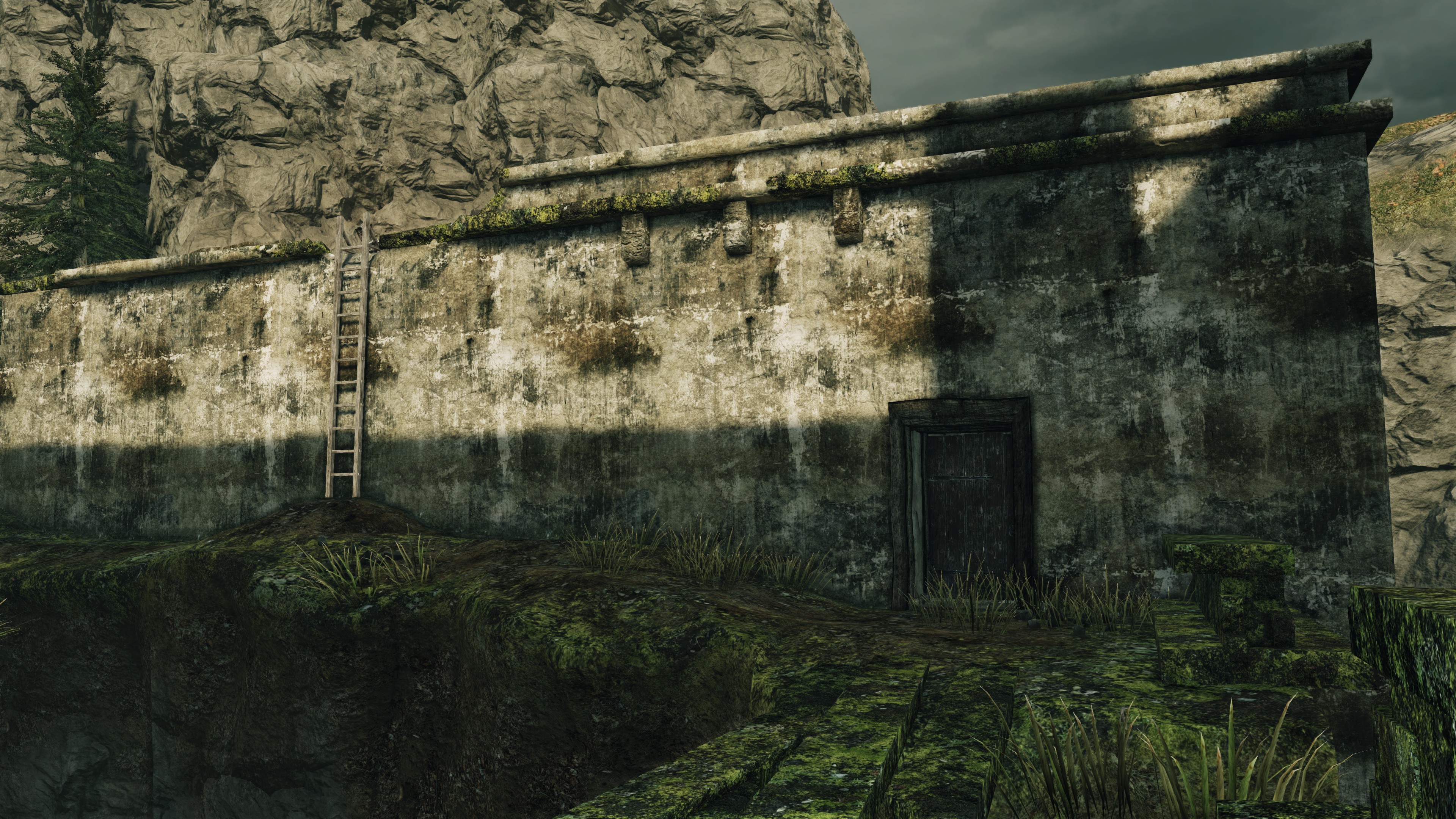
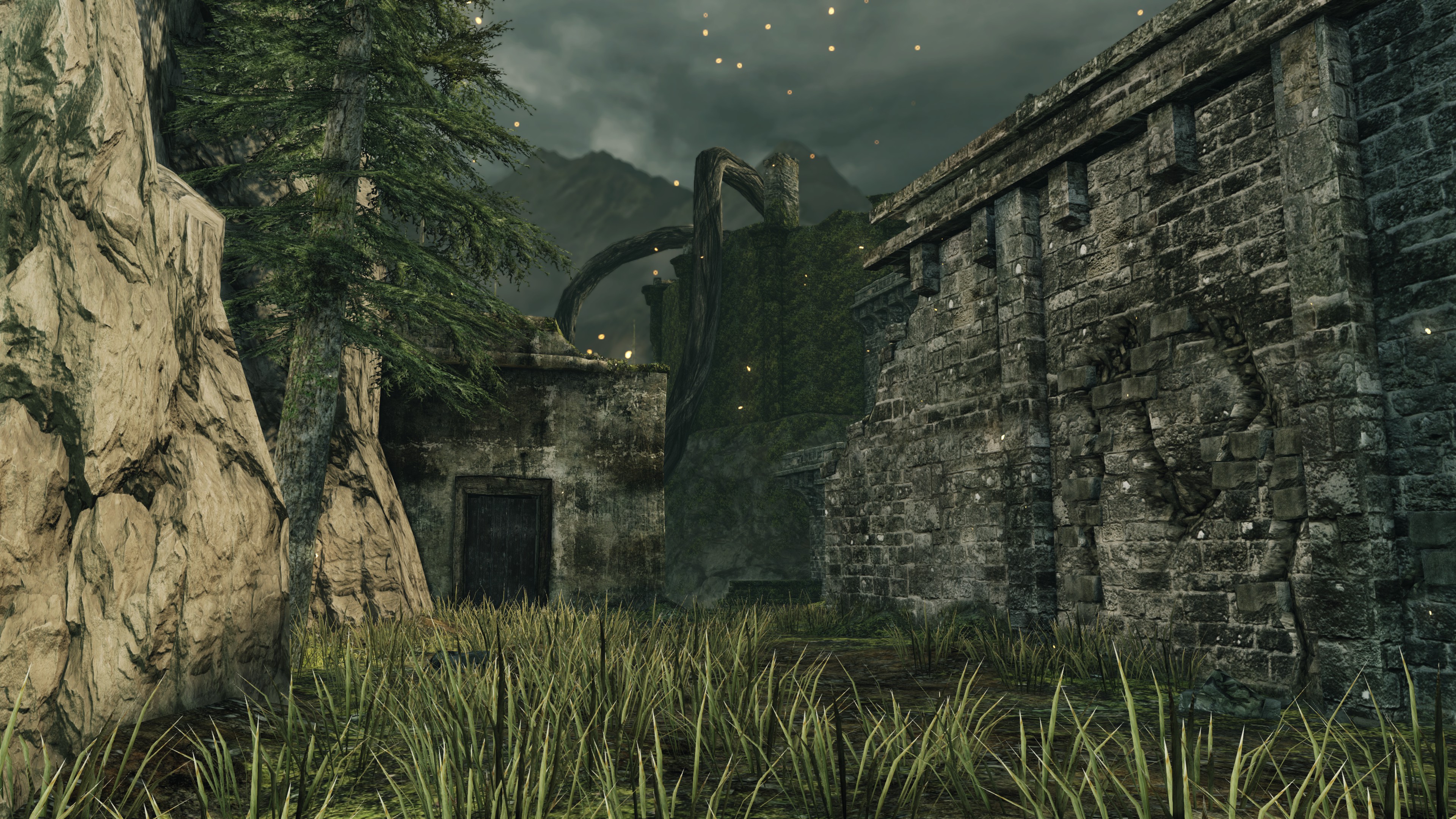
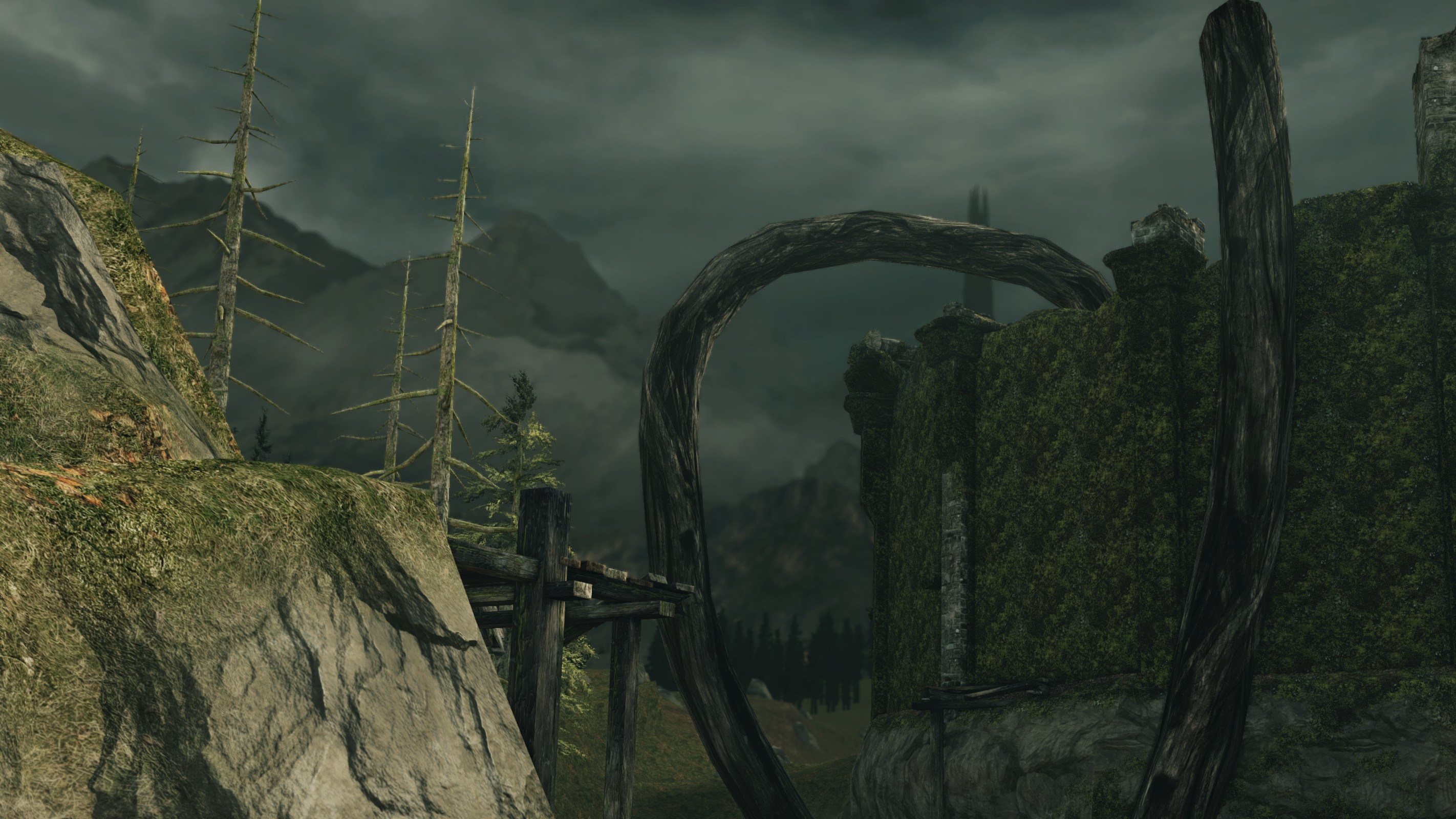
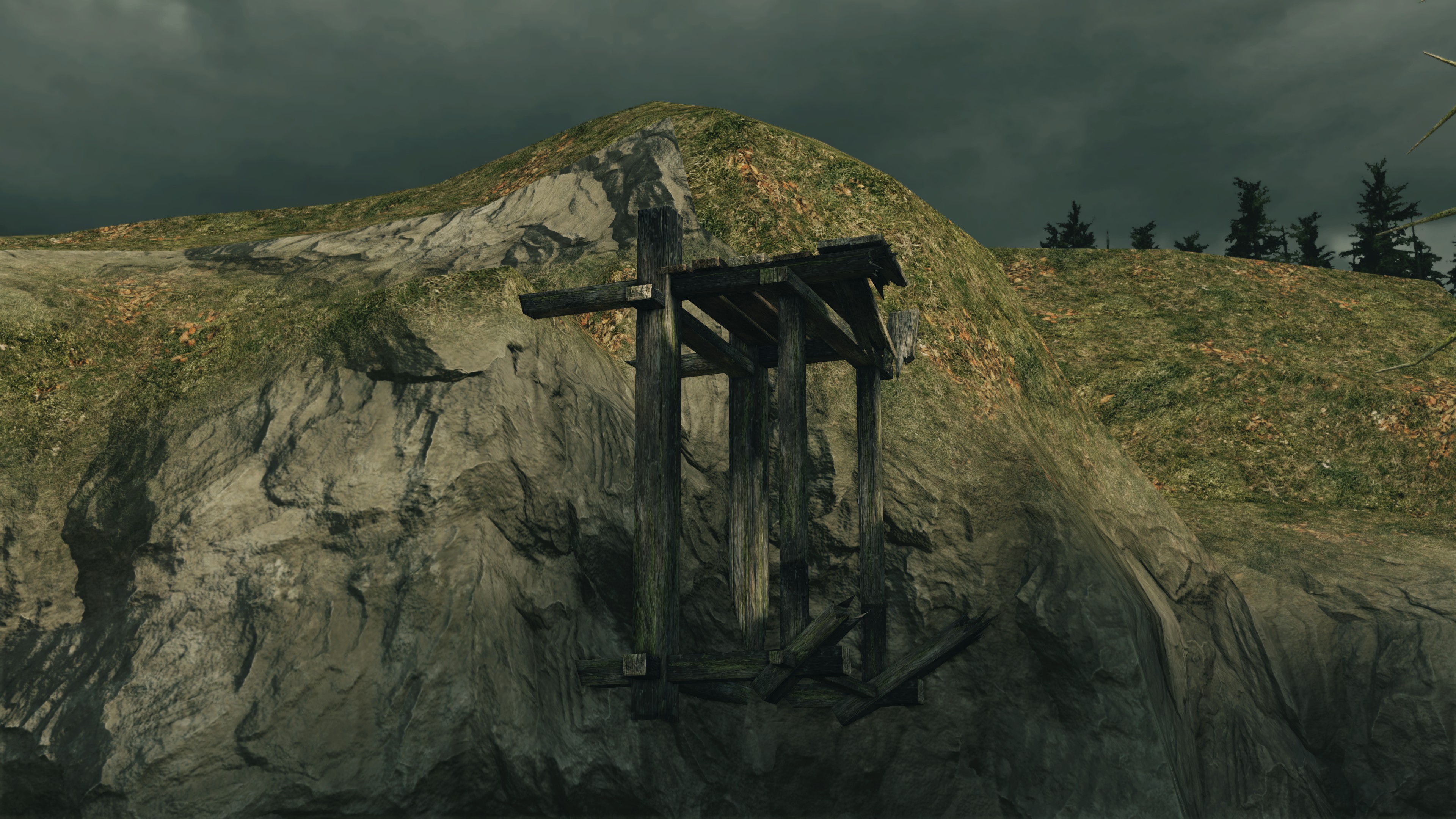
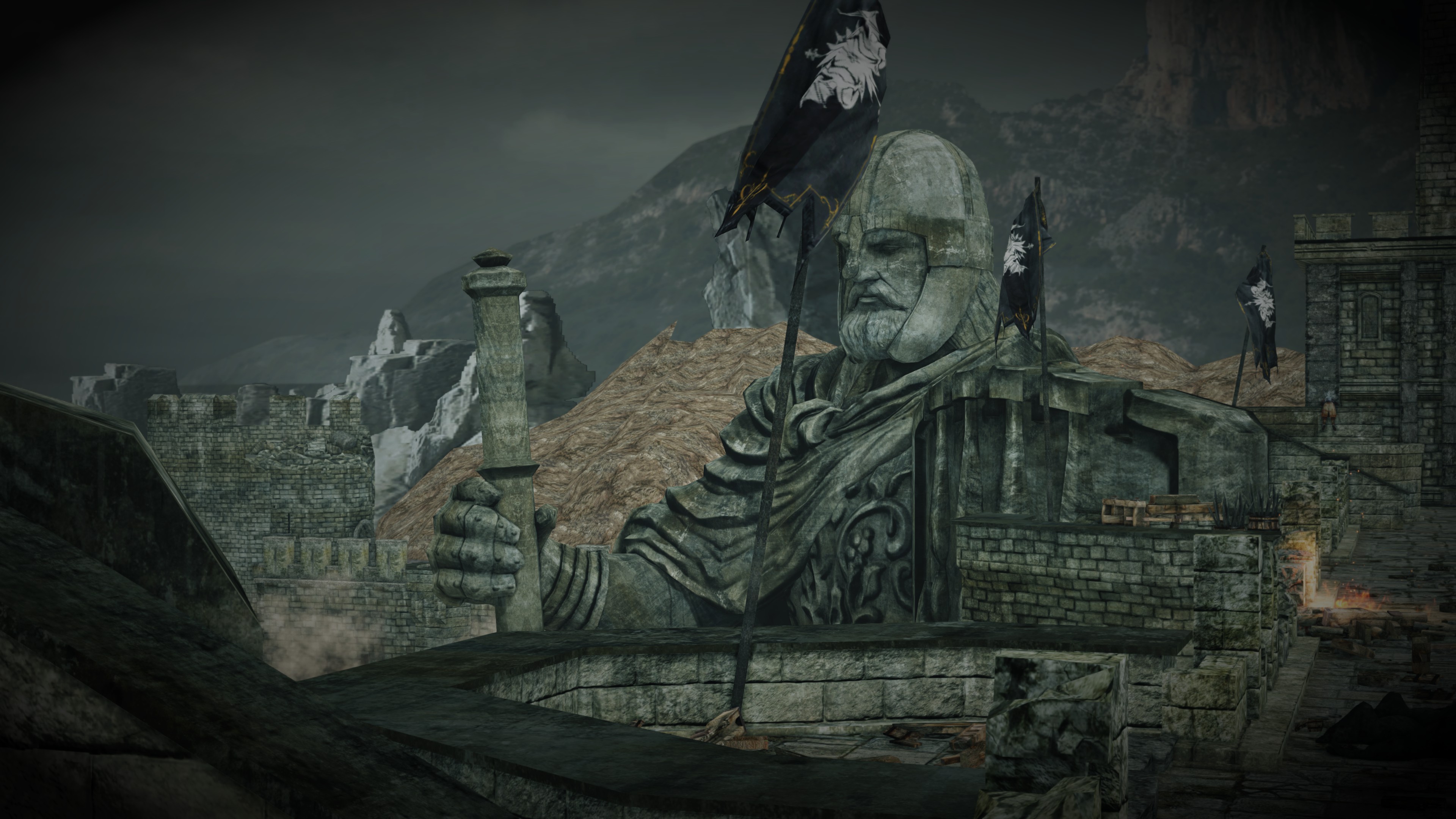
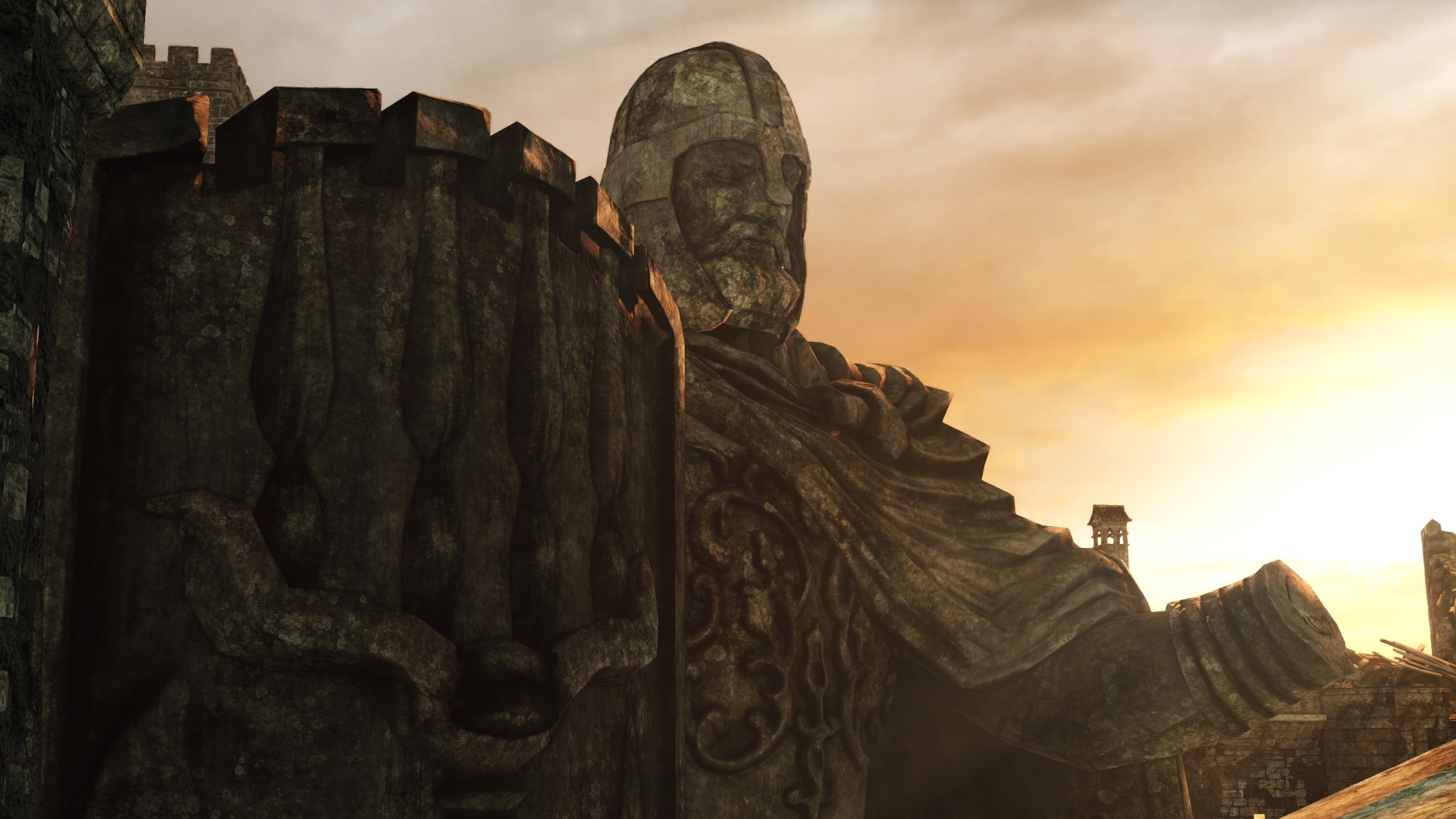
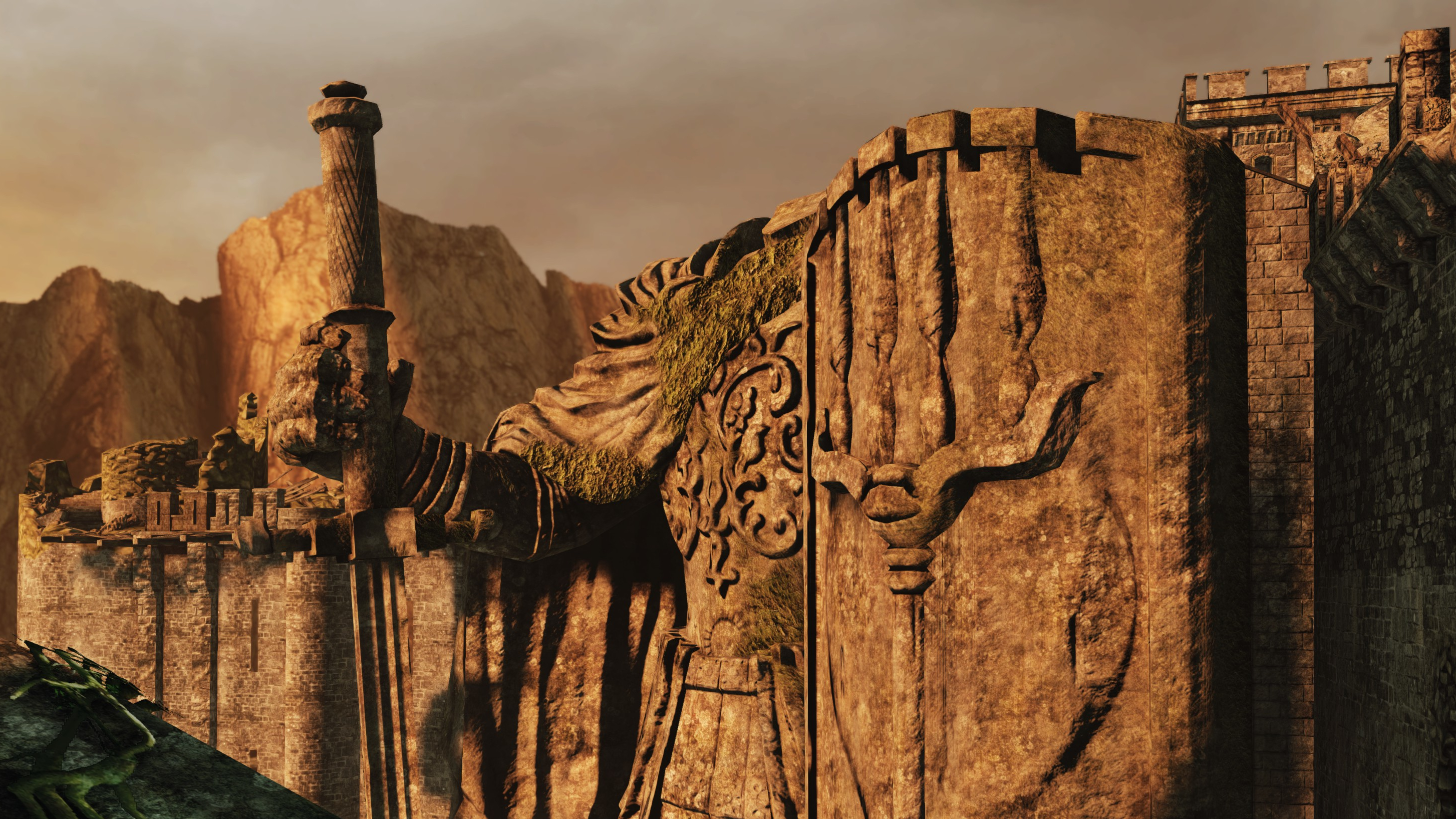
The fort’s survey of the coastline isn’t the only element to its strategic placement, however. The installation was placed directly atop the mouth of the river flowing through the forest. This is why the complex centers around Cardinal Tower. Ignoring other functions like storage, this “main tower” (主塔) primarily serves to regulate the river outflow, a sluice gate visible inside at the bottom where the water heads out to sea. The obvious reason for building walls at this exact location is to stop ships from theoretically reaching deep inland by sailing upriver. And as we can see from the official map, the river flows down from the same mountains as Drangleic Castle all the way out on the horizon. This made it a huge risk to national security with or without seafaring barbarians to contend with. But observing how the western fort lies also at the corner of the northern coastline, those Varangians were probably exactly what Vendrick feared when constructing his fortress. We do see that Drangleic maintained a robust navy, deployed in front of the facility ready to resupply, so it was in the perfect position either way.
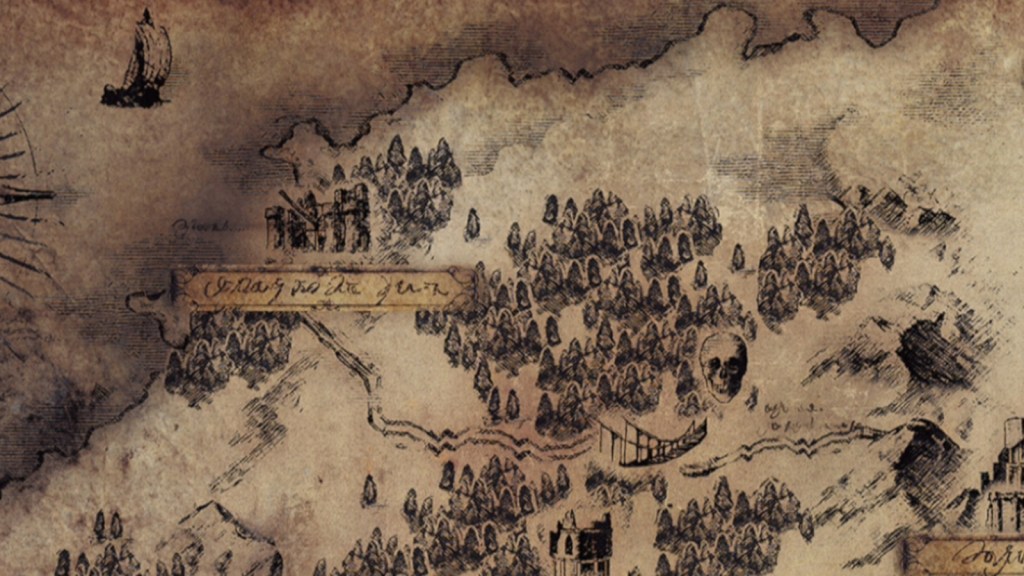
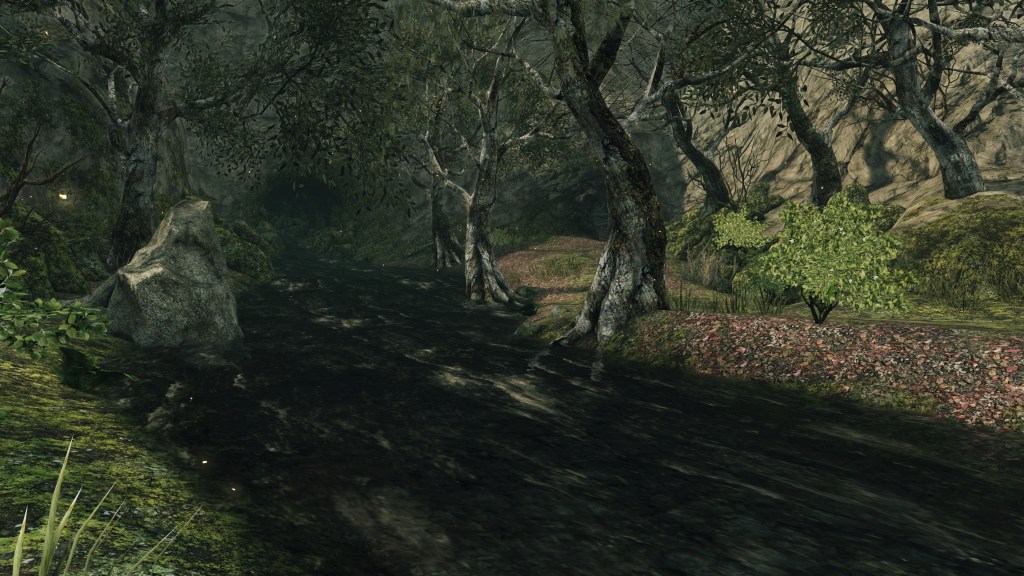
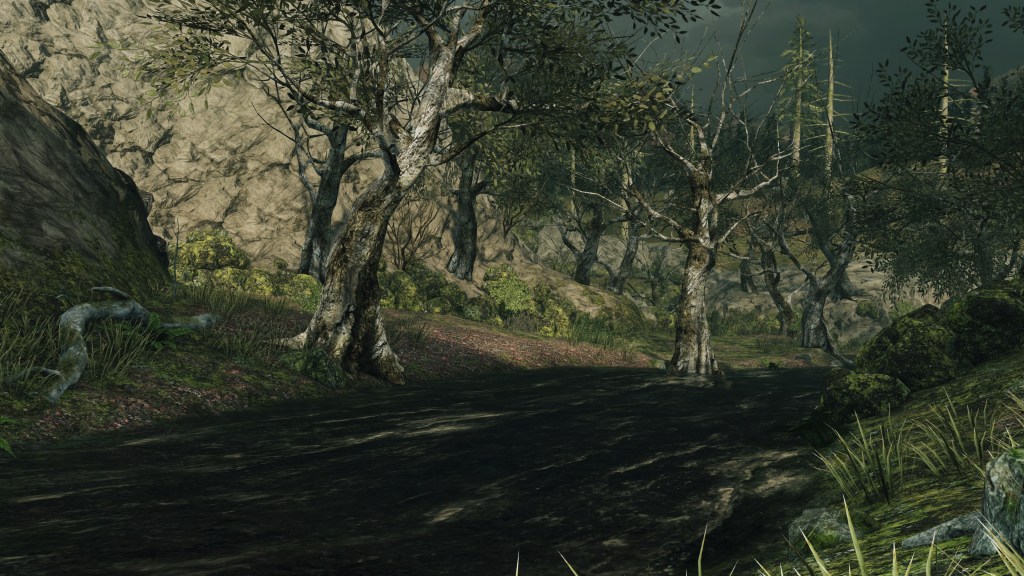
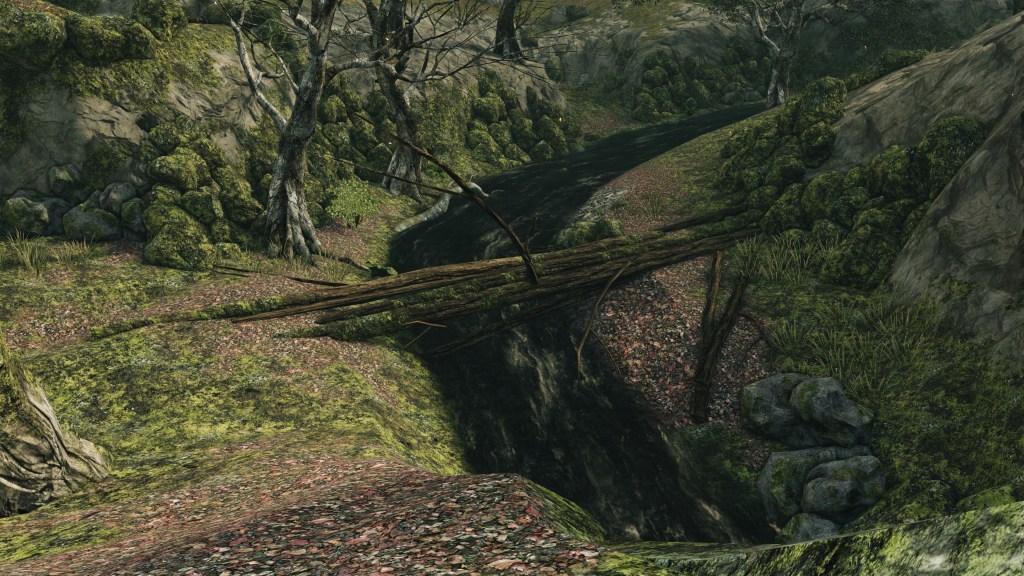
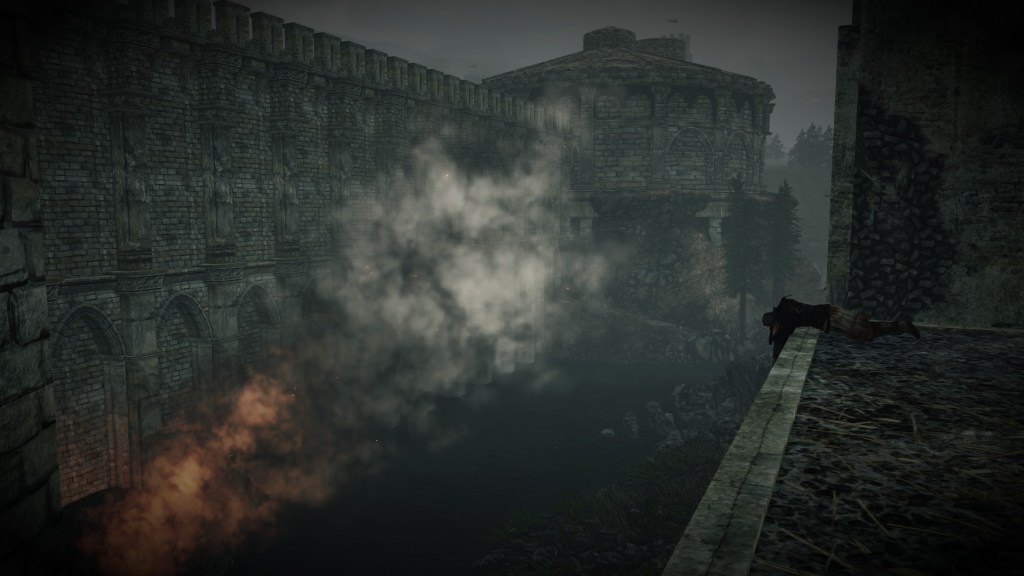
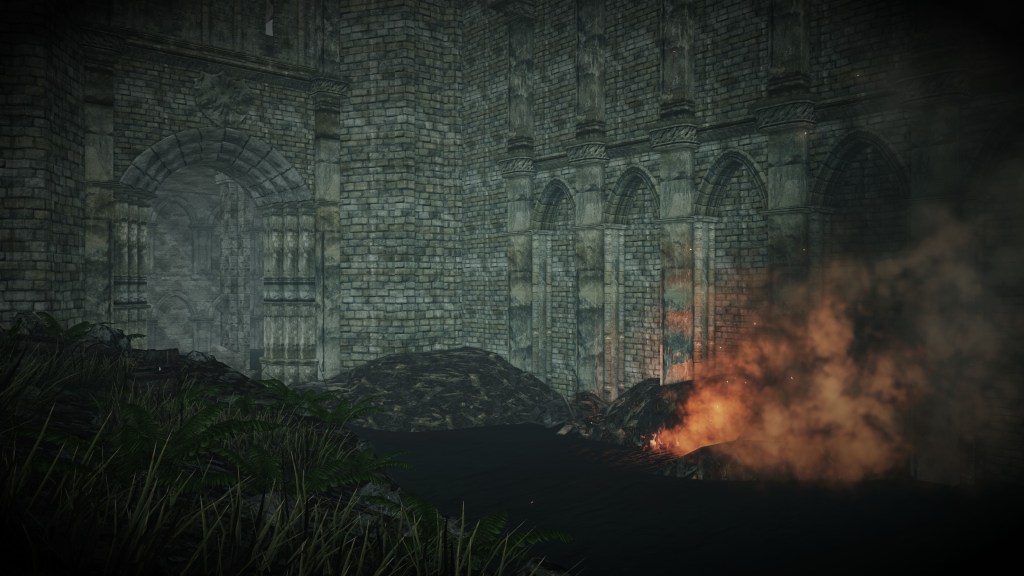
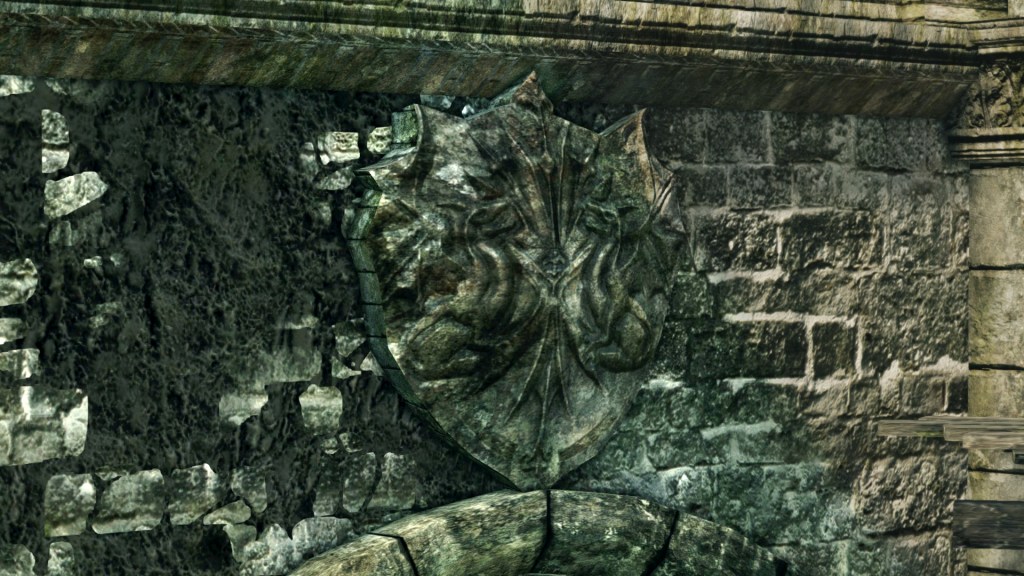
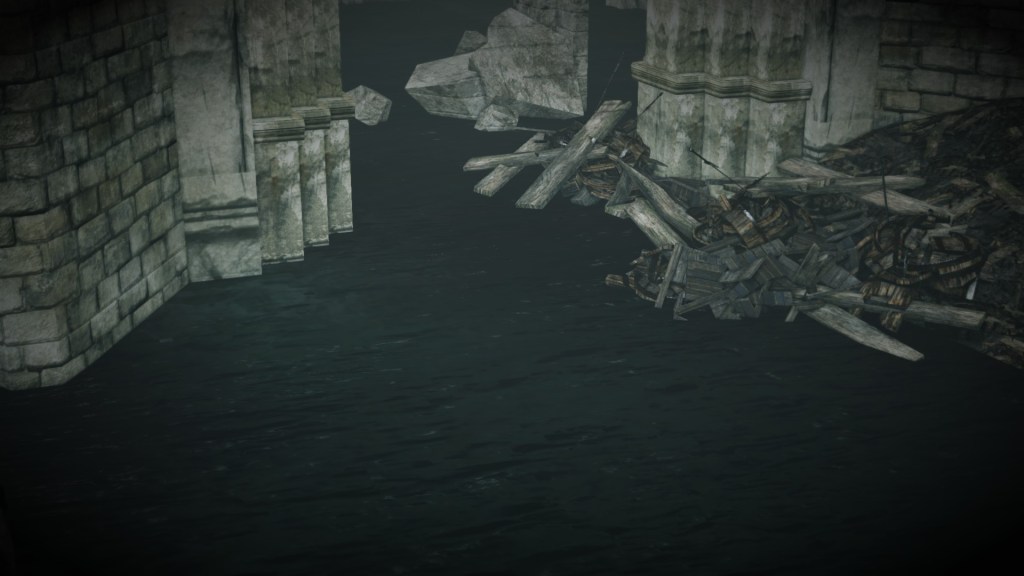
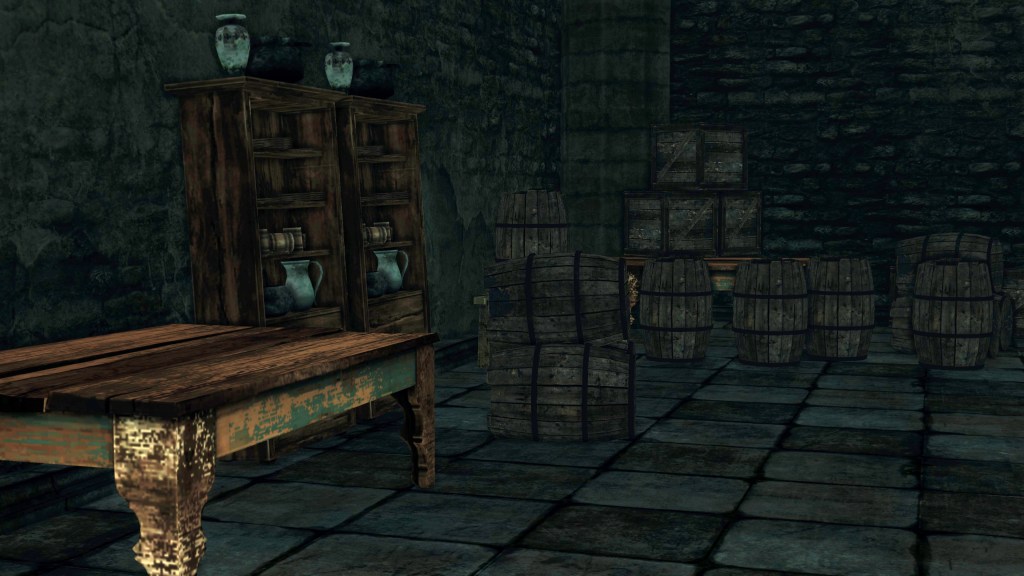
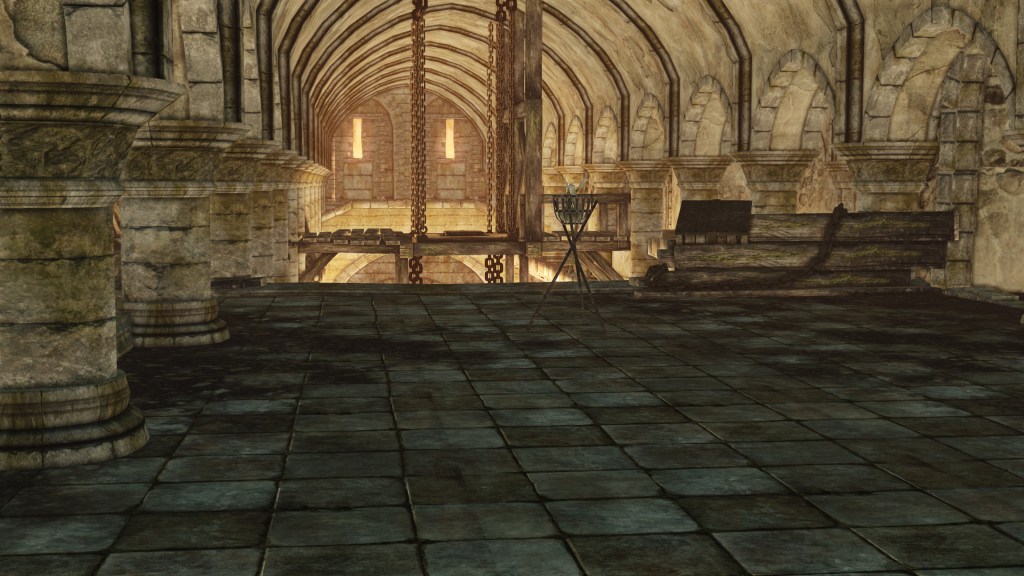
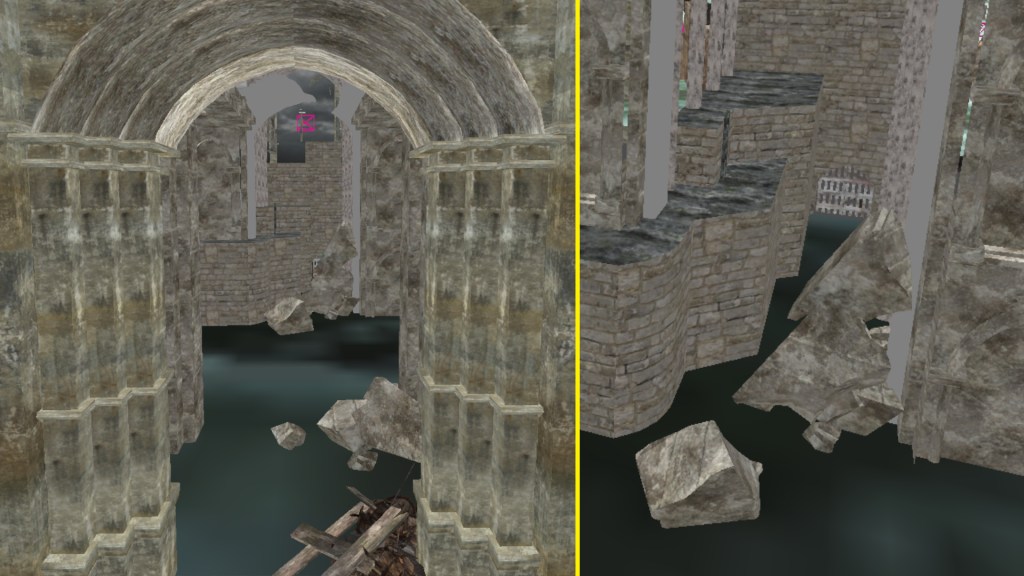
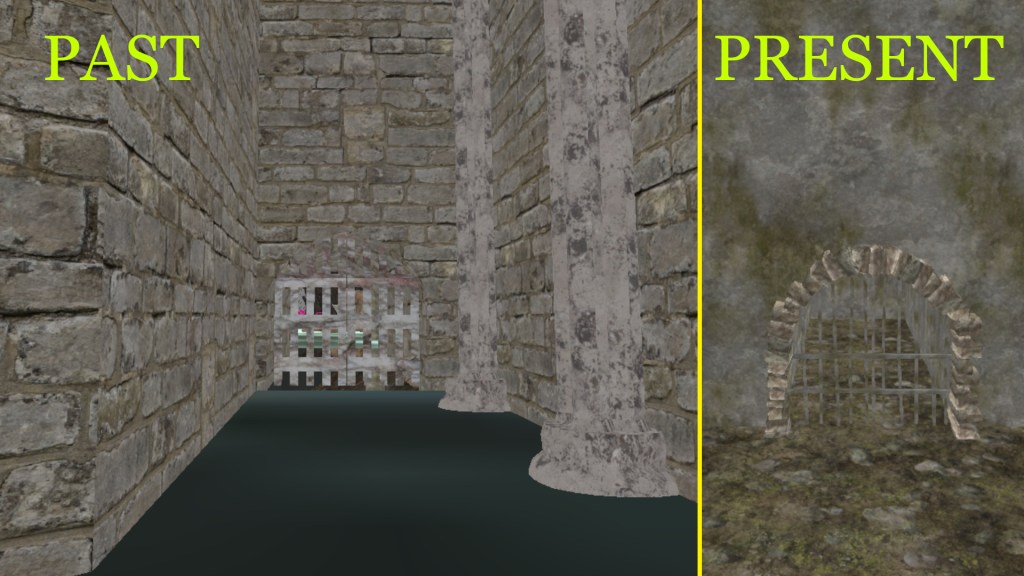
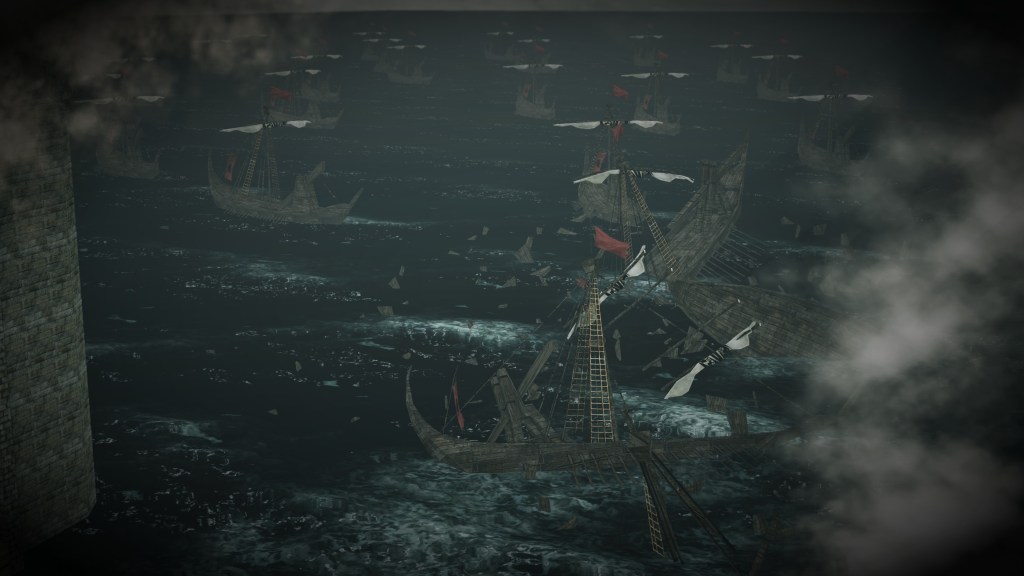
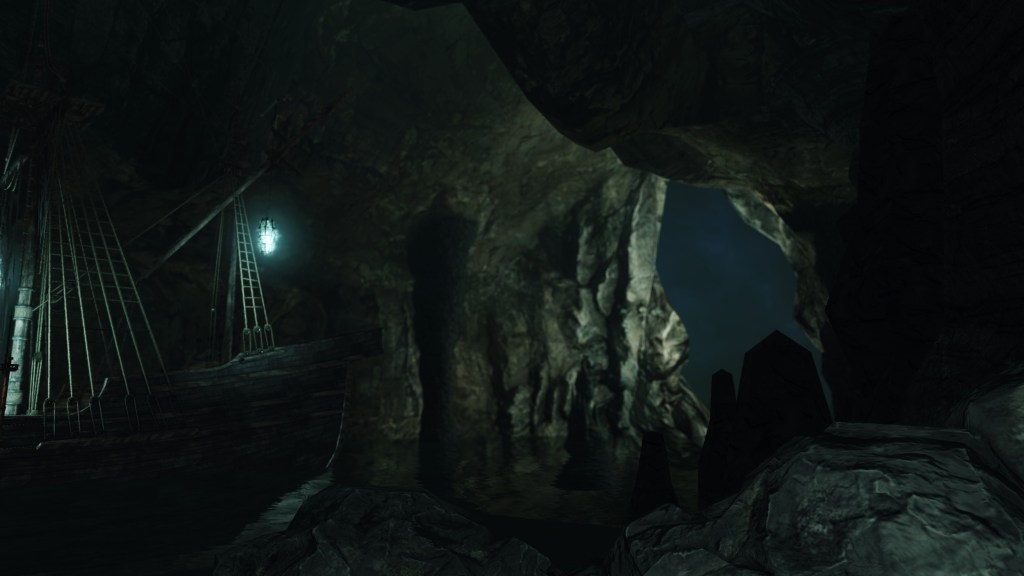
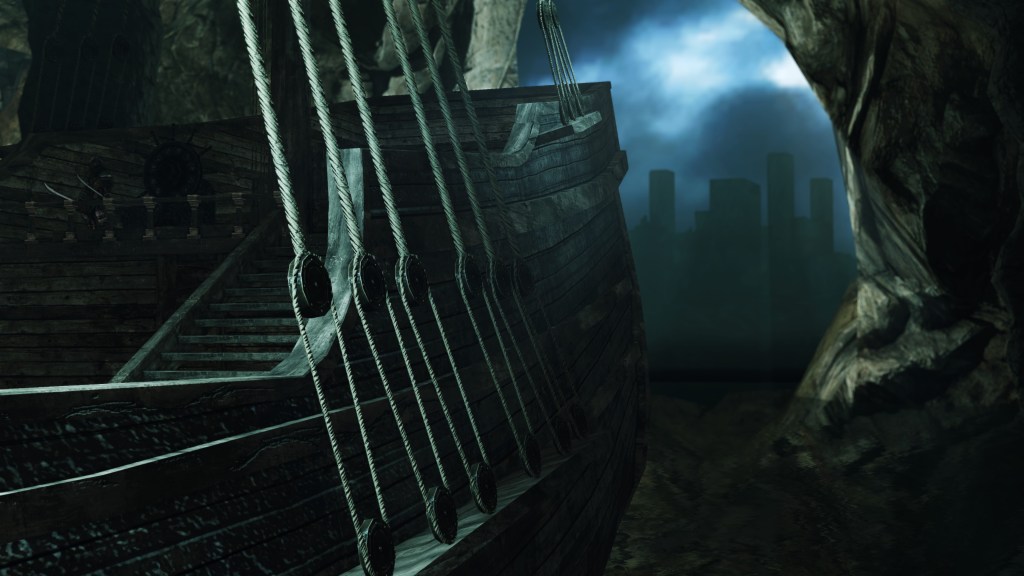
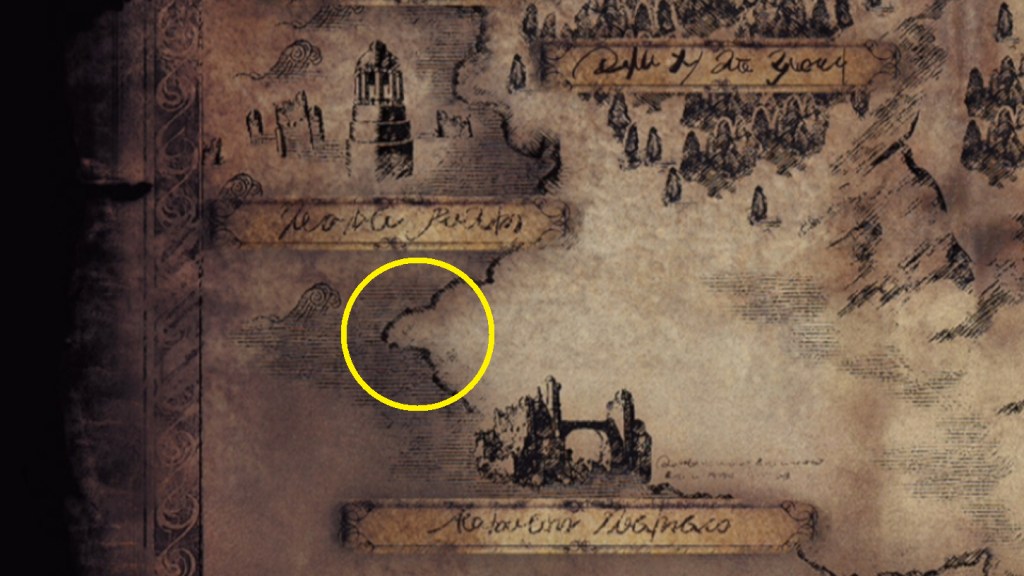
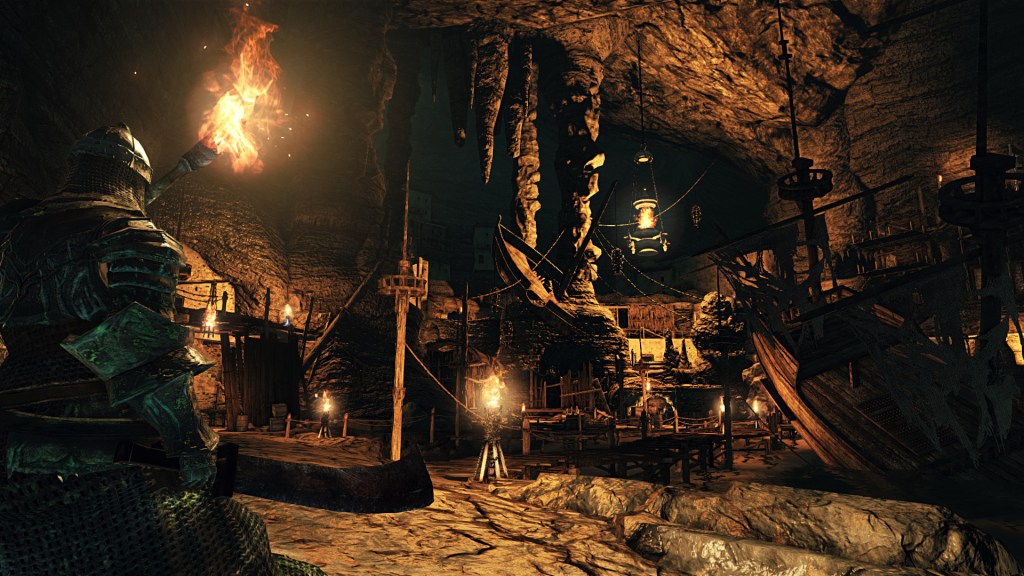
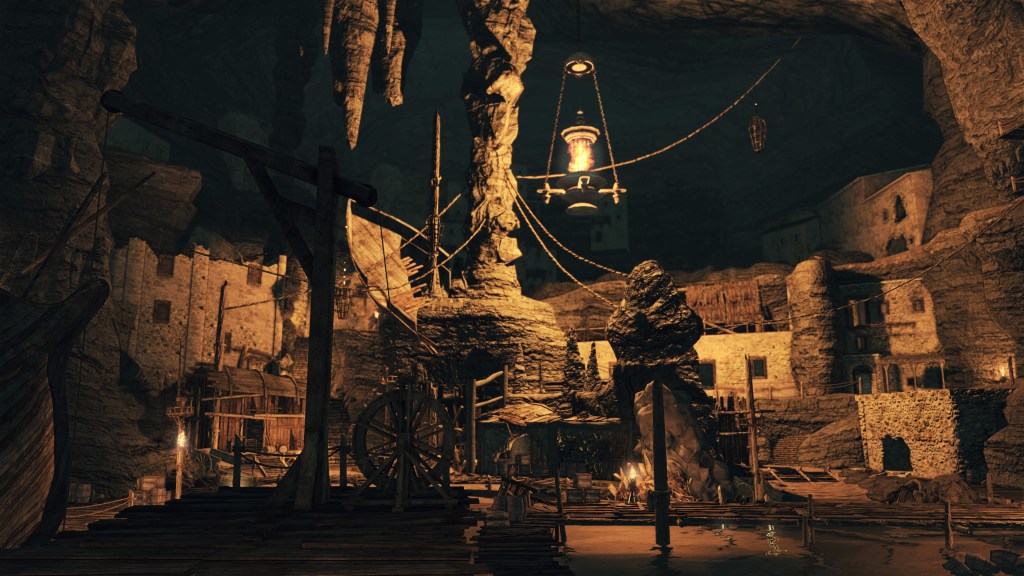
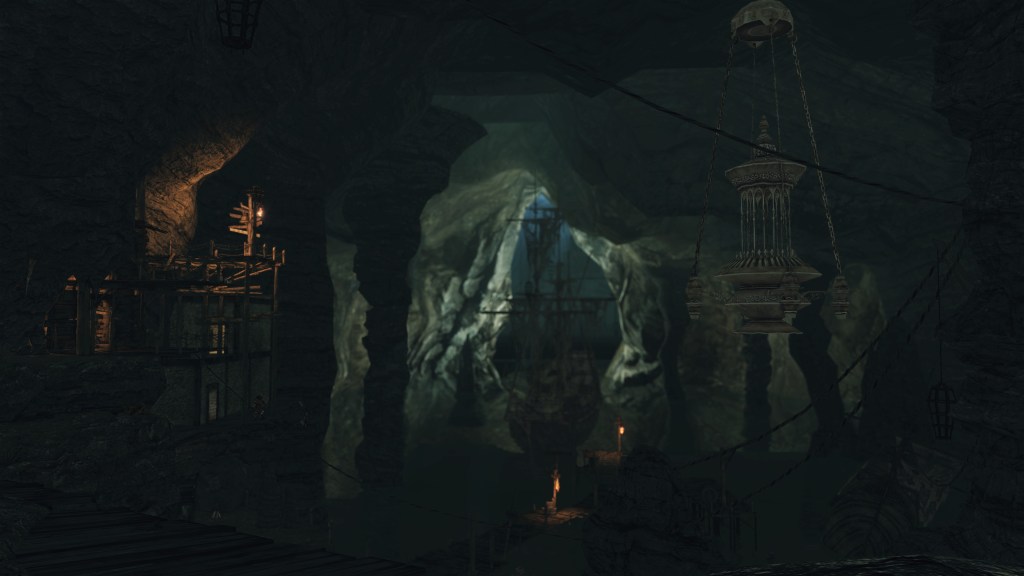
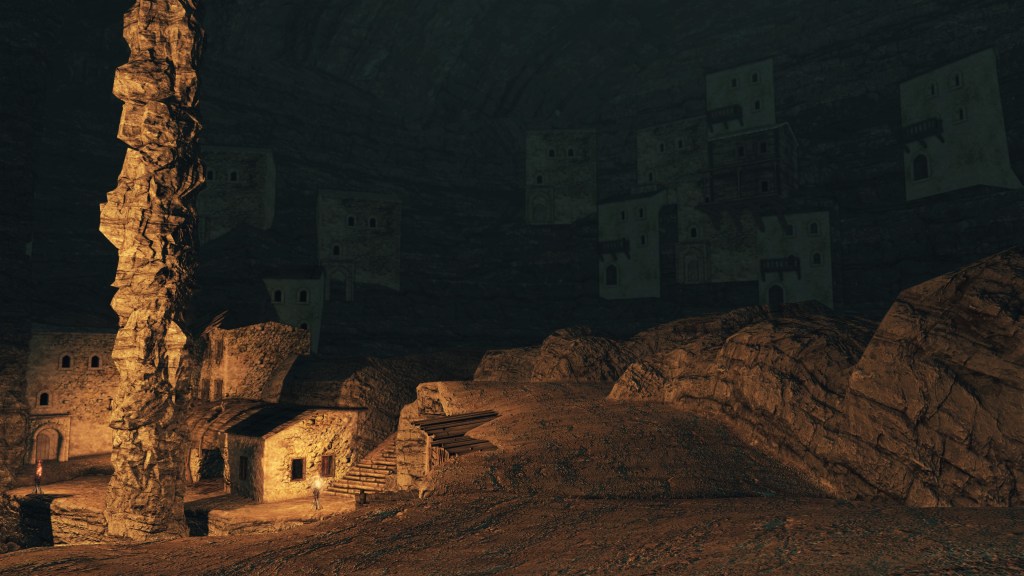
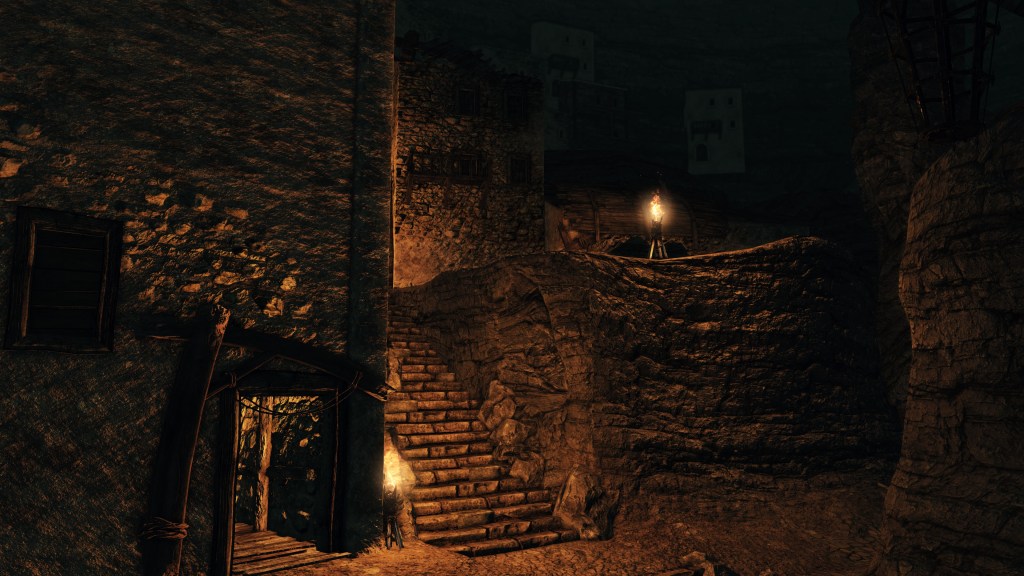
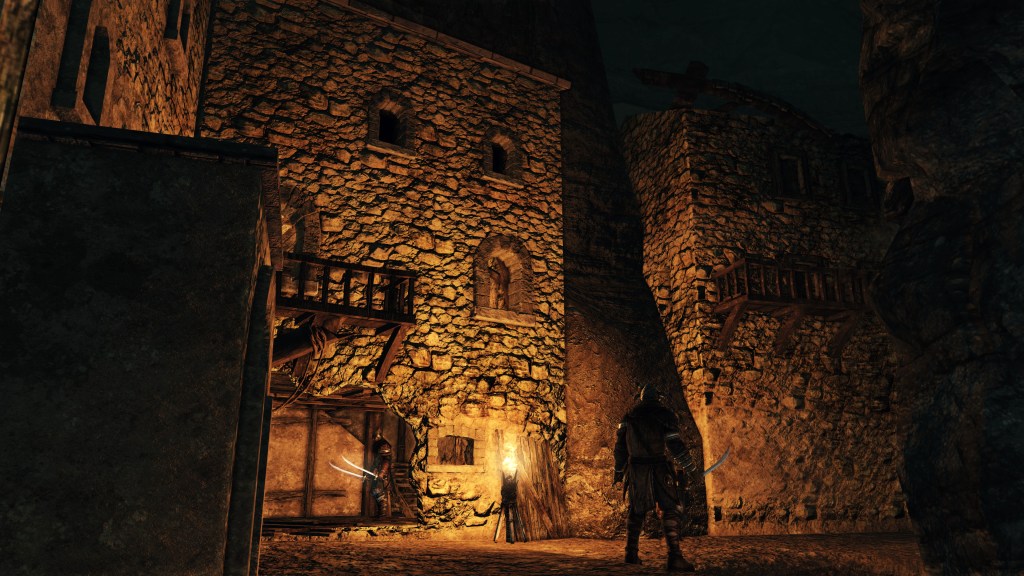
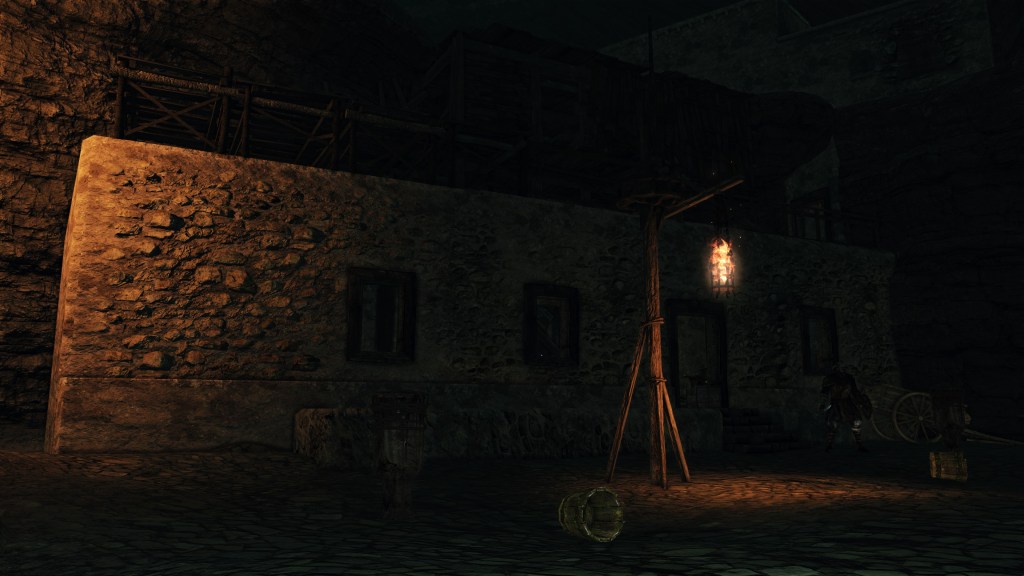
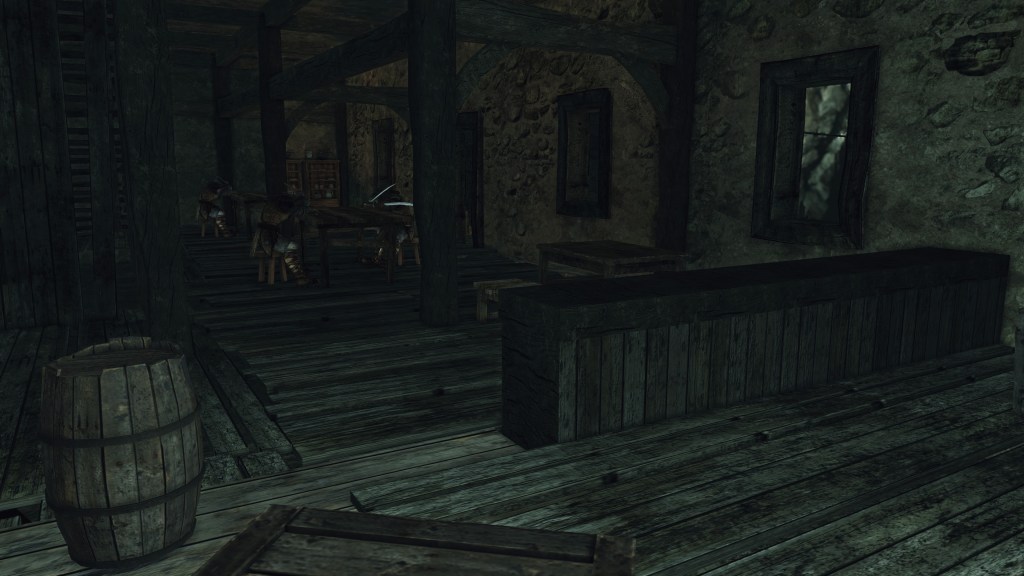
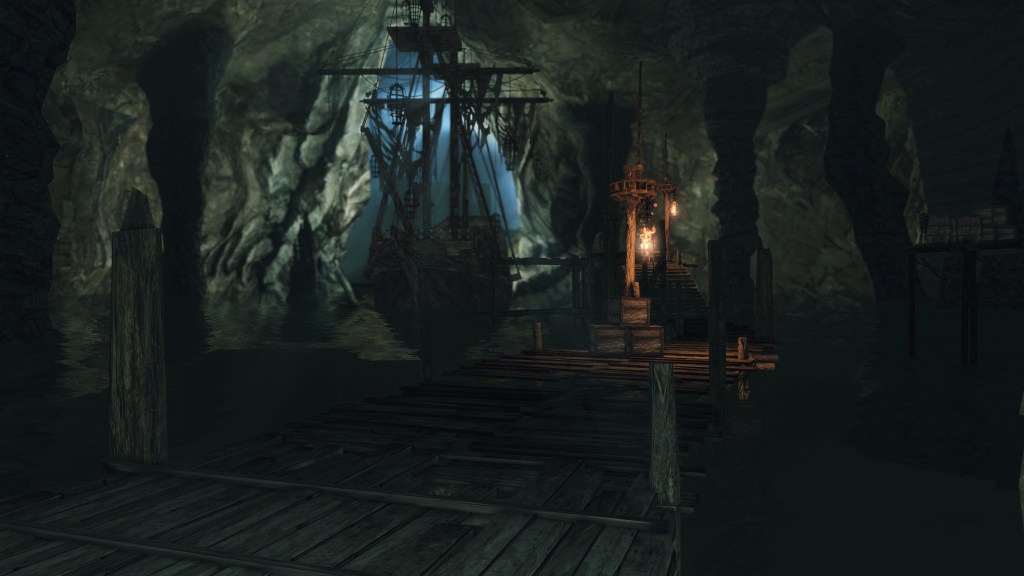
Regardless, the king dealt with these ruffians, turning those they captured into slave labor. No-Man’s Wharf is actually a “hidden port” (隠れ港 or 隠し港) situated within an especially large littoral cave. Since we can only reach this secret harbor from Heide and are able to spy the Lost Bastille across from the mouth of the cavern, the site most likely exists at the western tip of the land between the two areas. There in the dark recesses the Varangians were put to work, with plenty of flame oil delivered so as to not be impeded. Domiciles built into the cave walls show that it is also where they lived; this port town even had a drinking bar. Although perfect for their talents, such a livelihood is an alternative to prison, not amnesty. Royal Soldier’s Ring stored at the complex suggests army supervision. They weren’t alone either, as a chest in town stores the Bandit Axe and Brigand set worn by “mountain bandits” (山賊) sure to prey on travelers and traders crossing into the nation’s heartland. Marauders to the north or brigands to the south, east, and west; all ne’er-do-wells were given the kingdom’s attention.

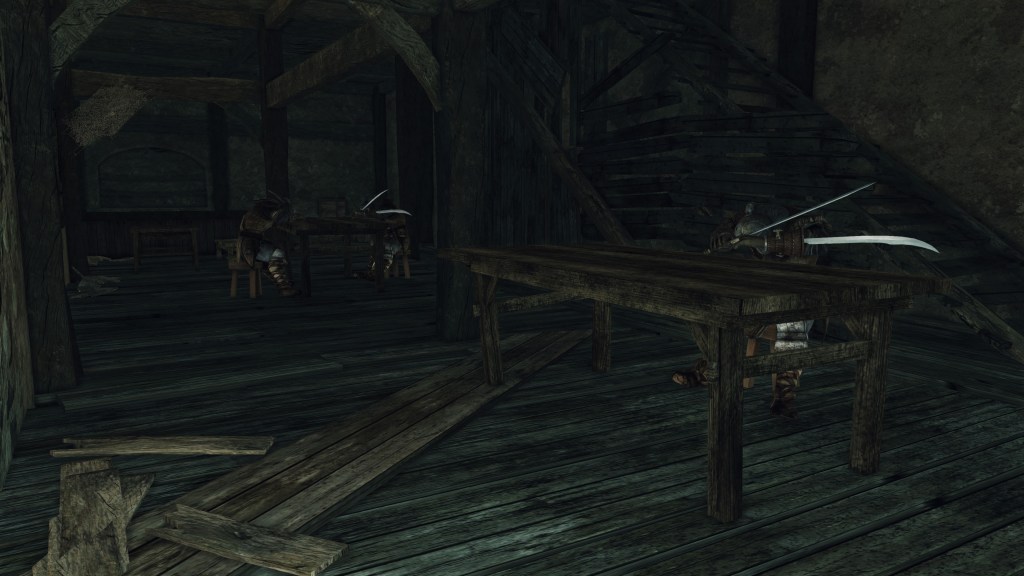
If coastal and mountain raiders were worth stamping out, then surely the likes of the Skeleton Lords and Mytha were, too. But instead, the path to them from Heide’s loop temple has long been shut, at least according to Shanalotte’s cut dialogue. Perhaps it was simply due to lack of ability. The Brigand Hood’s description implies that thieves continue to hide out in the mountains to this day, killing and plundering many a traveler en route to Drangleic. Unsurprisingly, the mountain regions weren’t as easy to clear out as the open ocean. In that case, the king might have judged mobilizing his forces any deeper into the mountains to be a futile effort. But whether the problem was resources or will, Vendrick left those remnants of Alken to their own devices, focusing instead on internal affairs.
A Debt Repaid in Full
In apparent reward for their contribution during the founding, the Dragonriders were given the honor of serving as the new king’s personal guard, escorting him wherever he went. Their unique closeness to Vendrick is confirmed by item descriptions referring to them as jushi, (従士) warriors accompanying in service to their master. Though he might assign them to guard specific places, they were always available for that assignment, right there with him. For a nation’s founding fighter, there could be no greater prestige. Vendrick knew who was responsible for his throne and provided for them accordingly. To be more cynical, they were the only ones he could trust to protect his person. Despite the propaganda, those native born to Drangleic always brought the possibility of embittered assassins, especially at the start of the new regime. Even if the king recruited them for his infantry and knights alike, promoting them to bodyguards was another matter, at least initially. All in all, his elite troops had no better role to fulfill once the warring was finished.
Doubled-edged blade of a dragoon, who is King Vanclad’s royal guard.
Even though it is a double-edged sword with a unique sword technique, it has excellent might and is, on the other hand, heavy.
A weapon that forces adequate caliber of the holder. But, those who can’t master this aren’t qualified to be royal guards.
With this move inevitably came changes to the Dragonriders’ regimen. For one, the kingdom phased out their wyrms in favor of wyverns. Not once do we encounter the former, but we do find the latter in the same area as one Dragonrider, the winged lizard otherwise inexplicably outside the Dragon Aerie. Clearly, Drangleic abandoned their original steeds for superior flying mounts somewhere down the line. Even if they now rarely charged into full-scale battle, Vendrick wanted to maintain an elite cavalry unit with all the loyalty they had shown him during their initial conquests. But as we experience in various encounters with this royal guard, their duties rarely permit them to bring these steeds along — no room for them when stationed inside the castle’s treasure house or similarly cramped quarters. Still, considering that winged dragons were Drangleic’s symbol, having the warriors ride such beasts glorified the riders by proxy. This likely only added to their fealty.
Indeed, the text for Drummond’s helmet describes Vendrick as a righteous individual who wanted the same of his vassals. The king did always incentivize a noble character in awarding courage and loyalty, as that Drangleic Helm’s cut description makes explicit. Captain Drummond, for instance, uses his family’s traditional equipment, which Vendrick gave along with seemingly a sword and shield when entrusting them with the fort; hence they are actually called “Guardian” (ガーディアン) armor and armaments. In all likelihood, this equipment was specifically given to Drummond’s grandfather, who was still captaining the fort at the kingdom’s downfall and presumably served during its founding. Moreover, it came with a legacy attached, grandfather succeeded by son and then grandson. One man proved himself to the king and earned his family command of the foremost stronghold — they may as well have been granted a noble title. And the result? All three generations held up the shield plastered with Drangleic’s emblem in the kingdom’s defense, their sword ready to strike its enemies.
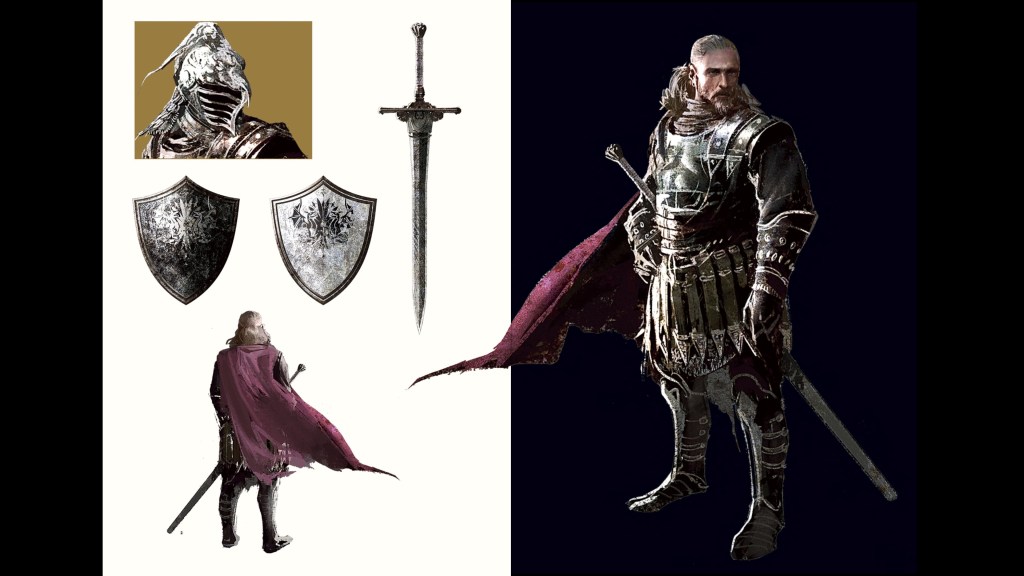
Drangleic traditional helmet. Given only to loyal knights whom the king recognized.
Vanclad was a fair and just king. He valued knights who possessed both valor and brotherly love and guided his country to prosperity the right way. This item too demonstrates the great feats of such a king.
Shield of the kingdom captain Drummond. This shield whose decoration is peeling off is endowed with a hard-to-replace pride and dignity.
A shield handed down in Drummond’s clan. His father and grandfather both carried this sword and kept safeguarding the country.
Even the less renown knights were receiving good treatment from their warrior king. The updated description to the generic knight set notes the armor to be standard for low-ranking Drangleic knights, loved by knights in general for its functionality as protective equipment despite the design originating from DS1’s era. The Elite Knight set is similarly associated with the kingdom’s high-ranking knights. The fact that this historic armor of Astora has been recreated with the ever-so-popular bradden steel speaks volumes of Vendrick’s respect for the pivotal soldiers in his army. Even when not receiving the best of the best, knights were still being well supported, with better knights enjoying increasingly better perks. That level of quality across the board likely played a key role in maintaining a powerhouse military as the conquerors reorganized themselves into a secure state.
Metal-made helmet for knights. One of the standard equipment for low-rank knights of Drangleic.
Many knights like it because of its excellent functionality, so it has been passed down since long ago.
Perhaps it was this attention to his military and widely-recognized imagery that made Vendrick so powerful not just as a man but as a monarch. The Japanese descriptions for the king’s soul and crown describe him as ruler of the world of man. Considering that there are so many independent nations confirmed to exist before, during, and after the Kingdom of Drangleic, Vendrick obviously can’t be king of the New World, let alone the larger one. However, this statement doesn’t exclude him from having indirect control of these lands, meaning that Drangleic must have been the regional superpower of its day with wide hegemonic influence. Part of this can be credited to the kingdom’s control over religious pilgrimage sites, but there is also its monetary power, the land’s evidently abundant resources giving way to heaps of gold collected in the treasure house — gold it had no problem spending.
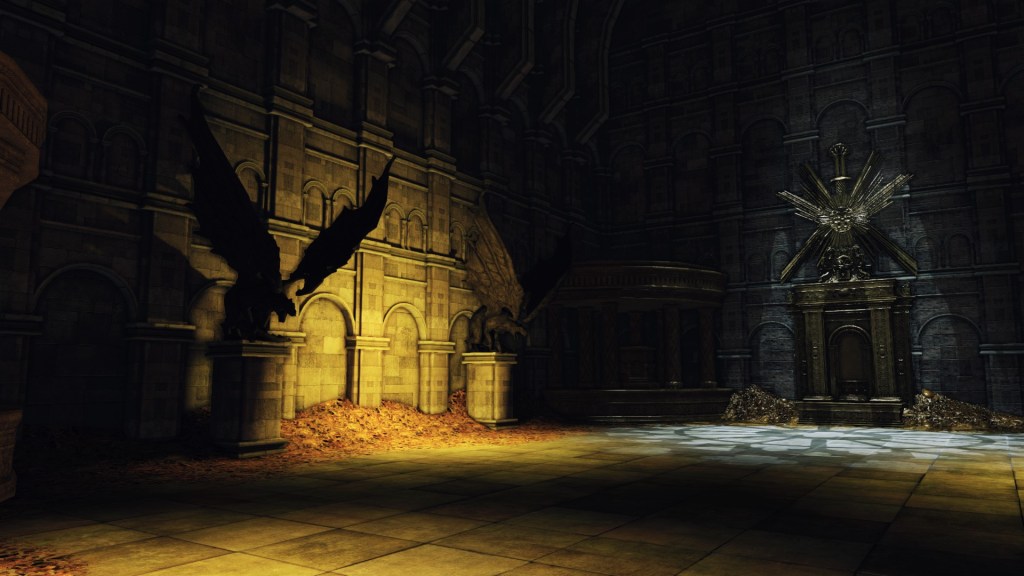

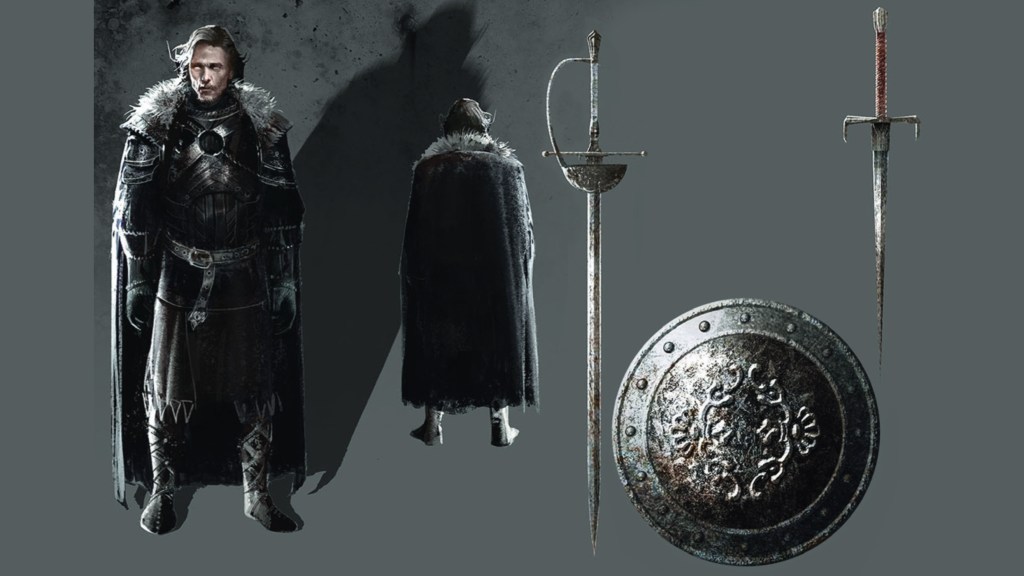
Despite its fervent nationalism, Mirrah was unable to prevent Drangleic’s chancellor from poaching one of its renowned craftsman on Vendrick’s order, bringing with him its military manufacturing secrets. To prove his alleged skill, Llewellyn made geisteel masterpieces before he left home and presented them as gifts to Drangleic. Chancellor Wellager received the Espada Ropera, while the king was presented with the longer-than-average dirk now known as the “king’s dagger”. (王の短剣) This Royal Dirk’s original description notes that he ultimately gifted it instead to its current holder, Wellager — as a sign of his appreciation for securing this valuable asset, most likely. Nonetheless, these events affirm that Vendrick did accept Llewellyn’s proof along with his high-salary contract. In fact, the Mirrah craftsman is probably the castle’s anonymous blacksmith responsible for the army’s quality equipment, a select few including Wellager even receiving some armor made with those trade secrets.
Dagger made with rare gran steel. The blade is long for a dagger.
It was gifted to the strategist by the king of this country, but the owner’s whereabouts are unknown.
Thrusting sword of Chancellor Bellagar. Makes use of rare gran steel.
This gem produced by the master craftsman Lind was what he brought from Mirrah and presented to Drangleic himself.
Armor enhanced with rare gran steel. Personal effect of Chancellor Bellagar.
Excellent armor combining lightness and strength was produced by the retained master craftsman Lind, so it was given to only very select within the kingdom.
Its simple, sturdy design lacking in pointless ornamentation well expresses the artisan’s personality.
That wasn’t to say that Drangleic was without limits. The Grand Lance is actually a “Gran Lance” (グラン・ランス) in reference to the steel it is made from. Drangleic provided the weapon to its more ranking knights, one example appropriately lying dead near Vendrick’s quarters at the fort. However, the spear’s description notes geisteel arms to be a rare sight in real battle by virtue of their number. The only other “gran” steel product for Drangleic’s knights we can acquire is the Twinblade with the same description, found at the Lost Bastille. In spite of their excellence, the method to manufacture was too difficult for one person to mass produce, especially when they were being given extravagant embellishments contrary to Llewellyn’s sensibilities like in the Grand Lance’s case. No amount of coin could change that. Still, the fact that the master smith was willing to do such gaudy work for a foreign country speaks volumes to the compensation.
Assault spear using rare gran steel. It was given to high-ranking knights of Drangleic, so characterized by extravagant decoration.
Gran steel arms demonstrate excellent ability but became seldom used in actual combat because of their rarity and difficulty to manufacture.
Such leverage over other countries shows who reigned supreme. With Wellager as his right-hand man and coffers brimming with treasure, there was virtually nothing Vendrick couldn’t demand from the surrounding lands. If the personnel or resources couldn’t be coaxed with word and coin, then his army could always obtain them as tribute. Anything could be bought off or brought to heel, and Drangleic’s neighbors surely knew it. This is why our Fire Keeper guide to the north immediately expects us to have heard of the place; it was too important not to be name-dropped in casual history lessons. By dragon or by affluence, Vendrick worked hard to bring his kingdom — and himself — to such heights. Even if those investments didn’t see widespread effect, he at least made sure his soldiers felt the value. And for the common rabble, they could always find peace in the security from the strong state. If only the crown could solve all their woes.
Brightest Light
Like every national leader before him, Vendrick was inevitably faced with the eternal conundrum of undeath. His initial plan to combat the curse followed in Olaphis’ footsteps, locking up the undying in the Lost Bastille. The old castle may have already begun seeing use as a prison again. Among the items from DS1 we can acquire in the area, one is the Target Shield utilized by various thieves, another is the Large Club wielded by barbaric thugs, and a third is the Hush sorcery employed by spies. It is possible that these were confiscated from prisoners in a prior era, but the same cannot be said for the Priest’s Chime stored away like them, or the corpse with Archdrake Robes and Shield trapped behind an explodable wall. These are clear signs of clerics, both foreign and domestic, being incarcerated, with the chime’s description establishing Vendrick’s bias against the clergy — who threw the holy men in there is no contest. Even if these individuals weren’t locked up until later, the castle was definitely reconverted to a jail once those bearing the Darksign appeared.
The cursed were first processed at No-Man’s Wharf, the criminal labor spending their days building, loading, and launching ships to sail over to the prison. Fully stocked with weapons and cages, they could keep prisoners in line until arrival. After redocking at the castle’s small pier, Varangians on staff would stand ready to haul the exiles up to their cells — at least when not asleep on the job like during our visit. From there, it appears that matters were left to the castle’s security, Vendrick supplying his own troops. The Twinblade in storage implies that this included some of his best knights, though the quality weapon evidently never saw much use. More than likely, they numbered few among a general garrison. Stored alongside the Twinblade is the more generic parrying dagger. This opens up the possibility of regular soldiers working alongside the knights before they were redployed or perished, the weapons they left behind placed in storage. In fact, part of this garrison probably even remained up until Drangleic’s collapse.
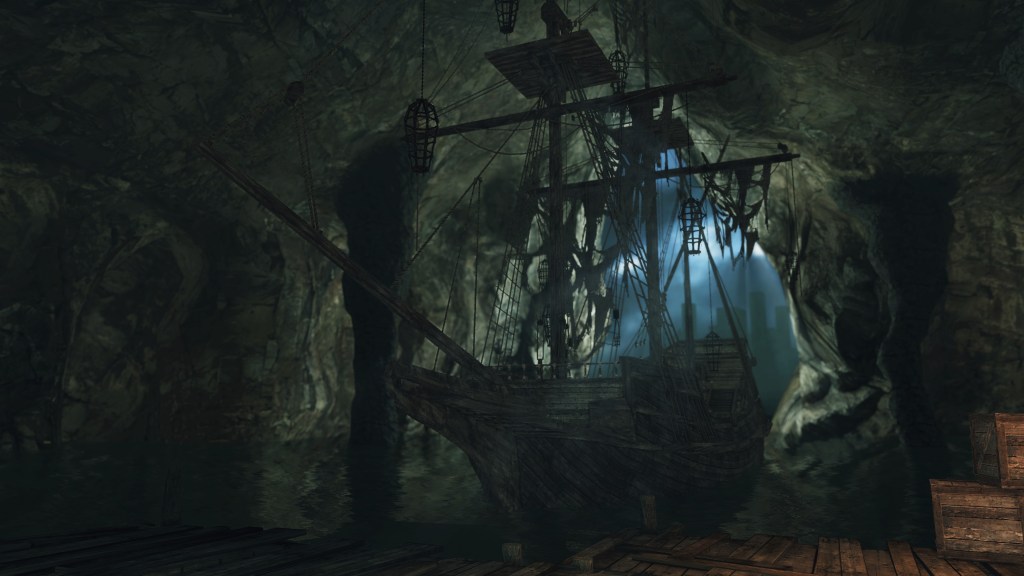
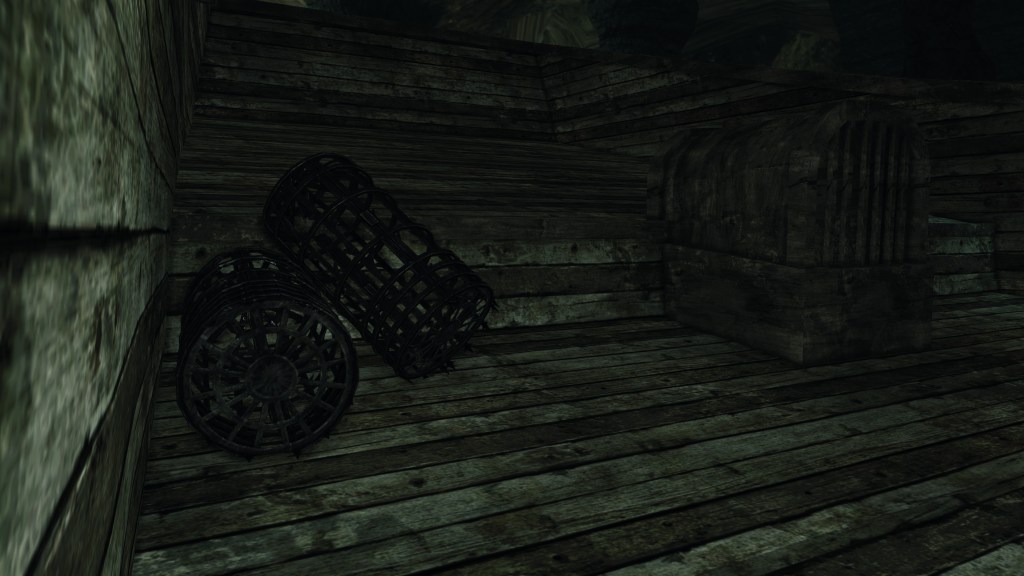
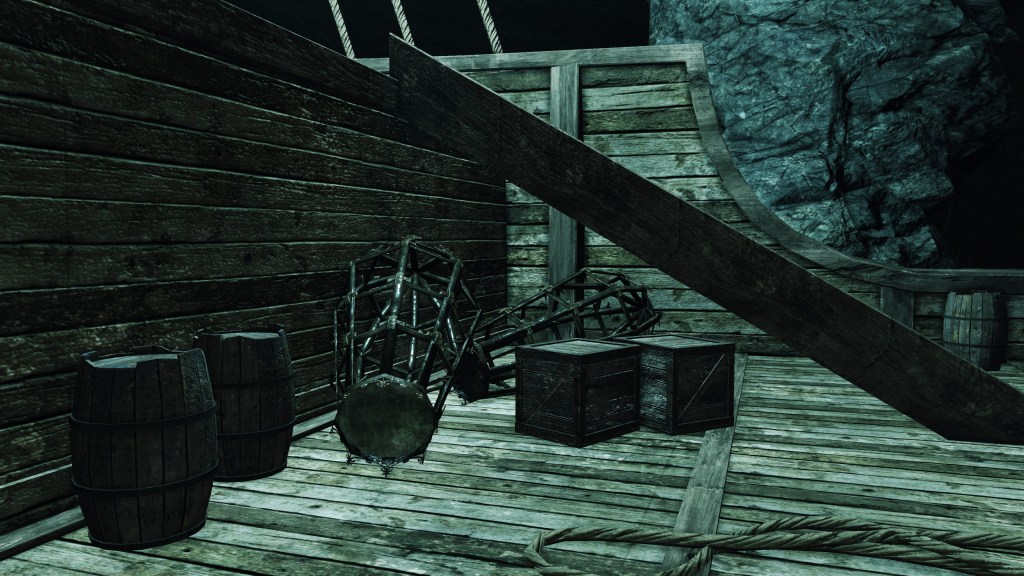
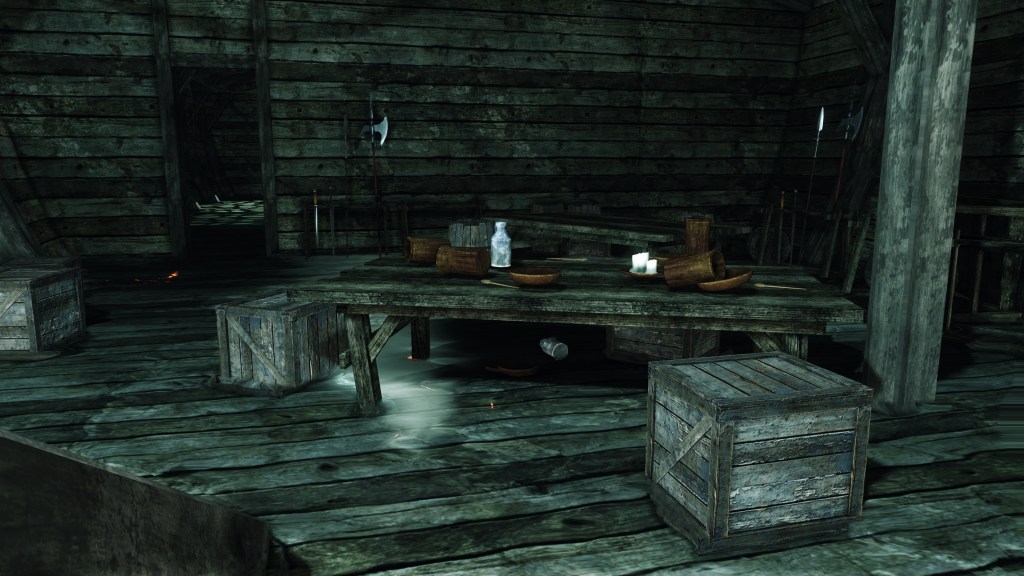
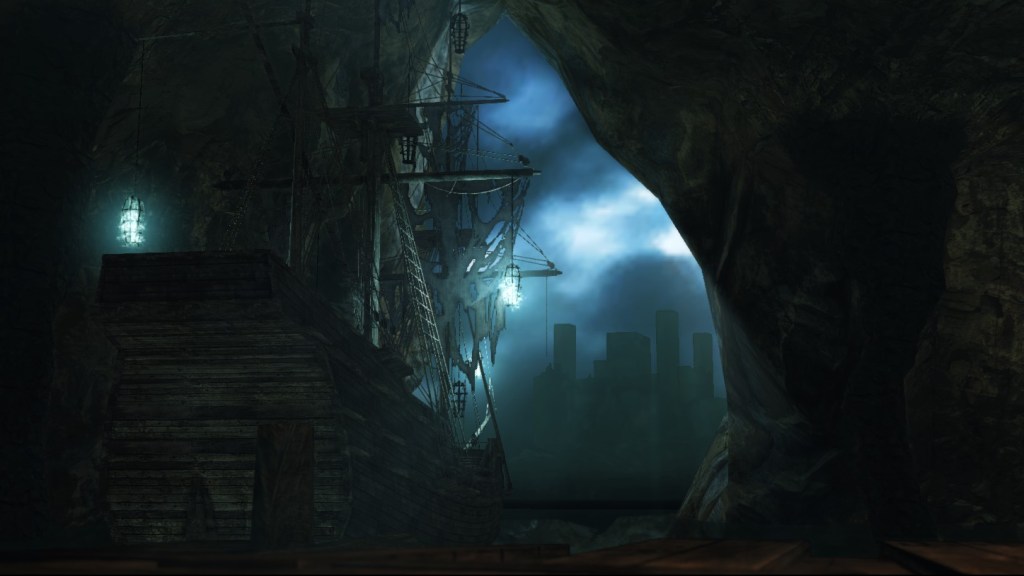
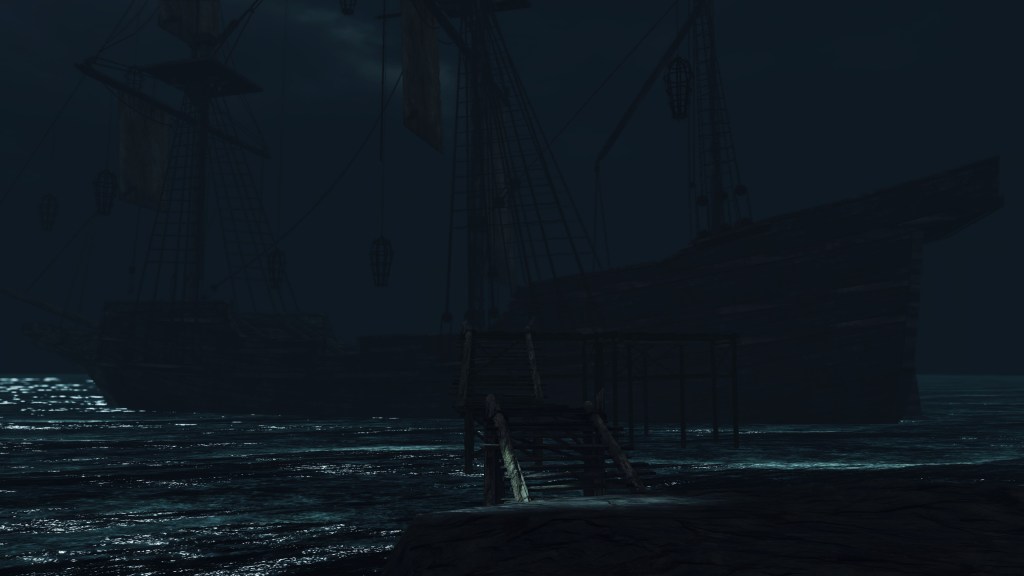
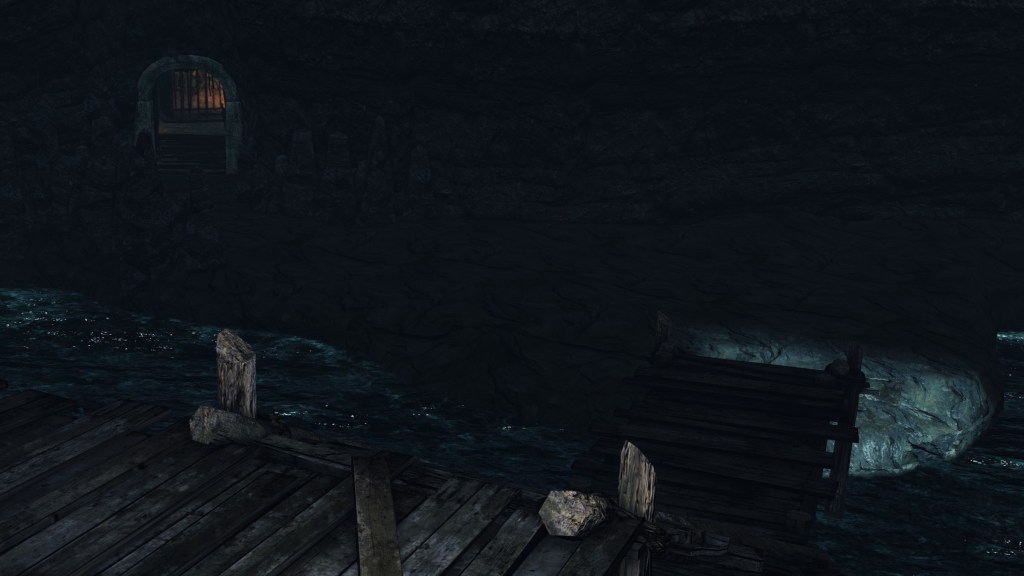
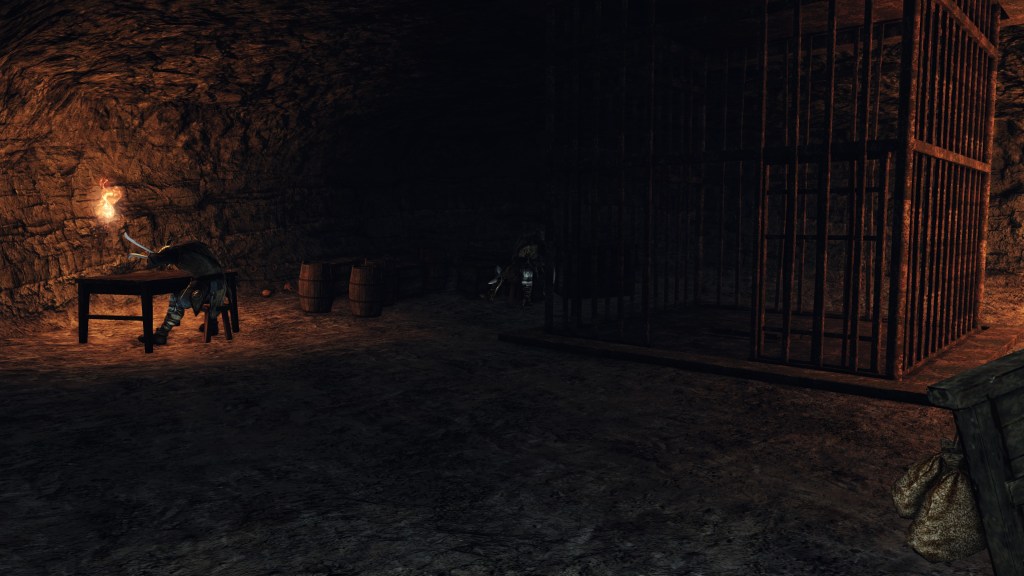
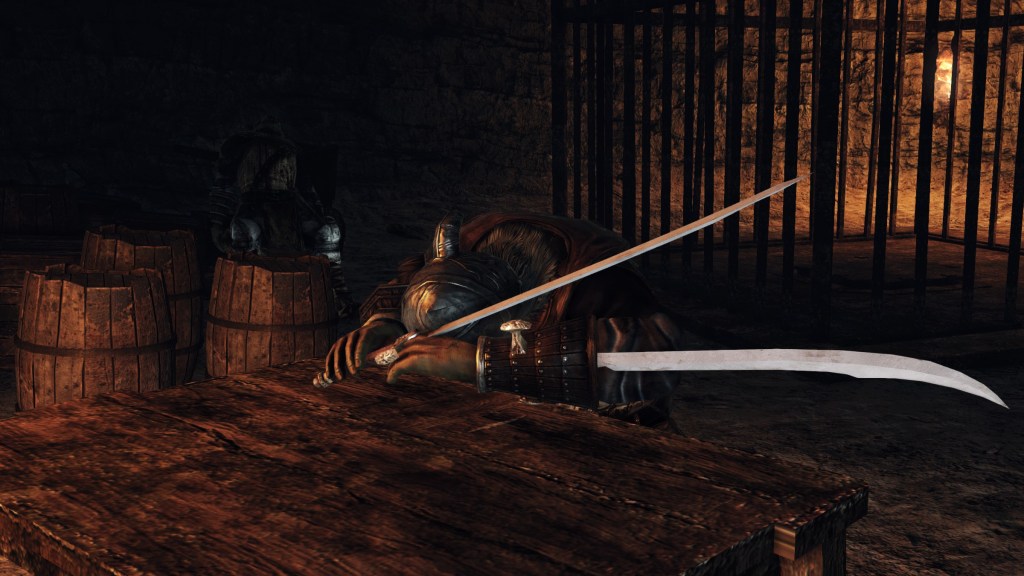
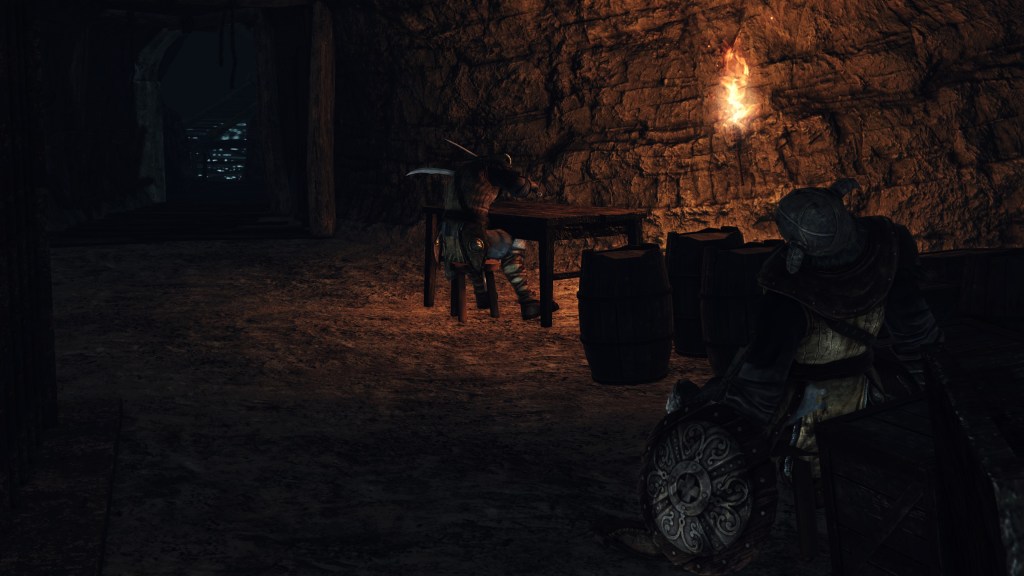
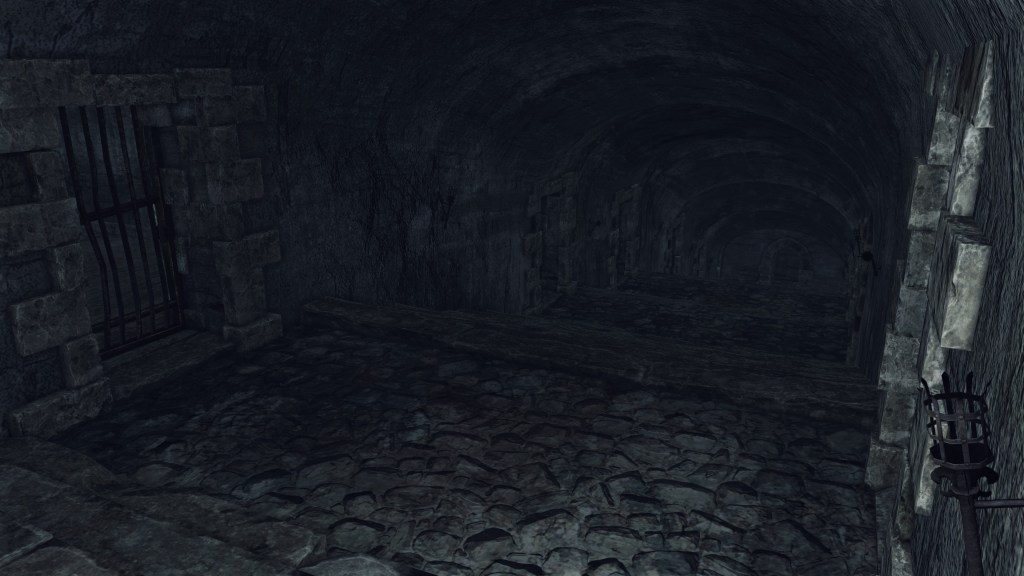
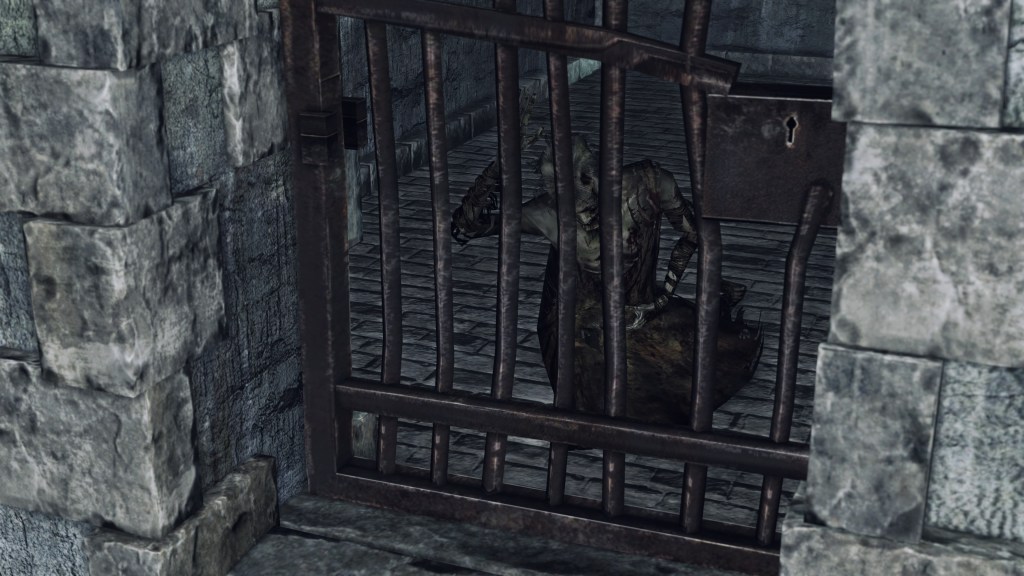
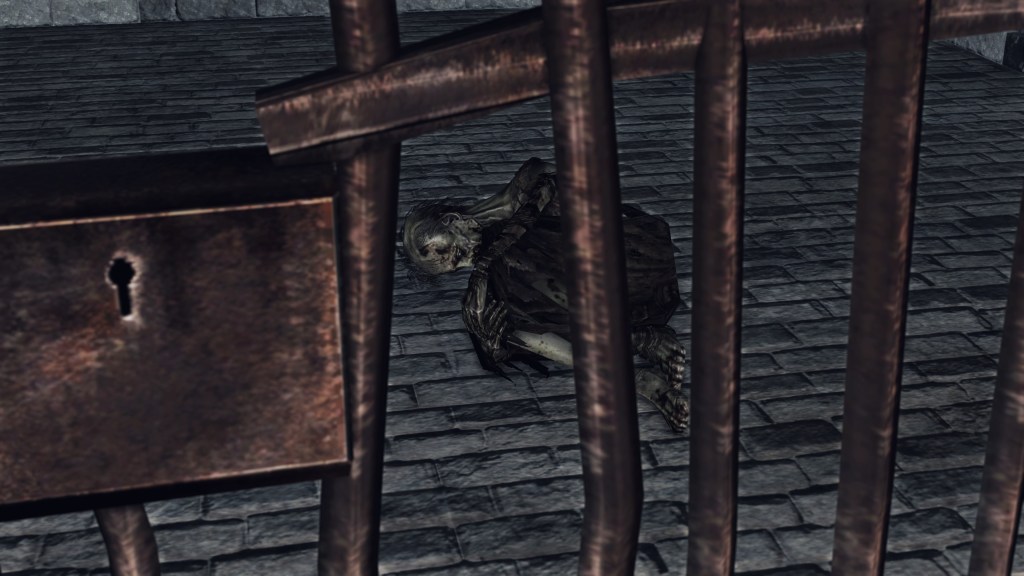
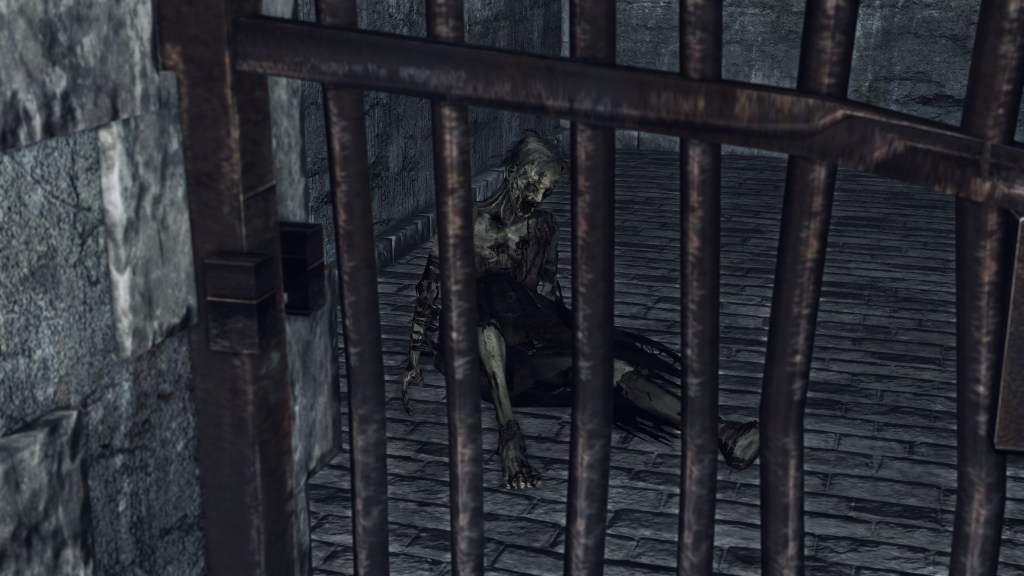
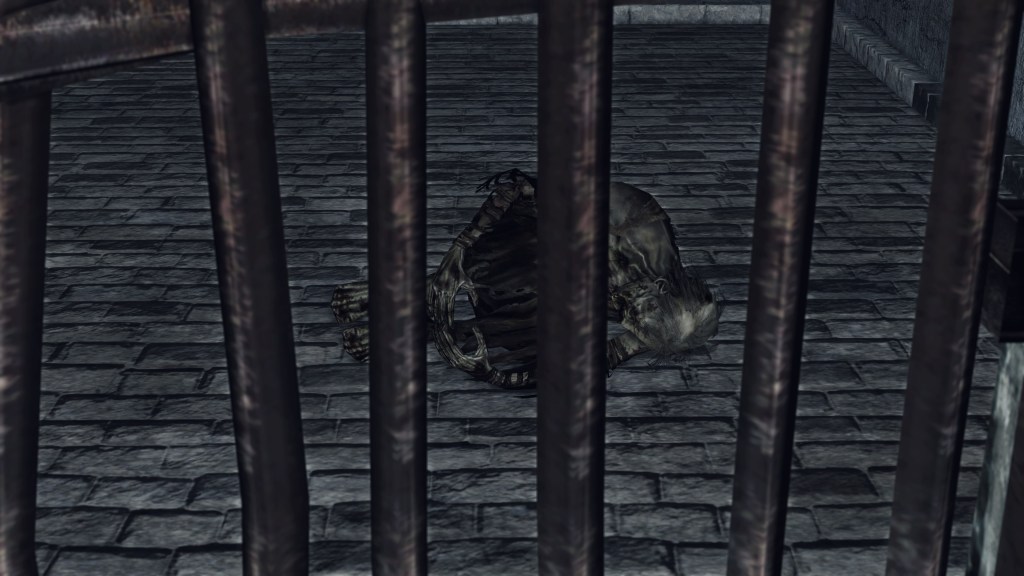
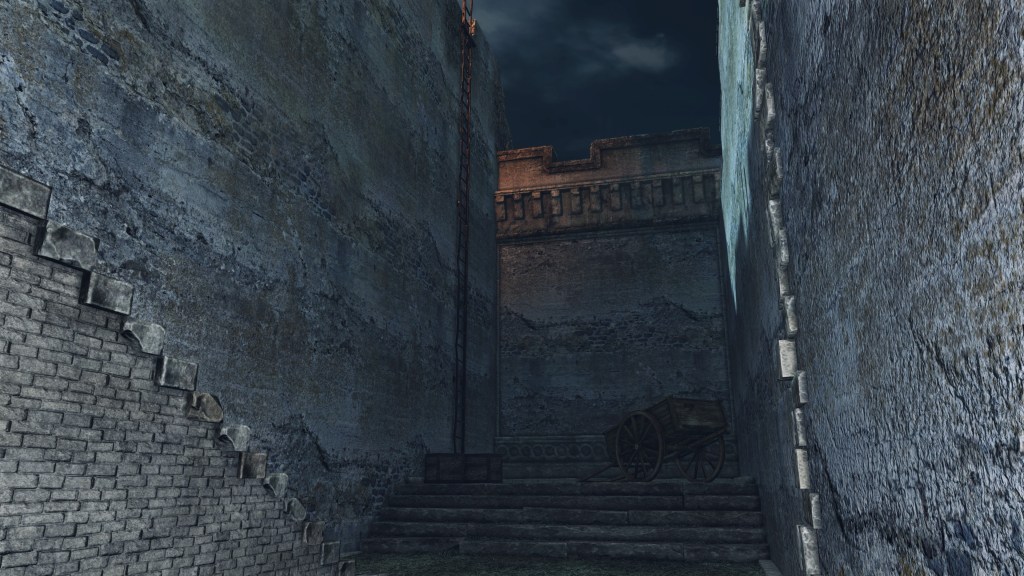
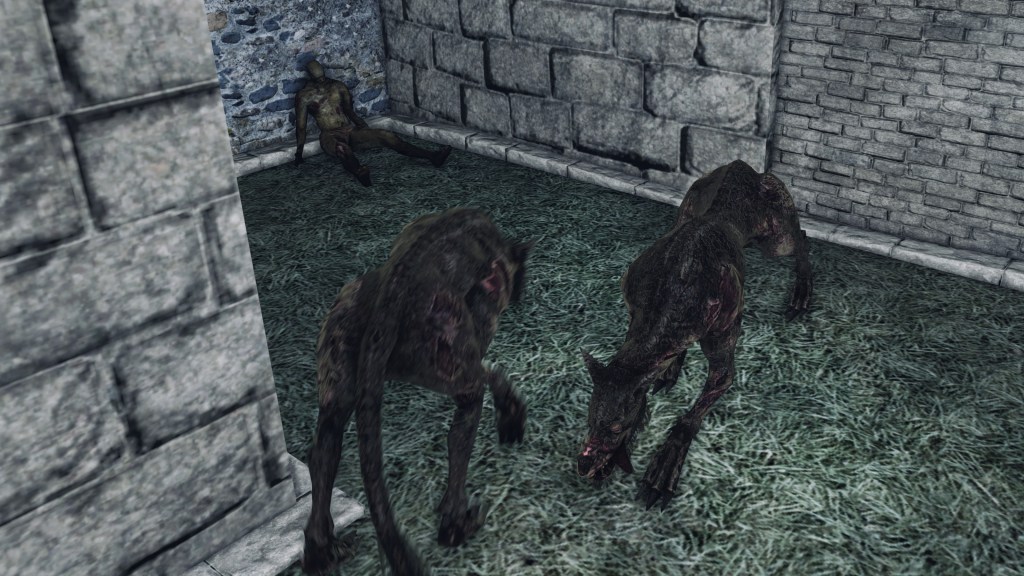
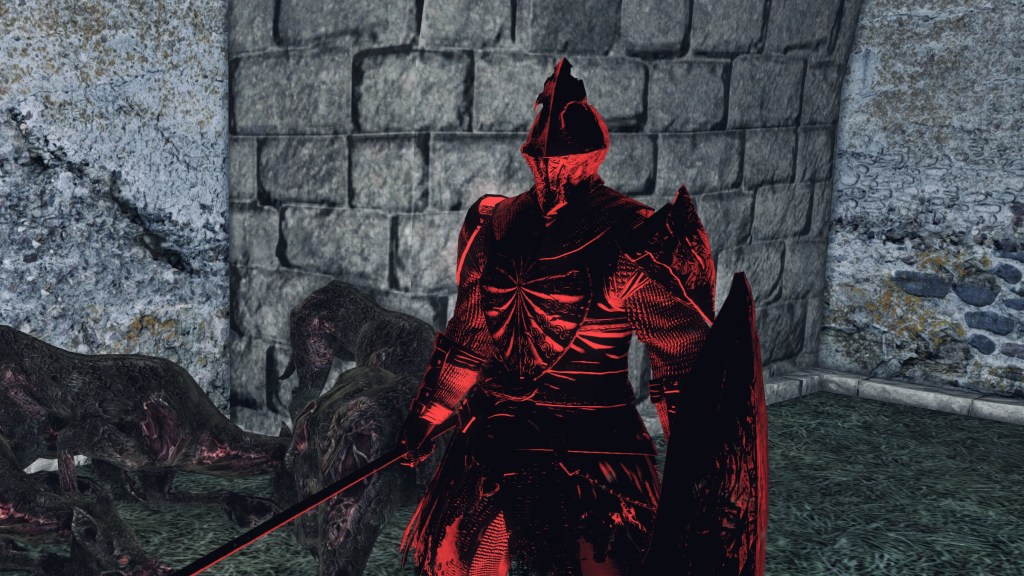
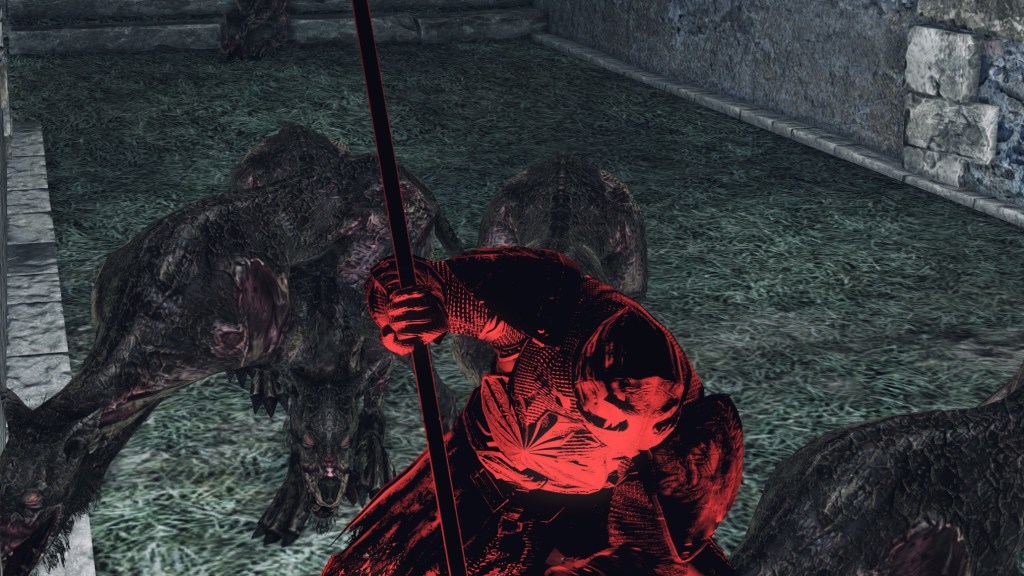
Vorgel the Sinner is a standard royal soldier. Though his equipment lacks consistent upkeep, he has maintained his post at the bastille, invading after we climb down a pit in the shadow of the ramparts suspiciously full of war hounds. Despite both his kingdom and the castle lying in ruins, Vorgel seems desperate to hide this pit. Looking at his moniker, the soldier has likely been taking sick pleasure throwing Undead to the dogs when no one is looking. Now cursed himself, his possibly hollowing mind still thinks that he will face punishment if outed as a criminal tormenting criminals. In fairness, such blatant sadism was probably too barbaric for righteous Vendrick to stomach, even if targeted toward the Undead. But the king couldn’t vet all his troops, allowing a royal soldier like Vorgel to slip through the cracks and land a post at the bastille. Granted, Vendrick’s issue would lie purely with the method.
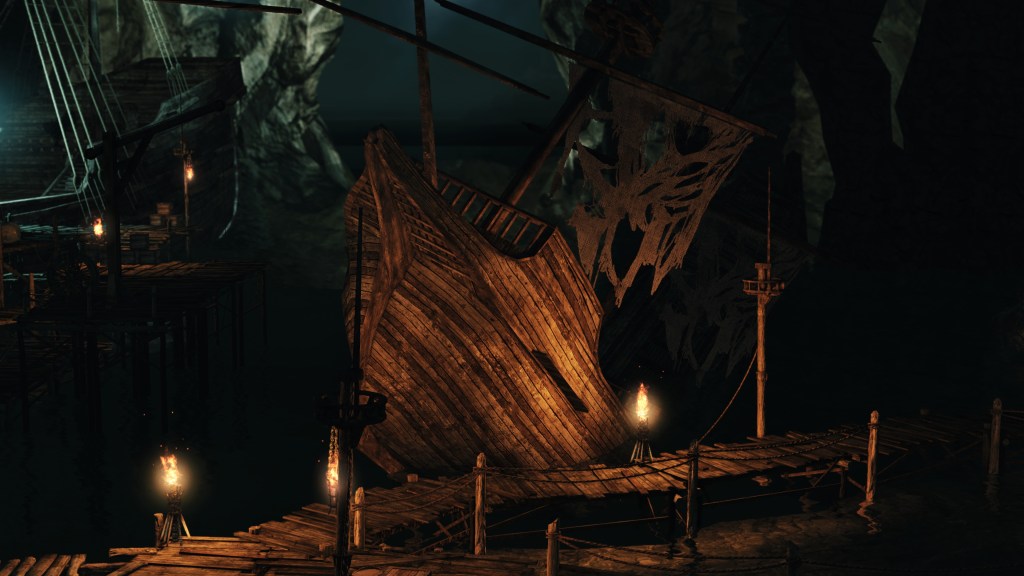
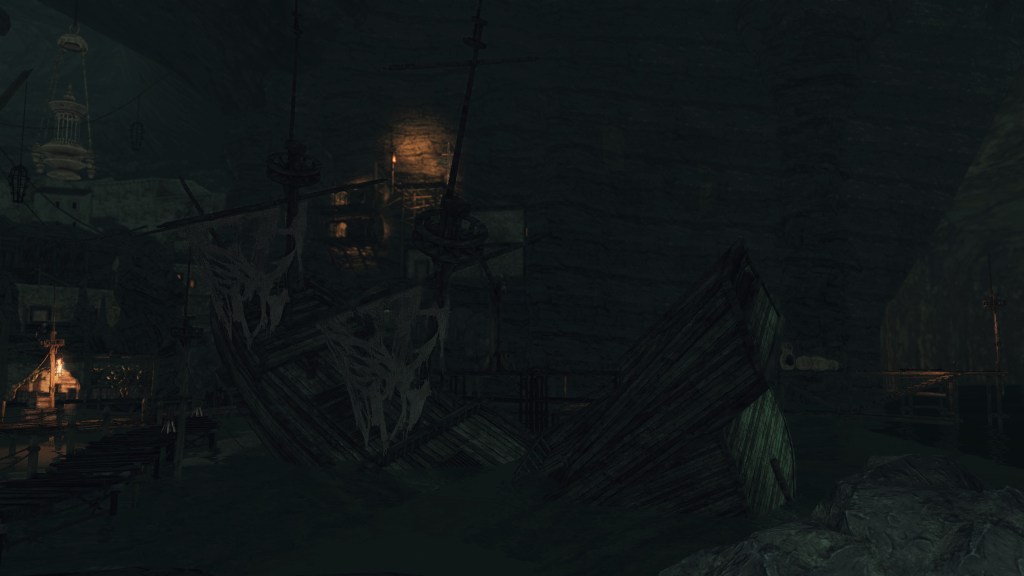
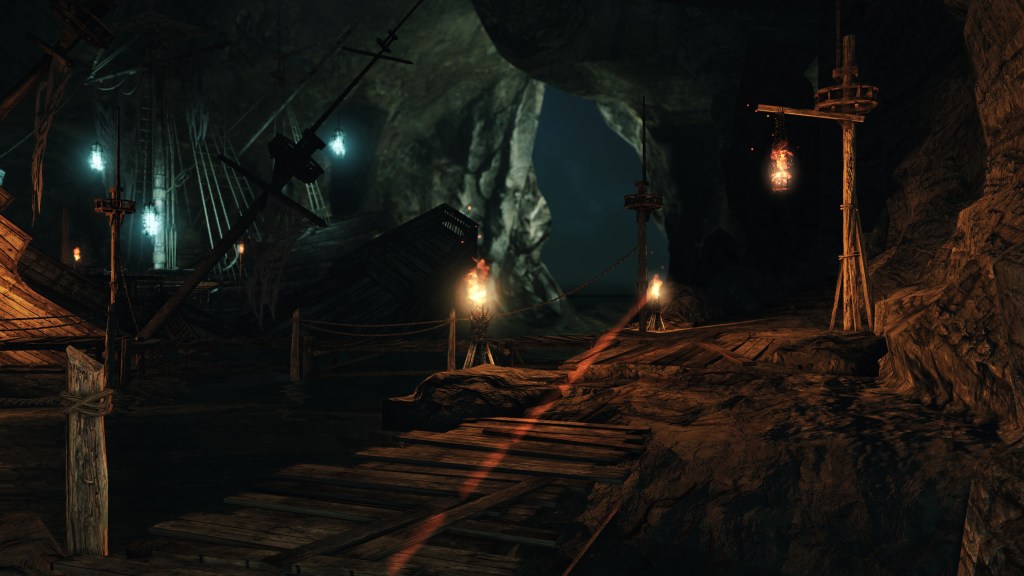
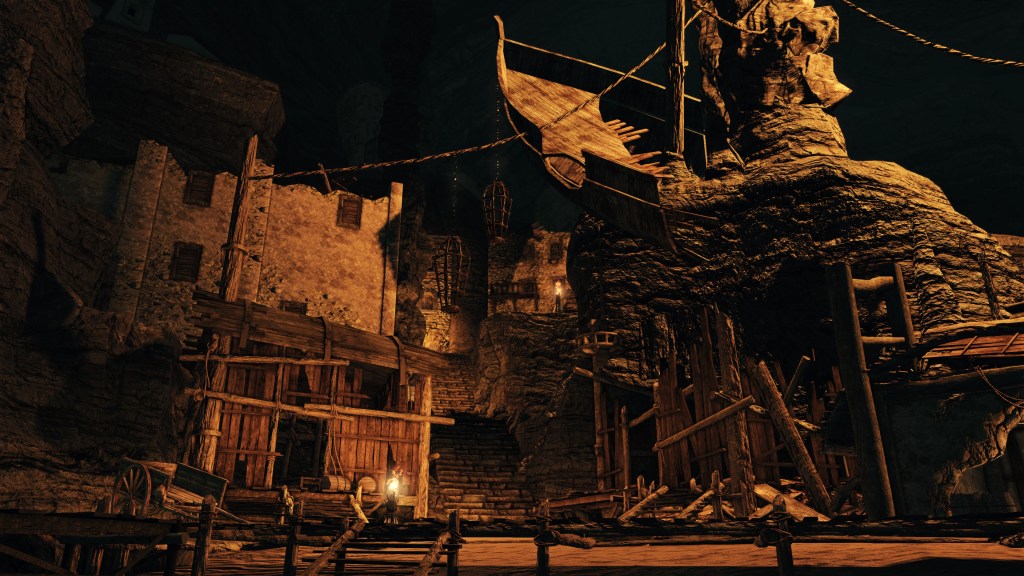
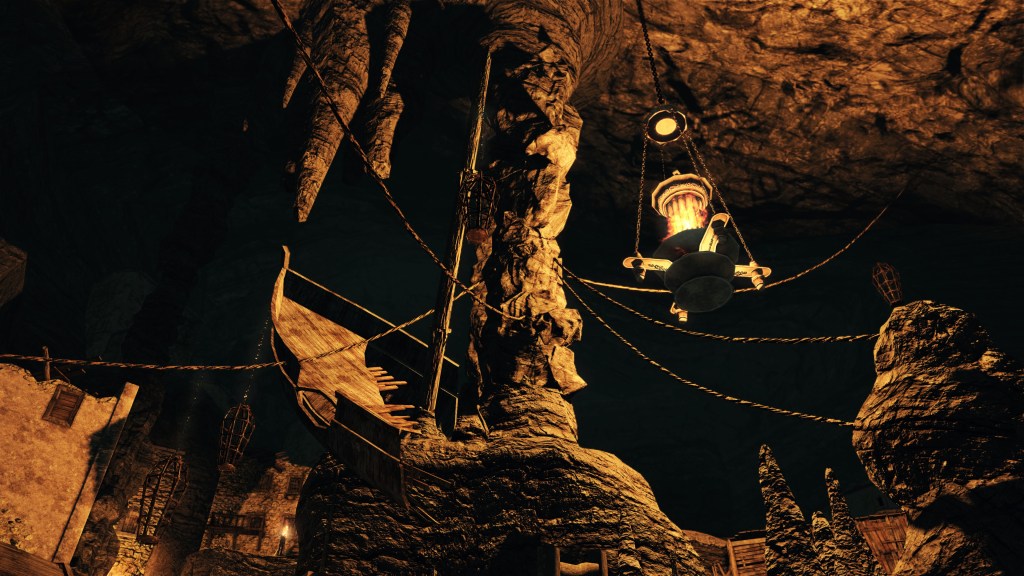
When the Undead became too many for the bastille, the dockworkers began constructing suicide cruises, the crude ships designed to break apart after they remained adrift at sea for enough time; leaving its immortal cargo to sink to the ocean bottom. This may have been calculated by weight. During the boss fight below deck, the water level slowly rises until we defeat said boss, at which point it rapidly reverts back to ankle-deep. Perhaps the hull was somehow designed to let in more water once it surpassed a certain capacity, namely of prisoners crammed in — though a boss fading away upon death should just be game logic. Regardless, it required trial and error, for we find a number of shipwrecks at the Wharf, some even repurposed to cover disrepair in the port town for lowly criminals. Regardless, prison capacity does seem to have fluctuated, since the docked ship we take heads to the bastille with no issue. If wood need not be wasted, they wouldn’t use it. And if Undead prisoner refuse to board regardless, the soldiers’ war dogs were ready to feast on their lost souls, which they retain to this day.
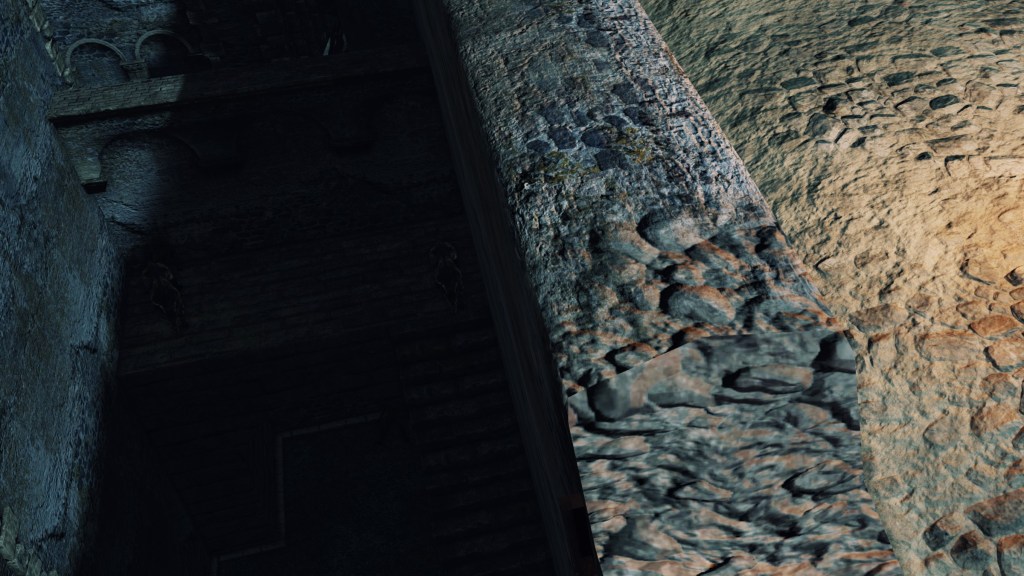
While certainly a straightforward solution befitting Vendrick’s thinking, the king still had the sense to look into the underlying cause, working in tandem with his brother to investigate. For his part, Vendrick’s contributions seem to have mainly been to sponsor Aldia’s research while dealing with the day-to-day affairs of his kingdom, as it is only later that he realized the full extent of that research. However, the Aldia Key’s description confirms that they were both resolute in seeking the truth. To that end, the two brothers didn’t act wholly independent of one another; each simply played to their strengths, with Vendrick handling the more practical side of things like funding and disposal. Indeed, the problem proved simply too large for the king to handle all on his own. He needed outside aid from vassals to discover a lasting solution while his focus remained trained on solving the issues at hand.
Eventually, Vendrick had to begin flexing his kingly might, hiring foreign mercenaries to help stem the ever-growing Undead population — for example, the shadow knights of Mirrah lurking in No-Man’s Wharf and the Lost Bastille. Item descriptions make a point of the king trying to control the curse with his powerful soul, the extent of his royal authority being a direct product of the strength of his soul. The Japanese text for his crown goes so far to imply that Vendrick thought his control over mankind proved the worth of his title, as would probably most. But even despite all that power bringing him so much wealth and influence, the king still came up short against the Undead curse. And as Wellager affirms, he and his brother’s investigation had long come to recognize the soul playing some central role in it. Nashandra relates that, just as how he gained its power to become the de facto ruler of mankind, he sought yet more in his attempts to confront undeath. And she was the one who would point him to it.
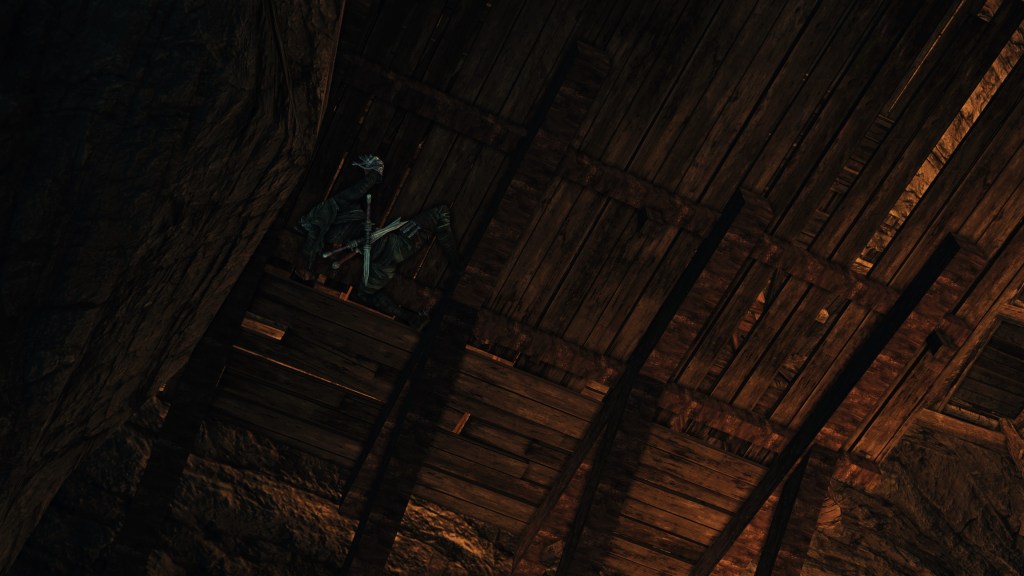
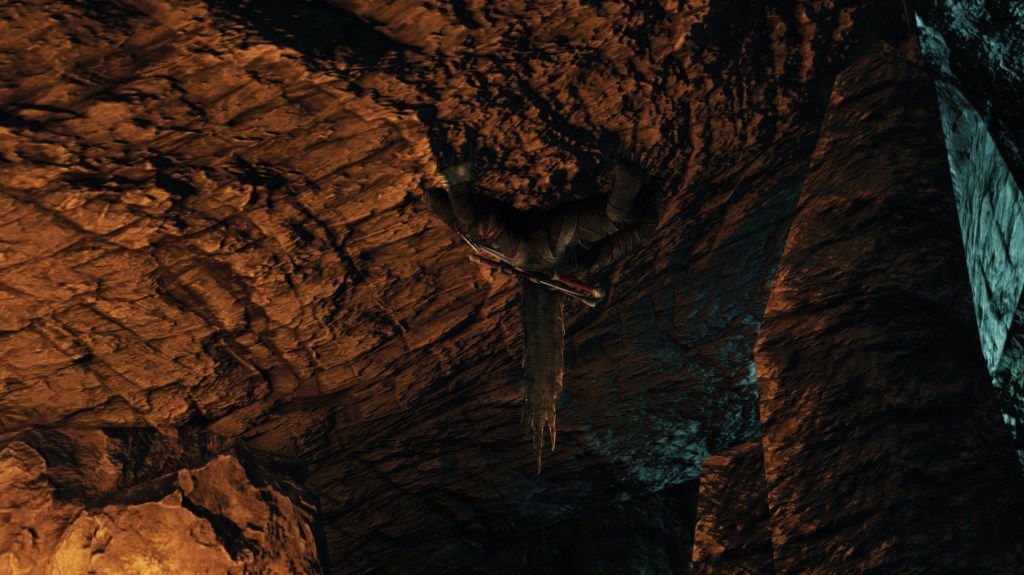
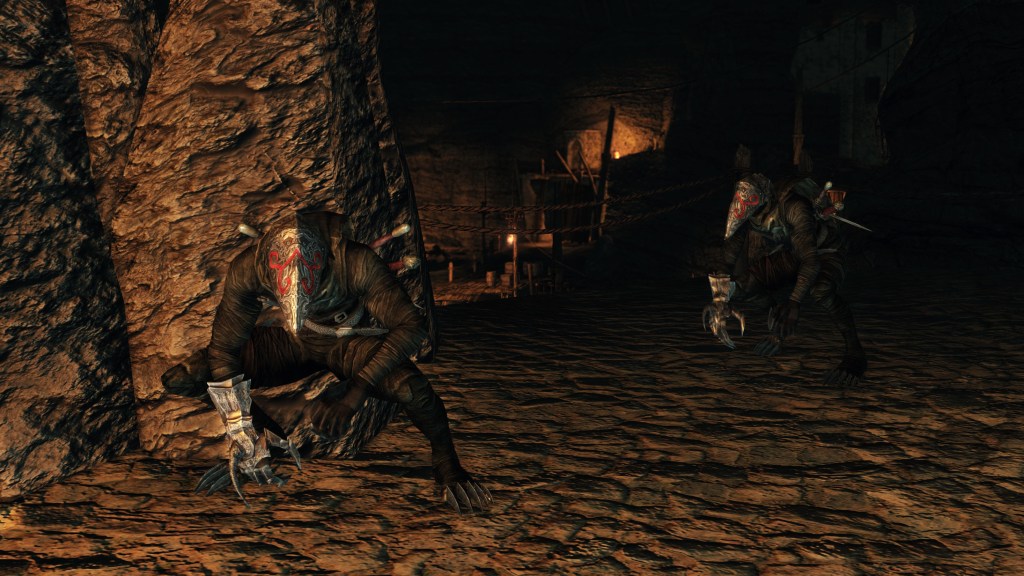
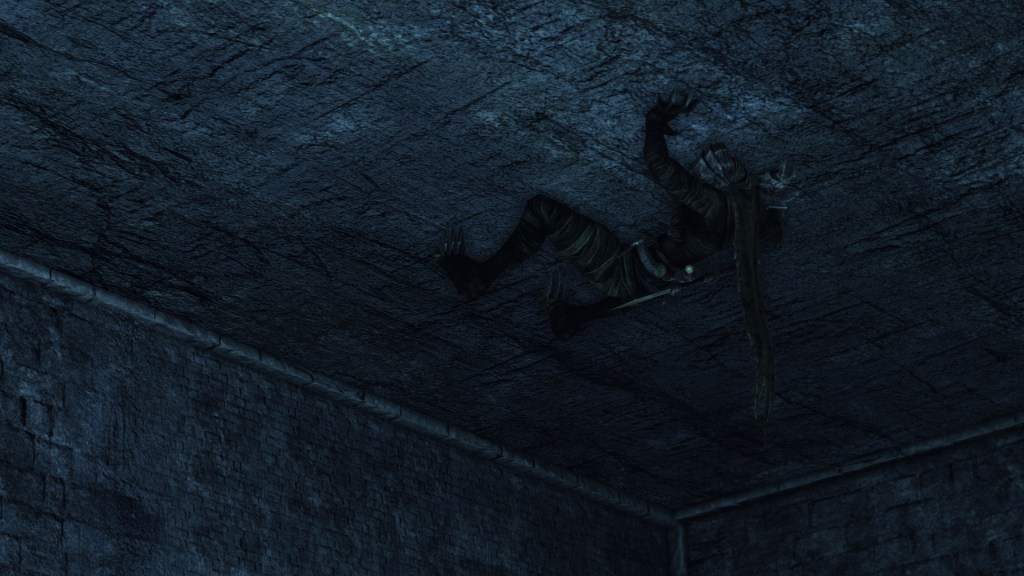
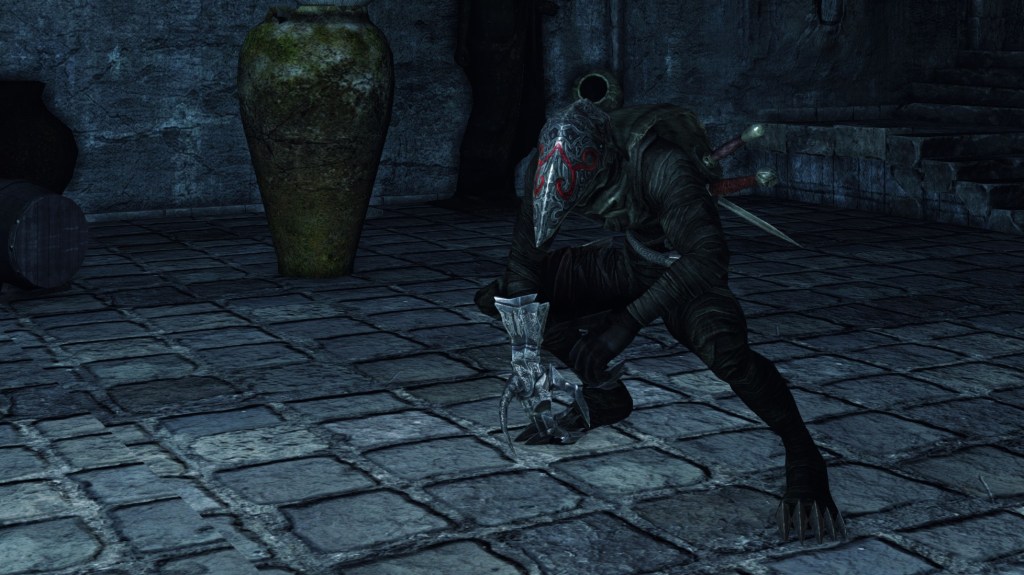
Mask of the shadows that hide in the dark night. Those who had preeminent assassination techniques often acted behind the scenes as mercenaries.
Vanclad, who tried to resist the curse, hired those of shadow to clean up the Hollows. However, they eventually became Hollows.
My liege is a great man… who once thoroughly investigated the profound mysteries of the soul…
Vendrick was apparently instantly charmed with the mysterious beauty who came before him alone. Where she came from was irrelevant when compared to her claims alleging an impending invasion by a country of giants beyond the northern sea. It was a bold prophecy, and there is no indication of any substance to it. Why would the giants attack another nation across an entire ocean without provocation? At the very least, Drangleic would need to verify that a crisis really was coming its way. Yet for being so fair and just, Vendrick seemed to simply take the stranger at her word — in all likelihood, his affections superseded his better judgement. Even if they weren’t actually wed until after the event, Nashandra secured her place as his queen as the two set out together on a military expedition north per her counsel. Once they arrived by sea, they confirmed the existence of these mighty giants, and that was enough for Vendrick.
His Majesty had a queen… She was extremely beautiful… Her Highness came from a foreign country once… By herself… She told the King of the coming crisis… of the country of giants… beyond the sea… The king crossed the sea… and triumphed against the giants… together with Her Highness…
Club of the giants that raided Drangleic. Its original construction is just affixing a rock to a fallen tree, but it exhibits formidable might.
The King of Drangleic, Vanclad, turned soldiers north to subjugate the giants that possessed mighty souls in accordance with the counsel of the queen, Dunashandra.
According to Drummond’s Japanese dialogue, it was the king who committed atrocities against the giants, not just the kingdom. From this, we can infer that he conducted this preemptive war more like a beast hunt. The unexpected country was raided, its people brutally killed or captured like animals, only for his forces to pull out once they believed the threat pacified — the image of these alien captives brought back on their ships seeming to inspire vessels for hauling prisoners to the Lost Bastille. Once again, the fair and just king forewent his righteous instinct, and once again, all in order to appeal to one woman. And after returning home with his prisoners, Vendrick had the giants — specifically their souls — used to fashion massive stone golems. And as their first order of business, these enslaved souls were tasked with constructing Drangleic Castle in a show of their master’s affection for his new wife. We see this in the finished product, the golems incorporated into the castle’s various mechanisms, though requiring additional souls for power after such prolonged inactivity.
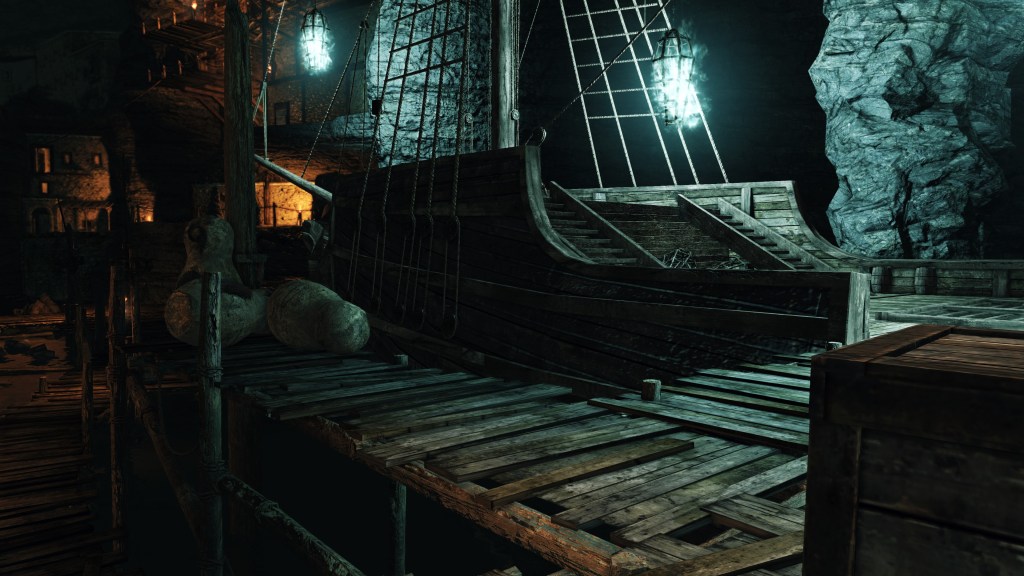
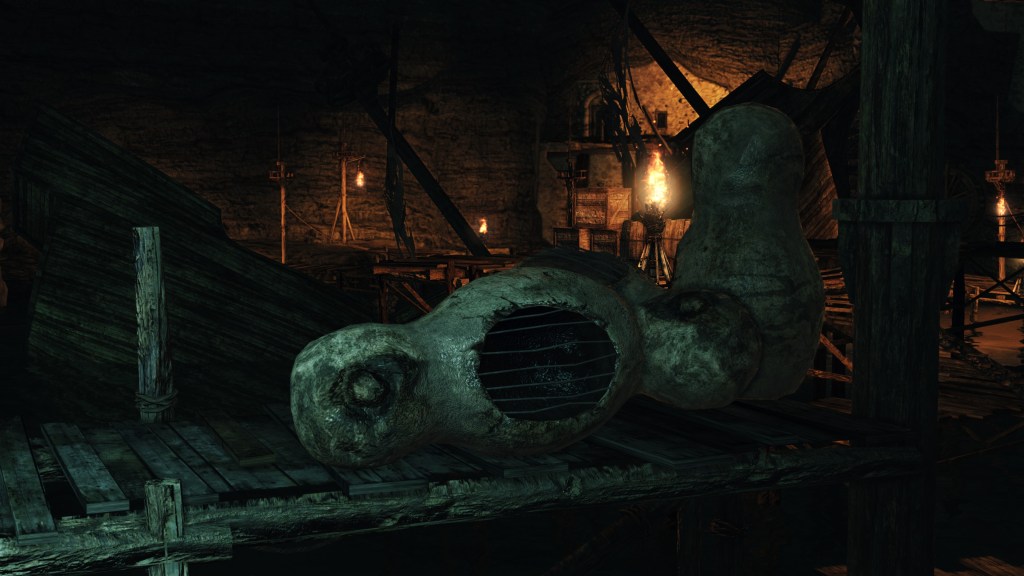
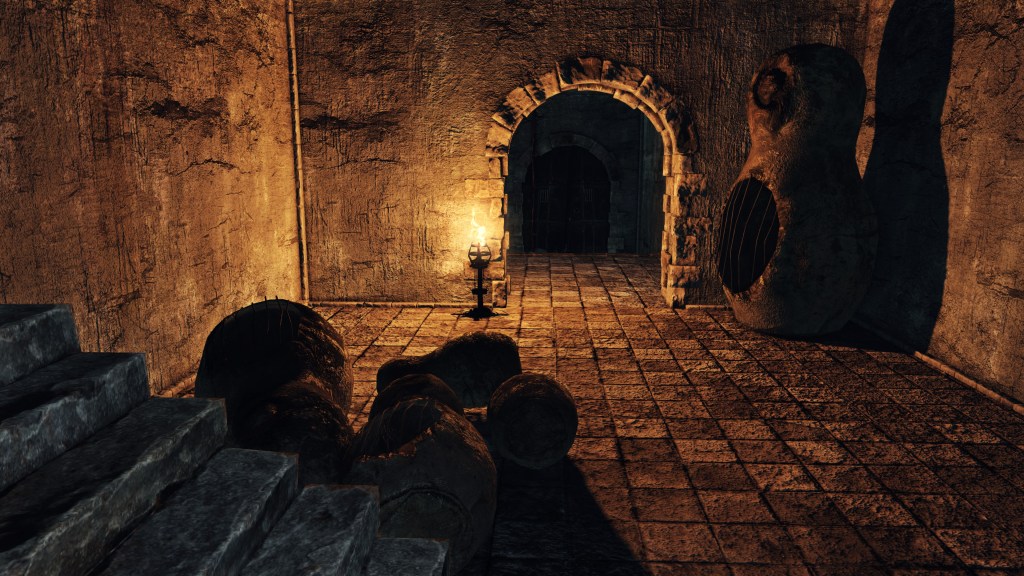
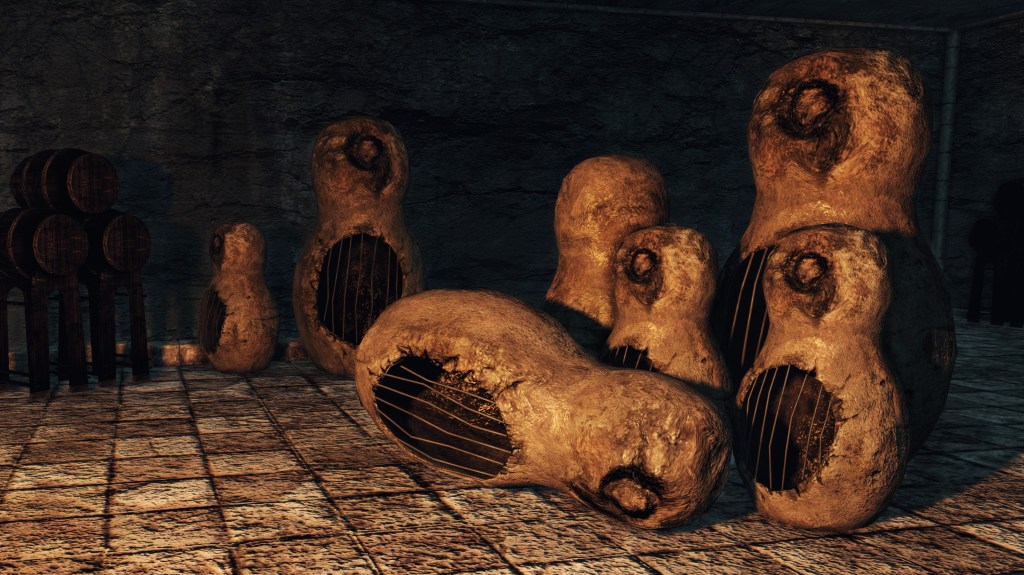
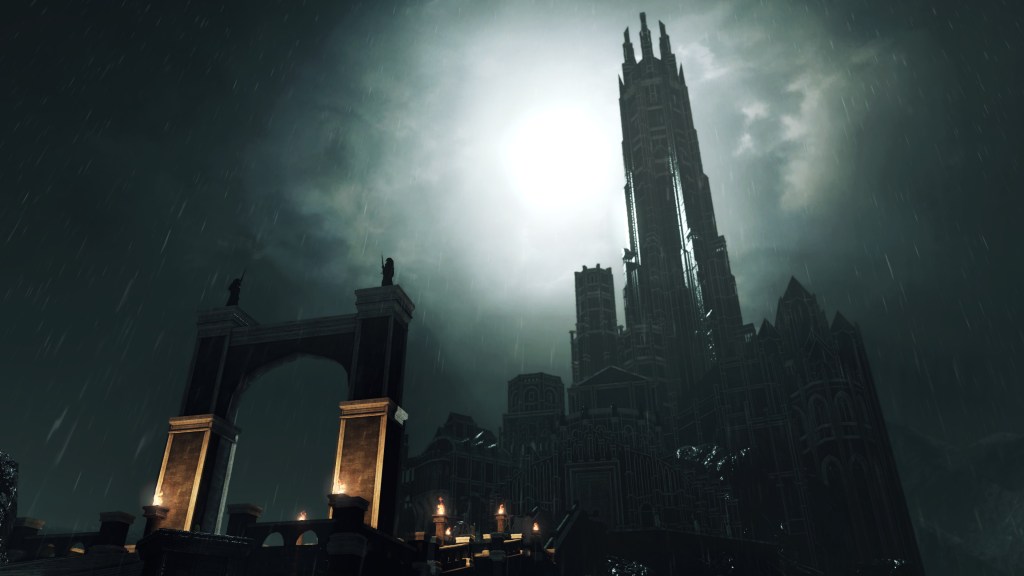
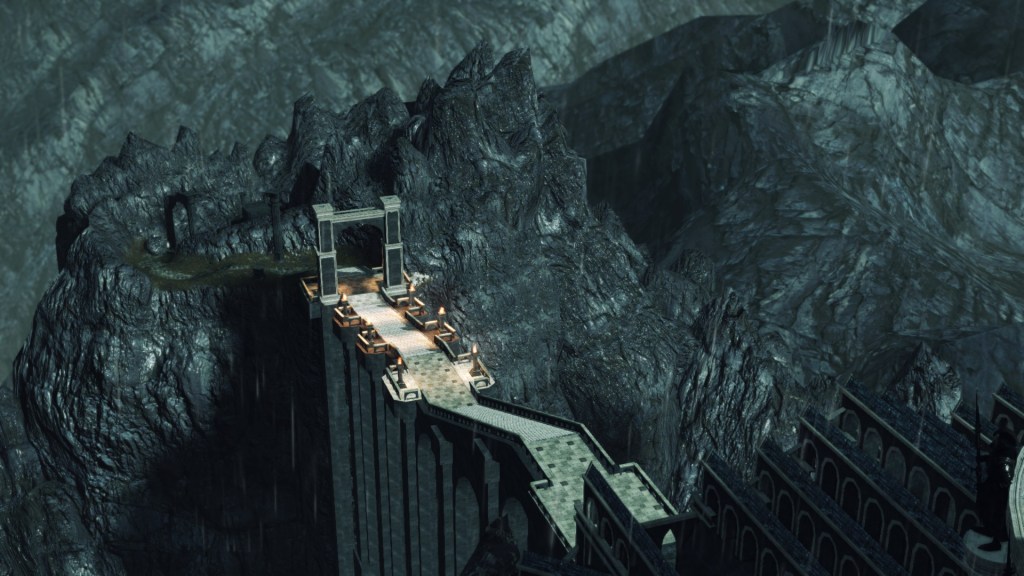
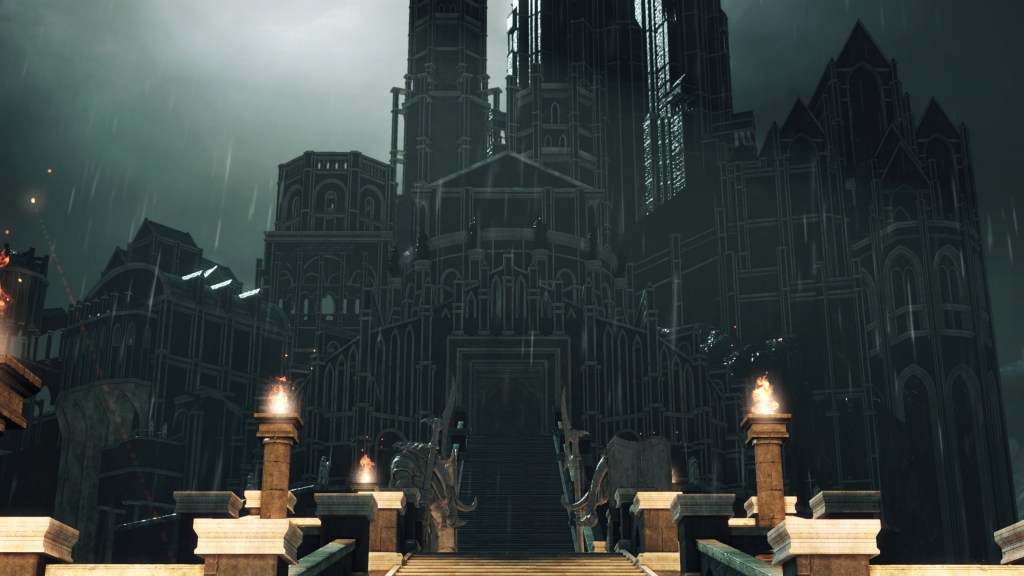
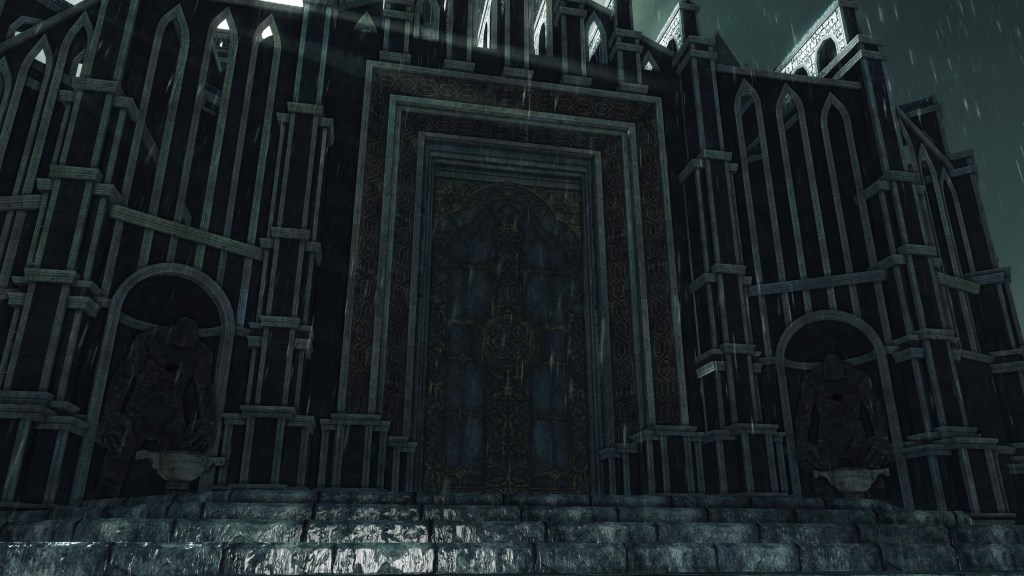
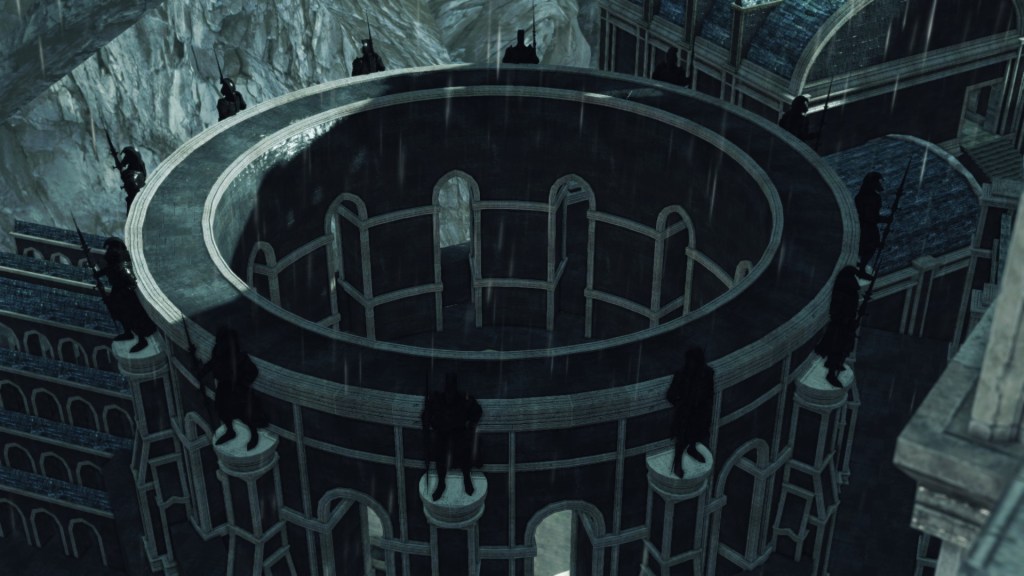
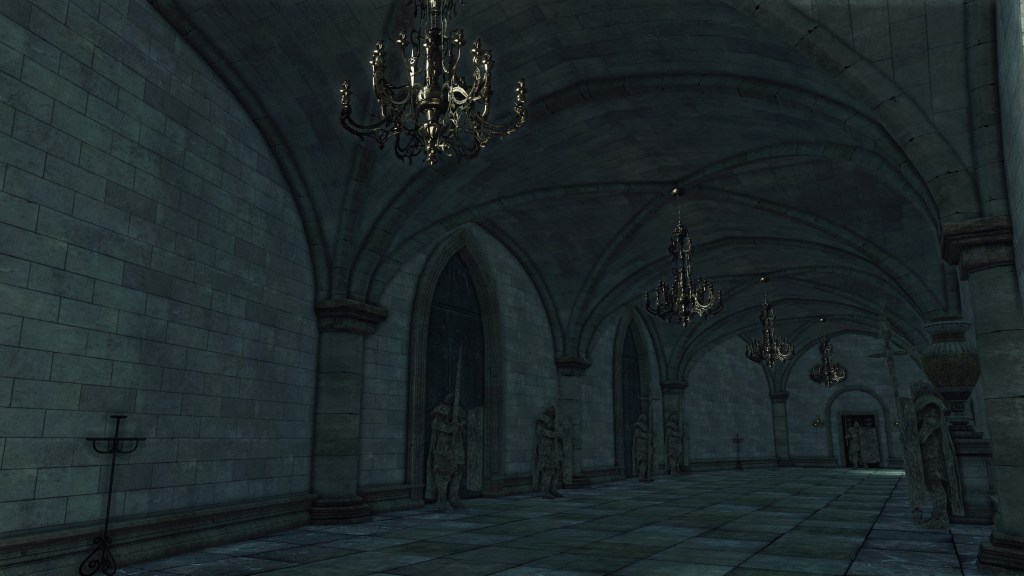
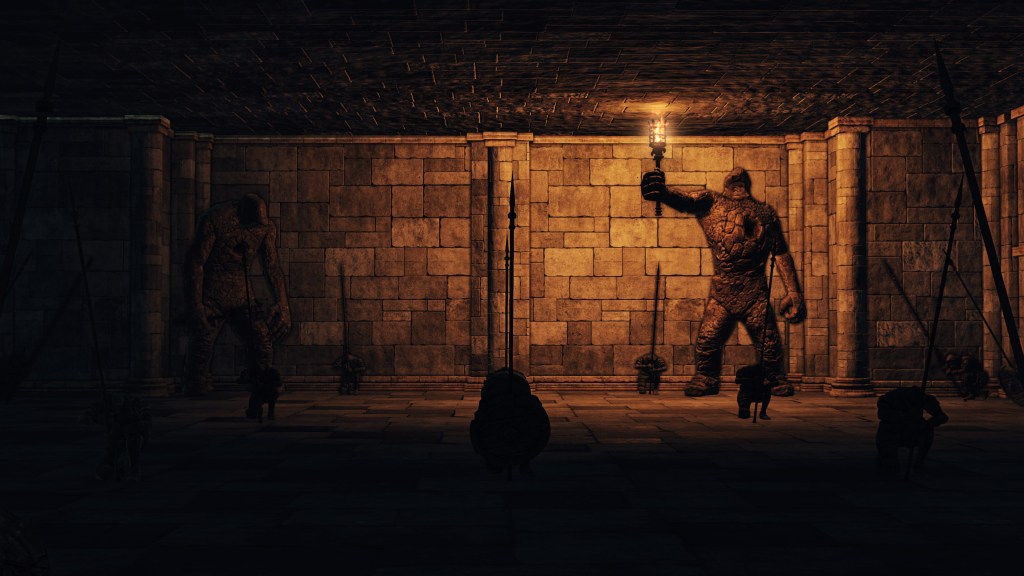
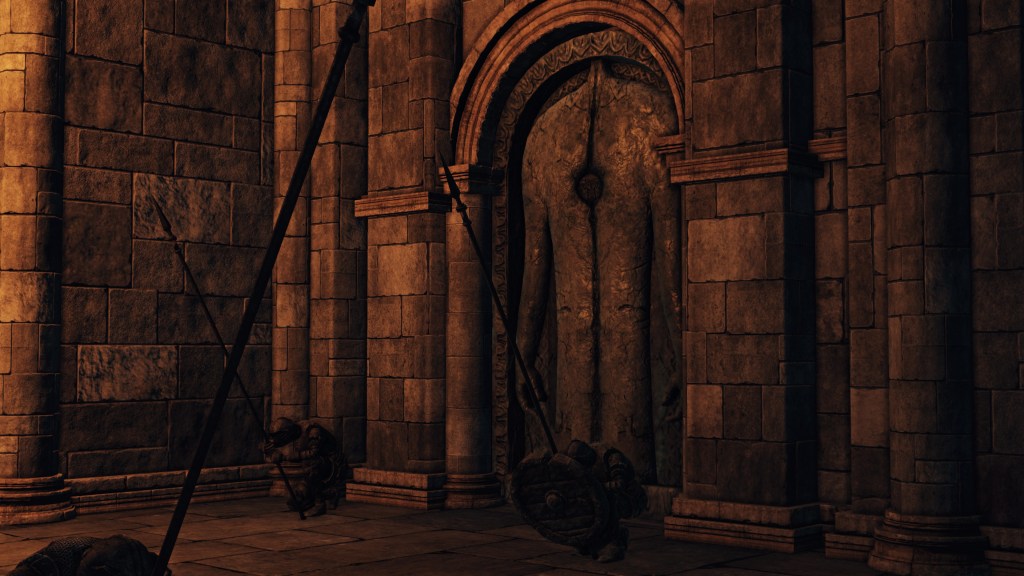
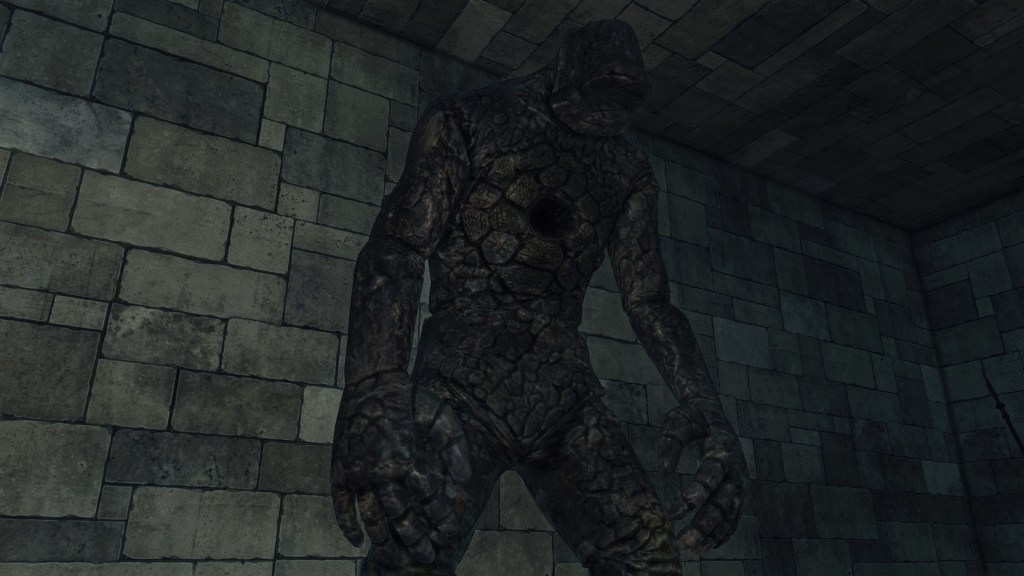
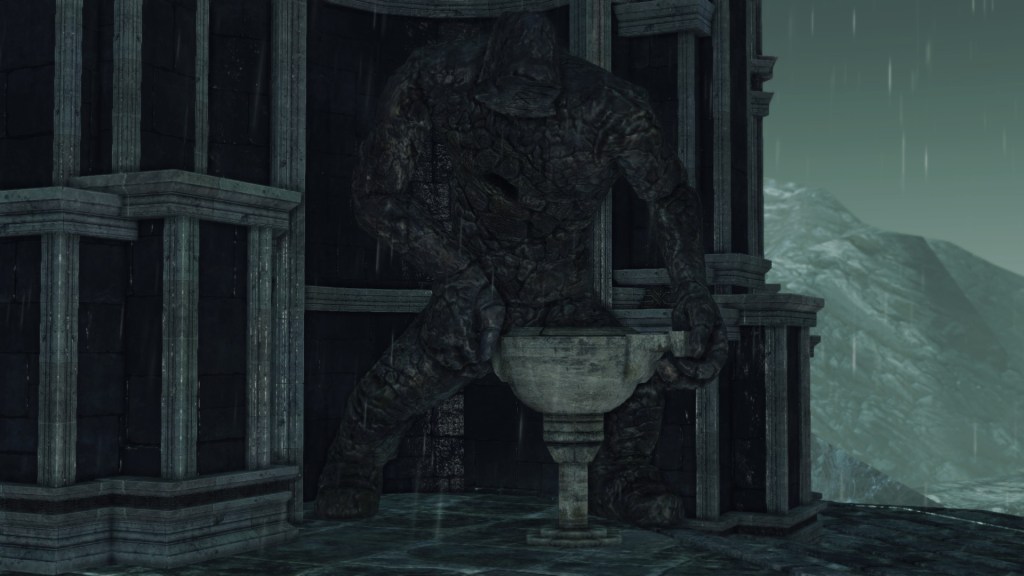
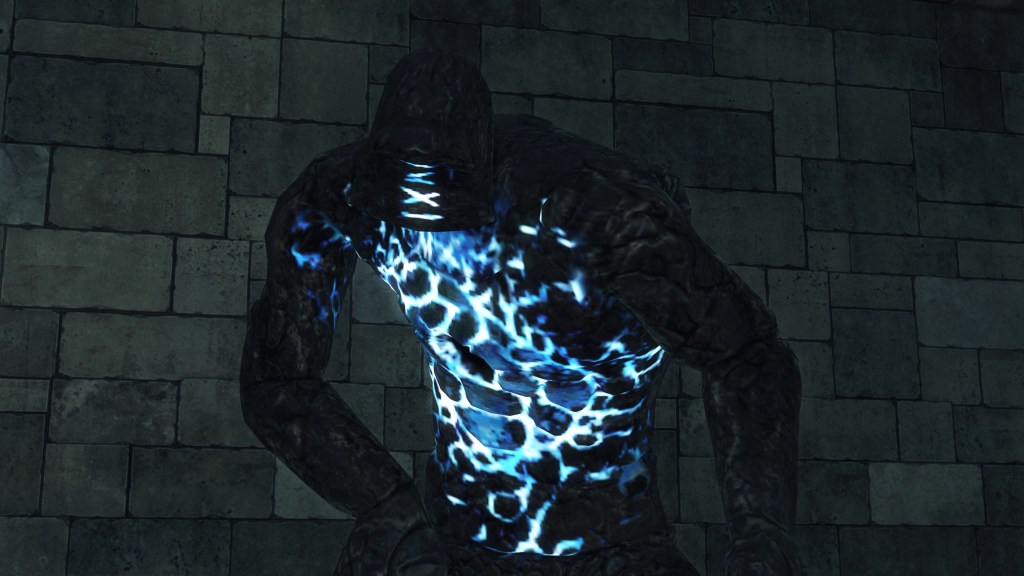
Once, my King crossed the sea and invaded the giants’ country. And then he brought back “something” from there. Since then, I hear those golems have been born in this country.
Golems… we brought back the power of giants and created them… The King made this castle via the power of golems… As proof of his triumph… and as proof of his gratitude and affection for Her Highness…
In this final act, Vendrick reveals another element to his relationship with Nashandra. Why would building their residence in isolated mountains so far from the capital serve as proof of his love for her? And was it really coincidence that he located the site basically atop the Throne of Want? Most likely, the queen had told the king about the throne and the First Flame beyond it, prompting him to show his interest by building their home where they could conveniently access it. In other words, Vendrick wasn’t just warned about a threat, but presented with an opportunity. The monarch sought power, which souls provided. The stranger showed him to powerful souls across the sea, with which he could dig and clear up the path to another soul, the most powerful soul of all situated at the source of all souls: the soul of the Lord of Cinder.
I am king, king of this country that ended up crumbling to pieces. I subjugated the giants and took away their power. To acquire further power and approach fire…
A soul is similar to a curse, and those who possess a strong soul are taken over by a stronger curse.
The King of Drangleic, Vanclad, controlled the curse with his powerful soul, and eventually decided to start pursuing the fire that was at the beginning of it all.
Can open the King’s Gate if worn.
Acquire power and meet the king. The one who once revitalized this Drangleic and approached the source of souls. King Vanclad.
This country is now completely destroyed, but it was once the origin of a great king. The king’s name is Vanclad. The one who approached the source of souls. He must have possessed a beautiful soul, don’t you think?
Vendrick believed that his dominion over man made him a king, but Nashandra and Aldia speak to a more philosophical kingship. A true King isn’t actualized by virtue of an inborn capacity or prelaid destiny. For at the heart, a king is whoever holds the power to effectuate his will, to turn his want into reality. And the one who holds the greatest effect upon reality is the one holding dominion over the First Flame, the entity central to the current world order. Primarily this concerns the King of Kindling. In becoming avatar to the fire from which all souls originate, he who inherits the flame also takes over the “karma” (因果) of the soul, becoming the cause behind the effect on this world shaped by Disparity; even Shanalotte acknowledges that us revitalizing flame will only fill the world with more of Disparity’s power. The same, however, is true for the Dark Lord, the one who wills the flame to die becoming King of a new age. Whether of Dark or Kindling, both can be considered the true King.
Crown of Vanclad, King of Drangleic.
What really is a king? Some say it is a natural capacity, some say it is a preordained fate.
If it is simply the name of the one who rules the world of man, that may be enough.
The one who once approached Kingship, Vanclad, is in this land. What is a King? It is not a capacity you are born with, nor is it a fate you are preordained to have… You want what? It is still not known even to you yourself. Until next time, Hollow.
In this respect, the “Throne” of Want is symbolic. After all the trials and hardship we overcome to reach the seat leading to the First Flame, to actually take it is essentially to already be King, our victory over our predecessor all but guaranteed. As various characters and even item descriptions frame it, assuming the throne liberates us to finally do as we desire, unburdened by the world’s constraints. It is for this reason that Aldia focuses so heavily on interrogating our wants, our actions before journey’s end driven by the need to survive more than anything. And it is for that same reason that Vendrick chose to seek it for himself. He didn’t fail to wipe out the giants, including their king. His goal was always just to collect a sufficient number to help excavate the throne site while crippling their fighting strength. And as we witness, this number have dug all the way to the throne itself, ready to serve as a bridge for the gaps — Vendrick first laying eyes on the relic before his dark hair had even greyed, based on the Forlorn Hope trailer. Nashandra pointed the king’s aim toward the First Flame, which he himself admits.
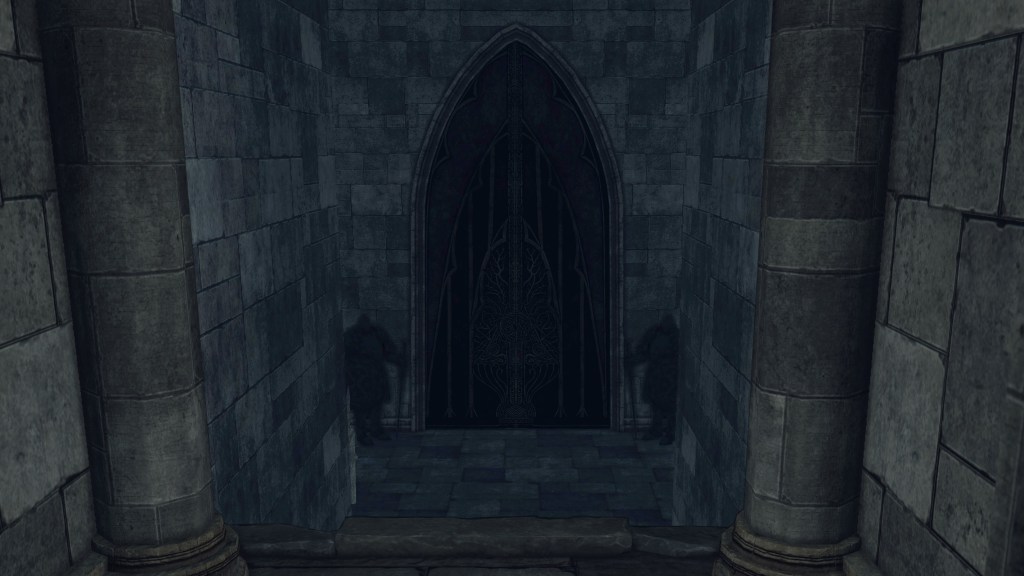
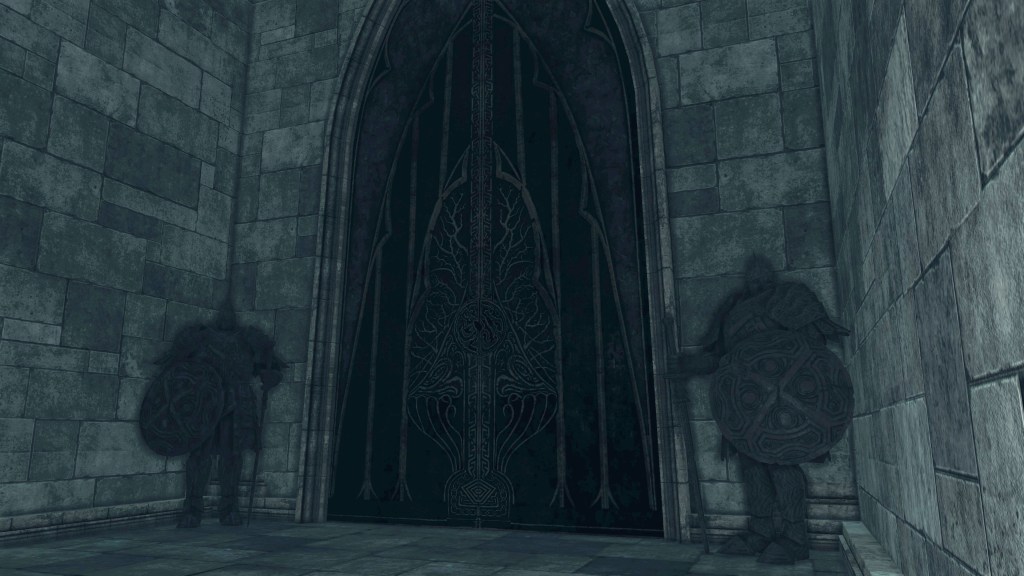
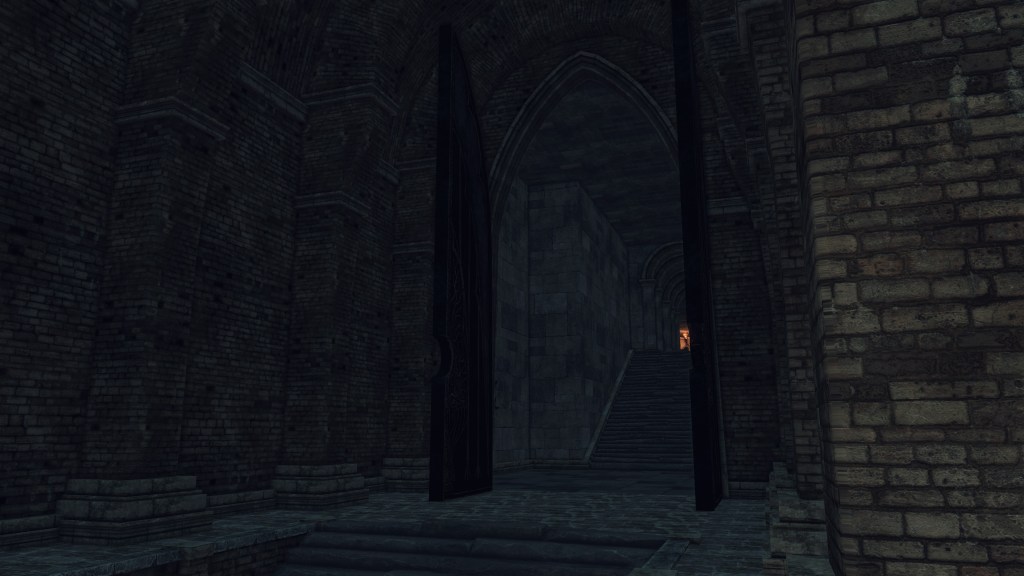
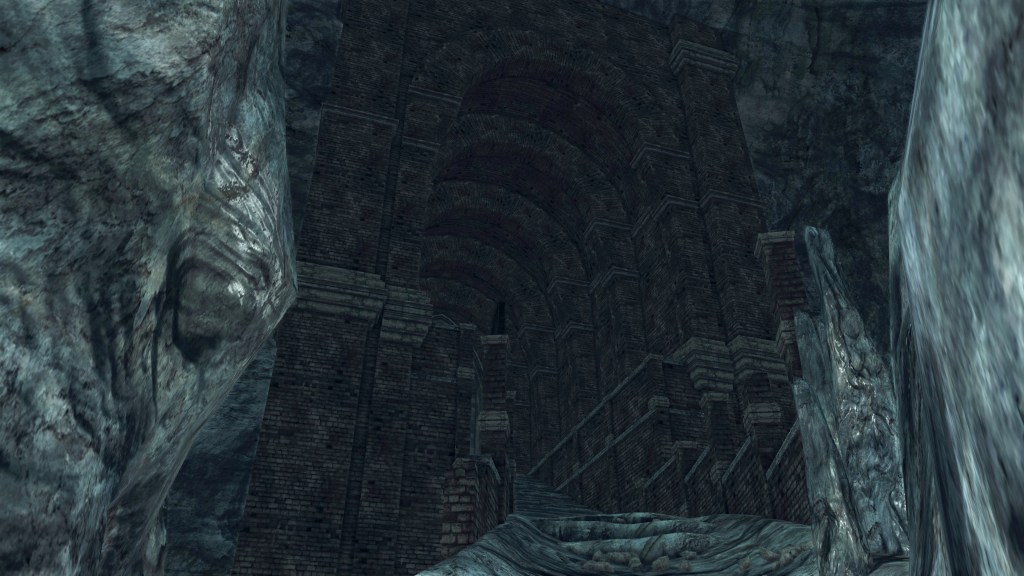
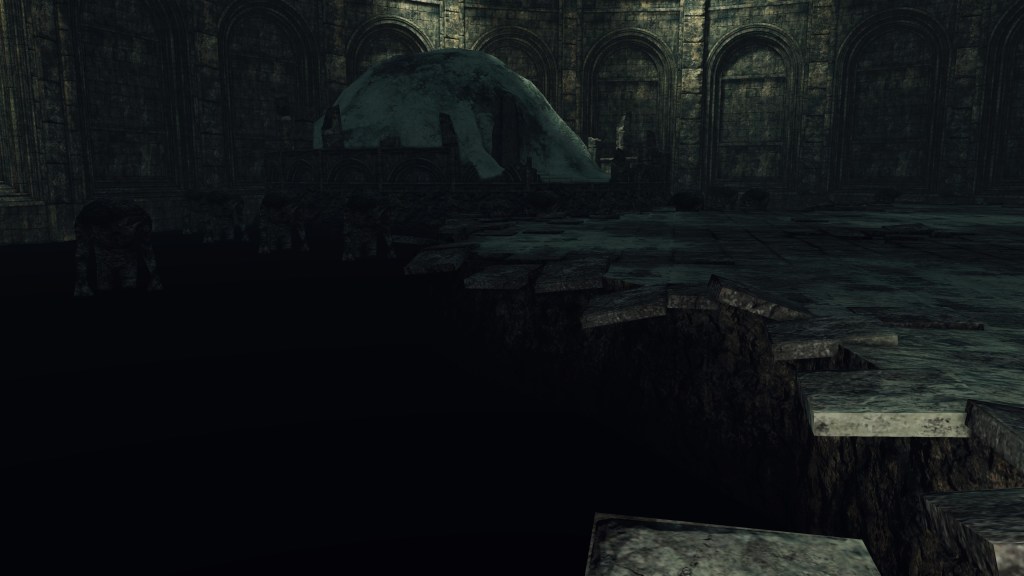
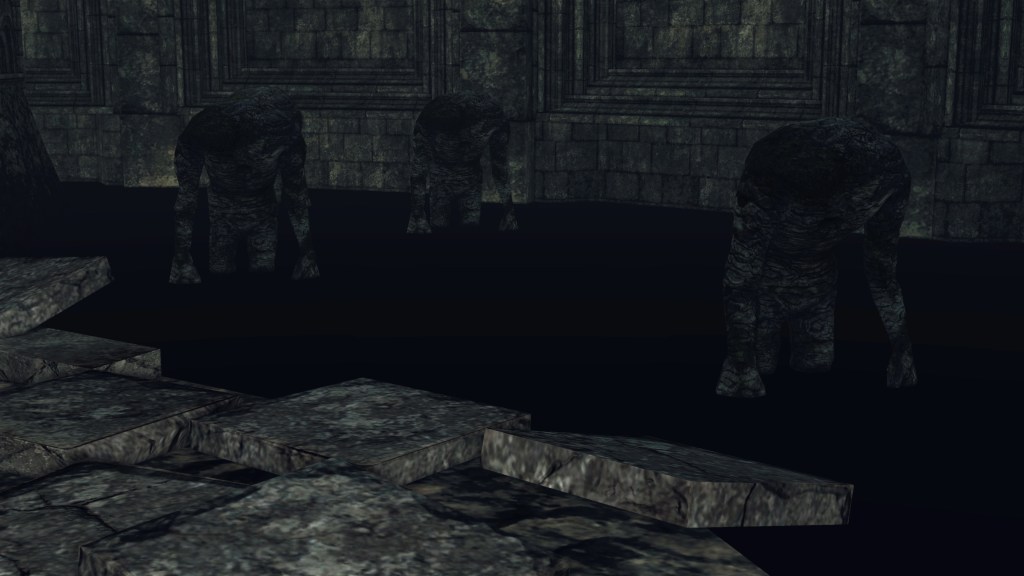
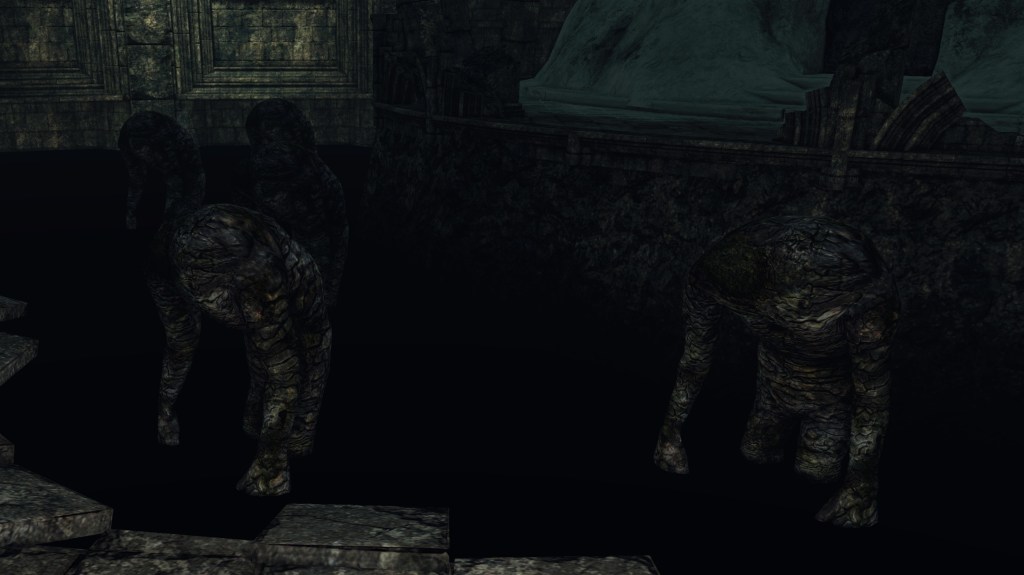
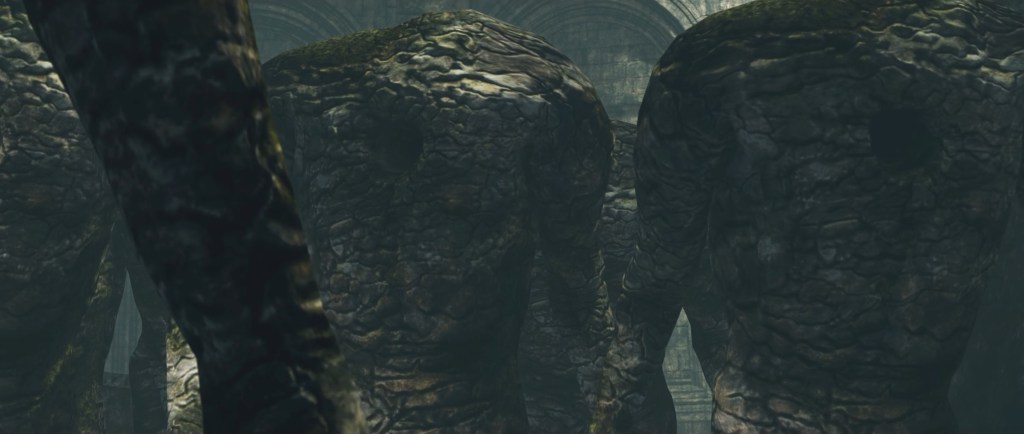

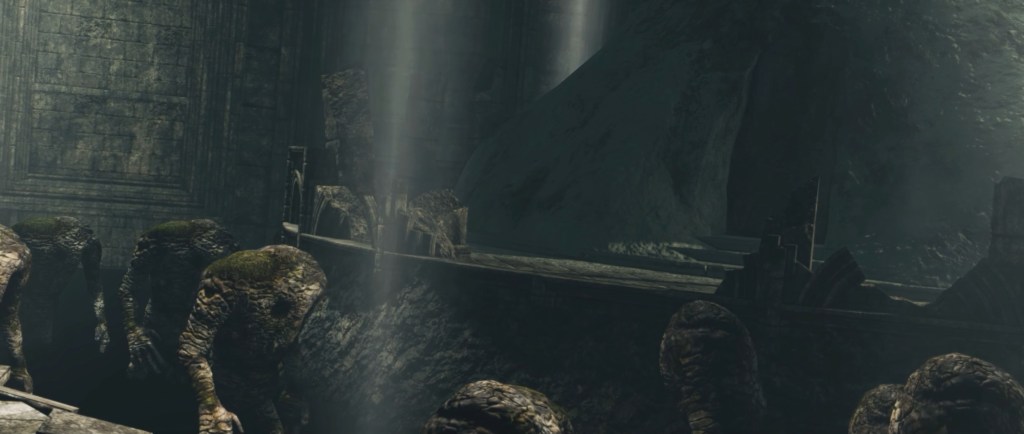
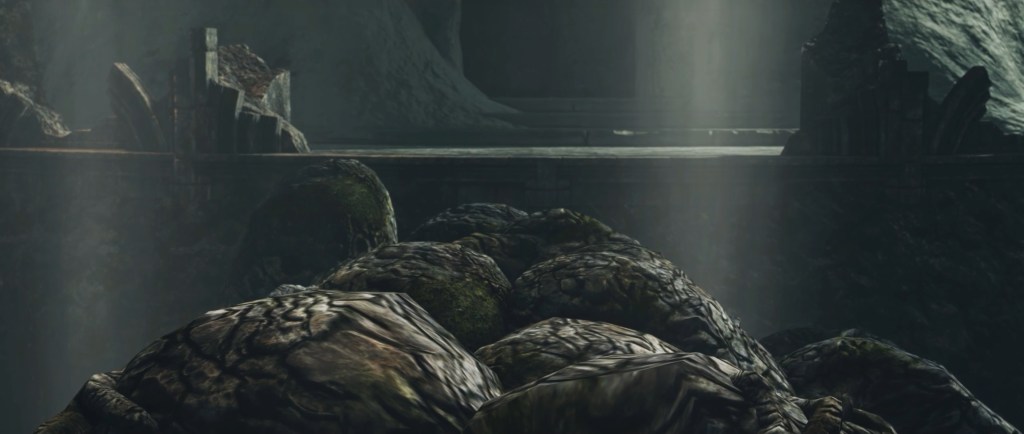
There is a suitable throne for the one who is King. What is seen from there is something only known by those suited to that seat.
Or does the throne show what the one seated there wants?
Fire flourishes but eventually abates, so long as the one to link it doesn’t materialize. What is it that the one who acquired the throne really…
One who links the fire, one who takes on the curse within yourself… If you link the fire, souls will propagate again and the same thing will repeat. To want it, to refuse it… It is for you to decide. One to be King, to your throne. Only you see what lies beyond it.
As for how much Vendrick knew at this juncture, his dialogue indicates his ultimate recognition of flame’s cosmological significance, as well as undeath’s underlying nature. If the curse was Dark, then surely he just needed to control fire, for shadow only exists thanks to fire. Control the flame, control the Dark; that was his logic. And even if he wasn’t fully aware of all the details until much later on, the king could surely trust the advice of his beloved wife. While excavation was still underway, Vendrick continued to govern his kingdom from their new castle, and we can find the queen’s chair seated alongside his in their audience chamber. Almost everything was done in concert with Nashandra. He cared for her, respected her opinion, and according to Wellager, she brought peace both to the country and to him. During this period of calm, Vendrick took the opportunity to dig into more than just the Throne.
Once, fire was born, and it brought Disparity. Heat and cold, life and death, and light and dark.
Dark is called a curse. But, a shadow is born only if there is fire. The more fire flourishes, the more Dark darkens its color. Control Dark with fire… That is taking on them both together. The one who accomplishes that would undoubtedly be…
One long lift ride down from the back of the castle takes us to a large hole in the wall leading to the Shrine of Amana. Whether by accident or intention, the castle had discovered a path to the ancient subterranean ruins north of it, allowing the king to become familiar with them; his later flight to the Undead Crypt proves the depth of this inquiry. As the chest up the lift further demonstrates, they even claimed relics. That alone explains why the crude opening in the chamber below was left unrepaired, roots beginning to grow out of the crevice in the time since. But more than recovering the legacy of Heide or Olaphis, the king’s interests probably lay with the secrets of the Crypt. If Vendrick wanted to learn about the Undead curse, surely an entire tomb dedicated to Undead would have his answers.
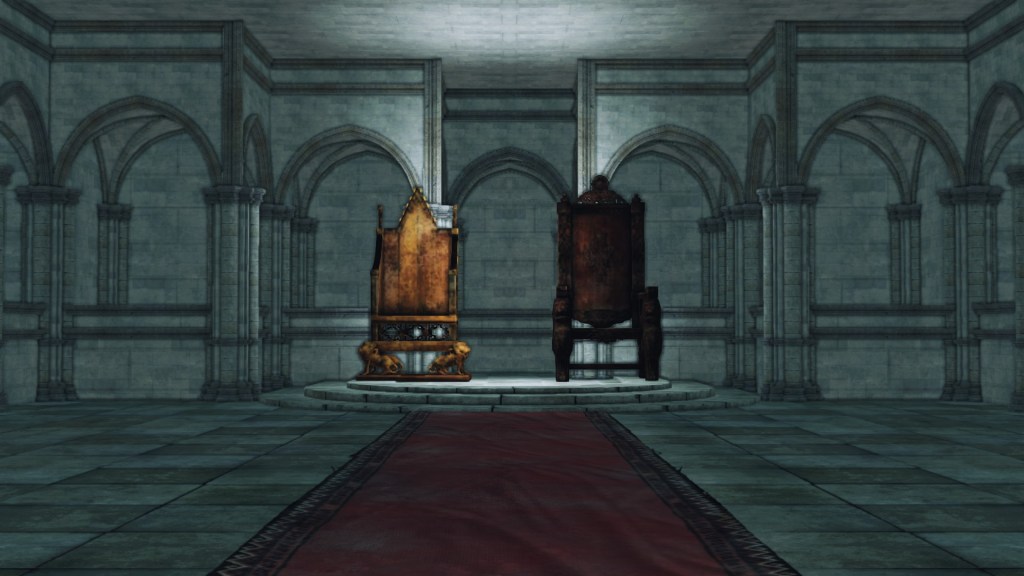
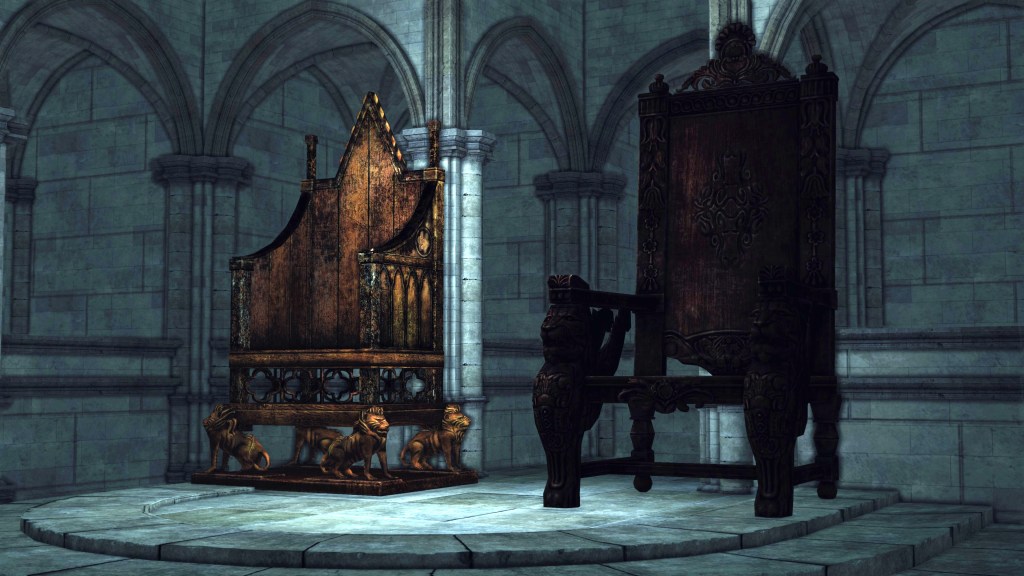
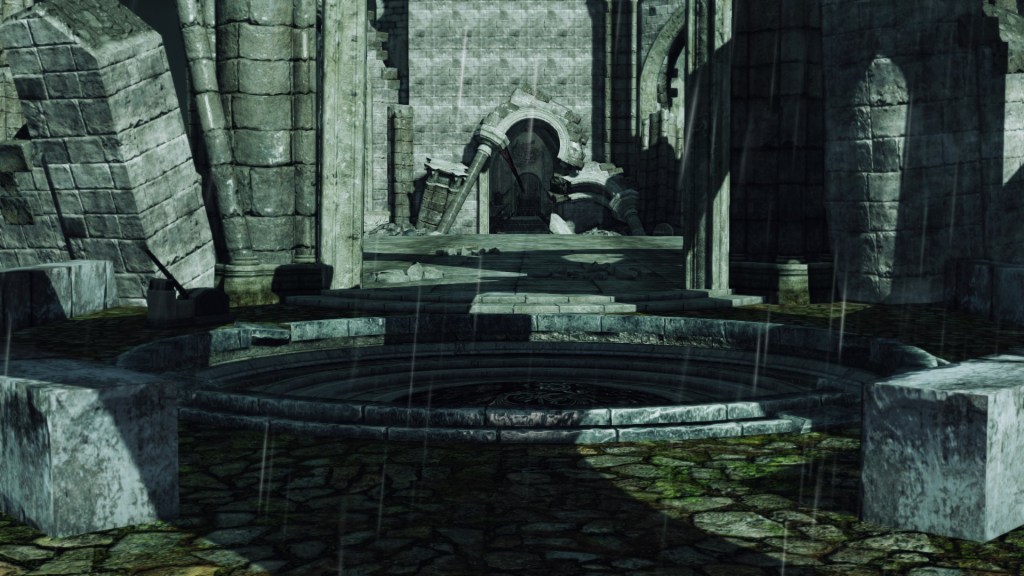
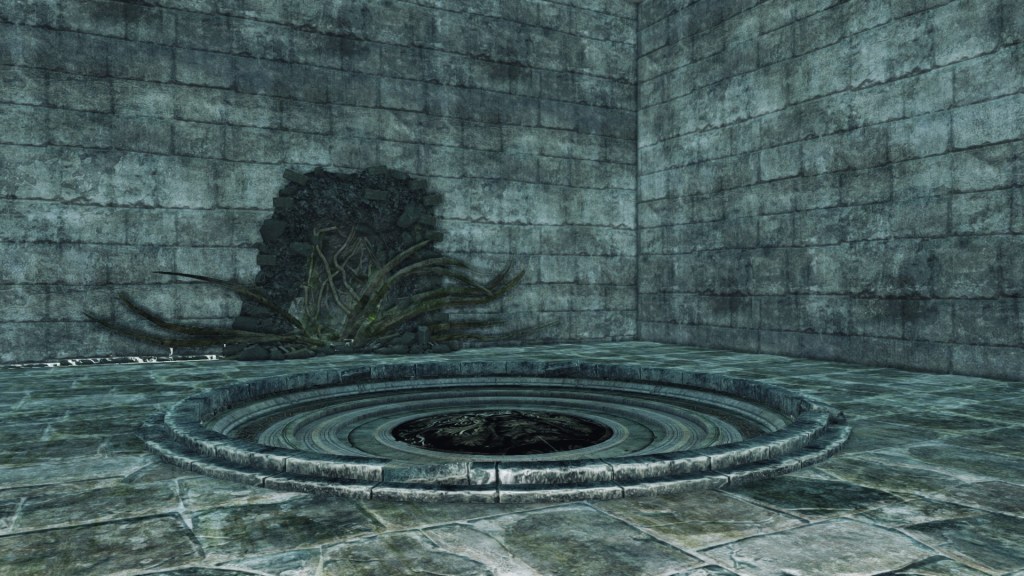
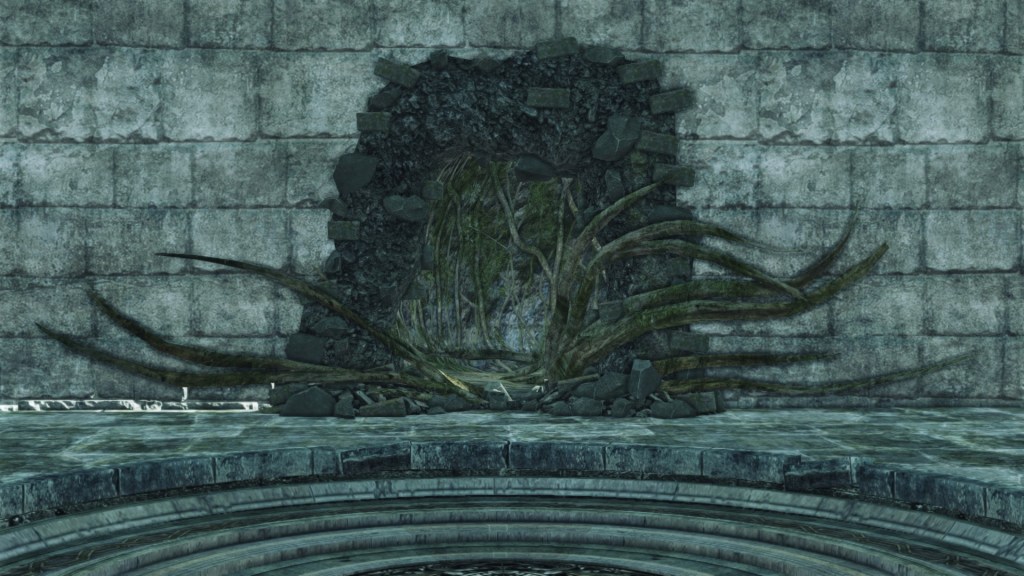
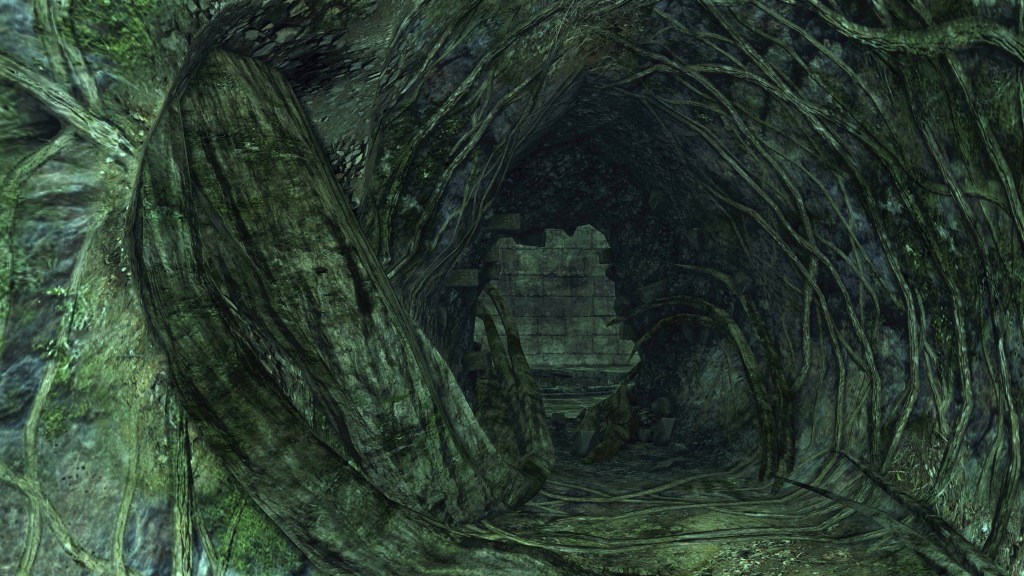
There is also the possibility of exploring the Dark Chasm of Old beneath his feet. Although we can only access the cavern housing the altar by falling through one specific spot on the castle floor, the darkness Hollow already present implies other means to reach it. Wellager also has the Transgressor’s Staff and Shield found within the Chasm among his various items for sale. Adding that he owns the text for Great Magic Barrier used by Mirrah’s knights, the royal chancellor likely acquired all these items in the course of visiting their origin places, or at least collected them from actual visitors of those place at the castle. In short, the kingdom must have explored one or more of the Dark Chasms of Old at some point, expeditions Vendrick may well have spearheaded given his knowledge of Manus and the history to his Abyss. Him and his soldiers’ exploration is likely what inspired the arrows tipped with dark pine resin, left to rot in obscurity within the castle’s storage.
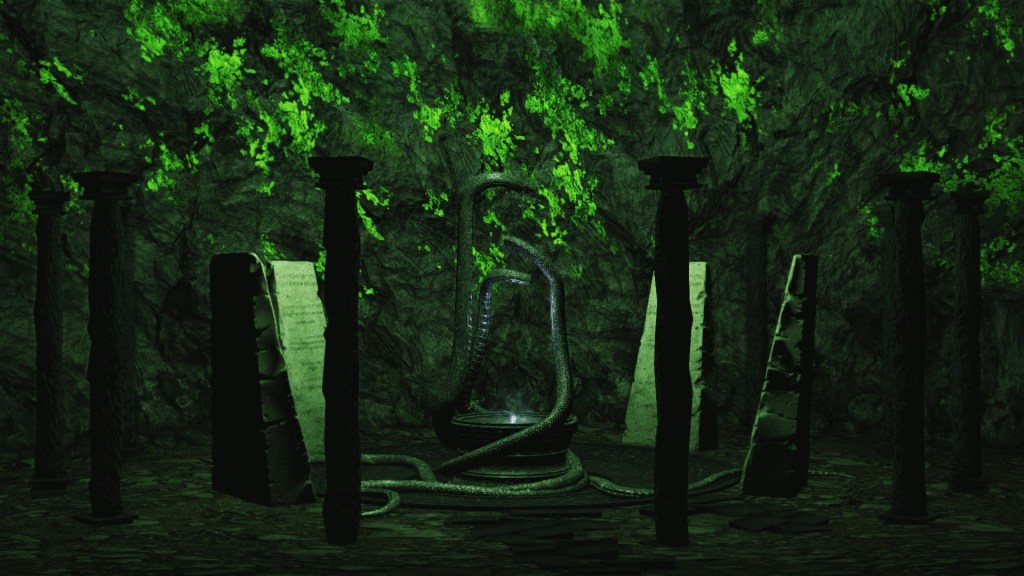
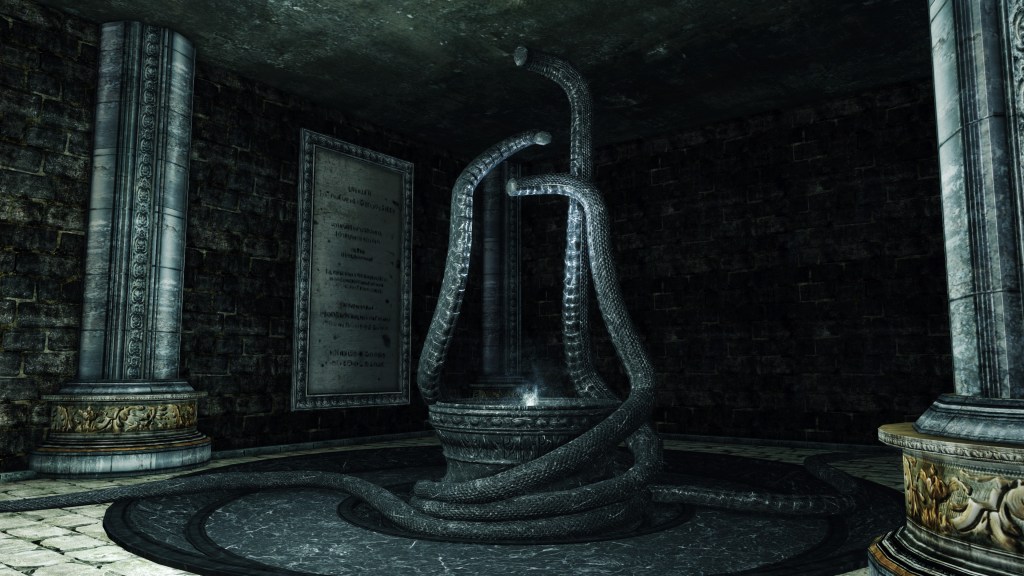
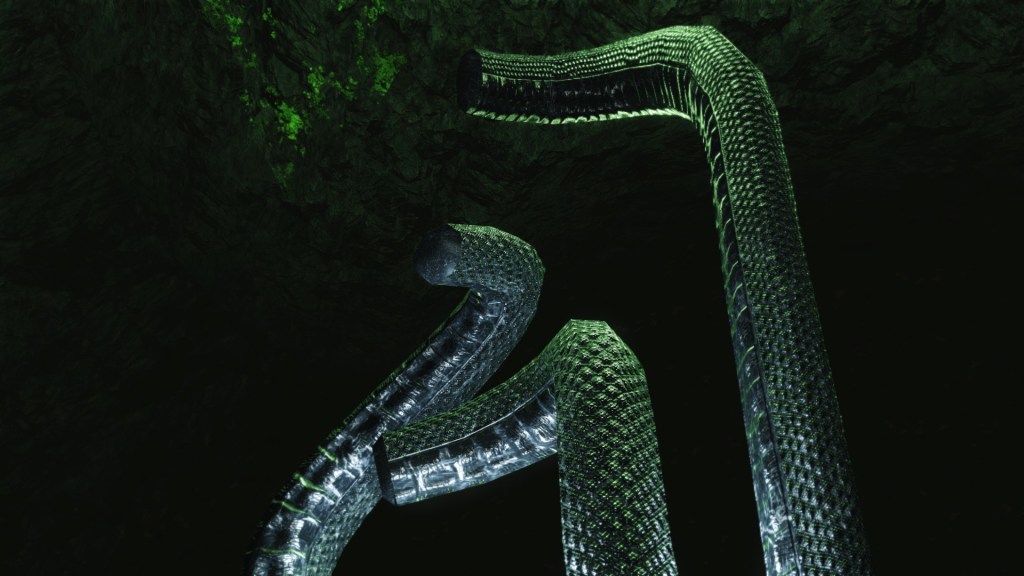
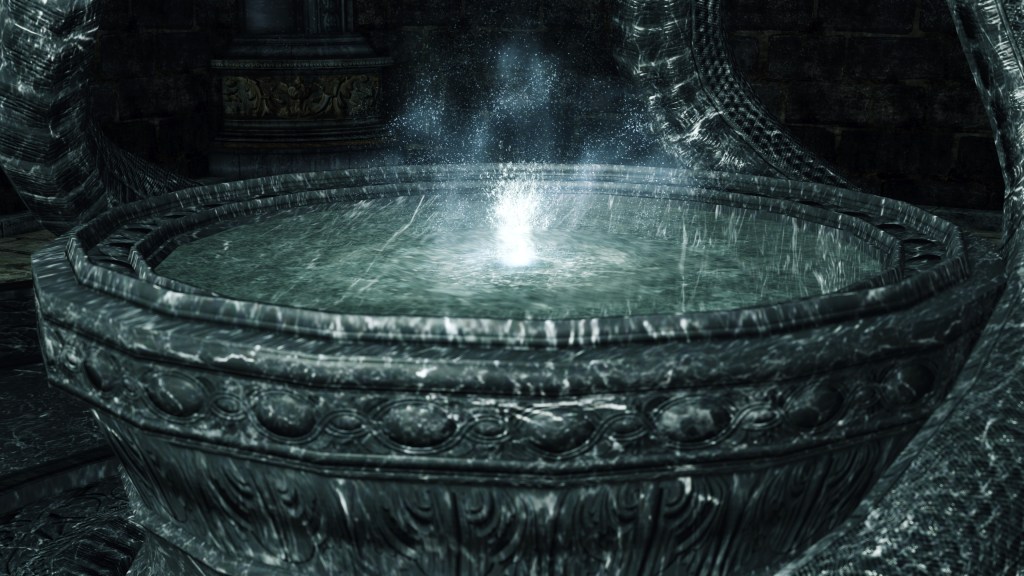
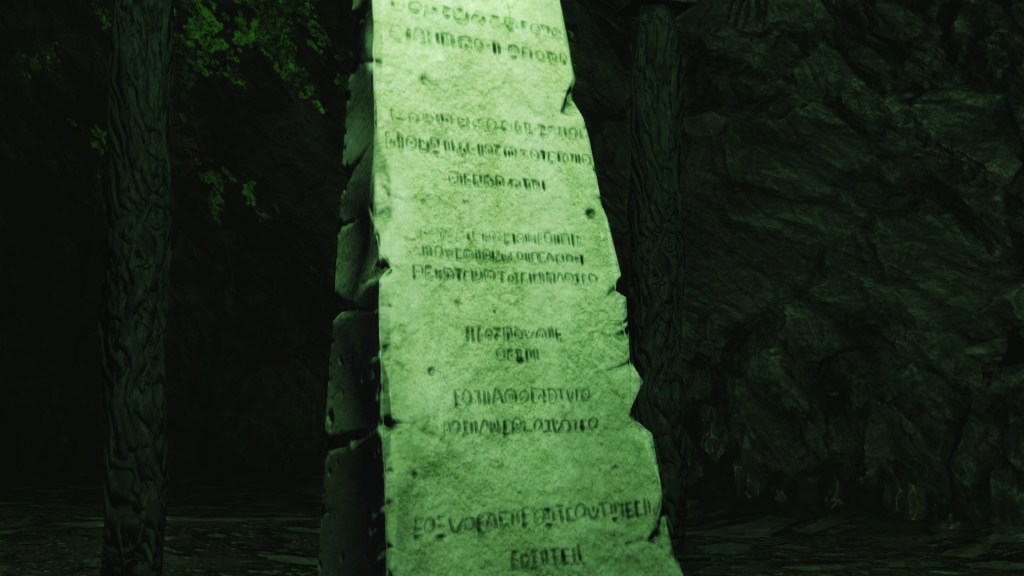
The same hands-on approach can be seen in his efforts to explore this land’s past kings. When we meet, Vendrick is already aware of the power inherent to the crowns of the Sunken, Iron, and Ivory Kings. We can likewise find evidence of Drangleic’s presence in these kingdoms, primarily the altars we use to arrive at the three different areas. While the altars’ function undoubtedly predates Vendrick’s reign, their appearance seems to have been modified by him. All three use the same model of three headless snakes coiled around each other to lift a water basin. Recall that snakes are considered failed-to-be dragons, and Drangleic is essentially the kingdom of dragons. The metalwork thus probably represents the three “lesser” kingdoms before Drangleic, each now missing their head — their king. The arrogance on display is only reinforced by the stela warning against entry to all three domains. Each mention tribulations worthy of a would-be “King”, thereby implicating Vendrick in their erection. We are certainly given indications as to why he considered these places to be so dangerous.
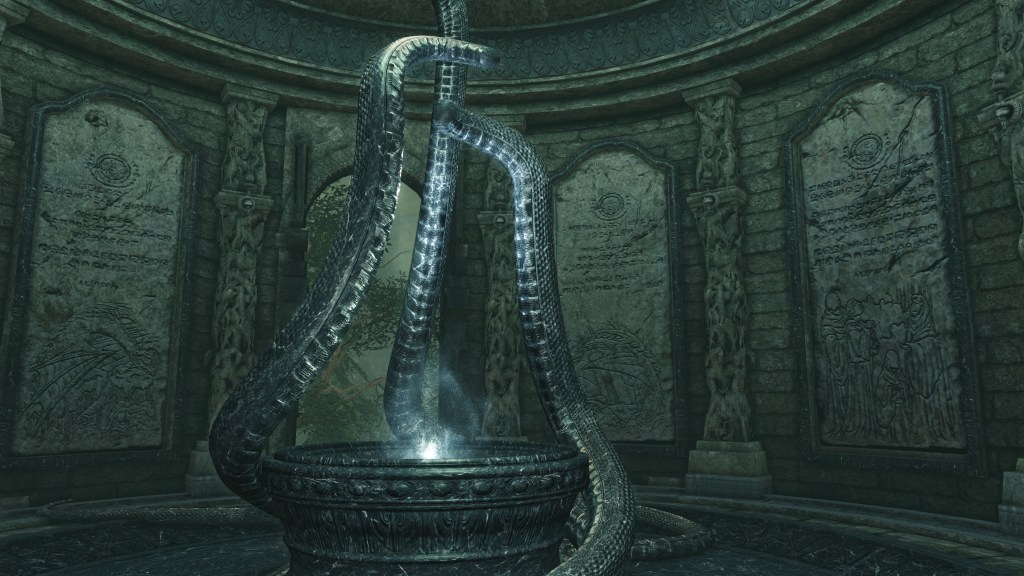

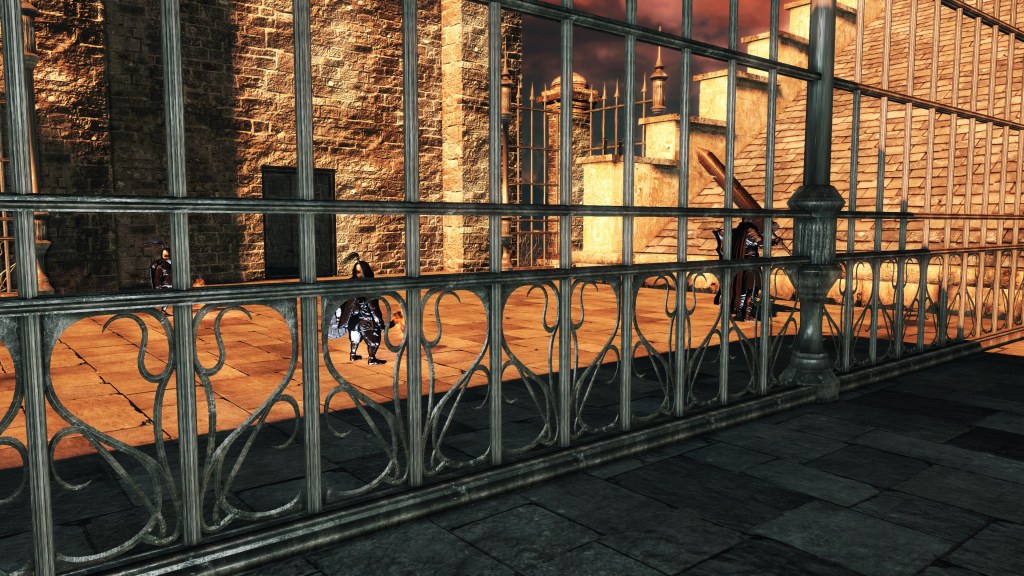
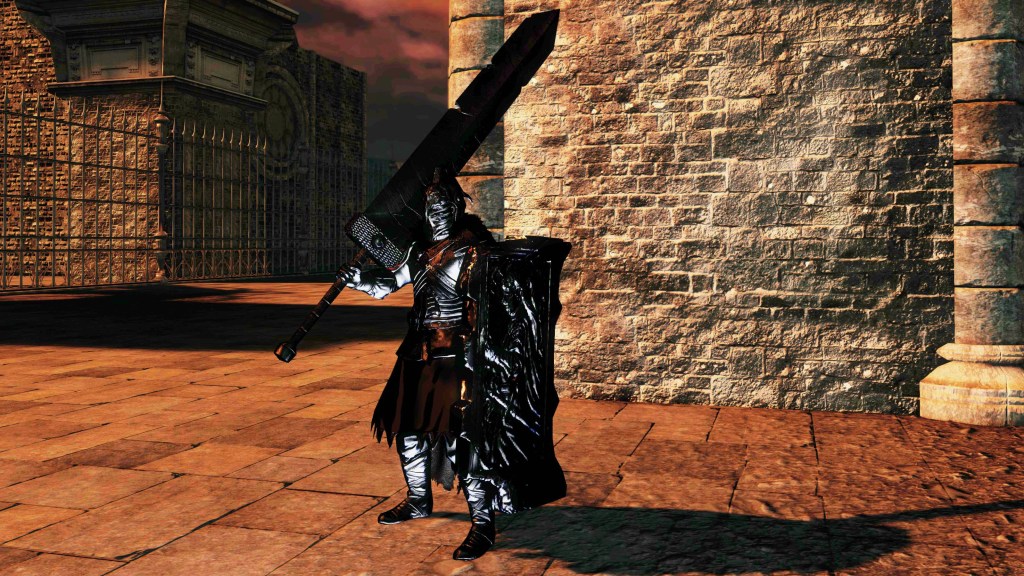
Despite the successful pillaging of the Iron Keep, there are two Bell Keepers wearing Llewellyn armor along with Drummond’s helm, wielding a generic greatsword and Orma’s Greatshield. Perhaps these obvious knights of Drangleic, plainly willing to bring the kingdom’s foes to their final judgment, were left behind for dying only to ironically turn Undead. Thereafter, they put their newfound immortality and long-practiced martial skills to use in service to the puppets of Belfry Sol, who would appreciate them regardless of cursed status. This wouldn’t be the first time, since we see an identical knight acting as gatekeeper in front of the Undead Purgatory; the dark spirit’s aura confirming his long service to the Brotherhood of Blood. Vendrick’s men seem to have struggled exploring the Iron King’s old territory. For sure, dead Drangleic soldiers litter the lead-up to Brume Tower, apparently having given their lives to destroy just one of Nadalia’s idols. The key to the sealed tower is likewise found beyond the iron door taken from the sunken castle to help construct the seaside fort.
Meanwhile, the key to Eleum Loyce remains with a skeletal corpse at Drangleic Castle. Inside the frozen capital, we encounter three “wall guards” (壁の衛兵) armored as high and low-ranking knights of Drangleic. Aside from all three employing heavy crossbows, they also utilize Llewellyn Shields or other armaments associated with the kingdom. And yet, like the greatsword Bell Keeper, they seem to have been behind as Undead. Based on the divine blessing they each possess, survivors among the local clergy recruited them to join the cursed soldiers defending the ramparts. This explains why the guards appear translucent before we acquire the Eye of the Priestess, the clerics granting the knights a taste of the full invisibility enjoyed by Aava for their dedication — not like their king was coming back for them. The Drangleic military also seems to have left behind “equipment”, their “fake giant” (模造巨人) golems freezing over in the city beset by snowstorms.
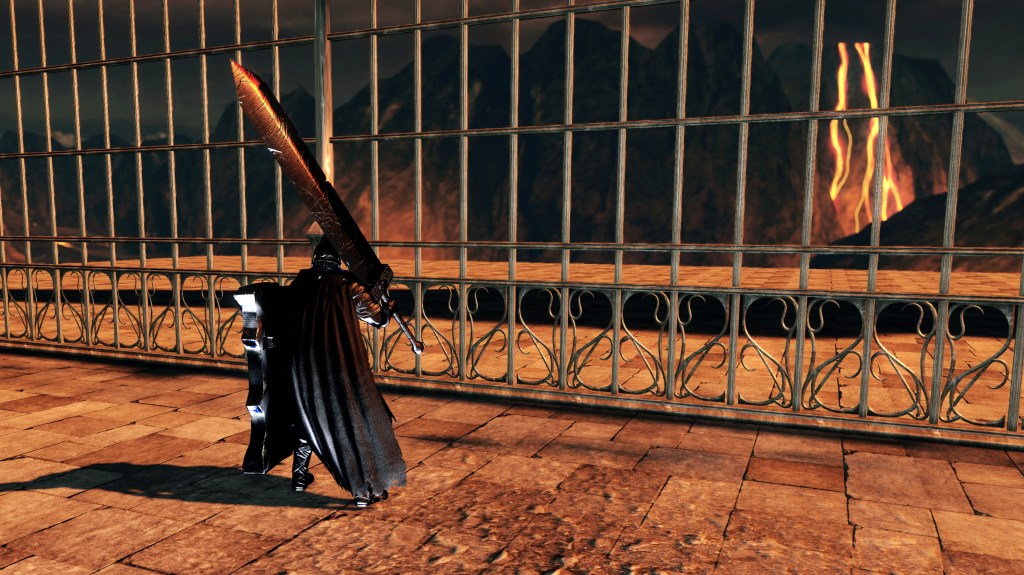
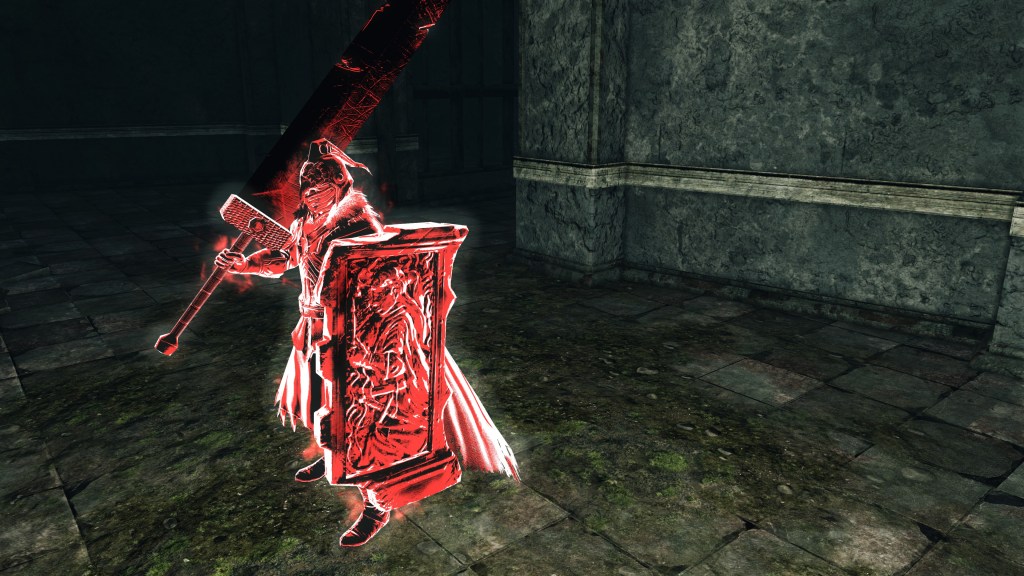
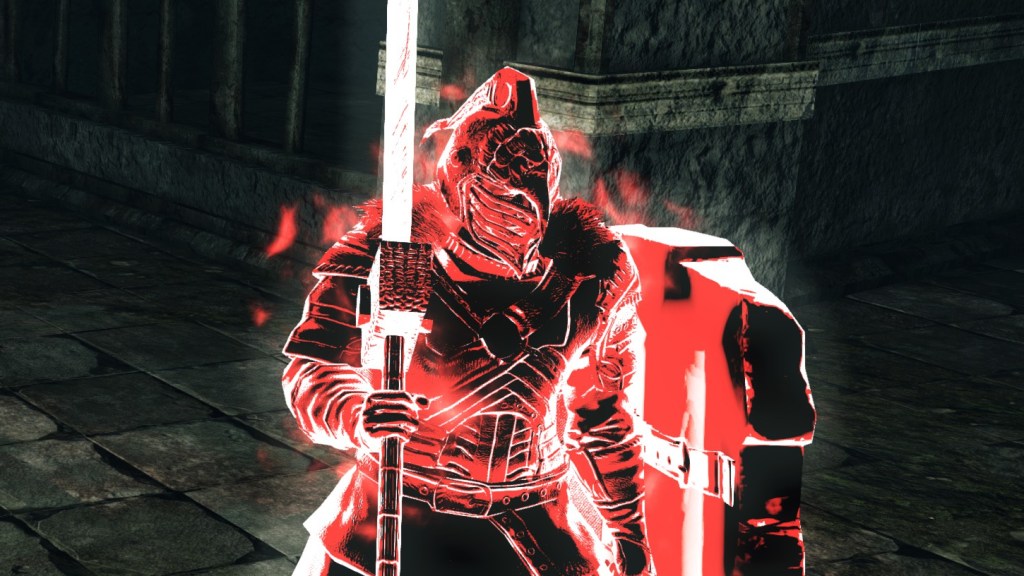
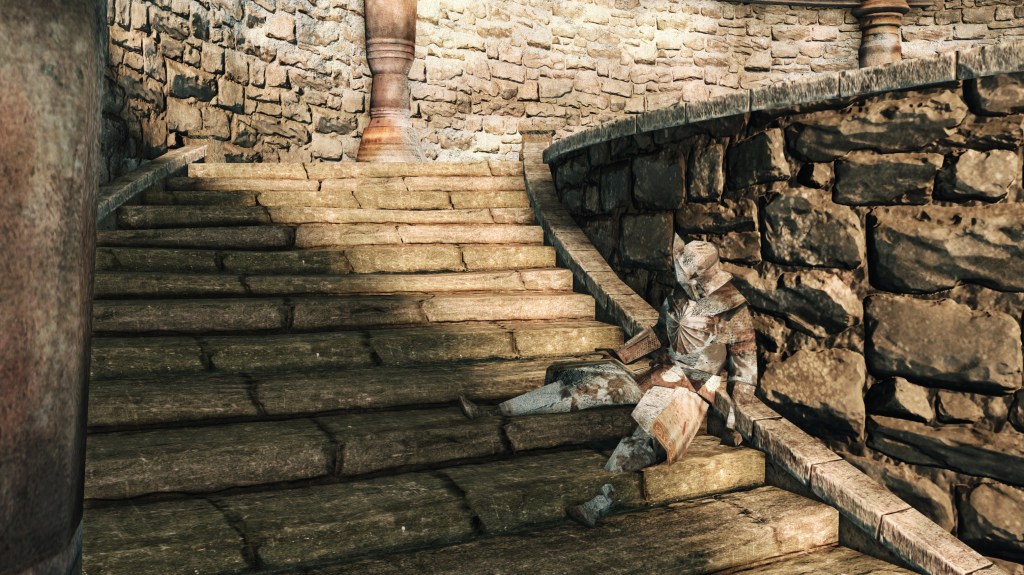
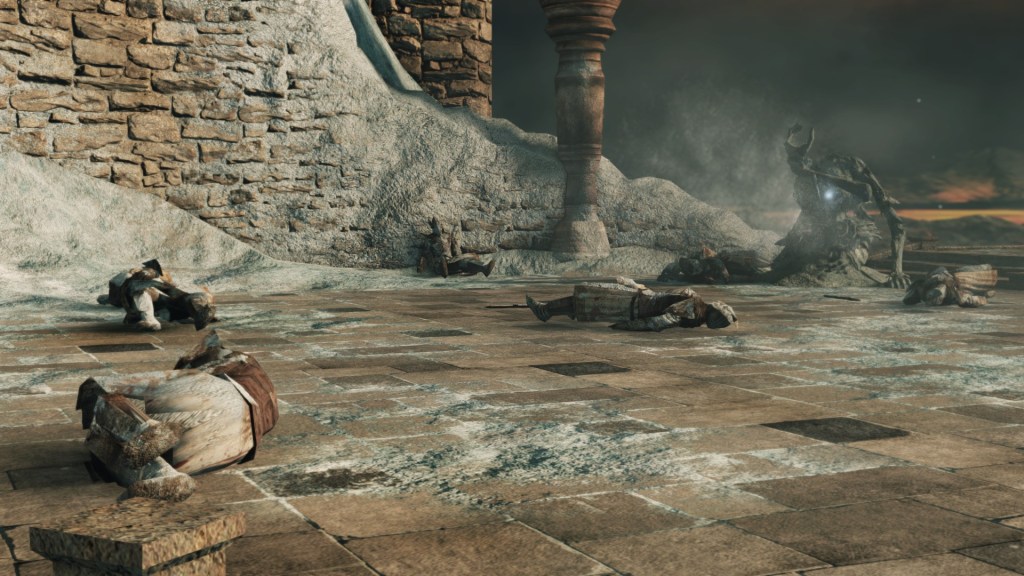
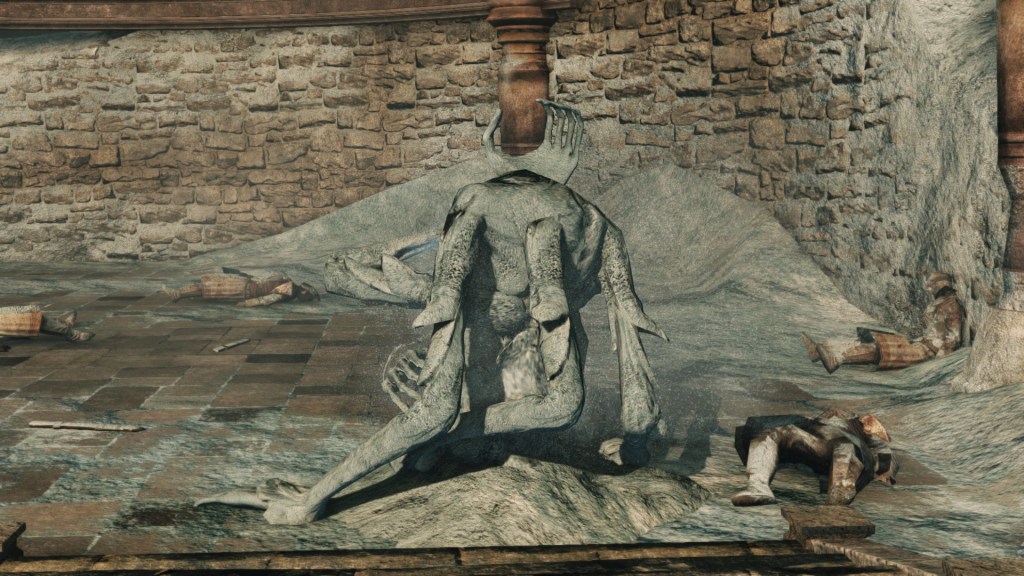
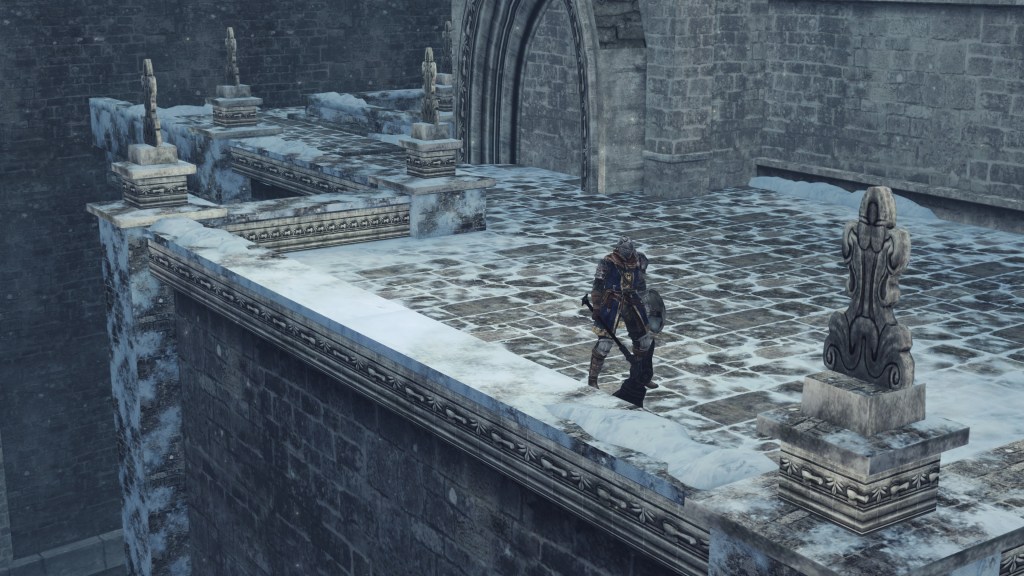
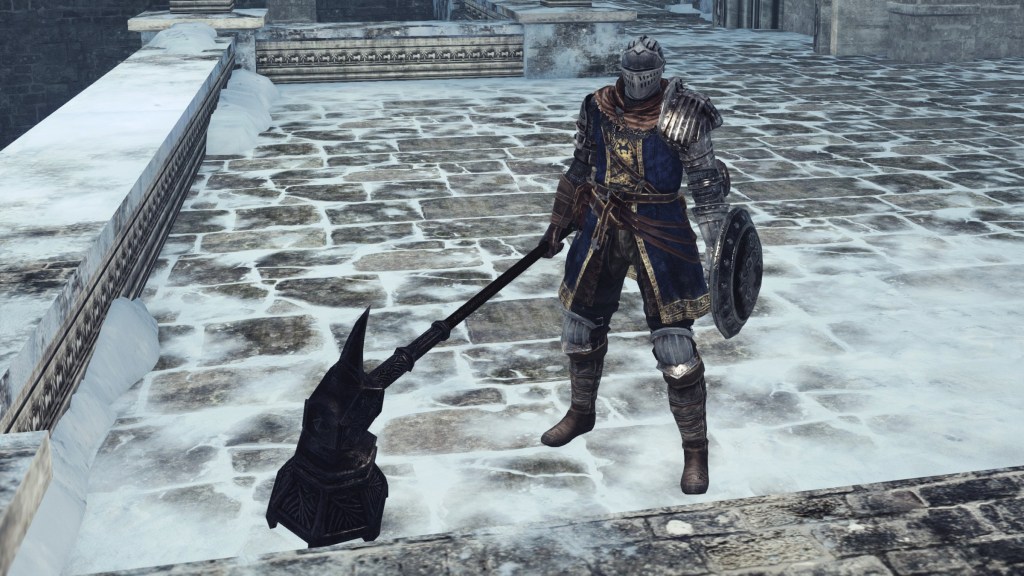
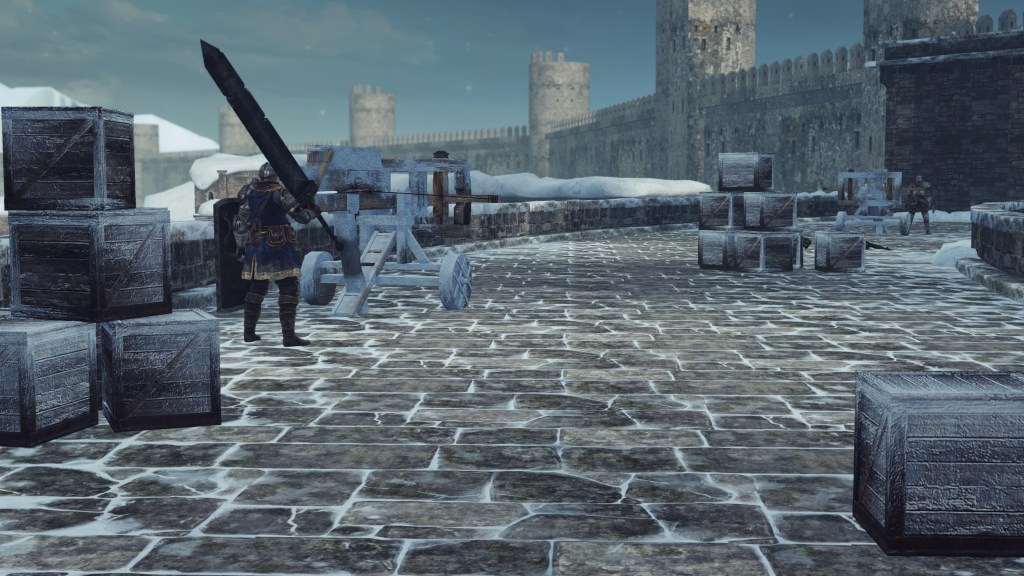
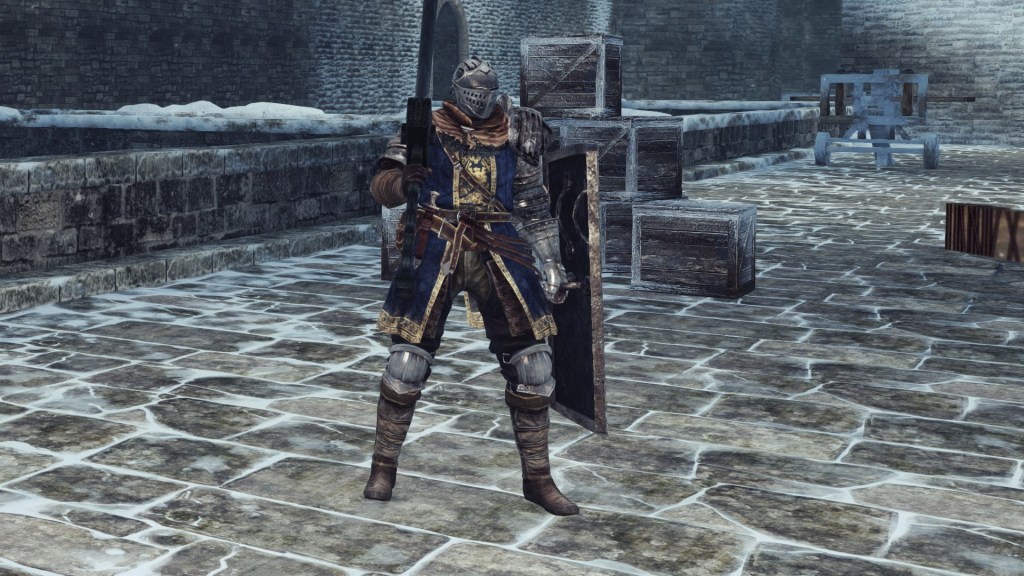
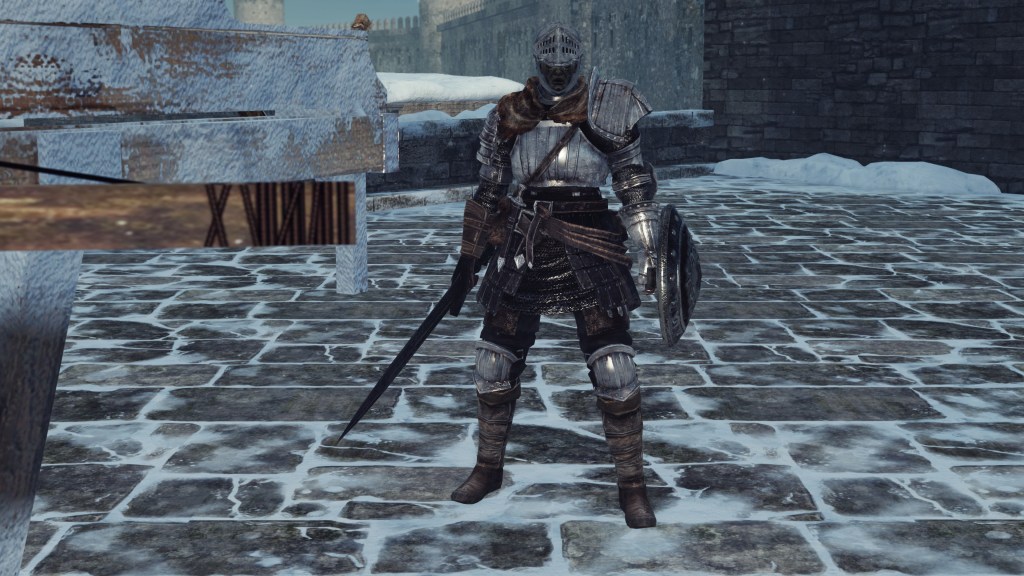
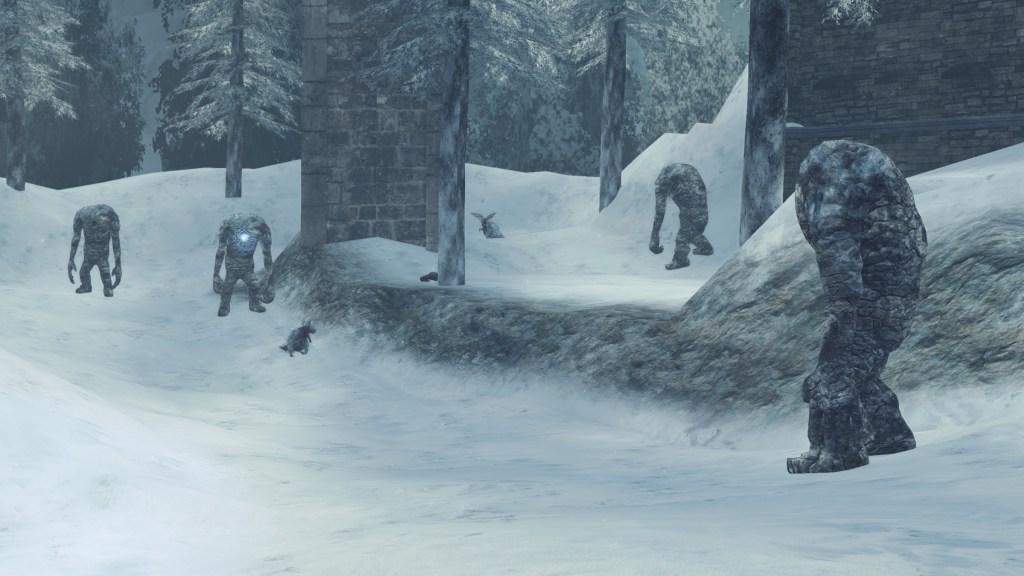
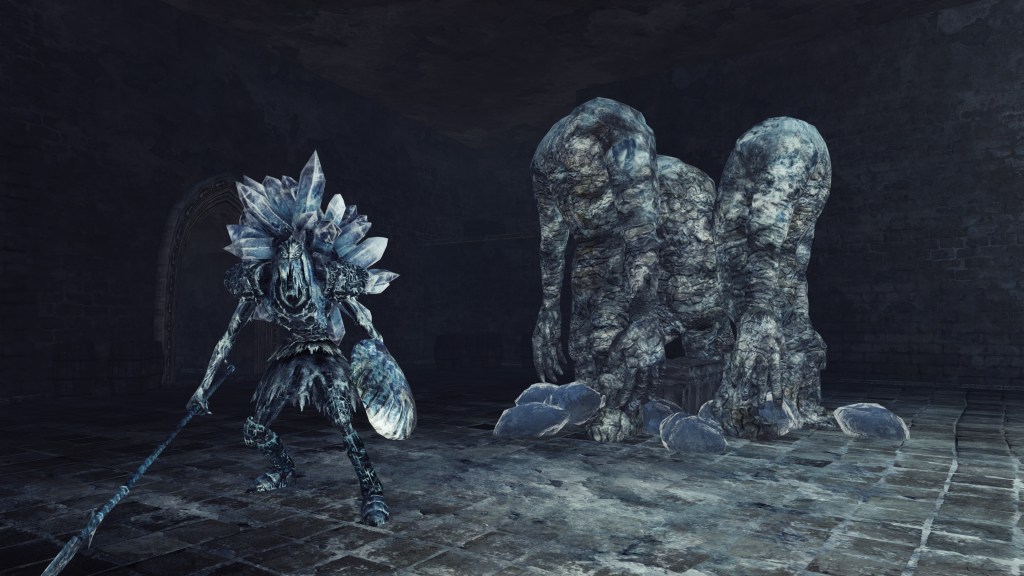
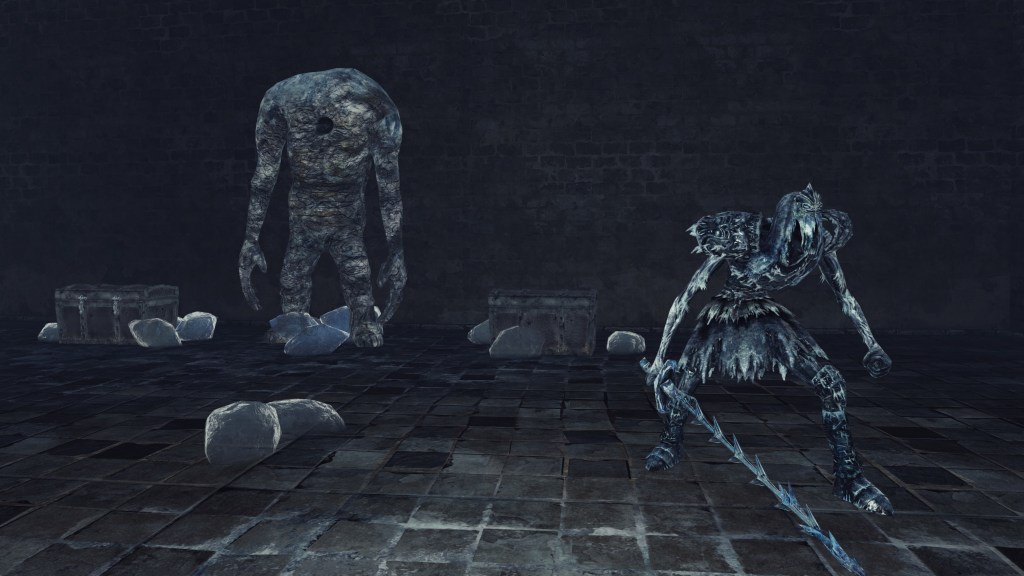
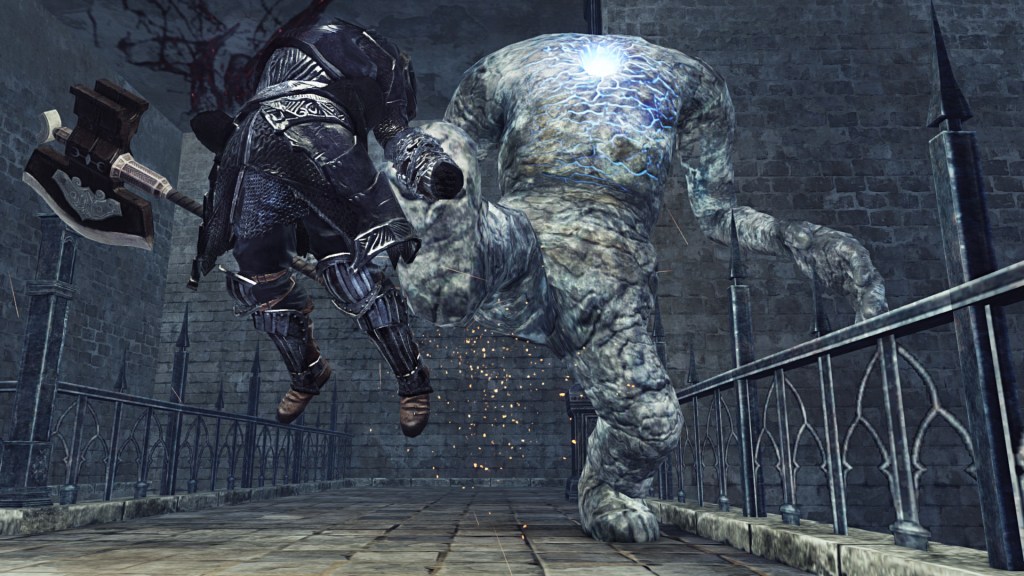
Vendrick was no doubt curious about anyone who might have been in his shoes before, perhaps hoping to construct a better roadmap to follow. And in fairness, there was some more tangible value to the exploration. Aside from the aforesaid pillaging of iron from the Keep, Wellager sells the Yellow Quartz Longsword and Shield retrieved from the lava it sunk in, just as sells the Bound Hand Axe and Wooden Shield from Huntsman’s Copse. In relation to Shulva, the chancellor offers the Black Flamestone Dagger and Parma left around Black Gulch. Add in the enemies from these places brought to the castle, and it is clear that the king saw a practical use for his personal inquiries; the fire lizards taken to the fort along with the iron undeniably hold potential as war beasts, more so than their dogs, even.
But, ultimately, the monarch thought these expeditions too dangerous for most and not worth the trouble for himself. At each instance, he decided to cut his losses and simply seal access to the area, allegedly removing the water the local teleporter relied upon to prevent even the temptation to try — though by the time we enter the scene, this is clearly no longer the case. Leaving a surprisingly high-effort warning for the curious, Vendrick moved on from ruined kingdoms, though not without learning about the fates of each king if Aldia’s dialogue is any indication. None before him had ever reached the throne and become the real King. He alone could decide the fate of the curse and the world. This savior complex is evident by the second King’s Gate, giving him sole access to the Throne. The sentiment rings especially true given that, despite his brother’s assistance in these endeavors, they could no longer walk that path as saviors together.
Darkest Shadow
At some point, Vendrick deigned to visit Aldia’s mansion, and he was horrified by what he saw, henceforth confining his sibling and his cronies there — a third King’s Gate would keep the length of their sentence in his hands alone. Up until then, the king believed that the two siblings were of the same mind concerning the curse. But experimenting on fellow humans, fellow countrymen, especially when linking the fire was now a known solution, plainly showed Aldia’s split. Their ideologies and end goals were simply irreconcilable. That Aldia still lived for his crimes against humanity speaks much to Vendrick’s brotherly love; his house arrest, to the depths of his betrayal. The king’s commitment to all that is good and just for his people is on full display in this incident, but he supposedly had his own demons to deal with.
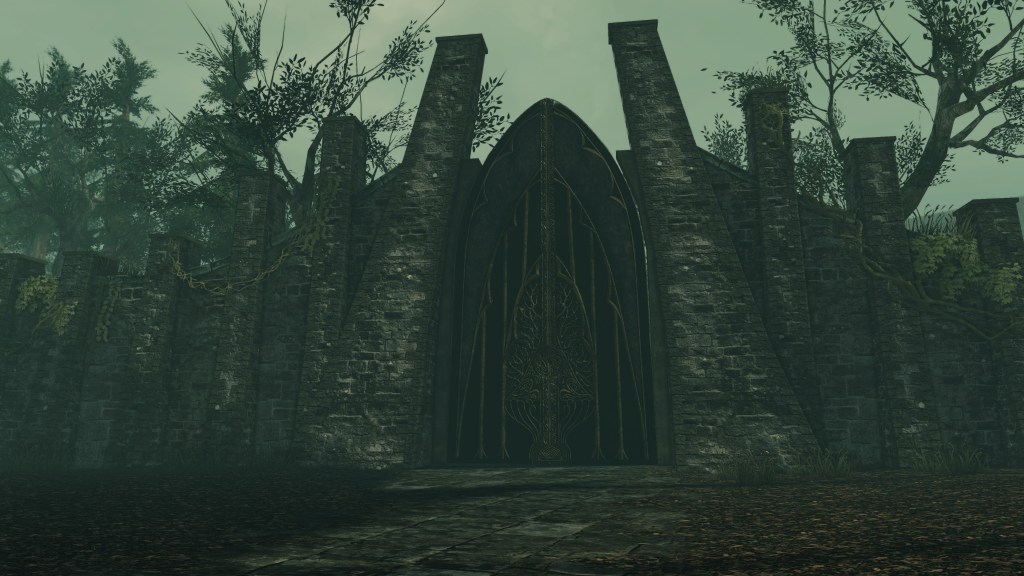
While the localization erroneously describes it as a transfiguration, the Japanese text for Drummond’s helm asserts that his liege did gradually turn into a different person after coming home with giants in tow. Drummond himself reaffirms that this wasn’t a physical change, but rather a change in visible demeanor. Vendrick had apparently become the total opposite of the fair and just king of his prior years, a man of darker character. The obvious implication would be that the introduction of Nashandra and her continued influence over him had an adverse effect on his moral fiber, steadily degrading the good monarch into a tyrant. Unfortunately, we are provided no examples to substantiate this supposed decline over time. All of Vendrick’s known actions after meeting his queen more or less fall in line with those from before.
Soul of the king of giants that destroyed Drangleic once.
Vanclad, who crossed the sea, captured giants and took them away to the royal castle. A dark shadow gradually became visible in the king’s expression since that time.
The special soul this giant possesses is used to acquire a vast amount of souls or create a great power.
Drangleic traditional helmet. Personal effect of the kingdom captain Drummond.
The former King Vanclad was a fair and just character and sought that even in his vassals.
This helmet is proof of having acquired the king’s trust, but that king without a doubt gradually changed into someone else.
… Soon, those giants shall descend upon even here. This is payback. For the barbarism my king performed. He was supposed to be a benevolent ruler who thought of his people’s happiness and built a country in this land, but… What changed him…?
One potential instance is the detentions at Lost Bastille for reasons other than undeath, assuming that they weren’t detained before the curse ran rampant. While thieves, thugs, and spies could probably be executed for their crimes, throwing them in a prison full of maddening monsters might be deemed too harsh a sentence. This is especially true for the clergy he imprisoned. Vendrick always had his bias, but that didn’t mean he necessarily acted on it. With Nashandra whispering in his ear during every audience, her husband may have given in to his wants at her encouragement, condemning clerics brought into his court on suspicion when their crime wasn’t actually evident. It is easy to see such overincarceration guarantee the kingdom’s safety while sending shockwaves among good knights across the realm. But beyond assumptions with the timing, there are complications with this scenario: all of Vendrick’s known actions after meeting his queen more or less fall in line with those from before her appearance.
Aside from those branded with the Darksign, Vendrick also had any verifiable sorcerers residing in his kingdom rounded up and shipped off with them at one point. Certainly, this would make for an excellent tie-in to his split with Aldia, the king’s suspicion of sorcerers having either resulted in or stemmed from discovering his brother’s betrayal. Likewise, exiling innocents for simply their magical practice, death all but guaranteed, would run counter to any notions of fairness and justice. There is only one problem: the timing is impossible. After the big fix, the description for the Varangian Sword explicitly attests to Vendrick’s paranoia about the curse making him suspect “everything” as a potential source. In other words, the terrible persecution of sorcerers it describes must have occurred before Nashandra and Aldia educated him on undeath’s actual cause. It isn’t evidence to slow degeneracy.
Straight sword of a barbarian engraved with a skull.
The former king captured barbarians that devastated the coastal waters and had them work at the Hidden Port instead of confining them in prison.
The king, captured by fear and suspicion, suspected everything to be the source of the curse and severely persecuted those who manipulated sorcery in particular.
In fact, this timing creates a new slew of problems. Put in the best light, the sorcerers’ persecution was the action of a desperate man working with limited information, much like his attack on the giants. From that perspective, Vendrick’s handling of the northern threat wasn’t too far removed from his behavior with the Varangians, at worst — thereby making it hardly the first step down the path of darkness alluded to. At the same time, it is incredibly odd that a man suspecting sorcerers to be causing undeath would be simultaneously sponsoring his brother’s efforts to understand undeath with the help of sorcerers, especially considering how he is later completely blindsided by the depravity of Aldia manor. No matter the angle, Vendrick the good and wise king comes off as either not so good or not so wise. And in all cases, his actions aren’t showing a noticeable moral decline later on. Rather, it isn’t until his kingdom’s imminent destruction is at hand that Vendrick’s desperation crosses over into hypocrisy.
Contrary to Vendrick’s expectations, the giants did return to invade and wreak havoc, his longtime peaceful nation caught completely off-guard. His knight Syan offered to be the vanguard alone, implying that time was needed to mobilize the entire army in response to the sudden attack. The kingdom definitely took the time to outfit soldiers with the latest equipment. The Lost Bastille was converted into another fortress with a garrison of royal swordsmen otherwise only seen protecting the king’s own castle. Aside from new armor, the soldiers were provided with plenty of weapons and barrels of black powder, the apparently intending to explode the giants with the fire bolts shot from the swordsmens’ heavy crossbows — contrast to the lightning bolts used by their royal castle counterparts. The presence of relevant souls suggests that the old prison deployed a share of distinguished knights. Vendrick spared no expense to prepare what troops he could to face the giants.
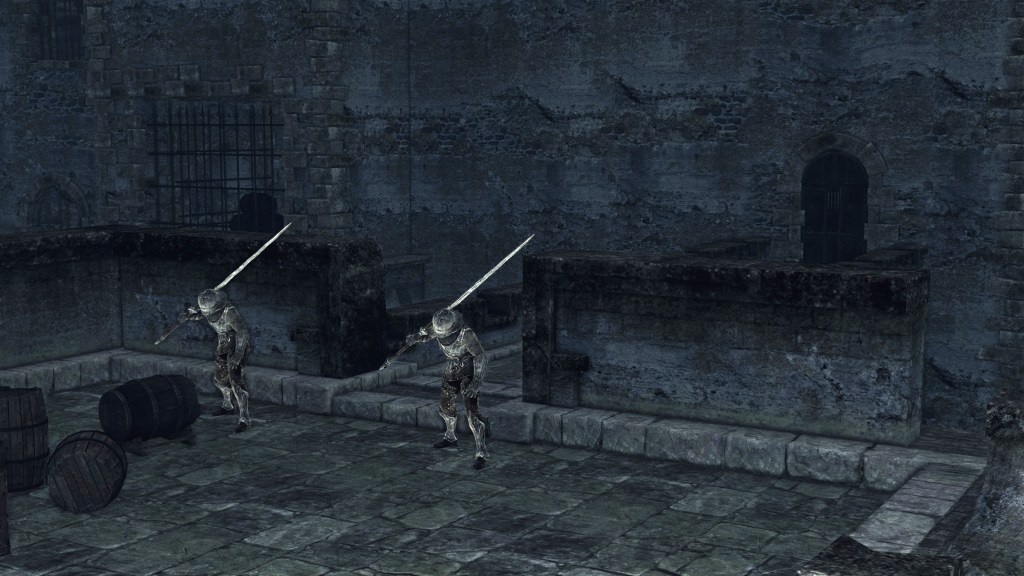
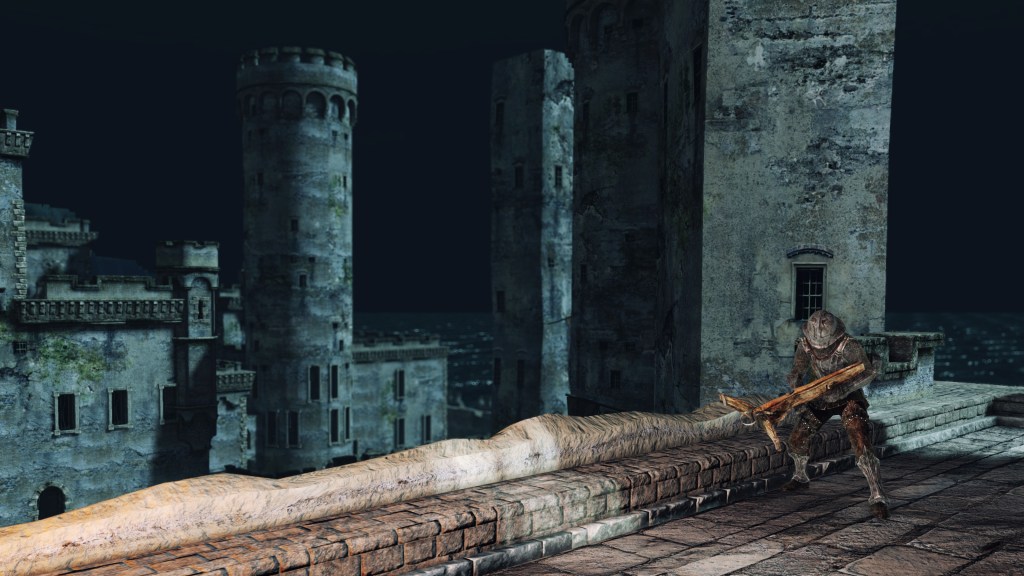
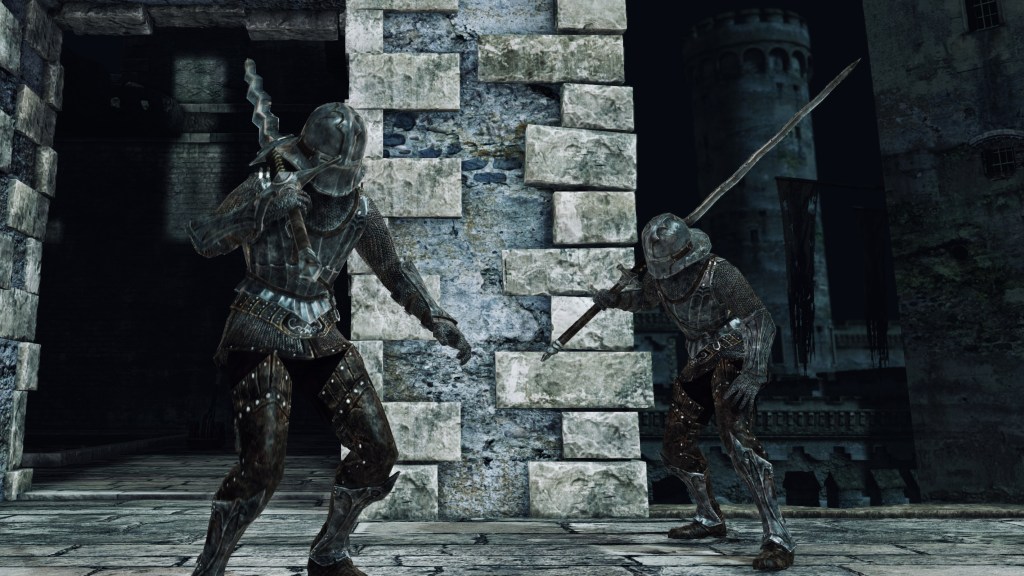
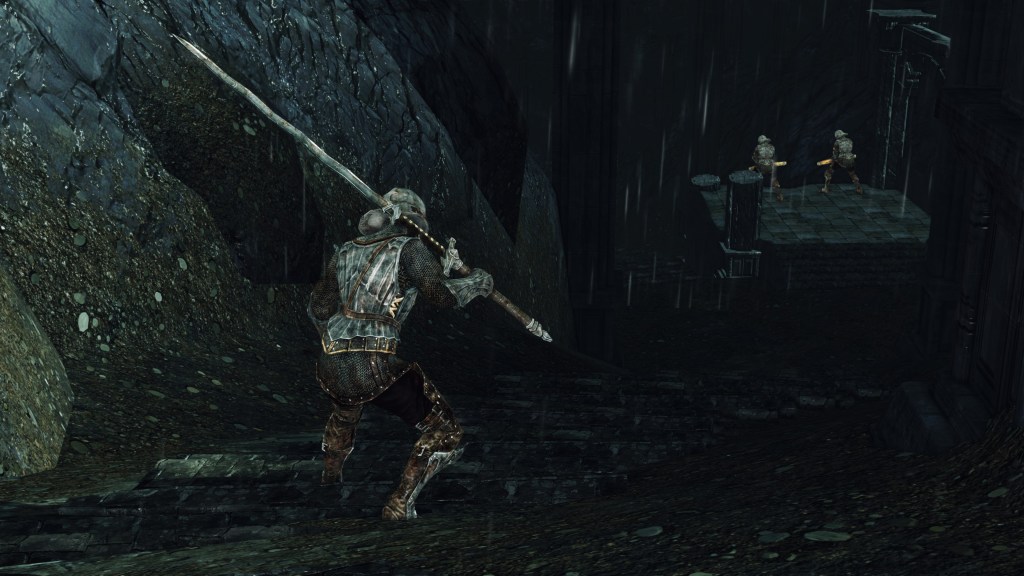
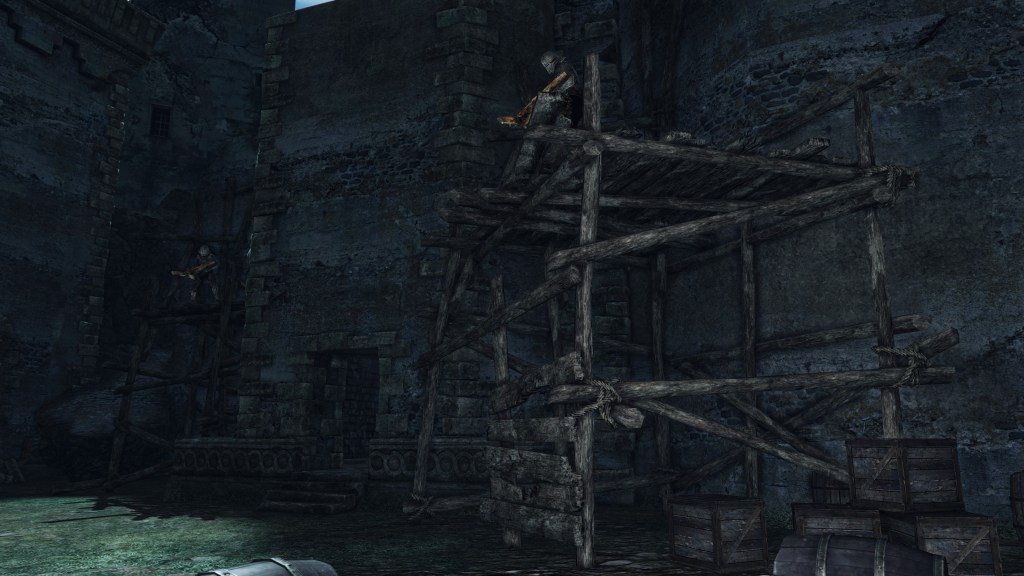
This land, been in tatters since the war of long, long ago. With the “giants” or whatever that came from the sea.
Even then, it didn’t matter how much fine-quality equipment he supplied his troops, none were able to withstand the giants’ onslaught. After Drummond’s grandfather was killed proudly resisting the enemy, Drummond’s father took over, and then he died in the same manner and left Drummond to assume command. With each assault, the giants whittled away at Drangleic’s forces, leaving only the dead or Undead in their wake. The warriors’ honor, pride, and skill mattered not against a force of such overwhelming power and rage. To supplement the losses, Vendrick hired yet more foreign mercenaries, this time from Volgen and ruined Forossa. Vengarl implies that he saw the king take to the field personally, so the now grey-haired old man wasn’t simply hiding behind his coin — he just didn’t have the manpower to charge alongside him. Neither soldier nor mercenary would give him that manpower. And if human strength just wasn’t cutting it, then they needed something inhuman.
Helmet of a kingdom swordsman. Characterized by shape which is easy to move in while having defense power. Ignores ornamentation and is only suitable for battle.
Vanclad gave this armor to courageous swordsmen and challenged the giants. But those to give military gains were rare.
Greatsword of the kingdom captain Drummond. This plain, old sword is endowed with a hard-to-replace pride and dignity.
A sword handed down in Drummond’s clan. His father and grandfather both carried this sword and kept battling the enemies that threatened the country.
One answer to this problem was to send out the golems created at Iron Keep, the ironclad soldiers silently slipping among the army ranks one day. Bizarrely, their armor has aged faster than the golems left in the melted iron castle. Perhaps this is because of the humidity compared to the lava-flooded land, or perhaps it is because their “bodies” are poor imitations of the original; the Dark Souls II Collector’s Edition Guide does posit the prospect of Vendrick recreating the Iron King’s works. Being hasty reproductions of the kingdom certainly explains why they suddenly came pouring out of the castle only after the giants appeared. With souls and some heavy iron, they could quickly churn out additional troops resilient to the mighty giants. This by itself bears ominous implications. But Vendrick wasn’t satisfied with just them.
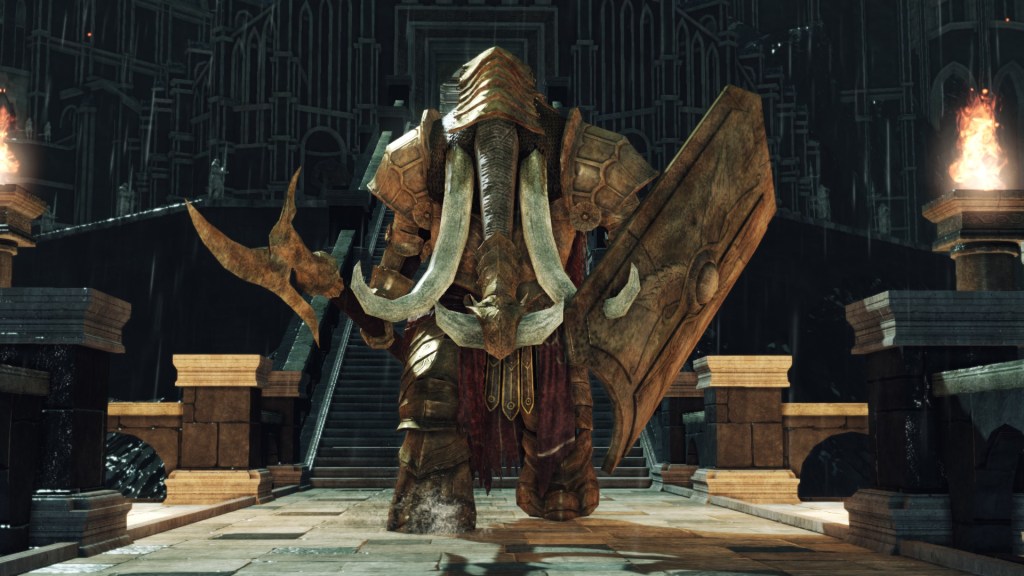
The king apparently returned to Aldia’s manor and collected its research, for he brought back a “fragment” of the arts he himself forbid. With them, the monarch spawned and armed numerous mastodon-men to compete against the giants in both size and physical strength. While there may be an innocent source for the souls used for the heavy iron soldiers, no such explanation can be provided for the “beastman knight”, (獣人騎士) who were engineered using presumably his own warriors as guinea pigs; even now, the knights stand guard over his castle. In his darkest hour, Vendrick resorted to his murkiest decision which would have once horrified him, and perhaps still did; a Syan soldier remains in front of the King’s Gate to that vile mansion. He had no leg to stand on when it came to Aldia’s methods — when push came to shove, he was no better. He hunted foreigners for their labor, and now he turned his own people into monsters when they came back for revenge. In the end, his endless pursuit for more power and souls destroyed both him and his kingdom.
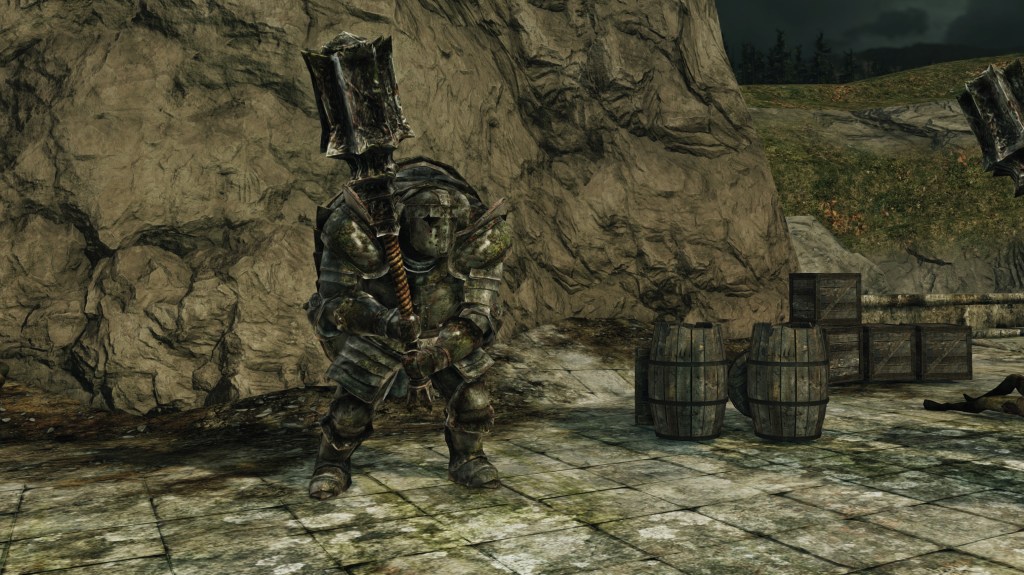
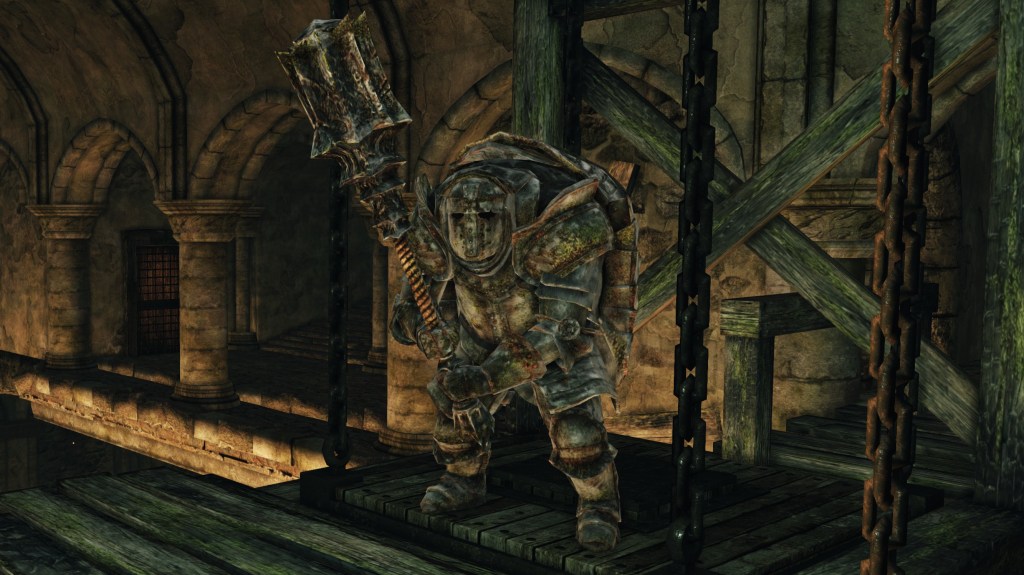
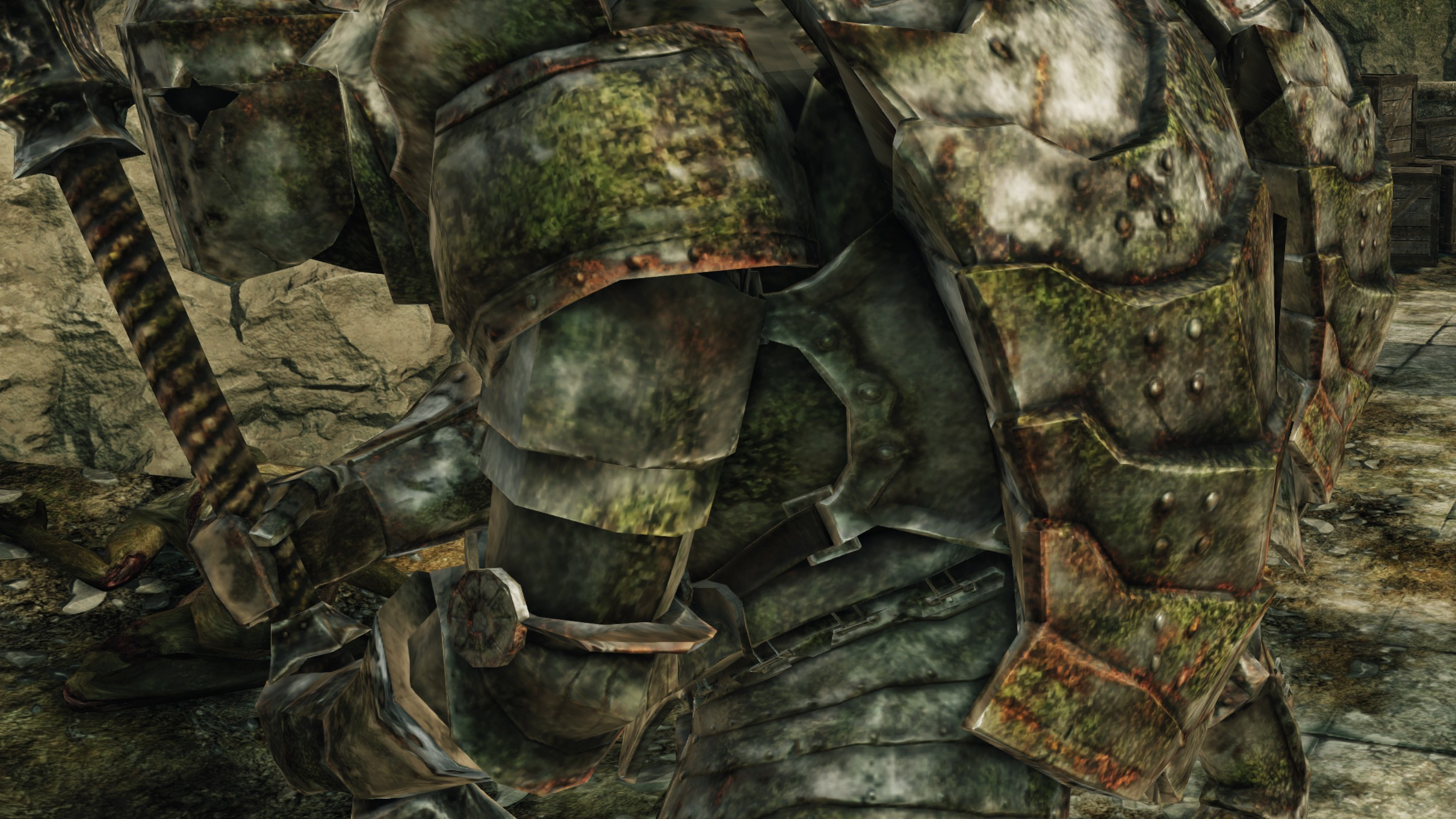
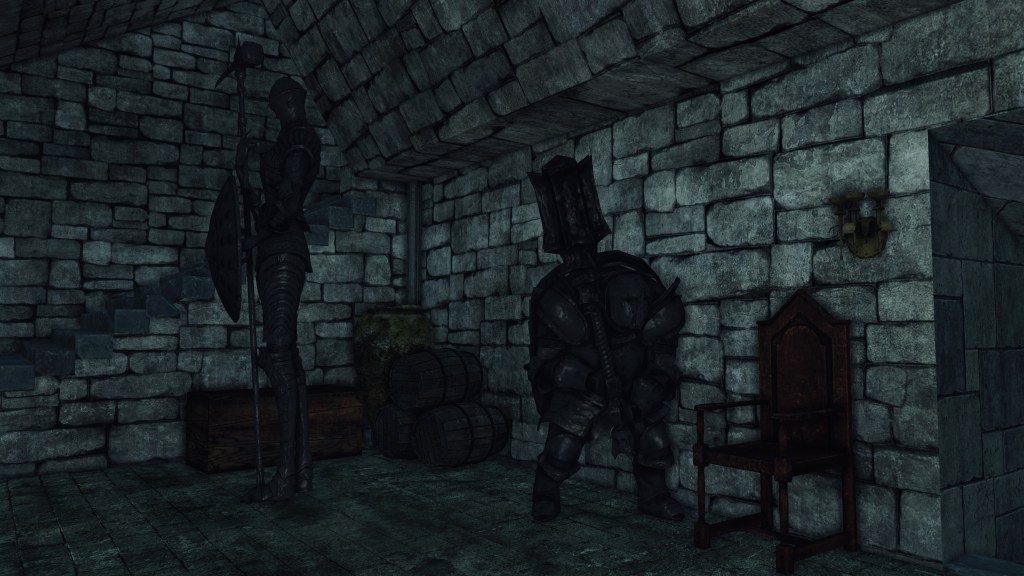
Helmet of old heavy iron soldiers. It has high defense effect but is extremely heavy.
Those clad in this strangely dirtied equipment materialized from the royal castle of Drangleic and slipped in among the members of the soldiers before one knew it.
They never uttered a word, and neither did anyone see their true faces.
Shield of the beastman knights who guard the Royal Castle Drangleic. Possesses considerable weight and has even been given the power of lightning.
It is like paper for the beastman knights that boast superhuman strength, but the weight to even hold it up is too difficult for ordinary men.
The arts created by An Diel were lost with him disappearing, but the king revived a fragment of them.
Helmet of the beastman knights that protect the Royal Castle Drangleic.
It is like paper for the beastman knights that boast superhuman strength, but the weight to wear it is too unlikely for ordinary men.
The king revived an abominable art that should have been lost and created those that aren’t human.
Villages like Majula were razed to ruins, and the endless fighting left destitute civilians like Melentia with nowhere to sleep — her and likely many others’ solution was to pack up and become nomads. Desertion became equally inevitable. The one Dragonrider and wyvern pair we see loiter around Heide’s Tower of Flame. The rider in particular stands in the old trial arena as a lookout; past him, we encounter more soldiers deeper into the ruins. They too have settled in as demonstrated by the low-rank knight set stored away with them. The souls of soldiers and knights in the area speak to the dangers these explorers faced. But considering the group’s overall Undead status, they already fought and died against the giants, so have gone into hiding in a place neither their foe nor their king will find them — in other words, the elite Dragonrider is covering for their escape. The Primal Knight among their number likewise confirms that this desertion occurred after Vendrick’s pivot. Even backed by taboos, the king’s men were unable to rebuff the giants, the despair in morale evident by these runaways’ subsequent hollowing.
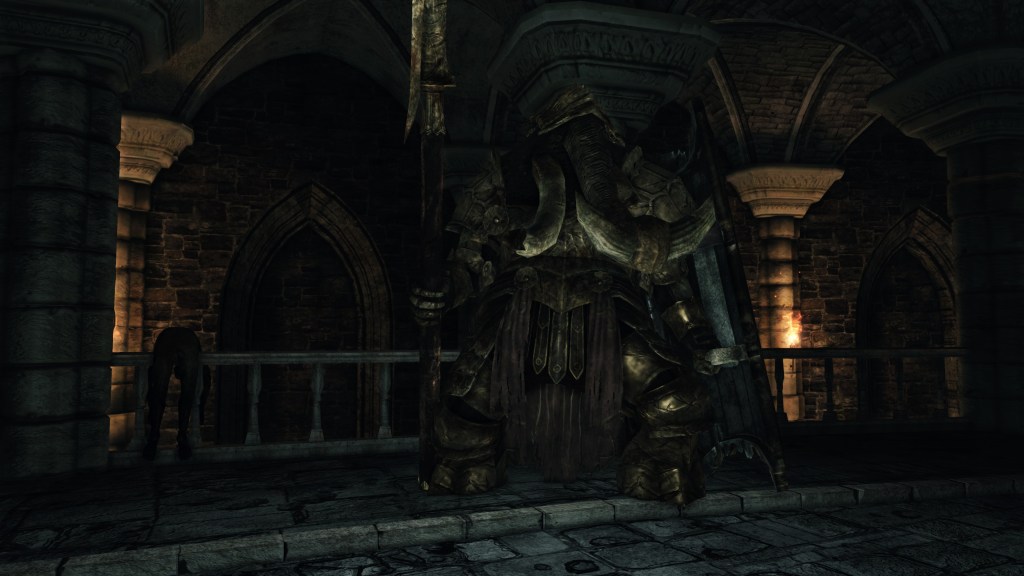
For all its loss of people and land, Drangleic had nothing to show for it. Even its own king couldn’t survive, as we discover Vendrick is himself Undead. Since no one makes mention of this, we can only assume that the reality of his death and subsequent undeath wasn’t widely known. Perhaps the old man died in his sleep only to wake up unknowingly immortal the next morning, or perhaps they thought him merely rendered unconscious after taking a direct blow from a giant’s massive club on the battlefield. Whatever the case, Vendrick was now among the cursed he had so mercilessly persecuted, and any trust he still had in his queen’s counsel would be summarily shattered.
The battle continued for so, so long. There was no place for the poor to sleep properly. That’s why I carry all of my own things on my back like this. You’re… apparently carrying something else on your back though. Heeheehee…
A strong soul is similar to a curse. The King of Drangleic, Vanclad, controlled the curse with his powerful soul.
The king sought a stronger soul and even acquired the power of giants, but ultimately sank within the curse.
Can open the King’s Gate if worn.
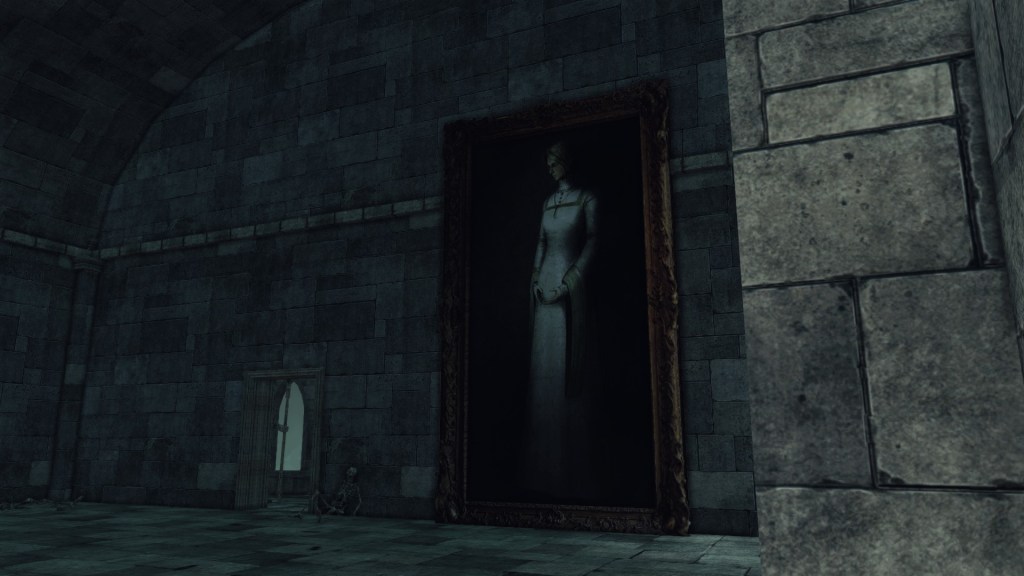
By this point, Vendrick had realized that his wife was a child of Dark like those attached to other kings in the ruined kingdoms he explored. If the pattern with the others didn’t already raise suspicions, his curse certainly did. Proximity to Nashandra causes Undead to hollow, meaning that Vendrick could not have sat beside his wife again without losing visible vitality — and eventually sanity. Of course, this doesn’t mean that she necessarily knew about his realization, as her portrait exhibits the same hollowing effect. Much like the process for the faithful producing miracles, the painter had presumably imitated her image he saw so passionately that it accurately recreated her subtler qualities once expressed on the canvas. This gave the cursed Vendrick a means to notice something was wrong with both himself and his wife without seeing her in person, and he likely kept such information close to his chest.
Another tipping point seems to be realizing the futility of firelinking. Perhaps the genesis of this revelation came from Aldia or his research, the elder brother’s dialogue showing that he had come to such a conclusion well beforehand — had only his younger sibling listened when confronting him at the time. The curse cannot be controlled with fire, as players of DS1 can attest, so revitalizing it would be pointless. In fact, Vendrick’s theory failed to account for an important factor: the longer shadow cast from a closer flame. In the man’s attempt to reach for the original fire and its Kingly soul, he had only served to strengthen his shadow. And who was shadowing him? Nashandra. She was the Dark which paired with him and set him on this journey. And if she lied to him about firelinking stopping the curse, then the monster’s true objective is obvious: the soul she always pointed him toward.
One who seeks fire, thou try to conquer the Dark? I, too, sought fire once. One who controls the curse with fire. That is for sure one to be King… Unaware that it was nothing but a vacant falsehood. One who seeks fire, thou shouldst know the depth of thine Dark. The further thee chase fire, the deeper the Dark. Fire, fire…
Vendrick was being used from the start, and that knowledge smashed any illusions about his seemingly perfect wife. The King’s Ultra Greatsword depicts Nashandra with a heavenly aura denoting reverence. However, its descriptions suggests that the feelings in Vendrick’s soul which spawned the weapon might have actually been hatred. At the very least, the king struggled to reconcile his idealized conception of his wife with his feelings of betrayal. From his dialogue, we can confirm that this Undead, too, joined the crestfallen, losing all sense of who to trust, what to do, and how to push on. If Vendrick took the Throne and became King of Kindling, he would only be advancing his monstrous wife’s design. At the same time, he had already gotten her so close to the finish line, and she didn’t even strictly need him to succeed at this point. Therefore, the only thing that the king could muster the will to do was sabotage.
Ultra greatsword created from the soul of Vanclad. Deals strong damage to enemy armor.
Is the shape imitating the queen out of grace or hatred? There is probably no one who knows that other than himself.
One who seeks fire, you want what? I can no longer see anything…
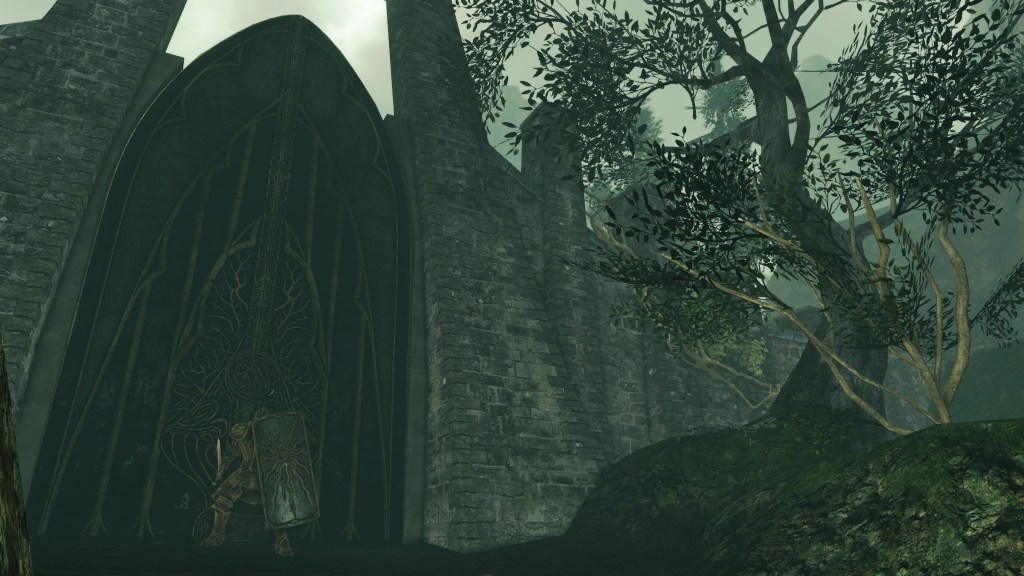
The Throne Watcher and Defender keep a close eye on the Throne of Want, each bearing markers of knights with a proficiency in holy magic — cast as yellow or white miracles by the masculine Defender and blue sorcery by the feminine Watcher. Their presence behind a King’s Gate implies that Vendrick tasked them with their “special” guard duty, choosing knights who were both strong and cursed considering that they are still around to this day. The king is presumably also responsible for the giant golems around the Throne remaining inactive, preventing anyone from forming a bridge to cross the gap over to it. All of these create obvious roadblocks for anyone hoping to use the Throne of Want, with the King’s Gate as the cherry on top so long as Vendrick holds the key. Of course, once Nashandra noticed what Vendrick was doing, she was sure to retaliate, which wasn’t to the Undead king or his equally cursed knights’ advantage. To solve this, he needed to be as far away from the queen as possible.
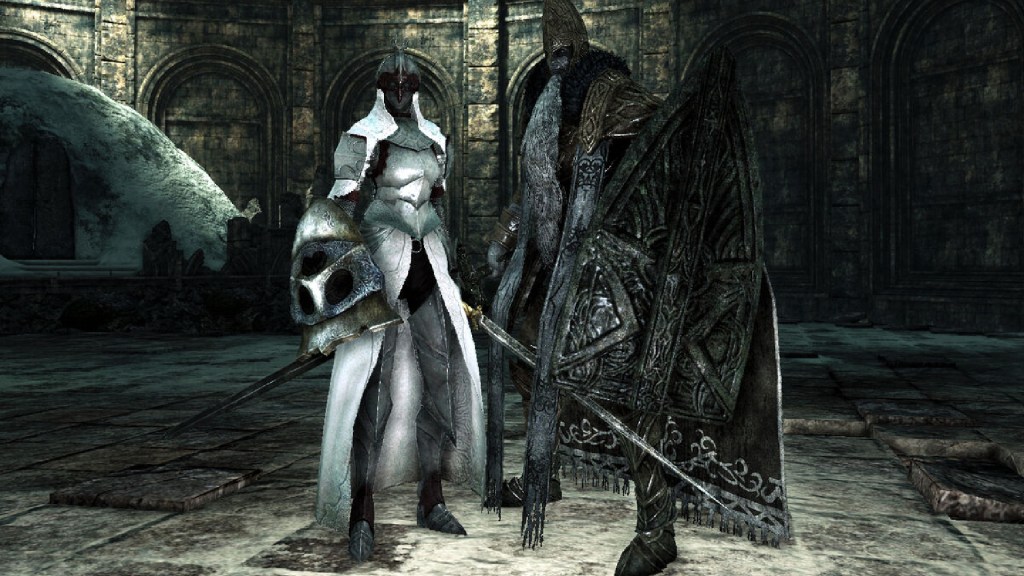
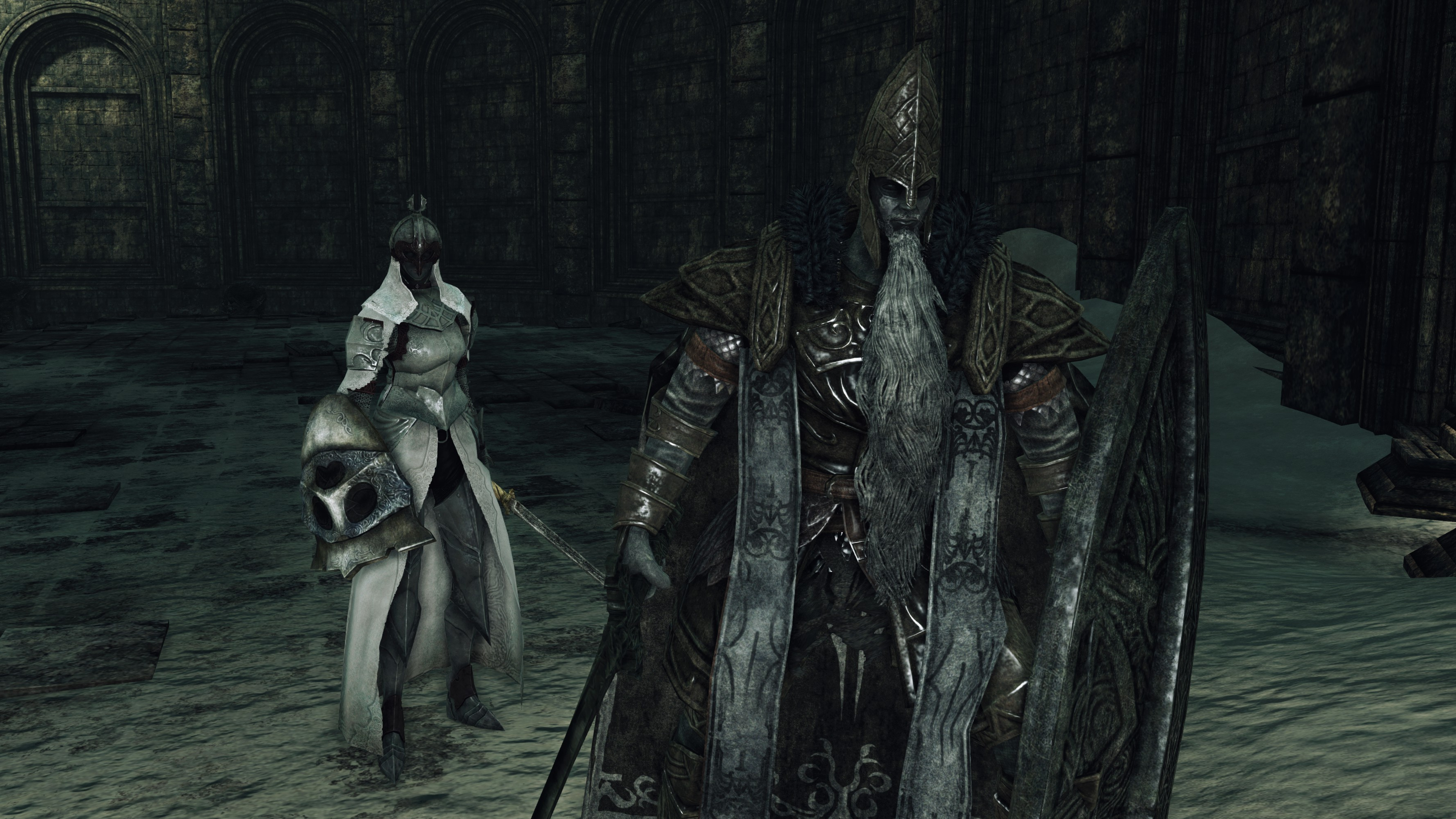
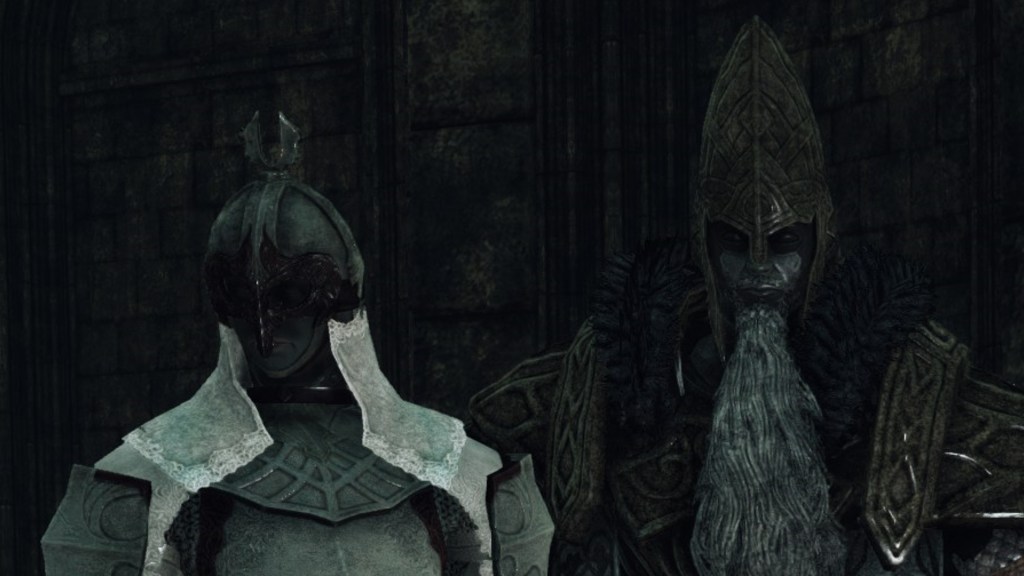
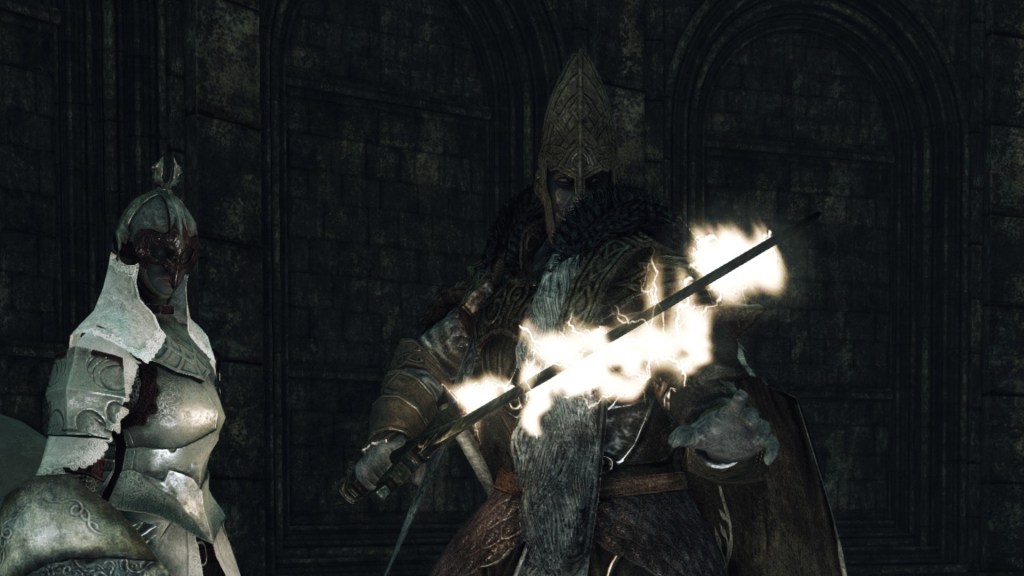
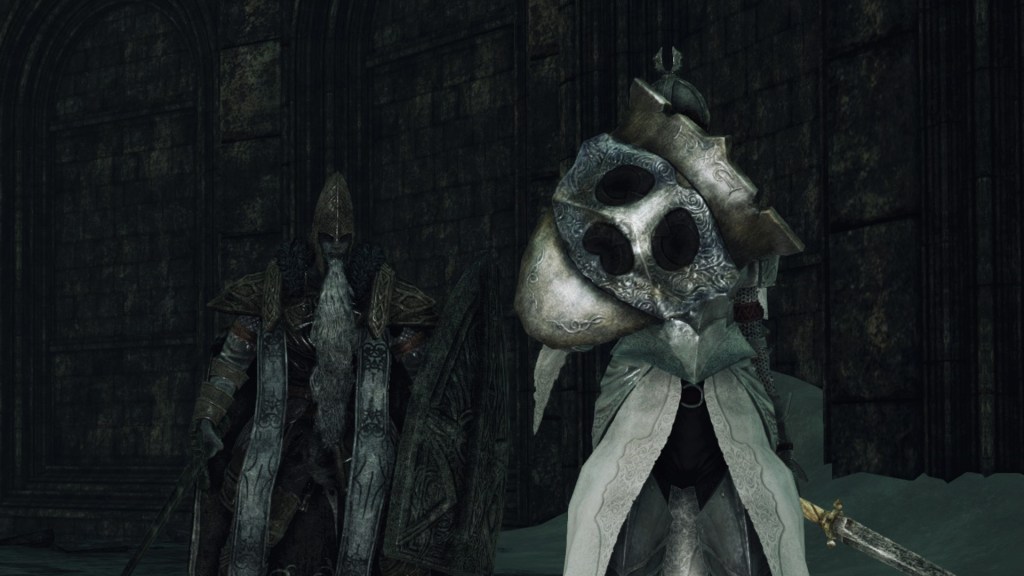
Soul of the Throne Guardian.
The throne has a guard suitable to it, a consequence of it being something special.
This special soul this guardian possesses is used to acquire a vast amount of souls or create a great power.
Soul of the Throne Watcher.
The throne has one who keeps watching its state closely, a consequence of it being something special.
The special soul this watcher possesses is used to acquire a vast amount of souls or create a great power.
Thus, Vendrick fled down the King’s Passage, leaving the Looking Glass Knight to cover his escape. From there, the monarch headed down to the Undead Crypt, though it apparently wasn’t his initial stop. A Dragonrider can be found guarding a peculiar doorway at the Shrine of Amana, one which only unlocks when we aren’t Hollow and have already slain Vendrick — most likely, the same mechanism sensing our human form detects some trace of the king on our person and presumes us him. Once inside, we are met with the king’s soul, presumably just a piece, seated in a fancy chair, a small alcove leading to a chest storing his attire. From this, we can deduce that the king initially squatted there behind this door, content with just a chair and one change of clothes. But paranoia regarding his wife evidently motivated him to get up and flee deeper into the ruins. For whatever reason, he left a sizable chunk of his power behind along with the guard, though the opening mechanism might suggest that he was still open to the possibility of coming back so long as he remained sane.
Key to the King’s Corridor that is in the Royal Castle Drangleic.
King Vanclad executed various experiments in order to cleanse the curse that spans the country.
And then failed at it all and left beyond the Corridor.
Soon enough, the king headed all the way down to deepest parts of the Undead Crypt with the rest of his entourage. Agdyne indicates that the party has faced no resistance from the mausoleum’s original denizens for sojourning there. Therefore, Vendrick had only made it exceedingly difficult for Nashandra to retrieve his ring. This also meant abandoning his kingdom in its most dire hour, a fact which wasn’t lost on the man. Vendrick predicts Drangleic’s collapse along with the end to fire, at which point our old dark souls will be freed from their shackles and return all of mankind to its “proper” form as immortal Hollows. He is well aware of the consequences, but he would rather deny his queen the power she seeks than prevent the proliferation of the Undead curse; it is all inevitable anyway. With that, Vendrick reached his lowest point, unable to see through the darkness plaguing his heart.
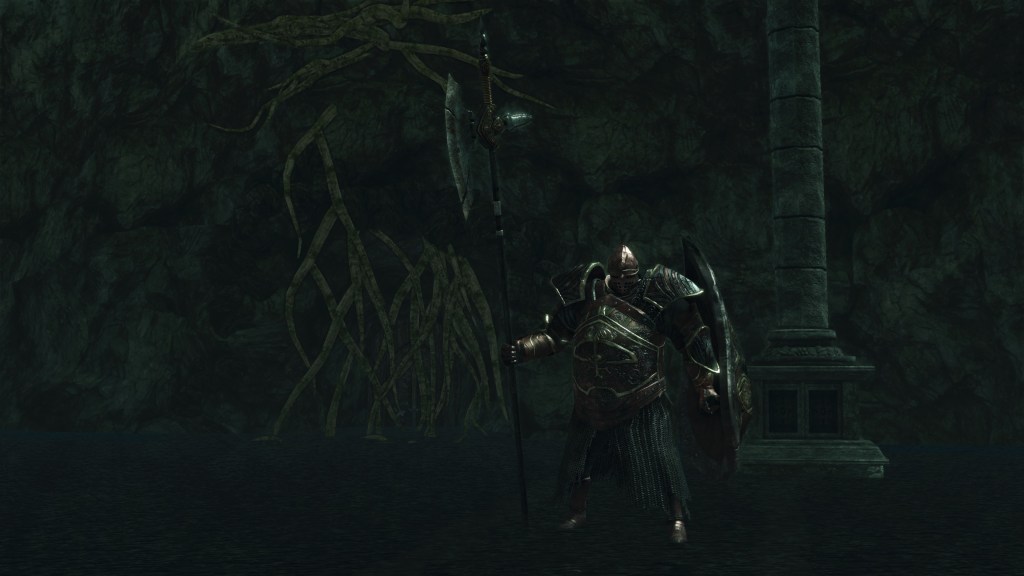
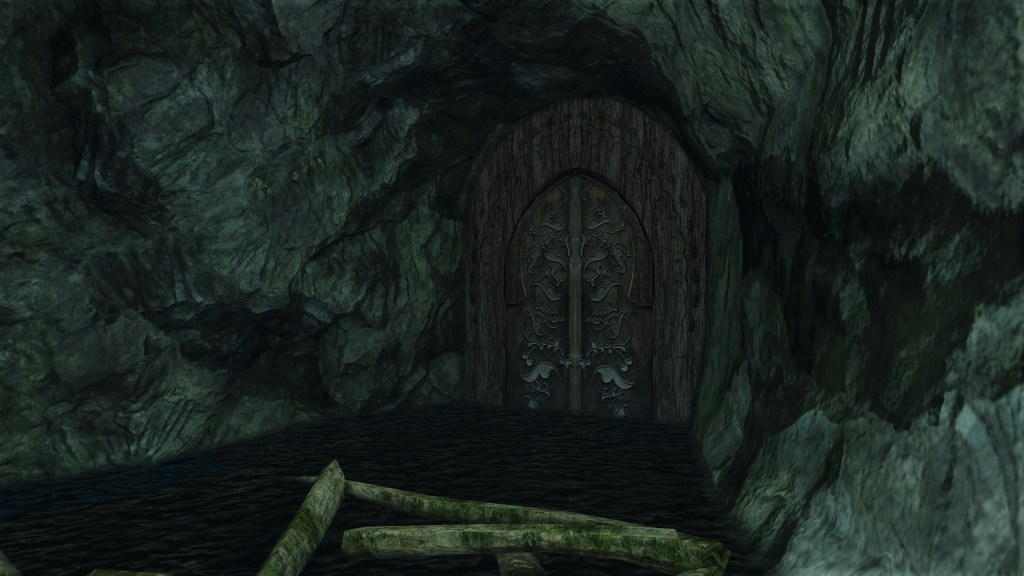
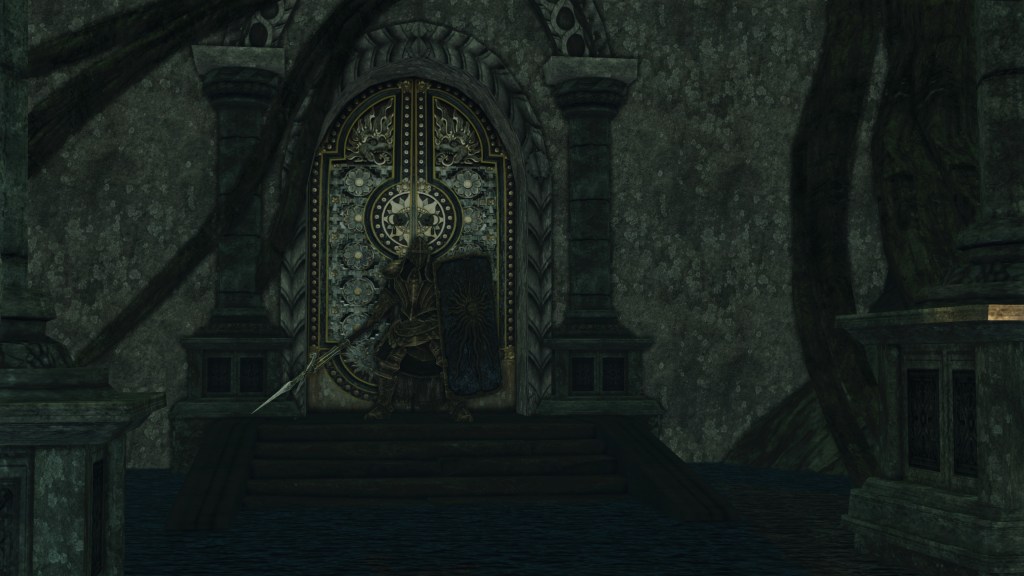
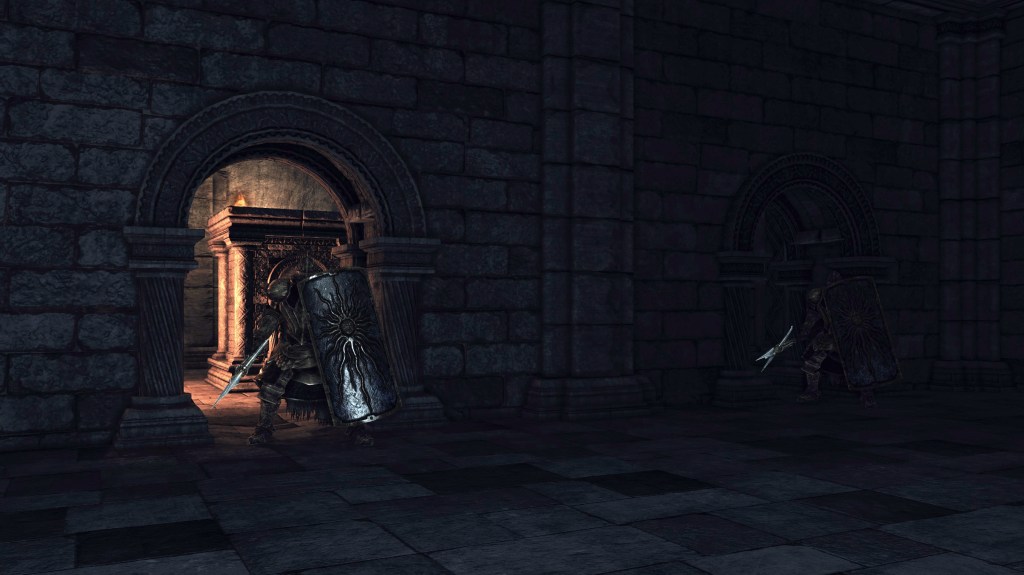
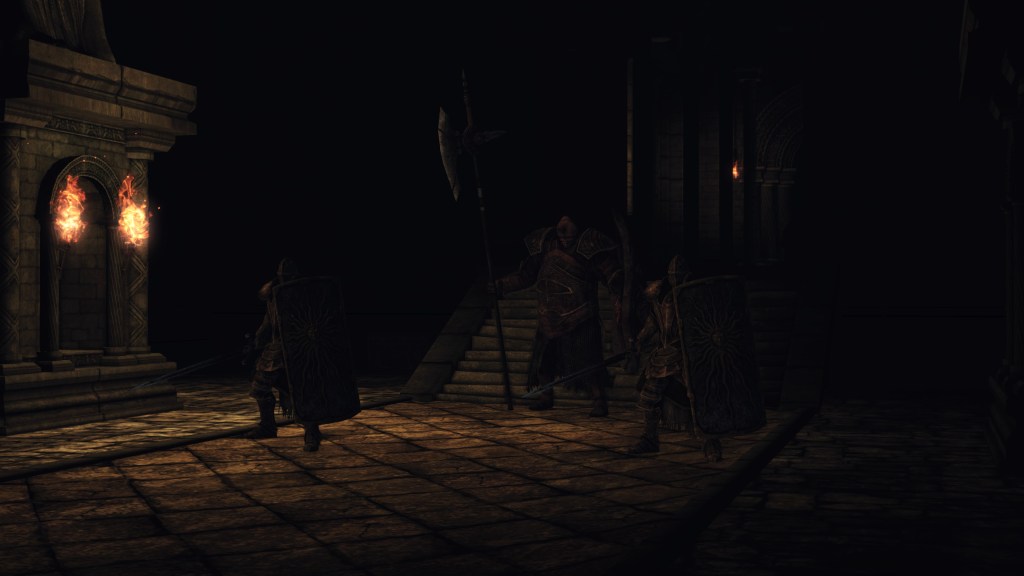
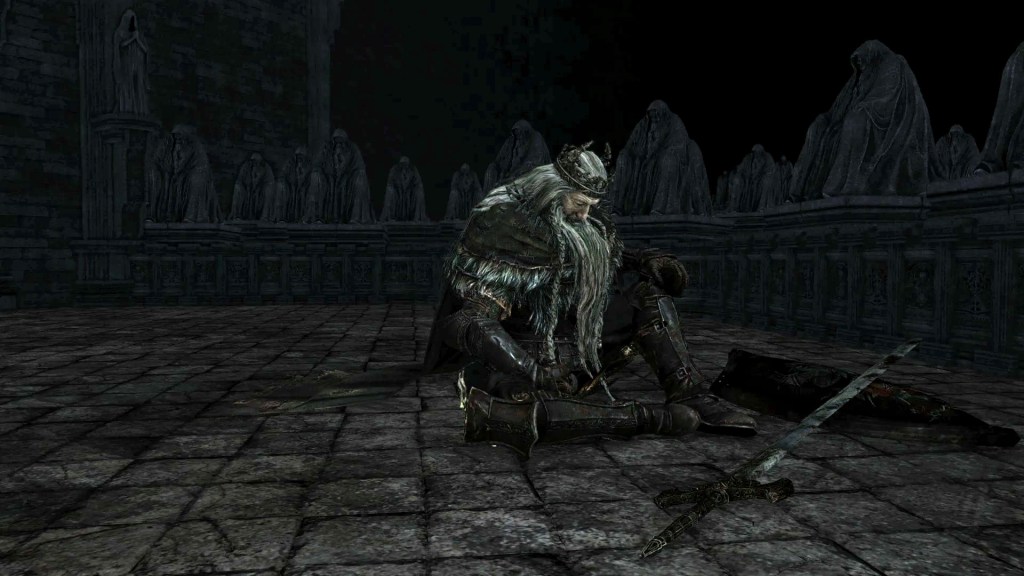
The country will fall, fire will unravel… and our souls of old will regain their power… The Dark will remove the shackles and become a curse… And man will be in its proper form…
Eventually fire will cease and Dark will become a curse. Man will be released from death and acquire eternity. Per the form of the Dark we had once come to possess. The story of falsehoods will end…
Emptied Out
During this period of depressing solitude, we can arrive from the future using the Ashen Mist Heart. Vendrick doesn’t question who we are or how we have managed to breach his defenses, any attempt to head over to his closest knight always ending our visit prematurely. Instead, the king just instantly ascertains our objective. Perhaps for no other reason than whimsy, the heartbroken man presents us with a trial. If we want to link the fire, we must take the throne, both literal and metaphorical. And if we want to take the throne, we should have a matching crown. To that end, Vendrick sends us after the crowns of the old kings he once investigated, each retaining some of their wearer’s power. Whether he knows this from witnessing it firsthand or reasonable guesswork, the king still directs us without clarifying his intentions, only throwing the question of what we want in our quest for the First Flame. It is only after we collect all three crowns plus his own that the man fully reveals his hand.
Fire blooming and proceeding to disappear at any rate is preordained. Will thou be one who links the fire? All is the will of the one on the Throne. Seek an appropriate crown. Seek hardship, seek old crowns. All is per thine will…
Thou, one who seeks fire, one who takes ahold of a crown suitable to a King. Thou seek fire, and want what? If it is want, seek crowns. The power of old kings dwell in the crowns which are proof of them. Seek hardship. One who seeks fire. One who wants to be King.
In narrating his story, the king states his desire for us to fully comprehend the Dark we face, which this trial achieves by putting us up against its other apostles. Between entities like Nashandra and the futility of firelinking, we cannot come away from Vendrick’s words with confidence that exorcising the Dark will be possible. The alternative, of course, is man returning to its “proper form” once fire inevitably goes out, but Vendrick poses the query: what actually is our “proper” form? He then tells us would-be King of Kindling to take ahold of the power in our newly acquired crowns, the crown we pull out showing a clear and impressive magical reaction. Somehow, Vendrick manages to make the power within each crown manifest a new effect, preventing the wearer from hollowing — presumably because even the fragments of their immense souls lacing the crown is enough to serve as surrogate for our hungry humanity, at least in the short-term. With that, the king leaves us with the promise that all will now be according to our own wants, not the immediate need to retain our sanity.
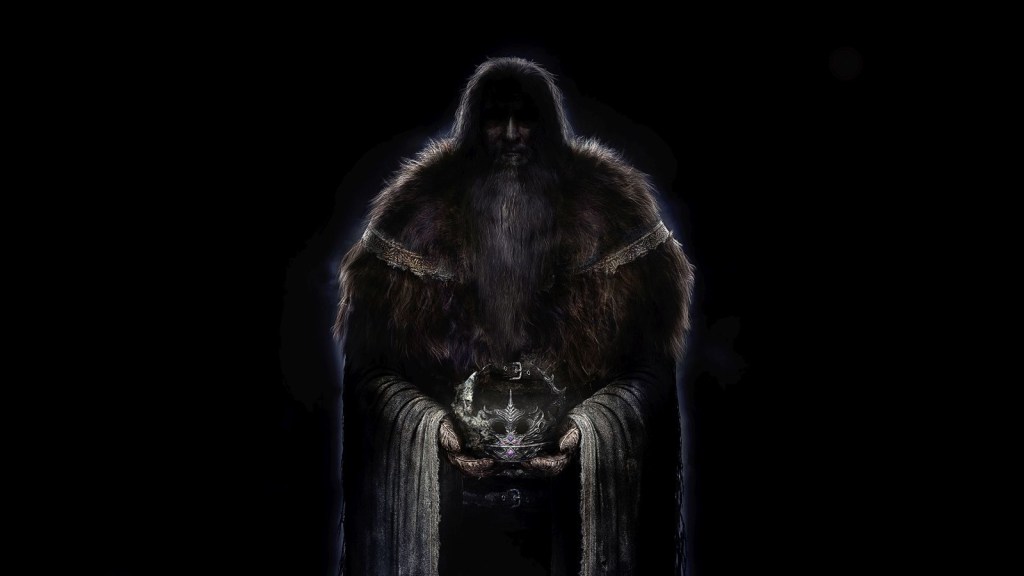
But… what is our proper form…? One who seeks fire. One who wants to be King. Take ahold of power. And so, per thine want…
I am a clown, a pitiful clown… Unaware of mine own foolishness. The transient vessel, the false soul, thus wants to throw away its false life, wants hardship? Art thou another clown? Or…
Should it be the Age of Fire, or Dark? Are we human or Hollow? No longer able to see an answer worth committing to himself, the crestfallen king places the burden of that decision on our more determined shoulders. The crown, beyond its symbolic purposes, grants the freedom to make that choice for an Undead seeking the Throne. At long last, we can contemplate what we actually want for this world without a fatal timer hanging over our heads. Evidently, Vendrick learned something from his brother’s research if he was able to work out such convenient magic, though why he never uses it for himself stretches credulity — even assuming that he recognizes our time travel and the implications to us carrying his crown, did he never once consider the possibility that we could join forces to confront Nashandra so long as he is willing to wait? In the end, Vendrick remains despondent, and his aid to our heroic journey does nothing to change that. As far as he is concerned, both he and his kingdom are doomed.
Vendrick chose to disappear before the final battle with the giants at the western fort. This forced Captain Drummond to lead the defense without a much needed morale boost, both he and his men suffering grievously under the giants’ heavy bombardment. The navy and walls were barely a deterrence, giants simply landing face-first from the sky. Soon, the entire fort was caught in chaotic fighting, death and undeath surging. When we arrive through the memories, Drummond barely pays our random appearance any mind, surrounded by his fallen men in the collapsing ramparts, and doesn’t expect any survivors still out there fighting for their lives to care about our trespass either. Despite the direness of the situation, the captain retains the strength and will to try challenging the giants’ obvious leader, knowing the probable result; he therefore leaves us a summon sign. If not for our arrival, the enemy commander likely would never have been defeated, throwing the giants into disarray and ultimately warding off their invasion. In the end, the battle was won, the soldiers’ loyalty rewarded.
Despite his fort’s triumph over the giants, Drummond would be the last in his line to ever take command. The central government at the castle collapsed, and the damage dealt by the giants was already done. Most everyone was either dead or Undead, and the number of Hollows were sure to swell as time went on. Any who managed to make it down to the Undead Crypt to plead for Vendrick’s return were summarily slain by his guards. There was no salvaging this situation, no matter the loyalty these surviving subjects had for their absconding king; even after they had no longer strictly “survived”. Chancellor Wellager has persisted as a ghost, his distress and desperation in those final days apparently inducing his soul to endlessly relive them in phantom form — he will even forget who we are when his mind inevitably loops back around. Just as Vendrick foresaw, Drangleic fell apart.
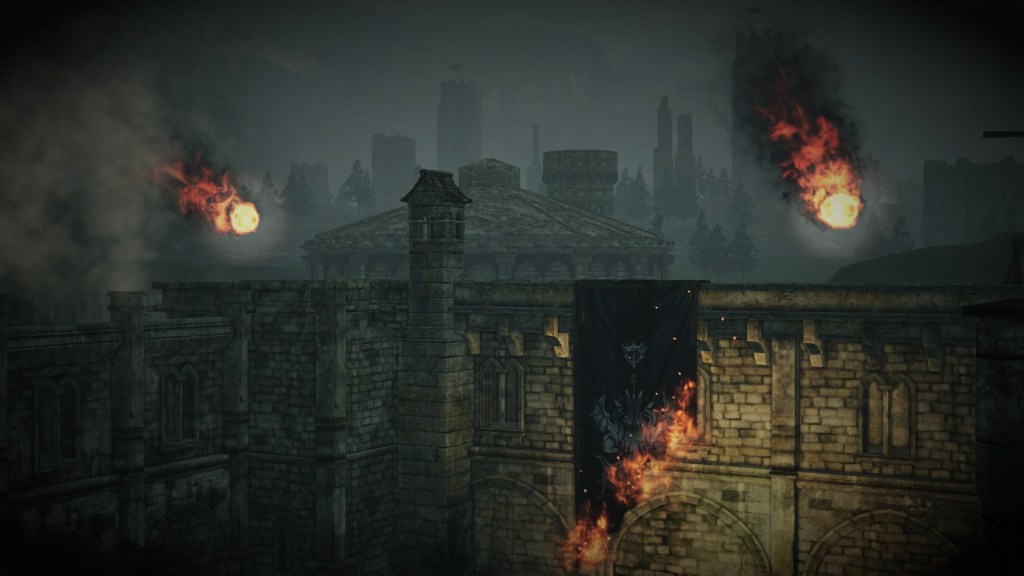
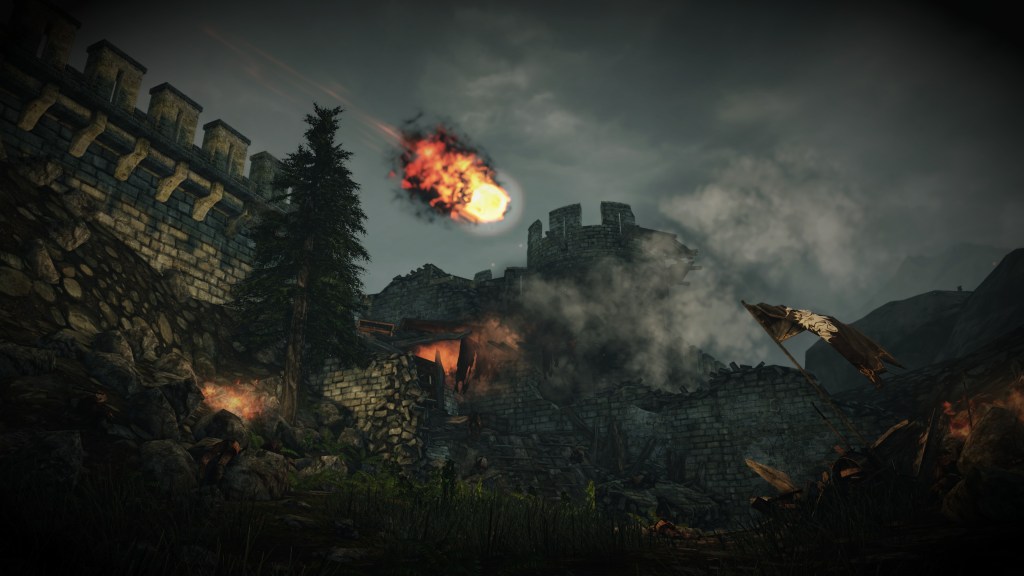
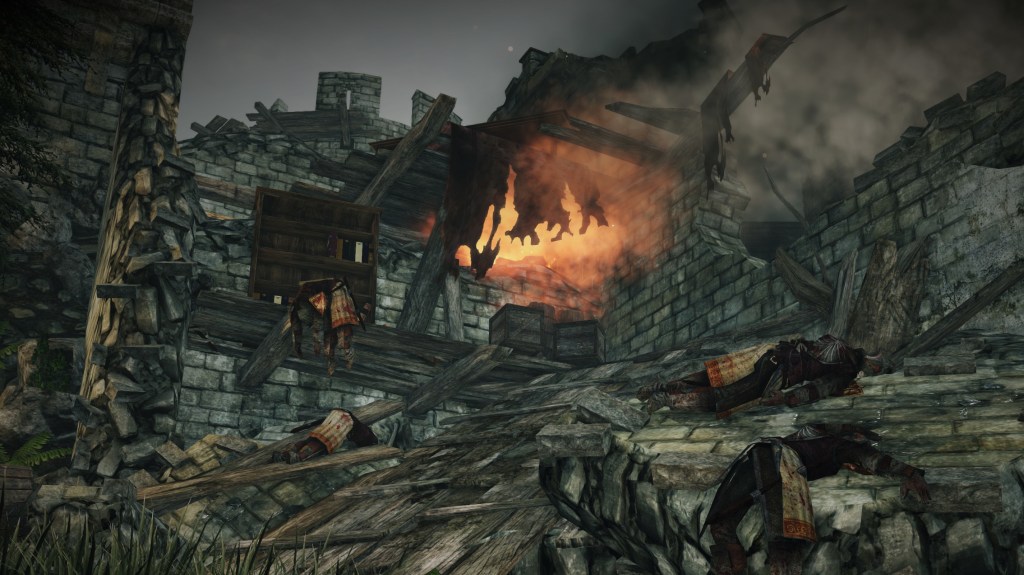
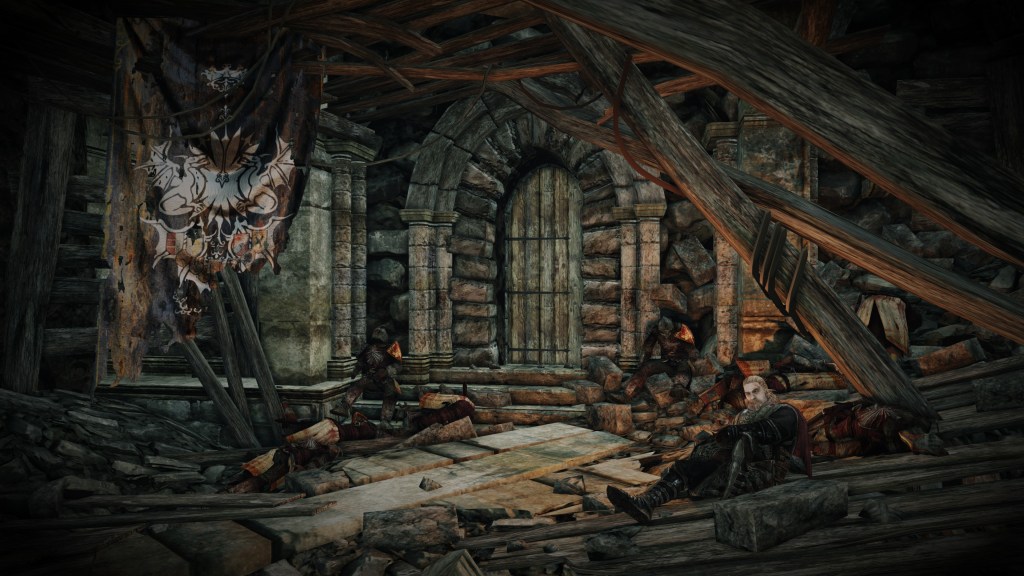
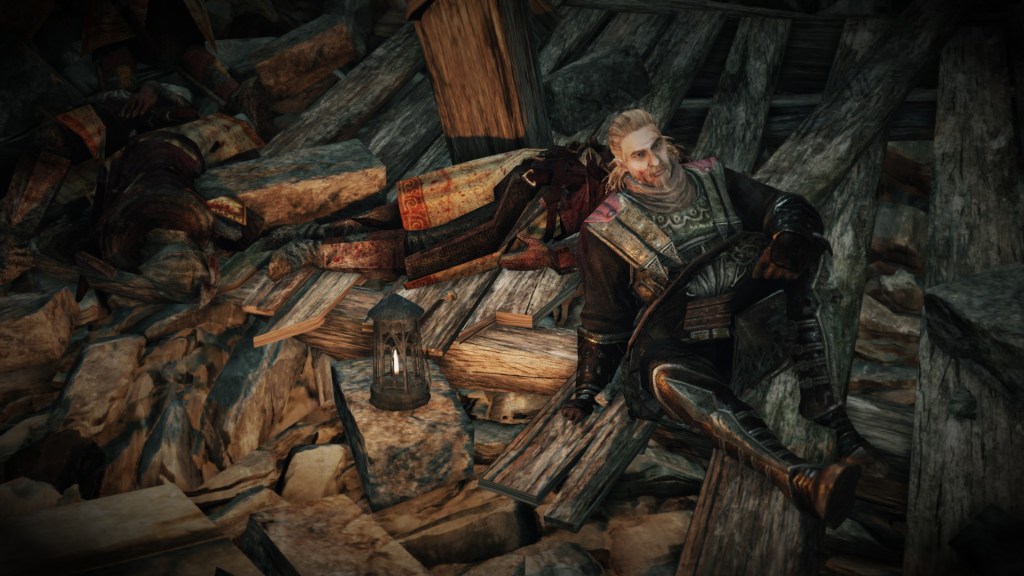
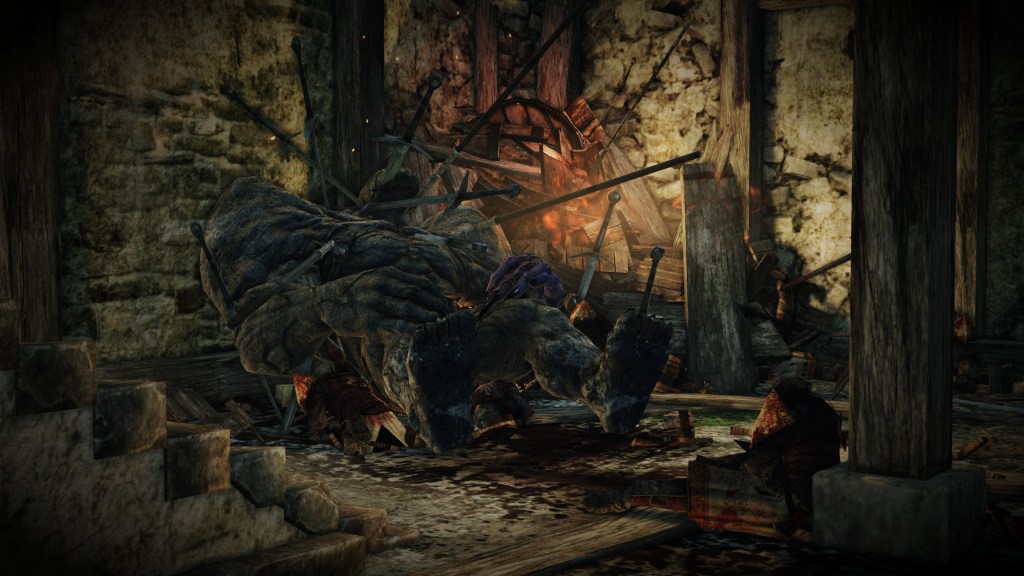
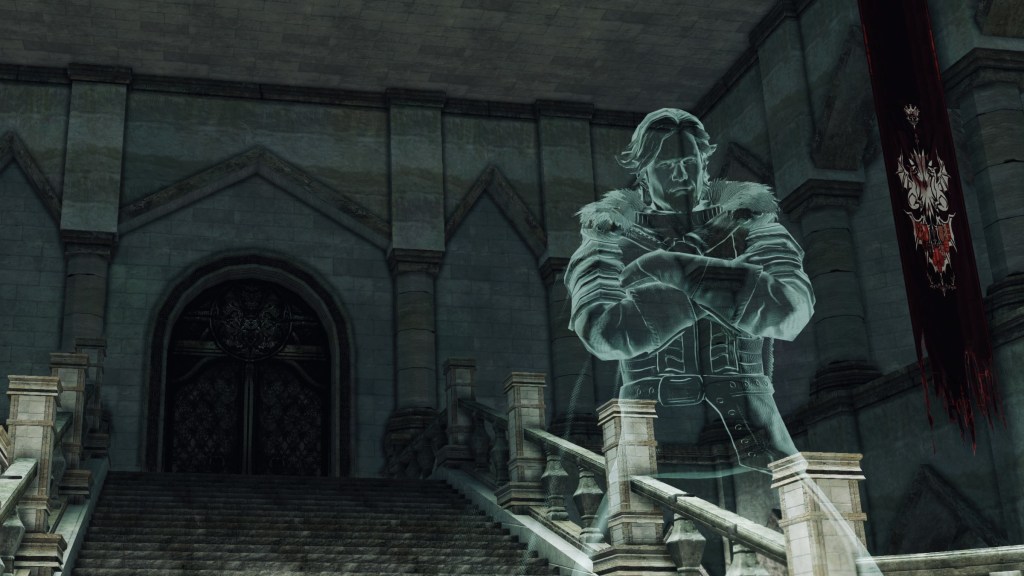
Drangleic traditional armor. Personal effect of the kingdom captain Drummond.
The clan of royal retainers who served Drangleic for generations and were charged as guardians of the fortress came to an end with his generation.
Did you come to meet that man? Uh, the one called Vanclad or whatever? If it is that man, he is inside here. Until now, servants of the castle and the like have come for that one many times, but now they all rest beneath the earth here. For they were killed by the guards who embarked with that one. It appears he doesn’t really want to see anyone.
Over the hill and through the forest is the king’s castle. The one who once approached the source of souls was there. But, it is now already…
At Drummond’s fort, soldiers did try to reestablish order. Wooden scaffolding and platforms were added to help survivors get around, with all the rubble blockages and collapsing infrastructure from the assault. Drummond possibly died in this effort, a corpse with all his equipment amongst the stone haplessly collapsed upon the wood; a fate we see many suffered. Quite a number attempted to simply flee upriver through the southern bastion, managing to even build themselves a log bridge to cross. Their intent is obvious from the local bonfire calling this the “Heartbroken’s Refuge”, (心折れた者の逃げ場所) a Hollow’s “place to escape to” more literally. Indeed, the singular grave portends the fugitives’ fate, each eventually going mad and needing to be put down — yet soon none still sane were there to ensure the job was done. Survival was no more practical for the hangers-on, their bones becoming torch fuel. In the end, the only garrison left at the fort are idle golems, reanimate skeletons, and mindless Hollows, some still pointlessly defending from “corpses” of the invaders even as the installation is reclaimed by nature.
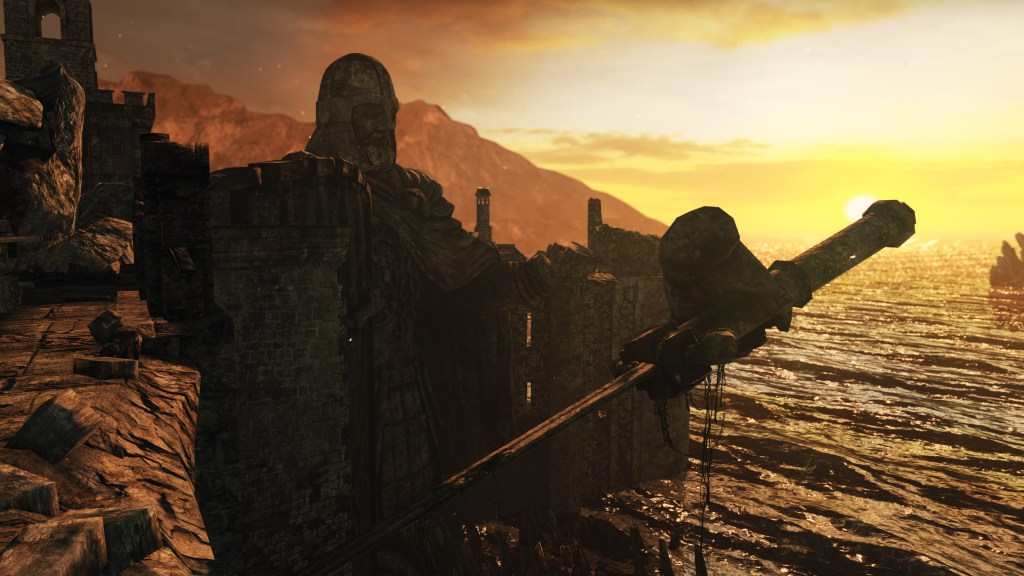
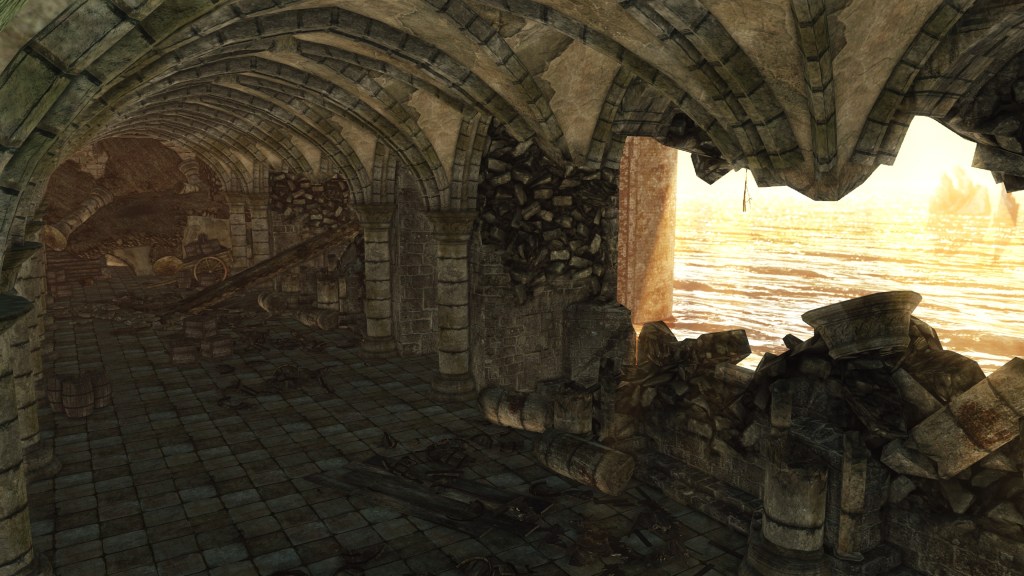
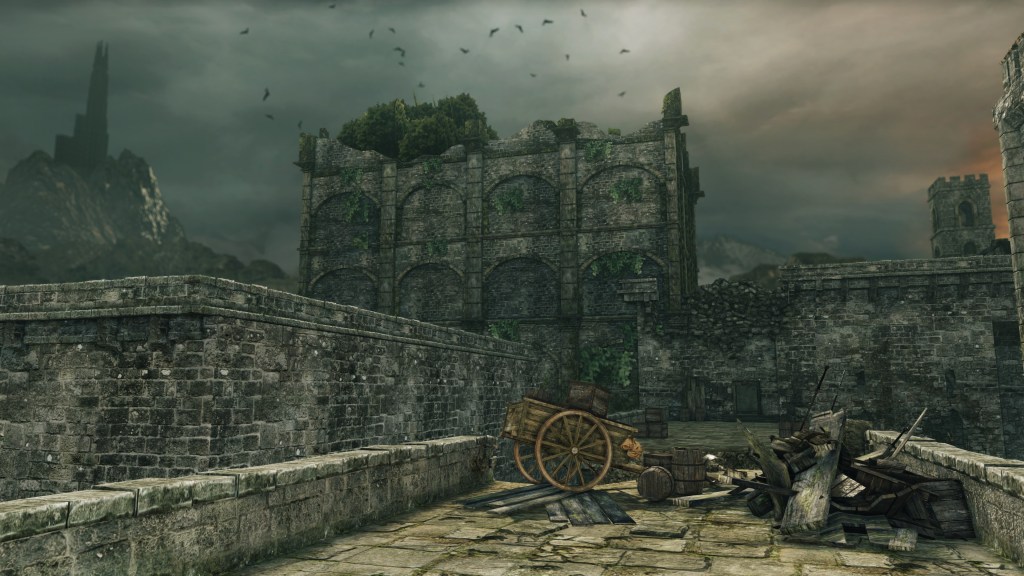
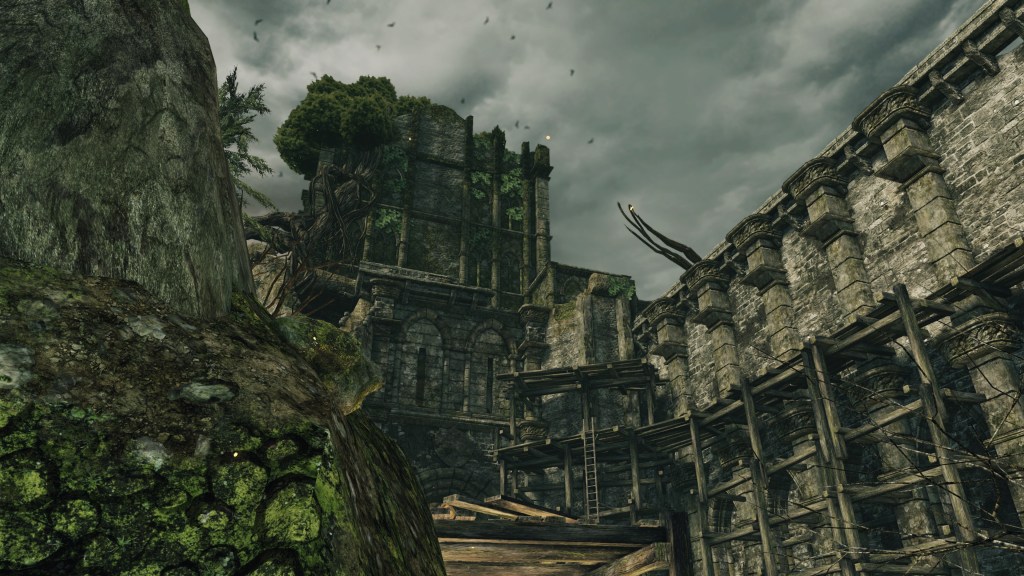
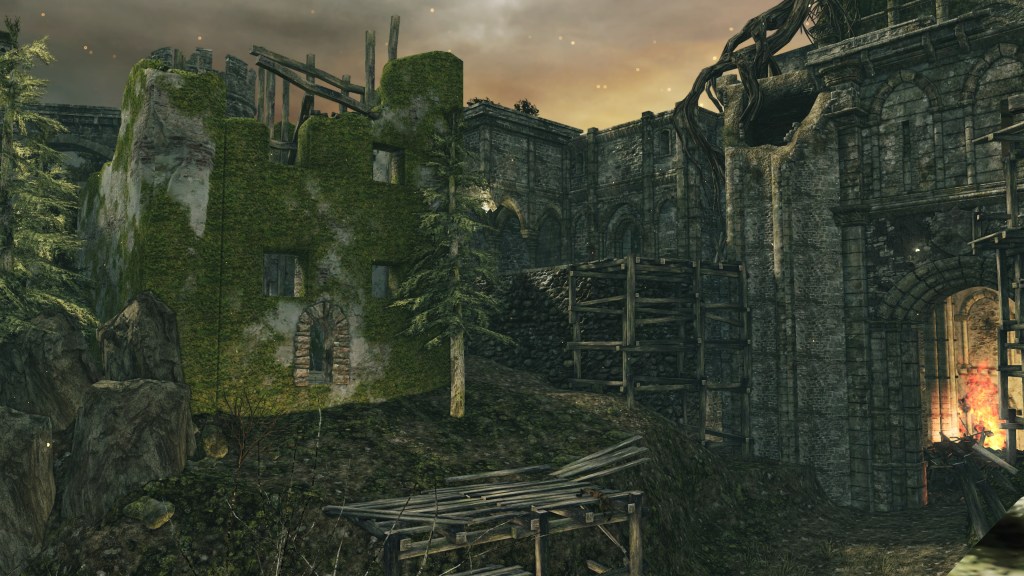

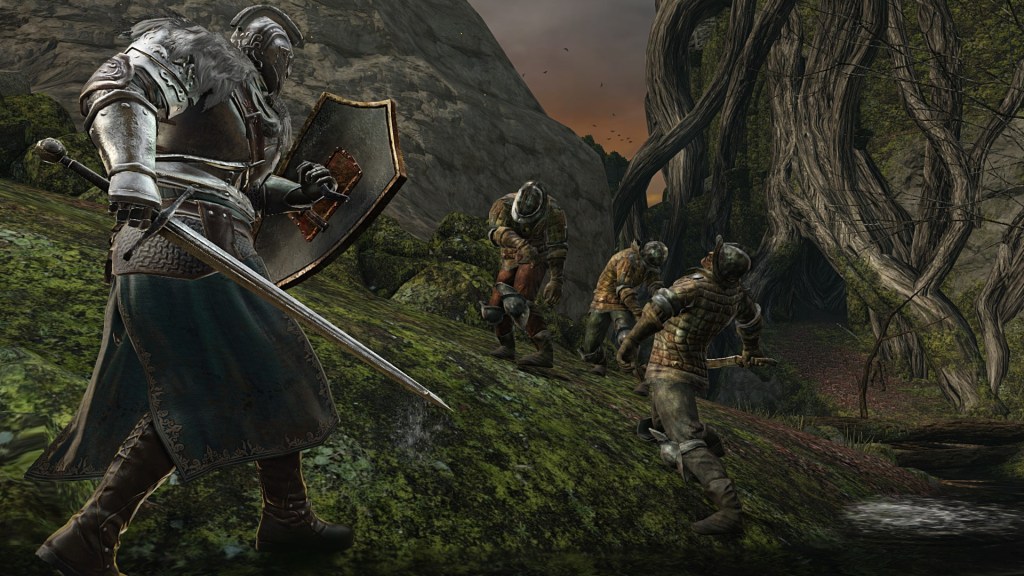
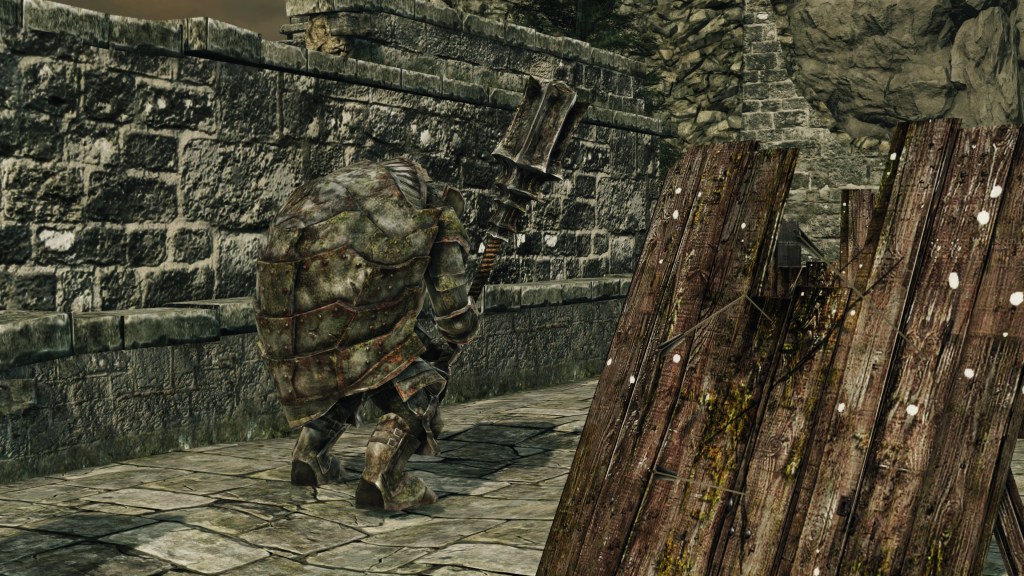
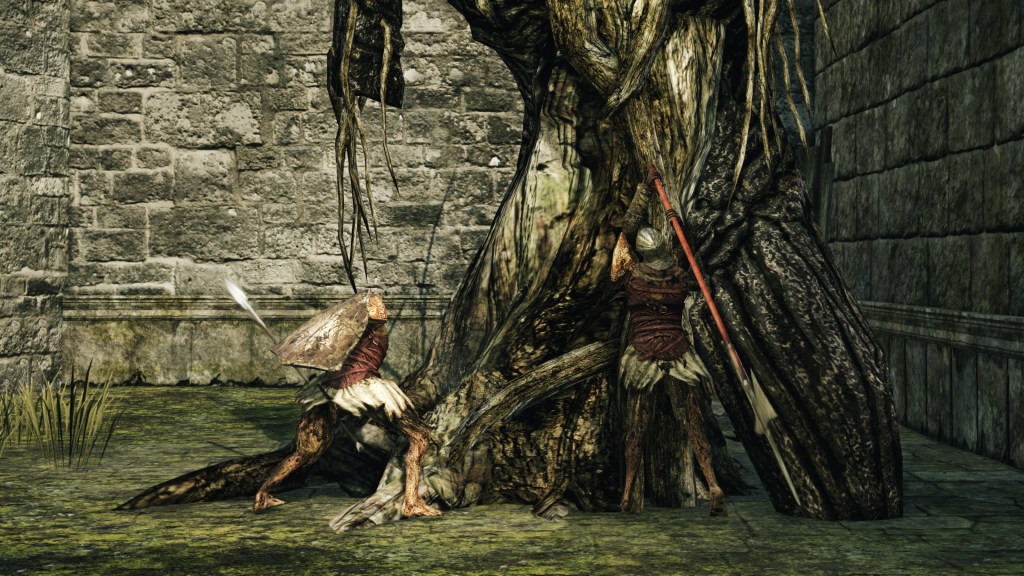
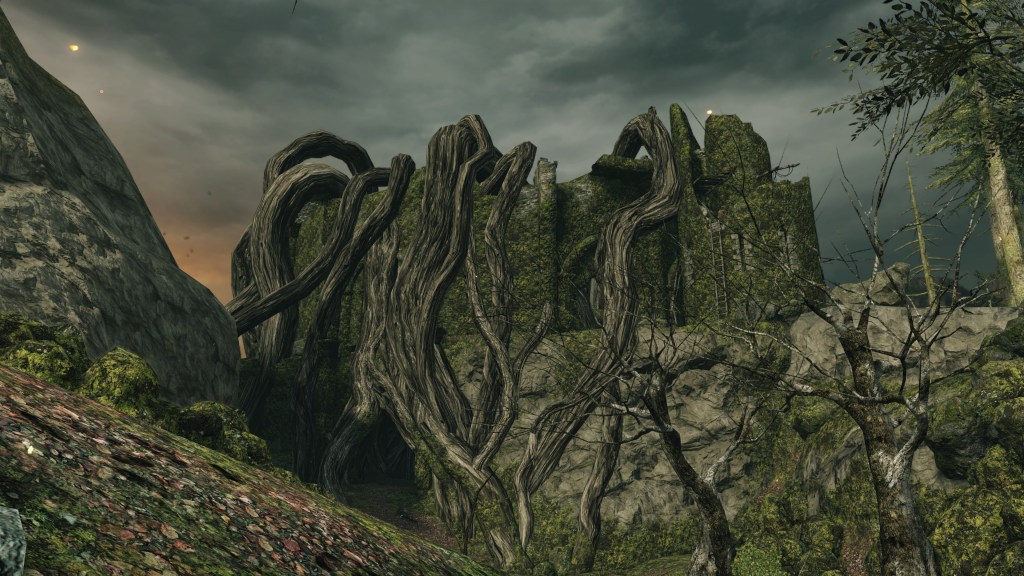
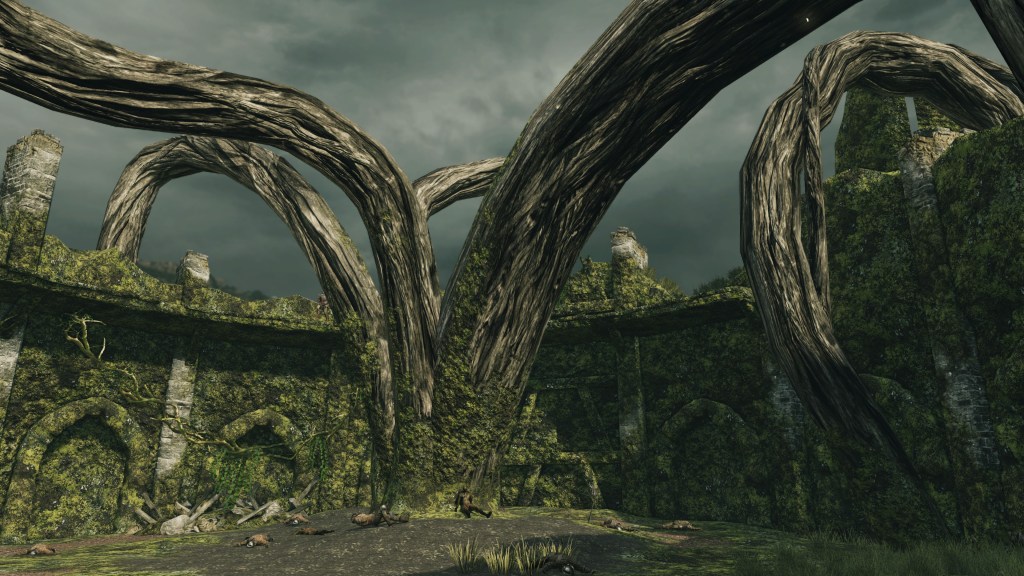
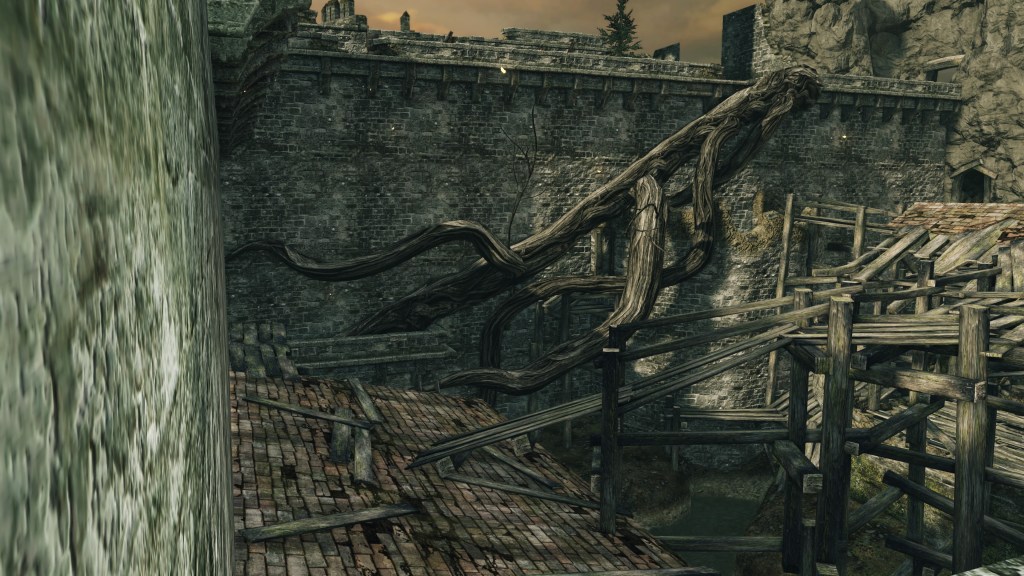
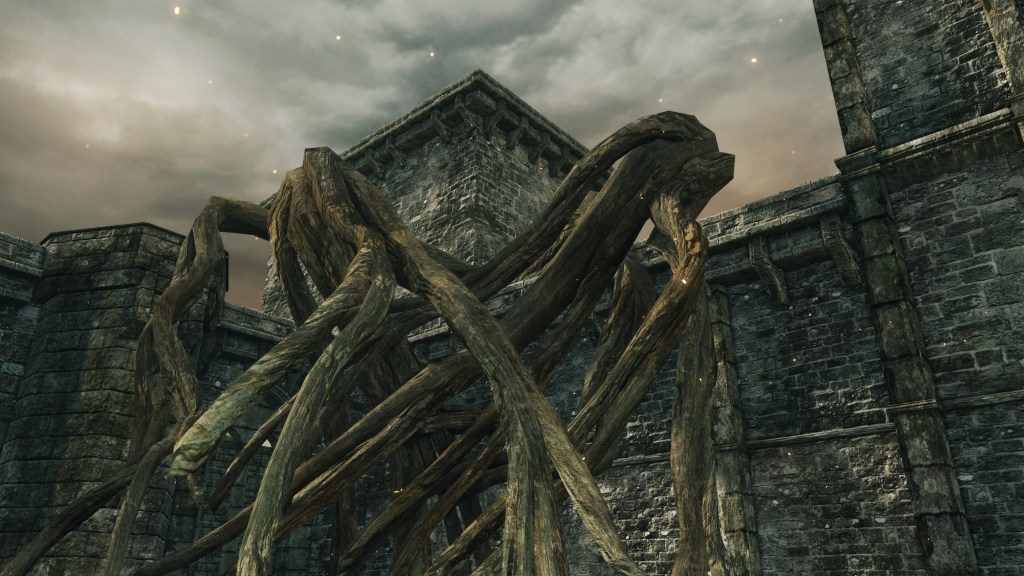
Key to the doors of soldiers in the Forest of Perished Giants.
The king’s soldiers who became Hollow wander the forest that was once a fort warding off the giant’s invasion. They are loyal soldiers, even if powerless, so continue to protect the country even now.
Possibly the most humorous example of this is the giant three-legged hawk nested atop the battlements, the peculiar species making use of its extra talon carrying individuals to and from the Lost Bastille. Before the Pursuer, we see that it has already brought several of the kingdom swordsmen stationed at the prison, each meandering in the lead-up to the nest. But this seems to be only because they, like the fort’s garrison, have all gone Hollow. The dogs retaining soldier souls imply that the bastille battalion too were dealing with an outbreak of Undead among themselves and the jailers in the wake of the war. Unlike the fort up north, however, the troops made barely any progress with the makeshift repairs, huge holes in the mighty stone walls left untouched following the giants’ rampage. Without a shadow of a doubt, the rest of the kingdom was faring no better than the “victorious” fort.
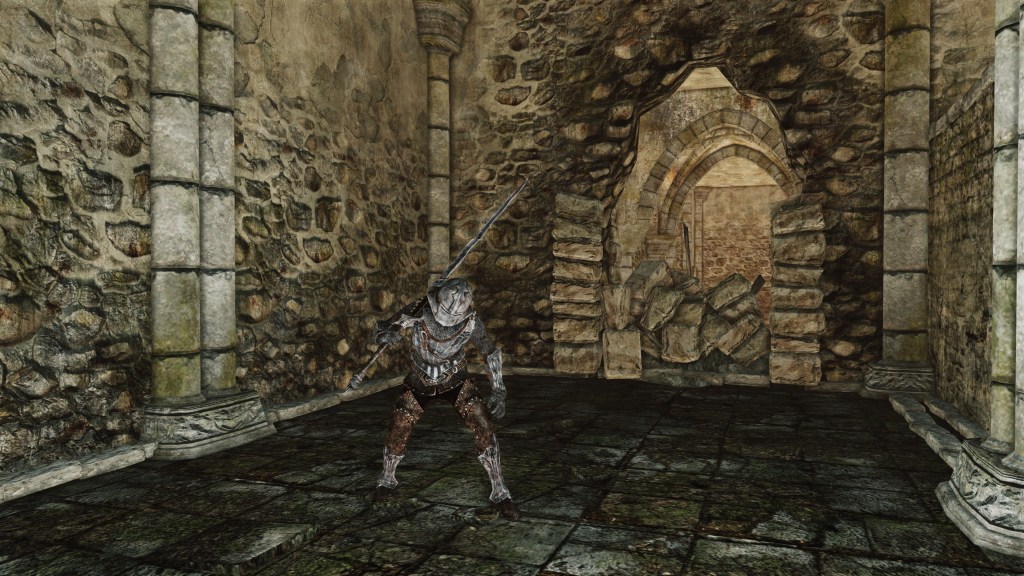
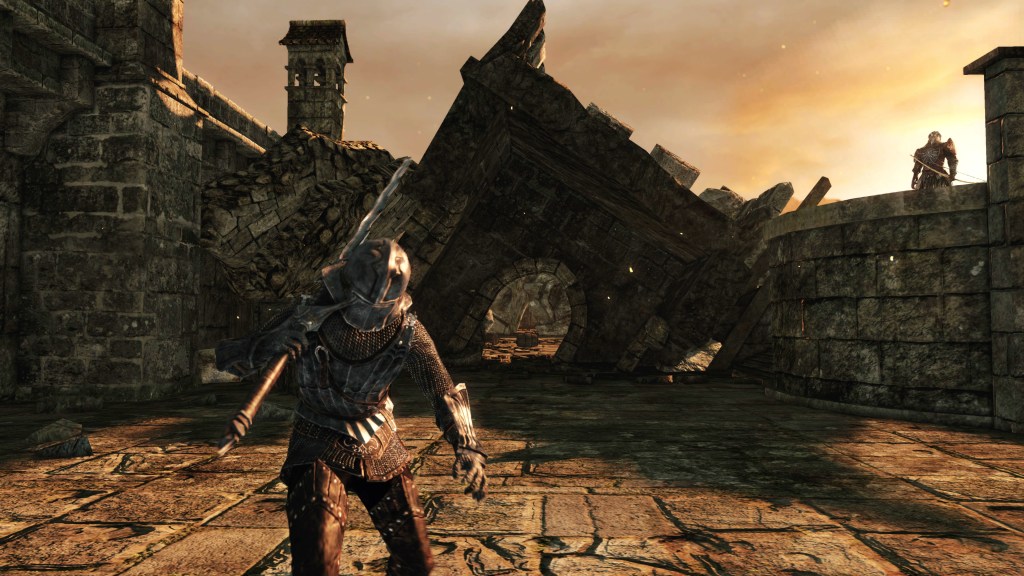
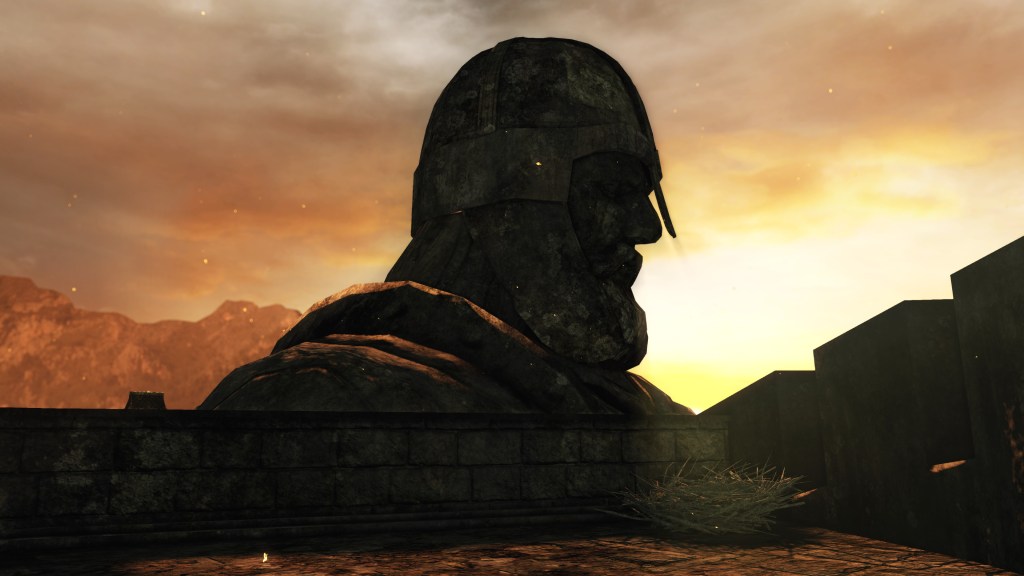
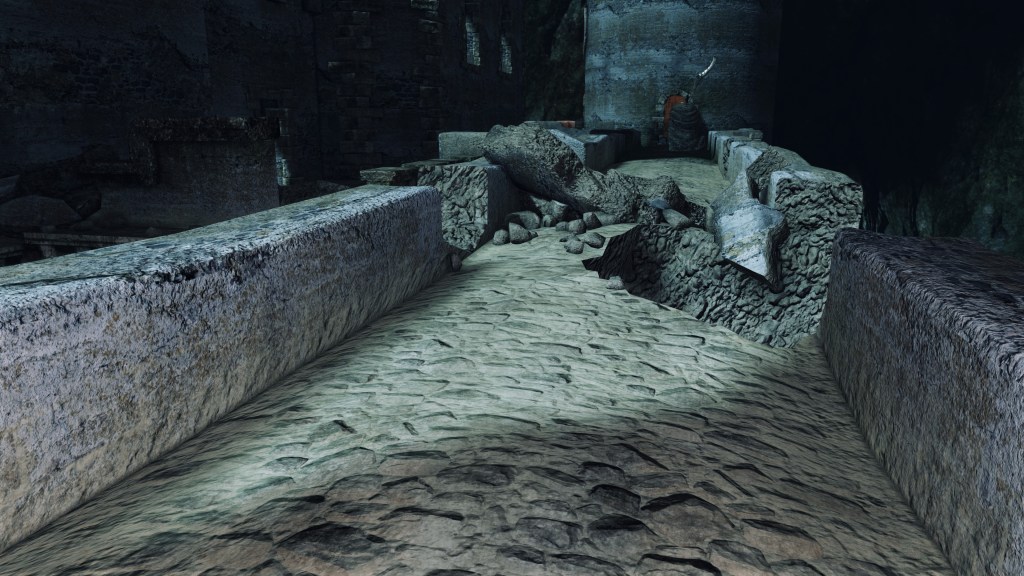
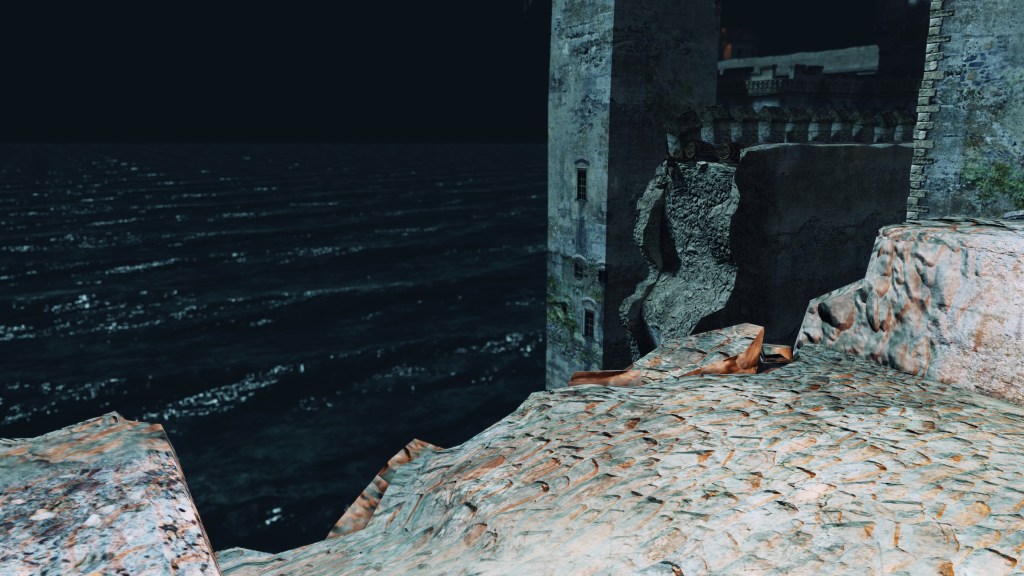
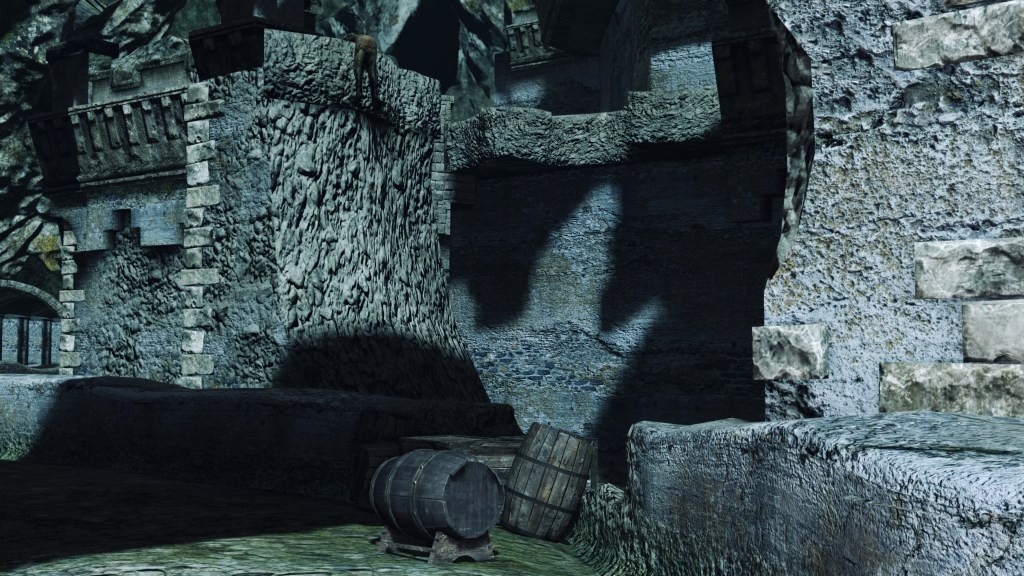
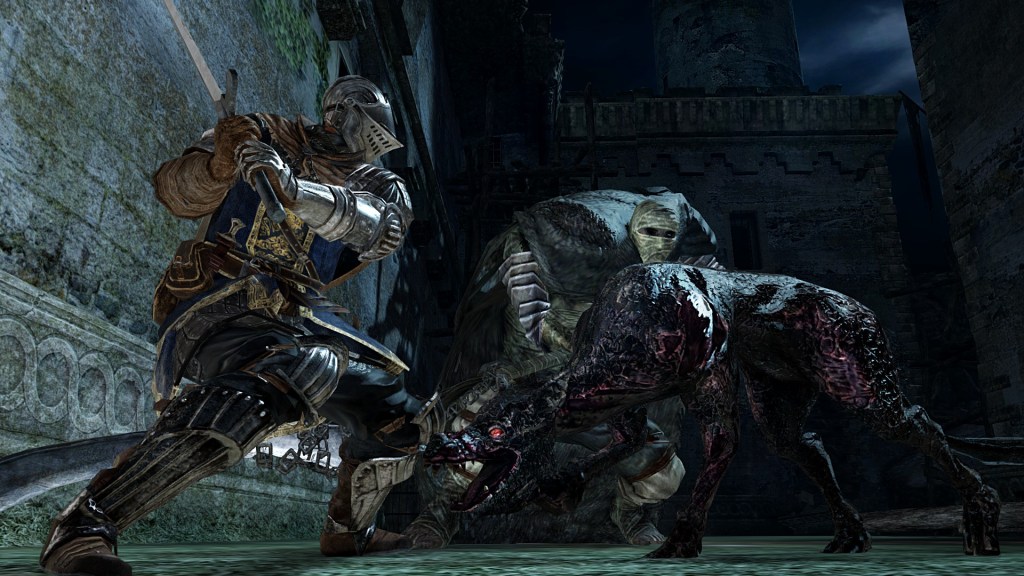
Even the country’s secret harbor wasn’t immune to the effects of the war. The Royal Soldier’s ring is specifically acquired from a chest in the area, located within a cramped rocky recess full of skeletons. The fading and nameless soldier souls on some of these bones affirms that a bunch of troops rotted away in this confined space, which has been sealed — a haphazard wall plastered over the exit inside one of the buildings. The rush job is evident from how easy it is for us to break it apart after. The building itself only has a few Varangians sleeping at the table, surrounded by a great many poison pots. In the same room is another chest with a fragrant branch of yore, whose description admits to it causing coughing and nausea after extended inhalation. From this, it is obvious that the Varangians saw opportunity in Drangleic’s downfall. The captive labor staged an overthrow of their captors, slipping poison in their food or drink while burning relaxing incense. They then quickly trapped their incapacitated overseers in that nook to hide the bodies.
Once they discreetly dealt with the rest and claimed their dogs, the enslaved barbarians would have probably returned to their reign of terror using the harbor as a base. But before they could take to the high seas, they had some unexpected visitors. The deserters hiding out in the flooded Heiden ruins met with an unexpected encounter with a basilisk — the one statue and several Hollows down on the floor tells of the result. This seems to have forced other infantry to flee even deeper through a hole in the ruins, navigating the caverns to the No-Man’s Wharf. From there, we can find numerous soldier Hollows down by the docks, their numbers dissipating as we head deeper and deeper into the port town. With them among the dead lay two souls belonging to knights, the ravenous dogs additionally bearing the souls of soldiers. Considering that the Varangians are also Hollow, it is obvious that the unexpected reinforcements clashed with the rebellious criminals. The only one surprisingly still sane after all this time is the Dragonrider standing guard at Heide’s Tower of Flame.
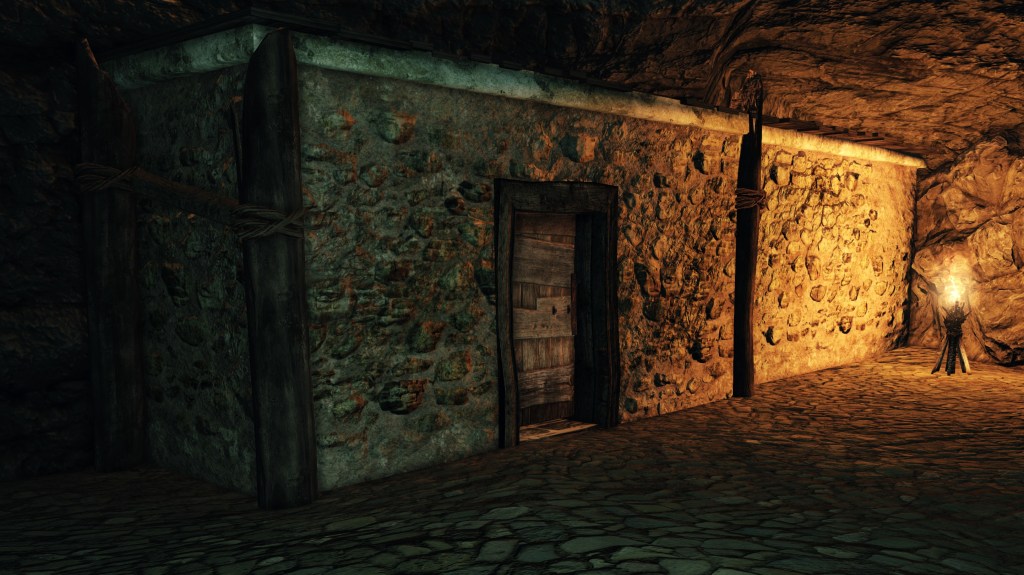
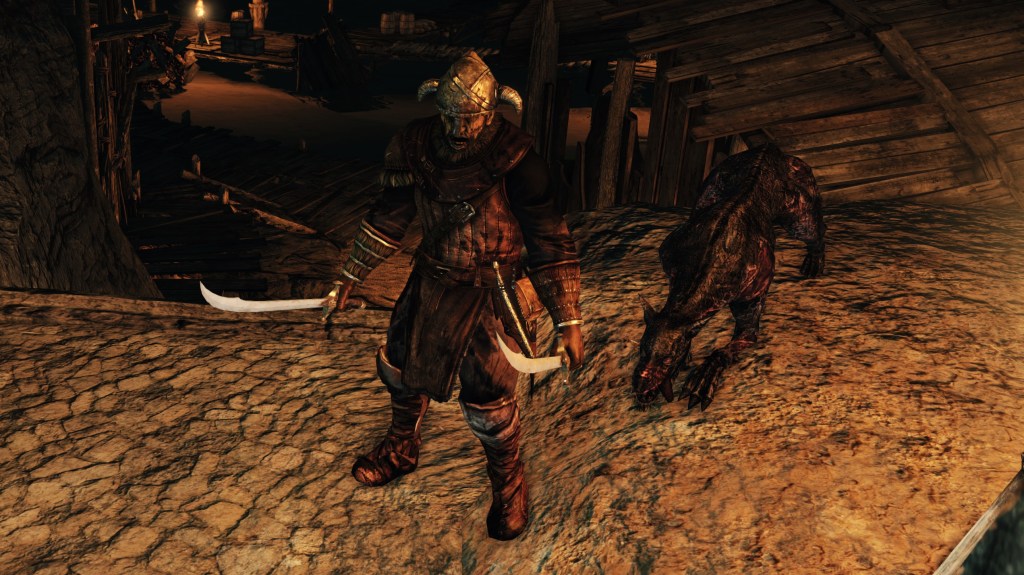
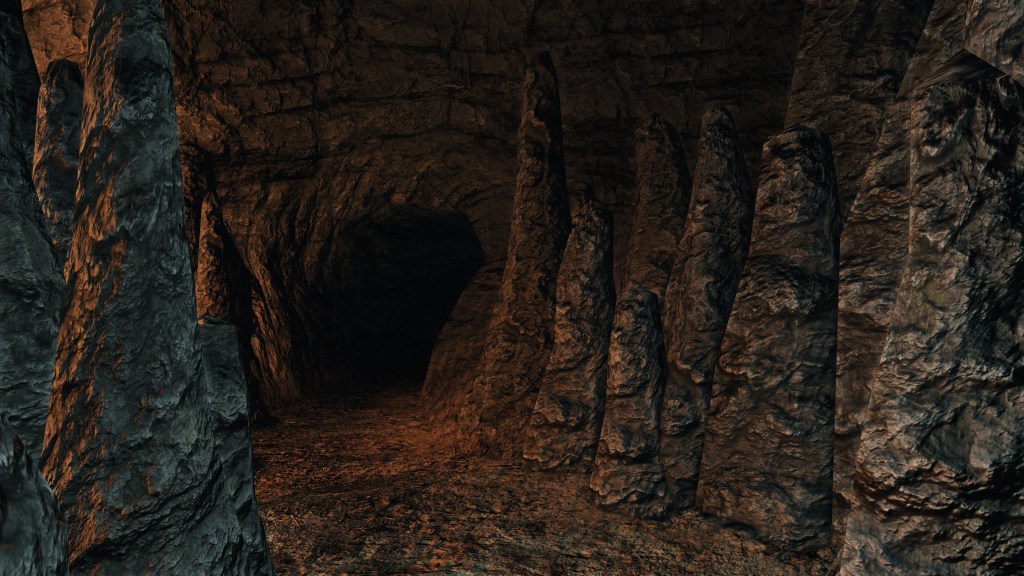
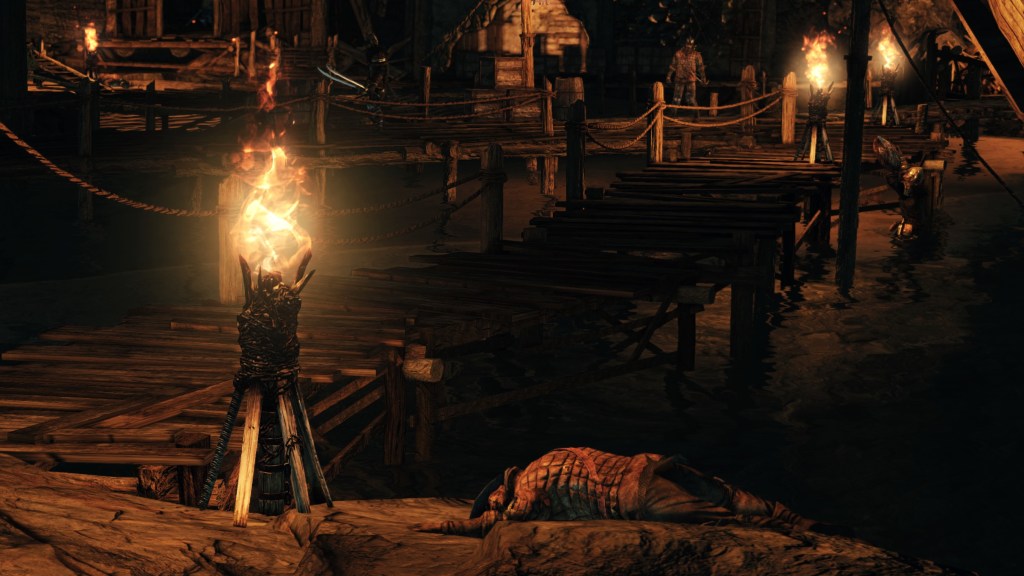
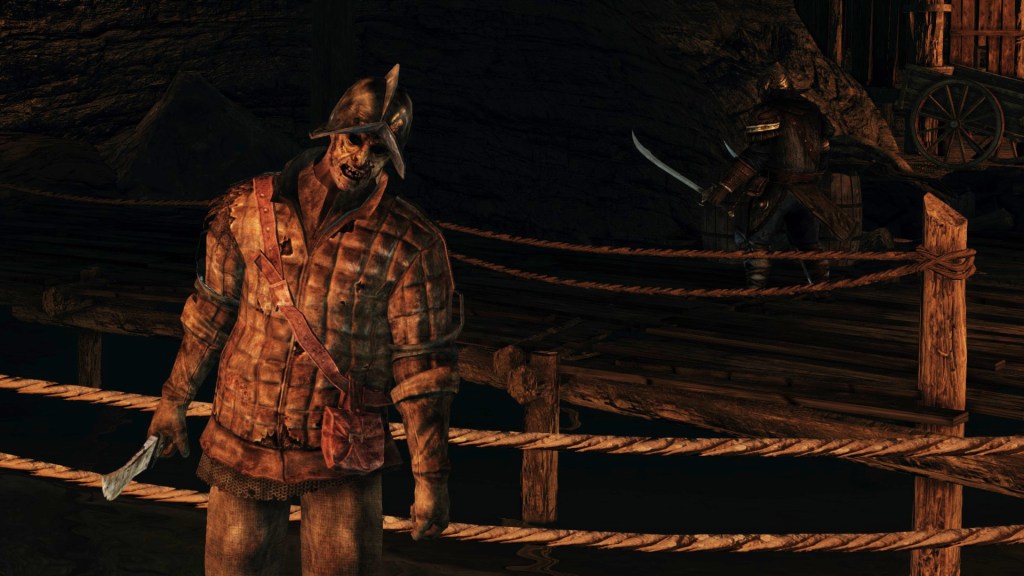
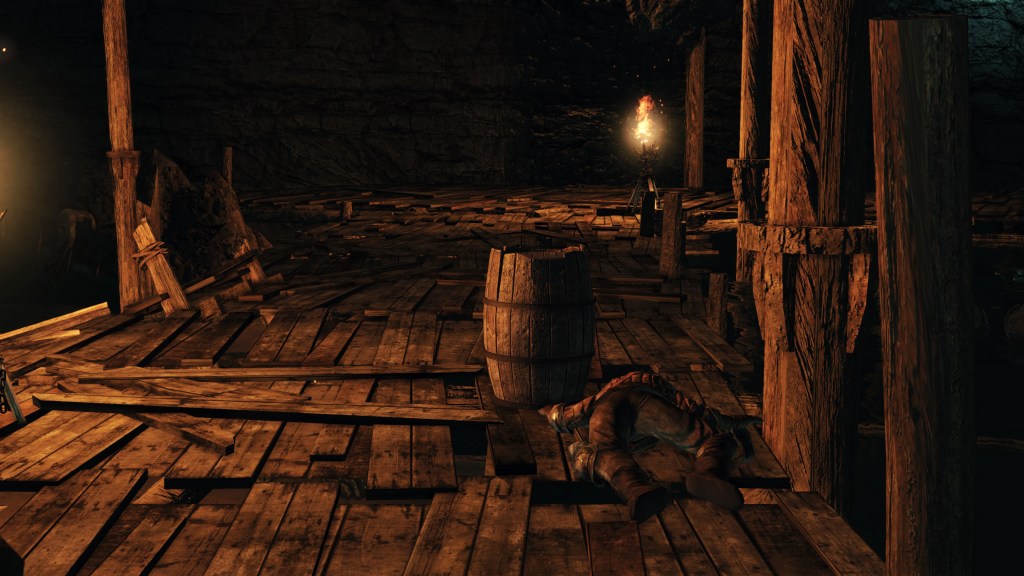
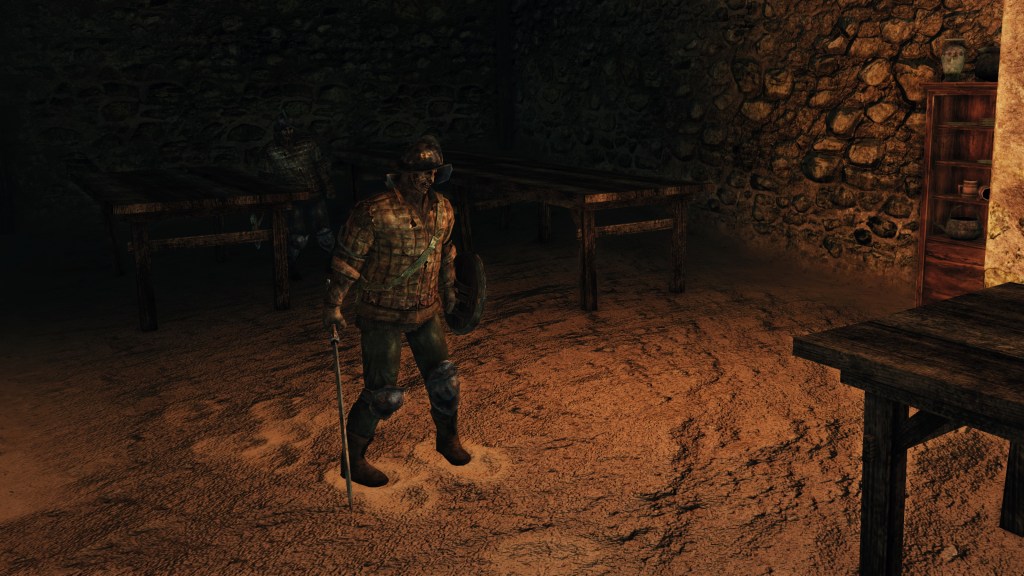
Outside the military facilities, surviving Hollows of soldiers and mercenaries continue to mindlessly wander the Shaded Woods, a grim reminder of the battle remembered solely by Vengarl. The infantry in particular have joined the illusory shadows from their prolonged exposure to the forest of fog. Other victims of the battle may have merged with trees in the forest to become a new species, their faces in the brown bark moaning with each strike. Cut content reveals plans for these trees to be “branches” to a “god tree” we never encounter in the final game. Nonetheless, Shalquoir affirms that the “demon heads” linked to the eerie forest of fog essentially makes the trees demons, the term for Hollows in this draft of the script. Even assuming that the brown trees aren’t connected to a bigger one, them absorbing the Hollow soldiers and mercenaries laying dead there from the battle is the best explanation for their bizarre appearance and behavior in the misty wood.
The “old forest” is so eerie. Because the “god-tree branches” inside of the forest connect to demon heads. For that reason… the whole forest had transformed into demons. Right now, it’s obstructed by trees and you can’t go inside of the forest, but…
On the more individual level, they do seem to be some survivors who have remained sane. The “wandering knight” Glencour (放浪騎士グレンコル) wield his Zweihander with a Varangian Shield while wearing a mix of kingdom soldier and swordsman armor. This indicates that he was a knight of Drangleic, though the tattered cloth of his Heide Knight Chainmail conveys his indigent way of life since the country’s collapse. The knight does seem to be traveling aimlessly, lending random aid at Heide, Belfry Luna, and Eleum Loyce. The same can be said for Brave Felicia, a low-rank knight pairing a Tower Shield with a Heide Great Lance — the lightning infused in the weapon loved by so many soldiers and knights at the royal castle. She likewise leaves a summon sign areas like the Lost Bastille and Shrine of Amana. As for the civilians, some might have survived for a while; Melentia takes up trade as a traveling merchant for souls to get by. But if they were not Undead, they had probably just died or fled to another land. (Dark Souls III introduces descendants with the Drang Knights) The kingdom wasn’t coming back.
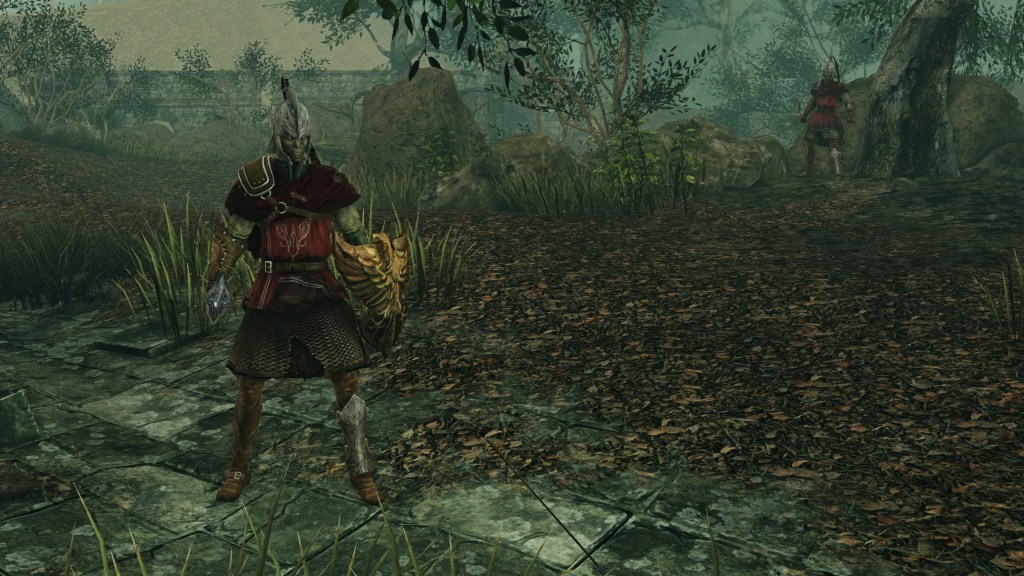
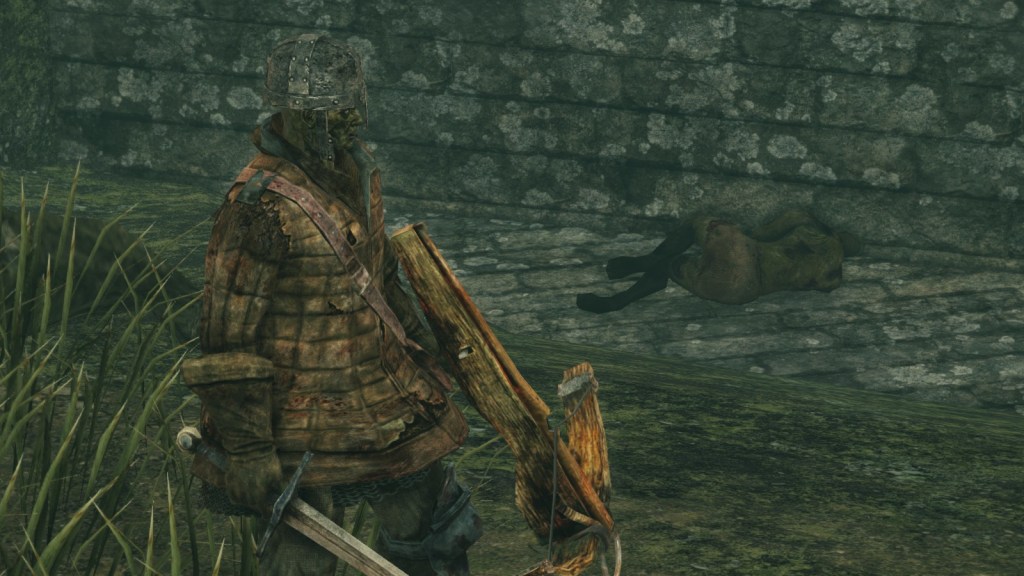
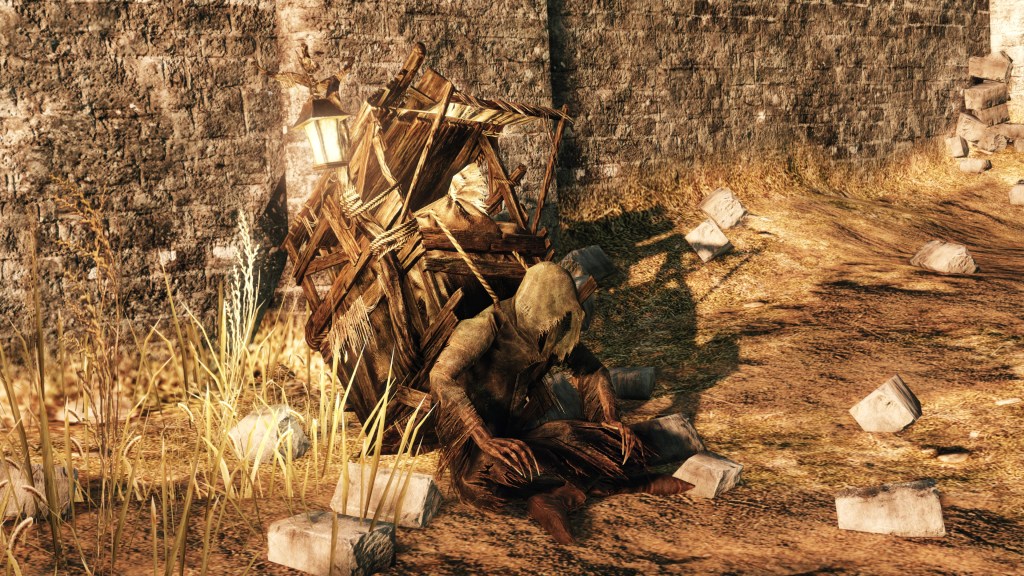
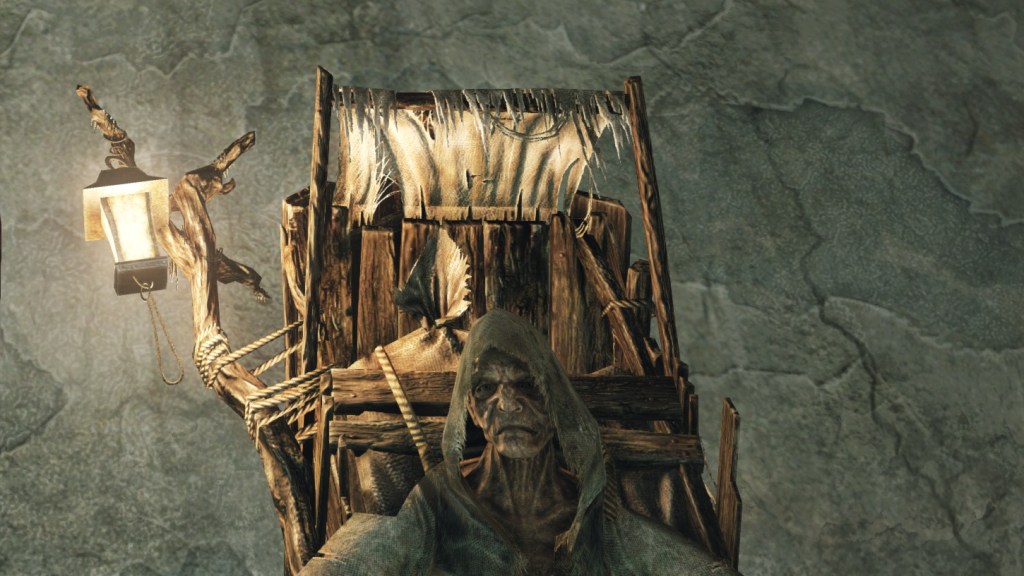
Meanwhile, Vendrick found himself similarly coming apart. Loss of will inevitably leads to hollowing, and the great king soon shed his garments, sword still in-hand, as he patrols his boss room, now just another mindless shell. The original Japanese description for his soul confirms that his Hollow is still protecting the ring, or at least trying to. But when we arrive, it doesn’t even recognize our presence, even if we pilfer the ring from his discarded clothes. Perhaps the king’s protective instinct was so focused on Nashandra that literally anyone else won’t register as a threat now that he has lost his mind. If so, it is a tragic conclusion to one man’s last-ditch efforts to thwart his queen. As his soul’s updated description notes, this king of mankind lacked the capacity to even be Lord of Cinder — he had no hope of holding back the Dark. Once we have returned with the King’s Ring, Nashandra will only note that, with Vendrick’s apparent demise by our hand, Drangleic is truly no more.
Soul of Vanclad, king of Drangleic.
That which was once a king was protecting something even in its completely decayed form.
The special soul of the man who tried to be the one to link the fire is used to acquire a vast amount of souls or create a great power.
Soul of Vanclad, king of Drangleic.
That strong soul eventually drew the Dark near, and the king was possessed by it. The king who once ruled the world of man was nevertheless a vessel insufficient to truly be King, was he not?
The special soul of the man who tried to be the one to link the fire is used to acquire a vast amount of souls or create a great power.
Here now, Drangleic has been destroyed.
 Lokey Lore