
Preface
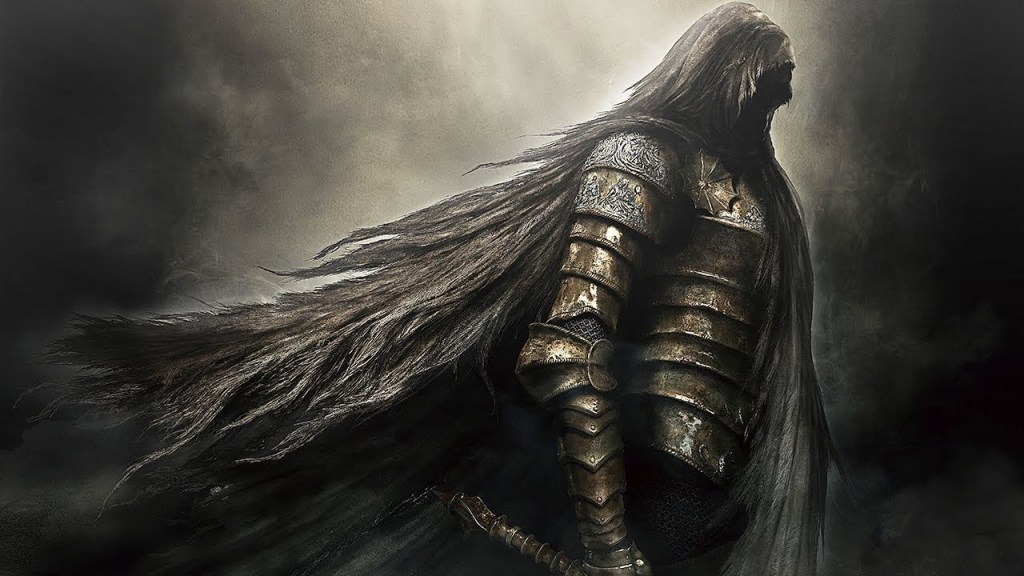
Despite my public criticism of Dark Souls II in total, I can still recognize that Aldia is one of the best characters introduced into the franchise as a whole. He may not have as creative an appearance or backstory as Seath in the original Dark Souls, (DS1) but he nonetheless stands out among the series’ intellectuals for his extremely atypical perspective. Few characters, especially humans, can claim knowledge of the laws governing this world, yet Aldia enters the narrative both aware of and completely divorced from that wisdom, rejecting the logic of the previous title for his own preferences. If there was ever an example that brains doesn’t necessarily translate into smarts, it would be Aldia, but being a halfwit doesn’t preclude one from being a fascinating character.
Live in Learning
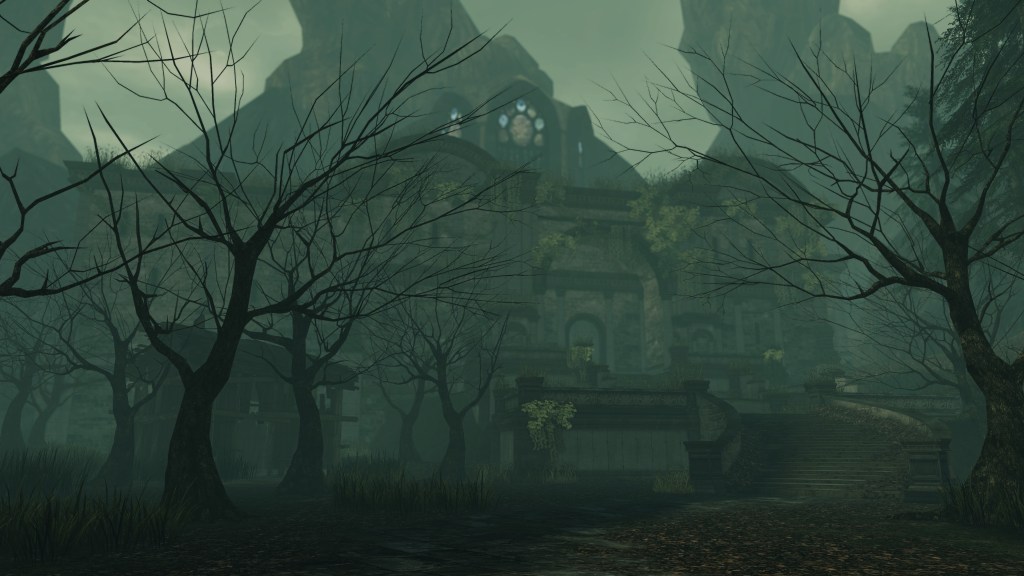
As Vendrick’s brother, Aldia was involved with the Kingdom of Drangleic since its foundation. Although there is no mention of his specific deeds, this “An Diel” (アン・ディール) definitely took a subordinate role in his brother’s conquest of the region. When the time came, he didn’t assume the mantle of king despite being the elder of the two siblings, and there is no mention of him possessing any titles of peerage, though the localization arbitrarily refers to him as “Lord” on occasion. His only sign of status is the large mansion built on the property named after him — a land situated in the country’s remote hinterlands east of the Shaded Woods. The man evidently wasn’t interested in the glory or limelight of war and politics, yet nevertheless was honored for his relation to the king. In all likelihood, he stepped back to pursue his own interests early into adult life, taking only an intellectual part in whatever venture Vendrick roped them into. The magic imbued into the Dragonriders’ halberds, for instance, may well be Aldia’s handiwork, since he proves to be a sorcerer during his subsequent time in Drangleic.

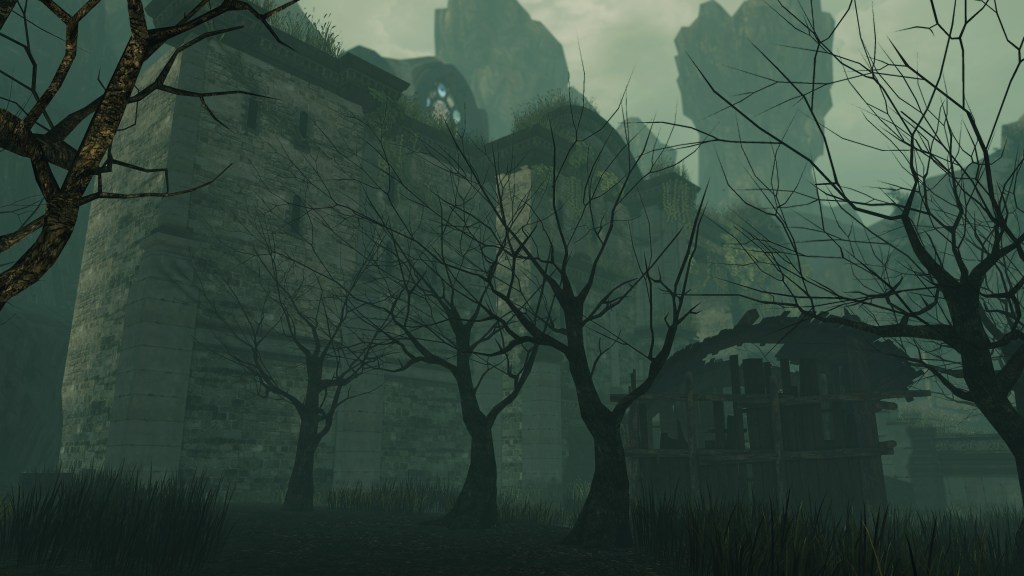
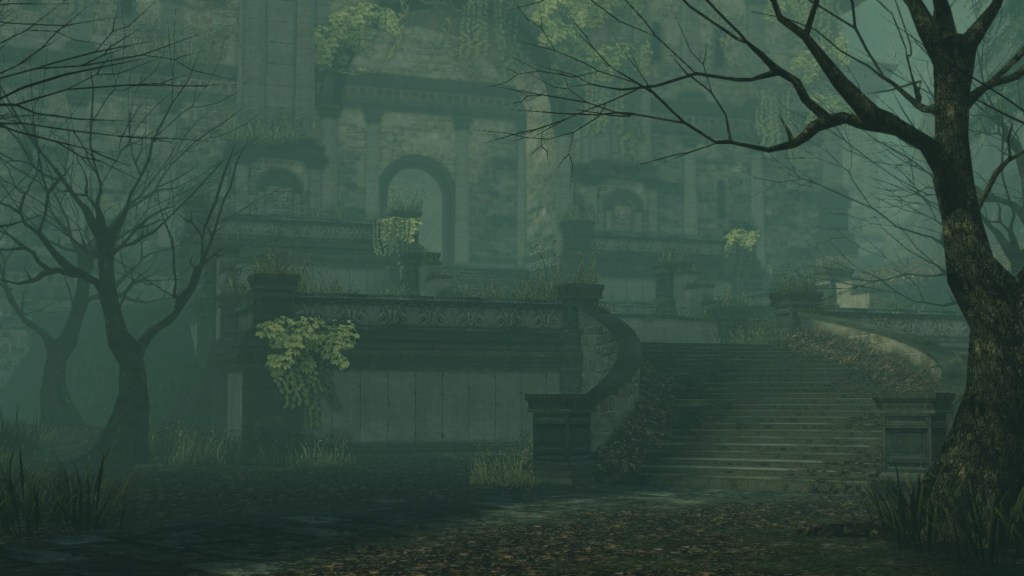


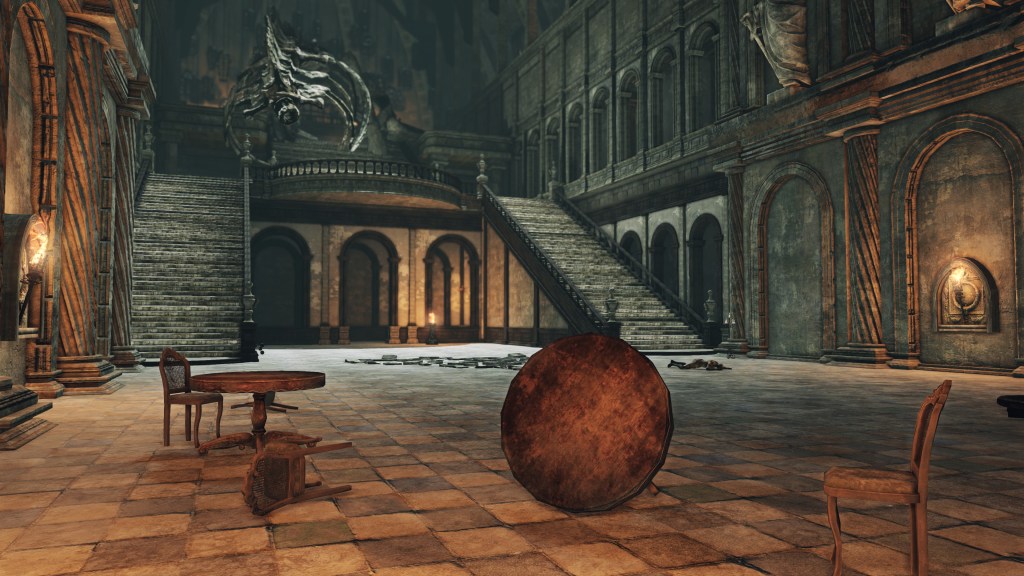



Having earned himself the title of a Scholar, or “researcher”, (探究者) in the course of numerous magical experiments, Vendrick’s dear brother was no doubt talented with the arcane arts. With that comes not just wit but also curiosity. A sorcerer seeks to solve the mysteries in the natural world, if only for his own edification. In the case of Aldia, he expresses a certain love for the world he was born into, which he refers to as beautiful. It is this fascination with the universe and its secrets which drove the man to learn sorcery. That also explains why he would give up the benefits of the eldest son to support his younger brother from the background. In the end, the older brother just wanted the freedom to investigate without distractions, and Vendrick was carving out a place for him to indulge that deep-seated desire. It is only natural for him to support that warrior sibling in his endeavors, especially when they took the two to a land rich in souls with which Aldia could practice his craft.
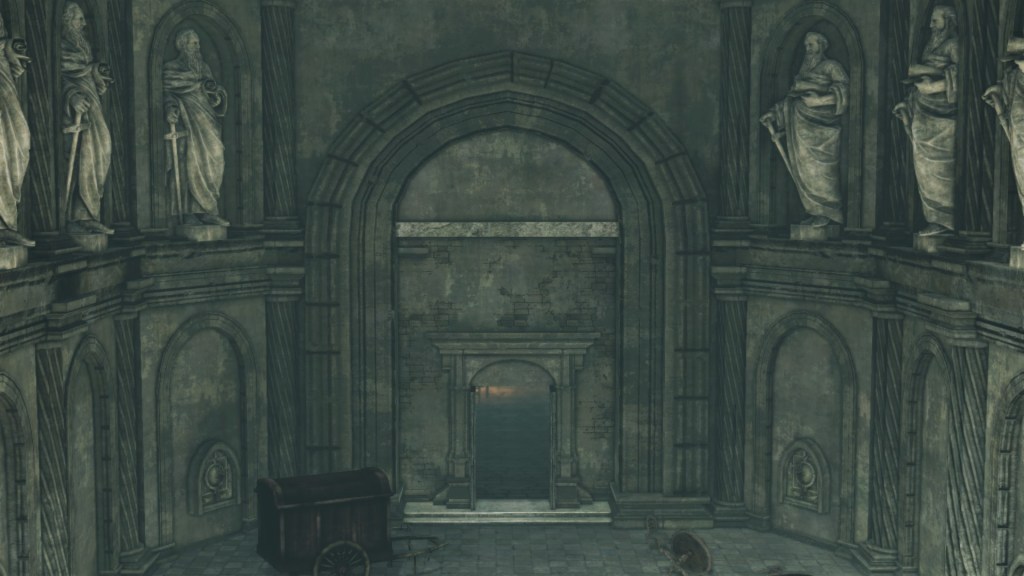
Beyond soul sorcery, Aldia demonstrates a variety of interests, including the history of lost civilizations. There is his choice to live near Heiden ruins, of course, but also the Lost Bastille. Collecting dust in the old castle’s storage room stands the statue of St. Paul from St. Peter’s Basilica in Italy. Ignoring the specifics, the figure is still a bearded philosopher appropriately carrying a scroll in one hand. However, the other hand wields a sword associating this wise man with war. Paul was a warrior of the Christian faith and beheaded martyr, but a “wise man” is typically shorthand for sorcerers in Dark Souls, and the statue is otherwise only erected in the foyer of an actual war participant’s mansion. In other words, the model in-game most likely represents Aldia. And if he is the sage, then the statue’s place in storage would implicate prior dwelling at the bastille.
Indeed, the Anor Londo-style pots joining it there in the storage room also decorate his manor’s interior. While this is likewise true for Drangleic Castle, that area borrows a variety of styles and relics from Drangleic’s ruined past. Aldian architecture bears no such pattern, so the pots speak purely to their owner’s tastes, which include a portrait originally hung in Anor Londo. Even assuming that the pots are only there because of local excavations by the bastille’s previous owners, Aldia and Vendrick must have seen them and chose to have them copied for their individual private residences. Factoring in the statue, and it is obvious that the older brother maintained a more entrenched personal presence. And since the castle-turned-prison still has a servant quarters, why not use those facilities to make the place his own domicile?


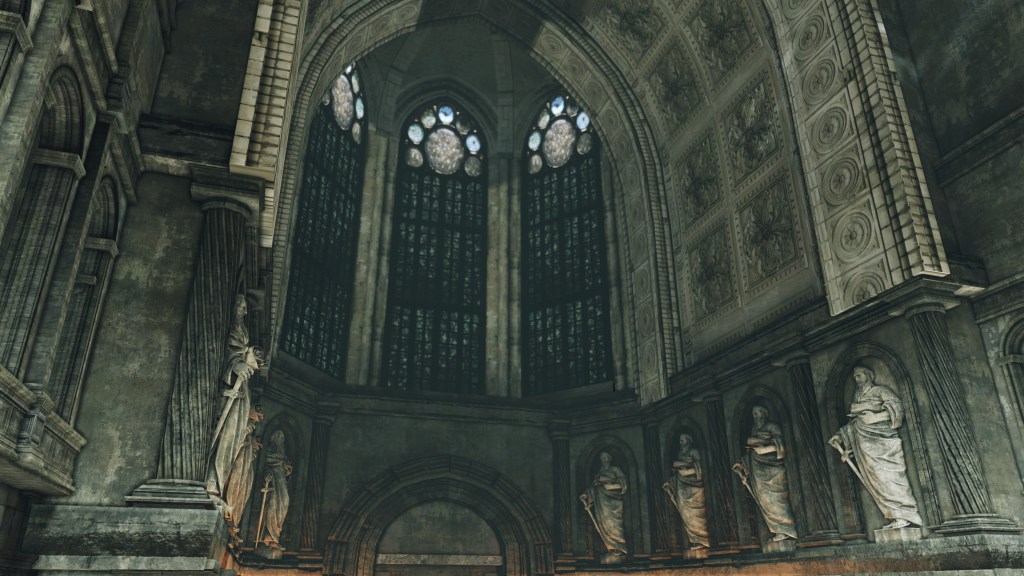


Another hint is the Bone Staff stored away with the statue. Combining the bones of beasts and birds, this magic catalyst is obviously of primitive construction. But as its description explains, those who fail to receive formal training from a sorcery master are forced to craft their own sorcerer’s staff. We already see sorcerer staves in Drangleic impale bat or lizard corpses on sticks for mere ceremonial effect, but the power inherent to nature apparently can make for a proper catalyst. It is still odd to find in the ruins of advanced magic civilizations, some like Olaphis responsible for impressive and intricate sorcery catalysts. But for a self-trained hobbyist, this would likely be the result after much trial and error. And by all indications, Aldia never learned from a proper master, in which case he is the most likely candidate to own that staff; crafted during his exploration of the ruined castle and surrounding area. Put another way, the bastille is where the man cultivated his skills as a sorcerer.
Staff made by combining bones of wildlife. Becomes a catalyst for sorceries and hexes.
Sorcerers who have received formal training are gifted a staff from their master upon reaching a certain level. Those who don’t often arrange for the staff on their own.
In short, Aldia once made his home in the Lost Bastille. Before Vendrick made it a prison, the abandoned castle was the capital for countries dedicated to magic, which naturally caught the attention of a sorcerer like his brother. The fact that he and his acolytes ultimately recreated magical relics found there — the Ritual Bands — affirms his close study of the area, as does their possession of Olaphis products like the Dispelling Ring. Given the pots, it might even be where the elder sibling first garnered interest in medial culture. Either way, it was a treasure trove of knowledge just waiting to be excavated. All things considered, the castle had been Aldia’s personal residence before his remote mansion was completed, or at least another property that he was granted dominion over until Vendrick needed a prison. In fact, he probably continued to manage the fortification even after it was repurposed.
The jailers (獄吏) patrolling the ramparts shouldn’t be mistaken for the “jailer” responsible for creating the Ruin Sentinels. That individual is the prison master, (牢主) which suggests that he oversaw the entire facility and its staff — moreover explains why he is producing additional prison guards. While this overseer is never named, there is good reason to believe that it is Aldia. Crafting golems already requires the warden be familiar with magic, and their particular forms betray some interest in the bastille’s history. Admittedly, anyone residing at the old castle would have the opportunity to learn its history, sorcery, and golemcraft; the lesser jailers themselves are pyromancers who carry texts for Straid’s Lingering Flame art. But a number of the vacant guards were eventually delivered to Drangleic Castle to bolster its security, a gesture befitting the king’s brother more than anyone. And who better for Vendrick to entrust with imprisoning Undead at the bastille than his own flesh and blood living there in advance?

Soul of a Vacant Guard that is the prison master’s creation.
Its body was already lost, and only a vacant soul dwells in the armor.
The special soul this guard possesses is used to acquire a vast amount of souls or create a great power.
Aldia most definitely involved himself deeply in this prison system. Despite the Varangians handling most of the procedures, the actual ship for transporting Undead at No-Man’s Wharf runs on sorcery. Not only does it use blue magic flames for lighting after we ring the bell calling the ship into port, but we even operate a device inlaid with a blue crystal inside the forecastle to pilot the vessel to the bastille. Ignoring the autopilot, there is a jailer standing on the quarterdeck, the apparent captain of this barbarian crew. He might not be the only one on staff either; the darkness Hollows which have retreated into the shadowy corners of the port town, ironically, possess the tattered clothes of pyromancers — the same kind of spellcasters as the jailers. At every juncture, processing Undead was overseen by both the royal army under Vendrick’s command as well as the guards who answer to this prison master. But Vendrick mistrusted sorcerers enough to put them too through this very processing. And so, the jailers with their magical arts and devices must work for the one exception: his brother.
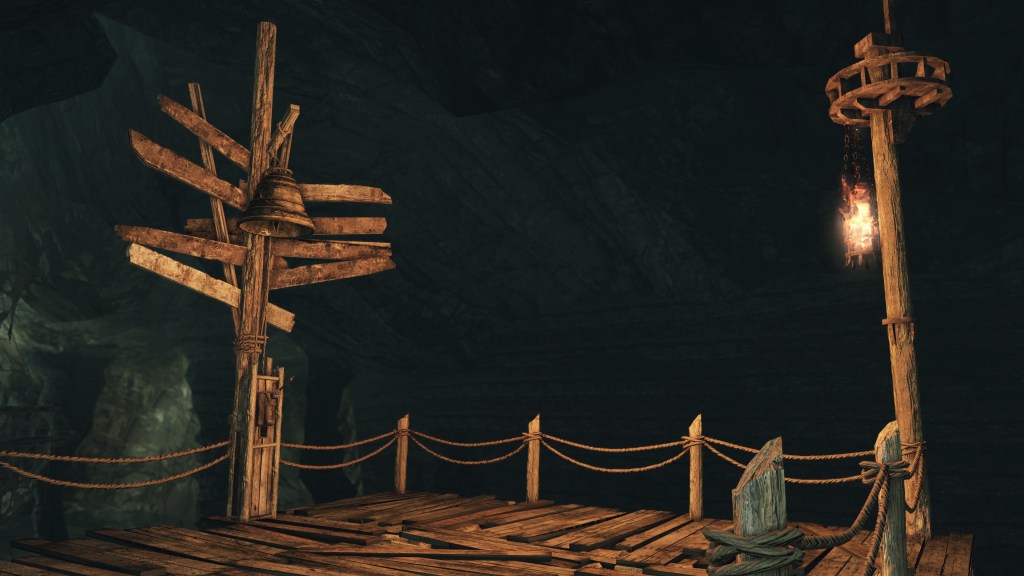


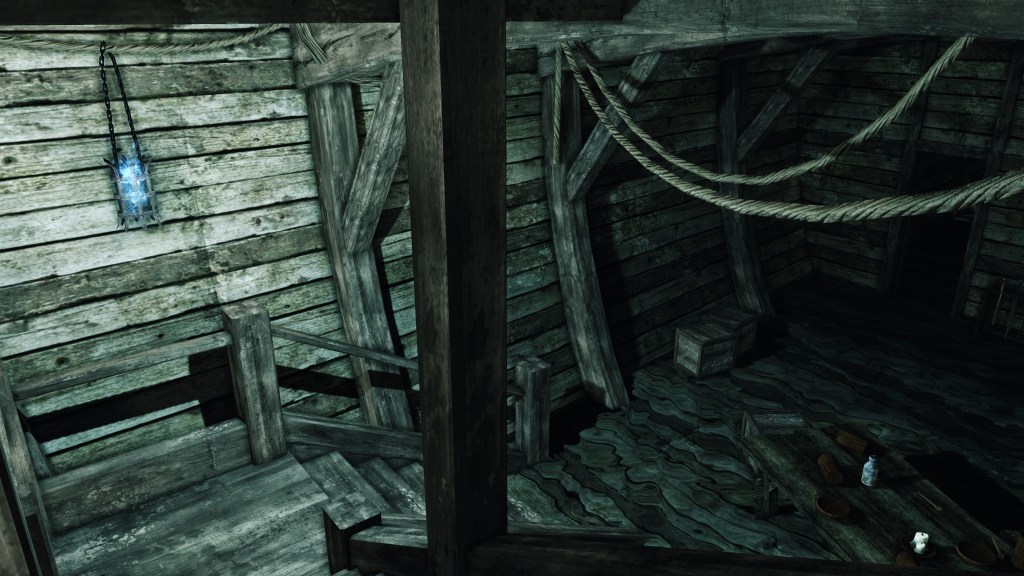


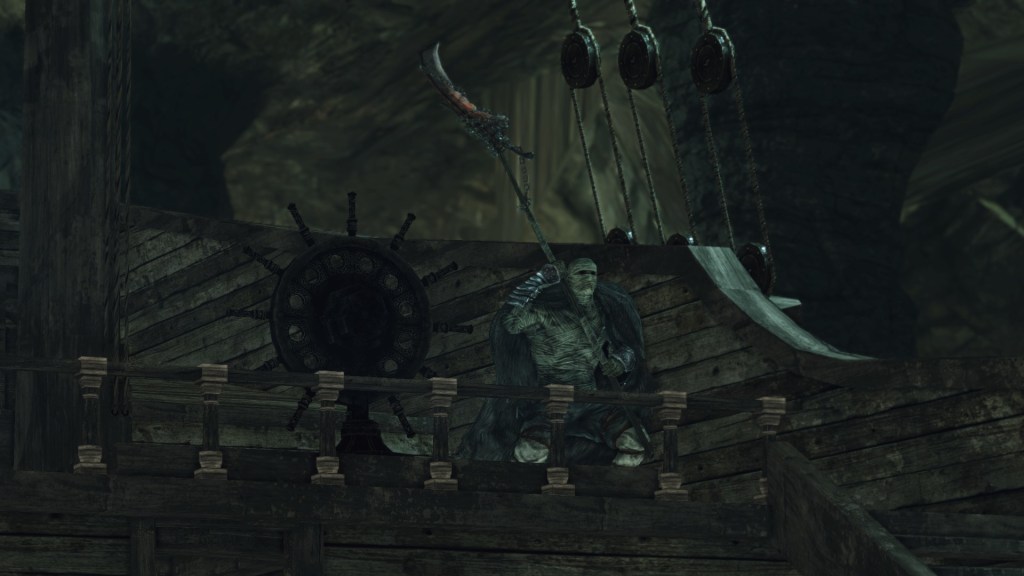
We can see Aldia’s hand even beyond the end of this system. Most inmates are rupture Hollows, (破裂亡者) named for their volatile souls prone to bursting — a fact which these Undead take full advantage of when agitated. Depending on the soul’s color, the explosion may additionally petrify the body or corrode the equipment of those caught in the radius; the blast might even ignite in a fiery conflagration. The Dark Souls II Collector’s Edition Guide confirms that the prisoners were Drangleic citizens whom Aldia experimented upon, hence their mostly exposed abdomen with the head and limbs wrapped in bandages. The jailers are similarly bandaged from head to toe, which the Guide insinuates is likely for reasons more than burning themselves with their own pyromancy. It seems that Aldia experimented upon even his own subordinates who turned Undead, assuming that wasn’t why he recruited them in the first place. Perhaps they started as prisoners themselves. Regardless, the beefy jailers were permitted knowledge and authority in exchange for becoming lab rats.
This highlights another aspect to Aldia. More than his younger brother, the aging researcher could be cruel to his fellow man. Perhaps it was his previous study of souls detached from living persons, or perhaps it was observing the effects of war from the sidelines. Whatever the catalyst, it revealed a darker side to his thinking, not applied to solely the Undead. A classic intellectual, the sorcerer is more interested in concepts than people. While Aldia loves “the world” and speaks high-minded of mankind, he acts indifferent to the plights of individual man. That almost clinical apathy can’t be faulted on a lack of emotional intelligence either. The crude polearms carried by his jailers are designed to inspire a primal fear in the prisoners, and a pulley system has been set up to drown them in the well. Aldia wasn’t above base methods if they proved effective, knowing his victims’ psychology. His cruelty was entirely deliberate. In the end, the man’s empathy is oriented toward that “greater good” in abstract. So long as he assisted the kingdom while also furthering his studies, Aldia had no limits.

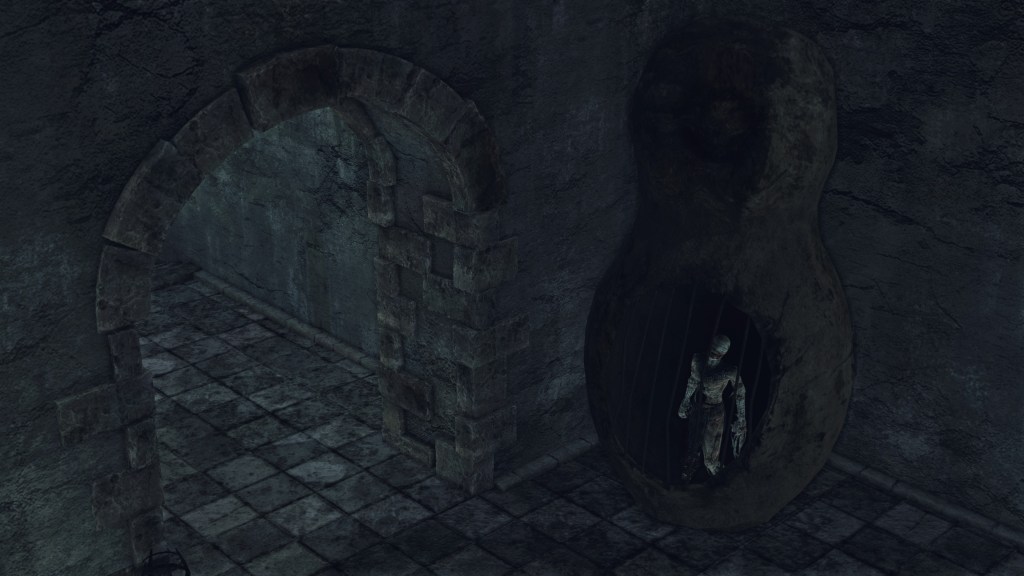


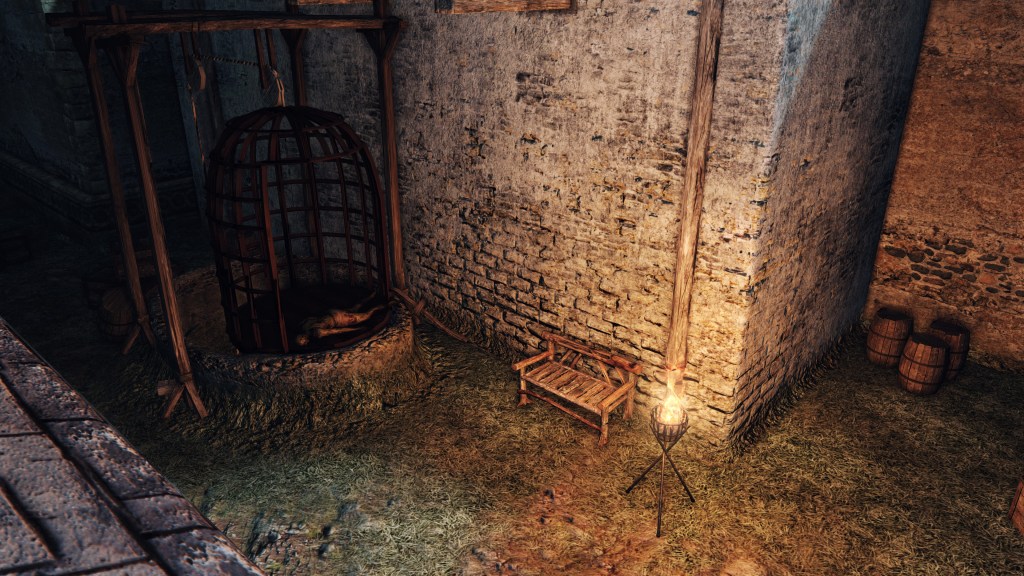
Weapon that is just a large-sized hatchet blade attached to a handle. A crudely-made thing cobbled together, so as one can see, durability is low.
Man tends to feel dread toward such rough-hewn things more than refined ones. That may well be the holder’s aim, however.
Commence Experiment
Both Aldia and his younger brother sought to know the cause behind the Undead. But one cannot understand the Undead curse without a thorough understanding of the profound mysteries of the soul, chief among which is the nature of life itself. And to understand something so fundamental, one must first be familiar with a variety of interrelated topics — magic, fire, Disparity, light, Dark. And so, Aldia eventually gathered wise men from all over to his manor. While Aldian “warlocks” are technicians, literally “arts warriors”, (術士) their corresponding mask is actually named for a generic “arts expert” (術師) much like Eygil. It also increases both the number of souls acquired from slain enemies and resistance to the Dark; their shields resist flame. Amassing various kinds of magic users was the older brother’s goal, all to help him study the Darksign at the heart of the curse.
One of the grotesque weapons that were made at An Diel. Swung around like a great hammer. The true origin of this weapon that seems to be part of a crustacean’s body is unknown.
It is said that the mysterious character with the name An Diel sought the power to explain the secrets of the Undead in order to investigate the truth of life.
Despite these disparate researchers’ express purpose for coming together, some remained independent-minded. Besides the one staying to act as seemingly leader at Aldia’s Keep, the warlocks began wandering the land. A corpse with their mask in the Shaded Woods suggests that one was interested in Heide and perhaps Oolacile, only to be killed by the Lion Clansman now petrified atop the body. Merciless Roenna, originally Ruthless Ruth, (無慈悲なリュース) likewise bears their mask and shield, her title and invasion in the Huntsman’s Copse indicating collaboration with the Brotherhood of Blood. These were not sorcerers interested in Aldia’s grand cause. Considering how his brother the king had persecuted their kind, recruiting loyal individuals wouldn’t be easy, which probably suited Aldia just fine. He needed talent to inform his knowledge, not lifelong comrades. If some split off to pursue their own studies after a while, then who was he to stop them?
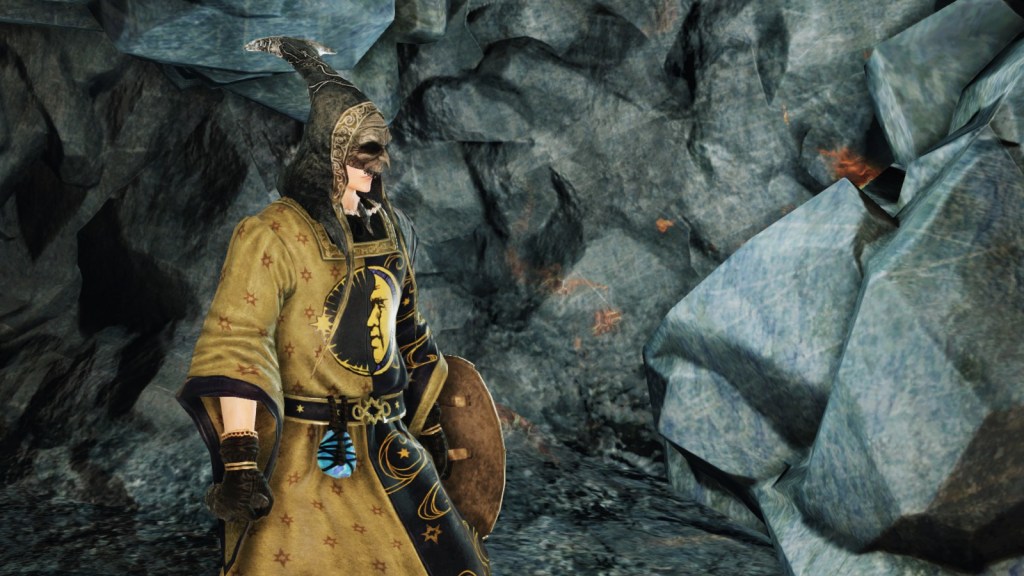
Aldia’s remaining followers divided themselves into a simple hierarchy: Archmasters or Sages, literally the “learning experts” (学師) or just “teachers”, and acolytes, literally the “learning juniors” (学徒) or just “students”. The sense of seniority might imply that most sorcerers joined Aldia over a more prolonged period of time, as the kingdom continued to reach out for genius minds to help answer the Undead question. Those less experienced would then cultivate their knowledge assisting a senior member already caught up with the research results. Unlike the warlocks, these two ranks wear slightly different headpieces to distinguish themselves, the masks modeled to resemble a smooth eyeball constantly observing their specimens with its piercing gaze. However, the uniform’s main purpose was to protect them during the course of their experiments.




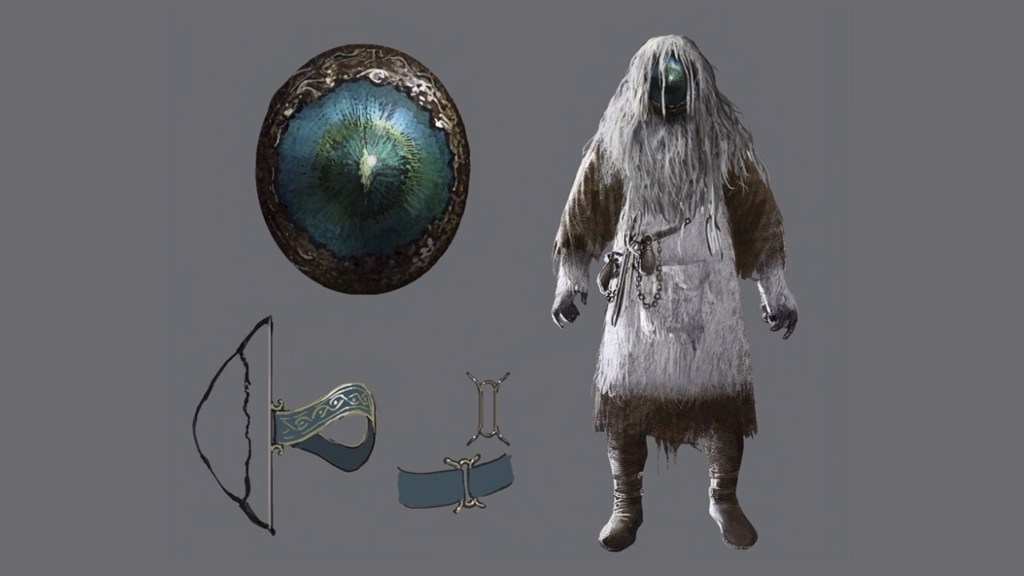
Hood of An Diel teachers. Thing worn by those of higher rank.
Many wise men met up and created various secret ceremonies in An Diel. It isn’t known whether that was their true motive though.
That ominous mask is for averting the maledictions of what was slaughtered for the secret ceremonies.
Robes of An Diel students.
Many wise men met up and created various secret ceremonies in An Diel. It isn’t known whether that was their true motive though.
Those white robes are for protecting against the gushing blood of what was slaughtered for the secret ceremonies.
With the manor secluded as it was in Drangleic’s eastern hinterlands, Aldia’s research party was able to perform their experiments free of judging eyes, tempting them to be a little riskier with their methods. Even then, they wanted to keep things discreet, largely limiting their efforts to the back half of the manor complex always hidden by a pseudo-airlock mechanism — the “secret ceremony building” (秘儀の棟) according to the local bonfire. Among the byproducts of such covert rituals was Forbidden Sun, a pyromancy with overwhelming power; never once did they consider if making something so excessive was even necessary. Of course, the dangers weren’t limited to just the targets of their spells. Unleash Magic is a sorcery which opens the full extent of the magic power contained in our body to its limits, damaging the vessel in the process. The Aldian researchers’ less than savory ceremonies naturally yielded equally abnormal results, infringing upon the truly grotesque once it came to live test subjects.


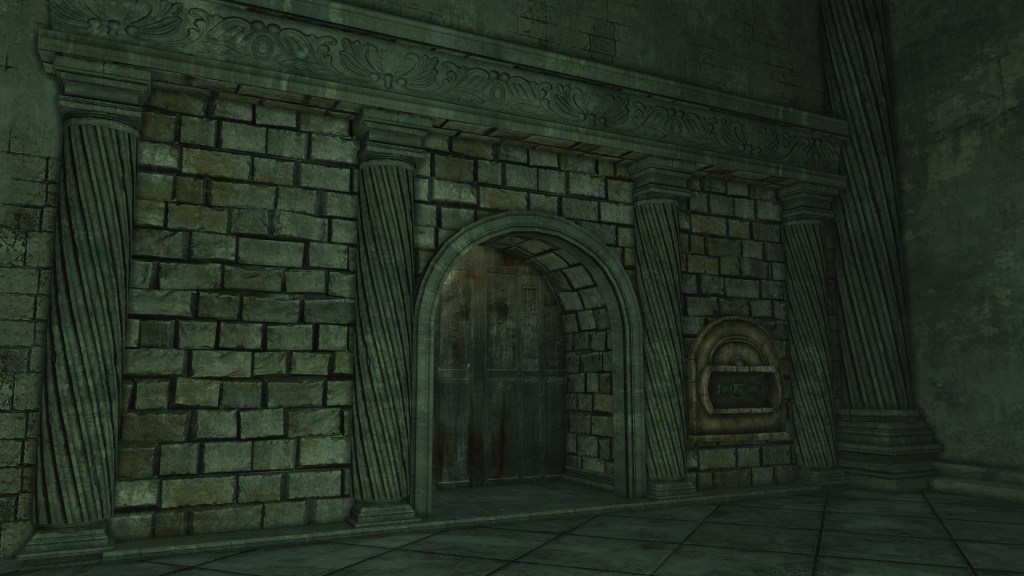

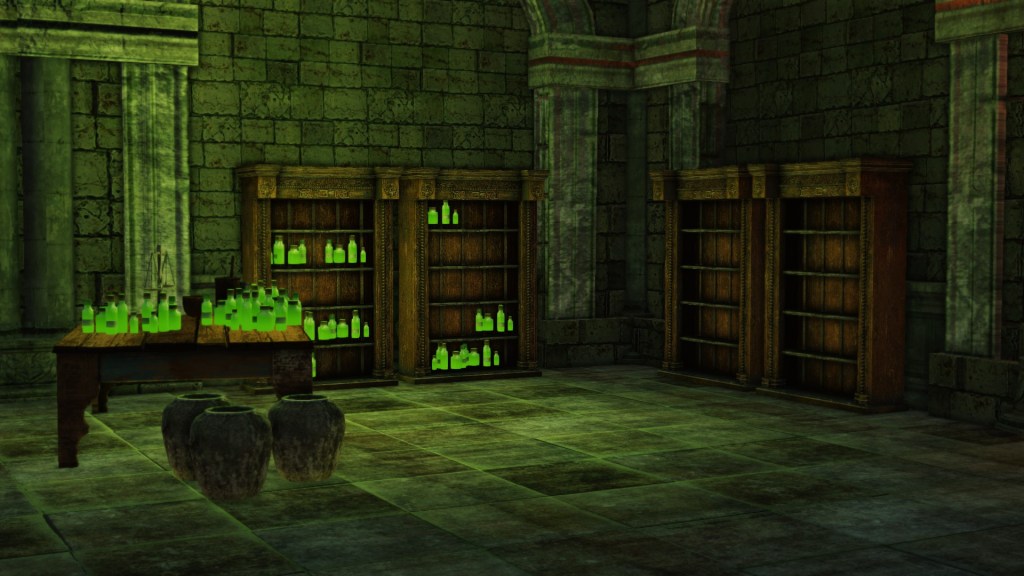


Pyromancy born via a secret ceremony of An Diel. Fires a giant fireball that burns the surroundings to nothing in a great explosion.
Is that excessive power really necessary? The madmen of that land probably didn’t even recall that.
Amplifies the magic power filling the body beyond its limits, but drastically lowers HP as compensation.
The repulsive deeds performed at An Diel gave birth to some byproducts. They are all in some way warped.
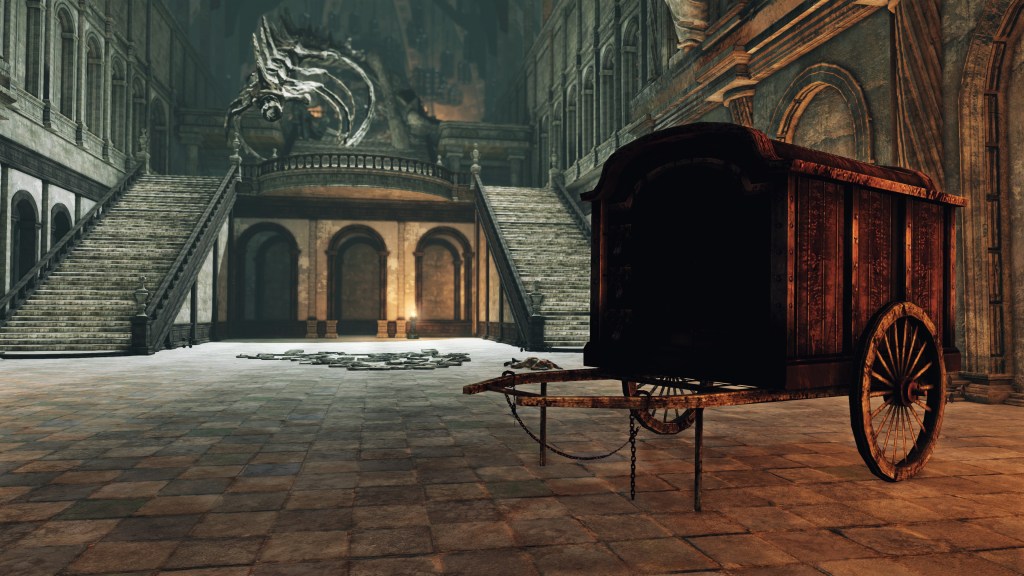
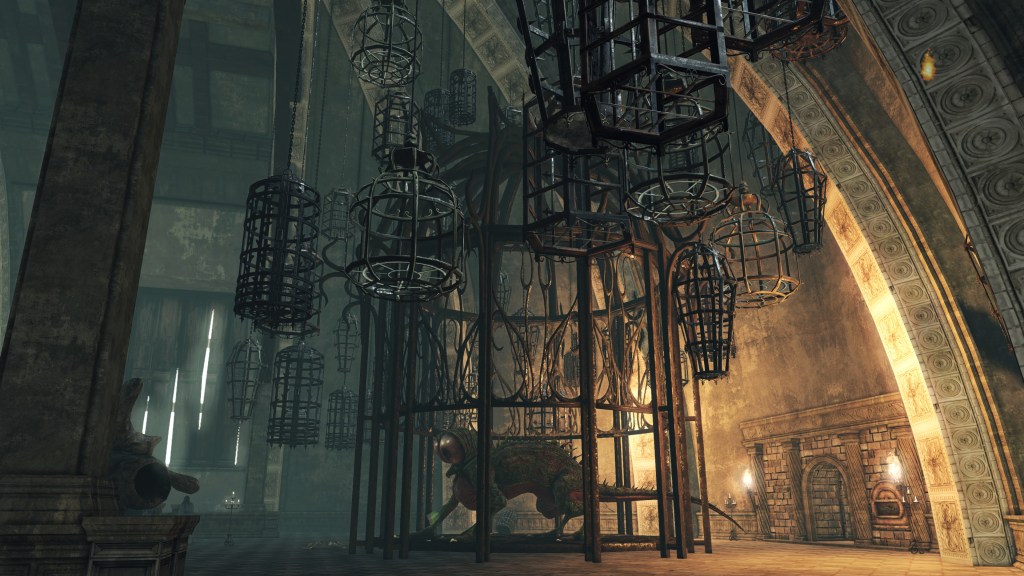
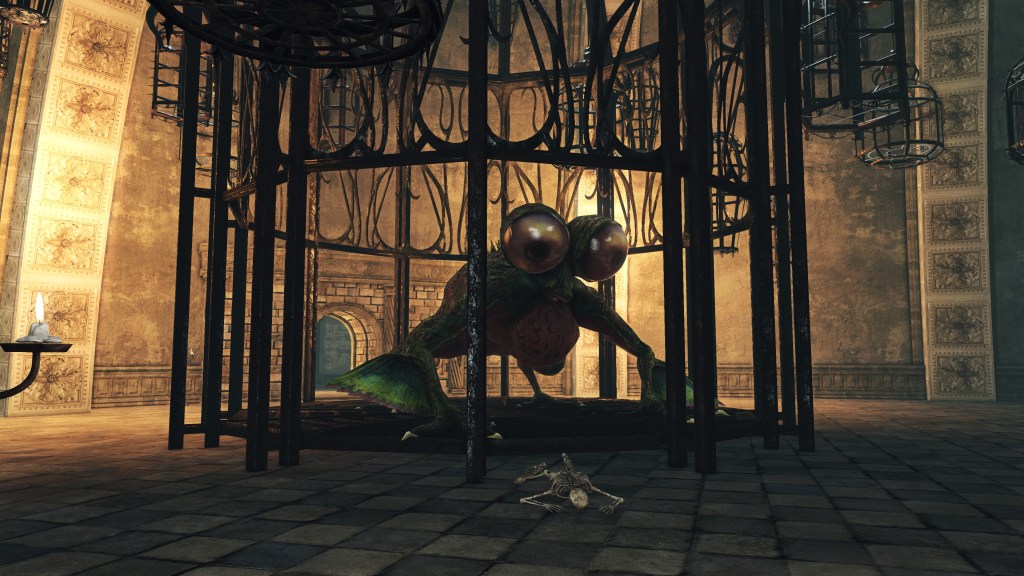
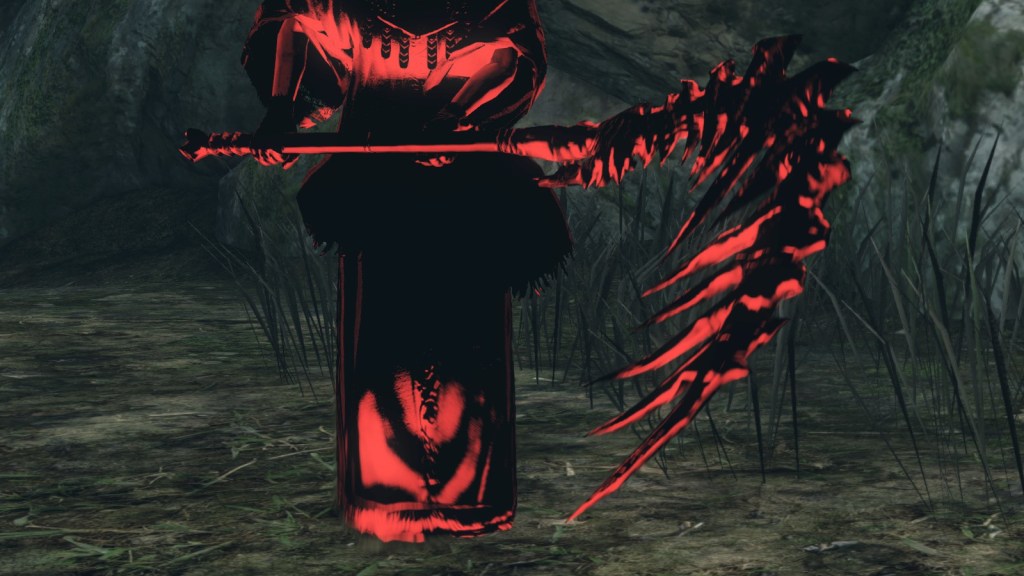
Leading into the mansion are several abandoned carriages whose contents wildly rock them back and forth. Destroying the carts reveals the cargo to be basilisks, individuals of varying size already in cages. The researchers have also been caging mimics, dogs, and even a gargoyle from Belfry Luna. Aldia had been collecting specimens for research and made sure to use them. The acolytes employ special hammers for dissecting what they studied, with warlocks and acolytes alike using equipment derived from the bones or body parts of whatever they no longer needed to study. For example, Roenna wields the bone scythe we derive from the Covetous Demon but is presumably intended to be another of those dissected creatures. Item descriptions otherwise can’t identify the crustaceans, reptiles, or mammals that these weapons seem to belong to; the name and text for the Cursed Bone Shield implies this to be due to the rituals enhancing them.
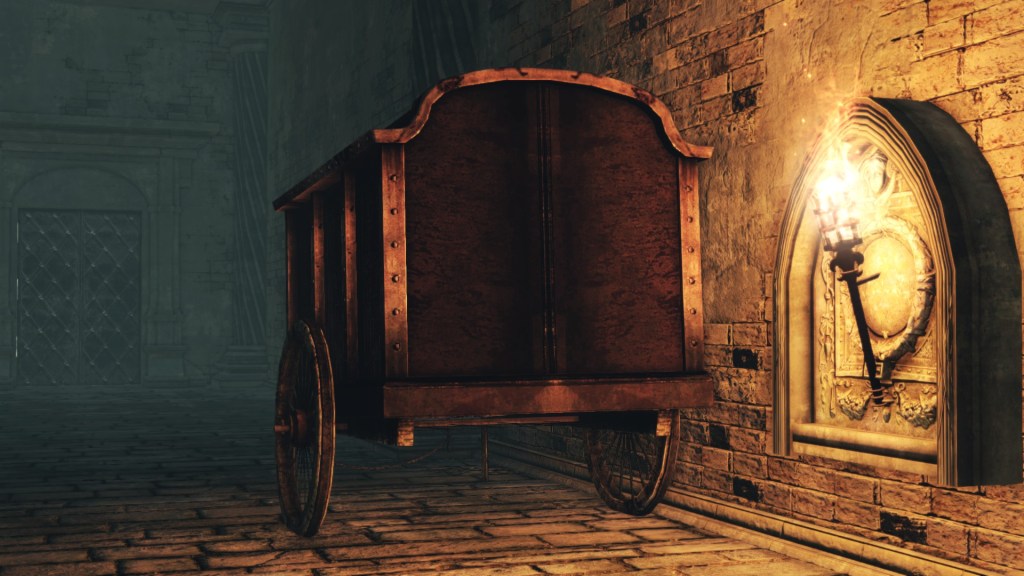




Shield that An Diel juniors used. They apparently forcibly made the bone of something that became unnecessary in research into a shield.
The mysterious character with the name An Diel collected giants at the mansion and tried to create a dragon, but eventually disappeared himself.
Small shield of An Diel technicians. Strengthened via a secret ceremony and possesses the power of fire. Can repel spells by parrying.
The mysterious character with the name An Diel collected giants at the mansion and tried to create a dragon, but eventually disappeared himself.
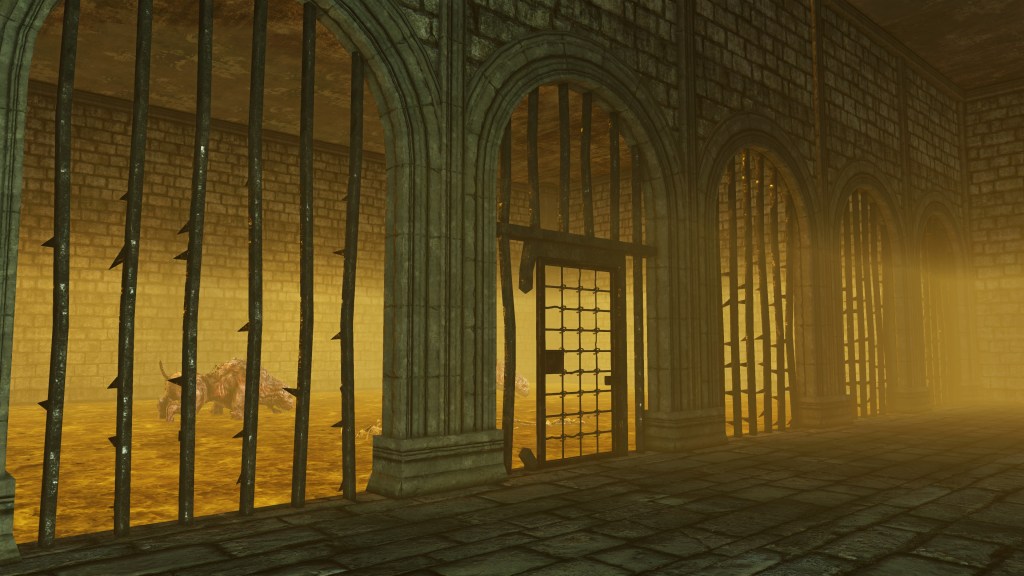
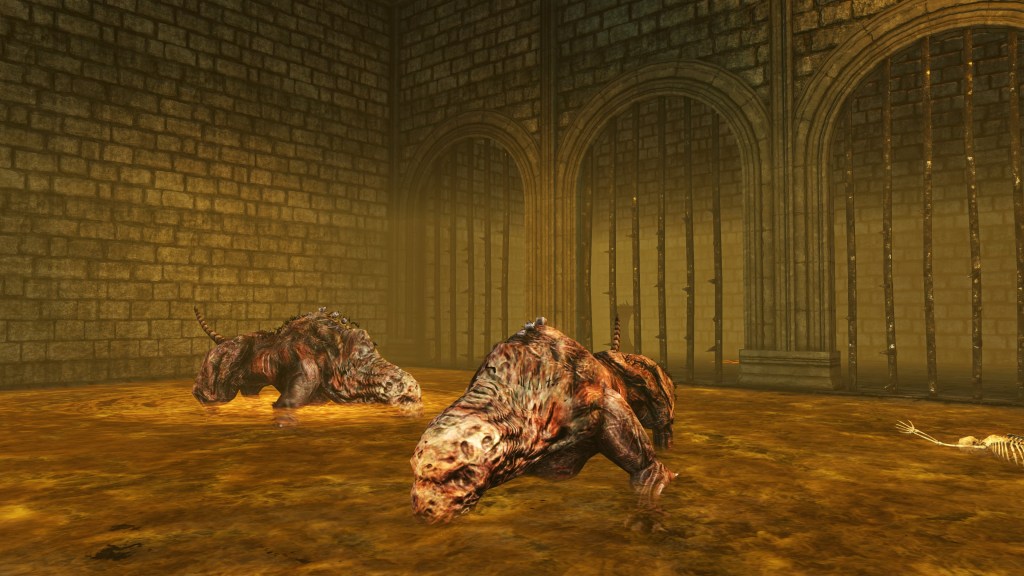
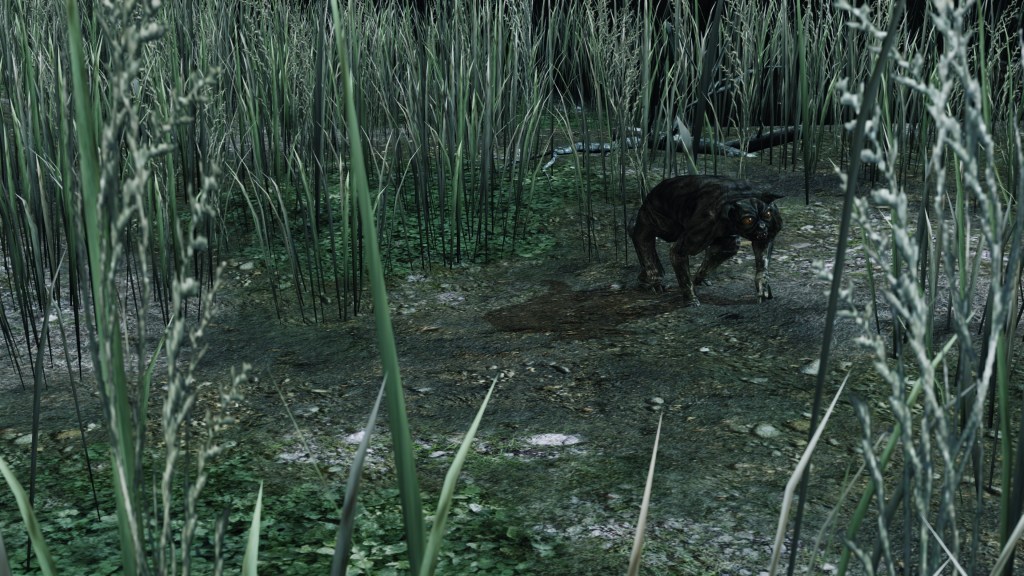
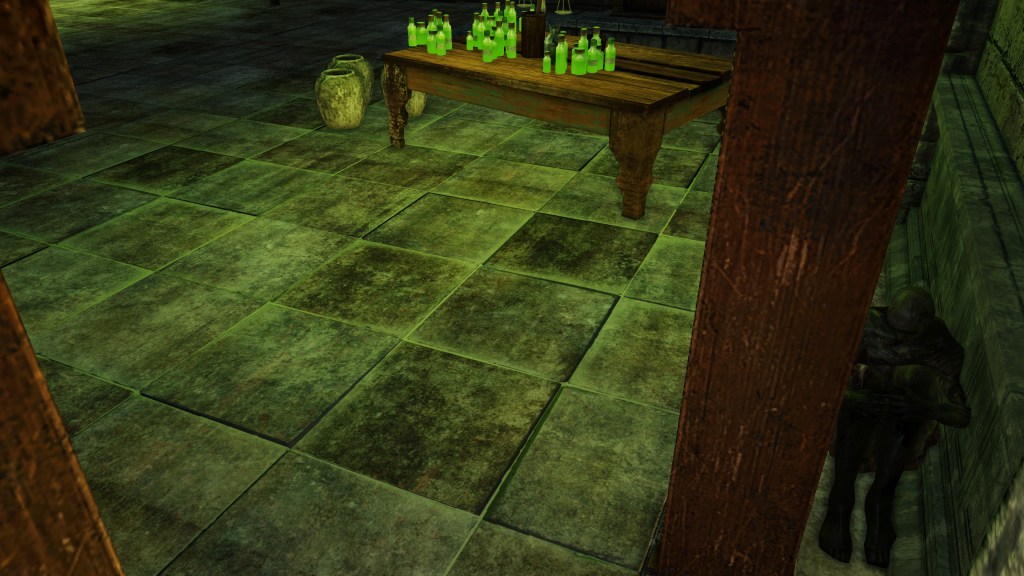
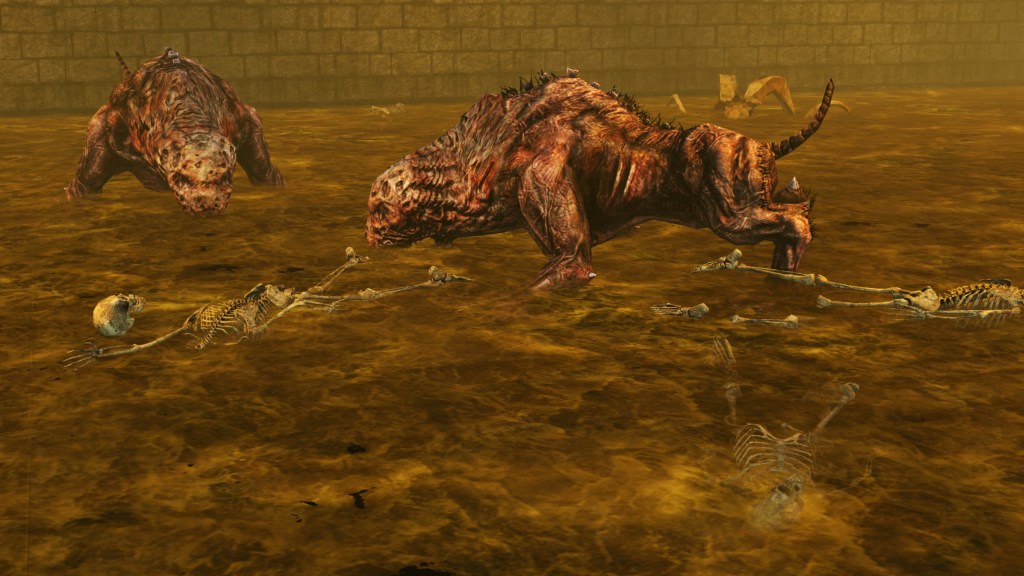
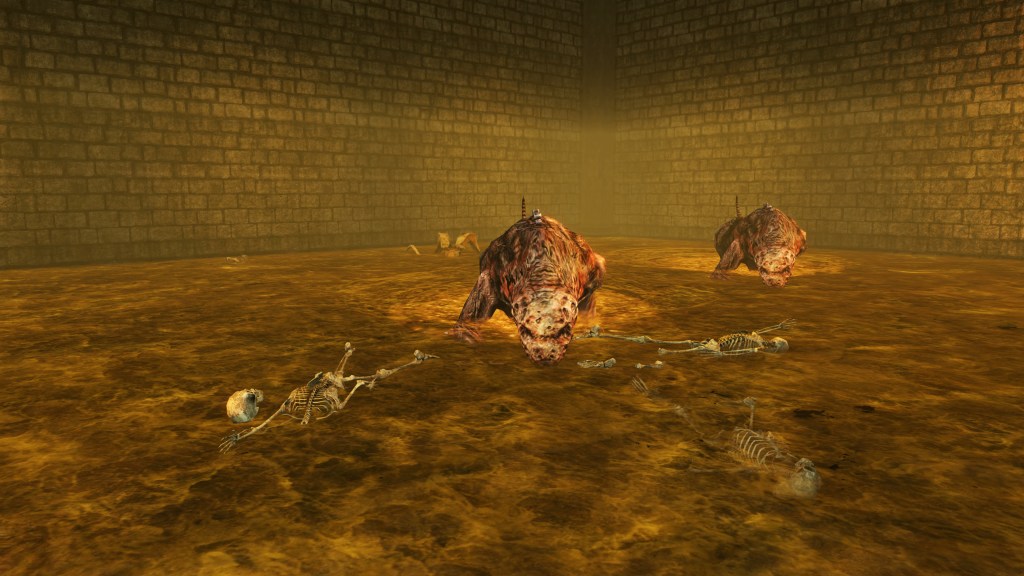
The dogs captured within the mansion have been mutated from such experiments according to the Collector’s Edition Guide, swelling their muscle mass and twisting their appearance. Perhaps the aromatic ooze collected from their corpse is to blame, but this magical enhancement seems to be why these “swole dogs” (膨張犬) have no issue wading through the acid pooling in their pens. They aren’t alone, as so-called kobolds are actually “roaming dogs” (彷徨い犬) despite their irregular appearance. In fairness, the small canines might have evolved in isolation, the Guide proposing the breed native to Things Betwixt where packs can stalk much larger prey through the tall grass. Still, a great number have been claimed by Aldia, many roaming behind the suspiciously abandoned shack in the front yard; ready to lacerate intruders with its petrifying bite. They are still pack animals; the first few we approach just outside the manor grounds immediately retreat to a shallow pool they seem to have contaminated with whatever makes them emanate a green miasma. Nonetheless, Aldia has evidently tinkered with their biology.
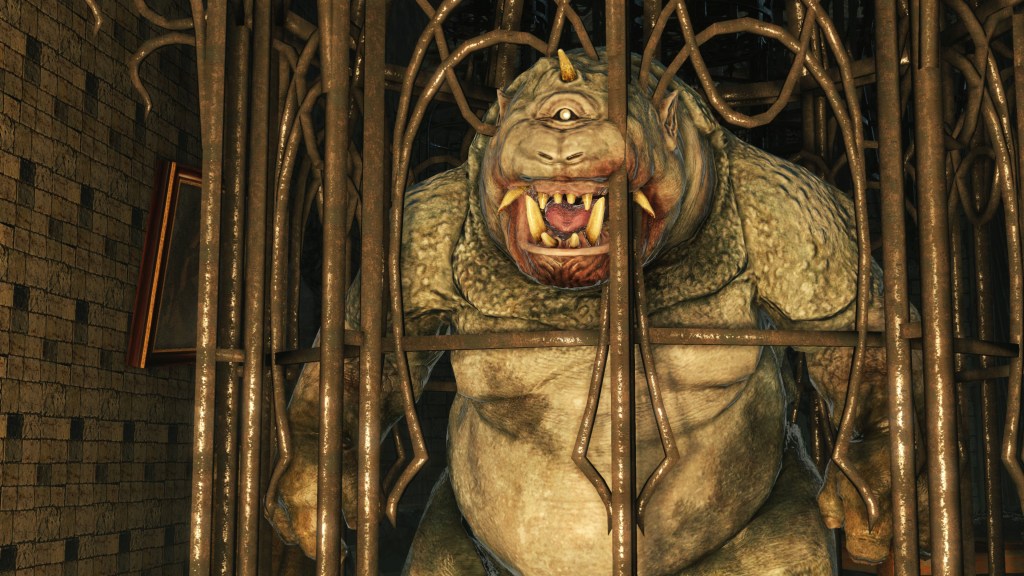
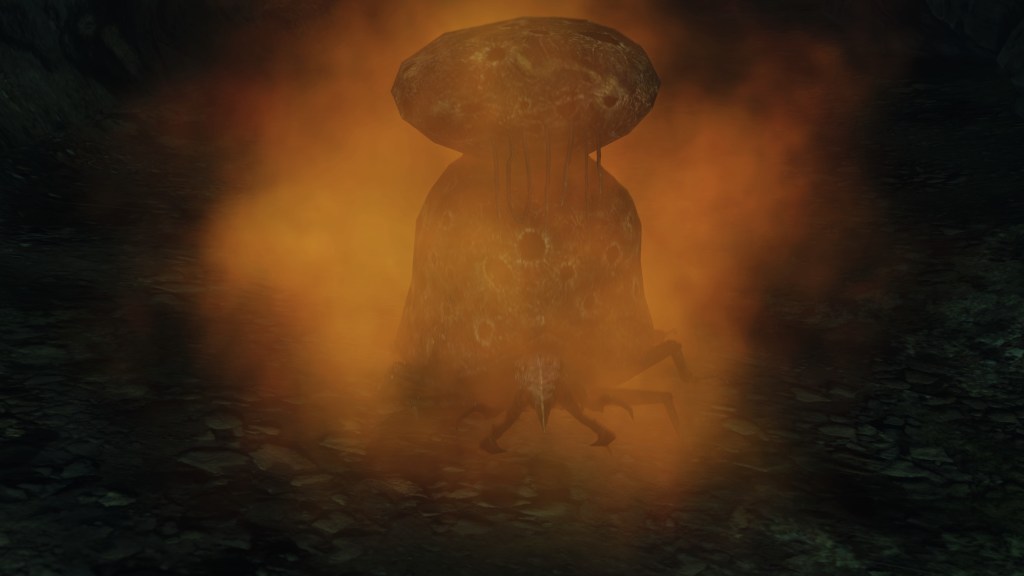
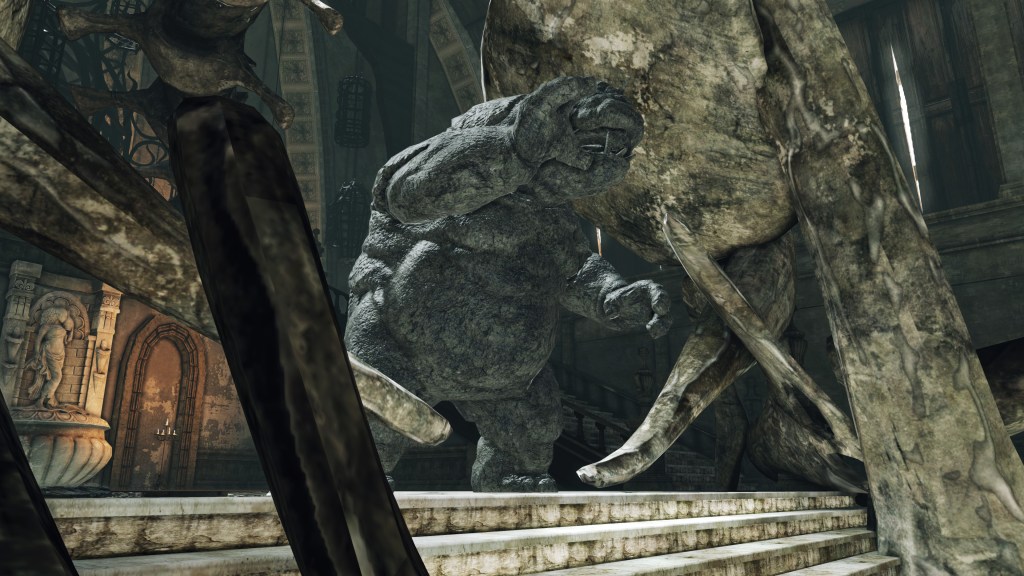
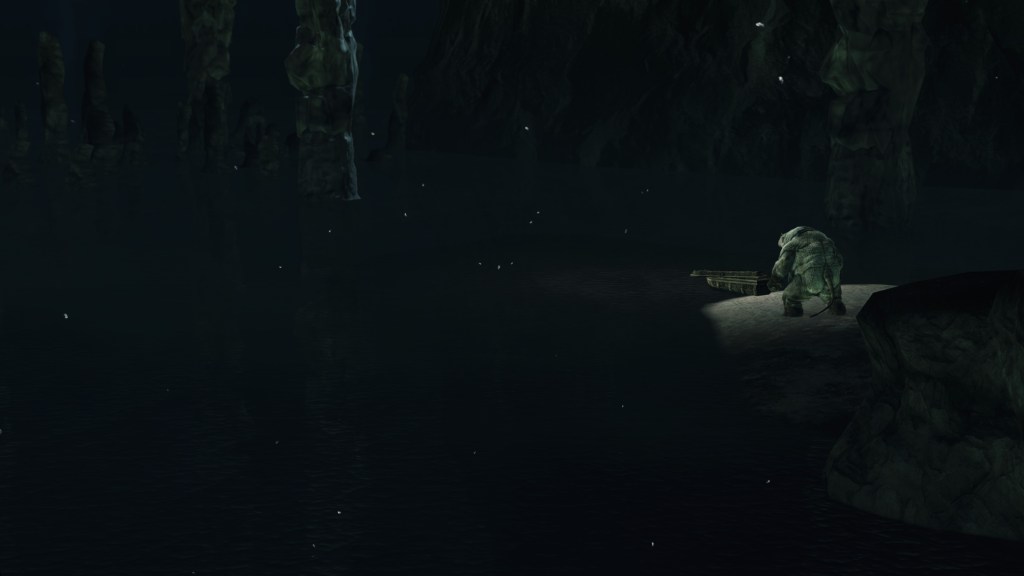
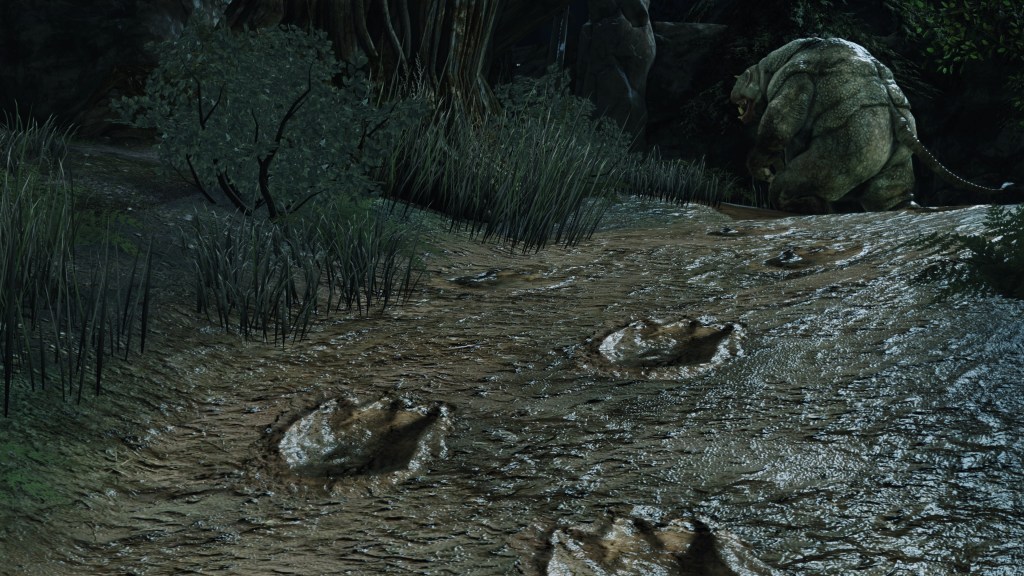
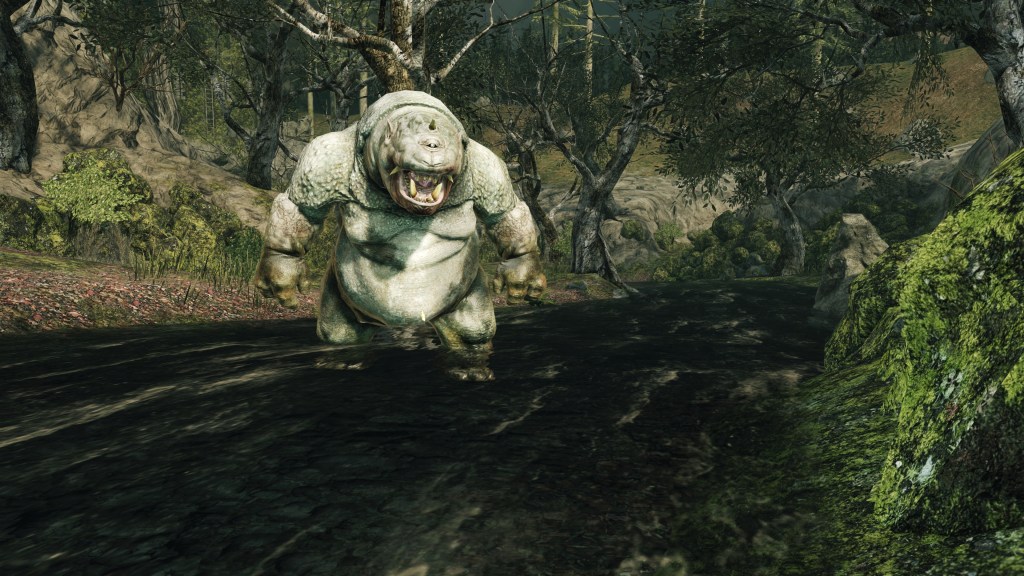
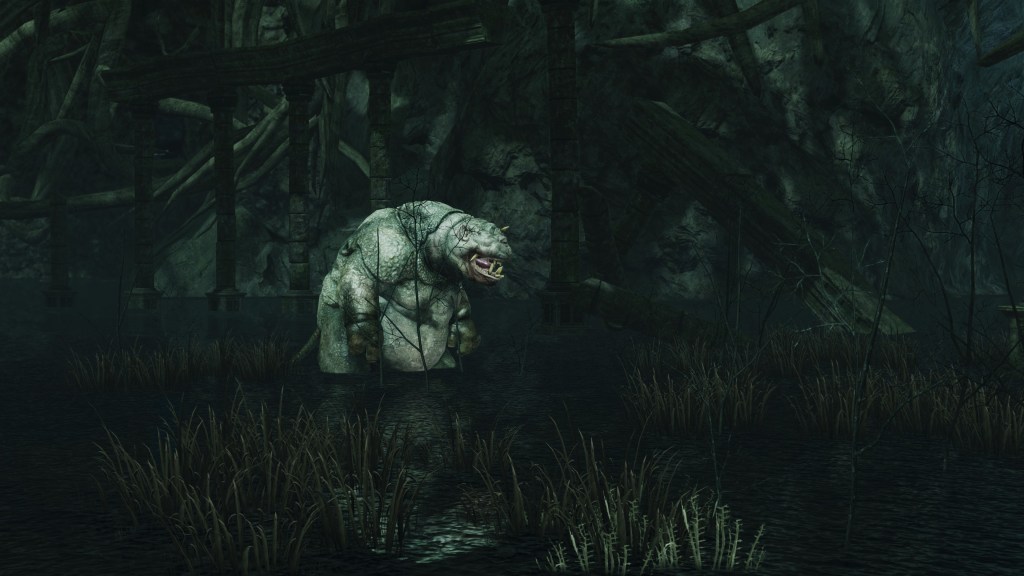
In truth, there were probably a number of mutated species created in these experiments, most of which didn’t survive the subsequent dissection process. Of those that remain include the man-eating ogres, which the Guide indicates were created rather than born. This begs the question: what were those caged creations of Aldia created from? The Homunculus Mace and Wooden Shield originate from Aldia and have strange spherical lumps attached to them. While similar to the Fair Lady’s eggs from DS1, these more fleshy protrusions also have dark, segmented legs breaking through the “cracked” shells. The resemblance to the crab-like legs of DS1’s wandering spirits indicate that the lumps of flesh contain humanity, hence they are homunculi or “small humans” (小人) despite appearances. Like the alchemical term suggests, Aldia was toying with dark souls’ spontaneous generation to artificially produce life, which requires studying human biology — in other words, human test subjects.





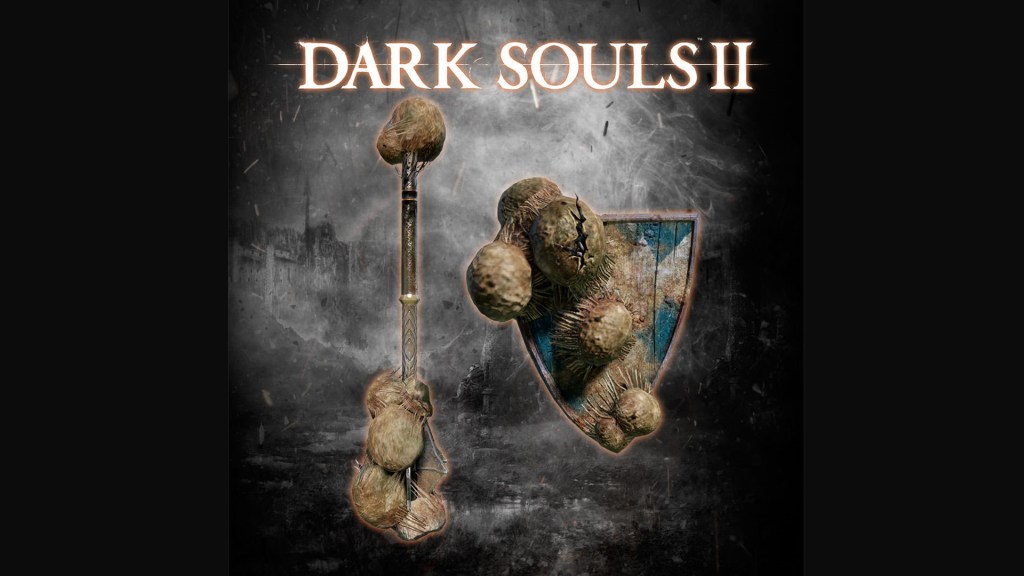
One of the secret treasures that was reproduced at An Diel. Increases the number of spell uses at the cost of decreased HP.
Looks like a simple ring but it hides extremely strong magic power. How many sins occurred before this was created? The residents of An Diel had died out.
Aldia recreated the Northern and Southern Ritual Bands through ceremonies involving human sacrifice, the rings’ descriptions noting how the mansion’s residents “died out” before their “sins” resulted in these extremely powerful magic rings’ production. The researchers’ robes and masks were designed to shield them from the gushing blood and curses of those sacrificed in these rituals — the latter betraying the unwillingness on the sacrifices’ part. Such resentment didn’t come from just the ordinary folk, however. The warlock mask’s description acknowledges that these magic experts performed these secret ceremonies upon themselves as well. Other items descriptions make no distinction for which humans summoned to the manor ended up dying out or disappearing only to be replaced with grotesque abominations.
Strange mask that An Diel technicians wore. Endowed with dark defense power and also raises the amount of souls acquired.
It is said that there were technicians who performed secret ceremonies on themselves at An Diel, which birthed grotesques. They were captured by madness at the end of their deeds, or possibly from the beginning…
Spear said to have been created in An Diel. Hides the power of great fire and unleashes that power with a strong attack.
The mysterious character with the name An Diel shut himself in his mansion and conducted various experiments. The humans who were summoned to his mansion gradually disappeared and the grotesque came to wander about in their place.
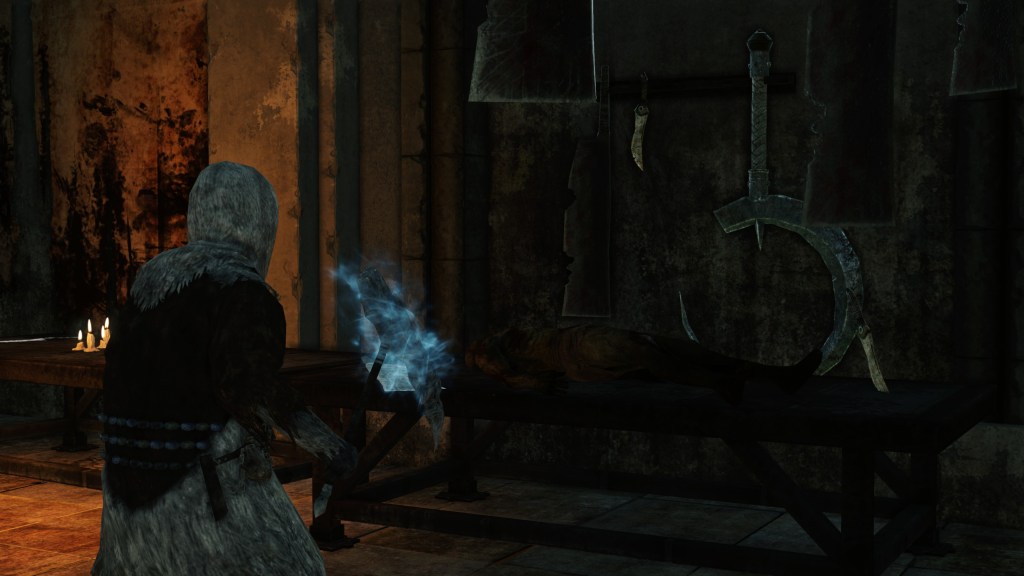
Furthermore, some of this so-called research bordered on sadistic. The dissection tables throughout the secret ceremony building are surrounded by implements of butchers, thieves, and torturers. On that subject, we find spiked wheels next to cages and blood-smeared “laboratory tables” (実験台) for experiments looking more like torture devices. Add to that, the dogs roaming the manor’s front yard carry — among many other items — the shotel, a unique yet devious weapon invented by the menacing Earl Arstor so that his armies could get around a defender’s shield. Even though Arstor’s name has been forgotten, it seems that the researchers gravitated toward his methods, including ritual human sacrifice; they assembled the tools for such brutality, which the mansion’s rabid guard dogs had previously devoured along with presumably their owners. Although that specific scenario is strange to imagine with such diminutive animals, the developers’ intention is clear: in its seclusion, Aldia’s manor was becoming a madhouse.



Greatsword of the beastman knights that protect the royal castle Drangleic.
It is like a twig for the beastman knights that boast superhuman strength, but the weight to even hold it up is too difficult for ordinary men.
Various abominable experiments were once conducted at the mansion which is in the hinterlands of Drangleic. It is said that the one who carried out those experiments was named An Diel.
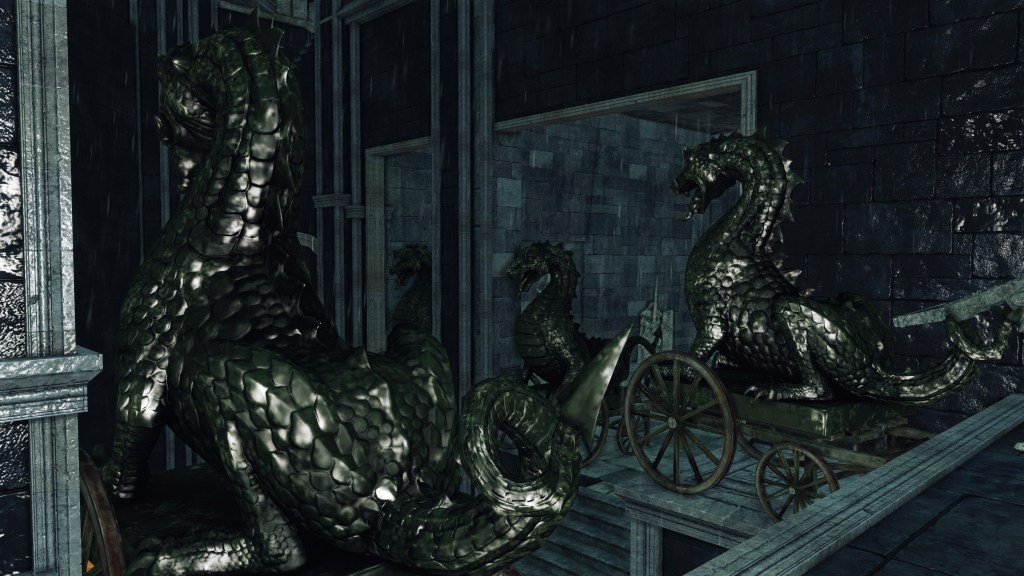
There was no doubt ordinary work conducted at the mansion. We see the acolytes building metal frames for mechanical switches, like those used at Heide’s Tower of Flame. The items acquired from Aldia-related areas likewise include golden pine resin, divine blessings, and elizabeth mushrooms — ordinary things for magic researchers to study. Some of the experiments even held practical applications for the kingdom. Among the caged specimens is a giant horn bug. Unlike its purple counterpart in Harvest Valley, this light brown species emits corrosive acid instead of poison. And like the acid bugs of Shulva, this adaptation appears to help the horn bug tunnel through its habitat underground, hence it is consistently found within cramped caverns. The acid is presumably the same used in the dog pen at Aldia’s Keep as well as the mobile acid-sprayer emplacements at Drangleic Castle — naturally, shaped like fire-breathing dragons, just as capable of melting armor. That military invention proves how Drangleic benefited greatly from Aldia’s research, but so did the Primal Knights during the kingdom’s final war.






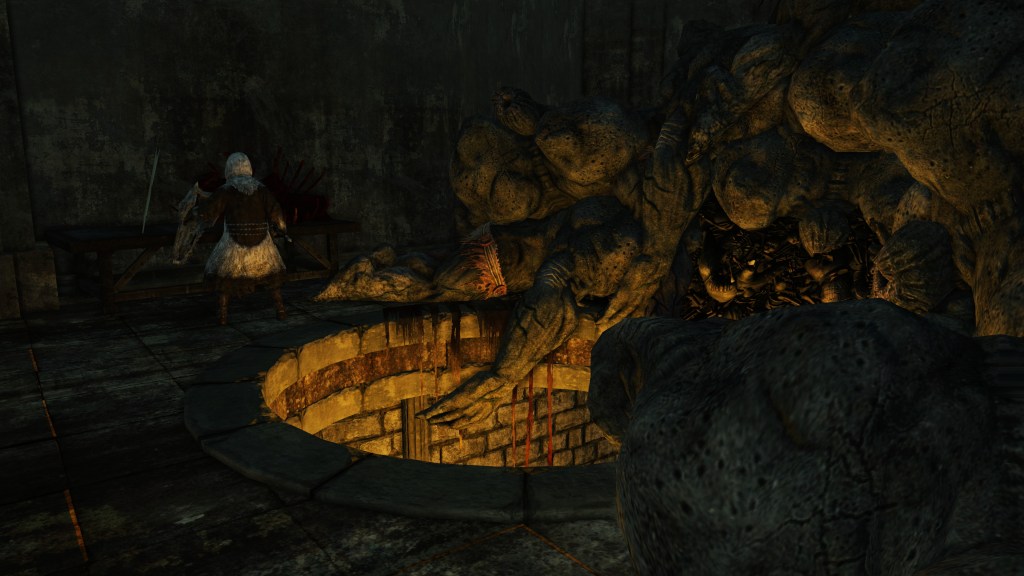
At the end of the day, the vast majority of the mansion’s research has clearly been dedicated to the unsightly and bizarre, from petrifying people to other horrors. What wasn’t used ended up casually dumped down a pit into the dog pens, where the flesh and bone of countless bodies — human and otherwise — would be eaten or dissolve in the acid; the swole dogs being treated as Hollows by Soul Appease tells of their diet. Since victims include many of their own colleagues, their equipment often obtained from the larger monsters, only a handful of researchers remain by the time we arrive, still pursuing their own interests. But in many ways, this was inevitable. Much like Seath before them, such research topics would inevitably require living test subjects to further their understanding. The warlock mask acknowledges that they were mad from the start in its description — because they were divorced from moral constraint, not logic. There were no limits in pursuit of the soul’s secrets, and Aldia was implicitly satisfied with the progress his party made in their research.





Right Under His Nose
Little changed for the secretive scholars after Nashandra entered the picture. When Vendrick returned from his northern voyage with his future queen, Aldia was the one to receive the giants brought in tow, their bodies among the corpses piled at the dumping pit. Knowingly or not, Vendrick had given his older brother more test subjects. Regardless, his brother did intend for him to use their souls to make the golems which built Drangleic Castle — child’s play after what the sorcerer accomplished with the Ruin Sentinels. Even after construction of the castle had finished, Aldia continued to make his presence known in the court. Aside from gifting many of his golem guards to the castle’s security, the royal sibling made sure to use the king and queen’s abode as another base of operations for him and his cohorts.
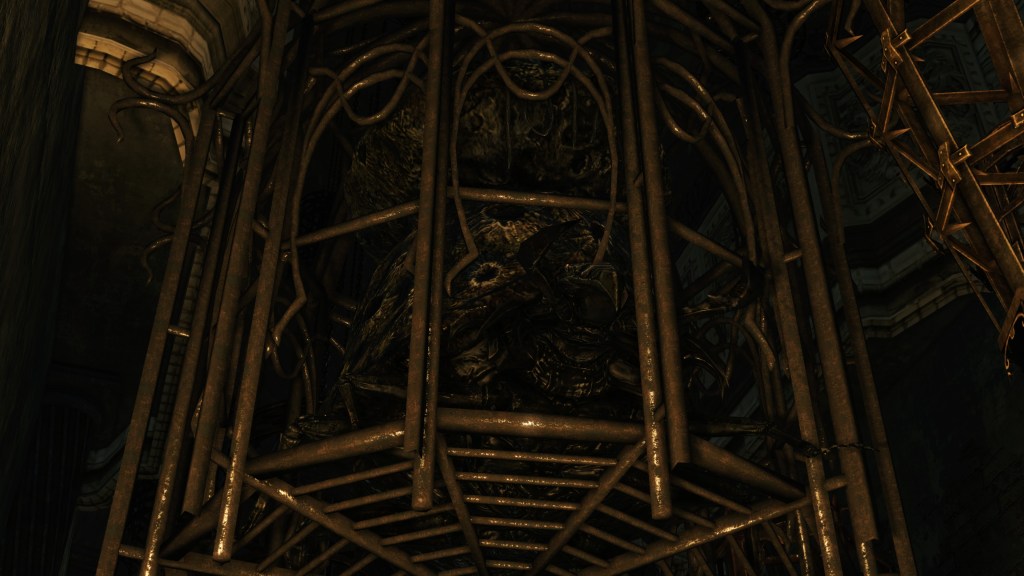
Some theoretical evidence to this claim is misleading. The fire seed plus instructions for Great Combustion in a chest next to the castle gate are likely tongue-in-cheek reference, foreshadowing the firelinking performed via the Throne of Want located beneath our feet. The same might be said for the Firestorm pyromancy stored inside the castle; before the big fix, the room housed a great many Alonne Knight captains. It is possible that the developers never intended for these items to indicate a sorcerer’s presence. Not so with Wellager, who sells both the lightning-infused ammunition preferred by the castle garrison and magic ammunition coated with aromatic ooze. The more obvious indicator hides up the castle’s iconic tower. Riding a lift to the top, we find a Milfanito imprisoned in a cage, surrounding chests containing items like a fire seed, a soul vessel, and of course, magic arrows. These are definite signs of sorcerers operating within the castle, researching as they had at Aldia’s Keep.
Indeed, the cage and its “lock” have a distinct Aldia flare. Chained to the cell door is a mutilated man called the embedded, more accurately the “seal-man”. (封人) His miraculous survival across the eons is thanks to his chains, which boost the power of body, stamina, and life at the cost of increased vulnerability. In other words, only when his keyhole-masked face is pierced by the sword “key” will he die. Being a masochist, this outlandish security mechanism was as he wished. Nonetheless, it is the kind of sadistic concept only devised in Aldia’s mad manor. The Milfanito sealed within further reveals interest in the Shrine of Amana. His horn bug specimens are found there, and the Embedded’s key-holder seems to have been eaten by the Demon of Song. Like us, Aldia and his crew presumably visited the subterranean area from the castle multiple times, leaving the Olaphis items they extracted at the back. But it was more than just uncovering sorcery. As with the Lost Bastille, Aldia was investigating ruins to learn about the past.


Ring made from the seal-man’s chains. Brings various benefits in exchange for increasing damage received.
The seal-man’s chains have a power that makes man a slave to pleasure. It is the path to ruin, so this ring was made using such power.
Sword for opening the seal-man’s door. It can be used as a weapon but it is a key.
The seal-man who is pierced with this key will finish his role in a joyful climax.
The seal-man, who was once human, chose to be eternally bound in chains for his own pleasure. And has been waiting all this time for the one that will pierce him with the key.
Naturally, Aldia joined Vendrick on his expeditions to the ruined lands of prior kingdoms. The older brother proves familiar with the fates of the Sunken, Iron, and Ivory Kings, and we can see traces of his involvement in some of their realms. At Brume Tower, there are a handful of astrologists lingering in the Iron Passage, their equipment purchasable from Navlaan at Aldia’s Keep. These spellcasters likewise rely on Caitha’s Chime, which we can acquire from a chest in Drangleic Castle along with Soul Greatsword. The combination of this sorcery and bell, juxtaposed next to another chest containing an Old Knight Hammer, affirms that the sorcerers investigating Heiden ruins at the Shrine of Amana from the castle did use this same catalyst as the astrologists. Those in the Passage thus appear to be another Drangleic party which ended up staying behind, this one aligned with Aldia. The same can be said for the Ring of the Embedded in Eleum Loyce — one link in the chain used to seal the seal-man looted off a corpse within the frozen city’s walls. The king was no expert, so he brought his brother along.


While these expeditions failed to clear out the areas for more exhaustive study, they likely did put the children of Dark on both siblings’ radar. That curiosity is probably what drew them to investigate Manus. The fact that Wellager sells the Transgressor’s Staff proves that sorcerers of the kingdom were exploring the Dark Chasms of Old primarily. Vendrick’s knowledge about the fragments of the Abyss is thus likely thanks, at least in part, to Aldia’s investigations with his acolytes. And though the altar to one chasm beneath the castle was possibly discovered during construction, it is probably the mysterious monster women who seemed to haunt their kings like shadows which inspired more than a cursory dive into the black hole. They looked at enough souls for light — now was the time to examine souls for Dark. Suffice to say, there was nowhere on the continent that Aldia and Vendrick didn’t look to learn more about the Undead curse.
These inquiries, with and without his brother, led Aldia to cultivate his interest in Anor Londo. Besides his taste in decorations, the aging sorcerer had apparently become an avid collector of medial memorabilia. Among their items, the roaming dogs hold every Black Knight weapon and the Crescent Axe, armaments which trace back to the divine capital in Lordran. We can also obtain the monastery set and scimitar from “thief” black phantoms at the manor, each armed with a broken sword and Shadow Dagger while dressed in black leather save for the monastery robe. Considering how they hide behind paintings hanging in the ceremony building, these unsavory women are larping as Anor Londo’s painting guardians whilst safeguarding the mansion’s secrets — the imposters’ appearance in specifically NG+ invites questions of their existence, but Aldian acolytes do lie in wait behind other portraits. Regardless, there is a clear pattern showing that Aldia gradually homed in on Gwyn’s kingdom, the oldest of them all. Everything was tracing back to one source, and finally, he had his answers.

Profane Discovery
From all of this investigating, Aldia came to realize the fundamental principles to the universe and how they were manipulated to create the “yoke” currently binding man. The sorcerer also seems to have brushed up on the history preserved in legend and scripture, for he accurately surmises Gwyn’s connection to the Undead curse. The King of Light replaced the natural order resulting in the Age of Dark with a new logic to preserve the Age of Fire, shackling the power of the Dark Soul which every human bears by nature and obscuring our memory. In our ignorance, we enjoy the lie of our mortality blissfully comforted by the gods’ grace, only to be unknowingly faced with the reality of that falsehood when the Dark burgeoning within prevents us from actually dying. Fire eventually goes out and leaves behind only darkness, but Gwyn resisted this truth in the hopes of preserving his power from the start, labeling the “karma” (因果) of these iniquitous actions as man’s sin — thus Aldia is Scholar of the First Sin, a direct reference to the original sin (原罪) from Christian theology.
The one who once became the King of Light shut away the Dark of the name “man”… And so man acquired a transient form. That is undoubtedly the beginning of this world’s logic, and all of man exists within a false life. No matter how kind, how beautiful, a lie is ultimately no more than a lie. Hollow. Do you still want peace, even so?
Man lives in peace. And so, they believe and love the cage of falsehoods, even if it is likely all a lie. Until the curse is eventually shown on their bodies. That is the yoke that was imposed on us. And thus, the Dark is undoubtedly the truth that dwells within man.
However, knowing all this was just a means to an end for Aldia. The description for the Malformed Shell confirms that the man was more interested in learning the inner workings to life itself, and the text for his dissection tools similarly confirms that he and Vendrick’s paths eventually diverged. If the king wanted to simply be free from the curse, fine. But Aldia saw the bigger picture during his increasingly repulsive deeds. He had answered how and why humans can uniquely live on past death, something which anyone might reasonably conclude to be a blessing. It was only because of hollowing that the Darksign is considered to be a curse, the karma stemming from the medials’ meddling. What then if Aldia found a way to overcome this karma, to rectify Gwyn’s sin? Man would then ascend beyond its mortal coil while liberated of its limitations. And so, the researcher of the original sin pursued avenues to this end, him and his followers committing no shortage of atrocities in the process.
Hammer that An Diel juniors used. Rather than a “weapon”, it seems to have been employed in the dissection of various things for research.
It is imparted that An Diel was the King’s elder brother. The two who raised the country together at some point changed their paths.
During the course of these horrors, Aldia’s discoveries made him curious about the Dark in itself. Soul Geyser is a sorcery which unleashes a massive gush of souls true to its name “Soul Torrent”. (ソウルの奔流) Although the English description claims it to be Aldia’s family heirloom, the Japanese text only calls it his “legacy” (遺産) — something he had left behind rather than inherited. This was a sorcery created by the man himself. But while it is one of many spells learned at Aldia’s mansion, this one is uniquely called a “secret art”, as if its existence was kept particularly hidden among those invented in the manor’s secret ceremony building. Indeed, we can only acquire instructions from a skeleton corroding in the dog pen, potentially a trusted colleague who ended up used in others’ experiments before being dumped in acid. Aldia was particularly concerned about this spell leaking out. Why? Because it would beg questions about his piety.
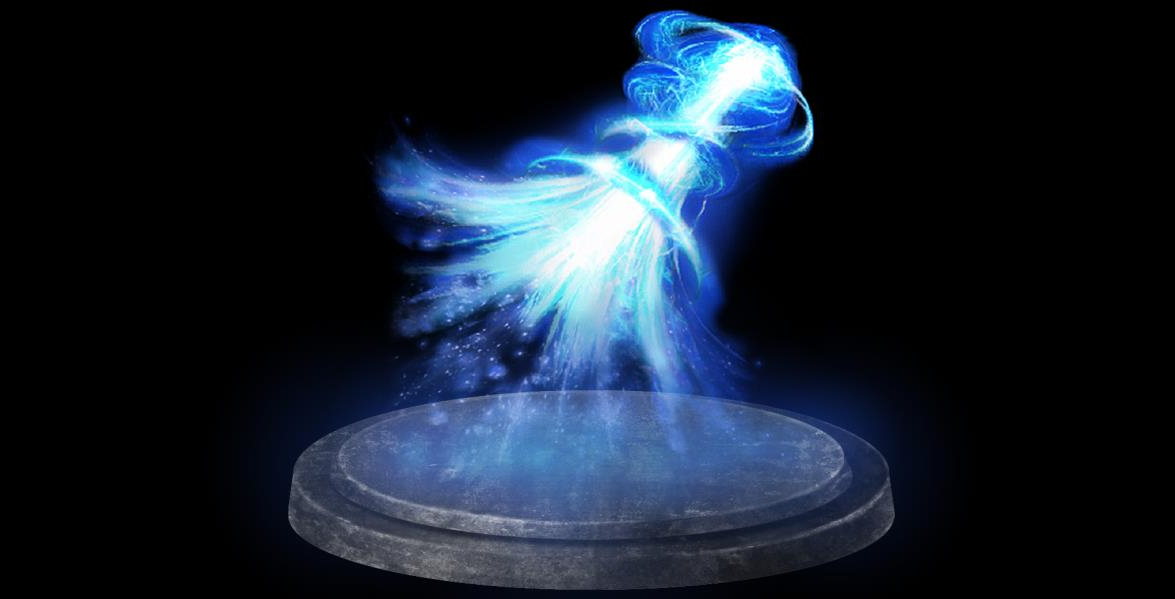
Secret art that releases a strong gush of souls. The pursuing soul mass pierces enemies and deals damage repeatedly.
It is imparted that this spell which can be called a black art, devised with the goal to keep pursuing the enemy until they run out of breath, is An Diel’s legacy.
The spell doesn’t just fire a mass of souls in a general direction, it makes the souls pursue their target, a quality typically associated with Dark magic. This is why the sorcery can be considered a “black art”, jahou (邪法) using the same kanji for “wicked” as the heretical occult from DS1. Much like Logan before him, Aldia was creating spells that at the very least risked the researcher falling to the Dark, something which would have definitely made the religious elements of Drangleic society mobilize against him. To be fair, the outrage wouldn’t be unfounded since most Aldian warlocks we encounter do employ Dark magic, with the dogs roaming outside carrying the Affinity hex. The researcher did proliferate heresy among his fellows in their quest for knowledge. He himself had likely begun dabbling with the subject early into his sorcerer career; the Bone Staff is far more proficient with hexes than sorceries. Soul Geyser only suggests that he had been trying to hide any sign of these interests early on, keep their dabbling to a select few closest to him; it didn’t last.
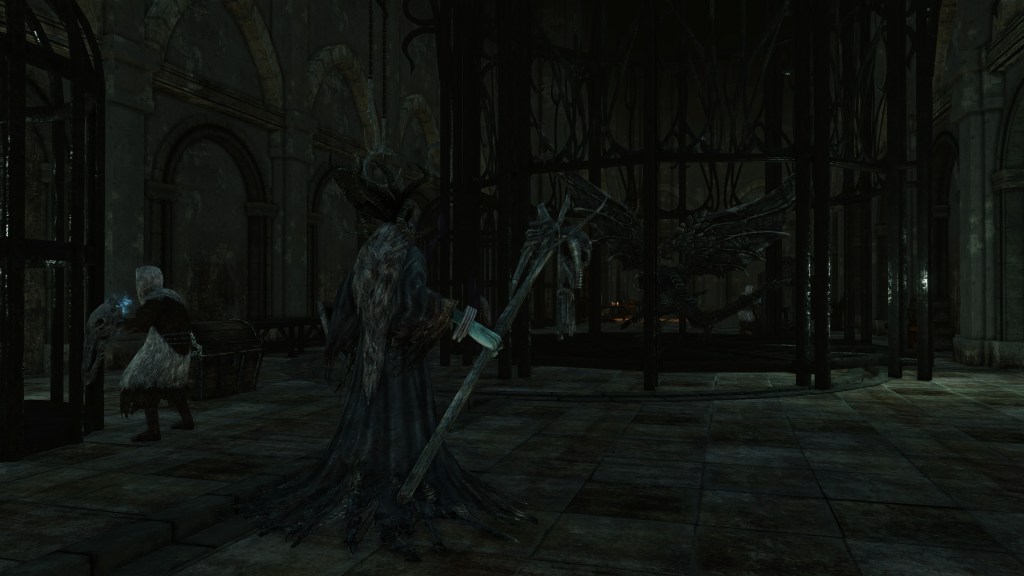
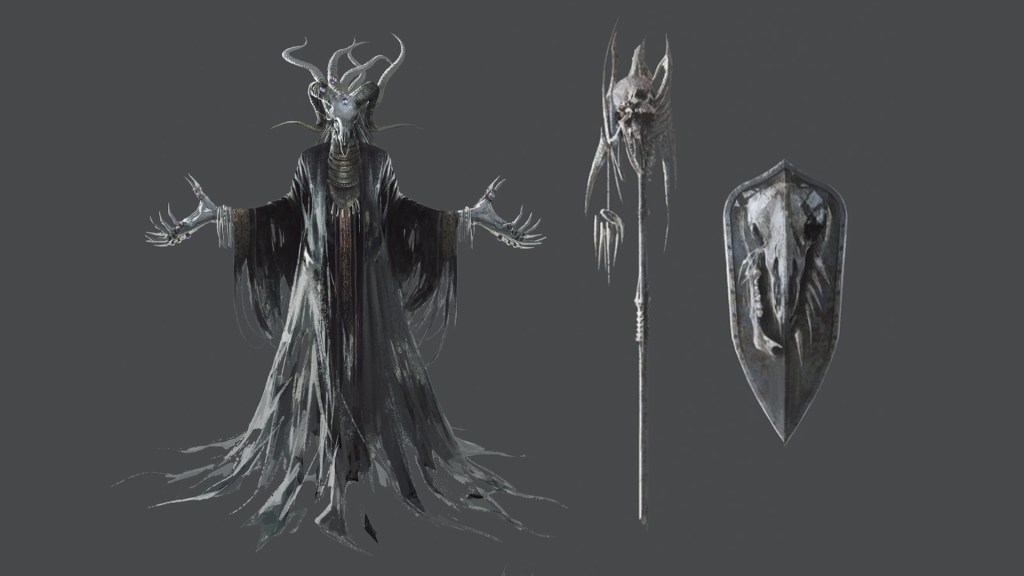
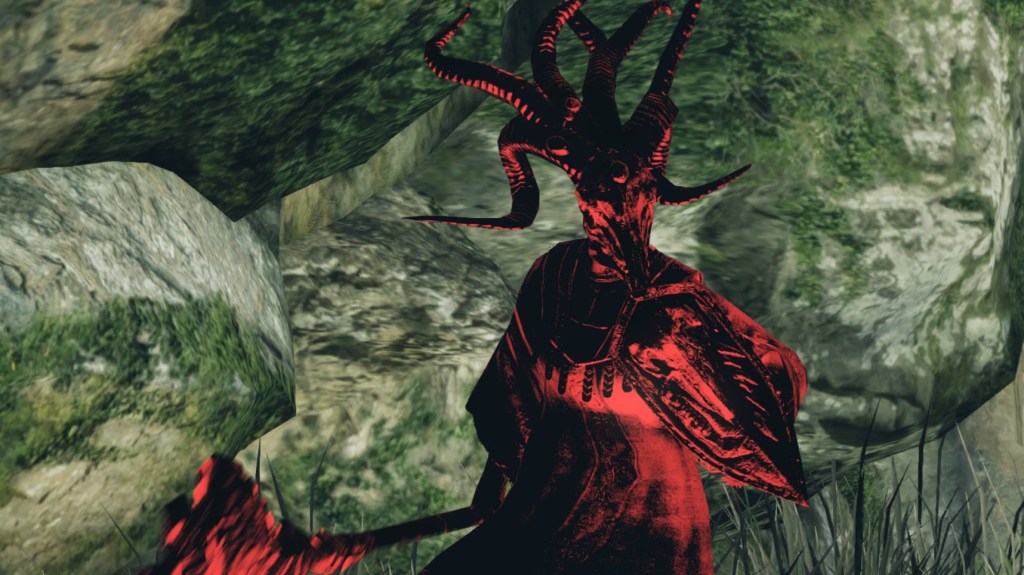
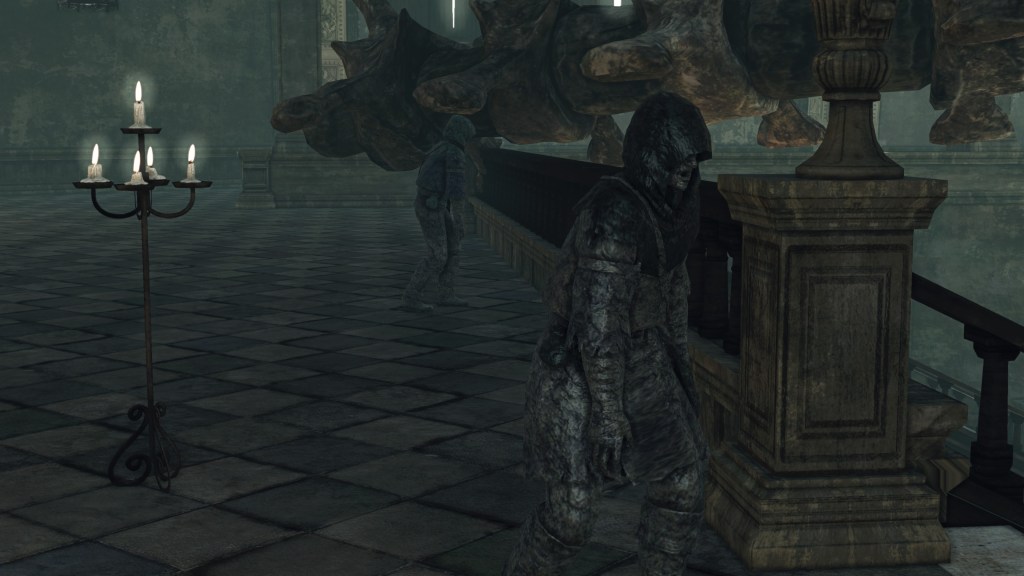
In his attempts to overcome the Darksign, Aldia eventually embraced the Dark directly, performing experiments which ultimately resulted in the Forlorn. These spawns of the first sin invade us as dark spirits, confirming their connection to the antithesis of light through the Darksign. But unlike other phantoms, they cannot return to physicality. They don’t even have actual bodies — just an empty suit of armor with no face beneath the hood. They are forever phantoms wandering the world as perceived by others, attacking without purpose. This is because these wandering spirits lack individuality. They have no self with which to recognize their own world, keeping them untethered from reality. Without a place to go, they simply exist outside of time and space, manifesting only their equipment and only incorporeally. This goes far beyond the typical use of Dark magic. How did Aldia achieve this? Human sacrifice, of course.
Hood of the Forfeit who walk around the worlds of the Undead.
As spawn of the first sin, they who lost their bodies and world seek a place to go in other worlds.
However, there is no beginning or end to connections without self. That is why they continue to go around.
Sickle of the Forfeit who walk around the worlds of the Undead.
The King’s older brother An Diel pursued overcoming the curse by reason which differed from the King.
The Forfeit are one of sin which that sentiment created.
The weapons wielded by the Forlorn all have one thing in common: their designs include a mess of human bodies clumped together as their motif. Their armor likewise features masses of coalesced skeletons in varying states of hooded dress, all the cloth seemingly originating — like tentacles — from a singular hooded skeleton resembling the Forlorn. The message is clear: Aldia had most likely consolidated a massive number of humans into a singular soul, which was then made into a phantom via the Dark’s dominion over space. But since these fused souls didn’t have a singular will uniting them, the consciousness for the spirit possessed no self. It was a blank slate at best and a hive mind at worst. Either way, there was no way for this psyche to identify with any of the different individuals tangled together — it was everyone, yet no one. And a newborn produced outside the confines of the world has no anchor leading back inside. Likewise, there was no way for them to effectively affect reality from the outside. They were stranded, lost; countless human lives consigned to oblivion.


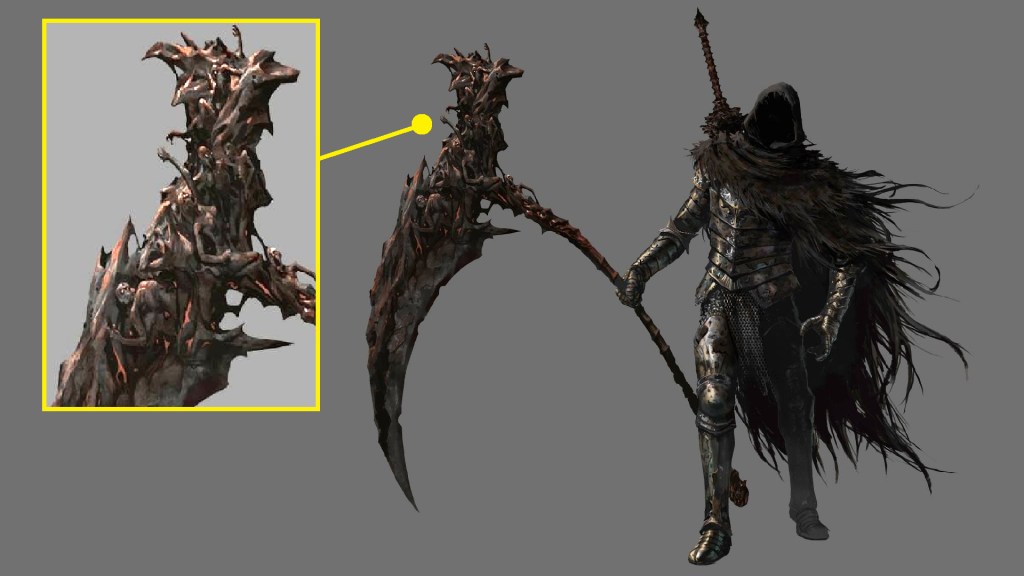
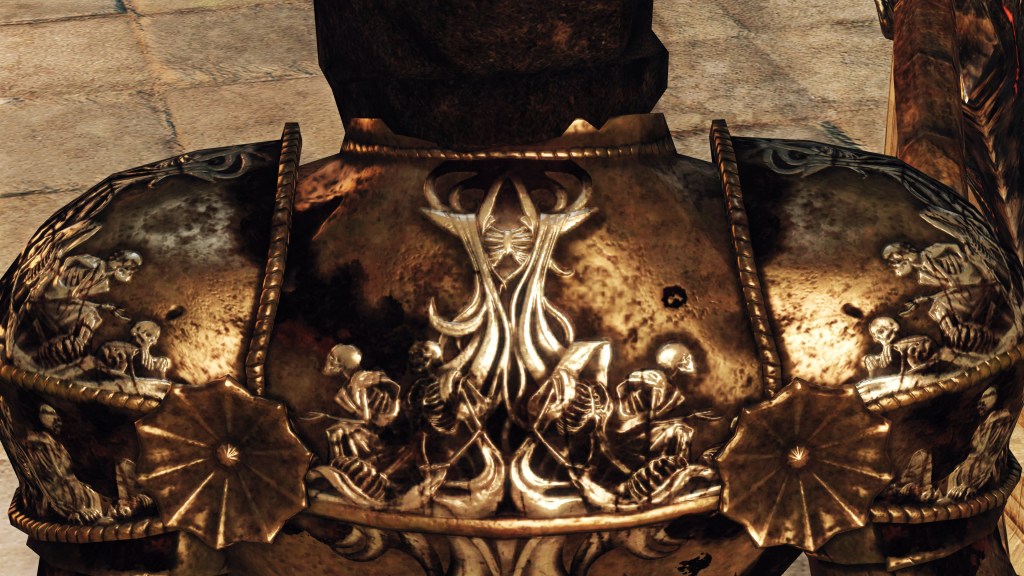
This failed experiment was a transparent attempt to have mankind transcend the limitations of this world on Aldia’s part. The nature of the Forlorn would allow them to be free of the curse while still retaining eternity. But in experimenting with ways to correct Gwyn’s first sin, the researcher himself tried to make humans which defy the world’s logic, hence their existence is “forfeit”. (喪失者) To his surefire disappointment, the only use the creator had for these abominations was keeping a couple as guards, summoned upon lighting select torches across the manor in a kind of ritual. If nothing else, this failure proved that Aldia had to work within the existing universal principles if he ever hoped to trump the curse. But after he finished exploring some of these options, the man had lost the support of his country.
No Return
Vendrick eventually discovered the full extent of the mansion’s works. Perhaps rumor had spread of odd happenings and disappearances surrounding Aldia’s Keep; the numerous ogres wandering as far-flung as Shrine of Amana and Things Betwixt prove that experiments did escape into the wild. Perhaps the king had grown suspicious seeing some of the creations; not all obviously resulted from nonhuman or willing participants. Perhaps his wife had subtly prodded him in the hopes of driving a wedge between the two brothers; their expeditions together were making her true nature all the easier to discern. Whatever the case, Aldia failed to prevent his irate brother from quarantining the entire premises. If the sorcerer had tried to explain his rationale for their methodology, Vendrick would hear none of it. As far as the o-so-righteous king was concerned, his older brother committed unforgivable evil. Nonetheless, the hypocrite would one day return to rely on that evil.

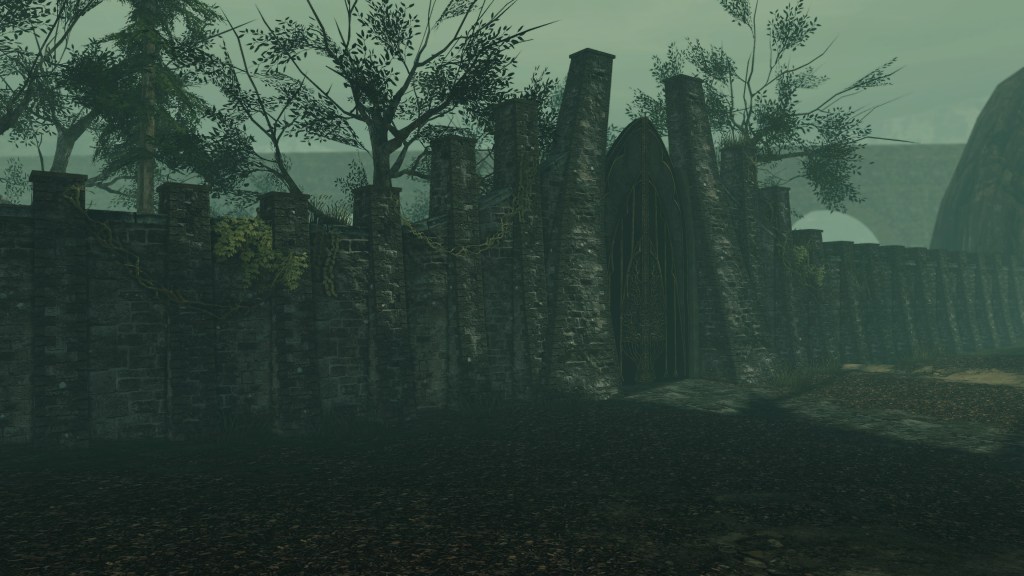
Key used at An Diel’s Mansion.
King Vanclad confined the man, his own older brother, to the mansion. The two sought the truth together, but their means differed, and they eventually clashed.
At the royal army’s fort on the opposite end of the kingdom, we can find a number of curious items. Several corpses possess amber herbs used by mentally-drained spellcasters, some even stored with a sorcerer’s staff behind a false wall. Another body holds onto the text for Great Soul Arrow. Yet another owns witching urns thrown by Aldia’s junior acolytes. Collectively, these indicate the presence of sorcerers at the final battle with the giants. Considering that one of the corpses with amber herbs also owns a Grand Lance, they were being monitored by Vendrick’s elite knights. Therefore, they were most likely from Aldia’s party, freed from house arrest on assumption that they contribute to the kingdom’s war effort. Creations like the Primal Knights would benefit from the original researchers’ expertise; they might have even been needed to control the ironclad soldiers stationed at the fort. And if the king was desperate enough to revive arts he forbid, bringing back people to do the reviving was hardly a leap of logic for him.
With that established, it is worth noting the Aldian acolytes roaming free across the land. Besides the warlocks, there is also a senior acolyte named Ruined Aflis. The sorcerer is called “Fallen Avlis” (落ちぶれたアヴリス) due to additionally casting hexes with his simple bat staff. The man’s vast experience under Aldia is on full display, knowing arts like Cast Light or Homing Soul Arrow. Although no longer teaching juniors at the mansion, he apparently still likes to be a guiding hand for others. The acolytes leaves his summon sign to help light our way through a dark passage to the fort’s soldier shelter, which is full of resentful skeletons reanimating in the shadows. He later offers the same service for our journey through the Cave of the Dead. His presence in Shulva’s caverns are likely because of Aldia’s previous expedition down there, hoping to further prior research. Why then visit the fort, unless Aldian sorcerers were also tasked to be there at one point? Put simply, there is little reason to doubt the manor’s involvement in the giant war long after the house arrest.

Implicit to this transparent farce is another realization: regardless of his initial intentions, Vendrick’s actions only served to solidify the manor’s descent into madness. With the researchers formally cordoned off from the outside world, they were free to do as they please, learn whatever heretical magic they could, out in the open. And if they weren’t commonly using each other as test subjects before, they definitely needed to now that citizens from outside were no longer streaming in. If the king had hoped that confinement would make his elder brother reflect, he terribly miscalculated. Aldia’s depraved rituals continued, until the man himself suddenly disappeared from the public record. While it is easy to imagine the sorcerer becoming subject to one of his own experiments from the outset, that truth becomes all the more apparent after meeting him in person.
Aldia has become a twisted mess of branches and roots vaguely forming a face, the base of which is on fire. But despite appearances, the wood doesn’t seem to actually burn, and Aldia is in no apparent pain as he converses with us. This is most likely because the wood itself is spawned from the flames, rising or descending from the ground wherever they appear. Indeed, we find that Aldia tailors his form’s shape and size to his environment, and he can control and create more branches at will as demonstrated during his boss battle. The arboreal abomination has used the power of life-generating flame to give himself form, similar to the Flame of Chaos and its seedbed. He creates a “head” for us to engage with for our benefit, not his — he could probably shape it to be anything. Likewise, we don’t receive any souls from defeating this boss because what we slew was merely an avatar, the real entity still perfectly capable of speaking to us as a disembodied voice.


As to what fire would have the power to rival the Chaos Flame, the obvious answer is the First Flame. Aldia mostly manifests from Undead bonfires, showing that he is connected to the network and thereby the flame at the heart of it. At the same time, his appearance at the Throne of Want confirms that he isn’t limited by the bonfires — they just seem to be his most convenient points of entry. In that case, he has most likely weaved his soul into the fabric of reality itself, all of which has been permeated by the First Flame. Not just his standard soul either, for the flames Aldia produces to attack or move have the same black-and-red color scheme as dark pyromancies. In other words, Aldia involved his own dark soul in the process, perhaps even using his own Darksign to leapfrog off of when linking himself to the original fire.
The researchers’ motive for his current state is easy to surmise. If he cannot exist outside the methods of Creation, then he can at least be the one behind the steering wheel for it. Much like how Vendrick muses about controlling the Dark with fire, Aldia probably imagined the reverse: control fire via the Dark. He had already proven that the Dark could be used to transcend both mortality and physicality, and he wouldn’t be the first resident of the New World to use dark souls for a kind of reincarnation. If his soul could assert control over the First Flame, then he would be master over all it touches — akin to a god. And if this deity was pulling the strings binding the universe together, then he could theoretically manipulate the Darksign’s curse over all of mankind. This would explain why Aldia seems to be the one and only person subjected to this experiment — who else was he to trust with this mission except himself? The researcher attempted to achieve a kind of apotheosis through light and Dark. What we see is the end result.
However, the karma shackling man continues unabated, and Aldia acknowledges his failure. The First Flame answers to no master; he is merely another cog in the machine comprising reality. While this doesn’t seem to have affected the researcher’s previous influence upon the universe, he can no longer go back to being human. This was his last best gambit at resolving the first sin on his own. One might argue that he has at least escaped the confines of the curse, but that wasn’t his objective. Aldia expresses no interest in making his fellow man into monsters like him. He sacrificed his own humanity, both literally and figuratively, for the sake of freeing others from such a fate. He would have been the god who would bring an end to hollowing, allow man to enjoy paradise as men. On this front, all of his efforts have amounted to failure, so now he watches from the sidelines to observe if others can provide the answer he couldn’t.

I am An Diel. The one who once challenged the karma, failed to achieve it, and only awaits an answer. Seek the throne. The light, and the Dark. The ends of them…
One might question why Aldia went to such lengths when the simpler solution was removing fire from the equation. Although he likely had the same realization as Vendrick — namely that undeath would not disappear on account of the firelinking ritual — he could still liberate man by kickstarting the Age of Dark. But Aldia doesn’t want fire to vanish from this world. Even as we hear his sheer rage in recounting Gwyn’s lie, he cannot deny that it is a beautiful lie. An existence bathed in the sun’s warmth will change with the end of flame. Without it, there can be no dazzling life captivating the heart. If not for undeath, man would remain blissfully unaware of its cage. But, what man doesn’t wish for the continuation of his existence? There lies Aldia’s dilemma. He cannot ignore the lie, but he cannot relinquish it either. He wants humans to enjoy both the light’s beauty and the Dark’s immortality. In short, the sorcerer is a fence-sitter, unwilling to commit to one or the other.
Life is dazzling and beautiful. And so, everyone is captured by it. The one who doesn’t forget his mission, even though reduced to an empty shell. The one who lost his body and ended up becoming a mere head. The one who seeks a love she couldn’t obtain. And you yourself…?
All of man is within a false life. But, is it truly wrong? A false life manufactured. But… it is a surprisingly kind and sweet world. Hollow, do you really want to release the yoke and break the falsehoods, even so?
The researcher presents his case plainly during our encounters. He cannot remember the last time he has seen someone reach one of the primal bonfires, and initially only takes interest in us with amused curiosity. But he nonetheless hopes that we go beyond this midpoint in our journey, directing us to meet Vendrick. To him, we are a Hollow regardless of appearance. After all, a Hollow is all we are: a ragged, aged corpse which has lost its true soul. Instead, he distinguishes us from the “heartbroken” sort who have given mind and body to escape adversity in one form or another. We have proven our hearts strong after reaching the Undead Crypt where the king resides, so he is happy to indulge us with his knowledge of the first sin, all the while questioning our own will in this journey and what it really means to be a king. When we reunite at the Dragon Shrine, he shifts gears to questioning how wrong the gods’ lie really is, ultimately leaving us to seek the Throne of Want and what lies at the end of the two paths stemming from it.

When was the last time someone who reached this place appeared? Hollow. Do you want to try surpassing the curse? Then challenge the trials, the very mission that was imposed on Hollows. Unless you are a heartbroken person who has given up on everything.
Hollow. There are two paths. Inherit the logic of the world, or break it. And only a true King leads it. Many can’t even reach this place. And even here is only halfway. Hollow. Are you one worthy of it?
That need not be the last time we face each other. If we have taken the additional step of defeating Vendrick’s Hollow, Aldia will step in following Nashandra’s defeat, trying to stop us from taking the throne by force. He makes note of the many kings like Vendrick who possessed powerful souls worthy of Lords of Cinder. And yet, none of them surpassed the trials imposed by others to reach this point. If we are more worthy of taking the throne, he expects us to give him the answer they haven’t. But Aldia knows the futility of linking the fire and has been subtly nudging us to go against our conditioning up until this point — namely, that we will take this mantle of King of Kindling or King of Dark whether we want to or not. He wants us to think for ourselves, or rather, to come to the same conclusion that he has: the best course of action is rejecting the throne altogether.
Heheheh, you are a familiar face. Hollow. One who challenges hardship. What have you wanted to try surmounting the curse thus far?
Once, many kings appeared. One was swallowed by poison, one sunk into fire, and one sleeps in a frozen land. Without reaching this place, as you alone have. One who passed the trials. It is time to give an answer.
Vendrick was the king closest to attaining the ultimate Kingship before us, as Aldia himself admits. But whereas the younger brother wants us to choose either path unbiased by our curse, the older brother wishes for us to reject them both in spite of it — to allow this twilight era to run its course for as long as it is able. Since Vendrick is an optional boss, Aldia most likely interprets our decision to still kill him as our personal rejection of everything Drangleic’s king stood for. It must therefore frustrate the researcher to see us still mindlessly following the path laid out before us, thereby feeling that he must interject to dissuade us from becoming a tool of tradition. When both words and violence fail, he can only appeal to our will yet again, asking if we maybe see the third path and consider taking it over the road which will do either nothing or too much to solve the karma. If we listen, we will simply abandon our journey at the final leg. Aldia narrates that this path is untreaded territory which is nonetheless our self-imposed “trial”, the consequence of no one’s will but our own.

I lost everything, and then continued to wait. The throne will probably welcome you. But the karma will… You want what? Light, Dark… or maybe…
There is no path. Ahead where even light doesn’t reach and even the dark is lost, what is said to be there? But seeking it is undoubtedly the trial that was imposed on us…
But despite such liberating framing, Aldia’s option is patently absurd. Even ignoring the fact that the researcher essentially fed us this answer, our choice is effectively a non-choice. The torches in this final cutscene convey the end result: fire will go out. There is no mystery to be had. We will end up at the Age of Dark; it will just take longer to wait out the flame, and we will have to deal with more consequences of prolonging the inevitable in the meantime, undeath and otherwise. Aldia has simply tricked us into reneging on responsibility under the guise of becoming the Übermensche. Certainly, in every case where one person is put in the position to make a difficult decision with large-scale and long-lasting implications, there is always the option to wash one’s hands of the whole ordeal. But you are only pushing the decision onto someone else, leaving anarchy in the gap. And what guarantee is there that the person filling that vacuum is the kind of person you would want to be making such decisions for you?
In truth, perpetuating this twilight era is of no benefit to anyone, not even Aldia. The fence-sitter simply wants to split the difference, perhaps hoping to keep man’s options open until another solution is discovered in the interim. Clearly, he would prefer that we go back to the early days for human civilization, after the pygmy Lord split the Dark Soul among his kin but before the gods shackled man. But that time has long since passed. We can only work with the hand we are dealt; there is a reason why the end to DS1 boiled down to two options, no matter how much Aldia wishes that were not the case. The man of logic has been compromised by personal feelings. For all of his knowledge and antipathy for the first sin, he is no better than the god he despises. The fence-sitter might try as he might to delay the inevitable, but it is for his sake and his sake alone.
 Lokey Lore