
Contact between the Old and New Worlds had huge ramifications for Irithyll, chief among which were the Drang Knights. This band of mercenaries wandered various lands and made a name for themselves as sellswords. Such widespread fame is largely due to their peculiar fighting style for so-called knights, relying on overwhelming aggression with two weapons and no shield. Although the English description for their armor claims that their wandering as mercenaries occurred after said mercenary group disbanded, there is no such self-contradictory claim in the Japanese text. The chivalric order for hire had only fallen apart much later after a long history of mercenary service. And yet, the Drang Knights are encountered in-game, so their employment eventually brought them to the Lothric region. The reason was probably so that they could live up to their namesake.
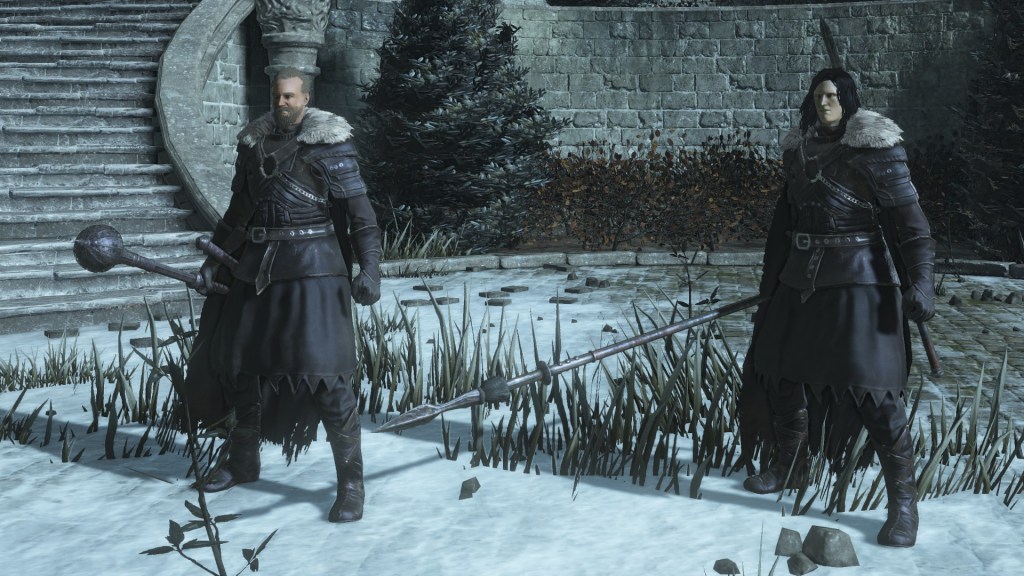
As their name impresses, the order’s members dub themselves the descendants of Drangleic, which is apparently known as the ancient land of the firelinking legend. The fact that they use the Llewellyn set made with authentic geisteel backs up their claim, as does their dual-wielding fighting style referencing the same mechanic from the previous game — if they do descend from survivors of Drangleic’s destruction, then they are quite in touch with their heritage. But far more important is the implication that they were vocal about this lineage and that Drangleic’s relationship with firelinking is widely known. This legend, which elevates the country’s religious importance, has been passed down the generations, likely inspiring the mercenaries to recollect their legacy and spread memory of it and their lineage far and wide in a show of pride. This is exemplified by the choice to call themselves “knights” despite their order not serving a revived kingdom of Drangleic. It is their pride in their genealogy and history that binds them to honor.
Twin hammers of the Dran Knights, who dub themselves descendants of the old land of the firelinking legend.
One of the twin blade weapons.
It is said that the Dran Knights, who wandered various lands as mercenaries, became widely-known due to their overwhelming aggression without holding a shield.
And so, the Drang Knights came to the land where the Kingdom of Lothric has carried on the tradition under Irithyll’s oversight. Their people helped preserve the Age of Fire, so isn’t it the mercenaries’ responsibility to their forefathers to abide by that legacy? This kind of thinking probably led them to lend their service to Irithyll. While the only two surviving Drang Knights we encounter currently act on behalf of Aldrich, his cult’s connection to the Way of White suggests originally working for the church, which is headquartered in Irithyll. Moreover, Lothric already has a solid military, whereas Irithyll has only kept a collection of different chivalric orders throughout its history; what’s one more? And between the two, fighting for Irithyll is far more beneficial to the mercenaries’ reputation, considering that their contract would be with the chief god managing the current firelinking system. The choice was clear: like the Swiss Guard for Vatican City, the Drang Knights became the mercenary army for the Boreal Valley’s religious capital — fitting, since they were later retained by Pontiff Sulyvahn.
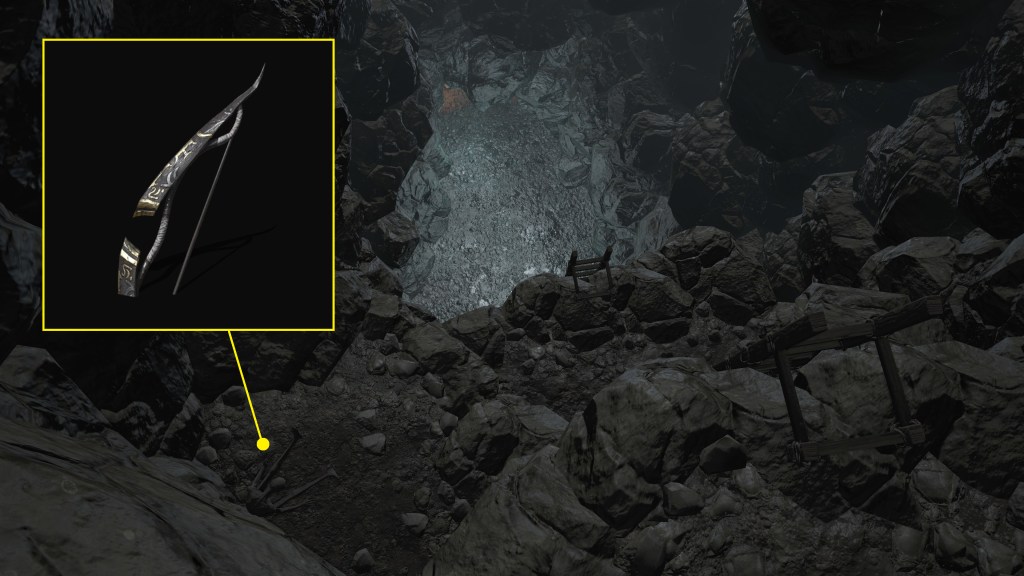
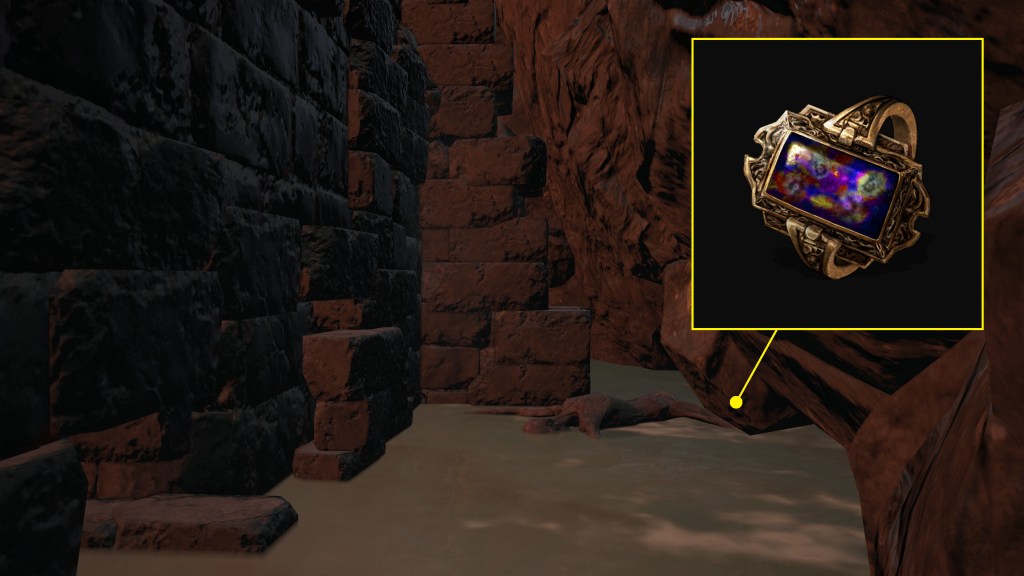
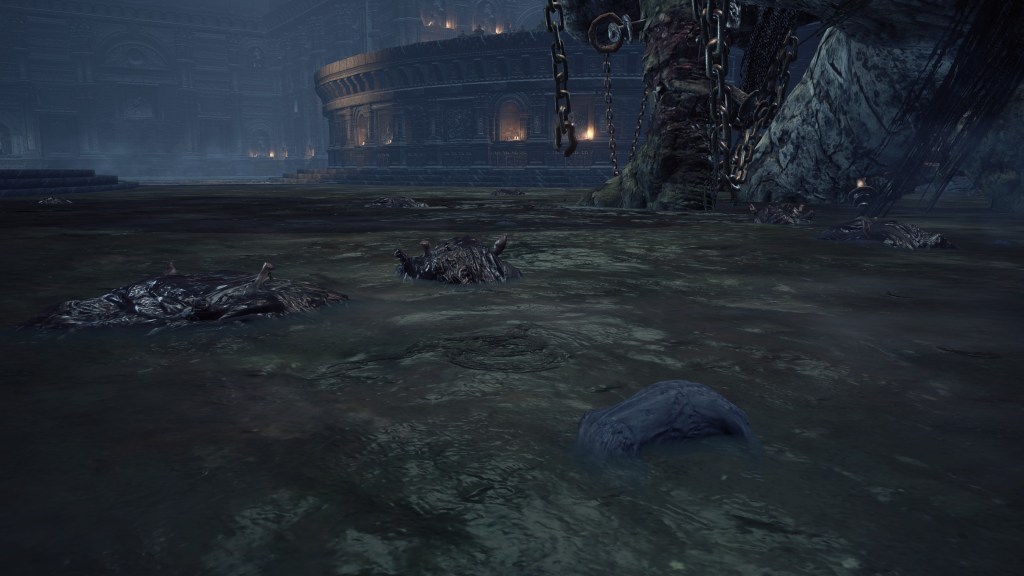
Among the corpses laying around Smouldering Lake, we can loot the Dragonrider Bow and Shield of Want. Both armaments are related to Drangleic, but the country was already in ruins even in Dark Souls II. The shield in particular has lost its black coat of paint in the years since, the face well-worn and battle-scarred. It isn’t a replica like the Kite Shield, since the residual craving of its prior owner, King Vendrick, smolders within; the exposed orange stains netting wielders more souls from slain foes. And if it is the genuine shield of that fire-like soul, then someone took that old relic into many a battle before ending up in Lothric. In that case, the bow and shield most likely belong to the mercenaries who have a penchant for collecting such items — though surprising that one would actually employ a shield. Further supporting this link, another corpse carries the Speckled Stoneplate Ring provided to knights on endless journeys. That comports perfectly with a Drang knight roaming the world, needing to prepare against all manner of threats as a sellsword. No other party justifies this assortment of items.
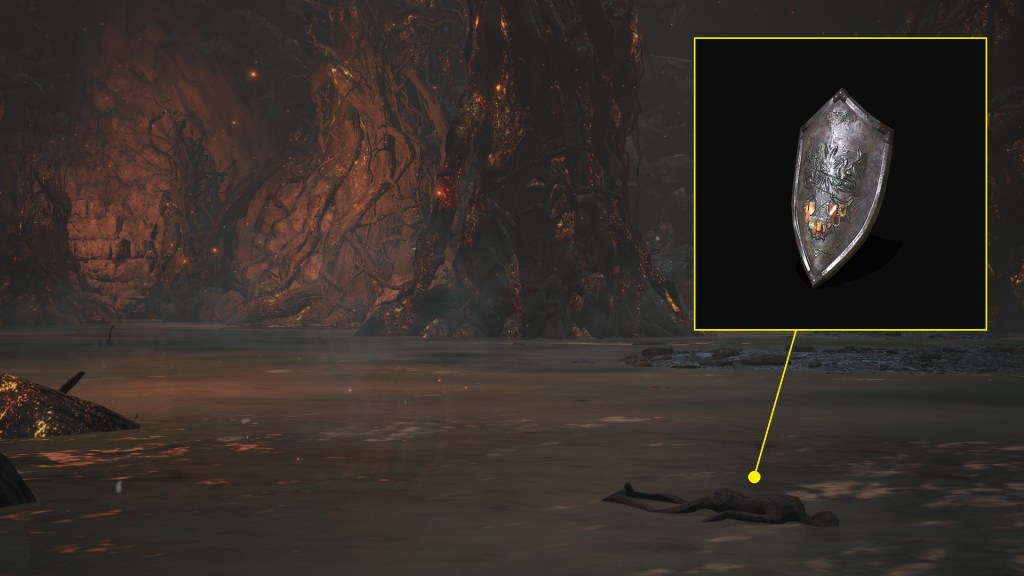
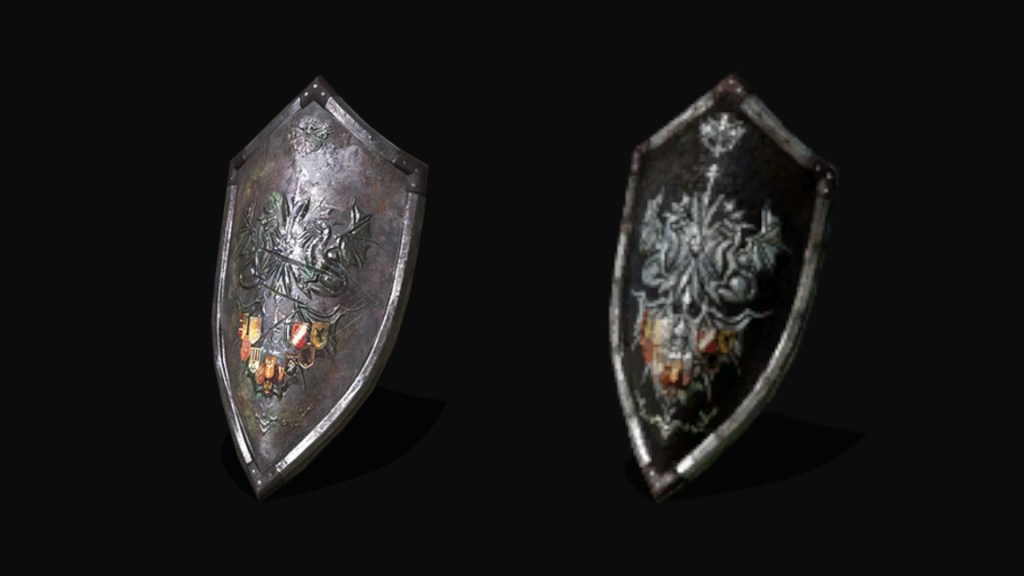
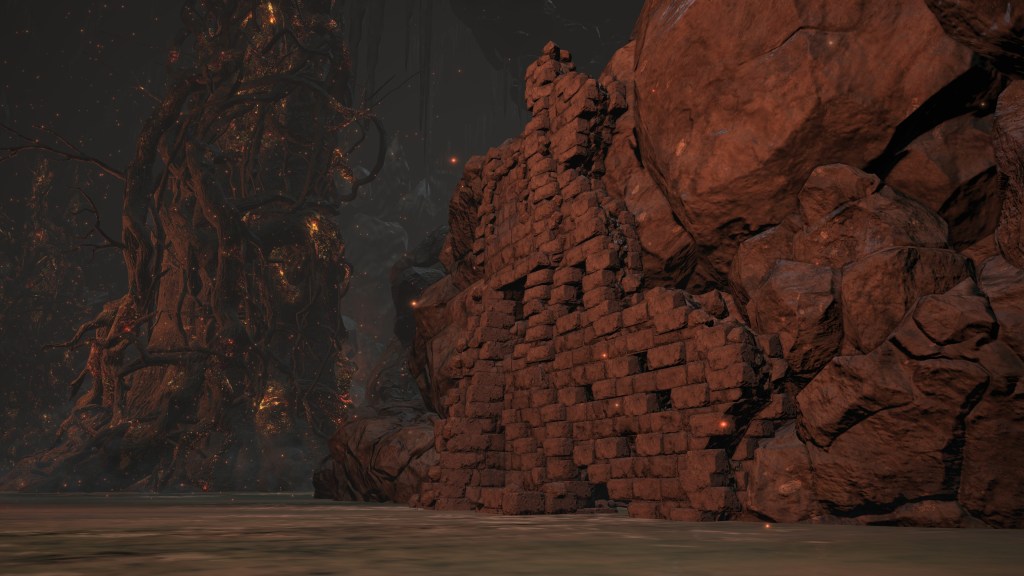
Shield of an old king said to have craved all. It is said that, in the end, he was no king.
The craving yet smolders in the orange of this shield, so increases souls absorbed when defeating enemies.
Square stone ring known as the mark of a knight.
The four-colored speckled one is given in endless set-offs and slightly boosts fire, lightning, magic, dark, all cut rates.
Based on their place of death, these knights were involved in Irithyll and Lothric’s war against the chaos demons, making them Sulyvahn’s contribution to the coalition force. By having his ally and the mercenaries do the fighting, the Pontiff wouldn’t sacrifice any of his own forces in eliminating the demon threat; it would also mean less sellswords to pay. What Drang Knights didn’t fight and die in Smouldering Lake seem to have been previously sent to the Cathedral of the Deep, where we find more of their items. The mercenaries were presumably part of Aldrich’s escort like the giant slaves and Archbishop McDonnel, later aiding the clergy in combating the horrors that their charge spawned. However, the various pieces of Drang Knight armor among the corpses in Aldrich’s feeding tubs, plus the hammers, indicate that they ultimately became victims of the maneater’s purge following his return as a Lord of Cinder. This is decidedly less surprising, a Lord turning his back on firelinking sure to earn their protest. Regardless of loyalty to Sulyvahn, his Drang Guard would stand firm against such heresy or die trying.
Not all suffered this fate, however. The Japanese descriptions for their armor clarifies that the mercenaries fell to the Abyss like Wolnir or the Four Kings from the original Dark Souls. Furthermore, it reveals that treachery was responsible, and that it resulted in the order breaking apart. In short, there was a split among the Drang Knights. Some of the mercenaries chose to align with the Deep — a variant of the Abyss — when Aldrich started his cult dedicated to an Age of Deep Seas. What good was their heritage in a world where firelinking looked to be at an end? Like so many others stationed at the Cathedral, these knights had a crisis of faith and ultimately buckled under the pressure, seeing the stagnant Abyss under Aldrich as the future. They thereby betrayed their employer and comrades who remained true to the group’s principles, defecting to their new master’s side and leaving the other knights to become his foodstuffs.
Armor of the Dran Knights, who dub themselves descendants of the old land of the firelinking legend.
Excellent armor combining lightness and strength and said to use rare gran steel.
It is said that the knight order, which made a name for itself as mercenaries, nevertheless fell to the Abyss due to treachery and all split apart.
With the order all broken up, the traitors then helped Aldrich with his invasion of Irithyll, and now defend the god-eater as he savors his current meal. The two knights’ ability to enhance their weapons with the power of Dark via human pine resin leaves no ambiguity about their new allegiance. Perhaps that turpentine, corrupted by the fluids of humanity, was obtained back when they were still loyally battling against the Deep’s horrors, acolytes liberally igniting fires as they do. If so, then seeing how flame could be squelched at the source might have been the first crack in these knights’ faith in firelinking. Either way, the travelers returned “home” to see no more comrades to convert or execute, not that they necessarily care. The status of their brethren left serving Sulyvahn is irrelevant. Their journey has put them on a new path headed for a Deep Sea, and they are clearly ready to embrace the darkness. The two mercenaries we encounter may bear the culture of Drangleic, but they have failed to carry its legacy.
 Lokey Lore