
Preface
I am no fan of the Shattering. For a war, it is remarkably straightforward, with fewer epic battles born of the twists and turns of competing egos than you would expect. As grand as the narrative makes it sound, laying out this all-encompassing civil war all out leaves me with a bit of letdown. That said, I enjoy the politics surrounding the Shattering immensely. It may not be as long or complicated as I want, but the characters involved and their decisions shaping the resulting conflict truly tickle my fancy. If that drama is the price for boring action, so be it.
Runes for Me, Not for Thee
When Marika shattered the Elden Ring, her government fractured with it. The Erdtree kingdom had no line of succession in place, so the Eternal Queen’s sudden exit left them rudderless. Normally, authority fell to the Elden Lord, but Radagon disappeared along with her. The Two Fingers freely pronounces the decision to imprison Marika for her sin while her husband goes unmentioned. The royal court may have thus been made aware of what transpired inside the Erdtree without clarification on his involvement. Still, the queen was a traitor to her own Golden Order, and her consort was either complicit or suspiciously absent. Even the most charitable interpretation of Radagon’s disappearance — assisting in imprisoning his wife — affirms that he could no longer serve out his duties as Elden Lord. And whatever the court or public’s view, someone needed to fill the gap the king and queen left. With Marika restrained yet retained as god, the obvious solution was to mend the Elden Ring and install someone new as her Lord to rule per the Fingers and Greater Will’s wishes. But that was easier said than done.
The shock from the Erdtree’s wrath did more than unleash the raw power of gold into the air. All across the Lands Between, we can loot rune arcs from corpses or chests. Each arc is a fragment of the Elden Ring’s lower region, which is foundational as a receptacle for the Ring’s blessings. Like the golden chalices used in churches, the wide arc collects all power “dripping” from the runes above it. With those “drops” of gold, it can express any Elden Rune’s power, making it effectively a bridge for channeling the complete Ring’s effects. As important as that receptacle is, it is still just another of the Ring’s runes. When Marika was shattering the Ring, the broken shards were probably also being collected into the Arc. More and more fragments were falling into the cup, more than it could realistically handle. Even still, the Rune was the one thing holding that power, and thus the Ring, together. And what happens when a sealed vessel is filled beyond capacity? It bursts. The Arc buckled under the pressure, releasing all those golden runes at once. That was the explosion of light we see emanate from the tree.
Fragment broken off the Elden Ring. Use to bring about the equipped Great Rune’s benediction.
Also, even using in unequipped Great Rune status, slightly raises maximum HP.
The Elden Ring’s lower region is considered to be a receptacle for the Ring’s benedictions, the foundation arc. This is probably a fragment of it.
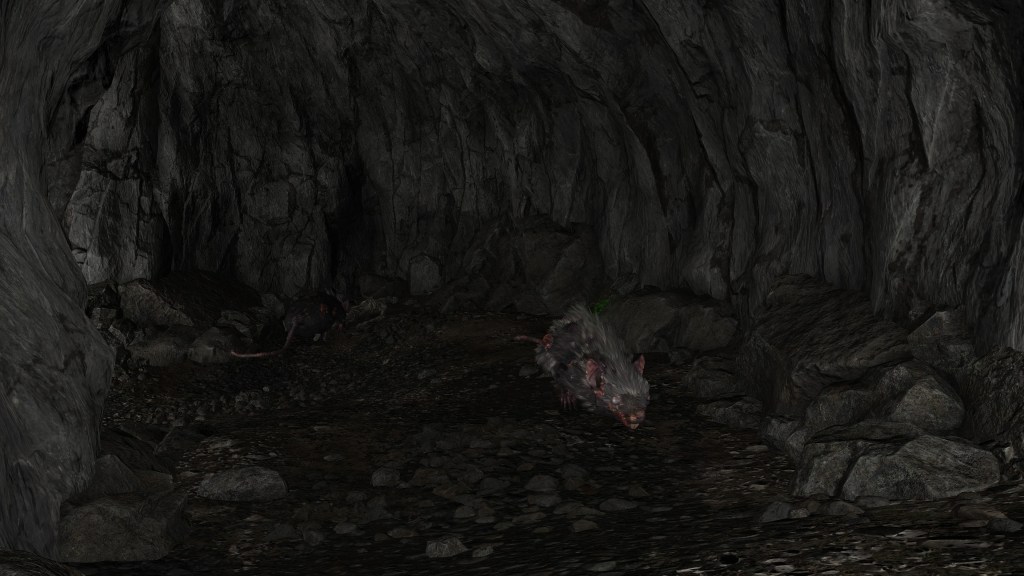
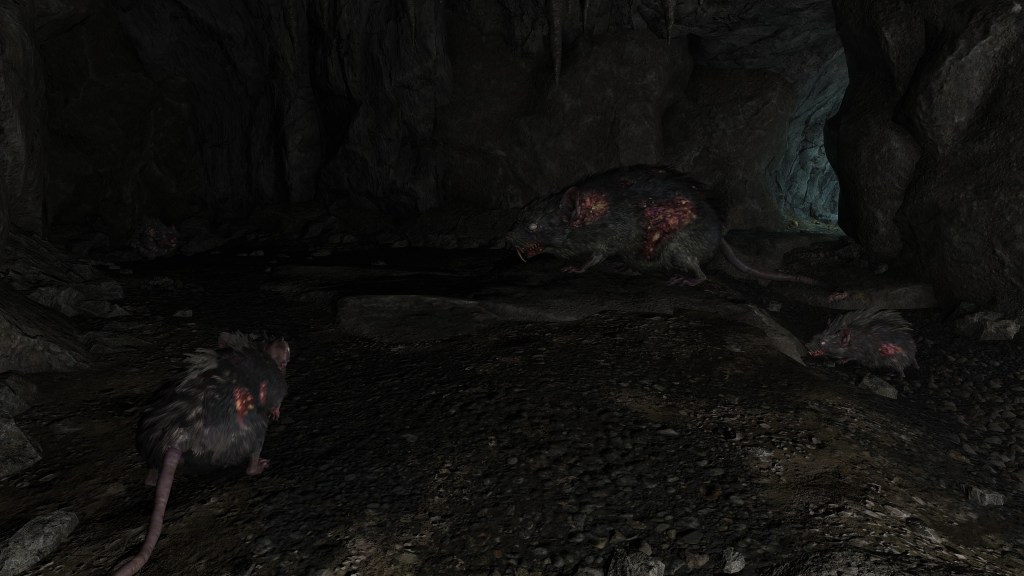
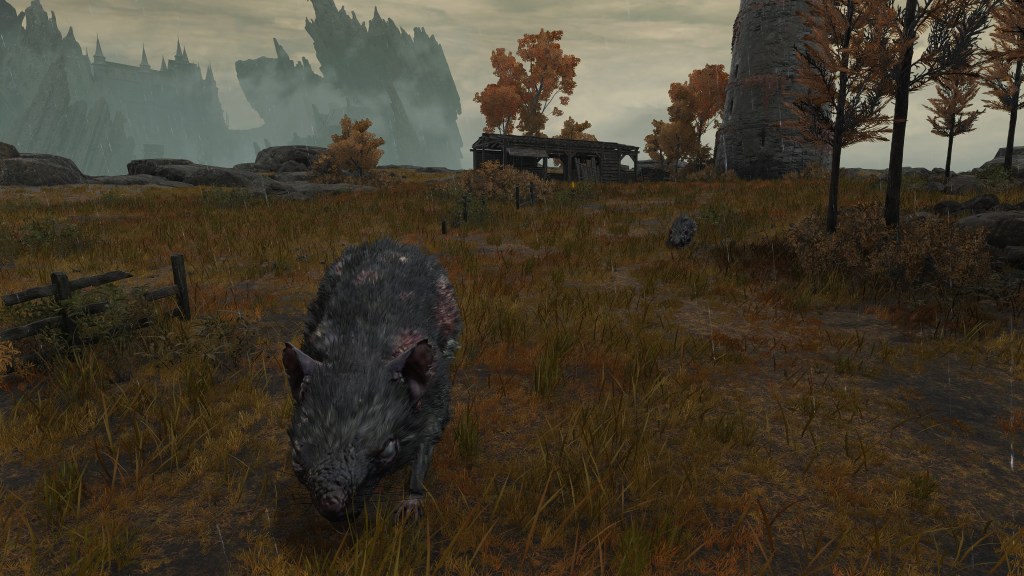
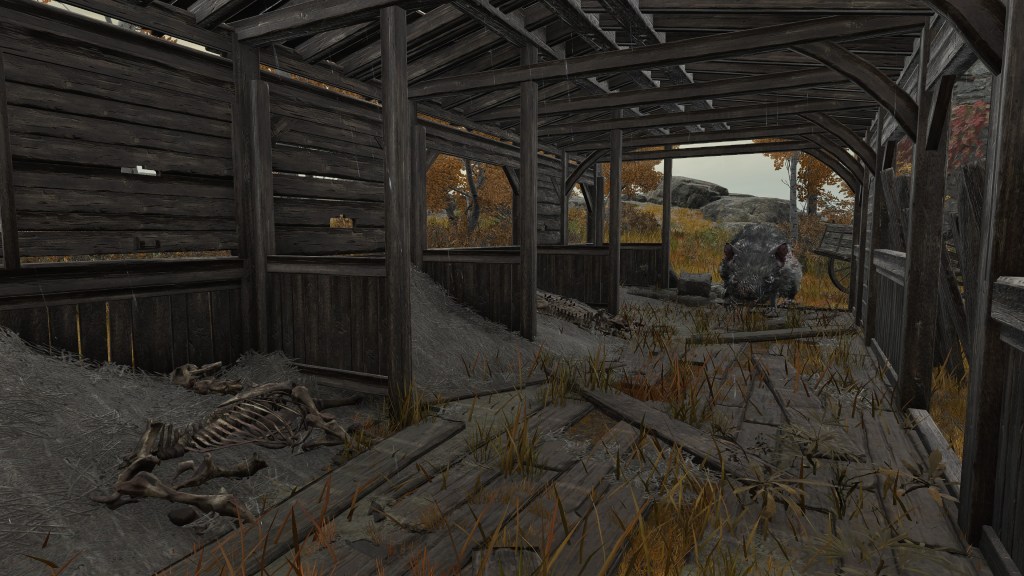
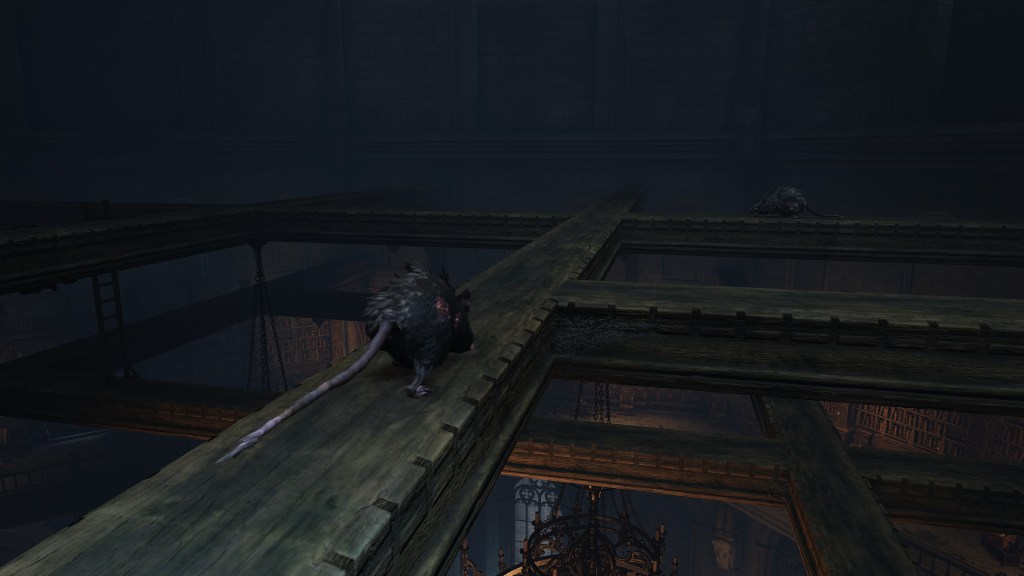
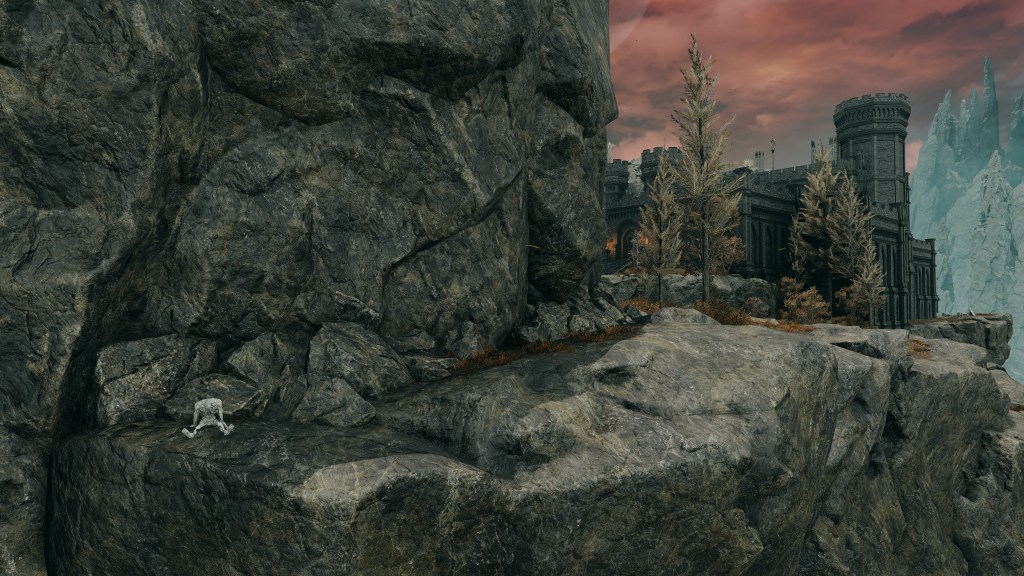
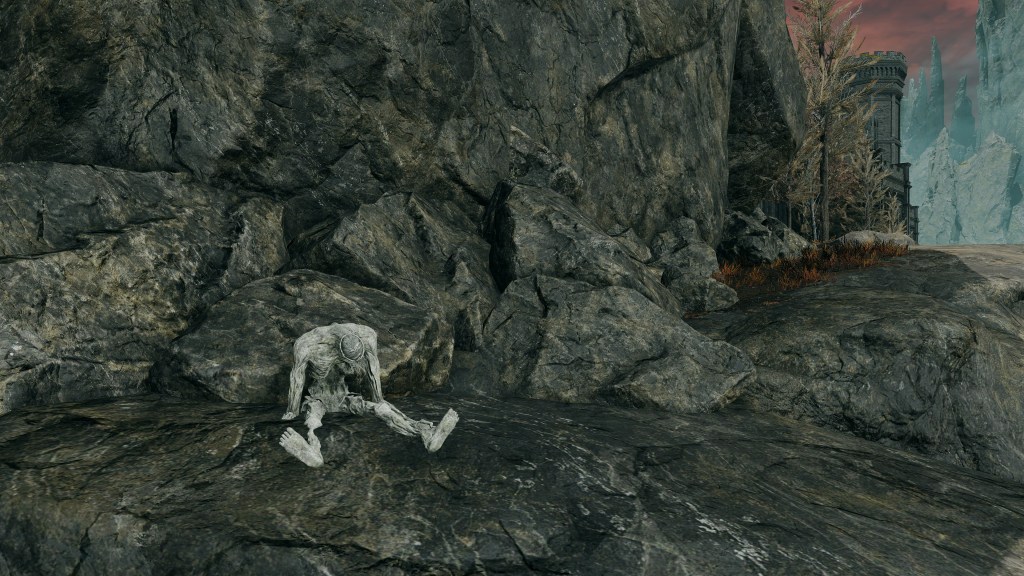
Evidently, the runes scattered far and wide across the lands, including the small fragments of the greater Rune Arc which we crush for a fraction of its original power. The fact the rune is universally acquired from slain rats reveals just how many owners across Marika’s empire these scavengers have nibbled on. Whether it is a far-flung cave or the rafters just overhead, vermin lurk around to nibble on people who collected a piece before they died. Some of this power also entered the Realm of Shadow via the Scadutree. Besides the local rats, we can acquire one from a naked corpse tucked around the cliff corner in front of the Fort of Reprimand, likely an escapee retaining proof of Marika forsaking them. Another is held by a noble corpse next to the lift to the Specimen Storehouse’s laboratory, probably a researcher wanting to contribute a rune shard to the jar saint experiments. This doesn’t affect the Arc itself when mending the Elden Ring; what remains is apparently sufficient for our purposes. Still, countless shards of gold were expunged, more significant than the random debris generated with holy arts.
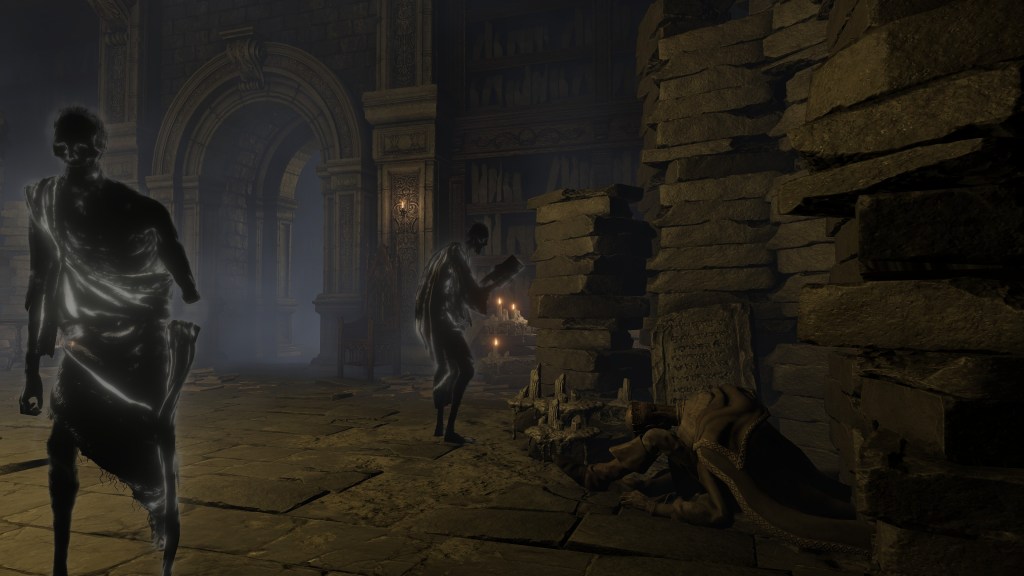
However, it wasn’t just small fragments of runes, but also Great Runes which were released into the world. These larger, mostly complete, Elden Runes have retained their unique properties along with their shape. Although a rune arc is required to enable their blessings, it is still an immense boost to our human bodies, providing more than just the vitality of gold. Such huge shards hold enough power to restore the Elden Ring with just a handful, making all other runes lost with the shock obsolete. And much like the Scadutree’s own bigger fragments from its shock, the Great Runes are liable to have landed closer to the Erdtree’s base. This is relevant since it is Marika’s children who ultimately acquire them. Whether on their own or with the help of servants and vassals, certain demigods ended up with a Great Rune in their possession. This lends itself to all the relevant parties residing in one place at the time, either as longstanding inhabitants or convenient visitors — and Godwyn’s funeral provides the perfect reason for them to all be gathered in Leyndell. As a result, they were the ones to collect.
Each owner of a Great Rune is regarded as a shardbearer, though it is more accurate to call them a “ruler” of their fragment. (破片の君主) If the complete Elden Ring makes one king of the world, then a piece of the Ring logically made them partial sovereign over it. Those who came to “rule” this fractured world consist mainly of Godrick, Morgott, Mohg, Radahn, Ranni, Rykard, Malenia, and Miquella. Members of the Golden Lineage all received the central runes aligned with the Ring’s main stalk, Radagon’s children with Rennala possess runes oriented to its left, and his children with Marika harbor runes oriented to its right. Since the last kind also include Rennala’s Rune of the Unborn, we can even view this as the separation between eras: before Radagon, after Radagon, and after Radagon became king. Perhaps for the shardbearers, this clean distribution is coincidence, but it at least suggests that something about those runes’ construction drew their owners to them. Regardless of preference, however, they each took a Great Rune for themselves. That was where the trouble began.
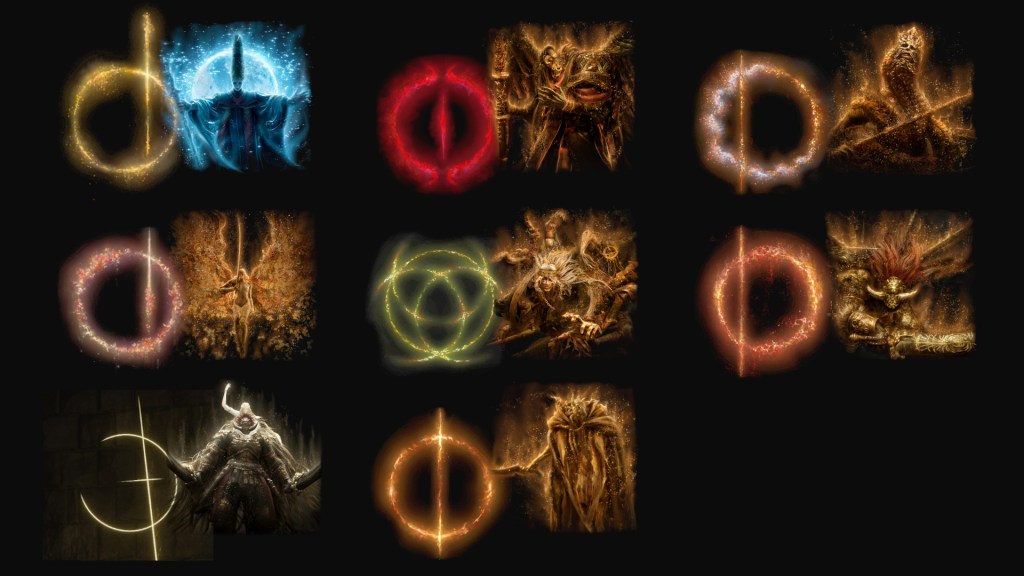
While it would be the humanitarian thing to return the scattered runes to the Erdtree so that the Order might be immediately mended, that isn’t what happened. Instead, every demigod kept the shards. And in becoming Rulers, they also asserted their candidacy to Elden Lord — even the three Empyreans claimed to want the mantle of their mother’s consort. Regardless of intentions, the contention for the throne was sensible. Even if initially taken aback by the Erdtree’s wrath, its princes and princesses must have realized the significance of Great Runes appearing before them amidst the shock. And once the royalty received clarification from the Two Fingers, circumstances opened up an opportunity: if they held onto their shards and bet the same from the others, no one would be able to restore the Ring, giving them leverage to demand the throne in exchange for their charity. The mere perception of competitors would dissuade the rest from freely relinquishing theirs. Suddenly, the shardbearers were all holding the world hostage, and it was only downhill from there.
The children who received Marika’s blood, the demigods, took ahold of the Great Runes, which are fragments of the Elden Ring, and went mad with their power, became warped, caused a Shattering War… and were forsaken by the Greater Will.
… Ahh, if it is Great Runes, the demigods have them. They are the children of Marika, the Elden Ring’s host, the Queen who is God. They were all warped by the power of the Great Runes, fought… but not a one can become the Elde King. But that’s why grace has been brought to you Tarnished.
Some fans have considered the possibility that the demigods are mentally compromised in some way due to the overwhelming arcane power in their possession, but the chances of this are minuscule, to say the least. Facing the demigods ourselves, we are provided no indication of the Great Runes directly influencing them physically or mentally. To the extent that they are warped, it is never attributable to the Great Runes but some other factor, several of which predate acquiring a mass of gold. This is consistent with Rennala, who has owned a Great Rune for much longer and suffers psychological troubles stemming from events prior. One might argue that the runes only exacerbate existing vulnerabilities rather than create them whole cloth, but plenty of shardbearers still act perfectly reasonable even if shortsighted or repugnant. None warn us of such dangers even as we collect Great Runes either. All in all, there is no reason to believe that the Great Runes exert a force upon their respective ruler.
Put simply, the demigods have no one to blame for their actions but themselves. Whatever their psychosis, it was their reaction in the face of a promise for ultimate power which led to war. Their “madness” was a willingness to kill kin for their runes — a moral failing, not a mental one. If anything, it is the rulers warping their shards. Every Great Rune has an appearance and effect reflecting its shardbearer in some way, some expressly infused with the owner’s will. This implies that the fragments are shaped in part by the demigod holding onto them. This isn’t the sole criteria, as there is its existing shape and function within the Elden Ring. Still, this proves that the runes have their own reactions to external stimuli. The gold may not be truly alive, but it is influenced by life and so has been warped physically.
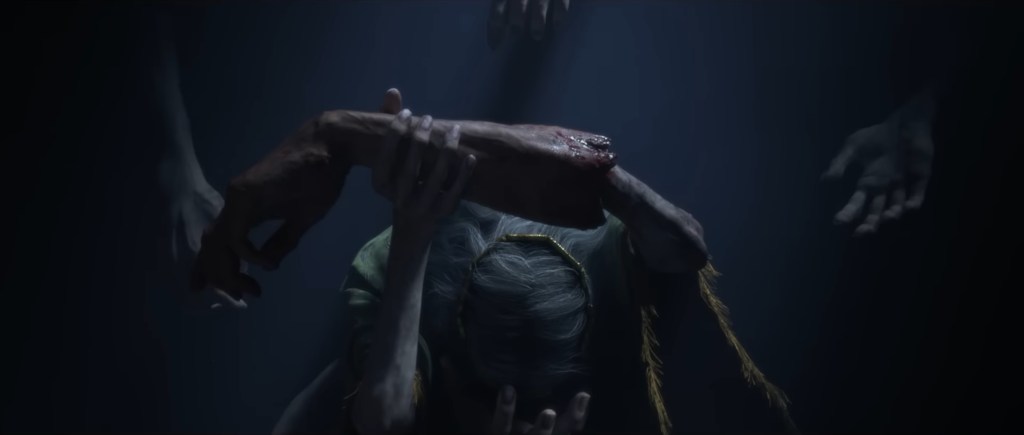
This tension between the effects of the Great Runes on their owners and vice versa is reflected in an IGN interview before the game’s release. When asked about a singular theme for enemy or boss design, Director Hidetaka Miyazaki spoke of the warped power each demigod had inherited along with the individual element. He later references how the heroic mythology to their design also contains these mad distortions. But if the only warps to the runes come from the demigods themselves, then it is illogical to say that the runes gave them the madness; it would already be theirs. Miyazaki thus seems to be speaking retroactively: the demigods inherited the runes, became warped and mad from the power itself, passed that so-called “mad taint” onto the runes, then “fell to ruin” as he describes carrying both. In short, the Great Runes brought the demigods power, but it wasn’t that power which warped them in anything but the most abstract of sense, which matches the interview’s question on themes. The dispute between the demigods ran much deeper than attaining power beyond them, we just see the trigger’s end result.
Part of that trigger was intense military buildup. Whether from their own private armies, defections from the royal army, or new enlistees, almost every shardbearer amassed a force to protect themselves and challenge the others. With them came an array of aristocrats, each choosing their sides for who they supported becoming Elden Lord in the conflict. Because the Shattering was a civil war, every side was using the same swords, shields, and even crossbow bolts, with armors also more similar than not. Barring questions of individual skill and collective strategy, the conflict was gearing up to become a nasty affair, with every demigod raising their own standard prepared to clash. It didn’t matter if any actually wanted the crown, so long as opposition kept it out of the others’ hands. The shardbearers’ standstill was soon becoming a standoff, with little time for the headless royal government to act. But then, a new king stepped into the vacuum, an Omen of all things shaking up the calculus.
Shield with its face covered in brass. Large-class for a medium shield.
It was widely used in the Shattering War.
Wood-made tower shield. It was widely used in the Shattering War.
The greatshield has high cut rates along with guard strength, so it is easy to repel enemy attacks.
Bolt the regular soldiers of a Ruler army used. High-quality weapon decorated with a design.
It has stronger attack power than everyday bolts.
Curse in Disguise
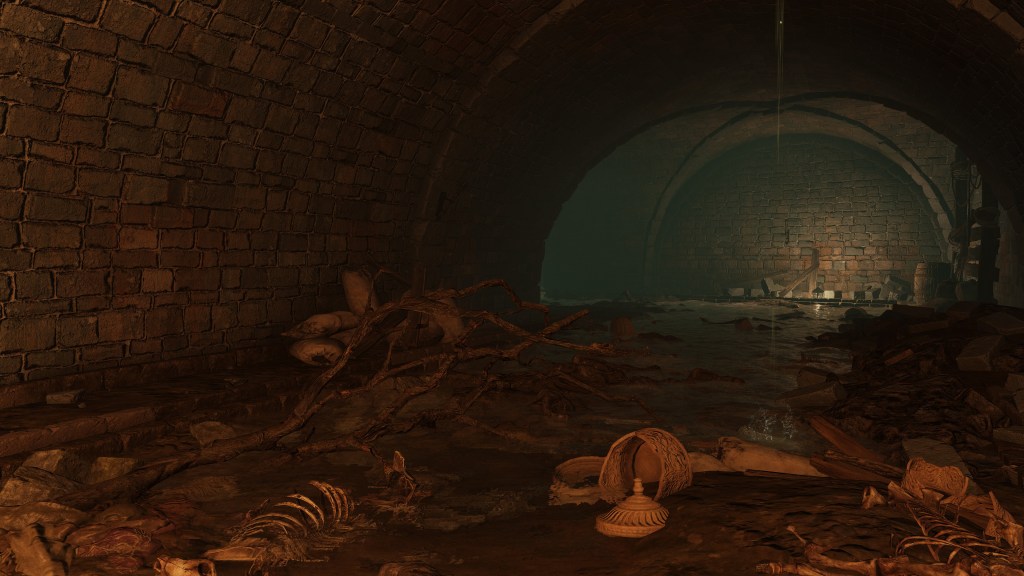
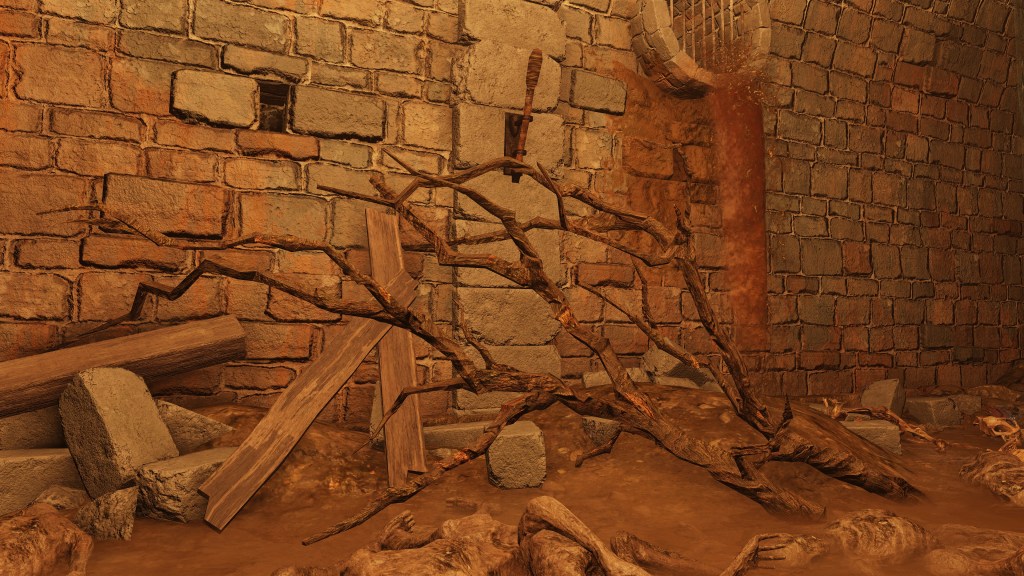
No one would expect Morgott to one day be king. As an Omen unceremoniously dumped in the sewers to fend for himself, his prospects were anything but bright. Even among Omen, he wasn’t particularly pious. Between the Fell Twins, the one representing Morgott is the wild-horned Omen existing on the fringes of sewer society. This suggests that, growing up, he refused to be collared, choosing to let his curse run wild as he roamed the network of channels and pipes beneath Leyndell. This rebellious attitude comes as no revelation, considering the description for his Great Rune makes a point of how the Omen didn’t love because he wasn’t loved. Having internalized the betrayal of his parents, clan, and all society, the young Morgott understandably felt resentful, leading him to harden his heart. No one could get close — certainly not to chain him down like a beast. He already lived with one shackle trapping him down there, he didn’t need another going about his day-to-day hunting for rats or scraps.
Recollection of Morgott, Omen King, engraved in the Golden Tree.
Can acquire the owner’s power via the Finger Reader. Also, can use to acquire vast runes.
Even though he was born a graceless omen child, Morgott tried to be the Golden Tree’s protector. For he who wasn’t loved so didn’t love nevertheless loved it.
Even so, we see that the short-lived weapons from the priesthood ended up in the young Omen’s hands, which he used to help him survive as the threats grew to not just disease or vermin but also foul Omenkillers like Rollo. This only helped him further develop his mastery over his curse. As experienced in the Fell Twins boss fight, “Morgott” learned to use the cursed power he unleashes to briefly enhance his sword and channel that power into attacks against his foes in general. On his own, he had nothing to rely on but the vile spirits haunting his nightmares. But for Morgott, nothing was probably more terrifying than being abandoned by others, making those nasty faces almost cute by comparison. If he could turn them into a tool for his survival, he welcomed it; dreams were fleeting, the fight to live was forever. As a result of that constant strife underground, the demigod honed his skills with a blade. Based on the boss fight, he didn’t use his talent for incantations, probably reviling the arts of the people who put him down there.
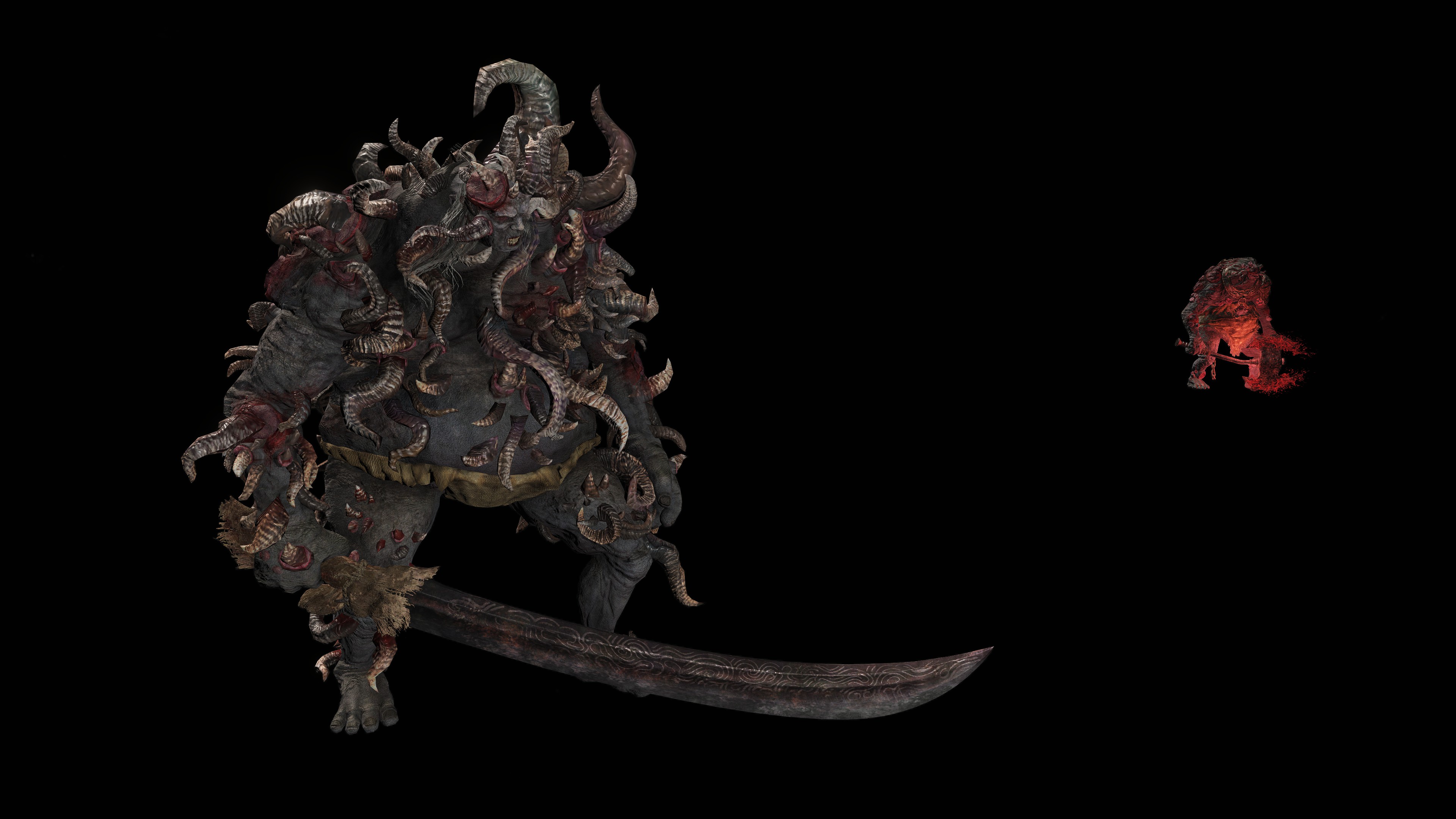
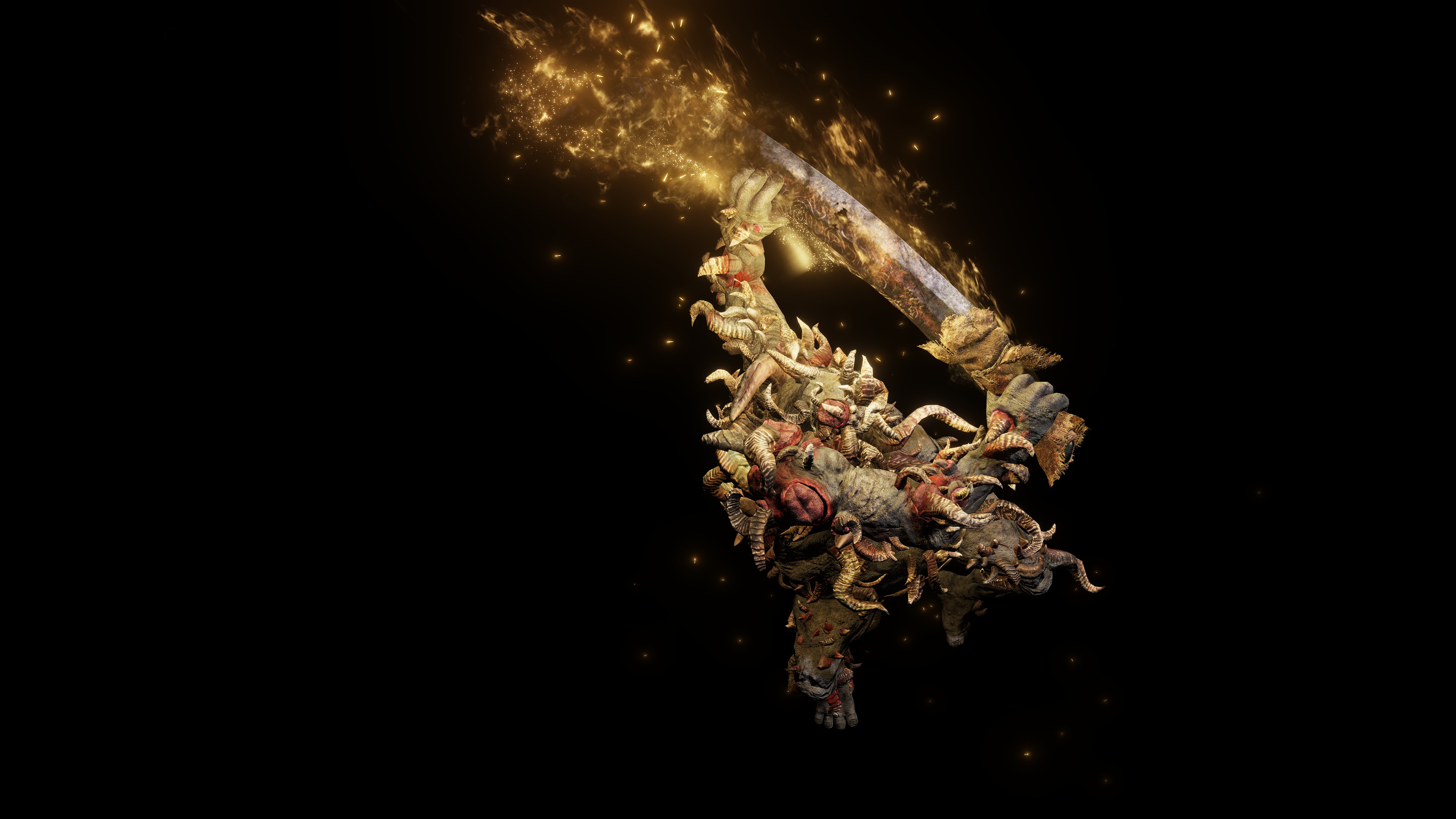
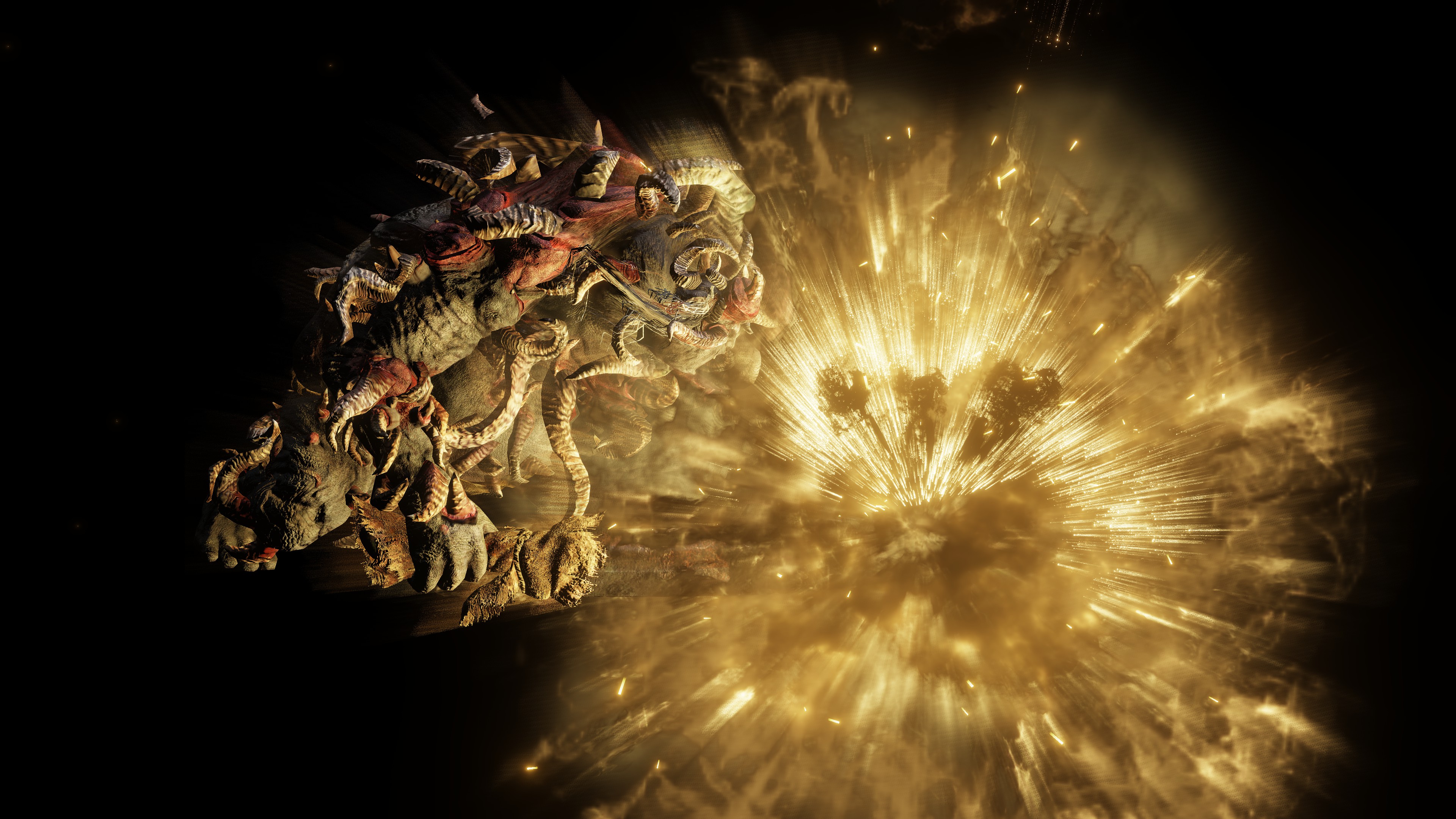
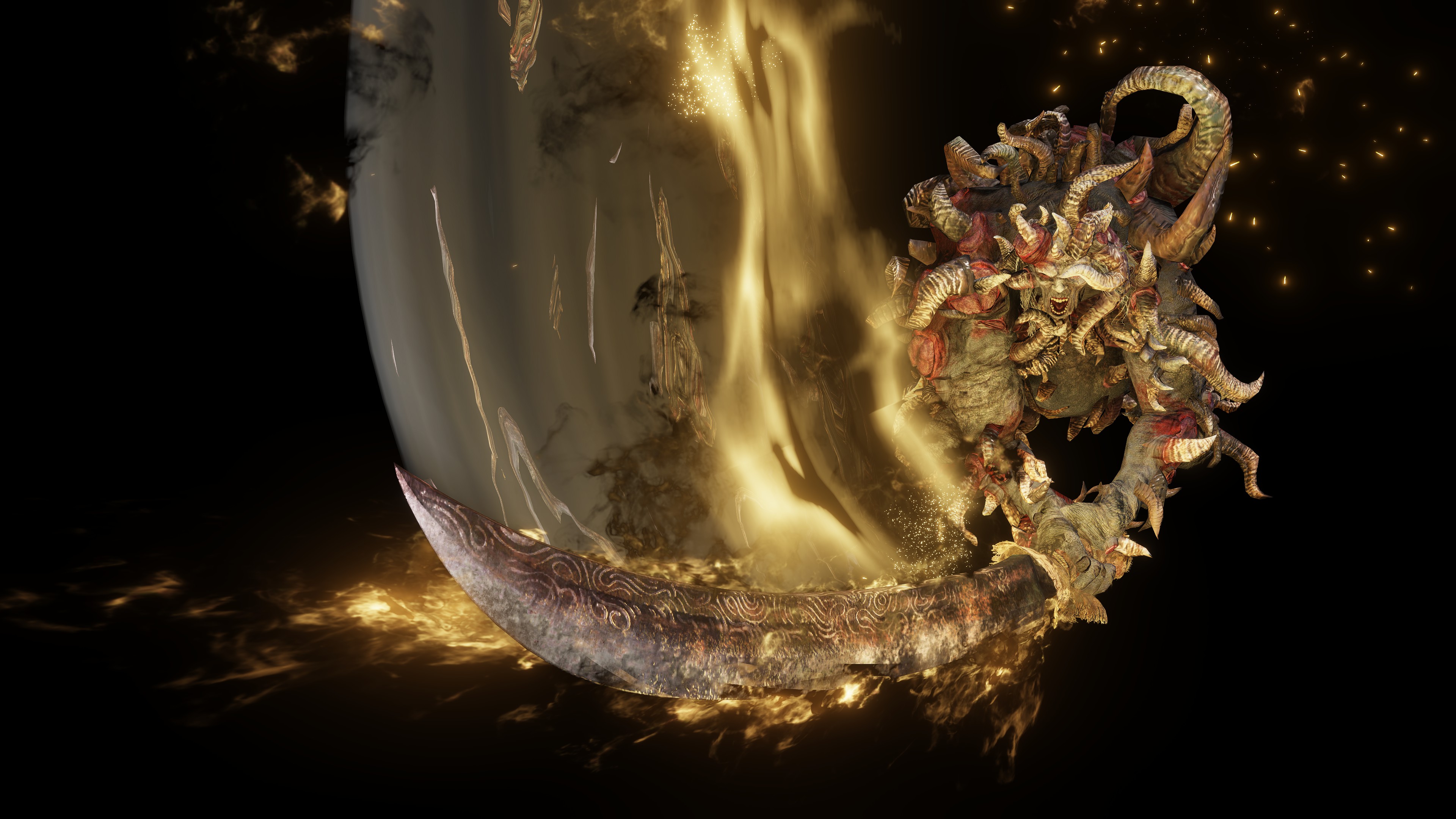
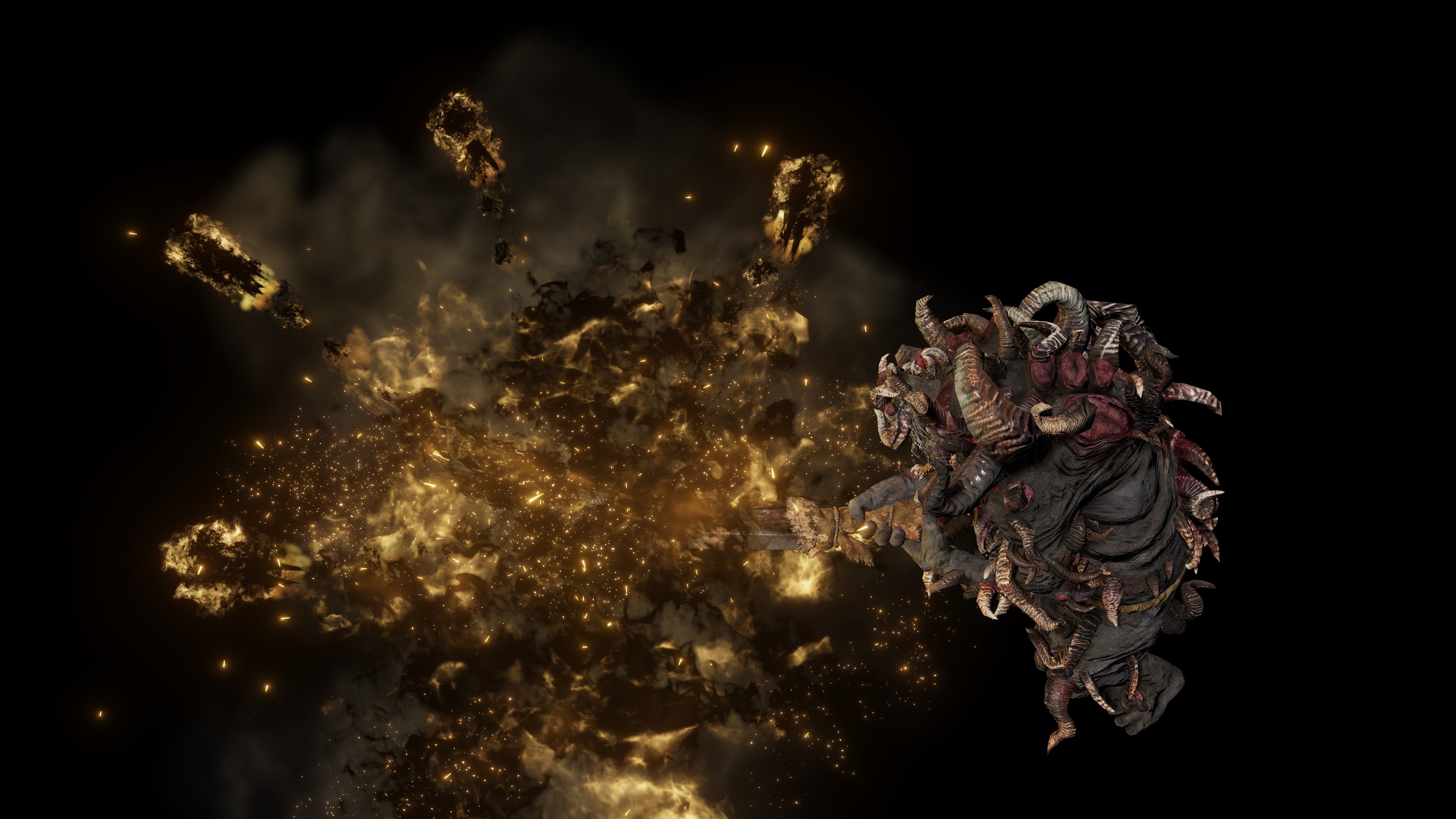
But one day things changed. Morgott suddenly found himself out of the sewers and assuming the throne of the city which banished him. More importantly, he is regarded as “graced” despite his graceless origins, with Gideon additionally referencing him as the “formless” king. Indeed, before his character was scrapped, Shanehaight would have talked up the “Grace King” (祝福王) ruling his city. After taking credit for us hunting the Omen underground at his demand, the lowly lordling would express jubilation at the chance to see Morgott’s form and finally raise his family’s station — only to be horrified to discover his “beautiful” city of nobles was governed by a “hideous” Omen of deceit. Clearly, none within the general populace of Leyndell, let alone the Lands Between, are aware that the demigod on the throne is a “corrupted” prince, the king neither making public appearances nor letting word leak out of his true nature. He was, for all intents and purposes, more like the golden capital’s shadow king.
One is Graced Morgott, the formless king, master of the royal capital of Lowdayl.
… Oh, this is… Do you hunt the omen children?… Hmm, hmm, this is definitely… if so, then that’s a different story. You are a Tarnished, a savage, but it appears you understand the reality to some extent. Very well then. I shall permit you a sojourn in the capital a short while. And so, in the name of my family, Schönheit, I command you to hunt the omen children.
Oh, I have been waiting for you. You probably have been hunting the omen children of the dumping ground. I cannot hear those hideous cries anymore… Well, at any rate, you have done well. All the Tree priests will be exceedingly happy… No, not only that… If I were to shrewdly report this as my achievement, I might even be permitted to have a look at the form of the Grace King Morgott… How magnificent.
One of a measly peerage family getting to see the Grace King should become the clan’s eternal honor… Ah, forgive me, I had forgotten about you. This is an heirloom passed down us Schönheits. I shall present it to you as a reward for following my superb command… It is too much for a Tarnished like you, but well, no matter. We are celebrating the start of the Schönheit family’s honor… Now then, I will be making the arrangements. Should I see the Grace King by any chance, I cannot allow myself to look shameful.
… You still haven’t hunted the omen children? You appear to be more foolish than I thought… But, very well then. I shall wait. Patience is also the beautiful quality of a noble.
… You still haven’t hunted the omen children? Their, those hideous cries… I feel like I am losing it.
… Kill the King… In order to prevent him from corrupting gold any further… kill the King of Deceit, Morgott!
This situation begs many questions, first being why? How does an Omen, among all the demigods, become the king of Leyndell? Certainly not by himself. At the bare minimum, Morgott’s ascension requires a significant backing from the parties operating the government. If they refused to serve an Omen, then it would be impossible for Morgott to rule the city without the truth becoming public knowledge — the demigod needed some portion of the bureaucracy to be a buffer between him and the people. But who would have the public’s trust even as the king behind them refused audiences? The obvious candidate is the Erdtree priesthood. The priests hold credibility as the teachers of faith, especially in the royal capital which doubles as the religious center for Erdtree worship. Shanehaight likewise would mention reporting to them before getting permission for an audience with Morgott. With the god and Elden Lord absent, the Erdtree cathedral was the one faction to logically fill the vacuum. In that case, it follows for those same clerics to install Morgott as king.
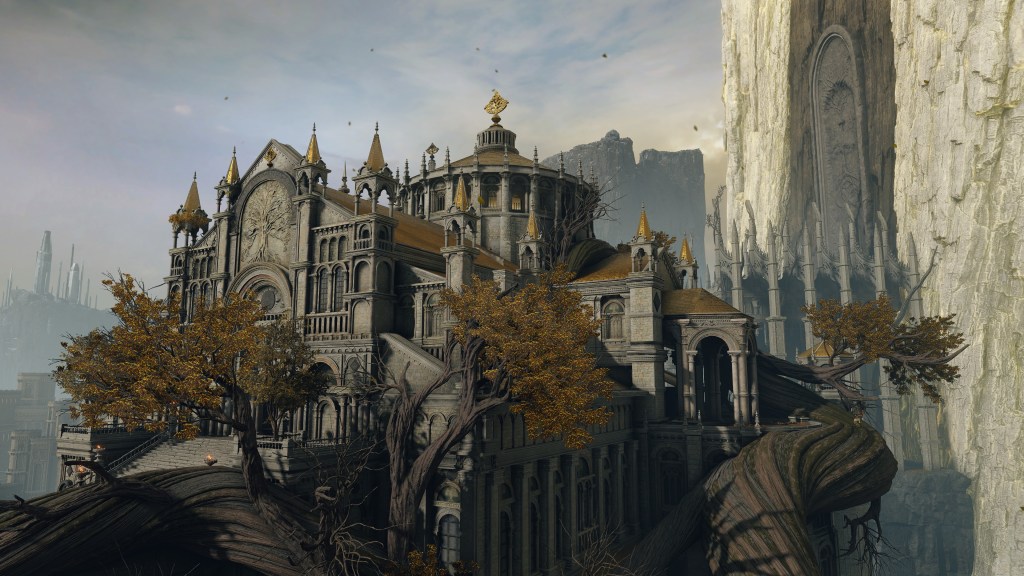
Naturally, becoming king of Leyndell also held implications for Elden Lord. The throne room beneath the golden tree is where Morgott steps out of the shadows to confront us in Leyndell, and in the story trailer, he lays a crown upon the actual Elden Throne before leaving — the same kind worn by Godfrey and Radagon before him. The royal knights and soldiers of Leyndell who previously served the Lord are likewise now following Morgott’s orders. As king of Leyndell, the Omen is already acting as if he is the Elden Ring’s guardian; a cut description to his robe going so far as to label him Elden Lord. He is the man in charge anyway, so why limit his kingship to just the city governor? The priesthood must have always intended for him to assume that role of the Erdtree’s defender, and his position behind the Sanctuary made hiding the Omen’s true identity easier. From there, fooling the citizens was simple enough; with so many demigods in the royal family, what was one more, hereto unknown, child of Marika taking power? What mattered was the confidence the cathedral placed in him, and the regime’s subsequent governing.
Robe of Morgott, Elde King.
Choosing an Omen for the Elden Throne might sound peculiar at first blush, but it is actually consistent with their ministry. As already established, a significant portion of the priesthood are sympathetic to corruption. It was this pity which drove the clergy as a whole to arm the Omen in opposition to a dissident splinter group. Compassion for the Order’s outsiders was dogma, and some take it to the extreme. At an Omen encampment, a corpse with a perfume bottle lays behind the brutes at the campfire, implying that a perfumer attempted to ingratiate himself — it didn’t go well. That kind of suicidal empathy can even be spotted in Leyndell. Slaves of the eastern ward have rebelled, misbegotten mutilating humans after death in their long-seething resentment. Free to return to their pagan ways, the rebels pray to their ancestors in the quarter. And cooperating with them, receiving their respect, are perfumers. These priests, in their sympathy, have betrayed their kingdom to a slave revolt, the one with perfume bottle remaining loyal to the kingdom culled in the streets like the rest.
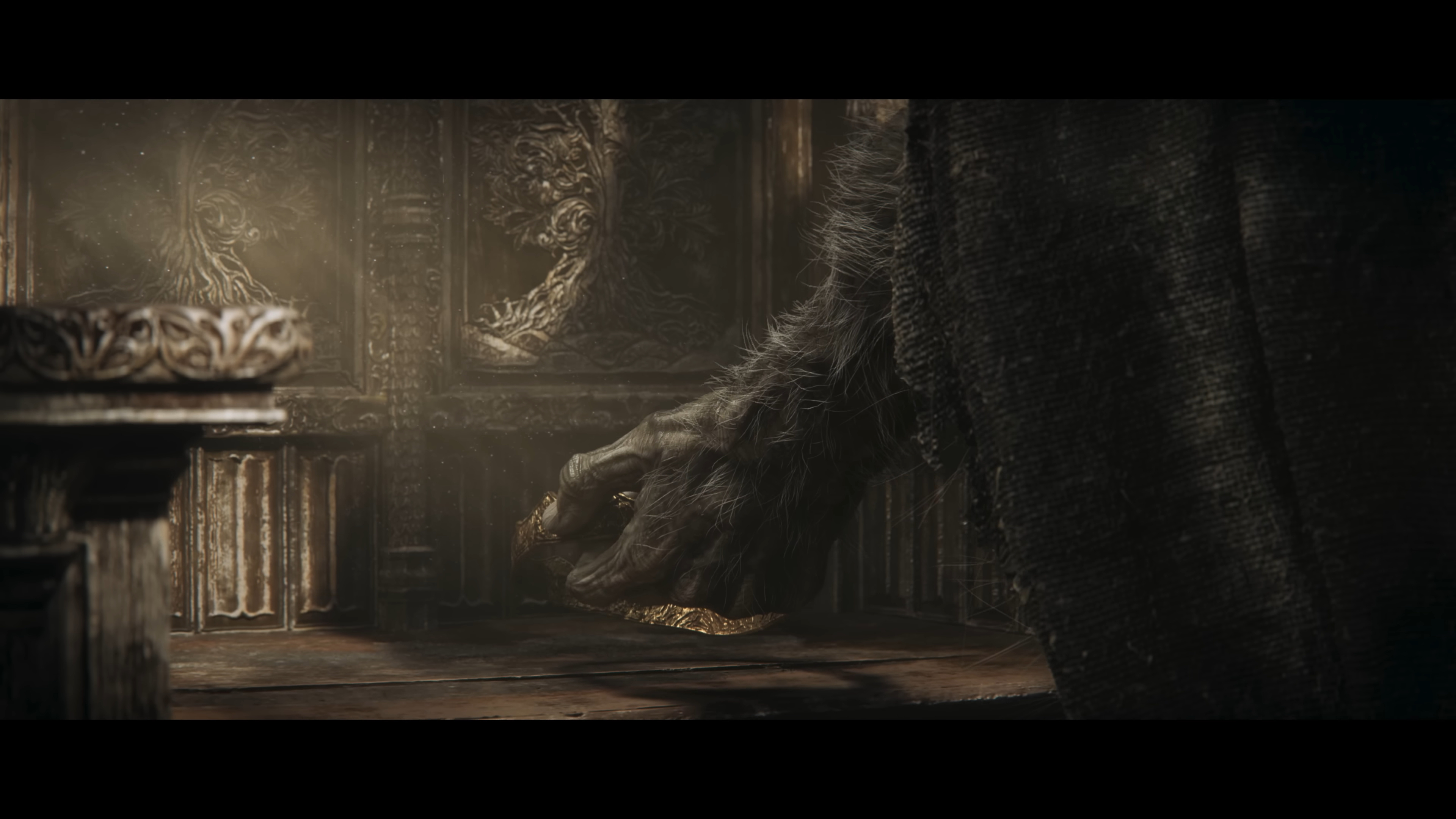
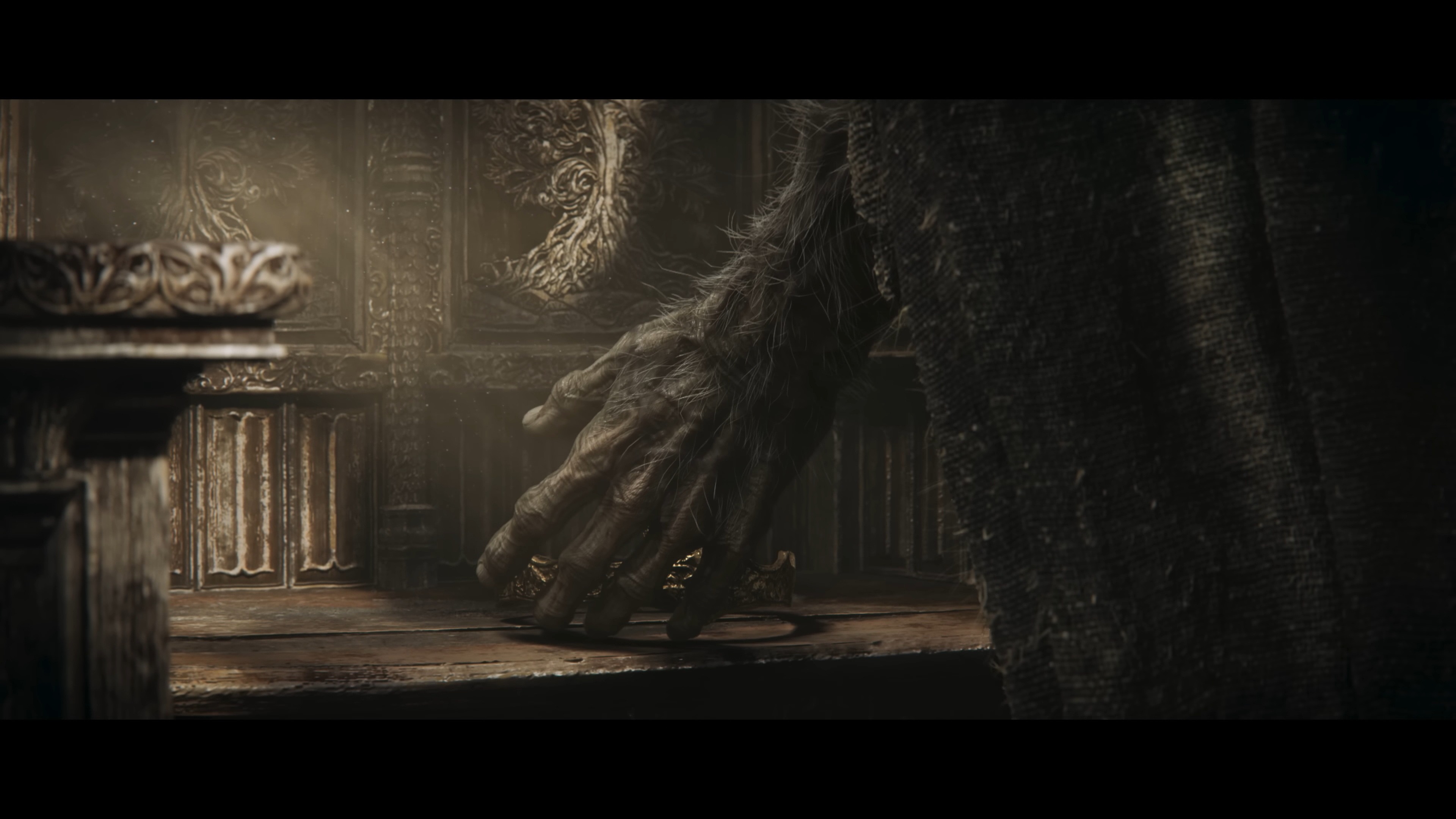
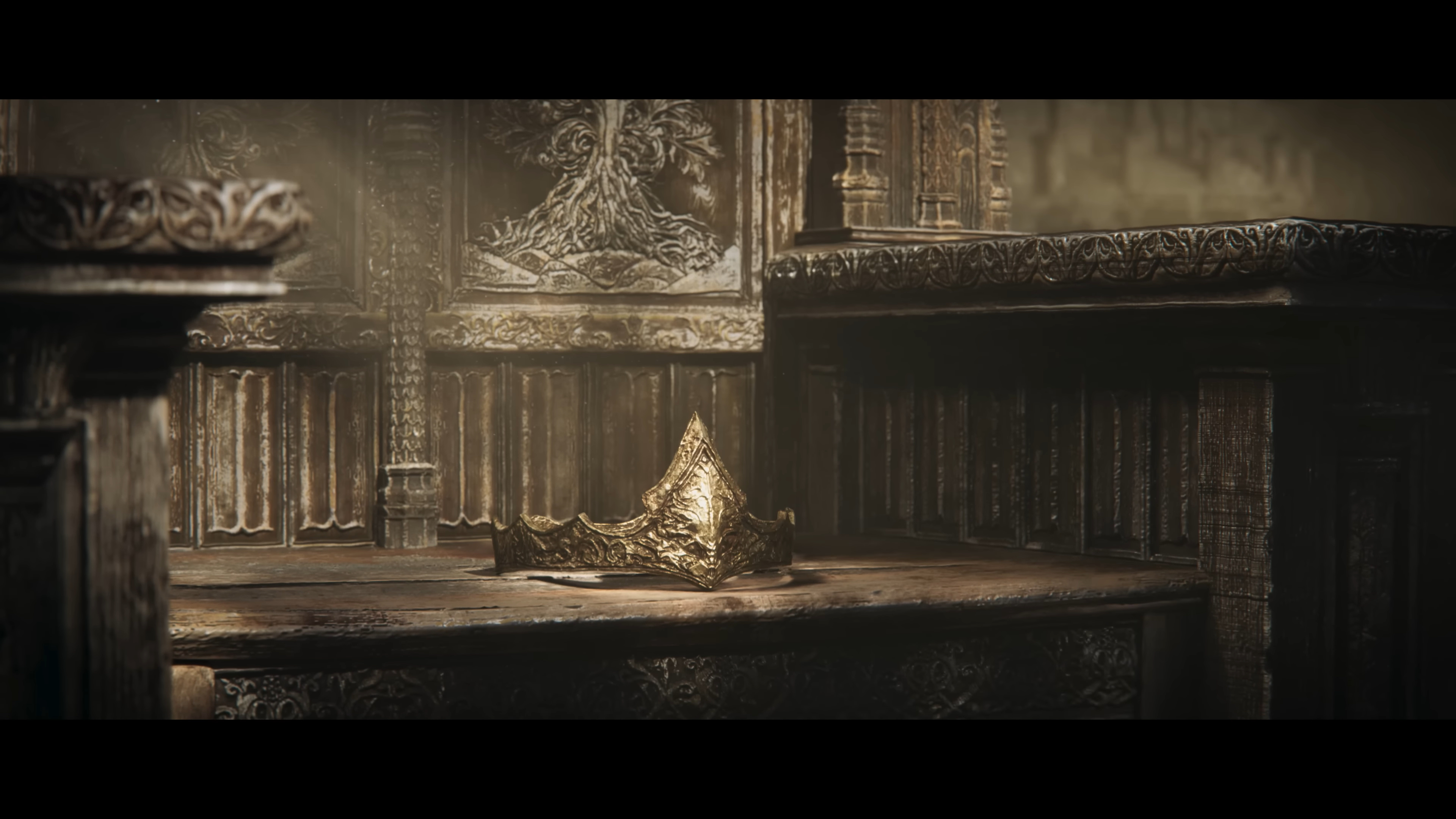
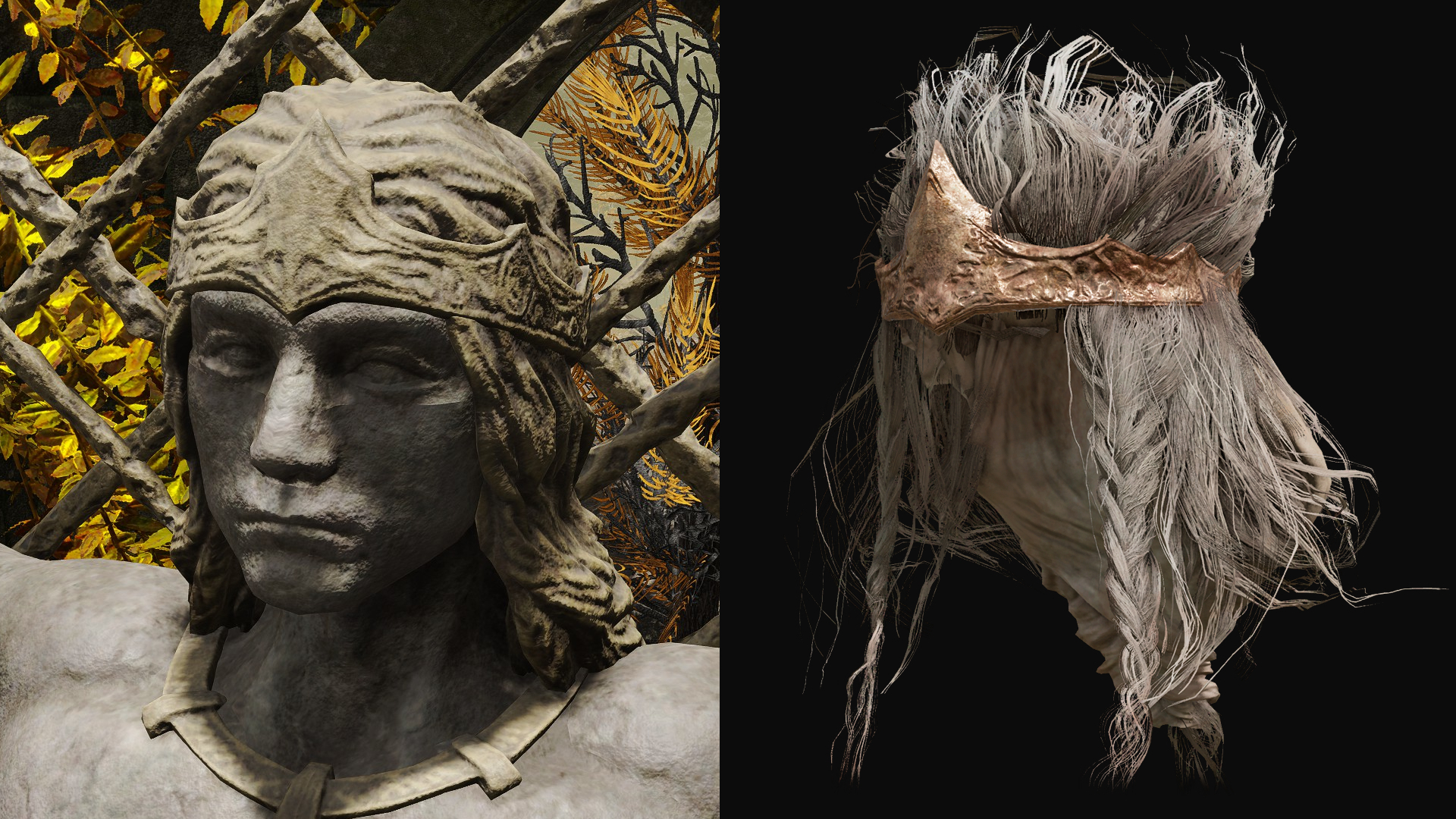
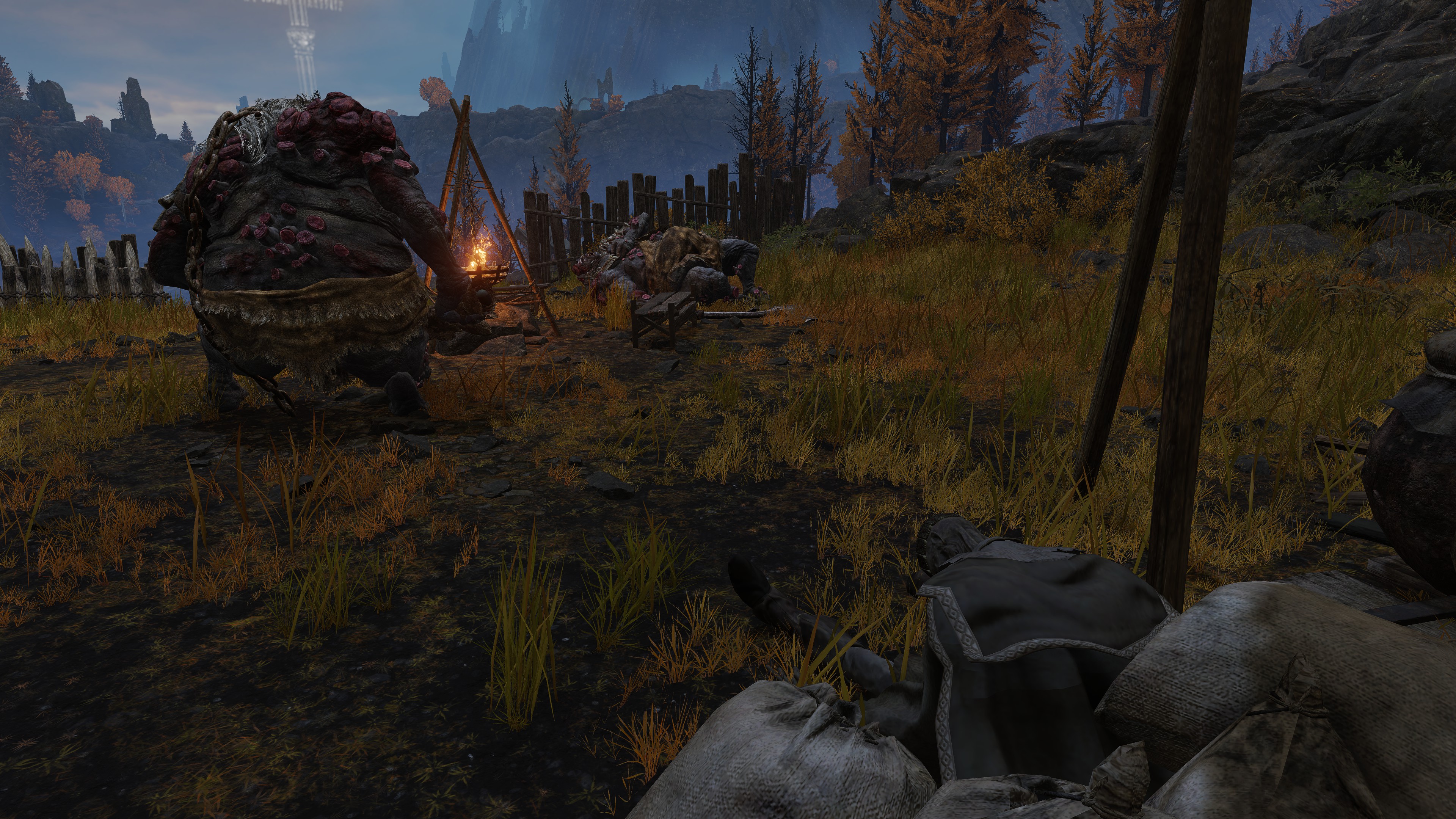
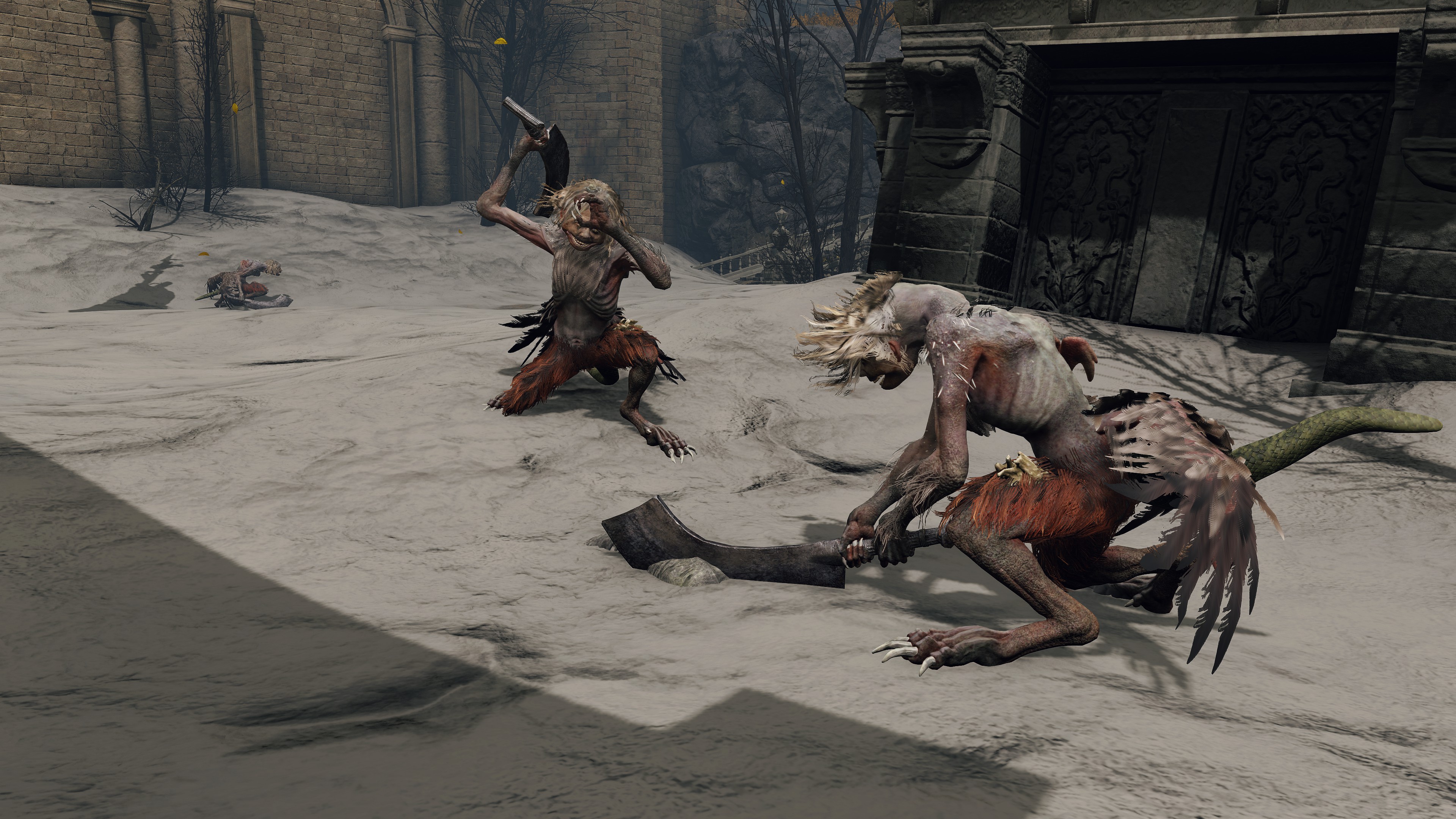
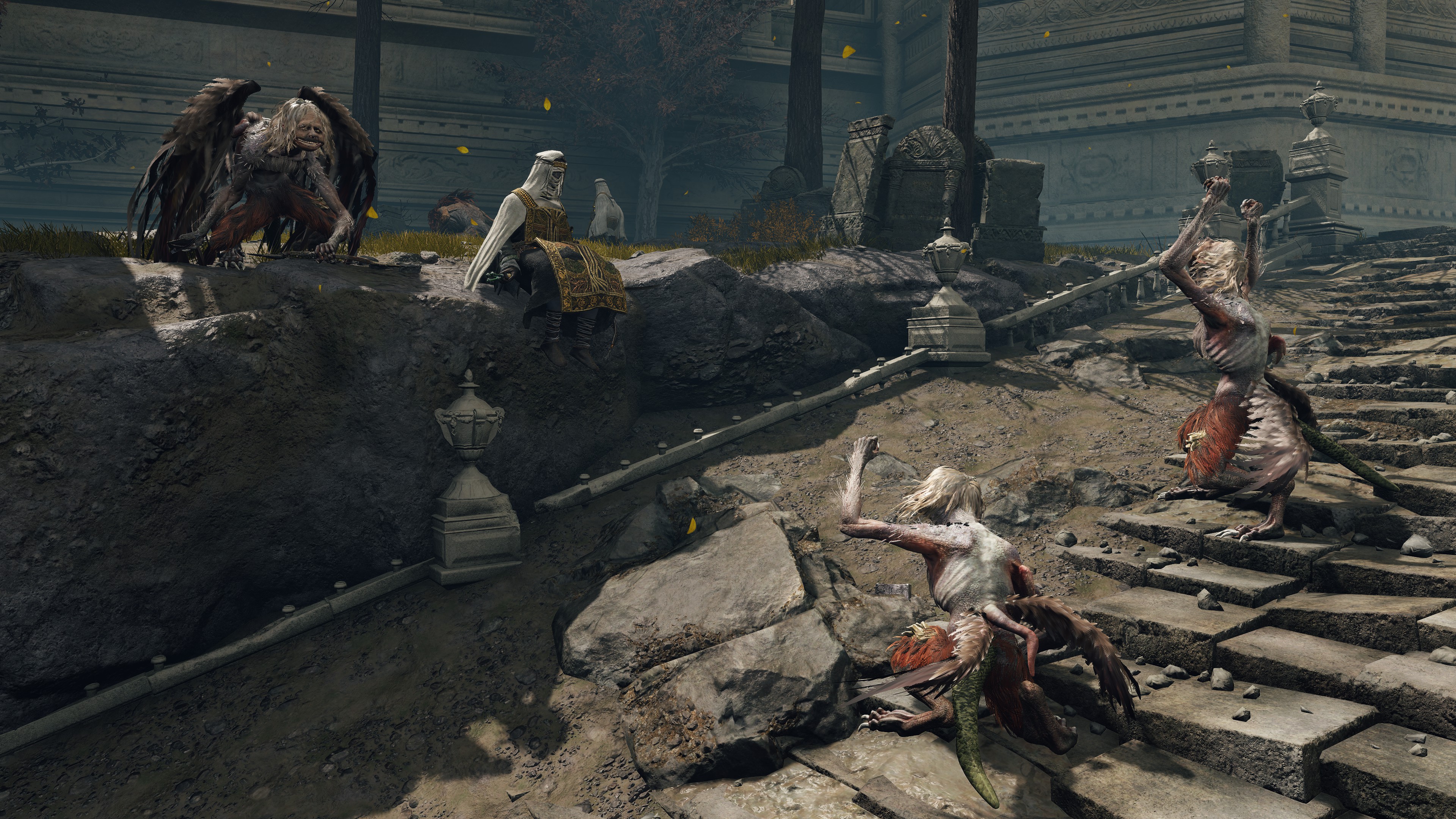
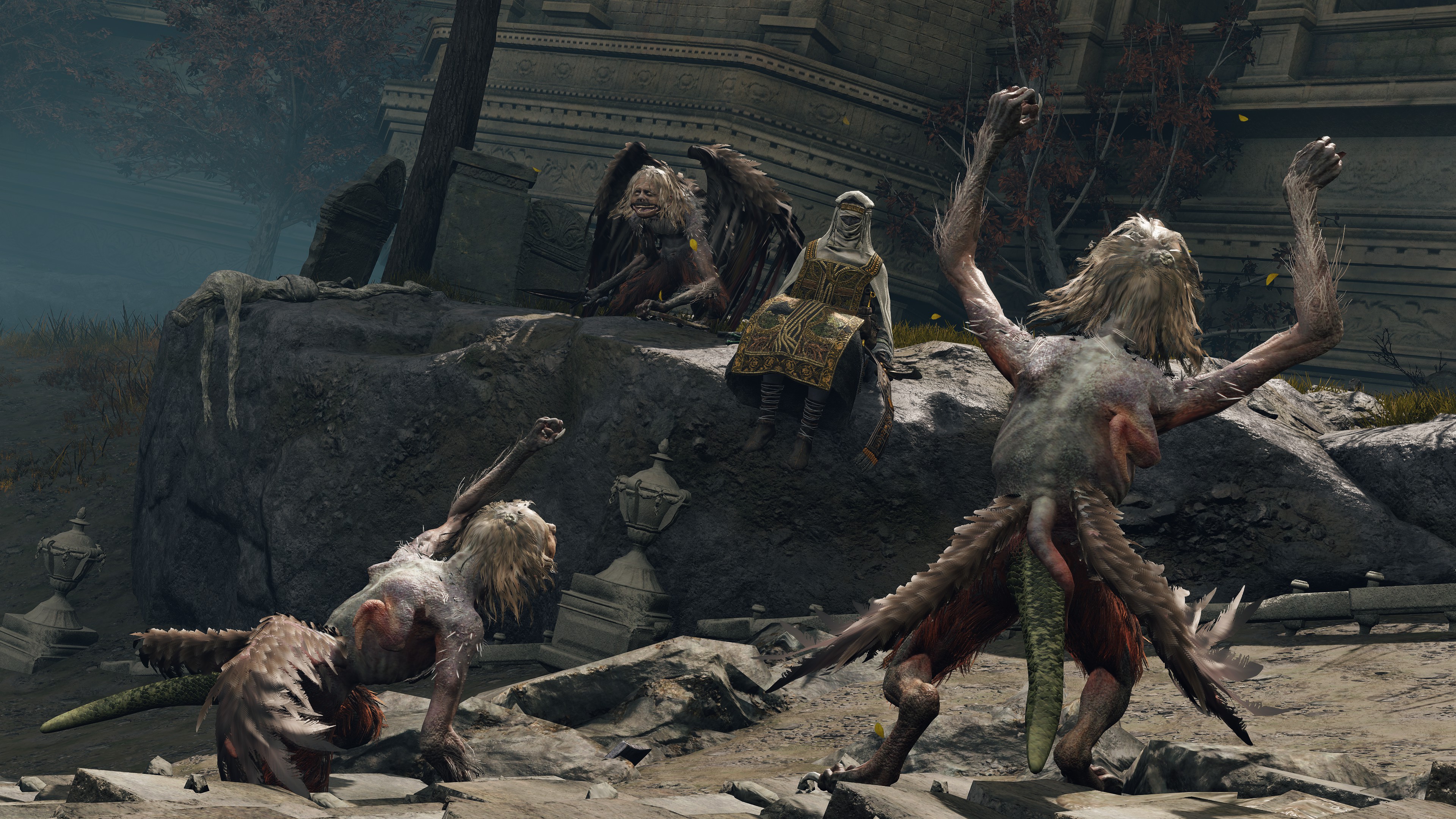
With all this in mind, it isn’t so odd to think that the clerical establishment would be receptive to an Omen king. Albeit corrupted, the twins were still members of the Golden Lineage. Lack of clear succession aside, a child of Marika would be ideal to maintain continuity within the system. Stability of the kingdom also demanded someone promptly fill the vacuum the god and her consort left. The priesthood assuredly recognized how demigods would soon begin vying for Radagon’s seat. With shardbearers holding all the leverage over the Elden Ring’s fate, them killing each other to achieve the numbers needed to repair the Elden Ring was a foreseeable outcome. Preventing civil war in the streets was the clergy’s top priority, if only for their own survival. For that, they needed to fill the gap before the factions finished currying favor and Leyndell’s own army fell apart. But who to back when any of these demigod contenders might be part of the conspiracy which shattered their Order in the first place?
Enter the Omen princes, men with no possible connection to the Black Knives plot. They were the safest bet against undermining the Golden Order further. The only problem was that these isolated brothers needed to own a Great Rune to counterbalance the other demigods, but that was easily remedied. As gatekeepers to the Erdtree, the priests themselves were positioned to obtain a number of Great Runes. According to its description, Morgott’s rune is undeniable proof that he was king of Leyndell, implying that receiving the rune and receiving his crown are connected. If the priesthood installed a shardbearer as their liege, then they must also be how the Omen twins obtained theirs. The perfumers collecting Ring fragments for themselves likewise justifies foreknowledge of conflict with others holding the same power. The stakes were transparent to the holy men, and they needed to act quickly.
Great rune of Morgott, fragment ruler. Greatly increases maximum HP via its benediction.
His great rune is the key ring carrying the stalk, and it denotes two truths.
That the Omen King was born as a golden clansman, and that he definitely was the King of Lowdayl.
Therefore, the Erdtree priests most likely approached the Omen twins with their offer of a Great Rune and the Elden Throne, to which Morgott accepted. If the priests supplied the runes, then their choice of owners is just as telling about their motivations. The anchor runes holding the others together at the center have come to represent Godfrey and his clan for their similarly essential place in the kingdom’s foundation. For Morgott and Mohg to own similar runes, the priesthood must have been specifically searching for someone of Godfrey’s blood to assert strength as king. If they wanted to protect both the Erdtree and the capital from bloodshed, they couldn’t go wrong with one of the Golden. And with two options both unrelated to current-day politics, the perfumers could afford to fail convincing one. If anything, they might have been surprised when the one to accept was a twin so rebellious in youth. But what the priests might not have realized was how much the unloving prince had matured in more recent years.
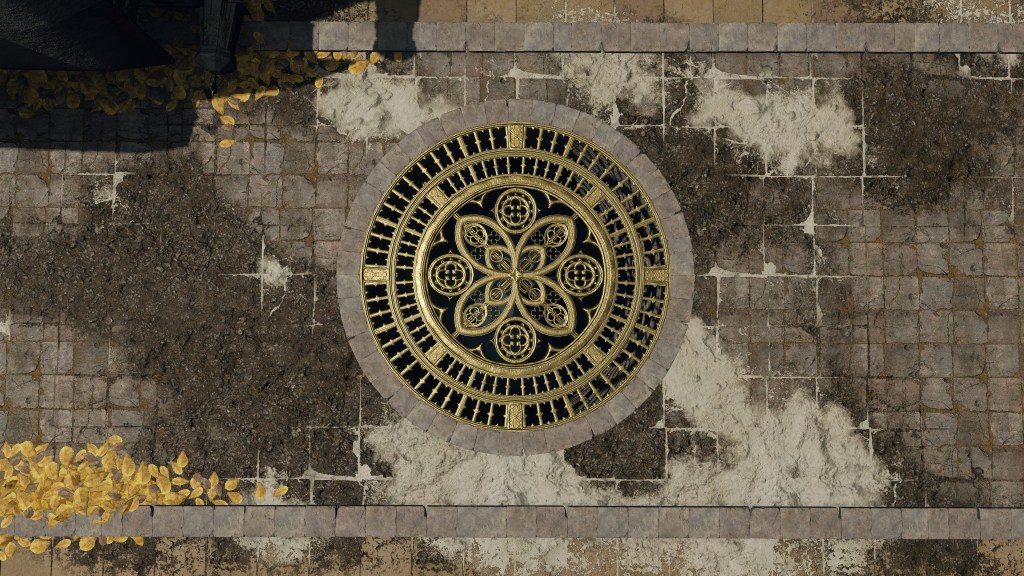
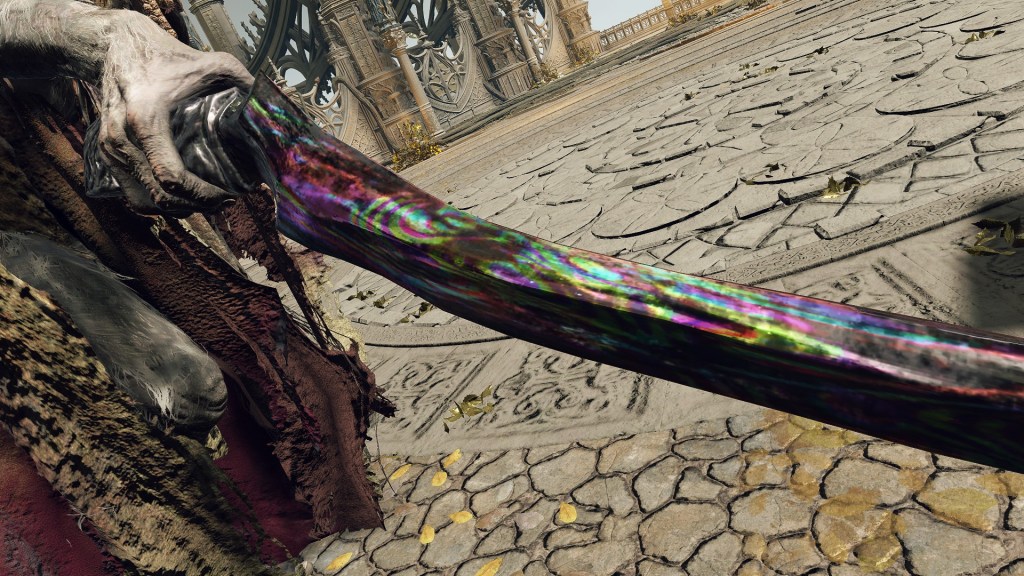
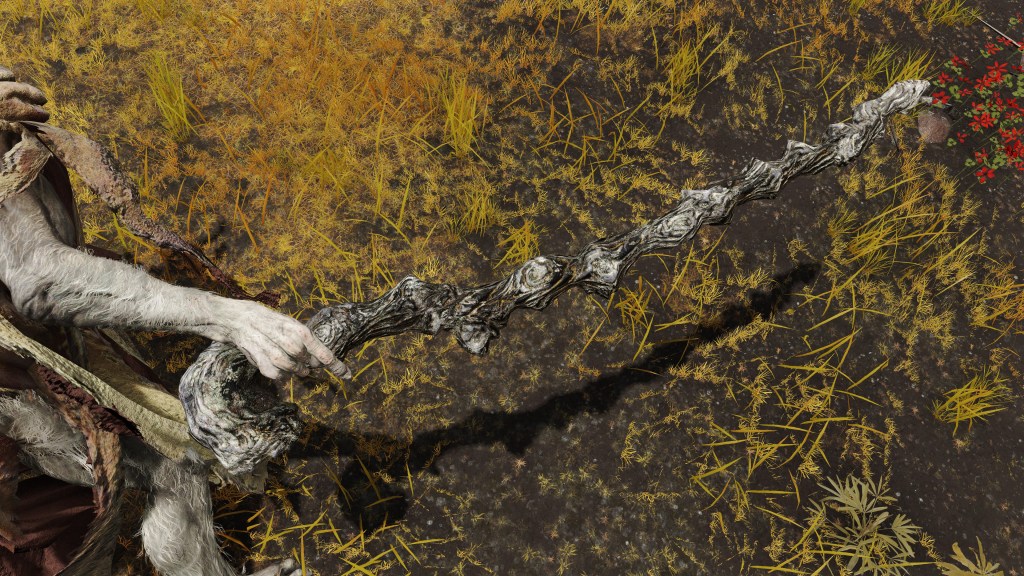
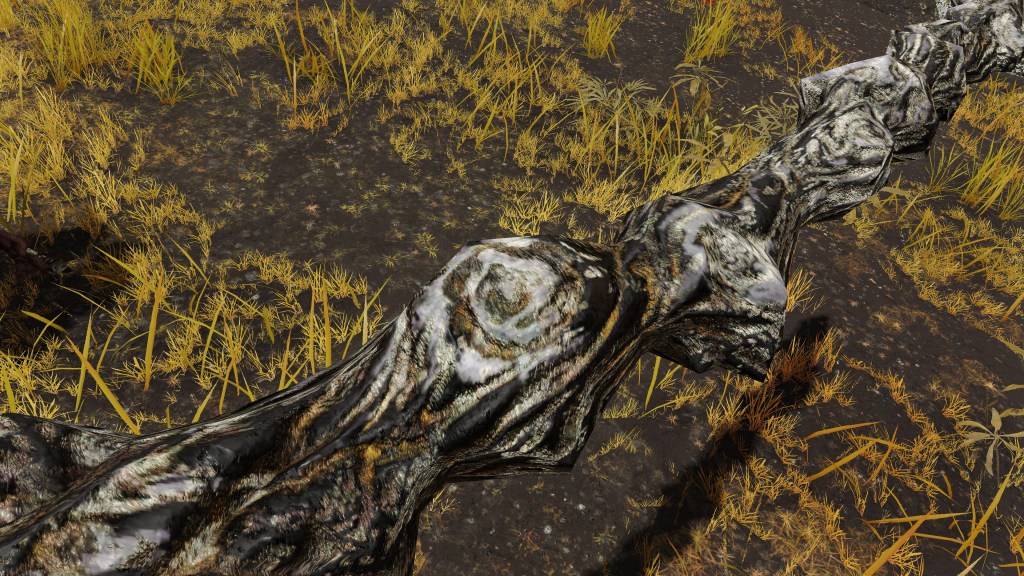
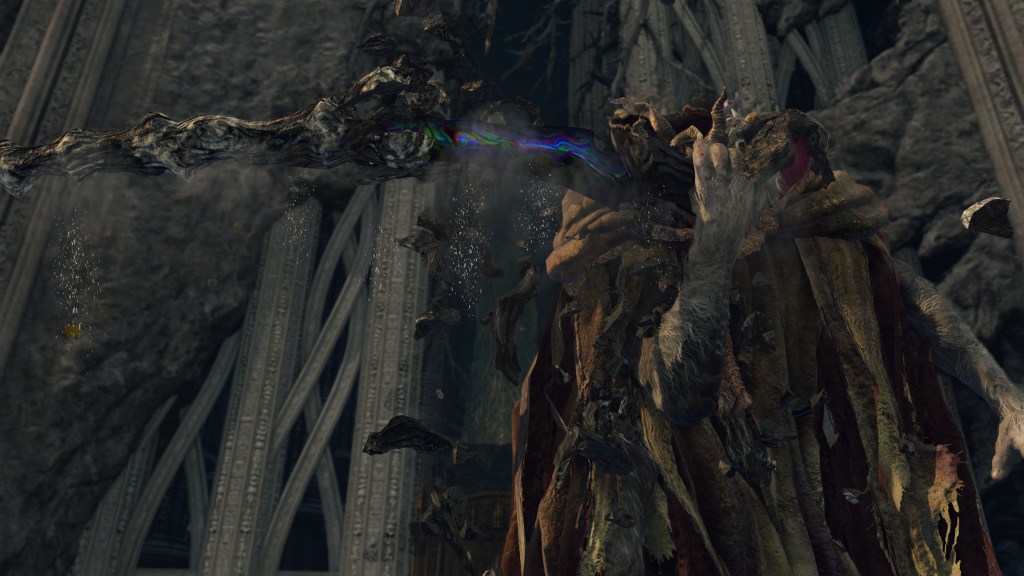
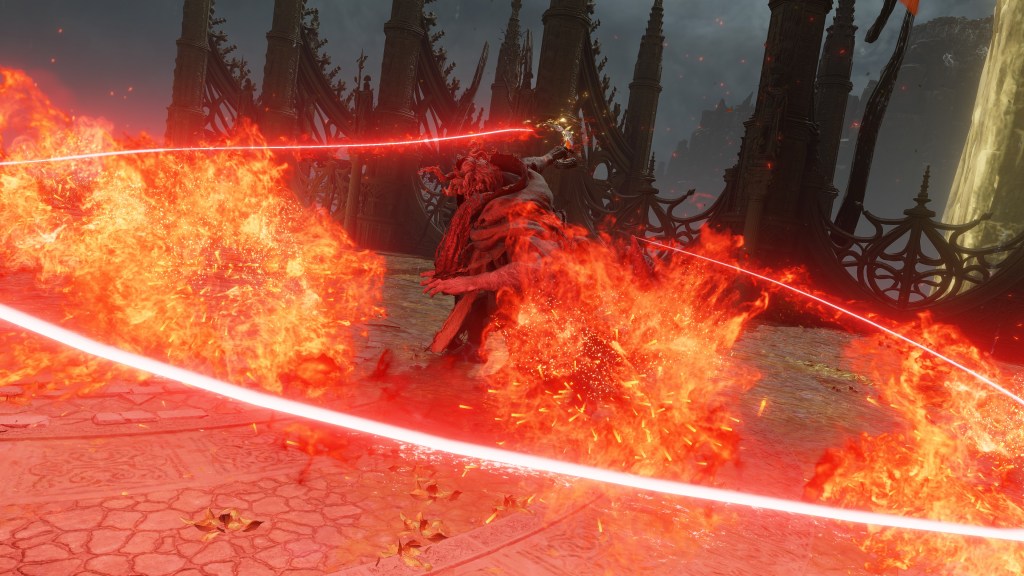
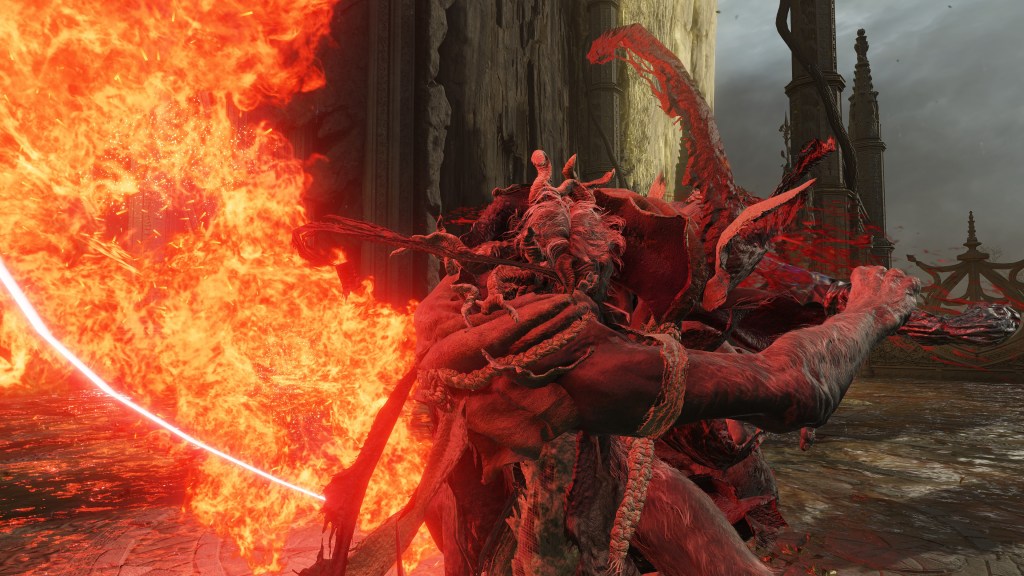
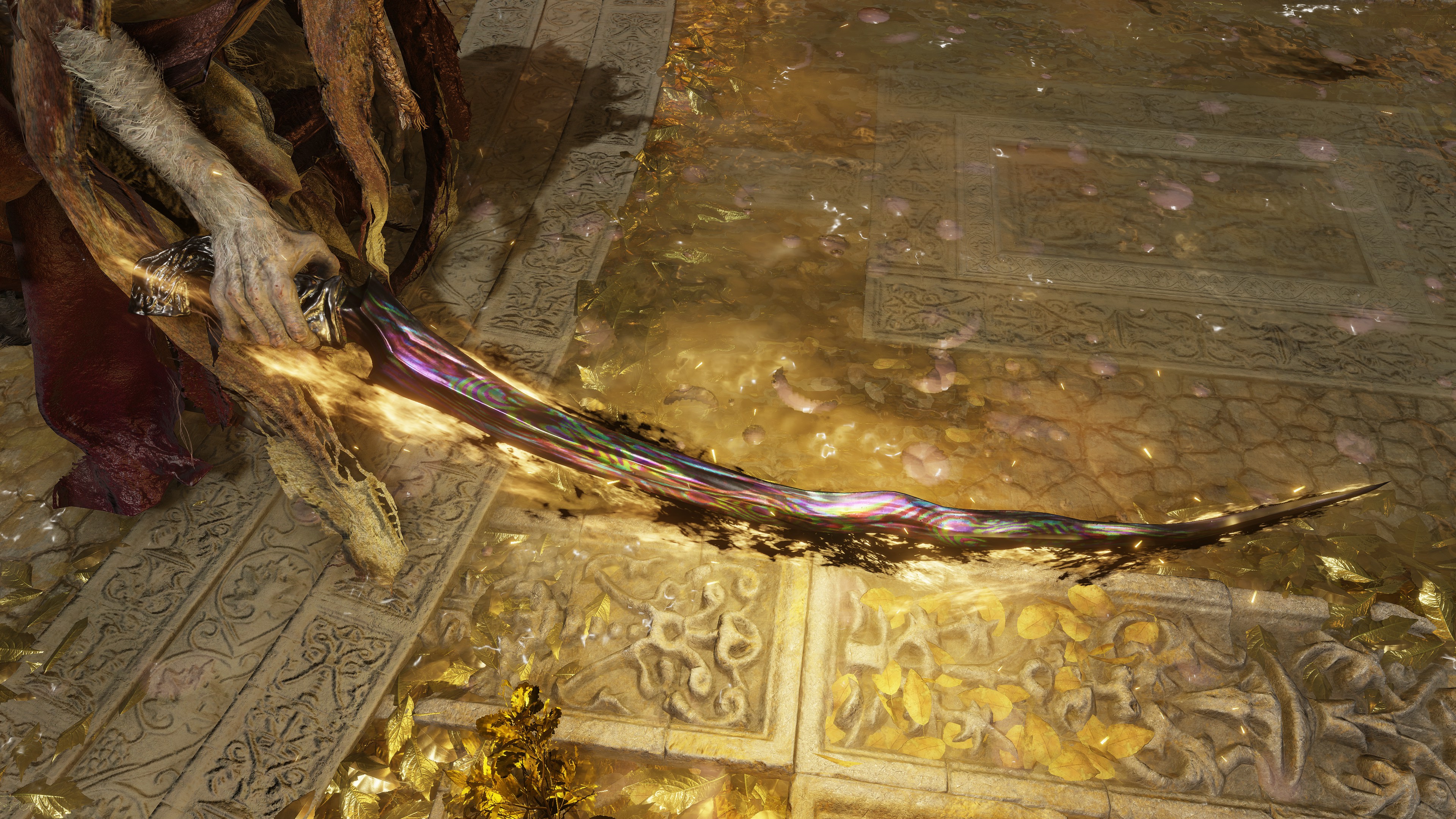
Morgott’s Cursed Sword was created using his blood, the fluid modified into a solid edge. This appears to have been accomplished by pouring it into the hollow of a large wooden stick he uses as both a cane and club, akin to a shillelagh. This explains the blade’s warped shape, which he only reveals after crushing the wood before our boss battle at the Elden Throne. The specks of gold interspersed in the black-stained wood indicate it to be faintly blessed by the Erdtree if not an actual piece of it. Since we do see that a handful of branches have made their way into the sewers, the Omen picking up such a stick down there is more than feasible. But the reason Morgott infused his own blood into that cane wasn’t to create a sword he would evidently never use until our battle, but to seal the stuff away. As the boss battle showcases, Morgott’s cursed blood contains bloodflame, the gift of the Formless Mother. Shirking the outer god’s blessing, he answered her with hiding the arcane inside an Erdtree vessel which it can’t fully subvert.
Strangely discolored sword with warped blade. Choice weapon of Morgott, the Omen King.
Its blade is a modified form of the cursed blood that he shirked and sealed away.
Communion with this outer god is a simple scenario to imagine. Upon closer inspection, royal Omen appear to regularly cut their horns from the head down the back, presumably to manage discomfort whenever they lay down to rest. Even those recluses who let their horns grow wild provide this self-care, with cuts extending from the shoulders all the way down to the hands; the pain for them must be especially intolerable. The Fell Twins show that Morgott was no exception in this regard. In that case, there was plenty of blood spilled throughout his youth, meaning plenty of opportunity for the Formless Mother to make herself known to him. And when she eventually did, Morgott was offered the prospect to embrace his cursed blood for power, to change his fate of never-ending survival — and the demigod rejected it. As to why, he gave his answer in the form of the vessel with which the man sealed his curse away.
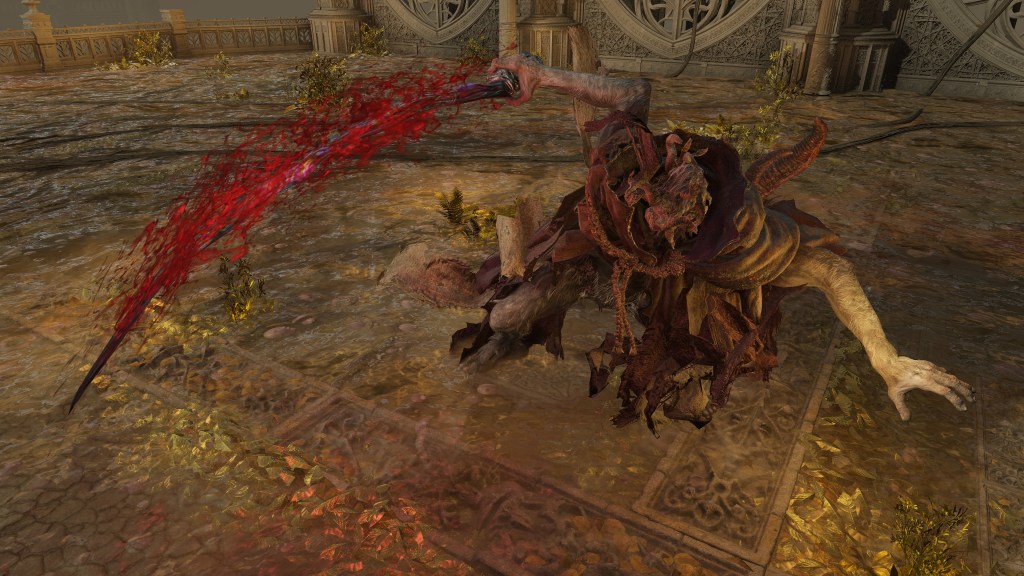
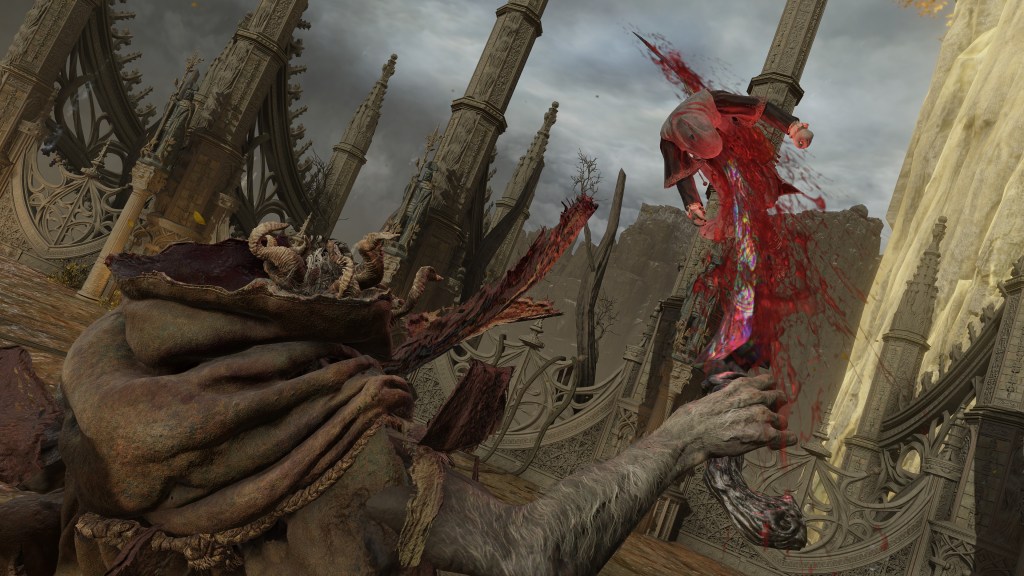
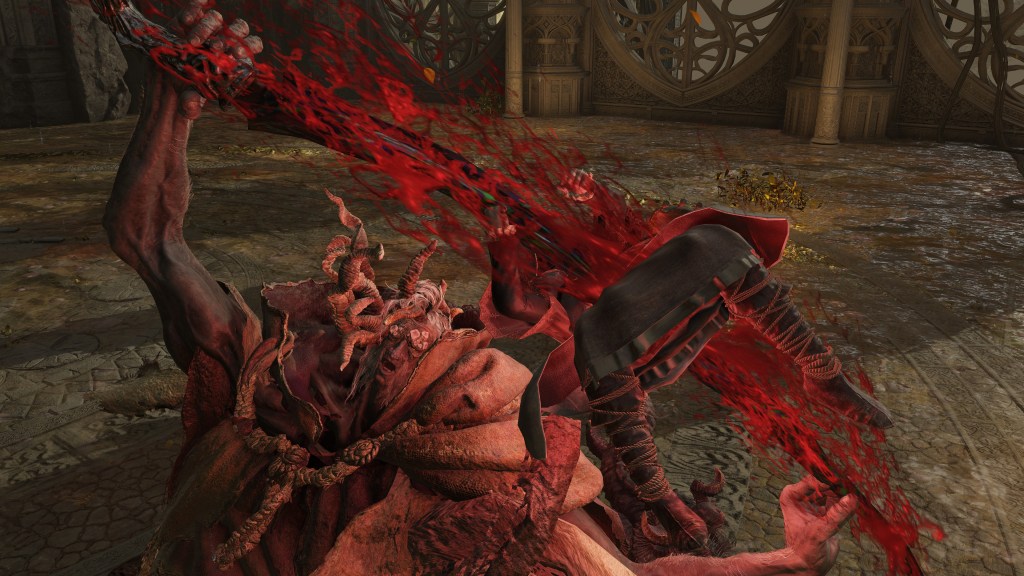
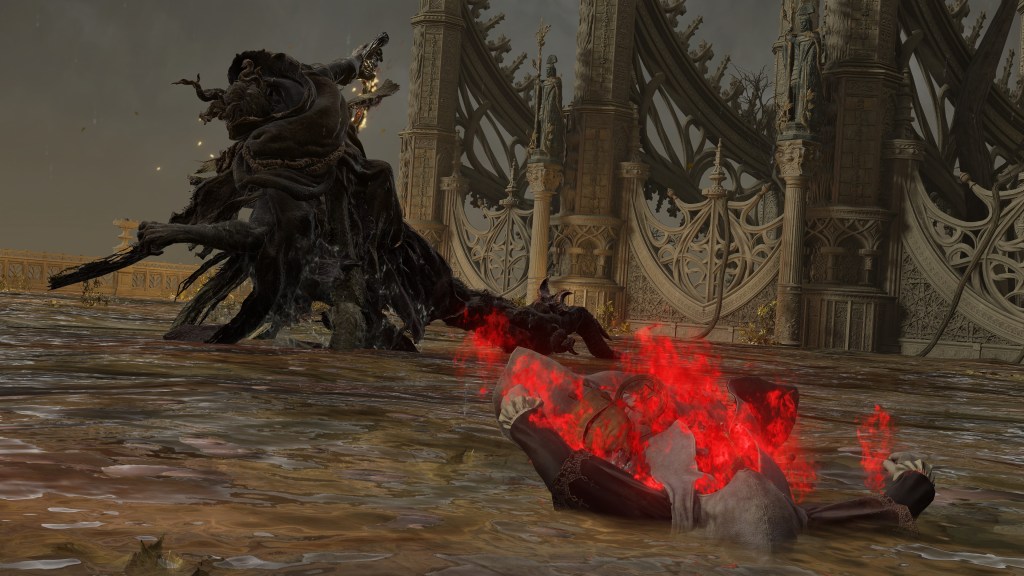
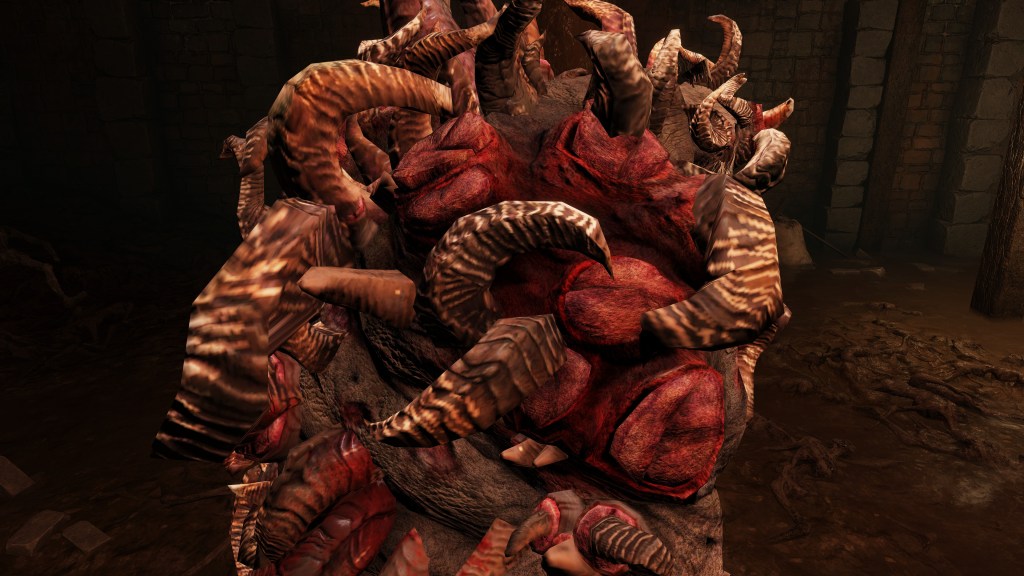
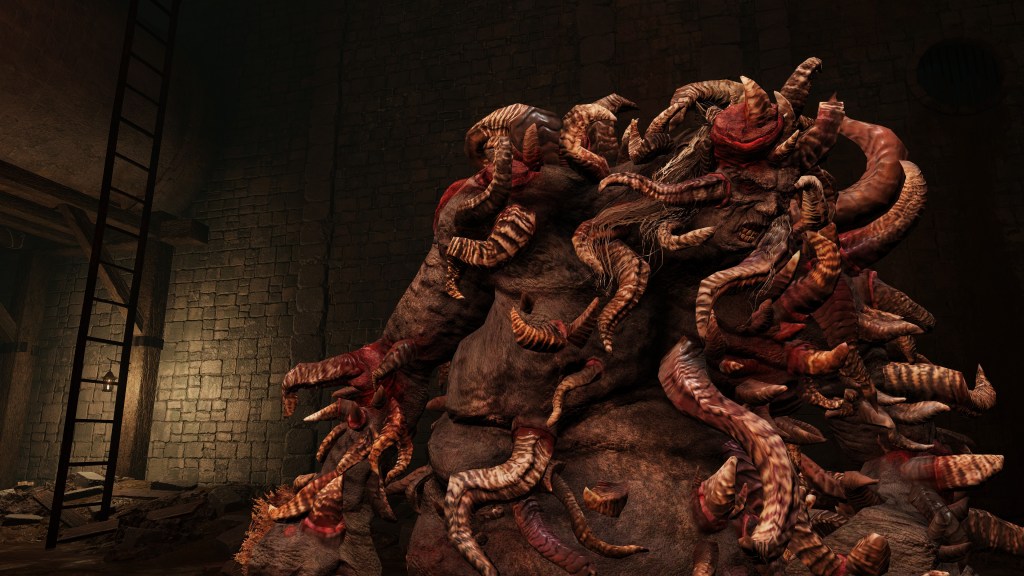
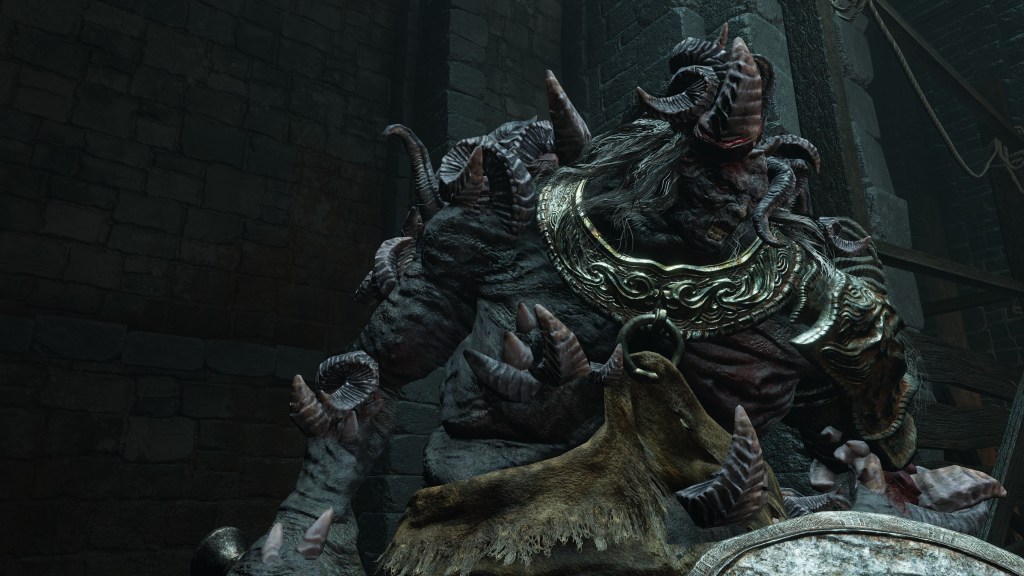
The description to Morgott’s remembrance reveals the underlying truth: the unloving Omen nonetheless loved the Erdtree — that beautifully shining monument to gold towering overhead from his childhood had seized his hardened heart. As to why when he felt so unloved, it was, in all likelihood, simply because it exists. The sword monument to the Second Defense of Leyndell notes how the Erdtree makes no reaction to Morgott. It doesn’t quiver at the Omen’s presence, but neither does it sway in his favor. It simply stands tall, unmoved either way — and that was apparently all that Morgott wanted. Rather than the fickle affections of parents or society, he appreciates the Erdtree’s indifference, unchanging even as the people who supposedly loved him threw him out of its sight. Even then, the tree always stood by him, roots entangled in the sewers. One can argue that this entire time, it never abandoned him even when everyone else did. It remained a cornerstone giving his life foundation. And his encounter with the Formless Mother seems to be what awakened this epiphany within Morgott.
Did he really want to continue down this path? No. Morgott wished not for flame to burn inside him — the Erdtree need no more reasons to reject him. Bearing no ambitions of grandeur as an outer god’s agent, the Omen took that cursed blood smoldering with bloodflame and threw it in a haphazard receptacle. Compressing it within the wood may be why the resulting solid appears iridescent like equally flammable petroleum, but it nevertheless demonstrates the difference between it and his normal blood. In fact, Morgott’s curse is unique. While the Omen king does vomit and explode with his curse like in the Fell Twins fight, it isn’t the fiery cursed spirits we are familiar with, but a simple bile. This vaporous fluid isn’t completely harmless, as the pool it forms in the throne room bubbles up hazardous geysers, with a new one appearing wherever he strikes; his sword is likewise still covered in a burning malediction from the explosion. Still, it isn’t the wrathful elders chasing us in reality or the Omen in their dreams. Morgott lost that aspect to his curse. But how?
First off, this bile is clearly not natural. Morgott only begins expelling the stuff after suffering great injury in battle, suggesting that he was keeping it suppressed until his failing health threw him off-balance. By the end of the fight, he has been completely drained of this cursed fluid, resulting in him losing almost all of his Omen traits — his tall stature, his robust physique, even his horns. We essentially bleed him dry, his curse violently spilling out as a consequence. After the battle, he can do little more than speak as he slowly dies, his body fading into golden light — seemingly accepted by the Erdtree — after it finally expires in Godfrey’s arms whilst it burns. Perhaps that is just desperation on the dying tree’s part, but there is no denying that Morgott loses his Omen element along with that tempestuous bile. It has sat with him this entire time, and can only leave his body with his life. But despite the instability, it is not actively malicious like the animate spirits. Instead, it is almost like a poison he carries.
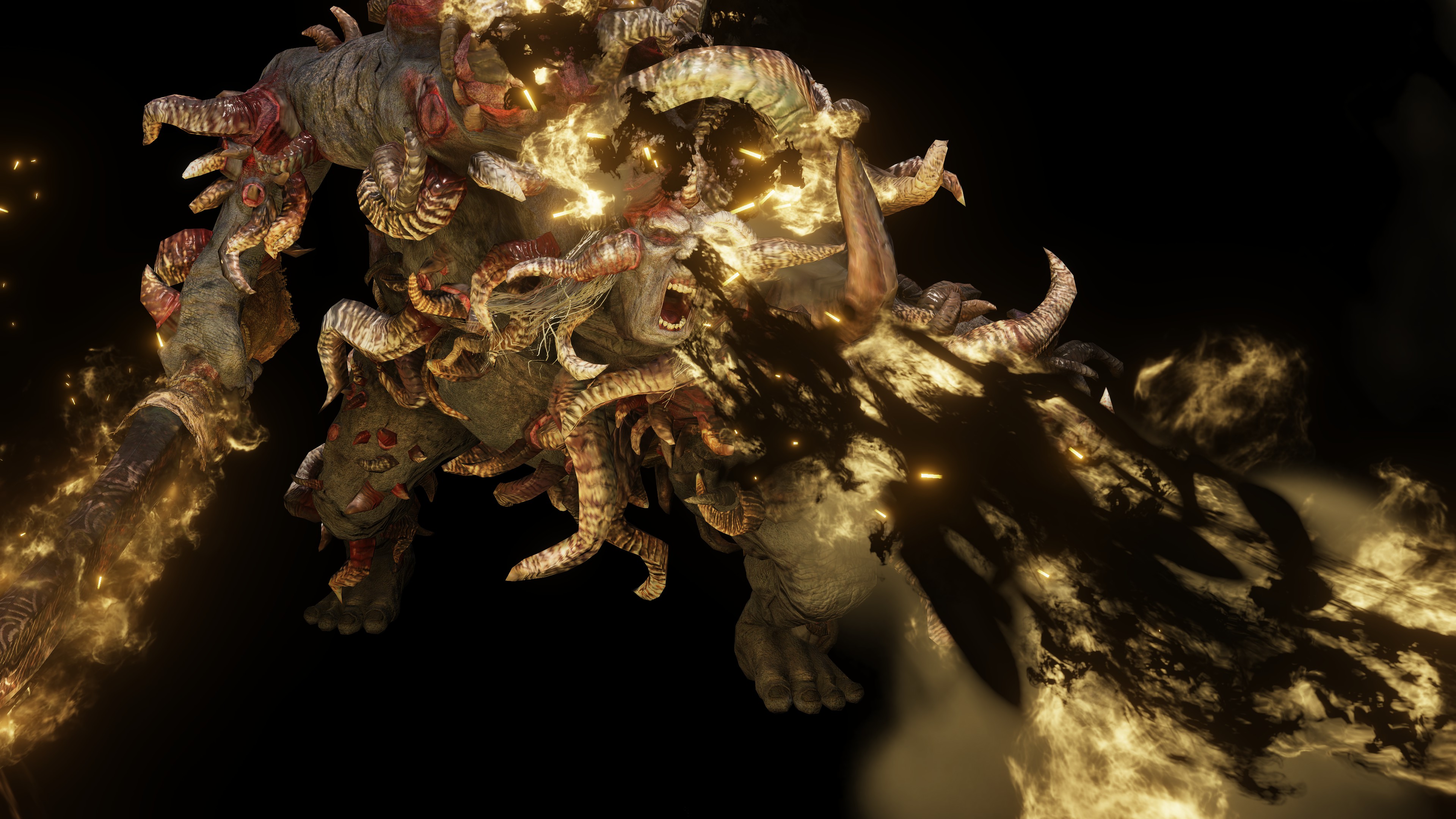
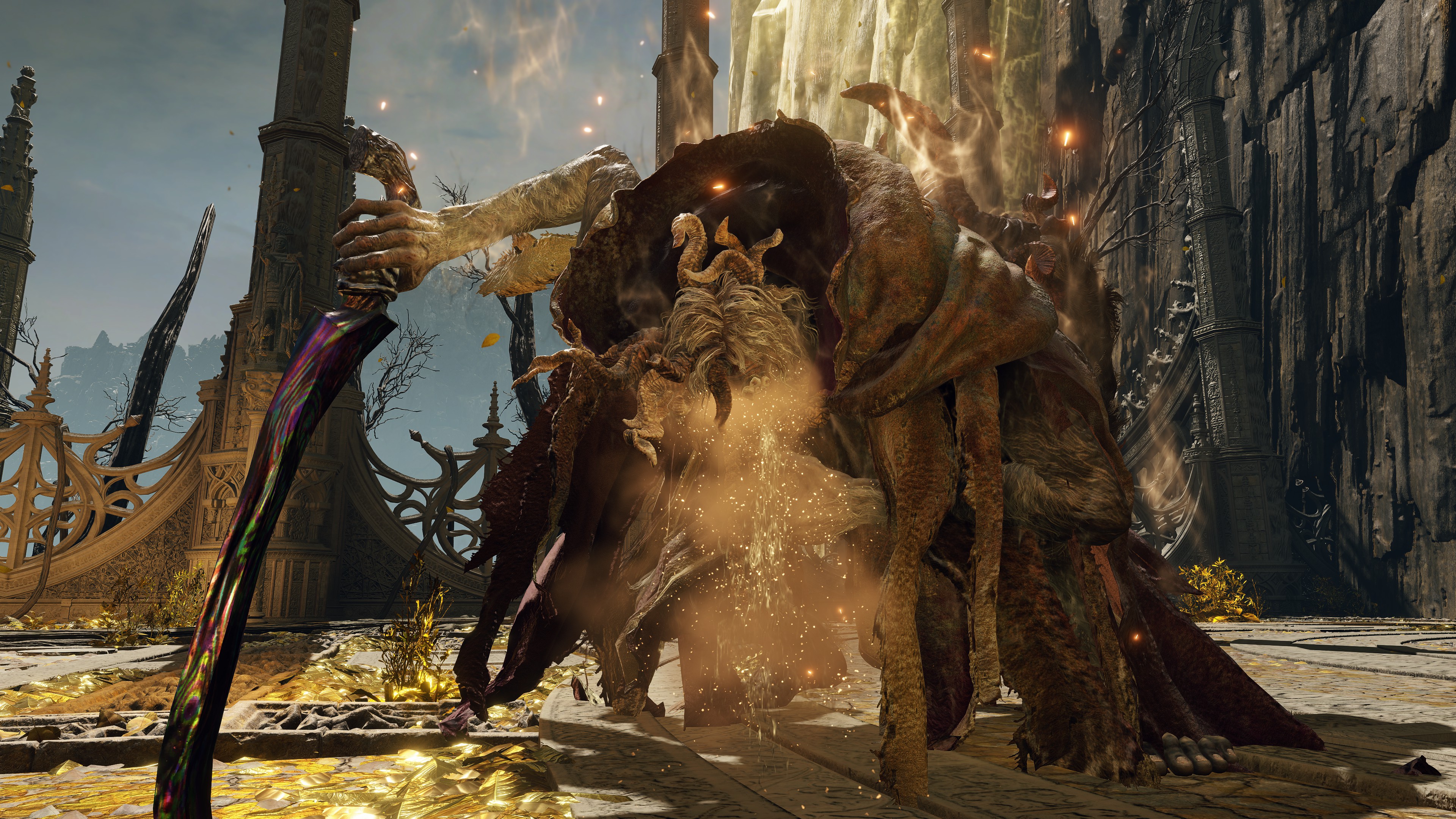
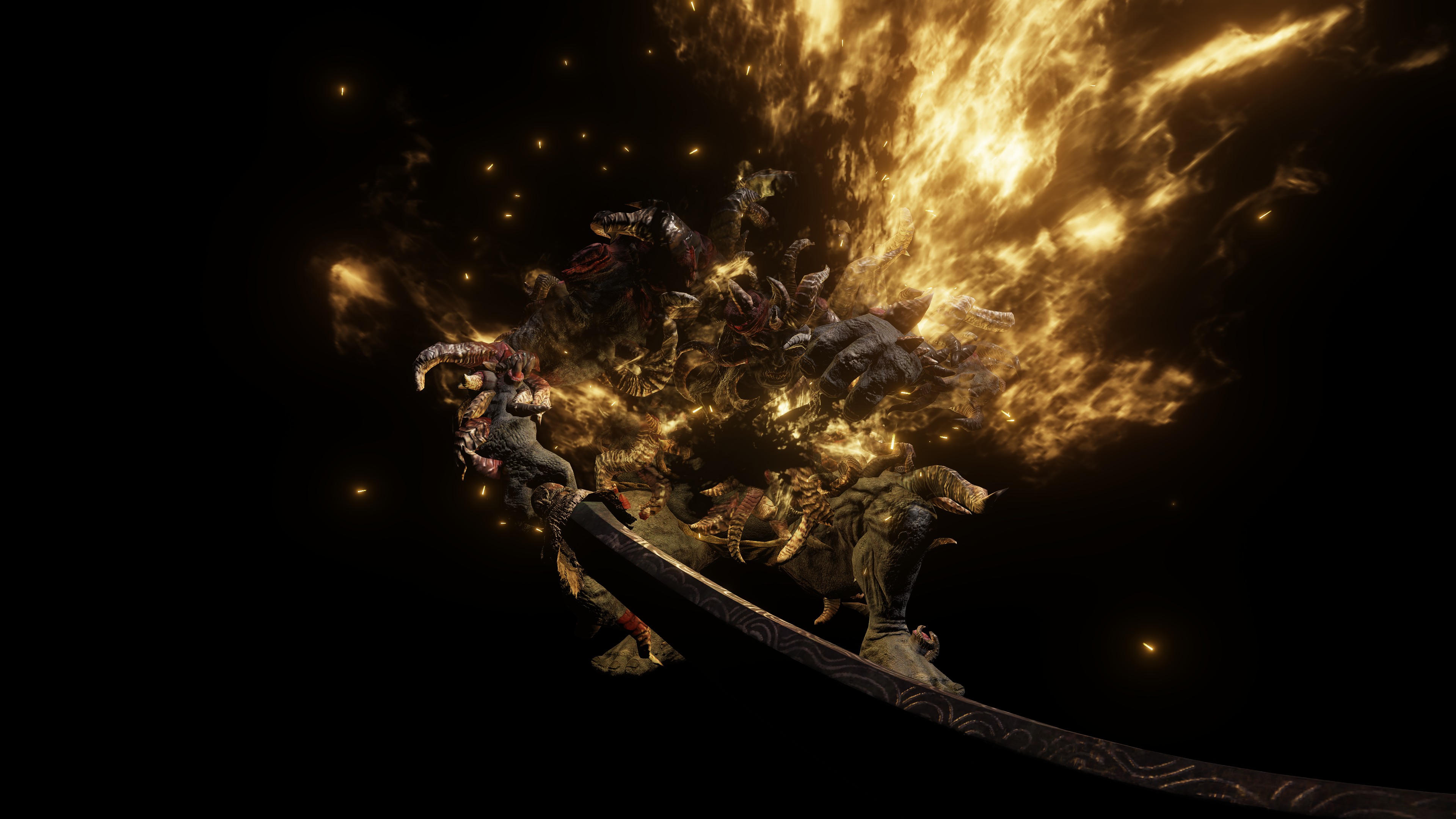
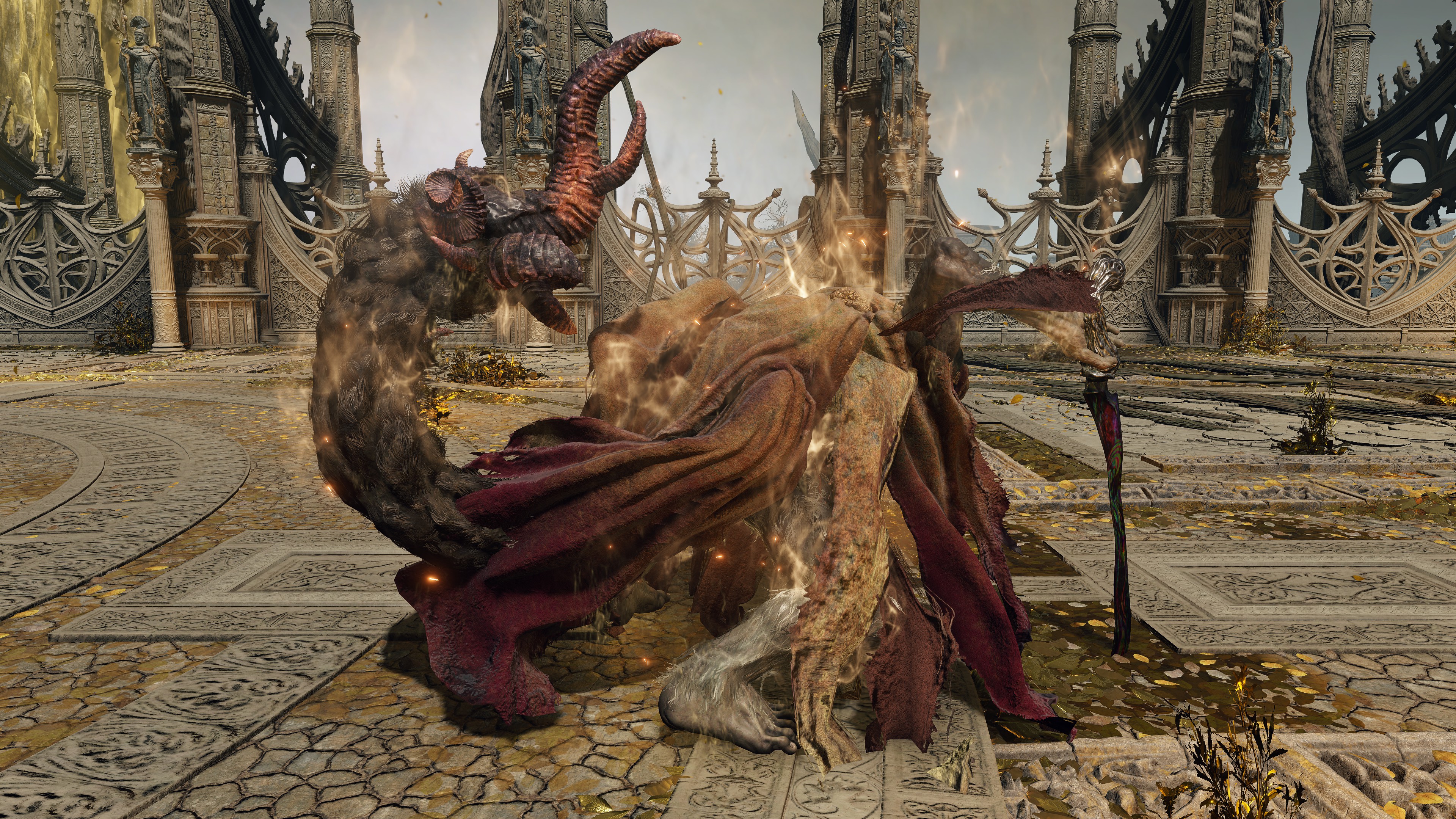
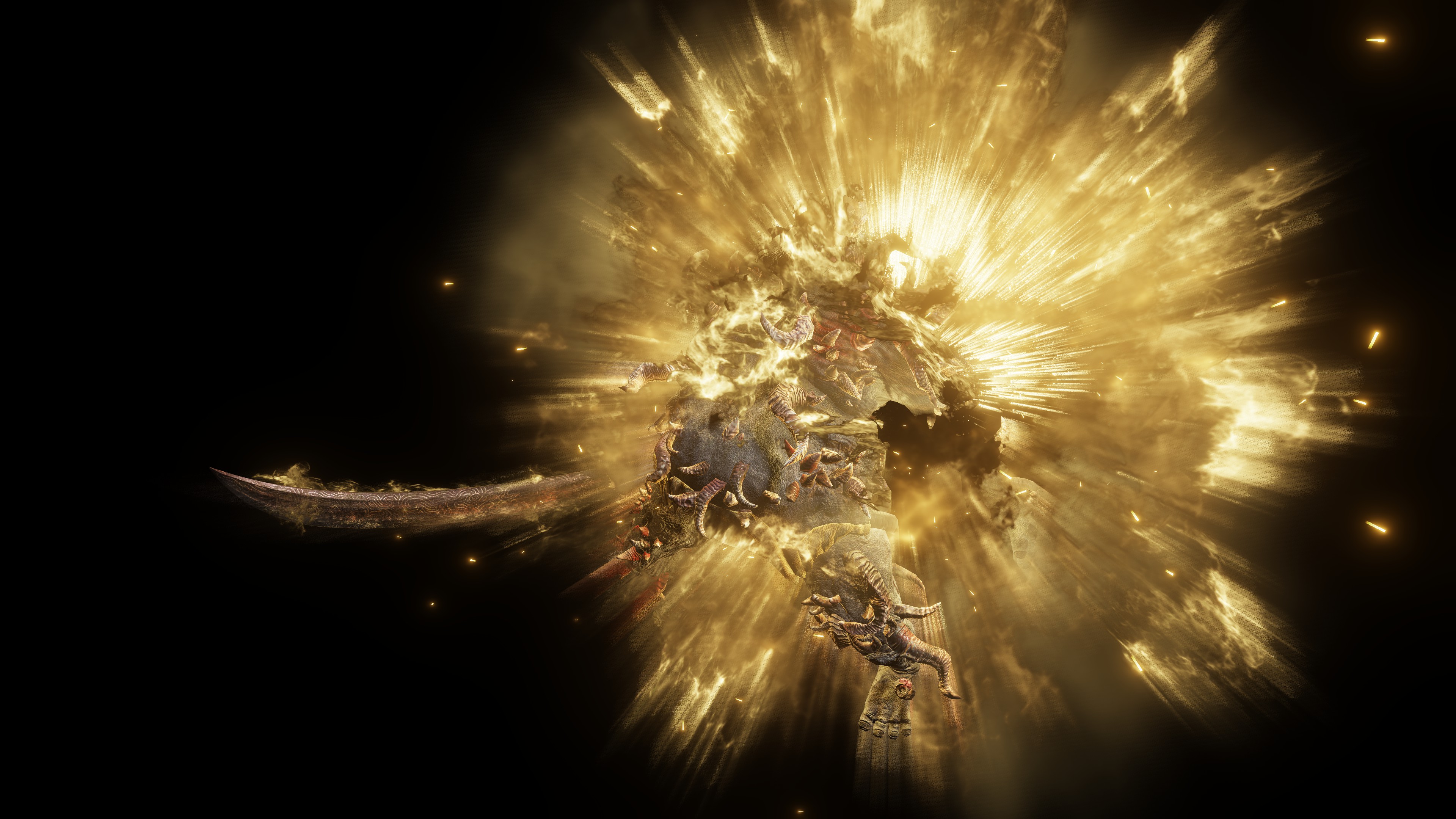

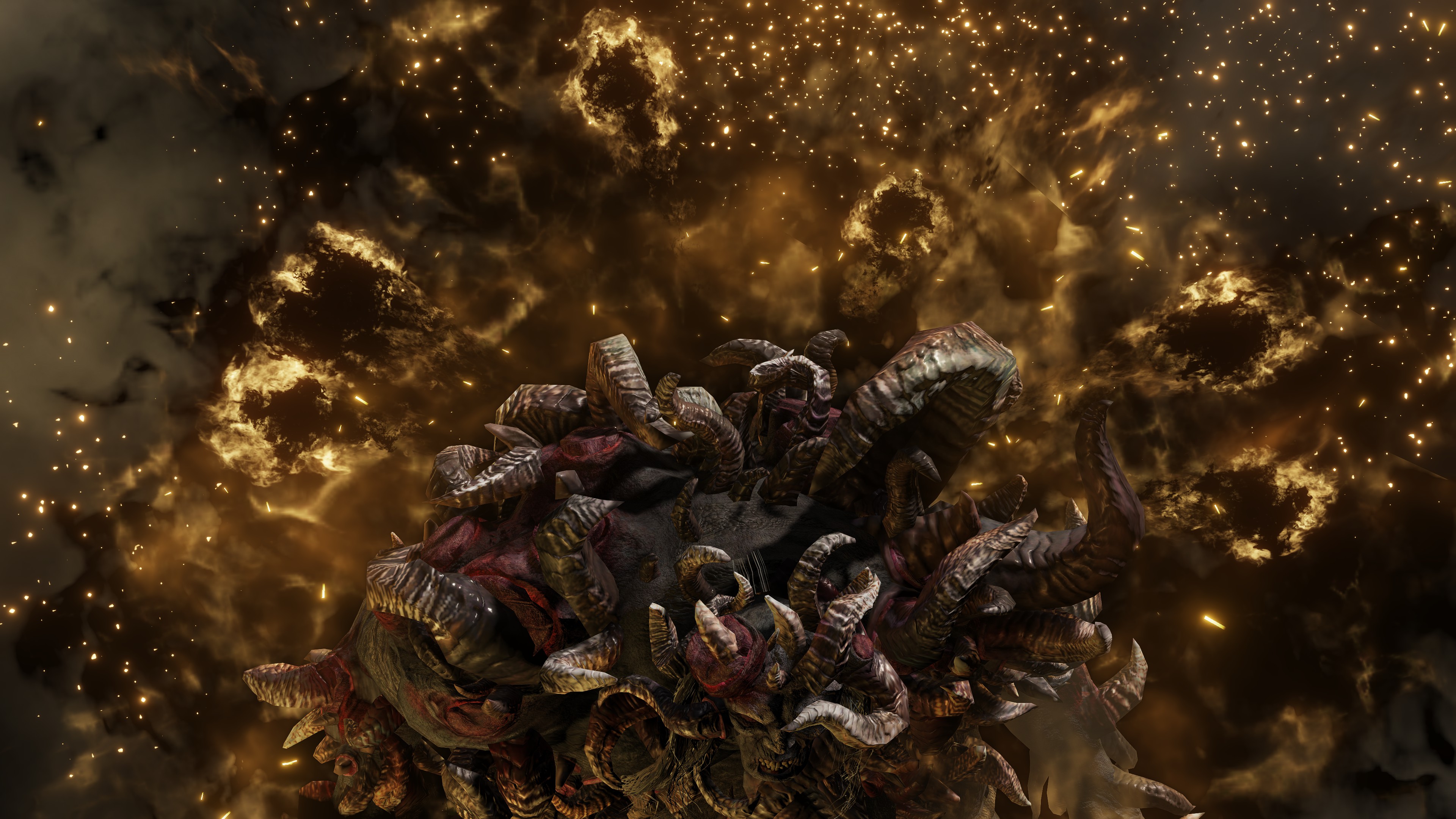
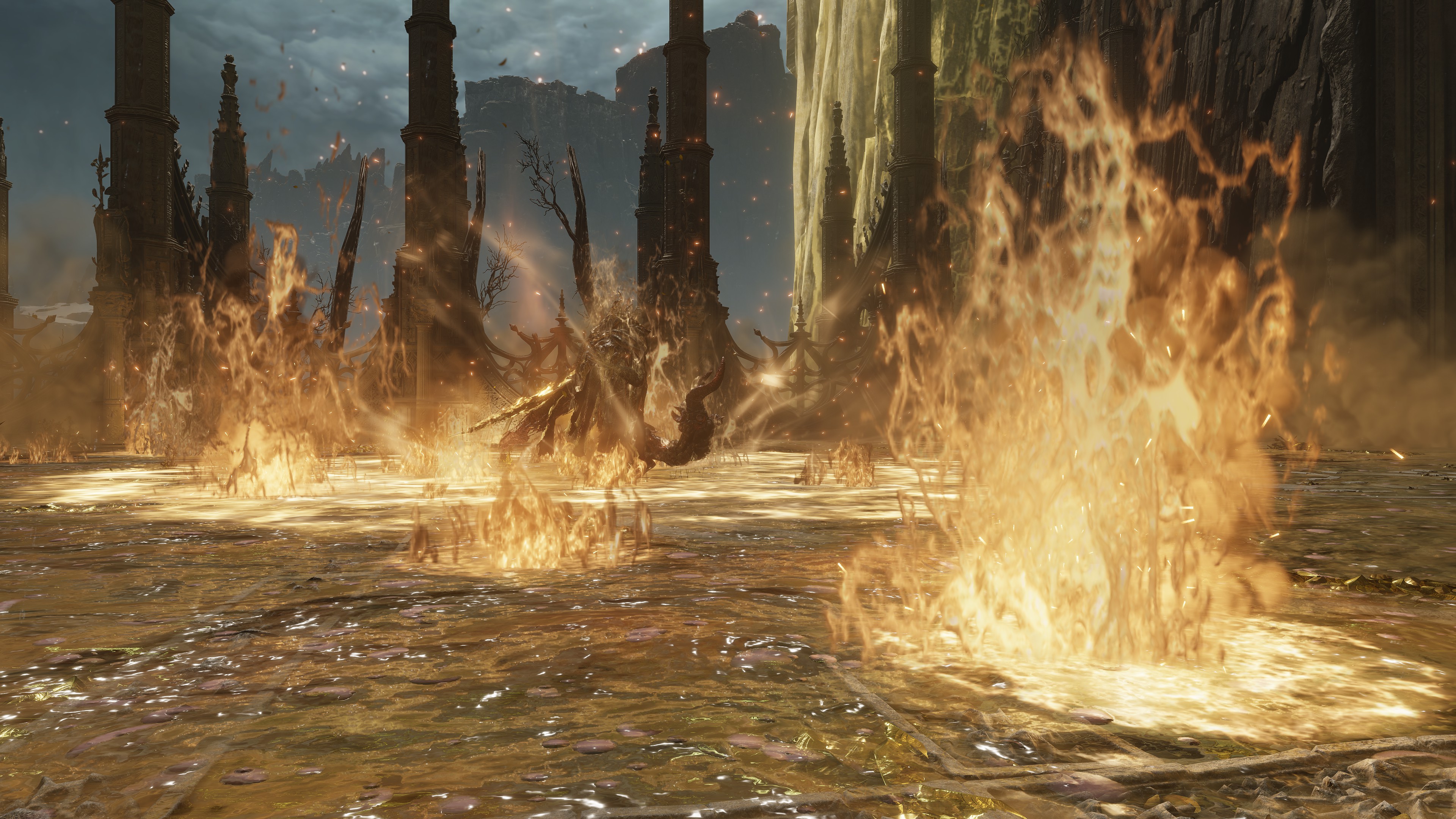
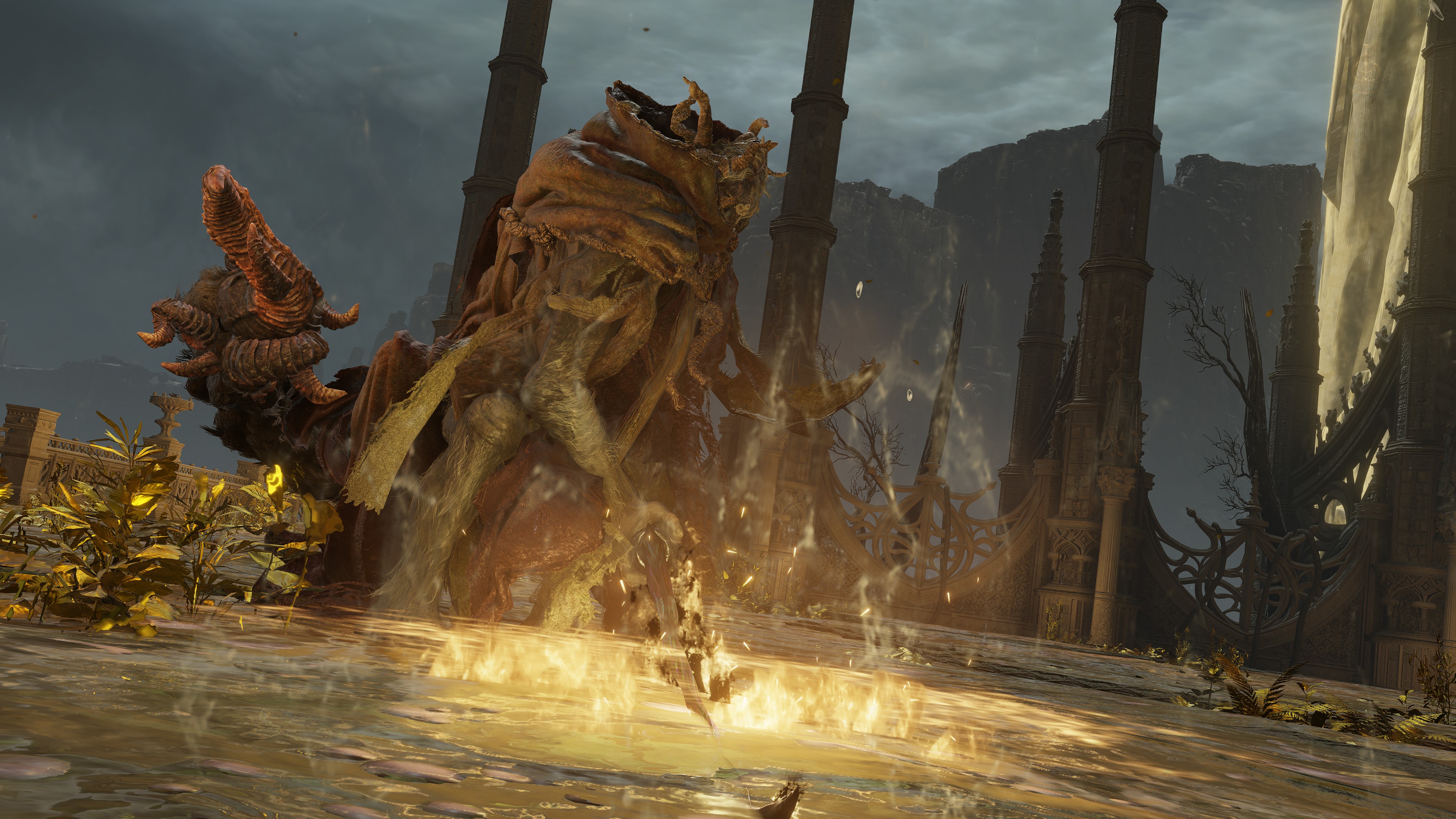
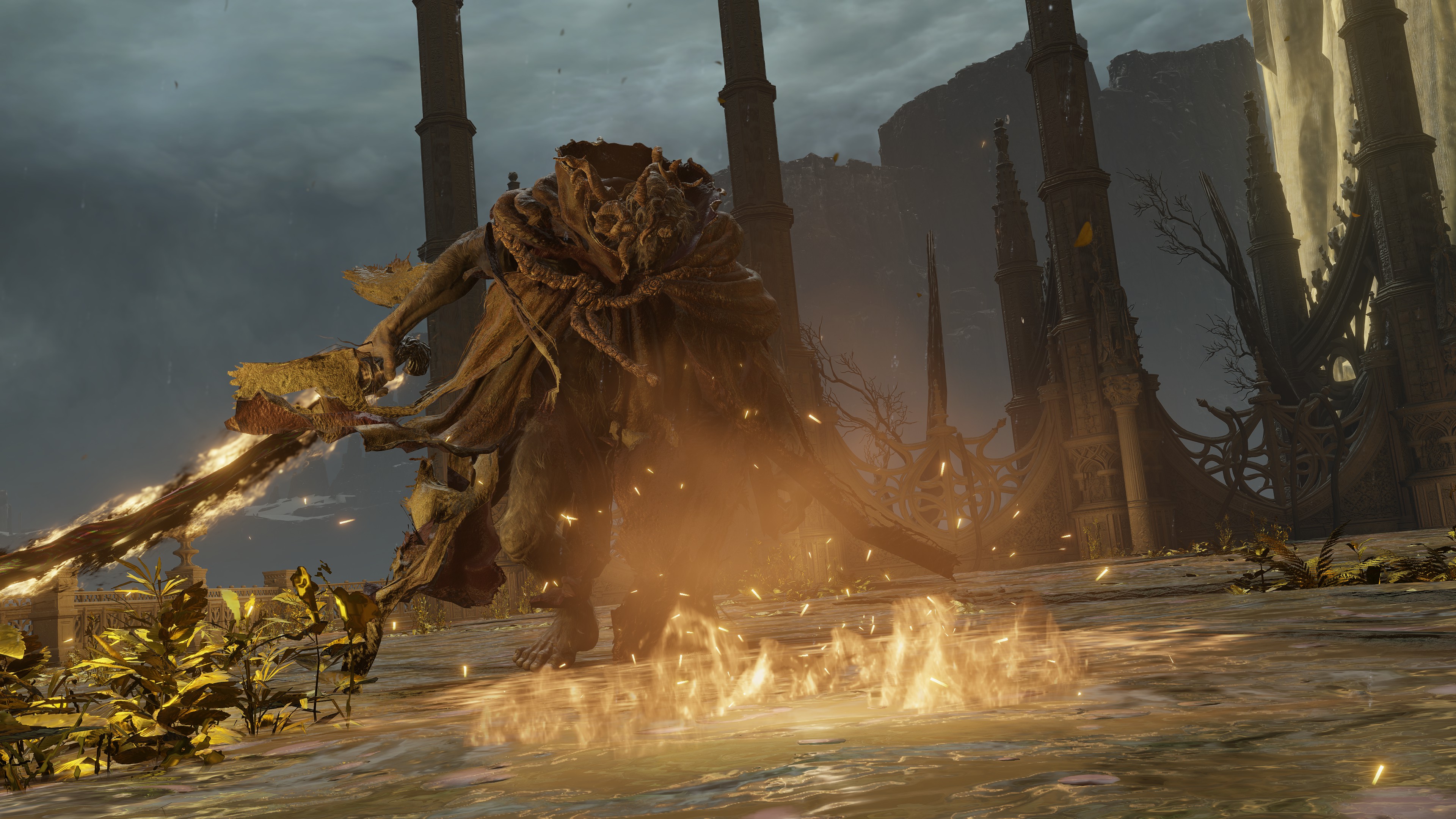
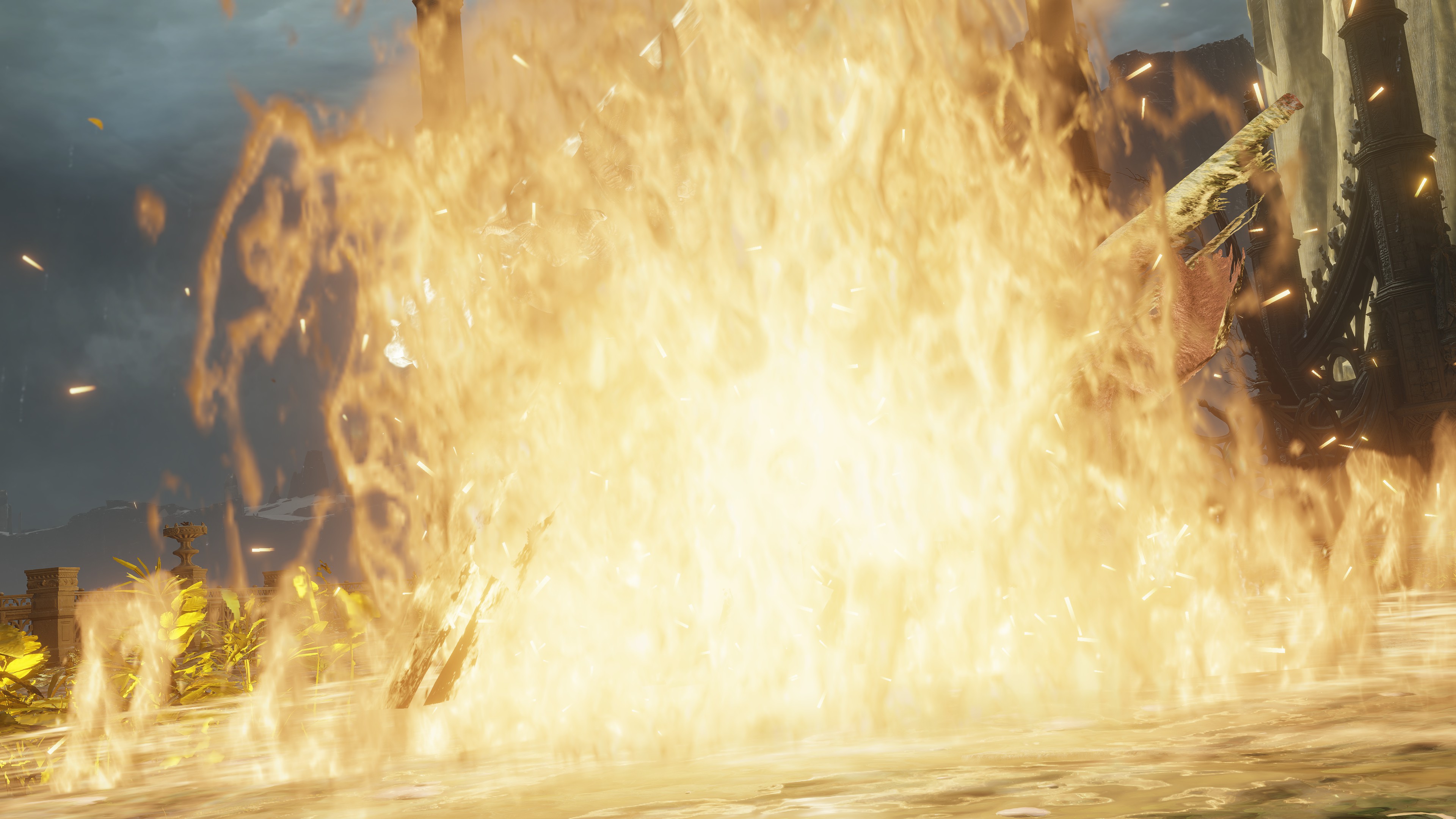
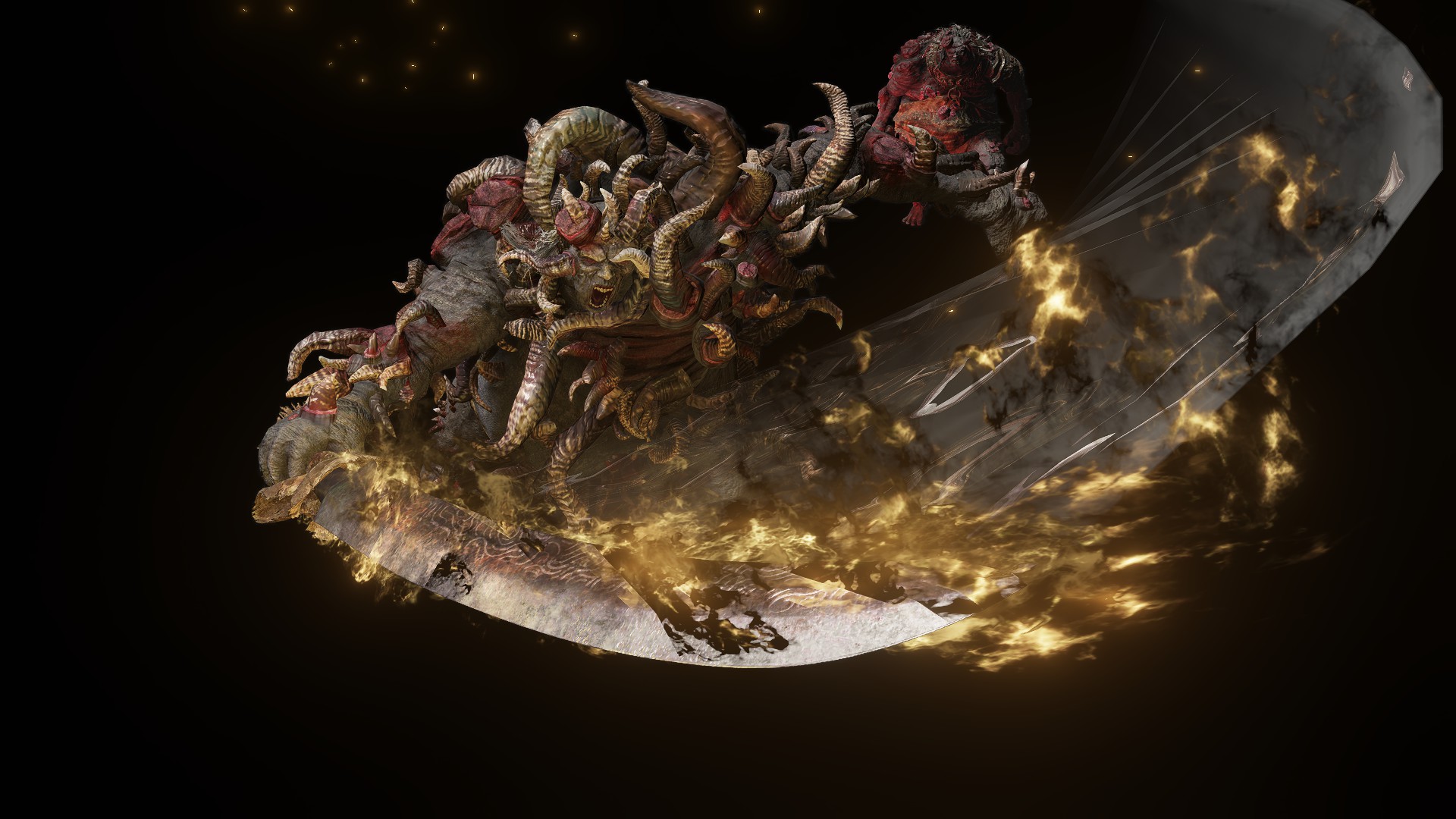
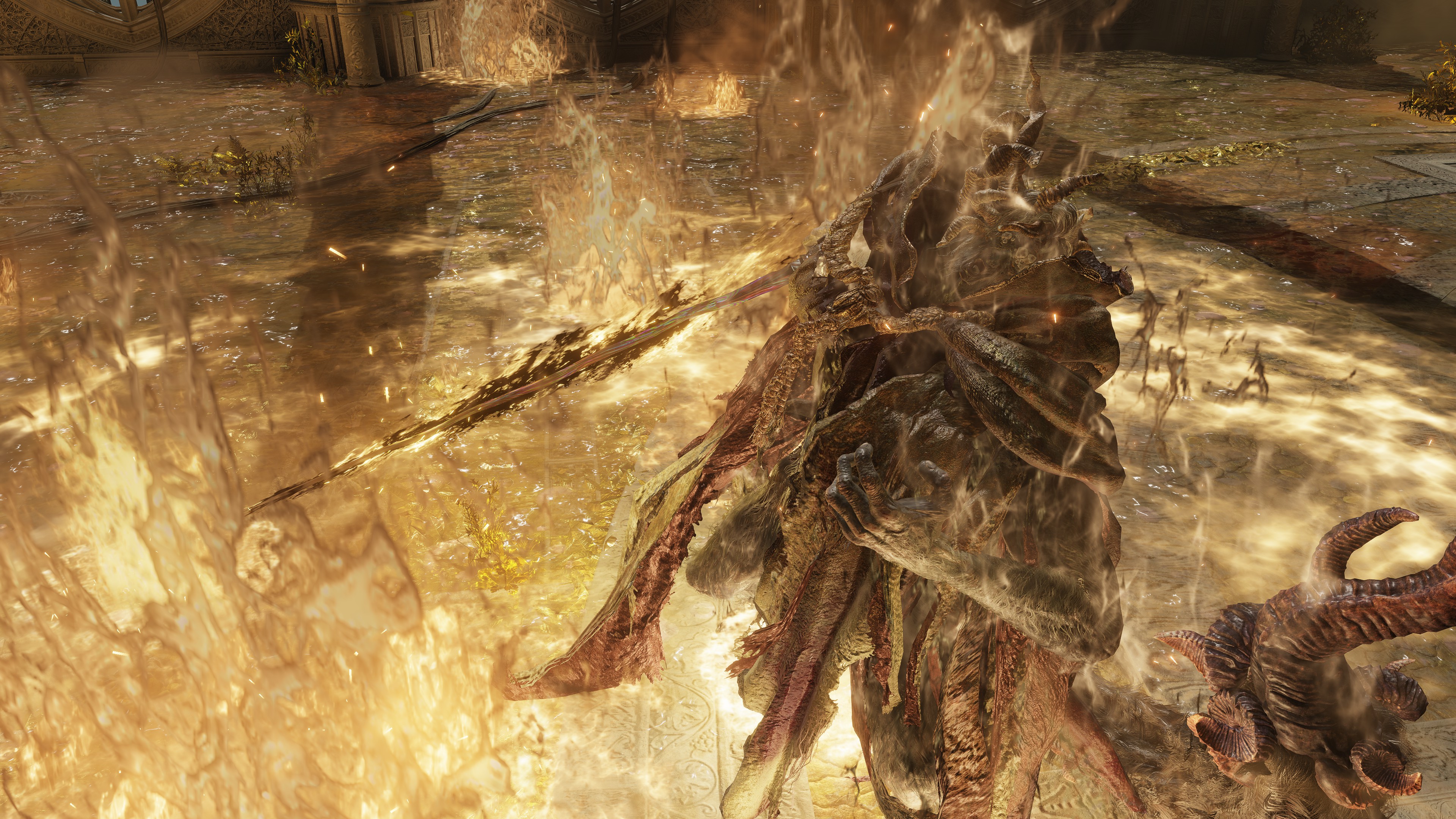

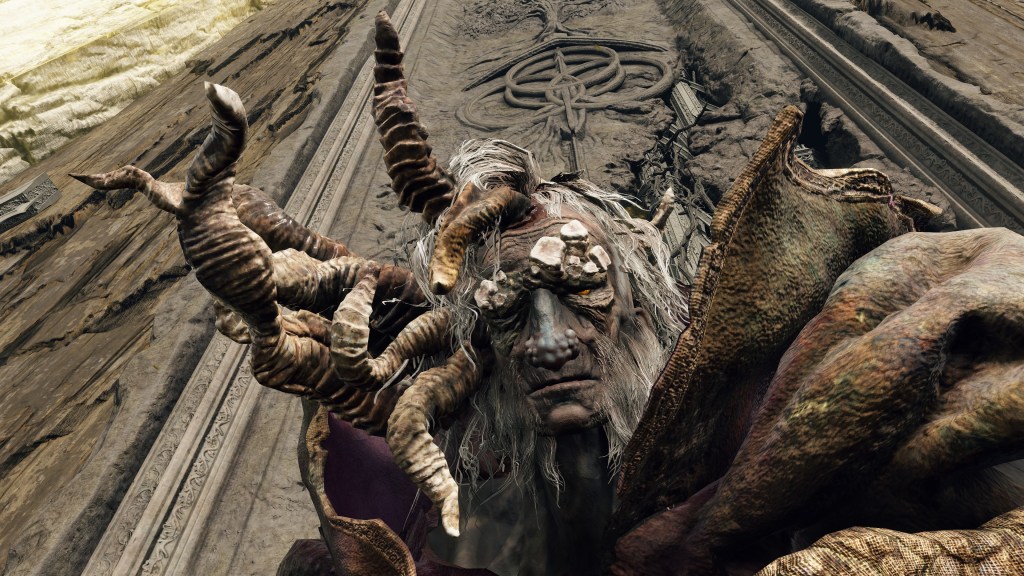
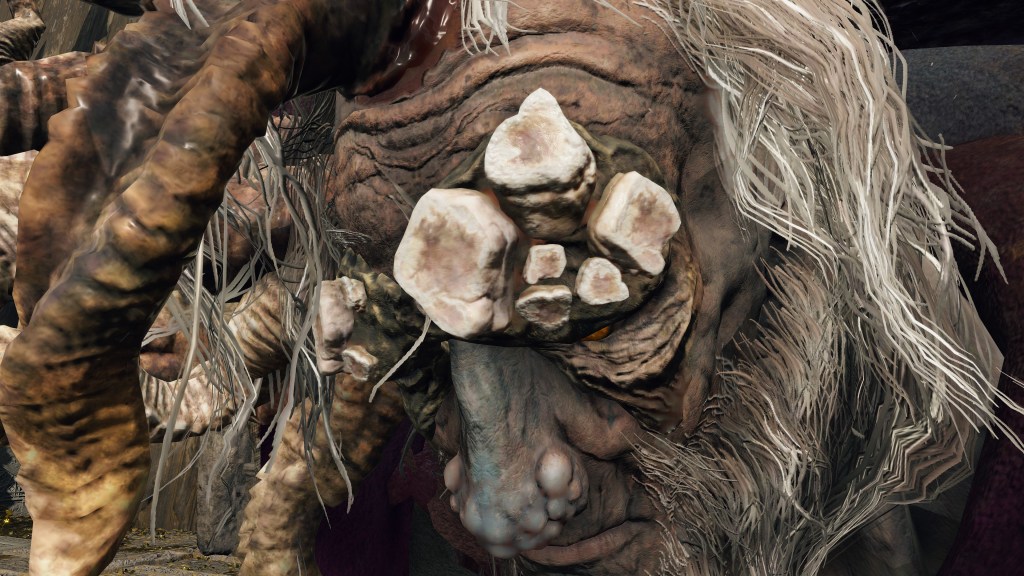
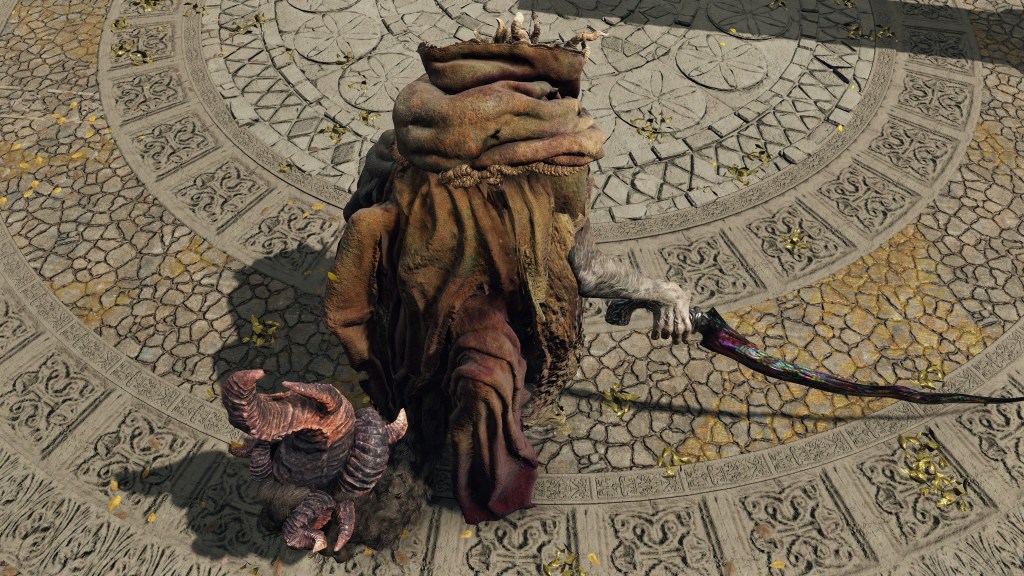
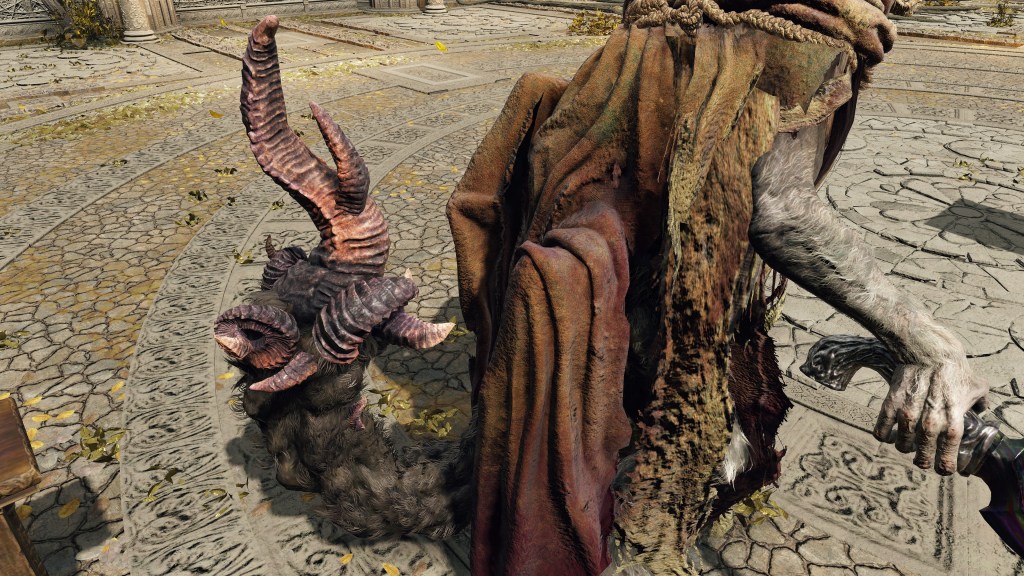
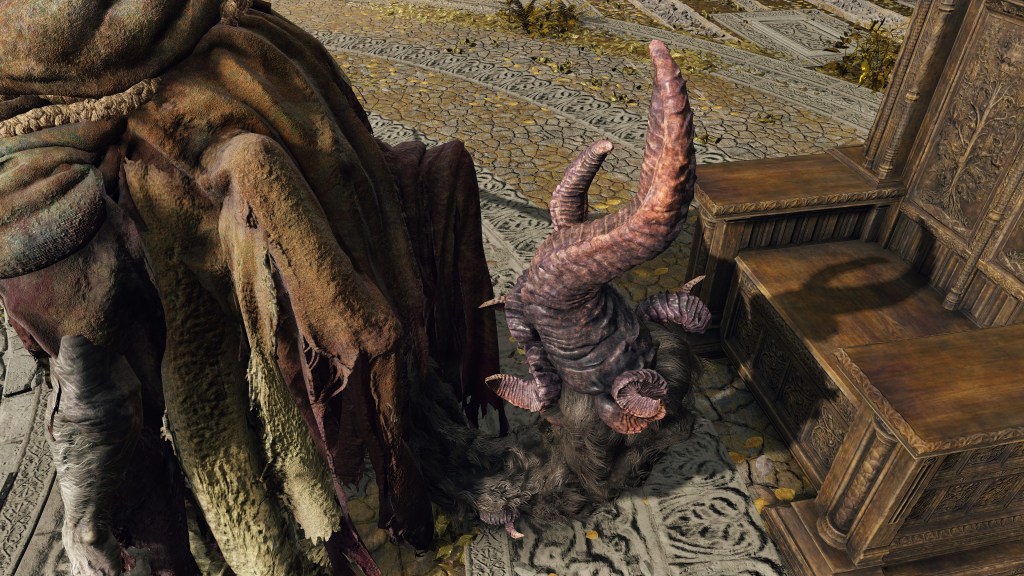
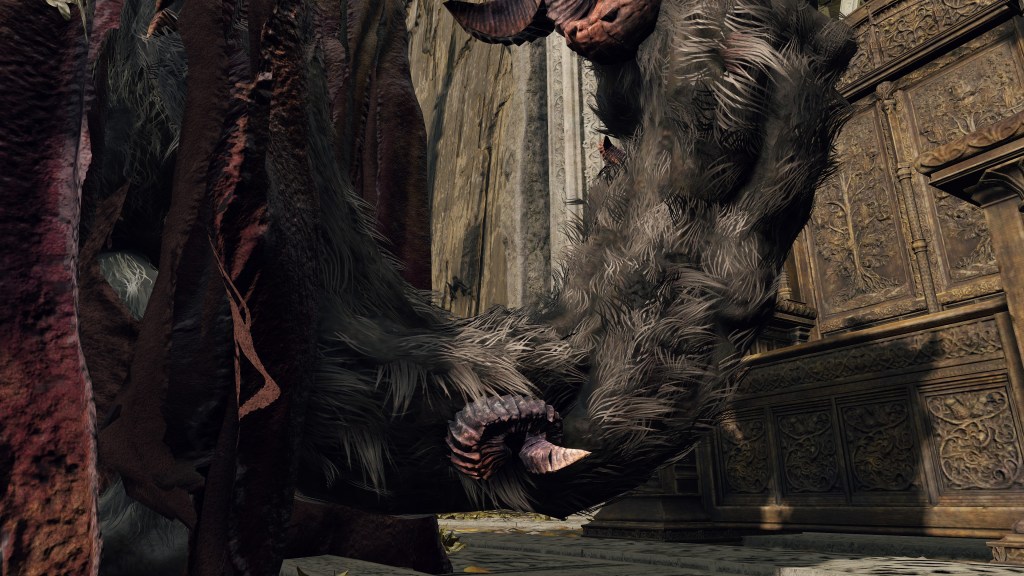
This bizarre form of the curse also explains his horned state. Morgott currently has far less horns than his Fell Twin counterpart, or Omen in general. The outgrowths of the curse are concentrated on his head, with a few implied on his back from the impressions in his robe — though they aren’t reflected on his actual model underneath. Otherwise, we spy horns only at the end of his long tail. No Omen or Hornsent possesses such a dexterous appendage besides Morgott, and if the Fell Twins are any indication, this wasn’t always the case for him either. The tail is therefore liable to be related to his wider loss of horns since delinquency. What is the one major difference between Morgott now and back in those younger years? The form his curse takes. Basically, whatever caused the cursed spirits to become an inanimate bile, it created a horned tail while also reducing his number of horns overall.
Factoring in his behavior as a delinquent, the prince most likely purged himself of those spirits. Shanehaight would make a point that the “cries” of Omen heard coming from the sewers was endlessly “corrupting” the Erdtree, and Morgott feels similarly regarding his own curse. Even after resorting to his cursed sword, he doesn’t actually employ bloodflame until he involuntarily discharges the bile, “corrupting” the throne room at the Erdtree’s base anyway. If he wished to minimize the desecration of the ever-so-magnanimous tree with his existence, then exposing it to fewer distasteful elements was a worthy goal. Sealing away the flame in his blood before it consumed him was just the start — he didn’t need fires of purgatory to purify the existing curse of his blood. In other words, Morgott confronted the demons of his nightmares, and slaughtered them, reducing the spirits inside him to the mess of bile we see. That didn’t remove the curse, but it weakened it, resulting in fewer horns on his body.
This capital’s underground has become a dumping ground. Filthy omen children, child fiends whose horns weren’t cut off at that, have been hiding there since long ago… And sadly, their hideous cries have been overheard all the way above ground for a little while now, a state which is continually corrupting the Golden Tree. Now, please go forth. Hunt the omen children hiding in the dumping ground underground and stop those hideous cries. I have high hopes for you. May you sincerely diminish my family name not.
… Corrupting the thrones with the curse… An unbearable disgrace…… You alone I will not forgive…
It is doubtful that this suppression of the curse has anything to do with him reembracing the holy arts of his youth — if incantations could do such, the perfumers would have done this for all Omens long ago. Rather, it speaks more to Morgott’s individual resolve. Contrast to his kin, the prince graduated from his childhood fears, so determined was he to be rid of them entirely. That same willpower perhaps best explains his tail. One can imagine the Omen willing the remaining curse be expunged from his body. Of course, the spiritual bile ultimately can’t be separated without costing his life. But through centering himself with meditation, he might have isolated a significant mass and tried exorcising it, the sheer force of will manifesting in a tail as the filth was pushed out from his core. An Omen’s corruption was the one waste a man couldn’t excrete out the rear, however. Seeing the results, the prince resigned himself to live with this curse for all his days. But if all he had to do was choke down some bile, then Morgott would live like an ascetic, walking with a simple staff and bare essentials focused on restraint.
All of this is to say that the prince the perfumers encountered following Marika’s sin was a changed man. Despite his Omen status, the Great Rune he took ahold of glows the brightest gold as proof of his Golden Lineage. In the priesthood’s eyes, there was no one better suited to be king. The prince, for his part, must have felt overjoyed to be called to serve the Erdtree. He may bear no love for the kingdom, but if the tree required a Lord defender, he would answer. The only problem was the shackle, but that could be surgically removed with the clergy’s expertise — notwithstanding their failure to properly dispose of the fetish, allowing a functional fragment to end up among Patches’ wares. Besides this gross oversight, however, Morgott could safely transition from a hooligan of the undercity to a monarch of the Erdtree capital. The tree may look different from how he remembered, but he loved it all the same. Thus began the myth of the Grace King.
A Saving Throne
After discreetly exiting the dark sewers, Morgott settled into the Erdtree Sanctuary as his new home, specifically into the Elden Throne. The only problem was that he couldn’t actually become the true King. The shardbearer reveals how the impenetrable thorns of rejection keep anyone from entering the Erdtree to visit Marika, regardless of the runes in their possession. This was the case as early as Morgott’s departure in the trailer, which Ranni’s narration implies to be concurrent with the Shattering. Therefore, even before war broke out, the tree was rejecting entrants. Morgott sees this as the Erdtree forsaking them all, unwilling to have any as its Elden Lord. This falls in line with his own feelings of inadequacy expressed in further talk. The Omen never expected to be accepted as Elden Lord, given how the tree fluctuates neither way for him. Still, his dialogue suggests that it does sting, especially after committing everything to become its champion. What the Omen doesn’t seem to realize is that his beloved Erdtree isn’t blocking out him and everyone else of its volition.
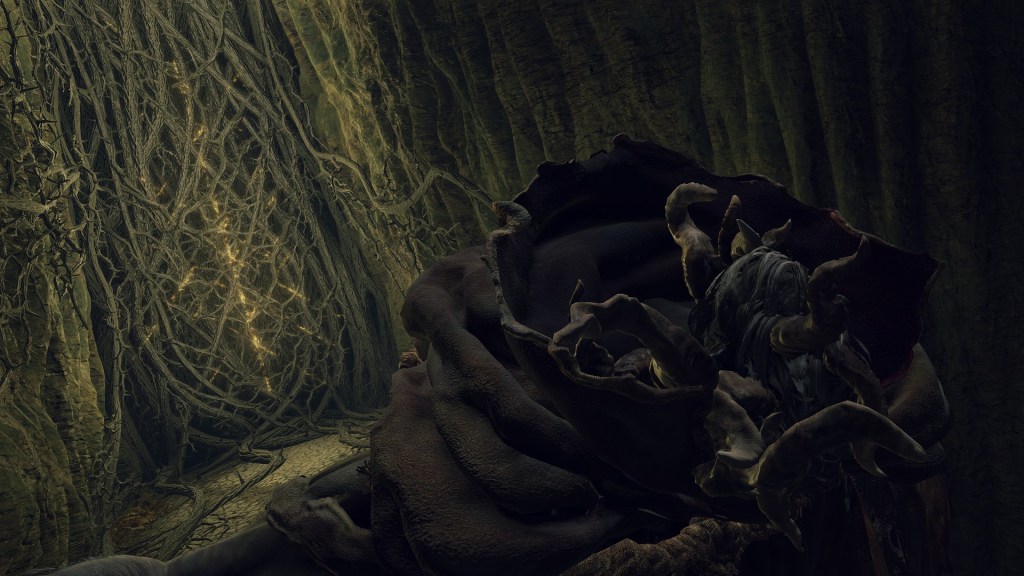
… Tarnished, you are foolish… The Golden Tree rejects all. For we have been forsaken… No one can become Elde King anymore…
… Just like me…
It is impossible to miss Radagon’s Elden Rune prominently manifesting over the wall of thorns, a straightforward sign of the last Lord using the tree to effectuate his own will. Morgott would know nothing about Radagon during his imprisonment underground, and the Omen shows no interest in Golden Order Fundamentalism or much of the history he missed. He thus has no idea what the Elden Rune signifies, and no ally has plainly told him. In fairness, the priesthood themselves are potentially unaware of the rune, as the thorns may have only appeared after Radagon saw Morgott come take his throne. Unless Morgott allowed them to closely examine it — and he behaves recalcitrant to seemingly anyone deigning to do so — then the king would be left clueless about the thorns’ cause. As far as he can tell, the Erdtree itself is rejecting the world, logical after the harm the world has done to it.
And so, it didn’t matter if the Omen owned all the Great Runes needed to mend the Ring, he still wouldn’t be able to become Elden Lord. Although he despairs at that fact now, at the time, he may have initially hoped to prove himself and earn the Erdtree’s favor. Even if he brushed off such an idea as wishful thinking, the Grace King was still devoted to making his beloved happy. If it rejected him and everyone else, then the solution was to assuage the tree’s reservations, have it judge one of them as the worthy successor to Radagon. And the only way to accomplish that was to introduce the shardbearers to the tree. It is no wonder that Morgott was the one to prepare countermeasures against the likes of assassins sneaking into Leyndell again — he wanted the demigods to feel safe in his city. Despite taking charge, the Grace King opened the capital to the competing factions. After all, the unseen monarch was using his position not to seize permanent power but offer a chance for every party to take his place.
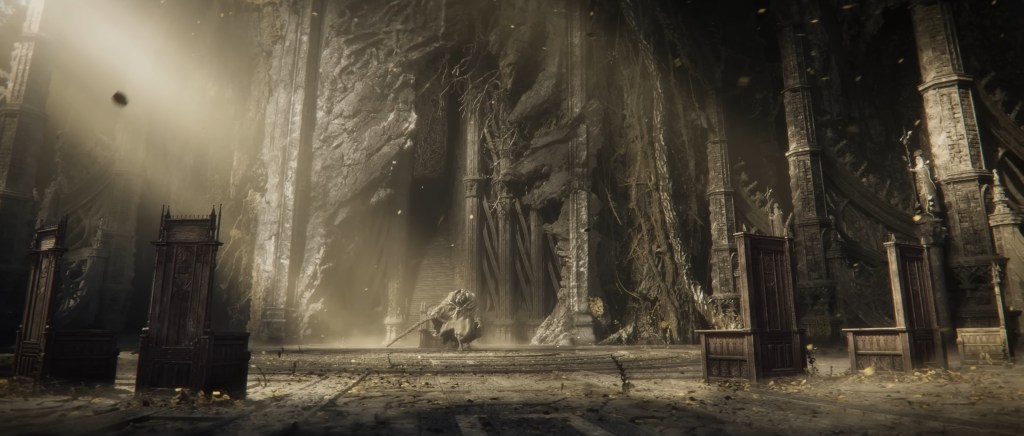
When confronting Morgott at the Elden Throne, he generates golden illusions of various thrones modeled on it, much like with Messmer. From their individual sizes and the different demigods associated with each, it is clear that every shardbearer sat in a circle together at one point, which the story trailer reaffirms with physical thrones in those spots. The reason for such gatherings is evident reading the sword monument to the First Defense of Leyndell. Despite the localization dubbing it just a “sovereign” alliance, the monument actually recounts a “ruler” (君主) alliance in obvious reference to the shardbearers. In short, all the demigods of the Shattering, sans Mohg, had originally formed a coalition. While Morgott sat in the true throne, the others would face him in their own seats out of respect for their potential to be King. The goal of these meetings must have been to decide the matter of succession amicably, each ruler allowed to make his or her case for becoming Elden Lord before the Erdtree. Until the tree responded favorably to one, King Morgott would remain the effective regent.
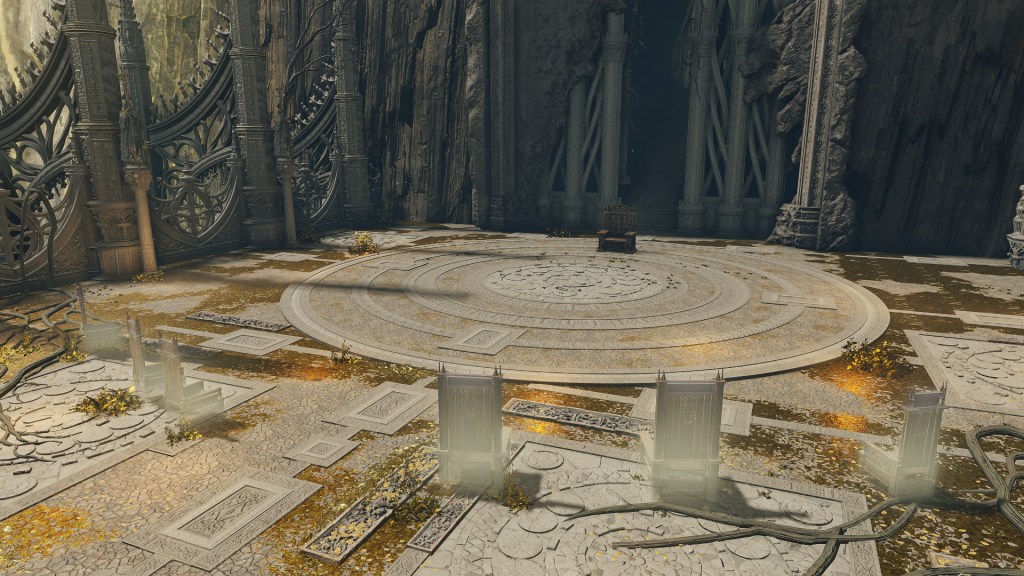
The Omen wasn’t proposing an alliance out of some affinity for kin. His speech before our battle beneath the Erdtree confirms that he considers all the shardbearers besides himself and his twin to be pillagers consumed by ambition. He was under no illusion that these demigods were anything more than enemies to the Erdtree; cut dialogue highlights his expectation of them to even do it ill. But putting aside whether the Great Runes were “stolen” from his precious gold, the tree would nonetheless die without the Elden Ring mended. At the same time, it wouldn’t do to spill blood at its base. As our journey shows, the golden tree isn’t in imminent danger — Morgott needn’t rush to restore the Golden Order. Rather than throw everything into chaos and risk a protracted conflict, better to solve this like civilized folk. The king therefore invited each demigod to join an alliance where they would decide amongst themselves who was best fit to rule, with the Erdtree as the ultimate arbiter.
Graceless Tarnished, have you business with the thrones? Ahh… Godrick the Golden. Miquella and Malenia, the twin prodigies. General Radahn. Praetor Rykard. Ranni, the moon princess. Defiant traitors. Your kind are all the same. Pillagers burned by the flame of ambition.
This made it inevitable that the shardbearers know the Omen’s true identity. Godrick highlights as much in cut dialogue, the Golden ruler referencing Morgott’s status as an abandoned child and Omen king. If he knew, then surely the others did too upon first meeting. However, Morgott was decidedly not concerned, and for good reason. With the priesthood’s backing, the king had seized control of the royal army and Leyndell’s bureaucracy. Should a contender conceive to shout the truth through the streets right then and there, it was that person’s word against the capital’s entire religious body. Moreover, acting on this information put the demigod in an awkward spot; if the others took Morgott’s side, then the decrier would easily end up arrested for slander, removing one more competitor for the throne. And in the end, Morgott’s plan was reasonable, offering everyone a fair chance to take his place while also denying their rivals a decisive advantage. Everyone could see that it was in their best interest to play along. The alliance was formed accordingly.
That said, the cracks would begin to show almost immediately. With every party outwardly invested in becoming Elden Lord, the alliance’s meetups were likely dragged into endless debates, one demigod countering another with why they lacked qualifications or a proper vision for moving the kingdom forward past this crisis. Morgott might not mind these wars of words, since he was assumedly moderating as host of the venue. But as talks stretched into likely weeks or months with seemingly no progress, this alliance was clearly going nowhere but deadlock; the eerily silent Erdtree wasn’t going to be accepting any of their arguments. All the while, the demigods between meetings would be returning to their homes, their armies, their supporters, and gameplan the path ahead, shardbearers possibly holding private discussions with each other. This is the nature of politics, and it was something that Morgott, for all his street smarts, lacked experience with. As a result, he made the naïve mistake of assuming that everyone was taking part in good faith, when there was still a plot afoot.
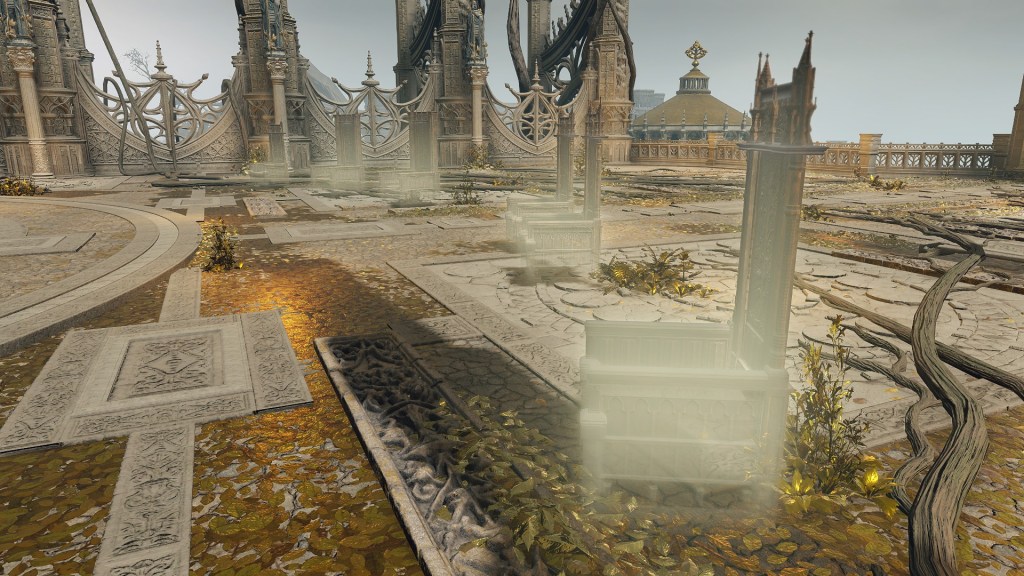
According to the monument, the First Defense of Leyndell marked the alliance’s collapse from within. Rather than give up a Great Rune to another, demigods were beginning to raise armies and launch assaults on Leyndell. The rationale was simple: if they conquered the capital, they had control of the Erdtree, the Elden Throne, and likely the Great Runes. From cut dialogue, Godrick expects to find Morgott, Malenia, and Miquella at the Erdtree’s base, making for three Great Runes to add to a shardbearer’s own. That is more than we require to mend the Elden Ring, making Leyndell a hypothetical treasure trove — winner takes all. And who knows? If the tree won’t respond to anything else, perhaps it wanted them to kill and pillage the runes in order to reign supreme? Morgott was surely aware of this, but may never have expected anyone to break the alliance for a riskier alternative. Little did he suspect that some might use the discussions as a ruse to buy time and build up a force to attack.
The first attempt evidently ended in failure. Leyndell’s soldiers trained to be the capital’s living rampart, and they performed as expected; it wasn’t a gigantic dragon hurling itself at them this time. The battle appears to have been won after Kristoff, one of the knights, successfully led forces to capture Godefroy the Grafted. For his meritorious deed, the soldier was honored as a hero and awarded with Erdtree Burial. The latter seems to have been Kristoff’s decision, as we collect his ashes in the Sainted Hero’s Grave. Like so many knights in the capital, the man was a devout follower of the Ancient Dragon Sect, his fascination demonstrable in the lightning incantations he performs. But more than likely, the knight was either too young or yet to be born when the Ancient Dragon War took place. How he must have dreamed of fighting alongside the likes of Godwyn against such glorious foes, only to triumph and then claim their power after extending an olive branch. To be buried alongside those heroes was likely the highest honor for him, so King Morgott acquiesced to his request.
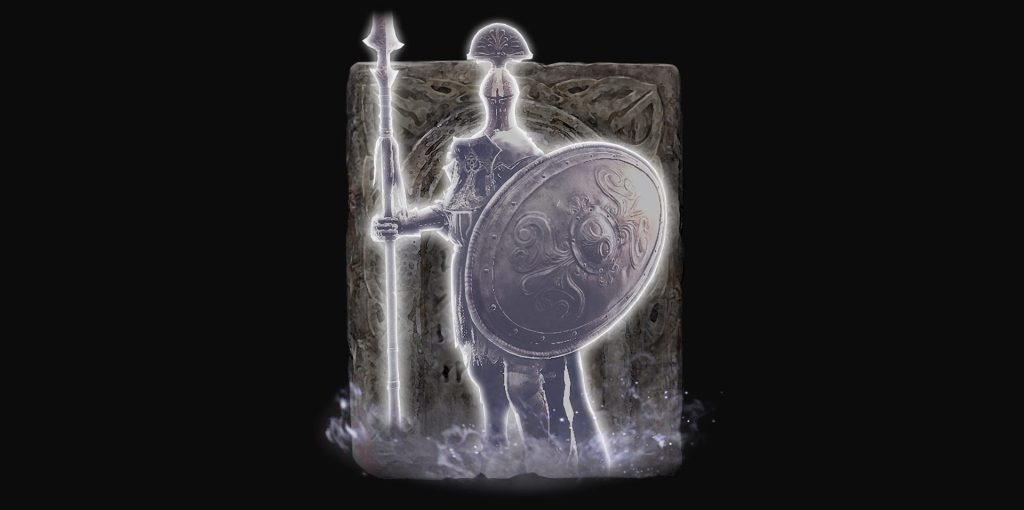
Ashen remains harboring spirits. Summons two Lowdayl soldier spirits.
Spirits of two equipped with spears and greatshields. The battle of Lowdayl soldiers is a defensive battle. In the Shattering War, they were the royal capital’s ramparts.
One of the “legendary ashen remains”. Summons Kristoff, ancient dragon knight, spirit.
Spirit of Kristoff, renown knight of the royal capital of Lowdayl and pious ancient dragon adherent. He wields lightning strike battle arts, which are the weapon of ancient dragons.
In the First Defense of Lowdayl, he was honored with Tree Return as a hero due to his achievement capturing Godefroy the Grafted.
That the Omen offered a hero’s reward for this achievement in battle demonstrates how highly he still valued peace. For Morgott, the defense of Leyndell needed to be quick and decisive to hopefully stem dissent, surely still wanting to salvage the alliance. If the shardbearers sensed blood in the water, then the king’s position as a meditator would become unsustainable — many more would see violence as a viable solution. The only way to preserve the precarious balance of powers in a peaceful forum was to show that rebellion wouldn’t weaken him at all but be met with harsh punishment. Kristoff gave him that victory, arguably saving the kingdom in Morgott’s eyes. But Leyndell’s king was just one man with one army. Try as he might, he couldn’t stop the ball once it started rolling downhill. War might have gotten a false start, but the alliance proved fragile, and more would invariably scheme ways to forcibly topple the Omen King. Soon, the Shattering was in full swing.
Beating the War Glums
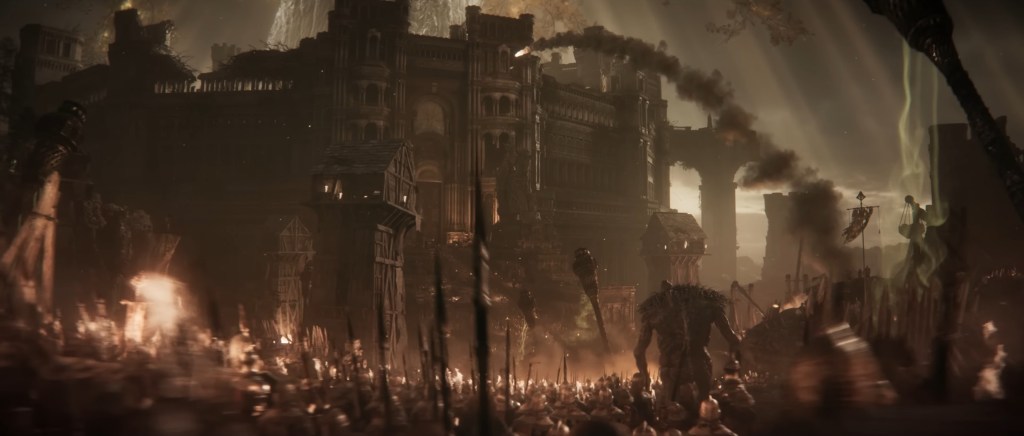
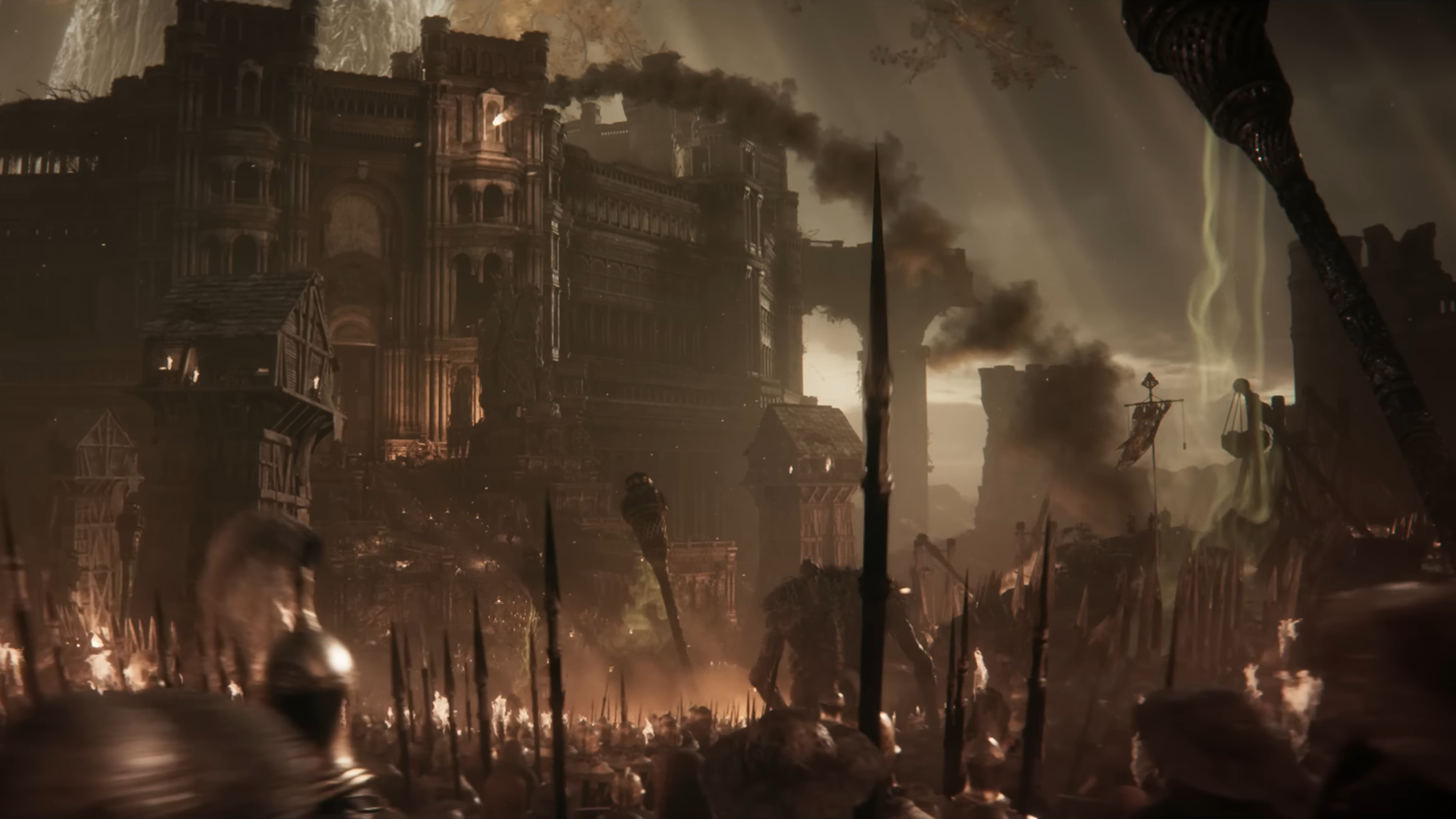
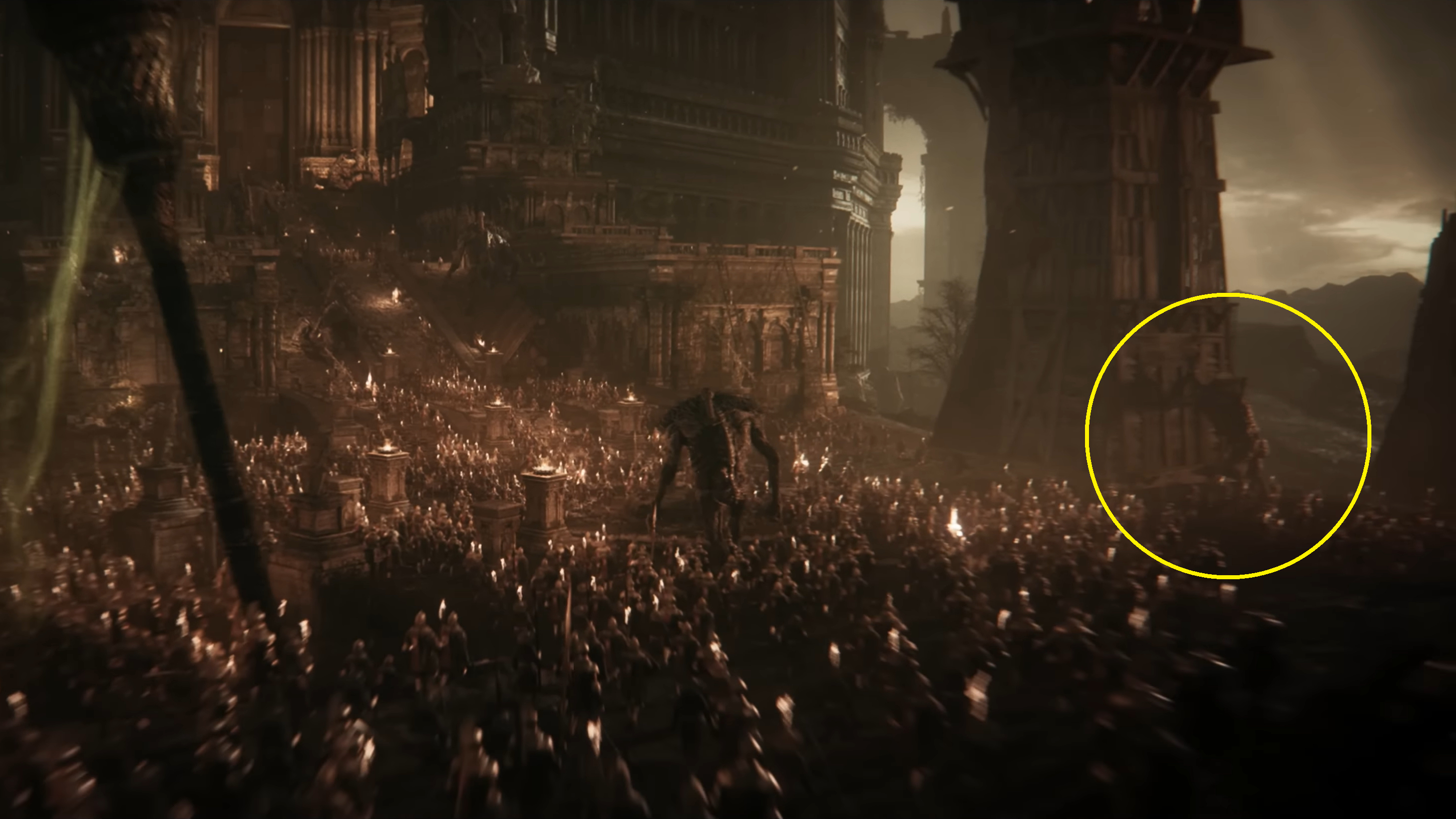
The real war began with another assault on Leyndell. Although the sword monument to the First Defense of Leyndell is located well outside the Capital Outskirts, the Second Defense is commemorated on a cliff overlooking the battlefield viewed in the story trailer. Armies breached the Outskirts and laid siege to the inner rampart, leaving lasting damage to this day to walls and gargoyles alike. From the trailer, the enemy’s strategy was to break down and scale the walls while forces put pressure on the main gate, with the obvious intent to capture the city. Ranni’s narration during the sequence implies this to be the first major conflict of the Shattering, with Shanehaight affirming the battle as a rebellion against Morgott to take Altus. Unlike the first time, the rebels were successful in reaching the city and had dug in with encampments and siege engines. If the royal army deployed units to do more than defend the walls, they were ineffectual.
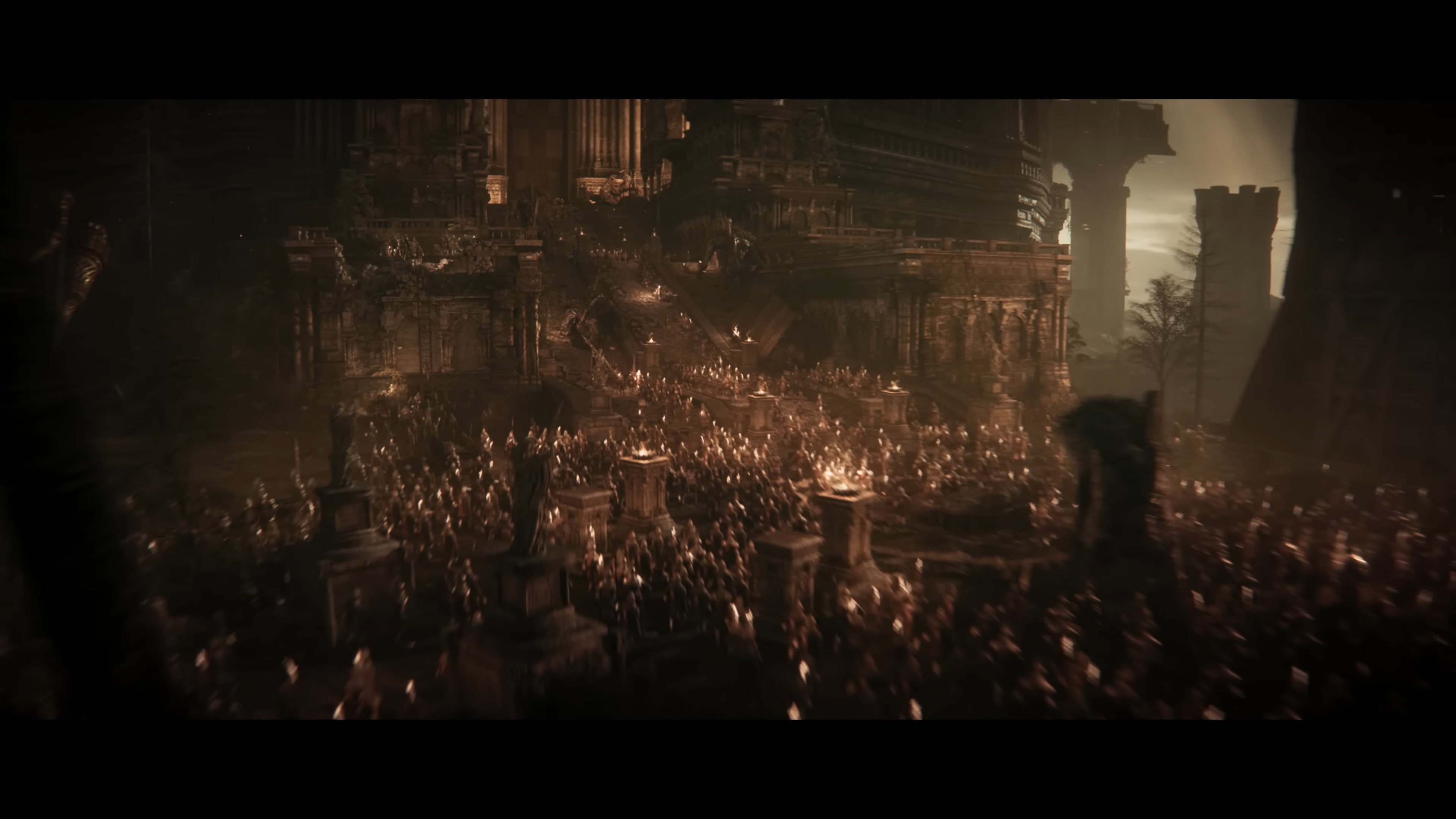
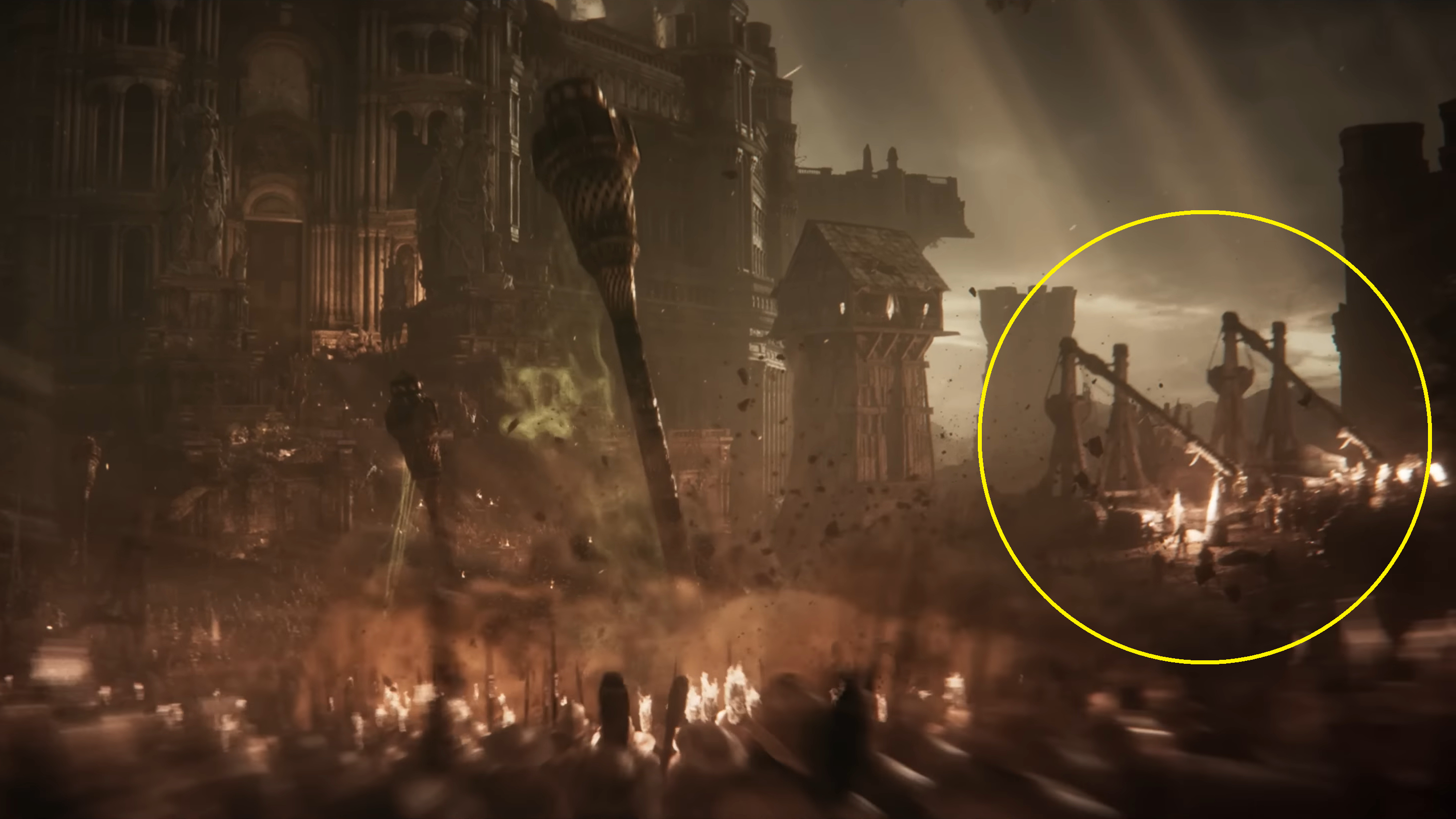
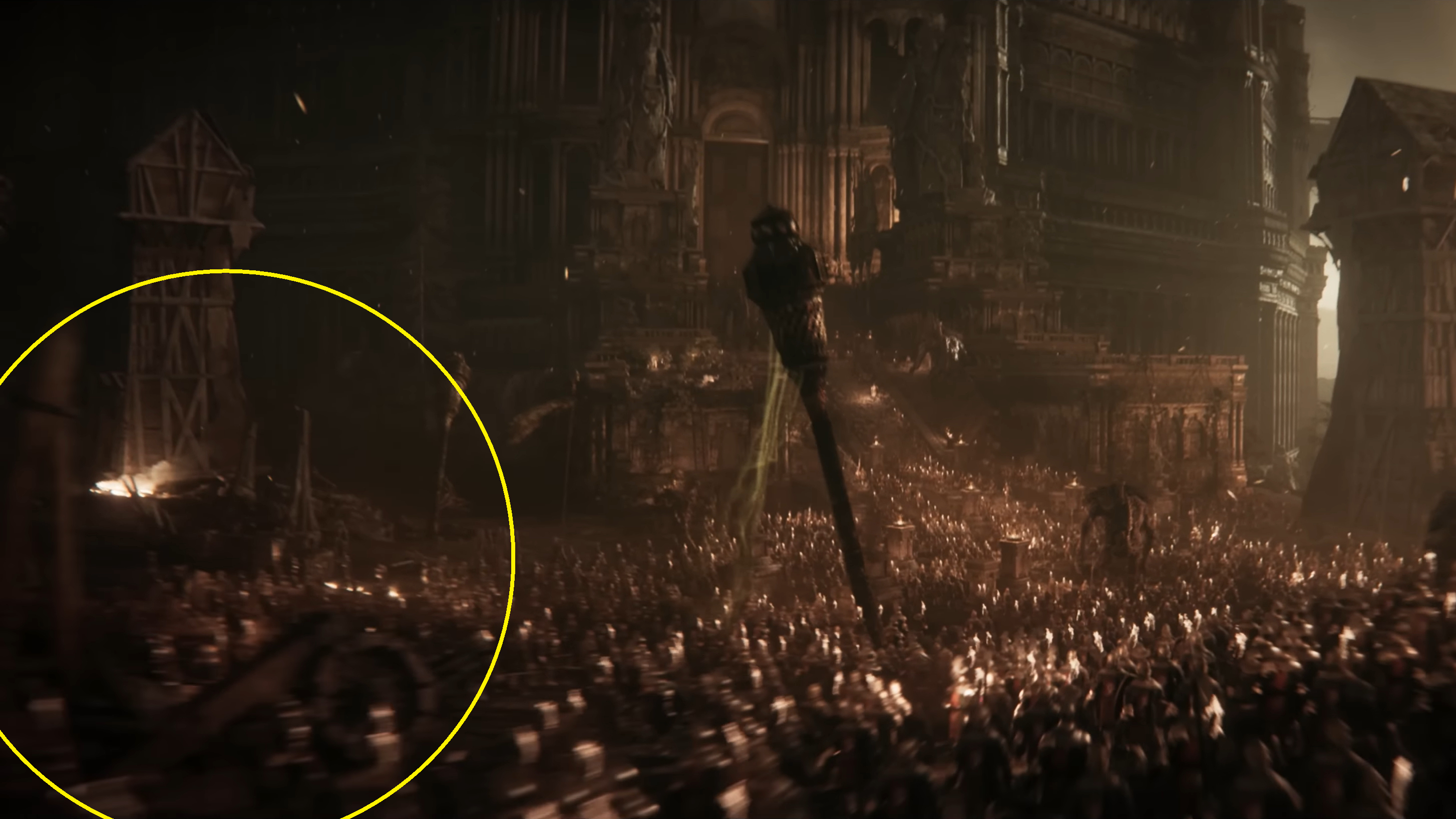
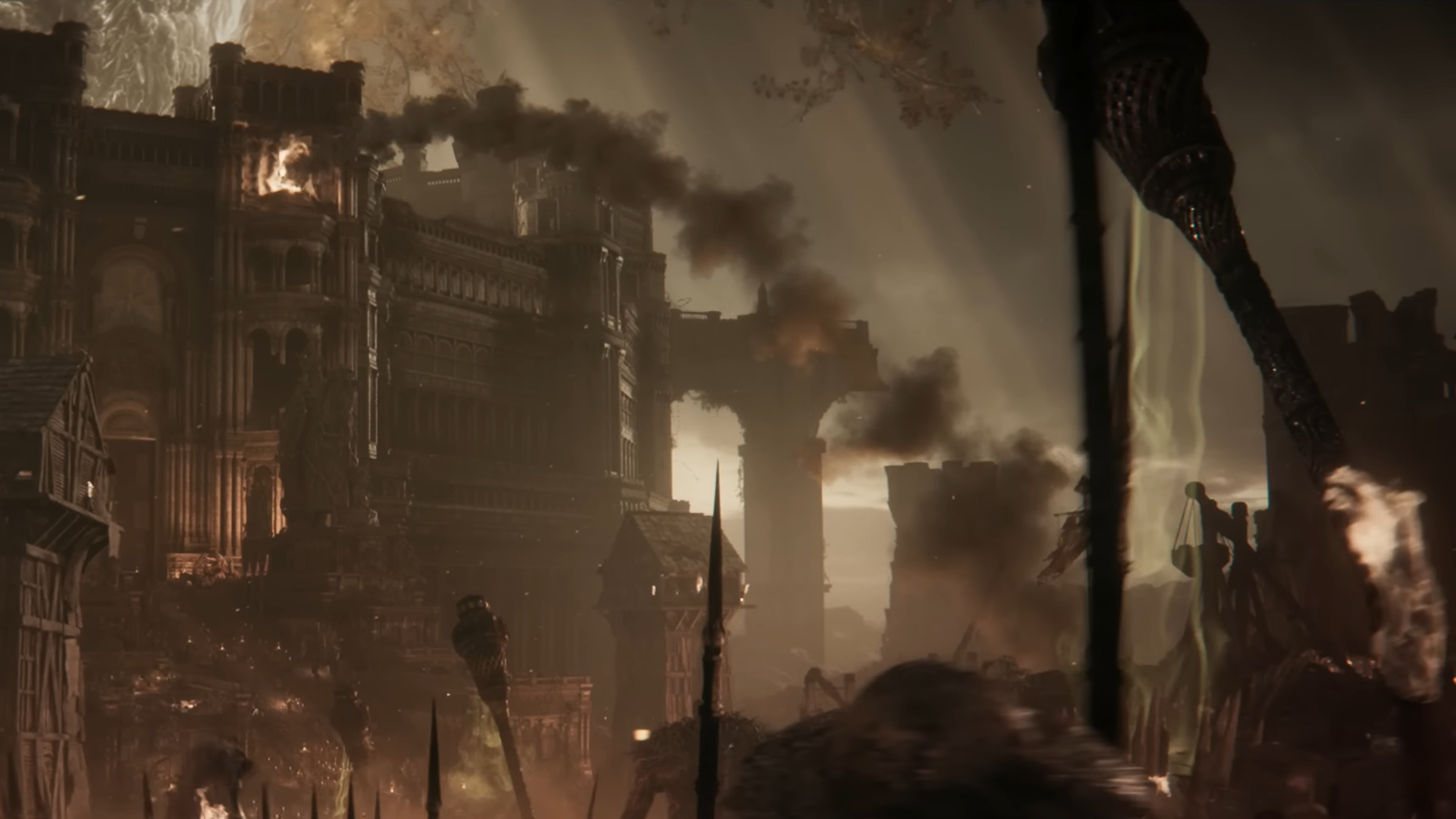
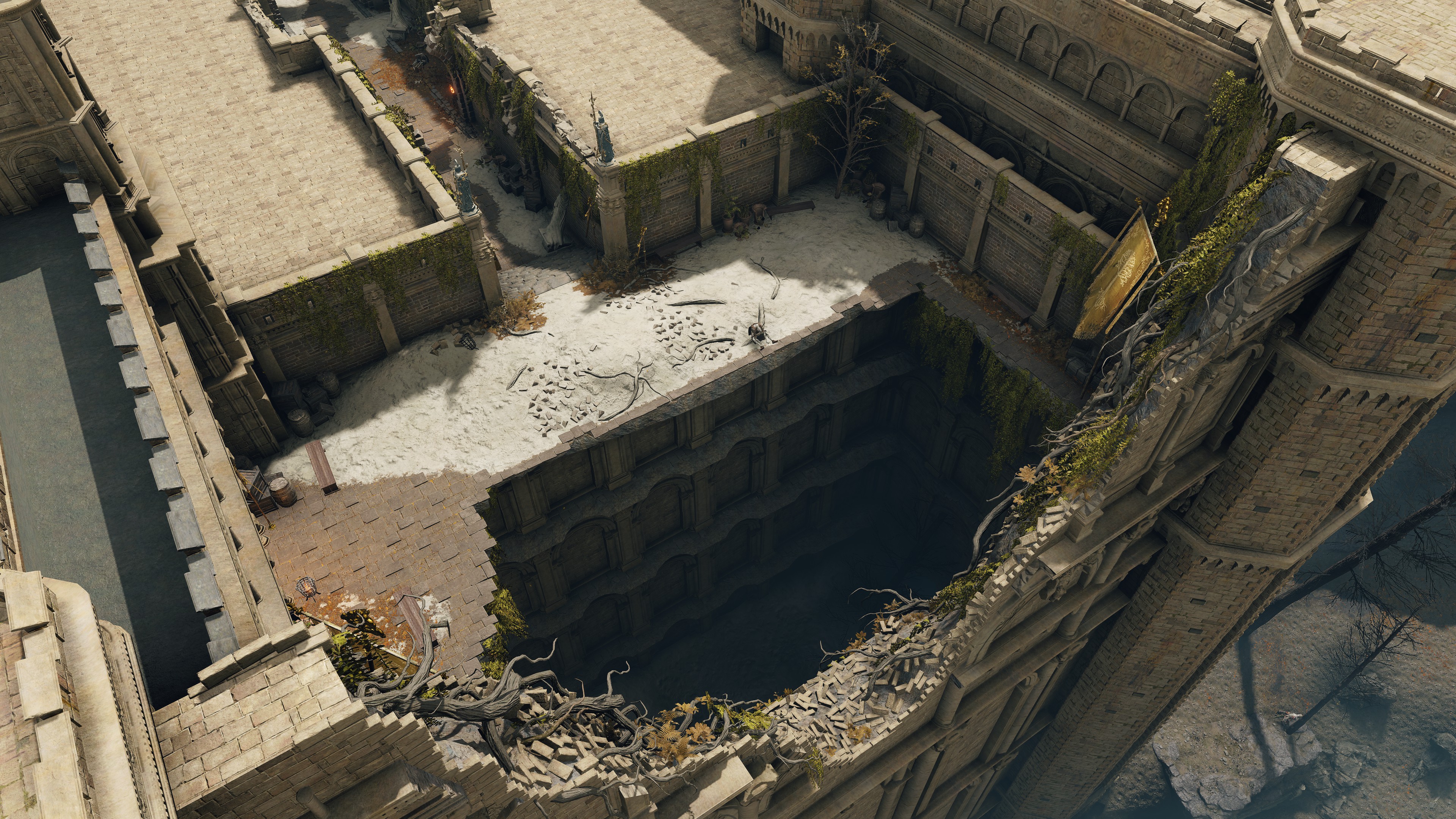
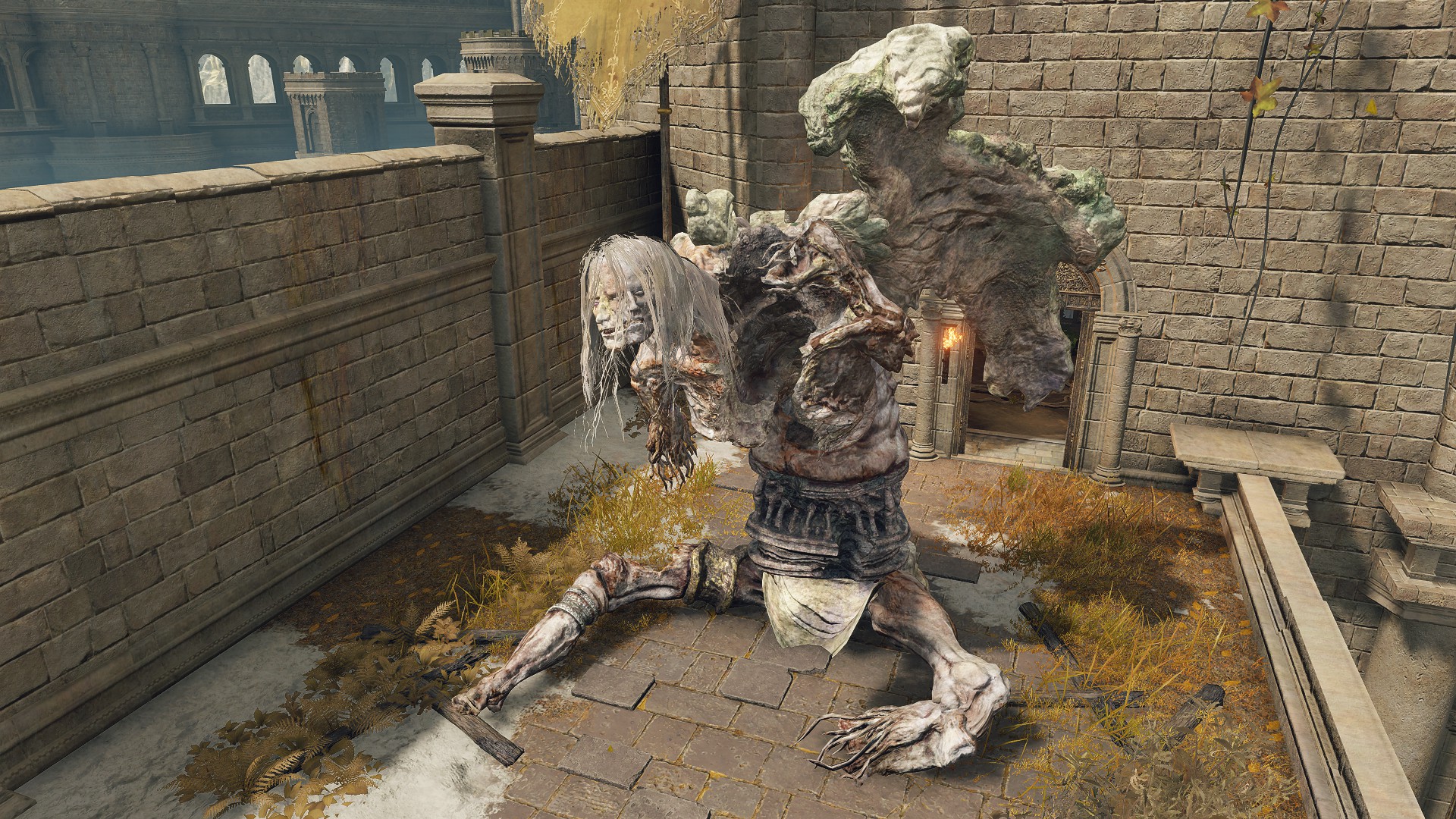
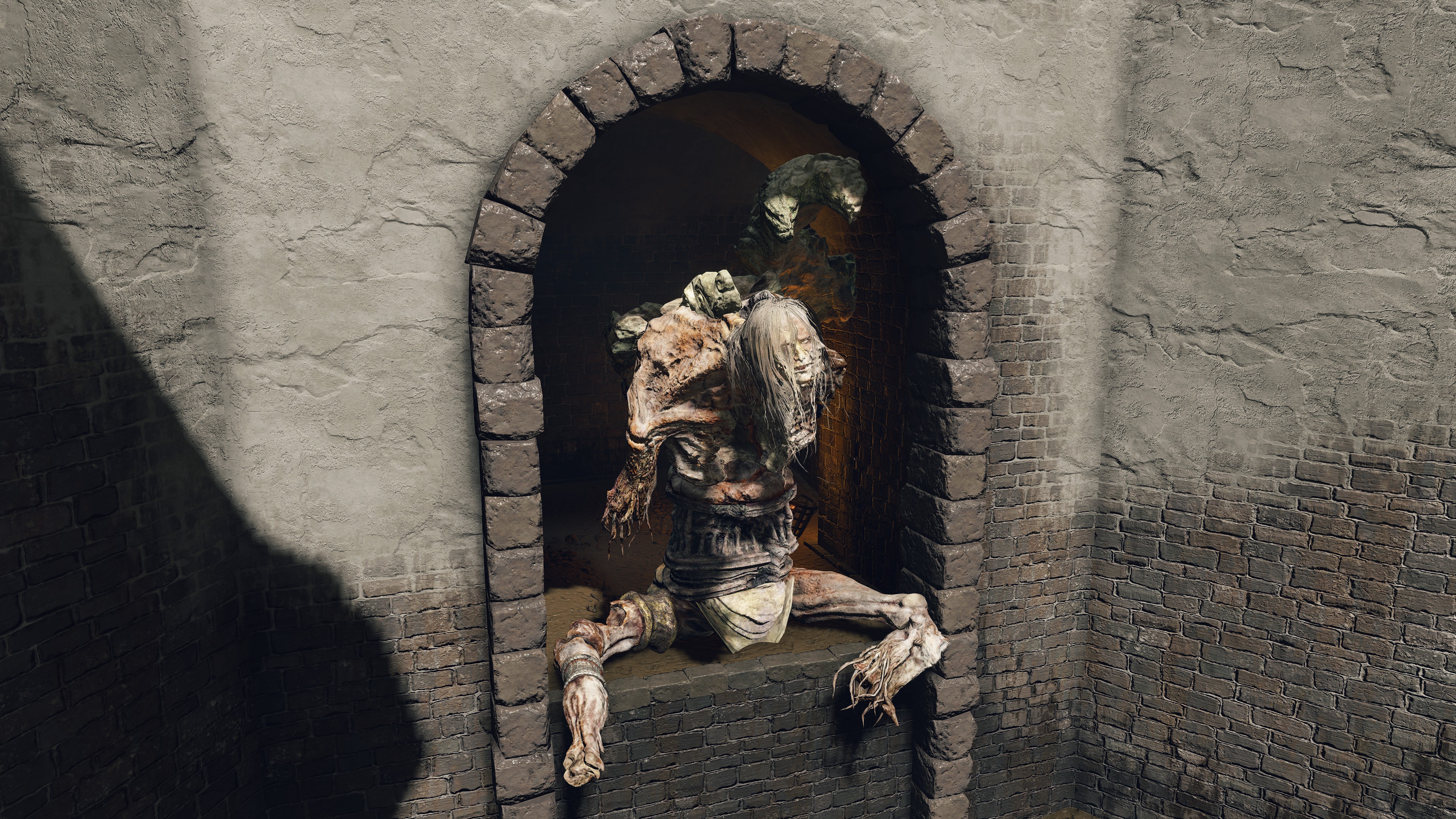
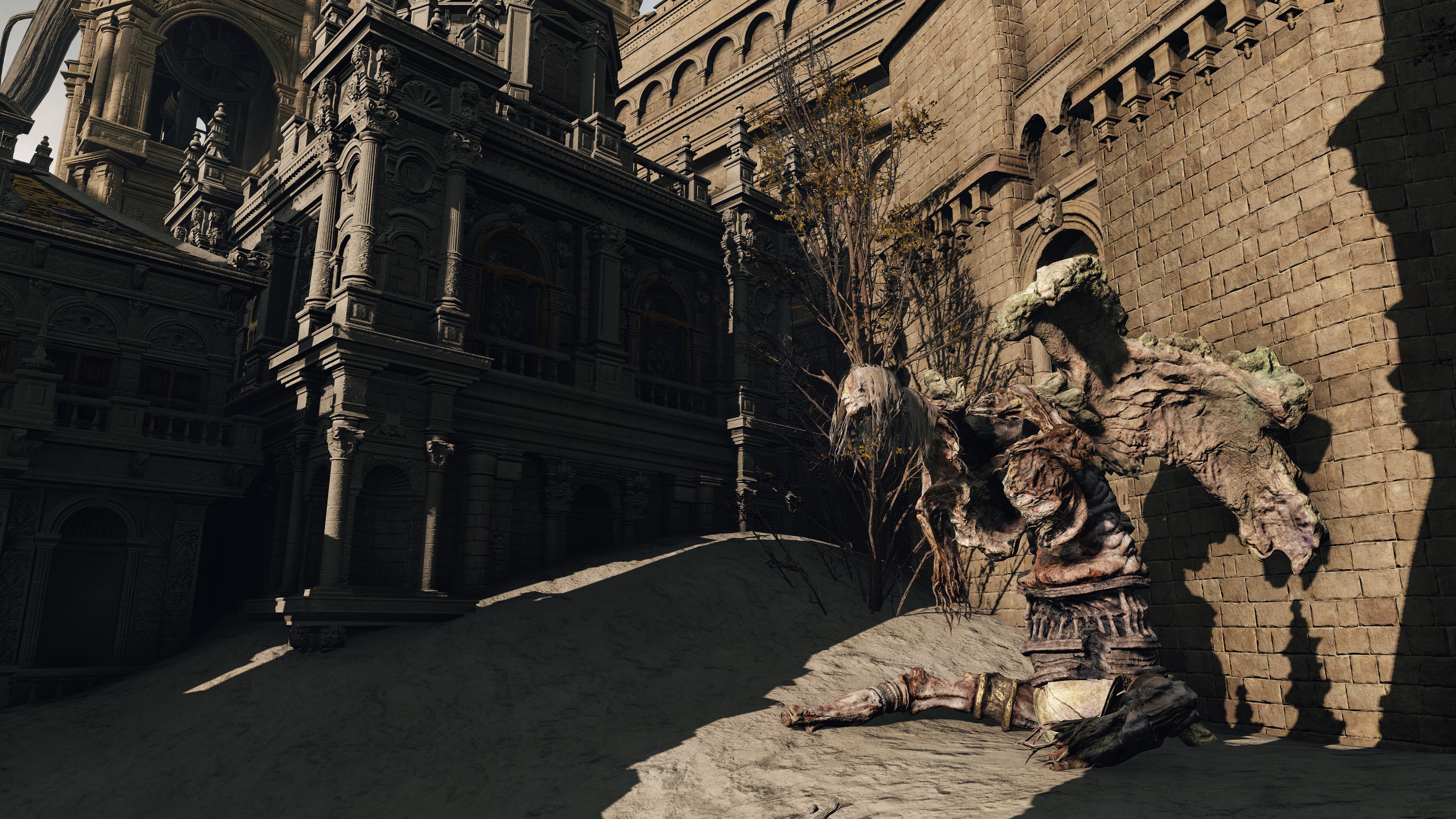
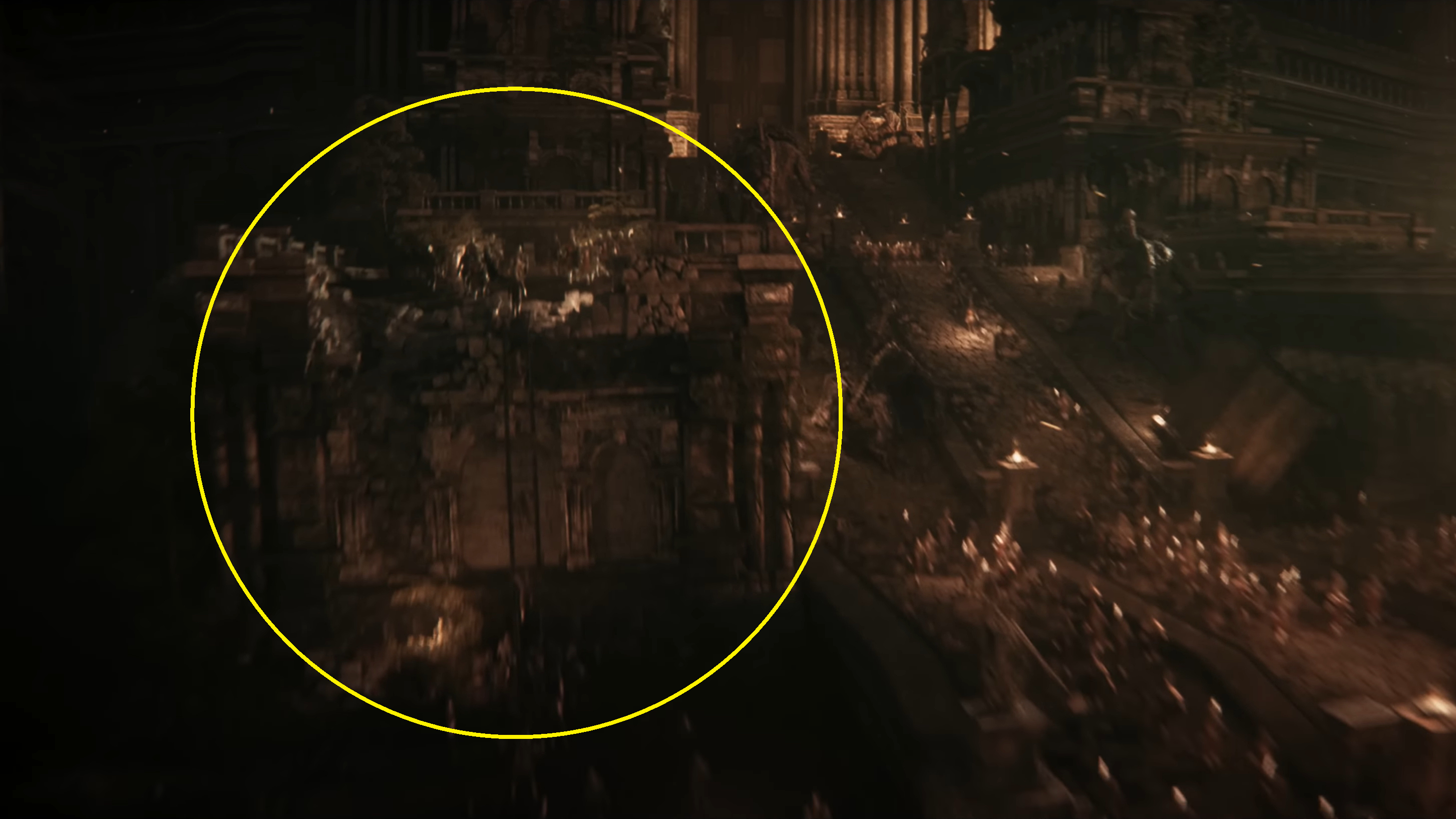
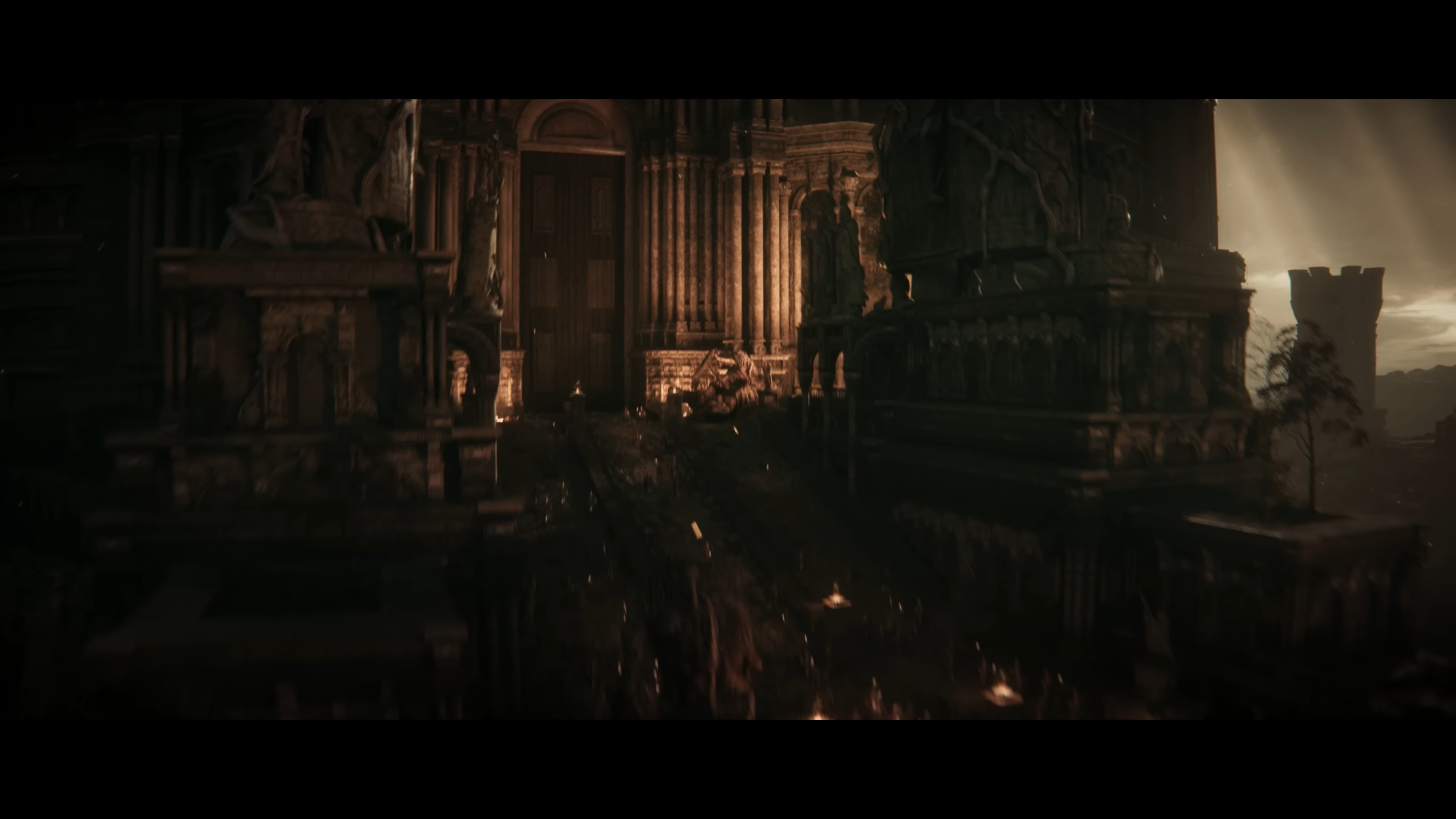
… In the Shattering War, many fools mistook their suitable place. Not knowing their place, they rebelled against Grace King Morgott, raising an army to steal and invade the Holy Land.
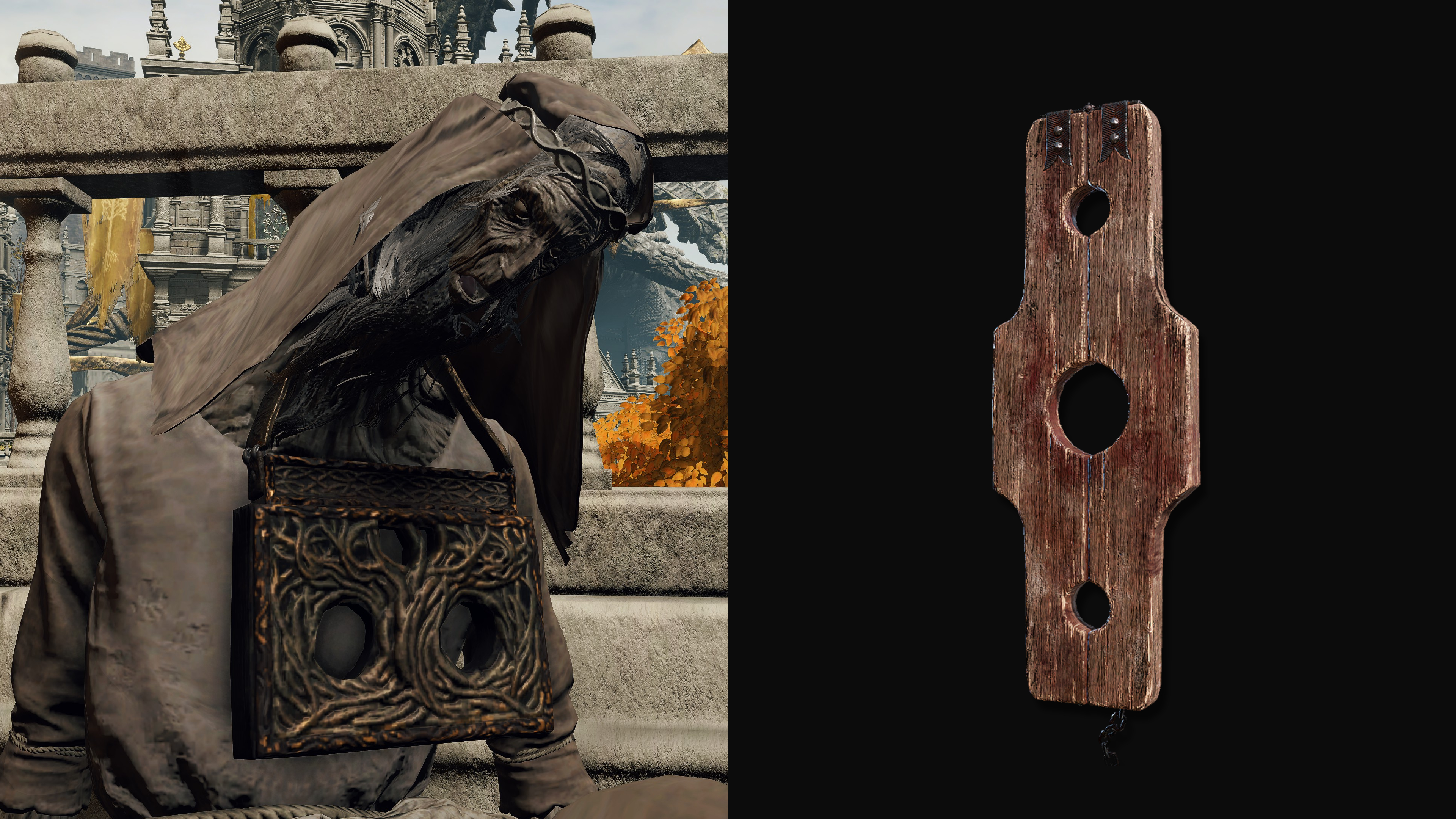
Out of desperation, Morgott apparently mobilized the entire capital. First, he pressed the city’s commoners into service, conscripts identified by the wooden boards hung around their necks. The holes are clearly made to resemble pillories, which the Pillory Shield confirms were used to shackle serious felons in the Lands Between. But the Erdtree engraved in the commoner’s board signals these hand stocks as symbolic, putting one on serving as proof that you are a citizen devoted to Erdtree civilization. For that reason, the attire boosts the wearer’s faith, and the conscripts similarly wield swords with another Erdtree design to show fealty. Nonetheless, the elaborately embroidered cloth garb comes with a metal collar like for pages, as if to remind those citizen troops that their “choice” was compulsory. Nobles were also expected to contribute, their pages stationed inside the ramparts. Everyone had to do their part if they didn’t want to get slaughtered by pillaging invaders. With the siege reaching the ramparts, the populace doubtless felt their safety in peril for the first time since the Ancient Dragon War.
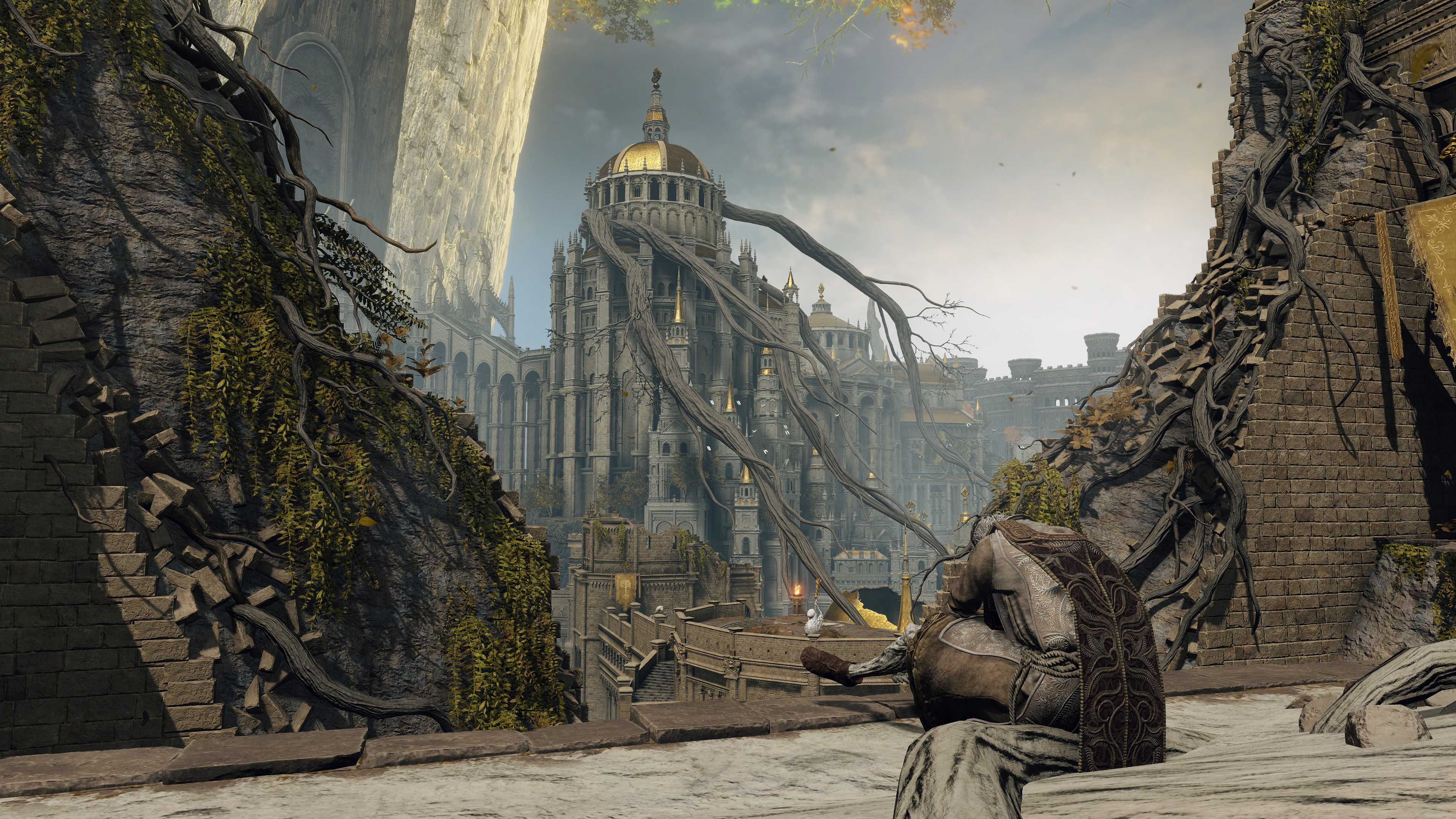
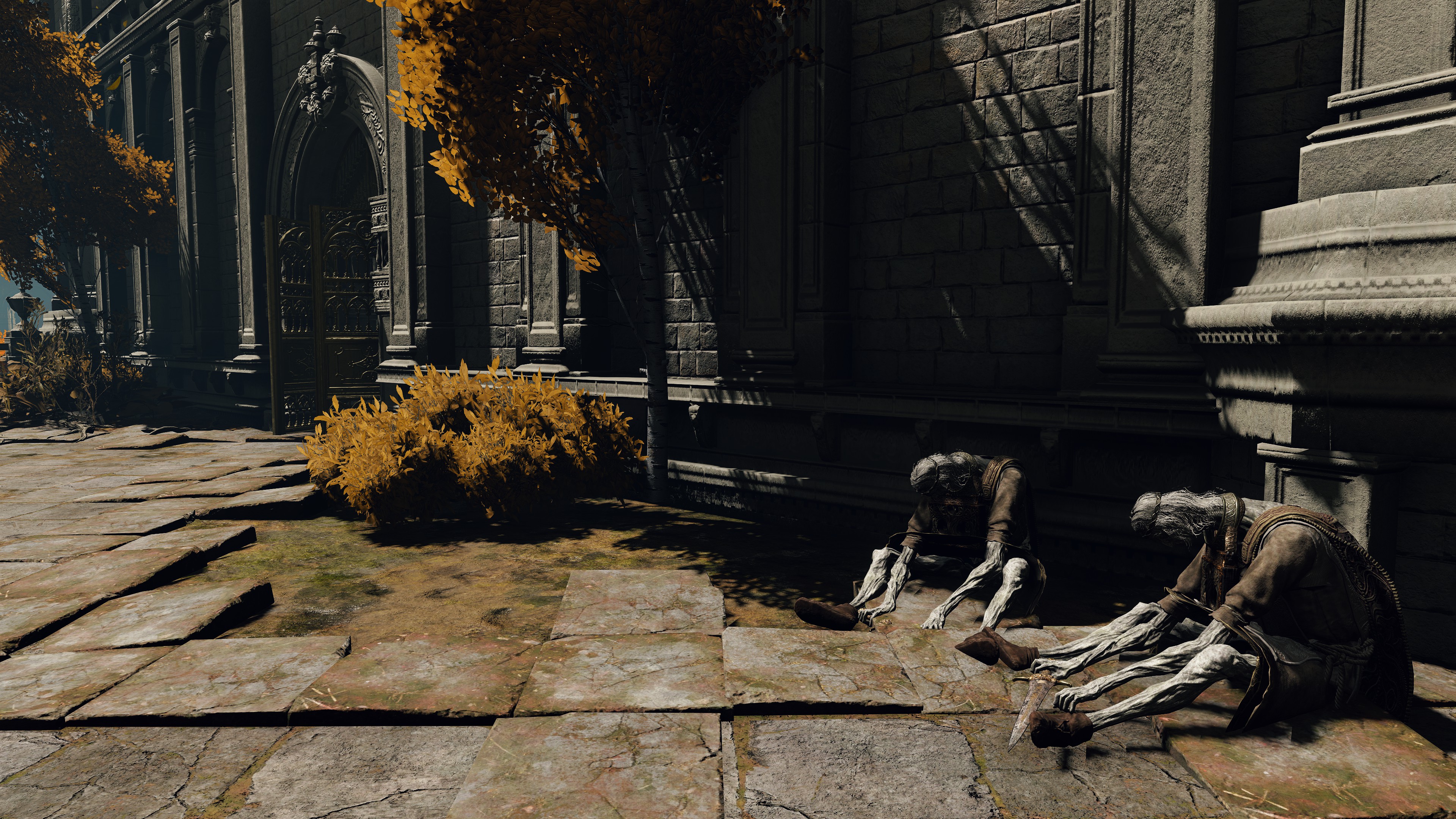
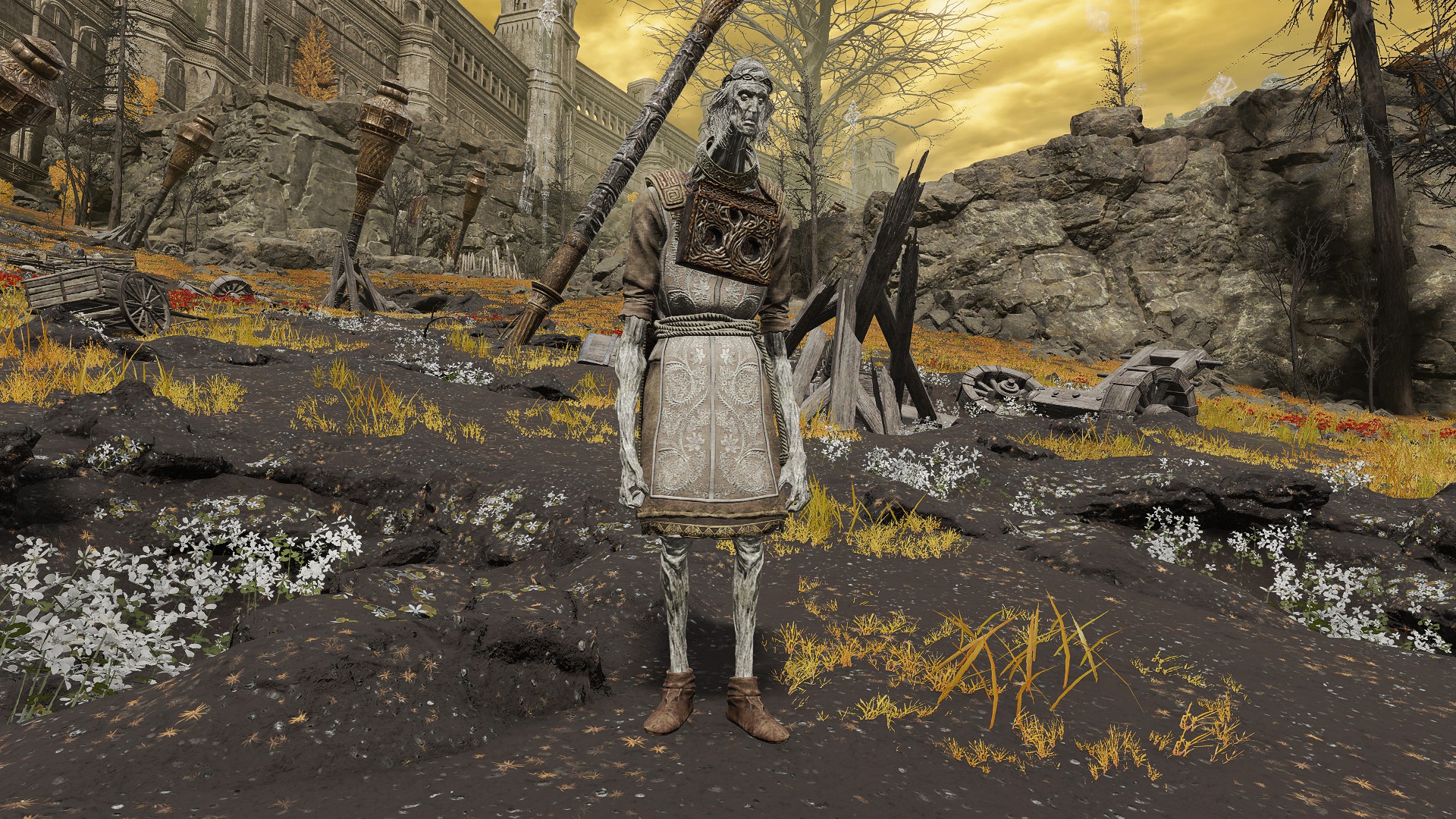
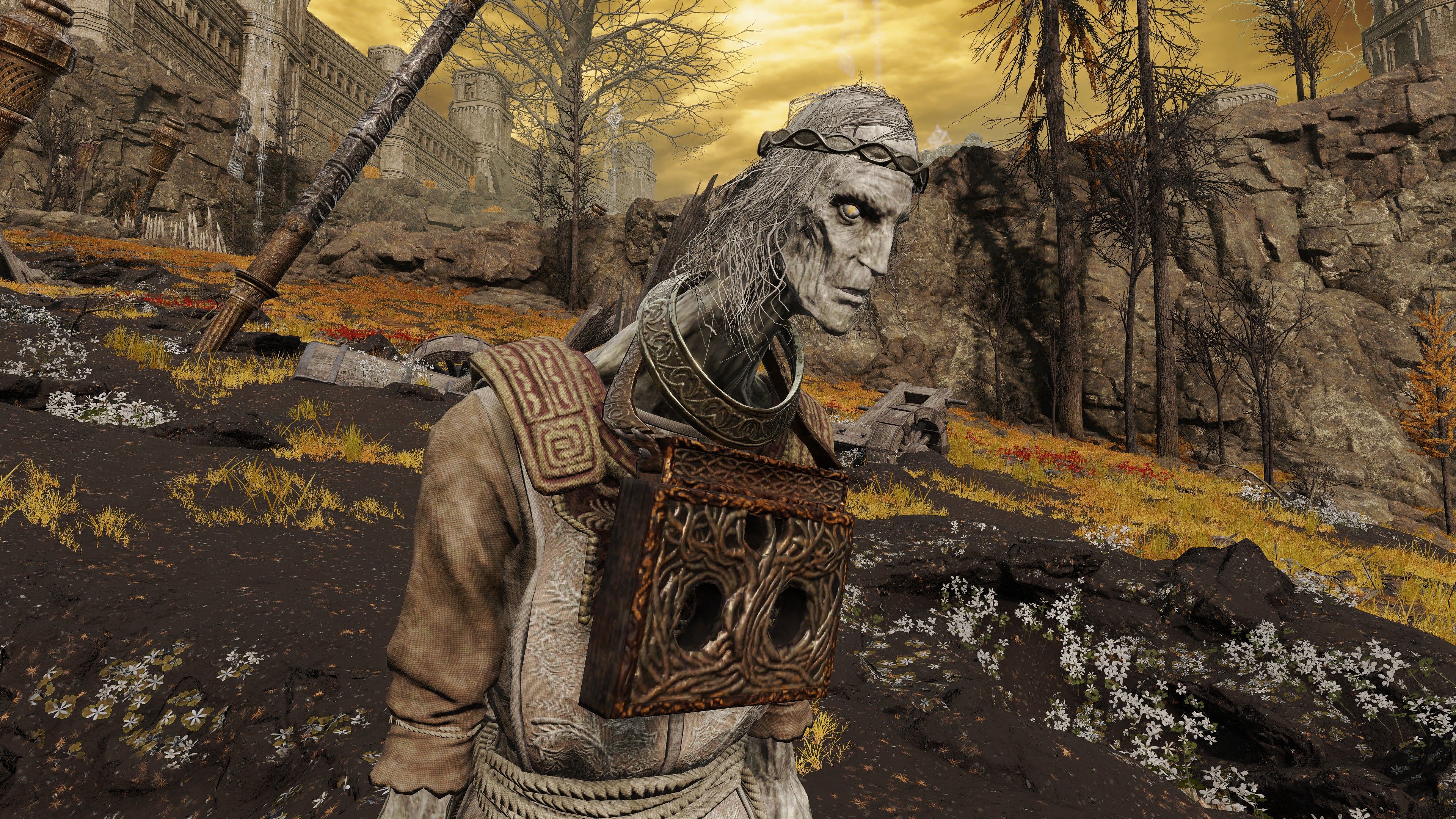
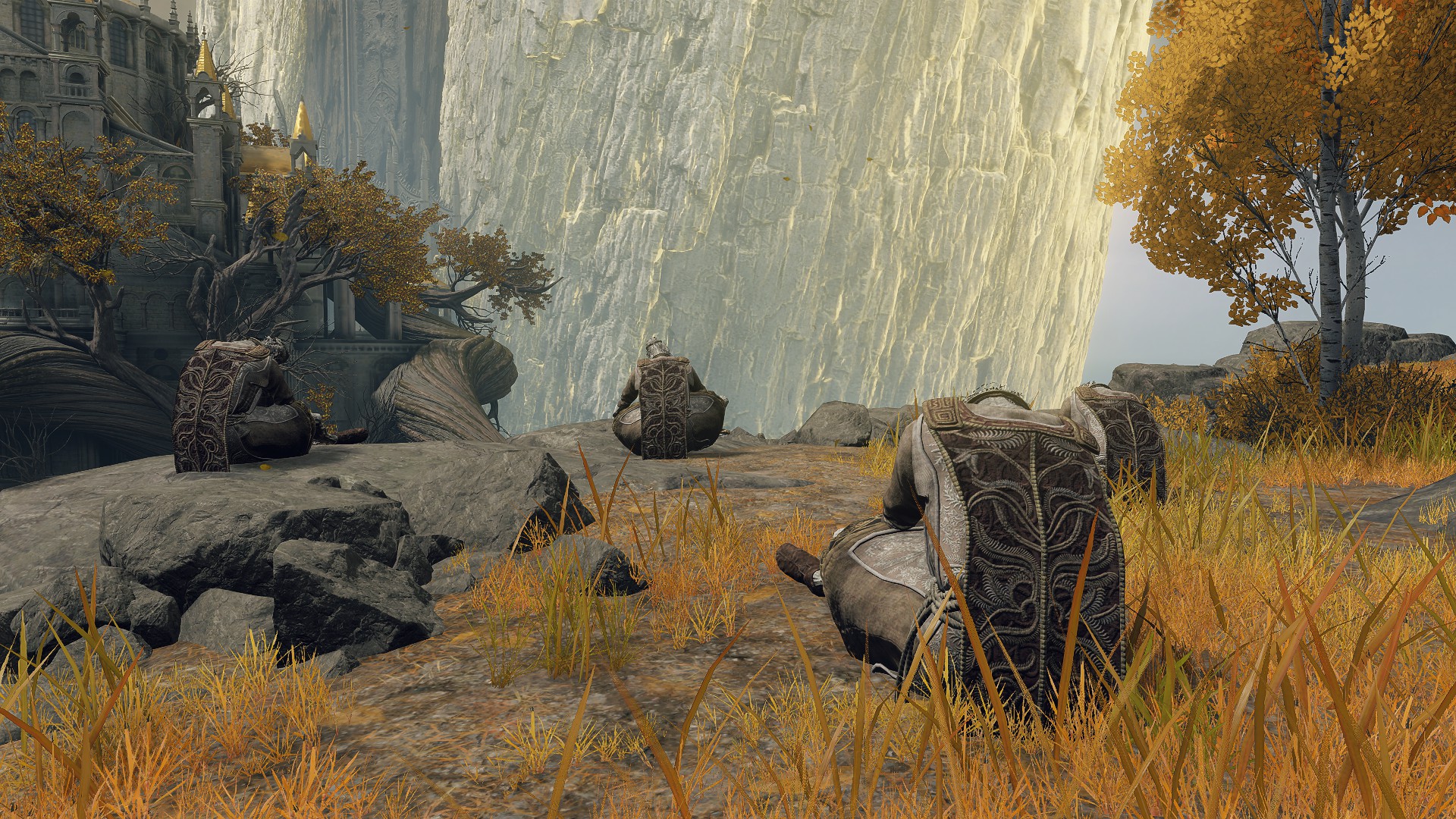
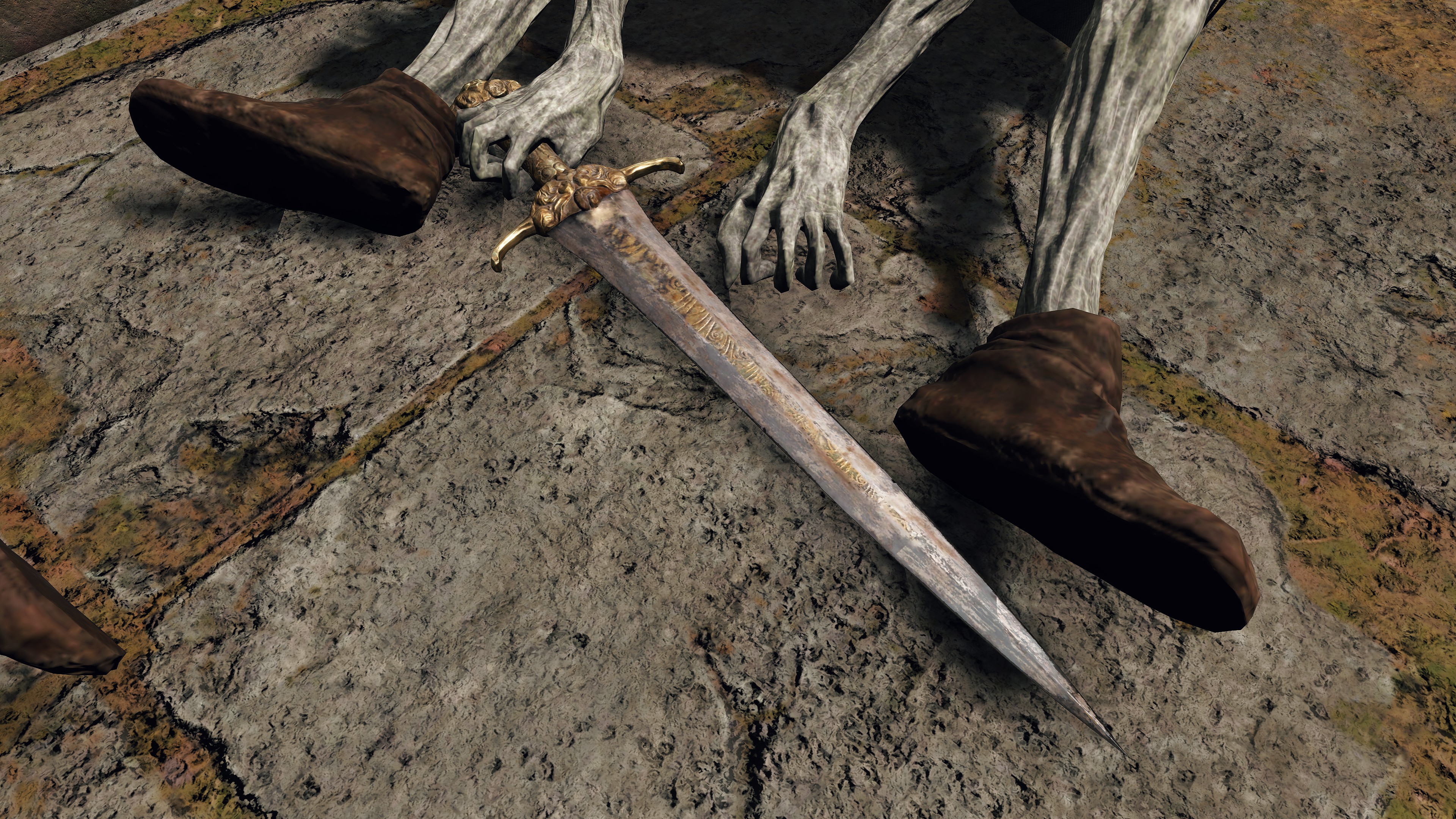
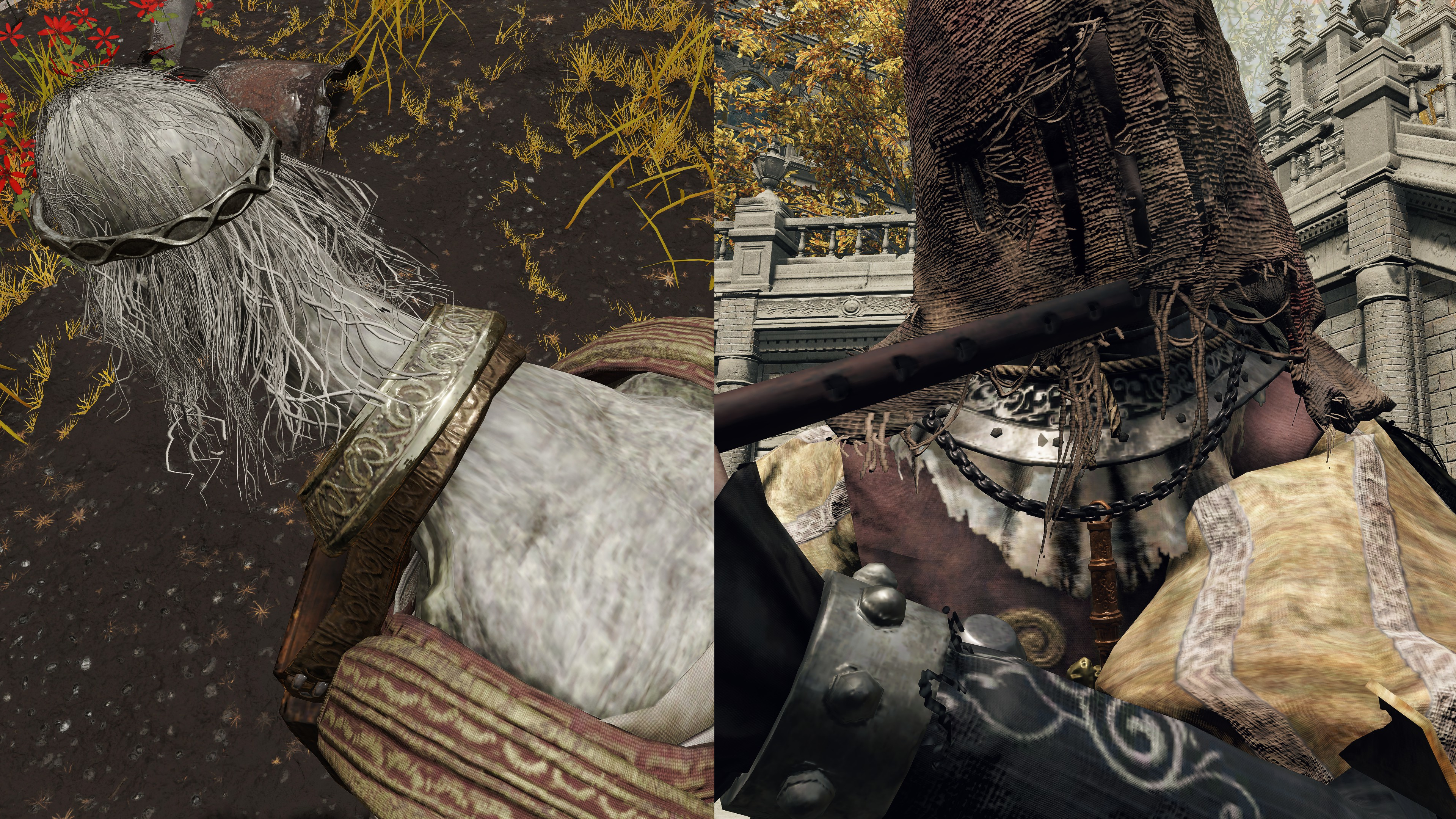
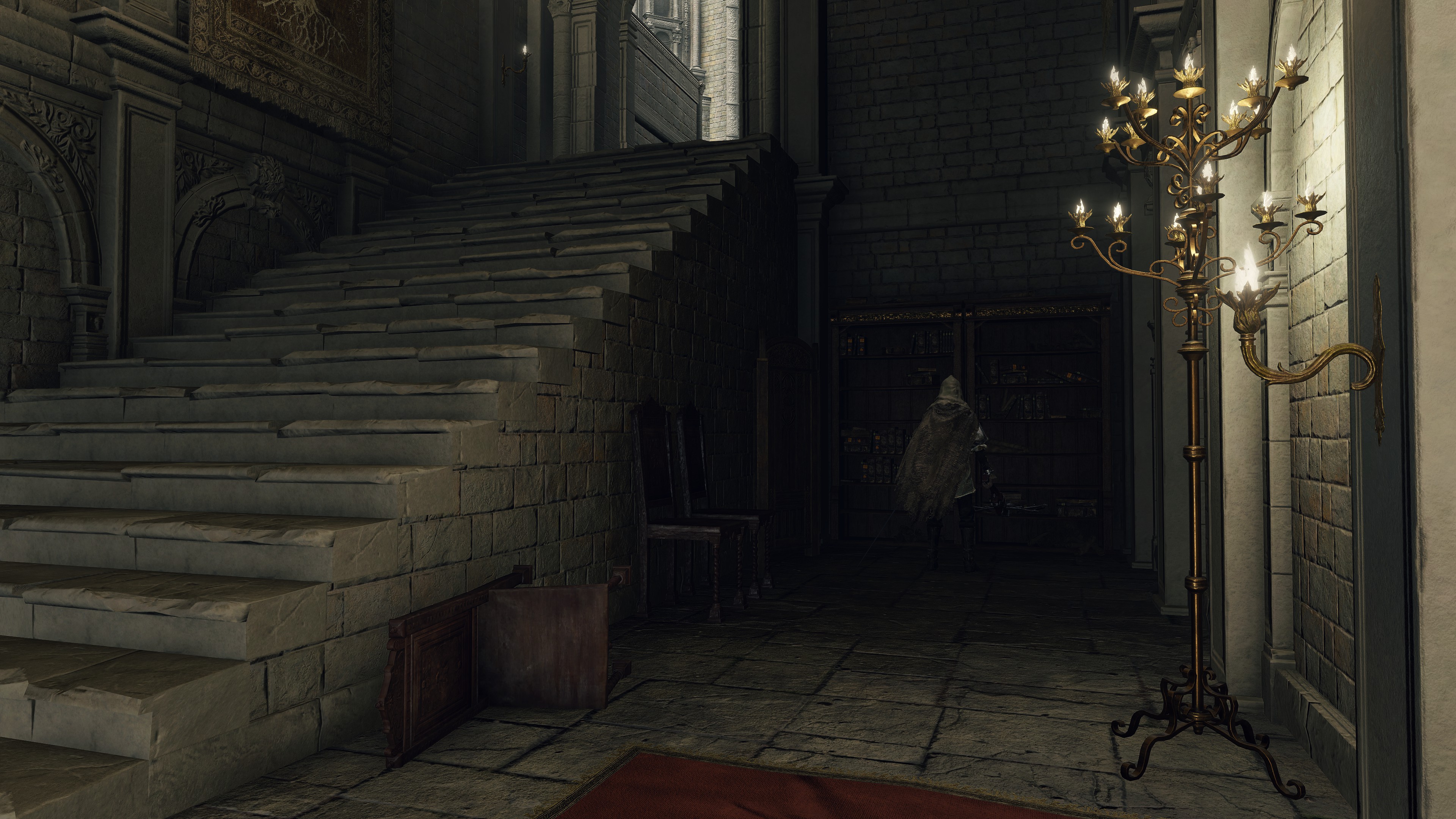
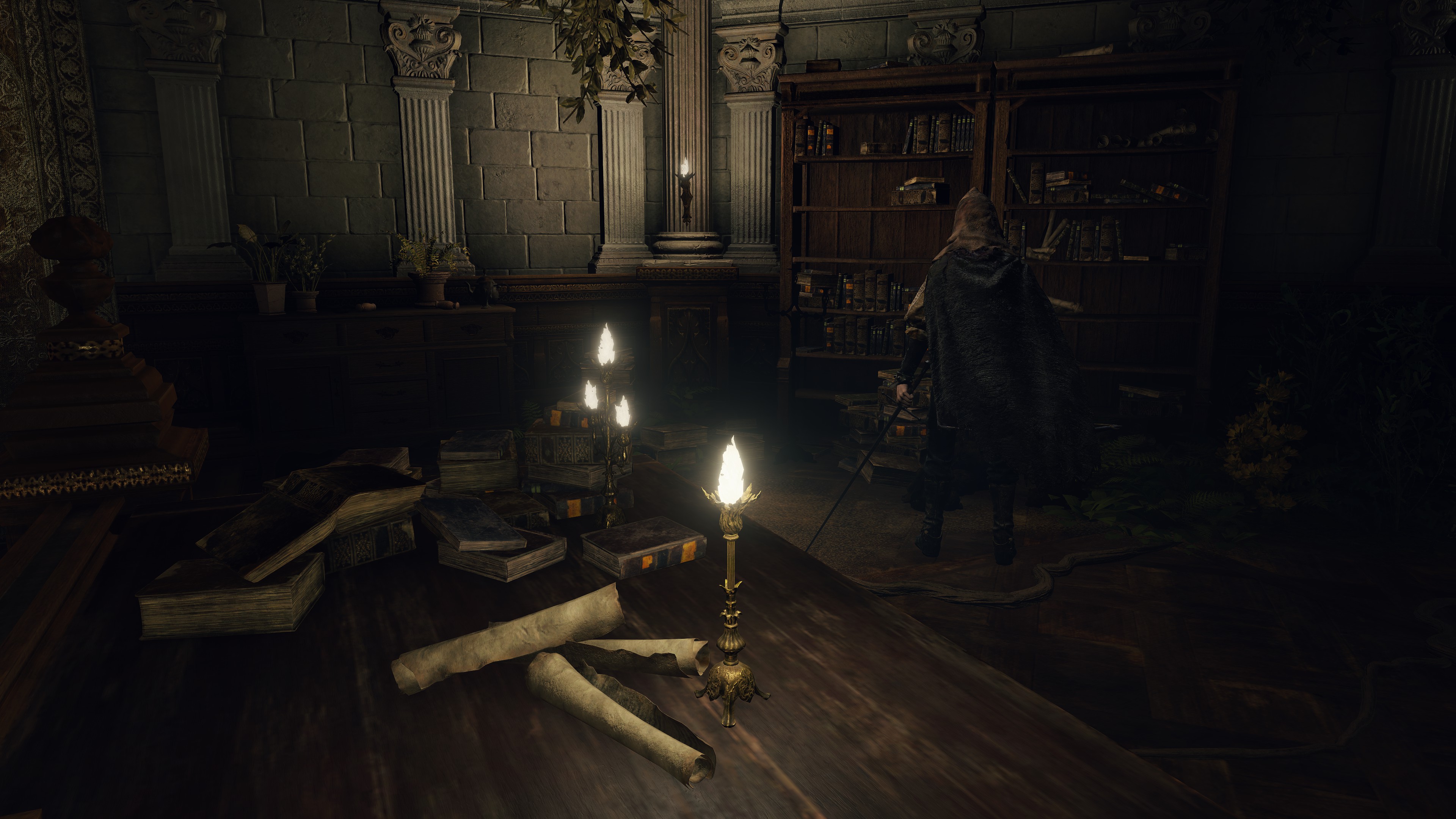
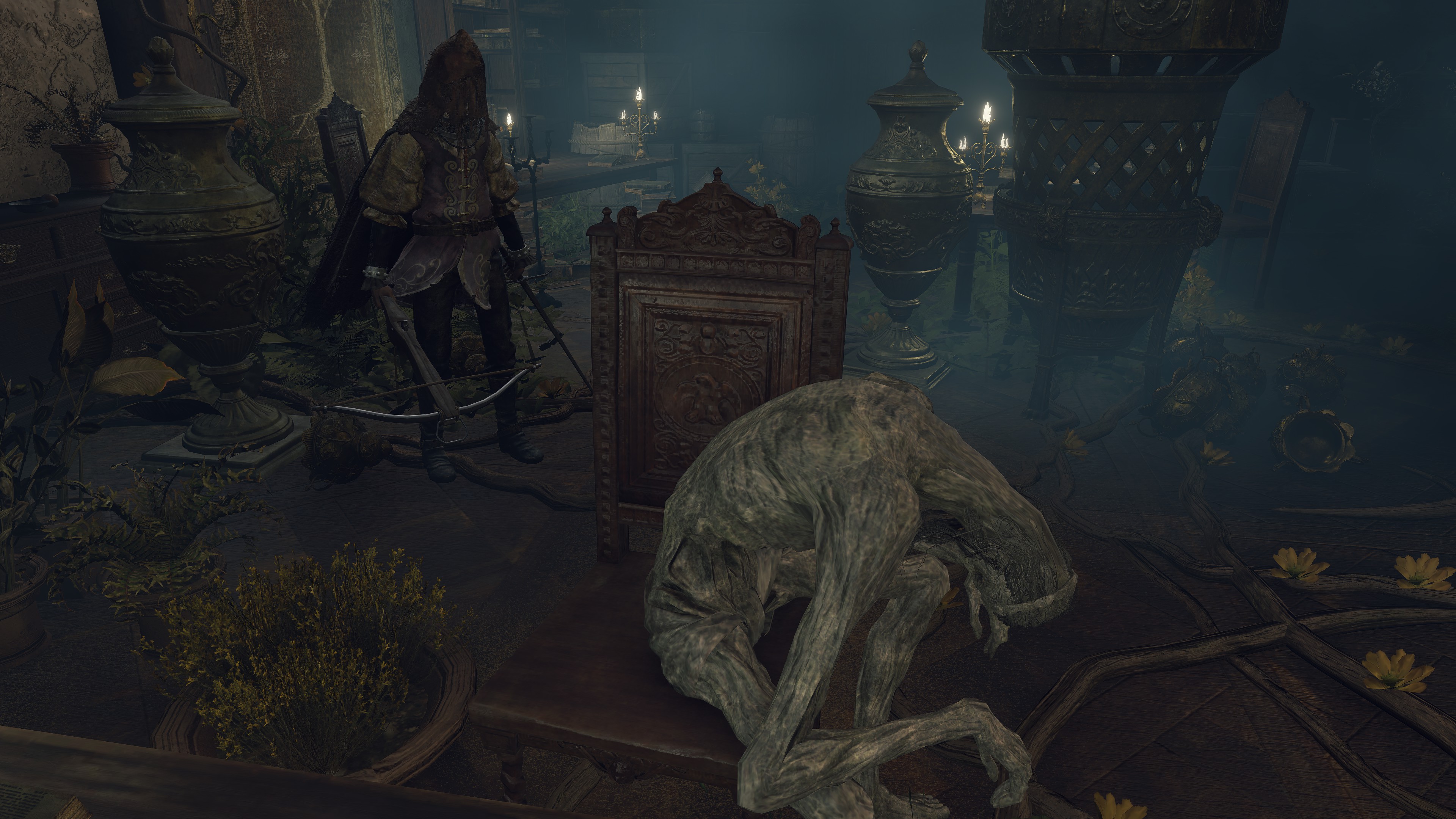
Clothing wearing a thick, embroidered cloak. Apparel of a common townsperson of the Lands Between.
The perforated tree board hung from the neck denotes oneself as being a Golden Tree people. Said to be a self-bound shackle, so boosts faith.
Thing where a pillory for serious criminals is made into a shield as is. Wood quality is hard, but in the end, probably makeshift.
Perhaps it was to keep the criminals alive and tormented for longer? It seems to have an effect that boosts anti-death resistance.
Straight sword possessing a relatively short, broad blade. Easy-to-handle “sword of the townspeople”.
A Golden Tree design is visible, but it has gotten unrecognizably aged.
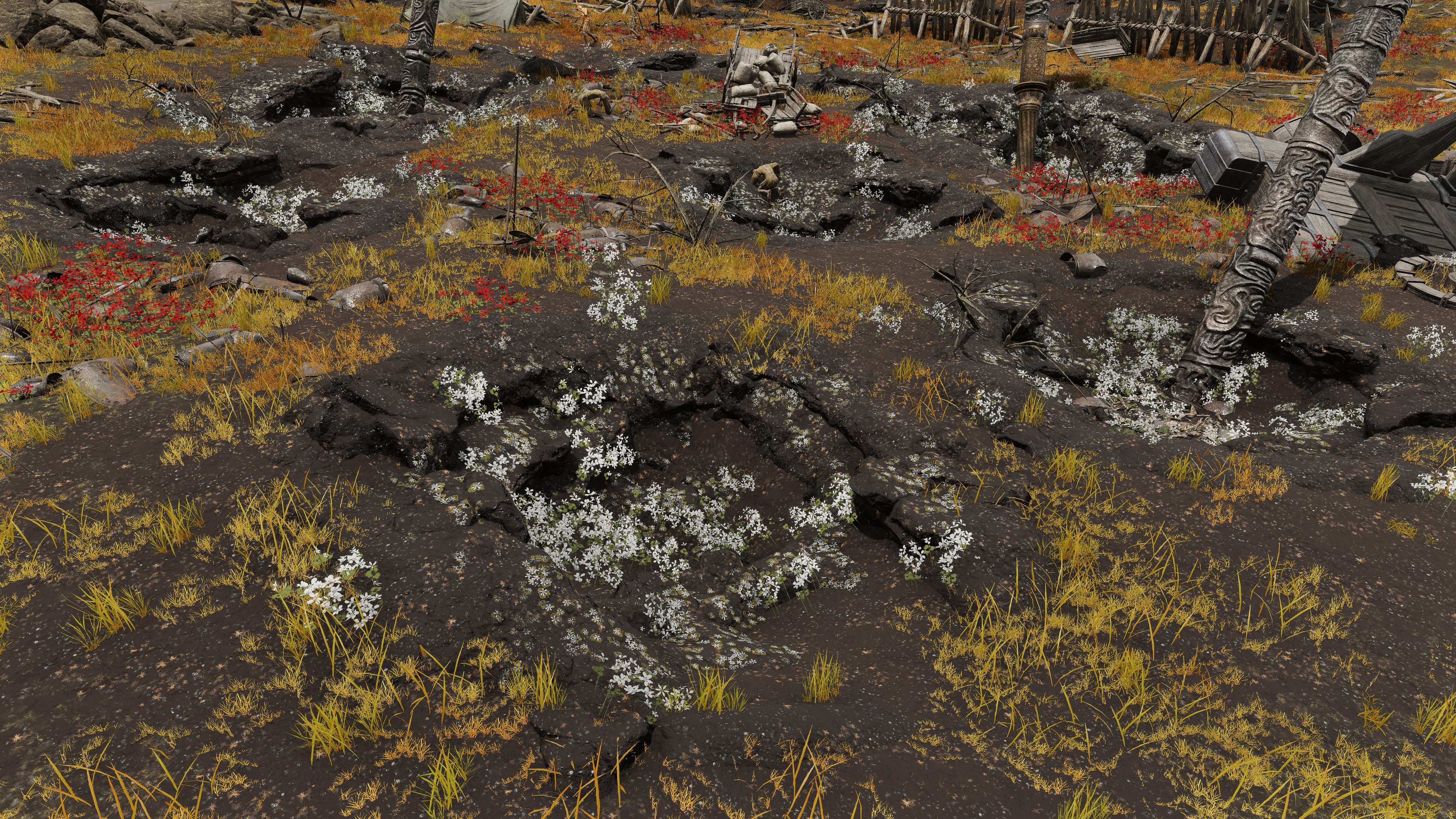
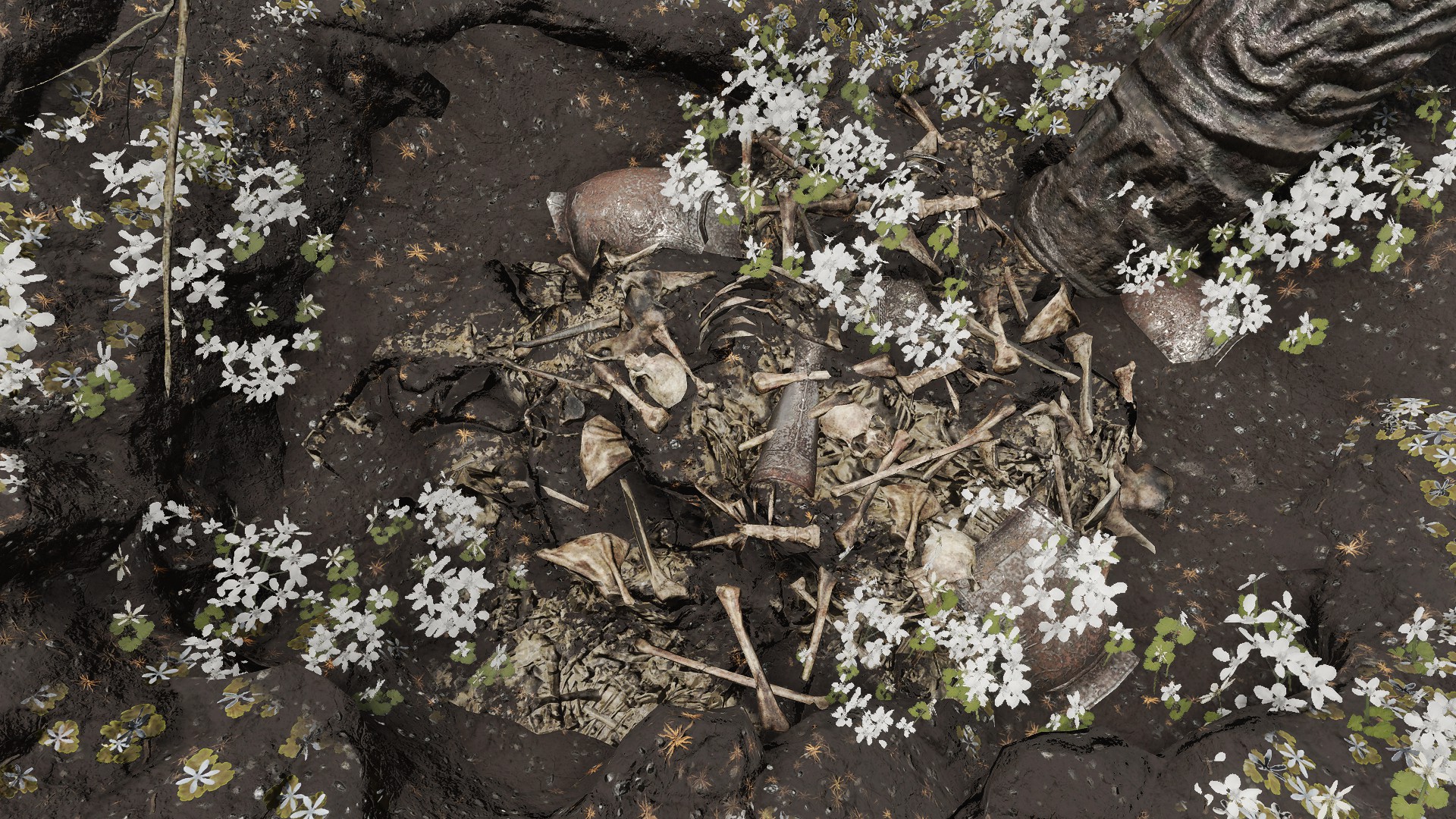
The priests were no exception, and the king used that to his advantage, sending his backers to the battlefield too as his commanders. As detailed in the perfumer set’s description, the apothecaries traded their aromatic treatments for deadly drugs like poisons, which we see showcased in the story trailer. Amidst the soldiers’ march on the inner rampart, metal missiles rain down from behind the walls. Attached to the tail end are the giant incense burners left in Marika’s room at the Fortified Manor as well as in the apothecaries’ laboratories. Said laboratories have also moved to inside the walls of the east rampart. The perfumers seem to headquarter themselves in the Upper Quarter, requisitioning the manor connected to that rampart. There, they supply the pages with ammunition, treat the wounded, and coordinate the city’s defense. And going by the green gas falling from the missile braziers in the trailer, this defense included chemical warfare. Just from looking at the aftermath, the incense causes white flowers to grow where it spills to the ground, yet this fertilizer was toxic to people, masses of bones filling the missile craters.
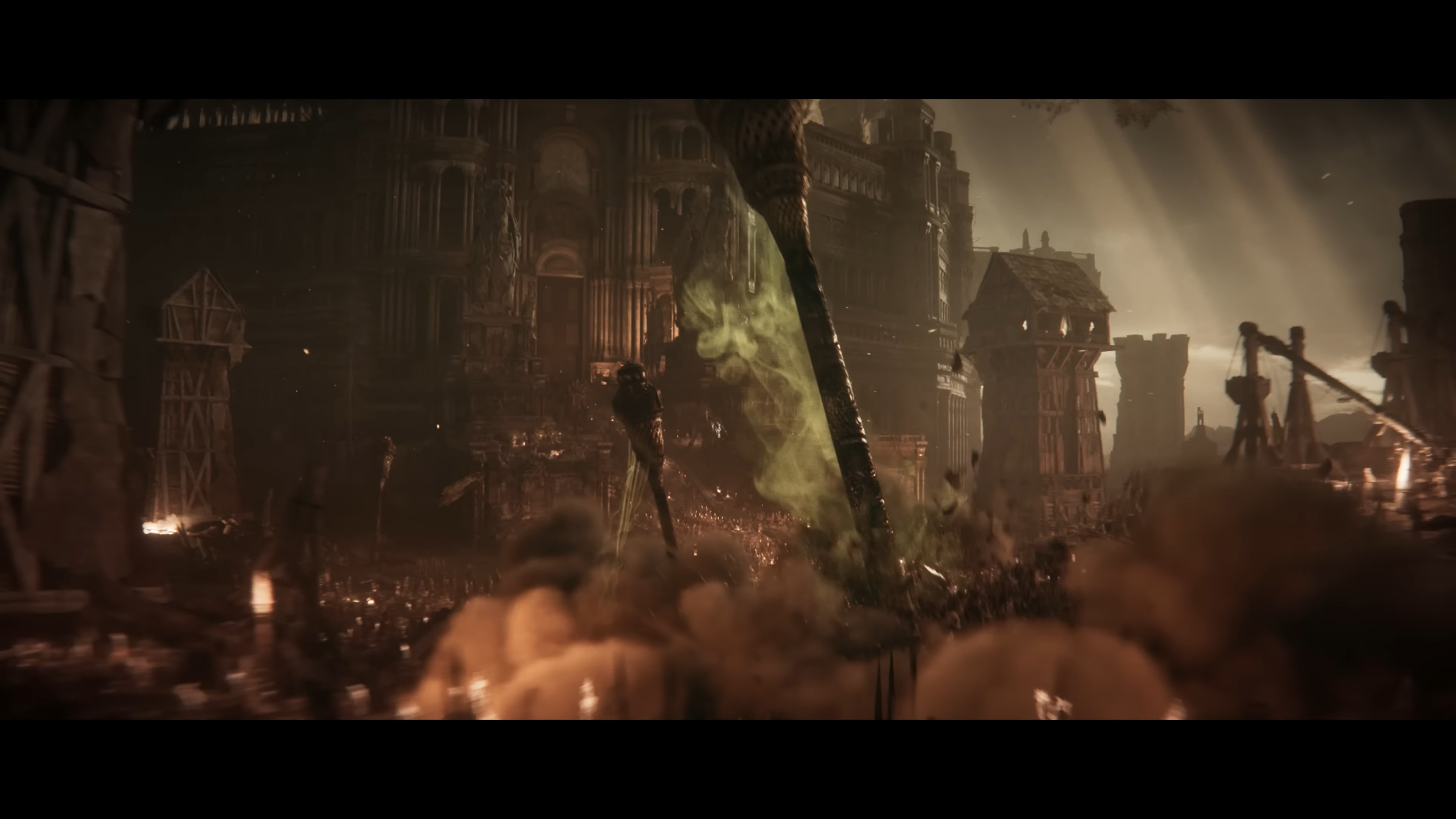
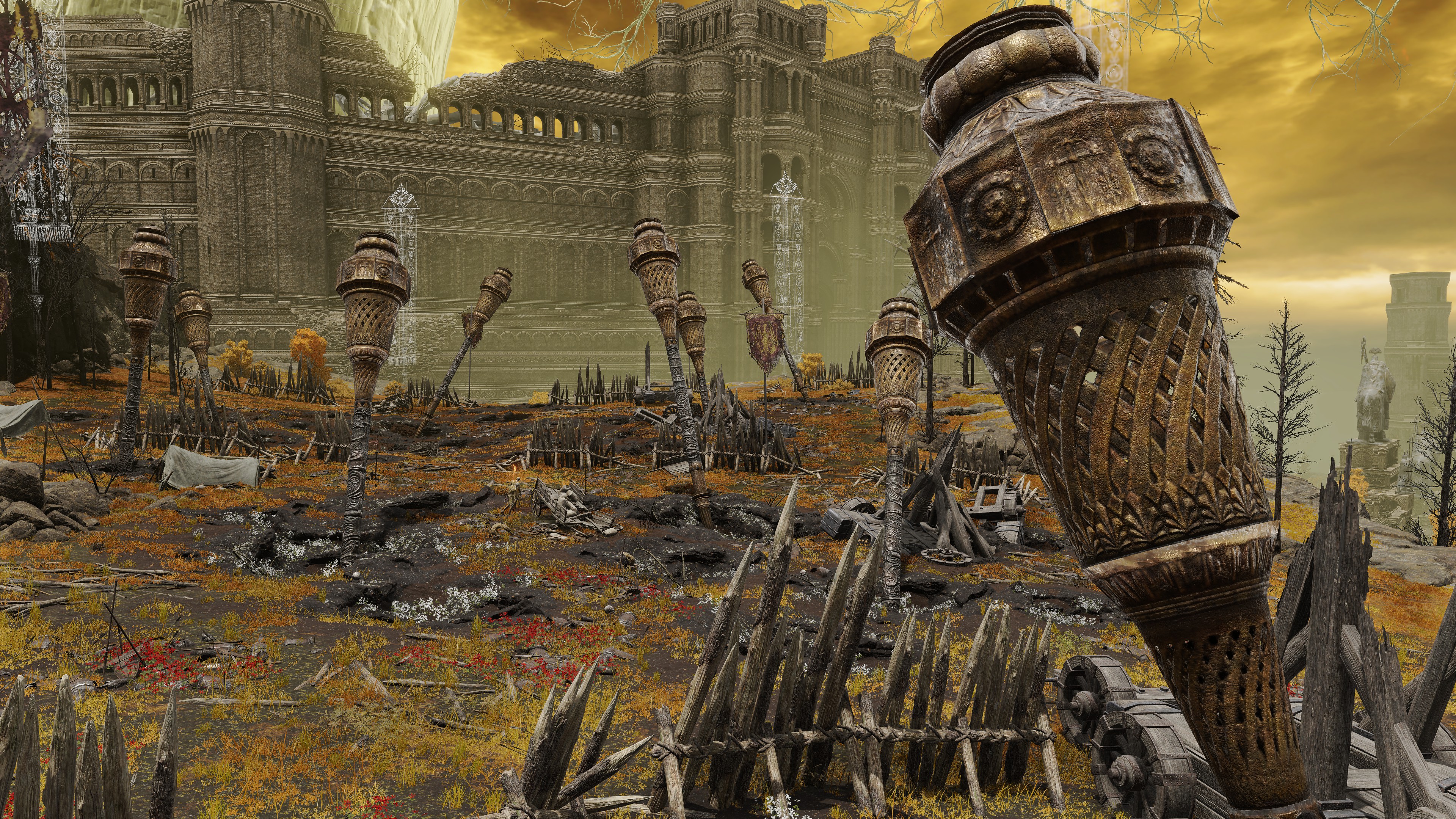
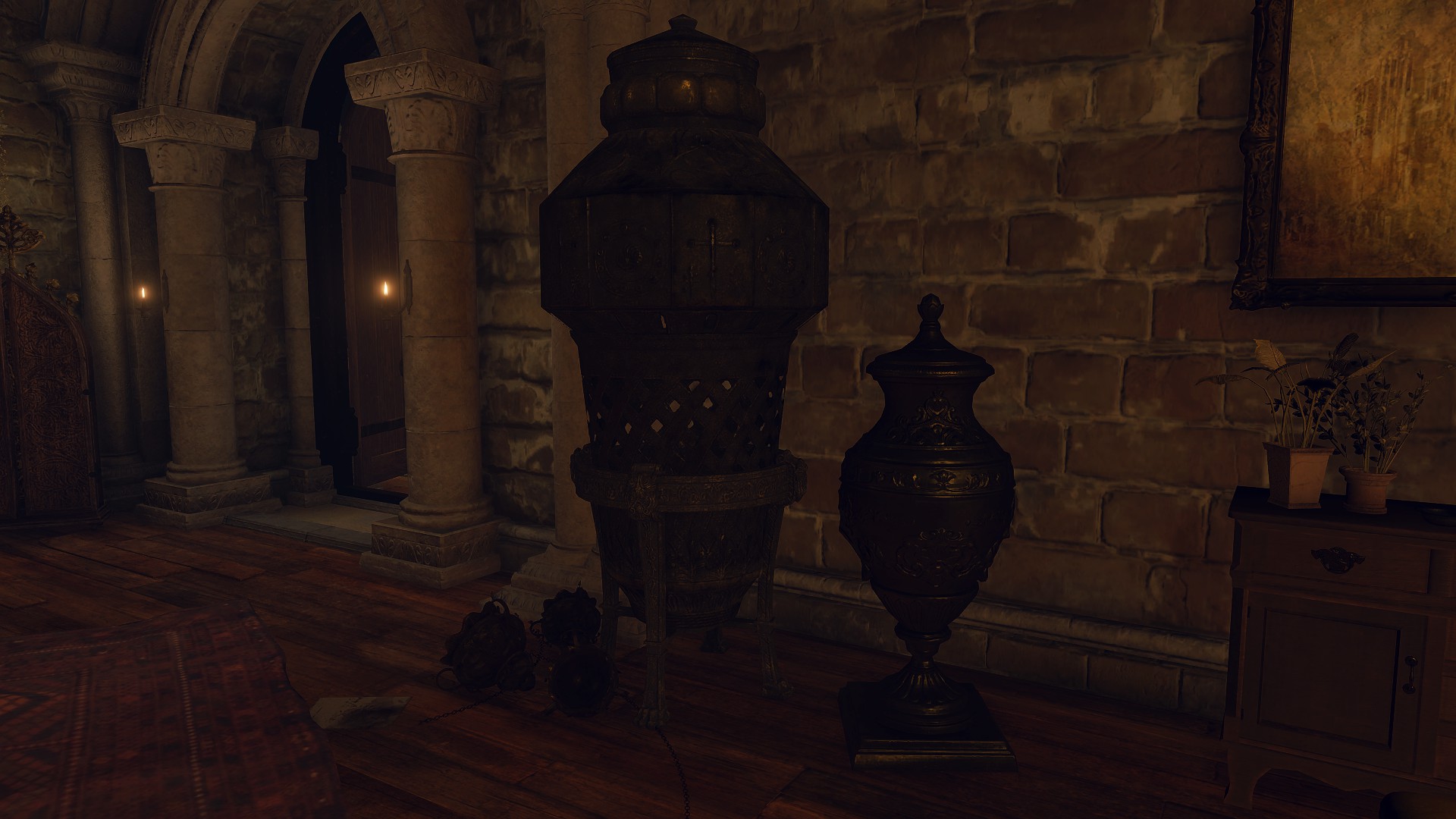
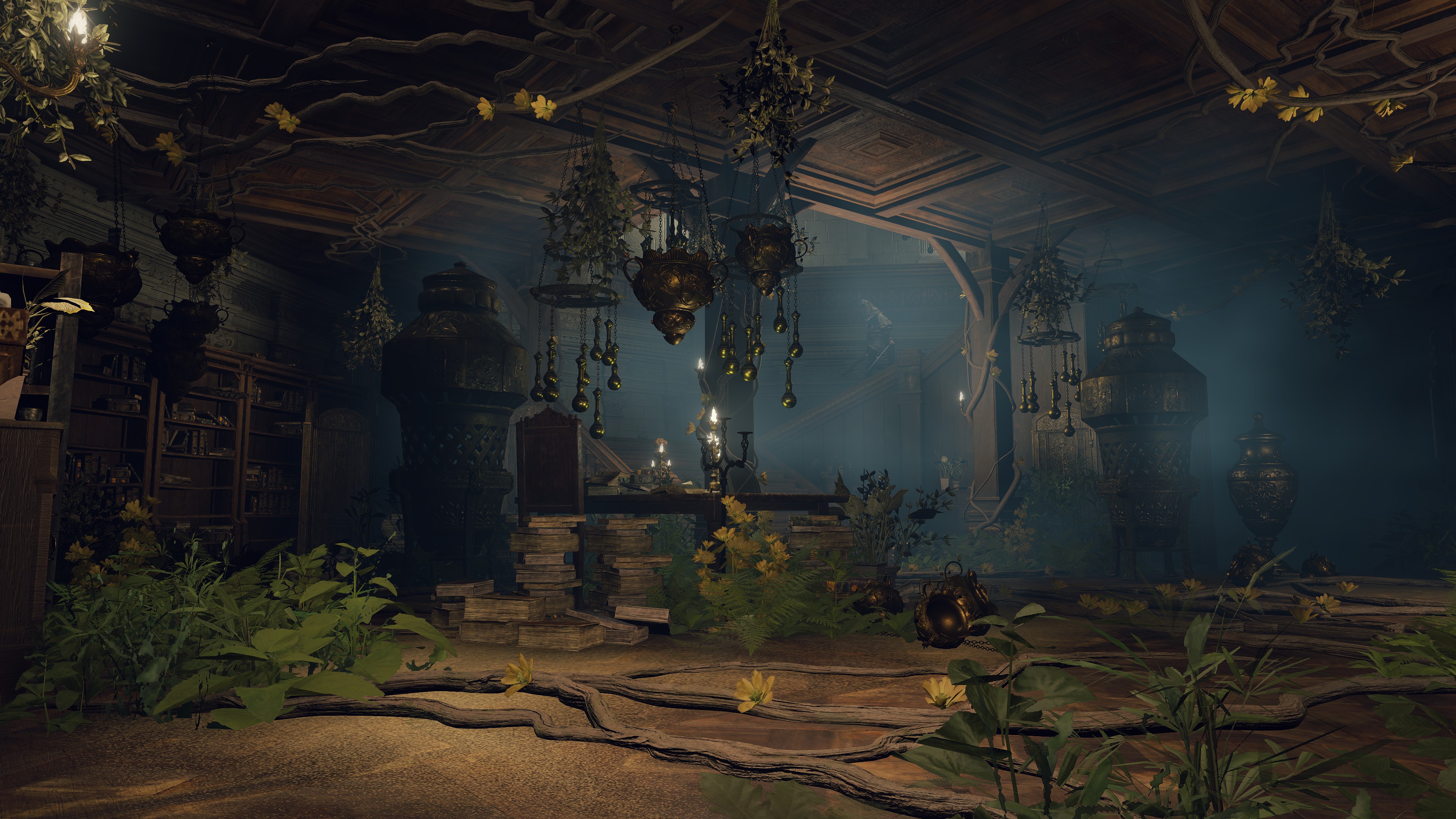
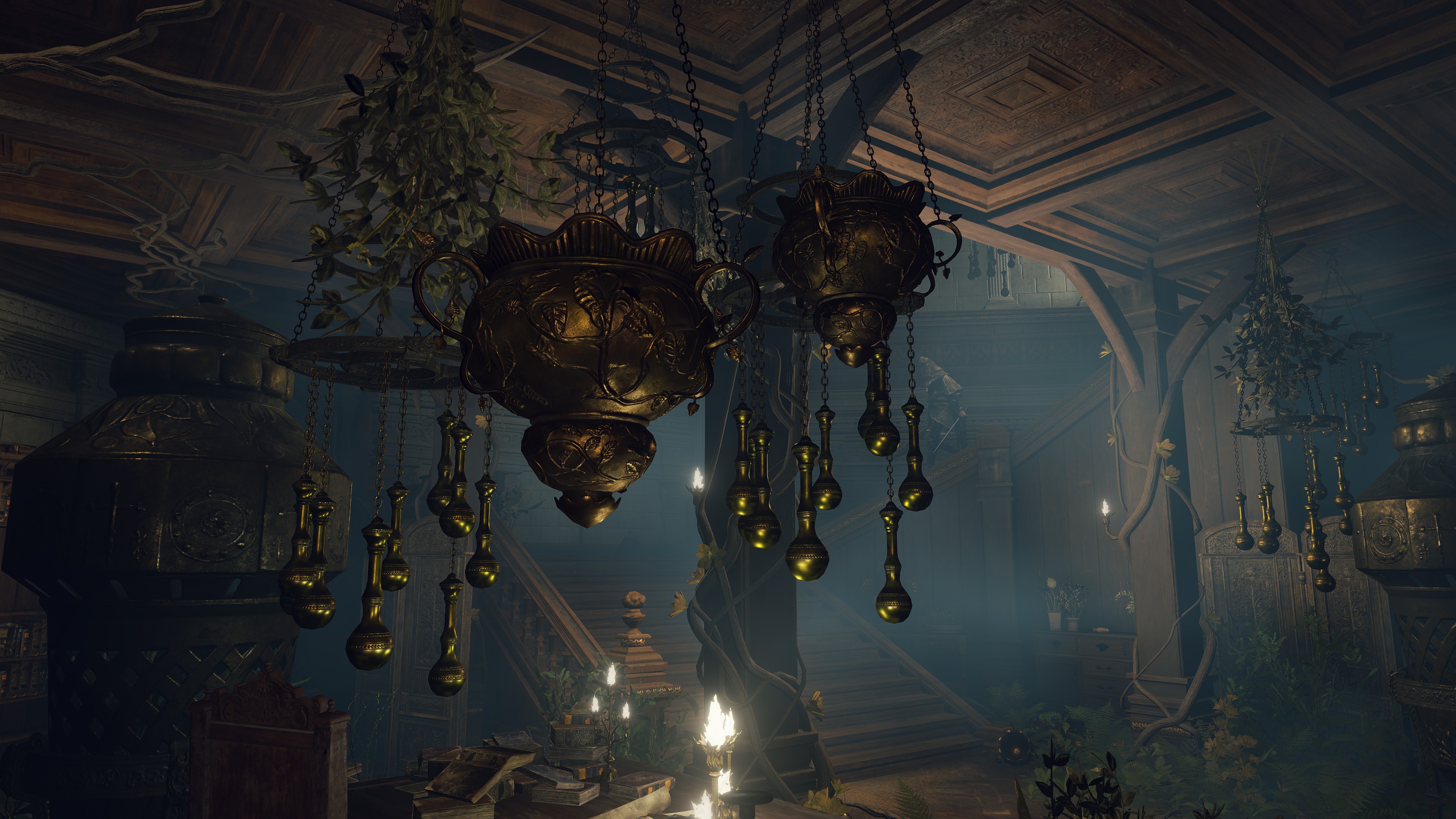
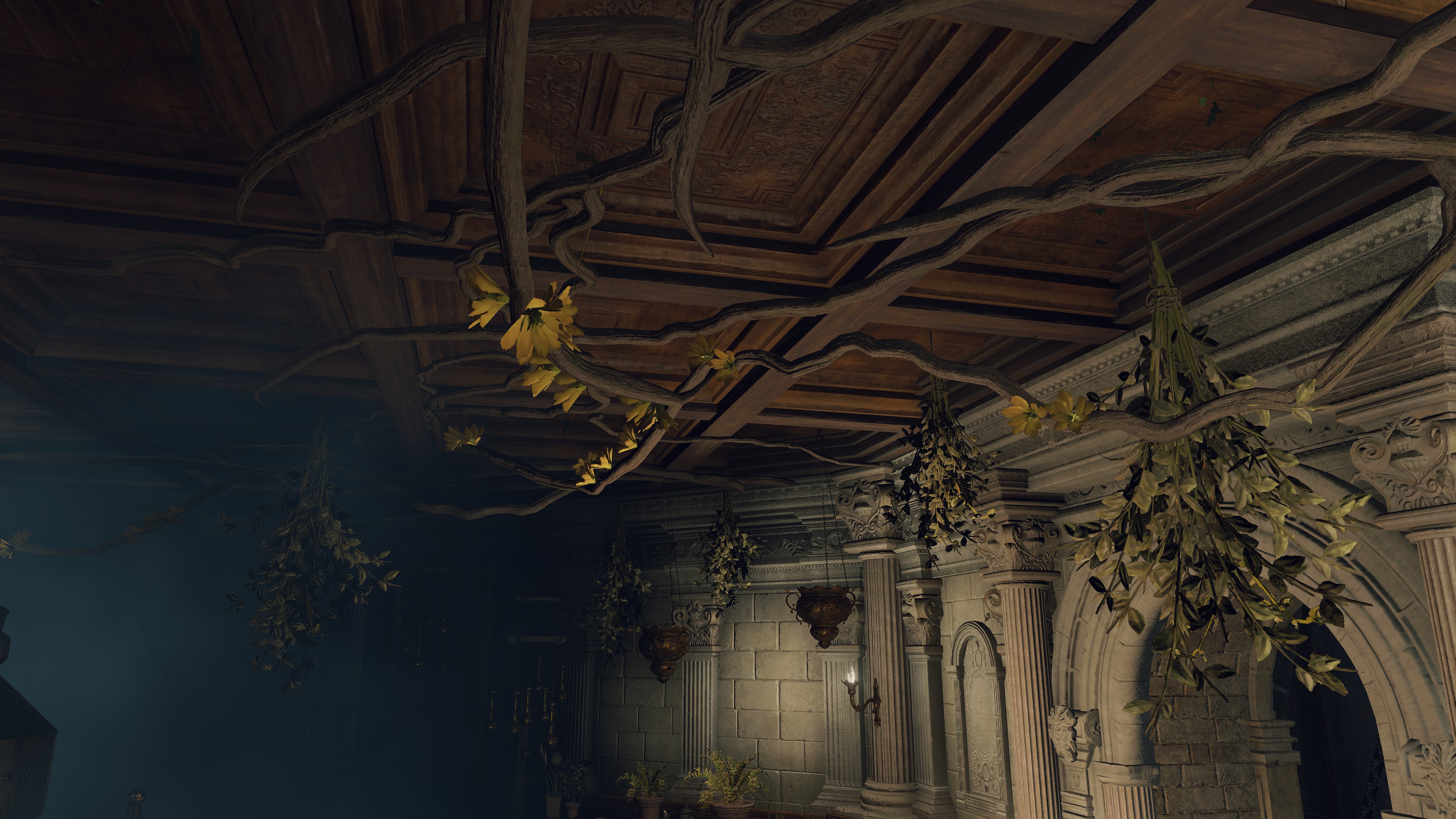
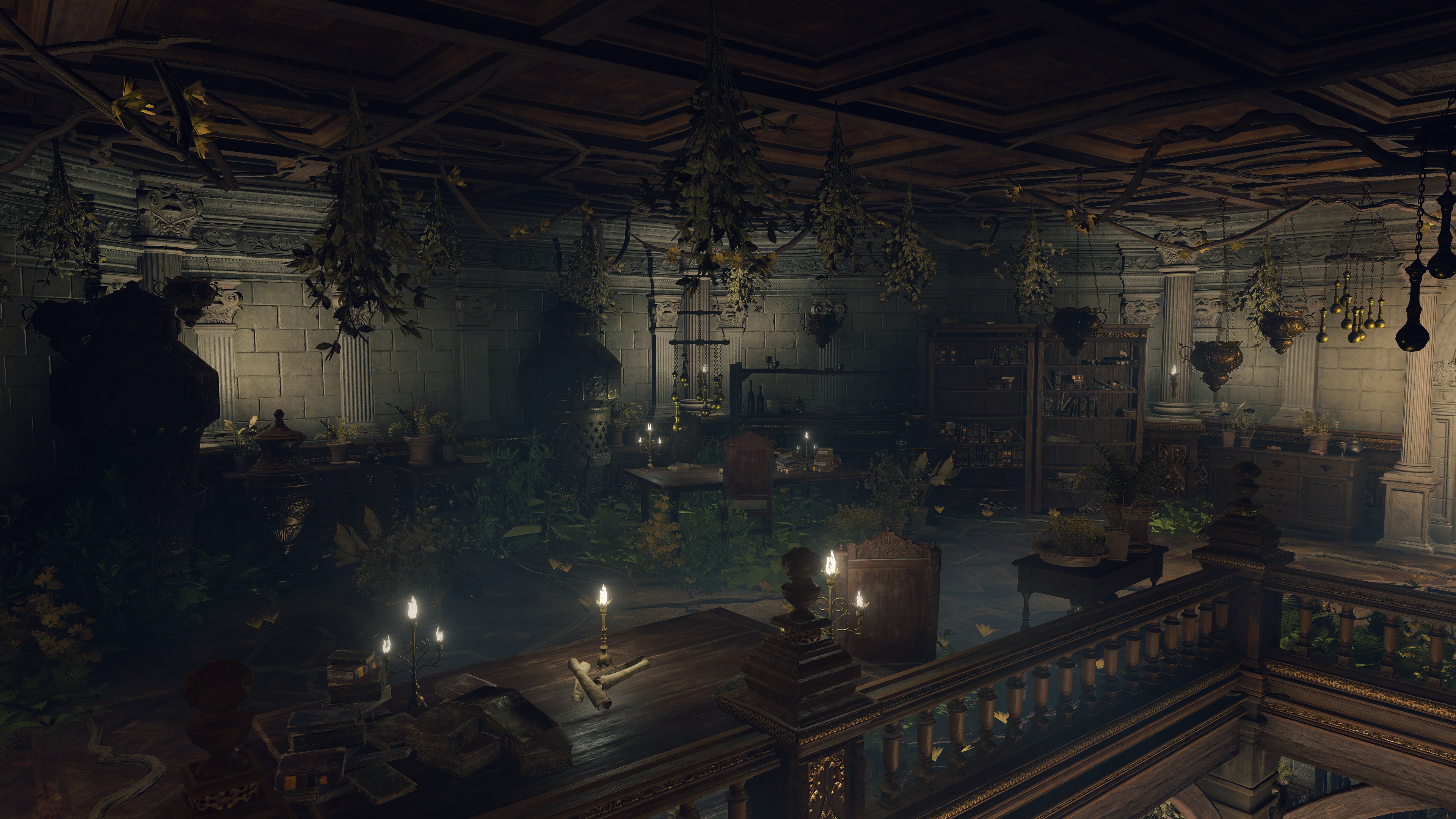
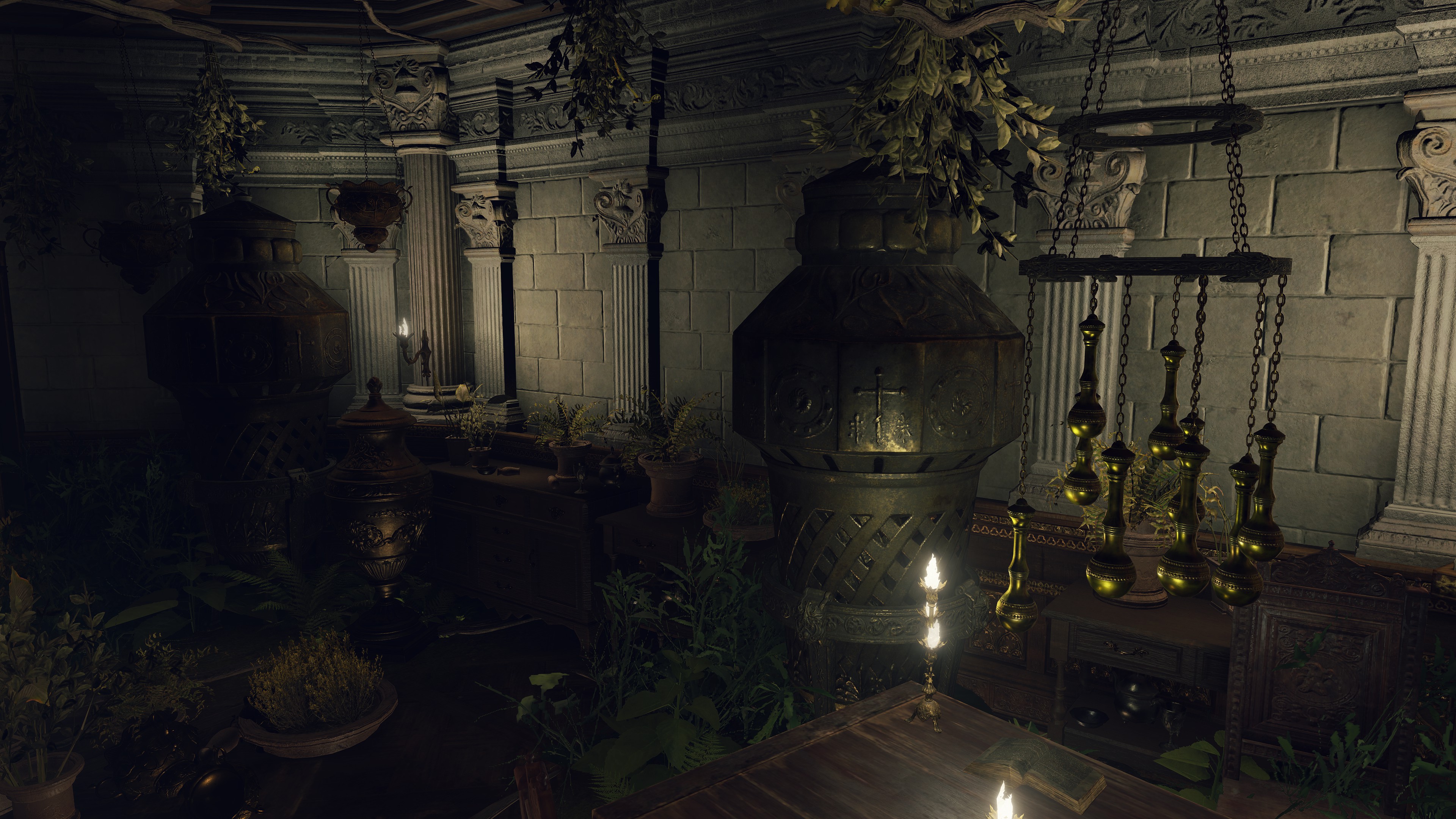
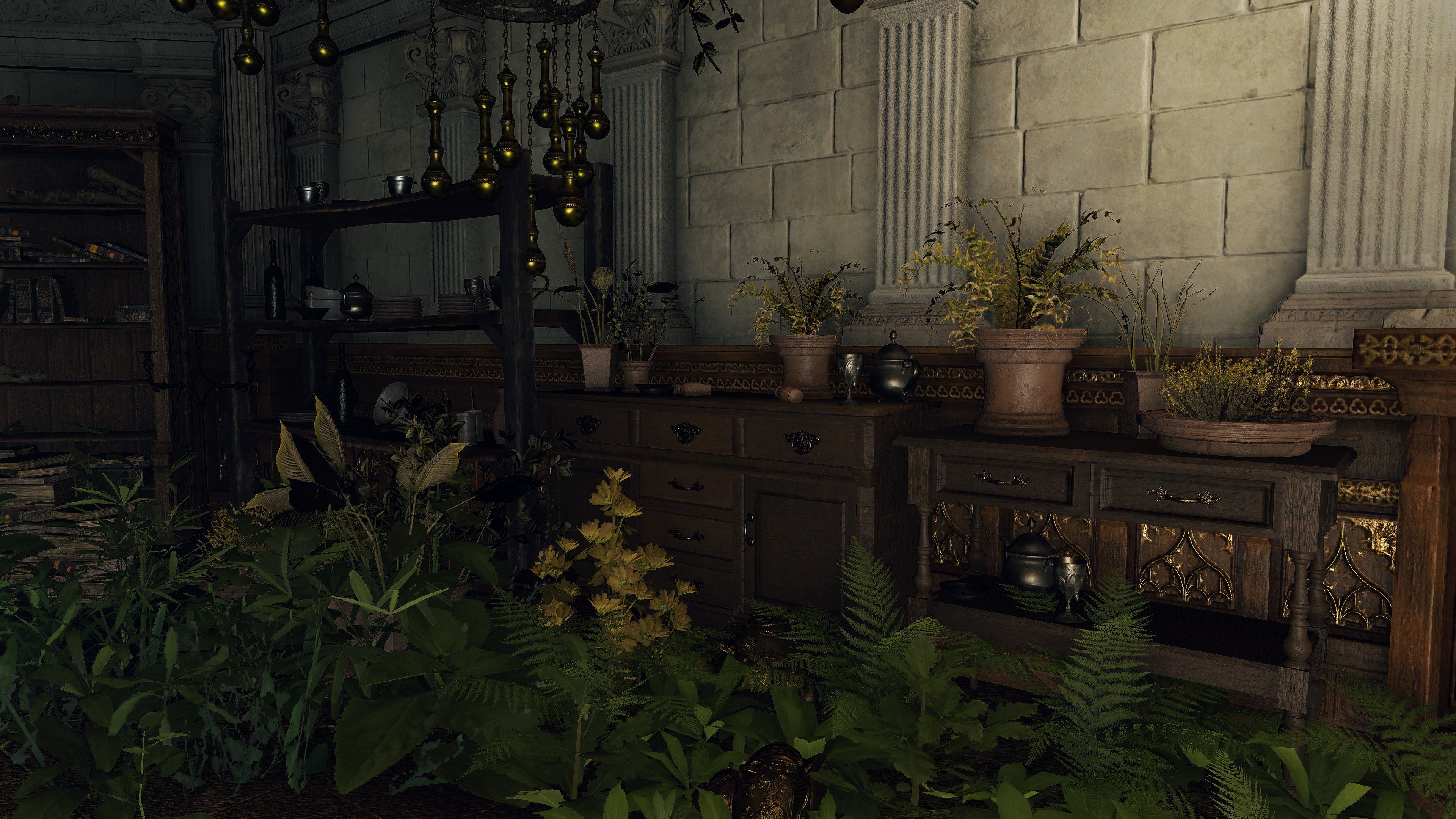
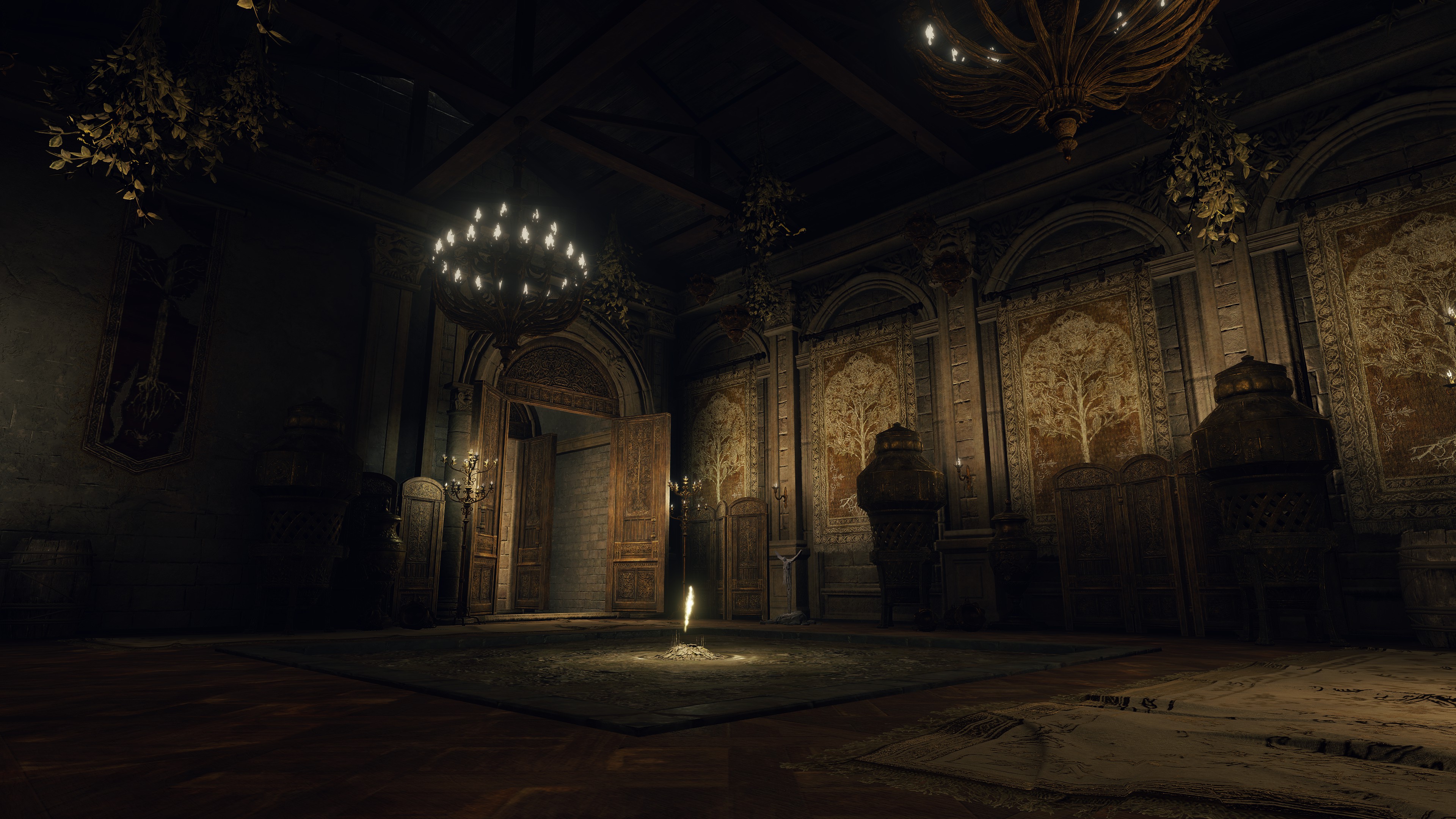
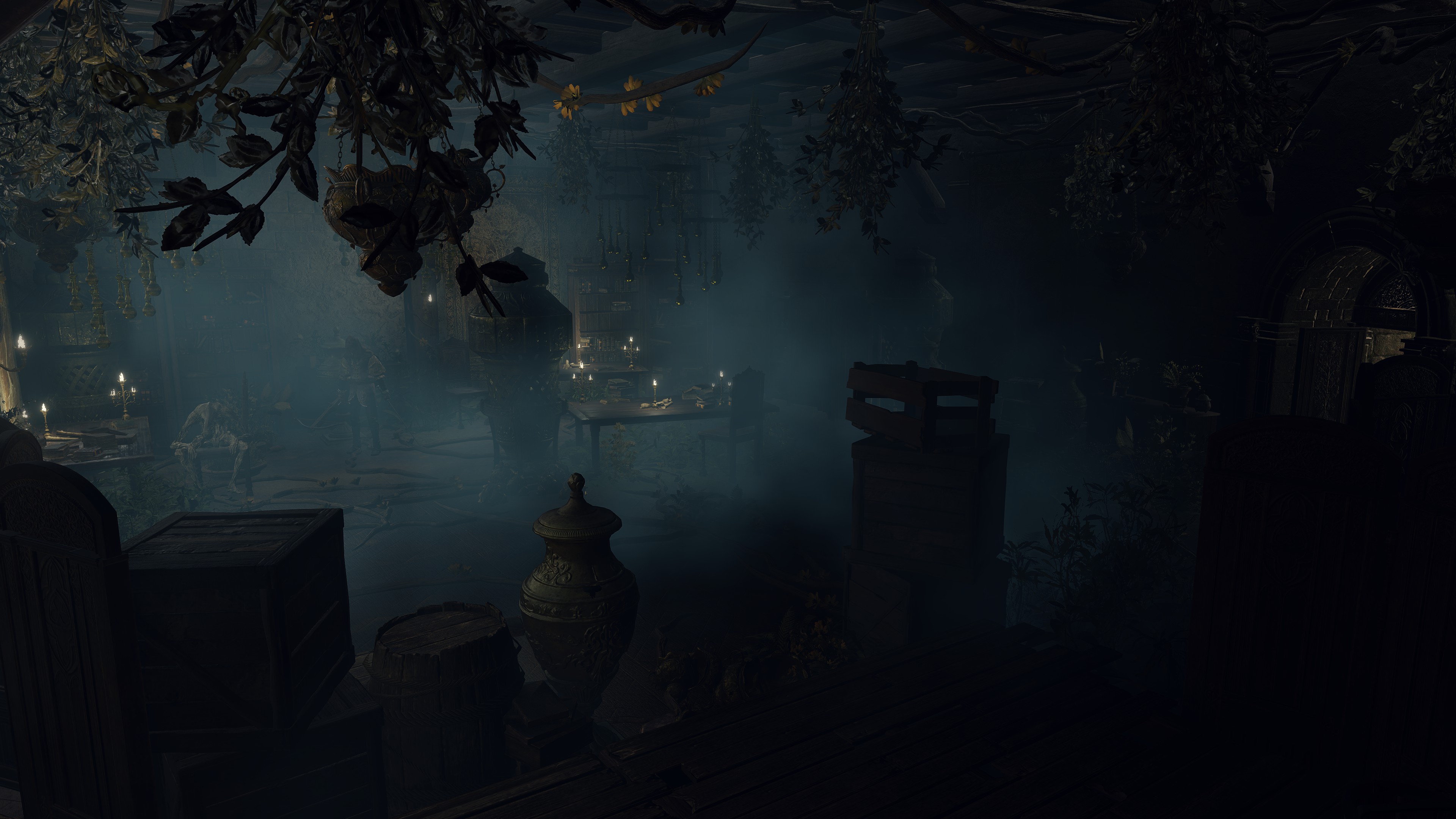
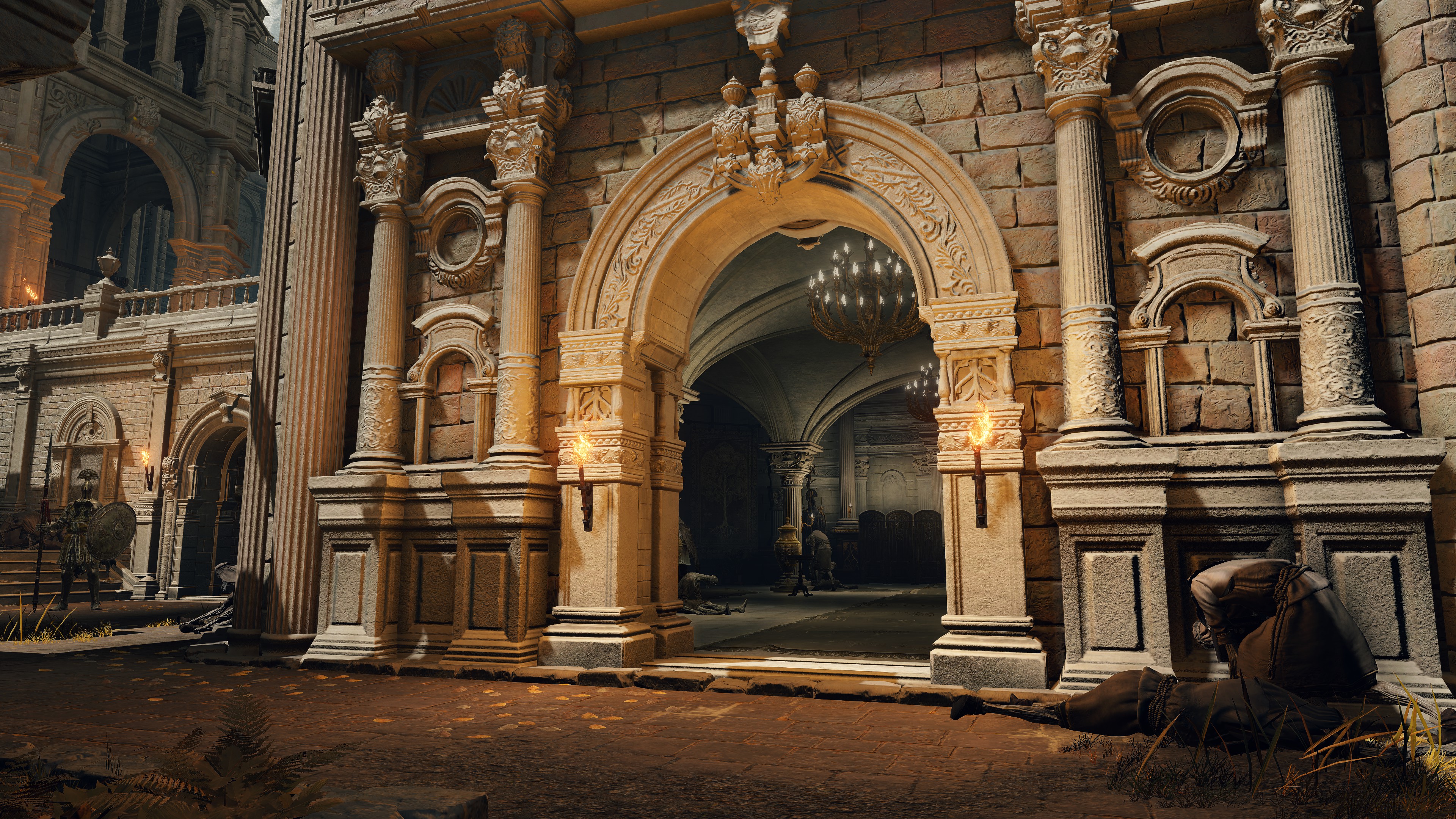
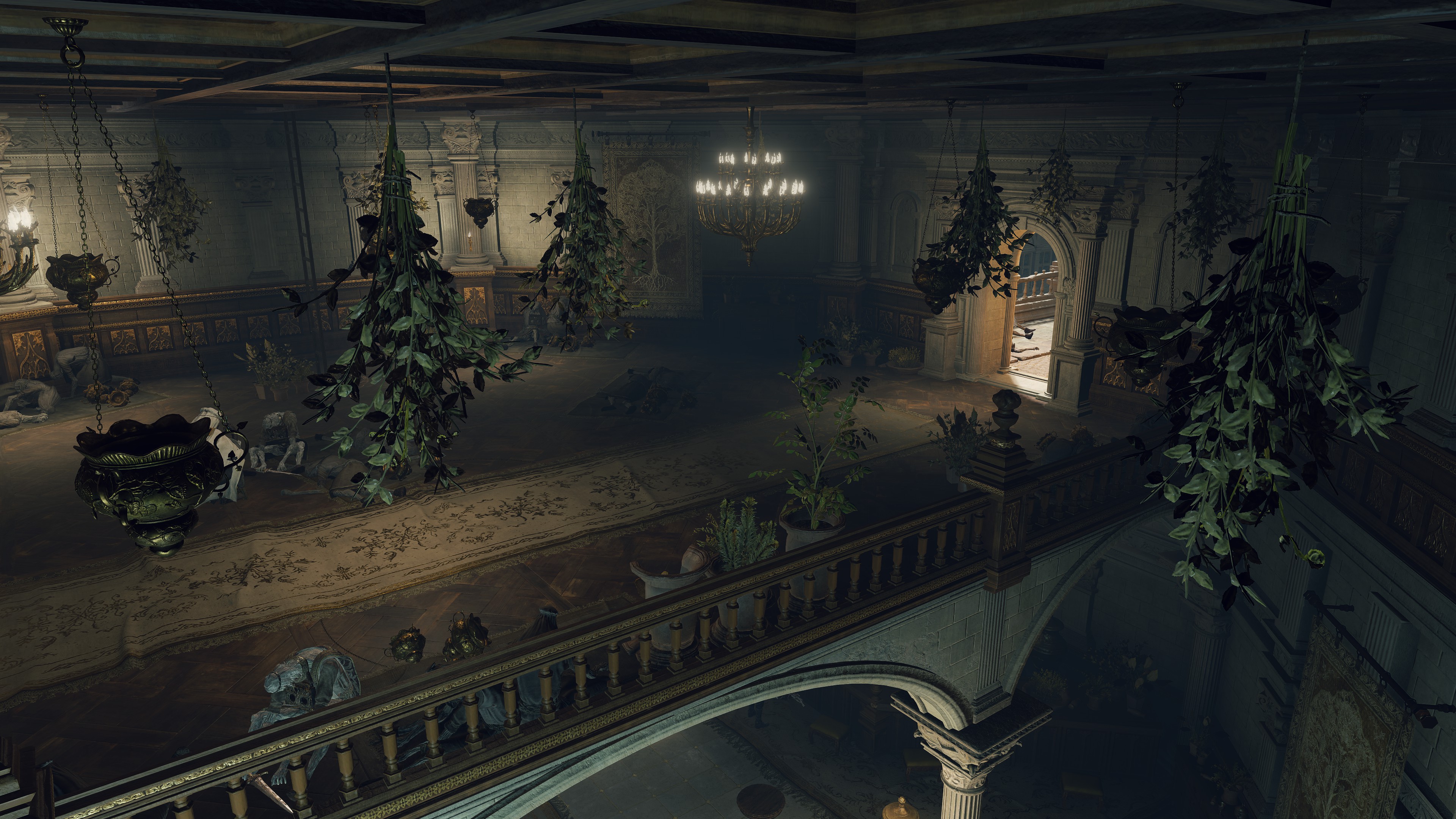
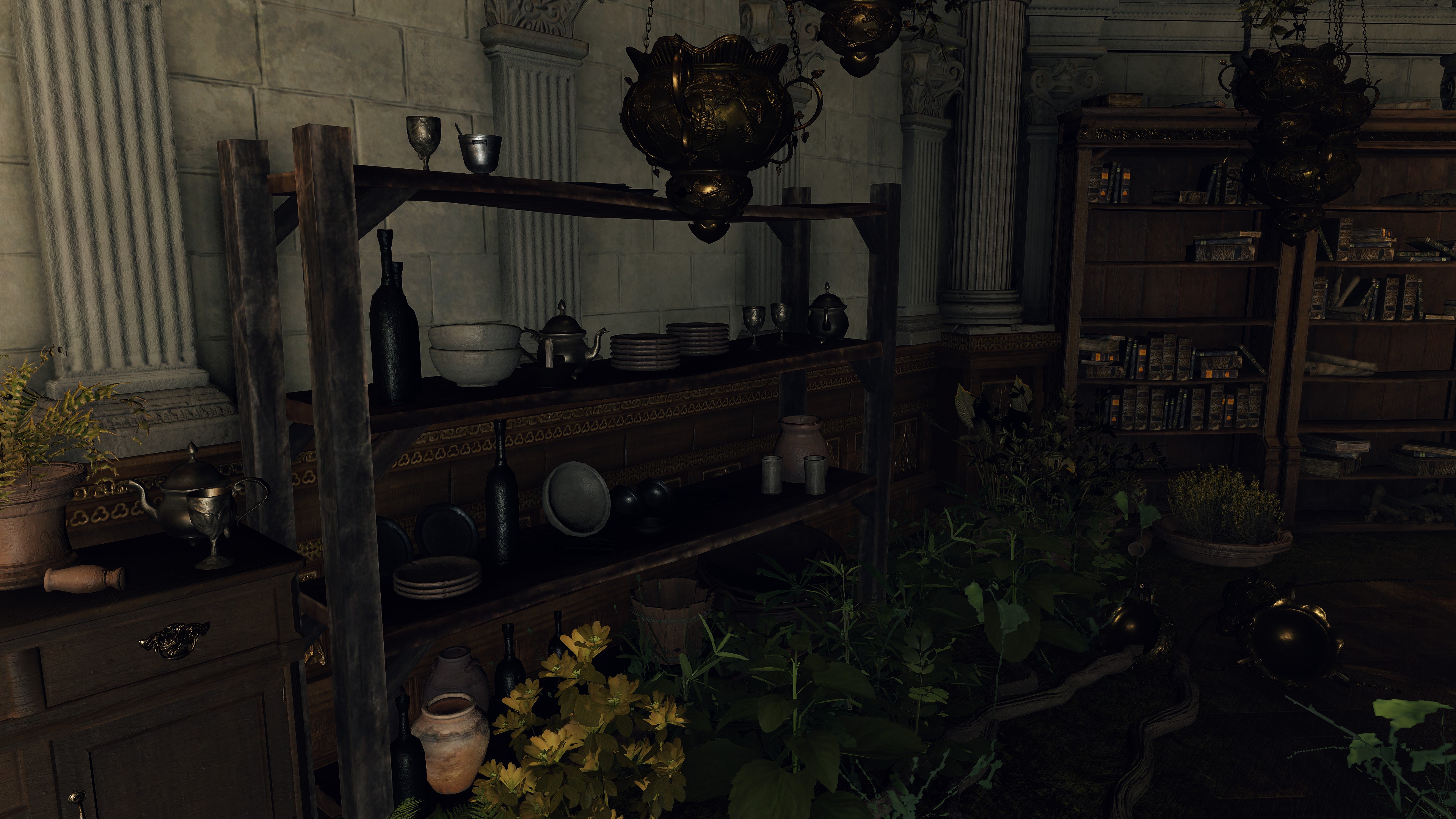
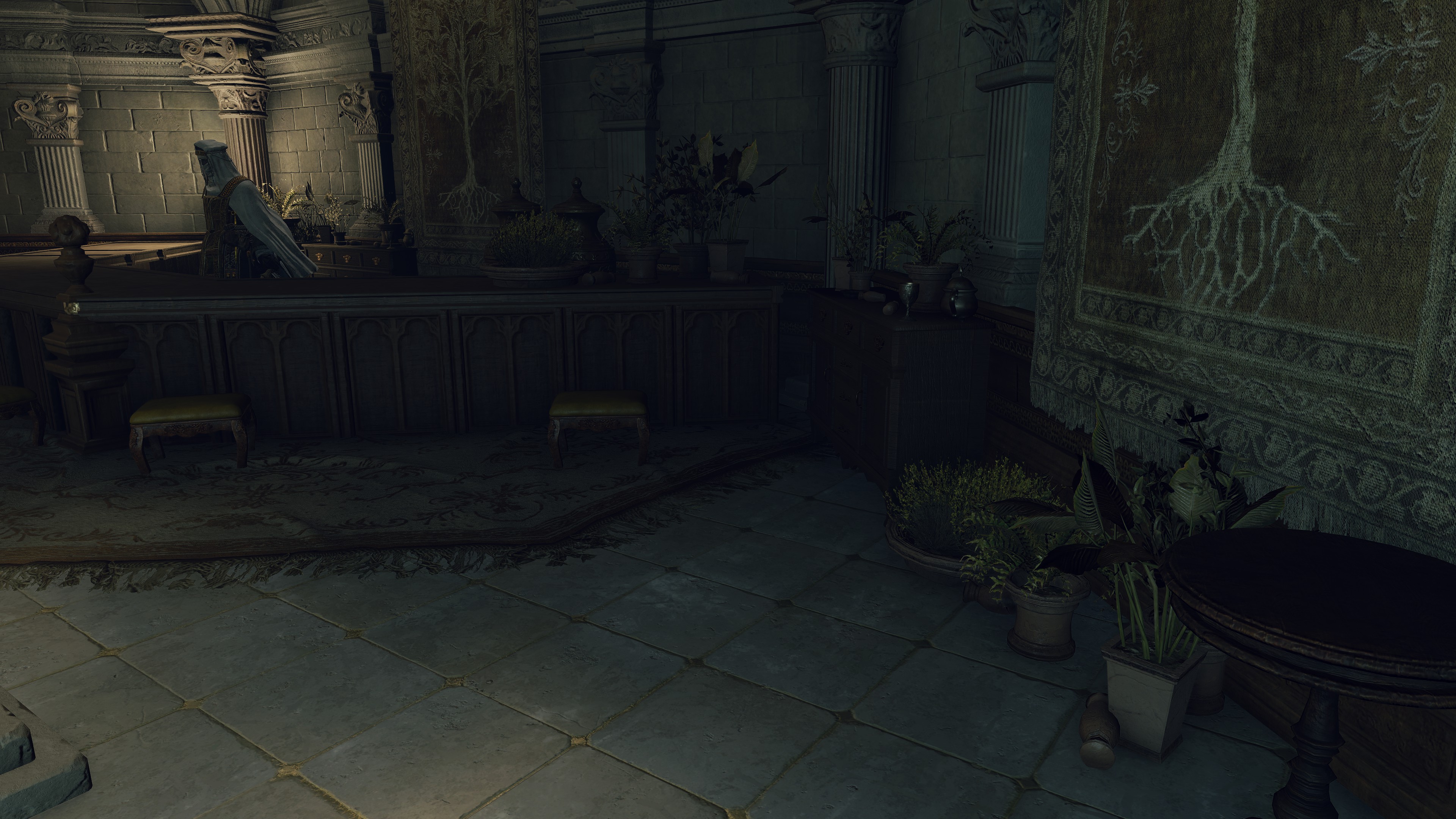
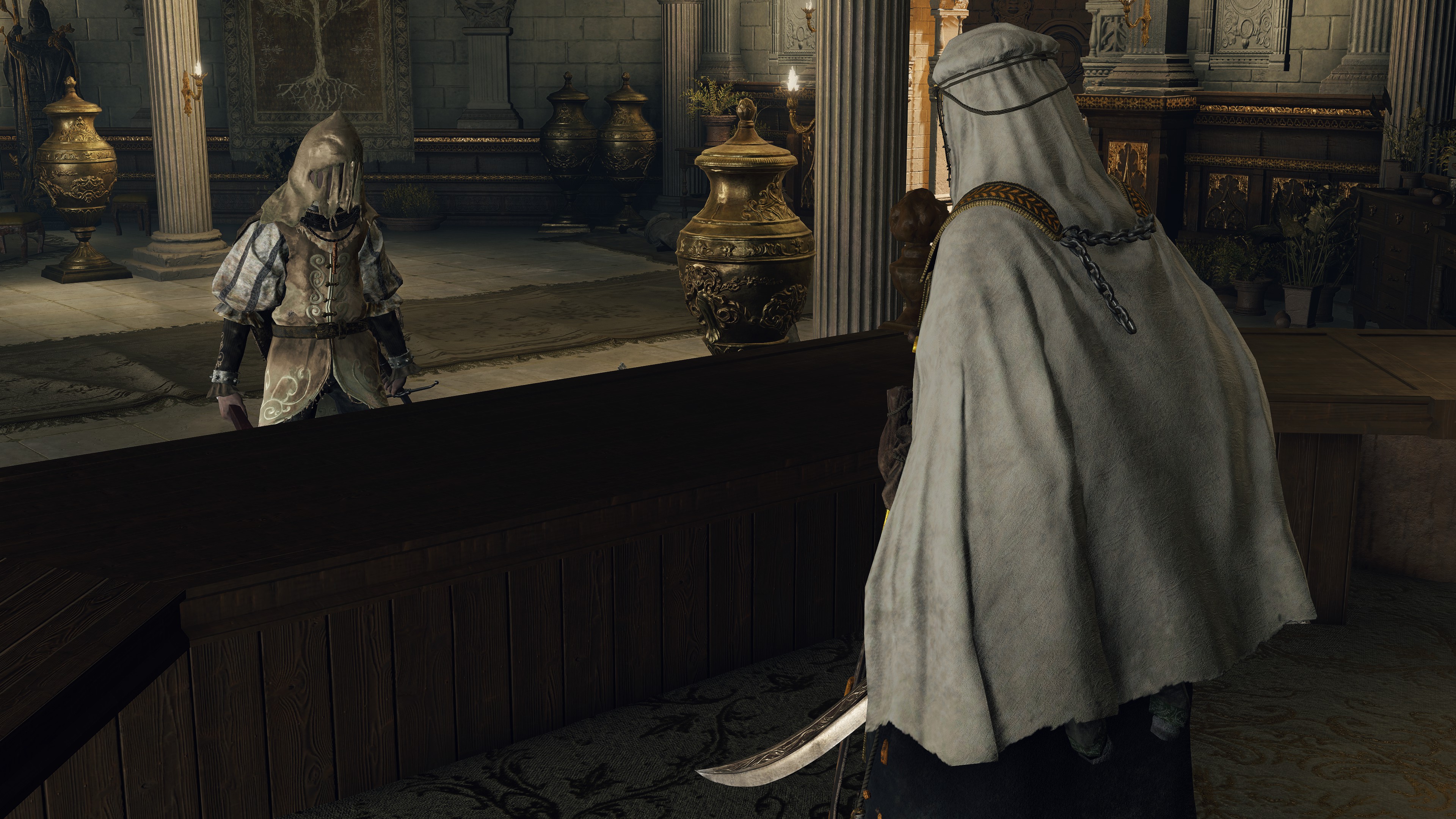
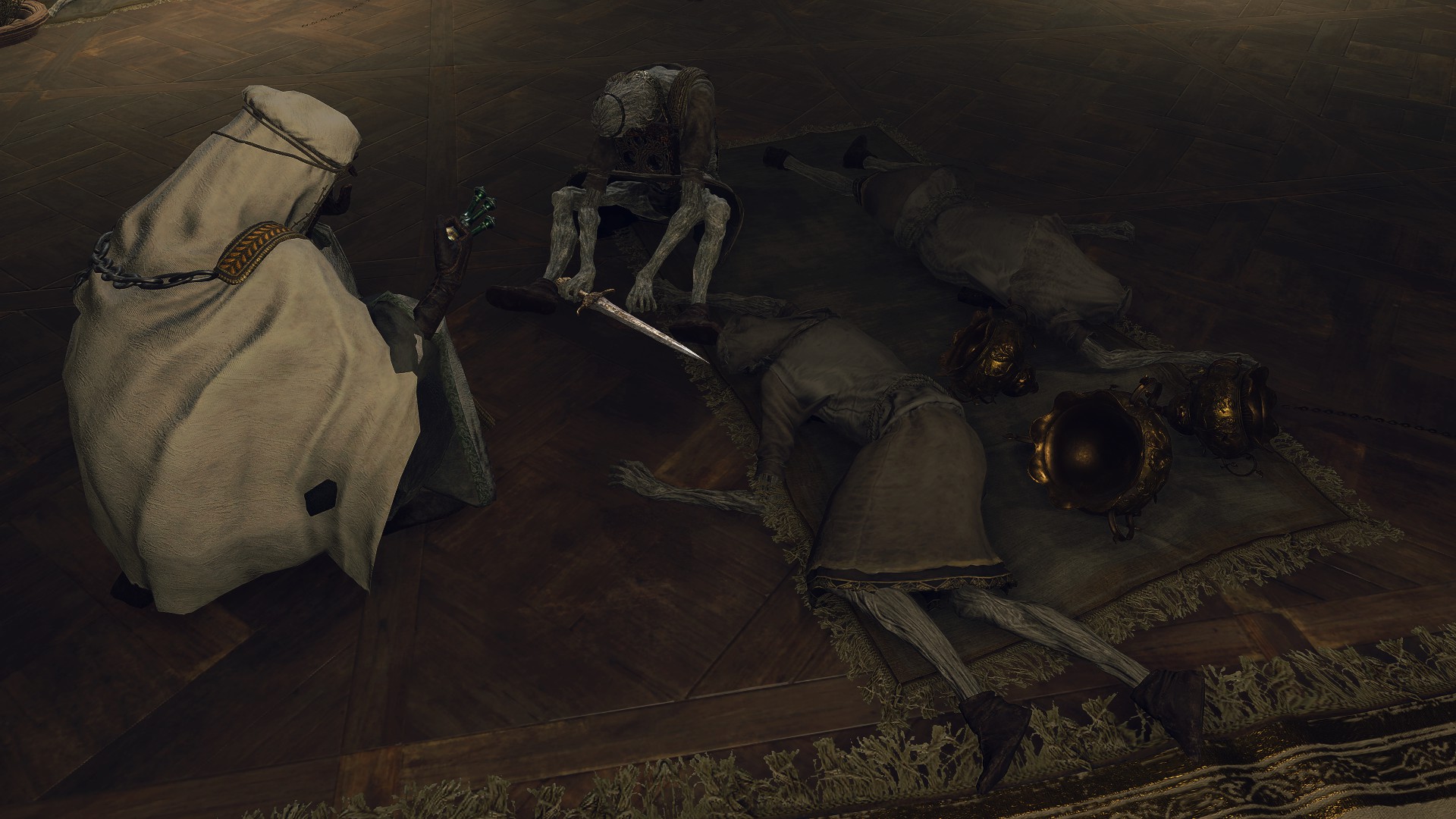
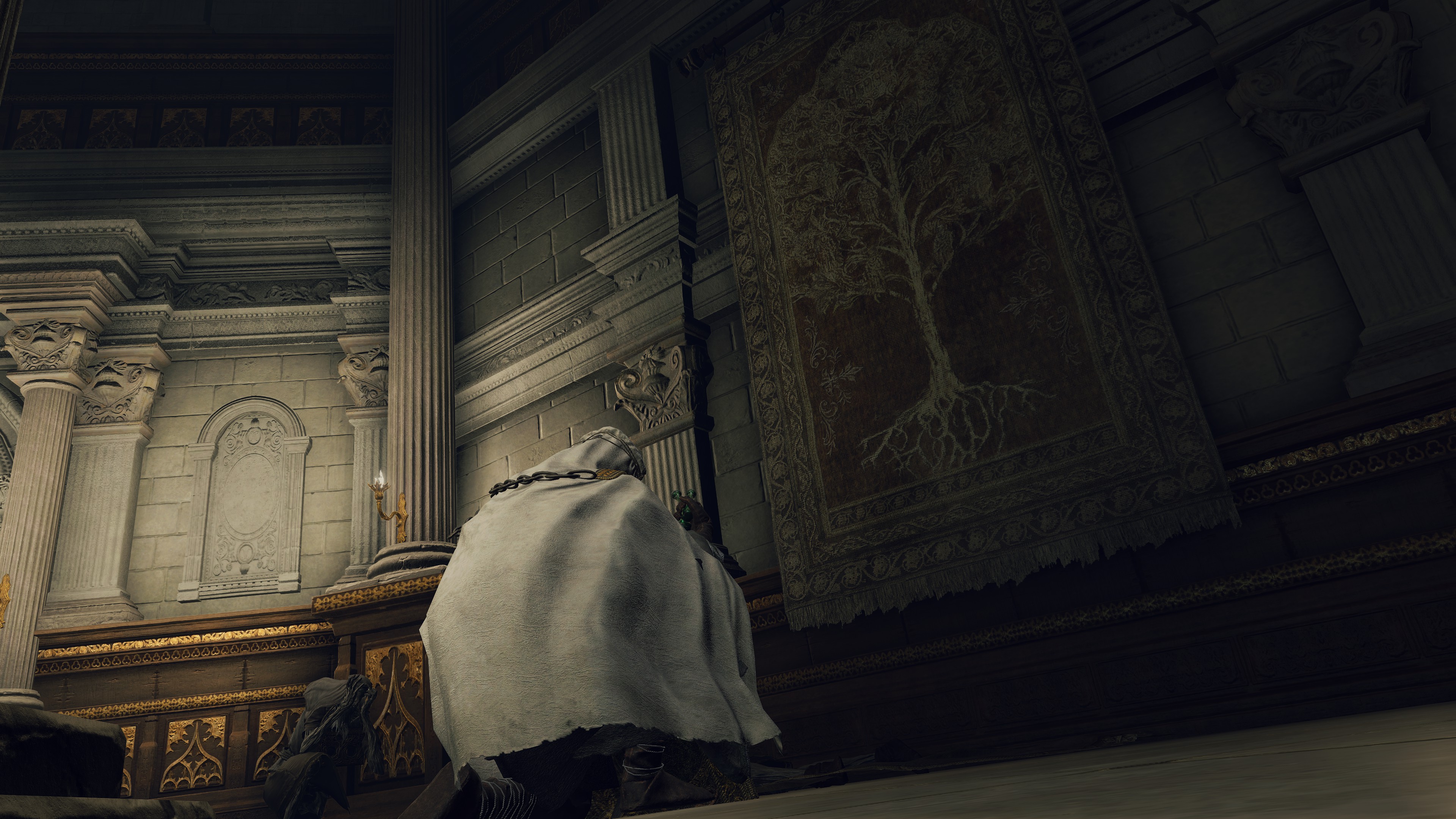
Hood of perfumers of the royal capital of the Golden Tree.
The perfumers were once clergy as apothecaries, but were sent to the battlefield in the Shattering War and lost that duty. For their aromatic drugs became poisons and fire drugs.
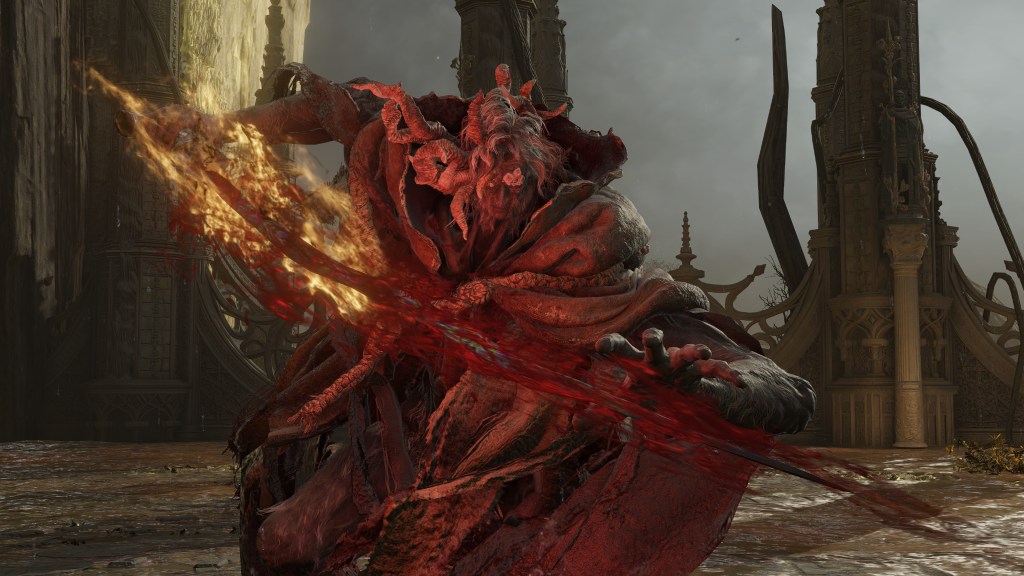
Even if the poisons the perfumers formulated were effective, it wasn’t enough. In the end, King Morgott took to the field to defend his capital — only it wasn’t as the Grace King. Instead, Morgott’s public persona is “Margit” the Fell Omen, a name he implicitly earned in this battle piling up the corpses of heroes a mountain high. Shanehaight likewise would praise how the “rebels” stood entranced by the “horror” of Morgott’s fighting outside the walls. What everyone saw that day wasn’t a mere omen child, but an omen “fiend”, (忌み鬼) the term oni denoting a demonic ogre among the supernatural creatures of Japanese mythology — particularly infamous as torturers of hell. Such was the slaughter Morgott brought as he tore through the rebel ranks. It didn’t matter if his opponents were heroes of yesteryear, he killed them all with apparent ease. For the Erdtree, Margit has chosen to become nothing short of a nightmare for anyone with Lordly ambitions.
In the Second Lowdayl Defense, the Omen Fiend piles up the corpses of heroes. There be no fluctuation in the Golden Tree.
But look, see around you! King Morgott’s reign is great! None realized invading the Golden Tree capital, and we rejoice grace eternally; meanwhile, the rebels were entranced by the horrifying Omen Fiend and piled up a mountain of corpses outside the walls!
Tattered fur pelt worn over the naked body. Apparel of Margit, the Omen Fiend.
The Omen Fiend who hunted many a hero in the Shattering is a complete nightmare for those who go after the Golden Tree and harbor the ambition to be King.
Morgott’s success against so many brave and mighty warriors is unsurprising, given his circumstances. With his Omen physicality, the king is able to jump from atop a high tower in Stormveil Castle, the ground rumbling with his hard but ultimately safe landing. The only demigod to rival this feat is Radahn with the help of magic, making Morgott one of the more impressive demigods in terms of raw physicality. Add to that his skill and dexterity honed from a life of fighting to survive each and every day, plus his mastery of incantations, and the man was definitely worth his infernal moniker. And just as oni serve the king of hell, “Margit” was the implicit enforcer of King Morgott. This made the monarch look impressive, controlling such a powerful Omen from beneath Leyndell as his attack dog. This may have been the first the general populace ever learned about the royalty hiding such Omen, but their historic deception was hardly a concern when that lowly corruption was serving grace in their most dire hour. Overall, “Margit” was a military and political win for the Grace King.
Still, he didn’t make this decision lightly. The way he carefully and gently lays down his crown in the trailer, tells us the care and perhaps reluctance behind taking up his cane again and revealing himself to the world. Being king to the Erdtree was perhaps the man’s proudest moment, yet he must abandon it and embrace his “ugly” Omen nature to defend it. Nonetheless, the trailer confirms his resolve, and the reason for it; all the thrones for his alliance lie empty. If any of the shardbearers were in the city to assist him, they weren’t forthright with their support. Whatever their involvement with the army banging at the gates, they had no incentive to bail out the king. The way they see it, it was a victory either way: one side will fall, and the other will be critically exhausted, allowing for a third party to swoop in and make a clean sweep afterward. Morgott the unloved once again has no one but himself to rely on. And so, he threw all his hopes into “Margit” for salvation.
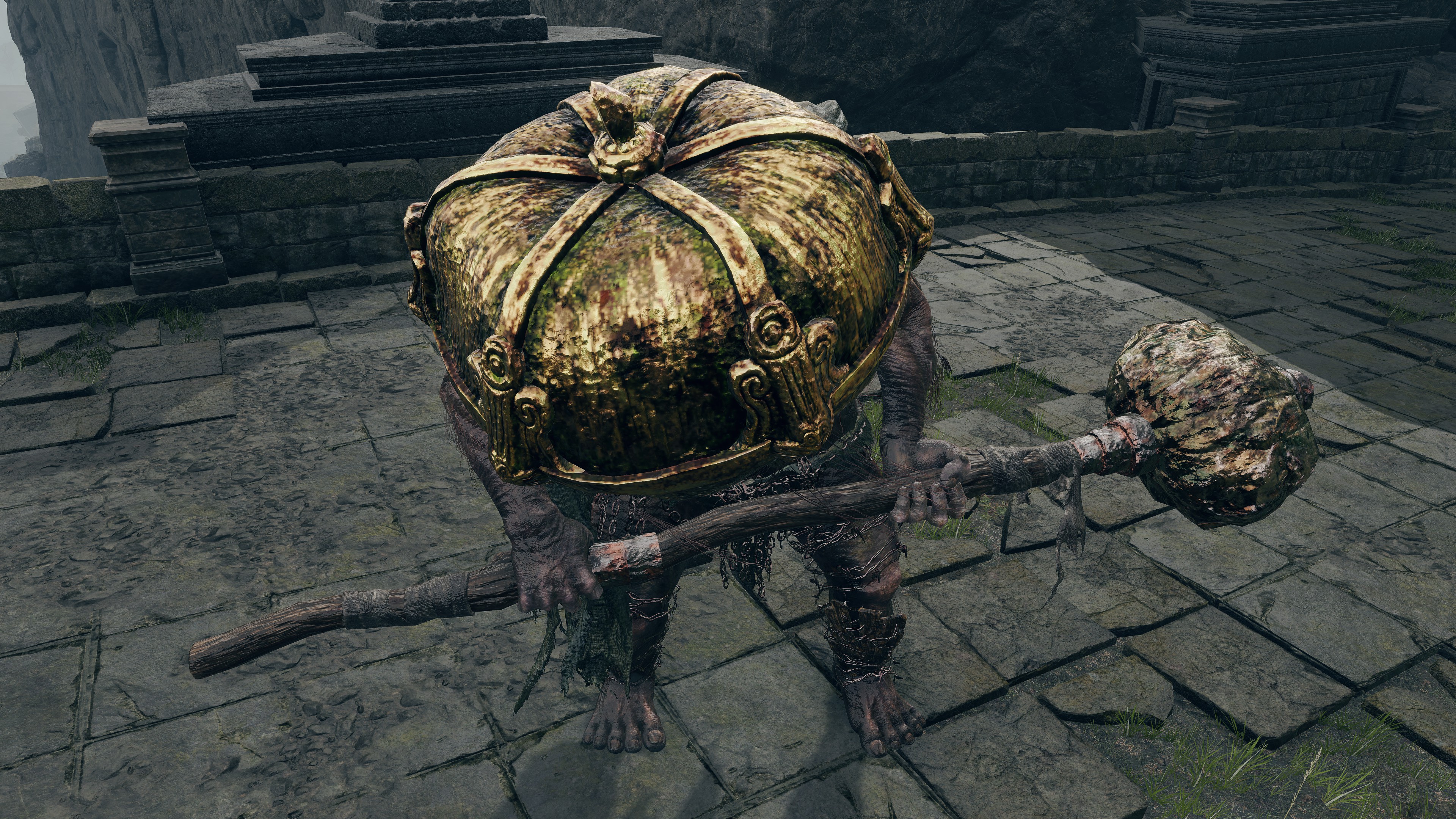
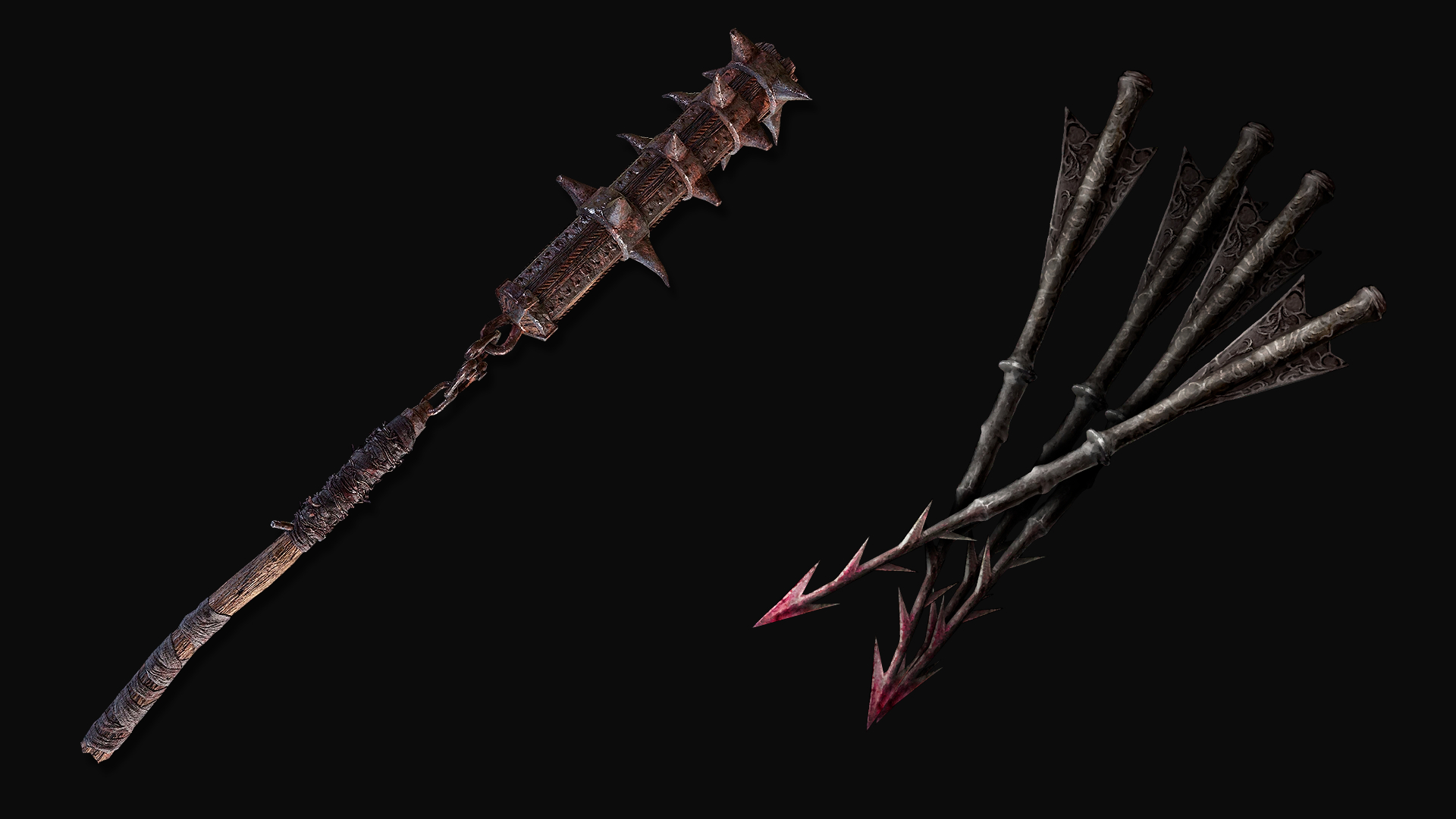
The king’s counterattack appears to be what finally tipped the scales in Leyndell’s favor. However, while he remains in control of the capital, it wasn’t the decisive victory he hoped for. The rebellion failed to be crushed, and the war continued, battles spreading across the realm between the various demigod armies. To bolster their forces, all sides started marshaling. Factions conscripted local townsfolk all across the Lands Between, each wearing the same uniform. The embroidery might be too fancy for cloth armor, outside the royal capital; the set was originally named for “royal citizens” (王民) specifically. Nevertheless, the people of Altus and beyond were being drafted at the passing army’s need. For stronger manpower doing more than throw pebbles, trolls existed to tear through defenses or push siege towers like in the story trailer. The armies even took old gladiators out of the catacombs, the madmen among them armed with a barbaric chainlink flail or sledgehammer. Indeed, fighting between kin became so vicious, barbed crossbow bolts saw use to maximize hemorrhaging.
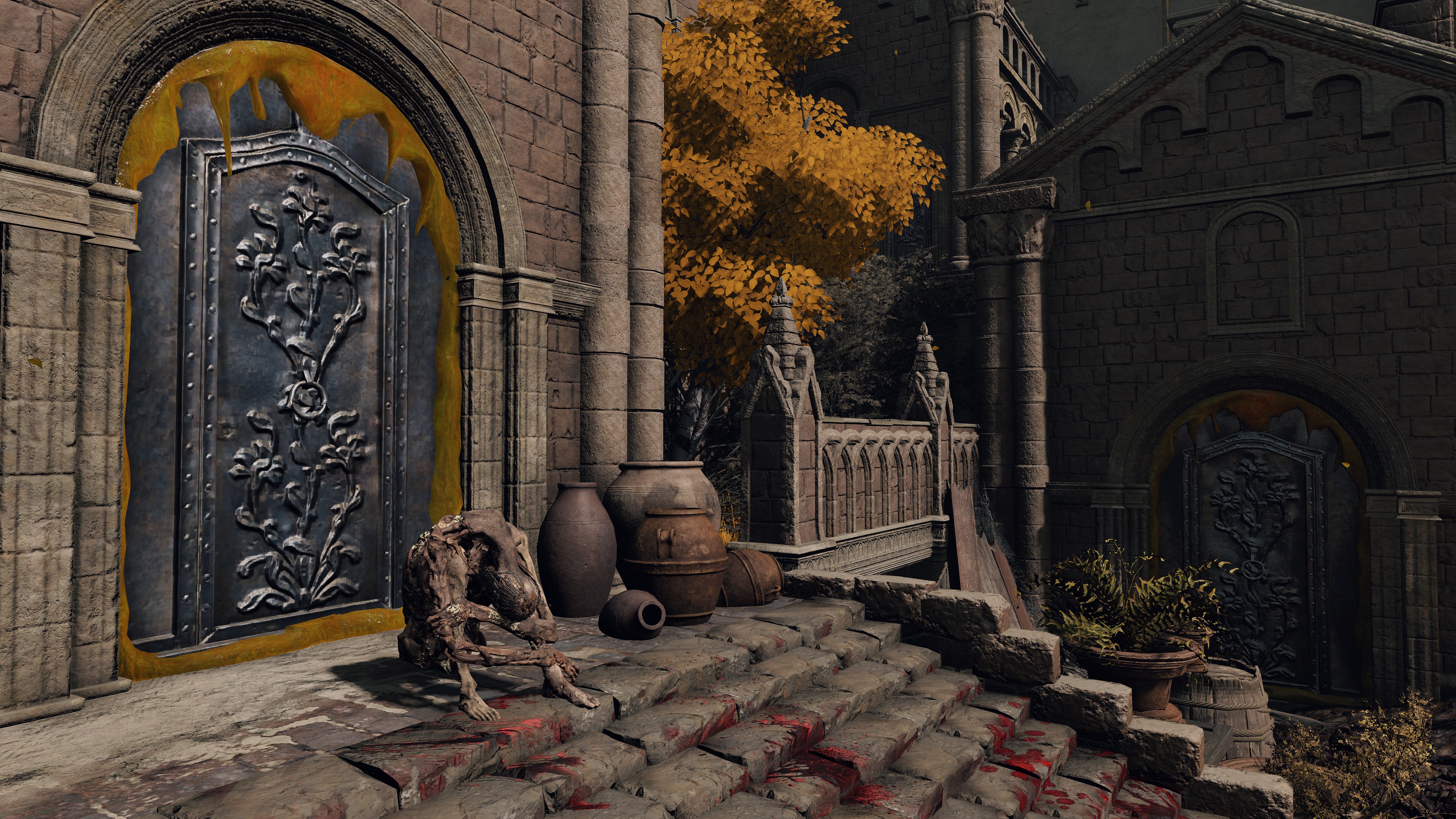
The war definitely seems to have put Morgott on edge, the Omen King instituting martial law within his city as part of a strict crackdown. Touring Leyndell, we will find all the residences sealed with what appears to be root resin. We may spy the occasional door or window missed, but these are likely oversights by the developers. The transparent goal of this policy is to keep people out of their homes, forcing everyone drafted to remain on high alert 24/7 — and it makes little sense to seal someone’s door but not window for just a few homes, or vice-versa. So thorough was the royal decree, even the ruined section of the Lower Quarter has been subjected, leaving nowhere for anyone to hide for the most part. The sole exceptions to the king’s decree were, of course, his political backers, only one home in the entire Cathedral Quarter subject to sealing — undoubtedly a dissident among the priesthood, made into an example. For the rest, they must be constantly at the ready in case of another invasion.
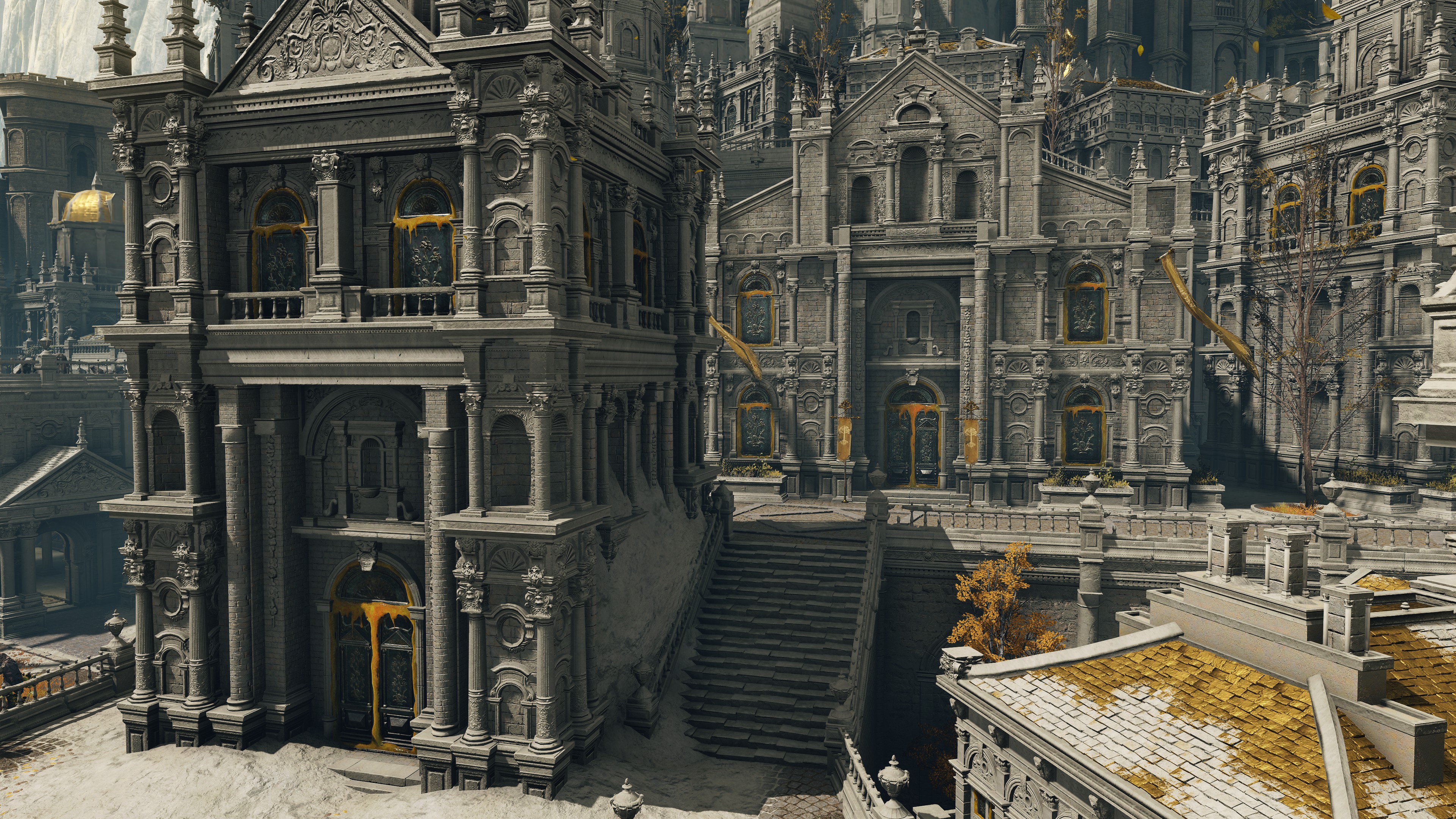
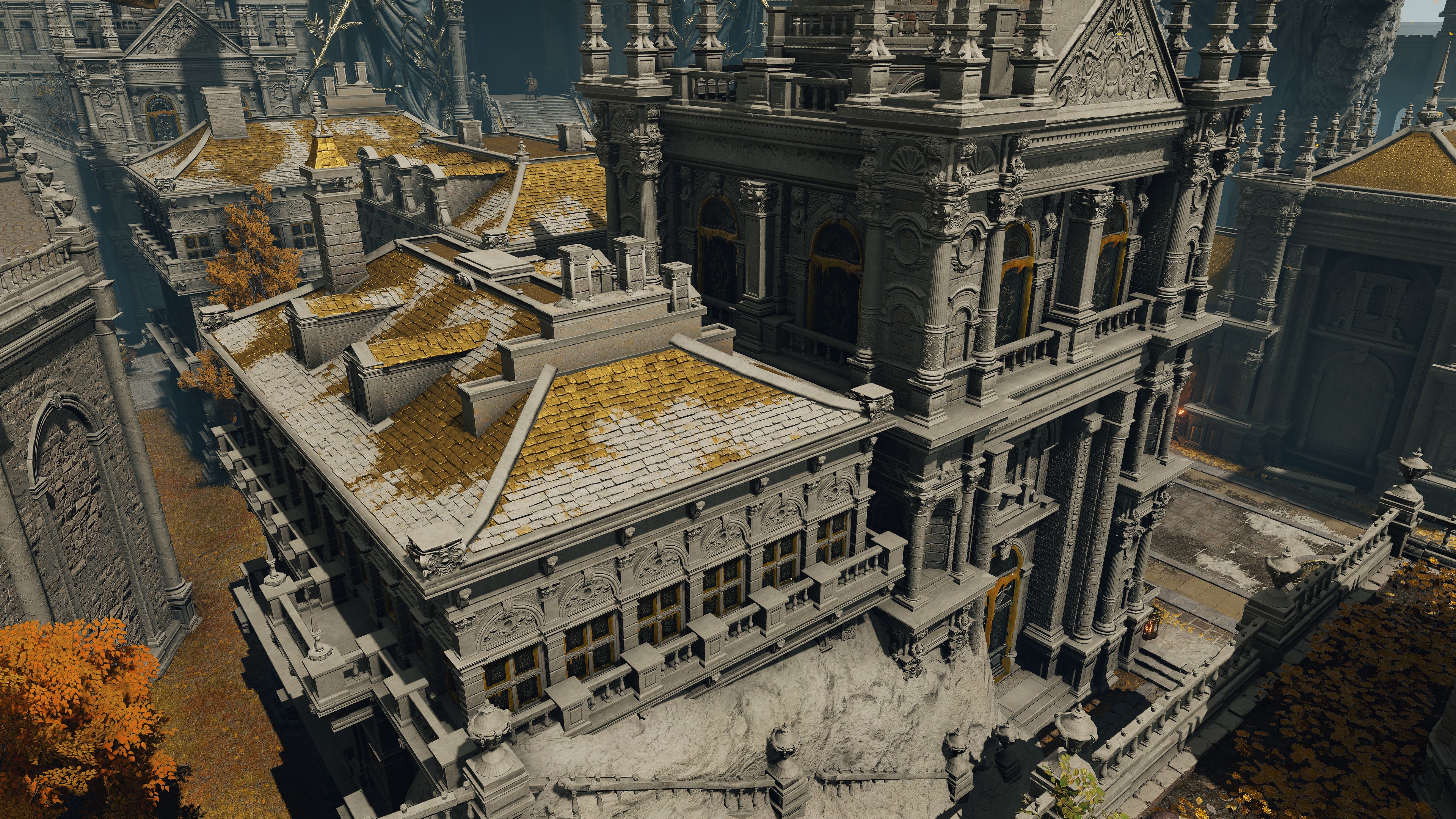
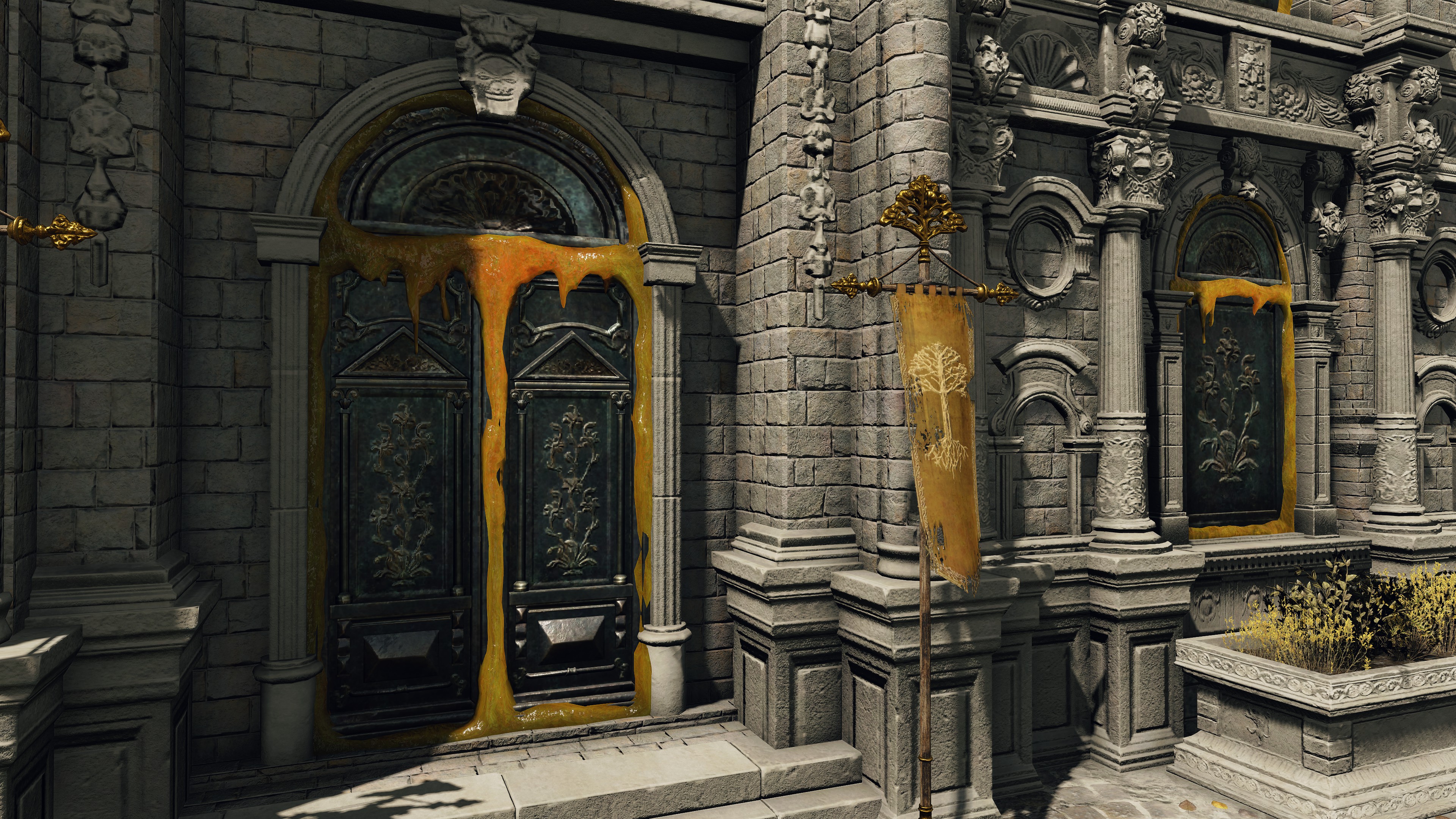
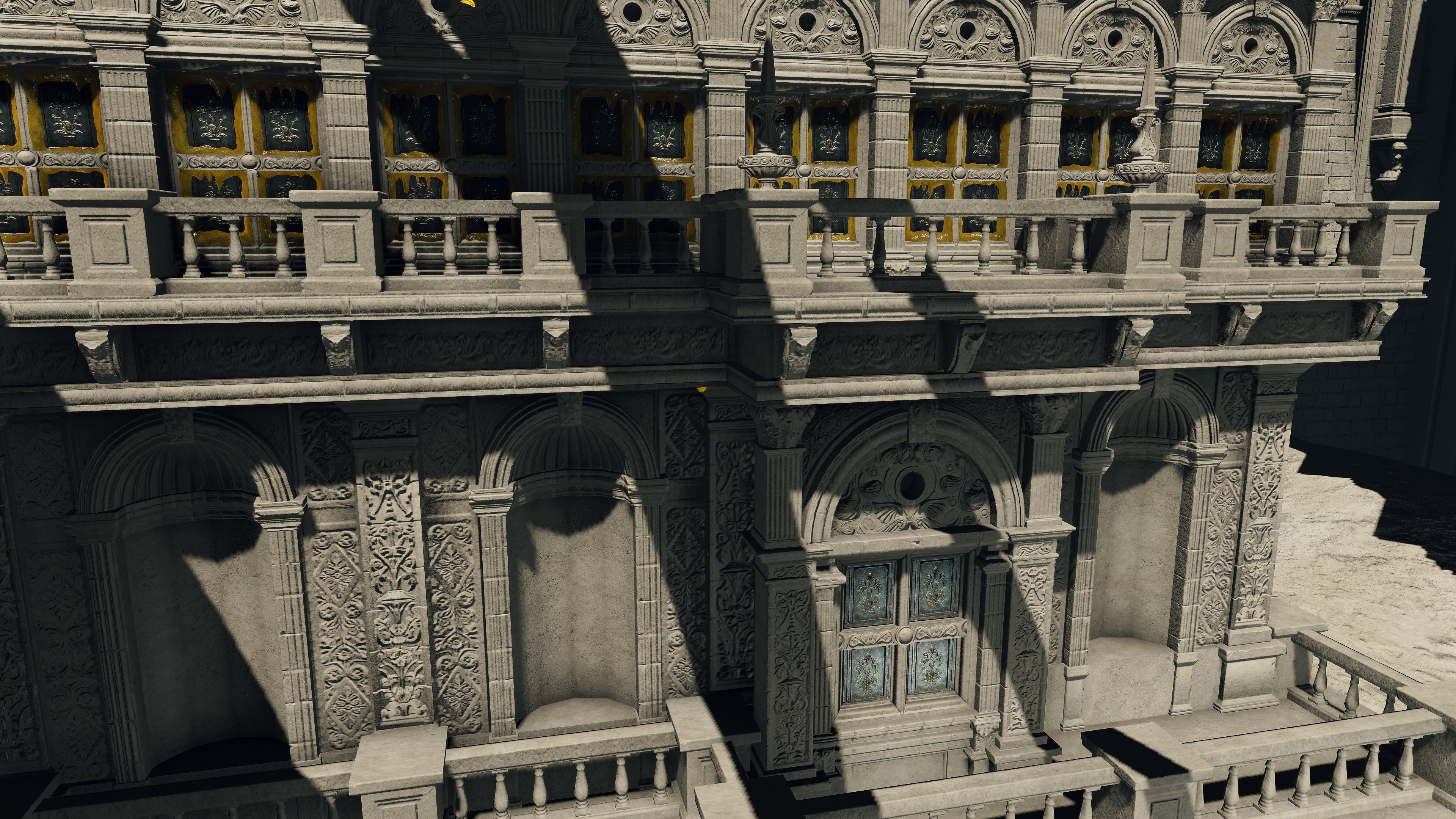
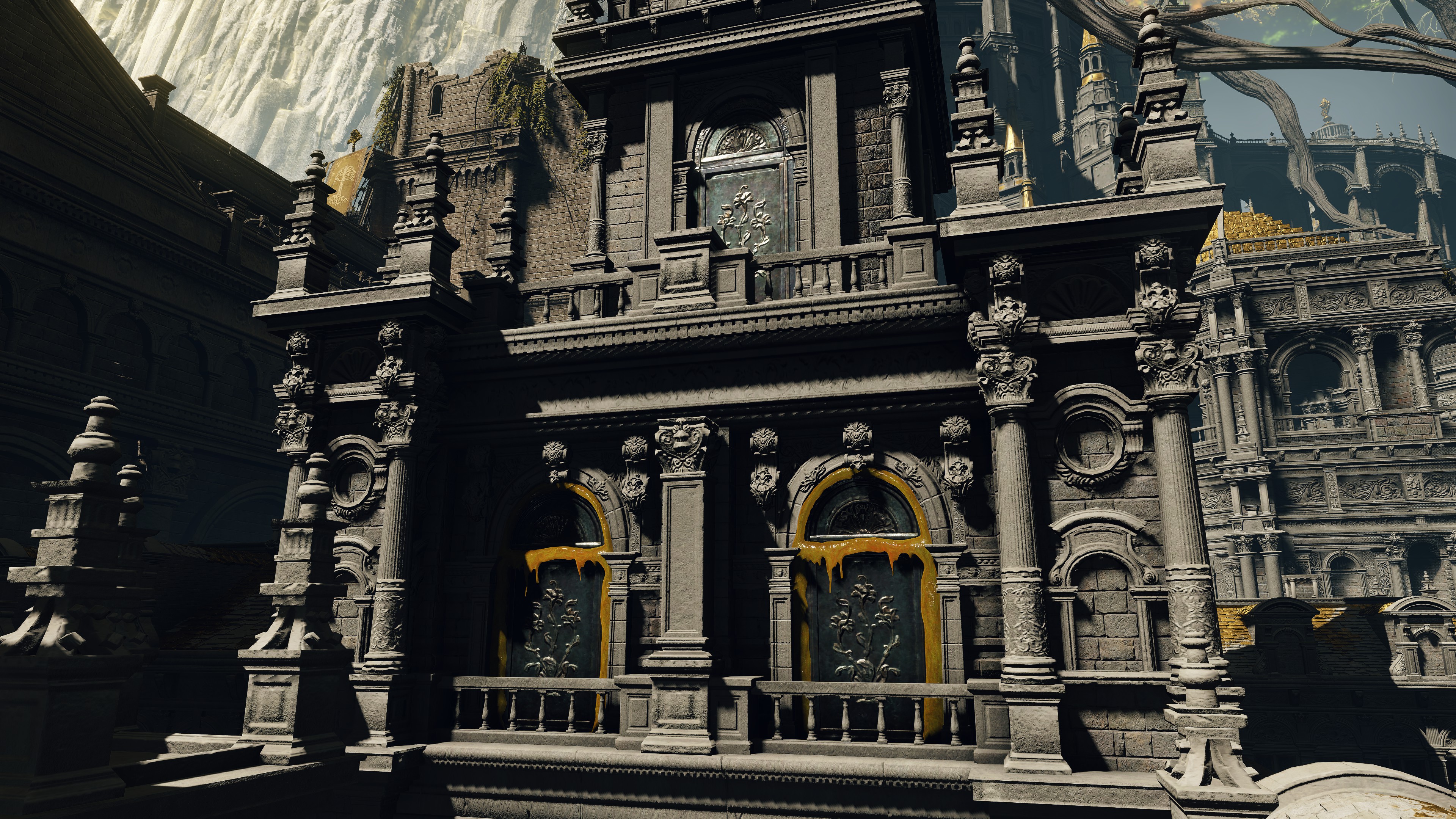
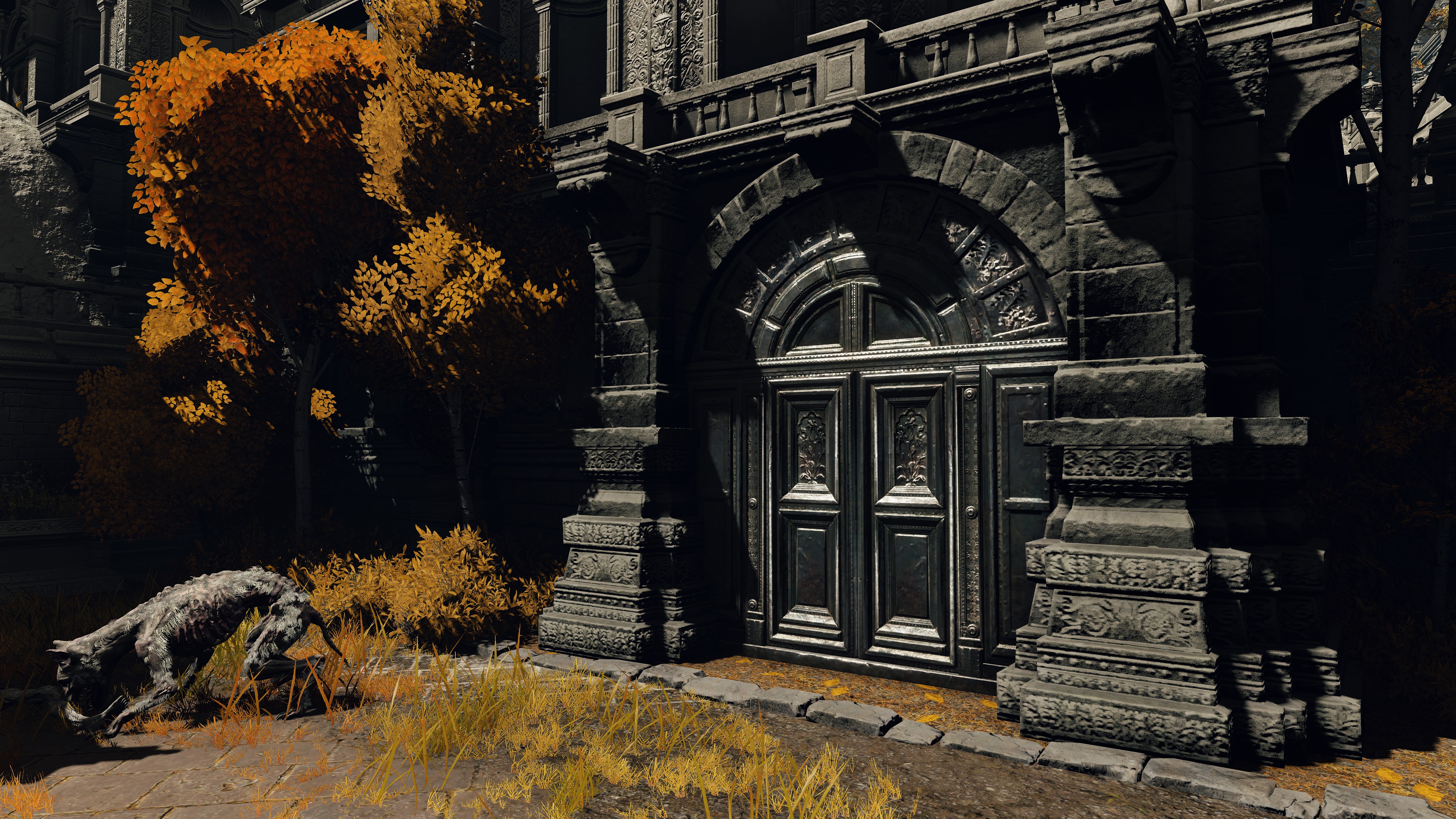
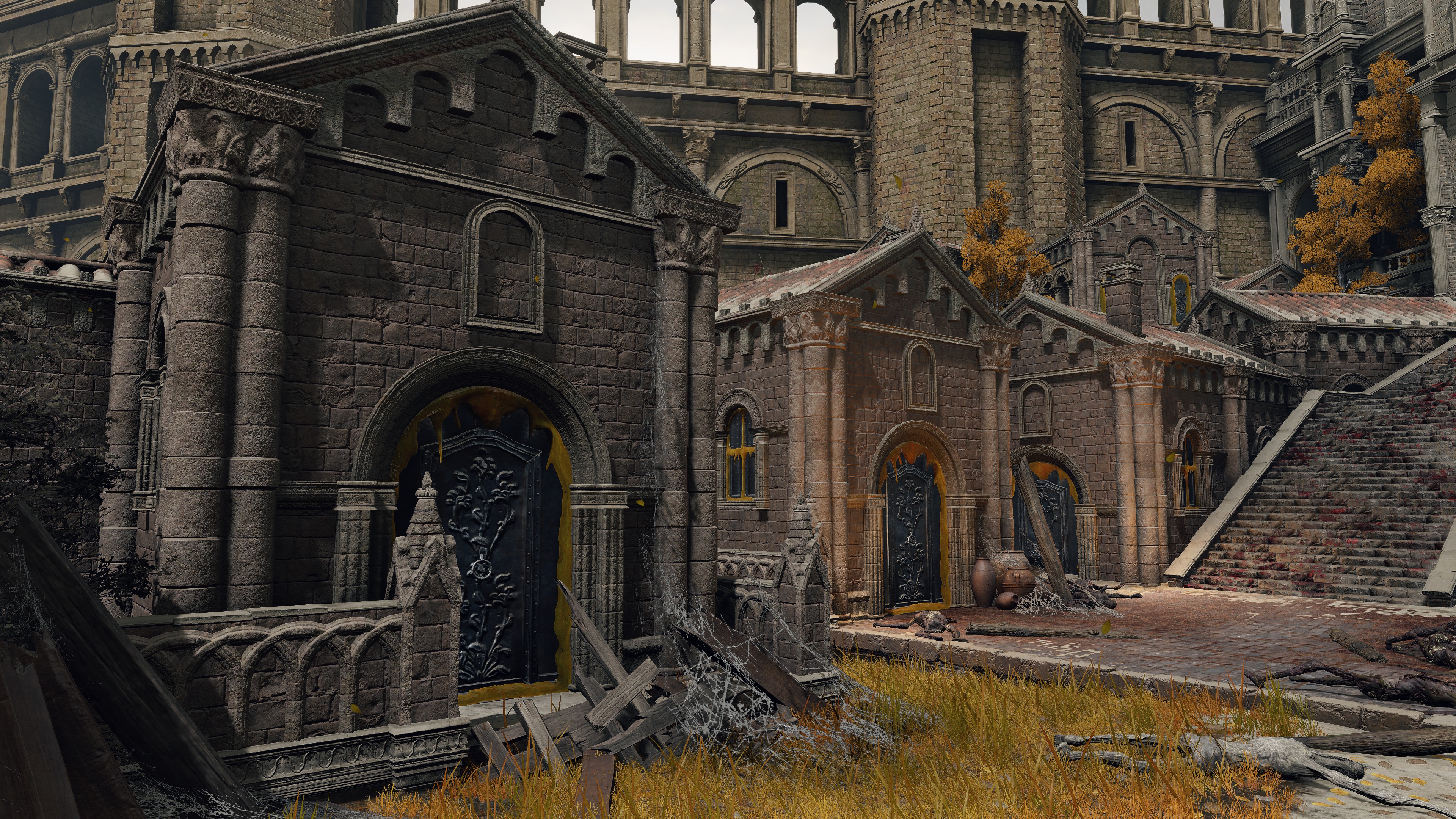
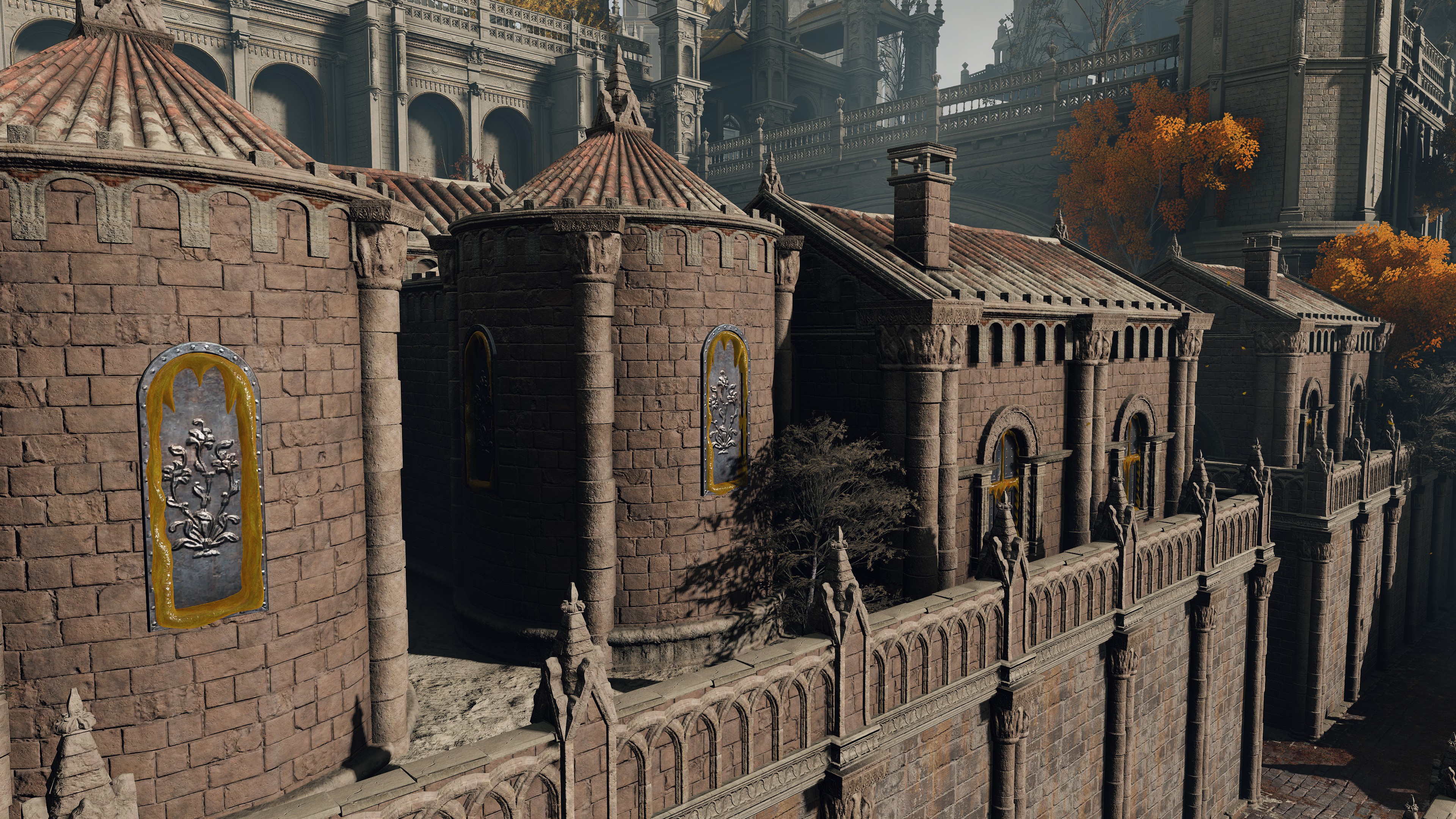
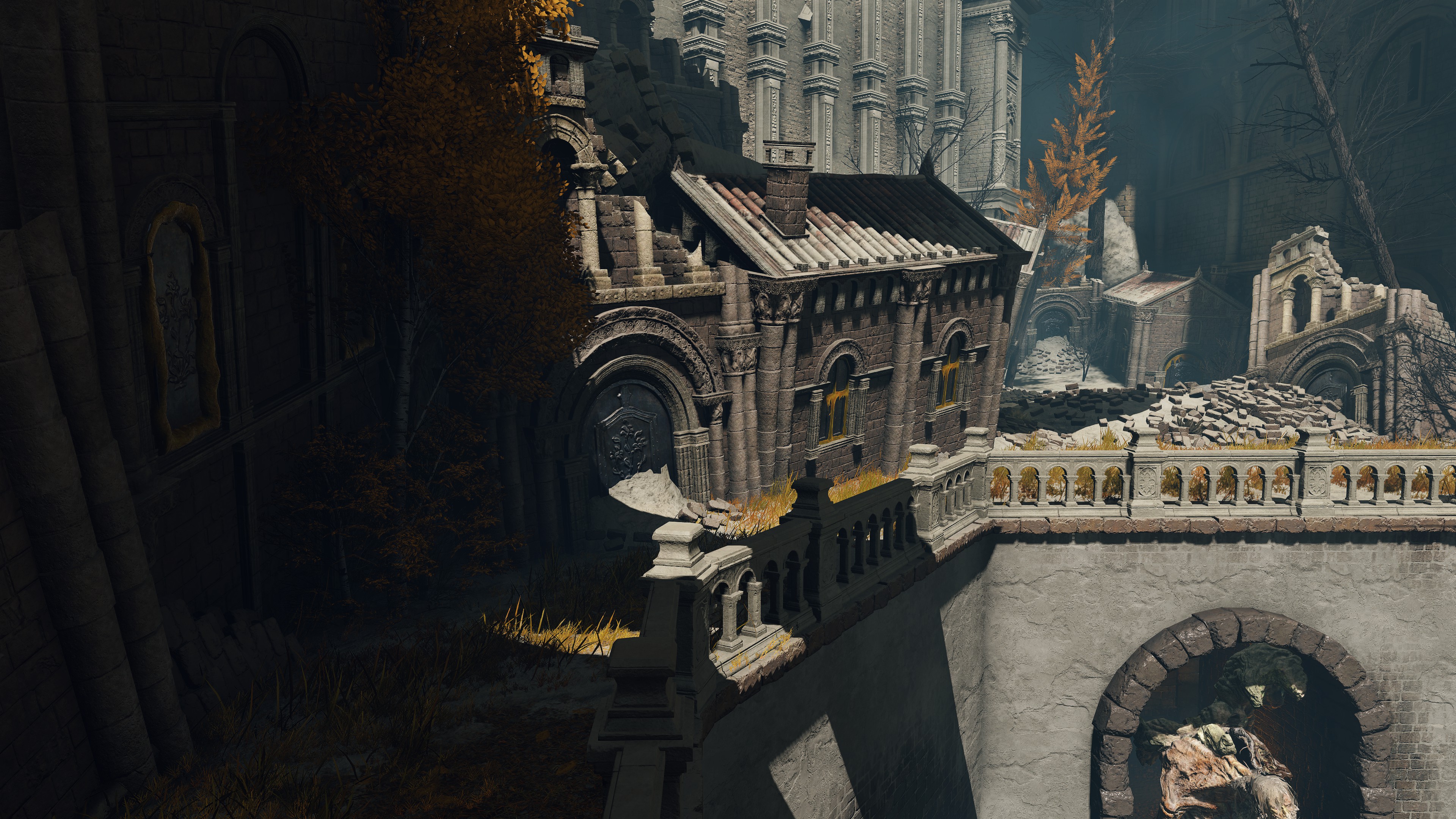
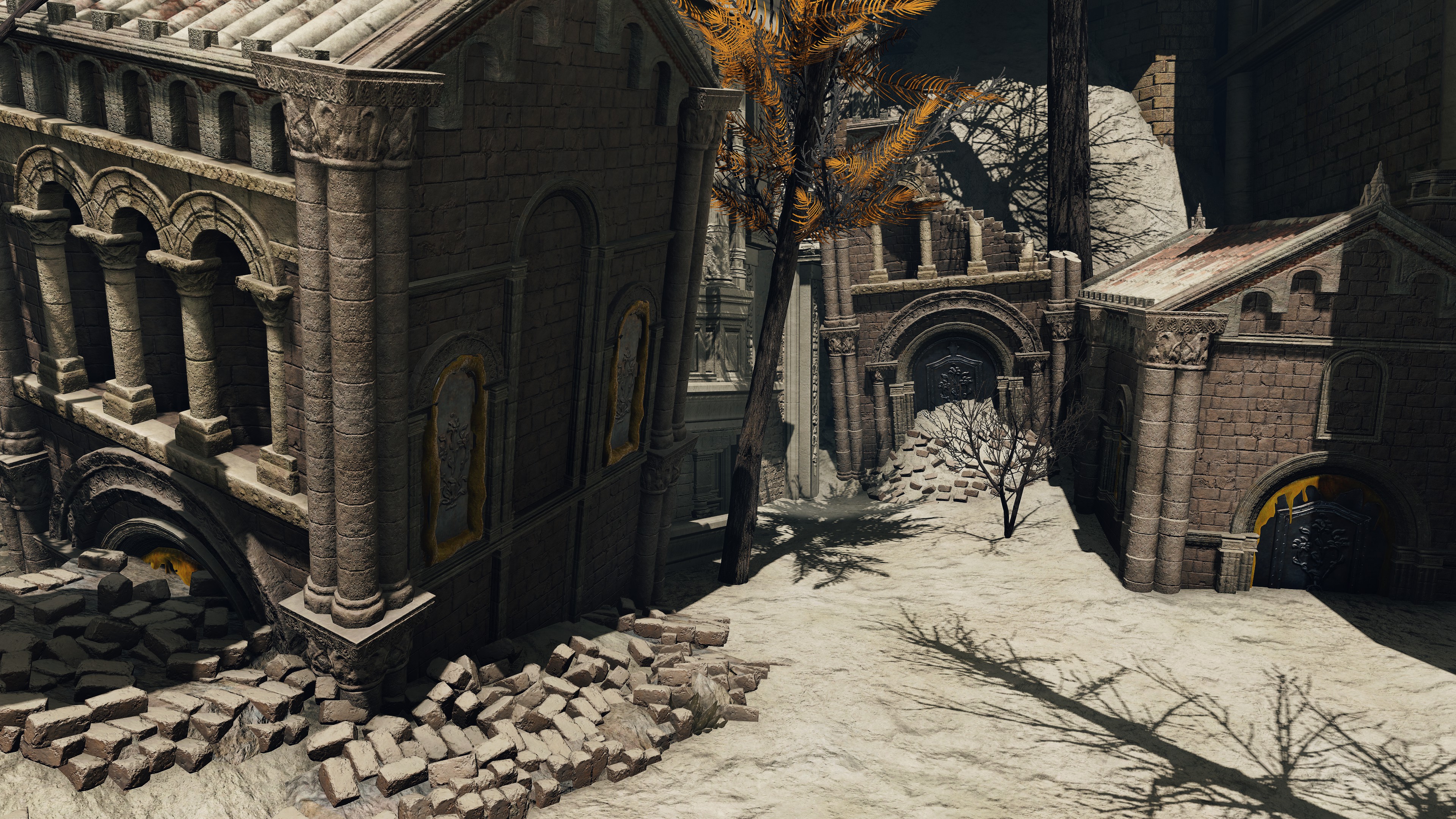
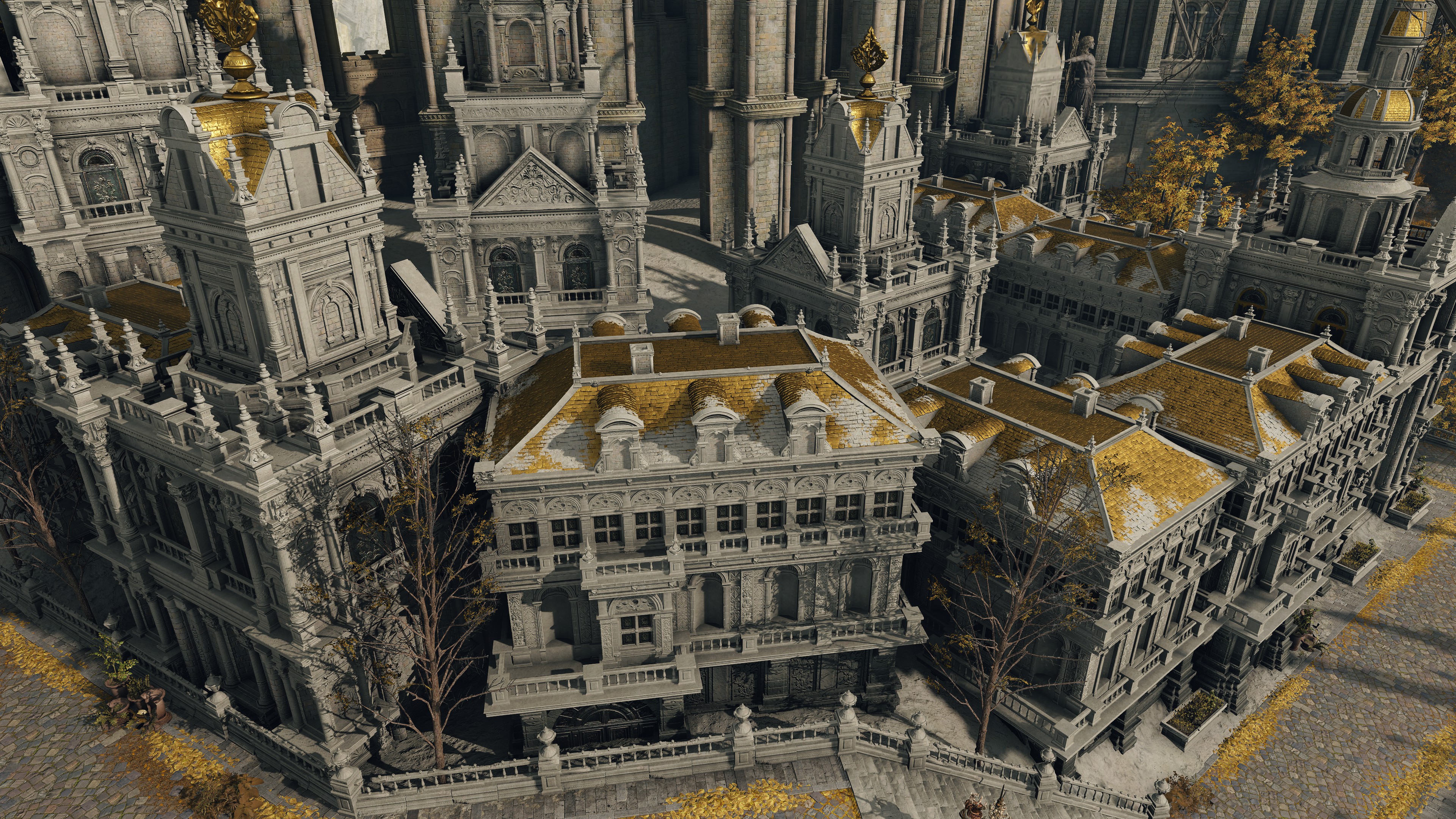
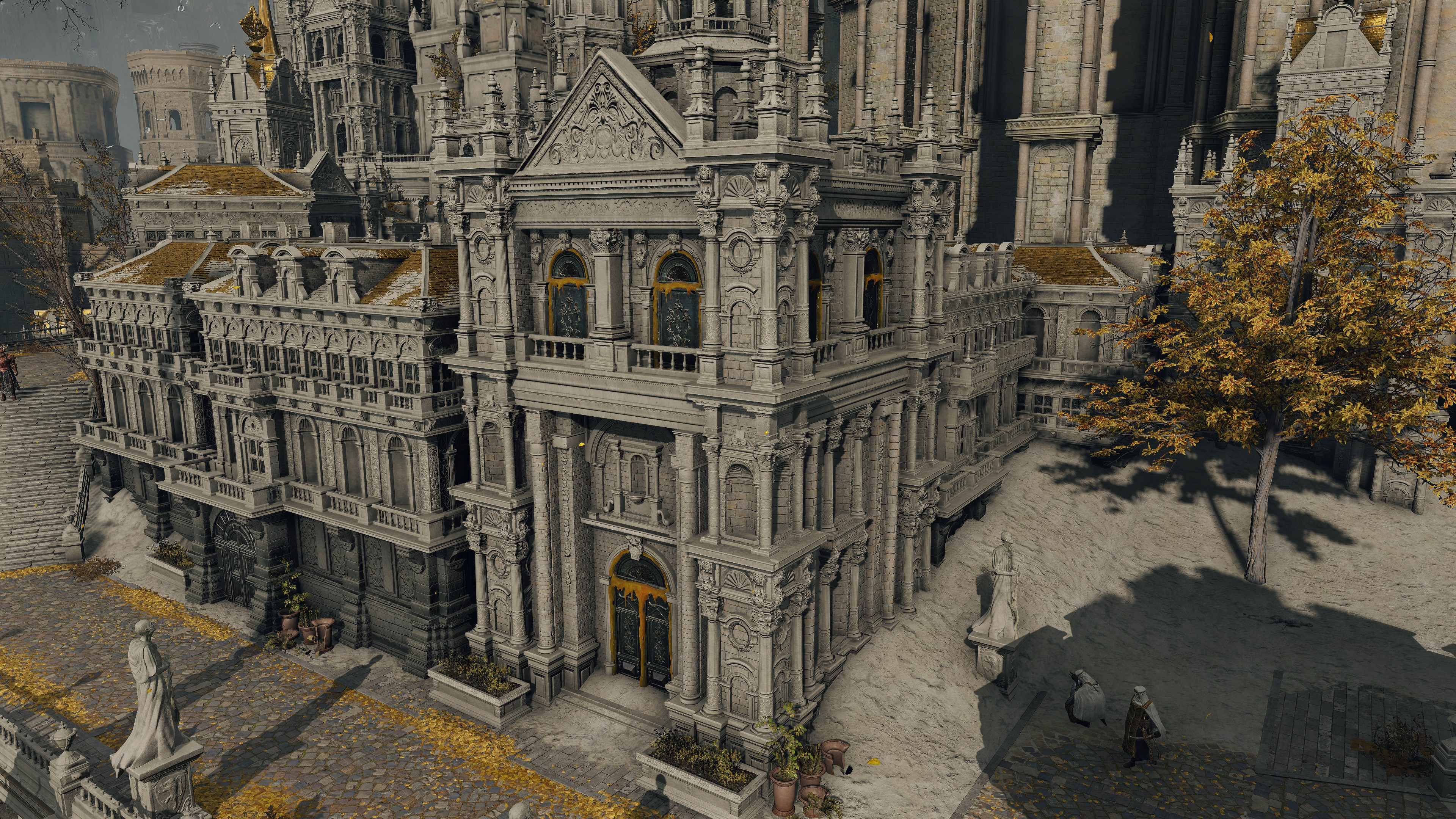
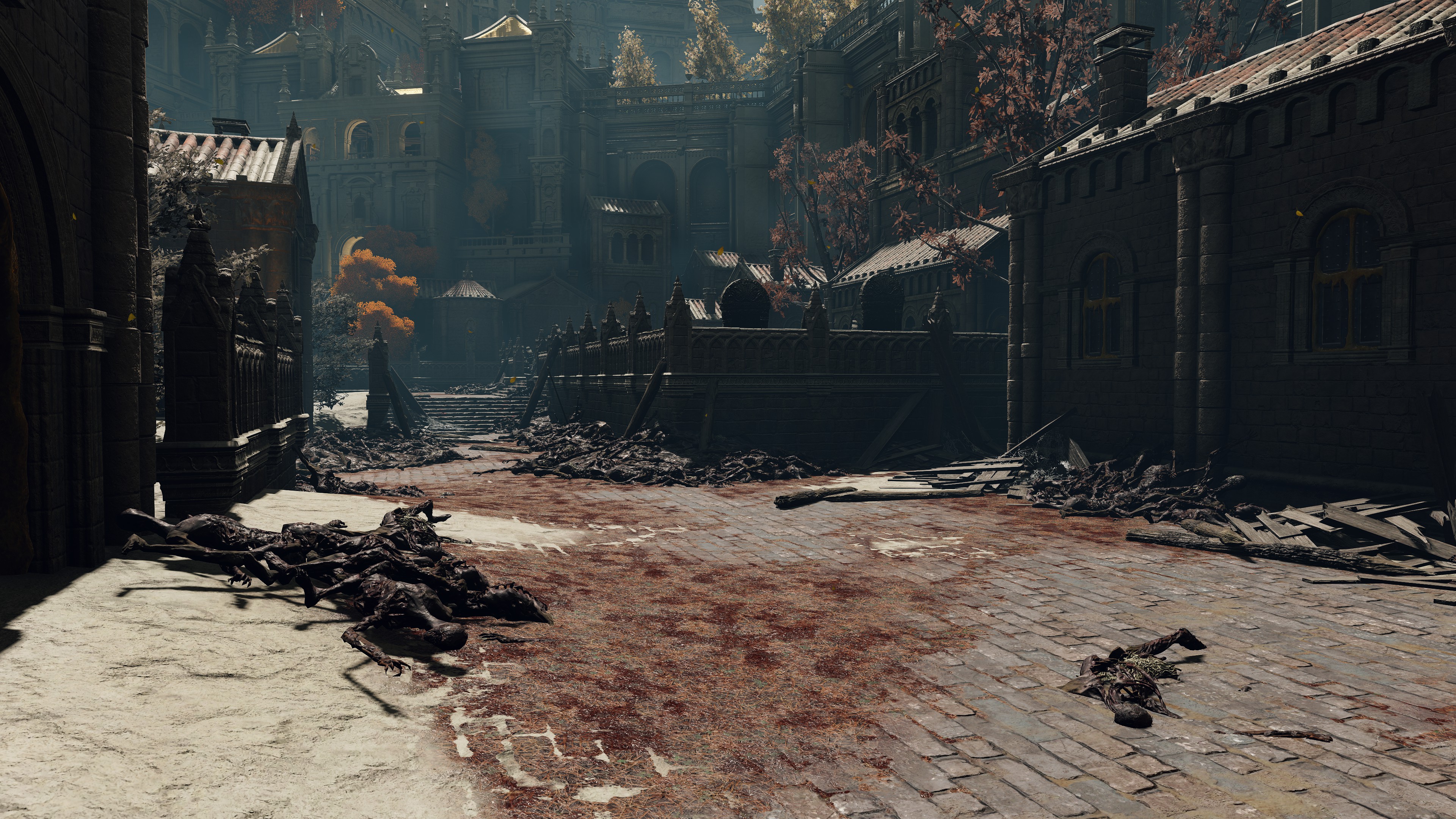
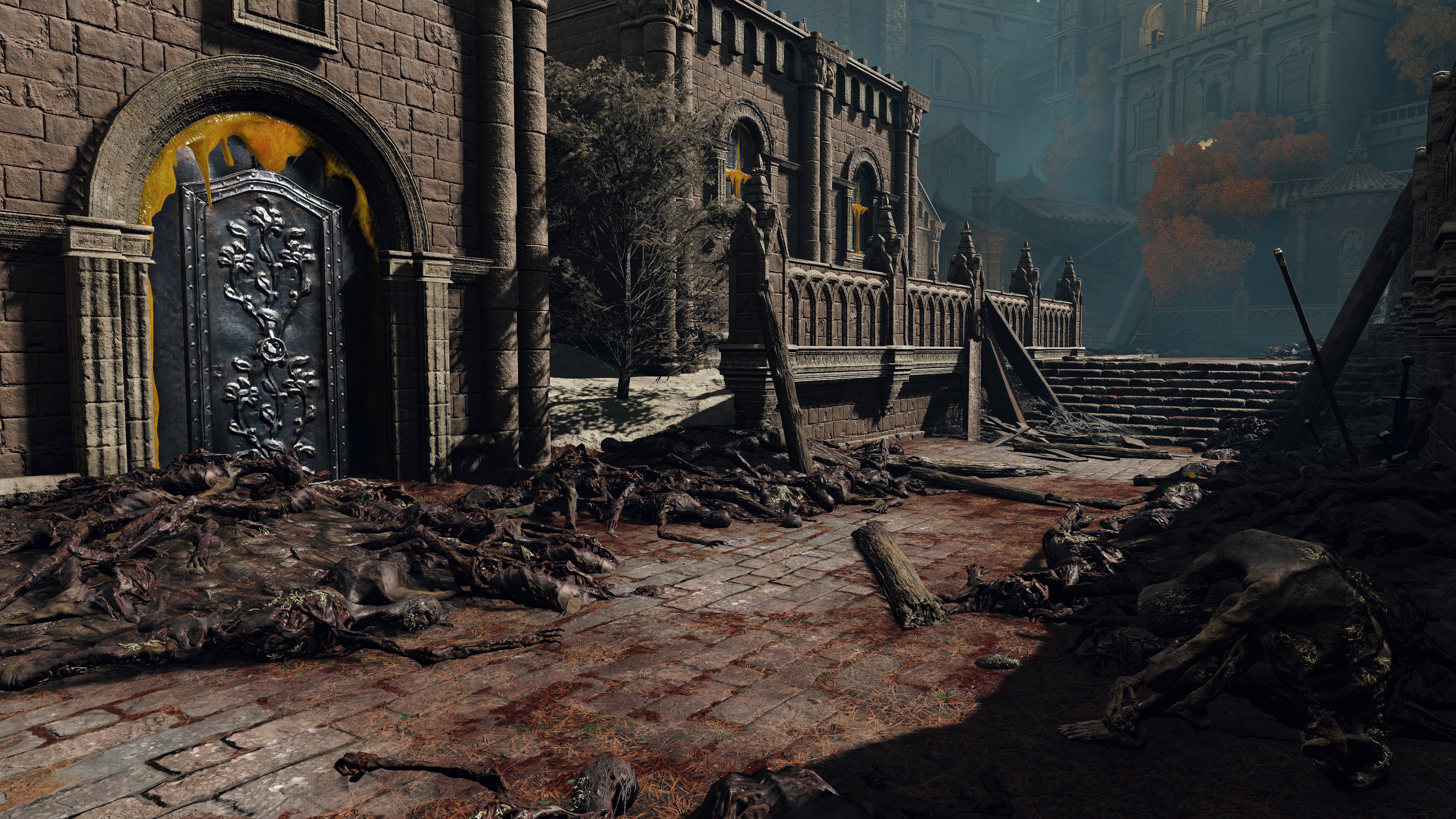
Opposition was met swiftly and harshly. The remaining Lower Town has become the sight of a massacre, bodies left to rot in the streets. The weapons stuck in one of the many piles give away that it was the work of the garrison, who operate beneath the main avenue dividing the quarter. And seeing how all their buildings have also been sealed with sap, rotten Hollows sitting in despair outside their homes, the wholesale slaughter was probably in reaction to a mass protest against the crackdown. After all, the Nox living in the Lower Quarter had largely been insulated from the wars of the Erdtree natives under Marika, only suffering briefly during Gransax’s attack even if it irrevocably displaced a huge chunk of their population. This was new to them, and no one wants to be forced out their home to be stripped of civilian life. But Morgott was not Marika, and he wouldn’t tolerate insolence with his precious Erdtree on the line. The town was purged without even the dignity of an Erdtree Burial, as we see a few skeletal gravekeepers try to give one body for its kin.
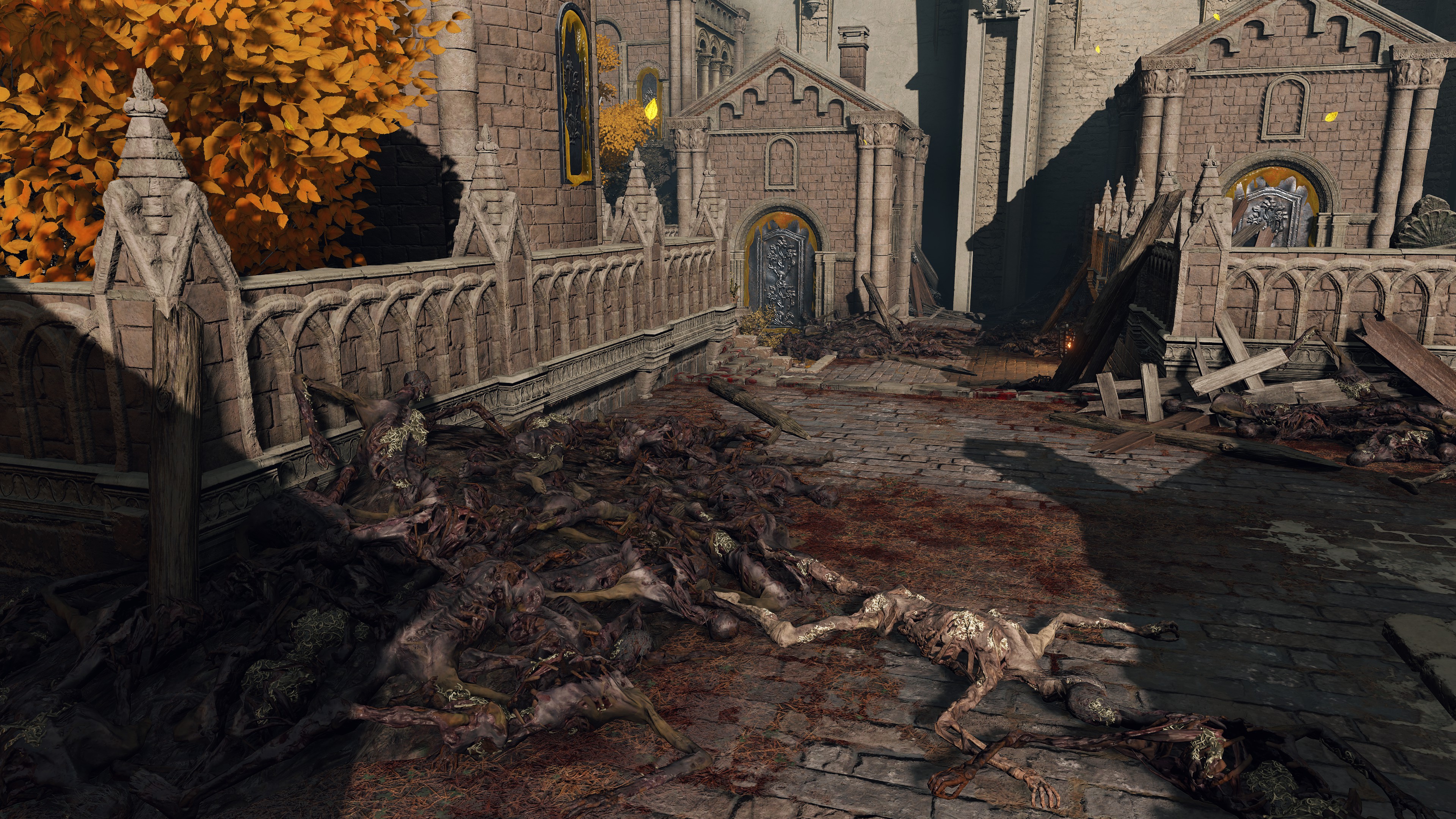
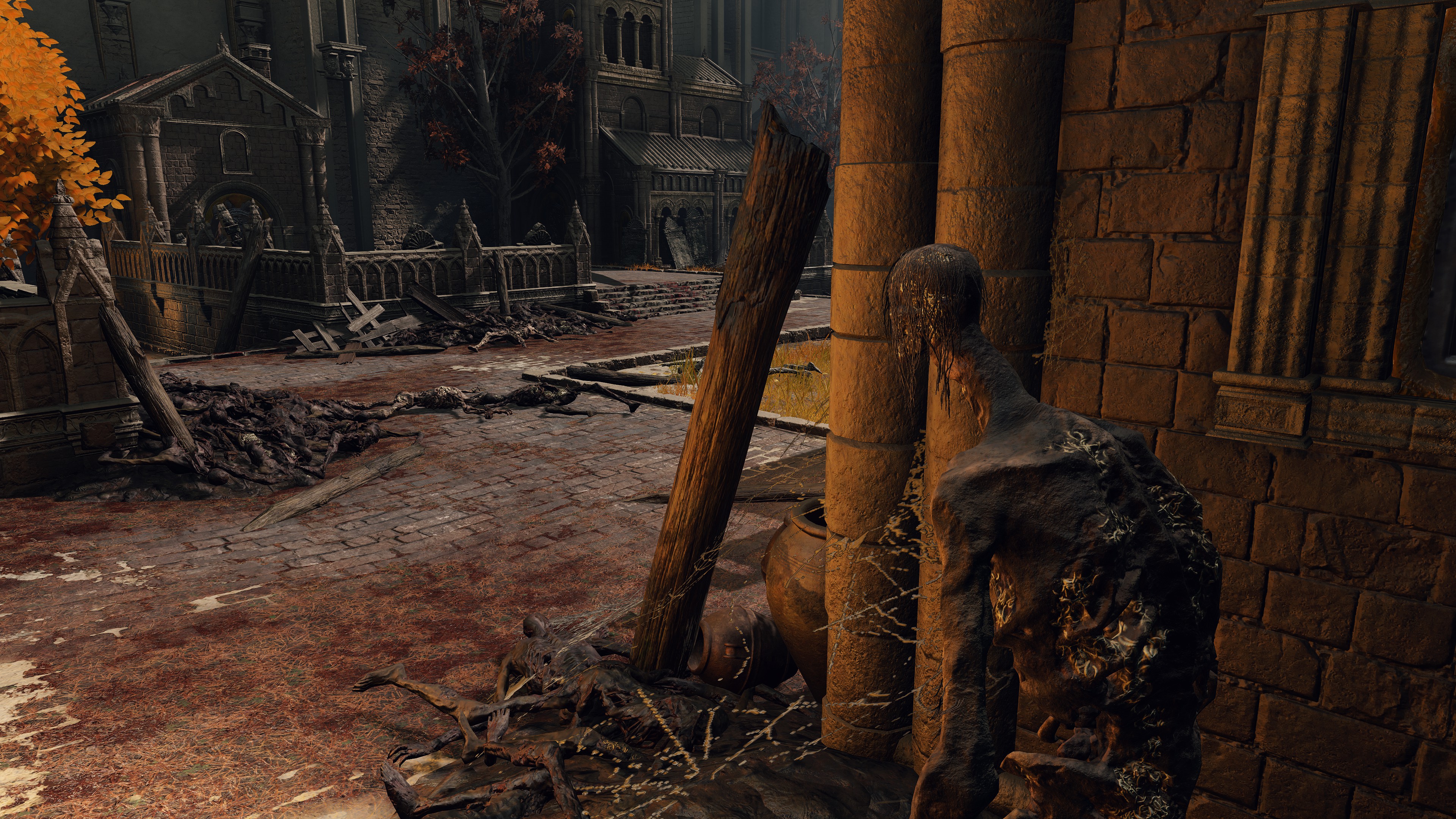
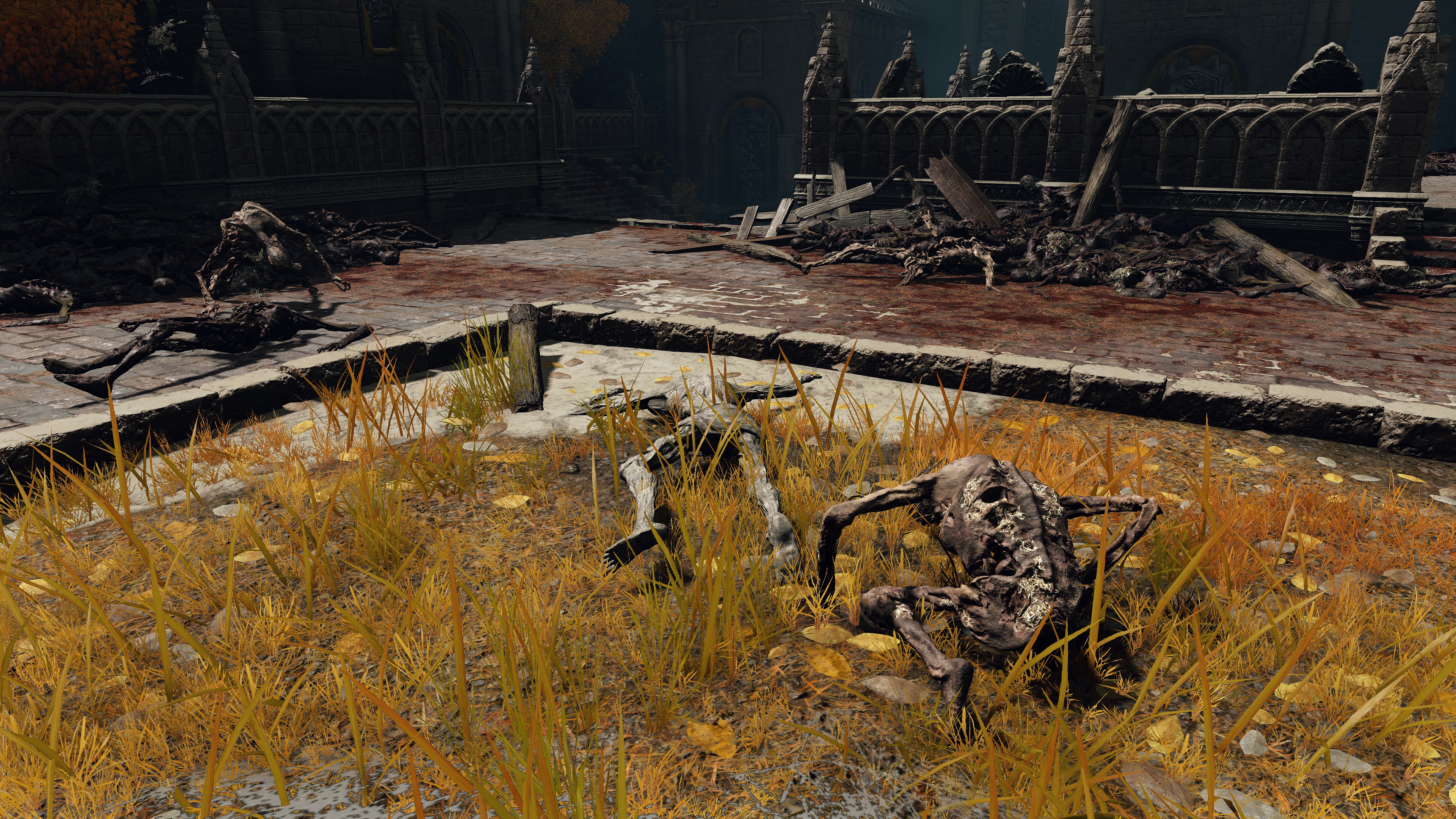
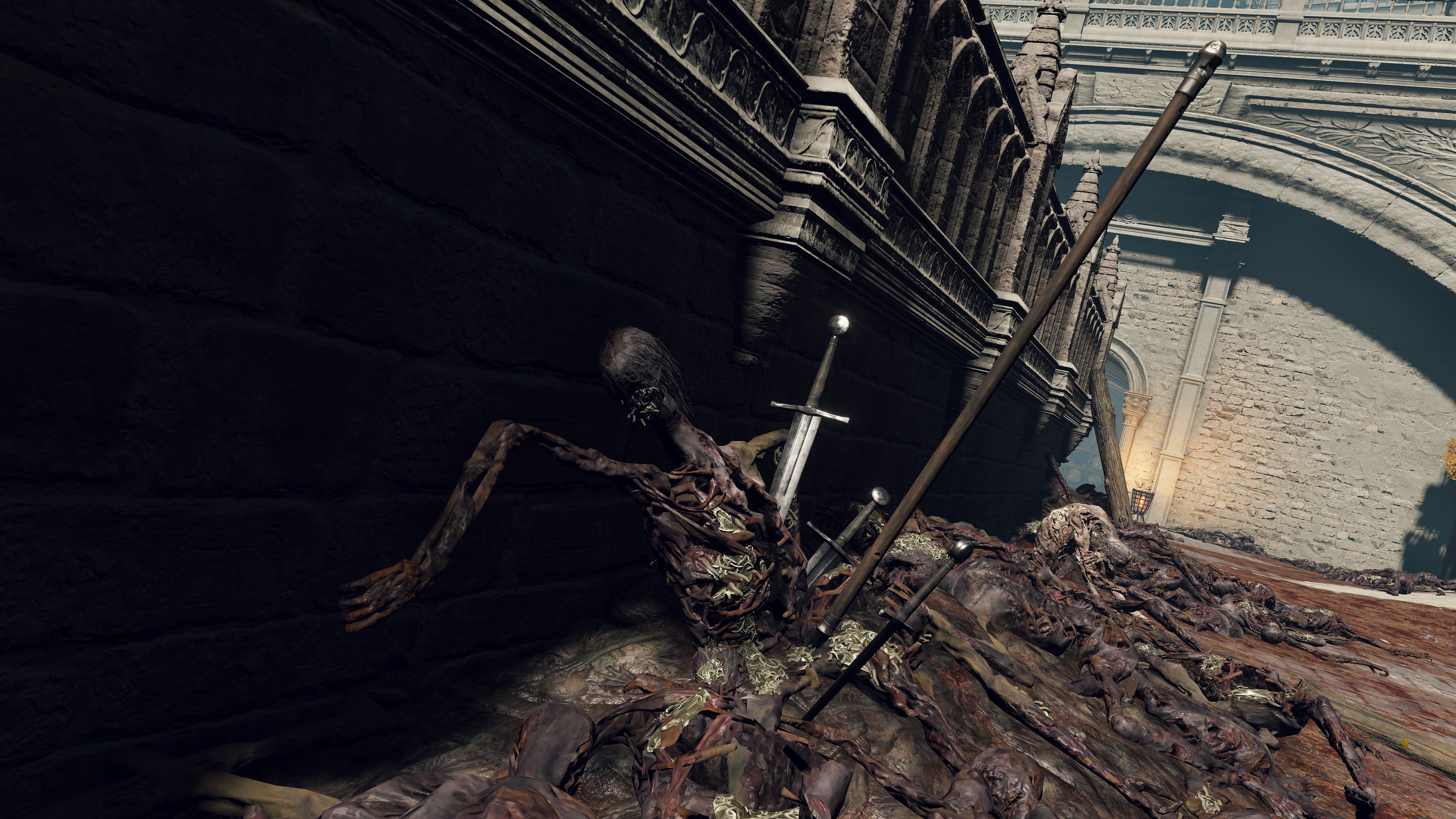
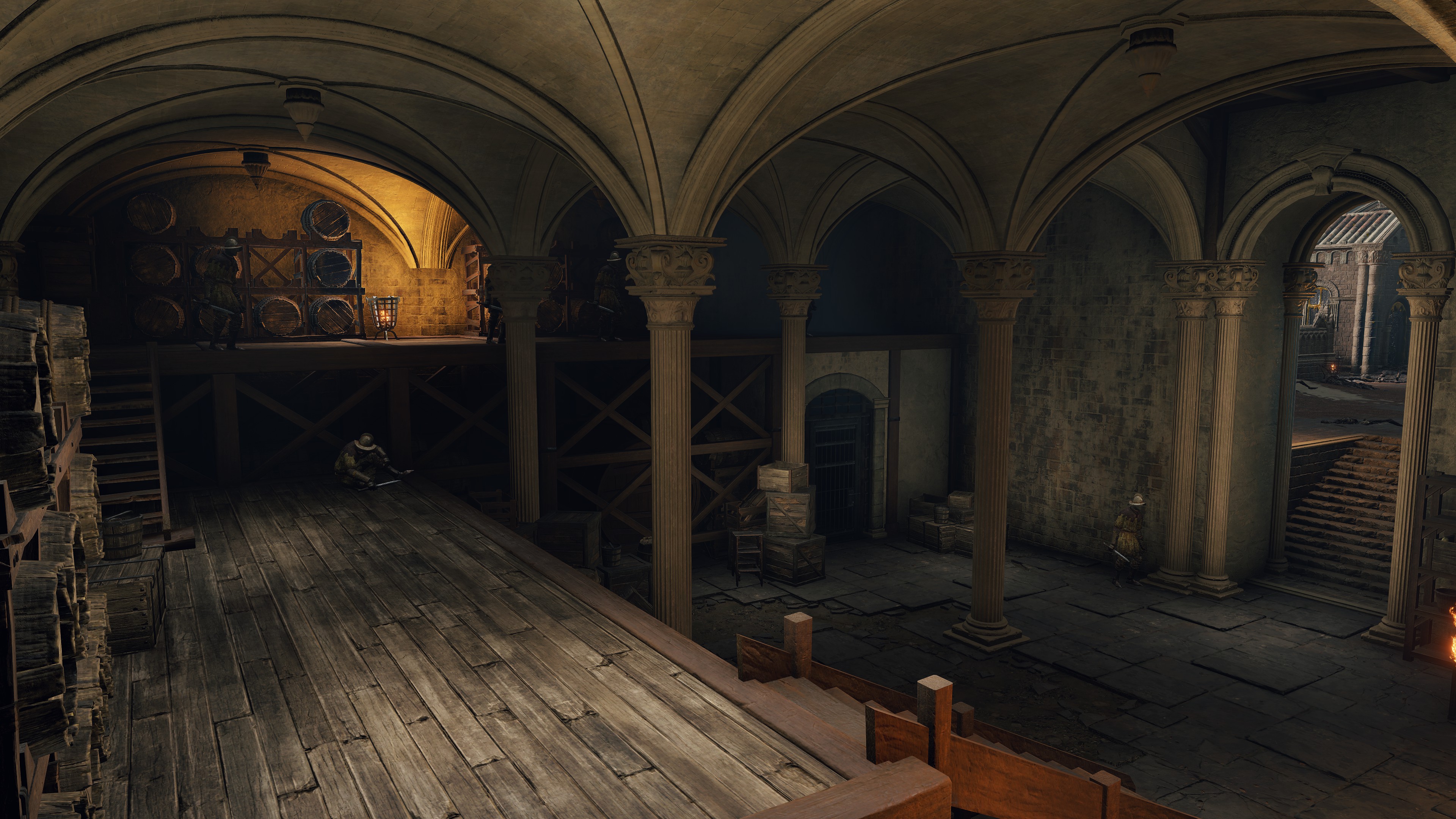
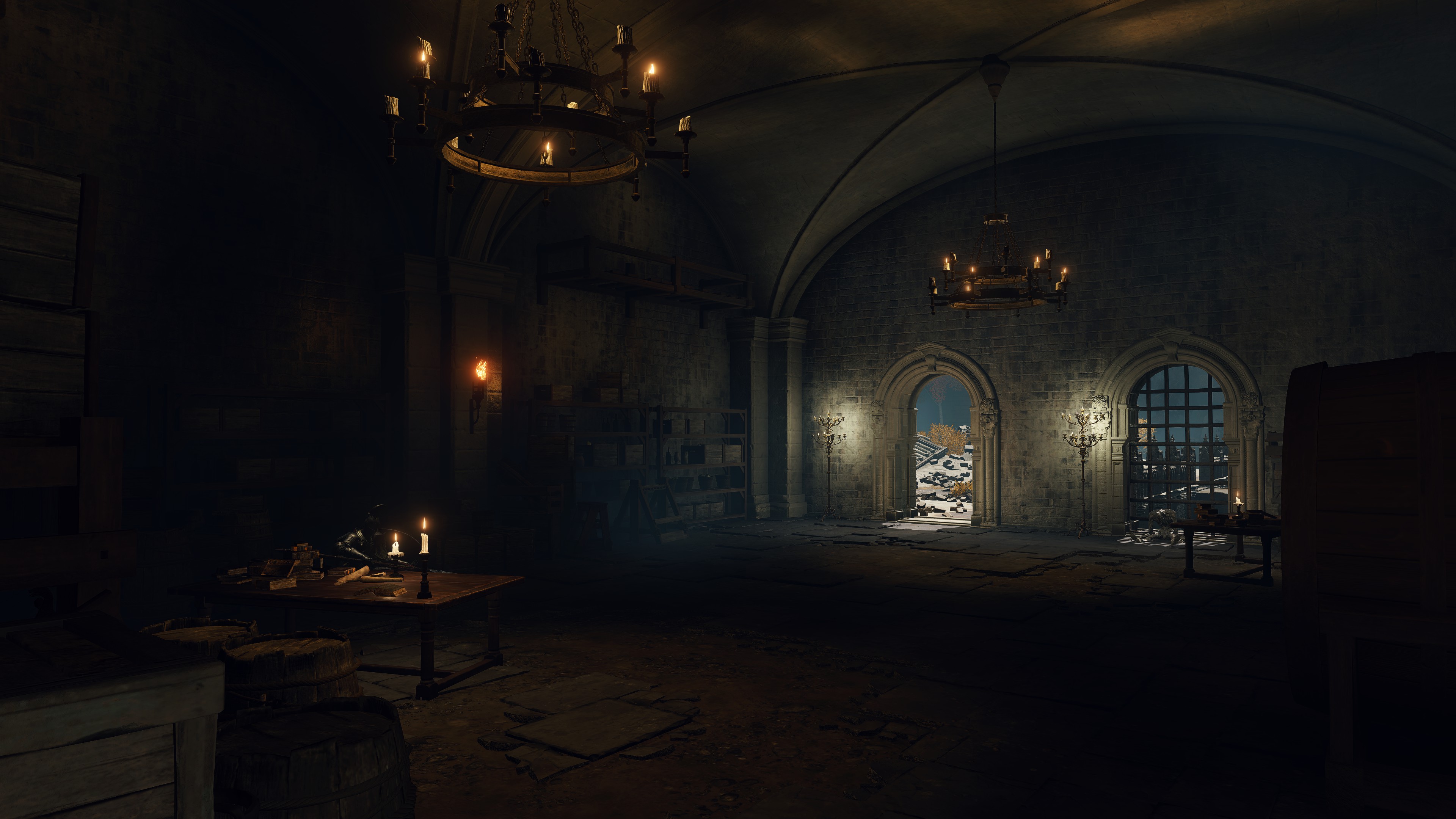
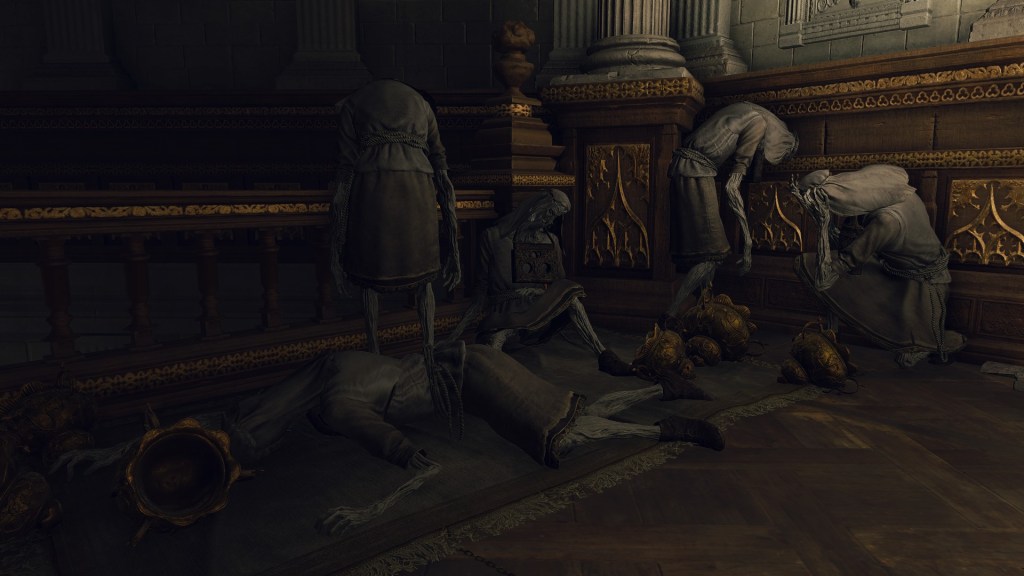
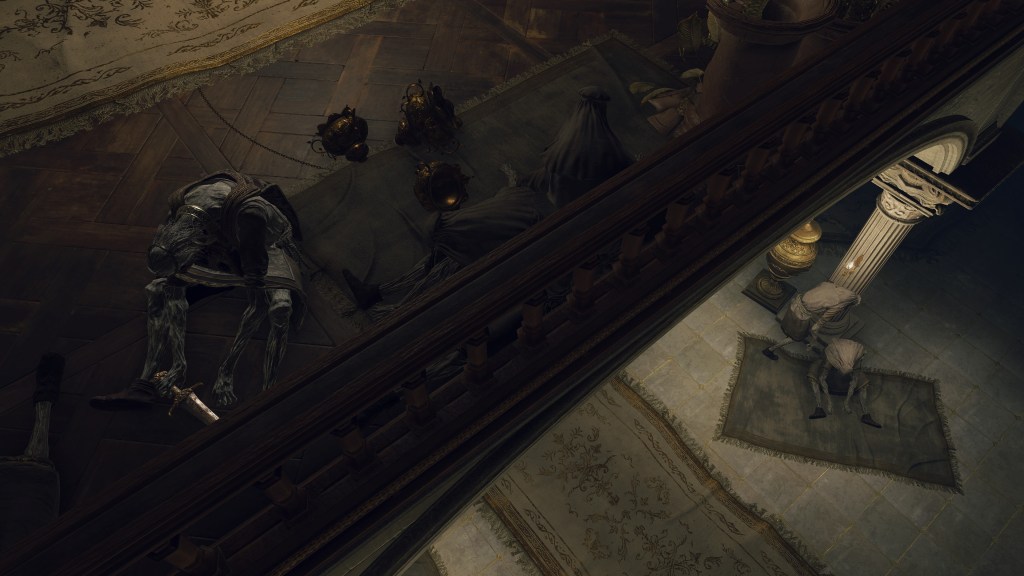
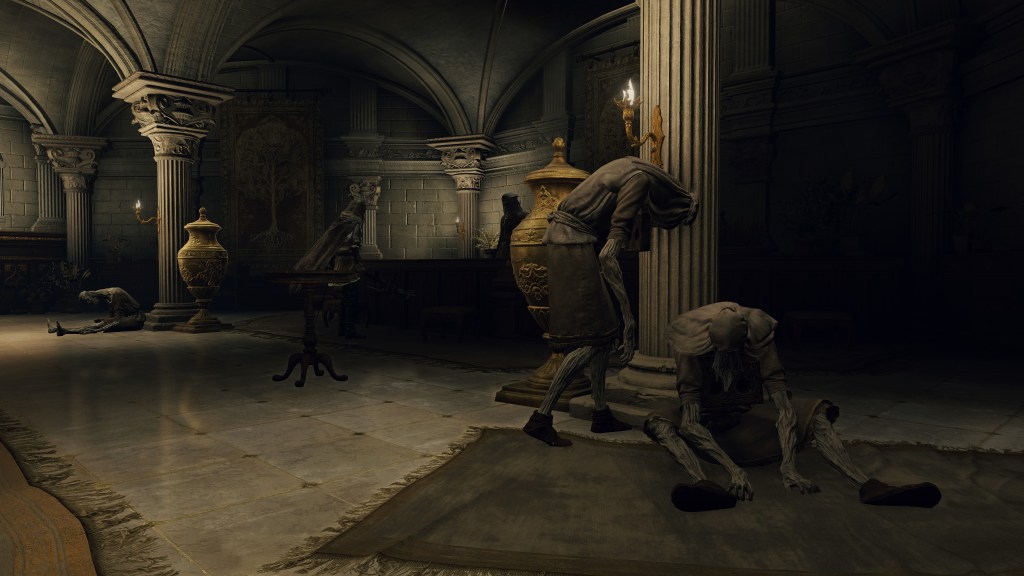
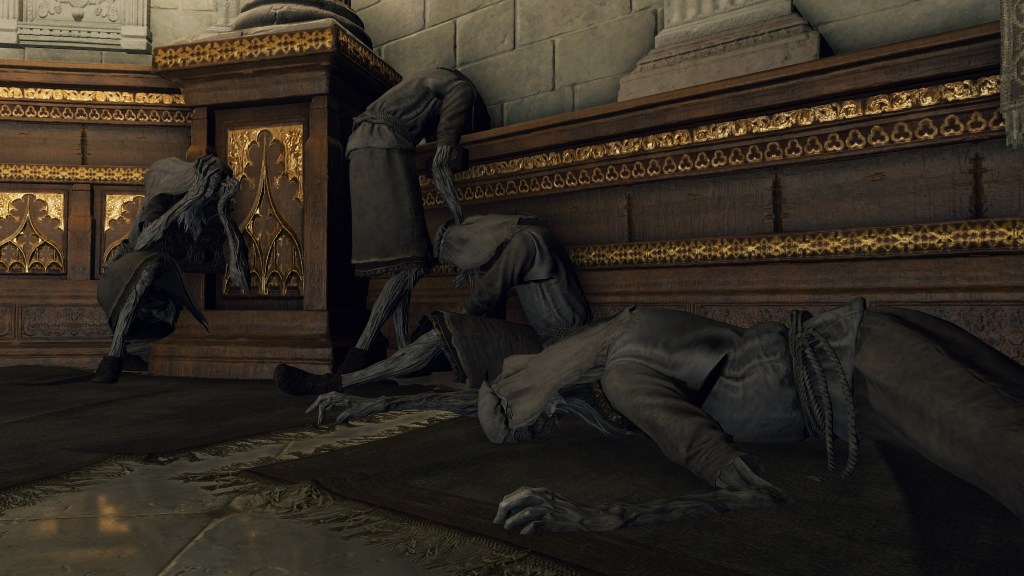
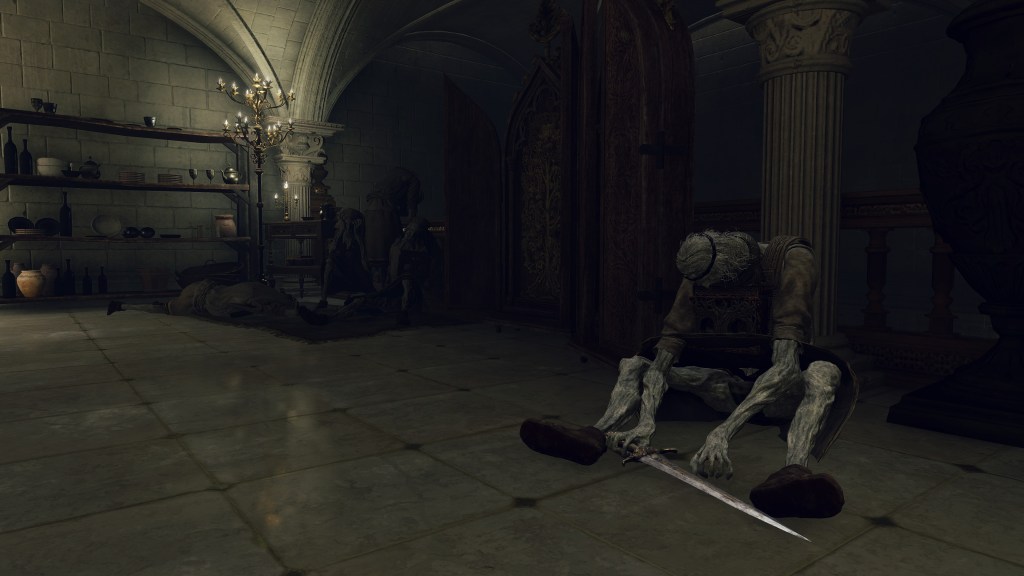
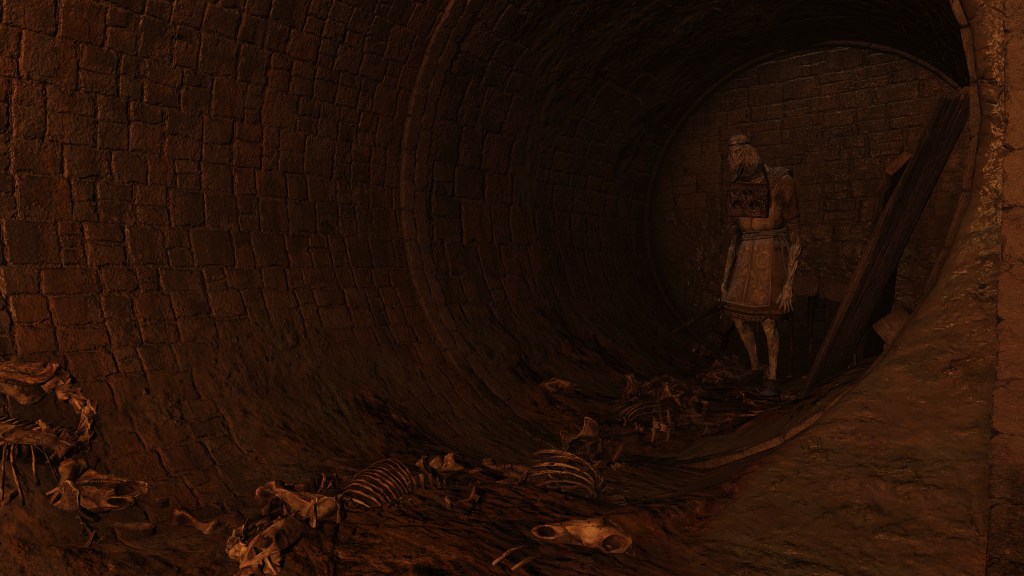
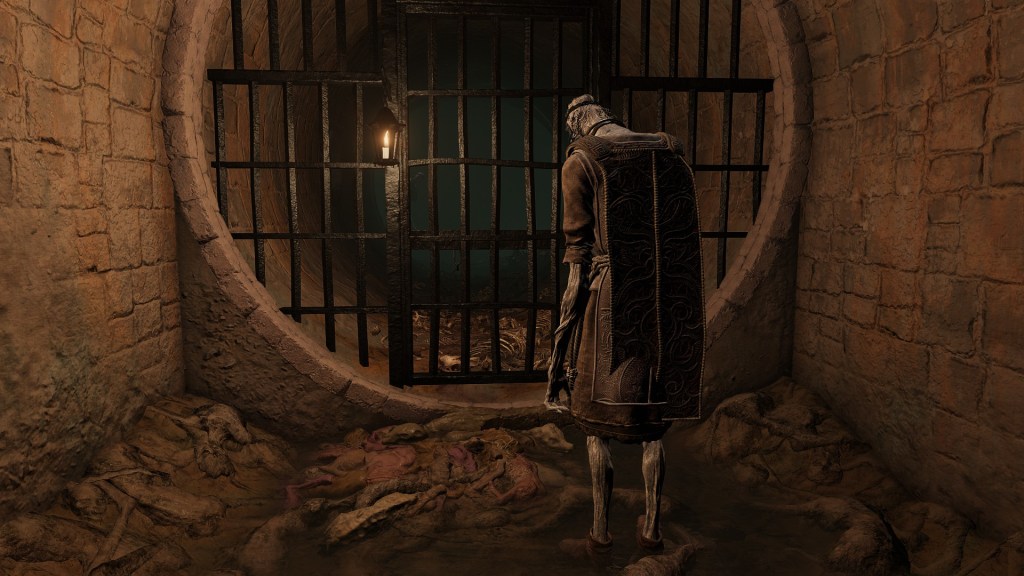
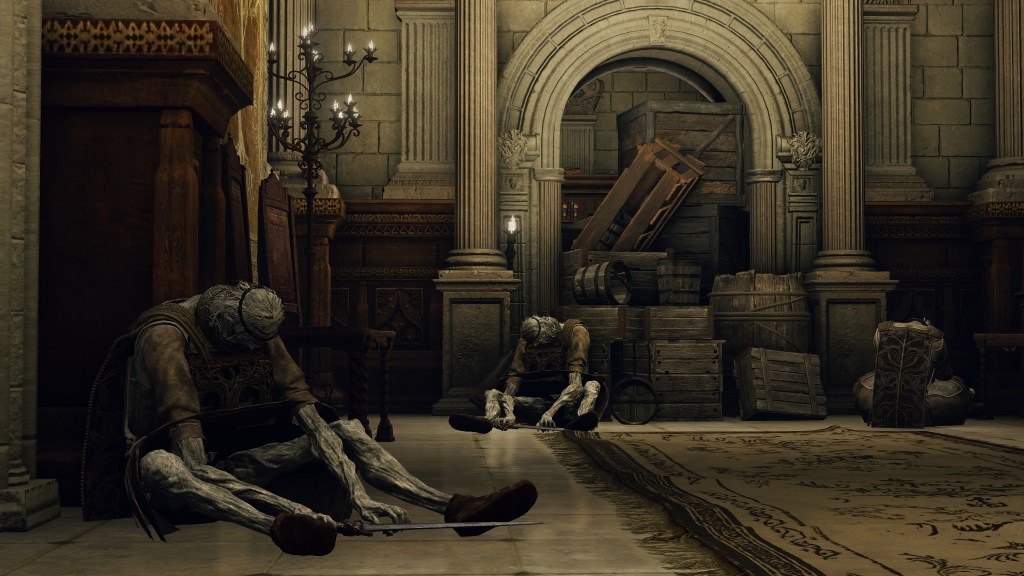
If nothing else, the king’s overzealous order has scared the rabble into line. The overwhelming majority of common conscripts are concentrated at perfumer headquarters, mostly dead. From observation, they appear to have all come in order to receive treatment, but there aren’t enough staff on hand to do more than pray or provide blessing. As a result, they die sitting and sometimes standing, wracked with migraines and exhaustion from the starvation and sleep-deprivation of constant duty. Such lowly troops evidently haven’t received priority for rations, like the soldiers and knights still patrolling at full capacity. Things got so bad, some conscripts chose to desert, hiding down in the sewers to evade disciplinary action; it may be certain death either way, but they prefer their chances mucking through trash. Others remain plagued by constant dread, barricading headquarters with available supplies unnecessarily. Miserable as this tyranny was, Morgott’s actions at least had justification in wartime. While everyone at home was securing Leyndell, he could dedicate the rest of his armies to securing the plateau.
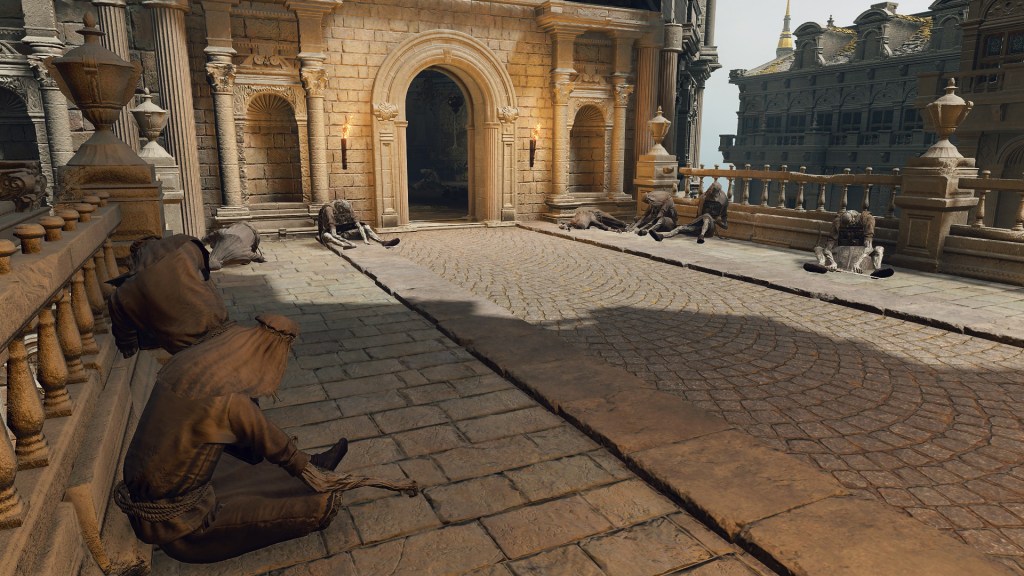
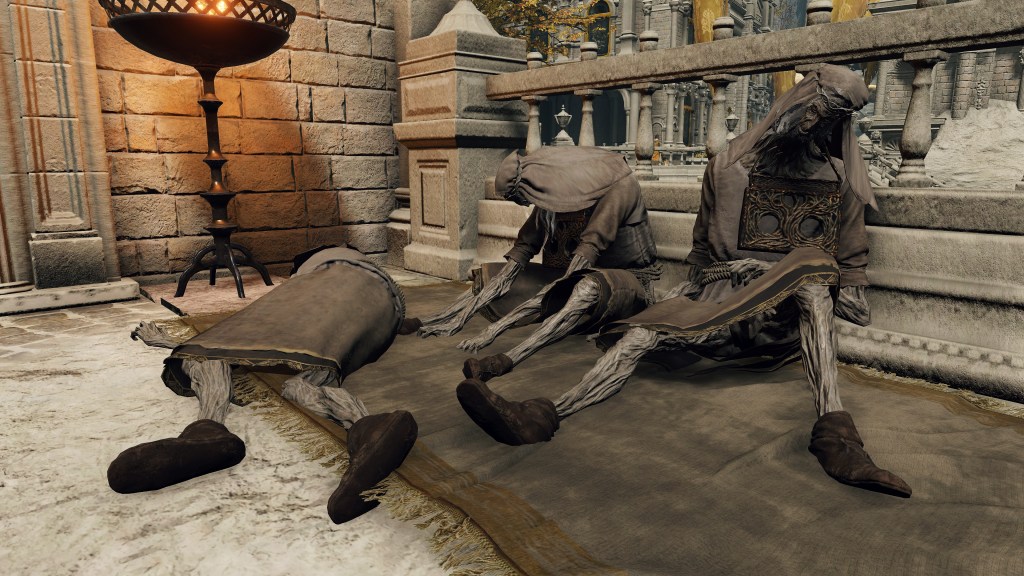
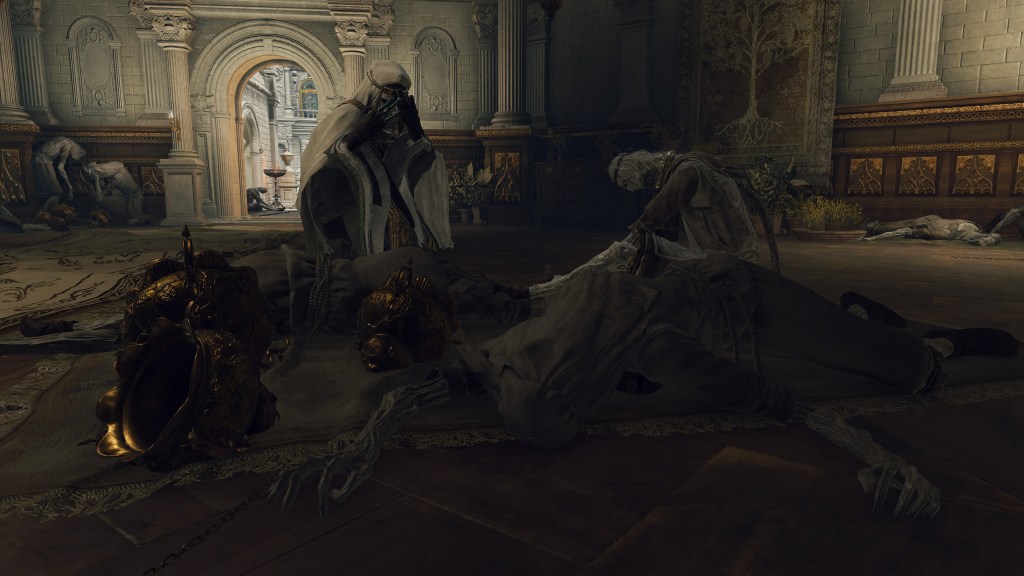

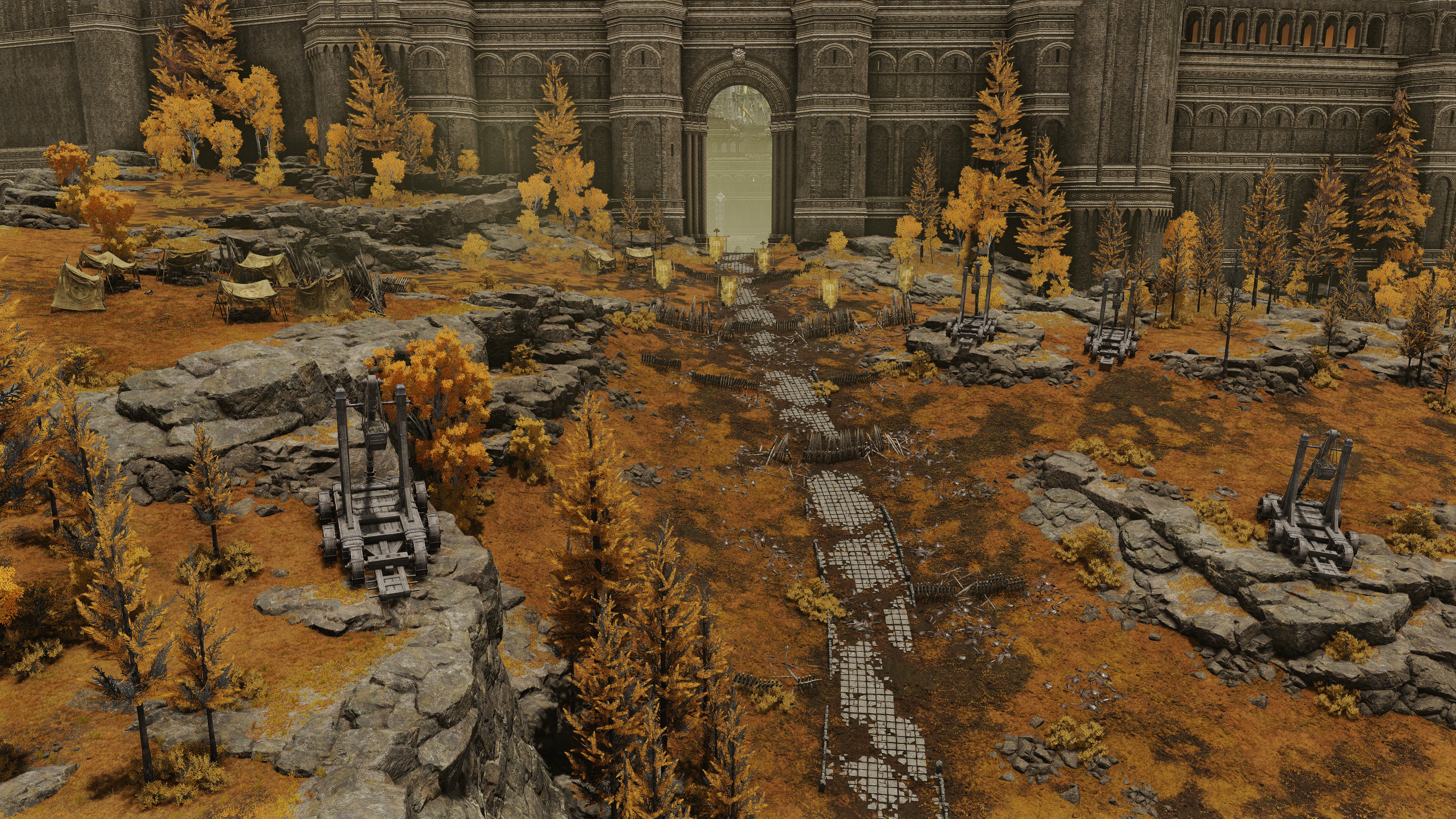
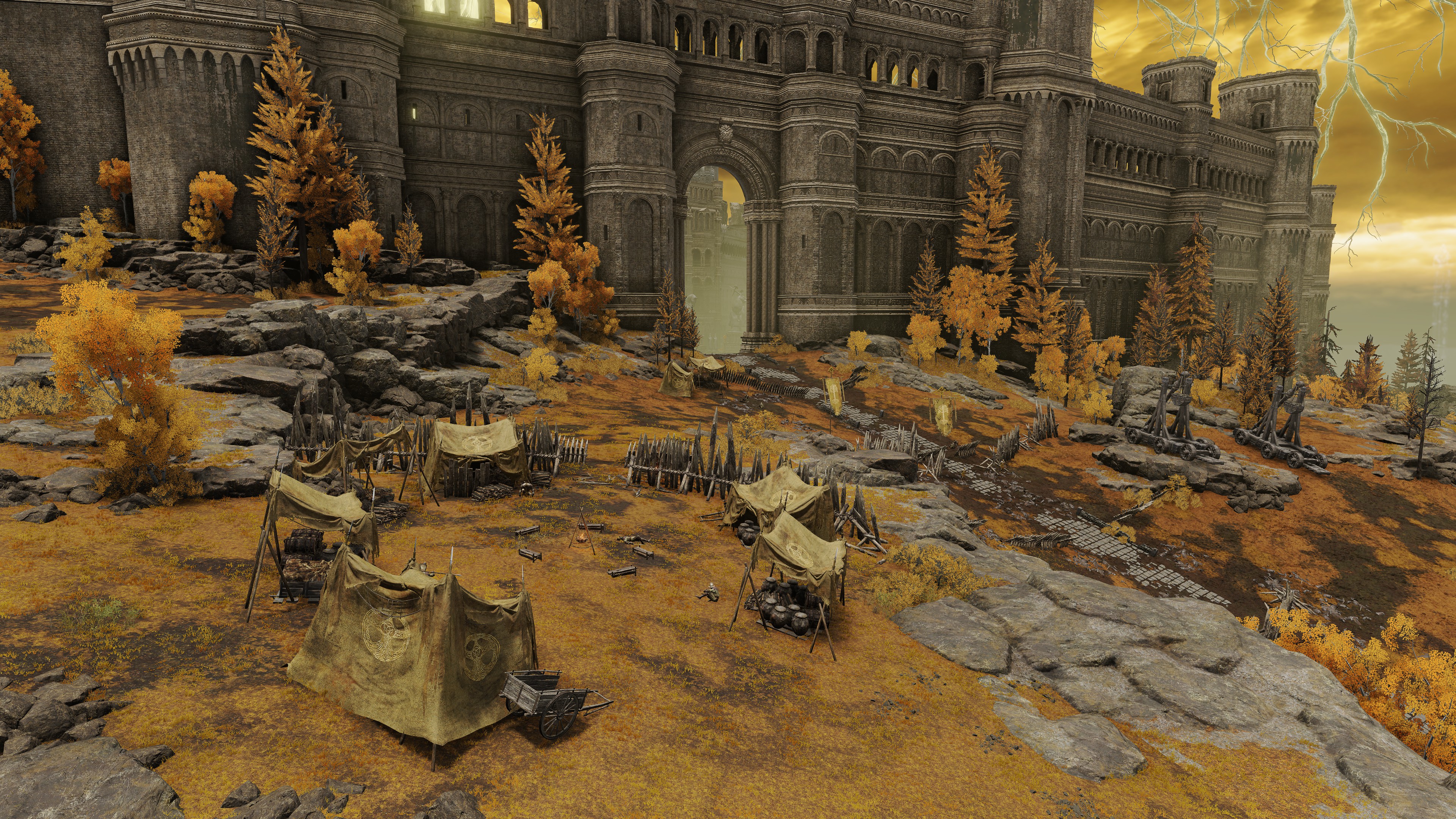
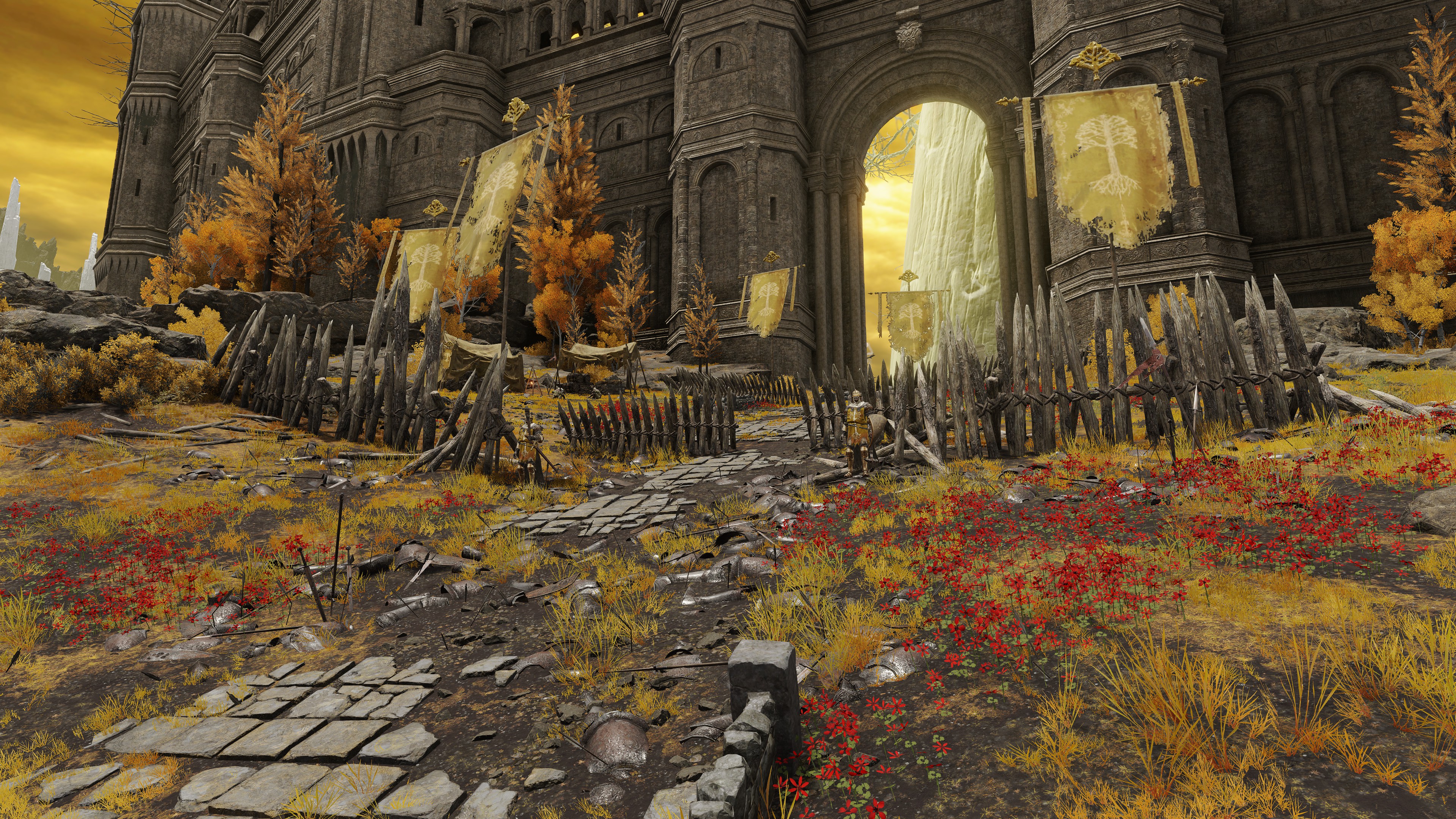
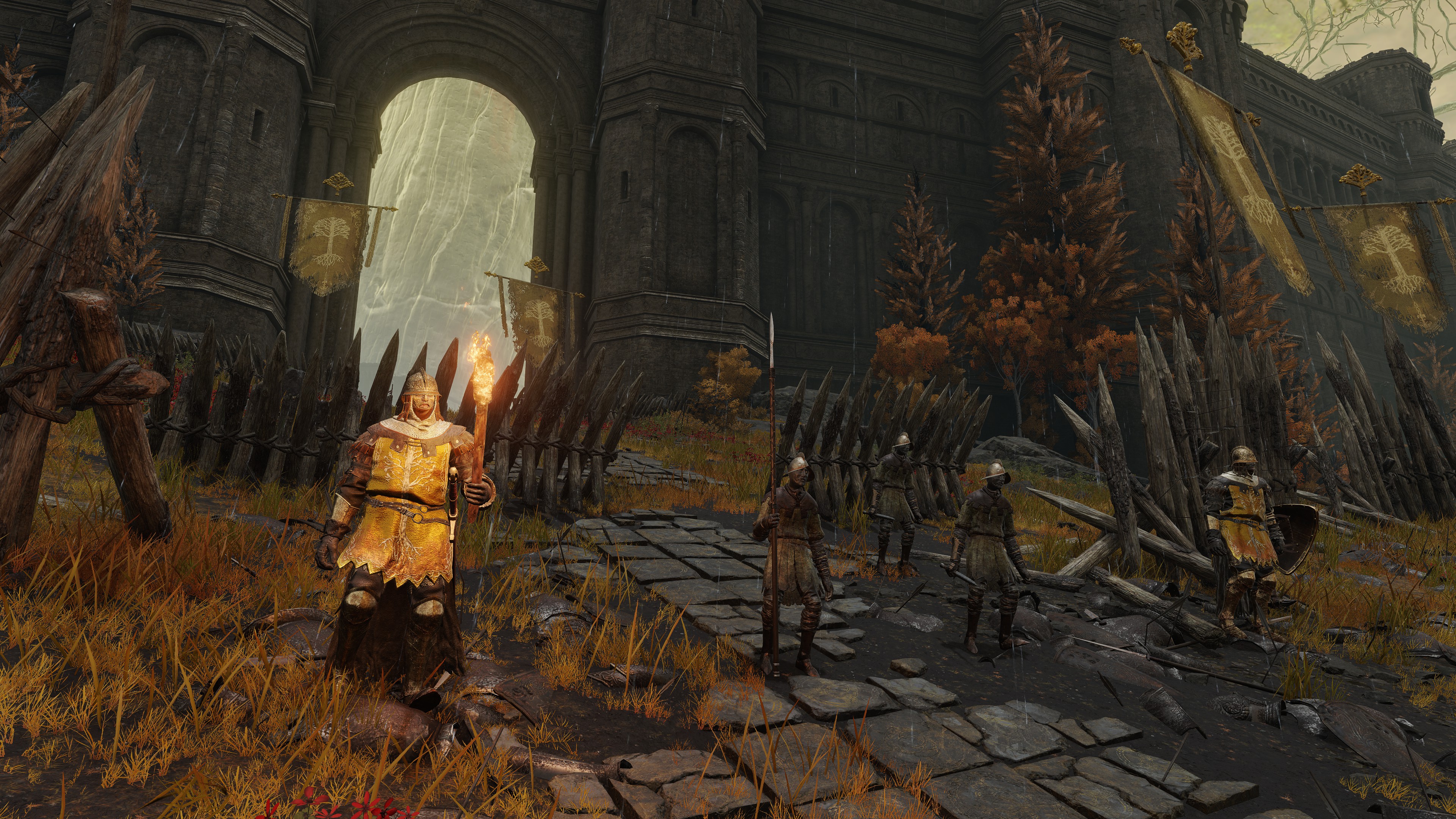
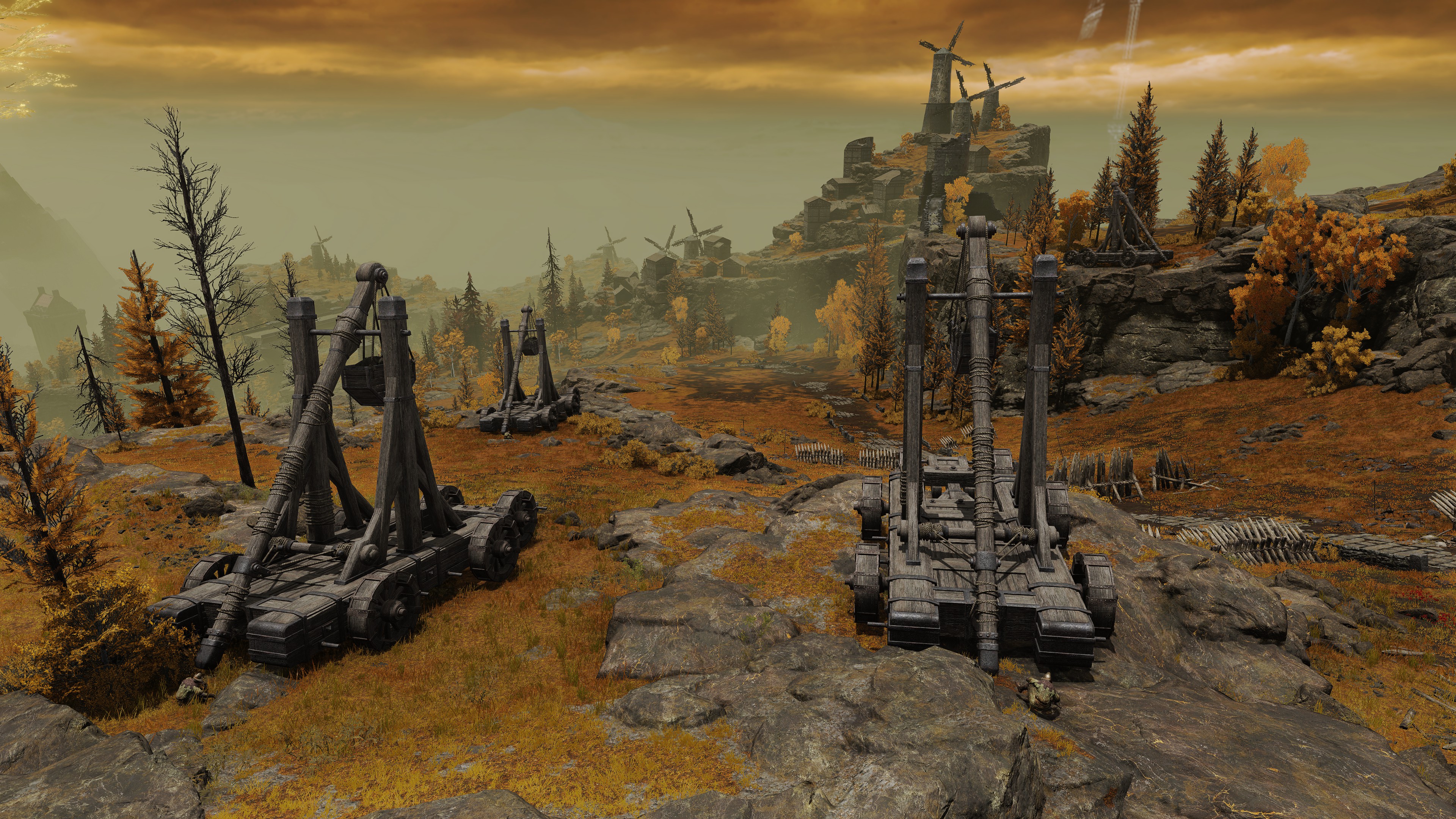
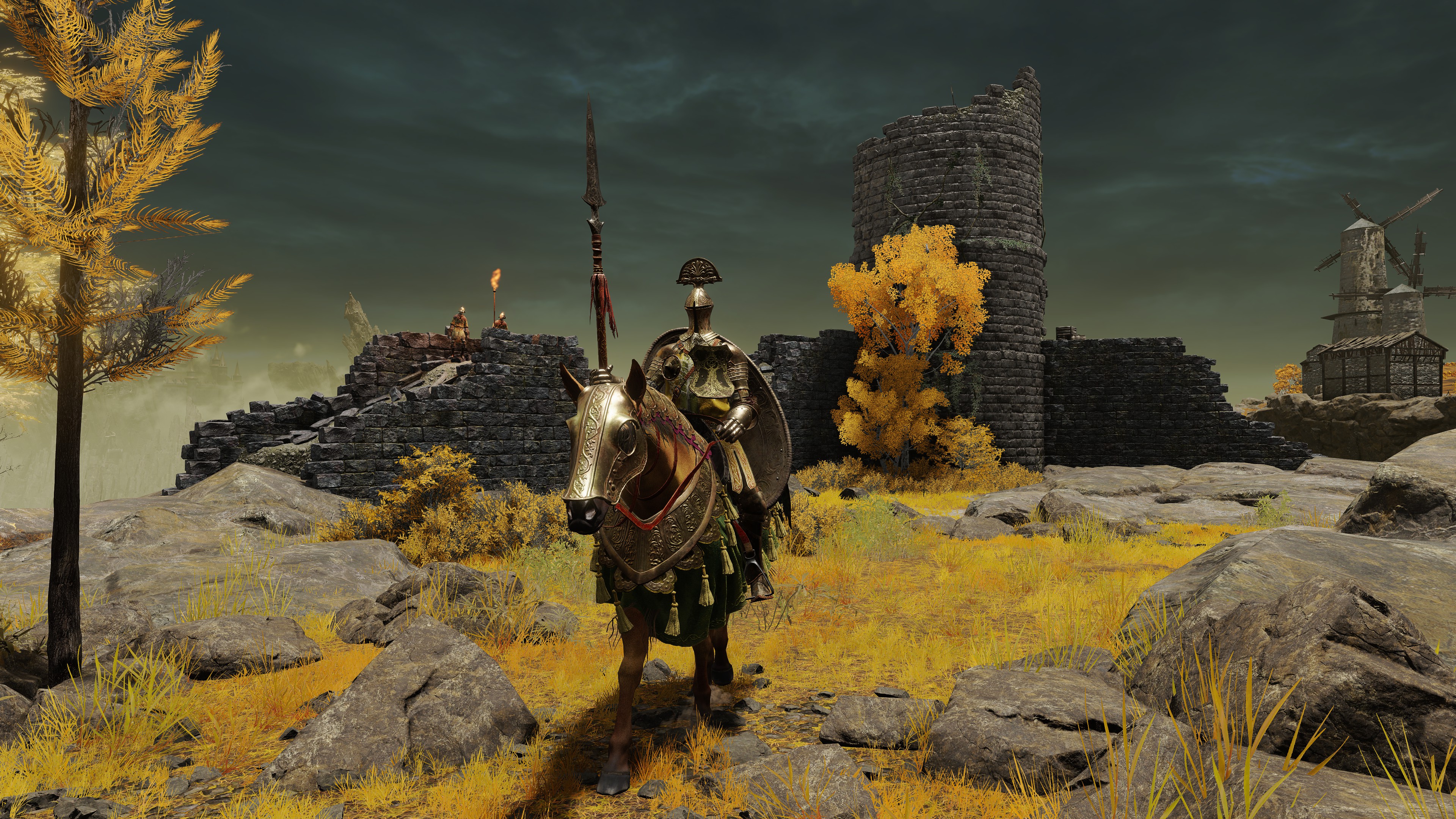
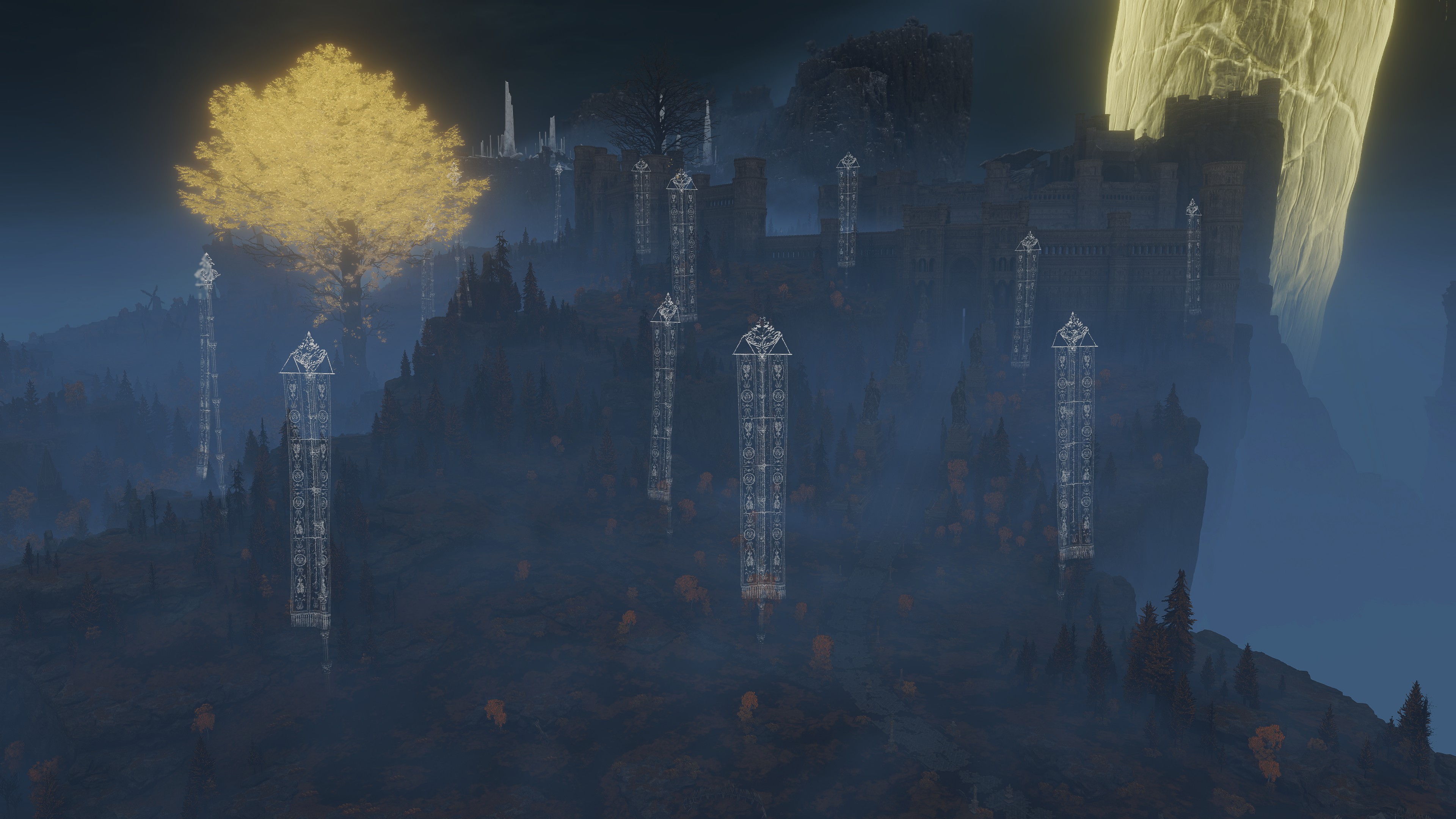
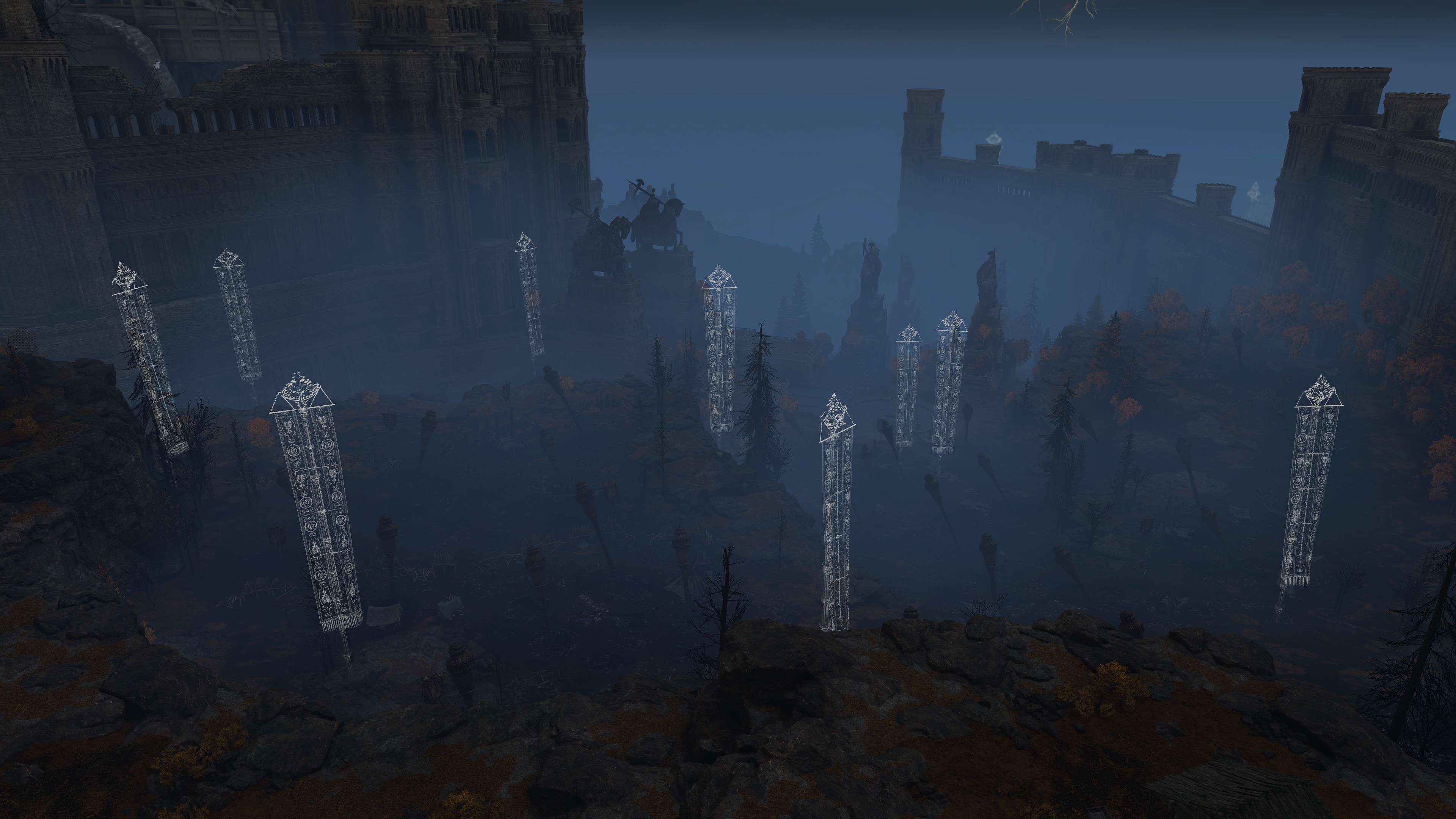
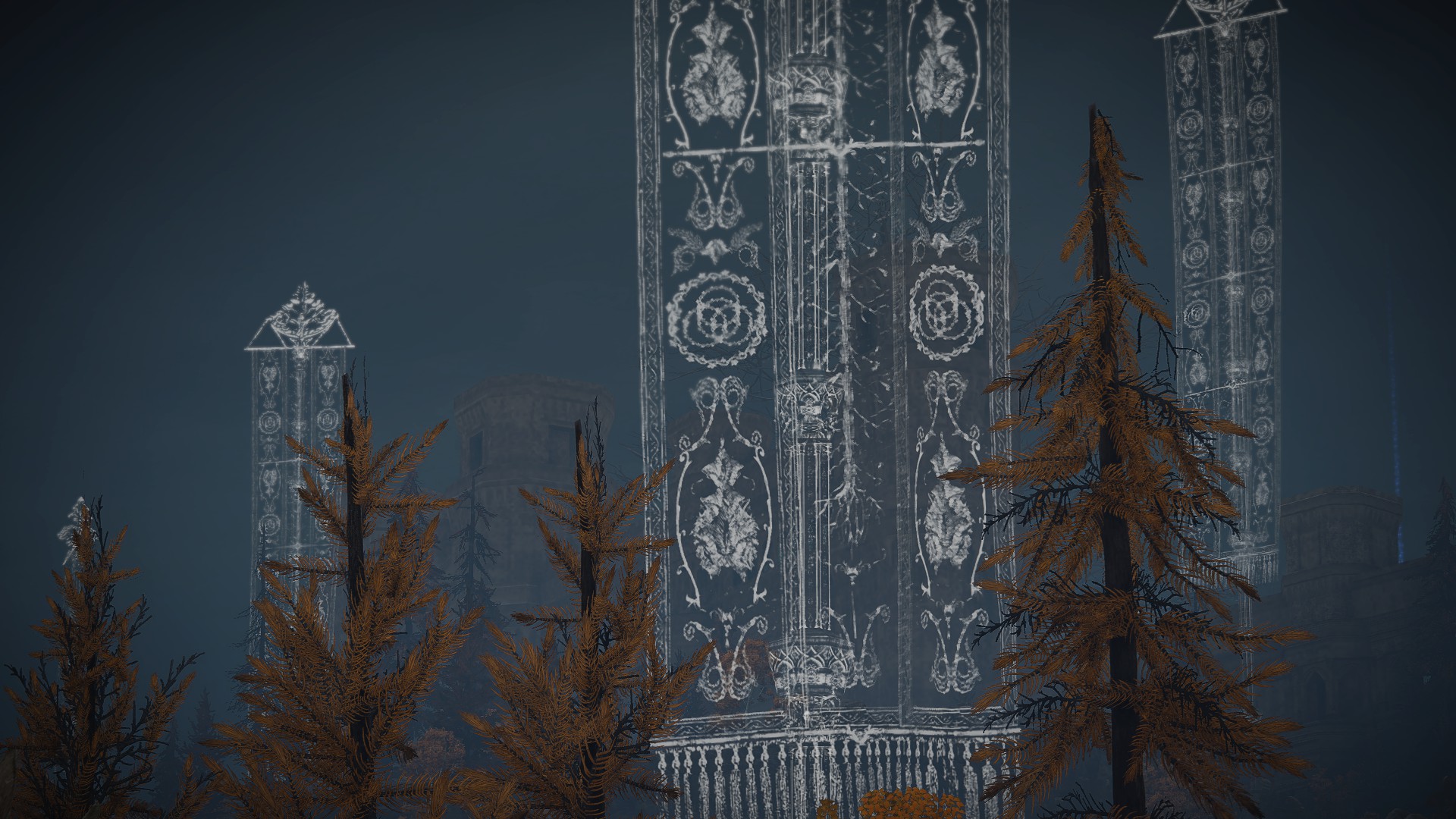
To this day, the royal forces dominate Altus, soldiers patrolling the highways and dealing with any unauthorized campers off the beaten path. To reinforce the outer rampart’s northern gate, defensive encampments have blockaded the road, with a garrison stationed in the old Highway Lookout Tower for spotting invaders ahead of time — anyone who dares approach is met with a barrage from trebuchets. The plateau belongs to Leyndell, and they have made sure everyone knows it. Anywhere the army has fully secured, we spy illusory war banners towering high into the sky. The tree and ring imagery on these ginormous flags leave no question that they represent the royal capital, marking territory with the help of magic. The banners outside the Capital Outskirts especially are visible from any of the lowlands, sending a message to every faction: Morgott is king of the hill, and no one will change that.
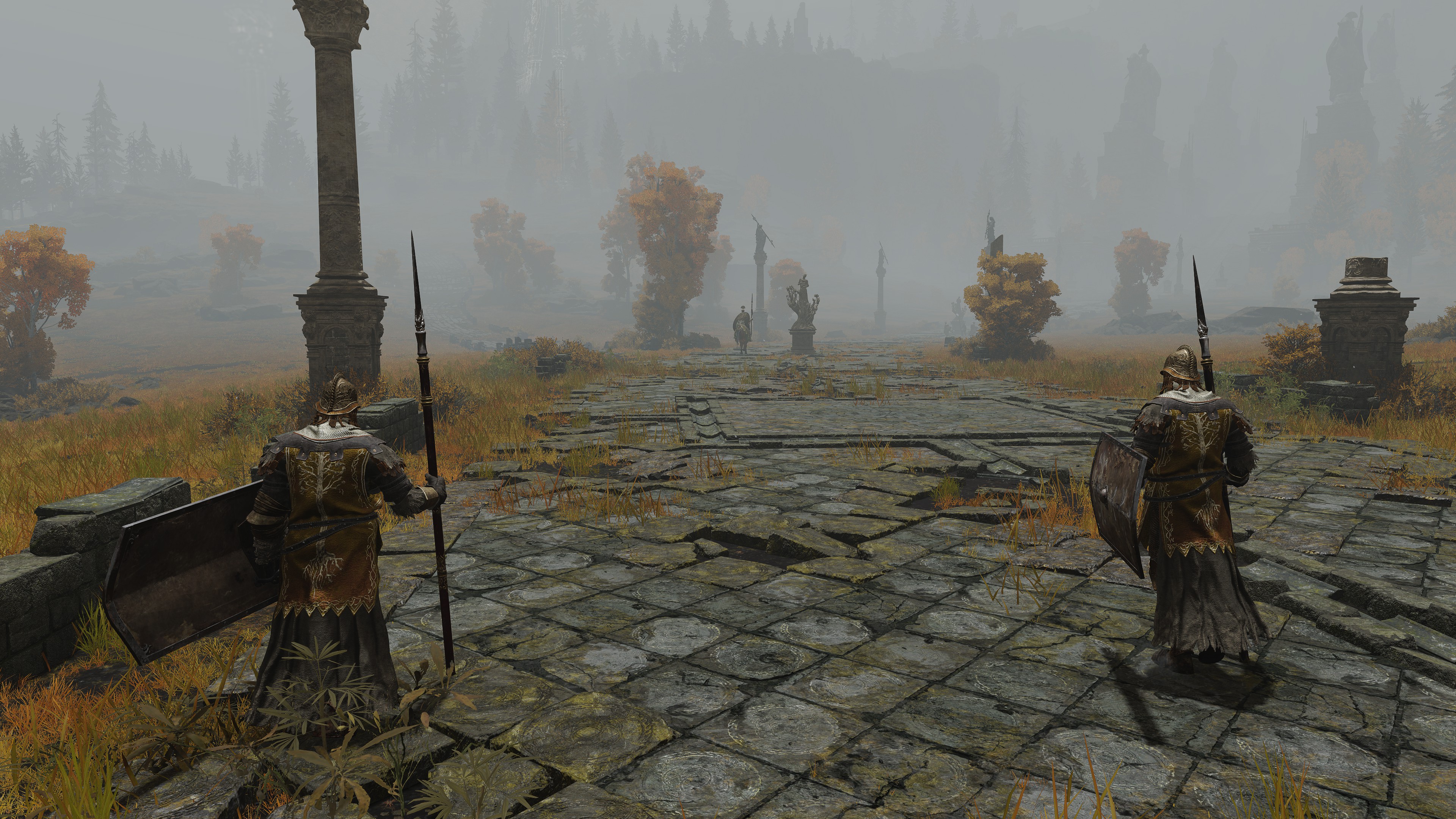
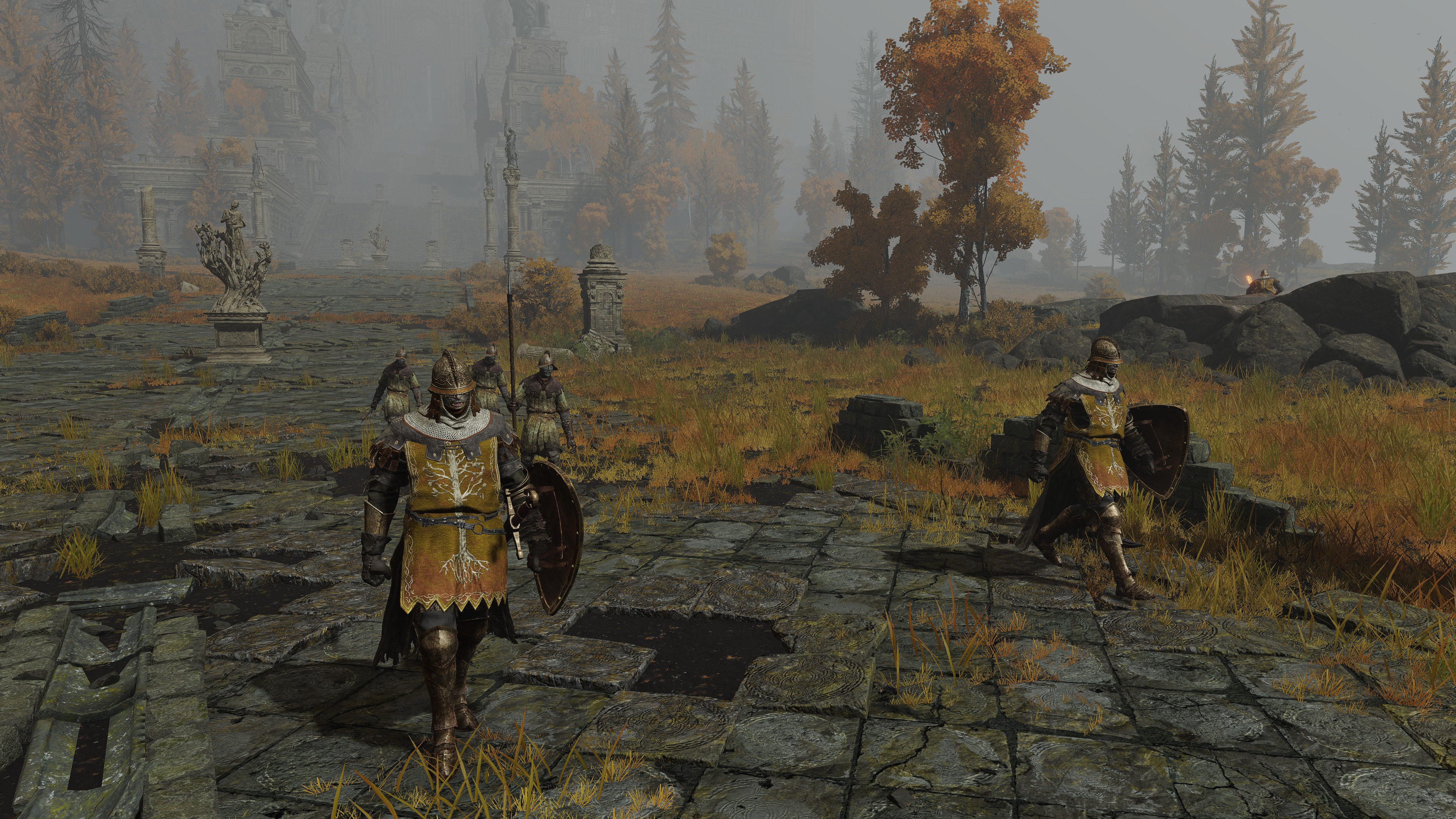
Magical propaganda aside, Morgott’s control over Altus clearly remained unchanged throughout the war, with the defenders keeping at least the east side firmly uncontested. Likely fearing a third defense of Leyndell, the Omen’s orders were to stave off any threats from the highland, period. The garrison was deployed, and they have successfully kept the enemy far away from the Erdtree ever since. Though generally hostile, the army is still willing to deal with other parties if it is to their material benefit. The latest example are the Starcallers, soldiers overseeing the hobbyists as they excavate the results of a meteor shower east of the southern gate. The gravity stone they mine have obvious applications for military arsenal. The Leyndell forces are thus willing to work with people under select circumstances; their first priority is just the safety of the capital, and the Shattering brought its living rampart out into wider Altus.
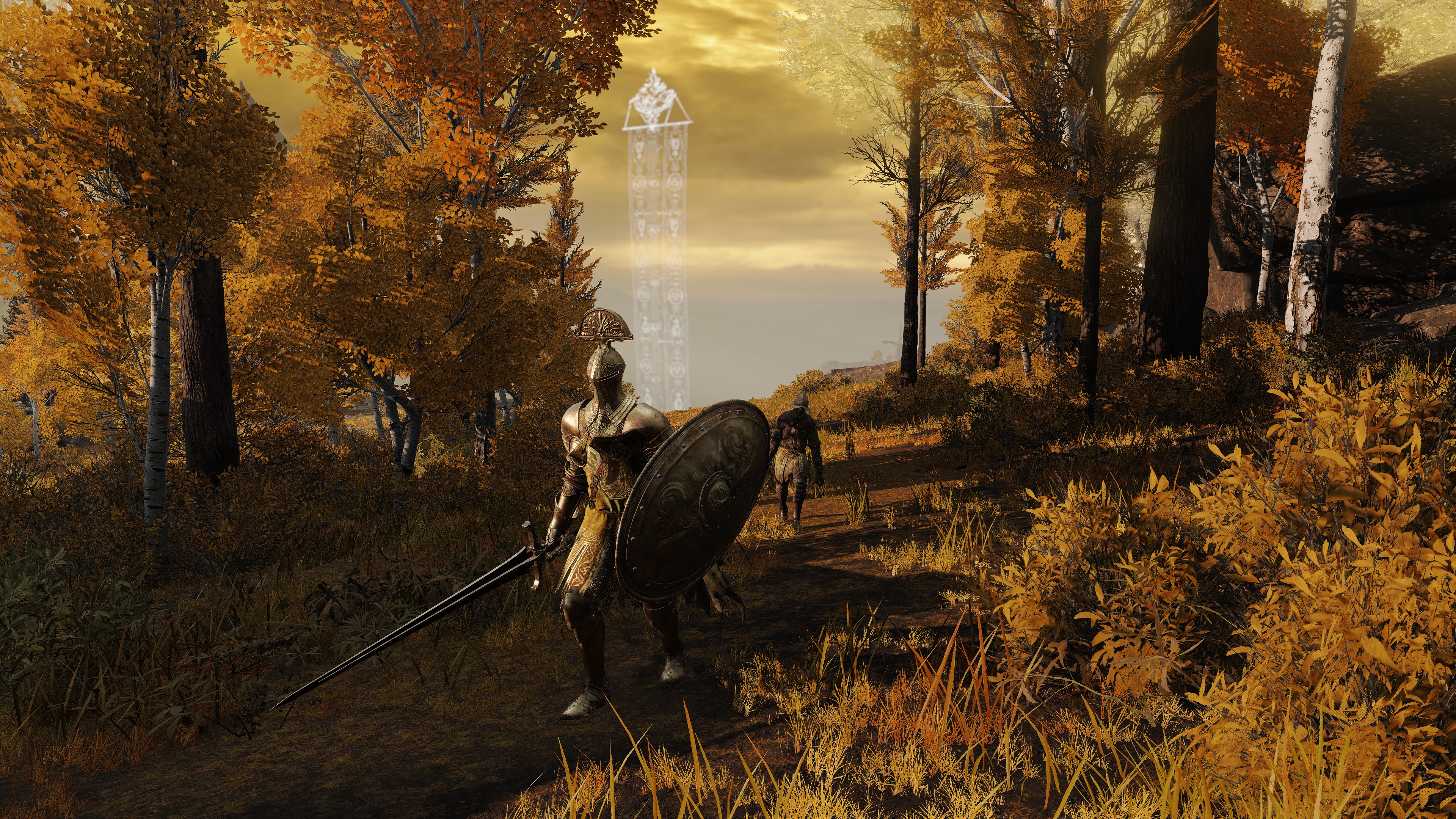
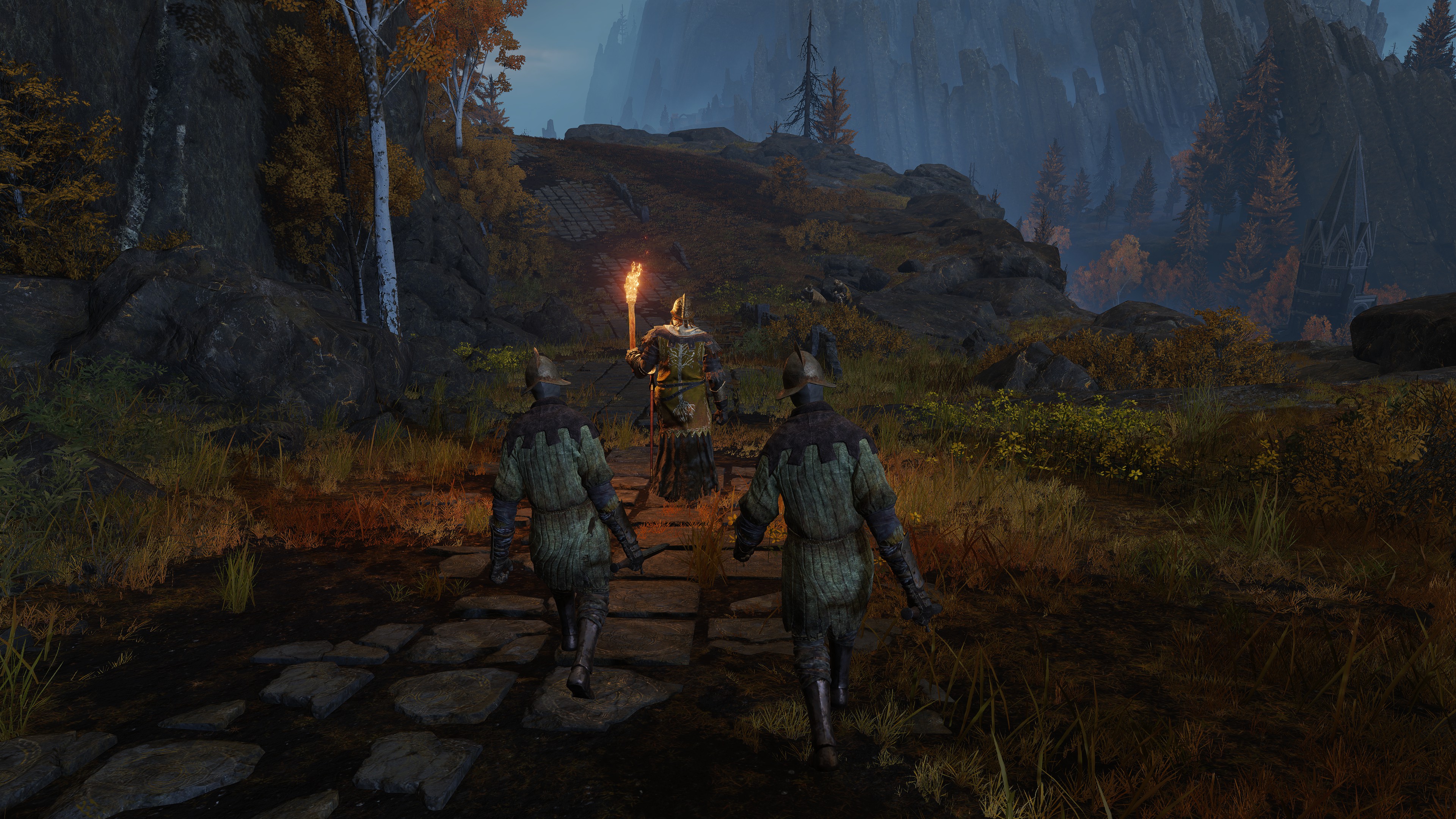
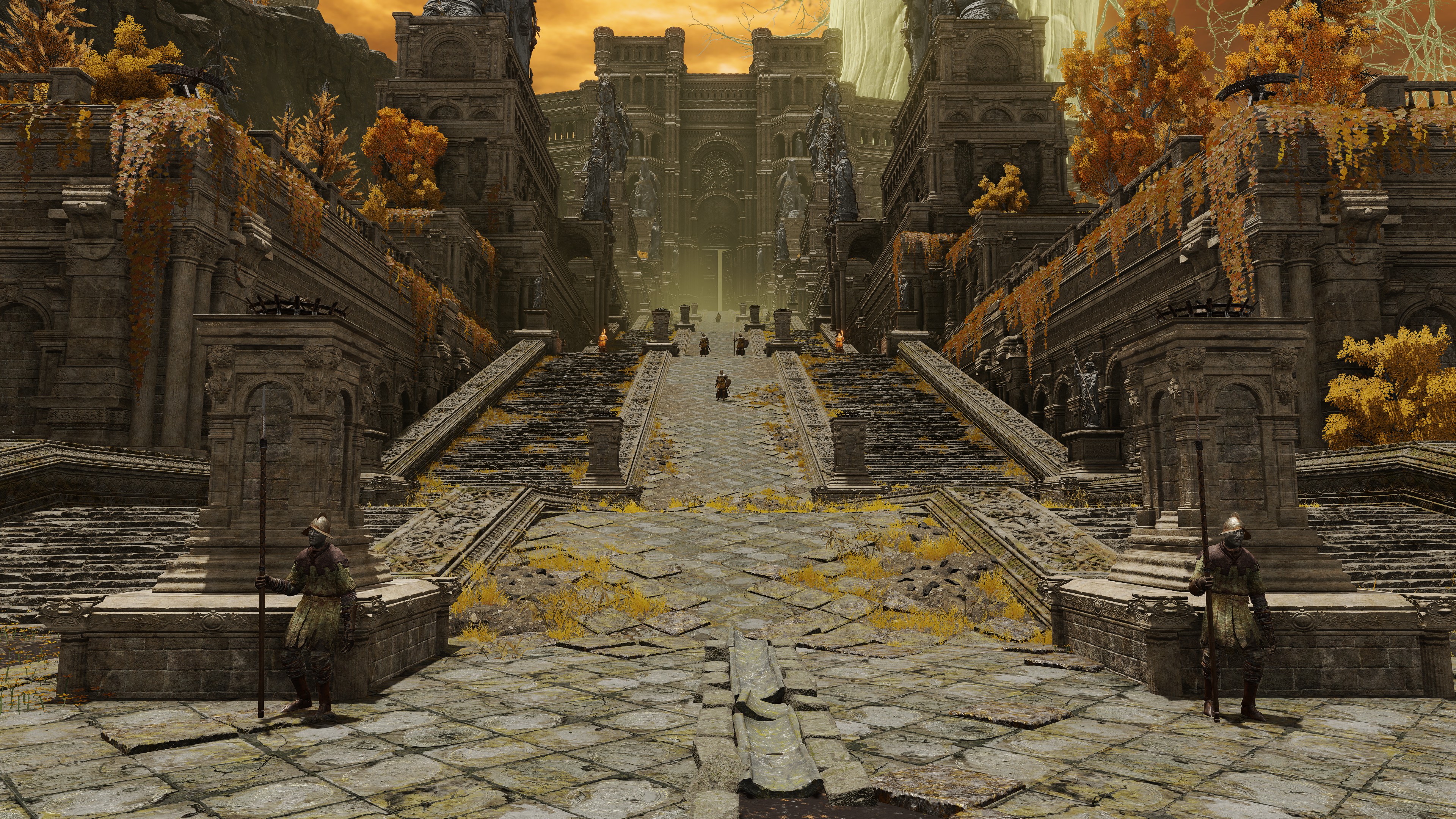
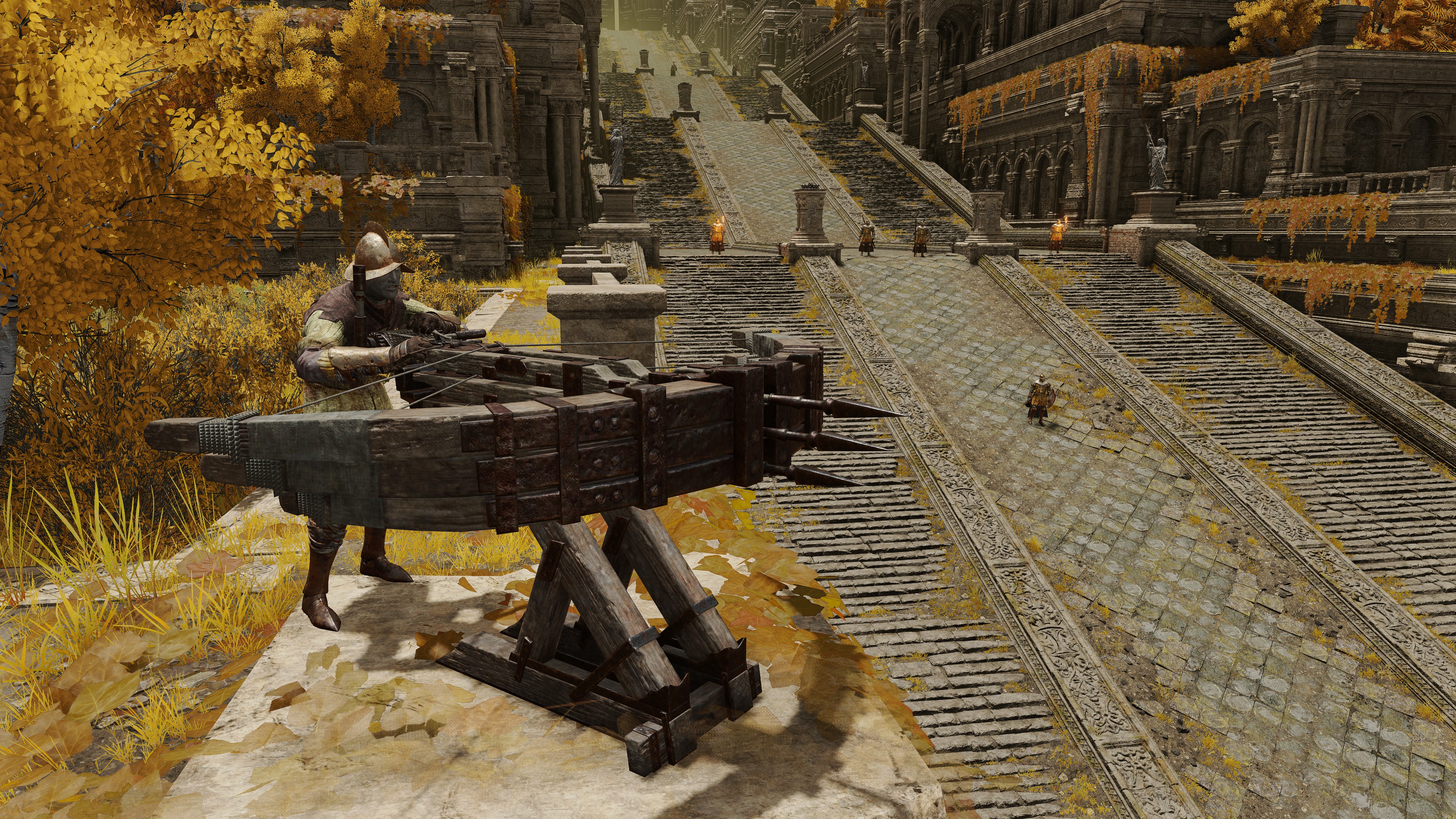
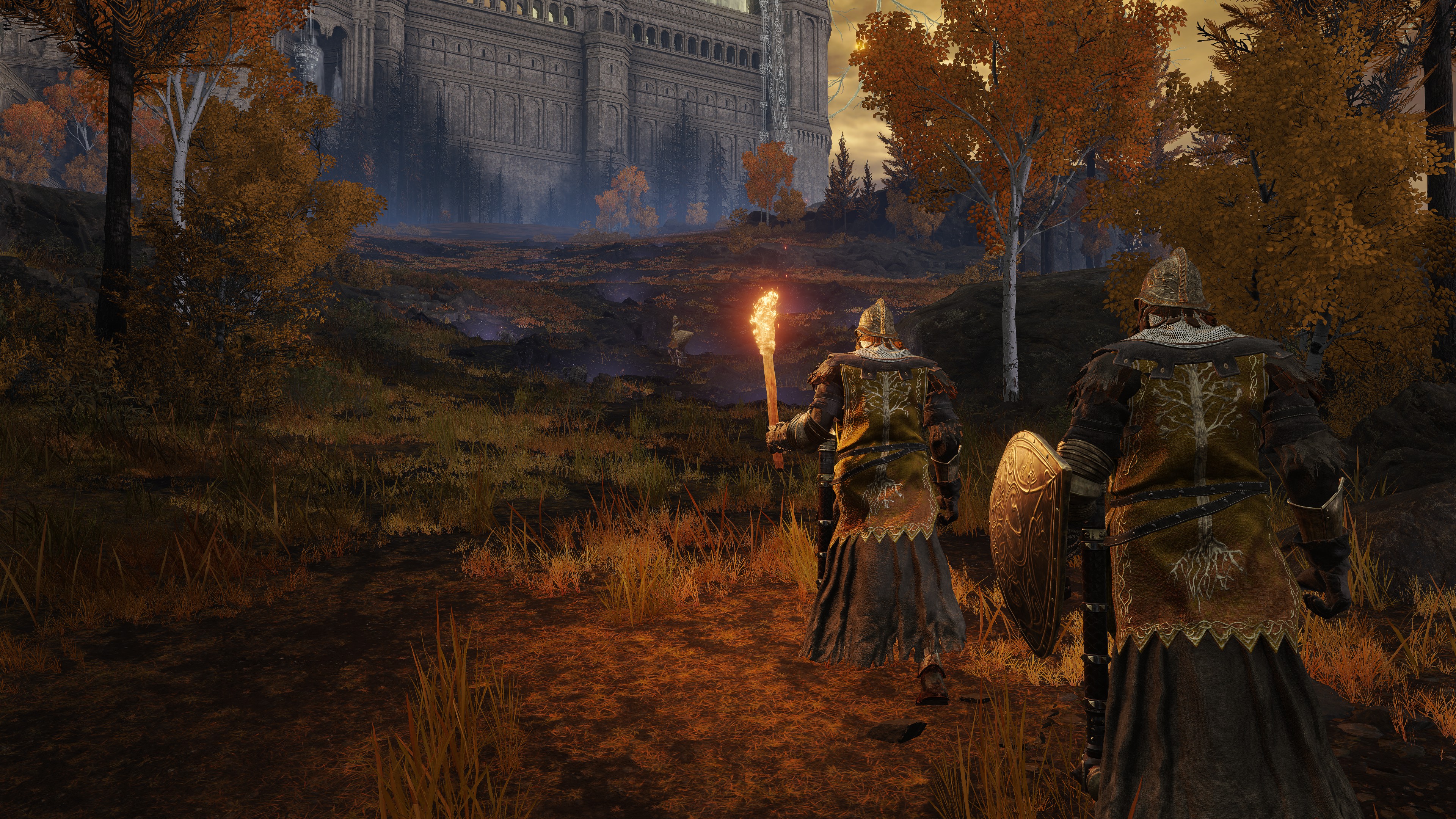
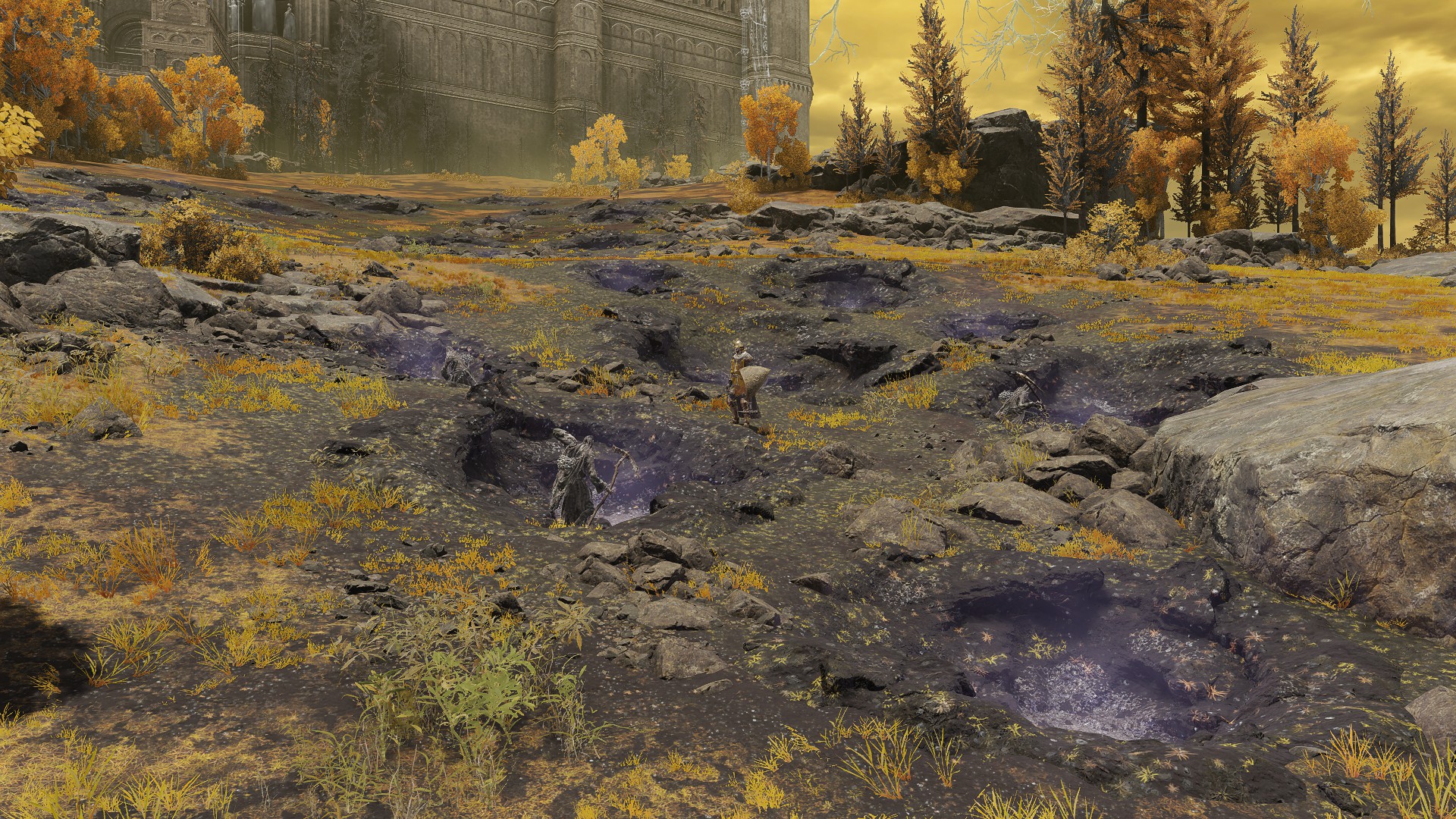
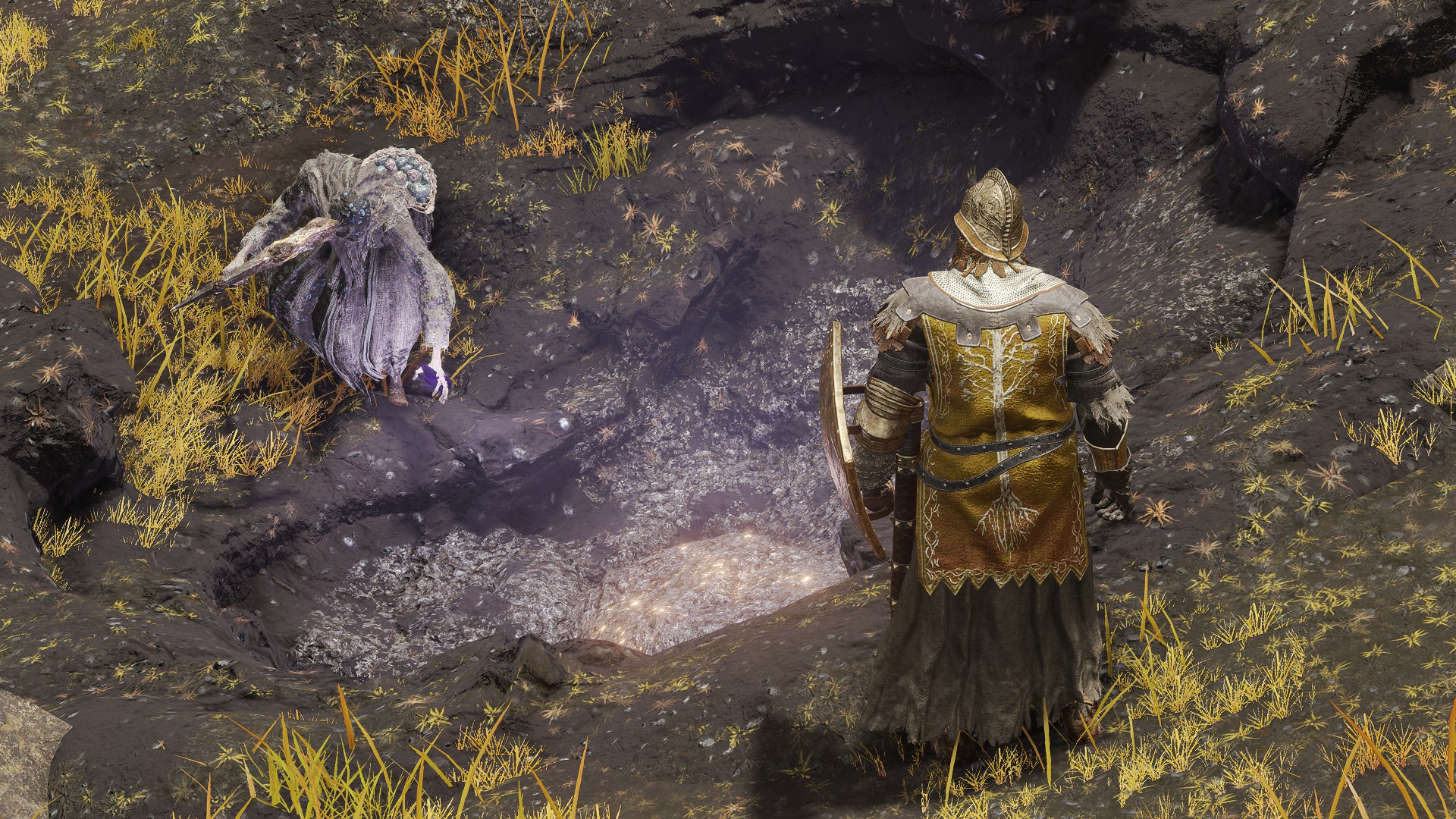
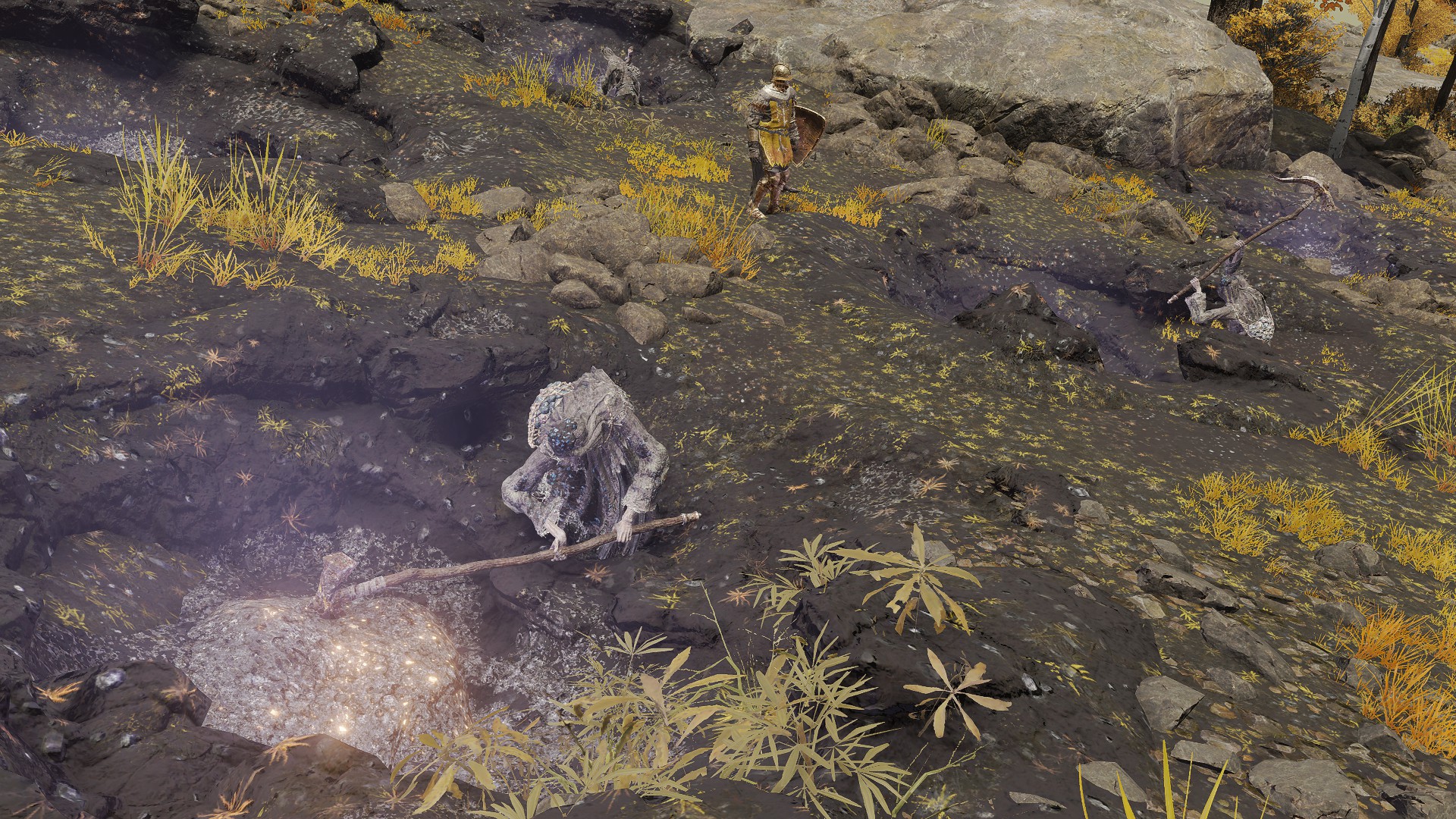
Meanwhile, priests have mostly retreated to their secret gardens, developing new poisons and other weaponized compounds. The perfumers were probably already taking up their golden shields during the Second Defense of Leyndell, but as they were now expected to command troops in the field, they returned to developing aromatics for the war effort. First and foremost was the Uplift Aromatic, but as the war dragged on, they soon “forgot” about their taboos on flame and adopted Spark Aromatics too. Although some like Tricia have continued to focus on their apothecary work despite this, they are the minority. What the Perfumer’s Ruins leaves available to retrieve at a moment’s notice are their recipes for war, the Perfumer’s Talisman left in basement storage since boarded up. Combined with the item’s description for the gardens and boosting aromatics, it is clear that the laboratories’ original purpose for advancing pharmacy is the farthest from their minds. Now, the clergy are in the business of weapons research and development, finding new ways to kill instead of save.
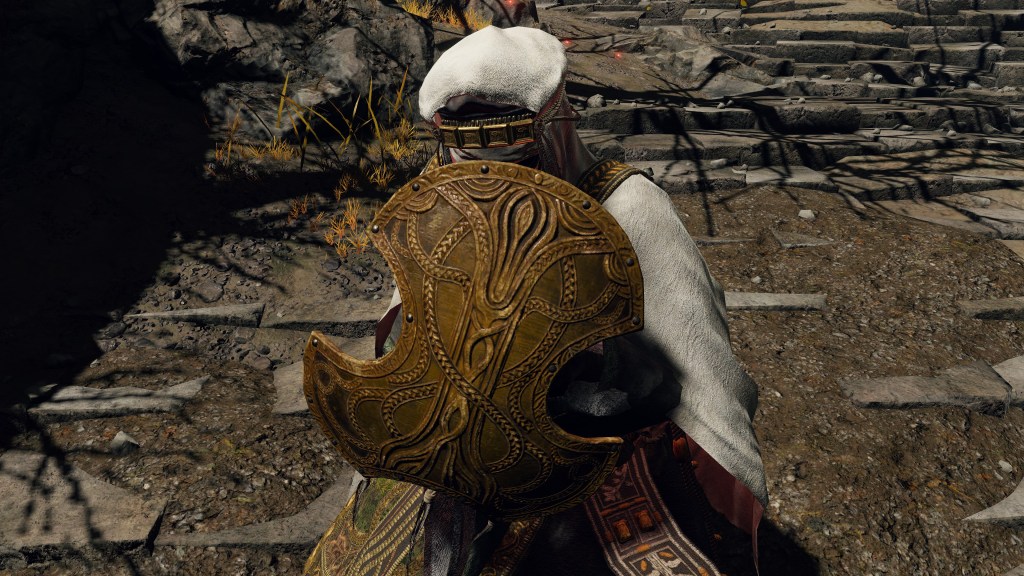
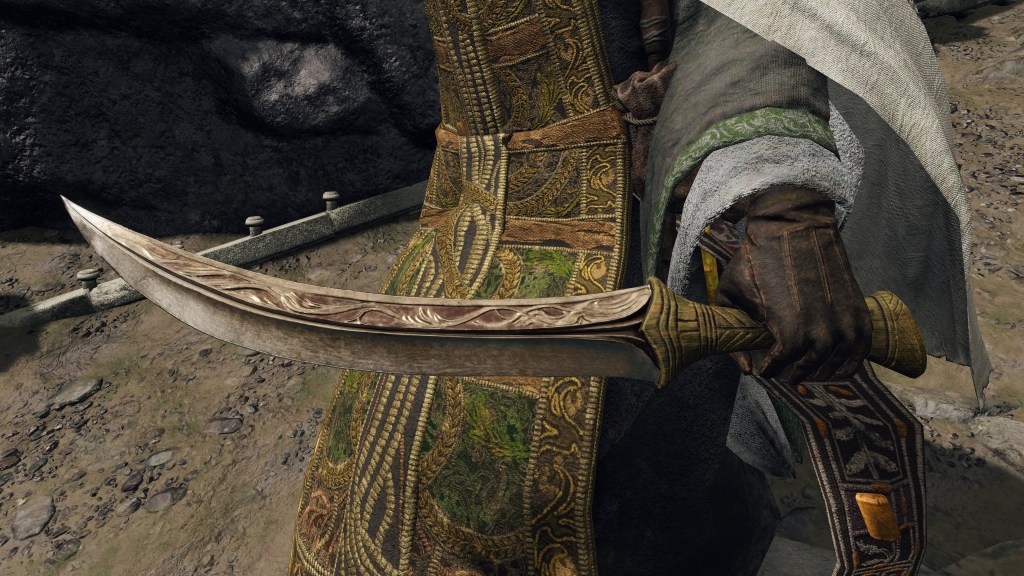
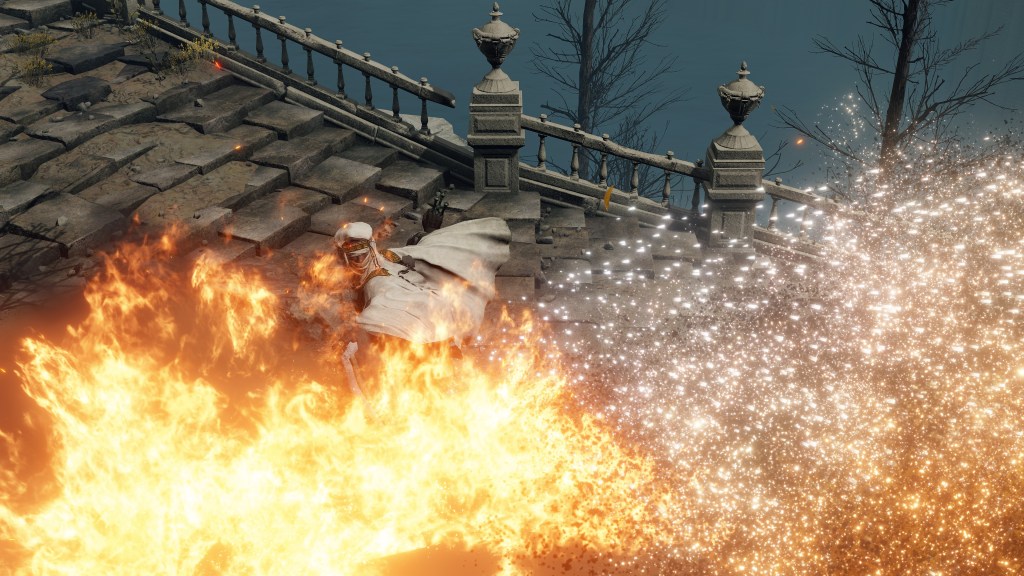
Golden shield that perfumers of the royal capital of Lowdayl used upon military service.
Made very thin and lightweight so as can be used by weak people even, and immunity resistance also gets boosted.
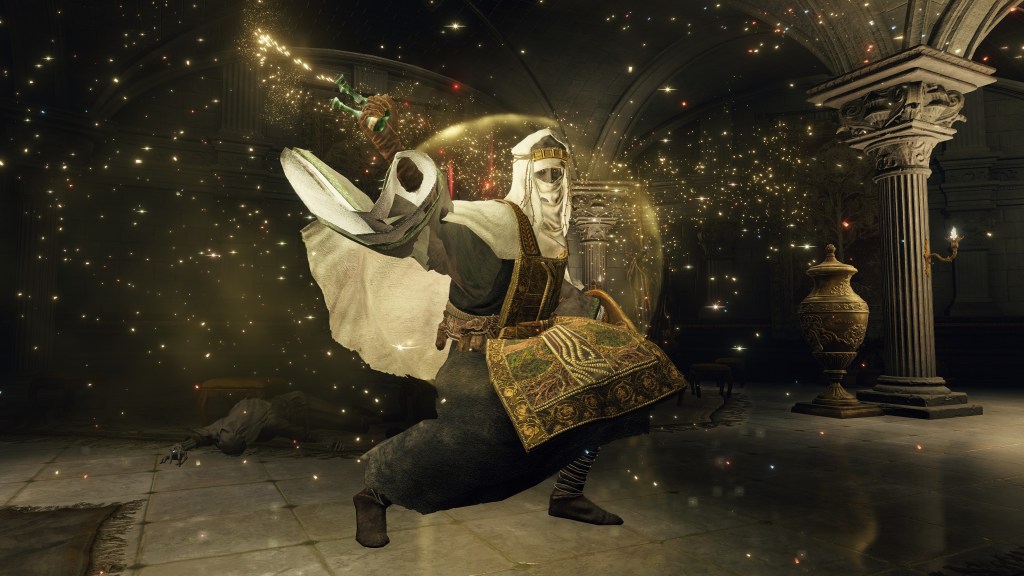
Art of perfumers who served in the Shattering War. Crafting item using perfume bottle.
Consumes FP to boost attack of self and surrounding allies. Also, cuts majority of damage received just once.
Uplift is an exceedingly powerful support effect, turning those who experienced it into soldiers of death. Thus, perfumers are able to suffice as excellent commanders.
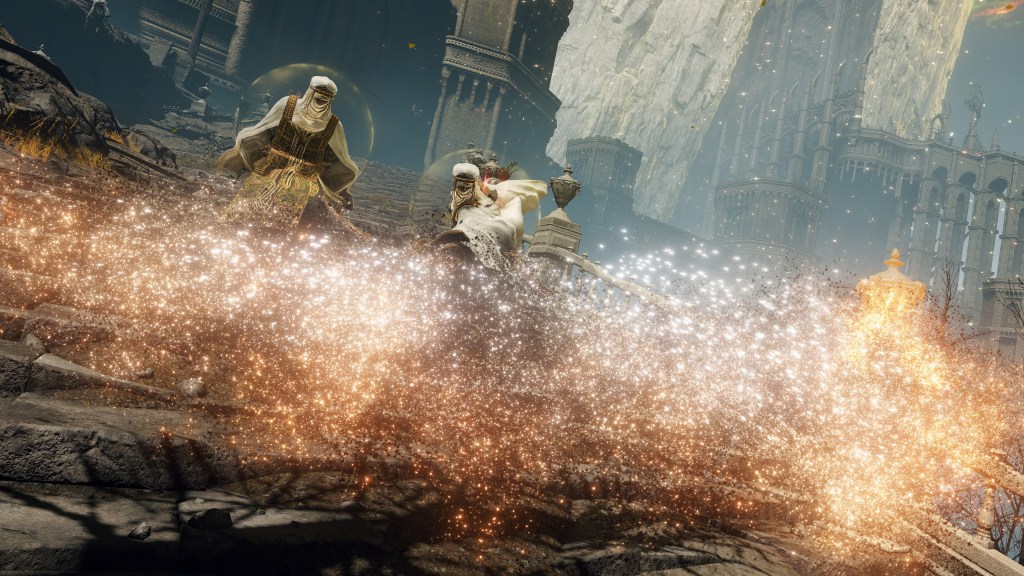
Art of perfumers who served in the Shattering War. Crafting item using perfume bottle.
Consumes FP to scatter ahead and generate sparks over a wide range.
Fire was taboo to those who serve the Golden Tree, but the long war had that forgotten.
But even with the length of the Shattering, Leyndell was never again seriously threatened, the fighting shifting to other battlefields. The war finally ended with a climactic battle between the two strongest contenders, Radahn and Malenia in Caelid, though neither emerged victorious from the encounter. As a result, the overall conflict ended on a somewhat muted note. With every faction at a stalemate, entrenched in their respective territory, no demigod was any closer to becoming Elden Lord. Fighting has continued, as we witness for ourselves during our travels, but nowhere at the scale and momentum of the Shattering. The shardbearers have effectively entered a cold war with each other, and the one least impressed by these developments has been the Greater Will.
The star-crushing hero, General Radahn. The blade of Miquella, Malenia the Fragmentary Self. The two strongest fought at the end… and ultimately no one was victorious.
Map fragment of Caelid.
Caelid, which is known as the land of the final battle between General Radahn and Malenia, Blade of Miquella, has all its earth tainted with Scarlet Decay.
Both Enia and the introductory narration assert that the Greater Will has long since abandoned the demigods after the war’s conclusion. This appears to be manifest in their Great Runes. Despite all the demigods retaining their individual claim to the Elden Ring, that physical proof has in almost all cases been deprived of its blessed power, the shard’s menu graphic appearing a faded grey. To restore the rune’s power, we must return the gold in possession of a Two Fingers atop the Divine Tower generally closest to the respective demigod. The Fingers themselves are long dead and dendrified, but they were seemingly tasked with holding onto the golden benediction. This wasn’t by the shardbearers — in Caelid, we see how Radahn’s forces have built provisional infrastructure in a blatant attempt to begin exploring the local tower, already drained after barely climbing their way inside. These places plainly didn’t receive much of the demigods’ attention before the end of the war. That leaves only the Greater Will to be tasking its envoys with this power.
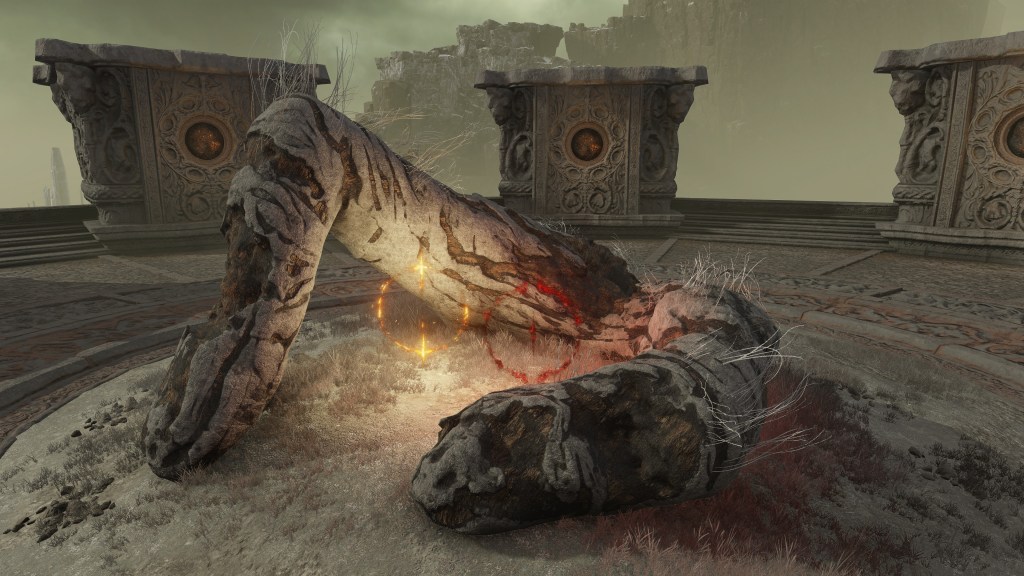
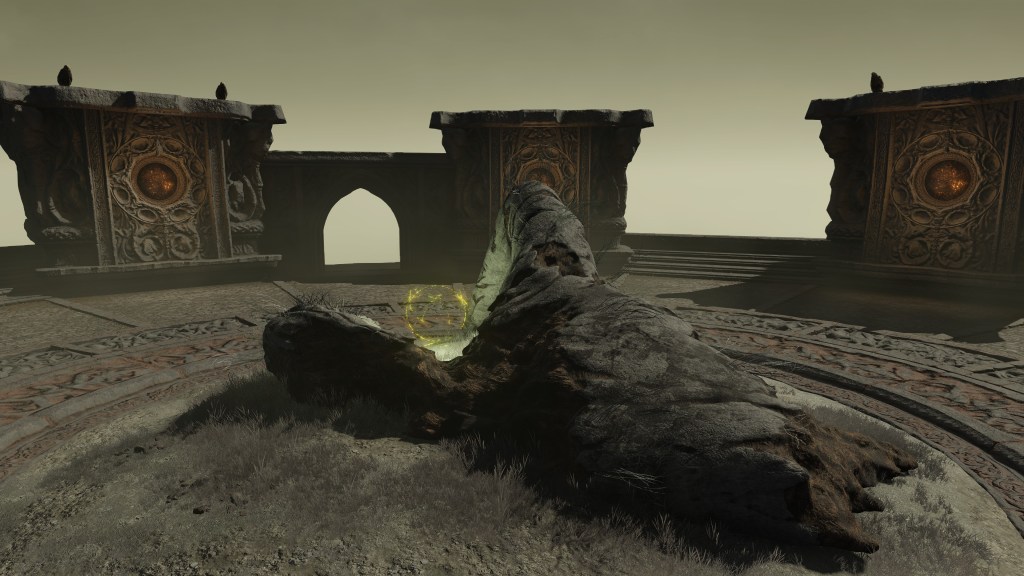
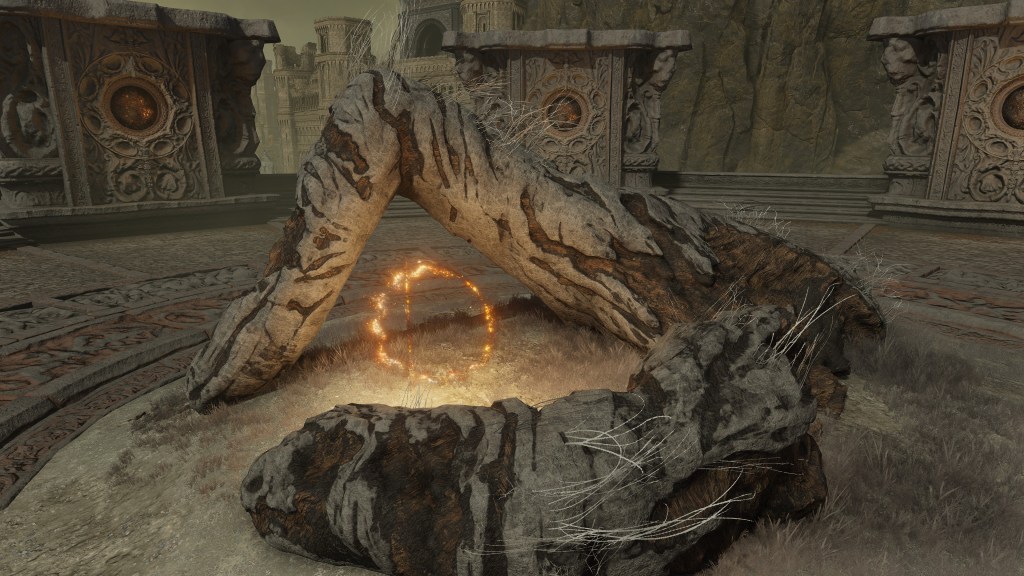
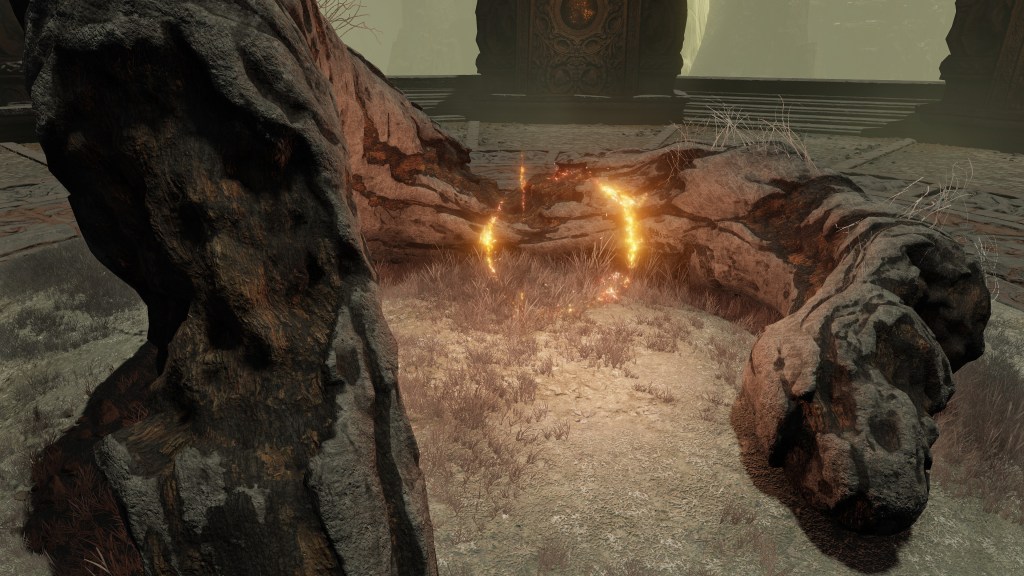
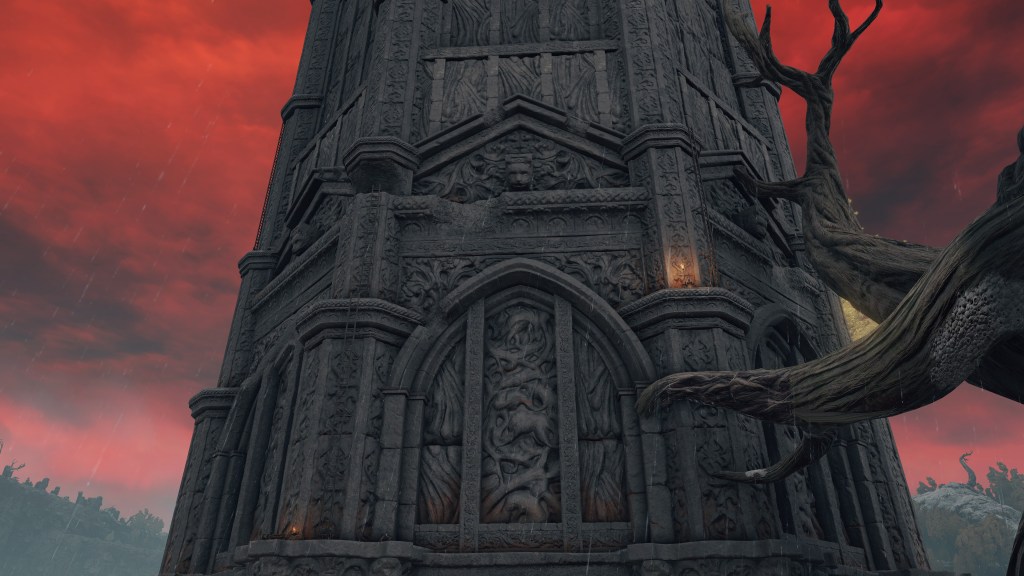
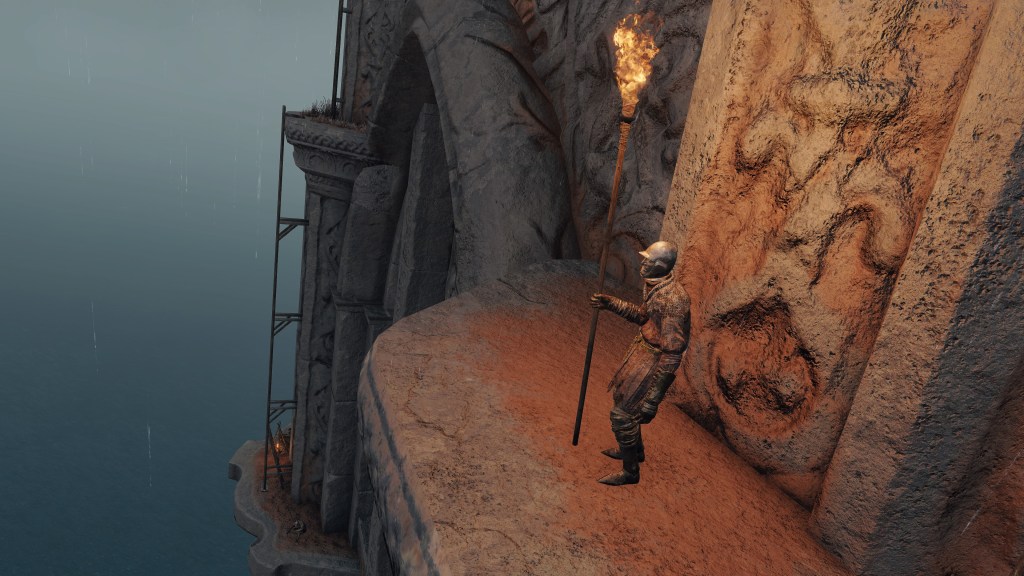
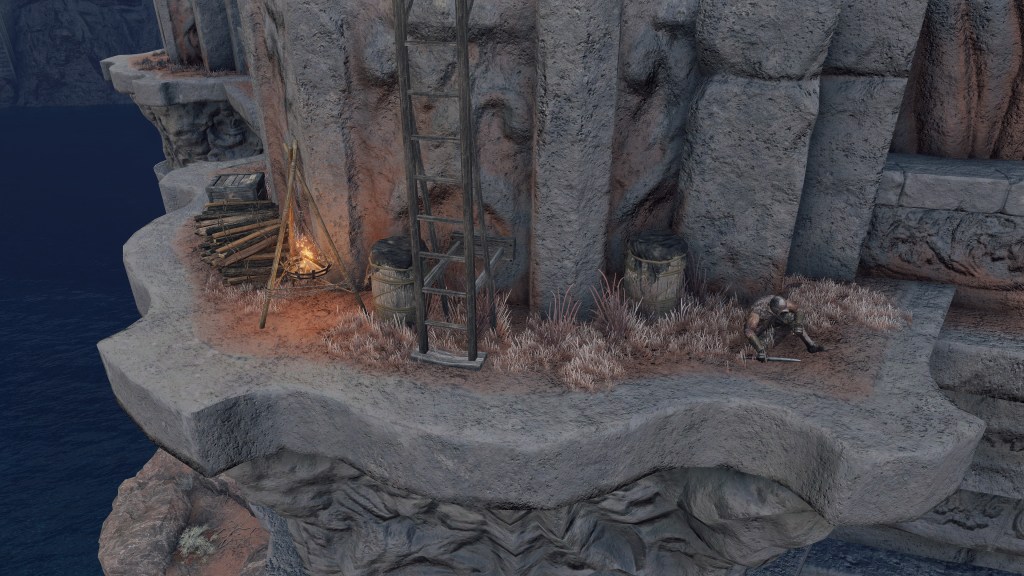
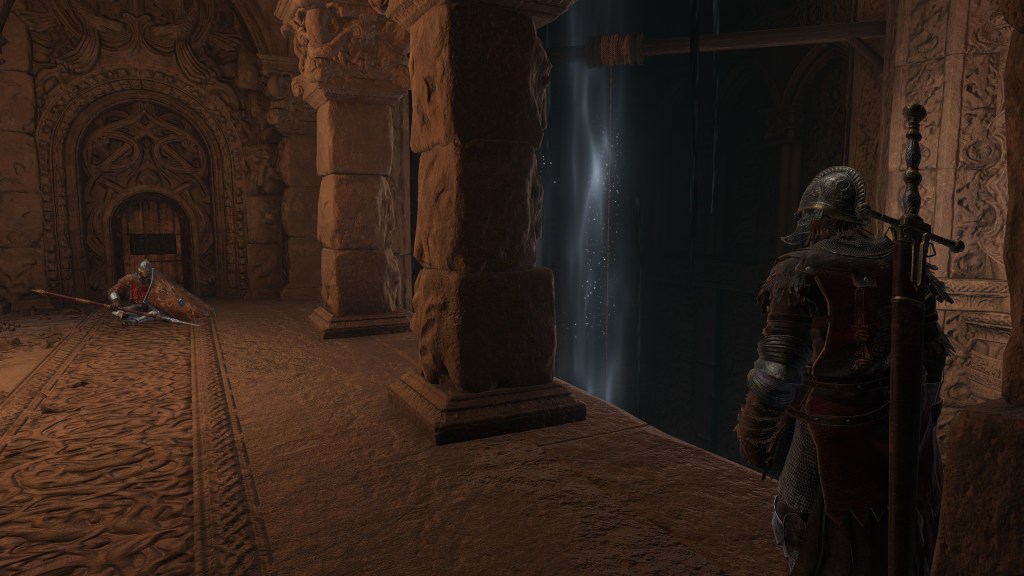
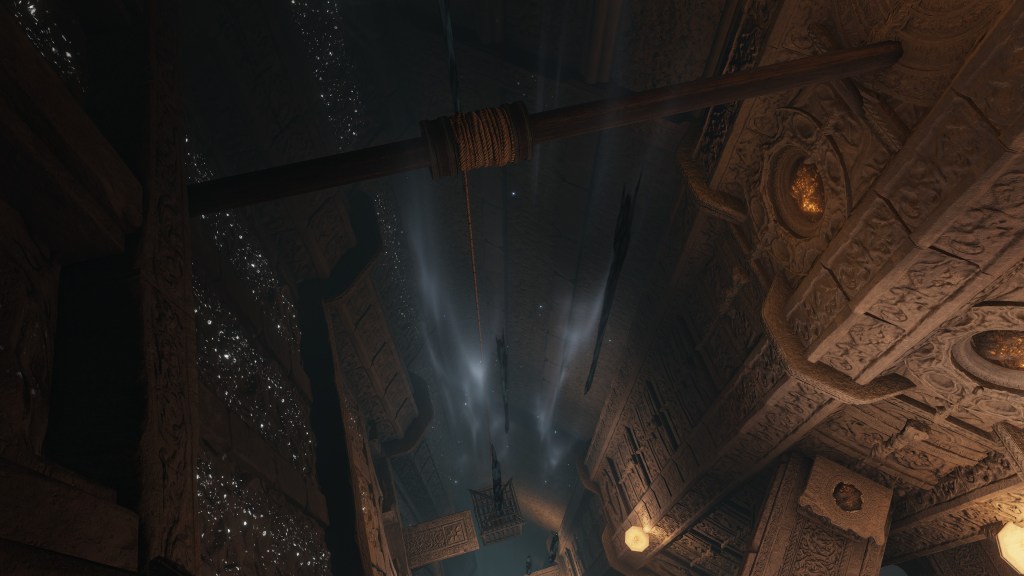
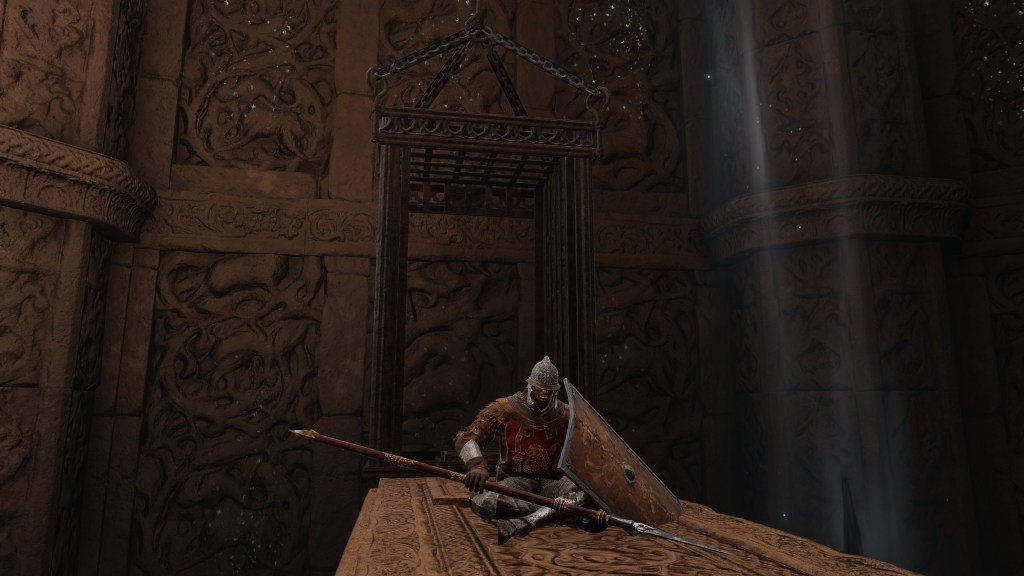
On that subject, the Divine Towers only open their doors to us after we have defeated the relevant shardbearer and acquired the shard. If this is at the behest of the Greater Will, then it would explain the areas’ names. Each is more accurately a “Divine Gift Tower” (神授塔) with kanji used most notably in the term for the theory of the divine right of kings. (王権神授説) This lines up perfectly with the Great Runes’ role in determining the Elden Lord. The terminology is just as applicable for the one outlier in Liurnia, which hides Ranni’s Cursemark required for the Mending Rune of Death — and whom the “god” in question gifts us the key to reach. But for the Great Rune proper to be a gift from god, that deity must instead be the lightless abyss behind the Elden Ring. Therefore, we can ascertain that the transfer of this benediction to the Two Fingers was an expression of the Greater Will’s judgment.
It is for this reason that the Two Fingers insist that we take the Great Runes from the demigods’ cold, dead fingers. With their kind receiving the benediction, the Greater Will had spoken. To be denied the highest power’s blessing, Marika’s progeny must truly have been deemed a lost cause. There was no longer an expectation that one with a golden fate in the Lands Between could mend this broken world and steer it in a new direction. Maybe the demigods still believe that the war is ongoing, just entering a lull before the next big campaign. But the Fingers, as the Greater Will’s envoys, understood that this “Shattering” was over, and the rest of the lands which follow them seemingly agree. While the demigods might be considered the heroes of that conflict demanding respect, they are also relics of yesteryear. In the meantime, life in this world remains broken, and the Erdtree remains on the path to destruction.
The Greater Will abandoned the demigods long ago. Tarnished, no need to hesitate. Kill and rob them without reservation.
The Splits Between
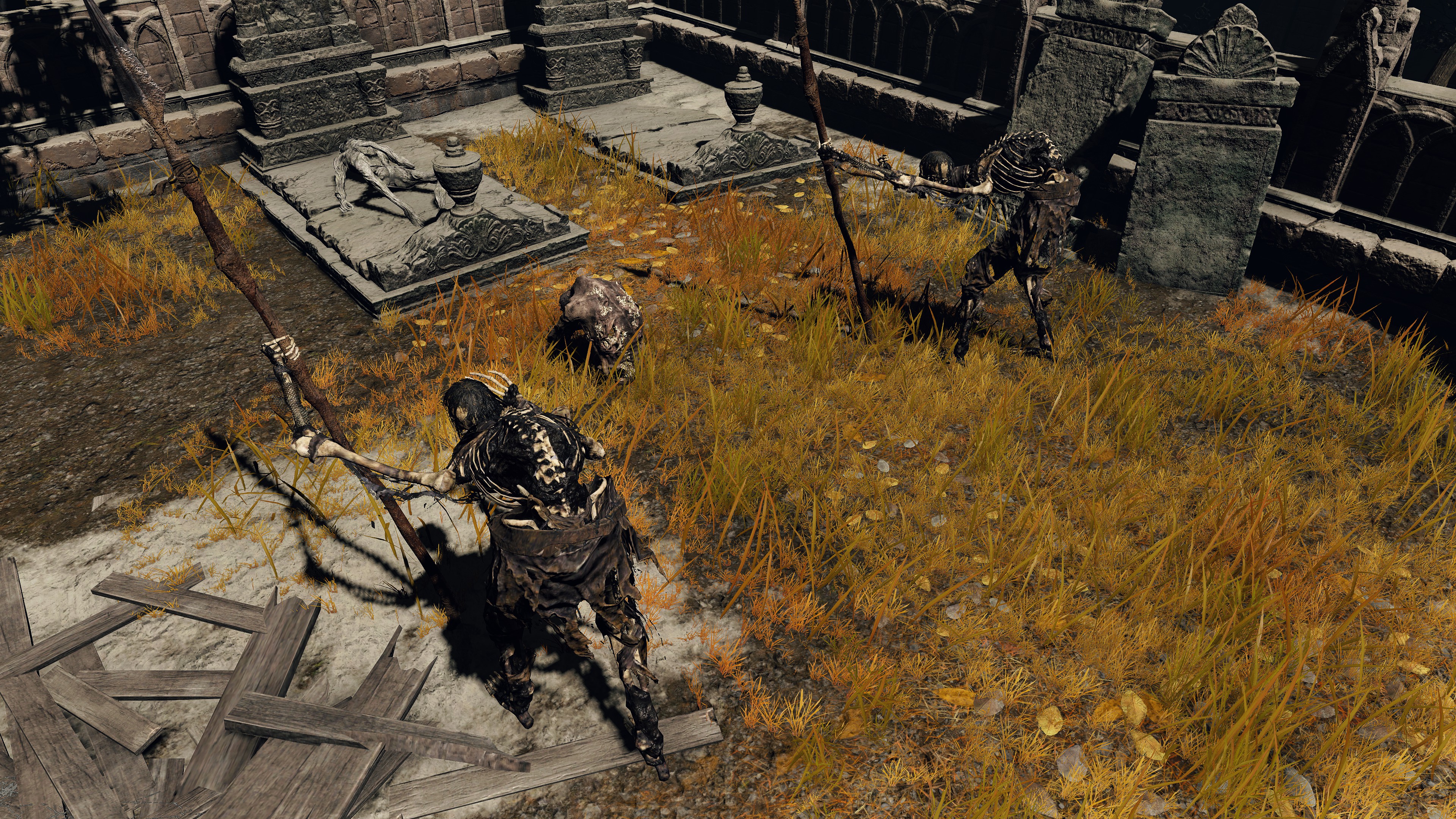
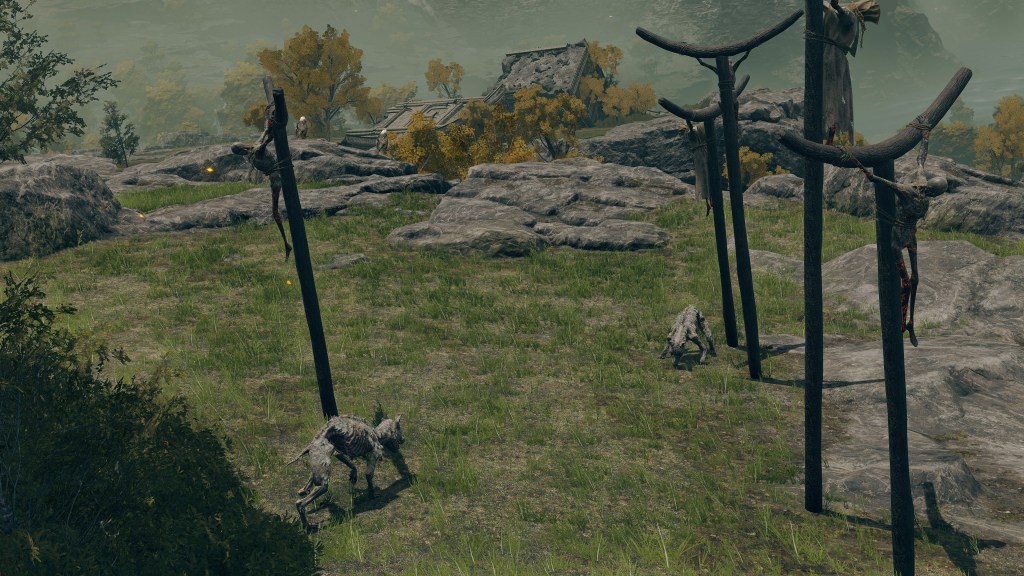
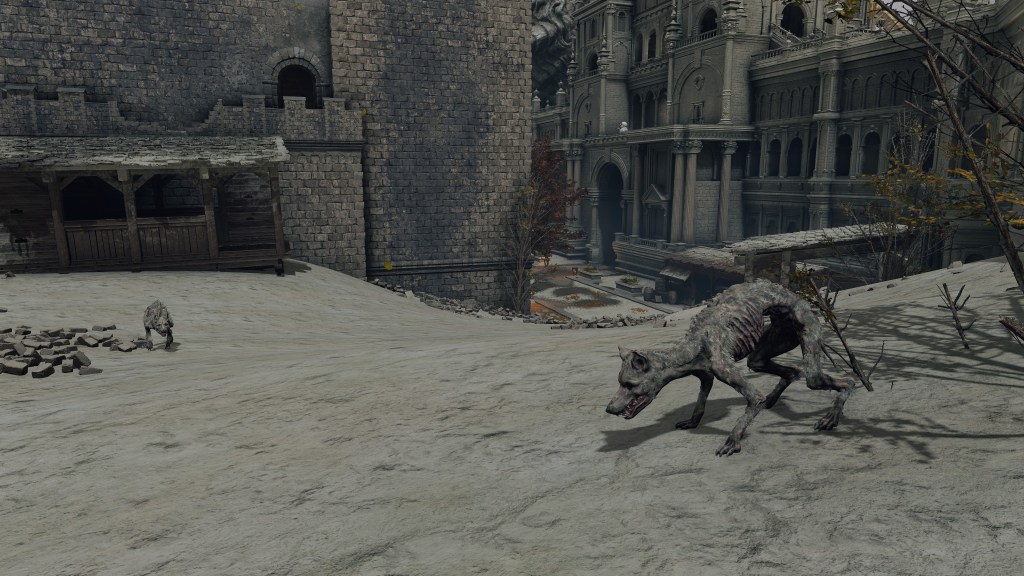
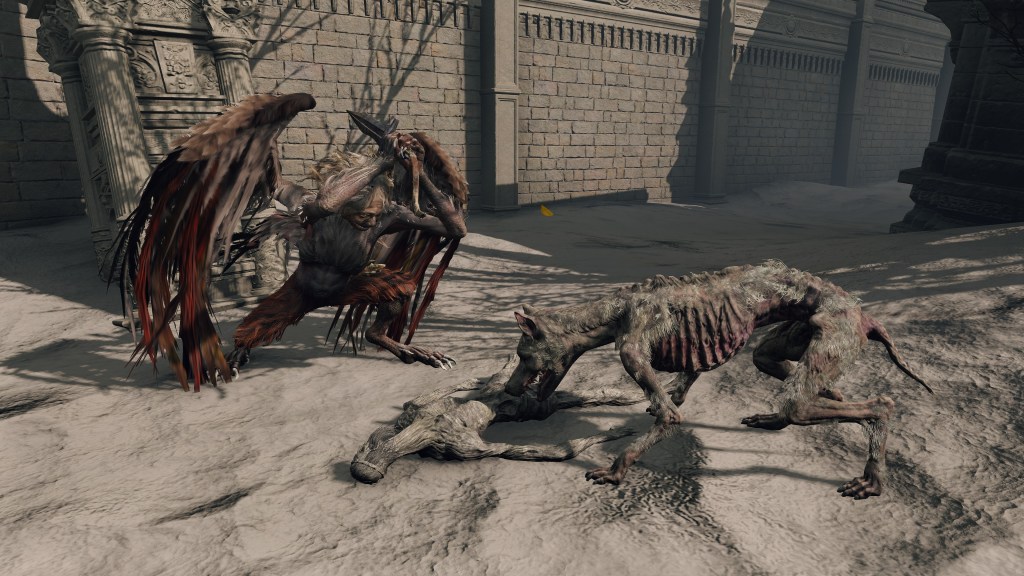
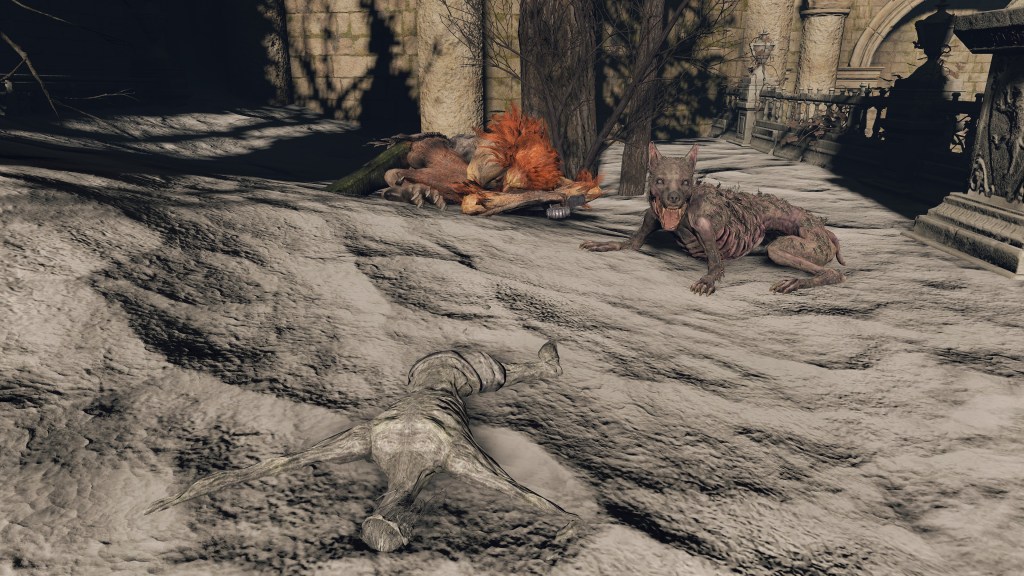
With the warring inconclusive, chaos besets the Lands Between. Once the various factions entrenched themselves in their areas, economic activity between regions collapsed, with banditry soon running rampant during the prolonged turmoil. Many towns and settlements have been left to fend for themselves, like we see at Summonwater Village. Amidst the crumbling ruins south of the village and Saintsbridge graveyard, several bandit skeletons rise from the ground, facing a similar number of militiamen also rising up. From the random and obscure location, a bunch of villagers probably formed up in order to chase down local vandals in their area. The militia found the thieves, the two sides fought, and both left only bodies for their hounds to scavenge — said strays already moving onto new meat crucified further west. It is a dog-eat-dog world, and whatever army still provides security to their region, they are stretched too thin with other matters to be of reliable help. And because so many able-bodied men are being conscripted for war, many communities are helplessly preyed upon.
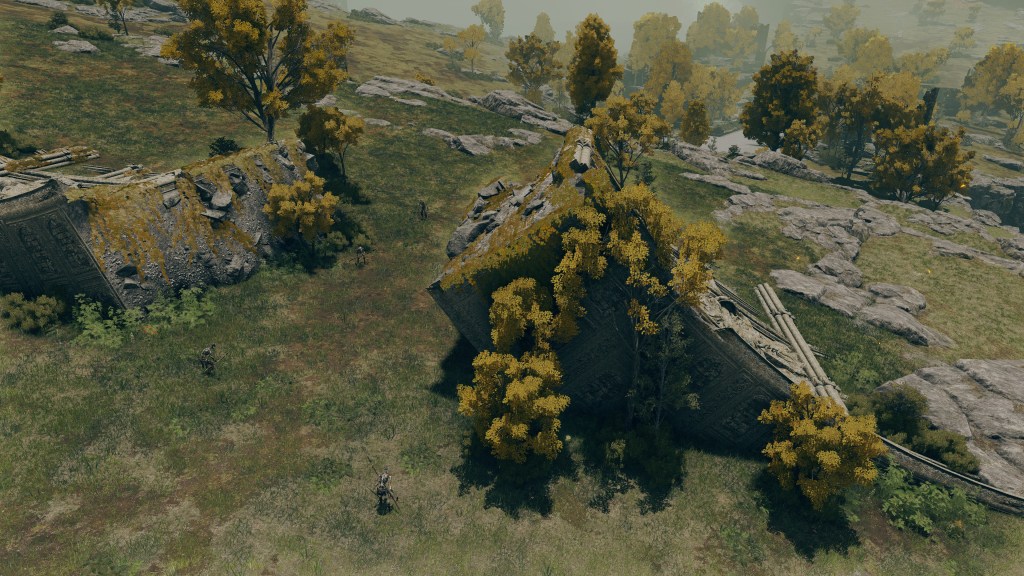
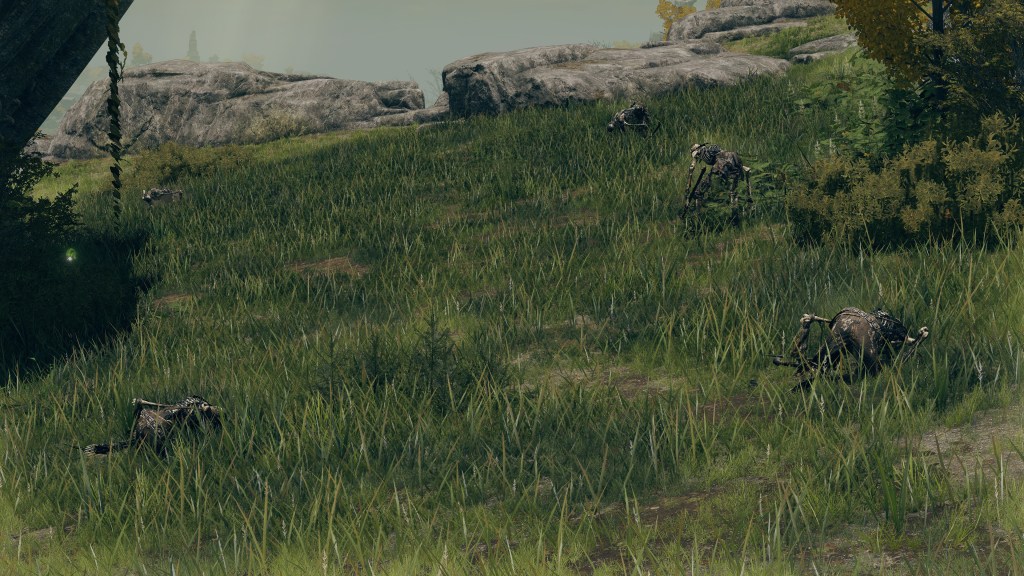
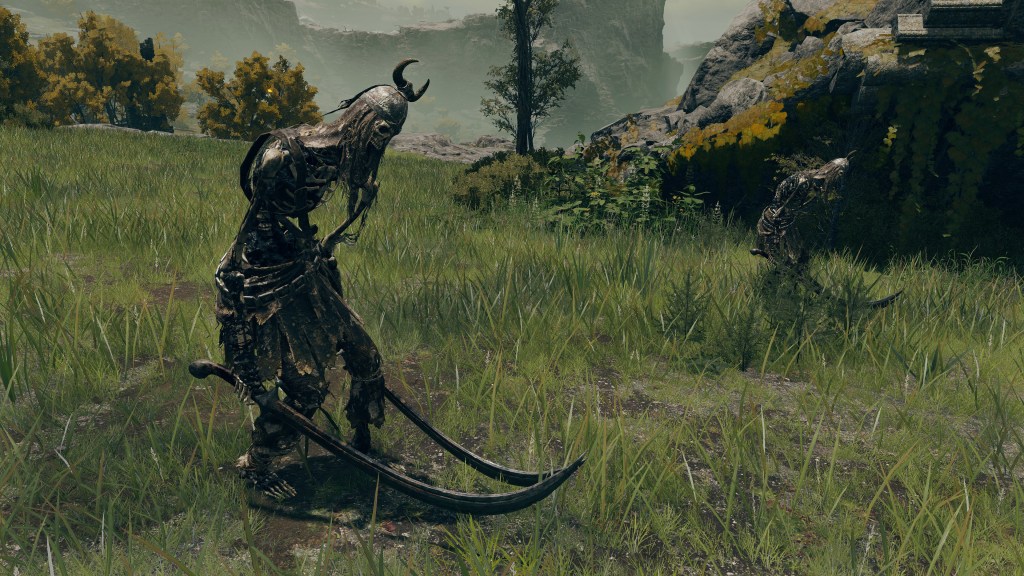
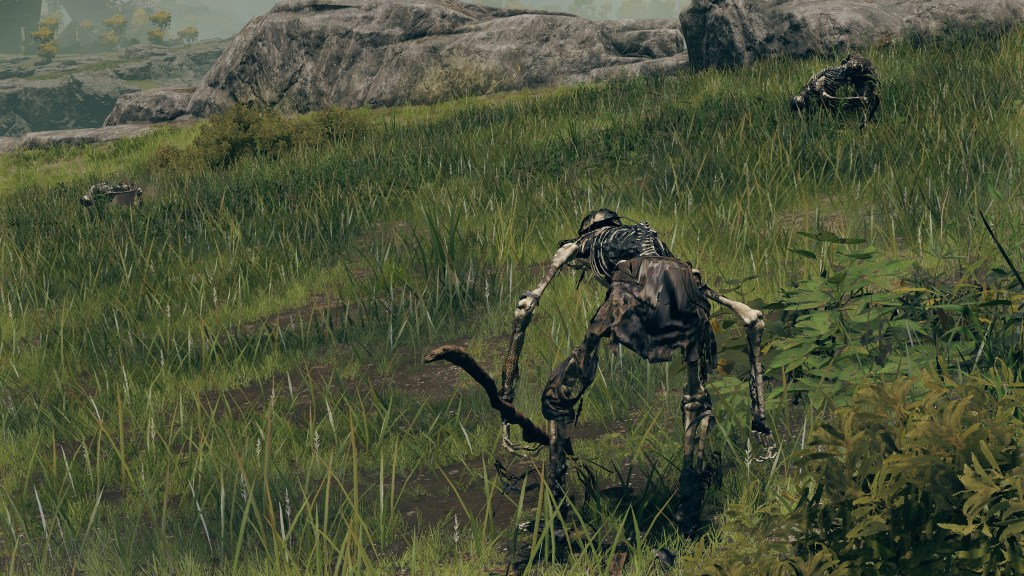
Curved sword possessing a greatly bent blade. Choice weapon of the mountain bandits who ran rampant in the various lands after the Shattering War.
Its blade is half-rusted and discolored, but it is probably fit for use if you have high dexterity.
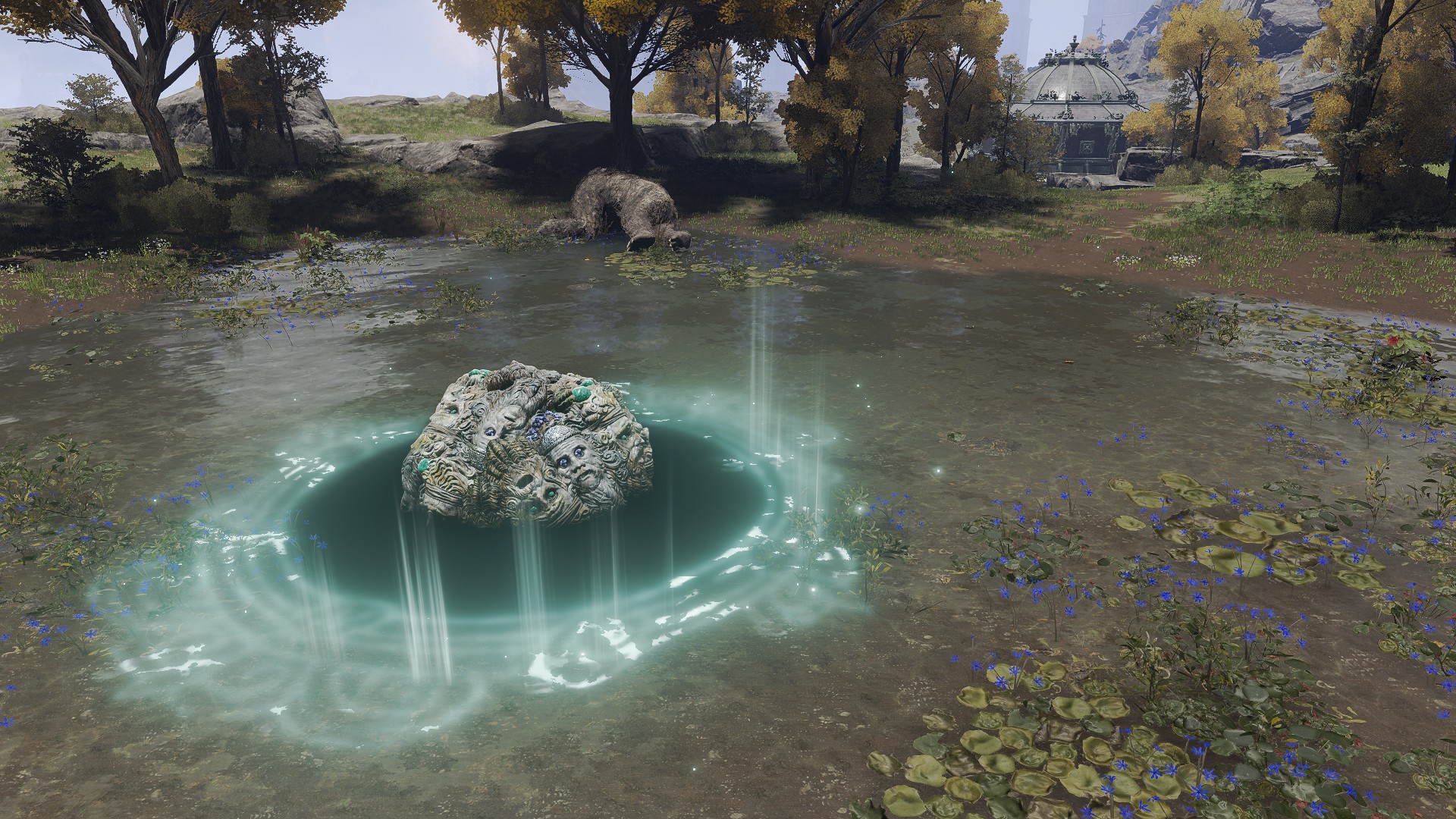
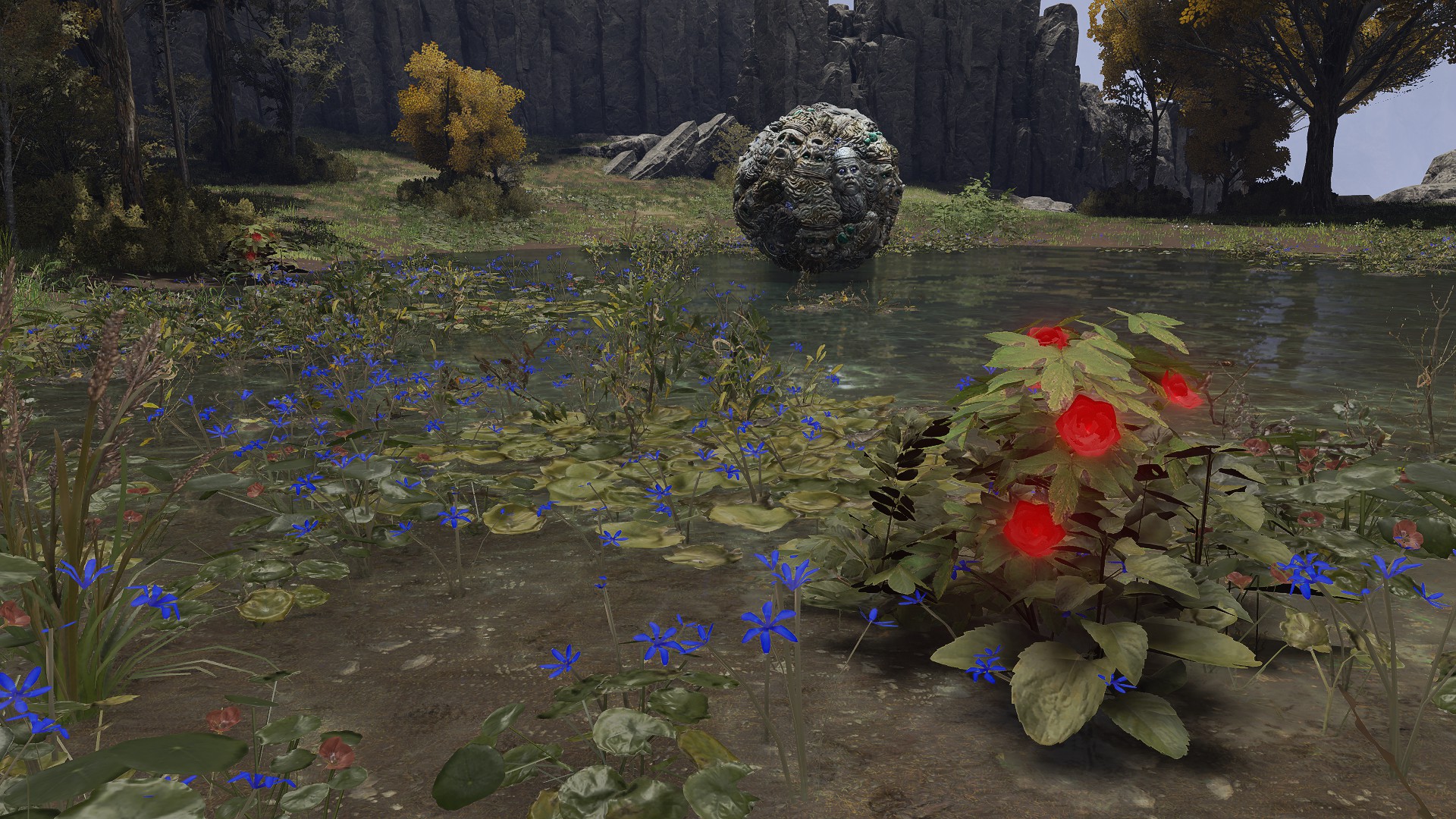
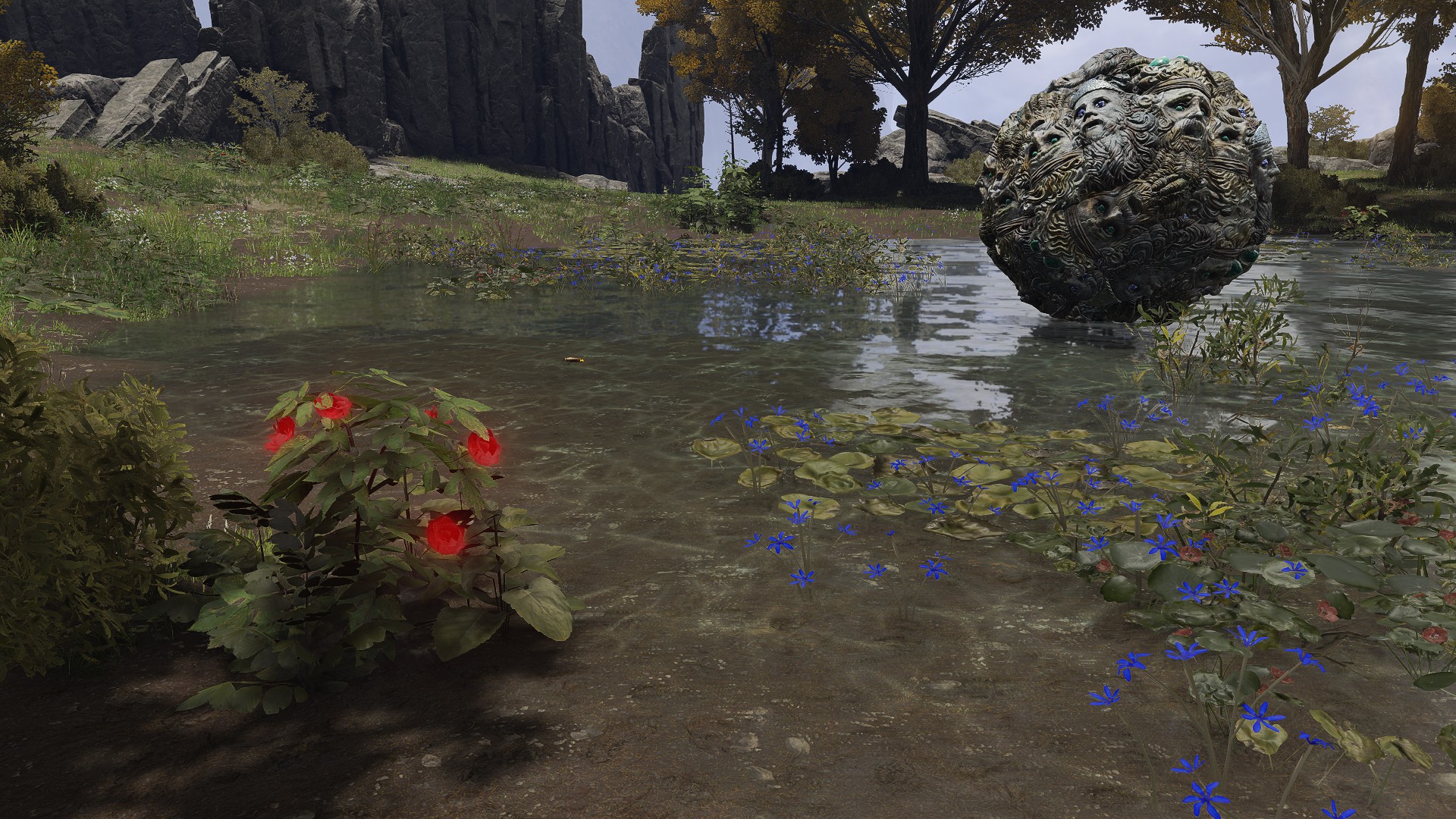
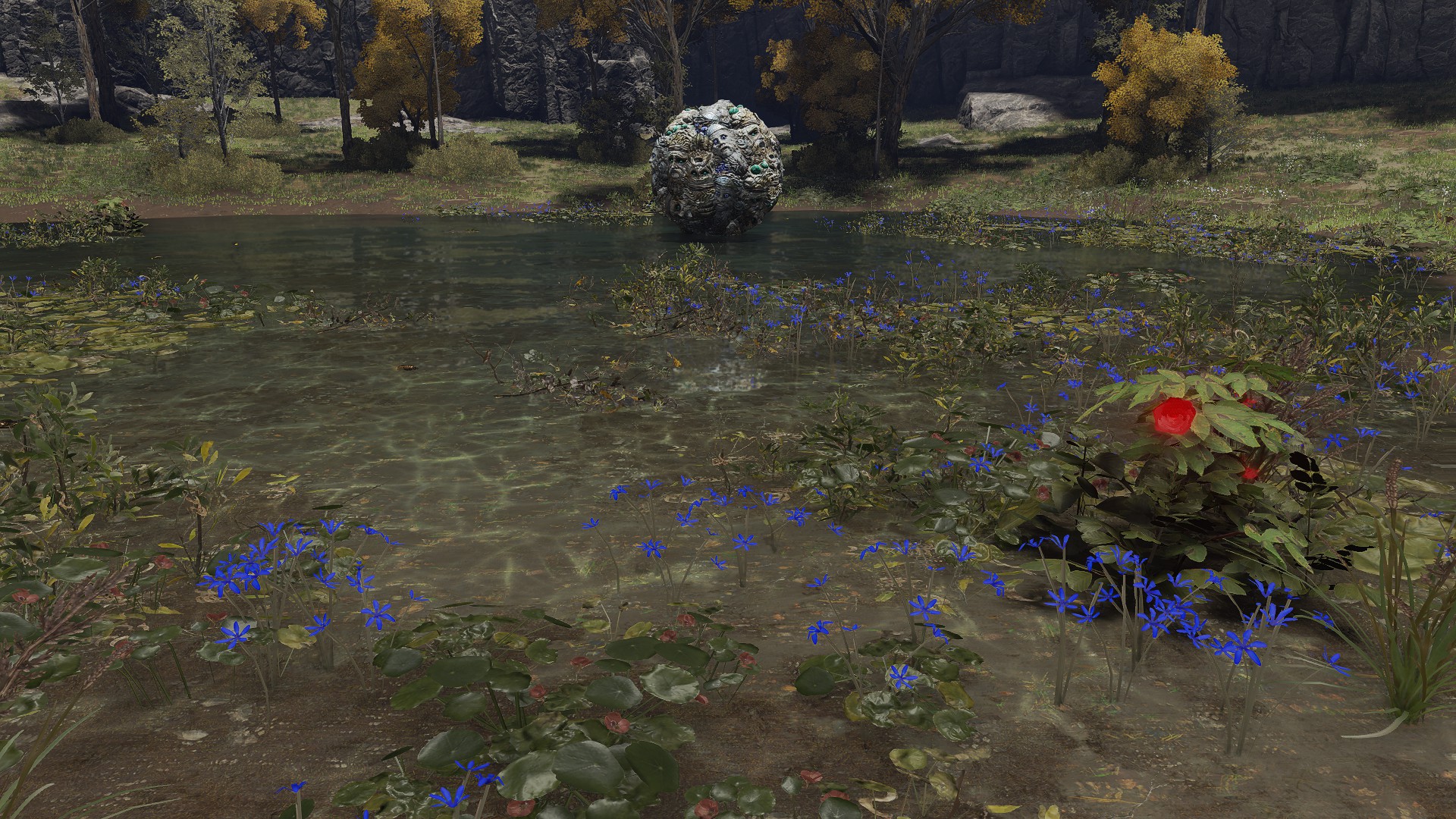
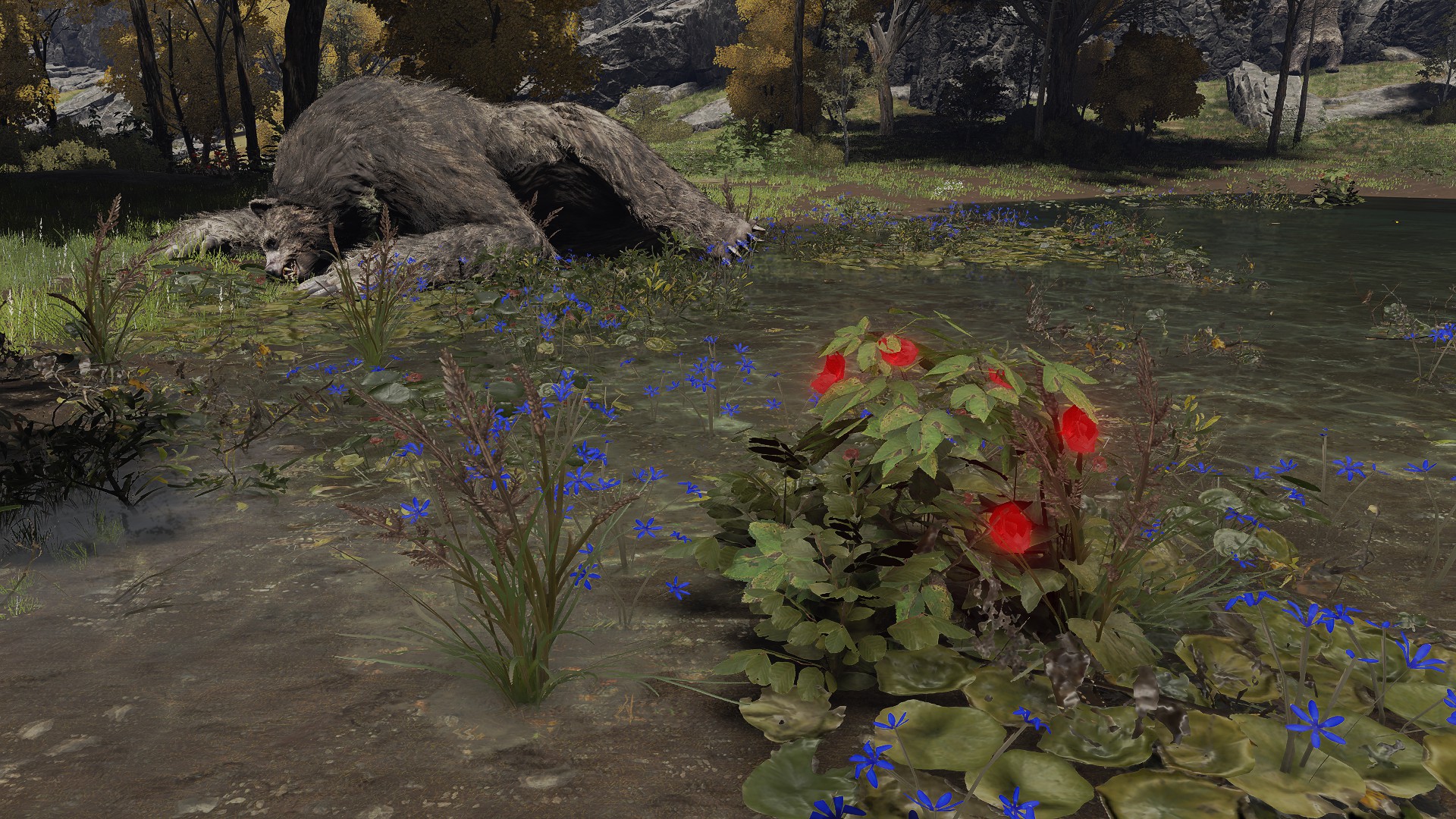
Even in places where there are no villages to victimize, never-do-wells have begun thriving. Take the ancient golem guarding the Ainsel River Well in eastern Liurnia. Behind the well, sits a pond. The bloodroses speak to the bloodshed in that body of water, with the sorcerer ball rising up confirming the gory rites before the rune bears intruded. Someone has been experimenting with forbidden primeval sorcery, but who? Down the well lay the numerous corpses from the nameless Eternal City piling up on the riverbank. Given how the Nox employ sorcery, the bodies flowing downriver serve as a perfect source for graven masses. And checking the inventory of the merchant secluding himself in the Ainsel River, we can purchase the prisoner set. As a prisoner, we were a sorcerer aristocrat prior to sentencing, so the former owner of this set probably possessed a similar background. But why would such a sorcerer, noble or not, be in Ainsel? To collect specimens.
Most likely, a prisoner, condemned for the taboo imposed by Caria, has restarted research on the fringes, everyone in Liurnia too busy in the current anarchy to track him down. The golem was probably recovered from vicinity of the Divine Tower south across or the ancient civilization’s ruins further north, reprogrammed to serve its new master like those golems on Altus Plateau. While the magic giant safeguarded his supply, the prisoner could freely explore the deep underground, collecting the best specimens for the next experiment — and apparently burning the Nox torches by the work area with non-magic flame. In the end, death came for the convict, the merchant already looting the body for what little he was worth. Still, he demonstrates that more large-scale criminal operations are underway as the rest of the Lands Between reels from the shattering. Not even the Forbidden Lands are immune to this, as the Fire Monks slipping from duty showcase. But the cracks show especially in incidents outside of the institutions.
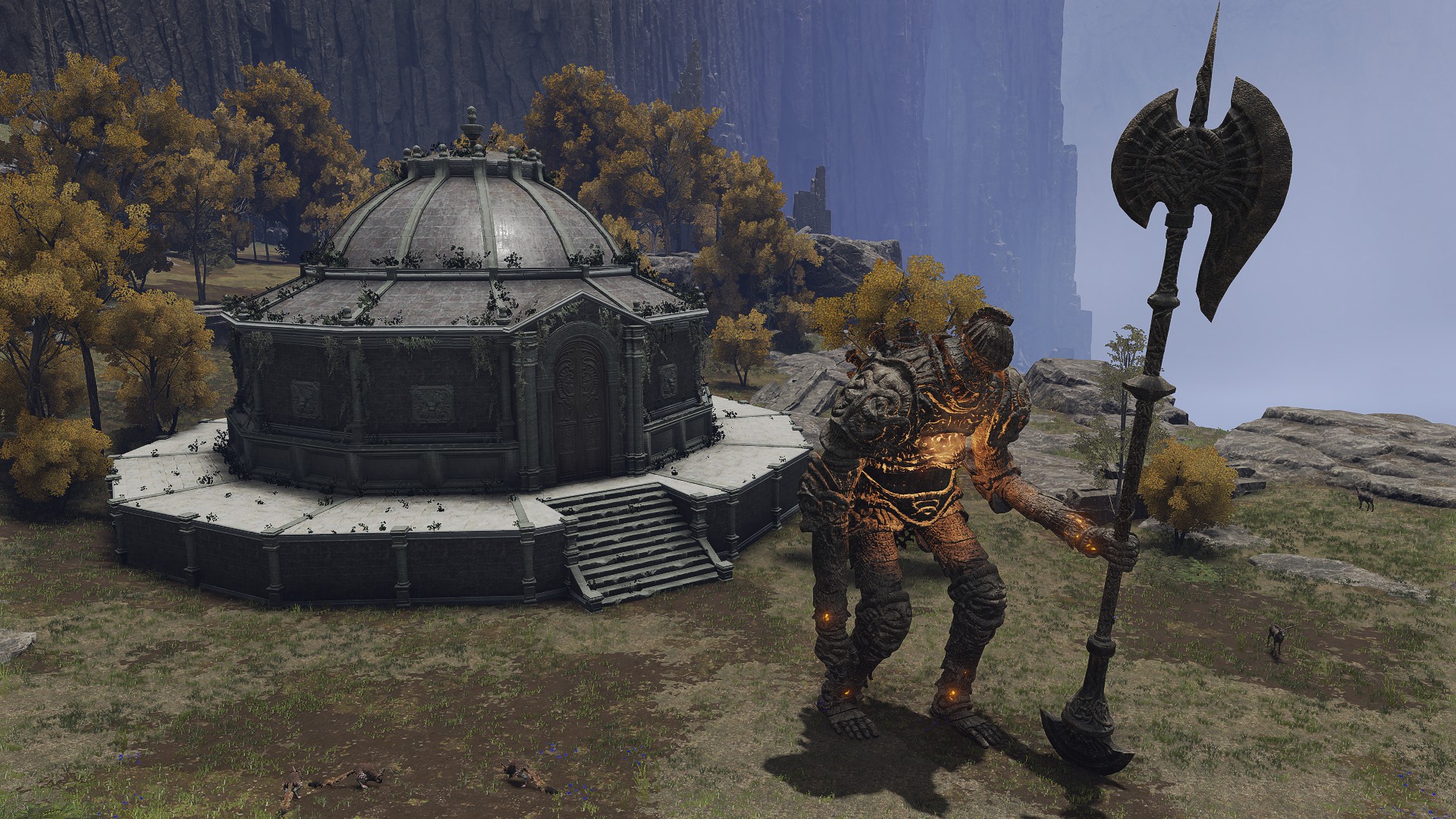
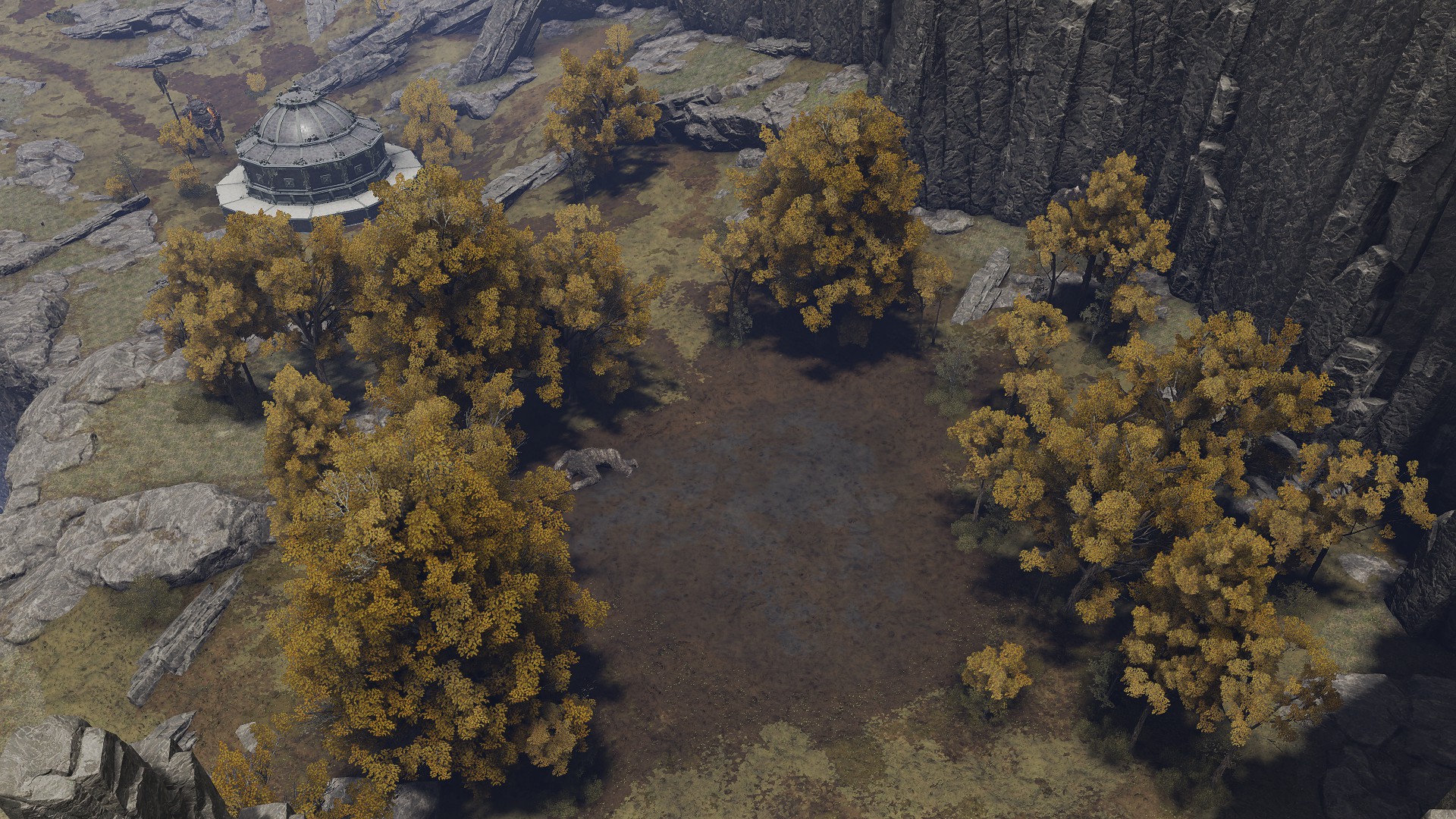
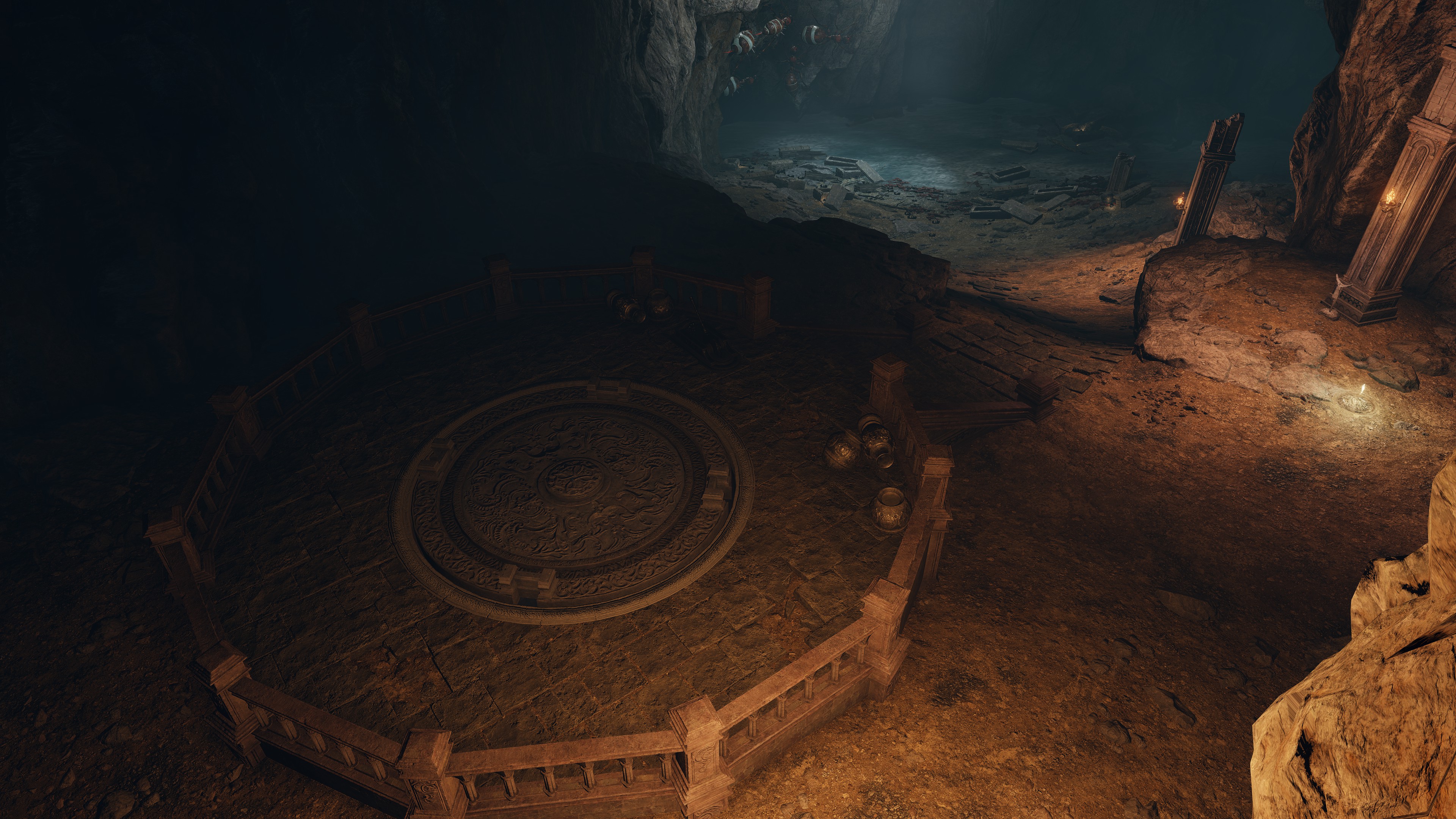
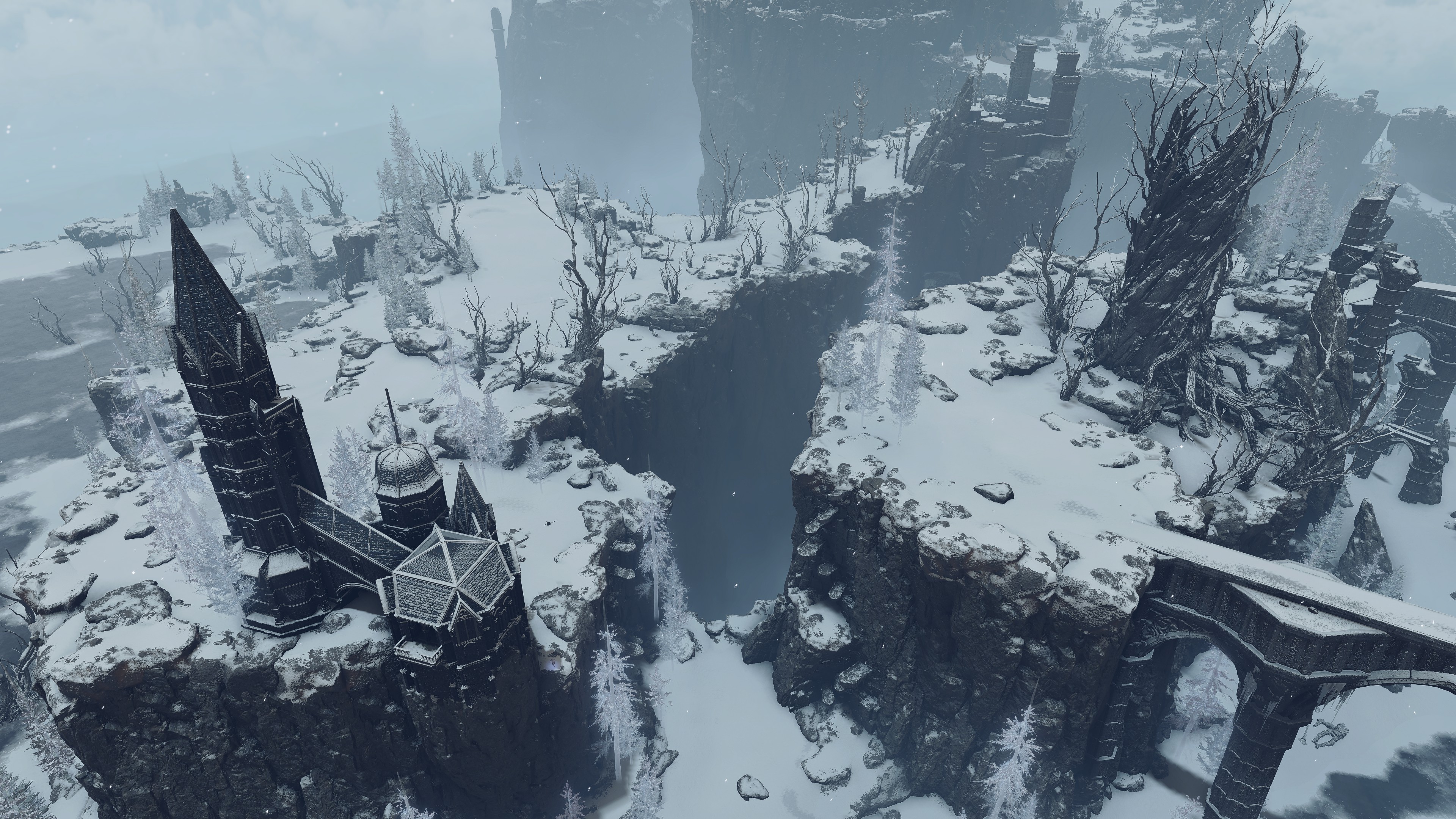
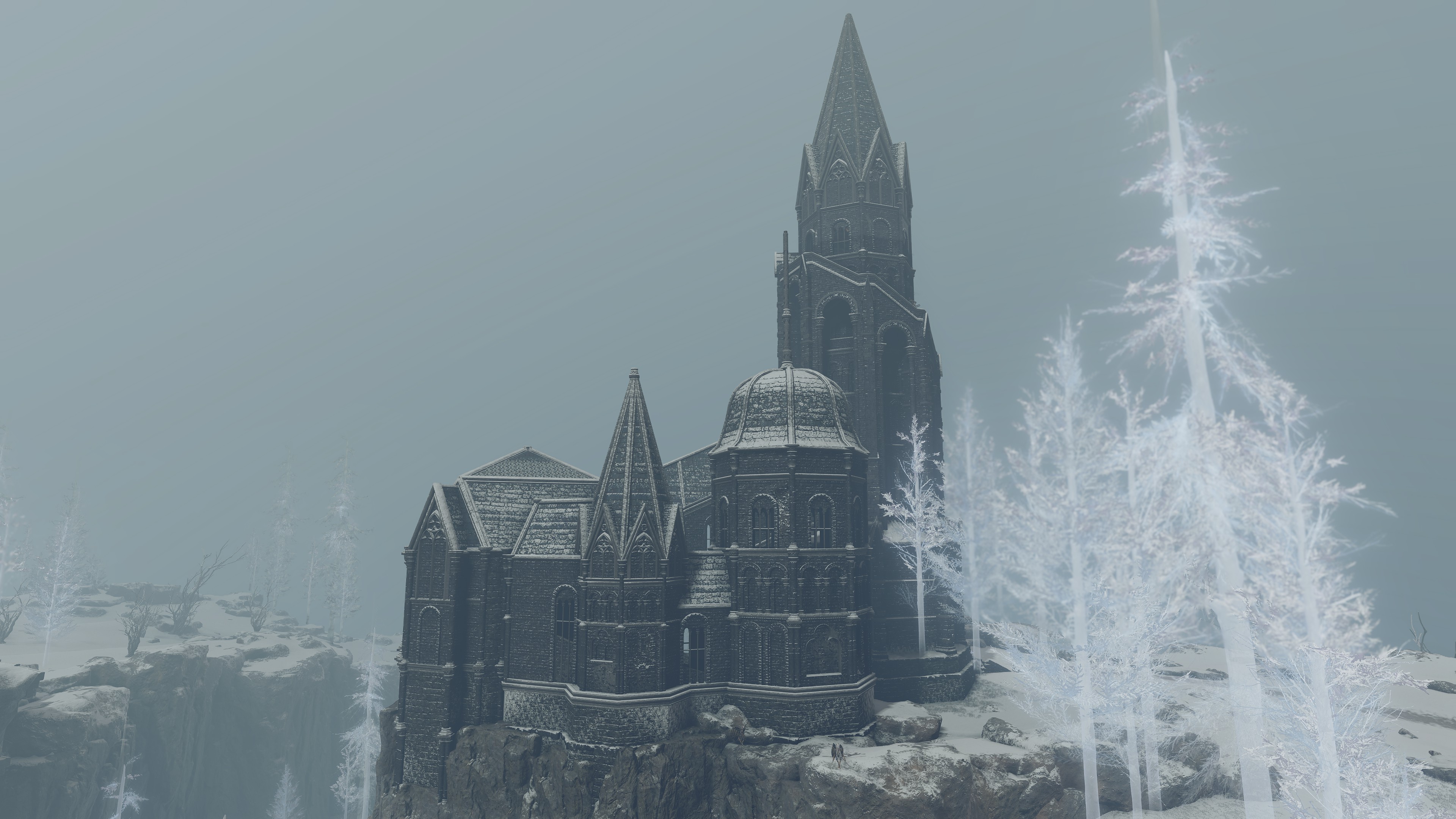
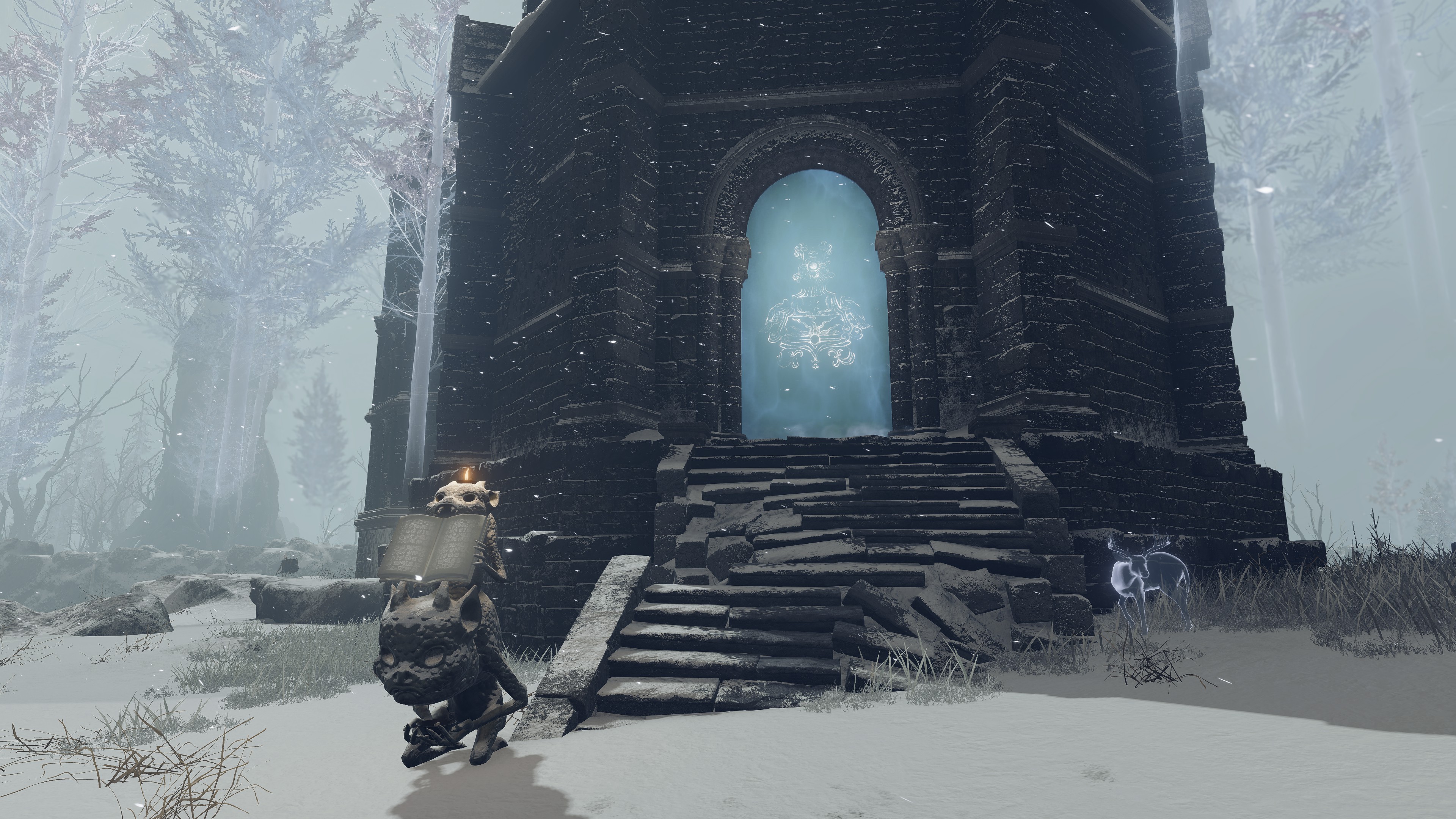
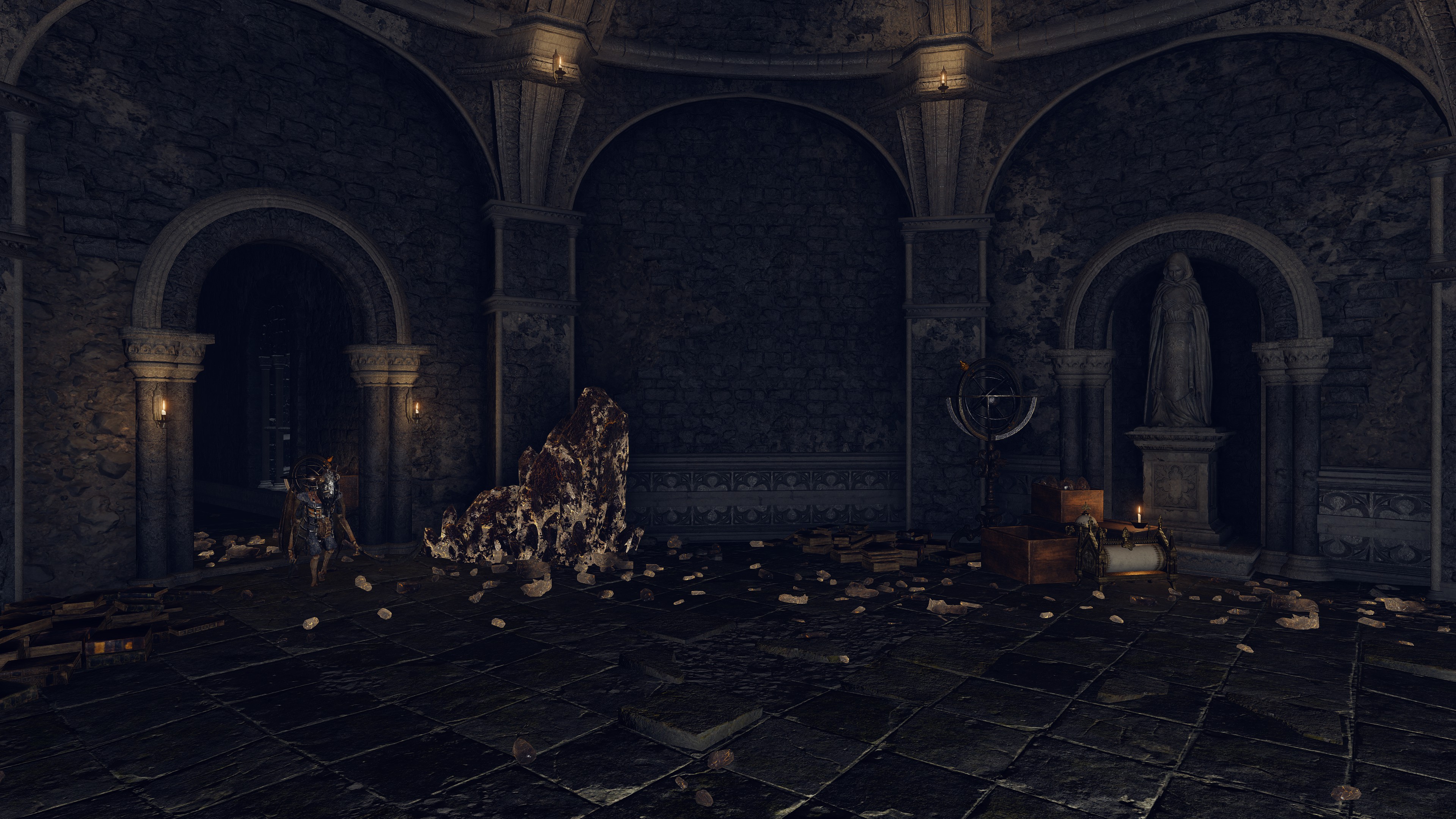
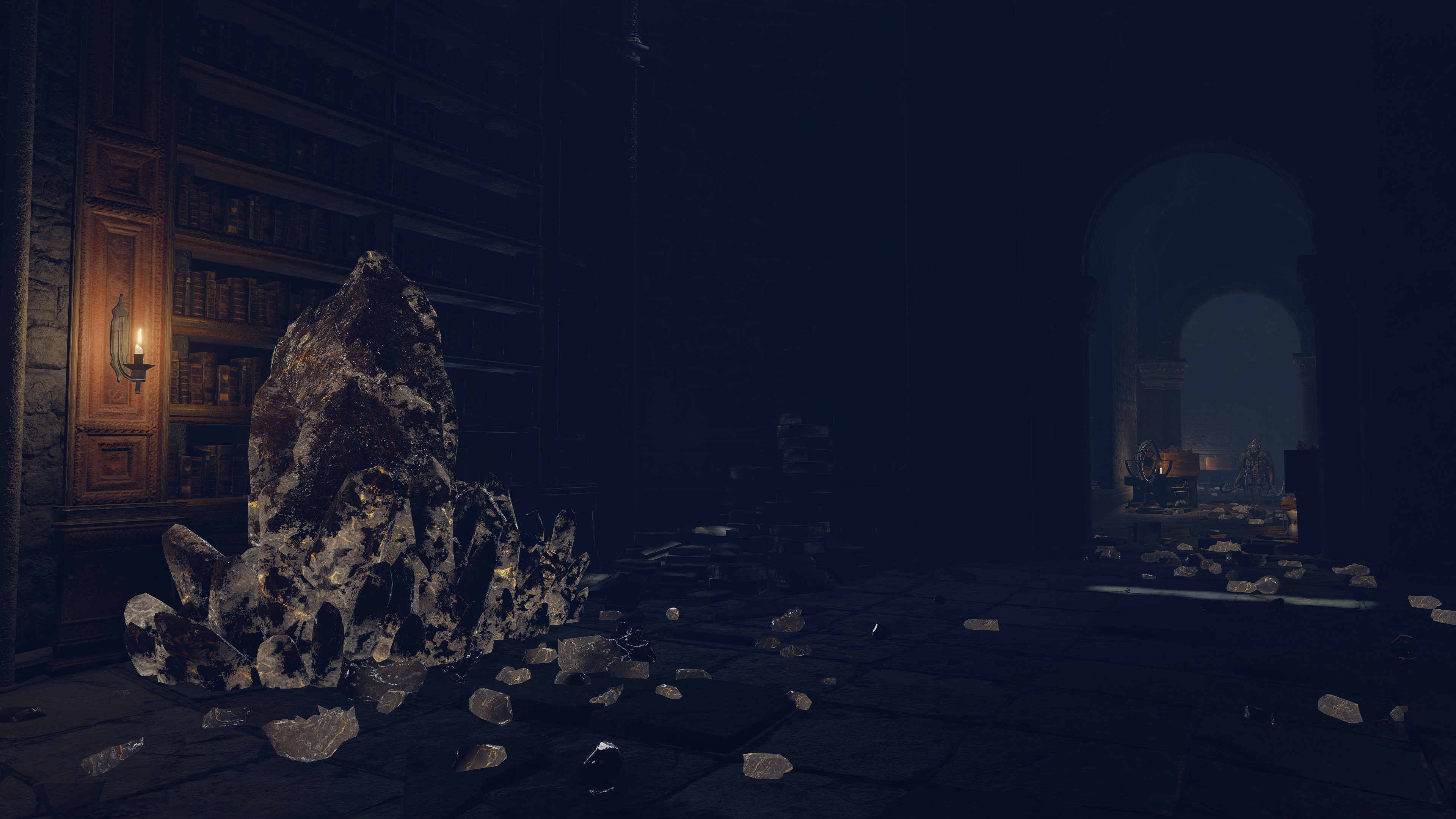
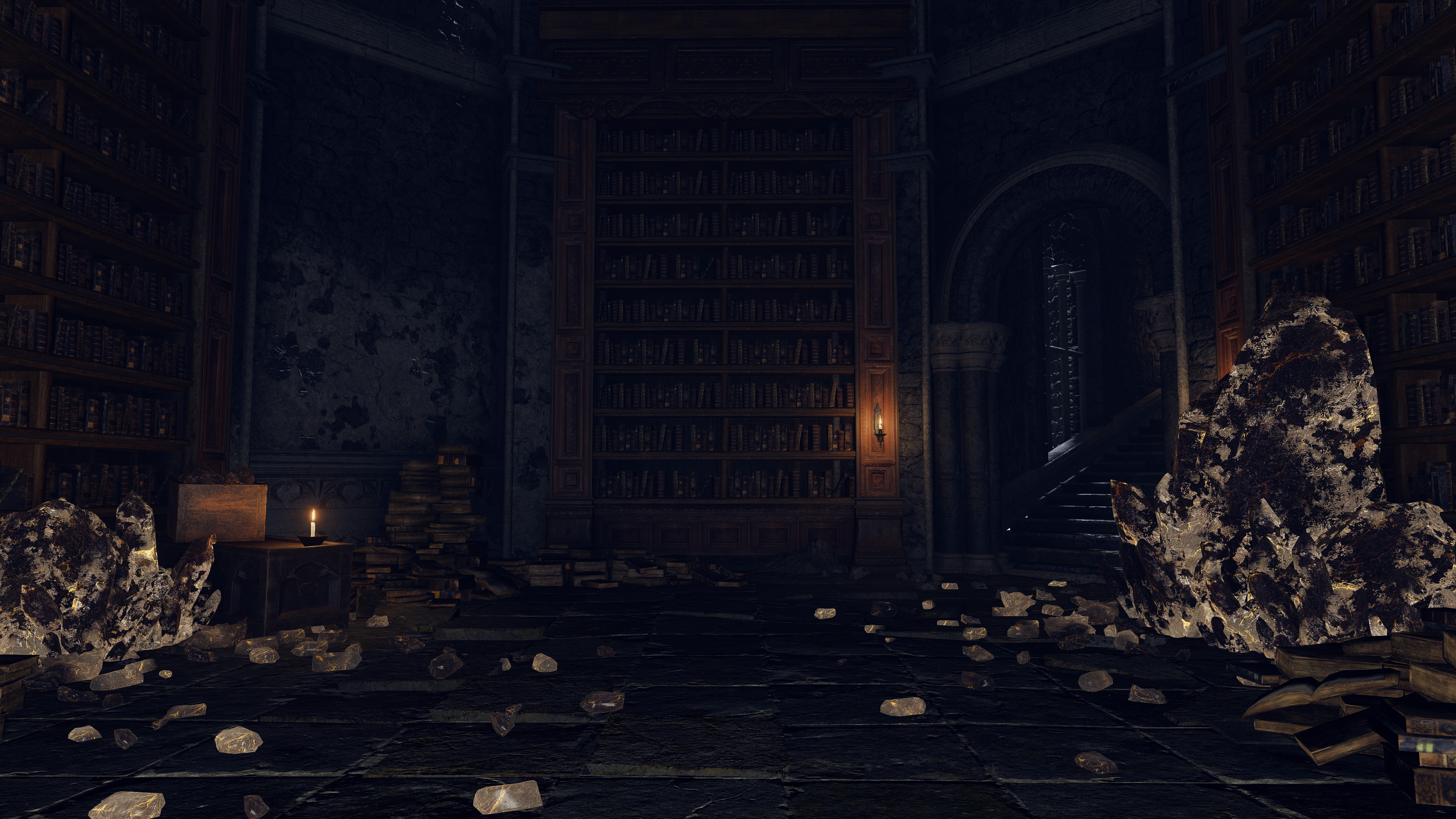
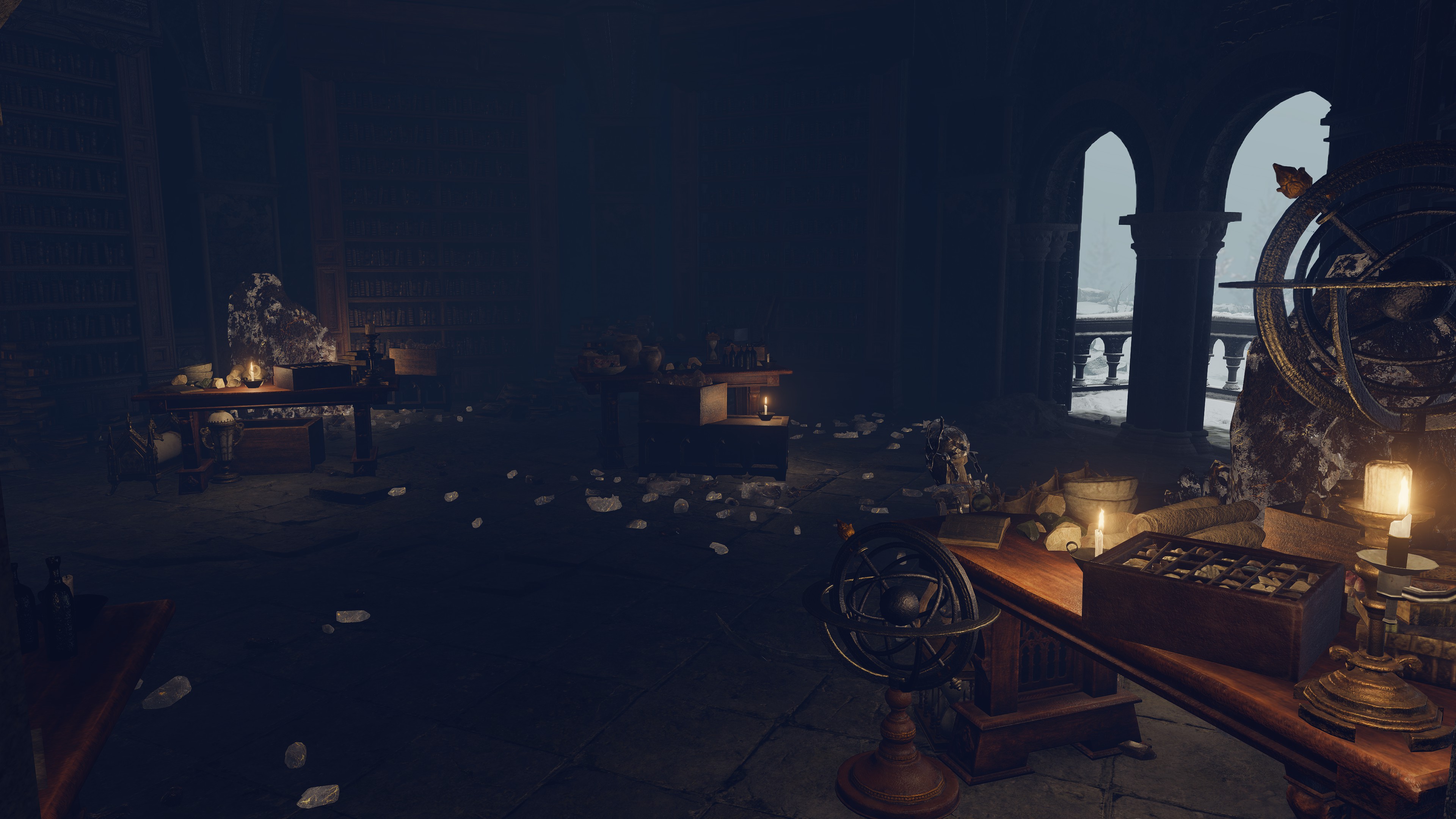
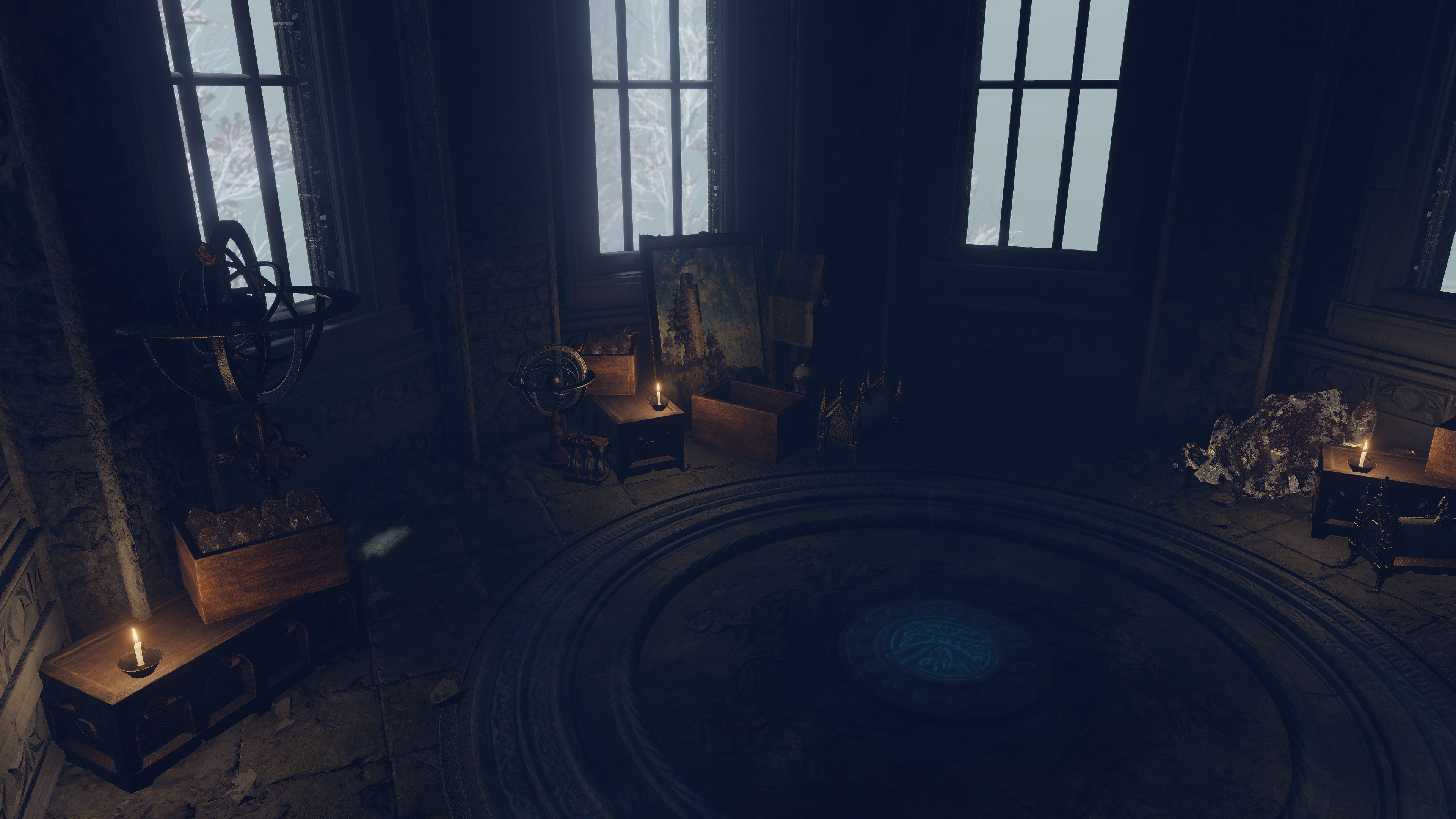
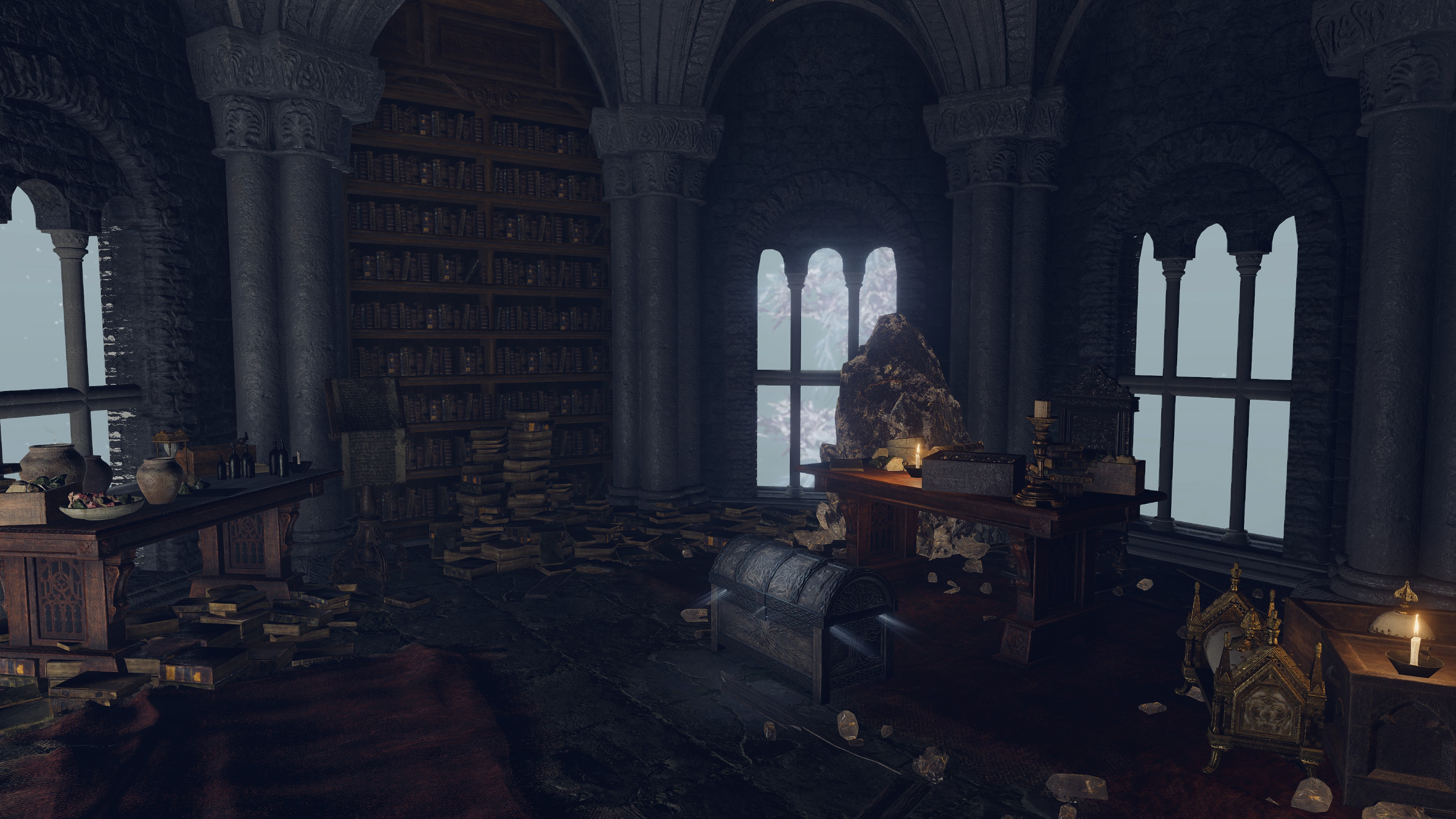
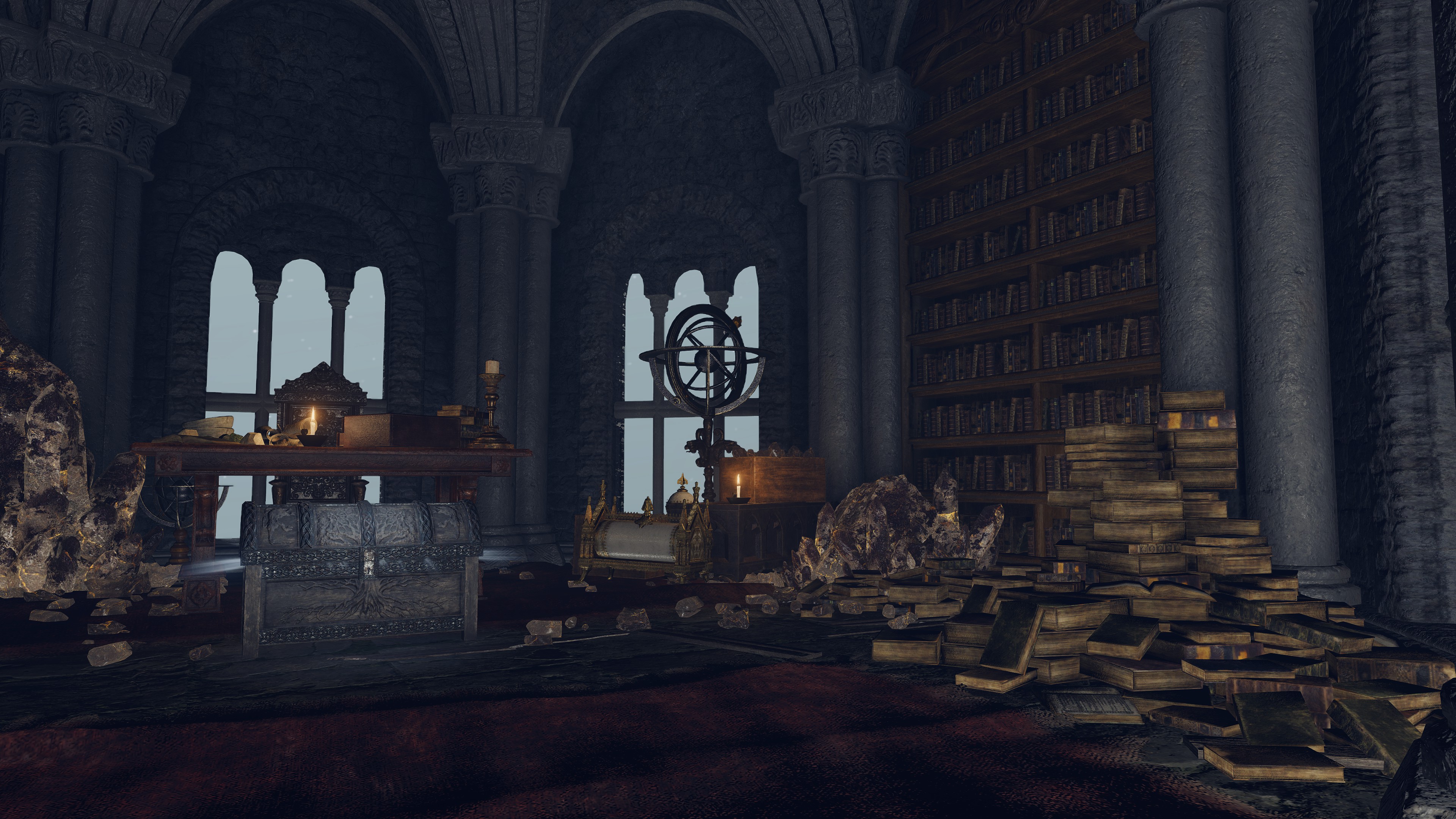
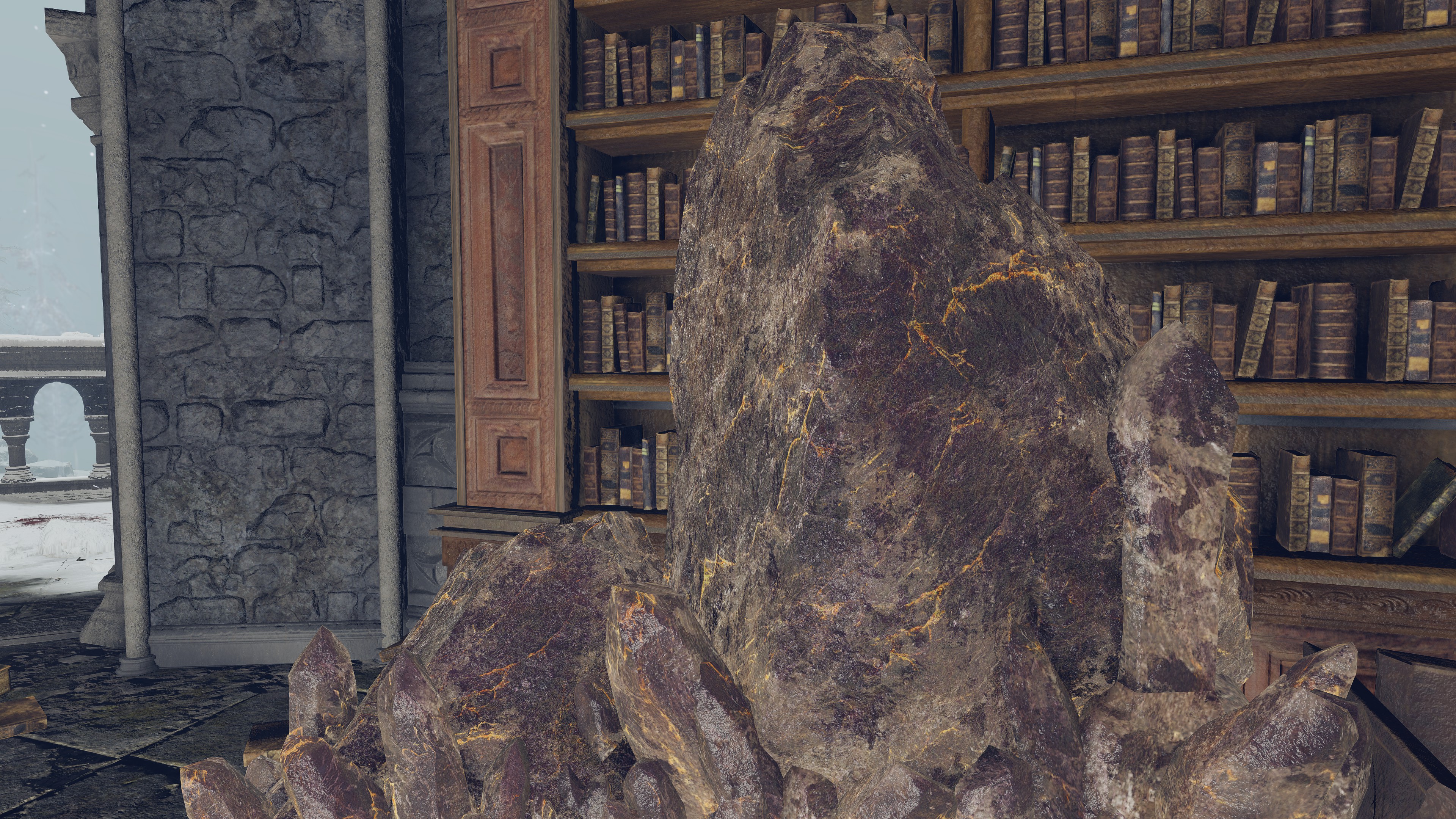
The Minor Erdtree dying in the middle of the Mountaintops isn’t a stump for no reason. The fact that an Avatar spawns in suggests that the tree’s original guardian was killed by some outside threat. What could have come to do the Erdtree harm? Doubtful the local demi-humans, though they do currently linger nearby. But across the ravine from the tree, there stands the Heretical Rise. The heretic in question is studying astrology’s roots in the Primeval Current, given how Founding Rain of Stars is kept in the sorcerer’s office. We also find landscape paintings among the mix of books, armillary spheres, and crystal collections, showing interest in the surroundings. Most importantly, the tower hides many large golden crystals, the same as Lenne’s Rise down in Caelid. That implies the sorcerer was similarly looking into gold’s connection to the Primeval Current, and most likely sourced that gold from a Minor Erdtree too. In other words, the sorcerer’s heresy is desecrating a golden tree in the course of siphoning its power for research.
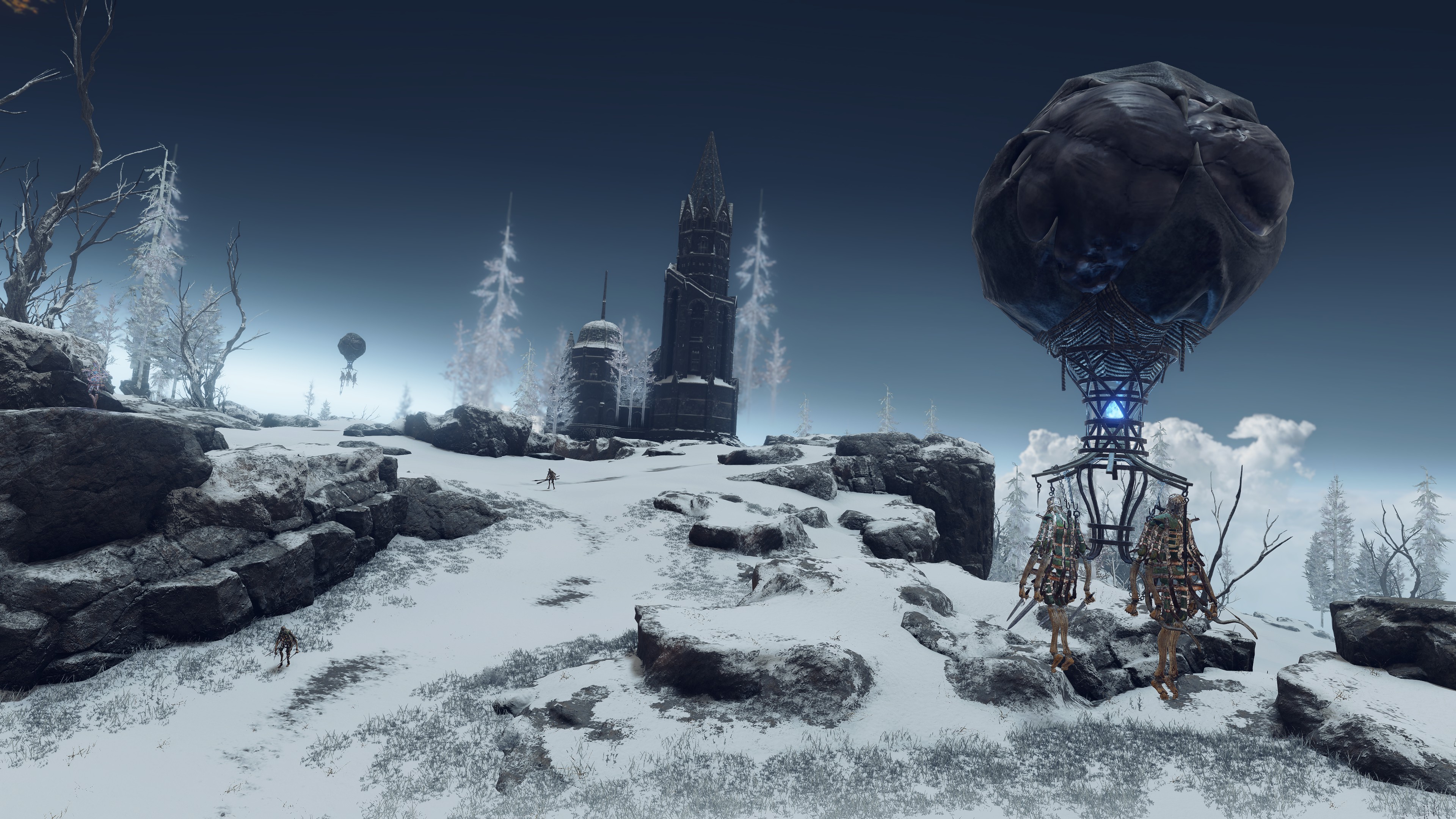
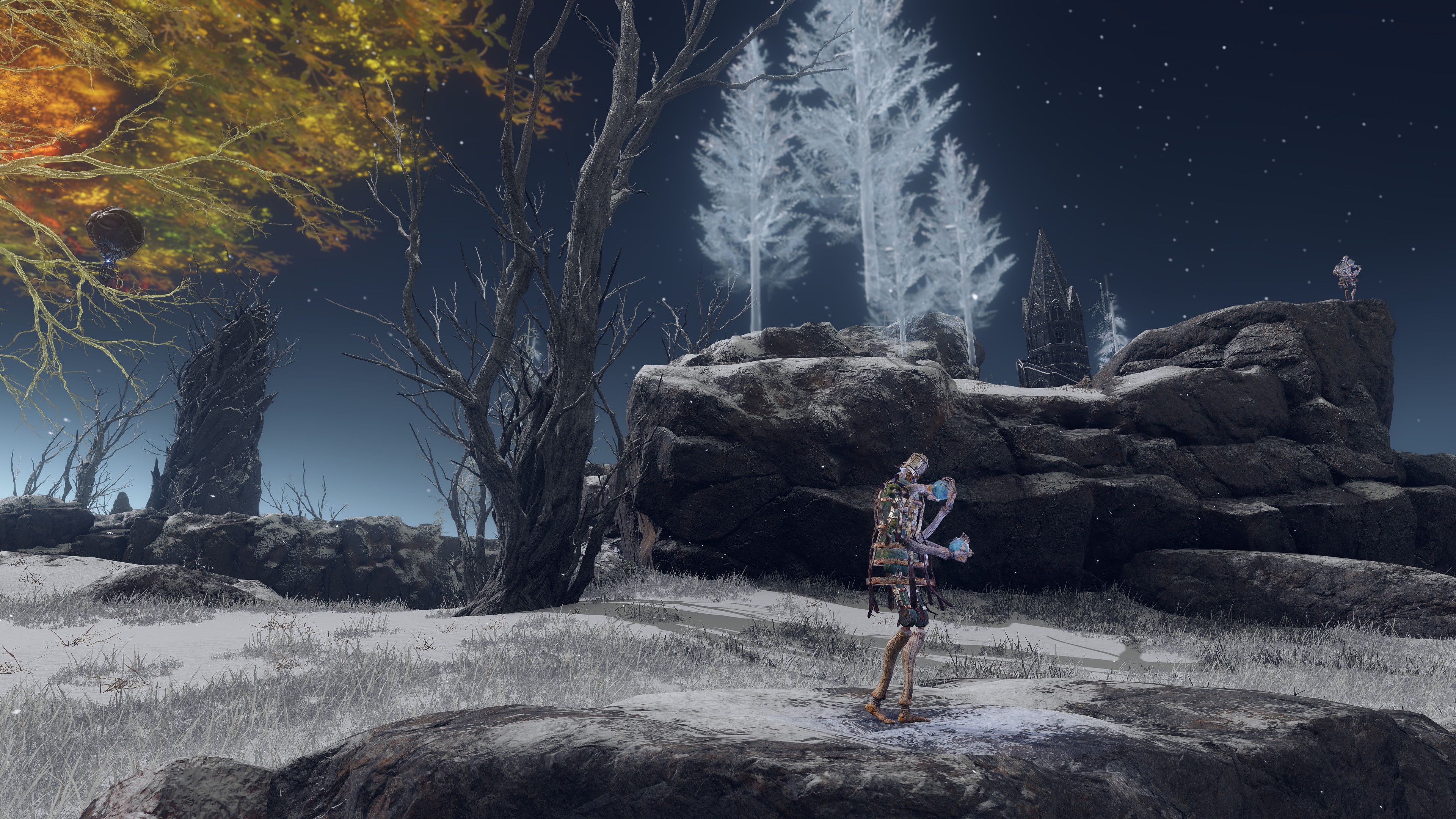
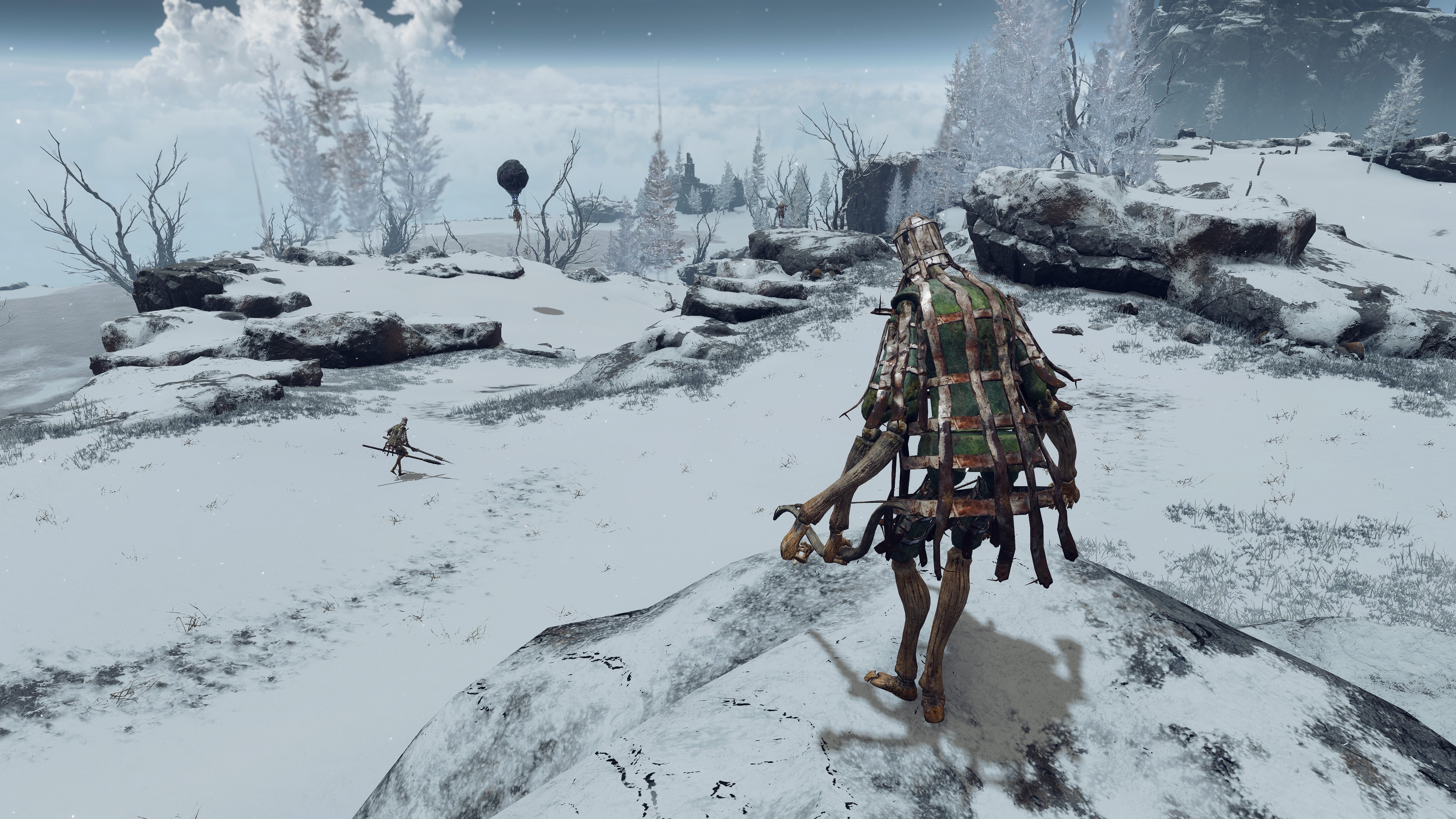
The sorcerer has definitely been careful about his work being discovered. Marionettes guard the tower and surrounding area, their creator apparently deploying them from the safety of inside via balloons. Infiltrating the tower is also extra tricky, requiring we enter from the rear balcony after maneuvering across an invisible bridge spanning the ravine to break the seal. The sorcerer has gone to great lengths to ensure no one sees the tower’s secrets, or at least lives to tell the tale. He clearly fears retaliation for heresy, and the only heresy is the pillaged gold. In all likelihood, the person came from Castle Sol, a survivor from the Giant War eventually granted leeway for independent research due to Liurnian relations; the tower seal’s academy sigil plus the witch statue suggest that much. Having spent far too little time in the stargazers’ village before its destruction, the fallout from the Elden Ring shattering provided the perfect chance to investigate the Primeval Current unimpeded. The fear remains, however, especially when the Erdtree is reacting so strongly to the threat to its life.
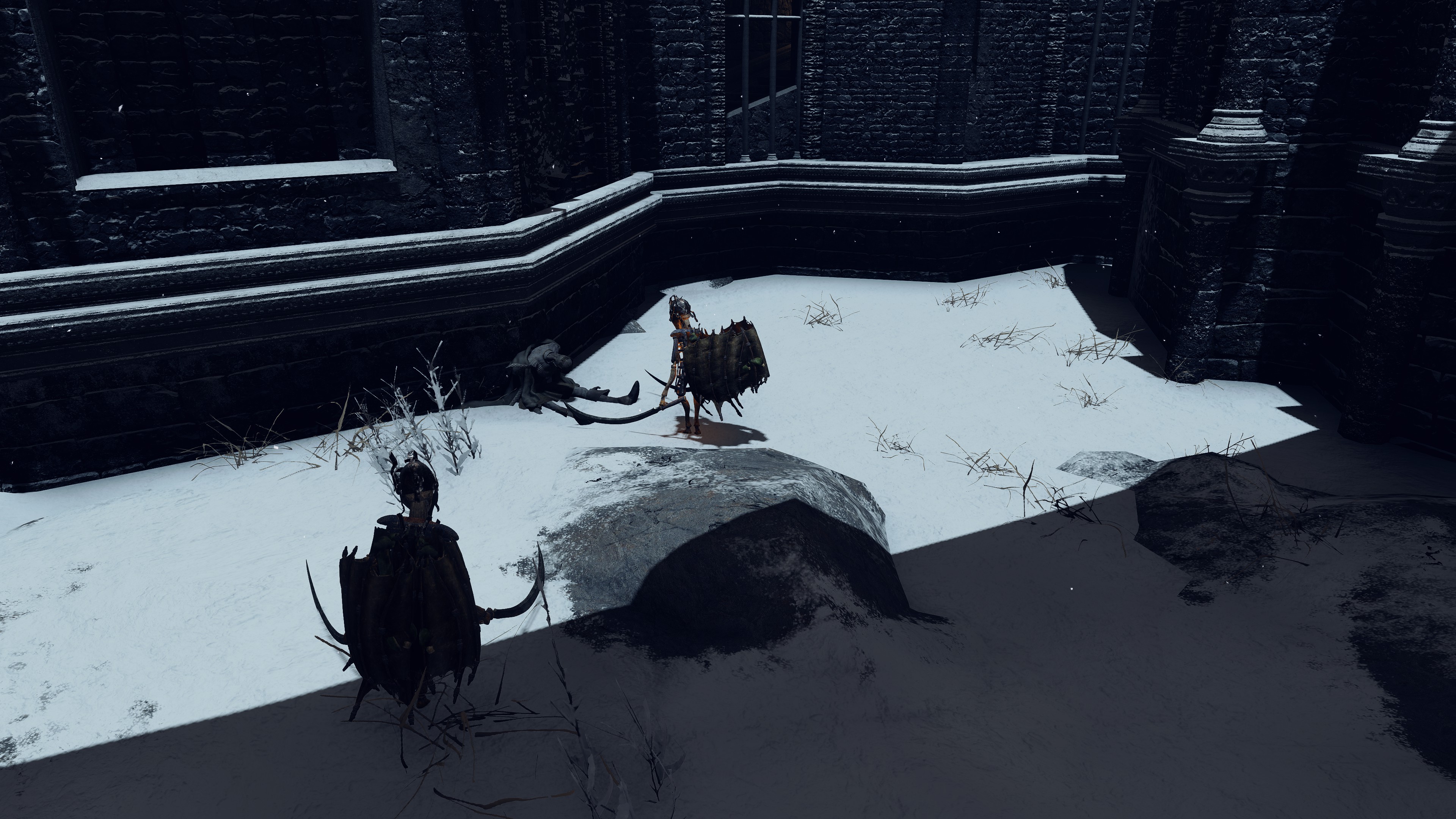
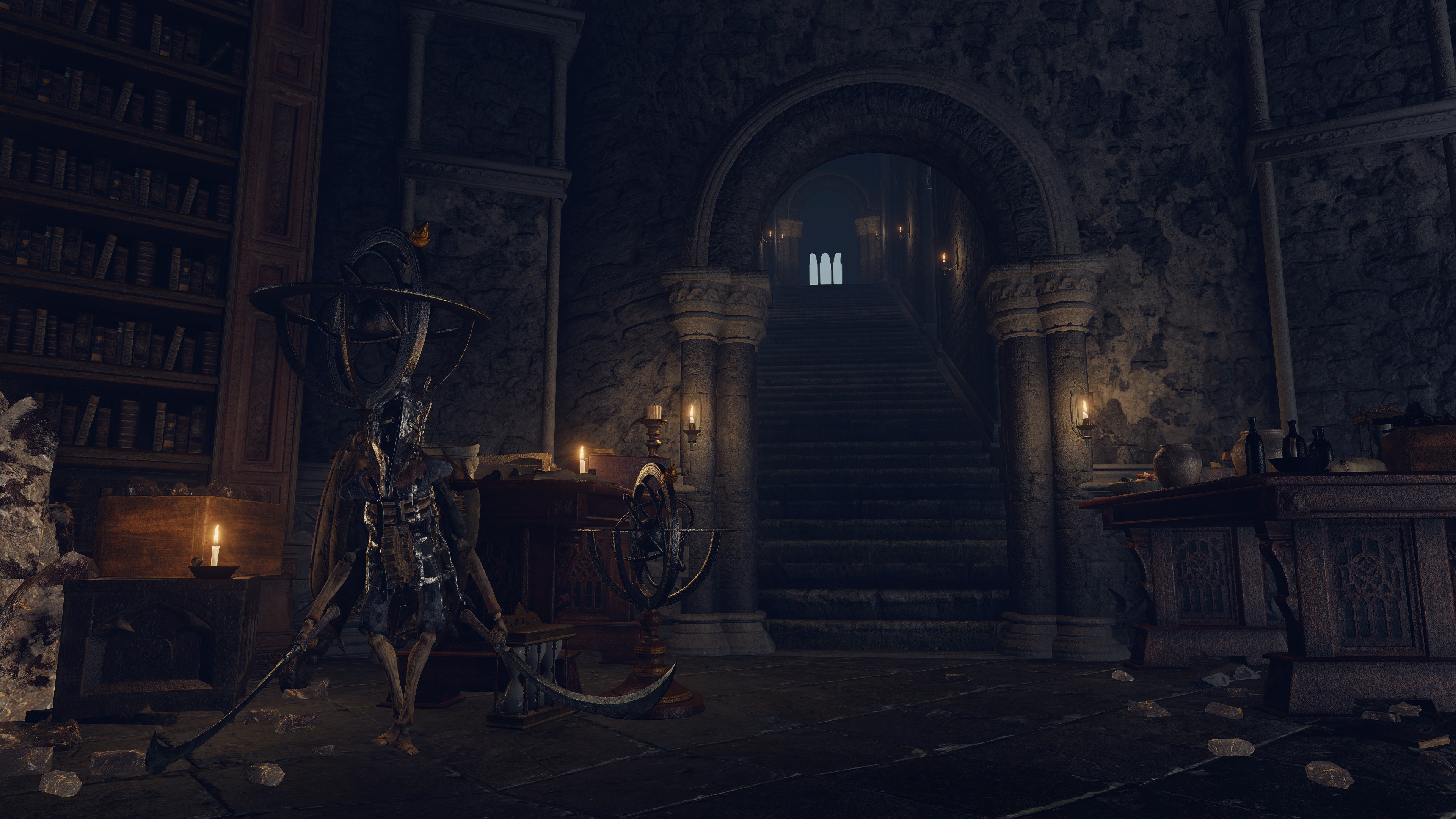
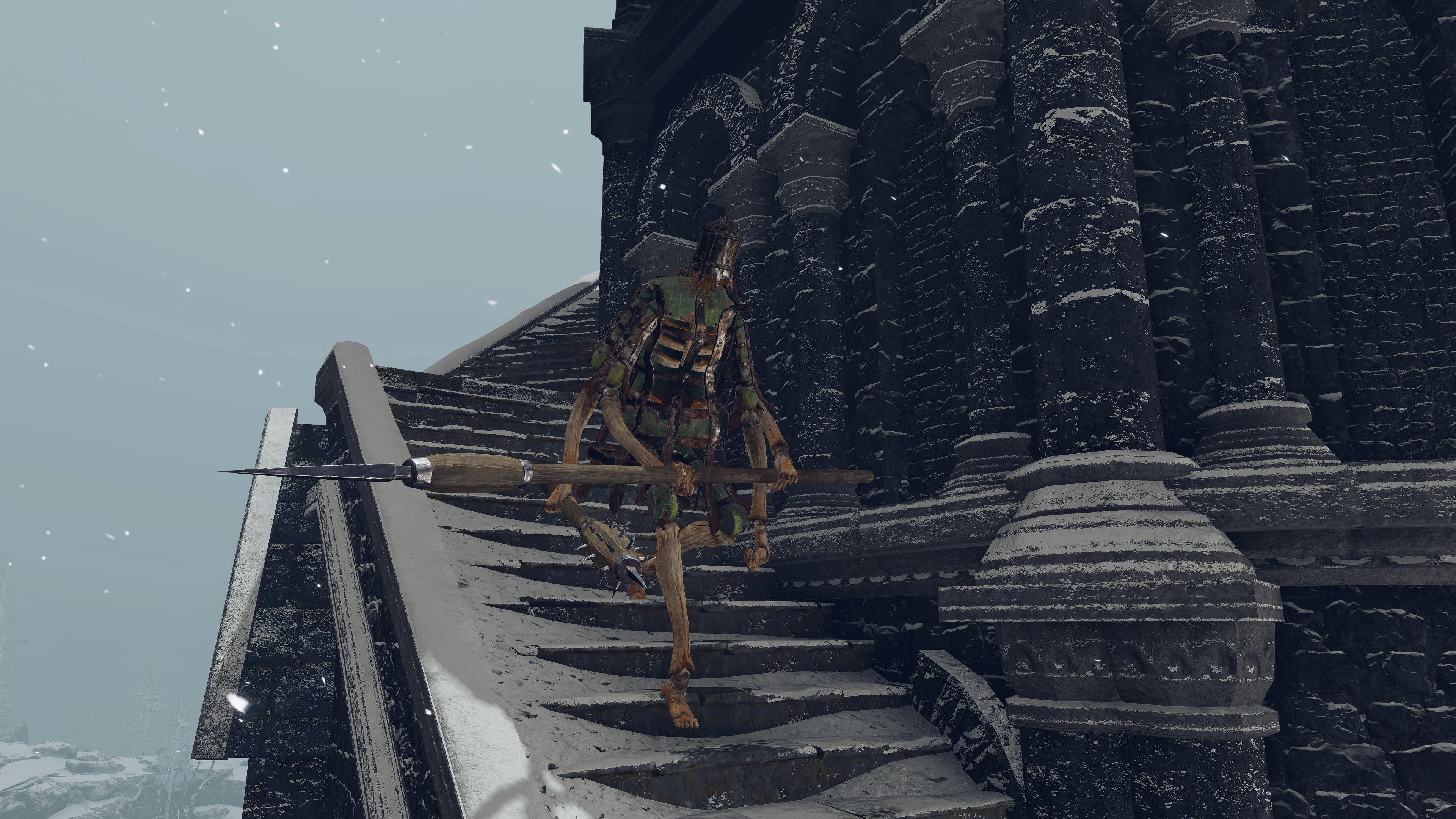
Suffice to say, there are no shortage of ne’er-do-wells looking to take advantage to the fractures in Marika’s Erdtree empire. Between the warring, raiding, and myriad other problems, the death toll has risen substantially. The golden runes and rune arcs looted from every rat in the Lands Between are indicative of the sheer number of corpses piled up in every corner. Considering how quick the vermin are to multiply when properly nourished, even as spirit ashes, the outbreaks of the yellow plague of frenzy across the lands may itself be thanks to the Shattering. And what do the shardbearers have to show for it? None have the Elden Ring in their grasp still, making the extended suffering all for naught. And yet, all sides persist with their madness, letting the evils of anarchy rule the day. Add in the curse of life proliferating, and the Two Fingers are right to call the world broken. It is no wonder if the Greater Will no longer sees them as worthy of rectifying their mother’s sin.
Ashen remains harboring spirits. Summons three great rat spirits.
Spirits that require no FP to summon. A pack of beasts who are summoned at a distant location and begin fighting.
Is it their vigorous fertility, even after becoming spirits? They have their numbers increase via enhancement.
Leyndell has been stuck in this military lockdown all throughout the war, with no sign of letting up. Most of the conscripts have already perished, and the royal army is beginning to buckle as well. Try as they might to hide from their superiors, soldiers are plainly beginning to slack off. Granted, their superiors aren’t faring much better. Even as one knight lectures troops for taking a break in the shadowy back alleys, another is doing the same down a few blocks. Two more can be found in the western district, using the seclusion of the Manor Quarter to seemingly advance their ancient dragon faith, ferreting out scales from Gransax’s petrified underside to fashion into holy seals. In the meantime, the conscripts under them raid the Fortified Manor’s kitchen for a proper cooked meal. Then, in the eastern ward, they have priests supporting a slave revolt. The breakdown in command is palpable at all levels of the military hierarchy, and circumstances are hardly any different outside the ramparts.
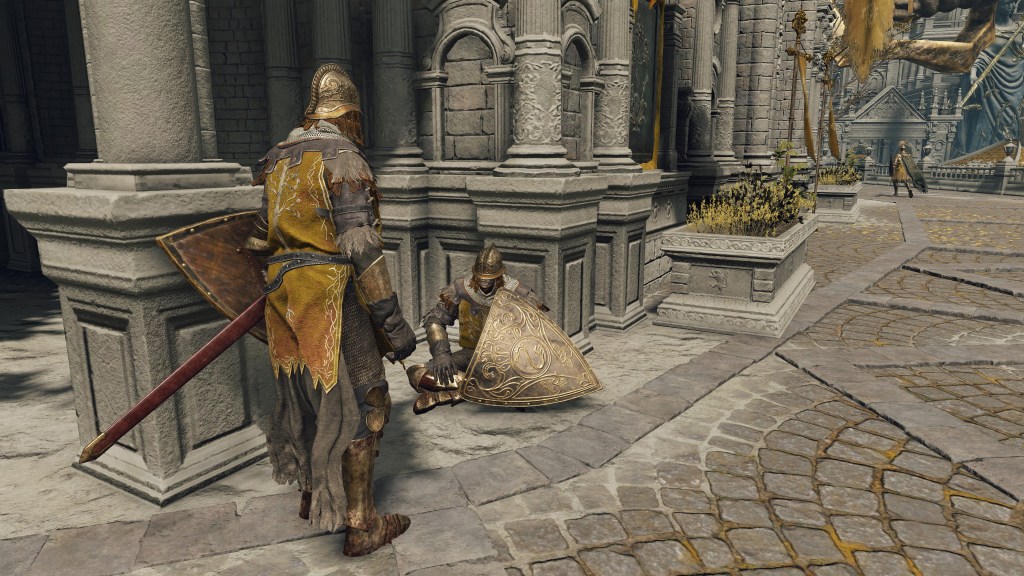
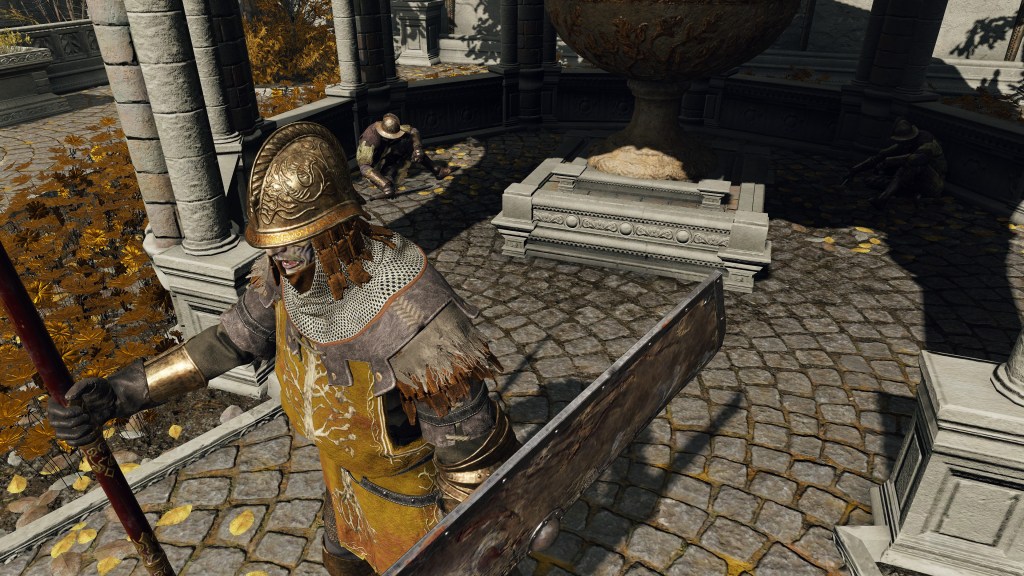
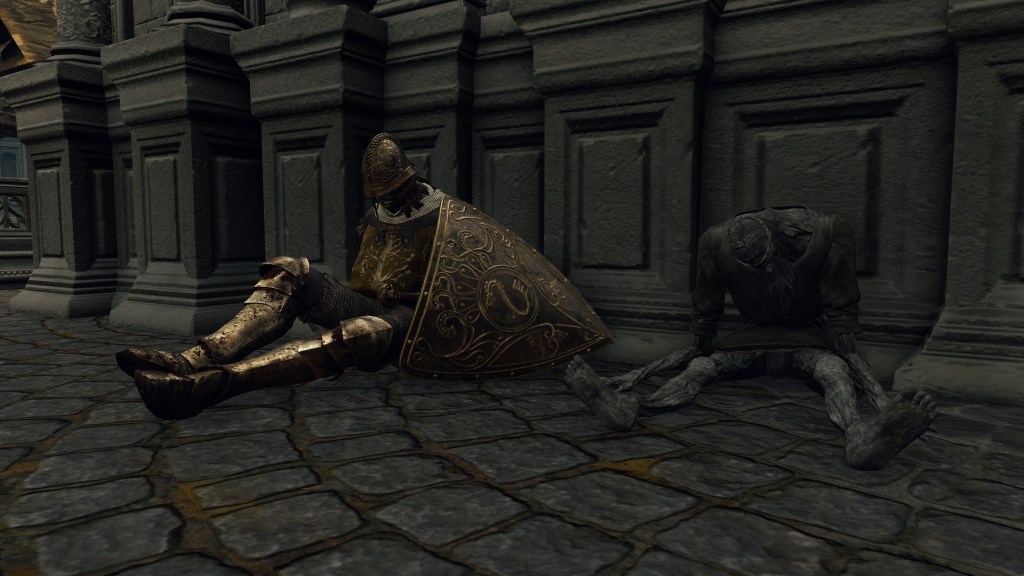
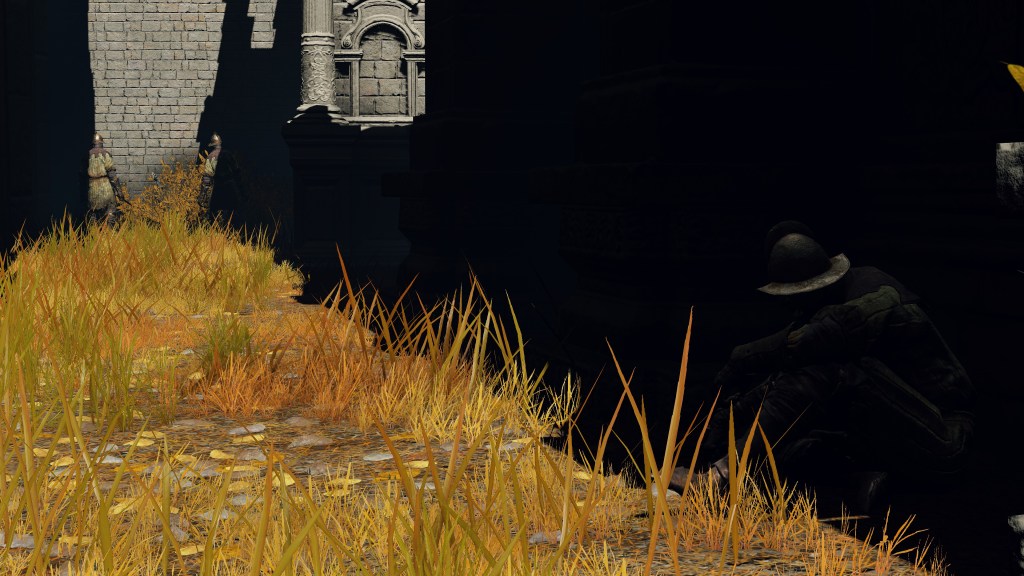
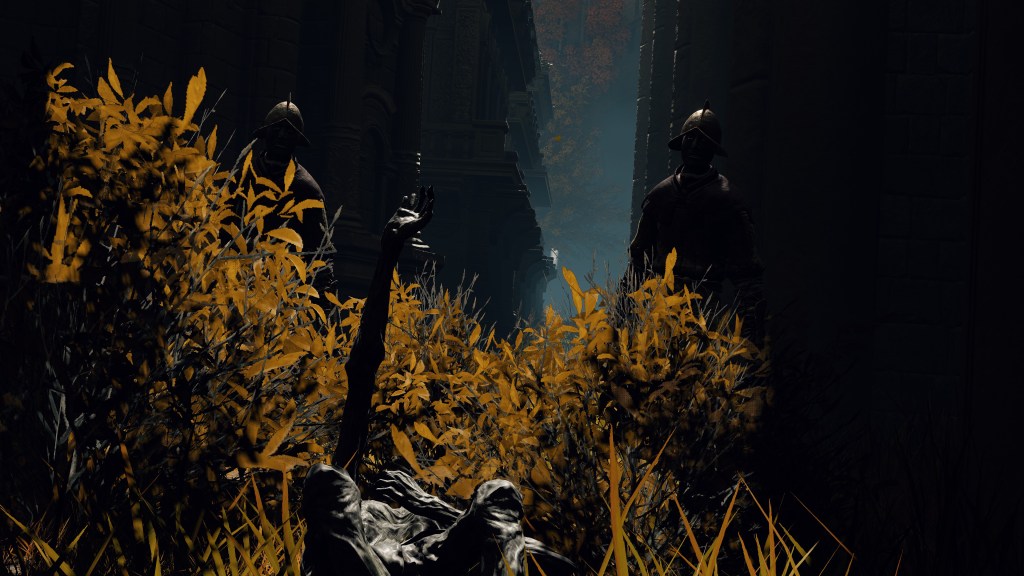
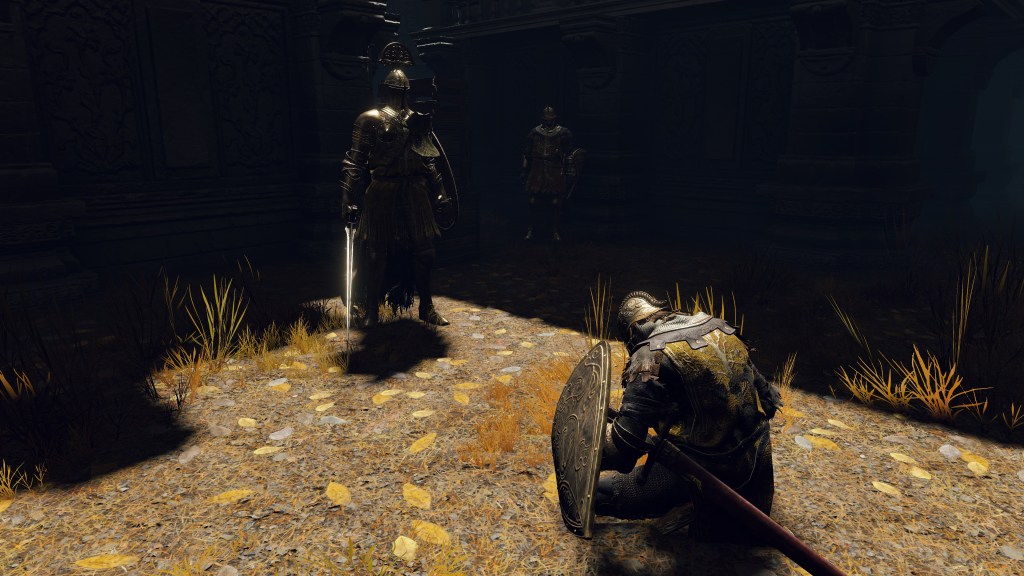
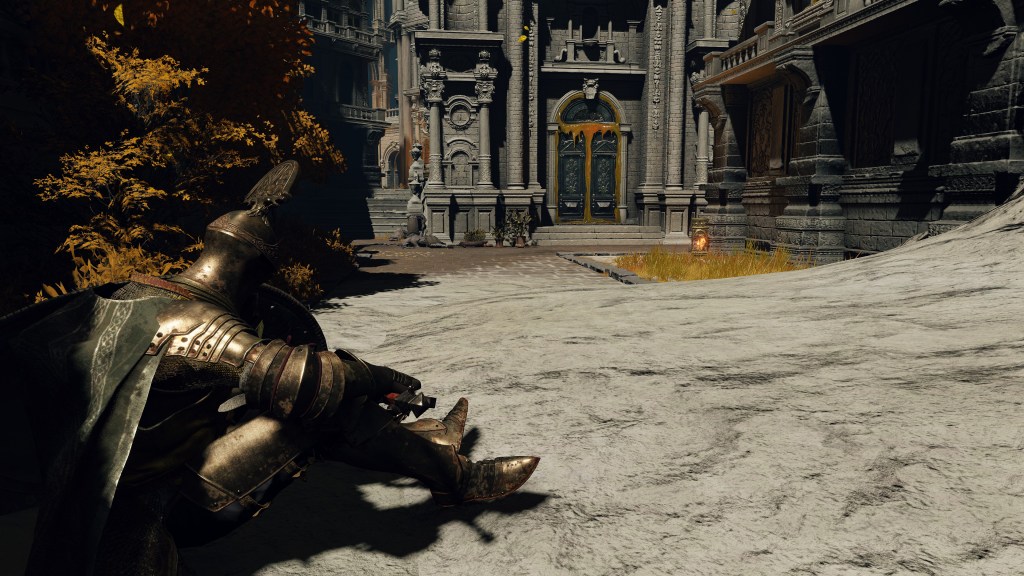
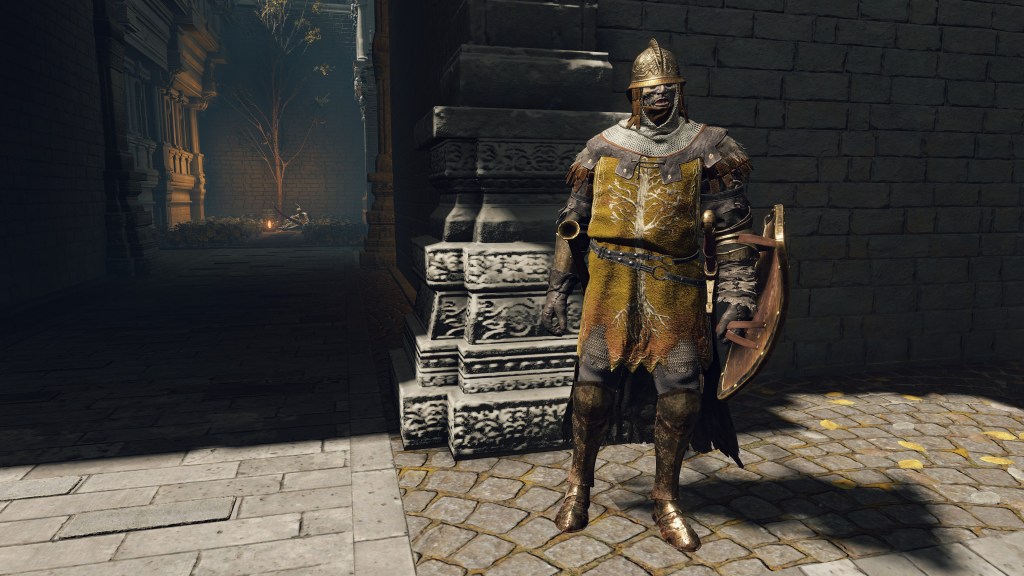
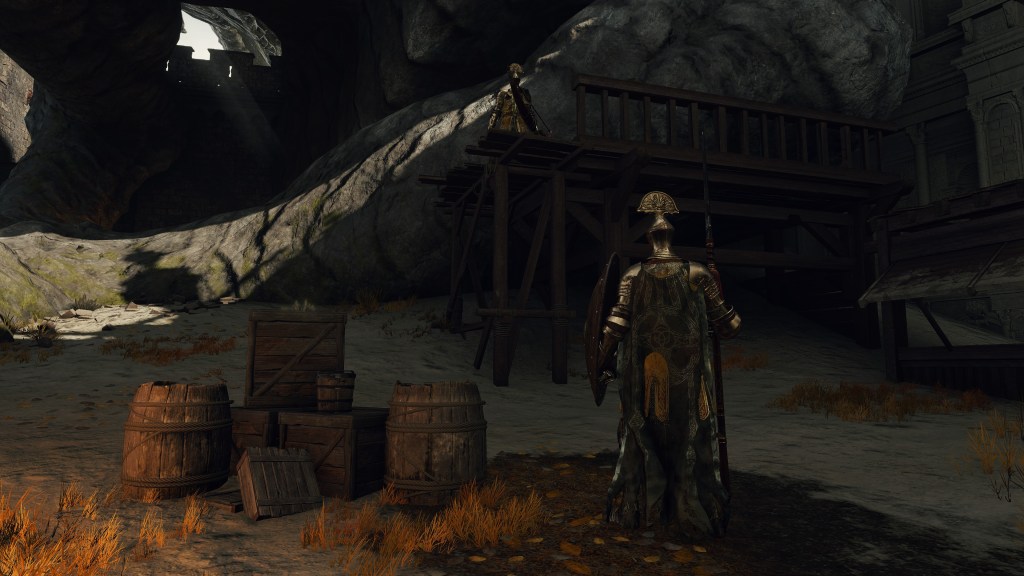
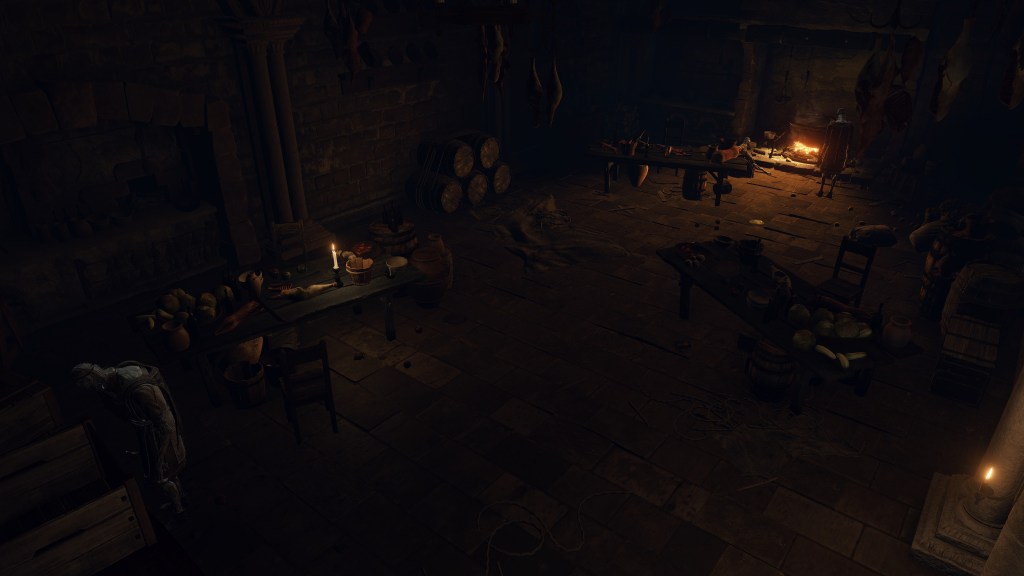
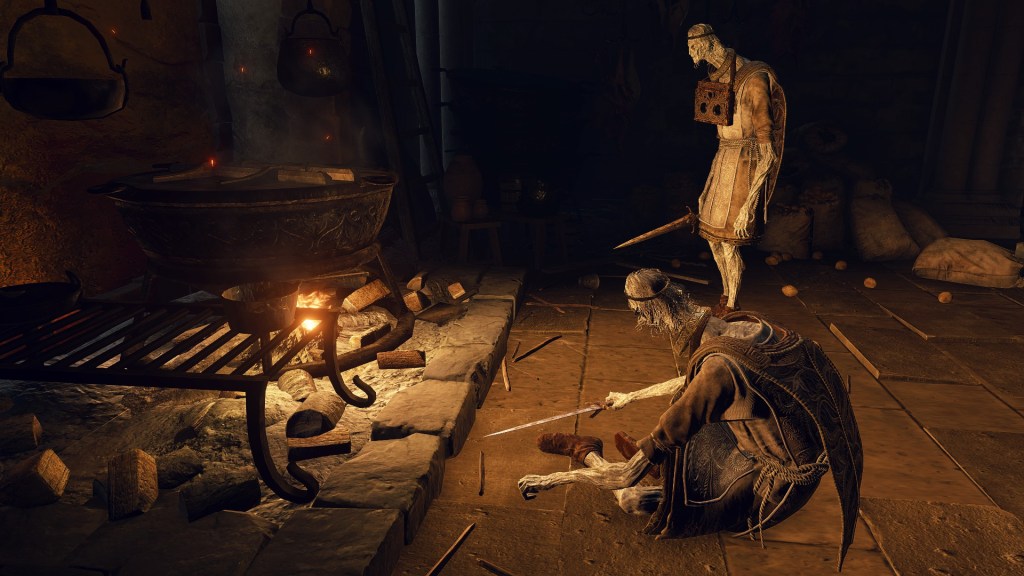
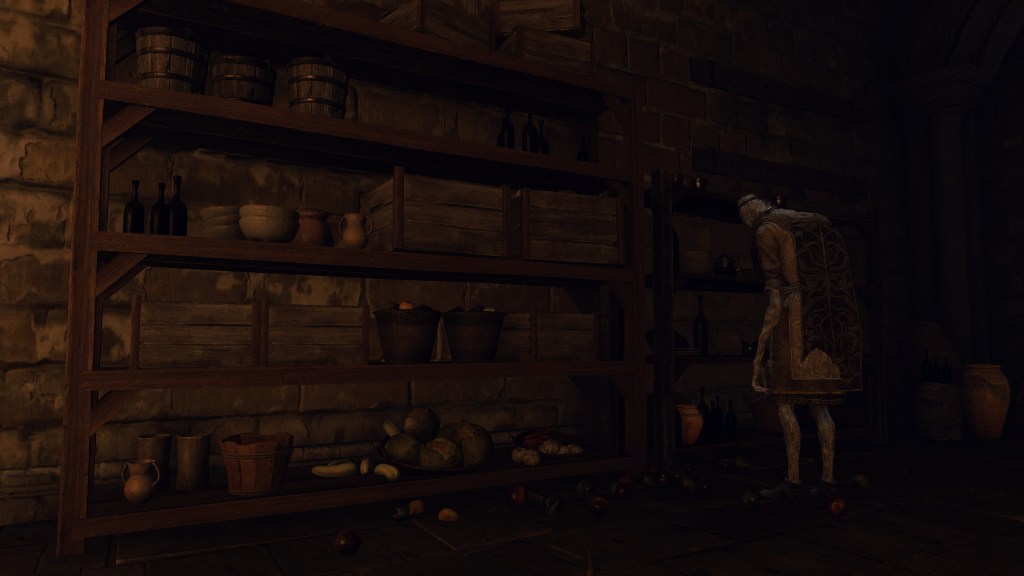
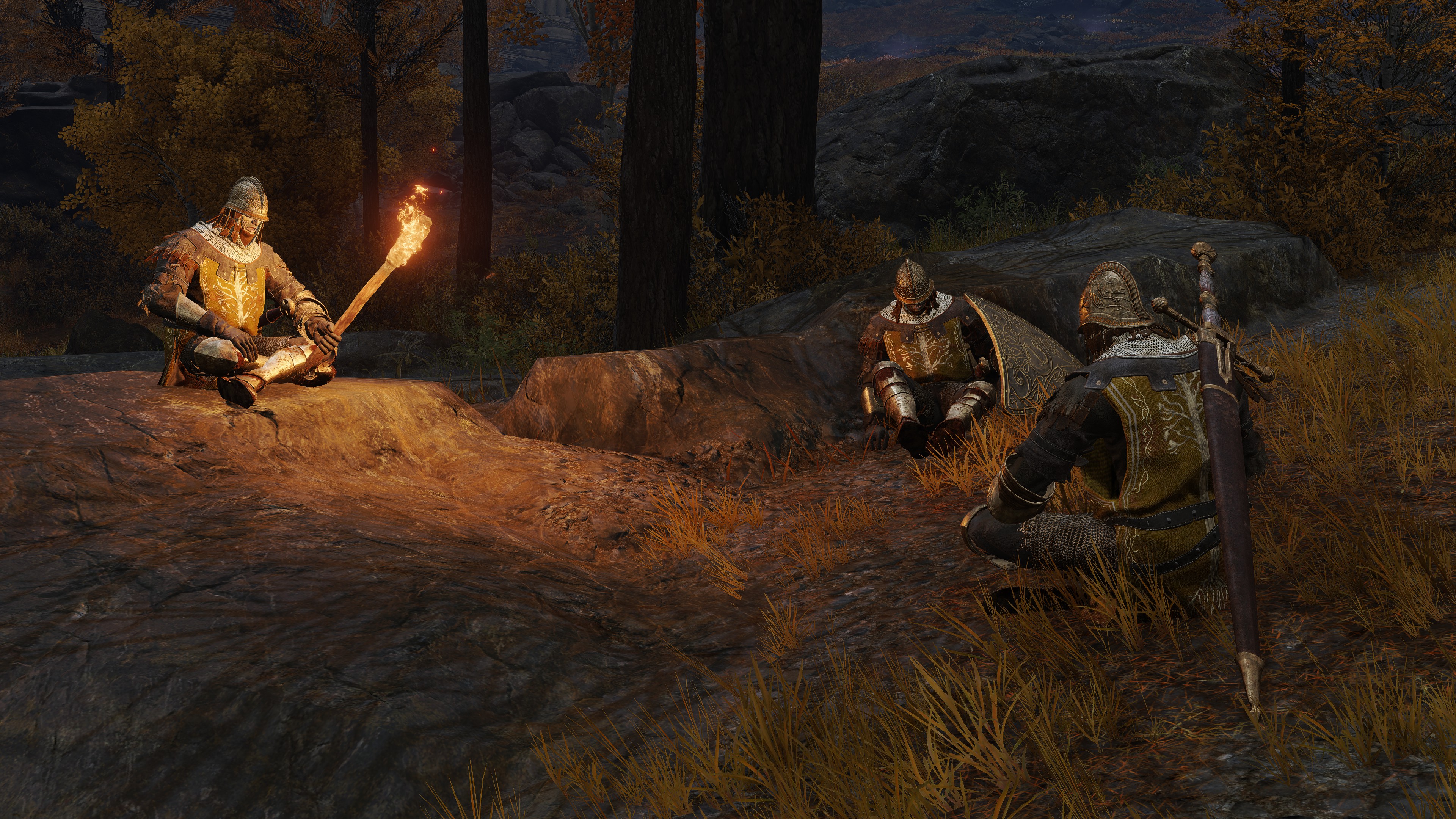
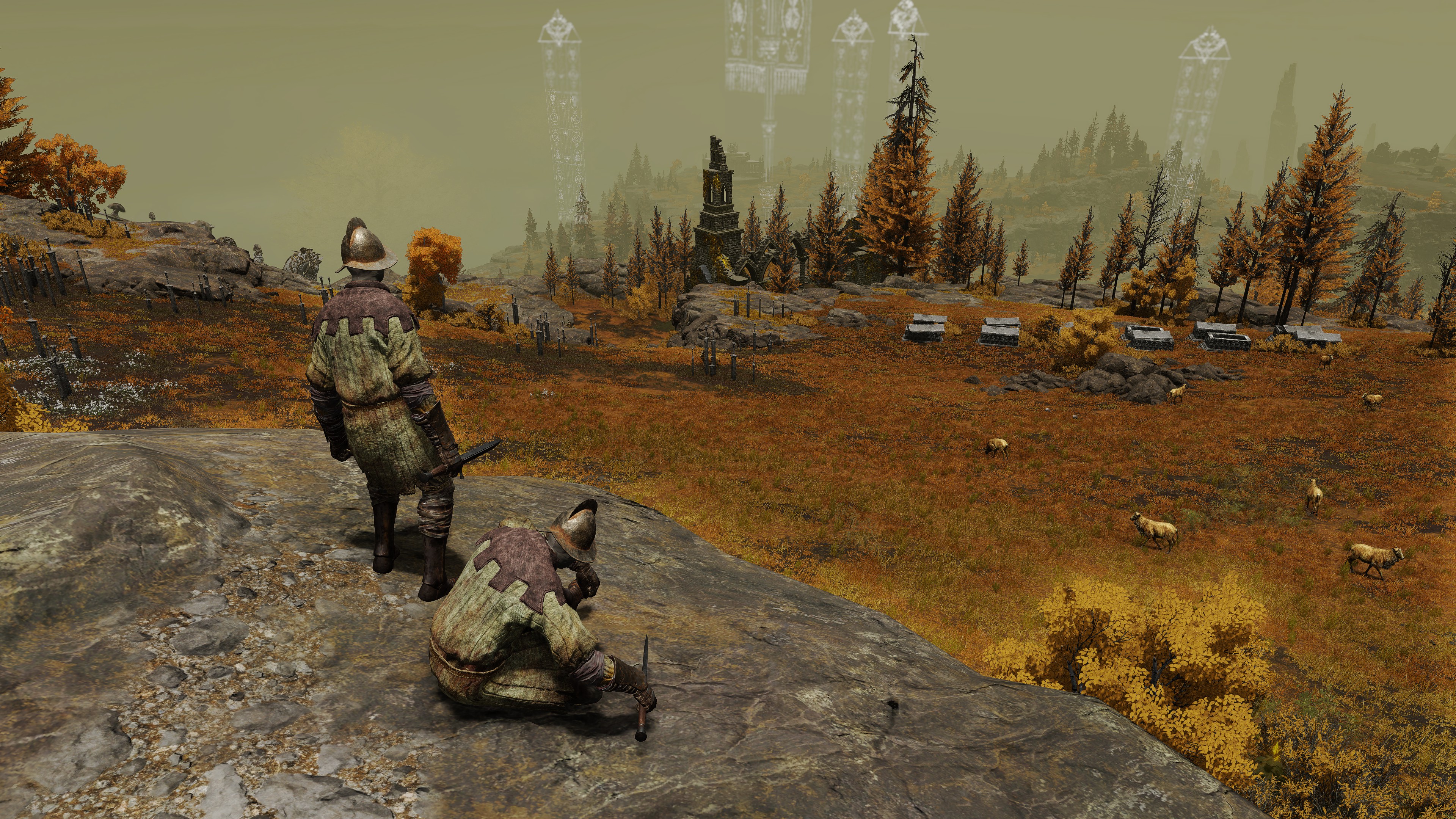
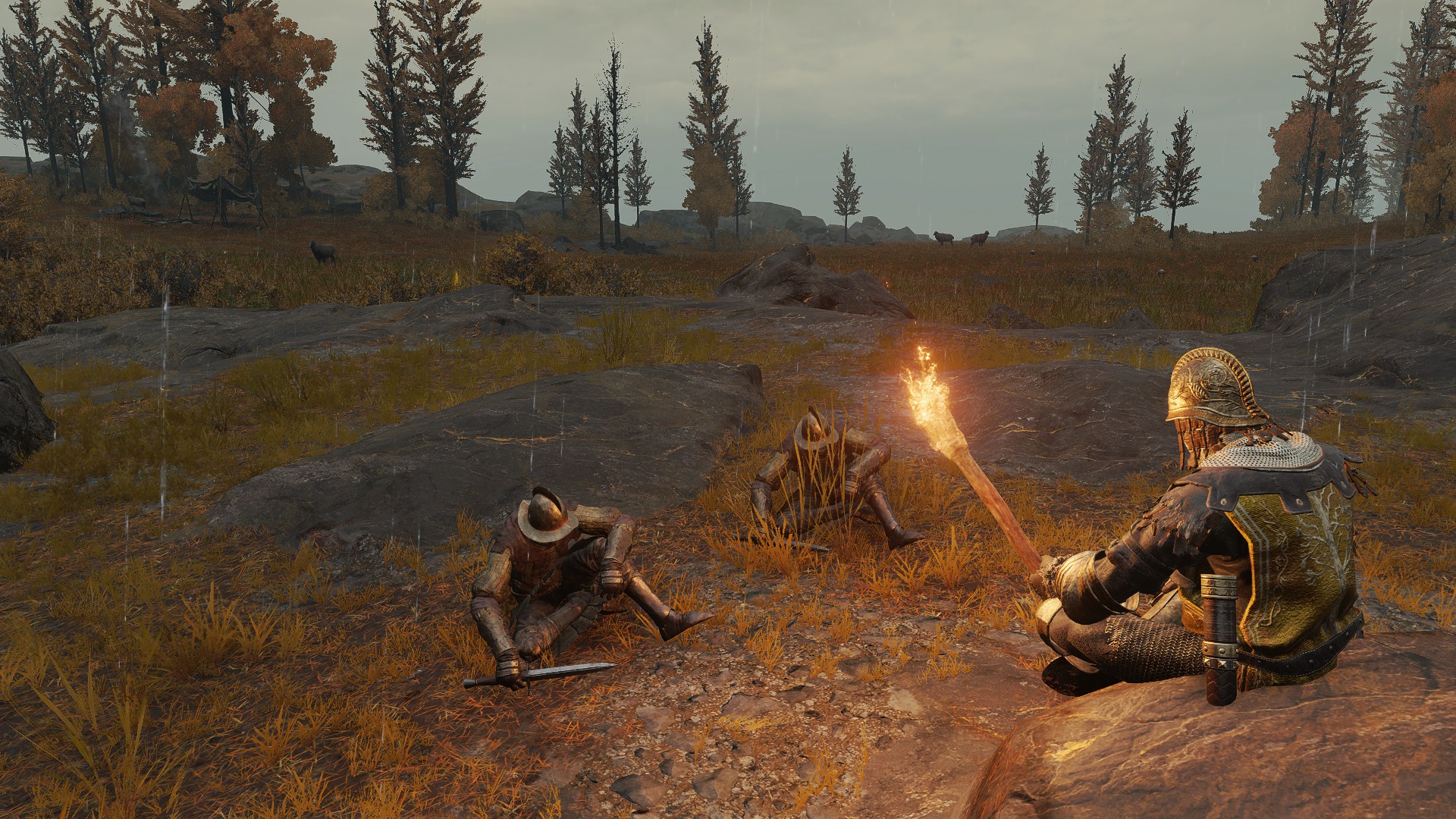
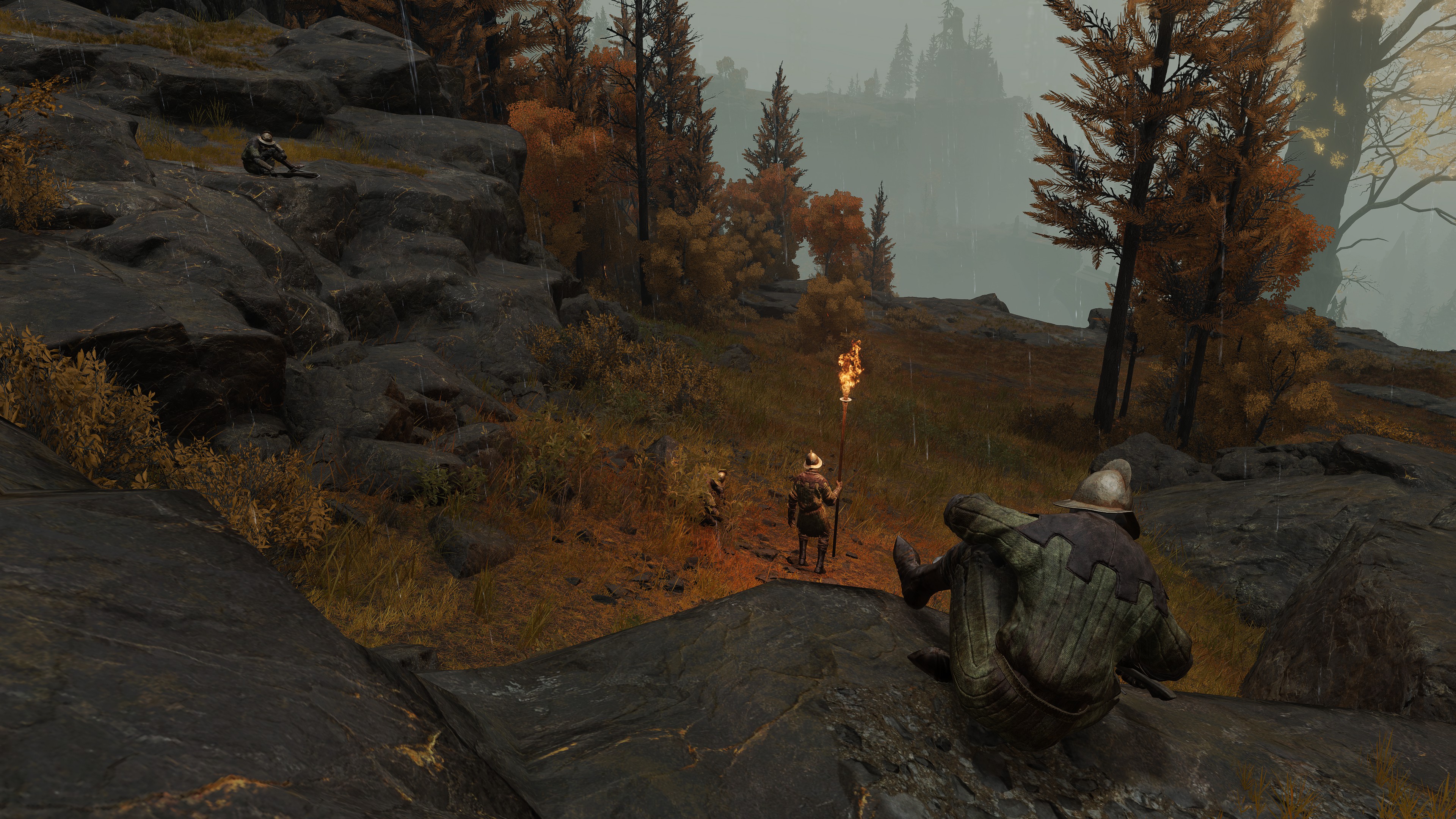
Notwithstanding a fair share keeping to their duties as patrols or noble escorts, plenty of troops are similarly taking a breather, whether it be in woods, by roadsides, or on stages. Only in one case are they using this appearance of woolgathering as a lure for ambush; everyone else is just lowering their guards. Even with the robust defenses at the southern gate, the soldiers have gotten careless enough to leave the door ajar. And can you blame them? The royal capital hasn’t been seriously threatened for quite a while, yet Morgott insists on treating the situation as if it were still a hot war. But there is no imminent invasion, no matter how much fears for his Erdtree consume all his attention. The result is his faction neglecting real problems in the territory, such as collapsing infrastructure like the Forest-Spanning Greatbridge. There is no military unit looking to discipline Dominula for targeting the Erdtree faithful for their festival, nor has the plague of death in the Woodfolk Ruins garnered attention from more than the soldiers stranded there. Domestic affairs simply aren’t the king’s concern.
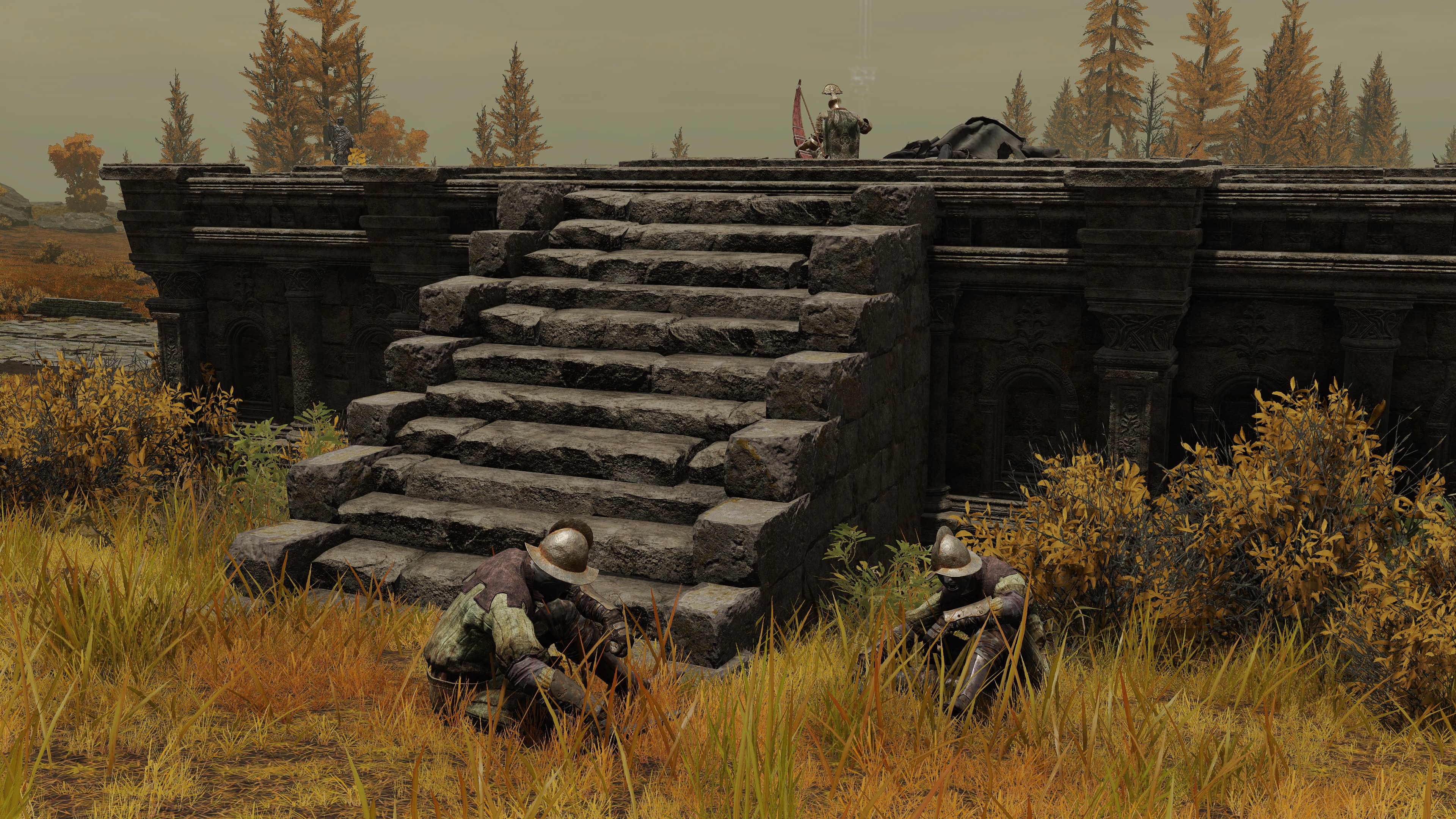
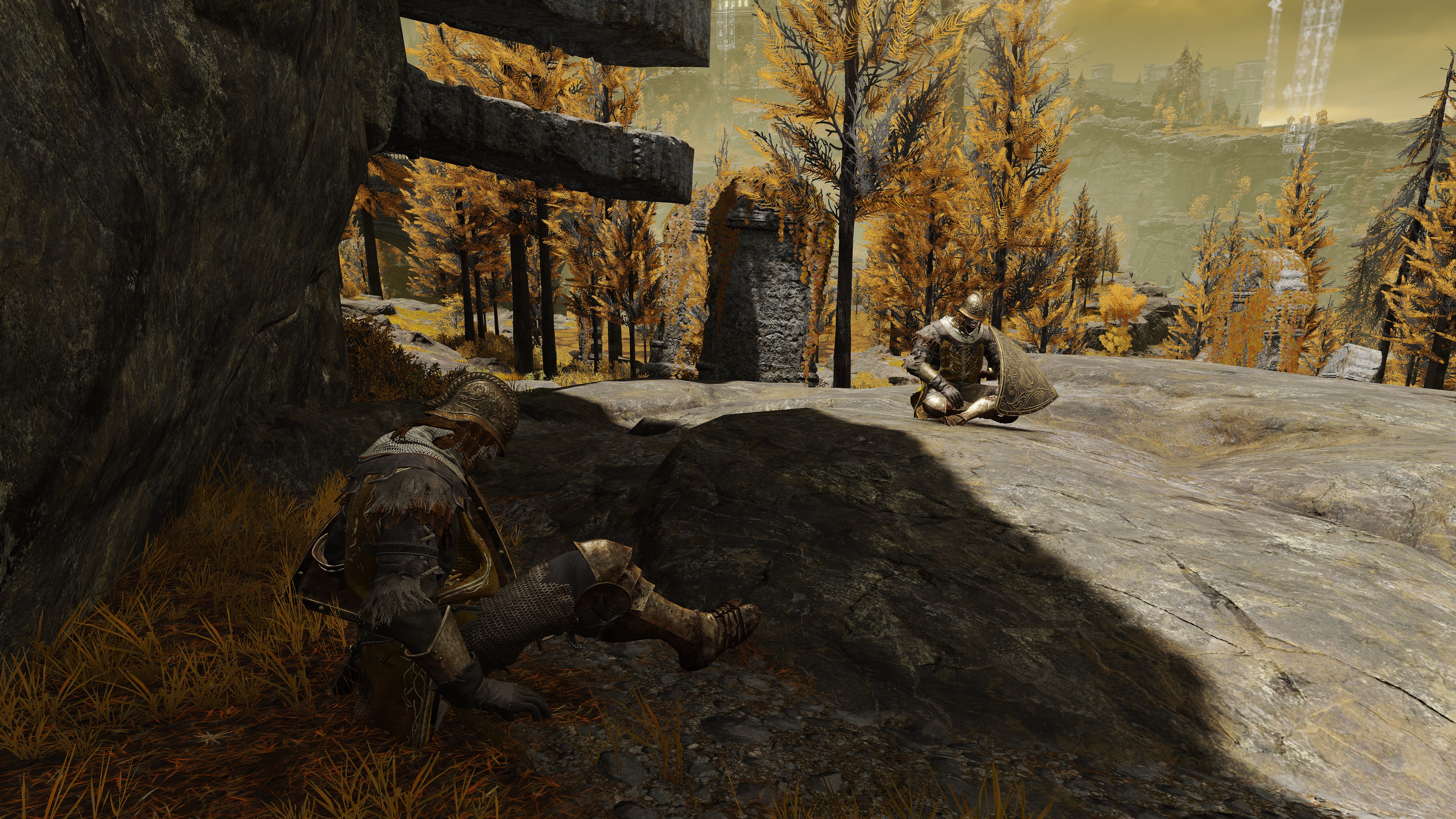
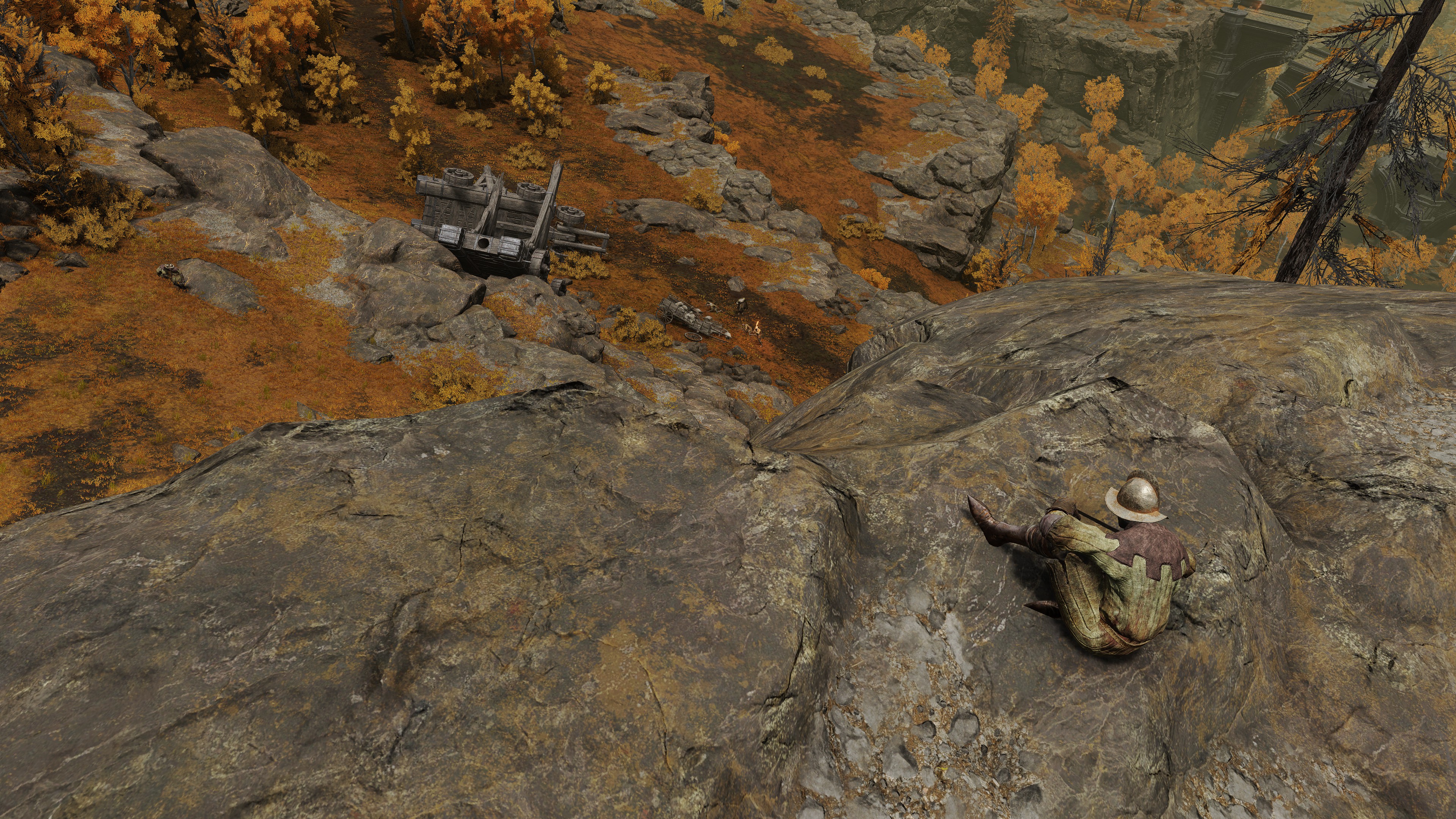
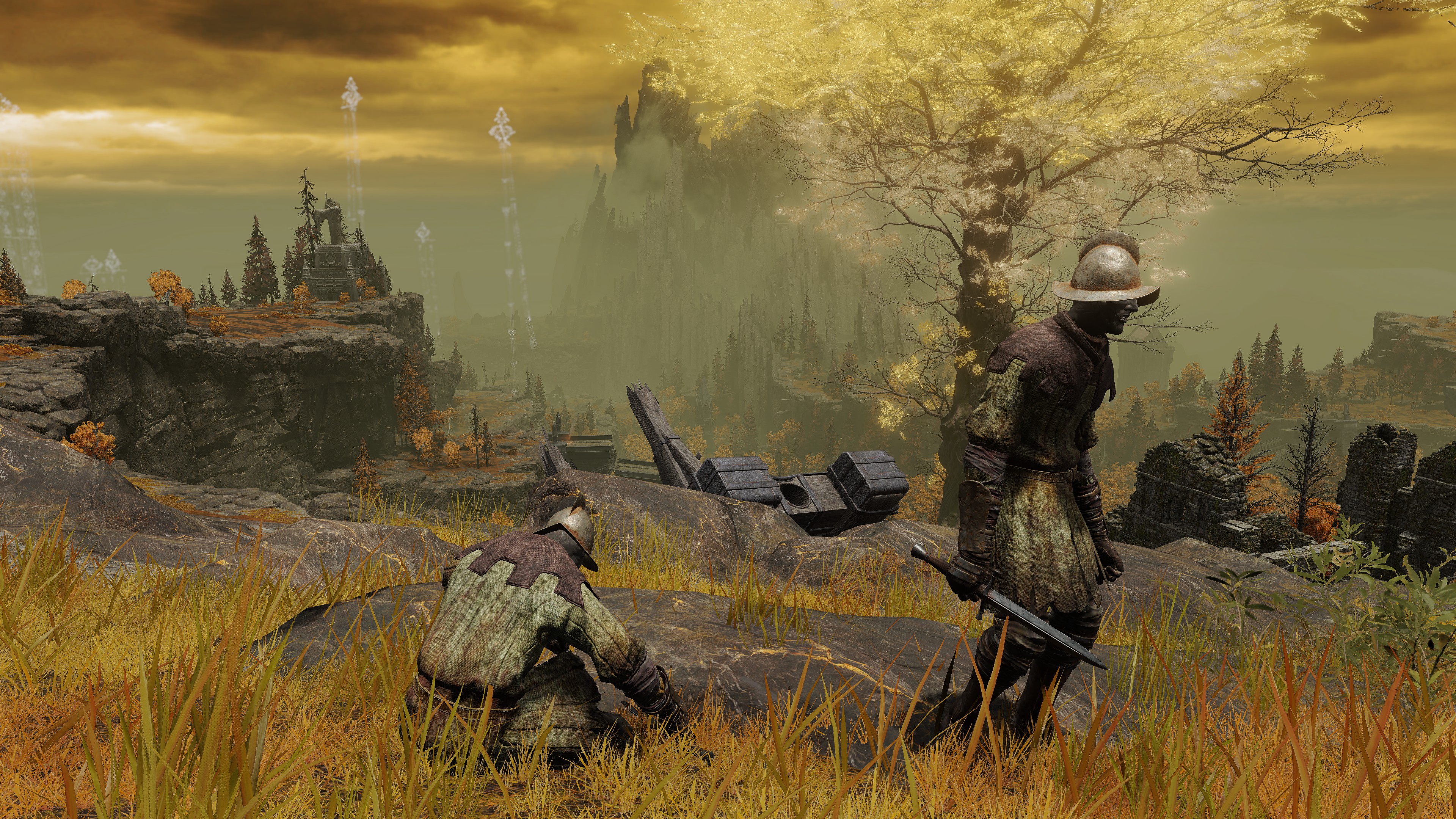
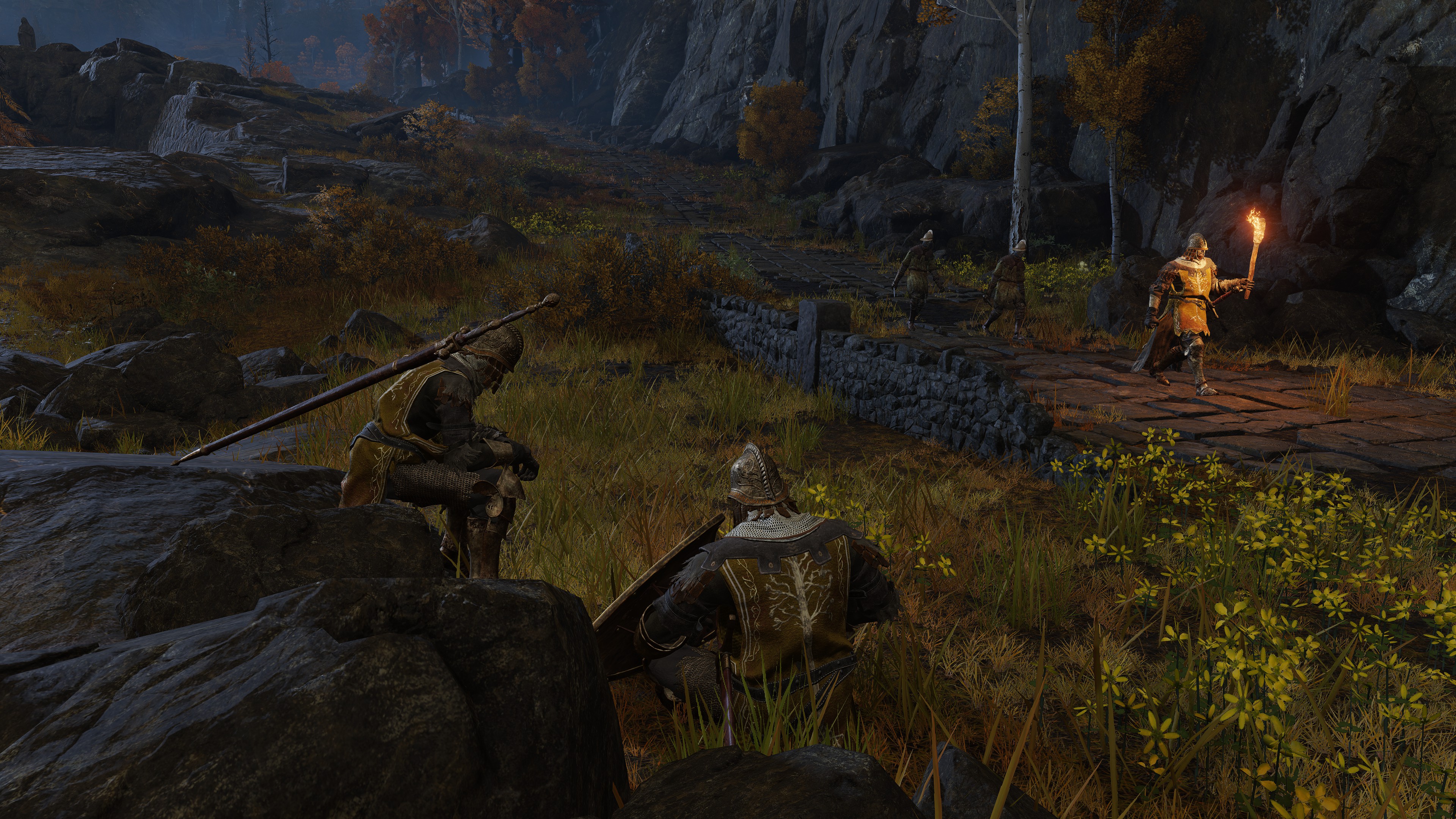
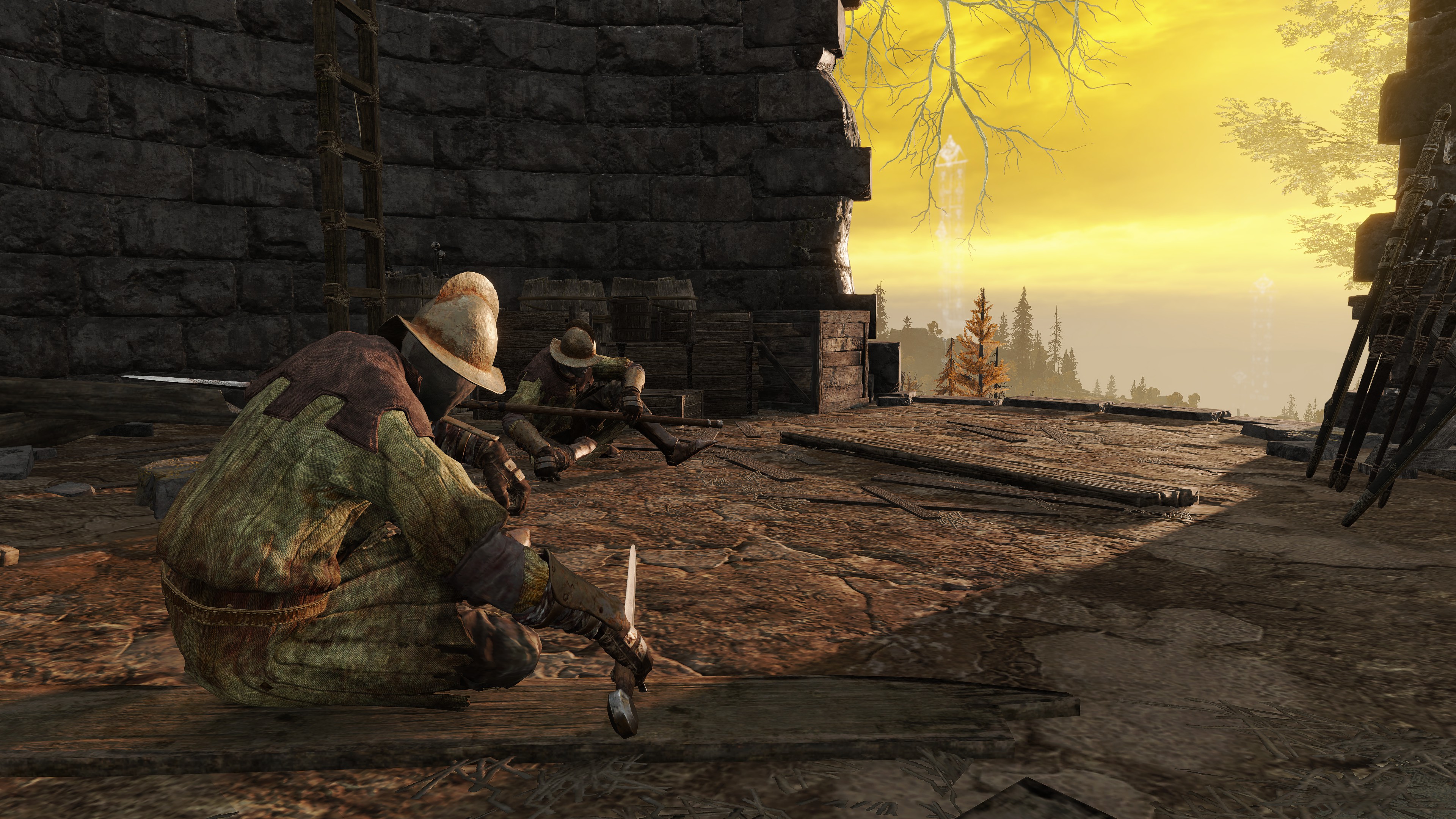
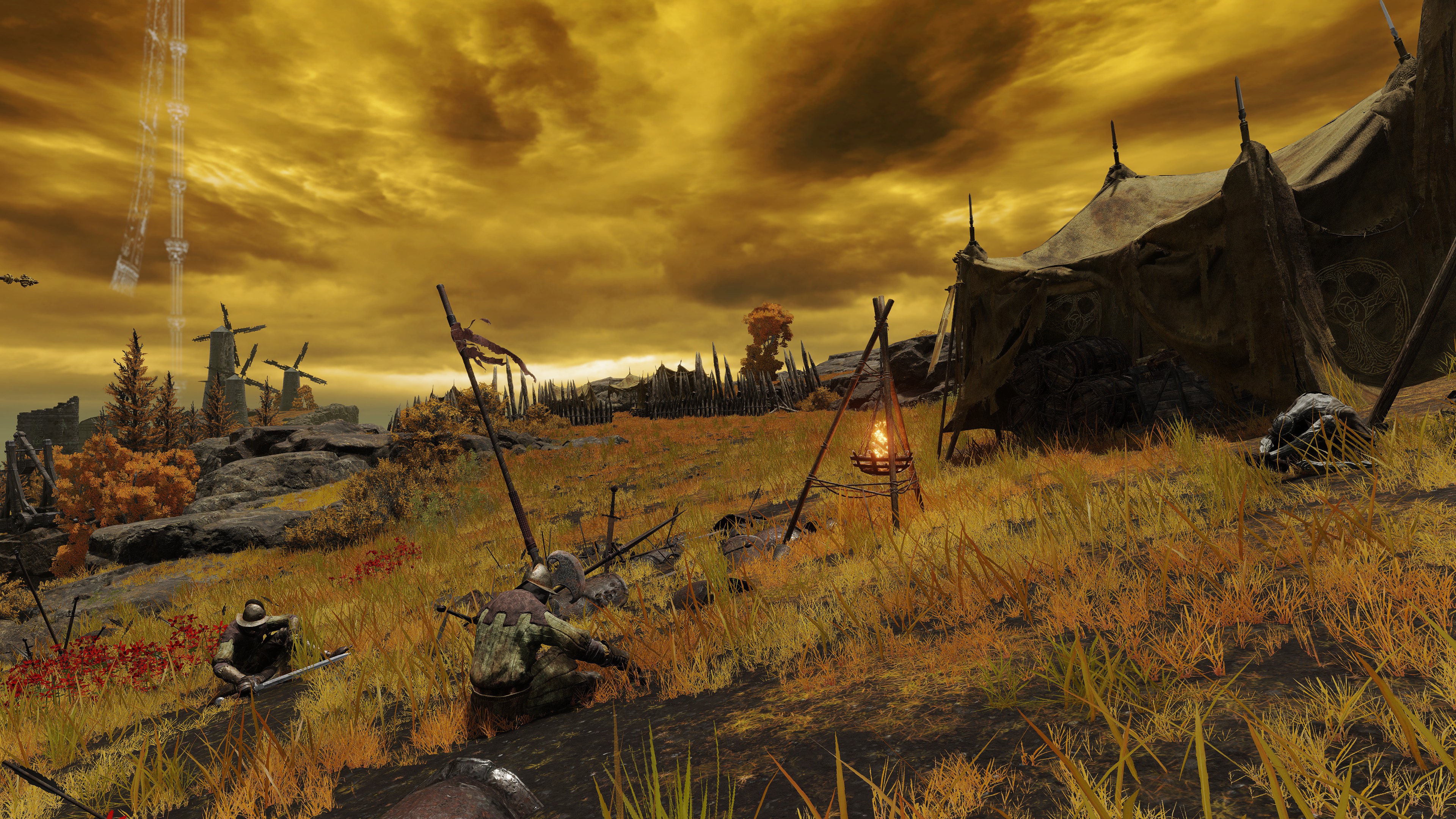
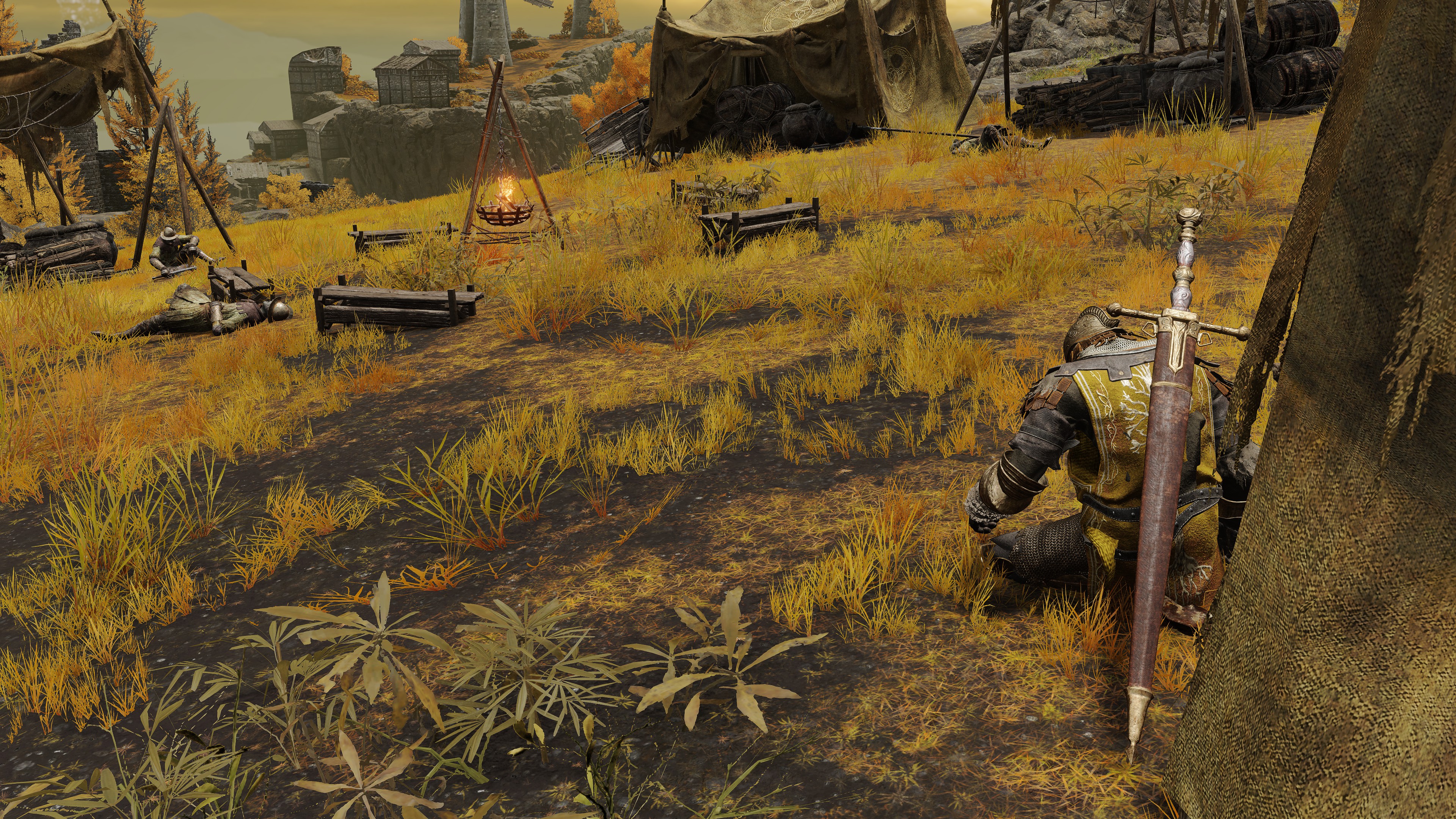
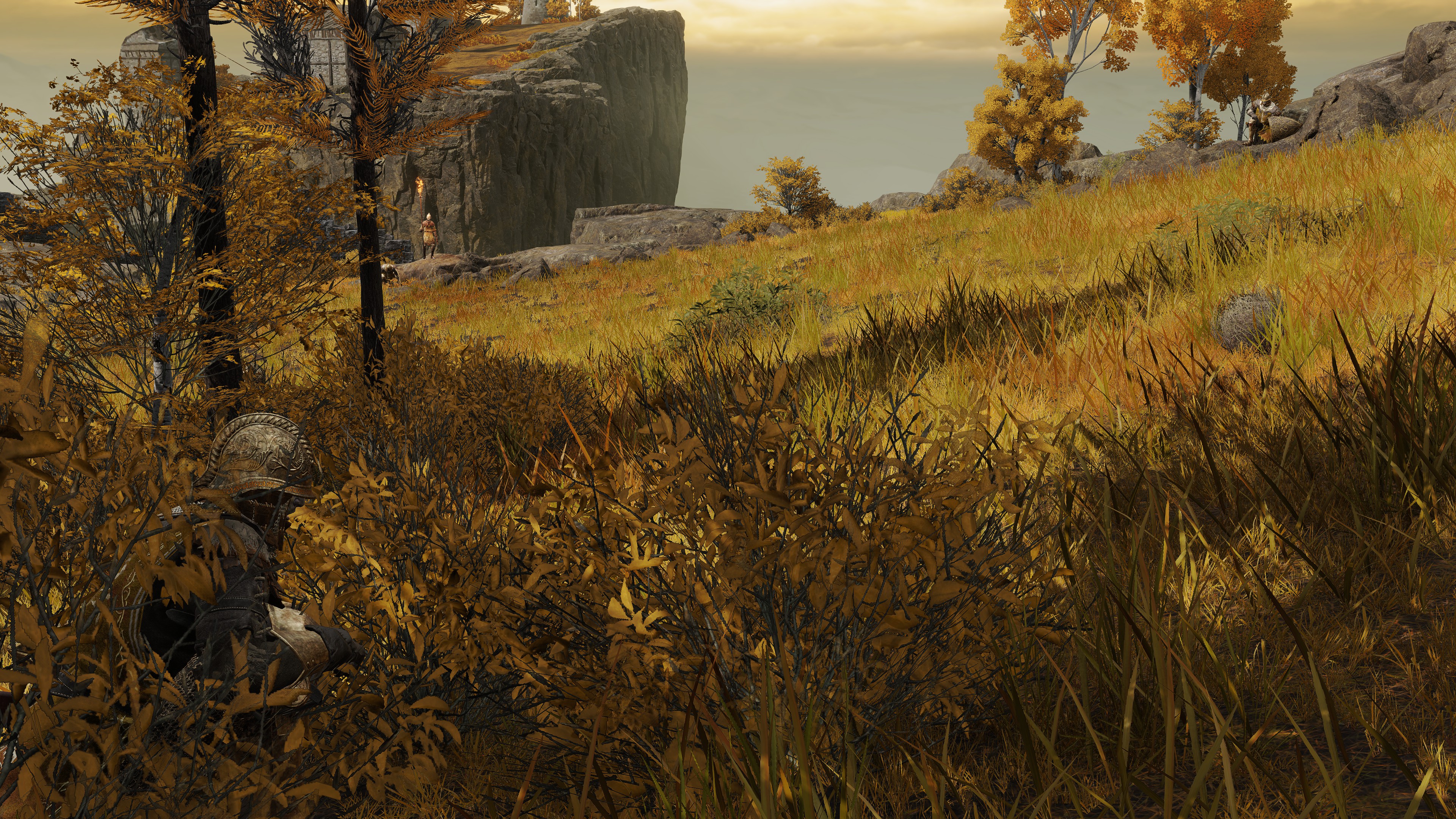
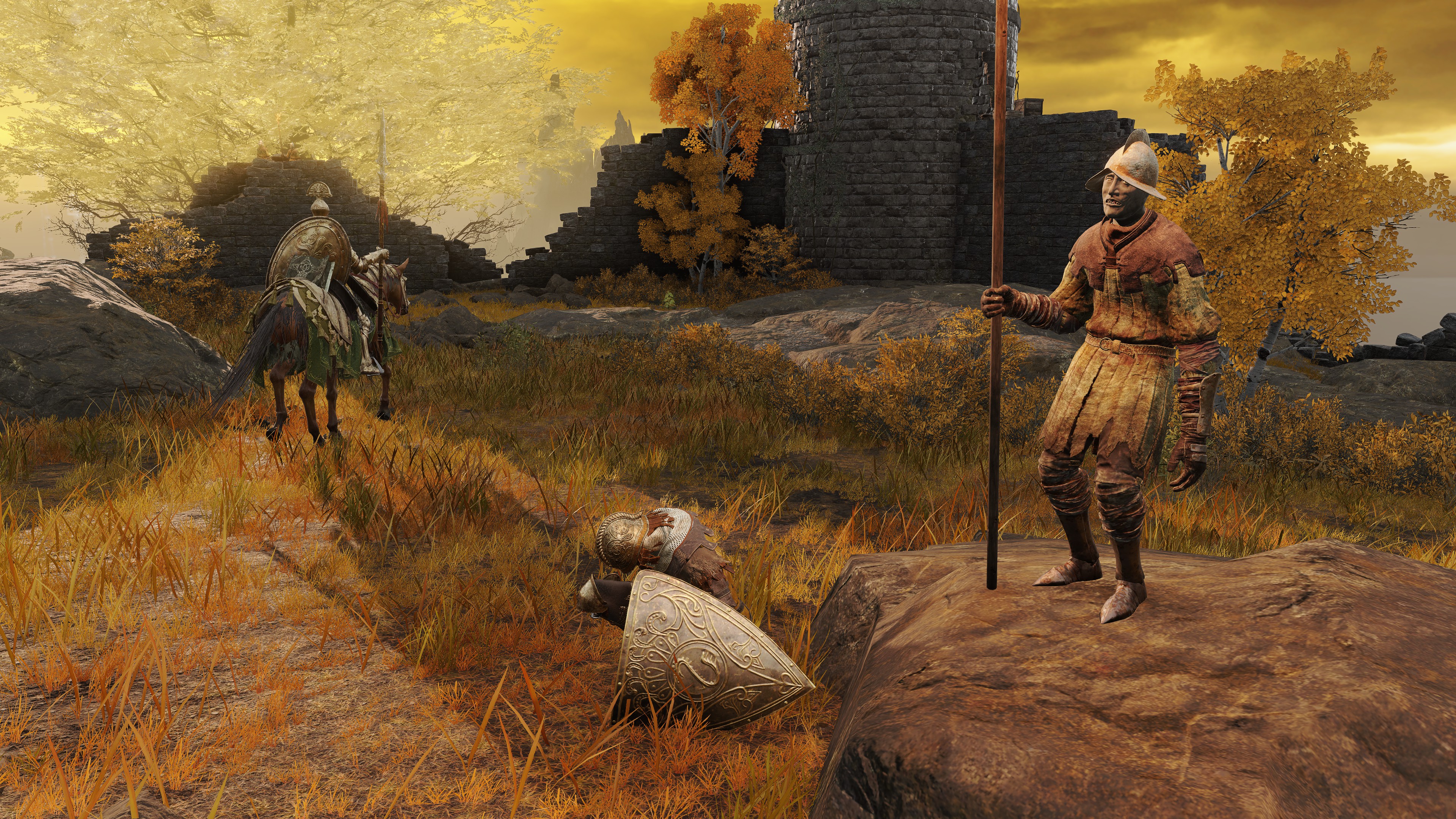
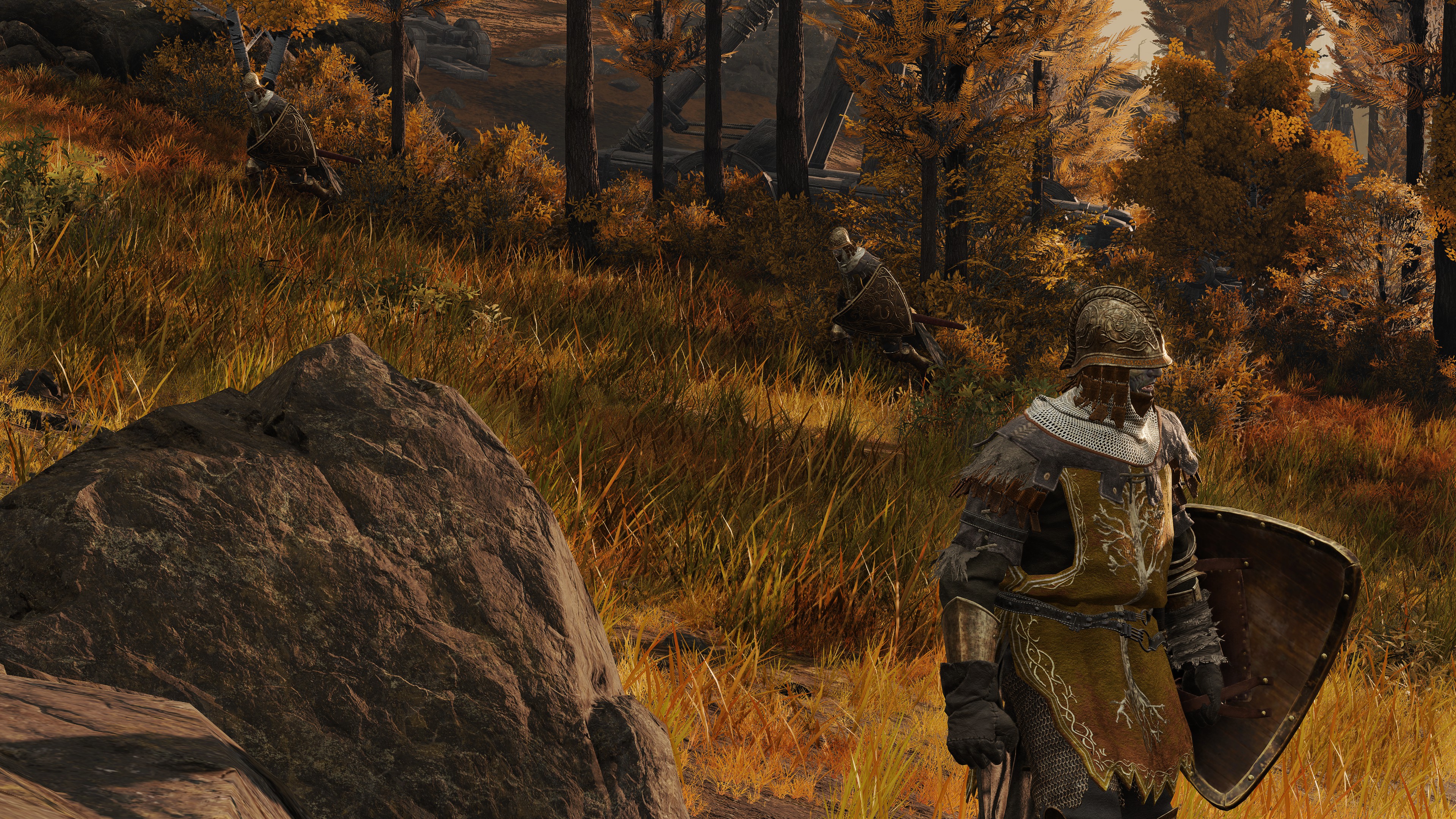
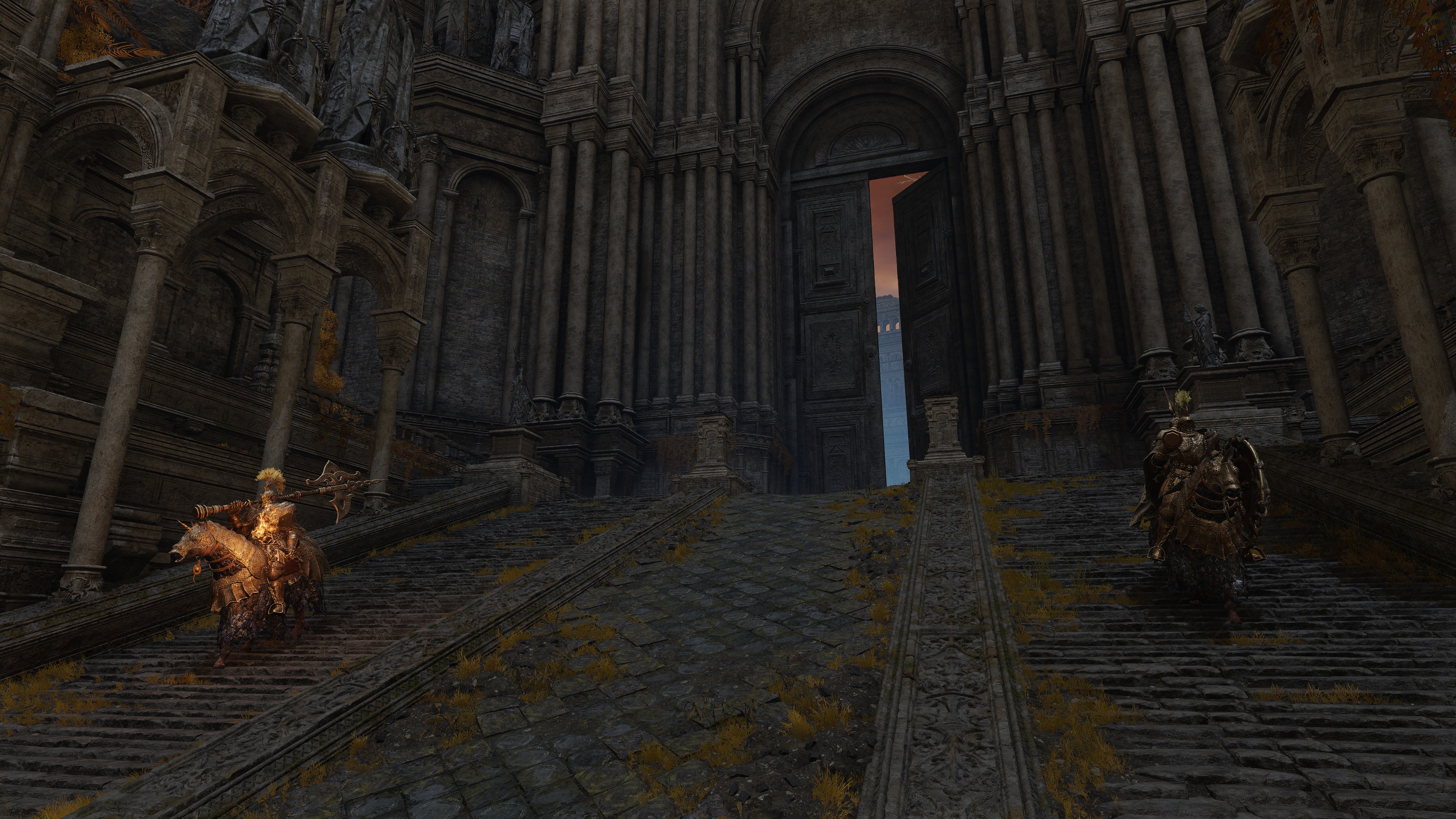
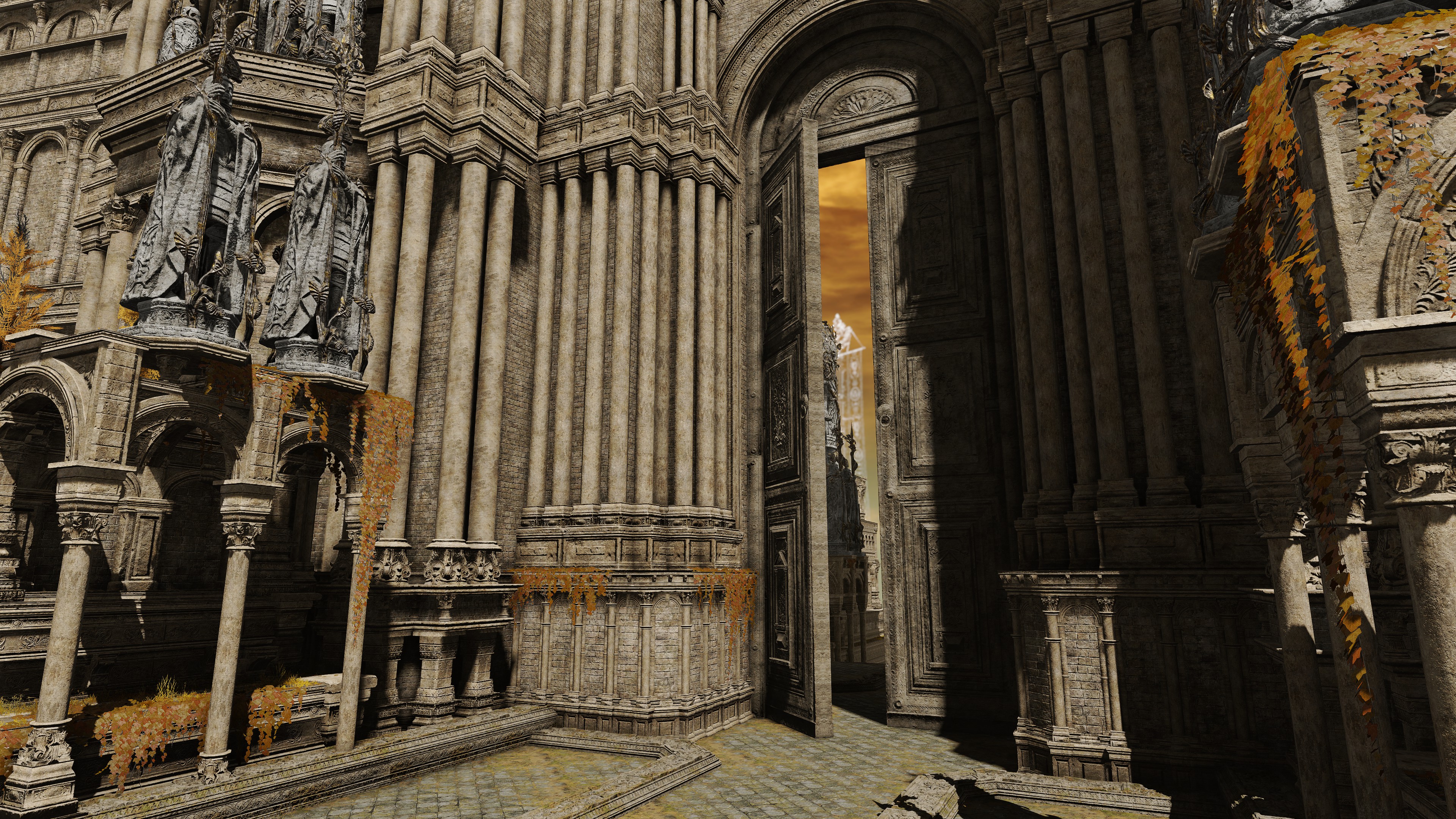
Maybe nobility could step in to manage the plateau on Morgott’s behalf, but they too are being redirected exclusively to the war effort. Countless nobles have abandoned their homes after the Shattering, searching for power these old or feeble scions otherwise lack. Leyndell’s elite have gone as far as Dominula’s graveyard to informally excavate the land, with none but their pages left back home behind the walls. No one is prioritizing the needs of the people, even in the heartland. And when it comes to the upper class, they too have been forsaken. Many do seek to return home through the front gates, only to receive no response from the capital. The few wily enough to attempt entering through the side entrance are instead met with the arrows of the ancient golems defending that side. Morgott doesn’t care to let anyone back in at this point, not even his most loyal vassals. As always, preserving the Erdtree comes first.
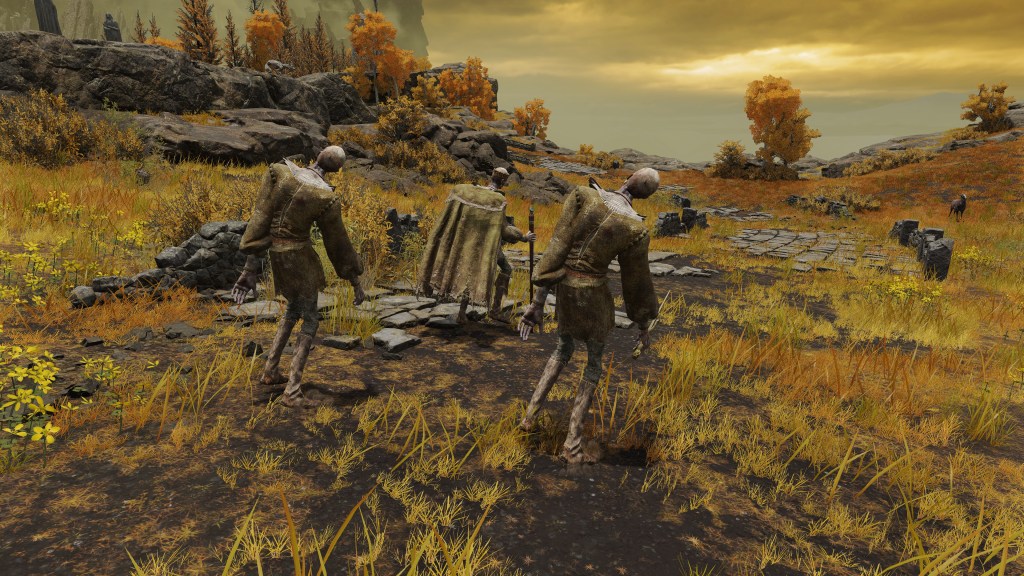
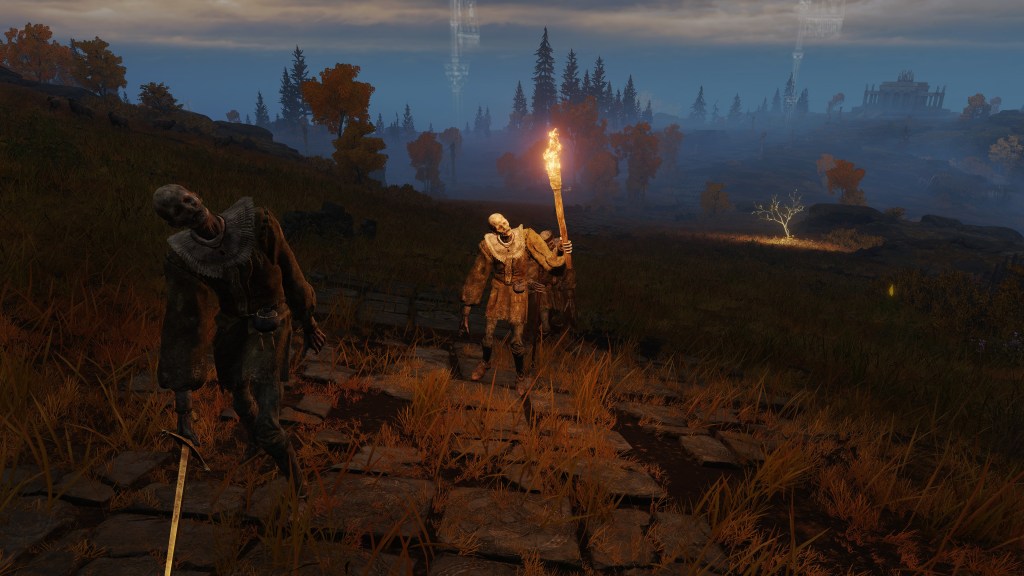
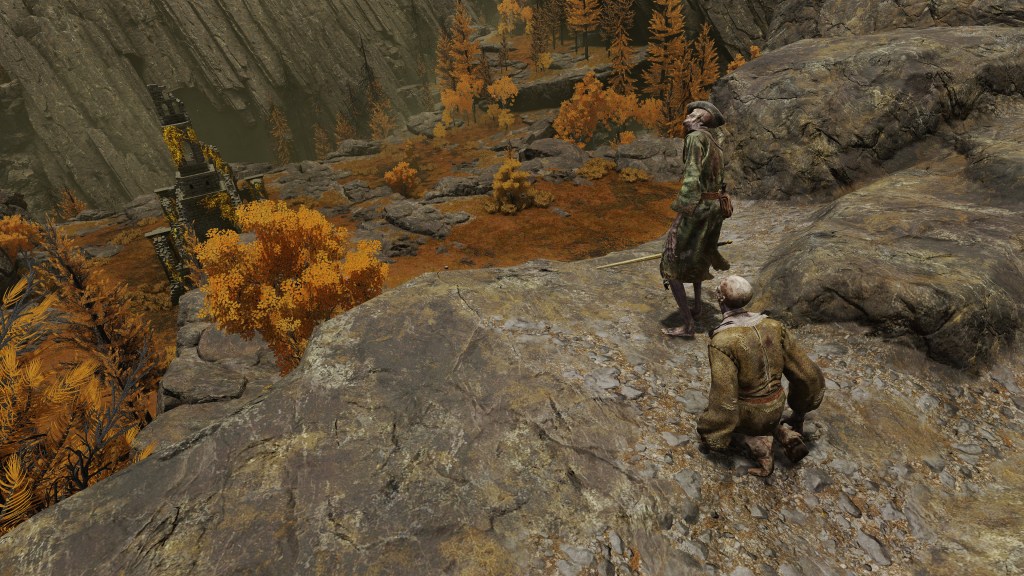
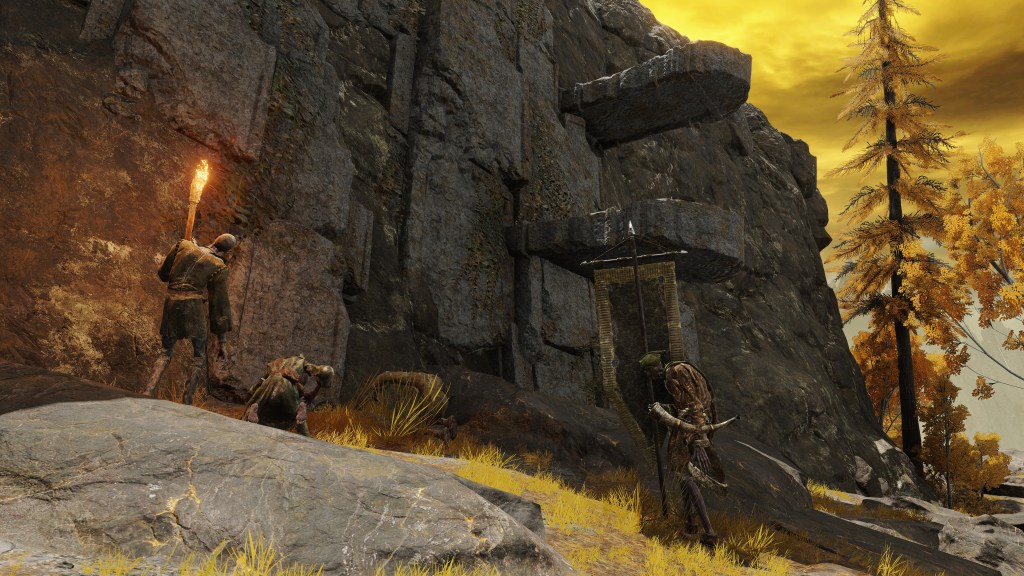
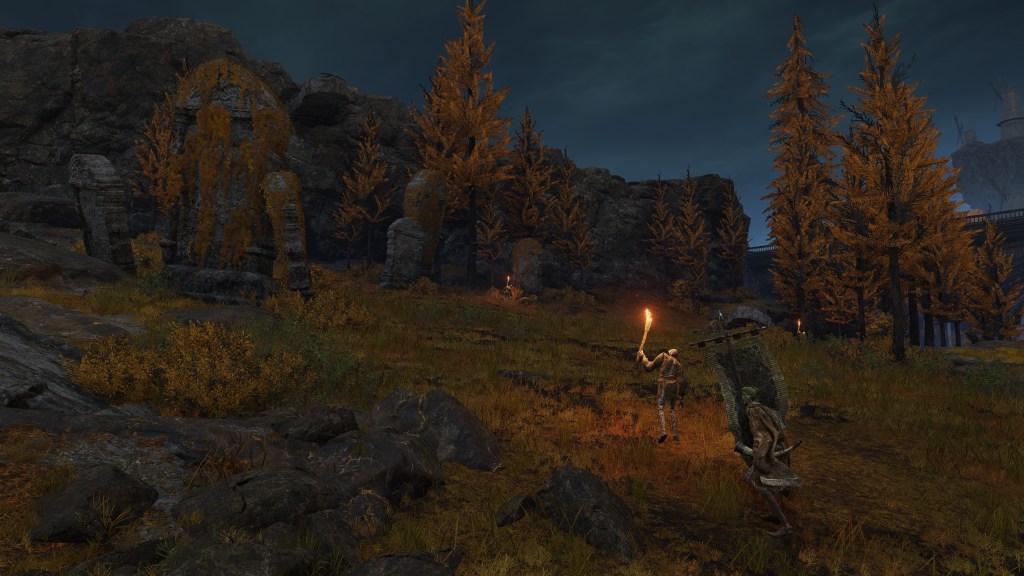
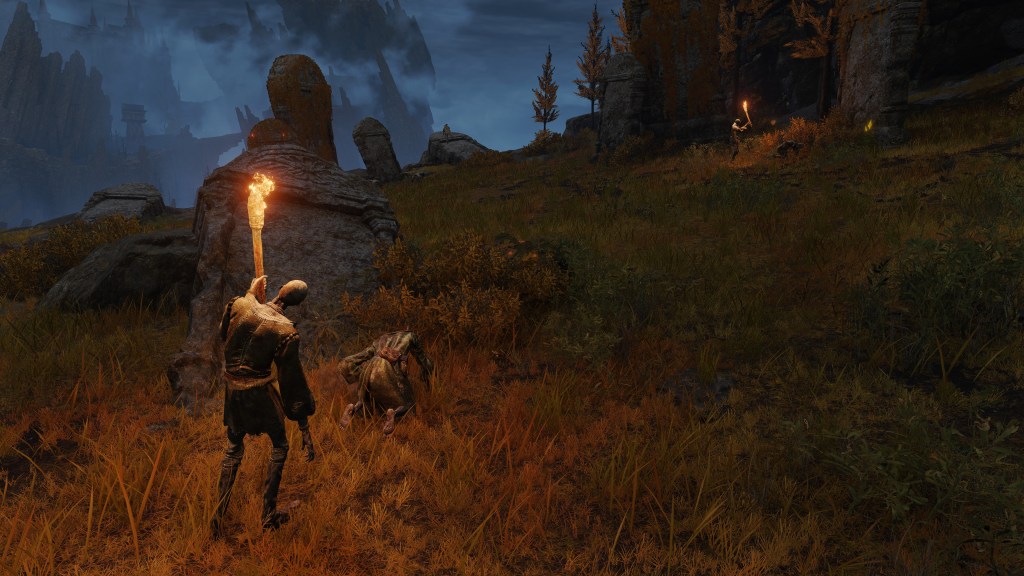
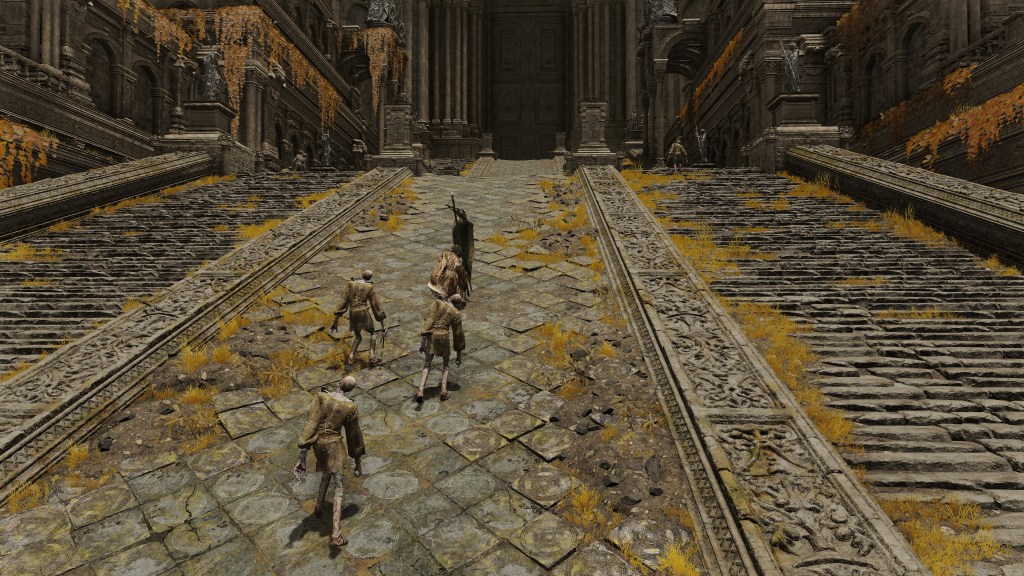
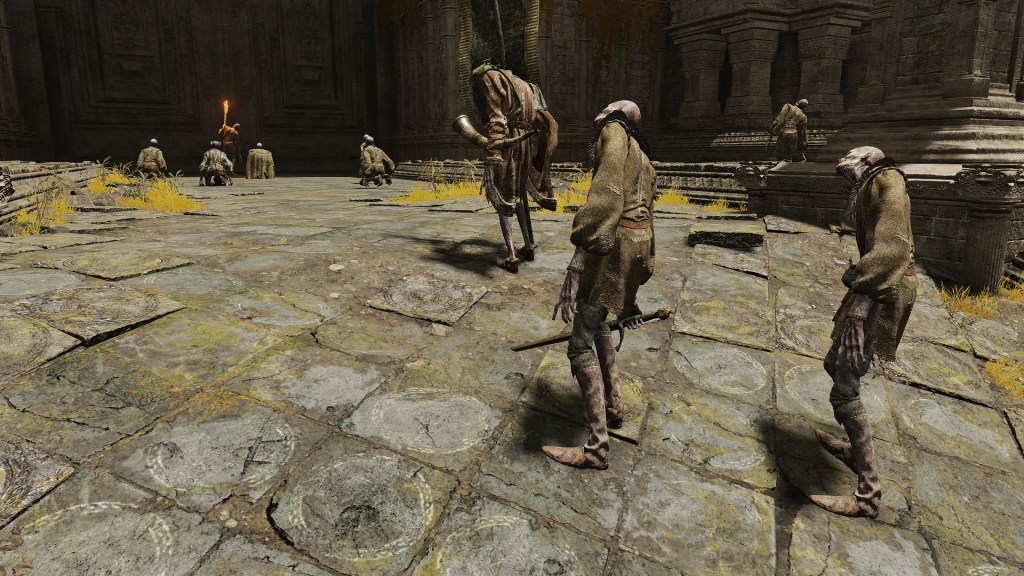
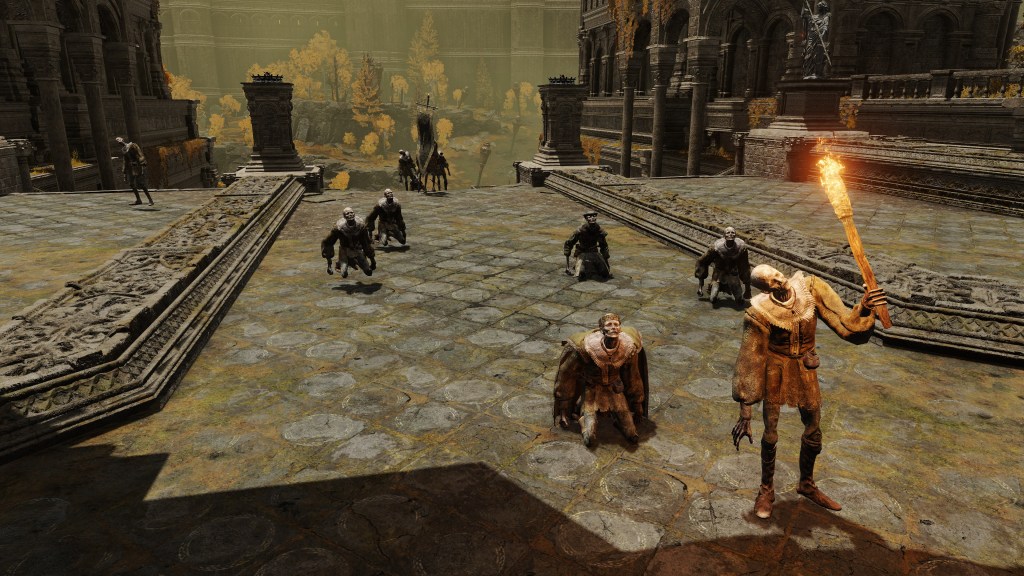
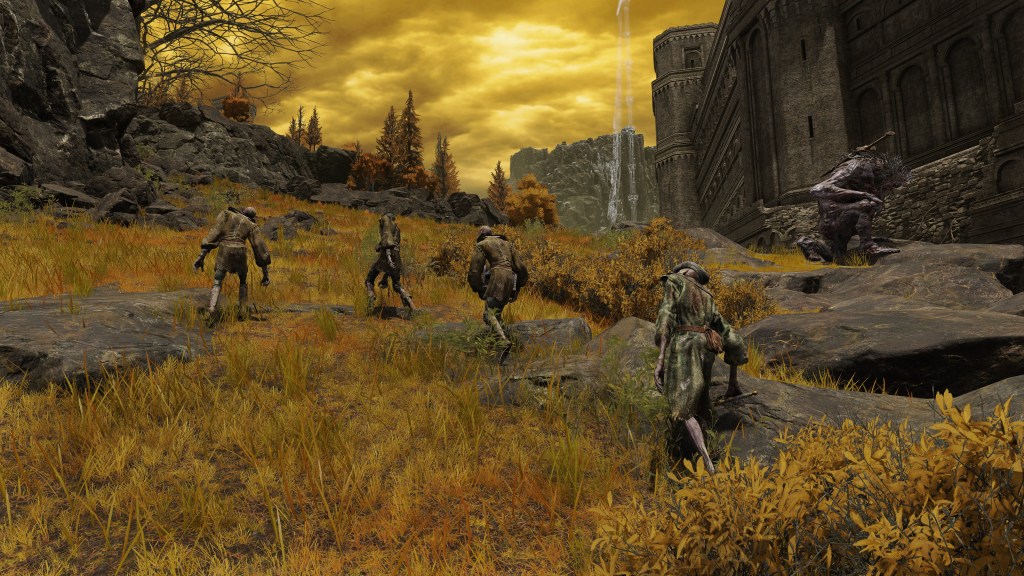
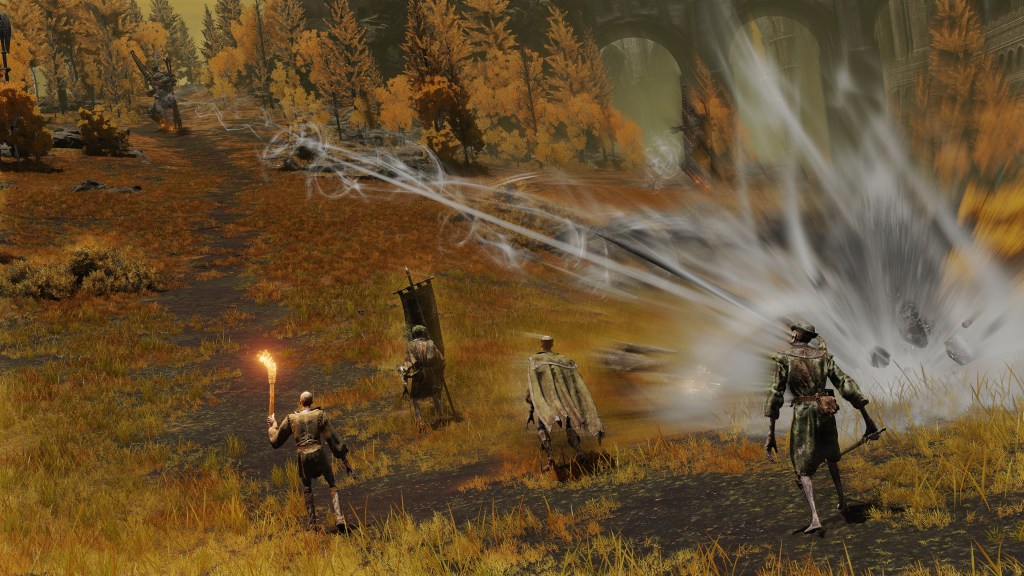
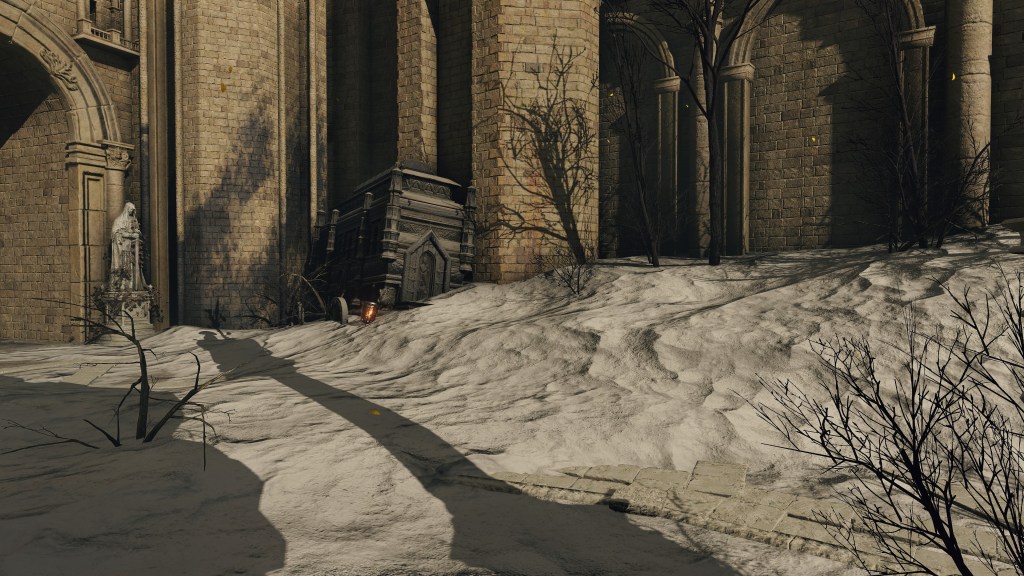
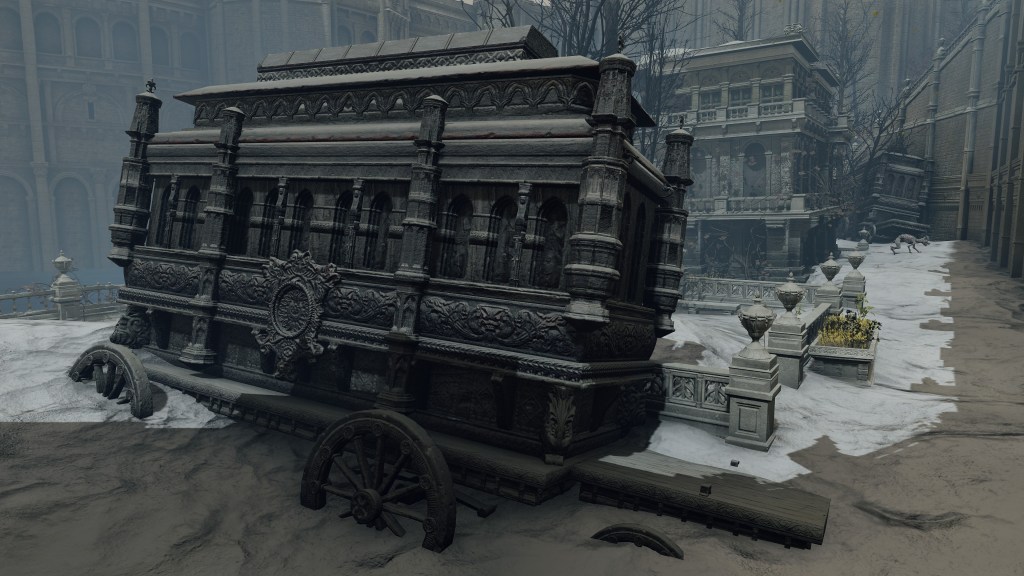
So distracted has he been by the cold war, the scars of the Second Defense of Leyndell still remain. Overworked trolls resting in the area demonstrate how little manpower has been dedicated to clean up the area, the missing northern gate yet to be replaced — for all the king’s fears, those trebuchet encampments are all he has preventing a second siege. Nobles, in fact, are sabotaging the cleanup effort, digging for power among the scavenging carts. There has been some progress, as opposite end of the battlefield lies an enemy camp with a coffin carriage used to contain war dead. Although we see a few of Leyndell’s rank-and-file using the campsite, they look to simply be finishing the post-battle cleanup of its previous occupants. The jars offered to the Minor Erdtree Church further indicate that many dead on the south side have been collected. Still, it is years too long by this point; there is no excuse. The king has failed to ready his capital in case there is another large assault on the ramparts.
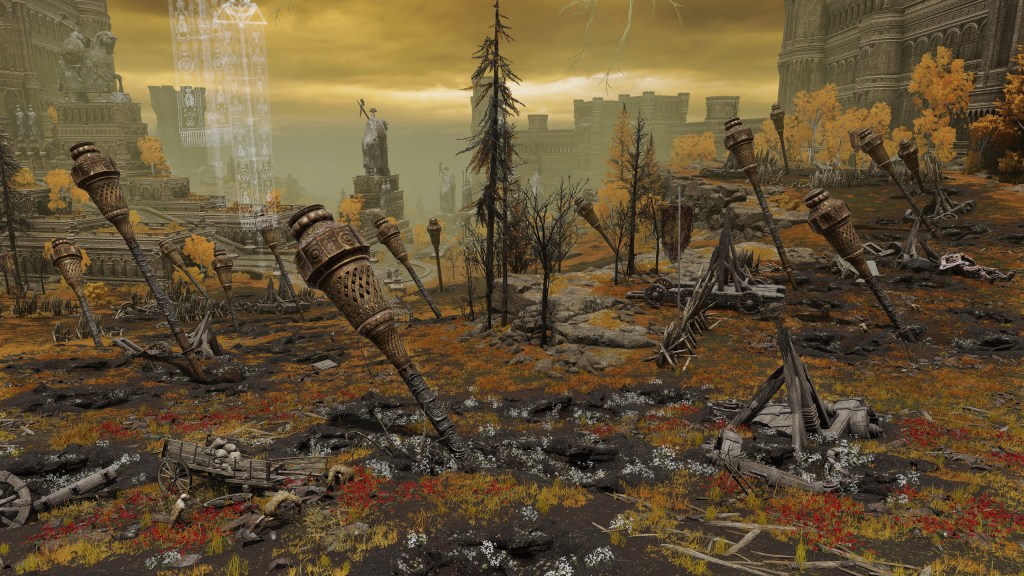
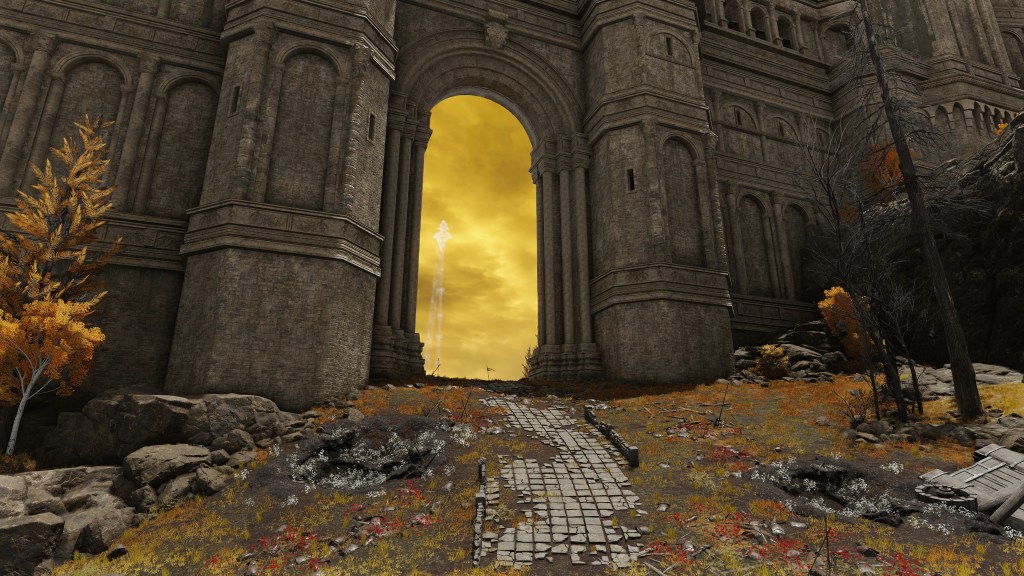
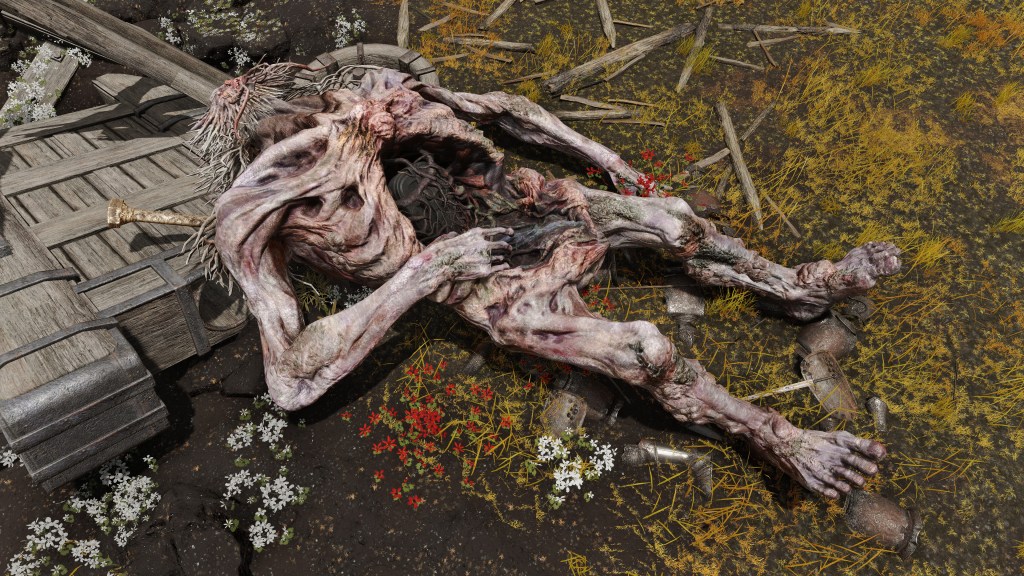
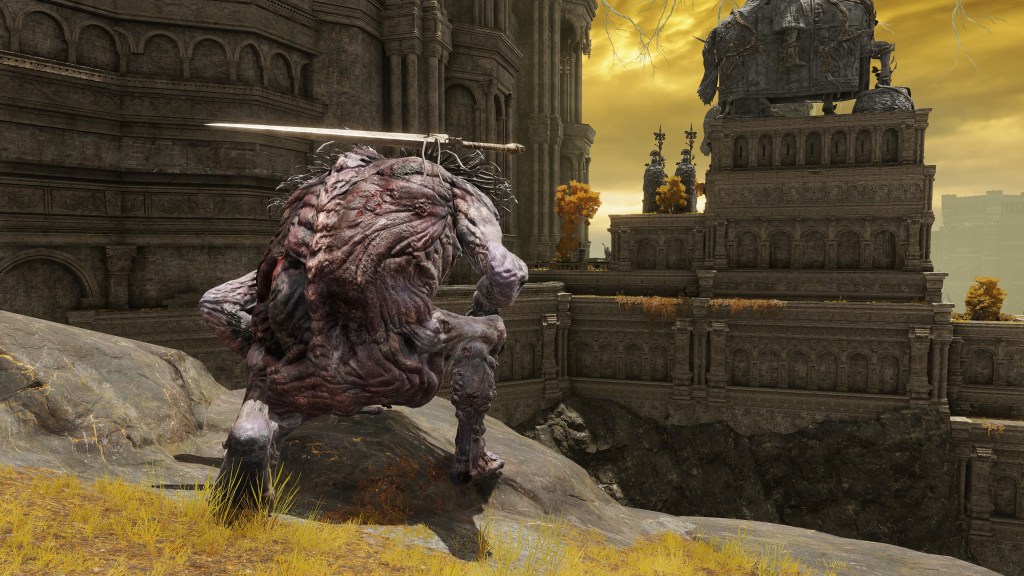
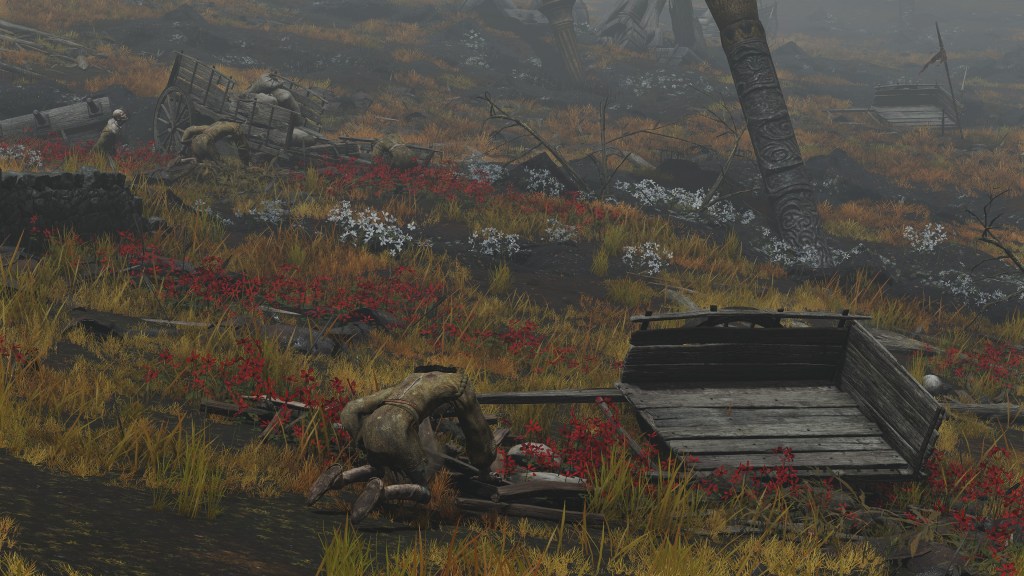
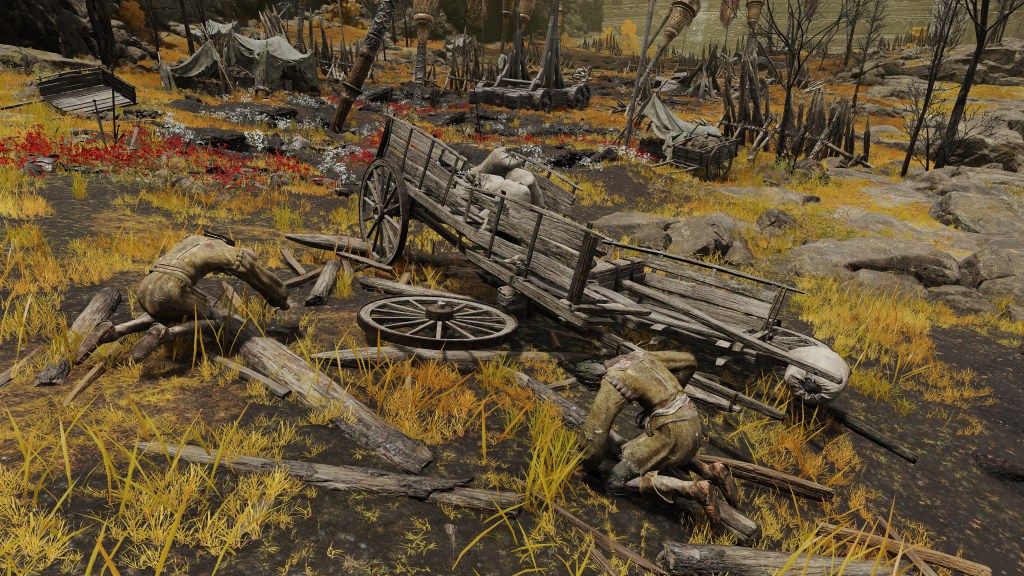
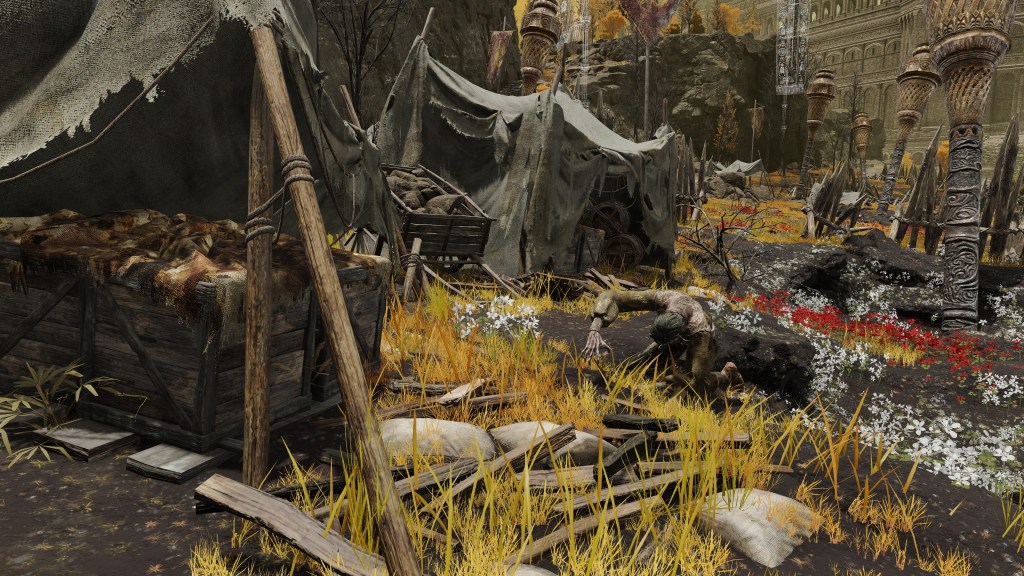
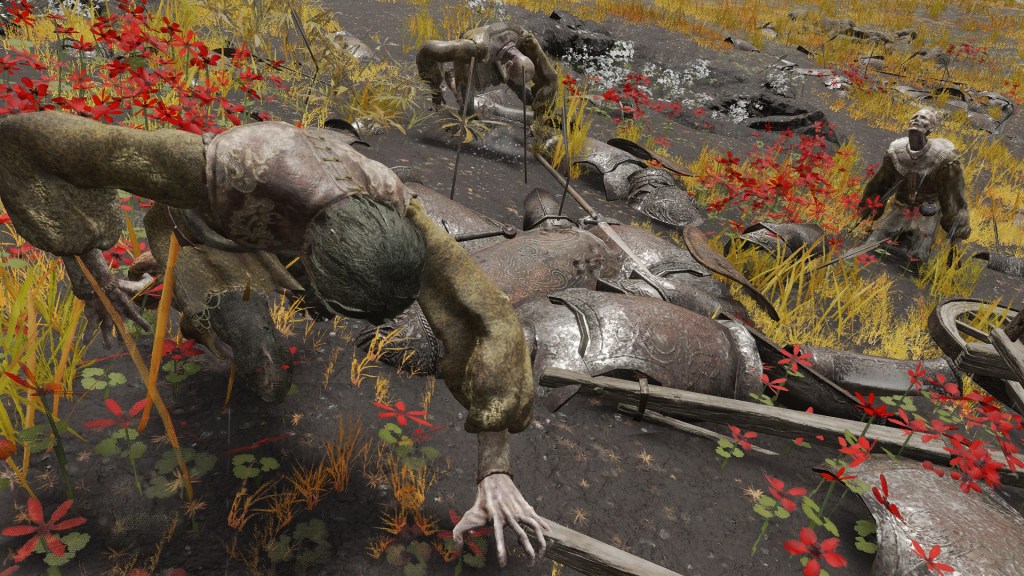
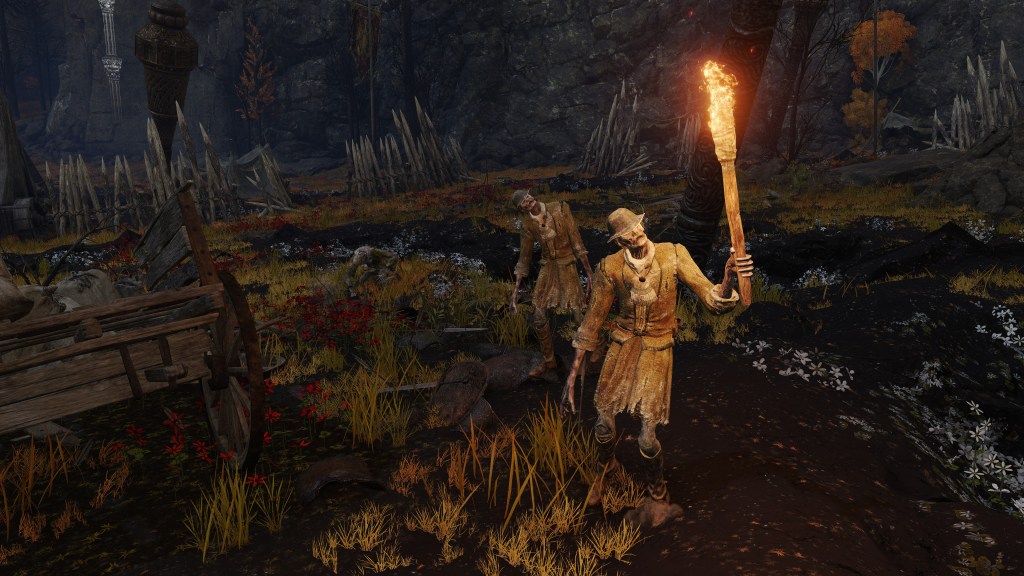

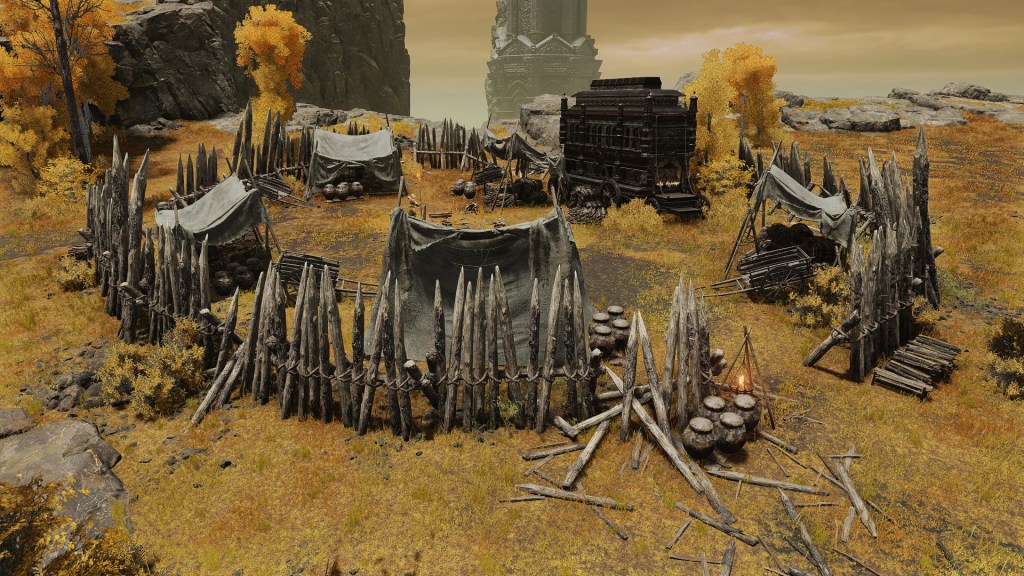
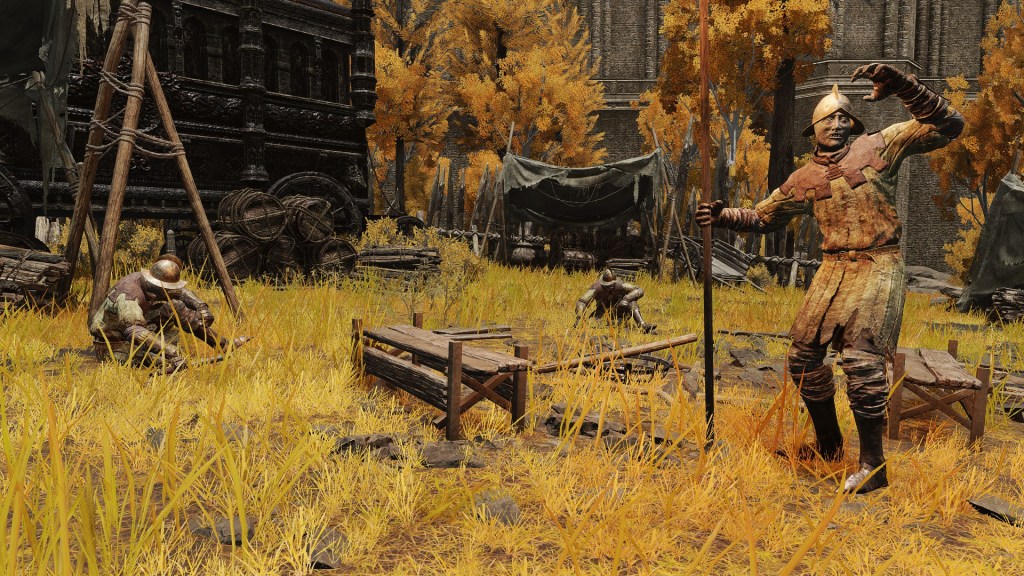
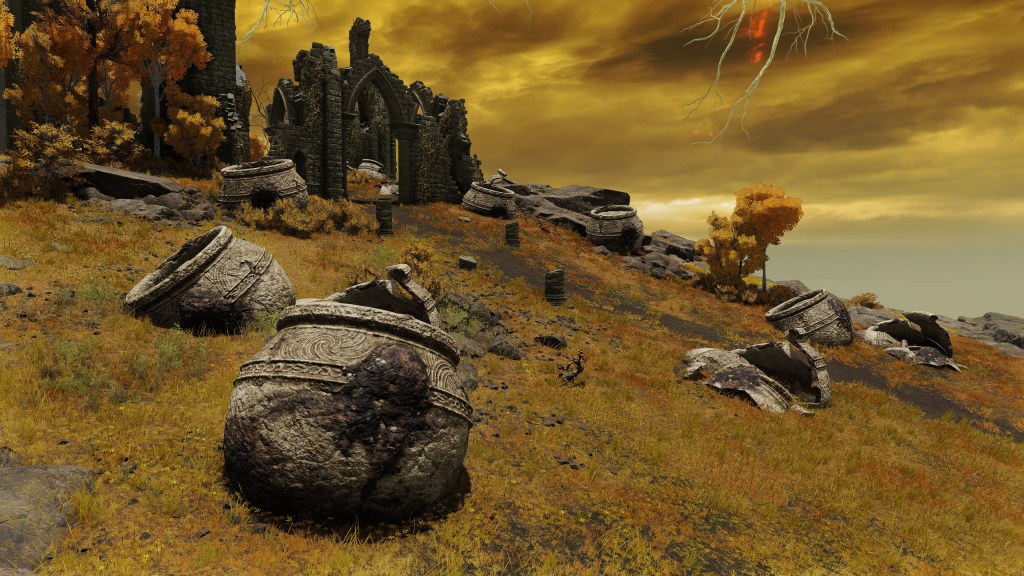
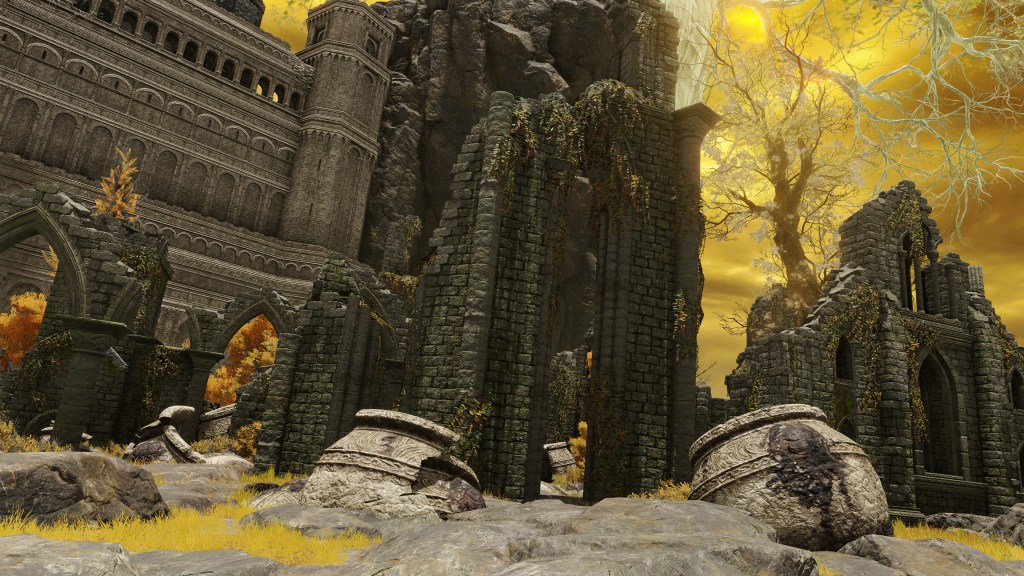
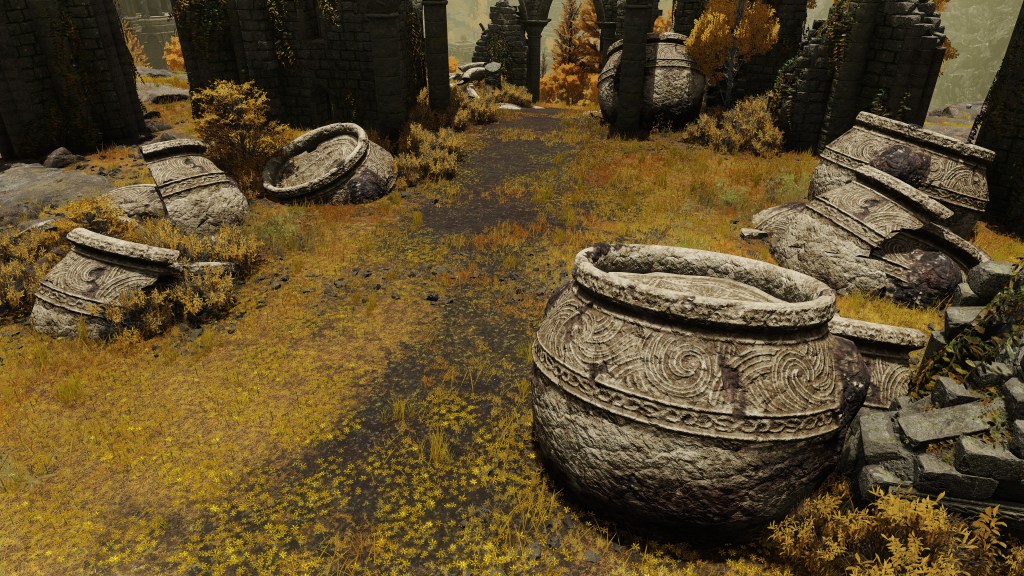
Map fragment of Altus Plateau.
Altus Plateau, land of the Golden Tree’s base, is crowned with the royal capital of Lowdayl to the east and Gelmir Volcano to the west, and scars of the Shattering War remain apparent even now.
Note of a wandering people merchant. The information is written succinctly.
The great coffins going around the various Lands Between contain the corpses of nameless war dead. You will probably acquire some sort of weapon.
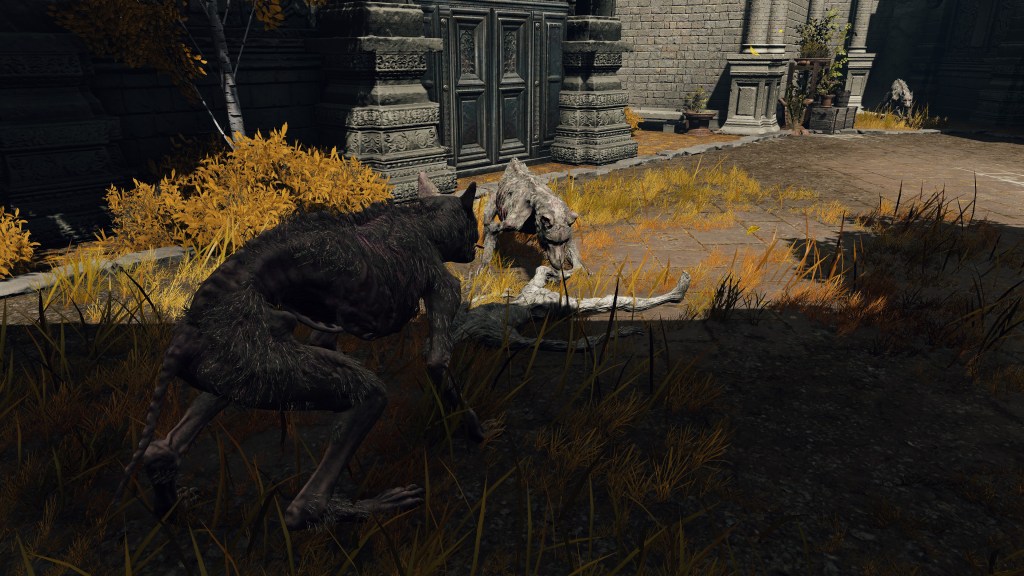
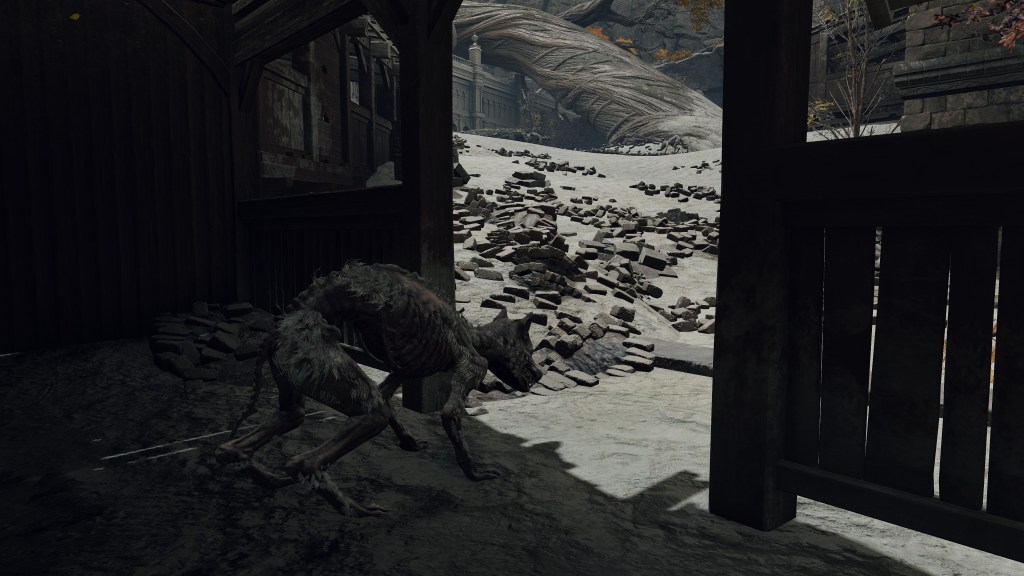
Even inside the city, piles of bodies are left collecting cobwebs in the Lower Quarter, and coffin carriages assumedly filled with dead residents lay broken down along the main street through the central and eastern districts. The body count has grown so much, human remains are filling up the sewer lines. Between the conscription and the death toll, local dogs have no choice but to become strays, roaming alleyways or the western ward’s horse stables for scraps or the occasional unlucky skulker making a wrong turn. If not for the soldiers and their priest commanders maintaining some semblance of discipline, Leyndell would already be a ghost town. And if not for our actions culminating with burying the city in ash, the place might have soon become embroiled in another civil war thanks to the slave revolt. Somehow, Morgott has managed to focus both too little and too much on defending his Erdtree’s base.
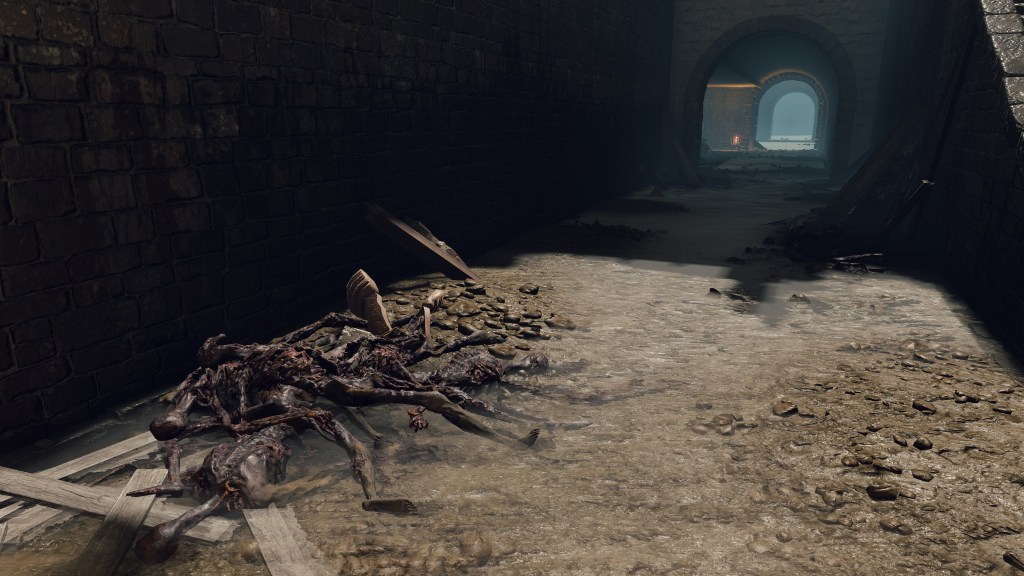
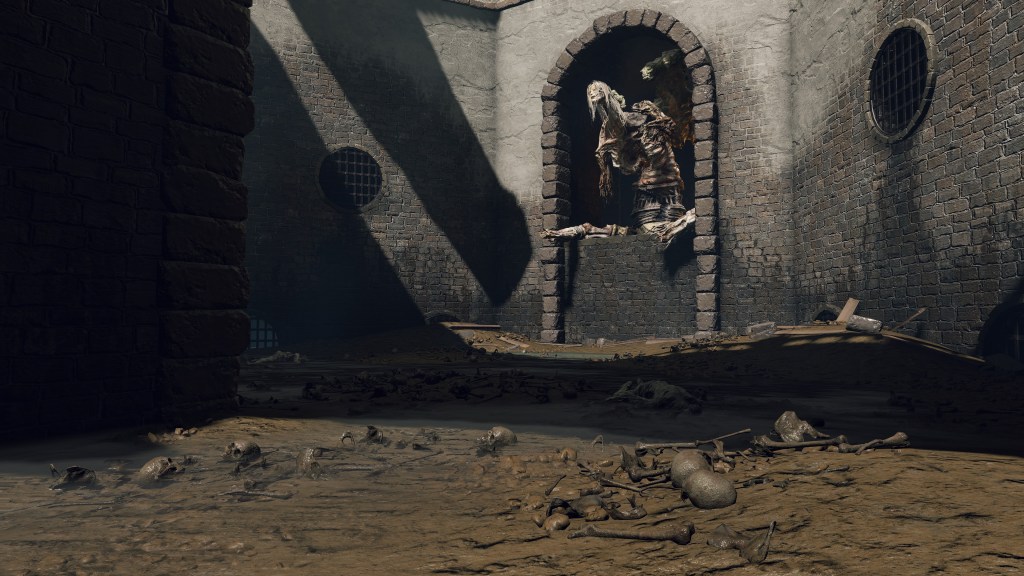
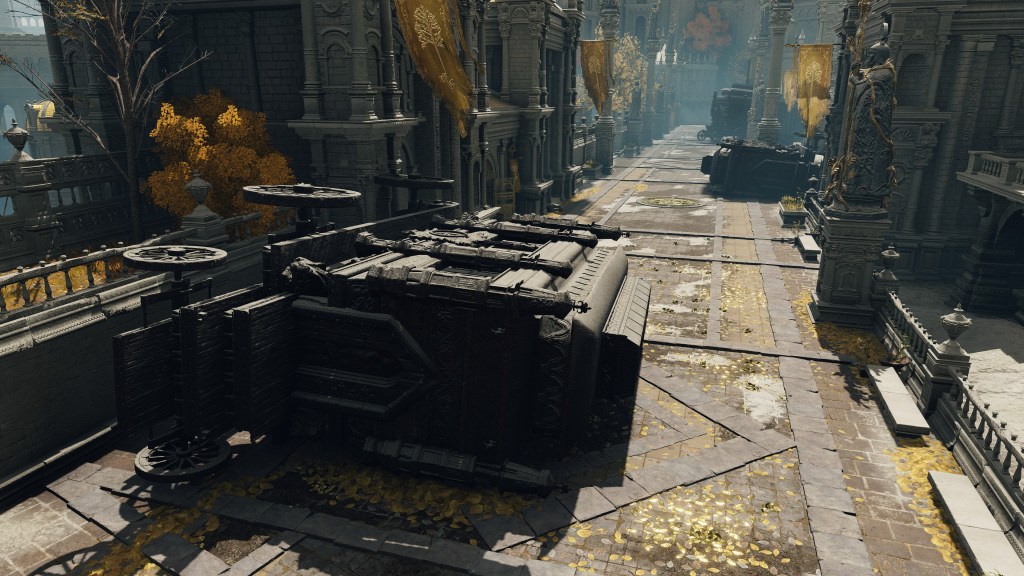
In the end, the king of Leyndell is warped by the same madness as the other shardbearers, paranoia gripping him to his core. For him, the war has never really ended, and so ongoing conflicts with outside threats receive all his attention when this is a time to rebuild, shore up proper defenses, and improve the stability of his holdings. We can’t fault his mismanagement on ignorance either. As we pass through his old battleground, Margit ambushes us using the lone conscript stationed there as a vessel. He marked a commoner with magic just to stand there as his eyes and, if necessary, blade in case anyone did breach the walls again, meaning that he knows progress with the cleanup has been slow. But the Omen refuses to let his guard down for a second, even if it might benefit his position long-term. Legitimate as his initial fears may have been, he now seeks to be the last king of the capital, knowing that he will never be enough to restore his Erdtree and become its true Lord.
Indeed, Morgott isn’t ignorant about his Great Rune’s benediction, as the Fell Twins protecting the relevant Divine Tower are doubtless a trap he set. The Greater Will no longer has any hopes for them all, yet still he clings to his fragment of the Ring as the Erdtree’s defender — even whilst it is forever dying. All that matters to Morgott is that he keeps it safe from further harm, respecting “its” decision to reject everyone including him. Never does he consider that he has become the greatest impediment to the Erdtree’s rejuvenation, refusing to consider the cardinal sin which enables us to mend the Elden Ring with the tree reborn. He would rather prevent anyone else from taking the blessing of “his” rune, radiating the grace of his clan, at risk to his own men. He would keep his beloved Erdtree in a perpetual broken state just so that he may remain Lord in name only. For all his sanctimony, the lunatic has robbed the world of its future more than any pillager. And as the final irony, the Omen’s pretension as the Grace King plays right into Radagon’s hands.
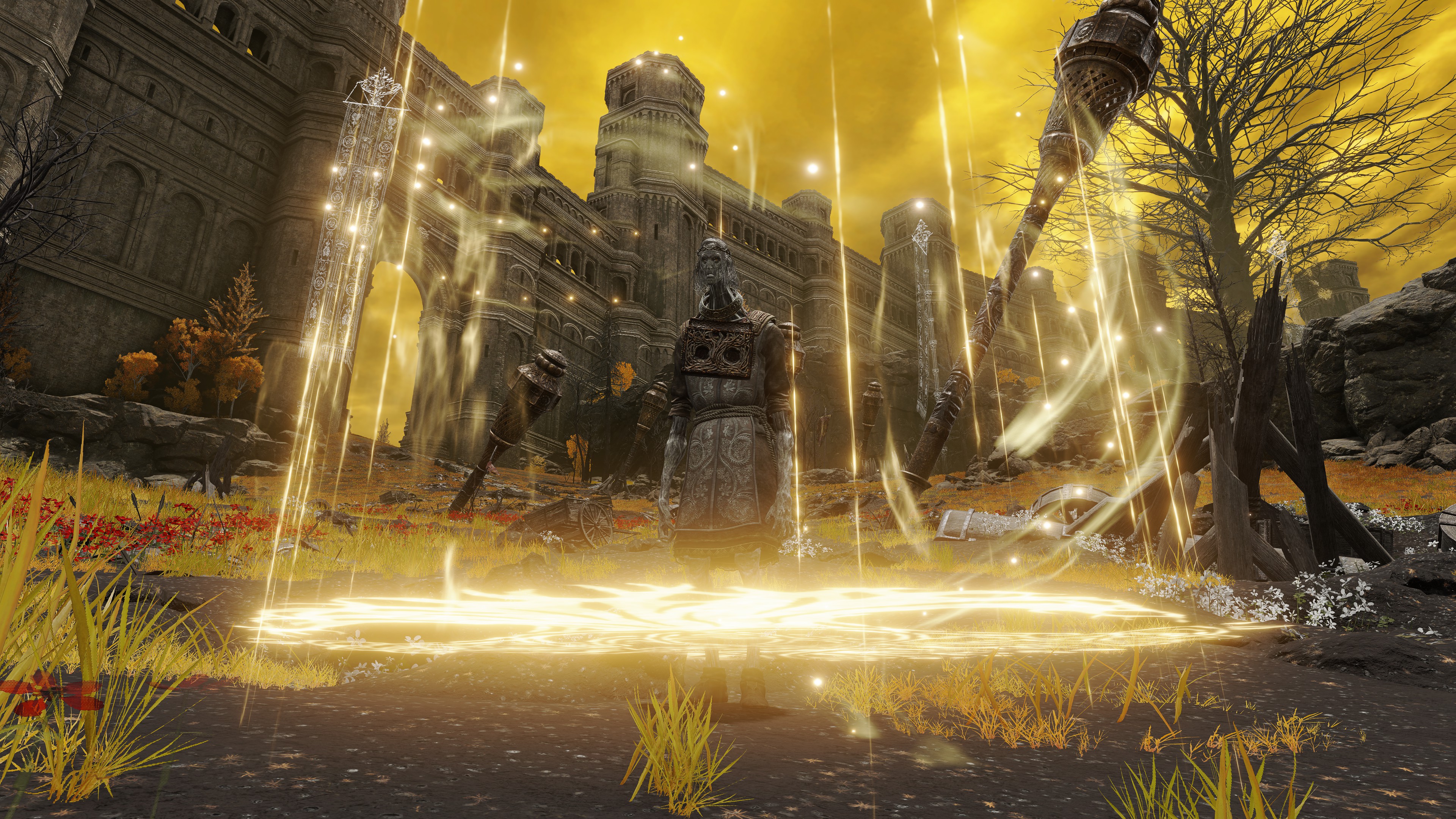
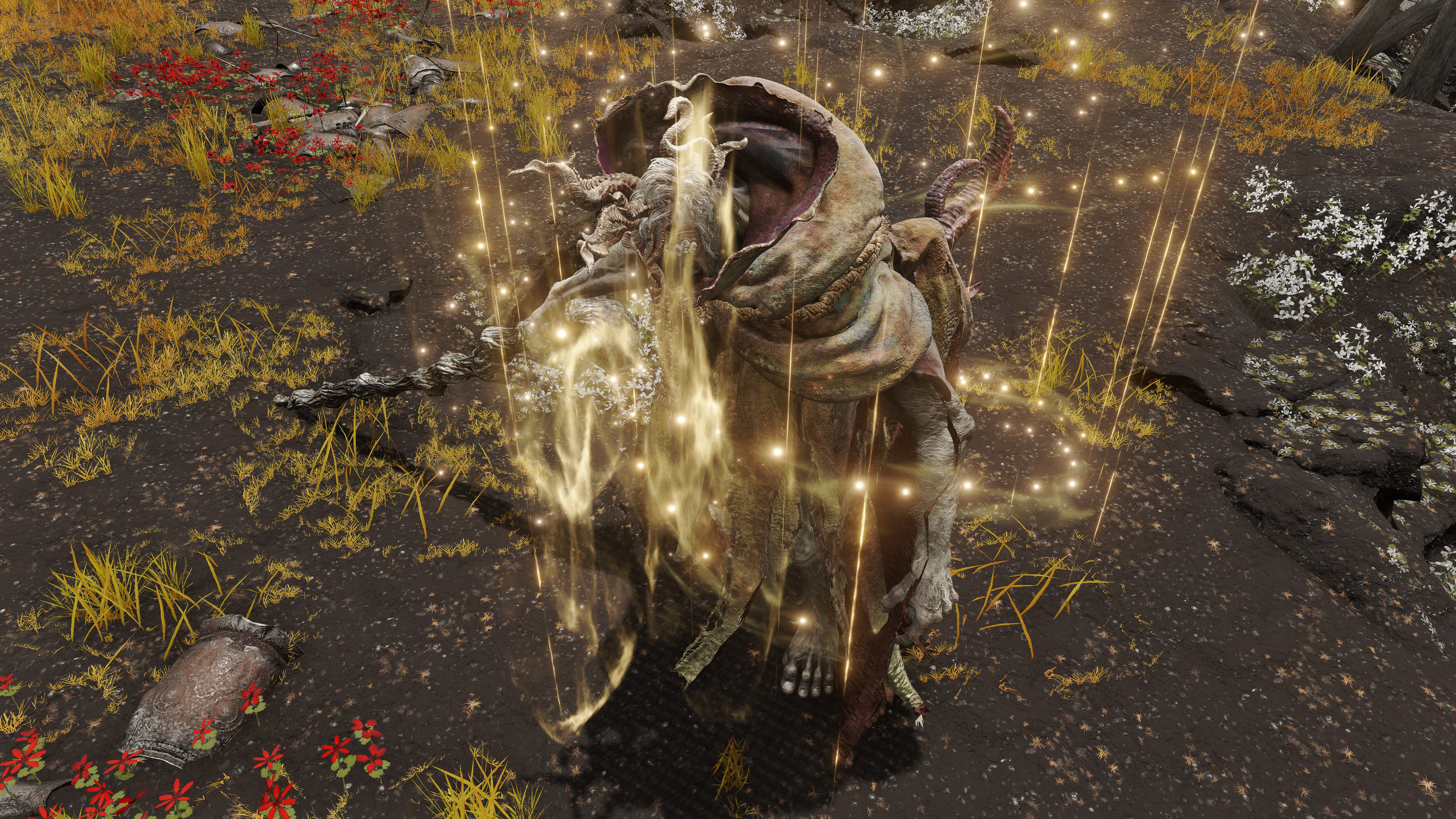
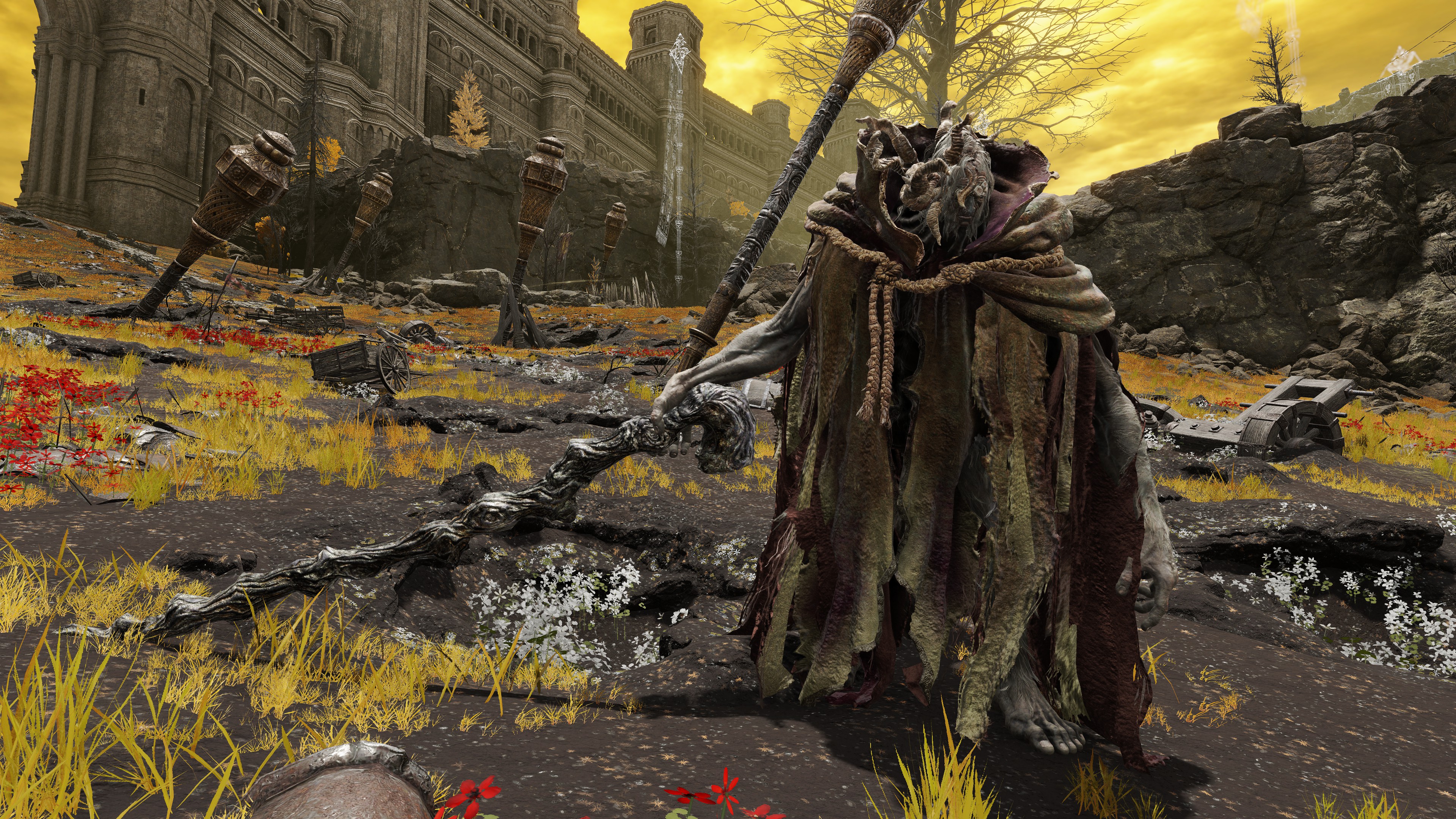
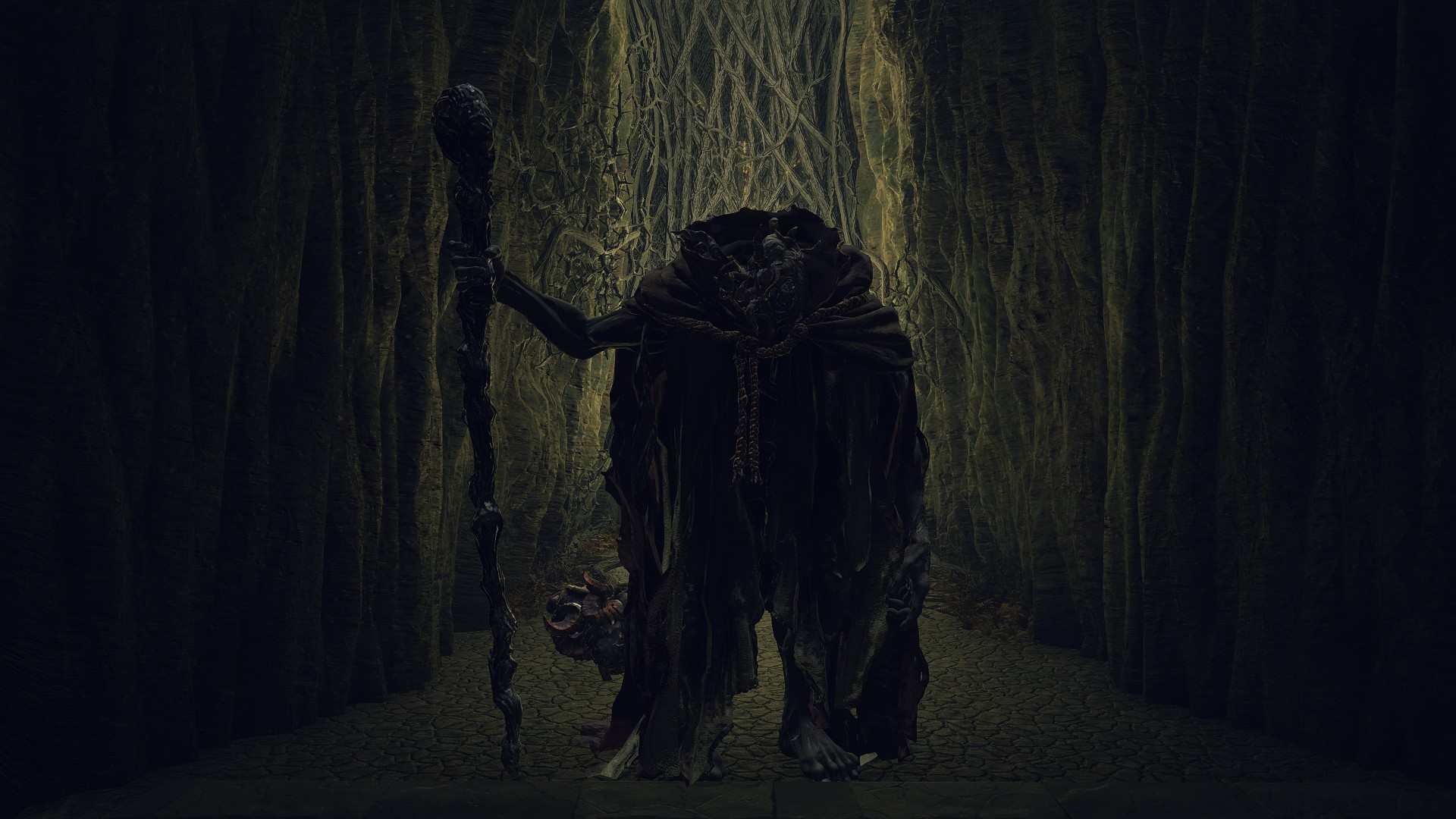
Of course, Morgott is just one part of a larger fractured whole. Miriel bemoans how the Shattering has made man forget the “important things” in life. The frayed bonds between family, friends, neighbors, all fighting to survive in their own way, is what the giant turtle identifies as the problem with the current state of things. The anger and sadness from failing to control one’s “passions” serves no purpose in his estimation. But the demigods have failed to realize that, breaking bonds between themselves and everyone. Nonetheless, Miriel’s firmest belief is that, whoever does become Elden Lord, he or she will become a king inspired by his church’s miracle, bring union to the world once more, and make it so that union is never again annulled. Several with such fates have emerged amidst this turmoil, though the description of these Lord’s Runes clarify that the mission’s completion remains far-off with the Ring broken. Whether or not Miriel’s belief proves justified will lie in the hands of newcomers.
Ah, is that so? That can’t be helped either. Since the Shattering War occurred, man have all forgotten the important things.
… Are your satisfied, good sir? Please take this opportunity to learn how to control your passions. I am fine. But, if you do the same to others, some will be angry, others sad… and the human relationships will be harmed and broken. It, more than anything, will be of no benefit to you, honorable sir.
… I believe. That the miracle harbored in this land will reunite the world someday. And that, this time for sure, it will never be annulled. Good Sir Tarnished, if you are trying to become Elde King, become that kind of King.
Golden remnant of the grace harbored by everyone of the Lands Between.
Use to acquire vast runes.
Once, it was a fate that you will become King. When the Elden Ring broke, that became a distant mission.
 Lokey Lore