
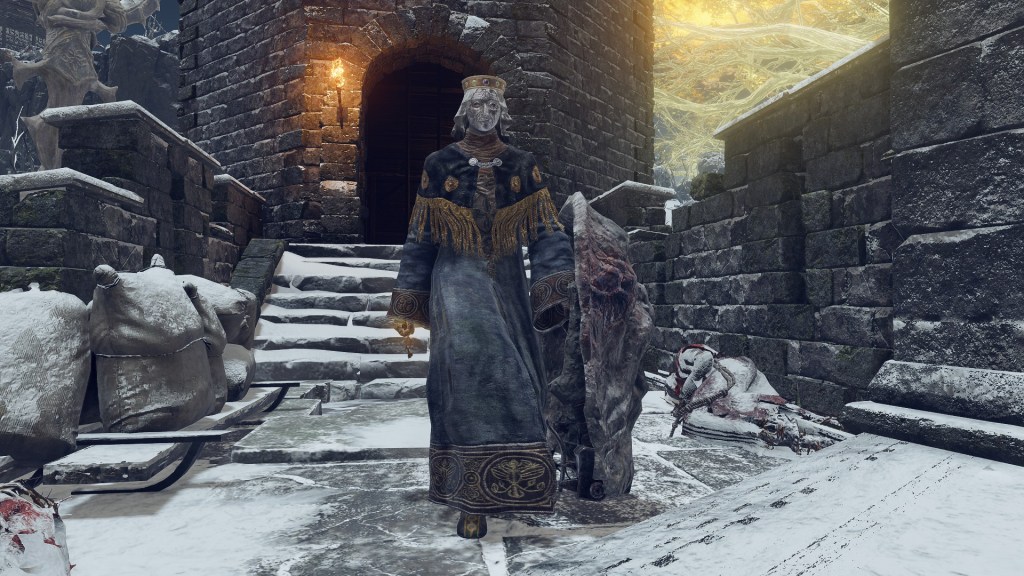
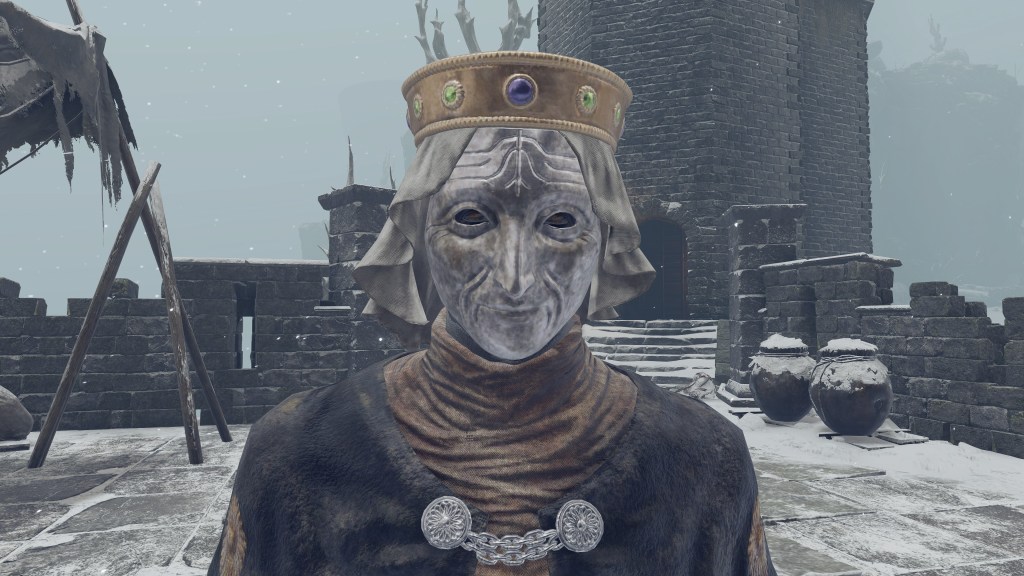
Although north of Leyndell had become Forbidden Lands, the conquered territory still needed to be organized into a new province of Marika’s growing empire. Niall and his men were allowed to return to their castle under the Erdtree’s stewardship. Meanwhile, the smaller fort was handed over to Arghanthy, donning the Ruler’s Mask to affirm lordship. The reason for her assignment was likely a reward for service in the postwar cleanup. The lord dresses in the Marais Robe, implying that she either is a Marais or is another official elevated like them. But since House Marais already has an extant head, she must wear the black mantle for separate reasons, no doubt still related to an official’s grim work for the royal house. In all likelihood, Arghanthy worked closely with Marika on executing the giants. Even with magic, the god needed the bureaucracy to help enact her will — Arghanthy apparently headed up these efforts. Her handiwork pleased the Queen, so she was made the feudal lord of the Guardians’ Garrison.
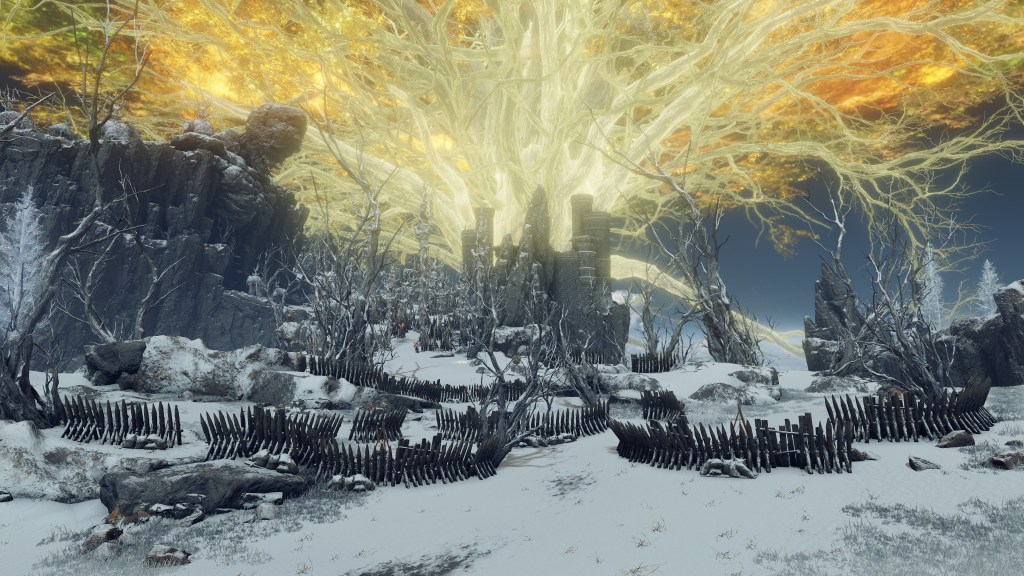
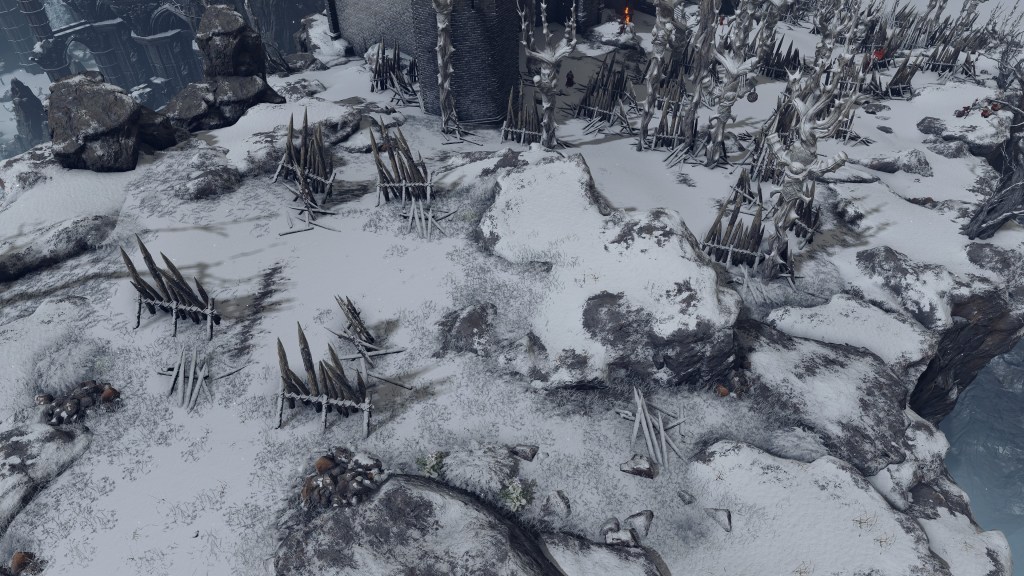
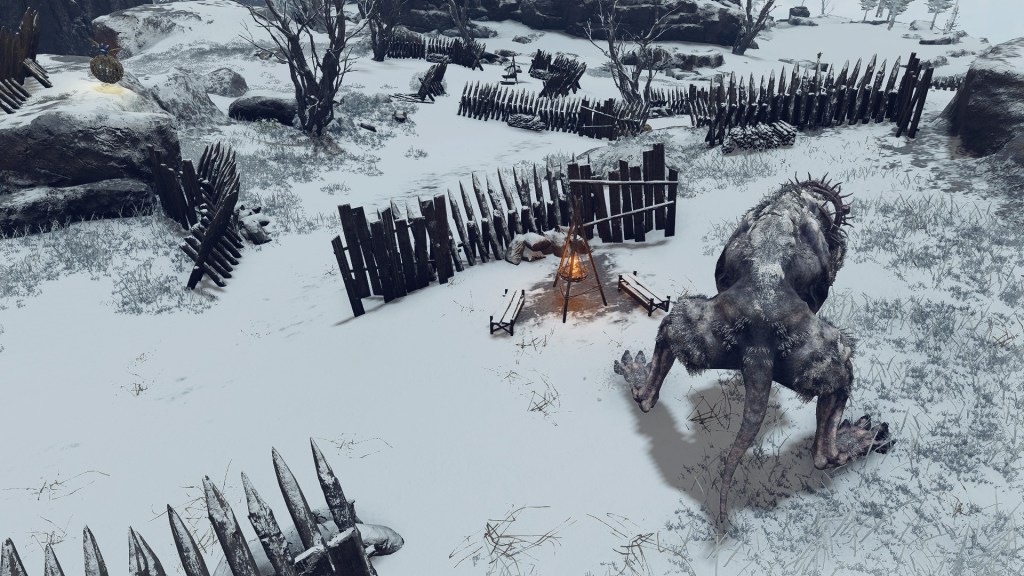
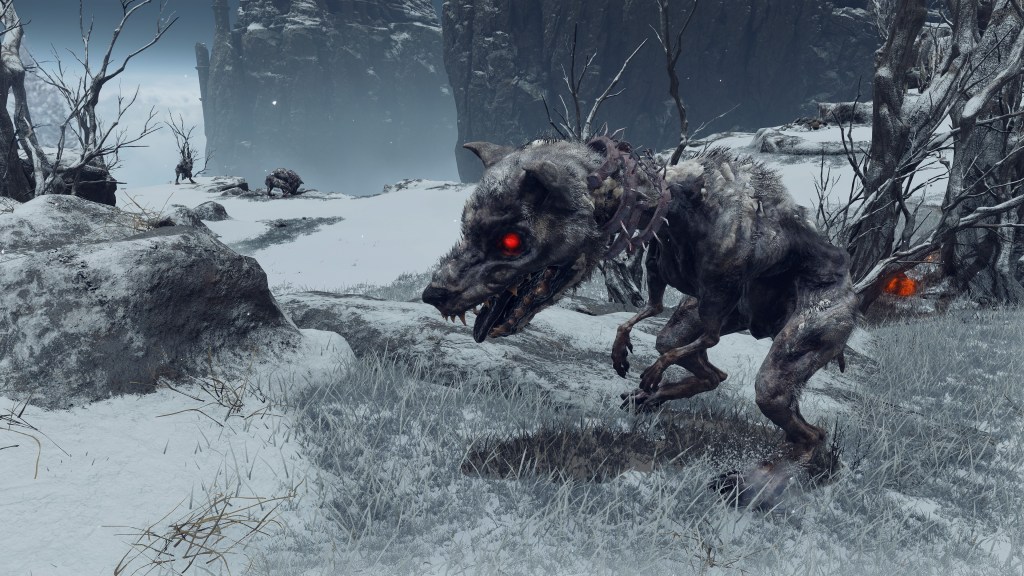
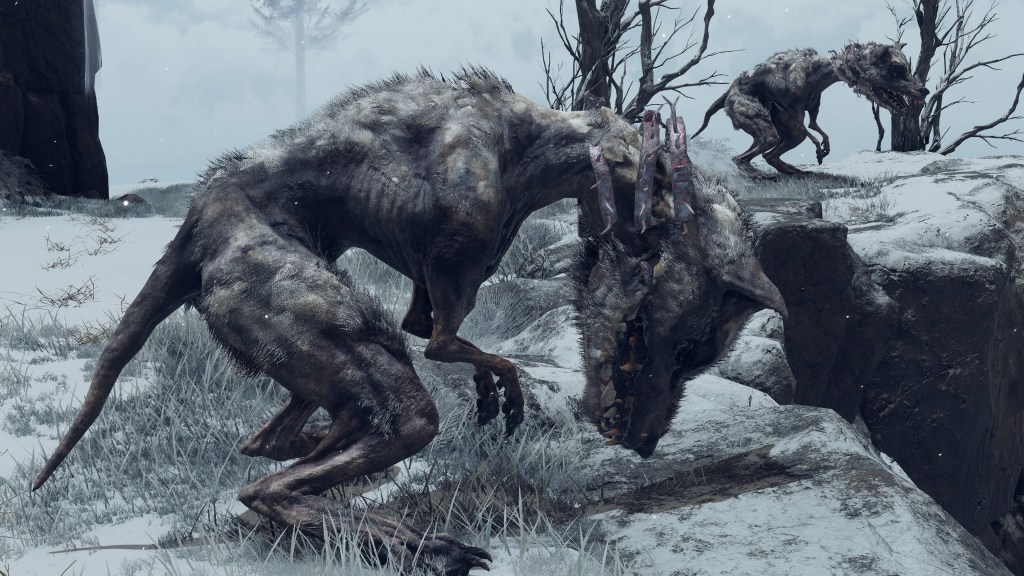
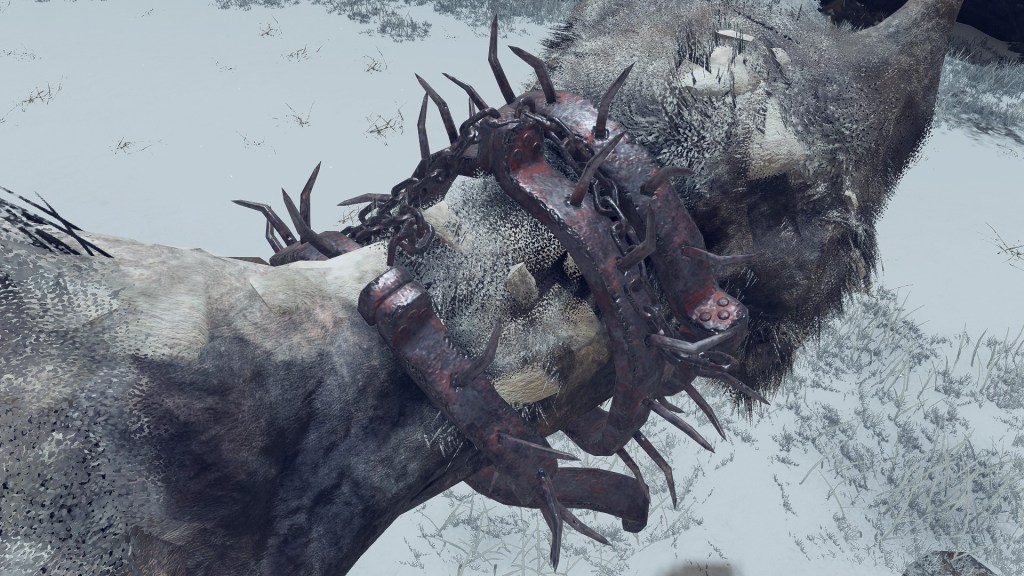
Naturally, the royal couple bestowed her title with the responsibility to continue watching over the Fell God. Her small castle thus became a bulwark against invaders of the giants’ summit. Abatis have been set up all along the chokepoint to shore up defenses. Some of the giants’ pets have also been repurposed as guard animals, the big-headed dogs around the fort wearing collars and helping defend the chokepoint alongside their smaller brethren; the rest, still uncollared, run wild with the crows on the summit. There are also briar stakes surrounding the fort, leftover from the war or subsequently created with the lord’s expertise. Everything was set up for her to arrest and punish anyone attempting to reach the Forge with the last giant. Of course, there is only so much that can be done by a lord without vassals. And so, the “Watchers’ Fort” (監視者たちの砦) doubles as the headquarters for the Flame of Ruin’s new guardians.



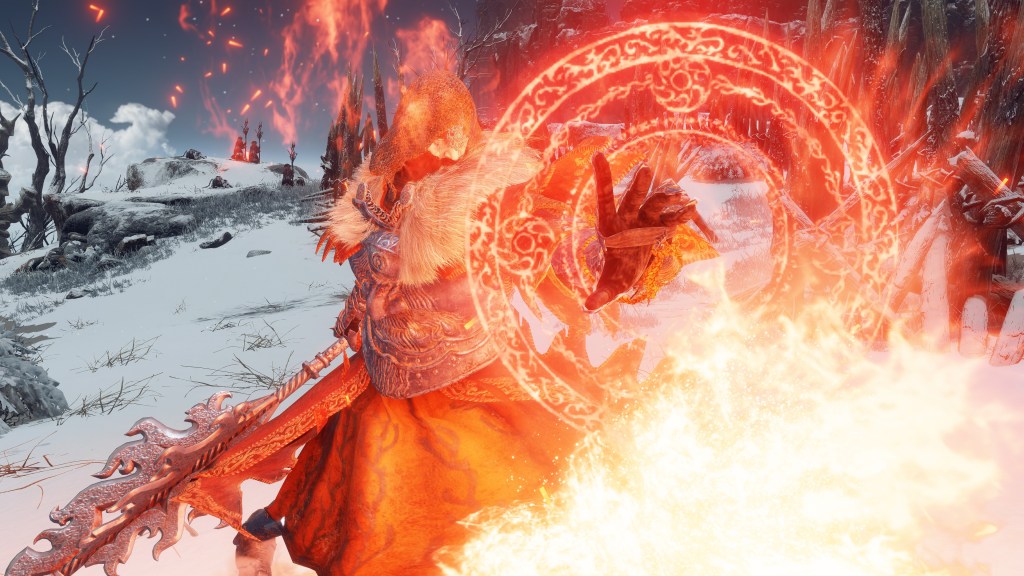
One of the Fire Warrior Monks prayers. Thing considered superior of them.
Streams out fire and furiously burns ahead. Can be used without stopping movement and it continues while holding.
The giants’ flame is the Destructive Flame that burns the Golden Tree. For that reason, it was sealed at the end of the Giant War and the watchers were born.
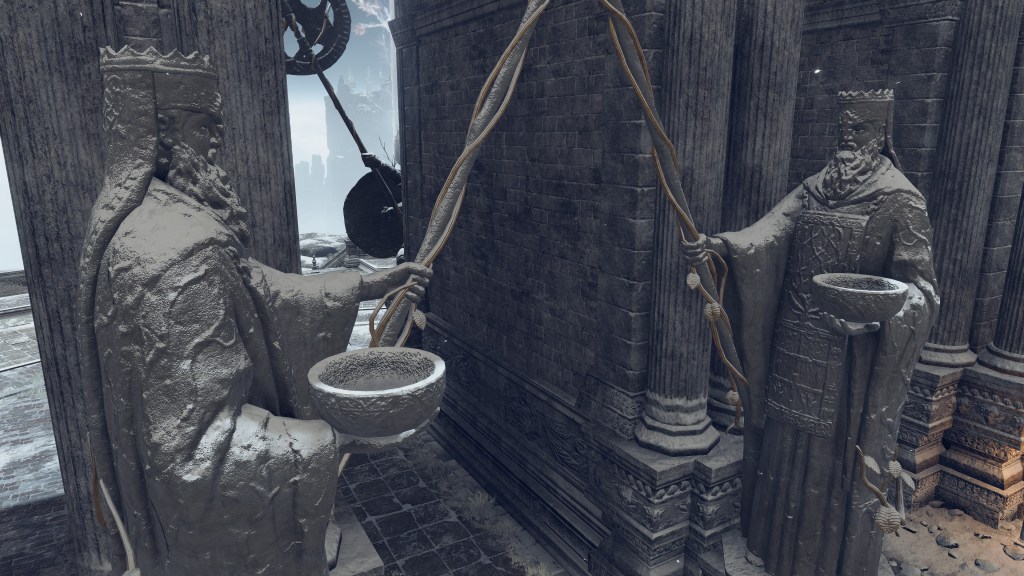
That group was initially recruited from veterans in the war. The oldest of these watchers’ incantations was invented to protect themselves from flame during the Giant War, and the archive detailing this and more is blocked behind an imp statue seal in the war’s hero graves. Clearly, the Two Fingers priests documented the heroes’ history and arts for future generations to study, but gatekeep that information. As the pioneers, they were the sole deciders of who learned their secrets, making them effectively the first to adopt the flame watcher duty. Indeed, the Grand Lift of Rold doesn’t welcome visitors from Leyndell to the Mountaintops with Tree Sentinels but clergy, identified by their aprons. These clerics wield tree staffs — representing the Erdtree — in one hand, but a bowl — representing the cauldron’s fire — in the other, linking them with the watchers whose devotion must balance both. Marika left Arghanthy her men of god to safeguard her godhood.
One of the Fire Warrior Monks prayers. The oldest of them.
Sparks a fire within self and greatly boosts fire cut rate.
It is said that it was once used in the Giant War and protected the Golden Tree’s heroes.
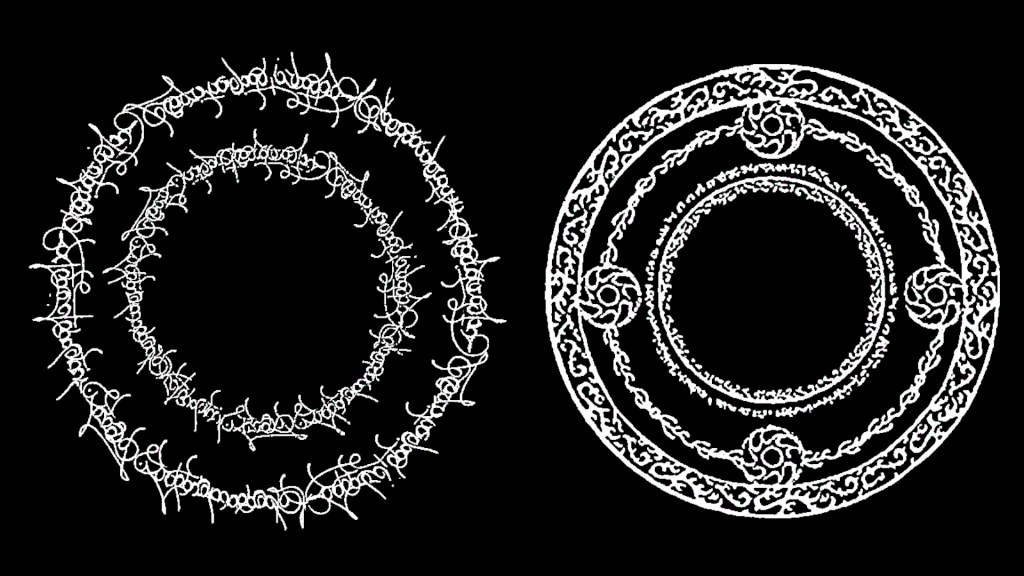
However, the fact that a prayer asking for flame’s protection was formulated speaks to the hearts of those heroes. The sigil for it and future fire monk incantations vaguely resembles the Two Fingers crest but more ornate, with a sun seeming to follow an orbital path between the two rings. The royal capital’s clerics had become entranced by the light of flame, not the Erdtree, devoting themselves entirely to its power. These dual loyalties never crossed, but these devotees’ contributions to the war were nonetheless premised upon drawing closer to flame, embodying it. It is no surprise then that they would volunteer if not elect to stay. They wished to continue gazing at that o so beautiful flame. And since Marika required guardians, the priest soldiers would become “warrior monks” (僧兵) under Arghanthy’s leadership, merging prior martial prowess with their new faith.
One of the Fire Warrior Monks prayers. Thing considered superior of them.
Streams out flame and whirls to burn down ahead. Enhanced with charging and burns down further.
Fire entrances those who gaze at it. Thus, the flame watchers are also its devotees.
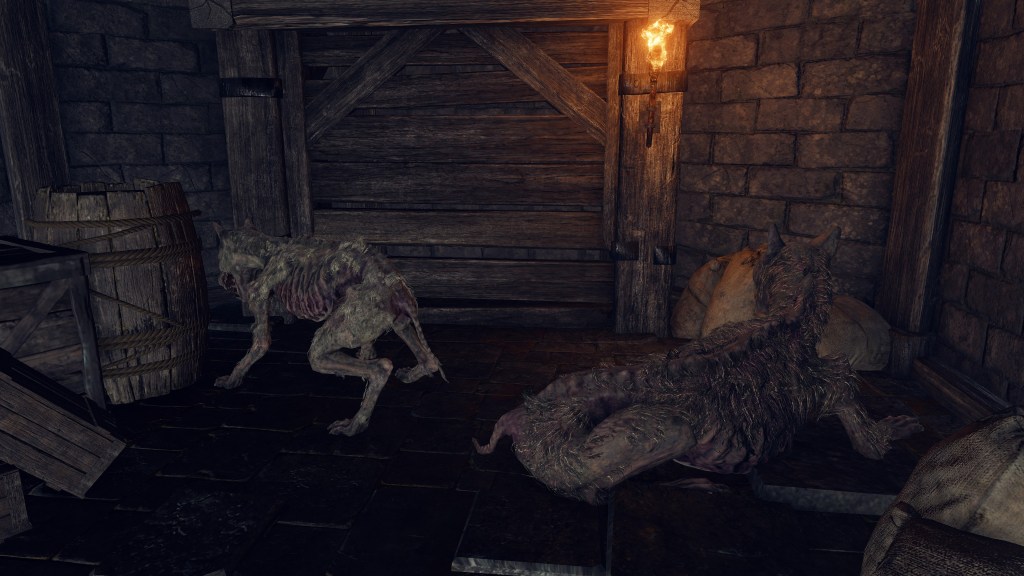
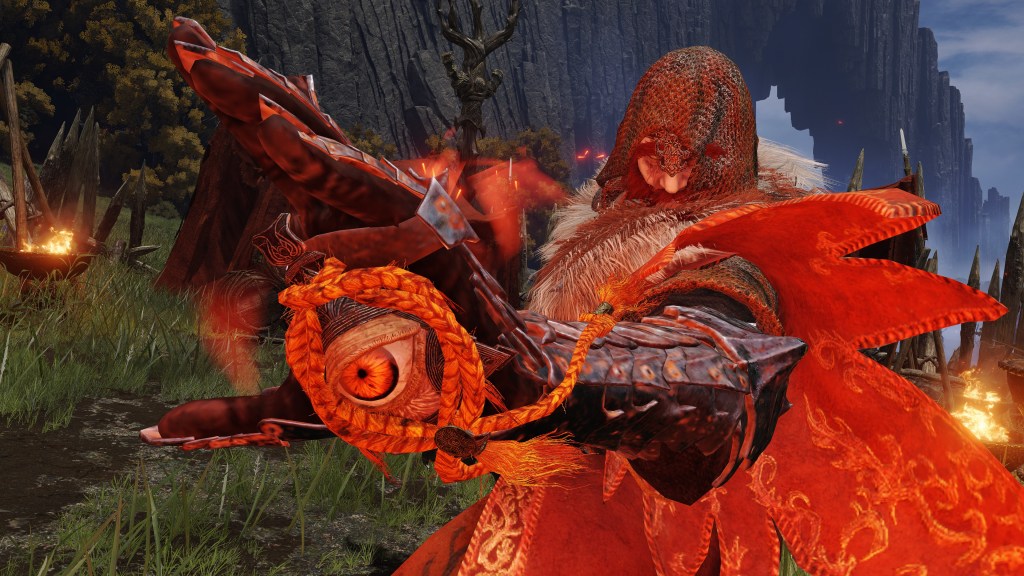
The foundation of this religion were the fire giants’ red hair. The braided hair is incorporated into the incantation catalyst featuring the Fell God’s eye. The basic prayerbook similarly has the red hair used for a tassel, whereas the more advanced prayerbook bounds all its pages in the hair — emblazoning their fiery sigil at the center of a swirl like the deity’s iris. The emerging order understood that the giants’ latent power remained in the hair, which was probably how Flame, Protect Me was devised; the Two Fingers priests took tufts of hair from the first giants felled, quickly realizing ways to protect soldiers from others as a result. Carrying on that legacy, the new order of monks could harvest hair from the executed like leaves on a forest of trees. And as we see, they have used all that hair to empower their key products, monks tying the braids of their giant’s seals around their gauntlets so they can instantly cast incantations in one hand without a second thought. But unlike the hair’s owners, they channeled flame as its watchers, warners to all about the danger of the Fell God.




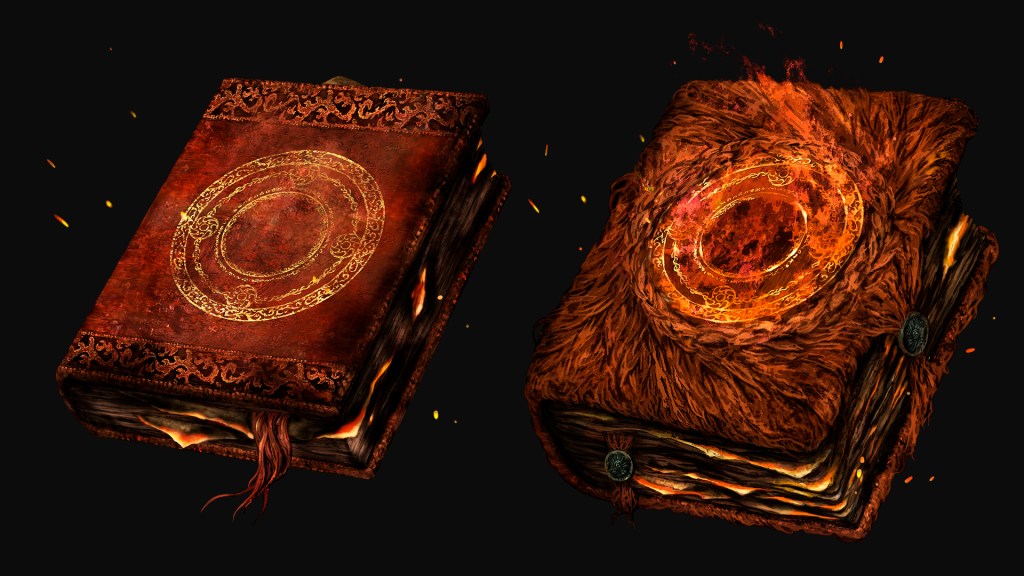


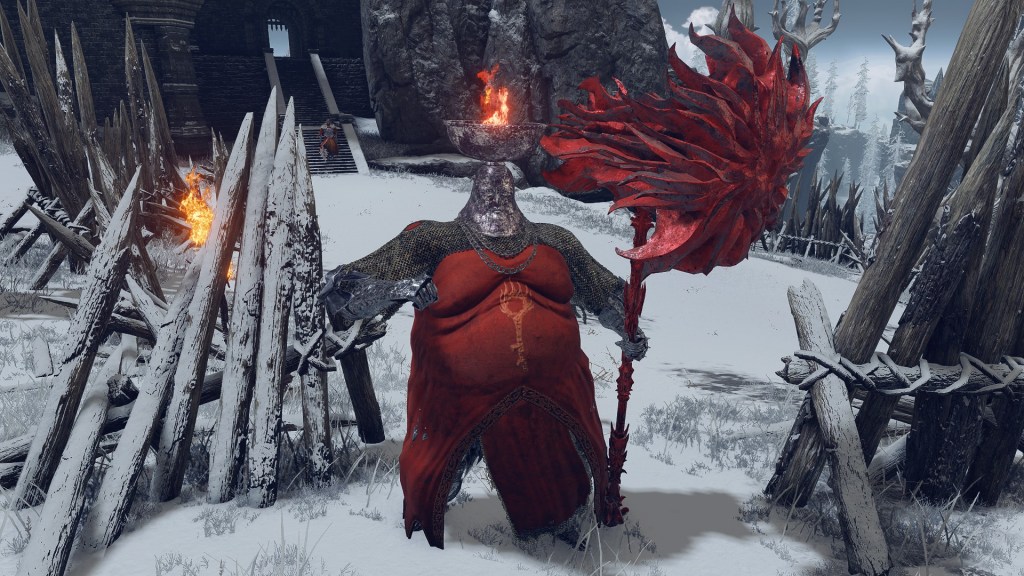
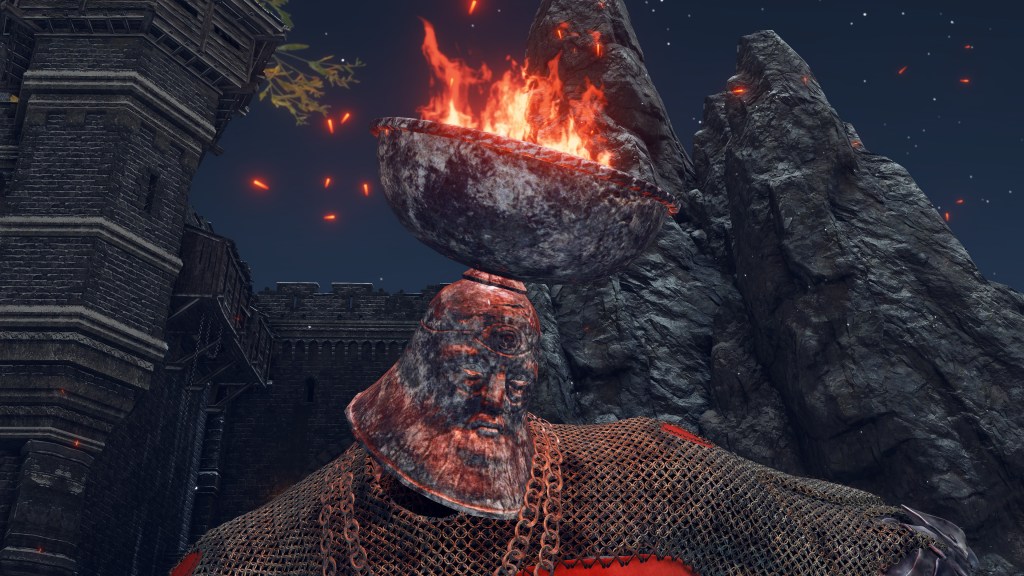
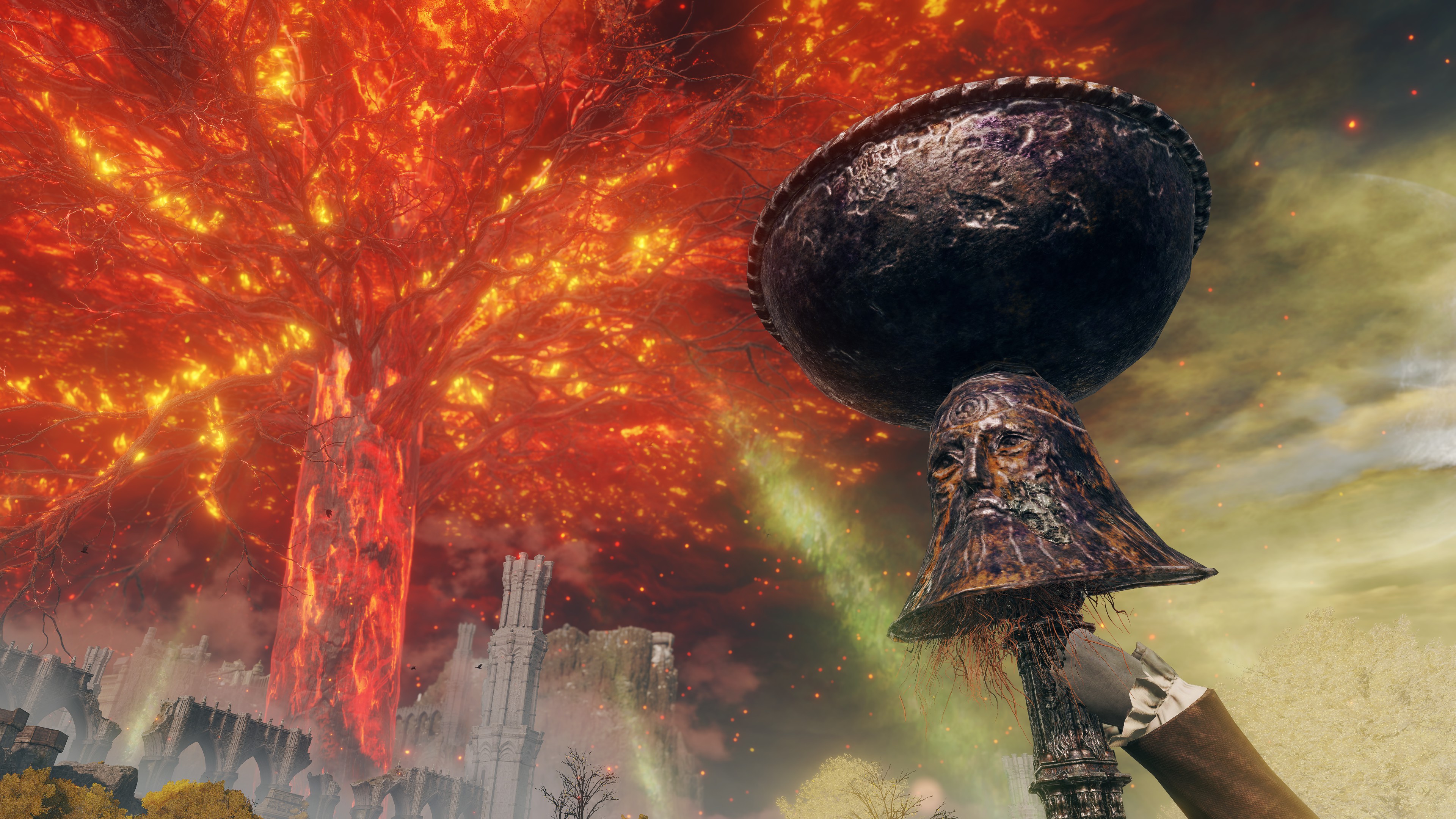
The lord did not shirk her noble duties either. The obvious concern with leaving pyromaniacs to watch over a flame is that they would become so engrossed as to unleash it themselves. Marika’s trust, however, was not misplaced. Arghanthy expertly hid the fact that the Fell God yet lived in the last giant, compiling prayers that encapsulated the firekeeper’s power at her fort but sharing that prayerbook with only select members given the rank of Prelate. Like Arghanthy, Prelates were expected to lead the lesser monks, the rotund armor conveying the example to be unmoving in the face of fire’s temptation; their crushing great hammers styled after blazing flames capture a similar weight to duty. The face on their helm likewise portrays them as exalted individuals, making their overall image akin to an enlightened Buddha. As for these Buddhas’ temptations to overcome, we see that the source of their nirvana was a third Mind’s Eye invoking the Fell God, similar eye imagery captured on the knee guards. With wisdom transcending the base urge for evil, a Prelate was the ideal for every monk to strive for.
Prayerbook writing down the power of fire giants. Secret book of the watcher Prelates.
Black iron chest armor wrapped in red cloth. Apparel of the Prelates, who are instructors of the Fire Warrior Monks.
Their fat, portly form is a symbol of the weight of the fire warrior monks’ responsibility. You should definitely etch it into your heart. My form, to be a weighty stone.
Giant hammer modeled on a flaring flame. Choice weapon of the Prelates, who are instructors of the Fire Warrior Monks. The form of intense flame permitted only to them.
That hammer head is heavy to an inordinate degree, so launches enemies into the air with strong attack.
These were the sort whom the lord could trust with learning such powerful fire magic. As a reward for their dedication, the Prelates cast the order’s incantations from hand without a prayer seal, or channel their faith into the flames spouting from the cup atop their helmets. Even their hammers, normally dealing no fire damage despite appearances, can draw out that fiery power for unique skills like Prelate’s Charge. This ability to hold yet rarely use fire reflects their mastery to be entrusted with fire arts — and having learned all the Fell God’s secrets through prayer, no one but them could serve as instructors. The rest needed to prove their reverence of flame was met with equal parts fear. This not only meant receiving a basic prayer book but also constantly reminding each other of their priorities.



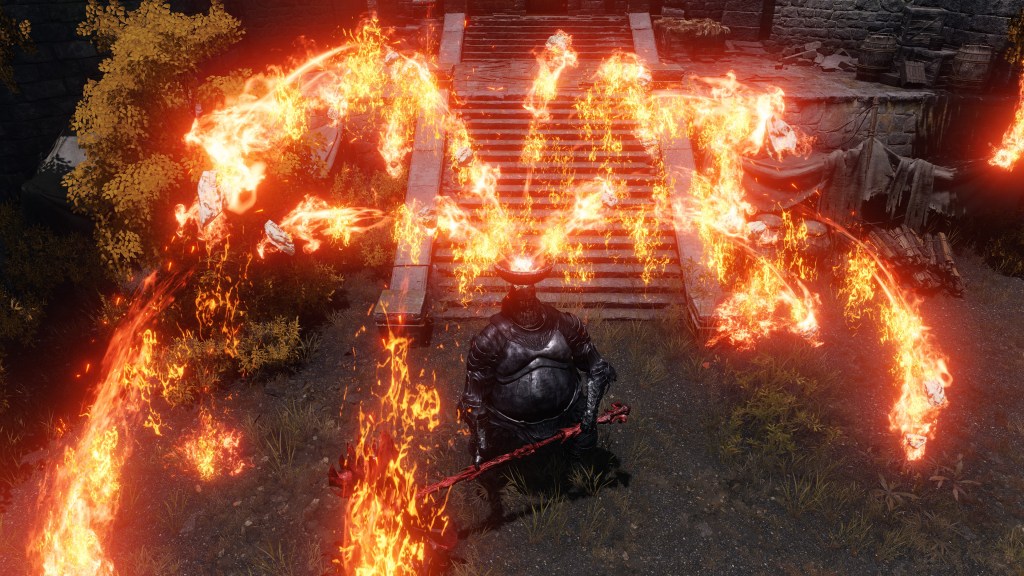

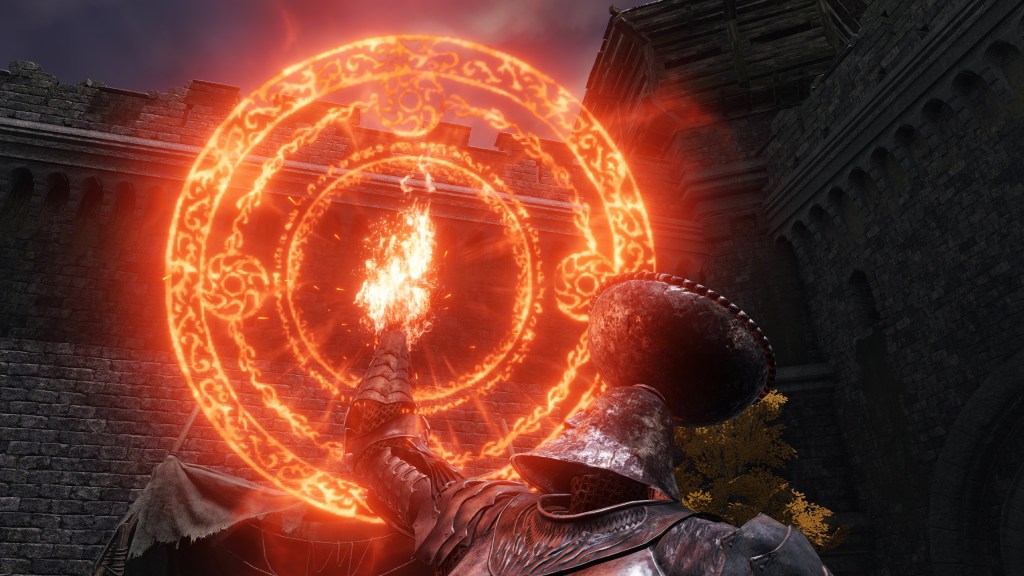


Flame, Cleanse Me causes slight burns to the caster purifying the body of all manner of illness in order to inspire that desired fear. That same principle applied to make their uniform black iron armor wrapped in red cloth, symbolizing bright flame burning their bodies to a crisp. That reasoning was even behind the Fell God’s face emblazoned on the lesser monks’ breastplate. Even their special incantation seal was modeled after the Fell God’s eye depicted as the Eye of Providence. Everything is a reminder that watchers should always fear flame, no matter their fascination with touching it. Arghanthy was herself captivated by the Flame of Ruin, using the giant’s seal to cast the fire incantations; these include a spell derived from the last giant. But as a guardian, she has no need for visual reminders. Rather, she looks to have fashioned the One-Eyed Shield in order to let its trick flamethrower “mouth” exemplify the terror of the Fell God for all her followers to remember. No monk should be fooled into thinking that they were above the risks.
One of the Fire Warrior Monks prayers.
Sparks a fire within self and burns disease and poison. Alleviates poison and decay accumulation and also cures each state.
This prayer, albeit slight, burns the caster personally so that they do not forget fear of fire.
Black iron chest armor wrapped in red cloth. Apparel of the Fire Warrior Monks.
It is said that the grotesque face imitation on the breastplate is an old evil god of flame. The taboo instills fear.
Holy sign modeled on the one eye of the god of the fire giants. It is adorned with red hair braids.
It is the holy sign of Fire Warrior Monks and Prelates.
But accounting for that, the monks are free to enjoy fire as they please. The Prelates’ helm cup constantly billows flame, showcasing both fire’s power and their immense faith when teaching their underlings. Those underlings are proud to wear crowns and wield weapons made in the shape of those beautiful, flickering flames. Strong attacks with those mock flames, in fact, rouse the warrior monks’ fighting spirits, putting a spring in their step. They are disciples hoping to become masters of fire through faith. Their dedication to the cause while maintaining a certain distance is why they are allowed to be buried with other veterans of the war. We can acquire the Fire Monk’s ashes from a chest in the standard catacombs, and the hero graves have monks and Prelates among the gravekeepers, their spells and equipment lootable from the area. Evidently, these soldiers were trustworthy flame monitors for Marika, as illustrated by her kingdom building a lift just as extravagant as Dectus despite being accessed from forbidden lands. As the statues for that Rold lift showcase, they are Tree Sentinels, in their own way.


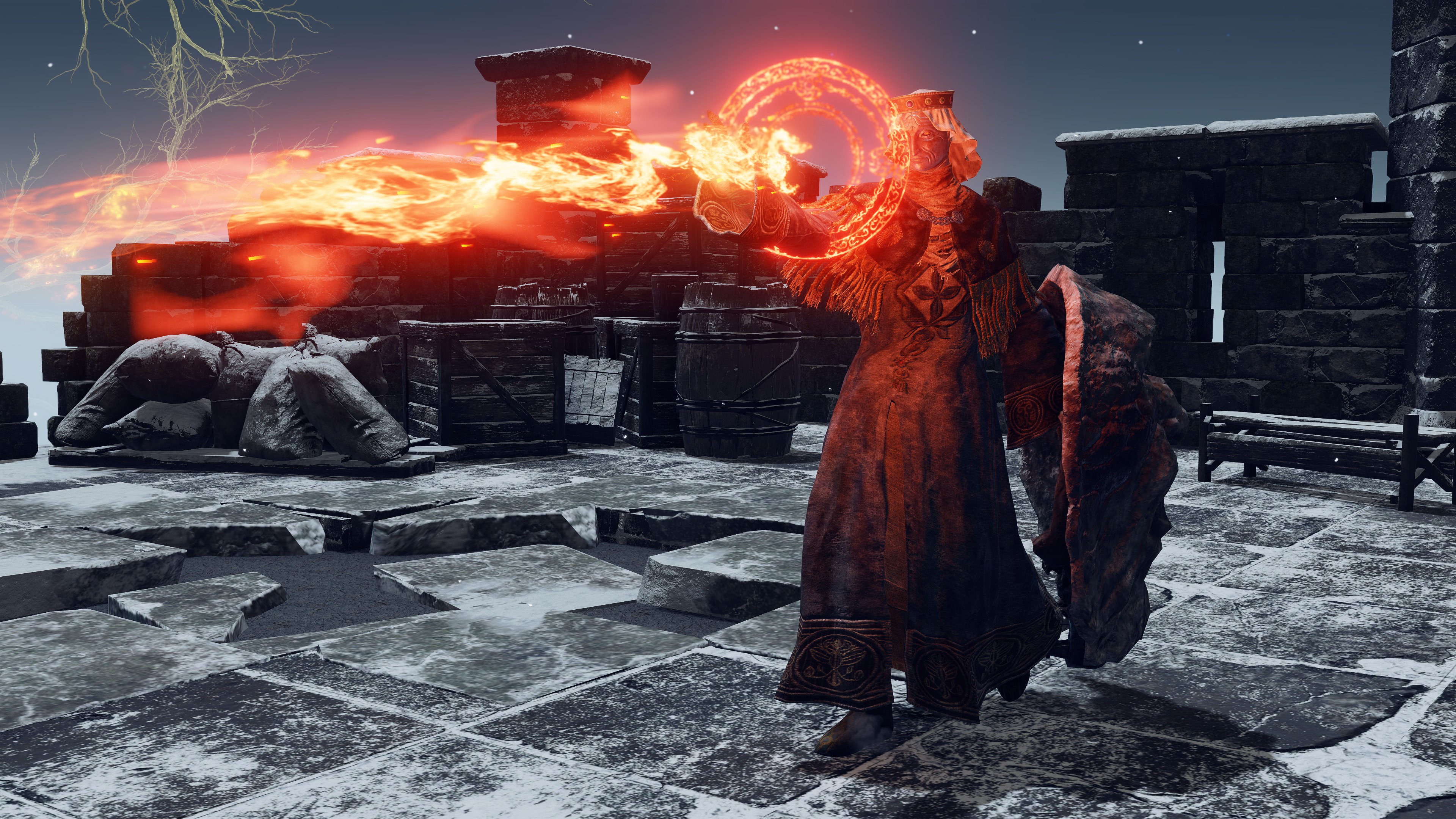


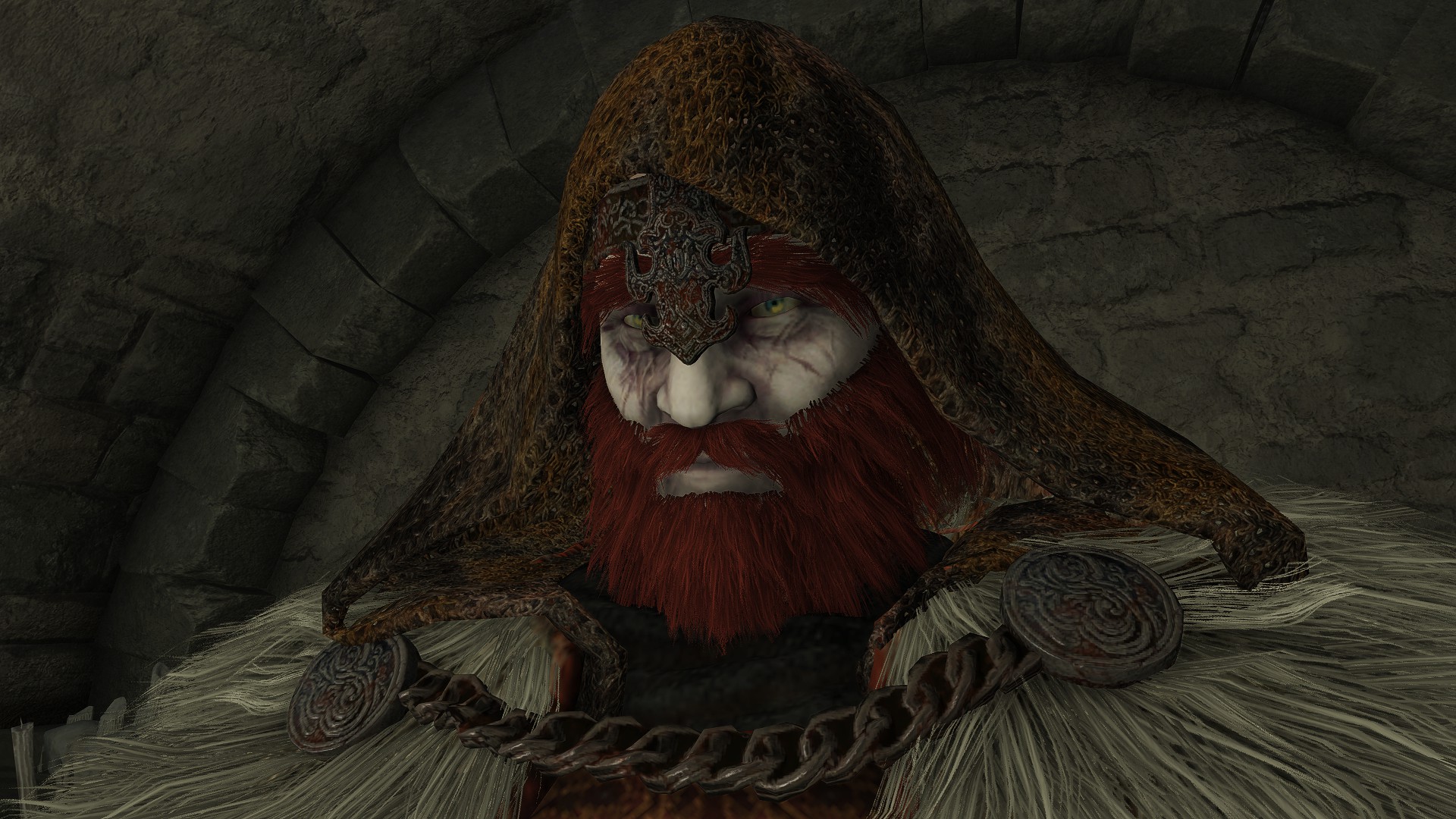

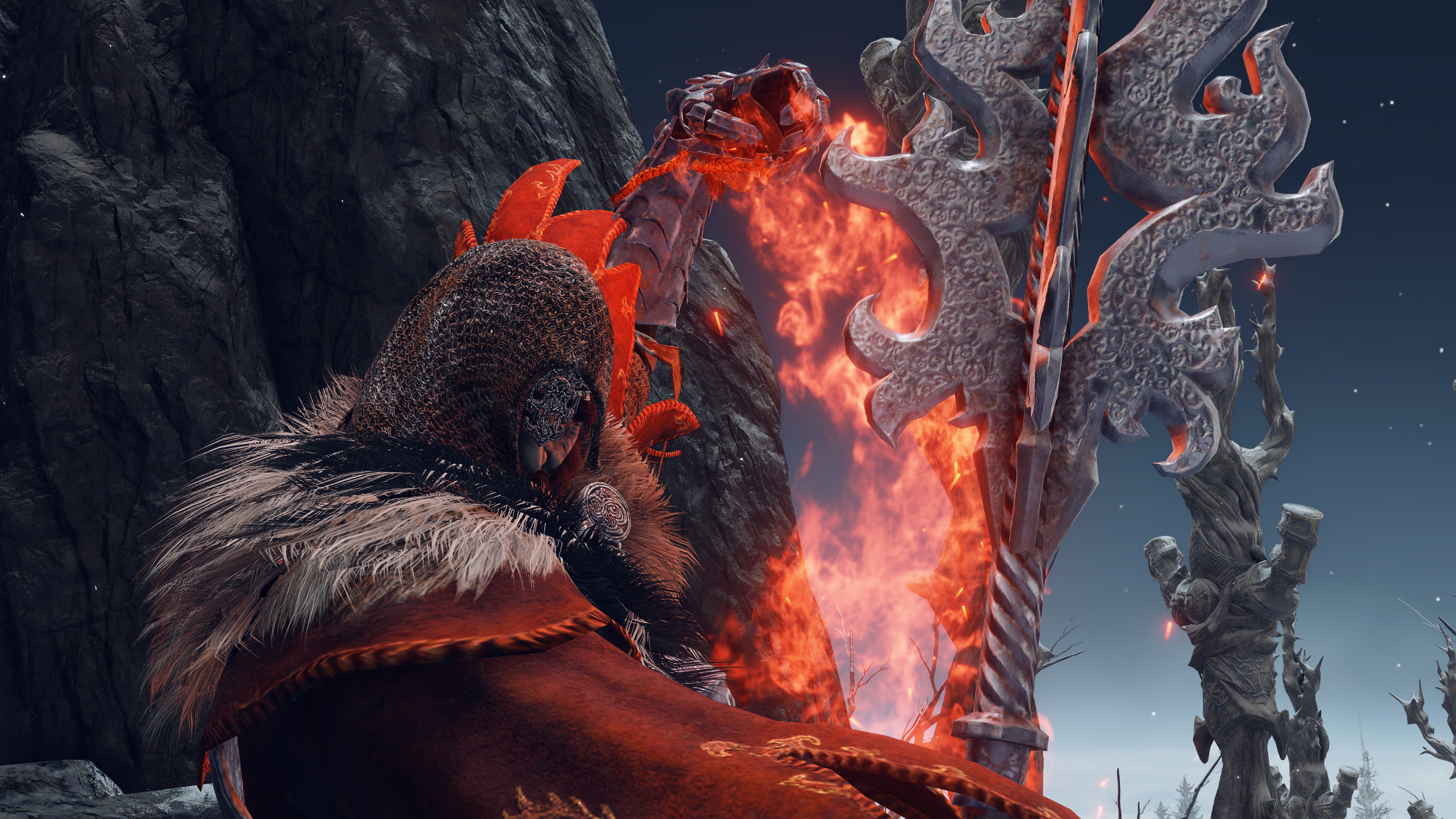

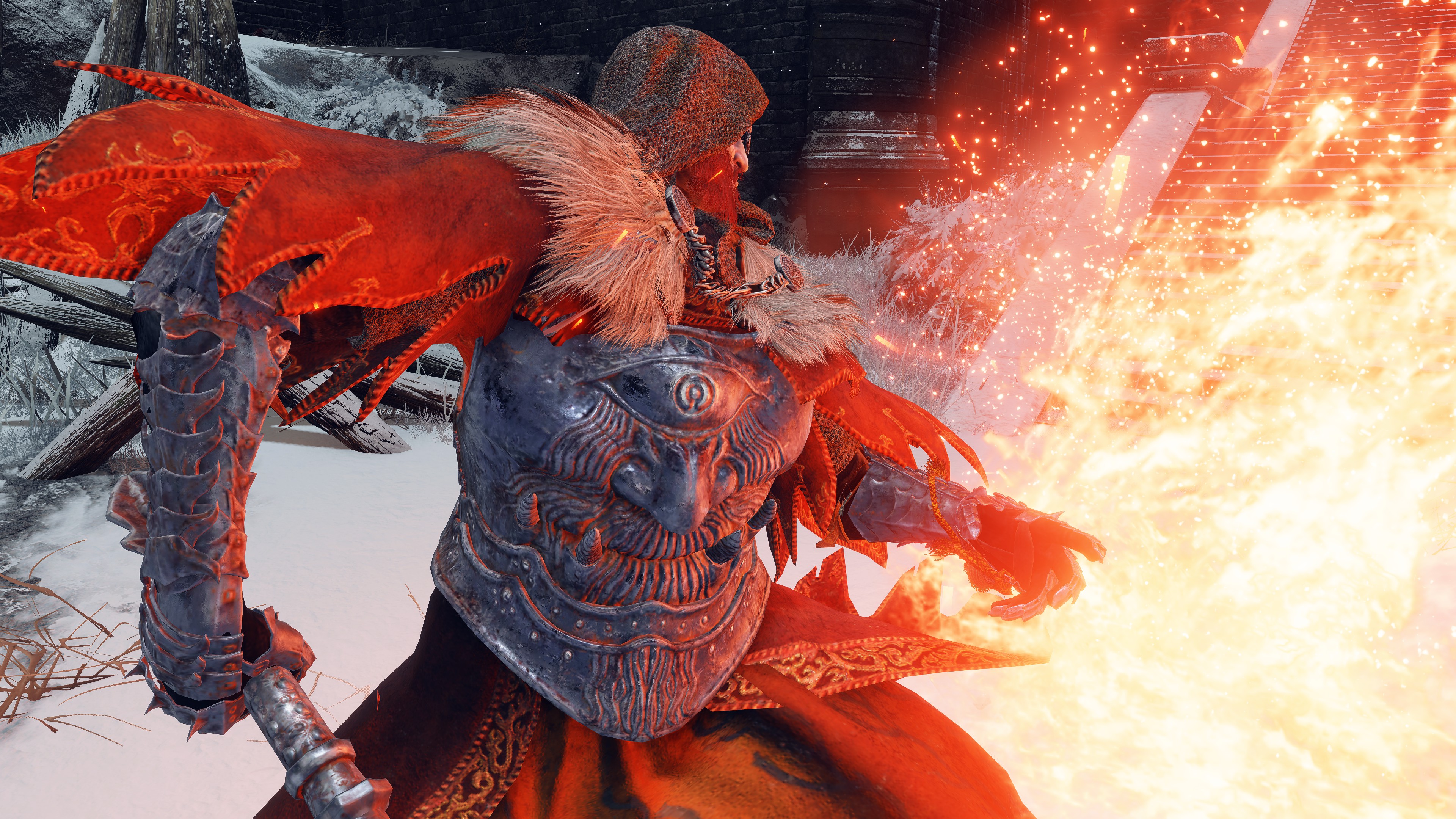

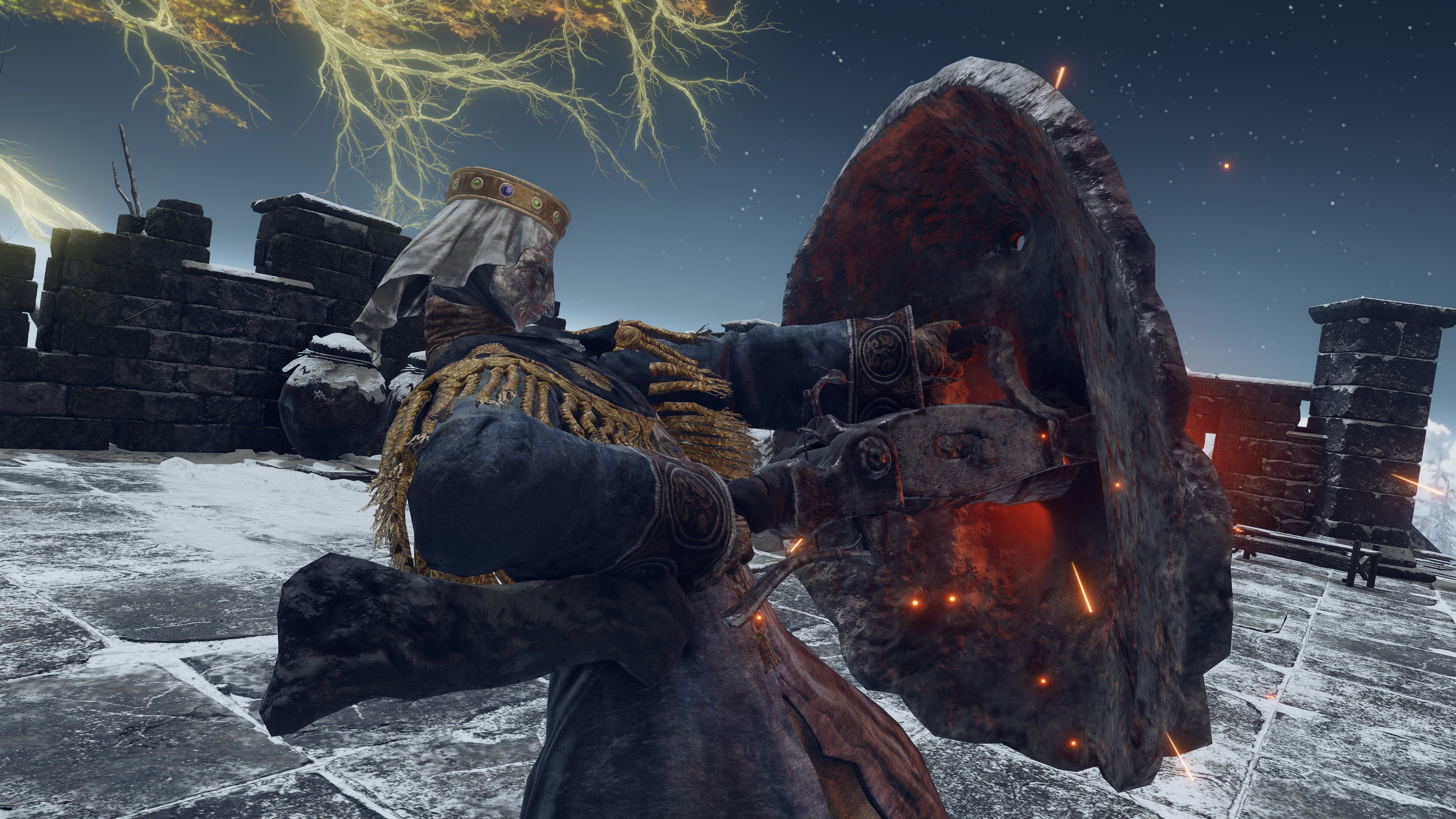
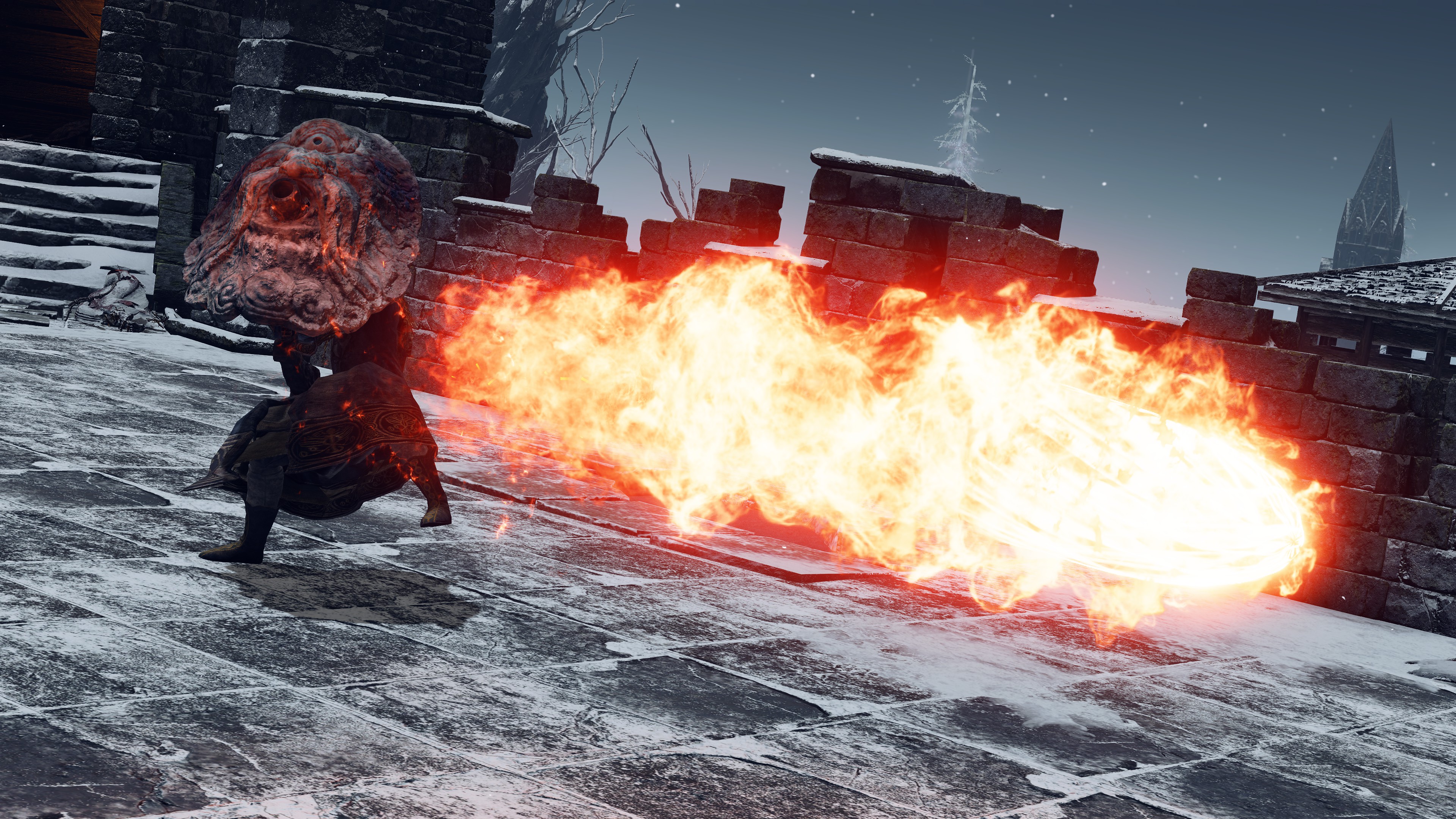
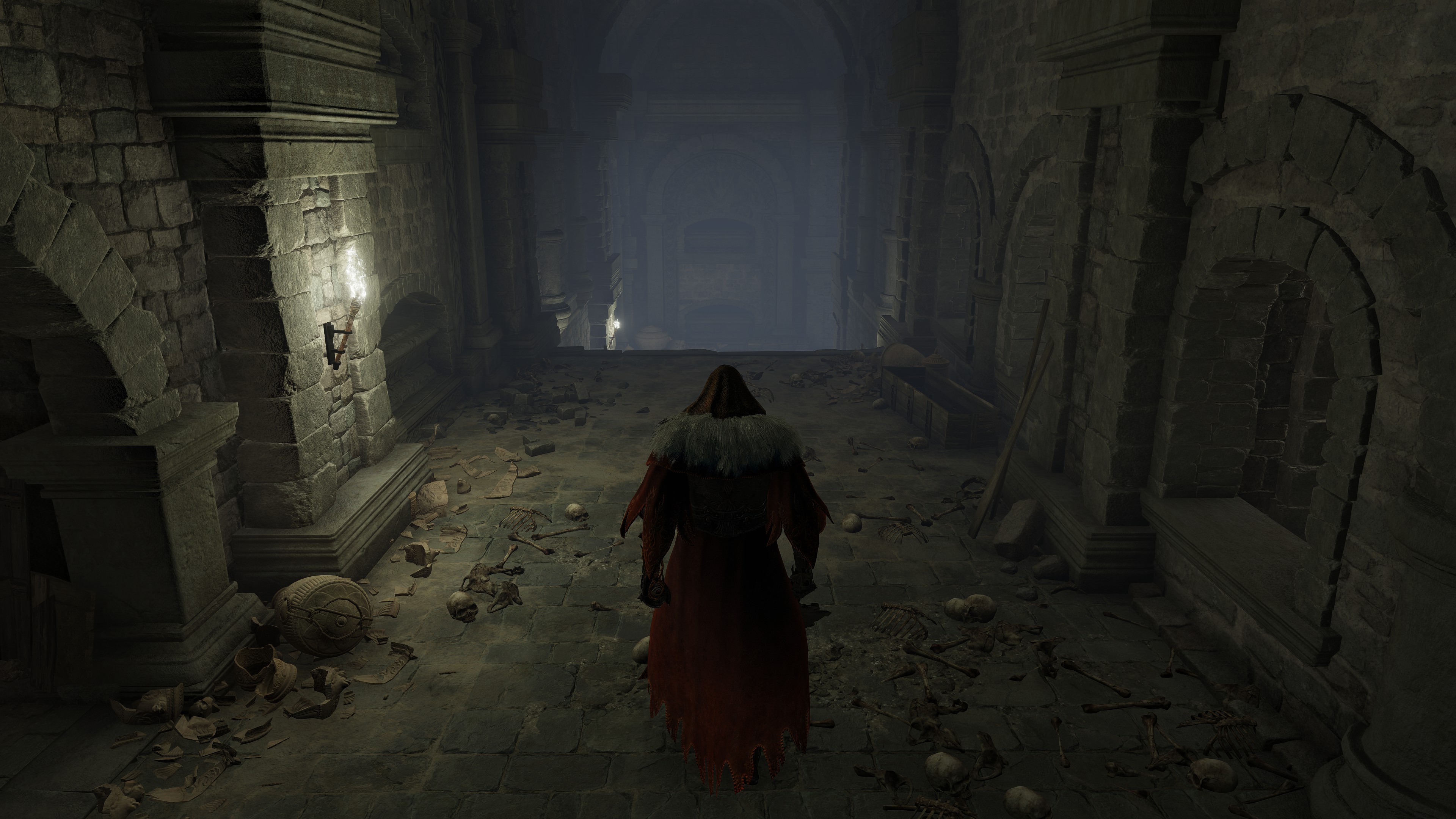
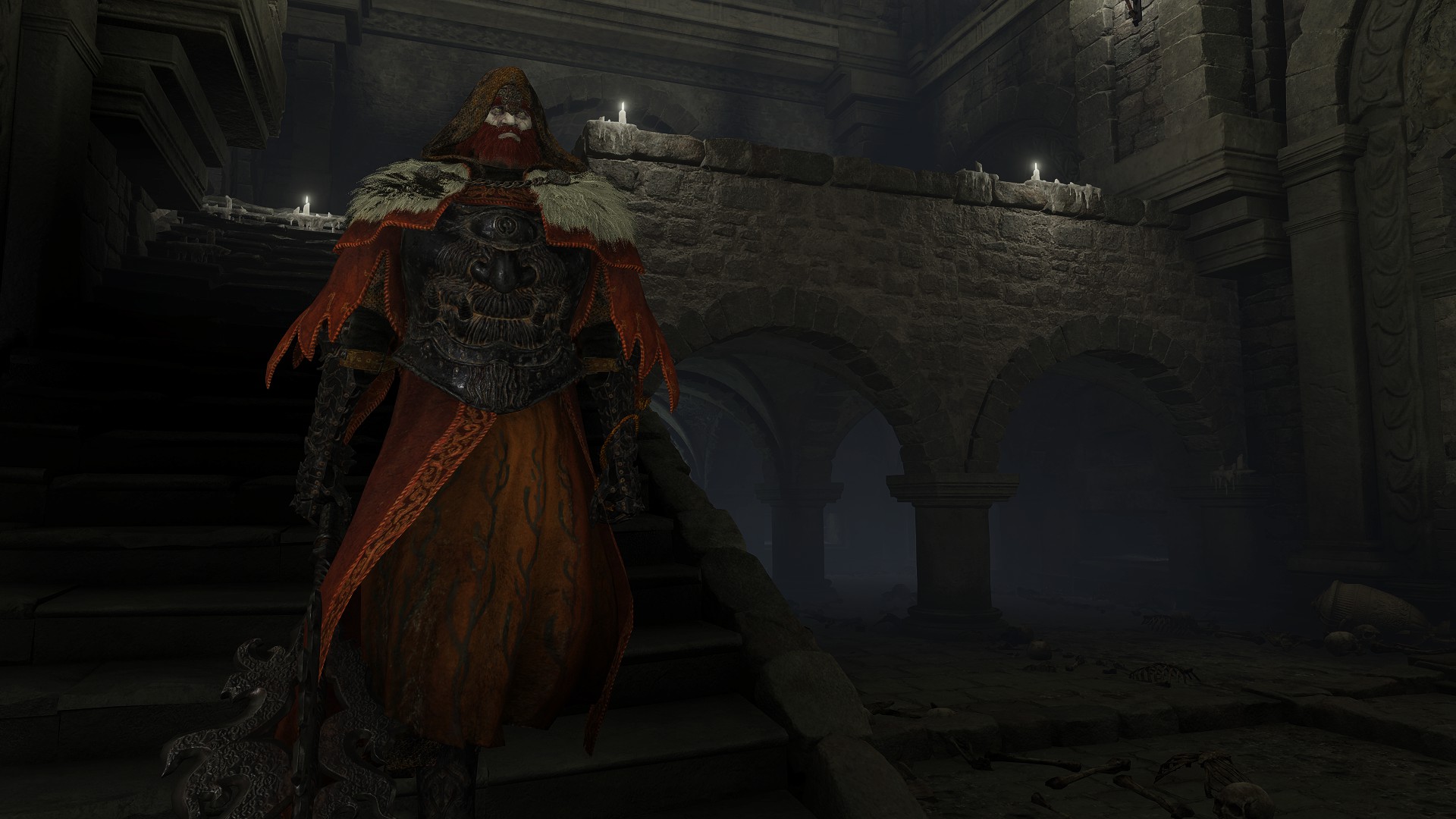

Helmet of an exalted face with a head cup placed on it. Apparel of the Prelates, who are instructors of the Fire Warrior Monks.
It is said that originally a source fire was harbored in the head cup and spouted out big with the overflow of their faith. But that is now extinguished.
Chain helmet worn over a flame-shaped crown.
They are watchers of the Destructive Flame, which is a taboo of the Golden Tree, and said to exist on the Mountaintops of the Giants.
Warhammer modeled on a flickering flame. Unique choice weapon of the fire warrior monks who came from the Mountaintops of the Giants.
Characterized by the strong attack that rouses the fiery fighting spirit.
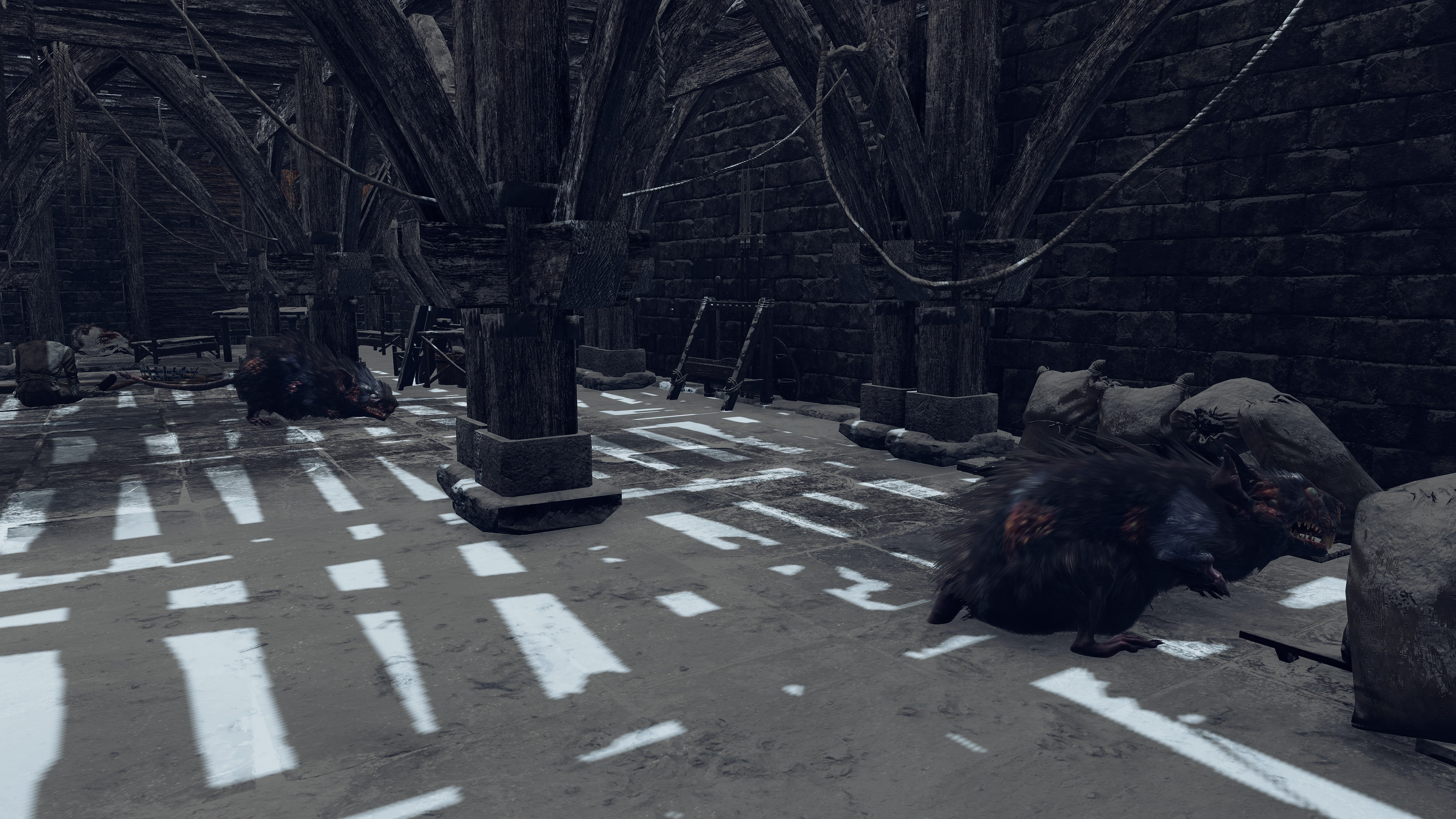
But unlike the Erdtree guards, the flame watchers couldn’t simply recruit from among the masses. And yet, the Forbidden Lands have been training new acolytes to their monastic order. Certain flame guardians remain garrisoned within the fort. Rather than monks, these soldiers dress as modest citizens, wielding a torchpole utilized by soldiers on watch along with a giant’s seal like Arghanthy. With only Whirl, O Flame! to their name, they are clearly recent recruits still learning under the Prelates and their leader. The monks-in-training start out with grunt work at the fort, like rat catching, before being permitted a wider area to watch and the proper uniform. In that case, the Fire Monks have been receiving a steady flow of new members, at least until the Shattering. Where were these recruits coming from when the lands were forbidden? The cloth garb of simple citizens is typically paired with the Guilty Hood for various corpse models, the watchers-in-training replacing it with the Guardian Mask. This suggests that before they became defenders of the Flame of Ruin, they were criminals.
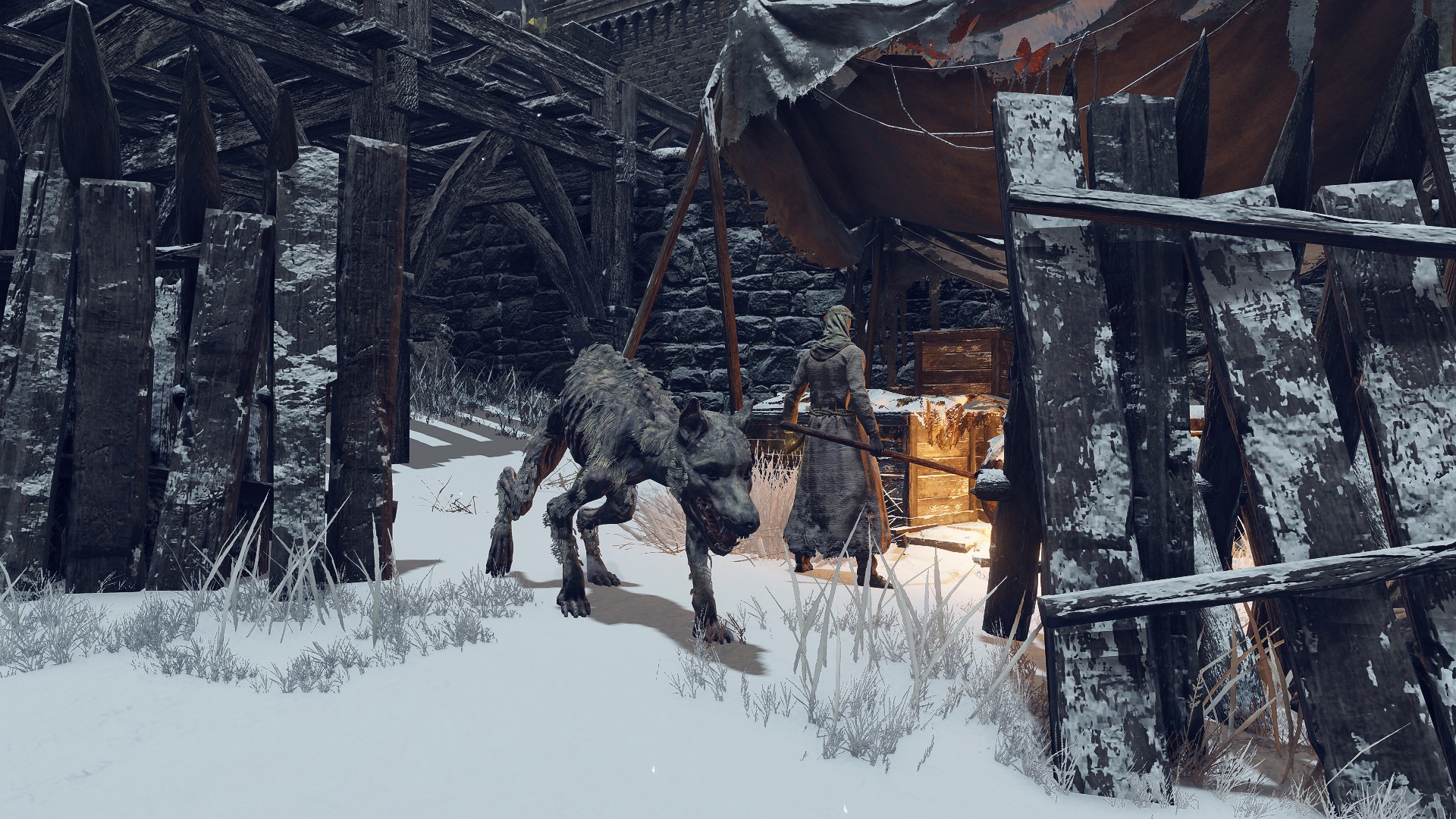
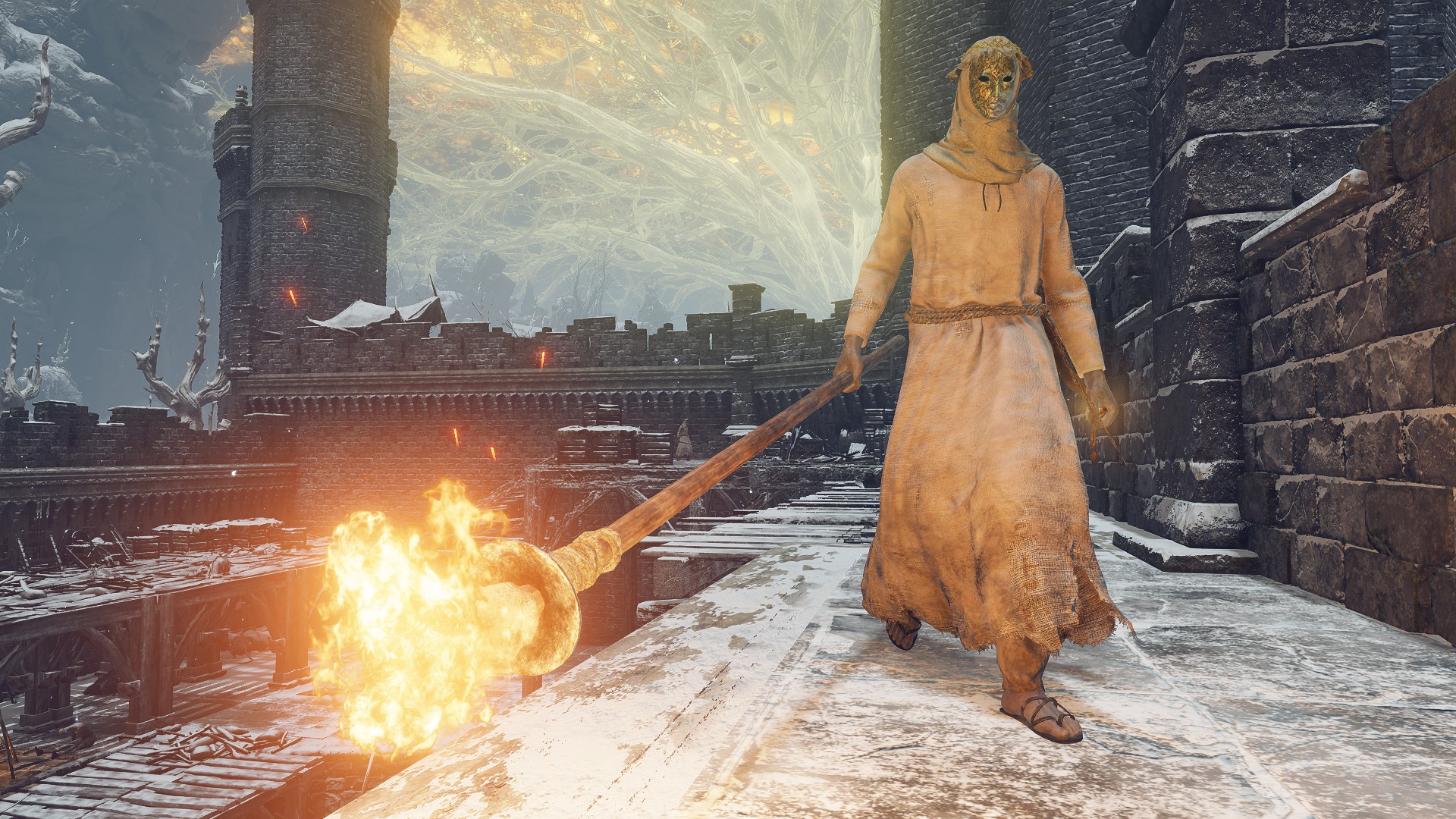
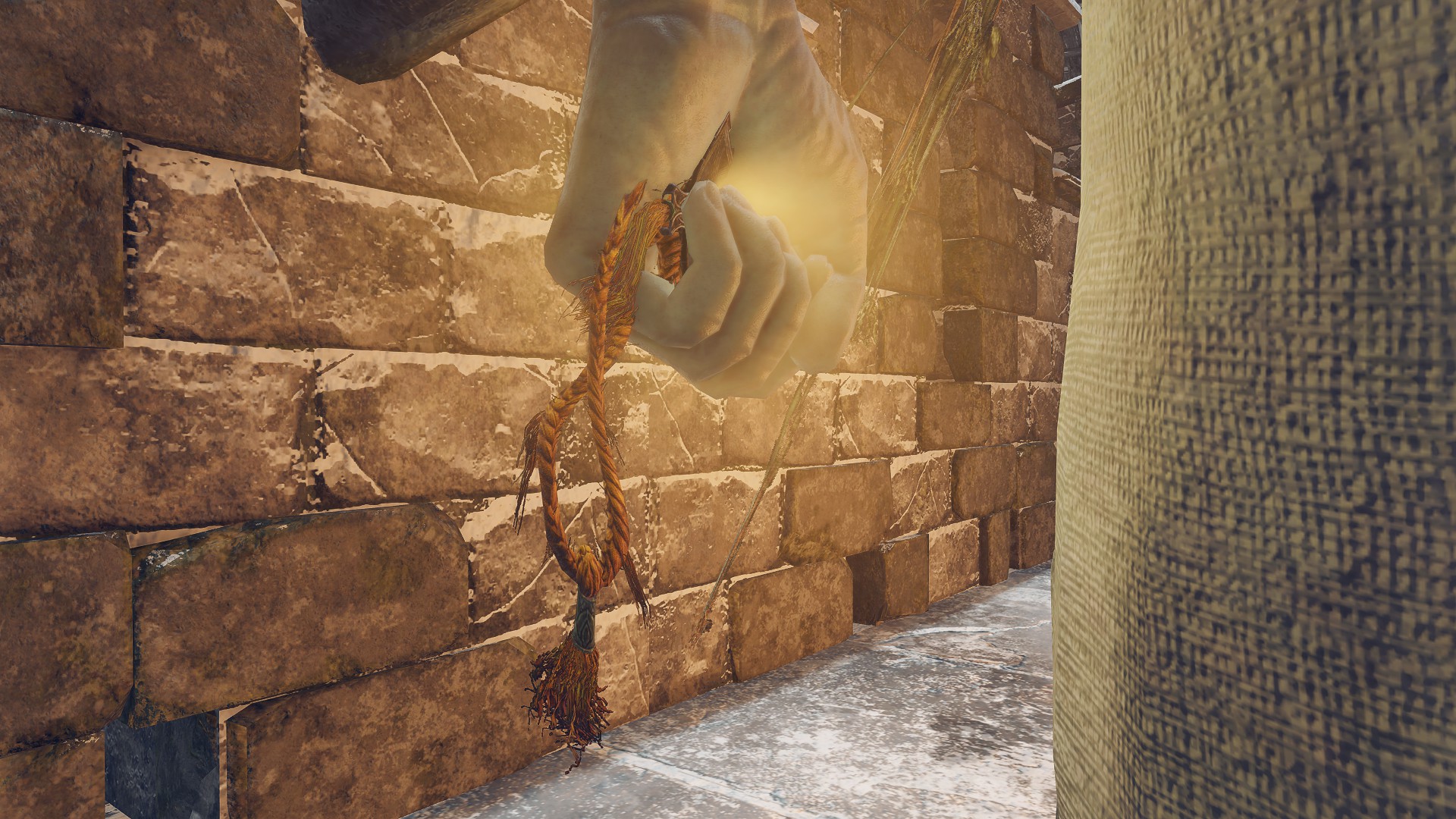

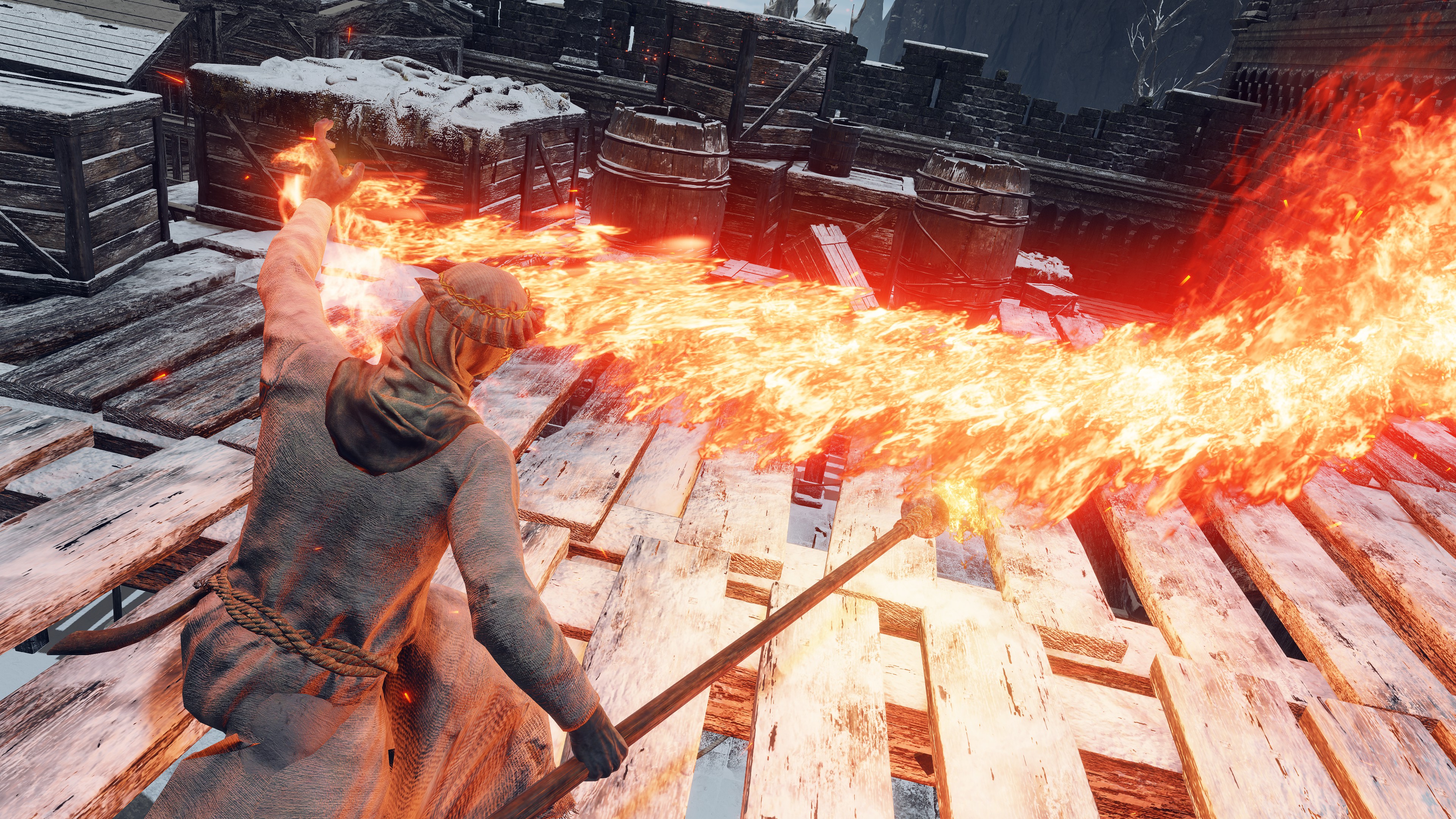
Torch attached at the end of a long pole. Illuminates dark places, but cannot be raised up.
It is what soldiers on lookout and the like use, so its attacks thrust fire at the enemy.
Supporting the Prelates and monks in abundance are thorn sorcerers. These individuals wear similarly simple garb but with a red veil, covering the eyes gouged by the crown of thorns over top. To show their allegiance, they wield either smaller branches smoldering with flame or larger ones fully set ablaze. The former is fodder, of little note. But the weapon we receive from the latter is Staff of the Guilty, a small animal impaled on the thorny branch tips as a sacrifice to create red glintstone. With these blood crystal staves, they cast Briars of Sin and Punishment sorceries. This is because, in their eternal darkness, the blinded guardians discovered the blood star, inspiring them to put their faith in the power of blood and thorns. They may follow the Fire Monks’ model, but it has been perverted by heresy. And the description to these thorn sorceries confirm the sorcerers to also be exiled criminals. The Erdtree kingdom banished them to this place, a Prelate employing a whip of similar thorns to encourage a more intense kind of instruction from them.


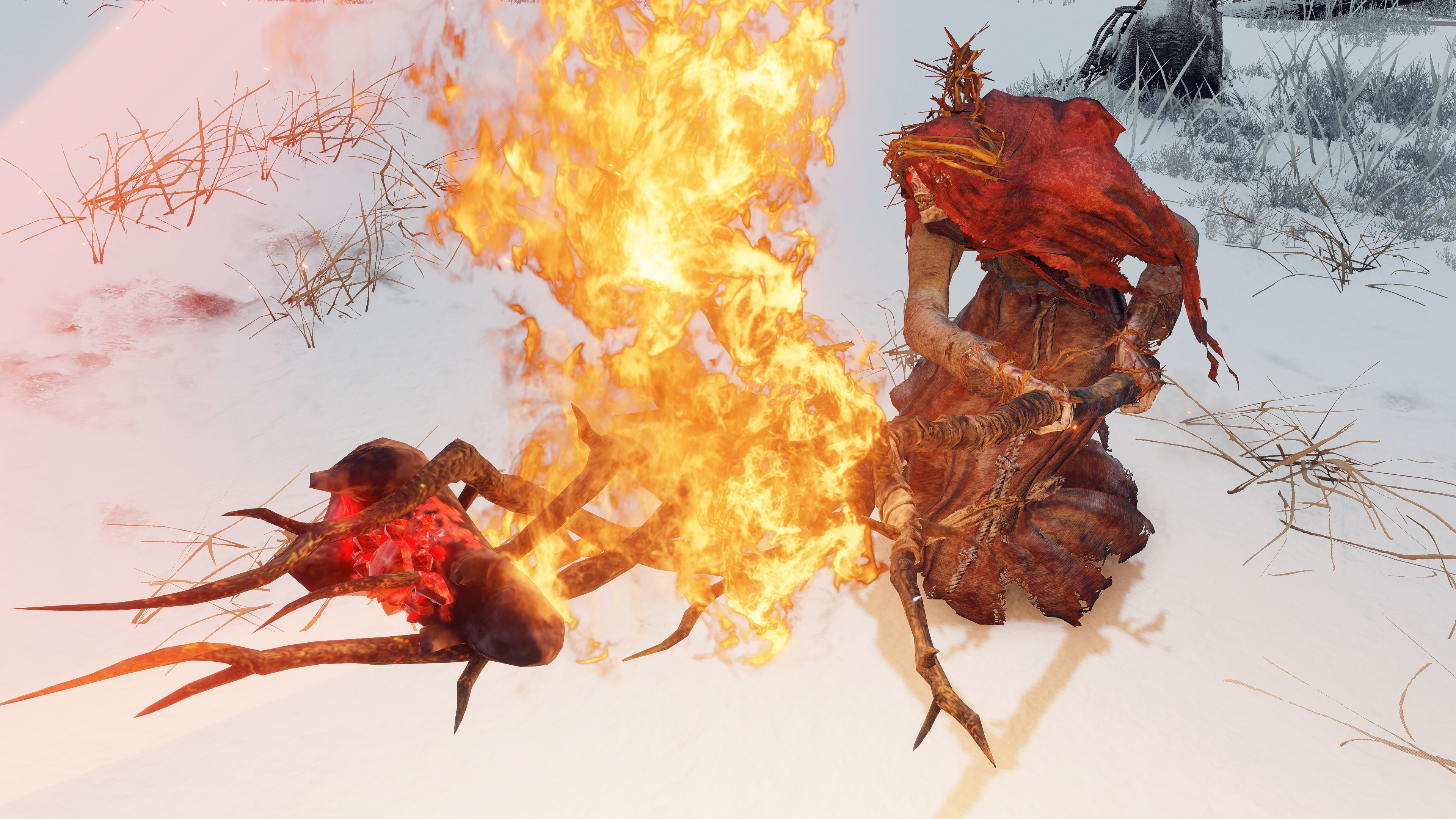
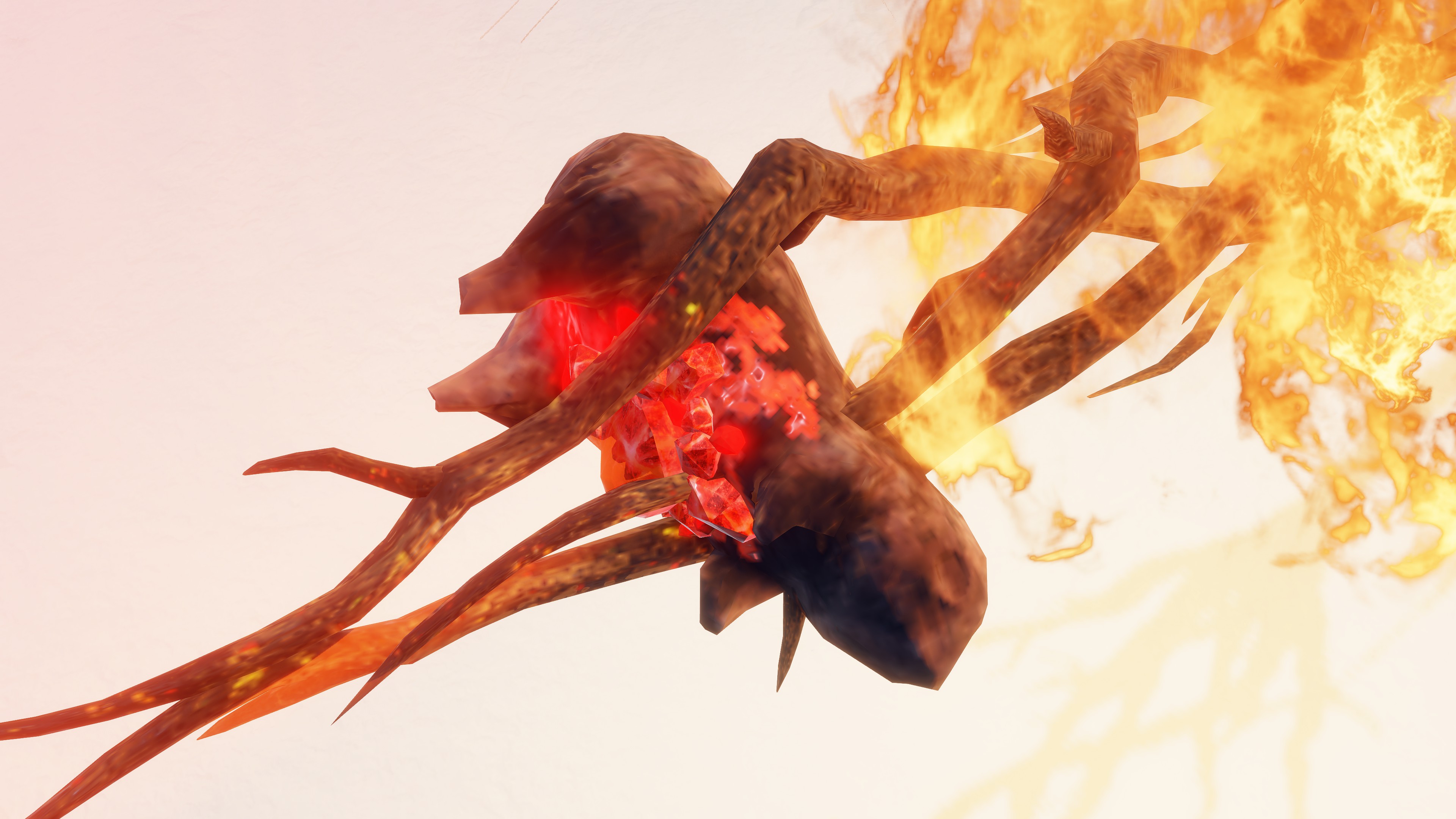
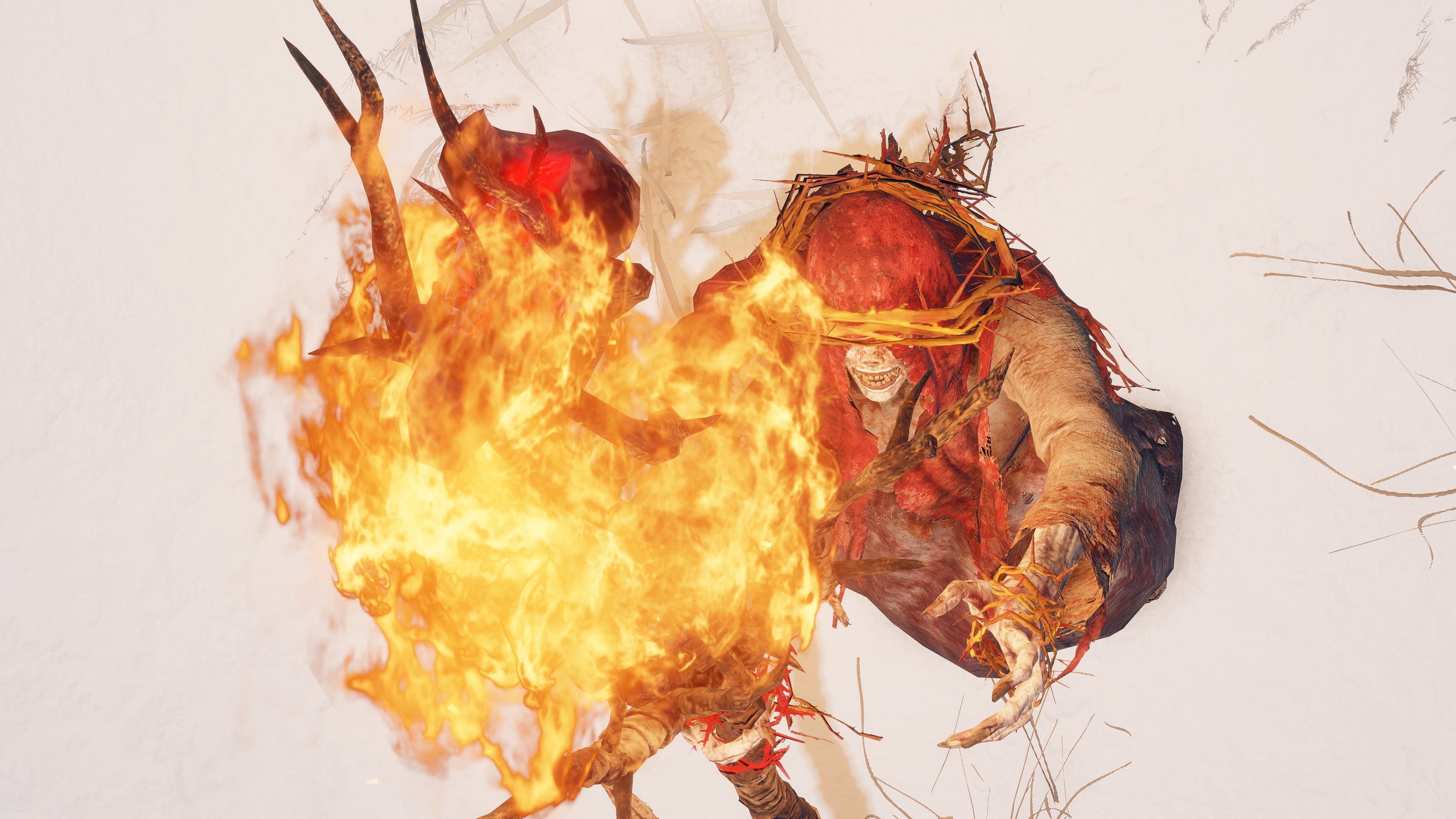


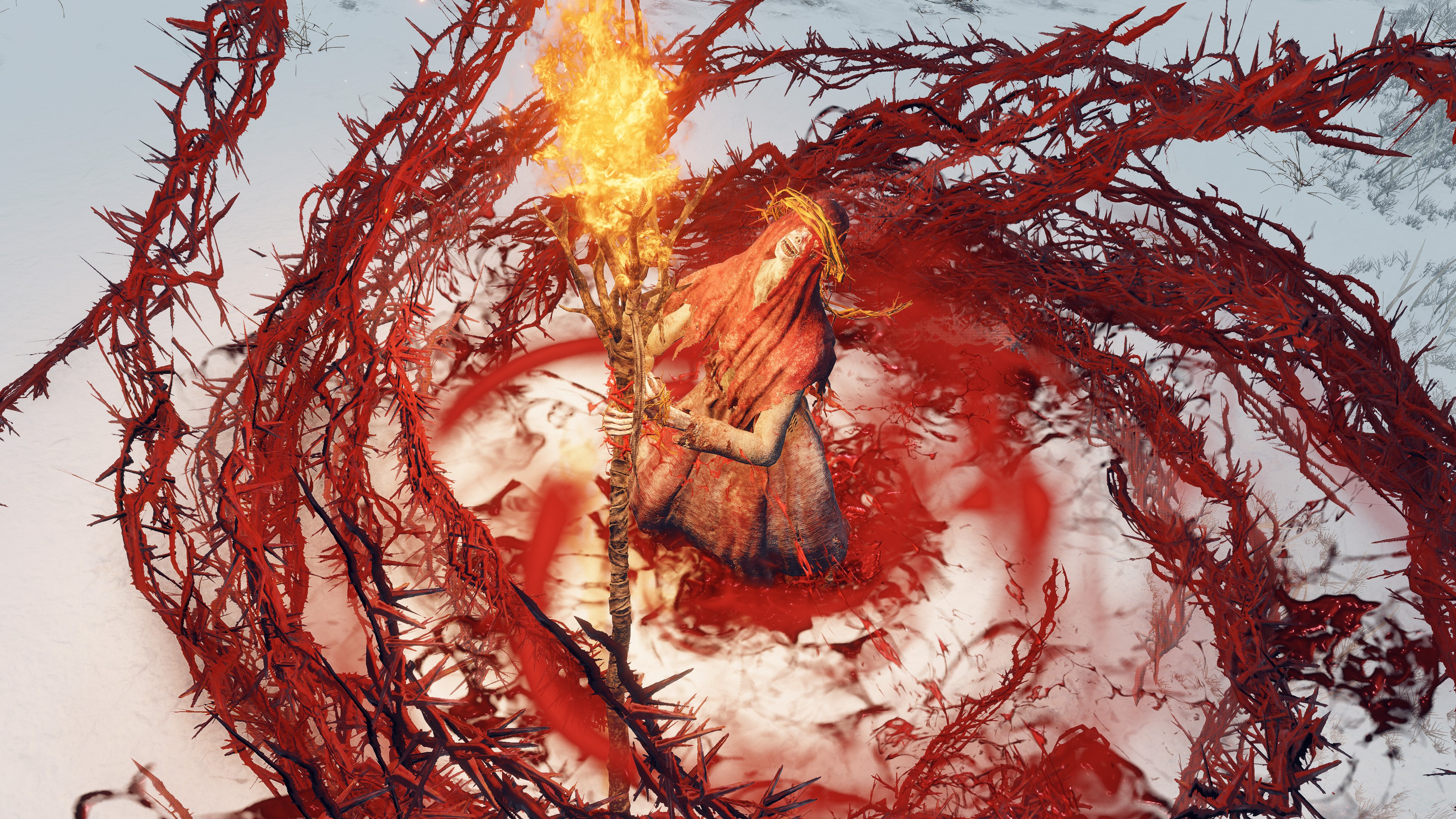


Heretical sorcery of exiled criminals. The thing the academy abhors most.
Injures self with briars of sin and summons swirling great blood briars in surroundings. Can be used continuously up to three times.
The criminals whose eyes were gouged with briars discovered the blood star in their eternal darkness.
Thick whip closely sprouting red thorns. Choice weapon of Prelates, who are the instructors of the Fire Warrior Monks. Modeled on the Briars of Sin and used in intense instruction encouragement.
Has high bleeding effect.
In short, most of the flame watchers are sinners, sent over the years since the original population of priests took up the duty. That is why Arghanthy wears the black mantle over her official robes as lord. Much like House Marais, she was put in charge of punishing criminals, in her case by drilling the duty of guardians into them. This is perfect for someone with the name “Aghanti”, (アーガンティ) a probable corruption of the Sanskrit aghashanti defining the expiation of sins. A life monitoring the Flame of Ruin was these sinners’ atonement. Presumably, this was the fate for petty criminals who don’t resist arrest, thereby saving them from execution. The number blinded must therefore denote subsequent disobedience in the line of duty — only those tame few still wearing the Guardian Mask benefit from a crown without thorns. They may think themselves king of their own fate, but they are just big-headed pawns to a truly grander purpose, deserving of mockery. The Guardians’ Garrison humbles them in Erdtree fashion in the hopes that they abandon their sinful ways and become watchers.
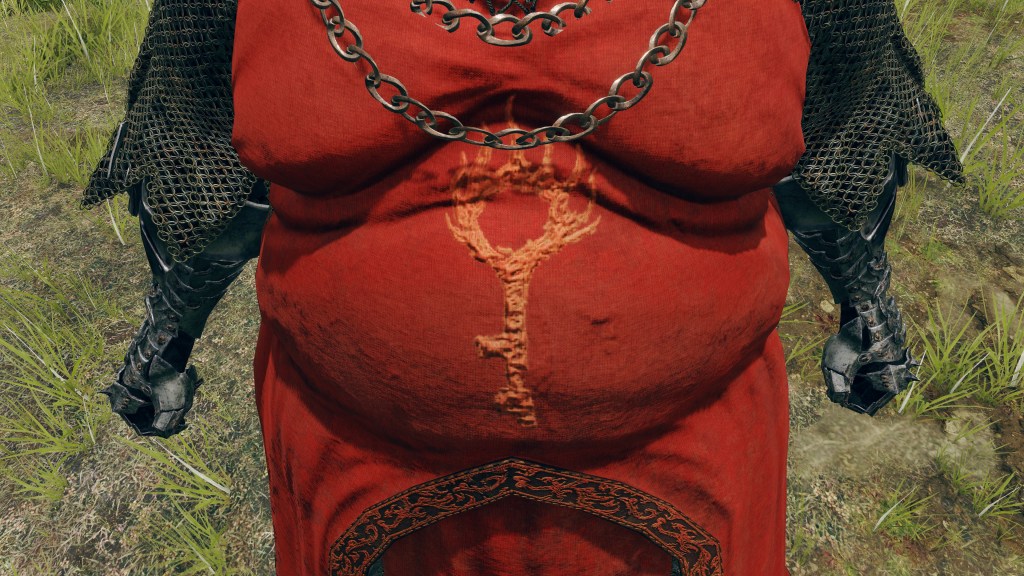
Reforming the guilty was likely a major shaper of the monks’ practices. Exiled or no, it was all too easy to fall to old habits, as seen with the Troll’s Roar ash of war a looter carries from atop a giant skeleton. But just as the Buddha famously convinced a notorious serial killer to renounce his ways and become a monk, the priests who became the Prelates have leveraged their experience to become the exiles’ chief role model. On top of everything else they wear, the ranking monks keep the image of a burning key emblazoned across their chest, doubtless to symbolize the path to enlightenment opened through them and them alone. The Prelates’ helm, with its exalted visage, has become the models for braziers utilized as central lighting when away from their facilities. Even the rhythmic beating of the chest which they are so often found engaging in serves a reflective purpose for others as well as themselves, a ritual to focus on being the weighty stone fixed on defending the flame. The Prelates were the promise of fulfillment in a higher calling, a walking propaganda piece, as are arguably all evangelists.



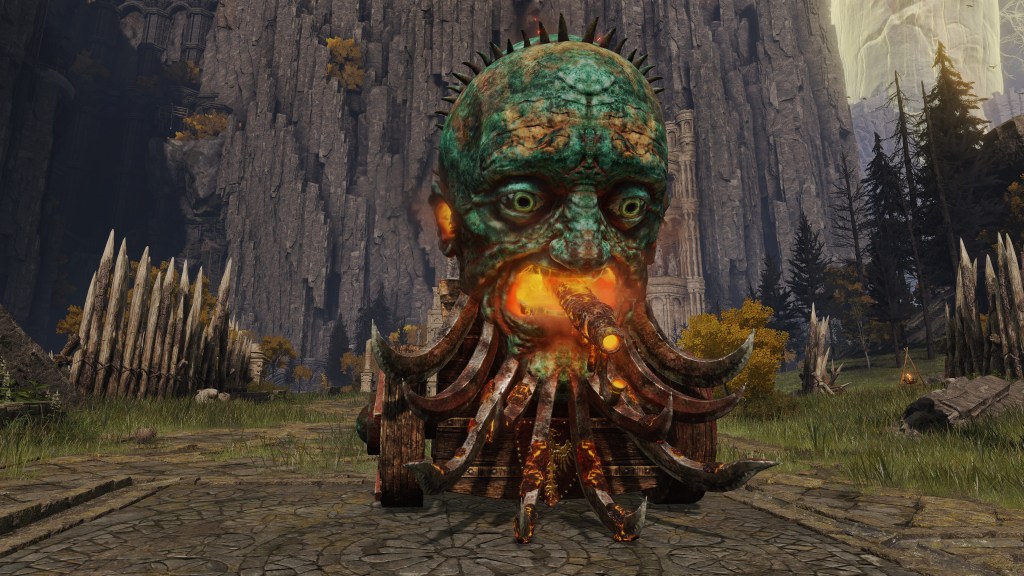
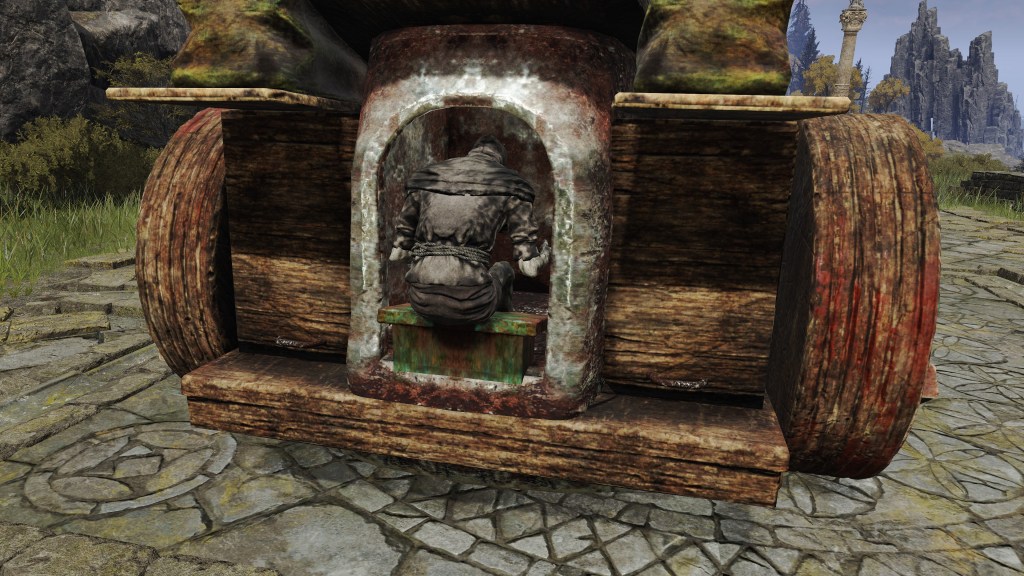
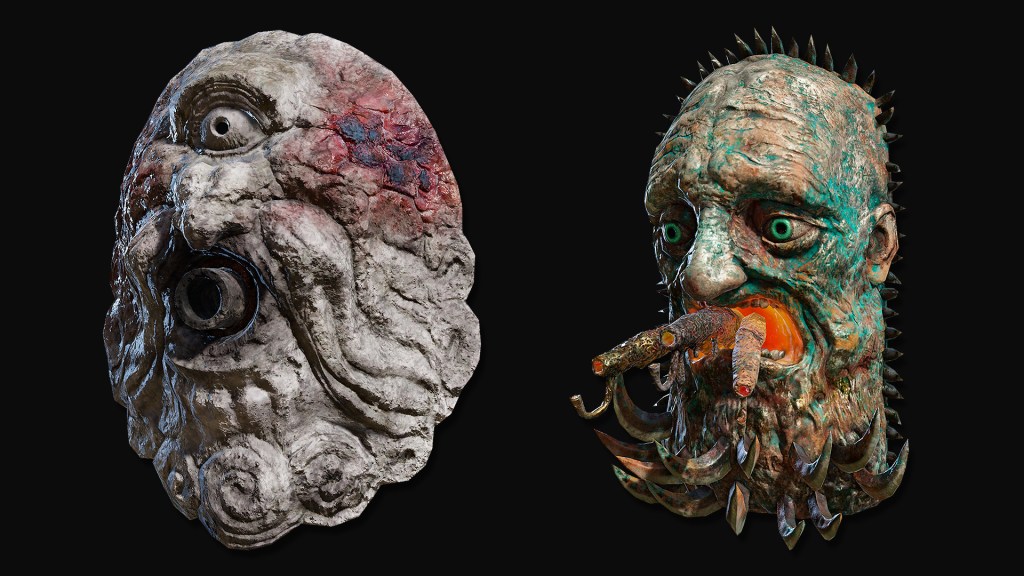
But every carrot needs a stick. The Fire Monks guided their flock as much through fear, in ways besides the typical thorns or atypical One-Eyed Shield. Despite the name, flame “chariots” are more literally “war cars”, (戦車) essentially a kind of small two-wheel tank. Concept art indicates that it is operated by three individuals total, though only the main driver exposed at the rear is visible. The tank is equipped with one or more flamethrowers, taking the shape of “tongues” for a fire giant’s terrifying face. The Visage Shield depicts the same bronze face, and its description clarifies that the exaggerated features making it appear more like a devil function as a reminder to fear the giants and their flame. Basically, the shield and the chariots both exist to instruct others, and we just so happen to find the latter with the Fire Monks. Without a doubt, these were designed to help guide the faithful through fear of the consequences, much like with Arganthy’s shield. In fact, both the Visage and One-Eyed Shield have a “trick” mechanism to shoot fire like the chariots, so they must all come from the same source.
Bronze trick shield modeled on the face of a fire giant. Several tongues protrude from the open mouth.
The horrifying countenance and the burning flames remind people of the fear of giants and fire. In other words, this is a shield for instruction.
White stone trick shield modeled on a grotesque one-eyed god. The cannon barrel sticks out from the open mouth.
It is the evil god the giants once enshrined, whom Queen Marika is considered to have slain.
In all likelihood, these inventions were developed with the help of Castle Sol. The Farum colonists are no stranger to mechanical or flamethrower technology, their arsenal commonly including ballistae or firesprayer emplacements — the latter modeled on dragons, naturally. At Sol in particular, we see the ballistae shoot a spread of fire bolts with a delayed explosion. With their expertise, it is more feasible for mere monks to realize their complex tools for instruction. On top of that, surviving astrologers now living in Sol would likely be lending their intelligence to such a project, as they surely did for the magic pots which trolls defending the summit currently throw. And as we see on the flame chariots, there is a golden phoenix emblazoned beneath the giant’s head. The Fire Monks don’t associate themselves with birds, let alone “fire birds”, (火の鳥) but Castle Sol does have stormhawk companions to be their symbol. Overall, it would appear that the chariots and shields of bronze or white stone were Sol’s collaboration, and the Fire Monks’ endeavor also seems to have received the support of Leyndell.




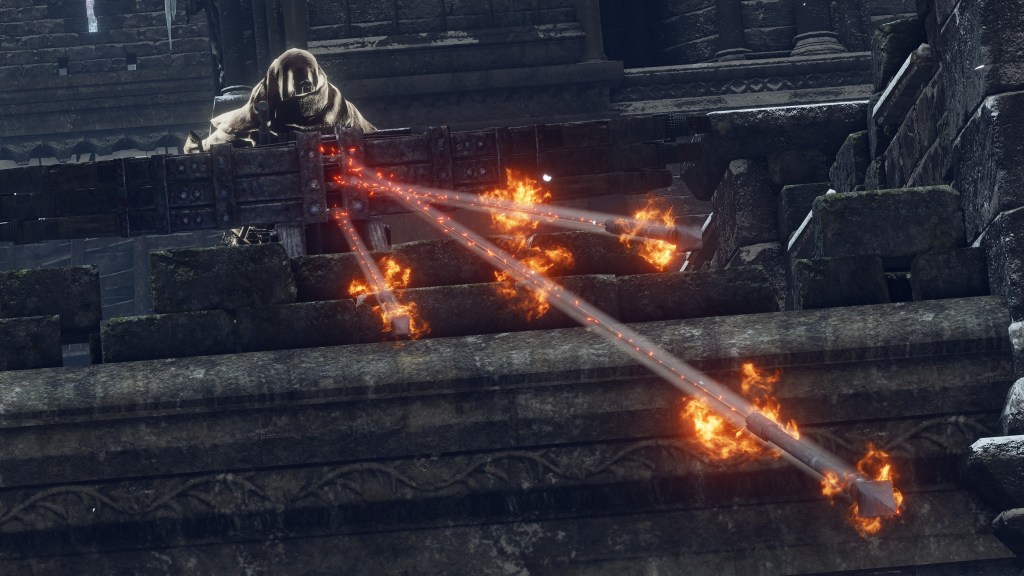


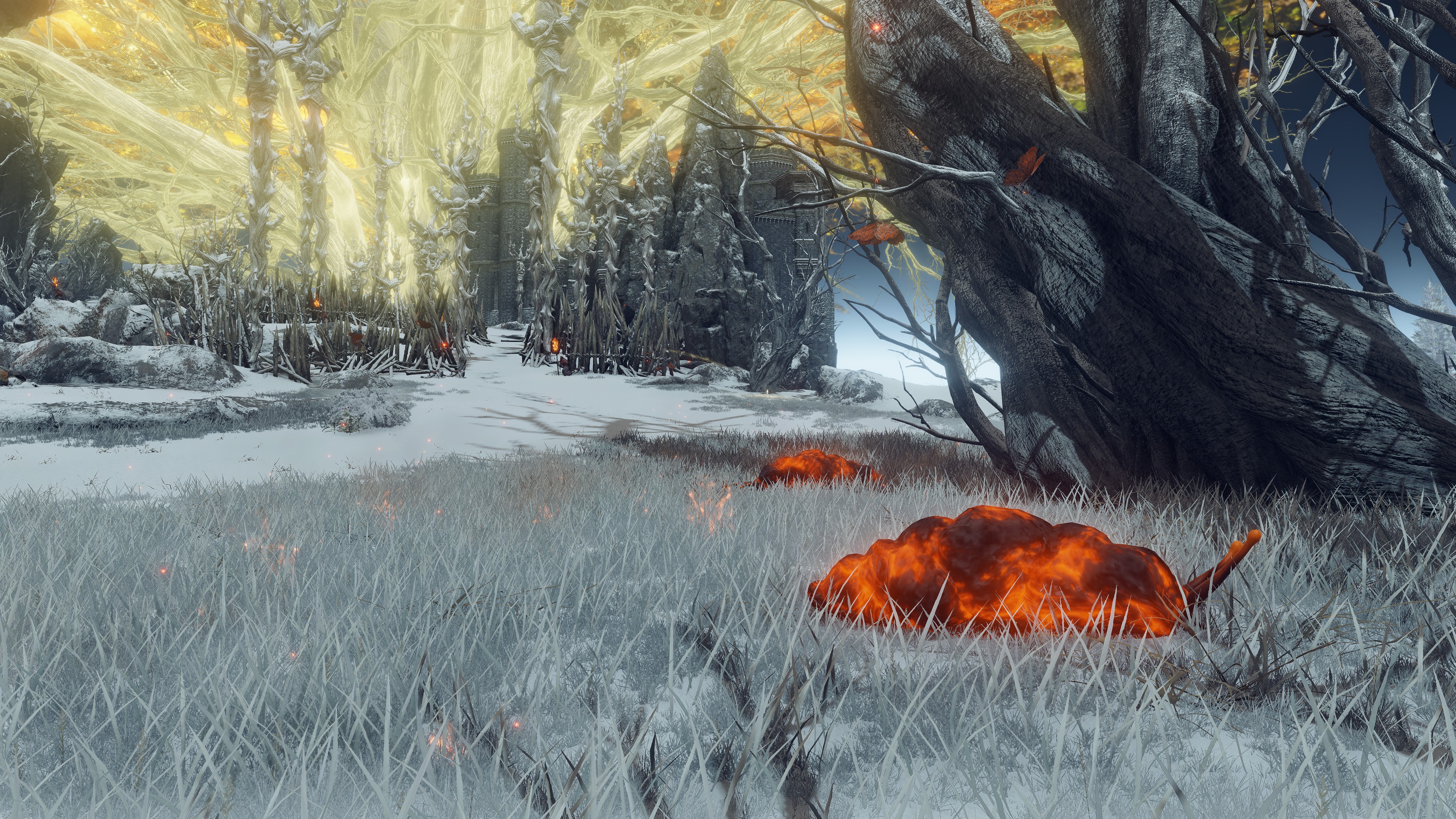
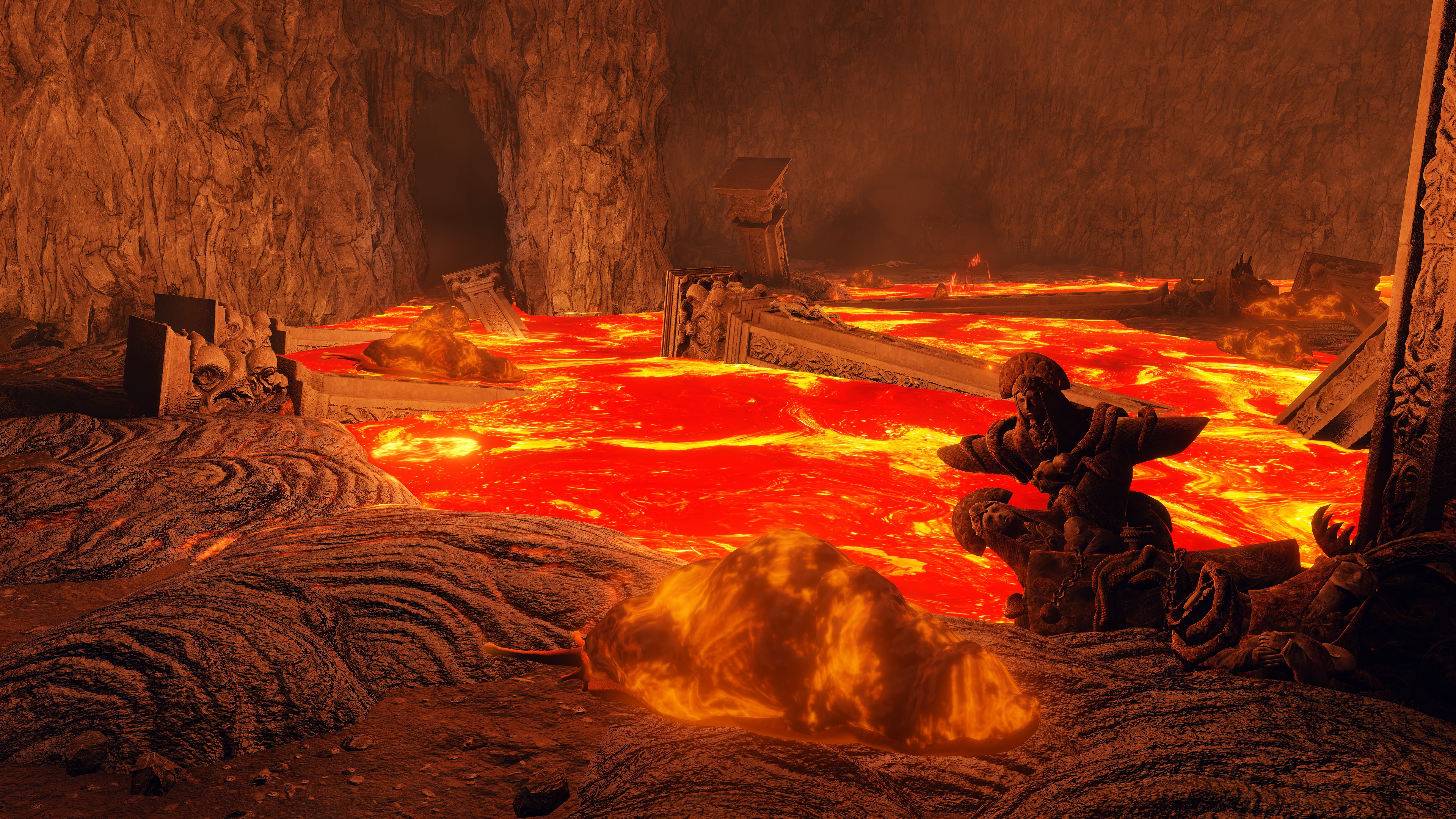
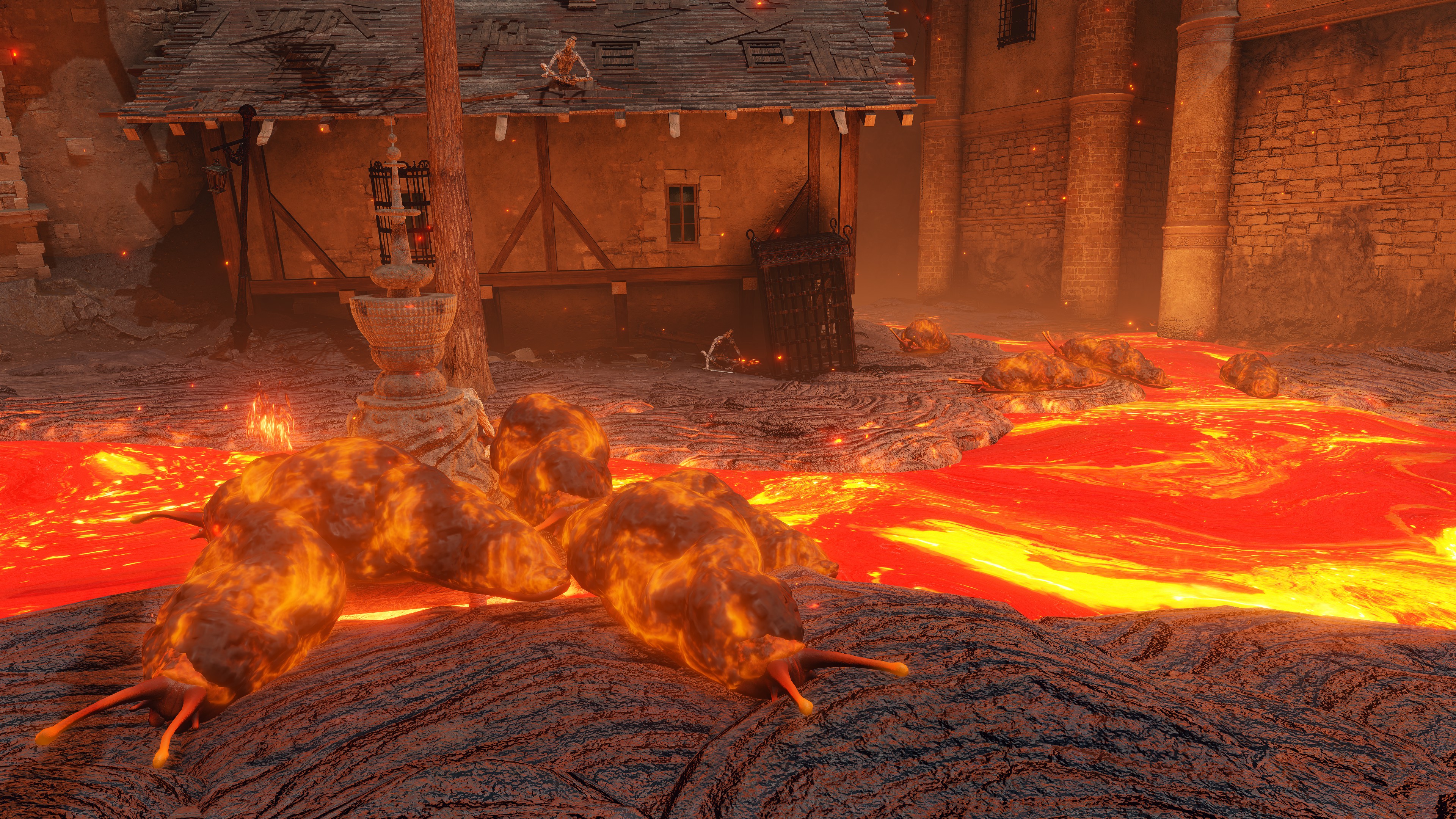
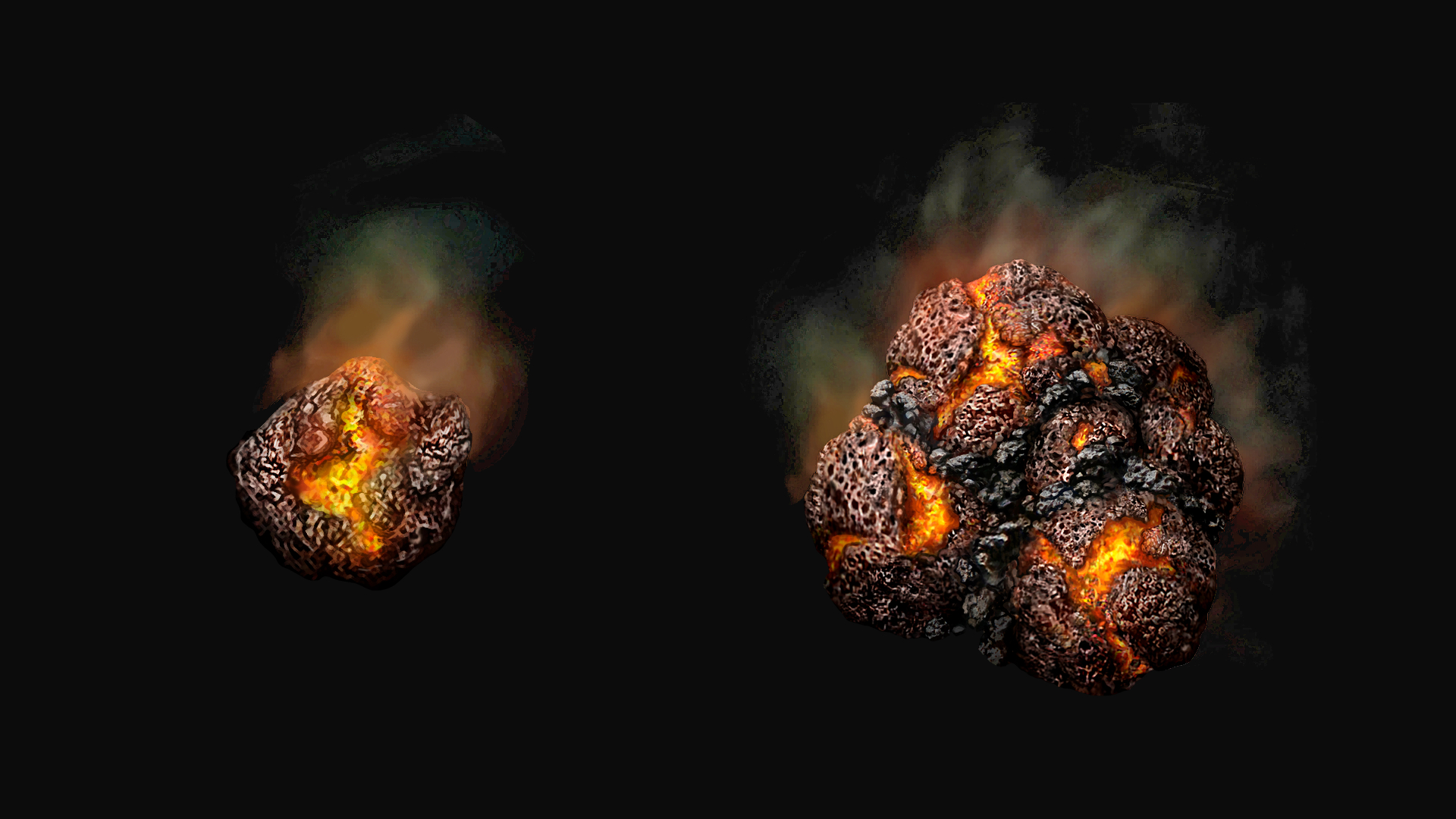
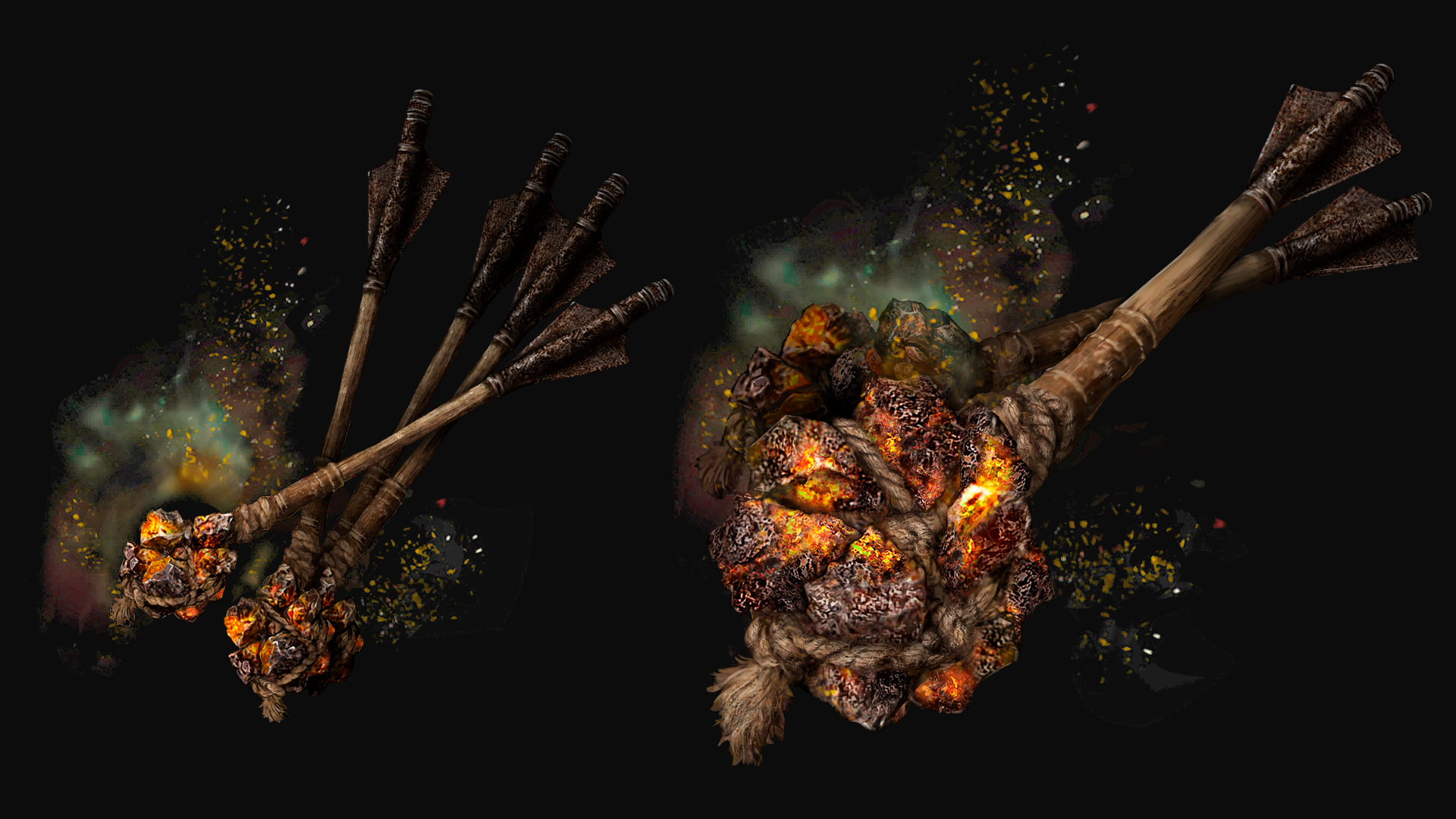
Traversing the Guardians’ Garrison and Flame Peak, we come across groups of burning slugs. This is strange, since the species appears to originate from Mt. Gelmir, where the majority bathe in the lava. Why find them so far away, atop snowy mountains? Because they were imported, back when the Erdtree and great snake remained allies. The corpse camping in the fort’s defenses lends credence to this idea, holding onto explosive greatbolts. Only the nomadic merchant on Gelmir sells such bolts, with more looted from the battlefield beneath him. It appears that the explosive stones attached to the tip of this ammunition originate from the mount, like volcano stones. Miners do use the smoldering rocks for blasting bedrock, yet somehow forgot the recipe for crafting them. This makes sense if they were a specialty import from the volcano, which generates all the fire to smolder within the tiny stones. And if the stones could be brought to mines across the Lands Between under Marika, they could be brought to forbidden lands.
Small stone hiding smolders inside of it.
Throw at enemies to explode and deal fire damage.
A tool for bedrock blasting that stone-diggers use. Its recipe has already been lost.
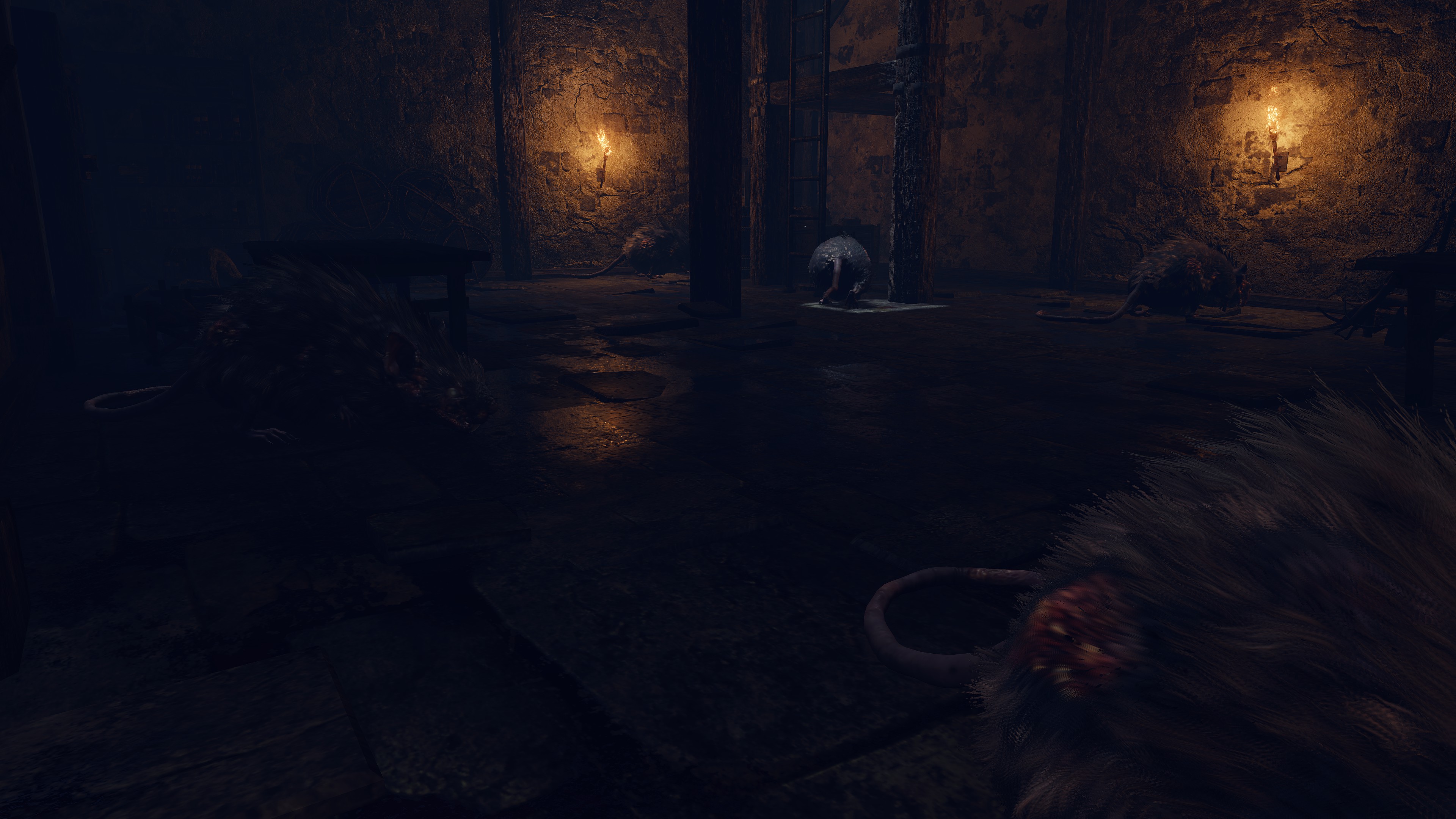
The Fire Monks were therefore receiving a number of Gelmir products through the kingdom’s trade networks, including the slugs. But a warrior monk hardly needs a pet, and neither do they make for good war beasts. Instead, they were probably sent for research and development, as Sol’s vermin include both rats and ordinary slugs. Once again, this is an anomalous habitat for such a species. But, if burning slugs’ flame was somehow extracted for the chariot project, then their presence would be justified. The Fire Monks can’t share any of the giants’ flame with outsiders, so they requested another source be supplied, both collaborators keeping the leftover specimens. Marika unsurprisingly approved of these shows to reinforce fears, which were definitely needed.






Birac was the greatest Prelate to ever live, his faith deeper than any other. That manifests in the Surge of Faith skill, the cup on his head spouting out the smoldering flames like other Prelates but without limit beyond the user’s FP. And yet, that head has been impaled on a candlestand. The description reveals this to be Birac’s own doing. He grew concerned about the complacency of the monks under him, seeing how laxed they were on while on duty. And so, to prove a point, he severed his own head, showing how even he may die while the flame lives on — as well as the enduring nature of true faith. They must take care to be wary of fire and devote themselves more deeply to their mission. Seeing the fire of his faith on the candlestand engraved with their figures was supposed to inspire the monks, and perhaps the shock value did move many as Birac intended. Becoming a guiding light to dispel ignorance would be fitting, as the name (ビラク) actually references a vilakku, the traditional oil lamp used in South India for religious rituals and bearing similar symbolism. Nonetheless, this event admits to cracks in the duty.
Battle art that burns the fire of Birac’s faith in his exalted face’s cup and thrusts it up to spout out copious flames. Thrust it up again and again with additional input.
Candlestand for enshrining the exalted face of Birac, greatest bishop of the Giants’ Flame.
Concerned with the warrior monks’ laxness to flame and complacency, Birac severed his own head and made it into a lesson candlestand. His faith smolders in that head cup even now.
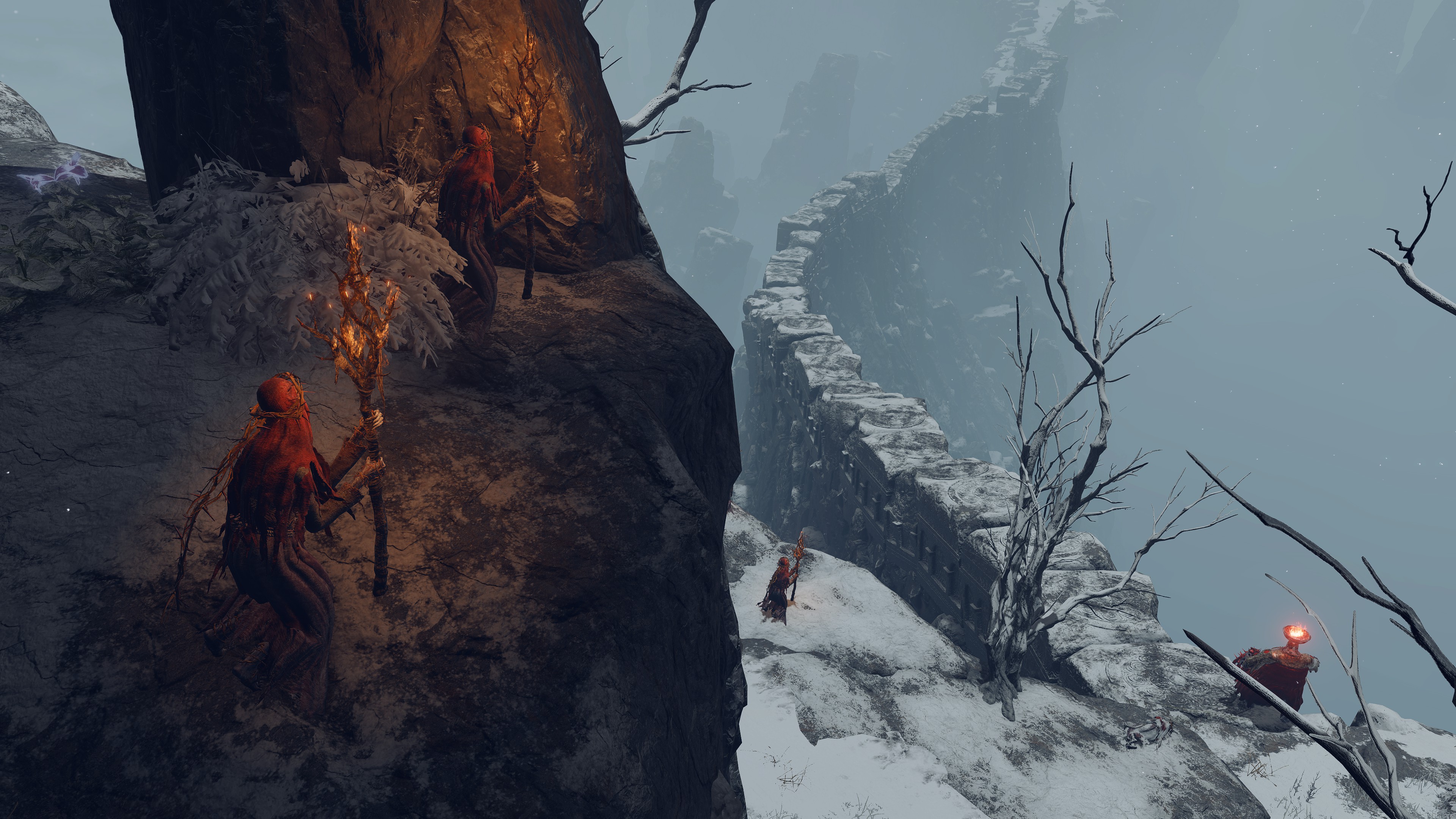
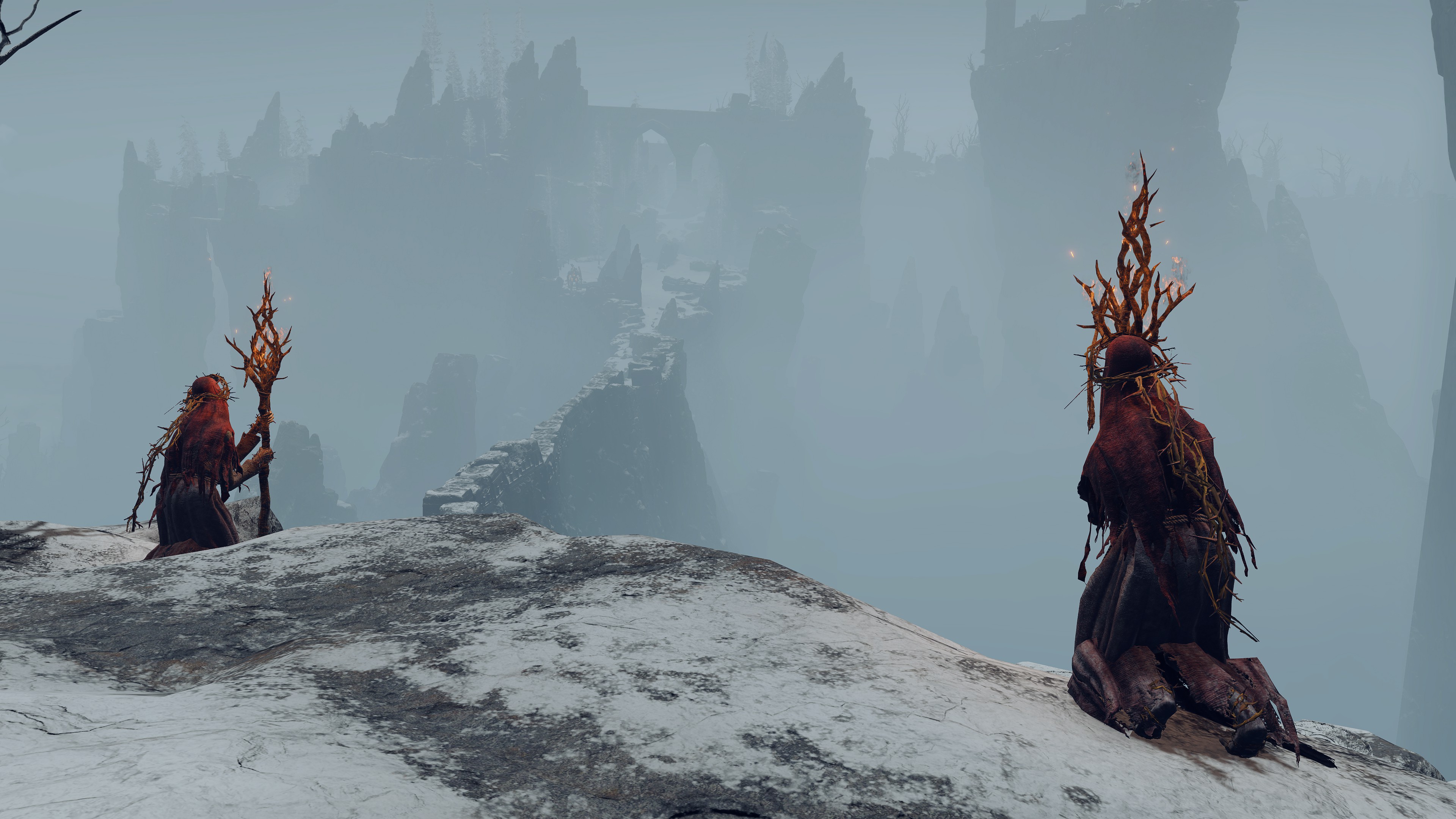
Since Birac’s time, we see how the monks meditate in the Forge’s direction while a Prelate does the same, briar sorcerers similarly staring or prostrating themselves. There is a deep fascination with the Giant’s Forge, and the group of prostraters around the chest storing the secret prayer book insinuates the attention isn’t just on monitoring but respecting the cauldron for deriving the Fell God’s arts. The balance between fear and awe core to a Fire Monk’s philosophy looks to be tilting far too much in the wrong direction. We find the Crandial Vessel Candlestand on a lone corpse in a dark chamber of the Giant-Conquering Hero’s Grave, behind an imp statue seal. If anyone did worship Birac’s countenance, they haven’t paid homage for a long time. The monks have slipped entirely into the abyss of ignorance, and they have no intention of seeing the light. Whether or not Arghanthy is aware of this, she has done little more to help than hoard the giants’ power for herself and the Prelates, so she too might be compromised.

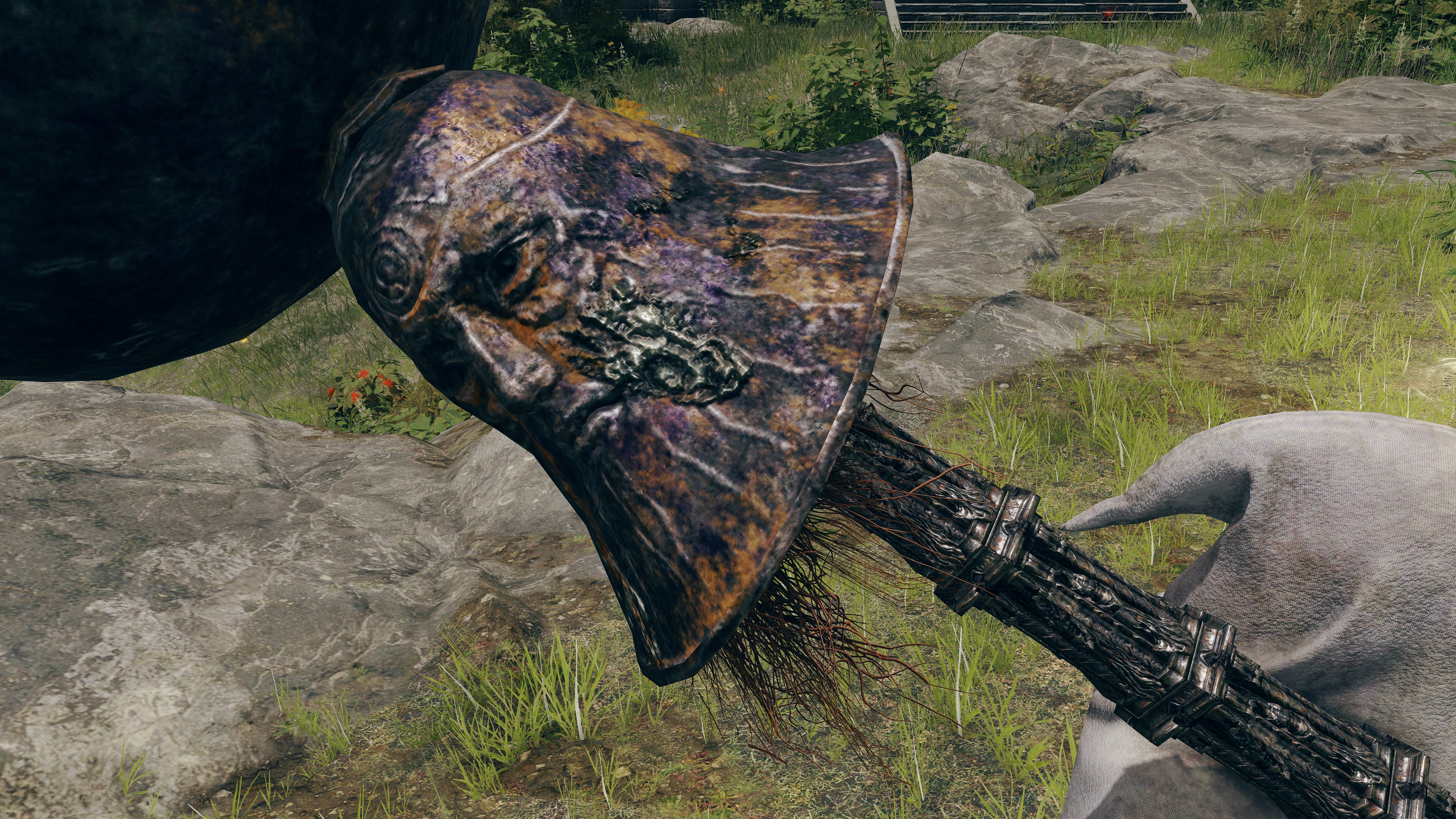


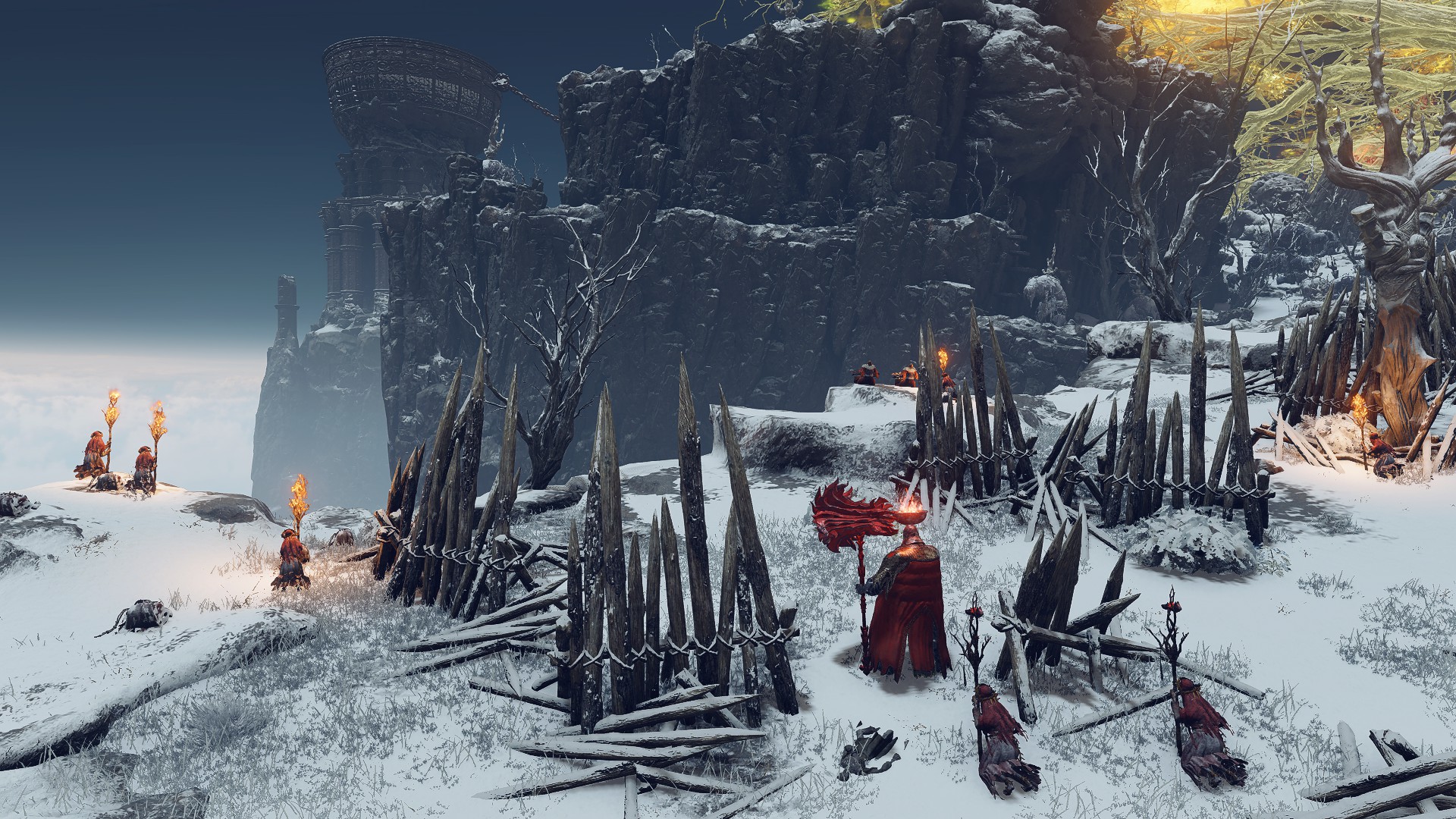

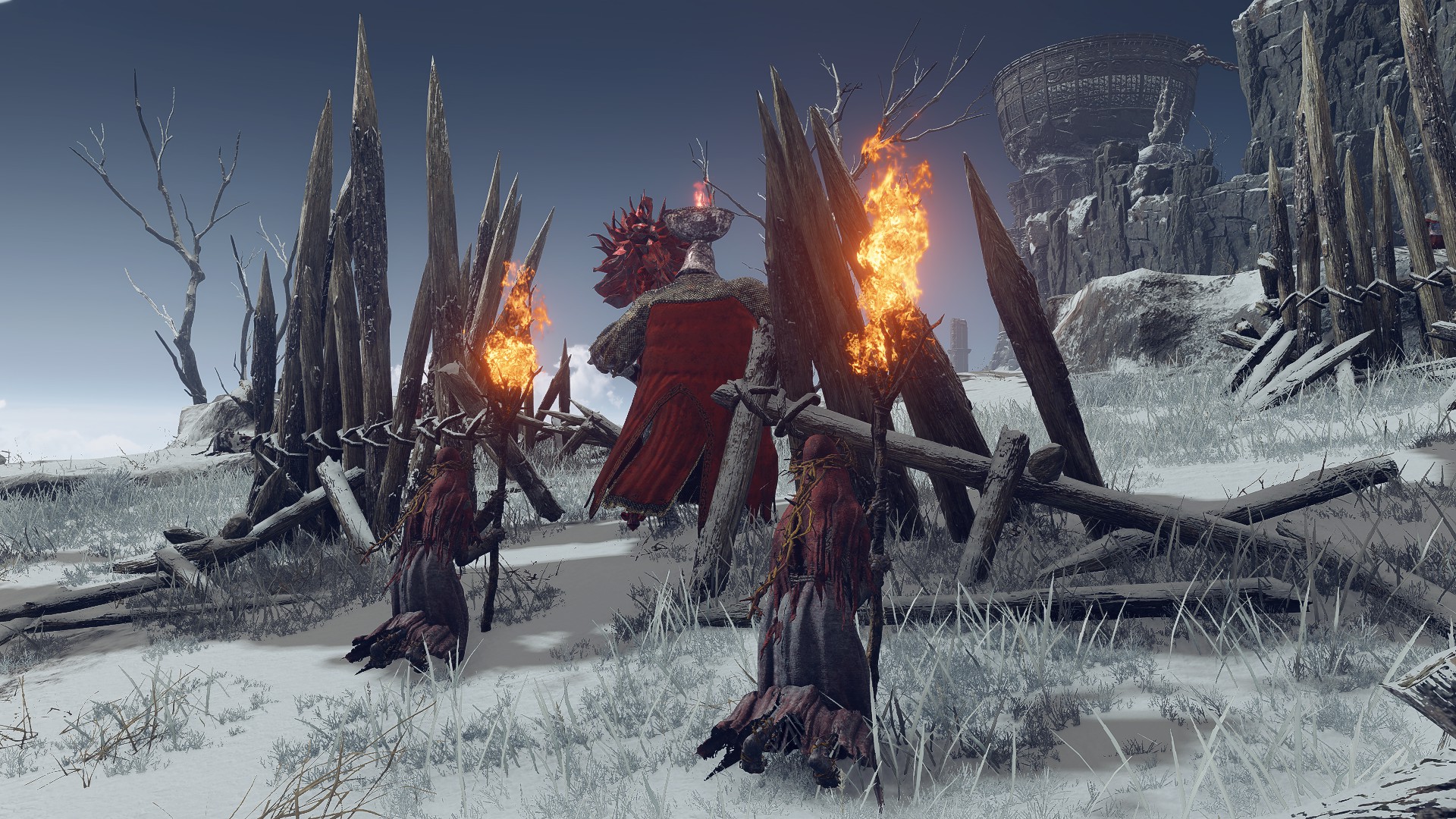
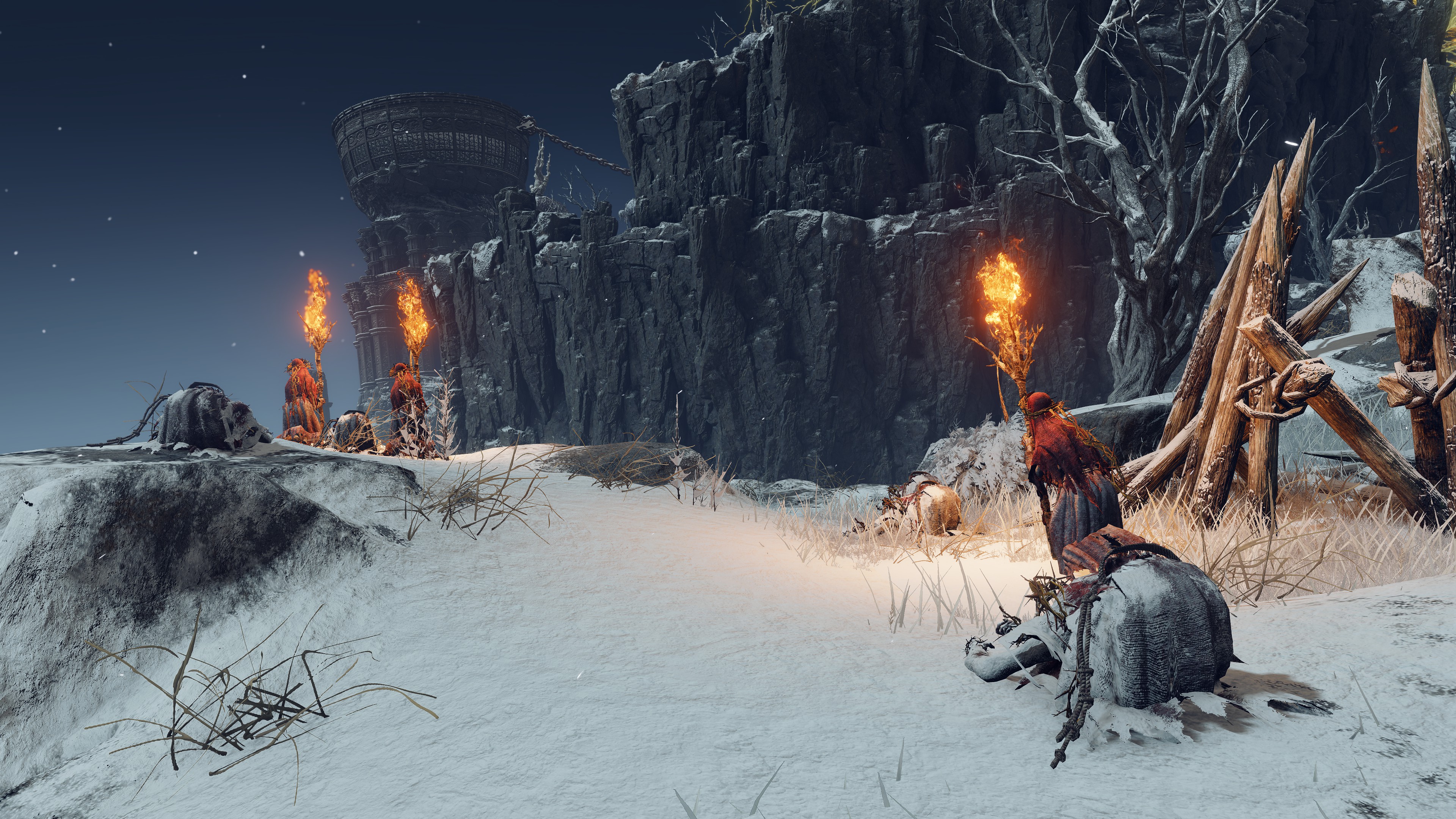


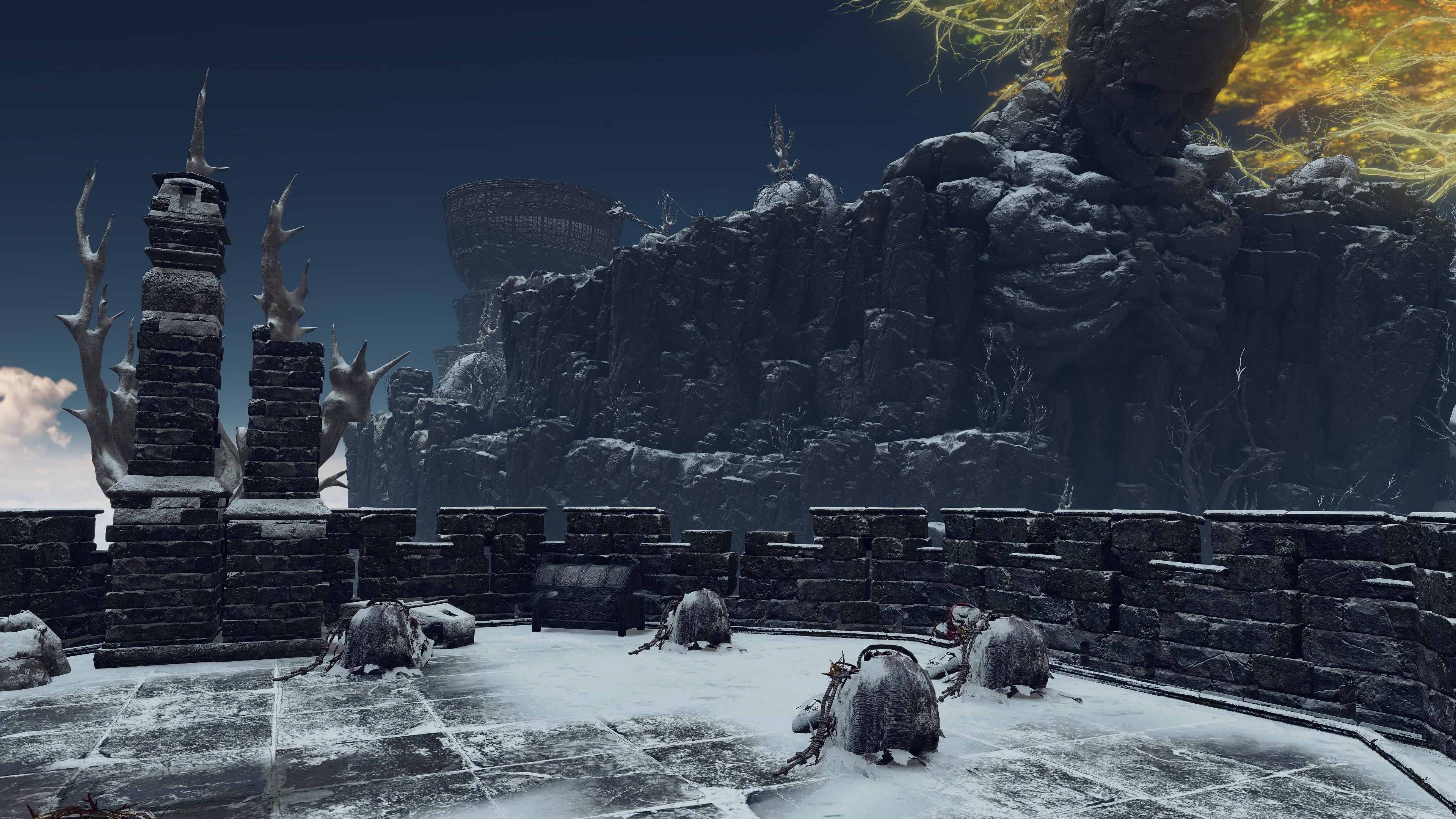


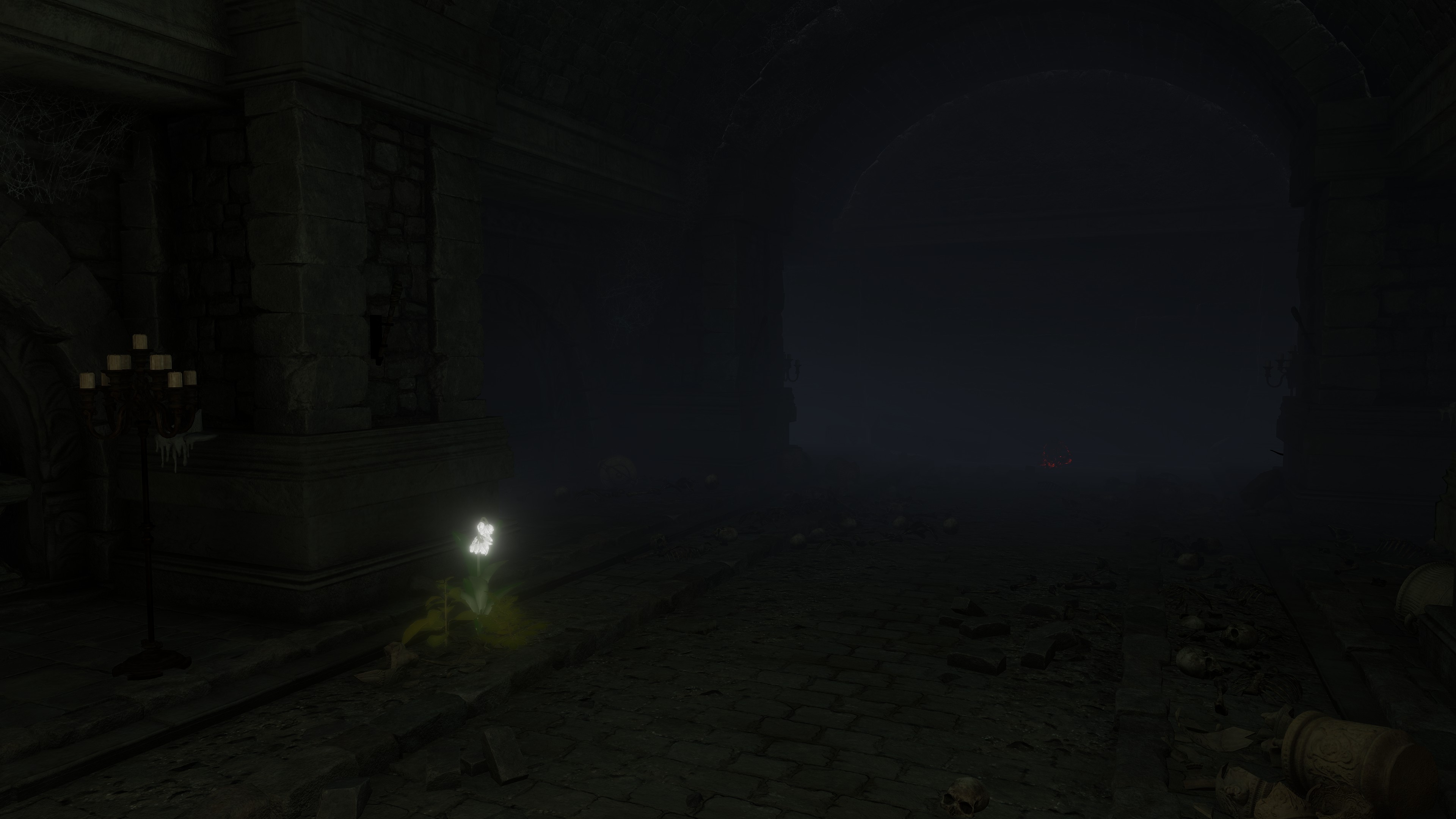

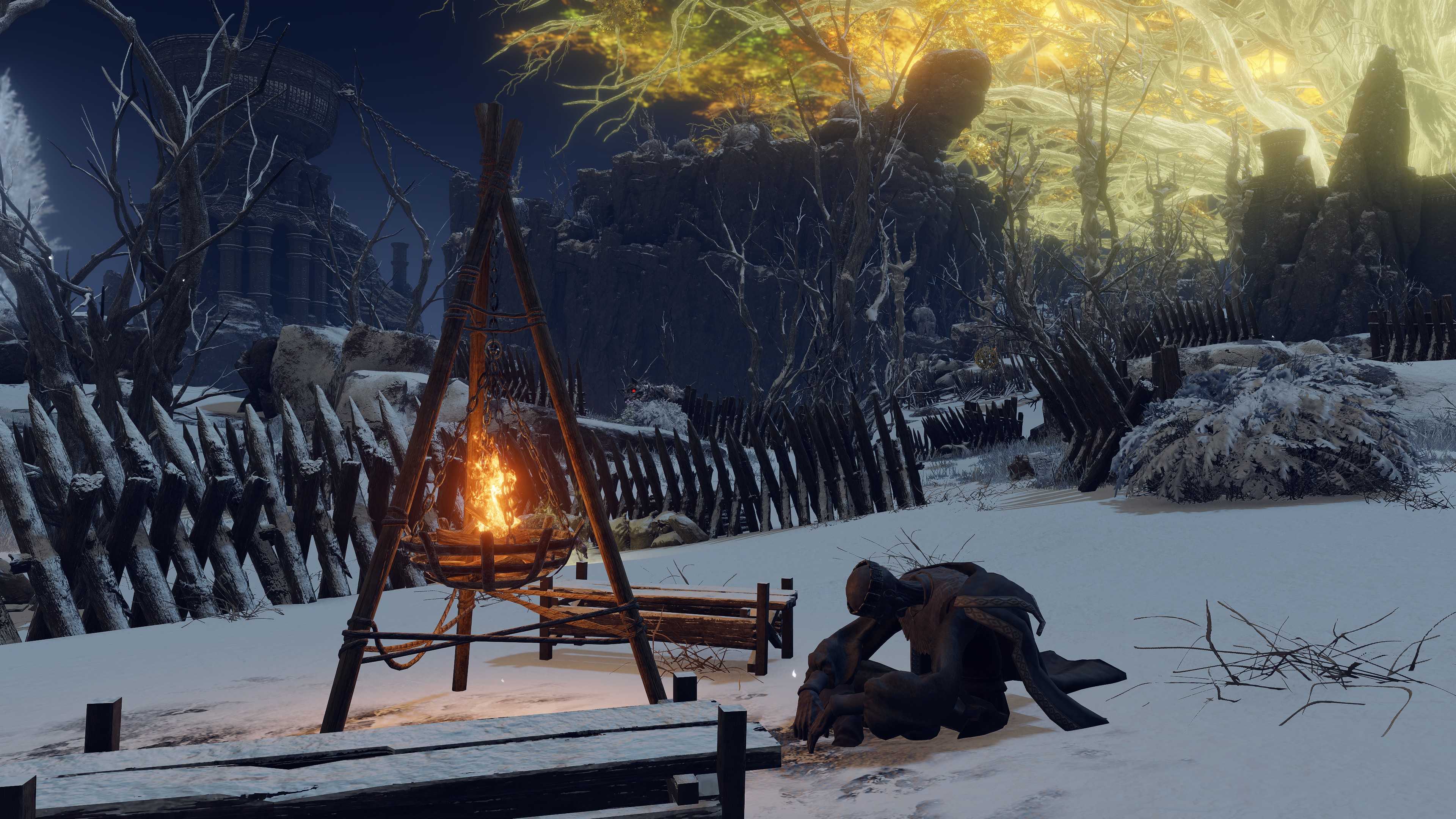
There are plenty of reasons for abandoning duty, even putting aside the collapse of management from Leyndell after the Shattering. Sinner or saint, it was a rough life being a flame watcher. Most of the time, the guardians loiter around in the cold for nothing, with so few threats slipping through the royal capital. The most exciting thing in their lives, normally, is cooperating with local trolls to control the wildlife population on the summit. From witnessing the thorn sorcerers’ corpses being chowed on by the wild dogs and crows, that level of “excitement” quickly turns deadly. And for what? Keeping a flame out of the hands of everyone, to a large extent even themselves? Where is that fulfillment in that? Most were lucky to even see the flame summit depicted on the Rold Medallion, let alone the real thing. The watchers were privileged to be so close to the Giant’s Forge, so close to laying their eyes on not a red gem but genuine embers within the cauldron. It is no surprise that many have been gripped by the beautiful flame’s seductive allure, and that temptation is pushing them to act.
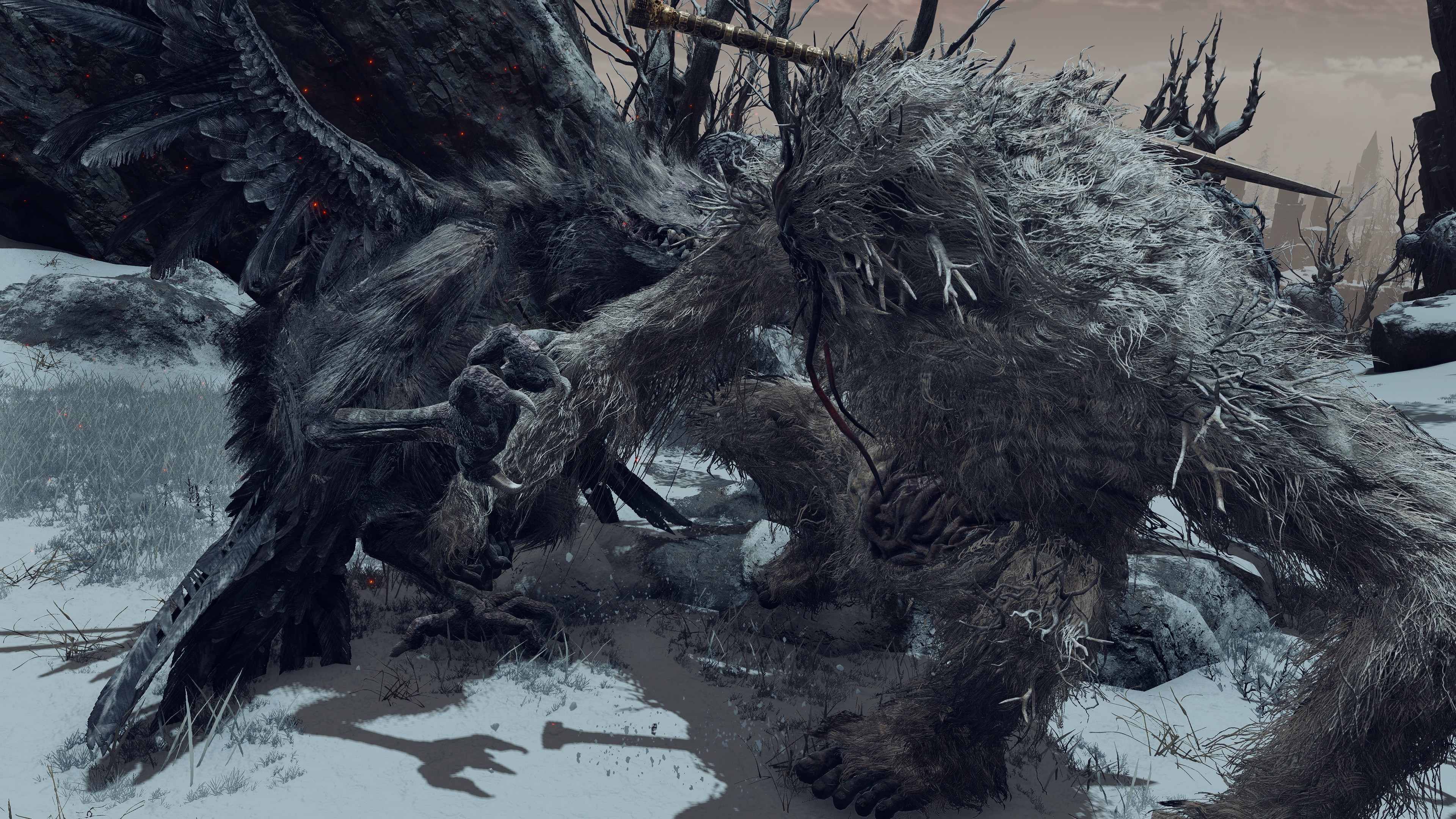
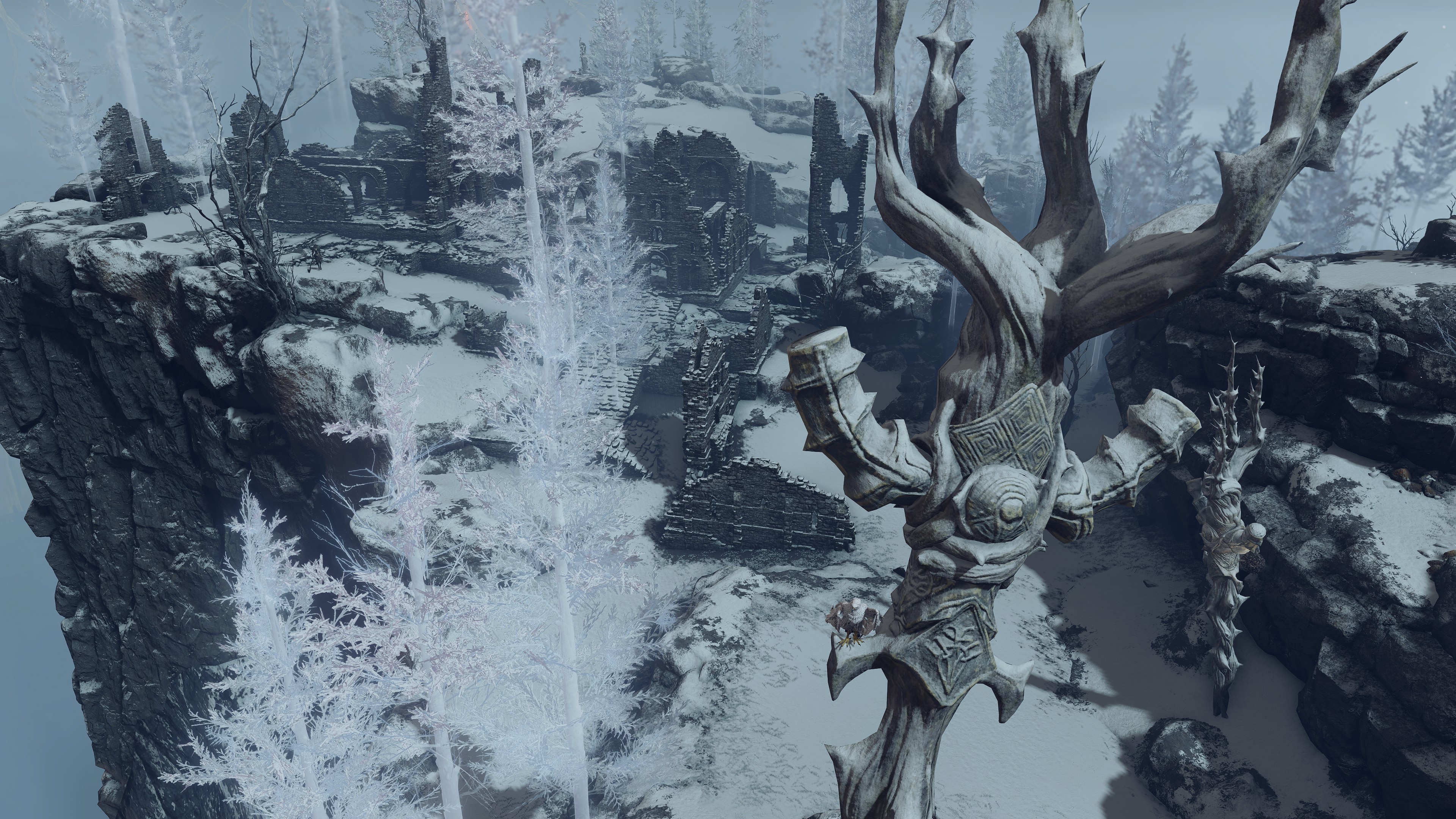
Despite a hero of Zamor remaining in the Hero’s Grave as a gravekeeper, the flame mania has turned the radicals against the ice sorcerers. We see the Zamor village has been reduced to ruin, yet its warriors remain, patrolling the rubble unperturbed. The cause of this peculiar setup can be inferred from the briar stakes past the village, with a group of briar sorcerers led by a Prelate beyond them. Apparently, the Prelate decided to lead a raid on the natives and exterminate them like the fire giants. The resulting conflict destroyed their home, but the heroic fighters rebuffed this sudden assault, forcing the Prelate to abandon the operation and turn back. Karma has the last laugh, however. One of the hostile stone golems meandering the snow valley has taken up a sniper’s position to block any passage through the narrow road home, leaving the Prelate banging his chest in frustration as they simply look on, standing at an impasse. It is a small mercy that the Zamor aren’t inclined to pursue, especially when longtime allies suddenly betray them seemingly just because they prefer the cold to a flame’s warmth.

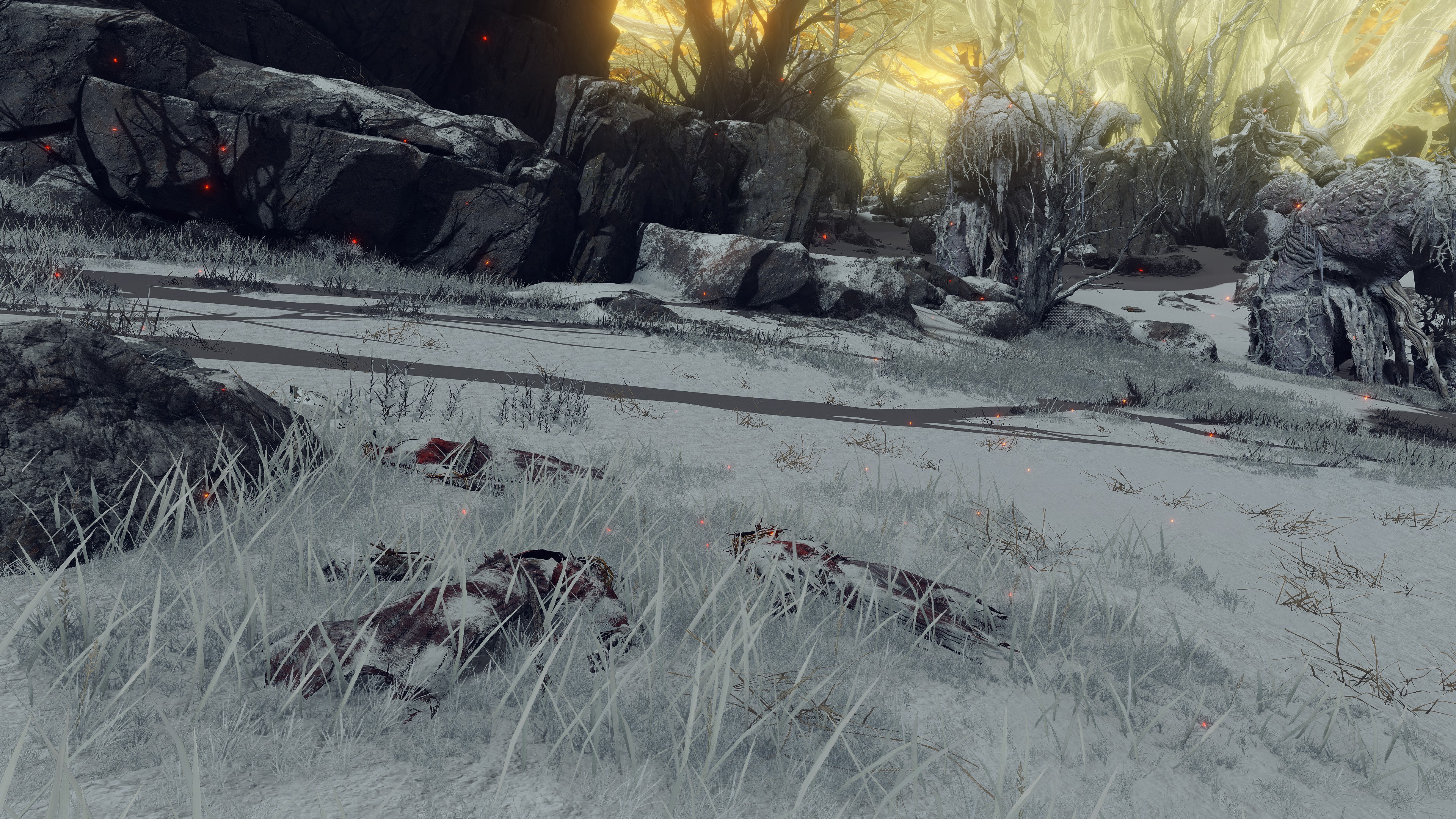


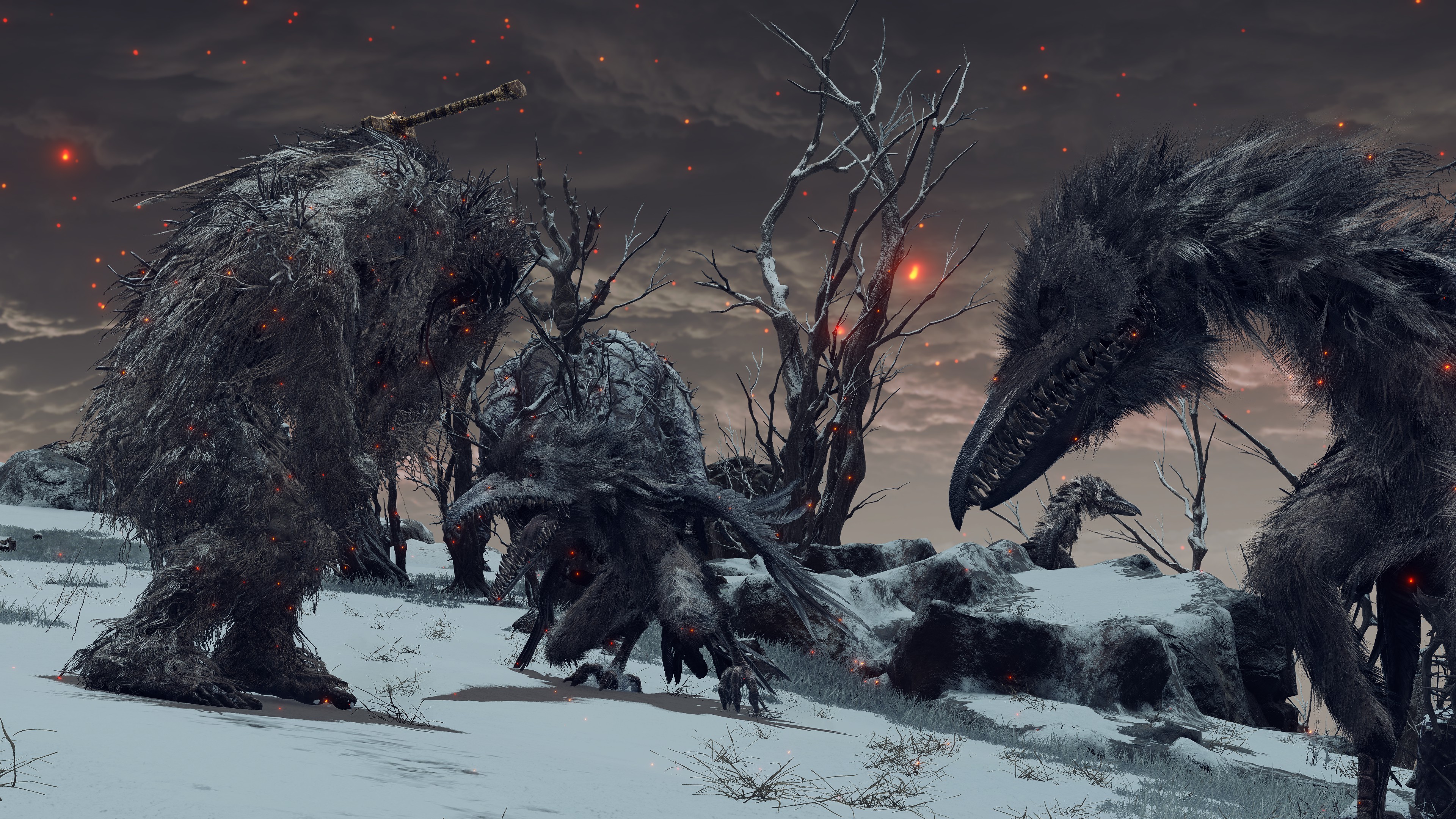




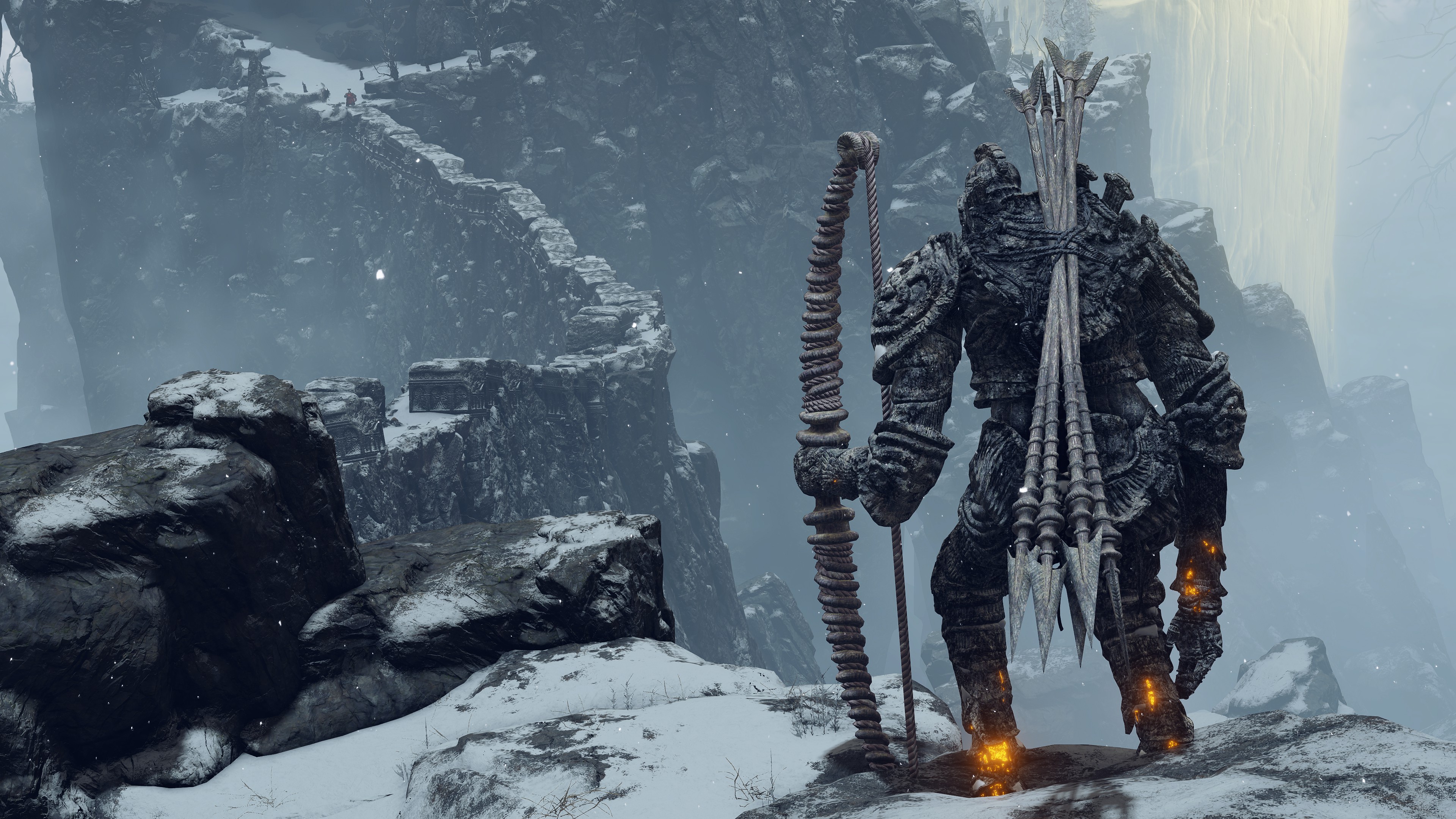
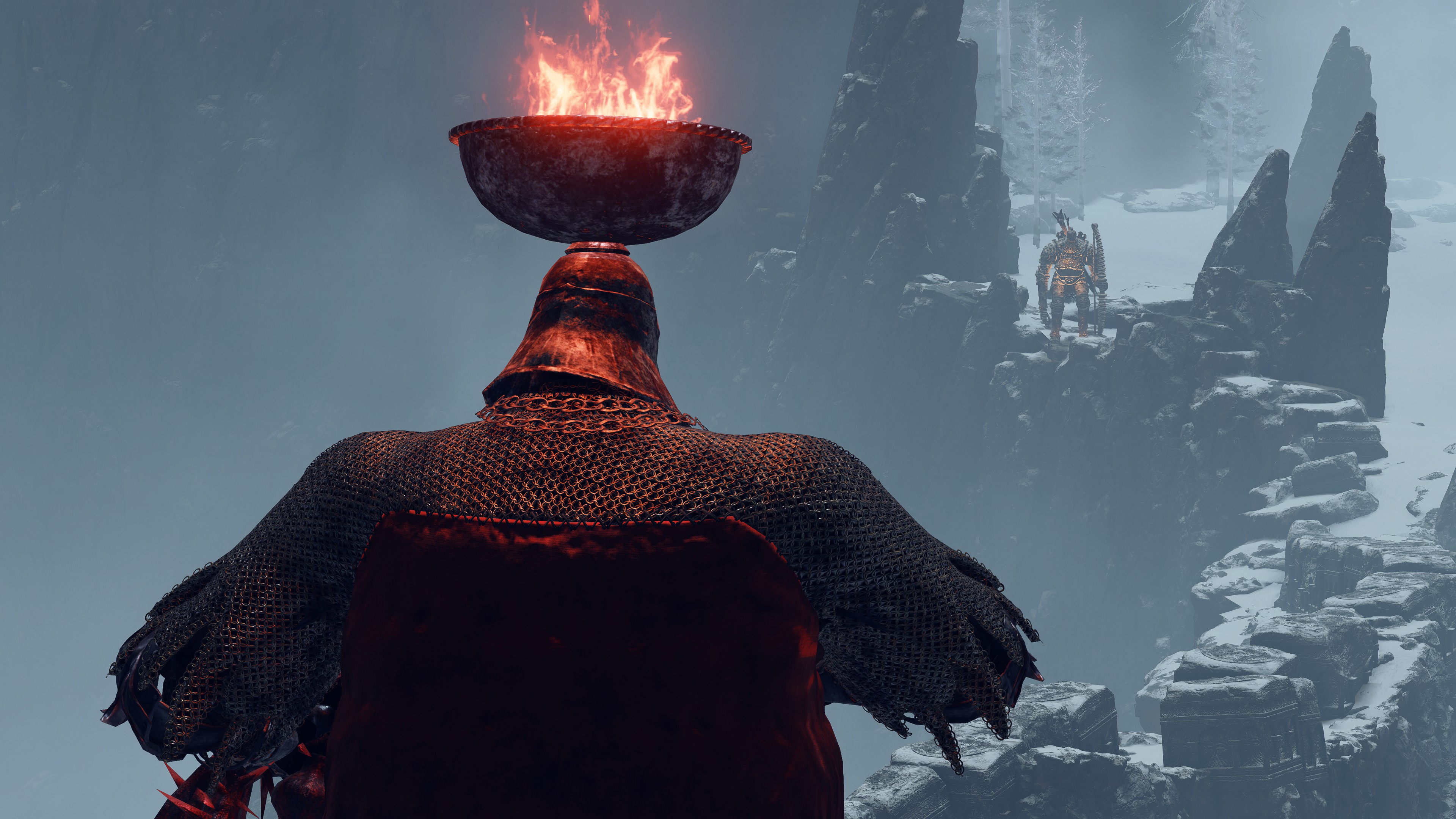

At the end of the day, the watchers were always playing with fire. Fascination with flame made the early Erdtree priests most qualified to monitor it, but also the most at risk. The last giant may have stood to dissuade any greed, but they still went on to recreate his people’s fire arts from just corpses and experience. And with all the eye imagery invoking the Fell God, one has to ask: were they really the watchers, or the ones to watch? It is no wonder that the monks tolerate the thorn sorcerers’ heresy when everything about the order was unorthodox. With only outliers like Birac keeping everyone tethered, the monks would inevitably drift into flaming fanaticism. As it stands, their integrity is quite fragile and has been for their entire history. The Shattering has put them to their first real test — and if Arghanthy has any intention of preserving their original mission, she is woefully unprepared for it. It only takes the collapse of Order, or the promise of a new one, for their hearts to shift with the tides.
 Lokey Lore