
Among the miracles available to us in our journey through Drangleic, none is quite so unique as Soul Appease. This tale of the gods manifests the power to tremendously damage Hollows while dealing absolutely no damage to non-Hollows. This is captured in the spell’s name, chinkon referring to the “repose of the soul” (鎮魂) when the Hollow — or mouja (亡者) — is a spirit of the deceased who yet wanders the underworld having never reached Nirvana according to Buddhism. In effect, performing the miracle is a kind of requiem, granting the soul who has lost its way to enlightenment eternal rest under the glorious light of the divine. This makes it a useful tool for putting down soul-starved bearers of the Darksign; no surprise that such a miracle found its way to the Undead Crypt. And in theory, we can use this spell to determine when enemies are Hollow even if not immediately obvious. However, that assumes that it is a reliable indicator, which it is not.

Lost miracle only handed down in the Undead Mausoleum. Deals lots of damage to Hollows which have lost self. However, does no damage to anyone other than Hollows.
The Undead Mausoleum is a place of peace where all the living end up. Will even those who have suffered the curse on their bodies be able to come here someday?
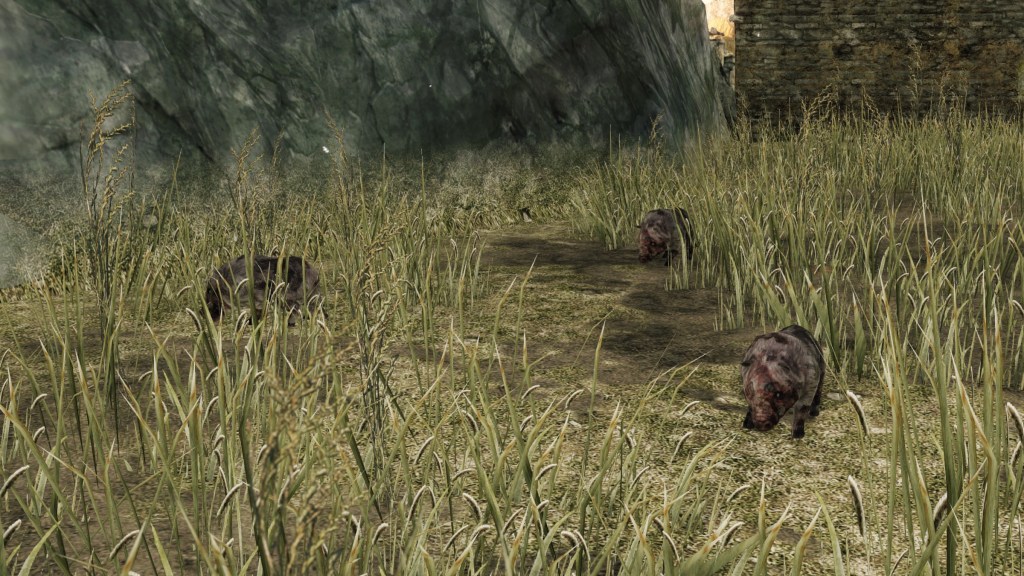
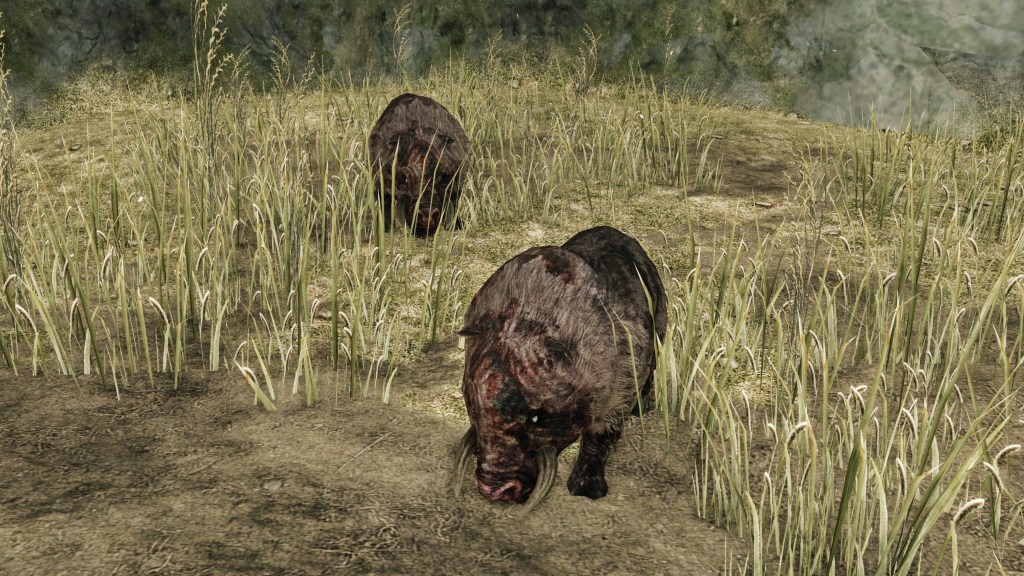
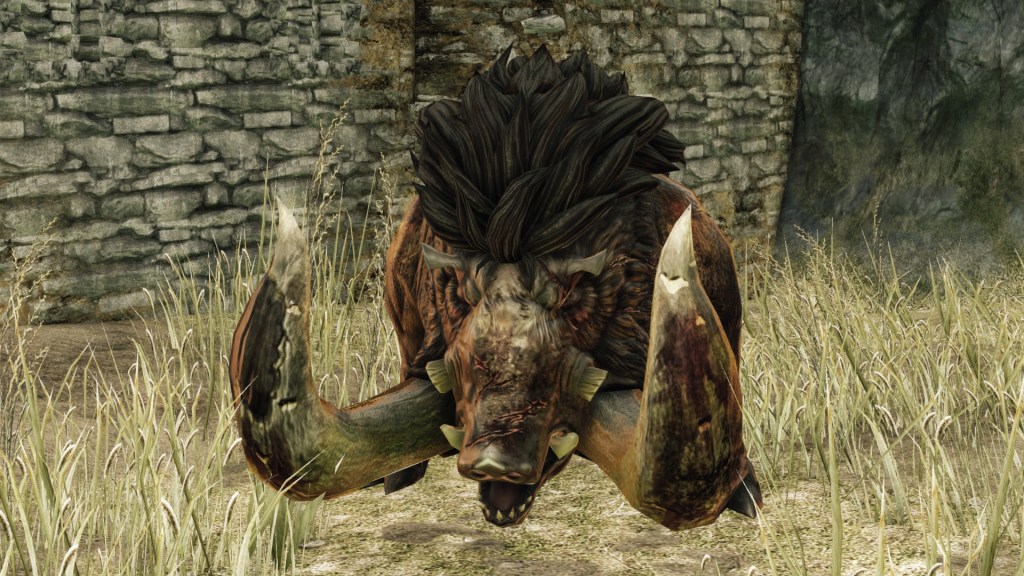
At ruined settlements, we can come across a handful of pigs. Slaughtering tiny pigs at Majula will have them eventually replaced by larger pigs, who will themselves be replaced by an even larger “tusk beast” (牙獣) ultimately. Ignoring the gameplay element to this episode, the evolution of enemies obviously reflects the maturation process from piglet to boar, the adult tusk beast bearing resemblance to the armored tusks employed by the Undead Burg’s regular army in the original Dark Souls. (DS1) The Chosen Undead never encountered an unarmored swine in the wild, but they presumably did exist somewhere in Lordran and were liable to get caught up in the Great Shift. Now, the animal is apparently used for livestock more than war. None of this sounds out of the ordinary. And yet, these porcine are universally affected by Soul Appease. How can that be when they are all clearly not human and thereby not subject to the Darksign? The answer lies in the immature pigs’ official name.
The smaller swine are explicitly “Undead eaters” (不死食い) and so have subsisted on cursed flesh at one point — presumably picking up the curse in the process. DS1 had already established the possibility of spreading someone else’s curse to a person through physical contact, though permanent effects required either long-term or stronger exposure. And what closer contact is there than ingestion, assimilating flesh into your flesh; the soul into your soul? You are what you eat, as they say, and these pigs have devoured Undead. This explains why the porcine have survived for so long in the ruins of an abandoned land even with seemingly so many injuries — they possess a human’s immortality. Pigs are known to be opportunistic eaters, so by feeding on some of the residents who manifested the curse, alive or dead, they could survive the immediate collapse of civilization and persist thereafter on just the power of humanity with or without new meals.



The same is presumably true for the stray dogs we encounter across the land. This canine looks identical to the breeds seen in DS1, though more consistently on the smaller side. More than a size reduction, these otherwise ordinary dogs bear black skin and red eyes, “demonic” features which the Dark Souls II Collector’s Edition Guide insinuates are rooted in a darker nature — and sure enough, they too are affected by Soul Appease. Looking at their locations, the strays have had various owners from various time periods. The only consistency is that these areas are now filled with Hollows. And considering that the dogs leap upon us with their lacerating jaws, they too are liable “Undead eaters” of a fashion, the diet of humanity with the cursed meat changing their color. The same might apply to their DS1 counterparts, but not that much time had elapsed since the collapse of civilization to clarify. By contrast, the stray dogs in these areas have had years to gorge on Hollow flesh, thereby manifest side effects making them indifferentiable from hollowed cursed. (a trend which continues in Dark Souls III)
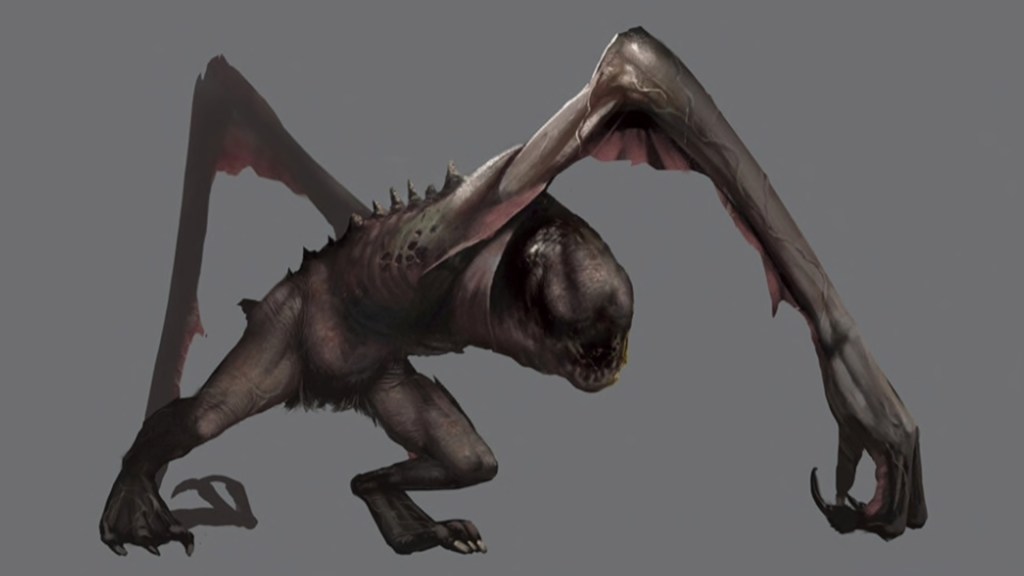
In short, Soul Appease responds to more than strictly human Hollows, meaning that any animal or monster might be vulnerable despite never being born with humanity. This is significant since there are Hollows which look less than human. The “darkness Hollow” (暗闇亡者) is a good example, the entire body twisted into a grotesque charcoal-skinned monstrosity with massive arms and no eyes. The Undead is still able to somehow see, and retreats from any firelight with a shrill screech, but we only ever find one in shadowy corners, where it waits to grab us with its greedy palms and rip out our throat with its fanged maw. The only explanation for this bizarre form is that very darkness the creature lurks in, prolonged exposure resonating with the curse of their dark souls to induce a bodily transformation. DS1 did establish long-term effects to residing in darkness for non-Hollows, so this is just a more extreme case for those who have surrendered to the curse. But if not for the official name, Soul Appease would be the sole indicator of the enemy’s Hollow nature.


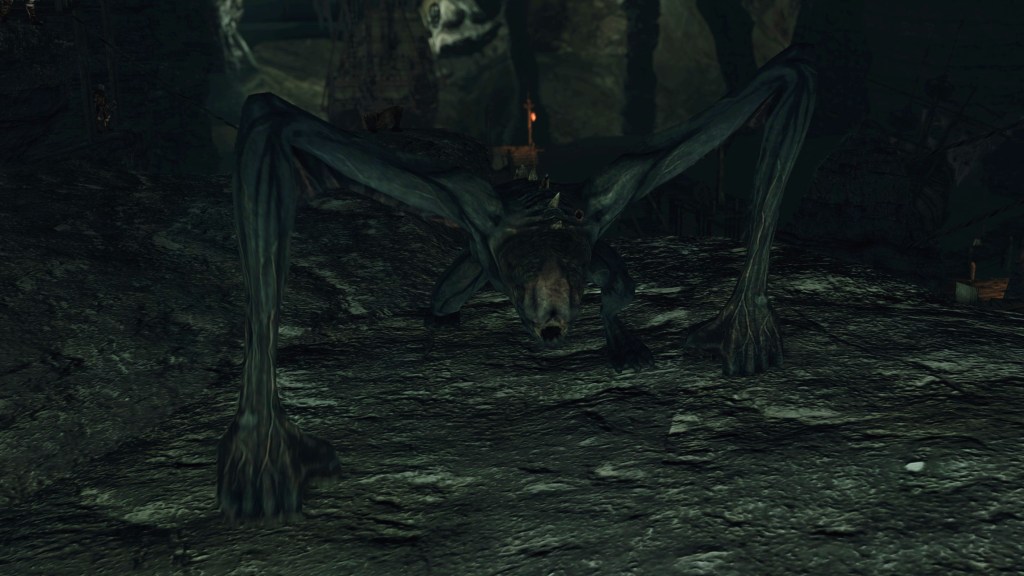
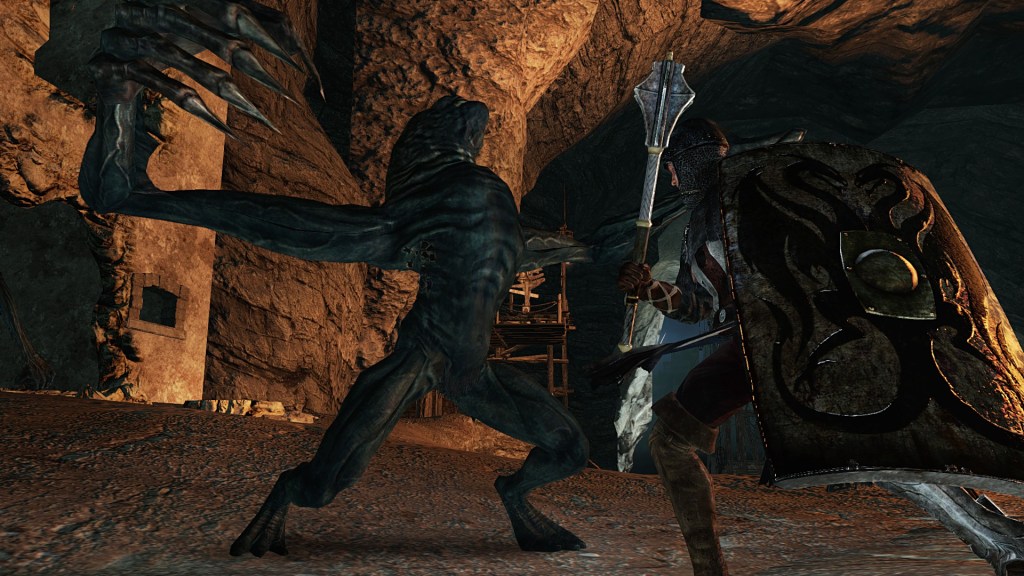
If environment can make a Hollow appear no different from a well-adapted animal, then Soul Appease becomes that much less definitive on differentiating between them. This doesn’t even touch on enemies where information possibly conflicts with the miracle’s efficacy. There are even instances where enemies are declared to be Hollows in guides, might even fight alongside verifiable Hollows, and yet remain unaffected by Soul Appease. Perhaps these are innocent oversights by FromSoftware, but such a useful tool for identifying Hollows should be infallible. As is, susceptibility to Soul Appease is merely another factor to consider when analyzing an enemy. It might generally be accurate, but in most cases, it won’t be needed; this game consistently portrays the average Hollow like stereotypical Hollywood zombies, with green skin. And in cases where it does provide special insight, there is always the potential to be mistaken. Nonetheless, it is evidence, so I will reference it when both relevant.
 Lokey Lore