
Preface
I often joke about needing another decade before finishing an exhaustive analysis of Elden Ring. For a world as broad as in this game, getting a grasp on everything is a trying task. There is so much history, so much cosmology, that sifting through it can feel like a never-ending abyss. It is just that daunting to navigate compared to previous FromSoftware titles. There is no quick path to understanding Director Hidetaka Miyazaki’s games, least of all this one. But with something as impossible to ignore as the Erdtree, we at least we have a tent pole to start. In many ways, whatever came before converges to this iconic entity, and whatever came after in turn expands from it. It is truly a light in that darkness.
Seeding the Future
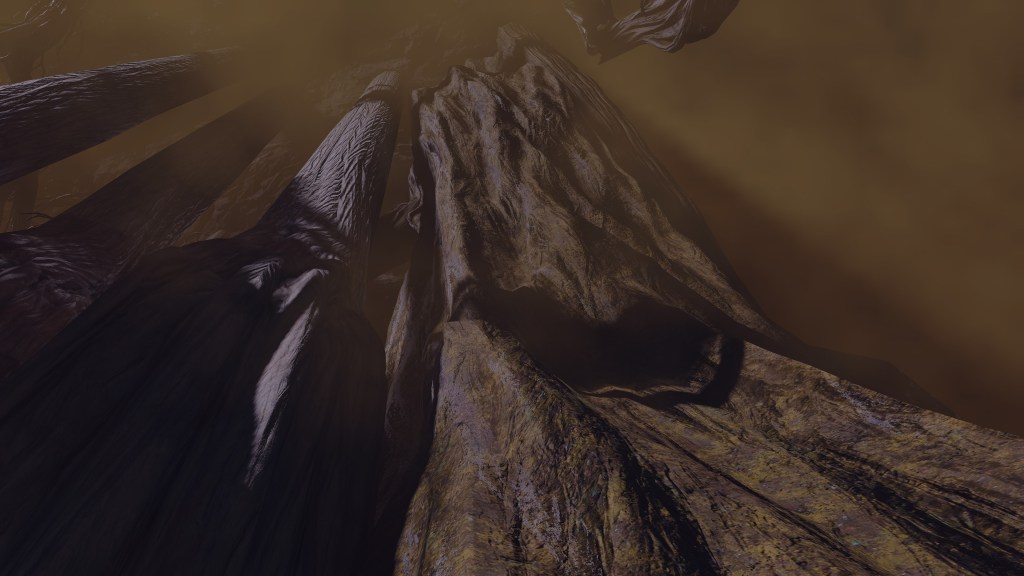
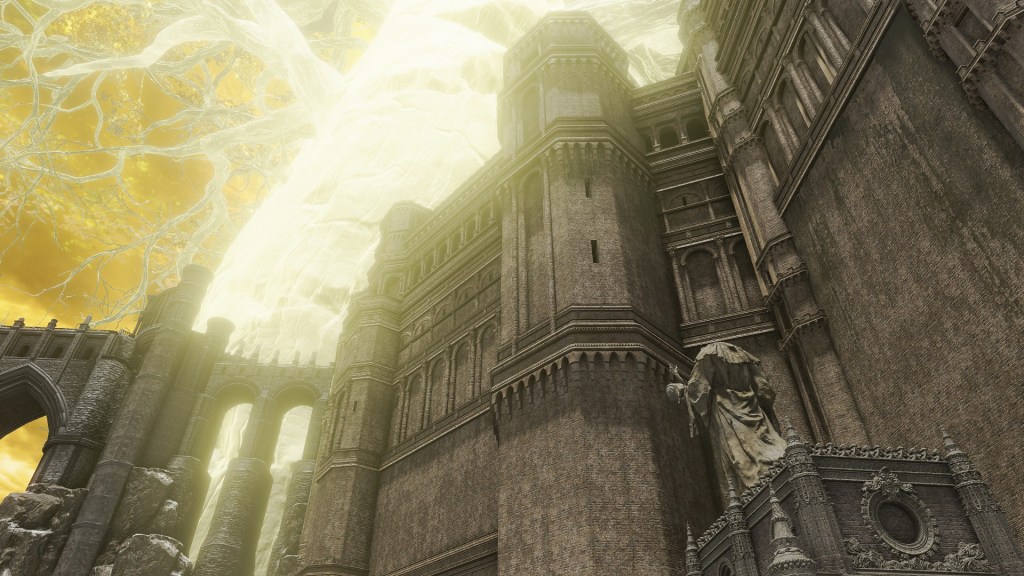
As the single most prevalent landmark in the Lands Between, the Erdtree has unsurprisingly been the greatest catalyst of change since the Elden Ring first arrived on earth. This is especially appropriate given that they are one and the same. The official website prologue declares the Elden Ring to be the “source” of the Erdtree. A spirit likewise equates the tree with the Golden Order. Cut dialogue similarly uses the two interchangeably in its request for order and guidance. In short, all three are synonymous; the Order is an extension of the Tree which is an extension of the Ring. They are inexorably intertwined, hence breaking the Ring causes the “Golden Tree” (黄金樹) to wither as well. Meanwhile, the name Erdtree derives from the Germanic erde meaning “earth”, making it the “earth tree” in obvious parallel to the world tree of Norse mythology — a fitting allusion for the tree whose gold at its root defines the world. The great tree is sustained by the Elden Ring’s life force and conversely acts as a conduit for its power. But how and when did this Erdtree come about?
In the Lands Between where the Eternal Queen Marika reigns, the Elden Ring, which is the source of the Golden Tree, was broken.
…Ohh, Golden Tree, Golden Tree, Golden Regulation that towers unwavering, please do guide him. Our Elde King. And mend the world…
Golden Tree, Golden Ring, give us your drops of life. Regulate and guide us.
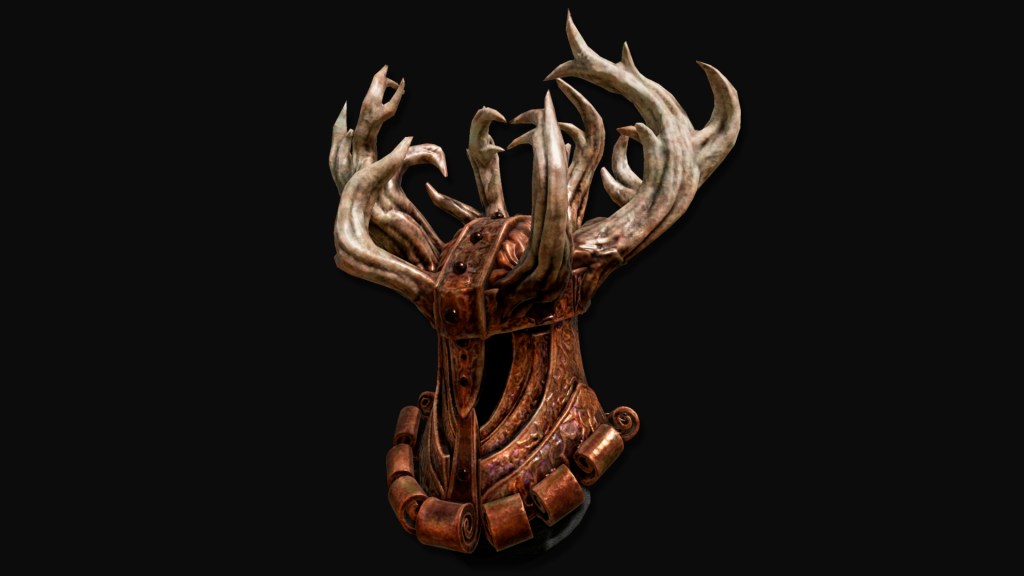
Some fans have posited that the Erdtree is merely a successor to the Greattree, parasitized or otherwise replaced by the tree we know. However, this assumes that this so-called Greattree is a separate entity. Japanese lacks any formal capitalization or spacing, making the compound noun “great tree” (大樹) indistinguishable from the localization’s rendering of it as a kenning. The implications behind the terminology thus rely solely upon their immediate context. And at least in the case of the Tree-and-Beast Surcoat, (大樹と獣のサーコート) it is actually naming a “great tree” which the description clarifies to be the Erdtree. The “great tree” ornamentation on the Crucible Tree Helm similarly tie into the original Erdtree in its description. The “great tree” roots in the Deeproot Depths and catacombs are likewise expressly connected to the Erdtree. In all cases, the proposed two trees are equated with one another, “great” simply describing the size of the plant, its roots, or ornaments modeled on it.
Helmet of the Crucibles Knights who served Godfrey, first King.
The great tree decoration is a symbol of the knight Siluria and her subordinates.
It harbors the power of life’s Crucible, the original Golden Tree, and enhances aspects of the Crucible prayers.
Natural tree resin that can mainly be harvested from the underground great tree roots. May be found in the vicinity of trees above ground and the like. One of the materials used in item crafting.
Those roots are said to have once connected to the Golden Tree. Thus, catacombs are constructed by selecting lands with great tree roots.
This means that any hypothetical Greattree distinct from the Erdtree can only be surmised from necessity of circumstance. For that, fans point to statues of a bald man picking a flower from among various branching on a stalk. This flower is depicted in gold at the Fortified Manor, thereby definitely representing the Erdtree. From this, it is suggested that the Erdtree is the product of horticulture, a grafted or competing branch in the Greattree selected out to become the singular defining aspect of the plant through coppicing. To bolster the inference, they point to the two variations of this statue, one with the many other branches growing wildly; another, the branches mere stubs. However, this appears to flip the intended sequence to the images. Rather than coppicing, the statues depict the singular stalk already growing branches suddenly explode in growth from the roots, larger flowers blossoming at each tip — including the central flower initially picked. Such dynamism is consistent with a tree derived from the source of life itself. It is not evidence of selective breeding.




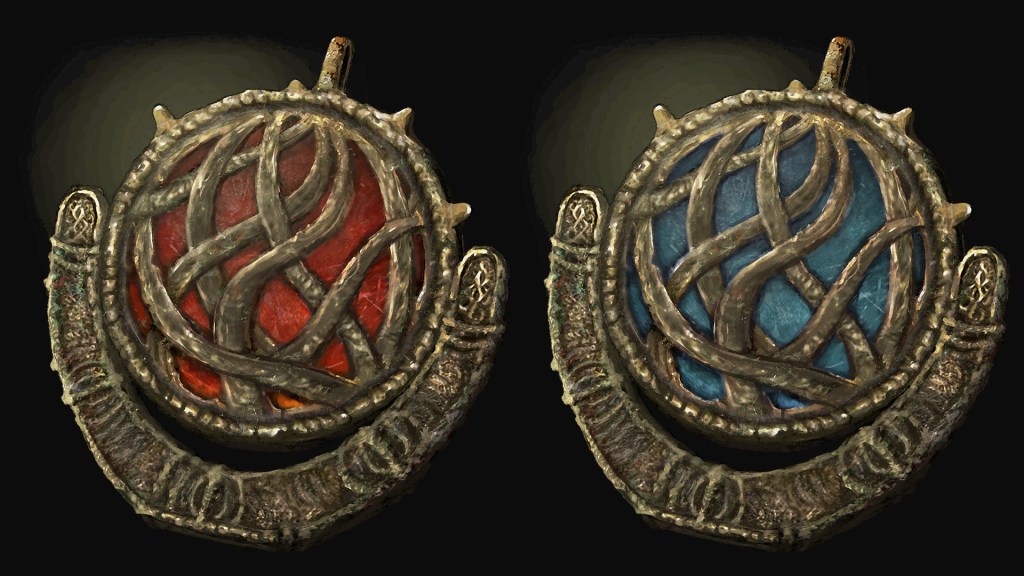
Indeed, despite Erdtree civilization treating the thing as the Alpha and the Omega, the oldest seed talismans confirm that it began with a seed, like any tree. The question then is what produced the seed? The talismans depict the Two Fingers supplying this tree-in-potential, so it is possible that they are responsible. Either way, a golden tree requires a golden seed, which requires the golden Ring. If the Elden Ring is the source of the Erdtree, then it must be contained within its seed, or at least a significant measure of its power must be. This isn’t unprecedented. After we die, the runes we leave behind begin sprouting trees in our wake. The same should therefore hold true for even the largest runes, which amass into the amalgamation we call the Elden Ring — if a collection of runes spawn a tree, then a collection of great runes logically spawn a great tree. With how the golden runes can generate physical life, it is easy to imagine the Ring encasing its power in a seed, especially at the manipulation of an outside agent like the Two Fingers. Once planted, that seed flourished into the form we know today, with the Elden Runes at its core.
Crimson-colored talisman modeled on the Golden Tree’s seed. Greatly boosts Crimson Drop Holy Grail Bottle recovery amount.
Talisman of a seed considered to not exist. The oldest one has the Two Fingers modeled. Does it denote the beginning of the Golden Tree?
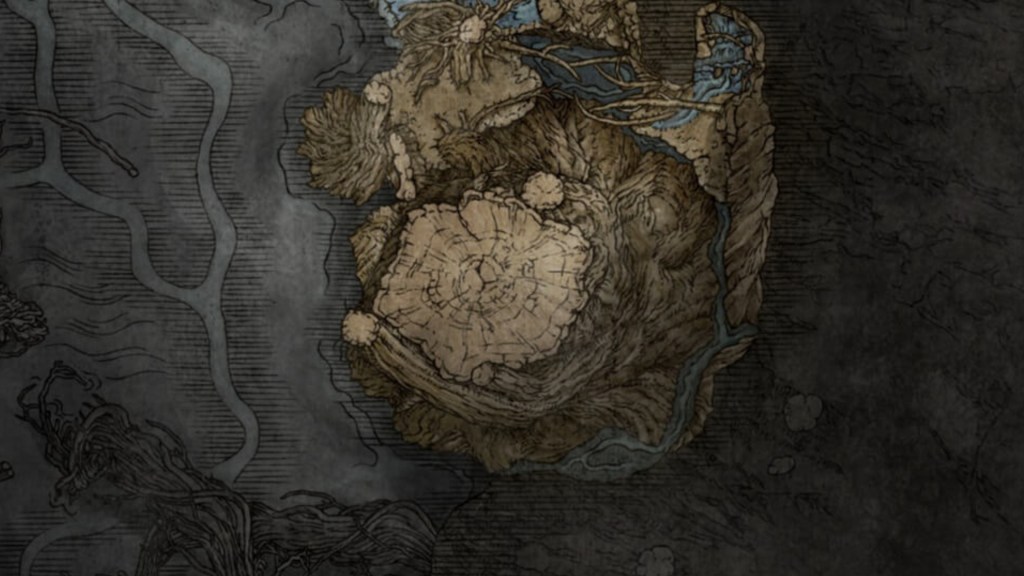
And so, there is no reason to believe that the Erdtree is the product of anything other than the Elden Ring. The Ring generated a medium with which to project its power, though this wasn’t always the case — for the Erdtree did not exist during the history of Placidusax’s reign as Elden Lord. This implies that something involving the Elden Ring incited it to spawn the Erdtree in the period since. The seed it spawned from somehow ended up within the bounds of Altus Plateau. More specifically, that seed took root in the Deeproot Depths, where the Erdtree’s roots become the great roots stretching beneath the entire Lands Between; we can even see the great trunk of the tree aligned with its trajectory above ground. The Two Fingers took part in this process, but they are mere envoys of the Greater Will, who seeks a vessel to shape the Ring’s Order. Whatever prompted the golden tree’s germination, it must tie into the god who obtained the gold. And during all the known days of the Erdtree, there has only been one god: Marika.



Born from Meekness
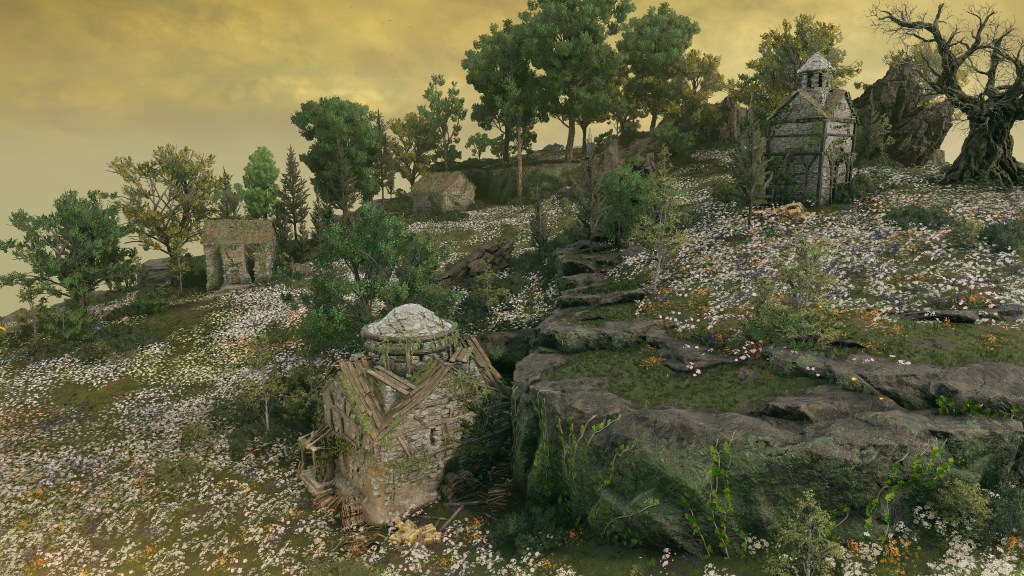
After the rise of the Hornsent, the Greater Will decided upon a new god to act as the Elden Ring’s intermediary. The one chosen by the Two Fingers as Empyrean was, of course, Marika. This was at least in part due to her background. Item descriptions confirm that the Shaman Village in the Scaduview hinterland is the future queen’s homeland. The god-to-be is also Numen, as elucidated in their rune’s description. This is best demonstrated by Marika’s Hammer, which she most likely inherited as a relic of her clan in light of its connection to the original visitors from the other world. Regardless, she was no doubt part of a village of Numen, Numen women specifically. “Shaman”, in this case, refer to ichiko, (巫子) a more archaic term for miko (巫女) used for the various priestesses throughout the Lands Between. Marika also gives offerings to the Grandmother, this “great mother” (大母) seeming akin to the village elder. This was an all-female clan, top to bottom, dedicated to some sacred purpose. And more than likely, this purpose tied into worship of the Two Fingers.
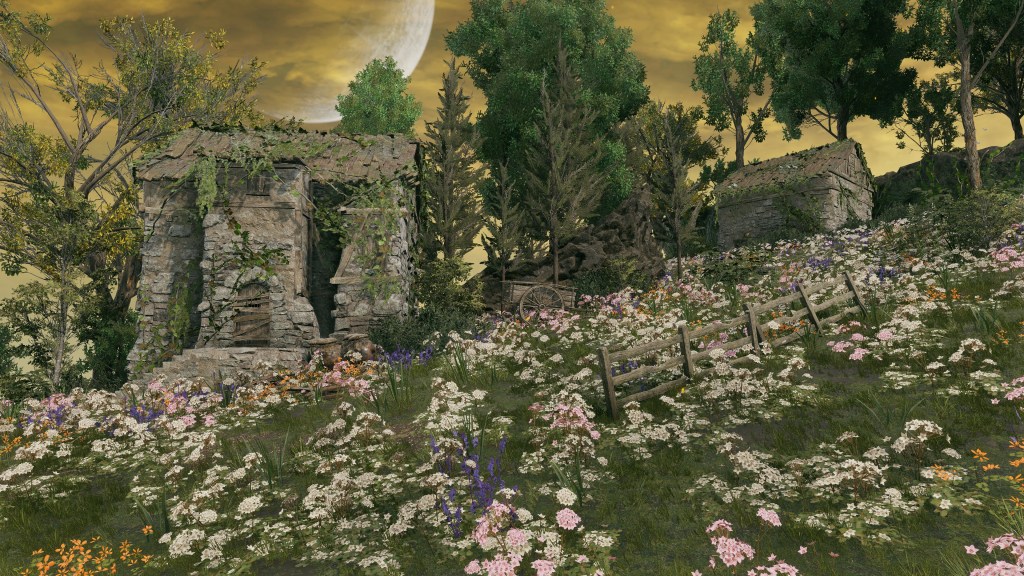
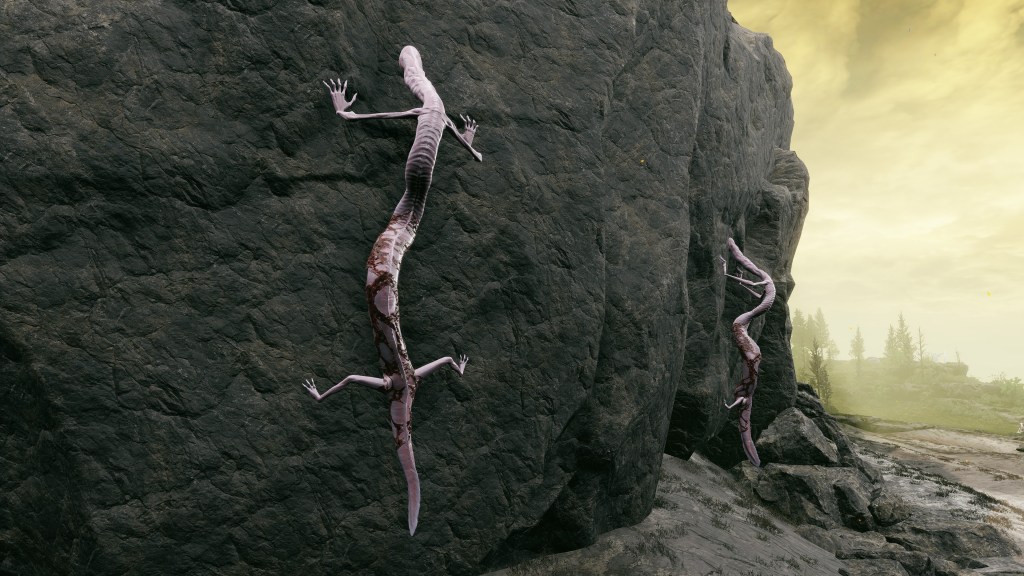
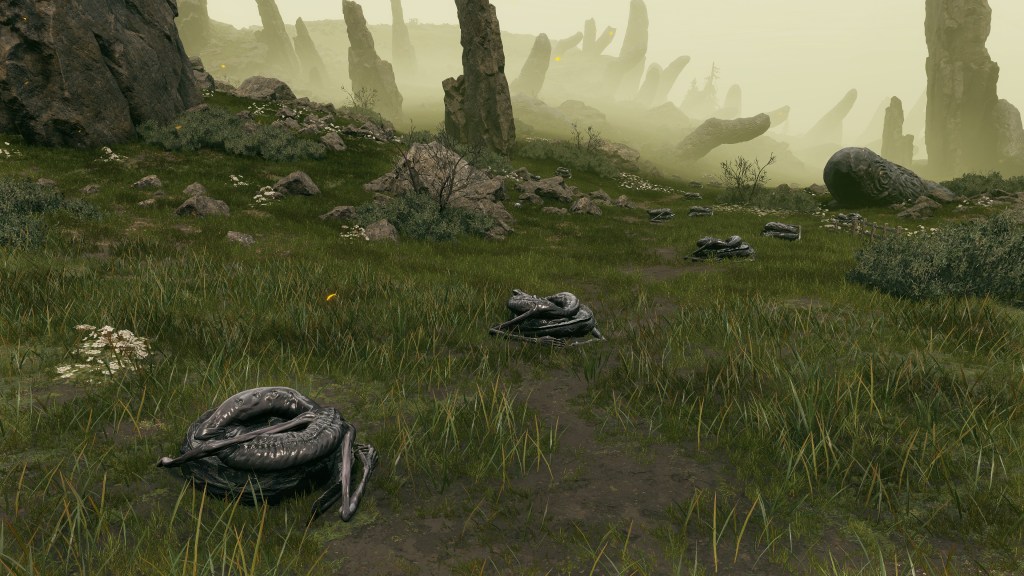
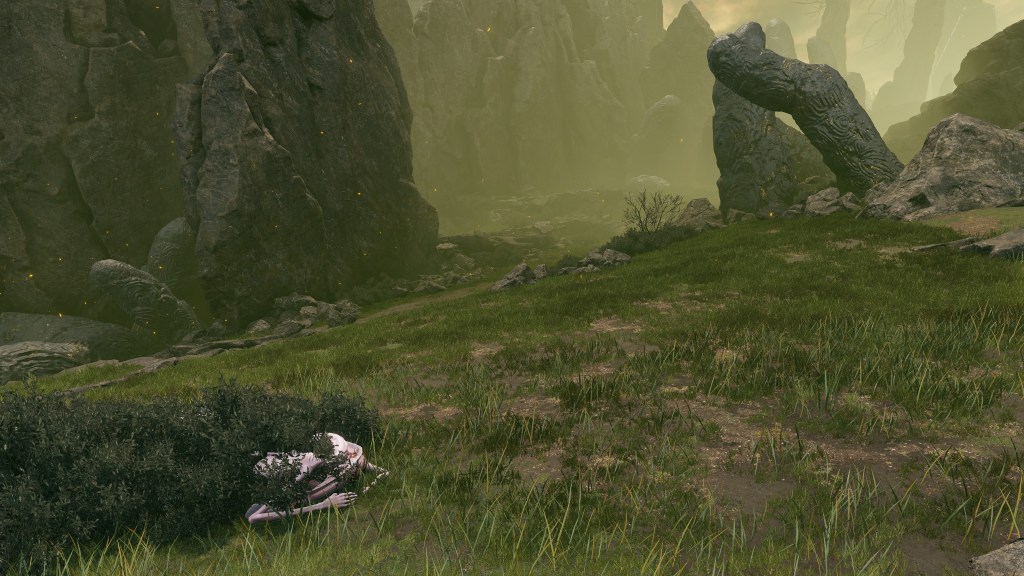
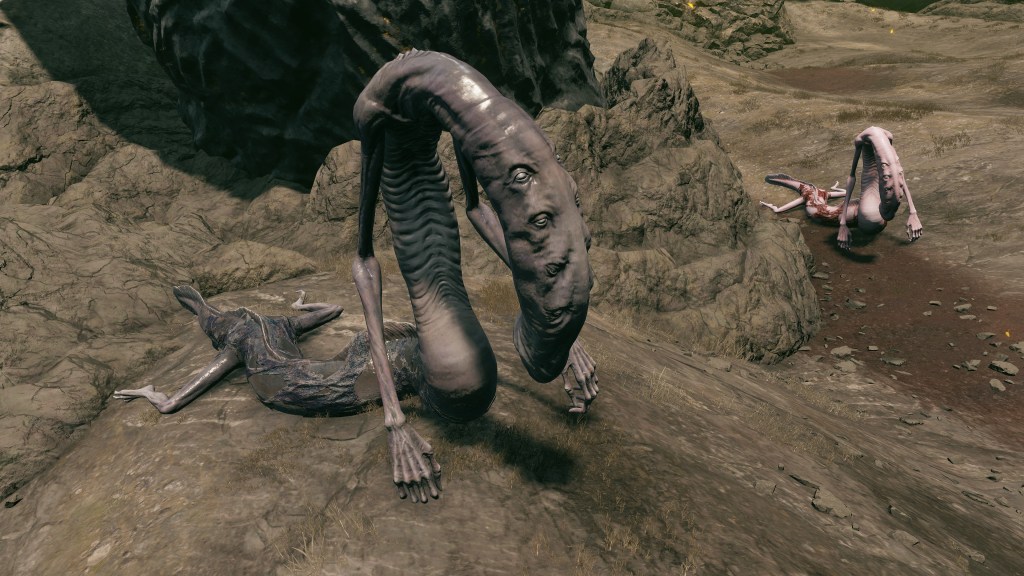
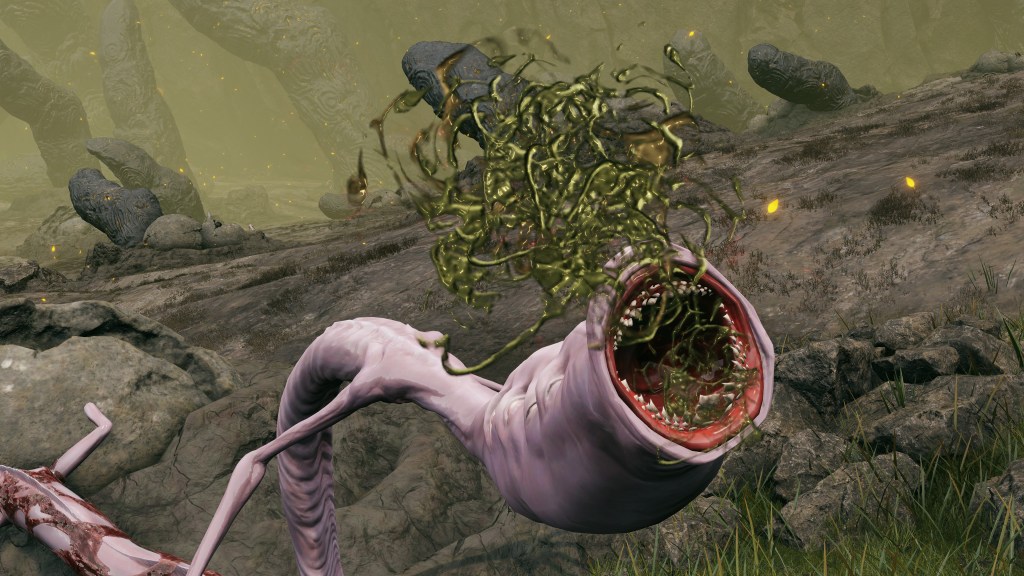
The village happens to be situated close to the Finger Ruins of Dheo, where we overwhelmingly encounter a unique variant of lampreys. These pink lampreys appear fleshier than their blue counterparts, their lower halves covered in molted membrane instead of scales. What prevents these oddities from manifesting at the ruins of Rhia? The main variable would be who resides in the surroundings to transform. The blue lampreys were the fate of typically male scholars, so could the pink version not be the end result of a female shaman’s transformation? Factor in the common gender association between pink and blue, and we can conclude that the rarer lamprey is a byproduct of the shamans settling down in the area. At least a number of villagers took interest in the spawn of Metyr over the course of the village’s history. Even assuming that these individuals were inordinately obsessed, the secrets of the Fingers must have played a role in shaping the larger clan’s shamanism. Highlighting their frequent visits, the roads to the village and Dheo both share the same wooden fencing.
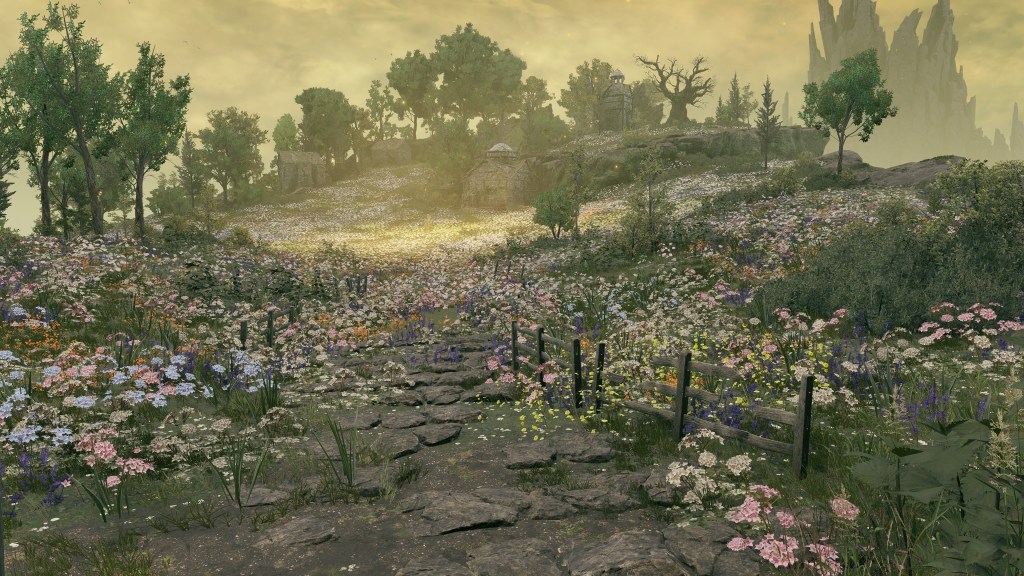
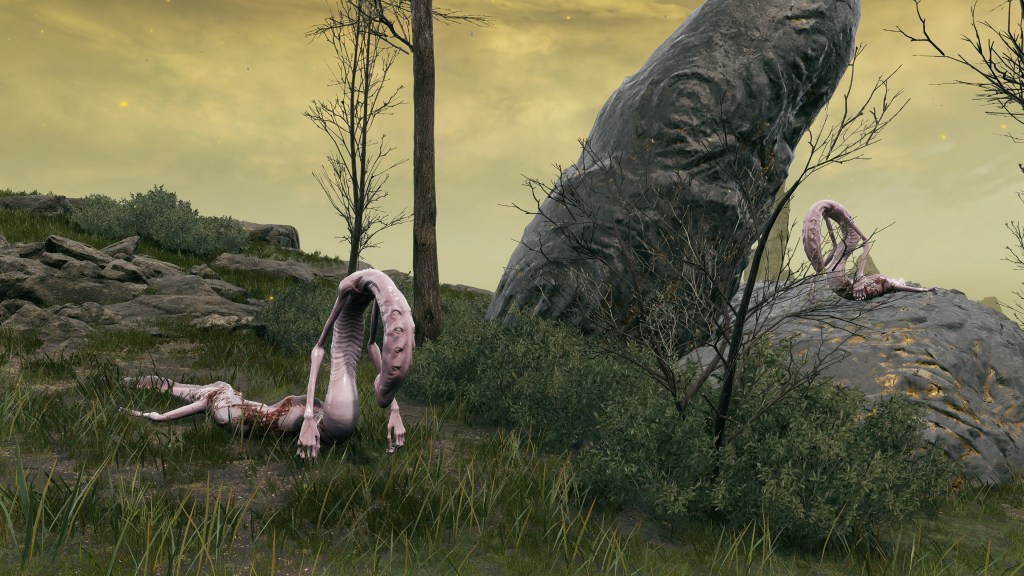


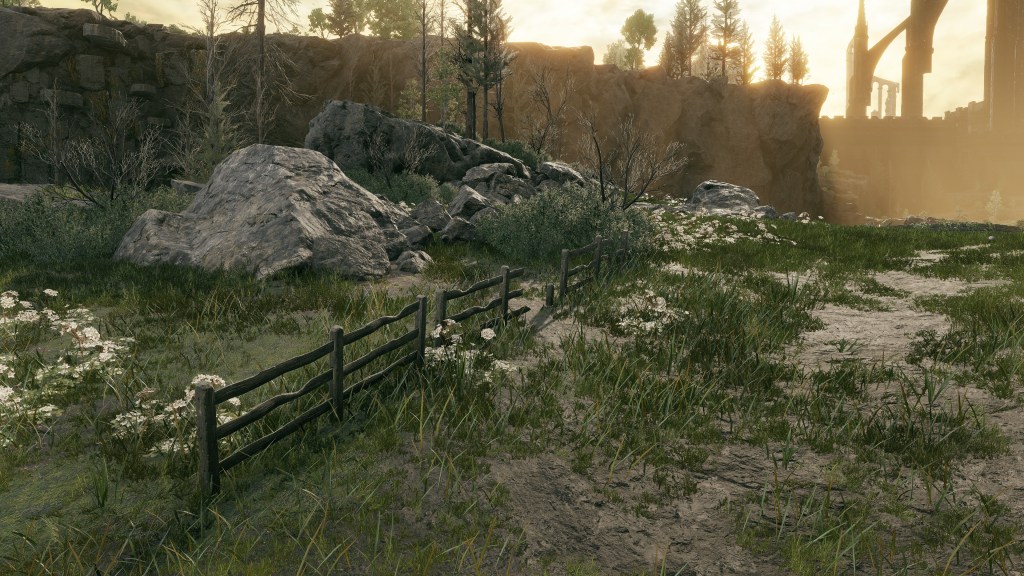
With the Finger Ruins next door, it is no surprise that Marika growing up had become accustomed to blind faith. We learn from the echoes which Melina recites of a time when the queen needed to encourage her followers to research grace in order to deepen their faith. Before that point, Marika had only engaged the divine based on conviction, not comprehension, which fits with the requirements of Two Fingers incantations. The Fingers were the ones to impart the language of faith for her to employ — but this requires her to first understand the language of their movements. Since ancient times, priestesses in Japan handled rituals for oracles, divination, and clairvoyance. In the context of the village, this shamanism likely involved trying to communicate with the Greater Will’s agents. Put simply, the Numen preserved the methods of modern Finger Readers and Maidens in Marika’s empire. The shamans preceded the priestesses and so use more archaic terminology.
Why a clan of Numen took such interest in the Fingers is easy to infer. The entire hinterland stands in stark contrast to the rest of the Scaduview highlands, but the village stands out in particular for preserving the same combination of yellow and green trees growing in the Rauh Ruins. This naturally implies that the Numen originate from that area, maybe even descending from Rauh’s god. It would explain Marika’s Hammer passing into the hands of her clan and remaining under their care. Maybe the shamans specifically came from a smithing background; aside from using the tool to break and repair the Elden Ring, Marika reaches out to Hewg to forge a weapon capable of slaying gods during her imprisonment. But whether or not the woman has any particular experience with artisanry, her lineage assuredly traces back to neighboring Rauh. And with the ancient civilization’s collapse, it is logical for survivors to seek answers from the Finger Ruins close by. What did their people do wrong? How could they repent? Where was their path forward?
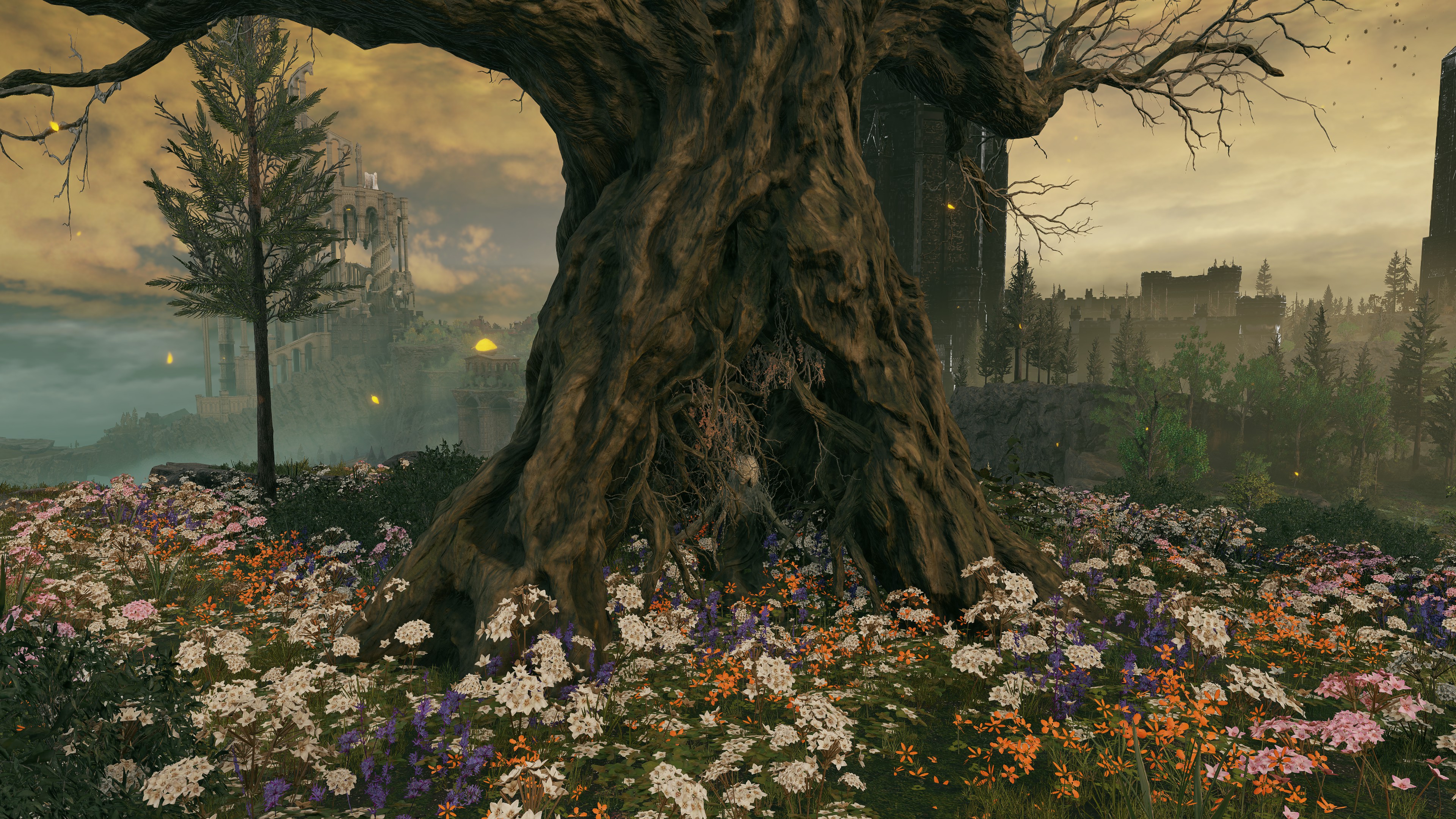
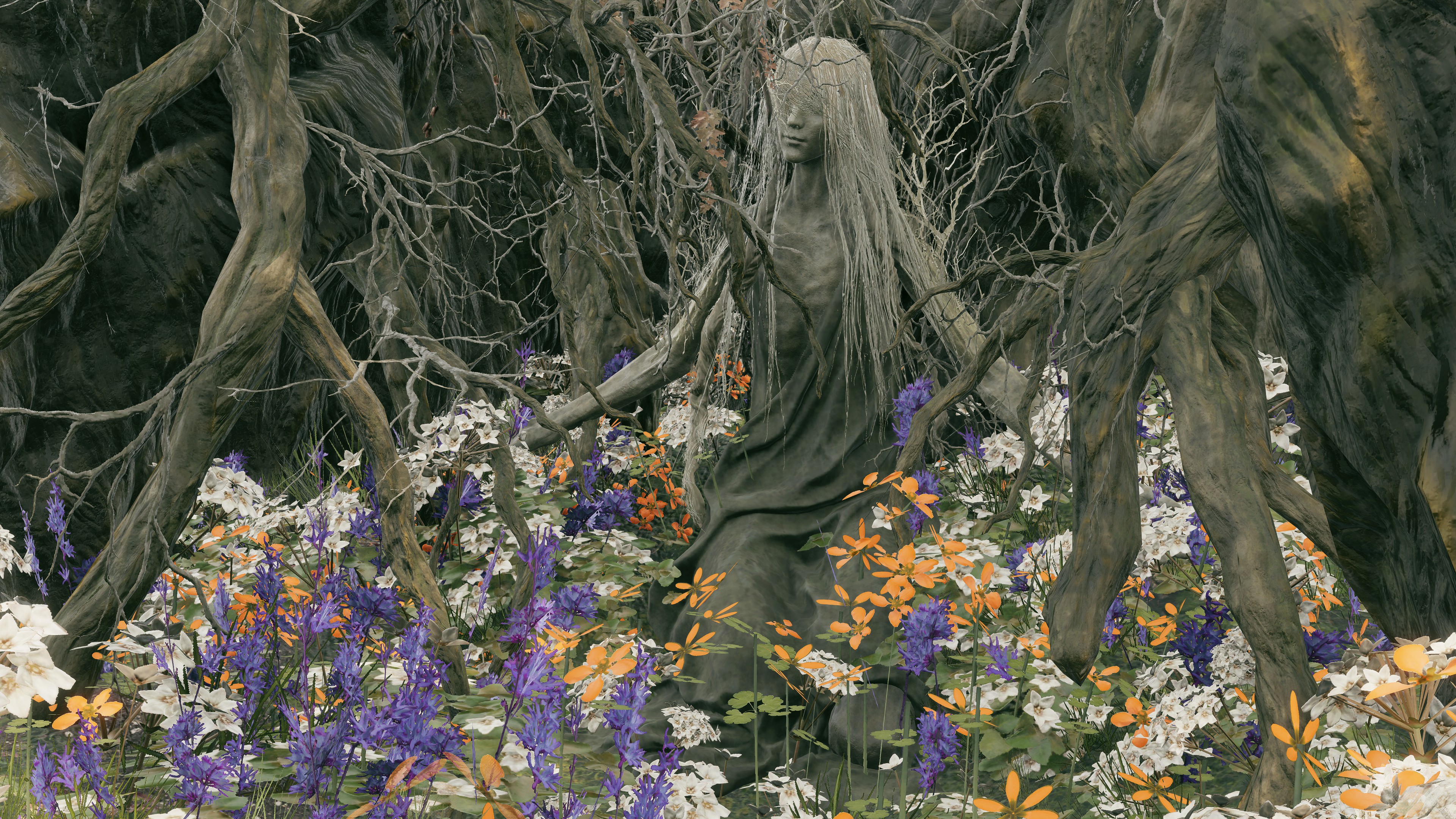
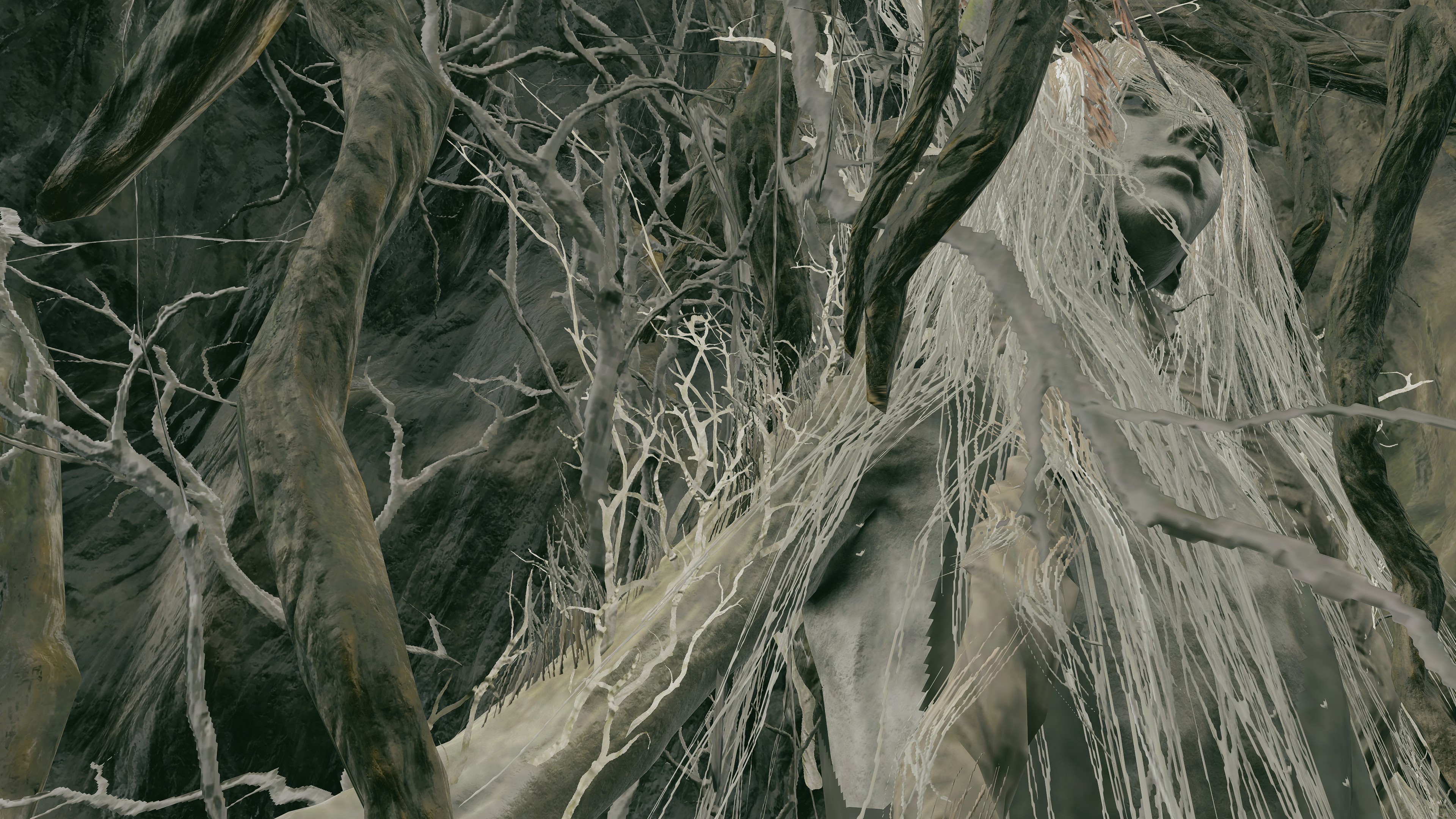
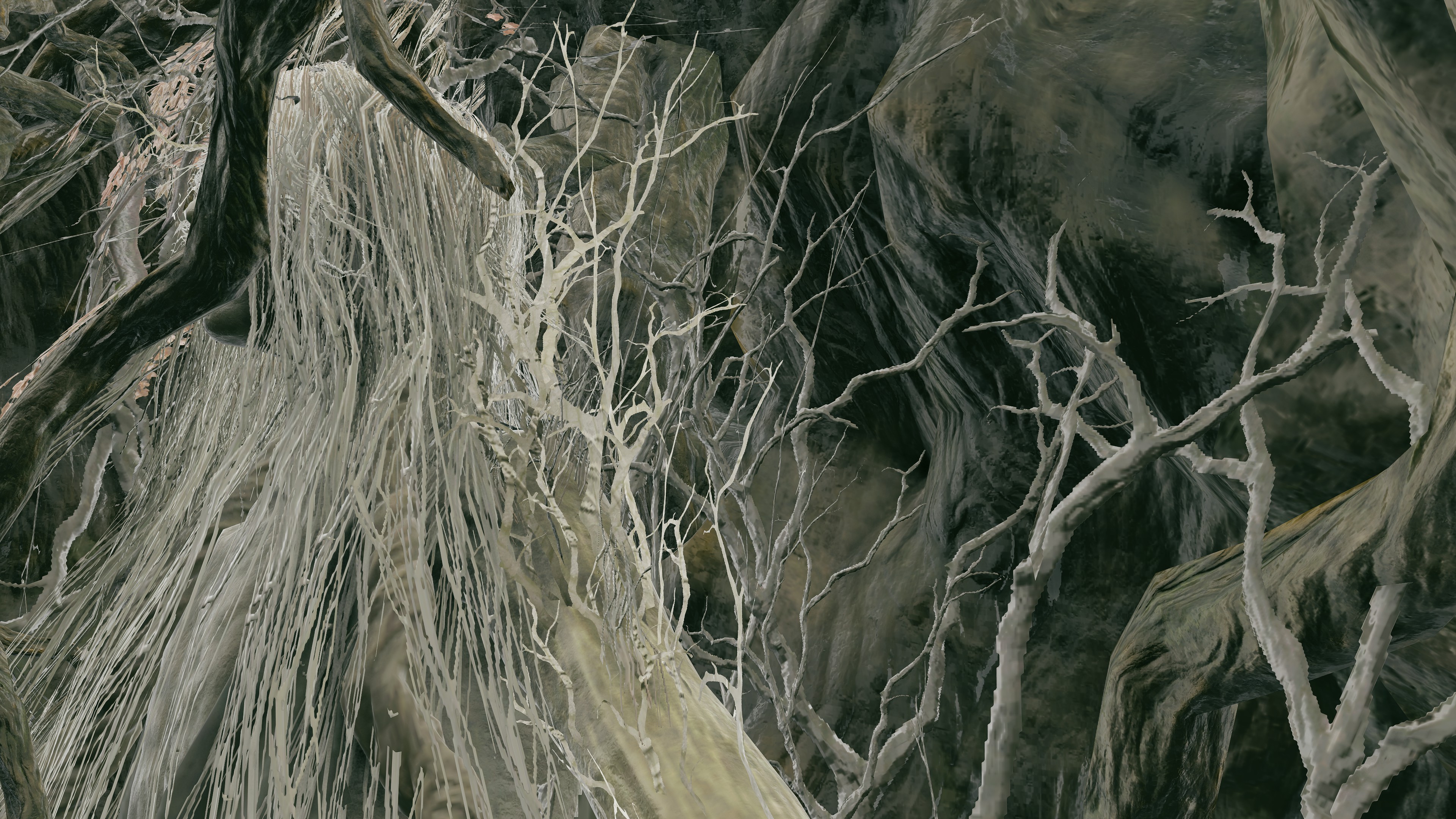
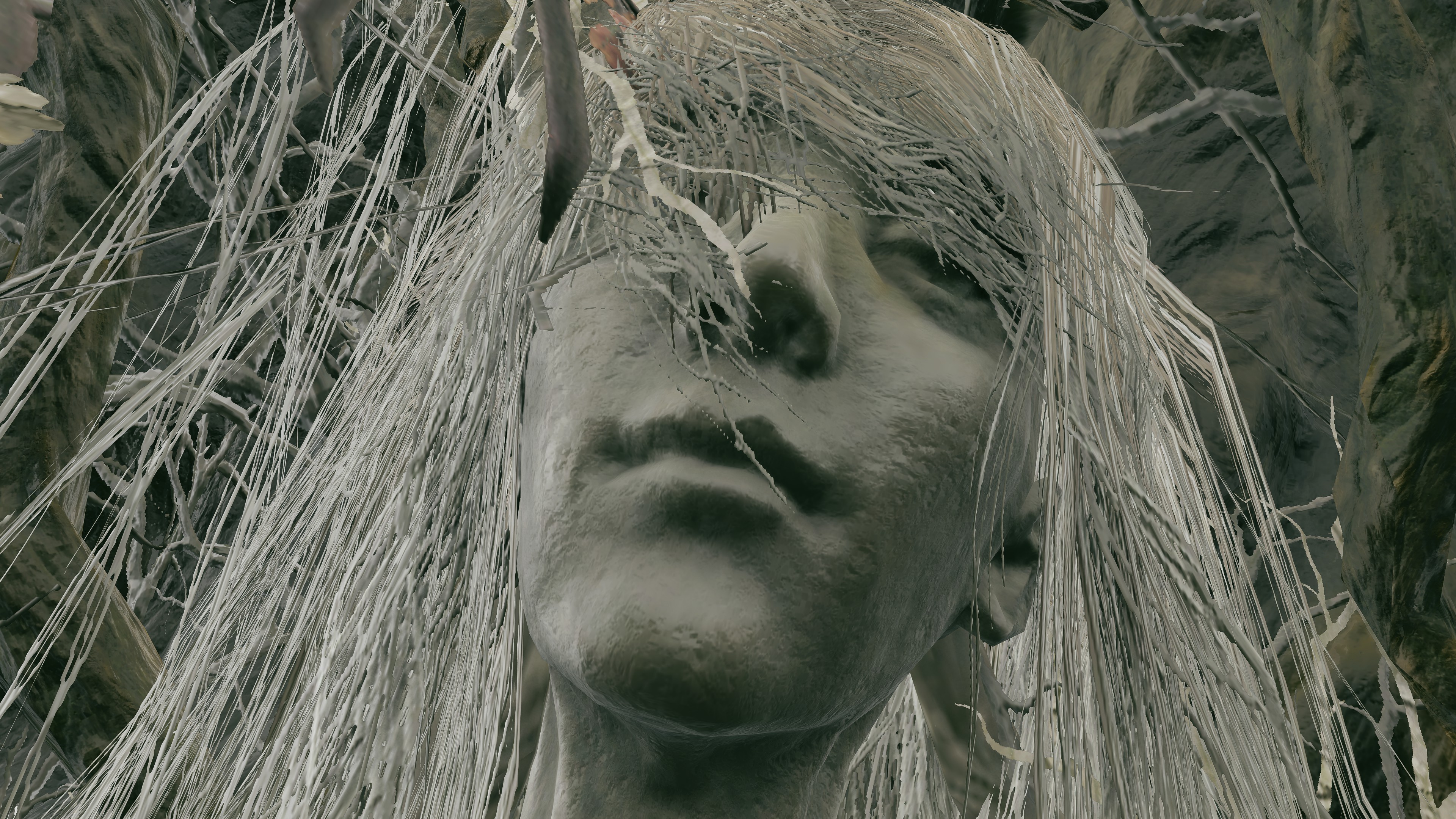
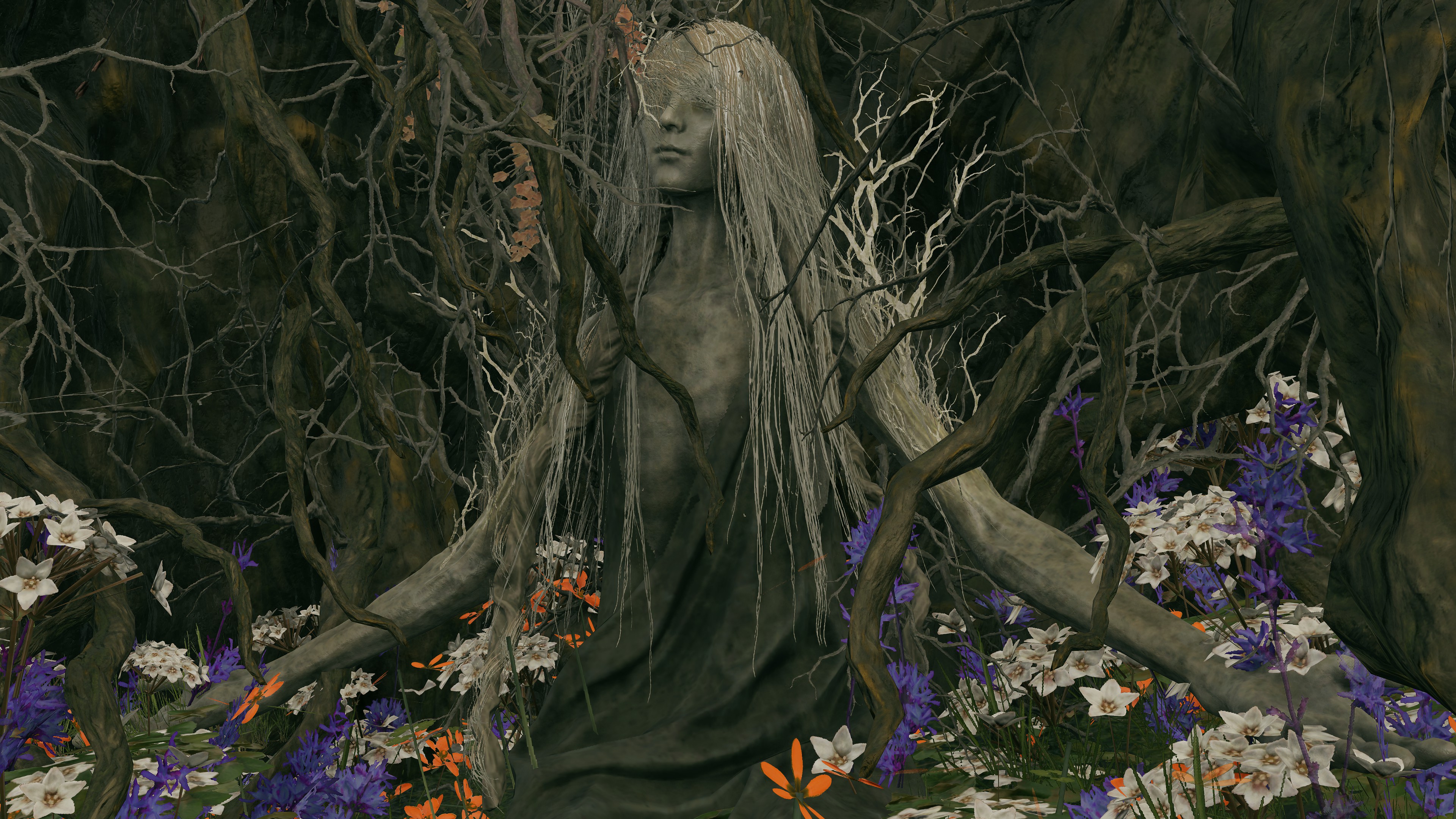
At the center of this was probably the Grandmother. Her body looks tree-like down to her bramble hair. This “statue” kneels tucked within a dead tree hollow, its inner roots reaching for her as much as the branches sprouting from her respond likewise. Positioned at the hamlet’s highest point, it overall resembles a shrine. Certainly, Marika’s “offering” (供物) to the figure is the kind typically left for ancestors, gods, or Buddha. The village elder thus may have led by silent example, venerated by later generations in the same vein as the land gods in Hornsent culture. That would explain why her eyes are conveniently covered, since blocking sight of the “vulgar” world symbolizes renewed focus on spiritual enlightenment in Buddhism. It further suggests a key role in the village’s founding, always welcoming her fellow shamans with open arms. She was the one liable to decide to settle this location, with Marika’s respect implying a relation to her apotheosis. If related to Rauh’s god, then restoring their bloodline to divinity might have been this great mother’s last wish, one her “children” carried on as a village community.
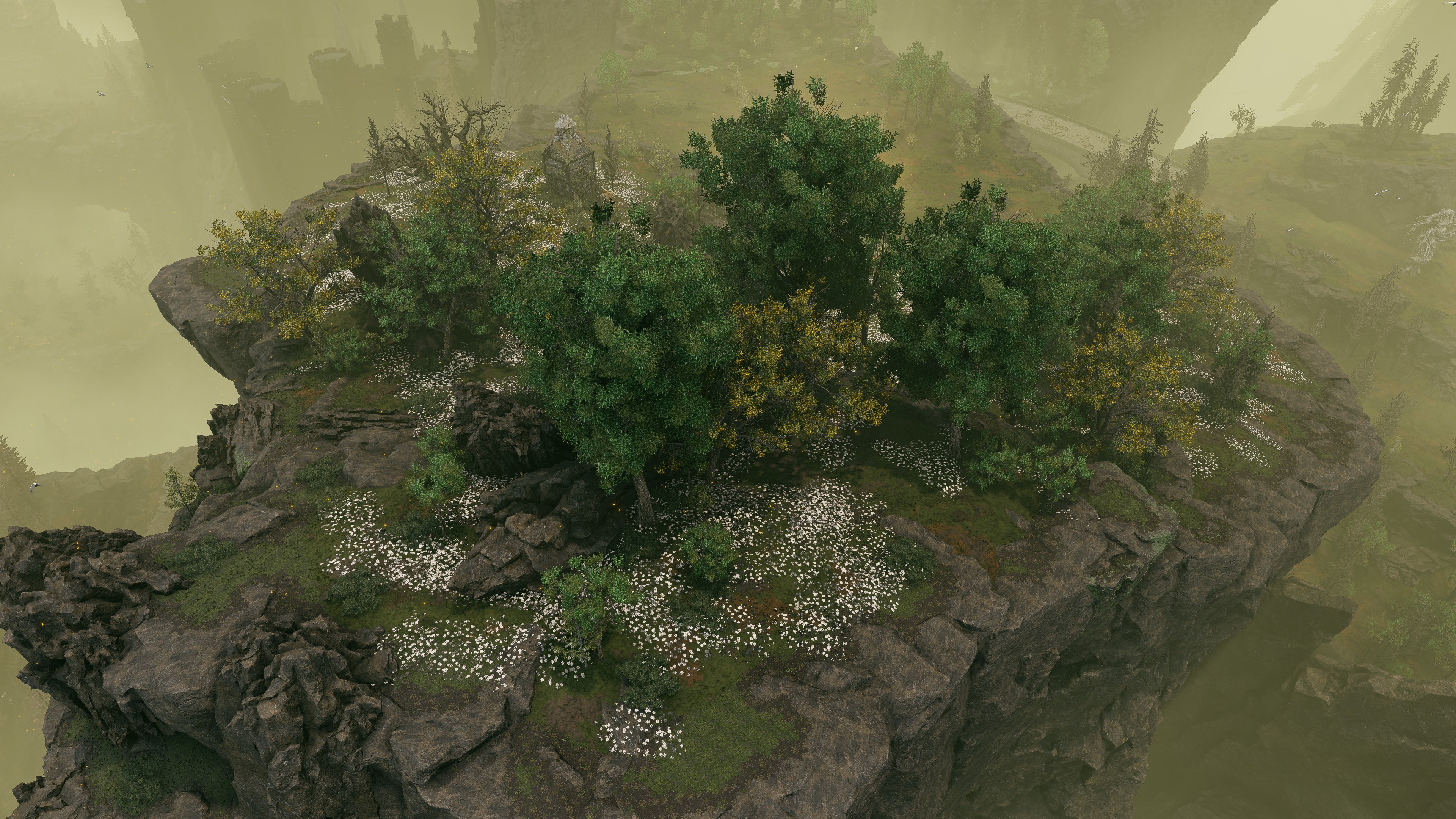
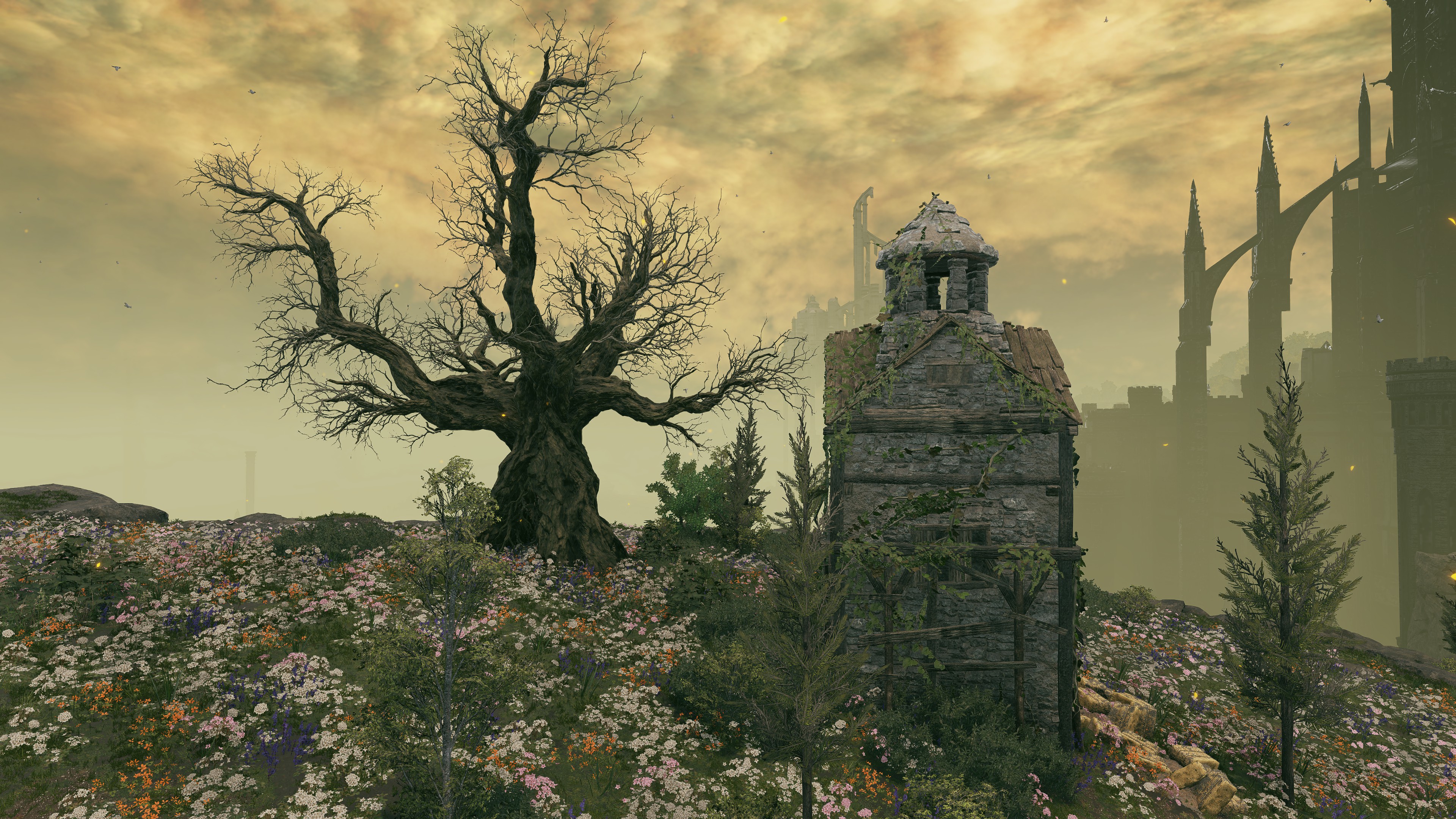
All of this explains how Marika and the Two Fingers crossed paths and communicated her fate as an Empyrean. After all, the name “Deo” (デオ) means “god” in Ido, a constructed language derived from Esperanto for a similar purpose of becoming the universal tongue. Combined with “Ria” (リア) meaning “their” in Esperanto, and it appears clear that the Dheo and Rhia ruins took part in the woman’s rise to godhood — the fact that we obtain the oldest seed talismans from blowing the hanging bell in each only cements the notion. From her humble village, the future queen quickly learned how she was destined to establish a new Order for descendants of the Ancient Civilization. The Greater Will’s envoys may have been awaiting her birth, as a matter of fact. With her destiny already written, it was incumbent upon the Fingers to prepare Marika for her role as the new god. Any involvement with the shamans might have thereby anticipated a potential god who would one day appear among their number.
This revelation may well have been celebrated by the village, but Marika also had her ever-faithful vassal beast Maliketh behind her. Those two must have been especially close since the Empyrean counted the wolf-man as family. Although the English description to his remembrance claims that he is her half-brother specifically, gitei (義弟) merely denotes a person not related by blood who agrees to act as a younger brother; in the case of another vassal beast, Blaidd, the same term is localized as “stepbrother” instead. Neither strictly relates to their Empyrean via a parent or stepparent — they are simply distinguished from a blood brother. Put simply, Marika was blessed with a loyal servant following her birth, the beast-man treated as a younger sibling by everyone as they grew up together. She was thus surrounded by constant reminders of her future. The Fingers chose her to impart the Elden Ring to every corner as she saw fit, and these supporters were to help the young Empyrean along with that endeavor.
Needless to say, such an upbringing inflated Marika’s ego. In her adult life, the woman wholeheartedly embraced her role as god and demonstrated the drive to both acquire and maintain that level of power. This wasn’t without warrant. Her ambition and hubris were matched only by her cunning and charisma; without that, she couldn’t have built a kingdom which ultimately became the first to span the entire continent. With her talents, Marika had no reason to question her selection from the powers on high. By divine ordination, she stood above the common man — who wouldn’t develop a god complex? If grace thrust her on this path, then the choice was easy: sprint straight ahead. She was born to be the god on this earth, and she had no intention of rejecting this calling. The Numen therefore put all her faith in the Greater Will and the Two Fingers.
That isn’t to say that Marika harbored no identity outside her persona of divinity. In fact, she possesses a childlike whimsy. One of her capital’s secret treasures is an intricate veil which casts a simple illusion upon the user, allowing the person to blend into the surroundings as an appropriate inanimate object. This Mimic Veil has earned the name Marika’s Mischief, implying that she in particular played many a prank with the treasure. Perhaps her unusual childhood left her, in some respects, still immature, but it nonetheless proves that the god wasn’t humorless. At the same time, Marika’s public speeches as quoted by Melina present her as grave and imposing, so there is a certain duality to the mischievous woman. Such capriciousness actually betrays how the queen could be as quickly cruel as she could be kind, inclined to impulse at provocation — and impulsive actions often tend toward the extreme. Put another way, the god is passionate in everything she does, for better and worse.

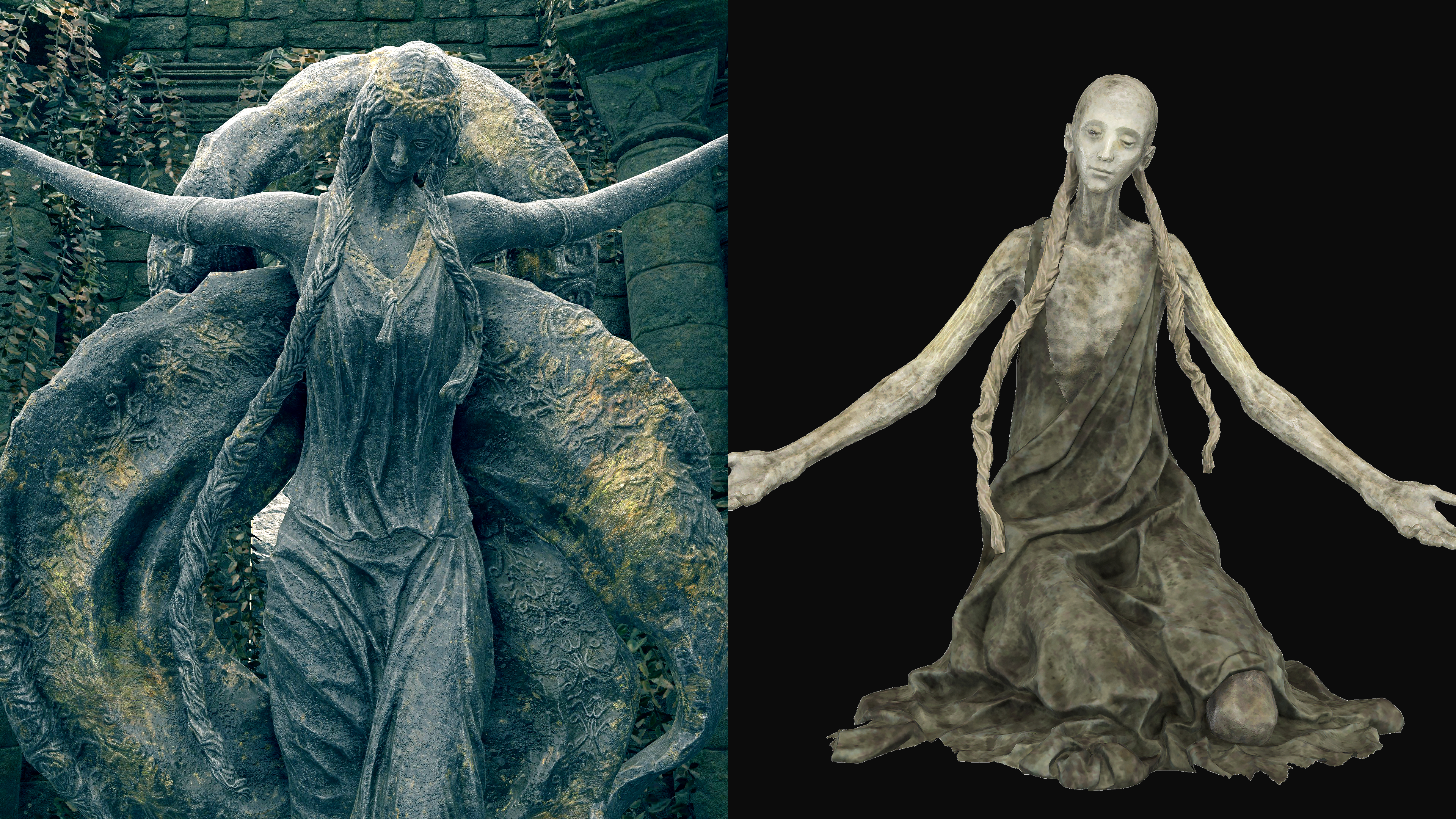
These more childish elements to Marika’s personality also bring her actual childhood into question. How did being an Empyrean affect the young girl’s life? What about her parents’ lives? Outside of her stepbrother, we are given no indication of prior family shaping the future queen’s outlook. The closest relation she demonstrates is with the Grandmother, whom she visits during her final farewell to the village; even before that, she emulated the elder’s two long braids worn over the shoulder as an adult. Were the parents simply not that important? Considering that her fate was a communal matter, it may be that Marika spent her youth adhering to the shamans’ strict expectations, denying her a proper childhood with her parents — once free of that control, she would have naturally indulged her own whimsy. Alternatively, the Empyrean was always a prankster at home and everyone tolerated it; she could get away with anything because she was special. Whether a repressed youth or spoiled brat, the village undoubtedly helped make Marika the god she ultimately became, capriciousness and all.
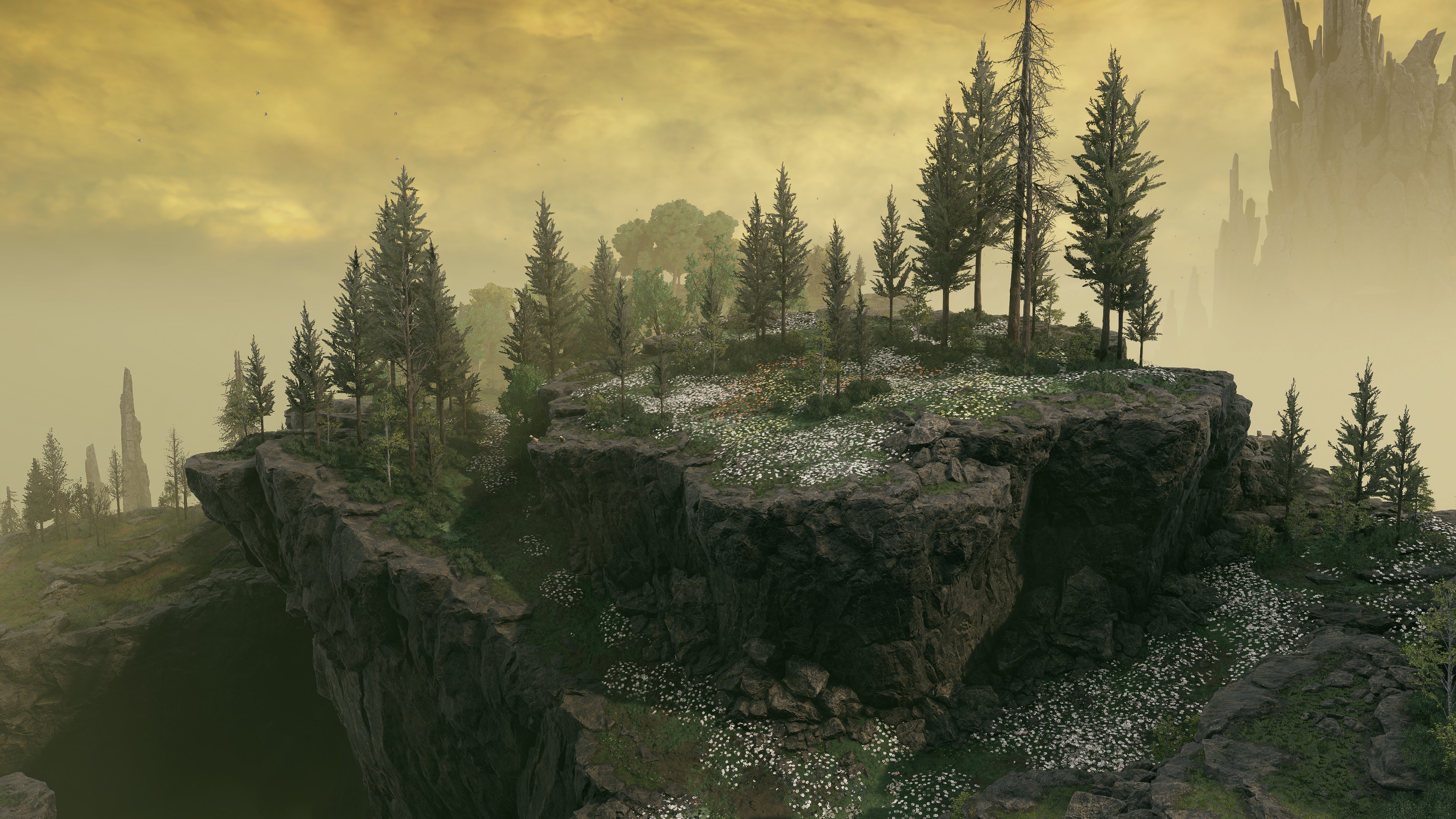
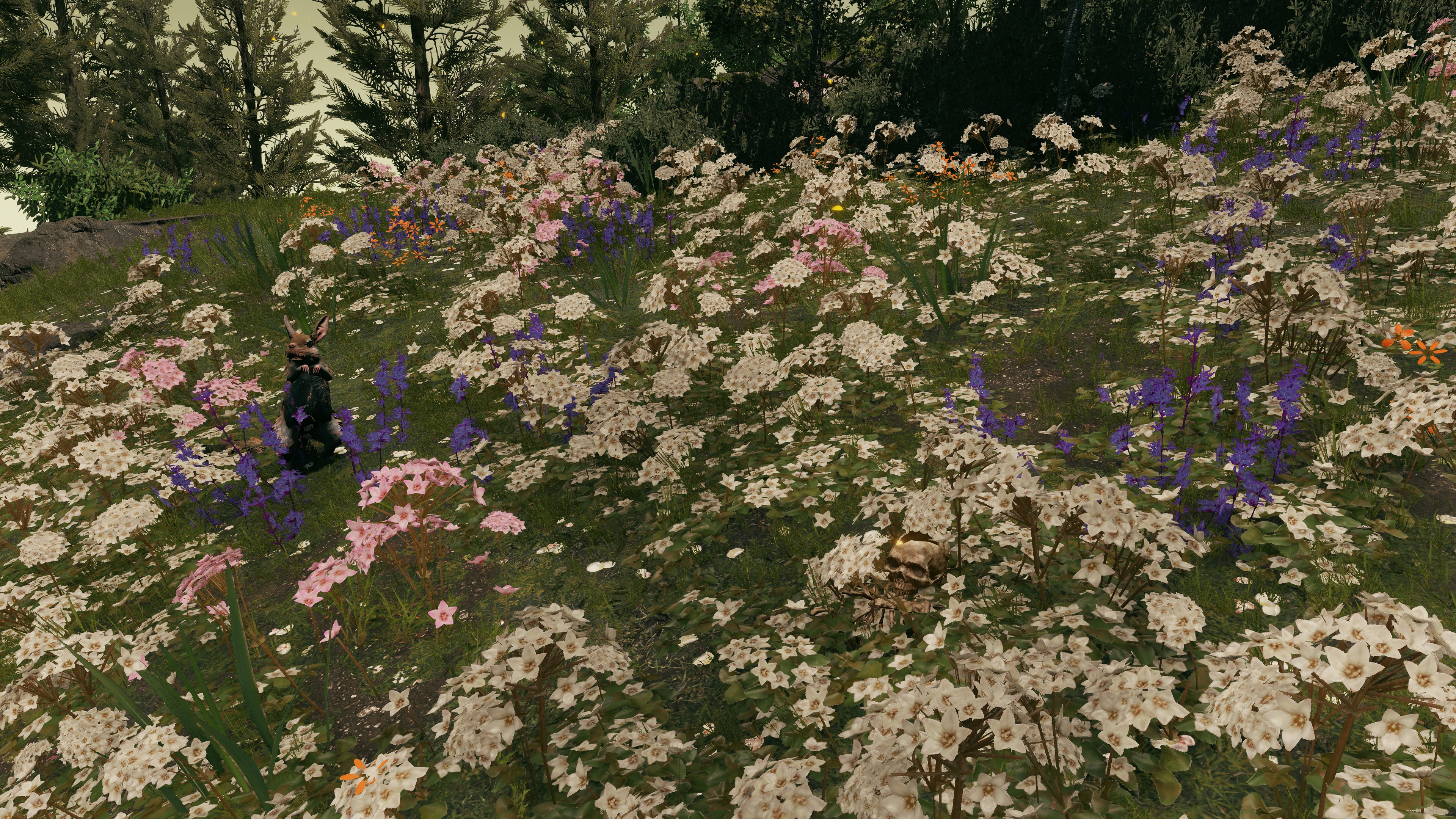
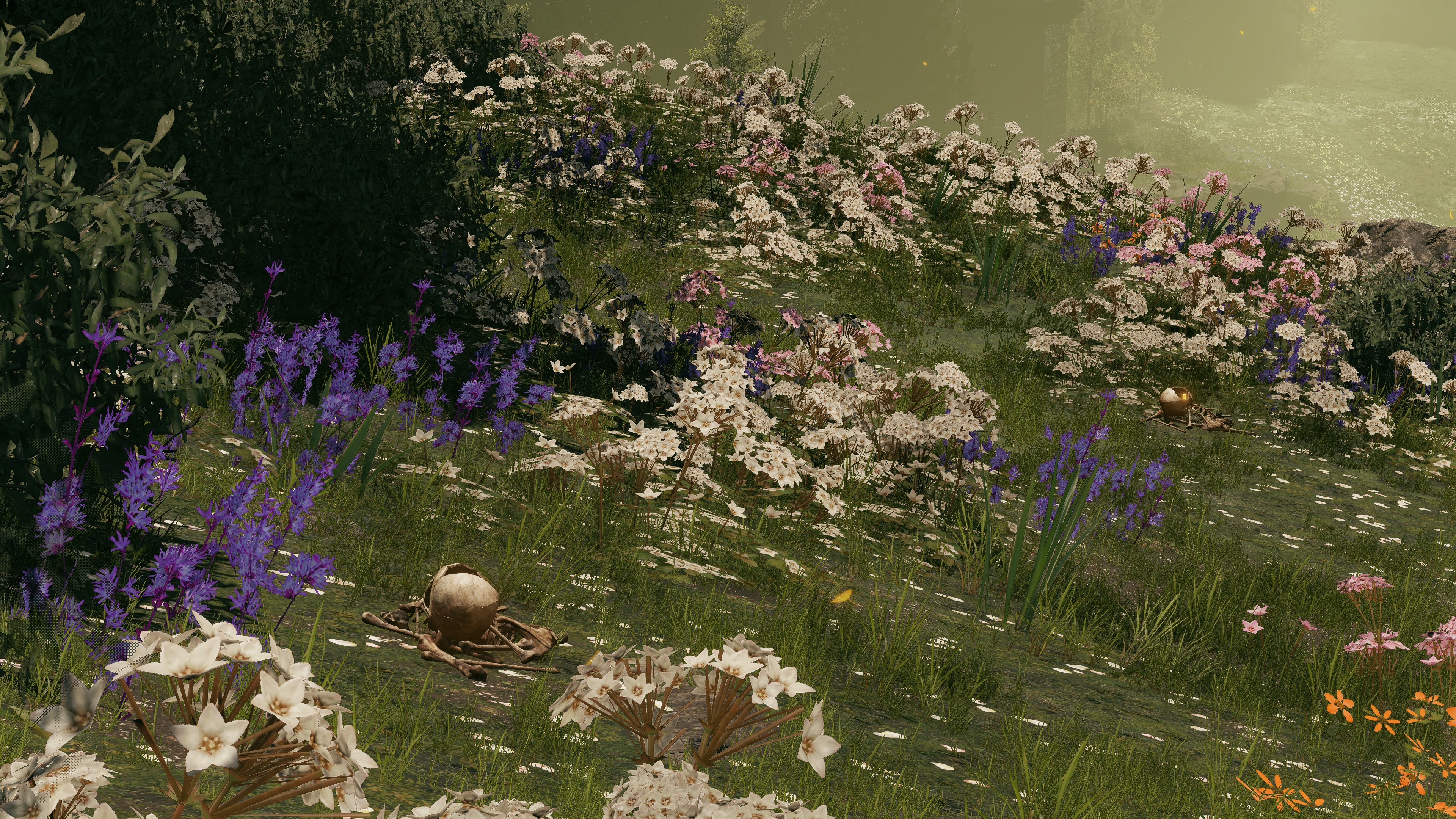
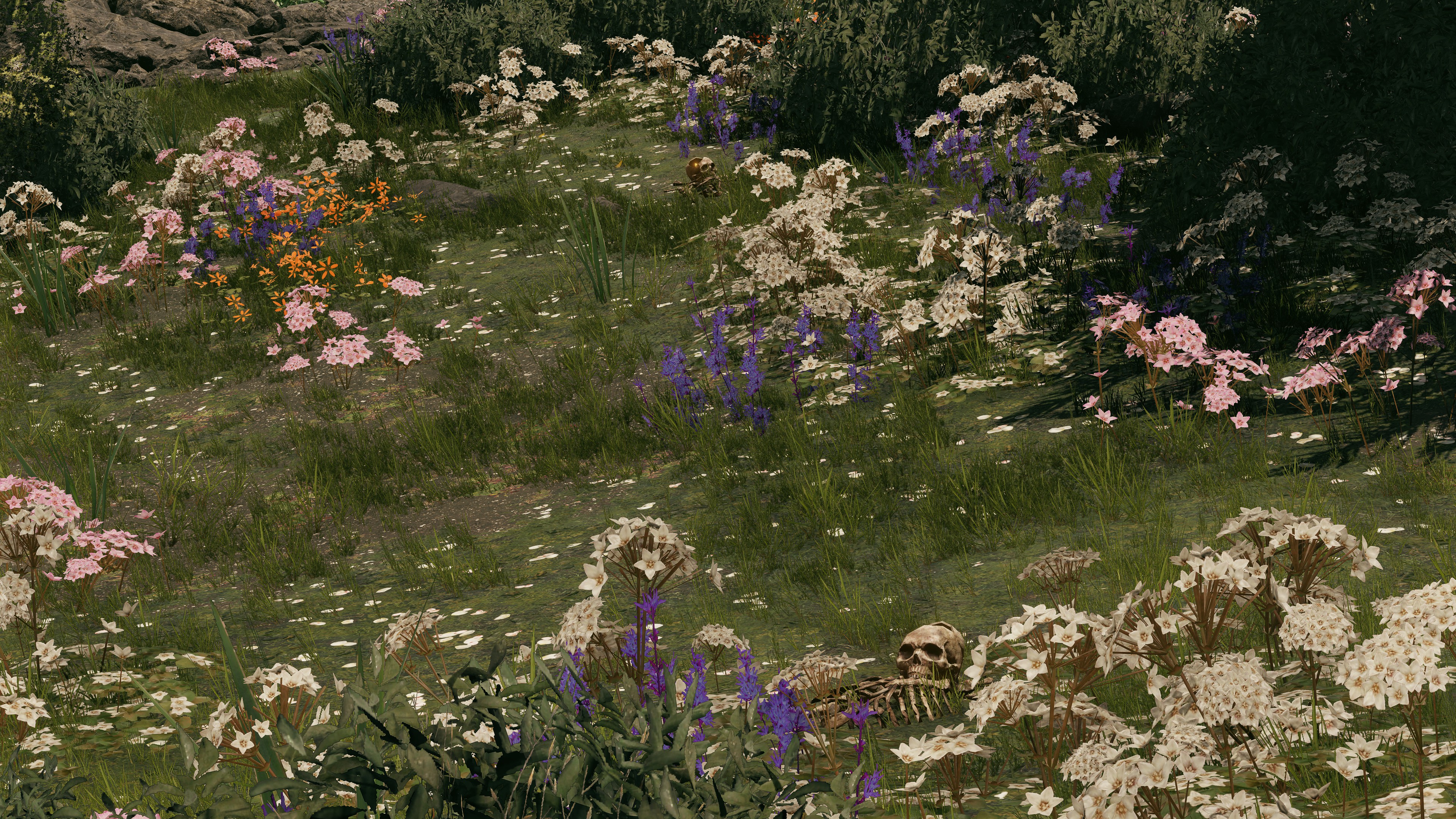
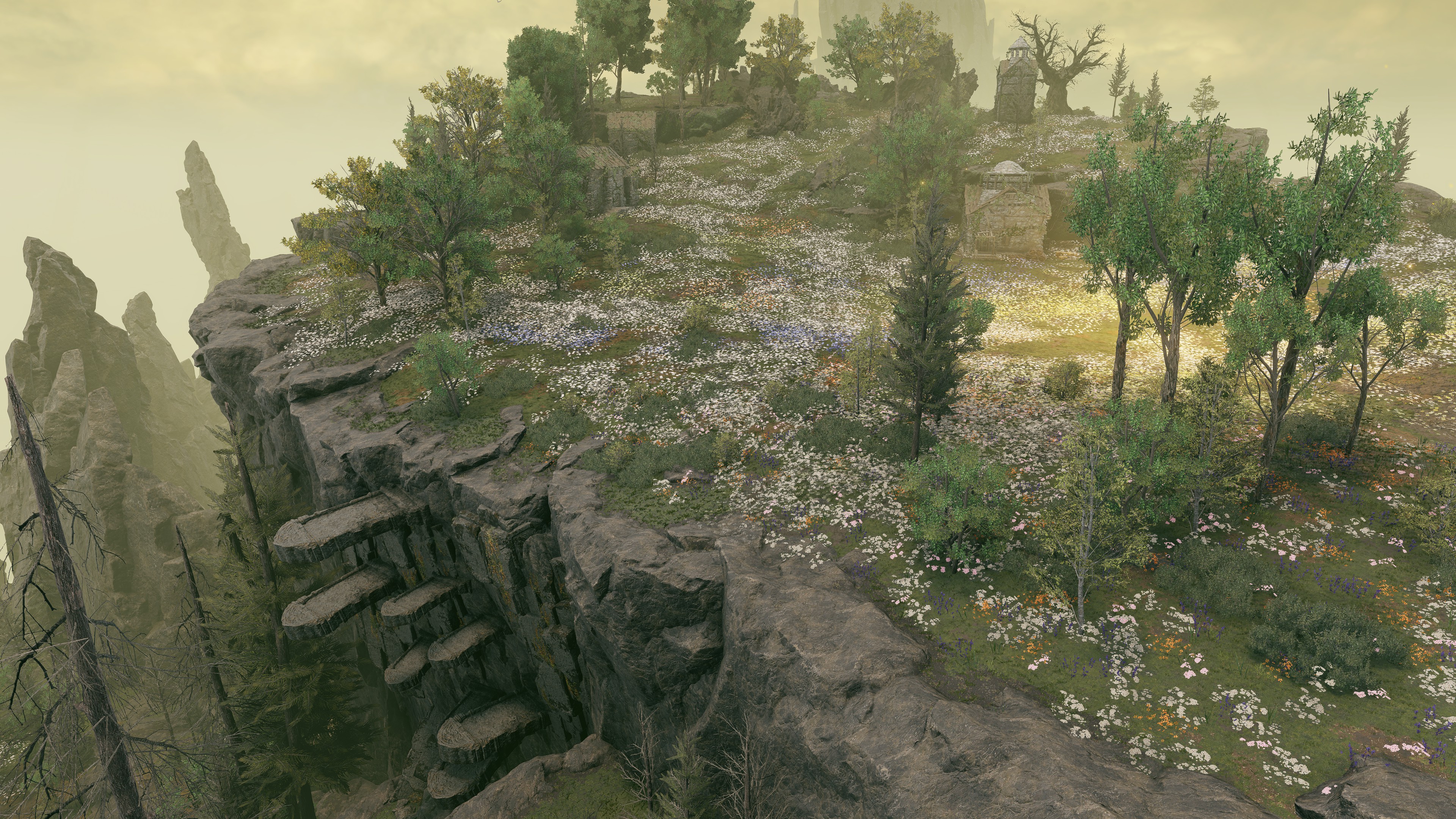
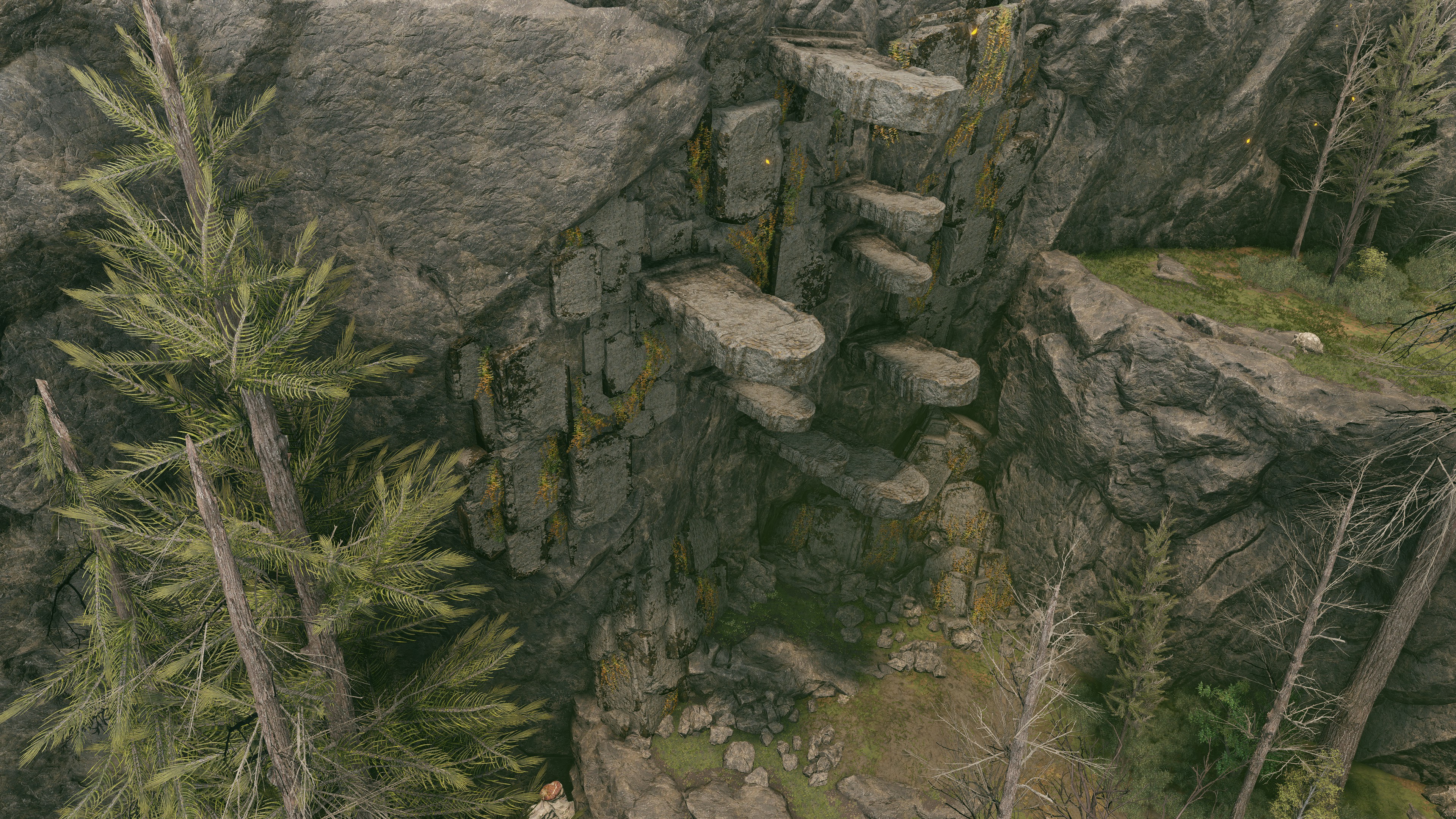
As to her cruelty, that too had likely been impressed upon her from an early age. Taking a detour on the road to the village, we can climb a small hill overlooking the settlement. This place stands out for the collection of skeletons amassed there. Nowhere else in the hinterlands do we find one of these bone piles. They can’t be part of some local burial custom either, since we can see that the village maintains a more conventional cliffside graveyard. Why leave anyone exposed to the elements then? Why were so many gathered in such a secluded location a short walk away? Why are they even dead? The only reason is that the individuals were neither part of the shaman community nor on good terms with the Numen. In other words, the deceased are most likely the village’s victims, brought out and killed atop that nearby hill where they were left to rot — or at the very least, dumped there after being slain within the hamlet. We can definitely connect this kind of killing to cultural practice.
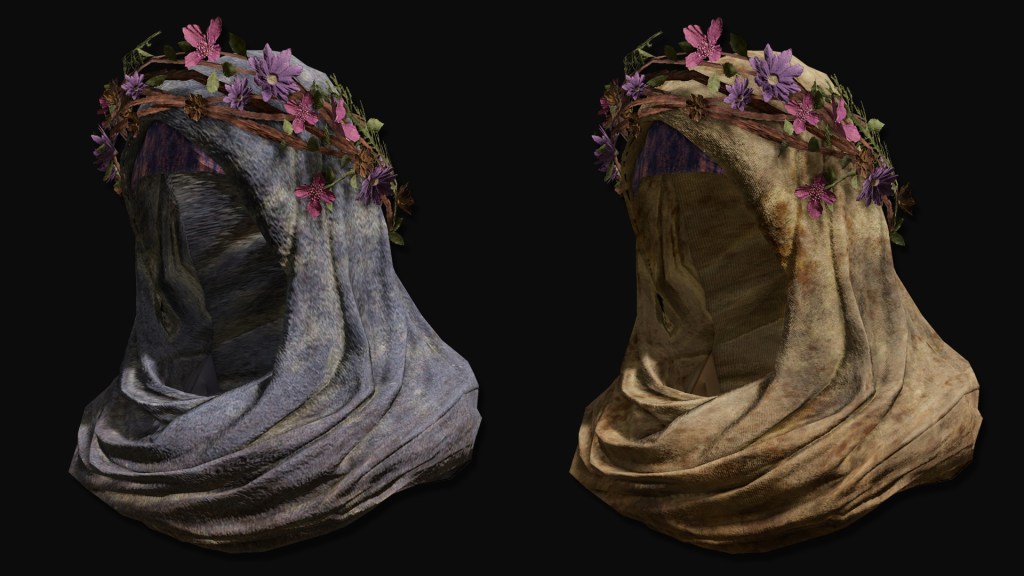
As we explore the Shadow Keep gatekeeping the hinterlands, we can loot Festive Grease. Resident Erdtree priests, serving in war, have created instructions on crafting this weapon augmenter, combining fragments of bone with root resin. And yet, such an invention isn’t actually rooted in that Marika religion. The grease actually alludes to festivals (祝祭) the same as the “festive” set and “celebrant’s” weapons seen in Dominula; the festival is even described as “sweet” (可憐) just like the decorations to the Festive Hood in its Japanese description — the grease does wear the same multi-colored flowers as the blue and green hoods in its menu graphic. Even the resin’s effect, allowing soldiers to collect more runes from those they attack, is replicating those ritual implements similarly crafted from bone. That leaves but one conclusion: the Erdtree priests borrow their rune-collection tool from pagans. The description to festive grease confirms that the Erdtree “overlooked” the festival as an old folk custom, but that still doesn’t explain why it appears to have been adopted only by forces of the Shadow Keep.
Lump of grease mixing in left bone fragments and the like. One of the craftable items.
Coat weapon to endow with festival prayer and acquire very few runes when attacks hit.
The sweet festival is an old folk custom, so the Golden Tree overlooked it.
Hood of dancers used in the festivals of Dominula, village of windmills.
Sweetily adorned with multicolored flowers.
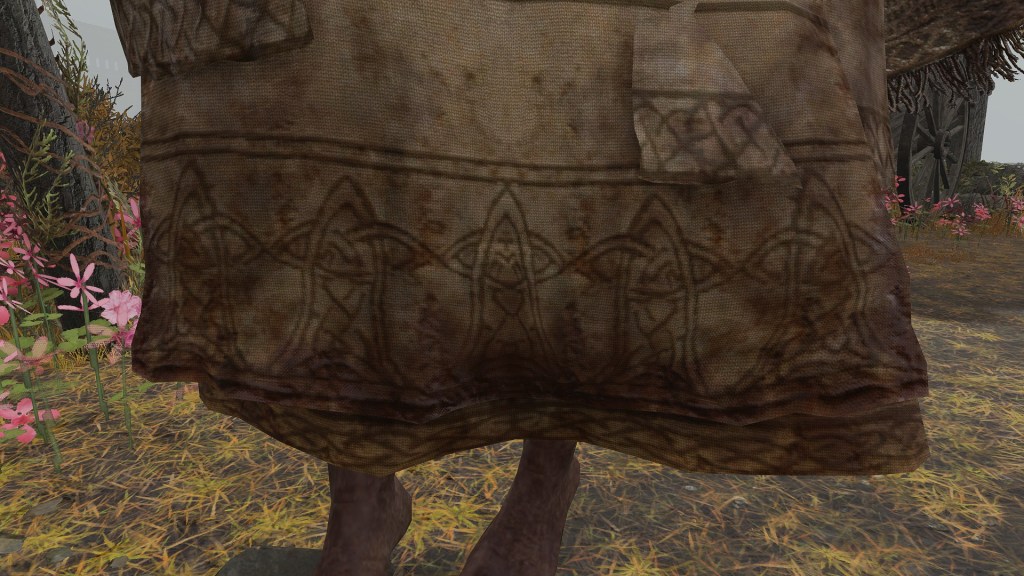
The obvious answer is that the priests picked up the idea from the area. And with the Shaman Village being the only “folk” settlement in the vicinity, the grease could only have been sourced from there specifically. In other words, Marika’s home must have been part of that wider culture connected to Gelmir’s old faith. The village’s location would have bordered Altus Plateau originally, putting it on the fringes of any cultural diffusion originating from the land. Likewise, the most ubiquitous symbol of Erdtree worship in the Lands Between is an abstract representation of their subject of worship in the form of a cross; even Marika’s veil incorporates its. And yet, the garb worn by women in the festival features elements of this “Erdtree cross” in the design. The one aspect missing, of course, is the Elden Ring at the crux, key to demonstrating gold as the source of the tree. But that is to be expected if the pagans were the origin of the style, Marika drawing on those villages’ shared art to create her new religious symbol. All of that points to the shamans adopting the ritual killing from neighboring Altus.



Given their emphasis on the Two Fingers, it is possible that the hinterland village incorporated the festival on a purely mercenary basis. The bones used in the killings enabled them to collect golden runes, thereby recover power of the Elden Ring. While snake worshipers might not have cared for that quirk of their ceremonies, it would have been invaluable to priestesses seeking the Fingers’ favor after the collapse of Rauh — absent the Ring, every sliver of gold counted. There is also the need for men to repopulate an all-female village, with the festivities solving both how to get as well get rid of them. And if those were the main draws of the festival for shaman culture, then they may not have even practiced extraneous elements like the cannibalism. That could explain leaving their victims’ remains on a hill outside the village, saving them from the smell; anyone accustomed to skinning and eating the dead might not care. However, there are indications of shamans devouring their same species with the lampreys.
The overwhelming majority of blue lampreys congregate just outside the Dheo ruins, each one sleeping without exception. This already begs questions as we continue along the road. Approaching the area proper, two pink lampreys have also fallen asleep. Seeing both groups tired out, it almost appears as if one chased out the other. Perhaps the reason all but a handful of male lampreys remain in Dheo is because their female counterparts hunt them down to devour them — most survivors have fled to exhaustion outside the ruin limits where their hunters stop pursuit, the rest fortunate that their neighbors already had their fill. It explains the toxic and bloody bile the females vomit, which does resemble the Dominulan cannibals. All lampreys may be man-eaters, but the females additionally eat the males. Why, unless the habit is a carryover from life as a shaman? Come festival time, they captured passing men, got themselves pregnant, ate the man flesh, then later collected the bones to mix in tree resin for future festivities.

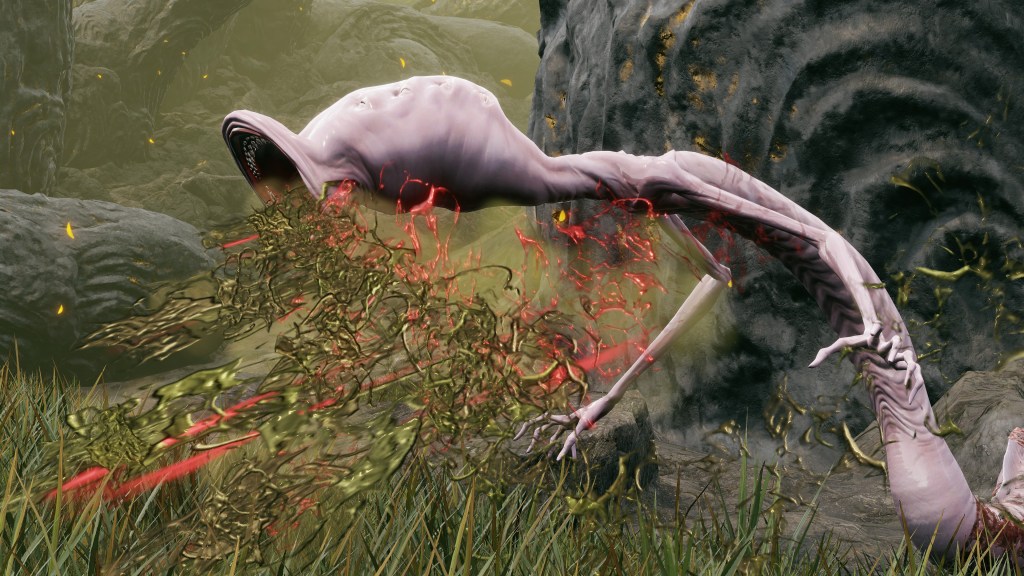
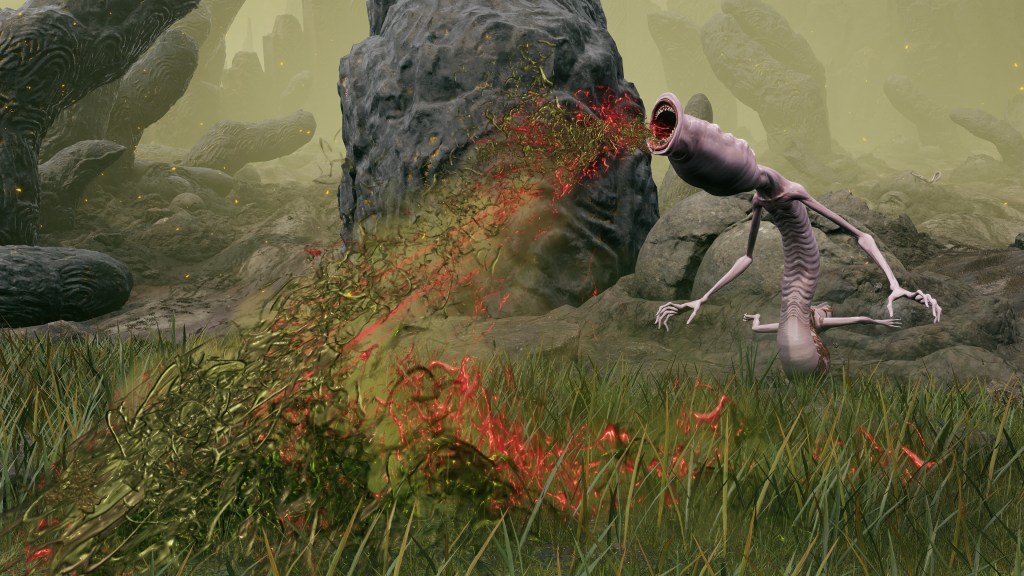
All of this answers the important questions about Marika growing up. The young woman’s experience at home, for all her playfulness, conditioned her to feel indifferent to the loss of life. Being raised by women who so callously used and discarded fathers similarly justifies her transactional relationships with men later in life, both of her husbands seeming to marry her more for personal gain by both parties than romance. She never had a father, and she may not have been close to her mother. There was only the village, led by the Grandmother, and the Empyrean’s upbringing instilled in her the importance of her golden fate and the need for atrocities to achieve personal goals. Even the using the human bone for natural grease instead of artificial weapons augurs the future Erdtree god’s positive disposition toward plants as a medium. But above all, there was the Two Fingers, the one trusted to guide her along the path laid by the Greater Will. As the Empyrean reached maturation, the time came for her to fulfill her destiny with a golden seed. But before that, a god needed gold.
A Horn in the Back
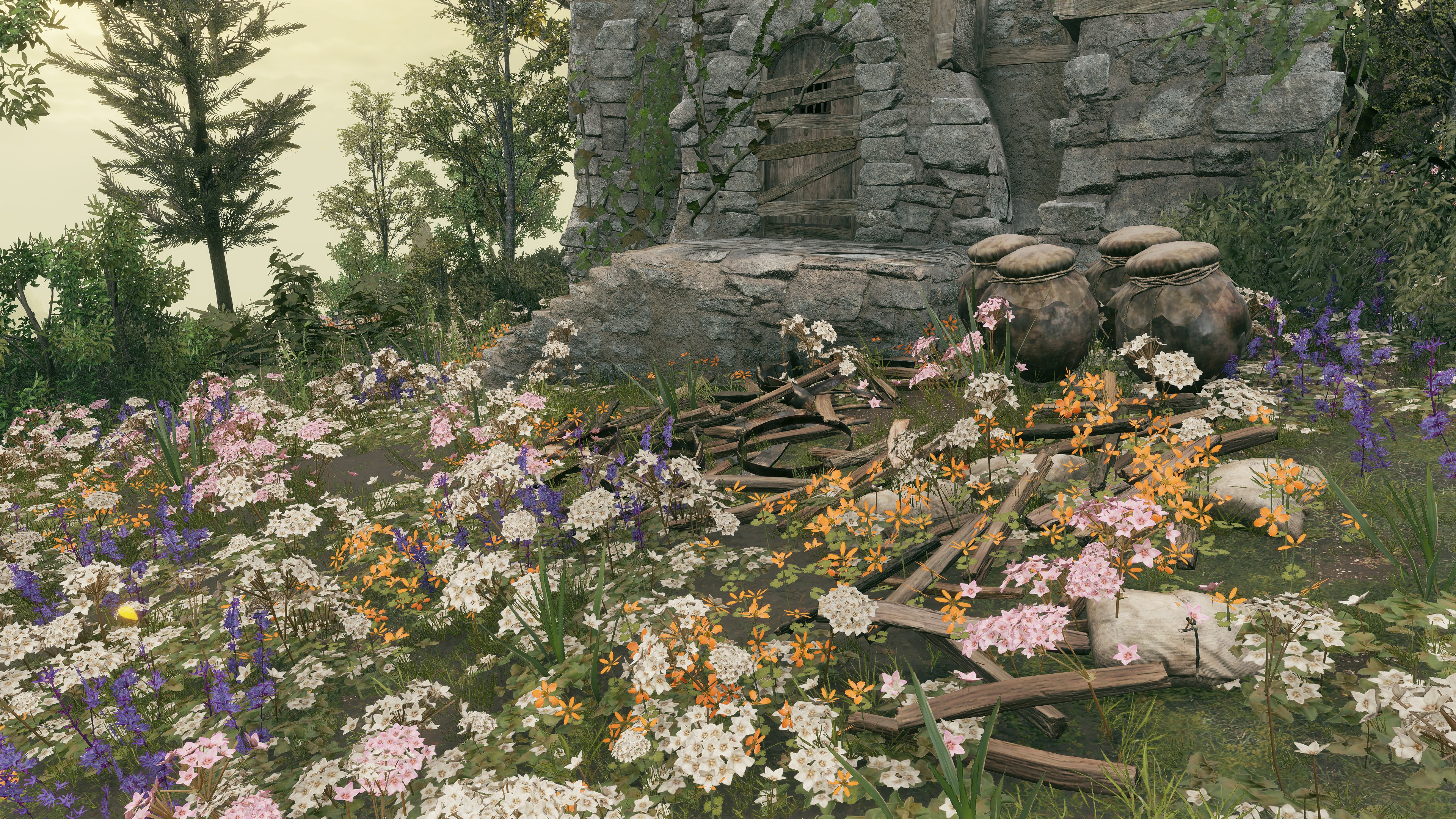
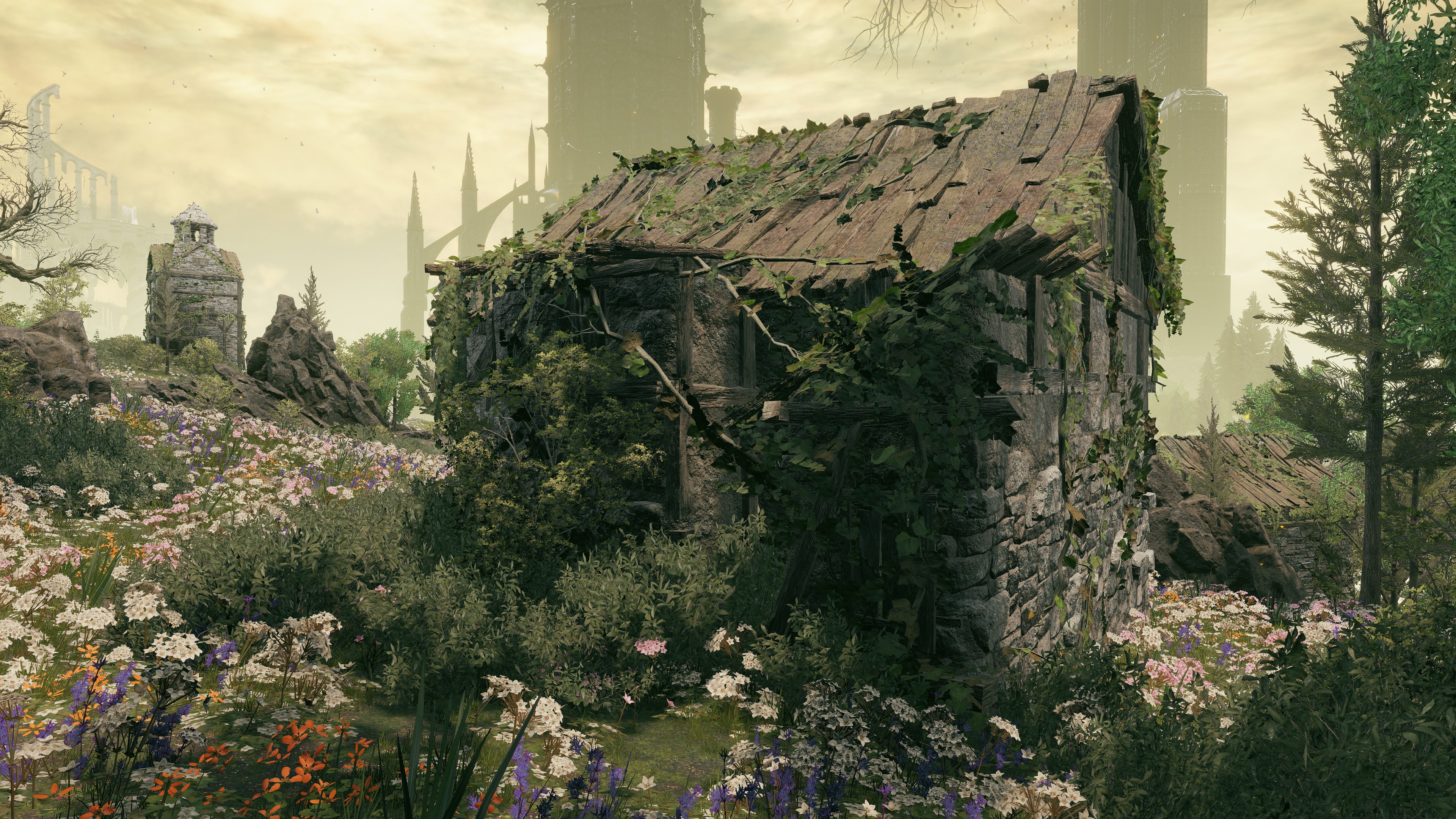
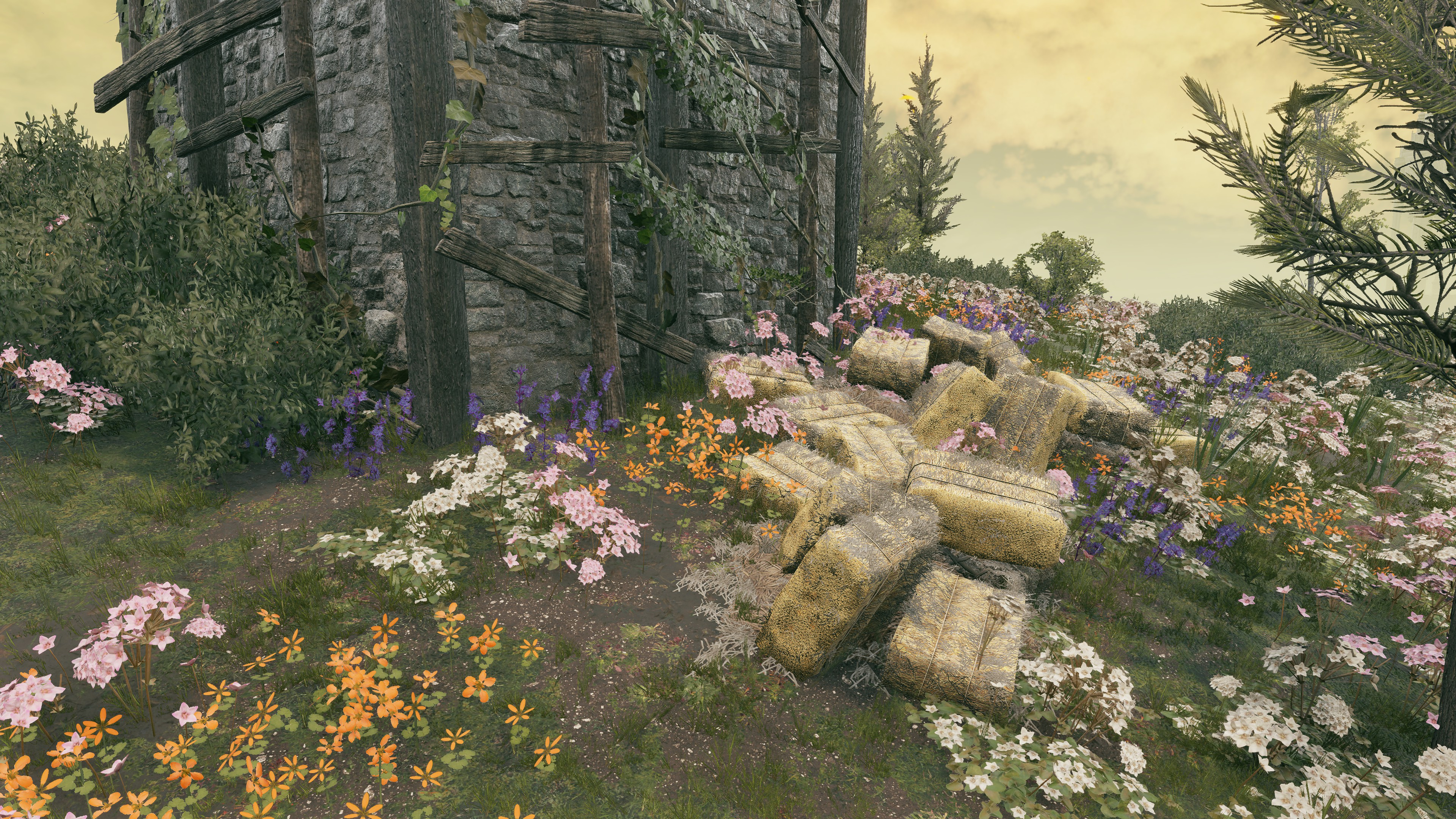
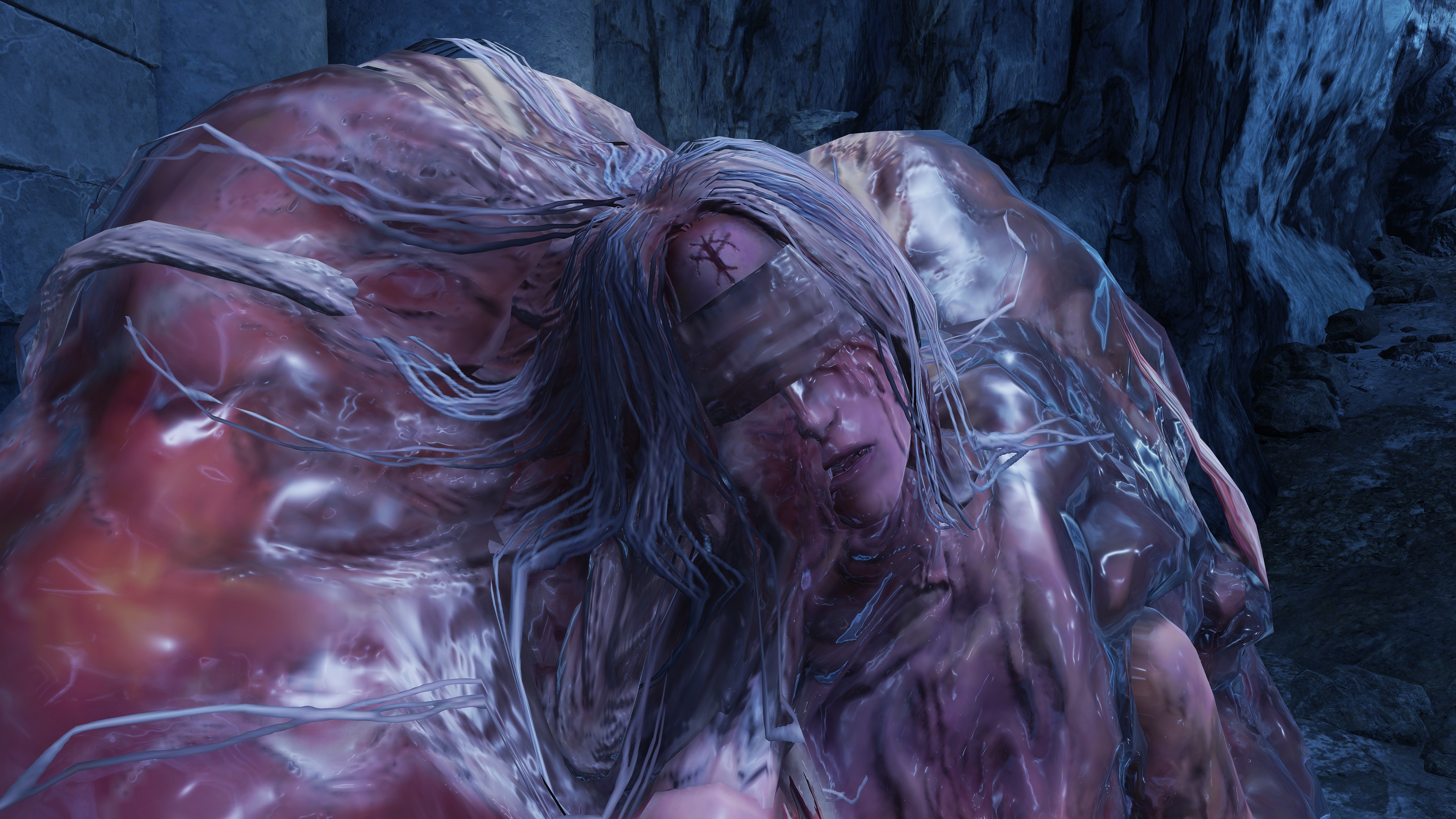
As of the current day, the Shaman Village is deserted. Although the overgrown hovels themselves look undamaged, knocked-over haystacks and piles of wooden rubble betray how the properties were ransacked. Doors have likewise been boarded shut to keep anyone in the future out. It appears that the villagers were rushed out of their homes unwillingly, the only one left behind being the Grandmother “dead” in her shrine. A local message confirms their abduction, and where they went is obvious. The Hornsent spirit in Bonny Village claims that shamans are “born” to become jar saints, and we do see a woman core to every saint, eyes obscured like the Grandmother. On that note, we find an identical dendrified woman missing a head on Bonny’s outskirts, reaffirming their presence. Using shaman bodies as the base for jar saints would also explain why the sordid task fell to a village which sits relatively close to the shaman homeland. In fact, everything was set up to filter the women through as soon as they were brought down from their plateau.
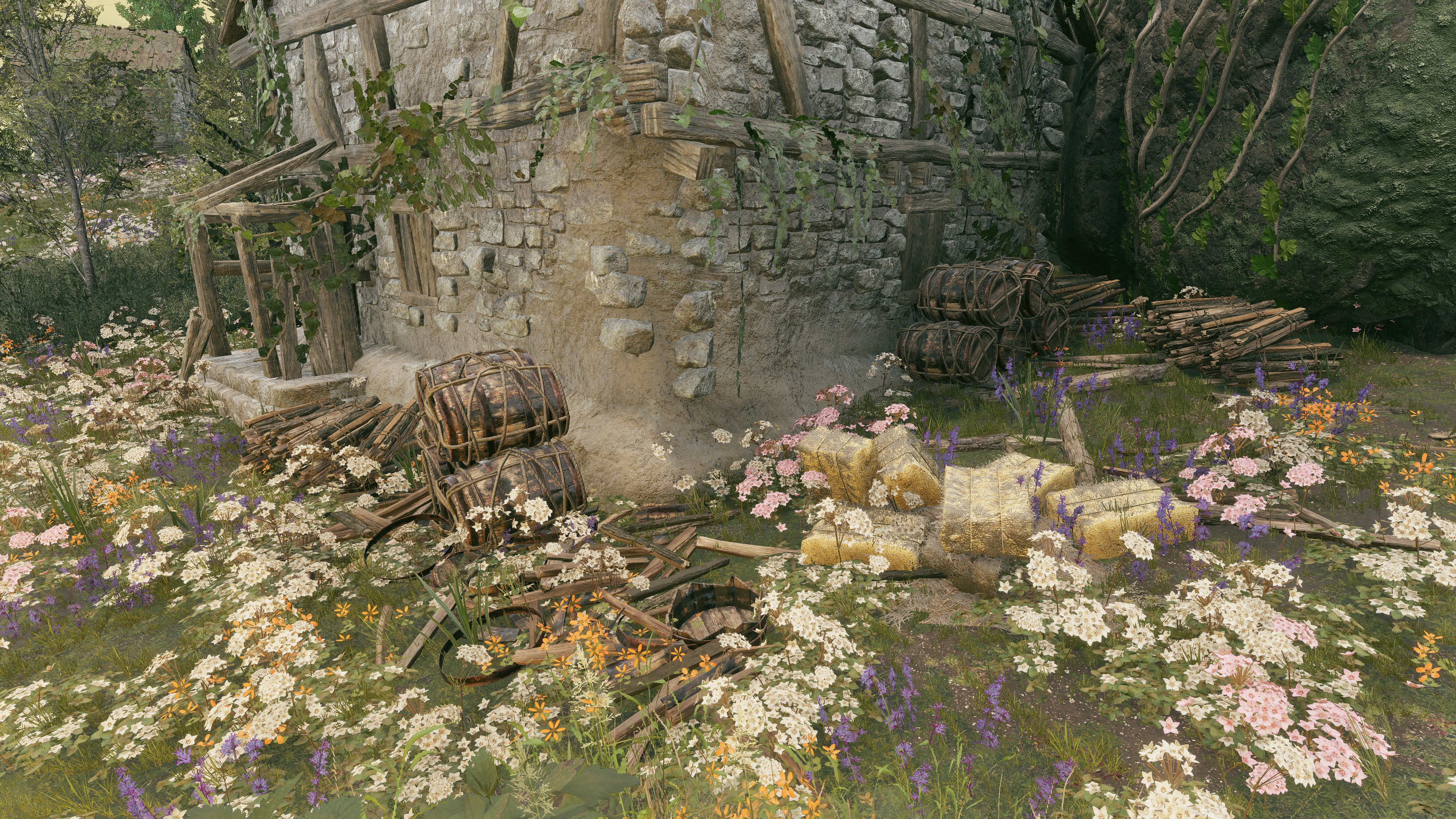
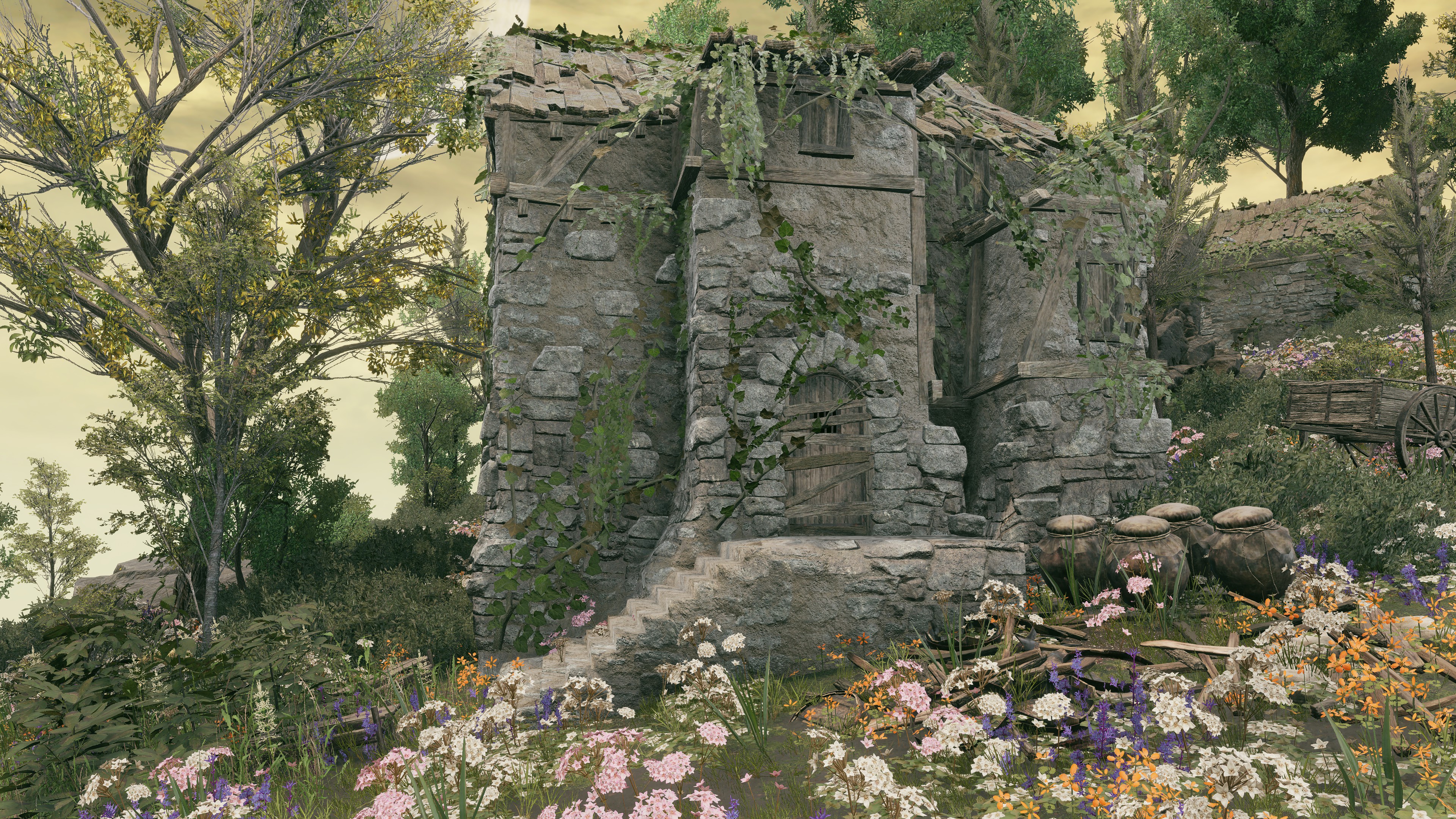
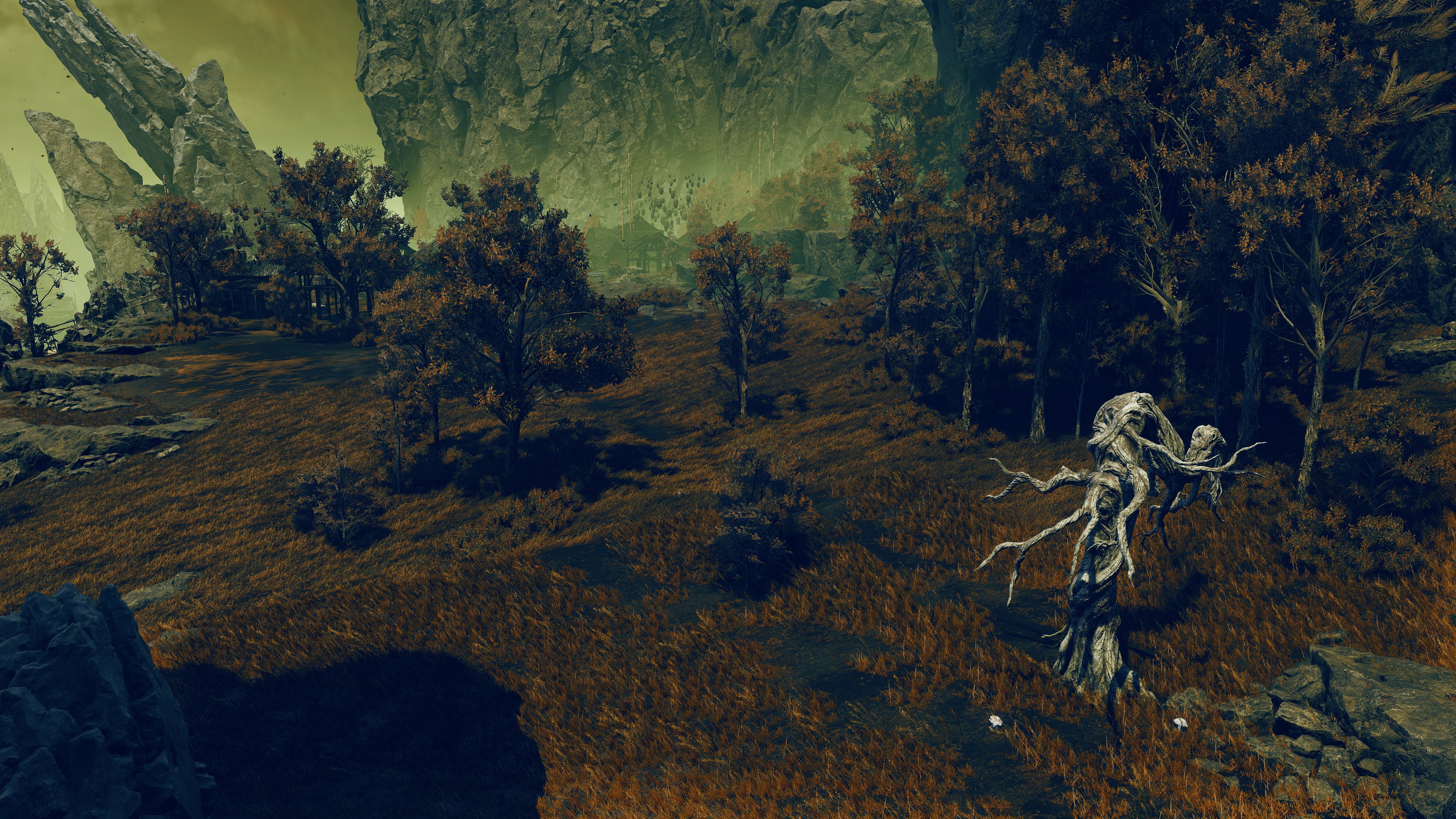
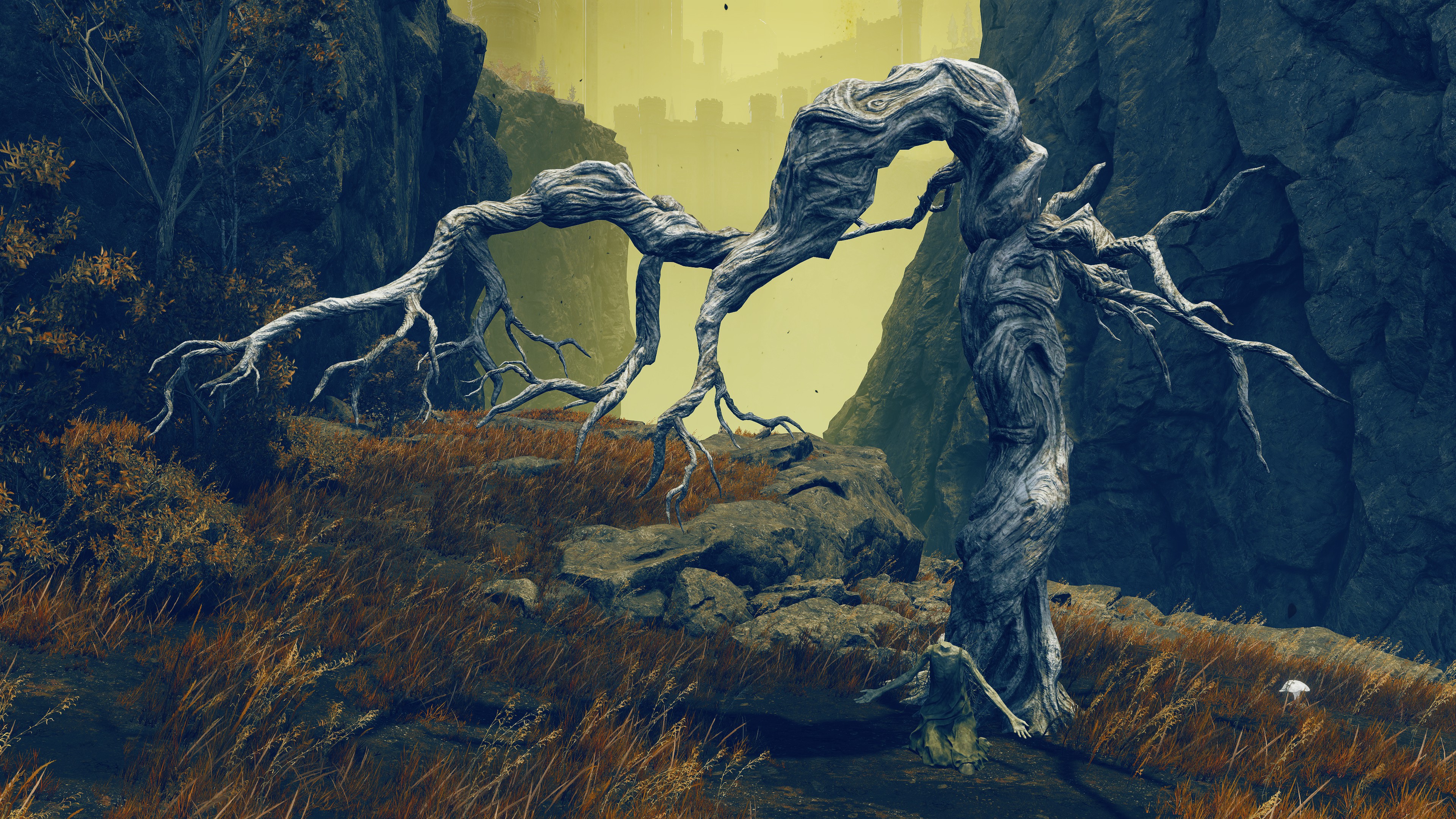
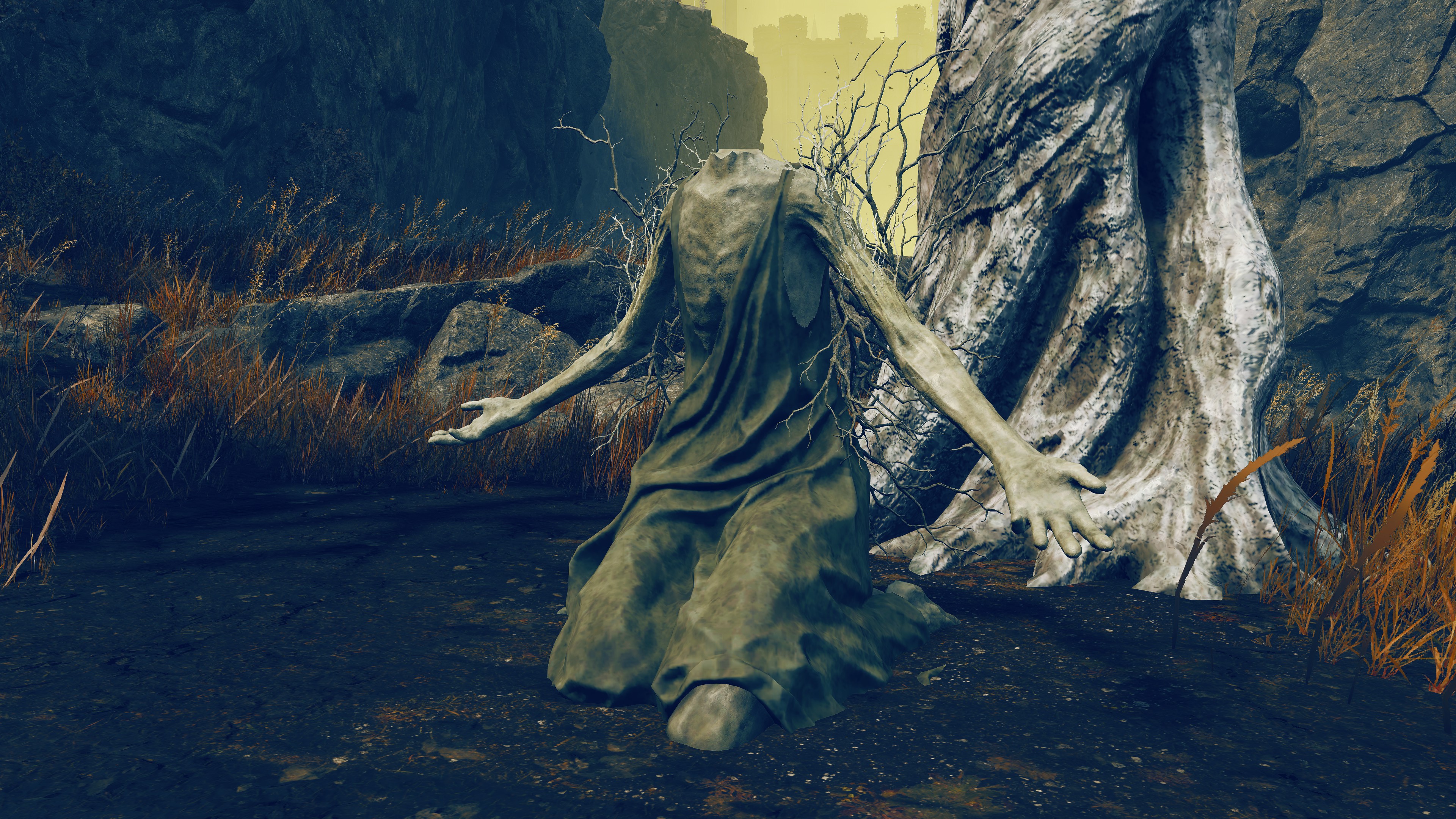
Mercy. To the abducted shamans.
Now, get into the pot quietly. And become good people. Because your kind are shamans. Because you were born for that sake.
Operating from the first shack before entering the village proper, Hornsent whipped the shamans until they crawled into the great jars. The whip collected from a dead taskmaster is sloppily arrayed with dirty teeth, presumably ripped from previous prisoners, so that they would dig into the skin. Because of the germs, the teeth poison the wounds, causing them to ooze and fester, but that isn’t the Hornsents’ concern — Bonny just needs the open gashes so that the flesh better mixes with the chopped-up bits of prisoners they subsequently stuff into the jars with them. Clearly, the villagers wasted no time preparing the shamans to become innards. Those from the hinterland should also not be confused with the so-called “shamans” who wear upturned great jars over their heads. Those offering supplications to the pots’ contents are specifically kitoushi (祈祷師) and invoke the image of primitive medicine men or witch doctors, not priestesses. They are literal “prayors” acting little different from men of faith reciting incantations. In their case, they pray for the captives to successfully blend and become jar saints.
Whip unevenly lined and embedded with unsightly teeth.
The dirty teeth are covered in all sorts of germs, and those teeth wounds accumulate deadly poison.
Eventually, the wounds ooze and fester, and it said the shamans blended in well with the flesh of others.
Great pot worn upside-down and snuggly covers the head. Headgear of prayors who offer supplication in jail.
Boosts might of thrown pots and great pots.
Their supplications are offered to the contents of the great pot. So that they will one day be reborn as good people. It is the death and rebirth cycle by human hands.
The genuine shamans, in a twist of fate, found themselves as the ones systematically captured for another’s ritual killings. For them, it is because of just how well their living flesh mixes with the meat of the newly dead. The shaman’s vitality is demonstrated by the maggots which arise from within the jar saints. Even after freezing in the natural refrigeration of the gaols, the newborn bugs continue to wriggle with life, making them invaluable to the underfed prisoners. And yet, their existence serves to prove the life energy those in contact with shamans may share in. Given the level of control the Numen showcase over the fused chunks of flesh, the dead prisoners become an extension of the core body once the scraps properly blend with their host. This matches the grafting practiced by a few of Marika’s descendants, attaching cleanly severed heads or limbs to the body with similar results. While both might be considered wretched pastimes, grafting appears to be simply a more refined iteration of this Hornsent art. The shaman bloodline thus possesses a unique quality fundamental to jar saints.




Maggots that wriggle even though frozen. One of the materials used in item crafting.
Mainly attained in jails.
The maggots gush forth from the contents of the great pot and serve as the prisoners’ valuable foodstuffs.
Perhaps it is because of closely mingling with gold for so long, hence the jar innards possessing major resistance to holiness and nothing else. We do see this play out with the final product, the Gate of Divinity. In the story trailer for the Shadow of the Erdtree DLC, the shaman Marika acts as the conduit for turning the mountain of dead bodies into a functioning gate, the golden threads in her raised fists stretching toward the flesh pillars on either side as a wind blows in from between them. If these Numen women incorporated the power of gold they collected into their beings over time, then their blood just might be capable of channeling that power to revive the spirit in flesh once it has been grafted on. The mass of life, controlled by the golden will of the shaman, then collectively form a stronger connection to the divine. The jar innards were just the trial run, but they set the stage for someone in the shaman’s position to achieve apotheosis, as we see with the most famous among them.
Regardless, Marika’s village were primed for these flesh melding experiments; the only question is how the Hornsent came to learn about these qualities. They did have some presence in the hinterland, as we can spy one of their trees between the village and Dheo. However, the fact that there is only the one tree implicates the irregularity to their visits, horned scholars likely only making the trek to investigate those Finger Ruins late in their history. This wasn’t due to lack of resources, since a generic stone bridge was built to cross the ravine along way to Dheo. The civil engineering required for construction makes the Shaman Village unlikely to be responsible; if anything, it would create a rope bridge, like Bonny Village. Some developed civilization was sponsoring travel there, and Belurat is the closest candidate. But if the Hornsent were so dedicated, then all the more curious that their expeditions apparently weren’t longstanding. It precludes the Hornsent interacting with the shamans for too long before the forced relocation.


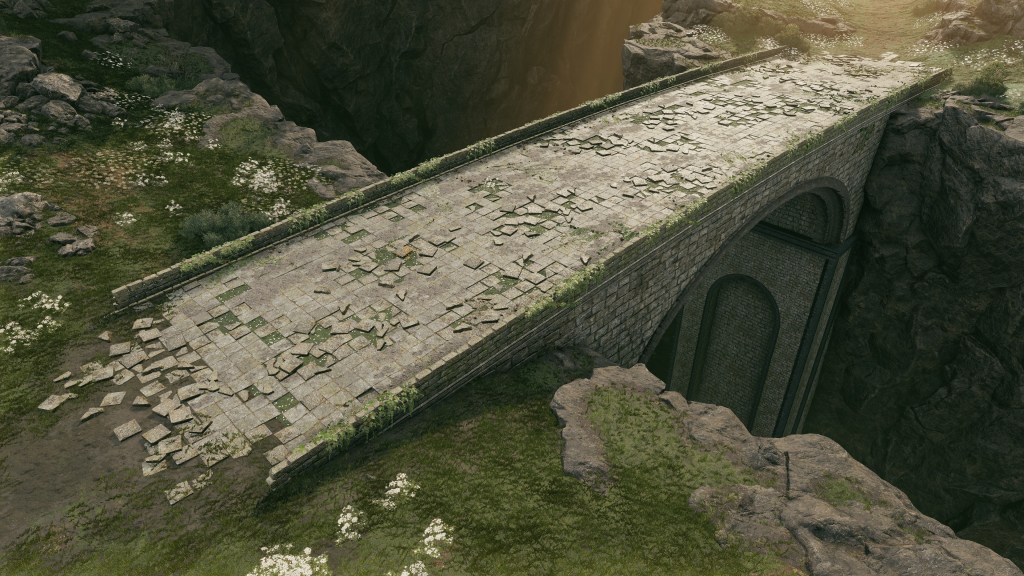


Granted, the stone bridge does indicate the commitment to study the area. With the discoveries still being made in Rauh, it is possible that horned scholars considered Dheo just as important to uncovering the history of the land and their ancestors. But even assuming that a few did return home without becoming lampreys, that doesn’t leave much opportunity to discover something so personal about the locals — above everything else, it was a reclusive village outside their settled territory. This makes it hard to imagine any passing visitors building deep relations with the shamans without becoming subject to their festival, never to be heard from again. At most, they should just know about their customs, not their physiology. Perhaps research into Rauh unveiled something key, but a long-dead civilization can only tell so much. Either the Hornsent learned a lot from what shamans became lampreys, or they obtained another source for the information.
This brings another question to the forefront: where was Marika in all this? After growing up in the village, we next see the young woman stand before the Gate of Divinity in the story trailer. This requires that she have access to Enir-Ilim, but how could she be walking free atop the most important temple in Hornsent civilization? Sneaking into Belurat alone would be a trying task. Between the guards and the priesthood, reaching the top of the tower without invitation is simply unfeasible. Arriving as one of the shaman prisoners is just as implausible, with Maliketh as her shadow. The vassal beast existed for his Empyrean, so her capture would be him neglecting his duty. And with the beast covering her escape, she should have avoided her village’s fate. As witnessed in the trailer, Marika sustained no obvious injury, so she had not experienced torture let alone life inside of a pot. Taking it all into consideration, Marika almost assuredly didn’t face capture like the others. And if that is the case, then her presence amongst Hornsent clergy can only be as a collaborator.
True enough, Leda’s narration in the aforementioned story trailer begins with recounting how gold began with seduction and betrayal. Considering that this statement is juxtaposed with the scene of Marika stepping up to activate the Gate of Divinity, the two are obviously related in some way. Evidently, the Empyrean was tempted to betray someone or something in order to use the gate for achieving godhood. The official websites confirms that the Hornsent homeland is where Marika first set foot as a goddess. Ansbach further insinuates her to be the single god born from the gate atop that tower, prior to Miquella. In other words, she must have been seduced by the promise of divinity pursued by the horned men’s religion. Who then did she betray to access the gate?
The Gate of God lies at that Shadow Tower. And a single god was once born there. It has been kept strictly concealed… but it likely was the god we know all too well.
Some fans have posited that Marika betrayed the Hornsent. Certainly, the Hornsent grandam and her son both consider Messmer’s crusade against them under Marika’s orders to be a betrayal. However, that crusade occurs sometime after Marika became the Erdtree’s goddess per the trailer, so this cannot be the treachery from which her divinity is founded upon. Rather, her betraying them implies that they were allies beforehand. In that case, Marika’s betrayal must have put her in the good graces of Belurat, the priesthood permitting her to climb their precious tower and utilize the Gate of Divinity as a trusted friend in exchange. That leaves only one party for her to betray, and that is her own village. In short, Marika must have been the one to inform the Hornsent about her clan — whoever approached first, she ultimately sold them out with the understanding that the experiments would produce a method to make her a god. The Empyrean was never abducted like the others because she was never there to begin with. While they were being whisked away, their accuser sat safe under Belurat’s patronage.
Do kindly grant retribution upon the damned children of Marika who betrayed and set us aflame; upon Messmer, upon his minions.
But make no mistake. I have not forgiven your kind… The Golden Tree is the enemy. Marika betrayed and set us aflame.
A deal struck between Marika and the Hornsent would explain much about her ascension to the divine throne. More than her exclusion from the work at Bonny Village, it justifies the god’s continued freedom while within Hornsent territory. The clan of the tower imagined themselves as gods-in-potential like her, so they had a mutual interest in realizing a complete deification. By advancing one blessed by a golden fate, they might learn how to elevate themselves; preserving that goddess as a subject for possible future study was equally essential. And since they just needed the one, the rest of her clan were disposable as trial runs. Combining their knowledge of gold and spirit invocation with new knowledge about the shamans, it is easy to see how people of the all-blending Crucible came to conceive of jar saints. From there, it was just a matter of iterating upon the process until they finally reached the gateway at the pinnacle of their pursuits. All of that progress, thanks to a benefactor willing to prove their hypothesis.
For sure, using the jar innards as a model for the Gate of Divinity is only possible with a shaman like Marika to act as the core. Conversely, this Gate apparently required additional power of gold to first establish the connection, gold which the Hornsent could facilitate. Fundamentally, a god of the Elden Ring needed a complete Ring to be the vessel for, a concept not lost on Belurat. If Enir-Elim’s priesthood supplied the Empyrean with the missing pieces, then she could become a proper vessel. Fulfilling her people’s underlying hope for the future was thus best accomplished collaborating with horn civilization, and that could only come at the shamans’ expense. Both sides had everything to gain from agreeing to aid one another, and the results speak for themselves. The birth of a god upon Enir-Ilim was all because the horned priests and the Empyrean were working together from the onset.
Without question, the betrayal must have been so twisted to achieve her ends. In bemoaning how the Erdtree has since shaped the world, Ymir claims that Marika was “broken” and “mad” from the start, even if it was at the lead of the Two Fingers. What could be more sick about the Fingers’ guidance for her divine fate than to encourage her to use her own kin as a stepping stone? Most would deem such a choice beyond consideration. But for someone with a shaman’s background and a capricious temper, weighing the village against the gold might have looked alluring. And just as the Two Fingers had apparently laid out, a god of the Erdtree was born thanks to the Hornsent’s atrocities against her people. If Marika was heeding their instruction, then her “madness” in exchange for power seems all the more plausible. Who was she to suspect the wisdom of the great Fingers? The only one who might object would be Maliketh, and he was her loyal vassal. Any decision the Empyrean had made for her fate, the stepbrother would follow. And thus, there was nothing to dissuade her except her own sentimentality.
… Have you not seen it with your own eyes as well? The deceptions and contradictions of the Golden Tree’s world… Why is there so little salvation for the foolishness and misery of man?… Sadly, the answer is clear. They were broken from the start. They had gone mad. Marika. And the Fingers which guided her.
On that front, the weight of such a decision cannot be understated. The description to the Golden Braid that Marika offered the Grandmother reveals how she made a prayer, wish, and confession during her last home visit. What would she have to confess to the village elder watching over an abandoned village except her complicity in that turn of events? In a final private moment with the person she would have most respected growing up, the god may well have prayed for her fellow shamans, wished for their peaceful rest, and admitted to her grievous wrongdoing. And after all that, the Minor Erdtree incantation shows that she left a small kindness to soothe their suffering, even knowing that its healing was a pointless gesture. All of that conveys the deity’s guilt over her actions. Her clan were one day stolen from their homes without knowing why, Marika not so much as looking them in the eye as they were condemned to torment. The burden of that choice must have plagued her, but there was no going back. She needed to see her ambitions through, if only to justify all the sacrifice to her mind.
She Shall Have Order
Once the Gate of Divinity was created, Marika stepped through the mess of carcasses to become a god. Her bloodied hands reach into a pale pouch in the story trailer, no doubt some kind of leather. Certain fans have drawn parallels to godskin, and it is possible that the bag is stitched from the shamans’ tanned hides. A jar saint’s skin does look indistinguishable from the rest of the red flesh covering her body, so some may well have been removed during the assimilation process — mayhaps they found the whipping too inefficient. Assuming that they were skinned alive, it is only natural to repurpose the leftover material, especially if it was to be a container for gold. When Marika pulls out the golden threads, they stretch like a spider’s silk before being torn out, as if the life force had attached themselves to the material; the moist crackling adds to the impression. If it was shaman skin, then no wonder that gold settle in. Marika was just a more ideal vessel among the Numen, so her kindred should still have some capacity to keep the Elden Ring secure inside their sacks of skin. This case was just more literal.

Now that the fragments of gold had reached their final destination, Marika used them to enter the gate. And after returning as a deity, the time came for the Elden Ring’s new vessel to decide its completed form. The Ring decides the Order, and Marika decided upon a Golden Order. Leda’s trailer narration affirms that both gold and shadow were born from these events. This refers not just to the Golden Tree, which coincides with a Shadow Tree, but also the system they establish. Promotional material for the DLC affirms that Marika’s Golden Order began with shadow. Said material mentions Marika, Messmer, and Miquella in that order, following the same structure as trailers and websites which list Marika’s apotheosis. In other words, the Numen becoming a god and creating the Golden Order are synonymous. Whatever constituted divinity, it involved creating one Order characterized by gold. In the same way, the Japanese website confirms that this land was not only where Marika became a god, but also where the Erdtree came to be born. The god, the Ring, the Order, and the tree all resulted from the same events.
… Lord Miquella had said: the beginning was seduction and betrayal. Gold was born like that, and shadow was also born.
Most likely using the ancestral hammer with which she would ultimately shatter it, Marika reforged the Elden Ring into its familiar shape. That meant not just reintegrating runes lost in the past, but even excising existing ones. Enia states that the Rune of Death was removed at the beginning of the Golden Order, a point reiterated in the Mending Rune of Death’s description. Being a shadow as Enia attests, it is only natural that subtracting that rune from the Ring made for a more “golden” Order. Still, Marika’s fixation on the shadows to the brilliant power in her hands relays much about her priorities. Having caused enough to her village for this power, the new god decided to take away Destined Death. As her dialogue elucidates, she wanted a world filled with life shining bright — the shadow of Death interfered with that objective. Despite the possible knock-on effects on their religion, the Hornsent didn’t object to this action, it would seem. If anything, they probably welcomed the greater application of gold for their spiral conduction.
Removing Destined Death wasn’t the only manipulation of the Elden Ring. Both Marika and her other half Radagon are associated with Elden Runes, whose form essentially serve as a personal crest. This includes magical contexts, the runes’ shape carved into the eye seals each creates to burden its bearers with a curse. Why adopt these symbols specifically? The name Elden Rune implies that it retains connection to the Ring, and we can see both in the title screen and promotional material; the two runes also manifest as part of the mended Ring during most endings, though obscured inside of Marika’s body. Admittedly, neither’s Elden Rune appears in iconography of the Ring, even above the entrance to the Erdtree — they are iconic to Marika and Radagon alone. And yet, both runes appear part of the shattered Ring during Radagon’s boss battle. Therefore, these Elden Runes were never broken off from the Elden Ring, like the Great Runes. By all indications, they have always remained a part of the whole.
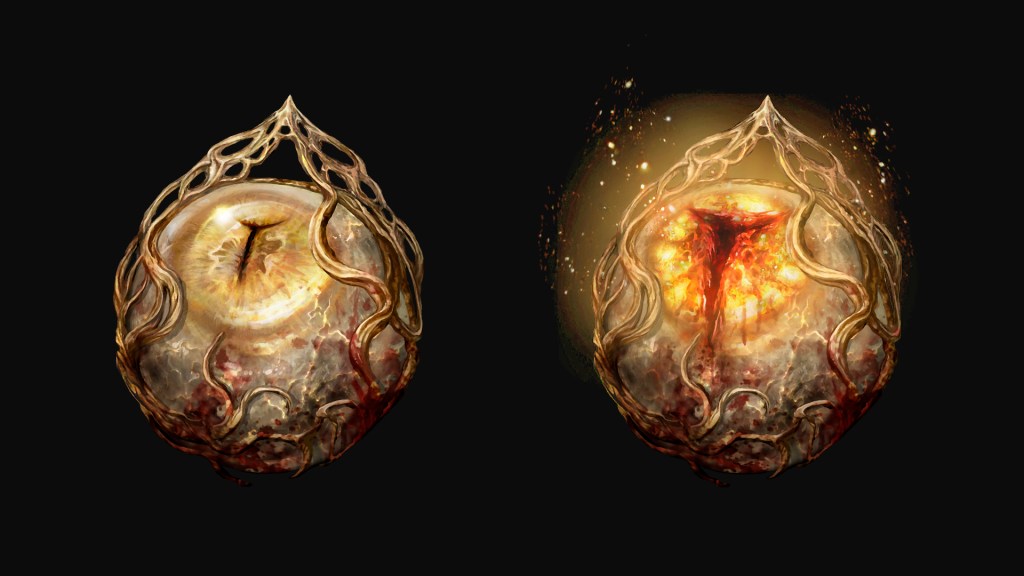


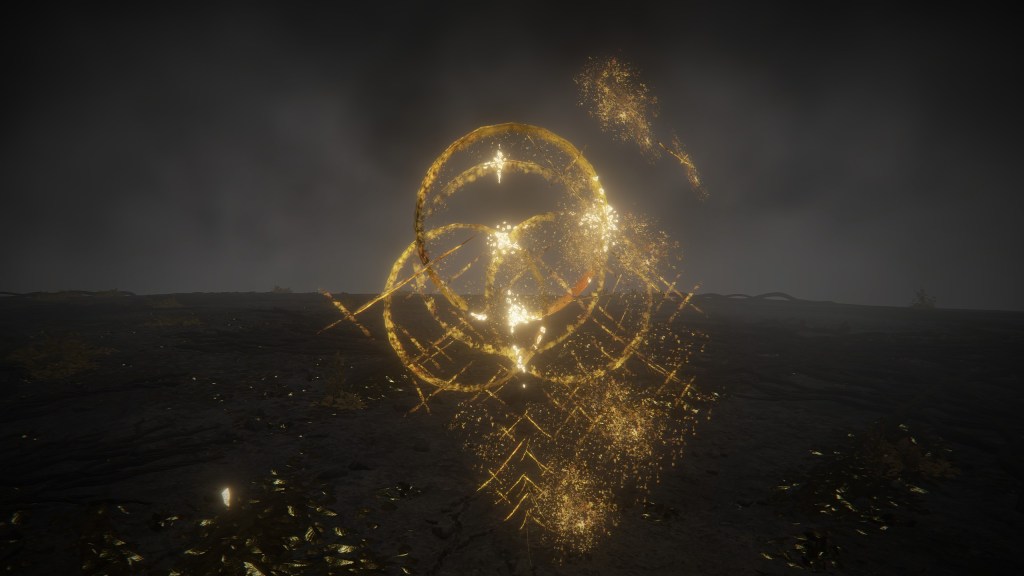
In that case, Marika seems to have selected an ancillary rune to serve as her symbol. The arc on a singular stalk resembling a t-shaped cross dates as far back as Farum Azula’s ownership of the Ring. And with the way that one Elden Rune dominates over the others, it is easy to see what drew the new deity to it. Moreover, no other rune seems dependent upon it for the integrity of the Ring. Rune arcs already prove that fringe pieces aren’t essential for a functional whole, so what if the rune in question wasn’t even ever physically disconnected? Given the metaphysical link between the Ring and its vessel, Marika might be able to draw upon the powers of individual runes. But what if diverting power from certain runes negatively affected her Order? A god couldn’t compromise that. By choosing a rune which wasn’t critical to holding the Elden Ring together, Marika may have wanted to freely utilize some measure of her divine powers while the Elden Ring wasn’t actually finding purchase within her.
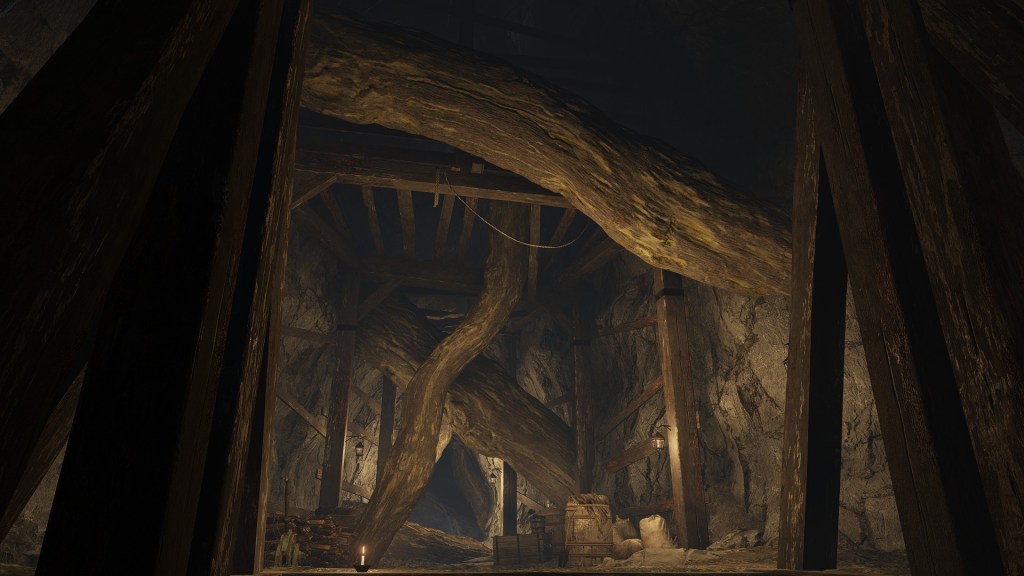
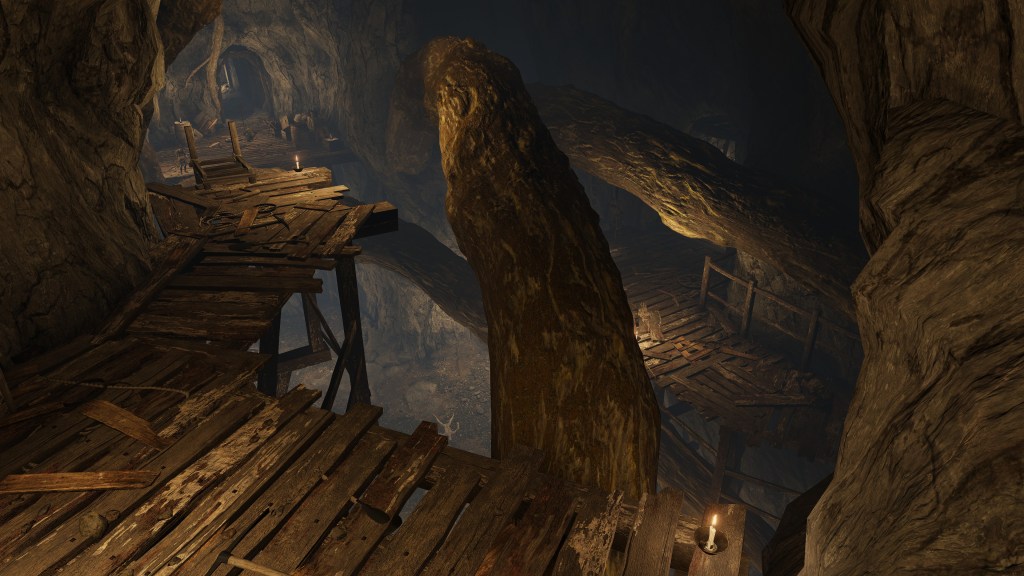
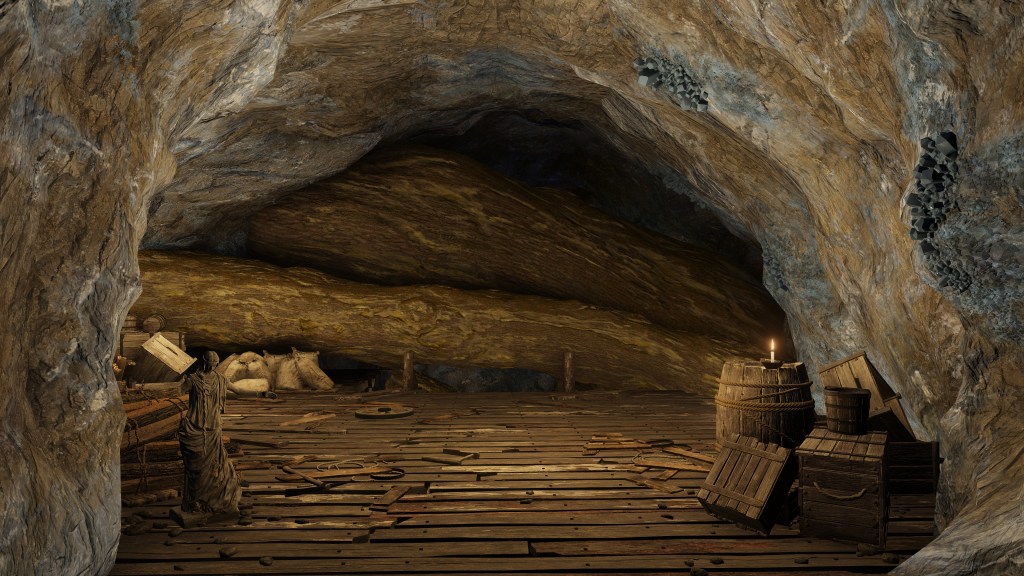
Indeed, the newly minted Elden Ring and its regulation for the world was soon wrapped up in the form of a seed. Marika took this golden seed from the Two Fingers and planted it not too far from her village, at the border between Scaduview and Altus Plateau. From there, it sprouted and eventually became the Erdtree in the form of the Crucible. The speed of this process isn’t immediately obvious. The Deeproot Depths show the extent of its growth underground, but not how long it took to reach the nameless Eternal City’s level — was it over the course of years, months, weeks, days? The greatroots can undergo radical growth spurts, no doubt. The Sealed Tunnel is still an active mine, yet roots obstruct or collapse passages, growing straight over infrastructure. The same might be said for deep roots weaving through the ruins of the Eternal City. But the pace appears to lie at the whims of the tree. The initial seed could have enjoyed explosive growth, only to slow to a crawl once the plant began towering over the Lands Between. The only guarantee is that it was a great tree by the time Marika had become queen.




Tree spear of the knight Siluria, one of the two names considered first of the Crucible Knights.
The origin of the Golden Tree is close to life. The spear modeled on its form as the Crucible harbors old holy attribute.
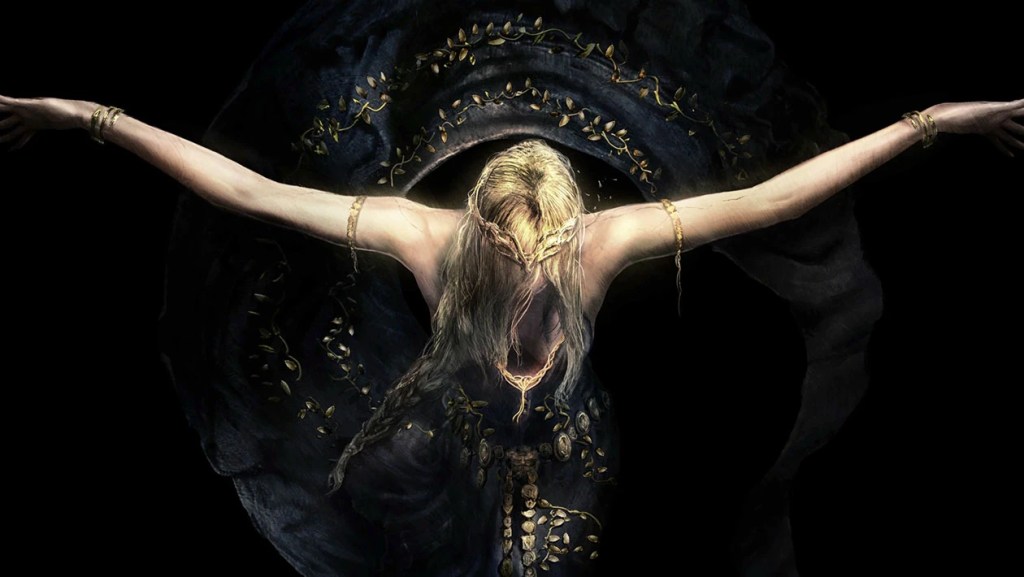
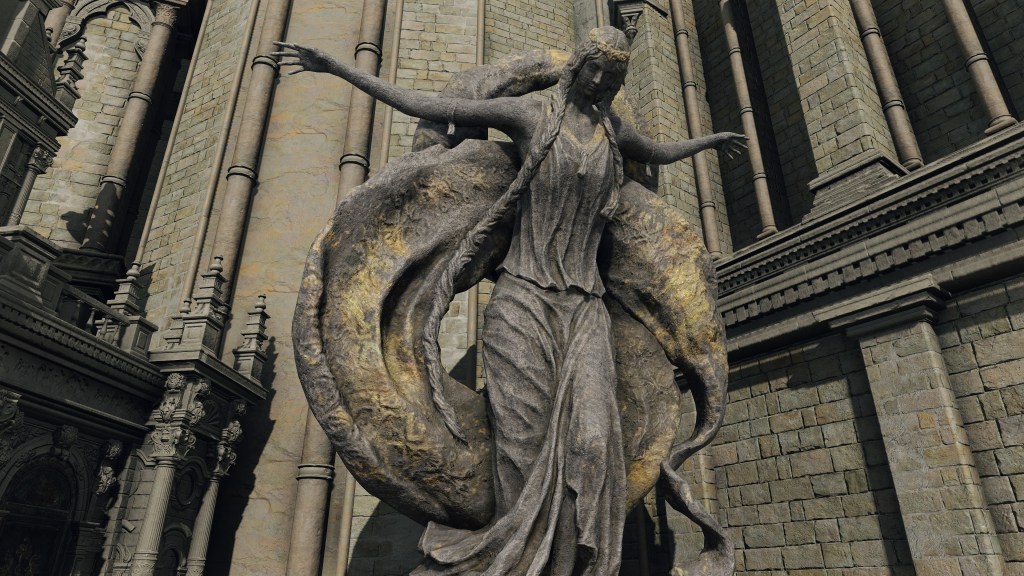
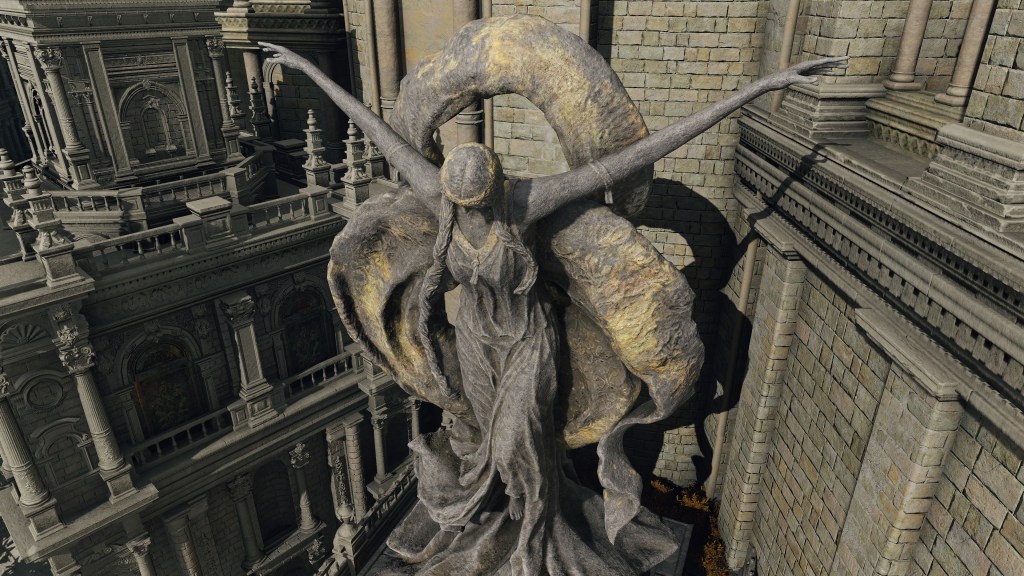
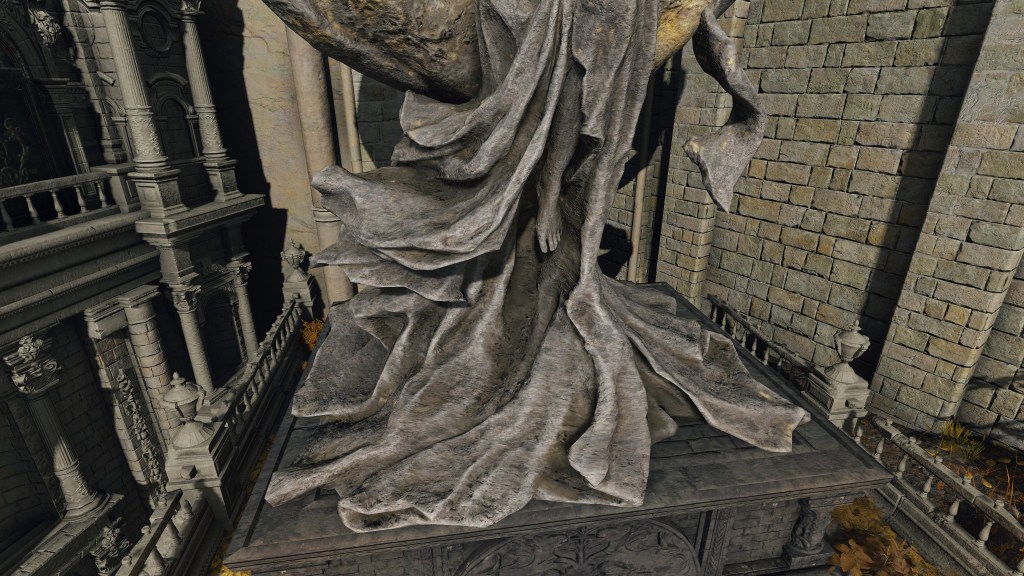
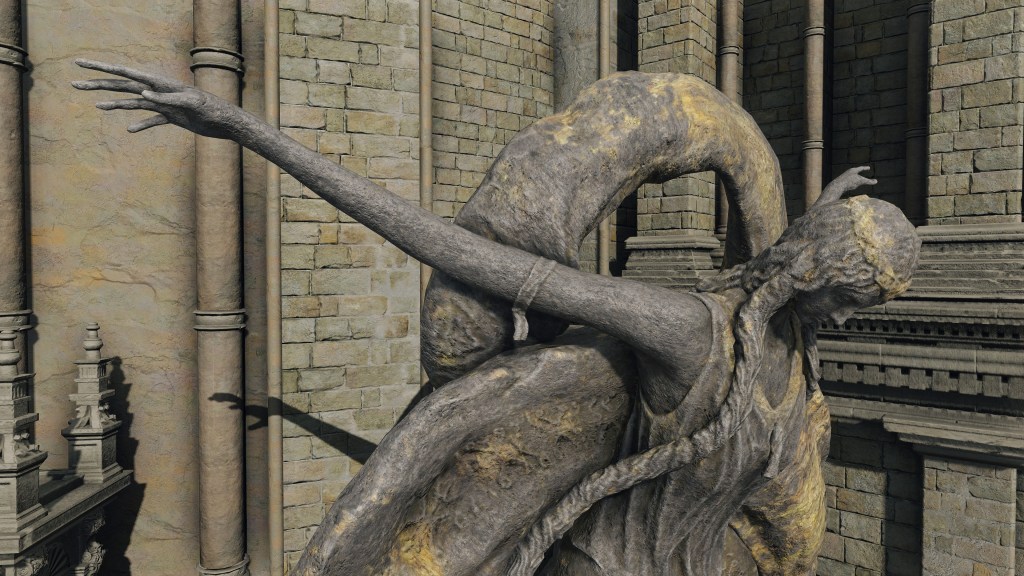
With that, the Numen created a new life befitting this Order she embarked upon. Her most iconic statue portrays Marika with arms outstretched as she floats above the ground wearing a heavenly raiment, the historic signature of authority and even flying ability for gods in East Asian religion. The actual pose reflects her Elden Rune, similar to how Radagon’s rune backdrops his pose for her statue’s counterpart. Combined, the sculptor captured the queen as a deity bringing life to all falling under her dominion. But the arms lifted above her head, hanging low, also evoke Christ’s crucifixion. Maybe subconsciously, Marika felt the power she was seduced by was now a burden, god sacrificing herself for her sins in perversion of the Christian symbol. To make up for the lives betrayed, she needed to push forward with this madness. There was no turning back, no matter how a guilty conscience weighed on her. Until she broke, she would weather all the stresses, certain that power was still the correct path. And for affirmation, the god ironically placed all her faith in gold and the extraordinary life she had planted.

The Golden Touch
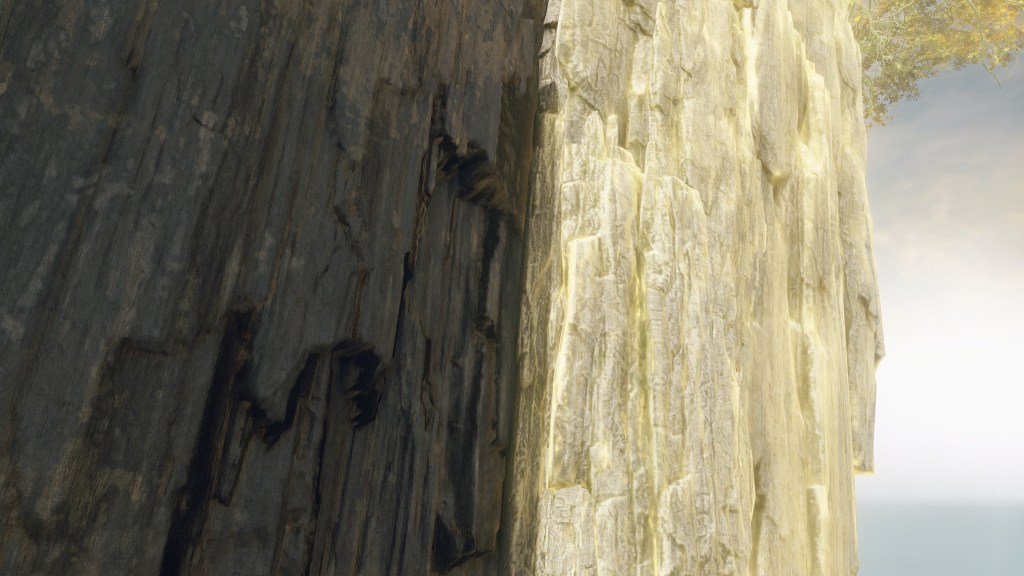
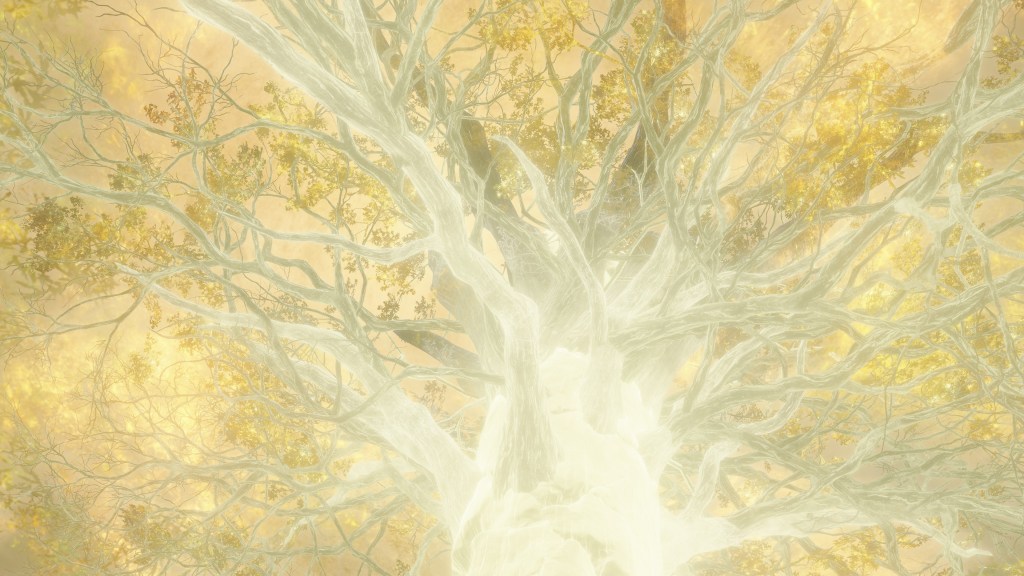
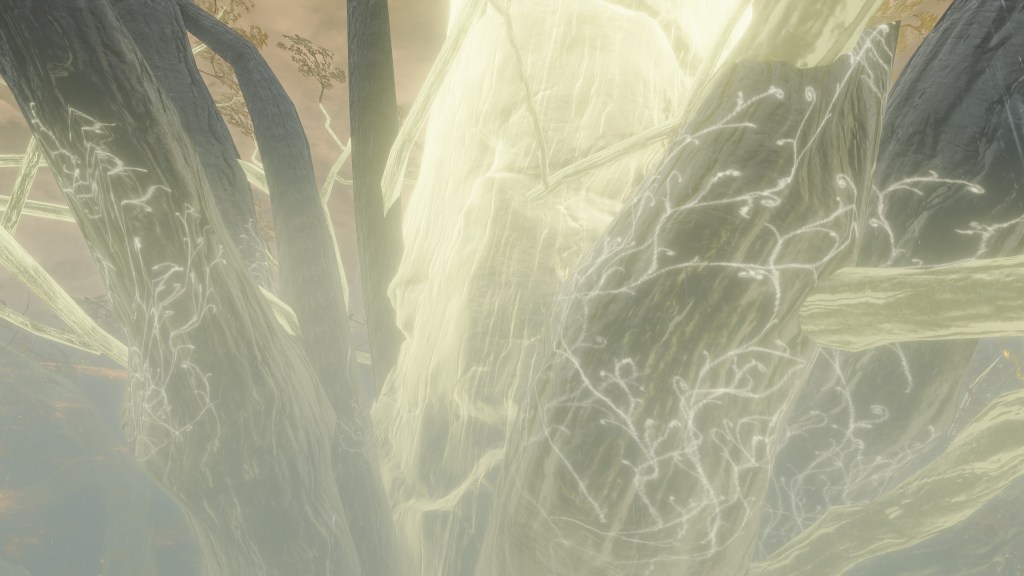
Thanks to the Elden Ring, the Erdtree projects the power of gold, its bark glowing with the color. This is true for only above ground, and not even in its entirety. Close inspection of the treetop reveals that the golden glow peters off into to a twisting vine pattern, leaving ends of the highest branches their natural color. This betrays the phenomenon as deliberate on the tree’s part, ensuring that the most visible portions do provide a consistent shine. Combined with its size, and golden rays fall upon even the farthest reaches of the Lands Between. This phantomic radiance was even brighter before the Elden Ring broke according to the Erdtree Seal’s description, and we might still witness a remnant of this. Many lamps in Leyndell use leaves shining white like glowstones, a stark contrast to the faintly glowing yellow leaves which occasionally fall from the sky on a strong breeze. Even assuming that the lamp foliage has been tampered with, they may well capture the full radiance on display during the Erdtree’s prime.
Despite losing strength, the glowing leaves still retain significant power. We can see how those adrift on the wind exert a noticeable influence upon the land. When the winds blow large amounts in a particular area, it stimulates our fate, increasing both the runes we absorb from fallen enemies and our chances of item discovery. And after touching ground, aged leaves eventually grow dark yellow flowers whose inherent gold can be used to craft various items tied to grace. Although the name “Erdleaf” is a product of the localization, these “fallen-leaf flowers” (落葉花) undeniably affirm the golden tree’s true nature. At the same time, the foliage hasn’t been as consistent at spreading the power of gold compared to their light. Narration for the introductory cutscene confirms the “falling leaves” tell the story of the Elden Ring’s shattering, implying that they originally didn’t fall as often or regularly as we now experience. Erdleaf flowers may have always existed, but they weren’t the primary mode of delivering gold to the Lands Between.




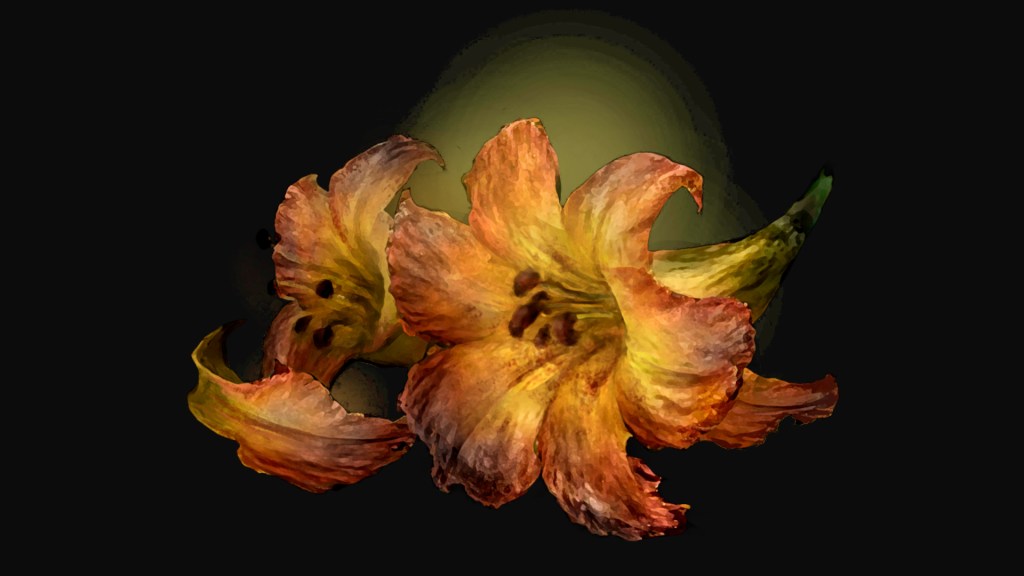
Dark yellow-colored flower that has wilted to a brown color. One of the materials used in item crafting. Can be obtained in various Lands Between.
Flower growing upon old fallen leaves of the Golden Tree.
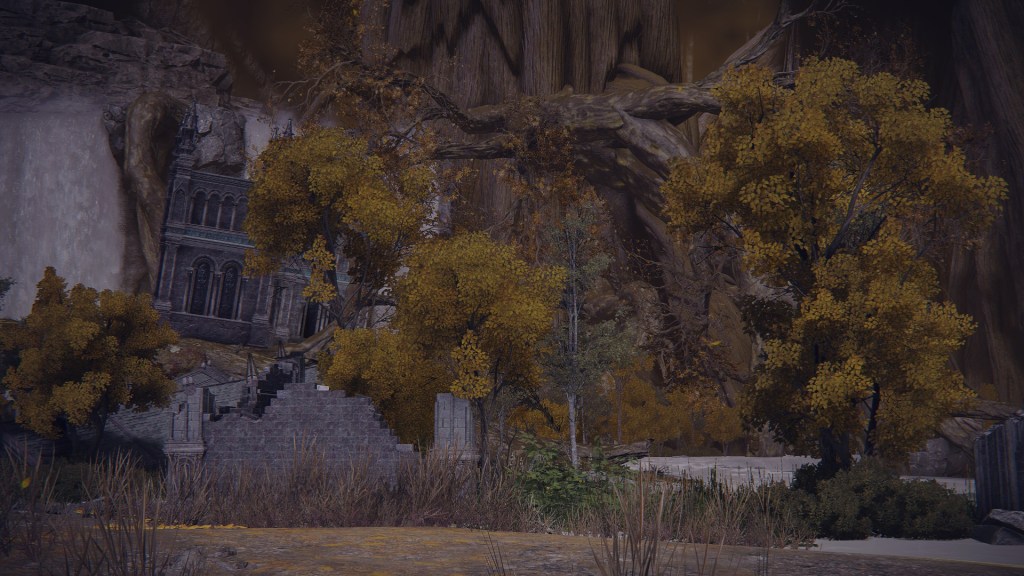
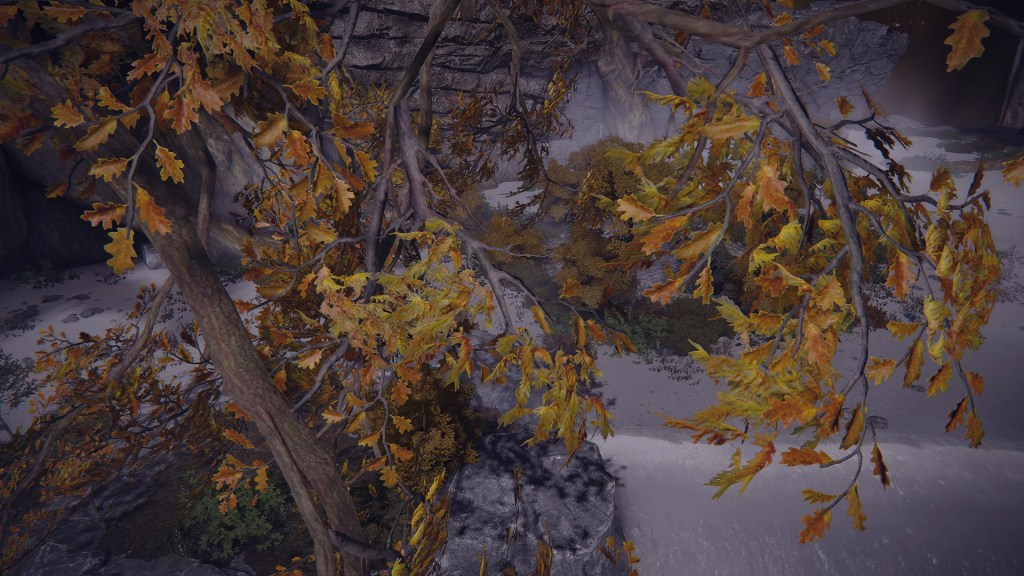
The Erdtree’s radiance in itself is far-reaching, and we see byproducts all across the continent. With few exceptions, the larger trees in the Lands Between grow yellow leaves, presumably a result of disproportionately absorbing the golden tree’s power constantly lighting the sky on even the darkest nights. The effect is, naturally, more pronounced on the plateau, where not only are the leaves more vibrant; even the bark has uniquely adapted to resemble a white birch. This is further supported by description for the Warming Stone. Before the Elden Ring was shattered, its rays provided a soothing healing effect replicated in that enchanted stone crafted with Erdleaf flowers. If the power of life-giving gold can be felt in purely the light emanating from the tree, then surely the plants adapted to feed on sunlight will experience even stronger effects. With the Erdtree crowding the sky, it was inevitable that certain species of trees would evolve to retain at least some of that gold, yellowing their leaves in the process.
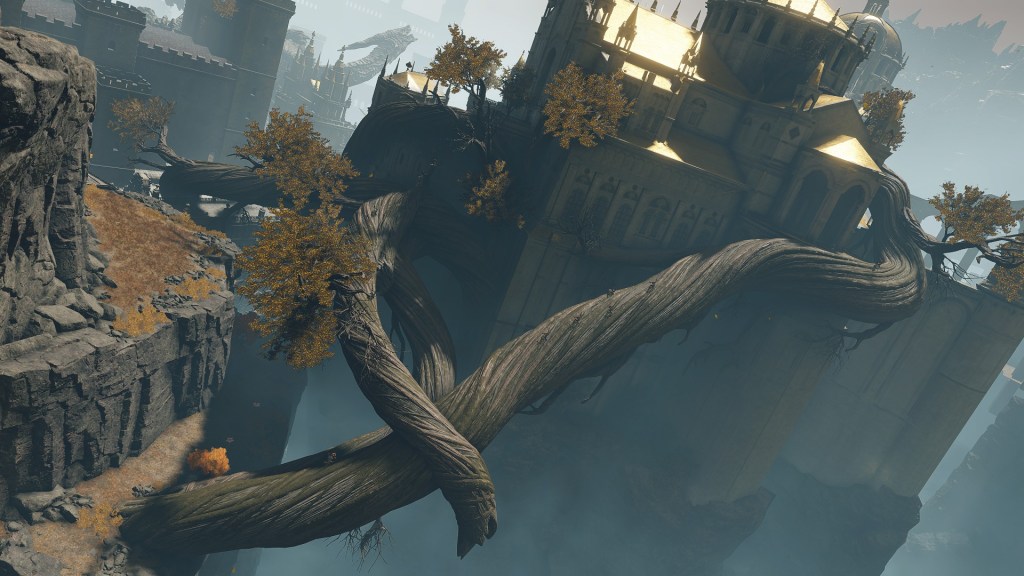
Initially, this gold radiating from the Erdtree itself was of a different hue. Much like with the birth of the ancient dragons, the power of life overflowed into the growing tree to tinge it red. This is most obvious looking at the roots. The Erdtree’s great roots can be found both above and below ground in Altus, in some cases ending in new branches of leaves. However, only the roots in the Deeproot Depths get themselves covered in a unique dark red grass. The liable reason is that these parts closest to the base of the tree where the Elden Ring took root also hold residual reserves of that power. After all, if any of that primal gold remained, it would be at the heart of the tree. And as seen in Farum Azula, that power can have an effect on the evolution of plants. It is a remnant of the excess life from the seed growing additional grass of that coloration atop the deepest roots. And that power once flowed, even if to a weaker extent, through the entire tree. This is what constituted the Crucible, and the excess life energy also had a marginal effect on the wider Lands Between.



Metal greatshield applied with a gold coating. Choice weapon of knights serving Godrick.
That coating emulates the origin of the Golden Tree and is tinged reddish. It is the color of nostalgia.
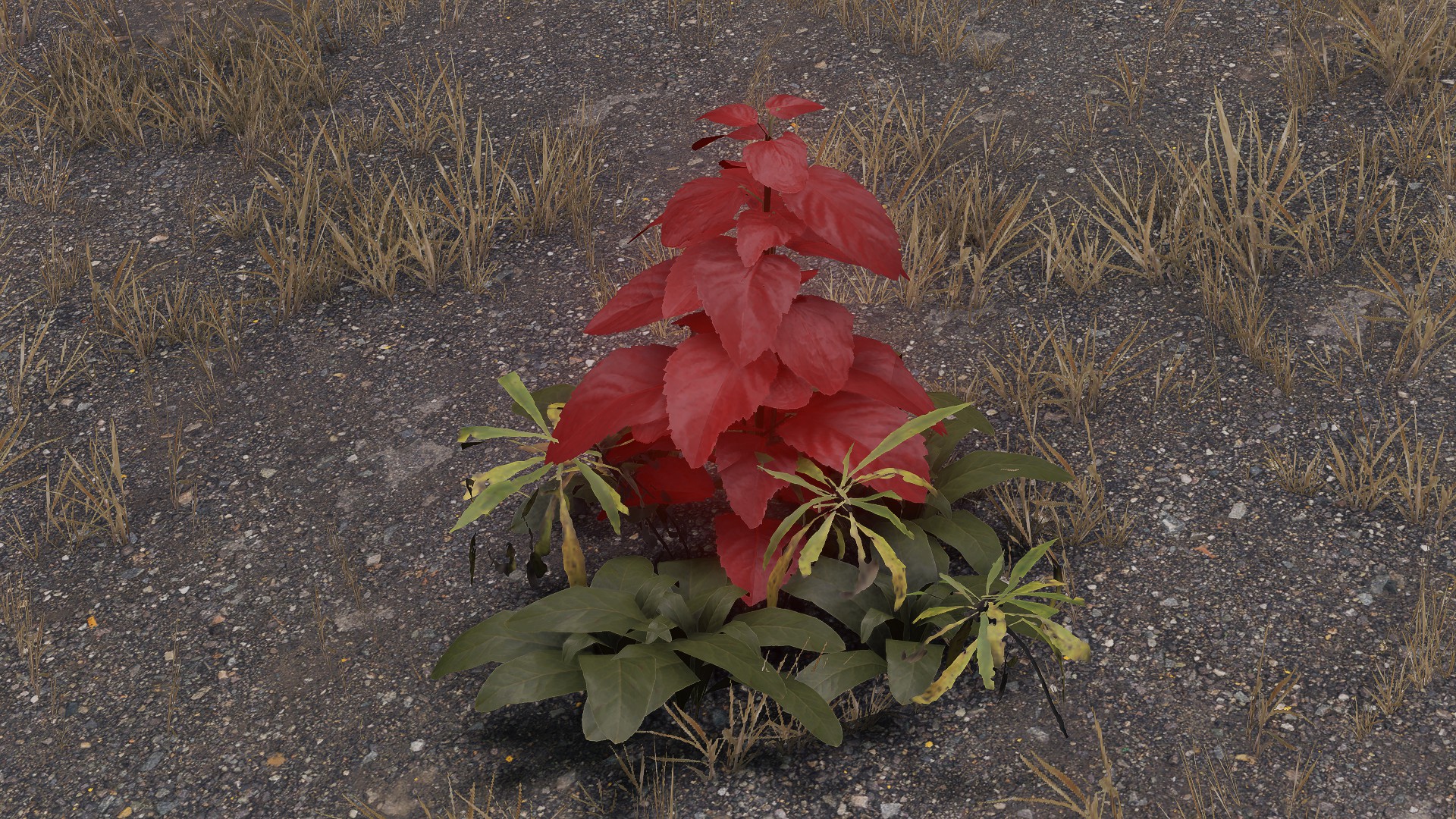
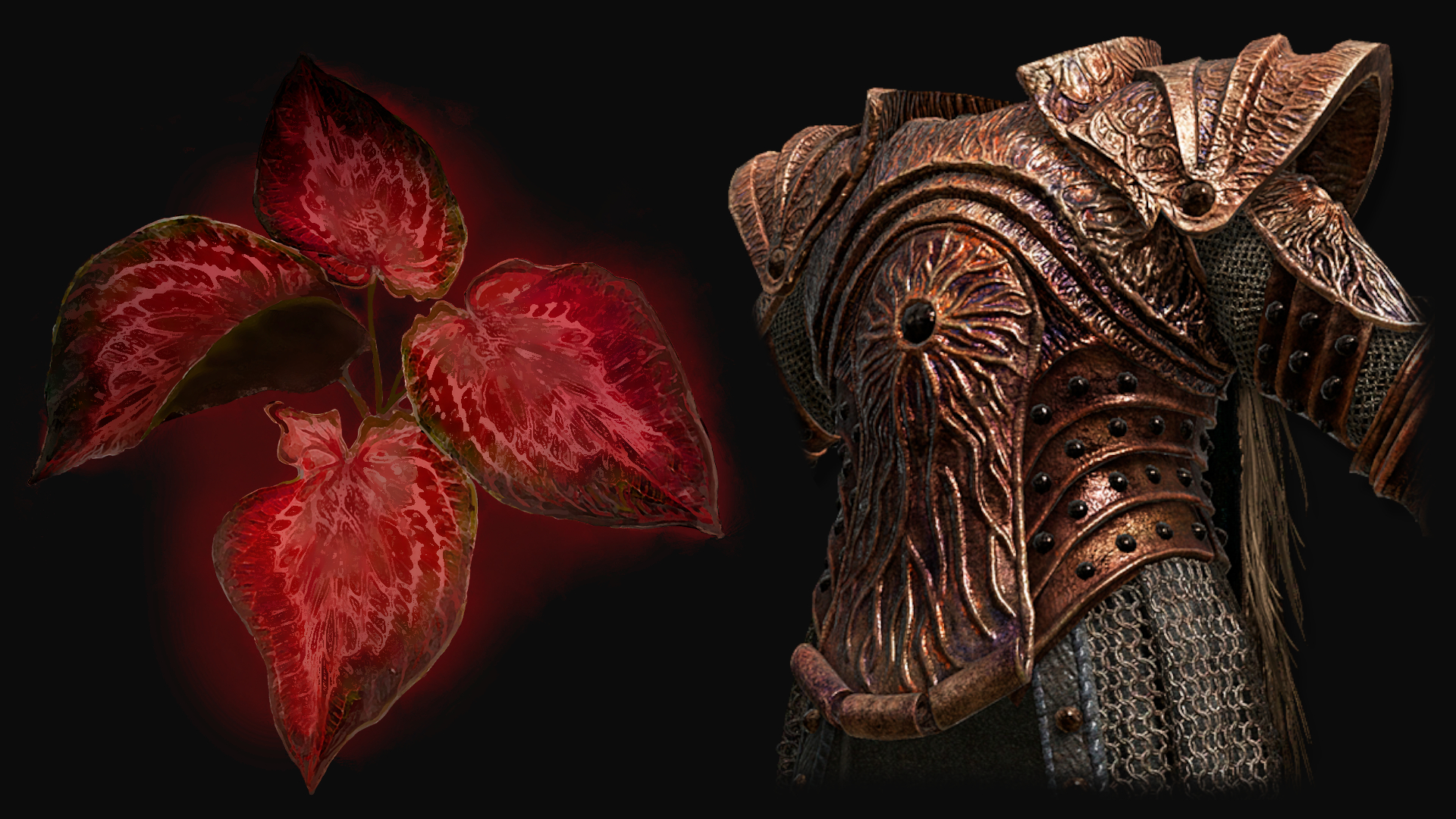
The Arteria Leaf is clearly named for the “artery” due to the way the dark red leaf’s thick veins subtly pulsate to resemble blood veins. This same imagery is present in Crucible Knight armor, earlier iterations of the Crucible Axe Armor’s description acknowledging how the “blood vessels ” (脈管) stretch chaotically from the heart area of the breastplate. Likewise, the leaf possesses an invigorating effect befitting the Crucible of life and is found in most areas like the Erdleaf Flowers. The only difference is that it is rare in the wild, despite being common to loot from random corpses. In essence, it was likely much more common once upon a time, but the underlying supply has dwindled, just as the initial red-gold phase of the Erdtree eventually ended. Therefore, the Crucible’s fallen leaves probably grew their own plant life around the Lands Between, filled with that same overwhelming life energy. When the golden tree lost that reddish color and its branches stopped producing such leaves, the Arteria became a rarity to continue harvesting; largely replaced by the fallen-leaf flowers over time.
Helmet of the sixteen old knights who served Godfrey, first Elde King.
The helmet ornamentation is the symbol of the knight Ordovis and his subordinates.
Harbors the power of life’s Crucible, the original Golden Tree, so vessels tightly bulge.
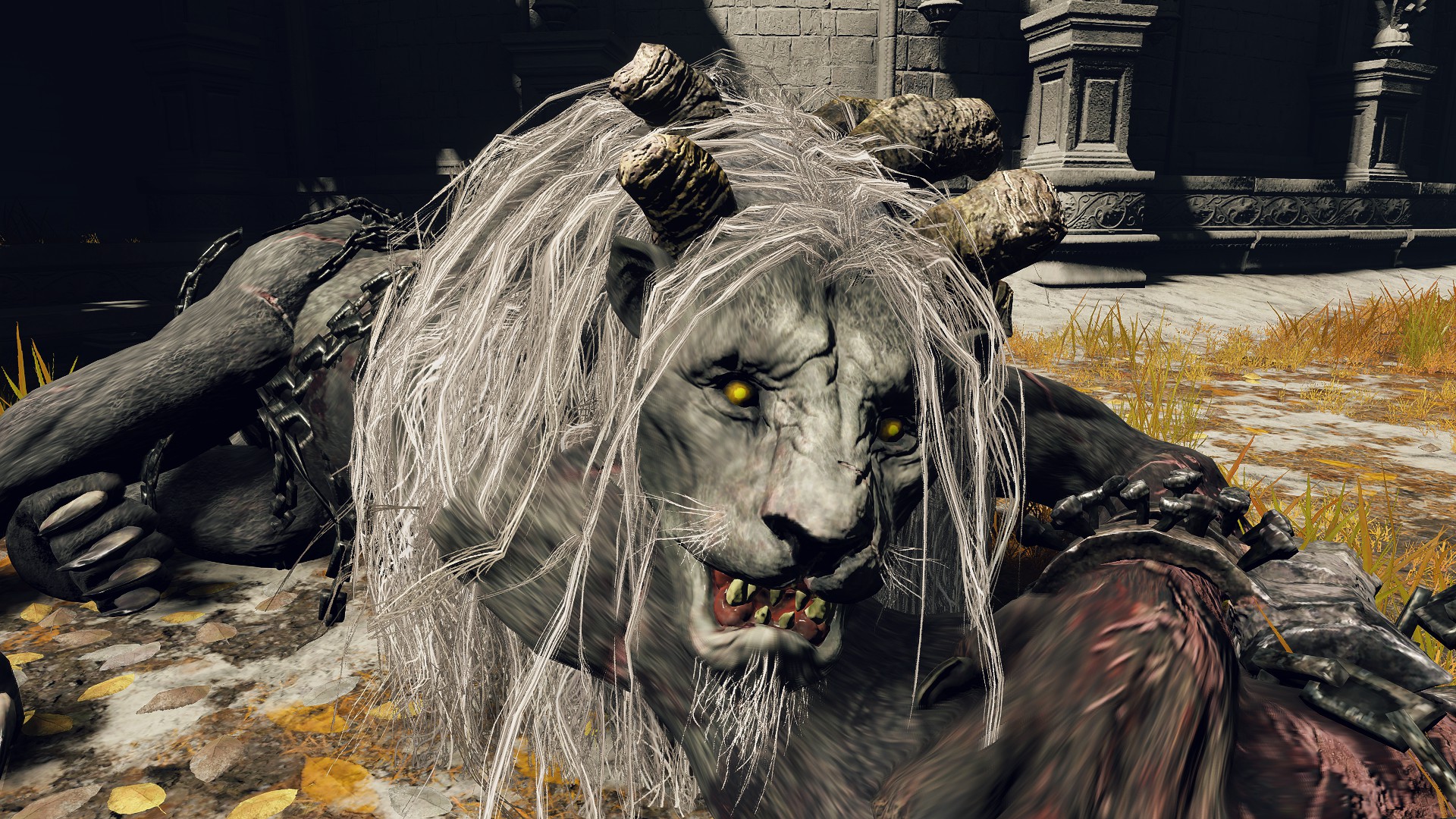
It wasn’t just the flora. Various fauna also exhibit so-called “vestiges” of the Crucible in the odd example. While not as extreme in lands around Rauh, wildlife across the Lands Between have been affected. In the case of herbivores like deer or sheep, they sometimes manifest a number of extra horns budding from the same root as the original, the immature growths overcrowding it. In the case of carnivores like boar or runebears, they occasionally see the same happen to their fangs, additional teeth overlapping from the root. Twice as many are looted from elder lions, who additionally possess horns on their neck; worn down like the rest of their body. The lion imp head slightly increases the owner’s vigor, the power of life most associated with gold. Combined with their especially yellow pupils, and the old beasts seem to have absorbed golden life in excess. If they were with Serosh at the Fortified Manor, then the cause should be the glow of the Crucible. And with that comes the implication that the Erdtree’s introduction to the Lands Between had the largest impact close to home.
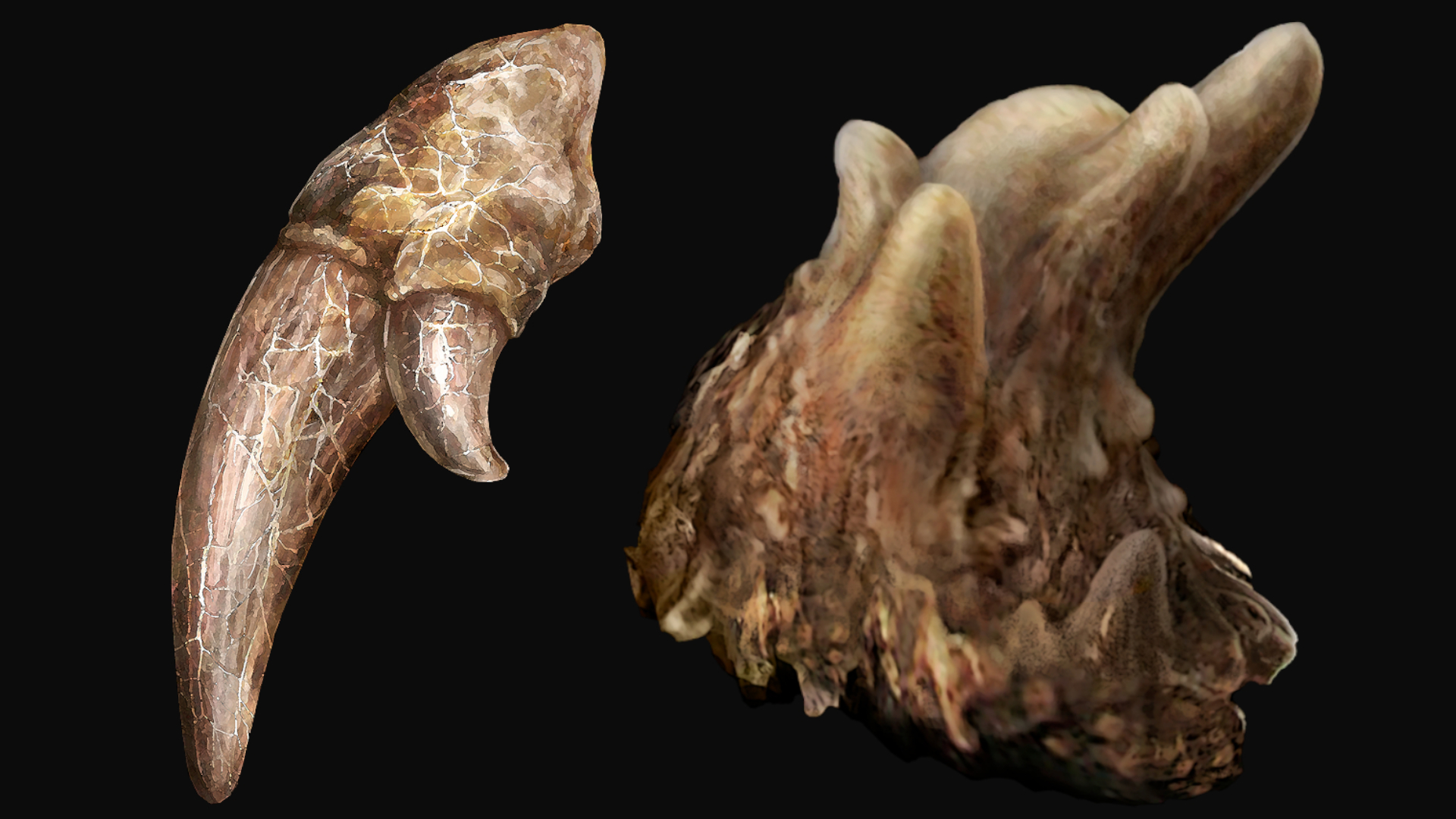

Head part of an imp golem worn as is.
That resembling a lion harbors slight vigor.
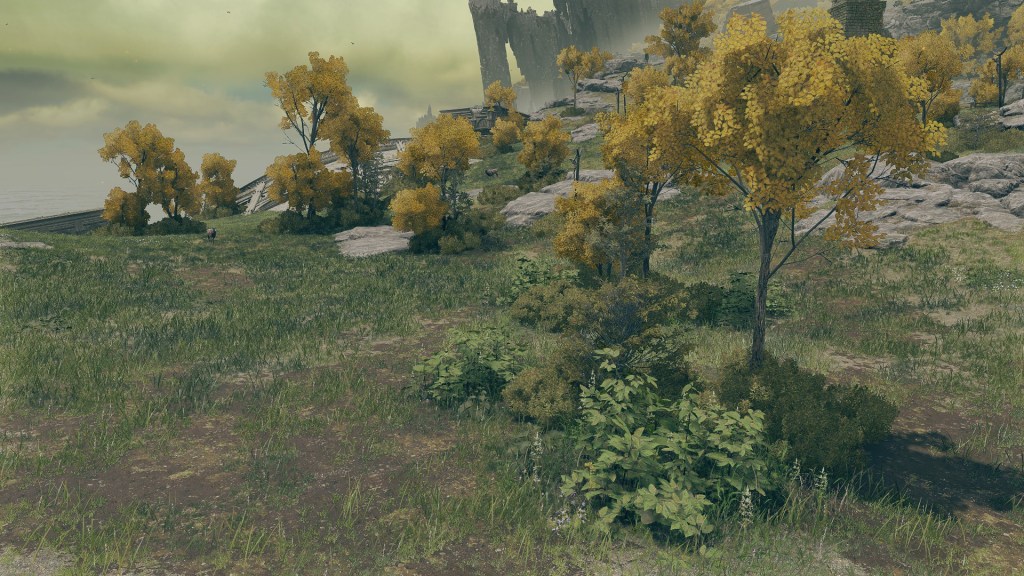
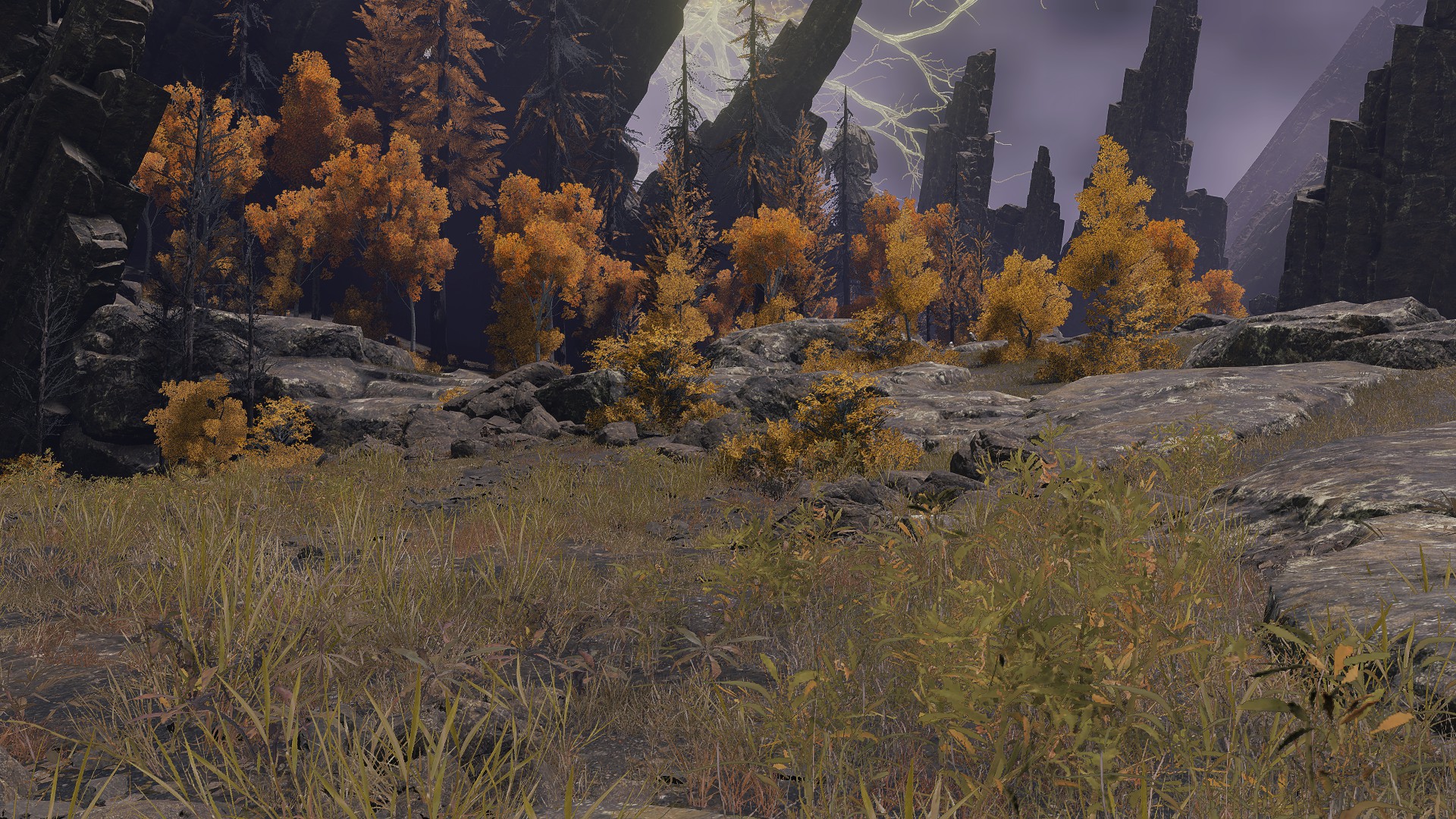
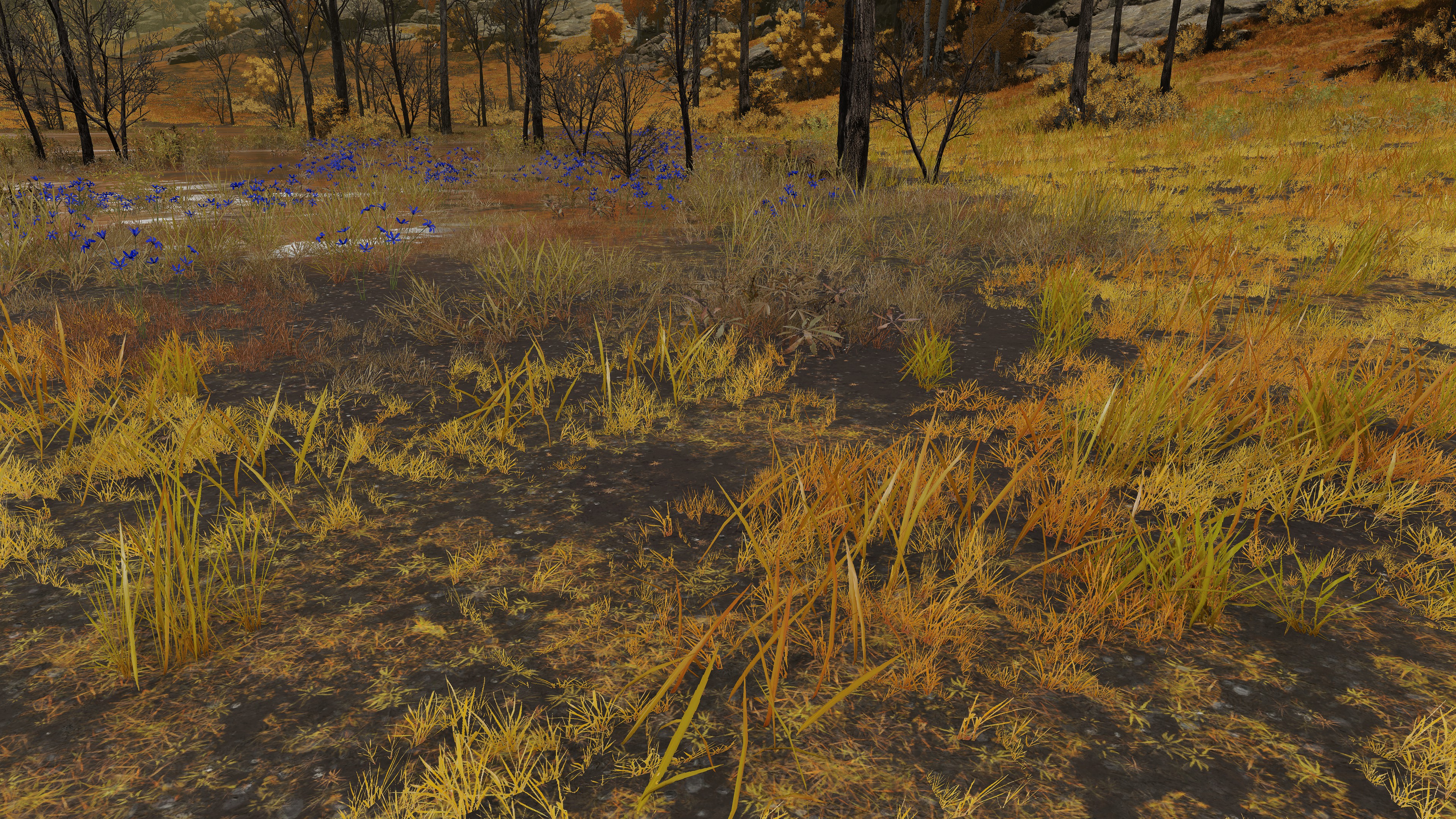
Much like with the Elden Ring in Farum Azula, the power of gold has seeped into the earth surrounding the tree, with more obvious results. Besides the gold smithing stone plentiful across the plateau, the earth in general possesses gold veins, and almost the entirety of the plant life exhibits yellow foliage down to the shrubs and grass. This includes the conifers, which are otherwise exceptions to this yellowing phenomenon. Not even trees from the chilly Mountaintops can resist the Erdtree’s warm influence so close to the source. Greenery which remains so might concentrate the gold entirely to one part, such as the Altus Bloom. In a similar vein, the rowa fruit so prevalent across the Lands Between has also seen peculiar changes on the plateau. The green bush appears to channel all the power into the golden rowa, causing its juices to taste sweet like honey. Considering the effects of the tree’s rays abroad, this sort of evolution isn’t a surprise. But, such effusion of gold throughout the ecosystem likely began well before the Erdtree towered over the lands.
The greatroots break above ground wherever there are large concentration of trees; if our map depicts a forest and the soil isn’t flooded, sure enough, they will be there. This indicates that the Erdtree is attracted to other trees, trying to integrate itself into the tangled network of roots which longstanding forests form. If so, then the Elden Ring was already spreading its influence through the roots before its trunk was tall enough to shine across every corner of the continent. That would explain why we see the yellowing affect trees hidden from the Erdtree’s rays, including underground — flora needs to be isolated from the body as much as the light. This might also explain why grass growing on the upturned dirt in the ruins of Leyndell’s Lower Quarter is mostly green. Even underneath the Erdtree, it has insulation above the rubble and beneath the cover of Gransax’s body for most of the day. More exposed spots grow like on the rest of Altus. Root or ray, so long as gold effuses through one medium, it doesn’t matter.


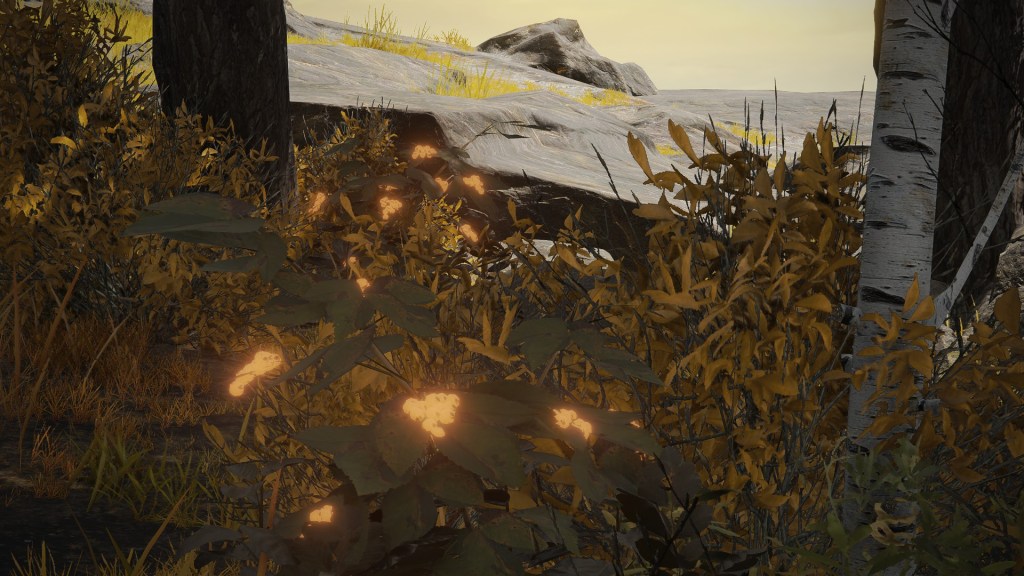

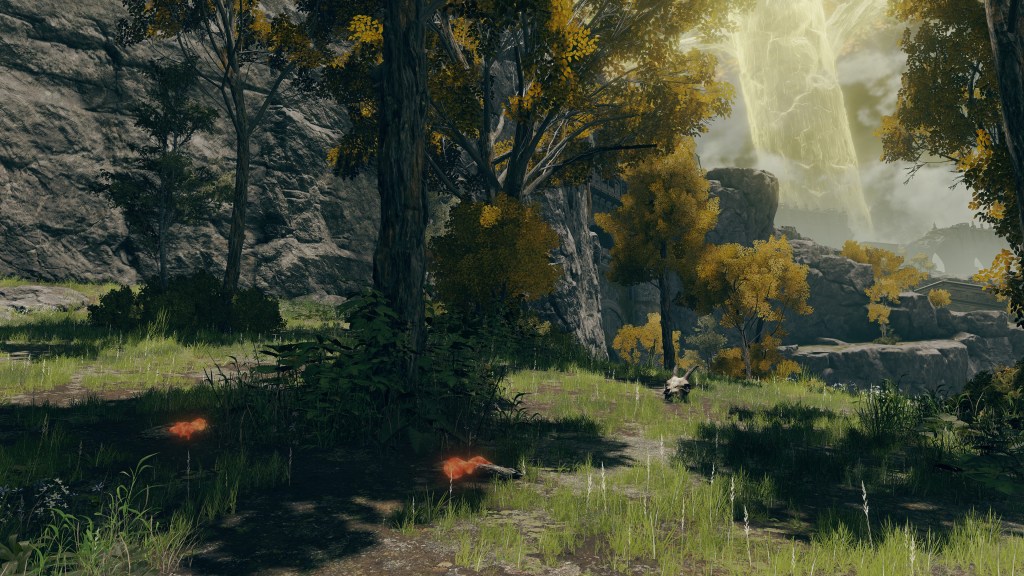


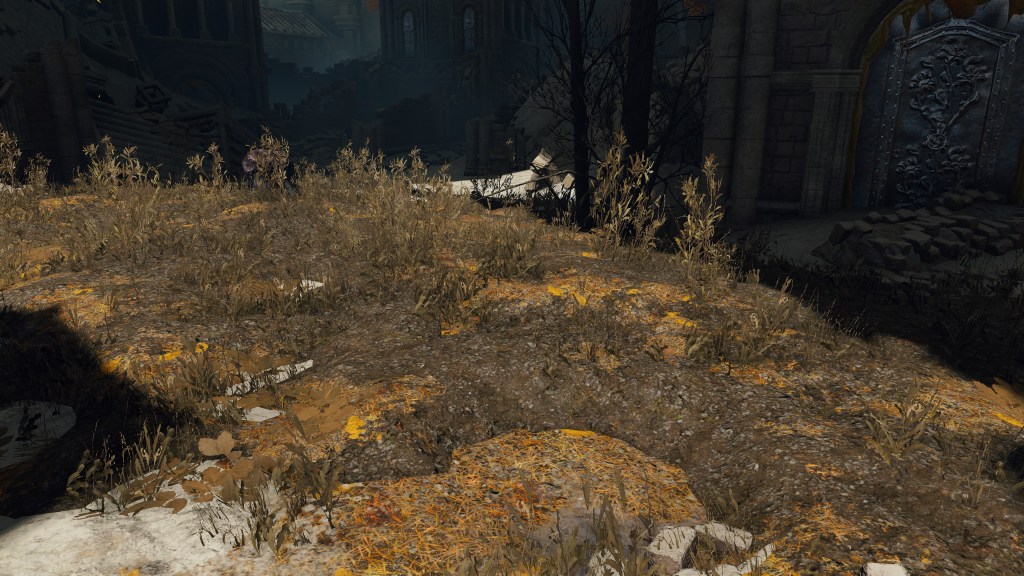


In the end, exposure trumps all. In fact, the phenomenon is dependent upon proximity to the source more than anything. Whether close to one or both mediums, only the Erdtree’s immediate vicinity on the plateau may suffer the full effects of gold. The efficacy is evident on the fringe. Gelmir’s environment on the far west side lacks the same gold veins, yet the trees and bushes — what haven’t burned to a crisp — are the same as on Altus; only the grasses deep in the mount are exempt from yellowing. The Erdtree has not permeated as pervasively only because of the competing volcanic power, the combination of roots and rays nonetheless effective at that distance. We witness such competition with grass at poison or water’s edge as well. The land outside the Divine Tower of West Altus conversely maintains yellow grass but green bushes and trees, perhaps owing to its lower elevation. Similar behavior can be observed at the Mountaintops of the Giants; gold smithing stones lootable from the miners of Yelough Anix Tunnel, located high on the southern edge of the Consecrated Snowfield. Not even the ice and snow are able to completely offset the goldening within the tree’s vicinity.
Succulent flower colored gold. One of the materials used in item crafting. Blooms in the Altus Plateau.
It is said to have been a flower sent off with death in the age before the Golden Tree.
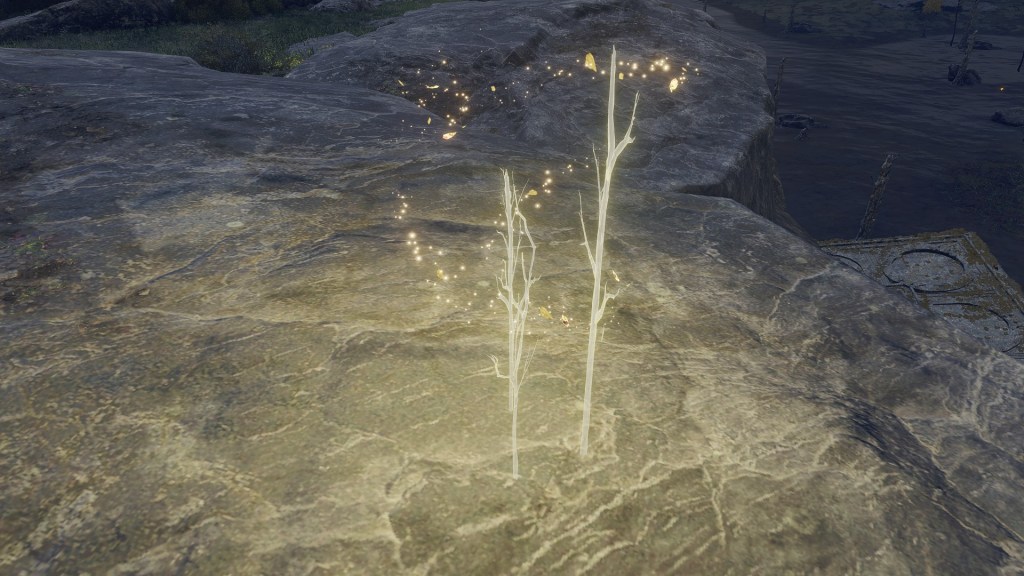
Nothing hammers home this effect more than golden sunflowers. Wherever they bloom, it is always facing the Erdtree; even if obscured by fog or other obstruction. The obvious implication is that the species adapted to draw upon the golden rays of the tree instead of the sun. This is reflected in the plant’s Japanese name, which more literally means “gold” flower (金輪草) — the proper term for sunflower would be “day” flower. (日輪草) Swapping out the kanji betrays the true source of the golden flora’s power. Even if distant, the species will try to absorb holy energy from the great tree, day or night. Because it is so weak, flowers outside the plateau tarnish, their golden glow faded as they wither, and they evidently can’t even survive lands covered in snowfall or rot. Still, even tarnished sunflowers retain some holiness, which we can utilize when crafting holy water pots. And for the untarnished variants, more potent blessings we apply to stronger crafts. The Erdtree thus serves as an excellent source of holiness, and in all likelihood is the source behind the flower’s very existence.
We can harvest random individual sunflowers — tarnished and otherwise — all across Altus, suggesting that the tree itself produces this vegetation. Adding to the insinuation, small patches of consistently tarnished sunflowers grow erratically throughout other lands, from Liurnia to Weeping Peninsula. Based on the pattern, significant spurts of holy power occasionally get absorbed by land beyond the tree’s typical range to produce the unique flowers; within its vicinity, the same phenomenon is much more common yet diffused. This explains why we don’t see other hallmarks of the tree’s influence, such as yellow grass, coinciding with their every appearance. The sunflower patches are ultimately outliers, anomalies, like small water spatter from a bubbling pot. In this way, the golden sunflower is just another example of the Erdtree’s disproportionate effects on the plateau’s ecosystem, an entire new species of plant emerging thanks to the power of the Elden Ring.


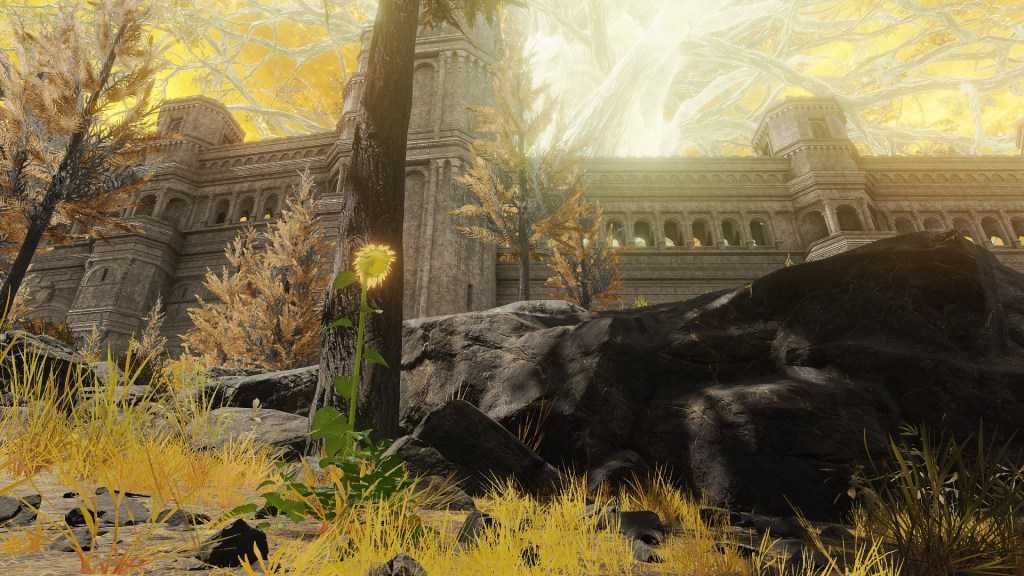
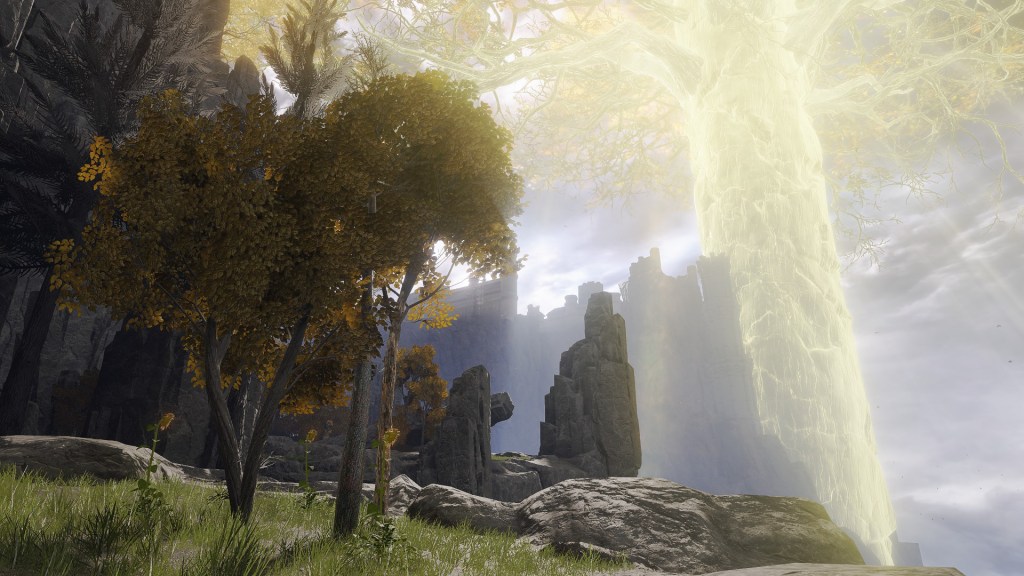


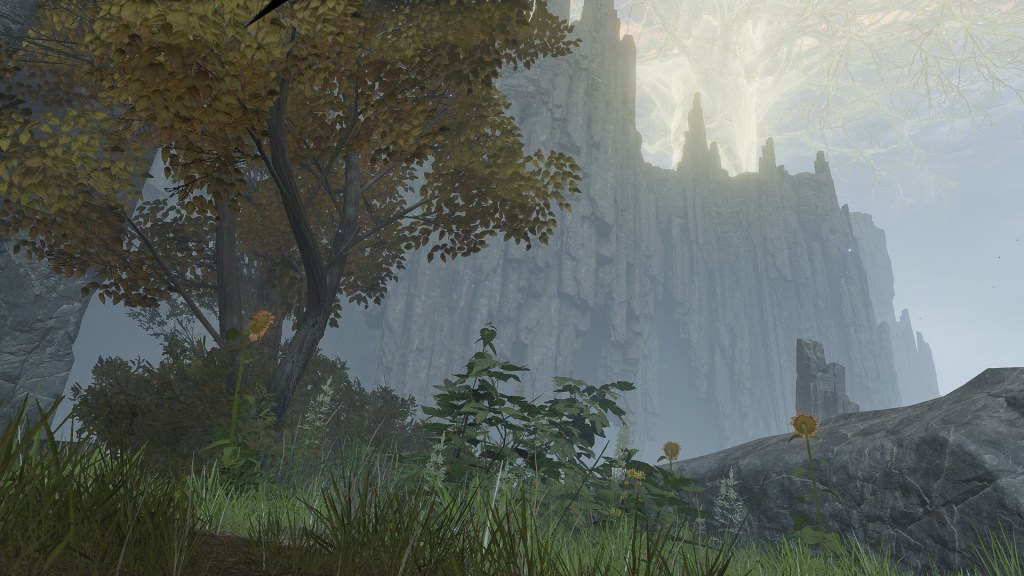

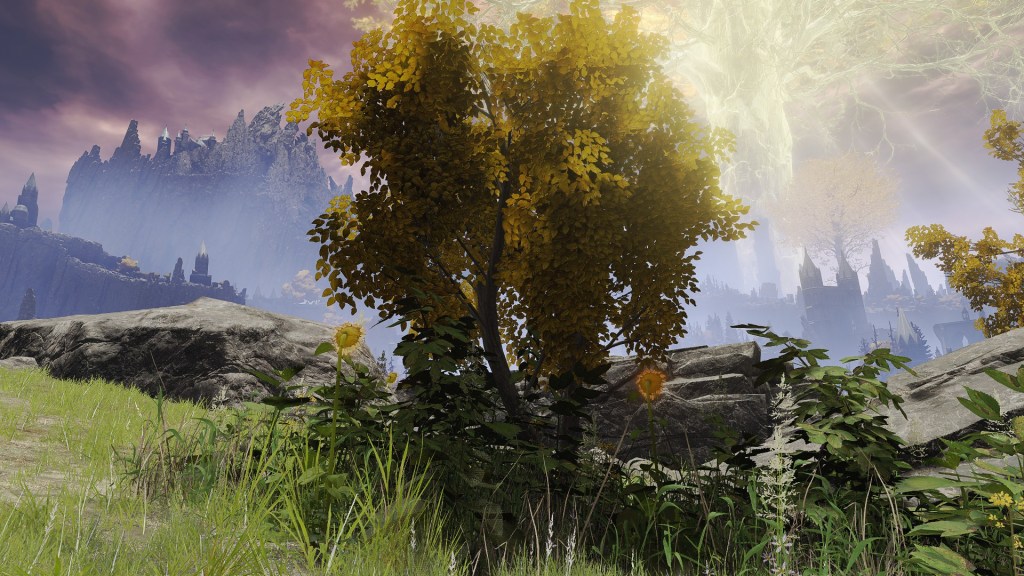


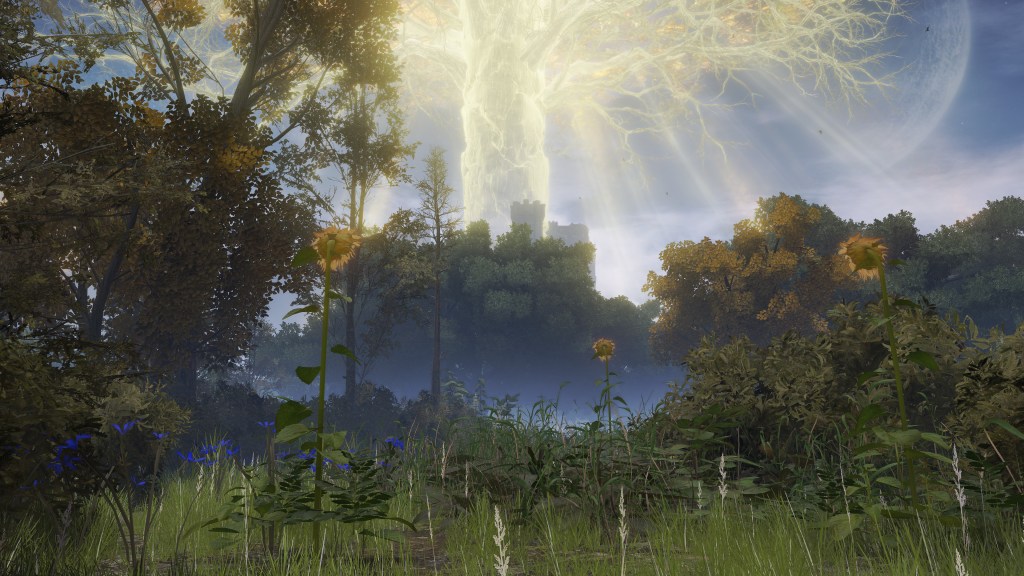


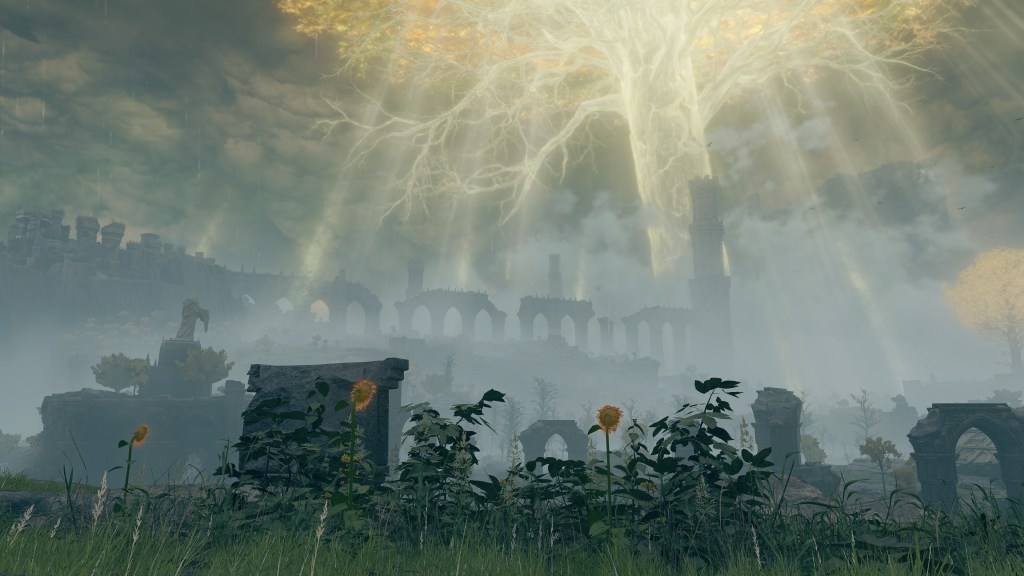
Without a doubt, Altus saw radical changes after the Erdtree emerged and reached maturity. One can only imagine how all these alterations were received by the different peoples living in the Lands Between, but especially those experiencing the goldening on the plateau. The latter themselves weren’t immune to the Erdtree’s presence, at least. In general, citizens of Altus possess larger golden runes in their eyes than people living in further regions. These runes’ description implicitly credit this to being born at the base of the Erdtree, with the citizens themselves believing that they are special — and, for sure, they are. Like the land, basking in the Erdtree’s light has done more than just accelerate healing in the past; it imbues gold into the body, with a bigger blessing over time the closer by the tree you live. People watching the world around them turn to gold were also guaranteed to notice the same gold burgeon in their eyes, especially with new progeny growing up in this environment.
Golden remnant of the grace harbored by everyone of the Lands Between.
Use to acquire many runes.
Those born at the Golden Tree’s base are special. The plateau’s people still believe that.
Some might have also begun to notice the effects on the dead. Only the skeletons rising from the Sun Capital graveyard in Leyndell’s outskirts — in other words, within the closest vicinity of the tree — possess golden bones in the entire Lands Between. The obvious cause is their proximity, though the same doesn’t hold true for skeletons inside the Erdtree capital. That, however, may be because those bodies were buried in the Lower Quarter, resisting goldening due to their Nox heritage or some other mitigating factor; the residents have managed to somehow preserve their green trees, after all. No body interred deeper underground in a catacomb has seen their bones turn gold either, so it clearly only affects humans left on or near the surface, perhaps long after the flesh has rotted away. If so, then it is possible that no one noticed any effects on the skeletons until after they began climbing out of the earth.
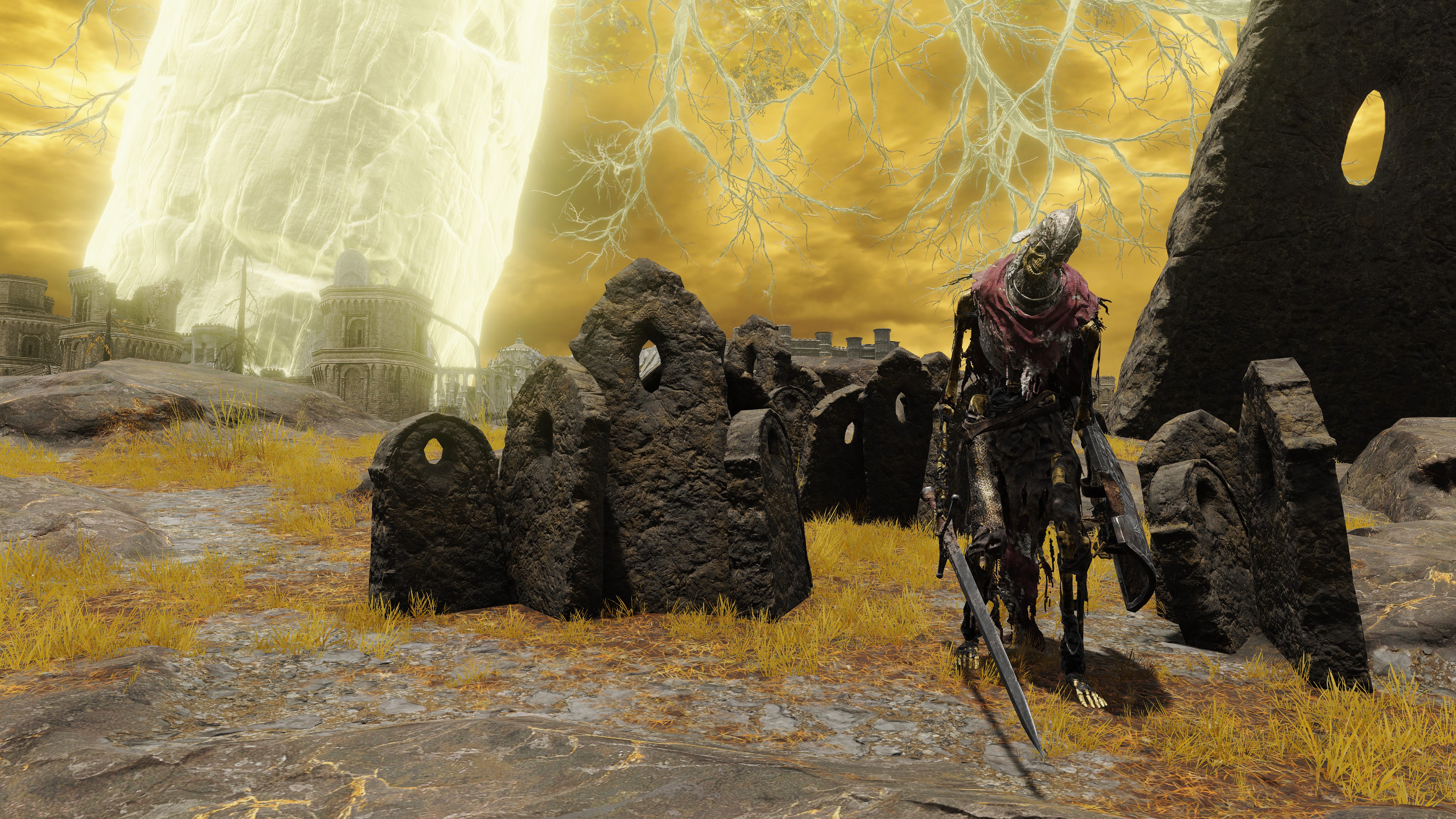
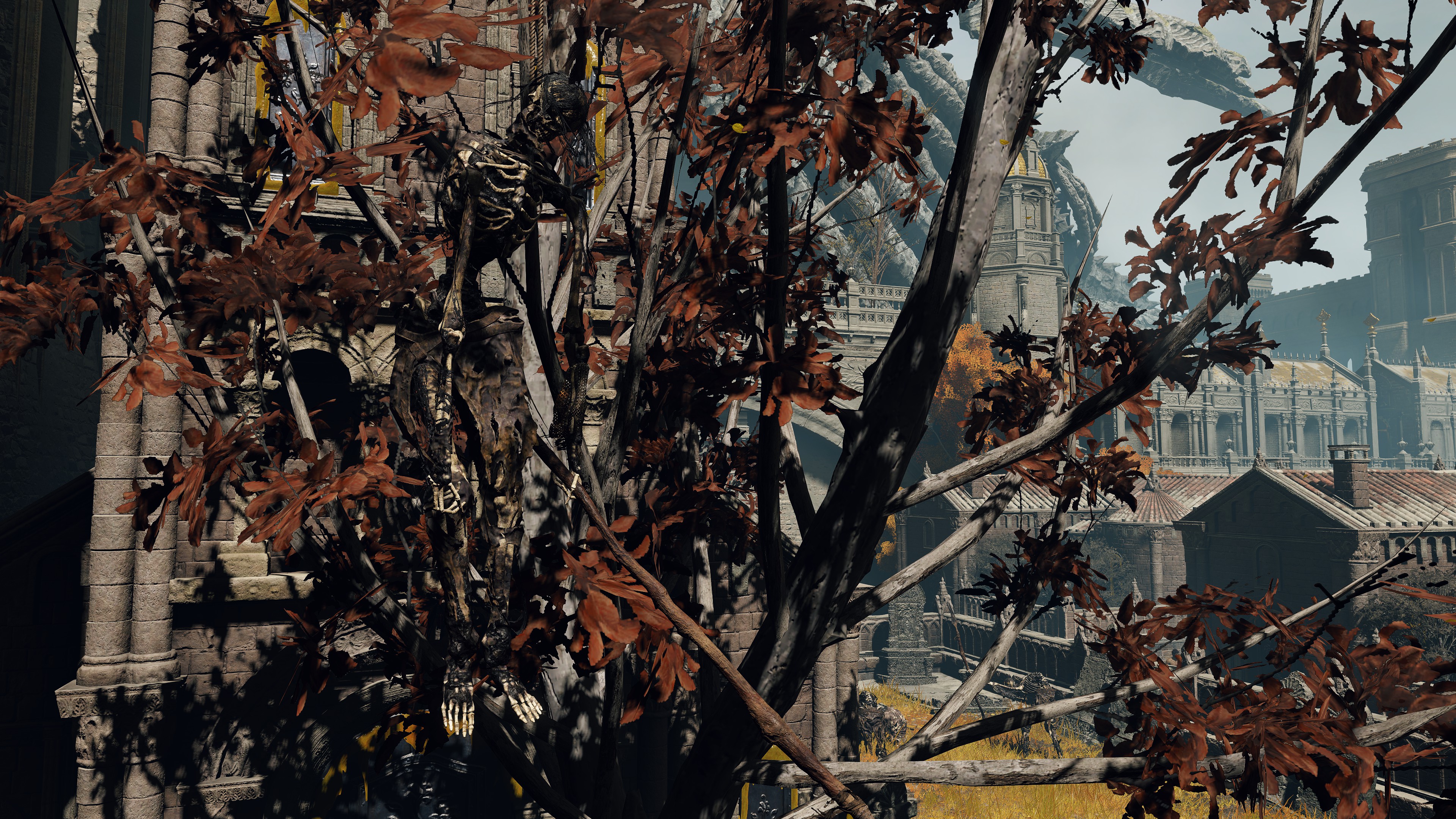
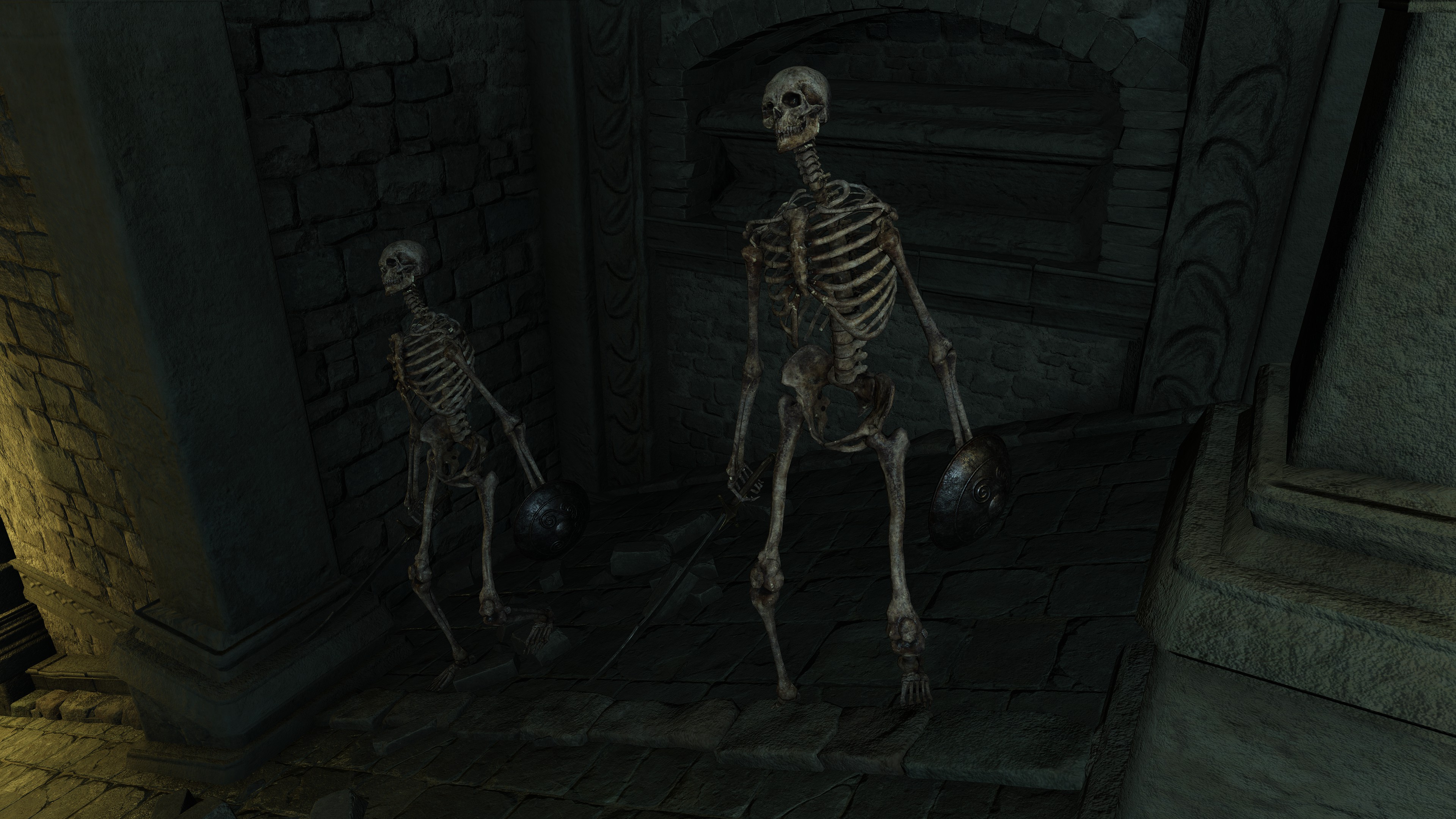
Suffice to say, much gold has been spread, and most of it is probably deliberate. Although a conduit for the Elden Ring and its Golden Order, the Erdtree is nonetheless a living thing distinct from them. Even if it lacks a central nervous system, the plant must possess at least a simple will of its own. We can see this in the disparity of runes. Beyond just living in its vicinity, more grace has been granted to those who first stepped up to “serve” the Erdtree, with even more for heroes who battle in its name and still more for those with a destiny to become Lord. This kind of selection requires more than just a mindless totem channeling power from the Ring. Of course, these choices do serve the interests of the Elden Beast as much as the Erdtree, but that is no surprise — one is still the other’s source. In short, it acts according to its nature as determined by the Ring. The Ring or its vessel might be able to influence those actions, but the golden tree otherwise performs all on its own. No tree questions the behavior derived from its seed, and this case is no different. The Erdtree naturally works to diffuse gold across the lands.
The fact that the tree possesses a degree of awareness also explains prayers dedicated to it. Incantations for Erdtree worship ask for some aspect of the Erdtree’s power in exchange for their devotion. Unsurprisingly, the best catalyst for communication is gold, worshipers molding some of the blessed power into the shape of the Erdtree cross as their holy sign. Even when the tree has dimmed after the Ring shattered, this phantom Erdtree Seal continues responding to the wielder’s faith. The golden tree thus appears to recognize the symbols humans invent to represent it and maybe even still sense the gold it has already distributed despite the physical separation. Either way, grace is the best medium to channel its powers, as showcased with the skills of holy weapons. With the proper heartfelt mantra, the Erdtree is willing to answer any wish. The radiant entity fulfills the Golden Order’s demand to proliferate gold to all life, and this is merely an extension of that. And by laying the foundations for a new religion under Marika, the holy light distracted from the ugly reality which the god preferred stay hidden.

Phantom holy sign modeled on the Golden Tree crest. It was once at the heart of Between’s faith.
Even though the Elden Ring is broken and the Golden Tree has darkened, it continues responding to earnest faith.
Does It Make a Sound?
As the Lands Between gained a shining beacon, a separate dimension oversaw the growth of the Erdtree’s shadow. This “Shadow Tree” (影樹) hidden from sight bears some resemblance to its golden counterpart. Besides their similarly immense heights, both trees also grow at a peculiar tilt leaning west. The so-called Scadutree, however, bears a steeper incline and requires a secondary trunk to wrap around it for support. This frail and twisted nature is apparently because the tree was born from darker notions, hence being carried over to its avatar; this smaller incarnation is even able to contort itself into the tree’s exact shape for a specific attack. These sentiments manifest in the “thorns of rejection” (拒絶の刺) covering its entire body, thorns which the Erdtree only manifest when barring others from entering it. They are apparently such shadow’s reaction to being forsaken by Marika’s Golden Order, the twisted thoughts choosing to harm any who dare approach in the same way the world under Order refuses them.
Recollection of the Shadow Tree’s Avatar engraved in the Shadow Tree.
Can acquire the owner’s power via the Finger Reader. Also, can use to acquire vast runes.
The Shadow Tree was the shadow of the Golden Tree. Born from dark thoughts that can’t be called Regulation, and for that reason it was frail and twisted.
Sorcery of those who despaired because of their devout faith and abandoned prayers.
Clad whole body in thorns of rejection generating from the Shadow Tree. Deals damage by rolling.
The form of the twisting Shadow Tree teaches: Reject and harm everything. For we are forsaken.
Despite being a shadow, the Scadutree radiates the grace of gold just as strongly as the Erdtree if not more so. Even as its bark remains tinged with shadow, the holy radiance inside trickles out. The lack of obvious foliage likewise hasn’t stopped a steady rain of yellow or black leaves from beneath its canopy, just like under the Erdtree. And without a true shine, the Scadutree still exerts an influence upon the land around it. Like their golden counterpart, shadow sunflowers dot the Realm of Shadow in small patches, always facing their shadow tree. These “shadow flowers’ (影輪草) appear in even greater number at the ridges closest to it at Scaduview, growing larger at the base. Such an obvious new species born from random spurts of the Scadutree’s gold, unsurprisingly, shares its shadowy yet thorny appearance — the largest flowers even become its avatar. The golden grease crafted with shadow sunflowers also surpasses the holy grease crafted with golden sunflowers. Without a doubt, it emanates a deceptive amount of holiness, which has also transformed the landscape now part of the Scadutree’s dimension.
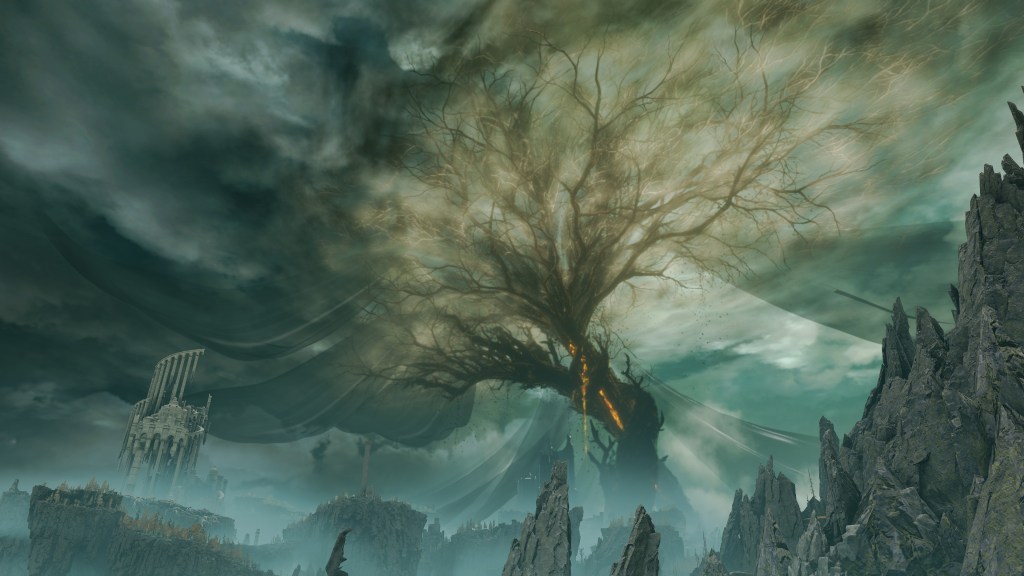


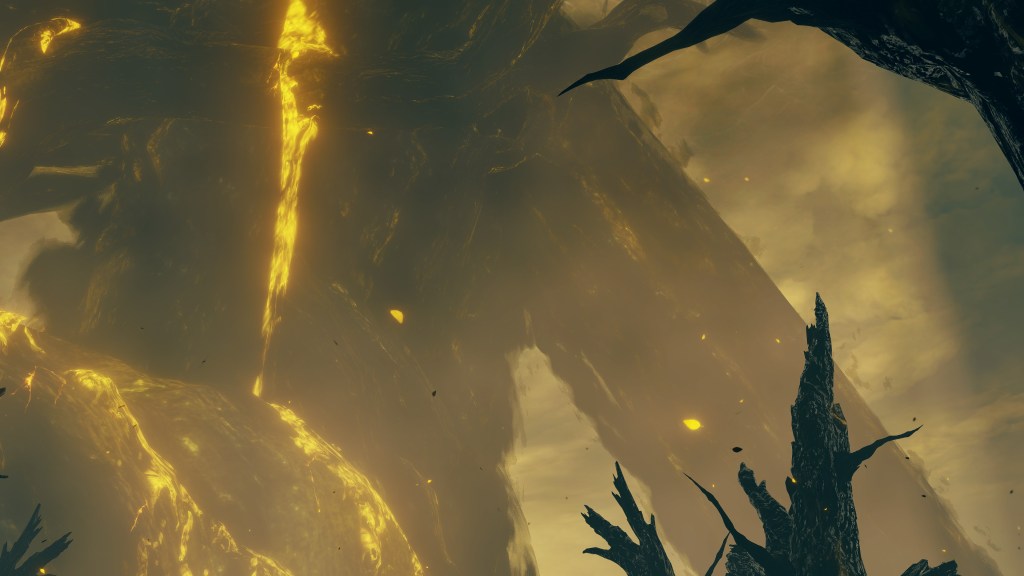


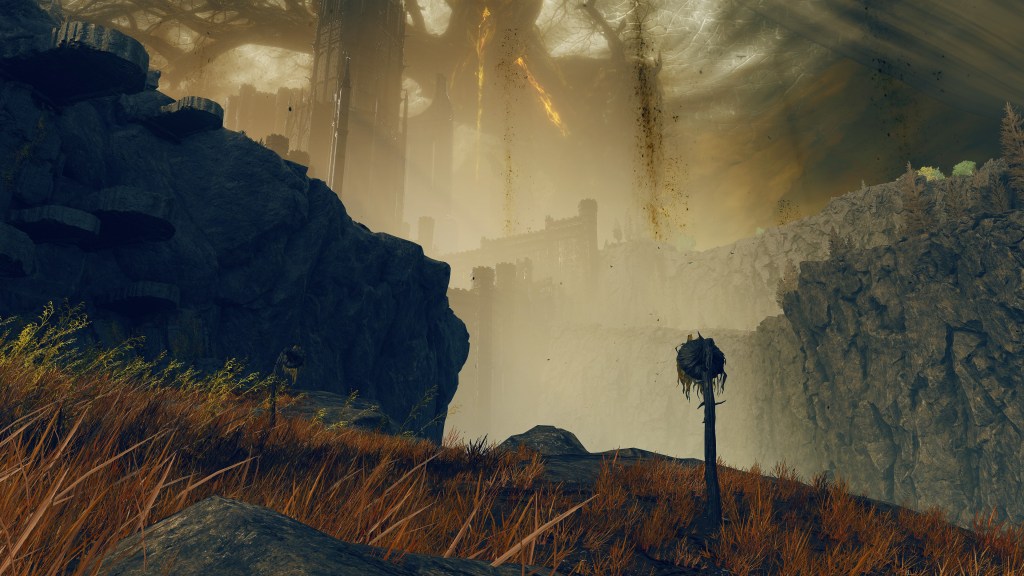
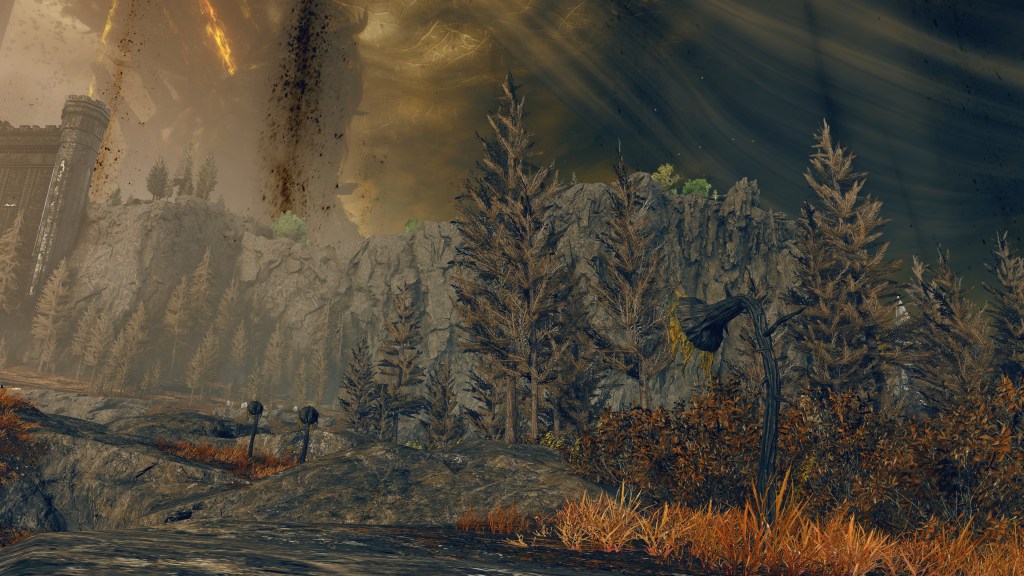


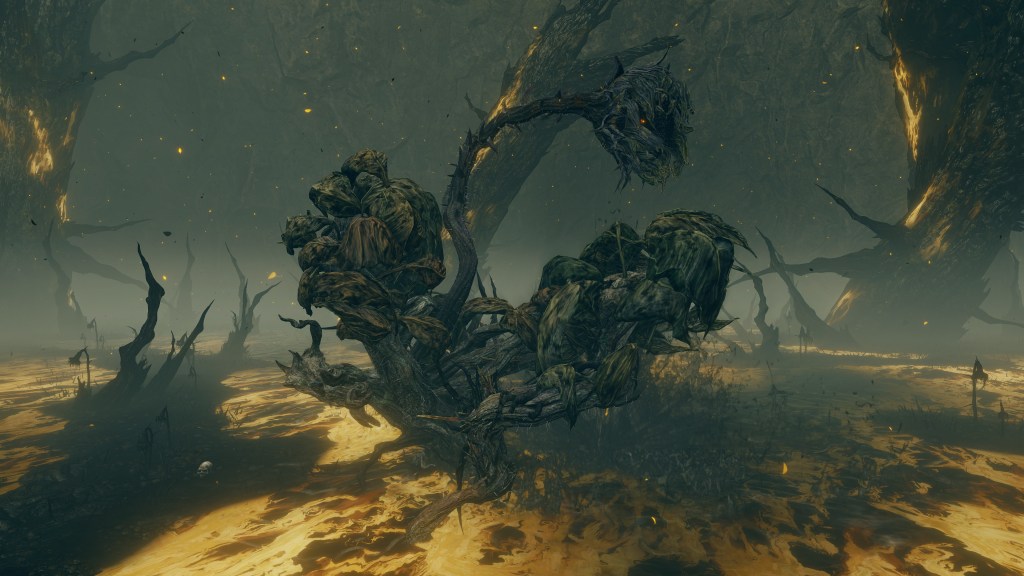


Large flower that blooms toward the Shadow Tree. One of the materials used in item crafting.
Obtained near the Shadow Tree.
It is tinged with dark shadow, clad in thorns of rejection, and harbors strong holiness within it. Just like the Shadow Tree itself.
Head portion of the giant shadow flower which is the Shadow Tree’s Avatar. Or thing where the flower is made into a weapon as is.
Its state resembles the Shadow Tree, so another stalk is already wrapping around as if supporting and embracing the stalk with the flower.
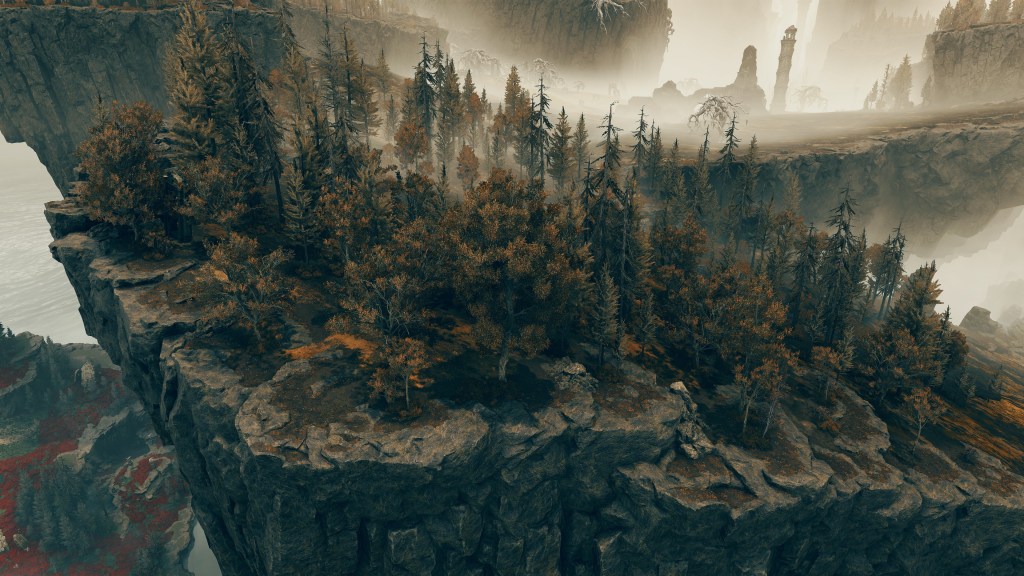
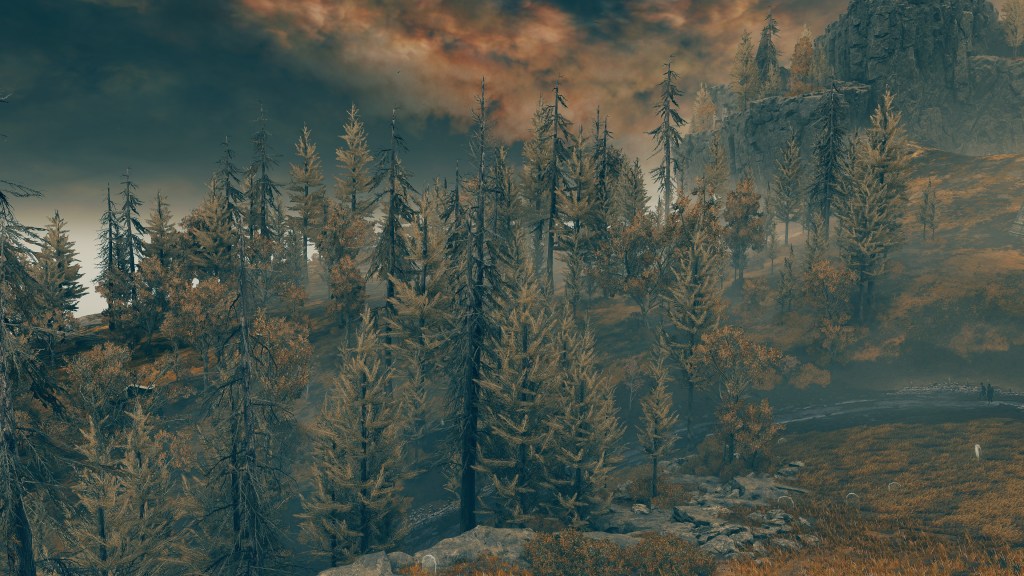
We see that most of the trees, bushes, and grass in the Realm of Shadow have some shade of brown foliage, including the large conifers. While certain conifers in the Lands Between might appear more brown than green, these tend to be obvious outliers subject to dying, a natural phenomenon in any large grouping of trees. Plants in the lands hidden in shadow, however, generally appear to be flourishing. The only areas not characterized by the color brown either reserve a competing power, such as the Frenzied Flame in the Abyssal Woods, or enjoy another countervailing quality — for instance, the clear delineation between the rest of Scaduview and its hinterland thanks to the Shadow Keep’s rampart indicates an outside effort to preserve it as is. Then there is the Deathbird territory down south, Charo’s Hidden Grave and the Cerulean Coast located furthest from the Scadutree. Put another way, proximity to the tree may be the most fundamental factor at play. Add black to yellow and it can become brown. Instead of yellowing, the Scadutree might cause browning to the flora around it.
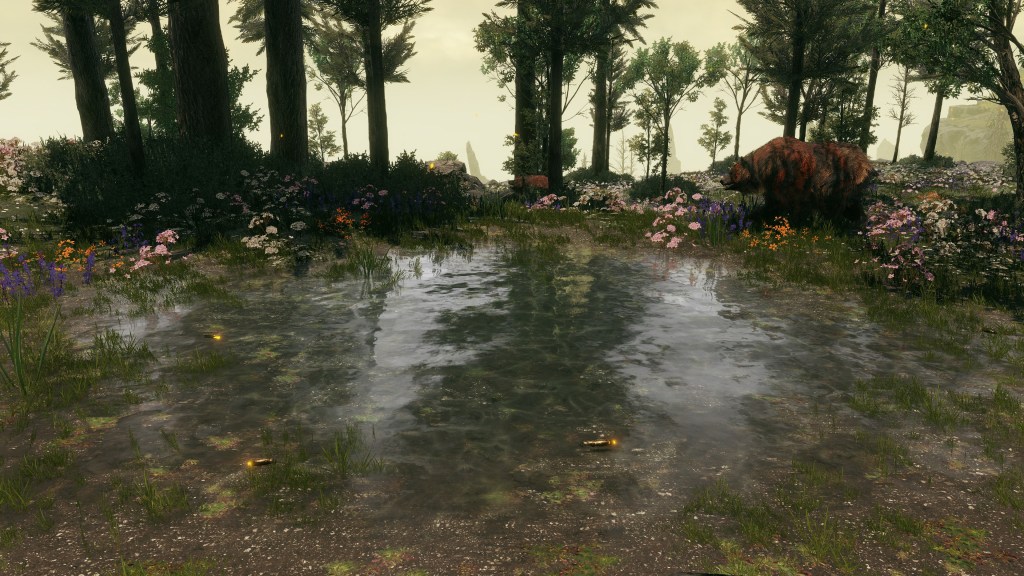
Putting aside the foliage, we do see proximity to the tree affect the land. Upon reaching northern end to the Gravesite Plains and Scadu Altus, rock faces become visibly infused with gold. The ruined forge in the northern plains likewise hides gold smithing stone, with the forge on the plateau containing even more. Scadu Altus is also unique for the golden color of its tallest grass, though this curiously doesn’t extend to Scaduview behind the Shadow Keep. Even still, gold fireflies lurk in a pond with that backyard view. There are also golden skeletons rising from the graveyard in front of the Keep, mirroring those buried outside Leyndell. Overall, the environment seems to absorb more gold the closer one is to the Scadutree. Driving home the notion is the Land of Shadow incantation — subsequent to weaving its thorns of rejection through the earth, the Scadutree Avatar begins launching “pebbles” of gold and shadow as if it were glintstone. It is undeniable that the Scadutree mimics the Erdtree in these other respects, so why not with coloring the plants? Once exposed to shadow, the center of the Lands Between gradually transformed.


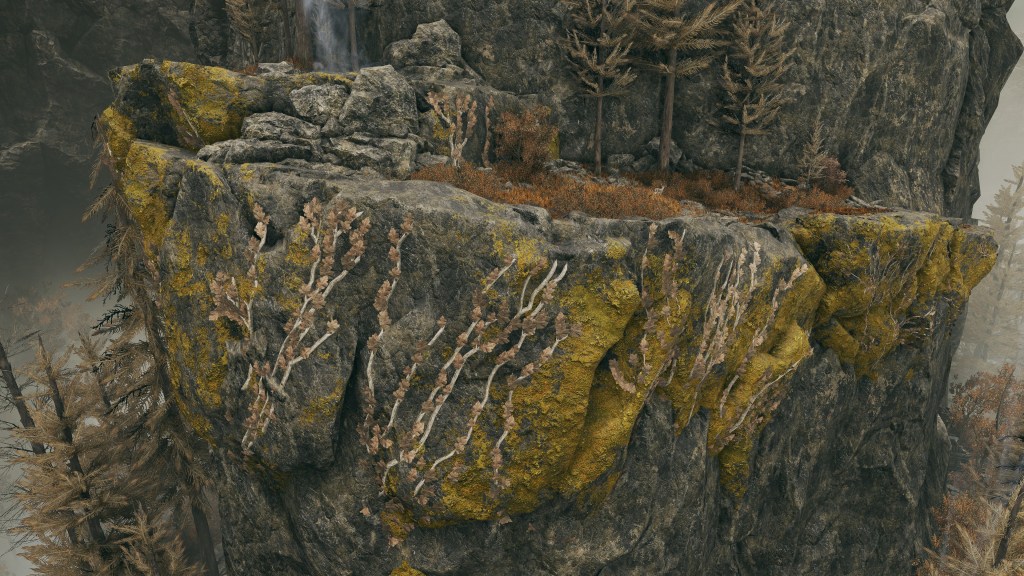
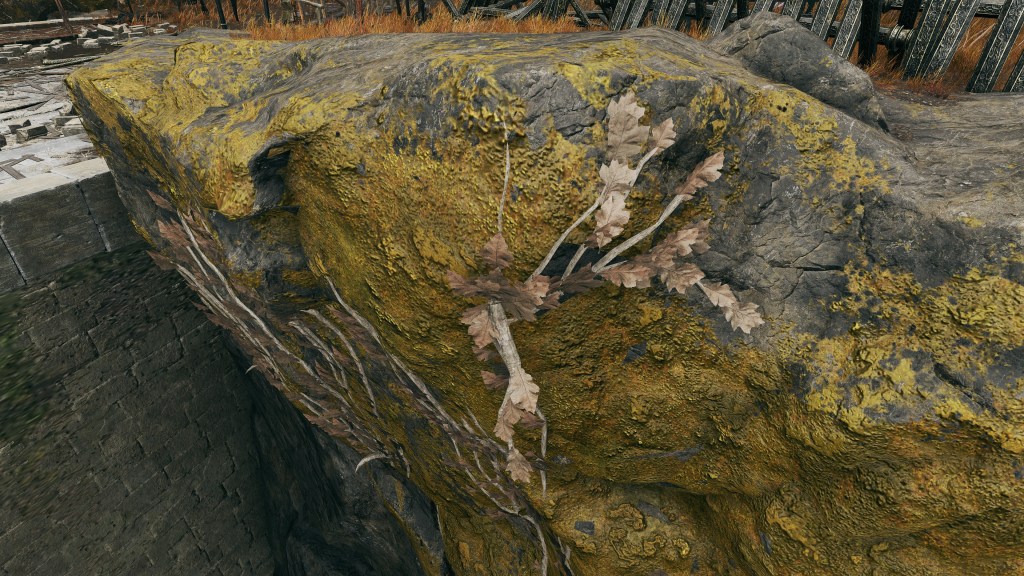

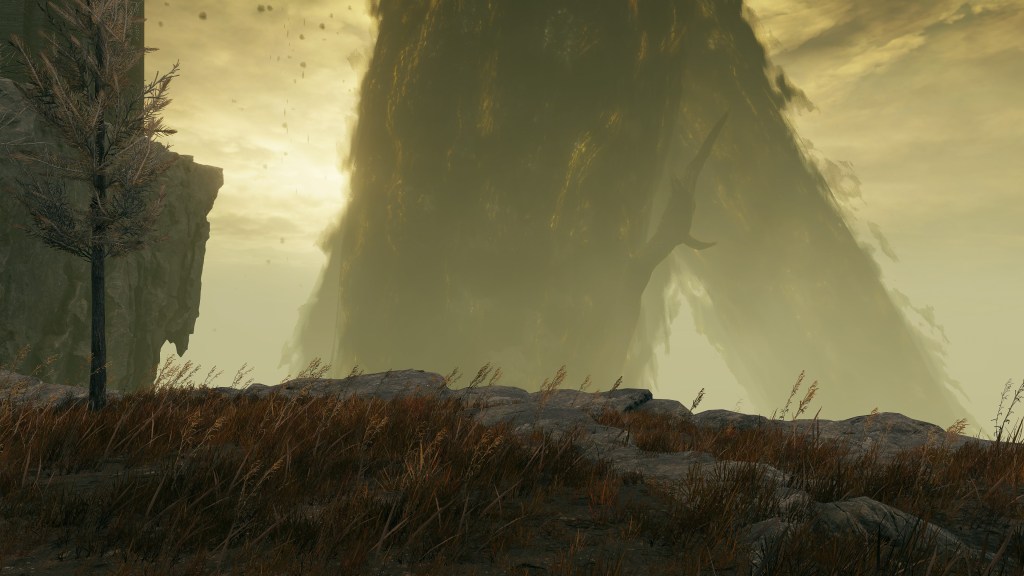
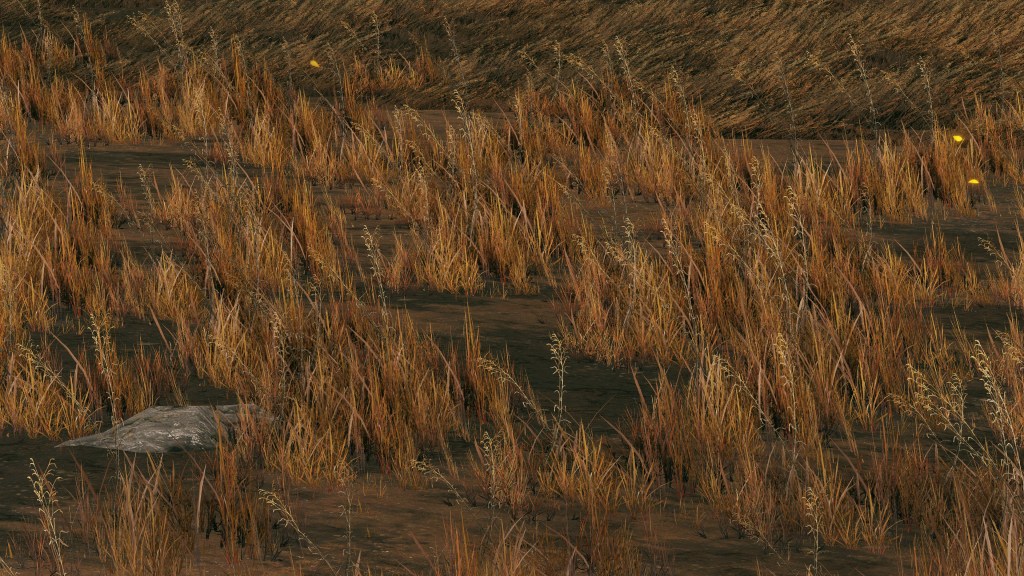


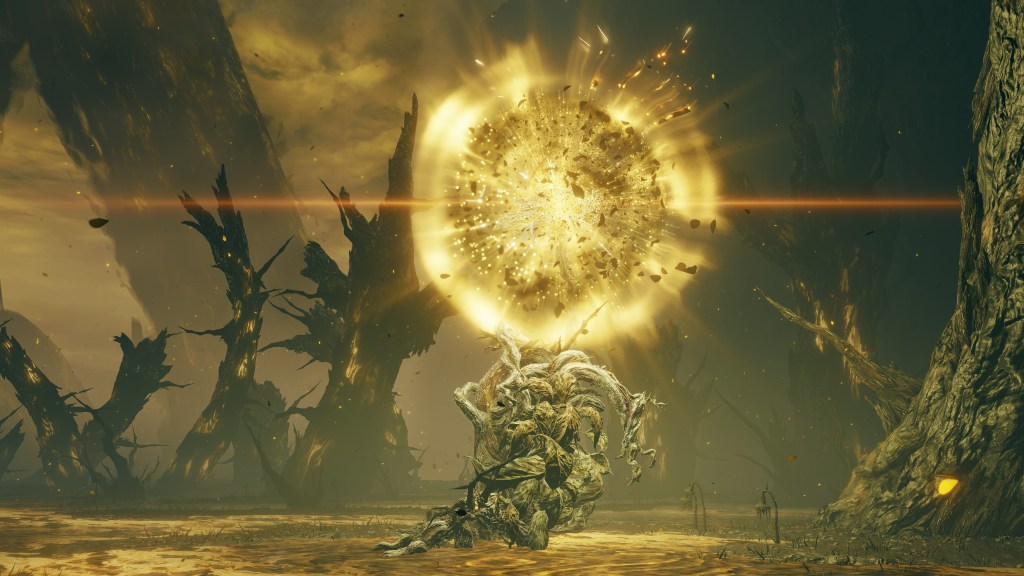
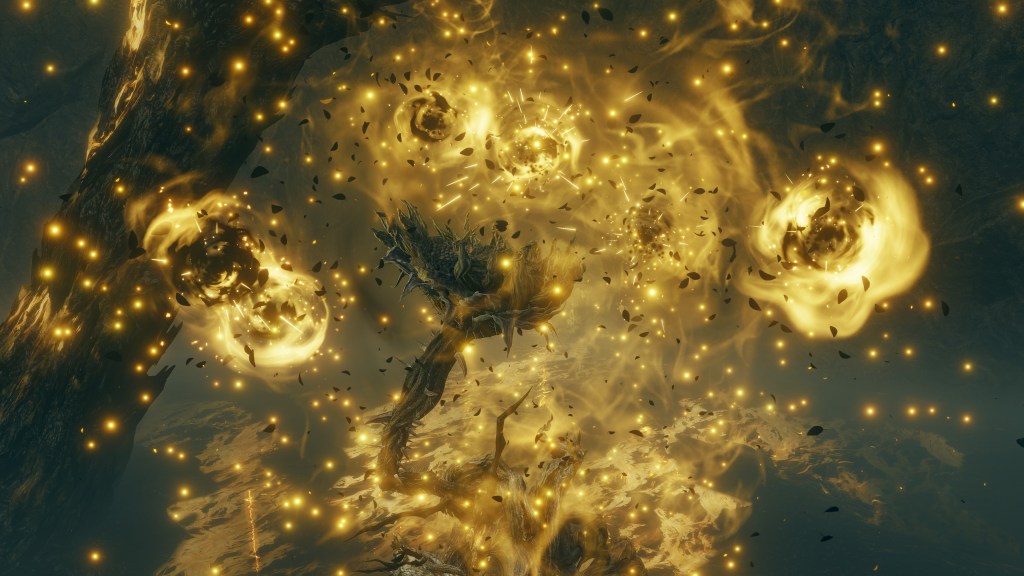

Prayer derived from the Shadow Tree’s Avatar.
Generates countless golden pebbles. The pebbles are fired toward the target in short intervals.
An art that wields a splash of the Shadow Tree’s power. Thus, its gold is together with shadow.
However, this all appears to be an accidental byproduct of the tree existing in the same space as the land, not an expression of interest in it. The Scadutree is rooted in the ocean stretching beyond the horizon within the dimension. Evidently, it is not concerned with spreading those roots through its surroundings like the Erdtree. The only time the tree shows any intent is with blessing the dead. Golden runes gracing the eyes additionally with shadow may only be collected from those perishing in the Realm. If the body is left undisturbed for a long time, such as in forgotten ruins, then the radiant blessing quietly grows even more. In rare cases, shards of the fallen’s bones can also be imbued with such golden radiance. Most of the time, this occurs with bone piles located closest to the tree at Scaduview, similar to the golden skeletons. Still, we see the Scadutree do the same at further distances, albeit with the living instead of the dead.
Golden remnant of grace of people who fell in the Land of Shadow.
Acquire 17500 runes via use.
In forgotten places no one visits, grace had quietly increased in radiance.
The odd blessed bone shard may also be looted from the crusaders we kill, the item’s description indicating that these rare instances occur upon death at the latest. That this phenomenon is unique to them is deliberate on the Scadutree’s part, for the warriors also received a larger blessing than the average corpse just as they were about to embark on crusade. This apparently included the heroes of that holy war; while their rune’s description refers to it as grace from the Erdtree, the menu graphic shows the same mix of shadow as the other runes. The reason for this is obvious: the crusade is dedicated to multiplying the corpses in the Realm of Shadow. Put simply, the crusaders’ mission has earned the Scadutree’s elusive favor. It thereby opts to bless more than just the dead in solely their case. Outside that circumstance, the tree remains guarded against anyone and anything. While the Erdtree functions to distribute its blessing to life, the Scadutree only cares for death.
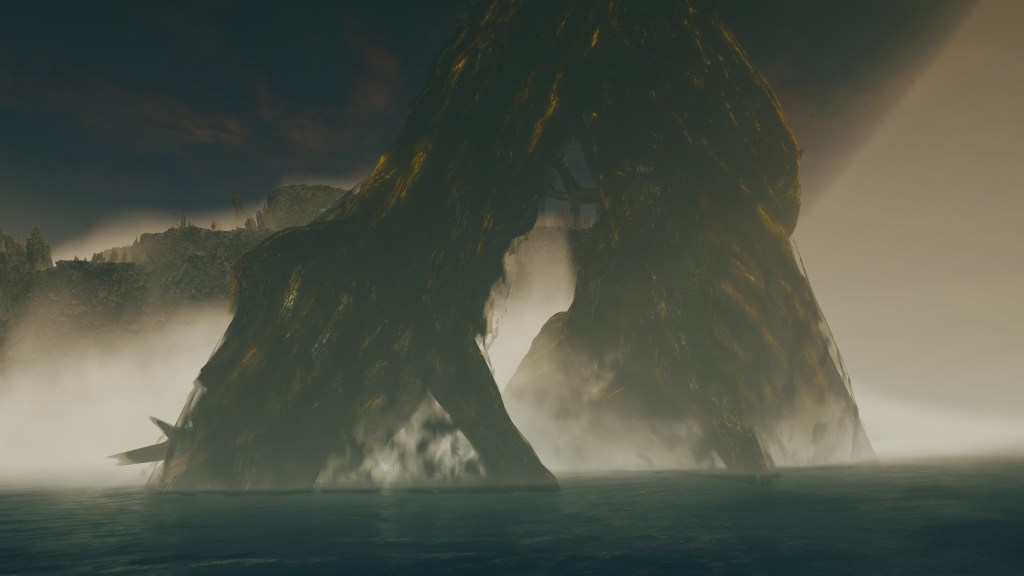


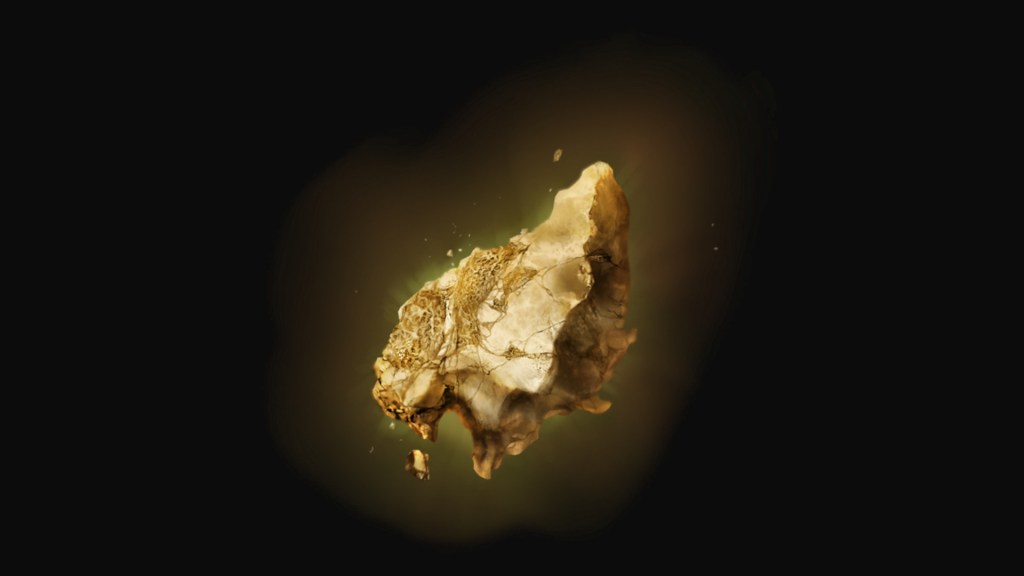


Golden remnant of grace of people who fell in the Land of Shadow.
Acquire 12500 runes via use.
It is said that the soldiers about to proceed with crusade were given large grace.
Even so, the two trees are unquestionably linked. The golden radiance has been trickling out because the Scadutree shattered from within, launching shrapnel across the land for the Erdtree faithful to later collect. The larger, weightier fragments simply dropped to the Scadu Base along with the gold, spreading more thorns in response. Meanwhile, this has left a long, glowing split along the length of the main trunk, with similar splintering “gashes” manifesting in the Scadutree Avatar — fitting, since when mimicking the tree to build up a massive explosion, the concentrated holy power leaks from that damaged section before bursting. Indeed, the event seems to coincide with the golden shockwave felt after the Elden Ring itself shattered, the same wrath of the Erdtree expressed by its own body on Altus Plateau. A shadow can only be cast in the presence of light, so the Scadutree’s existence is dependent upon the Erdtree and ultimately the Elden Ring. While it shows no reaction to its counterpart burning, the shadow tree will soon wither should the golden tree actually expire.
Fragment of the Shadow Tree containing a golden radiance. Can be attained in Marika’s churches of the Land of Shadow and the like.
It is said to be what scattered across the entire Land of Shadow when the Shadow Tree broke from within.
People of the Golden Tree have gathered them to pray.
Gold and shadow have therefore never been fully cut off. But by and large, the other side to gold behaves bitter toward the world for its removal from the Elden Ring. Ironic then that the Scadutree appears to be responsible for its own isolation. The shadows tinging the tree are channeled up the trunk and into the branches. A fair amount breaks off and slowly falls from the canopy, but most seems to be released as a swirling vortex overhead. Given that this only serves to spread the power across the sky in all directions, this is more than likely how the field enclosing the Realm of Shadow is generated — the shadow flies through the air, gradually descends to create a dome, then eventually meets at the watery bottom where the Scadutree’s roots may draw it back in. It is an endless cycle where the tree is both the source of the shadow dimension and the byproduct of it, presumably having been this way since their inception. In trying to remove shadows from her gold, Marika turned shadow into an agent of its seclusion.


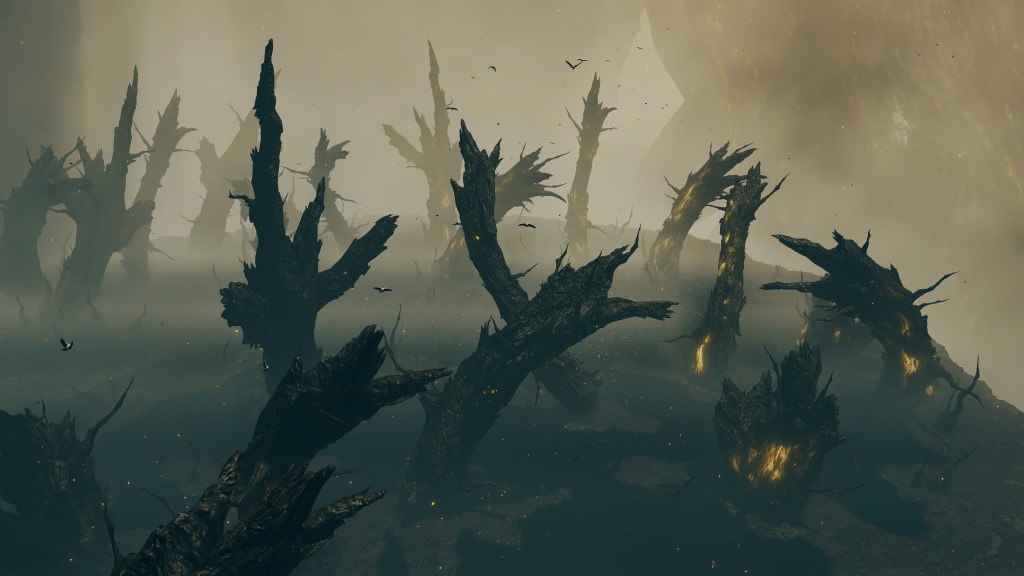
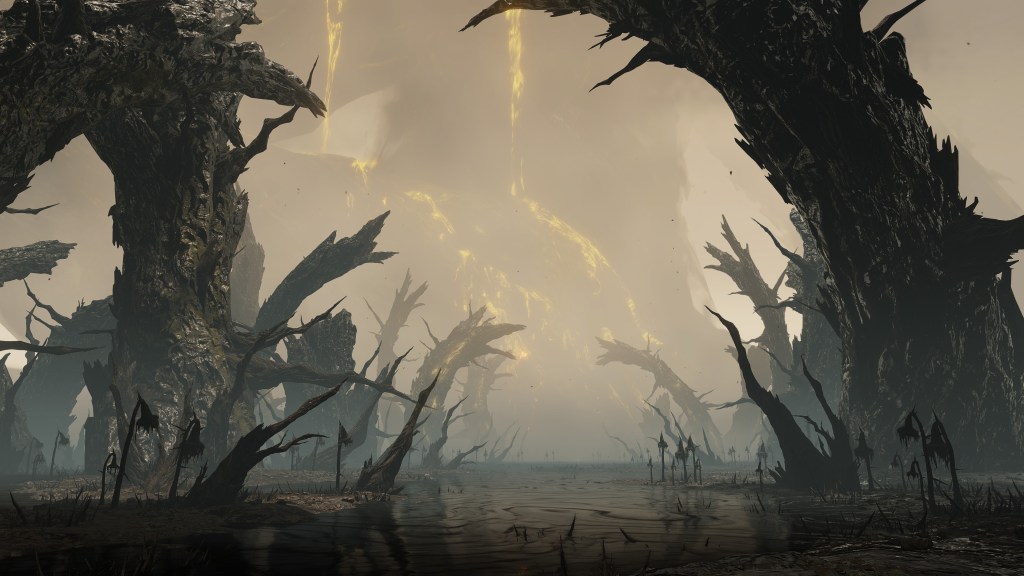


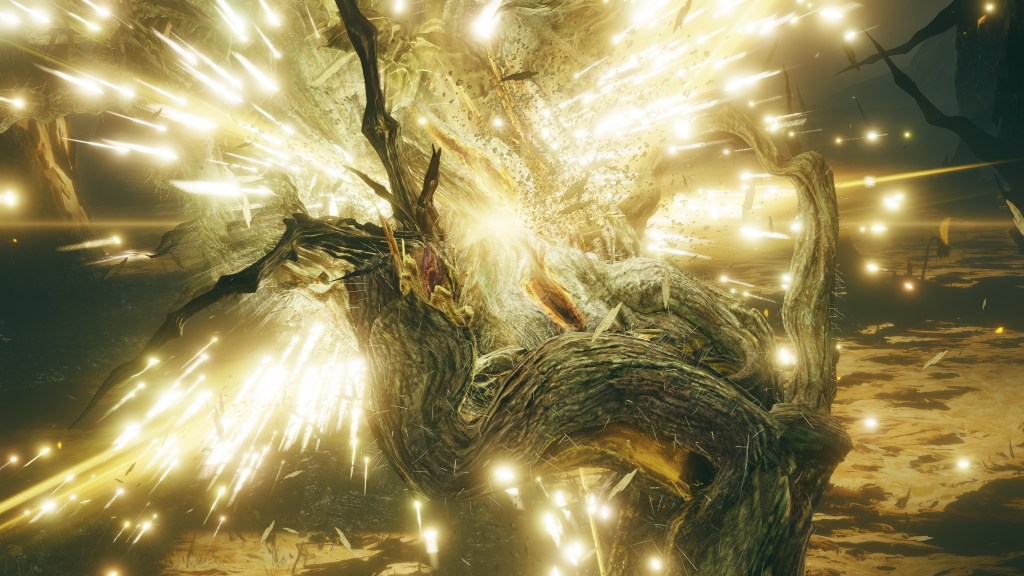
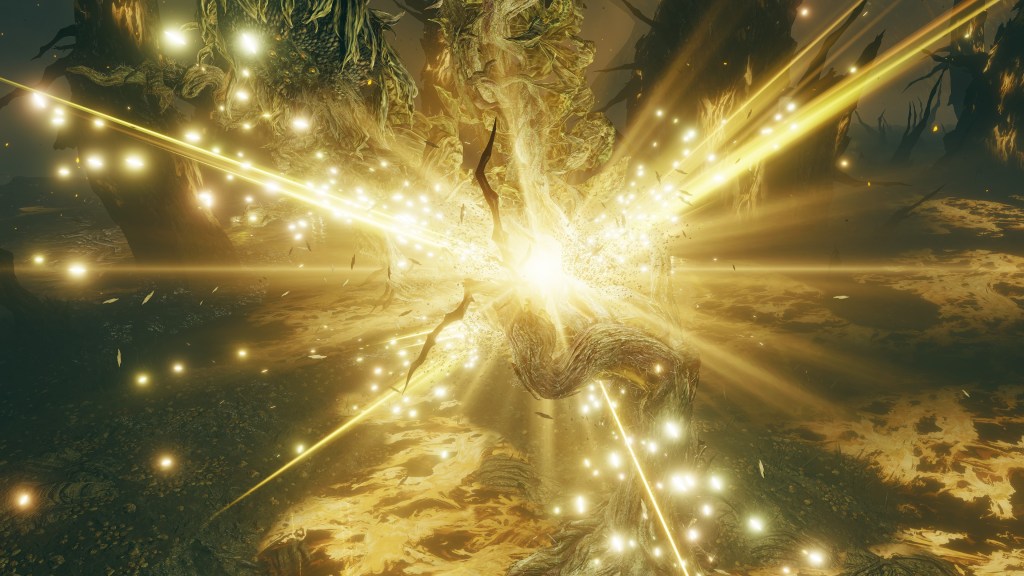
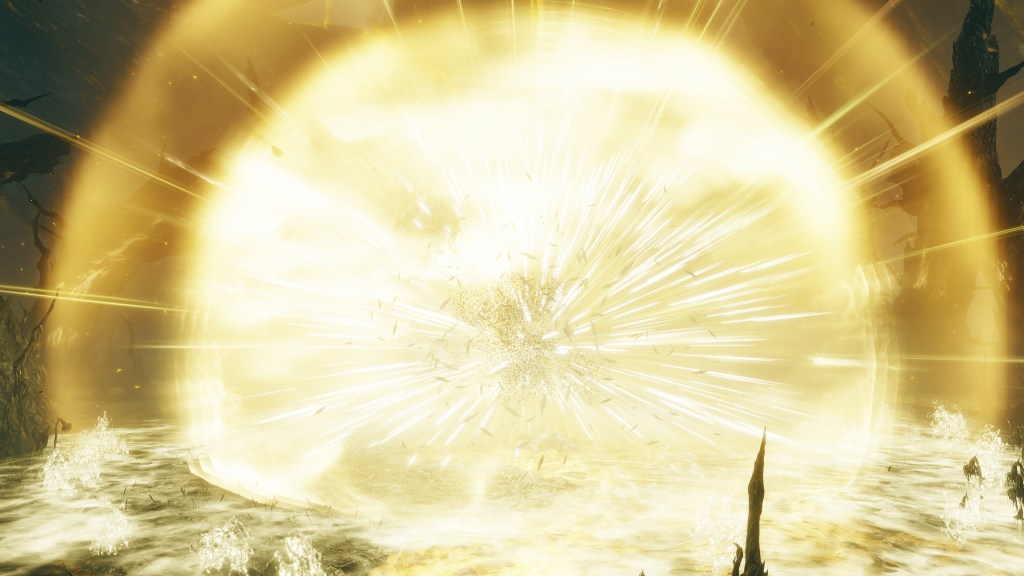


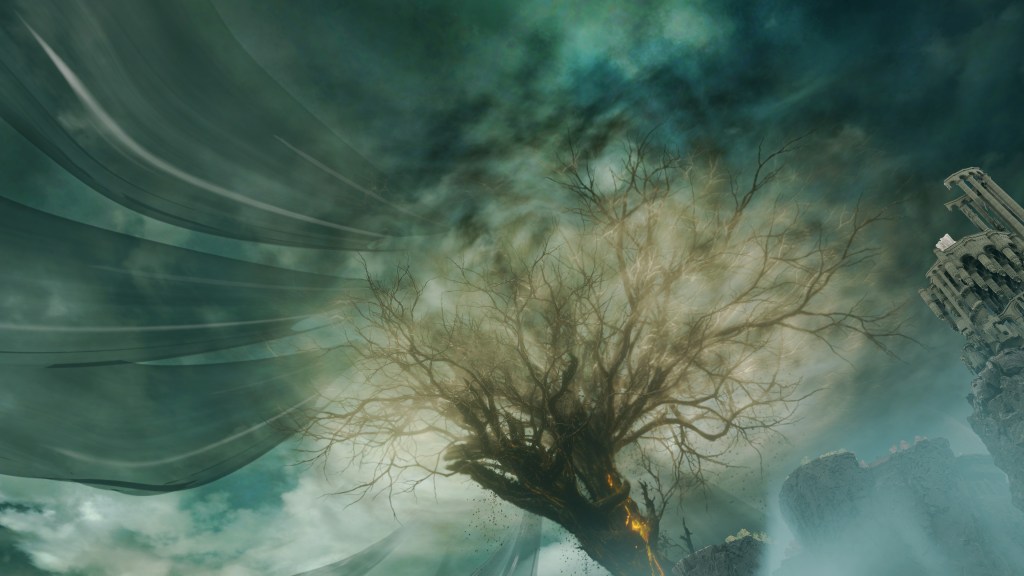
Admittedly, this couldn’t have gone any other way. If gold and shadow remain connected, physically part of the Elden Ring or not, then the latter was sure to react to the former spawning a tree in equal parts. And because gold and shadow cannot coexist as part of the one Erdtree, that necessitated a separate tree to form from the shadows. Whether or not Marika’s Golden Order acknowledged the duality, it did exist and would attempt to thrive, even if not together. The former Empyrean did become aware of this unseen shadow dimension, given how she later ordered a holy war to be conducted within it. And from that, we can infer her indifference — the Scadutree could act however it wished, so long as it didn’t interfere with her goals as god. All in all, the second tree was a harmless side effect of her Ring’s construction. With the shadows successfully removed, her Erdtree grew exactly as she wanted, a reddish gold Crucible of life. The only question was how she planned to handle a world without Destined Death.
Bring Out Your Dead
Just like its depiction in Farum Azula, the Elden Ring spread its roots far and wide through the Erdtree. Although these have mainly been attracted to forests, they stretch seemingly everywhere in-between at some depth. We see this not only within the various catacombs burrowed deep beneath the land, but also the numerous graveyards on the surface, many of which give rise to Those Who Live in Death — skeletons reanimated by Deathroot stemming from the great roots. Beyond the natural resin used to craft various greases for weapon enhancement, these especially large roots bring with them no particular benefit for their surroundings. Neither do they demonstrate any degree of golden power; whatever faint holiness is channeled from the tree appears to immediately dissipate into the earth for nearby plants’ root systems to absorb, which is minuscule looking at the yellowing phenomenon outside Altus. However, the primary function of roots is to nourish the tree, collecting resources for the plant to grow and thrive. And as is so often the case, this nourishment derives from entropy.
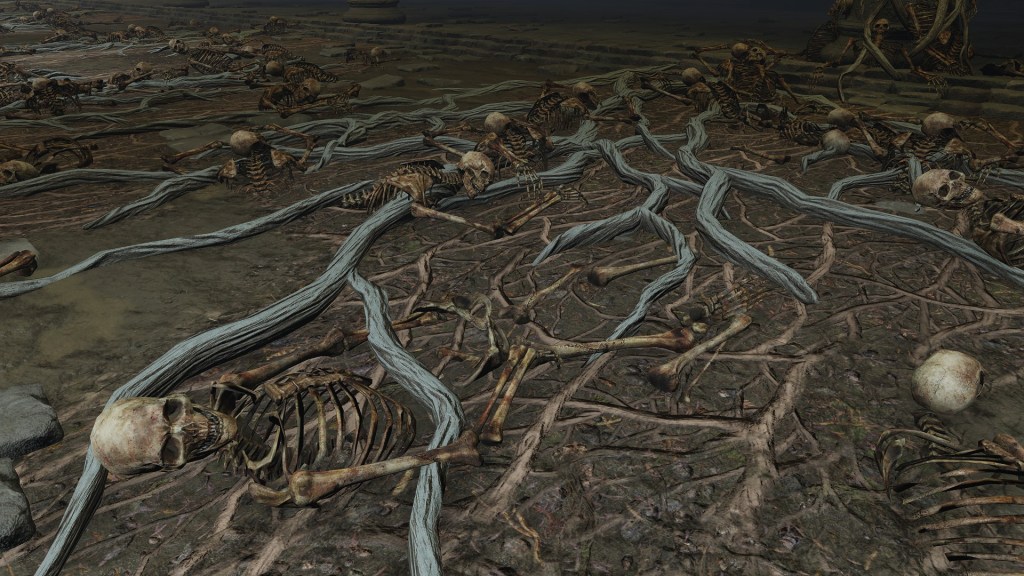
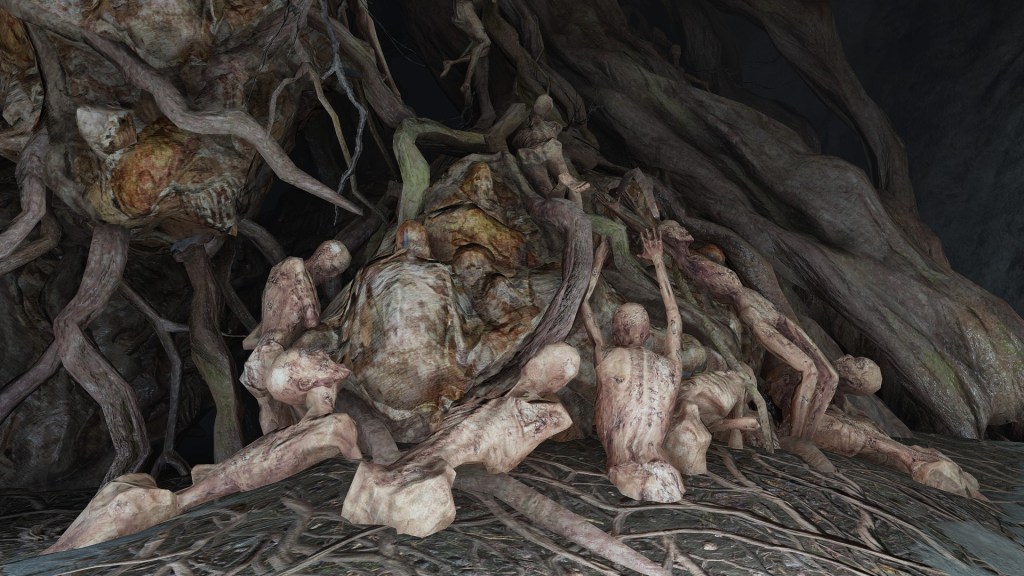
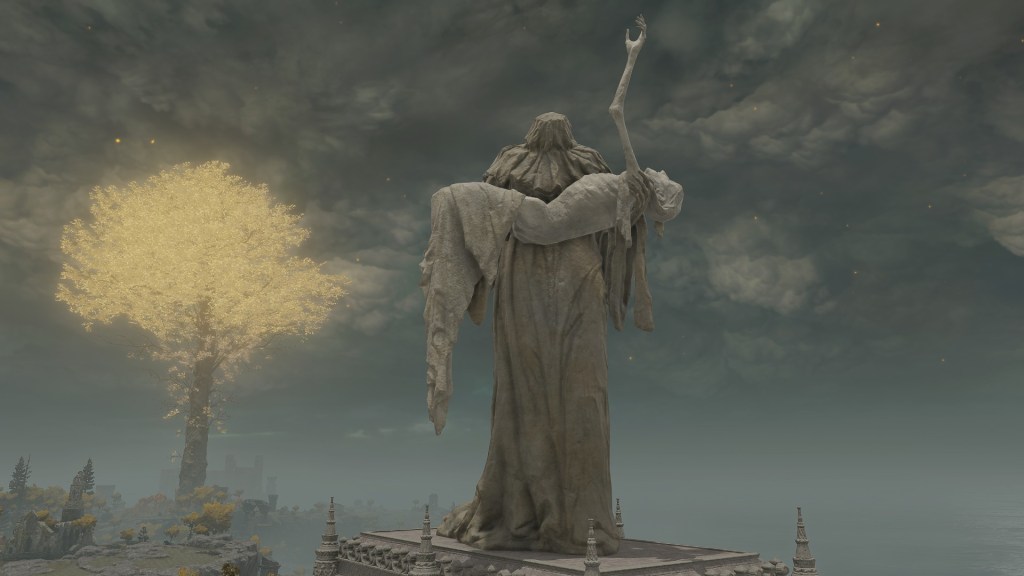
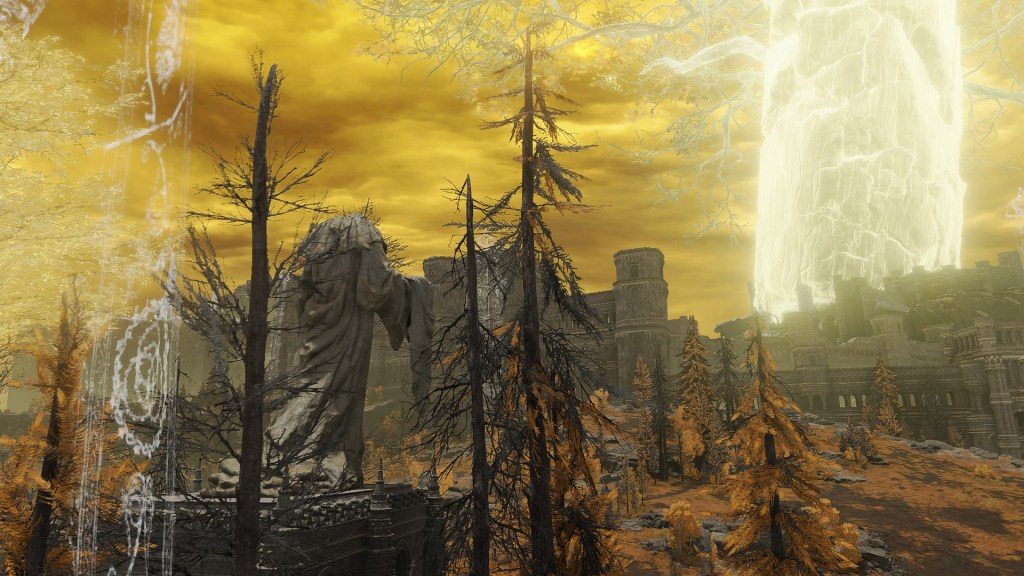
One characteristic practice of Marika religion is Erdtree Burial. Framed as “returning” to the golden tree, bodies are laid to rest close to the great roots. When the roots are too deep for a ground burial on the surface, catacombs are dug so as to expose them directly. The effect these roots have on the dead is most obvious in these underground graveyards. The main burial chamber is covered in roots appearing to drag in the skeletal bodies lying all over the floor. At the back are the core roots where more fleshy bodies look to be assimilated. This is the intention, as shown by the statue atop hero graves — the hooded figure offering a corpse that longs for something out of reach to the towering trunk. From this, anyone might be taken, body and soul, and incorporated into the Erdtree. Just as the radiant tree has permeated life with runes, so too has it developed a means to recover that lost power, returned via the earth. The practice of “tree-returning” (還樹) helps optimize the recycling process, but it is ultimately the great roots’ behavior.


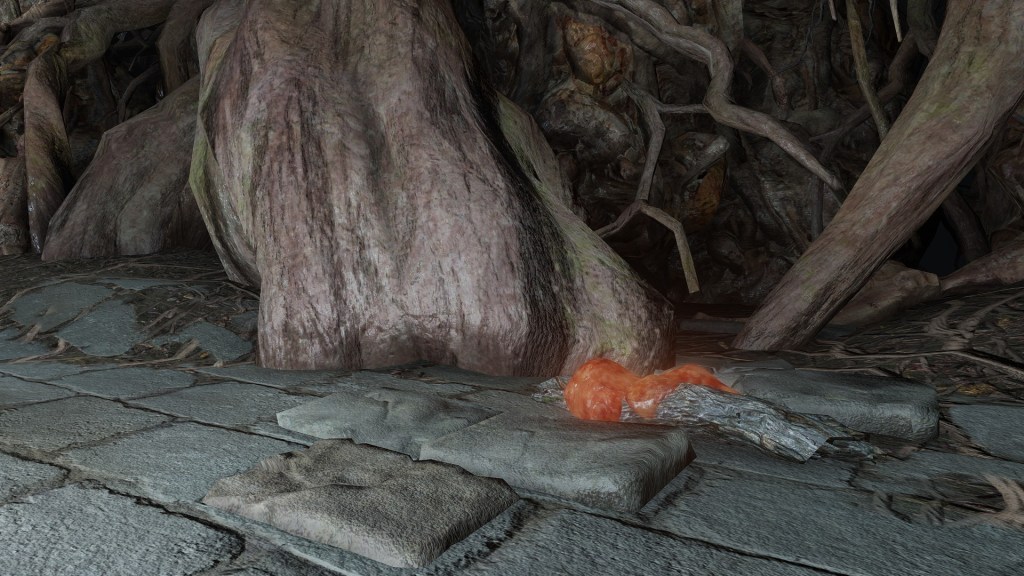





… Forgive me. I cannot hold a service for you right now. But you didn’t live in death. Your soul will return to the great tree someday. O Gold, do regulate this one’s soul.
The Erdtree shows itself to be not just a collector, but a recorder of souls as well. Defeating certain bosses rewards us with a remembrance, a large collection of runes arranged to resemble the enemy as encountered prior to death; based on their individual menu graphics, even taking on the hue of the owner’s specific magical affinity. These recollections aren’t mere hollow imitations, however, since Enia can use the Two Fingers’ power to derive items either owned by the boss or somehow related to them — for example, the Grafted Dragon is a unique weapon based on the head Godrick grafts to his arm during our fight. This may only be a slice of the complete soul record, hence the ability to record even the Elden Beast. Still, each and every one is engraved into the Erdtree, a permanent database for at least the powerful souls. And this is most likely due to the pervasiveness of its roots wherever we encounter a boss, sensing nearby runes it hopes to one day absorb through the soil.
If this is their main purpose, then it is no surprise that Erdtree Burial became formalized for any under the Erdtree’s dominion. The full extent to this new cycle of life and death certainly hasn’t eluded its worshipers — doors protecting the main chamber are universally adorned with a relief of the tree, robed figures offering lumps of gold to the roots while new people form out of the branch tops. The faithful well understand that the blessing they retain in death theoretically contributes to the growth of future progeny, as highlighted by those born on Altus Plateau. With the Golden Order’s emphasis on life, nothing could be more important for contextualizing death. In fact, Erdtree Burial is considered an honor, individuals like Lhutel and Kristoff receiving one for meritorious deeds despite almost definitely not perishing in the course of their actions. The descriptions of hero’s runes similarly highlight how these brave warriors simply drop dead after finishing their heroics with the Erdtree’s grace. Even assuming that gold extended their life, this marks a change in mentality toward demise, focused on the how.
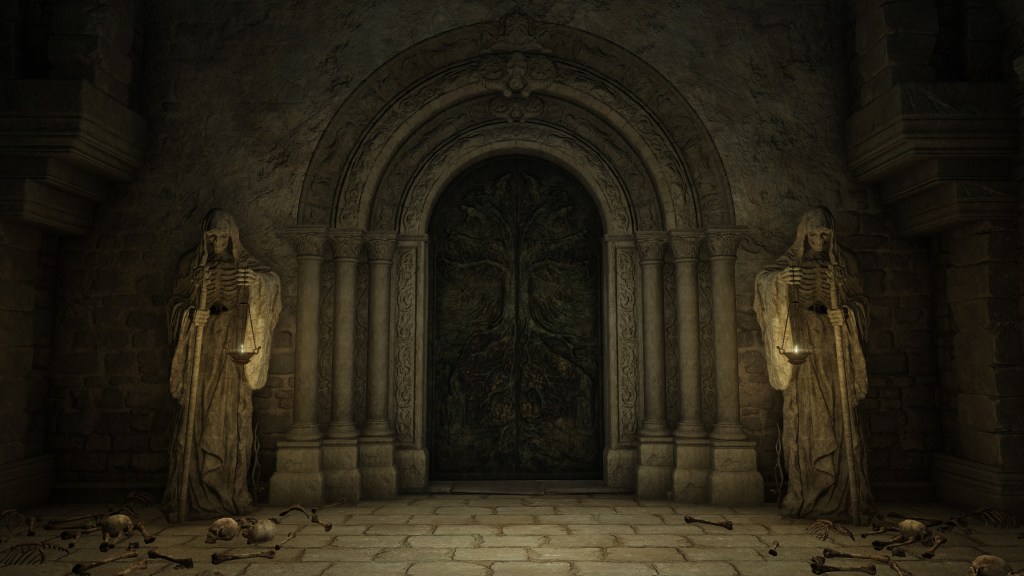


That Erdtree religion encourages an early grave isn’t beyond the pale. A prolonged life begs questions of meaning — what is the value to added existence? Denied a set fate of finality, the possibility of death becomes solely elective, thereby exacerbating this philosophical conundrum. After all, death is still the only standard for framing life, no different from evaluating a movie by where the film was cut. With how Marika arranged it, the Golden Order effectively turns everyone’s final moments into a judgement of their own personal history. Obsession with life thus ironically leads to a greater preoccupation with death. As a matter of pride, dying must occur neither too early nor too late. It is natural to want life to end on a high note, especially with a predominant honor culture. But now that sentiment holds renewed significance. Absent Destined Death, ordinary men vie for choosing their end, stopping after building a worthy legacy. The old guard already accomplished their highest accolades, and so all that is left is to contribute to the merits of the next generation.
In this way, Erdtree Burial facilitates a key role rounding out the people’s egocentric narratives. Gold has afforded them the opportunity to shape their own lives to a greater degree than ever before, which also puts a heavier onus on them instead of fate. And while maybe not on their terms, at least those who fail to make something of themselves can still take solace in helping posterity with their burial. Admittedly, the process is slow-going, with so many buried in anticipation of returning to the tree rather than actually doing so. Cemeteries and crypts have no shortage of bones laying in and out of their graves, obviously left to rot without being absorbed. This seems to be due to the Erdtree’s limitations. The spirit sitting in the Stormfoot Catacombs mentions needing to wait for the greatroots to “call”, implying that the tree is prioritizing bodies based on its own criteria. This only matters if it cannot assimilate them fast enough. Catacombs therefore include auxiliary chambers because the roots take their time with the deceased before the rest may be granted audience. Still, waiting in line is preferable to dishonor.

On that subject, desecrating the graves as the faithful await assimilation is treated with appropriate enmity. Catacombs commonly feature imps. Occasionally, these demonic figures are genuine stone statues for decoration, but most are golems acting as guardians for the tombs. True to their names, they use their deceptive appearance to their advantage, either playing the part of mere grotesque or otherwise lying low and out-of-sight in order to ambush the unsuspecting graverobber. Cementing the association, their peculiar daggers shaped to lacerate flesh with their dual hooks has become known as their forked tongues. Despite these nimble golems’ reliance on surprise, their generic form is actually well known as guardians outside catacombs. Besides being the universal model for seal statues, some imp golems adorn rooftops in the Erdtree capital’s Upper Quarter, ready to counter more conventional thieves. Perhaps that is why they possess such a variety of faces, but they are iconic regardless.
Commonly leading these imps are the Erdtree Burial watchdogs. These golems take the shape of something more feline than canine, with as many as three heads like the mythological guard dog of the Greek underworld Cerberus. Each wears the stereotypical regal red cloak and crown to convey them as the kings of their respective catacomb. They wield either a stone greatsword embedded with their watchful eye or a staff enjoying the weight of a great hammer. The latter is a kind of “sacred staff” (錫杖) normally employed by clergy, thereby solidifying the hallowed duty placed on these faux kings’ shoulders. Their design accommodates attacks with their clubbed tail, which is lit aflame through the same mechanism as their mouth flamethrower by default — though modifications are made to suit the maker or environment. Even if the more deadly constructs, the years have been less kind, their moss-covered and decrepit frames no longer functioning smoothly. So bad is it that they themselves have been subject to graverobbing, their swords missing the assumed gem used for the symbolic eye.
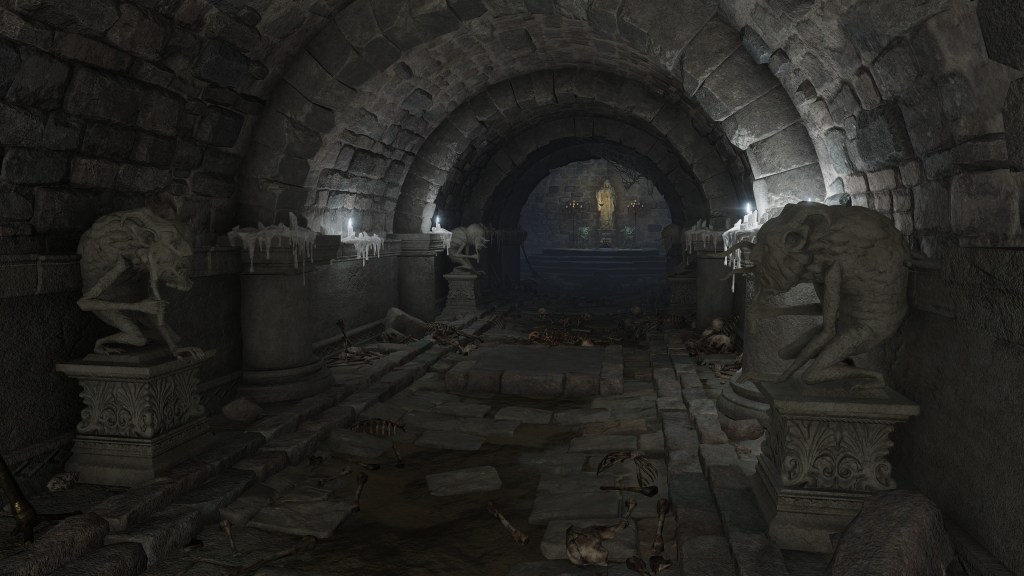


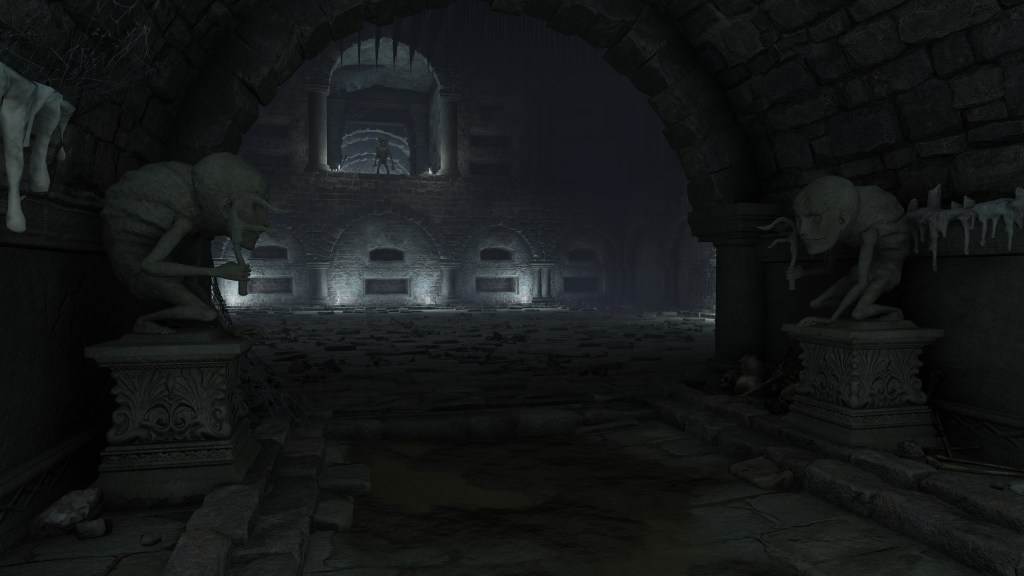


Great sacred staff of stone make fitted with brightstone. Choice weapon of tree return watchdogs who protect catacombs.
The watchdogs are kings of the catacombs which have deteriorated over the long months and years and become decrepit, said to be the chiefs who lead the imps.
Stone greatsword that tree return watchdogs wield.
It is modeled on the watchman’s eye, but that eye is hollow due to grave robbing, thus this sword is just a stone mass.
Imperfections notwithstanding, the golems convey the importance those living under the Golden Order still hold for death. The great roots may not express any overt holiness, but they were nevertheless equally as important as the trunk and canopy. Even in its original form as the abundant Crucible, the Ring’s vessel was attempting to reclaim some of that life for longevity. Erdtree Burial became Marika’s answer to the pagan practices of yesteryear. In her era to come, the golden tree was the shining center of humanity, a brilliant beacon to all life. Death was to be a celebratory end for a new beginning on this earth, not a dark shadow of destiny. That change in paradigm was good for her future plans. Because in spite of the mountain of corpses she already stepped over to get this far, the god required yet more death to pave the way, this time to becoming queen.
 Lokey Lore