
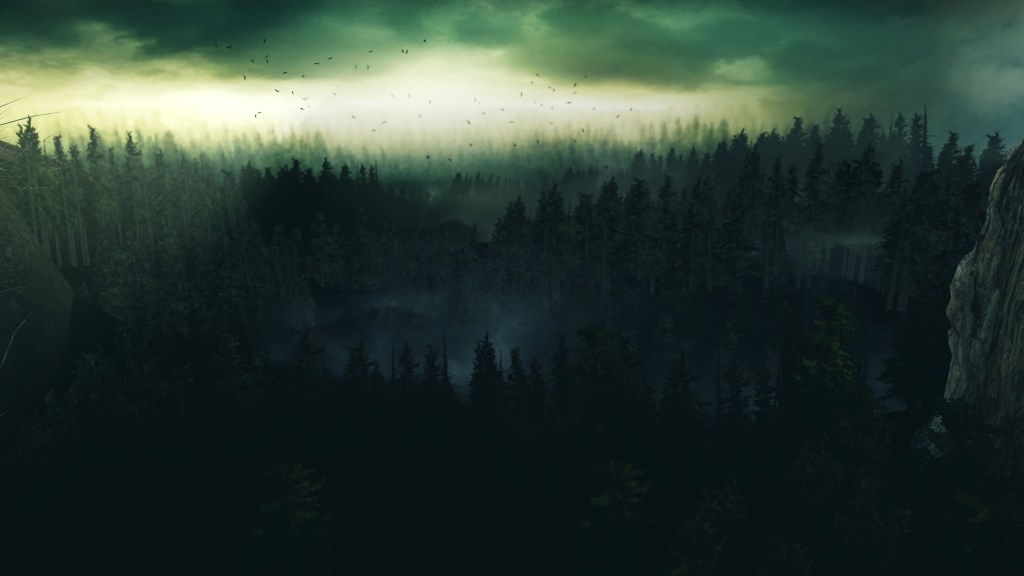
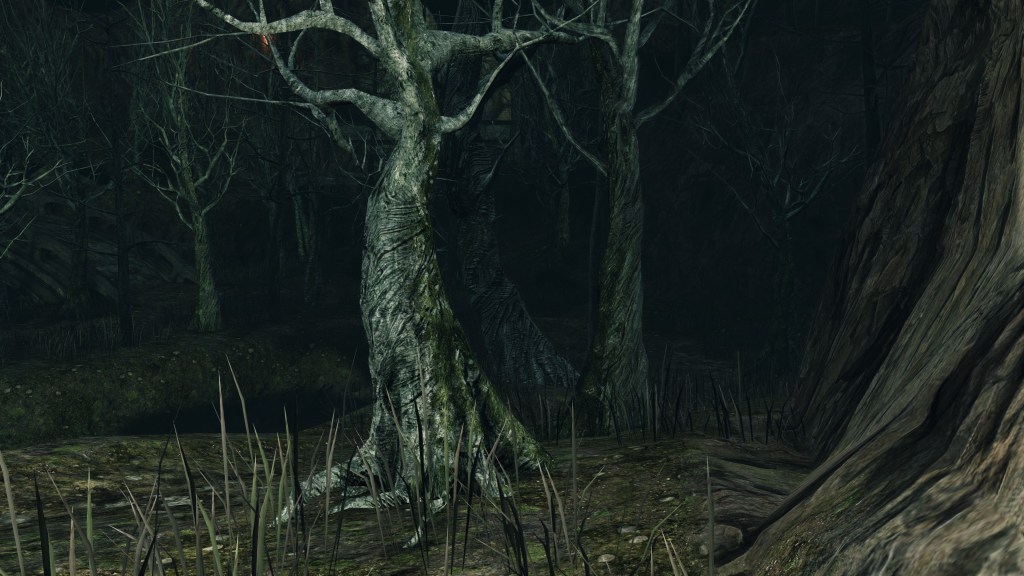
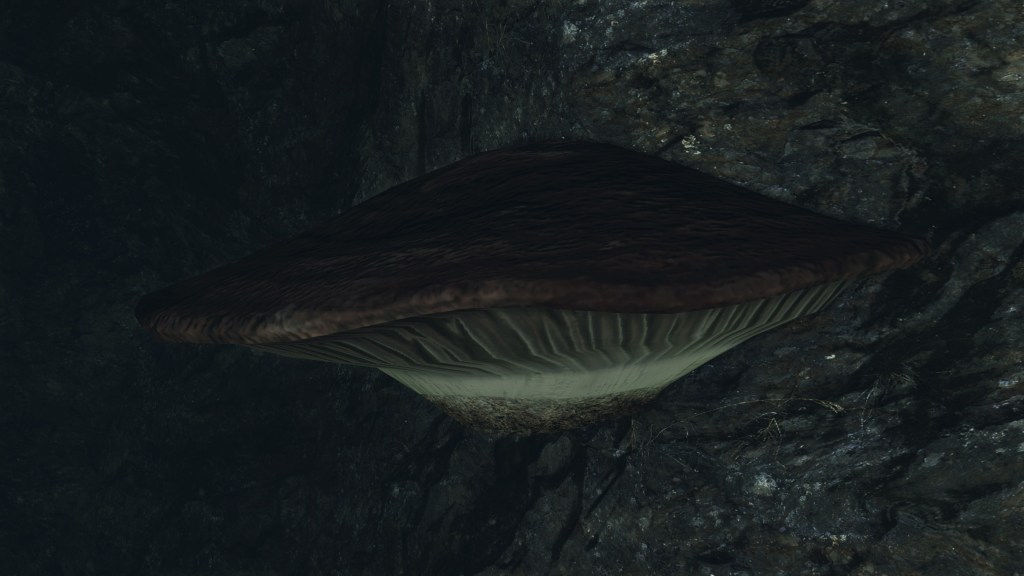
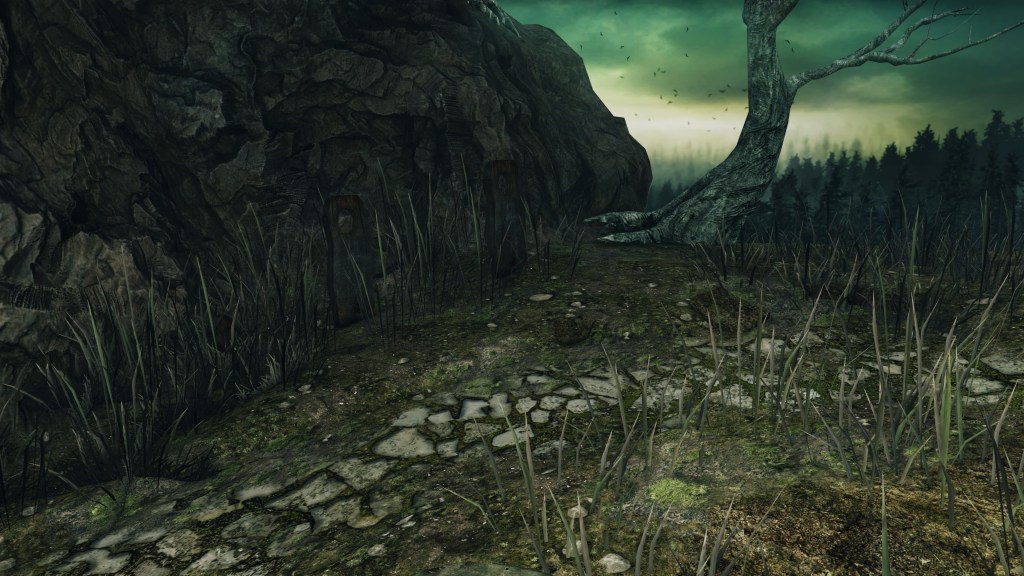
Before it became known as the “Forest of Hunting”, (狩猟の森) the copse south of Majula saw its start amidst the Great Shift. Looking at the official map, the area lies adjacent to Shaded Woods, separated by the western mountains. This begs the question: did parts of Darkroot Garden from the original Dark Souls (DS1) land on that side of the mountain range as well? While trees in the distance make it look like a conventional pine forest, the part we explore is filled with a variety of mostly leafless white trees covered in moss, bringing Oolacile to mind. There are also large red mushrooms caps growing on the walls within one huge cavern, the same seen in the Oolacilian mushroom-men’s territory; cut content confirms plans for the caps to be just the mushroom-men. Then there is Chameleon — an Oolacilian sorcery — found in neighboring Harvest Valley. Like the spell in Shaded Woods, the art has been recreated with common magic. Nonetheless, it implies that vestiges of Oolacile exist nearby. And with the valley also home to enemies from this Huntsman’s Copse, it is easy to imagine where specifically.







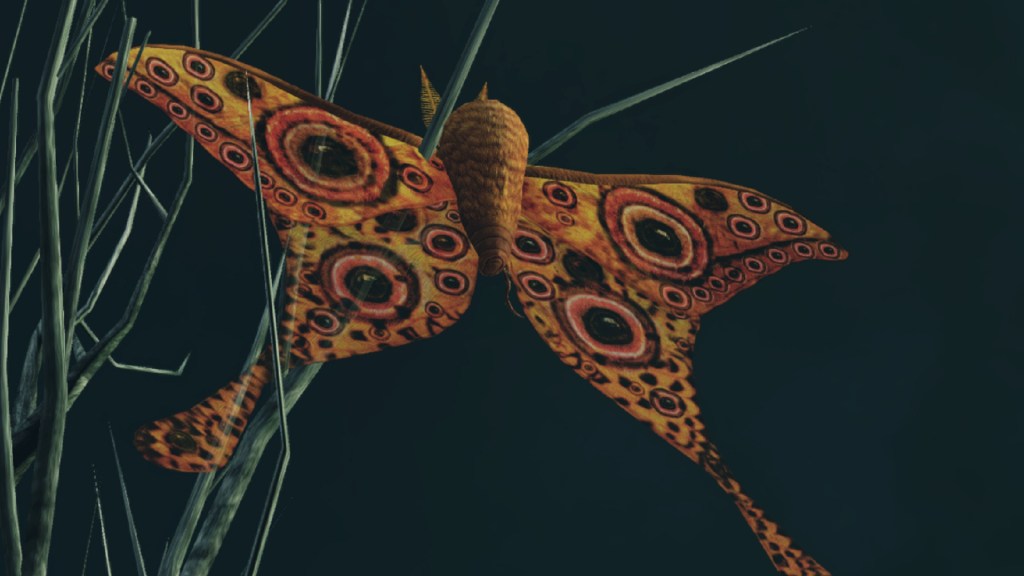
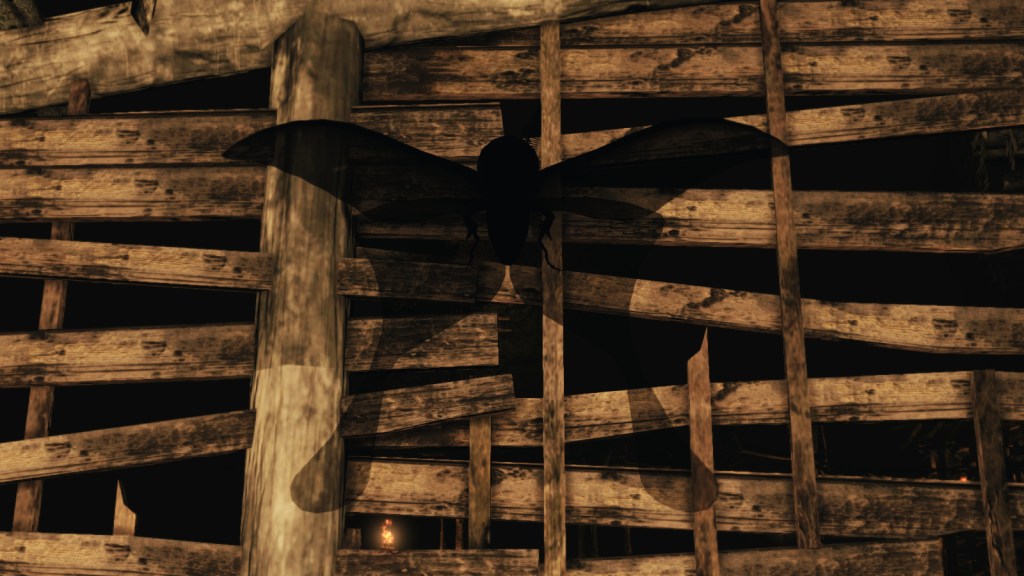
Finally, there is the presence of the “moonlit butterfly” (月下蝶) all around the copse. The name plus rumor of the creature being a product of magic rather than natural birth are obvious references to the moonlight butterflies from DS1. And while the rumor itself may be false, it is still possible for this game’s butterflies to be connected to Seath’s creations, as distant descendants if nothing else. They supposedly only appear under the full moon during winter, a desire to bask in moonlight much like the one butterfly encountered as an optional boss in DS1. One moonlit fly trapped in the Gutter has turned into a phantom silhouette in the prolonged absence of such light, so it is definitely important for them to absorb celestial magic; perhaps it is why their blood is dark blue. And although we can find at least a single butterfly in various areas across Drangleic, they are by far most common in this area, followed by Shaded Woods. Considering the DS1 butterfly boss was located in Darkroot Garden, the implication is obvious. The current butterflies derive from that boss, and its spawn originate from those two forests.
Cap made from the plumage of the rare moonlit butterfly. Poisons those who approach.
The moonlit butterfly that only appears on winter nights with the full moon doesn’t have its entire ecology known, and no one has seen its larva.
One rumor says that it is a creature tinged with the power of magic.
Put simply, the First Flame landed parts of the Black Forest on both sides of the mountain range. This awkward translocation allowed both to share many of the same elements. But because of the divide, each forest evolved in a different direction more conducive to its specific environment. This isn’t even accounting for different degrees of those shared elements — one has a single white tree, the other is a pale pond in an otherwise ocean of green. Neither does that account for elements exclusive to one or the other, like the grey forest of fog or mushroom colony. Only the butterflies, free to fly wherever, have remained constant. Even then, they have adapted to the changing environment, growing smaller and feeding on poison moss; the poison filtered out and released in dust clouds with a flap of their wings to ward off approaching threats. After that, this dense woodland wasn’t subject to human urbanization beyond Heide’s loop temple and short cobble roads. More than likely, it just served as a path to the Old One in the mountains past it. That might have remained the case had the copse not come to sit between kingdoms.





The Hollow Skin is a peculiar chest item to find at Brume Tower. This mask has been made to resemble a Hollow’s face with startling accuracy, even providing resistance to the Hollowing curse and the ability to see advice from other worlds. Thankfully, the description confirms that this unsettling replica is a fake by all appearances — and smells. However, it also claims that such a mask couldn’t have been made this well if the maker didn’t sincerely pray for the victims of hollowing, which implies sympathy for Undead. Be that as it may, the attention to detail plus effect also suggests that the owner had a fixation on the curse, maybe even a fear of it. Based on the location, it is the most likely a product of the Old Iron King, someone who had both the coin and artistic sensibilities to commission such a faithful replica. And the man was certainly concerned with undeath at the time.
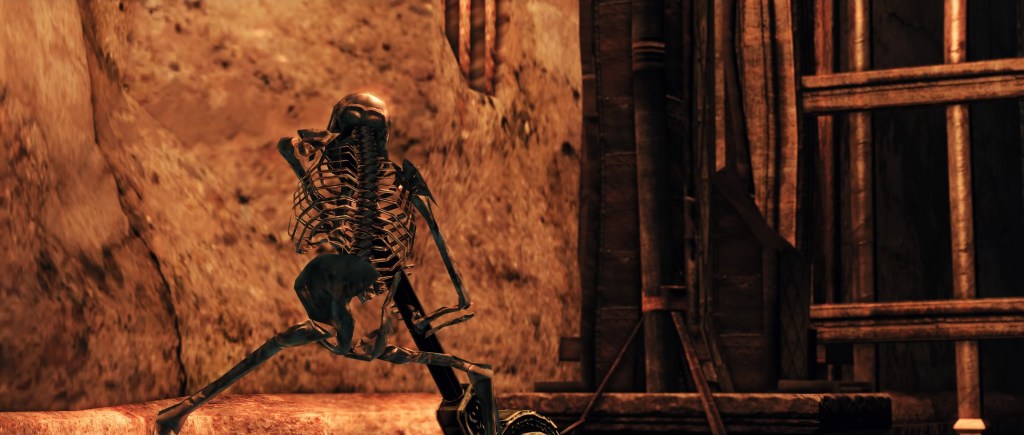
The king dispatched forces to the forest on the remote edges of his newly-conquered territory to conduct Undead hunts. The reason for choosing that location is easy enough to surmise. Mankind’s standard practice has been to banish those who die but come back before they go mad and threaten anyone, and where else to exile them except a hinterland where no one lives? Looking at one skeleton wearing a crown and the Ricard’s Rapier we can acquire, this includes kings and princes, a testament to the long history of this tradition by countries like Alken and Venn. However, the policy is extremely short-sighted. Left alone, these Undead will swell in number as generations pass, creating a larger and larger horde just wandering the wilds near your border. Forget the danger of seeking to expand into that area at some point, what happens when those Hollows inevitably begin to wander back into your towns and villages once they have exhausted that space? The Iron King was wise to deal with the issue directly before it potentially got out of hand. Less wise was his choice of personnel to execute his royal decree.
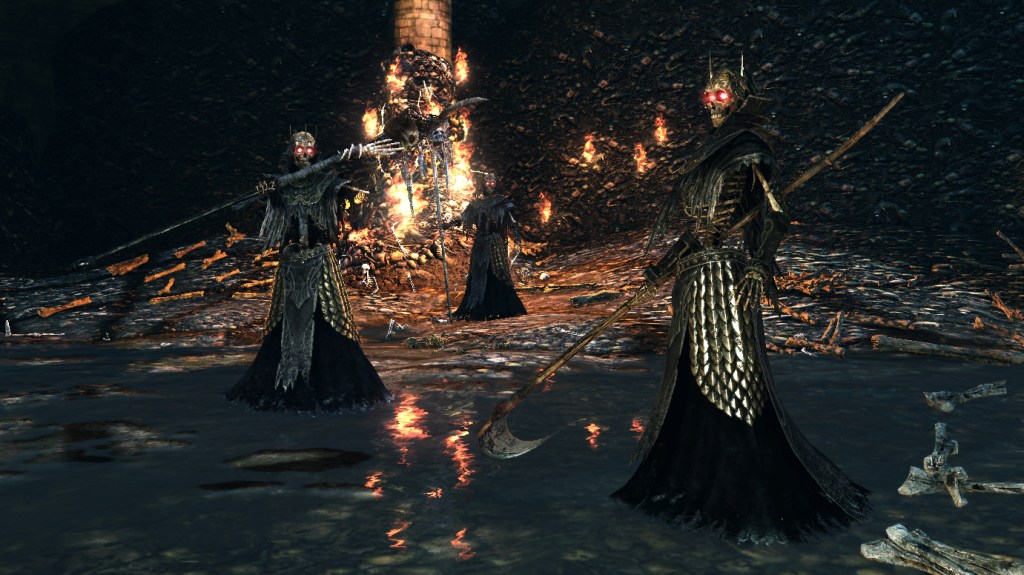
The Skeleton Lords were originally subordinates of the Iron King tasked with leading these Undead hunts. Two of three bosses are pyromancers, and Drangleic sorcerers in black lurk around the rest of the region, so spellcasters made up a significant portion of the hunting party’s commanders. And taking into account sorcerers’ penchant to investigate and experiment, their king should have kept his underlings on a tighter leash. Certainly, he supplied iron mechanisms for dropping grate gates or lowering stone bridges, safeguards to cut off the horde’s passage in the event of failure. But he never personally led them like the English text of the Bone Crown erroneously claims. Instead, he left them to their own devices, where they more than happily protracted their mission for personal interests. Undead were rounded up in newly constructed dome jailhouses before eventually transferred to a larger facility. This Undead Purgatory, or “Undead Execution Ground” (不死刑場) to put less poetically, seems like an efficient means to safely dispose of the kingdom’s dregs — until you see its agents.


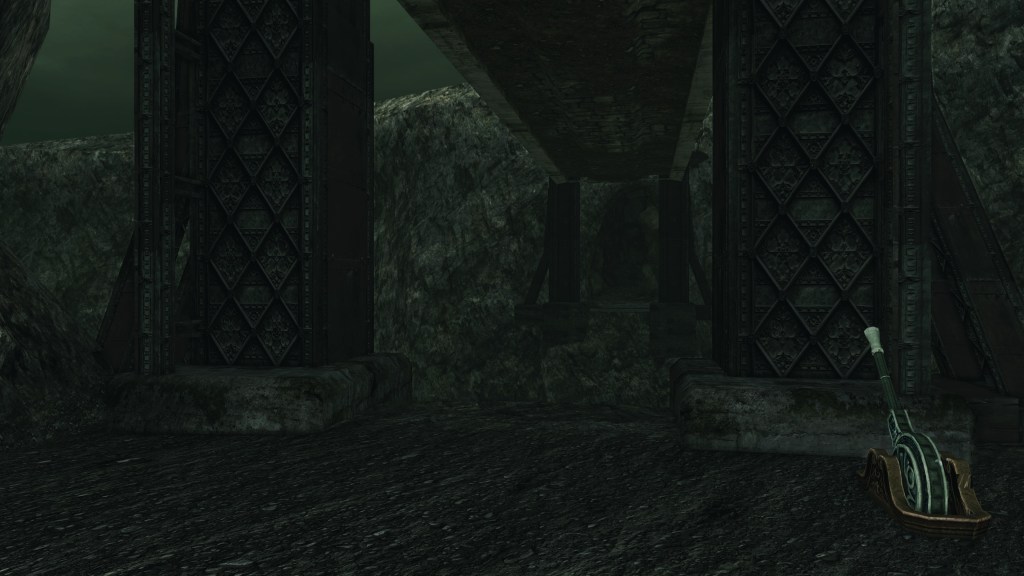


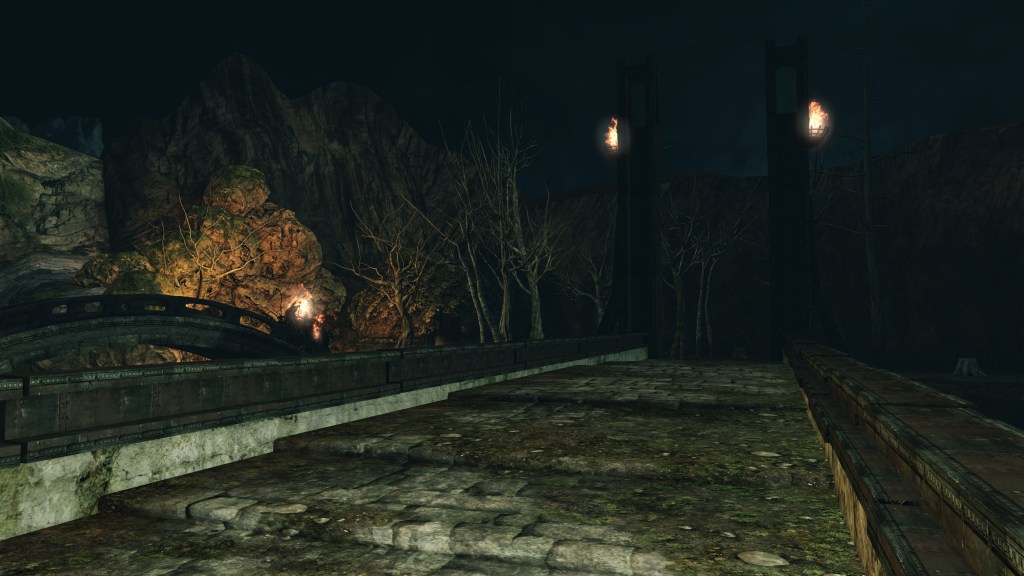


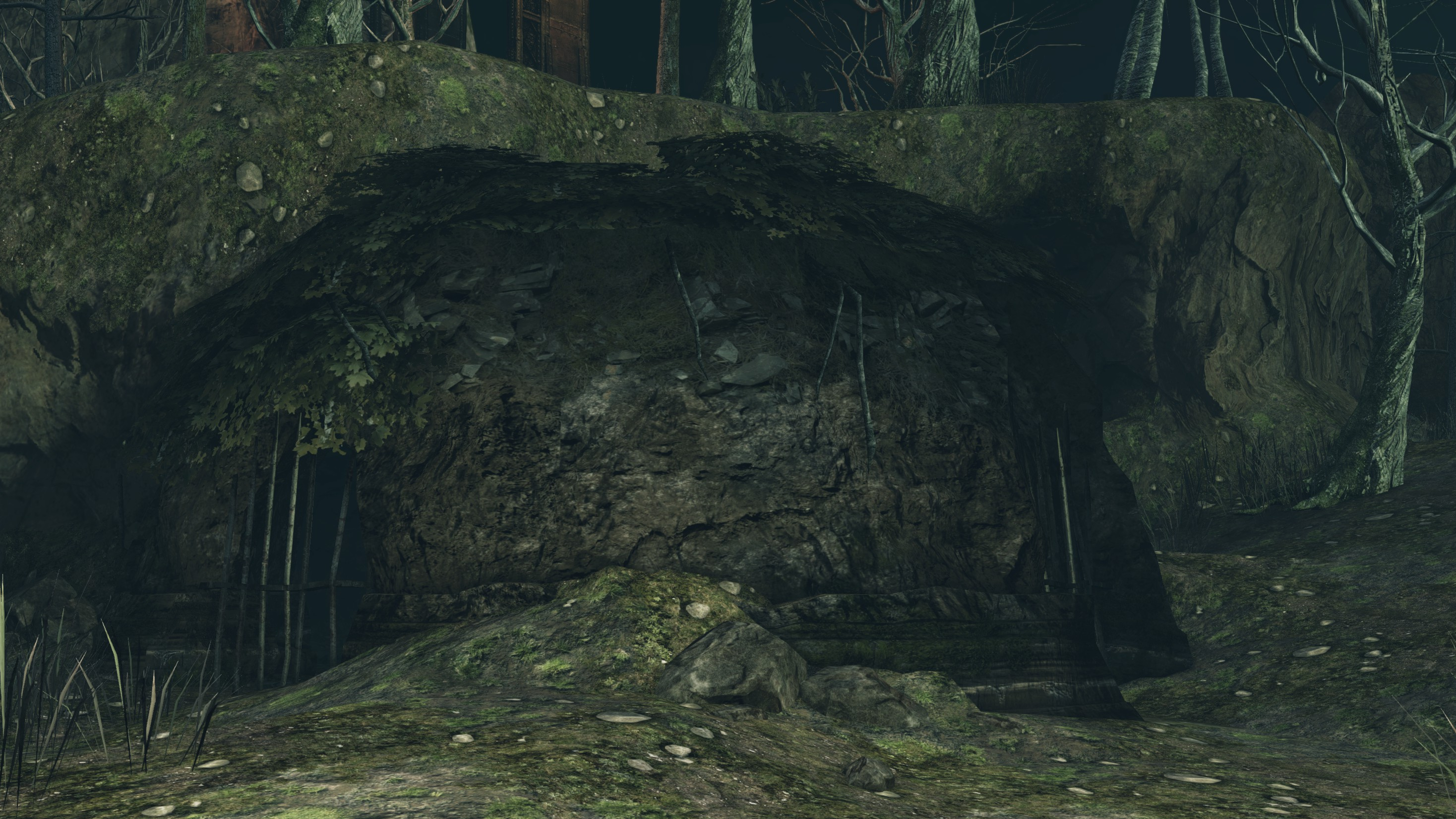
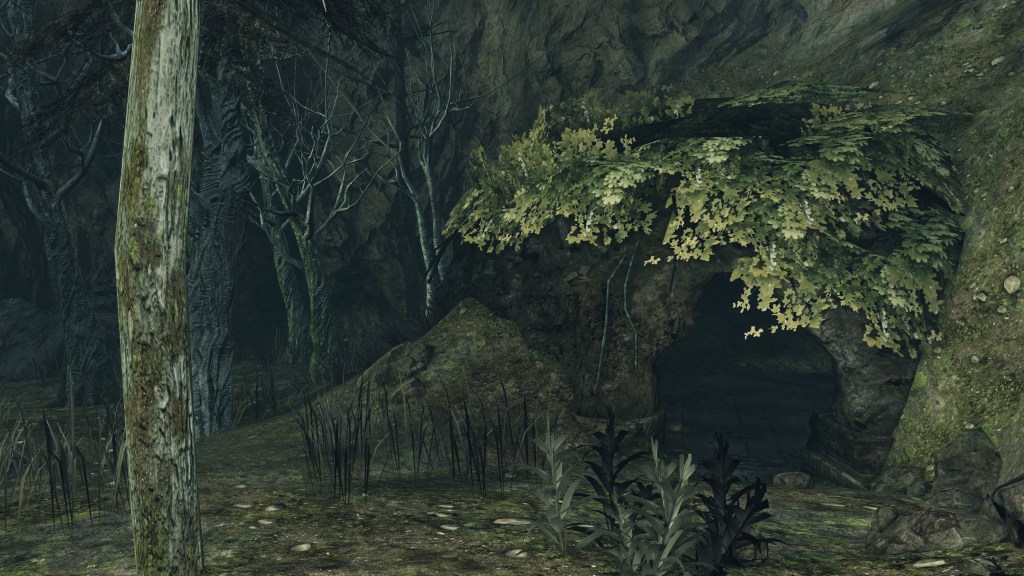
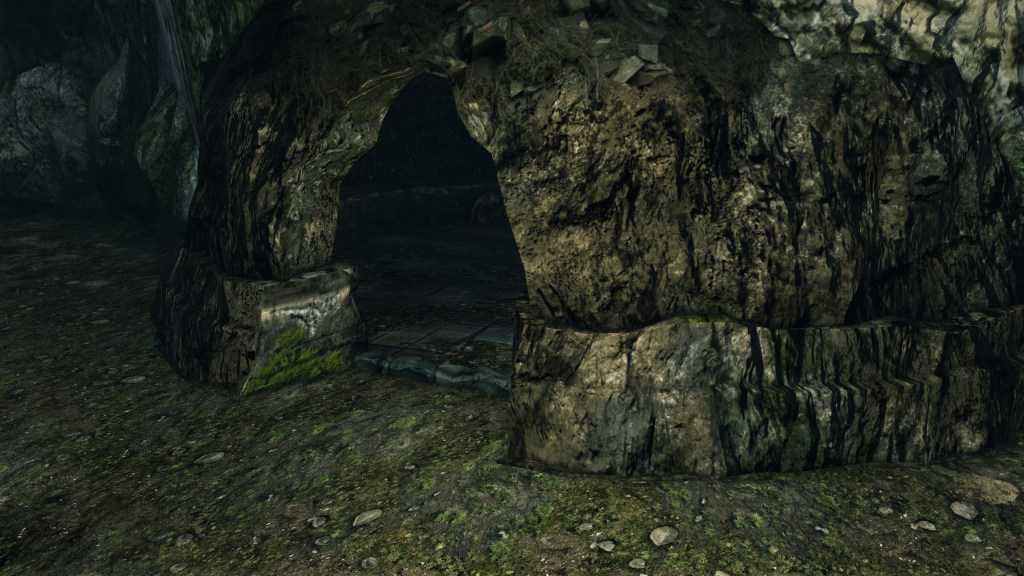


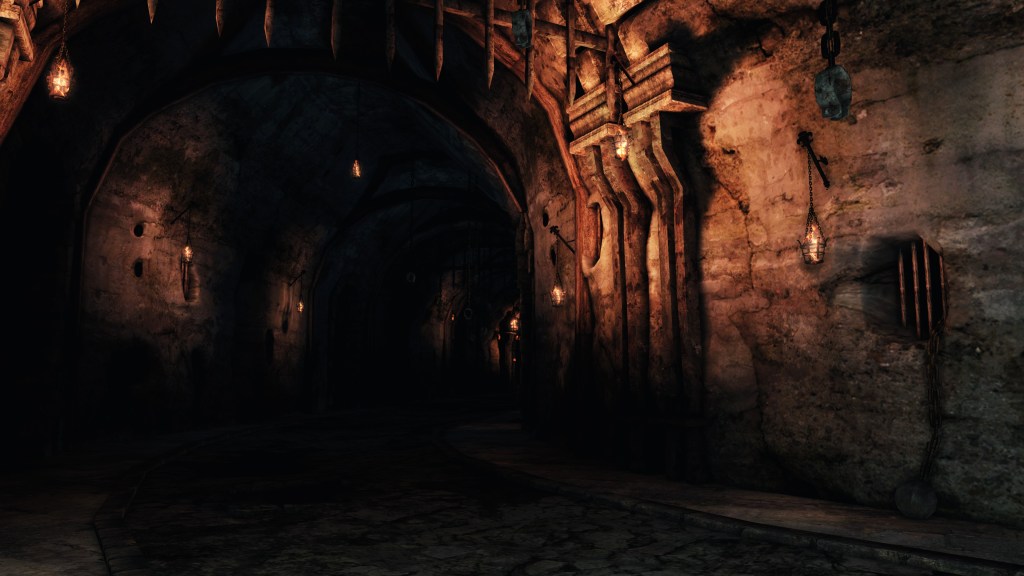


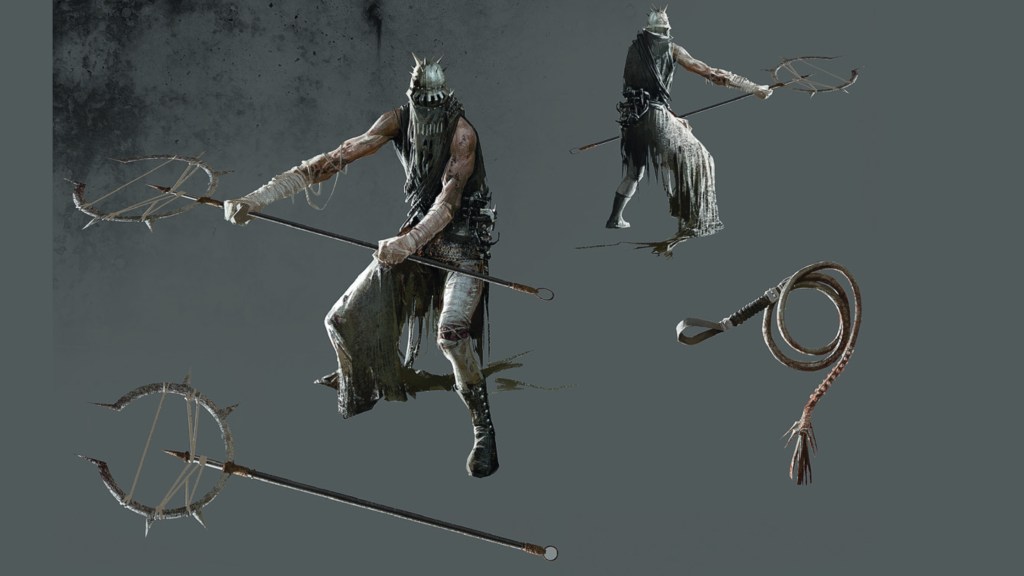
The executioners lurking in the forest wield spiked halberds or bloodied whips, the latter used for a “disgusting objective” — though not one necessarily forbidden by the gods as its English description purports. Nonetheless, it is clear that these executioners aren’t actually interested in putting down the Undead so much as extending their suffering for as long as possible. This is reinforced by the morning star found off a corpse in one of the smaller jailhouses, a notably “barbaric” weapon from DS1 designed to draw blood and thereby often preferred for inflicting pain. The same can be said for the Notched Whip or Flamberge looted elsewhere in the area, both weapons designed to filet skin and cause bleeding. Such needless cruelty extends even to their actual execution. The Bound Wooden Shield takes its plain counterpart and wraps it in chains and crude metal spikes, the description acknowledging that this dispossesses the shield of its primary function in favor of maximizing the target’s pain. Nothing better illustrates the perversion of these hunts, and it all culminated with the creation of the Executioner’s Chariot.
Whip smeared in blood. It was probably a thing used for a disgusting objective.
Its might is enhanced by the protrusion at the tip. Its efficacy against hard armor and the like is still weak.
Strange-looking shield. Found at the Undead Execution Ground. The coiled chains and spikes cause bleeding but likewise take away its function as a shield.
The excessive work which erases its original nature isn’t simply for defeating targets. It was probably aimed only to inflict agony.
The chariot is the product of necromancy as evidenced by the two-headed skeletal steed parading the rider around. Considering the entire facility is run by skeletons raised by sorcerers in black acting from the sidelines, this seems to have been a policy of the Undead hunt since fairly early on. The chariot’s actual function is simple: circle around the stone circuit and run over any Undead in the way. Even accounting for the scythe blades affixed to the wheels, this method of execution is hardly efficient. Most Undead might get partially crushed or dismembered the first time, but it would likely take several more circuits before the chariot finally killed them — and that is assuming that they would die for good. Any Undead subjected to this would spend their last minutes in repeated agony without any hope of stopping it. But that was the goal according to descriptions of weapons derived from its boss soul. The necromancers supervising this process do it for their own sadism, which reflects in their work.
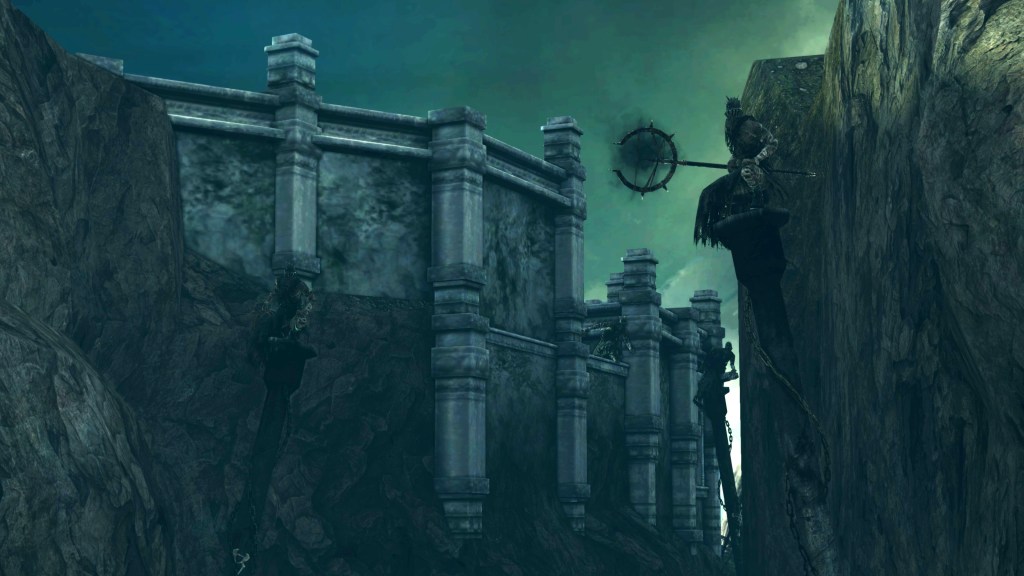




Assault spear created from the soul of the Executioner’s Chariot. Endowed with a cross blade, so possesses bleeding effect.
The spear born from the tyrannizing horse carriage which aimed to inflict agony upon Undead has a suitably heinous appearance.
Crossbow created from the soul of the Executioner’s Chariot. The iron plate on the front plays the part of a shield while firing.
The crossbow born from the tyrannizing horse carriage which aimed to inflict agony unilaterally prioritizes its own peace.
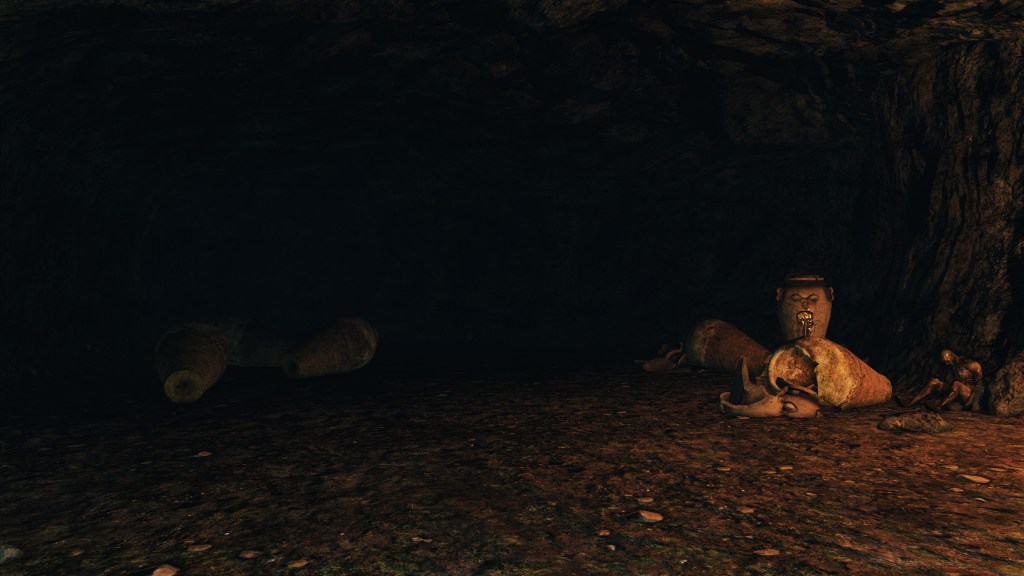
The executioner riding the chariot wears spiky armor to intimidate his victims and has apparently slaughtered countless Undead with glee swinging his sickle, but he is ultimately just a figurehead along for the ride. The one truly deciding the chariot’s path is the two-headed horse — a “life” created solely for tormenting Undead in the form of a hideous pair of horse skeletons. And while there may be nothing peculiar about the actual soul, the fact that this skeletal steed is frothing at the mouths with Dark power indicates that the necromancers dabbled with their own humanity to create it. It might be more accurate to say their victims’ humanity, for we see curse pots fill a cave where sorcerers perform their necromancy. As part of preparing a skeleton to reanimate, dark souls are apparently extracted from the bodies they did kill for later use or study. In short, they were more than happy to utilize taboo powers, especially if it involved their darker impulses.
Personal armor of the executioner of the Undead Execution Ground. Has thorns for daunting.
The executioner continuously slaughtered countless Undead, but in truth was no more than a mere puppet paraded about by the chariot.
Indeed, the description to the boss’ soul suggests that its form as a mad horse focused solely on torture embodies the will of its owner; the manifestation of such an ugly heart may have even consumed said creator. The horse keeps going round and round until either it crashes through a gate lowered to block its path or becomes too weak to make the full jump over a small pit in the circuit. It pays no mind to if it hits skeleton or sorcerer. Even the puppet it pulls behind it receives not a token gesture after he is wrecked along with the carriage. The horse’s attention is reserved solely for us, disrupting its single-minded mission. Although the boss is not unique, its power and self-absorption are not in doubt. Maximizing agony universally and protecting itself unilaterally — as the various item descriptions assert, this tyrannizing creation is ruler of the execution ground, reducing the now Hollow tormentors to cogs in their own machine.
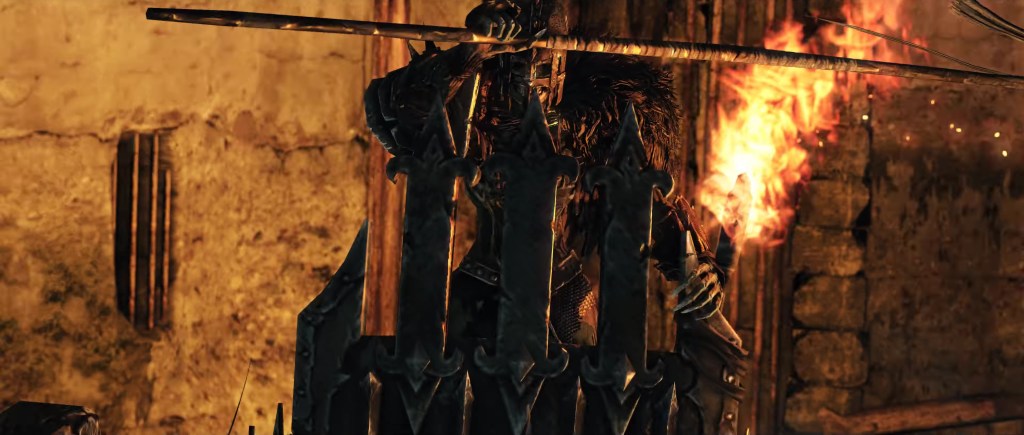
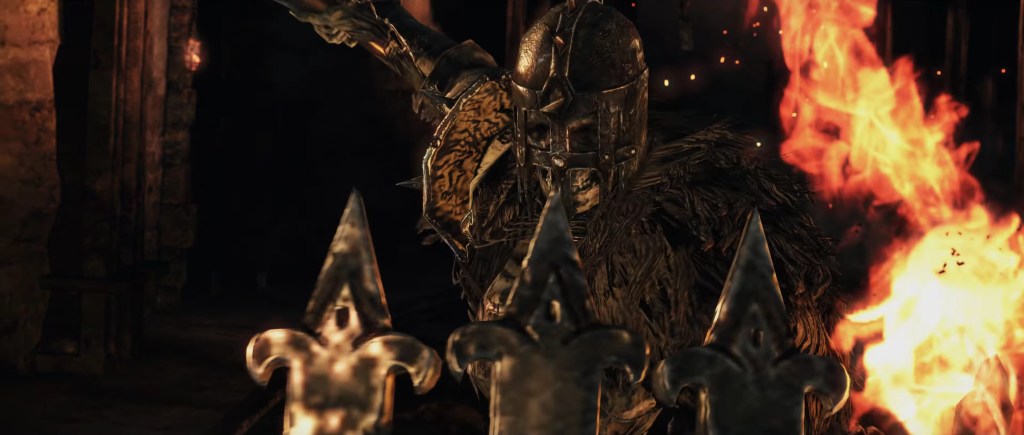
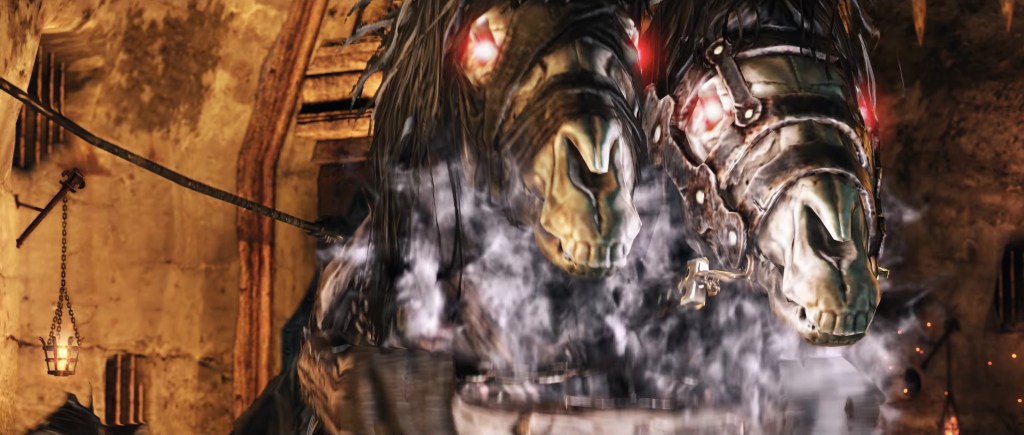

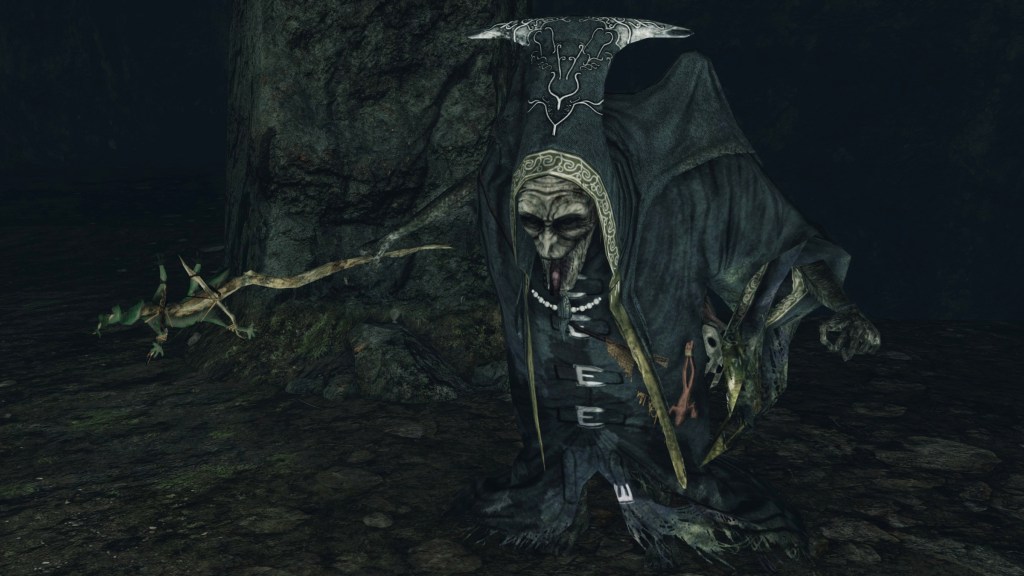



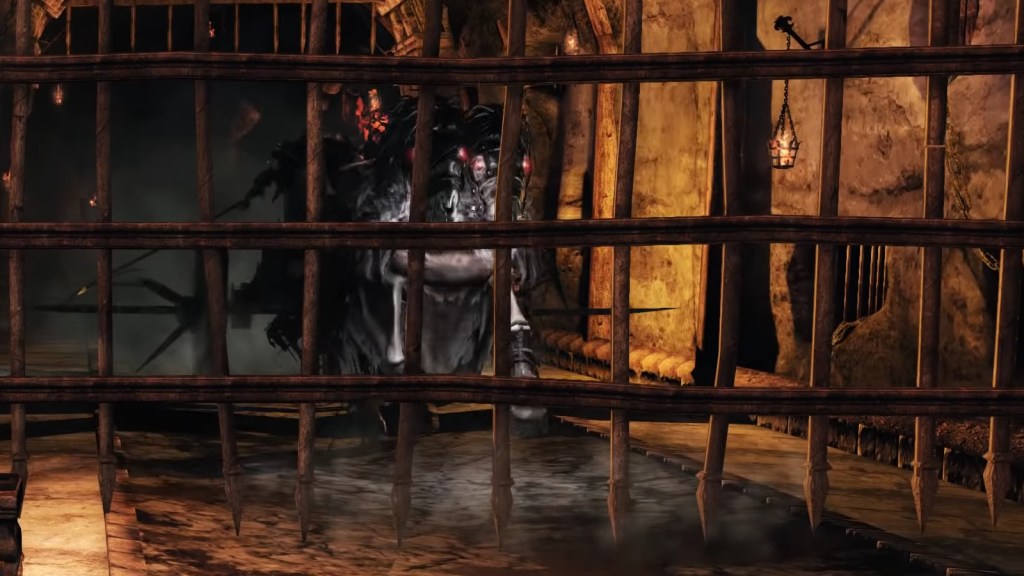
Soul of the Executioner’s Chariot that rules the Undead Execution Ground.
The life that was created only to torment Undead turned into an ugly mad horse as if it gave shape to the heart of the owner.
The special soul this chariot possesses is used to acquire a vast amount of souls or create a great power.
Ironic as that is, the fact that such sadism came to dominate the Undead hunts demonstrates the systematic issues with its architects. Even when they were not torturing Undead for the sake of mindless cruelty, they were still abusing their freedom away from the royal court. According to the Dark Souls II Collector’s Edition Guide, the armored skeletons encountered at the Huntsman’s Copse are former soldiers of the Old Iron King; they may carry the shields of later Drangleic foot soldiers, but those are ultimately generic. And although many had likely died combating the Undead, the guide indicates that a fair number may have been deserters. This cowardice is not that surprising when faced with what look like rotting corpses that refuse to die. But the fact that they are now among the dead — countless piled up in the Skeleton Lords’ boss room — implies the necromancers killed and reanimated these runaways to force them into playing their part. There is making an example of a renegade soldier, and then there is disregarding dignity for fellow man and enslaving him after death.
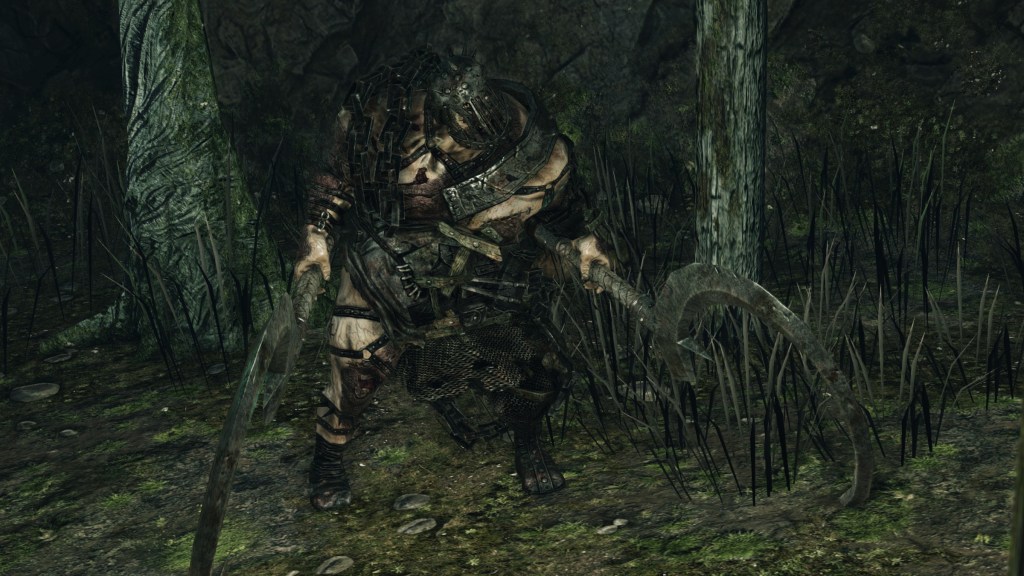
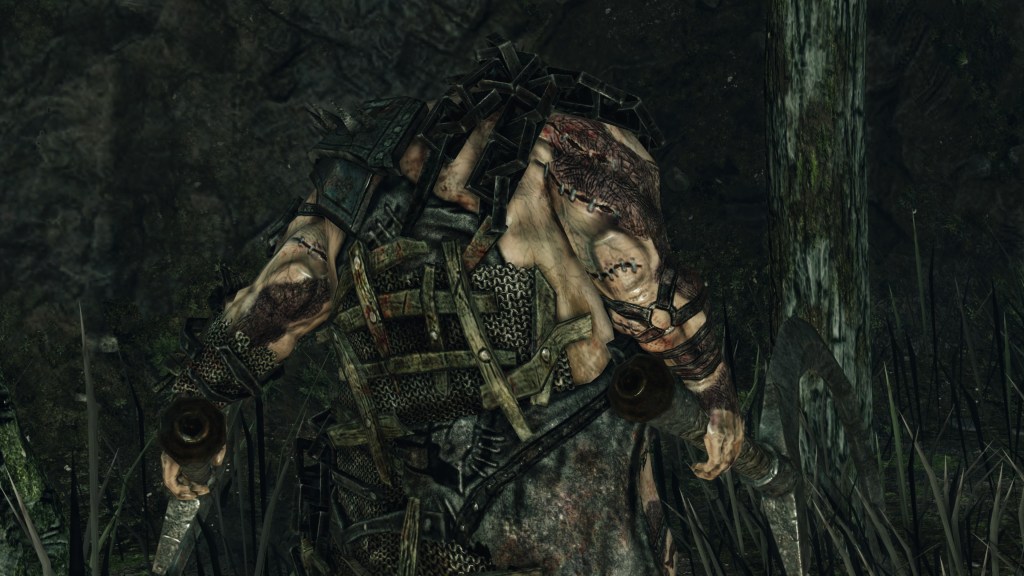
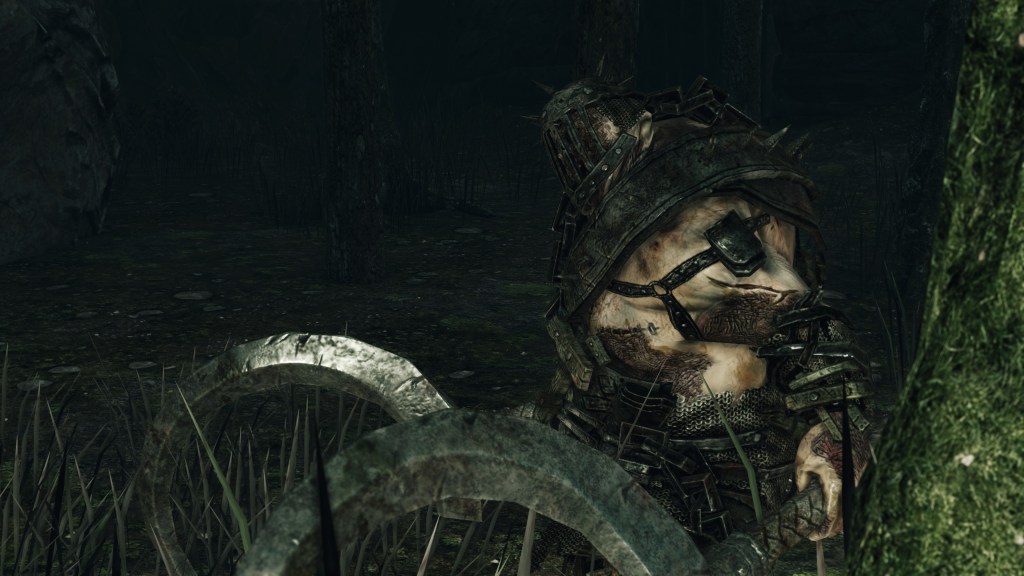
However, the sorcerers reserved most of their savagery for the Undead. The hunters helping search the forest for new prisoners to capture are a Frankenstein patchwork of different Undead body parts stitched together into one hulking monster with immense strength. We can only assume that sorcerers were curious about the curse, specifically the extent that parts of Undead could revive. Looking at they soul left behind, they also selected their materials from nameless soldiers, leveraging that military experience to hook prey with bradden steel in the form of oversized sickles. Nevertheless, these experiments in creating superhuman immortals are the opposite of the Iron King’s intentions, as noted in the Collector’s Edition Guide. Even ignoring that, it is no less inhumane to dismember an Undead and stitch him back together with his likewise butchered fellows just to see if he will still revive with full function of his new body. But without any oversight from home, they were free to do as they wished. And with that, brutality in the name of science proves to have been just another expression of their sadism.

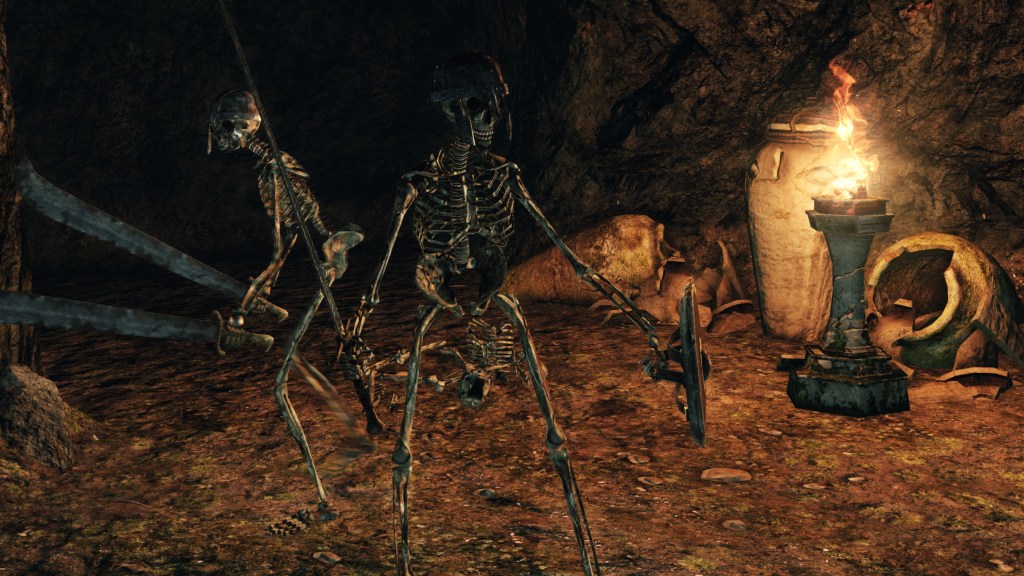



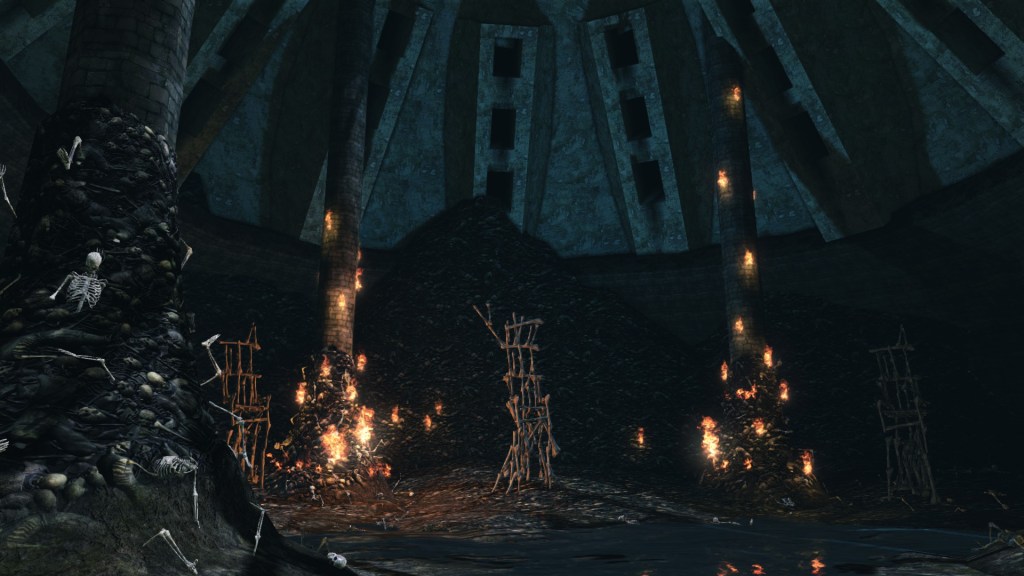
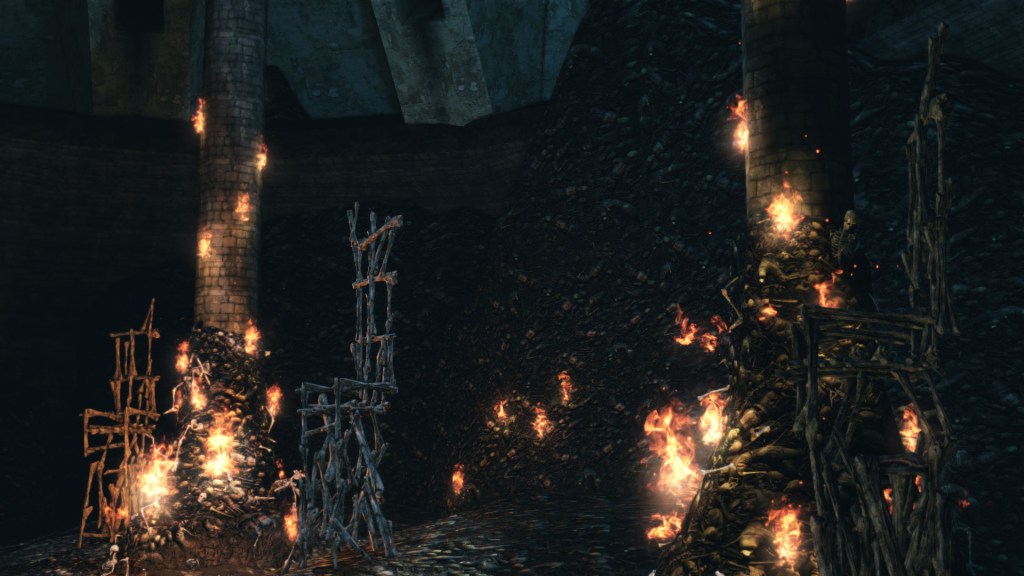
As if turning captives into obedient monsters wasn’t bad enough, one facility serves only to cast Undead unable to hold on for dear life into a huge pit. A hidden chamber alternatively lowers cages to the bottom of the mushroom cavern where the “poison butterflies” (毒蝶) and a giant basilisk have settled; clearly, for hunters offering their trapped “pet” a cursed meal. Out in nature, bodies burn in a huge pyre, with a chest in a nearby jailhouse storing Sublime Bone Dust. Evidently, the hunters decided to burn some of their captives to ash and then keep the souvenirs, without a care for those who might need to burn several times over before it took. They even brought dogs to tear immortals limb from limb and gobble them up. At every turn, we see their wicked deeds designed to make prisoners suffer on display. And all these horrific efforts were done under the command of the sorcerers, given that various sorcery-linked items can be looted off the local corpses — including Soul Spear, Aromatic Ooze, and a magically-infused mace. However, every single one of these “experiments” is Mengelian research at best.
It certainly didn’t stop them from justifying their barbarism as the will of god. On the top floor of the Undead Purgatory, we find statues of Nahr Alma, implying that the hunters had dedicated their killings to the God of Blood. In fact, praying to these statues as part of the Brotherhood of Blood warps us to an arena somewhere in these forest ruins so we can endlessly duel fellow covenant members. Worship of Nahr Alma may also explain the unique usage of Dark magic in the creation of the Executioner’s Chariot. That being the case, it wouldn’t be surprising to discover that the god wasn’t the motivation behind their ghastly ritual killings so much as an excuse for them, with any additional powers he or his disciples provided being welcomed with open arms. And if they had the blessing of god, then all they needed was the blessing of their neighbors.
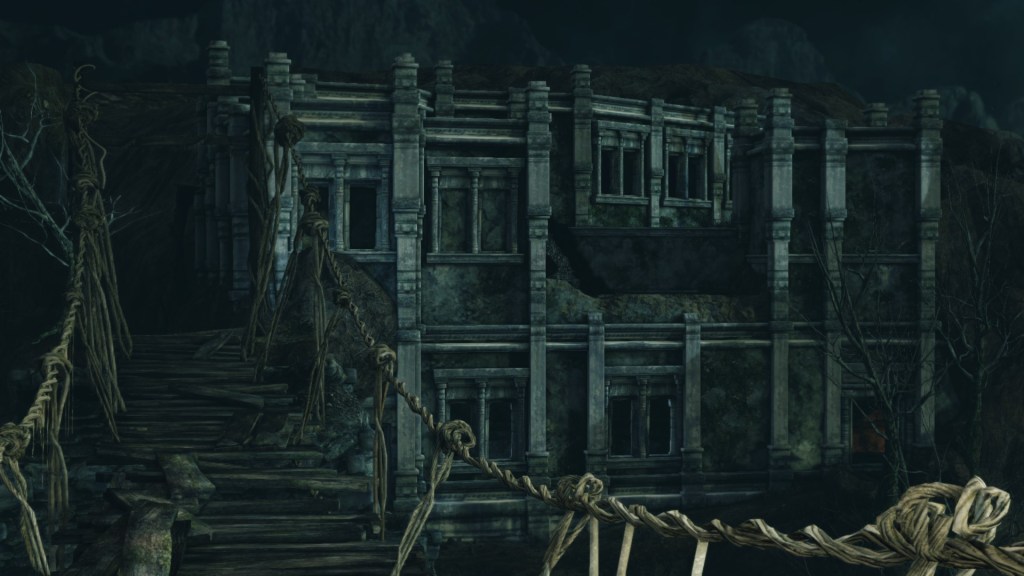
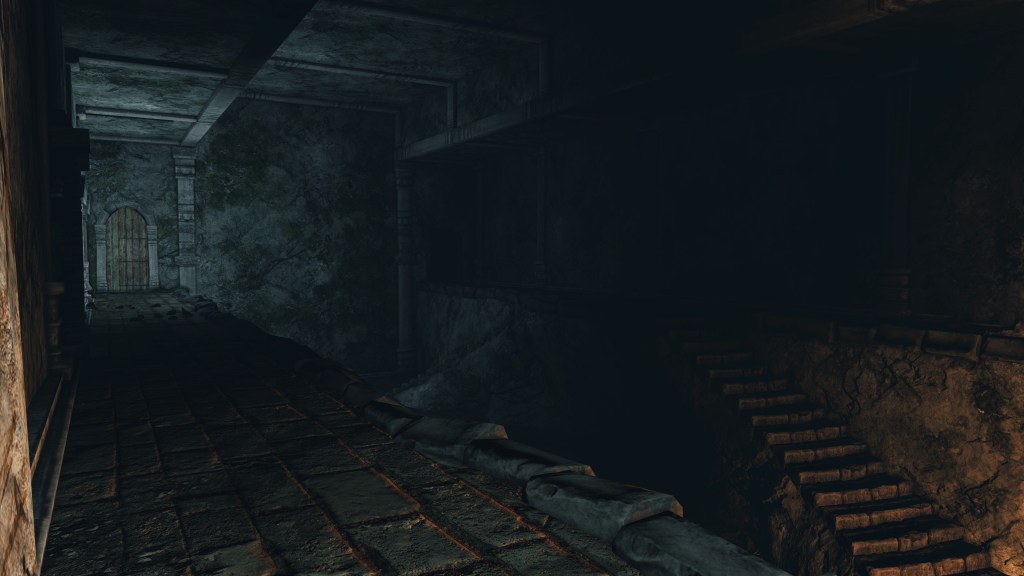


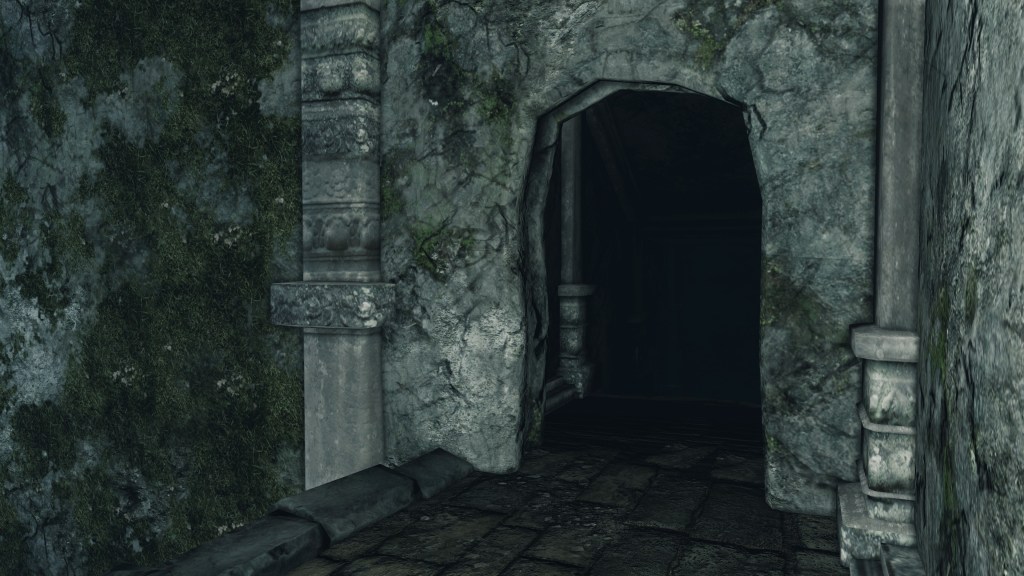


In order to access the Harvest Valley and beyond, we need to cross one of the iron bridges after defeating the Skeleton Lords in their facility in the mountain outcrops. Clearly, the hunters ensured that the forest was segregated from the rest of their king’s domain. In that case, it is odd to find Undead hunters among the enemies of the valley. By all indications, they are working as diggers or enforcers for Queen Mytha, implying that she knew what was going on at the nearby forest and turned a blind eye in exchange for some of their experiments. She is a sorcerer too, after all, and no stranger to unethical experiments herself. They may even be the source for her learning Dark magic. It would explain the hexing urns left on one corpse in the outer reaches of valley while another, a brave warrior, carries the restored text for Chameleon closer to Earthen Peak. With a little negotiation, both parties could have definitely come to an understanding about their independent activities away from their king’s gaze. And with the queen cover for them, the torturers had free reign to continue their sadistic play.
Some prey had the good sense, or fortune, to escape the hunters. After unlocking entrance to the copse at Heide’s loop temple, we exit a cave and come upon a meager camp with a bonfire. The localization names this an Undead Refuge, but it is more accurate to call it a “Hideaway”, (隠れ処) hence the camp’s placement behind the rocks, out of sight of the Undead Purgatory. Hollow prisoners nearby absently stare in the direction of the place they escaped from, fearing pursuit even now. Though they couldn’t escape the forest, these few have at least found a corner free from the unending torment. Others were not so lucky, a skeleton rising deep in the trees with naught but a torturer patrolling around it; the poor sap wasn’t brought back with necromancy, but the resentment of unjustly being hunted down to receive a most agonizing end. In fact, this game of cat and mouse might well have been part of the thrill for the hunters — nothing like building anticipation before the exhilarating climax. Letting a few get away was acceptable if it meant that they could play with their prey, especially with so many to spare.
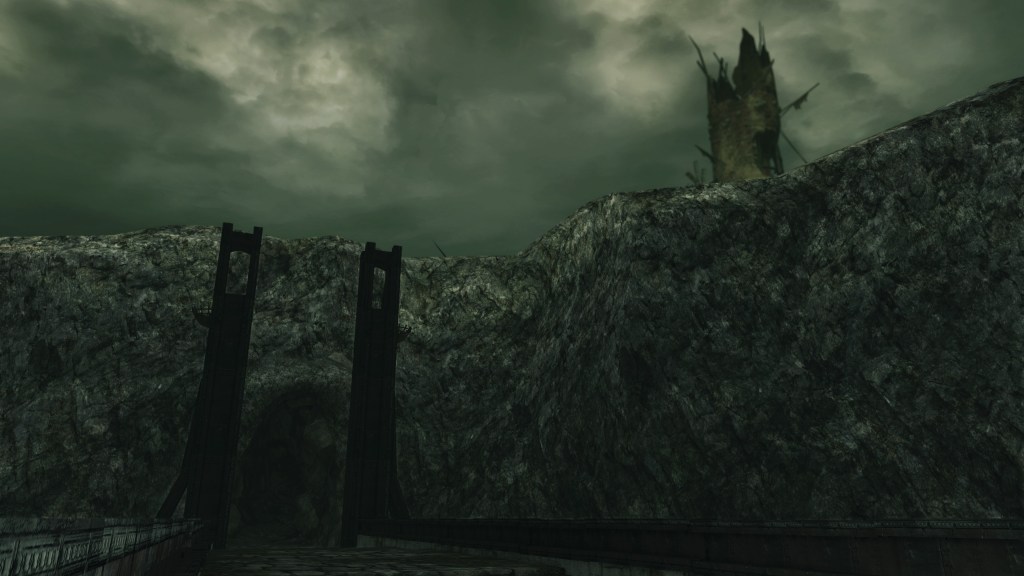


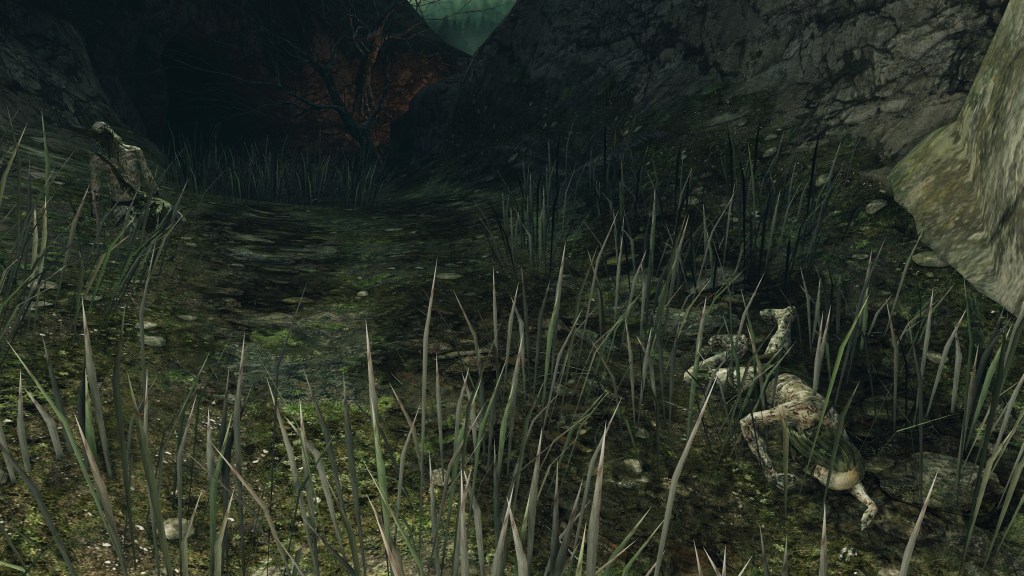

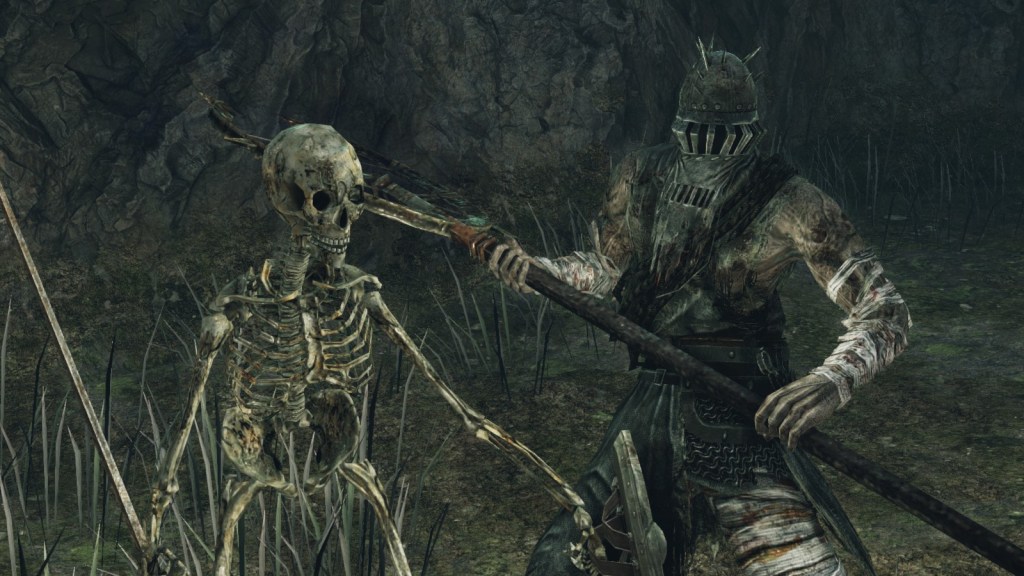
All that said, their fun and games eventually came to an end. Various item descriptions reaffirm that they were eventually swallowed by the curse they hunted, with many including the three leaders ending up as Hollows themselves before they even realized it. The Roaring Halberd wielded by one of the Skeleton Lords and derived from his soul elaborates on this irony. The halberd’s description highlights the ominous “screaming” skull decorating it. The Japanese text is vague on whether it depicts the final moments of the skull’s owner or its creator, but the notion that these sadists spent their final moments wailing as the Undead overwhelmed them is certainly fitting. Considering the Iron King’s company, these sorcerers may have never been that competent to begin with, which would explain the apparent ease and severity of their failure. Mayhaps tormenting the weak was a way to compensate for their own sense of inadequacy, the charlatans addicted to that little bit of power finally within their grasps. Either way, the excess cost them their lives.
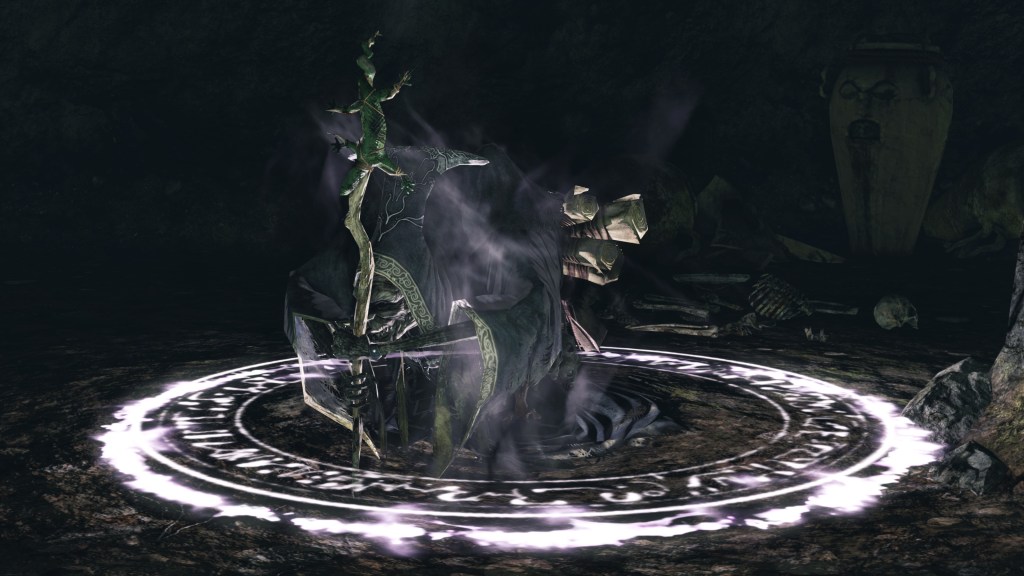
Soul of a Skeleton King who sit in the depths of the Hunter’s Forest.
The Old Iron King ordered his subordinates to hunt the dead, but they were eventually swallowed by the curse.
The special soul this skeleton king possesses is used to acquire a vast amount of souls or create a great power.
Halberd created from the soul of a Skeleton King. Endowed with the power of Dark.
Halberd born from a king of bones has an ominous skull that seems to be resembling the appearance of its final moments.
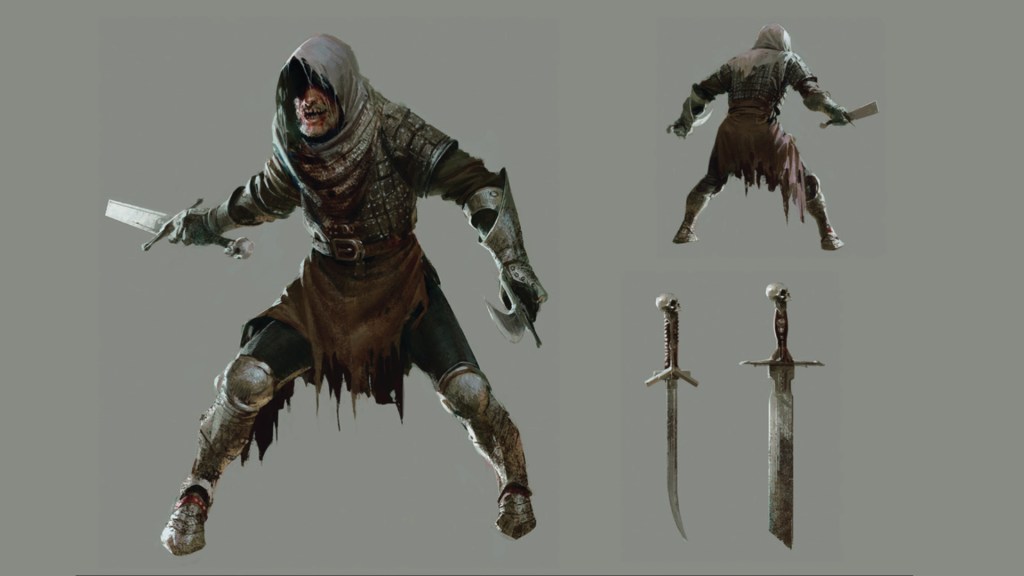
As to their killers, we find many Hollow thieves armed with daggers or short bows with poison arrows and armored in metal and leather throughout the area. The sheer number of criminals executed in medieval societies would lead to a disproportionate amount of bandits and highwaymen turning Undead and getting exiled. That they are the Hollows who have survived this long lurking in the forest, including one of the hunters’ facilities, implicates them as chiefly responsible for overwhelming the tourists; the nimble and wily robbers also look to have claimed their dogs. But more importantly, they prove that the hunters weren’t just slaughtering a horde of half-naked Hollows — indeed, some of their Frankenstein creations drop the bandit set. There were always risks to residing in a remote forest surrounded by countless violent madmen wandering around, so them being eventually overrun might have been inevitable. And whether slowly losing ground piece by piece or suddenly come down upon all at once, the hunters became the hunted.
If dying to their prey wasn’t bad enough, the hunts’ three architects had to deal with the unfortunate reality that they didn’t stay dead. They could no longer return home and expect mercy from the Iron King. This left them with two options: subject themselves to the same barbaric torture they inflicted upon their victims, or wait out eternity until they inevitably lost heart and went stark raving mad. Neither had to be very appealing. And it wasn’t as if they could somehow turn the situation around anyway. With the massacre of the hunters, the entire chain of command collapsed. Even if most of the leaders happened to turn Undead, they would all inevitably lose the faculties needed to continue performing their original duties. This is the very reason the description for the Undead Lockaway Key states that there is no longer any difference between the oppressor and the oppressed. The entire system fell into chaos and became a free-for-all for Hollows, with many of the Undead prisoners now loafing about the forest as if they had never been imprisoned in the first place.


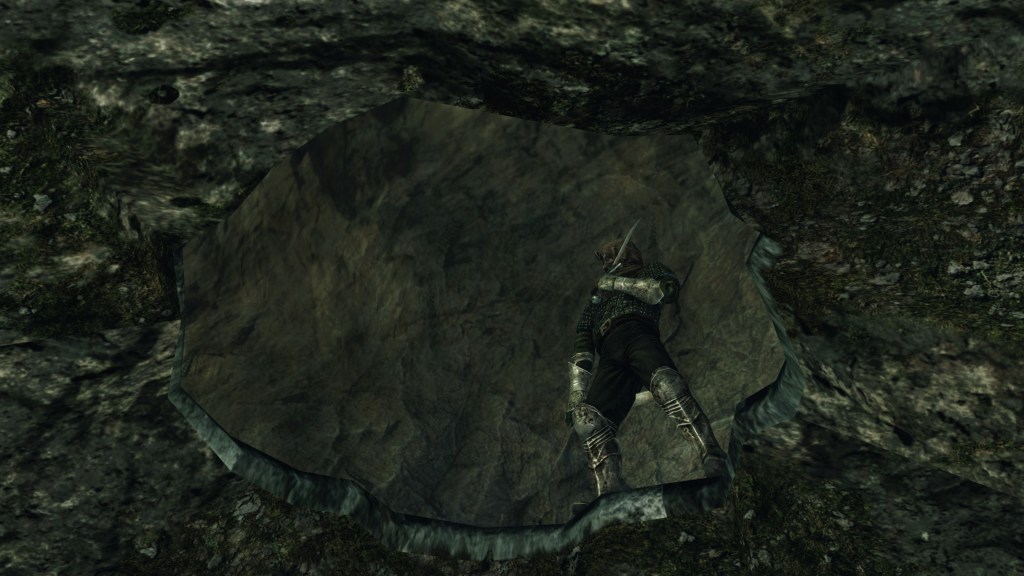


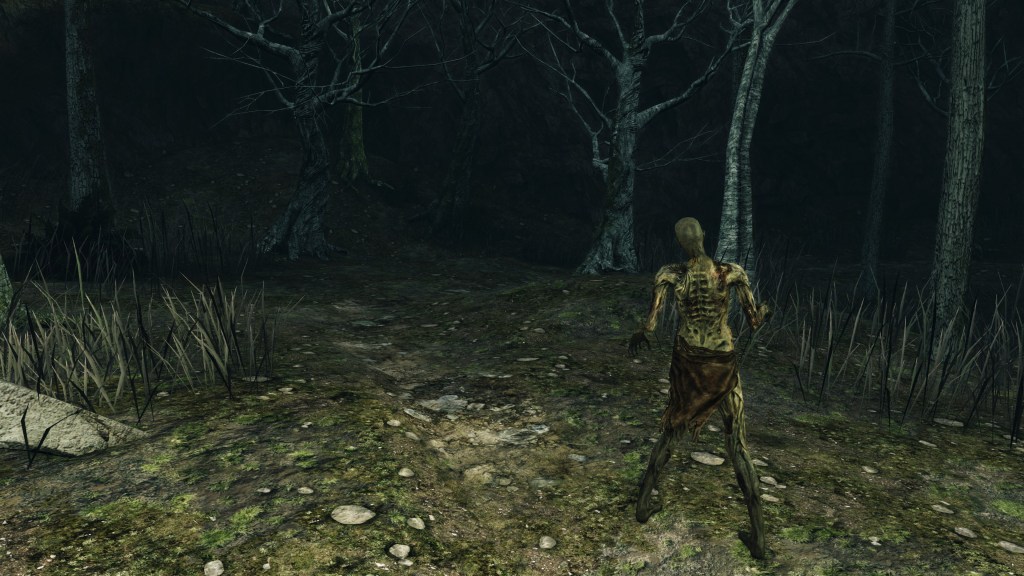
Key to the cave cell in the Hunter’s Forest.
In the age of the Iron King, jailhouses for the Undead are left in the forest where Undead hunts were conducted. But now there is no difference between the oppressor and the oppressed.
But as luck would have it, the necromancers serving them presented a third option: the three Hollow leaders could be put down and then reanimated. They would have the same immortality as undeath without the downside of hollowing. And with that, they could establish a new kingdom in the forest to rule, a kingdom of bones. The necromancers may have had already lost reason by that point, since they had all the leverage to be the real ones in charge. But whatever the case, they ultimately cooperated with this plan to turn their bosses into the “skeleton kings”. And it worked, albeit imperfectly. The Bone Crown’s description indicates that they have long lost all memory of their orders from the Iron King. Perhaps the reanimation process didn’t preserve all their memories as the localization suggests, or perhaps they were memories the Hollows were already missing before their souls were freed of the curse. Either way, it didn’t thwart their plan in the slightest.
Robe of a Skeleton King. Possesses high dark defense power.
Those that were entrusted with the mission to hunt the Undead changed into Hollows themselves before they knew it and built a kingdom of bone.
Crown of a Skeleton King. Possesses high dark defense power.
Those that were selected by the Old Iron King commanded those who hunt the Undead, but that memory is already long gone.
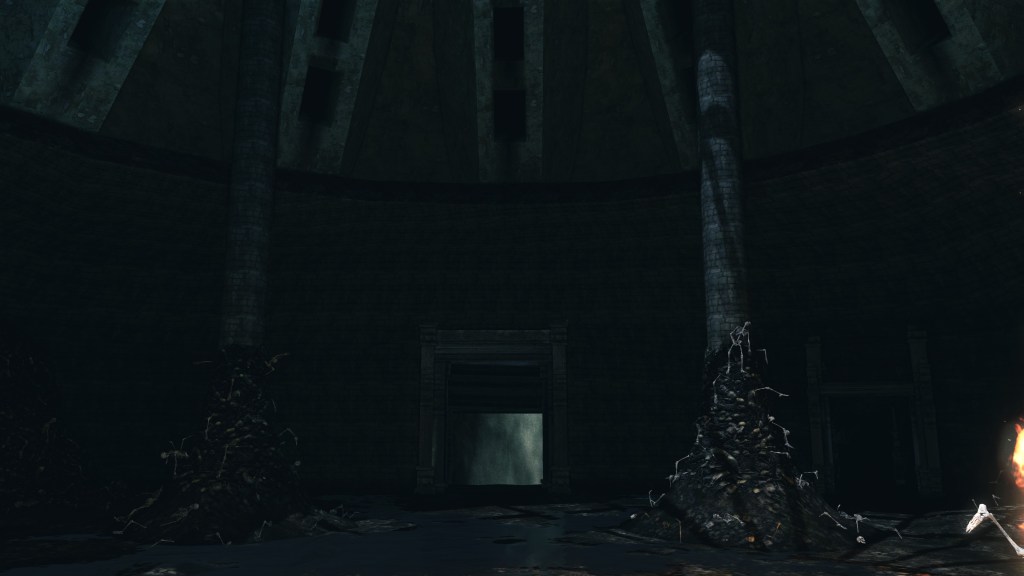
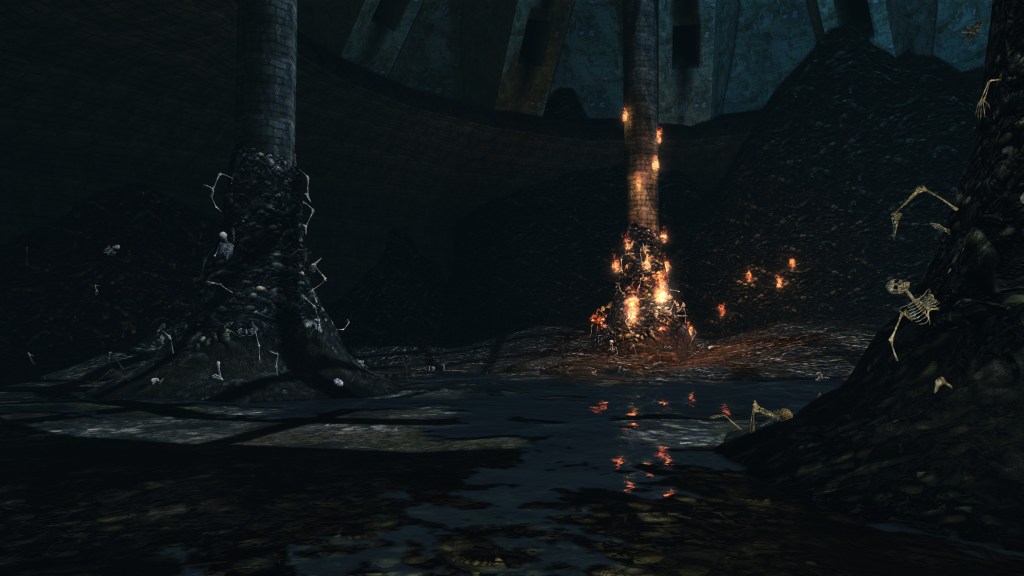
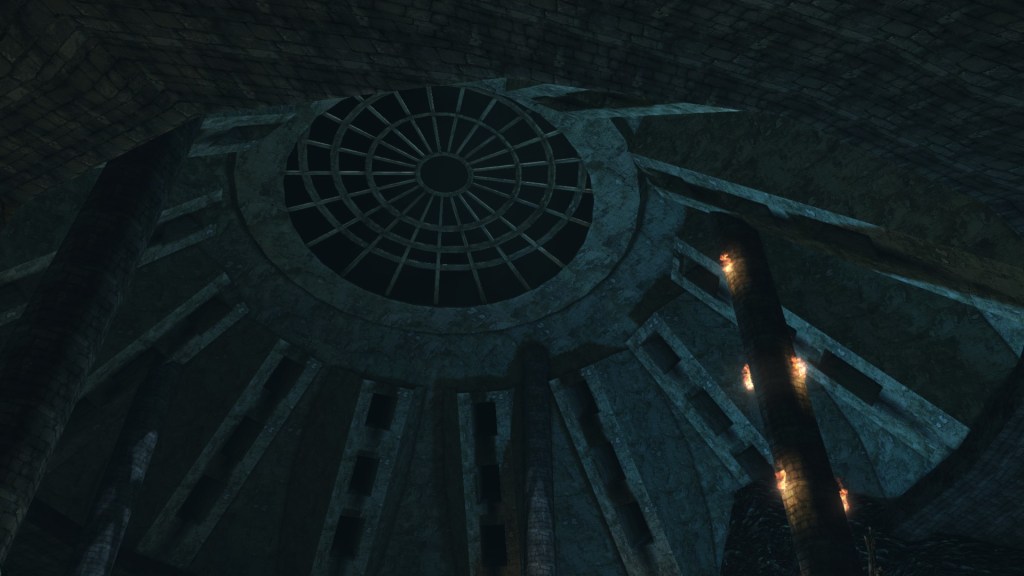
When we enter their boss room, we discover that they have amassed a huge amount of bones from hunters and hunted alike in the facility they have converted to a palace — the kings even craft thrones to sit upon from the femurs. Felling each results in the reanimation of a fair number of skeletons, so they have learned how to perform necromancy. Granted, their dying bodies first radiate a red power that soon explodes into pieces which rain down all around the chamber, suggesting that it is their souls animating these skeletons; the hordes counting toward the boss’ HP lends further credence to this idea. In that case, it might be more dying grudges in a form of curse, the Dark power imbued into their weapons and equipment possibly playing a role. Regardless, they are clearly looking to build up a mighty kingdom of their own, necromancers under them warring with the thieves in the vale outside the palace to add to this empire of death’s foundations.
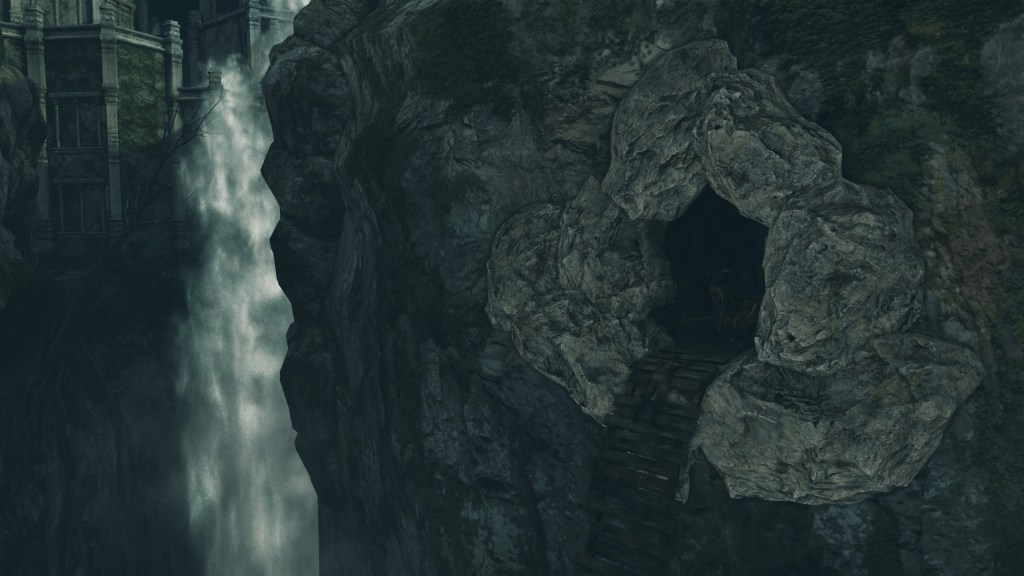
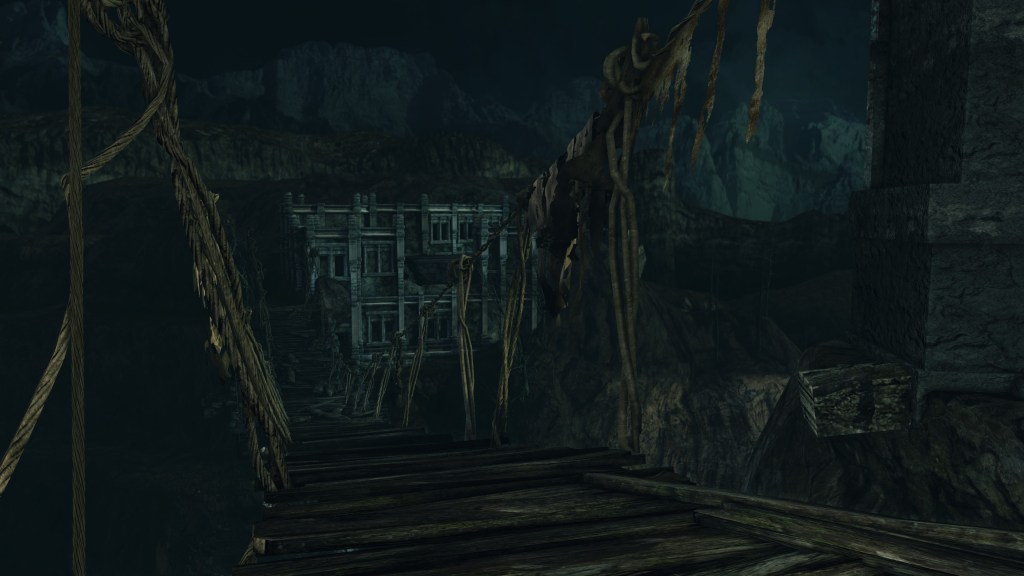
With this, we can conclude that their “kingdom” is a major faction in the chaotic mess of this forest. However, there is reason to doubt whether these kings of bone still command the executioners at Undead Purgatory. The grand stone bridge to the execution ground had collapsed, since replaced by a dilapidated rope crossing. It is possible that the torturers rallied there and have set out to contain the situation independently, continuing to enjoy their favorite pastime all the while. The fact that we need to contend with so many Hollow thieves in between the two boss encounters casts further doubt on either parties’ cooperation. If so, then the Skeleton Lords’ current domain is, in fact, quite minuscule when compared to the full breadth of the forest. What good is to be king of the hill if it is merely bone? That foundation will invariably crumble. With whole other kingdoms passing them by, the amnesiac hunters’ ambition seems naught but a pipe dream, one last desperate attempt to feel that they have a grasp on things. The truth is, memory or no, they have always been lacking.




 Lokey Lore