
Flogging Faith
When the survivors of the Drakeblood Knights left Shulva to its ruin, they brought the kingdom’s wisdom with them. And where did they go with that pillaged culture if not back home to their country of origin? The name of this country has now been lost, but this is be probably because it had been supplanted by a new nation: Lindelt. The remaining knights had established the country after creating a new religious institution called the Archdrake Sect, or “Archdragon Temple”, (古竜院) which explains the robed clerics’ helmets and reference to them being holy knights in the description for Replenishment. Cut descriptions of the armor set originally connecting it to the Silverdrake Knights (白竜騎士団) further supports this notion. “Silverdrake” actually refers to a white dragon, the same term for Seath the “paledrake” (白竜) — it would seem that the order was originally planned to be dedicated to the scaleless archdragon specifically, hence their white cloaks. Nevertheless, the armor’s cut and original in-game descriptions link its wearers to stalwart faith and stellar miracles.
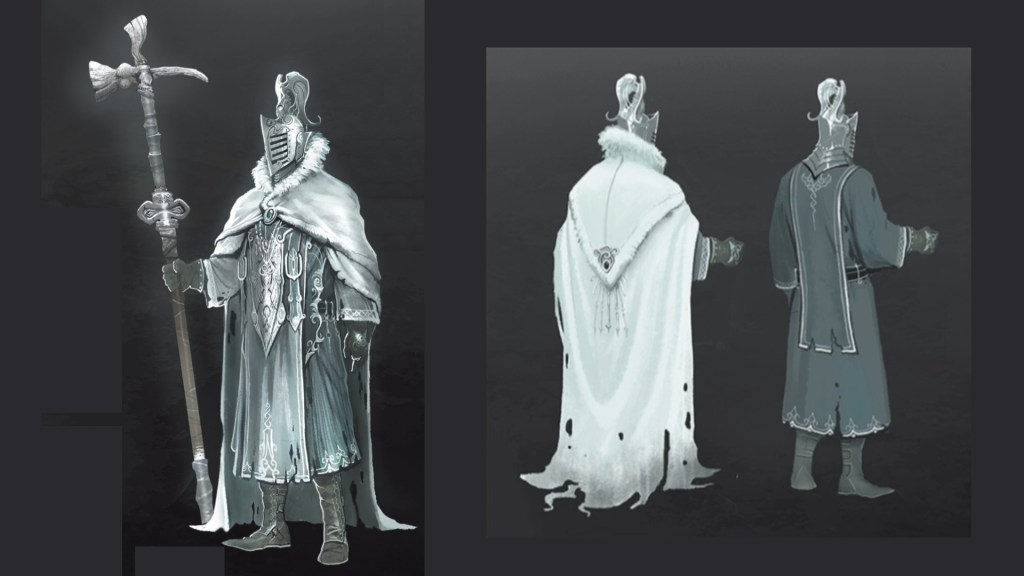
The only explanation for the Drakeblood Knights suddenly becoming men of the cloth is them taking advantage of the knowledge that they stole from Shulva. They then spread their influence and founded a theocracy built upon the strict laws and commandments dictated by their new religion. As to why the name of their land has been forgotten to history, one need only look at the fact that these destroyers of Shulva concealed their past before founding their religion. The history of Lindelt’s foundation is recorded by the temple, yet it has been kept secret to all but a select few, presumably the highest-ranking members. And anyone who attempts to ascertain the true nature of the sect, whether that be its origins or the deeper truth behind its doctrines, simply disappears. In fact, the updated description for their armor even states that these things should remain a secret to the world at large. The temple fears the general public learning the circumstances surrounding their theocracy and have strictly regulated that information so that only they have records on the subject, making it easy for its predecessor’s name to be lost along with its geopolitical relevancy.
Helmet of the Archdragon Temple of Lindelt.
The true state of the Archdragon Temple which imparts secret ceremonies is unknown, and those who try to approach it all disappear without a trace.
The history of Lindelt’s foundation is recorded by the Archdragon Temple, and it should be kept secret.
The motive behind their historical revisionism is clear as day. According to the description for the their mace and chime, those who insult Lindelt’s commandments suffer merciless punishments. And following the big fix — long after the revelations of the Crown of the Sunken King DLC — one final comment was added, noting that those burdened with sin try to be upstanding people of integrity simply in the hopes of being saved themselves. That says as much about those obeying the sect for fear of being hurt as it does the sect itself. The Drakeblood Knights felt responsible for Shulva’s collapse and so carry on its legacy to alleviate their guilt. Although their propagation and harsh enforcement of its teachings has preserved the culture, hiding their crime while espousing their victims’ wisdom is too arrogant to be proper atonement, as the description for the Slumbering Dragon Shield highlights. Indeed, legend has it that Lindelt’s holy knights slew a poisonous dragon that threatened mankind, a total perversion of the truth. Their shame was too great to be honest, and it has outlasted them.
Holy bell of the Archdragon Temple of Lindelt. Becomes a catalyst for miracles and dark arts.
Lindelt is a country wholly established on strict commandments, and those that insult its commandments are dealt merciless punishment.
Those burdened with sin undoubtedly try to instead have integrity. It is nothing other than their own desire to be saved.
One of the mid-ranked miracles. Slowly recovers HP.
The Holy Knights of Lindelt use this miracle when standing on the front lines and show unfalling battles.
There is a legend saying that the order of knights once attacked and destroyed a poisonous dragon that threatened mankind.
Lindelt and its new faith continue to exist into the present era. Like the Way of White in the original Dark Souls, (DS1) the Archdrake Sect is treated as the mainstream religion; we even wear their robes should we choose a cleric background. However, this status is still very much relative. By all indications, no known country north, east, or west of Drangleic owns a significant presence from the temple. That leaves Drangleic itself, which has had its own clerical tradition dating way back, and the countries south of it where we originate. In other words, Lindelt is most likely located somewhere in the south, the sect spreading its influence to surrounding nations in the region. The religion may have influenced cultures and practices in other places, especially Drangleic, but it is most entrenched down there, starting with the founders’ homeland. Moreover, the faith’s dominance over the region might have been hard-fought, in every sense of the word.

Replenishment’s description establishes that holy knights have fought in actual battles against apparently human foes. Whether it is dealing with pagans, apostates, and heretics or hardening resistance to political influence, the Archdrake Sect effectuates its will through violence if necessary, which explains why one such knight is named Forsalle (フォーサル) in obvious reference to the English “force”. (フォース) The knight helms worn by the clerics are more than just a nod to their origins — albeit, the chivalric background likely did play a huge part in developing the temple’s martial prowess. What possibly started as a small cult eventually ballooned into the preeminent faction in the country and beyond, forcing everyone to submit to their gospel. The resulting theocracy could then alleviate the founders’ guilt by propagating the teachings which they had similarly claimed by the sword. Try as they might, the essence of the Drakeblood Knights lives on. Who knows how many more have died for a guilty conscience? Although, they have done their best to bury their bloodthirst with sermons.
Gods and Dragons
Like Shulvan religion, the Archdrake Sect has two aspects to it. At the center of the faith is its eponymous archdragon Sinh. Both the Archdrake Shield and the Slumbering Dragon Shield depict dragons for use in the temple’s secret ceremonies, but the latter is proof that these rituals concern Shulva’s sleeping dragon specifically. The legend of their holy knights slaying such a beast further indicates that Sinh is a known figure, so why have these rituals been kept private? Because they concern the dirty truth, as their descriptions imply. Add to that the fact that the shields are made to resemble a dragon, and the ritual is possibly a reenactment of Sinh’s awakening and prayer to ward off his wrath. Someone would strike the slumbering shield to signify Yorgh’s spear waking the beast and another would strike the regular shield to represent fending off an awake dragon. A ceremony like this would preserve the true history of the temple, help alleviate the guilt of those responsible, and assuage their fears of facing retribution from the traumatizing dragon or anyone else.
This begs the question of how much Lindelt is really taught about Sinh. If he is depicted as a dangerous dragon that doomed the world, then the premise of the Archdrake Sect’s faith is that they are its saviors for slaying it. Such a narrative likely held great sway in their homeland. If the Drakeblood Knights are any indication, the nation revered the original race of dragons only so far as the powerful qualities of their beings, caring nothing for the well-being of the archdragons themselves. Hearing that the knights had killed one would therefore only be perceived as a positive to the populace, and the religious rhetoric attached to their “holy” act would be equally as compelling. This also lines up with the Archdrake Chime and Mace, both which look to incorporate bone. It can’t be from Sinh, so it is possible that the country was originally replete with draconic descendants, hence developing around a dragon’s power. And if the pinnacle of power was a devil to slay, the people would only be encouraged to slaughter its lesser spawn. Regardless, the focus of the faith seems to have remained on Sinh.
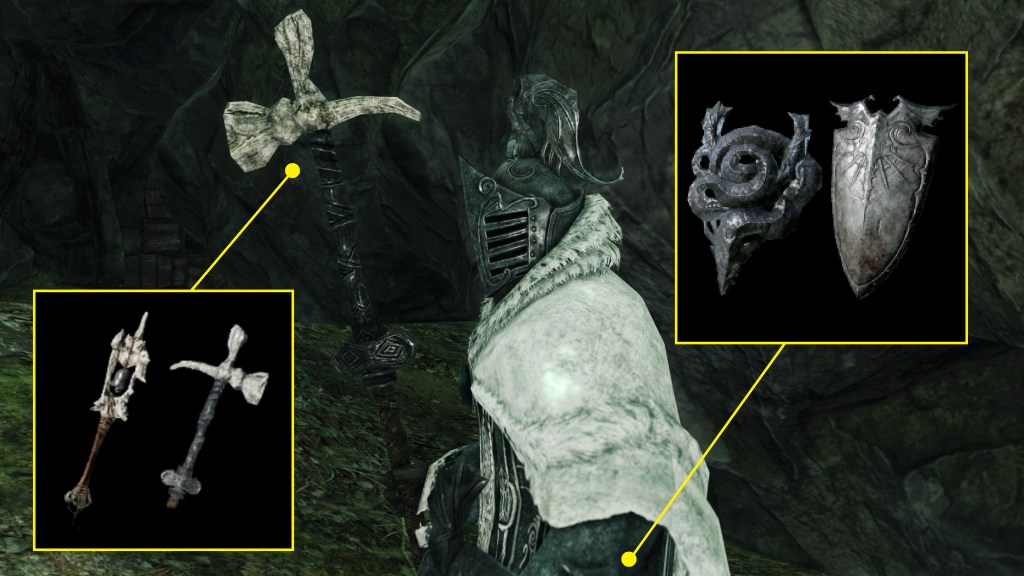
The dried roots native to southern Drangleic where Shulva is located particularly mention clerics on pilgrimage using them in their description. As our robes when choosing a cleric background implies, these pilgrim clergy are part of the Archdrake Sect, and their destination is the general area where the dragon was allegedly slain. In other words, the southern portion of Drangleic has become a holy land that many priests will make a pilgrimage to, including potentially ourselves. And based on the herbs they use, it is at least partially related to Sinh. The temple seems to have thus made the noxious dragon into a kind of Satanic figure to respect and fear, which requires a divine force to oppose it. Recall that the legend speaks of the toxic dragon dying to holy knights, suggesting that the Drakeblood Knights had the will of god on their side. As proof, they returned with divine powers and preached their gospel. And since these divine revelations were actually taken from Shulva, those scriptures dealt with the Anor Londo pantheon.
Although localized as the Lindelt Monastery, item descriptions refer to a “Holy Temple” (聖院) existing in the country, the same kanji used for the Archdragon Temple. This suggests that the monastery and the Archdrake Sect are, in fact, one and the same, which is certainly reflected in their practices. The Monastery Charm is a talisman much like Lloyd’s Talisman from DS1, except the blessing it has received cures poison ailments and restores HP similar to Gwynevere’s Divine Blessings. But this isn’t an Anor Londo god’s power, for the Holy Temple’s charm is merely a poor man’s imitation of the very rare Dragon Charm handed down since Shulva’s collapse so long ago. This more potent talisman retains a fragment of the magic possessed by an archdragon, making it consistent with the elements of the Drakeblood Knights’ dragon worship mentioned earlier. The parallels between the so-called sect and monastery go beyond just dragons, though.
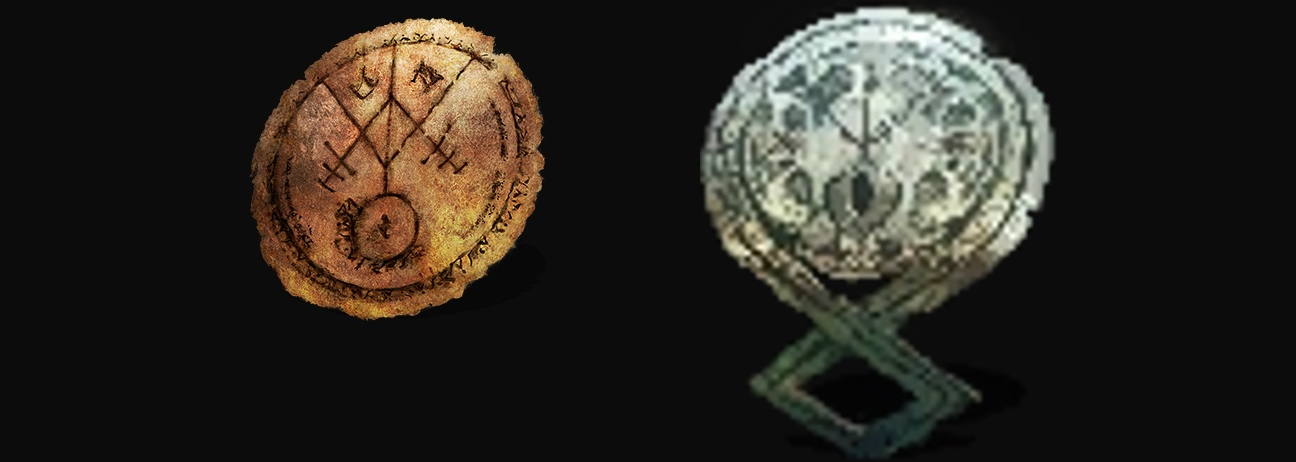
Talisman applied with a blessing. Removes the user’s poison status and recovers HP.
At the miracle-inheriting Holy Temple of Lindelt, talismans of this type imitating a power of old are made in great number.
In the end, it is only an imitation, but that is merely a trivial matter when in distress.
Inheriting miracles is attributed to the Holy Temple in the description for its charm, which is again consistent with the wisdom inherited by the Archdrake Sect. Likewise, the final line added to the updated description of the monastery set claims that its pure white appearance symbolizes the deceit the Holy Temple hides. This coincides all too perfectly with the updated texts to other items mentioned earlier. How else are we to interpret it? If two nominally different temples located in the same country are both clarified by the developers to hide secrets with the miracles they have inherited at the exact same time, then we are obviously expected to conflate them. There is thus no reason to doubt that Lindelt’s Holy Temple is just an alias for the Archdragon Temple. They are one institution, dedicated to both dragons and the gods like Shulva before them.
Thing modeled on a holy hood that has been handed down since long ago and was made at the Holy Temple of Lindelt.
The white, smooth cloth is lightweight and easy to move in. Its design that feels pious demonstrates that it protected something lofty.
However, its purity undoubtedly symbolizes the deceit hidden in the Holy Temple.
As a result, the temple has worked tirelessly to collect and preserve knowledge about the gods. The aforementioned monastery set and its matching scimitar are the temple’s reproduction of the “holy” weapon and clothes employed by Anor Londo’s painting guardians in DS1 — even the Japanese name of the “protector” (守り人) set is a clear reference to the original attire’s name as the “painting protector” (絵画守り) set. Although the temple alone seems to hand down the design, its goal isn’t necessarily to hoard the information. As Licia puts it, Lindelt only receives the gods’ blessings by faithfully praying with the scriptures they propagate. To that end, the clergywoman both uses and sells familiar miracles from DS1 to potential converts. The Archdrake Sect clearly aims to make the stories of the gods widespread so that no records are lost with the fall of a single country. If calamity were to befall Lindelt, clerics in other nations would still be able to carry on the temple’s work.

To perform miracles, the power of faith in the gods is indispensable. Because miracles are fundamentally stories of the gods. We only receive their grace by passing them down and praying with them. You too must boost your faith.
Lindelt’s knowledge nevertheless remains extremely fragmentary. Based on Licia’s dialogue, the Archdrake Sect teaches that miracles are powers of the world’s beginning inherited from the time of the First Flame. This accurately describes the origins and nature of the gods’ sunlight magic, but Licia indicates that the temple doesn’t actually know what the First Flame is — in other words, members merely parrot their sources whilst retaining a superficial understanding of the content. Indeed, the various miracles Licia sells include Heal and the more advanced Med Heal. The latter’s description points out how few stories of the gods have completely survived the ages, so most of the longer texts like Med Heal are simply restorations of the original. This inevitably leads to confusion, as is the case with Wrath of the Gods and its derivatives. With so many epigones developed as a miracle is passed down the generations, no one can tell which is the original. Emit Force is accurately surmised to be an epigone of Force, but the only thing certain about Force and Wrath of the Gods is that they share a vague source.
Miracles are said to be things inherited from the time of “fire’s beginning”. In other words, it is the power of the world’s beginning. How magnificent, right! Now, seek the power of miracles too, friend. That is undoubtedly the blessed path.
What is fire’s beginning, huh…? It is, err… E-Even if I told you now, it is not like you can comprehend it! Boost your faith! Further mastering miracles is required!
The Japanese description for Wrath of the Gods blames these uncertainties on the names of the eponymous gods having long been lost. This is reinforced by the description for Lightning Spear, which Licia also knows. Lindelt was aware of the gods who left behind these holy texts but not their true names, making the country little more knowledgeable of the history than any other New World nation. At the very least, the temple does seem to know about the homeland of Gwyn’s tribe, since Licia makes a pilgrimage to Heide’s Tower of Flame in the hopes of visiting the Cathedral of Blue she had heard about. The ruins’ location no doubt contributed to the sacrality of southern Drangleic; the Cleric’s Parma used on pilgrimage is stored alongside the Tower Shield at the cathedral, and we can loot a monastery charm deeper into the Heiden ruins. That being the case, Licia is quick to abandon her trek to the church after discovering the city deserted, so Heide’s current state isn’t widely known among Lindelt’s clergy.
Even so, the Archdrake Sect has organized their temple well. Most clergyman are provided a basic holy bell, but clerics in Lindelt typically receive the Protective Chime, presumably named so for its high casting speed. Those who then ascend to the higher ranks receive the Priest’s Chime, which may suggest that the clergymen may have only just then been ordained as priests. This makes sense given the time and dedication required to be a devout cleric of the temple. Simple miracles like Heal are widely used by the clergy, but longer and far more abstruse texts like Great Heal require holy men and women to train their faith and memory for a long time in order to use it in full. Even memorizing an excerpt is pretty advanced, so it is no surprise that few are willing to study Great Heal’s magnificent tale to completion despite its even greater results. Most new members of the clergy probably don’t have the level of faith and knowledge required to even be considered for the priesthood. To be fair, there were other avenues available to them.
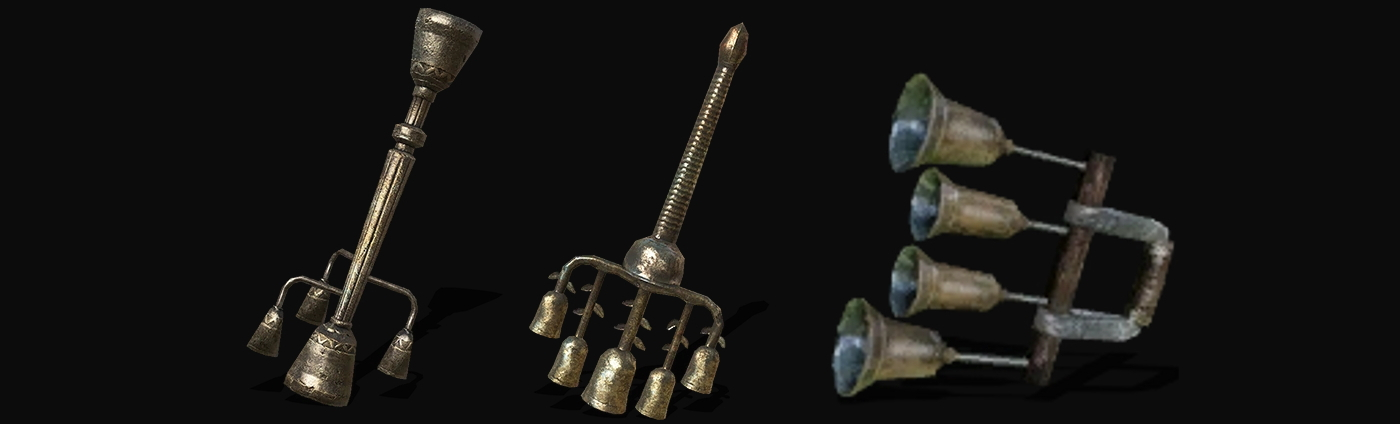
Thing spliced out from the story of “Great Recovery”, which is a high-rank miracle. Greatly recovers HP. The effect isn’t inferior, but has fewer number of spell uses.
“Great Recovery” is an extremely advanced and abstruse story. It requires long training to handle the complete one, and those who accomplish that are very few.
Replenishment is a mid-ranked healing miracle used by Lindelt’s holy knights in the same fashion as the cleric warriors of the Way of White in DS1. While the spell already made warriors not fall in battle on the front lines, a stronger version has since been invented. This variant is Resplendent Life, or “overflowing life” (溢れ出る生命) in reference to the Japanese name of Replenishment being “life gush”, (生命湧き) and it is a “great” miracle like Great Heal. This implies it is similarly length and complex, which is why high-ranking clergymen use it. Forsalle was one such cleric who specialized in this spell and earned a reputation battling in various places. Though his enemies considered his powers demonic, he is extolled in Lindelt as a holy knight, proving that one can train and climb the ranks without being your standard man or woman of the cloth. Certainly, Lindelt was able to rival Drangleic precisely because its devout warriors were unafraid of death and used miracles the temple has constantly refined.
One of the great miracles that high-rank clergymen use. Gradually and greatly recovers HP.
The clergyman of Lindelt, Forsalle, made this miracle his forte and proceeded to battle in various places. He was celebrated as a holy knight by allies and called even a man who acquired the power of the devil by enemies.
Lindelt has certainly produced excellent works in devotion to the gods. The Ring of Restoration passively heals its wearer over time and symbolizes House Osteria, who have passed it down for presumably generations. The Osterias are a distinguished noble family in Lindelt, so the ring represents both them and their incredible wealth and prosperity. At the same time, the ring easily breaks due to its fragility, which the description suggests is another one of its lessons. Basically, the Osteria who originally created it likely intentionally made it so delicate as a reminder of how easily they could lose the luxuries they enjoy; ultimately, they are worldly excess that they can live without and shouldn’t take for granted. This falls in line with the family’s Japanese name, which reads the same as Austria (オーストリア) but is more likely derived from the English word “austere” (オースティール) commonly used to describe religious ascetics. Each generation of House Osteria is warned to maintain humility before the gods.
Ring of protection that is handed down in the Austria family. Gradually recovers the equipper’s HP.
In the country of commandments, Lindelt, it is the symbol of the distinguished Austria family and symbolizes wealth and prosperity.
Unexpectedly, it is fragile and breaks easily, but that too may be one of its lessons.
Speaking of austerity, other impressive works include the Rings of Life and Soul Protection fashioned by students of Lindelt’s great sage Ivory Rohness. Based on his “white” moniker and status as a wise man, the man is a local monk who has isolated himself from worldly affairs to contemplate the faith, sharing his wisdom with those willing to listen. If so, then the name Rohness (ローネス) may derive from the English word “lone” (ローン) in reference to his meditative seclusion. However, the knowledge this sage imparts is peculiar. The rings share the same effect preventing deaths and cursed deaths as DS1’s Rings of Sacrifice created by Velka. Did Rohness reflect on the goddess of sin during his solitude? If that is the case, then the implications behind these lifesaving rings’ creation is just as ominous. But even if they were created through different principles than Velka’s rings of ritual sacrifice, the temple has certainly embraced heresy when compared to the orthodoxy of the Way of White in Thorolund.

Holy ring that protects life. Thing that disciples of Rohness of White, great sage of Lindelt, constructed.
Due to the power of great protection, lose nothing upon death, but the ring breaks in exchange.
As a country of clergymen and miracles, Lindelt naturally regards sorcery as vulgar. And yet, clerics of the Archdrake Sect have their own sorcery staff, the description of which points out that everything has an official stance and then reality. Although the temple officially condemns logic-based magic which has often been associated with questioning divine mysteries and thereby the gods’ authority, its clerics are at least privately practicing the art. Whether this double standard holds true for even the highest echelons of the temple or is limited to just the common holy man, it is an evident hole in their integrity. Worse yet, their hypocrisy reveals a lack of conviction in their own teachings. Perhaps this is to be expected for generations far removed from the one that actually experienced the traumatic events, but this lack of sincerity in their atonement couldn’t be more obvious. There is corruption in the priesthood, but still they act as uncompromising arbiters of these stringent commandments.
Staff of the Archdragon Temple of Lindelt. Becomes a catalyst for sorcery and hexes.
In the country of clergy and miracles, Lindelt, sorcery is considered a vulgar existence, but in everything there is what you call the official stance and the reality. What this staff shows is exactly that.
Tyranny of Good Intentions
As mentioned earlier, Lindelt regulates itself through these strict laws and mercilessly punishes those who insult them. To help identify them, the sect uses spells like Unveil, original name Hostility Detection. (敵意の感知) As the name suggests, this miracle pursues the closest traitor and reveals their location to the caster by detecting hostility, which allows the temple to corner anyone desecrating their teachings in short order. In other words, the Archdrake Sect’s moral policing rises to the level of thought crimes. One cannot even wish ill to anyone or anything without the temple possibly noticing. There is no privacy even within one’s own head. This creates an oppressive atmosphere that many residents understandably want to escape, including members of the clergy.
Miracle that pursues traitors. The location of an enemy or invading dark spirit closest to its range becomes known.
Those who serve the Holy Temple of Lindelt regulate themselves via strict commandments. This miracle is for cornering those who desecrate the teachings.
At the Shrine of Amana, we encounter Lindelt clerics who the Dark Souls II Collector’s Edition Guide clarifies to be defectors. The guide elaborates that they are only some of a rather larger number of residents who commonly emigrate in order to escape the country’s “authoritarian rule”. Considering these clergymen employ sorcery, they have every reason to fear being penalized, though their attempt to start a new life in Heiden ruins shows that they are nonetheless true believers in the faith. These complicated circumstances are why they chose a holy site far north of where pilgrims normally visit, willing to risk basilisks among other threats in this humid underground. However, their faith didn’t protect them from either death or undeath. The guide states that the clerics have since hollowed, though none of them are affected by Soul Appease; an apparent oversight by the developers. Whatever the cause of their demise, these pilgrims aren’t the last clergymen to have ultimately sought refuge in Drangleic.
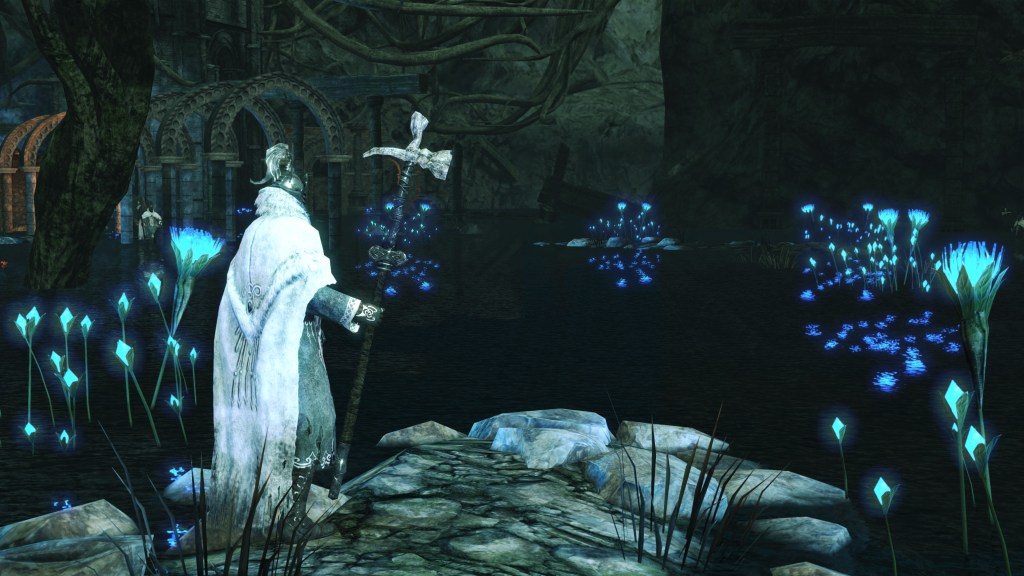
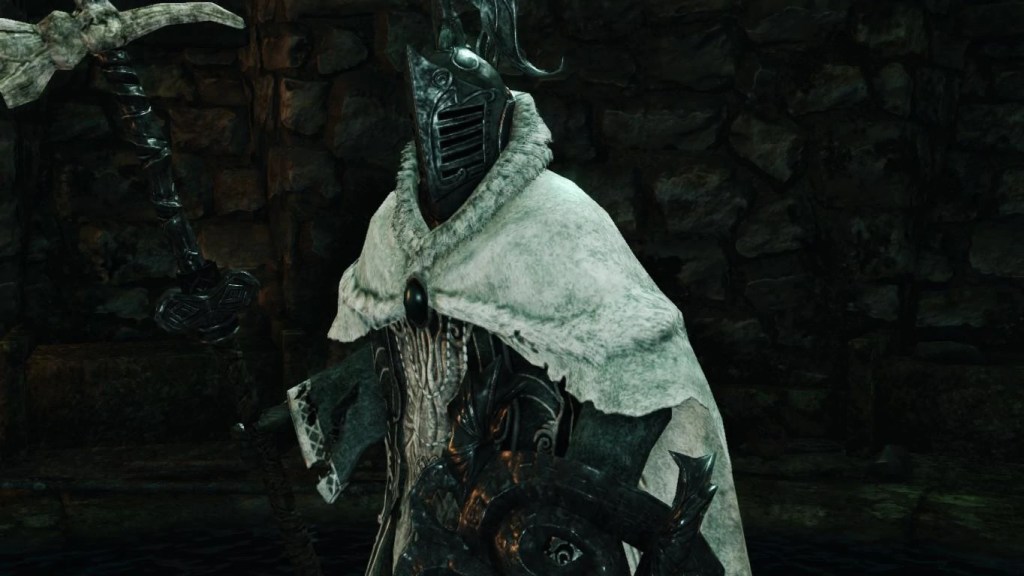
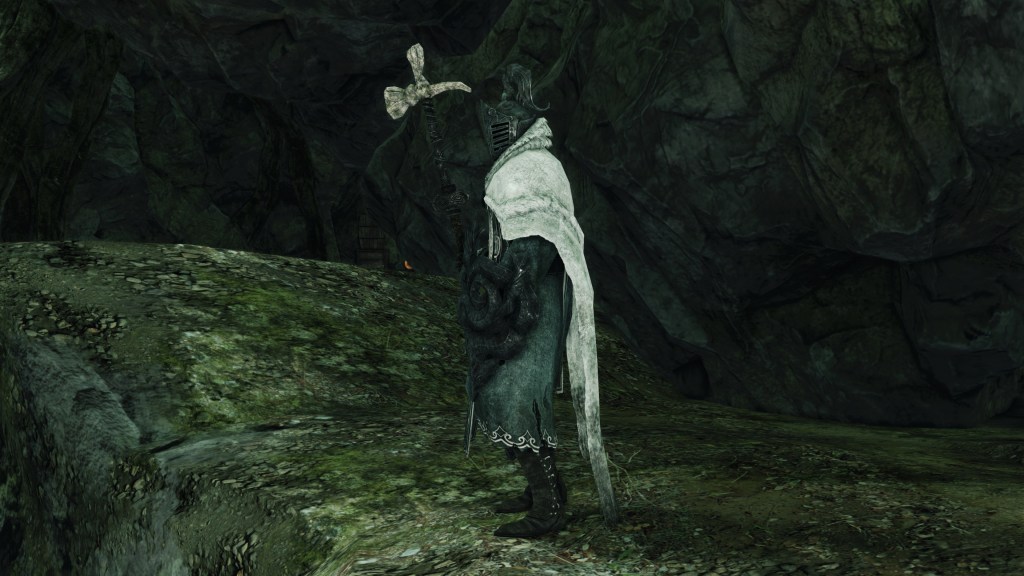
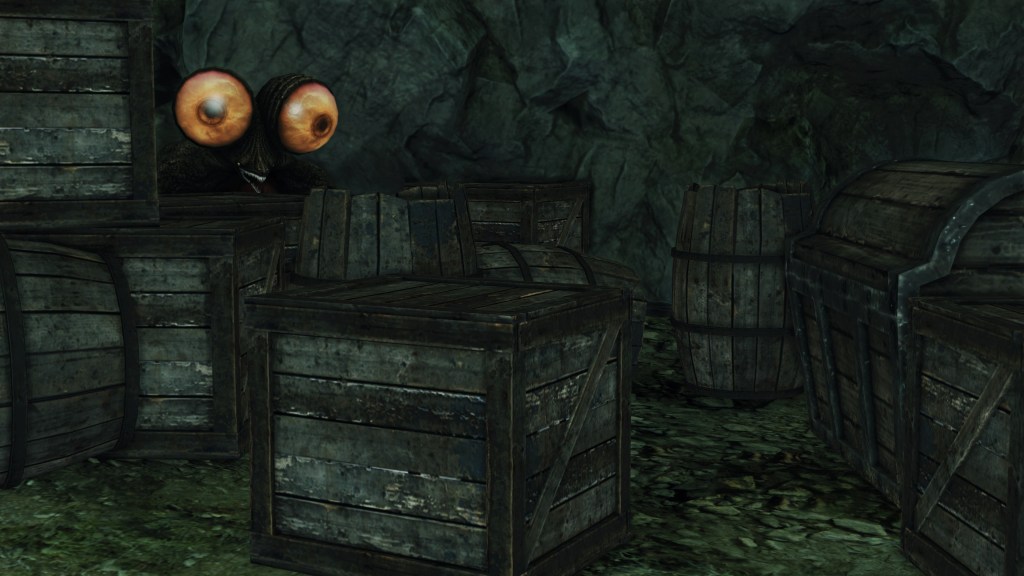
Lindelt has “disciplinants” (修行者) who practice religious austerities. In its case, practitioners are required to leave the country as part of their training, proselytizing the temple’s gospel in lands like Drangleic. The mission obviously serves to provide untested acolytes real-world experience — what better way to deepen their faith than living out in nature as a meager traveler, forced to rely on miracles? Granted, the description for Perseverance acknowledges how a sizable chunk never return. This is why they implicitly receive a miracle of “Greater Resistance” (大いなる抵抗) to protect the cloistered trainees from the harsh elements. Still, those who survive the adversities emerge paragons. An example is the so-called “abbess” Feeva. This cleric, wearing a mix of female saint and priestess attire, manifests her devotion in her wide repertoire of powerful miracles. With them, she hopes to slay the draconic devil, offering her sign against Sinh. Certainly, killing the bogeyman the founders supposedly slew would be an achievement worth reporting back home. Those like her balance out the losses.
Wraps self in a pure veil. Boosts resistance to status abnormalities for a short time.
Disciplinants of Lindelt have going outside the country for proselytizing and training imposed on them, but no shortage of them never return as is.
However, the disciplinants aren’t always so dedicated. Licia is a holy woman of Lindelt who describes herself as a servant to the power of miracles. Indeed, the description for most of her equipment reaffirms that she has studied scripture, but also acknowledges her serious flaws. It similarly implies that we shouldn’t assume her to be the quintessence of piety just because she is a cleric. The description for her hood further adds that some clergy training abroad instead deviate from their strict teachings. This is certainly true for Licia, who relates how her teacher sent her to spread the power of miracles to many people. Although she claims to have come to Drangleic for only that express purpose, her frequent pauses when pressed to explain suggests that she isn’t being entirely honest. A plethora of disciplinants sent abroad may not return, but that doesn’t mean that they are all dead. Licia says she cannot simply go back and can improve herself in Drangleic since no one knows who she is, which is rather foreboding.
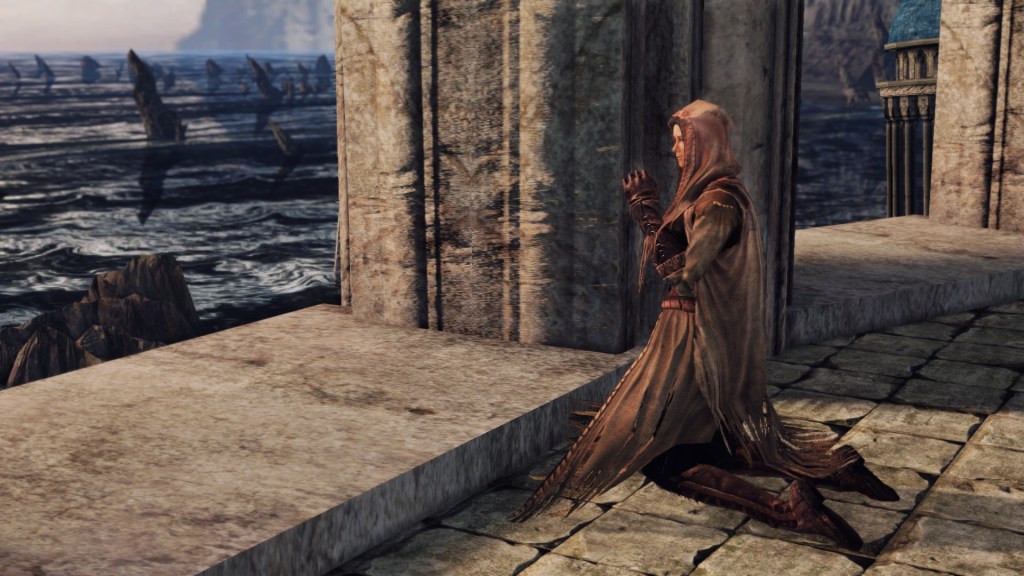
Dress of a clergyman who handles miracles. Personal effect of Leash of Lindelt.
There is no doubt that she studied miracles, but at the same time it is certain that she also had some problems. Even if someone is in the clergy, you shouldn’t rope others together so easily.
Hood of a clergyman who handles miracles. Slightly raises number of spell uses. Personal effect of Leash of Lindelt.
Lindelt is a country established on strict commandments. Many go outside the country for training, but no shortage of cases deviate from the teachings as is.
Taken together, it is obvious that Licia is yet another cleric desperate to escape the temple’s oppressive dogma, hence the name “Leash”. (リーシュ) The woman is using her ostensible mission by her teacher in order to find some freedom. At the same time, she is concerned enough about her behavior to also try and correct it. The description for her Idol’s Chime relates that every place has people whose true nature differs from the norm and that most suppress it or have a secret outlet for it; it also muses that the world wouldn’t be tolerant so far as permitting these abnormalities is concerned. So what are these personal problems that make Licia seek liberation? Apparently, lying and stealing. In order to learn any of her miracles, Licia requires you to “show your heart” by offering souls “for the gods” as she puts it. She later chastises herself for defaulting to people buying her holy powers rather than her giving them out. She even lies about the key to accessing Heide’s Tower of Flame running on the power of miracles so she can charge us for her to open the way.
I heard about the church, but circumstances are that no one’s here… Even though I’m here, it can’t be helped. I’ll have to move on soon. To many people who can buy… No! I must give this power!
Simply put, Licia is a born swindler and is struggling to live an honest, simple life as a meager woman of the temple. When killed at the end of her quest line, the woman drops the miracle text for Soothing Sunlight, which had been stored at the temple until someone stole it, resulting in the scripture becoming lost knowledge. Evidently, Licia is the thief. This description is also shared with the miracle Bountiful Sunlight, but we cannot acquire it from Licia and instead must reach a high rank in the Blue Sentinels covenant. This is most likely just for gameplay reasons, however, as both miracles are also texts that have been handed down for a long time. Considering that they were originally acquired by members of Gwynevere’s covenant at Anor Londo in DS1, it makes sense that we can acquire one from the Blue Sentinels in Heide where many of Lindelt’s scriptures ultimately originate. Therefore, Licia probably did steal both from her homeland and escaped on her training mission before she could be caught, resulting in these special miracles being lost to the larger world. She has quite the sticky fingers.
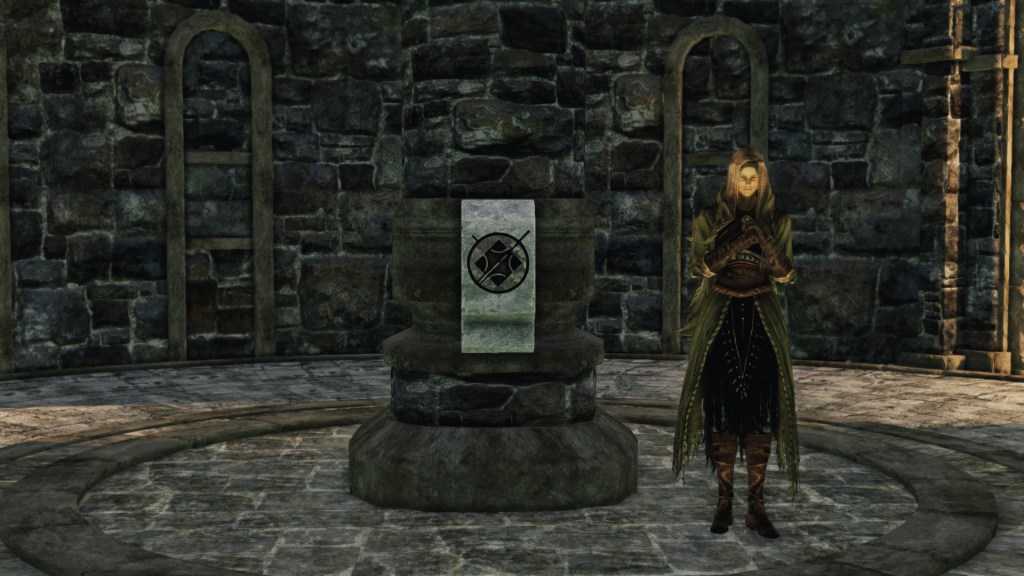
Special miracle that has been handed down since long ago. Greatly recovers HP, including the surroundings.
This miracle was stored in the Holy Temple of Lindelt, but it was stolen by someone and lost.
Unfortunately for Licia, the freedom that her mission has afforded her has made it all too easy to give in to temptation. As our journey progresses, the woman expresses envy for the many souls she presumes we have collected during our travels. She later invades us as a dark spirit in a blatant attempt to rob us of our souls. The fact that she is willing to use a Red Eye Orb for murder alone reveals how unscrupulous she truly is. Once the spirit is defeated, we can use the Crushed Eye Orb to track her down and invade as a spirit ourselves. Licia is ultimately glad that we have identified her as the culprit since she can then kill without reservation. The cleric has been suppressing these darker urges for a long time, so she is no victim. But one has to wonder how many more habitual liars, cheaters, and stealers have been deprived of an outlet for their urges thanks to Lindelt’s thought policing. If nothing else, one has to wonder if such moral busybodies are just exacerbating the problems, especially since they stand on their high horse while hiding the underlying lies of their preachings.
 Lokey Lore