
Deus Vult
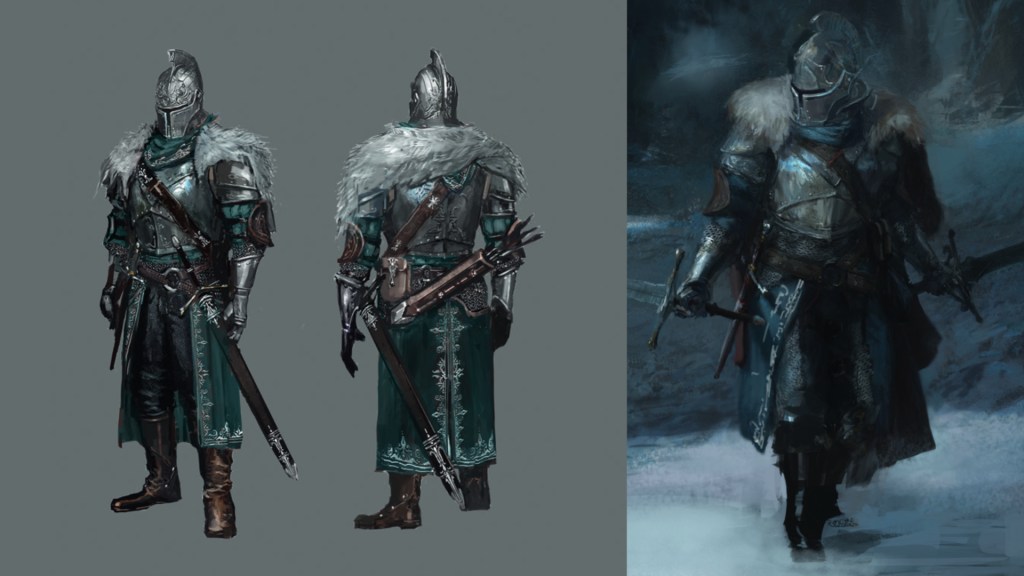
Forossa, original name Forozza, (フォローザ) was a remote country far to the east of Drangleic, mainly known for constantly warring with its neighbors to the point that — based on Vengarl’s dialogue — the nation seems to have been perpetually at war. And to their credit, Forossans were well equipped for the task, its knight boasting incredible military might thanks to their expertise in dual-wielding despite wearing heavy armor. Forossa’s Lion Knights had evidently trained to have both swift offense and resilient defense, making them perhaps the most optimized warriors in the setting. And yet, the Forossan army is never known for conquest, countries like Mirrah surviving in spite of the constant onslaught from neighbors which presumably include the fellow eastern nation. All the bloodshed notwithstanding, Forossa was evidently never a great power with vast land to call its own; their battles have yielded no progress. What motivates them to keep fighting for no territorial or other tangible gain? Something more profound to the spirit, clearly.
Helmet of the Lion Knights of Forossa. They, who believed in the war god Farnam, boasted military might as master dual-wielders despite their heavy armor.
But that tradition has discontinued with the fall of Forossa.
This endless assault on others seems to be a byproduct of their worship of the war god Faraam, or Farnam, (ファーナム) whose image appears emblazoned on the Lion Knights’ armor named after him. Whether Forossan religion has their god compel them to fight or simply created a society that values their god’s sphere above all else, the end result is a nation primed for war and seemingly nothing else. Looking at the animal pelts draped over different Forossan armors, the country even maintained a vibrant hunting culture so warriors could showcase their mettle when not on the battlefield — what could be more fearsome than men but beasts? Everything a Forossan did, from worship to leisure, tied into this bloodthirst. That being the case, there is some level of tact to their warrior’s spirit elevating them above brutish thugs.
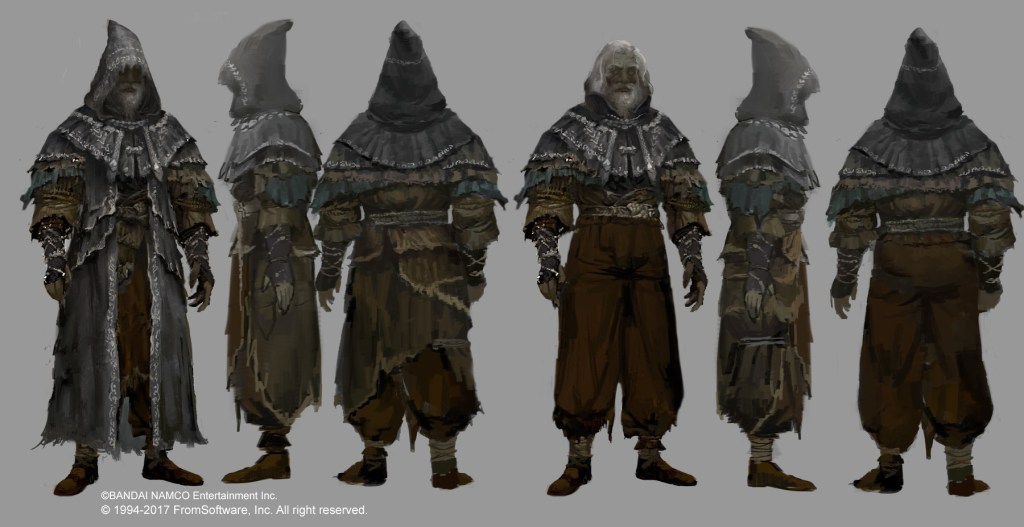
Forossa’s warriors were commanded by sages, wise men who practiced sorcery as evidenced by Azal’s Staff. These weren’t ordinary sorcerers either, as the description for the aforesaid staff notes that Azal was called a sage precisely because he was able to handle sorcery at such a high level with this magic tool. Much like the Tin Crystal Catalyst in the original Dark Souls, (DS1) Azal’s Staff dramatically increases the strength of spells while also dramatically decreasing their number of uses. In order to use this catalyst to its full potential, the caster must have incredibly talent with sorcery so as to not be completely drained after performing a few spells. Such was the case for Forossa’s sages, who had the wisdom and willpower to stand above the average sorcerer. But this in itself wasn’t the reason for giving them control over many warriors. Forossan wise men were known by the title of Northwarder, or Northman, (北人) and worshiped as agents of Faraam. This is due to them going through a rigorous journey.
Hood of a wise man of Forossa.
Forossa was a country that worshiped a war god, but the wise men who controlled many warriors were called Northmen and worshiped as agents of the war god. They are awarded their duties as Northmen after experiencing a rigorous journey.
Staff of Azal, wise man of Forossa.
Looks crudely made but has been infused with magic power by Azal’s hand and draws out spells’ power to their maximum. But, their number of uses is substantially diminished.
A product the average sorcerer cannot handle. That is another reason he was called a wise man.
The Northwarder set and Azal’s Staff can only be acquired at Eleum Loyce, implying that their journey ultimately ended there. Besides fitting one whose name means “to depart” in Aramaic, the idea that Forossan sorcerers traditionally made a pilgrimage to Eleum Loyce to be awarded their titles and command of troops says a lot about the culture. The knights had to be led by people who were exceptionally wise but also tough, and this journey seems to have been intended to hone both of those qualities in them. Azal’s Staff looks to be crudely made from a large tree branch, yet all the same the sage endowed it with great magical power. This suggests that the wise man created it while out in the field on his journey, a product of Azal’s ingenuity as well as adversity. These sorcerers encountered who knows what on their travels, but it wasn’t easy and forced them to either get stronger or die trying.
Perhaps more importantly, the fact that these sorcerers come to Eleum Loyce indicates that the country was on friendly terms with Forossa — given that the country’s one and only king was once the highest-ranking knight of Forossa, this is unlikely to be coincidence. The underlying implication suggests that the sages journeyed to Eleum Loyce itself for more formal training, and perhaps have done so since before the ivory kingdom’s founding. With a Forossan establishing his own country, they at least had a safe destination where they could properly prepare for the return trip once their work there was finished. Azal at least had a lot to learn from the country’s priestesses, particularly their queen, during his stay based on his staff’s skill with hexing as well as sorcery. And despite coming home as wise sorcerers and not faithful priests, this trip somehow made them agents of their war god.
This begs the question: who is Faraam? Our only hint is his depiction on the Lion Knights’ armor: an armored swordsman opposing a fire-breathing dragon. Even assuming that the artisan has taken liberties with their overall portrayal, it is notable that the dragon bears traits consistent with the archdragons rather than the far more prevalent wyverns. If this detail is intentional, then it excludes men who are only known to encounter wyverns like Knight King Rendal. The only figures known to do battle with archdragons are the gods from DS1. And only one among them was ever described as a war god specifically, namely Gwyn’s firstborn.
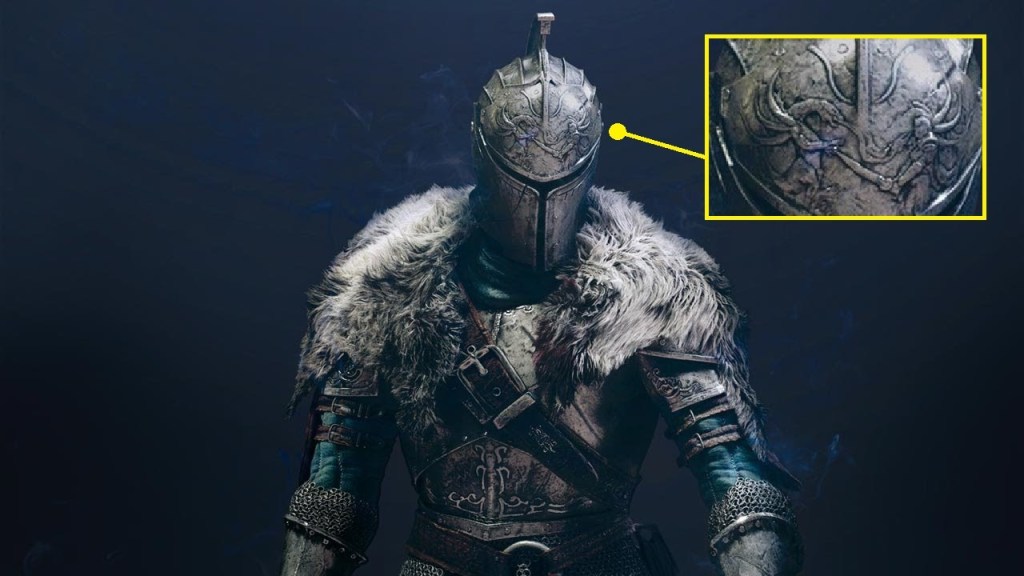
In that case, Faraam is simply the name that the Forossans have for Anor Londo’s disgraced king, who valued battle above all else. Perhaps they had inherited surviving stories of his covenant? Perhaps their ancestors had even actually met the god in person? Whatever the case, this gives them a connection to Drangleic, where remnants of their war god’s homeland can be found. And so, Forossa made a tradition of sending sorcerers to combat threats over in the northern land, which then gave them the wisdom and experience to command soldiers back home. This practice ended not long after Eleum Loyce froze over, hence why no evidence of Northwarders exists outside the ivory kingdom — that aspect of their culture disappeared before it could spread to the larger world.
Worthy of Epics
Naturally, Forossa has produced its fair share of heroes. One among them is Shieldless Lothian, who earned his nickname for risking his own life on the battlefield with just a weapon. His bold belligerence paid off, as he never lost a battle and rose through the ranks from an impoverished citizen to general during his service. His continued success with this style appears to be in part due to his rings. The Stone Ring greatly reduces the enemy’s poise when the equipper’s attacks hit while the Ring of Giants boosts the equipper’s poise. In other words, Lothian had the tenacity to take hits while also taking maximum advantage of gaps in his opponent’s own defenses. And if nothing else, to flinch the enemy while being unflinching creates a formidable all-out offensive. It is no wonder that this brave man became such a legend. Lothian’s success story may well be the inspiration for the Lion Knights’ own preference for fighting without a shield, even.
Ring that Shieldless Roshan, great hero who was once in the land of Forossa, favored. Boosts the equipper’s tenacity.
Roshan is a character of success stories who suddenly rose from impoverished to general. As his nickname indicates, he never carried a shield and always went to battle at risk of his own life.
But the unrivaled hero apparently lived for battle itself and tired of human opponents. Lothian eventually left the battlefield, where his homeland and the wider world lost track of him. This was allegedly because he sought to slaughter a legendary dragon. The lightning damage dealt by his beloved Dragonslayer’s Crescent Axe supports this. Being worshipers of a war god who offers worthy fighters his lightning miracles, it is not a surprise that the Forossan military learned how to imbue the power of sunlight into weapons, even if limited to its highest officers. The religious origin would be consistent with the axe’s name. Like the Crescent Axe from DS1, this dragonslayer’s “crescent” (三日月) refers to a waxing moon gaining sunlight. And if the Faraam set portrays Gwyn’s firstborn battling an archdragon, then it stands to reason that Lothian’s quarry were the beasts hunted by his god. His journey to hunt dragons with the power of sunlight might be why his original name is Roshan, (ローシャン) Persian for “bright light”.
Black-colored axe that Shieldless Roshan, hero of Forossa, is imparted to have favored.
Roshan, who boasted being unrivaled and undefeated, eventually left the battlefield, and news of his whereabouts ceased. One theory says that he tired of making man his opponent, so went on a journey to vanquish the dragon of legend.
As to where he went, he probably died in Drangleic. Both of Lothian’s rings are acquired from the land. Although the Ring of Giants is almost always obtained from actual giants, we can also obtain one from Gavlaan, so it specifically may originate with Lothian. Another is with an ogre in Things Betwixt, likely having eaten its owner. Lothian may have thus traveled west to there, leaving behind his weapon in the Shaded Woods. However, this issue is complicated by Creighton wielding an identical axe. Since Forossa and Mirrah undoubtedly clashed countless times, it is possible that Creighton picked up the axe from a fallen enemy on the battlefield, similar to Benhart. This would imply that neither the rings nor the weapon were unique to Lothian; he simply favored them. This makes tracking his movements through Drangleic, assuming he even went there, unreliable with just these items for clues. Whatever the case, the hero is evidently long gone while his story yet lives.
Gordin has a far more easily verifiable time and place of death. The man was a wandering knight of Forossa who became a famous swordsman like everyone else who had wielded his blade before him. The blade in question is the Majestic Greatsword first owned by Artorias before his corruption by the Abyss. Although never restored physically or in terms of holiness, the sword is no less powerful. Otherwise, its description notes that all of the sword’s owners were left-handed swordsmen, confirming implications about Artorias’ dominant hand from the previous game. None of this tells us much about Gordin’s life in Forossa, though the fact that the knight ultimately decided to wander other lands indicates a similar motive to Lothian. If he knew about the origin behind his blade, it has since been lost in the present era. The only thing its description can confirm is that the old blade stopped in the same place as its owner’s death.
Old sword of unknown origin. It passed through many owners to Gordin, wandering knight of Forossa, but that ceased with his death.
The users all became knights who earned a name, but it is said that they were left-handed swordsmen.
We acquire the Majestic Greatsword from a chest in Brume Tower. Though the particular tower it is located in doesn’t have an obvious purpose, the fact that the sword is there implies that Gordin came to Drangleic and died at the Old Iron King’s ironworks. More than likely, the wandering knight had been among the many foreign guests welcomed by the monarch, who was himself a sword enthusiast. Like Alonne, Gordin may have even assisted the king in battle against Venn, dying in defense of the border territory or during the chaos that followed the king’s demise. Perhaps Gordin hoped to find a powerful king worthy of his loyalty similar to how Artorias served a mighty king of his own; the parallels between the Iron King and Gwyn reinforce this notion. But even if the knight was simply indulging in a little fun before moving on to the next battlefield, his blade hasn’t wandered without him. If only the same could apparently be said for one’s body.

Though we encounter him as a severed head and the rest, Vengarl was once a brave warrior of notable fame, or perhaps infamy. Despite being on the same side, even the Lion Knights dared not to stand near the mad warrior. This was because the knight behaved like a wild beast on the battlefield, which wasn’t helped by his helmet being made to resemble one — not to mention him wearing bear skin as a shawl. But for a man who knew only fighting for his entire life, he threw his all into it. That fiendish ferocity made him exceptionally strong, as his thick and heavy sword demonstrates. According to the Red Rust Sword’s description, it was originally part of a trial of strength, meaning that it wasn’t designed to actually serve as a weapon but challenge knights to try even lifting it. Vengarl, however, wielded it with ease and thereby made it his weapon of choice. Given that there is also a Red Rust Scimitar with the same description, this may have been done with several trial swords. He also engraved the number of heads he has taken in battle on the face of his Rest Rust Shield, which likely helped to intimidate foes as much as entertain Vengarl. Based on the etchings, the count is at least thirty.
Helmet of Vangar, brave warrior of Forossa.
Vangar, as his helmet denotes, transformed into a berserker just like a ferocious beast on the battlefield.
Armor of Vangar, brave warrior of Forossa.
It is said that Vangar was known as a ferocious and fiendish warrior and that even the daring set of Forossa’s Lion Knights kept their distance in spite of being allies.
If all of this and his Japanese name Vangar (ヴァンガル) in obvious reference to the English “vanguard” (ヴァンガード) is any indication, Vengarl wreaked absolute havoc on the front lines in whatever battle he entered. Among his opponents were apparently magic knights of Mirrah since he sells their spell Magic Barrier — a spoil looted from his victims. He also seems to have made use of both Golden Pine Resin and Lightning Urns, reinforcing the notion that Forossa worshiped Gwyn’s firstborn and thus had access to the sun god’s power; it must have been incredibly useful for battling armored opponents. The fact that Vengarl even sells Destructive Greatarrows may further imply that he wasn’t above destroying an opponent’s armor outright from a distance, but he neither sells nor uses a bow in-game. Regardless, the knight had the size, strength, and courage to become a hero like Lothian and Gordin. He would also be the last brave warrior that Forossa ever produced.

Worn Apart
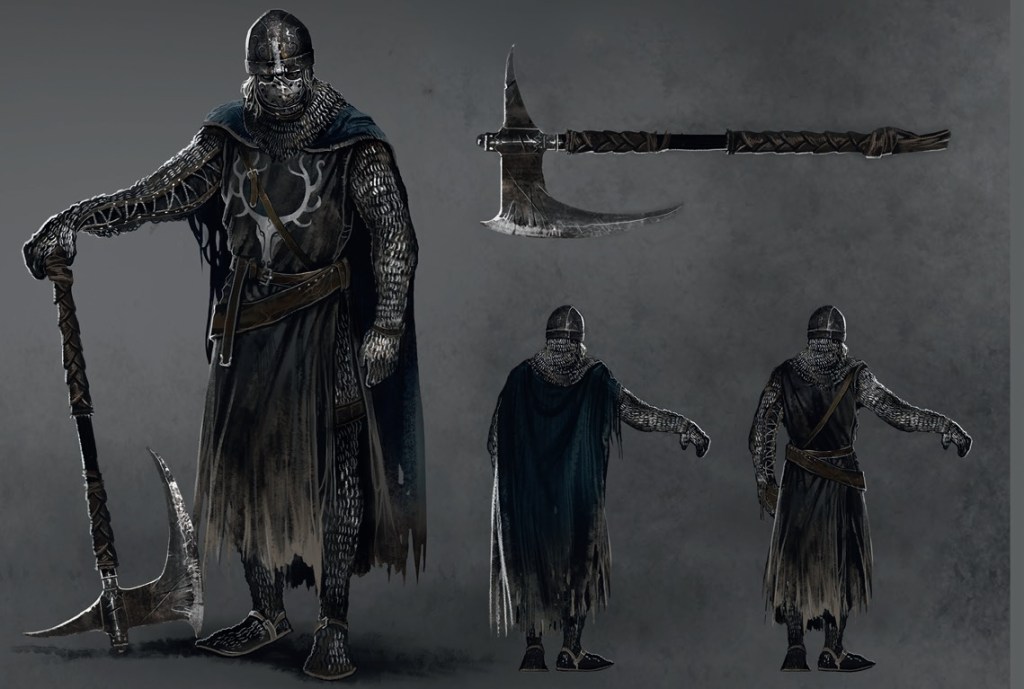
Unfortunately for Forossa, its war machine couldn’t support itself indefinitely. Without any obvious progress in its invasion, the country exhausted itself both militarily and likely economically until it finally collapsed. Descending into chaos, the remote land became a lawless zone dominated by banditry. Its citizens had to survive and knew only battle, so it comes as no surprise that they turned on each other to protect themselves or their families. But without a new unified state emerging from the ashes, many of these outlaws traveled to other lands to pillage resources elsewhere, somewhere less competitive. Among the places these former nationals scattered to was Drangleic since we can acquire a fair number of weapons connected to them at various parts of the continent. As for the Lion Knights, they became mercenaries in the wars of different countries, and Vengarl was no different. The former knight was eventually hired by the kingdom of Drangleic to help combat the giant incursion.
Helmet of many bandits in the remote region of Forossa.
The whole region of Forossa that was destroyed as a result of war ended up becoming a lawless zone. Its people fell to banditry and scattered to various lands.
Axe of many bandits in the remote region of Forossa. Solid make for a thief’s specialized weapon.
The people of Forossa, which was destroyed by war, scattered and many lost themselves to wild thievery to live. The knights became mercenaries and threw themselves into the wars of various countries.
According to Vengarl, he grew attached to the soldiers he fought and nearly died alongside despite only being a hired sword. He holds King Vendrick in particularly high esteem, even using more respectful language when mentioning him in Japanese dialogue. This brotherly bond on the battlefield gave him his own stake in the kingdom’s future, but it tells us so much more. Vengarl relates that his life of endless war blinded him to any other path besides it, and it is only after he was forced to experience peace that he came to realize his fatigue with fighting. The humanizing feelings that the mercenary experienced were likely the first hints to him craving deeper relationships with his fellow man than just kill or be killed. But the former knight would never deepen those bonds with his comrades. During a relentless battle in the Shaded Woods, Vengarl was beheaded — maybe he should of worn the Ring of Soul Protection he sells. This would have been the end of his tale had he not turned Undead, though his cause of death still brought him misfortune.
I’d be lying if I said I didn’t care for what became of this country. I was a hired body, but I had comrades who survived the verge of death with me. And then that king… that personage… But, I’m certainly happy with this. What did happen at the end of the fighting…?
While his helpless head has come to love calmly loitering around the forest as the ages passed, his body has continued to battle out of presumably instinct. This is notable since it implies that the head acts as another major center for the soul, which makes sense considering the brain is the location of the mind and required blood pumped from the heart like any other organ. Vengarl’s consciousness has remained with the soul in his head and evolved intellectually over time while the soul in the body continues to act on is instincts from before death. Despite the disconnect, Vengarl still dreams of his body’s violent actions and can feel when it is defeated, meaning that the divided soul still maintains an at least weak connection. And once the wild body is incapacitated, Vengarl can leverage that bond to regain full control of the stray soul, hence why we can summon both parts as one spirit after defeating the physical body. For our unprompted assistance in his plight, the former hero lends his aid on our journey to become a greater king than Vendrick at both Dragon Shrine and the Throne of Want.
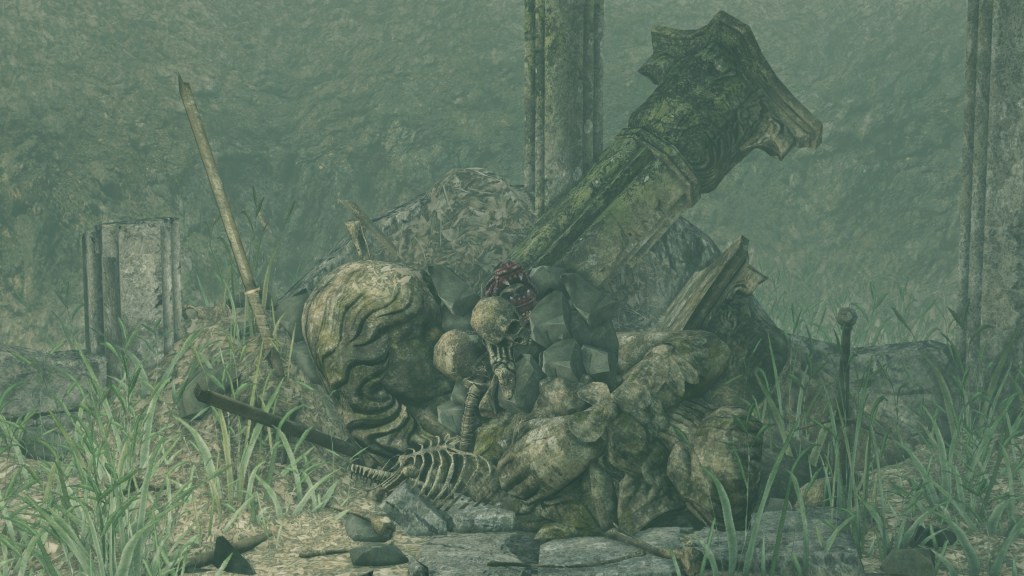
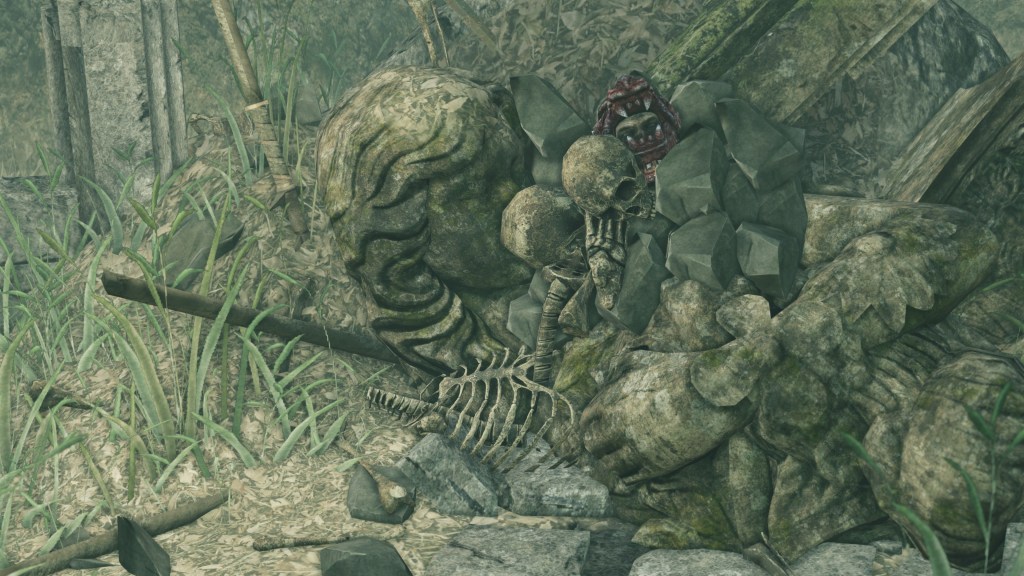

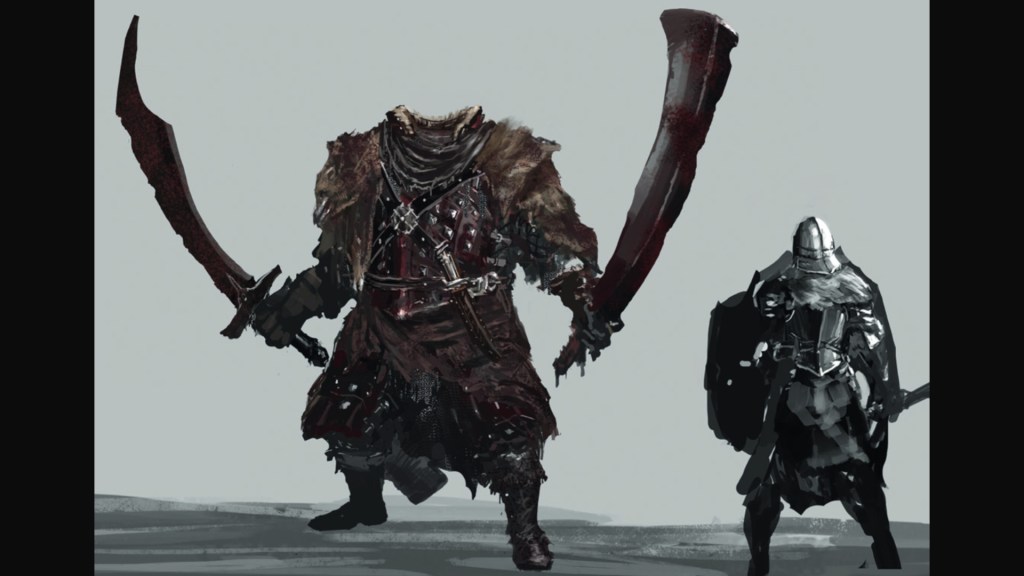
Before that though, Vengarl is left to just observe world without really knowing the exact fate of either his body or the battle and kingdom he fought in. He has mellowed out over the years, acting far more congenial than his history would suggest. And he enjoys it, which may make him a microcosm for Forossa as a whole. Like Vengarl, the country has known only endless fighting with everyone around it, exhausting itself in battle after battle. Vengarl received relief and even fulfillment taking a breather from war. Had Forossa done the same, it may well have survived and perhaps flourished with a richer culture. But just like Vengarl, the nation never noticed these other valuable elements in the midst of battle and lost what little it did have. Now only a meager, dispossessed people remains to scavenge ruins, perhaps with the hope that their culture will one day find new life after a break. (a hope which DS3 ultimately answers) Forossa’s warriors’ traditions ended with it, but its legacy carries on.
 Lokey Lore