
Preface
One of the three pillars to my methodology is psychoanalysis, because a story is, ultimately, defined by its characters as much as its world or plot. It is not just about knowing what the characters do or when, but why that merits any discussion. In this respect, Elden Ring has the most effort put into the character work. That doesn’t necessarily translate into better or more interesting characters, but I must commend the developers for inviting discussion with these intricate webs of relations. And when it comes to one character in particular, I find that she is, while hardly anywhere close to my favorite, a figure definitely worth discussing at the very least. Marika’s narrative may not have been as interesting if not for her, so FromSoftware deserves due credit.
More Than One Way
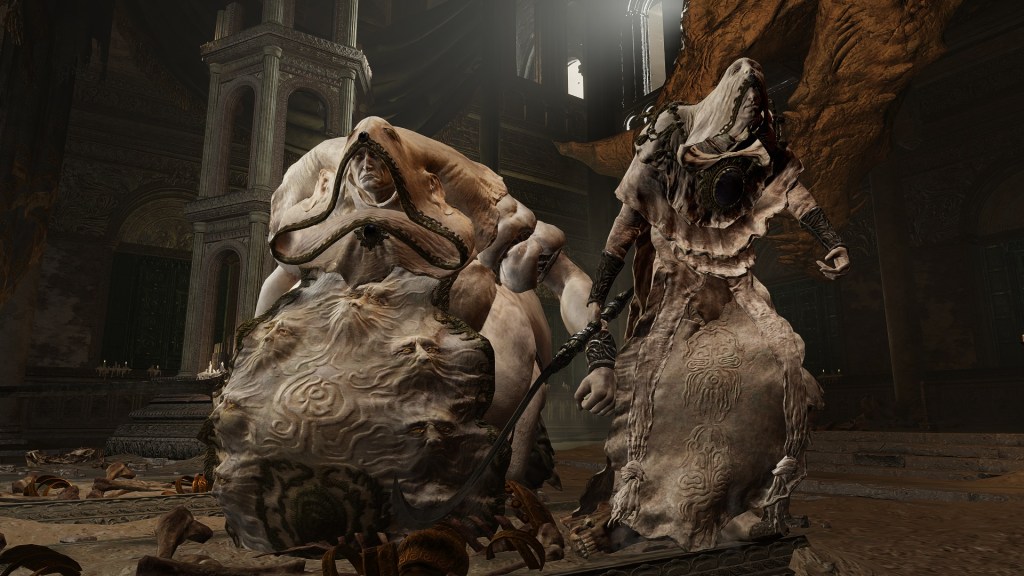
Exploring the Lands Between, it is inevitable to encounter the “godskin apostles” spread across the various regions. These are the scattered remnants of a group that once conducted “god” hunts with the power of black flame, which they seem to have derived from the Rune of Death. The apostles’ robe acknowledges that they “served” Destined Death in its description, and it is after defeating them that Maliketh seals the shadow his Empyrean had removed at the start of her Golden Order. The sealed rune has been harbored in specifically his sword ever since, Marika’s shadow unleashing its equally shadowy power with each swing during battle. This has appropriately earned him the name Black Blade, whereas the apostles’ fiery power was lost per Scouring Black Flame’s description. Marika wanted this for her vassal beast according to his remembrance’s own text, and that confirms one crucial point: the Rune of Death was the source of black flame, but the godskins didn’t own the rune by the Eternal Queen’s choice.
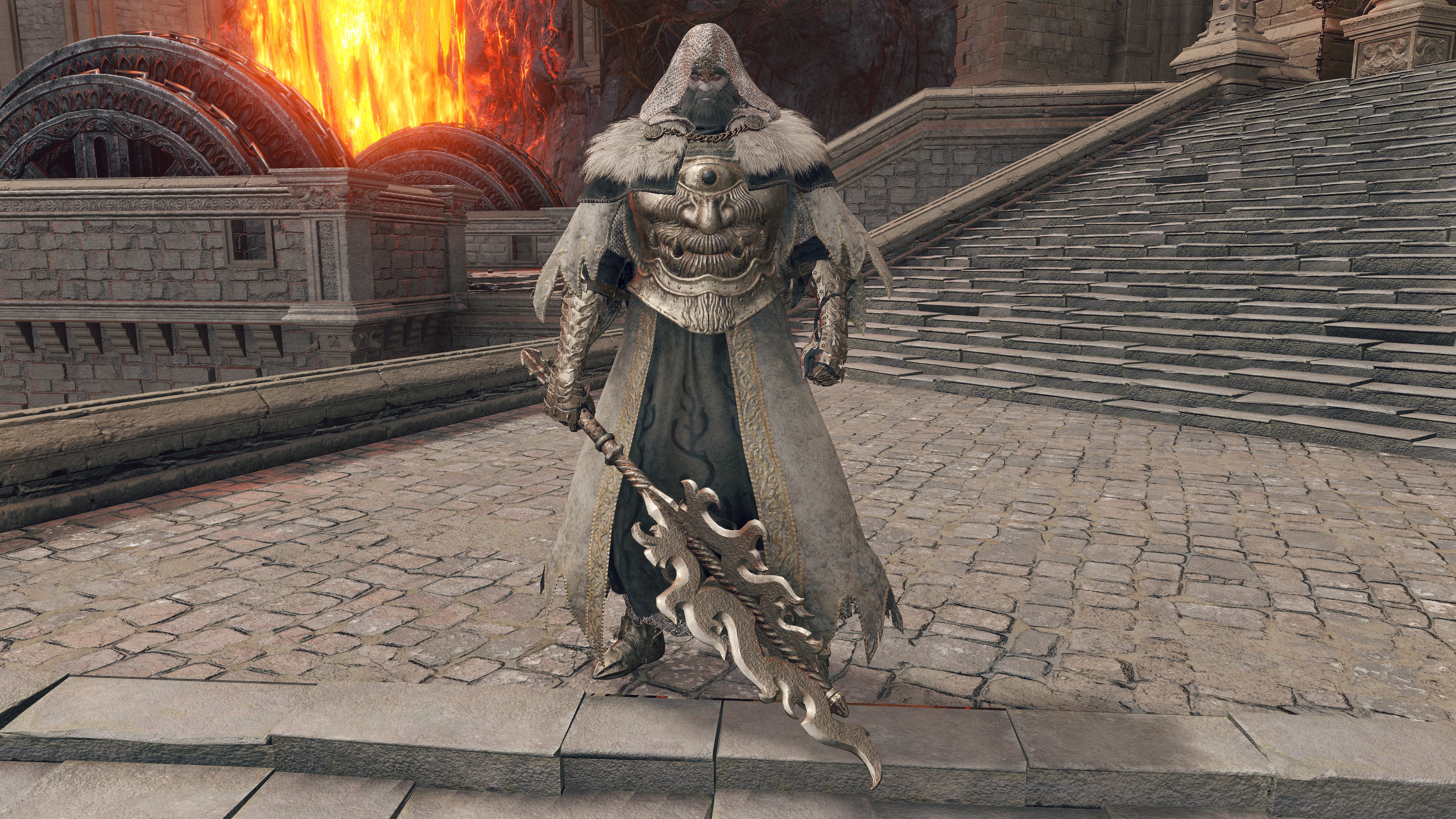
Robe sewn up from smooth skin. Apparel of the Godskin Apostles.
It is said that the apostles who manipulate the god-hunters’ black flame once served Destined Death. However, they were defeated by Maliketh the Black Sword and had it sealed away.
One of the black flame prayers of the Godskin Apostles.
Greatly burns ahead to ashes via black flame. Burns a wider range to ashes via charging.
Black flame was, in other words, the flame of god-hunters. However, when Mailketh sealed Destined Death, that power was lost.
Recollection of Maliketh the Black Sword engraved in the Golden Tree.
Can acquire the owner’s power via the Finger Reader. Also, can use to acquire vast runes.
Maliketh was a shadow-vassal beast given to his Empyrean. For Marika wanted her shadow-vassal to be a seal for Destined Death and later betrayed him.
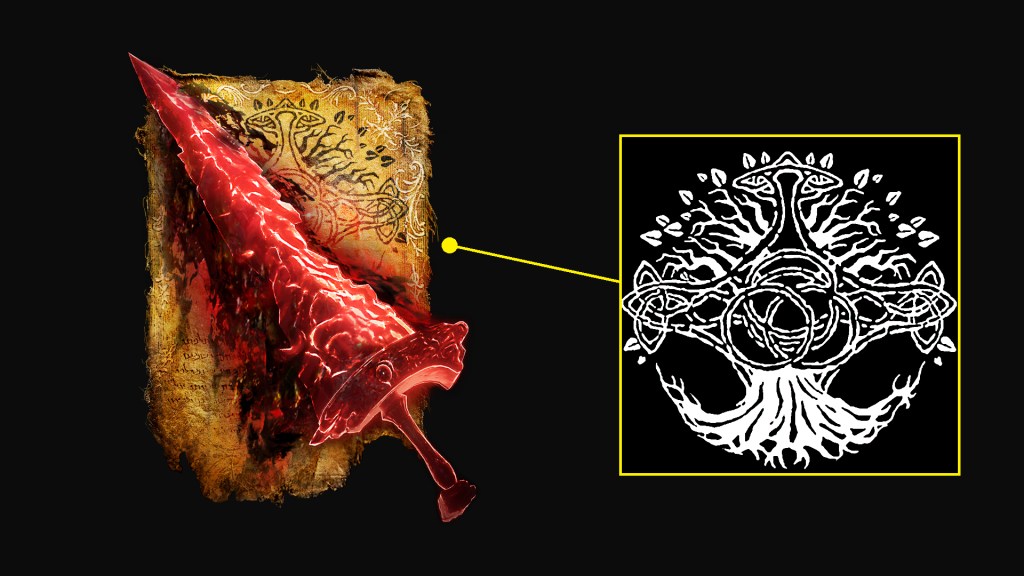
Indeed, when the apostles came into possession of Destined Death is very telling about their god hunts. Enia admits that the removed rune was also sealed in the Japanese script, but she doesn’t clarify if this was at the creation of the Golden Order as well. The menu graphic for Black Blade features the crest for old Erdtree incantations. Since it isn’t the oldest Erdtree incantation like Elden Stars, this cannot be before Marika encountered the Elden Beast at the root of the Crucible she planted. That implies that Maliketh sealed Destined Death in his sword sometime during the ensuing Age of Plenty. In other words, it was only after Marika became god of an Order separating shadow from gold that said shadow fell into the apostles’ hands. This gap between the removal and sealing thereby limits the subjects who could be hunted as gods. In fact, they appear to have been more human than one might expect.
The Rune of Death is, in other words, Destined Death. A shadow removed at the beginning of the Golden Regulation and sealed away.
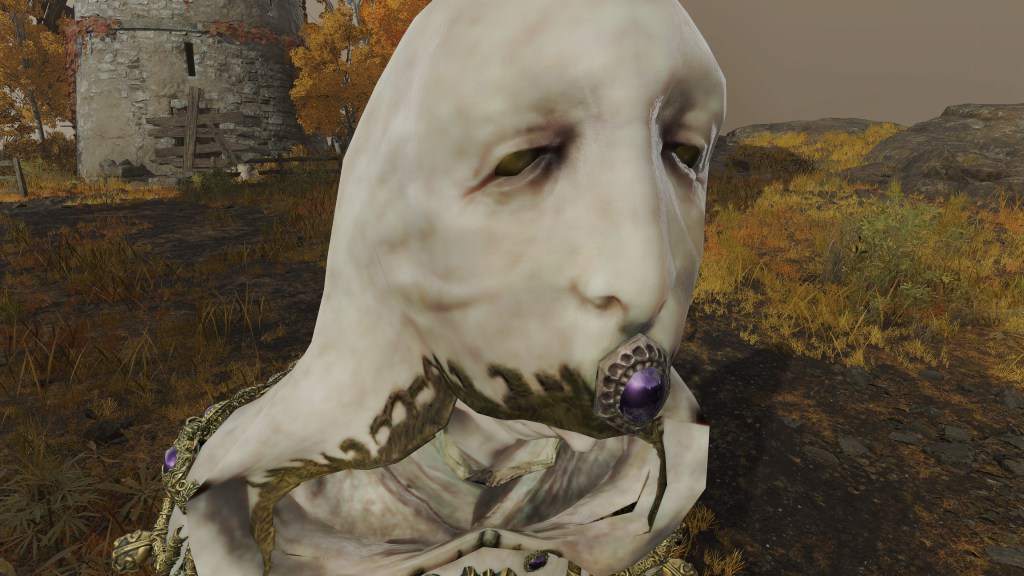
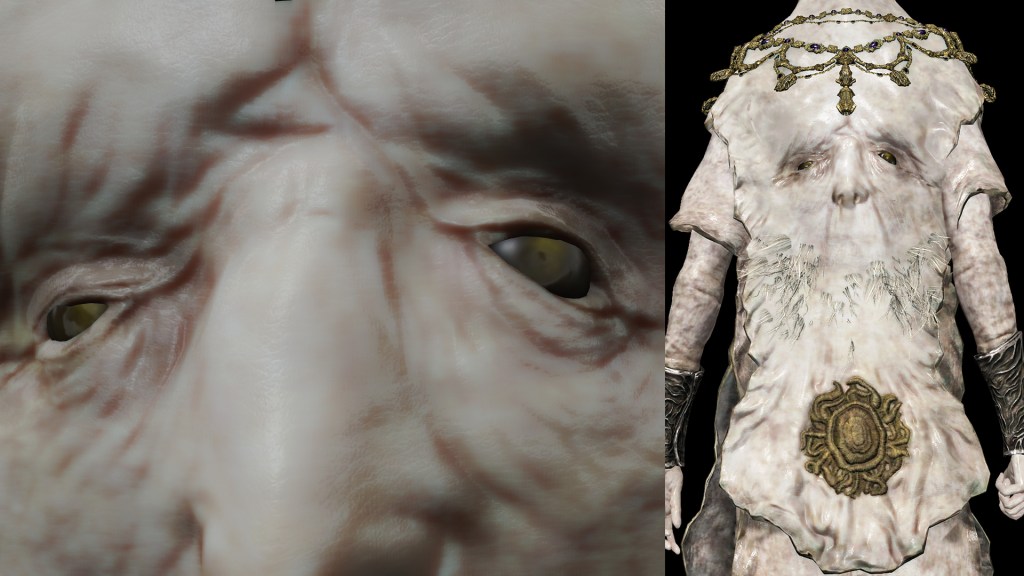
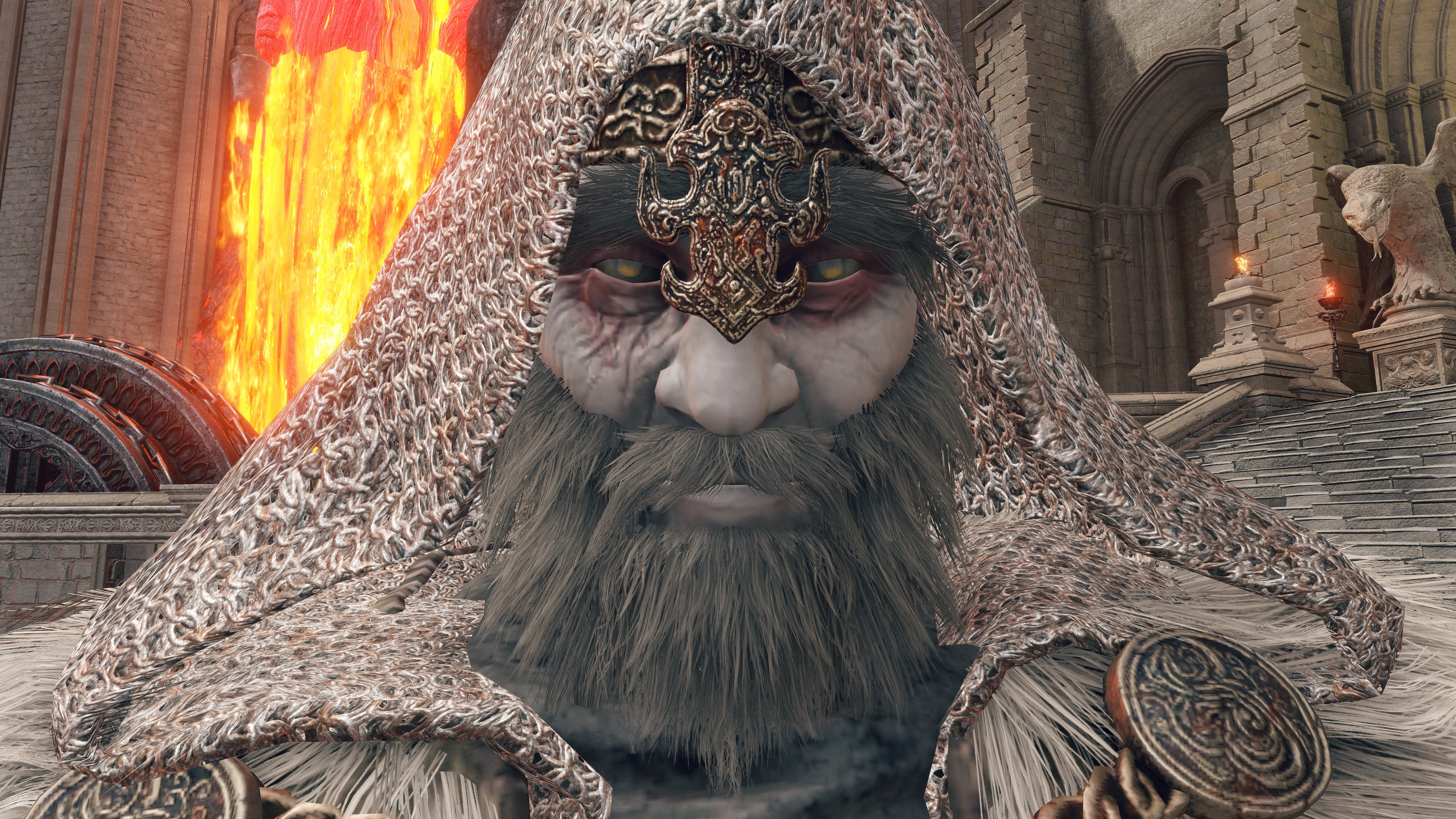
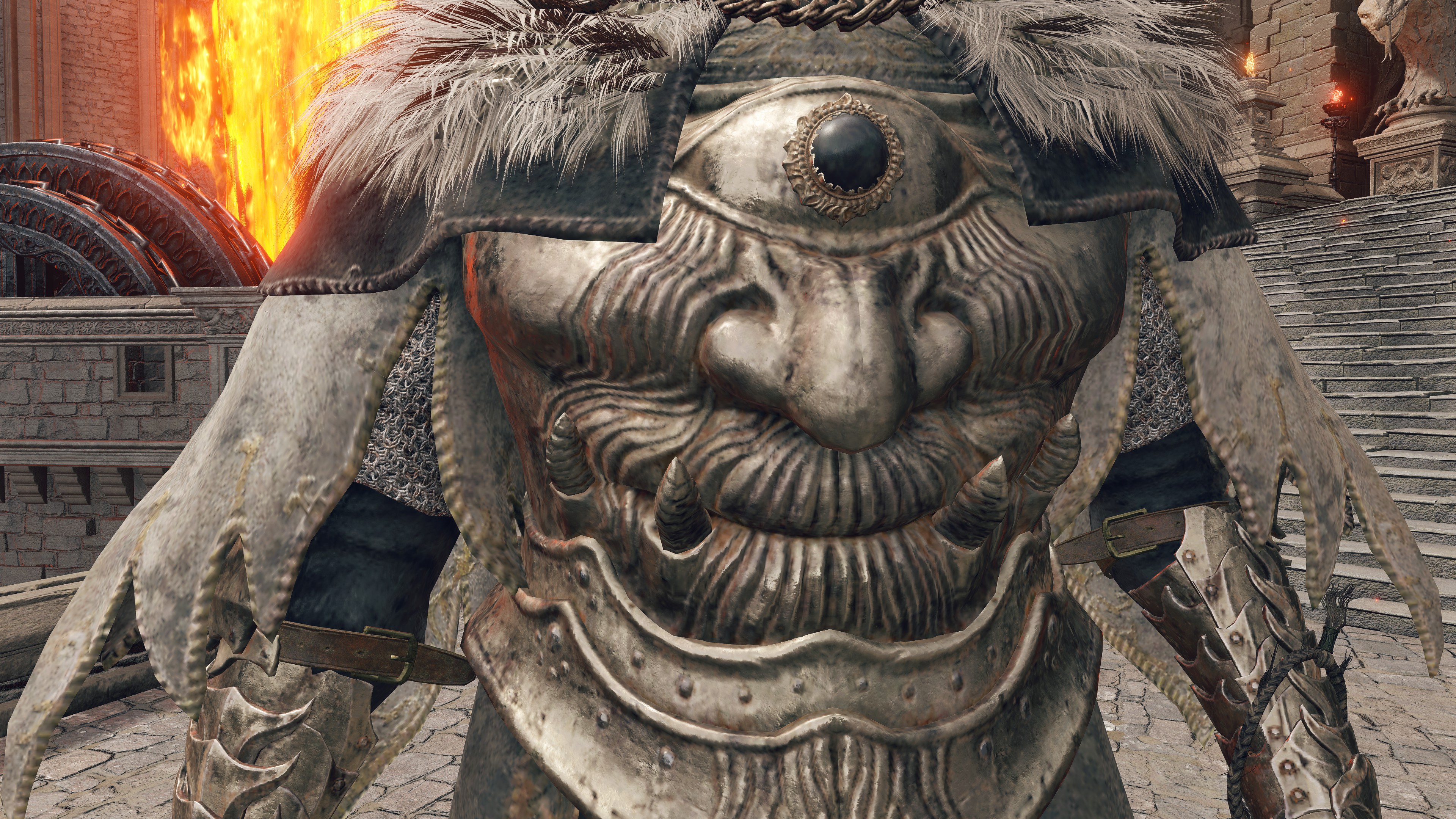
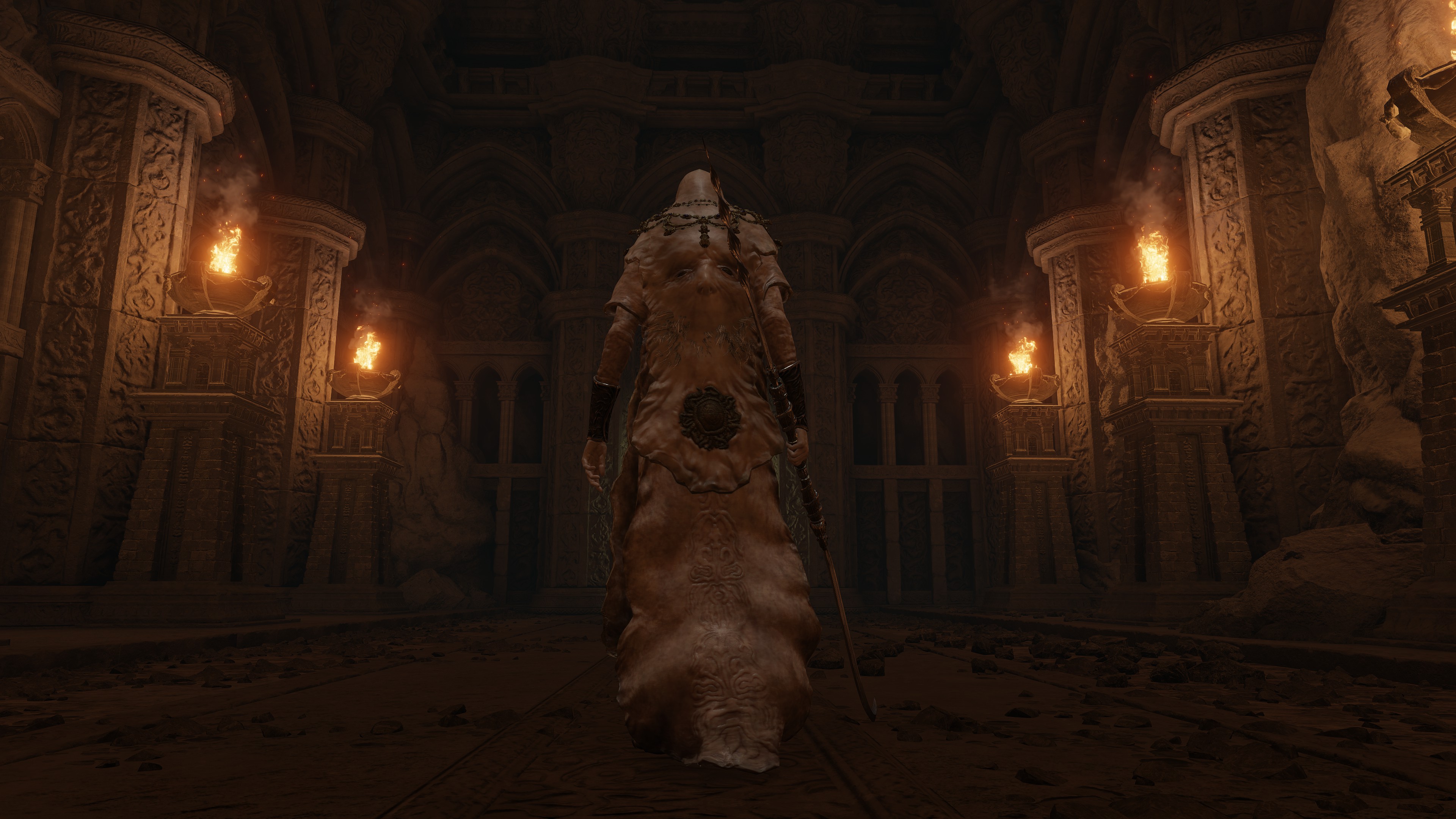
The name “Godskin” comes from the apostles wearing actual skin, tanned and sewn together into robes. The attire retains their victims’ faces, with Godskin Nobles incorporating seven into just their aprons. This includes the eyes, the golden pupils indicating their place in Marika’s Golden Order. Adding to this, the godskin sets are most resilient to holy damage, meaning that the flesh was graced by gold. That leaves only the demigods as possible candidates, as reaffirmed by the Noble Presence which the aristocratic apostles brandish. The description frames the black flame shockwave as an old “power” which was previously the gods’ “wrath” — a clear-cut allusion to Wrath of Gold. While the golden shockwave was discovered as an incantation more recently, owing to the Erdtree’s wrath, the concept is generic. The demonstration of innate holiness for divine retribution is, in fact, recycled from Demon’s Souls and Dark Souls, so this golden wrath could just as easily be exhibited by the Erdtree’s gods. This is why the nobles consider it another “badge” of their hunts like the skin trophies: the flame’s power was derived from that skin.
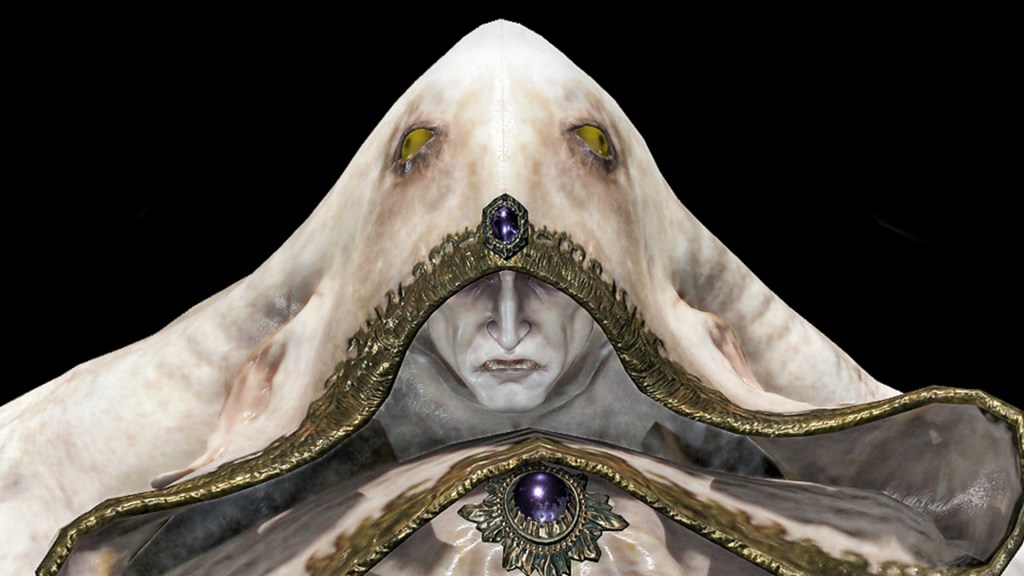
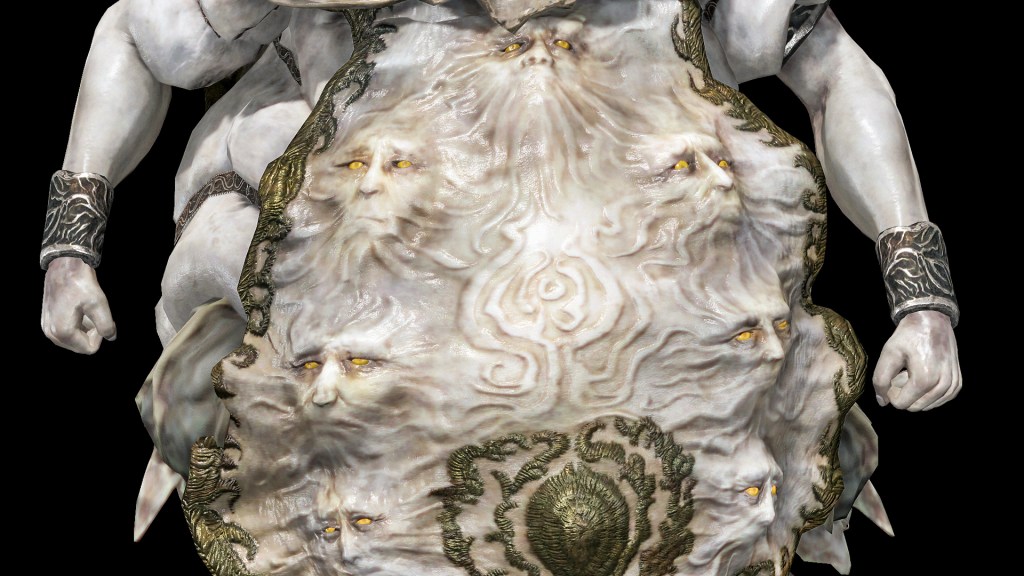
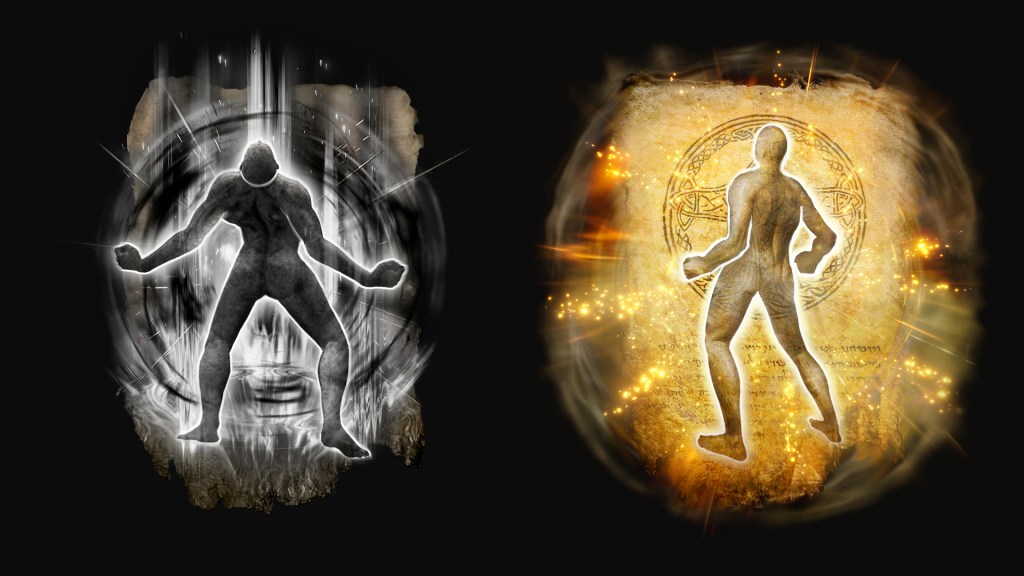
Old power that the Godskin Nobles brandish.
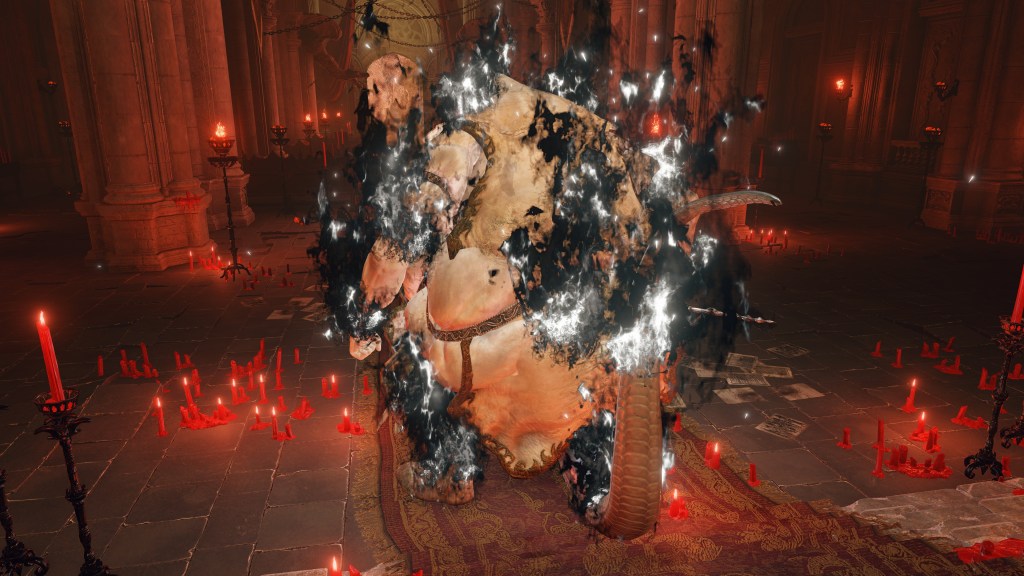
Greatly thrusts out belly and generates shockwave that sends surroundings flying. Enhanced and launches enemies with charging.
It was once the wrath of the gods but became one of the badges of a noble’s god-hunt.
At every level, the godskin matches Marika’s demigods and no one else. This fits well with the surrounding circumstances. Obtaining Destined Death made Maliketh every demigod’s fear. Why would they fear him especially when the holy power drains life from all equally? Because they were the ones targeted with that power by the previous god-hunters. While that might sound confusing when their label distinguishes them from the one god, Marika, it wouldn’t be the only instance of this. Amber Starlight governs the fate of “the gods” which Seluvis confirms refers to demigods. Rykard similarly invokes “gods” in implicit reference to Marika and her progeny whom his blasphemy concerns, as does Ranni for those slain by the Black Knife assassins. Alexander goes so far to call Radahn a war god in Japanese dialogue. The demigods, even if not fully divine, clearly fall under this umbrella term. An earlier iteration of the godskin sets’ descriptions outright say that it is demigod skin, so this was definitely the developers’ original intention.
Did you hear? About who this war festival is being held for? Did they not say that war god, General Radahn?
Some fans push back on this notion because Godwyn’s assassination in the Night of the Black Knives is consistently regarded as the “first” death of a demigod. As Rogier relates, this occurred after a fragment of the Rune of Death was stolen from Maliketh, the assassins harboring that power in their own weapons for the assassination. Godwyn cannot die before Maliketh defeats the apostles and claims Destined Death from them. Other fans might argue the possibility that Marika’s shadow always kept custody of the rune, and that the godskin apostles similarly stole a piece later on. But after the Black Knife assassins, Maliketh sealed his sword within himself in order to keep anyone from stealing it a “second” time. Until we confront him at Farum Azula, there is simply no opportunity for anyone to rob the vassal beast. In that case, how can there be demigods killed before the supposed first dead demigod?
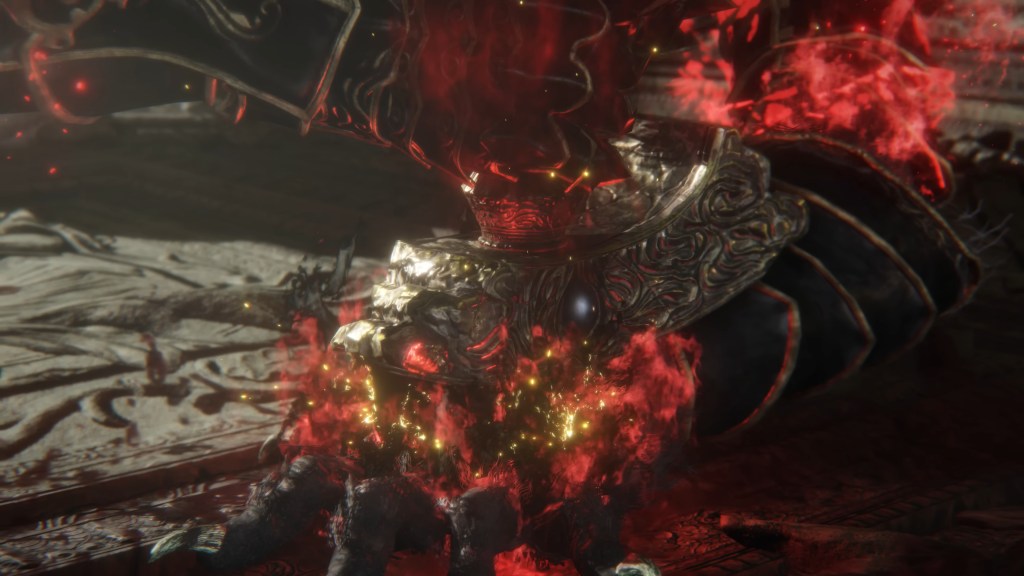
In the prosperous period of the old Golden Tree, still before the Elden Ring was broken, someone stole a fragment of the Rune of Death from Maliketh the Black Sword and, on a cold night, assassinated Godwyn the Golden. It was the first death of a demigod in history and said to have served as the impetus of the Elden Ring breaking and the Shattering War occurring…
Great husk of the black sword of Maliketh harboring Destined Death.
After a portion of Death was stolen on the night of the conspiracy, Maliketh sealed this sword within himself. So as to not let anyone steal Death a second time.
However, this objection misunderstands the usage of ordinal numbering. “First” doesn’t always apply to the earliest example of something across all time and space. Godfrey is designated the first Elden Lord, but that doesn’t preclude the existence of prior Lords like Placidusax from before the Erdtree’s history. There is a First, Second, Third, and Fourth Church of Marika, but that doesn’t stop the possibility of other churches being constructed before or between them in time. Both of these cases have nuances to circumvent any apparent contradictions. One is technically the first Elden Lord to Marika, and the other only gives an order for the four “Marika Churches” otherwise unnamed. Instead of an automatic assumption on the lexical intent in a specific term or phrase, it is important to consider the broader context. And when it comes to context, Rogier states that Godwyn is the first dead demigod in history, qualifying the Golden’s latest epithet as a reflection of public record.
If Godwyn isn’t “first” as a matter of fact but of information widely accessible in the present day, then there is plenty of room to doubt. The Cursemark of Death’s description proves this when revealing how Ranni died at the exact same time, making both him and her the first despite popular accounts. Chroniclers can likewise be censored, especially when it concerns subjects sensitive to the state. Marika the god surely wouldn’t want mortal men to consider divinity assailable — it would behoove her reign to keep any demigod’s death from being widely disseminated. Even if it required silencing speech for apostasy, she could make it so that future generations didn’t inherit memory of certain history notwithstanding eyewitnesses still alive to share it. Godwyn’s death was, as Rogier asserts, the impetus for the Elden Ring’s shattering and the resulting conflict which has plunged the Lands Between into chaos; it is impossible for his assassination to go unattested so close to current events. But for prior hypothetical demigods, the queen may have wiped the annals clean of mention long ago.
Put simply, it is entirely feasible for there to be dead demigods before Godwyn. These deaths may not have been as high-profile and thus easier to downplay, since Marika is responsible for birthing so many, named and unnamed; looking at just the Godskin bosses we encounter, the number of demigods at the time of the hunts rises to dozens at minimum. But they were still the loss of her children. Every godslayer wears the skin of multiple as trophies. This was no less than the targeted genocide of her clan. The cult of hunters was trying to exterminate the Golden Lineage who upheld the Order on Altus. If the Night of the Black Knives drove her mad, one can only imagine the Eternal Queen’s dread facing this earlier murder spree. For the god, it was an existential threat to her home life. But for the god-hunters, this was a crusade, a religious revolution.
Moonrise
The godskin apostles were led by a Gloam-Eyed Queen. The color of gloam, or “dusk”, (宵) in this case should be the blue-violet spectrum seen after the moon rises and the sun falls below the horizon. This differs from the Age of the Duskborn we can usher in as Elden Lord, the kanji for the adjective (昏) able to invoke dusk idiomatically but more broadly used to define a general dark and dreariness as reflected in the pale grey hue of the Erdtree slathered in fog and rain. The two are distinct, though there is obvious overlap when both involve a Rune of Death. For the Gloam-Eyed Queen, no color in the eye could be better capture her wish to herald in an Order of night after toppling the false day. And given that it is her identifying feature, the color itself may reflect her powers, similar to the grace of gold in the eyes. After acquiring the Rune of Death, it is possible that the queen internalized some of the power used to create black flame to the point that it changed her eye color. Before that her pupils would have likely been gold or ordinary.
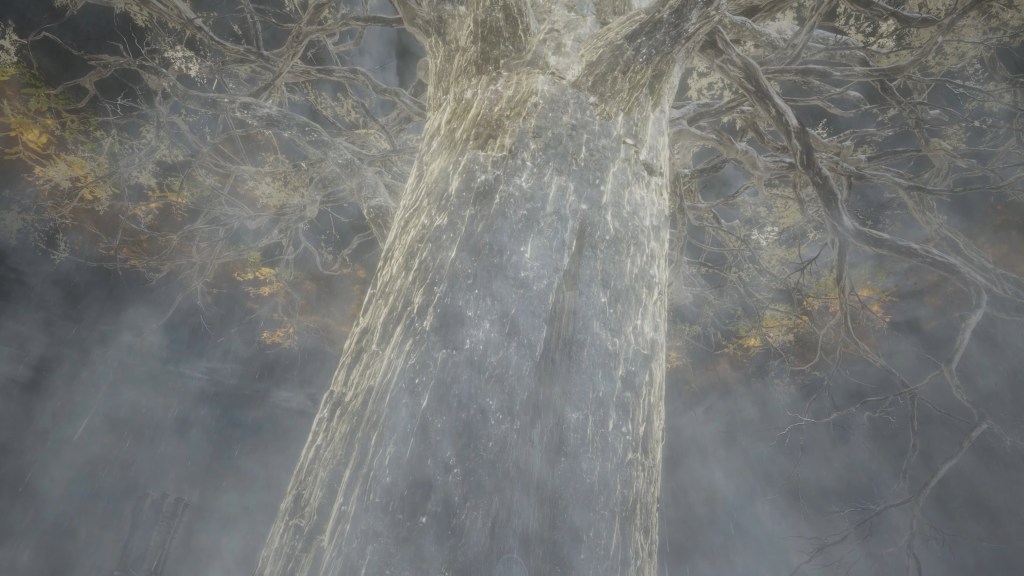
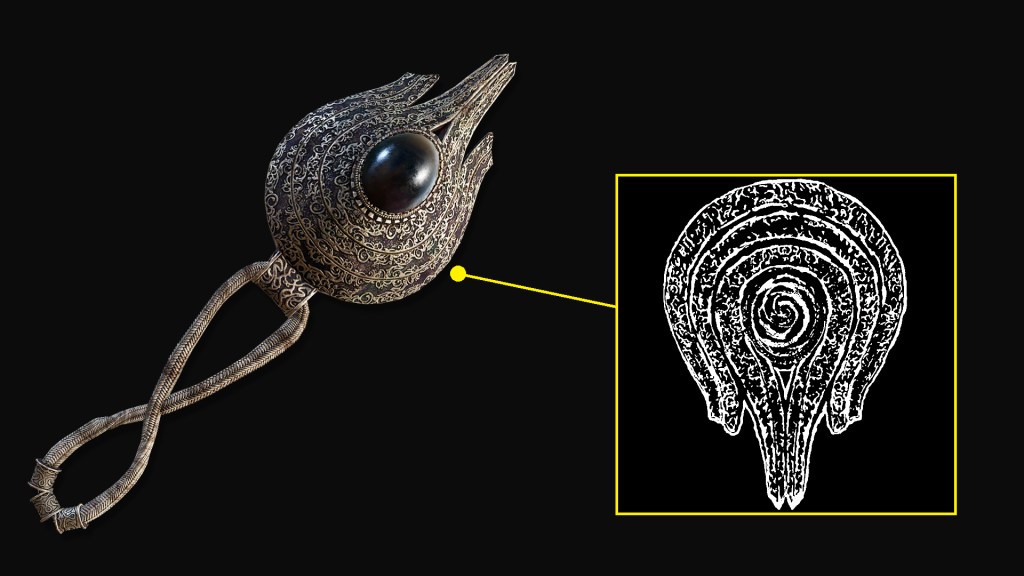
However, life growing up was anything but ordinary. The description to Black Flame Ritual reveals that the Gloam-Eyed Queen was an Empyrean chosen by the Two Fingers. She was born with a fate to become a god after Marika, making hunting the gods an effort to clear the way for her own Order. This is why the hunters are her apostles, conjuring black flame with prayer, faith, and holy seals. The queen was their god, her coronation a foregone conclusion. The power of black flame was her version of holy magic, its manifestation a sacred ritual. So important was the power derived from Destined Death, their incantations’ magic sigil is a palm holding the black flame, better showcased in the holy seal where a black stone sits at the center of the silver hand. That hand is depicted upside-down, as if the flame is being extended to the viewer as a gift. This is consistent with Hamsa, which dictates that this orientation is a welcome to blessings and good fortune. And the one offering the blessing was a god of Death.
Holy seal inlaid with obsidian. The holy seal of the godskin apostles.
It is said to be modeled on a palm of black flame, so enhances god-hunter prayers.
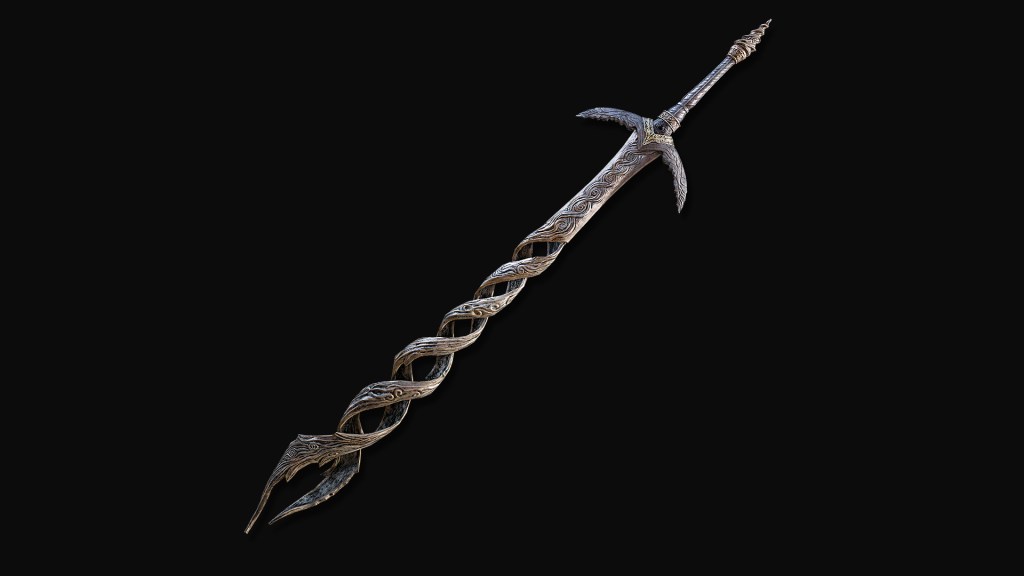
The Gloam-Eyed Queen produced all this flame the apostles manipulated from specifically the “holy” sword she wielded. The greatsword’s unique blade captures a swirling vortex of flame rising from the hilt. This complements how enemies burn with black flames upon each strike, but the true source of the power is presumably at the base of the hollow within the blade. In all likelihood, that cavity is where Destined Death was inserted, the queen channeling the rune’s power from the hilt to draw out the resulting fire. Maliketh defeats her especially before sealing the Rune of Death in his own sword, so it must have been in her possession at the time. And where better to keep it than in the sword she was using to hunt gods? The excess power was shared with her devoted apostles as a blessing, but she hoarded the most of it as her own, like Marika with grace. The excised Rune of Death was essentially her choice for a reconfiguration of the Elden Ring. She was planning an Order oriented toward death.
Holy sword of the Dusk-eyed Queen, who once led the Godskin Apostles and was defeated by Maliketh.
The black flames manipulated by the apostles were brought about due to this sword.
Establishing a replacement to the Erdtree’s Order would be an impossible task on her own, with how secure Marika sat in Leyndell. For that reason, she needed an army of apostles to help her hunt the gods. This came in the form of the godskins, but others as well. Blackflame Monks are Fire Monks who abandoned their duties as the Flame of Ruin’s Watchers out of fascination with the fire of god-hunters, changing their wardrobe accordingly. For the clothes, they have traded red for ash, and while the description claims the armor to still be black iron, it looks more like a white iron with a black stone in the Fell God’s eye. They don’t hide the fact that they are traitors, their hair losing its fiery red for grey as they now obsessively immerse in black flame arts; even the giant’s seals they still use to cast those arts have undergone this treatment. (Elden Ring: Nightreign features thorn sorcerers who have underwent a similar conversion) The taboo of a fire embodying the missing Rune of Death was apparently too tempting to resist, though these traitors’ motives may be slightly more nuanced.
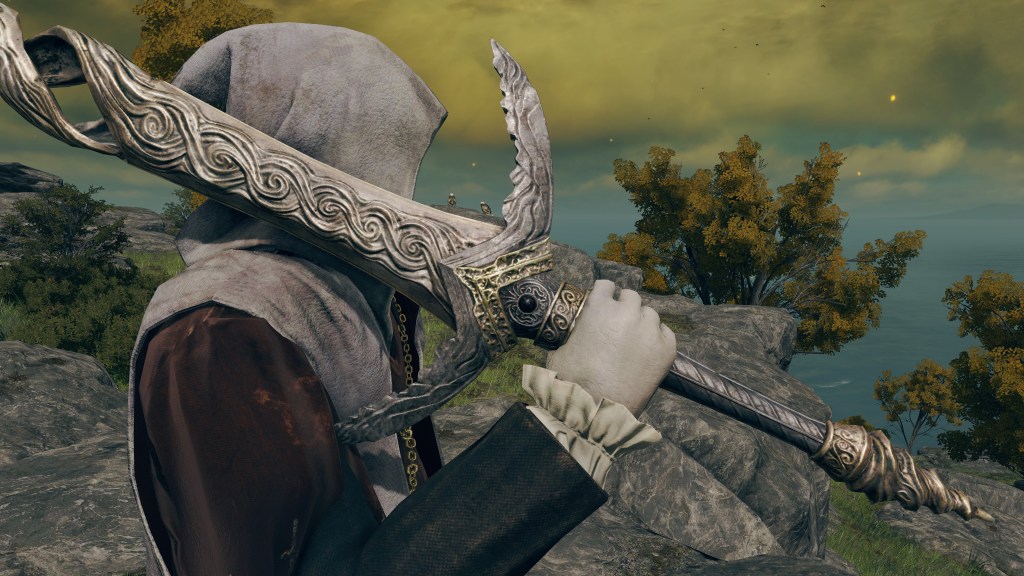
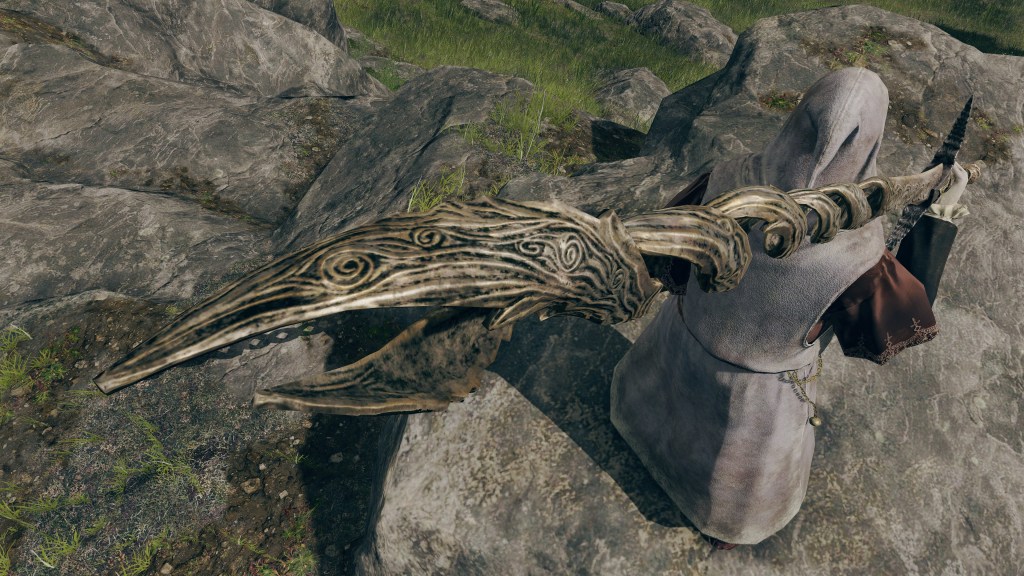
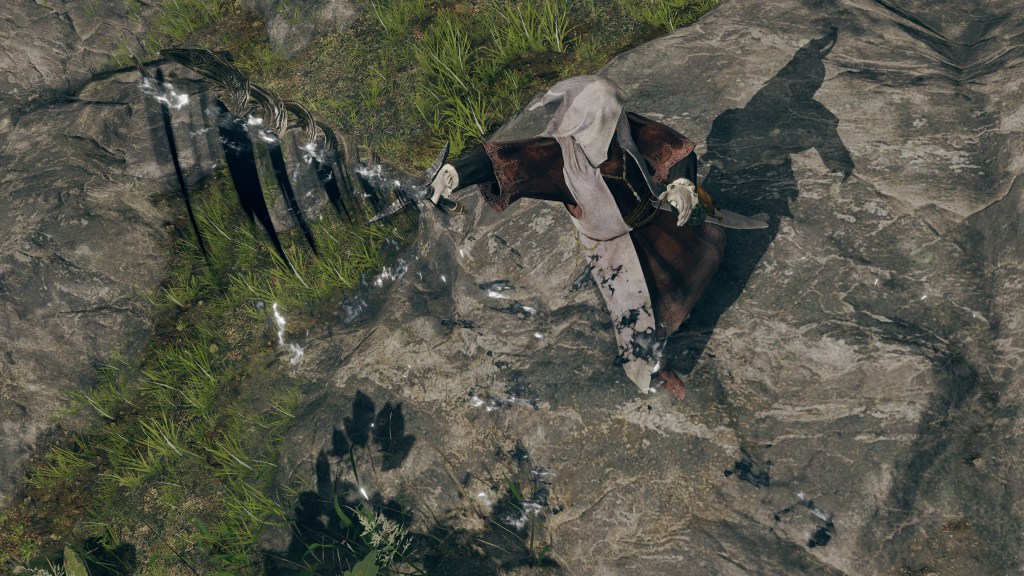
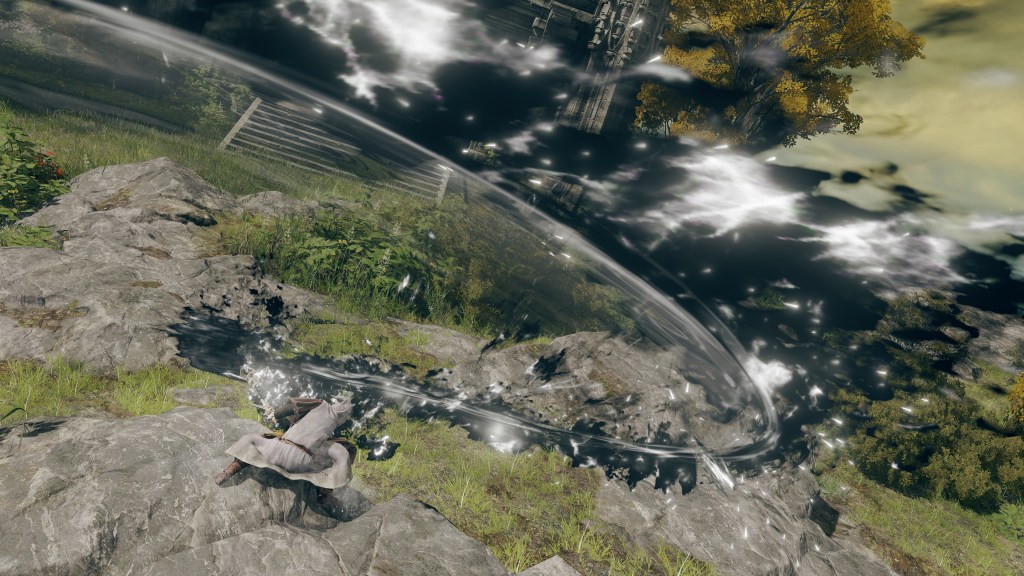
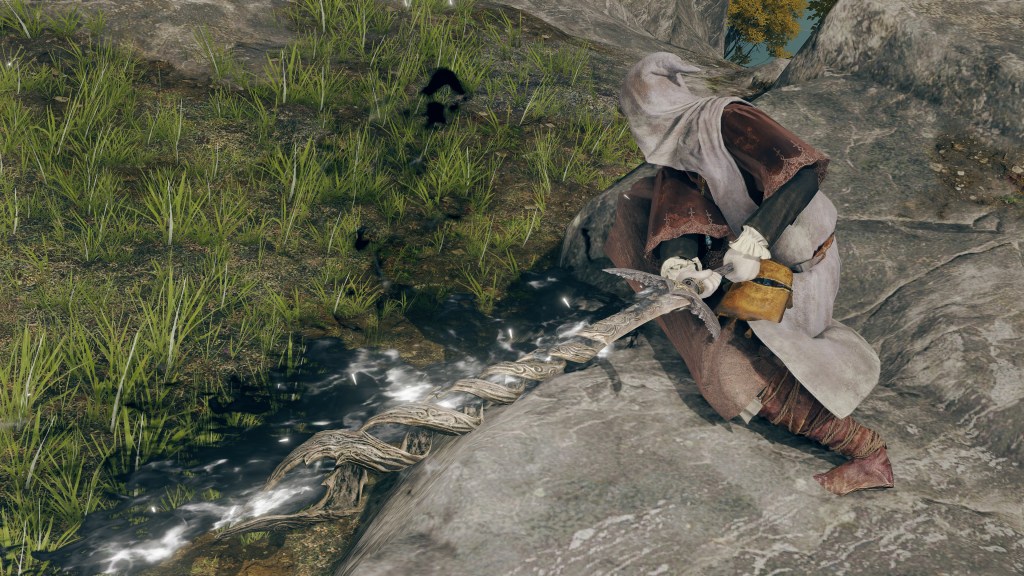
Chest armor of black iron clad in ashen cloth. Apparel of the Blackflame Warrior Monks.
They are traitors who were fascinated with the god-hunters’ black flame and forsook being watchers. A taboo is an irresistible temptation.
Despite deriving his name from the ancient Egyptian sun god Amun-Ra, Amon was the first to swear his fealty to black flame and turn traitor. And yet, the description to his ashes uncharacteristically corrects itself about the traitor, clarifying that the warrior monk was actually running away from the fire of his order — reason being, it attests, due to the weakness in his own heart. Put simply, Amon already felt himself being swayed by the Flame of Ruin when he witnessed the Gloam-Eyed Queen’s fire. Had he not become a Blackflame Monk, he would have still betrayed his mandate and overindulged in the Fell Giant’s power. His betrayal was thus a way to prevent himself from causing more trouble for his fellow monks. It is hardly noble, but it at least let Amon preserve a shred of honor. That wavering will was assuredly shared by all of the traitors; Amon maybe just had the most self-awareness as the first. The Flame Watcher philosophy always kept a delicate balance. The Gloam-Eyed Queen simply took advantage of the Fire Monk’s systemic vulnerabilities to recruit.
Ashen remains harboring a spirit. Summons spirit of Amon, Blackflame Warrior Monk.
Amon, who swore fealty to the god-hunters’ black flame, is the first traitor of the Fire Warrior Monks. No, Amon ran away from the fire. Due to the weakness of his heart.
Of course, the queen’s reason for reaching out to the monks likely went deeper than just mutual fascination with flame. In Spiritcaller Cave, the boss snail summons the spirits of a Godskin Noble and Apostle, implying that these stray god-hunters perished after taking shelter there. Although certainly amusing that the hunters found themselves hunted by beasts, why were they choosing to hide out all they over the Mountaintops of the Giants? The obvious destination would be the Guardians’ Garrison past the cave, where they may hope to convert more Fire Monks to their cause. They seem to have a more specific objective, in fact. Defeating the godskin spirits and their summoner rewards the Godskin Swaddling Cloth and Black Flame Ritual. The holy cloth swaddled newborn apostles as their queen held them in her arms. The accompanying incantation — which spews flame all around like candles in a magic circle — suggests that this was part of rite involving black flame. And if it was a kind of magical fire ceremony, who better to consult than monks who study fire magic all their lives?
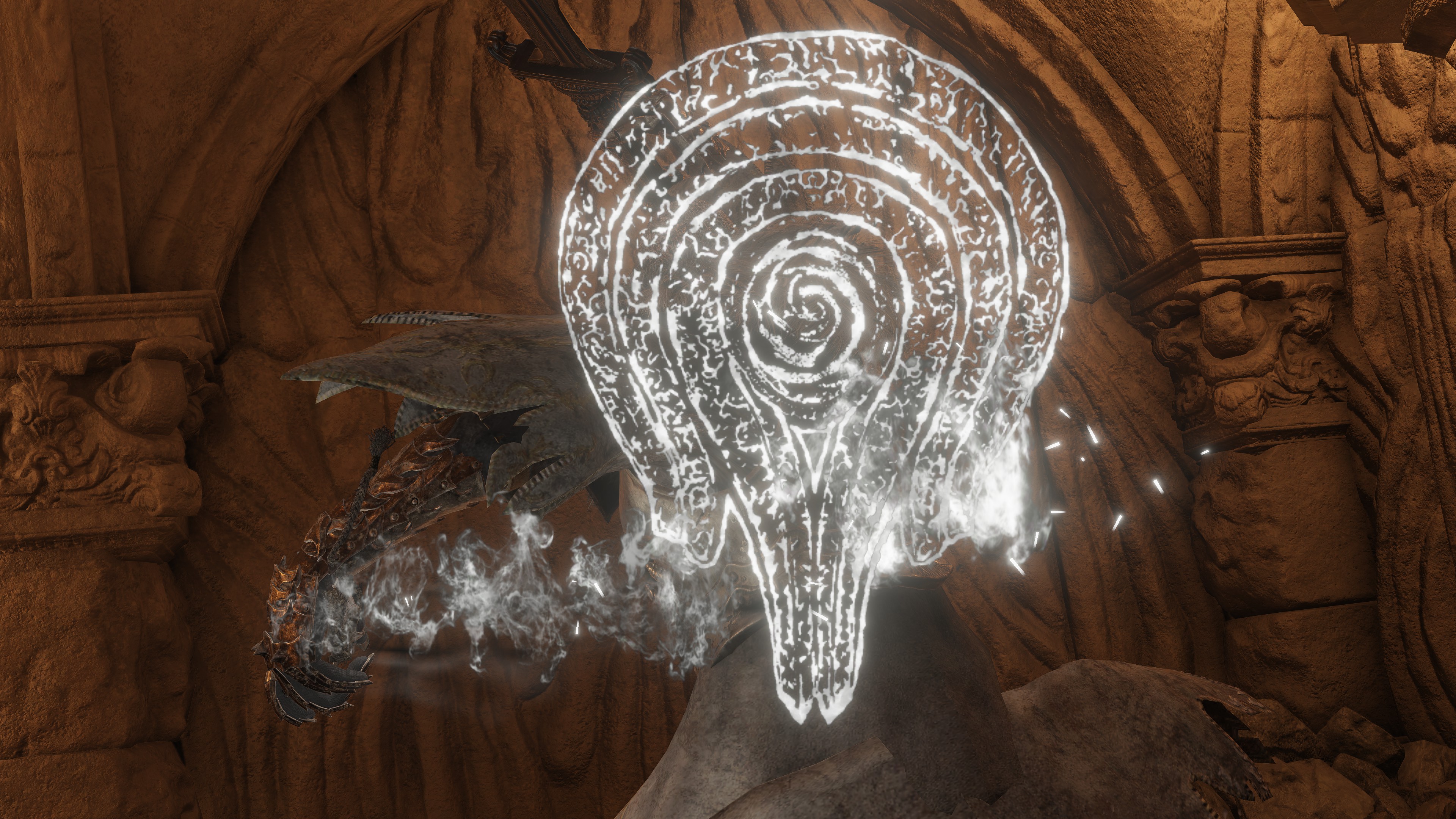
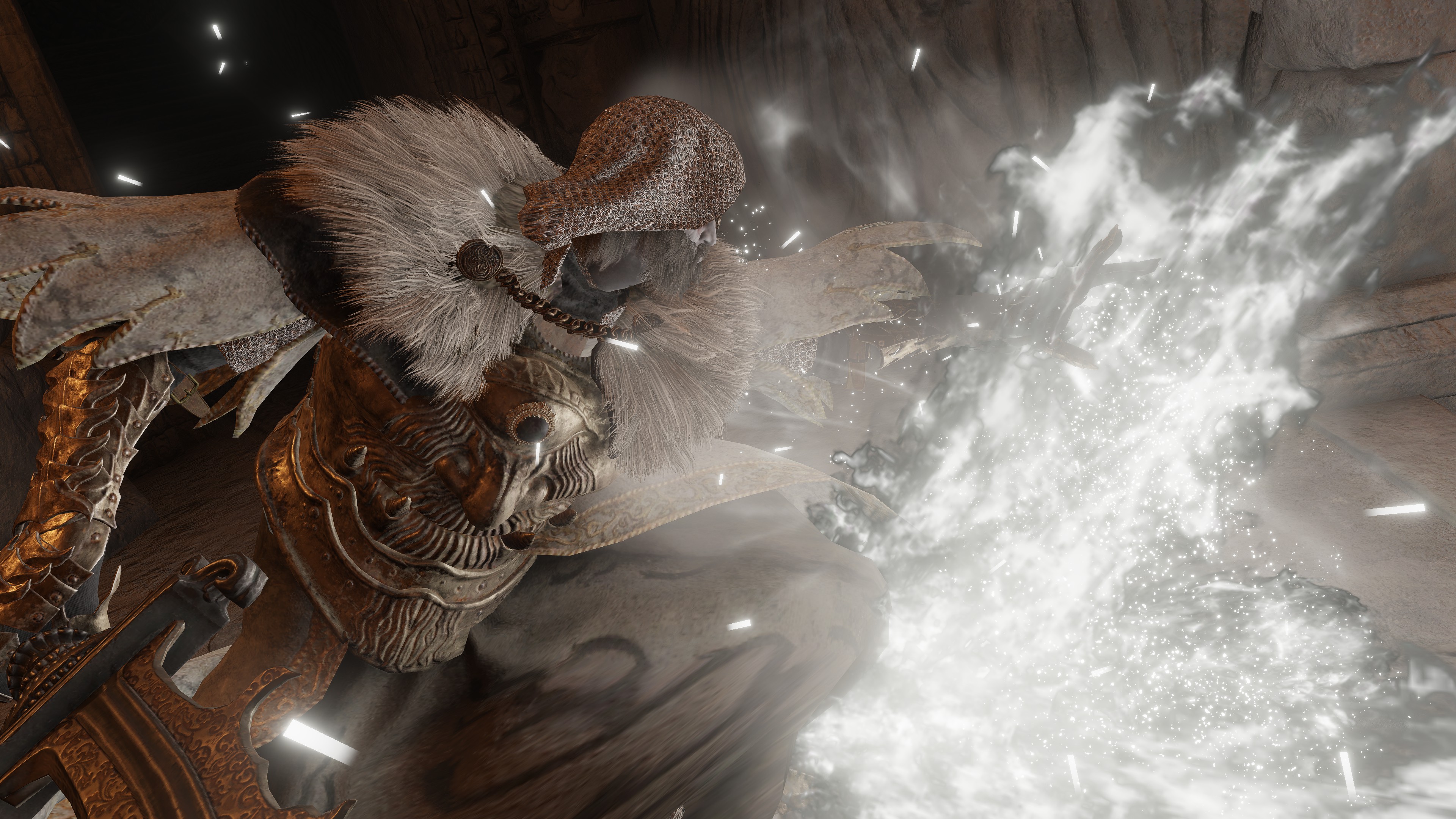
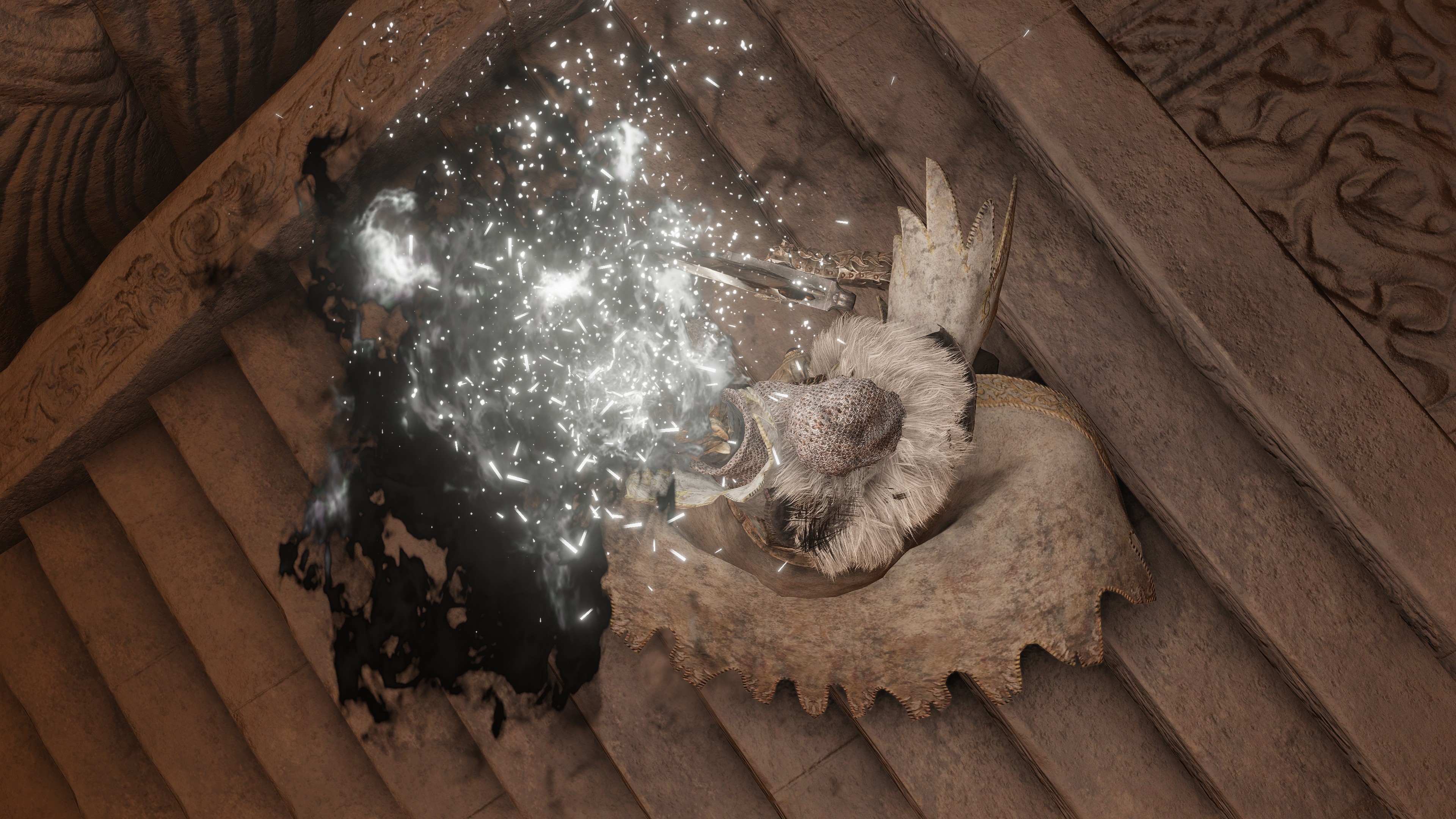
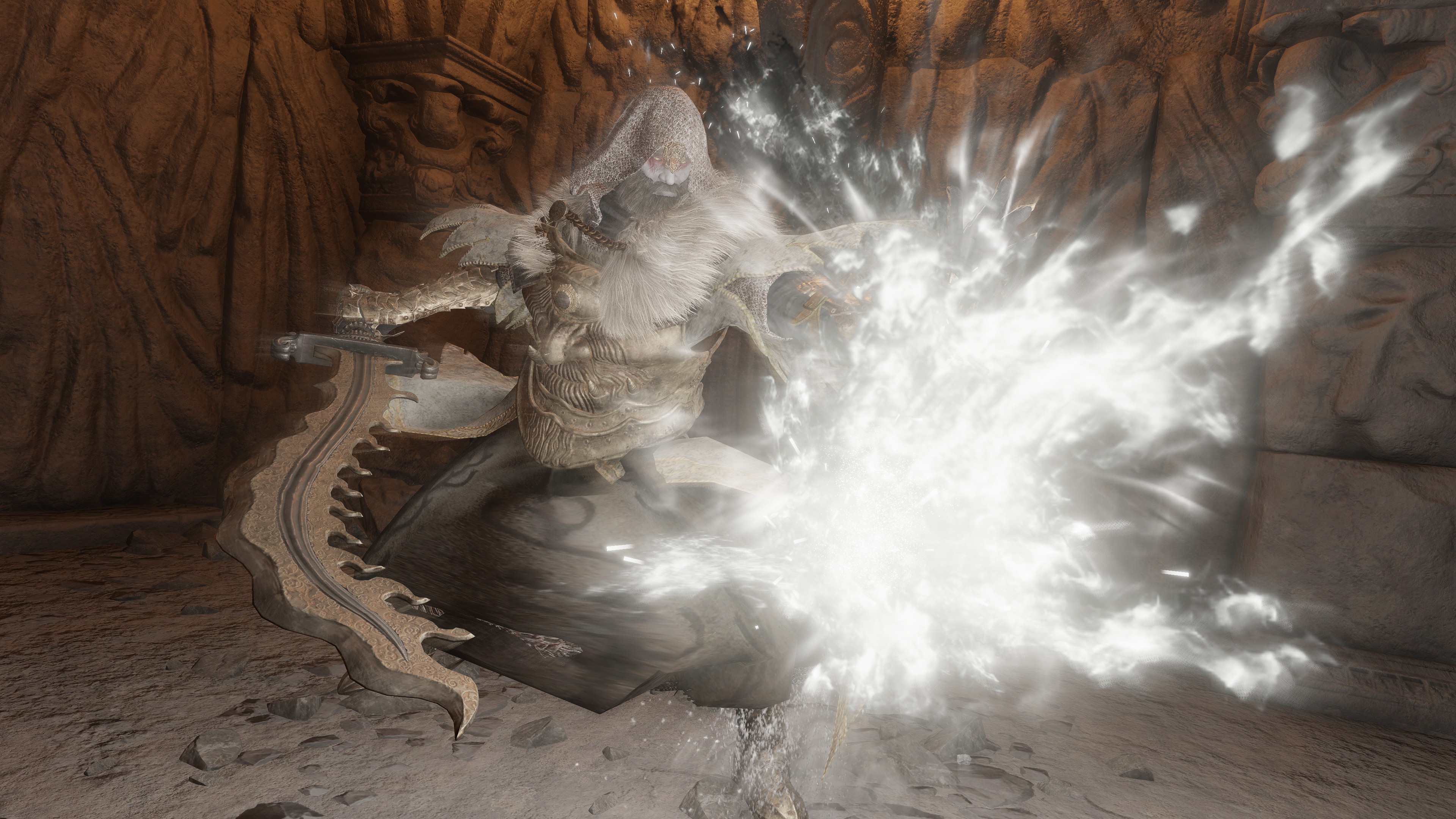
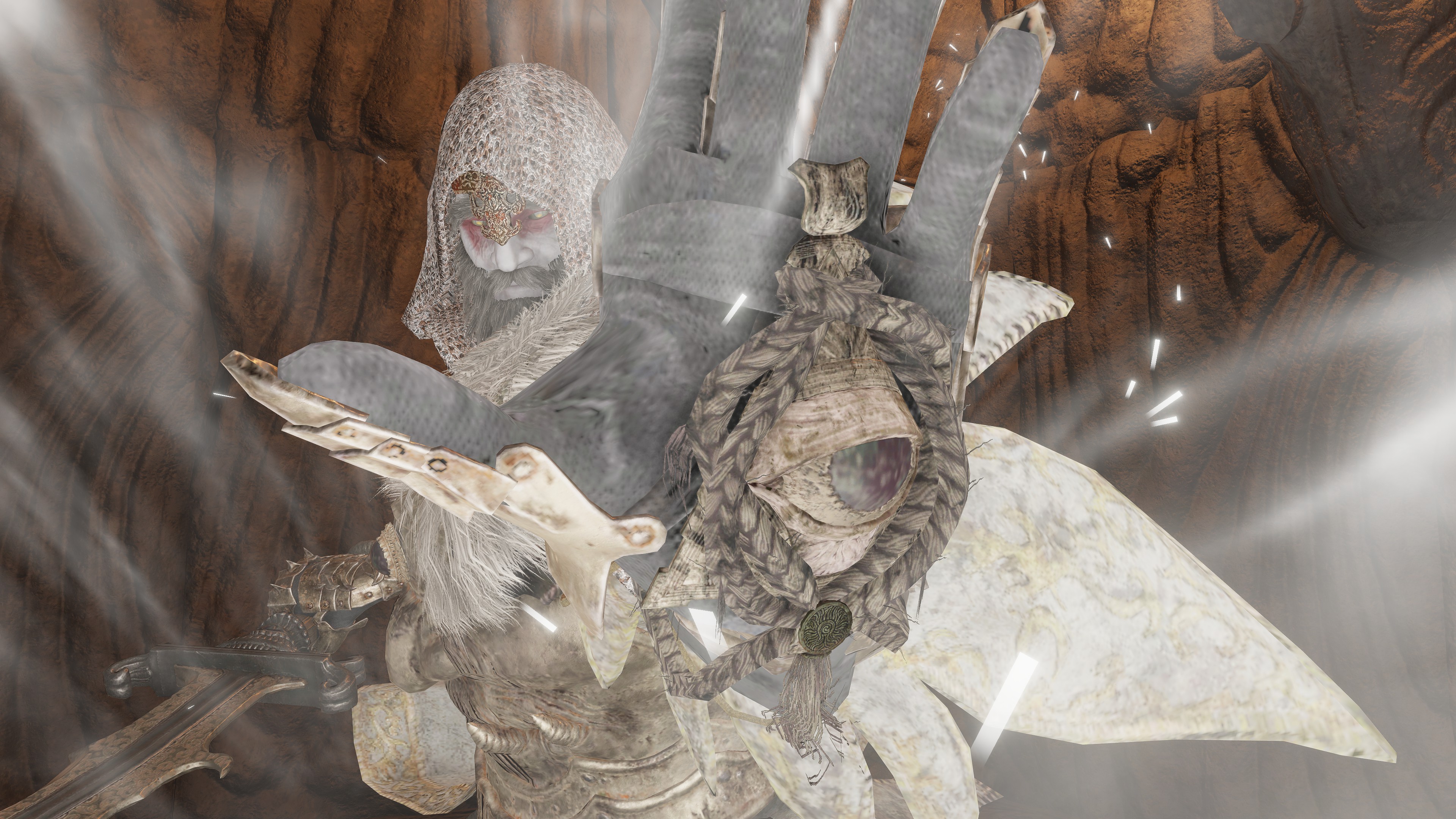
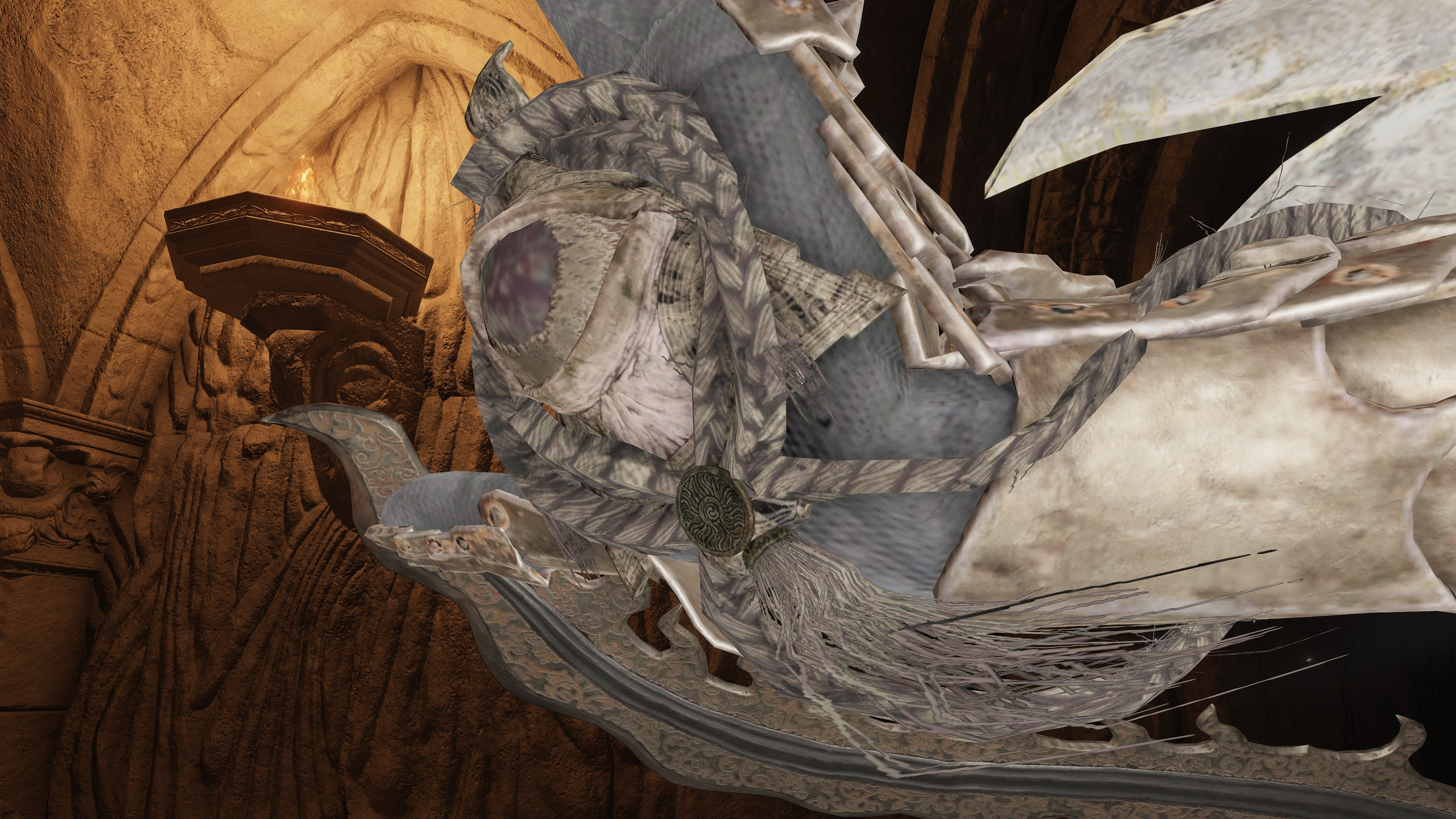
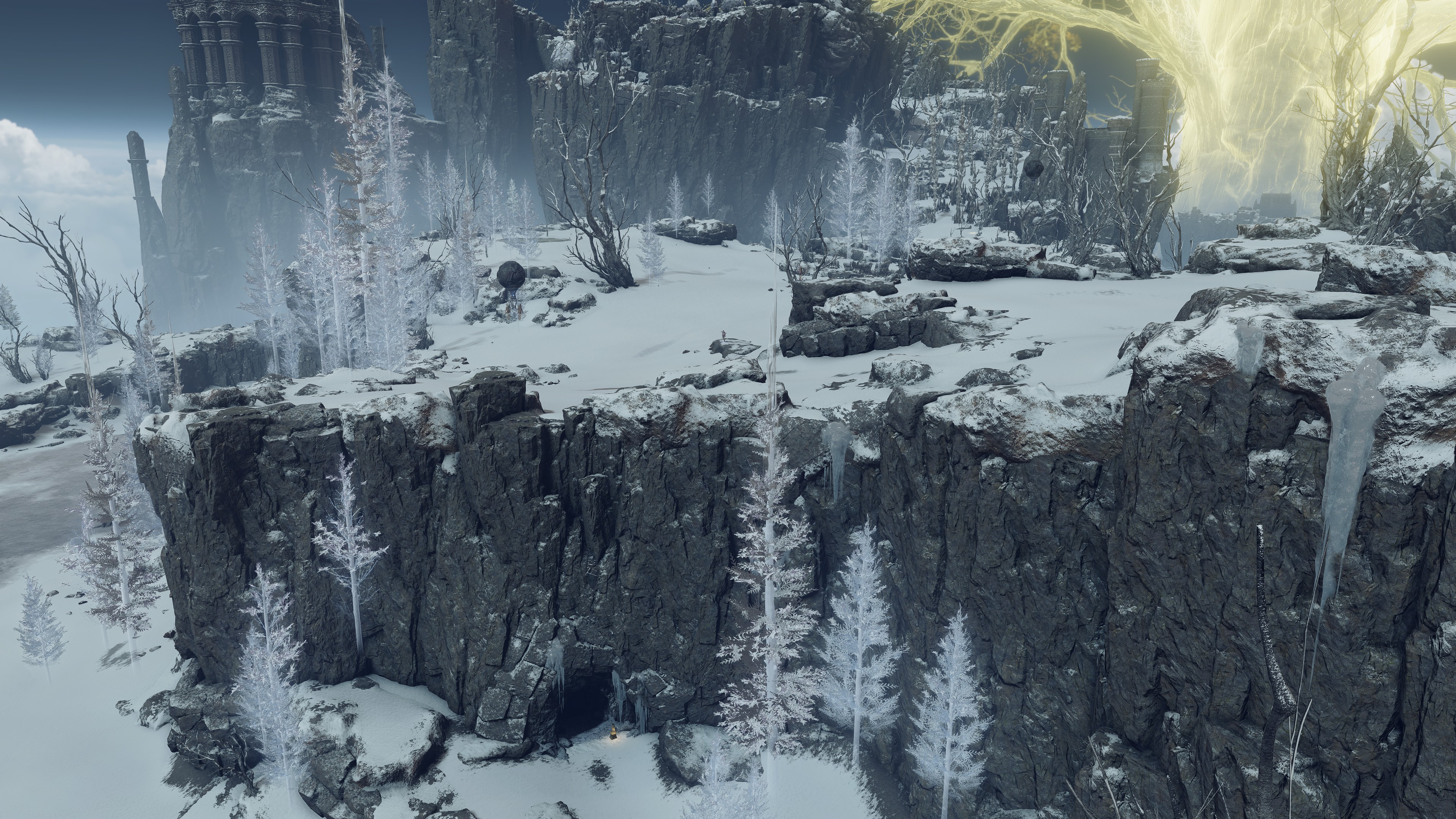
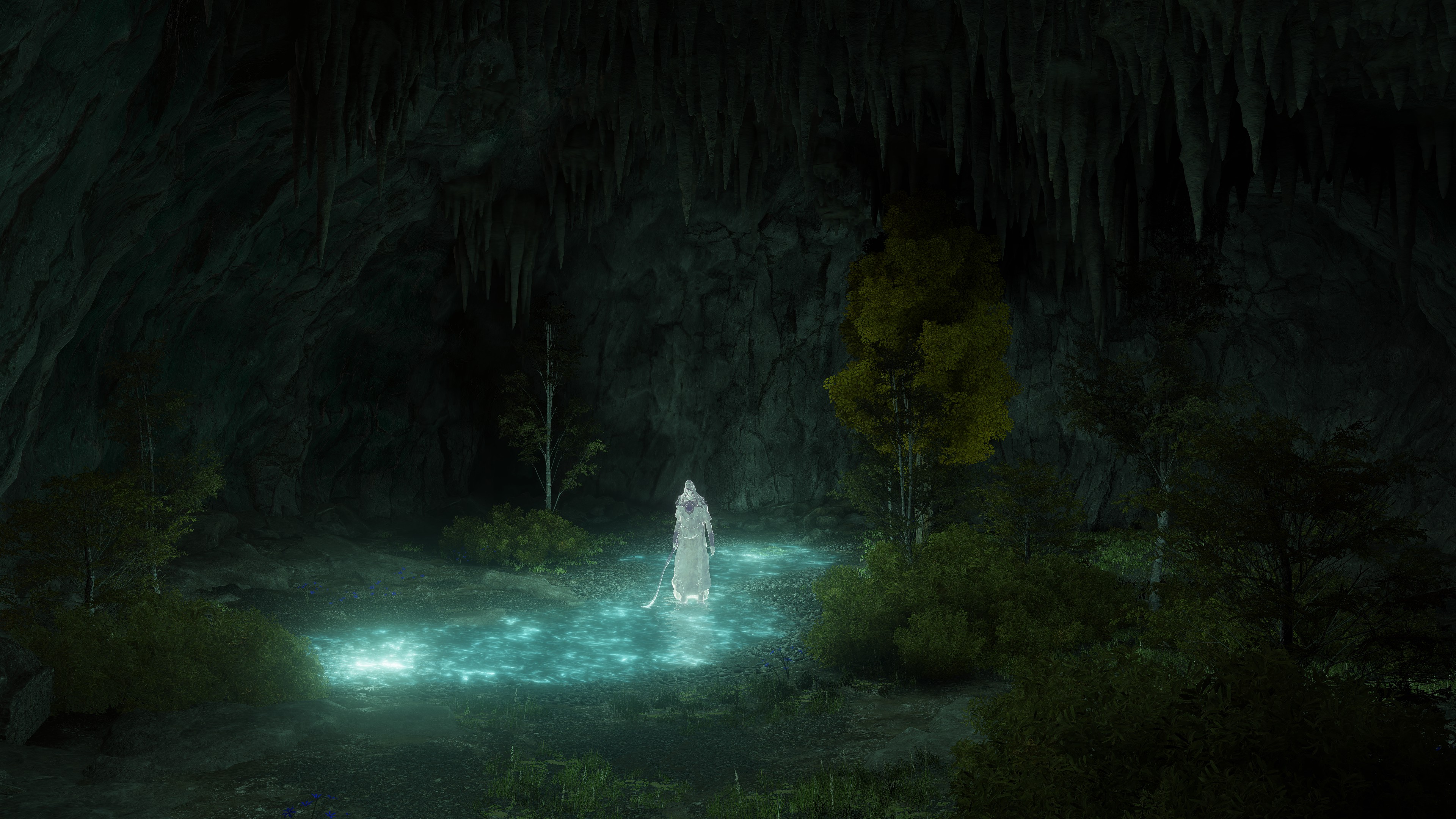
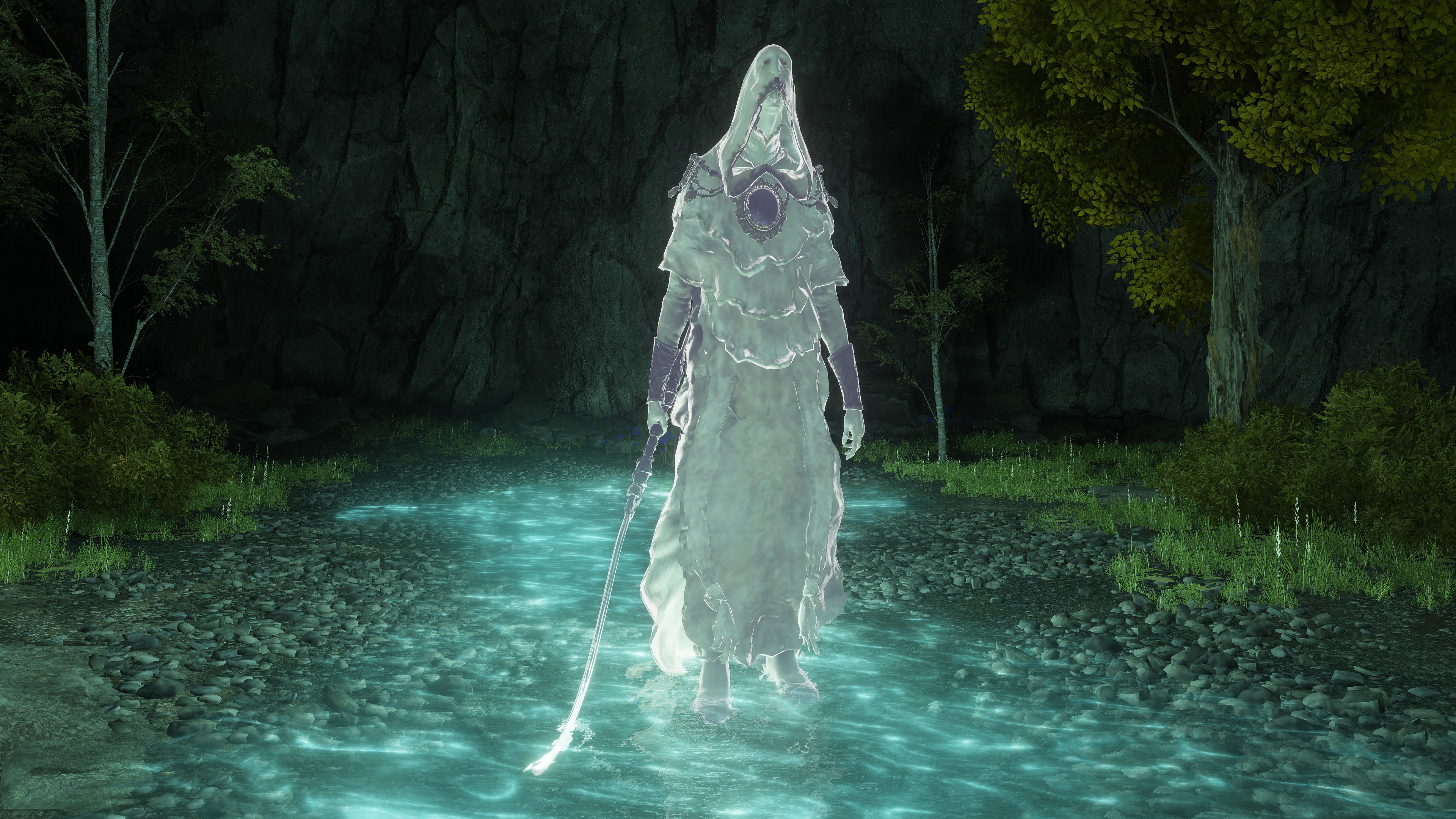
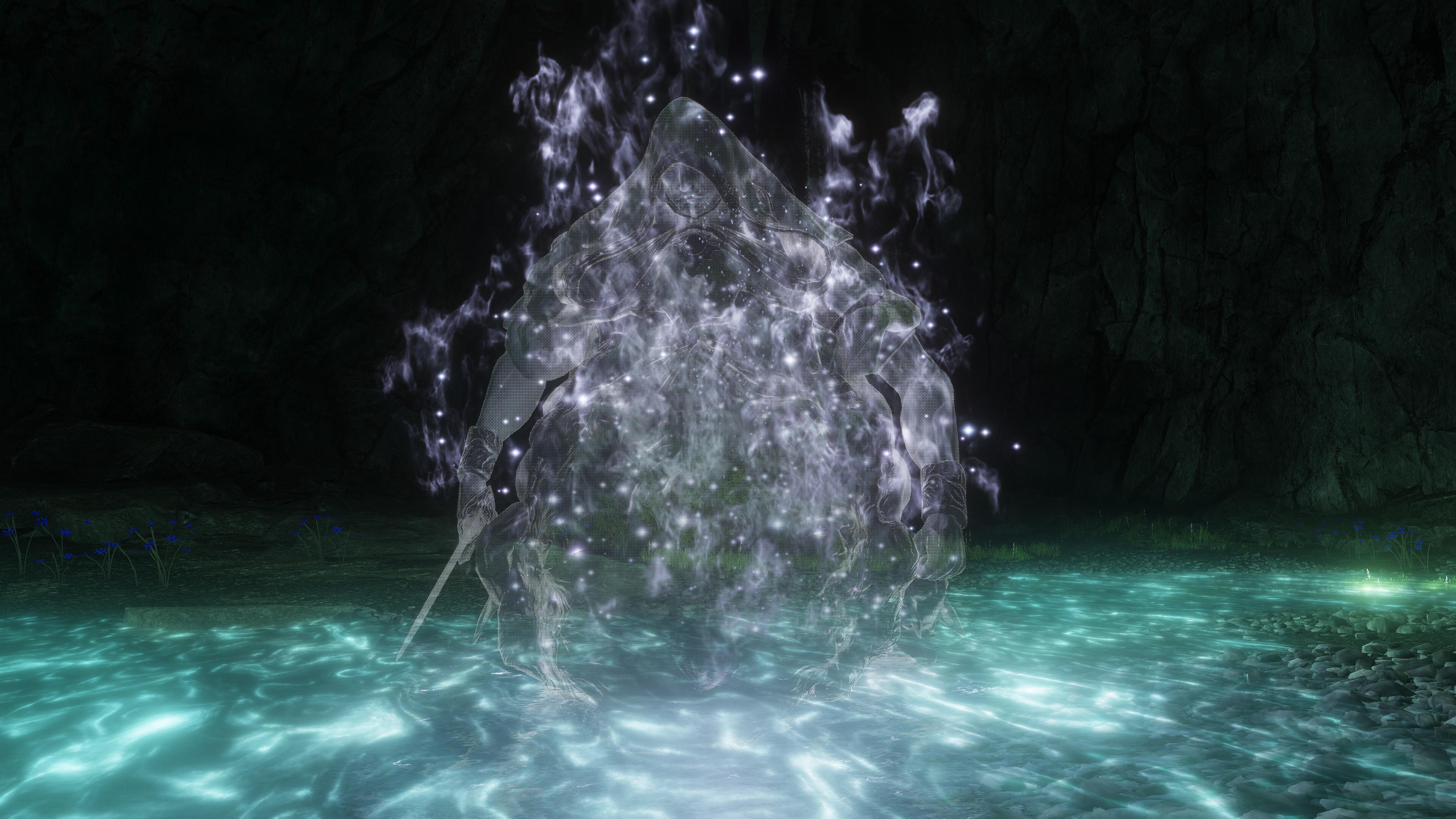
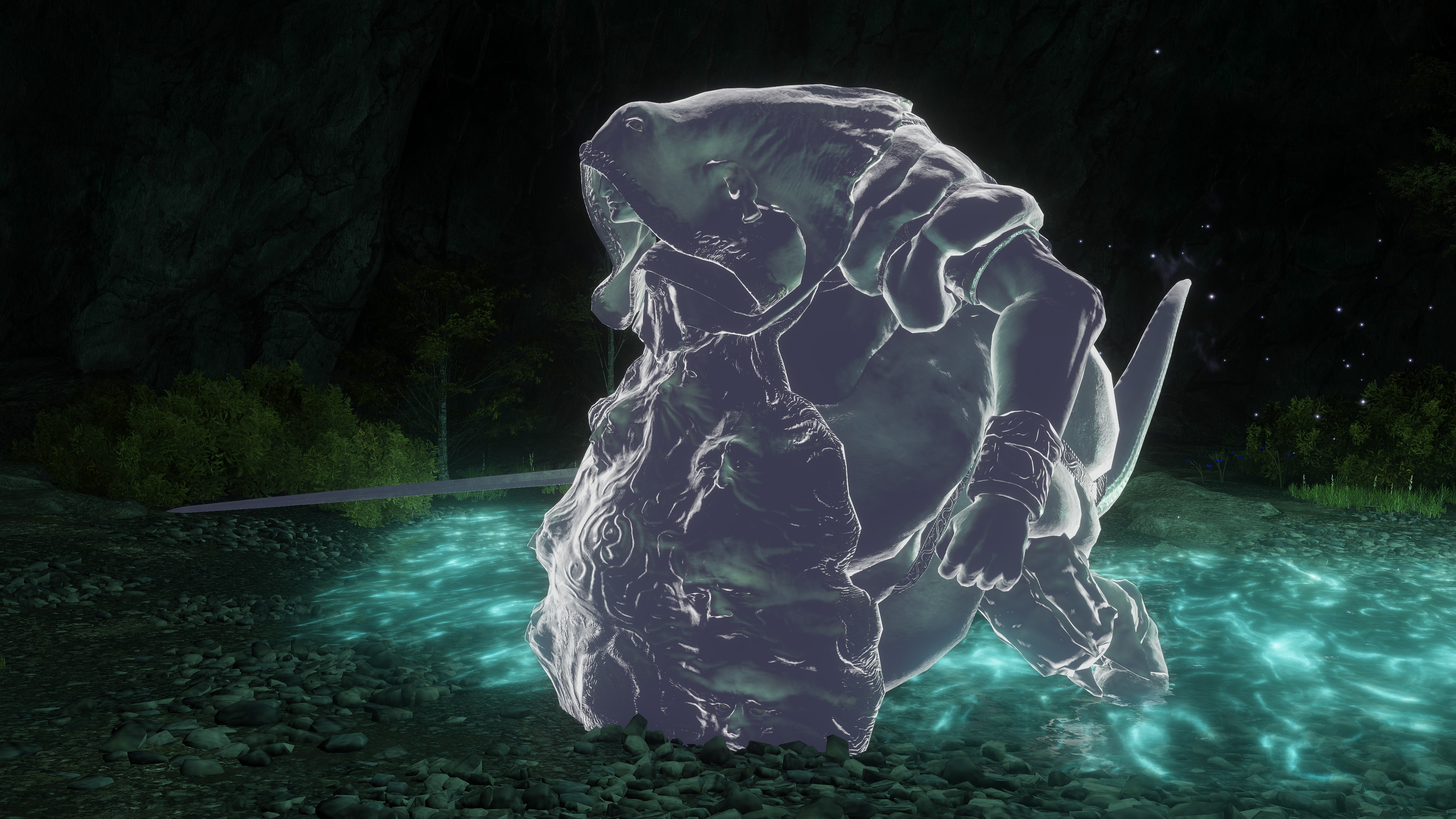
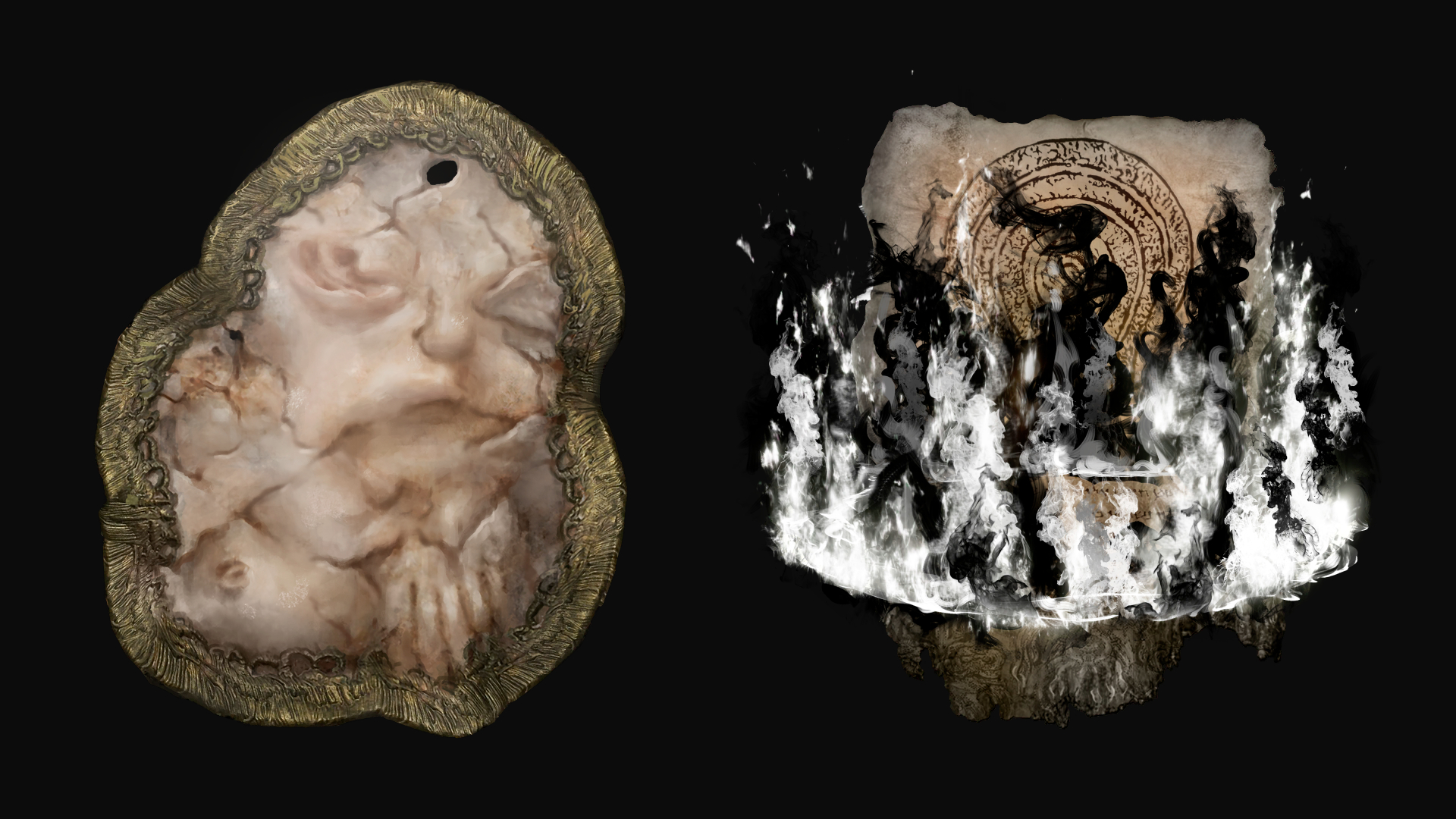
Indeed, the ritual with the swaddling cloth was probably aimed at infusing the power of black flame into the newborns. While apostles initially rely on incantations, they eventually draw out black flame from within their bodies when placed on the back foot, a fiery explosion preceding a smoldering aura. With how they begin performing greater physical feats and their black flame weapon skills, they seem to fuel their abilities in large part with the Gloam-Eyed Queen’s power. The Godskin Duo in particular cast an incantation to revive one another with black flame, so it definitely animates them. This must come from the queen swaddling them. Black Flame’s Protection ignites the fire within the caster’s body to boost physical defense, and the incantation’s description highlights how the apostles all internalized black flame as their armor after the queen embraced them. This indicates that her outward protection translated to her power’s inward protection. In other words, the ritual of embracing the newborns imbued their bodies with her black flame through the swaddling cloth.
One of the black flame prayers of the godskin apostles.
Generates black flame within self and boosts physical cut rate. However, all HP recovery amount is lessened.
The Apostles were all embraced by the Dusk-eyed Queen and made black flame into their armor within.
The godskin itself likely possesses some of that power armoring the apostles. After all, why wear the skin of your prey invariably burned by your black flame? Wouldn’t that just scar the hide? But if that very flame is involved in the tanning process, then it doesn’t matter. There are real forms of tanning hide that incorporate fire, albeit indirectly. The burning of Destined Death might actually change the properties of the skin subjected to its life-sapping power, preserving it after death. And as we see with Noble Presence, the golden power in the skin also had a change in properties, becoming black flame. If so, this would make the skin a medium for the fire power, not unlike a magic catalyst. The flame transforms the skin, then the ritual has the infant’s body safely absorb the power filtered through the newly sewn holy cloth. That explains why the apostles look as bleached white as the skin they wear, swaddled in a medium laden with black flame from the day they were born, it has practically become the same leather.
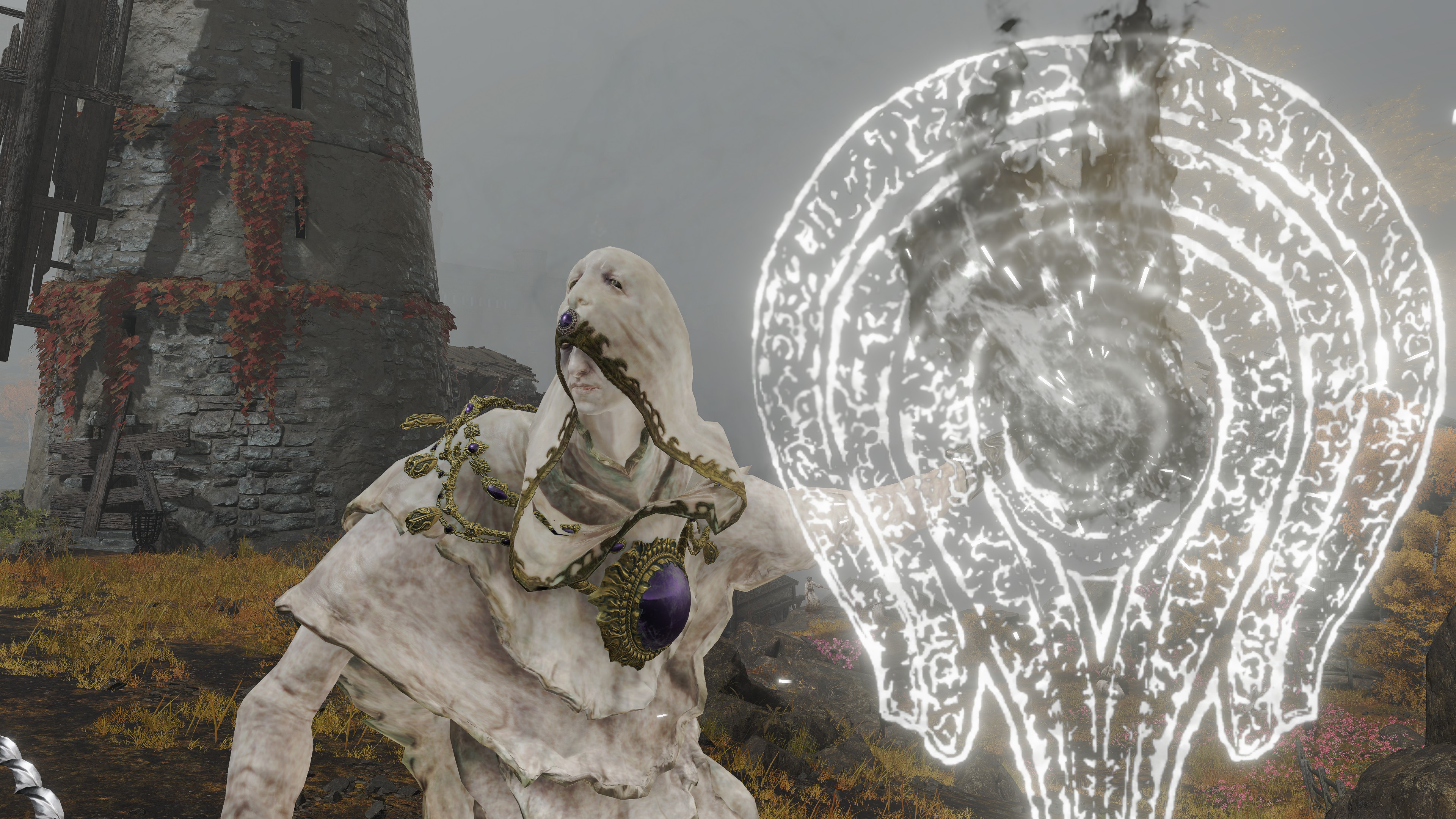
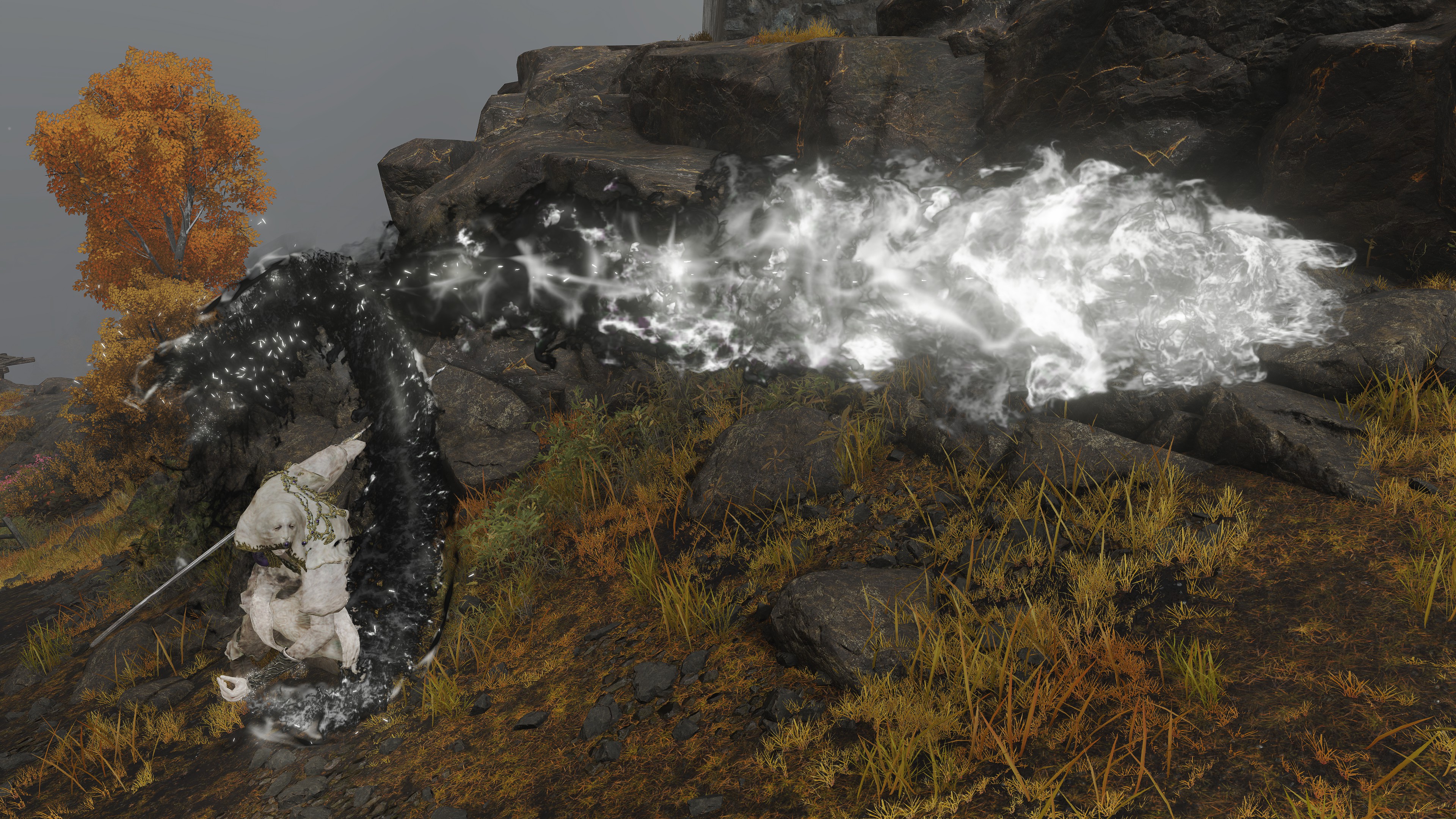
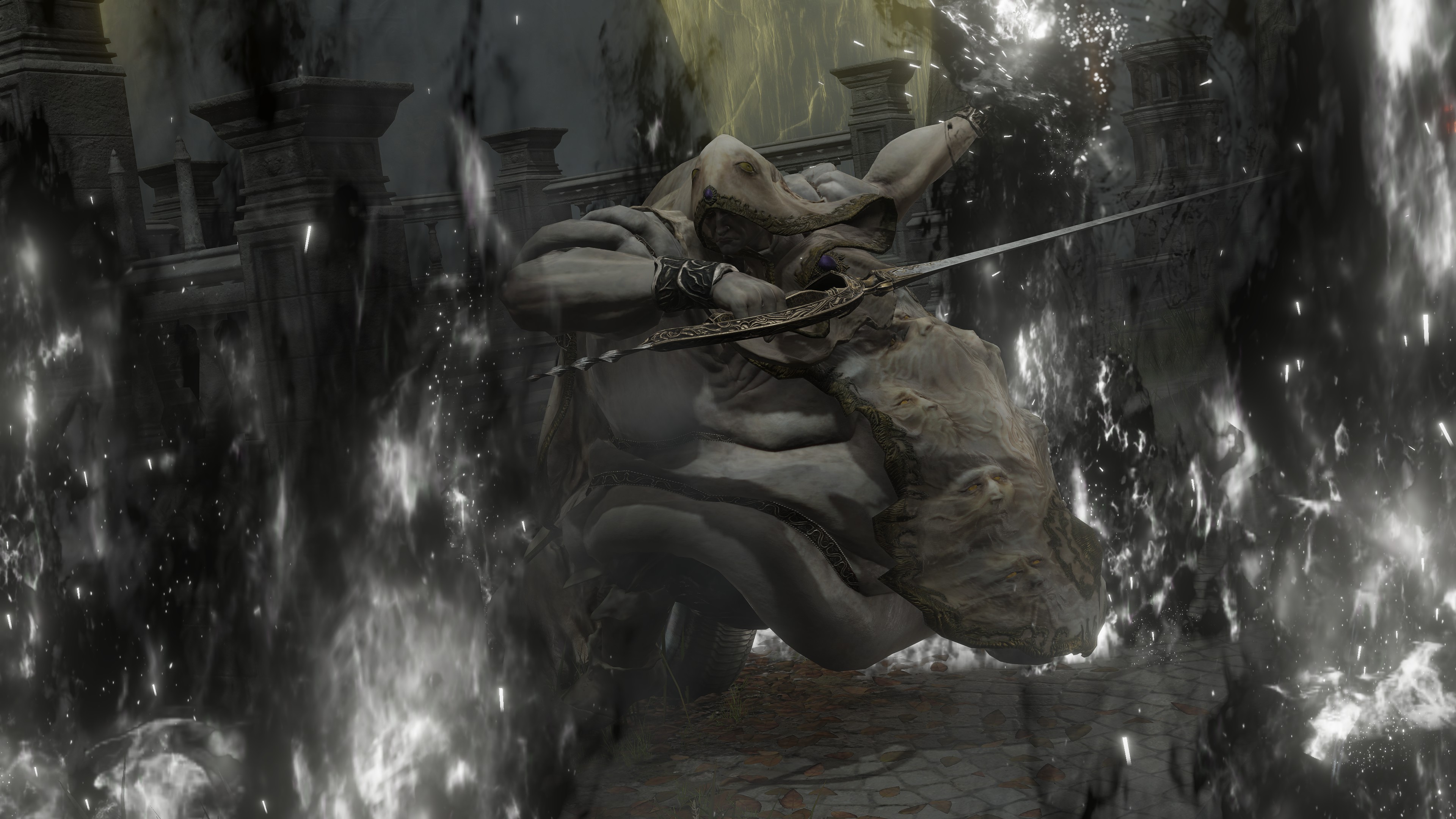
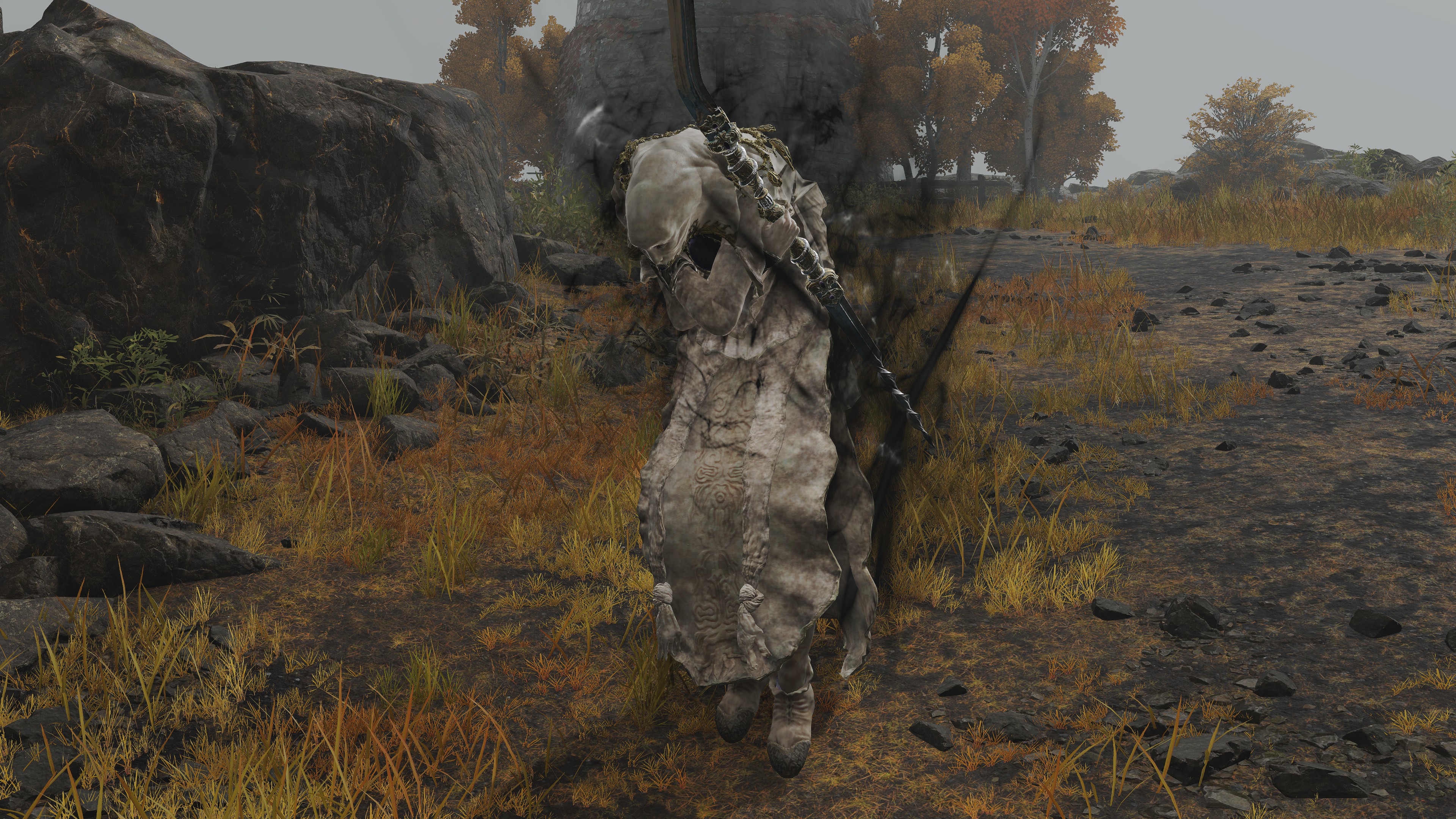
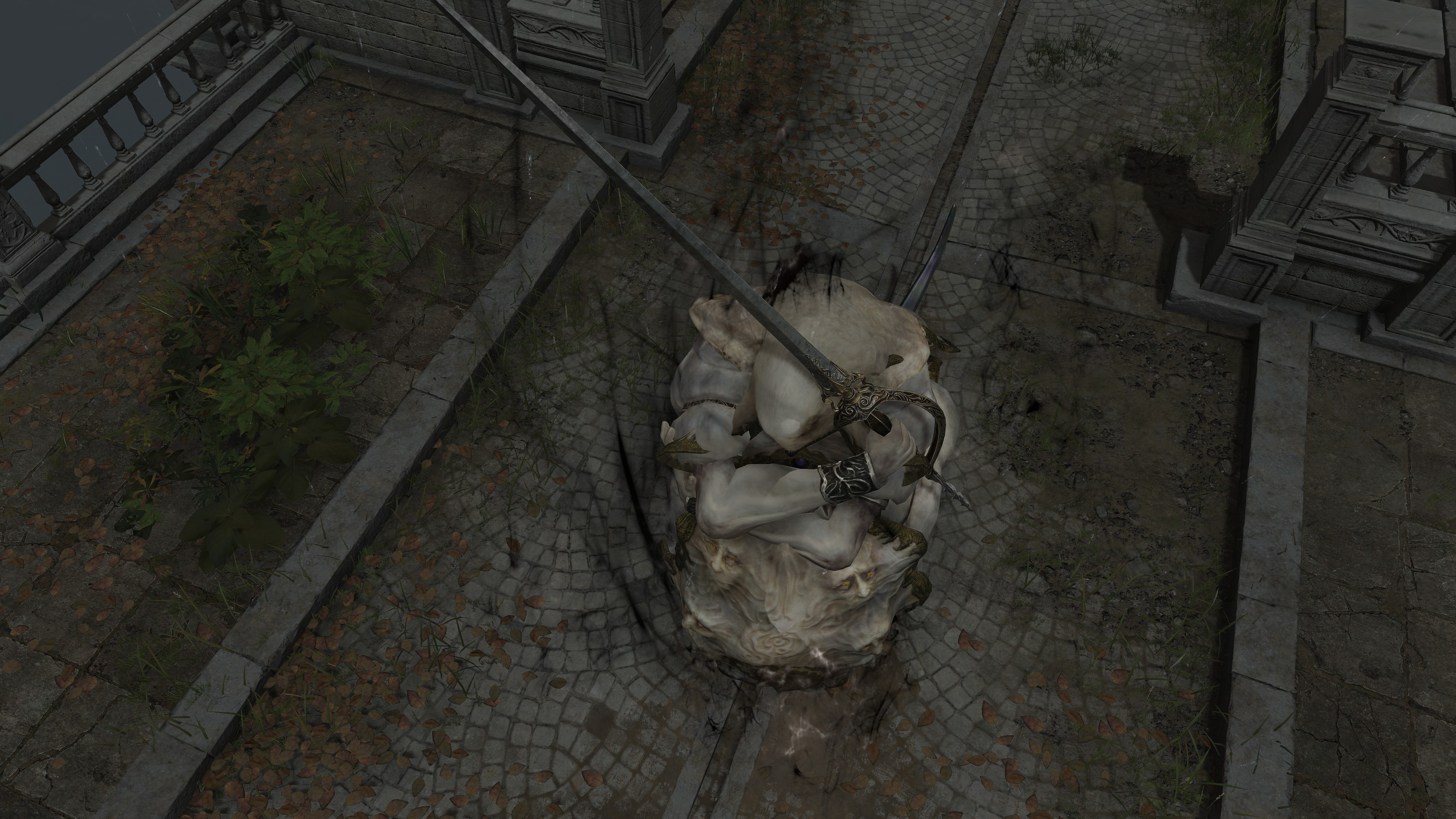
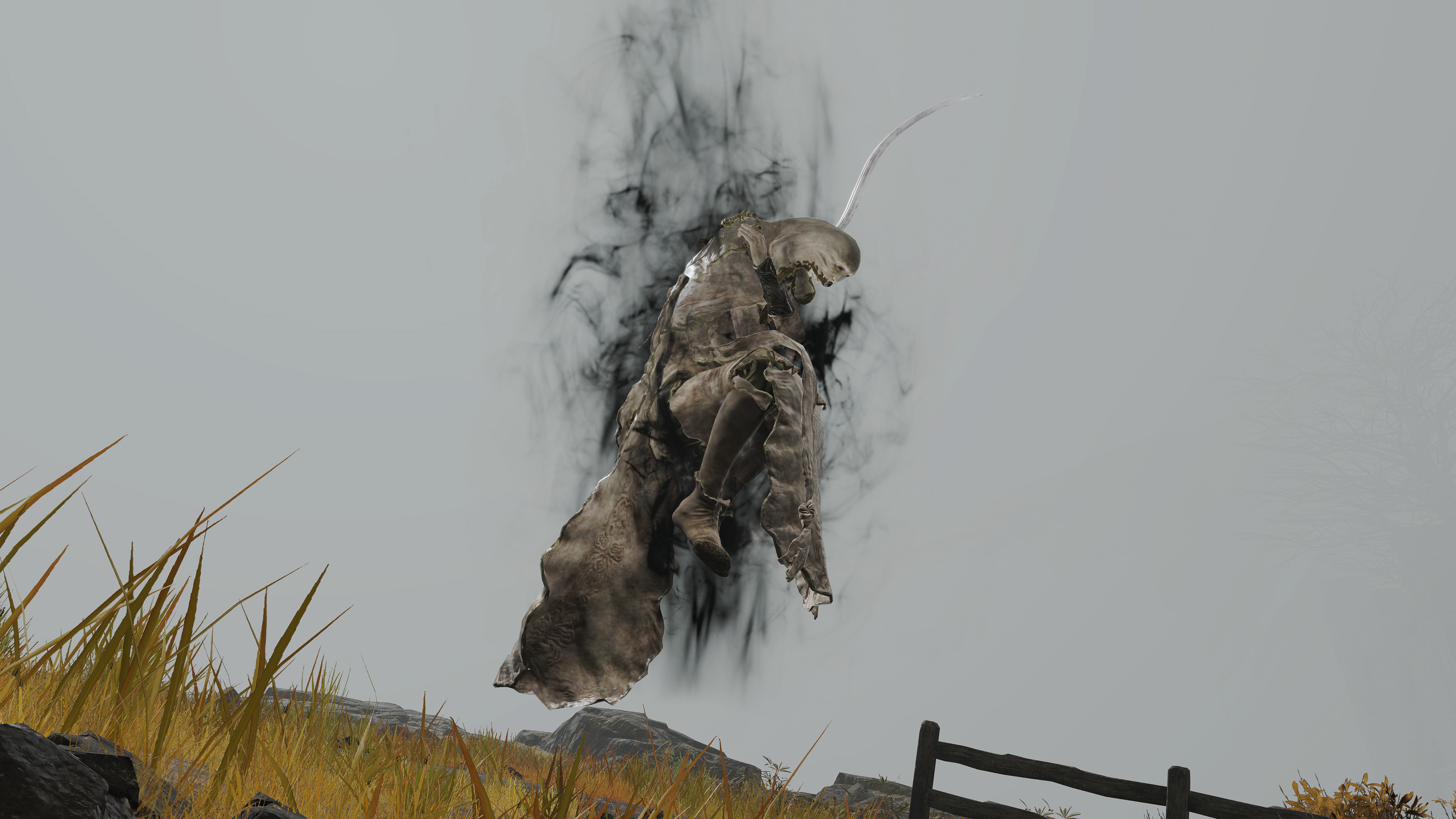
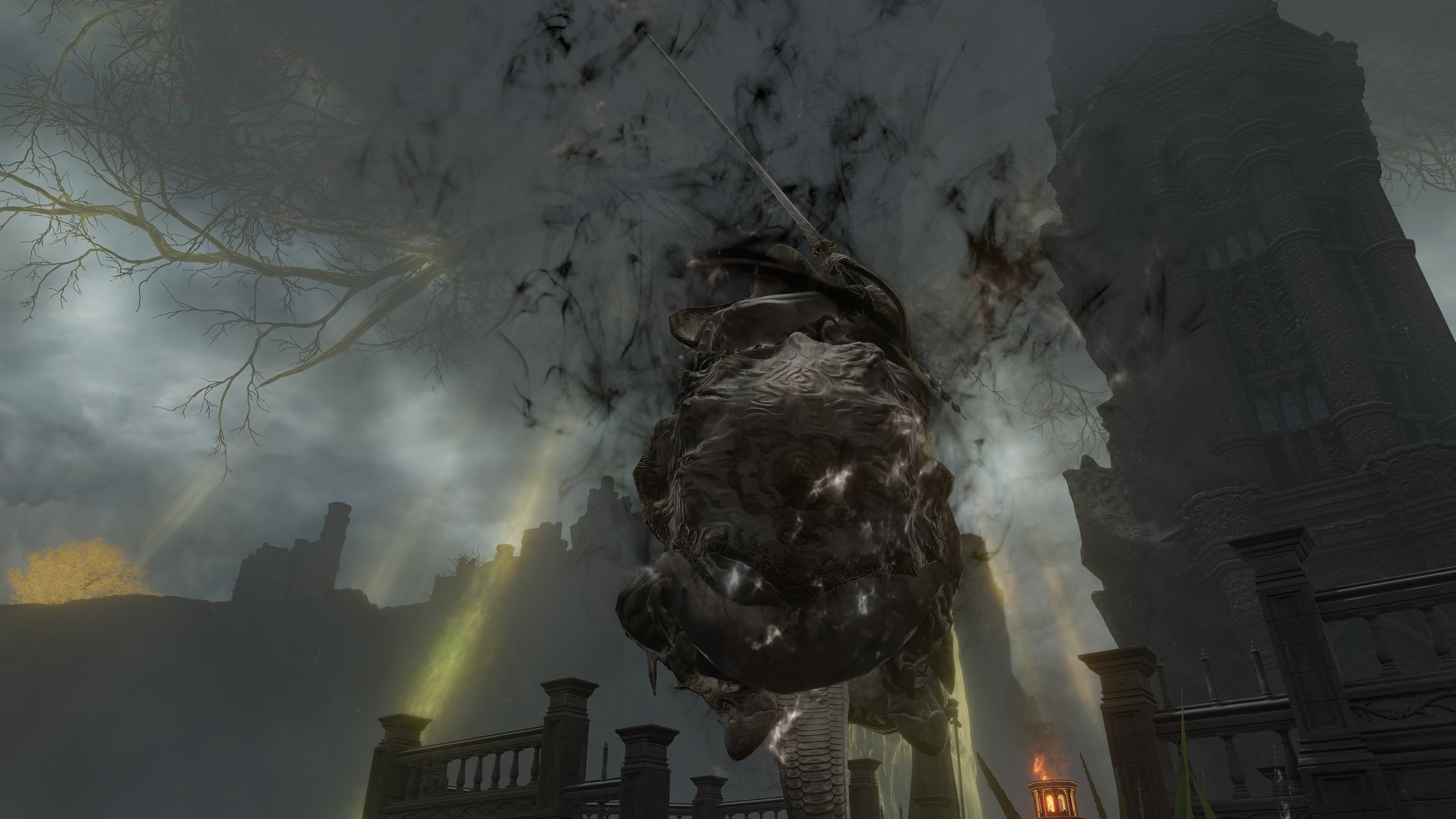
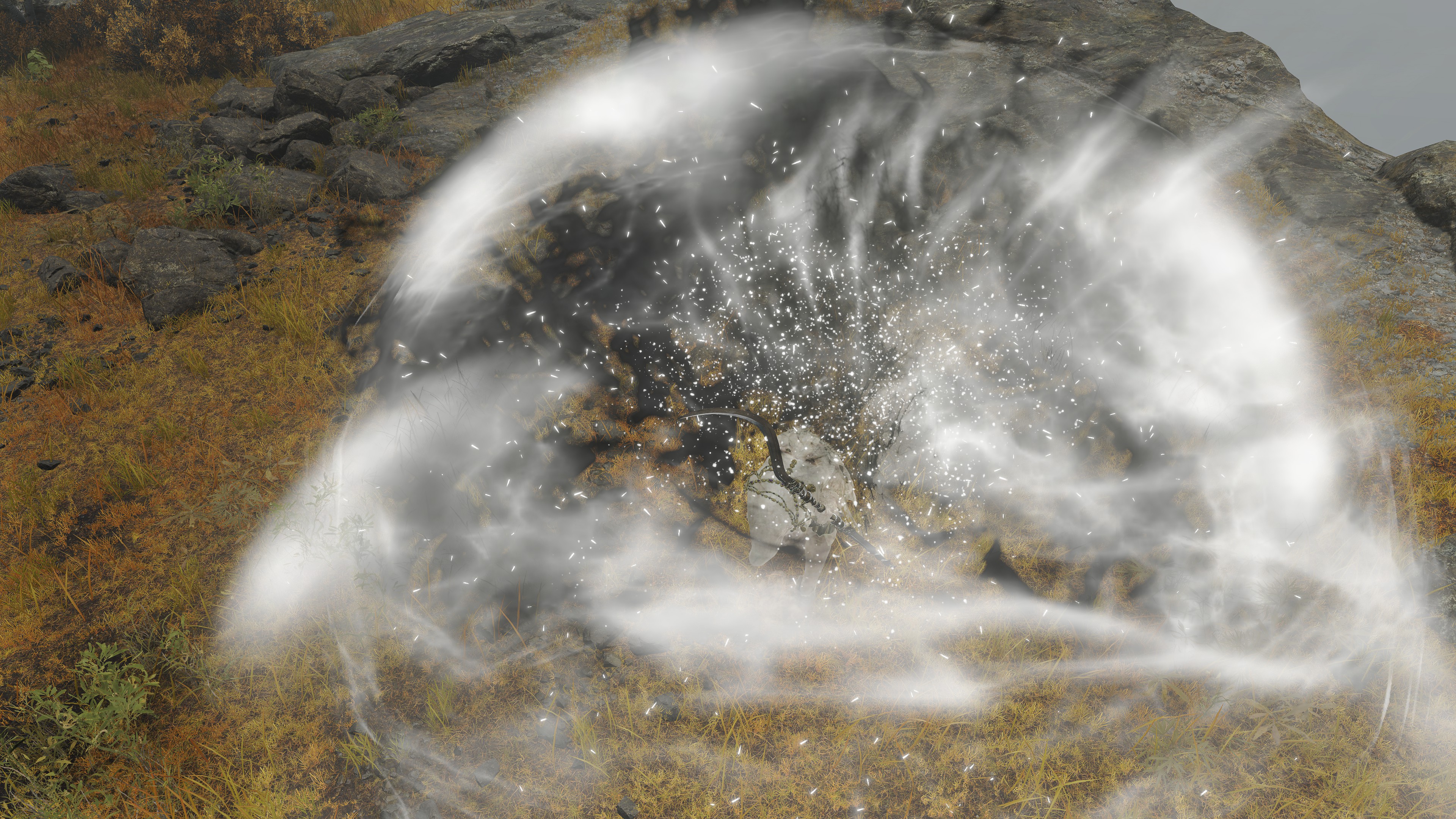
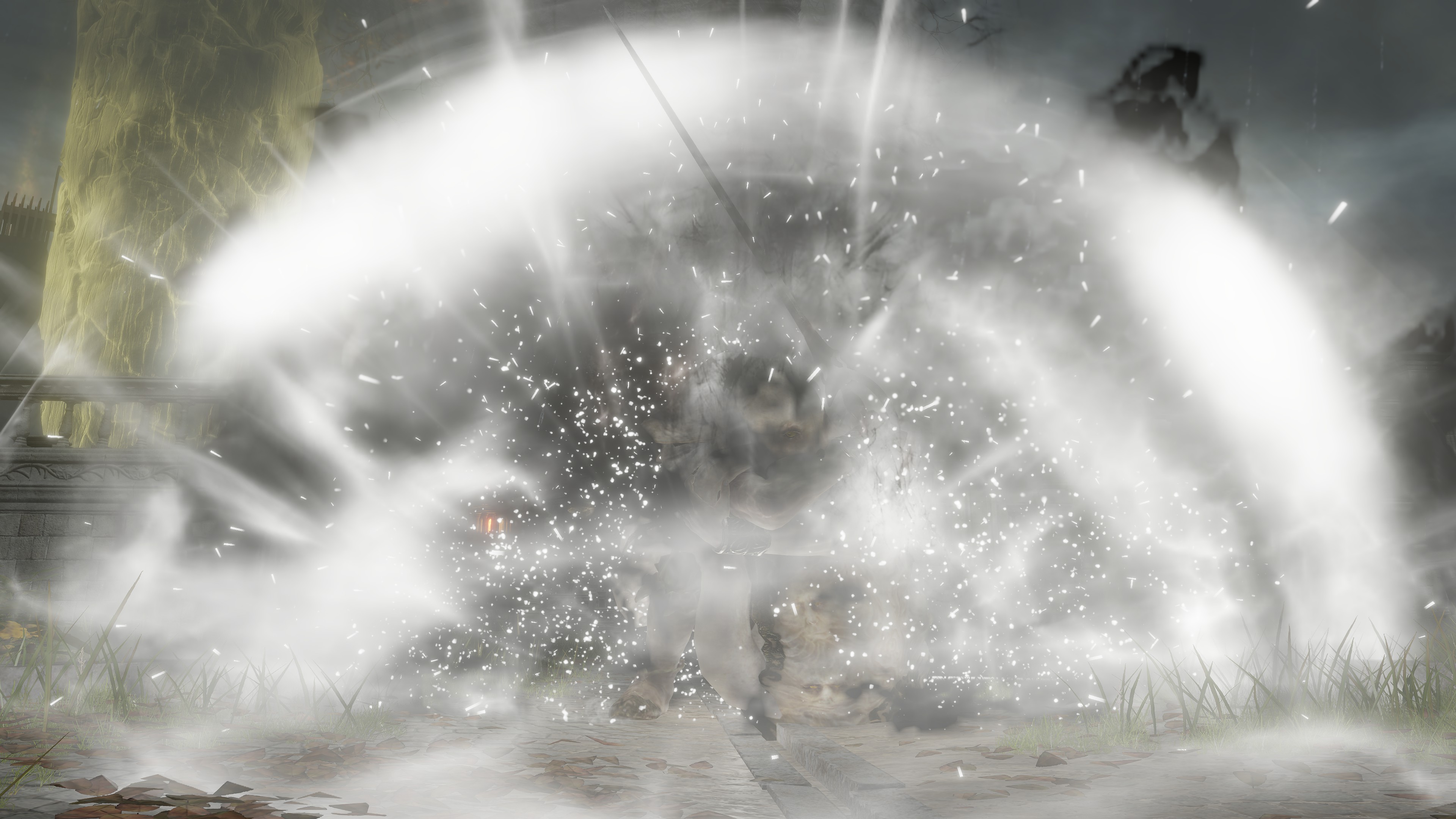
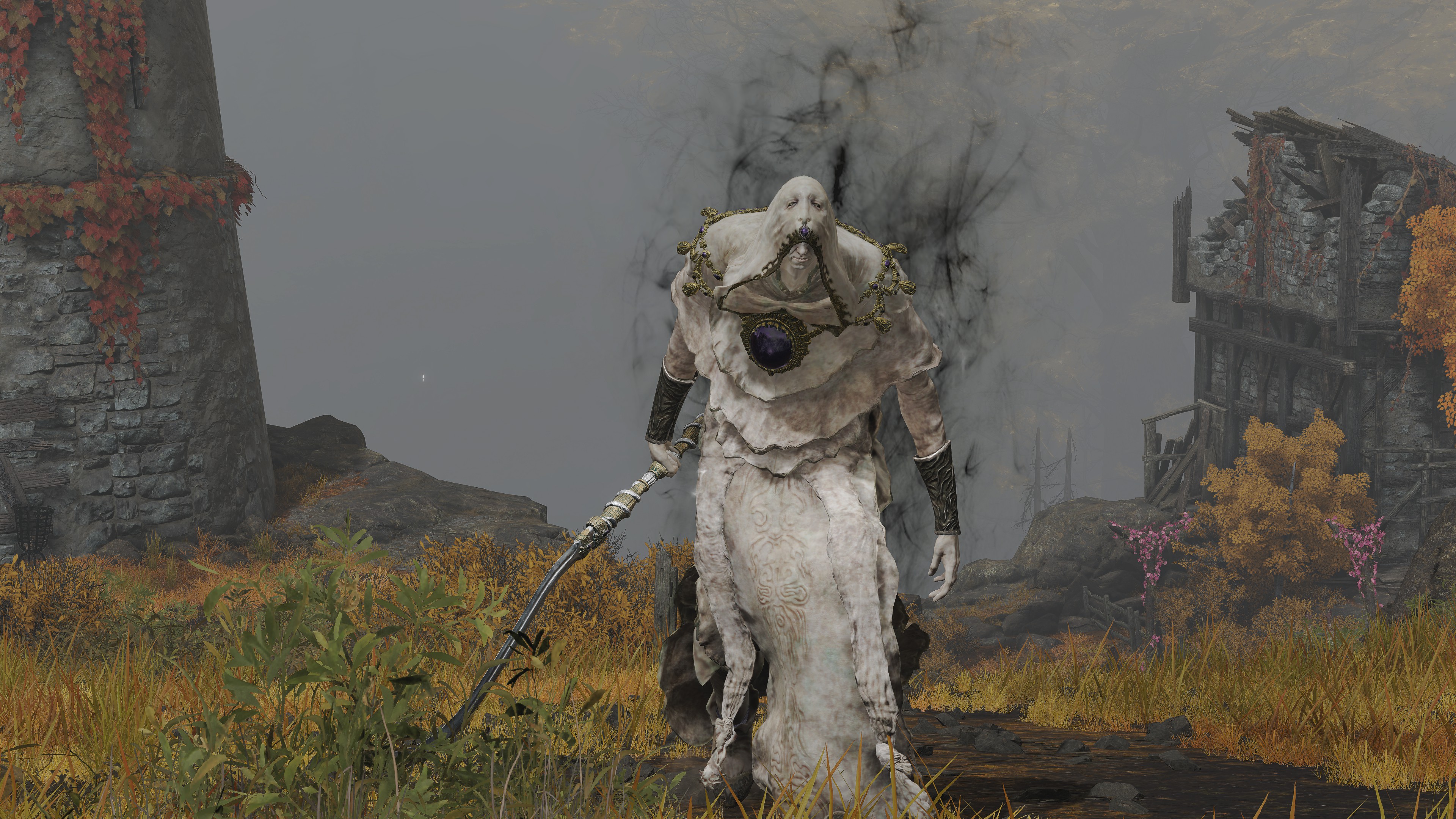
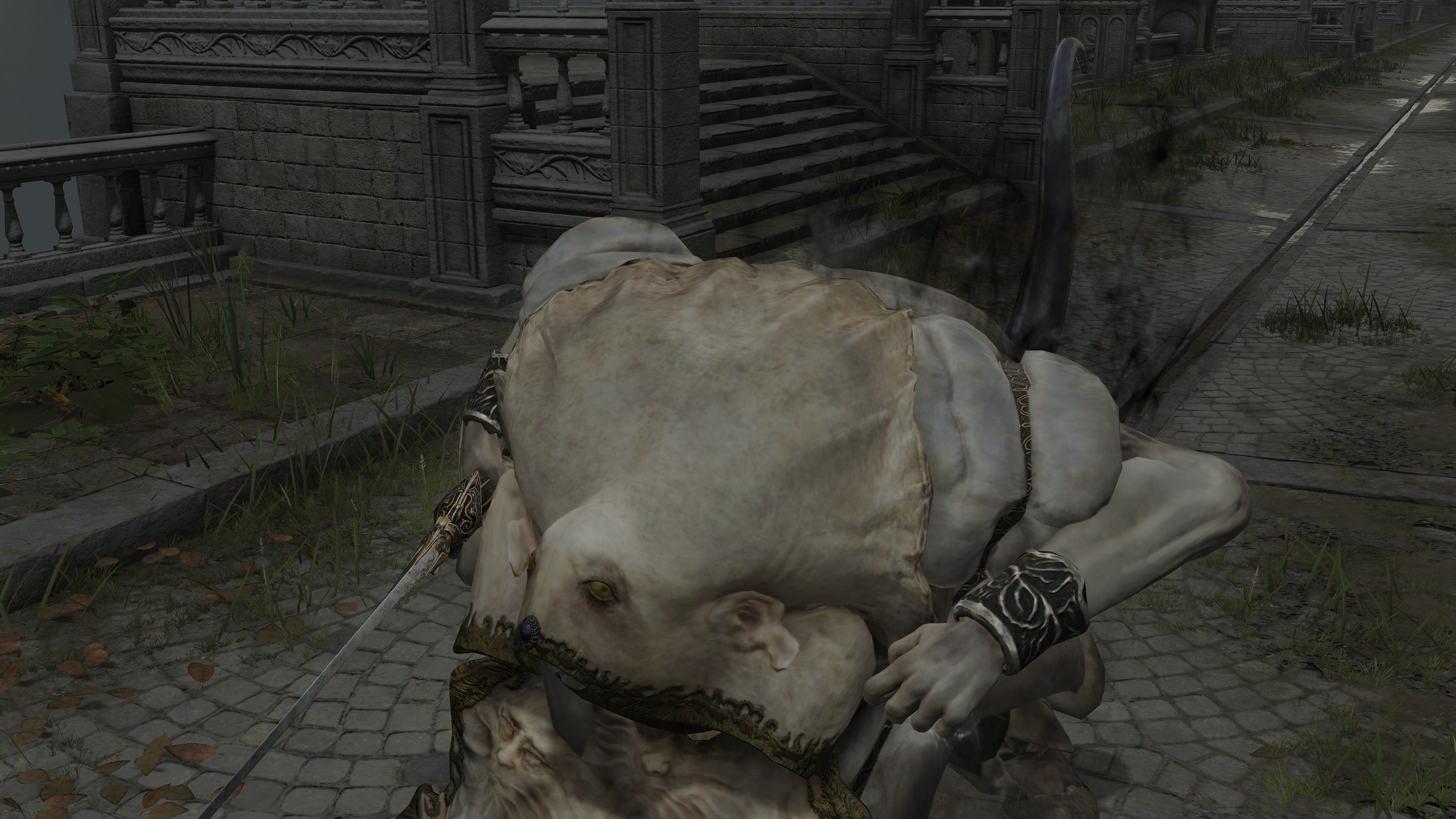
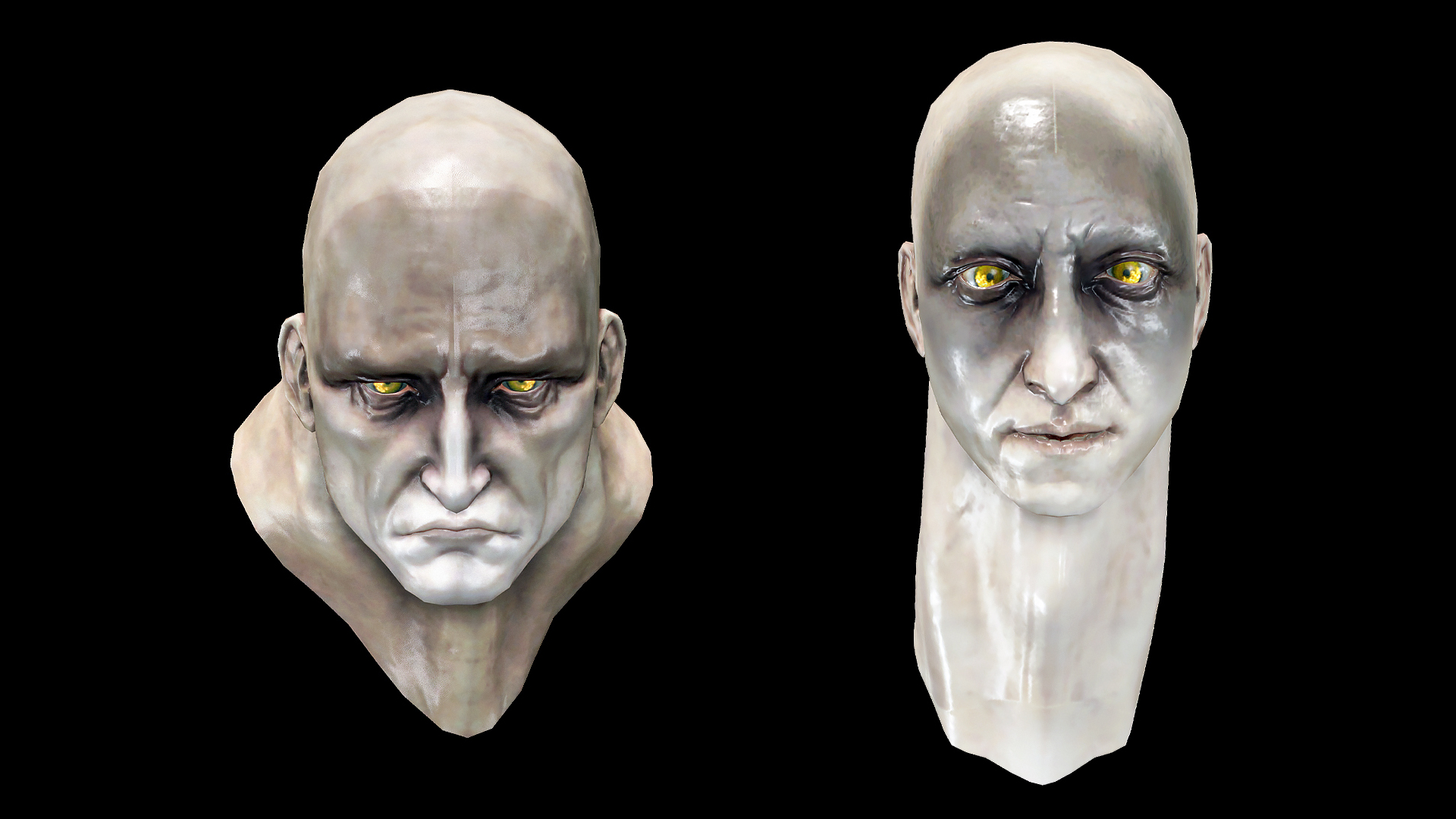
The Gloam-Eyed Queen definitely gave the sewn skin extra attention. The quality is evident from its suppleness, the description for the Albinauric Mask noting how the largely unaltered hide for an Albinauric’s head is no godskin. The apostles go to great lengths to make the skin smooth and soft, almost rubbery, in contrast to the average leather hide, taking after their queen who did the same for them. In fact, the text for the swaddling cloth insinuates that this first experience wrapped in such comfortable skin while cradled in their holy mother’s arms, conditions them to become the Death of the gods. The talisman’s effect to restore HP with successive attacks complements the apostles’ weapons and fighting style, the blindingly fast chain of attacks capturing their relentless enthusiasm to hunt. Nothing makes the hunters feel alive like collecting and wearing godskin. And that vitality is ironically fed, in part, by the flame derived from Destined Death.
Holy cloth of the Godskin Apostles, sewn up from smooth skin.
Recovers HP as attacks continue in succession.
Newborn apostles are swaddled in this and embraced by the Dusk-eyed Queen. And so, they become the Death of the gods.
Elegant thrusting sword possessing a celadon-colored blade. Choice weapon of Godskin Nobles.
The sword technique of the nobles is superior to the masses, and compared to the weapon’s size, its successive attacks are blindingly fast.
With all that established, the Fire Monks’ insight might have proven invaluable to the Godskin Noble and Apostle, clearly looking to revive their numbers. They wanted to know how to use the cloth for the ritual that empowered them, possibly create more. And why the confidence that this order can help crack the secrets to the Gloam-Eyed Queen’s ceremony? Because they helped with it before. More than likely, it was learning from the monks, or at least the traitors, that allowed the queen to formulate this rite with black flame. Those warrior monks on the mountain were the ones to help develop Black Flame’s Protection, whose name (黒炎の護り) and menu graphic strongly resembles those of Flame, Protect Me (火の護りよ) utilized by the watchers. That later pair of apostles didn’t have a Blackflame Monk with them, so they needed to go straight to the source for answers. Granted, they fundamentally require members to induct. Where was the queen procuring the newborns for her apostles? Could the infants too have been born via ritual?
There are definite signs that god-hunters aren’t mere children of men. Godskin Nobles bear “inhuman” aspects, namely their serpentine tail. Other Apostles can stretch and bend their mid-section to absurd degrees, akin to Gelmir’s snake-men. While they may look human at a glance, they are part animal in nature. The text to the nobles’ equipment draws comparisons to the Crucible, well established for artificially manifesting various beast aspects in those who make contact. If it is anything like the misbegotten, then these snake hybrids must be a product of mixing some animalistic — specifically serpentine — power with humans. This opens up the possibility of accelerated aging, allowing the newborns to quickly mature and become battle-ready. That rationalizes the choice against recruiting more adults like the monks, but there is no obvious reason for the swaddling ritual or black flame to do any of this, so it must originate from birth. In that case, it is liable for the birthing process to be artificially induced by their “mother” subsequently swaddling them.
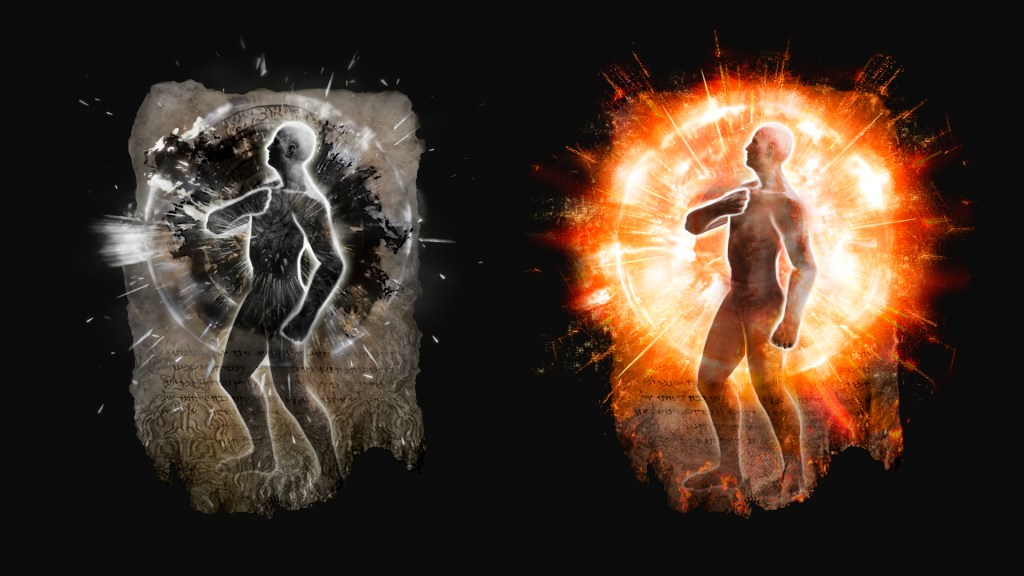
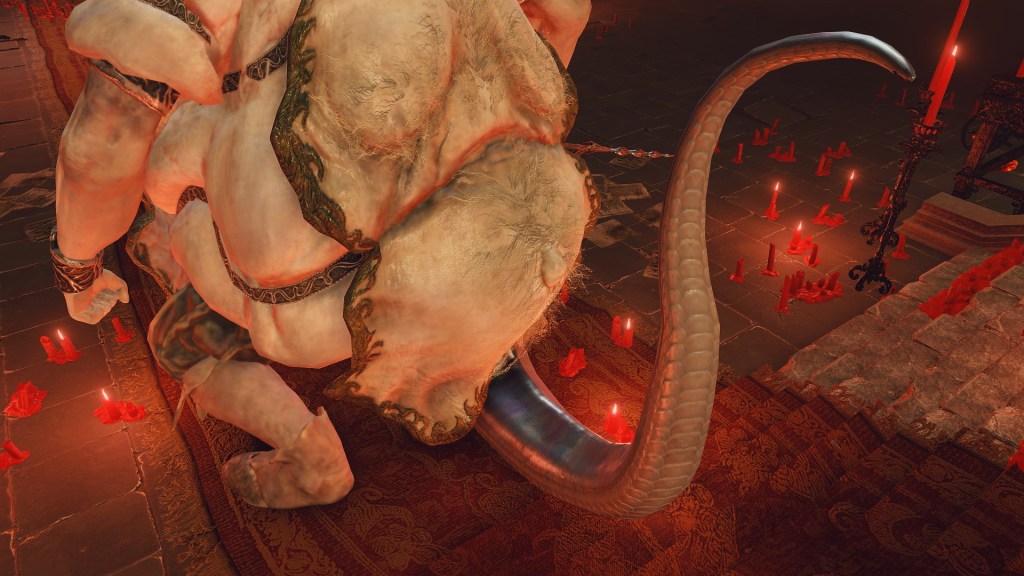
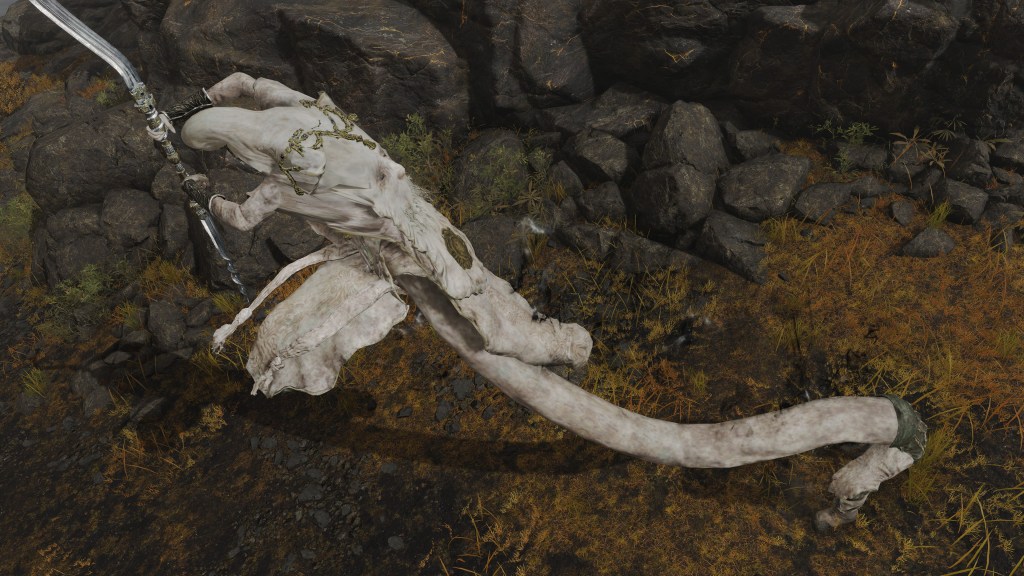
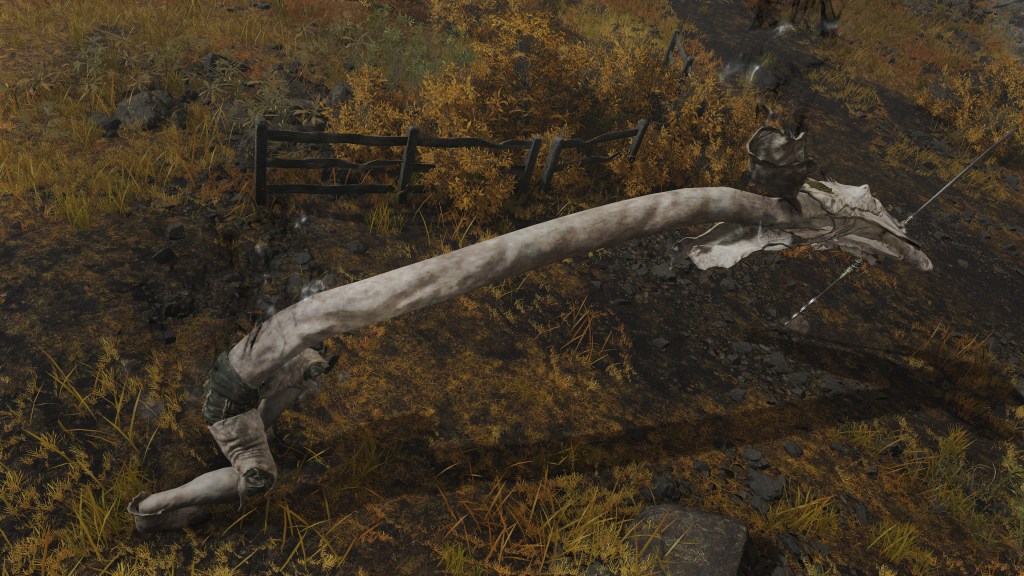
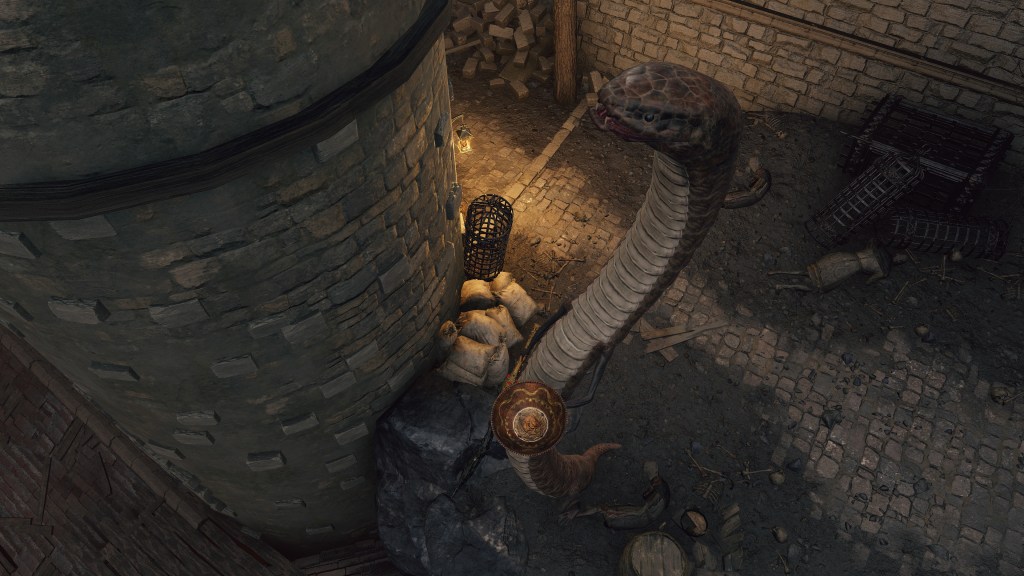
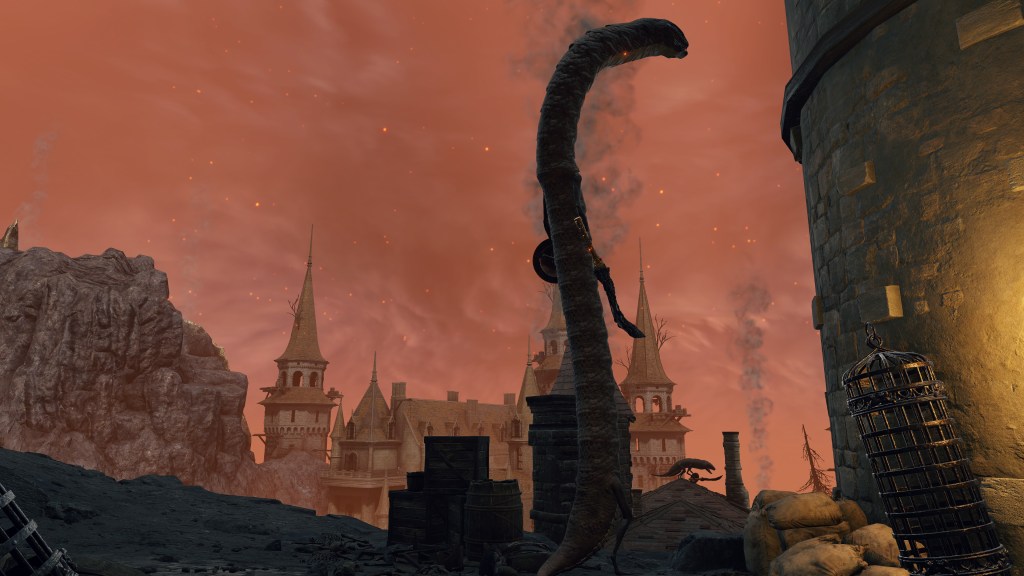
In short, the aspiring god queen created her army of cultists from the ground up. She may not be their literal mother but is their effective creator, and so behaves accordingly. If so, it raises questions about how she conceived of this birthing ritual and why the black flame needed to be infused after birth. The two processes are obviously unrelated. Unlike their queen, the apostles, even with all their black flame power, possess golden eyes like the gods they say. Is this a coincidence, or did the queen use more than just the demigods’ skin for her apostles? If they are somehow the hunted gods reborn as god hunters, then they cannot be retaining their golden eyes through a rite with Destined Death, much less a derivative like black flame. And since they are living beings, then the means to create them is probably beyond the Flame Watchers or the Gloam-Eyed Queen. That points to one implication: the Fire Monks were not her only collaborators.
A Rib for Adam
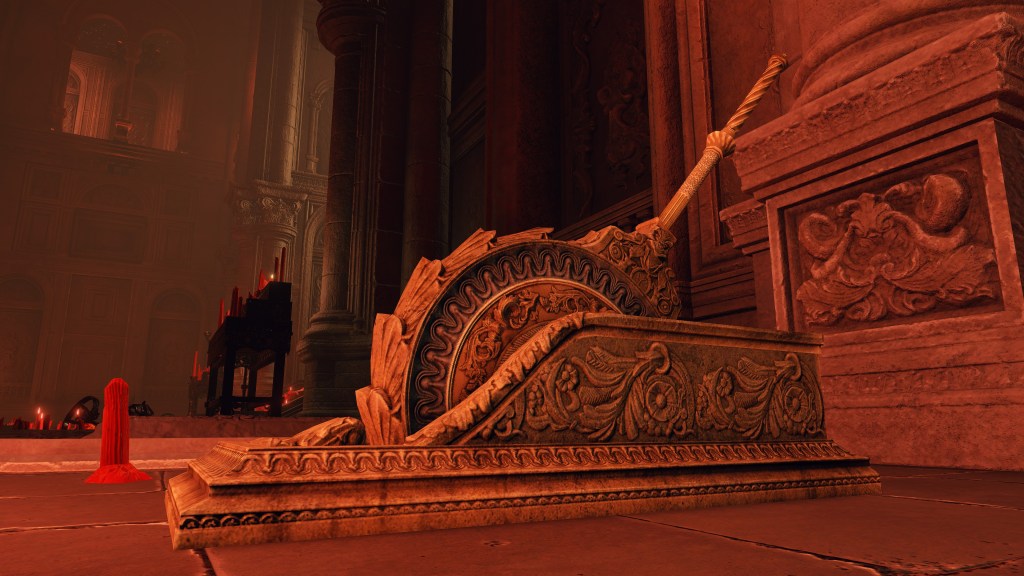
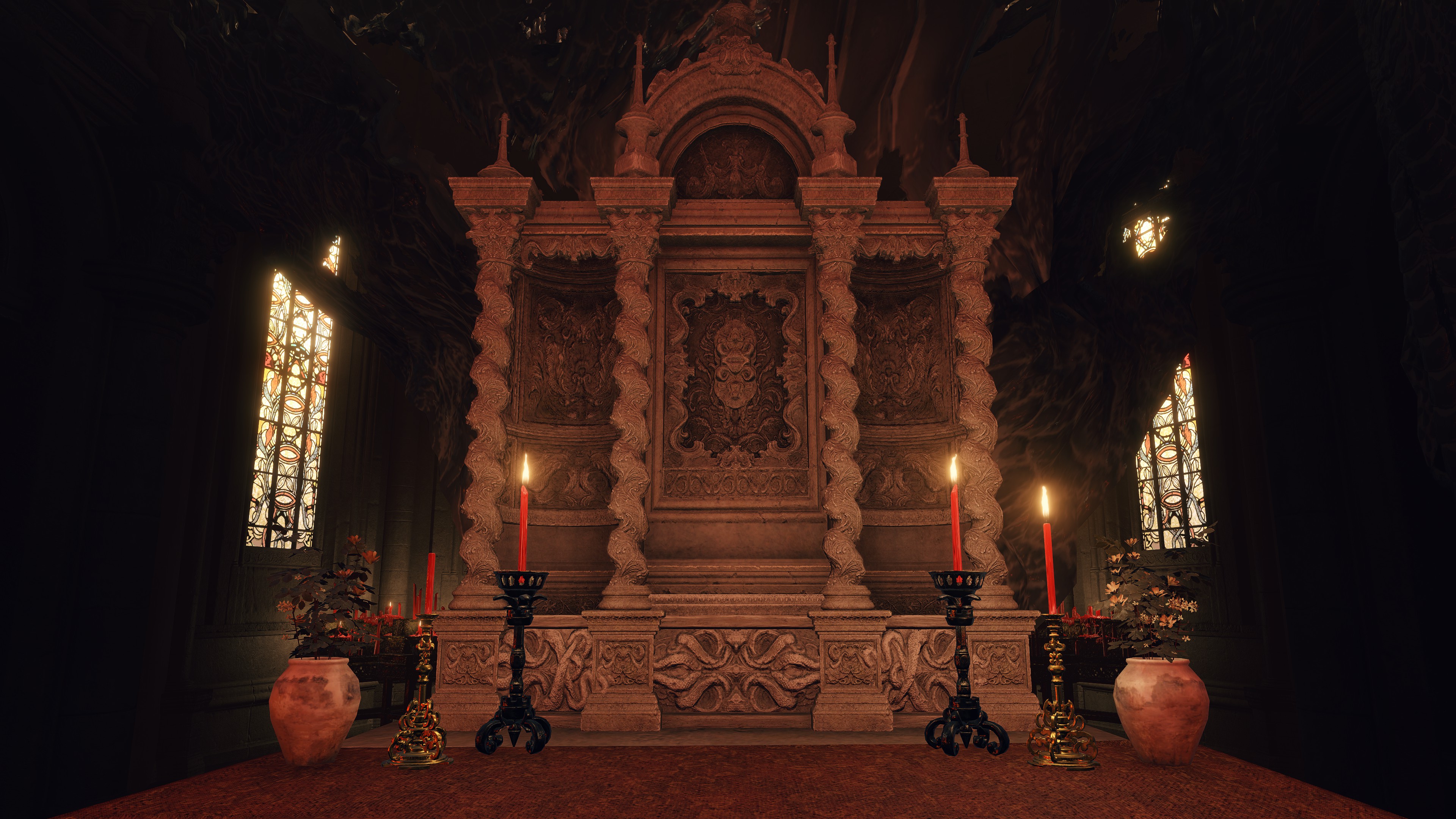
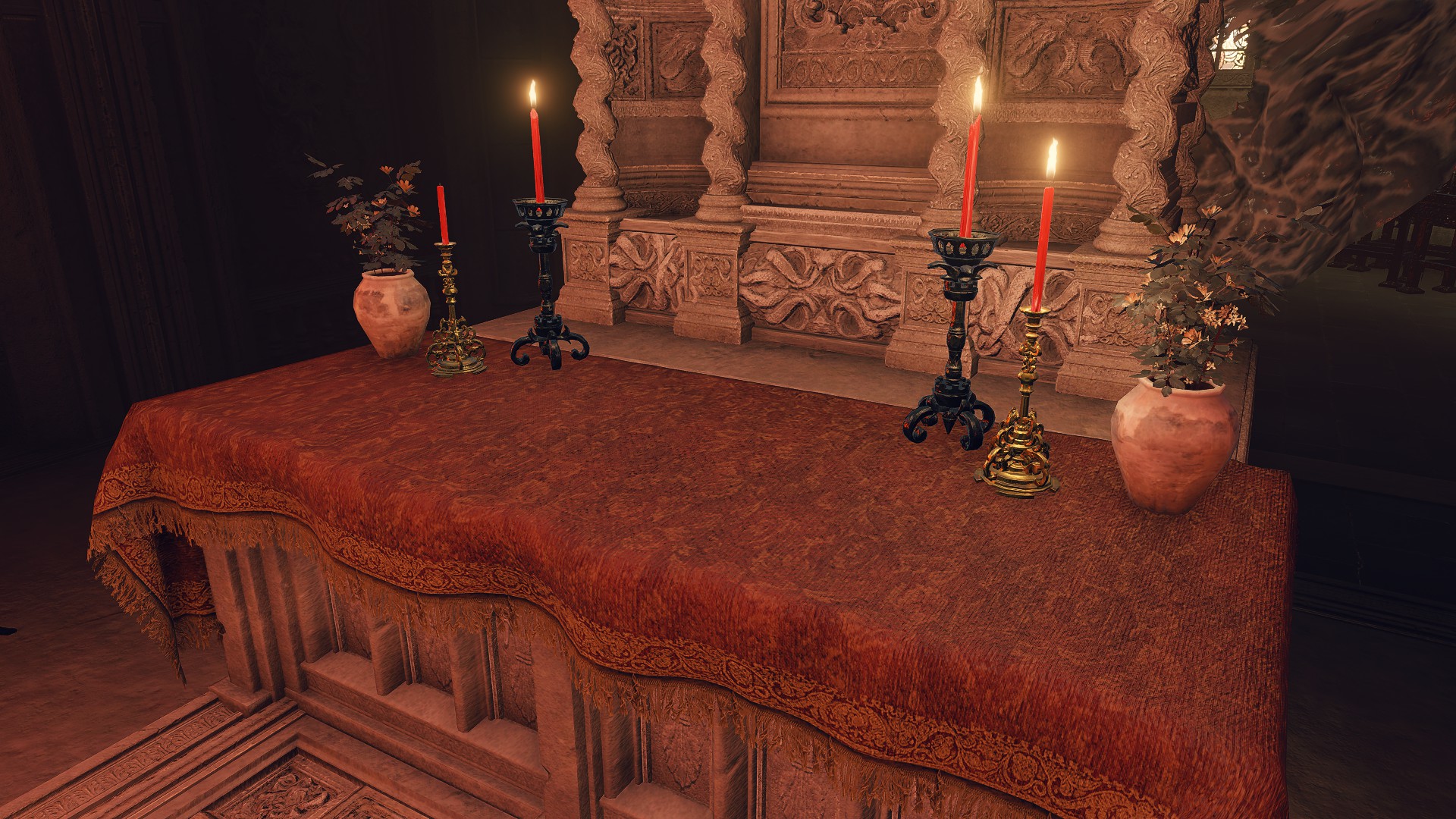
The Temple of Eiglay stands separate from the smaller town church in Volcano Manor, across a vertical-lift bridge over the lava river gatekeeping access. The size, added with the partition, highlights the sacred hall’s importance. It was once a major place of operation, but for whom? The larger church features the manor’s typical snake iconography, yet employs a cornucopia-style lever for its lift to the second floor, like at Leyndell. The lift up to the castle from just outside the church similarly utilizes the tree-style lever from that royal capital out east, not the hawk lever more common to the Farum colonies. This, at the very least, intimates renovations made to the lift if not the entire parish. It may be that the Temple itself was built to spread the Erdtree faith to the snake pagans in the Age of Plenty following Godfrey’s peace settlement with their god. Now, the altar is draped with snakeskin and the place harbors demigod hunters, perhaps for the second time.
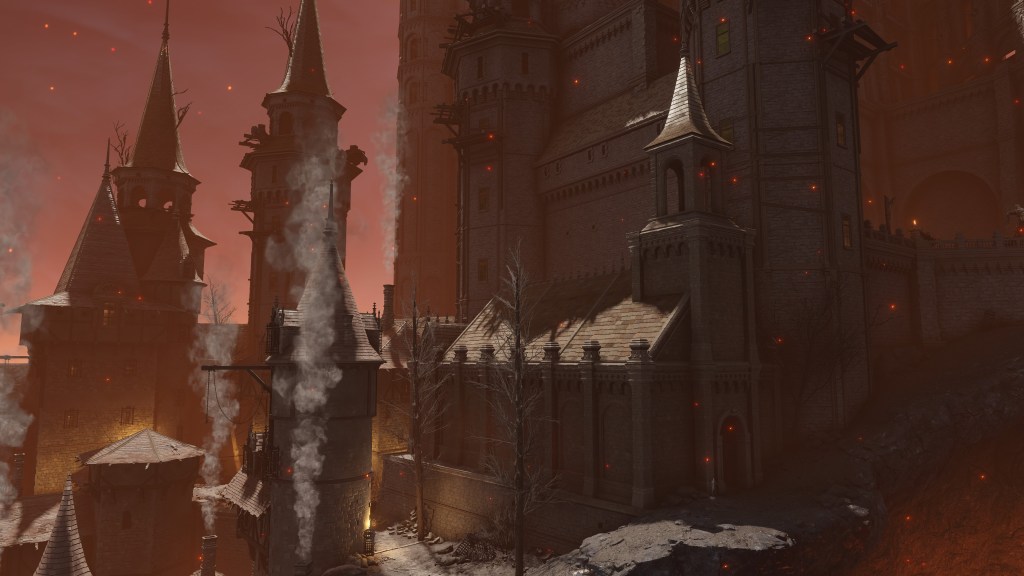
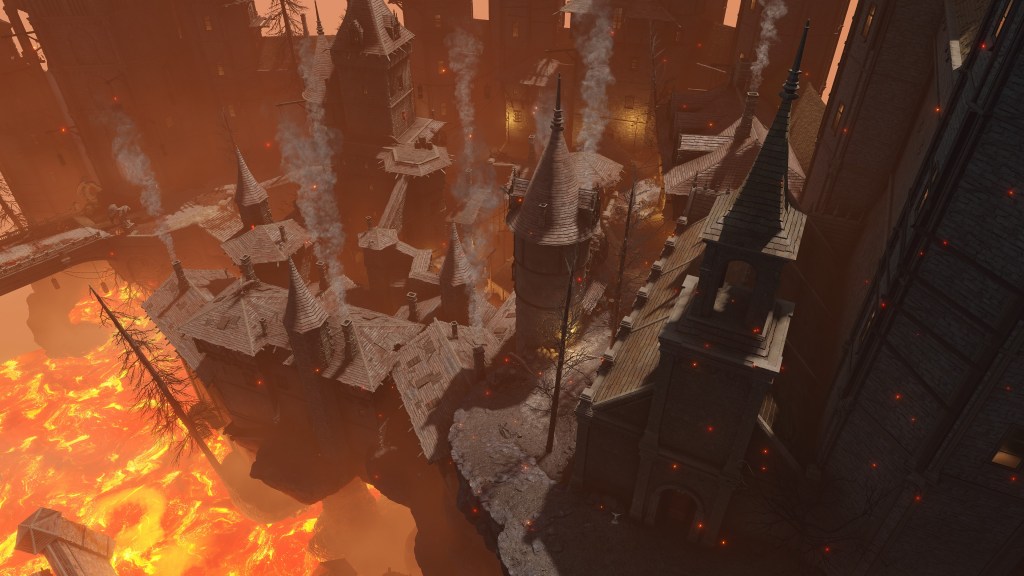
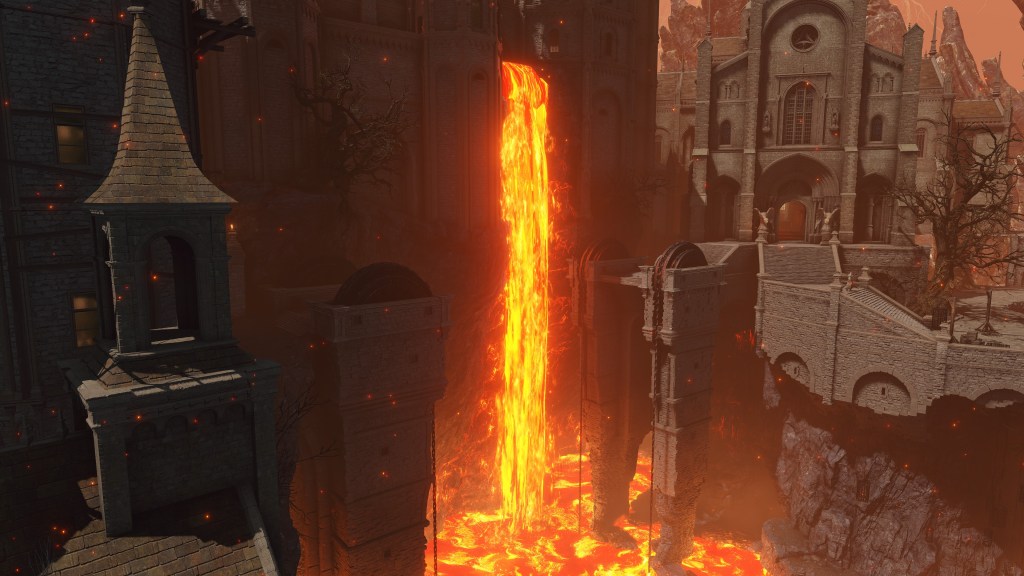
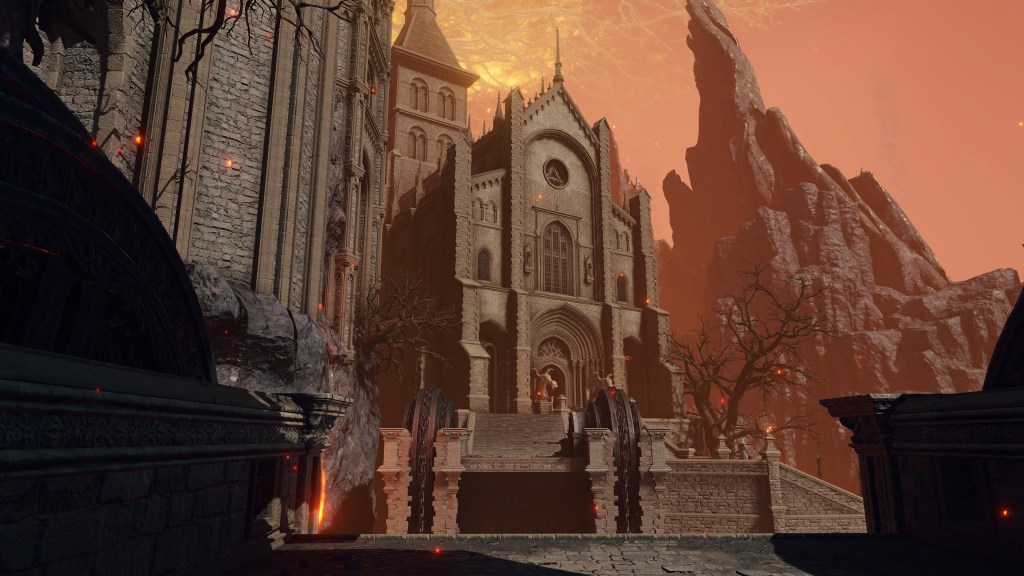
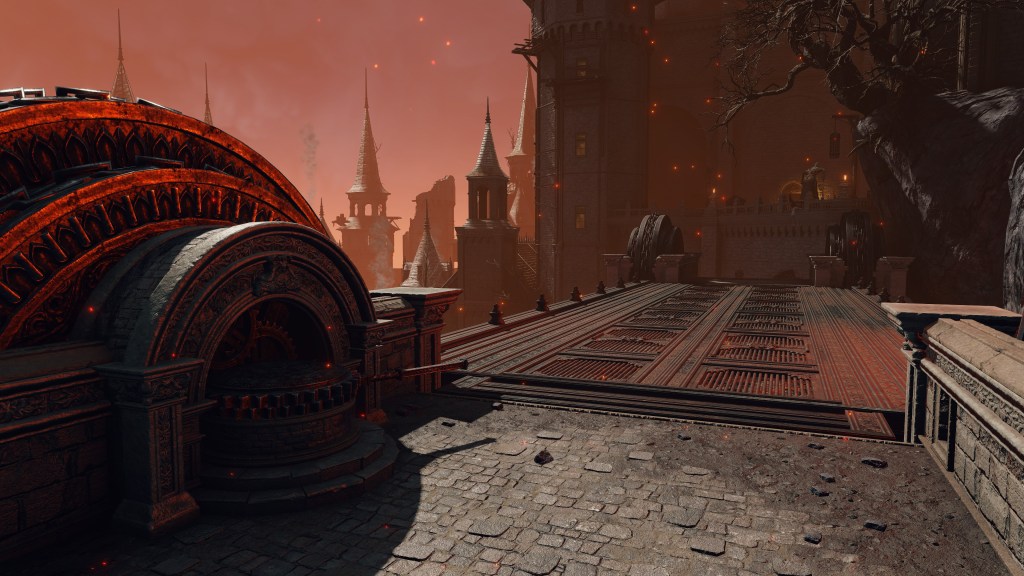
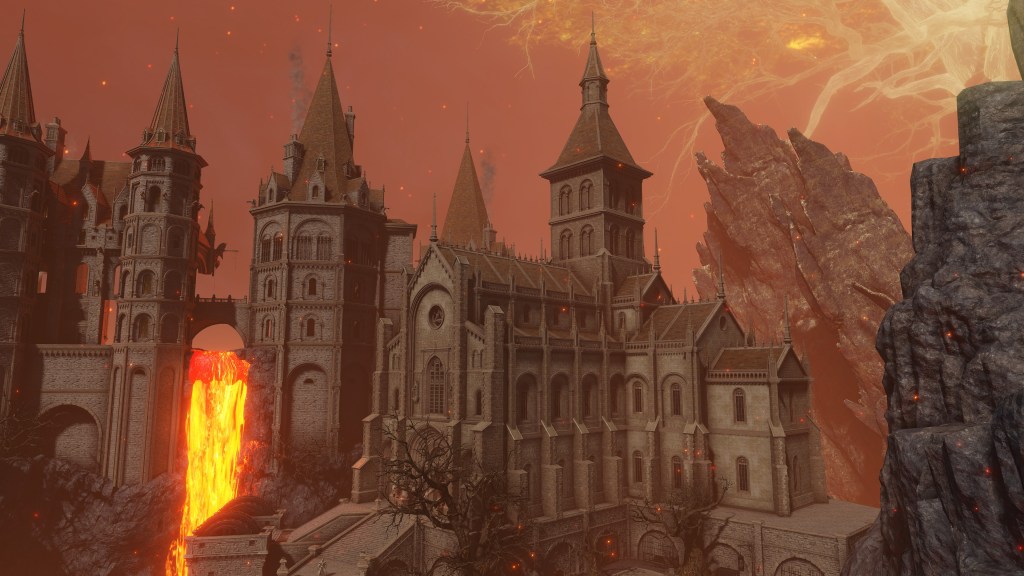
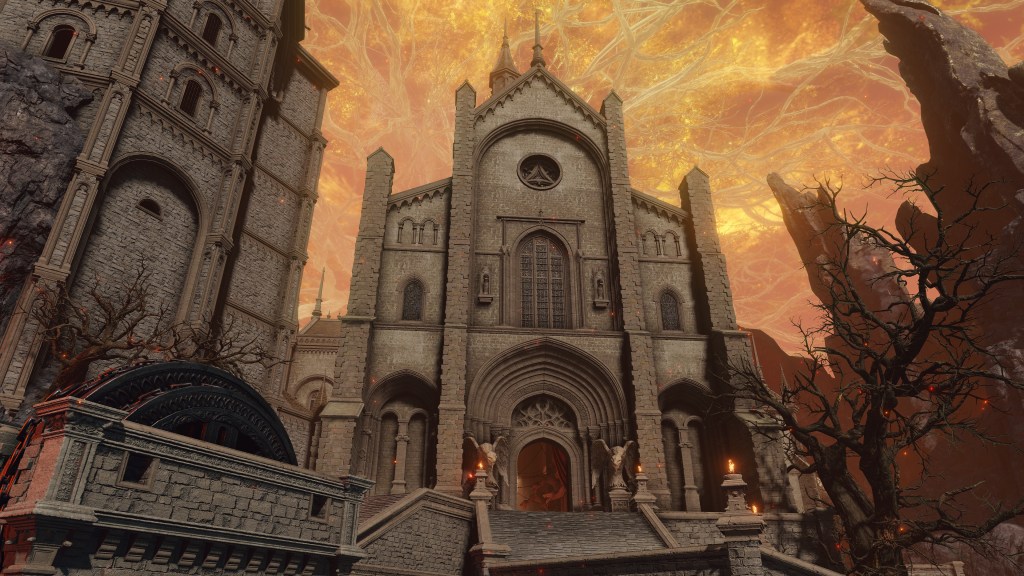
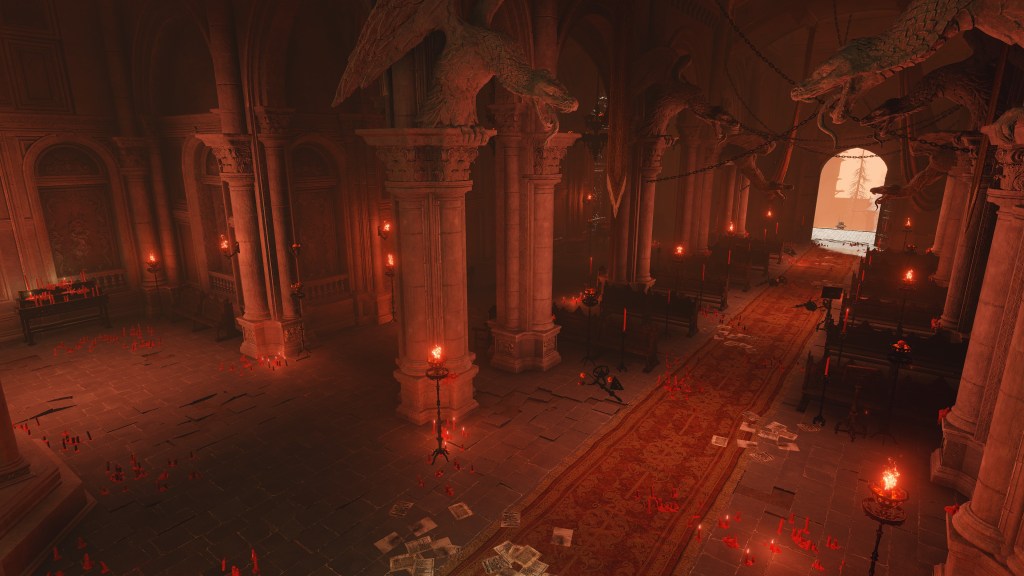
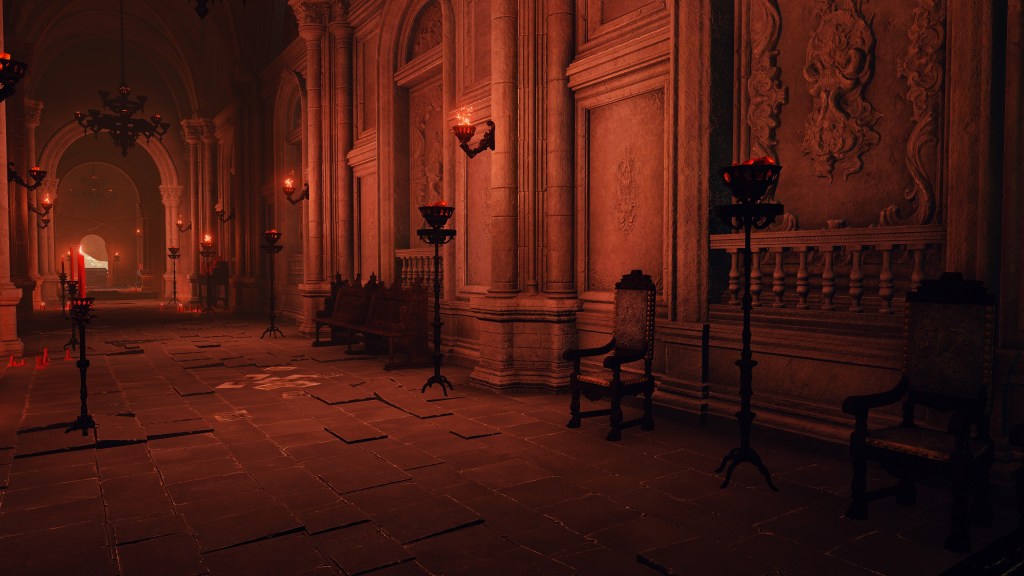
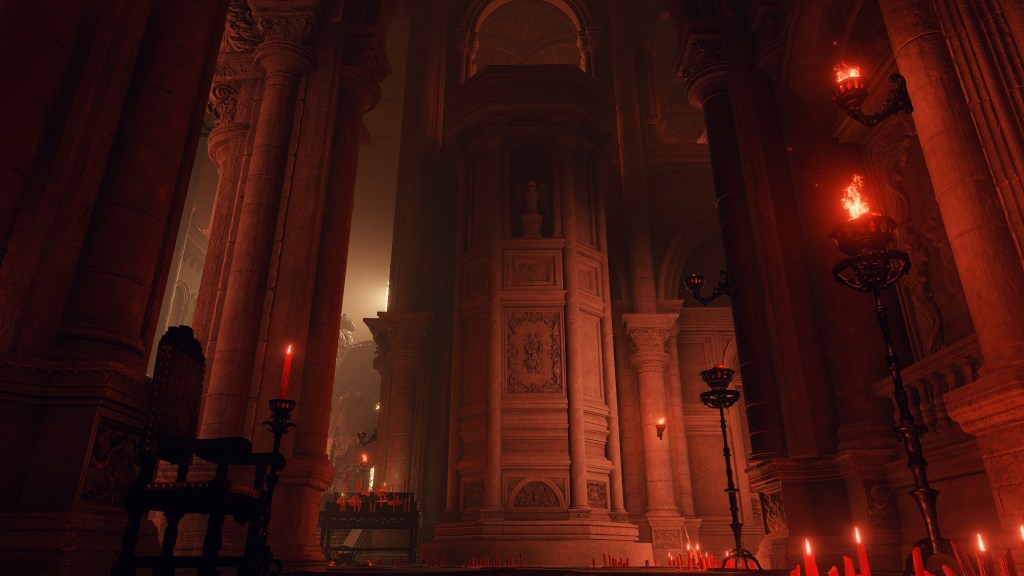
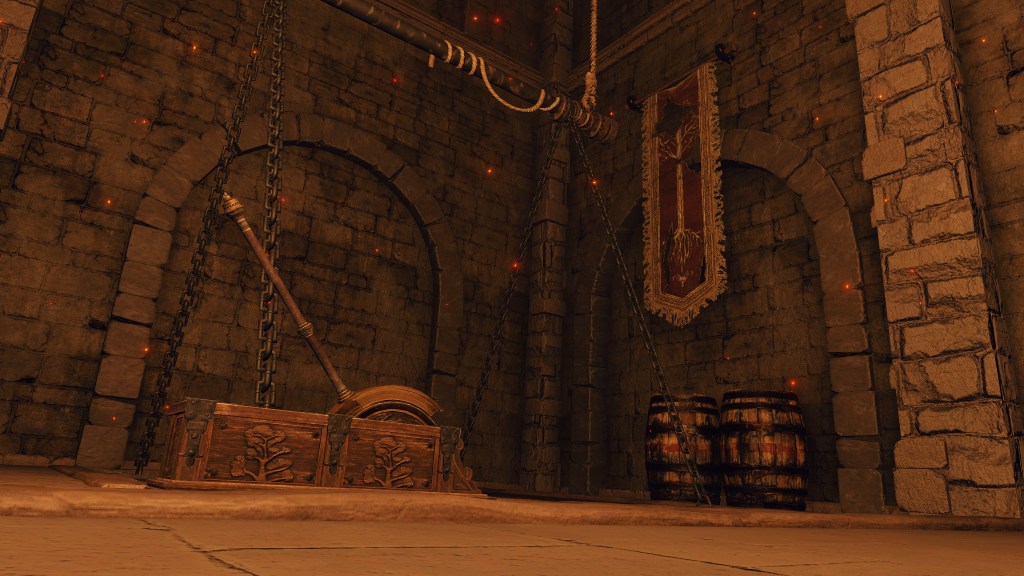
Indeed, the Godskin Noble and Blackflame Monk at the Temple of Eiglay are apparently aligned with those currently rebelling against the gods at Volcano Manor. They make for natural allies, but does this alliance reflect past history? The snake rebelled against the Erdtree before, during the reign of Godfrey. This puts both the serpent’s rebellion and the god hunts in roughly the same era. Perhaps the two overlap? The apostles do adorn their equipment particularly with obsidian, a kind of volcanic glass; the same kind of jewelry decorates certain snake-men. The great snake conversely wants to devour the world, including the gods. Apostles hunt the gods and only use the skin, so nothing stops them from disposing the bodies by feeding the gluttonous reptile. The Gloam-Eyed Queen and serpent god could have thus coexisted together in symbiosis, at least up until the former’s new Order of Death interfered with the latter swallowing all Creation.
Defensive equipment enveloped by bronze snakes. Equipment of the gladiators who were driven out of the arena. Becomes slightly easier to be targeted by enemies.
The snake is said to be an insurgent of the Golden Tree, so everyone was pleased to see it harmed.
On the subject, snakes also somehow contribute to the apostles’ creation. Is it truly an accident that they manifest serpentine traits when serpents are so prevalent on Gelmir alone? Not likely. The Serpent Amnion lies on the altar in Temple of Eiglay where presumably the birthing ritual mentioned in the description is performed. Standing in front of it is the Godskin Noble, showing at least some interest in the workings at the church. Rya confirms that the ritual with the amnion births snake-men like her, so the noble must see the potential to create new apostles combining the traits of snake and men. Whether this plan would ever bear fruition, it is unlikely to be conceived without some precedent. Put another way, it suggests that the serpentine apostles were originally born from a process related to Gelmir’s serpent deity. The volcano was probably even where the creation of new apostles was actually conducted.
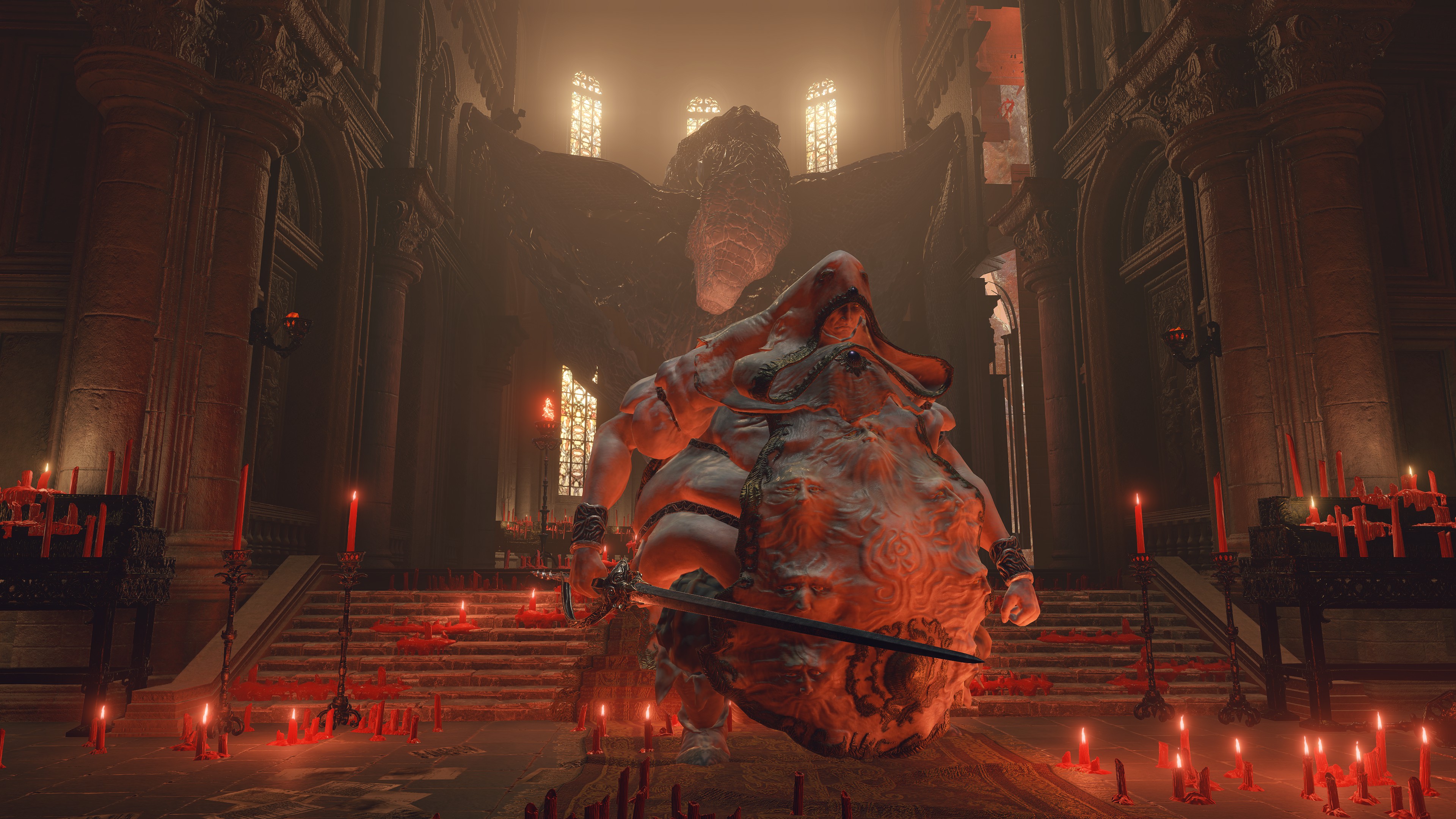
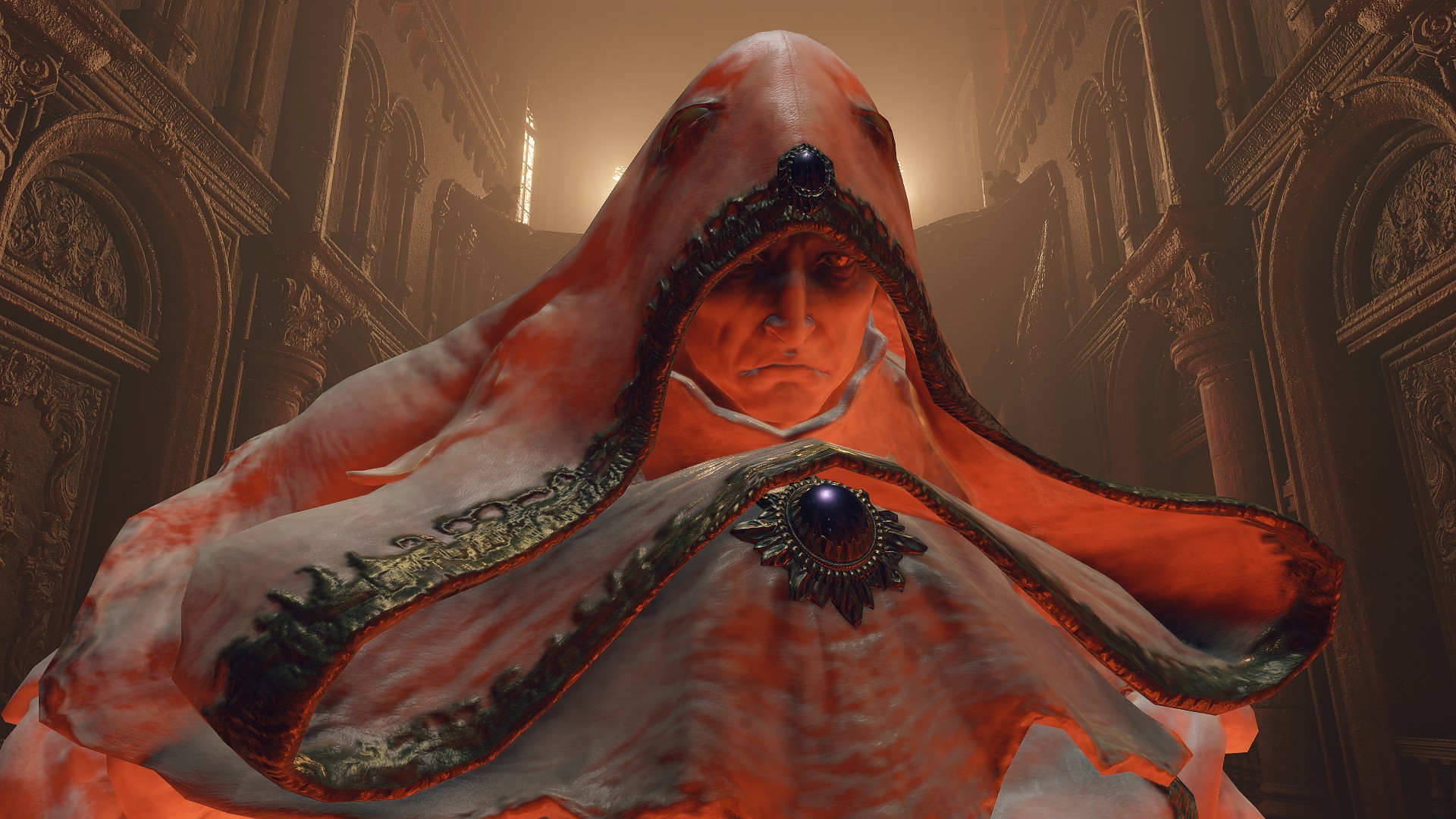
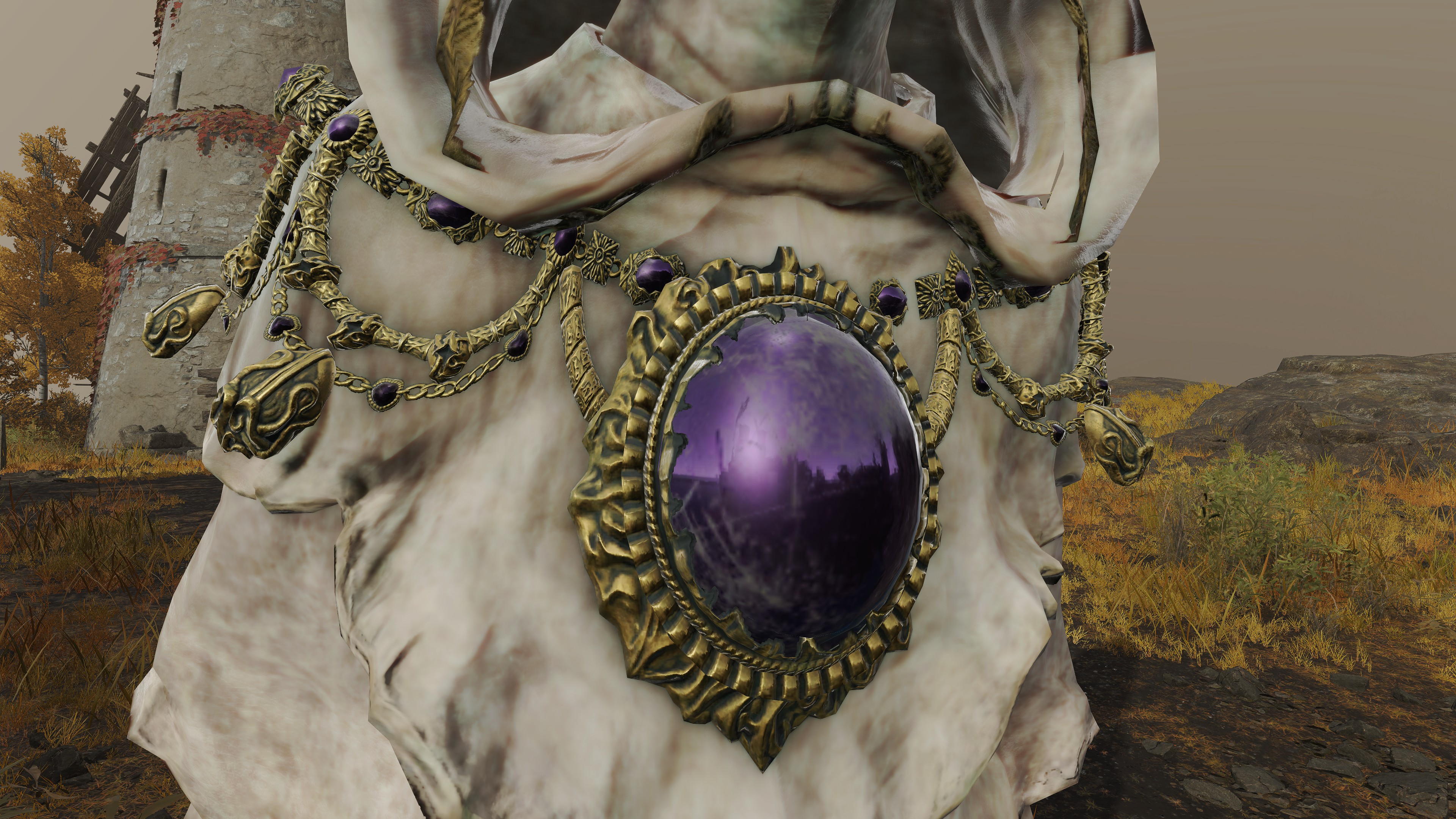
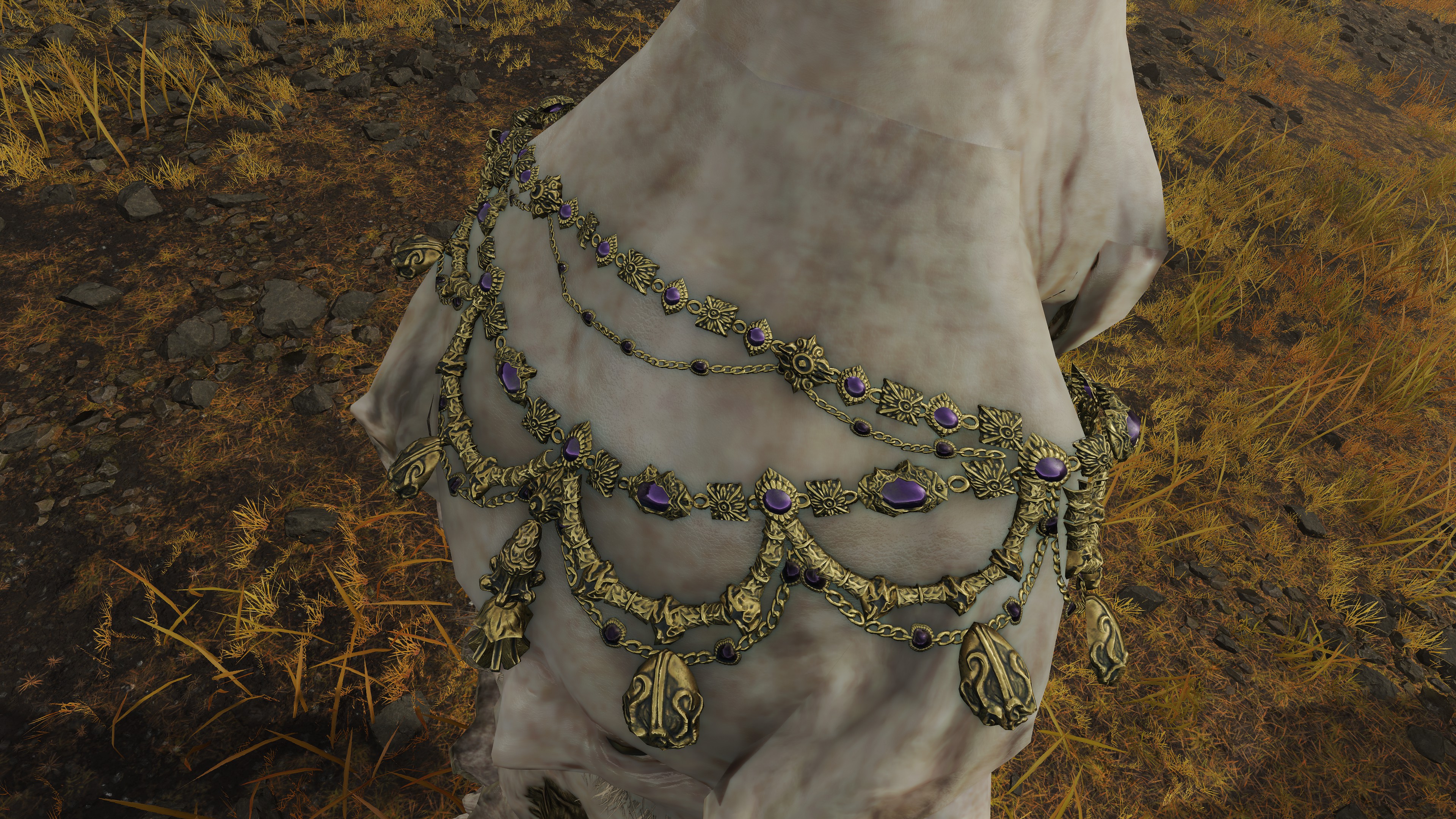
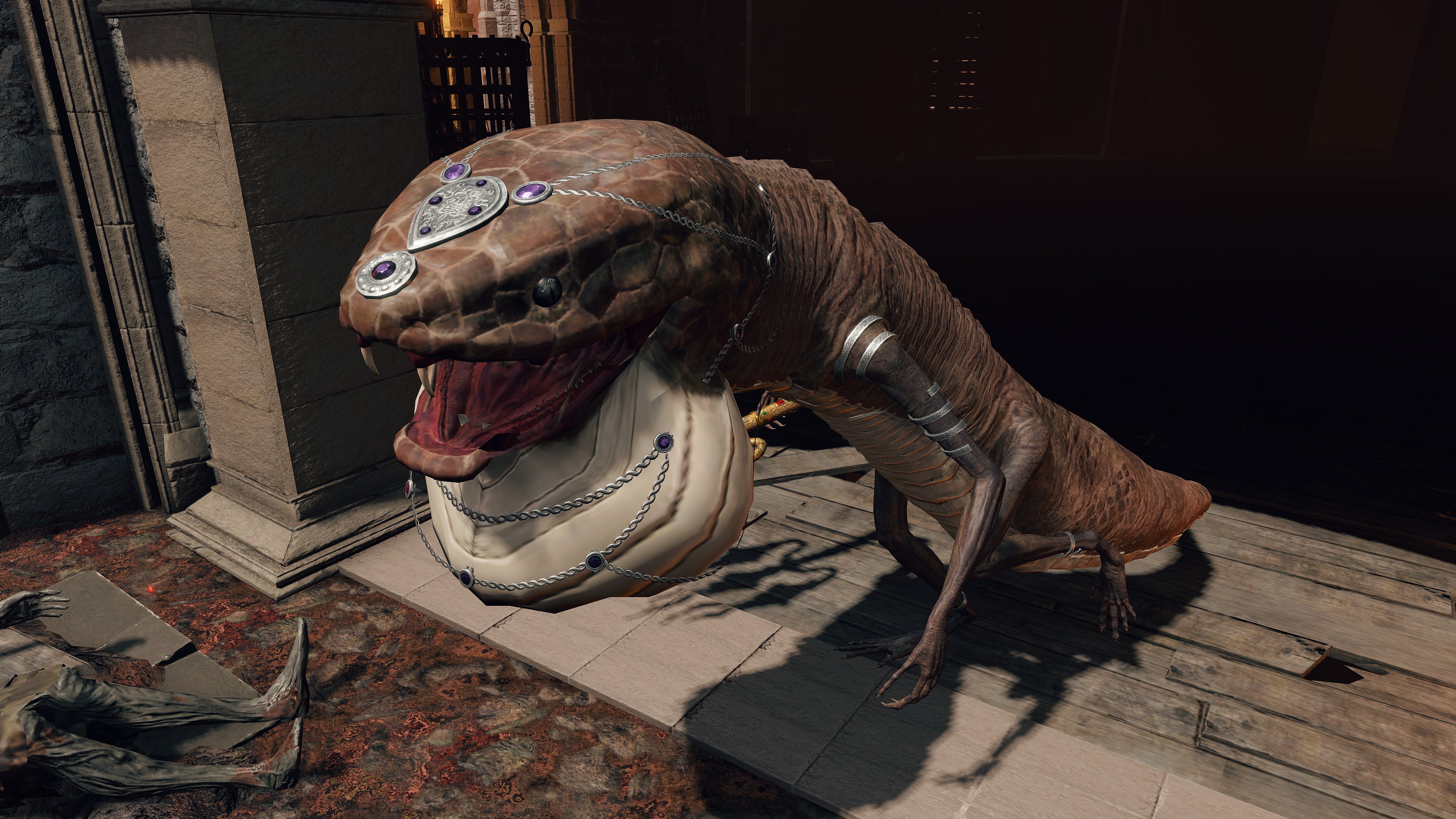
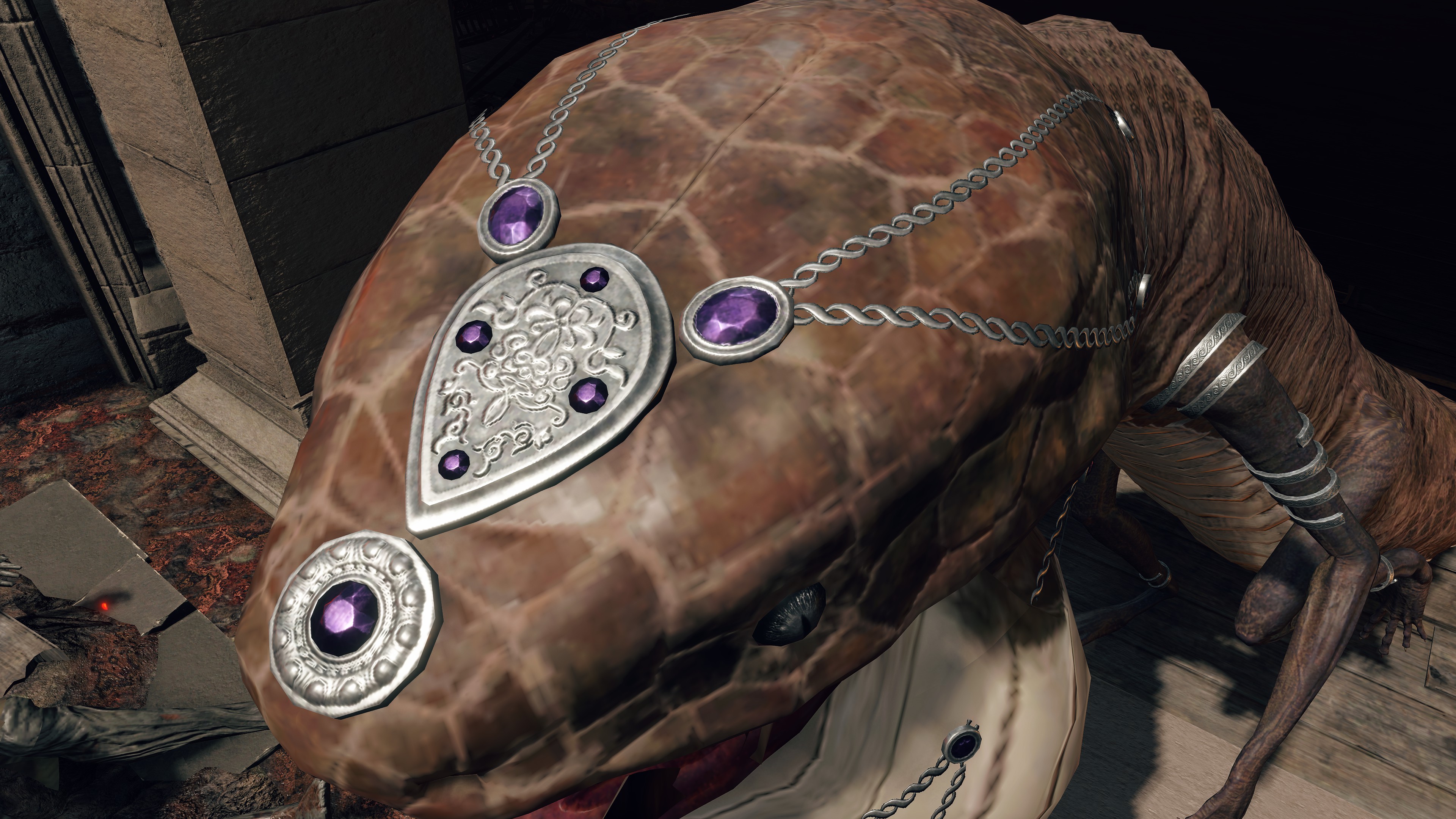
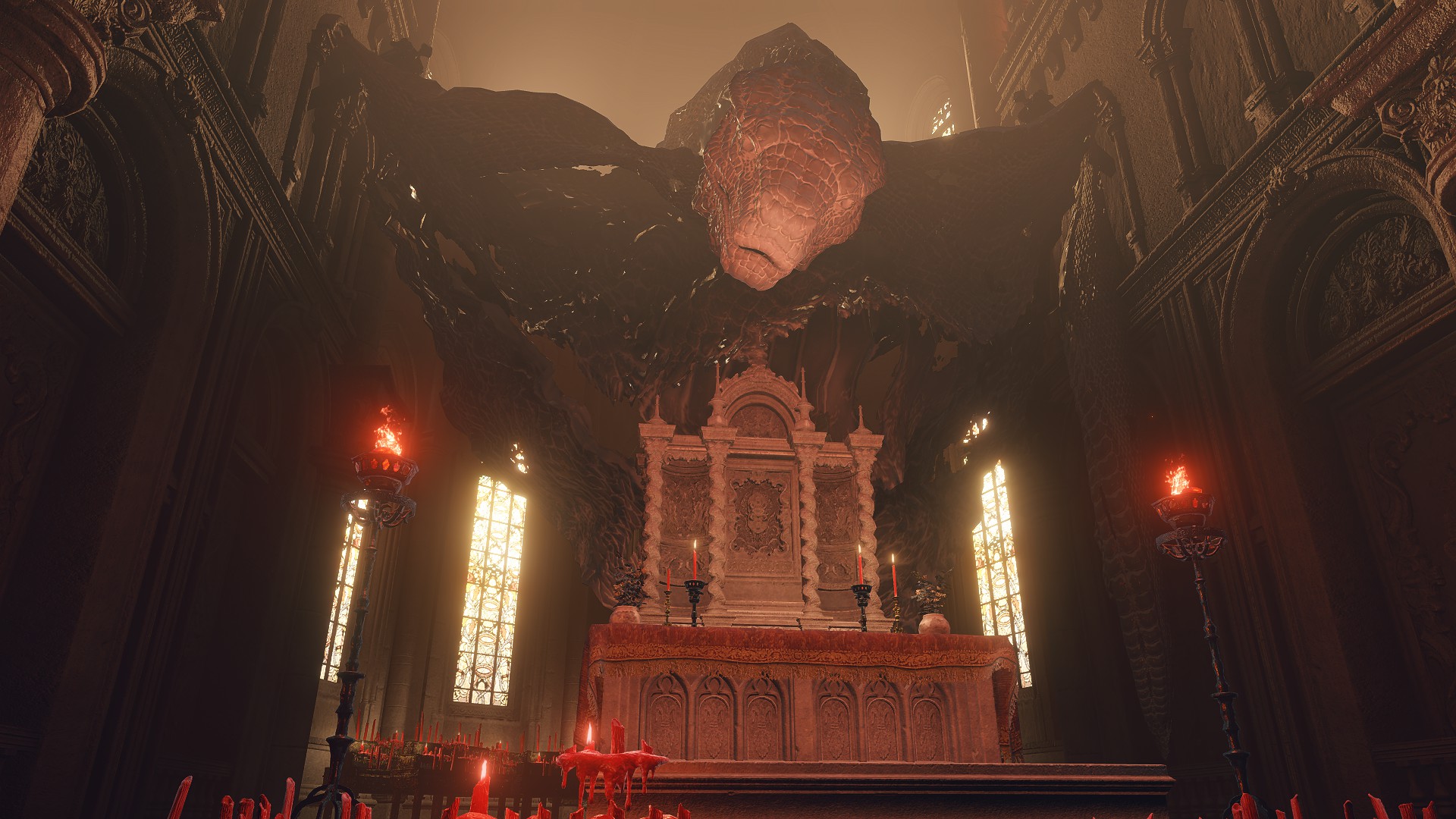
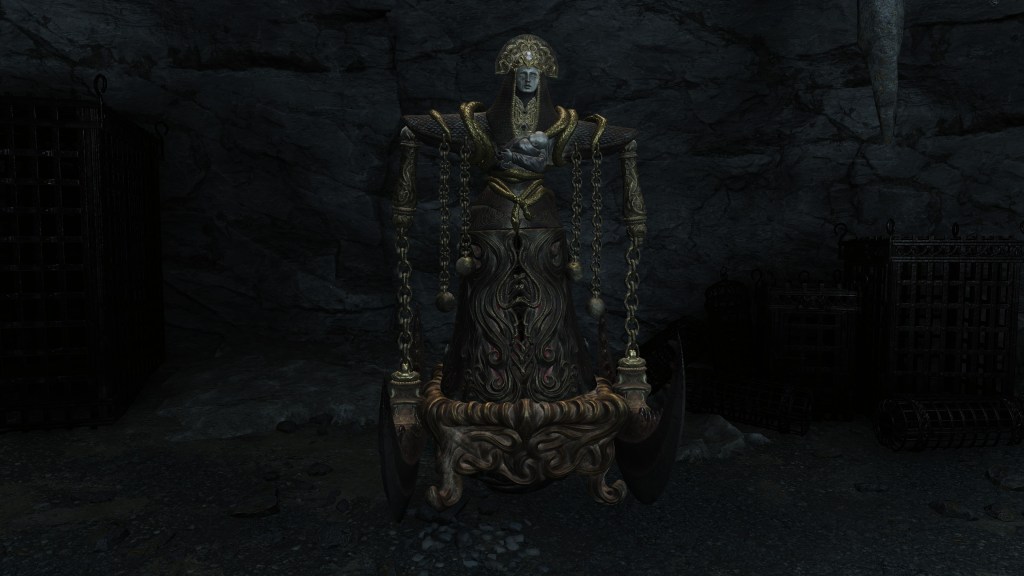
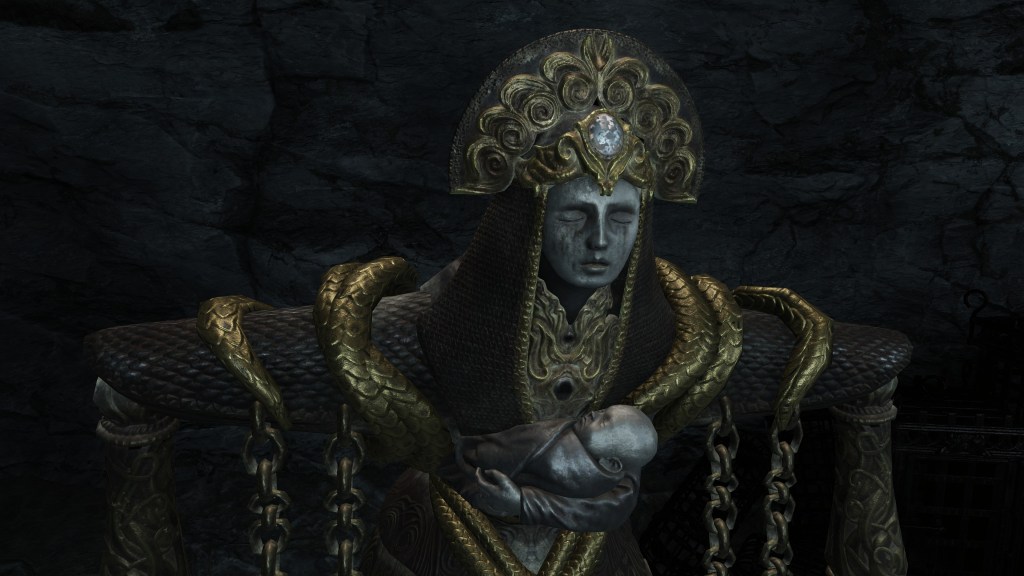
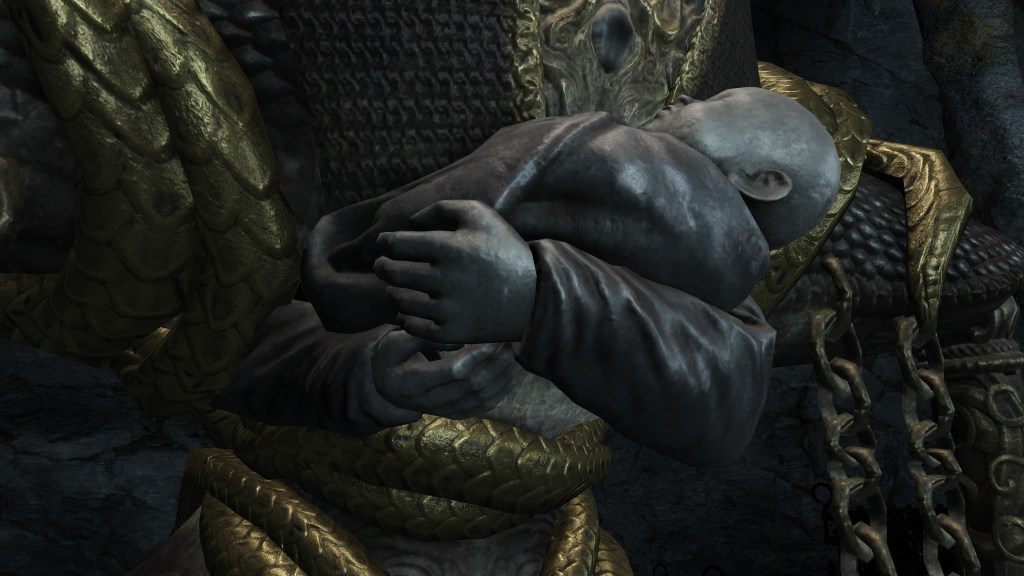
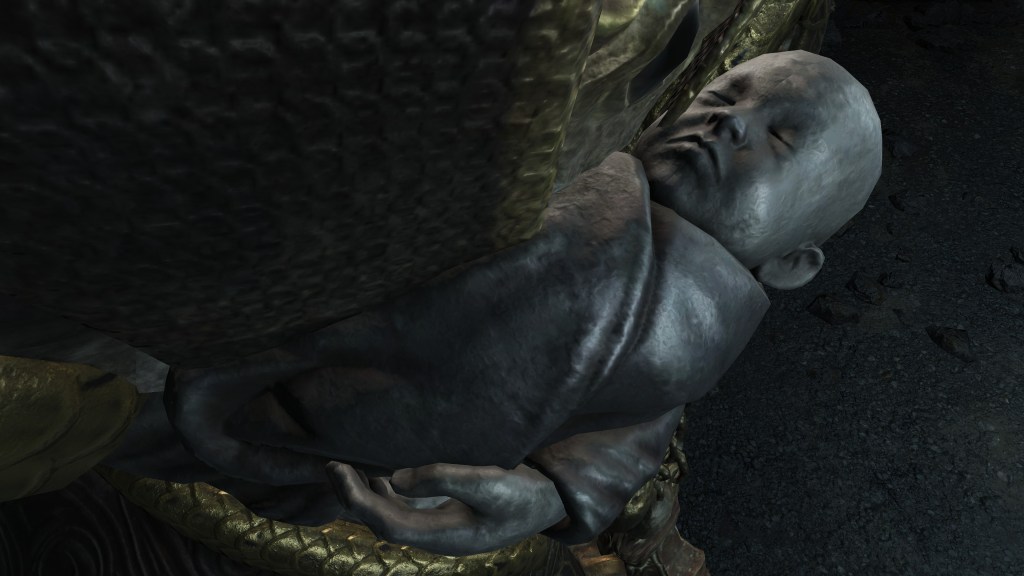
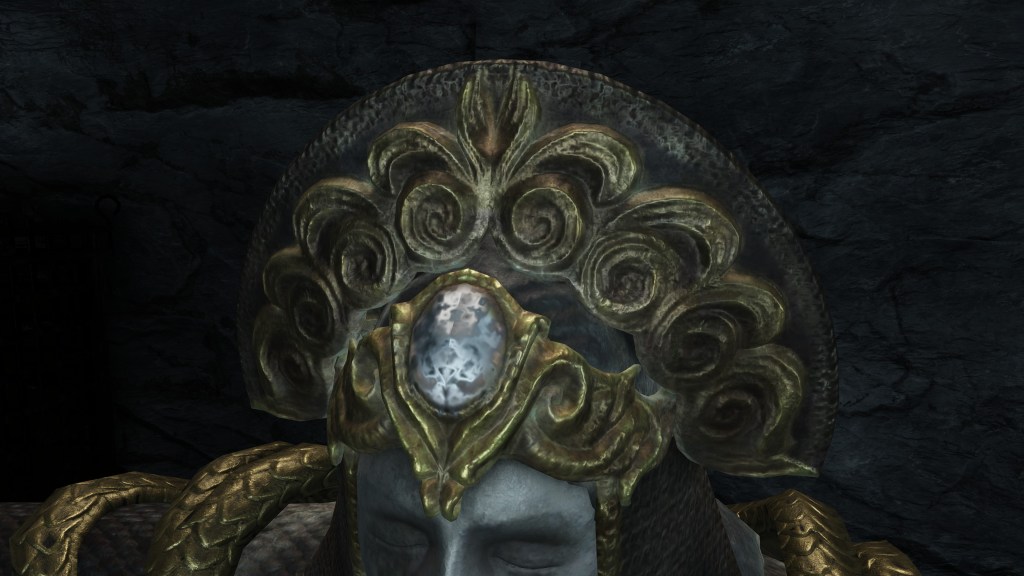
As previously established, the Abductor Virgins seem to originate from Volcano Manor, and they depict a crowned woman cradling a newborn. The crown specifically resembles an opulent kokoshnik worn by Russian royalty. This is rather odd imagery for a device otherwise associated with snakes. However, it brings to mind this idea of a pure and regal maiden giving birth to the reptiles, as we see when the “belly” of the Virgin opens up to reveal its occupants. It may just be an abstract representation of the serpent god, but then why depict the deity as a human holding a human baby? And so, it is possible for this to instead be a memory of the Gloam-Eyed Queen swaddling her apostles — potentially even a conflation of the two. She clearly styles herself as a maternal figure to her newborn followers, and the artificial nature of their existence fits with that virginal element. The Temple of Eigley, and Mt. Gelmir as a whole, prove an adequate staging ground for the god-hunters both now and likely in the older era. And if they are part snake, then they were likely born with help of the great snake.
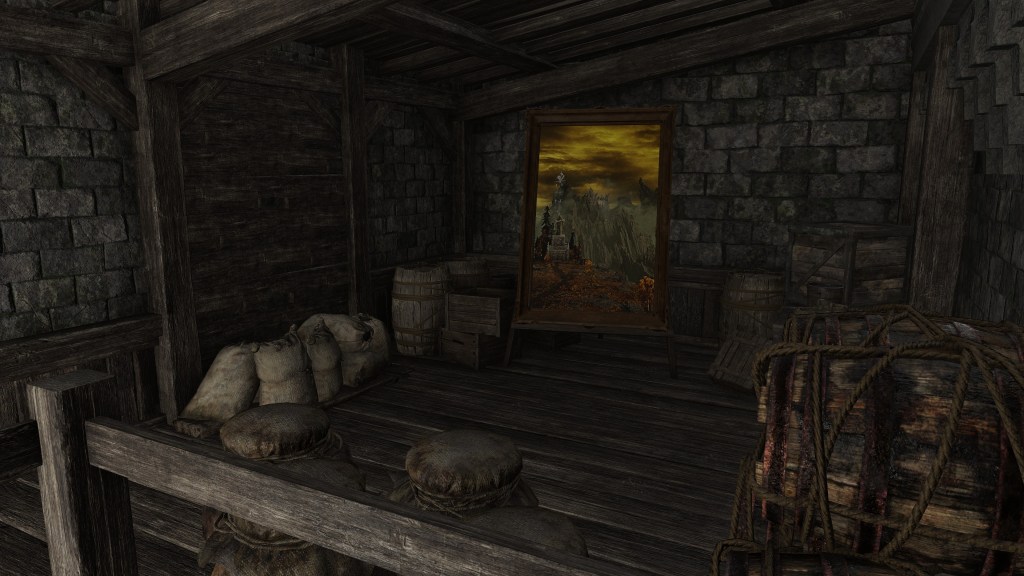
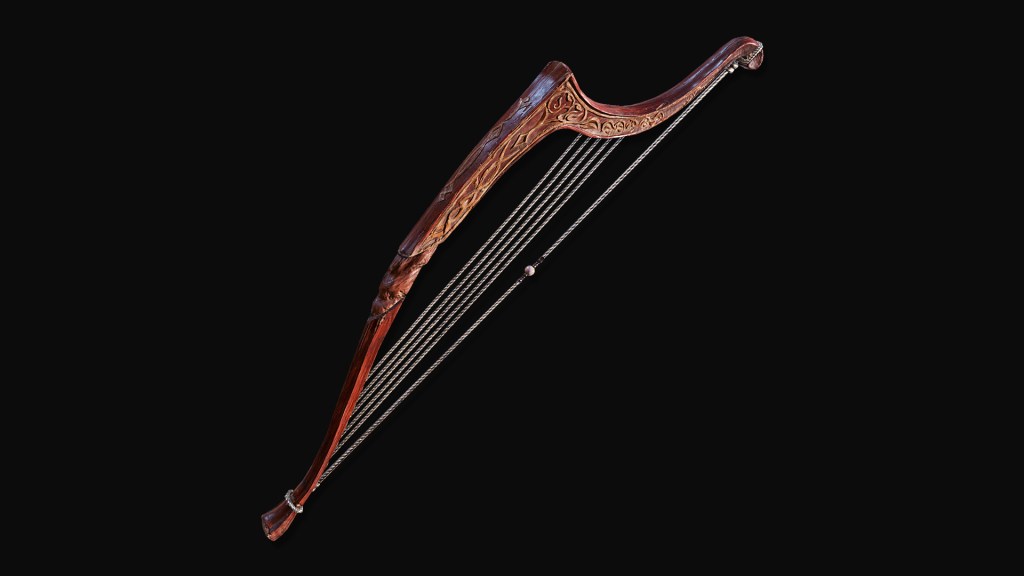
Stored in the depths of the Gelmir Hero’s Grave is the Ringed Finger. The improvised hammer bears an obvious resemblance to the digits on Rykard’s hands seen during his boss battle, and cut content affirms that to have been the original concept. Consistent with the Lord of Blasphemy becoming one with the immortal serpent, the severed finger yet lives with slight warmth; using the weapon’s skill, it swells close to original size before flicking the target. But the description claims it to be the legacy of an “old” blasphemy, which is consistent with where we find it. The “Champion’s Song” painting rewards the Harp Bow of a, evidently local, minstrel who sang of honorable Erdtree heroes and honorless blasphemy heroes; obviously correlated to the Sainted Hero’s Grave and Gelmir Hero’s Grave featured in the painting, respectively. If Gelmir’s fallen champions are remembered in song, then they are also part of this old blasphemy, not the present one. In short, long before Rykard, someone else fed himself to the pagan deity and waged war against the Erdtree’s gods on Gelmir.
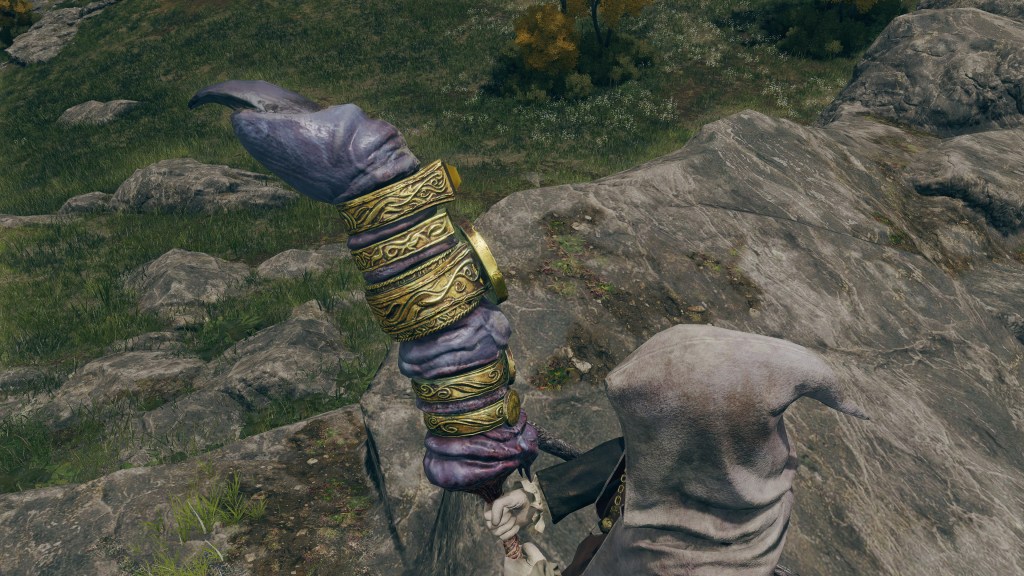
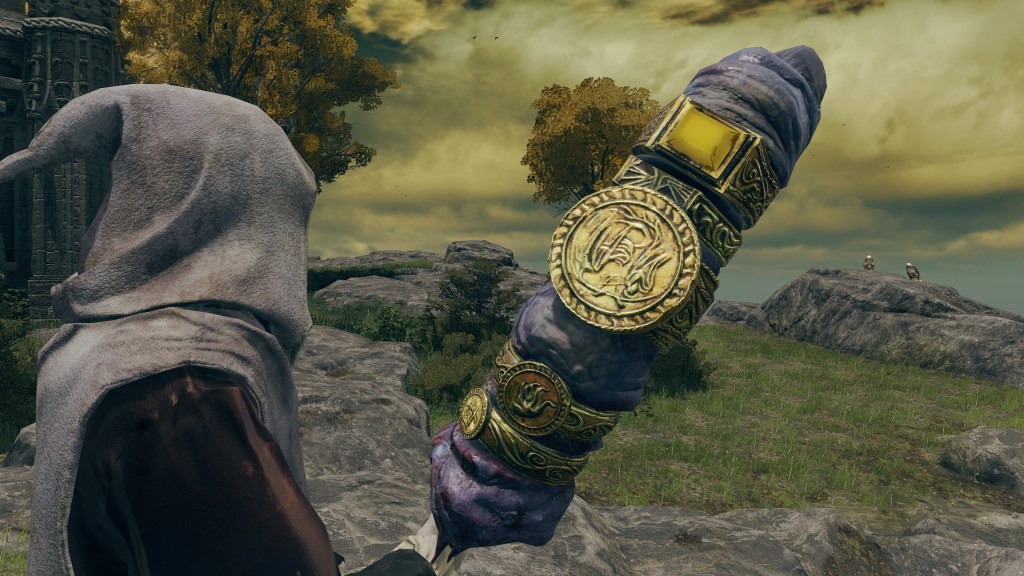
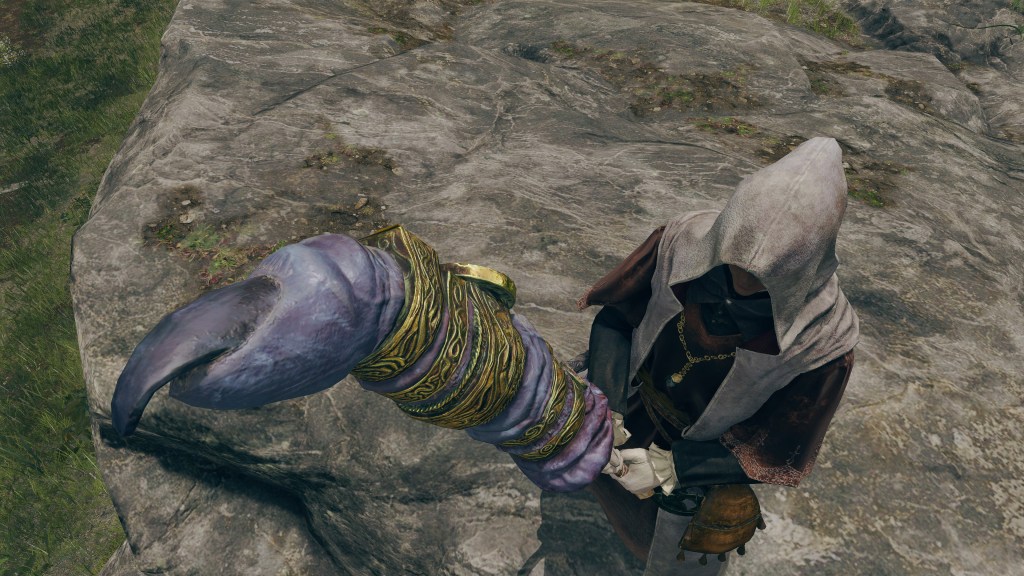
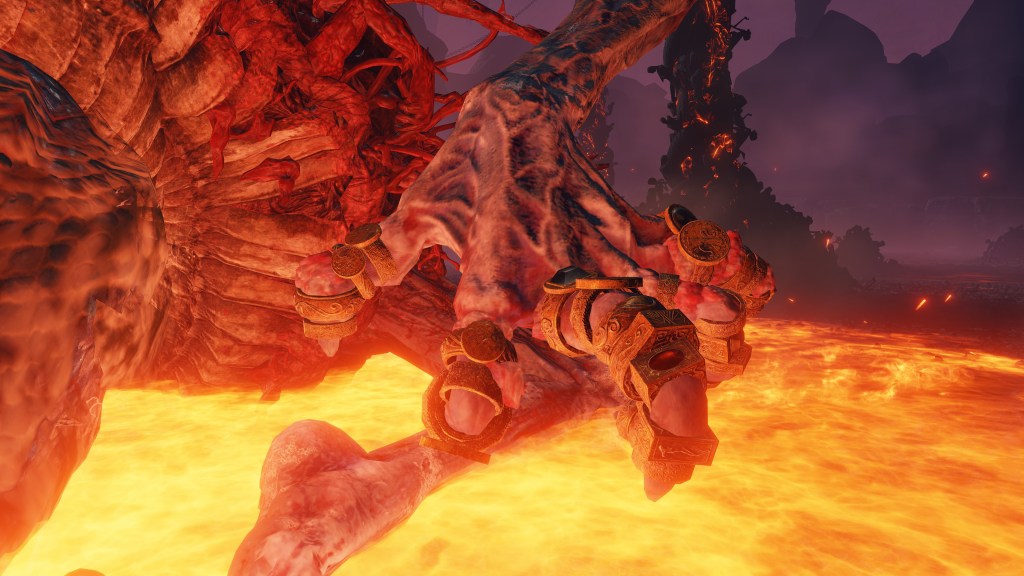
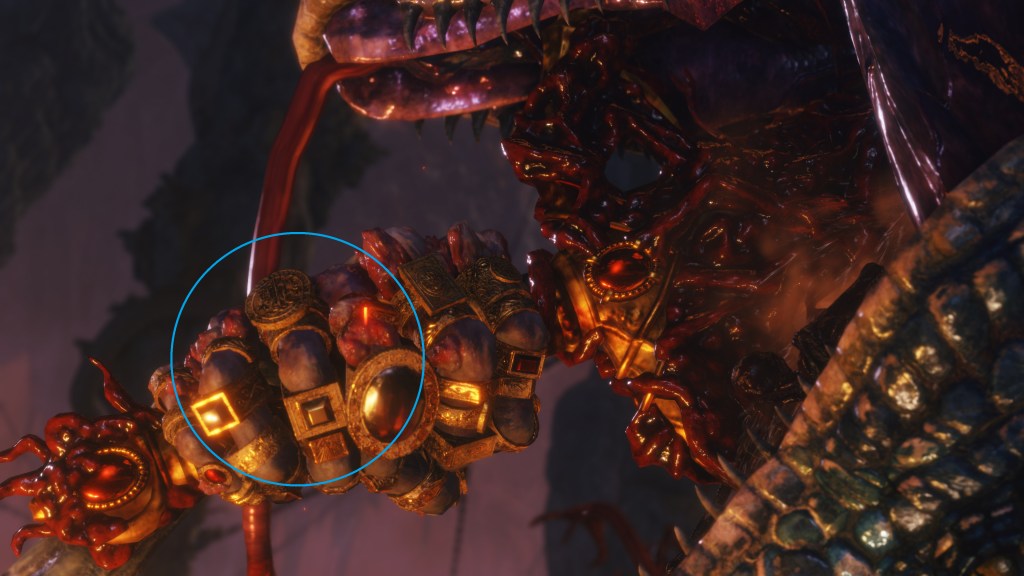
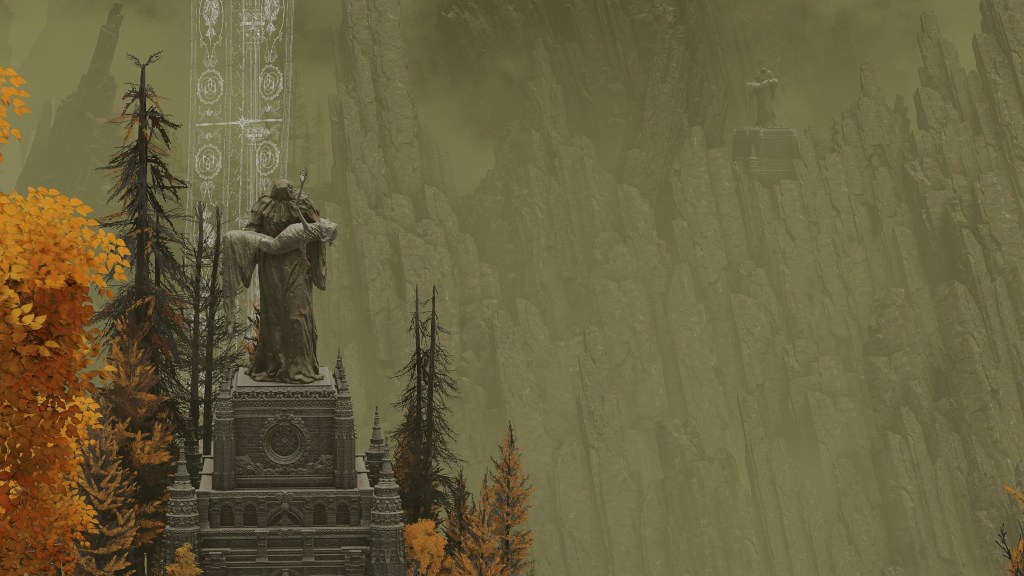
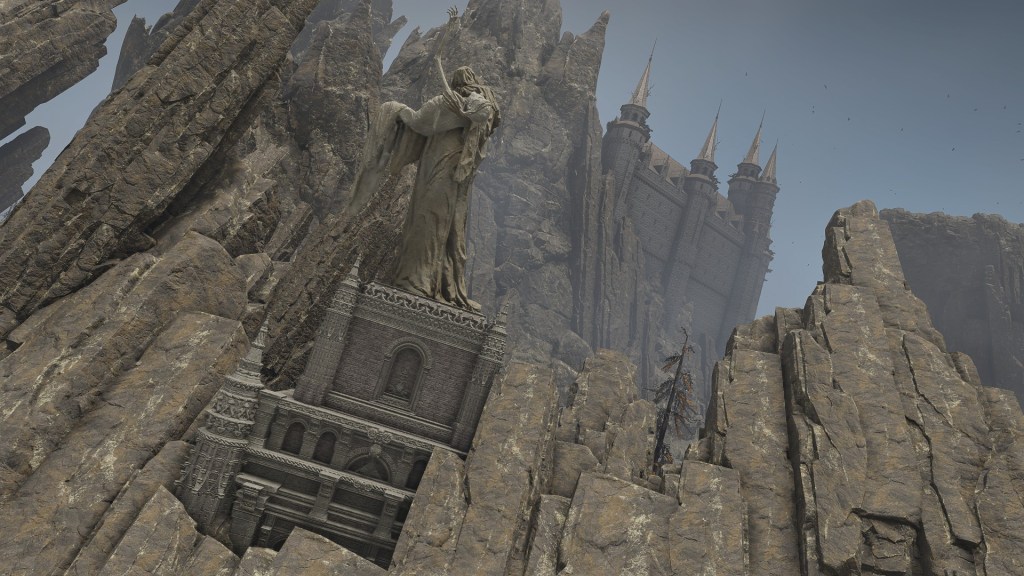
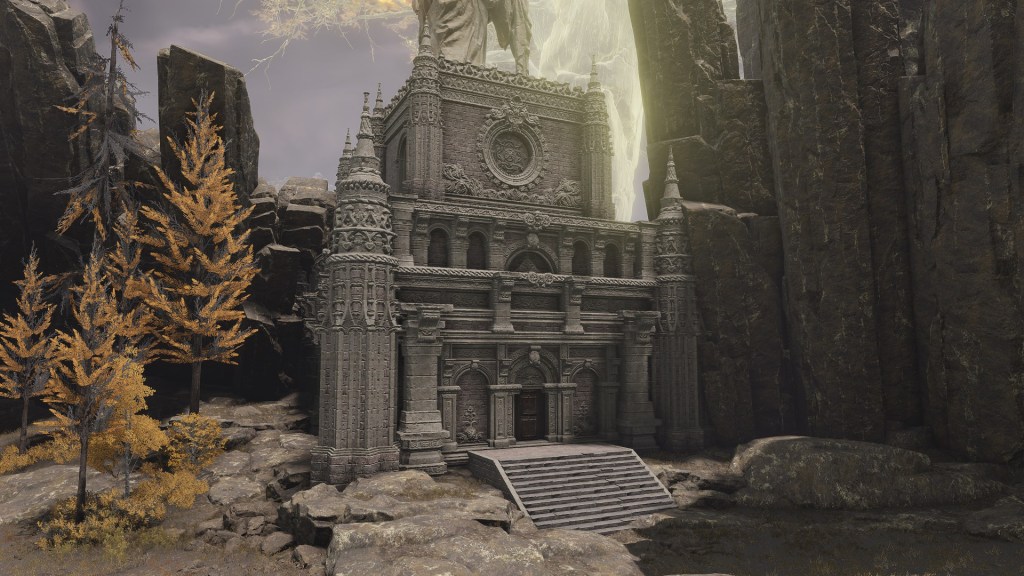
Great finger hammer wearing many heavy rings. Considered to have been amputated from the ancestor of the finger bugs.
It is the legacy of an old blasphemy, so it yet remains alive and slightly warm.
A minstrel’s harp made into a bow. It still plays a beautiful sound if shooting arrows.
The minstrel sang of heroes. Honorable heroes of the Golden Tree and honorless heroes of blasphemy.
We can infer that this old blasphemy equates to the serpent’s rebellion under Godfrey. We can likewise surmise that the Rykard before Rykard was killed in the war against the gods and buried with his fellow heroes hailing from Volcano Manor. In fact, this blasphemous hero is all but guaranteed to have been united with the pagan deity when the Serpent-Hunter was used to slay the beast. There are no other obvious conflicts with the snake between this rebellion and the Shattering when it reappears in smaller form, after all. If the great immortal was hunted, it should be in conjunction with the Ringed Finger’s owner. And who was this person? The heavy rings convey the wealth afforded to at least one digit. The way it snubs a person with a flick likewise indicates that Rykard’s predecessor, too, imagined himself as the “Supreme King” (覇王) with delusions of grandeur. In his case, it might be more than just conceit. For if the god hunts were concurrent with the serpent’s rebellion, then this blasphemer was the Gloam-Eyed Queen’s close collaborator, and probably much more.
How convenient that a hero with the will to dominate a pagan god emerged just as the Empyrean required a benefactor to support her creation of an army for the overthrow of Leyndell — it is almost as if the two were acting in sync. But why would anyone secure all this for her? The obvious answer is that the queen somehow advanced both of their goals. And when it comes to a future god of the Elden Ring, the main beneficiary of her pursuit of transcendence is her Elden Lord. For sure, every queen needs a king, so the Empyrean had, in all likelihood, already chosen her consort for after replacing Marika. This prospective Lord was motivated to become the supreme king of the world, so would do everything to help his god grasp the world Order, including become a beast and organize the pagans. If this is the case, then all the more reason that she be mother to the apostles. Devouring Rykard led to the genesis of the snake-men, so the previous devouring may have similarly instigated the birth of snake-apostles. These were thus, in a sense, their children, born to a virgin “mother” if not a virgin birth.
Daedicar was a debauched woman who indulged in all sorts of scandalous behavior, always engaging in either infidelity or adultery in the process. So many have been wronged by her impropriety, the talisman of her portrait makes all enemies hit harder. One can easily imagine why her face was flayed — given how many it has apparently seduced, no punishment could be more appropriate. But her sins weren’t done if the faint smirk of affection was still on that ugly face. That insanity led to new lows for the trollop. The description to Daedicar’s Woe claims that she came to birth a myriad of “grotesque” children. Who were these children? Some fans posit the snake-men of Gelmir, since they are also described as grotesque; Rya even possesses the Woe. But Rya recognizes the Serpent Amnion of her birth mother, which is consistent with the claim that she was born by the “favor” (恩寵) of a king — the snake-men being born after Rykard became Serpent King. Daedicar isn’t the snake god who assimilated the demigod, so her womb must have produced different offspring.
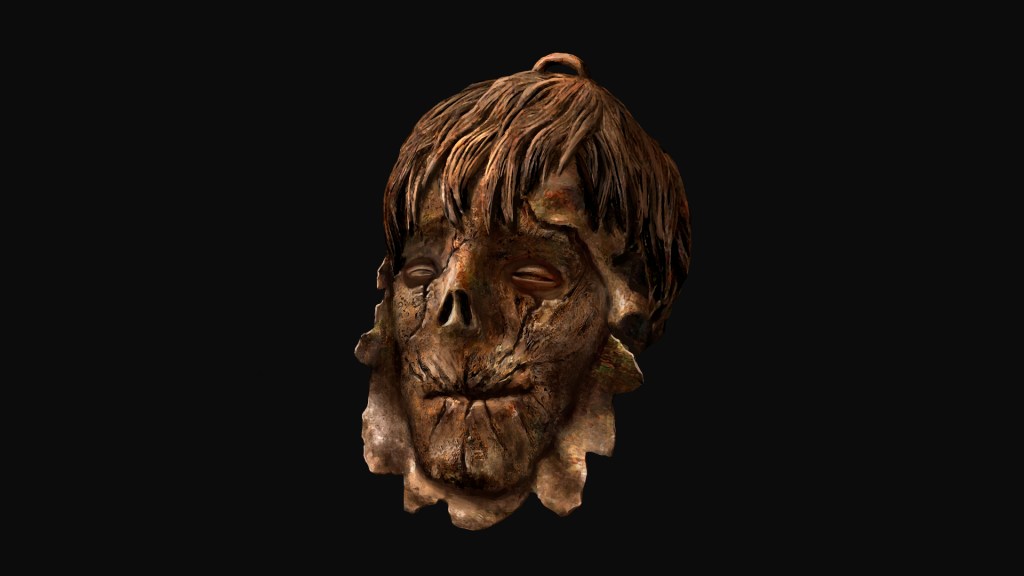
Portrait of insanity with skin flayed. It is making an affectionate smirk.
Increase damage taken.
That woman with the name “Dedica” performed every adultery and infidelity and birthed countless grotesque children.
And I hear that I was born receiving a great king’s favor.
In that case, perhaps Rya owning Daedicar’s Woe hints at the human woman’s connection to a similar ritual. Why else does the sheltered snake-girl have this talisman unless it was a local item of where she grew up? She might not be as widely notorious as Shabriri, but Daedicar seems to at least be the most infamous woman on Mt. Gelmir. And if all her lascivious exploits occurred there in older history, then so too were the births of her grotesque children. That narrows down the possible candidates for the father. Only one known entity can give Daedicar offspring which satisfies all those criteria, and it is the one liable to be behind the godskin apostles. What could be more insane than to lay with something as ugly as her, a monster which didn’t care for human appearance? And what would be more apt for Daedicar than to seduce a taken man? Maybe the name “Dedica” (デーディカ) is because she dedicated her womb to the “holy” ritual. Regardless, the madwoman most likely agreed to be the surrogate mother for the Gloam-Eyed Queen and her Elden Lord’s “children”, keeping the queen virginal.
I was a spawn. The child of a repulsive ritual, unrelated to any “favor”. It is something utterly unforgivable by both man and snake… and shouldn’t be forgiven even by Lady Tanith…
With this setup, everything about the apostles falls into place. They appear more human than the snake-men because the snake impregnated a woman. The snake was able to impregnate a woman because the goddess devoured a man. Rykard proves that the man could produce the necessary parts from the snake god’s body after being devoured. The serpent’s vitality justifies how quickly apostles could be born and mature from a single birther. Relying on a surrogate frees the queen to focus on childrearing, swaddling each newborn in the godskin which infuses her power into their being. The demigod skin is used for black flame so the bodies could be fed to the king. The king devours the demigods to satisfy the serpent’s ambition and appetite. Then, finally, the fed bodies become sustenance for producing new golden-eyed apostles. At every level, this ceremony perfectly recycles the hunted into a hunter assembly line, demigods reincarnated as snake hybrids like some perverse mockery of the Crucible. This was the snake pagans and black flame apostles’ answer to the Erdtree, truly grotesque.
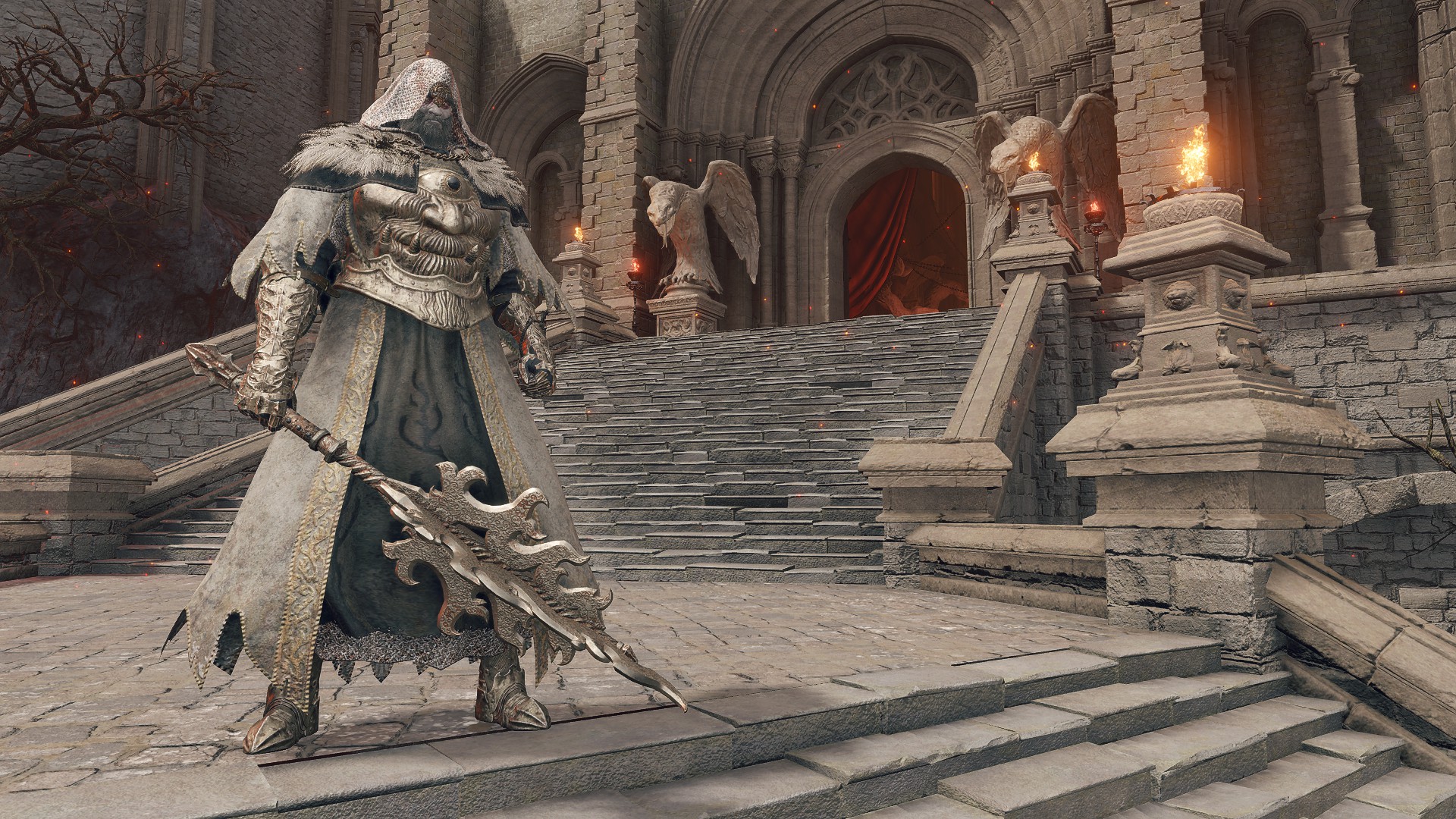
Robe sewn up from smooth skin. The skin fat remains, so it is soft and spongy. Apparel of the Godskin Nobles, who wore a seven-faced apron.
Enhance bellycraft prayers.
The nobles are the oldest apostles and said to harbor aspects which are inhuman within themselves. It even resembles the Crucible, origin of the Golden Tree.
Pecking Before Order
Now that the Gloam-Eyed Queen worked out the method for birthing her god-hunters and imbuing them with her power, the time came to execute. The first few apostles required godskin she harvested, maybe with help from the Blackflame Monks. To streamline the learning process, prayerbooks were compiled to teach black flame incantations — bound in godskin, of course. The former Fire Monks were sure to be overjoyed to learn how to invoke a different kind of fire arts, as were the burgeoning apostles. Once equipped and properly trained to join the fray, these fast-growing “children” brought that many more demigod bodies to work with. With every additional god slain, a new batch of skin was ready for the next apostle on the assembly line, scaling up the hunts exponentially over time. Soon, she would no longer need to conduct the field work herself. The emerging cult of devotees were self-sufficient in this regard. Meanwhile, she devoted her time and energy to the multiplying newborns.
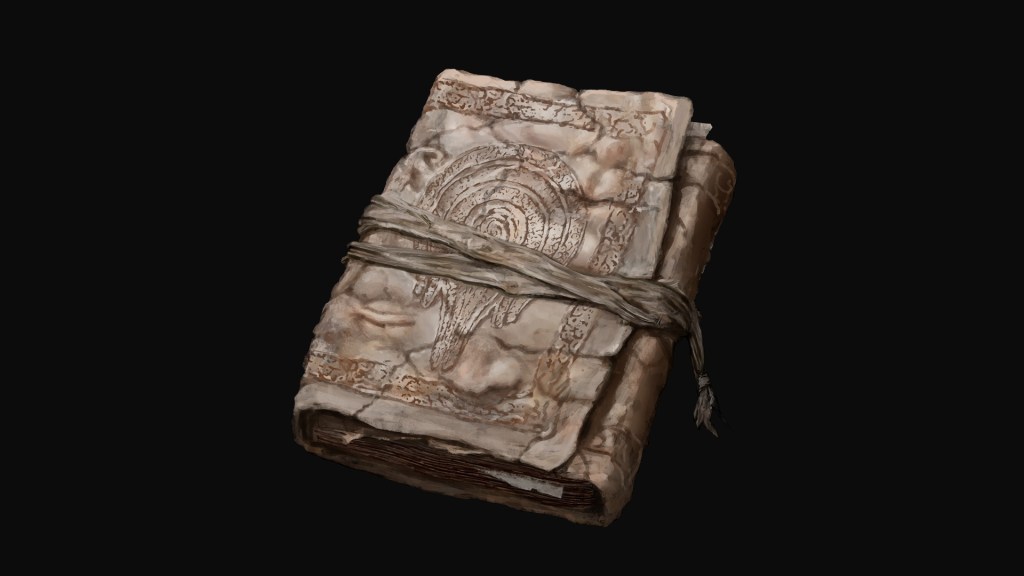
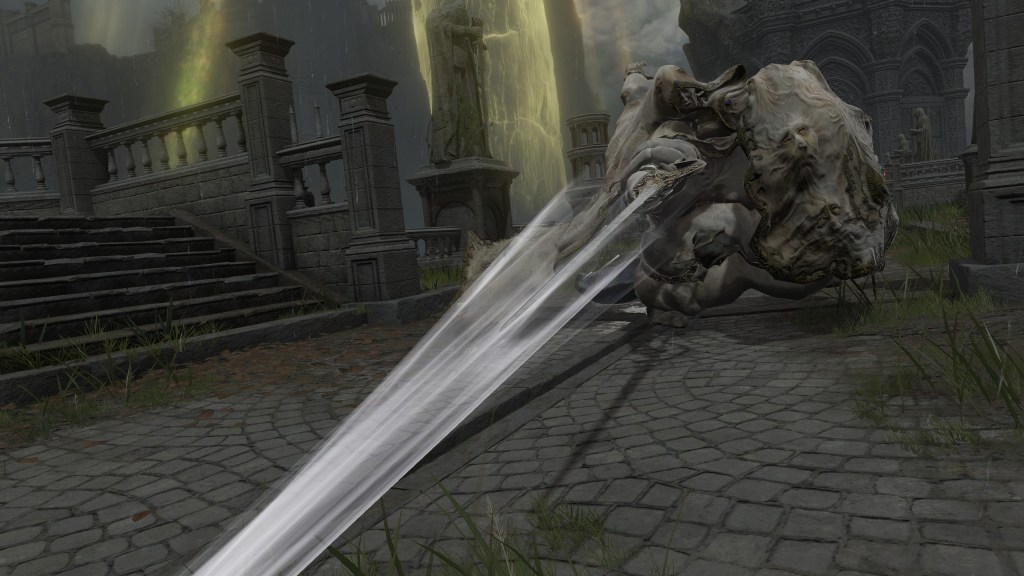
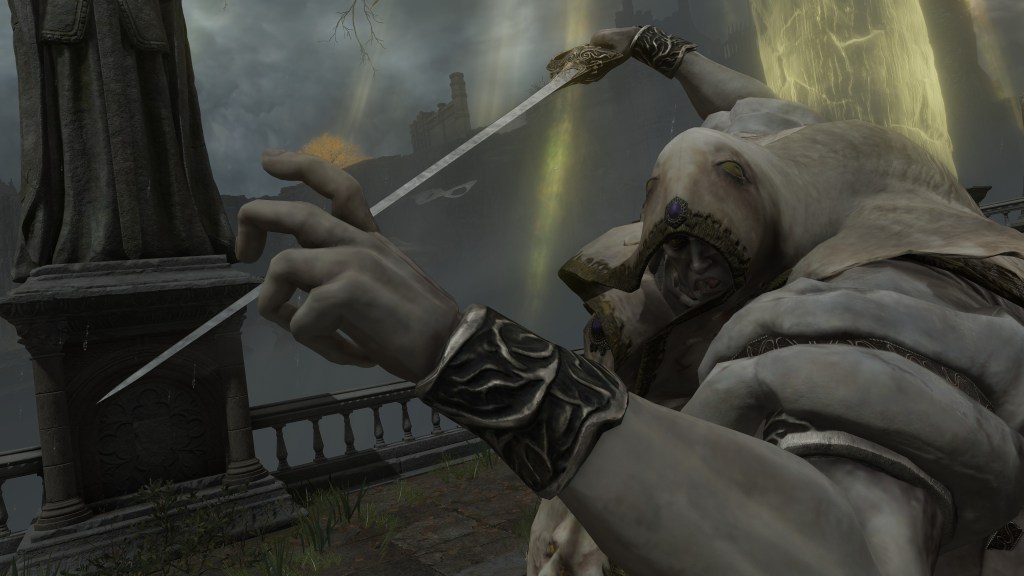
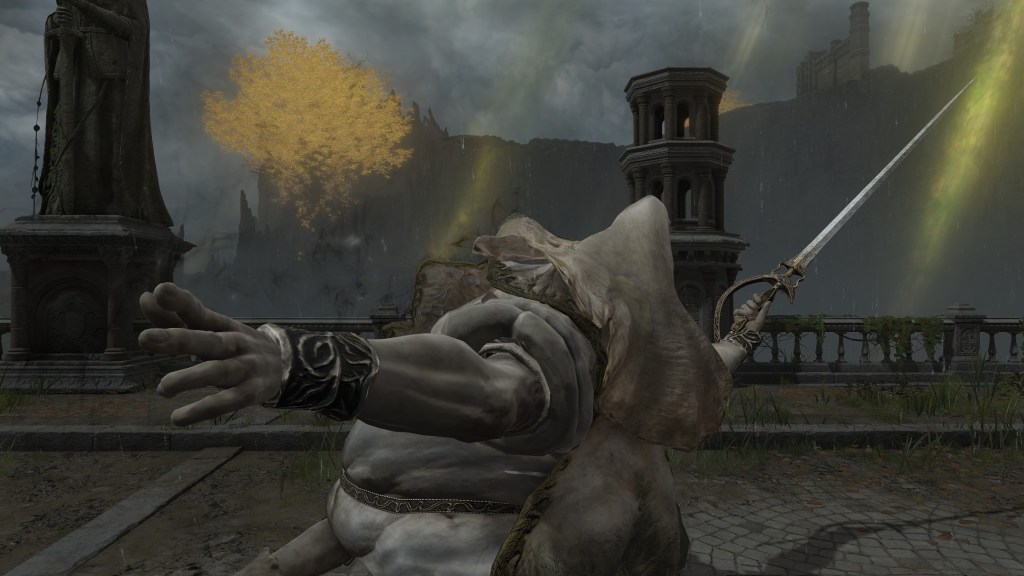
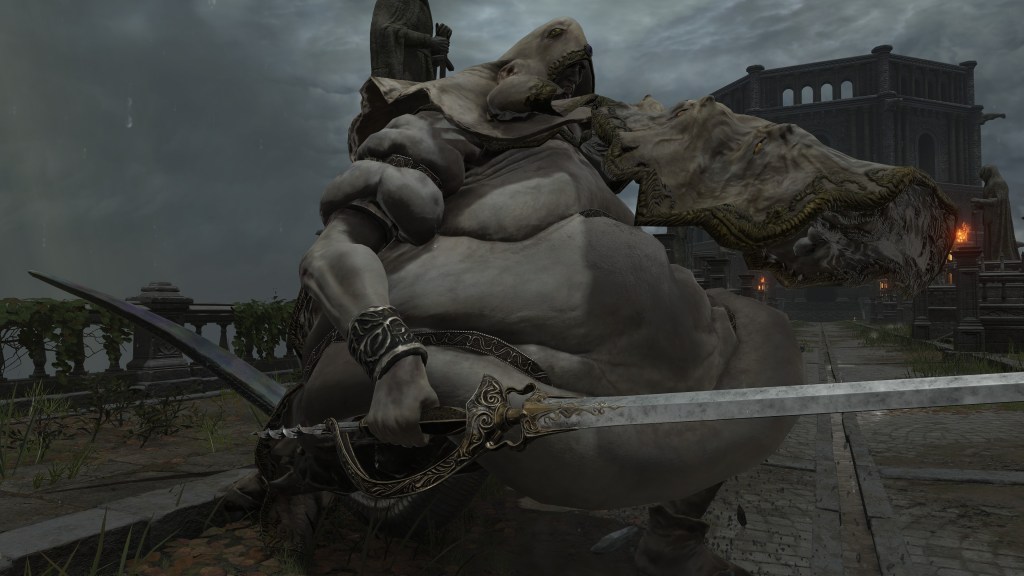
Naturally, apostles formed a hierarchy. The oldest styled themselves as nobles, trying everything to embody the stereotype. Their weapons became rapiers, displaying elegance and finesse befitting their class. Even the blades look like celadon, the enigmatic color of luxury in ancient Japan. Conversely, their silhouettes became corpulent, as if showcasing wealth and excess. And with those larger bellies, they unleash the black flame inside them like Noble Presence. Haragei literally translates to “bellycraft” (腹芸) referring to an abdominal performance — though it can also denote a subtle communication of psychology without words or actions as well as handling matters with gusto and force of personality instead of outright instruction. Basically, a noble’s “presence” is about how you comport yourself with charisma. Our betters don’t need to make a command; we rabble know when to leave from their superior sophistication. We see this “sophistication” in their excessive gesticulations to perform Black Flame Ritual, concern over every little detail capturing the subtle image of advancement. Power speaks for itself, as the saying goes.
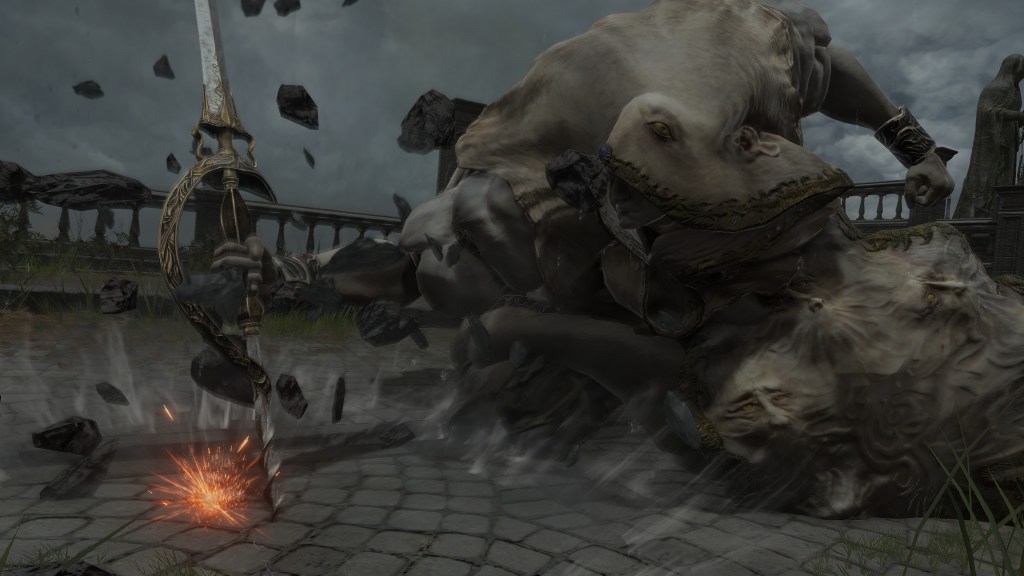
Putting presentation aside, the practicality does shine through in the bellycraft especially. Distending their bellies to unleash a literal craft was just as much proof of the nobles’ refinement, kishu (貴種) emphasizing how they were a different breed thanks to black flame. Certainly, their corpulence might be exaggerated by the spongy fat left in the godskin they wear, but those layers folds can be expanded. The noble seems to use their latent flame to inflate the underclothes like an hot air balloon, allowing them to briefly suspend in the air before slamming back down or wildly roll around like a ball kicked down a mountain. Put simply, the most inflated thing is their ego as a consequence of being the earliest adopters of the Gloam-Eyed Queen’s apostolic ministry. Everything must highlight that they possess the strongest of the black flame, the best of the godskin, and the pinnacle of the hunting experience.
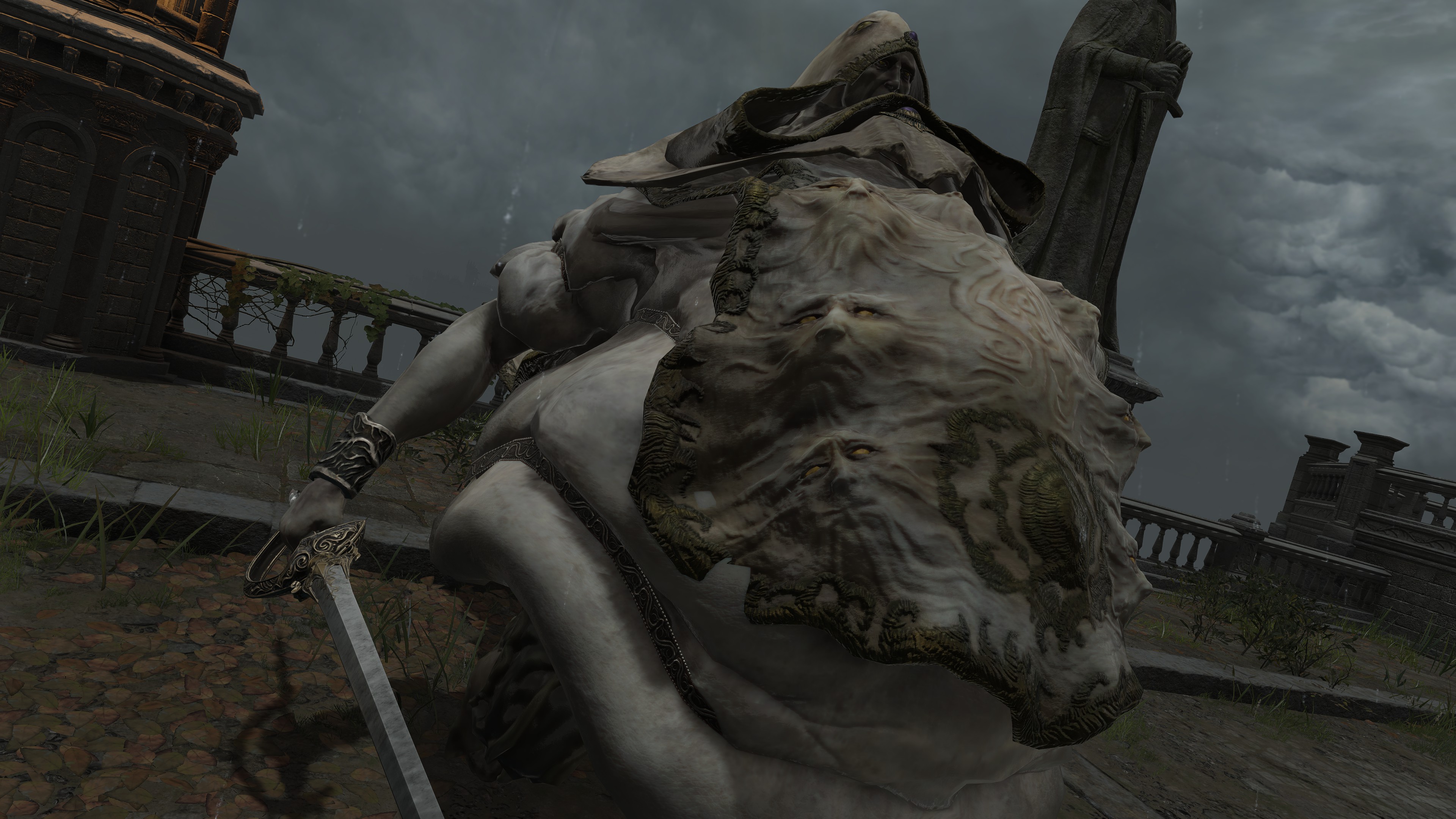
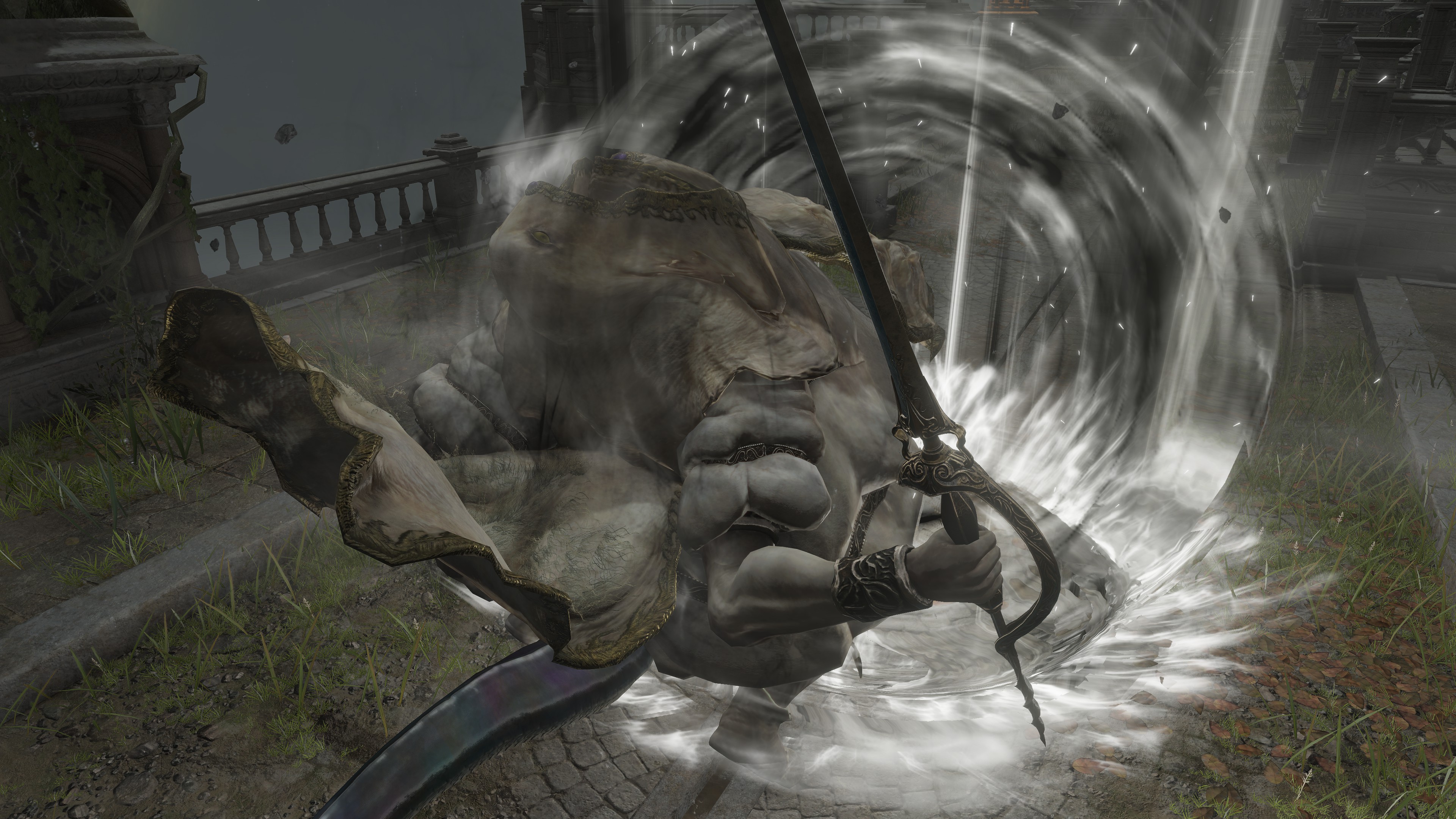
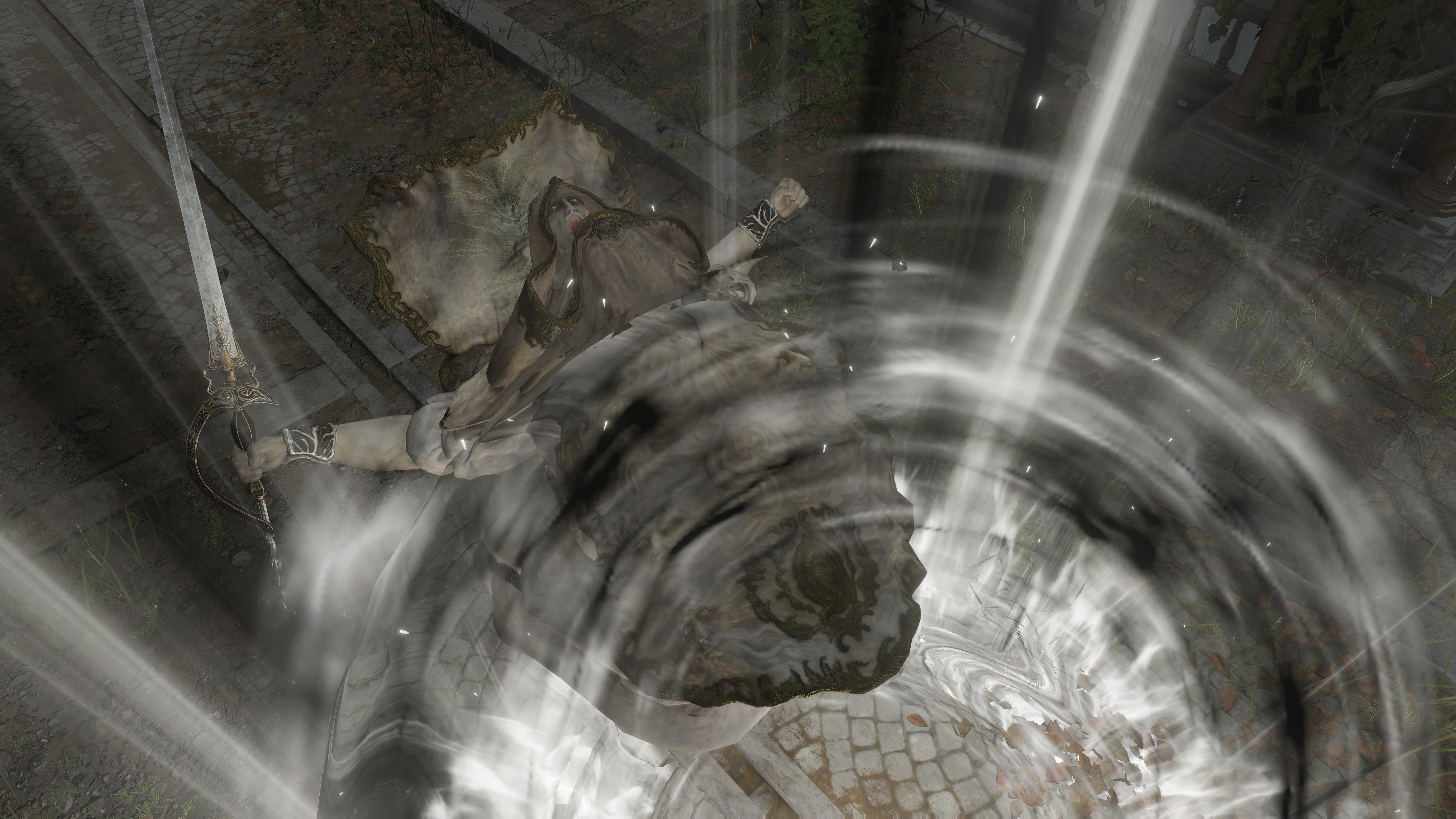
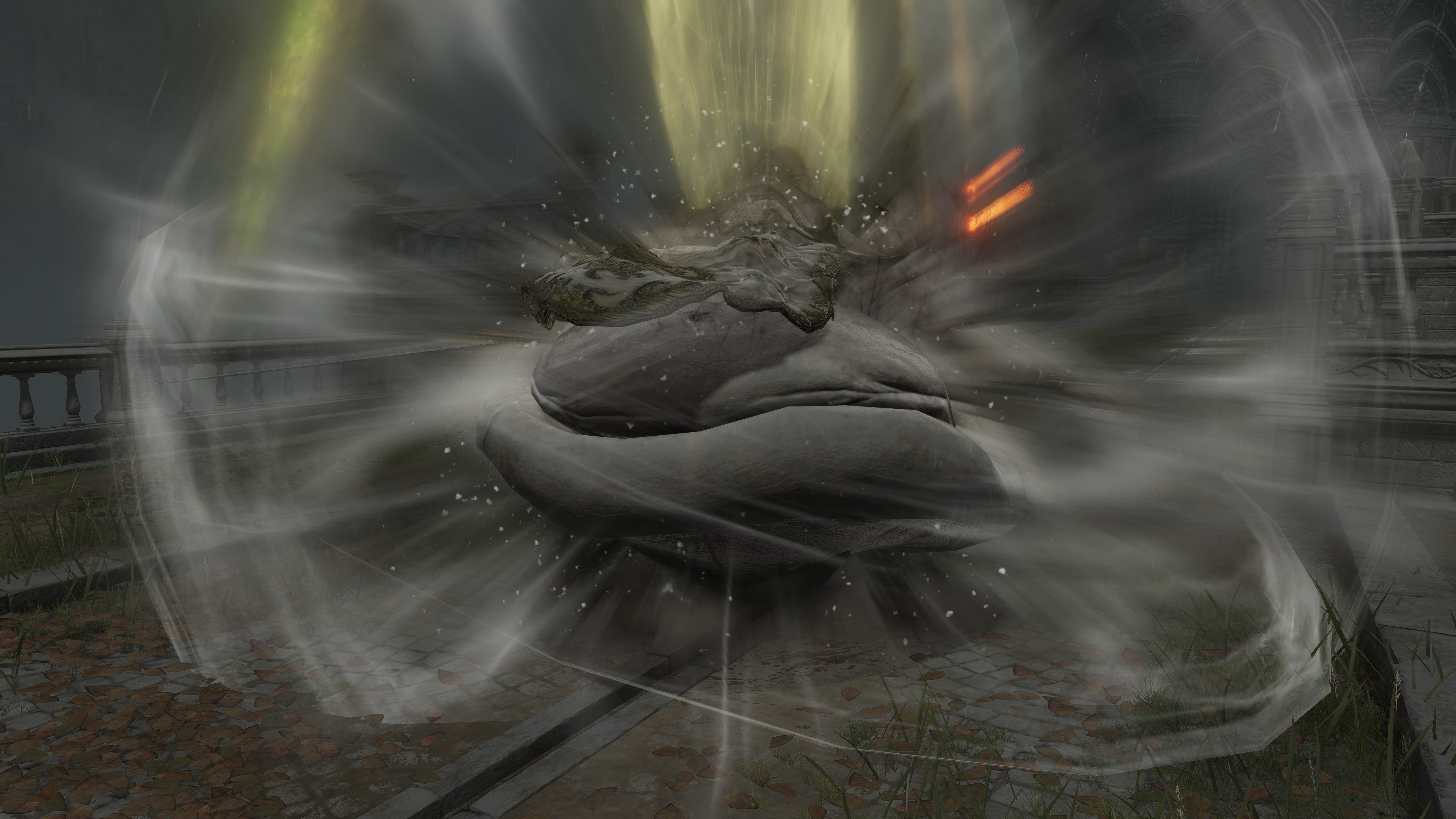
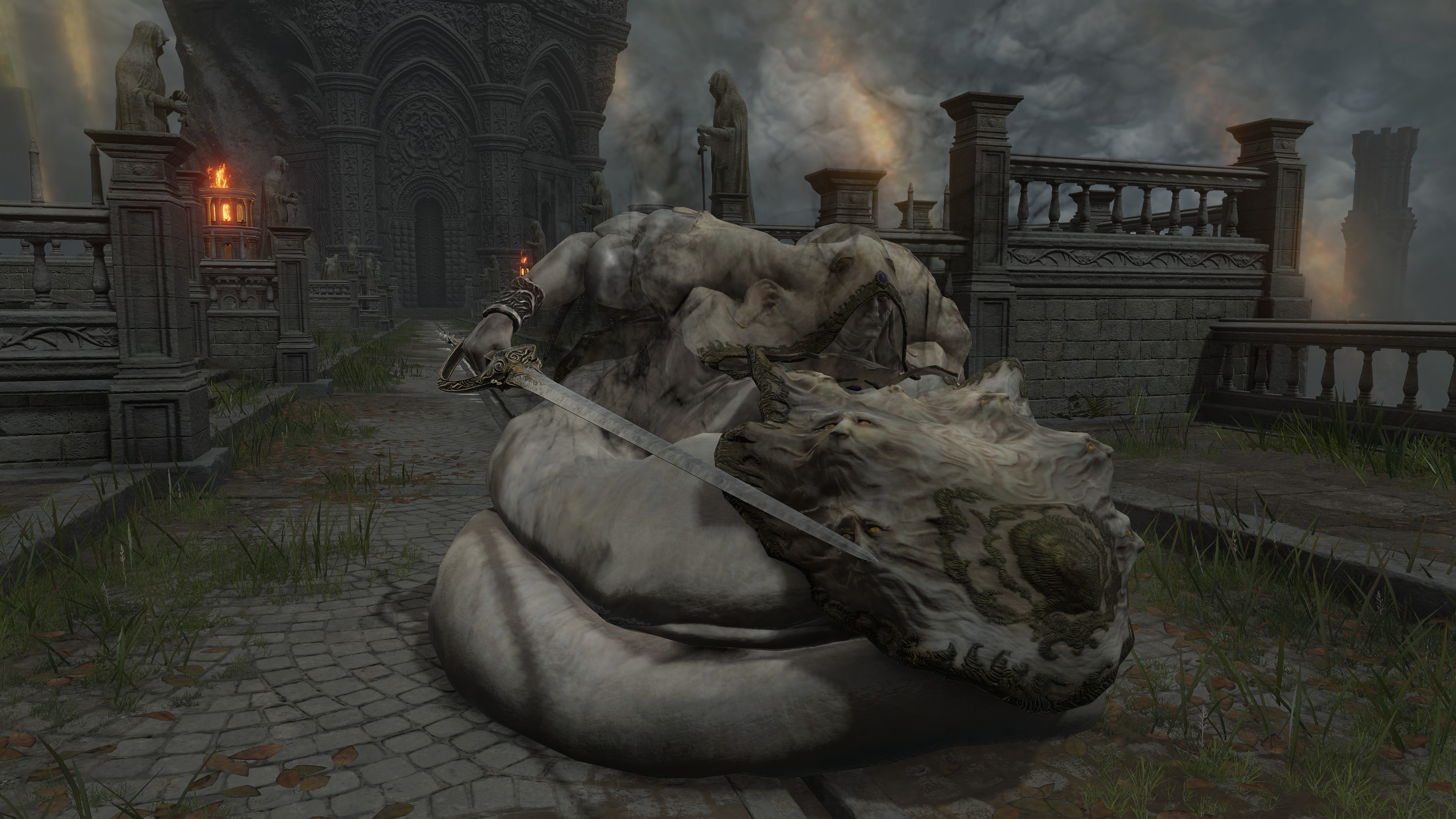
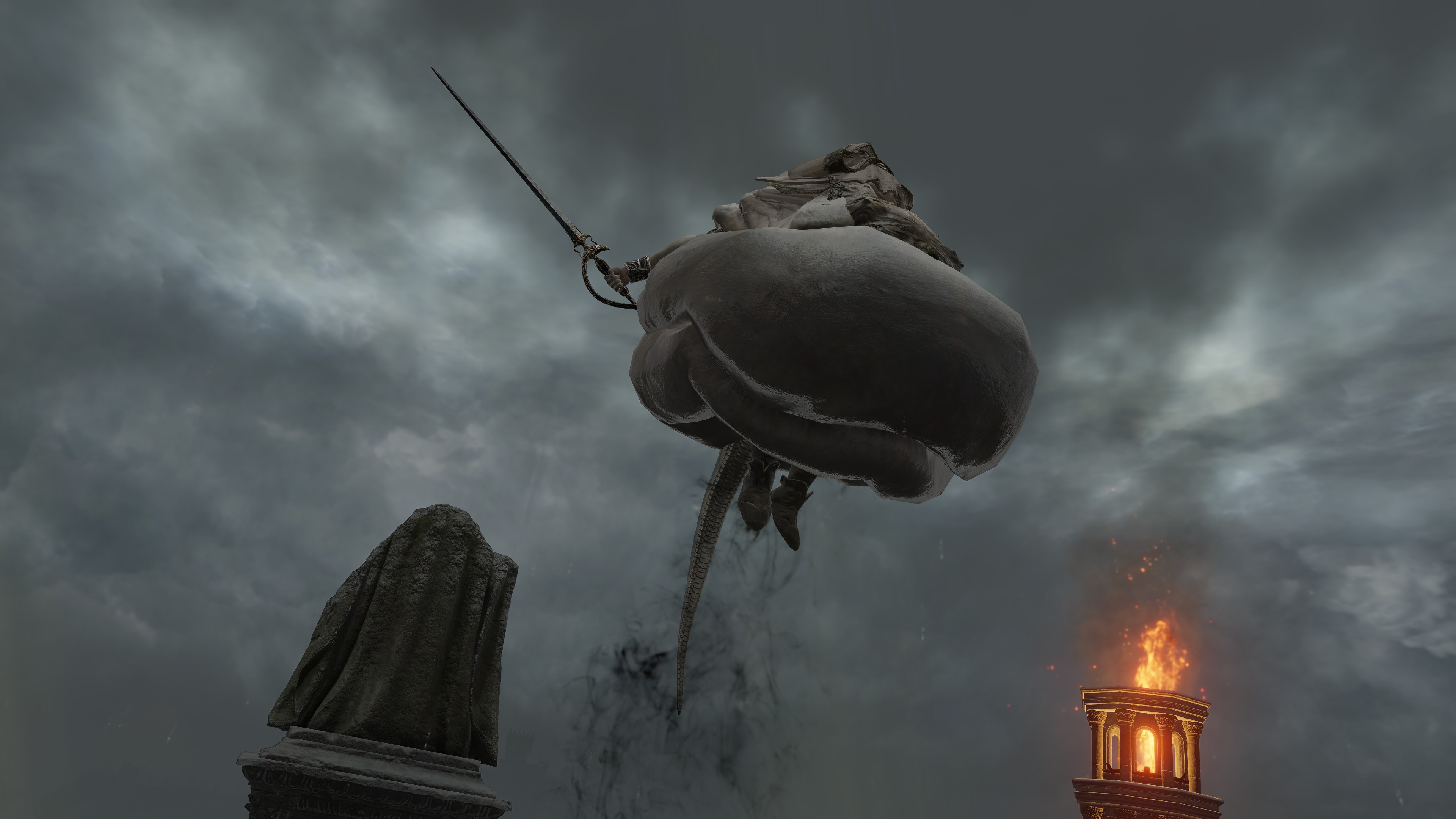
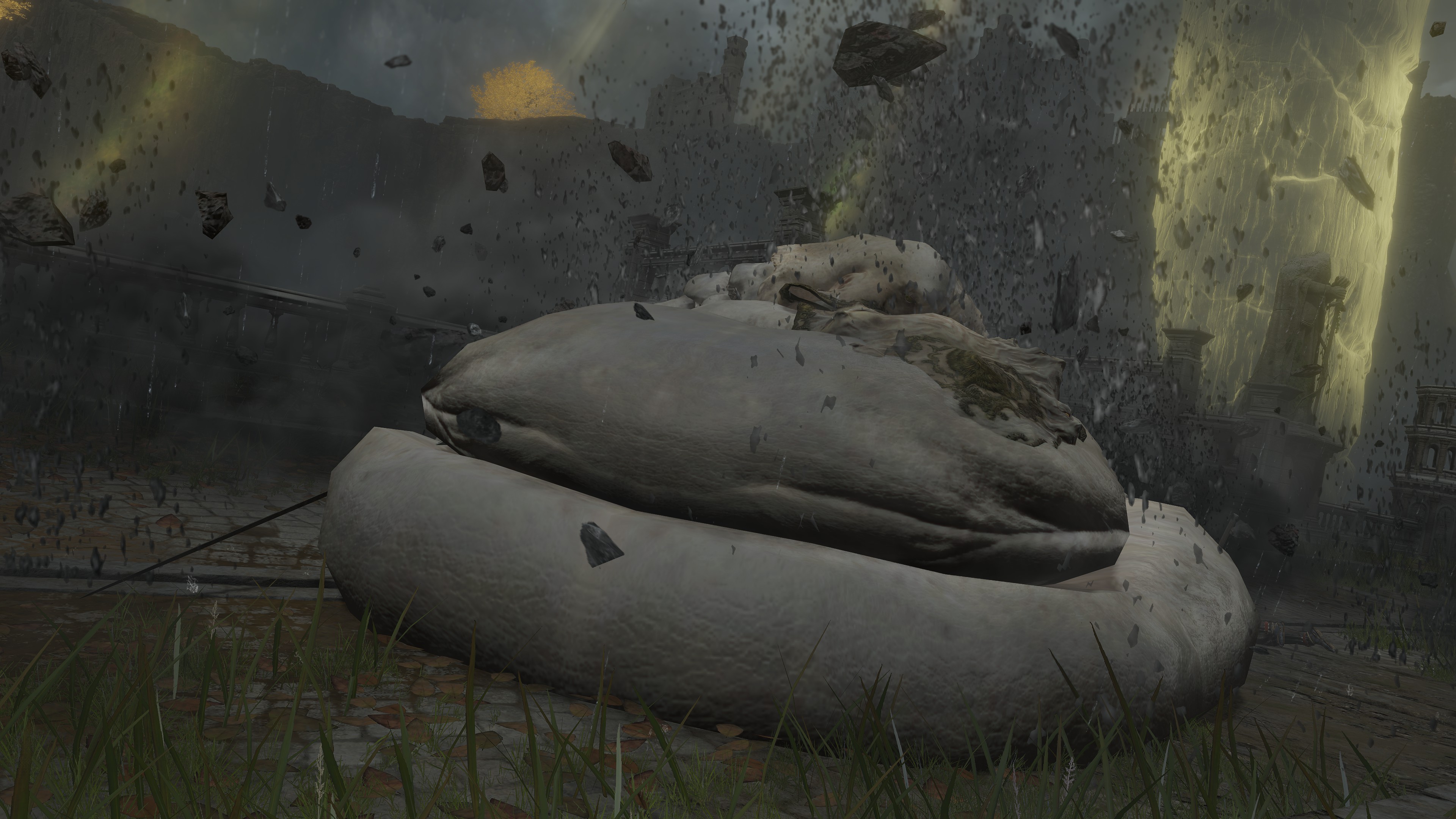
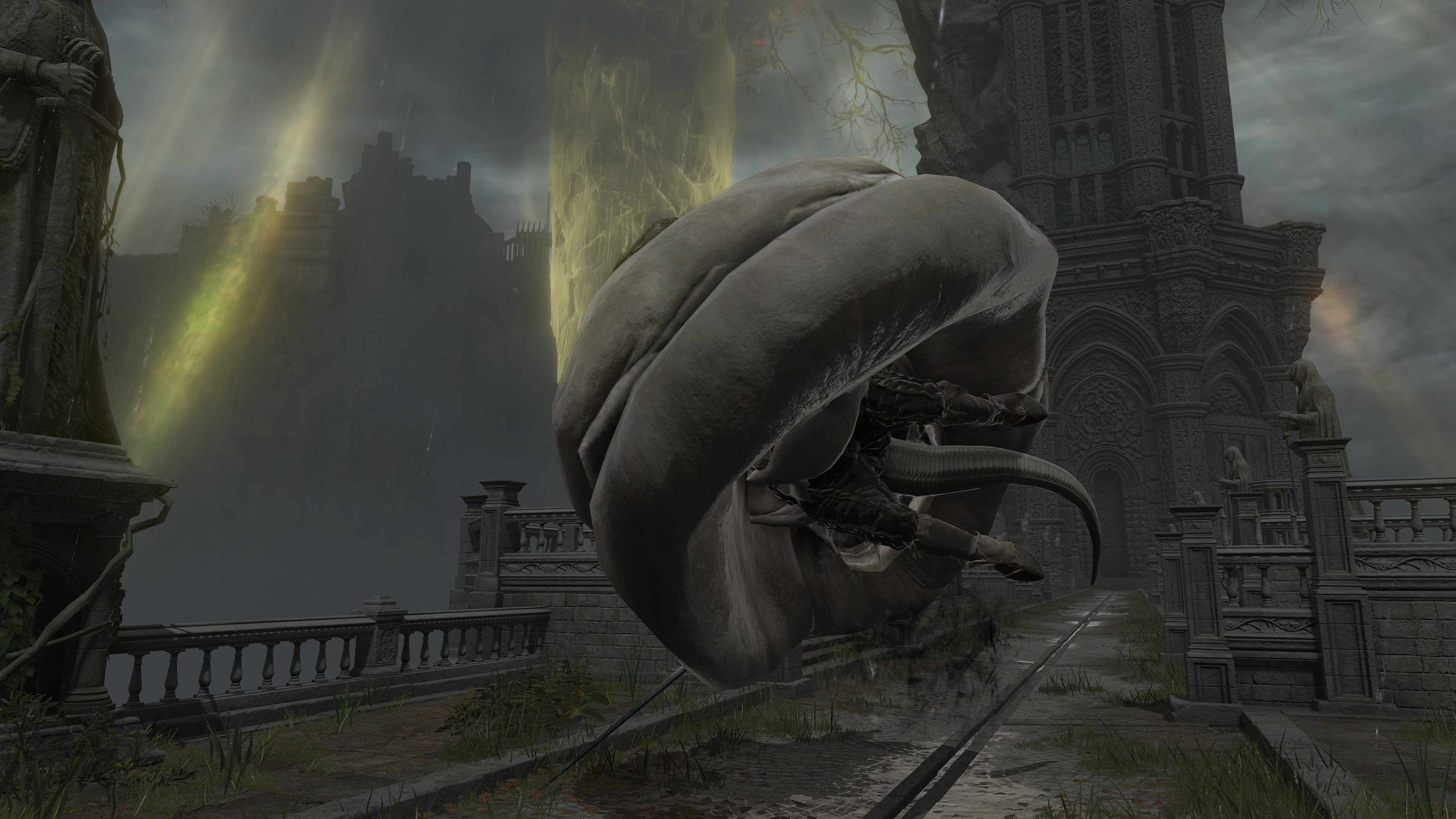
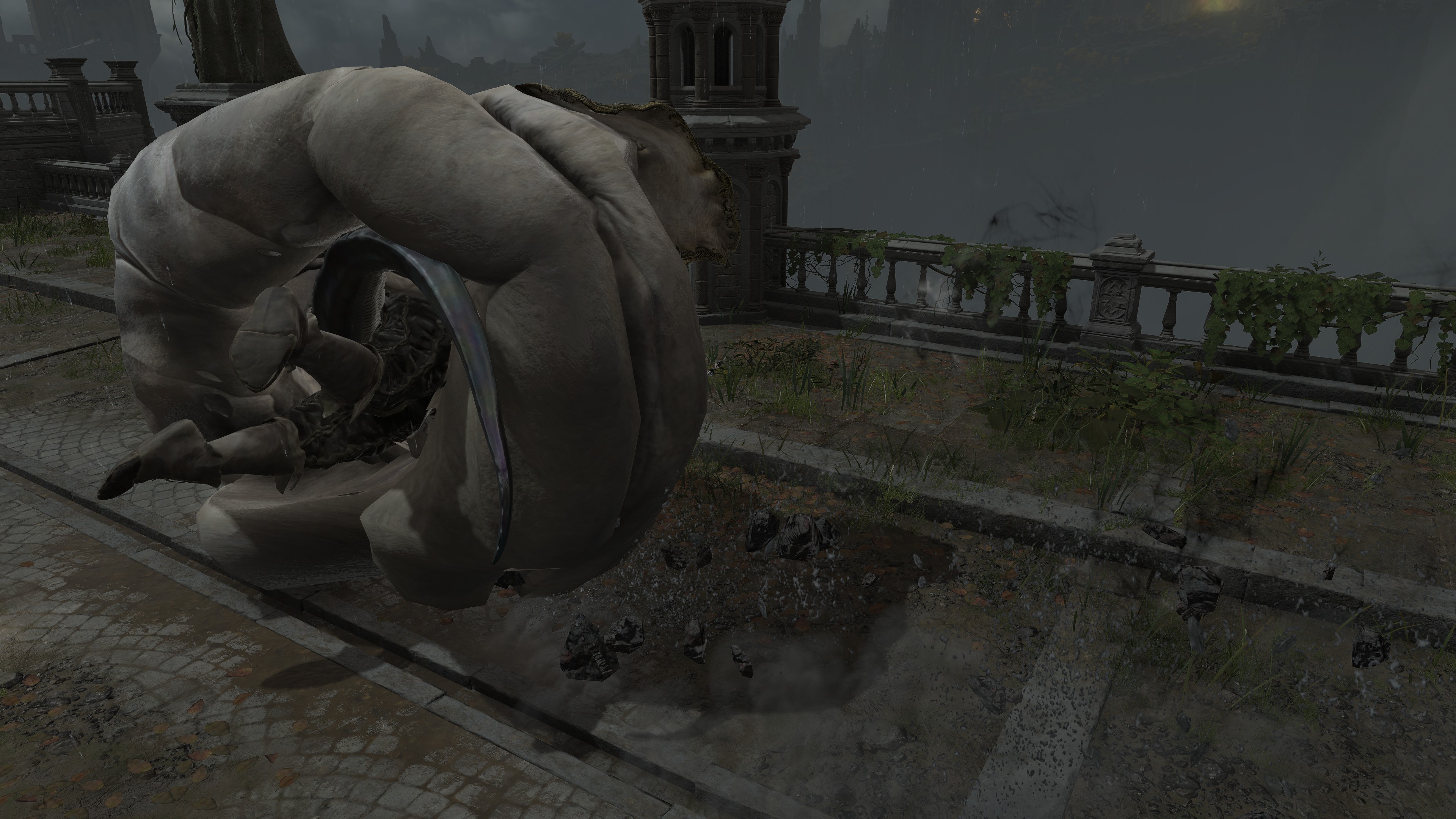
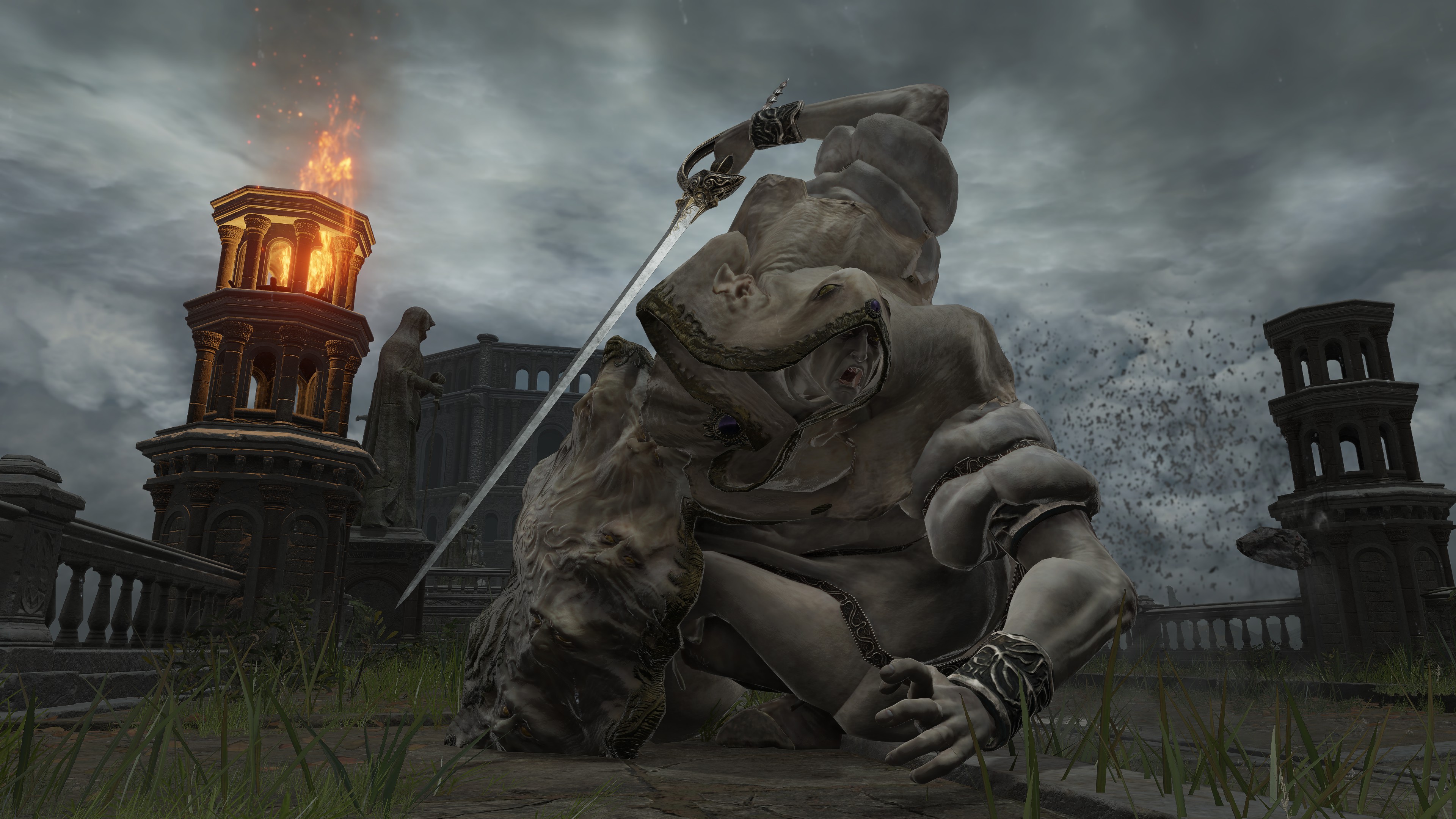
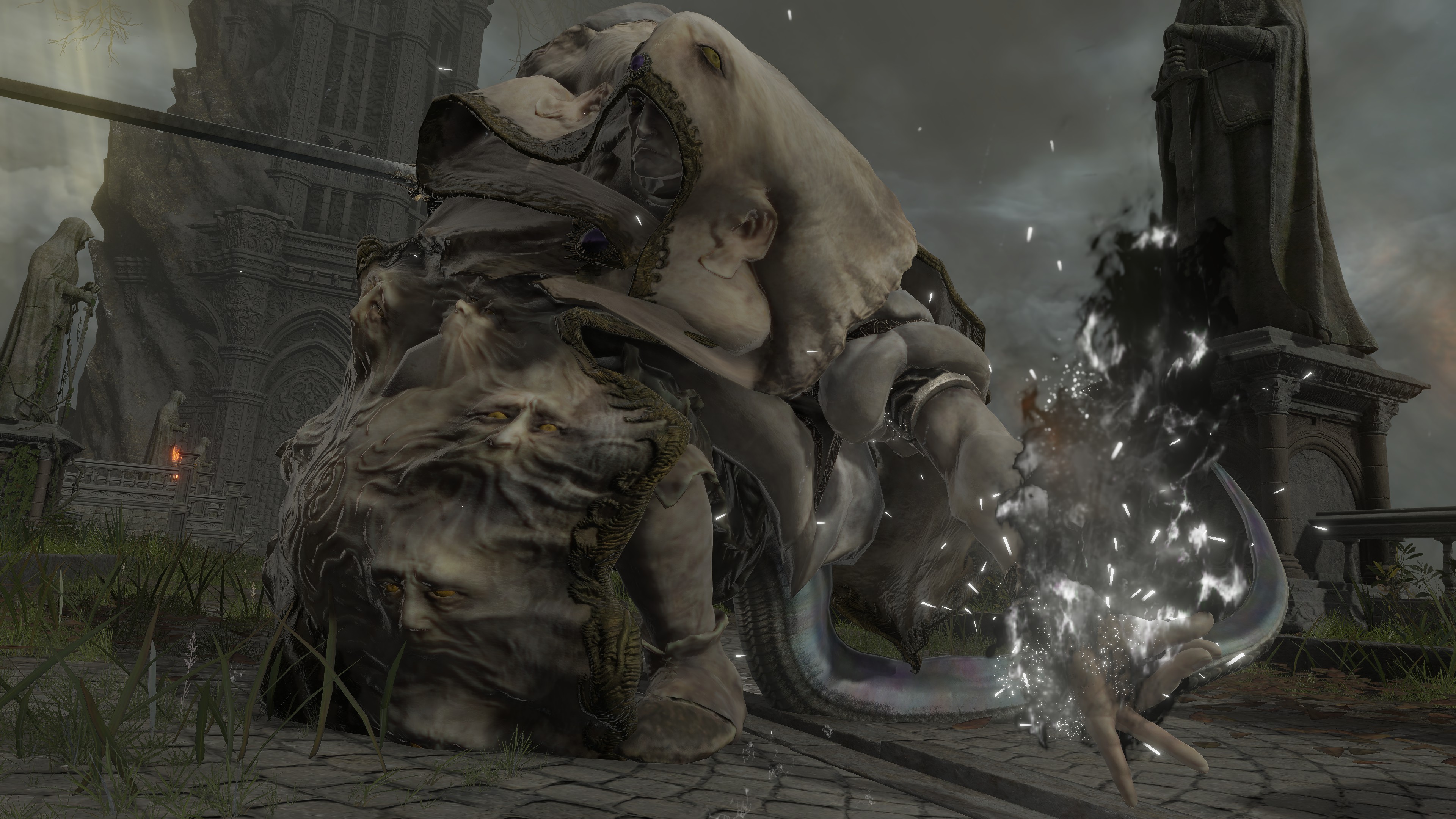
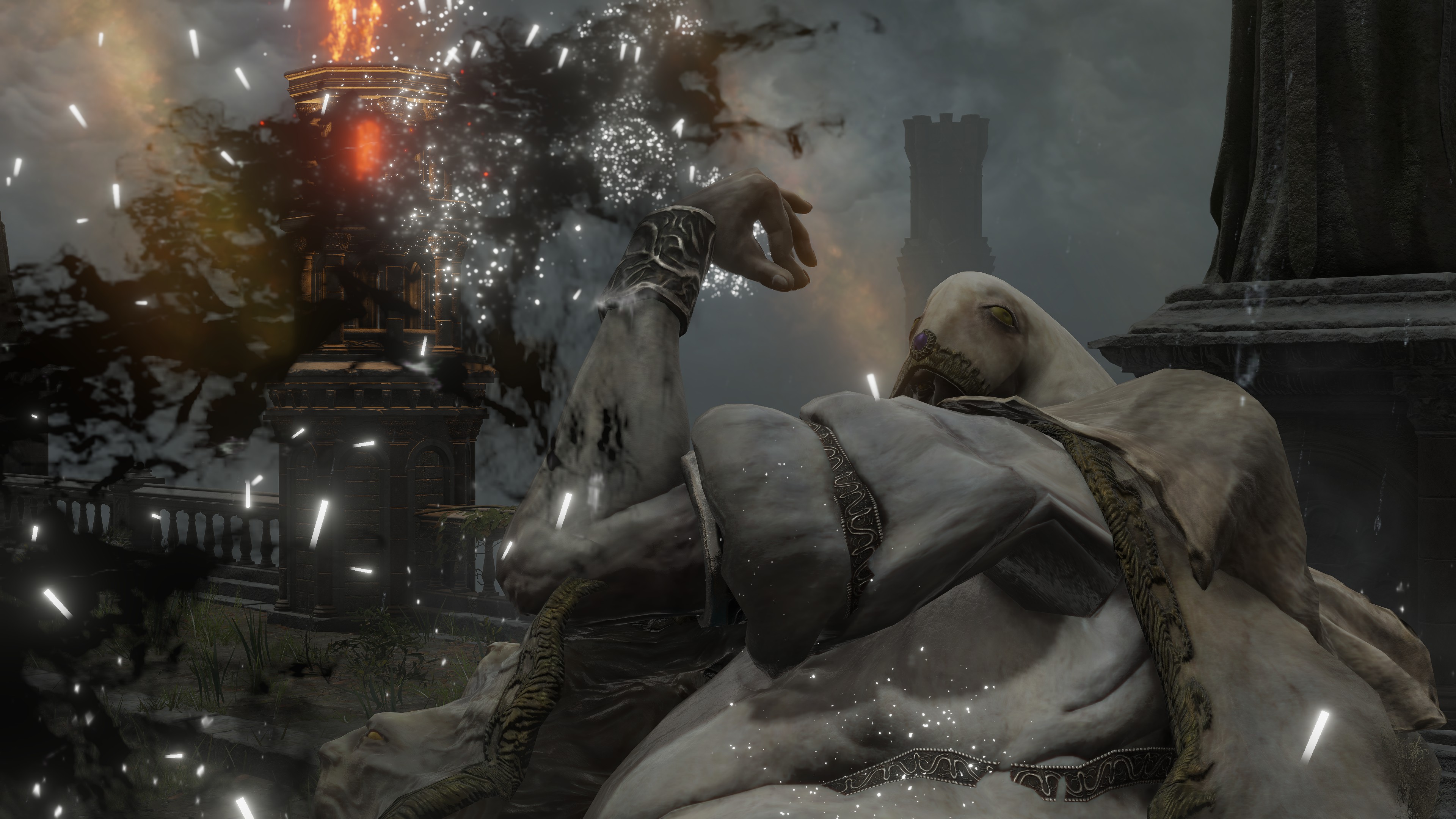
But every nobleman needs his commoner to stand above. After a certain point, subsequent apostles weren’t afforded the same title and privilege. They are left to remain far more spindly, though arguably just as skilled in combat as the noble hunters. No matter their success in the hunt, however, the common apostles weren’t provided the best quality godskin, the gold in the eyes lacking that same radiance as their betters. They couldn’t retain the fat to appear more well-off, either. And because of their rank, they were forced to do the “dirty” jobs. Wielding their crude Peelers, with a hook for carving skin on one end and a corkscrew blade for extracting eyes on the other, the Apostles were the ones to strip the bodies and use their plethora of black flame skills to tan it to supple quality. The Nobles, meanwhile, only used their rapiers as Stitchers for sewing together the material and embroidering the designs, their black flame rituals infusing the last bit of power into every new cloth or holy robe.
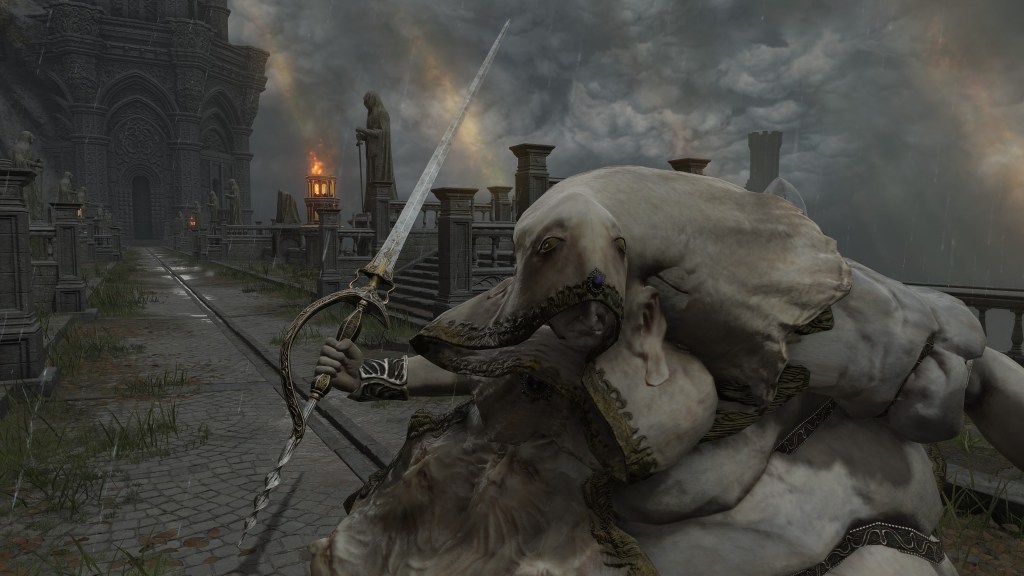
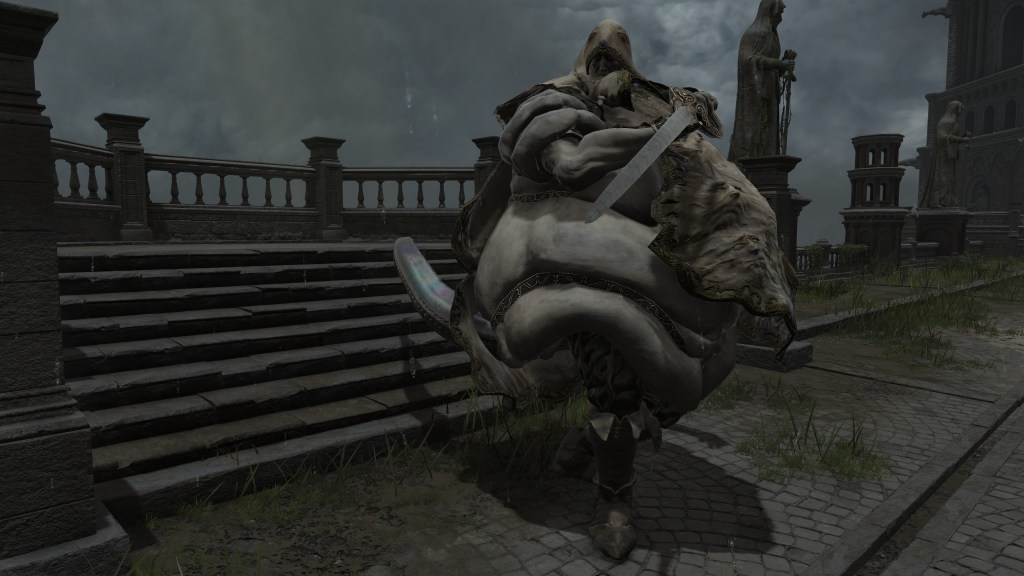
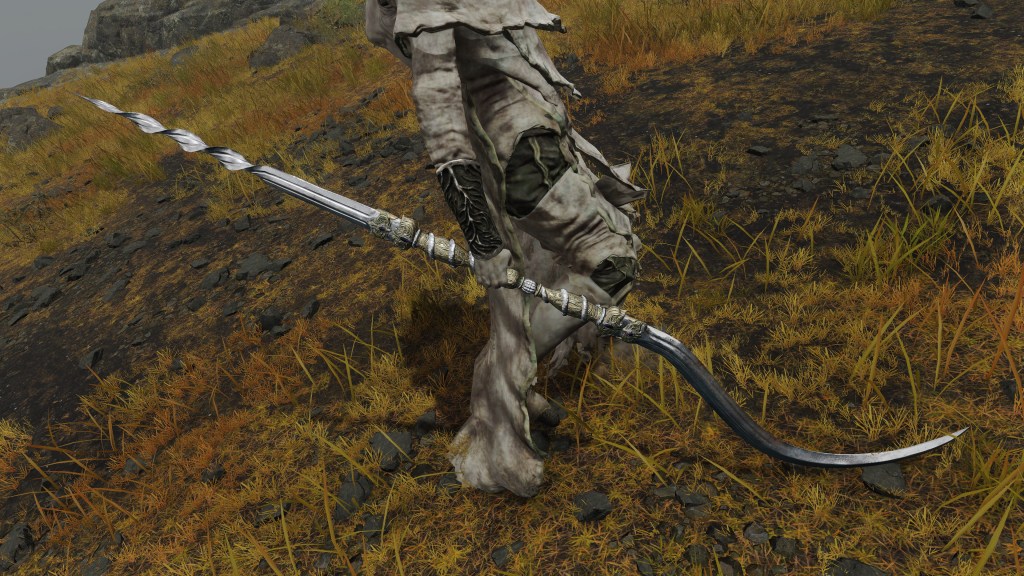
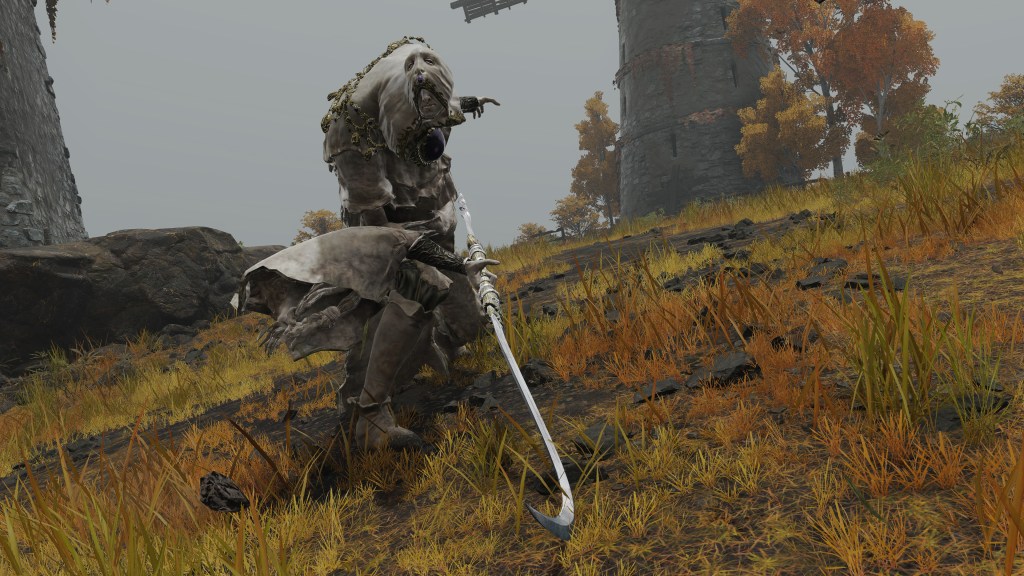
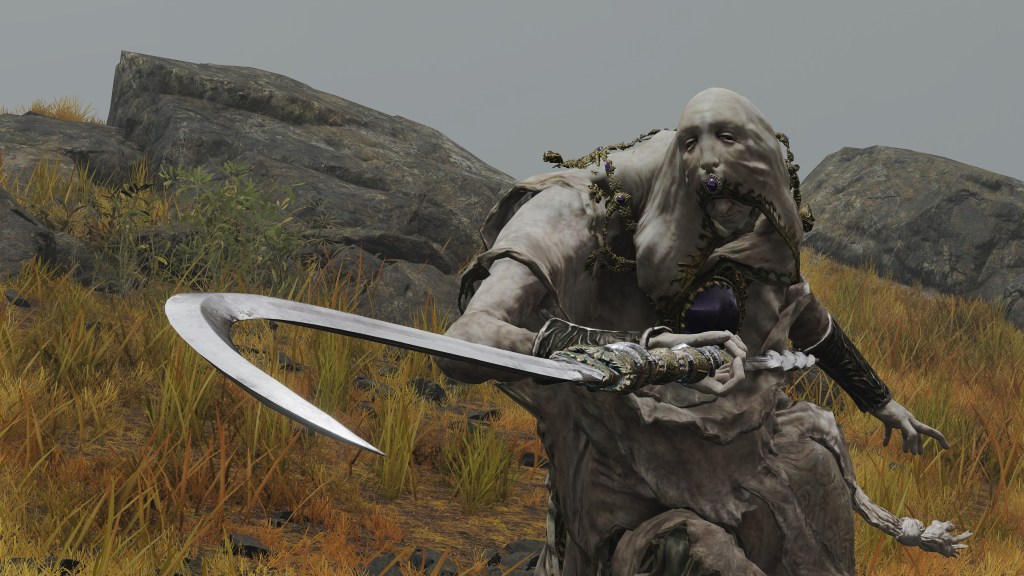
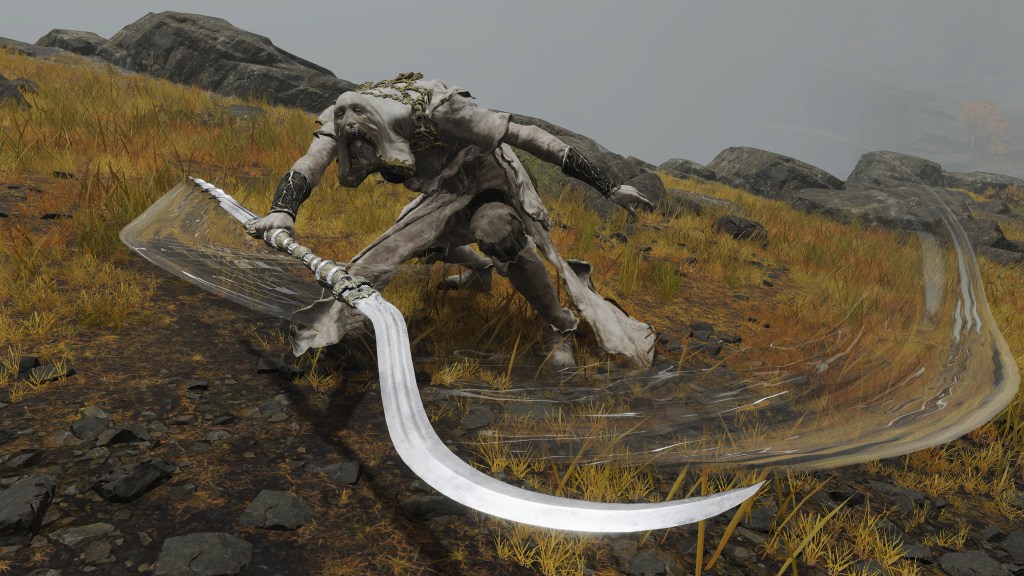
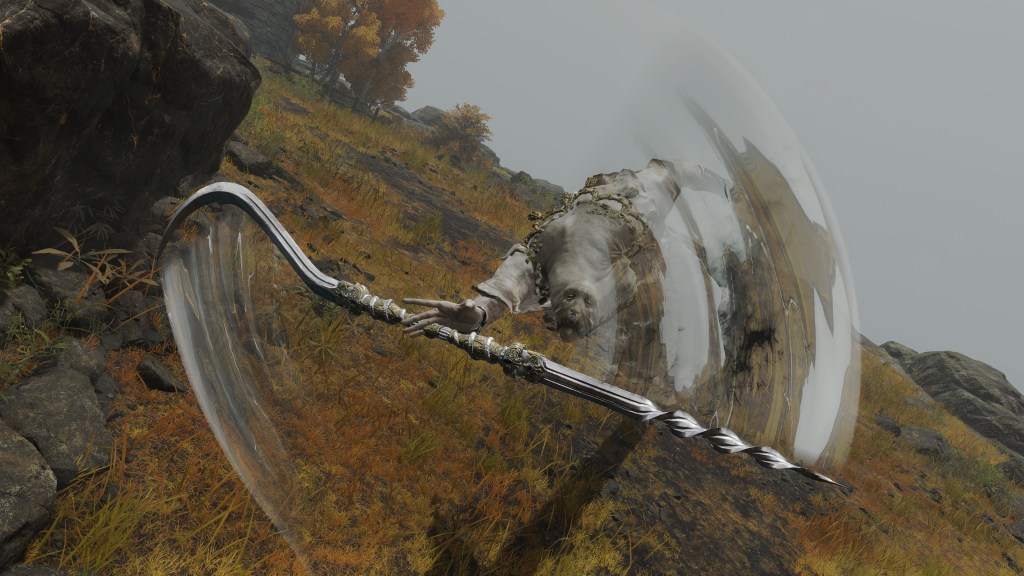
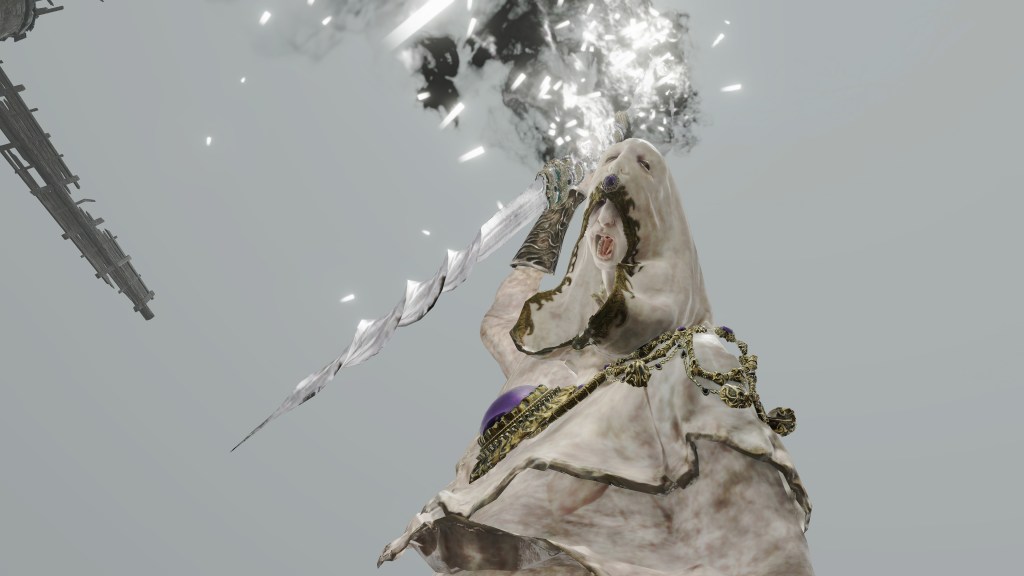
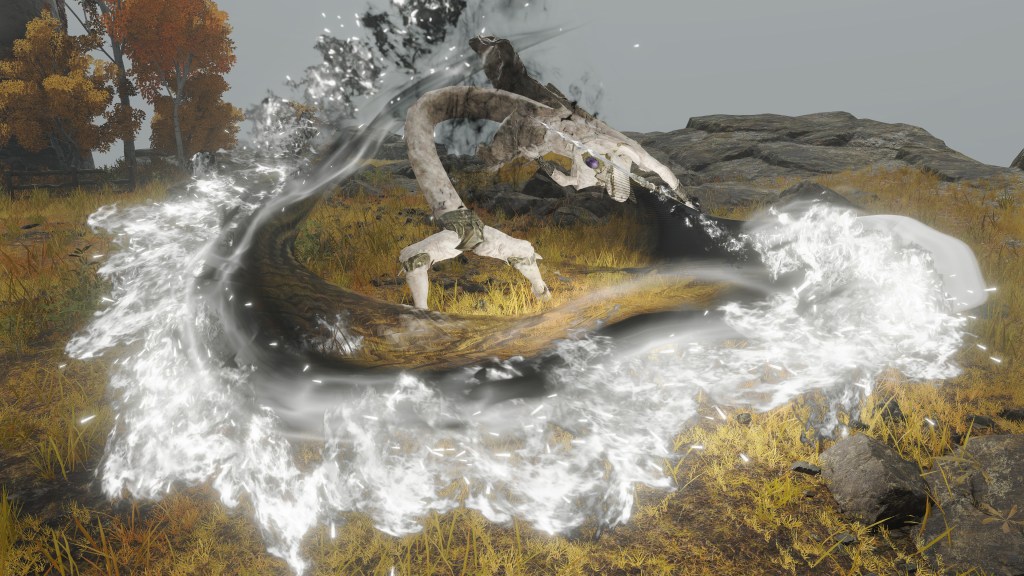
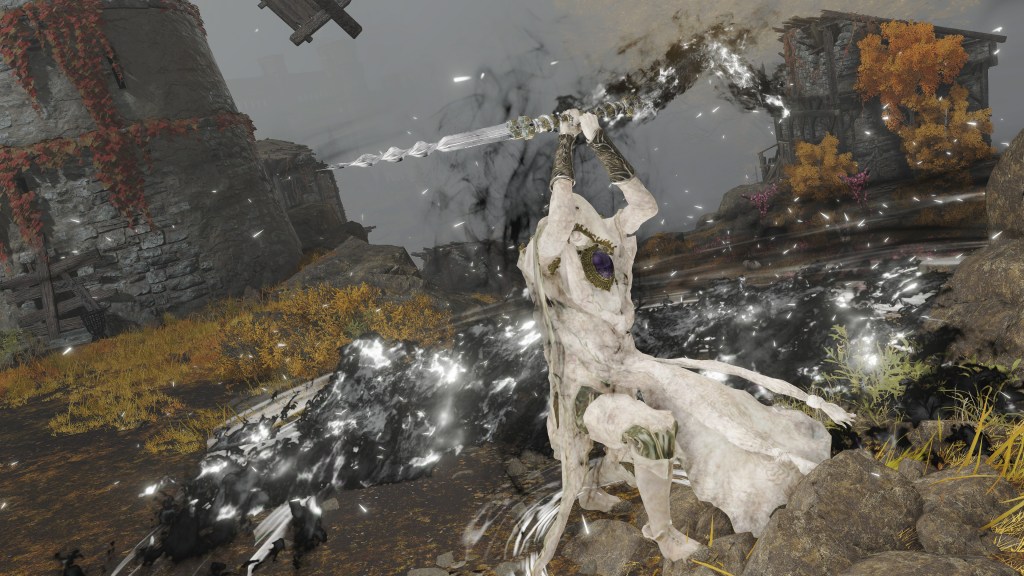
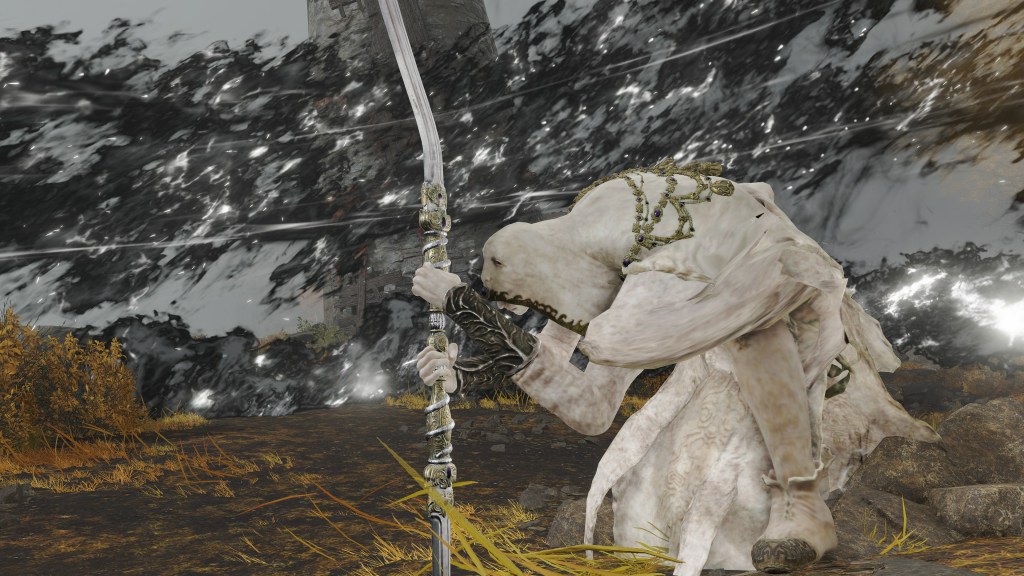
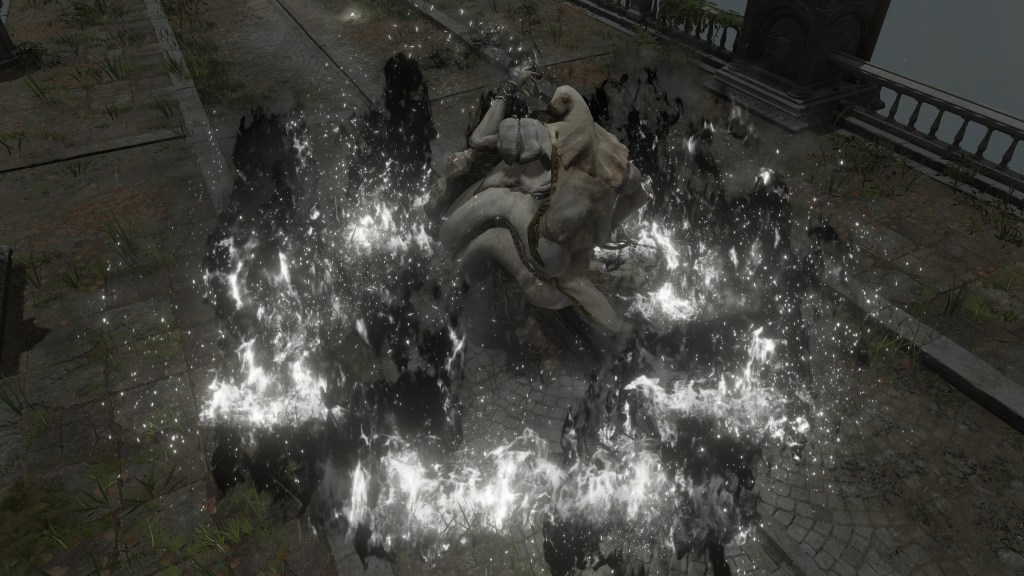
This was all stratification by ageism, but everyone needed a defined role in this robust operation. One almost wonders how supply kept up with demand. We do see the god-hunters use black flame to teleport into an area, so they had at least limited infiltration abilities to catch prey off-guard. But that ignores the larger reality of the hunts’ circumstance. The fact that so much fat could be left in the godskin speaks volumes about the demigods in this era. These were not the valiant heroes seen in the Shattering. The princes and princesses got fat on the abundance of the age. They never knew strife, growing up in peacetime. They had hardened veterans of war protecting their little bubble on the highlands, never needing to lift so much as a dagger in their defense. They could enjoy decadence; travel the countryside, visit neighboring countries, sample exotic cuisine, dance the night away. And when they stepped out of the safety of those castles, they were all pigs to the slaughter.
Part of the blame for this decadence falls on Marika. Why was she bearing so many demigods to begin with? While Godfrey was sure to appreciate a physical outlet during this era of peacetime, what drove the actual god to want an entire clan? Perhaps it was guilt over what happened to her village. With the blood of the shamans on her hands, Marika may have felt compelled to compensate by repopulating the Numen lineage. For those sacrificed for her ascension, the queen won’t let her tribe’s bloodline end with her. The golden clansmen filled the hole in her guilt-ridden heart. And as often comes with guilt, the parent spoils the child. She indulged her demigods’ every want, never to concern themselves with all those trivialities. More than likely, she thought that they would never have to see a day of conflict. If so, that naïve outlook shattered when her children started disappearing.
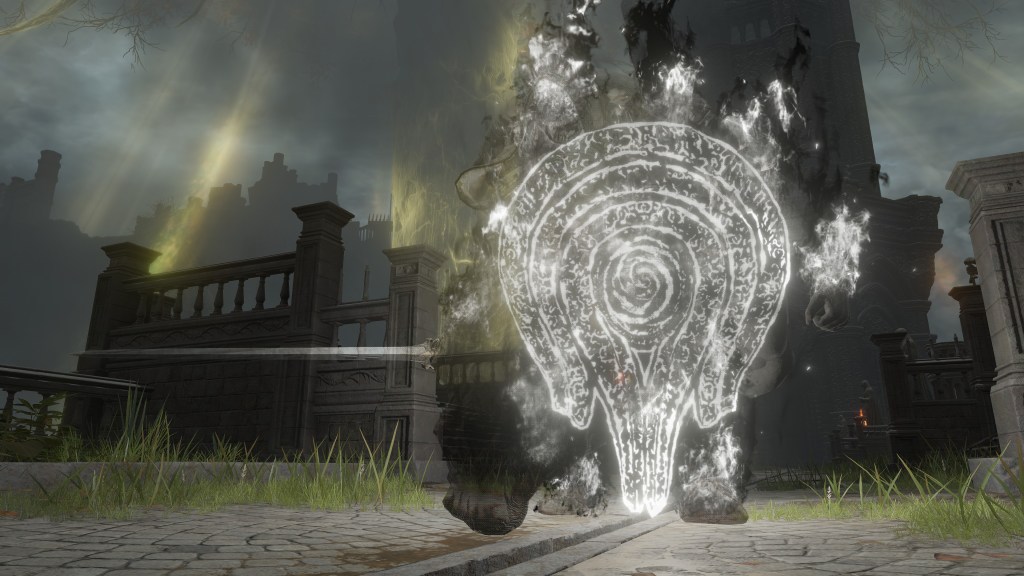
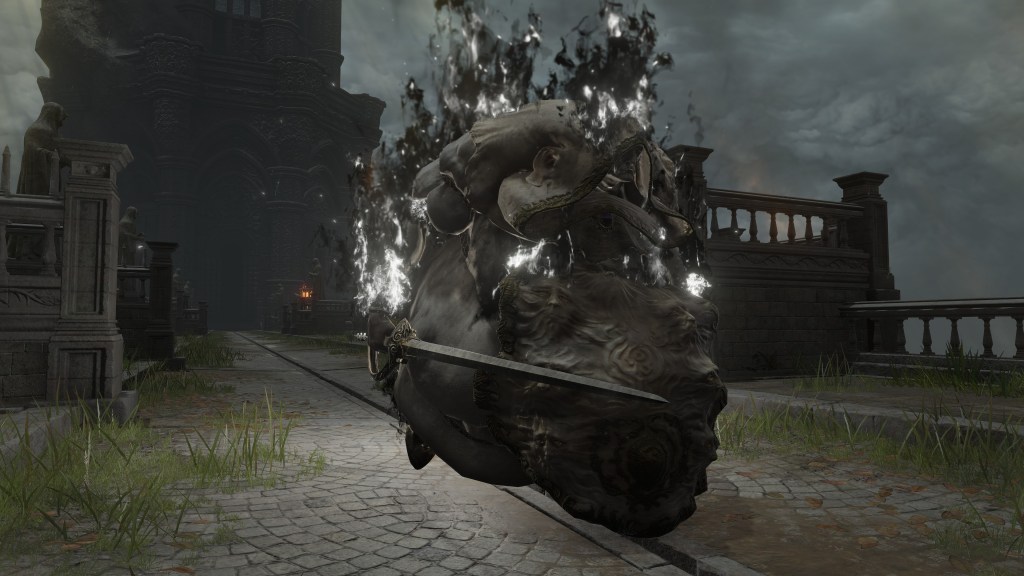
But even accounting for childish optimism, there are many questions to be had about the rebellion getting off the ground. How were the god-hunters able to slay so many seemingly unimpeded for so long? More fundamentally, who was the Gloam-Eyed Queen to accomplish all this right under the Erdtree kingdom’s nose? Slip into Forbidden Lands and study with the Fire Monks? Have contact with Gelmir’s serpent god and plot insurrection? Acquire Destined Death from the god who removed it? All this by an Empyrean chosen to replace Marika, and Marika did nothing? Did no Fingers think to tell the Eternal Queen their choice? Unlikely. Subsequent Empyreans — Ranni, Miquella, and Malenia — are all seemingly public knowledge, in no small part because they are Marika’s children. Clearly, the Fingers have never been afraid to select individuals close to the god. And if the pattern wasn’t already obvious, the only sensible scenario is that the Gloam-Eyed Queen was someone so close, Marika never thought that the Empyrean would threaten her. In other words, the god hunts were an inside job.
The Lost Piece
To her recollection, Melina’s story began when she was born at the base of the Erdtree, in Leyndell. There, she received a mission from her mother, though she has somehow forgotten all the details. This causes her much confusion, since she continues to live with a hideously burned body as some kind of spirit — appearing like physical flesh, but apparating in and out of the earthly realm at will, like Torrent. She is definitely no ordinary person and so naturally seeks answers, contracting our help as her fighting companion. Once we reach Leyndell, she departs to confirm her mission directly from her mother, who is supposedly inside the Erdtree. After defeating Morgott at the Elden Throne, potentially with her aid as a summon, she returns to offer another shared journey, having learned that her mission was apparently to help the Tarnished on their mission to become Elden Lord. The only “mother” inside the Erdtree is Marika, so Melina must either be the Eternal Queen’s creation or her genuine daughter. And upon closer inspection, it is clear that she is one of the demigods.
… The Golden Tree is already close. Just a little more. Until that base I wished for in my contract with you… How nostalgic. I was born at the Golden Tree’s base. There, I received a mission from my mother… But I have lost it all… I must confirm it. The reason I continue to live even with a hideously burned spirit body.
… My story?… I am searching. For my mission that I should’ve received from my mother at the Golden Tree once. For the reason I continue to live even with a hideously burned spirit body… I have wanted to apologize to you also. While I said I’d become a substitute for a great Finger Priestess, I can’t guide you. For I am no Priestess, and… I have lost my mission.
… Thank you. You brought me to the Golden Tree’s base. Here, I will also move freely… So, our contract ends with this. I am heading to confirm my mission… Farewell.
During the battle with Morgott, Melina conjures two incantations with the Crucible sigil. These consist of a golden version of the Miranda flowers’ rain of light as well as a larger version of the Minor Erdtree spell. The latter’s only other known user is Marika, per its description, so the spirit was either trained by her mother or grew up in the Age of Plenty watching her. Melina furthermore fights with the Blade of Calling, the dagger given to her before departing on her mission. As its description reveals, it retains her power, golden flames which she deftly wields in battle. This unique ability seems to coincide with a “vision” of flame, which Enia states is needed to kindle the Flame of Ruin as a sacrificial offering just as Melina does. The spirit even refers to herself a “flame” we have been walking with. She knows that she harbors fire which can ignite a blaze to burn the Erdtree, as did the mother who mandated this as part of her mission. Melina always had the potential to be kindling, and her case isn’t unique.
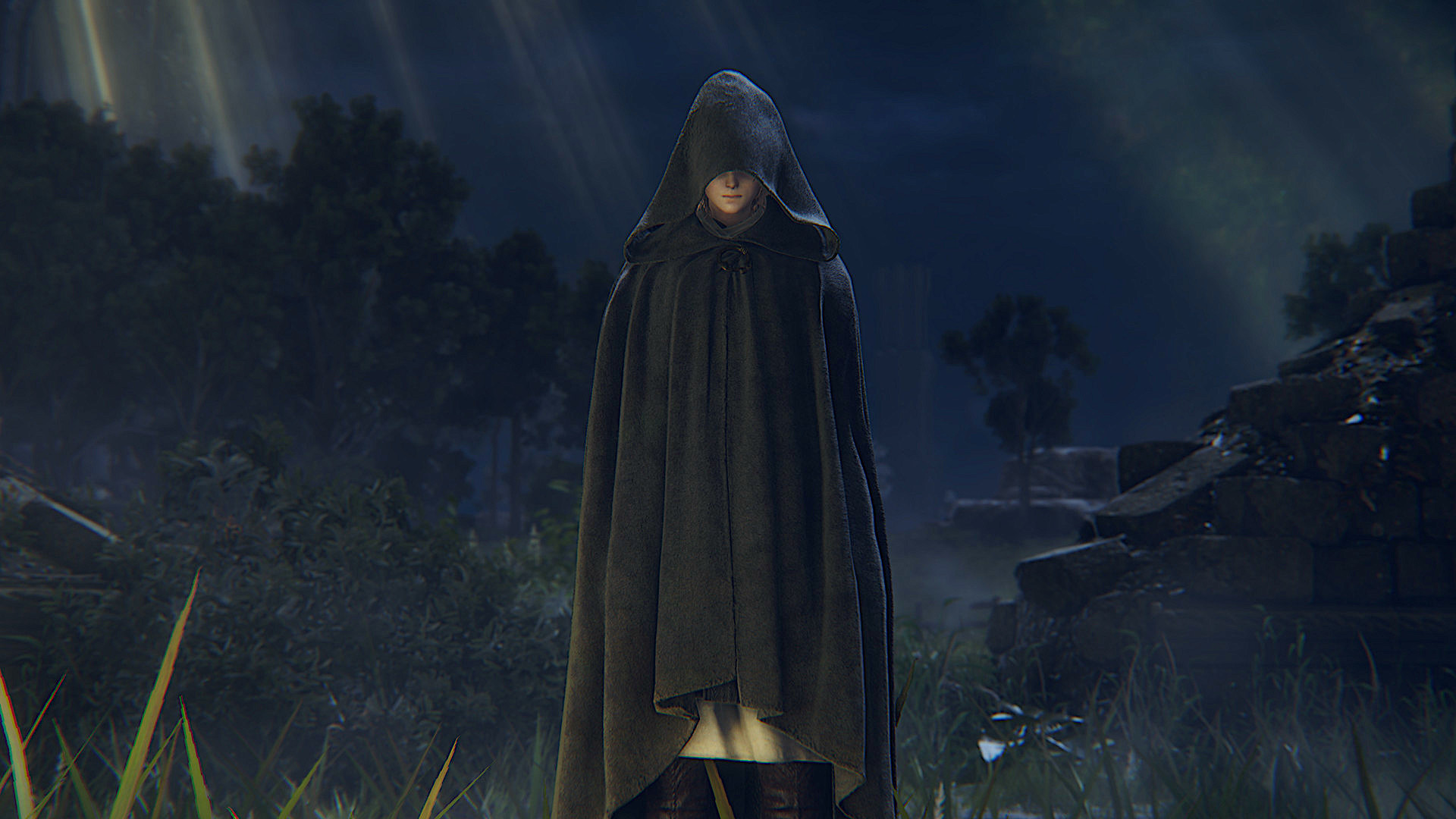
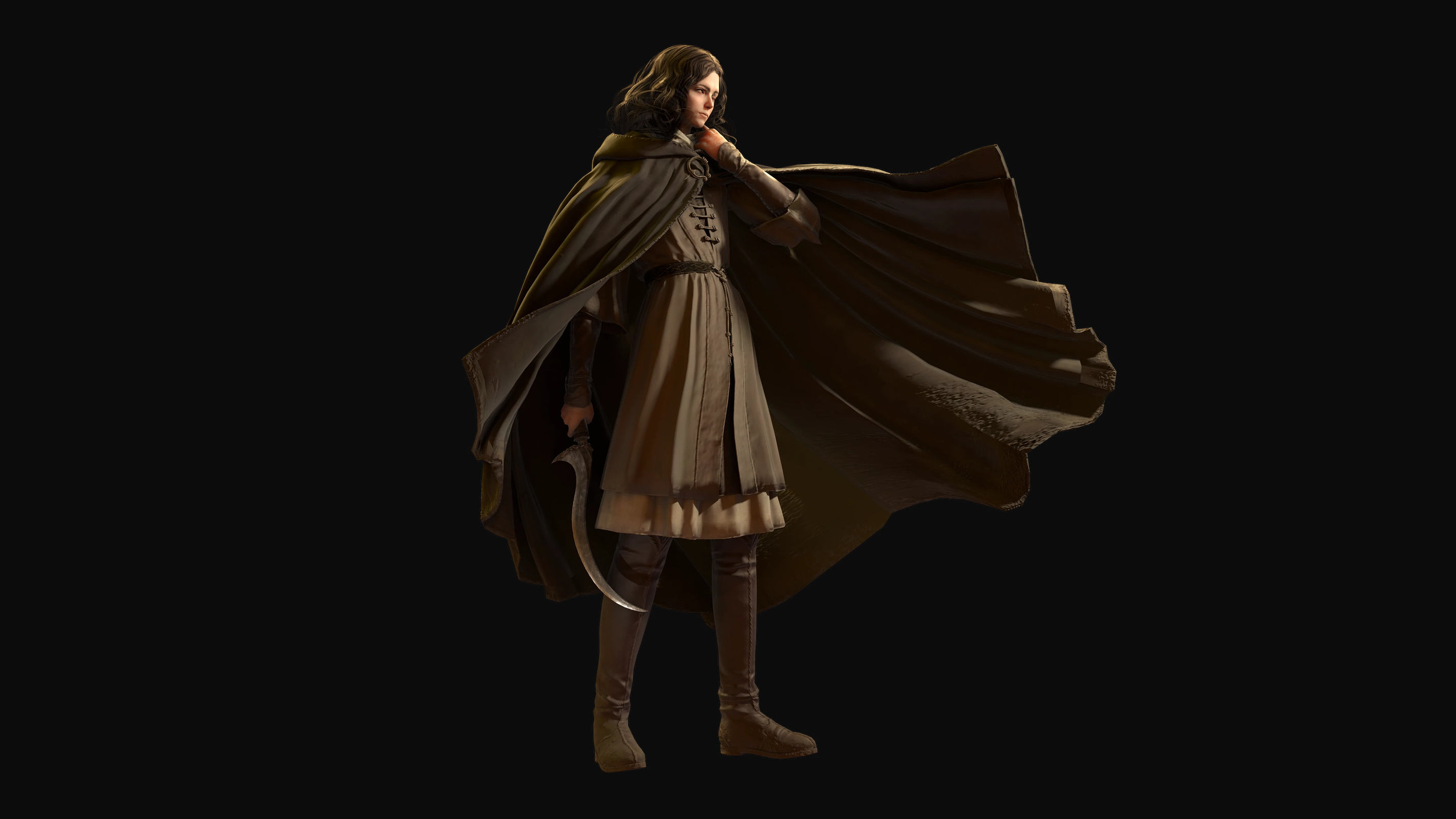
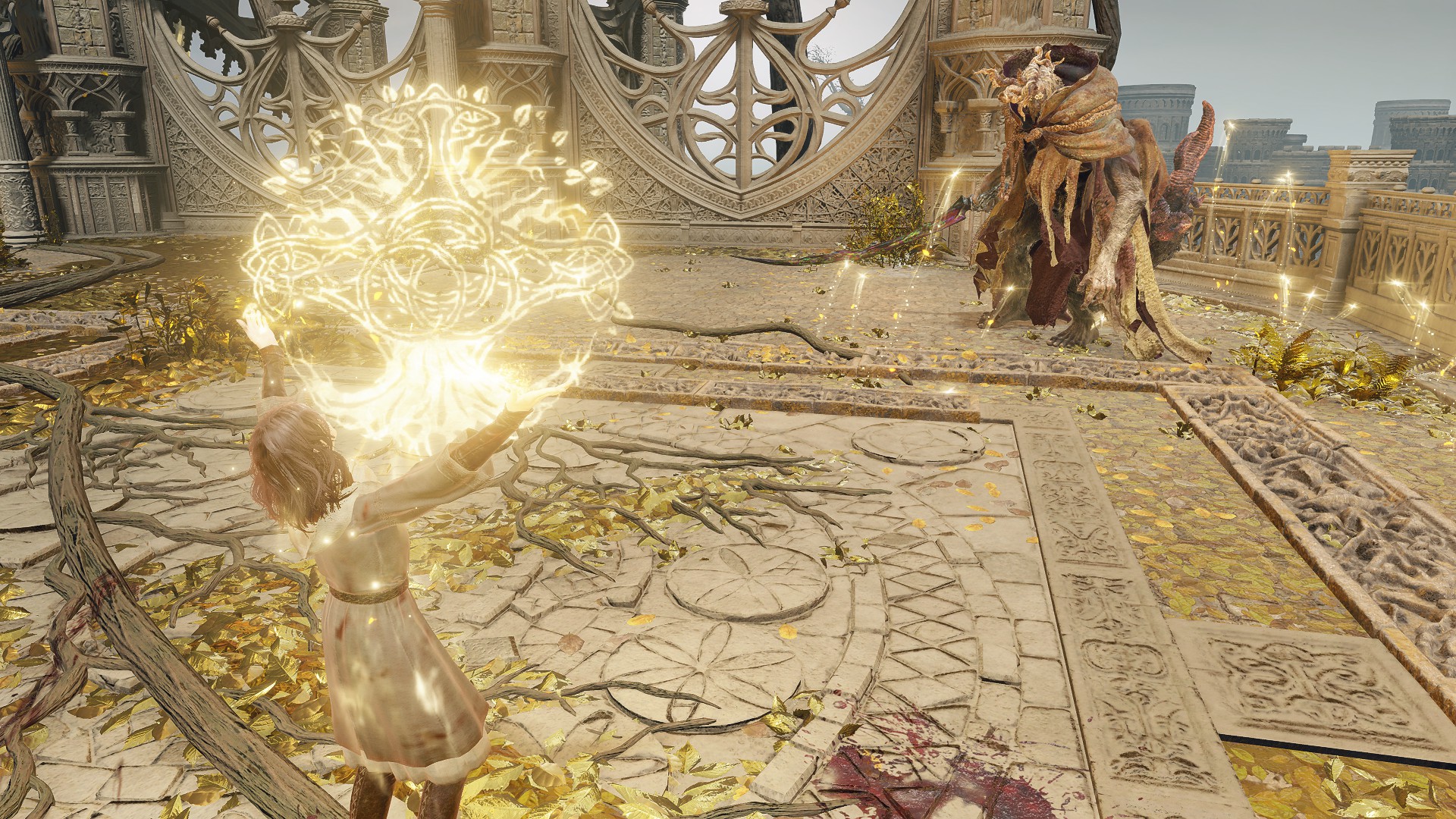
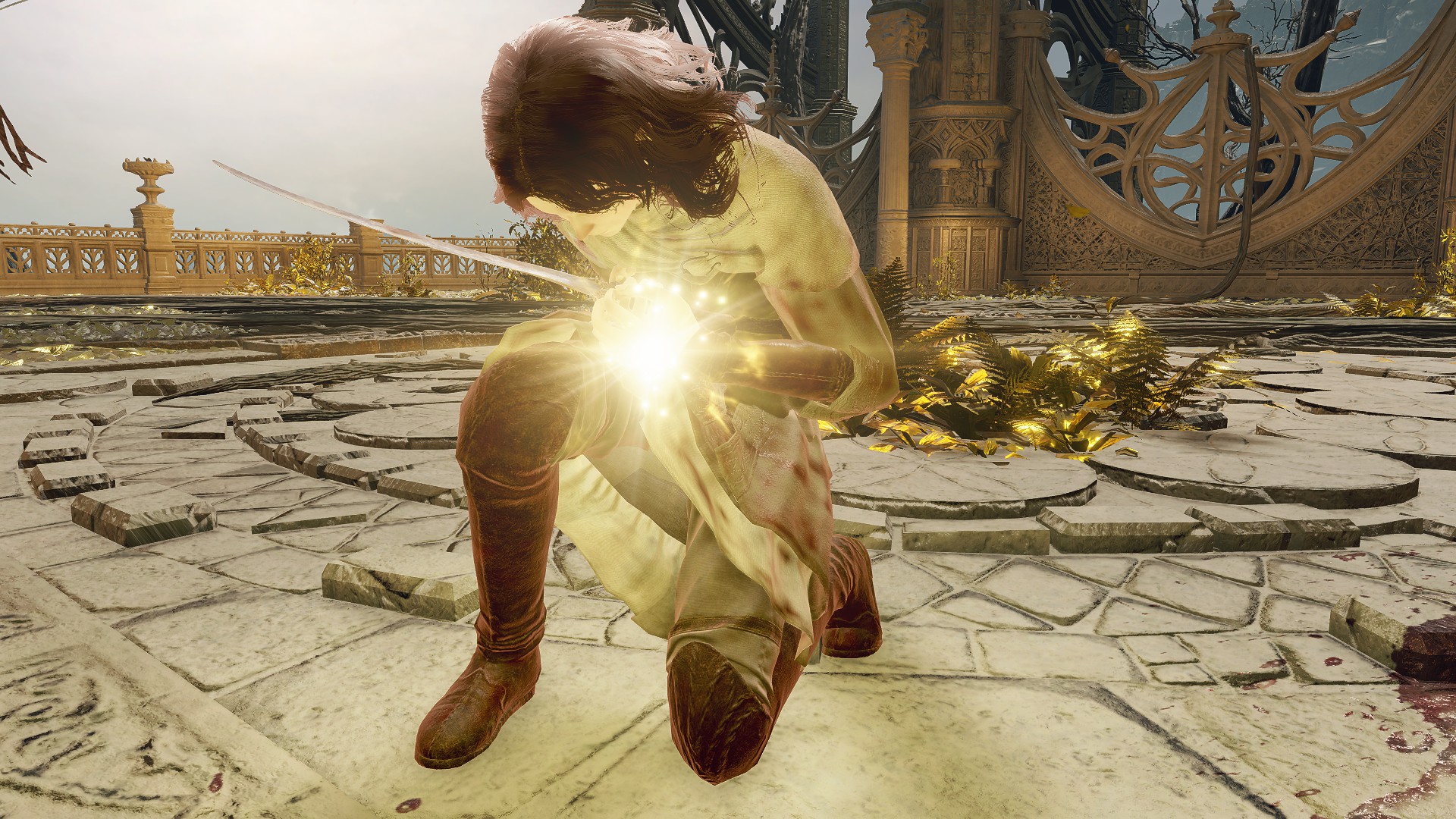
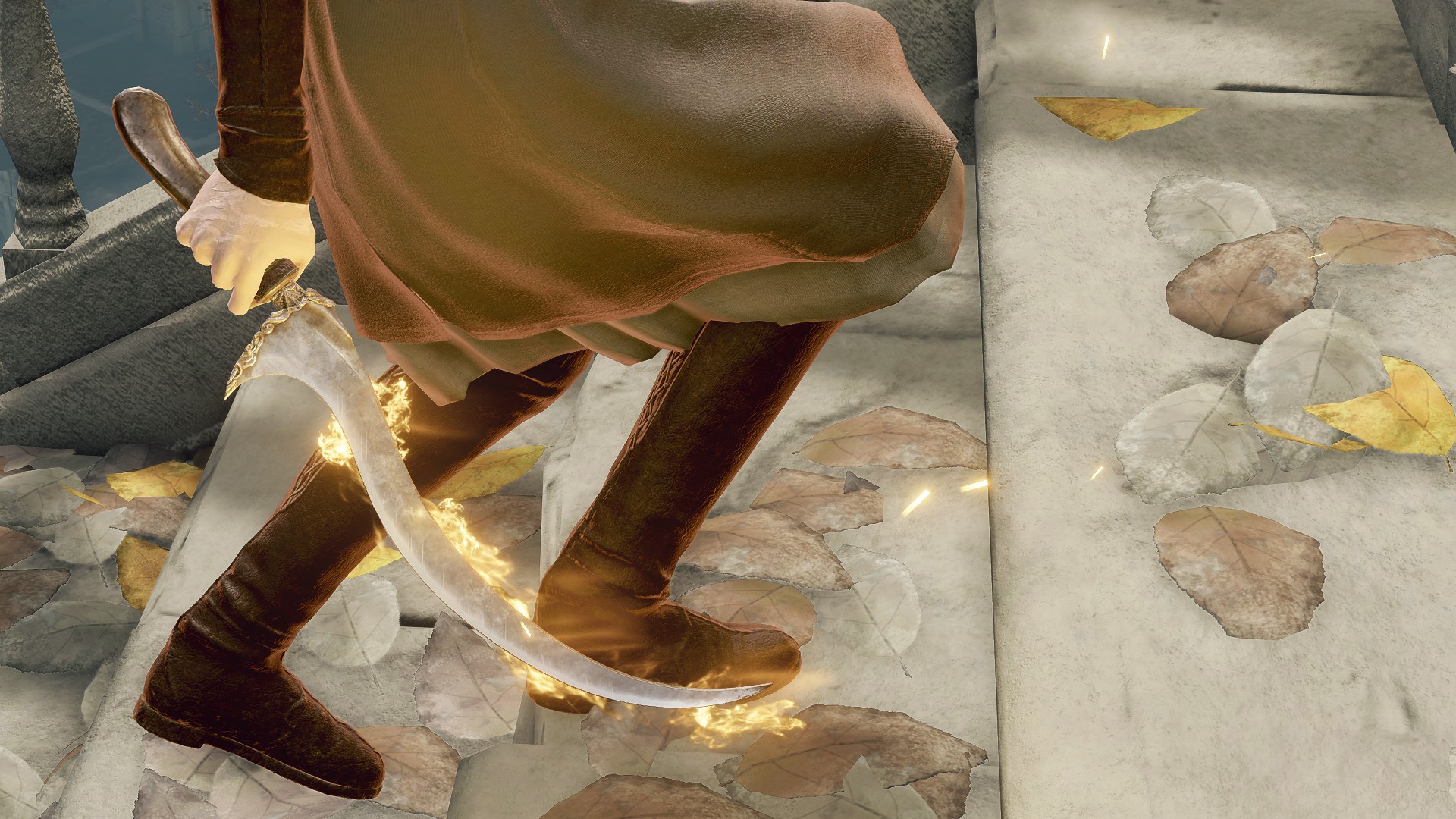
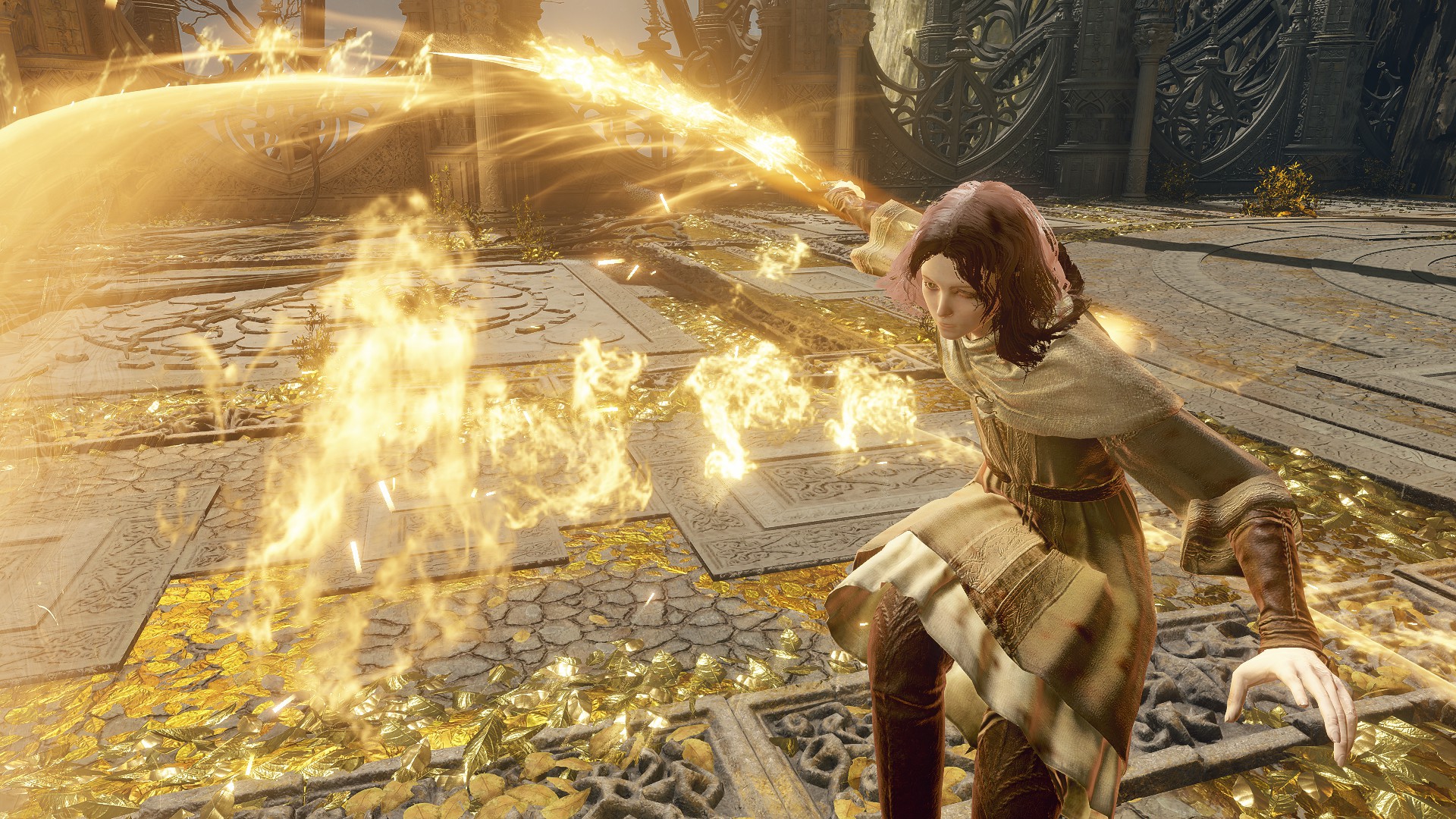
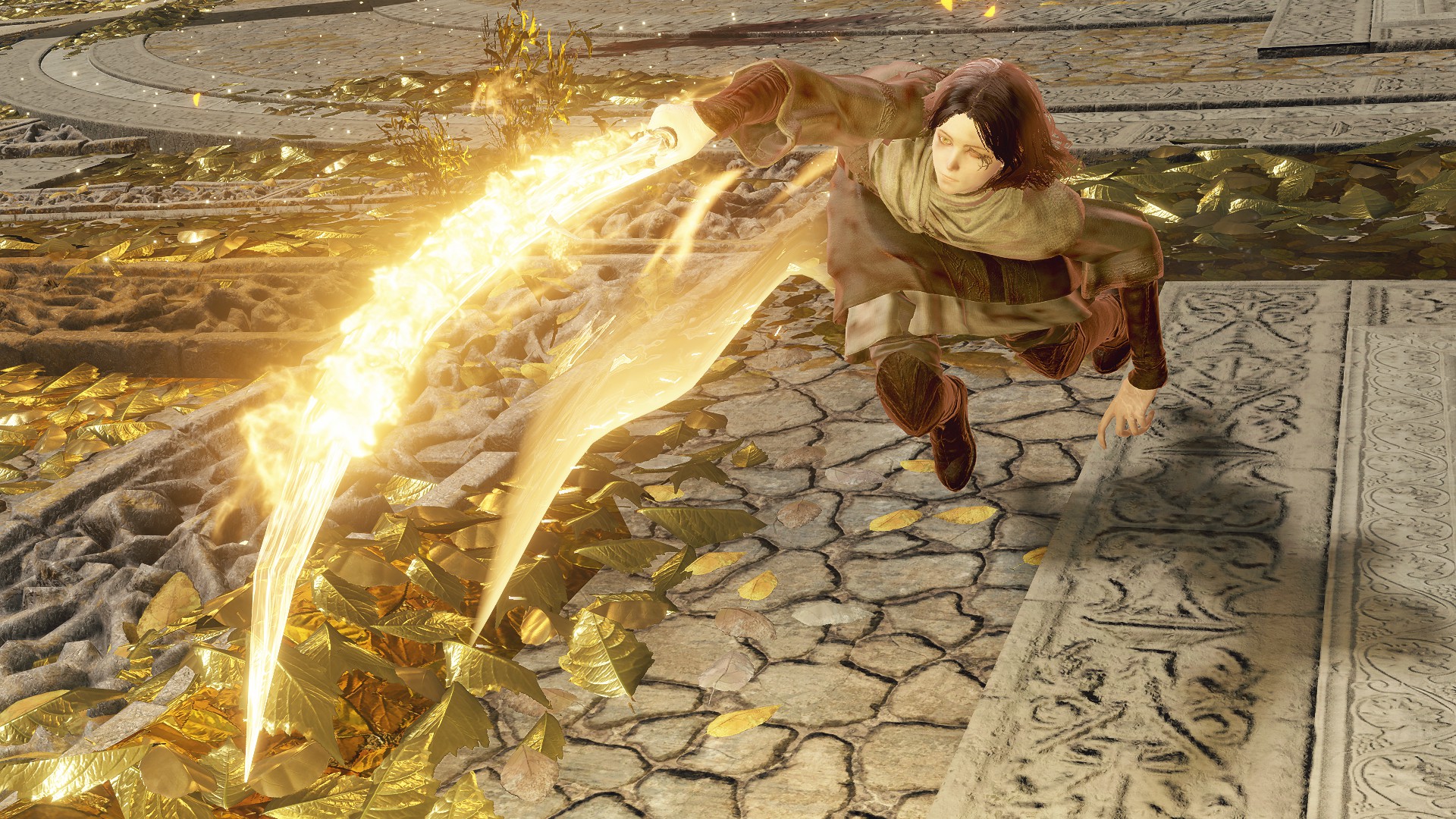
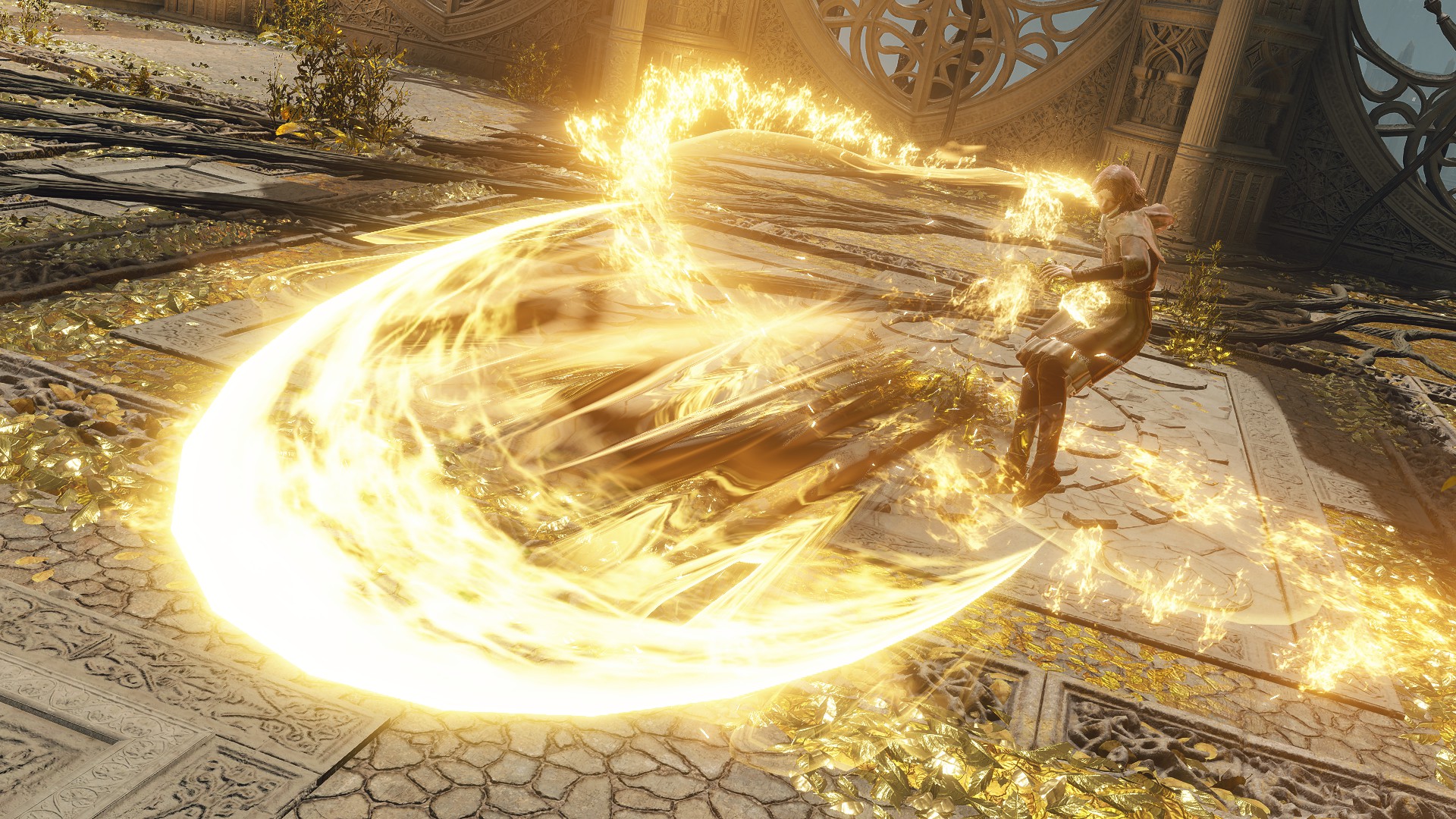
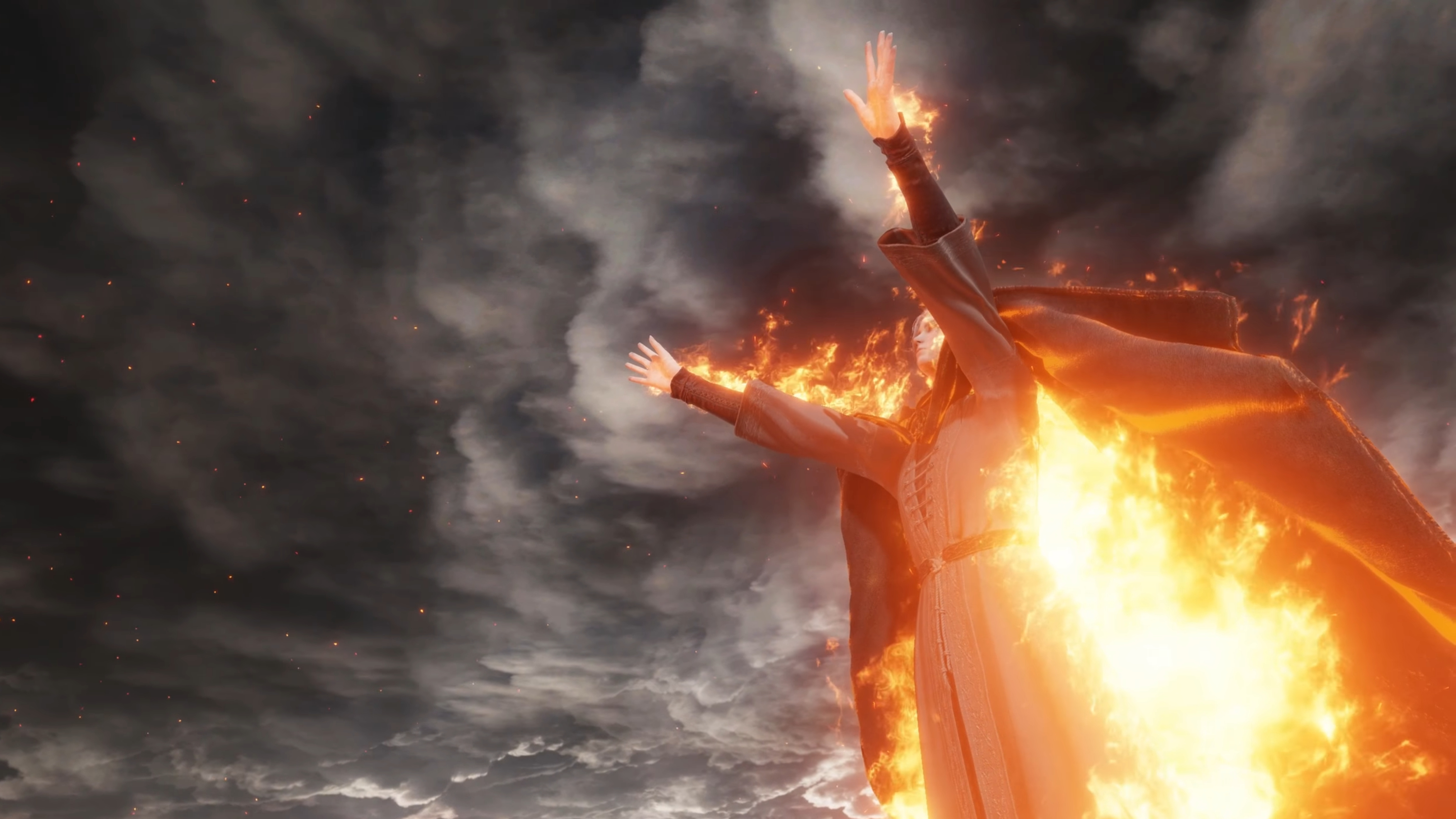
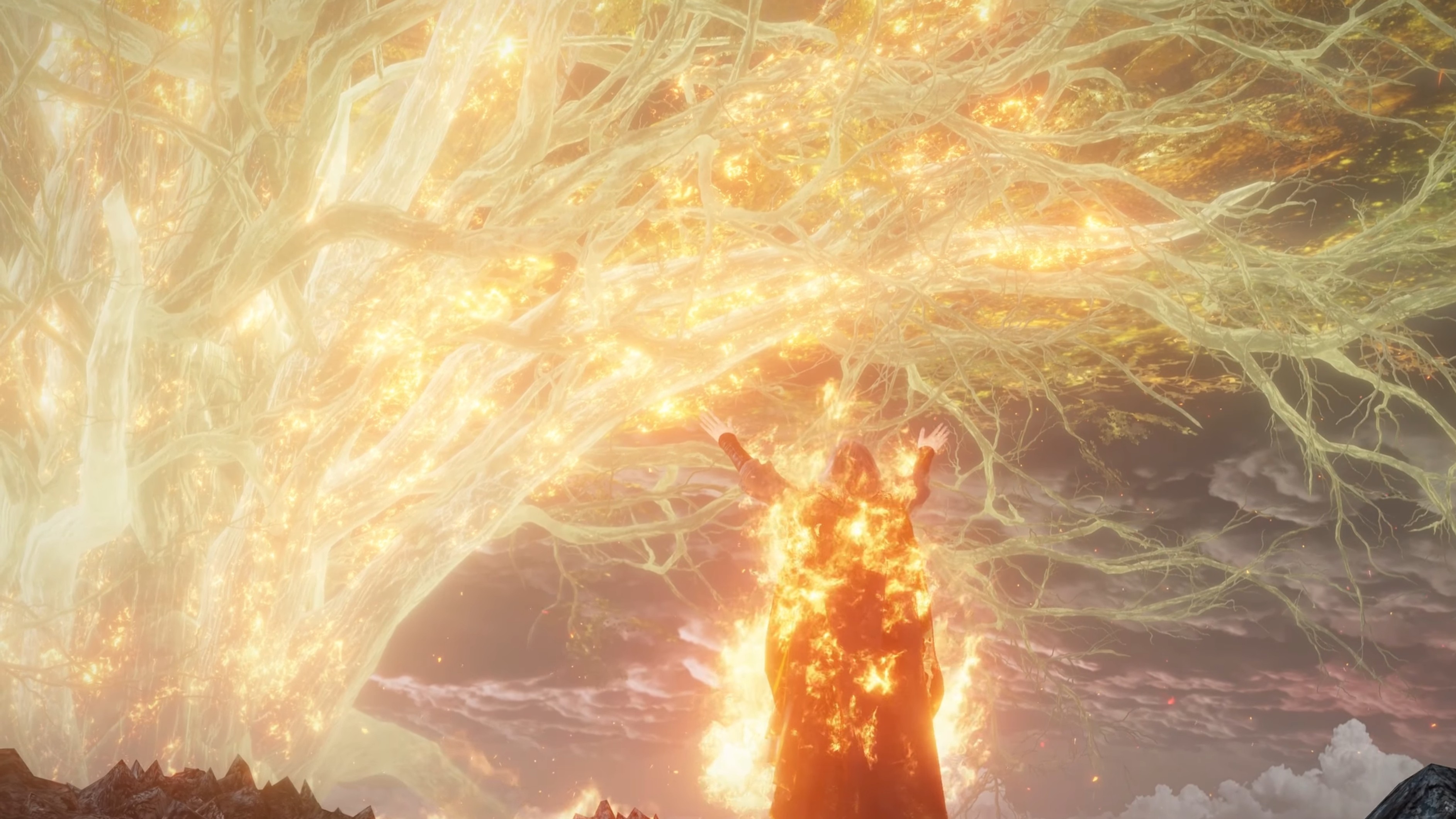
Dagger that was given to one departing on a mission. The power of the kindling girl, who is its old owner, remains in this blade.
One who walks with flame will someday see Destined Death.
… You must seek kindling. The fire to burn the World Tree is smoldering in the giant’s cauldron, the highest place in Between. However, burning it requires a special kindling… Only one who harbors a vision of fire, that sacrifice, may burn the World Tree with the cauldron’s fire. And then it will become guidance to the Rune of Death.
Golden Tree, best you burn. For the sake of the new King… Thank you. For bringing me here. One who walks with flame will someday see Destined Death. Farewell.
If it’s the kindling, worry not. I will prepare it.
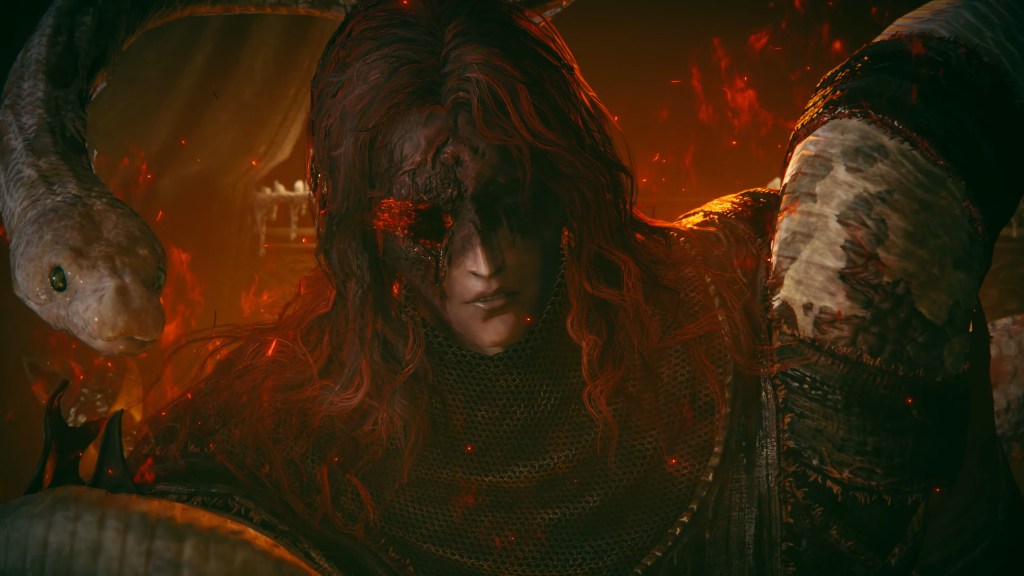
Messmer is another demigod born of Marika. Similar to Melina, he wields peculiar dark flames, though his apparently originate from an “abyssal” serpent inside him — that “snakiness” to his being passed onto those writhing, stringy licks of fire. It is this same snaky nature which takes over during the height of his boss battle, briefly turning Messmer fully into the snake inside. Marika sealed away this “wicked” snake with grace, her son’s right eye replaced with one of her soreseals. Without it, the serpent would eat away at him, as he accepts after breaking Marika’s seal to win our duel. It is from what is left his flesh after the battle that we salvage kindling. And according to this source of flame’s description, Messmer also had a vision of fire, the same as his younger sister. The sister is never named, but how convenient that Melina and he share similar powers, kindlings, and visions, almost like they are siblings; twins, in fact.
Chest armor of the Fire Knights who serve under the direct command of Messmer, the Impaling Lord.
Wears a bright red cloak and adorns the head with golden twin snakes, so enhances Messmer’s flame prayers.
They alone know Messmer. The snakiness of his flames. The anguish of being a snake.
Kindling which burned within Messmer, the Impaling Lord. It is dark and has been eaten away by a wicked snake.
Can burn the seal tree said to be in the old ruins of Rauh.
Messmer also harbored a vision of fire the same as his younger sister.
Indeed, the duality between his flames of abyssal darkness and her flames of golden light matches similar parallels between the twins Malenia and Miquella. That pair of younger sister and older brother were likewise burdened with unique powers from birth, theirs being a duality of decay and juvenescence. Just as well, Miquella has a vision, as should Malenia, on account of being Empyrean; just like their mother, former Empyrean and current vision bearer. All four even share a butterfly association. Malenia relates to the Aeonian butterfly of the Rot Goddess, Miquella comports with the nascent butterfly forever a larva, Messmer mirrors the black flame butterfly spawn from his abyss, and Melina embodies the standard flame butterfly used as a general kindler. While Melina’s gold flames aren’t the highlight, all four link to one insect, a symbol of rebirth, and bear a vision that reorders the world along with exclusive abilities to fulfill it. Why can’t all four be one of a pair of twins and demigods to boot?
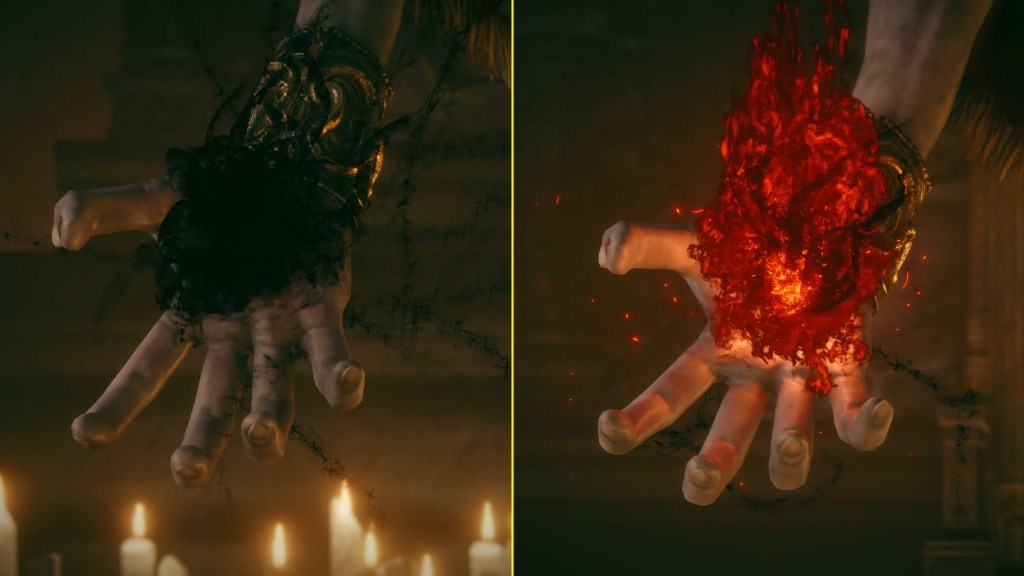
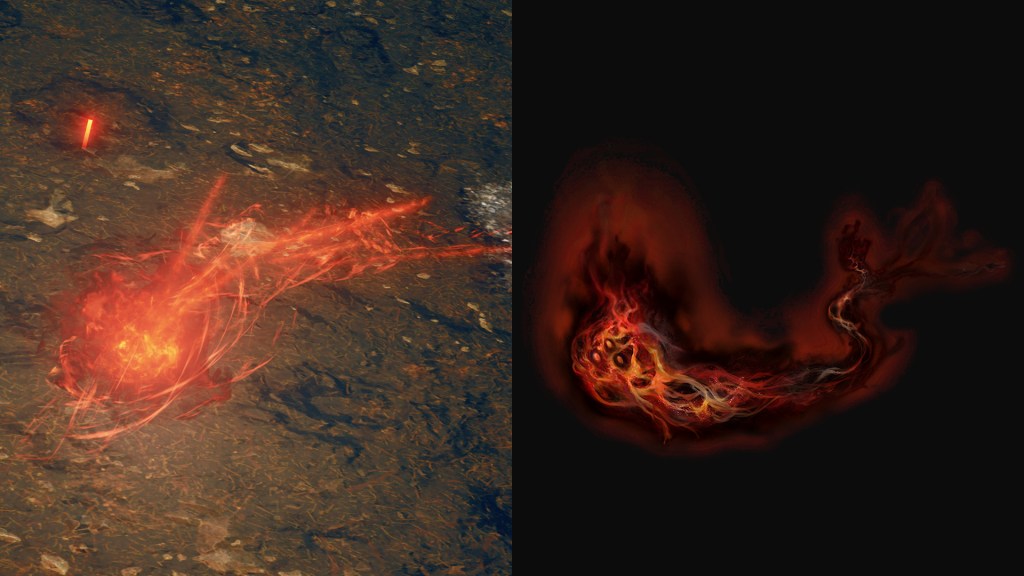
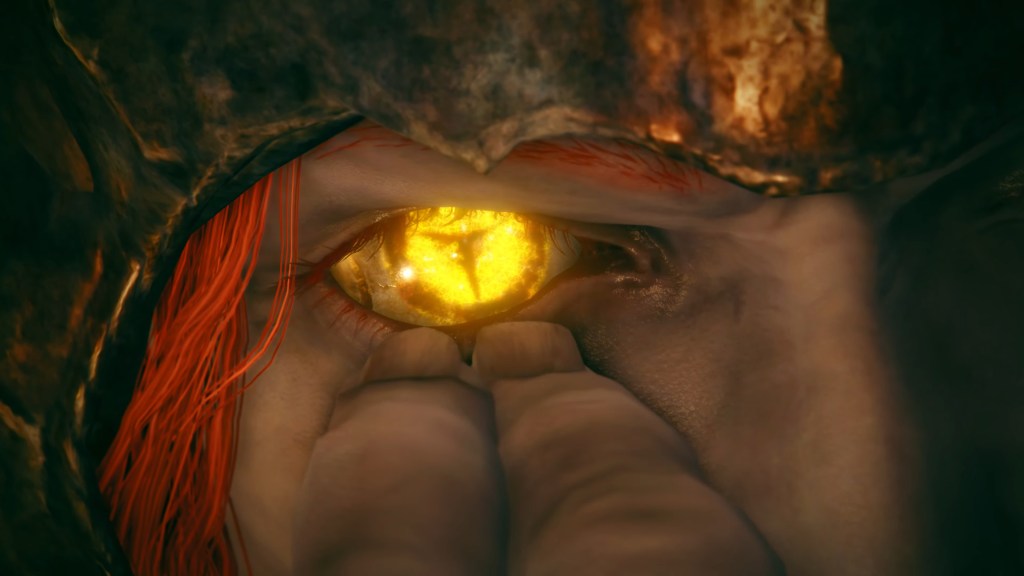
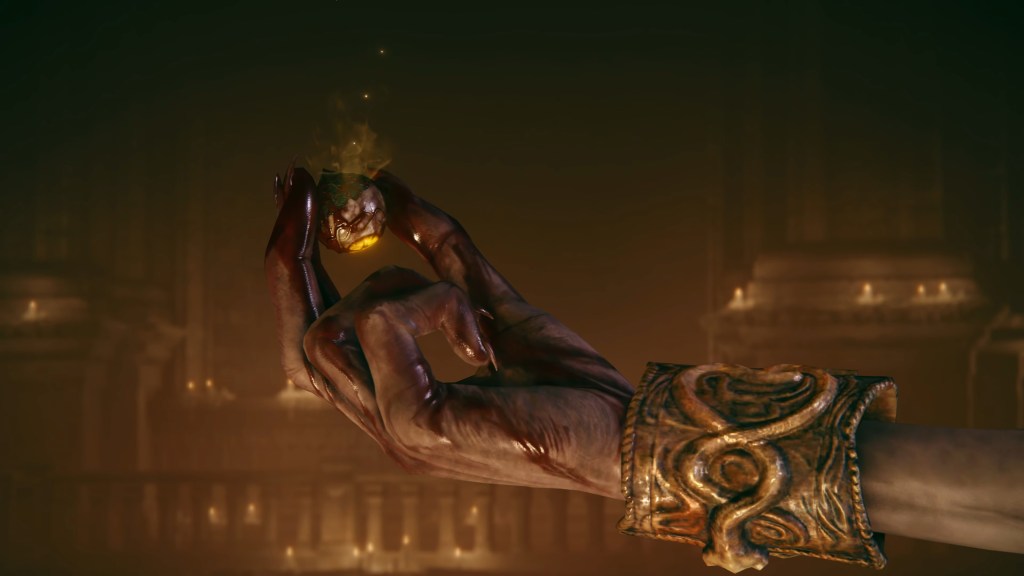
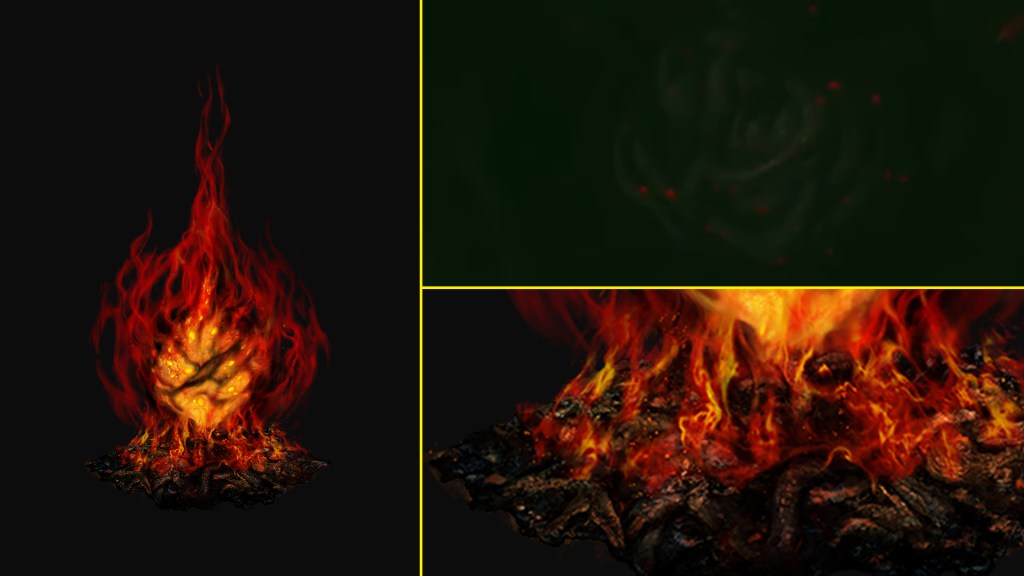
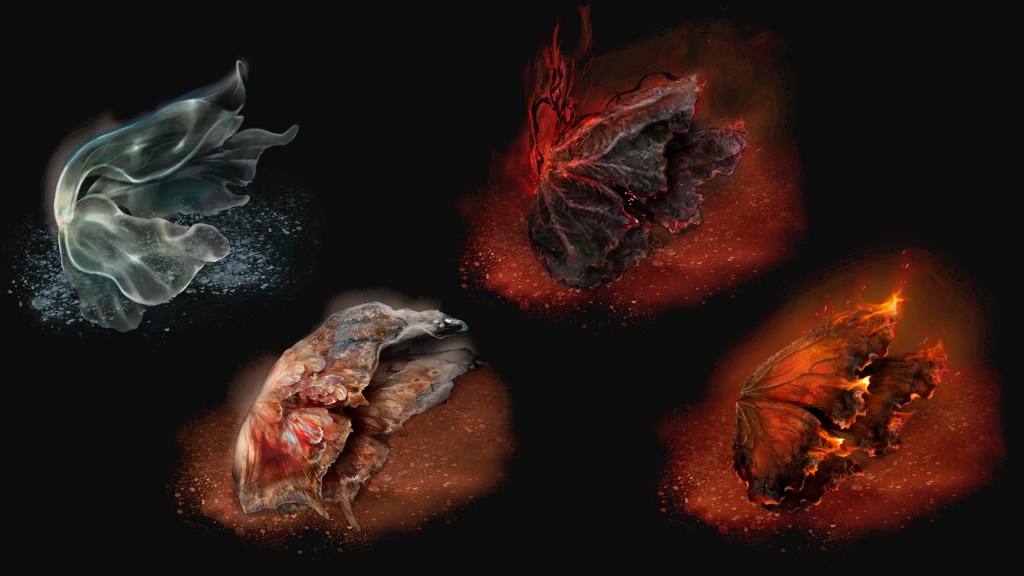
Butterfly that never burns out, found at the side of field fires and the like. One of the materials used in item crafting.
Becomes the kindler for various items.
In short, Melina is most likely Messmer’s twin sister, born after him but to the same god. Two demigods, embodying gold and shadow, one worse off than the other. Granted, Melina had her own struggles handling her flame if the hideous burns on her arms and possibly more are any indication. She doesn’t seem to recall any of this history, however. Her memory only goes as far back as when her mother supposedly bore her as a spirit. Perhaps that was also Marika’s work. If the flame siblings are intended to parallel the other demigod twins, then being selected as Empyreans is also in the cards. With the expectation to become god, their visions of fire serve an obvious implication. Marika obviously would not be keen to have her children burn her Erdtree and take her place. Melina might seem the less inclined to do this, with her flames bearing the same gold, but you can never be too sure. After all, why was she dead to return as a spirit? With the Blade of Calling, she curiously fights like a Black Knife assassin. If she isn’t one of the demigod slayers, then maybe she is their predecessor.
Taken on their own, Melina’s words are a bizarre mantra. One who walks with flame will one day see Destined Death? Does she speak from experience as one has borne flame all her life? Apparently, so. Like Messmer, Melina always keeps her left eye shut. But unlike her twin, she doesn’t have the excuse of keeping a serpent trapped in the depths of his eye sockets. Her right eye holds a pale gold pupil, mundane considering that the demigod is now an amnesiac spirit. Meanwhile, her left eye bears the tattoo of bird talons, reminiscent of some sort of magic seal. This all changes once we choose to become Lord of Frenzied Flame. If Melina doesn’t sacrifice herself to kindle the Flame of Ruin, she returns to the ashes of the world we are creating at the end. With pale skin and frazzled hair, going from strawberry blond to brown and ashen, she reveals her right eye clouded and her eye tattoo faded. And as she vows to bring us Destined Death of all things, we see the left eye open to reveal a violet blue pupil — the dusk-colored eye of the Godskin Apostles’ leader.
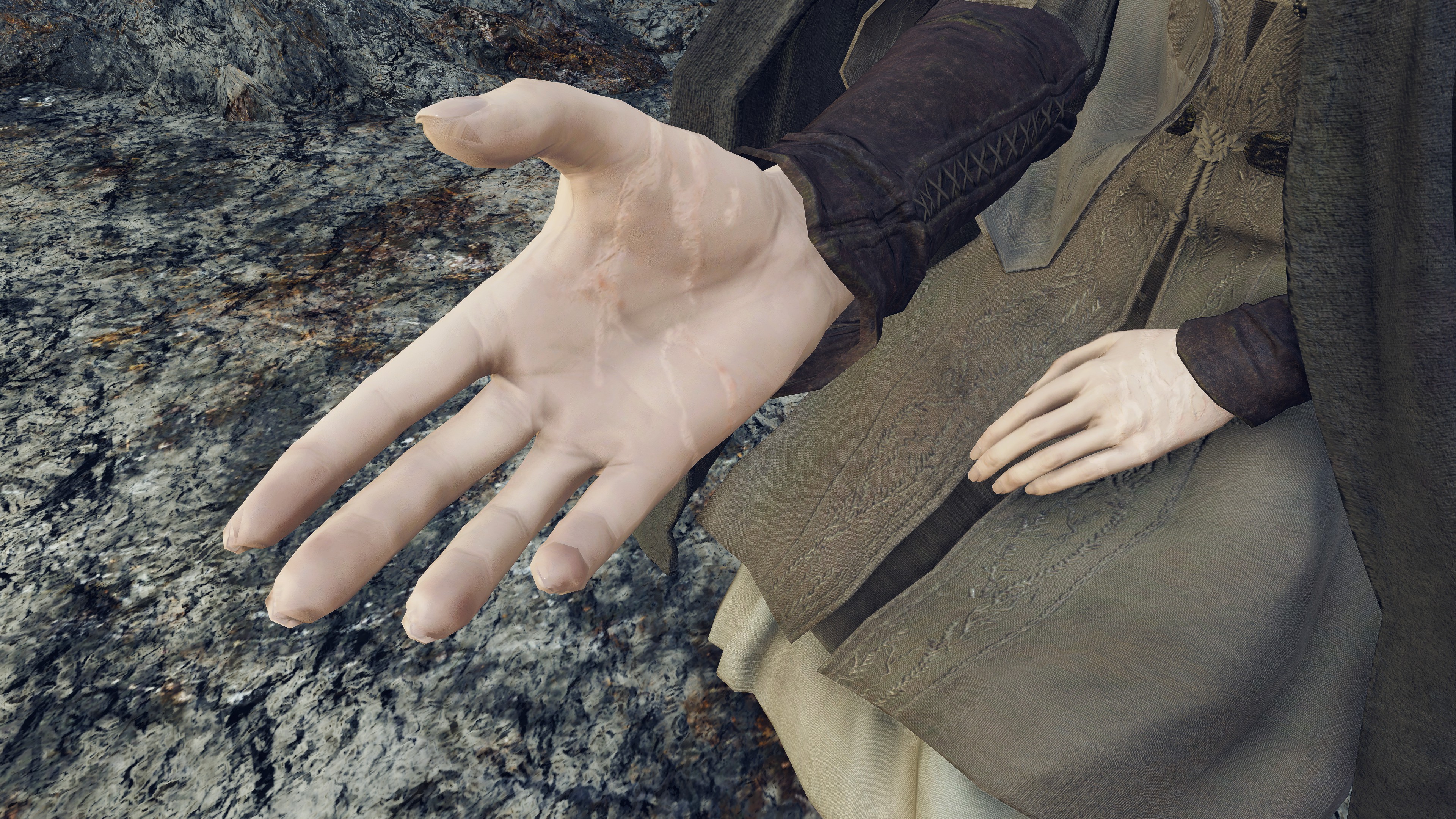
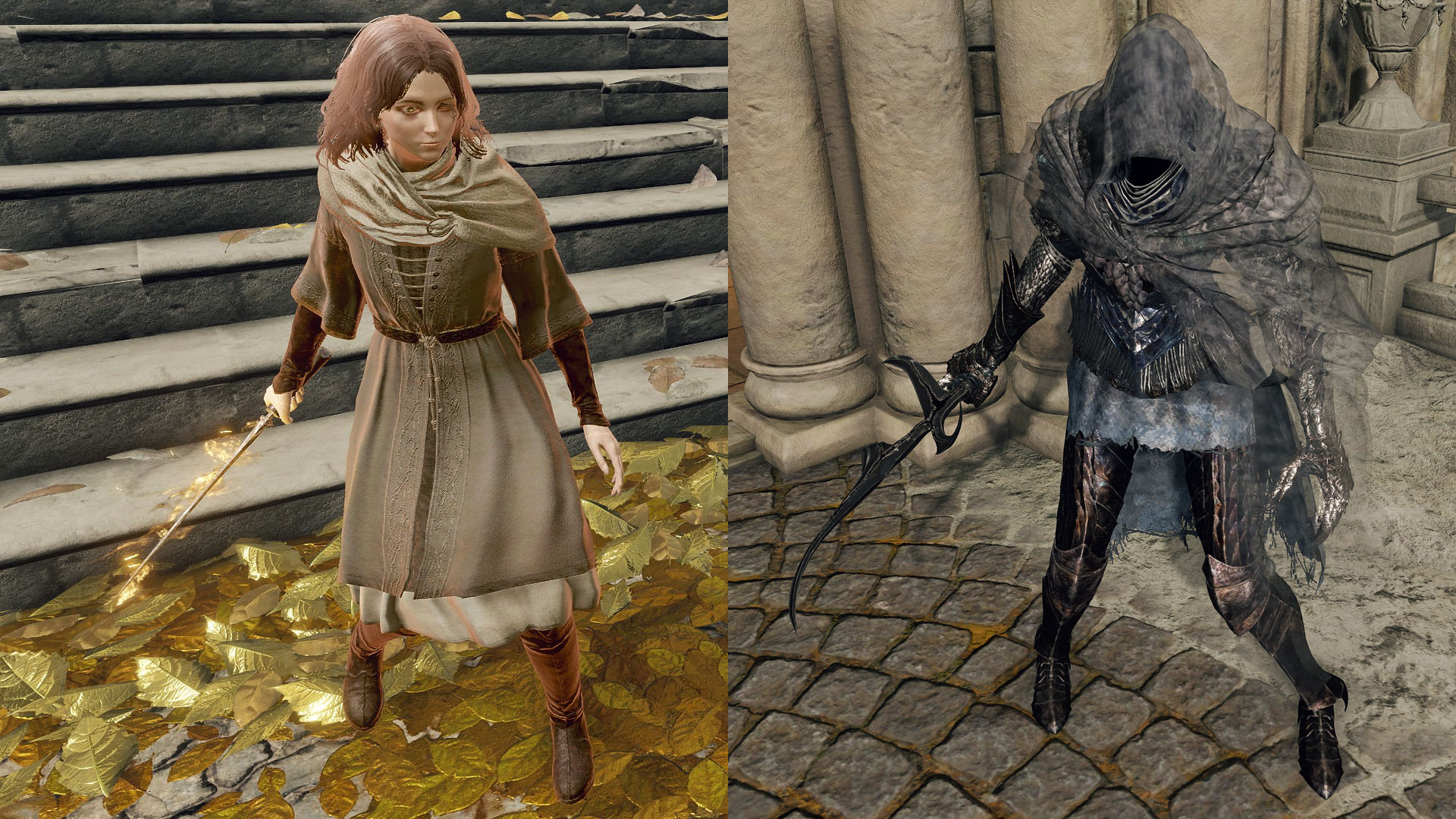
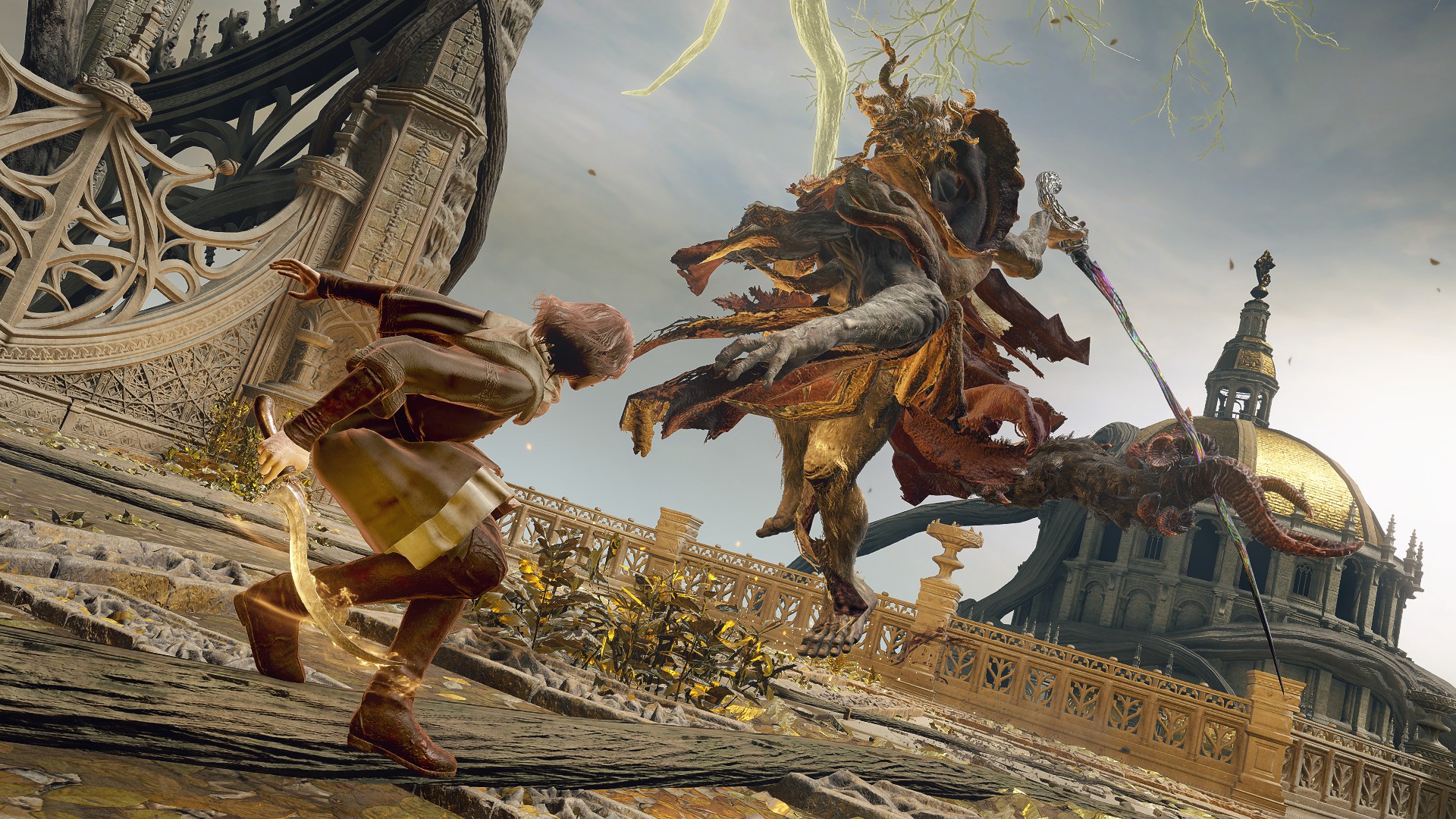
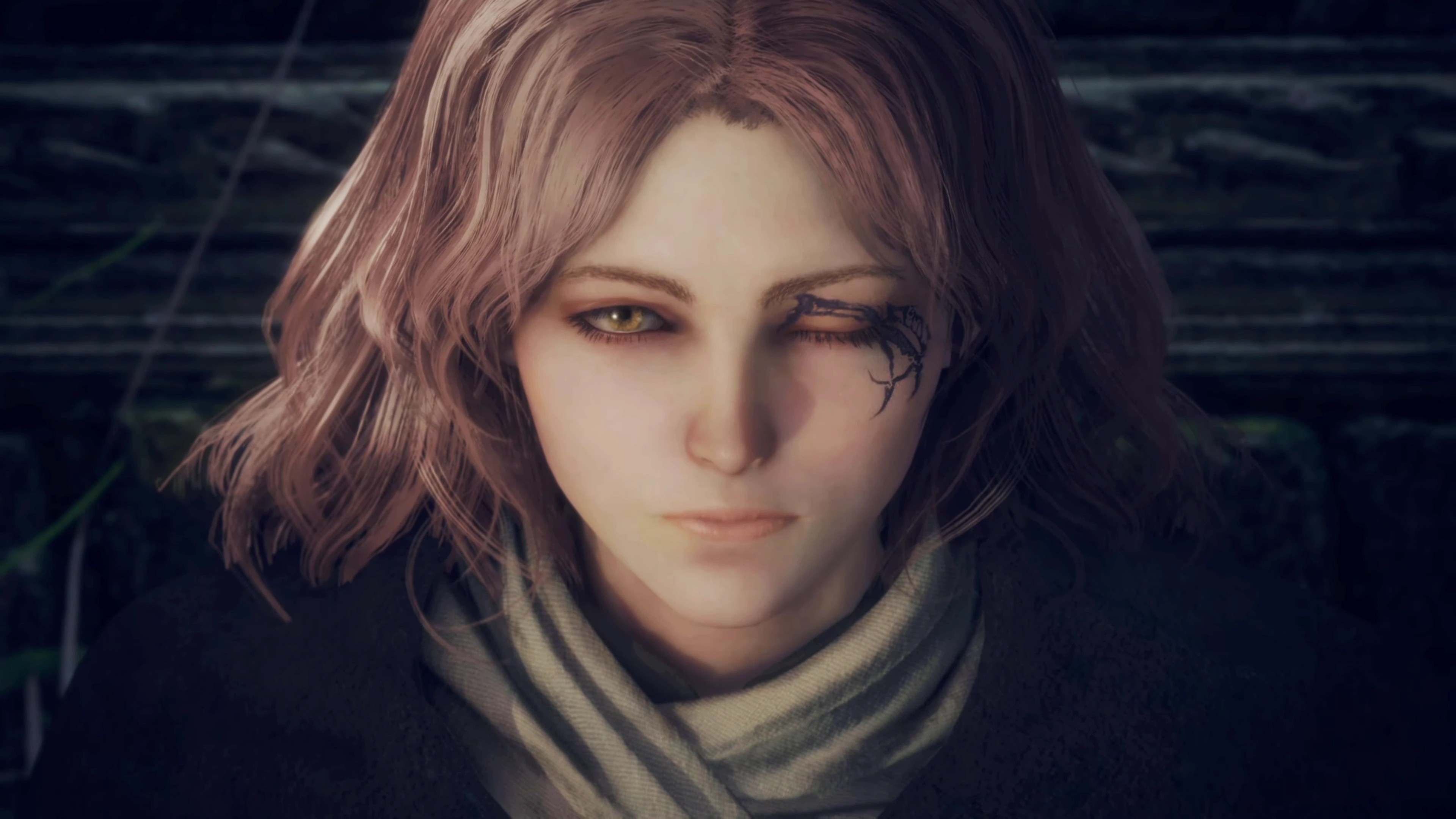
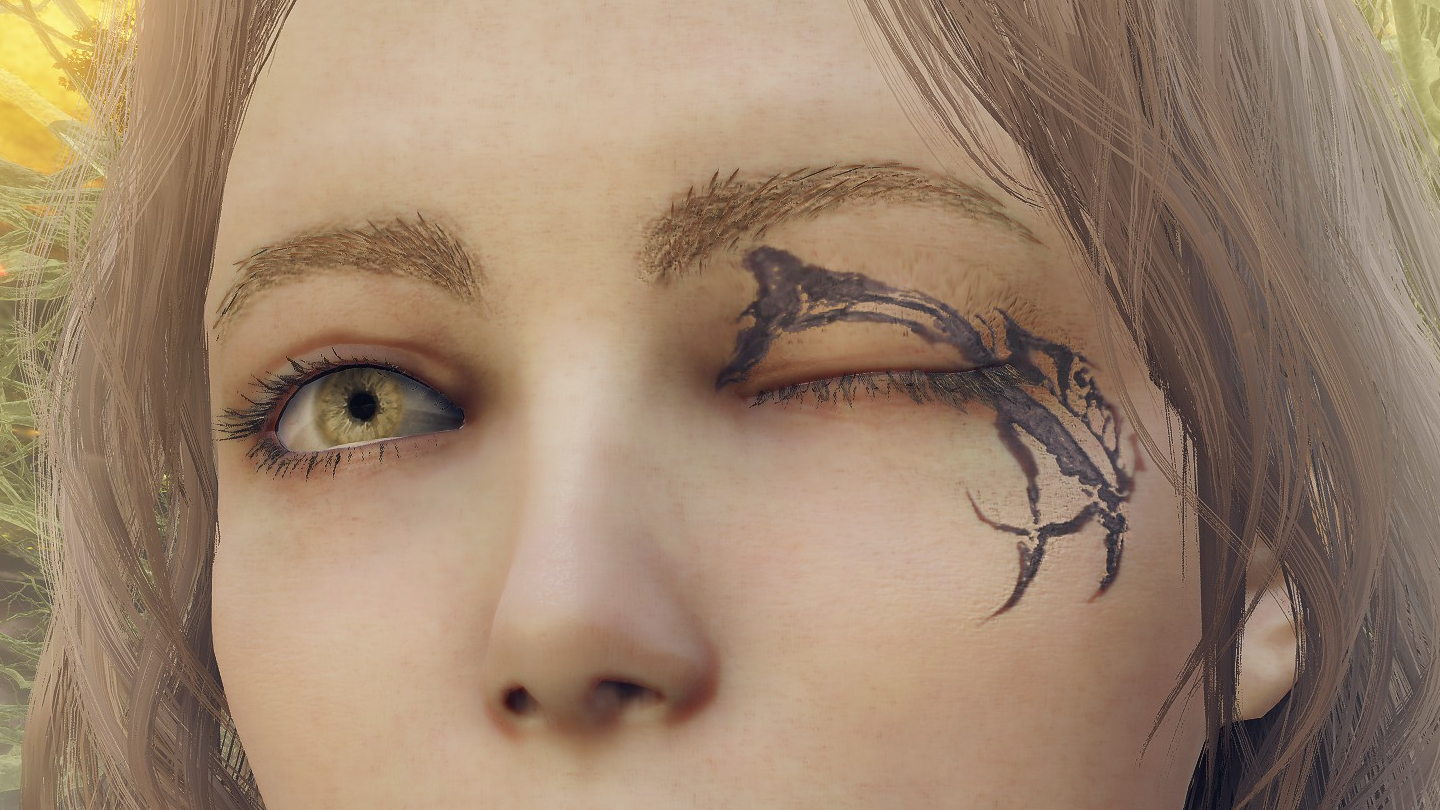
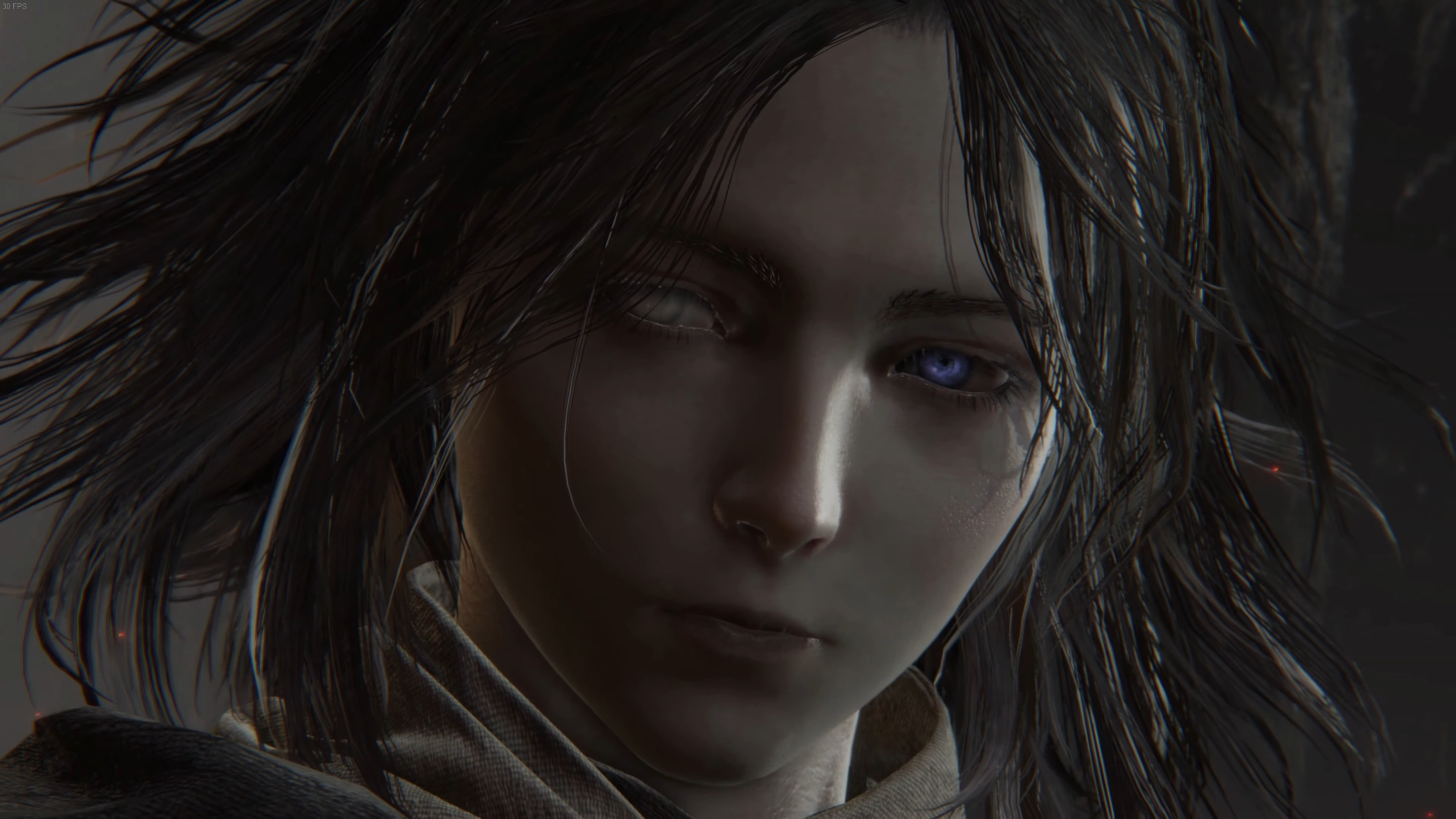
King of Mad Flame…… I will reach you without fail… And unto you. Destined Death.
At minimum, this implies that Melina possesses similar power to the Gloam-Eyed Queen. The girl may fundamentally own golden flames, but the Rune of Death’s influence in her eye has been kept sealed away, presumably by her mother. With how her overall appearance has changed once the seal is broken, one can only imagine what she can make of her fire. Whichever the case, this Destined Death in the eye must predate the time she was born in Leyndell as spirit to be sealed as such. After confirming her mission, Melina leaves the Blade of Calling on the desk in a hidden chamber within the tower to the Forbidden Lands. This seems to be her way of demonstrating her decision to no longer follow her mission, acting at her own and not her mother’s will. Leaving behind the “blade of a mission” (使命の刃) is certainly poetic, but it only makes sense if this is the place where she first received the weapon. And if that room was where her journey began, then she lived without her mission for a good while.
… There is something I want to tell you. My mission was what I received from my mother. But, right now, it has already become my will. Simply for sake of the world I desire, unrelated to my mother’s will. It is what I have determined in my heart… I won’t let anyone slight it. Of course, not even you.
Seated outside the wooden door with small, barred window like a warden on watch is one of the robed officials who handle all the unseemly work for the kingdom. If this is a secret prison, then it is a luxurious cell, with decorations and amenities to keep the VIP comfortable. There is no reason for a demigod like Melina to receive her dagger there unless she was that VIP prisoner. After the spirit was born at the base of the Erdtree, she was hidden away in an obscure corner which already received little traffic. Only much later was she finally sent off with a mission and a dagger to protect herself on it. It is little wonder that she is so nostalgic about her birth yet mystified by Boc crying for his birth mother to show him affection; first seeing the area was probably the most exciting thing the amnesiac got to see prior to her mission. If this is the case, then why was Marika hiding her own daughter from the rest of the world? Why was it so important that a spirit, with golden flames, not be seen by anyone except her most trusted agents? The obvious answer is because people might recognize her, especially with that one eye.
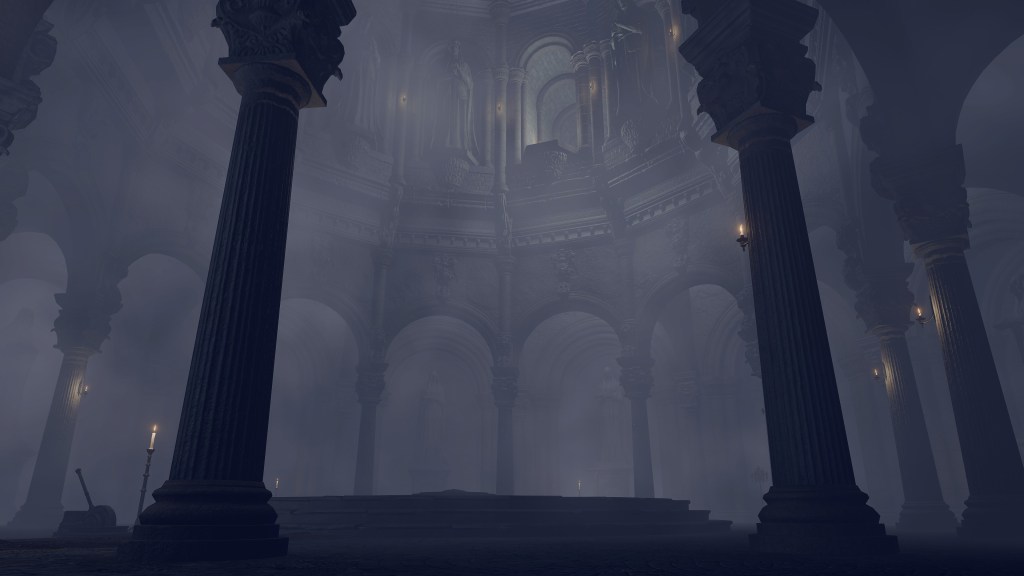
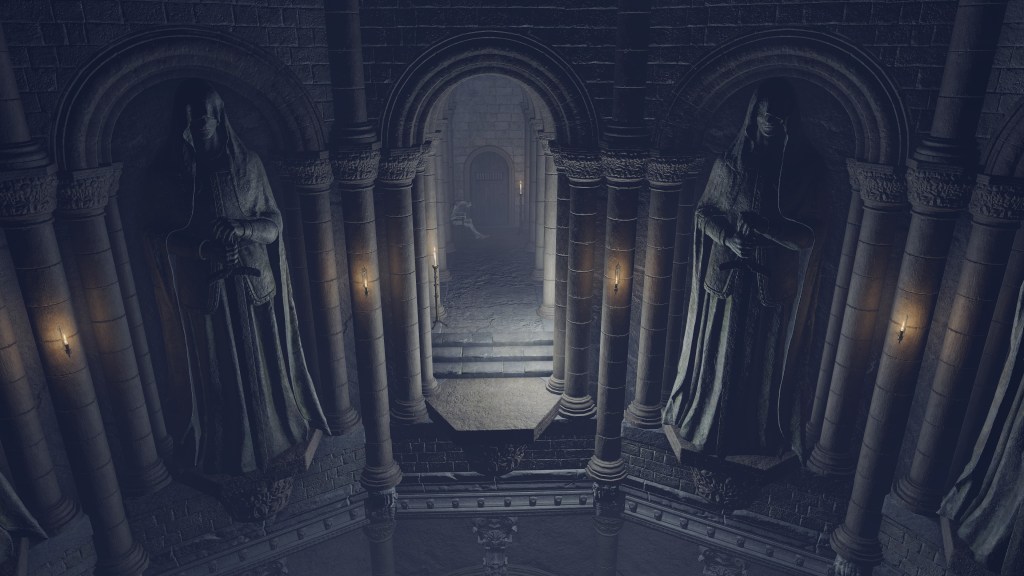
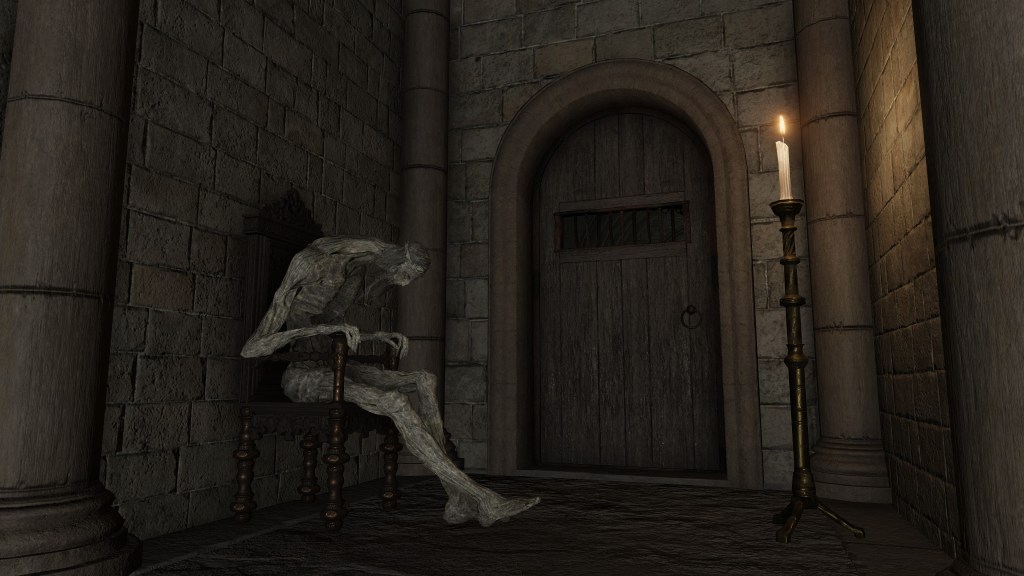
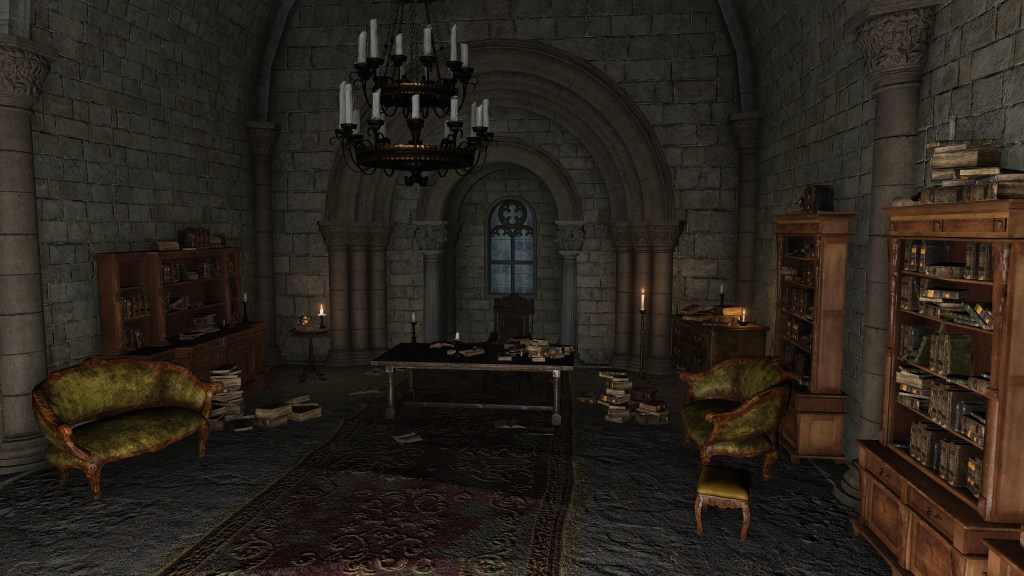
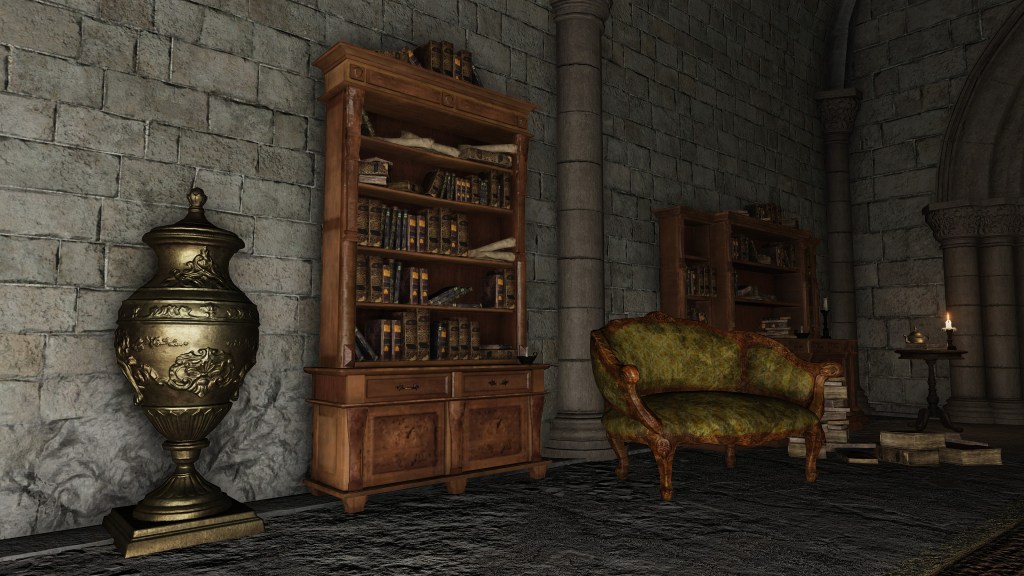
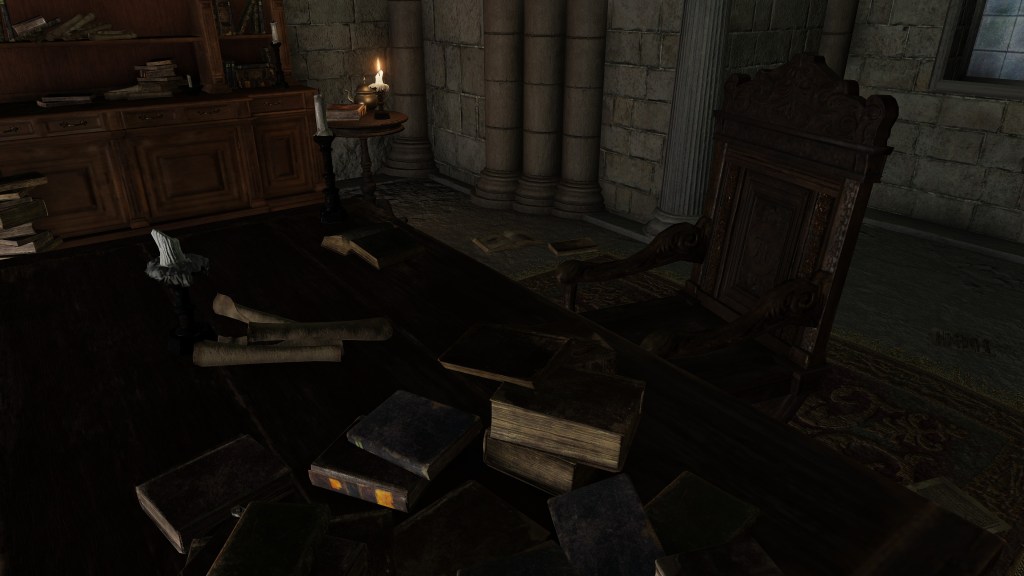
Put simply, everything hints to Melina being the Gloam-Eyed Queen, reborn without memory of her past and kept hidden until Marika needed the Tarnished. She was an Empyrean with a vision of flame that could burn down the Erdtree and institute a new Order. That fate of fire led her eventually to the Rune of Death. With it, she turned her golden flame to black flame and conspired to exterminate her fellow demigods. Assuming that her birth as a spirit was intentional on Marika’s part, it is hardly surprising that the god has kept her daughter under close watch just outside the royal capital. No one can know that the Empyrean who once tried to overthrow her and still has followers is alive and well, whatever her form. Melina’s new life in one room was a necessary precaution.
Whatever the Eternal Queen’s intentions with these developments, it doesn’t change that the spirit girl’s old life in the royal court explains all the curiosities about the Gloam-Eyed Queen’s path to success. Acquire Destined Death? If Marika stored the precious rune in her royal treasury or other private area for safekeeping, royalty could easily swipe it without anyone’s notice. Catch the demigods vulnerable? If they planned to travel abroad for whatever reason, family could collect inside information about their movements and whereabouts without drawing suspicion. Meet the Fire Monks in Forbidden Lands? If Marika was alarmed by her twins’ visions and taboo flames which may threaten her Erdtree, a princess could gain permission to access the mountaintops for training to suppress the overwhelming power in her hands under the Flame Watchers’ instruction. Contact with Gelmir’s great snake? If they are still allies, a demigod should have no issue having an audience with the foreign deity. For that last point, Melina has the perfect excuse to visit Volcano Manor.
Her brother Messmer has a red snake with heads at each end and tiny bat wings all along its body, enwreathed through his body both front and back. The resemblance to an amphisbaena, a symbol of duality often associated with doom and the underworld, is appropriate since the serpent is apparently the demigod’s “friend” with the “virtuous” (善なる) intelligence to restrain the wicked snake inside him and suppress its power. This snake, who remains part of Messmer even after it has to shed its skin from the evil the demigod unleashes, is presumably the reason that he maintains a human form at all absent Marika’s grace seal. Where did the Erdtree royal family find such a useful creature? Its red skin and green eyes are seen in only one other instance: Gelmir’s snake men. We can thus presume the snake to be another of the serpent god’s progeny, this one probably engineered in collaboration with Leyndell specifically to help Messmer. Who better to go for advice on controlling a snake than an insatiable snake god?
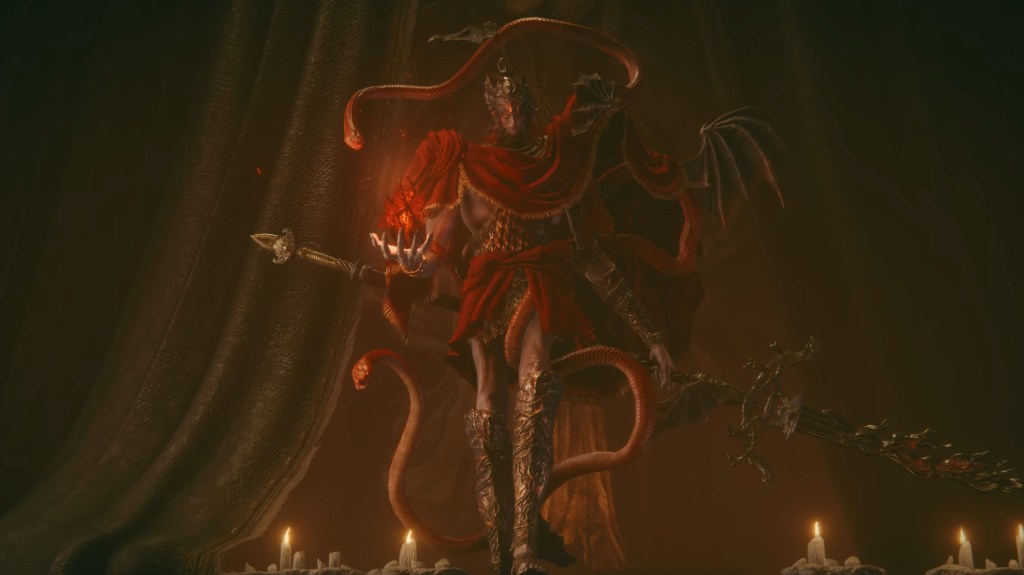
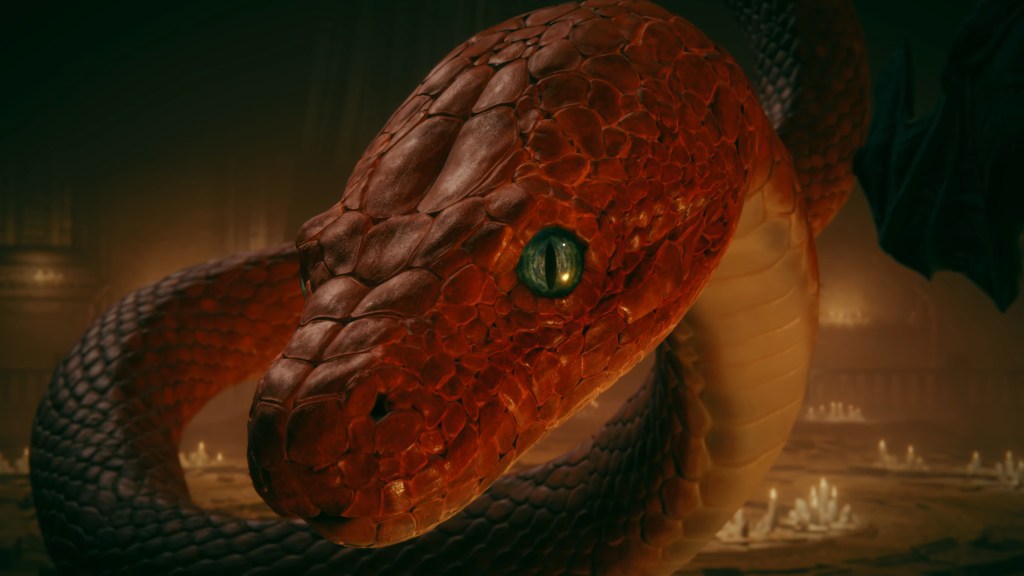
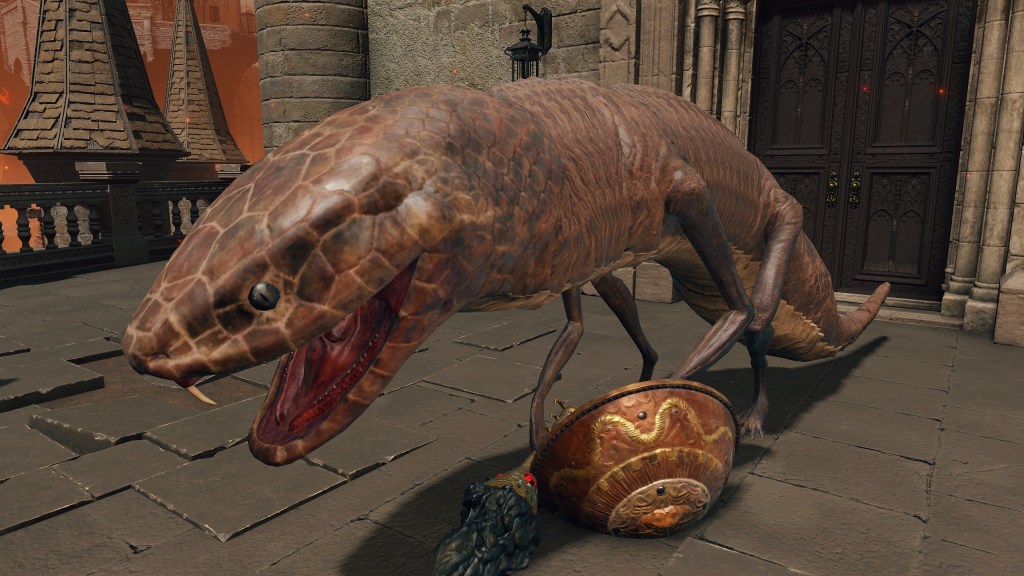
Black helmet of Messmer, the Impaling Lord. Crowned with two, intertwined winged snakes.
Slightly enhances Messmer’s flame prayers and Fire Knight battle arts.
The winged snakes have always been Messmer’s friend.
Even during the long time that the wicked snake was sealed in the depths of his eye. Even after his repulsive form where he broke his mother’s grace and accepted his fate.
With that established, Messmer most likely spent a good portion of his early life on the volcano, training on how to suppress the serpent and abyssal flame inside him. His winged snake friend was just another part of this process, which assuredly went through much trial and error. And while the older brother was struggling with his powers, his younger sister might come to visit, the twins sure to bond over their mutual abilities which forced them to do better and prove themselves more than any other demigod. Along the way, the girl may take some pointers from the snake herself, or from the pagans manipulating the god’s lava as hexes. The end result is, after burning herself continuously, the mastery over golden flame that we see her exhibit against Morgott. But just as she does with the Blade of Calling, she could channel the power of her golden flame into her greatsword, the shadow harbored within transforming it into a milder form of Death which was then emitted from the “spigot” for apostles. Everything regarding Melina’s circumstances plays into her becoming the Gloam-Eyed Queen.
What prompted her to kill kin? Evidently, she didn’t like her mother’s vision for the world. Even with amnesia, Melina’s conclusion after long witnessing the state of the Lands Between during her travels is that it requires indiscriminate death. Marika removing the shadow from the golden Ring to create overflowing life is repugnant in her eyes. This is different from loathing life itself, as the Flame of Frenzy’s advocates expound. Melina rejects us taking that path, considering life to be beautiful in spite of all the misery. But life has meaning because it is finite, because there is a set time to add beauty before suffering will end. Not so in Marika’s world where her life, the life of the gods, goes on forever. Looking to her older brother, she saw that Messmer has to live that life in suffering and pain to appease their mother. Looking to her other siblings, she saw that the rest let life drift into atrophy from empty indulgence. Either way, it was an ugly hell. Melina surely saw that Order needs Destined Death to orient life toward a Good and equalize the scales. The Gold that her mother championed couldn’t answer this.
… I have seen the Lands Between all this time. I believe this world requires mending… And death without discrimination… Say? Are you ready to head for a cardinal sin?
Combine all this with her outside influences dissimilar to most demigods. At the Flame Peak, she saw the brutal genocide committed against the Fire Giants, their flame smothered just as her mother now wanted hers smothered. At the Volcano Manor, she heard the conquests of the Farum colonists, their spirits crushed just as her mother now tried to crush her brother’s spirit. These enemies to the Erdtree weren’t afforded “life” under the Golden Order. Wasn’t this radiant life, in fact, built upon death? That hypocrisy was sure to worm doubts into her mind. And if she gave any indication of this to the serpent, the deity might try to water the seeds. Like the Biblical serpent to Eve, the snake probably saw an opportunity in Melina and stoked the fires of rebellion in her heart with sweet temptations. Was the Empyrean not fated to correct these injustices? Was the demigod’s vision not a roadmap for a better future? Was the girl’s power not to baptize the world by fire? Stewing on these questions at the snake’s prodding, she came to reject everything her clan stood for, replacing gold with dusk in the eye.
While this rationalizes her radicalization, how did the queen of black flame arrive at hunting gods with the great snake first? Why not go straight to the Gate of Divinity? Probably because avoiding violence was pointless. She could reach out to the Hornsent, but they wouldn’t be so inclined to replace the god they created, especially one whose Order was consistent with their principles. She would thus need to resort to force, which required that she form an army anyway. The smartest play was to leave the Hornsent out of it. Take out the gods of the current Order, destroy the golden tree under their protection, and then make her appeal to access the Gate with the Elden Ring in hand and a gap to fill. She knew that her clan wouldn’t step down from power, even as they waste away in obsequious obedience to their mother. Let her put their body, their blood, their life to better use. Let the world tree burn and the world be altered. She would make them all beautiful and precious newborns, with glorious Death.

Family Feud
Eventually, the Erdtree kingdom did track down the source of the disappearing demigods to Mt. Gelmir. Whether it was because of a botched hunt or the suspicious silence from anyone of the faithful sent to the volcano, the serpent’s blasphemy became apparent. After identifying the pagans’ rebellion, Melina’s own involvement would become transparent from her continued absence; throw in her Empyrean status and finally noticing that Destined Death was missing, and it wasn’t hard to connect the dots. This presented Marika with another dilemma: hold onto her daughter, or her power. Try as she might have, there was no changing Melina’s fate as an Empyrean. And after everything she had done to achieve godhood, what was the point if she was just going to hand it over to another? Considering that it was trading the life of one demigod for many more, the math was easy. And so, the mother made the calculated decision to destroy the Gloam-Eyed Queen and put an end to her blasphemous kingdom before it properly began.
Godfrey naturally led the assault on the Volcano Manor. He was the demigod with the most strength and spirit to fight, as always. Gladiator equipment also became ornamented with bronze snakes afterward, making the ritual duels between Godfrey’s “Crucible Knights” and the Erdtree’s enemies a reenactment of the serpent’s rebellion. Cut content reinforces this point, with plans for the arenas to host a gladiator duel with a lion guardian, an obvious stand-in for Serosh, the Golden Lineage, and the Elden Lord. It was therefore Godfrey who confronted the immortal pagan deity with Serpent-Hunter. The weapon does resemble the “dragon-hunter” swordspear of Dark Souls III’s Nameless King, a war god who inherited the power of “golden” sunlight. In Dark Souls, serpents are the lesser descendants of dragons, but the Elden Lord would need more than his axe to hunt the snake god. For that reason, the Serpent-Hunter is designed with handles to leverage the blade into deeper thrusts through scaly hide. Godfrey would plunge through the enormous coils and tear the snake apart if that is what it took.

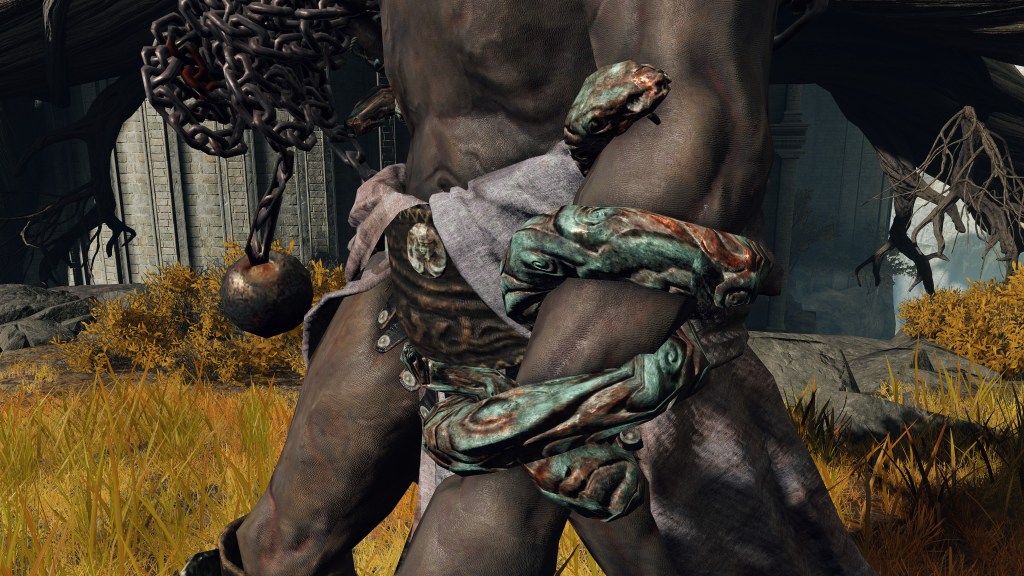
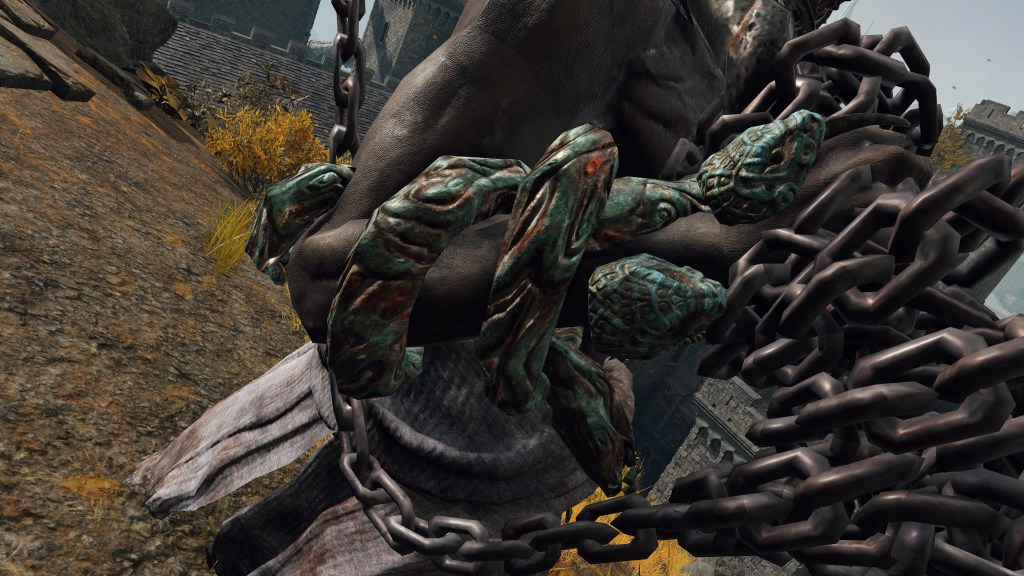
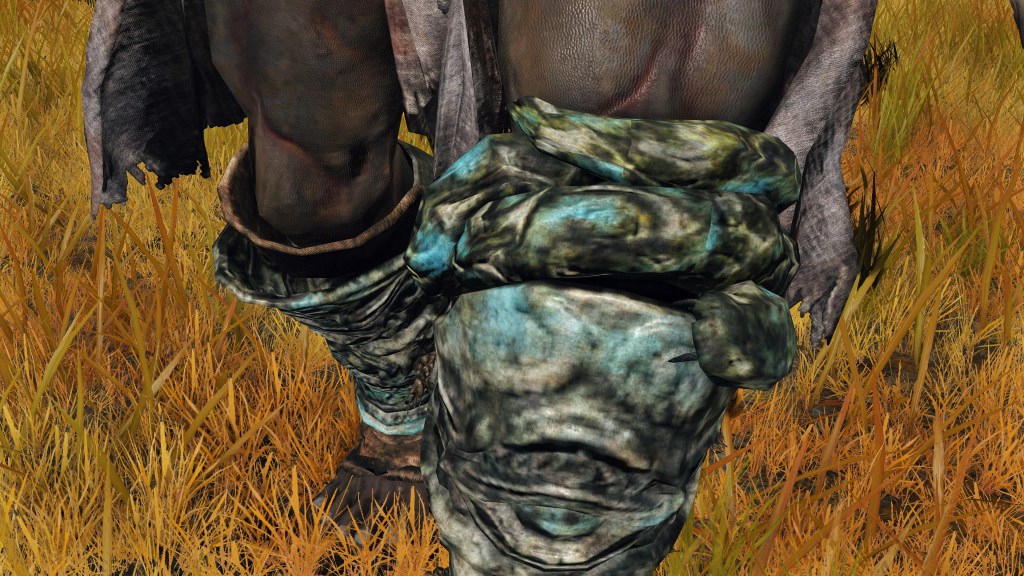
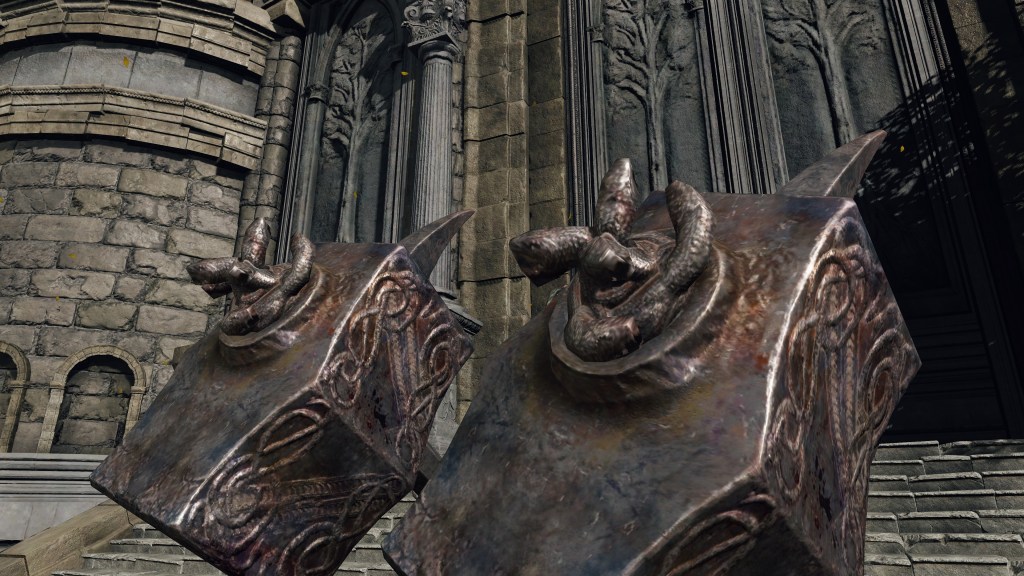
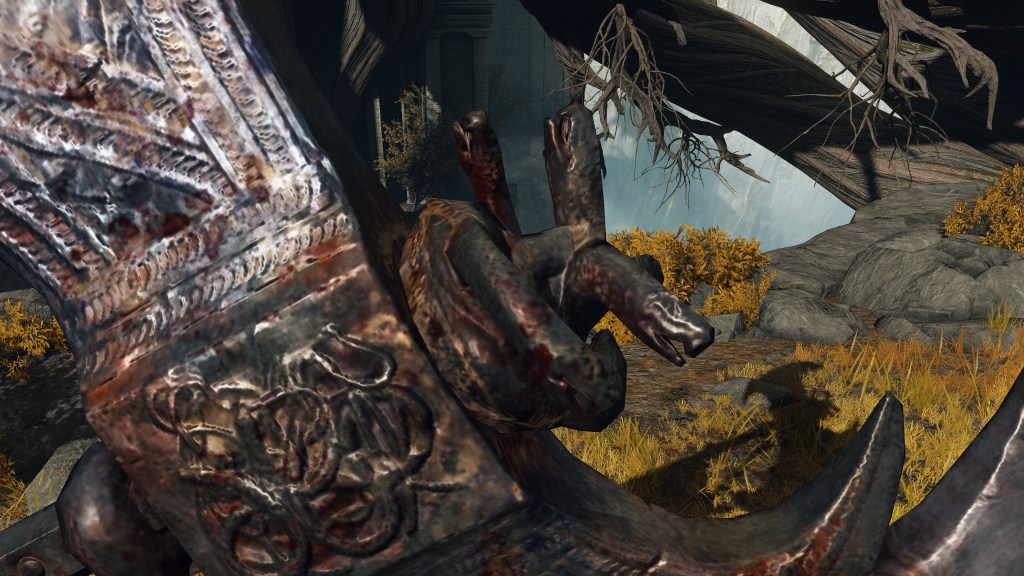
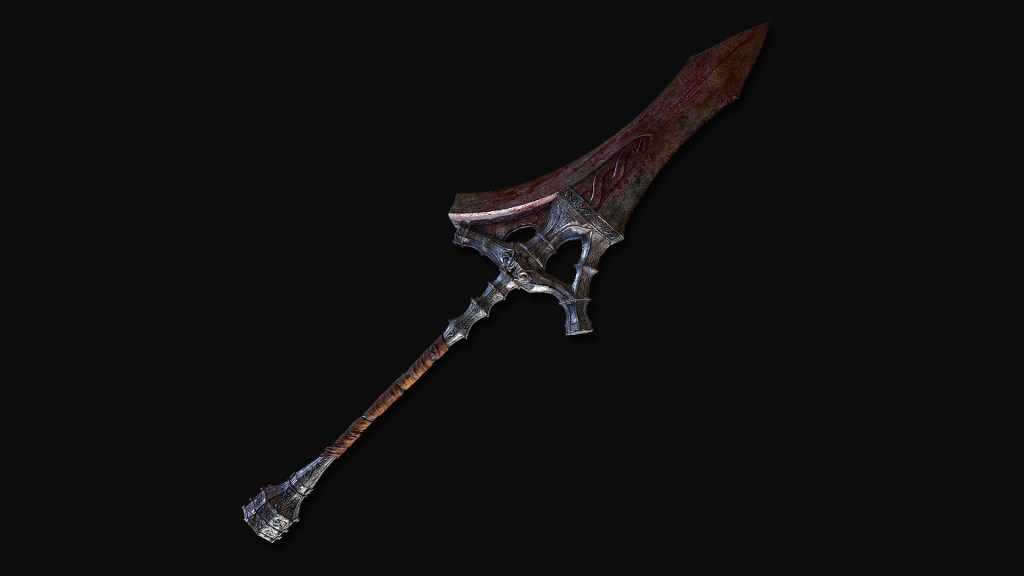
Admittedly, the sword’s thrusts mainly serve to extend the reach of the magic blades of white light produced when facing the serpent. Not only do this magic even the playing field in regard to the size disparity, its length more than cuts through the entire breadth of the giant. The weapon appears to gather swirling winds when it generates light, which might simply be a reference to Storm Ruler; a weapon with wind powers used to slay the Storm King in Demon’s Souls — a boss name later recycled for the Nameless King’s fight. However, it is possible that the weapon was designed with outside help from former Farum colonists, who would be familiar with manipulating the wind. The magic’s similarity to the Sword of Light might further suggest the Hornsent’s role in engineering the armament. When it comes to beast gods, no one knew more than Marika’s allies down south, and the fact that the power only manifests against a giant serpent might be a precaution so that their deities couldn’t be harmed. But regardless of how, it was forged for Godfrey to bring the hunt to the hunters.
Weapon which is both a greatsword and a spear. Said to have hunted an immortal great snake in the Old Age, so creates a long blade of light when facing the great snake.
For when the Supreme King’s ambitions degenerated to base greed, the knights sought a weapon to stop their master.
To prevent the loss of any more demigods, Marika sent Maliketh to join him. As someone who has lived his life to protect his Empyrean, Maliketh possesses the training with a greatsword, with a speed and acrobatics to match the apostles. He was perfectly suitable to handling the black flame while Godfrey and his army challenged the lava flame. From the Gelmir’s Hero Grave decorated in the manor’s banners and lighting, there were valiant efforts on both sides of this war. The Erdtree army also suffered its share of losses, going by the coffin cemetery on the other end of the precipice the hero grave sits upon; unlike any other instance, these coffins are surrounded by golden flowers, as if trying to bless the accursed ground of that infernal serpent. But despite the lava hexes and poison on the mountain, the Erdtree forces end up breaching the castle. Godfrey went on to slay his would-be usurper while Maliketh cut through the apostles to face their supposed queen. At the end of their confrontation, the vassal beast emerged victorious.
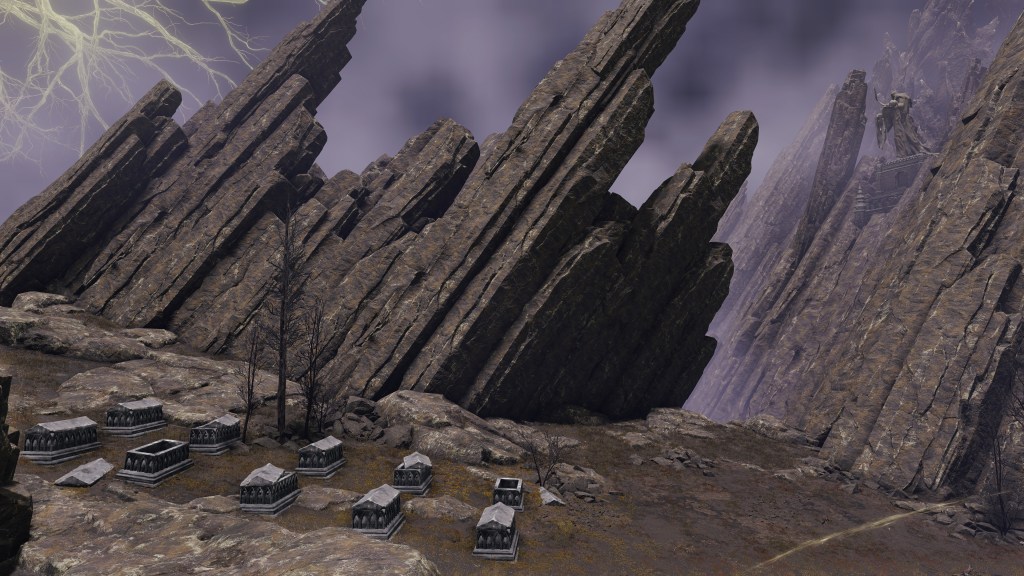
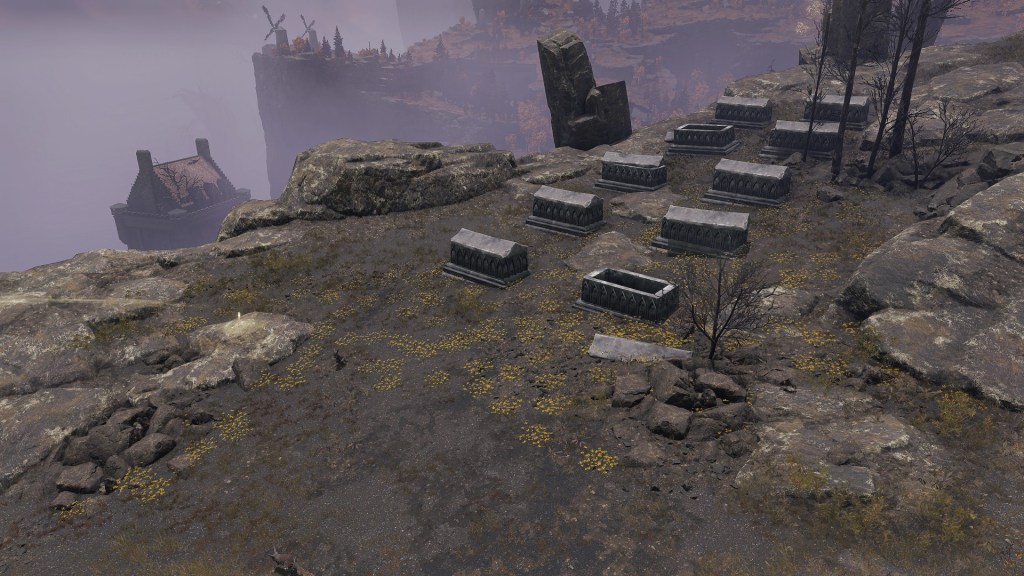
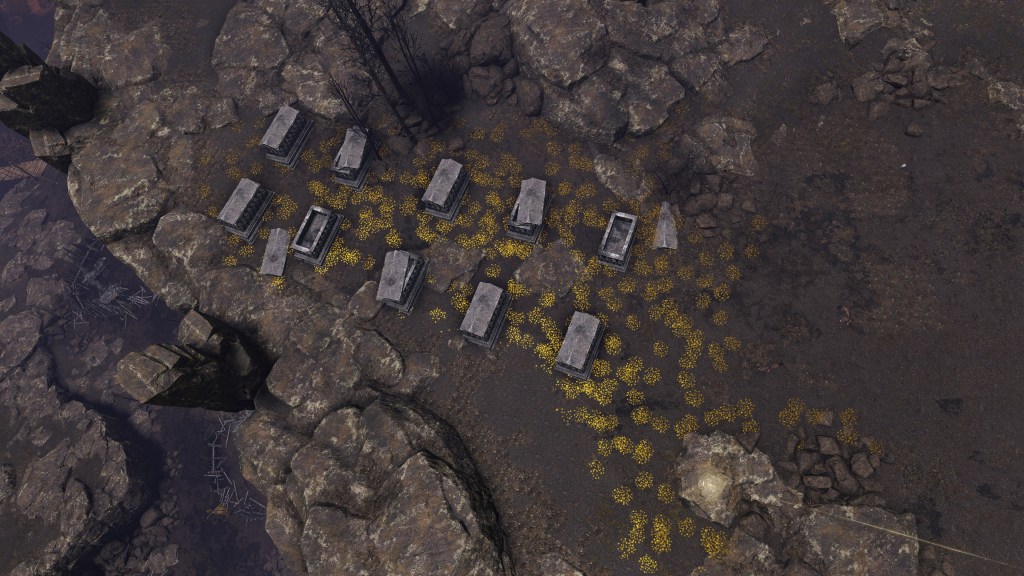
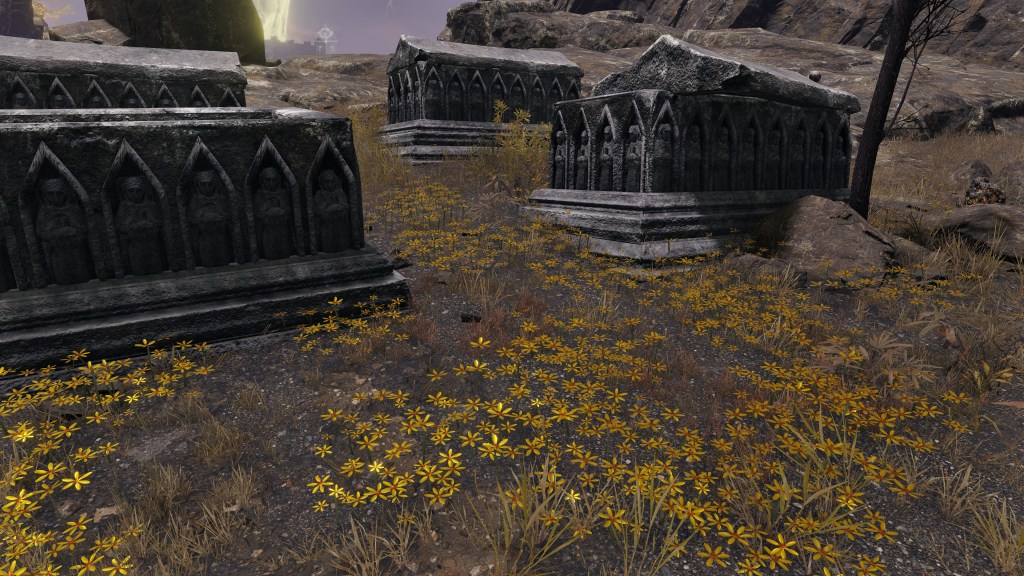
With the heads of the serpents cut, the god-hunters swiftly fell apart. The death of their future god seems to have sent the surviving followers into a chaotic rout, scattering across the Lands Between to escape justice. One Apostle collected the holy sword of their queen and went into hiding with some Blackflame Monks in the depths of Caelid’s Divine Tower, preserving the sacred treasure to this day. Amon apparently fled back to the Mountaintops of the Giant but — too ashamed to return to his fellow monks just to be seduced by another flame — chose to take the Grand Lift of Rolled down into the catacombs, where he ended up perishing against the stray mimic tear lurking inside. The fact that a number have survived to this day is proof that they managed to escape pursuers and keep a low profile, though it coincides with the inference that none consider them enough of a threat to bother rooting out. Perhaps that sentiment is misplaced since, while they lost their power, they still can draw upon residual black flame.
Most seem committed to amassing power or a power base, at least. There is the Noble who returned to Gelmir with a monk in the hopes of reviving the alliance which birthed his kind. Then there are the apostles who tried rediscovering the queen’s ritual from the monks yet to be converted. One of the skinners has found his place as a sort of cult figure to the cannibals of Dominula, earning the women’s praise as he helps strip skin from flesh and bone for their festival. (Nightreign features another village led instead by a group of monks) One of the stitchers appears before us crossing the bridge to Liurnia’s Divine Tower, assuredly after the Cursemark of Death inside to mend a new Rune of Death as Fia does. The Godskin Duo have come to Farum Azula, doubtless aiming to reclaim Destined Death from Maliketh deeper in the crumbling ruins. The cult is making maneuvers to rechallenge the gods. But the problem is that they are still maneuvering. There is no coordination between these isolated parties; it is every snake hybrid for himself. These clingers-on have little hope of reviving the god hunts without their leader to unite them.
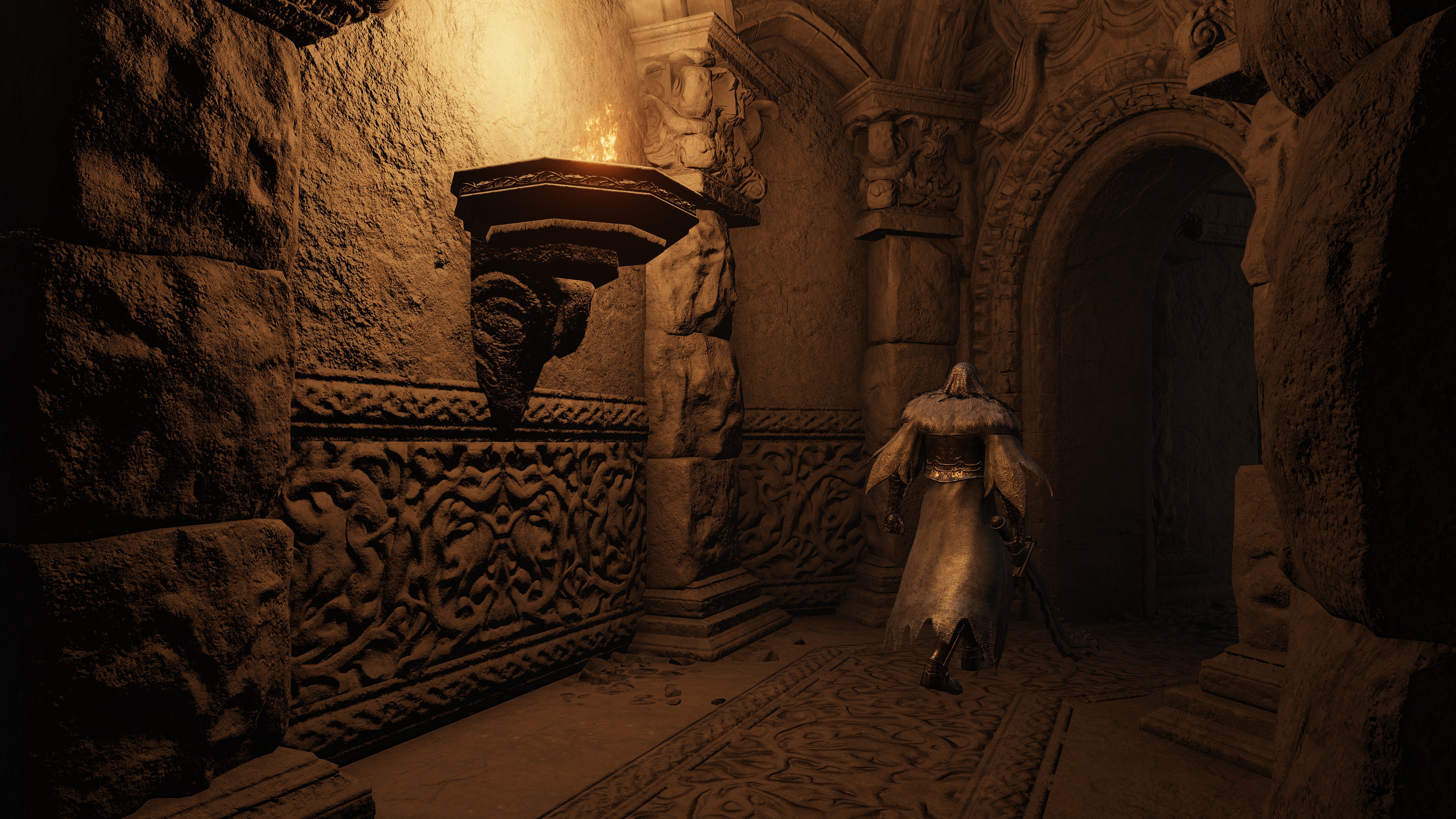
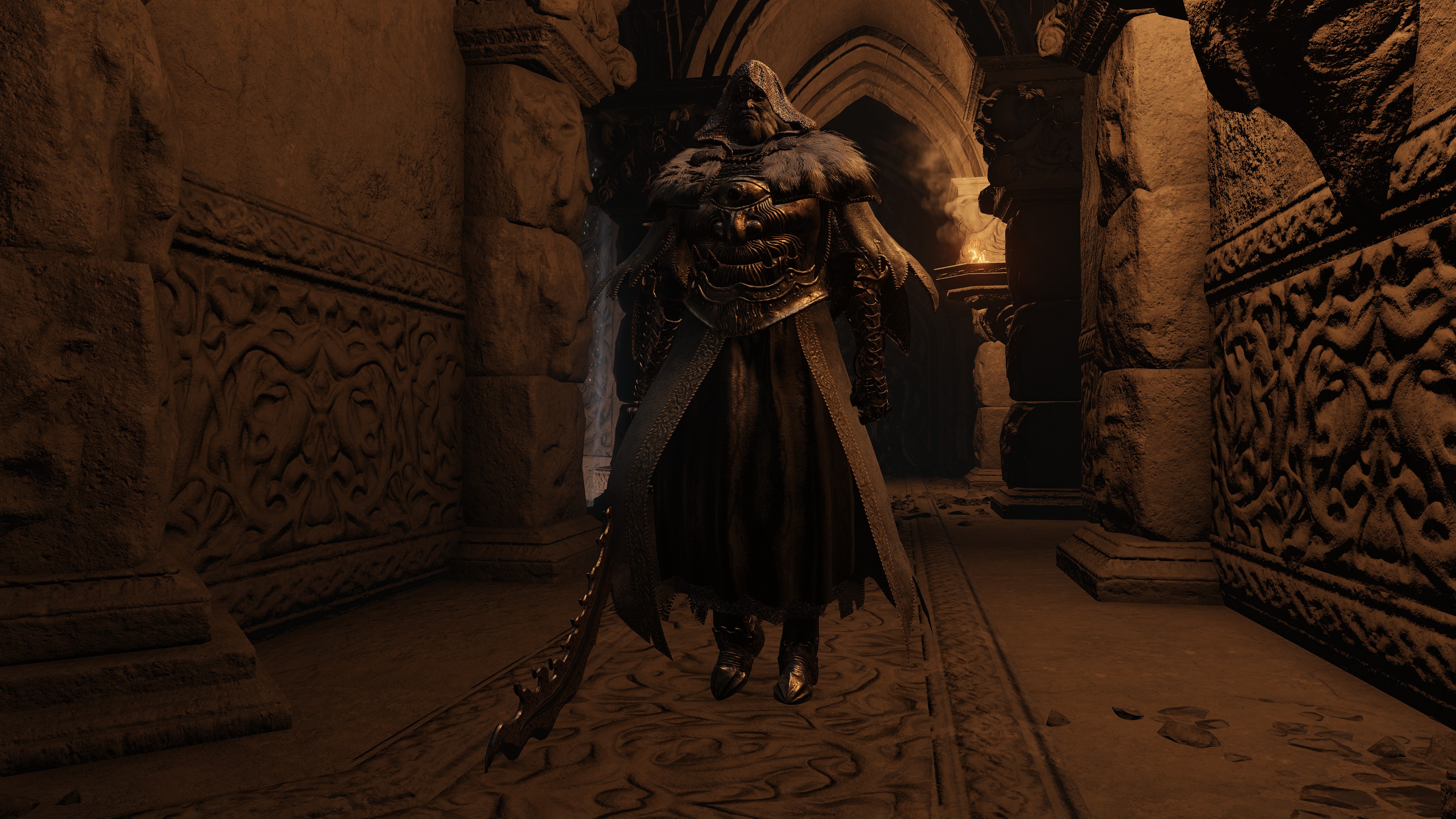
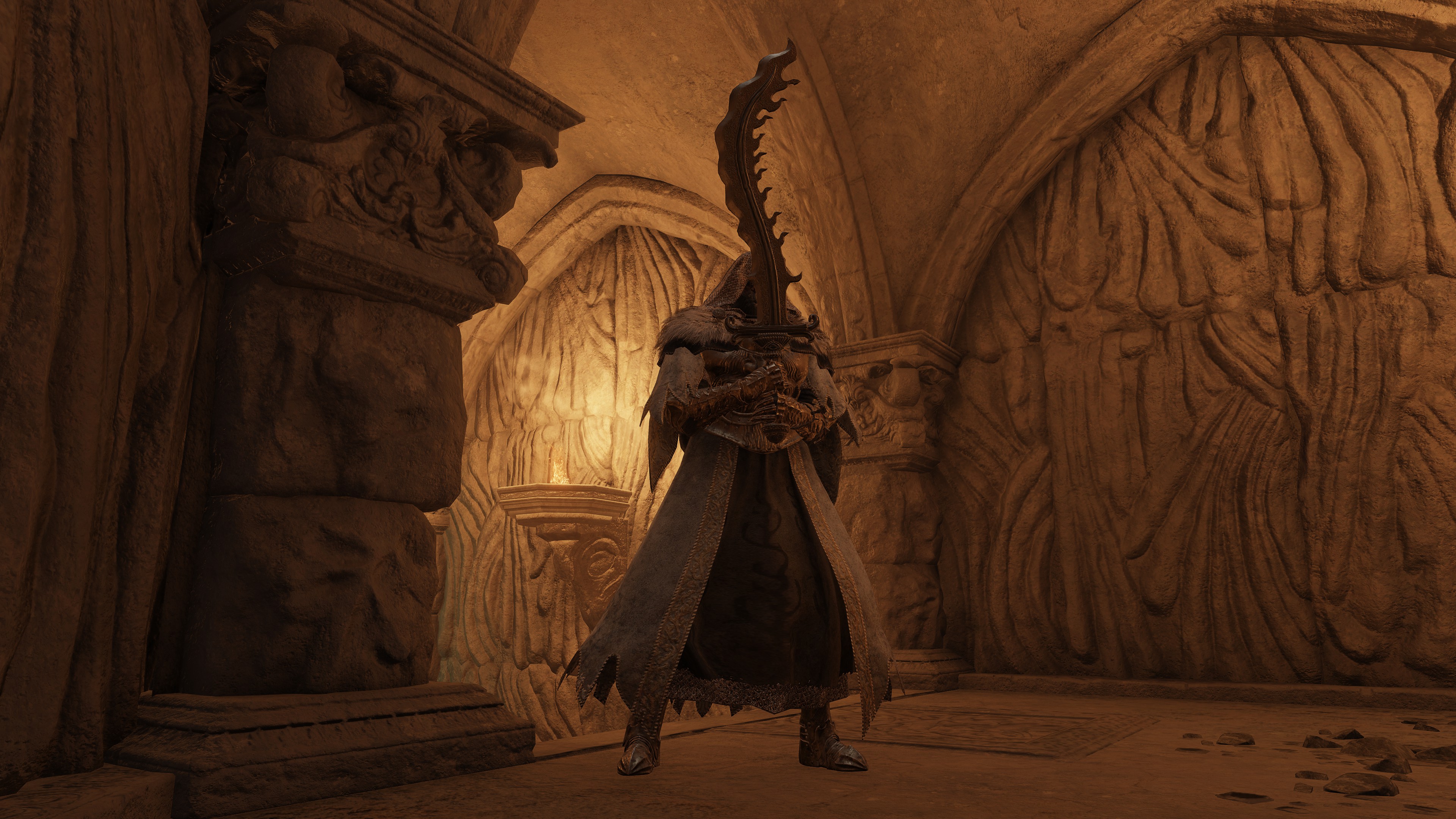
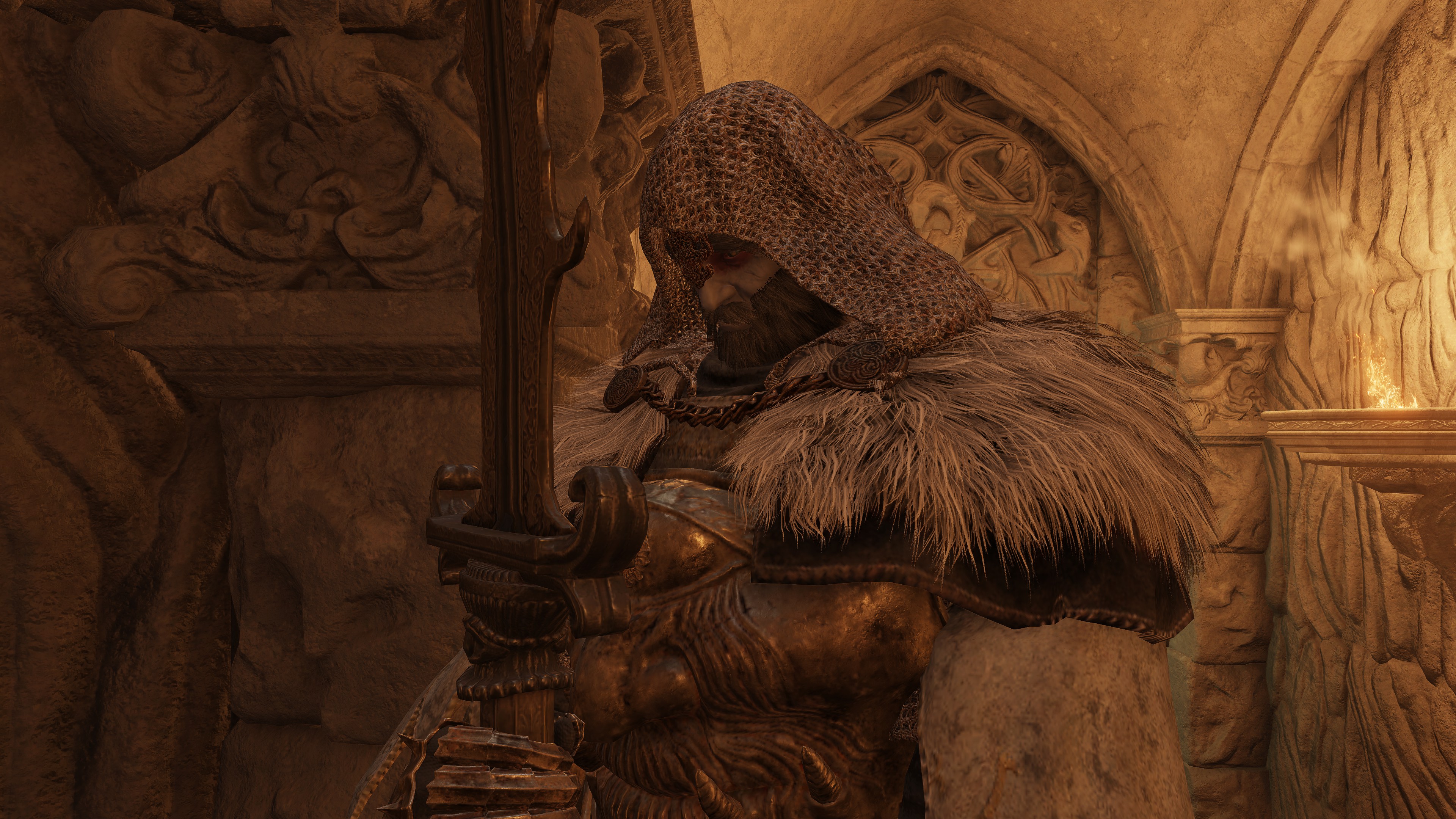
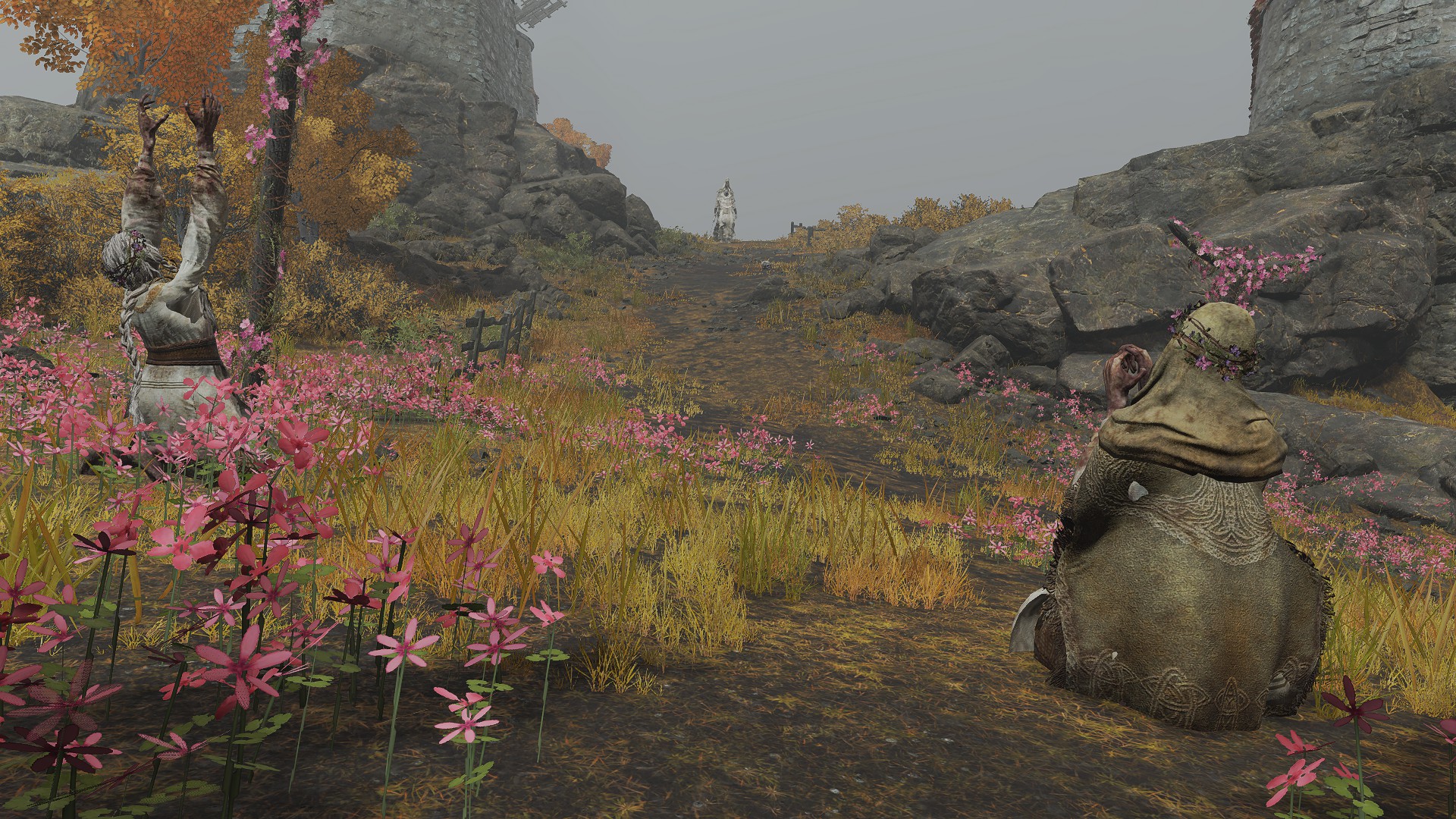
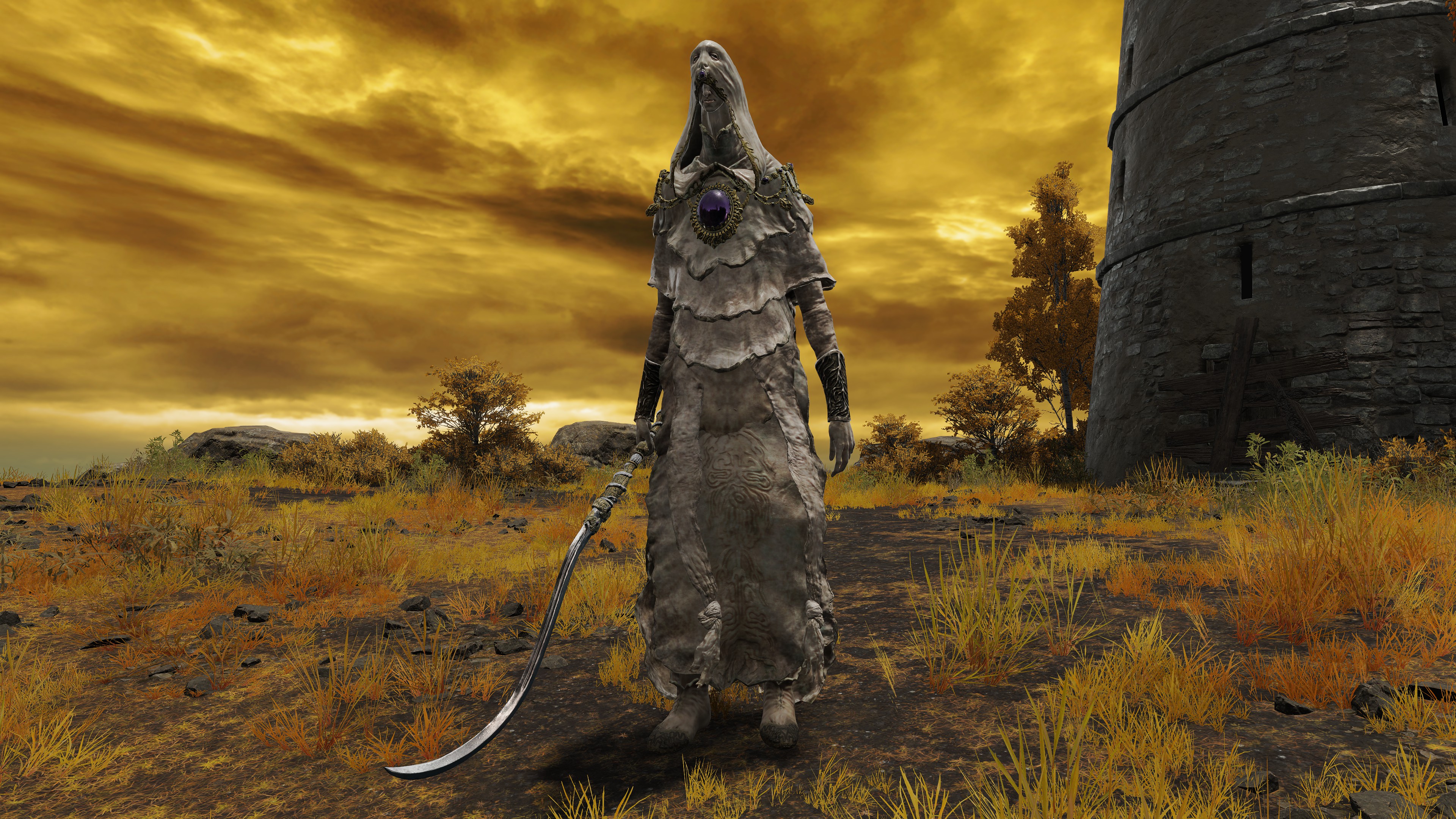
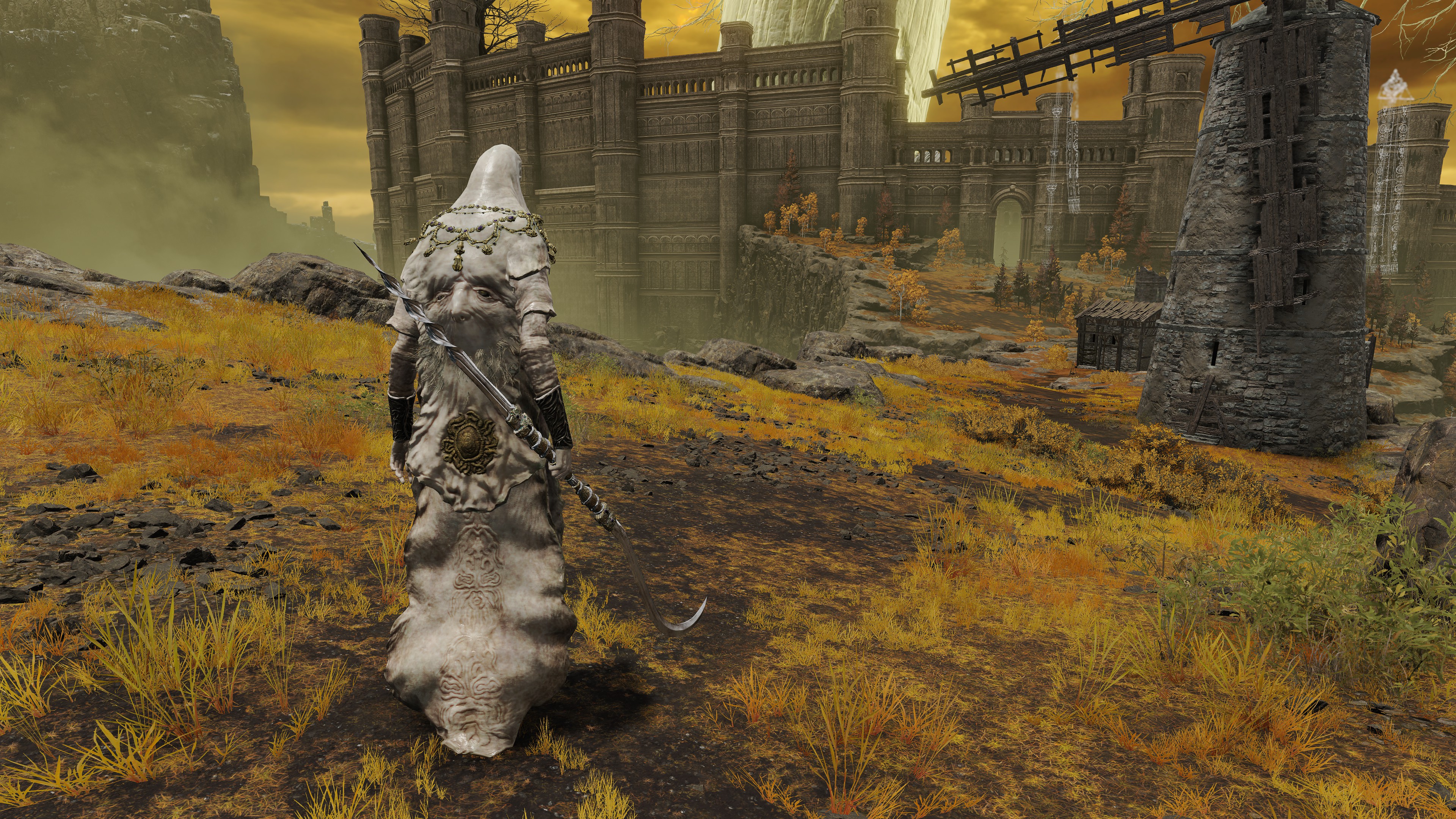
The war was over, but nothing would be the same. Maliketh now stood as a warrior who hunted the demigod that hunted demigods and claimed her rune as his own. A demigod slayer with the power used to slay demigods — he was the demigods’ death incarnate. Every Erdtree prince and princess had cause to fear crossing him, or his “sister” for that matter. Their mother, for her part, was willing to make good on that fear, since it is exactly why demigods became heroes going forward. No longer were they permitted to waste away in decadence. If they didn’t strive to be stronger with the courage to use that strength when needed, there was a real chance that they would be cut down. Clearly, Marika wanted her vassal beast to be Destined Death’s custodian for saber rattling — it both dissuade them from following in Melina’s footsteps as well as encourage them to prepare in case she thought they did. While harsh, this was obviously a mother’s way to ensure that her children could defend themselves if anything like this incident were to ever happen again. She put her foot down for their sake.
Chest armor of a beast whose black iron is ornamented with gold. Equipment of Maliketh the Black Sword.
Maliketh, who is Marika’s devoted younger stepbrother and harbored Destined Death in his sword, was every demigod’s fear.
It is precisely because they knew fear that they were heroes.
For sure, putting all her faith in the work that she and Godfrey did to build up their kingdom burned her badly. Like clapping seals, the citizenry were happy to just see the rebellion crushed, beating on the “snake” becoming a favorite in their blood sport. But for the royal family, this was an unmitigated disaster. If they didn’t know the full extent of the Gloam-Eyed Queen’s evil before, they certainly did now that the dust had settled. Countless of their own killed, and in both horrifying and humiliating fashion. Their one saving grace was that all the evidence was far and away on that western mountain, the isolation which allowed the insurgency to operate unchecked now keeping the truth contained and soon forgotten. Traveling minstrels might make plenty of coin singing tales of the heroes of blasphemy slain in the Erdtree’s name, but none will extol the coinciding time the gods warred amongst themselves. Only the royalty should be burdened with that knowledge, heavy it may hang.
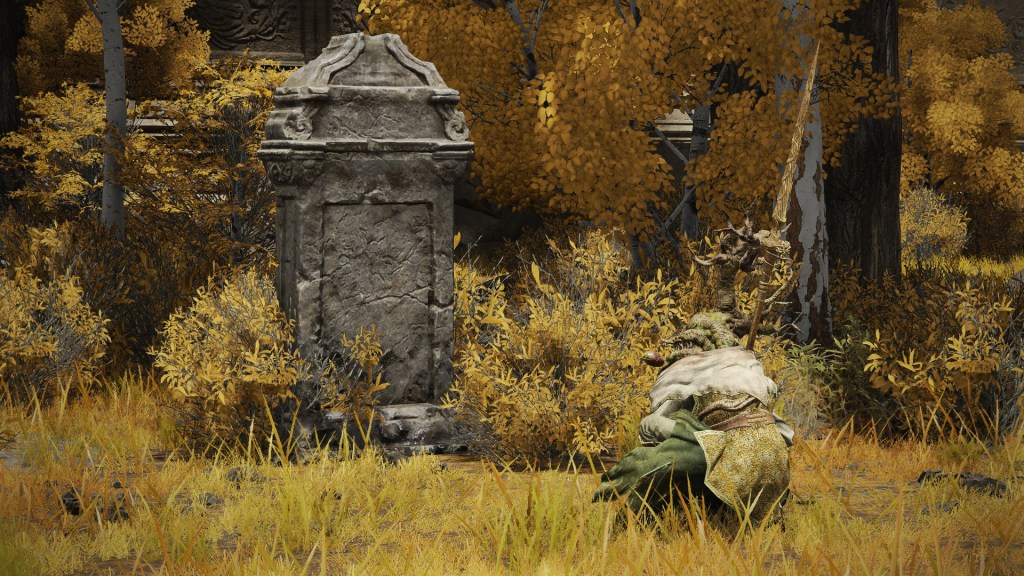
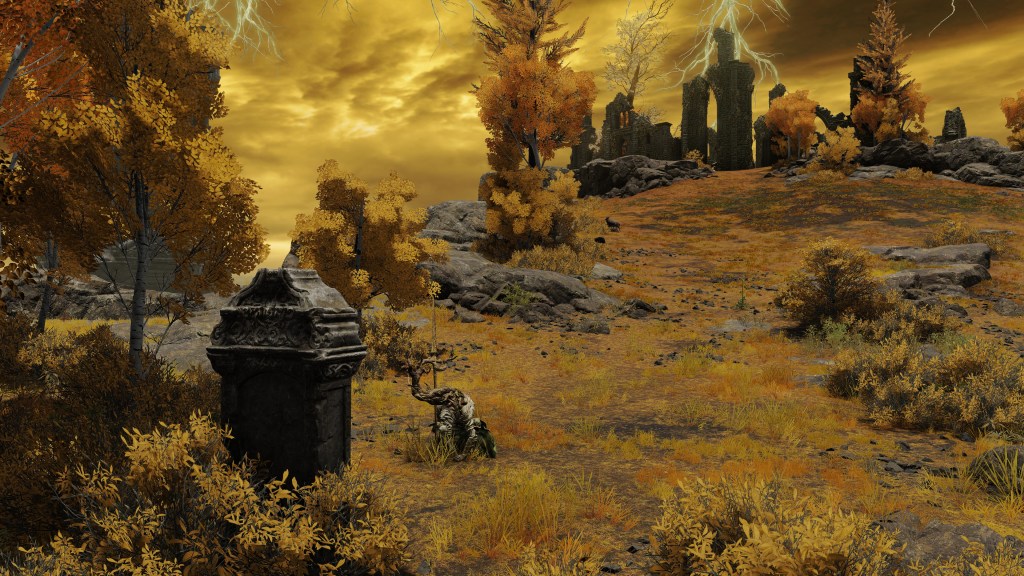
A lone grave lies in front of Leyndell in the Capital Outskirts. It is not the only instance on wider Altus, but this one stands out for the smoldering butterfly laid at it. A quiet grave in the shadow of the ramparts where no one would know to visit. It is easy to see this as the tombstone Marika erected to mourn Melina. Despite everything, she still chose to kill her child, another of her blood to weigh on her conscience. If Melina’s future birth as a spirit is anything to go by, the girl would remain on her mother’s mind for some time to come. What a tragic farce — she betrayed her clan in order to become god, and now her daughter had done the same to her. How could she blame her? She understood that drive more than anyone. As queen, she could show neither emotion nor mercy; as a mother, she grieved. The best she could hope to do was ensure that this never happened again. Indeed, if this is Melina’s grave, it is all too fitting that it end up placed between the broken Divine Bridge and the Minor Erdtree Church. Both turned out to be the failed god queen’s immediate legacy.
 Lokey Lore