
Preface
After analyzing Dark Souls for so long, I can’t deny that a conflict between dragons and gods feels familiar. But like so much of FromSoftware‘s lean on callbacks, the similarities end with the outline. The nature of both parties in this war and the worlds they exist in makes Elden Ring‘s crack at the concept feel fresh, and I enjoy some of the twists and turns in the history which brought us to this inflection point. If I had one complaint, it is that the battle with fantastical dragons ends up remarkably short and simple, treated as almost a footnote despite its ramifications on the history and culture. The event still has its moments, but I do wonder if more generalities would have ended up more conducive to weaving an epic narrative. Alas, this is the story we are told.
Boulderdash
Although war with the ancient dragons was perhaps inevitable, Leyndell managed to avoid such a conflict for quite a while. Golden Lightning Fortification is an incantation used — and implicitly invented — during the war, and it manifests the standard Erdtree cross sigil. We can thus conclude that no Ancient Dragon War took place before the Age of Plenty had come to an end. Marika’s kingdom went through an entire golden age without any major confrontation with the beasts of Farum Azula; this despite the poor treatment of its human colonies. Why then did Gransax suddenly attack the royal capital, kickstarting a war? Not even the description to the great ancient dragon’s spear speaks to the motive behind his act of aggression, but with the advent of DLC, it is easy enough to surmise. Regardless of any conflict happening on the highlands, Farum Azula’s primary focus was combating the forces under Bayle within their own sphere. The tyrant dragon absorbed all of the ancients’ attention, so any barrier to their nemesis was tantamount to an act of war. And Marika obstructed them exactly.

Spear whittled from choice weapon of the great ancient dragon Gransax. One of the “legendary weapons”.
The great ancient dragon’s attack broke the castle walls of Lowdayl. It was the only example in history, and also the start of the ensuing war with the ancient dragons.
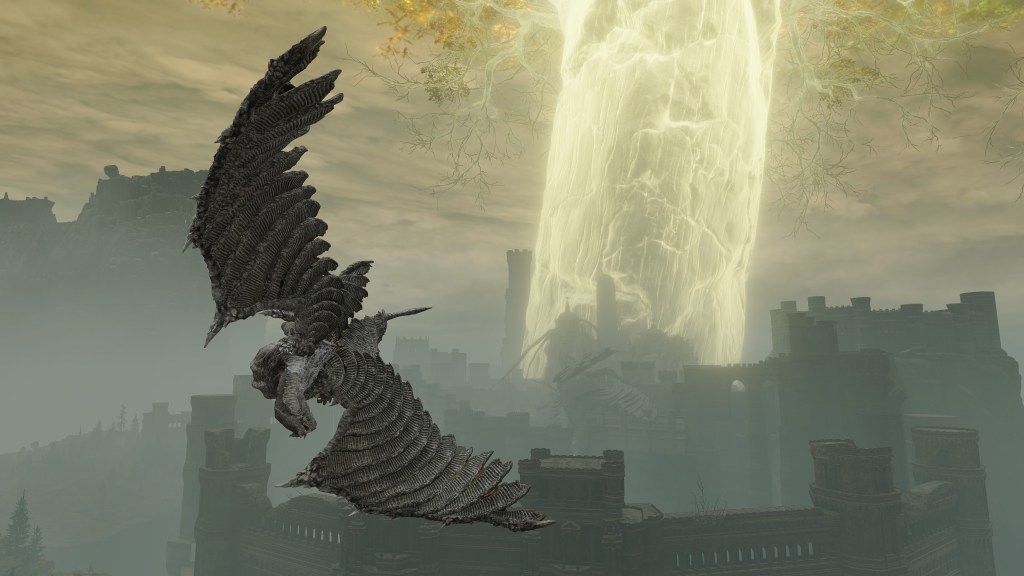
Recall that during the waning days of Plenty was Messmer’s Crusade. When choosing to hide her homeland away in the Realm of Shadow, the Eternal Queen drew in the two warring dragon armies with it. Farum Azula was suddenly cut off from their army, the battlefield vanishing before their eyes, and they probably didn’t understand why at first. Eventually, they were sure to make the connection between this event and the kingdom based on the plateau north of it. The beast capital might have been able to justify ignoring the Erdtree question before, but this incident demanded some sort of response. That response came in the form of the largest ancient dragon crashing into the middle of Leyndell, though it might have been arbitrary. By all indications, Gransax was the only dragon involved in this assault. If the goal was to launch a surprise attack on the capital, why not commit all their available forces? Had they ensured the city’s total destruction, the war ends before it even began. Were the dragons simply overconfident, or did Gransax jump the gun?
Given the uncertainties in the situation, it is possible that Farum Azula debated how to proceed. Events following Messmer’s departure from the Lands Between until the Crucible’s proper end demonstrate the dragons’ hesitance to respond violently for years at minimum. By the time they surmised what was going on, many in Farum’s elite may have questioned if an invasion was necessary — surely, some might argue, they could escalate the issue after exhausting their diplomatic options. Was the Beast King not the Erdtree kingdom’s chancellor? Maybe they could negotiate? Why make another enemy? Indeed, for all their power, the dragons were moored to that retrenched mindset embodied by their crest. Without a direct assault on the homeland, it was easy to make excuses for their past proxy conflicts with the other natives. Even now with Bayle, there was a case to say that Marika had solved their quagmire for them. What need to move the boulder up the slope over forces liable to die anyway?
Others, itching to battle Bayle, were sure to deride such dovish behavior. Gransax was obviously one of them. As the dragon the size of a mountain, he had every reason to believe that destroying Leyndell was child’s play. And for one where raw strength comes easy, there is little patience for priests and elders overcomplicating things. While they deliberated, soldiers were dying in another dimension without support from the homeland. How could they just be sitting on their hands? Did they not teach the humans to seize the heart of the enemy? Why stand still as stone? Those incensed in this eons-long struggle with the lesser dragons weren’t going to suddenly cool their rage because of a third party imposing a roadblock, leading to them butting heads with the opposition. With tensions running so high, it is easy to see a hot-tempered dragon fly off on his own to put this tiptoeing to rest.
There may also have been a personal element to this. The Bolt of Gransax is a physical weapon resembling the destructive lightning of Placidusax. With the spear’s skill, the wielder may conjure an actual bolt of red lightning to hurl, making it a kind of conduit for artificially replicating the dragon king’s natural ability. The fact that Gransax felt the need to own a physical conduit to produce lightning innate to his race speaks to his sense of yearning for and inferiority toward Placidusax. (Elden Ring: Nightreign has a Tree Sentinel relying on Gransax’s power even mimic the Dragon King’s storm cloud transformation) But why was this so important to a dragon of such immense size? His “lightning” was colored gold, the weaker derivative of the red wielded by him and the king. Was Gransax himself a weaker derivative, such as the king’s child? That would explain why the flying mountain wasn’t sent after Bayle, who attempted regicide. For his safety, the prince has been denied battle, even though he is desperate to prove himself. Put all that together, and it is no wonder that he might defy his country’s defensive attitude.
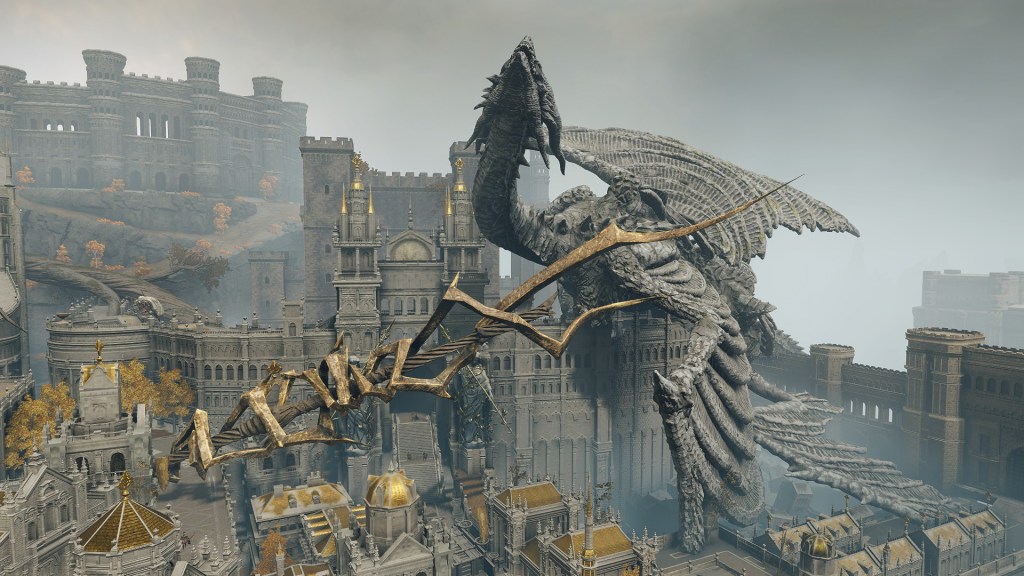

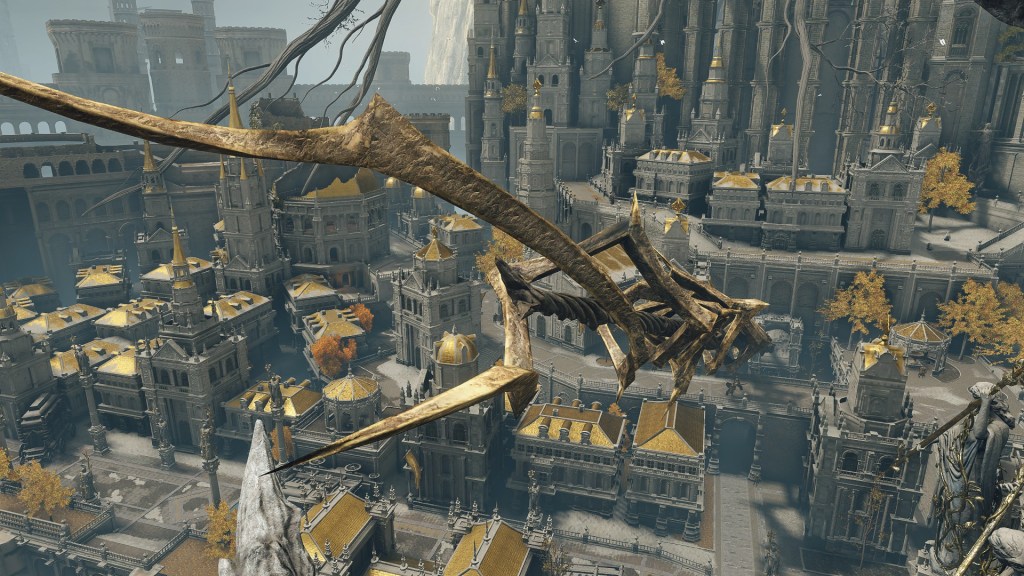
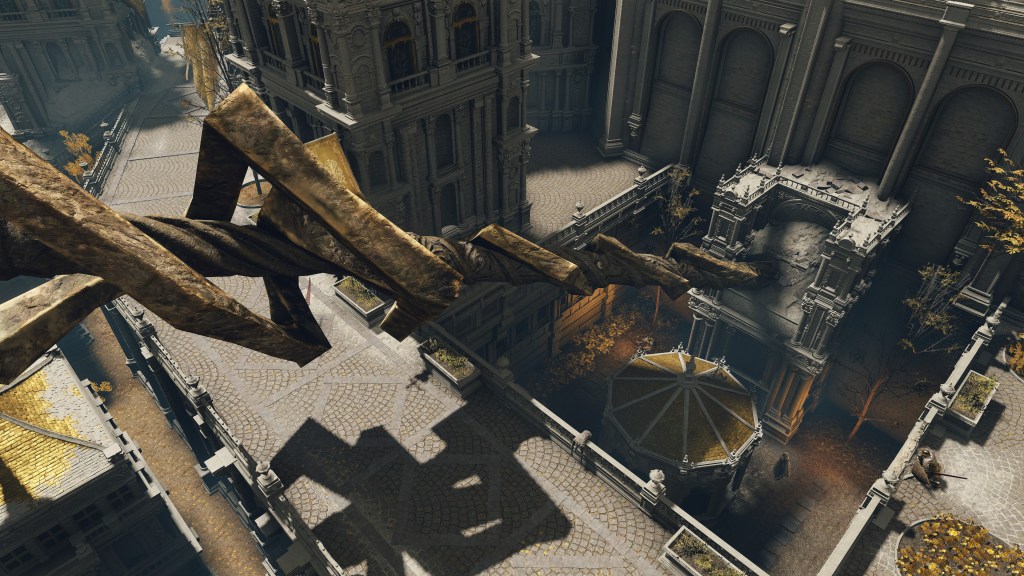

Whatever the truth may be, in the end, Gransax acted alone, breaking through Leyndell’s ramparts for the first time in the city’s history up until that point. Considering that this detail is mentioned in the description for his lightning-imbued spear, it was presumably what he used to achieve this feat; when thrown at his size, the red lightning produced from the weapon’s skill undoubtedly would rip through those stone walls like paper. For the citizens, it must have been surreal to see the great ancient dragon suddenly drop in raining destruction, all their defenses ignored or torn down. But even though Gransax was powerful, he was ultimately defeated, the dead body laying atop the cityscape to this day. The great ancient dragon failed to crush the heart of the Erdtree kingdom. And even if his brethren had never approved, Leyndell could only interpret this unprovoked attack as Farum Azula’s own declaration of war. Whether the beasts wanted to or not, they would face the Erdtree’s retaliation.
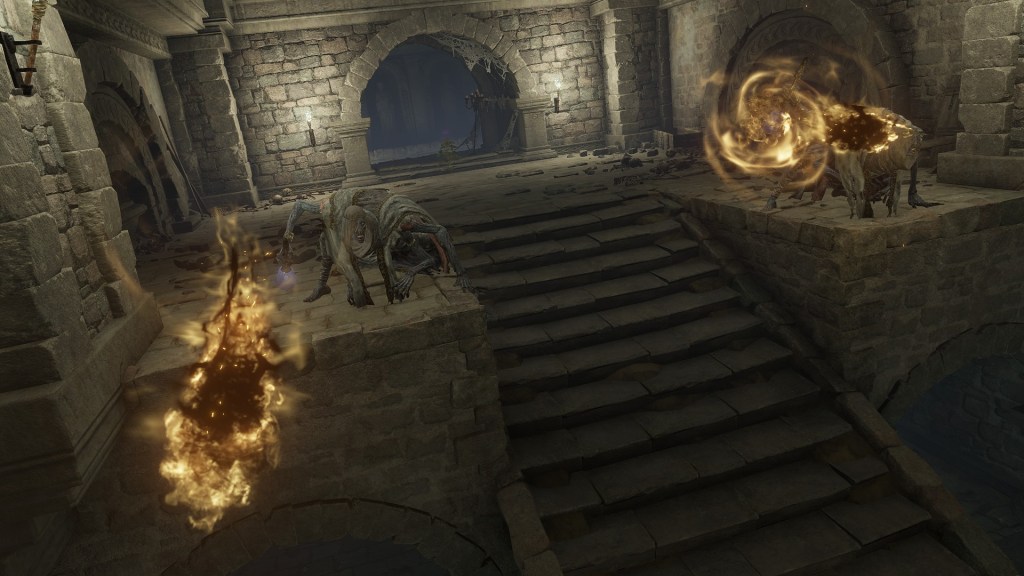
But as with any war, there needed to be preparation. It took time for Leyndell to rebuild the necessities and muster an army with a plan of attack. The only lasting damage from Gransax’s rampage appears to be where his body landed with its last breath. Because the body was too big for even trolls to move, the kingdom decided to just leave him there. As a result, all the buildings under the dragon have never been rebuilt. Chiefly, this affected the north end of the Lower Quarter, Nox abandoning their homes along with their tortured creations — a few fatigued Albinaurics still remain among the wreckage, while others have already fled down local wells or canals for respite. The Manor Quarter and avenue connecting the Upper Quarter to the front half of the city have also retained partial damage. Relocation of residents aside, the kingdom could absorb these losses easily. The same couldn’t be said for the broken castle walls or any damage to key facilities. These needed repair to at least be operational again.


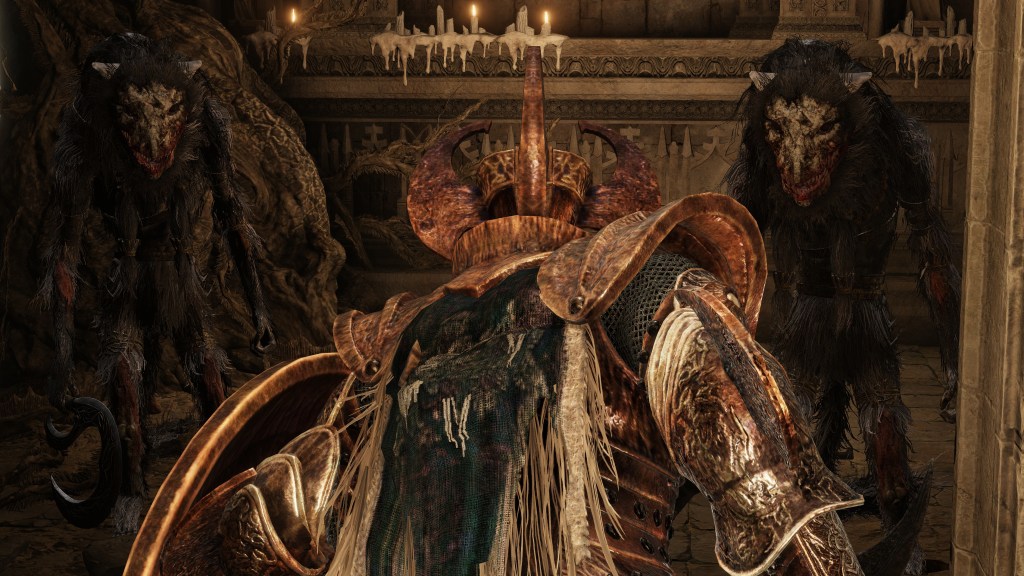
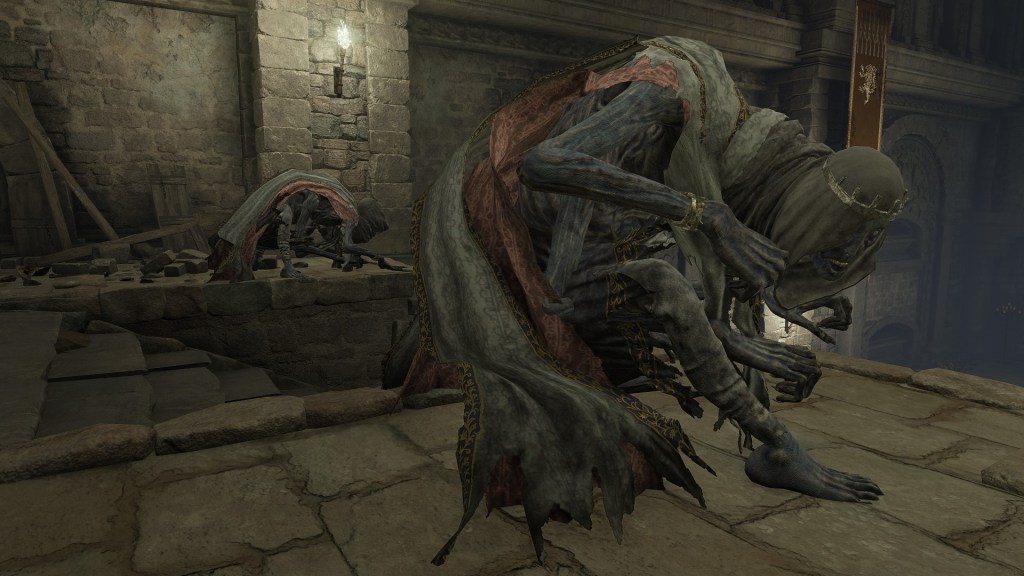
On the human resource side, surviving soldiers had to be armed for the battles ahead. The priests formulated a more powerful prayer of protection from lightning for the knights. The city’s defenders, meanwhile, adapted to meet Gransax’s threat. At least a few Tree Sentinels came to the realization that, if they wanted to keep protecting the Erdtree, they must become dragons in order to have the power to match dragons. To that end, they wear a new set of golden armor incorporating draconic imagery, with something similar warped for their steeds. Standout among these changes is replacing the tree ornament on the helmet with a lion-dragon effigy, the perfect symbol of this golden transformation. The horses’ wing-shaped reigns and scale-armor caparison also look to employ gravel stone instead of gold, which holds just as true for the guards’ gauntlets. This could only have been taken from Gransax — if they can’t simply dispose of the mountainous roadblock, slowly chipping away at the body was the next best option. While grotesque, it was undeniably done for the armaments.
One of the Golden Tree faith prayers.
Greatly boosts lightning cut rate, including surrounding allies. Continue to pray while holding and effect won’t activate.
Thing that the golden knights, who fought the Ancient Dragon War that followed the attack of the great ancient dragon Gransax to the bitter end, used.
Warped helmet made with gold. Equipment of the grotesque Tree Guards inlaid with various aspects of the dragon.
After the great ancient dragon’s attack, they realized: “If we want to continue safeguarding the Golden Tree, we have no choice but to become dragons ourselves.”
These “grotesque” guards likewise fashioned a great hammer and shield fastening whittled pieces of Gransax’s claws to the gold, with which they are able to draw upon the great ancient dragon’s power. Wielding red lightning like they do, the guards could confidently call themselves equals to that primal species. Never again would a dragon get past the living rampart when they too were “dragons” — and the literal statement isn’t too far off from the reality. The armored steeds, at least, demonstrate draconic qualities that run more than skin-deep, breathing fire just like the flying stones. This shows no signs of perfuming, so it is possible that pieces of Gransax’s heart or other organs were fed to the horses as part of an informal Dragon Communion. If so, it is no wonder they lost their unicorn horns representing purity in the armor. These Tree Sentinels did everything to each become a mini-Gransax without abandoning their identity as golden men; this was still to defend the Erdtree. The army optimized both offense and defense in anticipation of a bitter war. And once finished, it was time for retaliation.
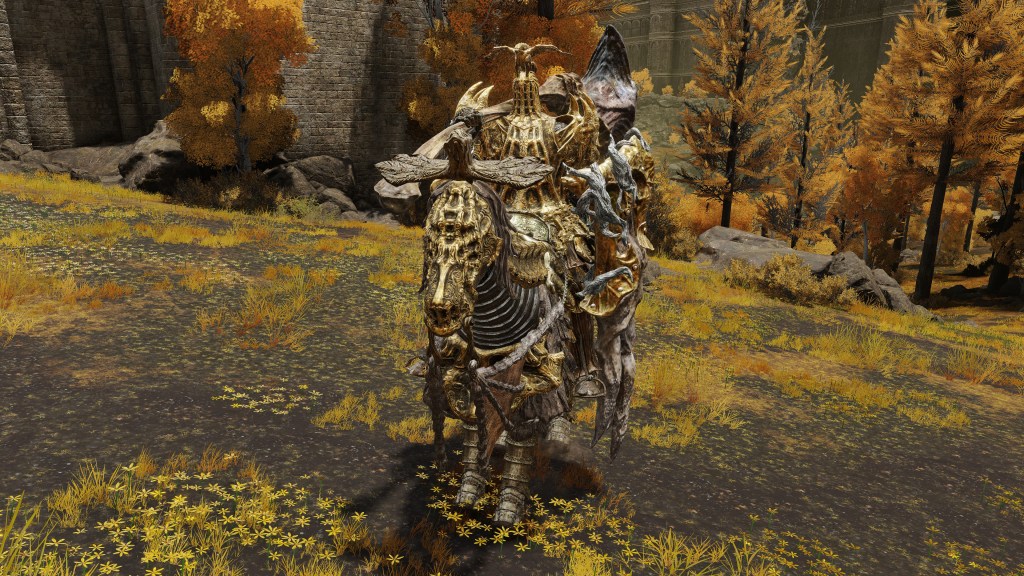


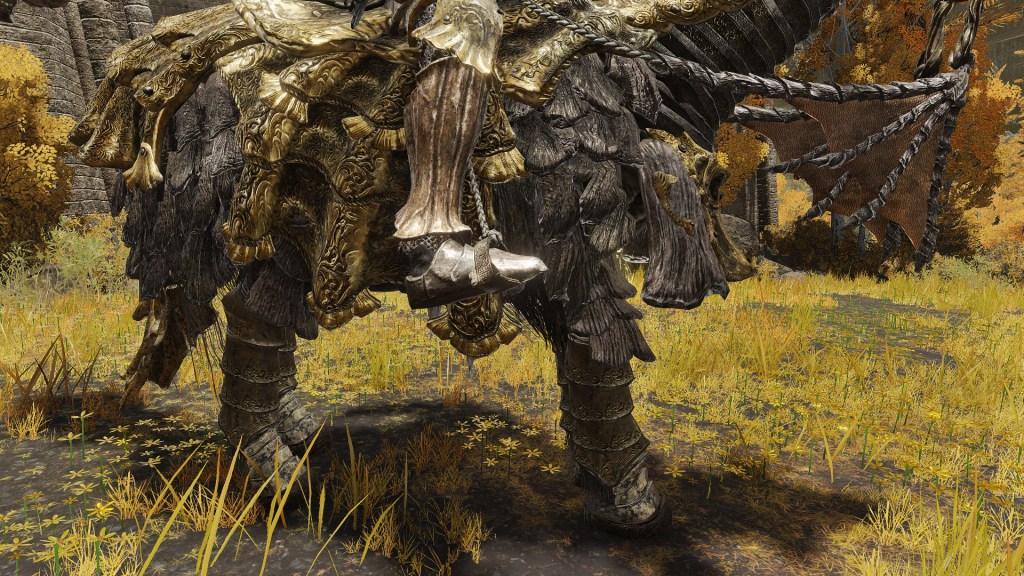
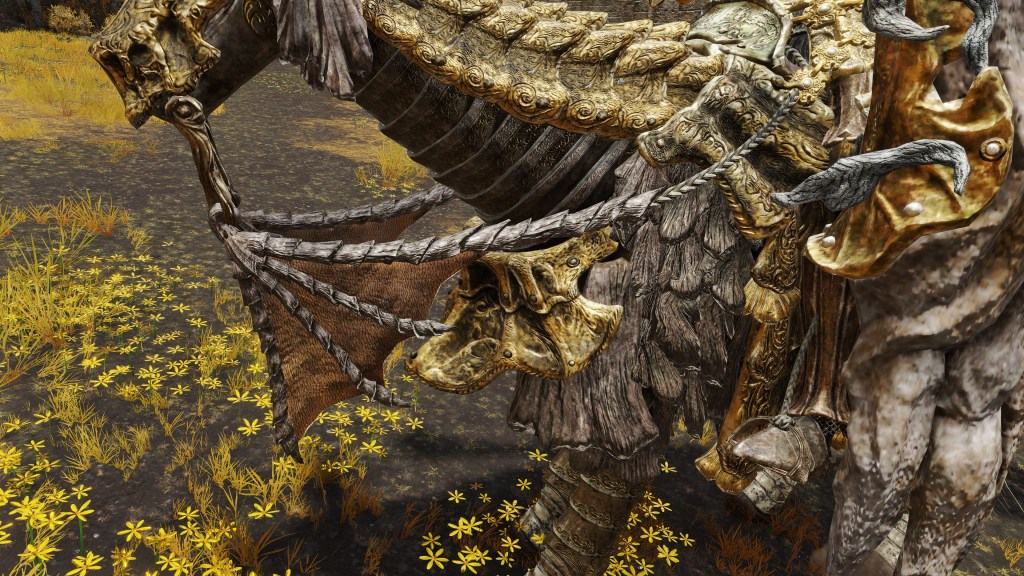
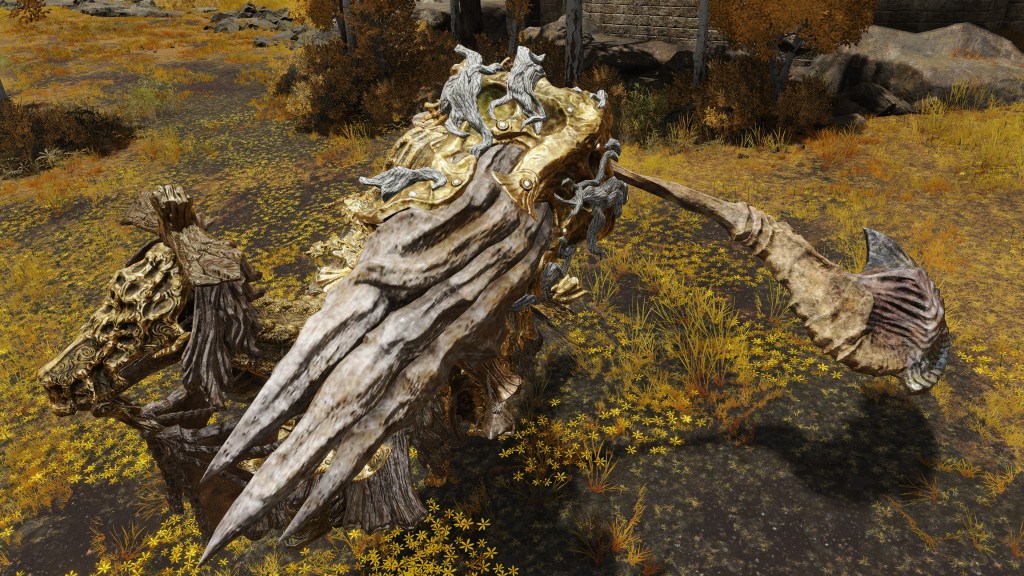


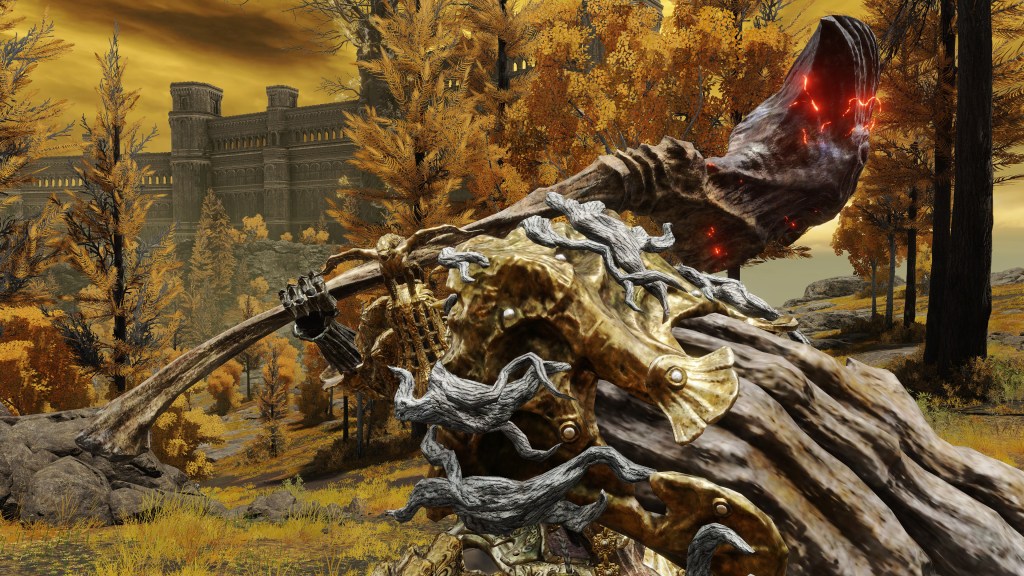


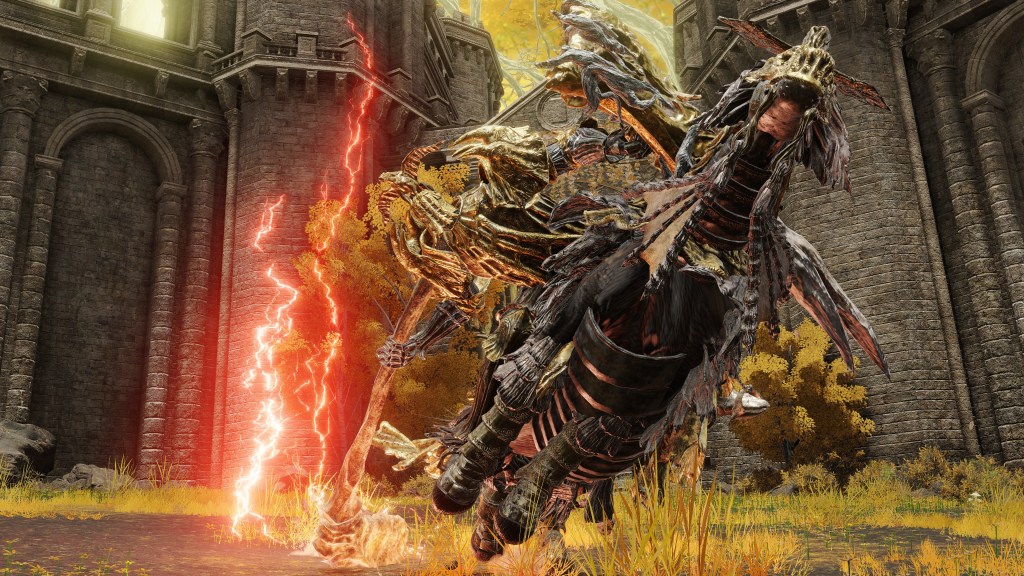
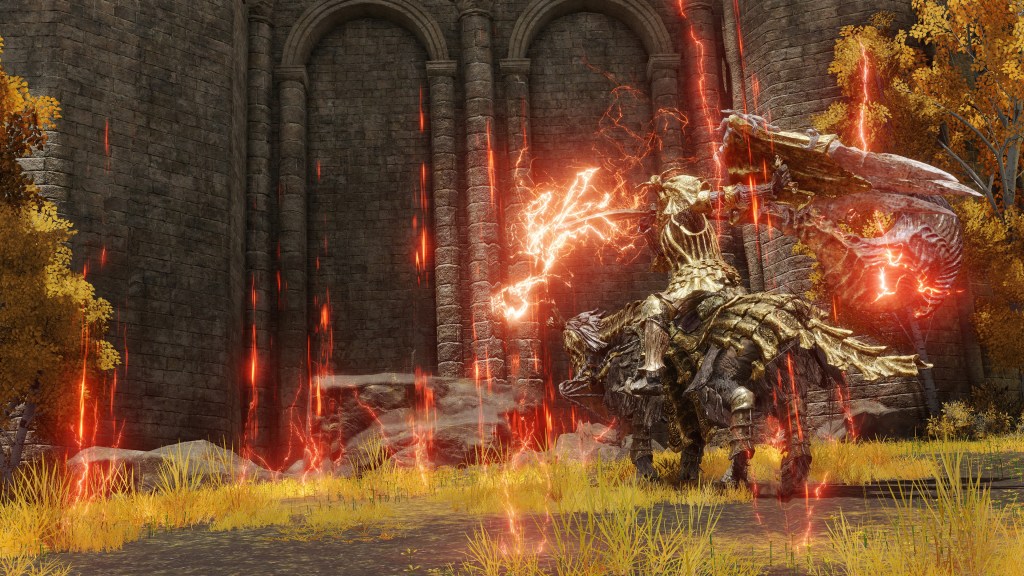


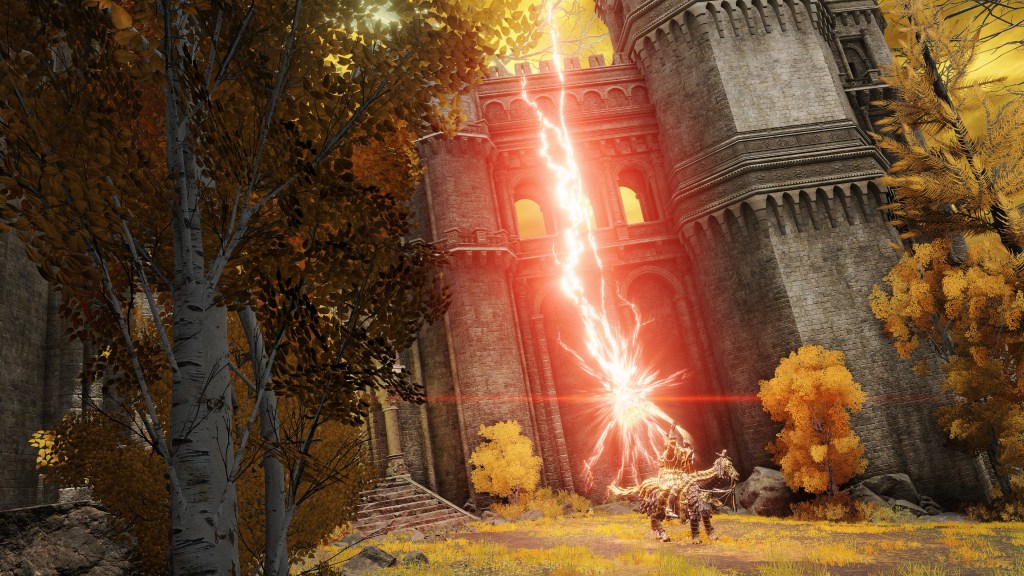


Weapon said to have whittled down the great ancient dragon’s claw. Choice weapon of grotesque Tree Guards who serve the Golden Tree.
It is tinged with the power of lightning.
City for a City
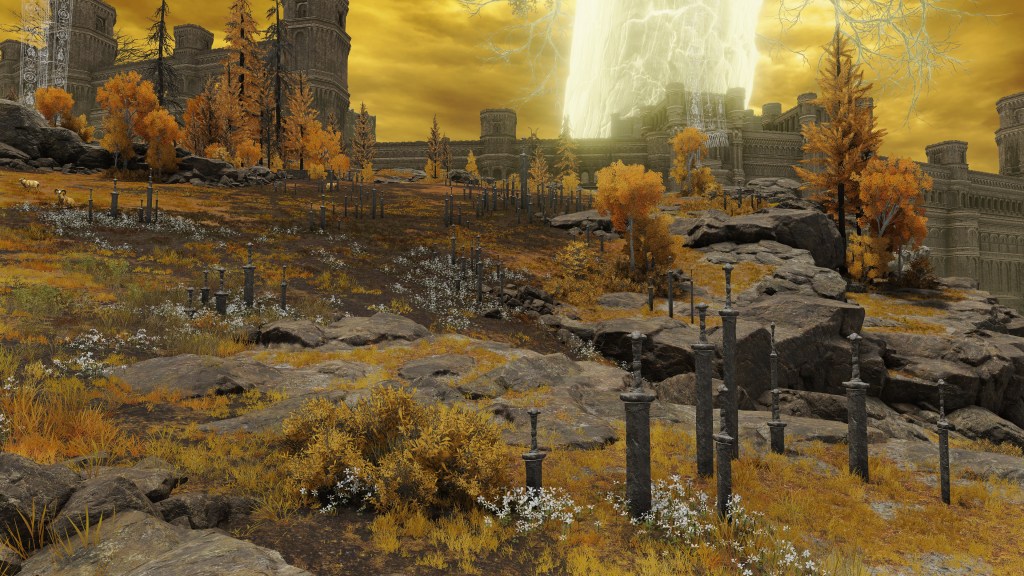
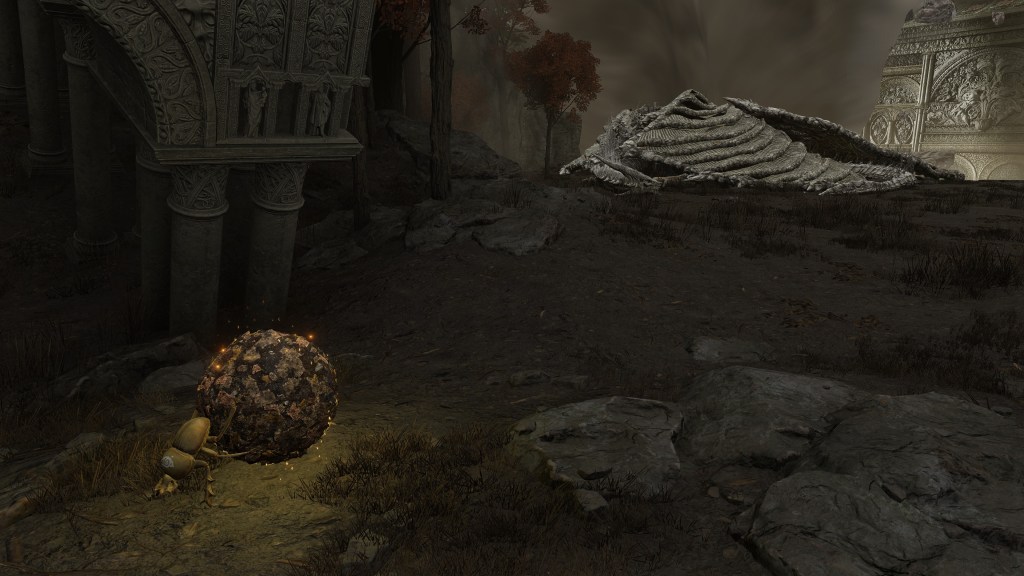
The sword monument on a hill outside the Capital Outskirts confirms that the final locale of this Ancient Dragon War stood before the ramparts on Altus. This insinuates at least one other battle to the conflict occurring elsewhere, but where? The answer is that the royal capital took the fight straight to Farum Azula. We can see this throughout the crumbling beast capital, including from items on its various corpses. The lightning greatbolts, golden smithing stones, rune arcs, and dragonwound greases might date to long before the Golden Order, but the same cannot be said for the golden arrows shot from Erdtree warriors’ bows. Then there are other corpses bearing the golden runes of Altus natives, including nearly a dozen Erdtree founders and heroes. And finally, there is the scarab rolling up Golden Lightning Fortification, the definitive signal of the war. Therefore, it is beyond a shadow of a doubt that Farum Azula became a battlefield.
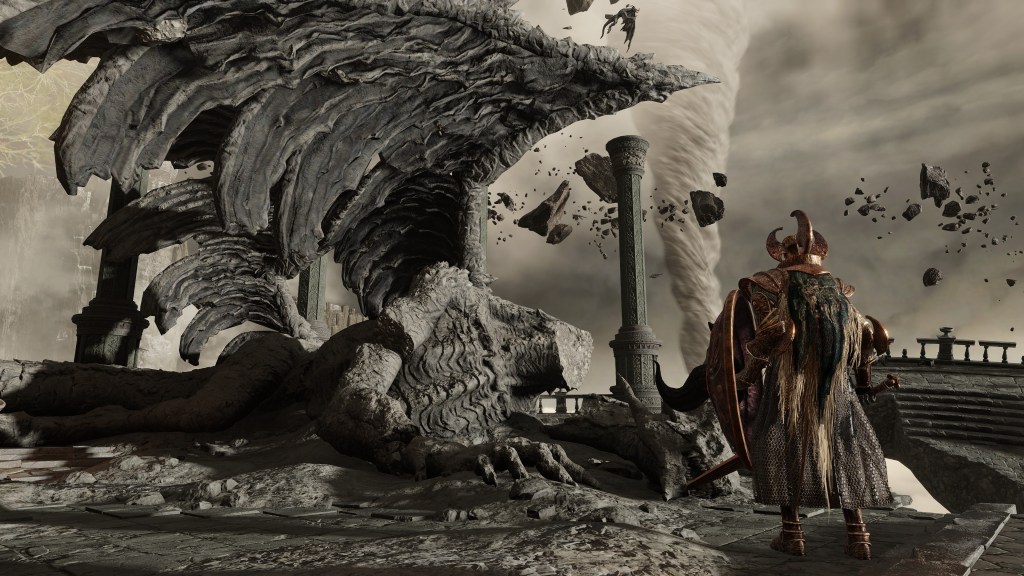
By unforced error or otherwise, the ancient dragons were now officially at war with the Erdtree capital, and that brought the wrath of Godfrey down upon them. Although a campaign against the dragons is never mentioned, we can be certain that the Elden Lord did participate through his proxies. Two of the king’s Crucible Knights are present in Farum Azula, one standing in front of a broken petrified dragon while another fights through beastmen elsewhere. Either these knights were left behind during the conflict like the corpses, or they have more recently returned to carry it on. Whichever the case, the war has clearly never ended for them — a visceral investment which requires them and the king they follow to have taken part. Conversely, it is Godwyn who distinguishes himself in the final battle on Altus, not Godfrey. If the king of the battlefield isn’t the principal hero in defending his own capital, then he must be preoccupied somewhere else, as with the case of Radagon in Liurnia. And without any other obvious commander to lead the Azula campaign, it is natural that it fall to the first choice, the Elden Lord.






One of the royal capital ancient dragon faith prayers.
Calls lightning strike and flashes it ahead. Can be used continuously.
It is said that the ancient dragon possessing gravel scales is the dragons’ ancestor who makes lightning its weapon and that it once warred with the royal capital of Lowdayl.
Indeed, the Ancient Dragon War was likely the first clash that Godfrey had taken part in since his wife had handled the Liurnian Wars. The man had good reason to want to sit out the last two campaigns, but this was an existential threat. How could he possibly abandon his troops after the enemy struck right at the very heart of their people? Whatever his misgivings about the queen and how she handled the Omen incident, he was still their king, and no one puts Godfrey’s matchless strength into question. In other words, it may well be the visceral nature of Gransax’s attack that shook the Elden Lord out of his stupor, rekindling his lust for battle; if the sudden attack on his doorstep from a gargantuan beast didn’t light a fire in Hoarah Loux, nothing would. Perhaps he was the chief architect responsible for Gransax’s demise, but regardless, the king was going to march the army to assault the dragons’ own capital.
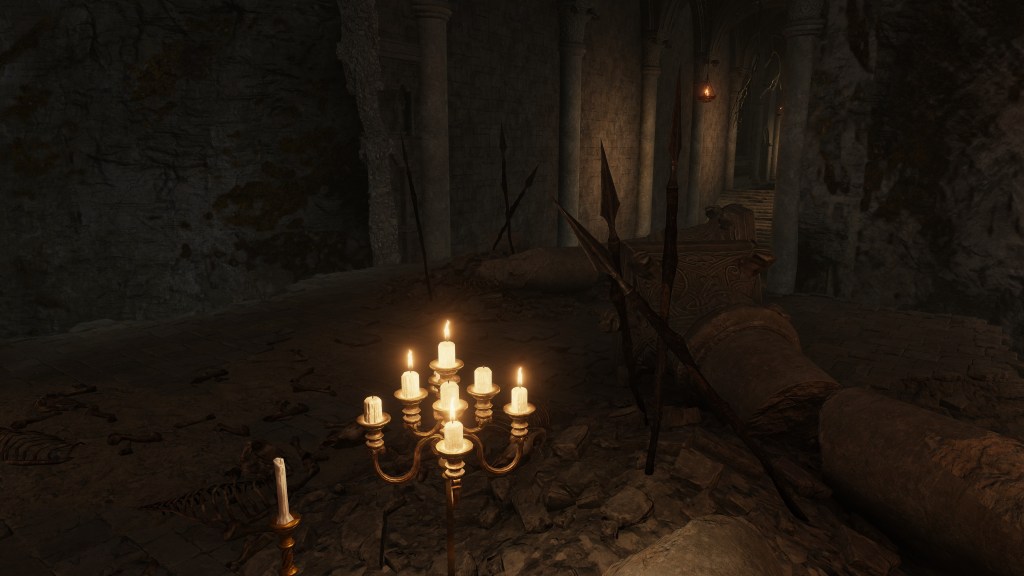
Maybe they took the Divine Tower bridge from the Fortified Manor, or maybe they took a route down the Mountaintops of the Giants. In the end, Godfrey and his forces managed to infiltrate the city, leaving many beastmen and dragons dead in their wake — spears and bones litter amongst the rubble, and two ancient dragons are still calling down indiscriminate lightning in their vicinity, one already dead and the other on death’s door. The temples and tombs appear to have fared far better, with many of its defenders remaining in those crumbling sections. However, this is hardly an achievement on Farum Azula’s part. The former enjoyed the greater priority for security while the latter benefited from its situation mostly underground. From any observation, the beasts were either ill-prepared or ill-equipped for the golden army knocking at their doorstep. It is possible that the Elden Lord even came face-to-face with his predecessor, Placidusax. However, if the two kings did engage one another, their battle was inconclusive. In fact, the entire battle had been interrupted by the stars.

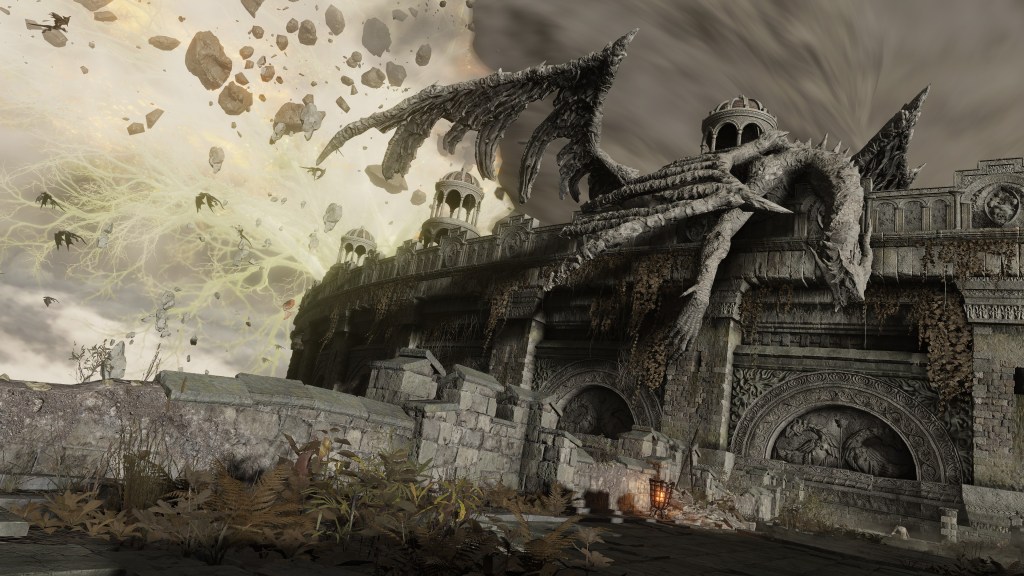
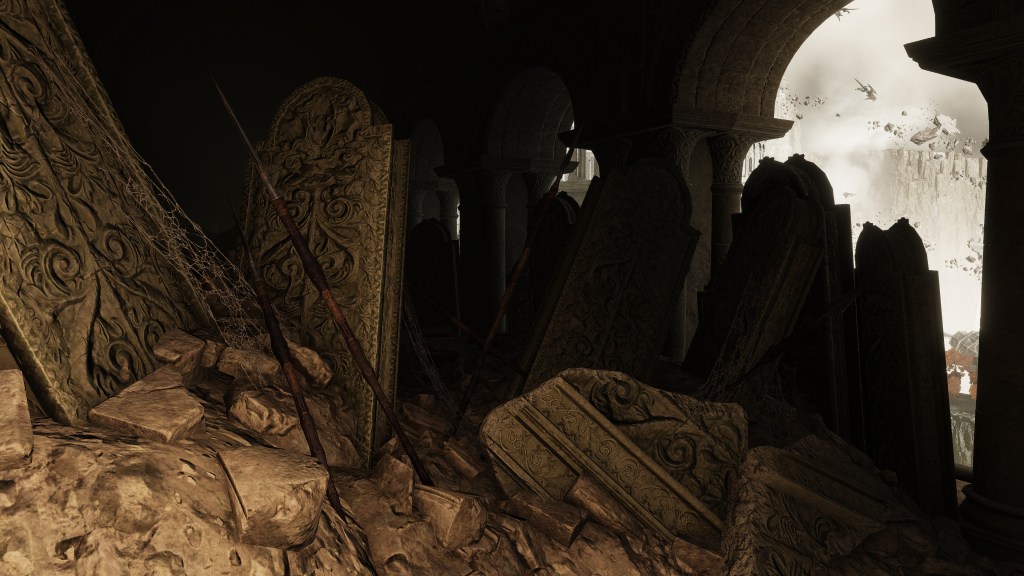
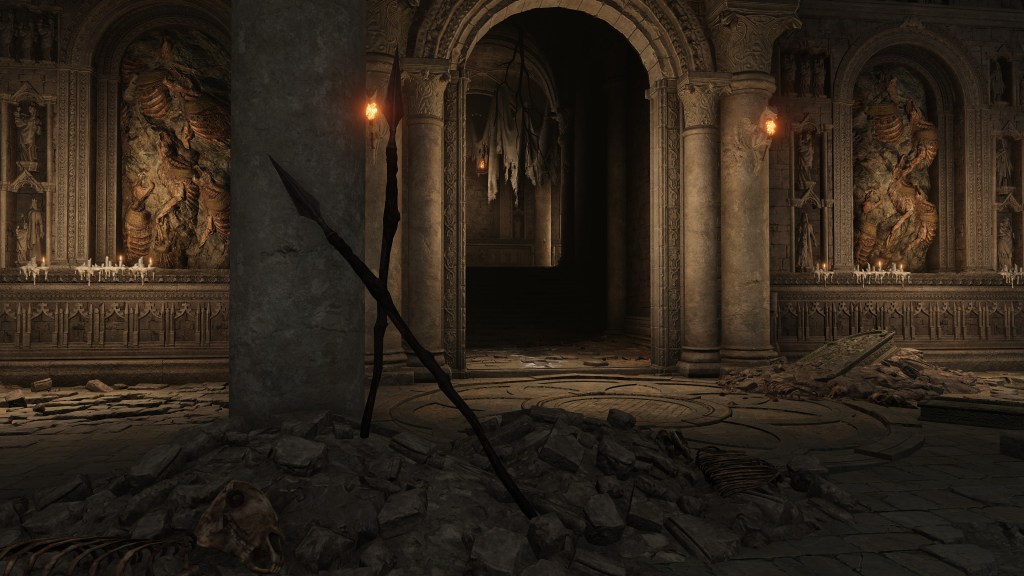


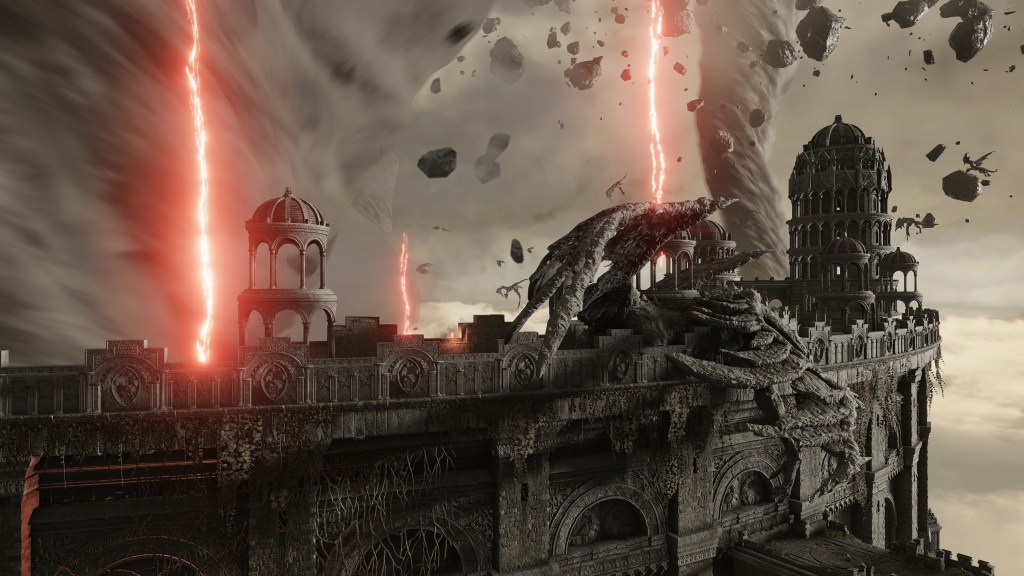
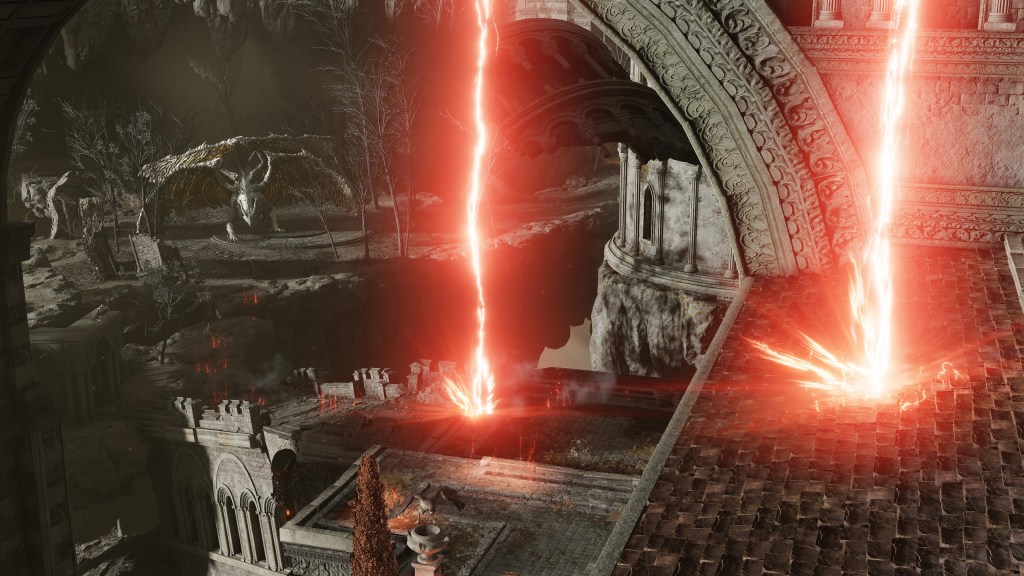

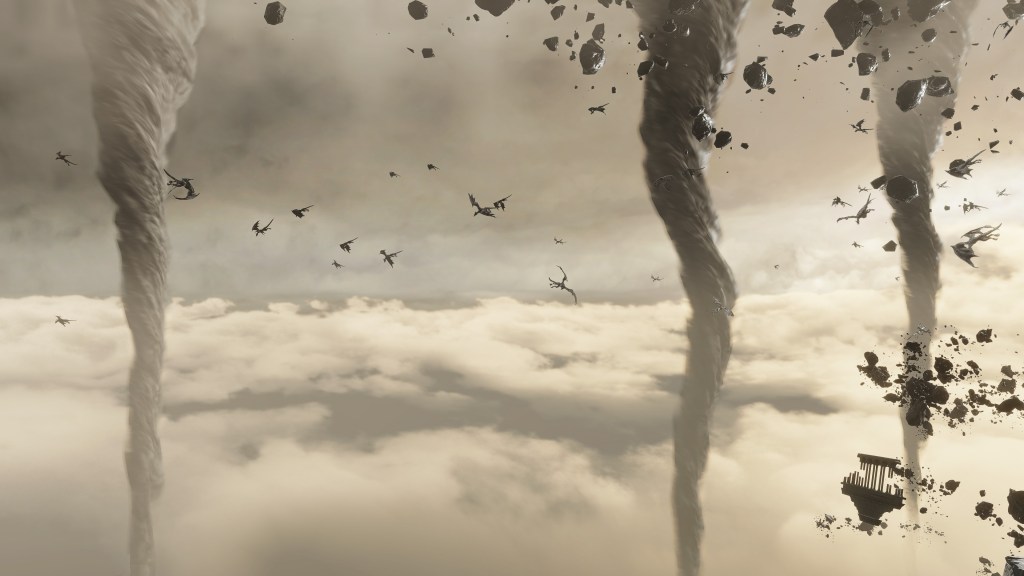
Farum Azula is currently crumbling apart due to a meteor strike, the power imbued into more resilient pieces of the resulting debris like the Ruins Greatsword. Unleashing the gravity magic with the weapon’s skills creates a wave of destruction upon the ground, so we can imagine something similar had occurred when Farum Azula was still on the earth. This explains why so much of the debris floats in midair, but it is the dragon king responsible for making them truly airborne. The city floating in the sky is dominated by the massive tornado at the center where Placidusax is located, the ruins coming together to reform his boss room when we challenge him. These swirling winds, and the smaller twisters on the fringes of the area, are known more literally as a “winding dragon”, (竜巻) so we can be certain that this storm is a product of Placidusax’s intervention. It seems that, after the meteor struck, the dragon tried to hold his kingdom together by manipulating spacetime, placing himself at the heart “between time” in order to minimize the damage.
Weapon forged with an unbroken fragment of wreckage of the ruins which fell from the sky. One of the “legendary weapons”.
Those ruins are said to have crumbled due to a meteorite, and this weapon harbors the crumbling power.
This begs the question of why and when the meteor appeared. The description to the Old Lord’s Talisman only attests to Farum Azula crumbling apart since some vaguely long time ago, meaning anywhere in the Old Age which ended alongside the reign of Godfrey. Considering how the kingdom has continued operating up through the Ancient Dragon War, this battle with the Erdtree kingdom is the most likely point for a meteor strike. Indeed, the meteor would explain why so many bodies were left behind, Erdtree warriors hanging onto broken ledges — it was probably a mad dash out of the area as it crumbled apart and then begin rising to the sky. The two Elden Lords never had the opportunity to clash in a decisive duel before they each needed to tend to their armies. Placidusax did everything to preserve his god’s home for her anticipated return, retreating to the heavens. Godfrey barely escaped with most of his troops, leaving only the dead and possibly two of his best knights behind. Thus did the battle come to a messy conclusion.



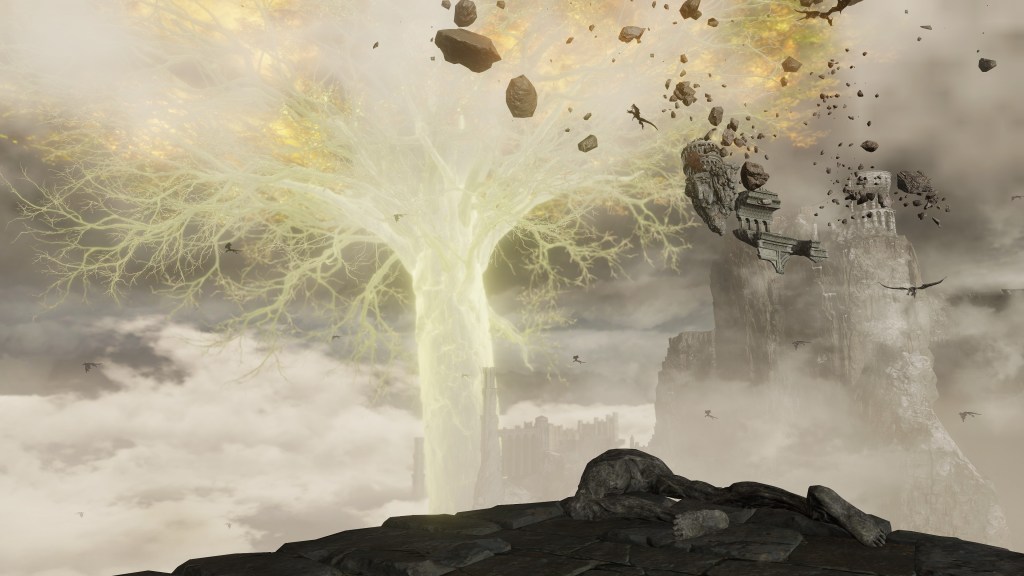

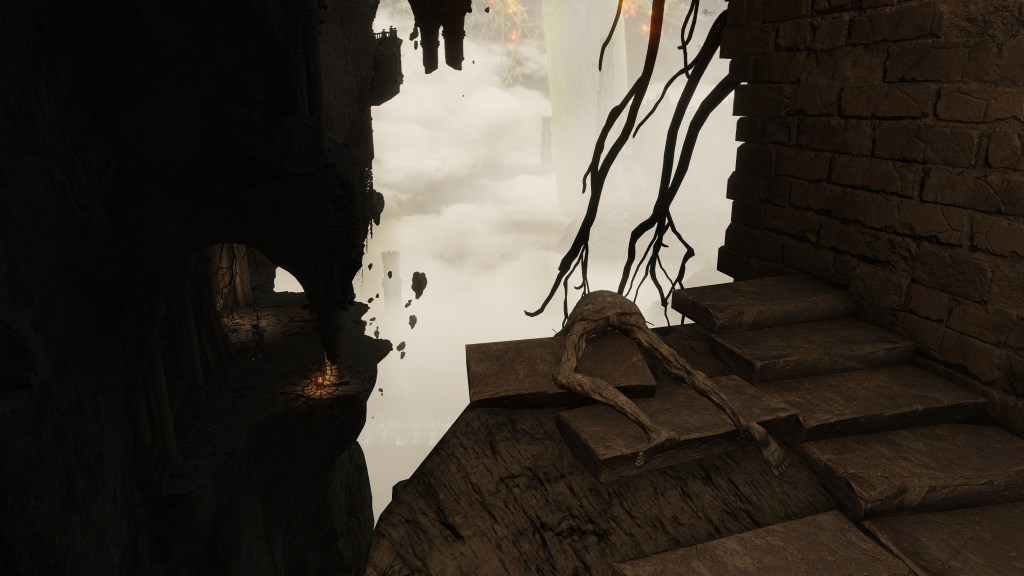
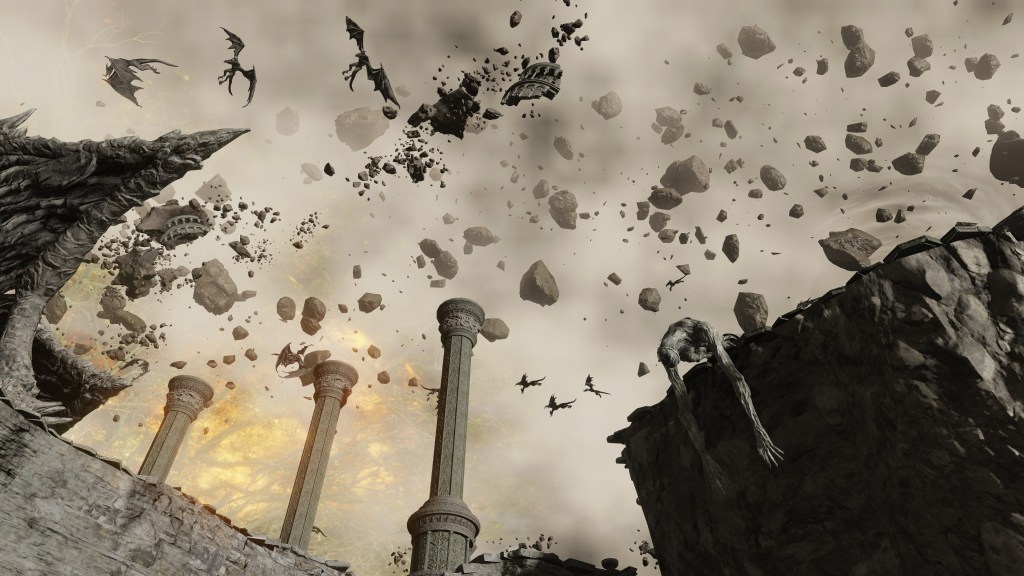
Talisman modeled on the old king said to sit at the heart of the storm, between time. One of the “legendary talismans”.
Extends sorcery and prayer effect duration.
It is said that Farum Azula, the old king’s capital, has been slowly crumbling apart since long ago.
Still, this doesn’t explain why the meteor fell at such a consequential moment. Perhaps the beast clergy, in their desperation, resorted to conspiring with sorcerers to turn the tides of battle. The priests love stone, and the astrologers love stars. Coming together, it is easy to see both parties deciding on an astral rock as their answer to the current crisis. And by performing a large enough ritual, it would be feasible for the beast temple to summon a meteor on demand. Granted, that implicates the clergy themselves in reducing their own capital to ruins. Maybe they underestimated the falling star’s destruction, or maybe they just considered it better than the alternative of suffering total defeat. Regardless, the meteor did crash into the eastern part of the Lands Between, permanently reshaping the landscape forever. Following Placidusax’s storm, no land is left bridging the Mountaintops to Caelid, only the Divine Tower and Bestial Sanctum at the fringes remaining unaffected through all this.
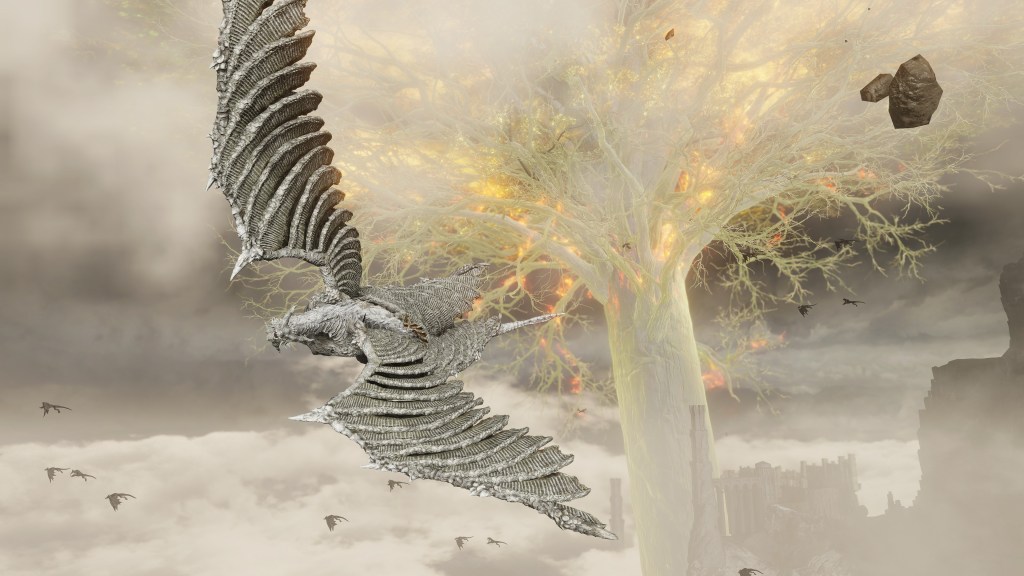
For the Erdtree army, it was merely a matter of marching the survivors back home. As for the ancient dragons, we can see how the sorry state of their capital has attracted a flock of wyverns, the dragons endlessly circling around the crumbling ruins like vultures waiting for a wounded beast to die. It may well be that they anticipate the storm’s conclusion, where they will swoop down and take their pickings as the beast kingdom finally perishes into the sea. Until the Dragon Lord stops winding, that day won’t be coming anytime soon. Still, Placidusax hasn’t stopped the bleeding, as it were, only drawn out the demise. We witness how Farum Azula remains on its last legs. The ancients who didn’t die and turn to stone continue guarding the fragmented land from any new or lingering invaders alongside many of their vassals. A number of those vassals, however, have been stranded on the outer edges, helpless as they drift no closer with no rescue. No flyer is searching for such strays, likely too busy batting away the circlers. And even if it is logical to try retreating to the center they must preserve, that can’t go on forever.

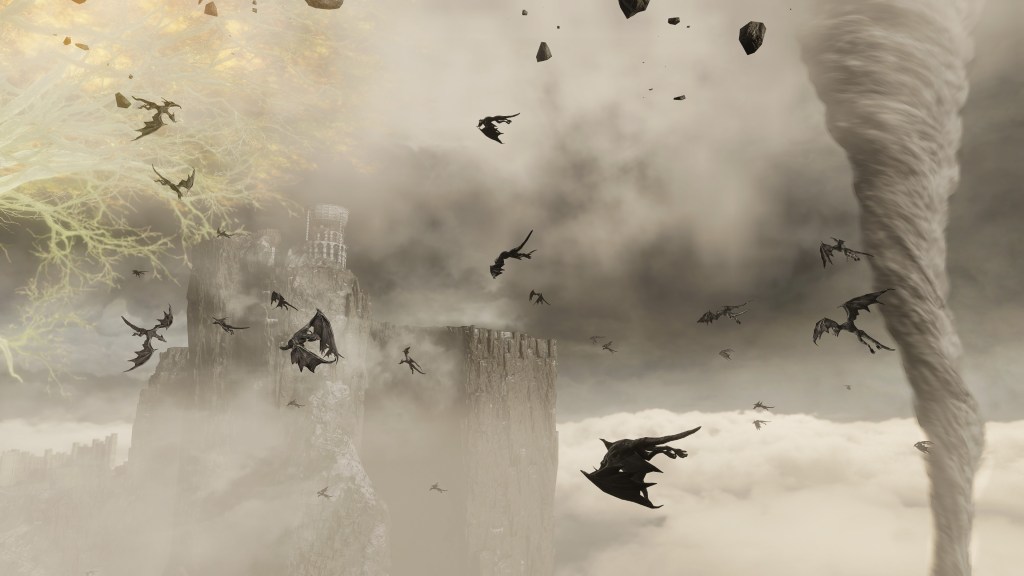


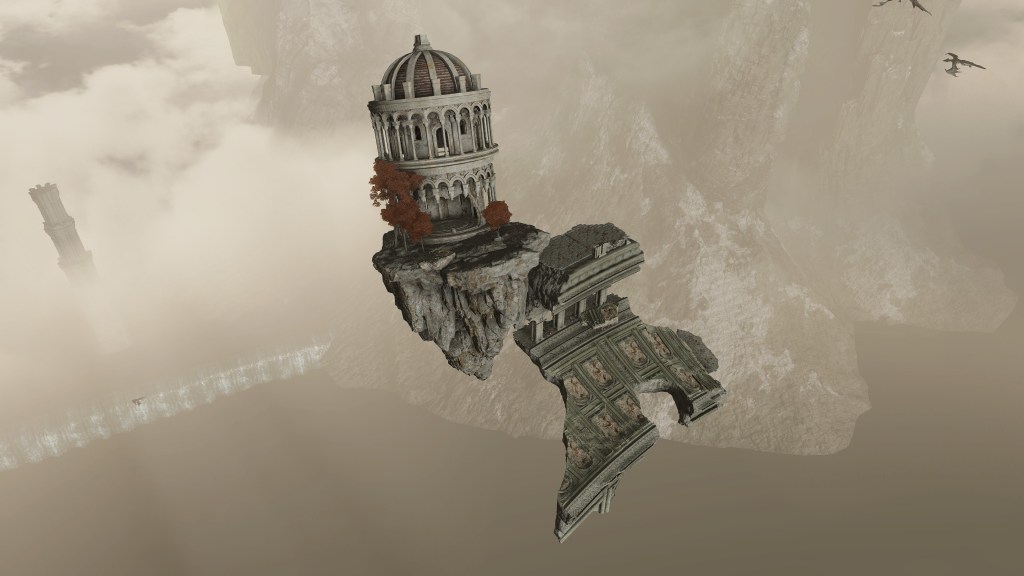


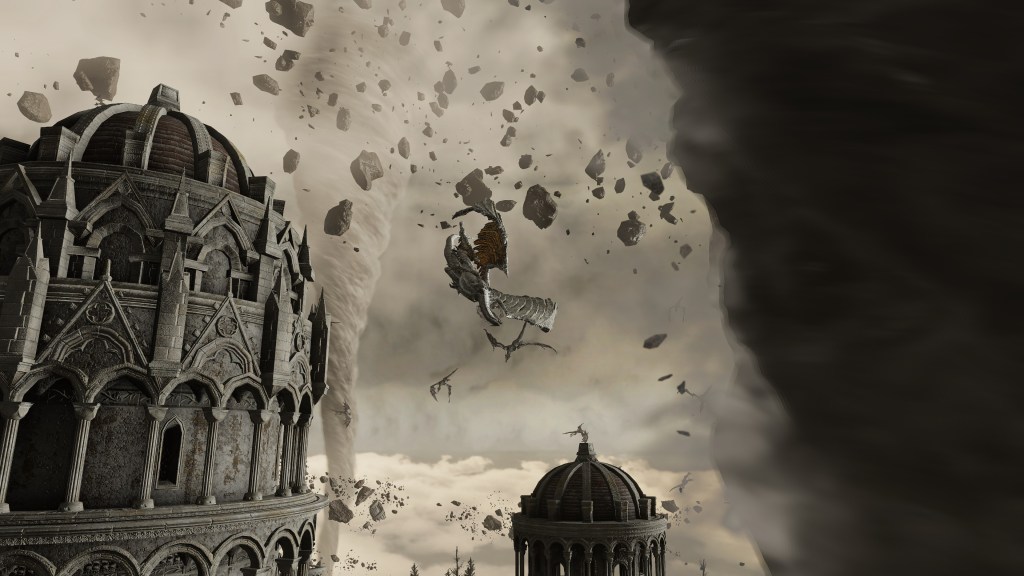
Although the whirlwinds are dragging the ruins in to keep the city loosely together, this looks to sometimes backfire and instead throw them out of its orbit. Farum Azula floats over the ocean a little ways east of its original location, yet ruins have fallen to earth far out west in Liurnia, Limgrave, and the Weeping Peninsula; even Caelid has just the one on its westernmost cliff overlooking these lands. This indicates that some exceptional force hurled them high through the sky so that the pieces all land roughly the same radius from the beast capital. This wasn’t the meteor strike since some ruins lay in the middle of Erdtree highway, something which would have been cleaned up before the Shattering threw the Lands Between under Marika into disarray. In short, pieces of Farum Azula have randomly dropped in the lowlands up until recently, leaving the giant tornado as the only possible cause for this phenomenon. As the land continues to crumble apart, floating debris gets caught in the centripetal force, speeding up until the storm loses its hold and sends it flying off to the opposite end of the continent.

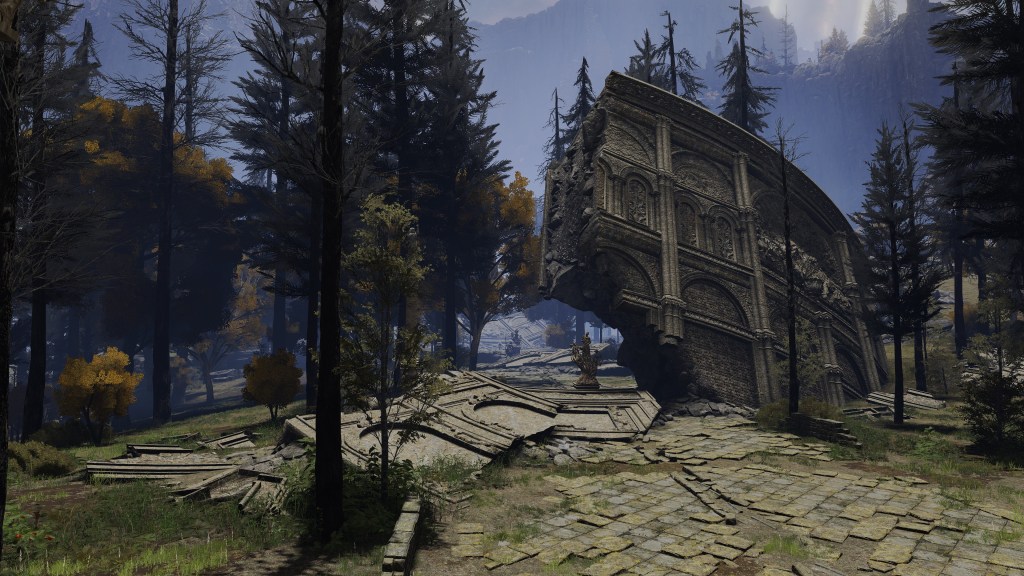


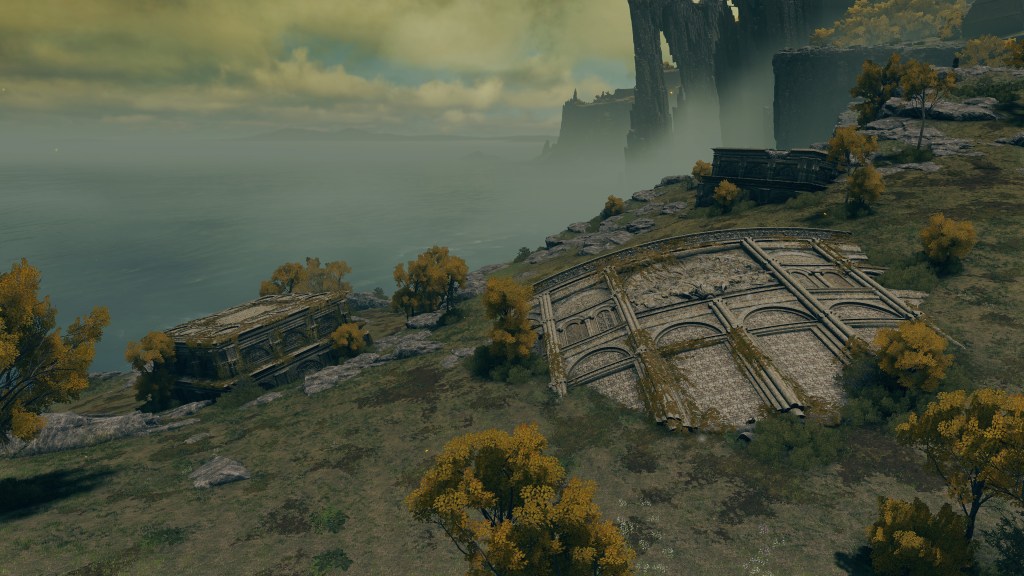

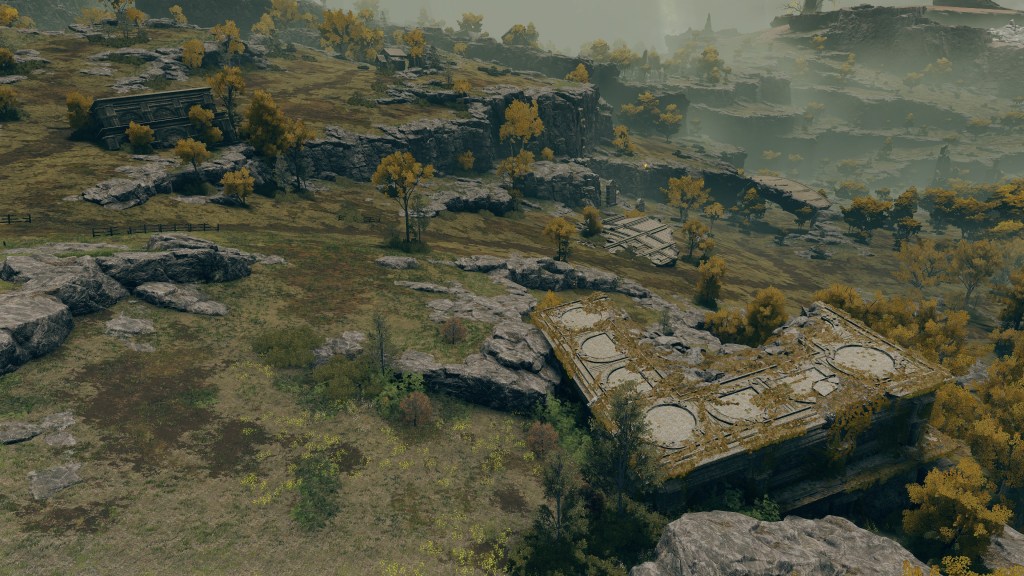
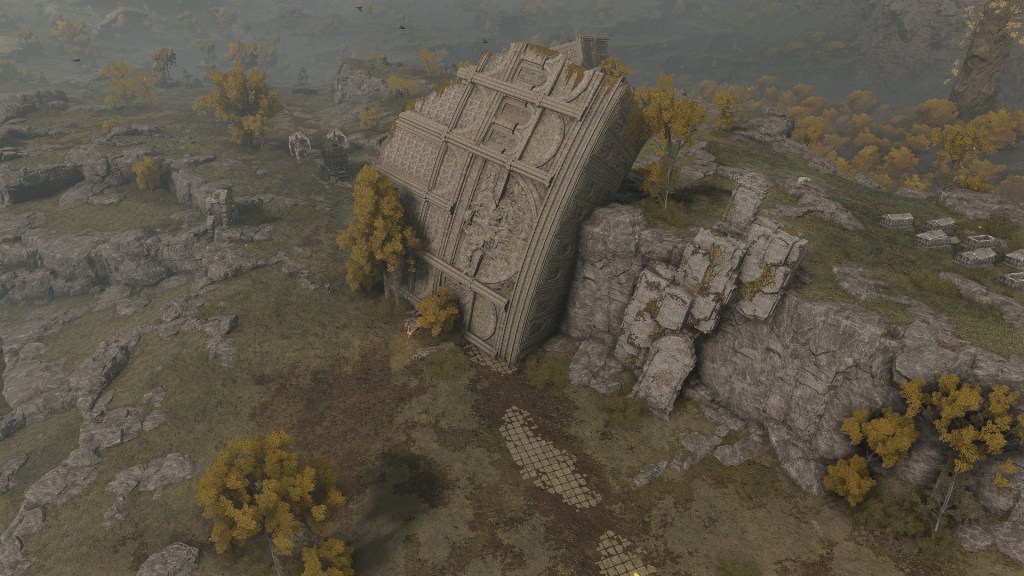


Even after so much time, Farum Azula is slowing marching toward total destruction. Placidusax is holding onto an empty dream, leaving his subjects to set the country’s course. Yet despite this, they show no greater aspirations for their vendetta against Bayle or the Erdtree. The clergy as a whole are nowhere to be found, alive, and no one else seems keen to gather up all the survivors and reconstitute some semblance of society. Rather than salvage what is left of the kingdom, they choose to just protect the grave — a damning statement on multiple levels. At this point, there is no turning back the clock for Farum culture. The best its residents can do is manage the decline. As of now, beastmen are so starved for scraps, they gnaw on bones of their kindred for satiation; ancient dragons are so withdrawn, many simply curl up to sleep as the threats pass them by. Without the guidance of god or leadership of a king, there is no animating spirit to rejuvenate this once vast and unbroken land.
There was theoretically hope to rebuild back on the ground outside, as a handful of beastmen have been left behind in the Lands Between. The two in Caelid likely had the good fortune to be at the edge when the disaster came, allowing them to flee to the Bestial Sanctum. The one in Limgrave, meanwhile, appears to have landed with one of the countless ruins in his vicinity. All three have since taken shelter in nearby caves, apparently becoming the leaders of local wolf packs. Even denning in such primitive conditions, they still cling to their Flamedrake Talisman, though one must wonder if it is because they fear retribution of their fire-breathing masters for abandoning their civilization to go native. Either way, these soldiers certainly don’t have the aspirations to reconstitute a kingdom. They, like Farum Azula as a whole, are remnants of a bygone age, though not everyone had received the memo.

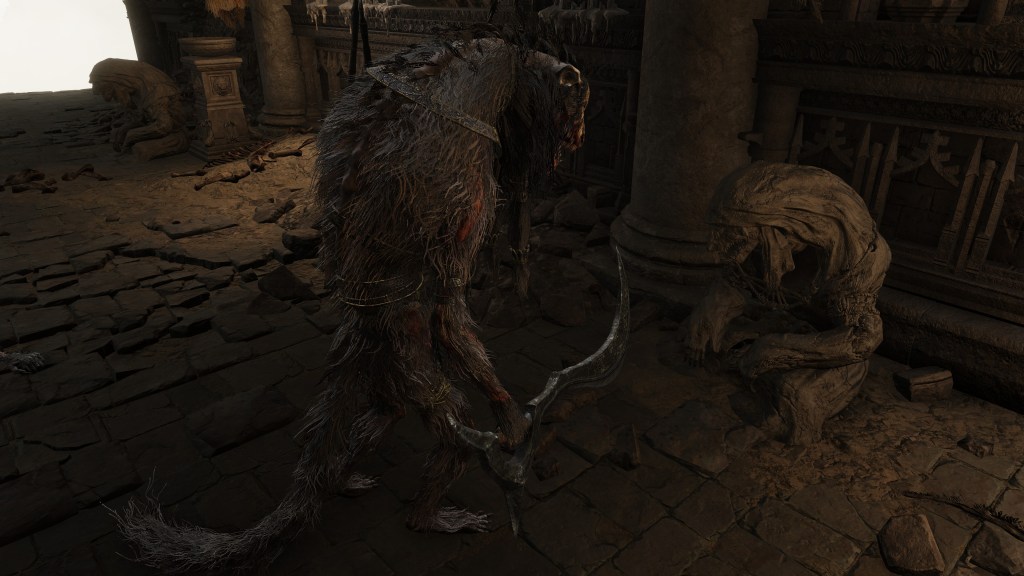


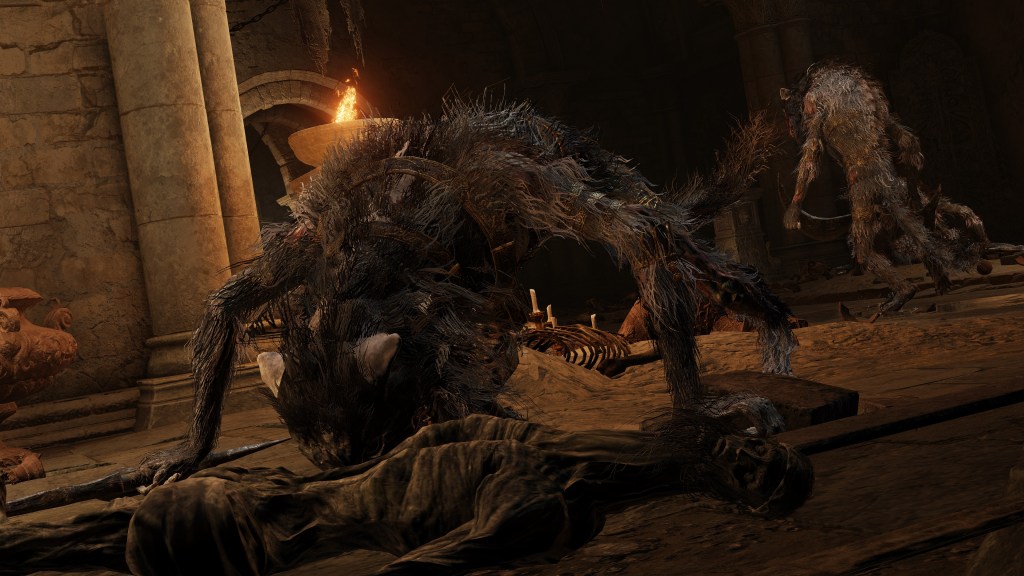


Flew Too Close to the Low Sun
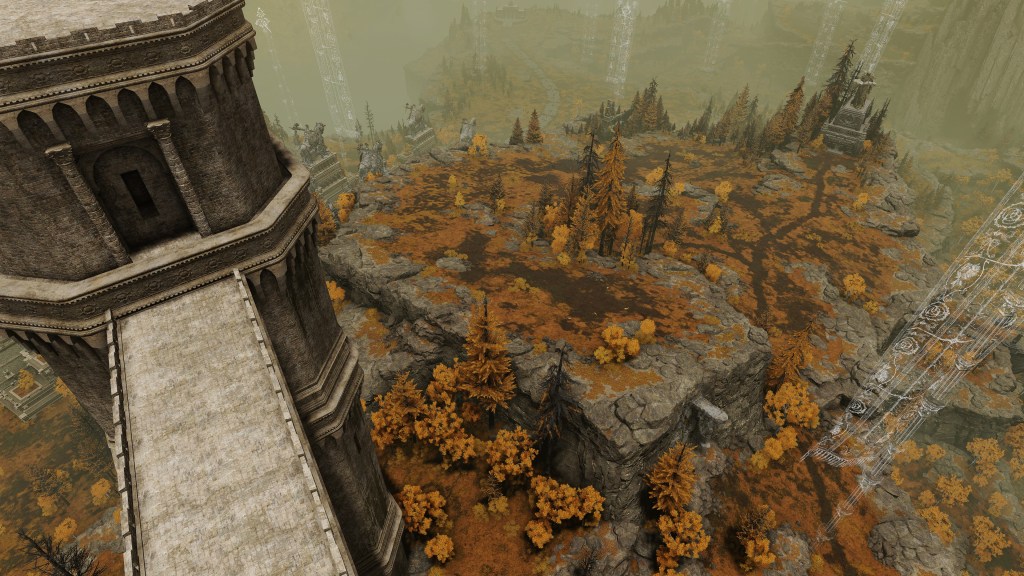
Despite the disaster at Farum Azula, a number of the ancient dragons were evidently still hungry for blood. Perhaps they saw where the battle in the homeland was heading and sought to outmaneuver the opponent with another assault on Leyndell. If Godfrey’s army heard that his own capital was under serious threat, he might pull out to reinforce the flank. Regardless, it was wise to hit the enemy from their vulnerable rear, and the dragons had the wings to circumvent any interception attempted by the invaders. Now more than ever, Leyndell was exposed as it was in all likelihood still rebuilding and undeniably without its total garrison. And by the time the beast capital was destroyed, the dragons would have no choice but to pay the enemy back in kind before the demigod king returned with a full force to bear down on them. Time was of the essence, and so a battle broke out on the hill where the extensive stone monument is located. There, it was to be decided if Leyndell’s walls would fall for the second and final time.
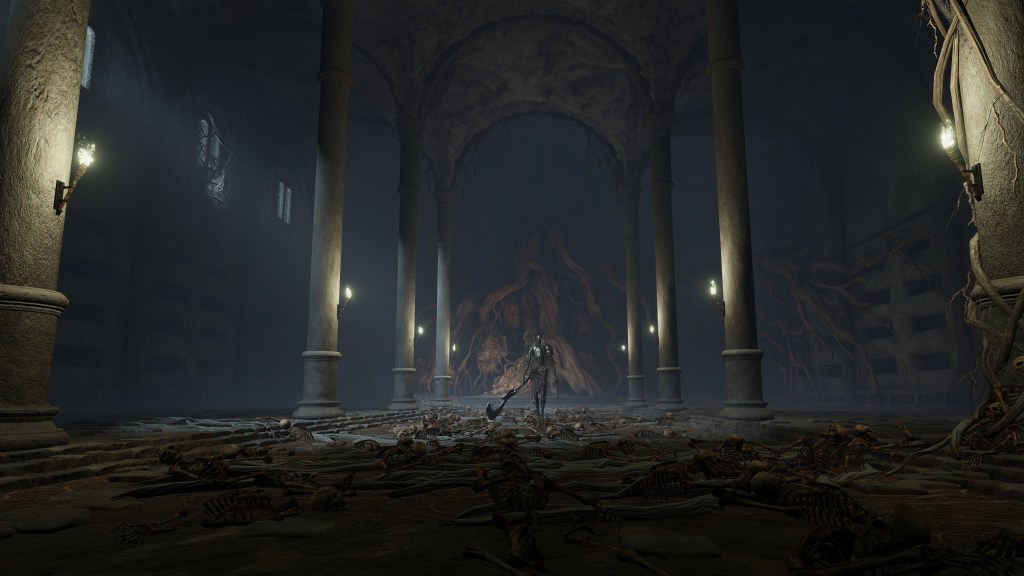
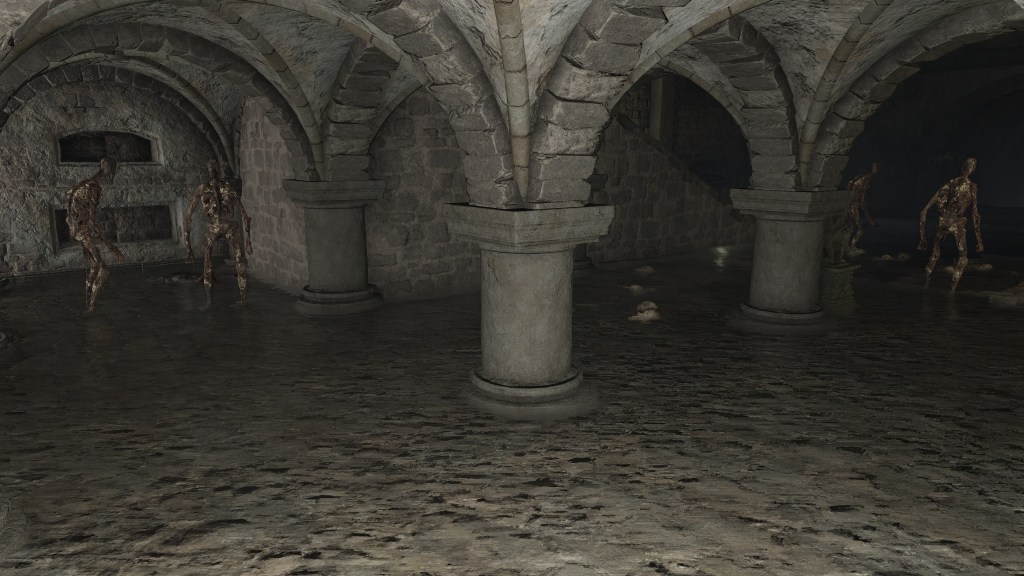
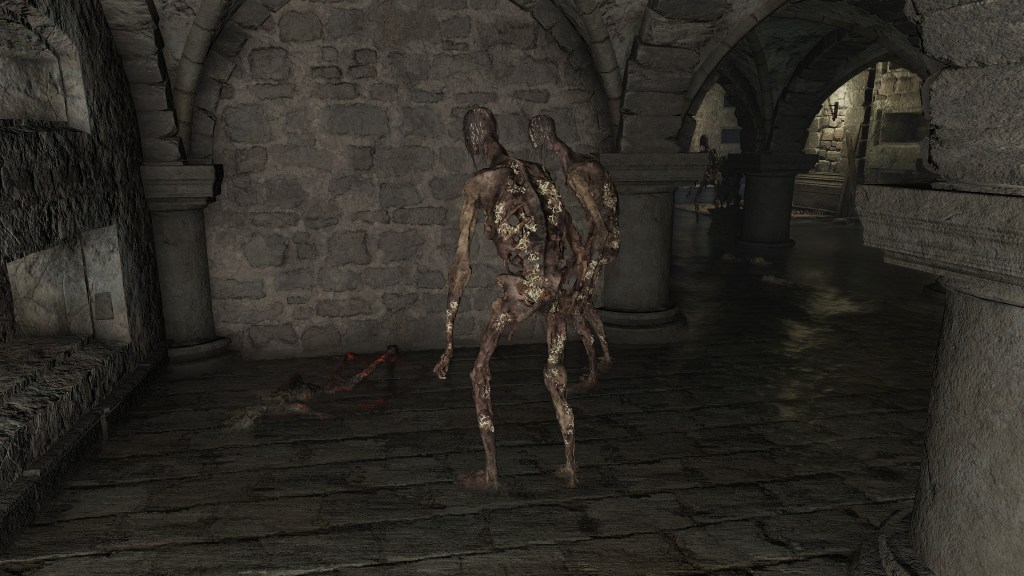
Godwyn wasn’t alone in taking to the field. Besides a coffin cemetery nearby, the hill has the one graveyard for heroes. We can confirm that this Sainted Hero’s Grave dates to the Ancient Dragon War not just from its location but also what lies therein. For instance, we find an ancient hero of Zamor acting as gravekeeper, so this hilltop burial can’t be part of Godfrey’s unification of Altus preceding the Giant War. Further pushing forward the date, an axeman bearing the Crimson Seed Talisman hides behind the imp statue seal at the back of the opening chapel; most likely another soldier from Godfrey’s era, assigned to guard the dead sometime after the Minor Erdtrees had sprung up. A second seal further in protects the owner of a Dragoncrest Shield Talisman, linking the heroes’ conflict to dragons specifically. Therefore, the graves on this hill must follow the Ancient Dragon War. This would insinuate that Godfrey left a skeleton crew to defend the capital in his absence — not necessarily his best or most loyal troops, but reliable men, nonetheless. Warriors like the Zamor would thus employ their strength in the battle ahead.
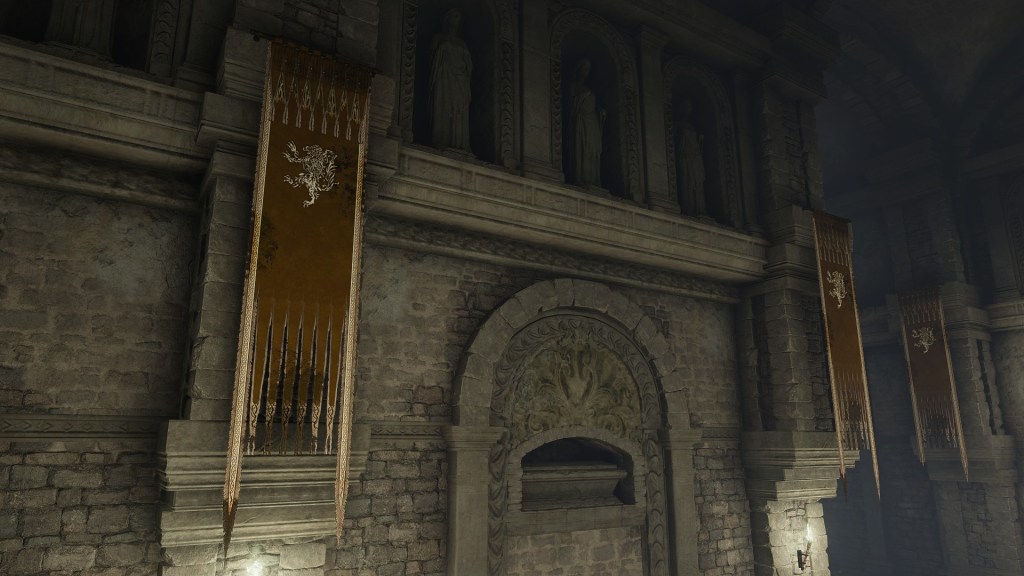
This hero, however, is not the dead being interred for the Erdtree. The actual “sainted” ones of this hero grave (貴き者たち) are described with touto, (貴) typically reserved for nobility but can also be used to denote sacrality. In other words, it applies not just to valued men in society but gods or persons of similarly exalted status as well. As to what makes these heroes so esteemed, the answer is obvious from the banners hanging throughout the tomb, featuring the Beast Crest symbolizing Godfrey’s Golden Lineage. Those buried primarily consisted of warriors who traced their lineage to god, which explains why most of the complex is masked by an illusory wall for slightly more protection from graverobbers. It similarly fits with the extensive red flower patches preceding the grave, a recognition of their rise with the reddish Crucible. Participating in this final confrontation was not just Godwyn, but a whole host of demigods.
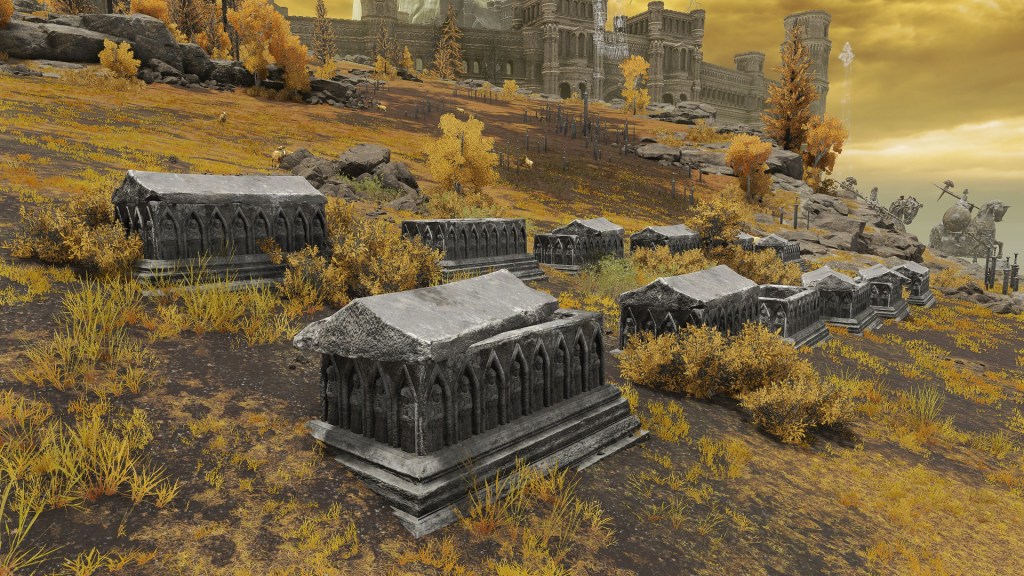

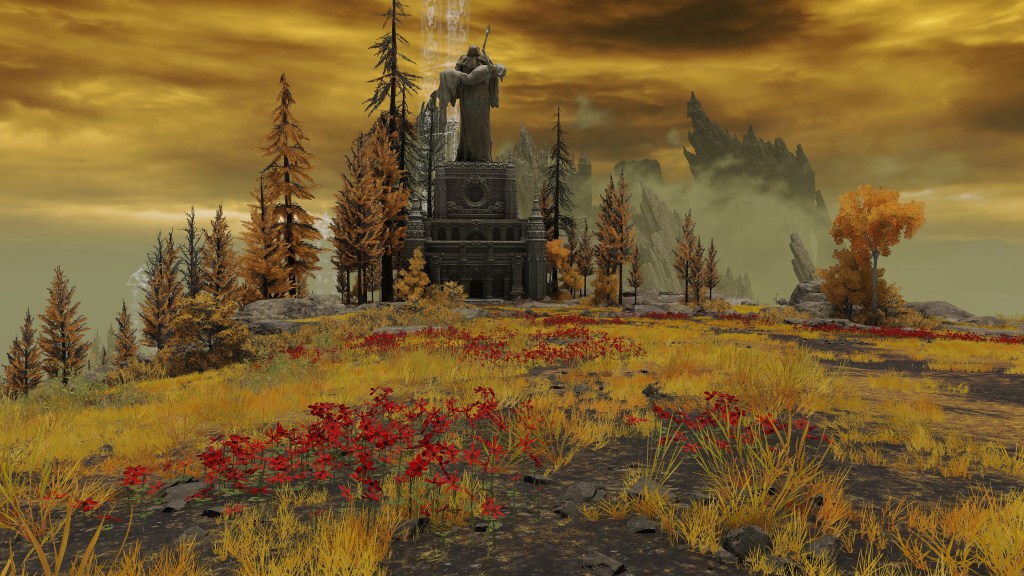
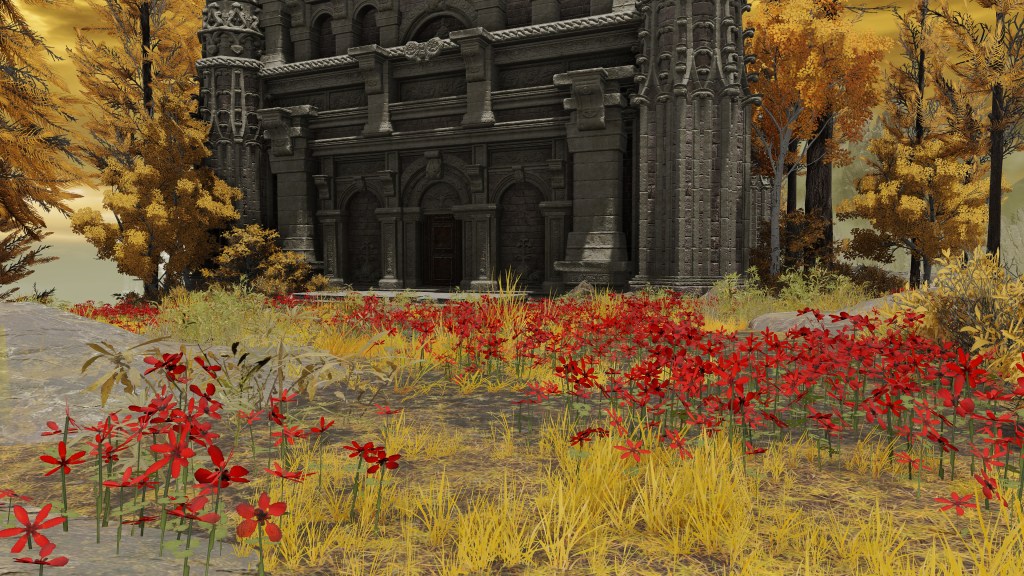


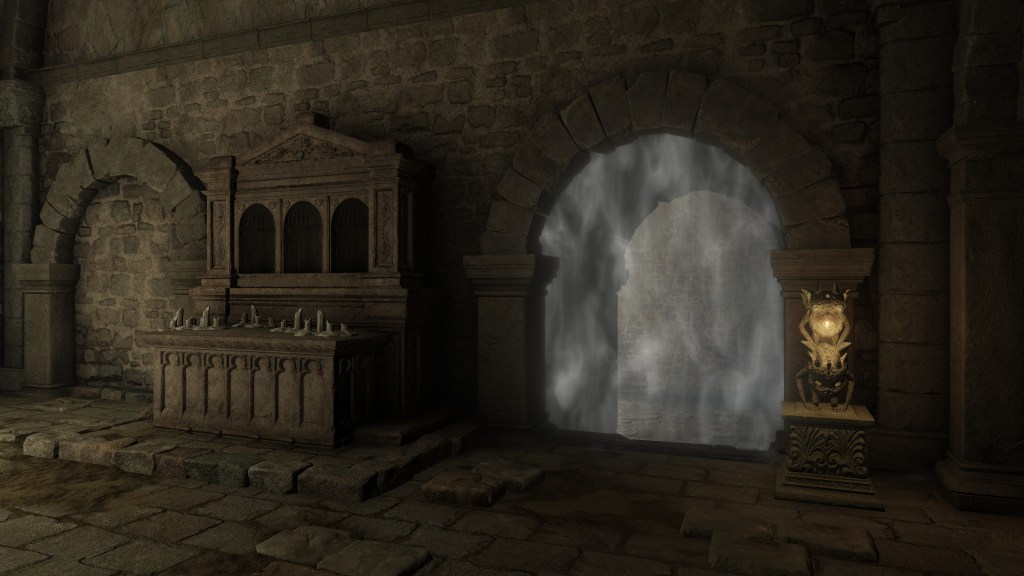




This isn’t surprising in light of the circumstances. With so much of the army committed to the invasion, there wouldn’t be enough soldiers to protect the entire population from an attack on the level of Gransax a second time. Those privileged for their relation to Marika might be able to avoid casualties when they had an entire army to hide behind. But now, it was just them and a small array of soldiers to command; they had no choice but to risk life and limb on the battlefield for their home. The principal participant in this coming attack was also Fortissax, whose ability to conjure not just one but two red lightning spears at a time became his signature to foes. His art’s description further claims that he was the strongest “boulder” in the war, meaning that the dragon was possibly even more dangerous than Gransax. If they didn’t want him to breach the walls as well, they needed to step up and confront the threat themselves. And as we can see, they were ready to intercept the dragons on that hill.
Prayer wielding the power of the ancient dragon Forsax.
Calls two red lightning spears and thrusts them down from the skies continuously. The lightning spears burst and send lightning flashing in the surroundings.
Red twin lightning was a symbol of the ancient dragon possessing the name of the strongest boulder in the Ancient Dragon War.
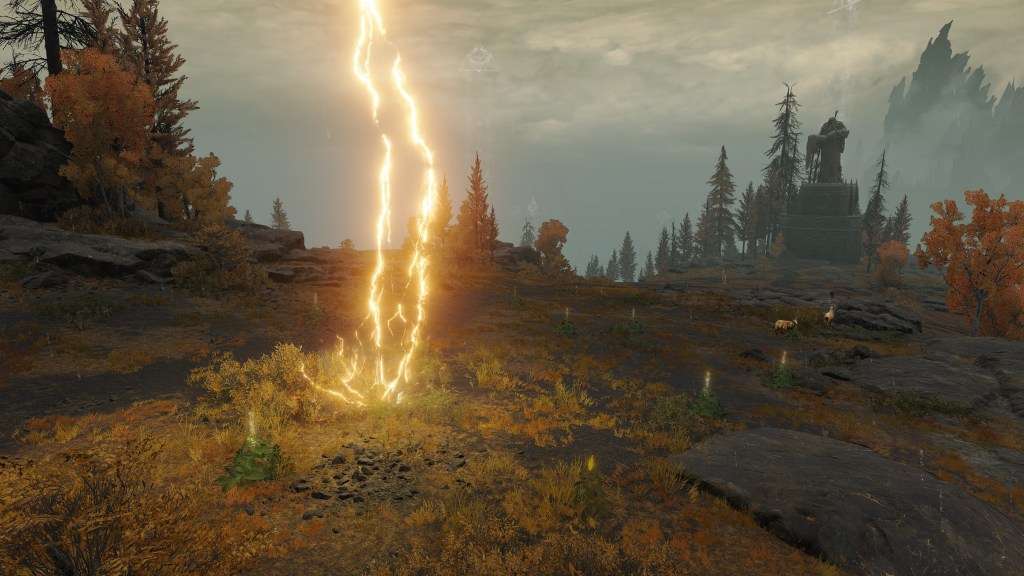
The resulting clash has left its mark on the land. The hilltop is covered in fulgurblooms which continue to attract lightning strikes, turning the wool of the sheep grazing there golden like in the Realm of Shadow. The nomadic merchant beneath the hill likewise sells a fair amount of gravel stone presumably collected from the battlefield, which is consistent with the stone amassed at Stormcaller Church back up top. The fighting was sure to have been costly for both sides. Despite probably being many demigods’ first taste of real battle, the Golden Lineage proved that they inherited the blood of Godfrey, bravely combating the fearsome beasts. Even so, most of these heroes did ultimately fall, leaving only Godwyn still standing among them at the end. He was the one to best Fortissax and achieve total glory in this war. Such an end to the battle might not be that surprising either, given the circumstances.
Recall that it was Maliketh’s rise as the Black Blade which inspired demigods to become heroes, if only for fear of their own survival. Godwyn’s physique seen during his assassination betrays the investment he put into achieving his heroism. But for him to surpass all others in real battle, the golden-haired prince still must have stood out amongst his clan in some way. The obvious factor would be the timing of his birth. The man was most likely not yet born or still very young when the Gloam-Eyed Queen began slaughtering demigod kind. Unlike many of his elders, he wouldn’t have enjoyed languishing in decadence while growing up, Death always breathing down his neck. While the others had to play catch-up, the prince’s entire life up until the war was honing him to be a weapon to smite the kingdom’s enemies. Under those conditions, it is no wonder that Godwyn blossomed into a hero among heroes. But then, Leyndell’s hero did something unexpected: he offered the ancient dragon friendship.
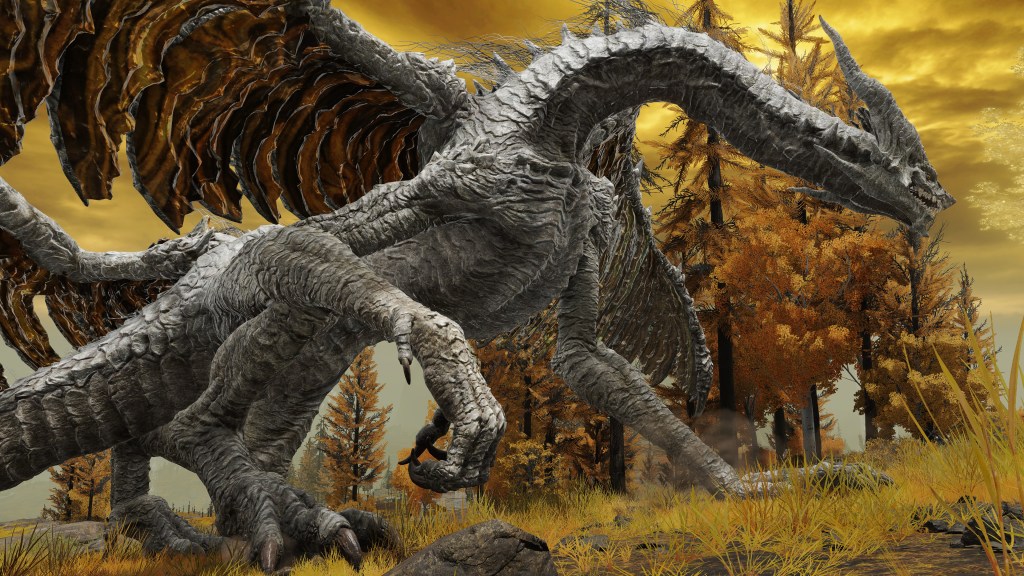
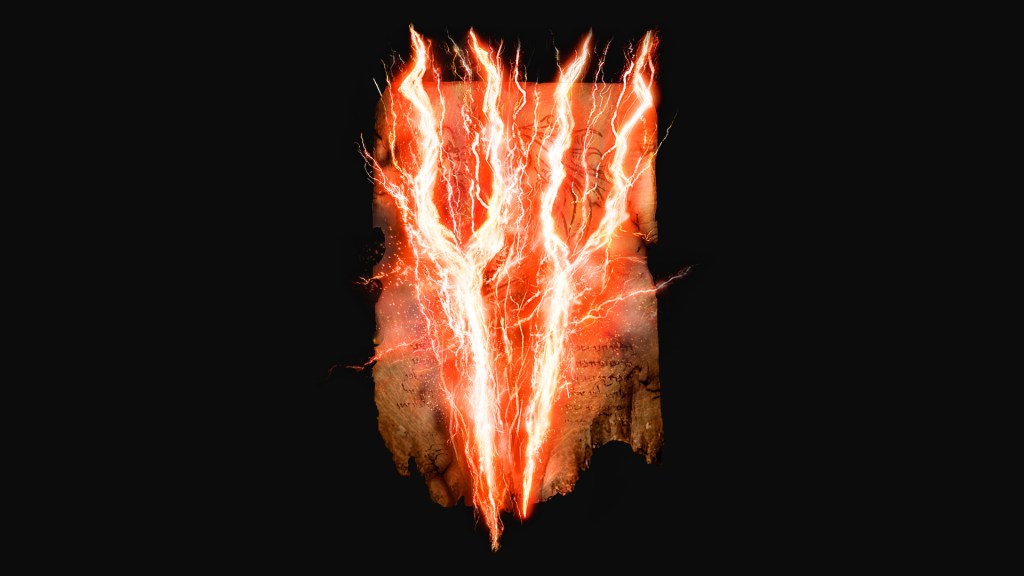

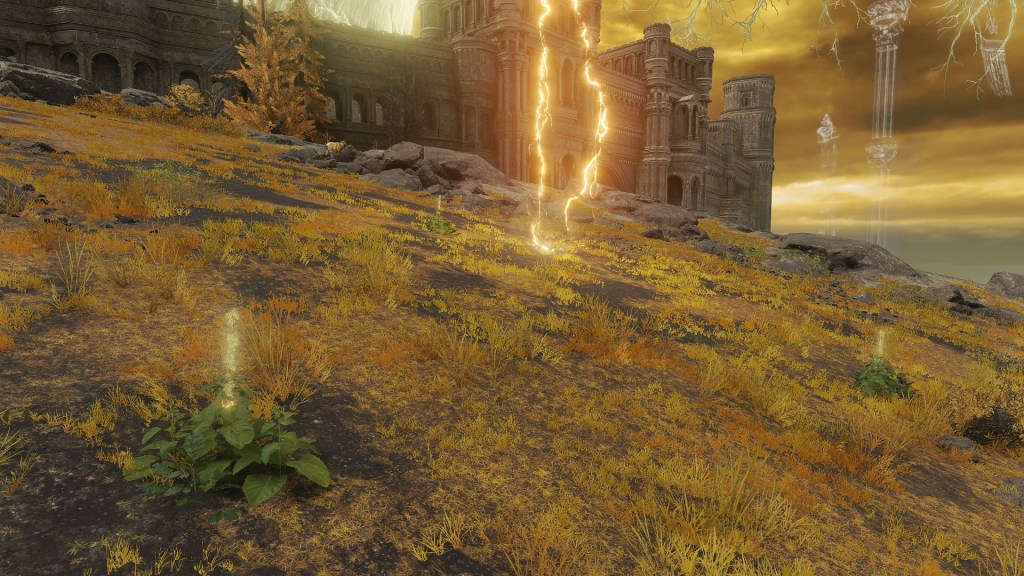
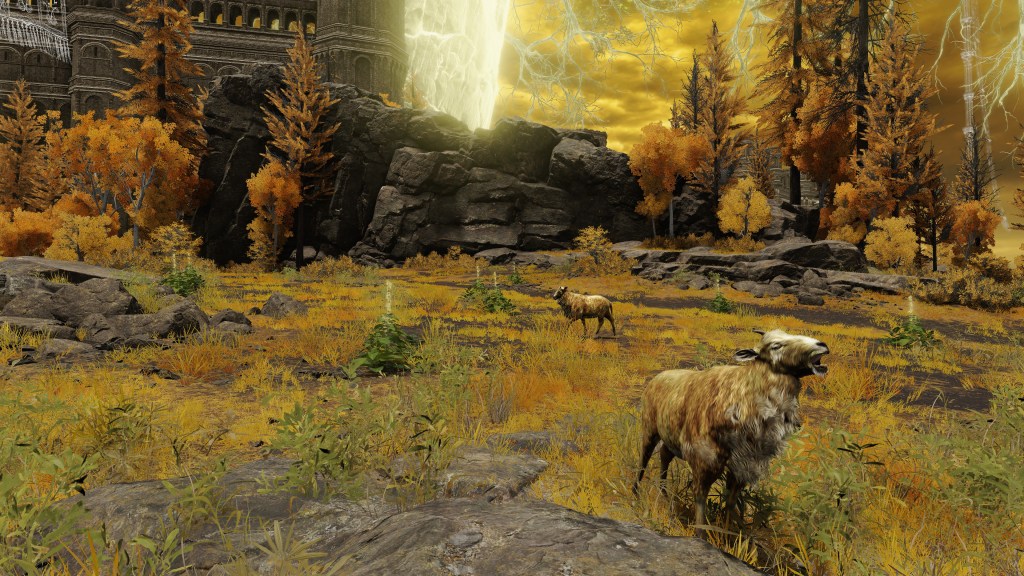

Last land of the Ancient Dragon War. Godwyn the Golden fought bravely and made the ancient dragon Forsax his friend.
Rather than finish off Fortissax, Godwyn did the same as his father before him, giving the beast a chance to serve as his companion in the new Golden Order. Perhaps the emulation was his intention, but the demigod showed the dragon mercy, nonetheless. For his part, Fortissax accepted the offer, if not for himself than for his older sister Lansseax, who is also now affiliated with Leyndell and doubtless fought alongside her younger brother on that same battlefield; fittingly, she confronts us on that very hill. If joining the Erdtree kingdom would save both of their lives, then it was already a deal worth considering — one could also scantly think of a better position in their new home than within the royalty’s circle. Lansseax seemingly agreed with that assessment, and so the two siblings accepted defeat. There are no other ancient dragons so much as mentioned in the royal capital’s context, so we can presume that the rest had either previously died or were unwilling to surrender. Still, Godwyn’s magnanimity allowed the warring parties to come to an accord.
Not everyone enjoyed this resolution, of course. The demigods buried in the aftermath are overwhelmingly resentful, infringing bell ringers summoning vengeful spirits all throughout the grave. Instead of avenging their deaths, one of their own had embraced the enemy. Not helping matters is the flooded state of their tomb, the constant storms from all the fulgurblooms seeping down to the lower chambers and rousing the rotten. They have plenty to be angry about the results of the war — no wonder their souls bear a deep grudge. Such spite was assuredly shared by some of the living as well. The Golden was sure to be criticized for making peace with those responsible for the wanton terror and slaughter under their very Erdtree. But it was Godwyn’s right, as the victor, to decide Fortissax’s fate, and he made his decision. Who was to overrule a proven hero? And from his example, the Erdtree kingdom as a whole learned to accept the ancient dragons into their walls. It was inarguably the best outcome to this bloody affair. By the time Godfrey had returned, the war was well and truly over.




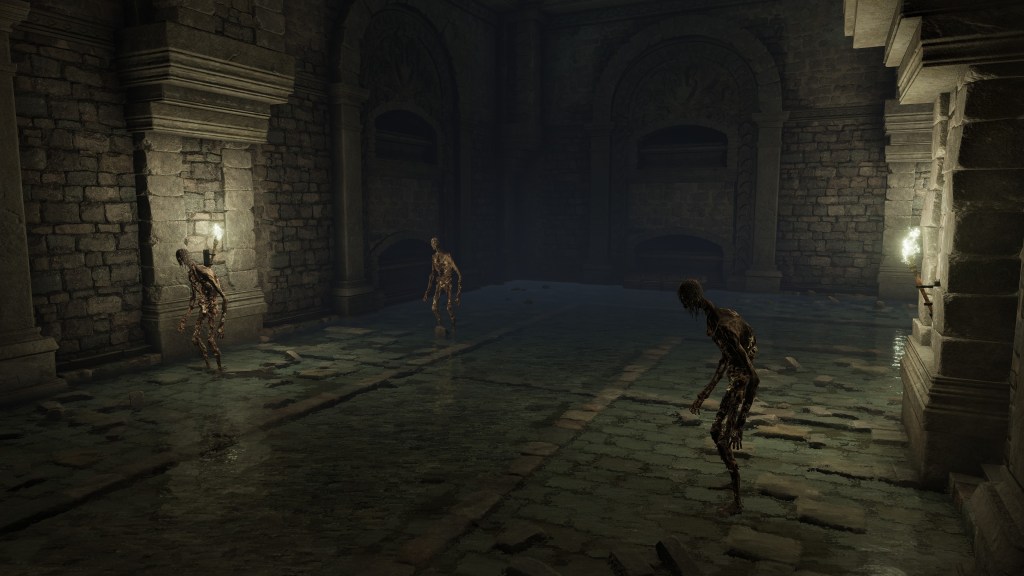

Rapport Rapprochement
The integration of the dragons in Leyndell went smoothly, thanks to their patron. Various item descriptions mark Godwyn befriending Fortissax as the beginning of the ancient dragon cult. At the same time, the text for ancient dragon apostle’s prayerbooks all note that the cult only began after the war. This faith thereby appears to be an outgrowth of the two developing their newfound friendship. Among the ancient dragon’s various red lightning techniques, he also brandishes golden lightning owed to Godwyn, which we derive from the former’s remembrance as an incantation with a heavy faith requirement surpassing the dragon’s own signature move. Clearly, Fortissax shared his knowledge of lightning with Godwyn, who then fashioned his own brand of lightning to share with Fortissax. All this, done through the lens of prayer. Godwyn was not just studying the power of lightning, but learning how to integrate it into the existing arts of gold afforded to his clan by the Erdtree. As the two adversaries on the battlefield deepened their understanding of one another, a new religious tradition was forming.
One of the ancient dragon faith prayers.
Endows right-hand weapon with attack power of the lightning attribute.
Godwyn the Golden once defeated the ancient dragon Forsax and became his friend. It is the beginning of the royal capital ancient dragon faith.
Prayer book of the royal capital ancient dragon faith. It is a faith of the knights which began after the ancient dragon war.
This may have been always Godwyn’s intention. It is possible that saving his erstwhile enemy was, at least in part, motivated by fascination with draconic power. The prince had grown up at the height of the Age of Plenty, after all — up until his death, he unashamedly wore the design of the Aspects Herb around his waistline. With such pride in that heritage, he was liable to notice a connection between the ancient dragons’ weapon and the Crucible. Who wouldn’t want to explore the implications? Even if his reason for extending a hand to Fortissax was so cynical, they did develop a deep bond, the dragon still fighting for his friend’s peaceful rest so long after his death. If nothing else, one can say that mighty Godwyn was genuinely interested in the ancient dragons, enough to think it a waste to wipe them out. And as the golden lightning he devised showcases, this interest was compatible with his new image as a clan hero who brought the most powerful dragon in the war to heel. Nothing served to better advertise his achievements, something for soldiers especially to rave over, and he took full advantage of it.
With his new celebrity status, Godwyn established a personal guard separate from the protectors of general royalty. This would be enticing to every knight inspired by the demigod’s performance on the battlefield — multitudes sure to flock for the opportunity to serve under such a prestigious individual. But like the standard royal guard knights, the demigod accepted only outstanding members of the capital’s order, though in their case it wasn’t for the dexterity to deftly wield a greatspear but the faith to masterfully conjure a lightning spear. Indeed, the worthy few admitted were presented lightning-enhancing golden armor along with arts like Electrocharge to enwreathe their bodies in bolts. Combined with their lightning-imbued weapons, the bodies could even briefly transform into a bolt as they rushed in to dispatch threats. In other words, they were the first converts to this new ancient dragon faith. Godwyn was not abandoning his Crucible identity; the son of Godfrey ensured that his axe-wielding knights were provided with the best amber talismans. However, this was the Golden’s new brand.


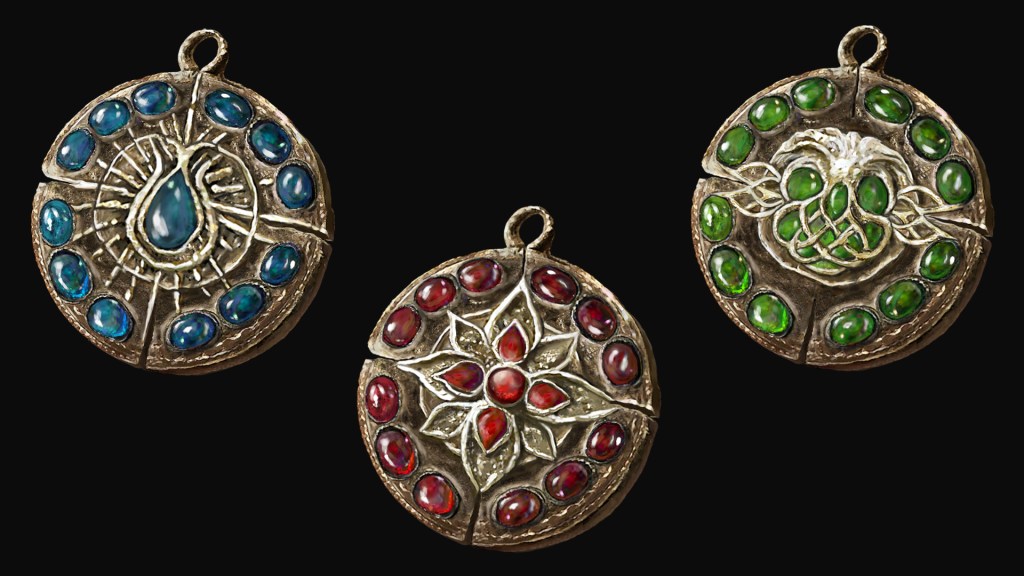
One of the royal capital ancient dragon faith prayers.
Deploys ancient dragon crest along with calling lightning spear. Once spear is thrown, fires lightning spear from the crest also. Increases crests deployed with charging.
Art once bestowed only to outstanding knights. One of the lost prayers that were lost in Between.
Talisman inlaid with crimson amber. Raises maximum HP the greatest.
The amber is an old drop of the Golden Tree and was handled as a special gemstone in the age of Godfrey, first Elden King.
It is said that the greatest one was bestowed to Godwyn’s royal guard, outstanding golden knights.
On that note, these powerful incantations were never shared with the general army, as the arts become lost to the Lands Between after the royal guard knights depart for the Realm of Shadow. No one else would throw lightning spears followed by another launched from the cult’s sigil; neither would they own grease plastered with that image. Still, the dragon crest borrowed from Farum Azula would spread to more knights due to the cooperation of Lansseax. Fortissax’s sibling adopted human form and offered to teach the knights prayers her brother would not, becoming a priest of this new faith. As the responsible older sister, she obviously accepted this ministry on behalf of him and his new friend, with a clear-cut purpose. Lansseax was a gift to the knights; the prayer book she eventually compiled, an olive branch to let bygones be bygones. The priest was doing her part to ingratiate them both to their brief enemy, giving those envious of Godwyn’s golden knights an avenue to obtain a fraction of their immense power.
Prayer brandishing the power of the ancient dragon Lansax.
Calls and sweeps red lightning glaive from the skies above. That slash spreads lightning.
Lansax is Forsax’s elder sister and was said to have taken on the form of a human and associated with the knights as a priest of the ancient dragon faith.
The results speak for themselves. Most capital knights are adherents of the cult, performing some manner of lightning art. A number learned to electrify their armament via the brush of a holy seal whereas others remolded them into lightning weapons proper, like with the archers’ greatarrows. The spearmen practiced making a “well-aimed lightning strike” (狙いすます雷撃) while the swordsmen prefer bringing down a bolt in a decisive Lightning Slash. When not using skills, they rely on their own holy seal made of gravel stone. Again, this prayer tool is naturally crafted from the scales of Gransax, based on the two knights under the dragon’s corpse in the Manor Quarter — one holds the seal we loot, while the other stands on a platform to maybe better harvest the body. Some of this power even filtered down to the soldiers under them, subordinates throwing lightning pots or loading crossbows with lightning bolts; no faith required. Suddenly, lightning was in vogue, for everyone.


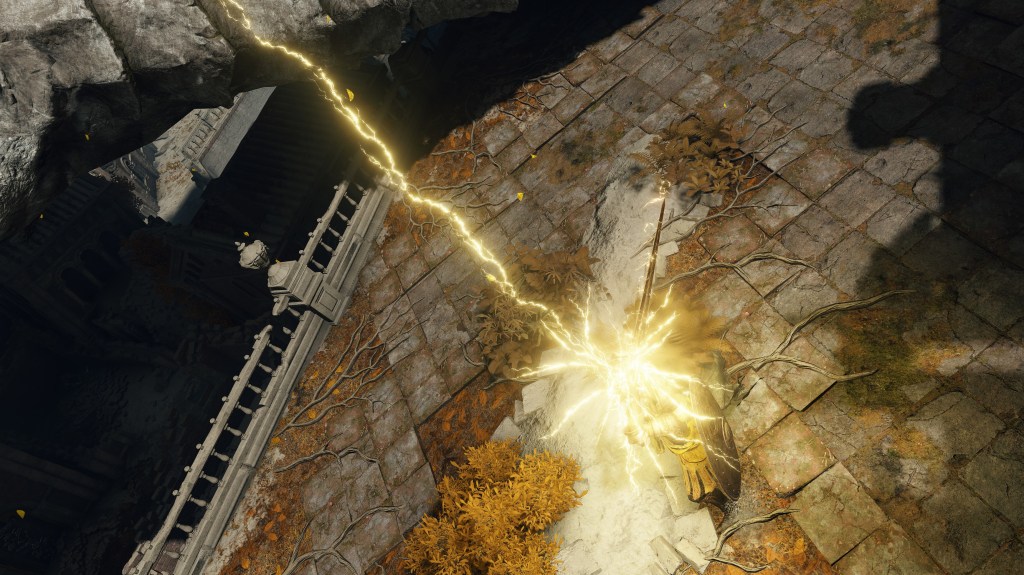


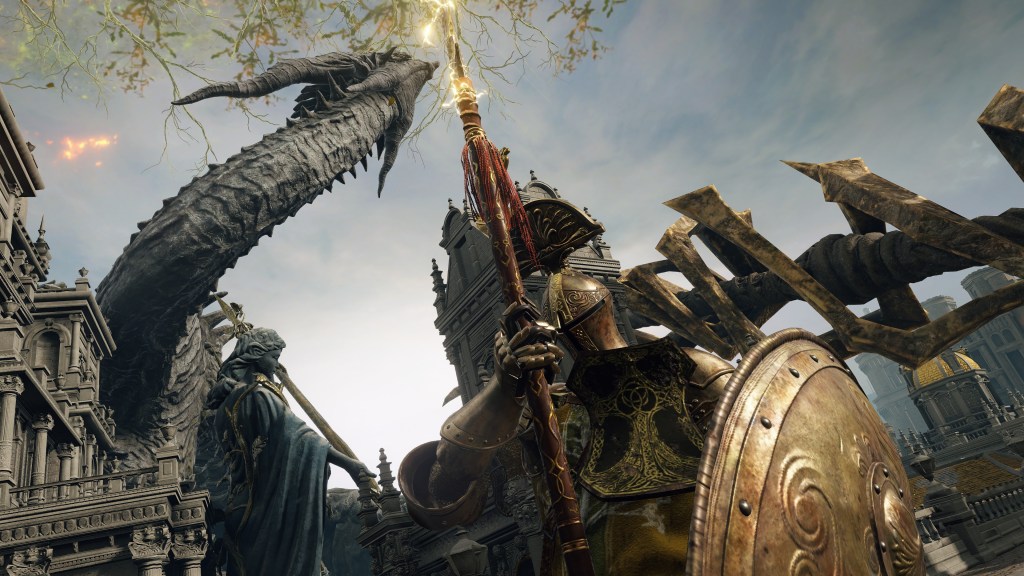


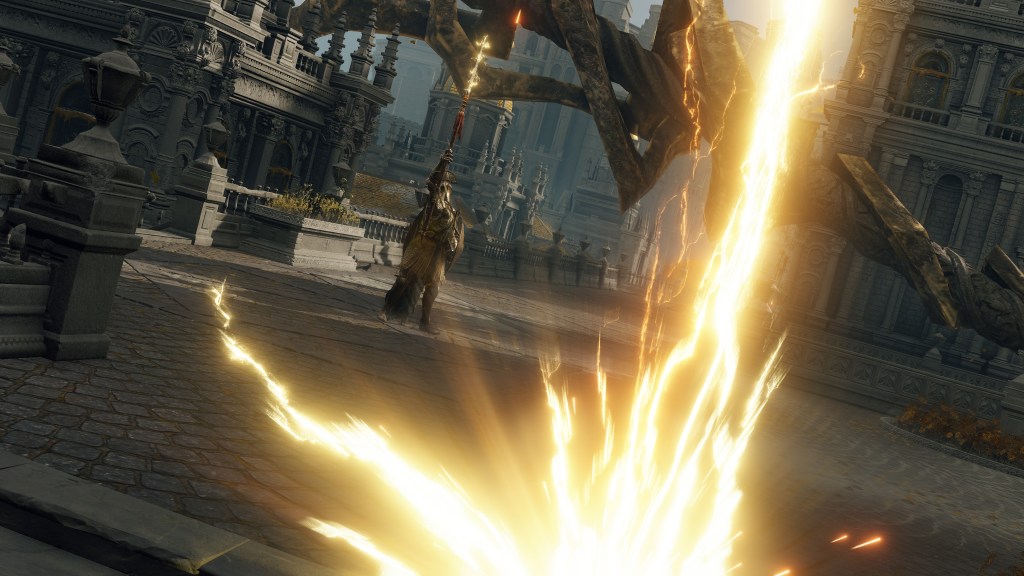
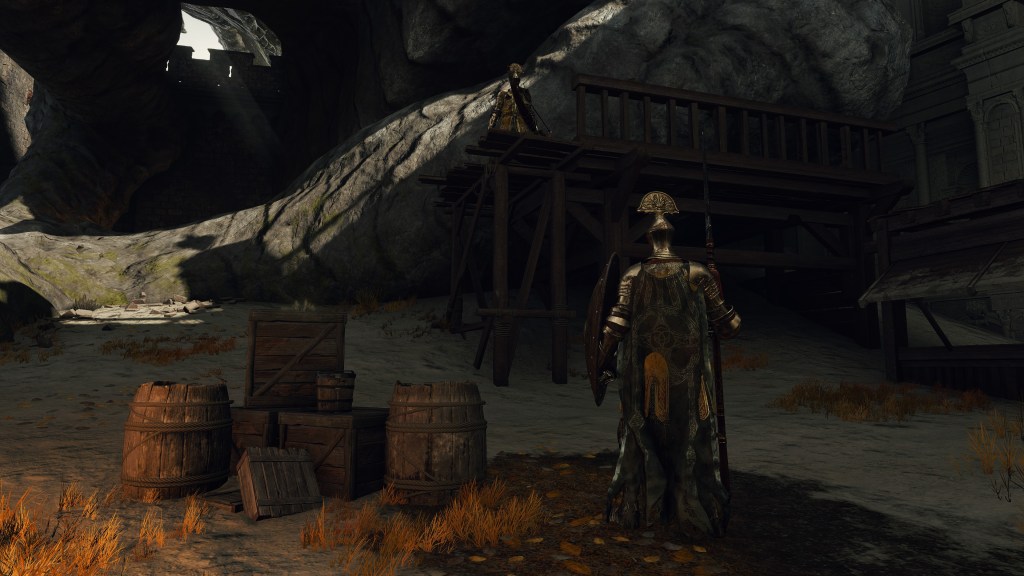


Practice of the cult also wasn’t limited to the confines of the capital. A number of adherents travel to other places in the hopes of developing their craft. This is evidence by the corpse of one ancient dragon apostle in the Wyndham Catacombs, bearing a book on crafting lightning greases as well as lightningbone ammunition. This believer sought knowledge from the ancestors of Farum colonists living out on the countryside, and he wasn’t alone. A small side chamber has been converted into an entire archive, the Marika statues holding open books while the wall recesses store scrolls instead of coffins and bones. This became the place for the faithful of Leyndell to deepen their knowledge of the ancient dragons which they denied the resident pagans. Another cookbook is sold by the nomadic merchant, its lightning pots recipes requiring fulgurblooms from the war-torn hill overhead — and also amongst his wares sit lightning bolts tipped with the gravel stone from that stormy knoll. Wherever lightning still held strong on the plateau, cultists of the capital wanted to be.
Recipe book handed down in the royal capital ancient dragon faith. Arts of lightning, which is the weapon of the ancient dragons, are written down.
But the ultimate pilgrimage site for an ancient dragon apostle was, of course, Farum Azula. One lays among the dead in the crumbling capital, his cookbook harboring the secrets for the stronger “ancient dragon lightning pot” (古竜の雷壺) which seals up additional gravel stone within a ritual jar. There is also a recipe for lightningproof dried liver, which we can find on a different corpse in the area but otherwise only on the Plateau — especially in Leyndell. Without a doubt, the city in the sky continued to see visitors from the Erdtree capital, people finding some way over just as we do. In the furtherance of the lightning arts, one visiting believer compiled a new prayer book different from the one owned by adhering knights. Rather than teach the knights to hurl a mundane spear or call down the ordinary bolt, this book details prayers for the ancient dragons’ equivalent with red lightning. Witnessing the weapons of the ancients in their homeland, any cultist might be able to obtain greater power, just as the beastman have.
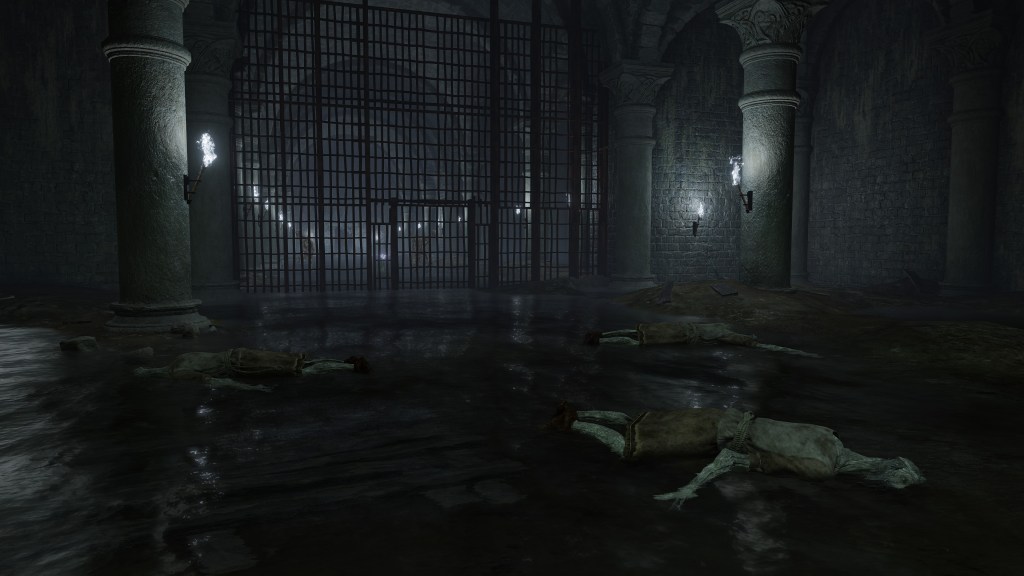


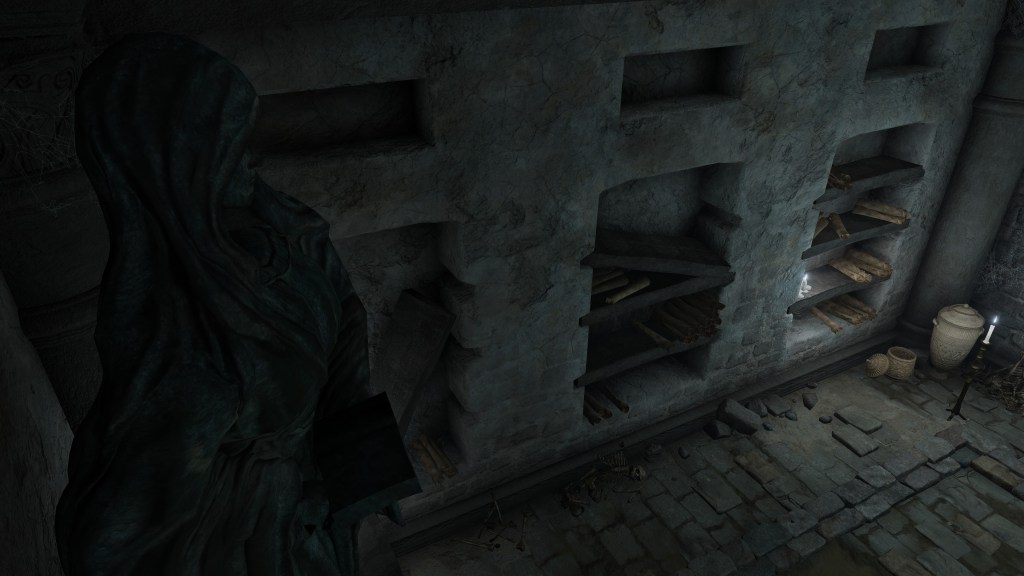


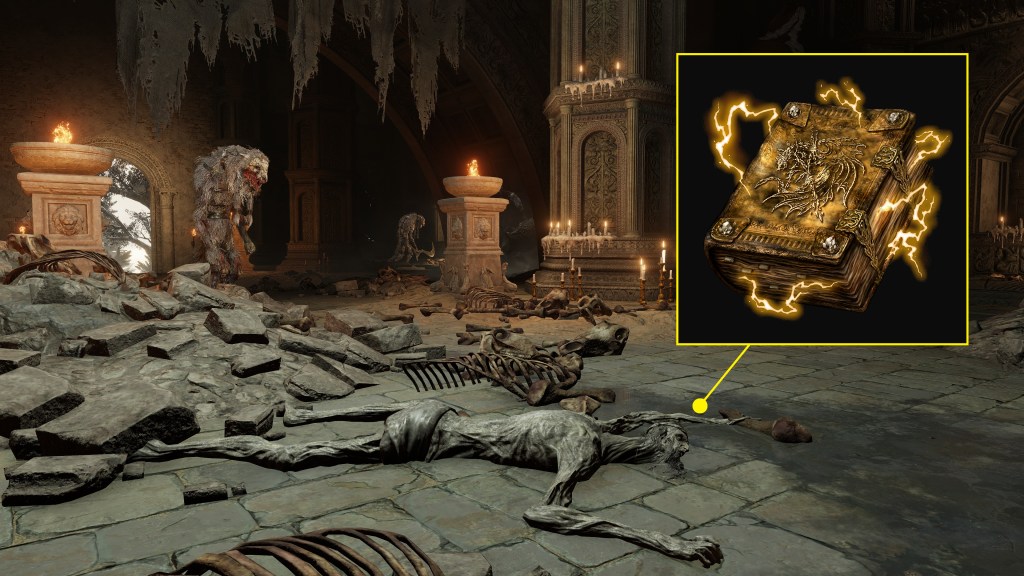
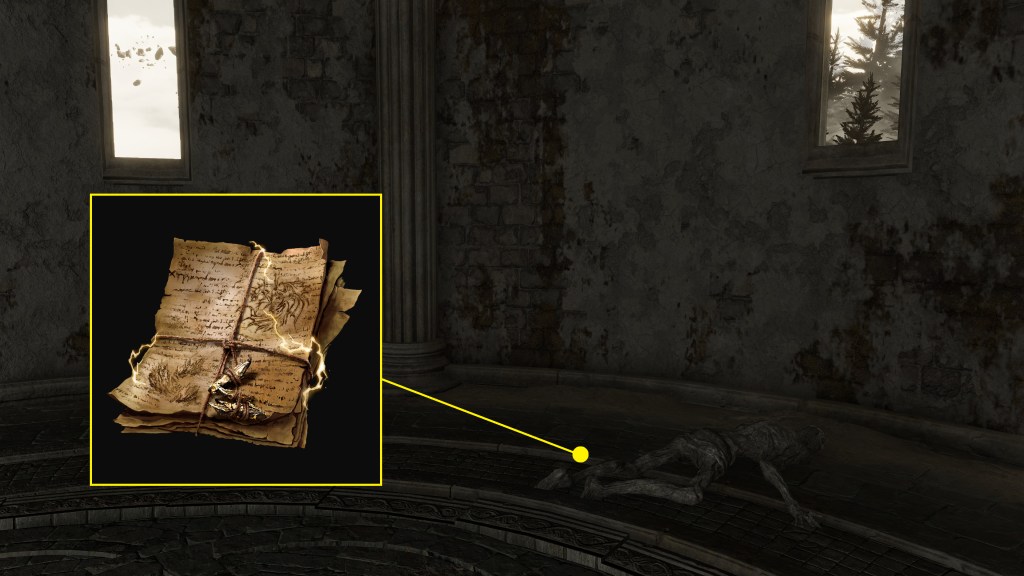
Prayer book of the royal capital ancient dragon faith. Lost book that isn’t handed down in the Lands Between. Details red lightning prayers.
Unknown royal capital ancient dragon faith prayer.
Calls red lightning strikes and sends them flashing in the surroundings. Greatens range of lightning strikes with charging.
The red lightning recited in legend is the very thing ancient dragons made their weapon.
However, the ancient dragons’ lightning spear and strike would never catch on. The prayer book’s description acknowledges how the item is a lost work, its arts unknown to the Lands Between, let alone the royal capital. In fact, no knight of the cult employs red lightning, even among Godwyn’s royal guard. Only the grotesque Tree Sentinels fully embrace the power of Gransax and his kin, and they are a gross minority. One guards the city’s side entrance, seldom to cross paths with visitors. The other blocks way to Maliketh’s boss room at Farum Azula, most likely recruited as an escort on the promise of better becoming an “ancient dragon” from the dragon capital. Those two fanatics have clearly been pushed to the fringe for their idea of dedication. It isn’t surprising that the knights, by and large, reject the weapon of a hated enemy. But if enmity from wartime was the reason, why accept any of this lightning promulgated by Fortissax and Lansseax? The same as why they adopt the gravel holy seal instead of the traditional Erdtree crest: because they are still the color of gold.

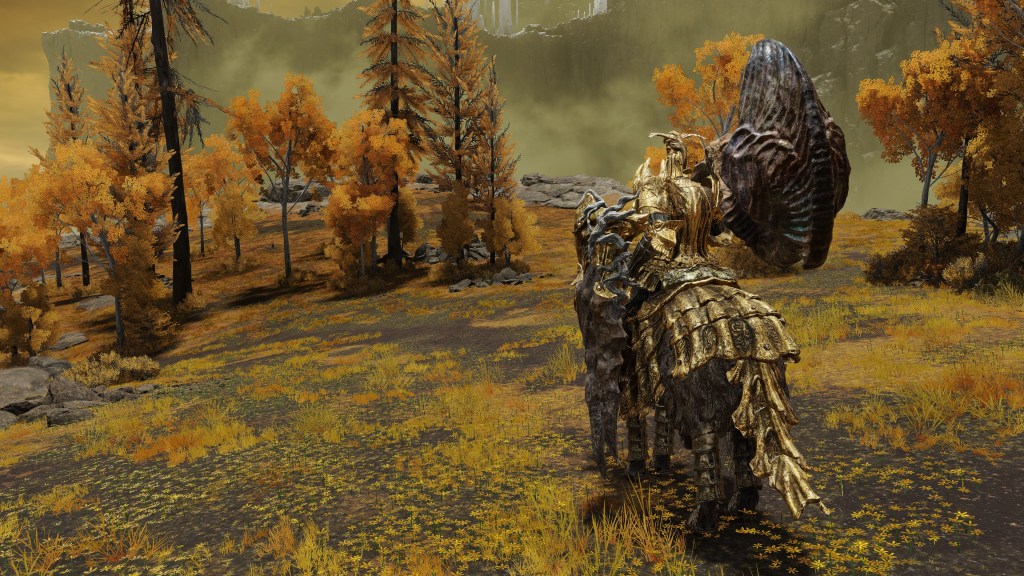


Gravel holy seal considered an ancient dragon’s scale. Enhances royal capital ancient dragon faith prayers.
The ancient dragon faith is not a betrayal to the Golden Tree. Because this holy seal and lightning are all gold-colored.
In truth, red lightning was likely unpopular more so because of its resemblance to the Crucible, the color invoking a period more and more wanted to forget. It is apparent that even Godwyn, a proud child of the Age of Plenty, had accepted the era’s passing and moved on to embrace this new interpretation of gold. Maybe the demigod foresaw the public sentiment when developing his lightning, but he still proved the yellow variant’s potential to rival some of its red counterparts in terms of raw might. That potential was enough to win over his royal guard and eventually the entire military apparatus in Leyndell, all holding up “true” gold as the legitimate divinity no matter its source. For Marika, this was probably a welcome development to her Golden Order, her son reshaping the national identity while still adding to the kingdom’s arsenal. And they would need that solidarity and strength, because the wars abroad were not yet over.
 Lokey Lore