
Preface
Thanks to the sheer scope of Elden Ring, it has become easier than ever for FromSoftware to hide its history in plain sight. So many crucial events go unmentioned, and none are as consequential as those establishing Marika and Godfrey as queen and king. But while the written narrative might have little to say of these happenings, there is still much that we can discern from the game world, and they help paint an epic picture of these two’s early days. Although it has caused me to suffer informational overload on more than one occasion, I can appreciate the developers’ commitment to letting this story speak for itself. All the disparate plot threads weave together into a majestic tapestry, and only a game this large and layered could present it like a half-buried remnant of a bygone era, ready for us to come dredge it up.
My Kingdom for a Sword
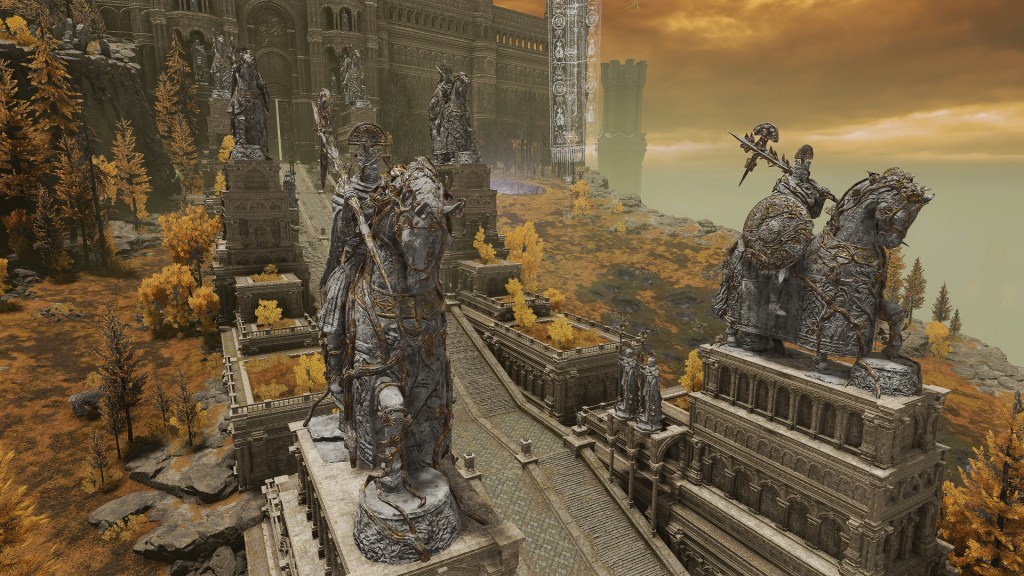
After planting the seed to grow between her village and the Sun Capital, Marika would supplant the existing kingdom beneath her maturing Erdtree rather than coexist alongside or assimilate into it. The reason may be as simple as the guidance of grace, but this still requires motive on the Greater Will’s part. And regardless of gold’s directive, taking over the territory was simply the logical next step. It would have been unwise to leave the tree accessible to anyone save her own people — someone else might dictate the fate of her tree to strongarm cooperation. The solution then could have been to make the Sun Capital “her people”; they certainly were positioned for it. The Farum colonies, of course, have a history with gold which assuredly made a golden tree attractive to them. King Ensha may likewise see his precious sun in gold, gravity sorcery ready to tear out the earth and investigate that shining tree’s origins. In fact, both sides likely did spend some time cognizant of Marika and the Two Fingers’ creation.
Both the Volcano and Fortified Manors hang not only dragon banners, but also standards featuring a tree design. Each flag enjoys a similar state of disrepair as well as the same color scheme and comparable styles. Combined, it suggests that the Farum colonists did incorporate the Erdtree into their culture somewhere down the line. Such acceptance isn’t a surprise. Even if the source of gold had ended up becoming lost with their god, the culture still considered it and rock foundational to Farum Azula. It didn’t matter if the form had changed, gold had suddenly returned to them — was that not cause enough for celebration? The circumstances might have remained a mystery, but the development itself must have felt like a reward to the dragon hunters. Under the Sun Capital’s protection, the colonies would let the sapling flourish. If the dragon represents rock, then the tree would symbolize gold. But where was the incentive to accept Marika as god? With daylight so close to earth, what interest would they have in some stranger proselytizing about a tree-specific Order?
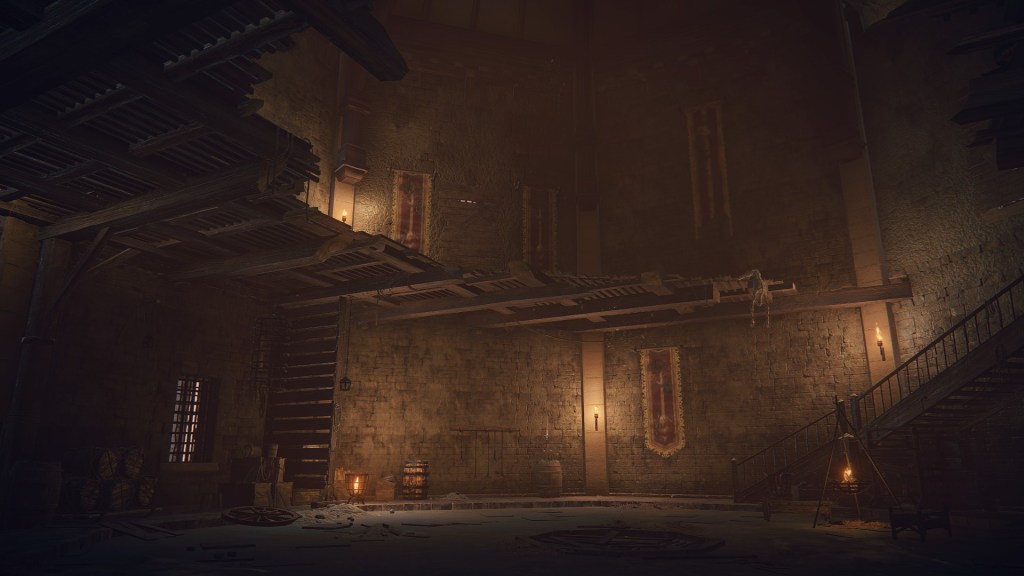
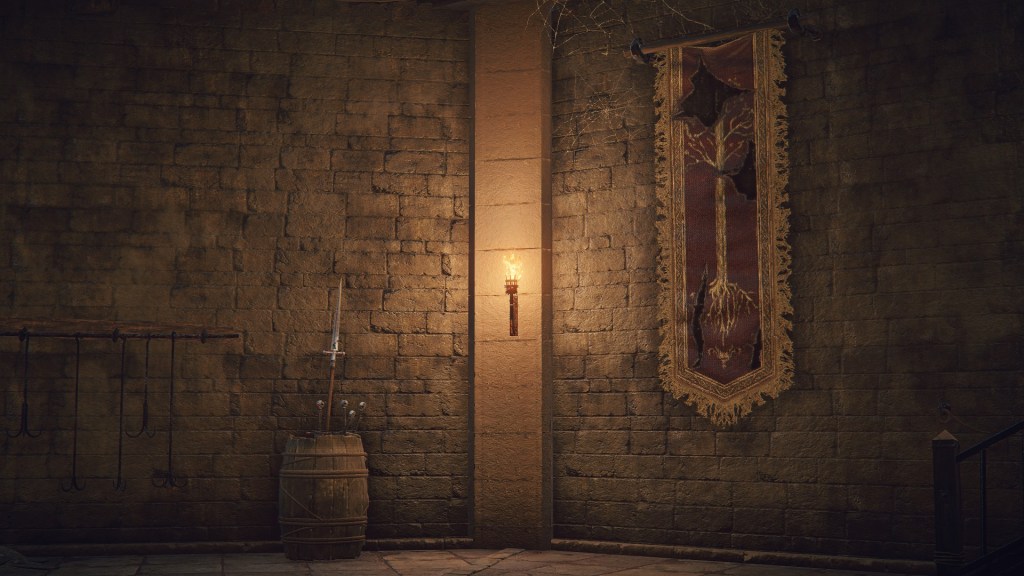
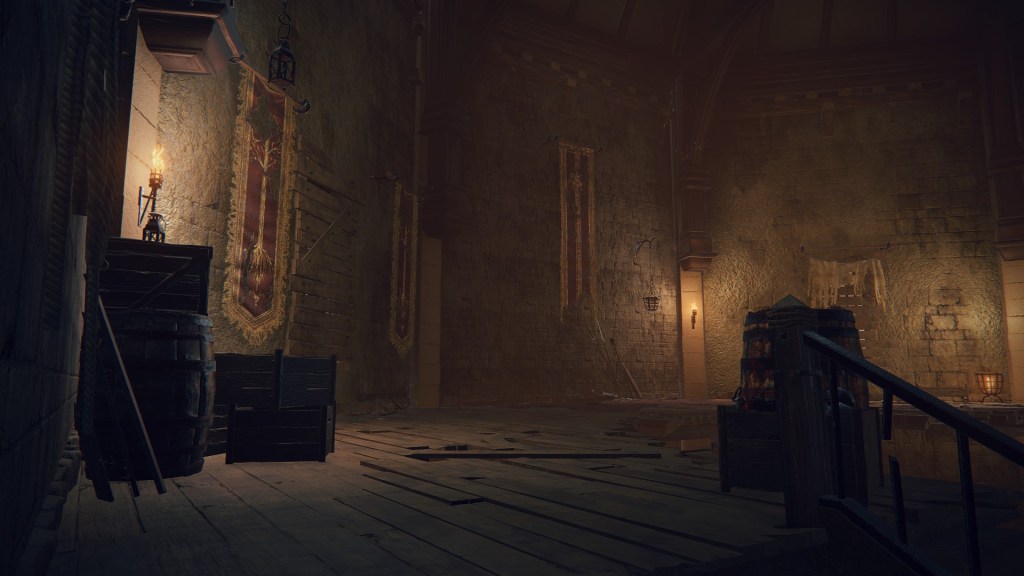
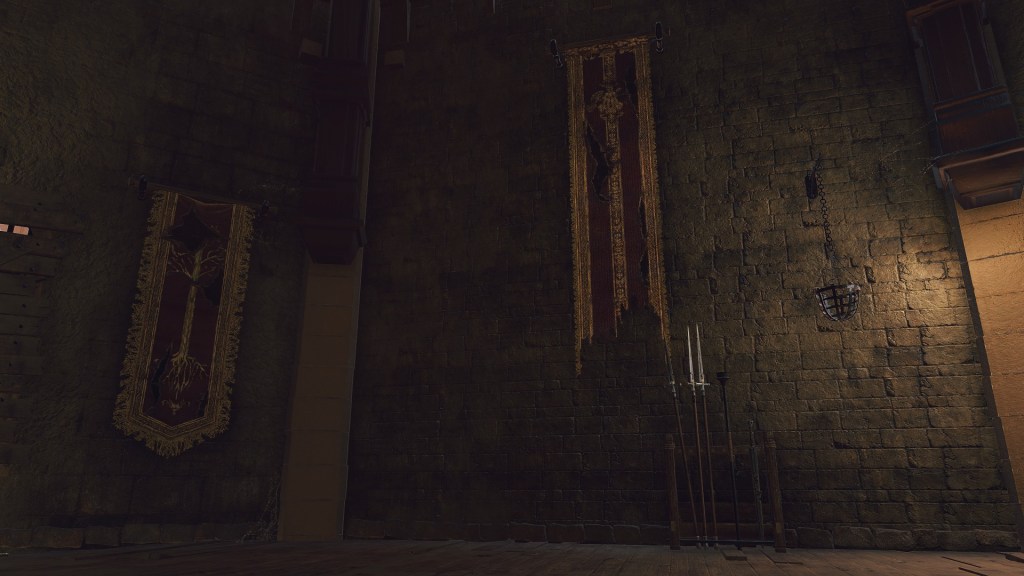
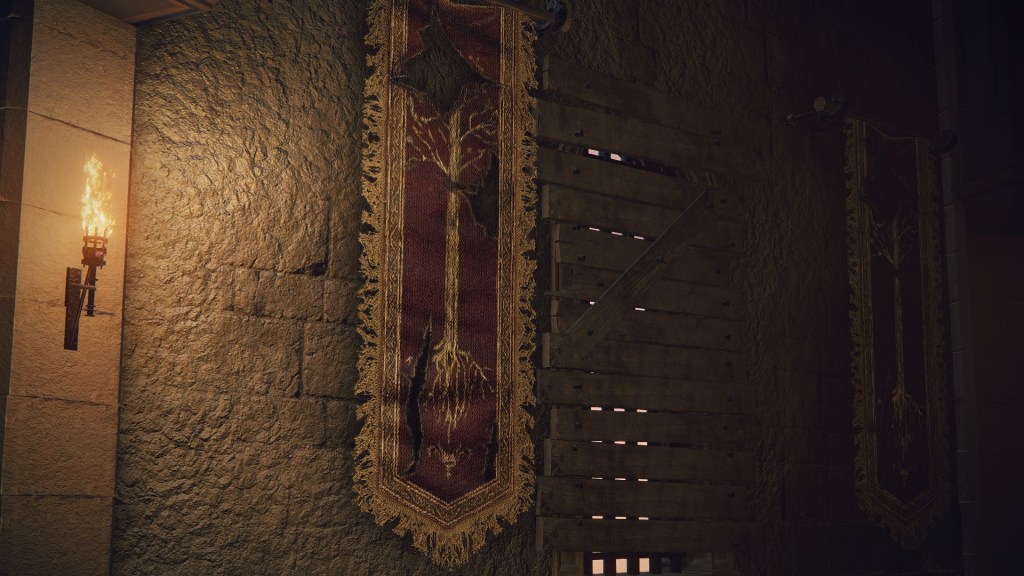


In short, there was no civilization which would want to be taken over by a new deity. The only thing keeping her Erdtree alive was their own personal interest, and that was always amendable — what if the Eternal City below started pressuring them for having roots connected to the Greater Will grow in their vicinity? If it was impossible to make headway with the people controlling the Erdtree’s base at the time, then they would be competitors, enemies, not allies. Not helping matters, either, would be the Farum colonists and Sun Capital’s fraternization with the Fire Giants. Putting every other issue aside, close relations with a race capable of burning her tree with their flames was unacceptable. If Ensha and his ilk wished to touch the sun, they best be prepared to get burned. While the Erdtree most likely did grow under their purview, Marika would ensure that it would be a short history together.
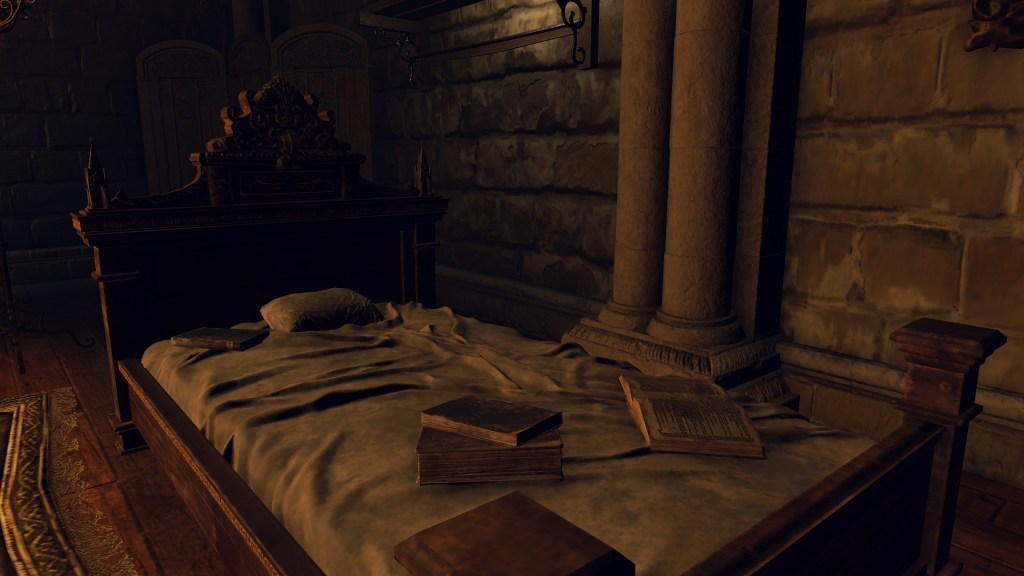
Unfortunately for her, there was a problem: she couldn’t fight a war. All spells associated with Marika are healing incantations. The texts to both Blessing of the Erdtree and Erdtree Heal are found lying on the bed in the Queen’s Bedchamber, leaving no room to doubt their owner. Her faith could, at best, provide support, and this is assuming that she even knew these advanced prayers at the time. There are no offensive spells among Two Fingers incantations either, so there was no one to turn to for this woman of faith. It was just her and Maliketh against a military coalition. How were they supposed to topple a whole civilization? There was no getting around it: Marika needed an army of her own. However, she wouldn’t find one in Belurat. Her Hornsent allies apparently weren’t willing to aid with war — at least a war outside their territory. They had their tower, she had her tree; that was that. And so, the god secured her means to control the Erdtree from the unlikeliest of places.
When Marika rose to become god, she took Godfrey as her Elden Lord. There were several benefits to this choice. For one, he was nearby. If she wanted a warrior to fight her battles, she need look no further than the highlands north of Belurat. Godfrey began as Hoarah Loux, so assuming that the bear hunter lived there specifically, finding him would not have been difficult; given her own history with the area, the Empyrean might have already been familiar with the barbarians if not Loux specifically. On that note, Marika’s first consort owed no one his allegiance except for her. Like the queen, the king has no obvious preceding family to complicate matters. Perhaps they were killed in inter-tribal warfare, the orphaned Hoarah Loux forced to climb up the ladder of a rival tribe, or perhaps the barbarian slew them himself to reach the top of his own. Regardless of his specific circumstances, we see no one else bear the Loux name except for Nepheli, long after his reign as Elden Lord. Hoarah was alone.
But while a man within arm’s reach and without prior ties was helpful, her main reason for selecting the barbarian as a husband was his strength. His Elden Lord set references the Erdtree’s early days coinciding with war in its description. Protection of the Erdtree’s text similarly acknowledges how “all” started out as its enemy, only coming to govern the entire Lands Between due to countless victories in battle — and Godfrey was the king of the battlefield. He was capable of leading armies, inspiring morale, and overcoming foes who stood in Marika’s way. And he would do it without mercy. It was that vicious fighting spirit of his that possessed the warrior to become the supreme being on the Altus Plateau, the Lands Between, and the entire world. In other words, the man was your typical barbarian with atypical strength. Marika must have recognized the warrior’s ability and offered him and his people the chance to strive for greater heights as part of her future civilization.
One of the Golden Tree faith prayers. Thing considered the most superior of them.
Boosts all attribute cut rates except physical, including surrounding allies. Continue to pray while holding and effect won’t activate.
In the beginning, all were enemies of the Golden Tree. For it became the Regulation through innumerable battles and victories.
Hoarah Loux had his own reasons to accept becoming a consort. For one, his barbarian culture already instilled a desire to achieve apotheosis through faith. Marrying a god made Godfrey the first “demigod”, the unique grace of gold he received reflected in his resilience to holiness like subsequent ilk. In plainer terms, Marika’s consort was a man who attained divinity, a promising prospect for any highland warrior. Then there was his fixation on kingship. Hoarah speaks of kings in the same terms that his people envisioned gods — entities of great power realized through contests of strength. Indeed, what is a god if not the king of kings, ruling from on high over the cosmological domain? Marika sought to be a god queen as vessel to the Elden Ring, leaving the Ring’s protector the power to decide both their fate. To be Elden Lord was, in a sense, to be king governing the entire world. When introduced to that concept and potential to conquer the planet, the simple warrior could not resist. Hoarah put his faith in becoming Marika’s king, assuming that he could prove himself against her enemies.
To Loux’s credit, his will to fight did translate to the strength to win. By the time he assumed a crown, Godfrey had amassed an army under Marika’s banner and established the royal capital of Leyndell. This requires the Warlord to have previously united an entire tribe behind him, and we can infer which one. Just outside the city walls is the Auriza Hero’s Grave and Side Tomb. The foreign word presumably refers to the people buried there, the name “hero’s grave” implying that they primarily consisted of brave warriors. And yet, there is no ruined settlement called “Aurezza” (アウレーザ) anywhere on the plateau, much less near the burial ground — only Leyndell. The name is clearly taken from the Latin aureum (アウレム) meaning “golden”. Auriza would thus be fitting for a tribe which brought about the Age of the Golden Tree establishing its kingdom through heroic battles. That would explain why the highland barbarians have virtually vanished, the peoples consolidating into one after Hoarah brought them all to heel for this fight. The culture, in that case, didn’t die out, it just converted to become the core of Erdtree civilization.
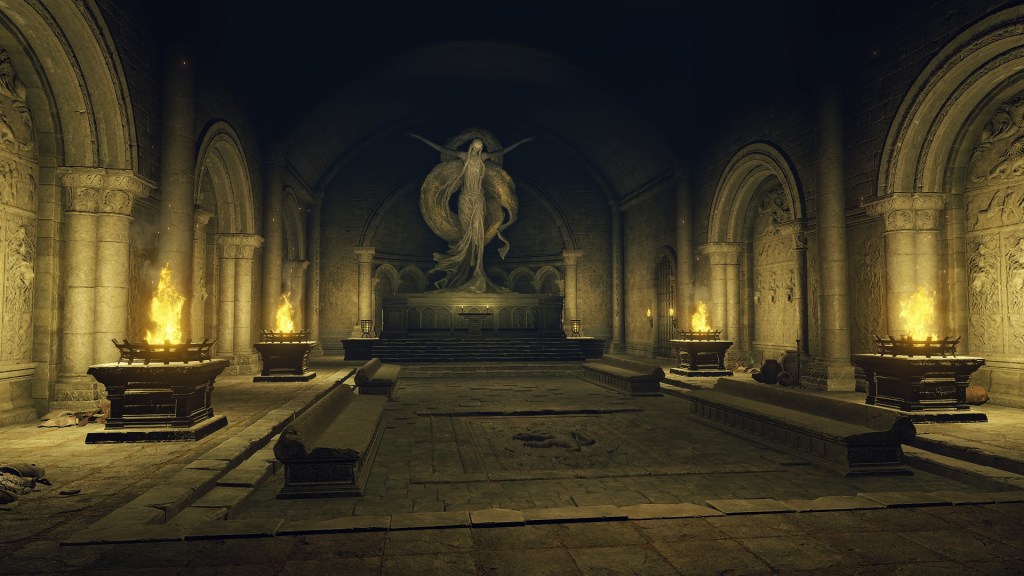
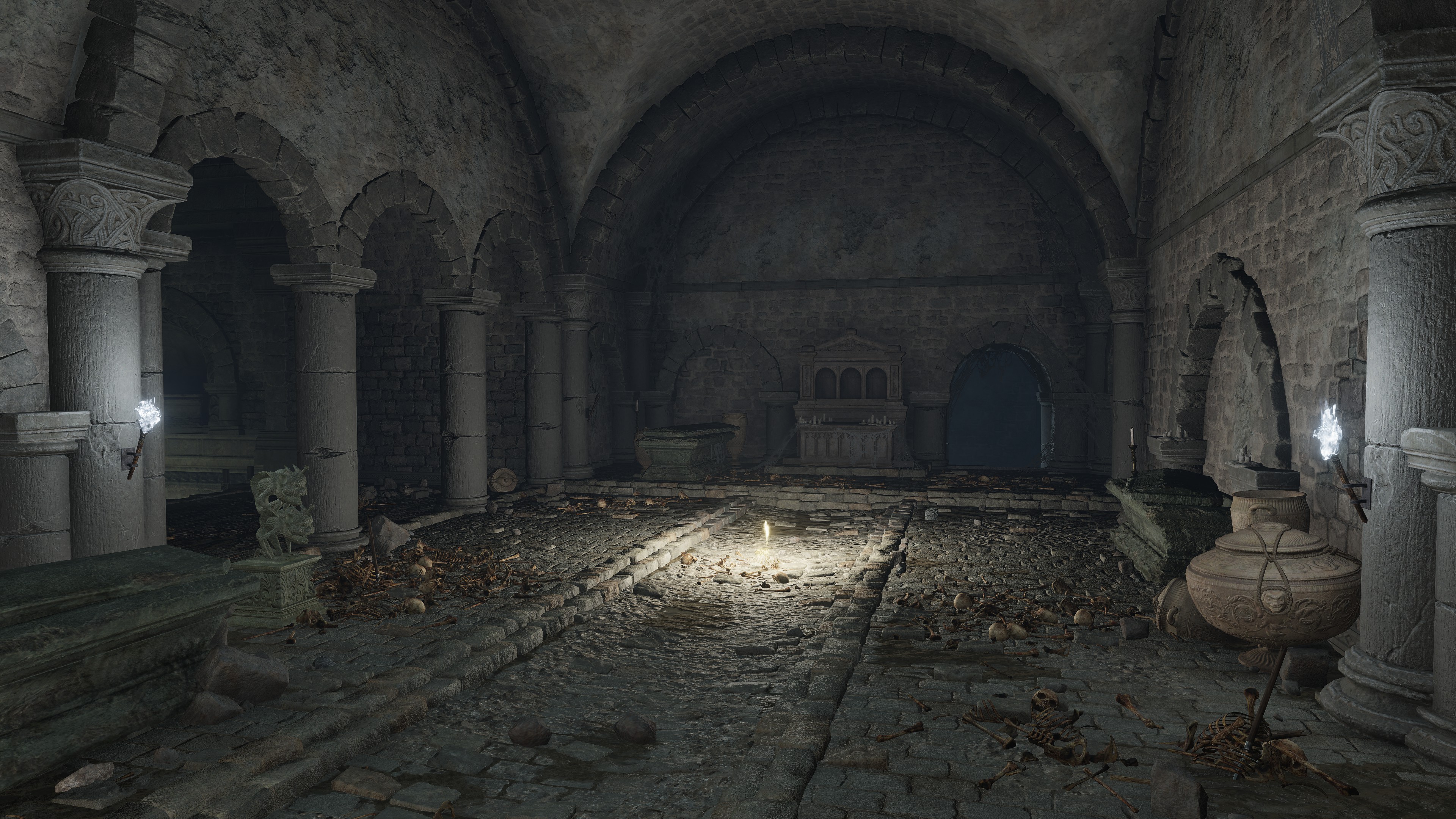
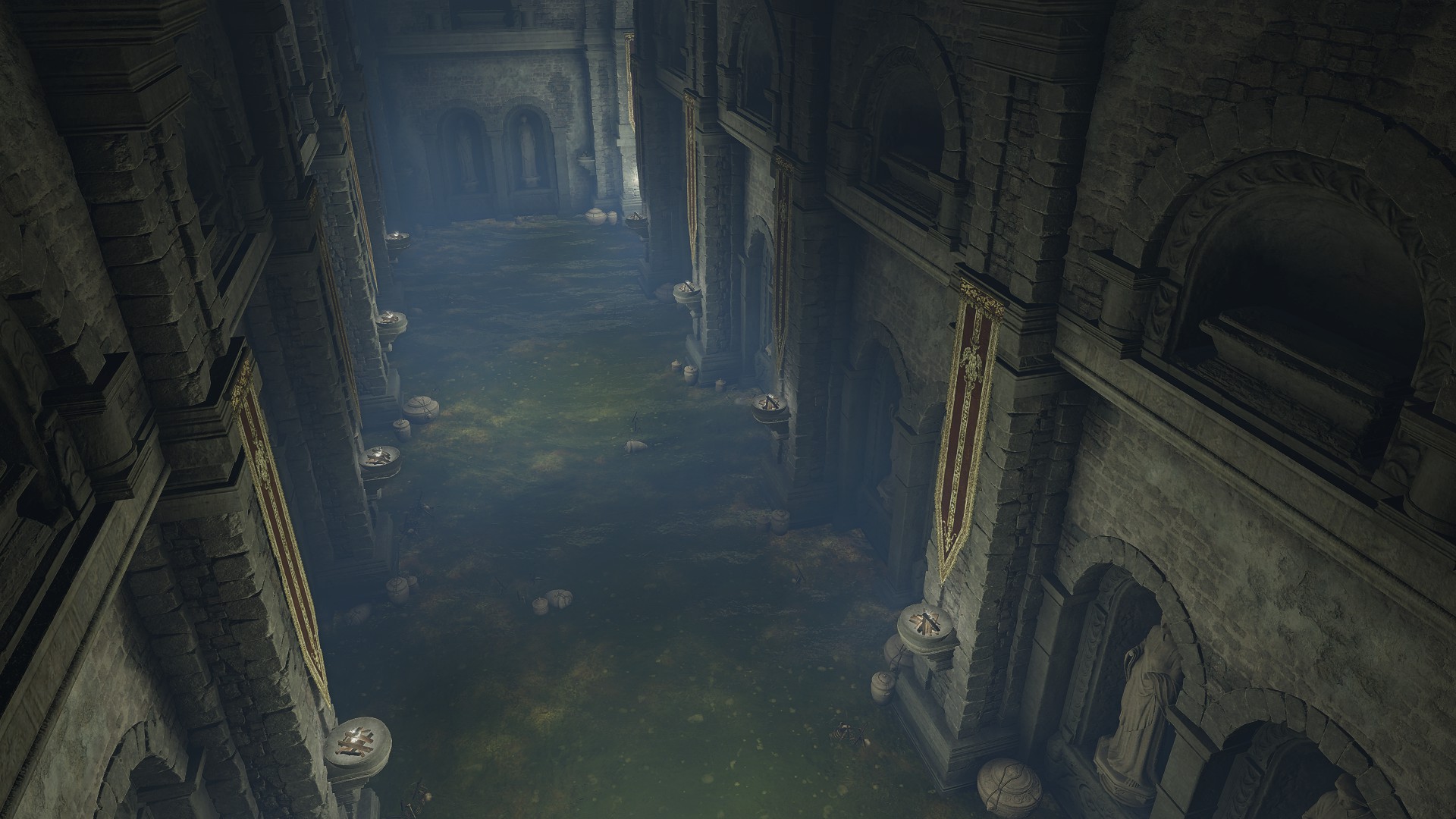
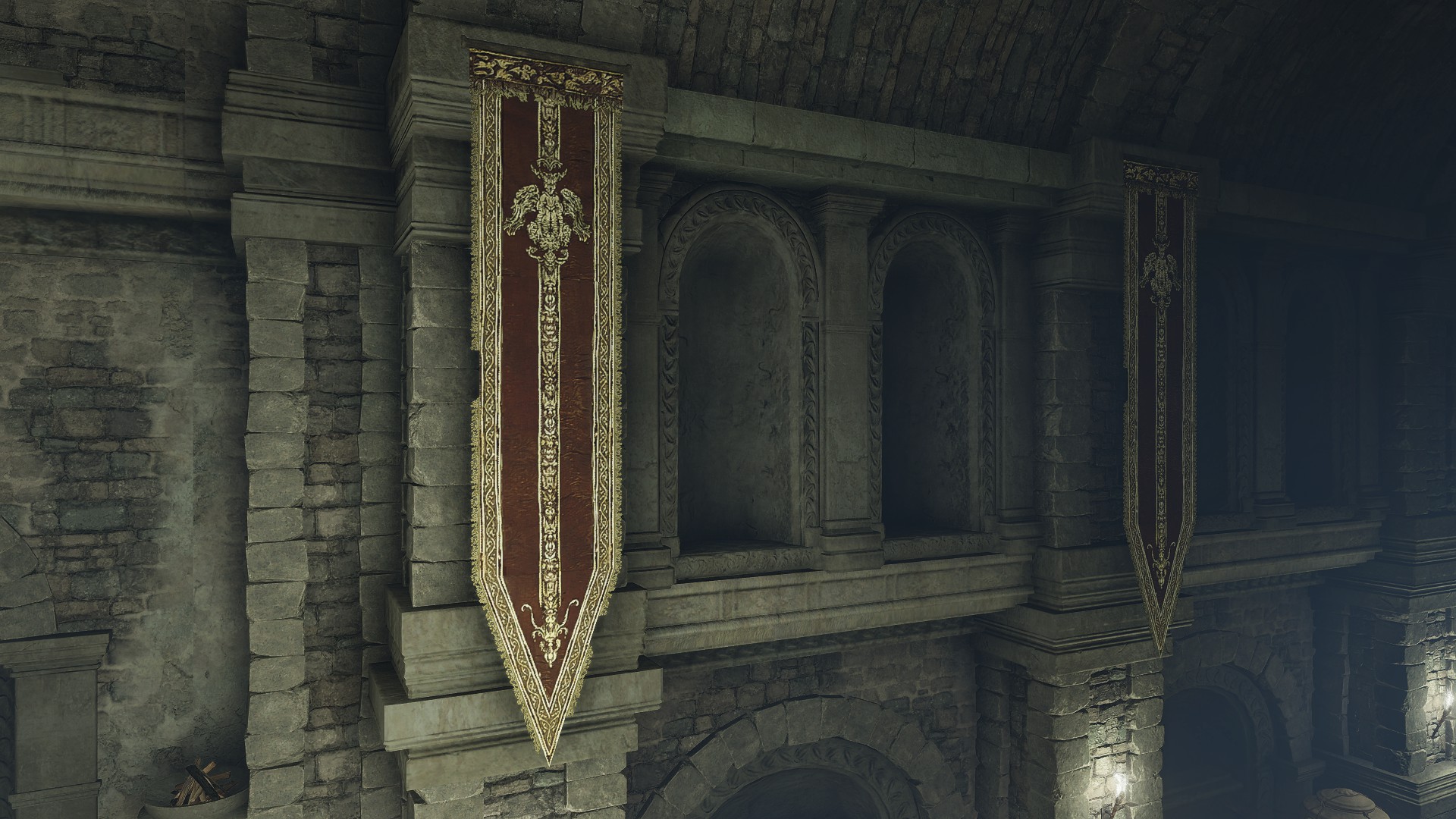
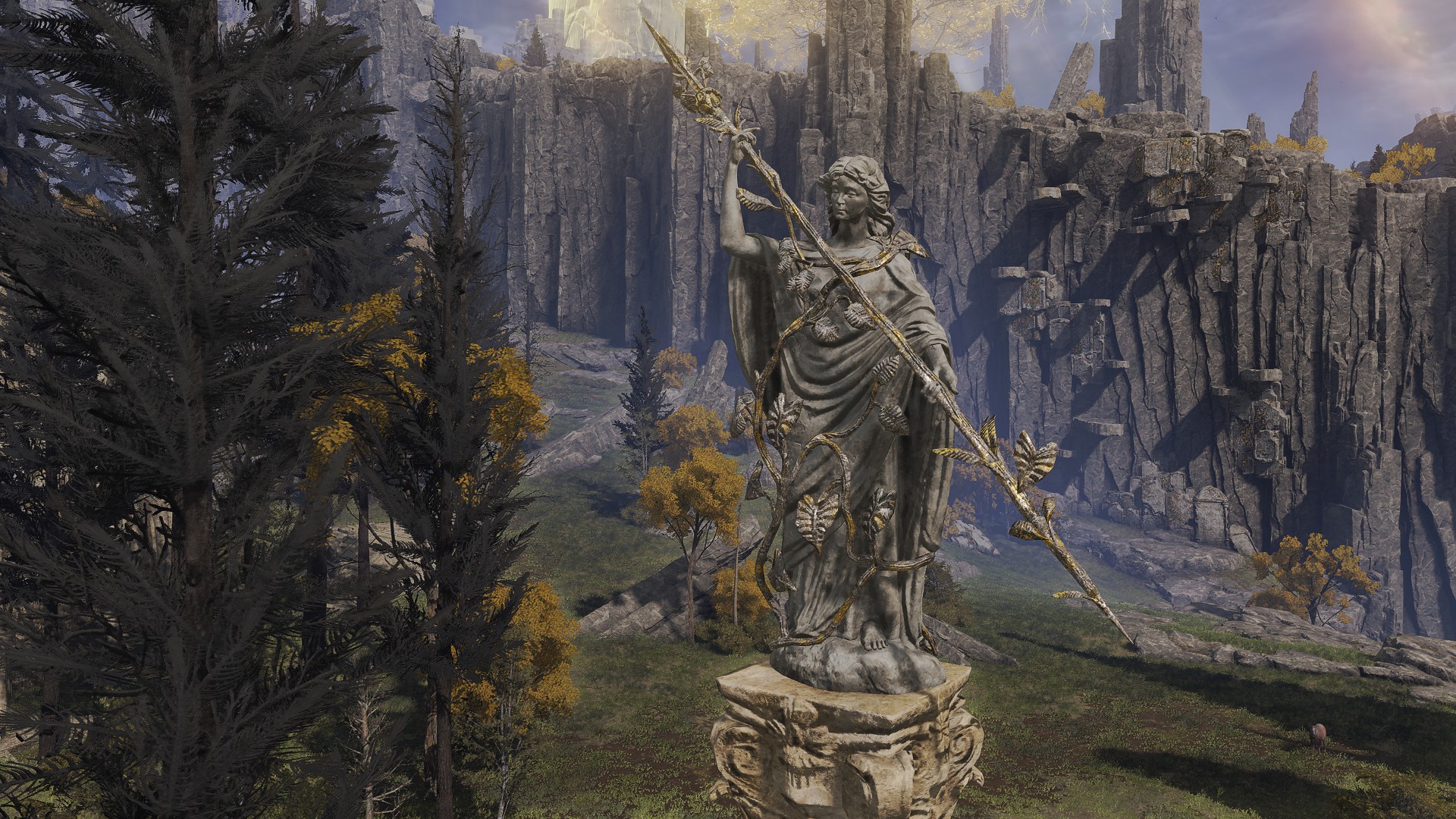
As the final nail, there is how these tombs were furnished. The Auriza Hero’s Grave has a peculiar golden lighting from burning glowing white leaves like in Leyndell, with similar banners bearing the tree crest and shining ray pattern utilized by the capital’s armed forces. This confirms the tribe’s connection to the royal capital, and effigies further tie the buried to Marika. Common to all Hero’s Graves are the statues of a woman in veil and tunic evocative of the Virgin Mary, a similar figure standing tall there and in other catacombs. Who would be depicted as a holy woman, if not holy mother, in a place of Erdtree Burial except the Erdtree capital’s queen? But the Auriza Hero’s Grave features another such statue, this time with the woman brandishing a spear covered in foliage. Why portray the Numen reliant on a barbarian to win her wars as a warrior herself? Because it shows solidarity with the real heroes. They were one in wanting to claim the Erdtree, so their god stands with them as an equal even if only providing support from behind. They are her spear with which to smite her foes.
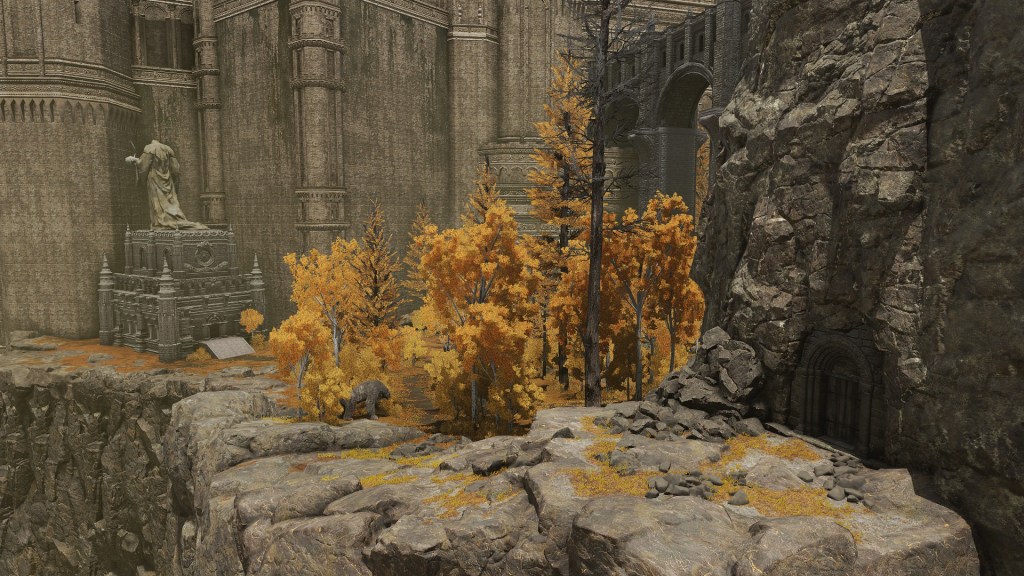
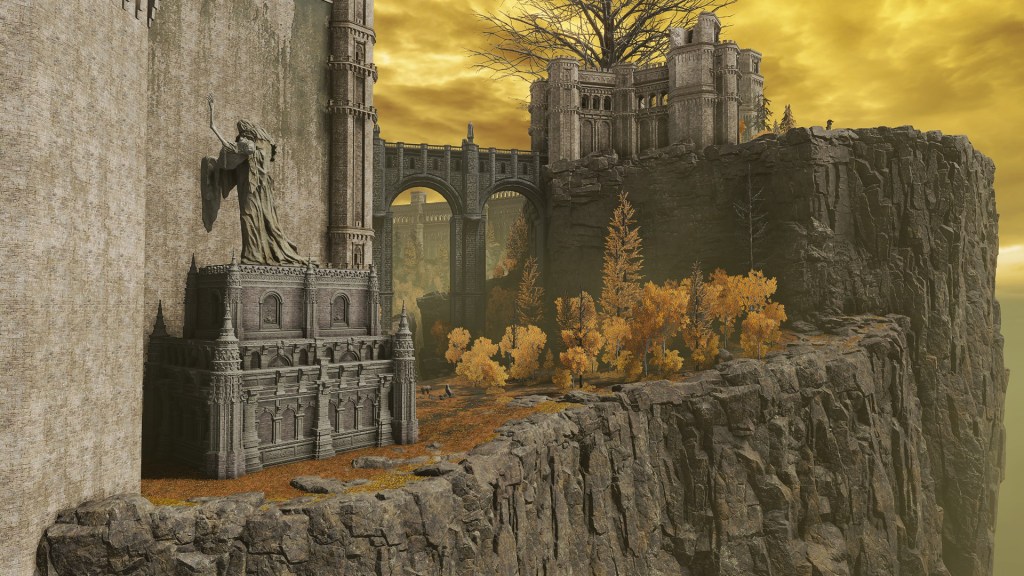


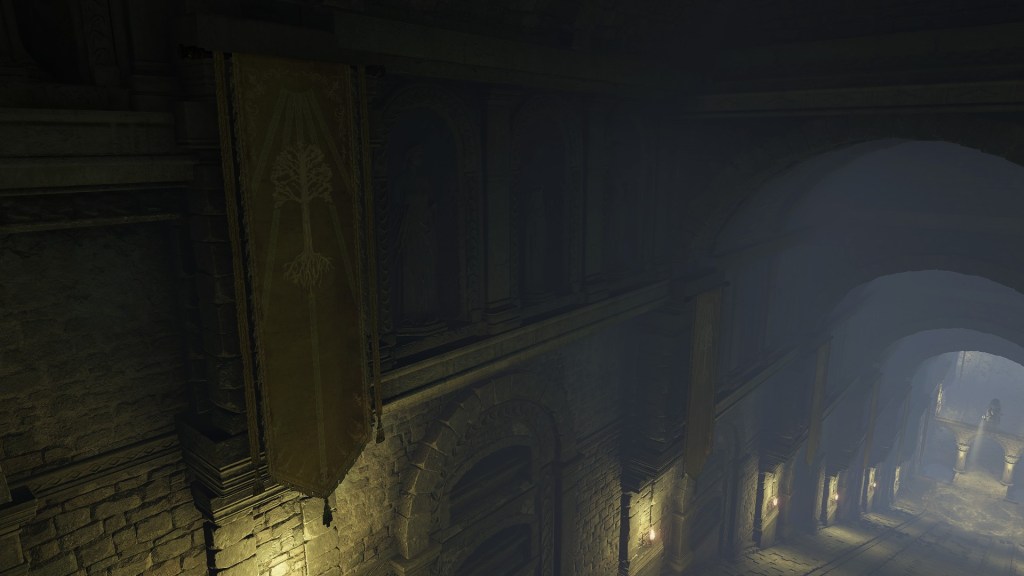

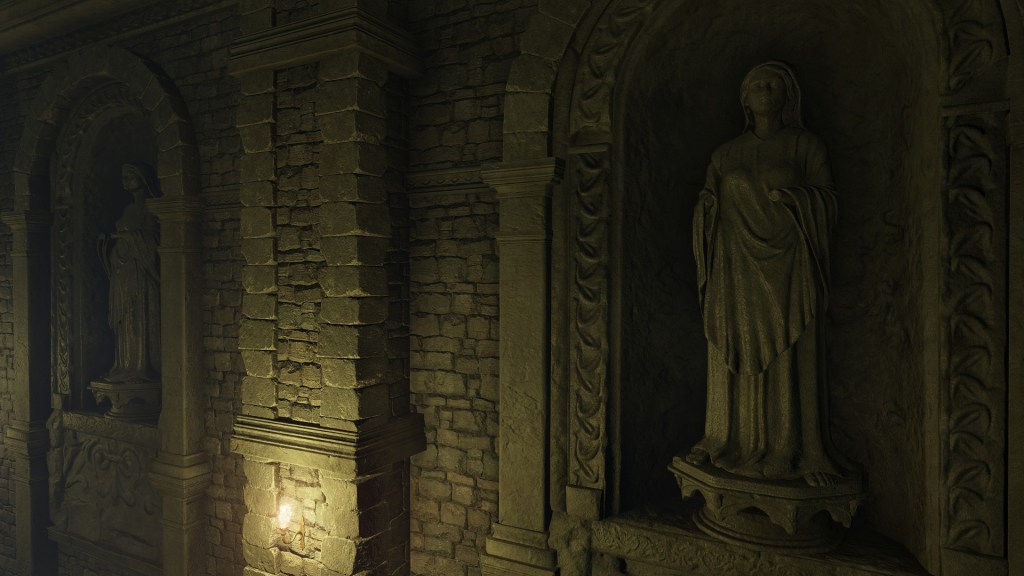

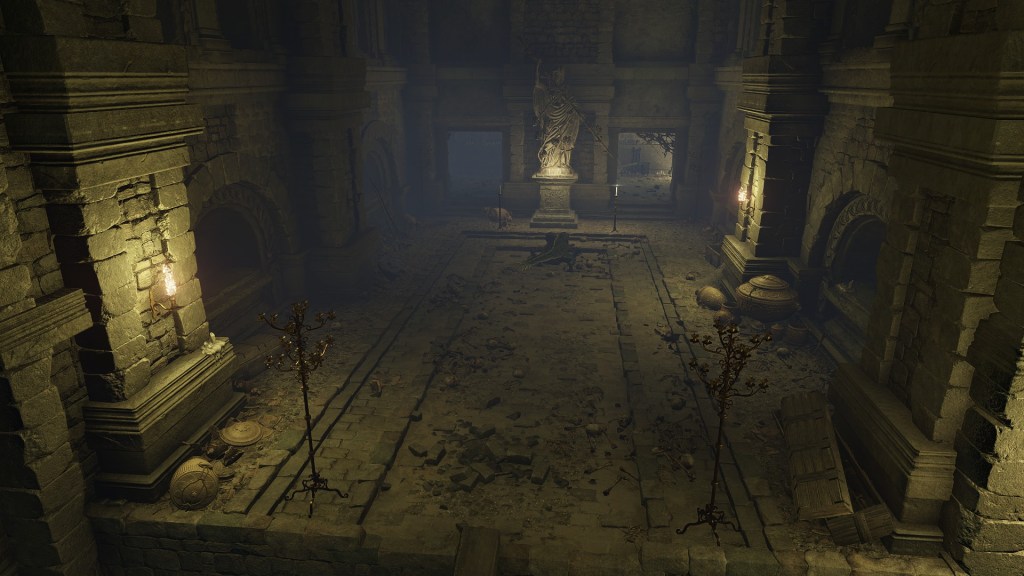

In this case, their foes were the Sun Capital and its Farum colonist allies. Needless to say, the barbarians led by Hoarah Loux managed to destroy the metropolis and wipe out its population. This was probably no easy feat, given the technological disparity between the two tribes. But with the powers of grace and the Two Fingers on their side, the savage warriors prevailed over the likes of armored knights. The moats around Leyndell’s walls do hide the signs. An invisible scarab rolls up Prayerful Strike, an ash of war empowering “barbaric” armaments with the Fingers’ sigil — specifically, the menu graphic features the same Great Mace as the graphic for Earthshaker. The bloodroses growing on water’s edge serve as proof to the bloody aftermath. By the time the relentless barbarians had finished, there was no city left to mourn the dead.
Given that the final survivor of this massacre had the chance to collect weapons from fallen comrades, it is possible that the bodies were left out to rot, at least until all the fighting had concluded. However, Hoarah Loux must have respected King Ensha and his citizens as opponents, since they ultimately would receive a burial in the manner of their people; albeit, an Erdtree Burial, as the skeletons now rising up demonstrate. Why show such regard for the enemy otherwise? As a stepping stone to the warrior becoming Elden Lord, memory of their valiant fight for survival was worth preserving in Hoarah’s eyes. Perhaps the honor was also consolation for the genocide, in case of any stray remnants. But if there were survivors besides the future hero of Morne, they had assimilated into the ranks of the Farum colonies. For all intents and purposes, their nation was lost.
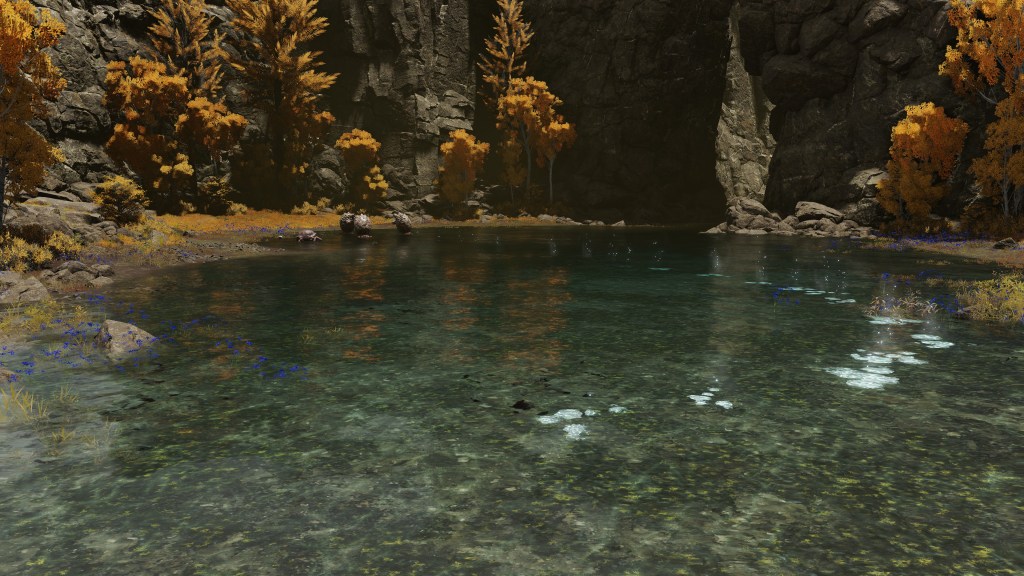


That left only the Fortified Manor and its garrison. Hoarah led his warriors in presumably another assault on the castle now incorporated into the new royal capital. The circumstances likely drove the Farum colonists to desperation. Leyndell’s Pagan Quarter is mainly filled with misbegotten, many of these “hybrids” (混種) supplicating the local graves and saint statue. If they feel such a deep connection to the dead buried there, then those are probably their kinsmen, ancestors — fellow citizens of this district. Certainly, the winged misbegotten ashes note how they are slaves from birth in their description, opening the possibility for multiple generations who didn’t necessarily share that fate. Moreover, it claims that their form mixing aspects of various animals is punishment for coming in contact with the Crucible. The power of the original Erdtree can generate such aspects, including the old fangs in their jaws. We likewise see the hybrids’ feathers, furs, and manes possess a red hue either in part or in full, signs of absorbing too much life energy. It would seem that locals transformed before Marika conquered the land.
Ashen remains harboring a spirit. Summons winged hybrid spirit.
Spirit that possesses the aspect of wings, so shoots arrows while flying. The hybrids are considered to be beings punished for coming in contact with the Crucible, and are congenitally slaves, the corrupted.
In short, a number in the Fortified Manor must have turned to the Erdtree for power. Perhaps in their despair at stopping the barbarians’ rampage, they fell back on that newly matured medium of gold as their last hope. However, whether spurned by the tree itself or simply failing to properly channel its power, they merely turned into hybrid abominations. They are no less intelligent, as demonstrated by Hewg. This explains why we see the misbegotten led by the rare leonine variety more often than not — the lion hybrids possess a yellow coat akin to Serosh, so the other slaves default to their judgment, a carryover from their race’s time as human colonists. And with that continued clarity of mind comes bodies with hardy scales, dexterous wings, and bestial strength. Even if this wasn’t the result they had intended, the “punished” colonists nonetheless gained new power for the fight to defend their home. Alas, it wasn’t enough to stop the Auriza, and Hoarah Loux finally cleared their own access to the Crucible.


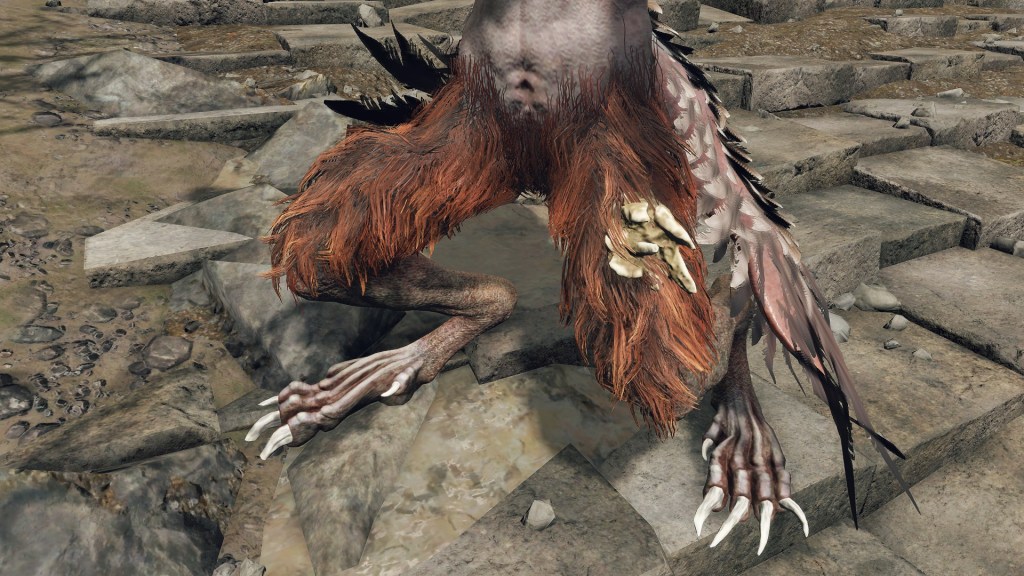
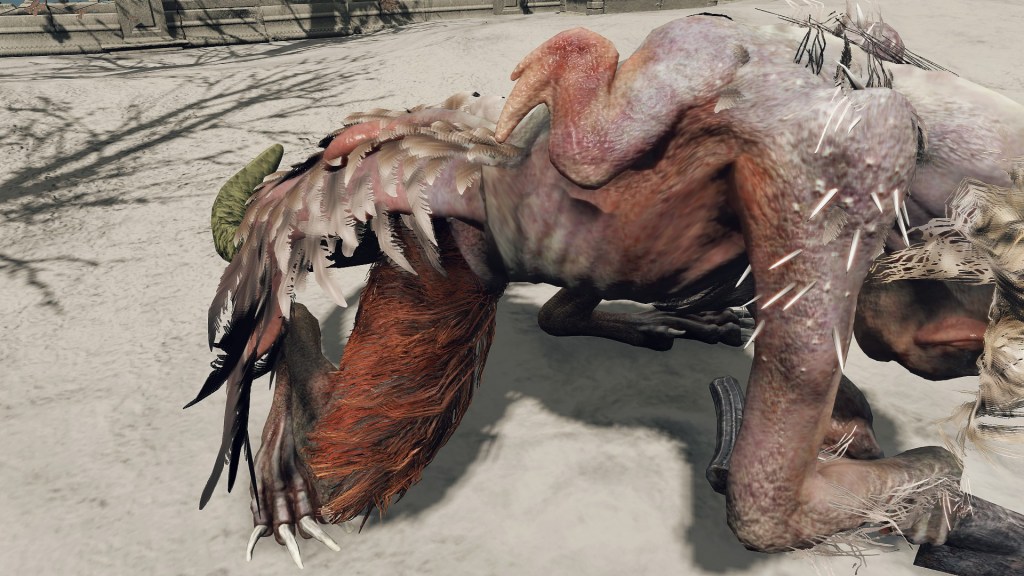


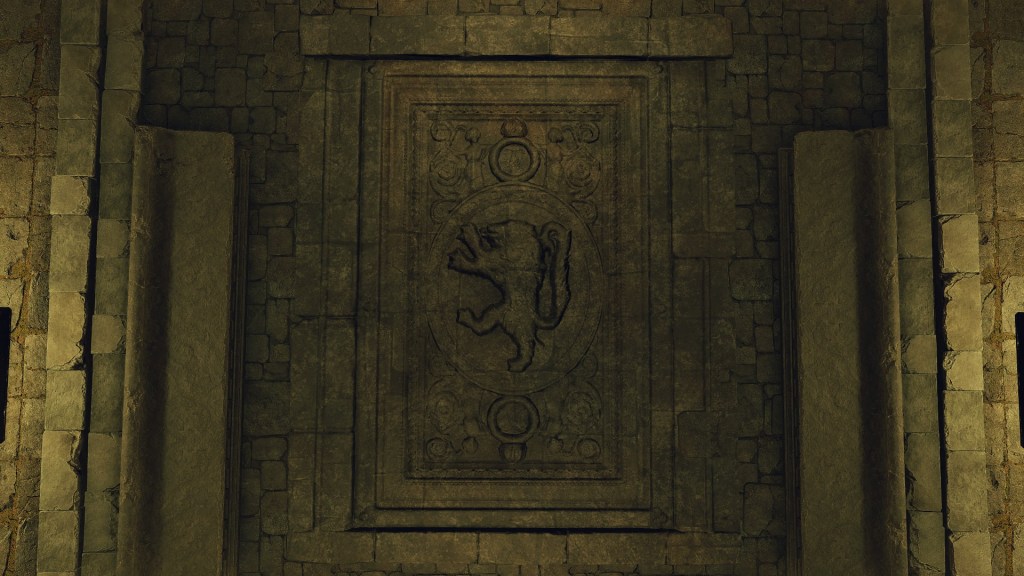
With the base of the Erdtree secured, the warrior had delivered the Empyrean the Ring required to ascend to godhood; what better for a man’s proposal? However, Loux’s strength would nonetheless be tempered going forward. When he vowed to become a King, he was also swearing to conduct himself as would be expected of one. In this context, those expectations would be coming from his wife, a Numen who had grown accustomed to a certain standard of sophistication from the people she lived and worked alongside. And Hoarah wanted Marika for, if nothing else, the promise of more power as a ruler. In classic fashion, the wild man needed to be tame to win the object of his affections. That meant not only dressing and acting with the proper regal etiquette, but also suppressing that unrelenting drive to fight. As detailed in the description for the Beast Crest Heater Shield, the lion depicted on the heraldry would caution a warrior to not become drunk on the passionate fighting he engaged in.
Metal-made medium shield. Easy to handle compared to a kite shield.
It is said that the crest’s beast suppresses a warrior’s excitement. Fight passionately, but don’t get drunk on it.
For that reason, the husband to the divine adopted the Germanic name Godfrey meaning “peace of God” and shouldered Serosh as his chancellor. Just as Godfrey’s Icon depicts the lion whispering over his Lord’s shoulder as the man stares at his idle hands, the Chancellor Beast was a constant guide advising restraint, to hold back his power for a more opportune moment. True to his namesake in Zoroastrianism, this spiritual guardian was the voice of conscience, though we see him use those jaws to bite the king’s shoulder in the heat of battle. This is why the talisman improves the strength behind charged attacks, and why Godfrey feels the need to kill the lion when reverting to his old identity. The man knows that Serosh has “looked after” him this entire time since becoming Elden Lord, yet he still wants the beast to stop, all so Hoarah can drop the “pretense” of good manners in this critical moment. Without his chancellor constantly by his side, Godfrey all too easily slips back into old habits. Thus, the old lion would always have his ear so long as it remained in the king’s interest — as was the case when hoping to court Marika.
Enough already. You have looked after me all this time, Serosh.
The good-mannered pretense stops now.
It might sound odd for the Beast King to lower himself to the role of a prime minister, but the lion probably accepted the appointment in exchange for his life. Serosh bears battle scars on his face and armor, the gash blinding one eye also slicing through his crown — clearly, a battle ended his reign. The old king had most likely confronted Hoarah Loux during the assault on the castle, only to lose against the young warrior. A bear hunter of the highlands would never miss out on mortal combat against such a ferocious beast. But, in the end, Hoarah didn’t finish the job. Perhaps it was at Marika’s direction, or perhaps the golden lion himself sued for peace. Either way, in sparing his life, the barbarian gave Serosh the opportunity to be recruited as an ally. The Beast King, with his incredible wisdom and years of experience, would be an asset in building the kingdom to come, and he had seen Hoarah Loux’s potential as the next Elden Lord. This was the perfect chance to break old ties and carve out a place for himself in the new Order.


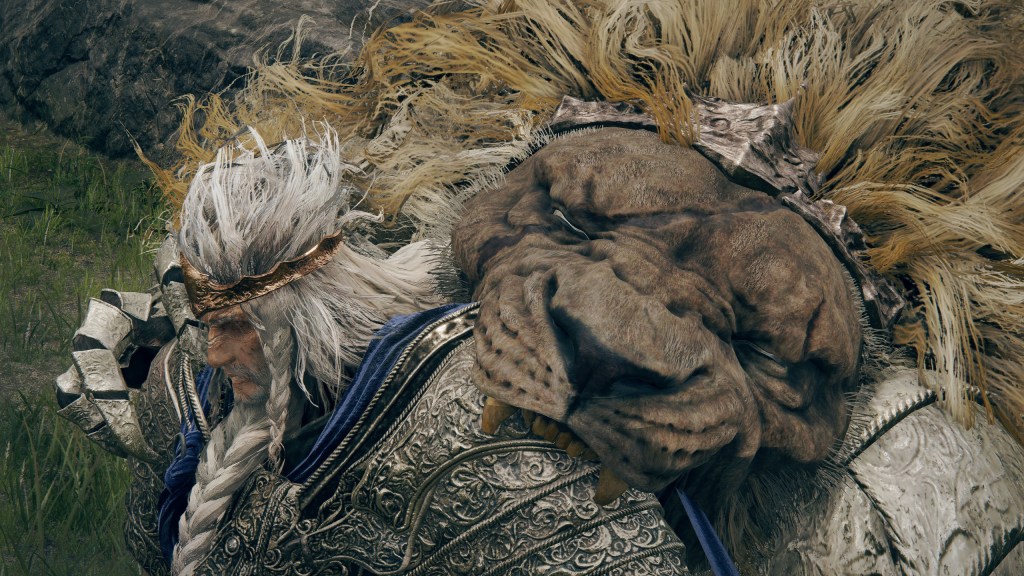
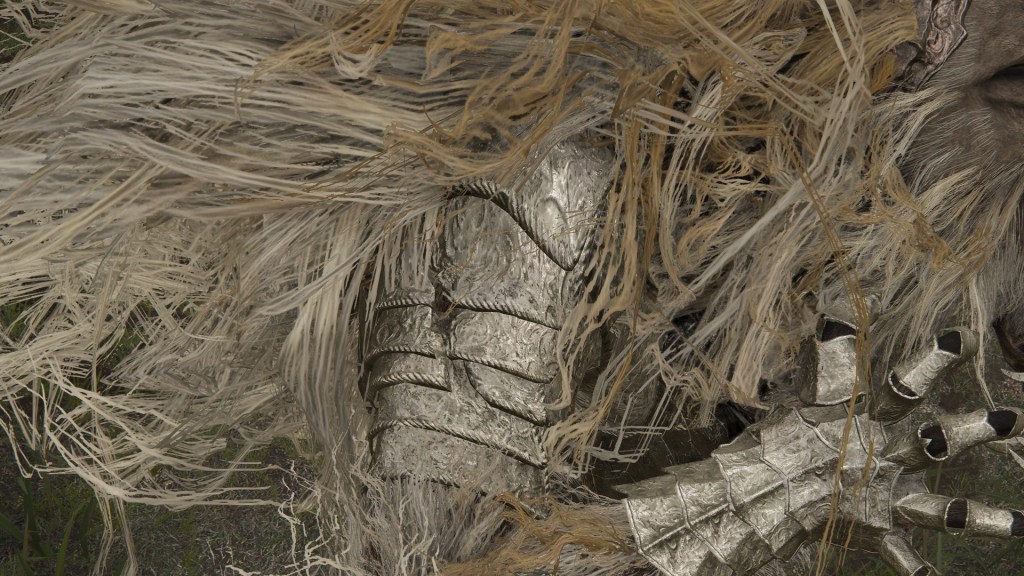
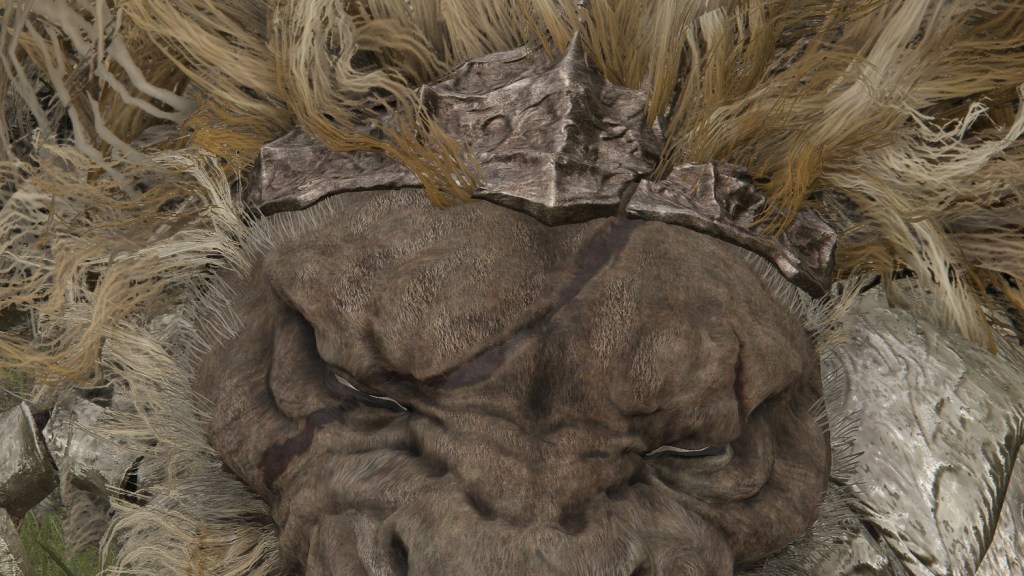
Indeed, Serosh’s submission to Godfrey had apparently become the model for others to follow. The Ruler’s Mask is more accurately worn by a “feudal lord” (領主) of a small province in the larger kingdom. It portrays the lord as an “old sage”, (老賢) the same term used to describe Serosh in the description of the Golden Beast Crest Shield. The complementary Ruler’s Robe also overlays the standard Upper-Class Robe with a blue overcoat, mirroring how Serosh rests his form upon Godfrey’s flowing blue mantle. What does it say then that the faith-boosting mask’s wisened and wizened visage denotes the ideal lord; someone competent yet unthreatening to the central government? Godfrey desired his retainers place their faith in their King, to support but never to supersede him. He wanted them to know competence but preferred they never put it to use challenging his authority. They might counsel him and, in some sense, rule through him, but it was always at the king’s discretion. And old Serosh was the first to be defanged, setting a high standard for Godfrey’s human vassals to meet.
Mask modeled on an old sage. Apparel of feudal lords of small provinces. Boosts faith.
It is considered to denote the ideal for being the feudal lord. A wise and fanglessly soft person; for the center of power, that is the most convenient.
Shield of dull gold engraved with a beast crest. Light and easy to use among the greatshields.
That beast is probably the Golden Clan’s guiding old sage, Serosh.
Robe of feudal lords of small provinces. The blue overcoat is proof of the status to be the feudal lord.
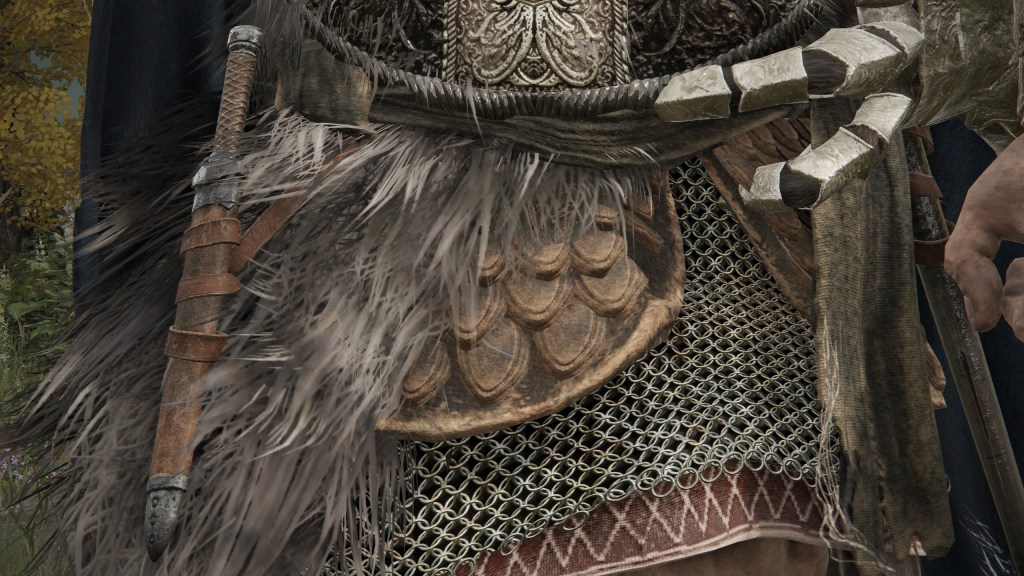
Godfrey himself paid his chancellor similar respect in his own presentation. Wearing solely blue over his new metal-made armor was unlikely to be an accident for a highland warrior. Despite having defeated the king of the beasts, the Elden Lord purposely denied himself the honor of a great hunter. Even as they bonded the lion to his body, there would be no parading the defeated foe around in humiliation. With a simple knife and grey pelt on his belt, Godfrey showed magnanimity as a hunter of beasts, but not Serosh. It is only during his boss battle that Hoarah finally completes his hunt and “cloaks” himself in glorious red. Before that point, the former enemy was his equal, with much to teach this would-be god. Majestic blue hence came to define the first Elden Lord’s reign, a restraint which acknowledged the one kind of strength he lacked and would obtain from wise counsel.
Emblematic of the Beast King’s rapprochement with the new Elden Lord, Godfrey received an axe to match his title. The fact that Hoarah Loux swore to behave as a proper king upon both shouldering Serosh and owning this “royal axe” (王斧) already suggests a connection. However, the Mammen pattern on the axe head is the same seen on the iron weapons forged by the beastmen. Furthermore, the Stormhawk Axe acquired at the Fortified Manor features the same pattern, proving that these Farum colonists were no strangers to fashioning such weapons. Therefore, the king’s axe was likely Serosh’s gift to Godfrey. Taking up this more refined armament was the first step in Hoarah Loux joining civilized society and proving his sincerity to both the Empyrean and Beast King. And to the barbarian’s credit, he immediately took the ensuing steps to meet the king’s example as a beast with the sophistication of men.



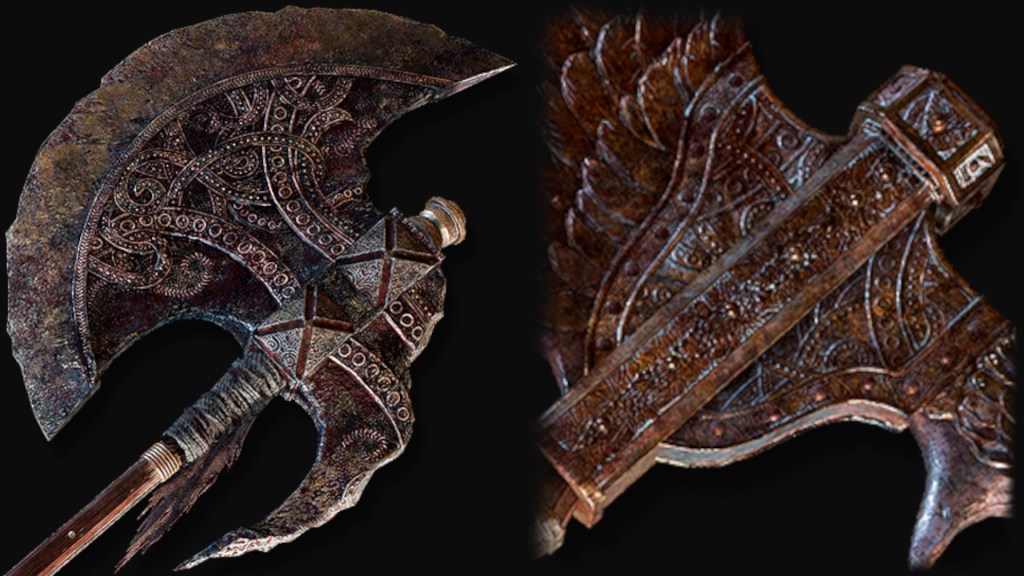
The Regal Roar accompanying the Axe of Godfrey is not like Barbaric Roar or its analogs, but a “King’s Heroic Cry” (王の雄叫び) synonymous with standard battle cries. Like both the Roar and Warcry, it boosts attack power with its inspiring yell, but adds the shockwave of a powerful stomp. Additionally, the skill turns the axe’s strong attack, not into a barbaric chain of attacks, but a single slash after another mighty stamp; with a charging slash across the ground to follow up, much like with Warcry. It was with his new axe that Hoarah Loux learned to control his beastly instinct, channeling that overwhelming power into a more refined style of combat worthy of his regal title. And considering that Warcry is the skill of axes wielded by scaly misbegotten or exile soldiers, this training was done with the help of the defeated colonists responsible for the axe. With that, the compact between all three parties was sealed and the new kingdom could begin. Thus did a doubled-headed axe become the symbol for the mighty clan of Godfrey going forward, just as the golden lion had become the symbol of the War Lord himself.
Battle art that makes a heroic cry to boost attack power. The shockwave from stomping the earth cannot be guarded, and while in effect, strong attack becomes a stamping slash.
A Realm Well-Rounded
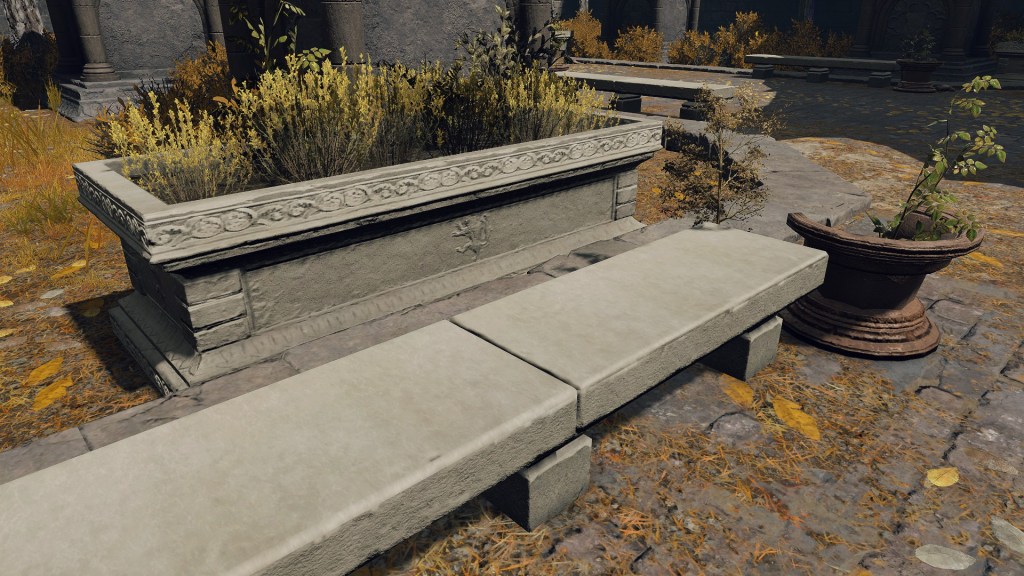
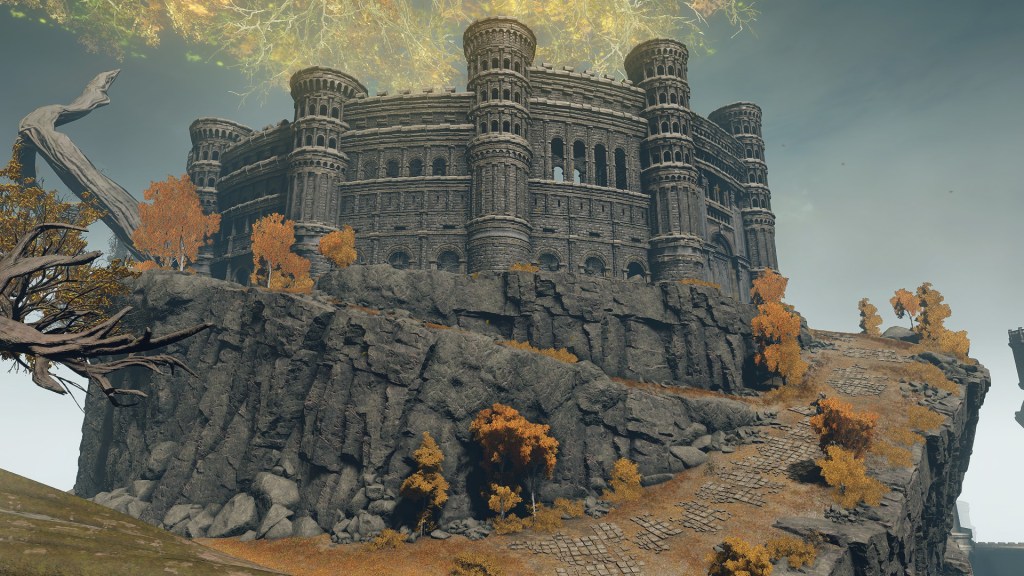
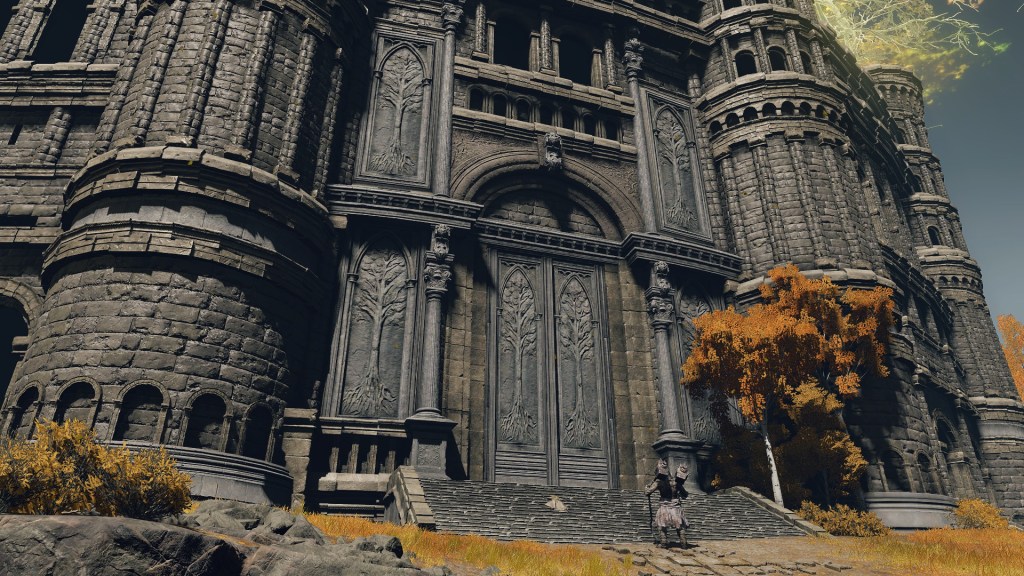
Thanks to the amicable resolution with Serosh, the Fortified Manor was allowed to remain standing, thereafter incorporated into the newly established royal capital. In fact, it received a few personal touches from its new owners. Yellow trees join the red in the Manor Quarter. White stone flower planters backdrop benches in the castle courtyard as well as throughout the streets of Leyndell. The interior has also undoubtedly seen some added decoration. For example, we can find various portraits related to the kingdom throughout the building. The foyer balcony hangs the Elden Lords on one side and the god and her sacred tree on the other. Godfrey and Marika’s portrait likewise hang in the first-floor dining room. The servant quarters in the opposite wing, meanwhile, prefers landscapes of the Erdtree and Leyndell. Then there are the green banners with tree crest used by Leyndell, two hanging in the hall preceding the dining room. As to why the castle manor received so much attention, it is because the royal couple made it their initial headquarters.




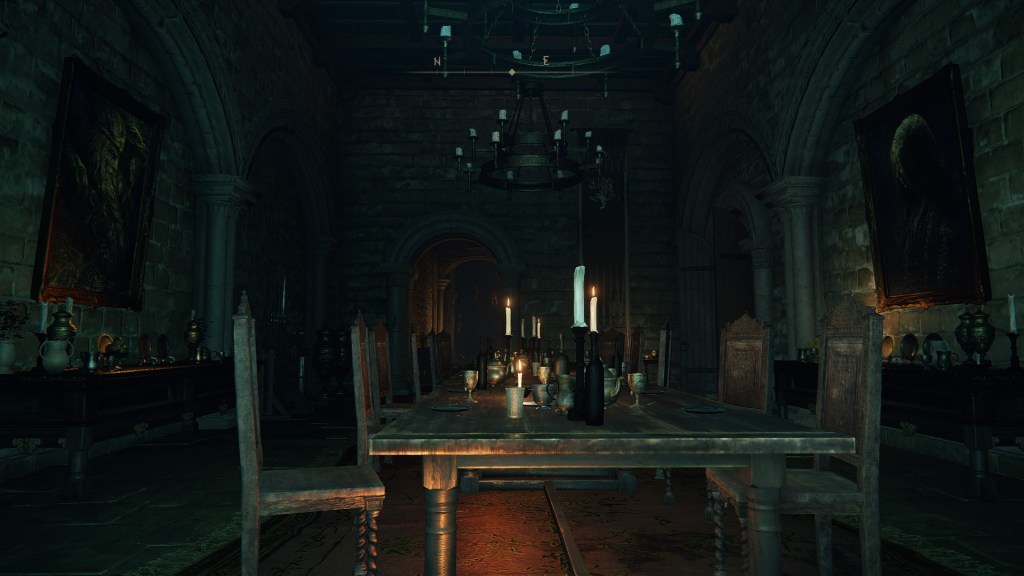



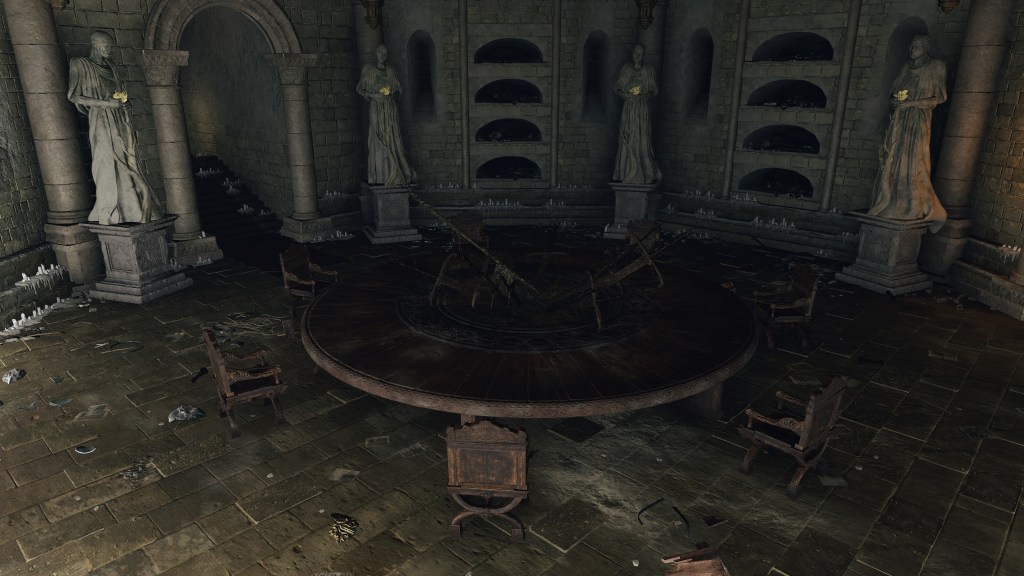
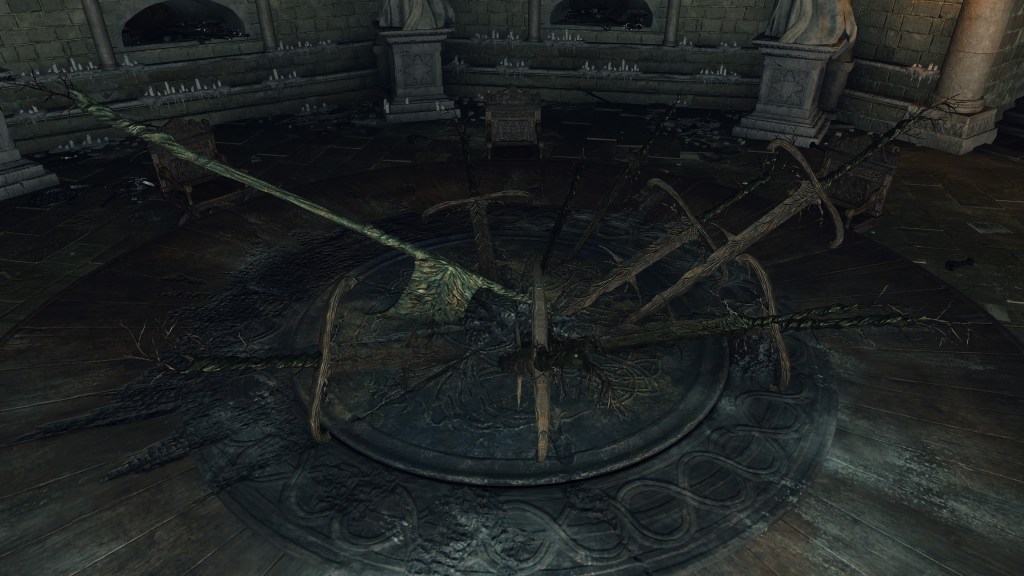
At the heart of the Fortified Manor is its round table on the second floor. Stuck into the center are a number of weapons seemingly derived from trees. All of them are swords except for a singular axe, which has come to symbolize Godfrey. In all likelihood, this is the barbarian’s old weapon his metal axe was modeled after. This thereby implies that Hoarah Loux and his presumably best warriors sat at this table. Their blades converging in a circle demonstrates their solidarity, the round table evoking Arthurian legend in particular. The same can be said about the neighboring audience chamber, its central chair identical to the Elden Throne and flanked by Leyndell’s tree banners. Out front, the manor keeps plenty of horse stables, perfect for garrisoning equestrian warriors — in other words, knights (騎士) in the most traditional sense. With all certainty, the barbarians were vowing to become a king and his faithful retinue. This castle is where Hoarah Loux formally took up the mantle of Elden Lord, becoming his palace as they planned to unite the plateau under Marika’s new Erdtree Order.


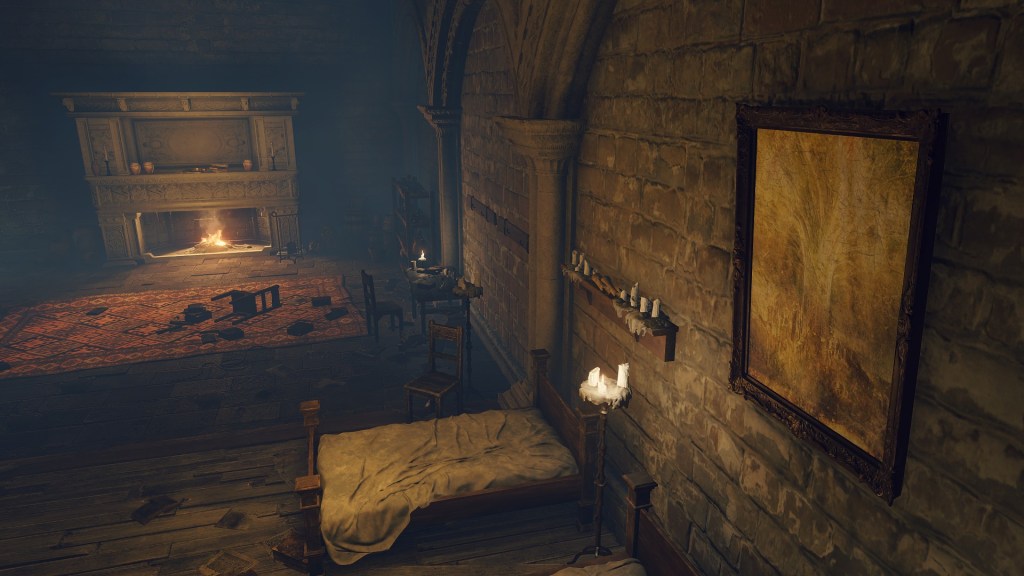
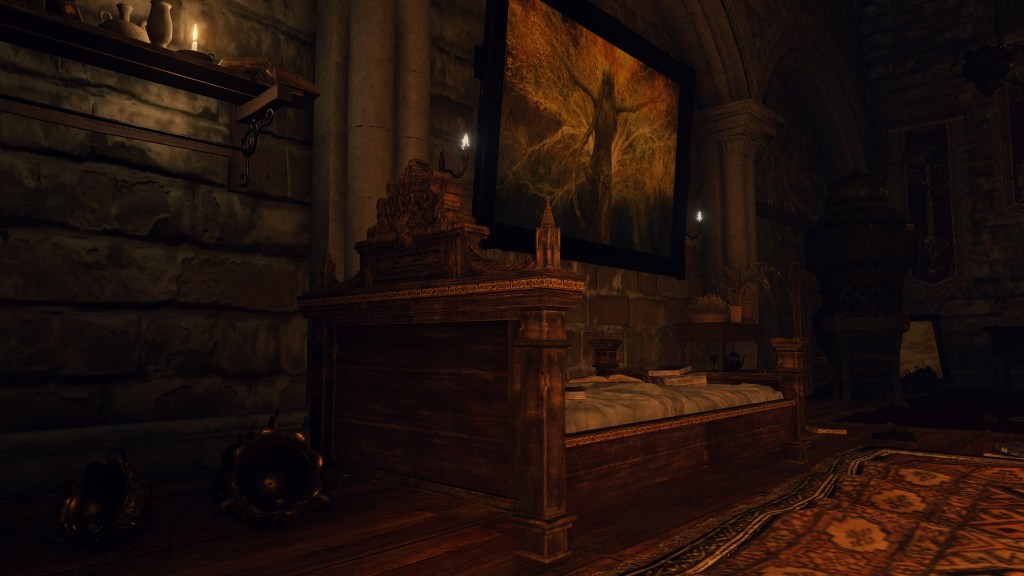
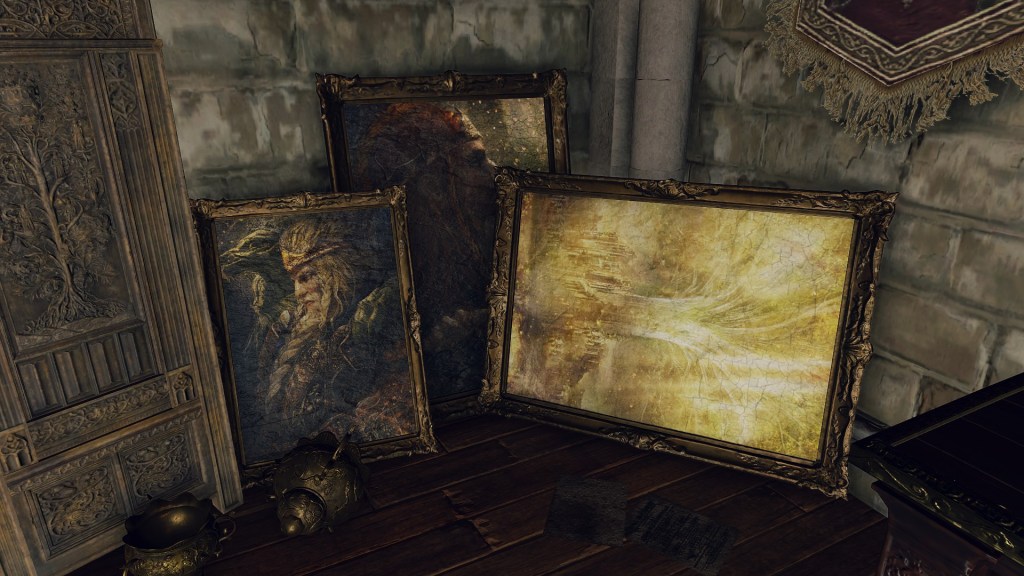
Proof that the manor was more than a meeting place is found in the second-floor bedroom in the east wing. The chamber is well furnished with fixtures common in Leyndell, including potted plants otherwise only decorating the dining and servant wings downstairs, and nowhere near to the same extent. It is even the only room in the entire castle to use leaf lighting. Why the interest in foliage? Because the owner had it to thank for her position. Hanging opposite the fireplace is a large portrait of Marika flanked by tree banners. The other walls hang similar paintings of the Queen or her royal capital. And in the corner lays more art of the God’s three most valuable things: the Erdtree, her first consort Godfrey, and her second consort Radagon. Who would this room belong to except the Numen of the Erdtree vain and conceited enough to embrace deific status? The developers even placed a mirror for changing appearance, including sex, in that same room of the Roundtable Hold, an obvious reference to her dual identity as Radagon. This place was Marika’s bedchamber once upon a time.




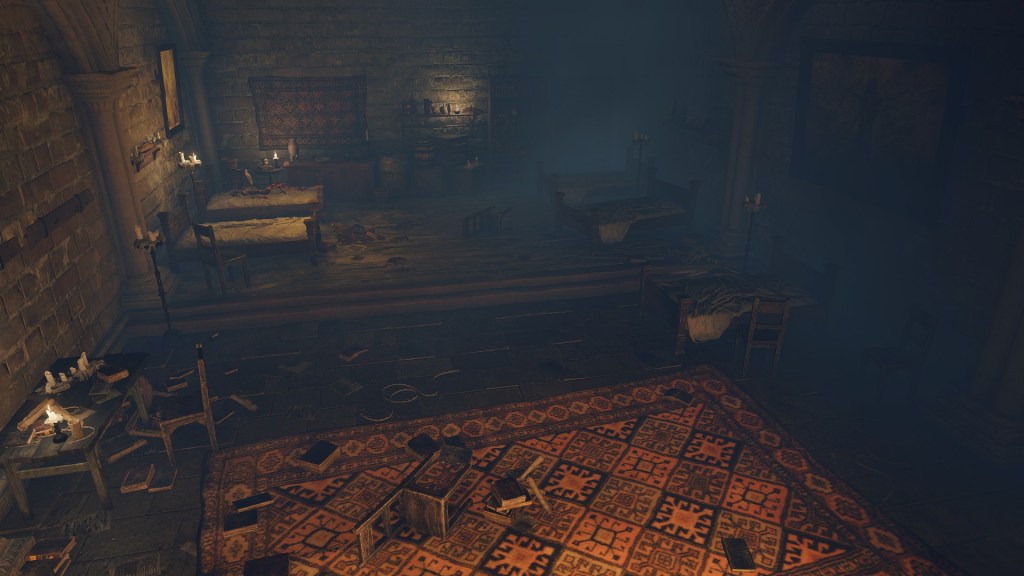
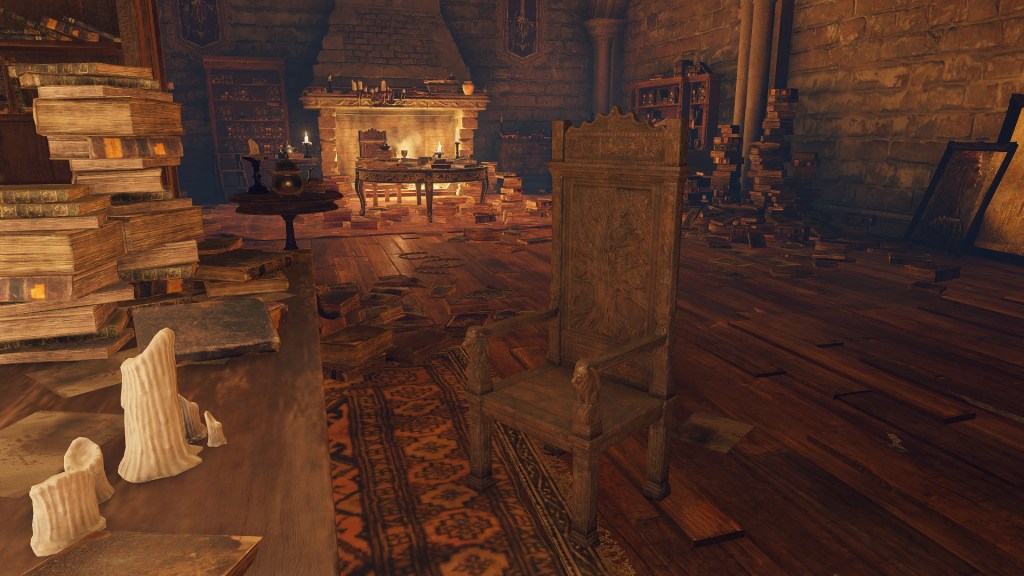
If that is the queen’s personal quarters, then its counterpart in the west wing may have belonged to Godfrey. Although no hypothetical bed yet remains in that chamber, it would have likely been cleared out to make way for all the books and shelves now combed by its latest occupant, Gideon the All-Knowing. Even then, some of the shelving might predate him. Rather than more barracks storage, the west wing as a whole serves as an extensive library — and the barbarian would have much reading to catch up on to become a civilized Lord. Additionally, the chairs in this wing are unique in featuring tree imagery instead of the hawk imagery used everywhere else. Why the distinction unless thorough use of this wing dates only to the Erdtree kingdom’s era? At the same time, we do see some weapons still hanging above the fireplace, associating the private chamber at least with a military man of some kind. Meanwhile, the library wing features portraits of Marika, contrasting the portrait of Godfrey outside Marika’s chamber. Taken together, and this was clearly Hoarah Loux’s quarters as he worked to become a king worthy of his god.




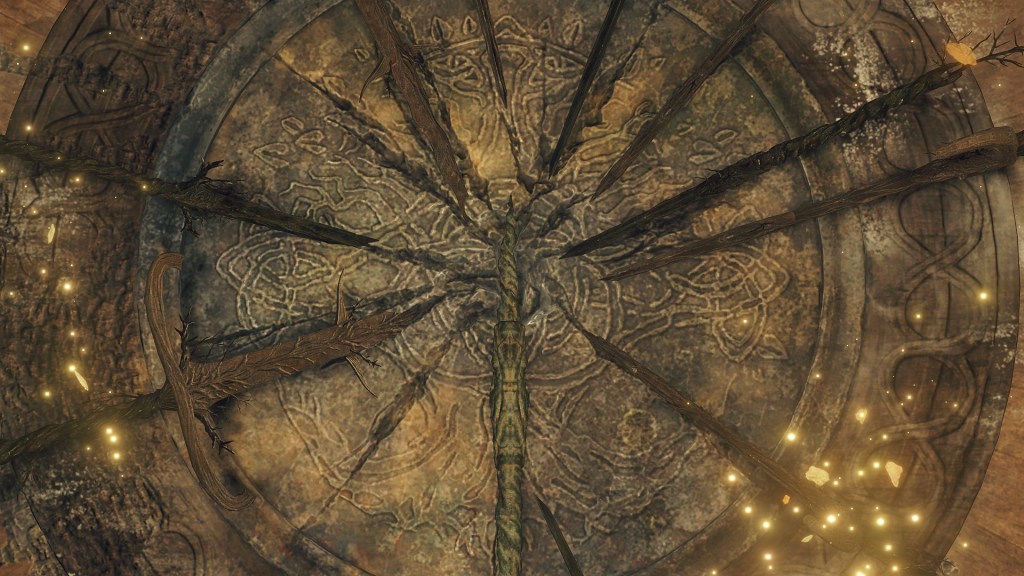
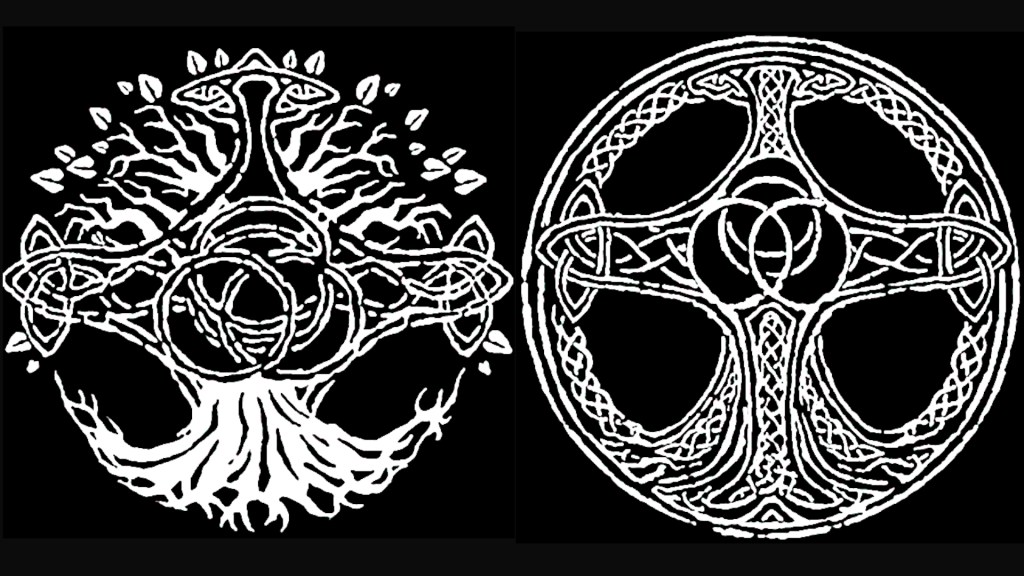
With the kingdom still in its infancy, it is only natural for the new royalty take up residence in existing shelter — especially since its previous leonine owner was now their vassal. As to the exact nature of the new Erdtree kingdom, we need only examine the crest on the round table that Godfrey and his best knights swore upon. Emblazoned at the center lies a flourishing tree with plenty of roots and verdure; at its heart, the Elden Ring. The top half simultaneously resembles the Erdtree cross crest. While we see the cross sigil used by the faithful in general, such as in their standard holy sign, this flourishing cross is consistently used with “old” Erdtree incantations, including Elden Stars. Considering that an art of the Elden Beast is the oldest prayer for Erdtree worship, it was presumably derived from Marika’s first visit to the Ring inside the newfound tree it created, after securing the land around its base. This means that the prayer’s sigil was invented around the same time as the round table, possibly predating the more abstract Erdtree cross. That thereby implies the symbol to represent the Erdtree as it originally existed.
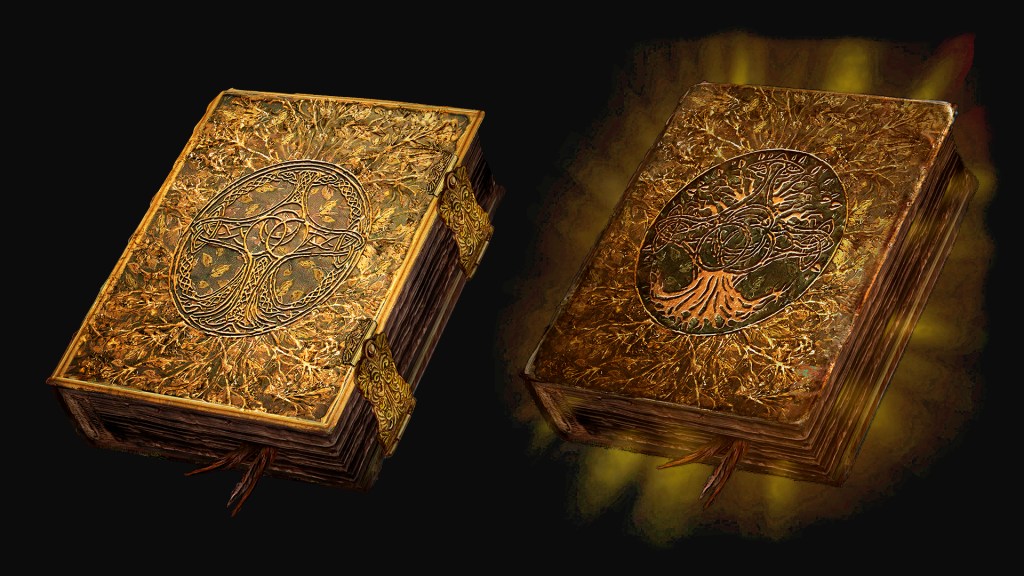
Indeed, there is no reason to doubt an association between the flourishing tree and the Crucible specifically. Another class of old Erdtree incantations adopting that cross as their sigil are “aspects of the Crucible” prayers. The distinction is likewise highlighted in scrapped prayer books, the individual Erdtree crest complementing the gold or reddish color scheme of their respective cover. Adding to that point, it is the red book which is uniquely dubbed an “old document” (古文書) to distinguish it from all others, not just its gold counterpart bearing the abstract crest. Furthermore, with exception to the entryway, all corners of the room holding the round table erect the golden flower picker statue, representing man first taking hold of the Erdtree. And so, this table displays the symbol of the Crucible, which is fitting considering that King Godfrey’s Knights of the Round Table were most likely the original Crucible Knights.

This order of knights served the first Elden Lord specifically and wielded the early Erdtree’s power. Their incantations allow them to briefly manifest the various animal aspects it blends, while their reddish gold weapons and armor possess its holy power which augment those same prayers. The knights are also capable of channeling said power in its raw form, making their armaments spin in a vortex of gold they then unleash; very much evocative of a melting pot mixing molten-hot metals together. Truly, they are worthy of their name, the Crucible Knights’ devotion rewarded with blessings as the king’s most trusted warriors — drawing clear parallels to the faithful knights of King Arthur, famed for pursuing the Holy Grail. Therefore, without a doubt, they were the ones who sat at the round table, swearing upon tree weapons in solidarity with their Lord and liege. The swords stuck in the round table suggest that the order started out with nine, but cut descriptions for their equipment indicate that they ultimately number sixteen, all of whom we can encounter in the flesh or spirit.
One of the old Golden Tree prayers.
Generates a loud throat pouch and breathes fire breath while walking. Hold use to make time breathing longer.
It is one of the aspects of the Crucible, the power of life which is the origin of the Golden Tree. Once, life was blended together.
However, a seventeenth member is revealed in the Shadow of the Erdtree DLC, the oldest serving knight named Devonia. It is no surprise that this one was the first to join. Devonia later left the Erdtree in search of its origin. Based on such behavior, the former barbarian is particularly enthralled with reddish gold, wanting to know everything about the power of life bestowed to a Crucible Knight. The warrior must have leapt at the promise to embody such holiness, which is reflected in equipment. Unlike the others, Devonia wears a helmet shaped like a hammer and even wields a great hammer, naturally, engraved with a torrent of life. Clearly, the knight imagined herself as a crucible hammer used for woodworking — forged by a melting pot, the living tool intended to use a tree to help shape a new Order on the king and queen’s behalf. No one must have been more ready to take that power and put it into action.
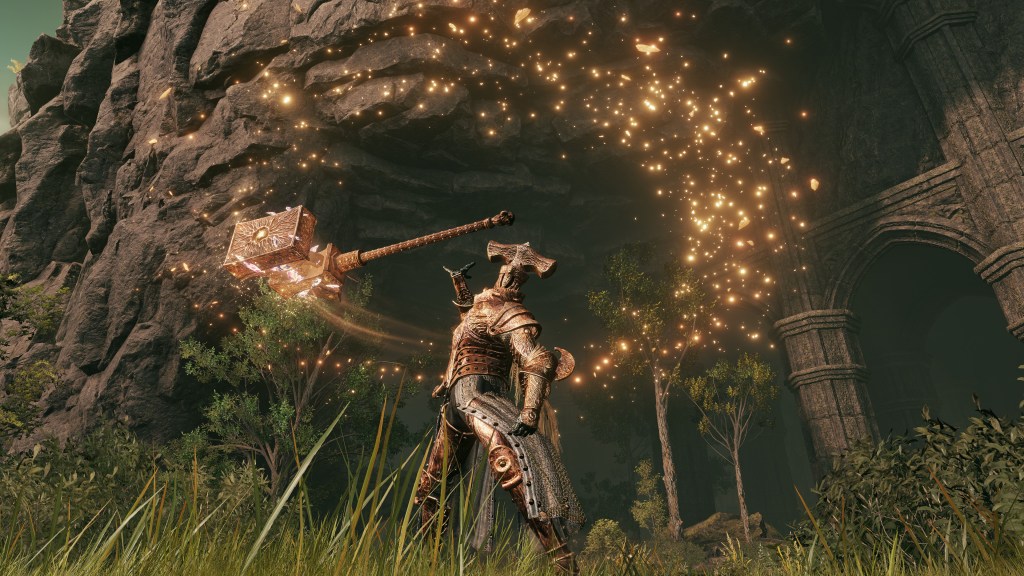


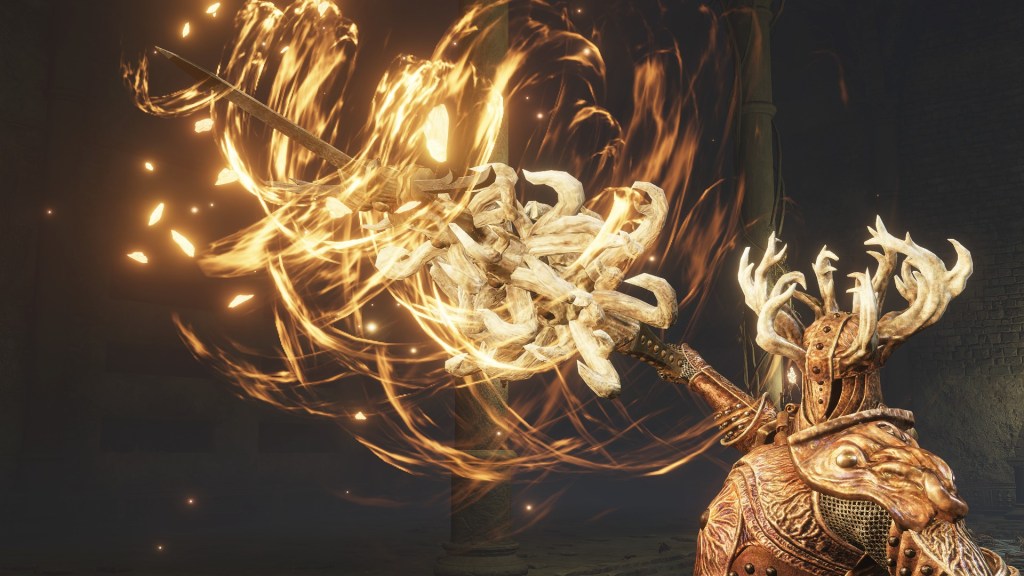
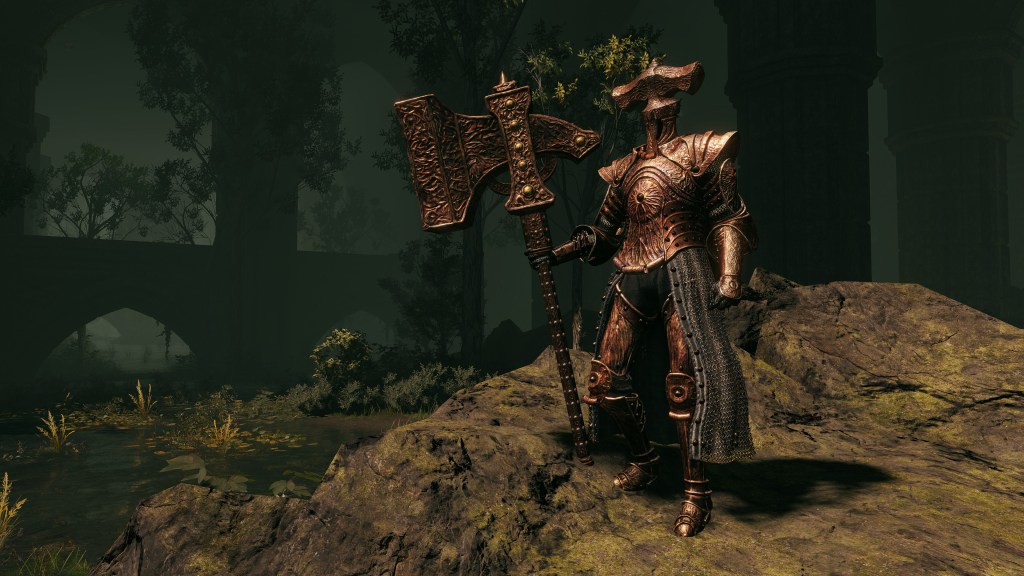


Helmet of the knight Devonia, considered the longest-serving member of the Crucible Knights.
It harbors the power of life’s crucible, the original Golden Tree, and enhances aspects of the crucible prayers.
It is said that Devonia departed from the Golden Tree alone seeking after the Crucible’s origins.
In light of this forgotten first member’s existence, we can infer that there have been more than the sixteen knights we encounter during our journey in the Lands Between. Perhaps some of these knights had died before we could meet, or perhaps our paths simply never cross as we explore the different corners of Between. Whatever the case, an upper limit of sixteen appears to be nothing more than a scrapped concept. (as added confirmation, Elden Ring: Nightreign introduces more Crucible Knights, past and present) Godfrey may have started with only Devonia, but this new order of knights would soon swell to nine and plenty more over the course of his reign. And with numbers comes increased organization, not to mention uniformity. While the original knight maintained that independent streak, subsequent members grew accustomed to certain patterns.
Following after Devonia were Ordovis and Siluria. All three are unashamedly named for the Devonian, Ordovician, and Silurian periods in the Paleozoic Era, which marks a period of explosive evolution giving rise to most major animal phyla on Earth. Ironically, the latter two precede the former, but that lines up with Devonia’s late introduction in the DLC. As two considered the general first members of the order, Ordovis and Silura were next to join, each with their own particular fashion and fighting style for their subordinates — subsequent members — to imitate. The lion’s share of the order followed Ordovis, wearing axe head ornamentation representing their allegiance to Godfrey and wielding a sword and hornshield. The rest followed Siluria, wearing great tree ornamentation representing the Crucible and wielding a similar tree spear with a larger emphasis on faith. But regardless of their specific bent, they undeniably embraced both their Elden Lord and the Erdtree’s initial form.
Greatsword of the knight Ordovis, one of the two names considered first of the Crucible Knights.
Original gold is closer to life. Thus, it is said to have been tinged reddish. This sword harbors that old holy attribute.
Helmet of the Crucible Knights who served Godfrey, first King.
The axe ornamentation is a symbol of the knight Ordovis and his subordinates.
Vessels tightly bulge with the power of life’s Crucible, the original Golden Tree.
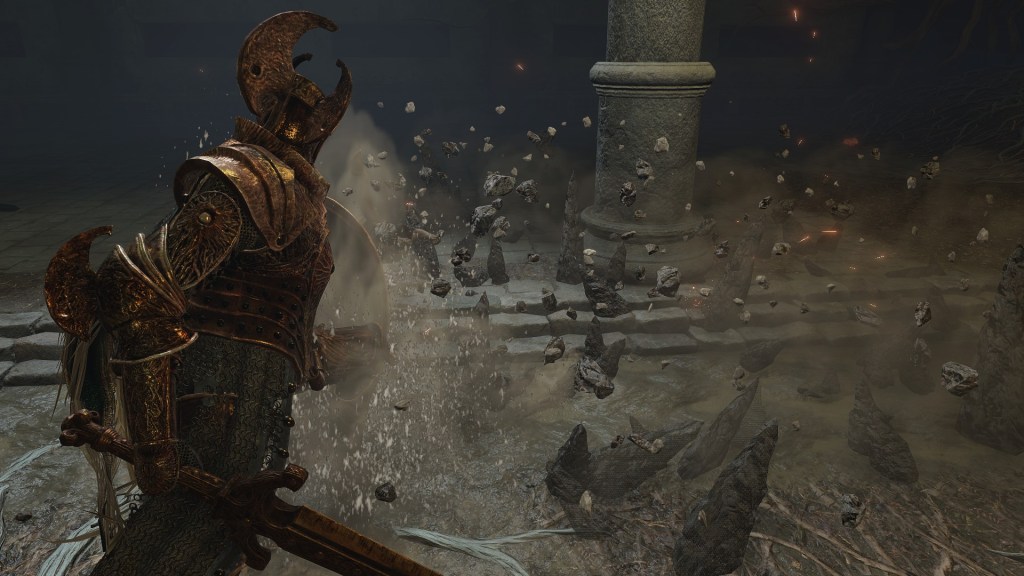
Perhaps the most obvious example of the whole order’s allegiance to Godfrey is their stomp technique, rupturing the jagged earth with the force of a single foot. Their king can perform similar earth-shattering stomps, so they were probably personally trained — who better to teach them how to fight? Both kinds of Crucible Knights also possess a mantle of white beast fur, presumably taken from old Serosh or one of his lions-turned-guardians for the new kingdom. Clearly, the axe and tree knights share a vested interest in the symbols of Godfrey and his clan. At the same time, the former’s cloaks, the latter’s gold back ornaments, and Godfrey’s cape all feature the same “old” design according to earlier iterations of the Crucible knight armors. Accordingly, it depicts the “Aspects Herb” (諸相の草) referencing the various Aspects of the Crucible incantations. In other words, this is a symbol linked to the original Erdtree, bringing all three parties back around to the source of their holy power. No matter which, every Crucible Knight was sworn to Godfrey and the arbor even he served, including the ruggedly independent Devonia.
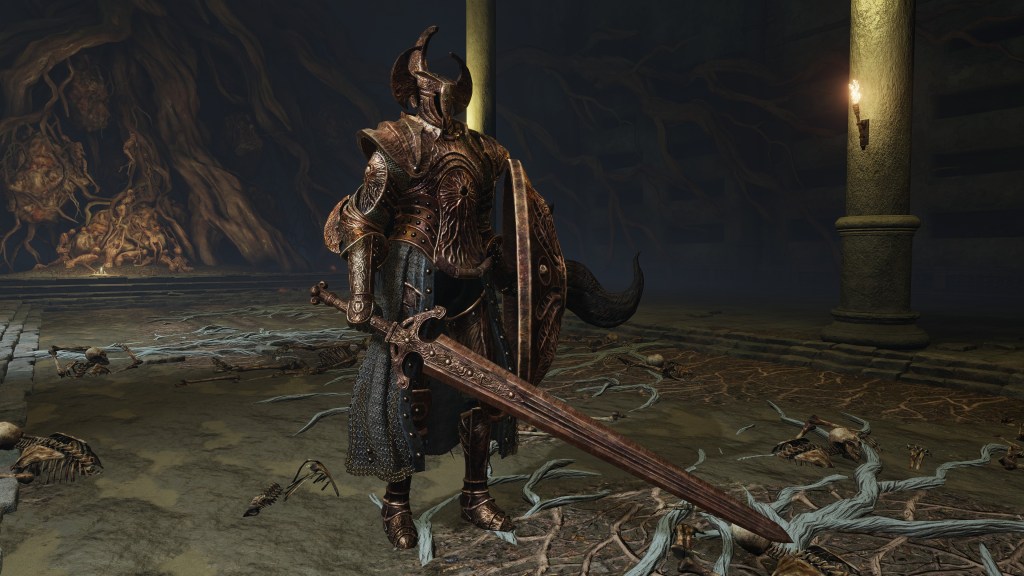
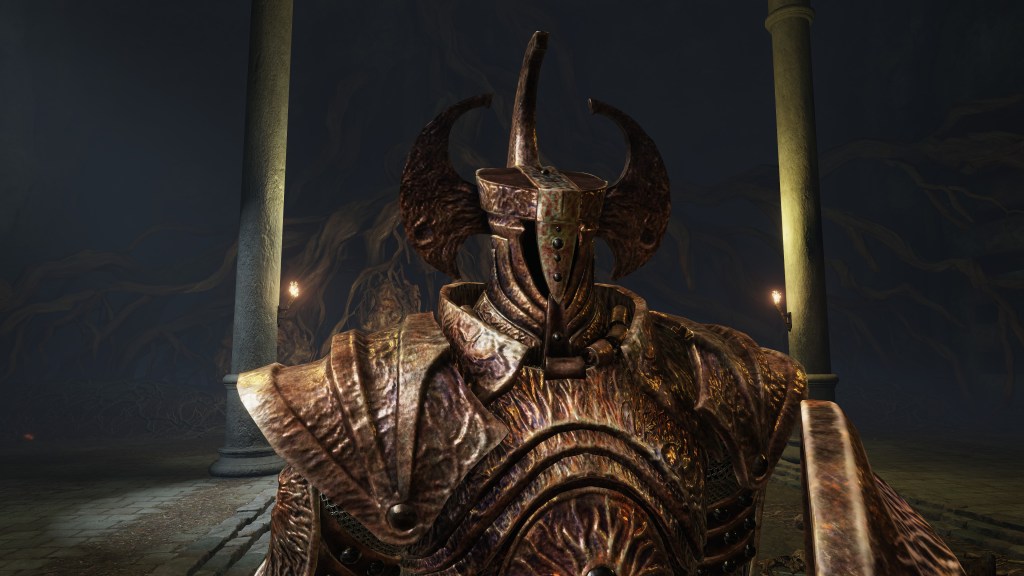




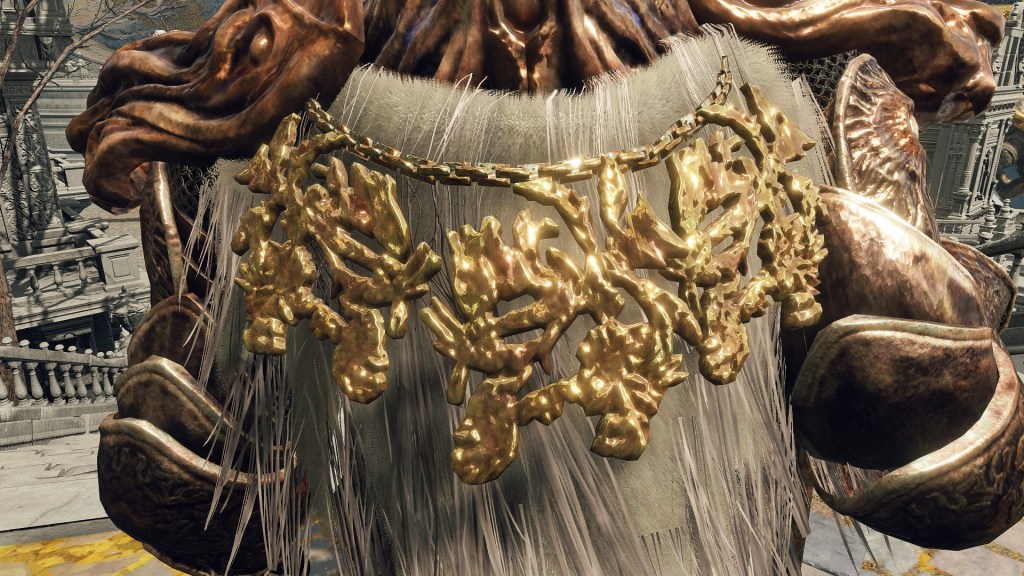
Chest armor of the sixteen old knights who served Godfrey, first Elde King.
Harbors the power of life’s Crucible, the original Golden Tree, so vessels tightly bulge.
The pattern on the torn-up cloak is an old design called Aspects Herb.
Chest armor of the sixteen old knights who served Godfrey, first Elde King.
Harbors the power of life’s Crucible, the original Golden Tree, so vessels tightly bulge.
The gold ornaments worn along with white beast fur is an old design called Aspects Herb.
To sum it up, Godfrey’s kingdom began revolving around the Crucible expressed through the lens of faith. The Erdtree Bow and Greatbow’s description affirms that faith and battle went hand-in-hand during older times, which we see not just with the Crucible Knights but also the Tree Sentinels. These knights are, as the name suggests, guards in service to the Erdtree. Few earned the privilege to wear the large “crest” derived from the tree on their helm, but those who did became heavy cavalry acting as a golden rampart against its foes. Aside from holy halberds and greatshields we see them wield in battle, the Tree Sentinels were also probably equipped with Erdtree Greatbows; we acquire one along with their armor by destroying traps in their form riding a chariot. Destroying three such chariot traps in the Auriza Hero’s Grave further rewards Holy Ground, an ash of war for consecrating land to defend with a Crucible sigil that heals and raises defense for those inside its boundaries. This, combined with the Sentinel statues erected in the Fortified Manor’s foyer and flanking entry to the round table, proves that the order is contemporary with the Crucible Knights.
Greatbow engraved with a Golden Tree design. Weapon made to accompany “Golden Great Arrows” when the faith coincided with war in the Old Age.
Scales arrows’ attack power also with faith and demonstrates its true worth when using arrows of the holy attribute.
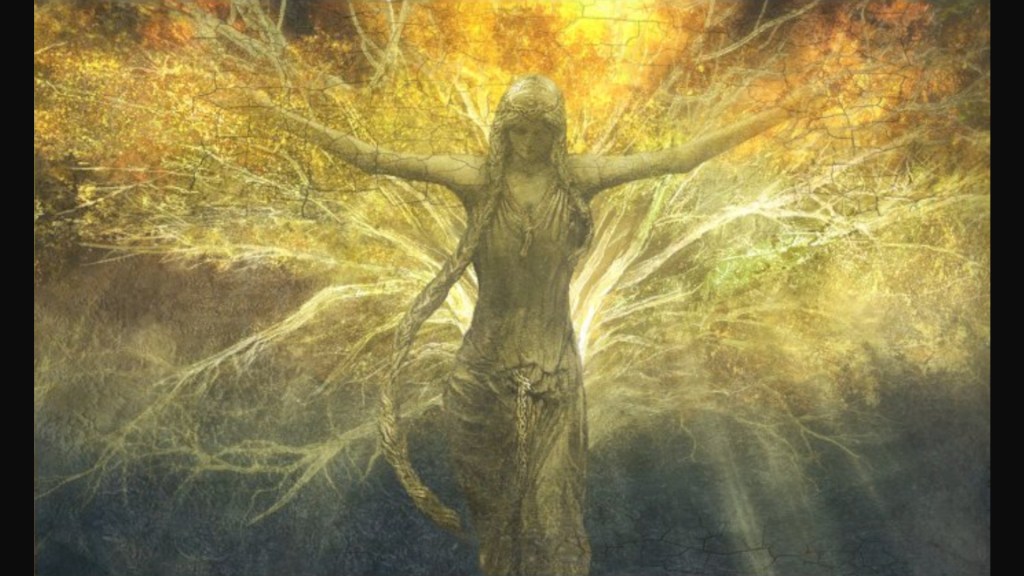
All these knights relied on faith in the Erdtree for their holy weapons and magic, with the smaller bows and accompanying golden arrows likely seeing currency among the common soldier based on the description to the Arrow’s Sting Talisman. The Erdtree’s power was not understood yet nevertheless venerated, with Marika becoming the face of this holiness. Portraits in the Fortified Manor commonly portray Marika with her arms outstretched in front of the Erdtree, superimposing herself over the trunk with wide canopy; it also evokes both her Elden Rune and the Erdtree cross sigil. Unarguably, the Numen was considered a god on account of the Ring harbored within the tree, so its steward naturally worked to become synonymous with the true divinity. The Erdtree Greatshield depicts a woman sitting under a large tree while a bearded king with a sword reaches for the leaves overhead. It is obvious that this represents Godfrey standing to defend Marika and her Erdtree. The entire kingdom and its army existed because of them — of course they sought their divine favor. And the white Aspects Herb on Godfrey’s cloak, stained red with blood, captures exactly what the warrior king did with that favor.


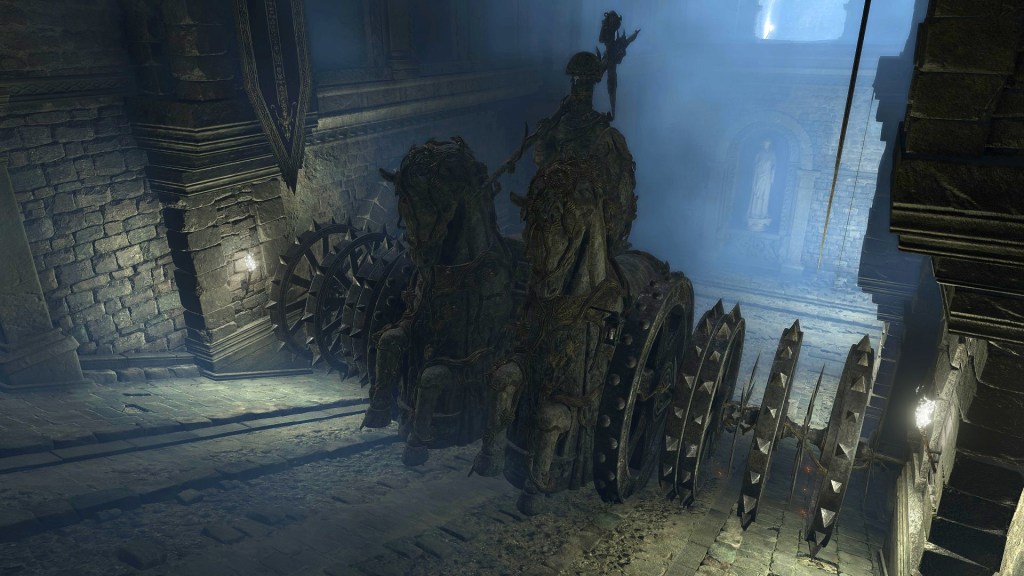


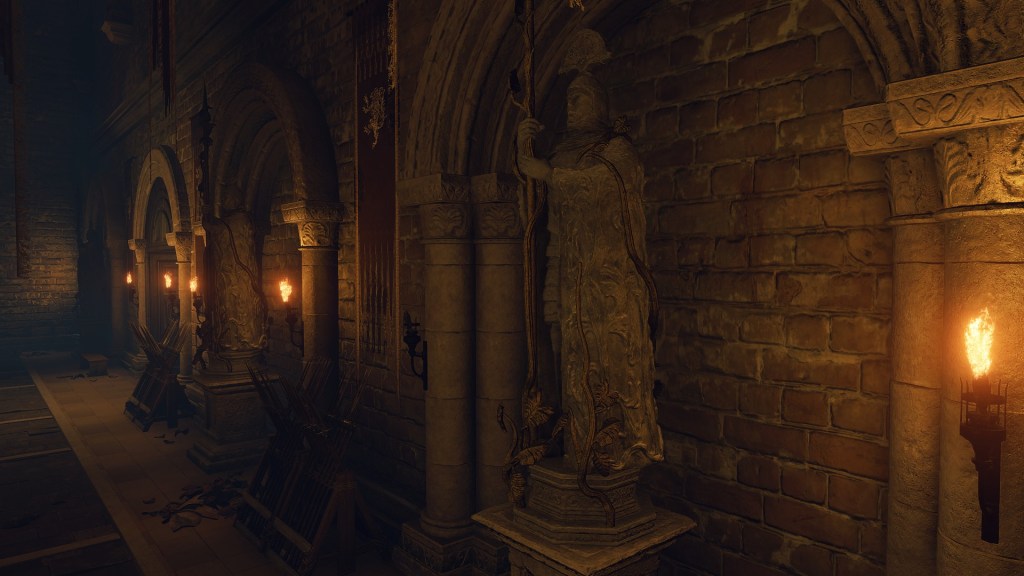
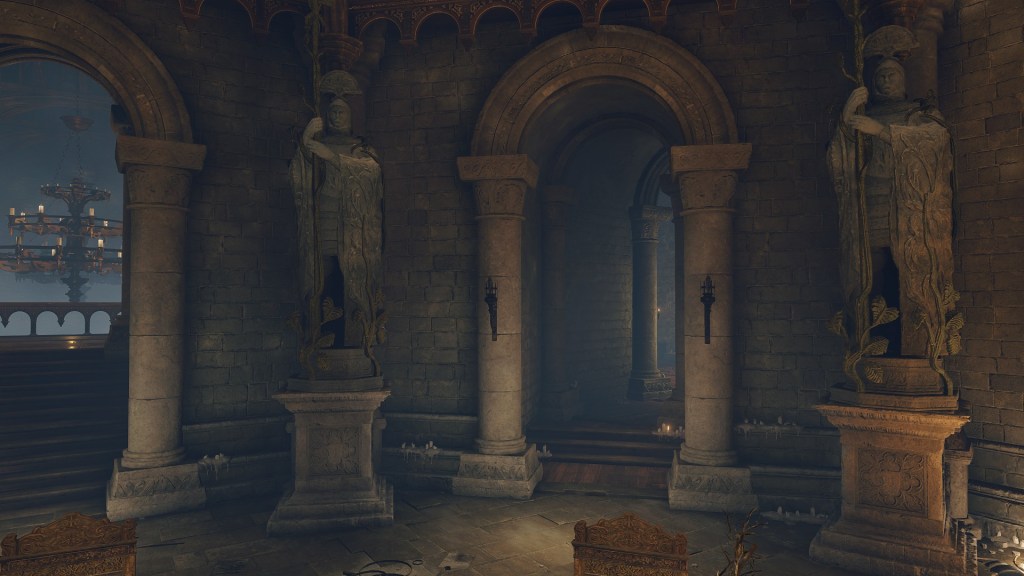


On that note, with Godfrey’s tribe establishing a settlement at the foot of the Erdtree, it came time for the Auriza to begin burying their veterans. More than likely, the hero graves served as the first major burial ground for the fledgling royal capital. Aside from their proximity to the city’s side entrance, the hero graves in particular are heavily associated with the Crucible. The chariot traps with the aforementioned rewards are located in the Auriza Hero’s Grave, for instance. In a similar vein, Ordovis and a Siluria knight ultimately take up post as gravekeepers, implying that they bear a deep affinity with the heroes buried there in particular. One of the corpses even possesses the Crucible Feather Talisman, considered a sign of holiness in the days before civilization. Skeletons in the area also bear the Scripture Wooden Shield blessed with a “holy” cipher of presumably the Two Fingers. Taken together, all the warriors who contributed to the founding but fell were entombed in these two catacombs.
Talisman of feathers blending aspects said to have generated in the body of man in the Old Age.
Enhances rolling evasion but damage received also becomes greater always.
It is a vestige of the Crucible which is life’s origin. It is partial atavism and was long ago considered a holy visual, but in the wake of civilization, it is treated as corruption.
Soon enough, however, a separate graveyard was set up for either Auriza non-combatants or outsiders in general. The Leyndell Catacombs are situated beneath the royal capital’s sewer system, accessed via a hidden passage under one of the veiled holy women statues. This implicates its creation incredibly early in the city’s urban development. Sure enough, a Crucible Scale Talisman lays upon the chapel altar inside, meaning that at least some of the dead buried there are roughly contemporaneous with the other two catacombs. The area is likewise home to a Haligdrake Talisman, evidently belonging to one of the dragon worshipers who had been opposed to the holy powers of the Erdtree. However, a local spirit-caller snail will summon the soldiers of the present-day. We can thus be certain that any resident of Leyndell not applicable for burial elsewhere on the plateau has instead been interred deep below the city since its earliest history.
Being some of the first Erdtree Burials in her kingdom, it should come as no surprise that these tombs have Marika’s personal touch. Both the Auriza Side Tomb and the Leyndell Catacombs possess a particularly confusing layout, using layers of identical arrangements to chambers and — in the former’s case — teleportation magic to trap graverobbers in an endless maze of déjà vu. While not as extreme, the Auriza Hero’s Grave does employ similar deception tactics, having lamps cast summoning circles to ambush the robbers with chariot traps they can easily be sandwiched between; new ones always appearing just after narrowly getting past the previous. No other graveyard demonstrates anywhere near this extent of playfulness, and Marika proves herself to be a bit of a prankster. And why not have fun at work, too?


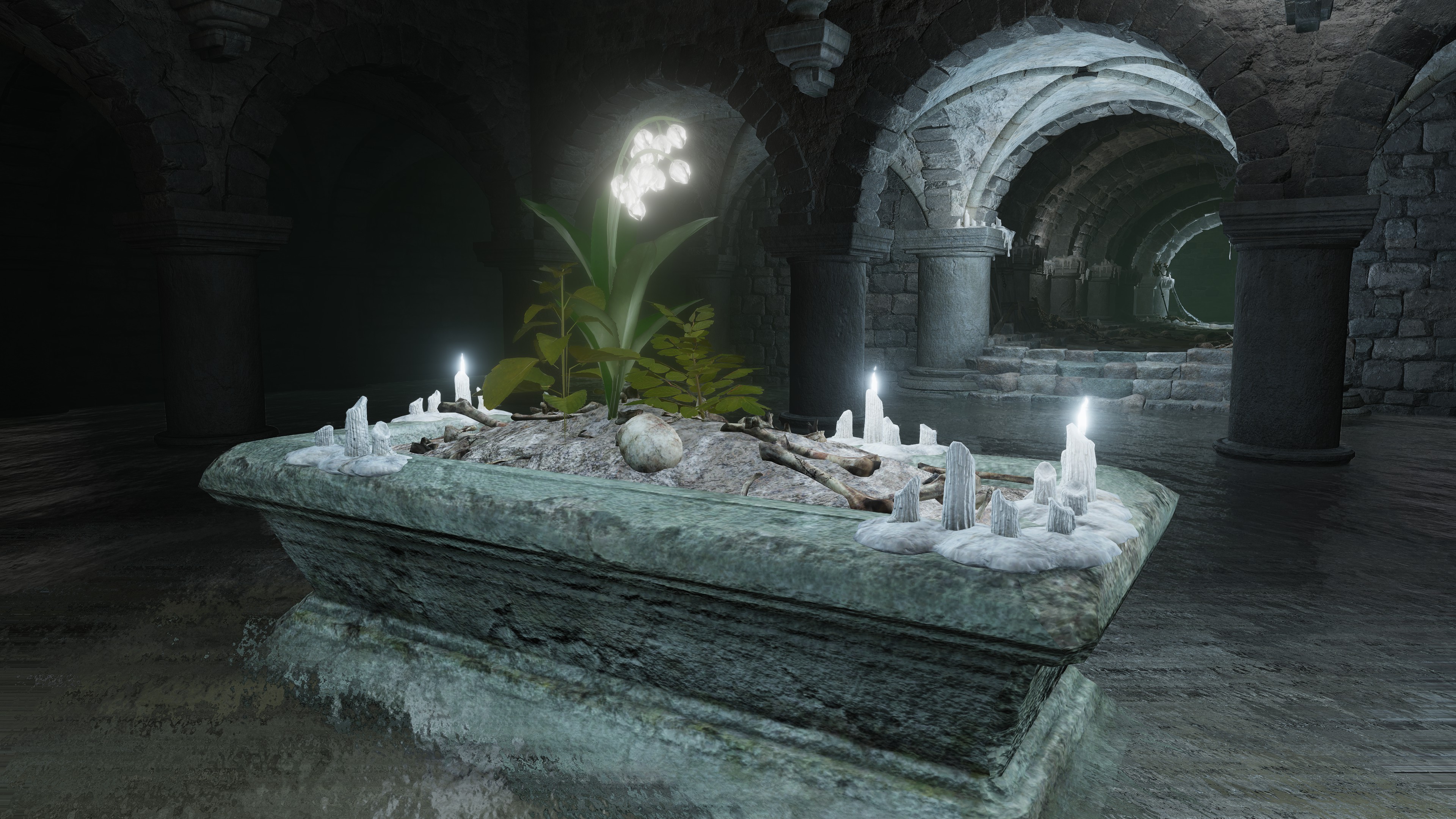


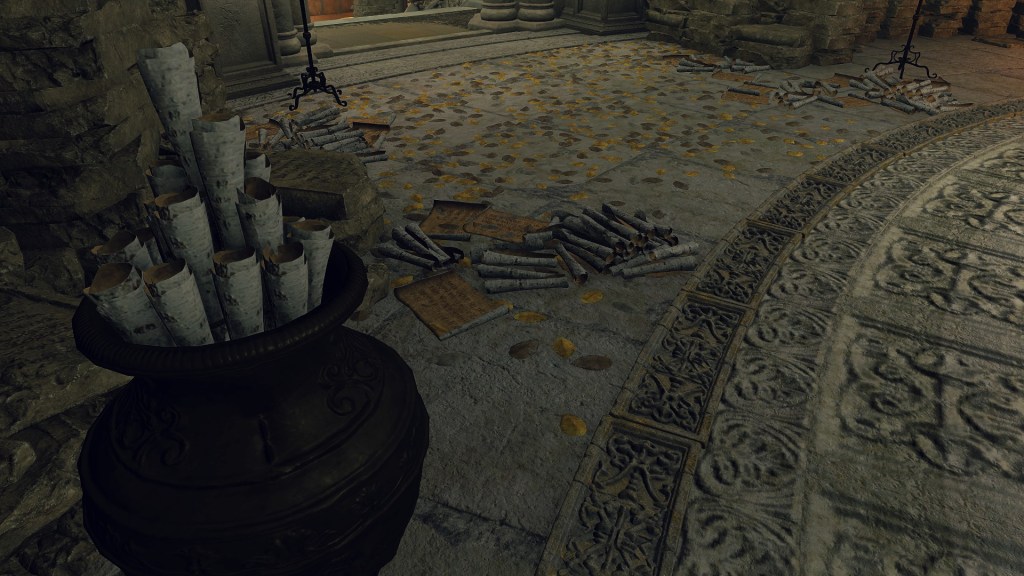
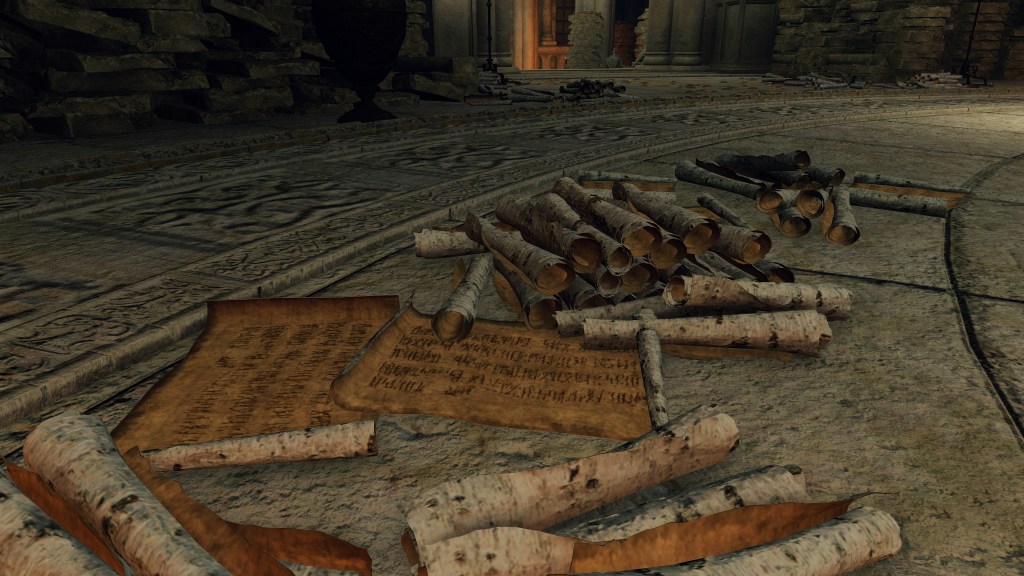
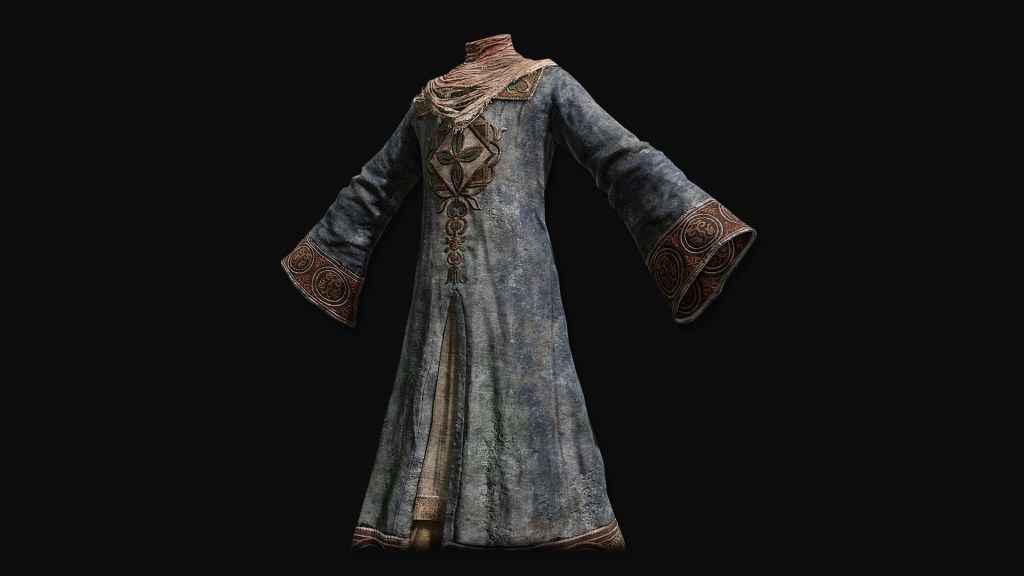
Indeed, the Queen’s Bedchamber shows that she was quite the busy bee, heaps of scrolls littering around the stone couch she lounged upon while handling the day-to-day affairs of her subjects; their contemporaneous nature evident from the bark paper matching the white trees around the capital. In the course of this work, she need organize a government to help execute her royal decrees. Among this bureaucracy are officials wearing a blue uniform, tasked with the unseemly work which can’t be performed at a desk. Whether it is keeping watch over concerning persons, putting the condemned to death, or enacting ghastly rites, they do all their queen’s dirty work under the table while her radiant image remains untarnished. But when it comes to enacting god’s will on her behalf, it was important to also establish a formal clergy and propagate the faith. One aspect to this are the women permitted to become Finger Readers, though not strictly interpreting the Two Fingers. These finger-reading priestesses have instead become a common sight within churches and along highways, analyzing the digits of congregants and passers-by. In this way, clerics, too, assisted in managing the realm.
Grubby blue robe. Apparel of government officials bearing grim duties.
Surveillance, execution, gruesome ritual. But people do depend on the darker duties.
Of course, the god queen wasn’t exempt from the quid pro quo in politics. To attract and motivate vassals, the formation of an aristocracy is inevitable. The Lands Between harbor no shortage of nobles from the Erdtree capital. As typical for aristocrats, they often engage in honor duels using thin thrusting swords or similarly thin blades. Most of these nobles wield high-valued gold estocs, and a chest in a camp filled with their ilk stores away the Great Épée made for particularly brutal death matches. Clearly, their pride translates into luxury. Even their travel attire is lavish, with fashion trends tailored to familial status as much as individual taste. The long cowl and gown is currently in vogue for the elderly in particular, while the feathered hat and coat are preferred by families descended from knights. That in itself reveals the kind of persons honored with hereditary status. Retainers who distinguished themselves, whether civil or military, were granted special favor by the royalty, with which they would use to continue supporting the realm for hopefully years to come.



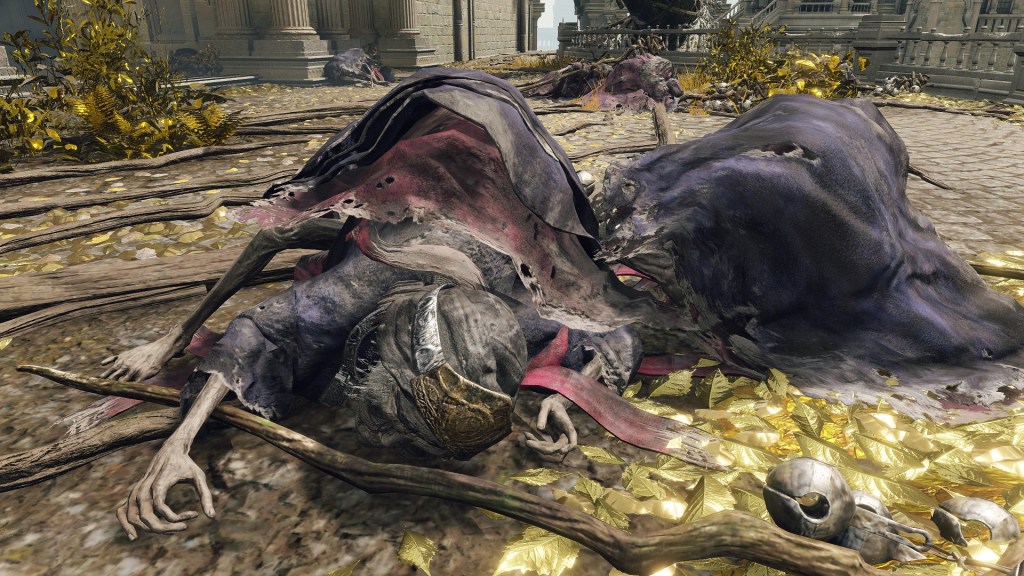


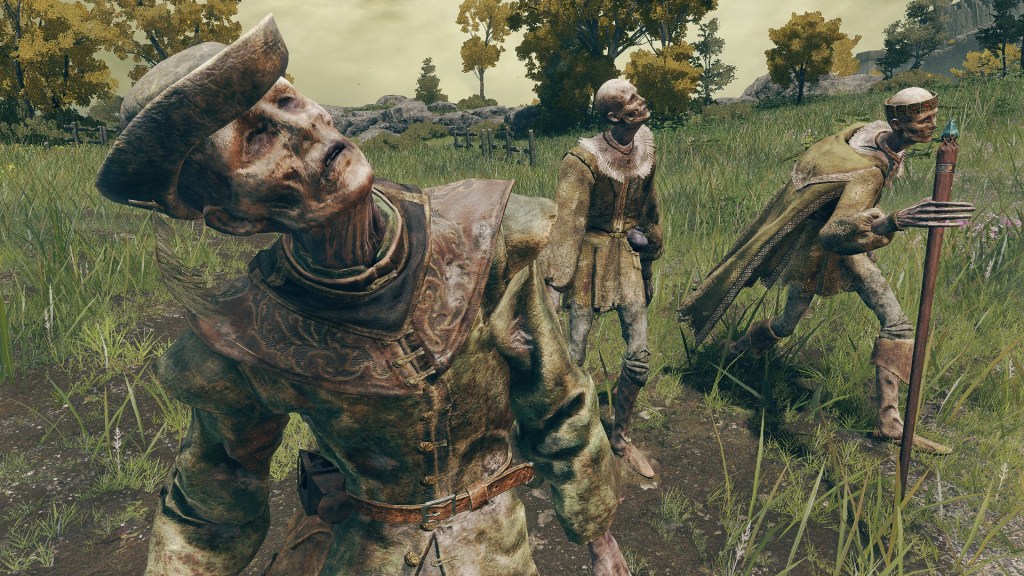


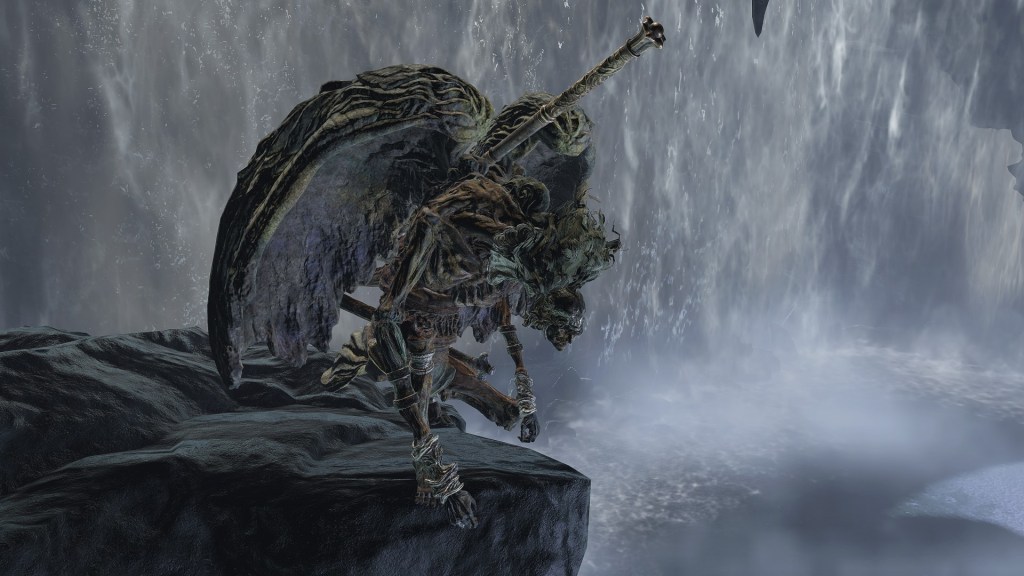
Next to appease were her own kindred in their midst. We encounter gargoyles primarily in and around the Deeproot Depths and Altus capitals, suggesting some degree of crossover between the two civilizations. Siluria also currently resides just outside the Eternal City. We likewise acquire Marika’s Scarseal from a corpse lying at the bottom of the waterfall to the Siofra Aqueduct in Nokron; tracing the water’s flow, we come across two more of both Crucible Knights and gargoyles before arriving back at the Depths. In essence, this cursed eyeball had most likely flowed downstream. The apparent reason is because the cursed individual, like those enemies, came from the nameless city, implying that Leyndell’s queen either visited at one point or sent a person she burdened with a mission. Overlooking the base of the Erdtree from a cliff neighboring the city, another corpse, fittingly, harbors Elden Stars — how does one acquire the text of the Leyndell faith’s oldest prayer, derived from the beast incarnation of the Ring that took root down there, without a connection to the god?




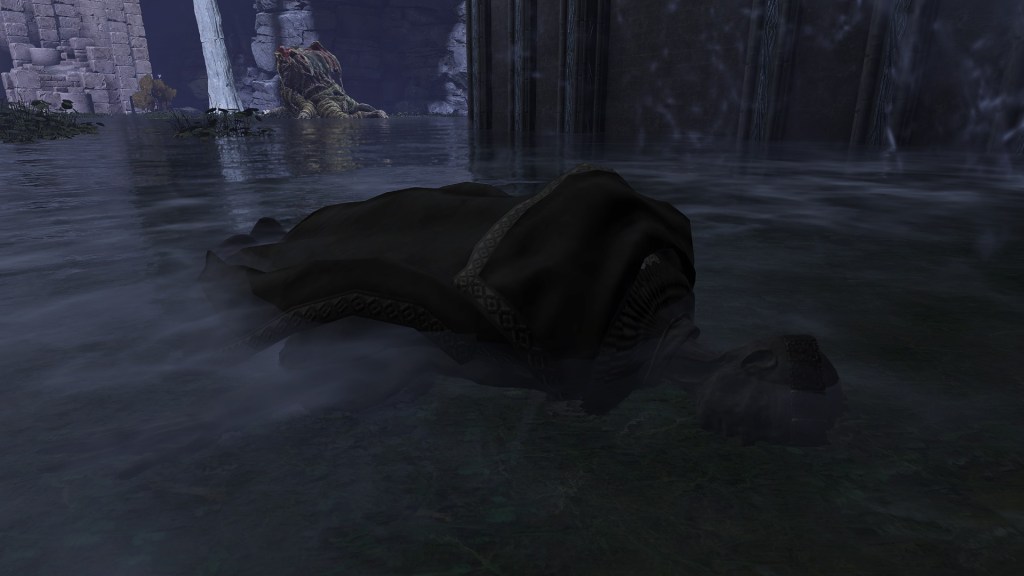
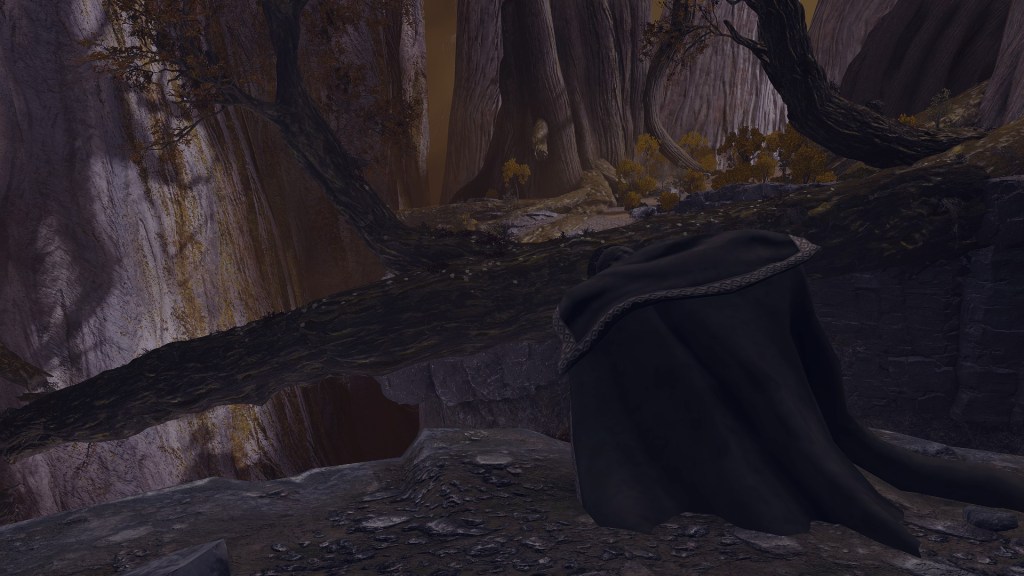
All of this suggests that the Nox of this Eternal City interacted closely with the Erdtree capital until the former’s destruction, ending with the vacation of many and death or damage of those who failed to vacate. This lines up with Marika’s treatment of the Nox who lived alongside her enemies above ground; while the Sun Capital itself was demolished, those from the Eternal City were allowed to remain as part of the new royal capital’s Lower Quarter, complete with their own graveyard. The description to the Black Knife set does highlight Marika’s intimacy with fellow Numen. Maybe it is because of what happened to her village, but she felt an affinity for the Nox on account of their mutual backgrounds. Although the Eternal City beneath her feet might take issue with her connection to the Greater Will, the queen held the dominant position with her army, and many above ground had apparently been delighted to live under Numen rule.
Their assimilation into Erdtree society extended to religion. Aforesaid graveyard employs the flower-top graves indicative of Marika worship. The destroyed part of the quarter likewise possesses a small church dedicated to the Erdtree, with yellow trees surrounding the building. We even see a rotten resident giving praise to the one destroyed part of the district with yellow bushes; the ulcerated tree spirit bursting out of the ground suggests that one or more great roots were once present, probably as centerpiece to the cul-de-sac. Then there is the fact that their Albinauric servants have been tortured to the point of madness — why do this unless to show fealty to Marika’s Order, which considers silver corruption? Clearly, Nox of the nameless city grew a certain tolerance for the Erdtree, deterred by Godfrey’s warriors and Marika’s diplomacy. Certainly, it is the only Eternal City with no sign of a Chair Crypt to seat their Night Lord. Under Leyndell’s watchful eye, they wouldn’t interfere with the tree’s root network or bring harm to its golden-eyed citizenry, not when some of their own wished to join that culture.

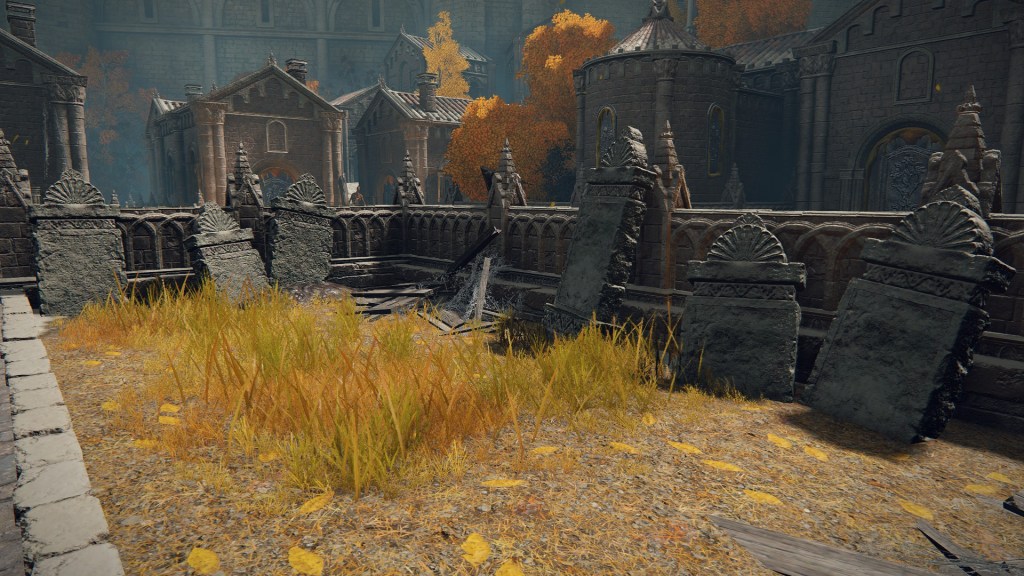
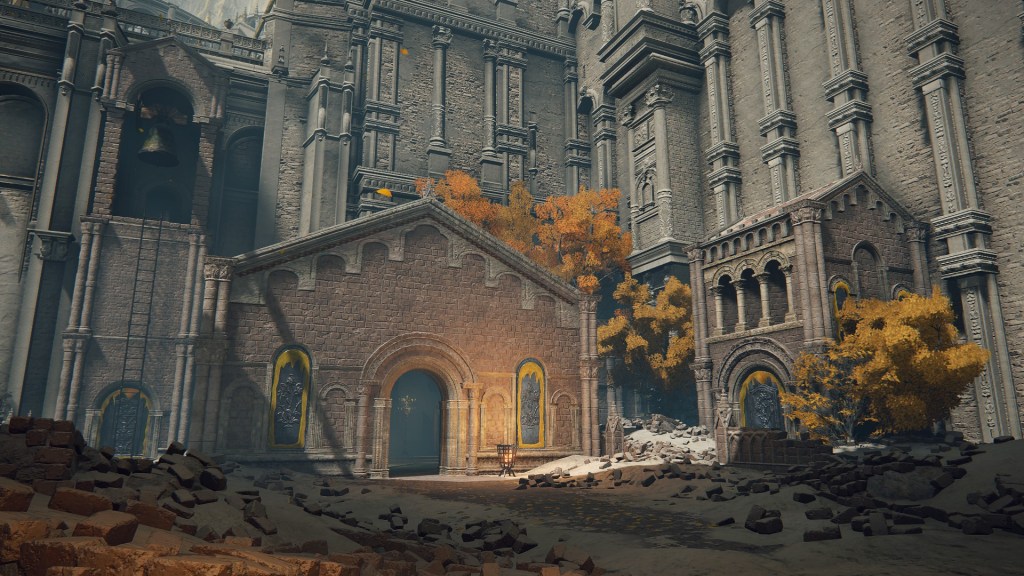

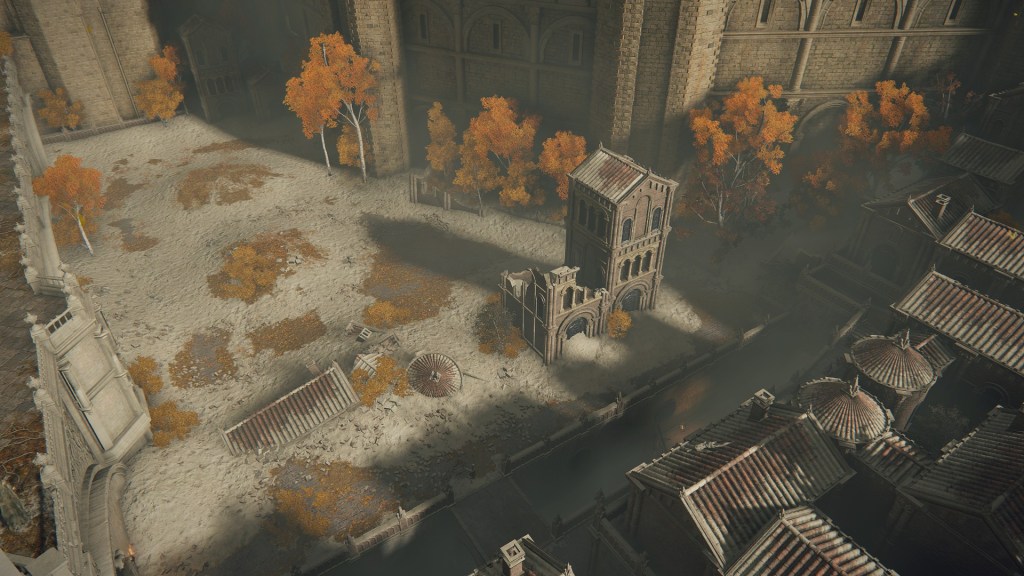


All of this is to say that Marika neither sat back as Godfrey delivered her a kingdom nor limited her role to supporting the army with holy magic. Organizing the logistics for supply lines, burial of the dead, rebuilding the settlement, incorporating foreigners, placating immediate neighbors; every matter required someone to handle it, even if that meant delegating. With the base of the Erdtree finally under her control, the consort’s wife stepped up to ensure the long-term viability of this project. Leyndell wasn’t built in a day, but the sooner a proper system of government and civil society would have been put into order, the better. Put simply, the queen handled all domestic affairs in the burgeoning capital while the king was out fighting to secure their hegemony over the wider plateau. Each had their role to play, and together, they took the Lands Between by storm.
Kiss the Ring
While Godfrey and Marika were laying down the foundations for a country, the other Farum colonies were sure to take notice. They had only so long before the fate of the Sun Capital and Fortified Manor were known to their kindred, and retaliation was guaranteed. It was incumbent upon the Elden Lord to continue fighting for his burgeoning civilization’s survival. That meant bringing the entire plateau under one banner. Naturally, the Greater Will agreed. From Melina’s quotations of Marika, Godfrey had been guided by grace in all his battles before finishing off the fire giants on the Mountaintops. This leaves no doubt that the king built up his army knowing the threat they would have to face next. The brief reprieve lasted only until the enemy mobilized. Now Leyndell was the one defending their doorstep. But this time, the king would fend off the attackers and take the war to them.
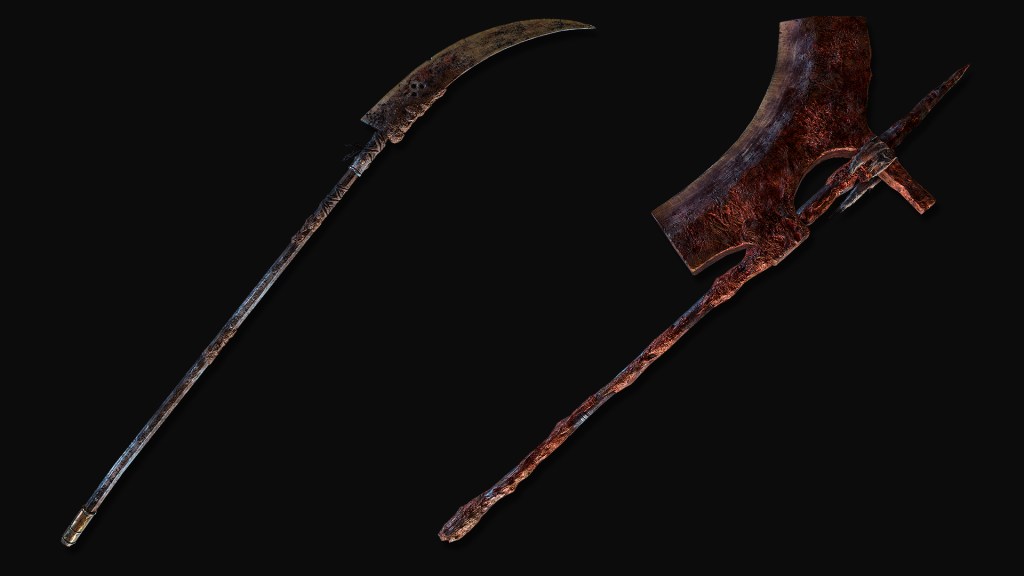
As evidence to some of these early battles, we find a more conventional graveyard in the middle of the Capital Outskirts. Nearby, opposite side of Leyndell’s outer wall, is another such boneyard giving rise to Those Who Live in Death. These skeletons all wield war glaives save for one, an executioner using a long-handled axe more resembling a hatchet — the concave curve to the blade perfectly suited to the roundness of the human torso it was used to bisect. According to the description of this “torso-cutter great hatchet”, (断胴の大鉈) the executions primarily concerned remnants of a defeated army. From this, we can infer that the dead in these random graveyards are combatants either slain in battle or systematically killed after being captured and presumably interrogated. And most likely, these battles were between the forces of Leyndell and the Farum colonies, before the royal capital erected its ramparts clearly delineating its territory.
The nomadic merchant in the region sells the Tree Surcoat not belonging to a specific army but nonetheless depicting the Erdtree. Based on the description, this specific design was beloved in the Lands Between at least once upon a time. In other words, the nonstandard crest was probably used by soldiers in an earlier era, lasting until the Erdtree kingdom grew to dominate the entire continent if not longer; that might explains its blue color, matching Godfrey’s cloak. The merchant also possesses the Red Crest Heater Shield in his inventory, notable for the crest representing red wings emblazoned on its face. This is highly evocative of the wings Ordovis knights can manifest via their aspects of the Crucible incantations. That indicates that the shield’s previous owner was affiliated with the knights mastering reddish gold, meaning a member of Godfrey’s army. Taken together, the merchant has collected some of the legacy of Godfrey’s war in this central region of Altus.
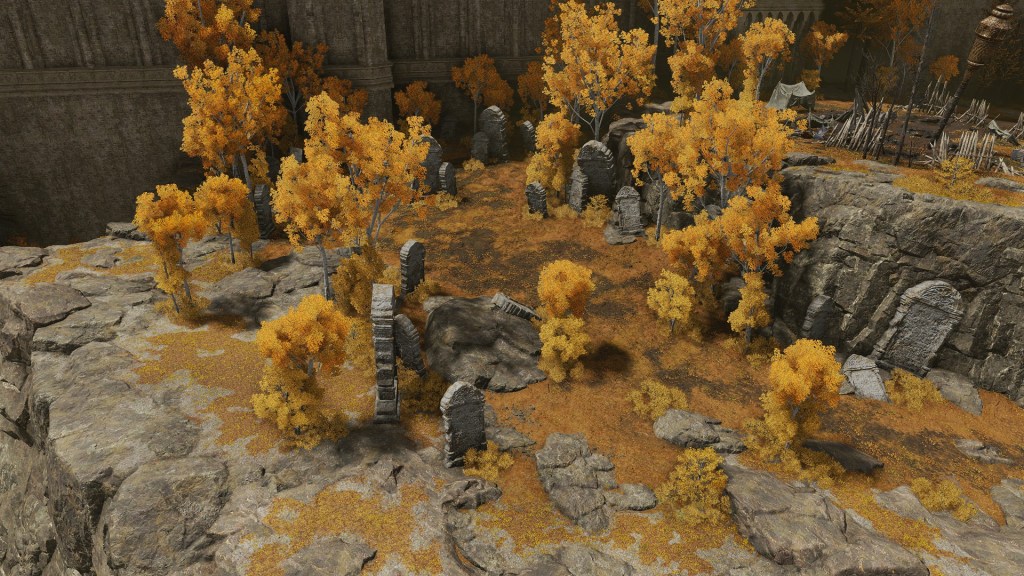

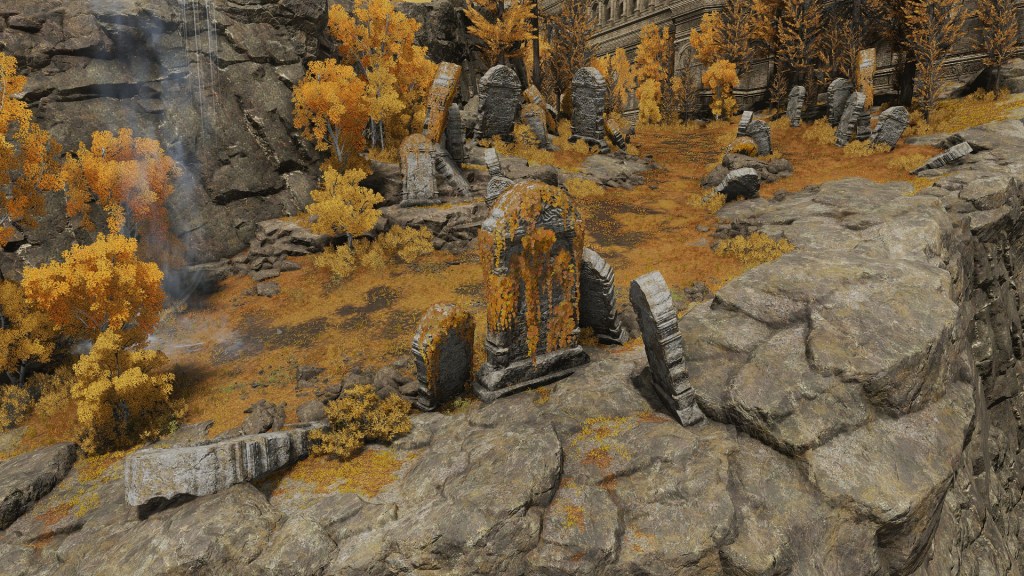

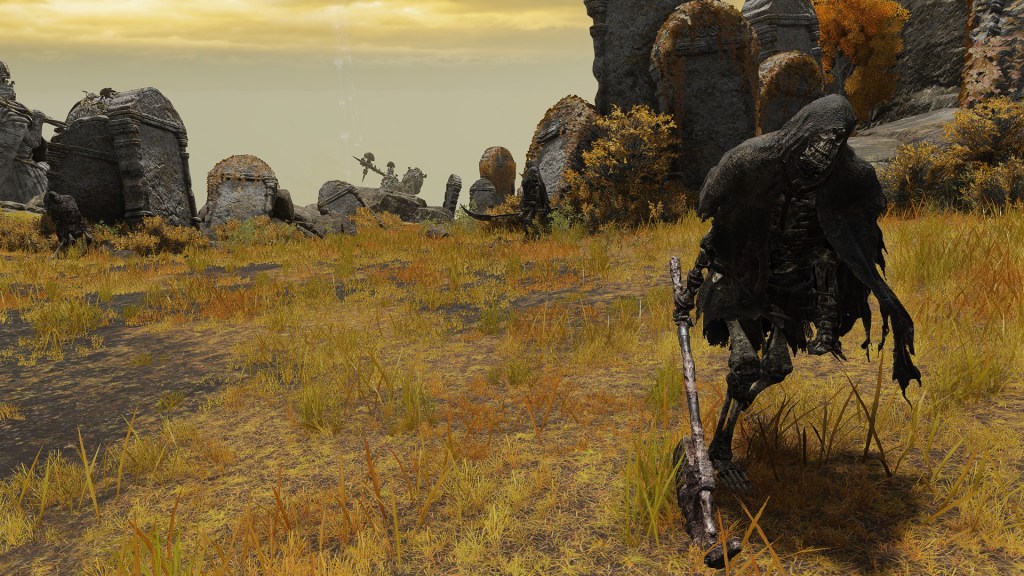
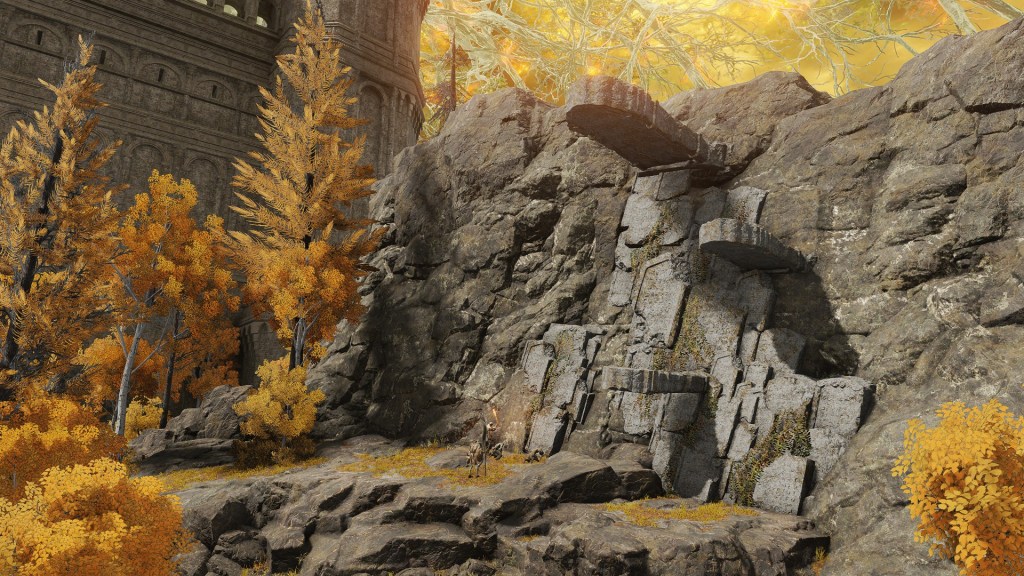


In that case, we can see how these battles extended to the northern ridge of the plateau. From the glaive and executioner skeleton graveyard, we can come across another such burial ground along the cliff just around a corner, with a coffin cemetery in the fields a little farther down the slopes. Following this path inevitably leads us to the Highway Lookout Tower now in ruins, proof of the dragon worshiping garrisons’ defeat. The fighting may have extended as far as the Bridge of Iniquity given that both Dominula and the Writheblood Ruins keep their own graveyards; admittedly, it is possible that these simply buried civilians in the postwar era. Whatever the specifics, the north was ultimately subjugated. The grain village had probably been a priority for the barbarians hoping to feed their burgeoning city. The area’s relative isolation with only a small fortification keeping watch left it an easy target for the neighboring kingdom. Even without the guidance of grace, it was a natural first choice. And once Godfrey captured the land, his army could muster the supply lines to campaign down west.


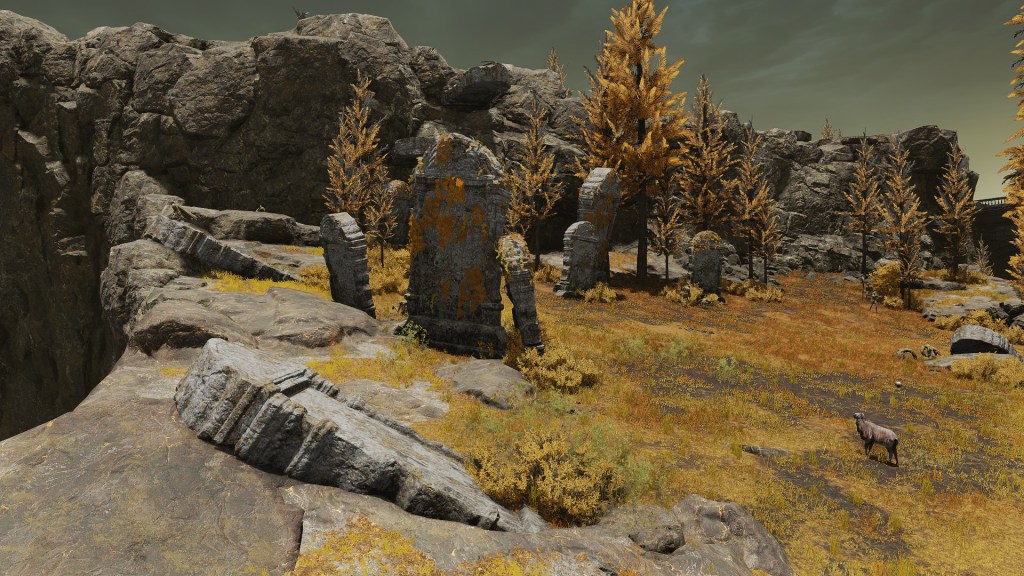

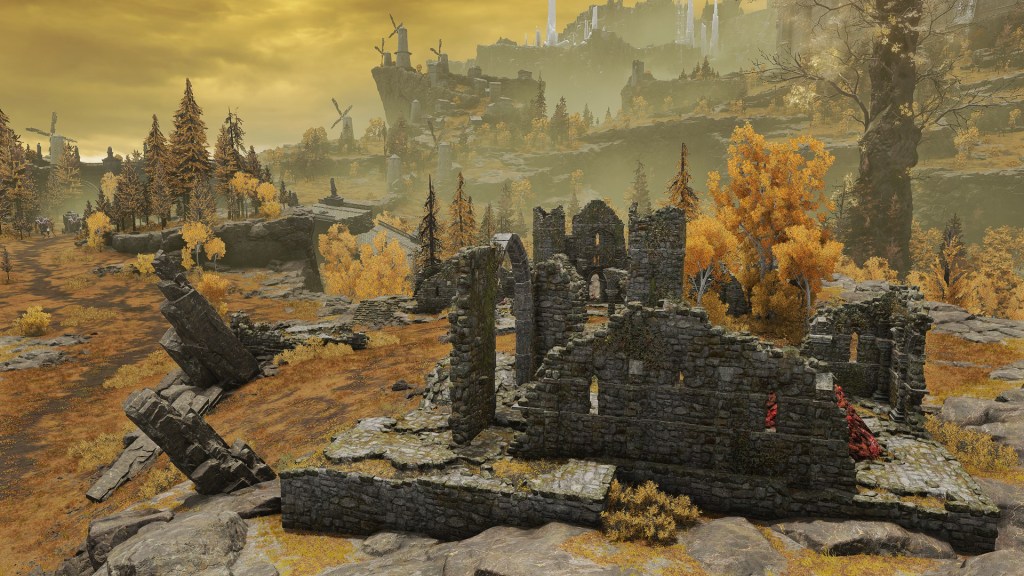

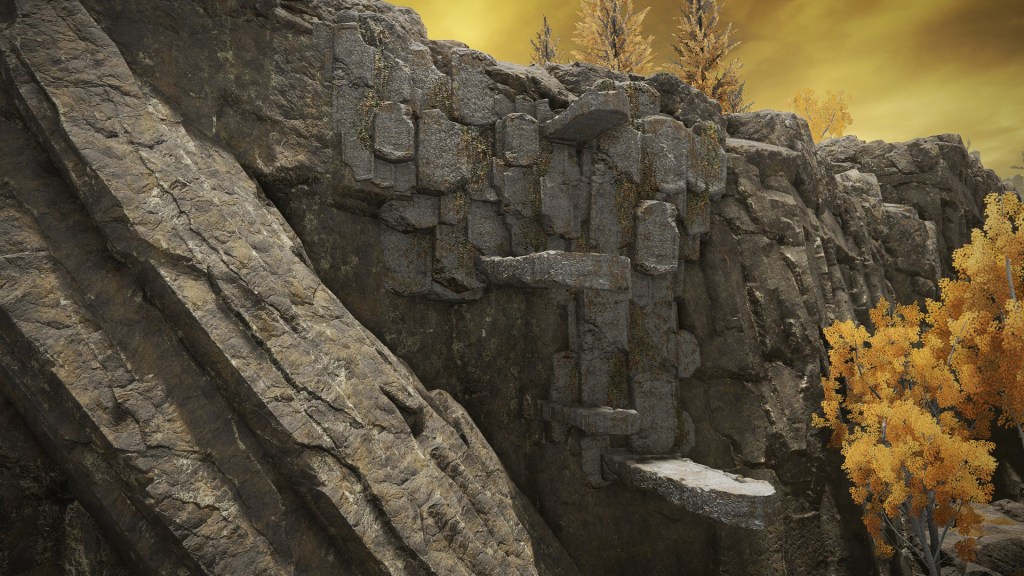
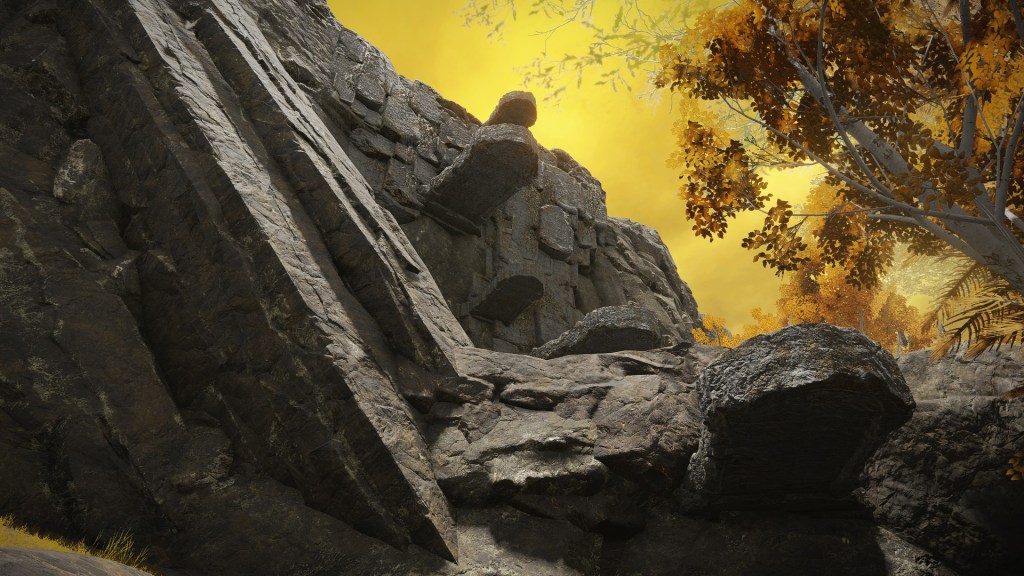
The king’s march would take them all the way to Lux and Wyndham. And with the army so far from home, it shouldn’t come as a surprise that they established a new base of operations. The Shaded Castle was built in the same Norman style as the Fortified Manor. This suggests that, while it has been under the care of the Marais family for generations, it was actually made by Farum colonists; we do find some of their weaponry in the ramparts’ stores. Still, there are several oddities with its design. For one, it is large for a fort defending nothing of strategic value at the dead end of the valley dividing Altus from Gelmir. It is also too far to provide support to Wyndham at the opposite end; why not fortify the village itself? Instead, the castle is placed purely to withstand a siege, the plateau’s precipice preempting assault from behind while the valley funnels enemy movements to just the front. Because of that setup, the knights constructed a citadel encased by double ramparts. Yet, no other fort in a similar position follows this convention. Rather, it resembles modern Leyndell.
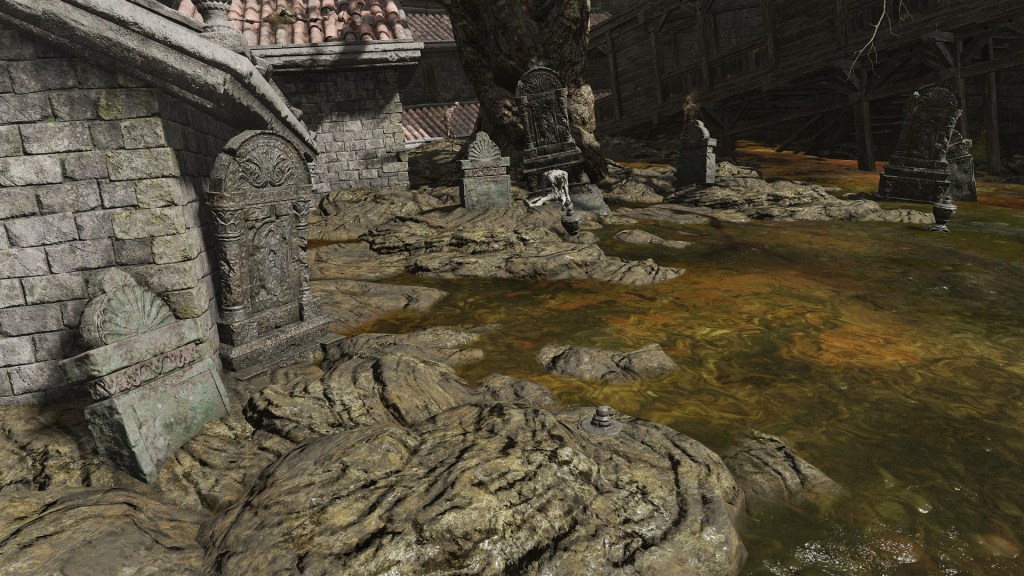
Without a doubt, there are various details which connect the castle to the new Erdtree culture. The citadel’s outdoor flooring mostly employs stone tiles engraved with a crest modeled on the Erdtree cross, the same used to pave the highways to Leyndell. The Erdtree engraved above the various gates might be justified as part of the Farum colonists’ culture, but the inclusion of the cross incorporating the Elden Ring is decidedly not. The golden-leaved trees exclusive to the citadel courtyard might similarly be later additions by Erdtree faithful captors, but the same cannot be said for the graveyard. The small cemetery belongs to the equally small town housed within the ramparts, featuring flower-top graves. Essentially, those living and buried in town throughout its history have been worshipers of Marika, not animals.


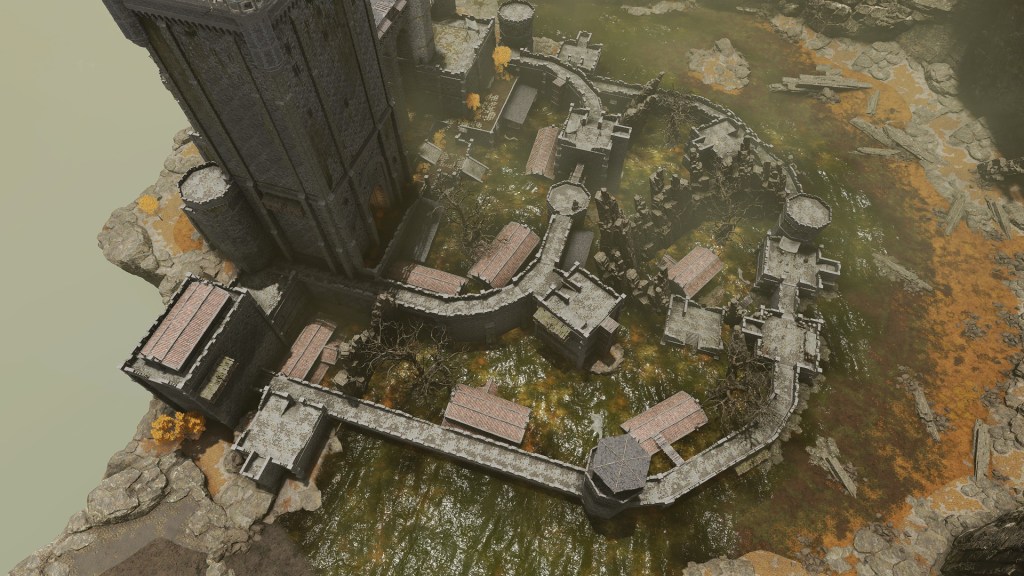

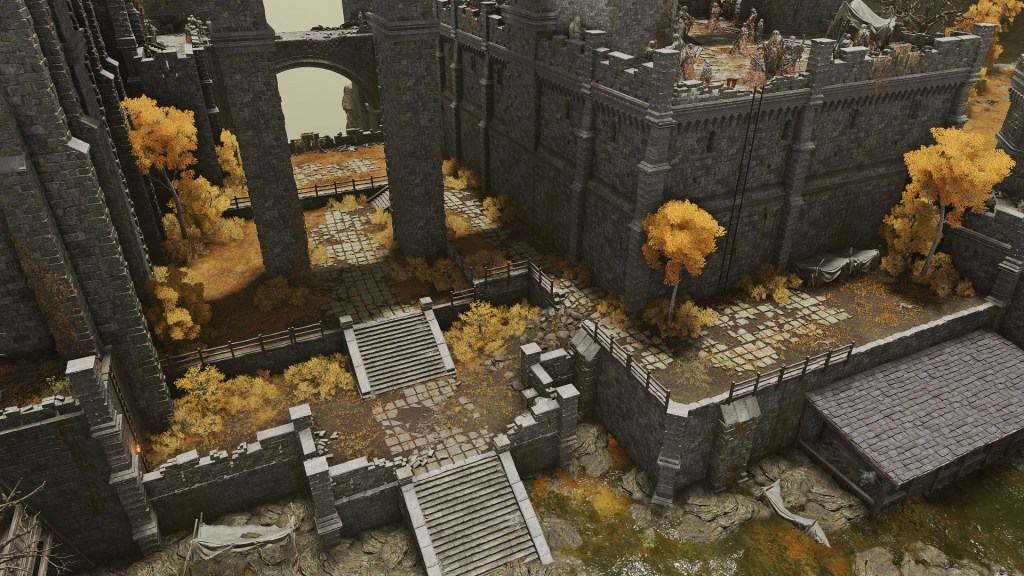

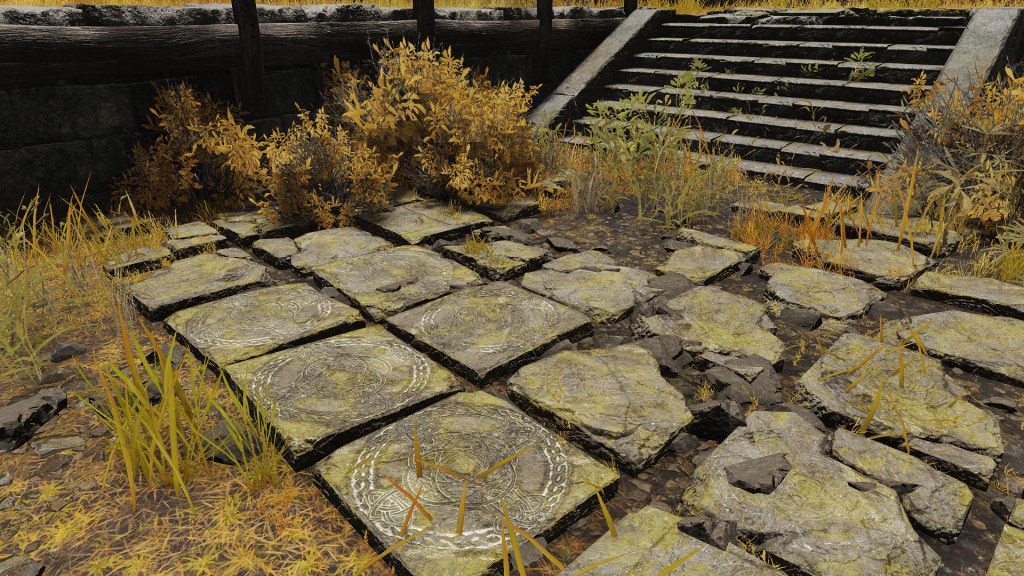


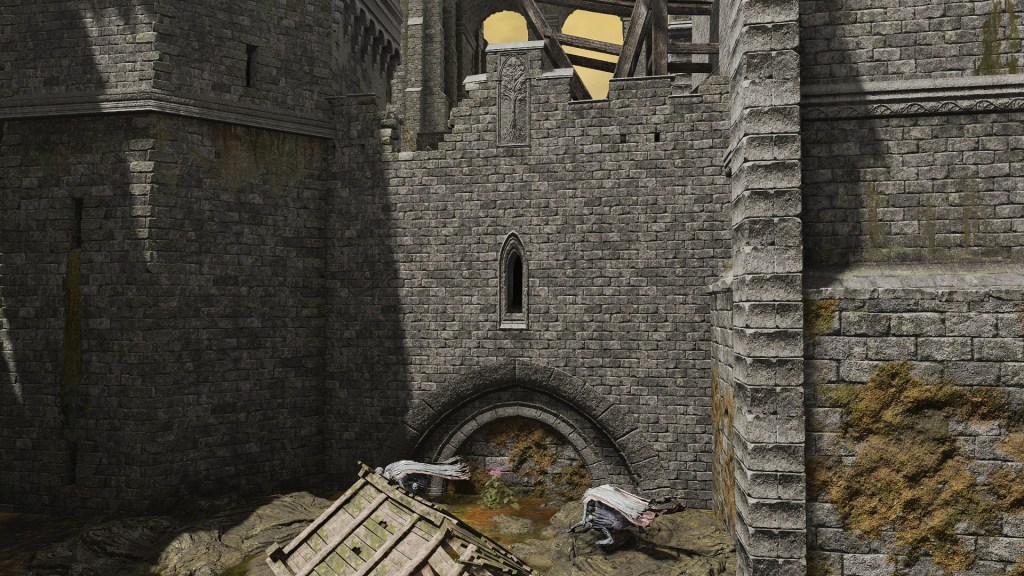
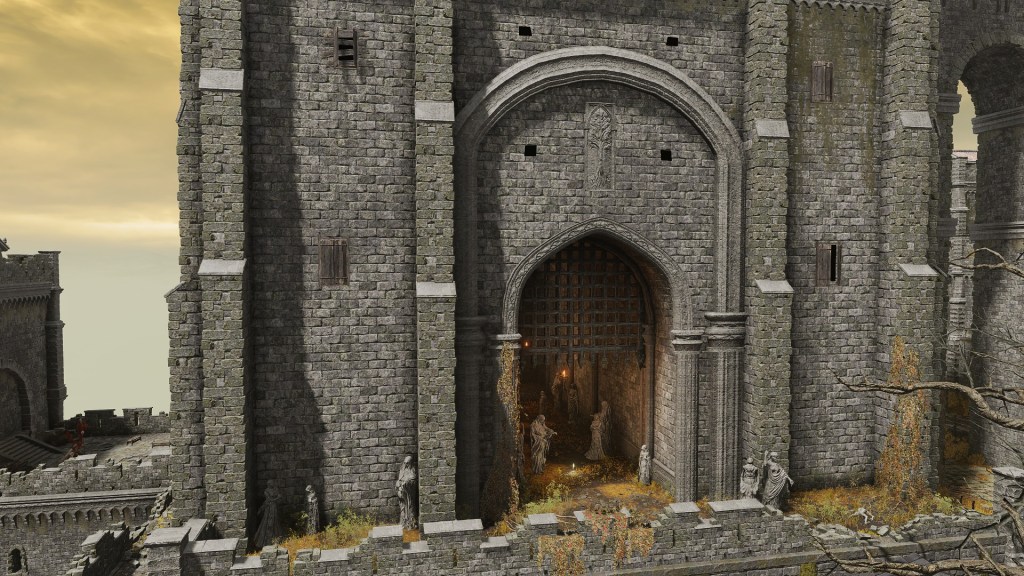
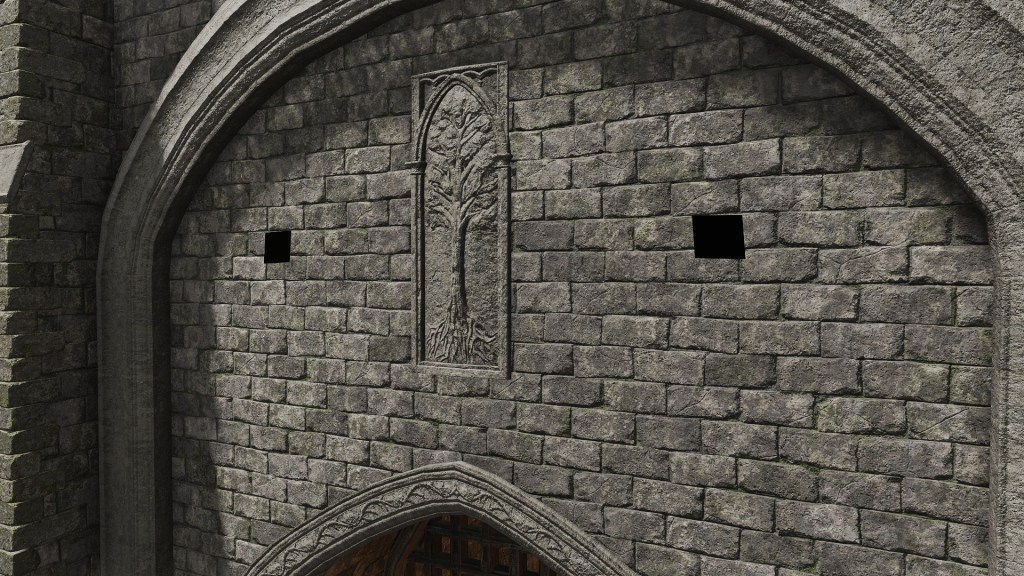
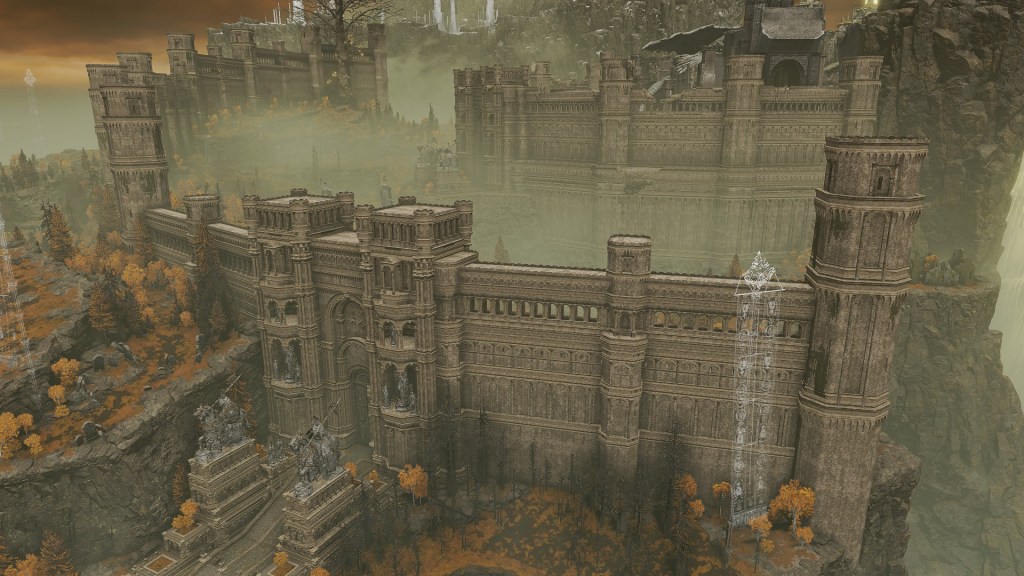
In short, the Shaded Castle was most likely constructed by Godfrey, using the Farum colonists already defeated for expertise and labor. The Fortified Manor’s original garrison were Serosh’s comrades-in-arms, so the Beast King likely negotiated for their lives as part of his agreement with the Elden Lord — someone had to have forged Godfrey’s new axe, and they could be put to good use as captives constructing such fortifications. It was made a castle town to facilitate the Elden Lord’s army along with the day-to-day affairs of a headquarters; the king’s home away from home. It was couched so deep into the valley to serve as the ultimate shelter in case the western campaign turned for the worst; hunker down with no retreat. The double ramparts proved so successful that they later informed the construction of Leyndell’s defenses as the city continued to be built up. This was the beginning of the Erdtree kingdom conceptualizing its own style of stronghold. Of course, Godfrey’s soldiers didn’t come all this way just to be on the defensive. They inevitably pushed out to expand their kingdom’s border.
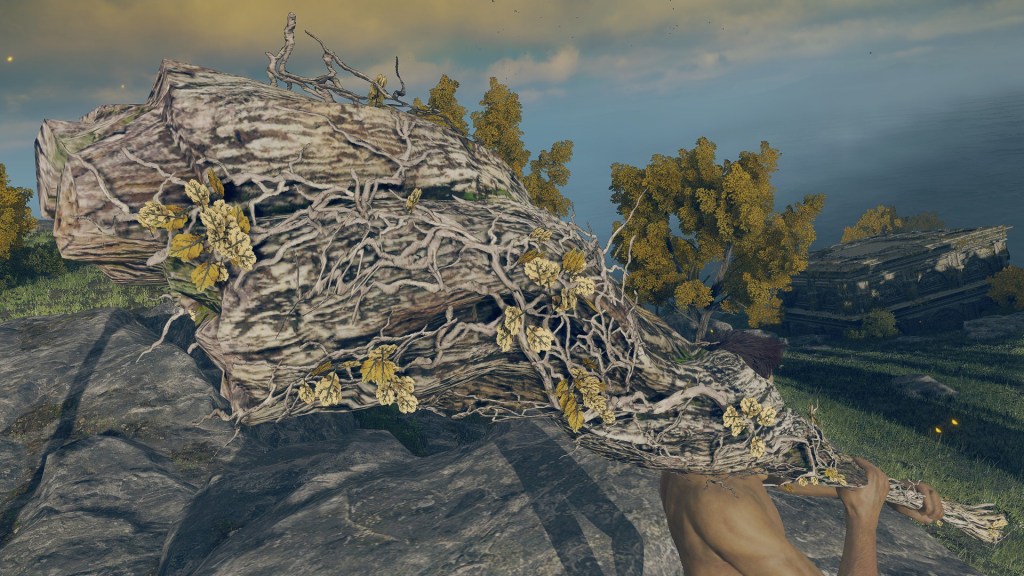
First was the Old Altus Tunnel. The presence of both a Boltdrake Talisman and the Great Club within the mine are telltale signs of conflict between the Farum colonists and Godfrey’s army. The club is a dead branch of the Erdtree converted into a simple and effective, if barbaric, blunt instrument. For that reason, our faith can be used to draw out the holiness within the wood. And the most notable application of this holy power is in its skill, Golden Land — after infusing the ground with holy power, the resulting explosion generates a flurry of golden pebbles to launch at targets, similar to Land of Shadow. The importance? The skill generates the Crucible sigil, indicating that both the art and the holiness within the club is leftover from that era. This makes the club the perfect weapon for one of Godfrey’s barbarian warriors shortly after taking control of the Erdtree’s vicinity. In that case, its presence in the tunnel is the legacy of war against the dragon worshipers. Securing a steady source of smithing stone would be needed for the battles ahead, and the tunnel lies closest to the Shaded Castle, making it the ideal first target.
Thick, hard, giant wooden mass. Strike weapon not requiring dexterity. Barbarically smashes enemies with all one’s might.
Damnable enough, it is said to be the dead branch of the Golden Tree, so never breaks and is also tinged with the holiness.
Exerts power after stabbing weapon into the ground and generates golden pebbles together with a holy explosion. Can chain to a spinning sweep with strong attack.
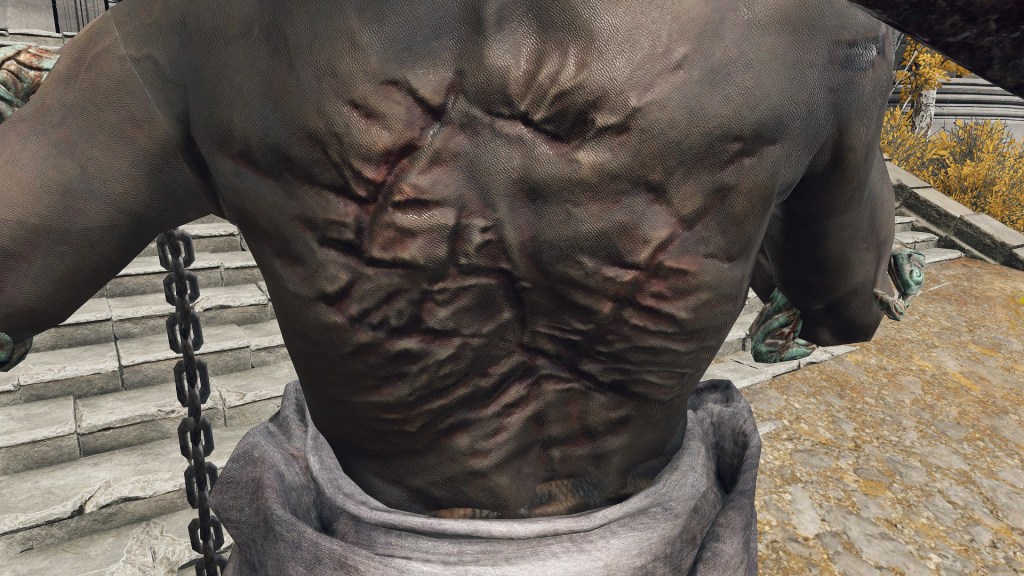
Next was the village of Lux. The present-day ruins store the Ritual Sword Talisman used by gladiators in the arenas, one of which sits in Leyndell where we find the Ritual Shield Talisman. We can thereby determine that Lux contributed arena fighters to the luminous capital, and they date to Godfrey’s era. Other than the tree reliefs on the doors, the buildings employ mainly lion imagery, including the beast crest. The talismans are clearly modeled on a Crucible Knight’s sword and shield, meaning that the ritual combats performed at the arena probably involved reenacting the knights’ victories — hence the unharmed reenactor is better at dealing and taking damage with the corresponding replica. Gladiatorial combat also ended with the reign of Godfrey’s successor, so the Lux must have been recruited before then. And gladiators are typically slaves or criminals. The scars on the duelists’ backs are proof of many lashes to make them compliant; the corpse carrying the Ritual Shield Talisman outside the arena similarly wears a criminal’s hood, as does the one sitting nearby with the Star Fist used in ignoble mens’ duels.
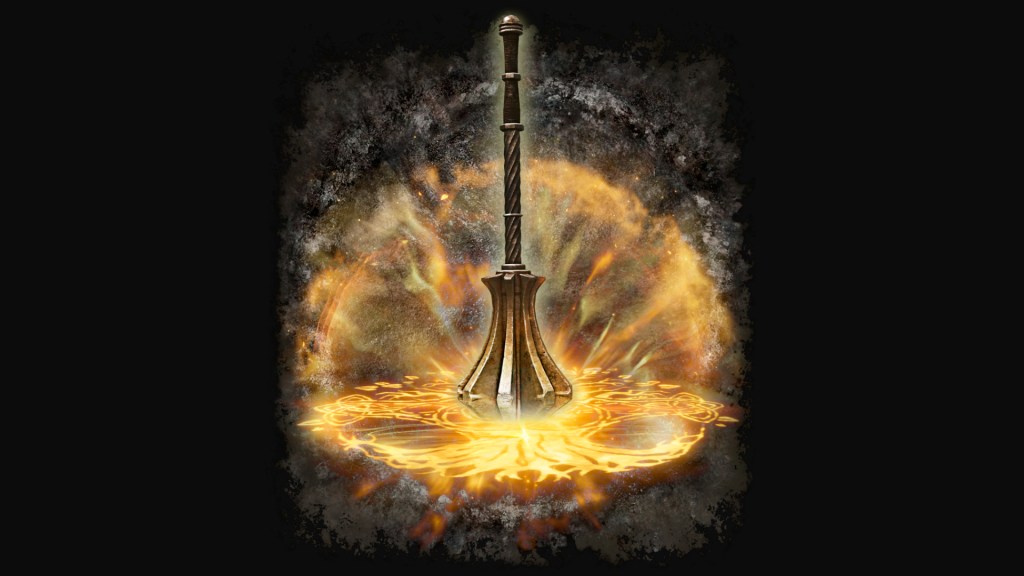


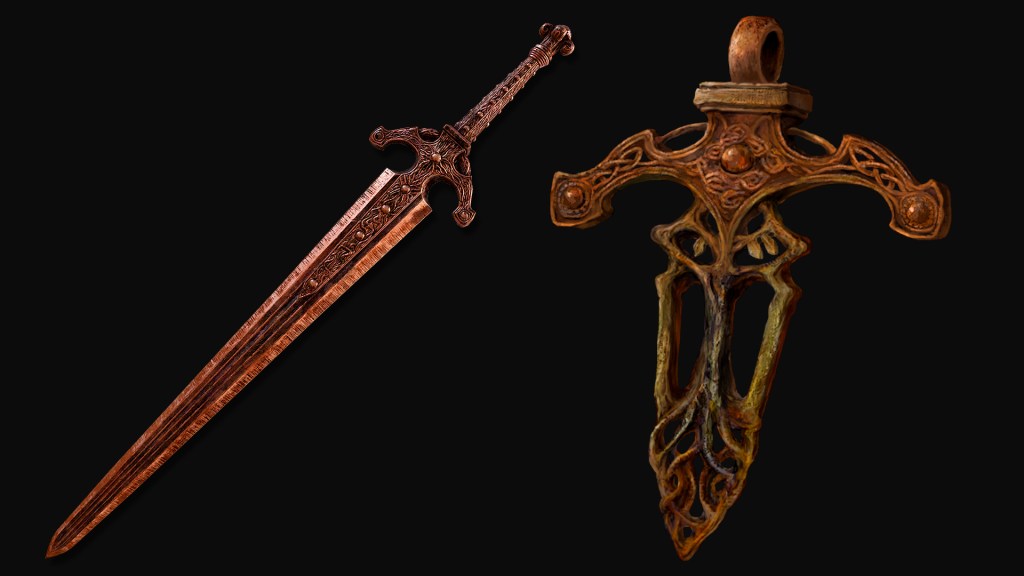
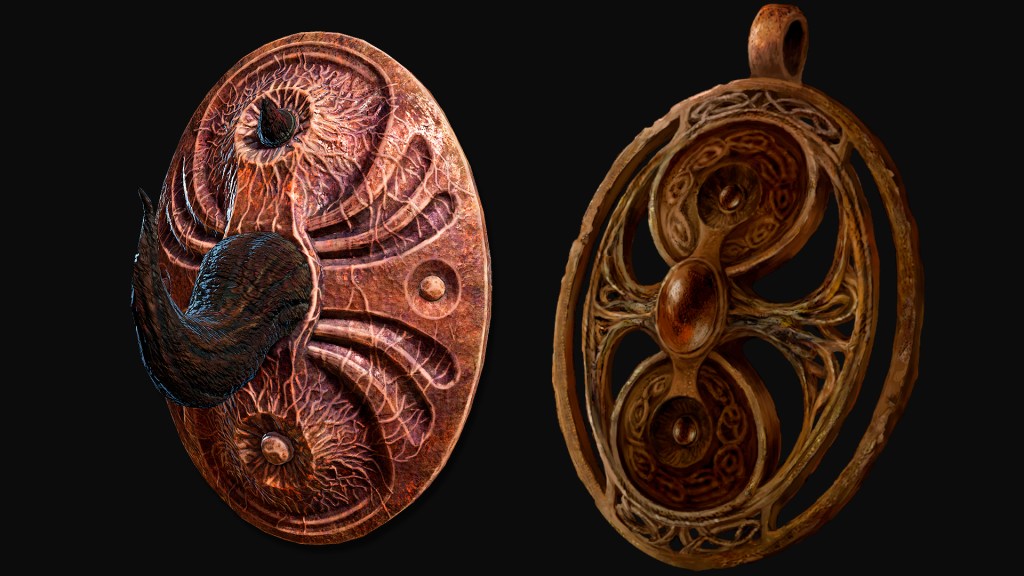



Iron ball fist tightly covered with iron spikes. The iron spikes have a bleeding effect.
It is said to have been used in ruffians’ duels.
Therefore, the Lux were most likely prisoners of war in this initial sweep over Altus. Unlike the other settlements on the plateau, Lux keeps no graveyard for Erdtree Burial in its vicinity. This makes sense for a village established by sorcerers from the lowlands at first, but it is unlikely to continue under Marika’s regime. It is possible that the dead were simply buried at the Wyndham Catacombs, with no great roots near enough for a closer alternative. But then why the presence of gladiators, who were reassigned to catacombs after the arenas were closed down? With the village in ruins and their demi-human allies since moving in with their queen, the only time for Lux to be populated with duelists is before they were brought to the colosseums — ergo, they may have been trained on site before being forced to abandon their homes. Perhaps the tribe chose to submit rather than fight, prompting Godfrey to show them mercy; in lieu of their lives, they gave up their freedom. This would leave no dead to bury locally and no living to stop the collapse in infrastructure. If so, then Lux was likely first to fall.
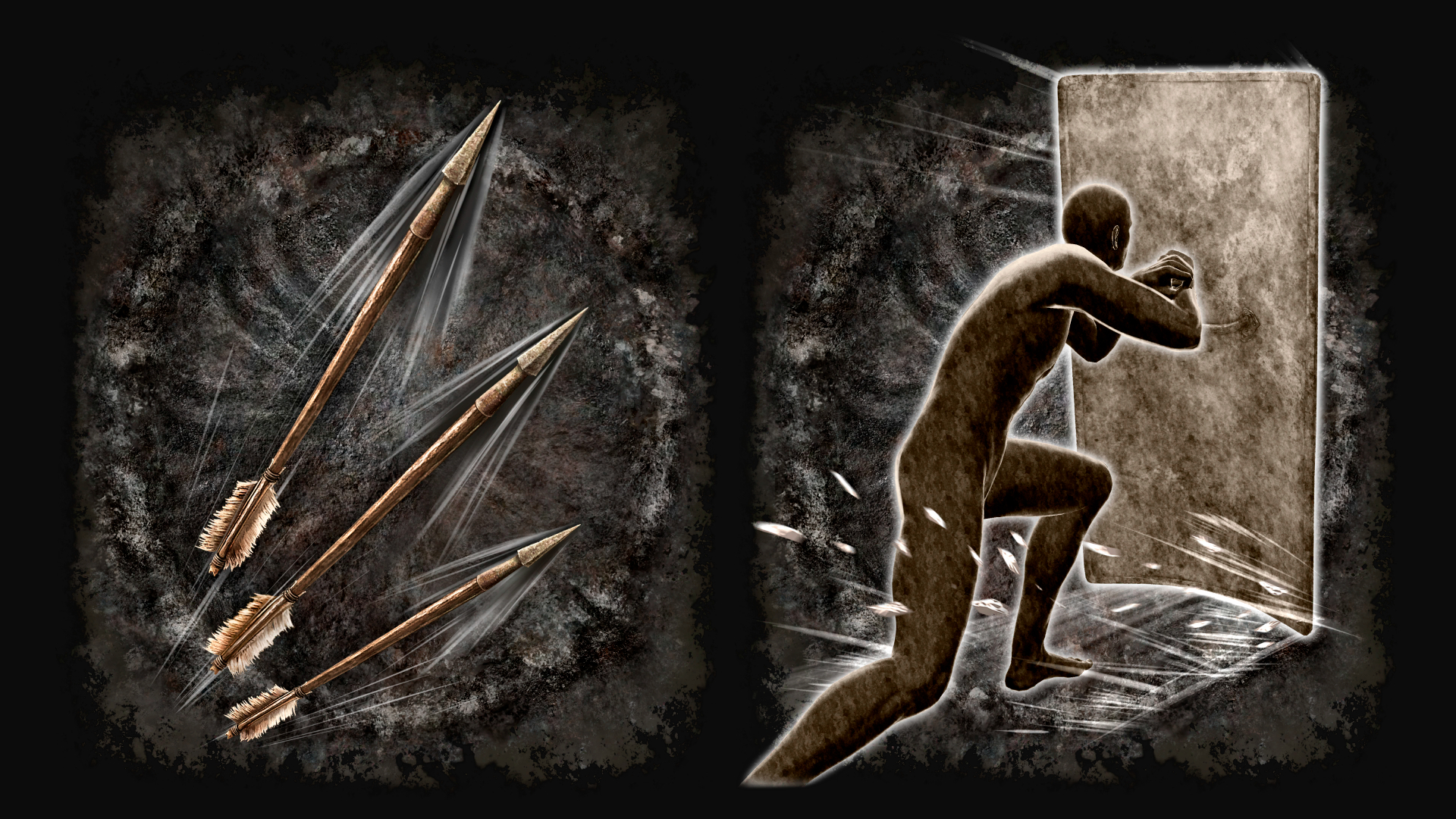
Of course, forcing the tribe to fight for the capital’s entertainment could only come after pacifying the region. Wyndham still sat next door across the valley. With the village as a foothold to mount an invasion and no chance of being flanked from the valley, Godfrey and his knights could finally capture their main prize on the western front. Wyndham wouldn’t make it easy. A scarab in the Seethewater River next door rolls up Barrage, an ash of war for repeatedly firing arrows in rapid succession. Meanwhile, another scarab in Lux has collected Shield Crash, an ash of war for rushing offensively while defending against enemy onslaught. No doubt, charging up the narrow, rocky terrain to the high ground is not an enviable position for any army. Godfrey’s troops were constantly pelted by arrows with nothing but their shields for cover. Between the rain of enemy fire and the climb, it must have been a slow slog up the cliff. Still, they pushed through and ultimately captured the village.
Once again, those warriors who didn’t fall in battle were systematically killed, as were many others. It is no accident that the Marais clan were executioners for their entire history as lords of the Shaded Castle. The robe worn by the family head is blue government official attire but with additional black mantle to denote lordly status for his ugly official work. Certainly, there were many in positions of power or related to them who might entertain rebellion if they were left in charge of the sizable village. As the several knights guarding their catacombs showcase, Wyndham especially concerned the kingdom. Indeed, the owner of the Lightning Scorpion Charm hid behind an imp statue seal when his talisman is typically used by assassins. Rooting out these potential insurgents was important for long-term stability of the realm. As reward for managing the cleanup of Godfrey’s war, the first head of the noble House Marais earned stewardship over the Shaded Castle — not like the Elden Lord would be living there for the foreseeable future. The family has managed the region ever since, bringing stability through bloodshed.
Not every fighter was subjected to this. We encounter the magma wyrm Makar at the top of the Ruin-Strewn Precipice. This fervent adherent of dragon communion was thus probably a Farum colonist from nearby Wyndham. If so, why linger there instead of bathing in Gelmir’s magma like the other two atop the plateau? Due to his former occupation, in all likelihood. The Precipice is repeatedly labeled an old mine, a lift up to Altus’ dirt road passing by Wyndham just behind Makar. Even assuming that the ruins weren’t mined by the colonies, the wyrm probably worked as one of the miners, where he ended up finally transforming. The dragon hunter and other warriors at the village were almost certainly forced into hard labor after submitting to Godfrey. This was doubtless leniency for their total cooperation. Only those who persisted with stubborn resistance faced the execution block. But whether they ended up enslaved or killed, they would never be a threat in the future. The storm in wind village was pacified.


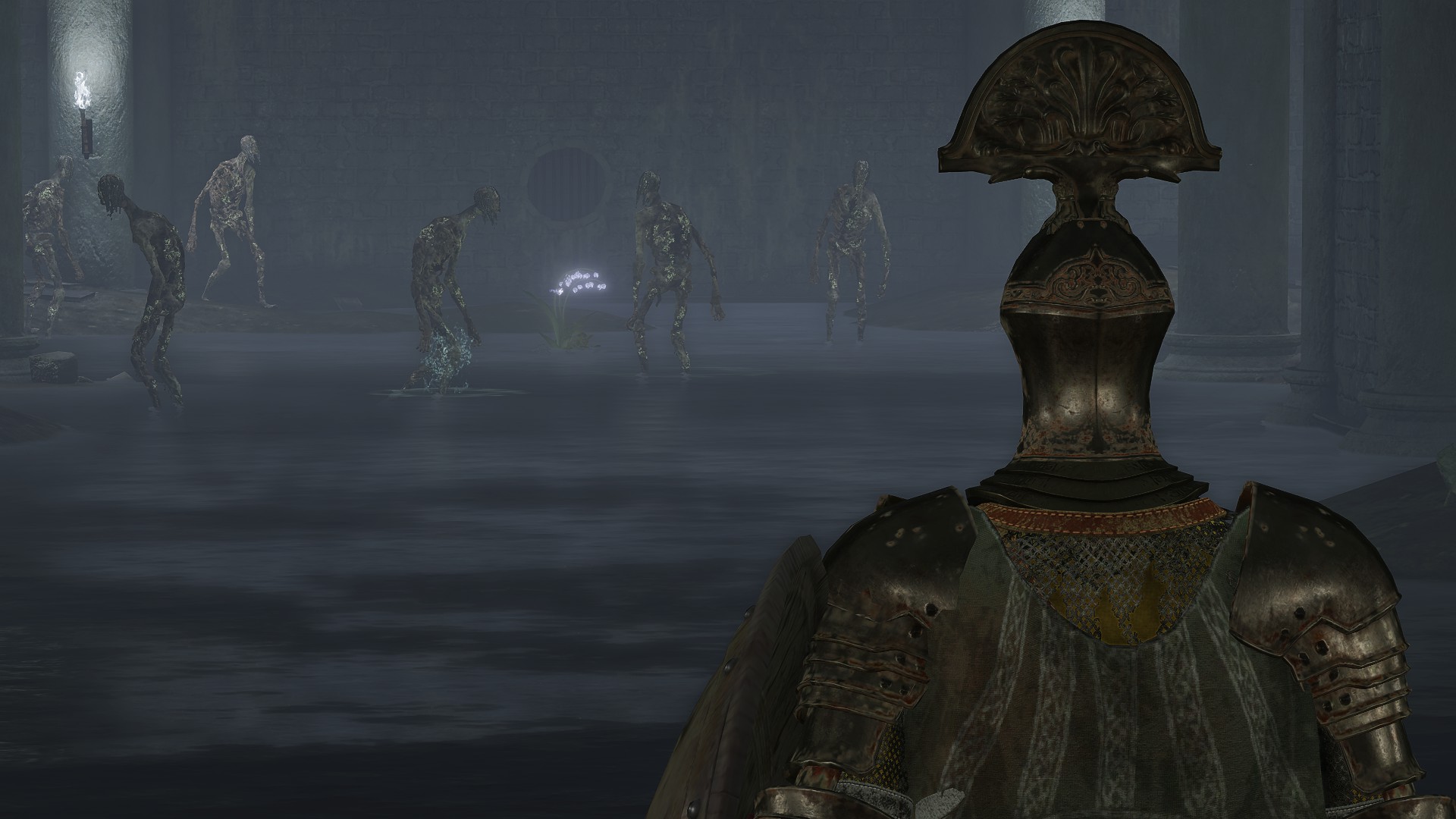


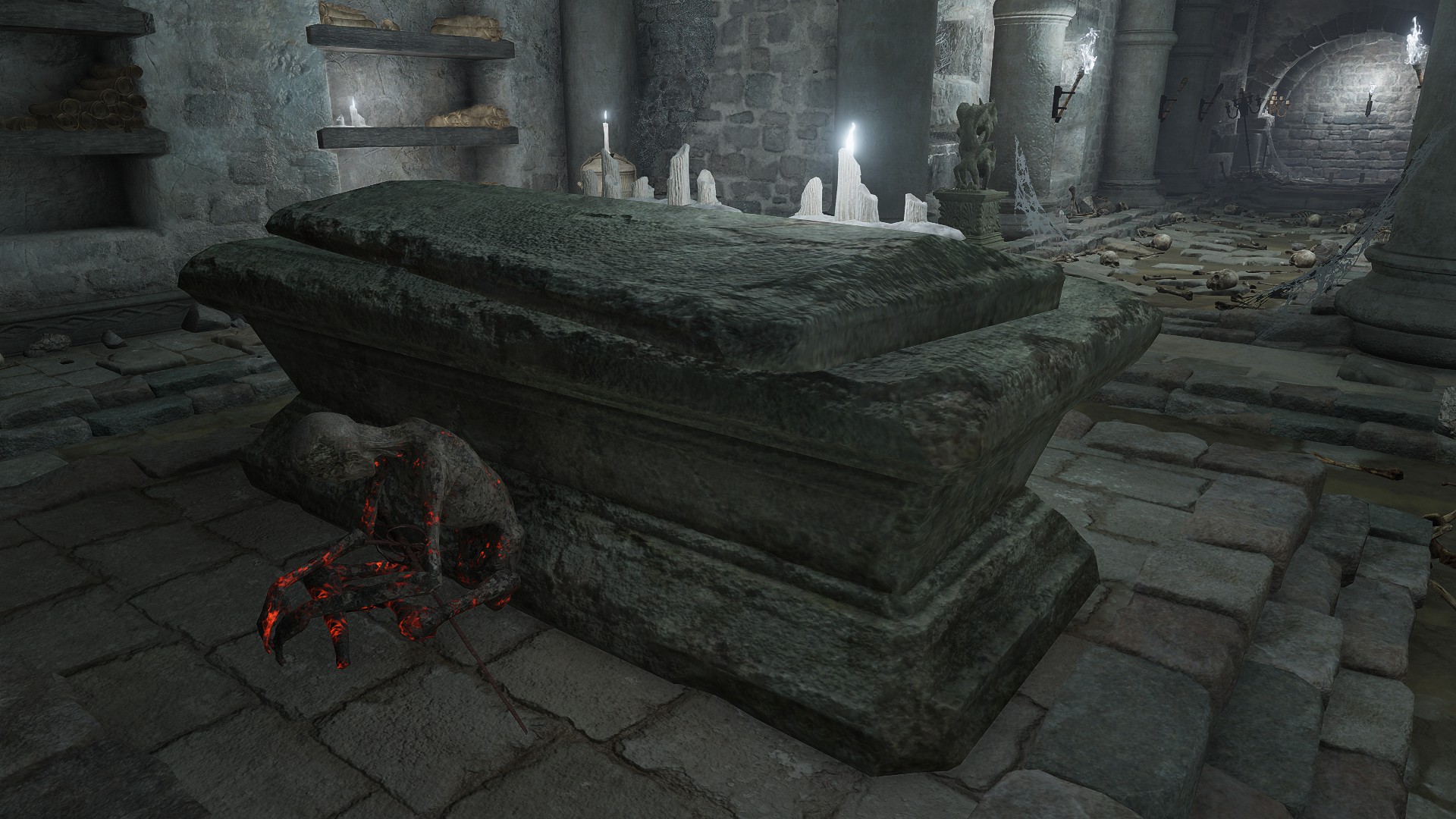


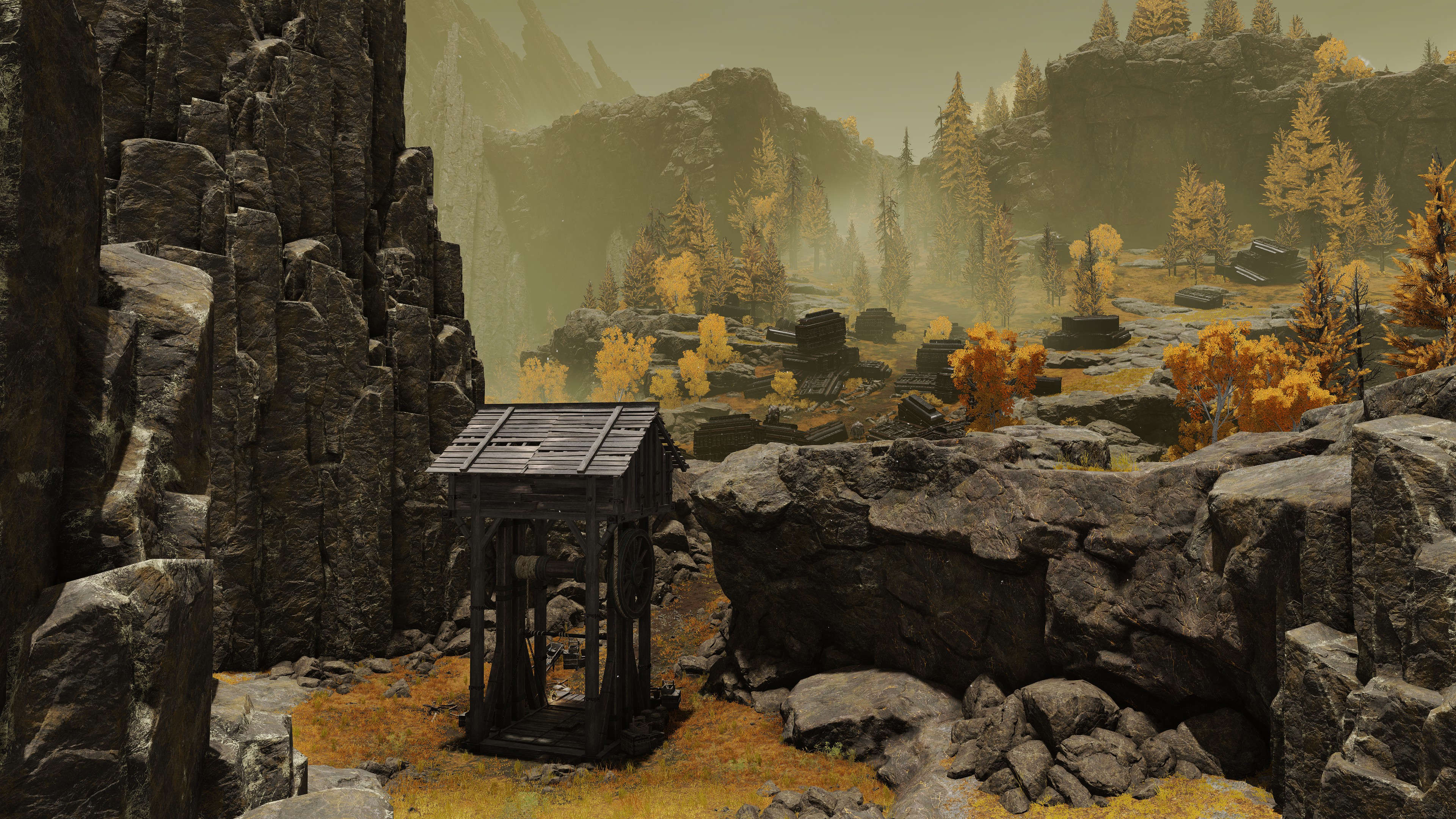
With Wyndham and Lux both dealt with, the Erdtree army likely pushed beyond to the Seething River leading to Fort Laiedd. Looking at the size of the graveyard to its left, the garrison didn’t go down without a fight. We similarly cannot rule out conflict at the Hermit’s Village afterward due to the coffin cemetery preceding the huts and shacks. In fact, Godfrey may have continued the fight all the way to the peak of Mt. Gelmir. But if so, it ended relatively quickly. The snake is regarded as a traitor to the Erdtree, requiring they first be on the same side at one point. This rebellion must have also occurred during Godfrey’s era, since snakes came to ornament the gladiators’ armor so the audience could enjoy watching them beaten and battered. And so, the serpent-worshiping pagans must have come to some sort of accord with the Marika faithful during the kingdom’s formative days marked by these conquests.
We can see why the god delayed judgement upon the snake pagans, looking at Dominula. Despite continuing to practice a cannibalistic sort of paganism, the Erdtree faithful haven’t stamped out these old customs; in fact, they tolerated them. The clear implication is that Marika looked the other way when it came to the pagan elements shared with her old village. Even after the serpent had rebelled, the queen apparently still refused to crack down on a countryside hamlet, even if their passing interaction on the road led to some of her subjects disappearing come festival time. Put simply, Marika was uniquely sympathetic to the old ways stemming from Gelmir and its serpent god on account of her background. Therefore, if the snake pagans were willing to accept adherents to the Golden Order as their new overlords, then they need not become part of it, similar to Leyndell’s misbegotten. As far as the queen was concerned, the gluttonous snake on the reclusive mount wasn’t the Erdtree’s enemy.
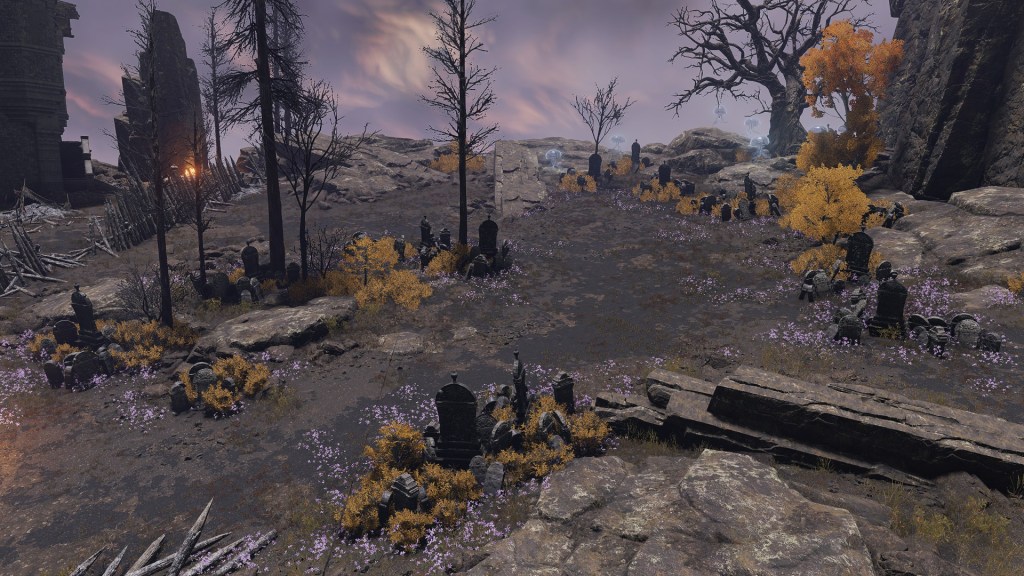
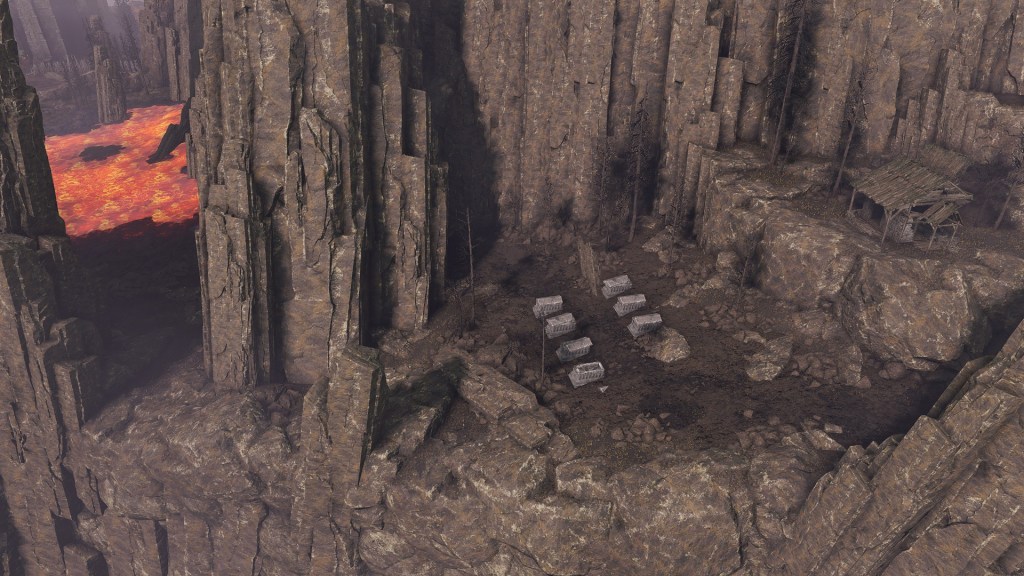
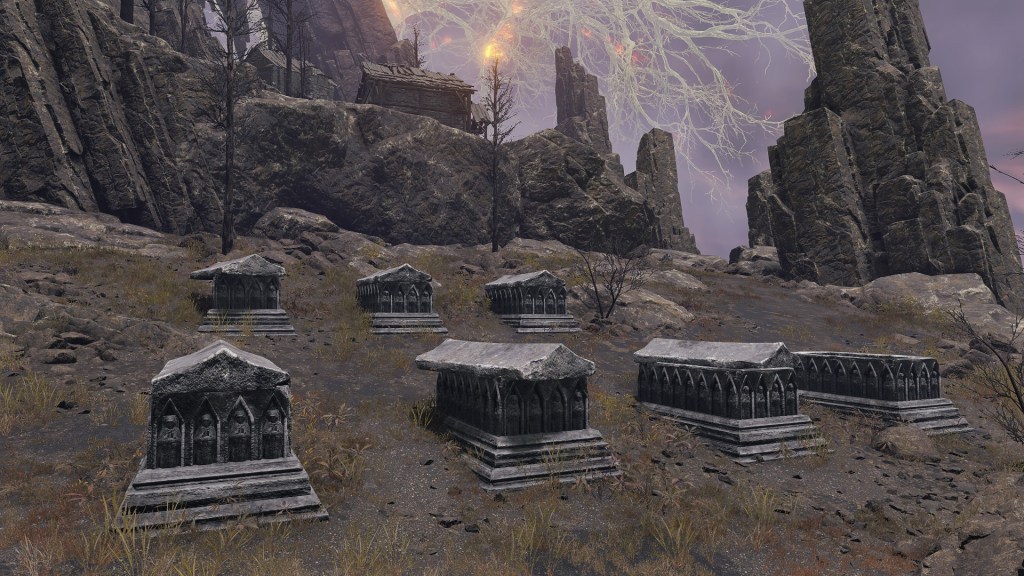
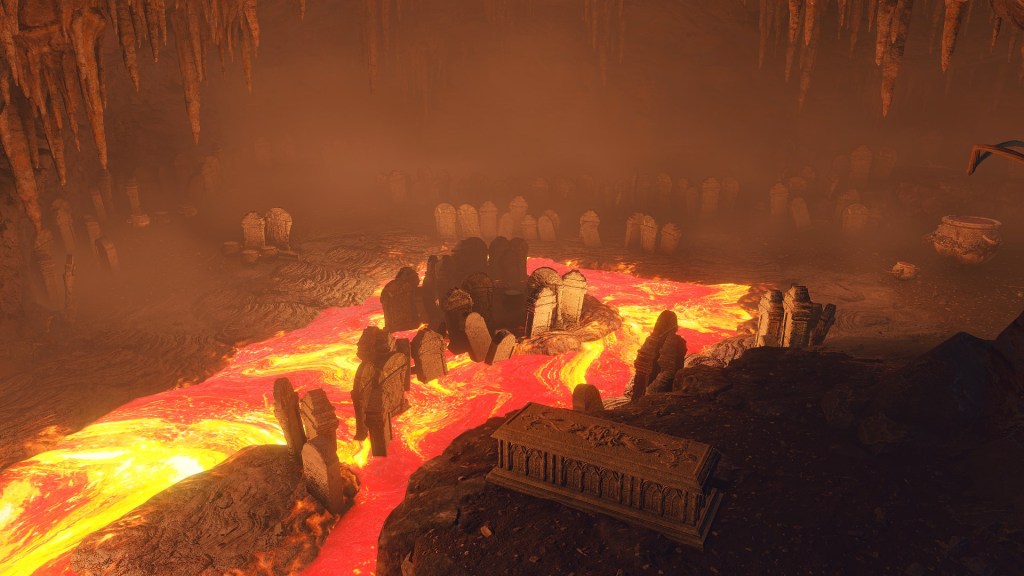
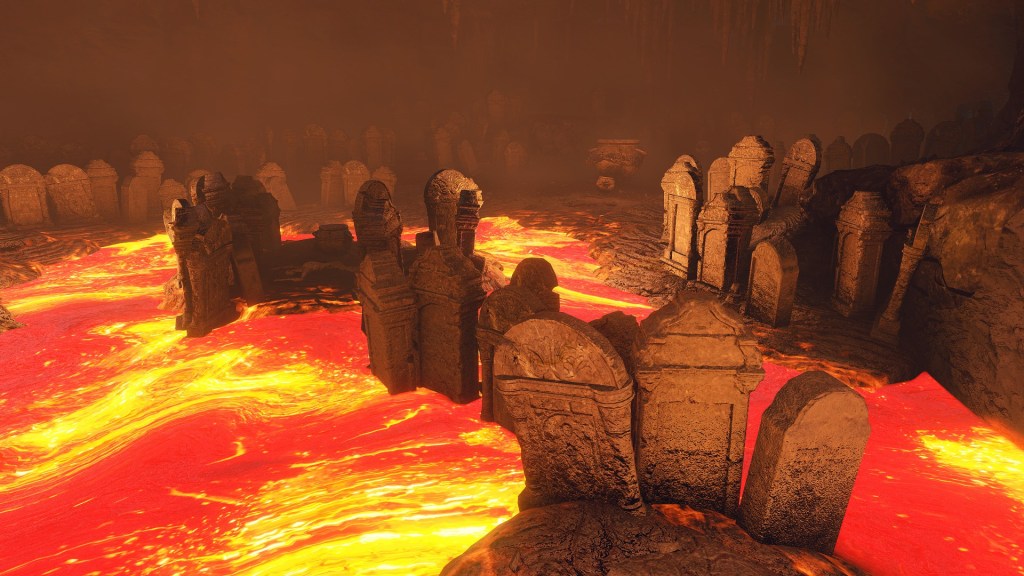
However, there is no denying that the volcano natives were in league with the Farum colonists, who were at war with Godfrey. There could be no peace between the two parties without settling that issue. In that case, perhaps the natives quickly bowed their head as a vassal state in exchange for maintaining independence, offering the colonists they harbored as a show of good will — how fitting for the serpent who would later betray this new ally. The village is home to a sizeable graveyard, and the only living remnant of the dragon worshipers is one wyrm who retreated deep into the magma. Between the fortifications and the geography, Gelmir was the most difficult land to capture outright, so these peace terms would be tempting. Vassalage would also explain why Gelmir’s culture was treated so differently from the Lux with regards to their surrender. Maybe some colonists who agreed to submit were spared this fate. Regardless, the castle manor and Erdtree invaders did reach some diplomatic resolution. And with that, the Elden Lord finally united Altus Plateau under Marika’s banner.

Storm Clouds Ahead
Once the plateau was unified, the time to deal with the losers was at hand. Those prisoners of war not put to the sword or forced into the arena were punished with a different form of slave labor. Stormveil Castle is another area of chiefly Norman construct populated by Banished Knights and exile soldiers, like Castle Sol. Furthermore, it is where we can acquire the Manor Towershield, implying that the garrison has some connection to Leyndell’s Fortified Manor specifically. In other words, the warriors are likely the former comrades whom Serosh bargained for mercy. After helping construct the Shaded Castle, they took up station down south, far and away from the Erdtree. And they were not initially there of their own volition.
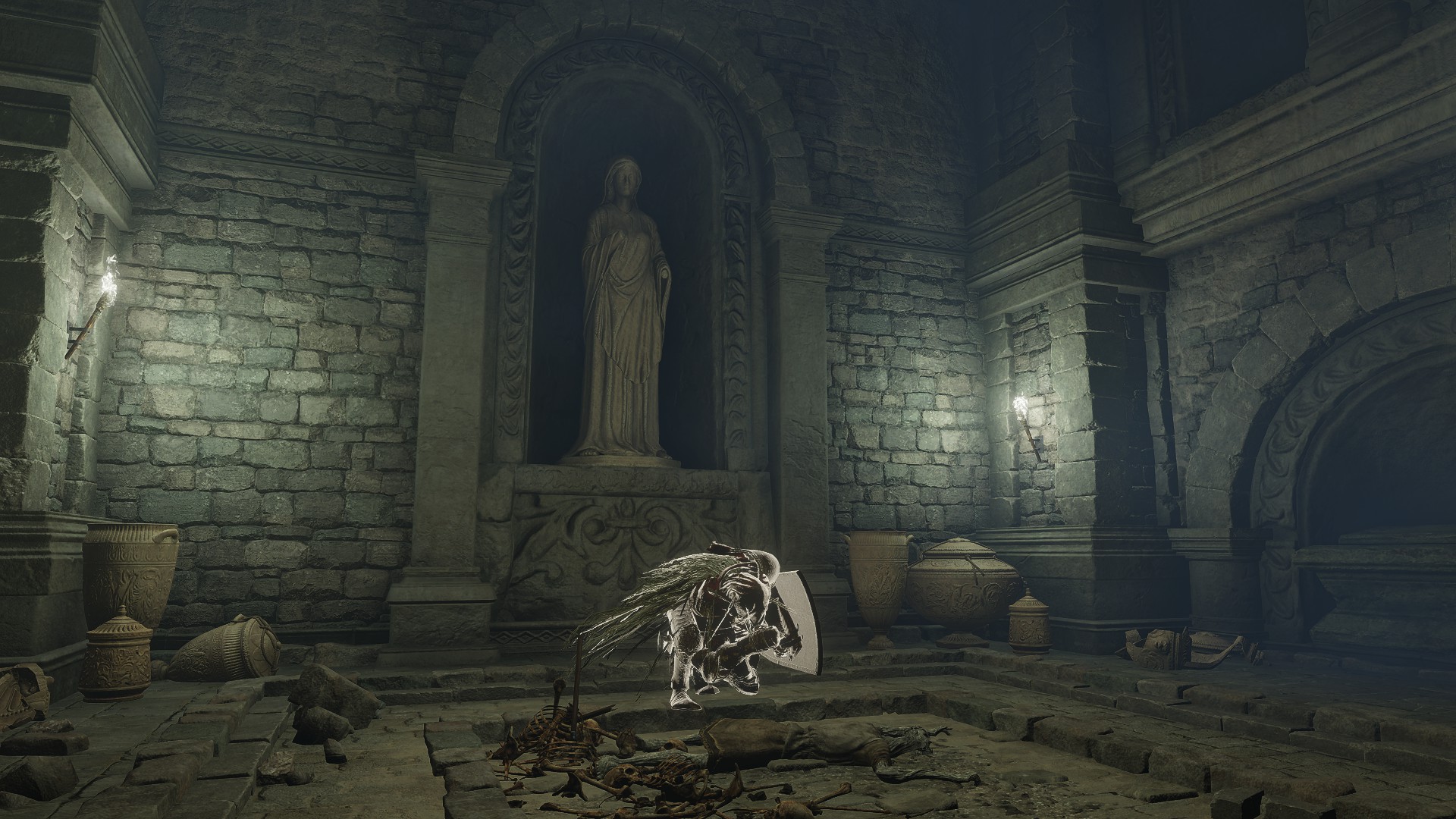
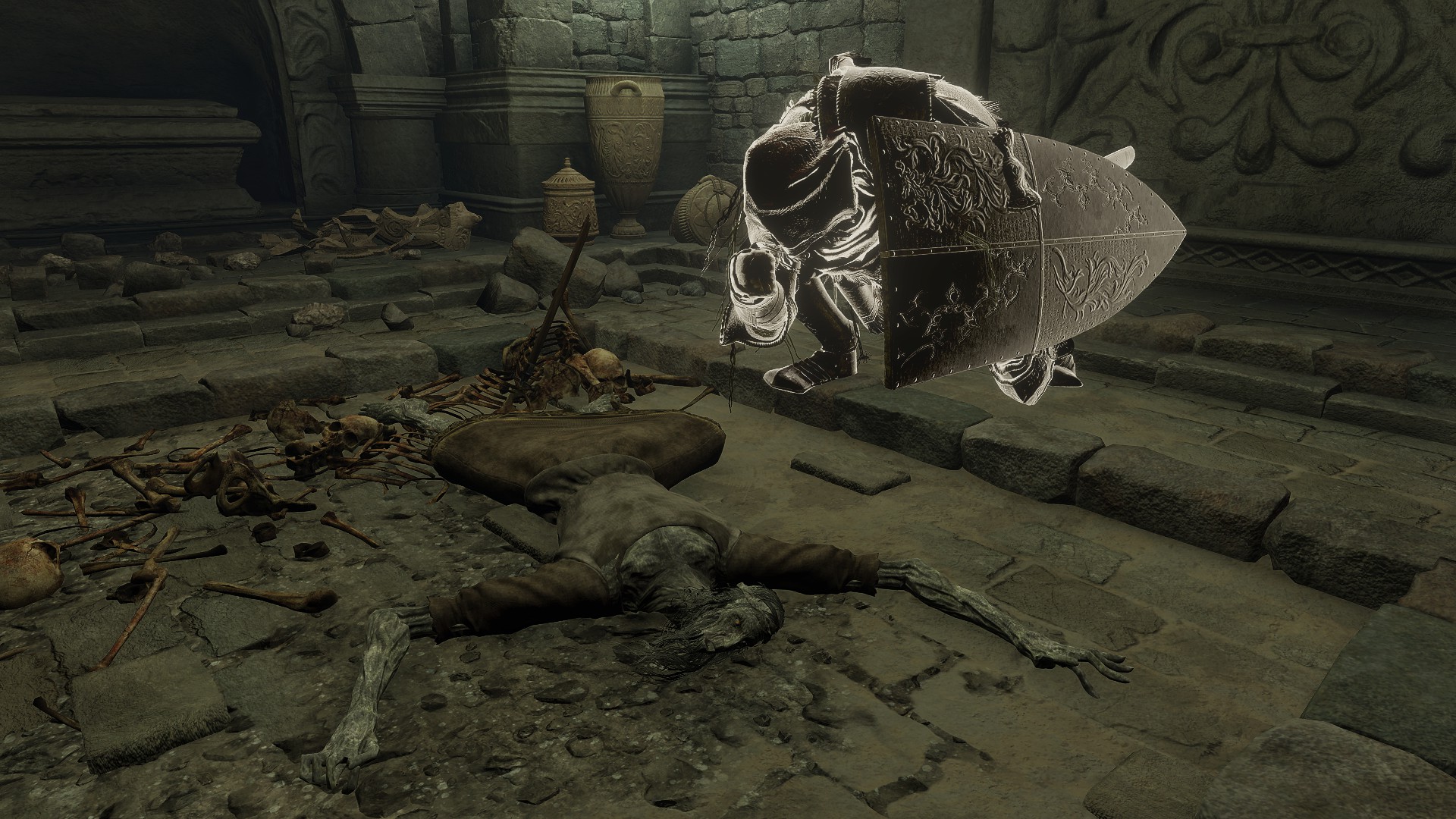
The Banished Knights are so named because they have lost their homeland. Such “lost land” (失地) knights and the exile soldiers joining them are named for being sent to a penal colony — a “land of exile”, (流刑地) more literally. The only land where we can encounter these soldiers alive, however, is in Limgrave, specifically Stormveil Castle. In fact, the Banished Knights were sent to a “frontier land” (辺境の地) according to descriptions for their armaments, and Limgrave is on the frontier. The Fringefolk Hero’s Grave south of Stormveil buries its knights and soldiers, as evidenced by the ghosts manifesting inside; if the dragon banners hanging on the walls and weapons scattered amongst the dead weren’t already a clue. The wandering painter likewise dubs his landscape of the tomb backdropped by Stormveil as “Prophesy”, implicating the crypt as the future to all its heroes. The term for “fringefolk” (辺境) is frontier, and this borderland terminology also gives away where they were sent from. The southern region is remote relative to who? The people up north.

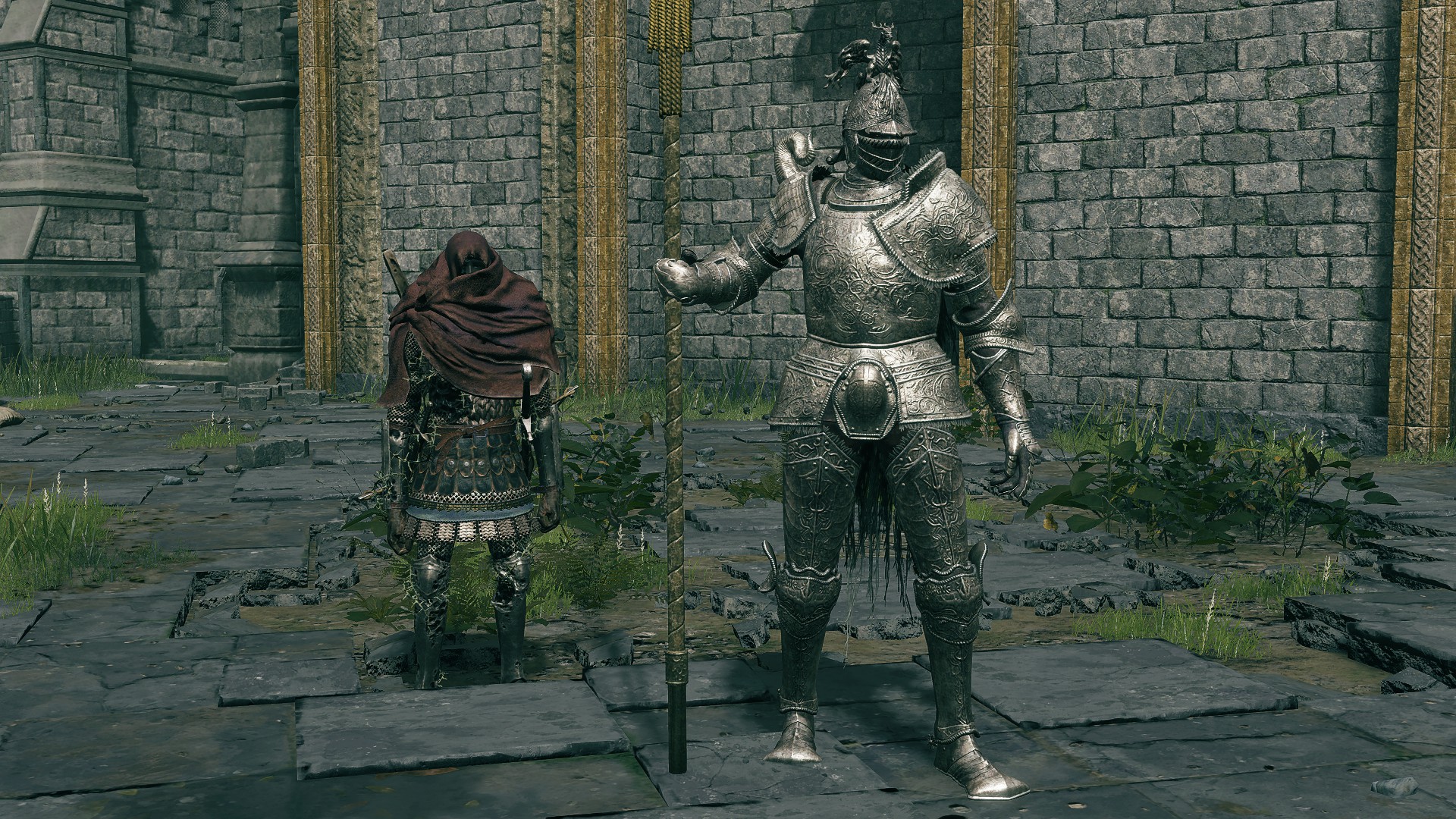
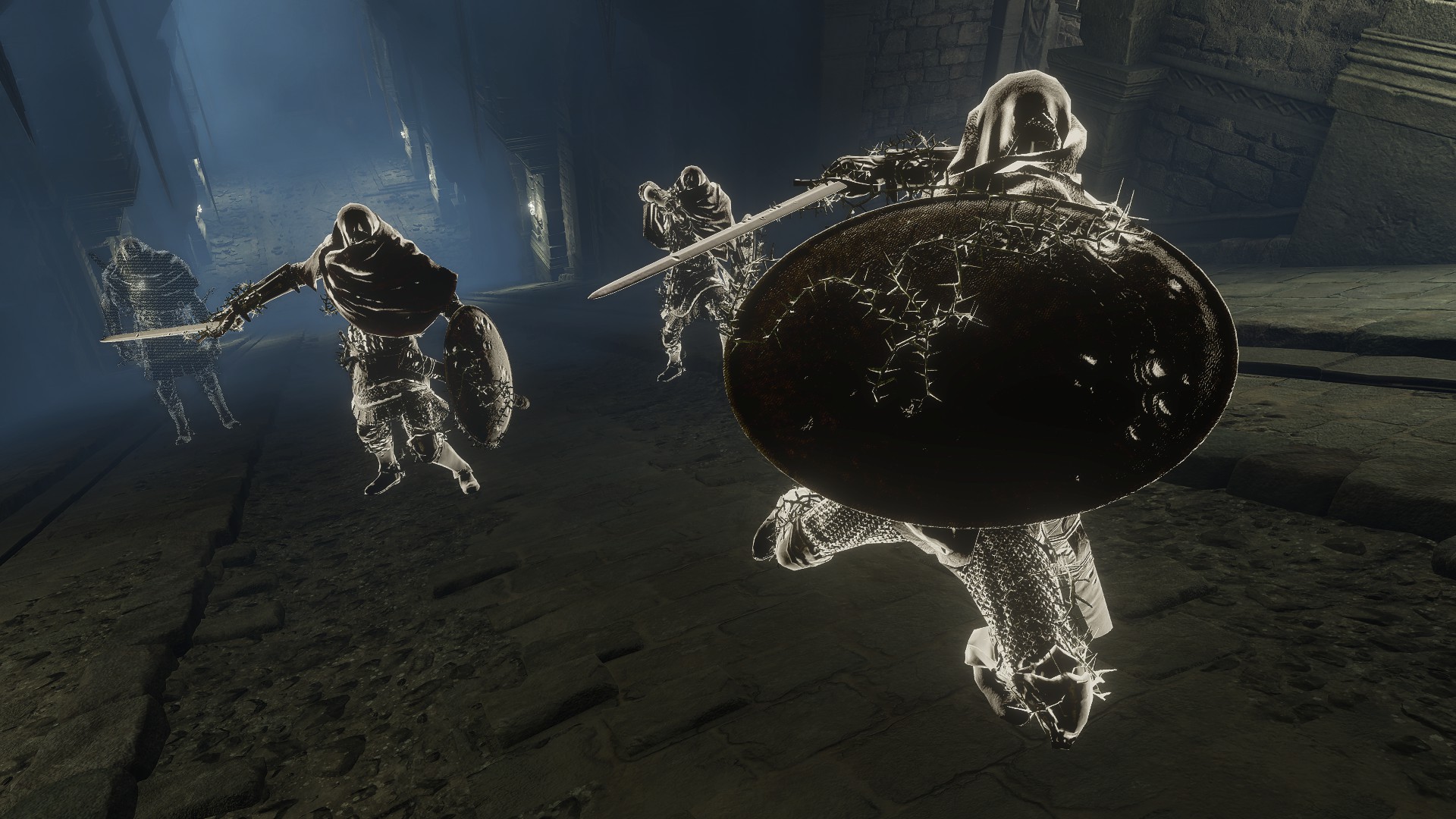
Solid full-body armor that covers the whole body. Chest armor of Lost Land Knights who lost their homeland for some reason, or misdeed.
They are all matchless men of valor. That is precisely why they were conferred as knights despite lost land.
Thing covering damaged chest armor with dark red-colored cloth.
Armor of soldiers sent to a land of exile.
High-quality halberd engraved with an old design. Given to knights who lost their homeland for some reason, or misdeed.
It is said that many of them were sent to a frontier land and took root in that land with despondency.
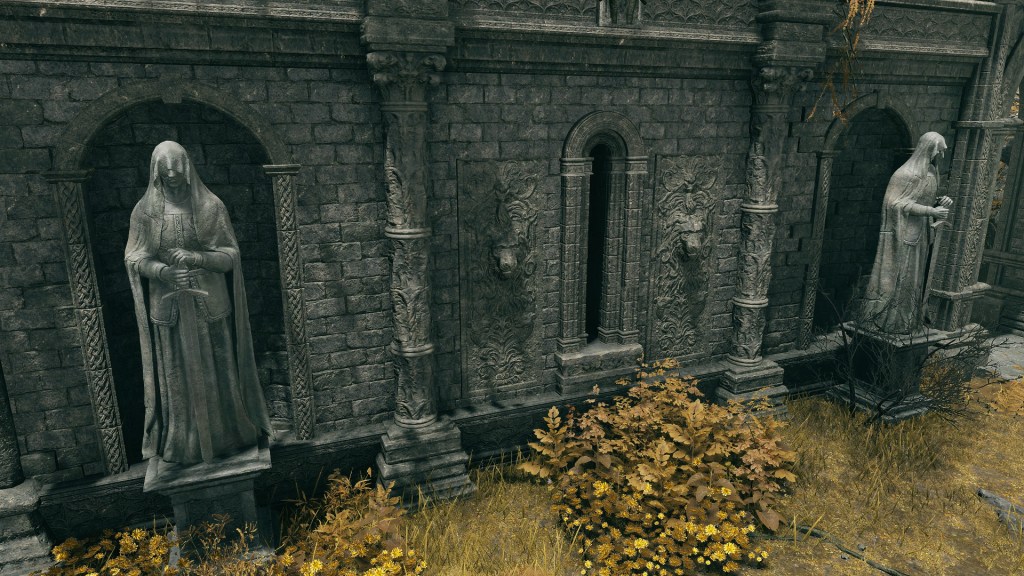
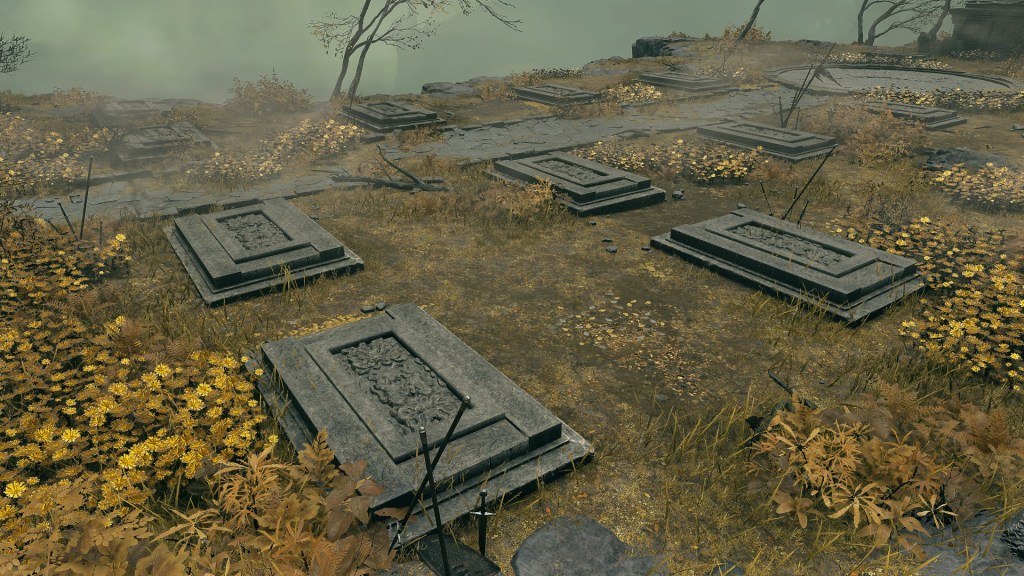
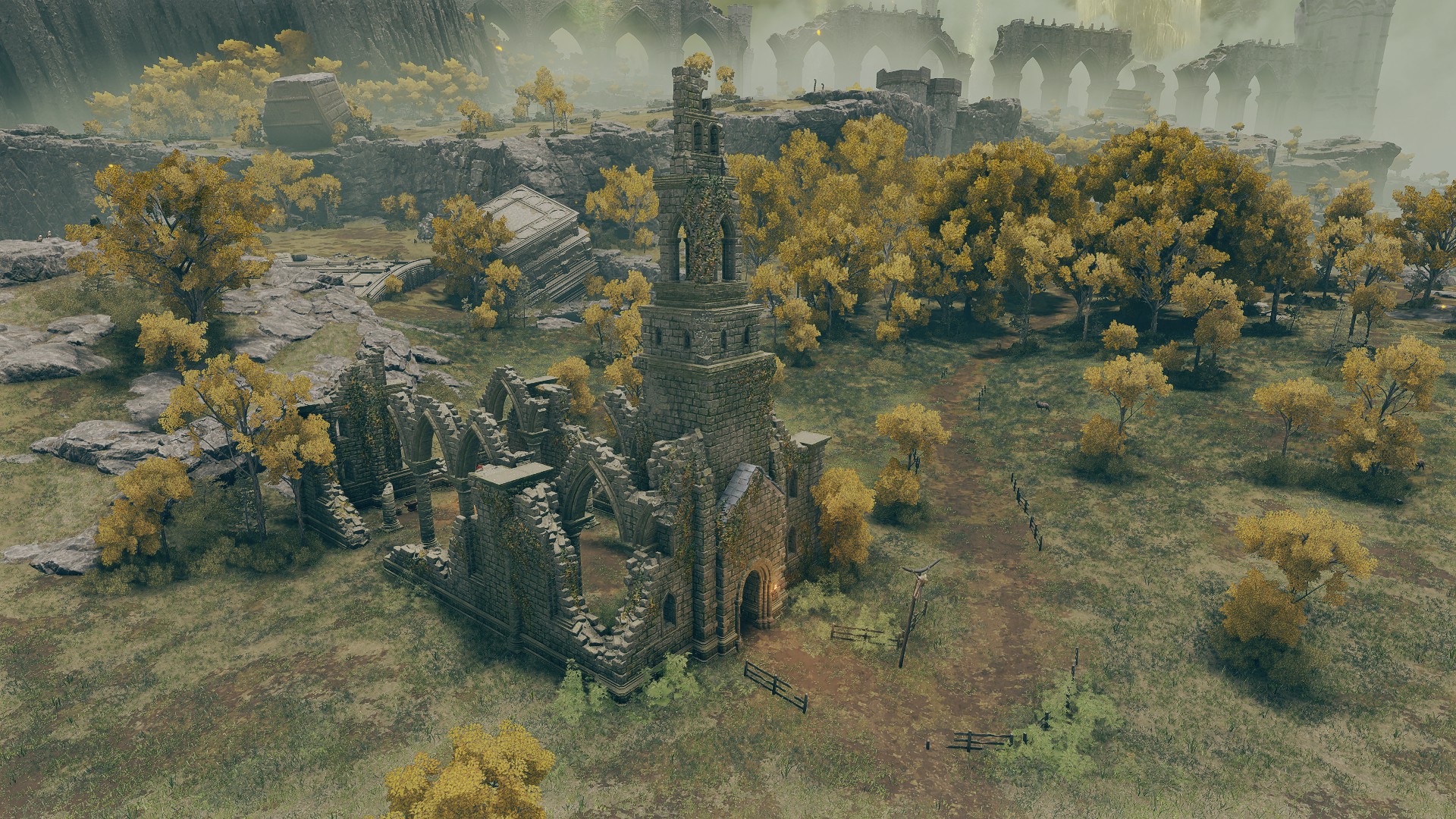
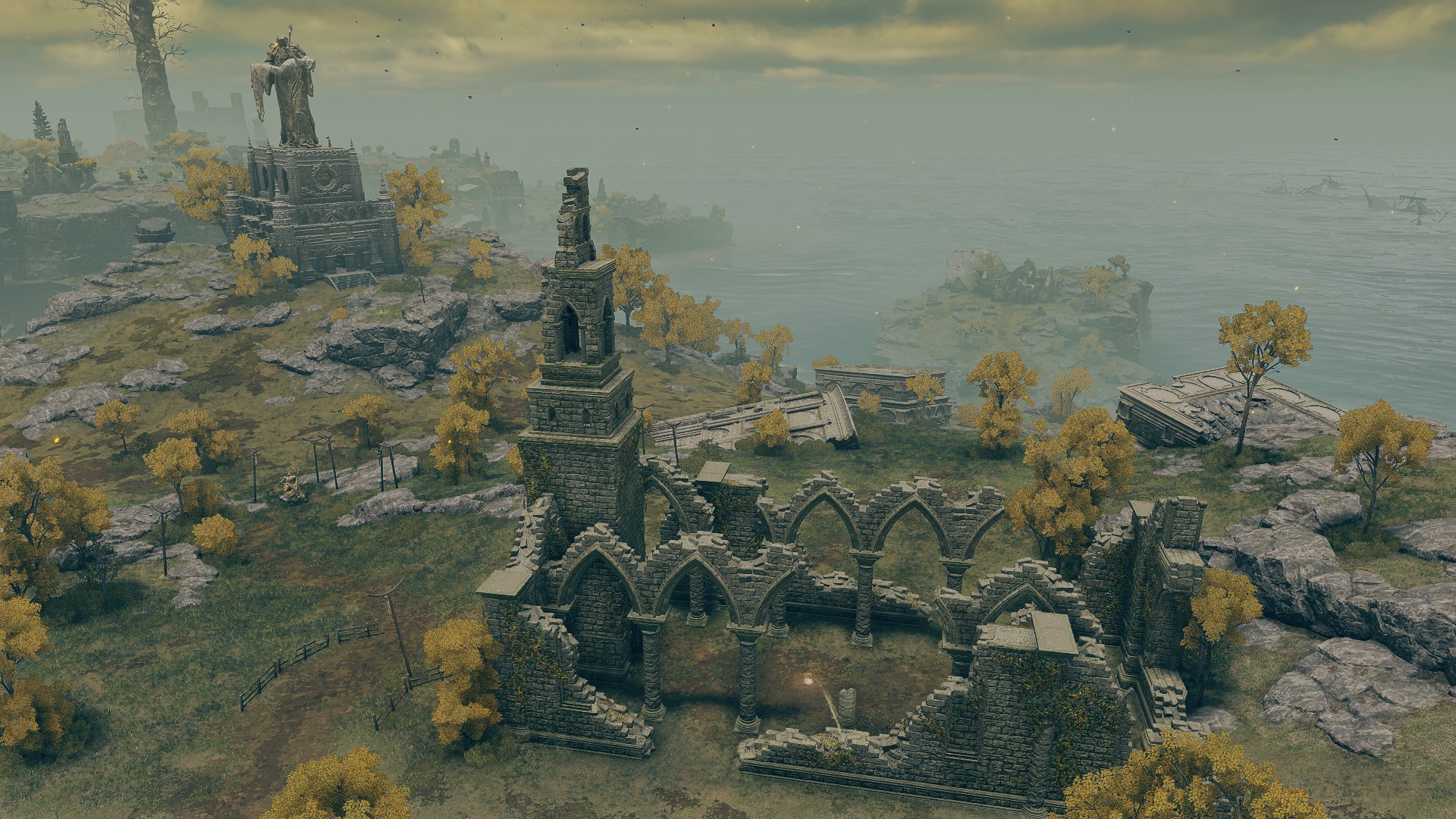
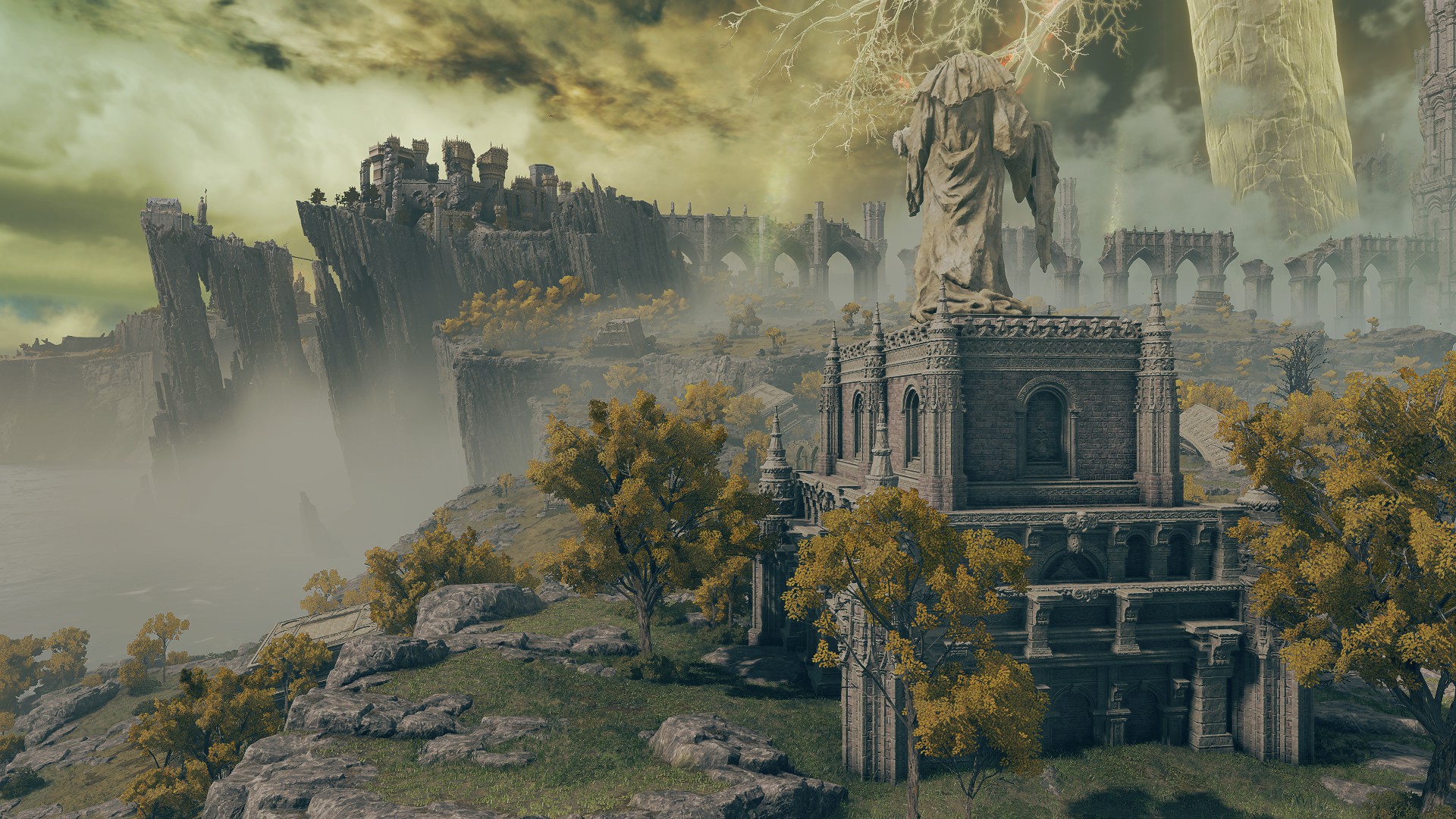
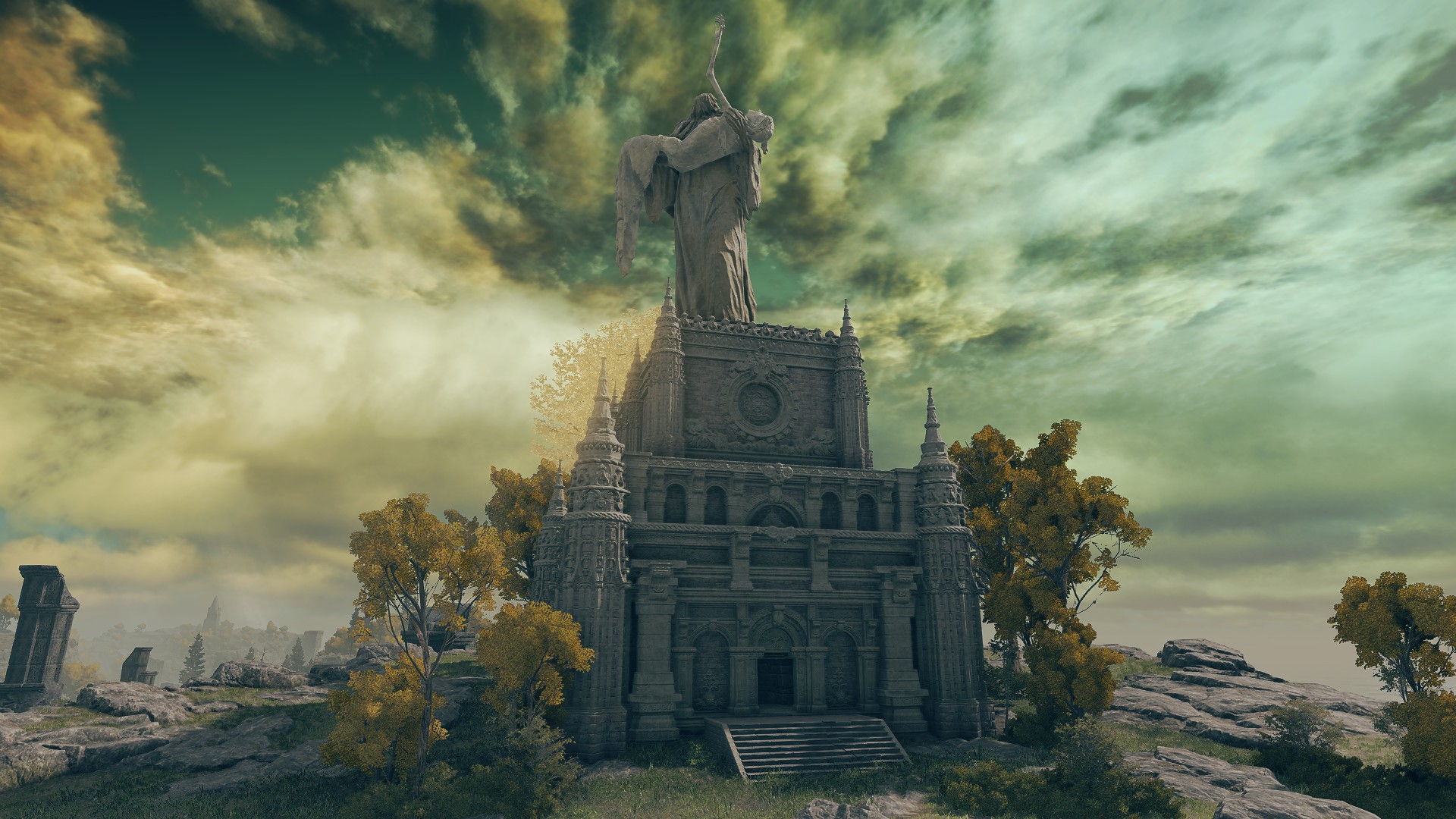
Although this in itself doesn’t tell us when they were exiled and by who, the neighboring Chapel of Anticipation sheds light on this front. The chapel sits on a steep island just off the coast of Stormhill. If we approach the cliff closest to the hill, the ground collapses beneath our feet, highlighting the foundation’s volatility. A church just outside the castle walls opposite the chapel has similarly half-collapsed into the ocean with the ground beneath it. More than likely, this anomalous second house of god provided the means of transport across to the island, physical or otherwise. Time has not been kind to these parts and so masks the more direct connection between the castle and chapel. Still, the chapel and adjoining cemetery bear many of the same architectural hallmarks as Stormveil. While the lion and hawk imagery in the cemetery courtyard can be linked to the exiles’ heritage, the Crucible sigil floor relief cannot, as can’t the massive statues of Marika and a Tree Sentinel.

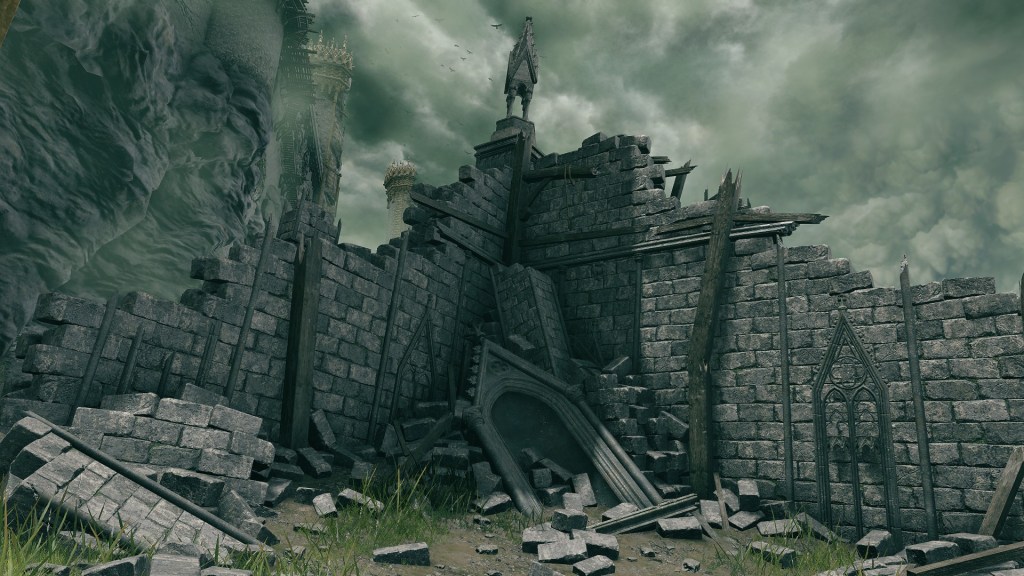

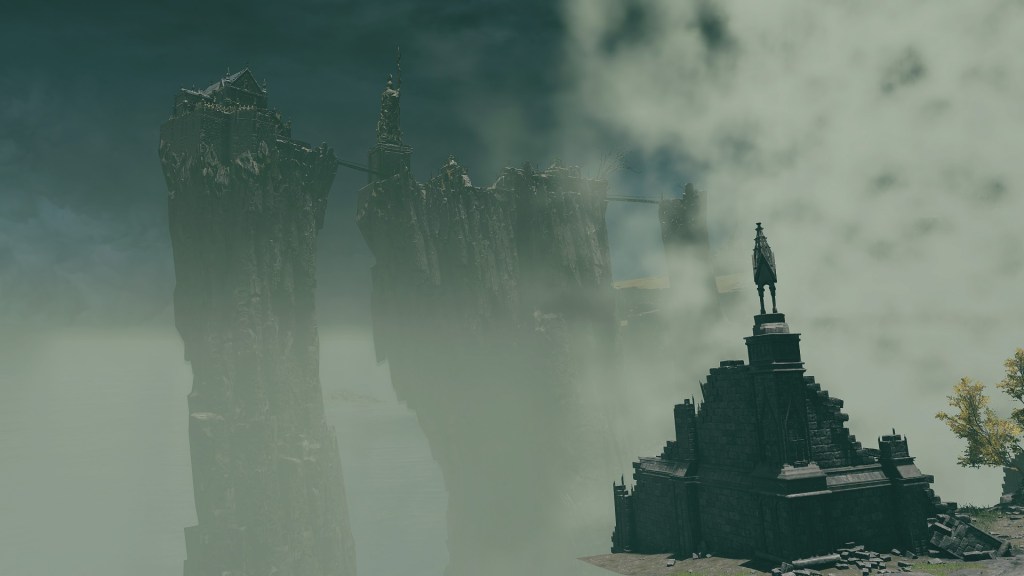




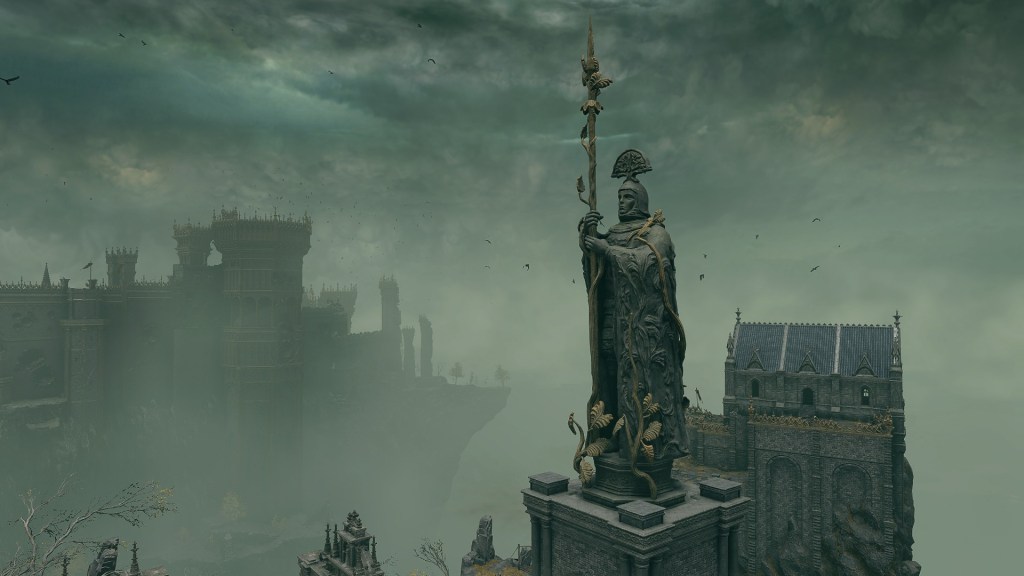
Marika once proclaimed the Erdtree as the new Order for all, offering a choice at either becoming part of her kingdom’s Order or becoming a powerless “side stream” (傍流) of the frontier. This statement obviously follows the unification wars since she doesn’t yet consider land beyond the plateau to be within the bounds of her Order — Melina’s spirit sense fittingly places her at the Grand Lift of Dectus linking Altus to the rest of the lands below. The references to the frontier and a side stream, or flow, bear similarly obvious connections to Stormveil’s troops; the earlier term for “exile” (流刑) more literally means “punish by flow” whereas the river allusion harkens to the united plateau’s new “upper class”, a colloquialism of “upstream”. (上流) Rather than have a place on Altus as part of the upper or lower class — which is another colloquialism for “downstream” (下流) — they would be an underclass, an irrelevant side branch in the proverbial river flowing from the Erdtree capital. This was the Queen sending off the pagan warriors her King defeated to set up a penal colony in Limgrave.
The Golden Tree regulates all. Choose. Will you become part of our Regulation? Or will you exist outside of the Regulation… and become a side stream of the frontier, bereft of any power?
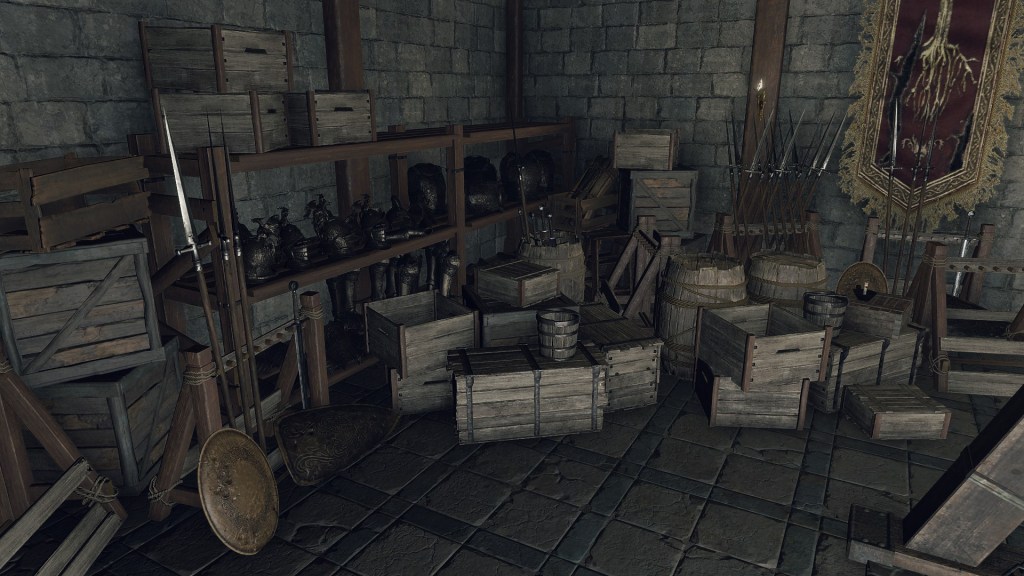
The option for clemency if they agreed to assimilate was probably provided at the behest of Serosh. They played their part during wartime, so why not return their liberty for continued service like him? Some did take up the offer. The one home we can explore inside Leyndell’s Upper Quarter is decorated with the same Farum colonist arms and armor, except gilded to match the other golden furnishings. The implication is obvious: the dwelling belongs to those who chose to integrate into capital society. This wasn’t without additional duties, since their residence is uniquely linked to the city ramparts with stores of old equipment within certain sections — they were expected to be first to defend the walls, lay down their lives before the Auriza. Whether their personal motivations were the same as Serosh, there were defectors willing to embrace this new Erdtree Order. But many more refused abandon their heritage even as they lost the “will” (失意) to continue fighting. These despondent troops were thus displaced to the sparsely populated south.


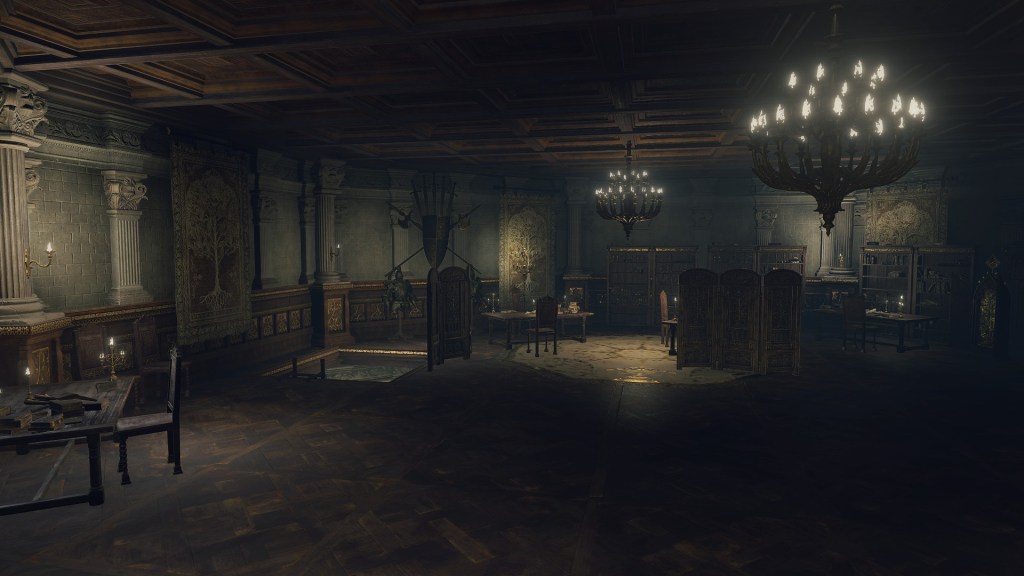


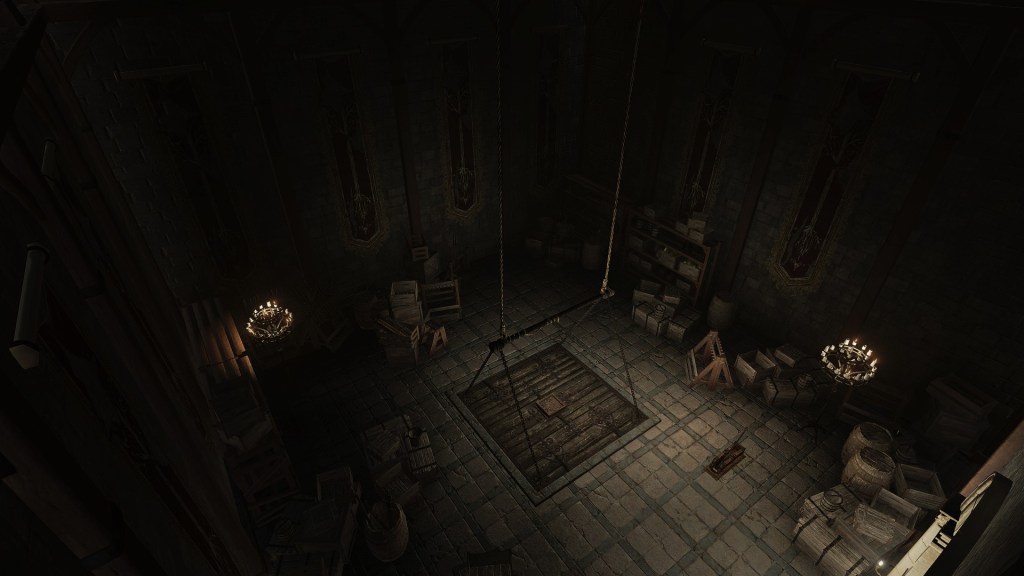
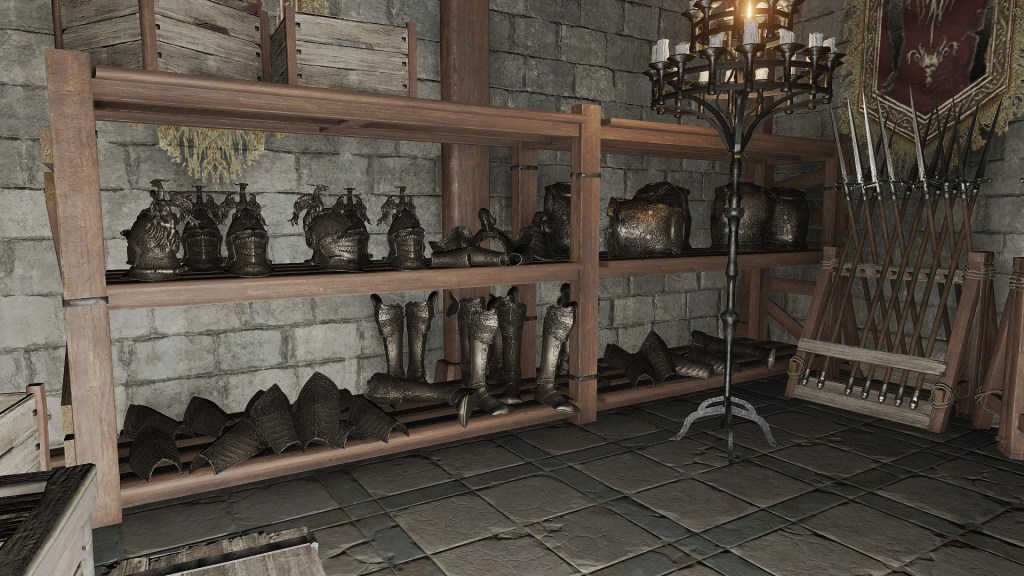


The same is true for the misbegotten among them. Although we find a fair number of hybrids in the Pagan Quarter, we encounter far more outside the walls of Leyndell, particularly on the frontier. They too seem to have received the same ultimatum, with similar results. Yet for the crossbreeds willing to bow their heads, the royal capital was apparently willing to overlook their refusal to abandon old customs. Recall that the Auriza venerated such visual elements as holy, especially feathers and scales like our misbegotten. If their transformation was punishment for experiencing the Crucible’s power without a mediator like Marika, then they have paid for their crime. That just leaves the fact that they do present a holy visual, something the founders of the new kingdom would deem worth preserving — at least until civilization developed and they became “corrupted” to enslave. And so, the hybrid pagans were given their own residential district in a corner of the city farthest from their old Fortified Manor, while those too proud to bend the knee joined their human counterparts as penal colonists.
Notable is Marika’s choice to pass over Liurnia for colonization — this despite the Liurnians following principles opposed to the tree’s Order, as Rogier notes. The competition over fate’s place in a Ring or stars would make conflict with Caria inevitable and conquest of Carian territory preferable. But the Erdtree Queen’s kingdom was still fledgling, her limited forces already occupied with securing their new holdings; trying to annex nearly twice that landmass would only leave them overextended — and this isn’t even accounting for the strength of the enemy, who just proved themselves in conflict with a shared foe. The god had neither the military capacity nor the will to invade the west. Her attention was occupied elsewhere. If she wanted to expand, the rural grasslands were available. Still, the fact that the penal colonists had safe passage through Liurnia suggests that the new Erdtree kingdom did establish relations with the academy’s own new royalty.
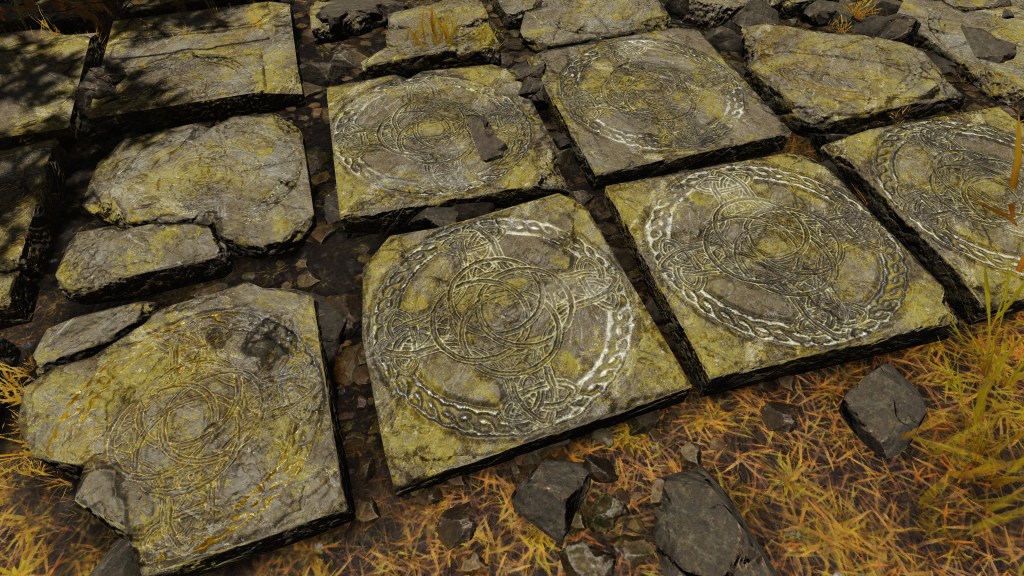
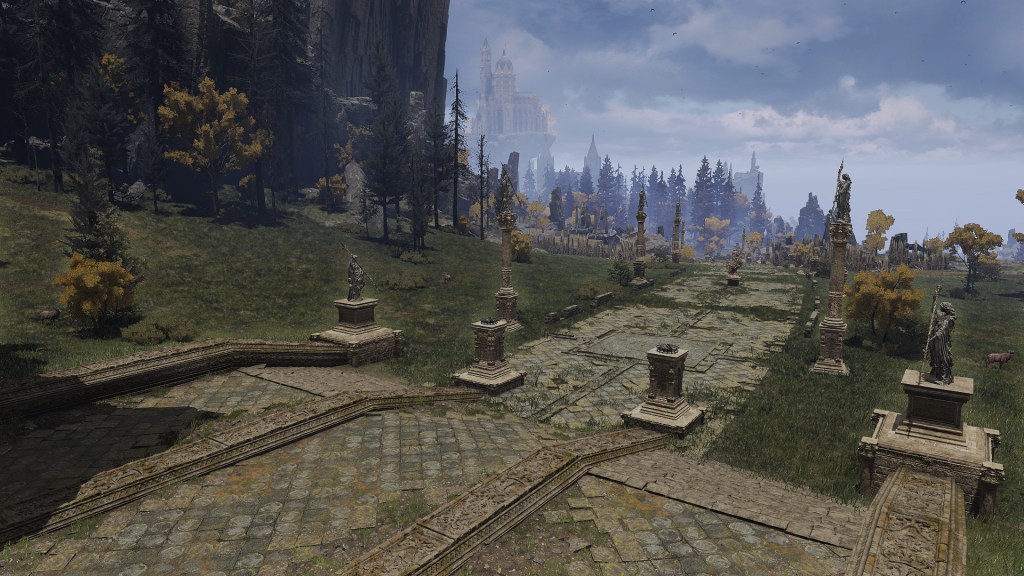
Indeed, the bridge to Raya Lucaria from the direction of Altus Plateau must have been built as a result of the two opening diplomatic talks. The road from Stormveil to Leyndell overland is primarily paved with Erdtree cross tiling. The stretches between Raya Lucaria and Dectus as well as Dectus and Leyndell are additionally ornamented with the flourishing flower picker statues — perfect to project the Crucible’s continued flourishing by unification wars’ end. This leaves no doubt that the highway was built early into Godfrey’s reign. That fact is particularly relevant when the bridge to the academy from the Bellum Highway is paved with the same Erdtree cross tiles, unlike the Academy Gate Town bridge. It is also the only bridge to feature witch statues, chiefly associated with Rennala. Raya Lucaria didn’t have transit from the plateau, especially heading south beyond Gate Town, before Marika banished an entire army. The bridge was therefore constructed to facilitate this exodus and future trade routes as part of Liurnia building broader relations with the newly united region of Altus.




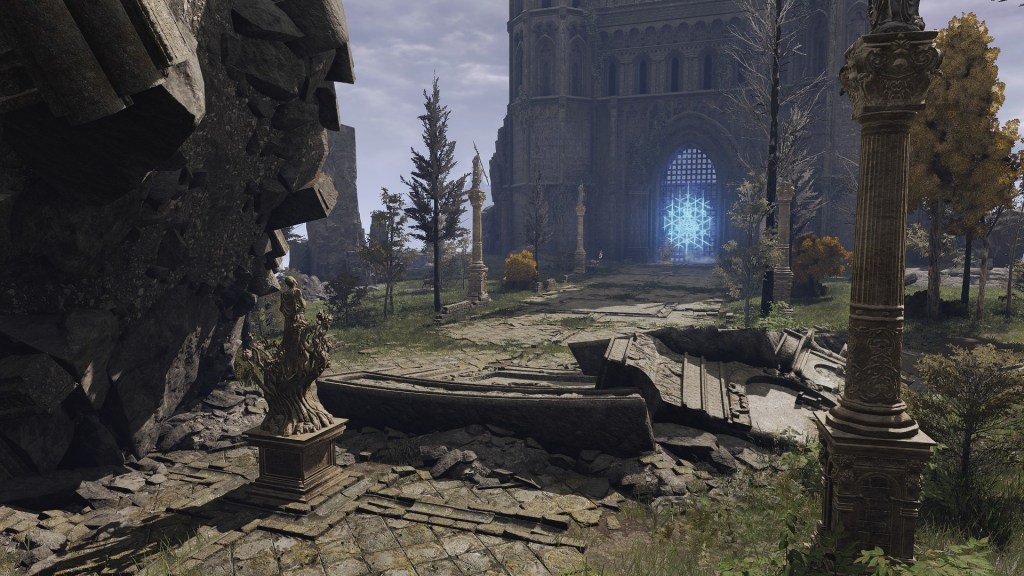


The Carians were predisposed to accept. Having wiped out a band of Farum colonists themselves not too long ago, bitter sentiments were sure to still be fresh in every Liurnian’s mind. And now, a foreign queen was offering to have more of these marauders paraded through their territory in chains. What could be more humiliating for their one-time invaders? There were doubtless many who approved of the opportunity to jeer. The one countervailing reason was that the proposed penal colony might be used as a base to attack Liurnia. But if nothing else, Marika was presenting herself as a friend to Rennala. And so long as the sorcerers controlled the supply lines, they had leverage to limit the possibility of another surprise invasion. In the end, the young queen agreed to allowing foreigners set up a colony on Stormhill. Its overseers most likely established their base on that separate island, so Caria opened up a direct channel to the Chapel of Anticipation via the third of the Four Belfries. With communication links at both ends, the witch was positioned to help her counterpart manage the colony’s construction.
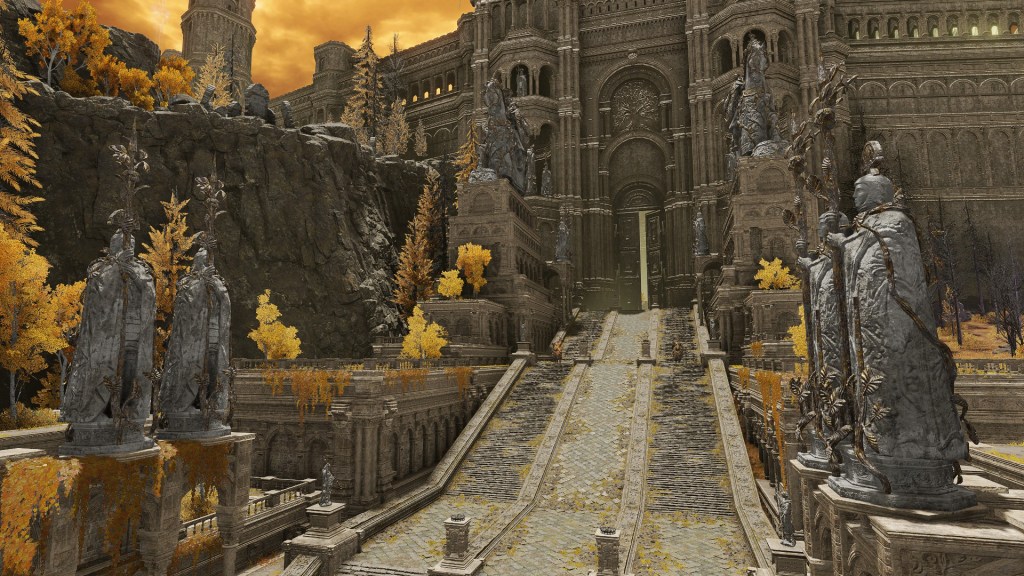
As to why Marika wanted to occupy land further south, she was in all likelihood simply taking a precaution. Just as Raya Lucaria gave her kingdom free passage down south, it could give an enemy — namely Farum Azula — free passage up north to the plateau. The Grand Lift of Dectus showcases this concern. The sheer scale and elaborate decoration, particularly with the plethora of Tree Sentinel statues, projects strength; anyone entering the plateau from the lift would know that they would face the kingdom’s full might if they threatened the Erdtree. And at the center of them is the statue of Marika holding her spear, which adorns the entire length of the highways between Raya Lucaria and Leyndell. The message is clear: the Erdtree’s mediator will not sit idly by. Whether or not that threat of retaliation could be substantiated, it nonetheless conveys the fear of possible invasion. It was thereby better to cut off an invading army closer to the source, and the penal colony on Stormhill created the ideal choke point to facilitate that cut off.

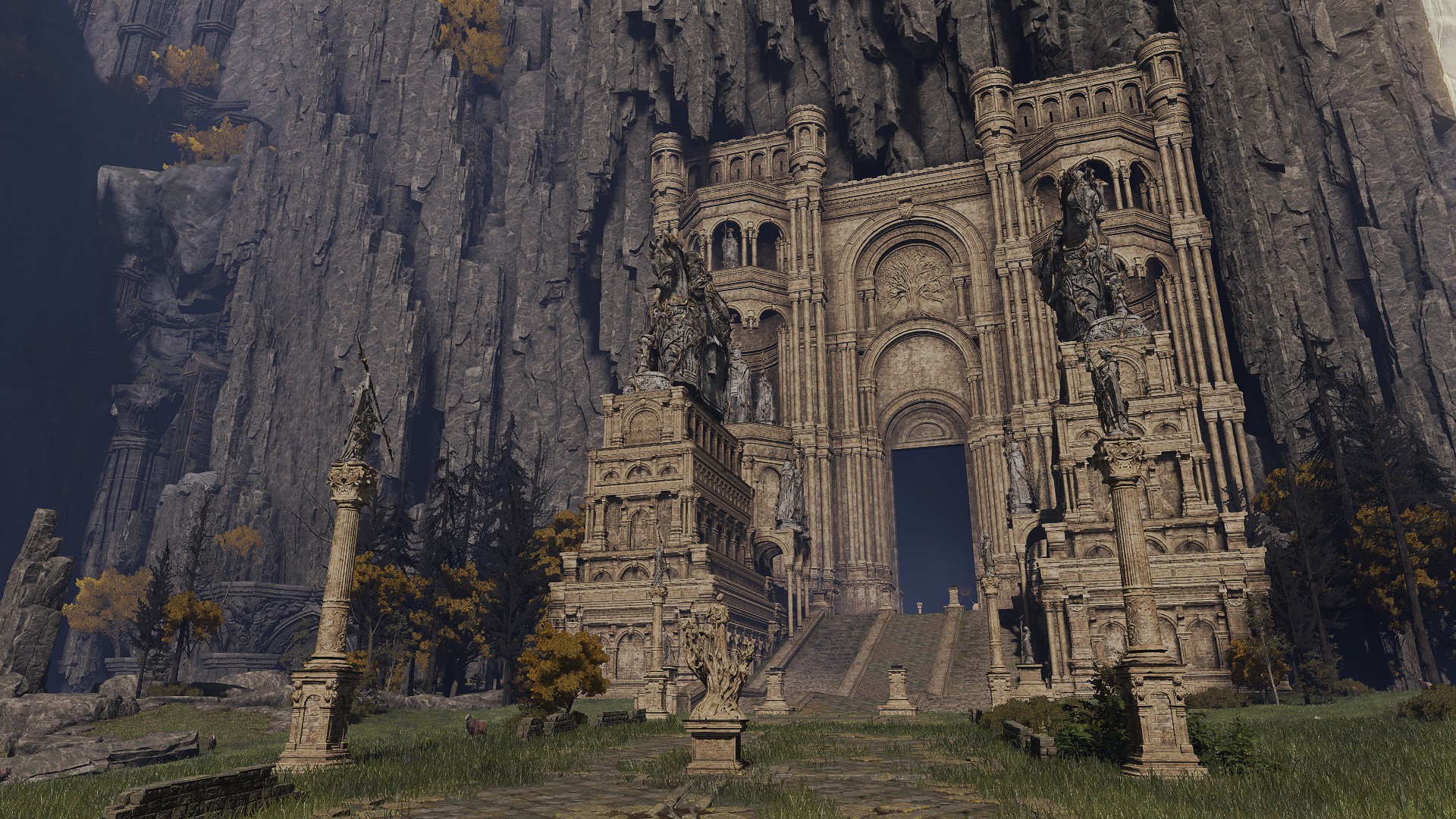

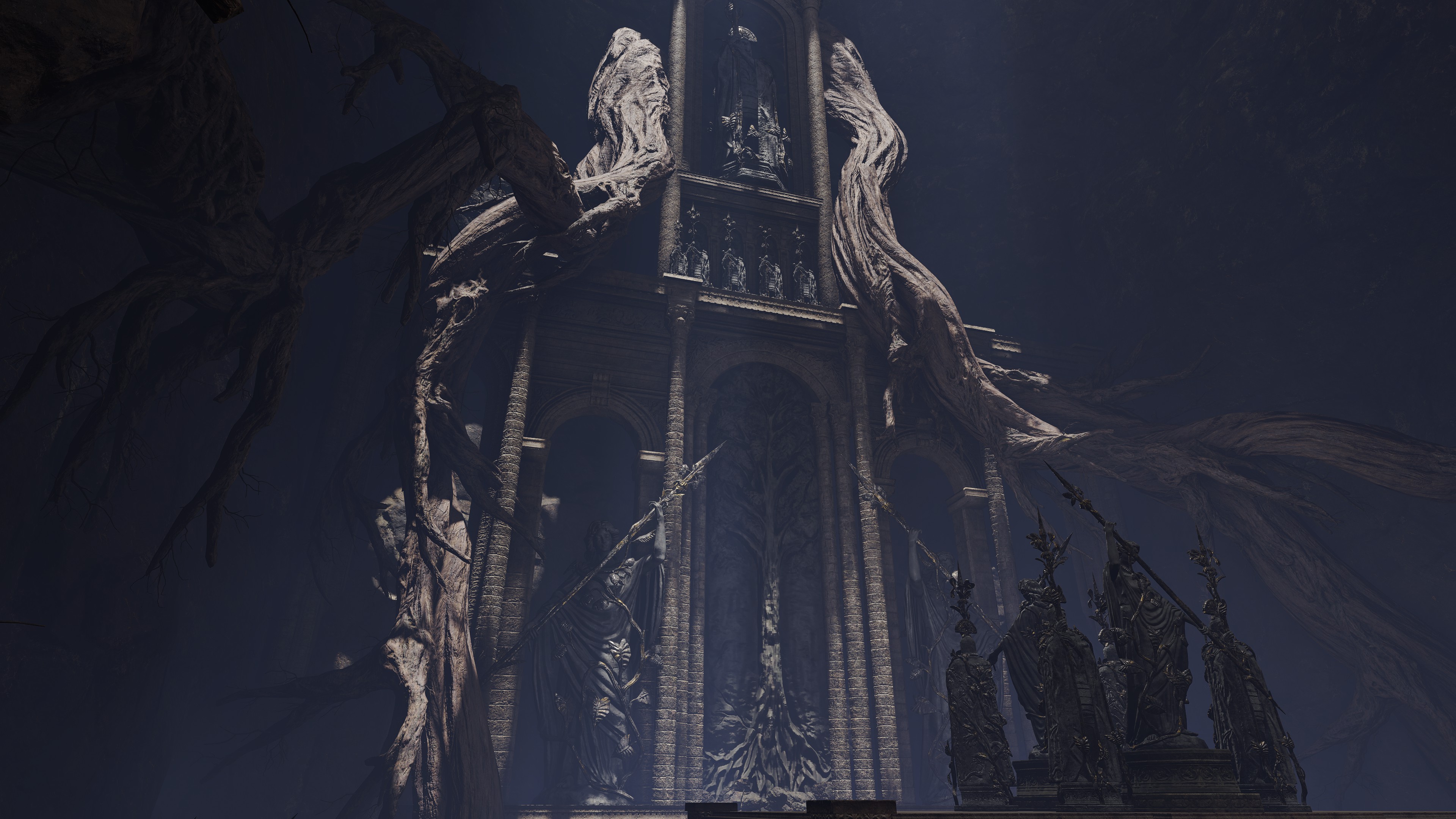


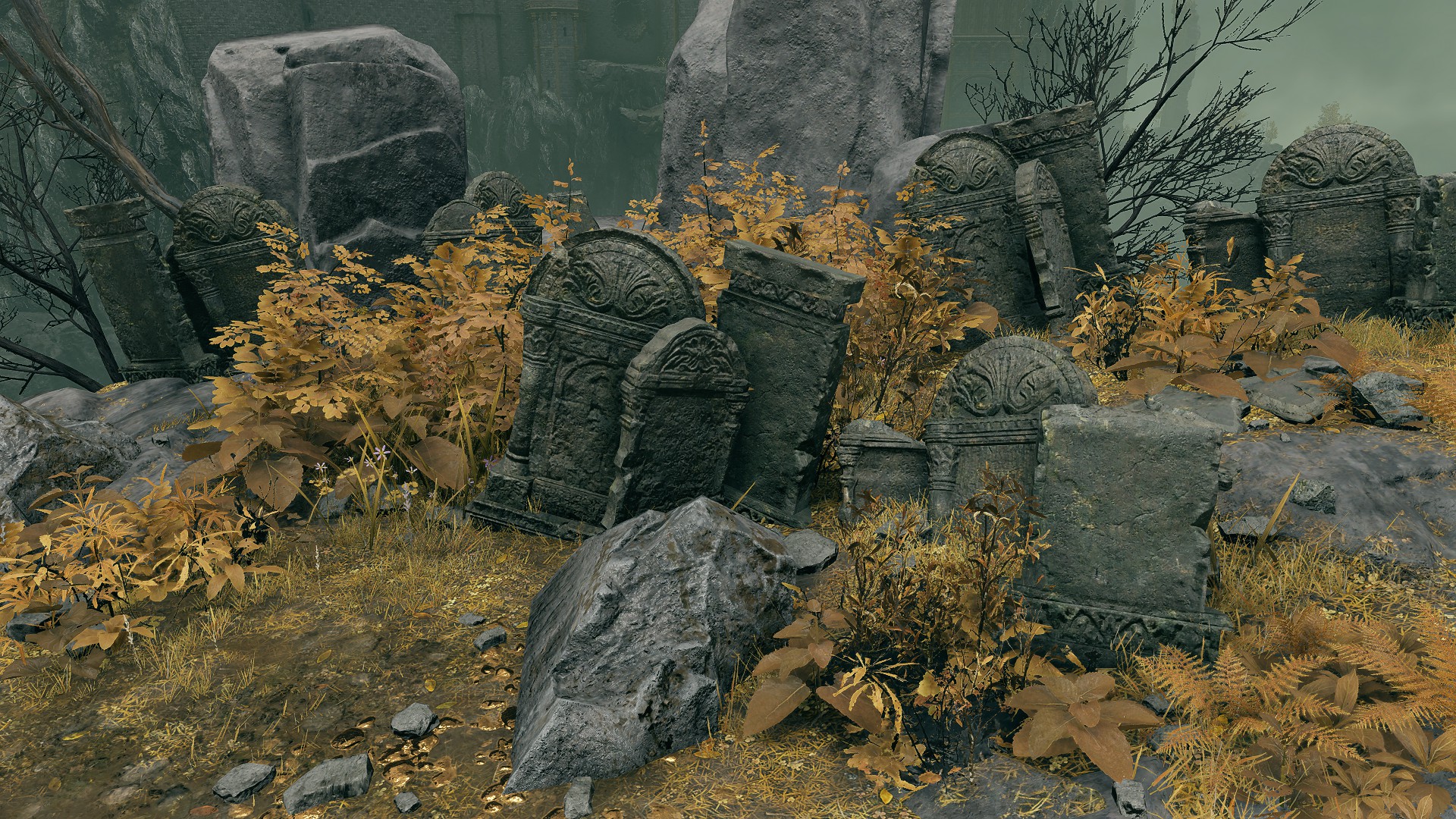
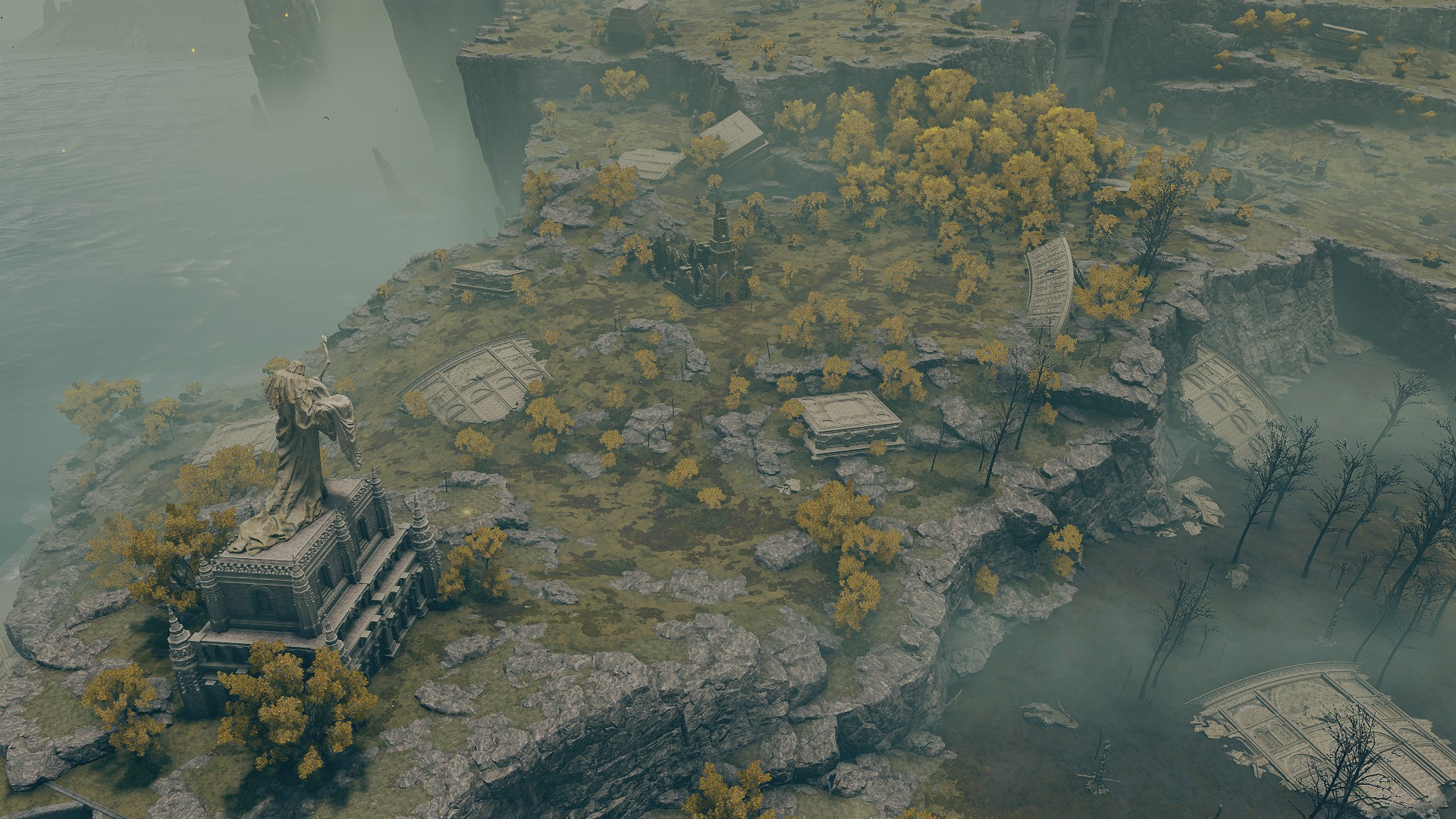
The only possible downside would be the native wildlife. However, the stormhawks probably didn’t care about humans settling the land — as we can see for ourselves, the high towers make it even easier for the birds to perch. If the raptors could live with lesser hawks and wolves in their territory, they could adapt to the penal colonists. As a result, the despondent slaves were free to build their castle and everything surrounding it. Conditions were still brutal, given the size of the graveyard around the Chapel of Anticipation; featuring the flat-top headstones indicative of pagan burial. The Banished Knights wear scarves around their heads to rebuff the cold winds on the hill, so one can only imagine how heavy and biting was the gale while the stormhawk king yet lived. Even when the birds were not actively hindering construction, the storms were sure to cause countless deaths from accident or illness.
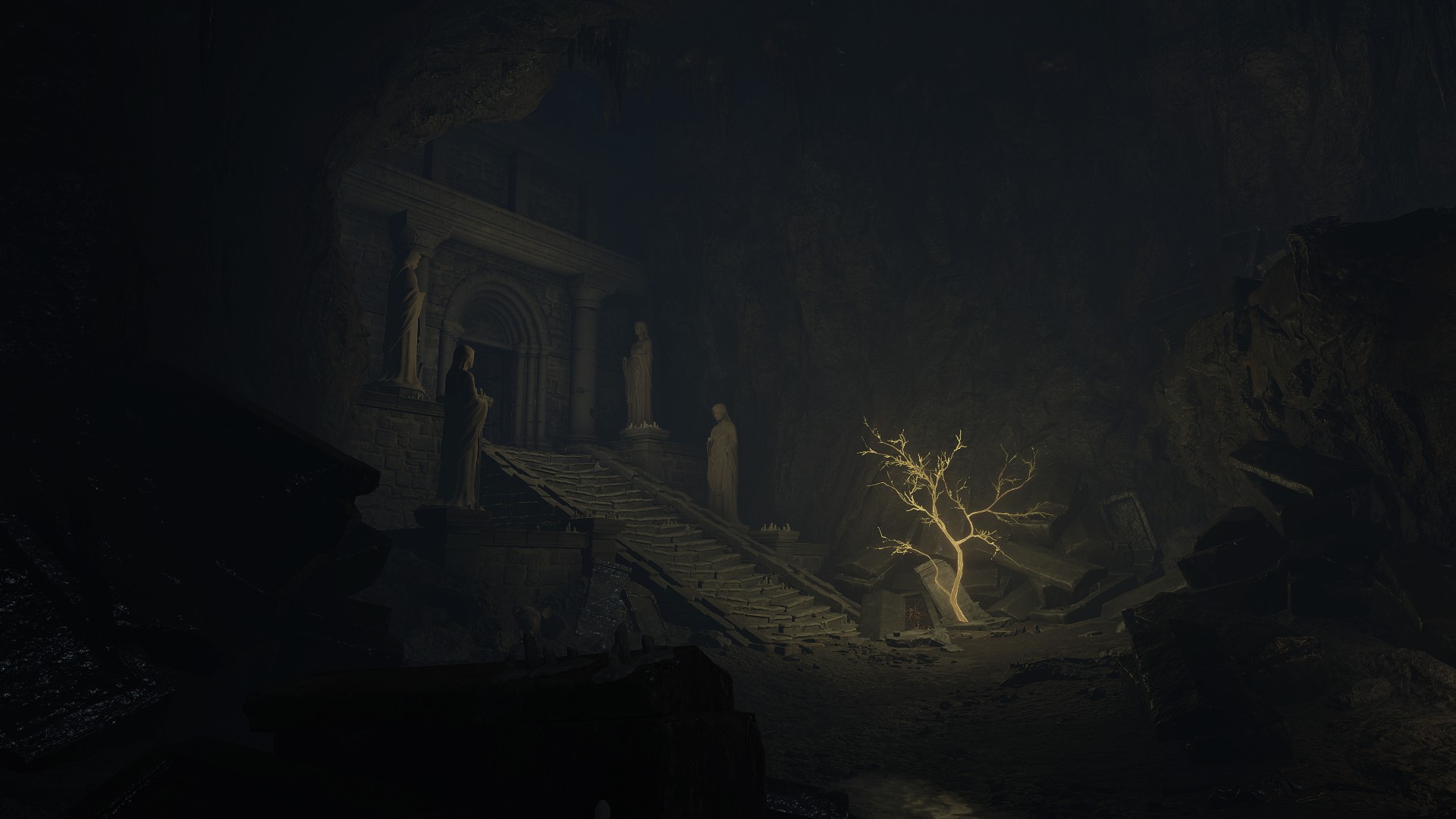
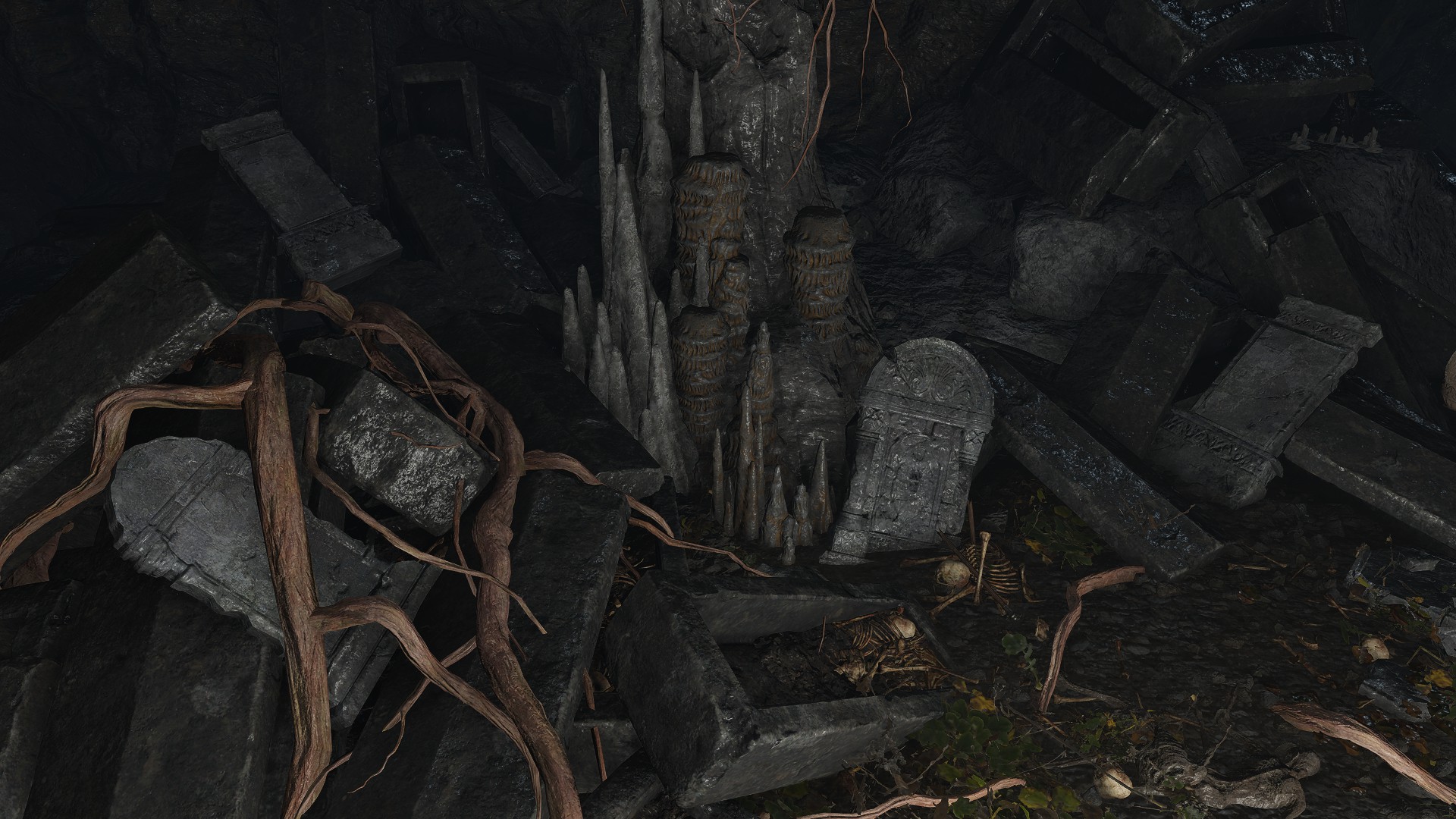
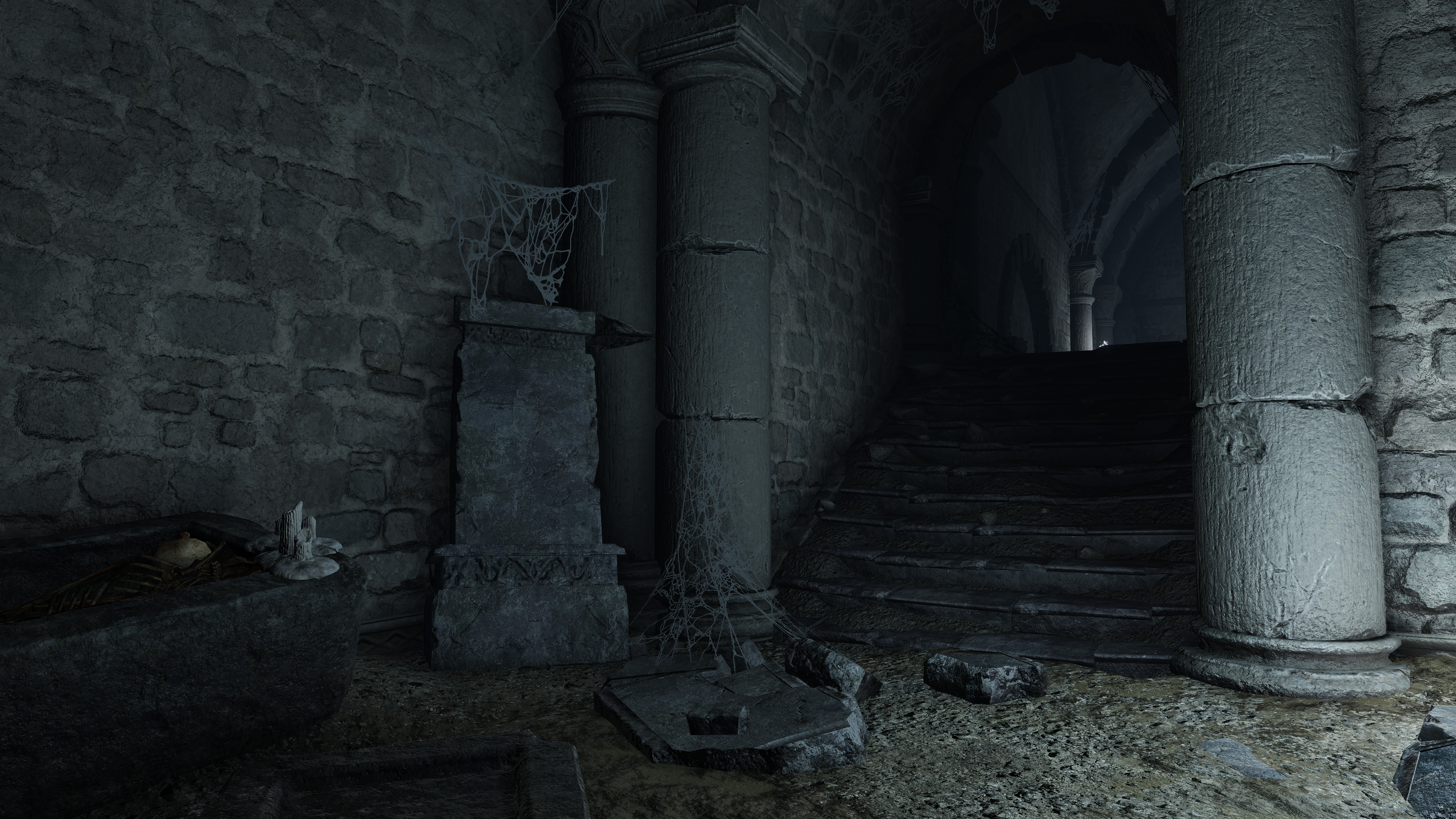
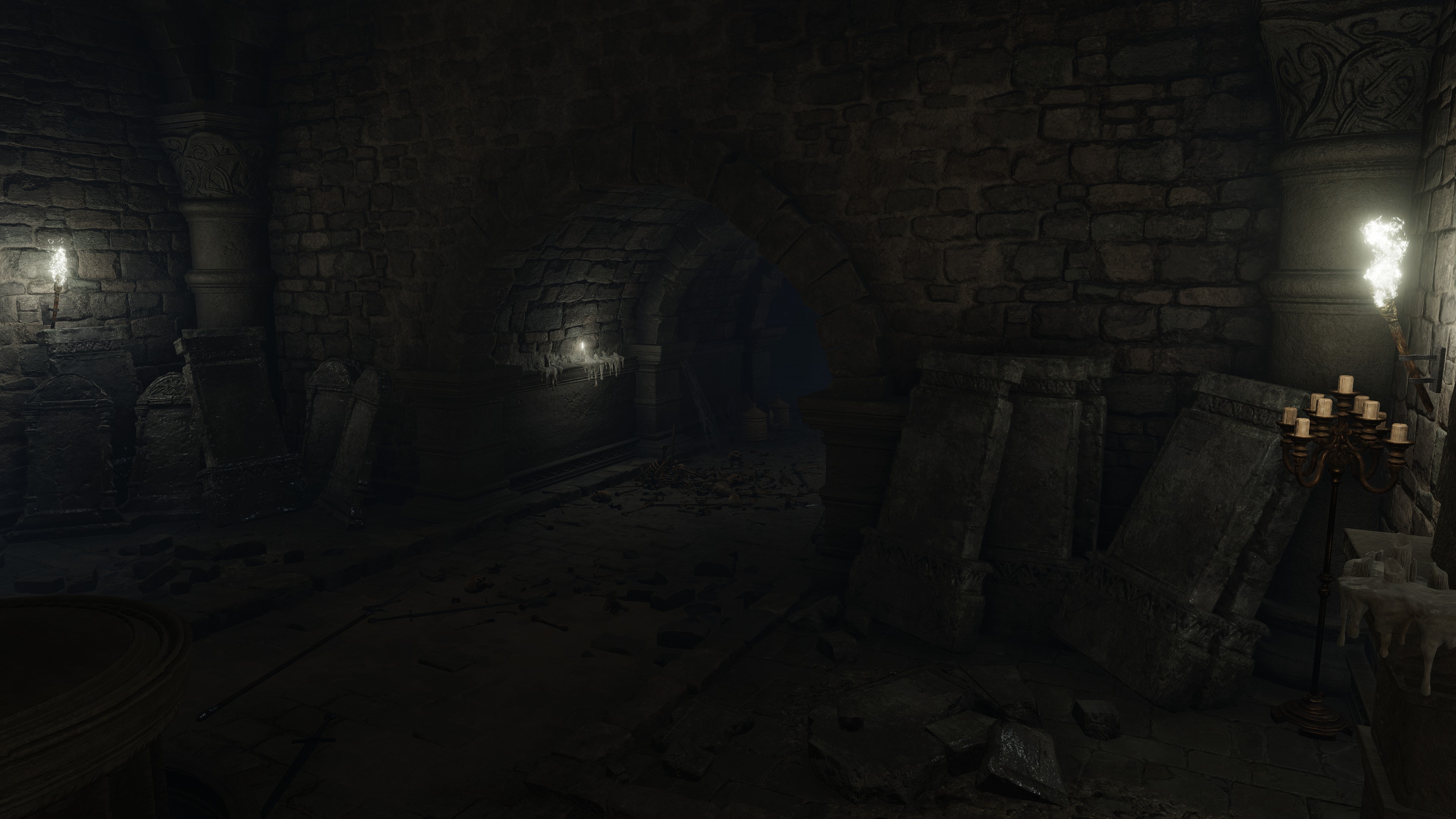
The one saving grace for this misfortune was that the dead were given their proper respects. Besides those buried at the Chapel of Anticipation, brave heroes of the unification wars were provided their own tomb off the hill. The farther distance from the castle necessitated a settlement to prepare the bodies for burial, explaining the myriad of coffins in the Gatefront Ruins. Following the dirt road from that mortuary town to the hero graves has us also pass the Church of Elleh. Lacking any sort of idol, this church was more likely dedicated to consecrating the dead before burial. However, the building presumably only came later in this funeral system. After all, the reason to believe that the first heroes buried there must have been veterans from the plateau is because of the chapel already existing deep within the actual tomb. Beneath the flat-top graves of the Stranded Graveyard and past the same of the Fringefolk Hero’s Grave, this church dedicated to the Erdtree queen is where we can loot Erdtree’s Favor. The talisman depicts Marika early in the Age of the Erdtree, an age she was very much about to begin.
 Lokey Lore