
Preface
Near as I can tell, I have been somewhat of a contrarian when it comes to Marika. Where others see a master manipulator calculating every step with prophetic precision, I see a woman bumbling through her almost every situation, constantly forced to adapt to unexpected complications. Where others see a heartless tyrant born from a tragic victim, I see a guilt-ridden prisoner born from crimes of her own selfish making. That isn’t to say she isn’t calculating or cruel or crushing as a casualty of circumstance — it just isn’t to any extreme. For all her talents and actual schemes, the queen revealed in Elden Ring is a more complicated figure, with the same patterns culminating into her most infamous act laying out the game’s premise. The true tragedy of Marika is that god is just a woman, with all the foibles that entails.
Something Wicked
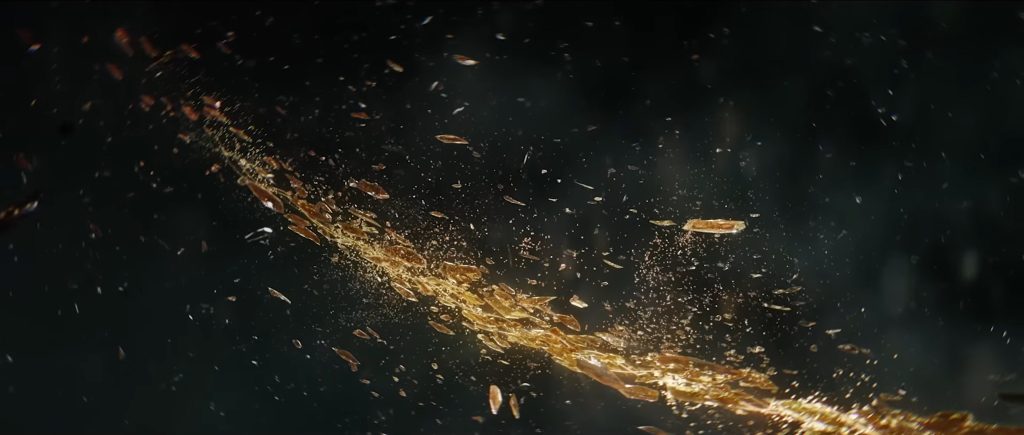
After Godwyn’s Erdtree Burial, Marika came to the fateful decision: destroy the Elden Ring. The Night of the Black Knives was the trigger for this event, so it must have occurred within the ensuing days or weeks. Laying the Golden to rest may have therefore been Marika’s last major act as queen. The god took her opportunity to mourn and then proceeded with her madness, as Ranni frames it. It was obviously impulsive, and certainly beggars belief — a god destroying the basis for her godhood is counterproductive, to say the least. In that sense, it does speak to Marika’s mental state, but not so far that she lost logical faculties. The mischief-maker has always been prone to extreme bouts of passion in her capriciousness. Rather, the god-queen no longer counted her hold on power among her priorities in her decision-making. Her self-destruction was doubtless intentional, since she continues to work toward her death after the fact according to Hewg. Barring a random lapse in acuity, Marika should be acting deliberately this entire time, in which case any change ties back to the trigger.
Up until now, the woman has always chosen between her kin and her power, the latter taking precedence. Beyond selfish wants, Marika could argue that it was better for the whole if she, and thereby they, retained positions as royals. At the same time, this ruthless pragmatism came at great personal cost, throwing the god into lasting emotional turmoil. By the end, we see that she had chosen to maintain the status quo in spite of three new threats emerging since the Gloam-Eyed Queen. Based on past history, Marika would be well within rationale to eliminate these Empyreans before they caused more death. At the very least, the lack of any preemptive measures suggests that Marika was shifting to prioritize her children even if it risked creating another incident like the god hunts. Maybe she believed that treating them without fear would negate the risk — if she was just a better mother, no one had to die. She even advises them in the event that fate did lead them to replace her. The Eternal Queen was ready to lay down her mantle, worn down by time and knowledge. And the result? Betrayal once again.
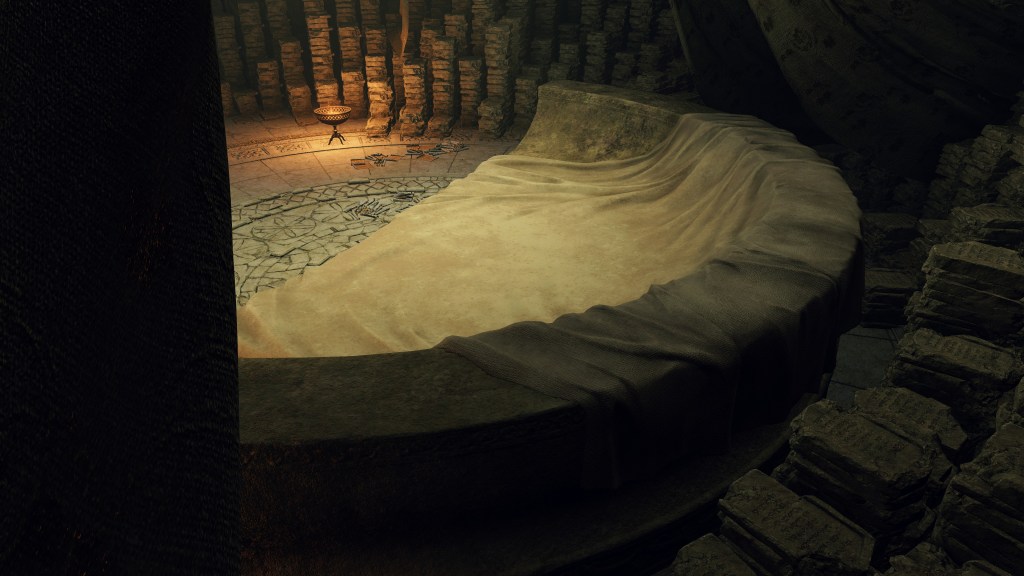
Indeed, Marika may not have known the exact perpetrators, but it was plain to any observer: the assassins couldn’t have pulled off the Night of the Black Knives alone. To coordinate an operation of that scale, they needed detailed insider knowledge, the kind available only to the royal house. Once more, Marika was dealing with a crisis of kinslaying which she was ill-equipped for. The person or persons involved weren’t immediately apparent, and tracing the assassin proxies might also prove difficult. However much time was devoted to an investigation, the only details learned were that the Black Knives were all Numen women in silver armor with invisibility cloaks and a weapon infused with the stolen Rune through magic rite. That left far too many connections to probe, including the Eternal Cities. Maybe if they captured one of the runaway assassins alive, they could narrow it down. But no matter how anyone looked at the circumstance, someone from within the clan had definitely betrayed them.
This cast a shadow over the entire funeral process; any demigod in Leyndell who came to mourn the deaths may be a snake in the grass — no one may voice it aloud, but it was sure to be on the mind, especially Marika’s thoughts. And in those final days of her reign, what thoughts would stew? Why her children would do this, of course, not to mention where she went wrong with this decision. But ultimately, these queries would boil down to a central point: why was she putting up with all this? She chose power because she believed it was for the best, long-term. But time and time again, it brought her pain and sorrow. At some point, she had to question how many of her beloved kin needed to die before it outweighed the value of her reign and the legacy her Golden Order would leave. When was ruling an empire meaningless?
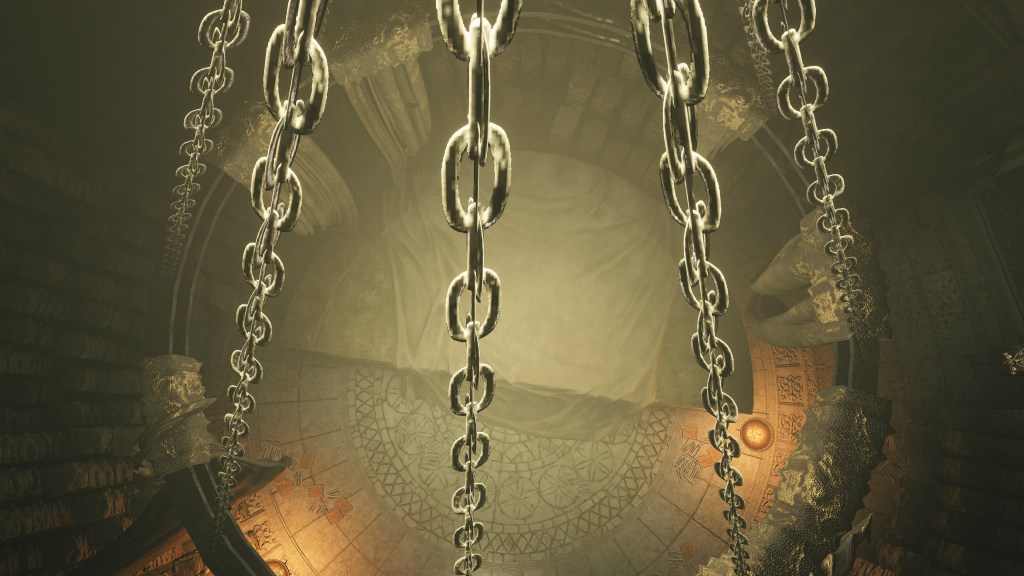
Marika’s answer came with Godwyn and the others’ deaths. Melina recounts the queen’s words at the Erdtree, calling Radagon a “dog” of the Golden Order before determining they break something — obviously, the Elden Ring she shattered. This was the madness wrought in the aftermath of Godwyn’s death. Once turned to introspection, Marika’s sadness and rage might be redirected, not at the conspirators, but at the agents behind them. It was the Fingers who kept selecting new candidates to replace her as god, dooming their family to a fate of competition for Order. It was that Greater Will who wouldn’t let her simply enjoy the kingdom she had built with her beloved children. It was this Elden Ring, with its fate of gold, that doomed her to the path of kinslaying, slowly eroding at her mind until she finally snapped. Since the queen faces interference from Radagon as well as the Two Fingers after the deed is done; there was no thought-out plan for escaping the aftermath. In her heart, she resolved to see it all destroyed — her empire, her reign, her very life.
Oh, Radagon, dog of the Golden Regulation. You are still not me. Still not God. Now, let us break it together! My other half!
Some fans have argued that Marika’s act was actually part of a larger scheme, with the Night of the Black Knives secretly orchestrated by her; this is due to the Black Knife armor’s description, highlighting a theory that she bear “close ties” with the Numen. However, the idea falls apart under further scrutiny. While the women may be “close” (近しい) to Marika, this intimacy only demands familiarity. The church at Sellia showcases the god’s past presence, where she might well have personally met many of the future assassins during the integration period — a passing acquaintance, bonding as members of the same race. In fact, the specific wording may simply allude to the queen’s own Numen connections, intimate with her shaman village and thus arguably the people as a whole. In either case, there is no need for her to know the assassins well enough to stage a conspiracy. And whether it was mere psychological affinity as kindred or something more, Marika was still the intended, if indirect, target of these godslayings, the person whom the plotters held animus against. Why help them harm her?
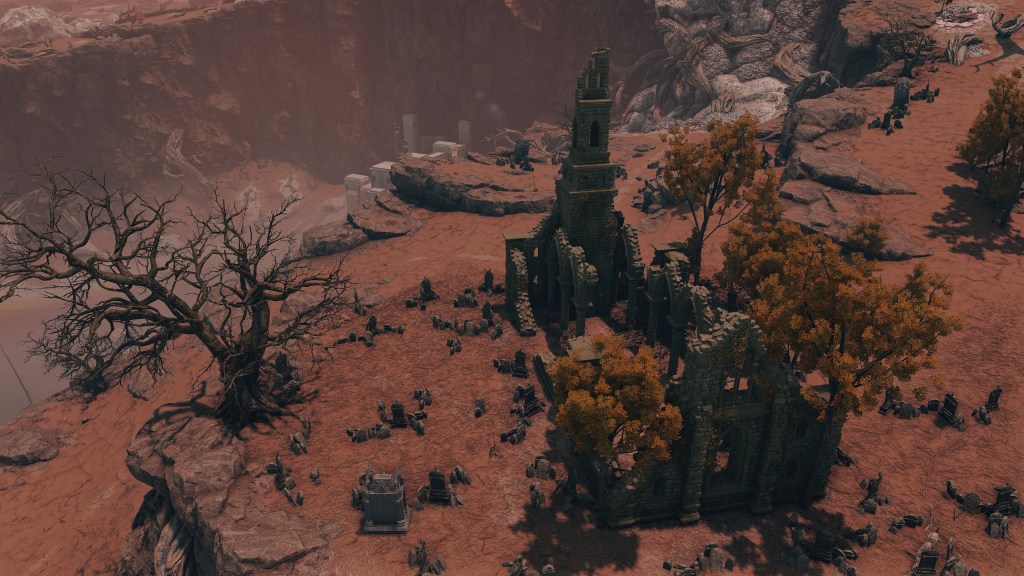
Certainly, the Eternal Queen scheming to murder her own children serves no discernible end. If she wanted them dead, that was the point of Maliketh, Death of the Demigods without all the complicated subterfuge. If she ordered the hit, she didn’t target the Empyreans who threatened her hold on power, nor did so many deaths change her access to the Elden Ring she subsequently shattered. From whichever angle you take, none of it is conducive to her own implication in the treason against her. Ranni and the conspirators clearly sought to bring her distress with these killings, yet she is the one somehow setting them up without their apparent knowledge? Taking it all into consideration, the theory concerning Marika’s relation to the assassins serves as indication of the personal motive behind the killings, more than a mere political statement. The actual shattering of the Elden Ring was so-called madness, the ultimate crime of passion from an impulsive, whimsical god, and nothing more.
With that in mind, Marika’s sin was a crime of opportunity. None would criticize the queen for drawing into seclusion, nor would any raise eyebrows at her bringing her hammer inside the tree where she tinkered with the Ring. The queen’s random absence was odd, but understandable for most. Her resolve was also kept secret from Radagon, as he tries to stop her but evidently lacked the time or foreknowledge to bring others for help. Instead, he alone attempts to hinder her as she is breaking the Elden Ring, wrestling control of her body in a desperate bid to repair the damage with her same hammer. One can only imagine the king’s bemusement at his wife’s suspicious absence without communication, then horror to discover her destroying their Golden Order. The man theoretically possessed the strength to overpower her physically with a body double, but the nature of their connection meant that Marika might have deprived him of that option. Ultimately, Radagon’s only hope to stop this madness was to take the reins over their shared body. But that was easier said than done in his circumstances.
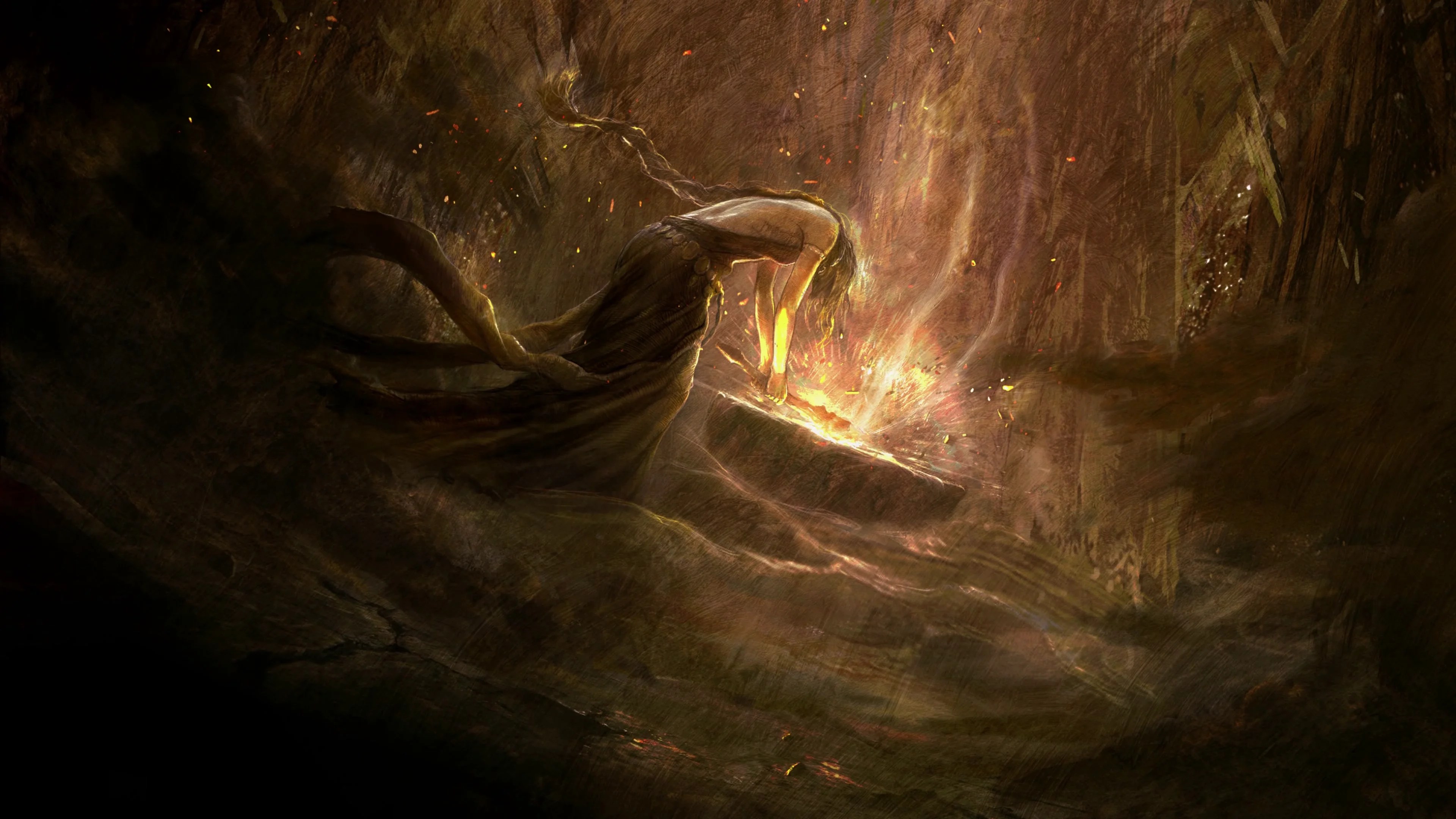
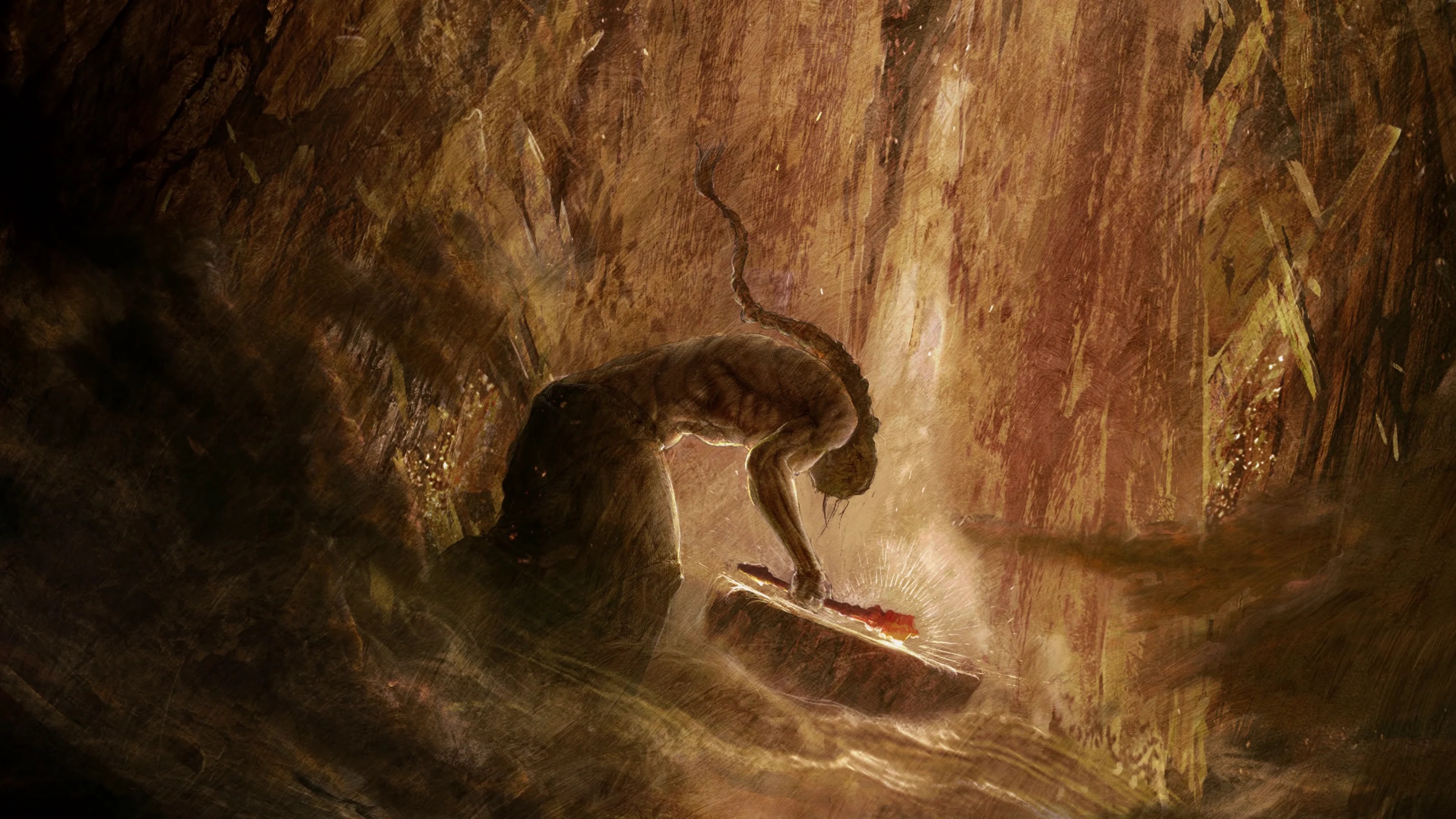
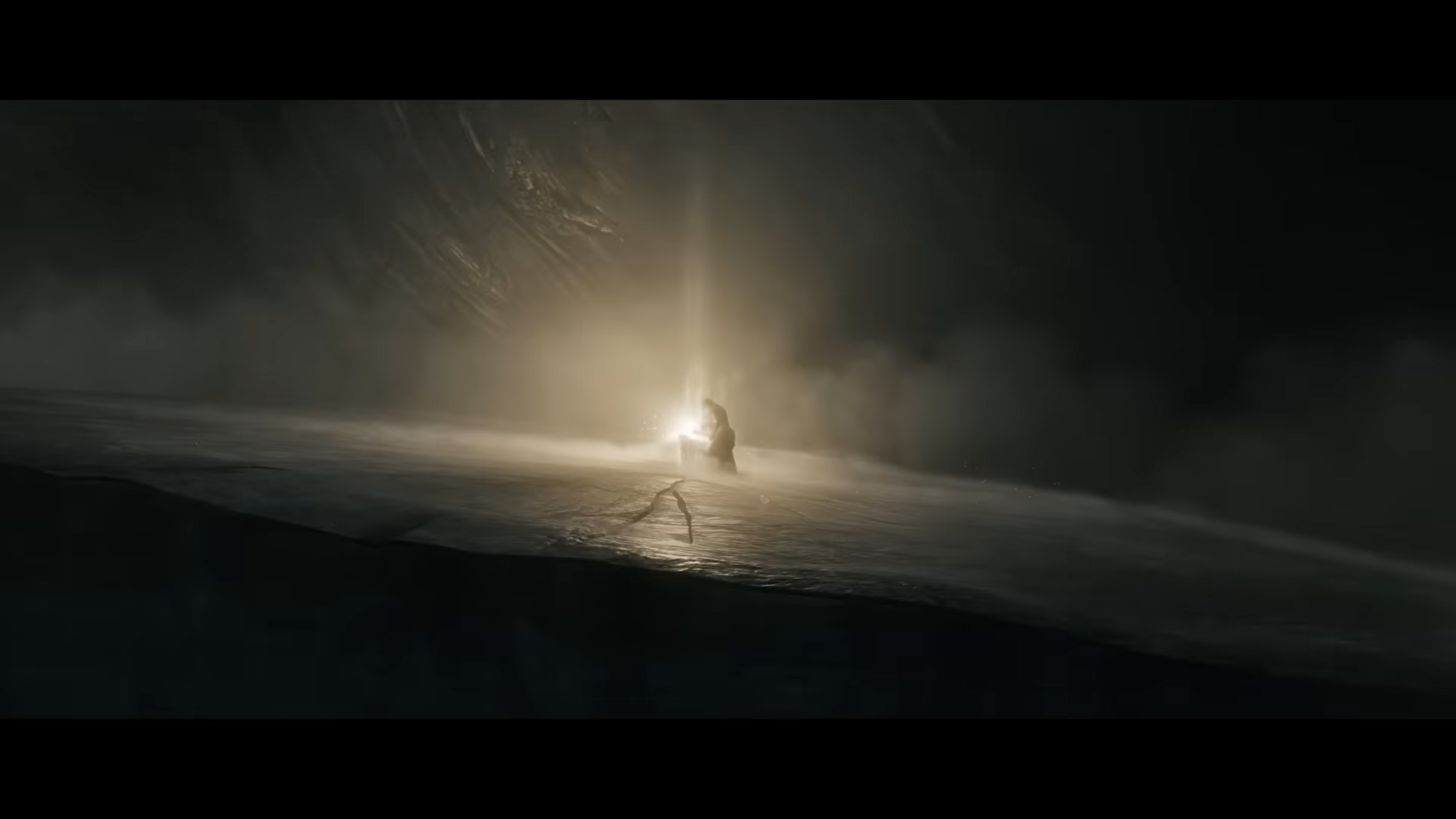
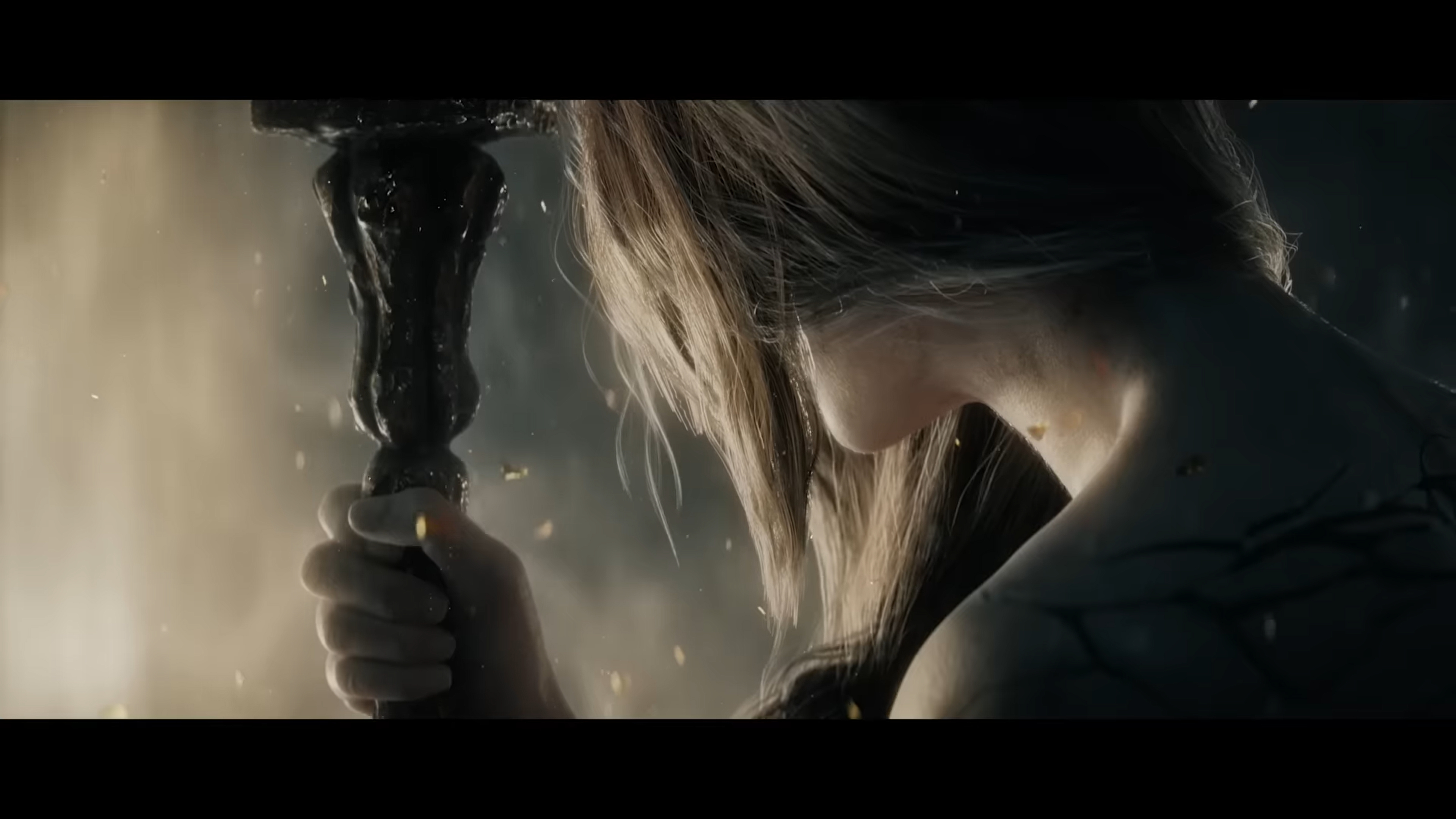
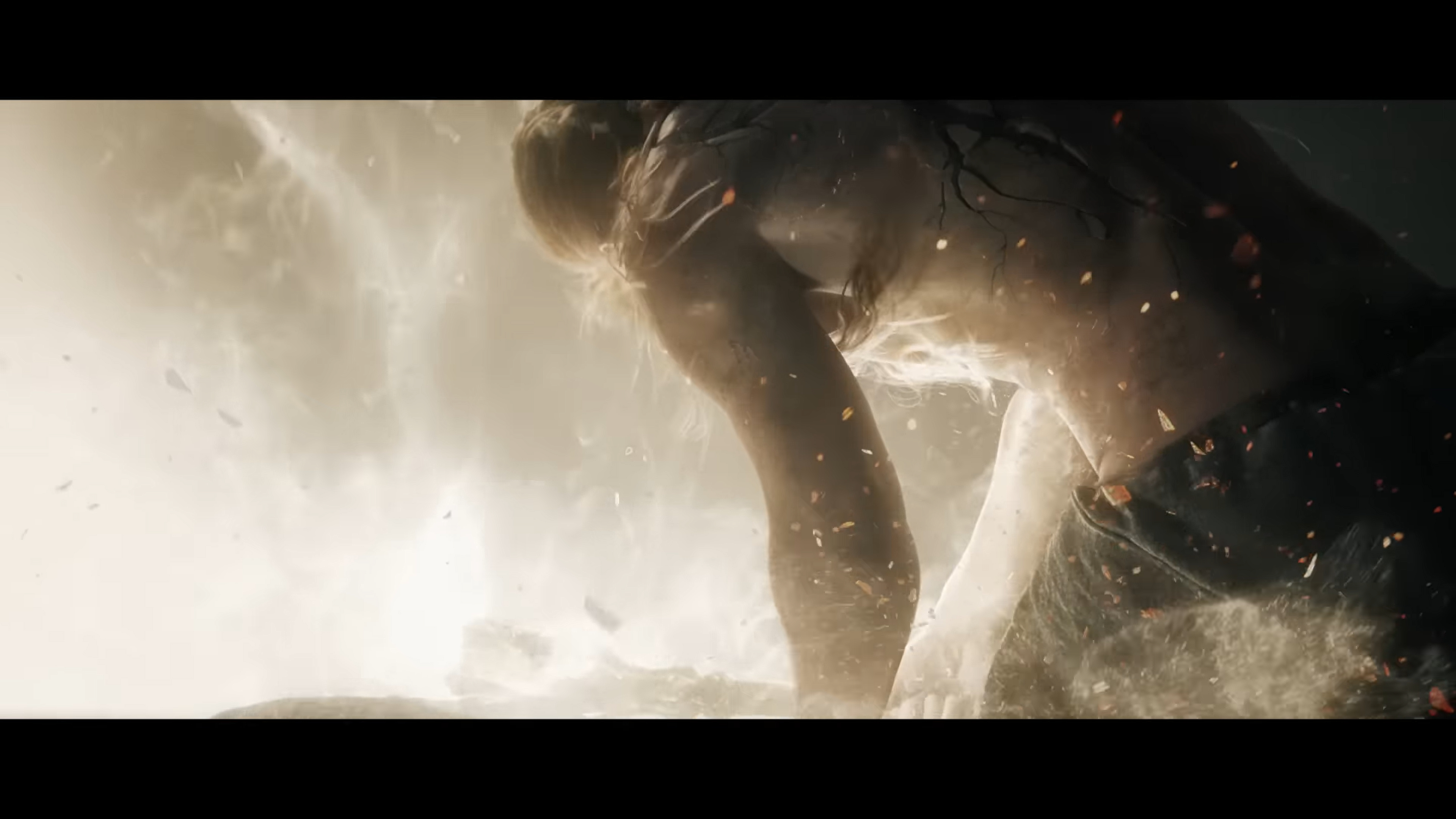
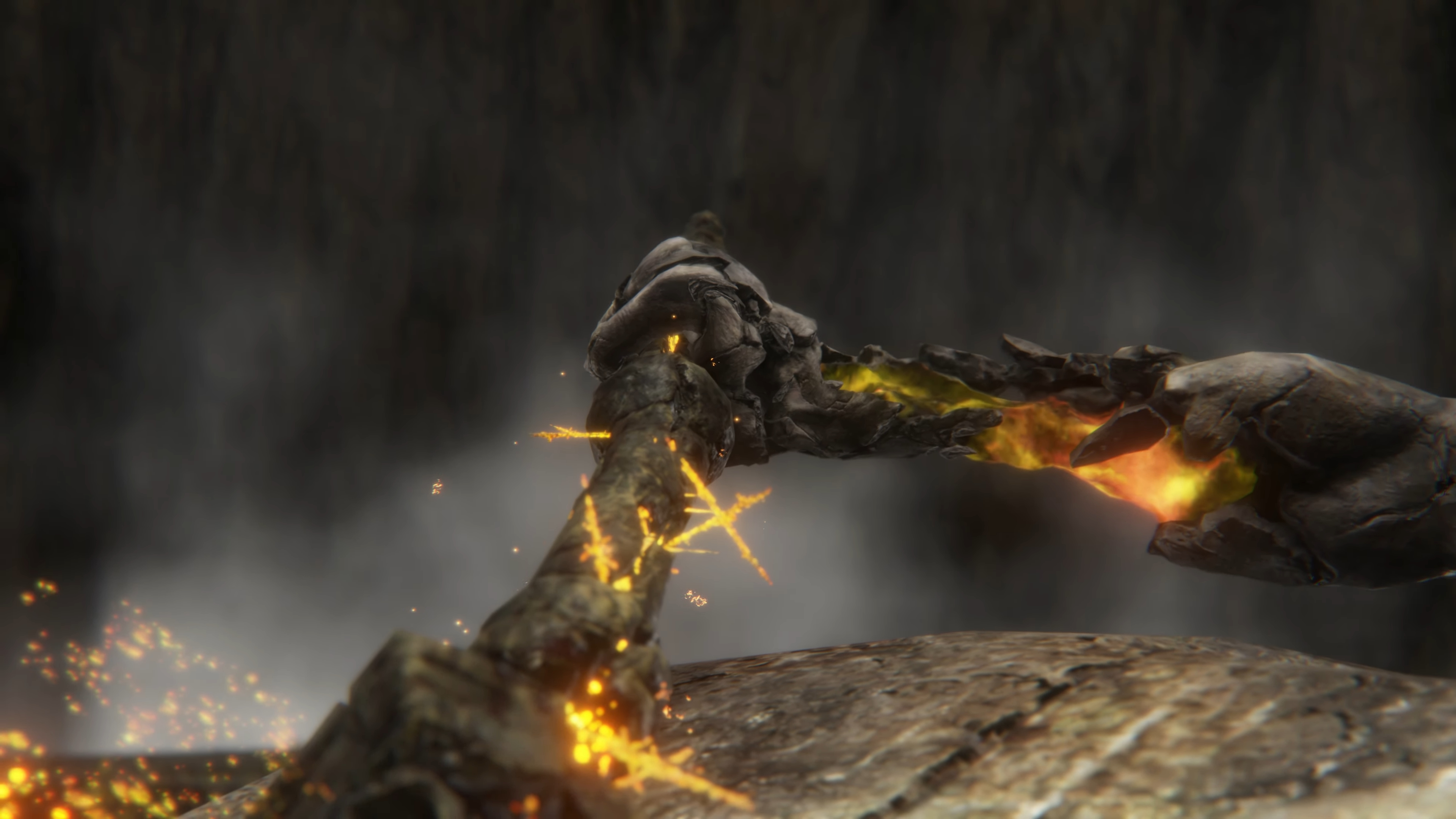
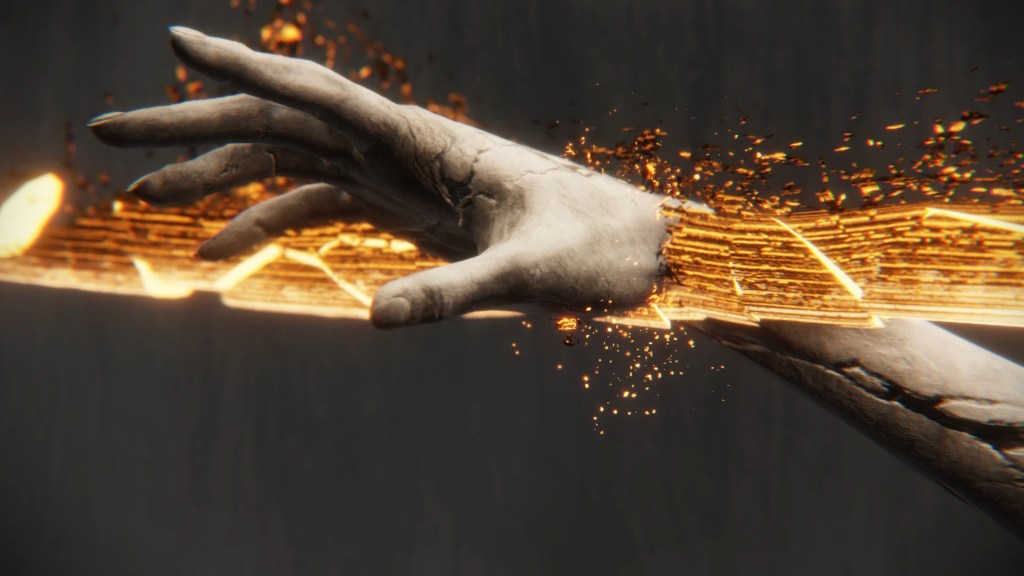
As seen in the introductory cutscene, this resulting back and forth between them continued at almost rhythmic pace. However, the announcement trailer indicates that Radagon’s efforts were futile. Even as he slammed the hammer to mend the Ring falling to pieces on its pedestal, some of those strikes weren’t weaving runes back into place, their body cracking more and more with the gold instead. It is clear that Radagon wasn’t consistently in control even when managing to switch their bodily form. Marika was still directing a number of his own strikes into smashing their Elden Ring, so any mending on the Elden Lord’s part was far outnumbered by the damage they both were doing. Looking at the trailer, the Elden Runes cracked and cracked until finally they shattered apart, one after the other. At the same time, the fissures in Marika and Radagon’s own body were widening with each malicious strike.
With the struggle tearing themselves apart in every sense, mitigating the damage Marika had already wrought was a losing battle. Add in her last words to him, the other half asserted herself as the real god, not him. Try as he might, the stubborn Numen refused to let a lowly “dog” decide her fate, and that was that. Going by the trailer, with his last swing, “Radagon” shattered the ring, Marika and him collapsing to their knees as their Order completely fell apart. The former looks up, almost liberated, in this moment, while the latter just coils down in despair. Both knew how this changed everything, beyond just their body which we see break apart when entering Radagon’s boss battle; especially on their left side. The golden era of Fundamentalism was crumbling to dust right in front of them.
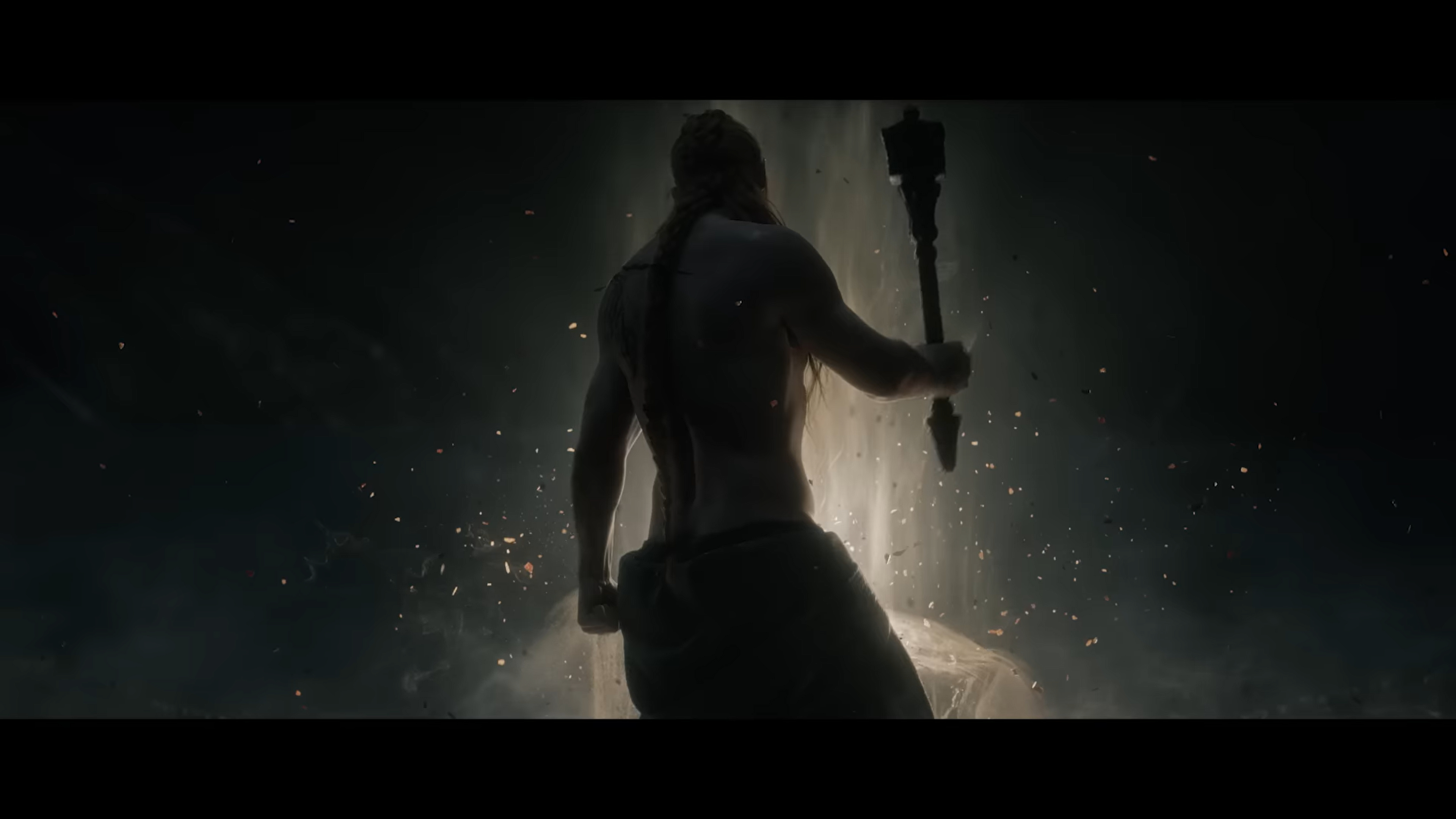
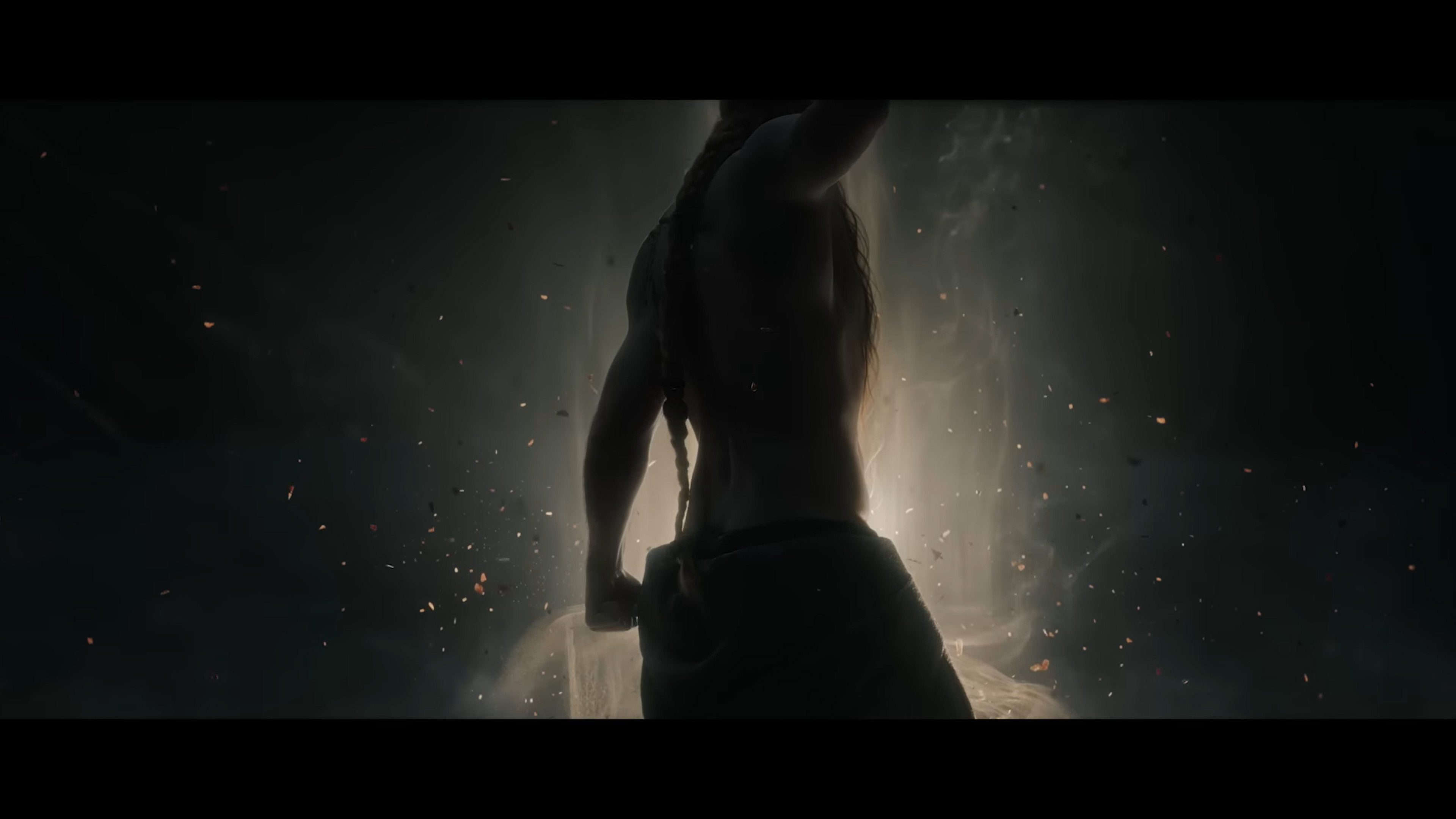

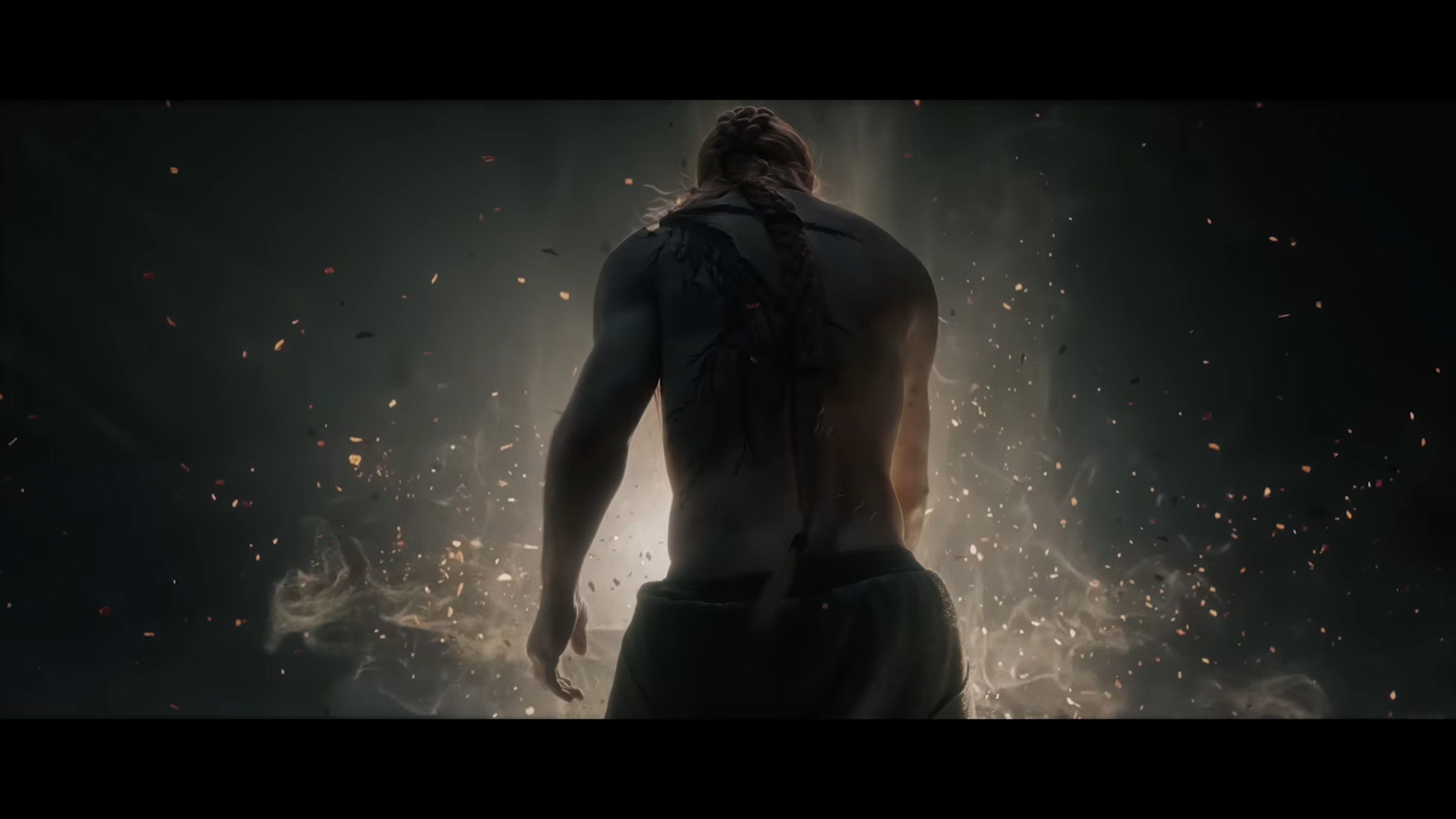
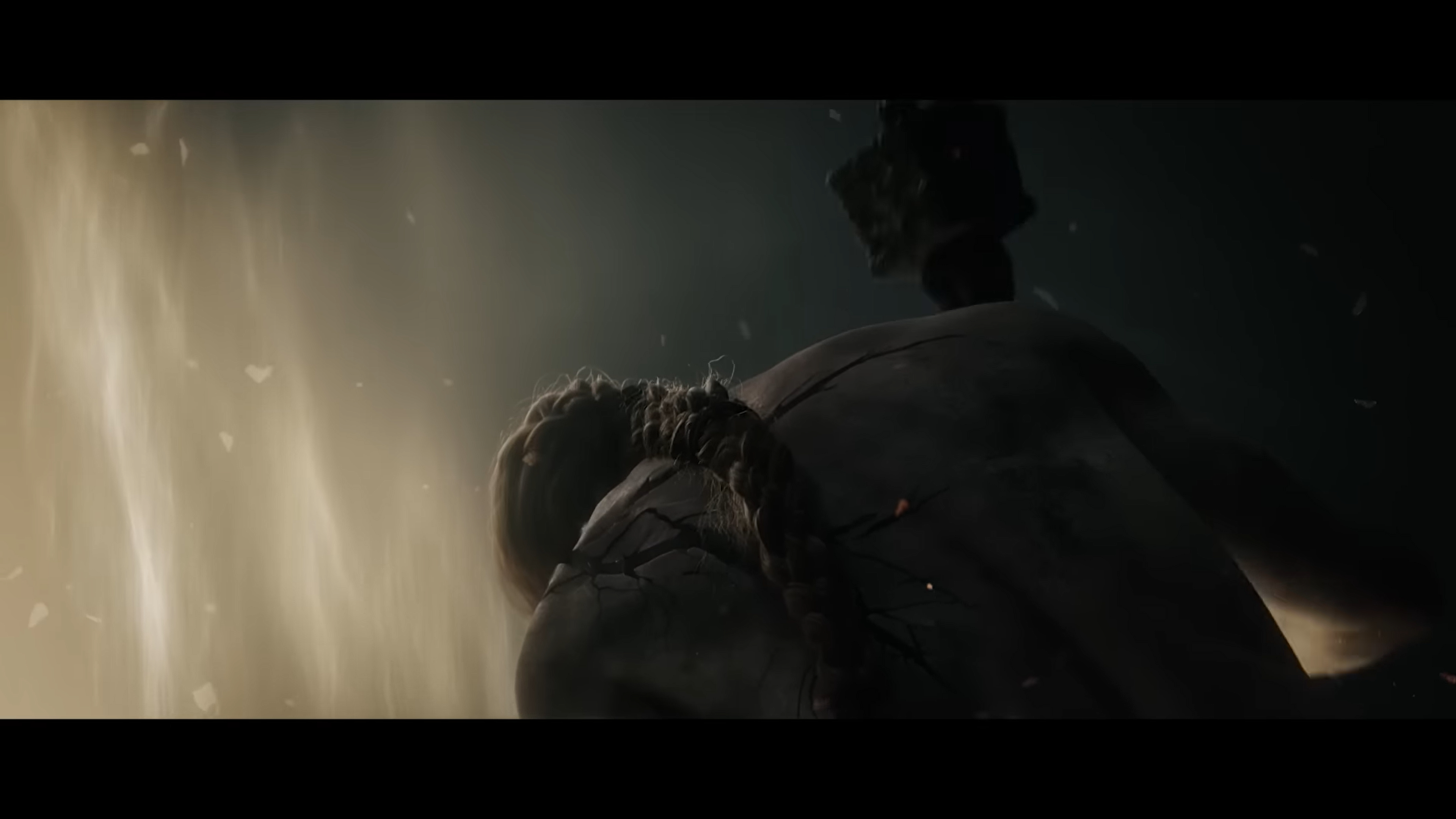
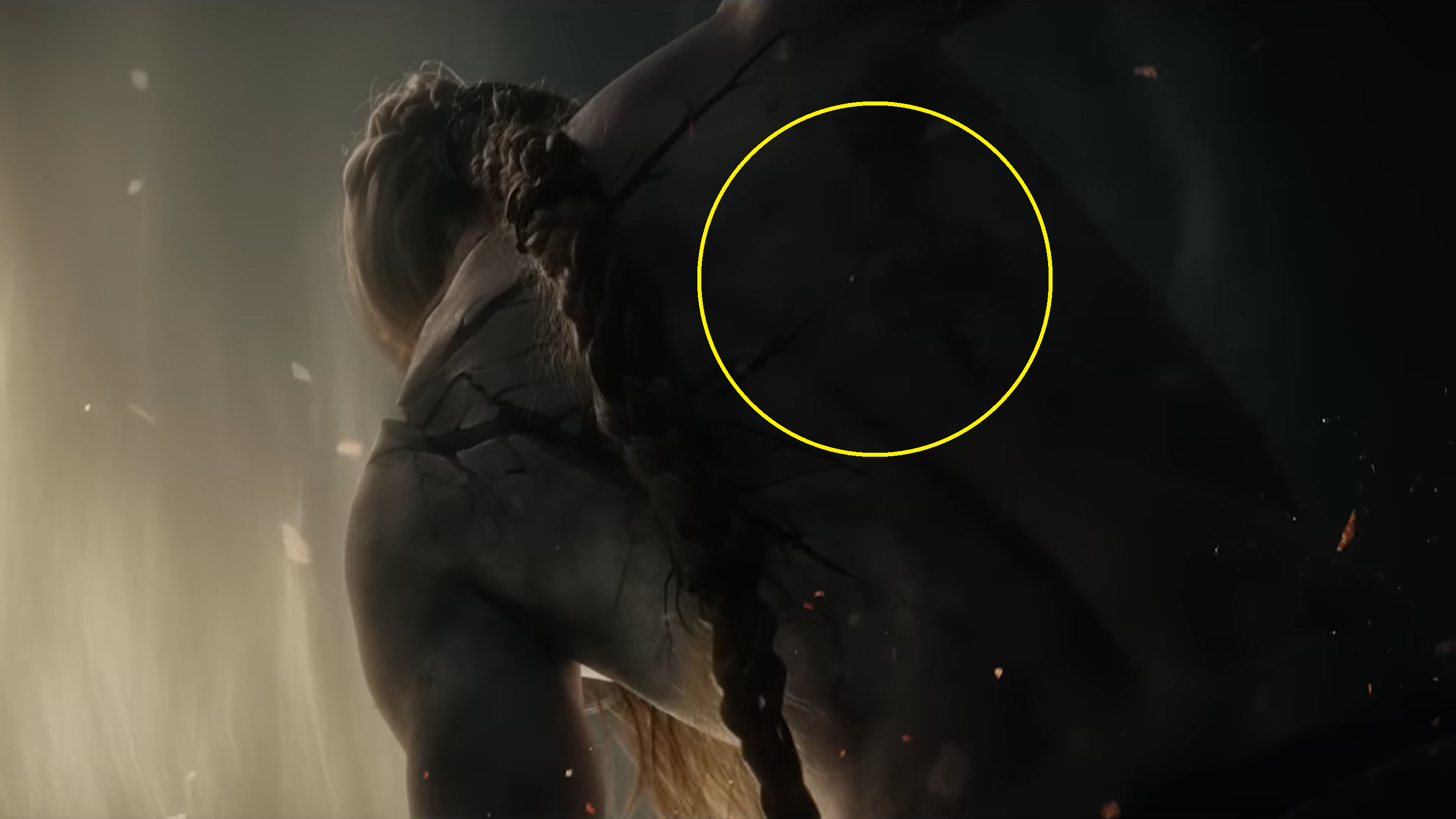
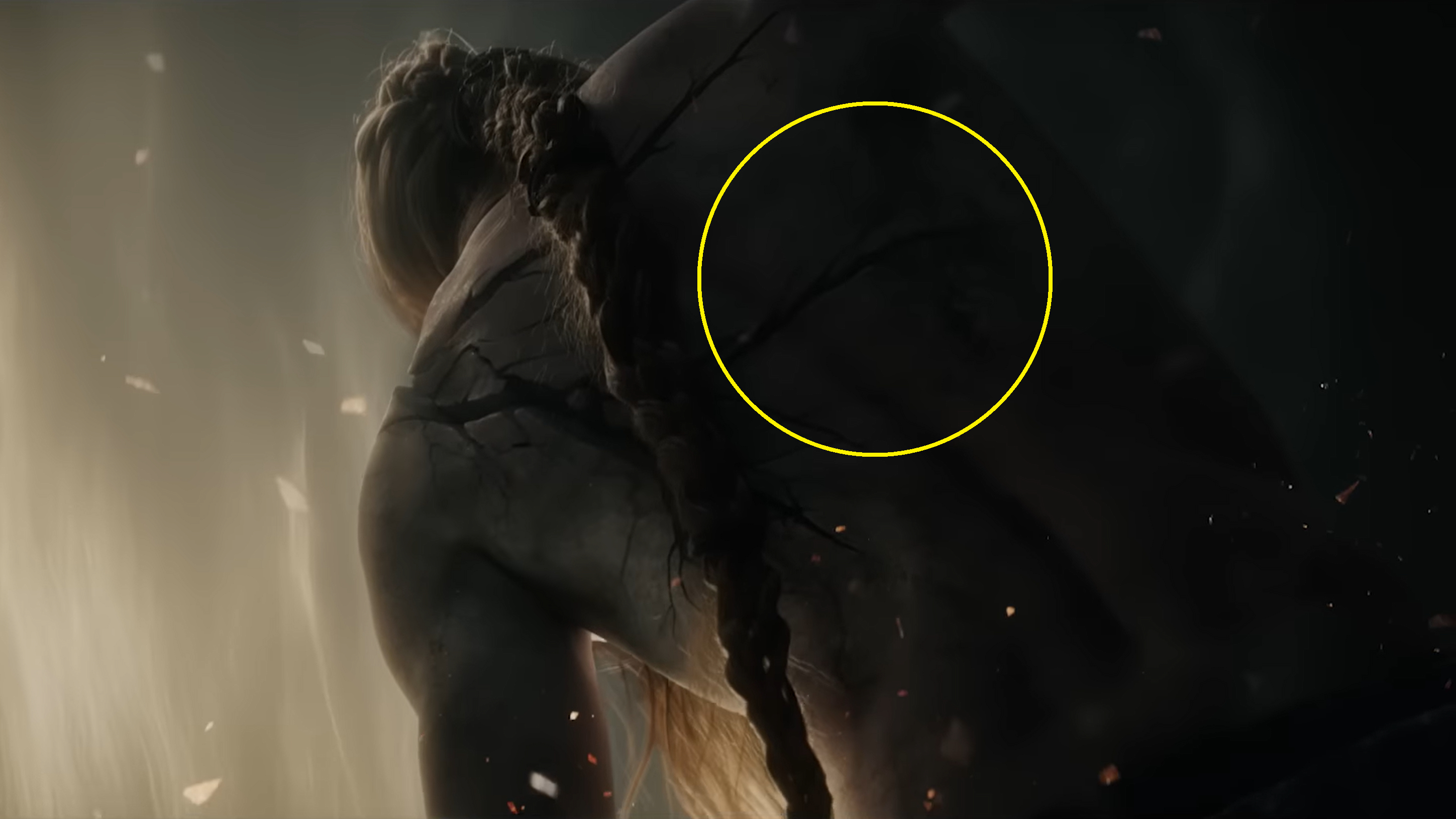
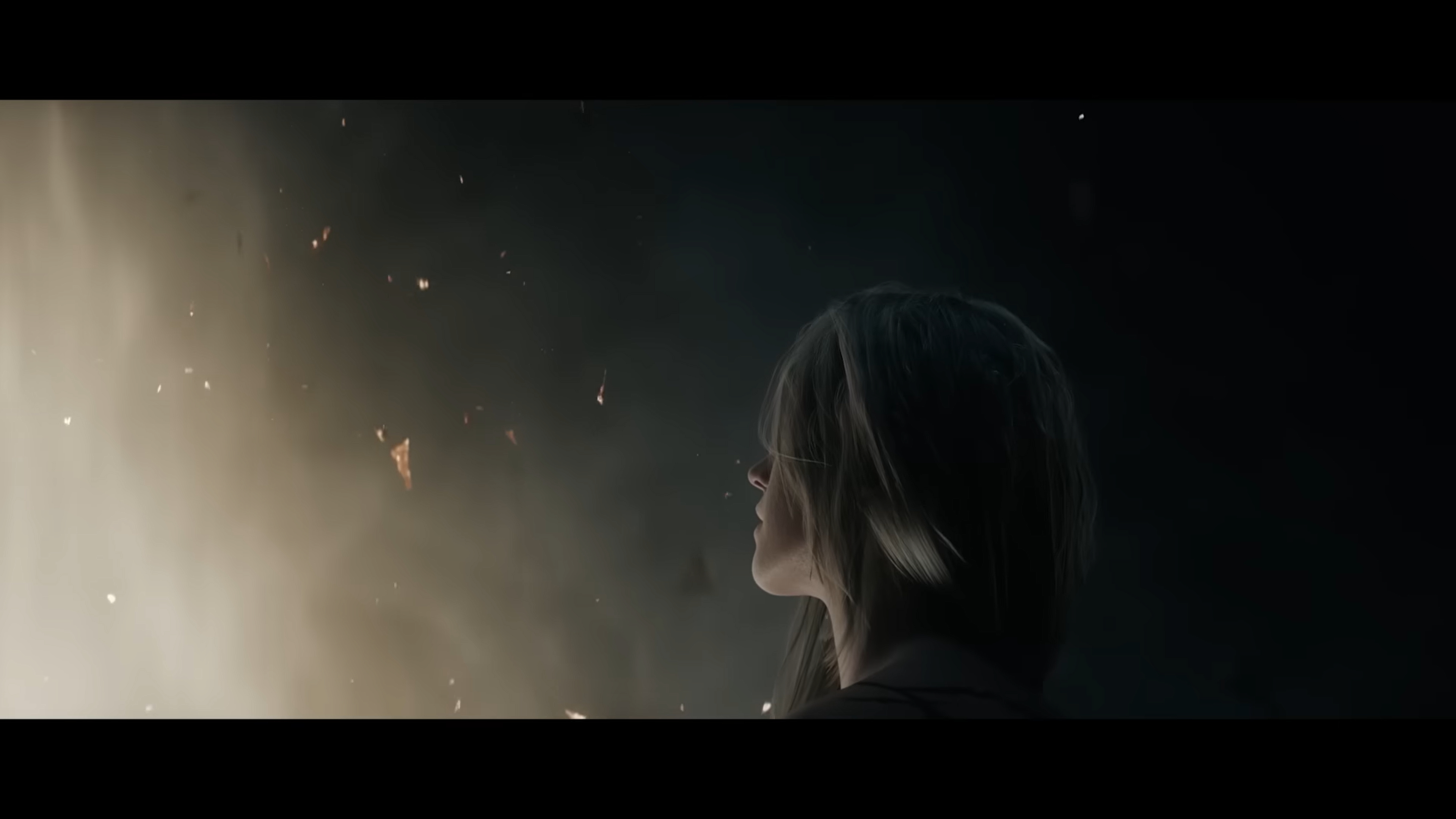
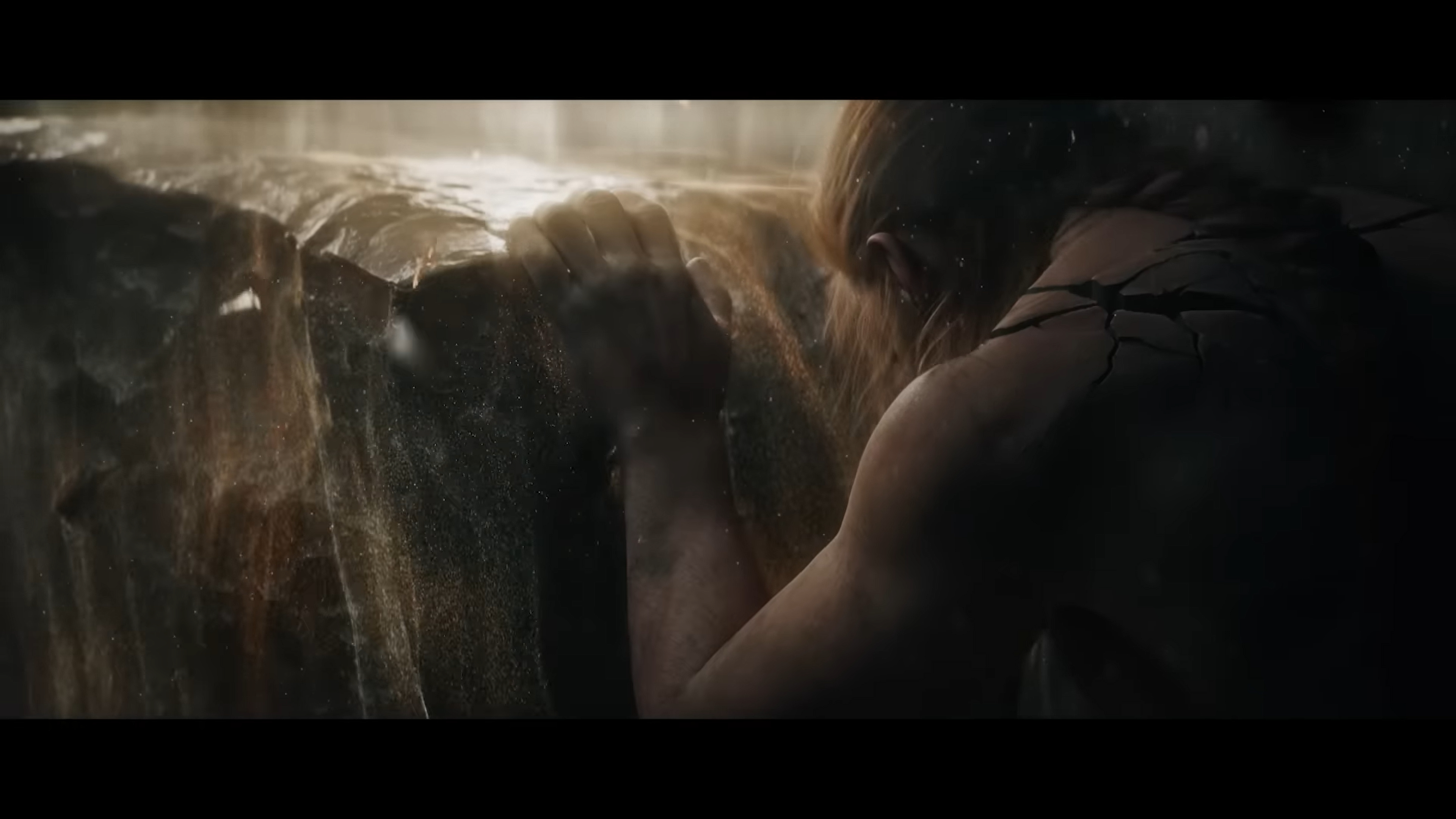
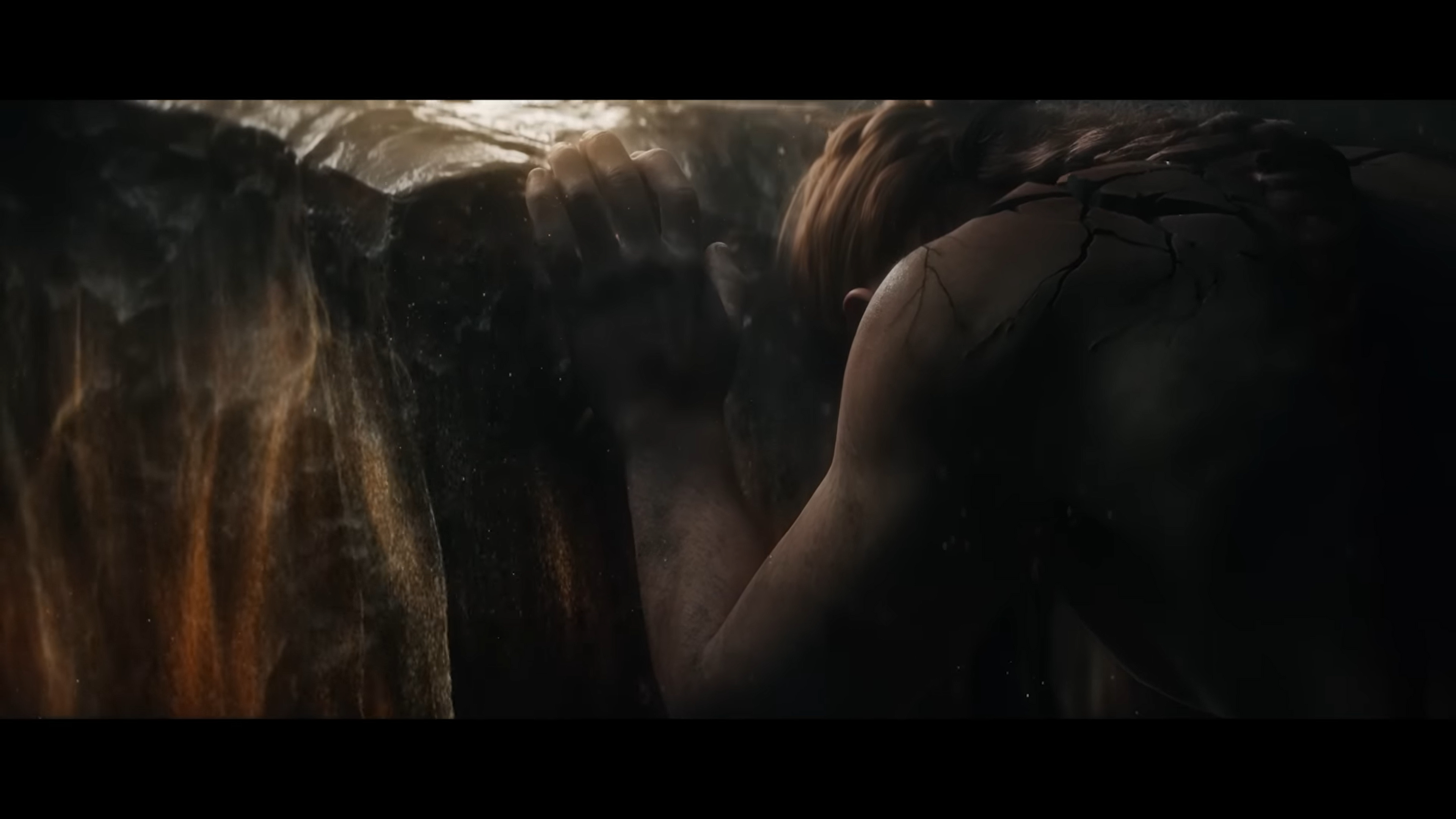
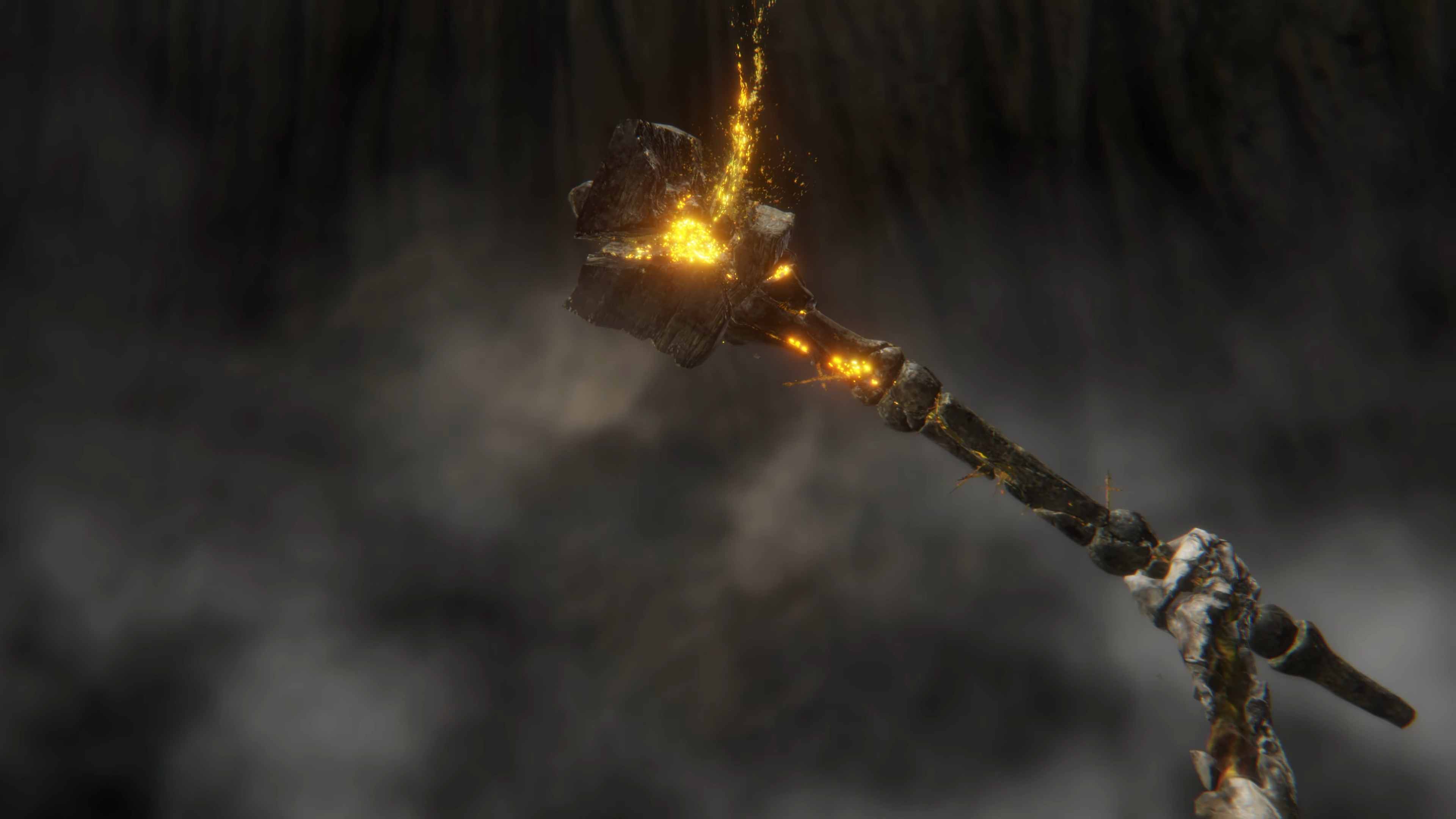
Before that, we see a flash of light, which the hammer’s description defines as a kind of shock. Certainly, the force of shattering the whole collection of runes into pieces has left the weapon deeply entrenched in the arboreal pedestal; Radagon can only remove the weapon with great effort, destroying the pedestal along with it. The reaction force was so strong, it partially shattered the hammer, with splinters of the Ring filling the cracks. Those same fragments of gold appear to be holding the broken pieces of hammer together — albeit it is invisible until Radagon draws the power out, the runes resonating with the gold of his fractured body upon grabbing the hilt. However, it is that same power allowing the heroic Lord to perform his signature move as the weapon’s skill, turning it effectively into a holy catalyst. The fact that the hammer can be used in this way speaks to the power the stone was manipulating and had now unleashed with this shock.
Battle art where you leap gracefully, harbor light in the rune fragments, and slam it down with all your might from midair. Radagon’s heroic strike.
The effects upon the world outside were immediate. The announcement trailer connects the Ring’s broken state to a “burning” sky, and the introductory cutscene features the Erdtree exploding with golden power, the force creating waves in the ocean all the way over in Limgrave. This power appears to have been concentrated in the air, with no obvious signs of lasting damage on Leyndell. Nevertheless, this outburst is likely the basis for Wrath of Gold, which the most devoted members of the faithful like Kenneth or Edgar soon adopted in prayer. No one across the Lands Between seems to have gone unaware of the Erdtree’s plight either, with the gold afterward never again achieving the same soothing radiance as the old tree. As the narrator admits from the outset, the falling leaves tell the whole story, the Erdtree slowly dying as its Ring at the source remains broken. Those tarnished leaves flow on the air all the way down to Limgrave, with strong gusts carrying all the more, still rich with power, to any corner of the lands sporadically. The message they silently carry would be clear to everyone: the Order was fractured and figuratively bleeding out.
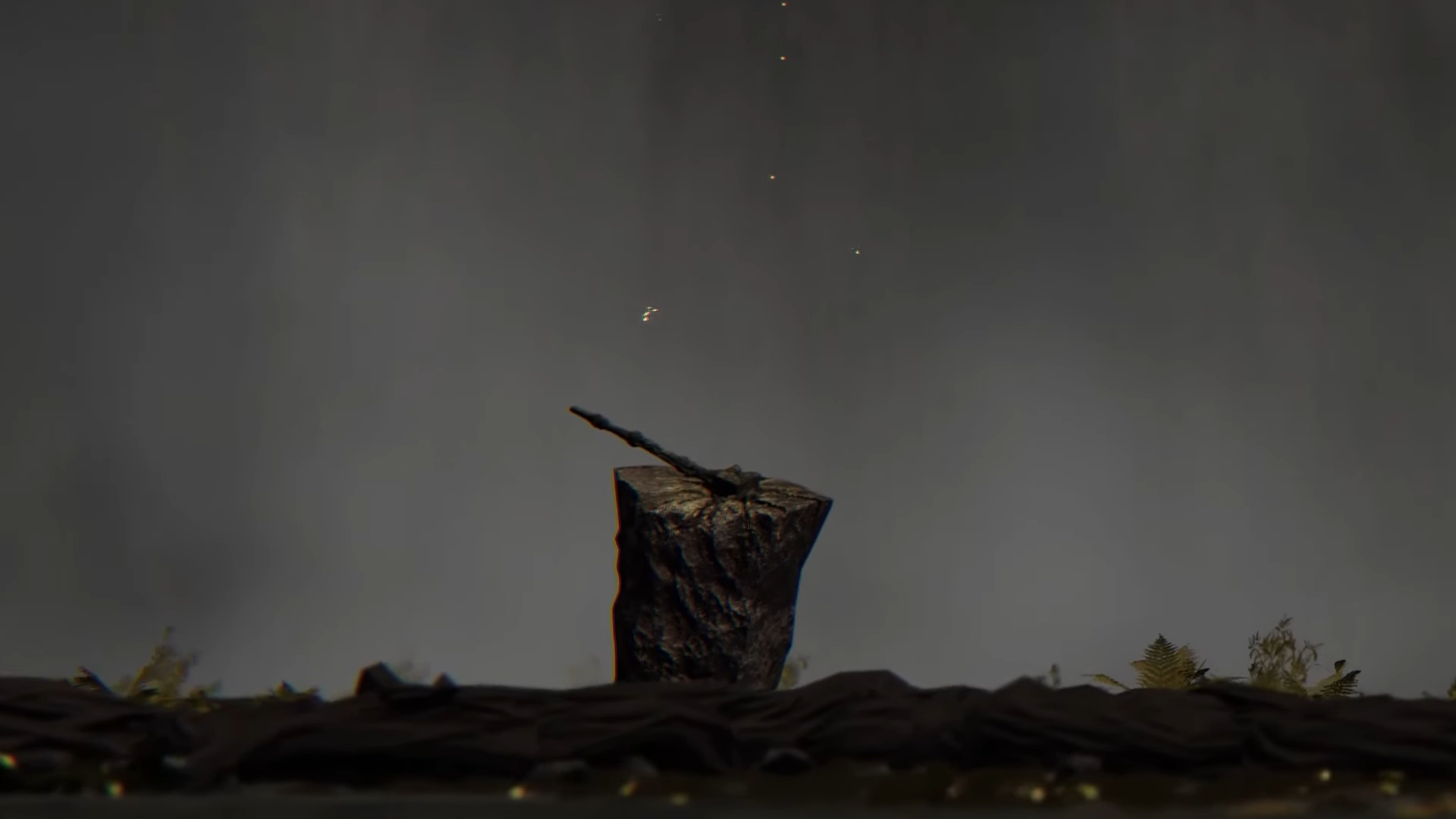
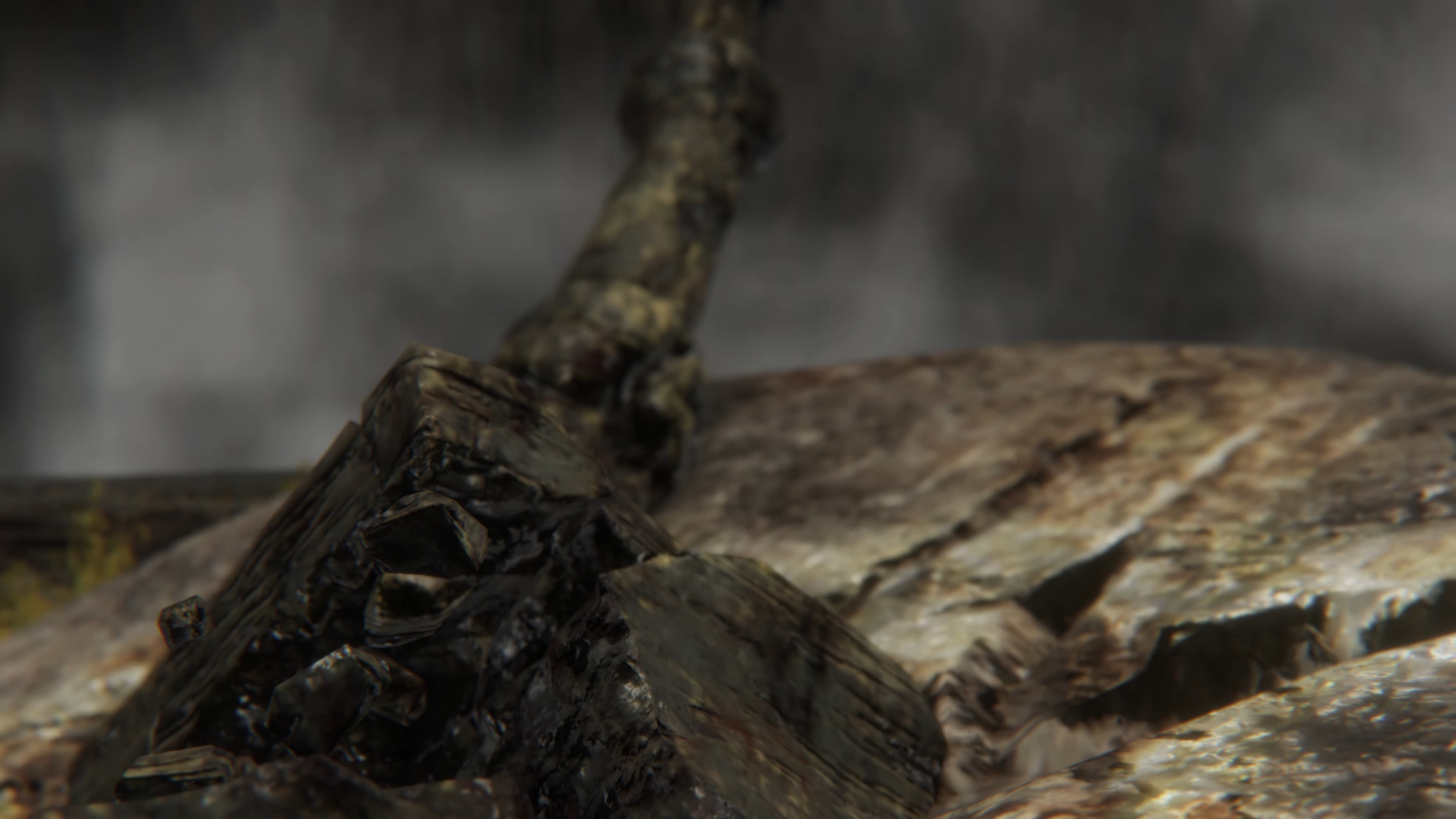
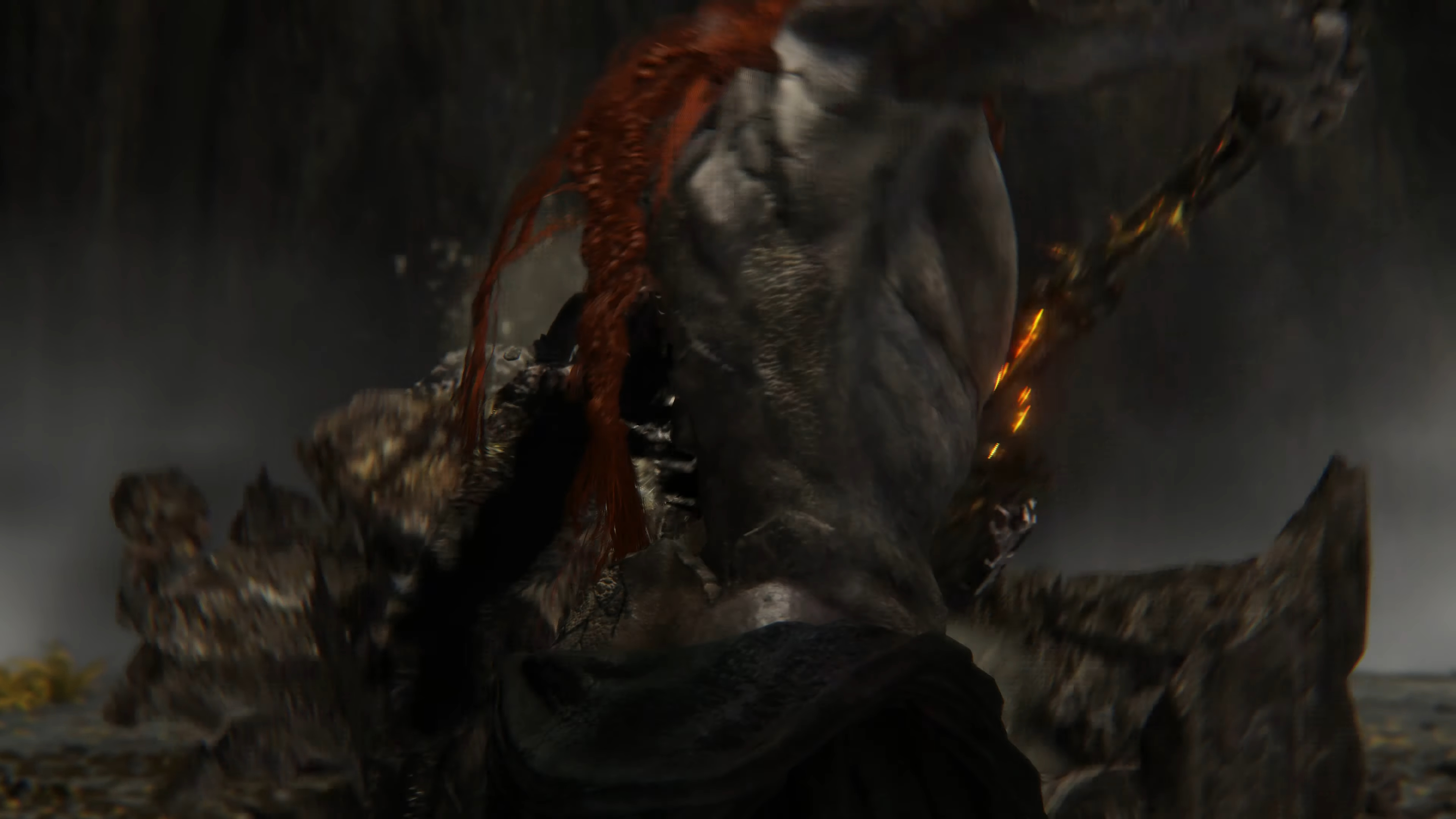
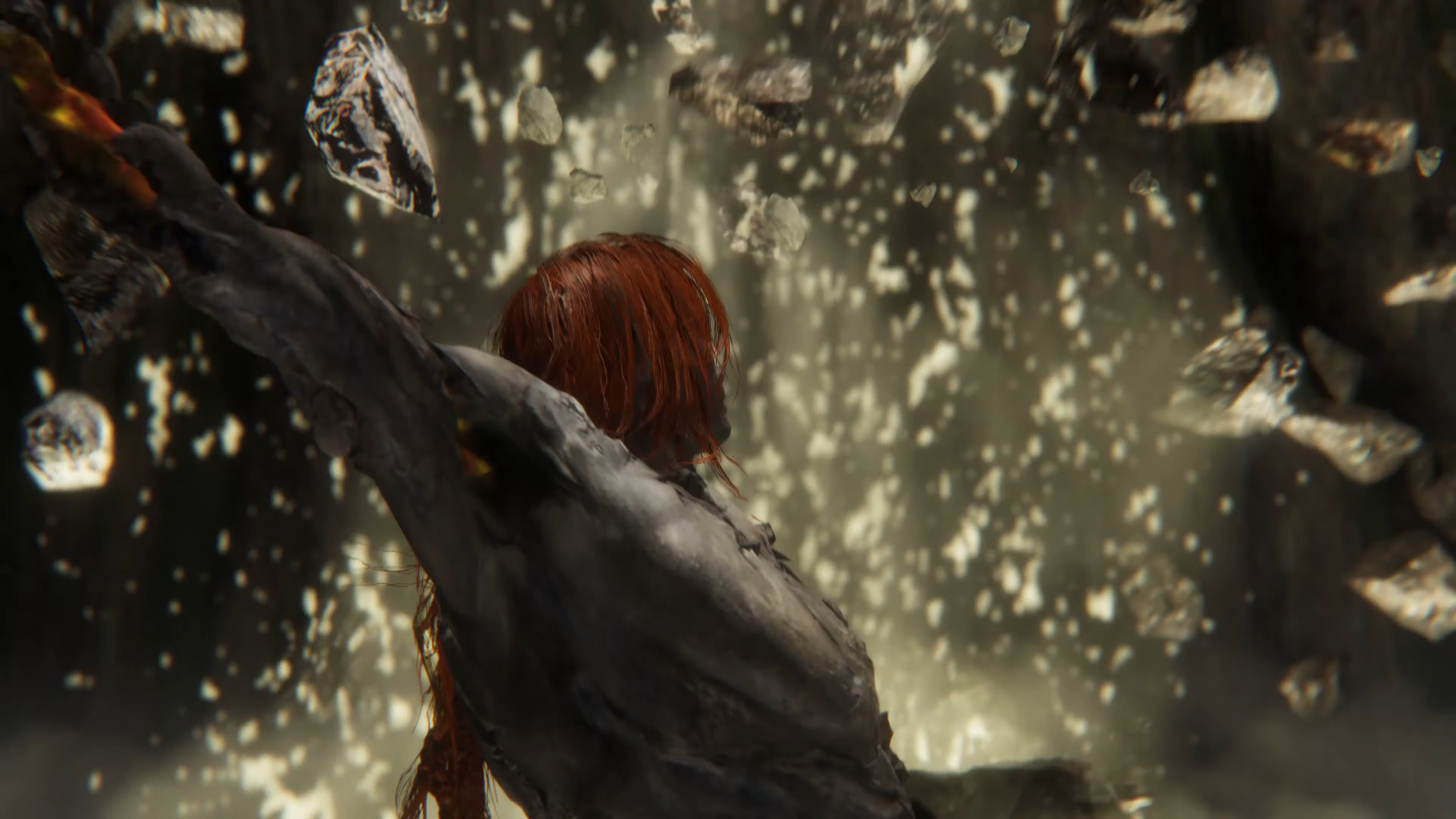
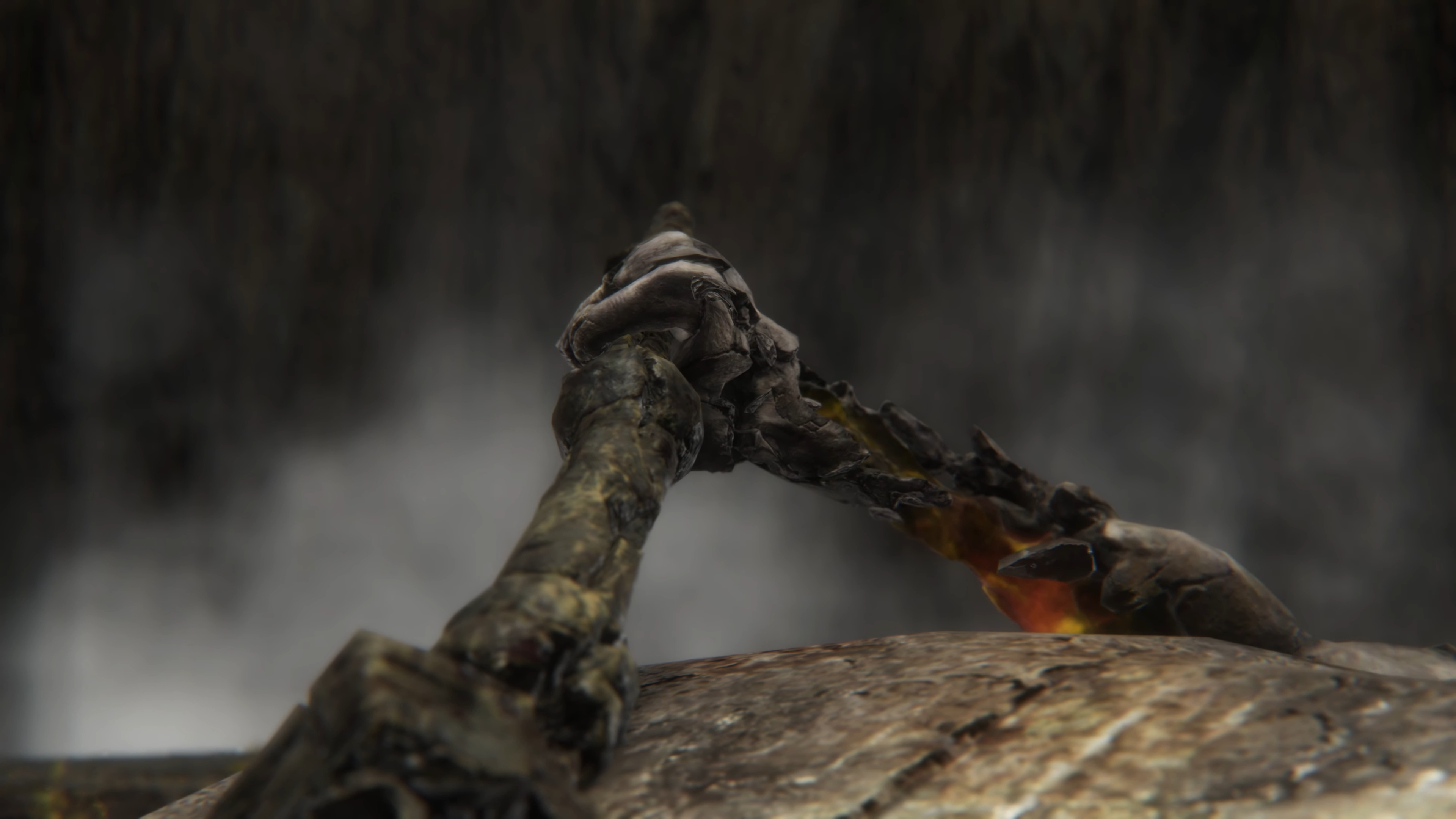
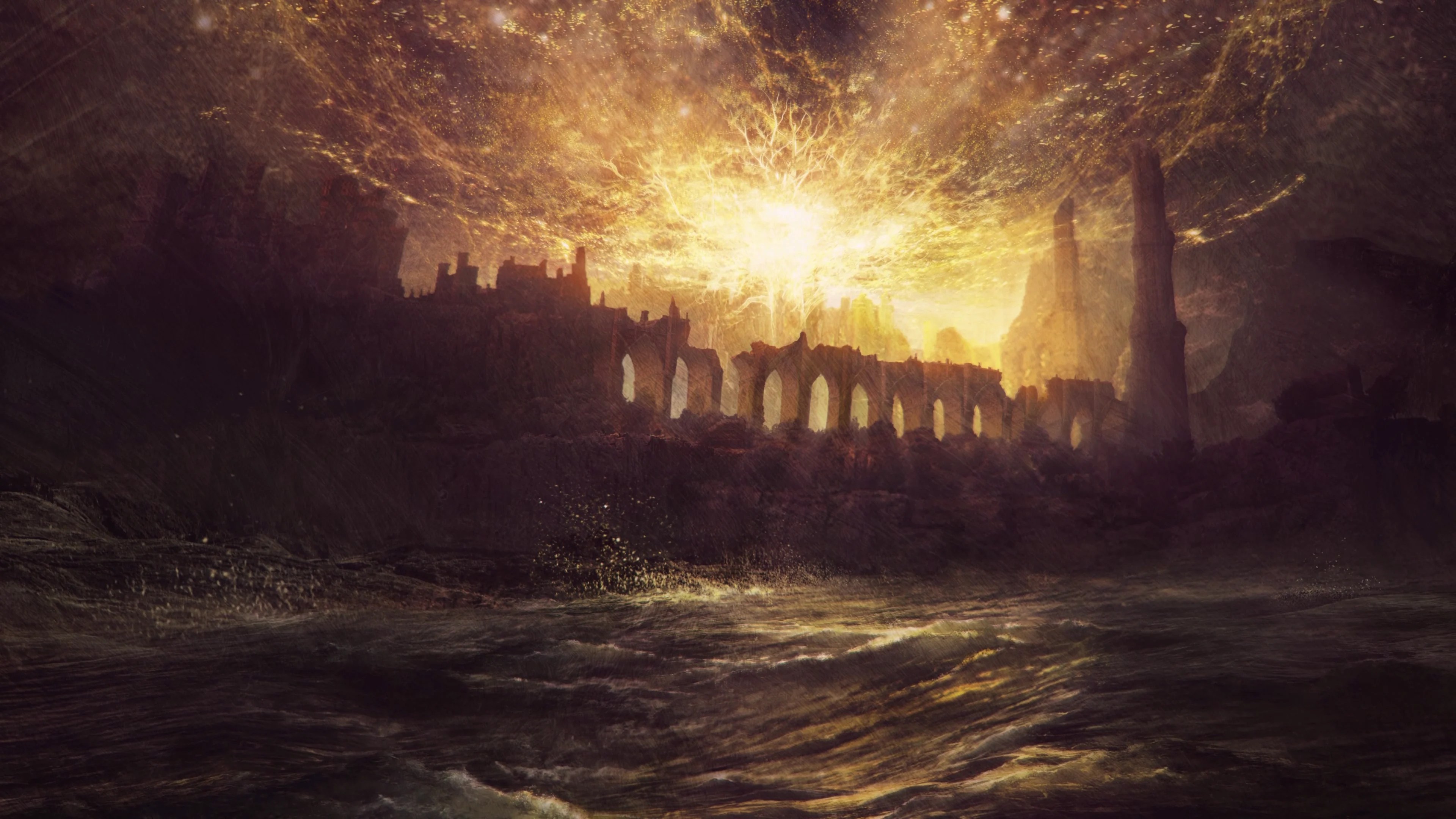

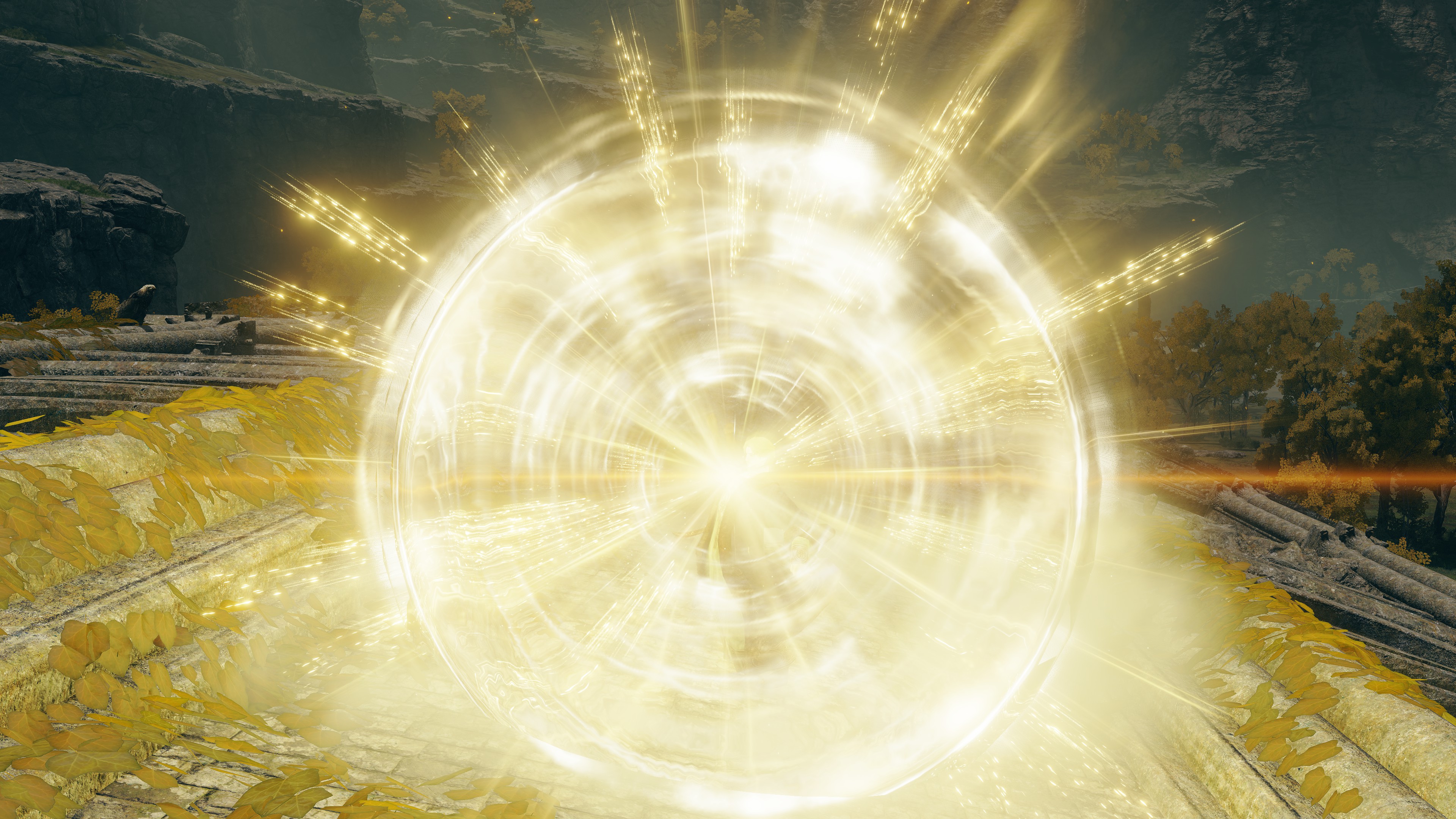
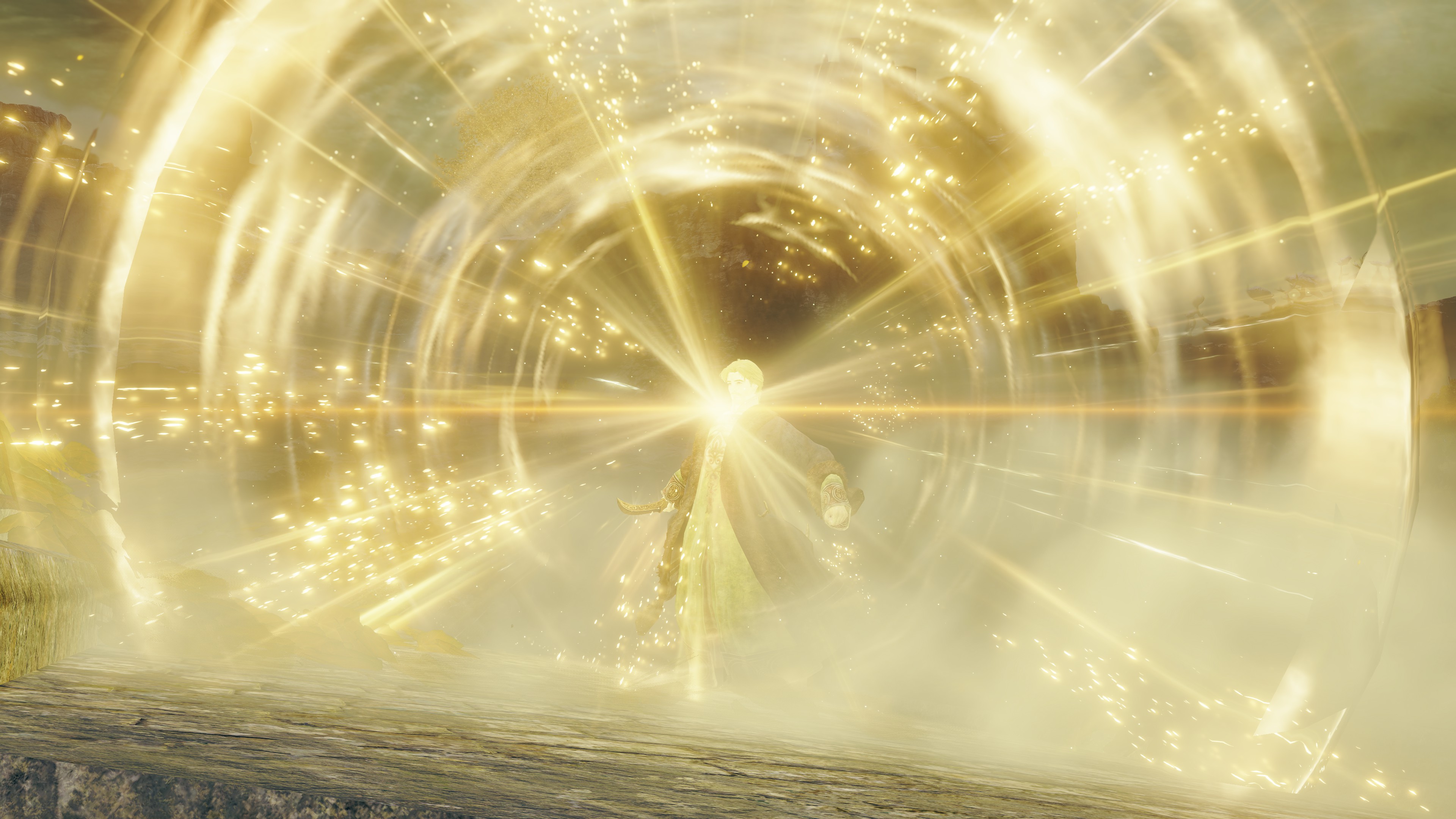
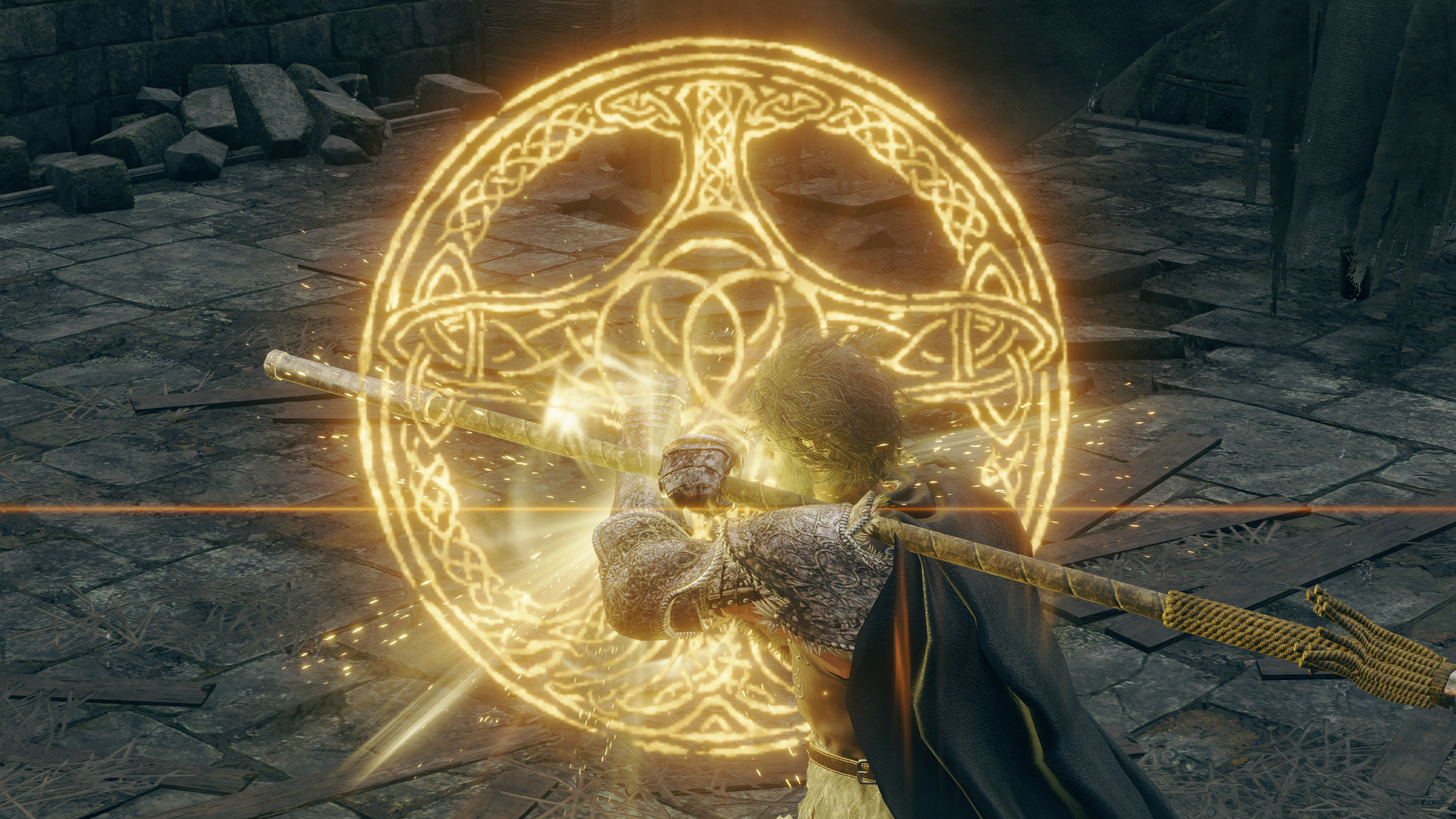
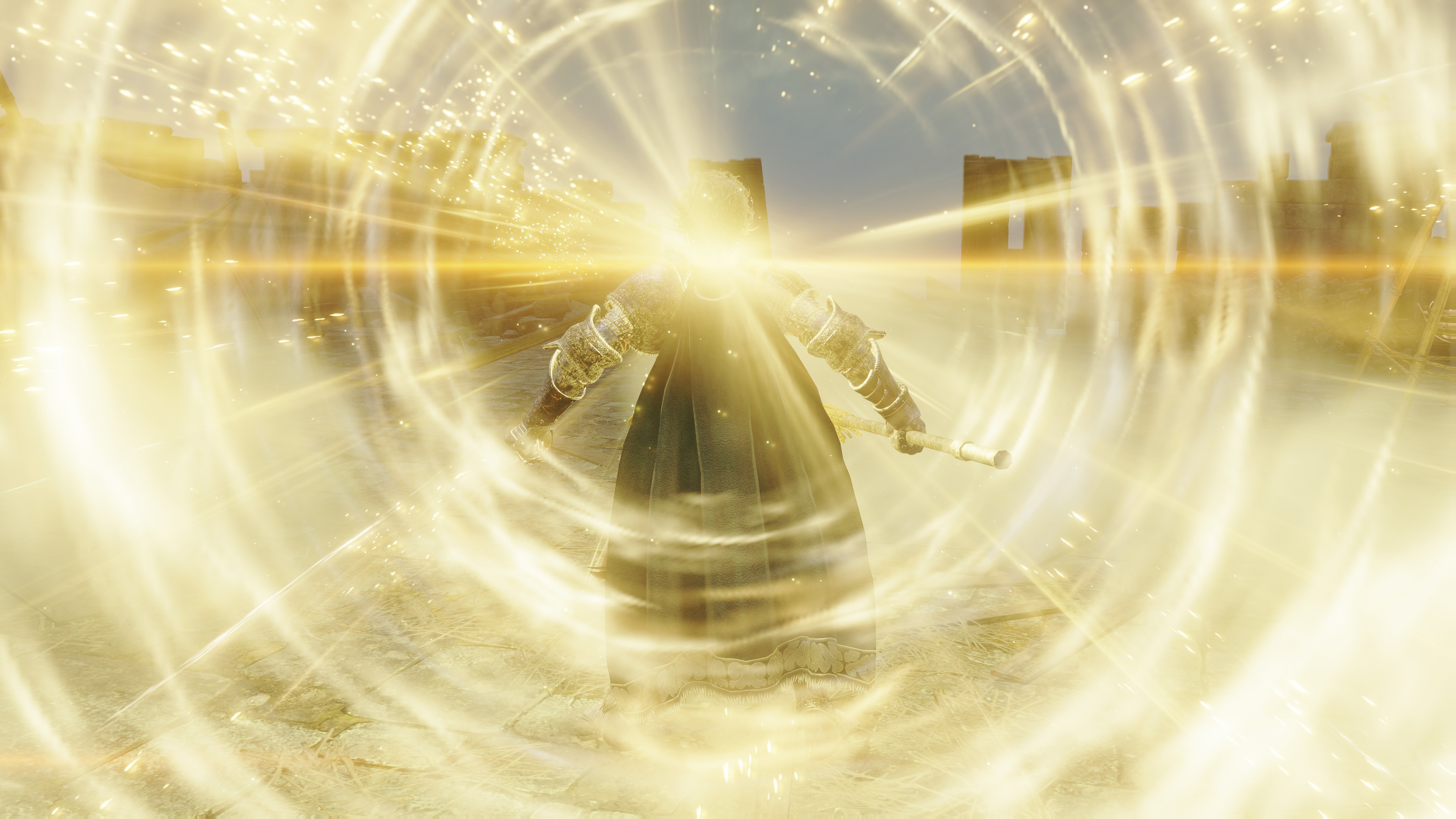
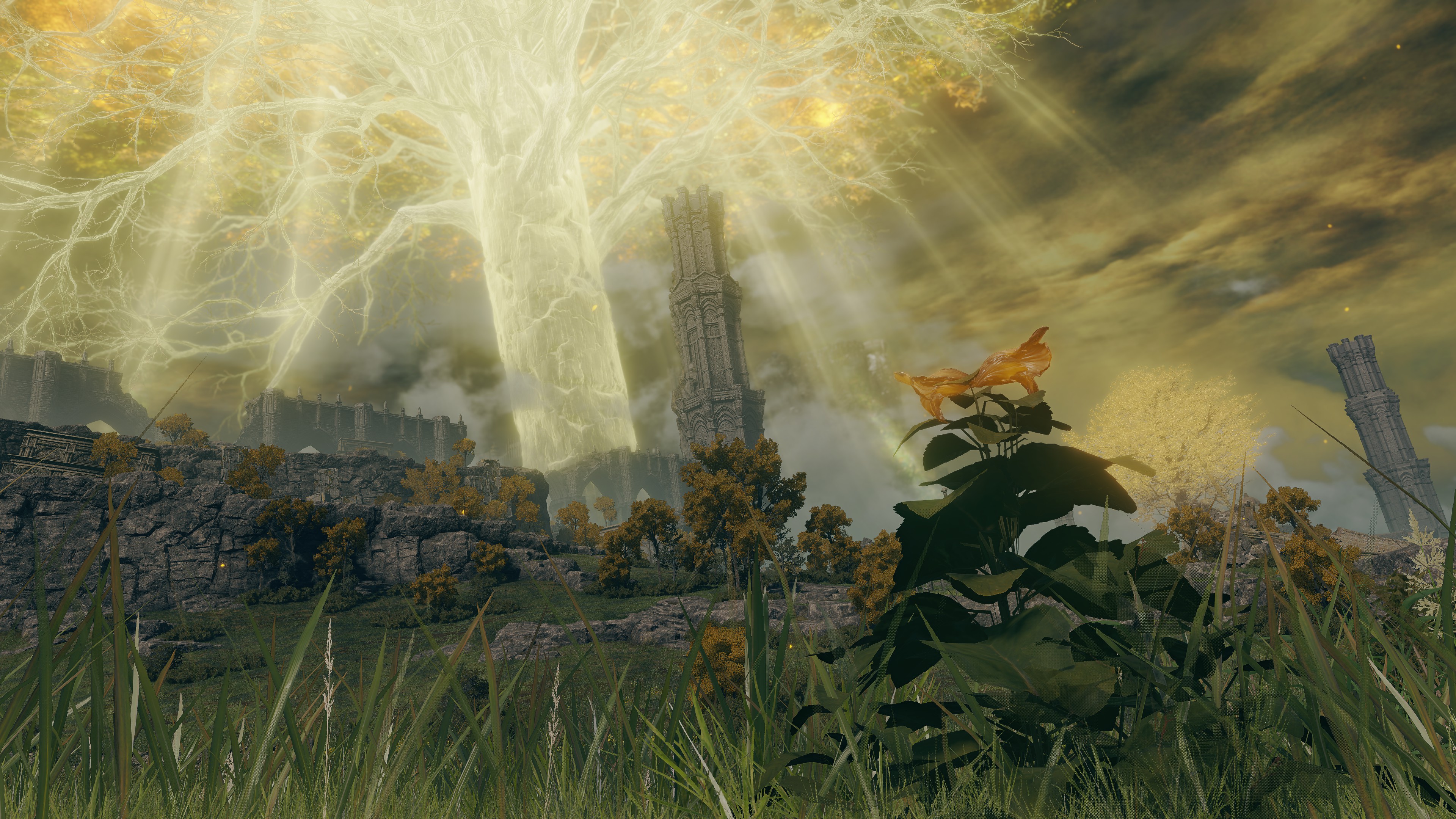
You probably still can’t even imagine it. The Elden Ring that regulates even the flowing stars and brightens the light of life to its height. Ohh, the Elden Ring. For it was broken. By someone, or something. You really don’t see it? Even though the sky is burning like this?
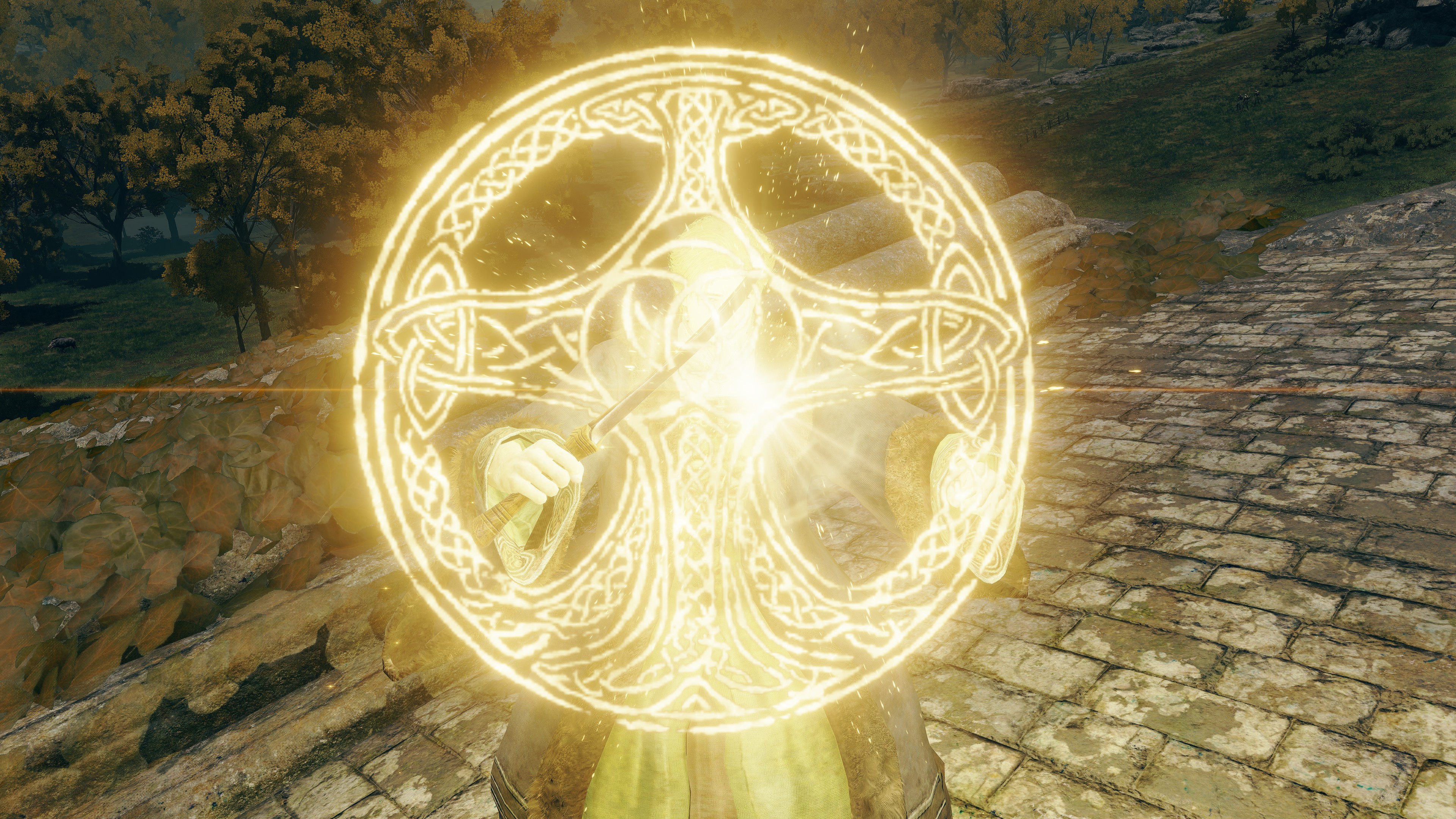
One of the Golden Tree faith prayers. The superior of them.
Generates golden shockwave that blows away surroundings. Shockwave enlarged with charging.
Prayer discovered when the Elden Ring was broken. People believed it the wrath of the Golden Tree.
… The fallen leaves impart it. The great Elden Ring has been broken. In our homeland, beyond the fog, the Lands Between, the Eternal Queen Marika hides. And, on the night of the Black Knives Conspiracy, Godwyn the Golden died first.
Granted, the Erdtree was more concerned with its own mortality than getting out a message. Like back when the Crucible effectively perished, the dying tree reflexively released seeds, which we see have taken root as phantom trees, some even finding their way deep underground or high in the sky. Those seeds which didn’t land on earth end up carried on the sea, one washing ashore in our home region to become a potential keepsake. The sheer number of these new trees exceeds the Minor Erdtrees by double digits, so we can infer that the Erdtree considered this incident that much more dangerous — this time, the vitality drained from it might actually be fatal. It is because of that possibility that the Erdtree wills its existing progeny be protected, hence the Erdtree Avatars born beneath each of their canopies. With a staff to cast incantations and reserves of the old Crucible’s strength, they stand as guardians against any outside threat. Conversely, the old guardians have been punished with arboreal transformation for breaking their contract, even if that was arguably outside their control.
Golden seed found at the base of a phantom tree.
They came flying to various lands from the Golden Tree when the Elden Ring was broken. As if life sensed its own end.
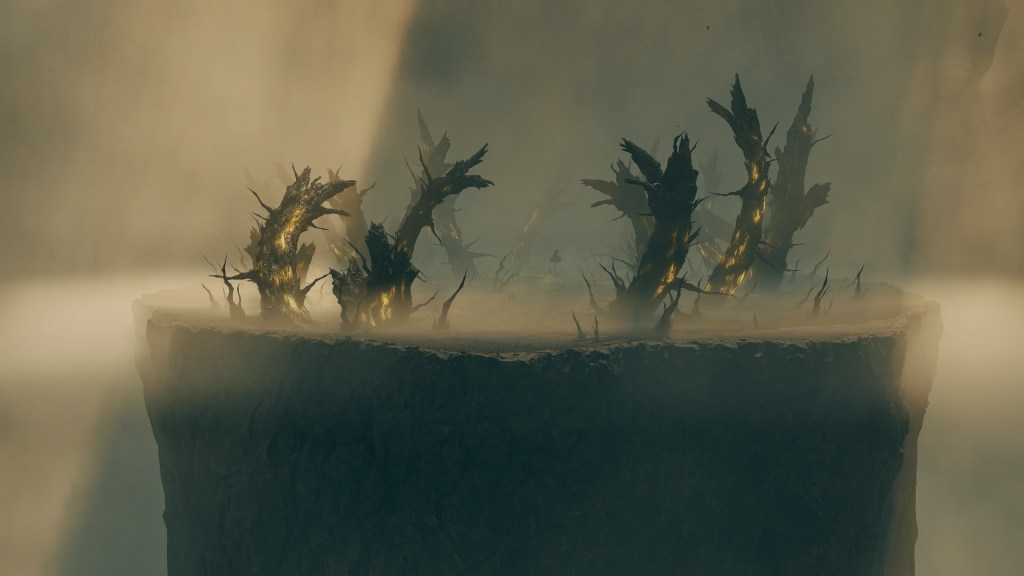
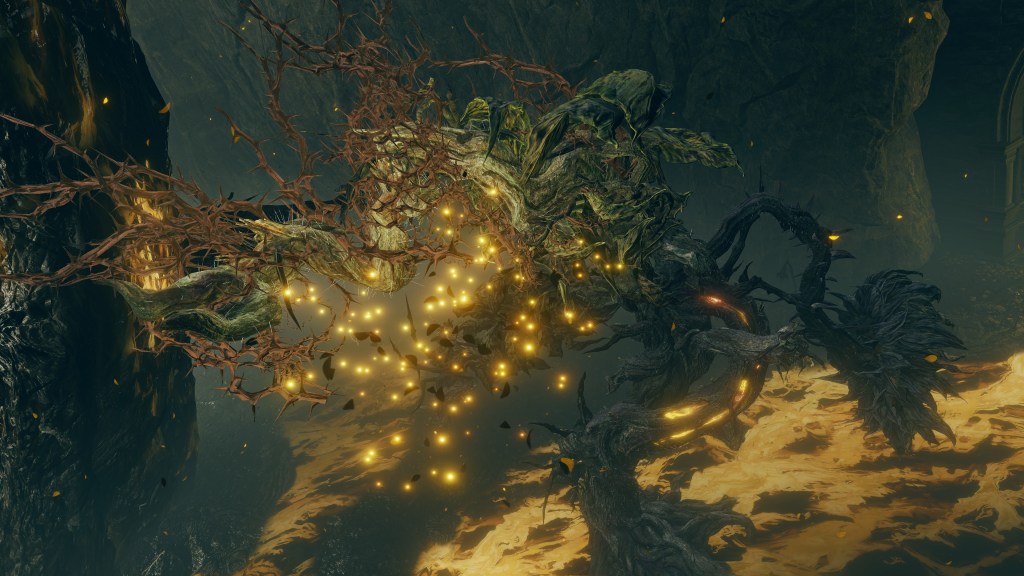
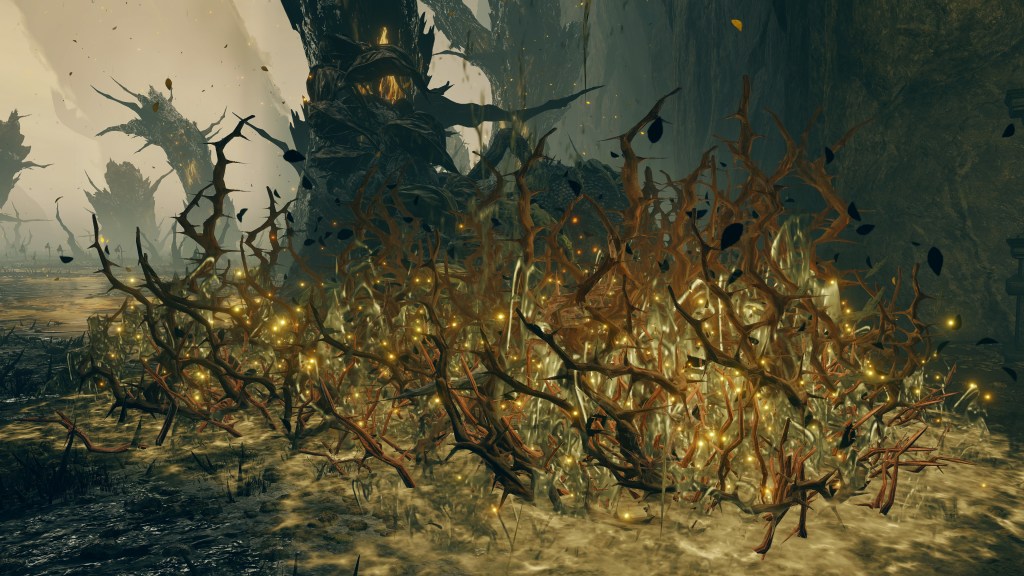
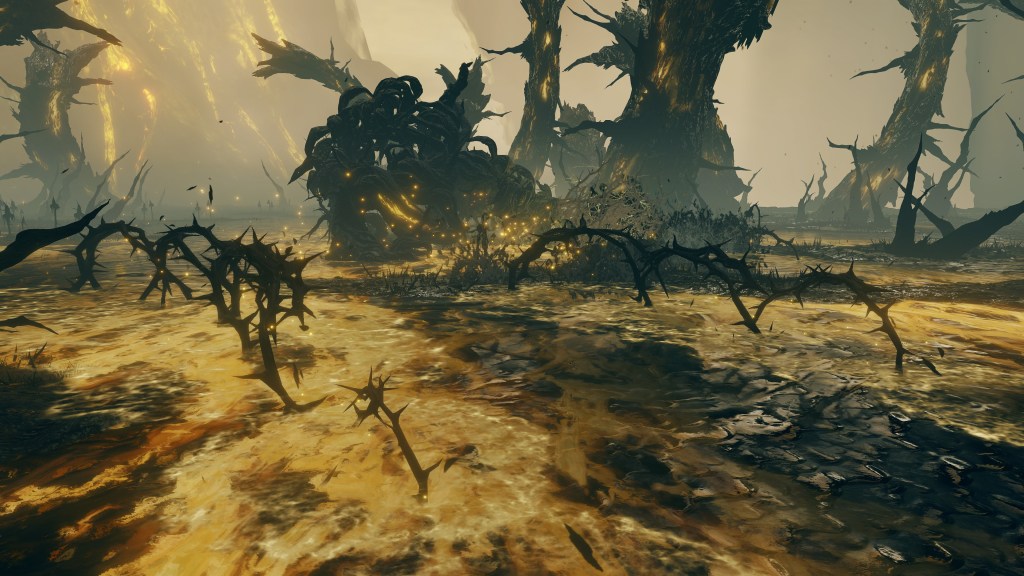
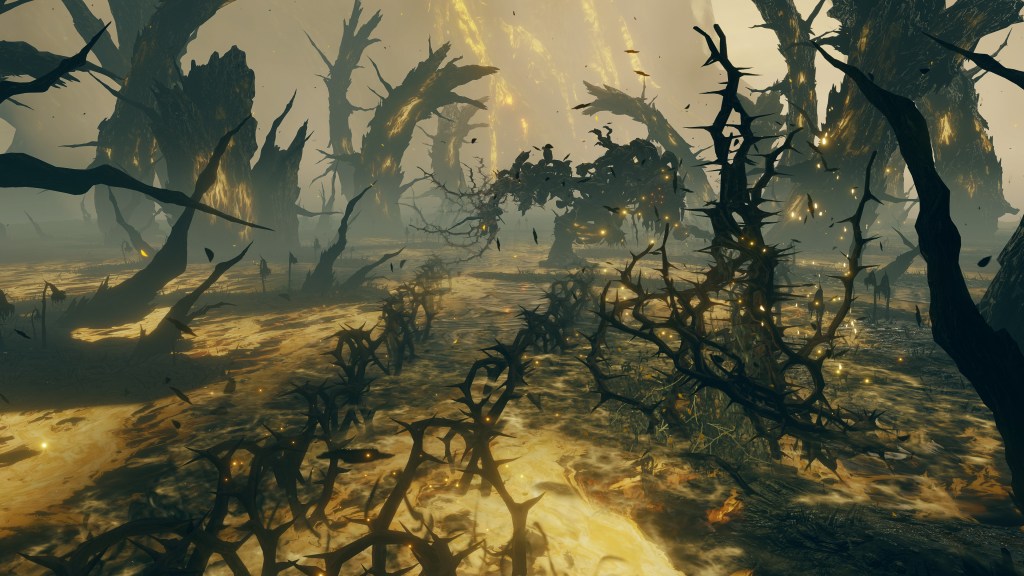
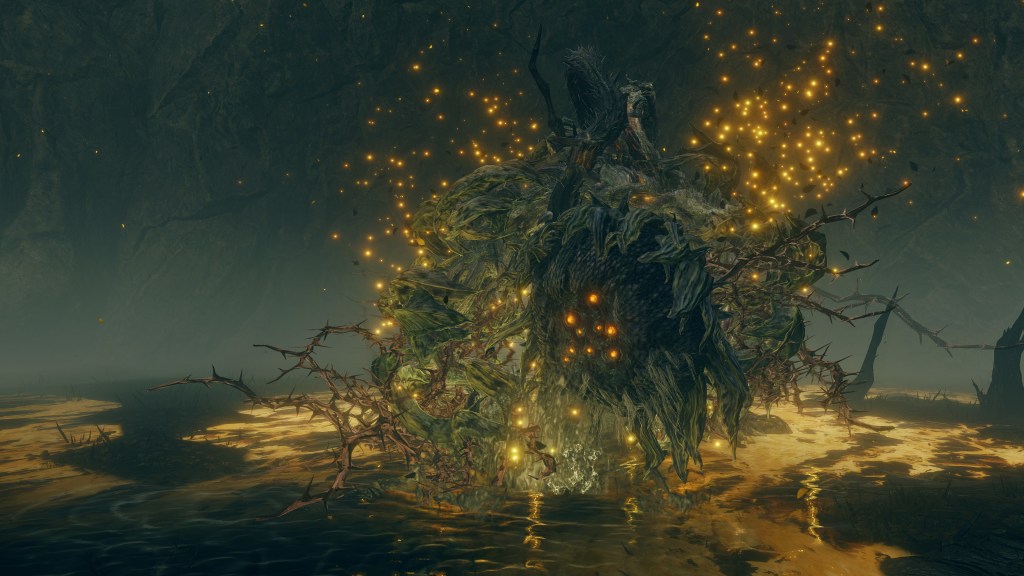
Much of the same took place in the Realm of Shadow. The Scadutree experienced a similar outburst of power which worshipers captured as an incantation, the name and ranged effect of this Wrath from Afar reflecting their understanding of the true source of this shock. Because the Erdtree’s shadow is so frail and twisted, this caused real harm to said shadow. The tree broke from within, scattering countless small fragments across the entire realm — not to mention the many larger fragments which simply fell and litter the tree’s base. Among the wreckage was also born the Scadutree’s own avatar, a “legless” humanoid shadow sunflower mirroring the tree’s crooked form in contrast to the “headless” walking trees in the Lands Between. The thing reenacts the tree’s self-destructive shock, leaving no doubt the cause to its existence. When slain, another sprouts up in its place, the same boss seeming to regrow its form from the roots. Otherwise, the persistent avatar relies more heavily on thorns to keep threats away. For a tree already twisted by dark thoughts, death from a “friend” no doubt comes at little surprise.
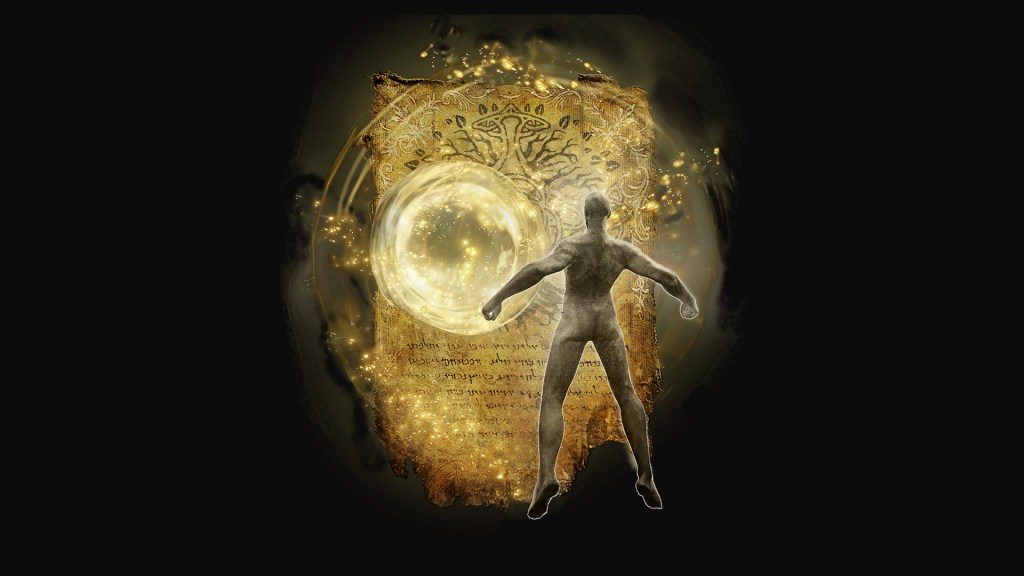
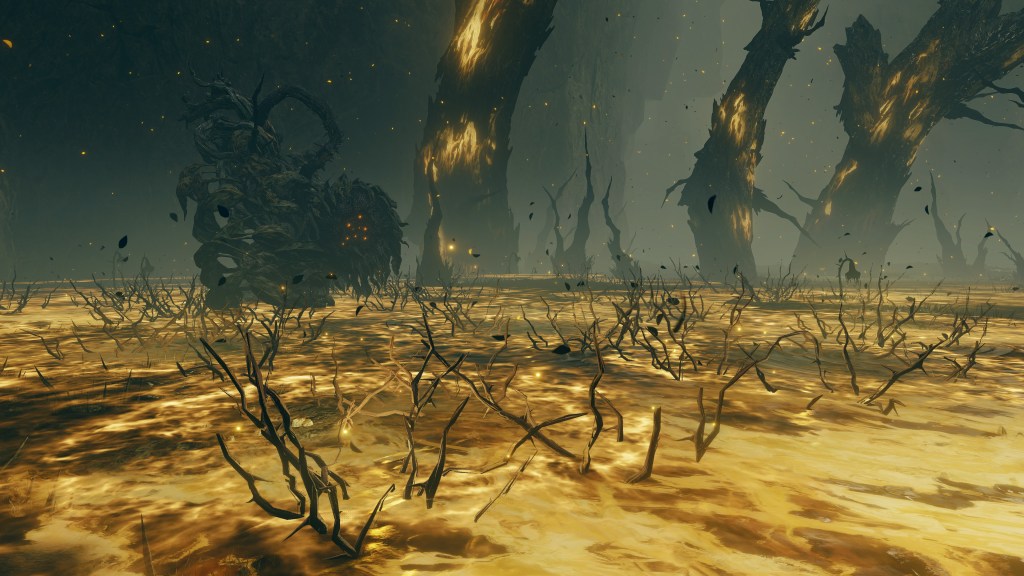
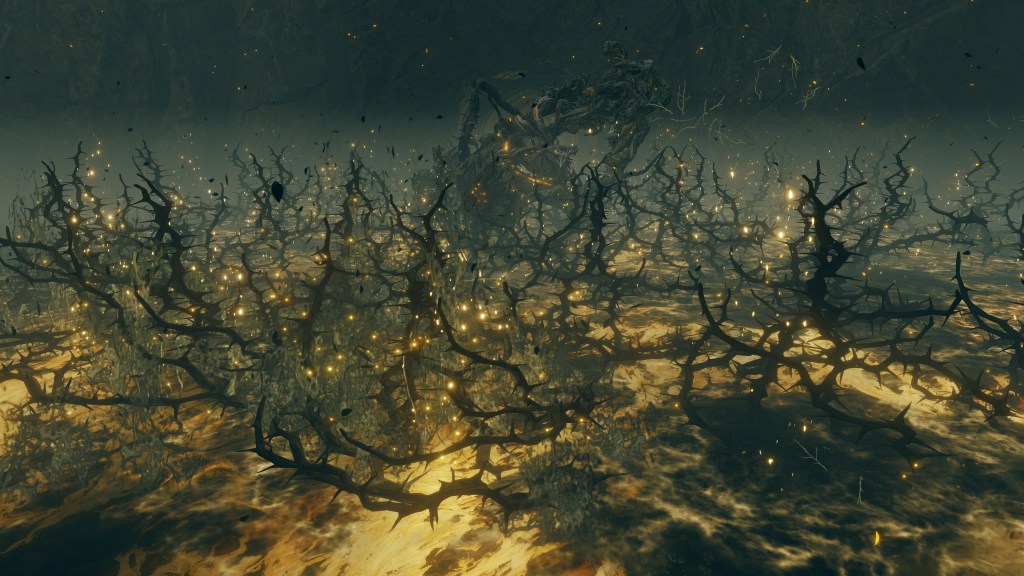
Golden Tree prayer discovered in the Land of Shadow.
Fires golden shockwave that blows away surroundings. Shockwave enlarged with charging.
When the Elden Ring was broken, the people of the Land of Shadow also felt it and believed it the Golden Tree’s wrath.
Fragment of the Shadow Tree containing a golden radiance. Can be attained in Marika’s churches of the Land of Shadow and the like.
It is said to be what scattered across the entire Land of Shadow when the Shadow Tree broke from within.
People of the Golden Tree have gathered them to pray.
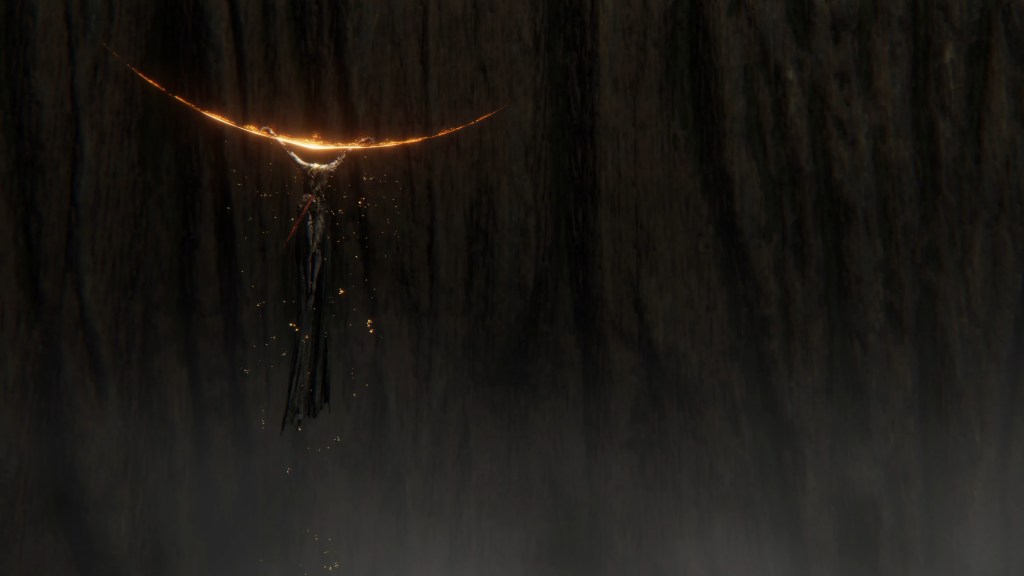
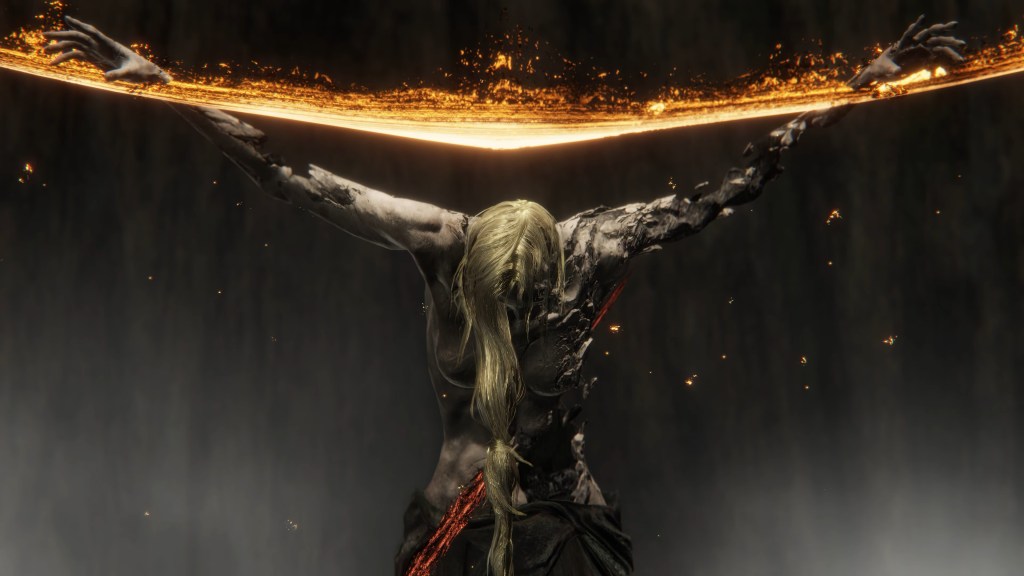
Meanwhile, the cause of death didn’t escape punishment. Even if she ultimately won out in the battle of wills, Marika still ended up captured for her actions. The one doing the capturing was presumably the Elden Ring itself. When grabbed by the Elden Beast, we find ourselves crucified in a similar manner to Marika, hanging from a rune arc as a multitude of golden spears run us through from all angles, culminating in a collective explosion. In the Eternal Queen’s case, she has only the first spear stabbed through her right side, referencing the spear in Christ’s crucifixion. This golden spear has a more reddish hue like the Crucible, suggesting that it is an especially dense concentration of power — maybe necessary to keep a god suppressed. Unlike in our case, the intent wasn’t to kill Marika, per se, but prevent her from acting independently. Despite everything, she remains the Ring’s host, thus is left suspended midair in probable pain to suffer while deprived of agency.
Queen Marika is the host of the Elden Ring, the one who bears its vision. In other words, God. But she is being captured in the Golden Tree after the Elden Ring was broken. As punishment for breaking the Regulation as God, that grave error…
One might question why the Elden Beast didn’t act sooner if restraining the queen was so easy. Marika’s Hammer looks untouched since the Ring shattered, while Marika herself hangs directly before it, Radagon ready to pull the hammer from the wood immediately after dropping to the floor practically on top of it. By all indications, no sooner did the Eternal Queen succeed in breaking the Ring that the Ring itself responded with swift and decisive action, arresting her on the spot. If so, then defending itself preemptively should have been simple. However, this is with the benefit of hindsight. Had Radagon succeeded in stopping Marika, there would be no reason for the beast of Order to step in. This wasn’t the first time the Ring had been subject to tampering, and it was for the god to decide. Before the sinful action was completed, the Elden Beast defaulted to wait and see.
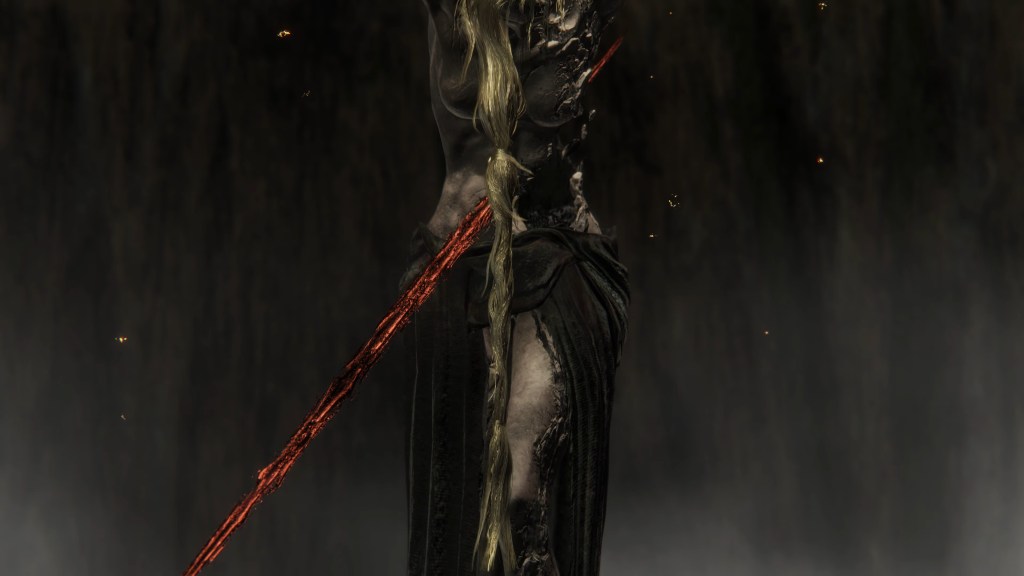
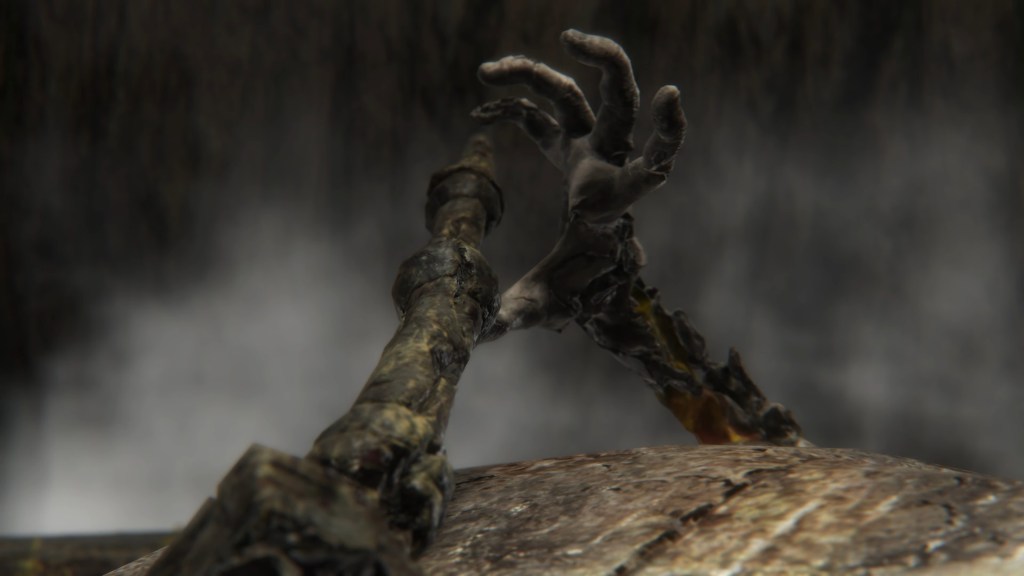
But the sin was indeed committed, and it is likely for that reason that Radagon shares in Marika’s punishment. He was the one who failed to rein in his other half, making him just as guilty in Gold’s eyes. As her “better” angel, the so-called dog shouldered the burden during that fateful moment, and the Elden Lord fell miserably short of the Order’s faith in him. As a result, it has stepped in to discipline them both, though the Elden Beast still seems to entrust the man with certain responsibilities. While holding them captive, the Ring nestles itself inside Marika and Radagon’s broken shell of a body, its shadowy manifestation holding the crumbling husk together as the hero king battles on its behalf. It is only after failing it again, losing to us in battle, that the Elden Beast rises from the shadows, literal and metaphorical, once more. We can therefore infer the beast responsible for the crucifix arc fracturing so that Radagon can be freed to fight just as we enter. Clearly, it trusts Radagon’s ability to keep his other half suppressed and defend what is left of the Order in this moment.
Besides rising to the occasion for the final battle, Radagon also appears to be granted a greater degree of agency in captivity. It is his Elden Rune which manifests alongside the impenetrable Thorns of Rejection blocking the way inside the Erdtree, implicating him in blocking anyone from accessing the Ring or Marika. There is also the curious case of an Erdtree Avatar manifesting in Leyndell. The main tree protecting itself with an incarnation isn’t unprecedented, another patrolling down in the Deeproot Depths. But this avatar just so happens to occur as we traverse the main street, with no other overt impetus for appearing. Moreover, it is born already carrying a Lord’s Rune, meaning that such power was sourced from the Erdtree. In other words, the second Lord most likely lent his power to the avatar’s creation, making a proxy with which to challenge us as we, the most successful Tarnished, make our way dangerously close to his location. Radagon holds significant sway over the Erdtree from his place inside it, using the giant medium to monitor events outside and respond accordingly.
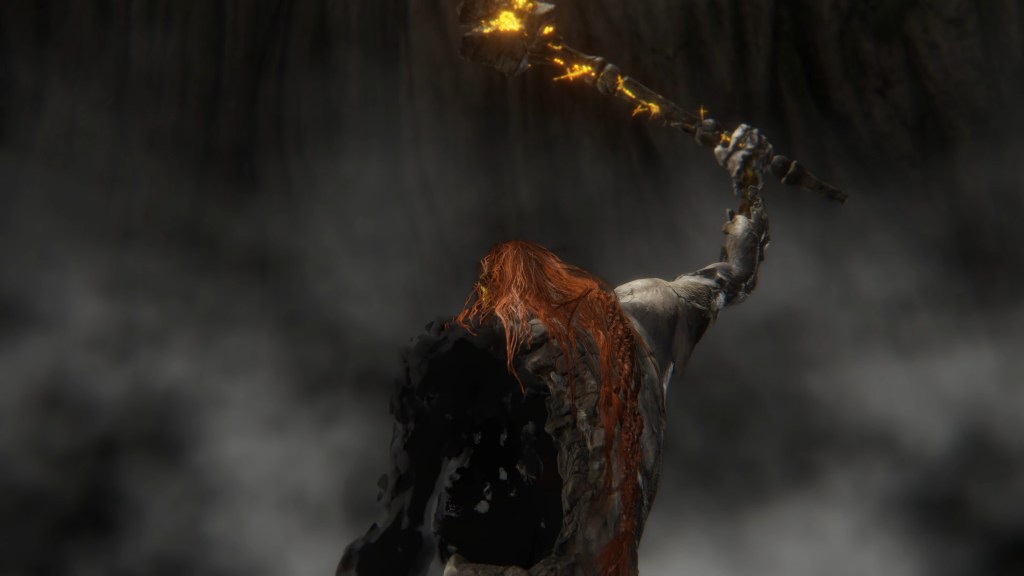
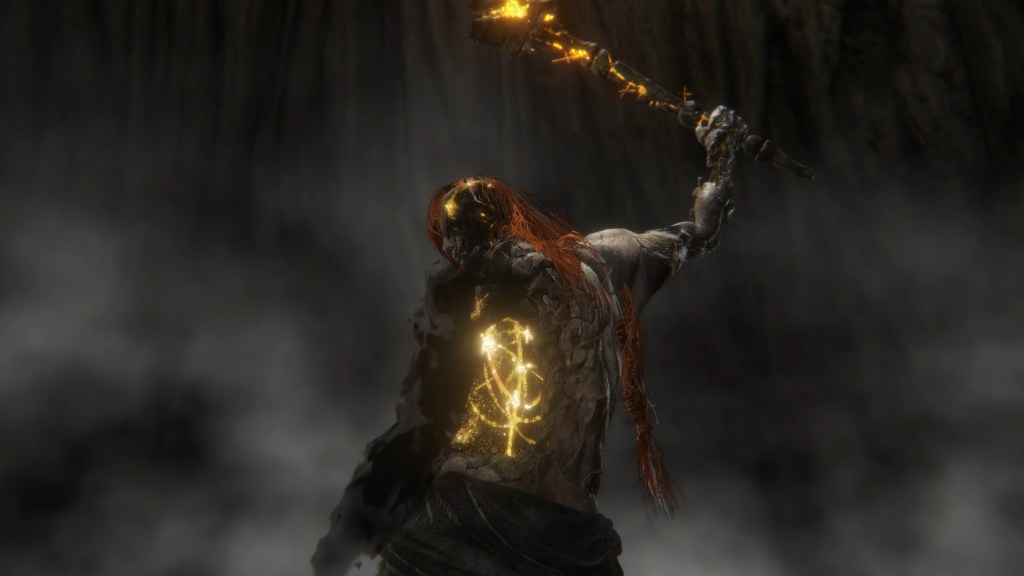
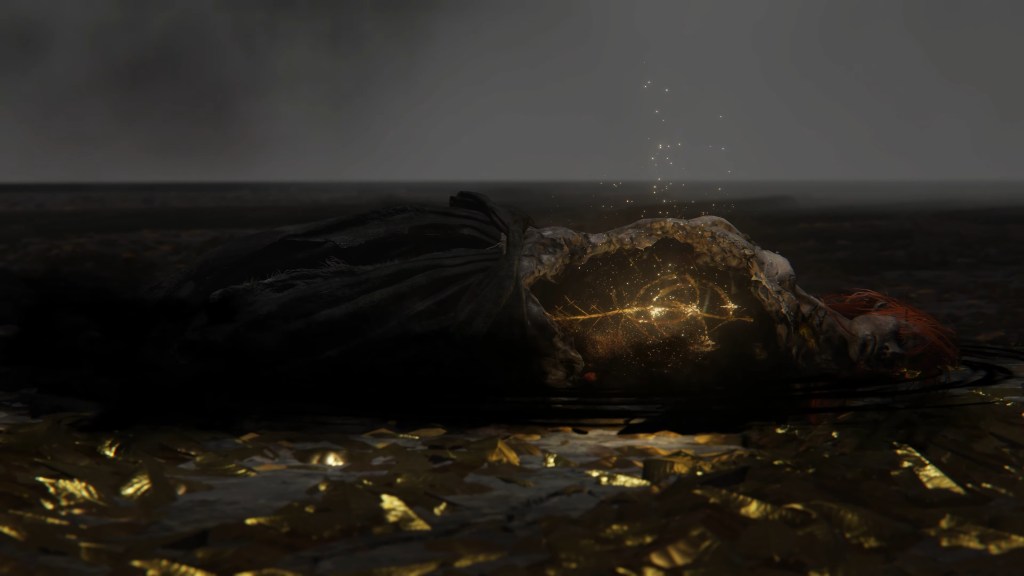
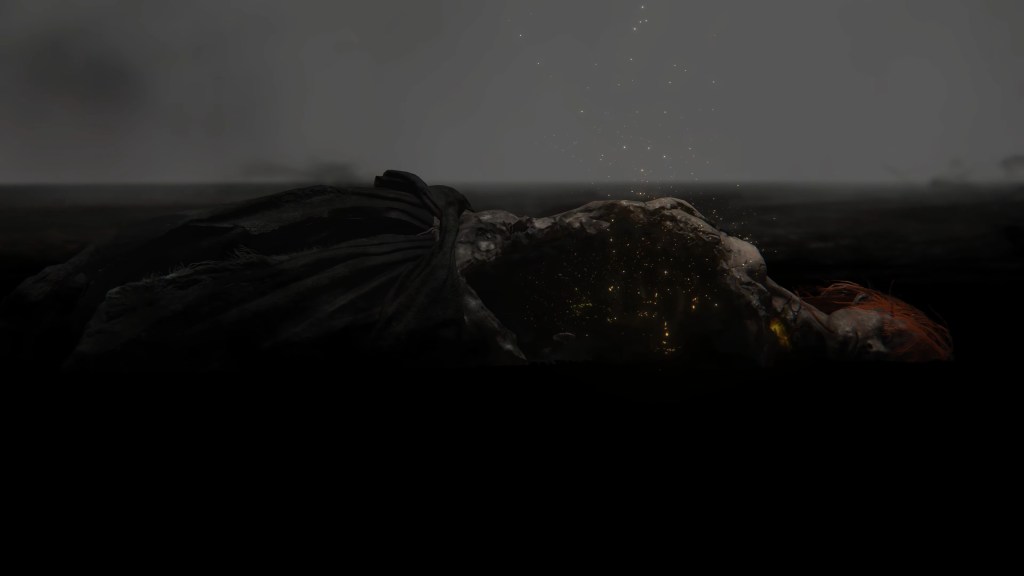
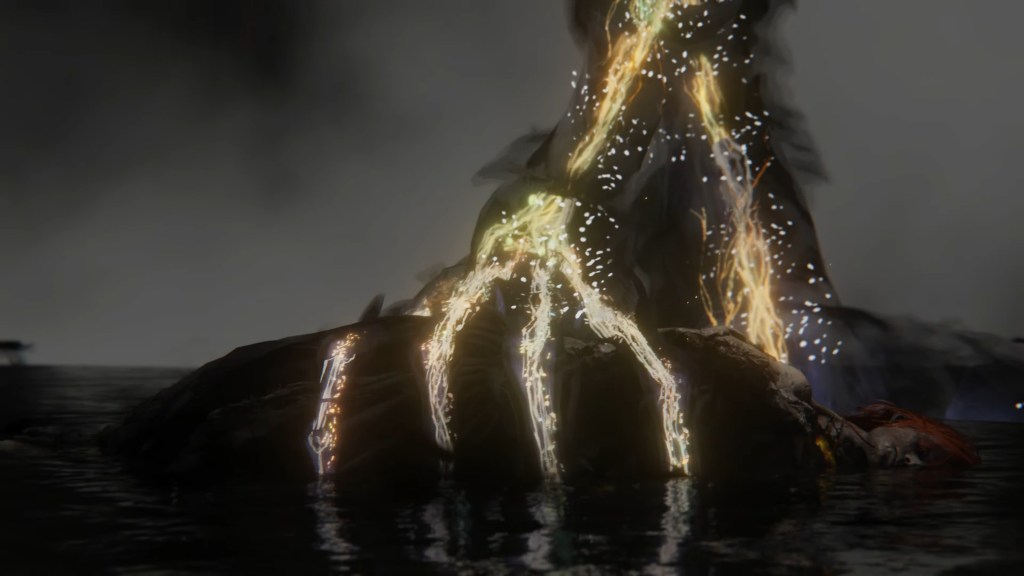
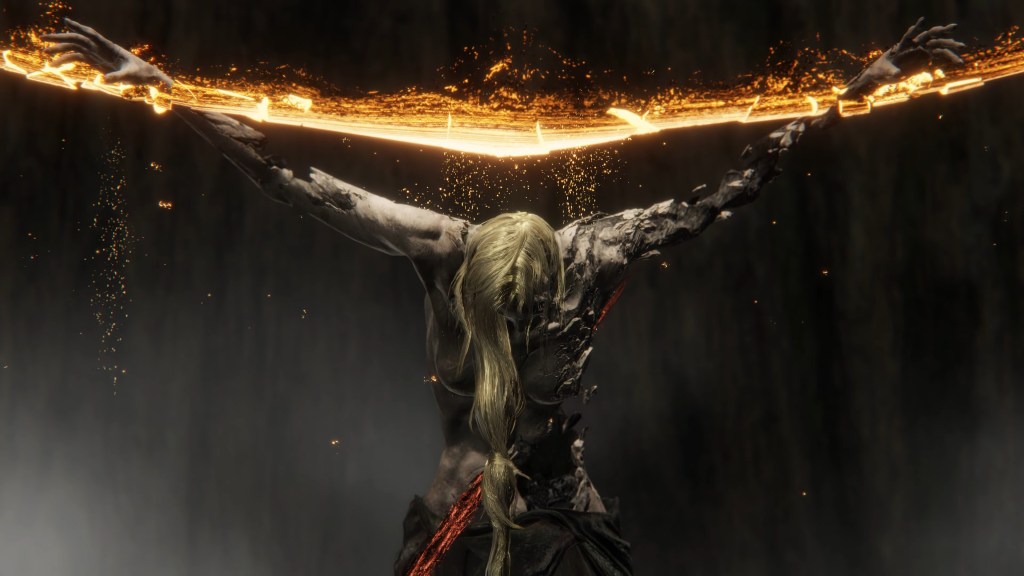
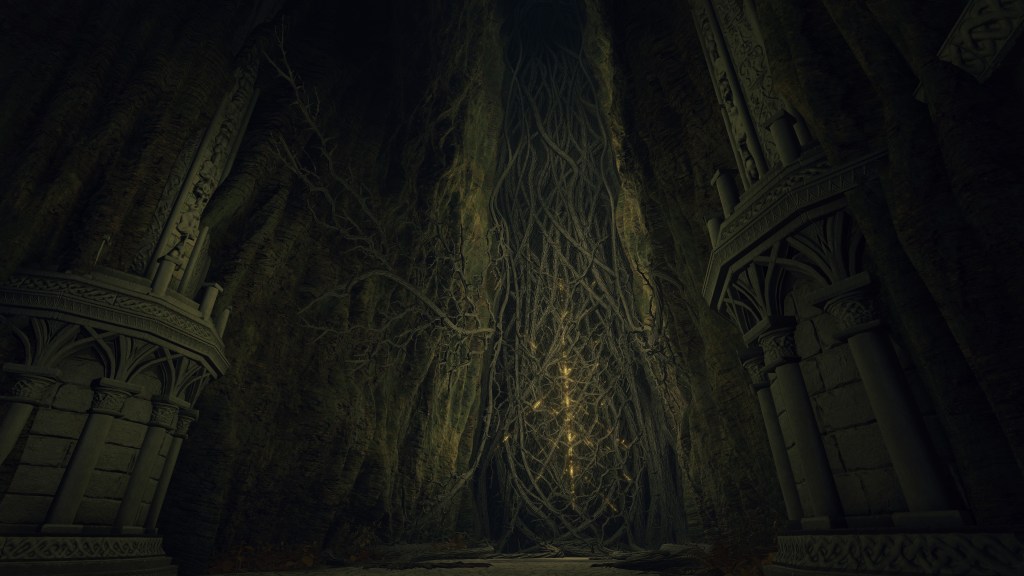
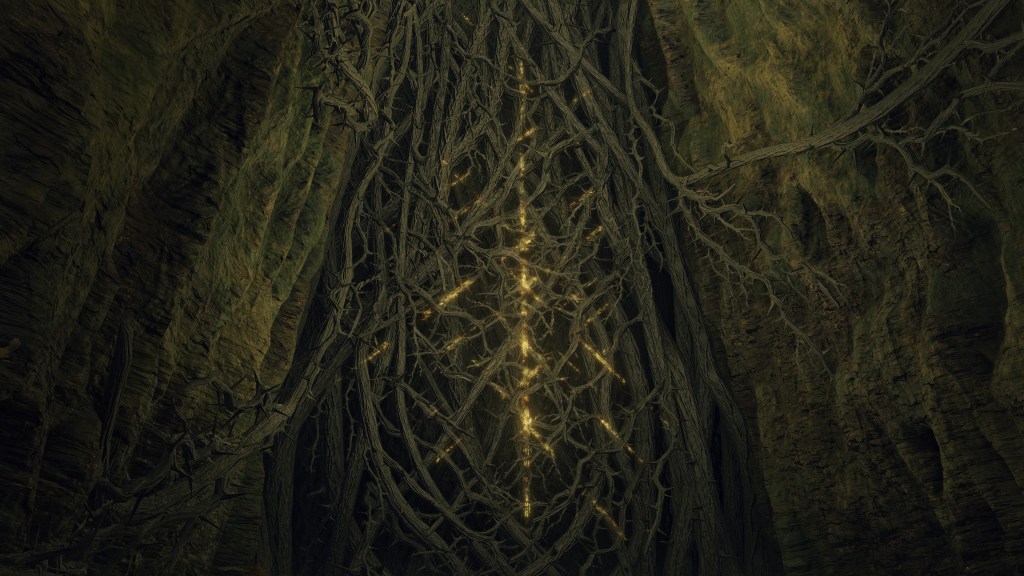
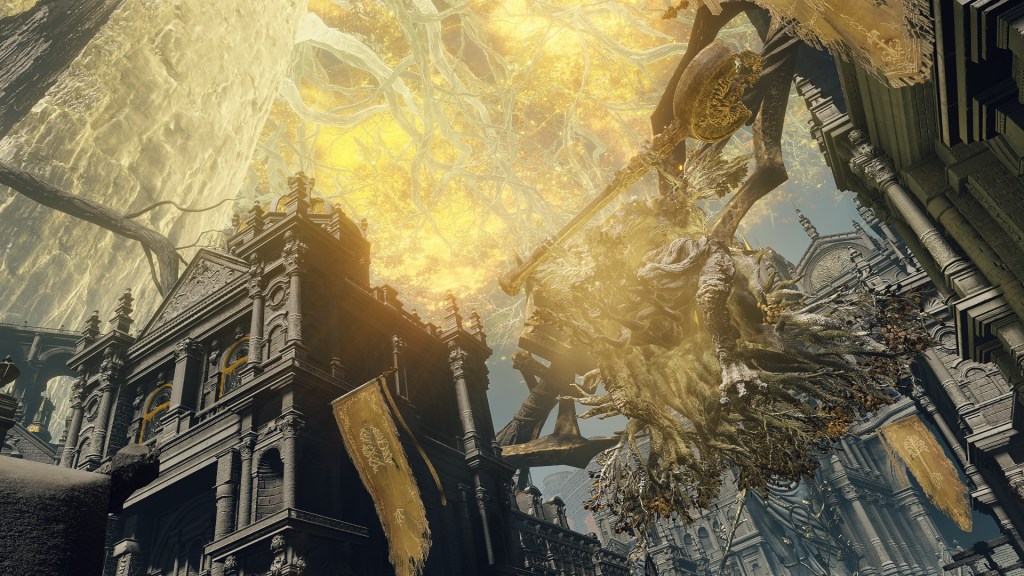
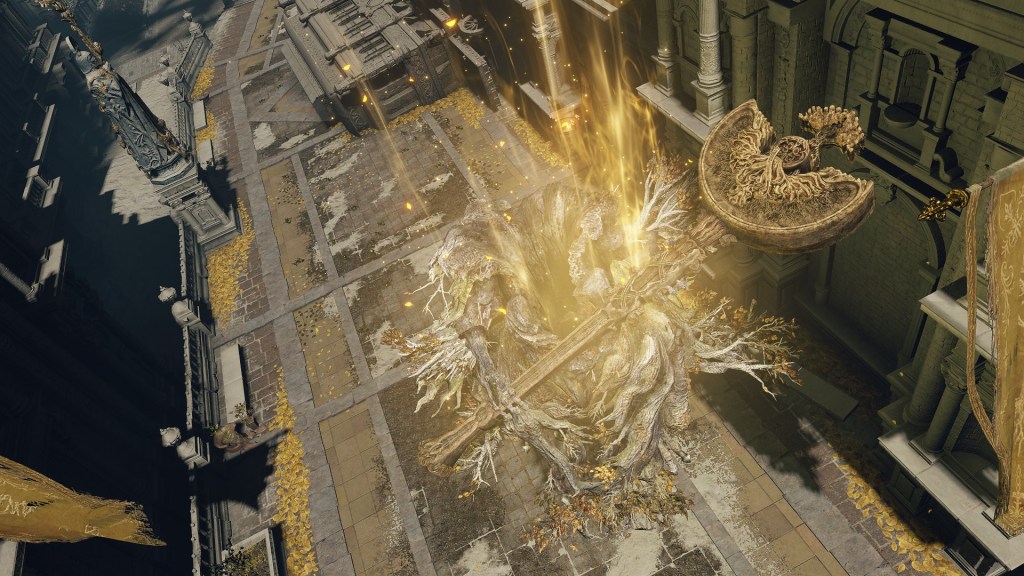
Taken altogether, Radagon is still considered an ally to the Order, and so not restricted to the same extent as Marika. The Elden Beast prefers using the king consort as its agent while it focuses on suppressing the god-queen, which appears largely successful. Beyond supposed communications with certain characters in the outside world, she takes no substantial actions, not even to resist captivity. The way her stone body hangs, the woman almost resembles a corpse, with references to a “DeadMarika” in the game files suggesting that such was the developers’ intention. Ironic as it was for a woman who imposed the same kind of justice, her crucifixion represented the death of god in any meaningful sense. From that point on, the fate of the Order and the world it regulated would be decided by her next nominal partner, the Elden Lord. She has become simply host to that future.
But a Walking Shadow
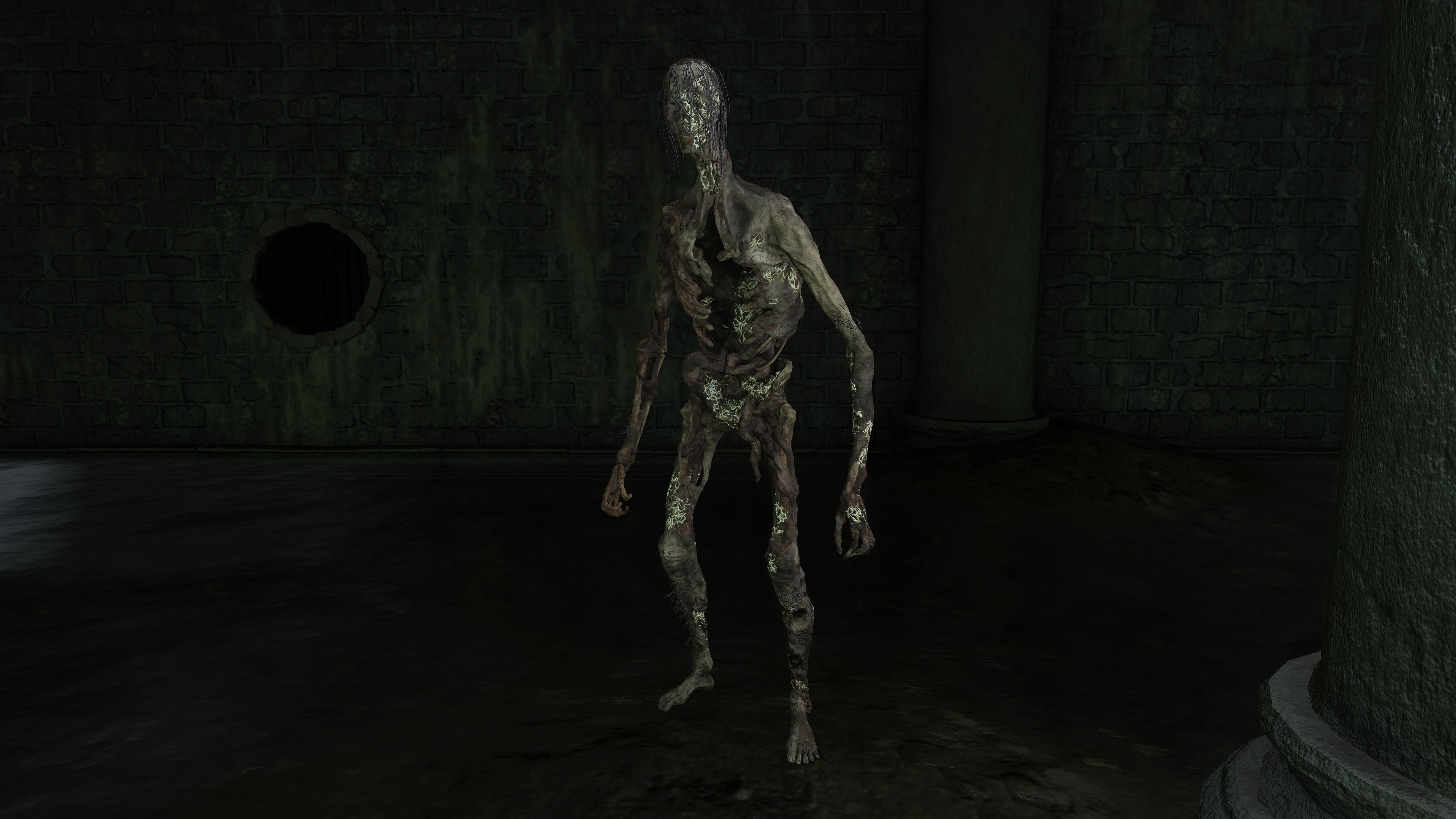
Through Enia, the Two Fingers claims that breaking the Golden Order is an unforgivable error, delivering an appropriate comeuppance. This takes the form of the world and life therein, once blessed by the Order’s grace and fortune, now running rampant with curses and misfortune. While the Fingers doesn’t elaborate, we can surmise the specifics through our travels. Most of the living we encounter look zombified, their skin discolored despite the gold in their eyes. This isn’t just a matter of artistic license, as various item descriptions identify such enemies as the dead — mouja (亡者) in particular. Different from shisha (死者) used in reference to routine corpses or those living in death, this term for the dead identifies spirits of the deceased who have strayed from the path of Nirvana and continue wandering the underworld in Buddhism. To that point, one of the imp heads captures the mouja as the faithful interred in catacombs, devoting life and limb to the Erdtree. They are supposed to be resting, readying their return to golden rapture, not moving about. Would that not fit a broken Order of life?
The great Elden Ring, the Golden Regulation. It regulates the world, and life glorifies the grace and good fortune. But it was broken. The breaking of the Regulation is an unforgivably grave error. That brings just desserts… so, now, the world, life, is hopelessly broken. Curses and misfortune run rampant.
Head part of an imp golem worn as is.
That of a Hollow harbors slight faith.
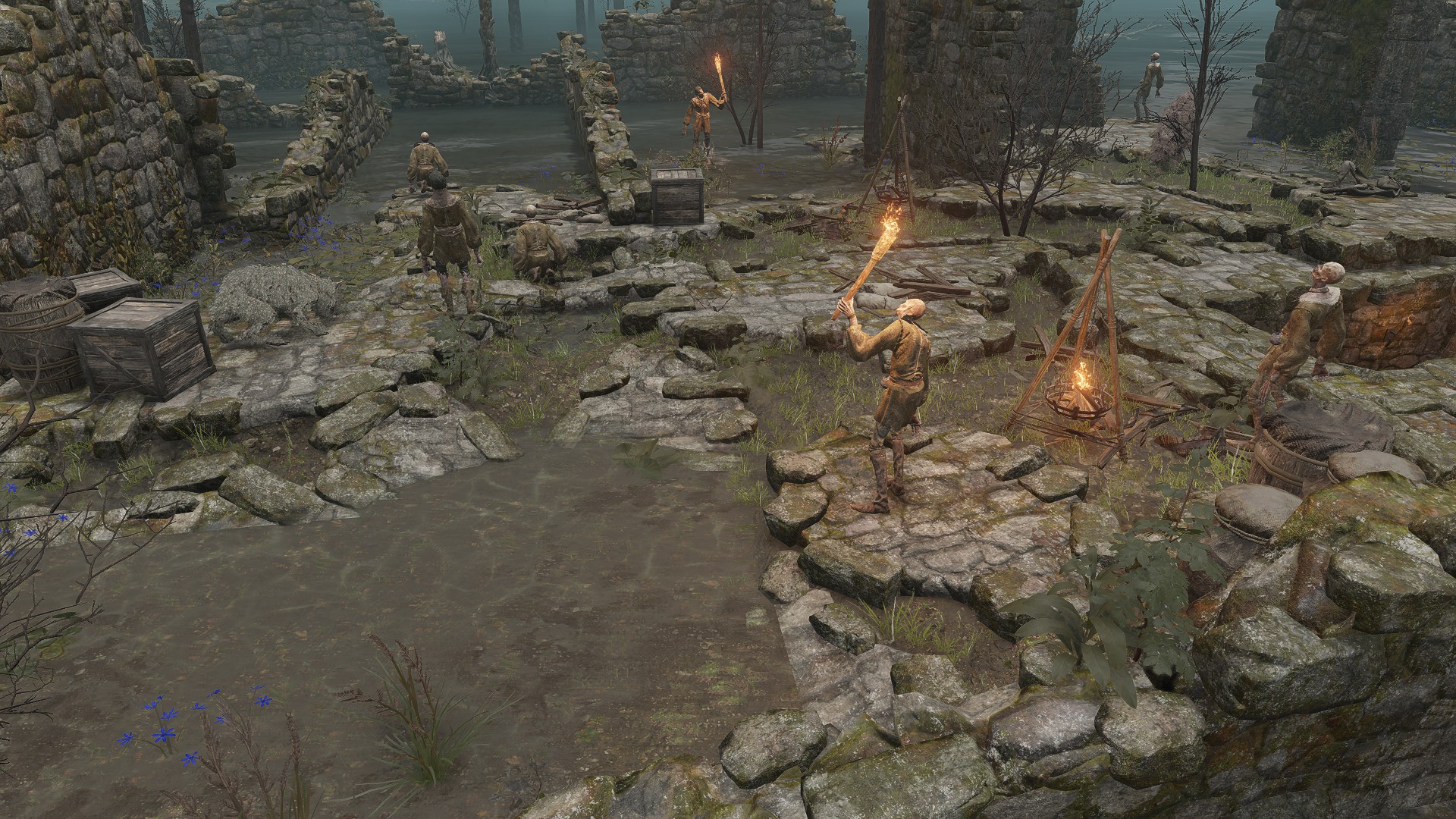
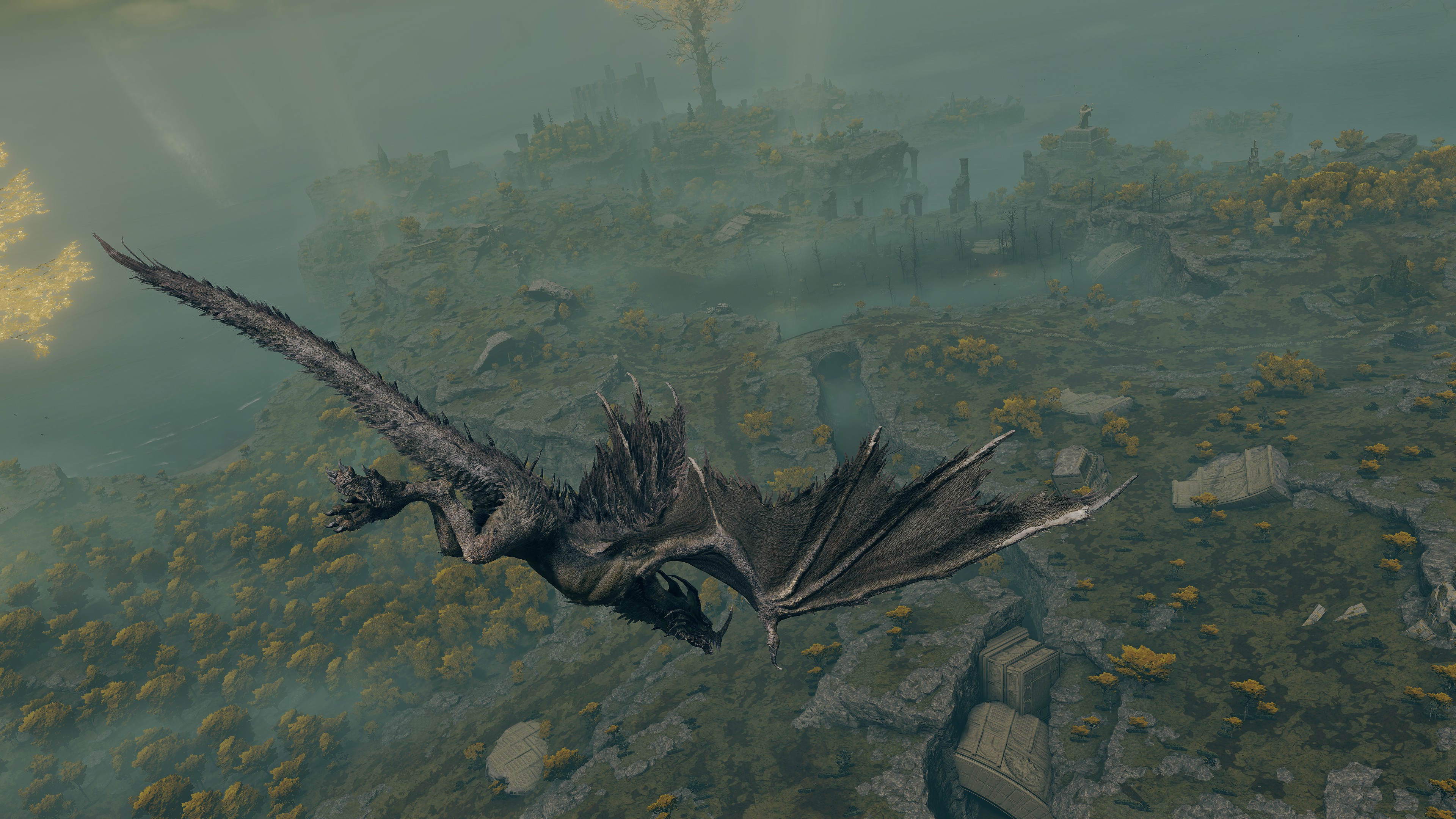
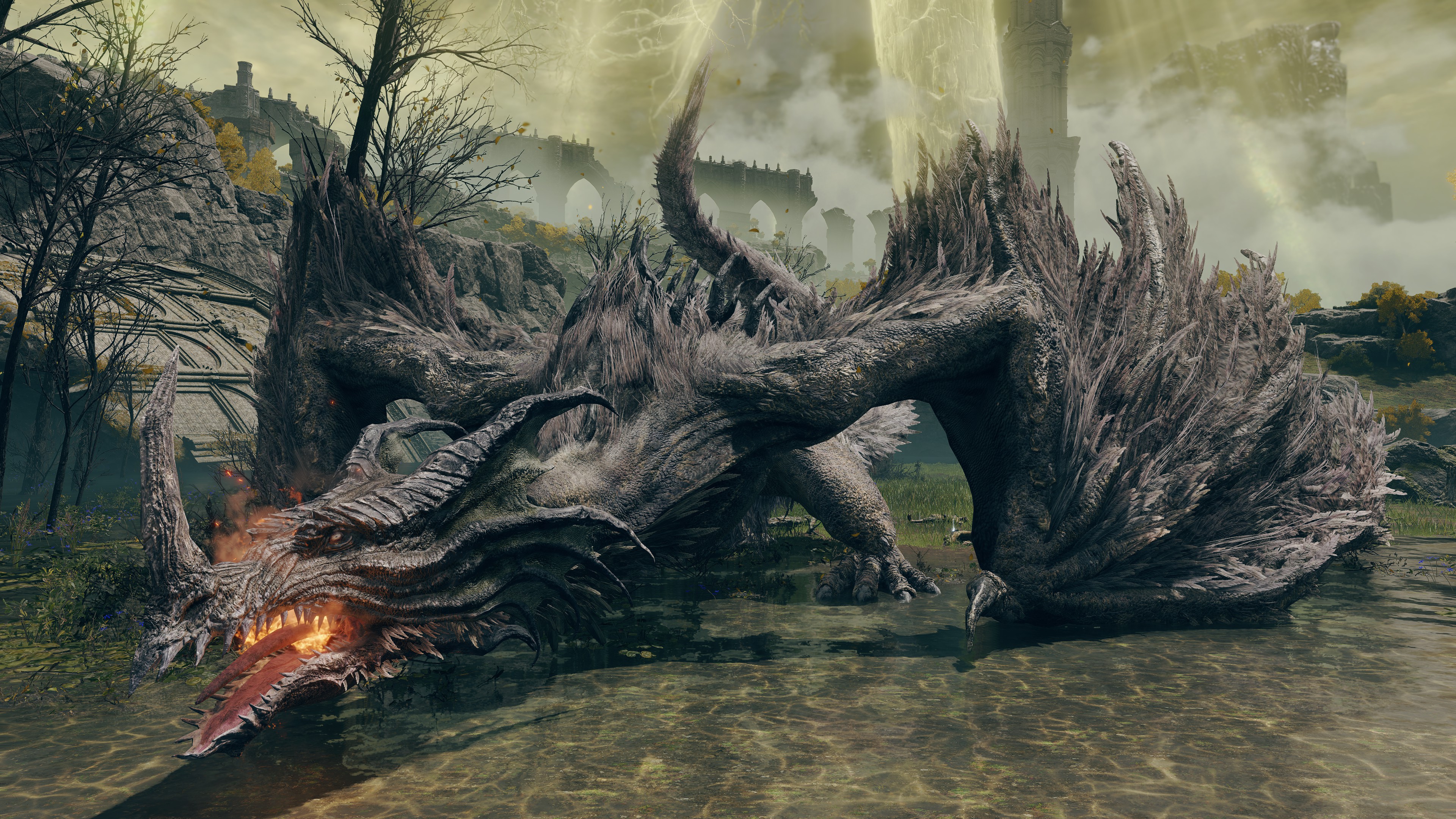
Descriptions to the aristocrat set clarify that the mouja aren’t truly the dead, but products of an unending life. Because they have persisted for so long without dying, they continue to operate in the world even as their vessel of flesh begin to expire. They still count among the living, but their bodies aren’t aging so much as deteriorating. Death itself appears to be a difficult concept for them. Using the aristocrats as example, we find an array in the Dragon-Burnt Ruins (Site B) of Agheel Lake, absentmindedly staring up at the sky where the eponymous dragon first flies in. Evidently, the fire-breathing menace destroyed the settlement, and they are begging this Agheel return and finish the job. It is fitting for a dragon named “Agir” (アギール) after the Kurdish word for flame, but there is little sense in immolation by dragon unless they have both given up on life and are unable to end it with a more straightforward method; if you cannot enjoy an ordinary demise, then being instantly reduced to ashes might be preferable. This implies mouja to be more a kind of undead, the flesh willing but the spirit intransigent.
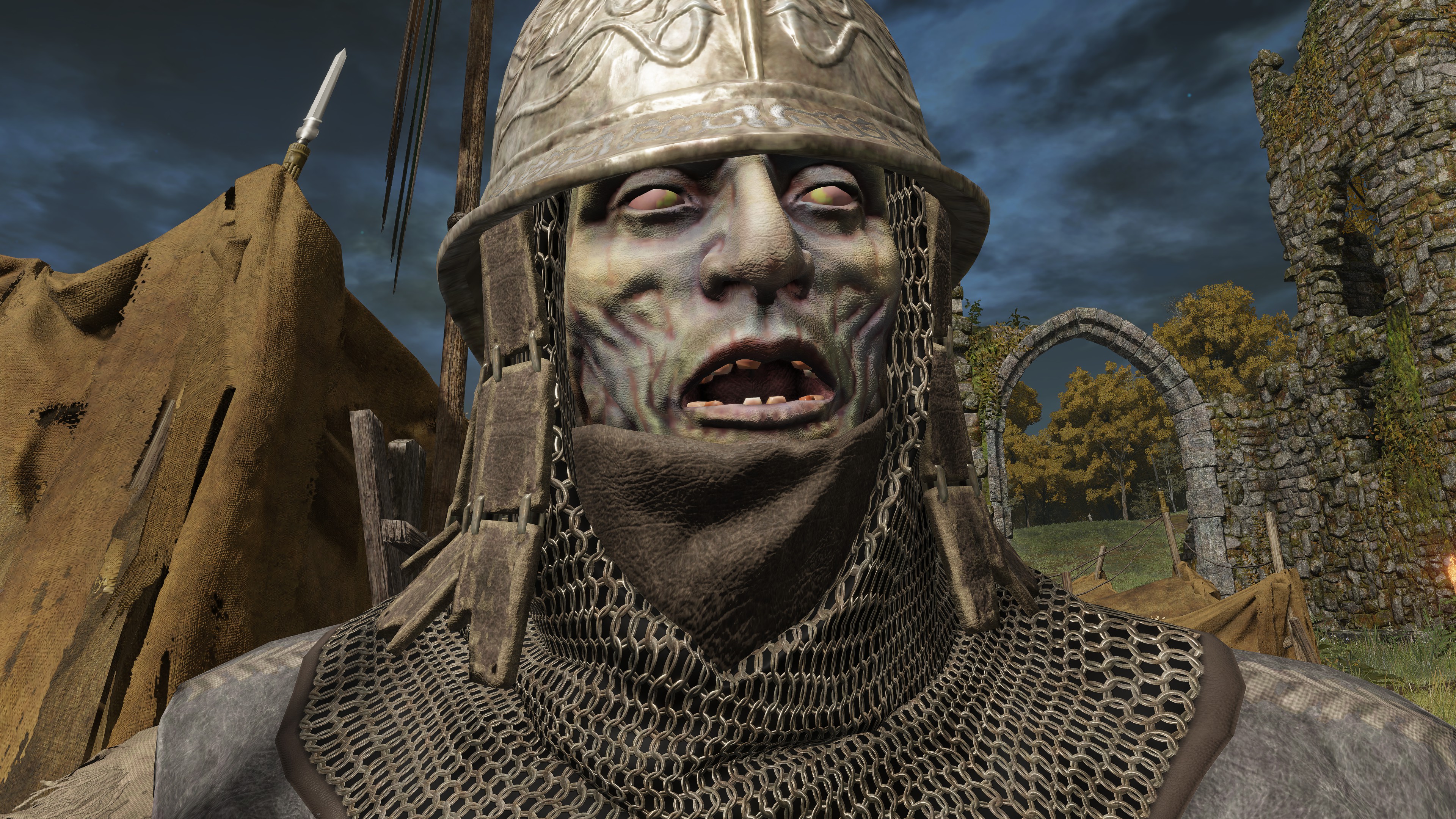
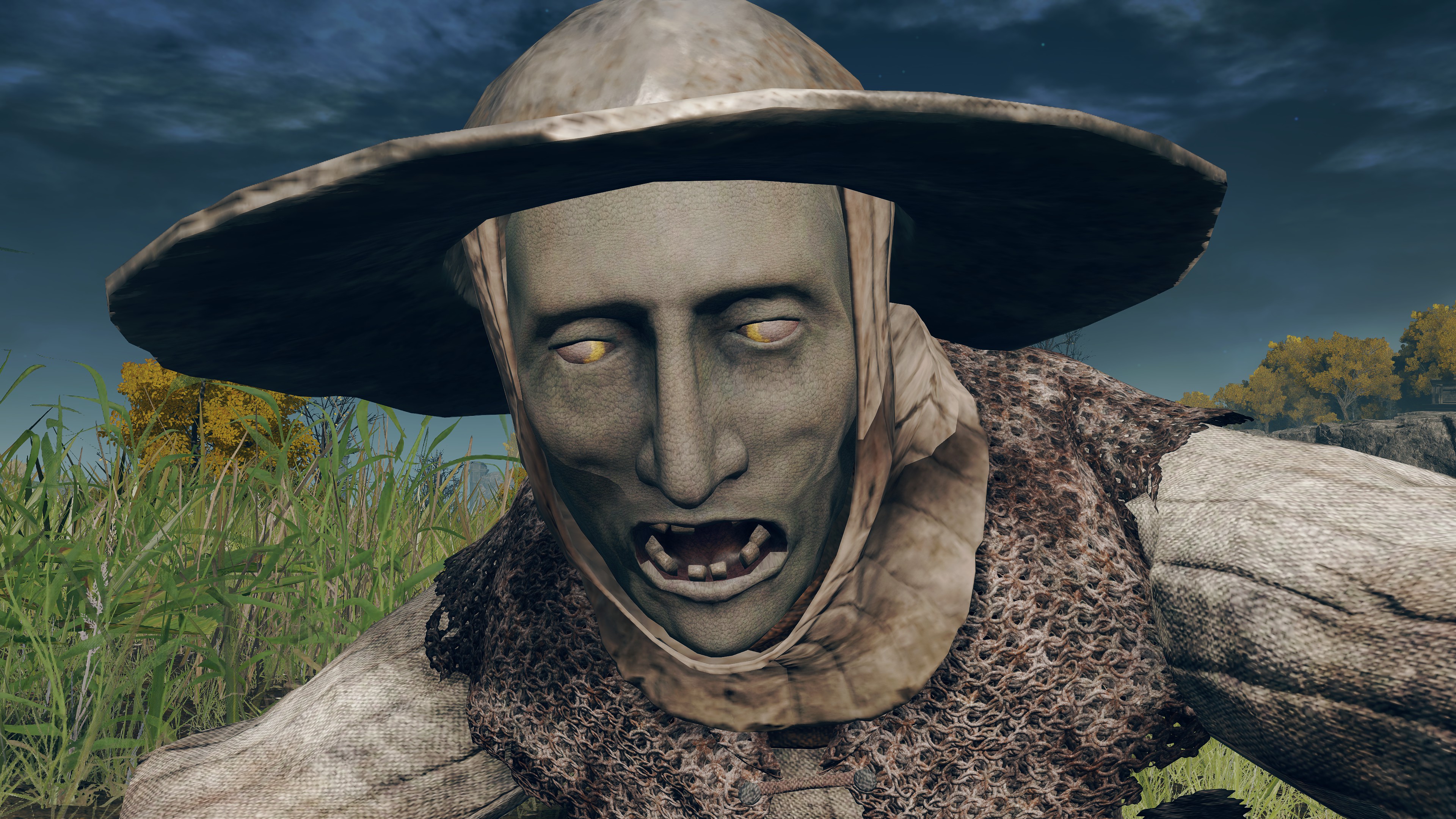
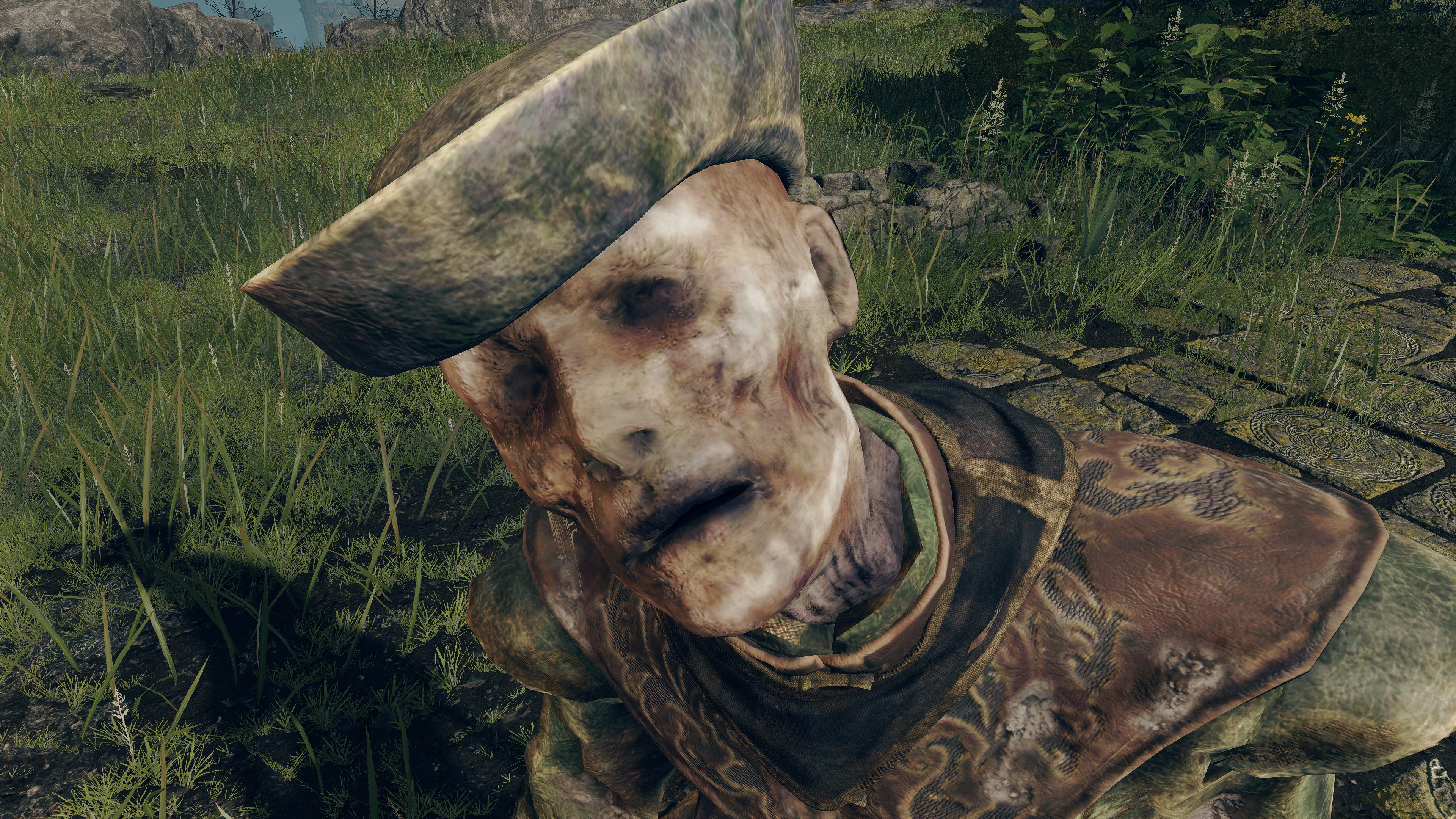
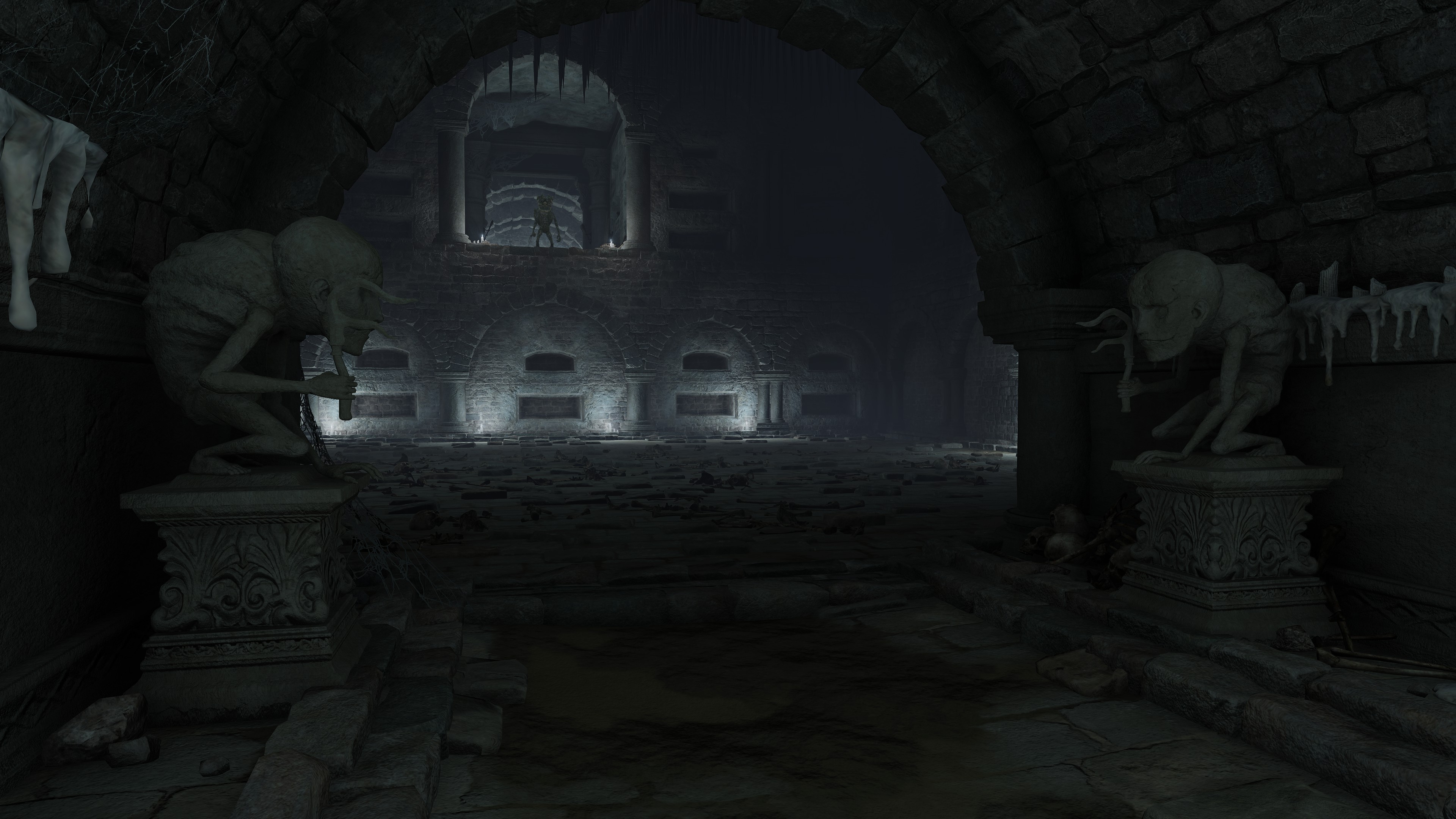
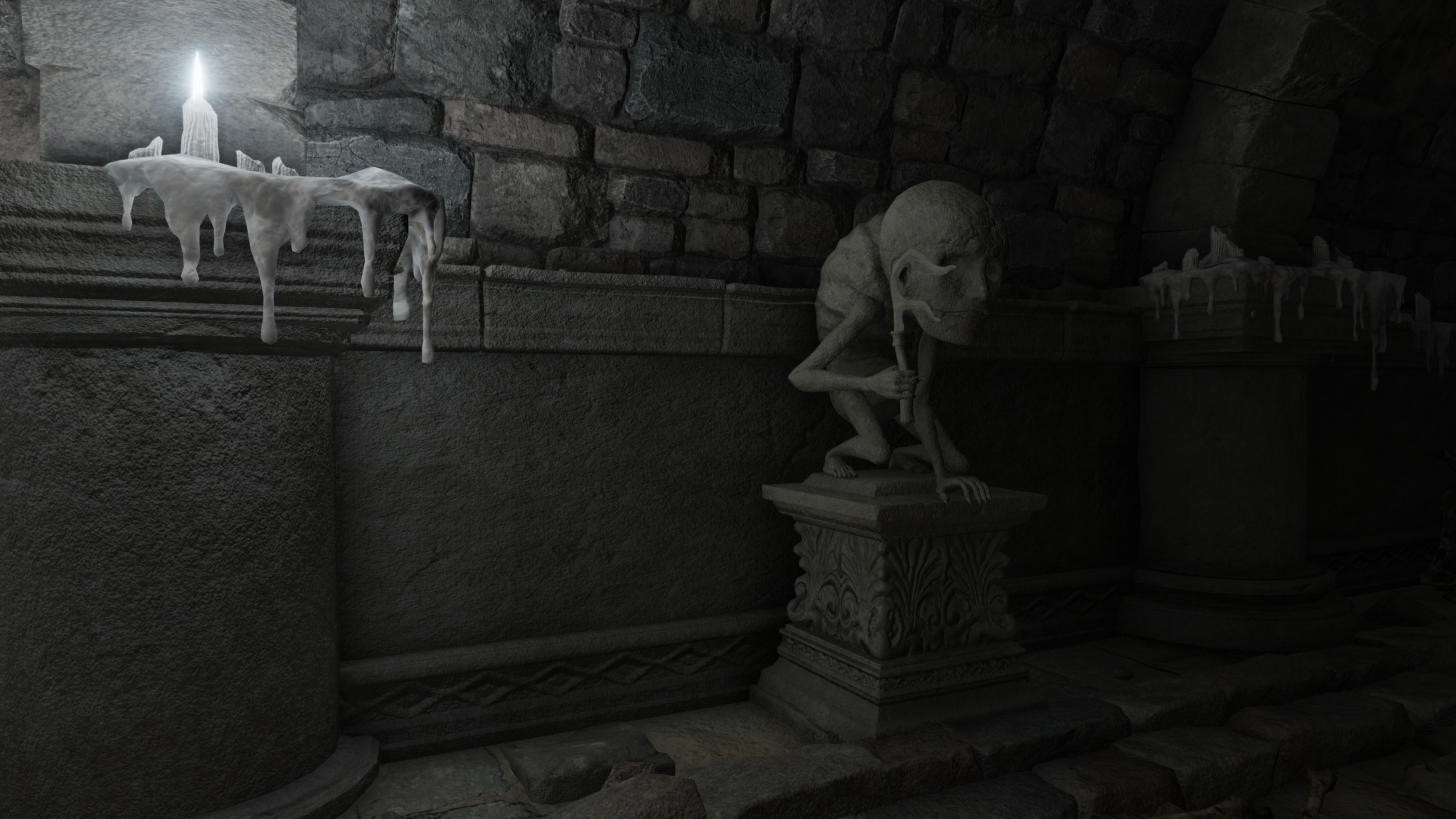
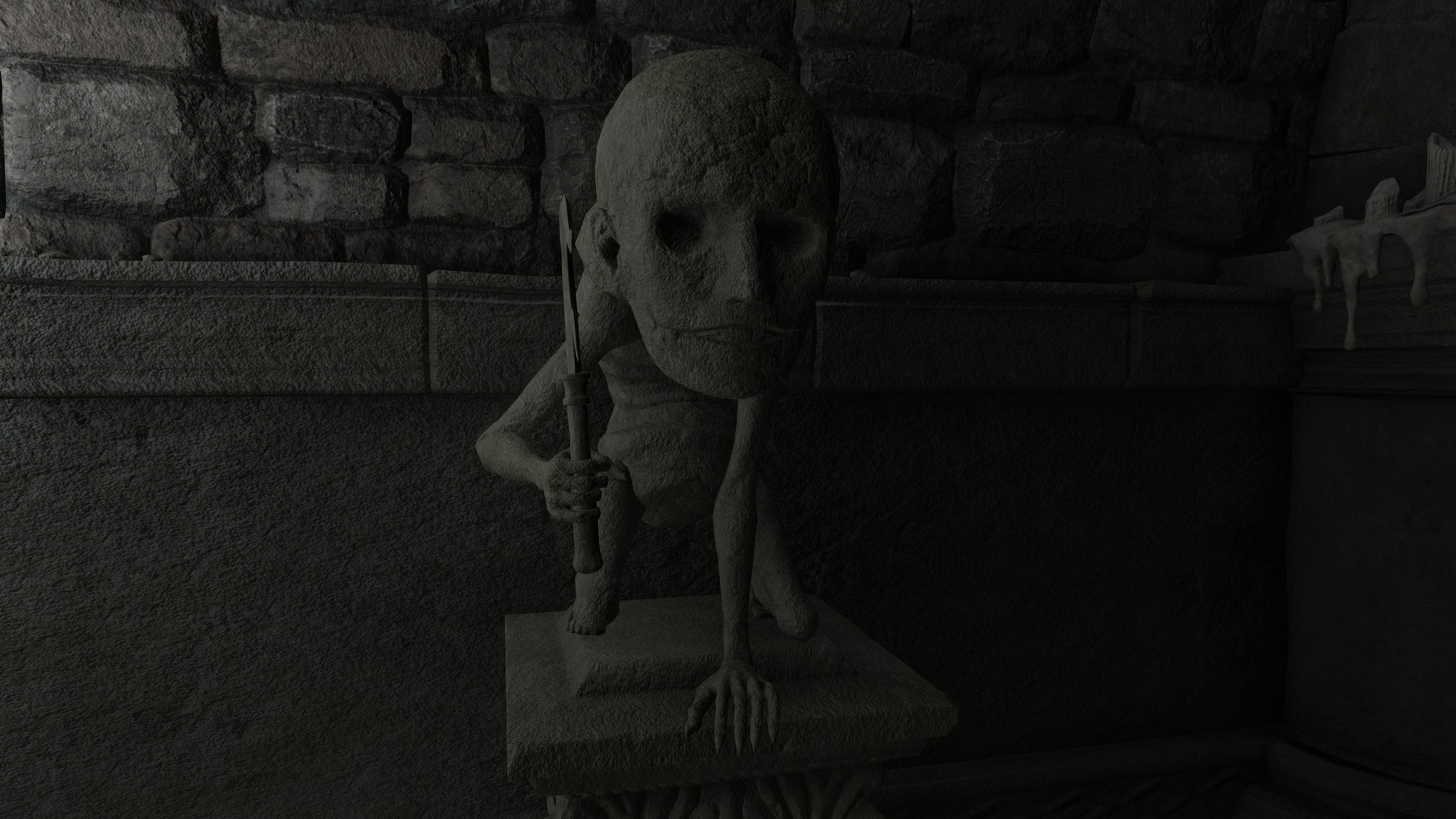
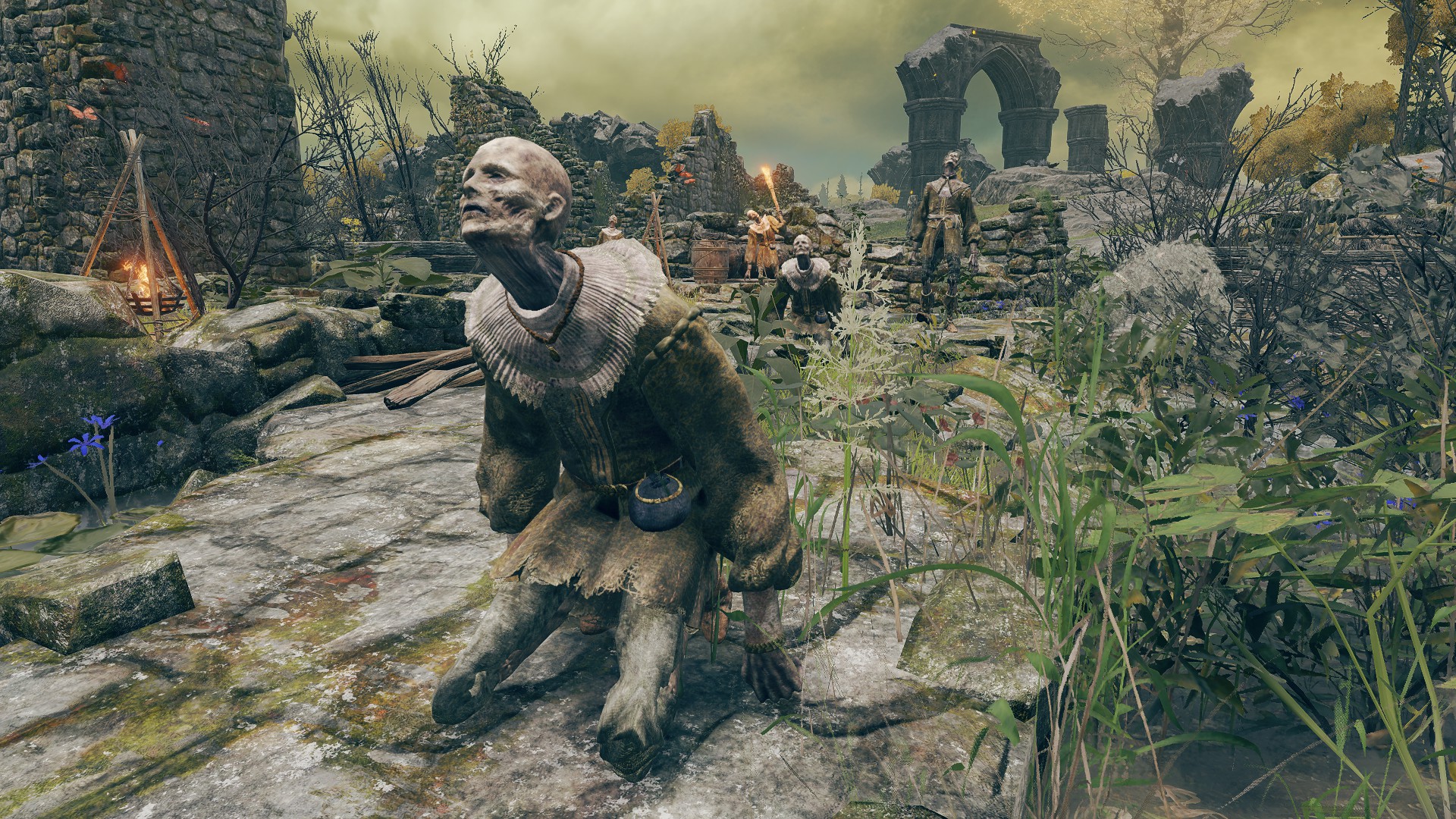
Cowl made with soft cloth. Travel apparel of noblemen of the royal capital. Thing the elderly in particular wear.
They who abandoned their homeland after the Shattering War eventually became wandering Hollows. As the result of a long life which simply won’t die.
Skill brandishing the power of the flying dragon Agir.
Transforms oneself into a dragon and breathes flame breath from skies above. Extends duration of breathing the breath with charging, and can also use while jumping.
In the lake of Limgrave, Hollows look up at the sky and pray of being burned to death with that dragon fire.
Agir, ohh, Agir… Agir’s flame, please burn us to ashes…
This survival past termination is multi-faceted. Speaking with Patches in Murkwater Cave, we learn that local highwaymen let the thief lodge there as a guest in exchange for looking after them in turn, later roping the band into procuring his inventory to sell. By his own admission, he doesn’t understand a word they say — just “matching wavelengths,” in his words. This is odd when everyone else from the Lands Between is intelligible, at least whenever they deign to chat. The only thing standout about the highwaymen’s circumstances is that they appear zombified and are former soldiers who, in Patches’ estimation, were overworked by their superiors only to be thrown out like trash. True enough, we see corpse piles rotting in the valley outside the cave, indicating that they were among the bodies but didn’t stay dead; after getting dumped down there, the “dead” got back up, took shelter in the nearby cave, and turned to highway robbery to get by. In short, the major difference is already returning from death.
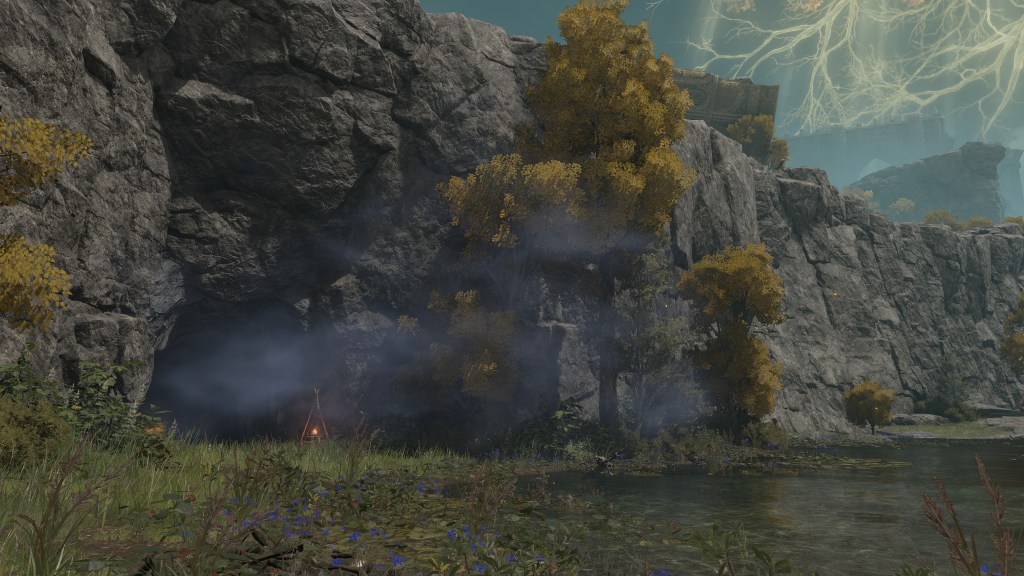
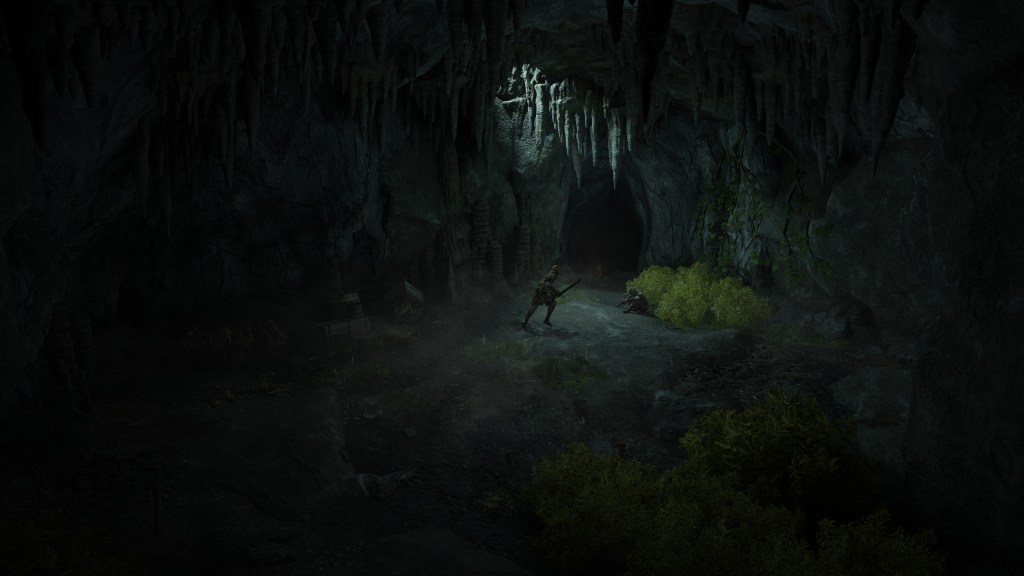
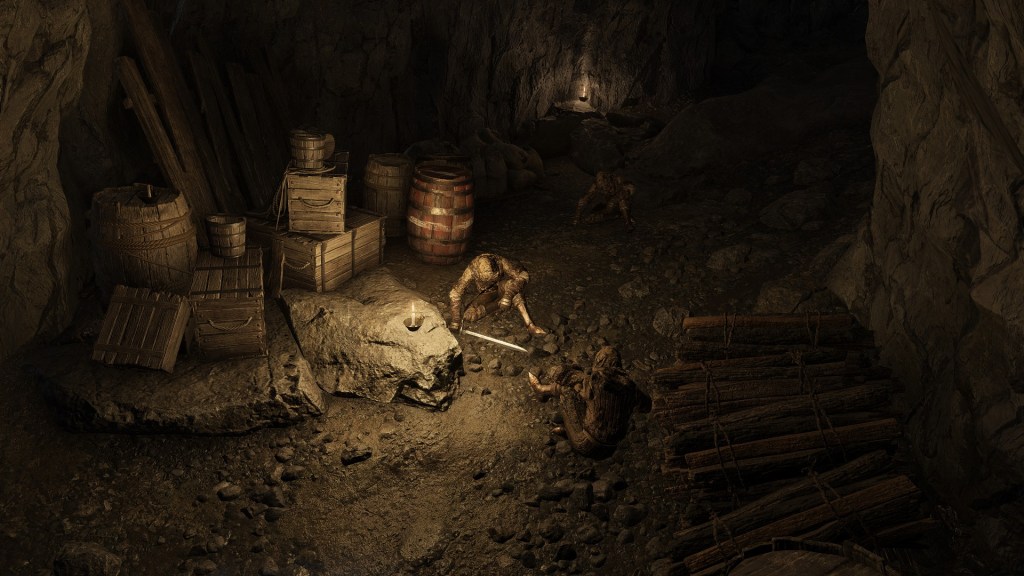
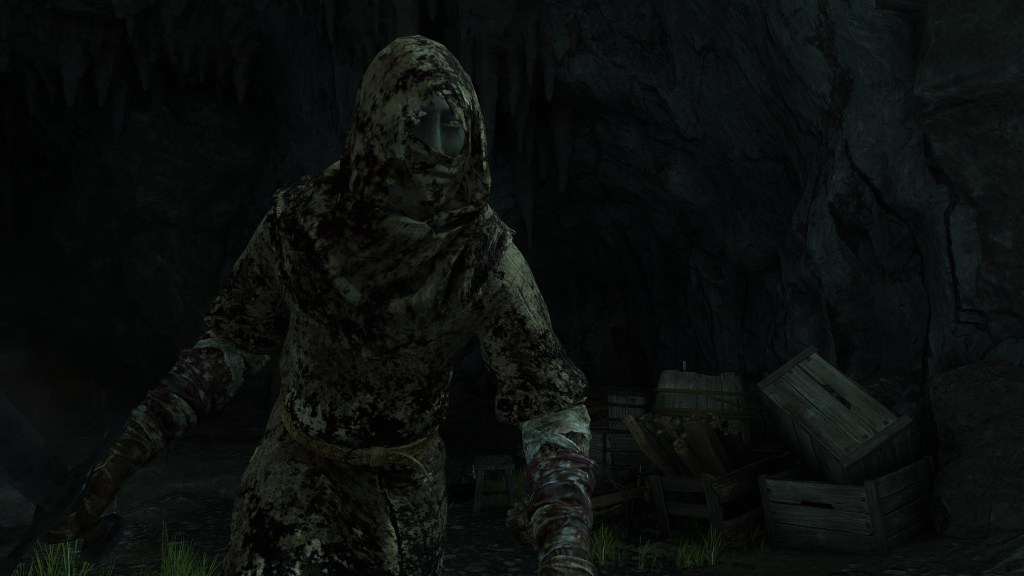


Put simply, most human enemies, while nominally alive, suffer from physical and mental degeneration, reducing them to mindless husks. At their worst, these individuals may be able to follow simple instructions or perform ingrained habits but cannot perform much in terms of higher critical thinking. They become little better than golems, though loss of cognitive function seemingly exists along a gradient before reaching that point. After all, the underlying cause is time alive. While they might have maintained their swords despite degradation over time, the various soldiers haven’t done the same with their zombifying bodies, the blades’ descriptions suggesting that they already lost their minds long ago. This is despite such mouja performing complex tasks like coordinated ambushes or military formations. Some might still possess some semblance of conscious thought and planning. But as time passes, the living do become more and more like mindless drones, acting and reacting but not considering.
Straight sword of the regular soldiers of a Ruler army. High-quality weapon decorated with a design.
It has degraded and blackened due to long use but seems well-maintained. The soldiers should have lacked sanity long ago though.
All that said, we do see exceptions. Besides the nobles with the sense to beg for death, a common sentiment in the commoner set’s text is that there are no “decent” commoners left, yet Gostoc converses eloquently in spite of sharing their withered look. The same be said for the description to the Raya Lucarian Robe, academy sorcerers forgetting their vows when receiving that uniform like anyone else with a long life. That, once again, hasn’t stopped Thops from remaining lucid even isolated from the others. There are sure to be complicating factors varying between individuals, leading to some losing sanity faster than others. Mouja aren’t guaranteed empty shells. Maybe that variable is strength of will, heroes like the demigods we encounter resisting this kind of degradation in spite of their higher retention of golden power because of a resolute purpose? Whatever it is, something in the individual has prevented everyone still alive from becoming little better than beasts already.
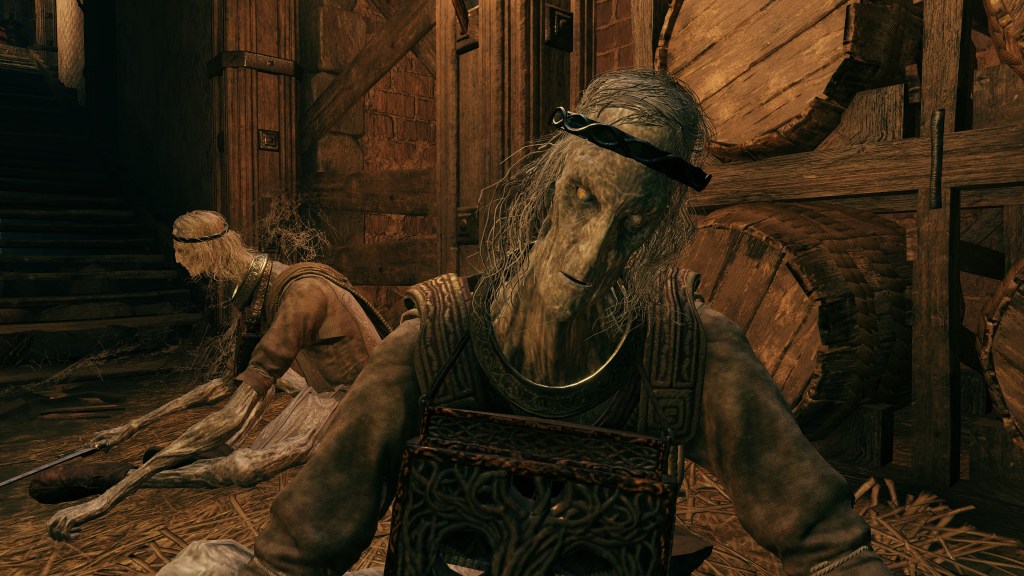
Cloth fastened with a headband. Apparel of the everyday townspeople of the Lands Between.
But there are no decent townspeople anymore.
Based on the highwaymen’s example, it is death that universally accelerates this mental degradation, which explains why we can witness groups continue to behave sentient with social cohesion in select scenarios; they have yet to die, at least enough to become mental invalids. This gives the nobles in Site B added incentive for extreme measures like Agheel to do them in — anything less might just lead to more quickly losing their minds. To become mouja is a kind of existential horror where one comes to meander the world as little more than a monster, devoid of self yet driven by instinct. All of this is appropriate given that the same term was previously used for soul-starved “Hollows”, the basic enemies of Demon’s Souls and Dark Souls. Because all three iterations share many of the same degenerative traits, I will refer to mouja as “Hollows” in this context as well going forward.
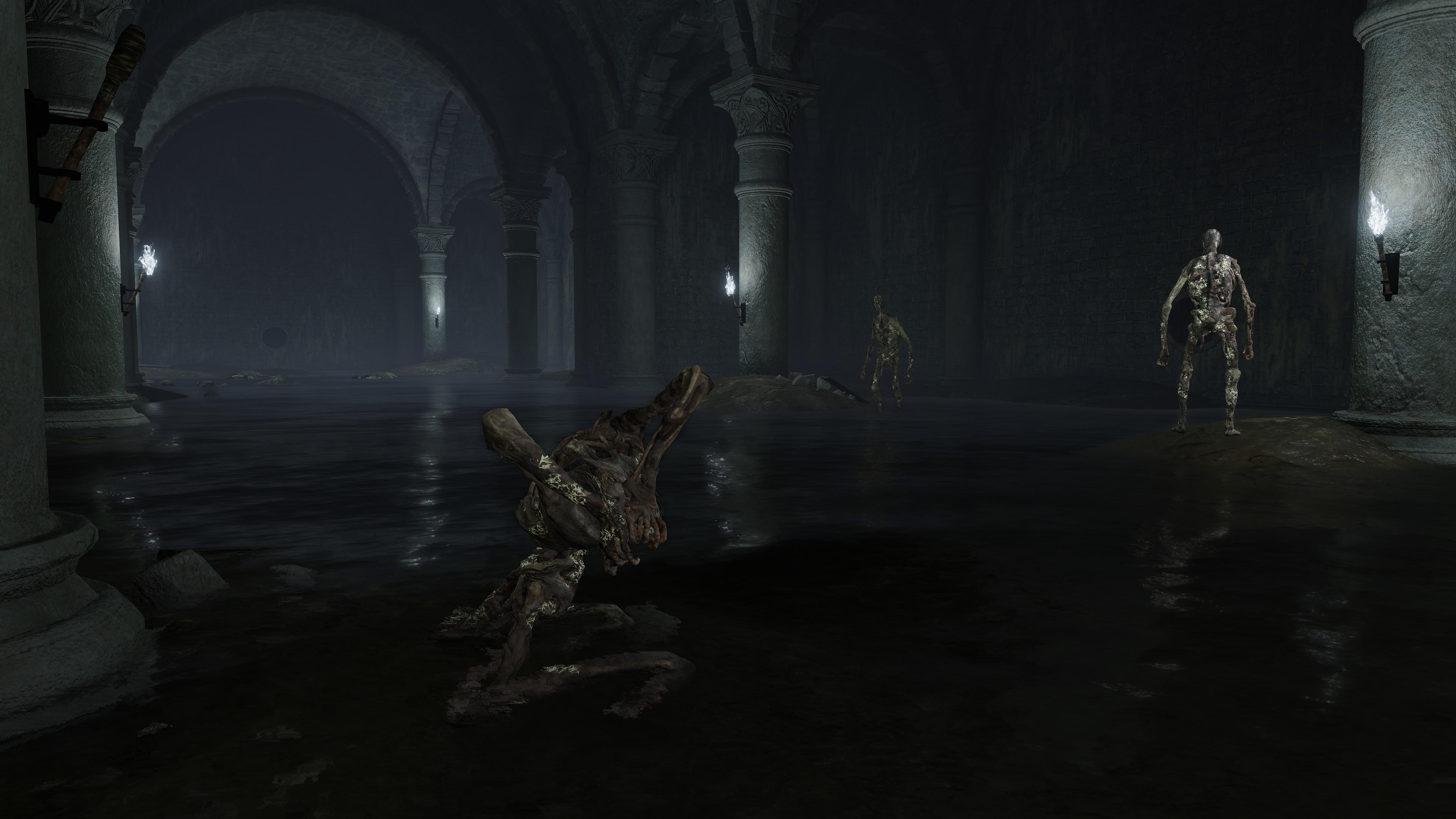
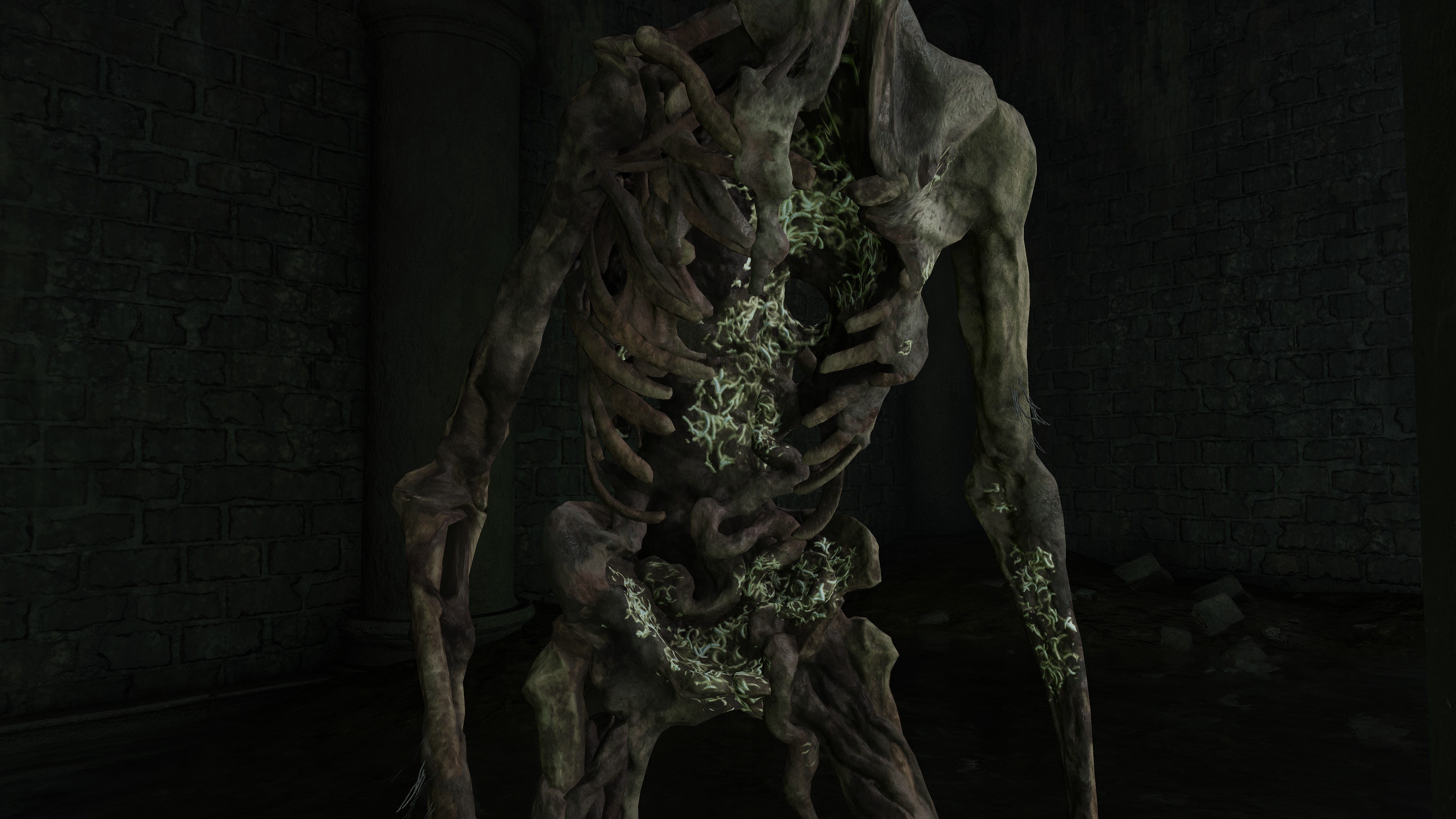
Although the return of Hollows for basic enemies in a FromSoftware title is hardly accidental, they are still distinct in their relationship to the dead. As noted earlier, Hollows technically classify as the living despite appearing corpse-like, but that doesn’t mean that they can’t manifest from among the dead as well. The rotten corpses so often rising from graveyards and body piles across the Lands Between are also expressly rotted “Hollows”, (腐った亡者) their time spent thoroughly eaten up by grumbles of maggots before life returned them to their feet. That may imply that some Hollows revive slower than others, but whether they be the recent or long dead, these rotten Hollows are just as much affected as those who have never died. In the latter cases, they seem to rise up because their rest has been disturbed, typically appearing where their burial chambers are flooded. This isn’t surprising with Erdtree Burial proving elective, both Kristoff and Lhutel’s examples postdating the broken Order. If the long-lived can choose when to rest, then the long dead can “choose” when to live again.
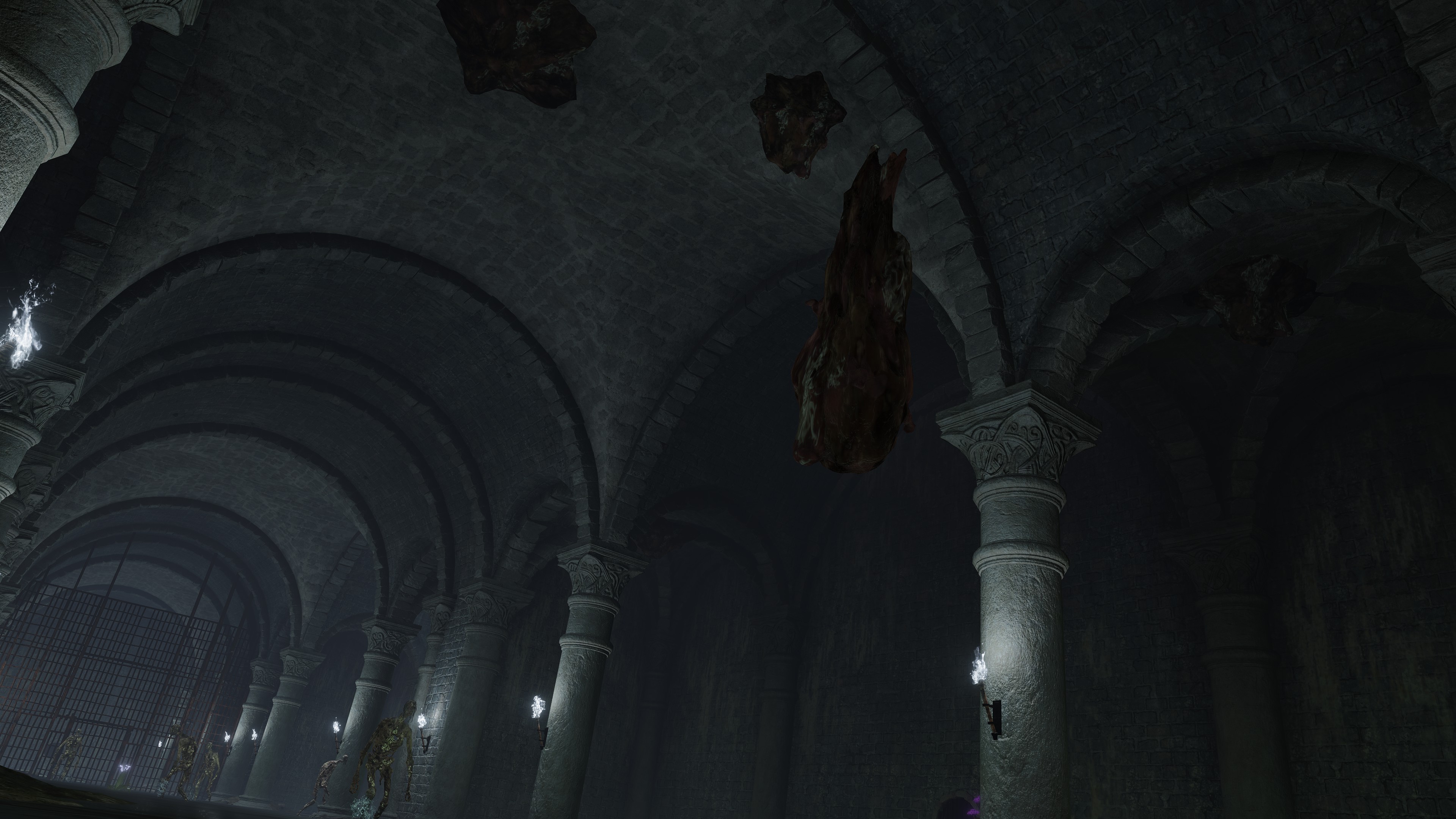
Soggy soil isn’t the only thing rousing the dead from slumber. Joining Hollows in those flooded graves are “crawling carrion” (蠢く腐肉) — mounds of rotten flesh squirming on the floors and occasionally ceilings. By all appearances, they are pieces of different dead amalgamated into a singular mass of meat. The resulting enemy doesn’t appear to have a brain or individual identity, though they are clearly motivated by some collective will. In all likelihood, that will is resentment against the living. Outside of waterlogged areas, we find the enemy in places where victims might suffer especially grievous deaths, the personal injustice sure to stew strong sentiments within souls. That grudge gets passed onto the flesh, pieces pooling together based on that shared feeling. It doesn’t take long for them to lash out either. Left exposed to the elements, the resentful flesh soon assimilate the scavengers which come to pick the carrion, wildlife bones and feather wings mixed in; indoors, they are just feasted on by maggots, though they still retain thin and hefty beast bones somewhere inside. They are alive and wrathful.
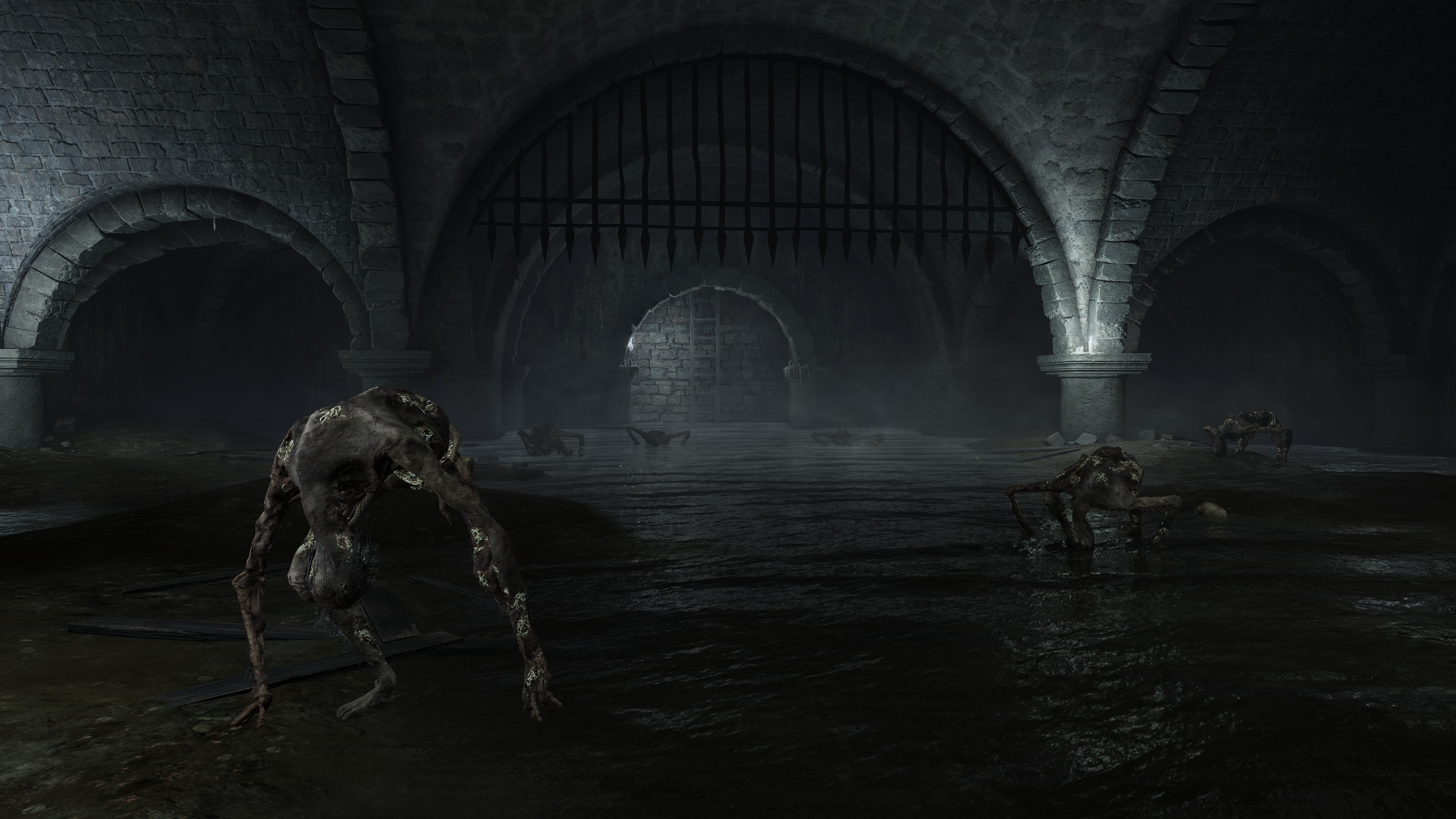
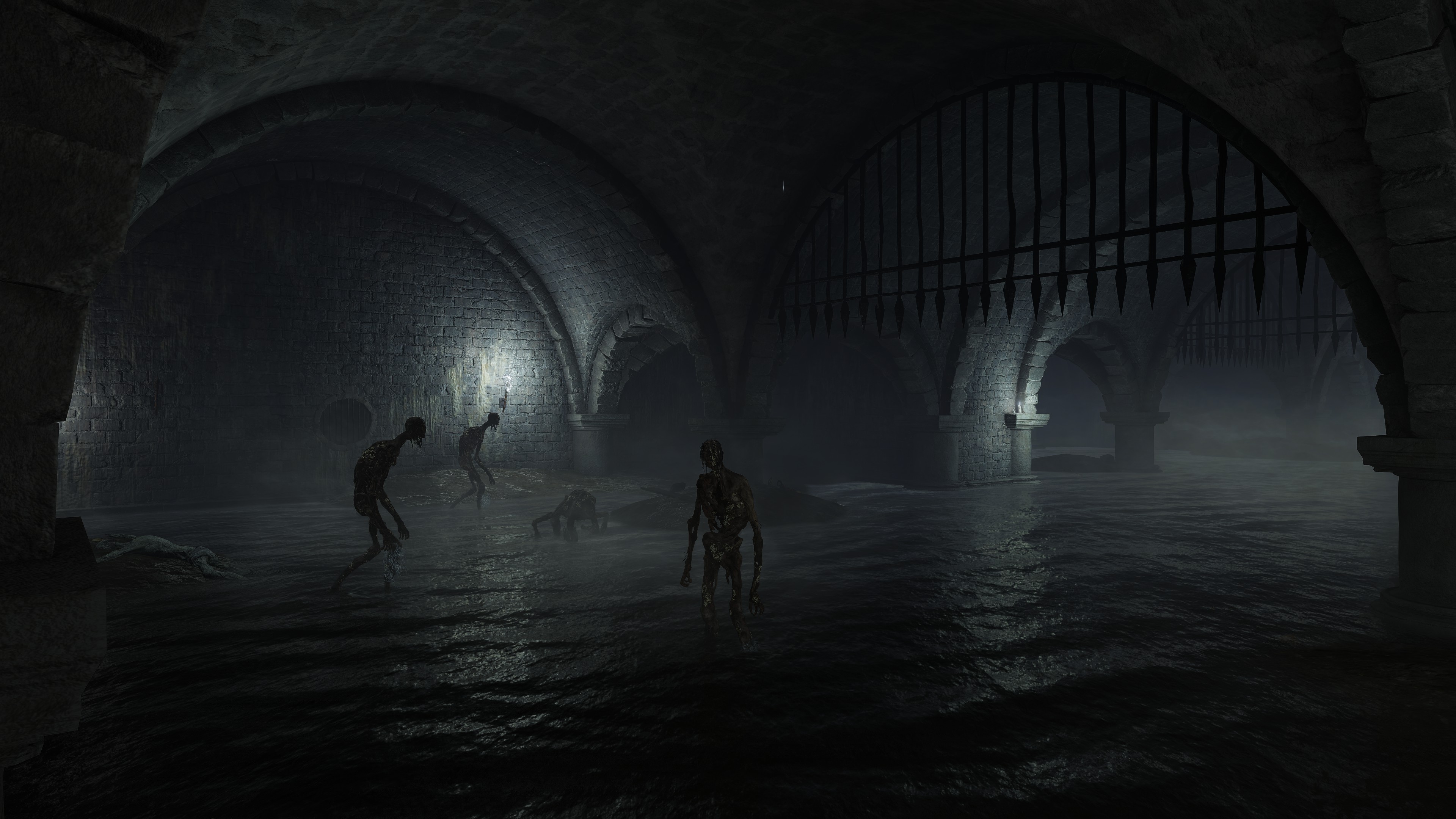
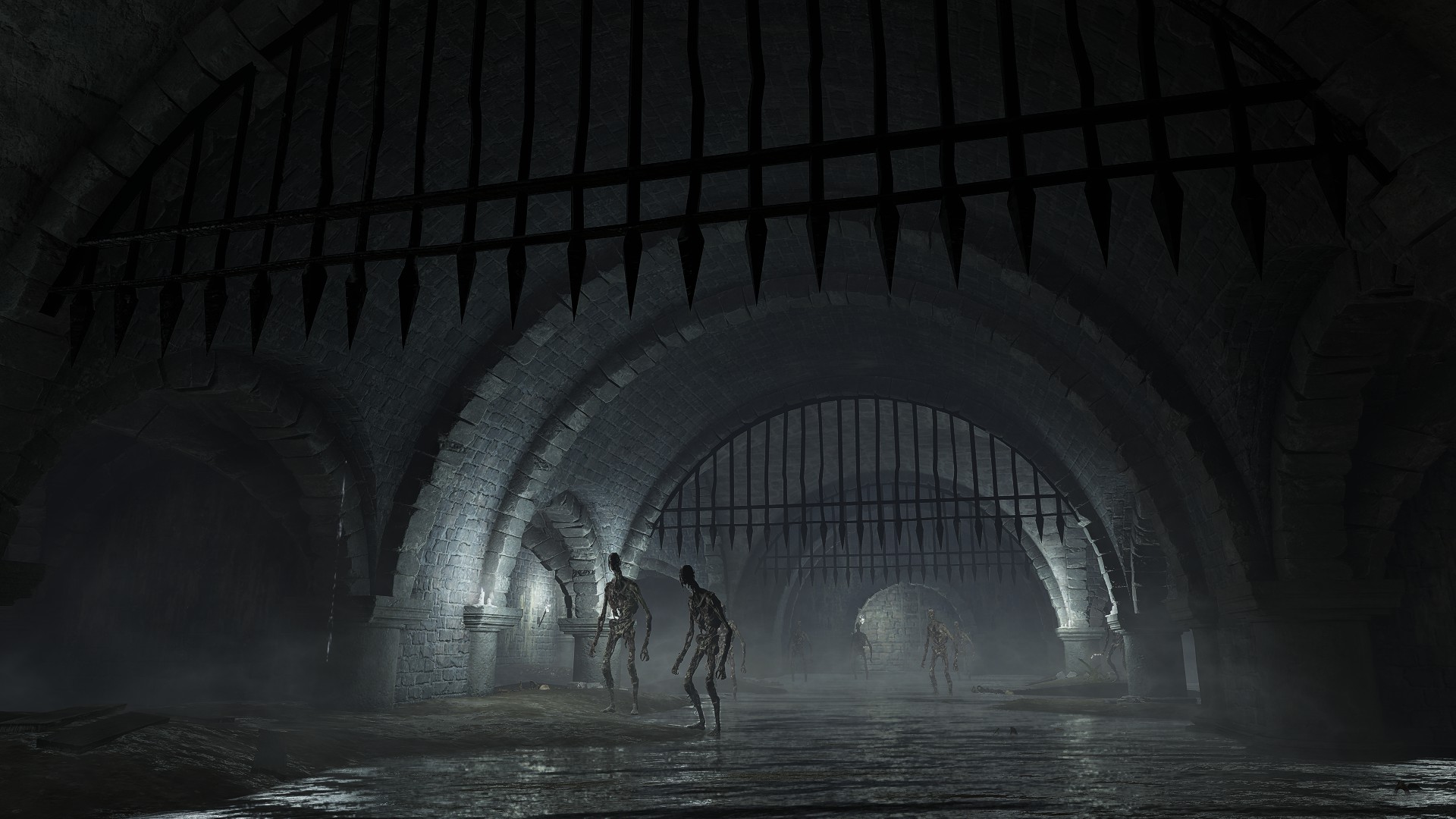
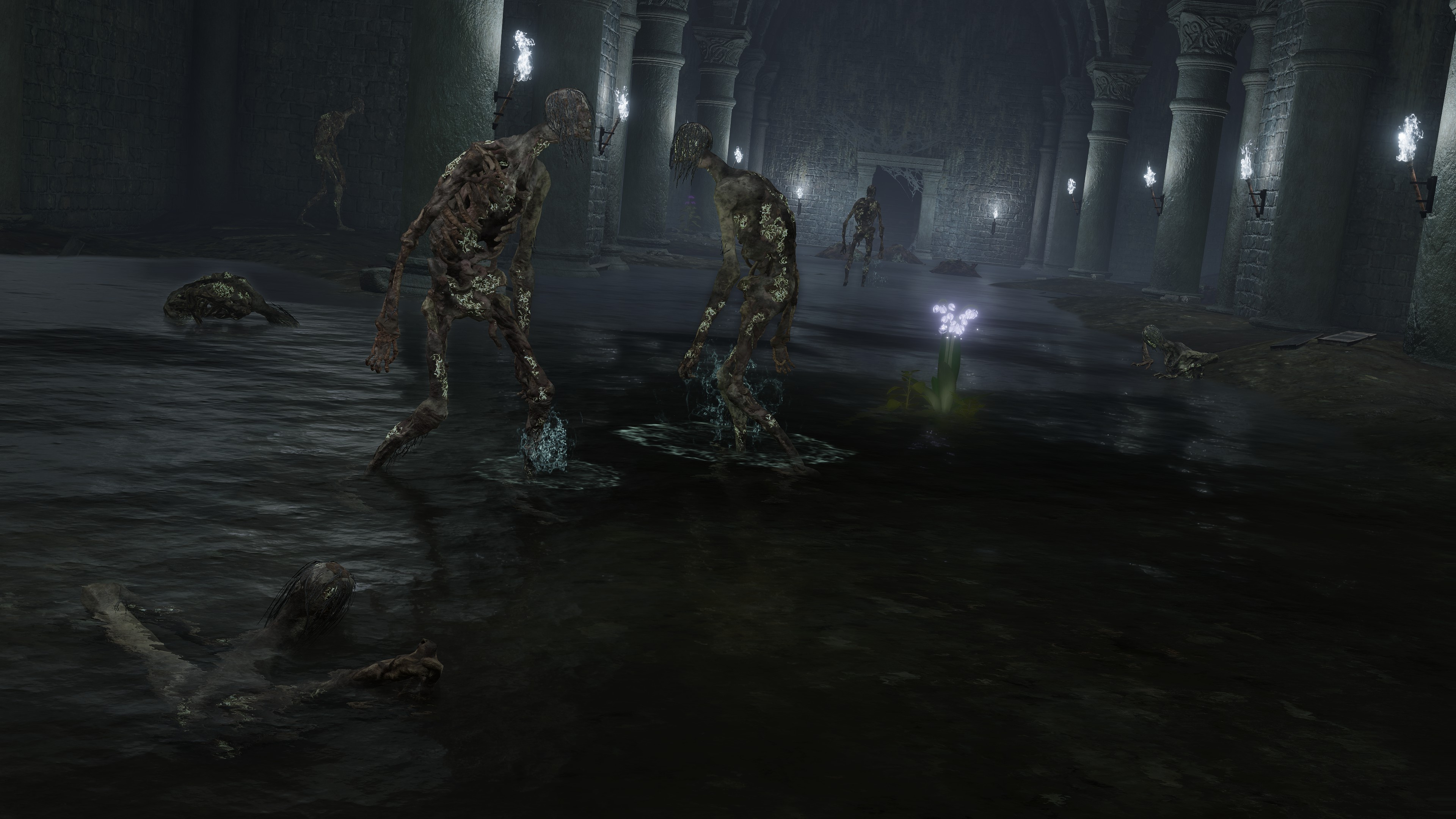
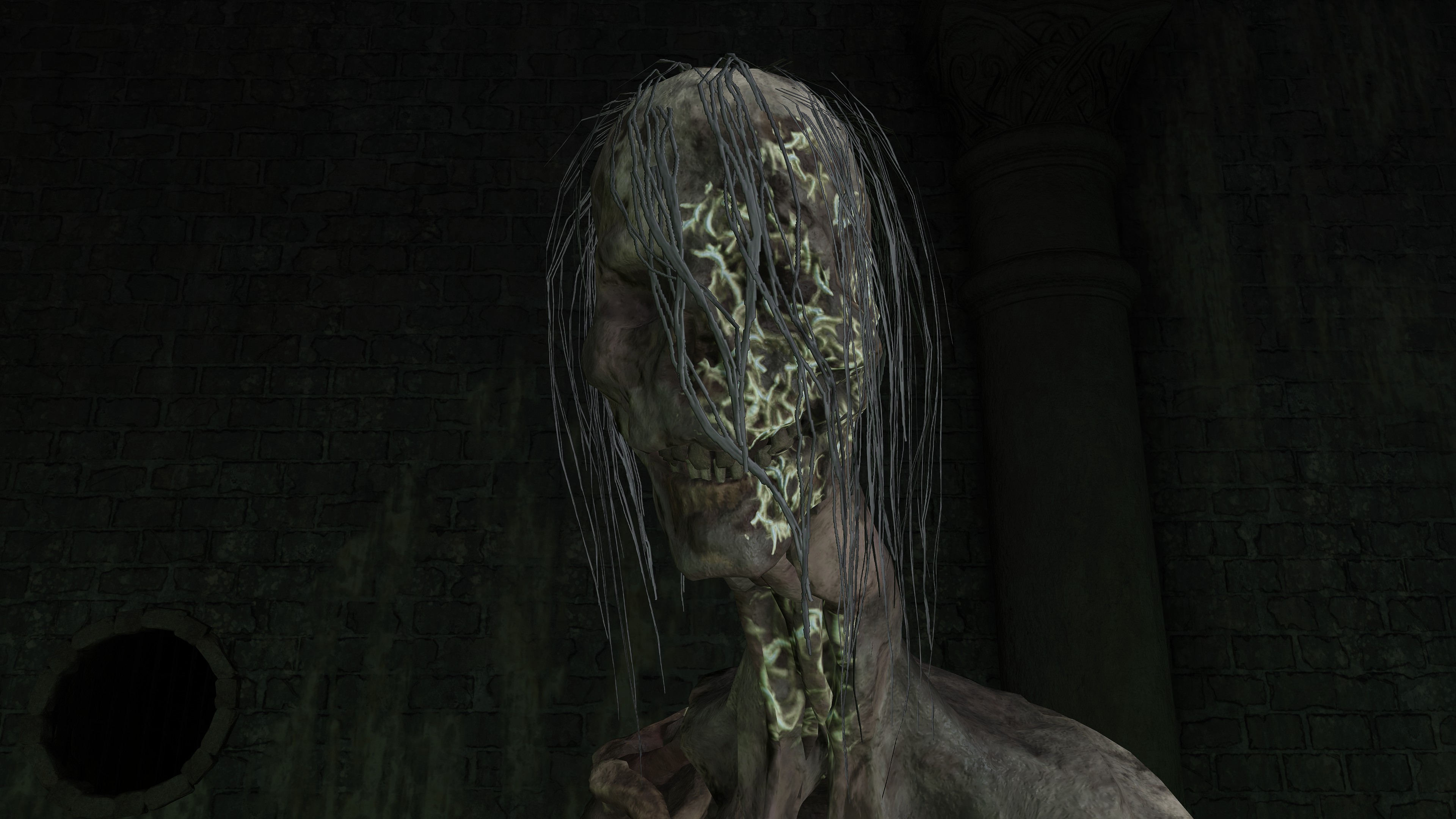
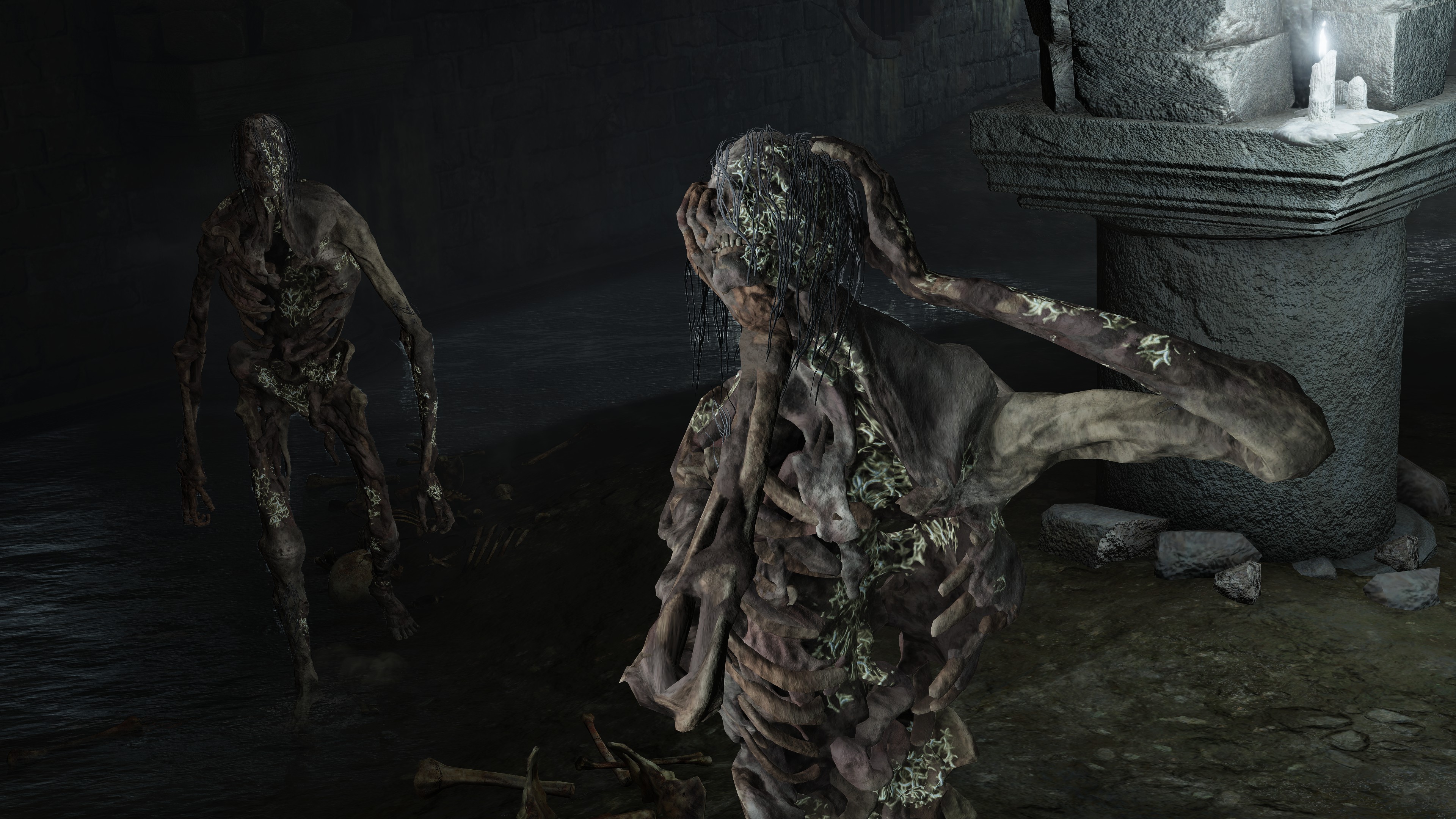
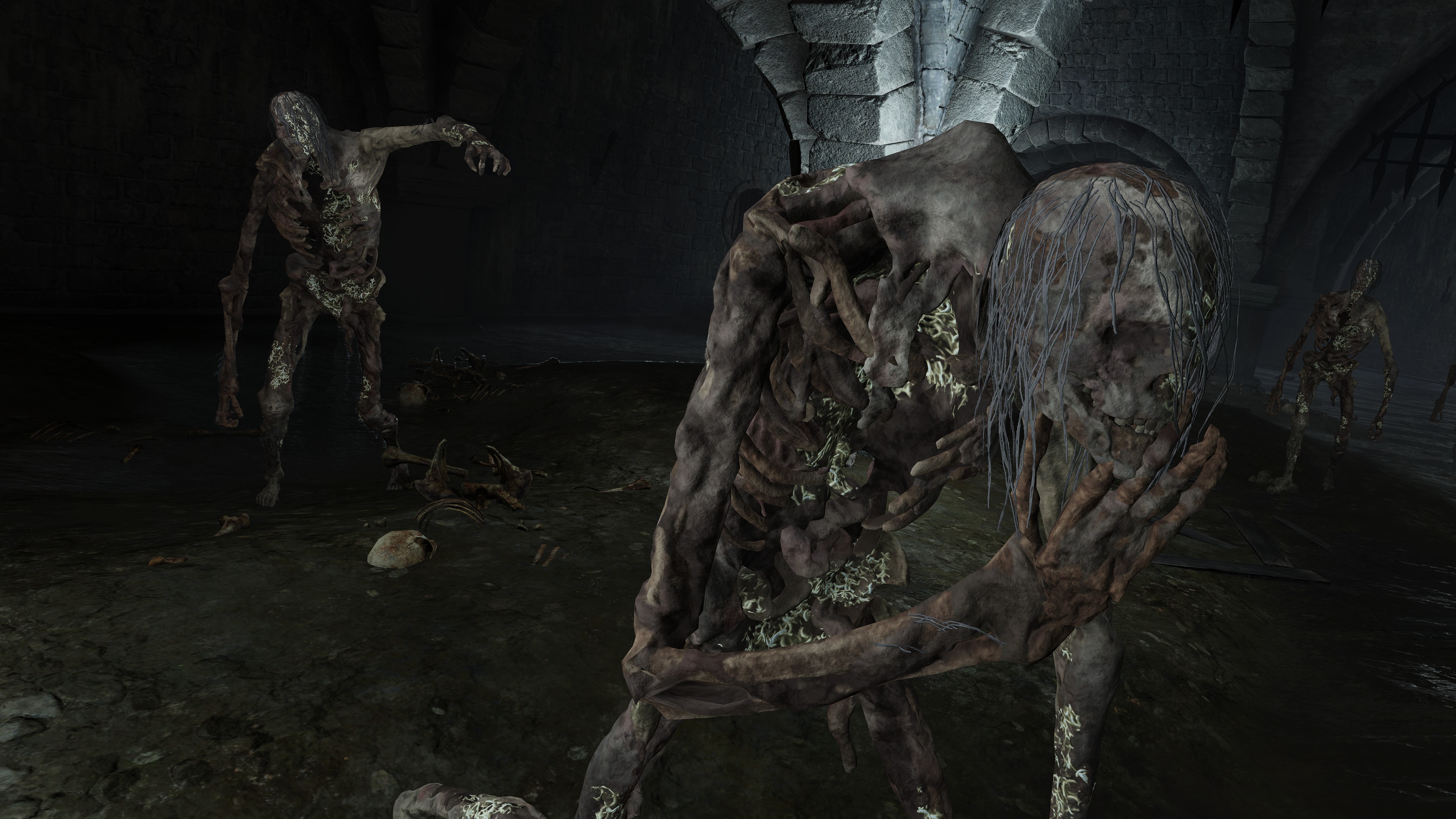
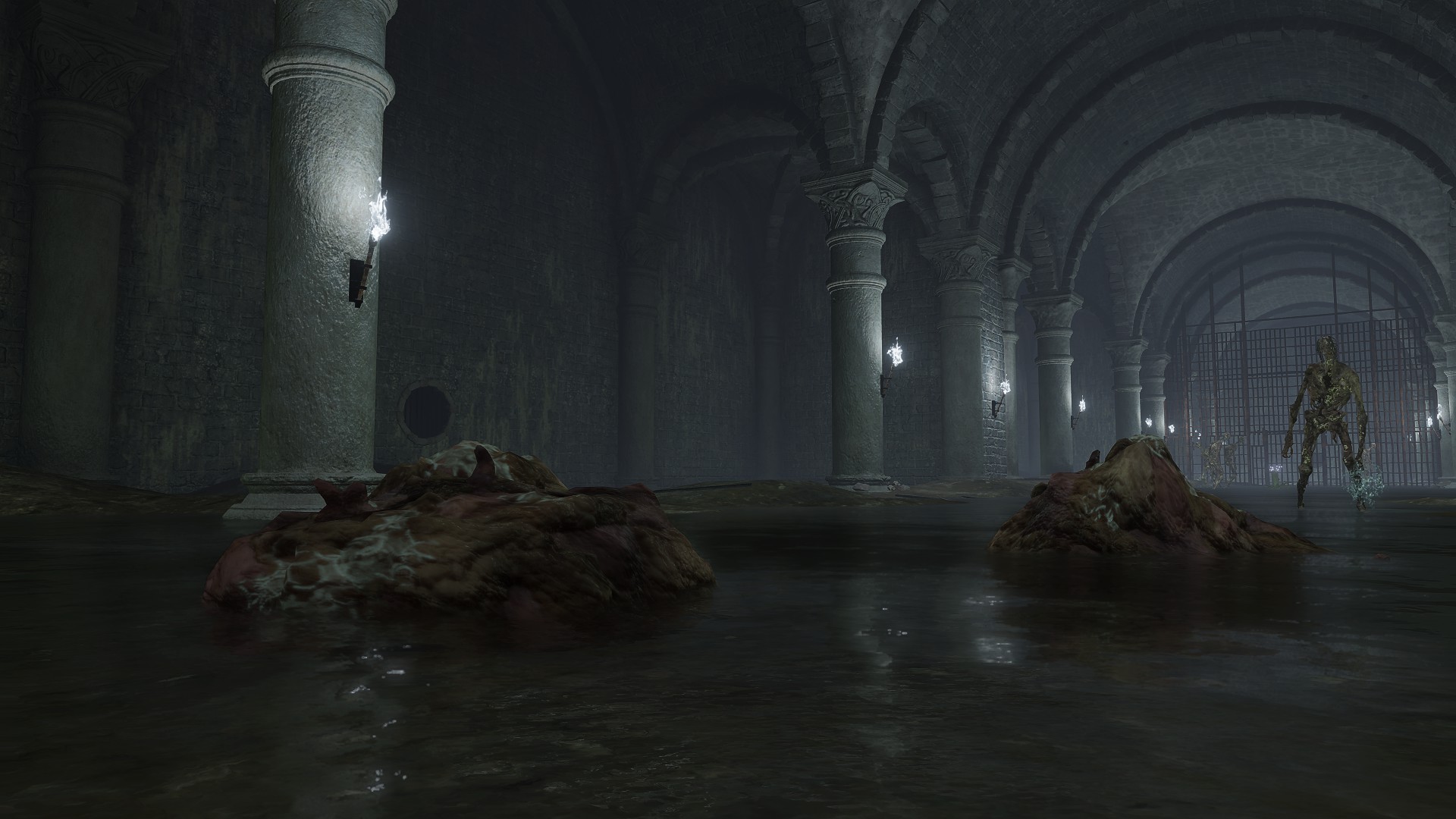
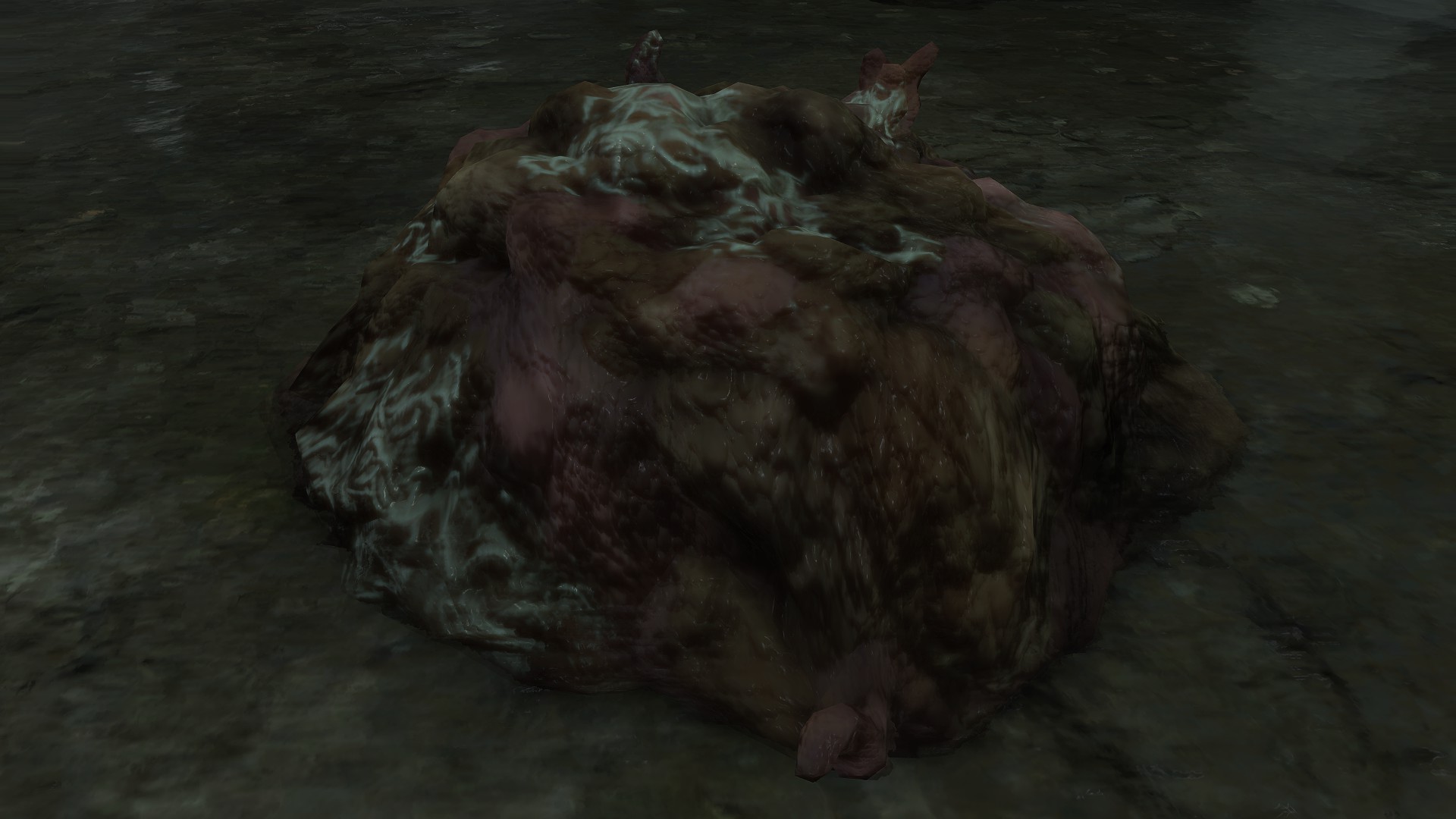
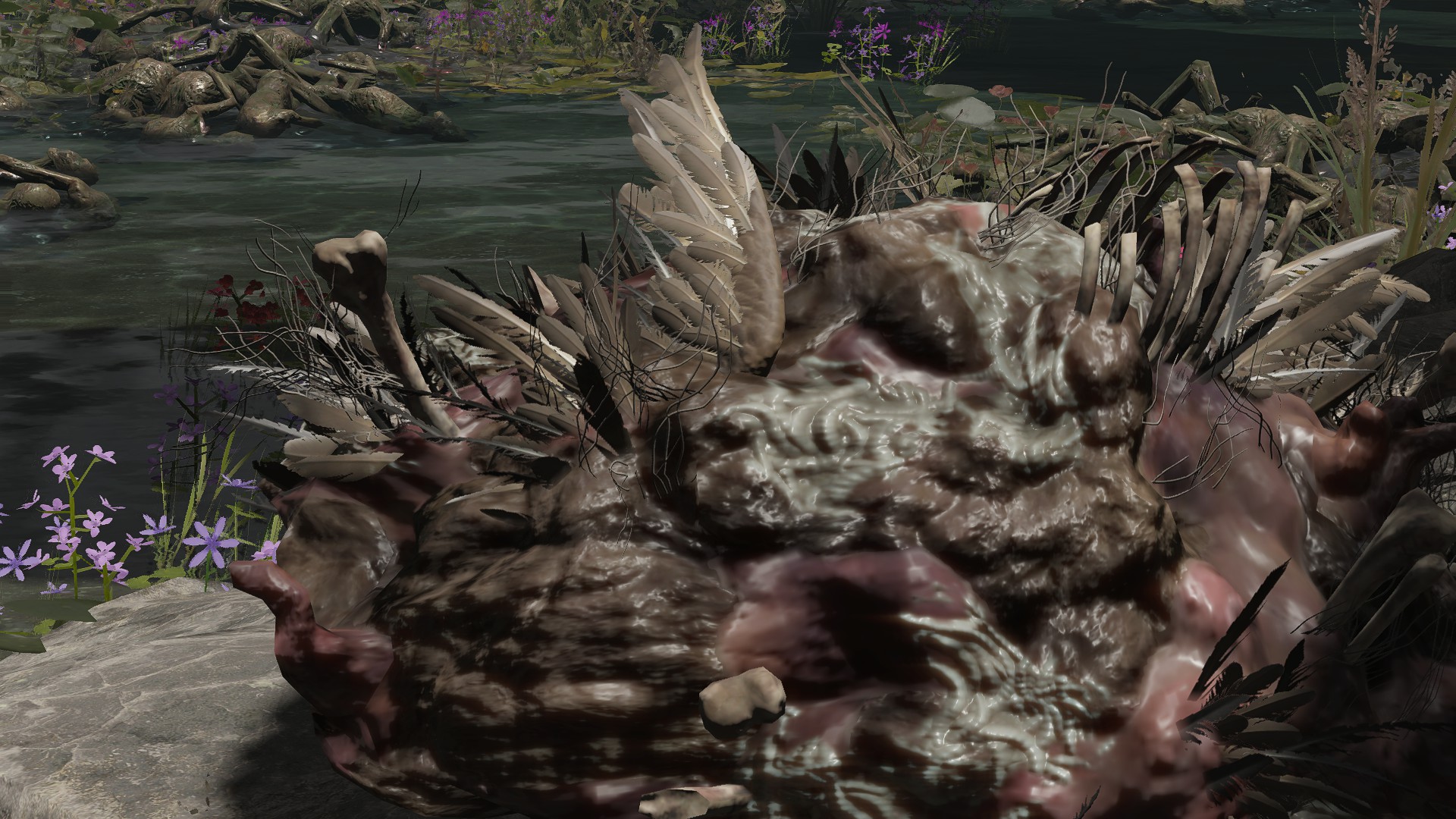
Due to the underlying cause, this curse of life only affects humans with gold gracing their eyes. However, this doesn’t mean that the curse can’t be passed on to other living beings. Although most animals out in the wild don’t exhibit signs of physical degeneration, this excludes crabs. Among the various types we encounter, one is just the standard crab with a body hollowed out by maggots, no different from the human rotten Hollows. We can presume that this is because they eat the dead’s flesh — you are what you eat, as the saying goes. Indeed, the Black Knife Catacombs have no Hollows in its flooded chamber, just countless crabs big and small feasting on the grave soil, all maggoty. Contrast to Wyndham Catacombs, where only two giant crabs dwell in its own flooded chamber, both still ordinary even as they feed from the same dirt. The major difference is that most of the dead there have yet to be scavenged, rotten Hollows and crawling carrion lingering alongside the crabs. This strongly suggests that feeding too much on the living dead results in the crustaceans inheriting the curse.
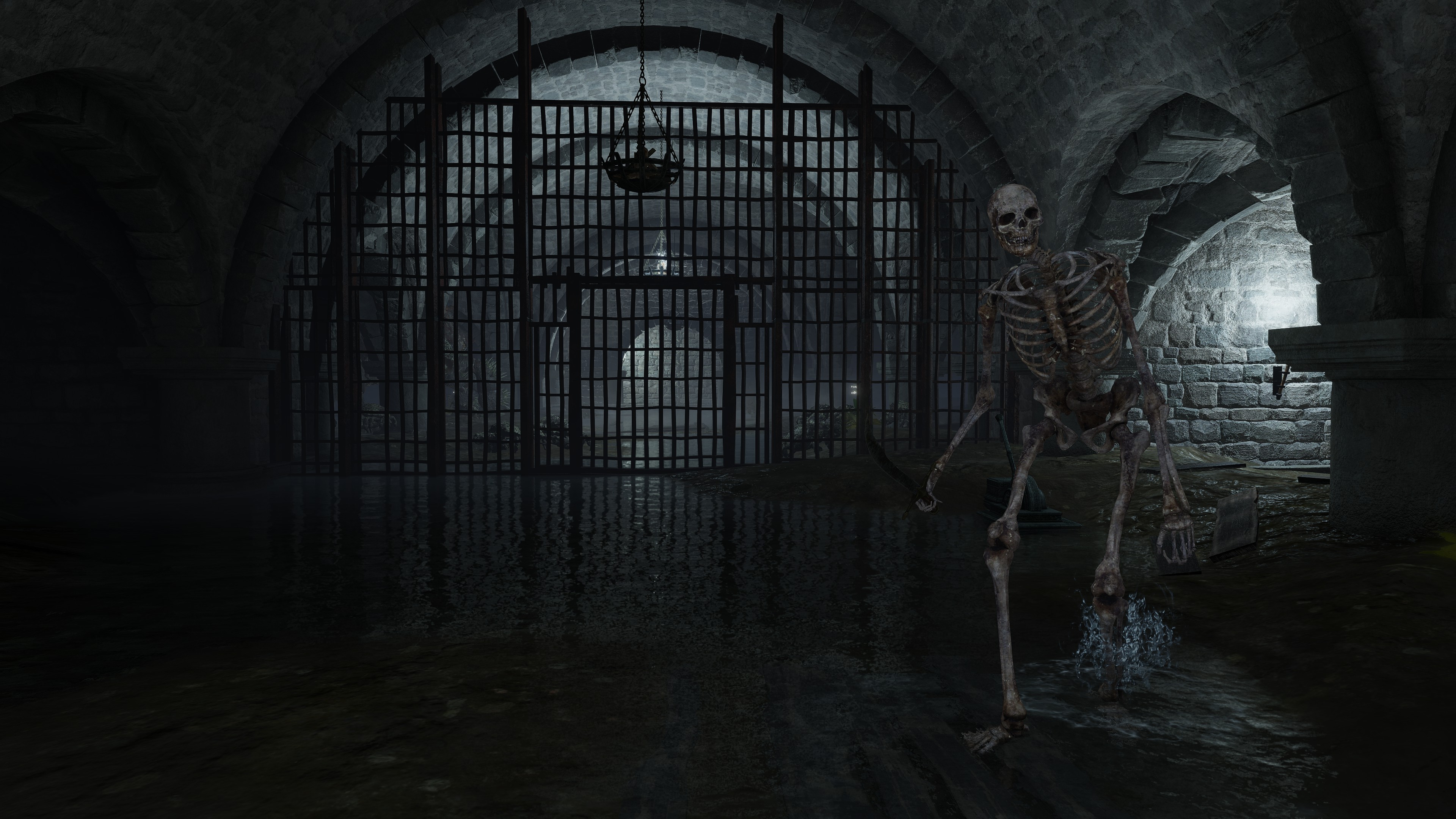
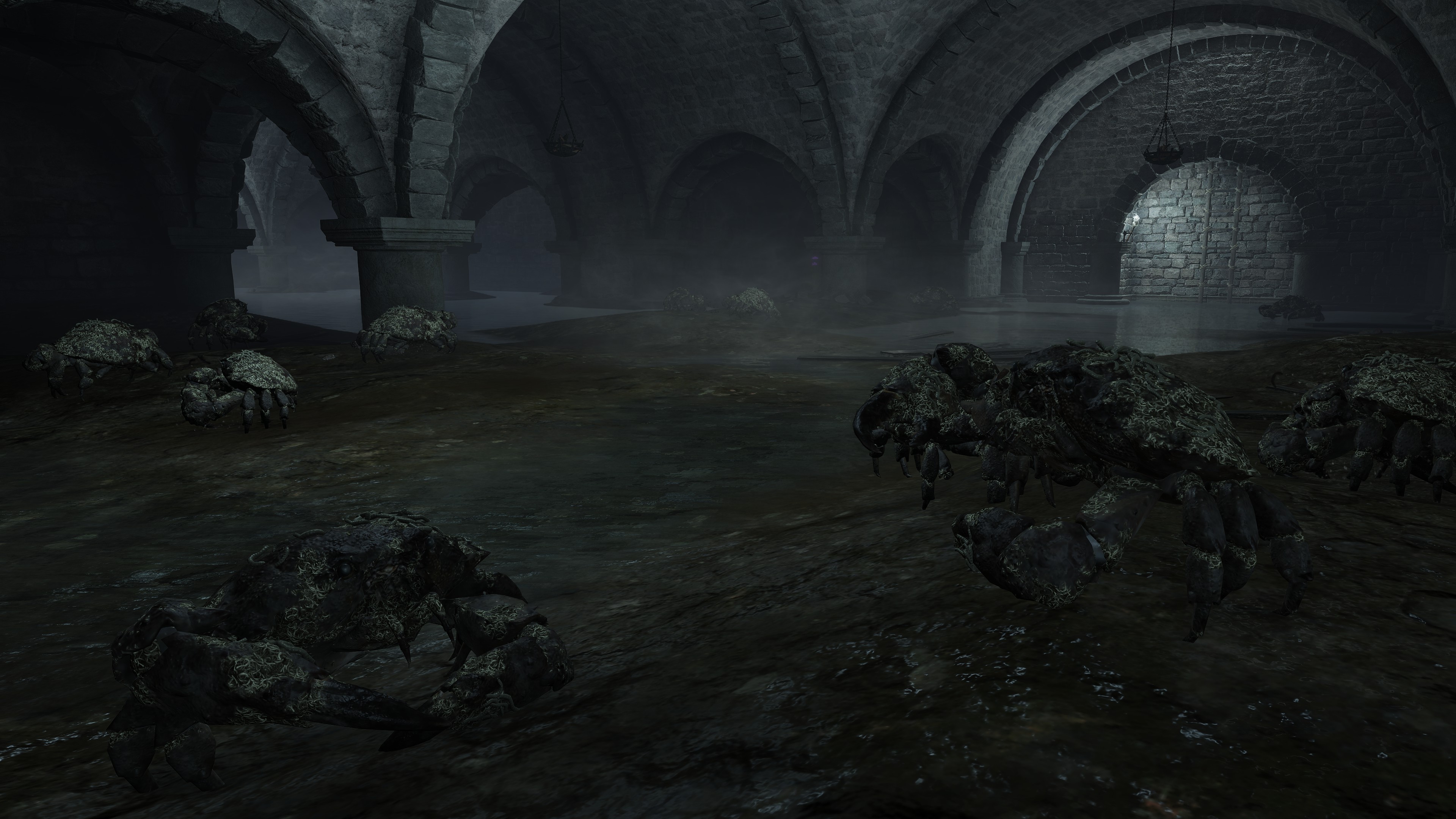
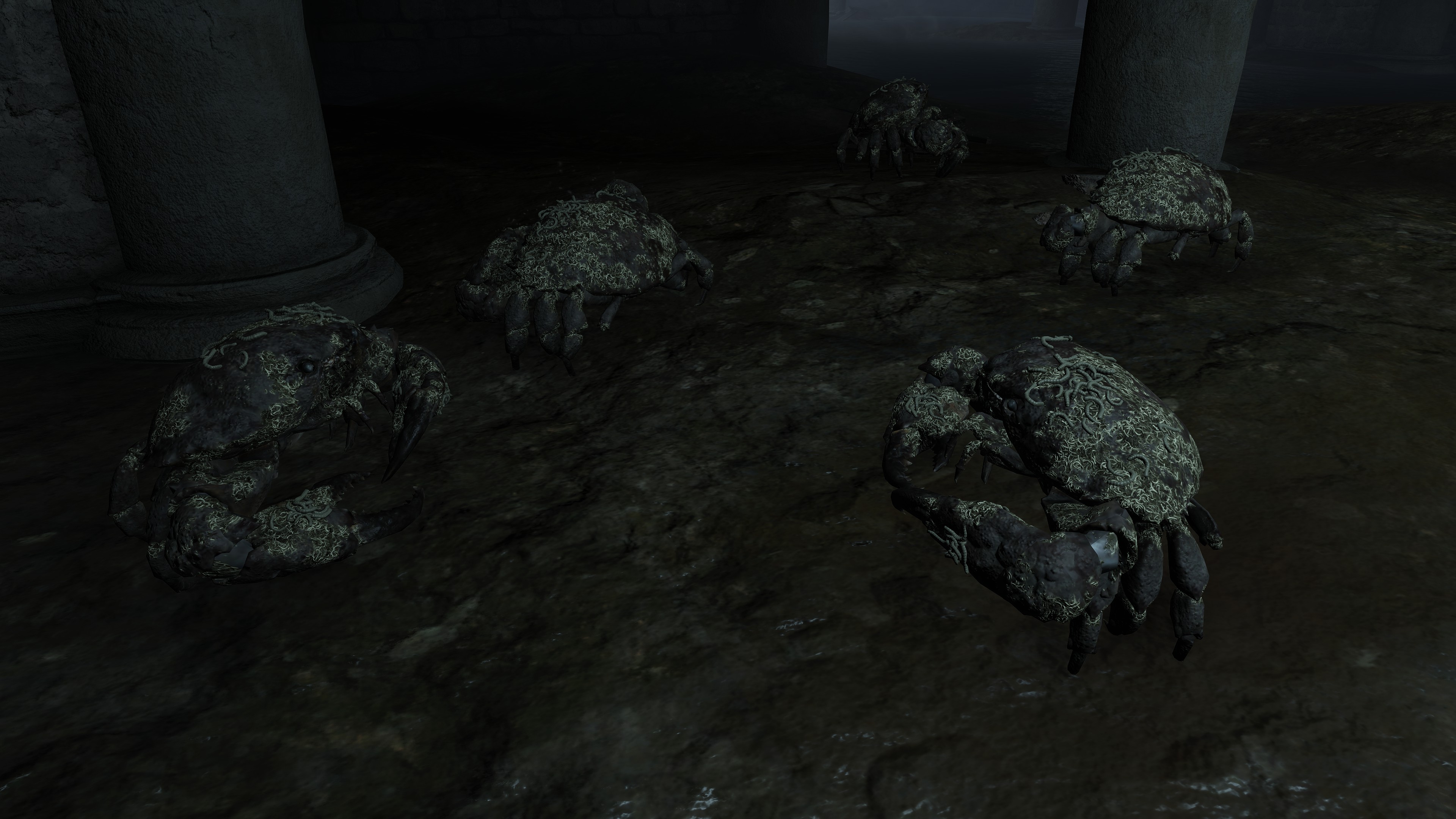
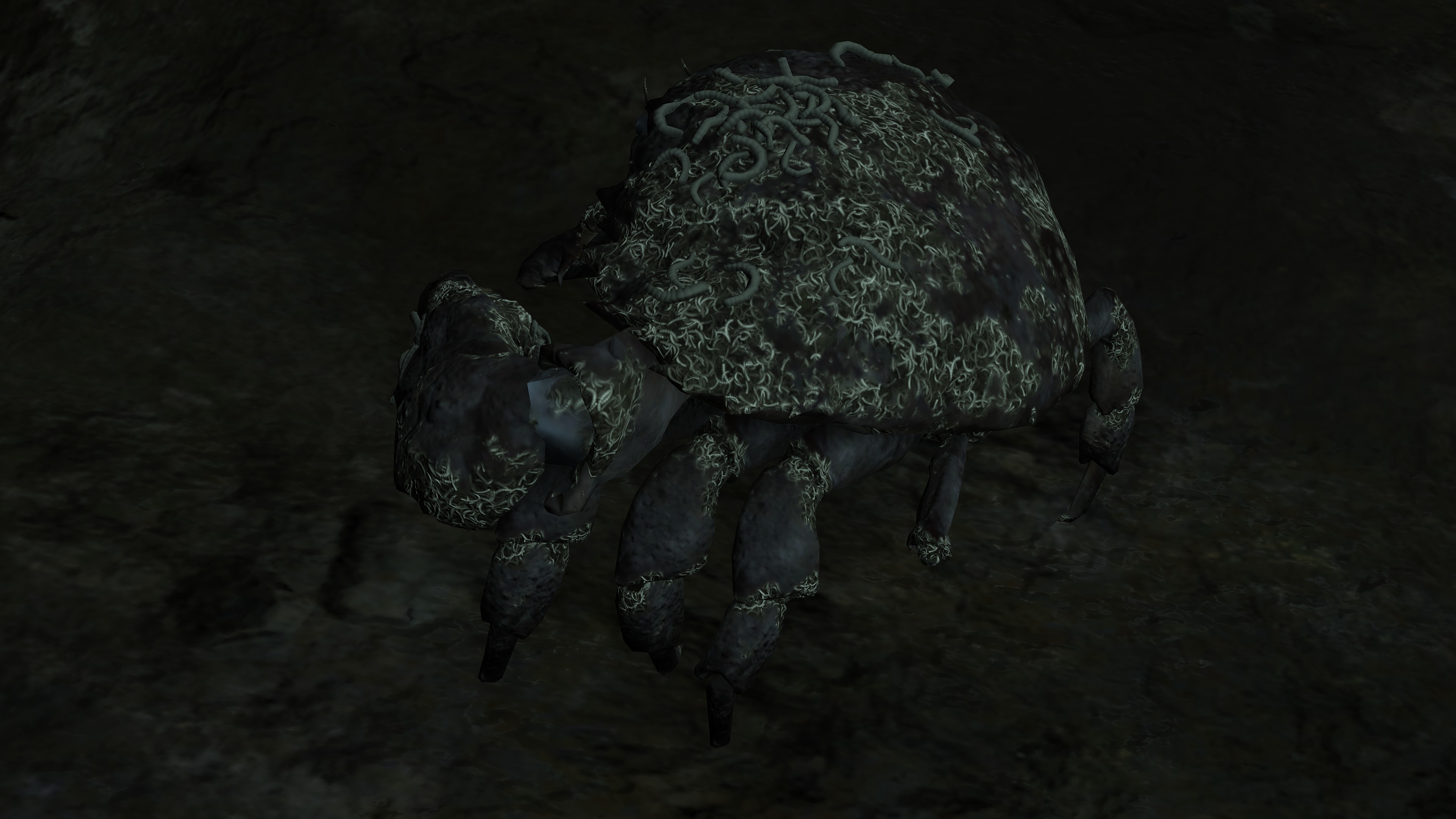
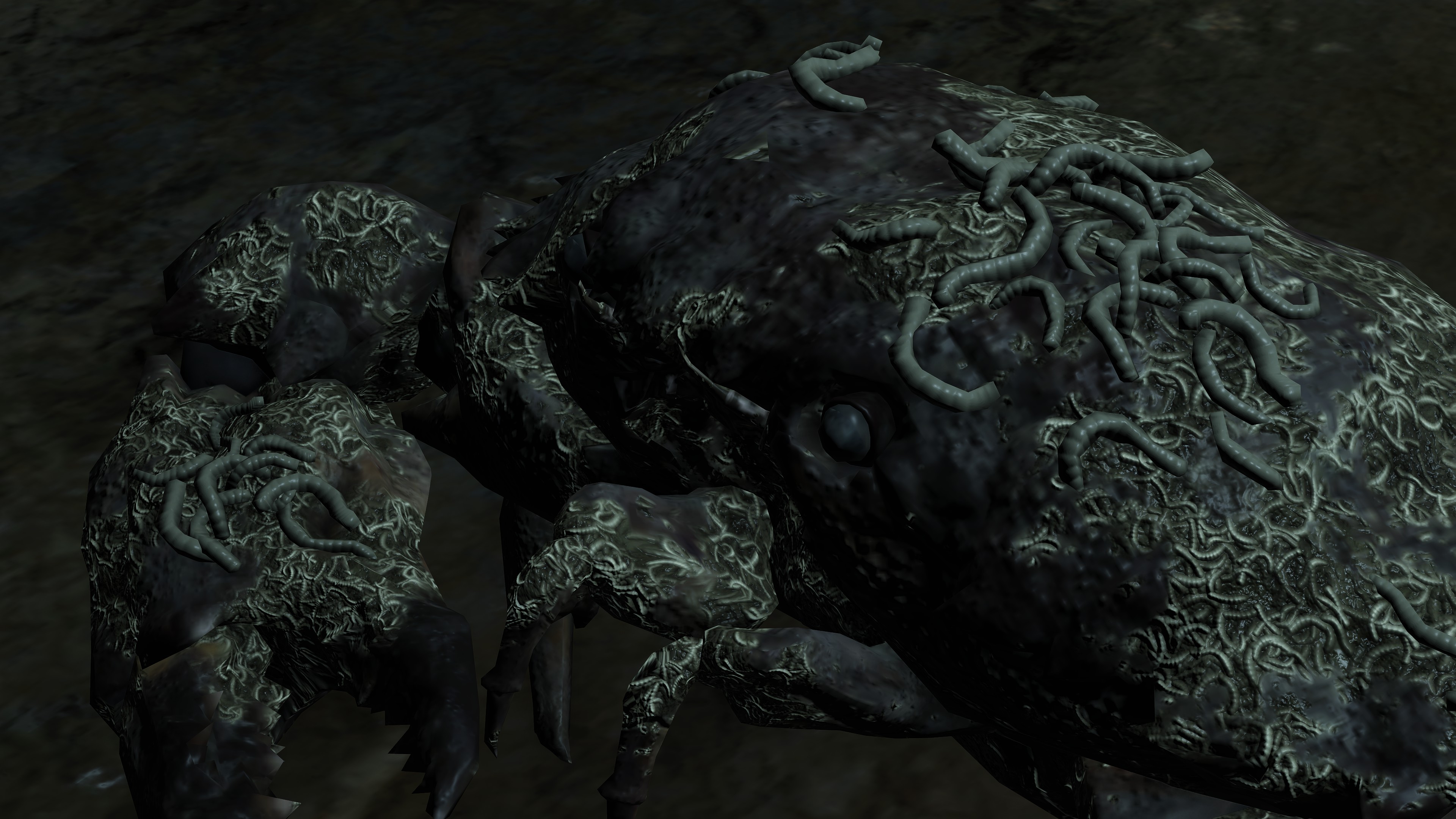
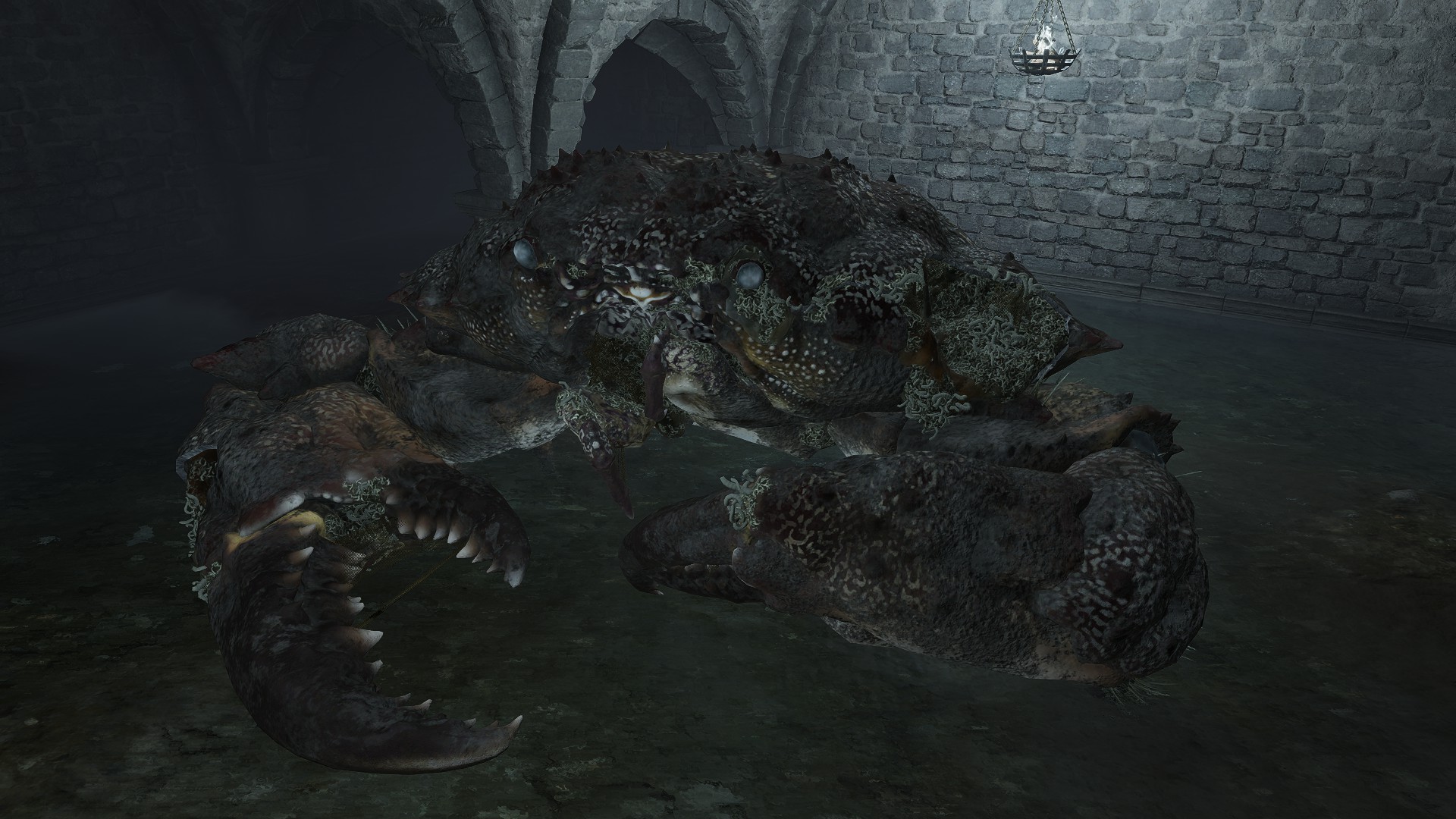
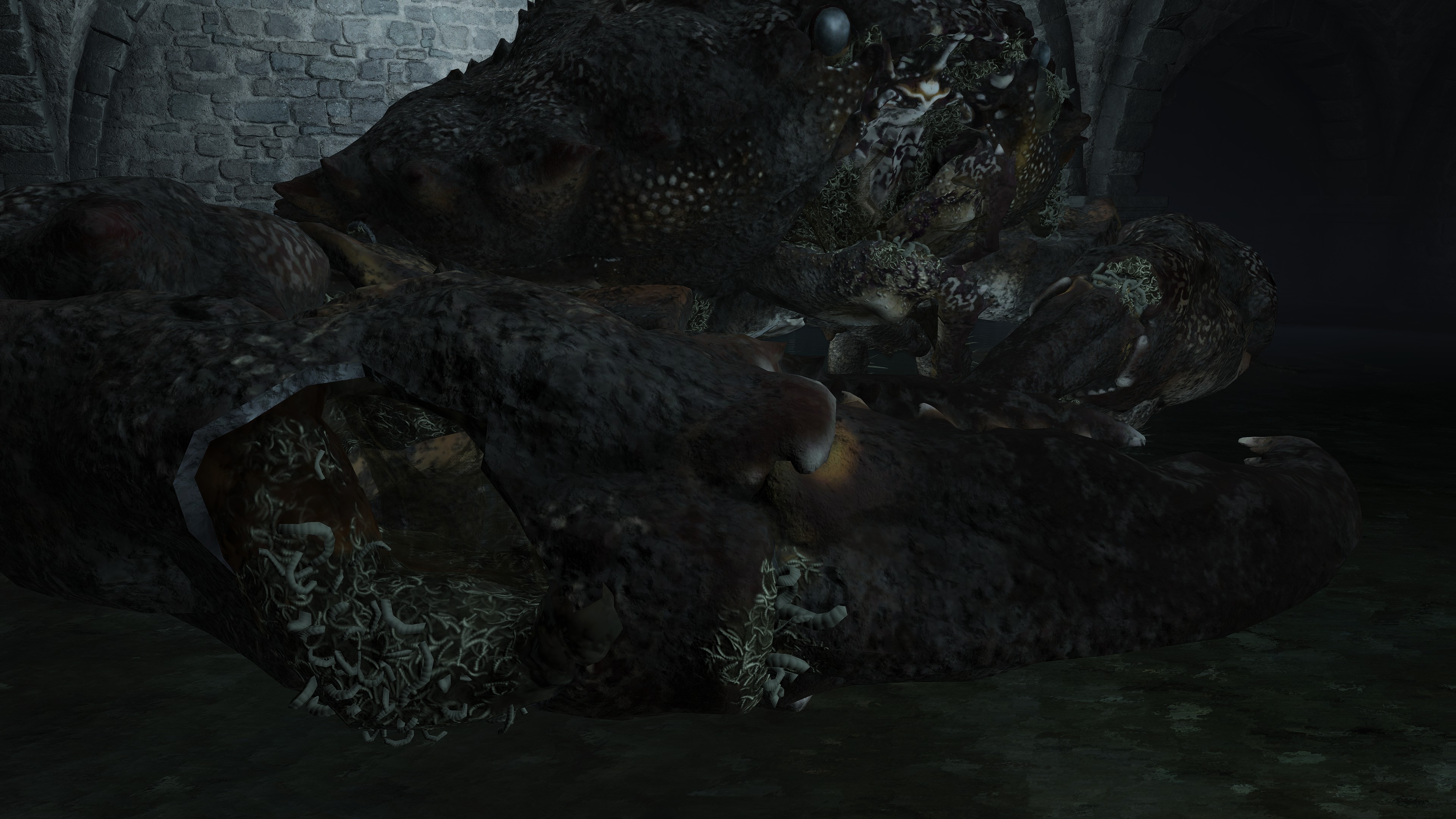
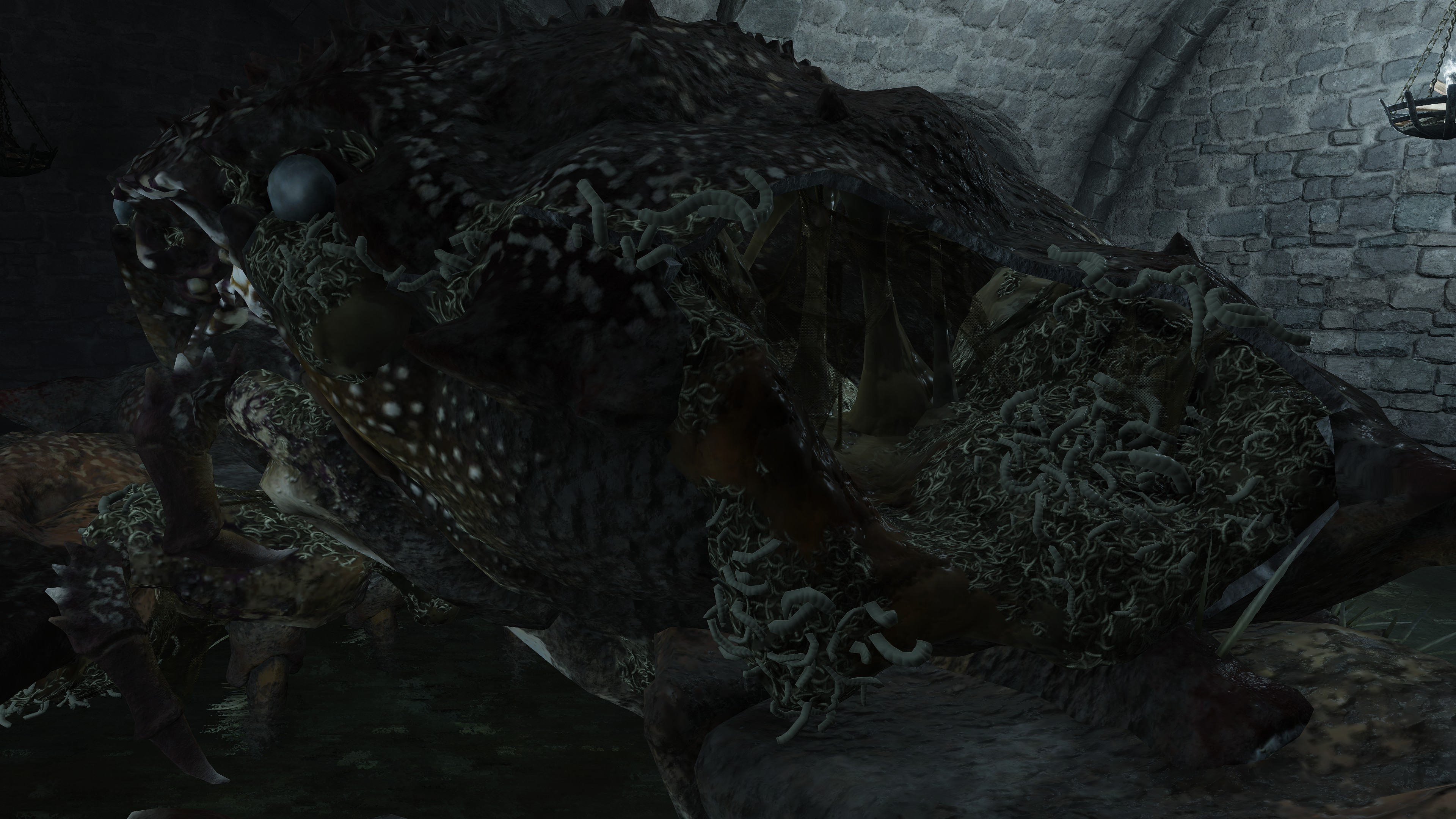
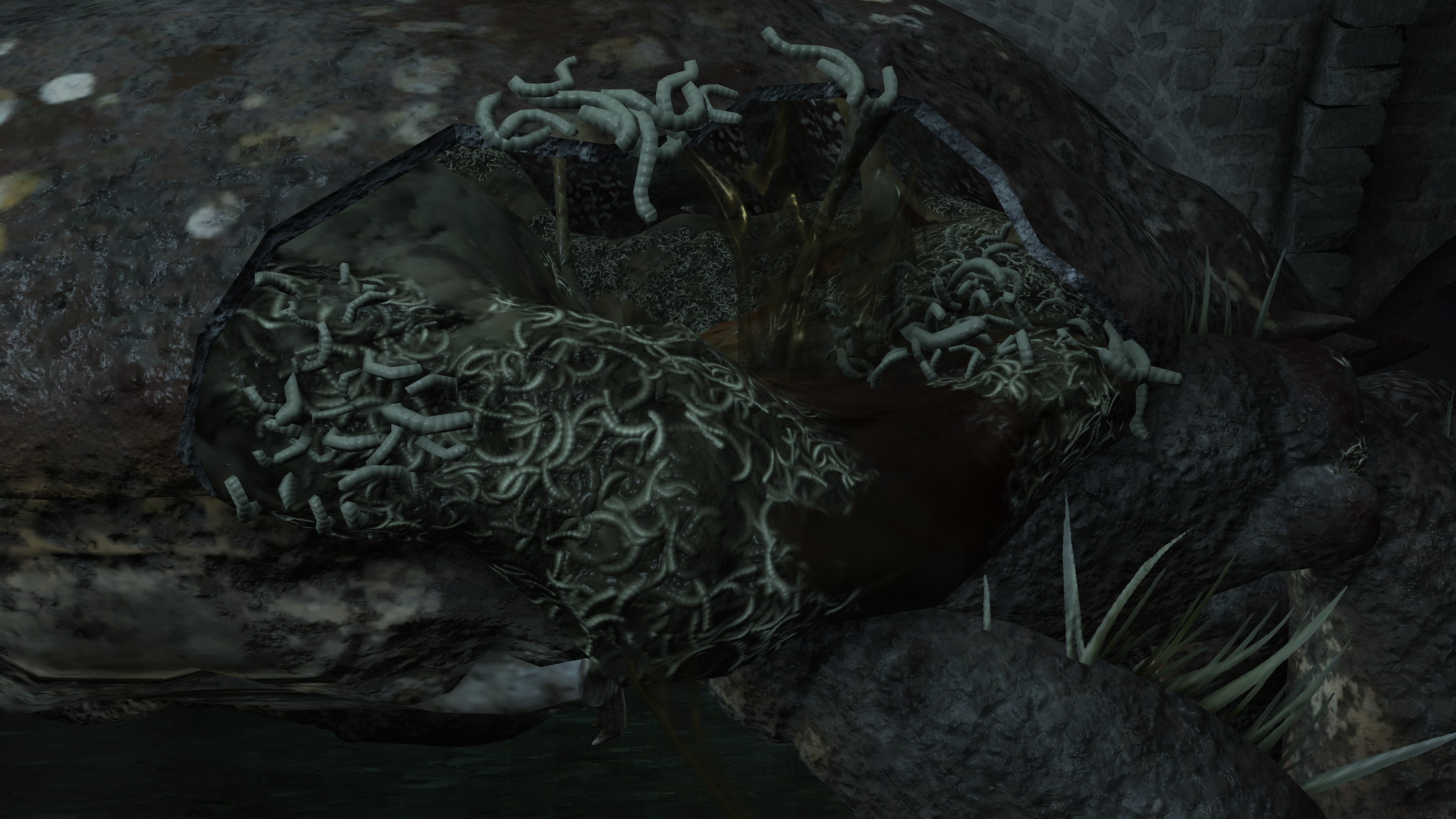
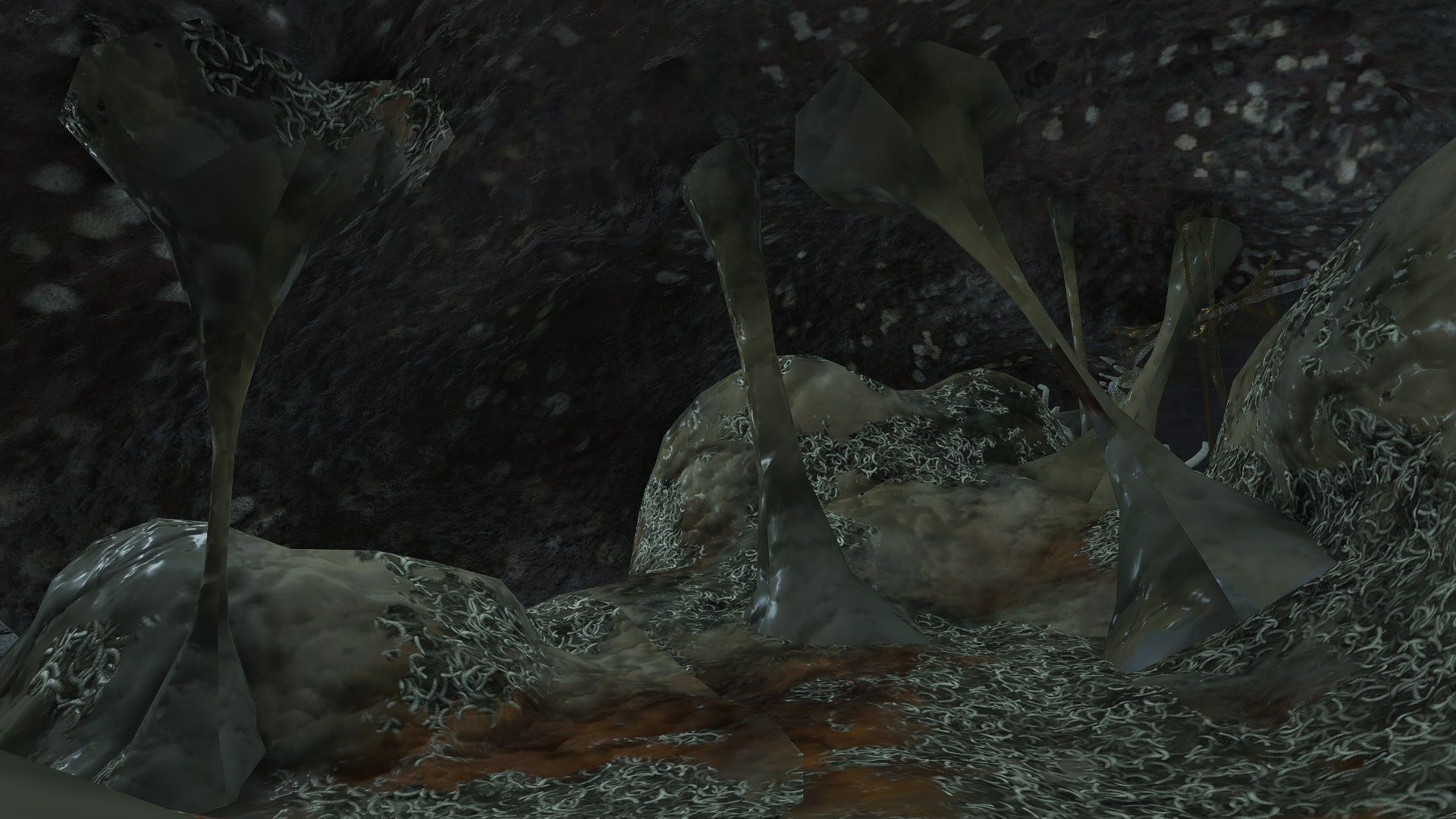
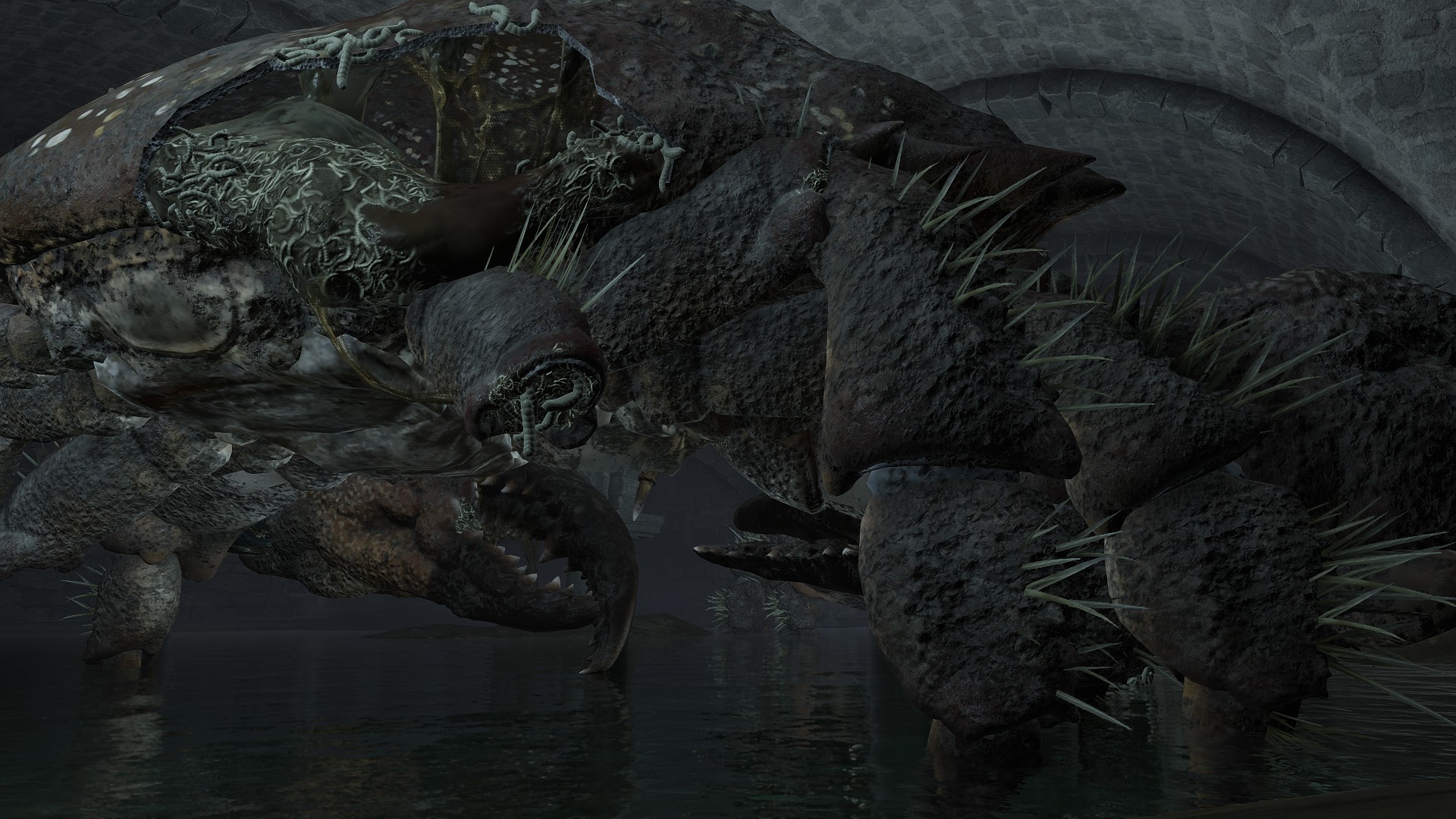
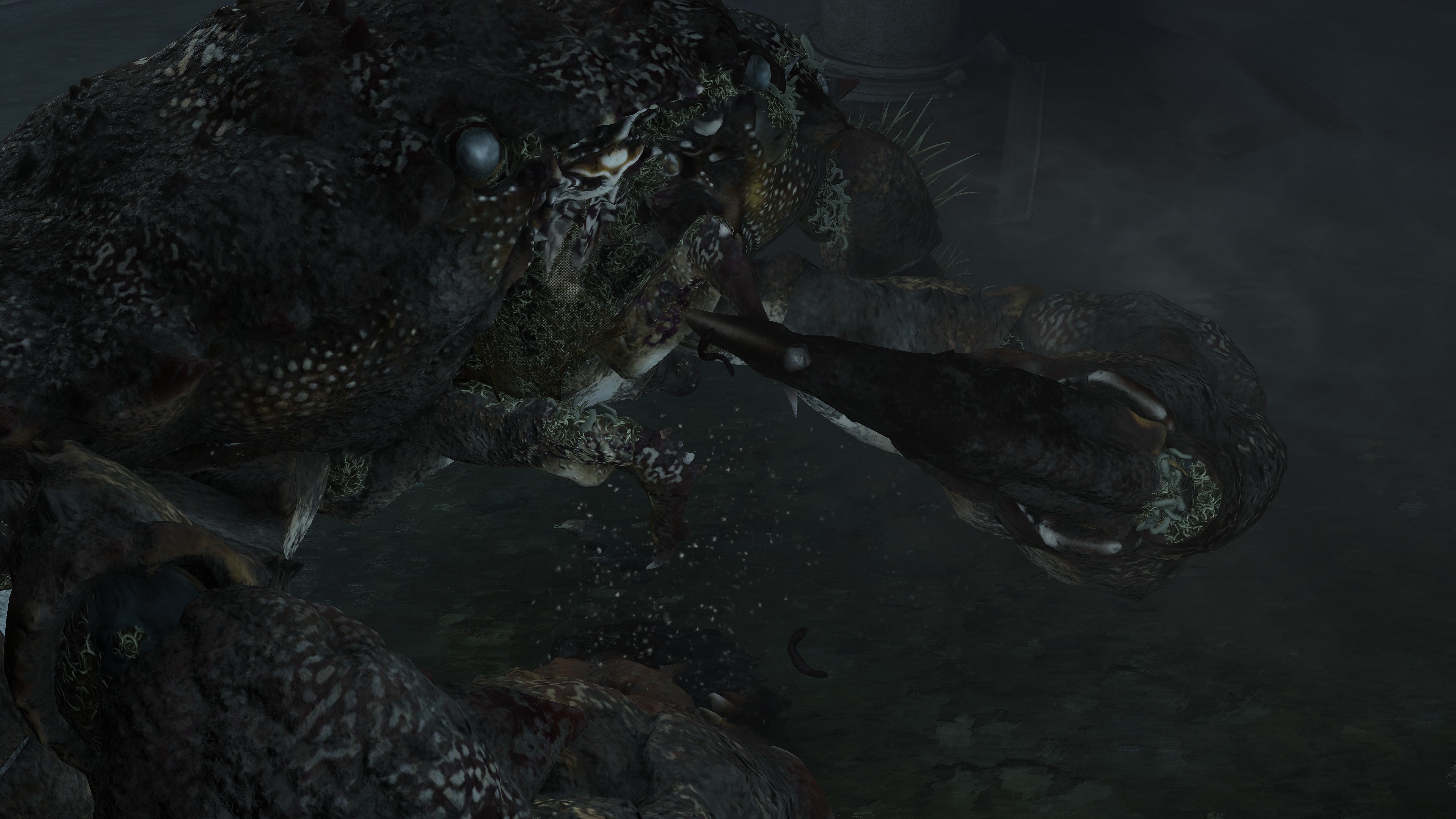
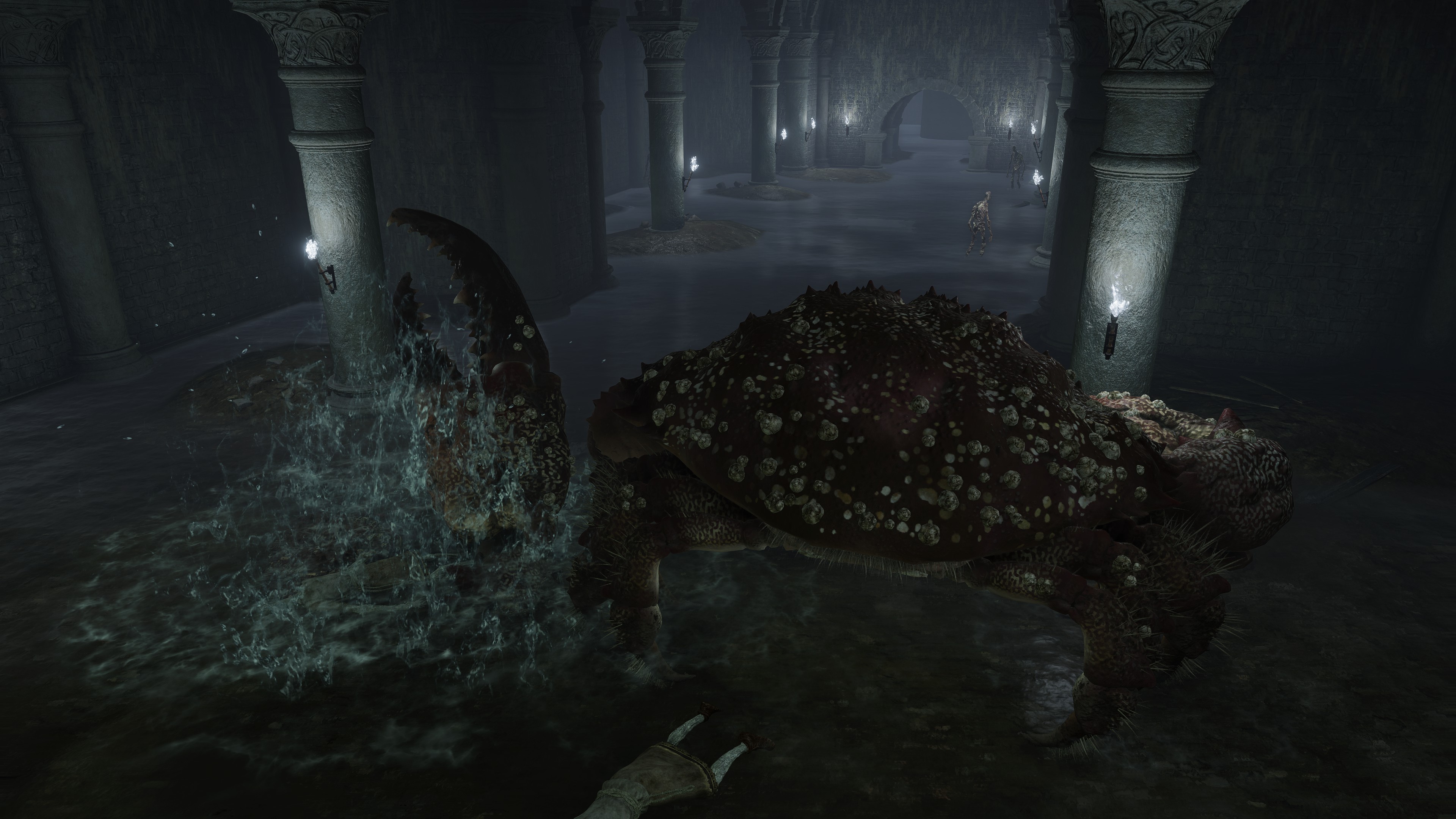
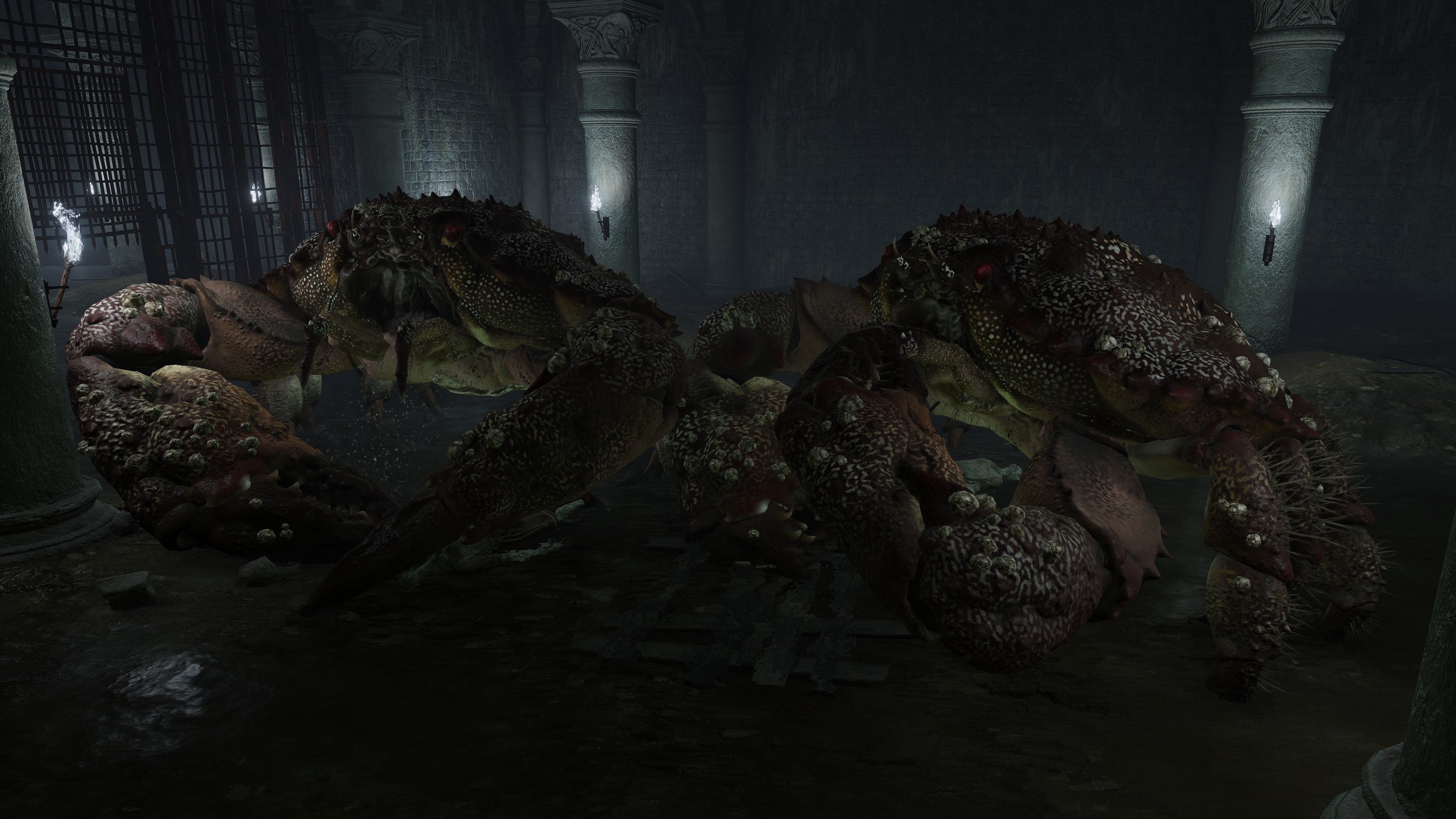
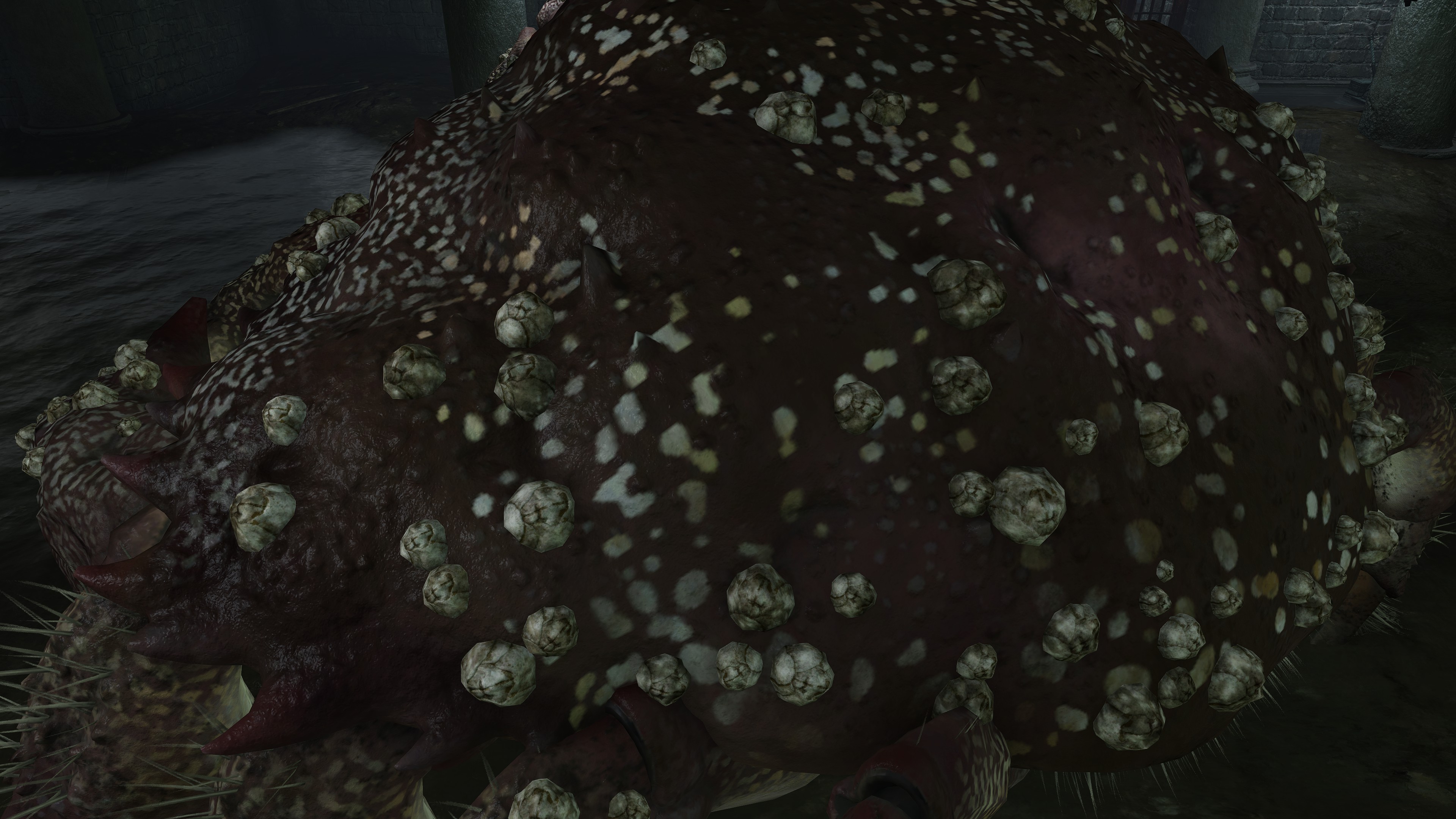
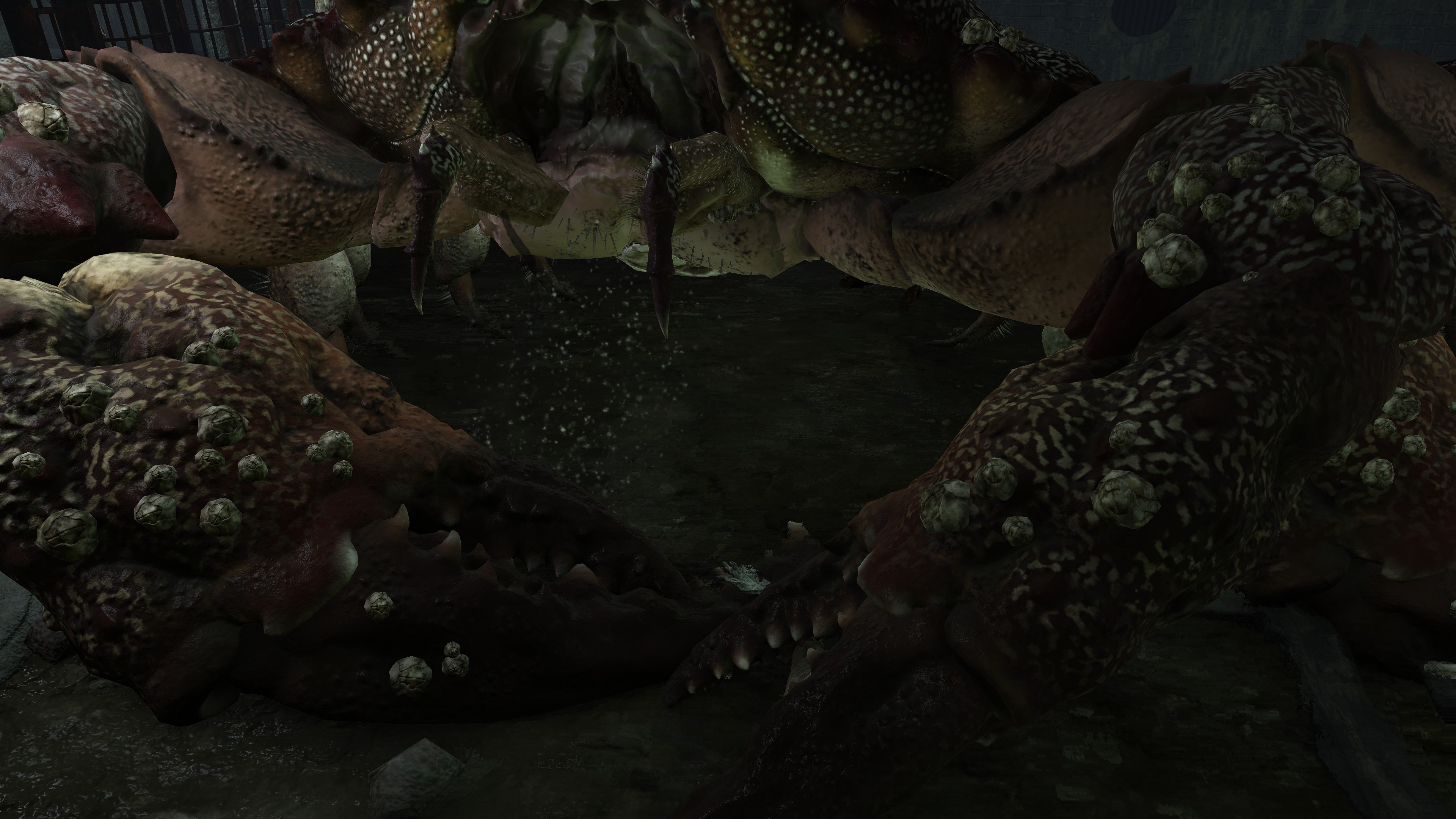
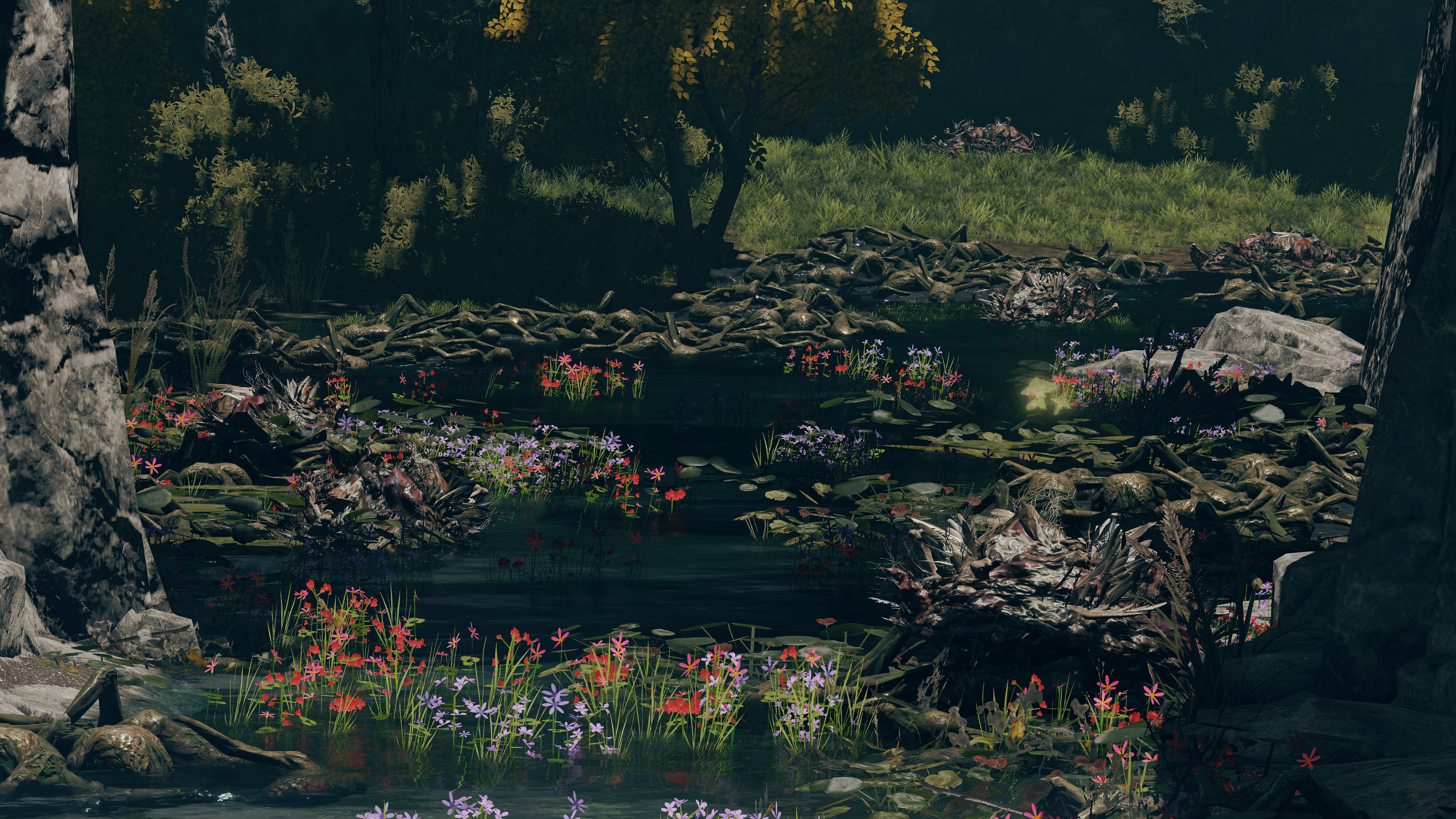
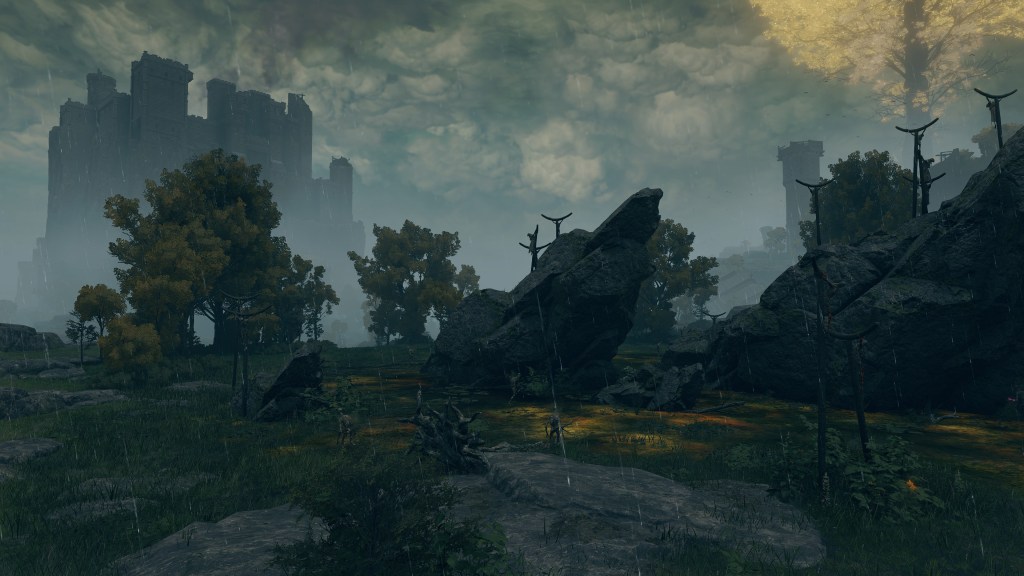
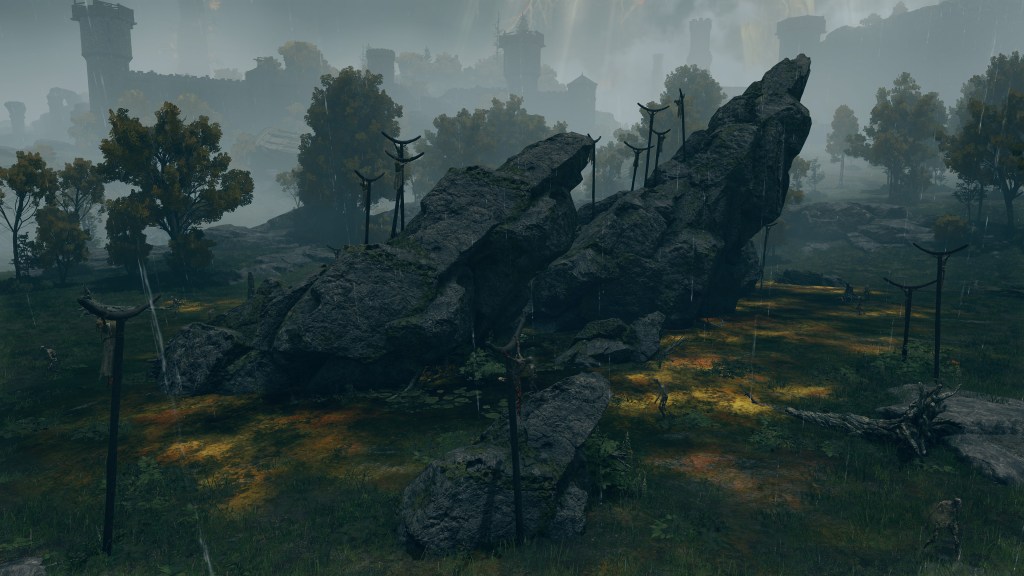
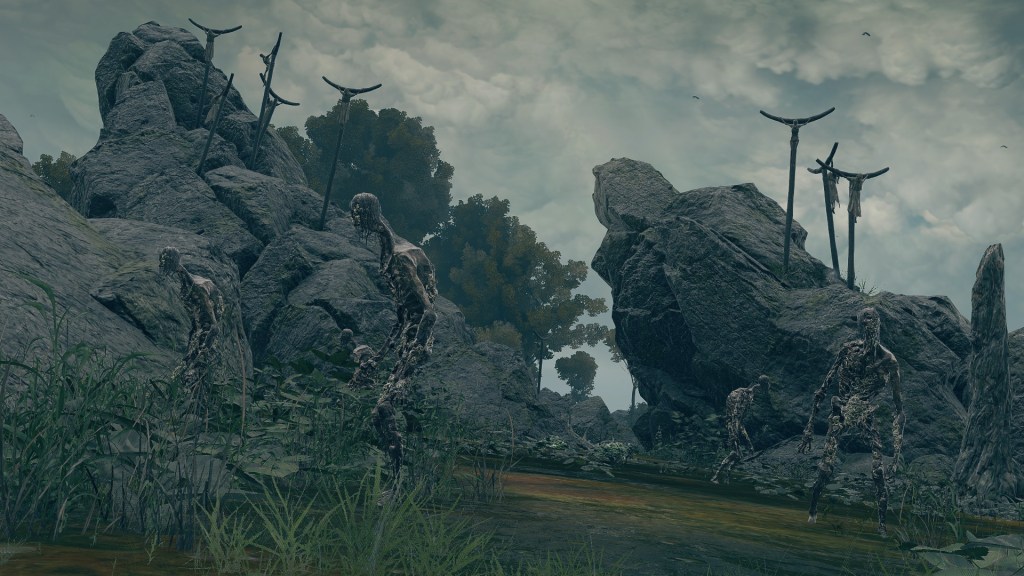
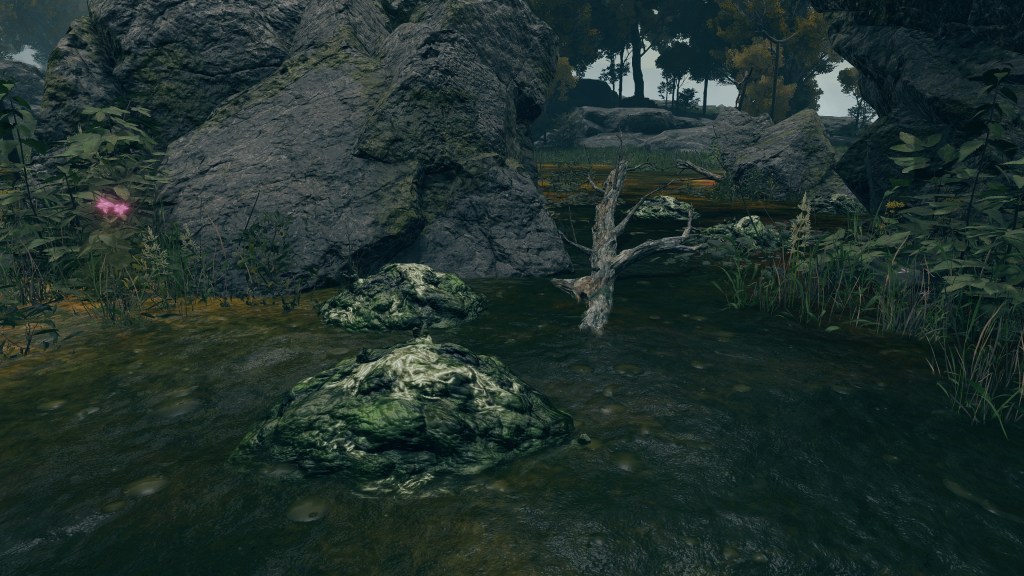
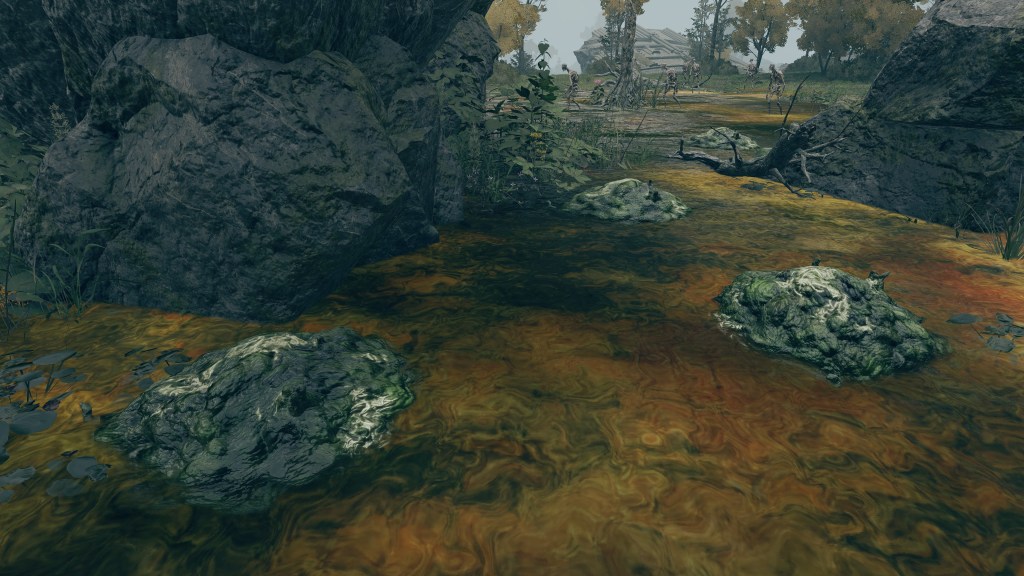
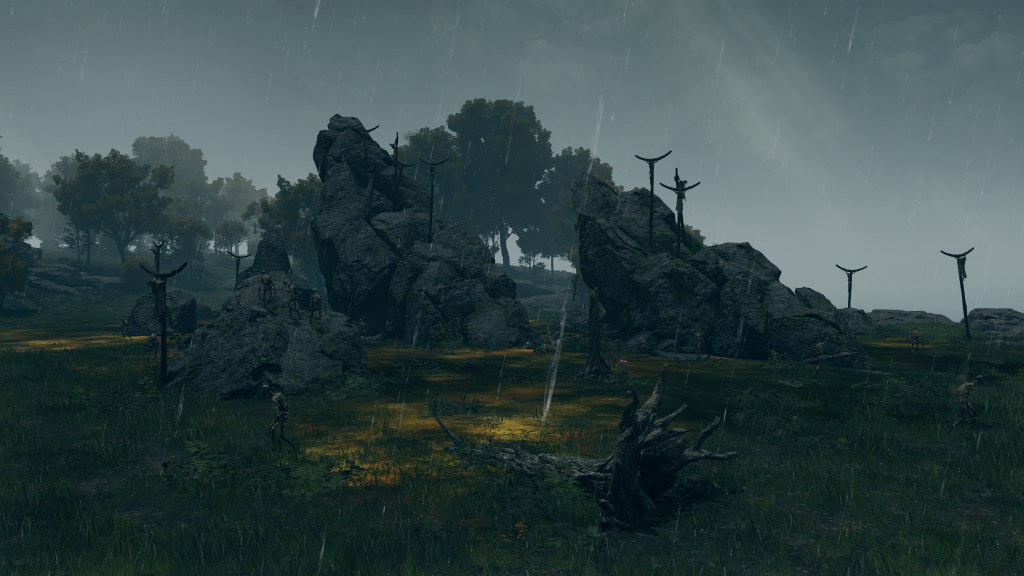
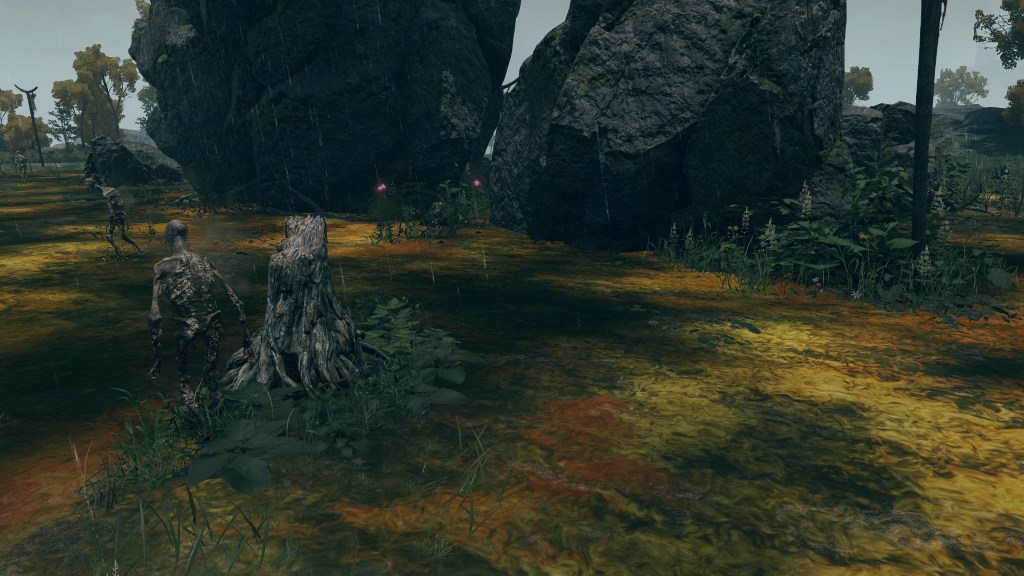
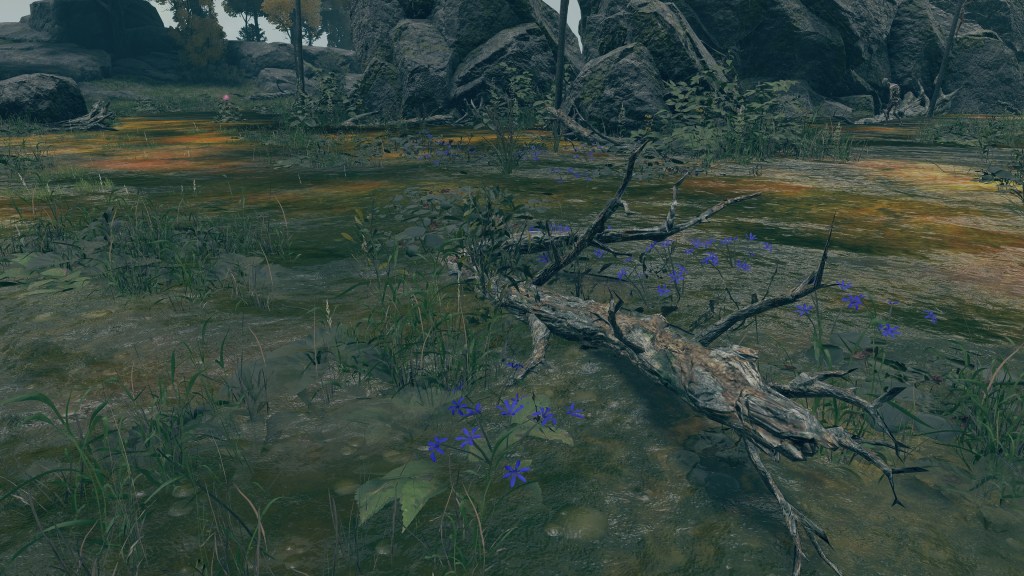
As the final nail in the coffin, we can only encounter a “Hollow” crab in one other location. In front of Castle Morne, we can find a mass crucifixion on an outcrop, bodies repeatedly left out there until they perish and rot off their posts — into the water pooling beneath under the constant rain. This has poisoned the pool over time, as well as freed the rotten Hollows to shamble about, with poisoned carrion crawling there with them. While the trees of the surrounding forest die to the stagnant waters infested with all sort of mucilage and maladies, this rot is apparently still too recent to kill off the bushes and grasses. And what do we see has buried itself in the poison pool? Another of these pest-ridden giant crabs. This leaves no reason to doubt a connection between the dead and the crabs feeding off them, whether it be from the rotten flesh directly or the worms feasting on that same flesh.
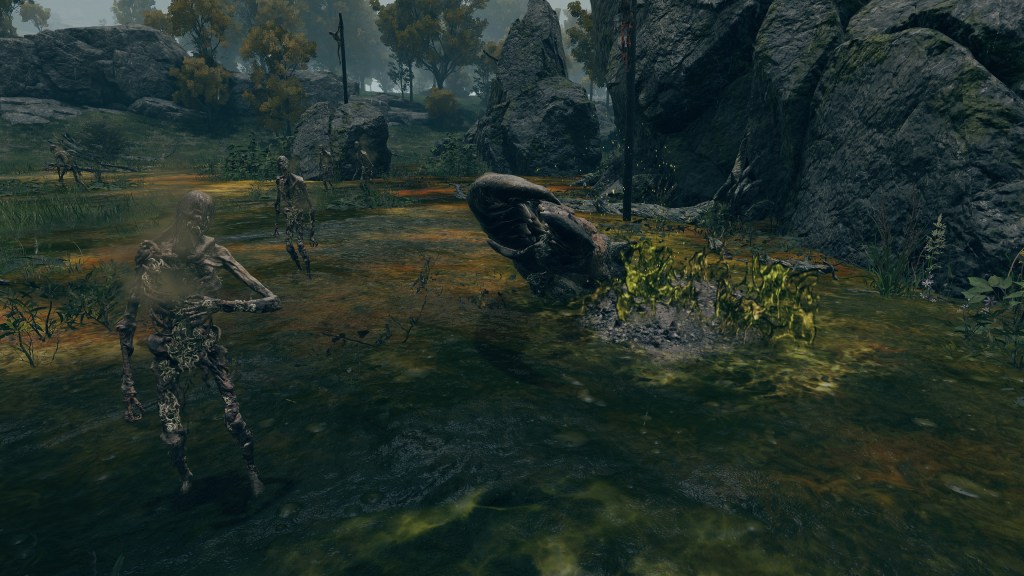
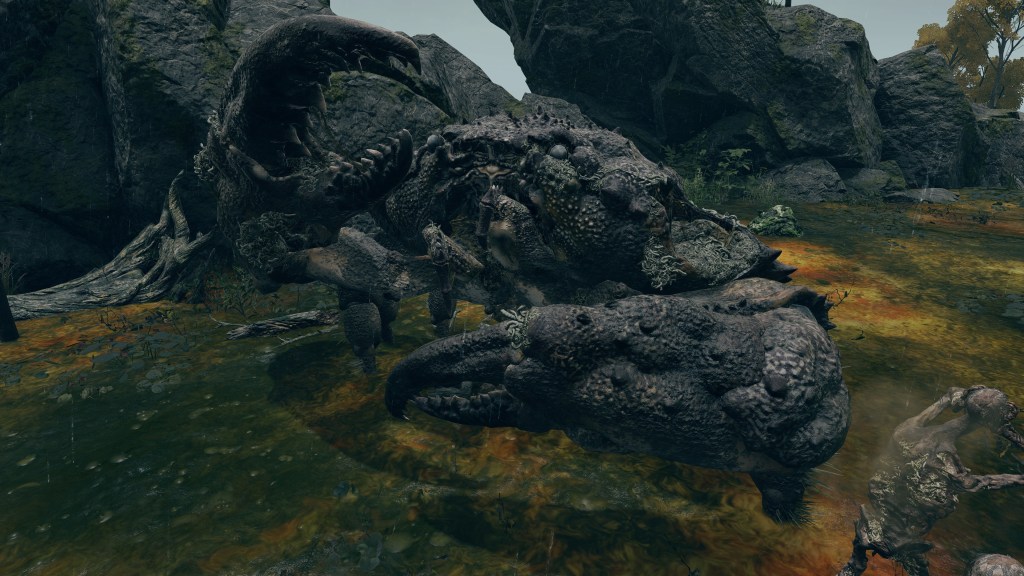
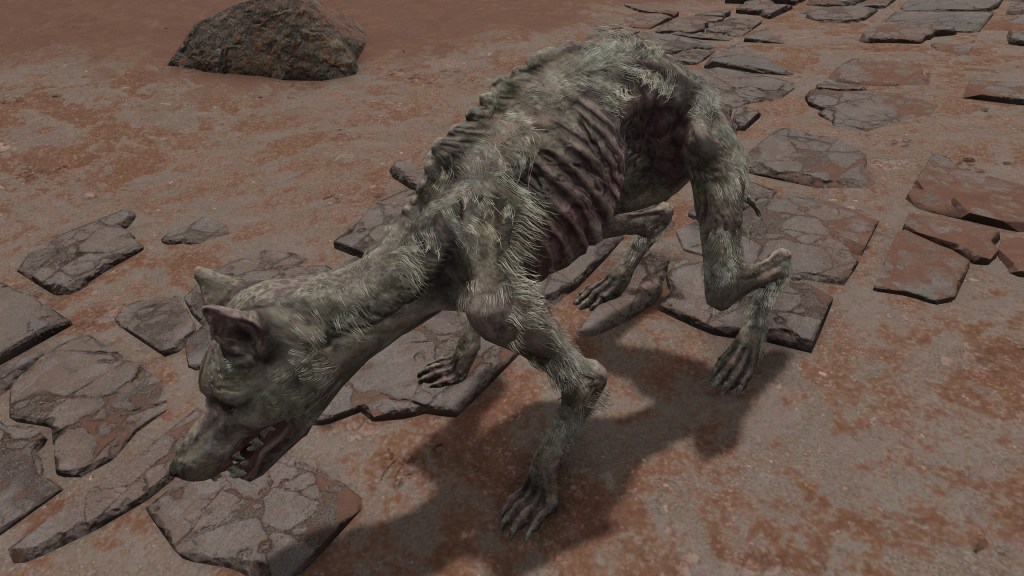
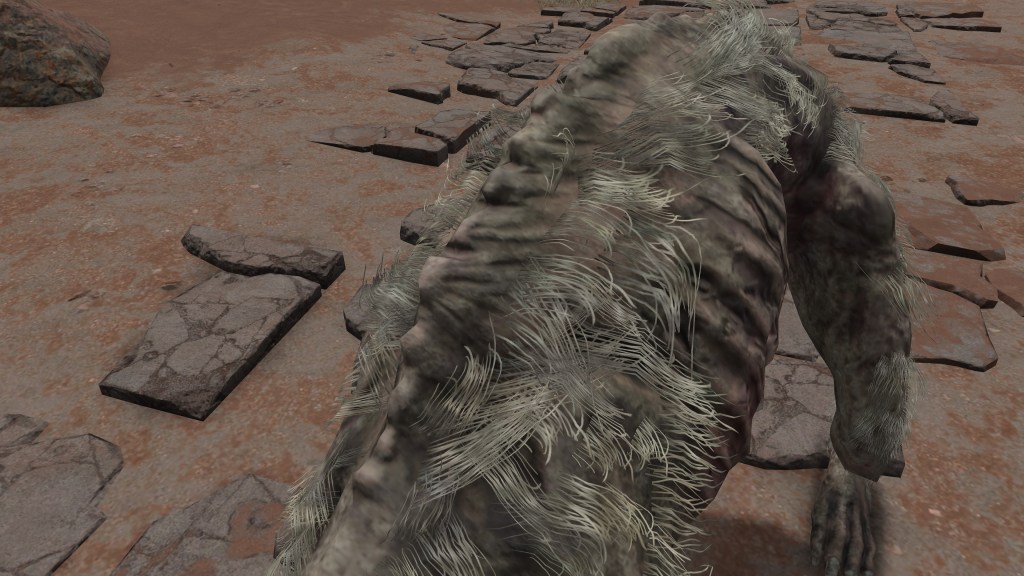
The same holds true for domesticated creatures. The various dogs we encounter throughout our journey all look deathly thin, with the ribcage partially exposed. Inconsistent as this is with wild beasts, their overall unnatural state isn’t so odd, considering their circumstances. We do often find strays feasting on human bodies, with pet canines brought to military camps and the like as obvious war hounds. Both examples are liable to have enjoyed a steady diet of Hollows, inheriting the hollowing in turn. If nothing else, this confirms that the zombified appearance isn’t limited to life of white flesh and blood. The only animals implicitly immune to this phenomenon, in fact, seem to be the land octopuses, who channel all the humans they eat into their ovaries for the birth of their brood. But that is a quirk of their peculiar evolution, most beasts not adapted to a human diet specifically. If more regularly resorted to man-eating, they too would probably suffer the same fate as the dogs and crabs.
Not even humans from outside the Lands Between are safe for consumption. The fact that sailors who wash ashore and don’t get gobbled up by octopuses first are Hollow proves that any who make landfall will immediately receive the curse of life, dead or alive. And what buoys their ended lives save for the golden runes universal to all the enemies we may defeat? Just like said enemies, those rotten sailors can sometimes retain profuse gold in their eyes, providing fivefold the typical number of runes. Cut text for the commoner set likewise describes the Hollows as cursed by runes. Even weakened, the Erdtree continues to shine and spread runes to the inhabitants of every corner of the lands. It doesn’t matter if you are a half-rotten corpse brought in with the tides like flotsam, you are still worthy of the grace of gold. The result is that every person who touches ground is subject to an unending life, warped as it has become. The sailors desperate to reach the Lands Between now never know rest as they meander the beaches with maggoty insides. Gold’s blessing has truly become a curse.
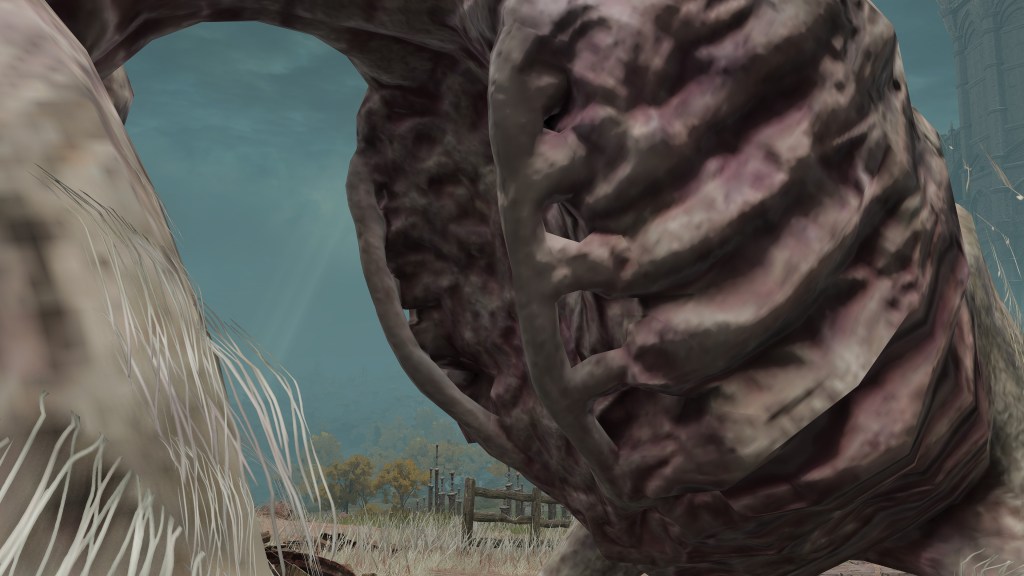
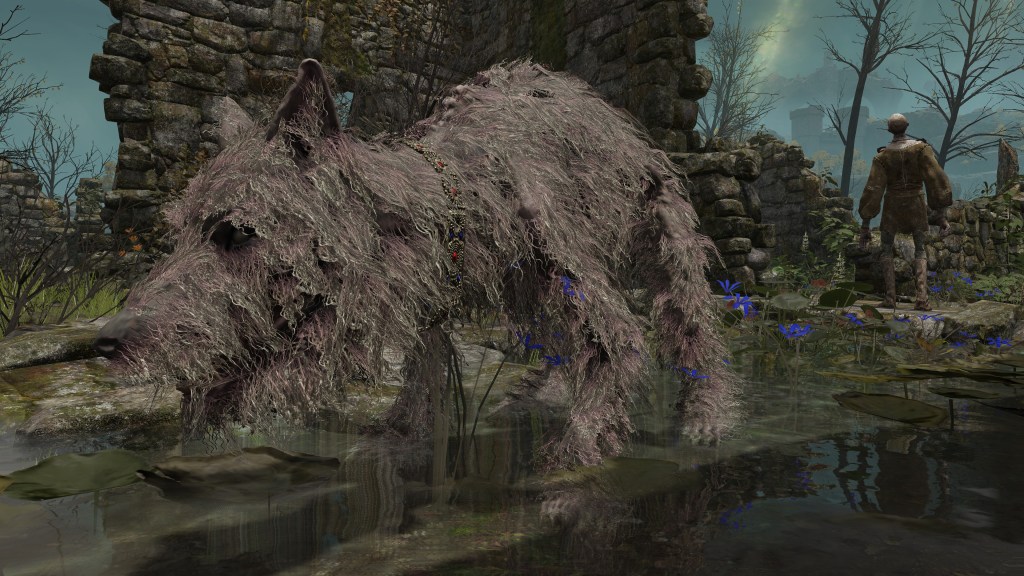
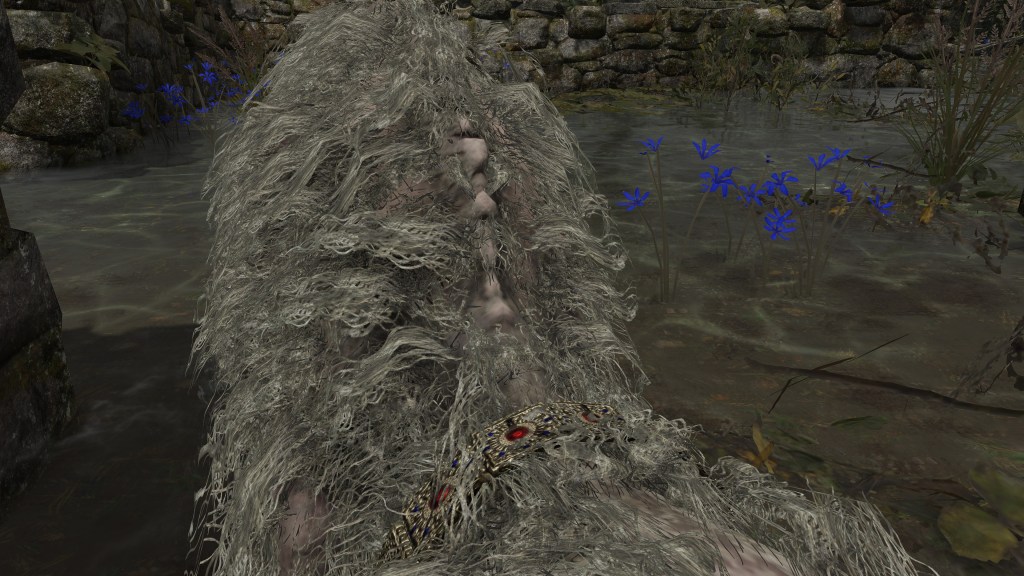
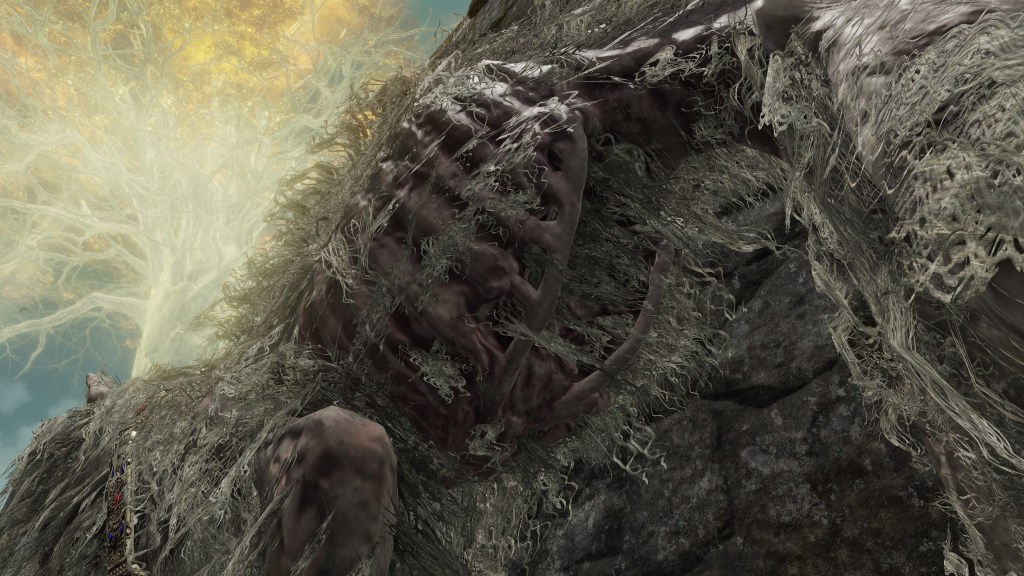
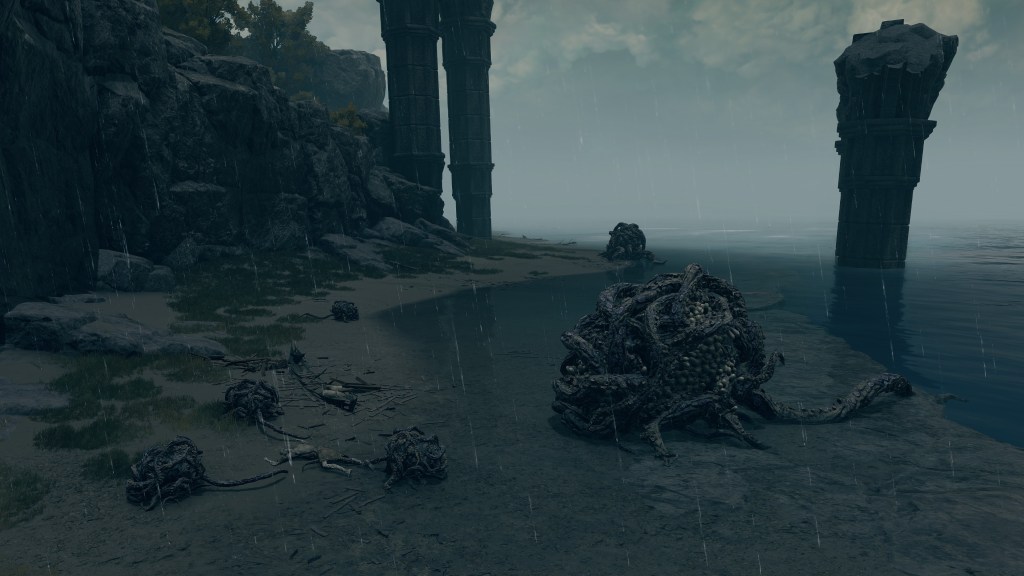
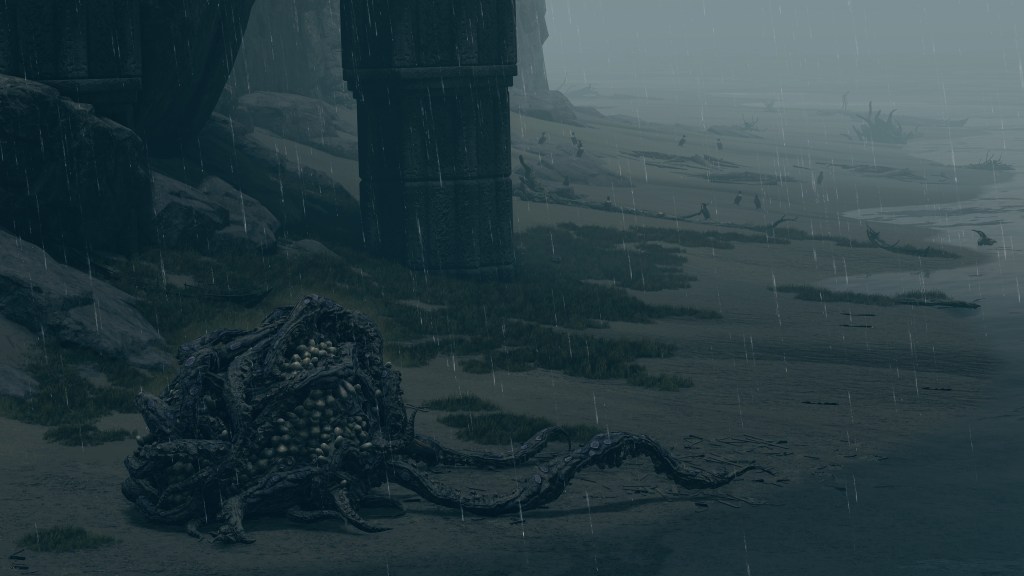
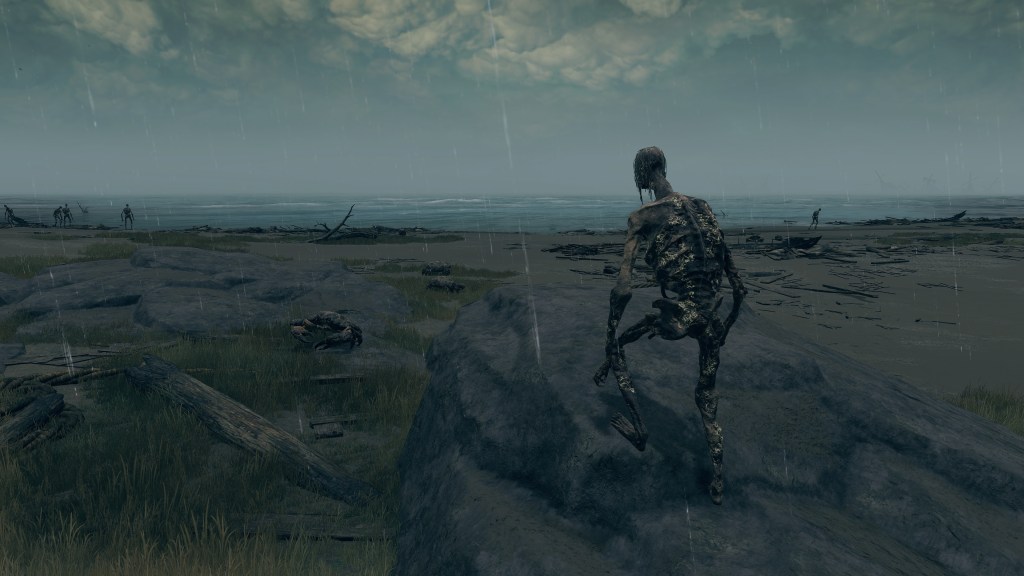
Hood of townspeople cursed by runes.
False Face Must Hide
With all these developments in the wake of the Ring shattering, no one in the Lands Between could ignore the situation. Some, like the citizens of Leyndell, remain steadfast. Even with the great tree glowing darker than before, the phantom holy seal in the Erdtree crest’s form holds just as much potency for the faithful. This alone is enough to lift the spirits of those worshipers. Granted, some of their faith borders on delusional; even after we successfully burn the Erdtree and turn Leyndell into an ashen capital, a commoner’s spirit sitting exhausted on the cinders nonetheless laughs that they are yet a “golden” people — all because the tree technically remains standing. Many are simply clinging to the world of gold that remains, regardless of malfunctions in its current Order. For them, it is unimaginable to think that the Erdtree could ever enter a truly dying state. Others are much more sober-minded, such as the citizens of the Woodfolk Ruins recording Wrath of Gold in their Erdtree mania. Even then, that pious settlement might have taken the incident in stride, since the tree “dying” before was what brought them together.
Phantom holy seal modeled on the Golden Tree’s crest. Things which was once the heart of the Between faith.
Even though the Elden Ring is broken and the Golden Tree is darkening, it continues to respond to earnest faith.
… Look. The Golden Tree is still standing. Even burned by the Destructive Flame, it towers unwavering. Haha, hahaha… In that case, we are a golden people yet…
Those with weaker devotion instead see themselves falling into despair, especially when there are still other threats like the Flame of Frenzy. At the Purified Ruins, (Site P) many received the plague of madness in their eyes. But the spirit of one commoner there encourages “everyone” to come out of the dark underground and offer up their afflicted eyes to a Finger Maiden. Sure enough, searching the ruins, we see that the requisite basement has been boarded up, with no candles to light the place. Down there, a Shabriri grape can be looted off the ground next to the chest containing the Two Fingers heirloom. Factored altogether, Two Fingers worshipers at Site P converted to Three Fingers worship following their affliction, practicing their new faith in the shadows so that outsiders wouldn’t notice. They no longer saw hope in this broken world, so turned to the outer god promising to wipe the slate clean and spare them any more suffering. Such communities outside the motherland were ill-equipped for this apocalyptic scenario.
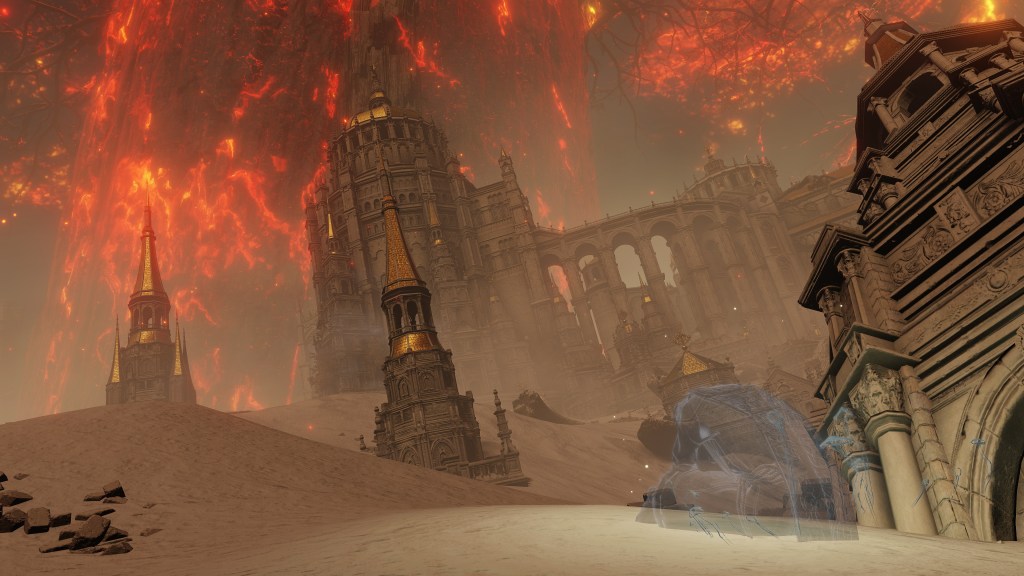
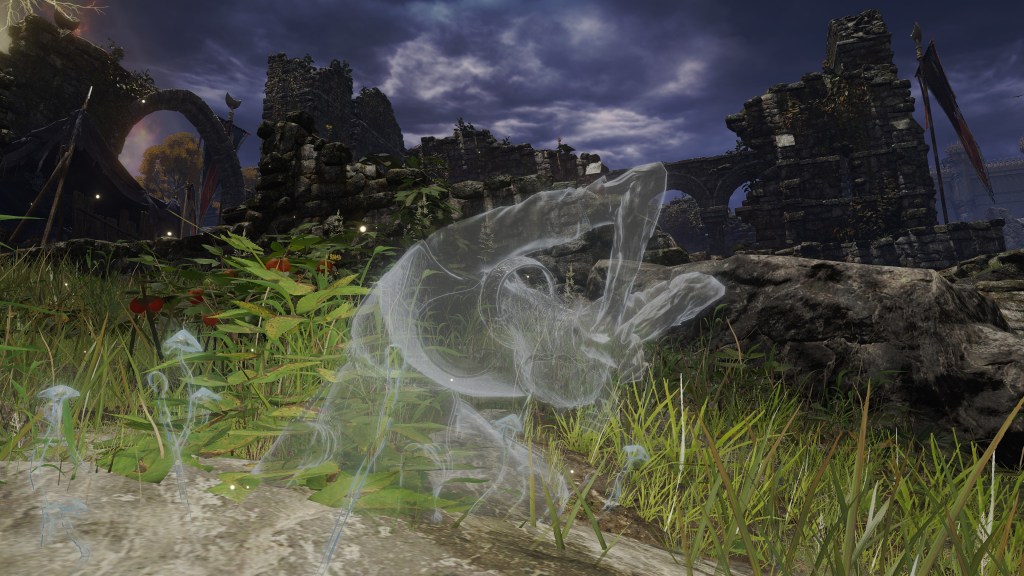
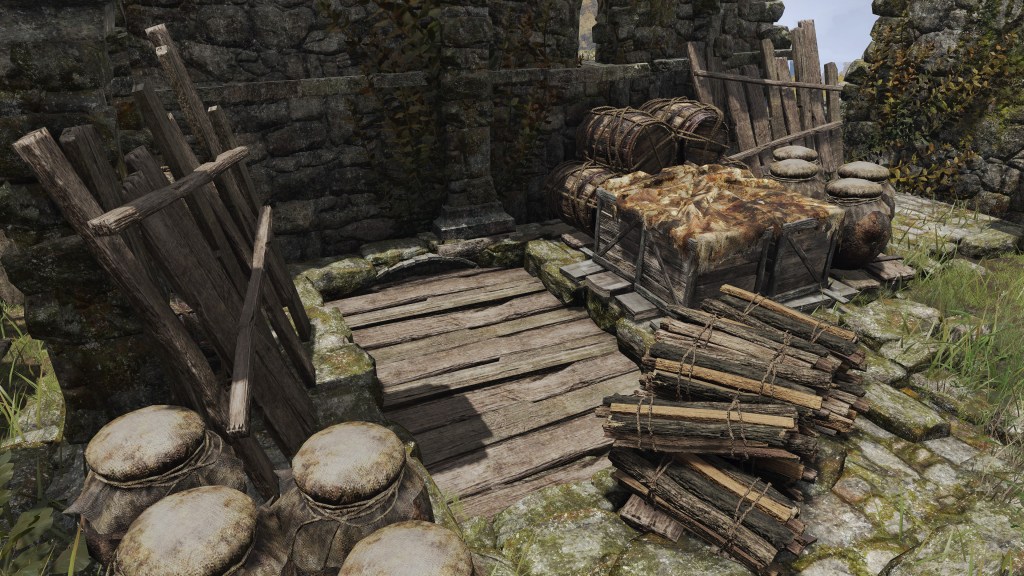
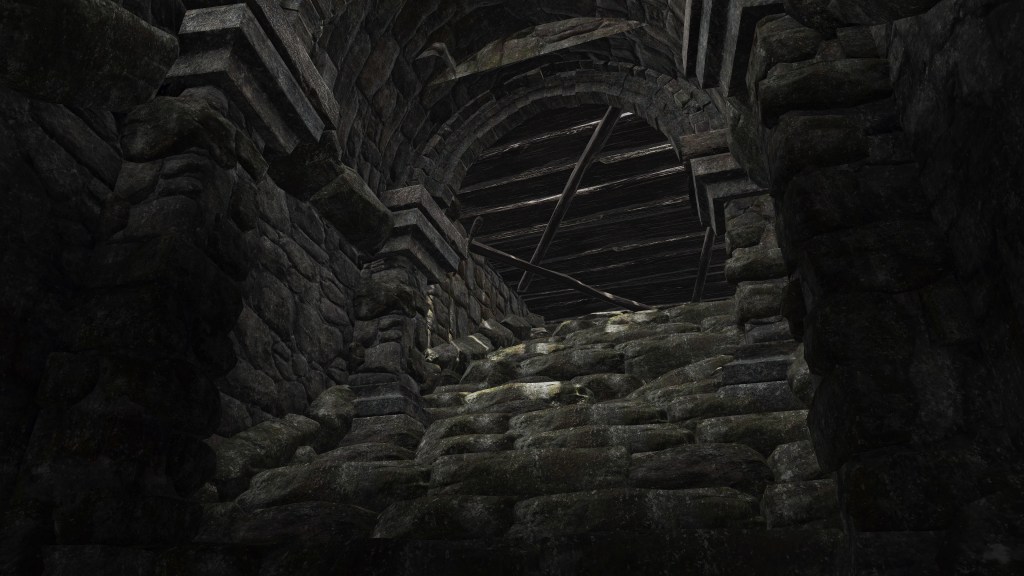
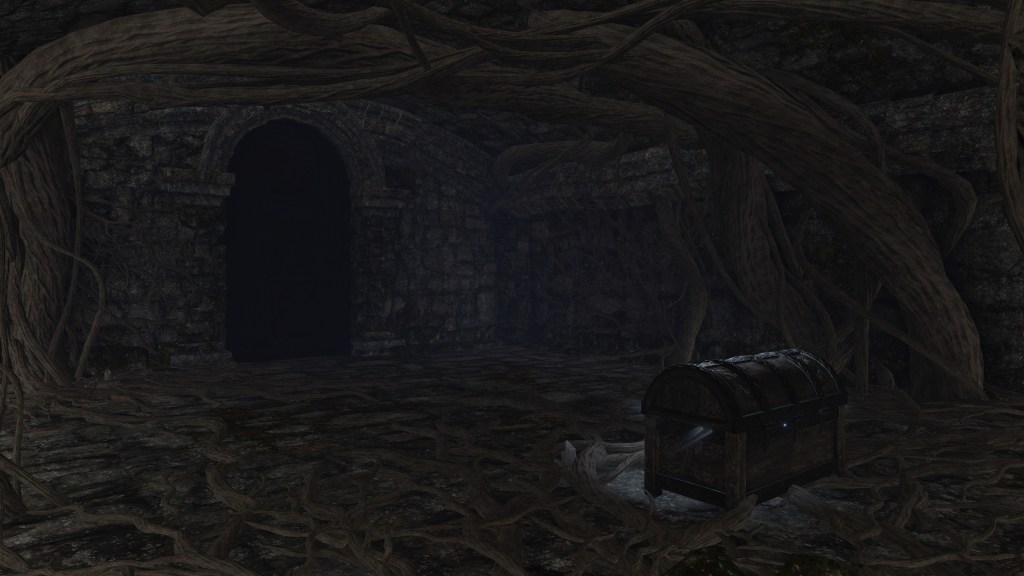
Now, everyone, come out from the dark underground and let us offer up our grapes to the great priestess.
Some saw the early warning signs with the falling leaves and reacted accordingly. The Dryleaf Sect, or “Fallen Leaf” Sect (落葉旋) to be more precise, began with its first members watching the Erdtree’s decline before their eyes and deciding to prepare for the fluctuations in the Golden Order to follow. Their answer to the coming crisis was to impose a strict faith upon themselves, this new sect in Erdtree religion with its own holy seal designed after a golden leaf embracing asceticism of the highest austerity. Part of this is forgoing weapons, which can always chip or break when you least expect it and require expensive repairs. In their place, they use their hands and fists, developing a martial art which combine striking with the palm or kicking with the leg into a free flowing combat style that channels the user’s qi just like Lifesteal Fist. Even this weapon’s Palm Blast skill is more accurately rendered as “power discharge” (発勁) evoking fa jin from Chinese martial arts. With this, it becomes apparent that the sect follows in the footsteps of peoples living to the far East of the Lands Between.
Holy seal of path seekers called the Fallen Leaf Sect.
Enhances Miquella’s prayers.
Those who once saw the Golden Tree’s decline in the fallen leaves prepared for fluctuations in the Regulation and imposed a strict faith upon themselves. And then they tried serving a new god.
One of the hand-to-hand arts that battles without weapons. Martial art combining palm strikes and kicking.
It is the art of the path seekers called the Fallen Leaf Sect and handed down only to those recognized for marital prowess and etiquette. It is also the beginning of austere asceticism.
Battle art of path seekers called the Fallen Leaf Sect. Strikes with a palm heel infused with qi and explodes it. Great in terms of might along with impact, and enhanced with charging.
Without question, the entire sect takes inspiration from Asian Buddhism. The Dryleaf set, while unambiguously western garb, bears a silhouette reminiscent of traveling Buddhist monks in the east. Dane, or Dan, likewise learned his “flowing kick arts” (ダン流蹴術) by training under waterfalls, the force of the freezing water disciplining his body and mind to eventually throw himself at them like a sparring partner. While teaching his legs how to flow heavy like the crashing streams, such training is also consistent with stereotypical ascetic practices of Buddhist warriors and monks, with more kick-focused martial arts from Japan like Kyokushin karate bearing history with such extreme exercises. Even the related skill, Dryleaf Whirlwind, (落葉旋風脚) is a pun on “wind speed” more literally meaning “wind foot”. (風脚) Furthermore, the Dryleaf Sect are all “path seekers” (求道者) searching for the way to the ultimate truth — in other words, enlightenment. These ascetics treat navigating the Erdtree like finding Nirvana.
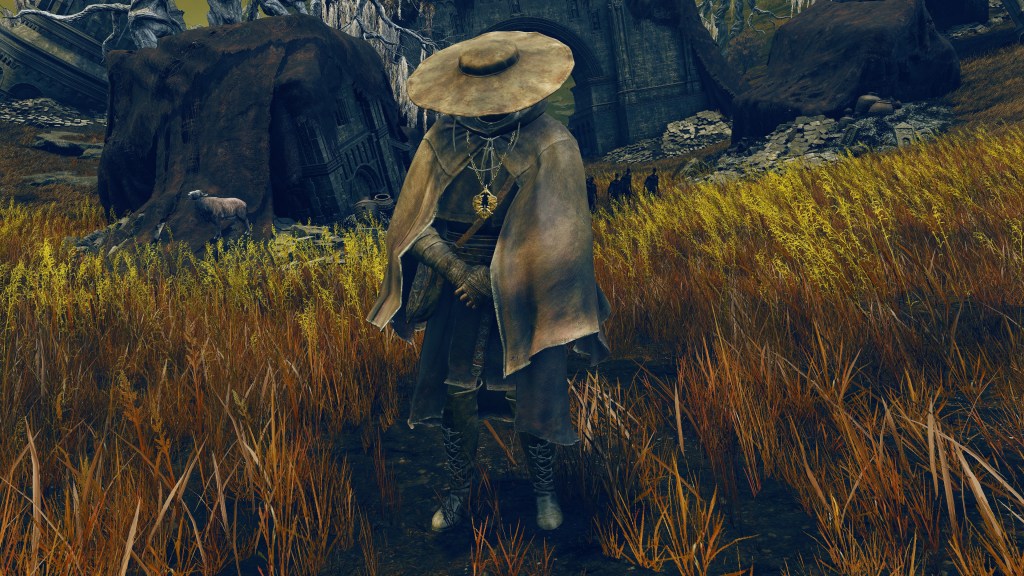
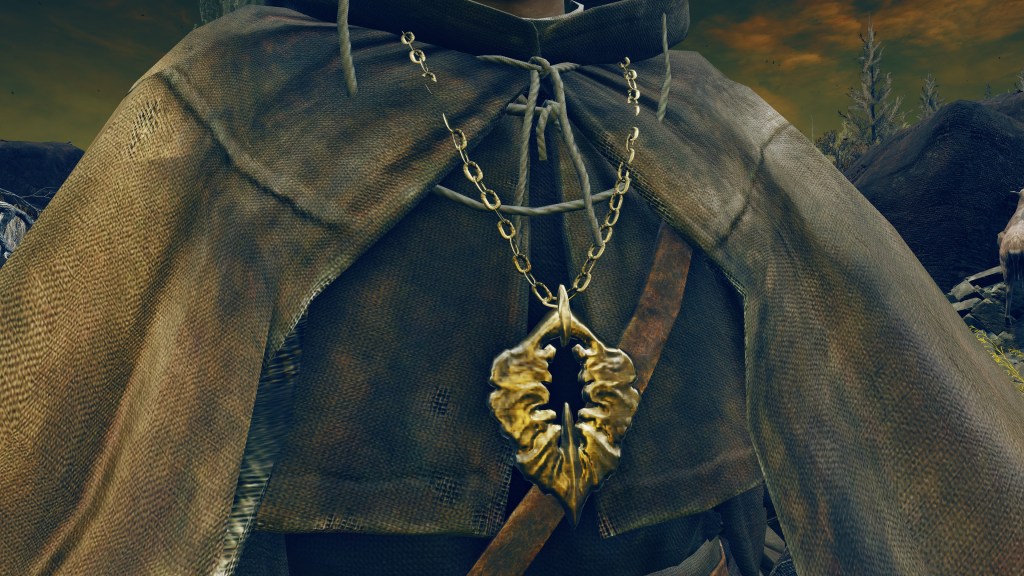
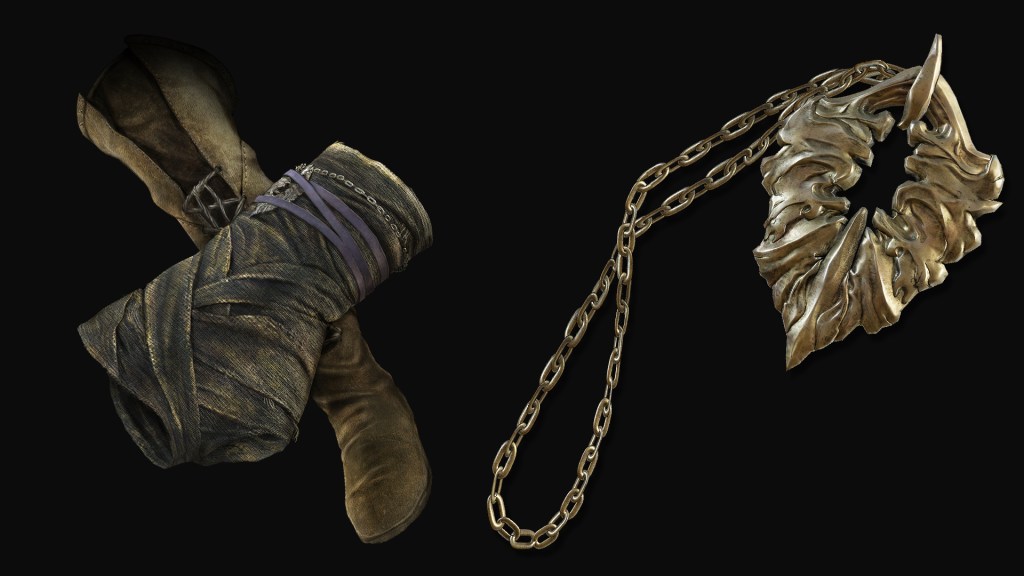
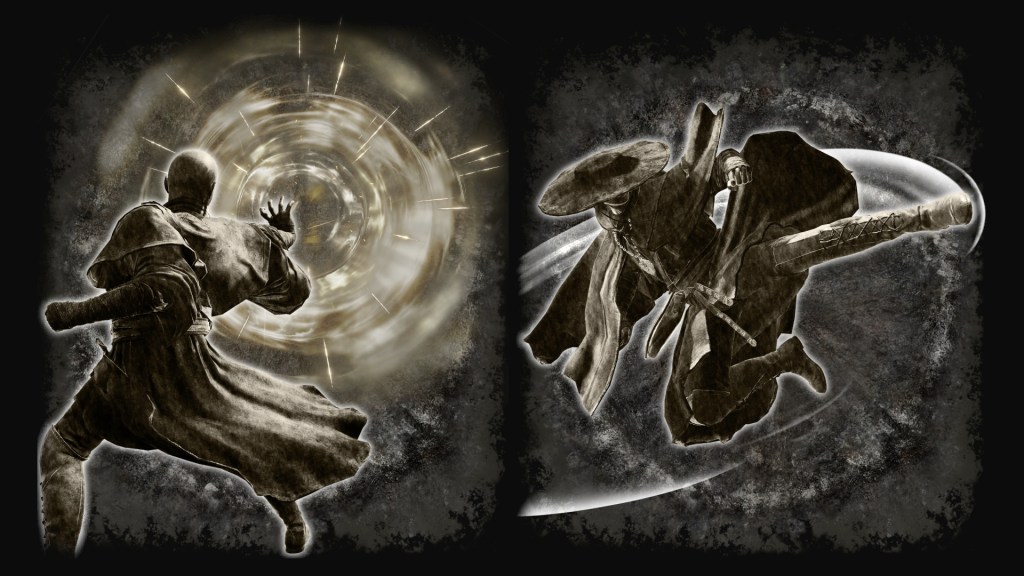
One of the hand-to-hand arts that battles without weapons. Martial art primarily employing kicking.
Art of Dan the Fallen Leaf, who is Leda’s comrade. Dan’s unique kick arts acquired through being struck by waterfalls as well as throwing himself into them.
Suffice to say, the Dryleaf Sect prepares body and soul for the harshest circumstances in the era ahead, whether that means enduring the troubles or fighting back. This was their way of securing the faith, adapting to the signs the holy Erdtree provided them rather than fall into despair or delusion. They take a distinctly different approach to religion from the priests and laity attending church services around the Lands Between, which we see have largely fallen by the wayside as the various church buildings collapse to ruin from disrepair or other factors in the current political climate. This makes the sect self-sufficient, though members are still expected to meet the highest standards of etiquette in their austerity. They may be warrior monks of a sort, but their sect focuses on dealing with the predictable turmoil, not adding to it. In that sense, refusing more lethal weapons is a means to discourage preying on the weak, resorting to their strength with qi only for truly just causes or self-defense.
But an ascetic’s life is, by its nature, unappealing for the majority. Most just wanted to go about their lives, same as before. Yet there was clearly no going back, even if details about the Ring shattering were still scarce. The public at large appears to only know that Marika disappeared after the event, her exact involvement only shared within the royalty and Two Fingers’ inner circles. To most, like the spirit watching the mausoleum in the Weeping Peninsula, she is still their Eternal Queen. For many of the rest, however, she became a terrible sinner deserving of punishment. No one tries to argue in Marika’s defense — her actions were unambiguously selfish and short-sighted. Whatever love she once had for kith and kin was lost to “madness” and turned to loathing at the Order she created. Only Ymir recognizes that such “madness” characterized the god’s entire reign. But the “broken” Two Fingers would never acknowledge blame for putting an Empyrean on this path, thus priestesses remain slavishly devoted to them, foisting all fault on their god.
To the east, a broken gold. To the west, a snake’s blasphemy… Wherever, you best proceed. Wherever, it is useless! It is a curse. The curse of Queen Marika! Heeeeheehee!
Maliketh has taken the incident especially hard. We can confirm that he still has no idea why Marika broke the Elden Ring with his dying breath, a question which plagues him even as Gurranq. Talking to him earlier at the Beast Temple, the shadow vassal wonders if he is just too foolish to understand or if she actually deceived him as he evidently suspects. The description to his recollection does confirm it as a betrayal, and for good reason. Maliketh understandably thought that he knew Marika better than anyone. He was her obedient little brother, standing by her in both her most painful and monstrous moments. After everything he witnessed her sacrifice for the Golden Order, time and again, what sense was there in throwing it all away? He became her tool, sealing Destined Death, to secure her Golden Order in perpetuity — and she just flippantly stomped over all his efforts? Was there no love for a vassal, for a sibling? Her lack of consideration surely cut deeper than any black sword.
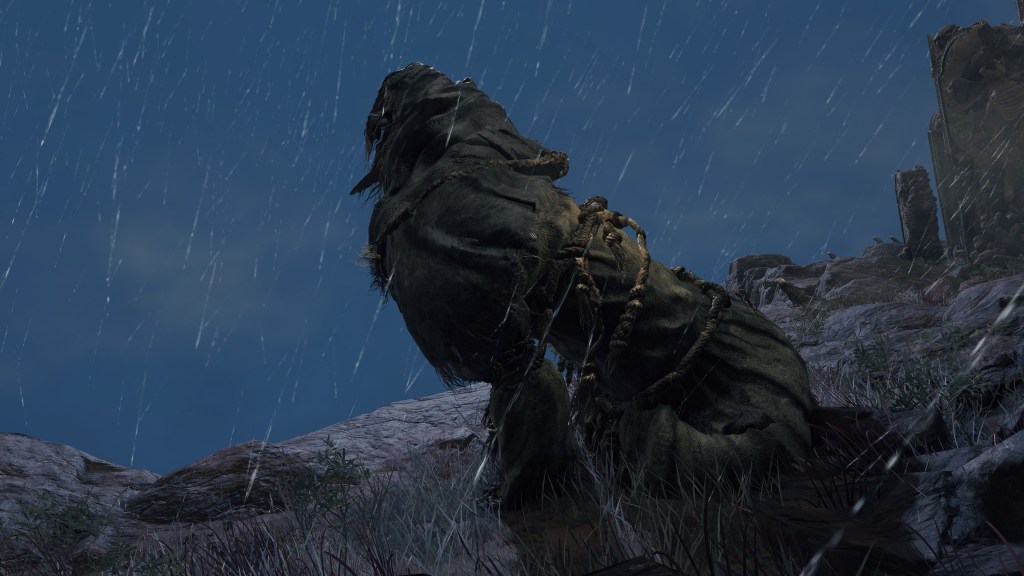
… Marika. Why did you break it?
… Marika. What happened? Am I a fool? Or… did you deceive me?
At the same time, Maliketh seems to feel at least partially responsible for Marika’s sin. After feeding him all the Deathroot, he reluctantly recognizes that traces of Death are yet missing, pieces he will never retrieve. For him, that means no redemption for his “sin” of failing to protect the Rune of Death from stealers. It is the harsh realization that, once broken, something can never truly be restored — there will always be cracks. That immediately brings to mind Marika, the beast priest pondering if he now understands the full weight of “sin” she inflicted. His voice filled with rage and sorrow, the beast laments how the Golden Order will never again return, as more explicitly reiterated by another of his dying words. We may surmise that Maliketh linked Marika’s sin to his own, which isn’t without reason.
Marika! Is this sin! Will it never return again now!
… Forgive me, Marika. The Golden Regulation will never return now…
Where was the “shadow” beast when Marika decided that she would shatter the Elden Ring? Had he been there, shadowing her per his duty, then Radagon wouldn’t have been forced to stop the mad god by his lonesome. The fact that he was a non-factor in this seminal event implies that he had either stayed away from the queen or been sent away, and why wouldn’t he? Even after adjusting the Rune’s security accordingly, he had still failed to fulfill his duty as the seal, and that killed the souls of his Empyrean’s children. Is it any wonder if he was too ashamed to remain by her side in mourning, or alternatively to disobey her forceful demand to get out of her sight? In neglecting his obligations as her brother and vassal, Maliketh ended up neglecting his obligations as a shadowbound beast. In that case, guilt over both “sins” is logical, his error having led to Godwyn’s death which led to her grave error in more ways than one. To his mind, if he can’t atone for his, then neither can she have redemption for hers. Rather than blame her, the vassal chooses to bear the underlying burden of this tragedy.
From this, Maliketh’s mission to gather the lost pieces of Destined Death is motivated by more than just personal guilt. He performs this thankless duty in a desperate bid to believe that it is still what Marika wants, hence why he proudly calls himself her Black Blade when forced to wield Death again. The beast priest understands that we plan to use it to slay the Erdtree and end what is left of the Golden Order, meaning that everything his sister built will end with his death — he must continue to stand as the Rune of Death’s steward, no matter the cost, even if it means repeating old mistakes unleashing that power. It is almost delusional levels of denial, but that is what the shadow vassal wishes to imagine; the true answer to his question would be admitting to a terrible betrayal. Late into the night, the wolfman goes outside to howl, not at a golden moon, but the tree, no better signal to this lunacy he embraces. But it matters not how much he wails to the heavens, nothing he can do will repair his and hers relationship.
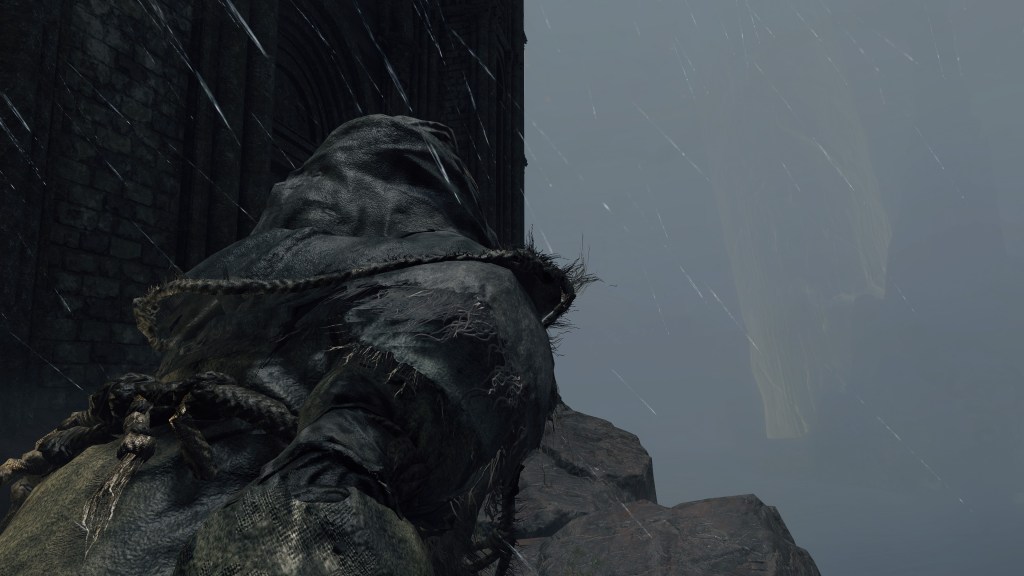
The Realm of Shadow couldn’t indulge such fantasies. Based on location, soldiers have collected any of the scadutree fragments they came across in the field and offered them to their idols of Marika back at camp. More have been amassed at the various churches dedicated to the goddess, perhaps even their ultimate destination when they can spare time from crusading. The Erdtree forces didn’t retain them all, as seen with the Hornsent lying dead in the Temple Town Ruins or certain shadow pot carriers across the land. The splinters were curiosities regardless of religious significance to the residents. But for the Messmer army, they were a means to appease their god-queen. However, looking at how all the statues of Marika have been defaced and churches burned to ruins, there has been dissent among the ranks. The Fort of Reprimand probably had many more traitors to discipline in recent years, with crusaders from all over turning against the Eternal Queen. The reason why is obvious: she betrayed them, too.
Indeed, even without updates from Leyndell about what transpired, it was easy for the crusade to surmise that the Order was broken from the effects. That could only occur if either an outsider overthrew the entire Erdtree kingdom — a highly unlikely scenario — or an insider shattered it from within, and the only one capable of the latter was their divine sovereign. Rumor of this simple deduction was sure to spread quietly among the ranks, whispers breeding rebellion in countless hearts. The sentiment couldn’t even escape the core of the crusade. Try as the Shadow Keep might to hide the text of Wrath from Afar in the rafters of the Specimen Storehouse, laying all by its lonesome upon a gear in an obscure corner, the ulcerated tree spirits emerging in the Church District are undeniable proof of the lasting damage done to the Scadutree and its baleful reaction. Scholars and clergy alike can see the truth, plain as day: their god has forsaken the crusade and reduced their preservation of Order to naught.
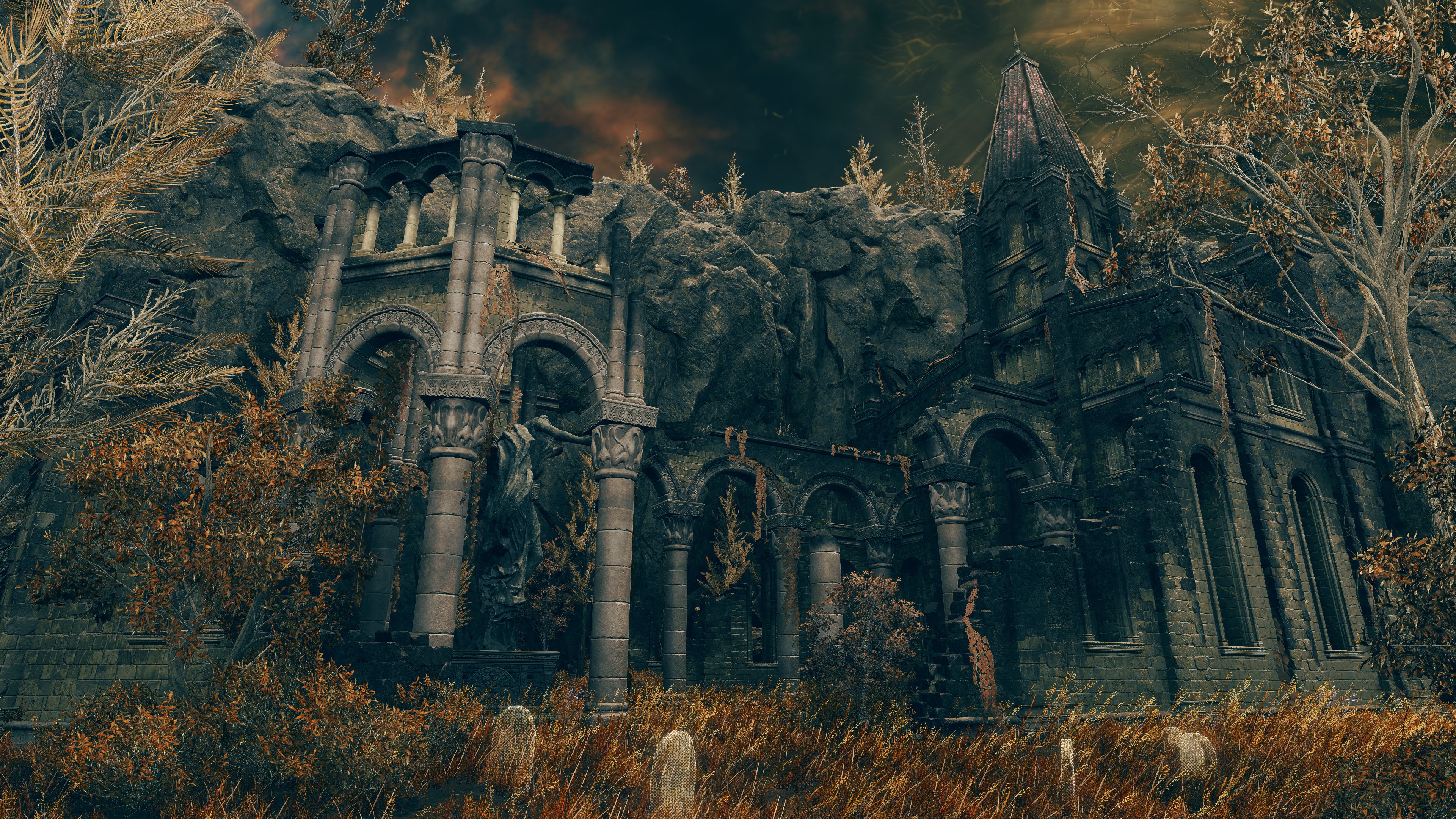
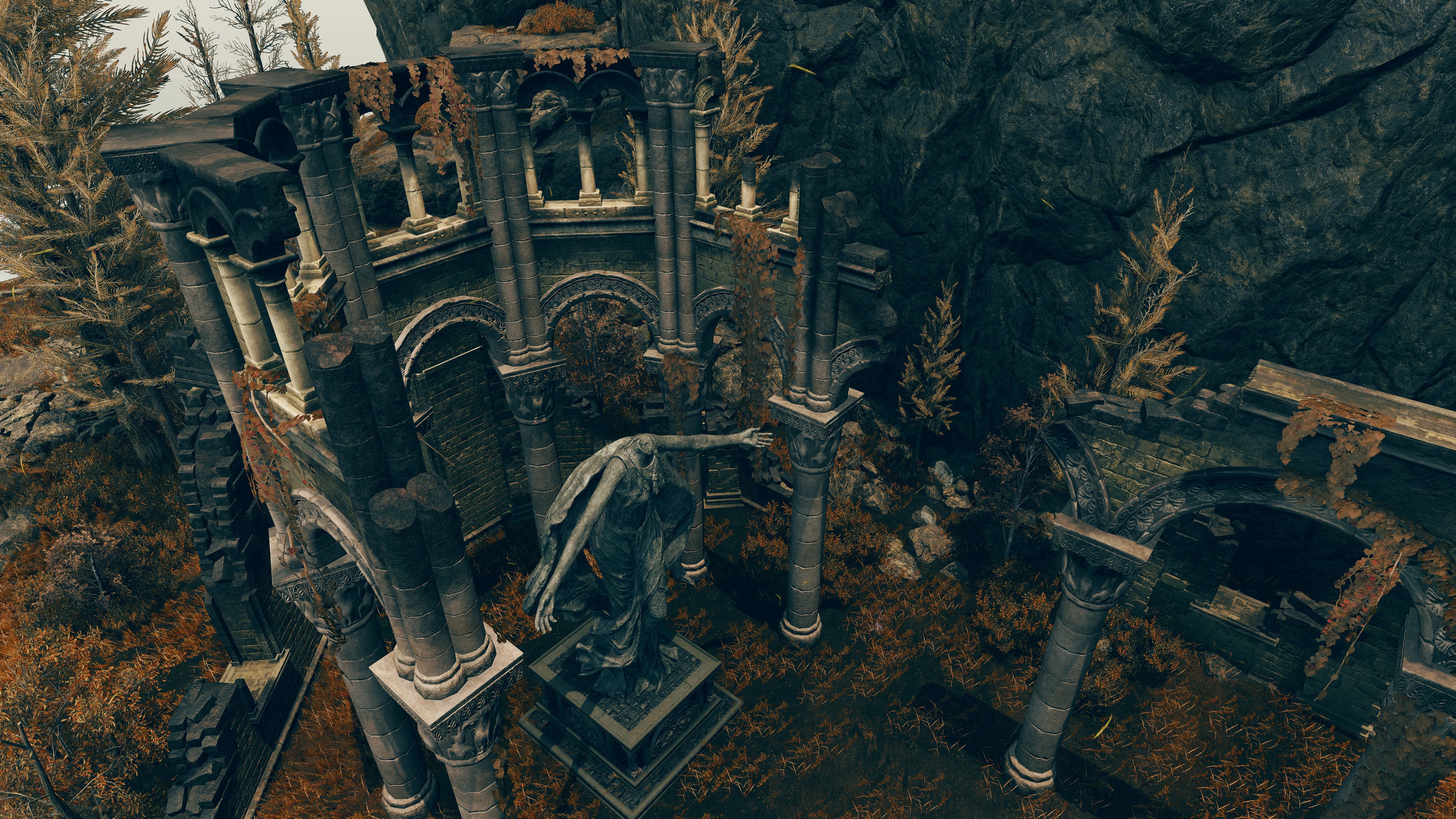
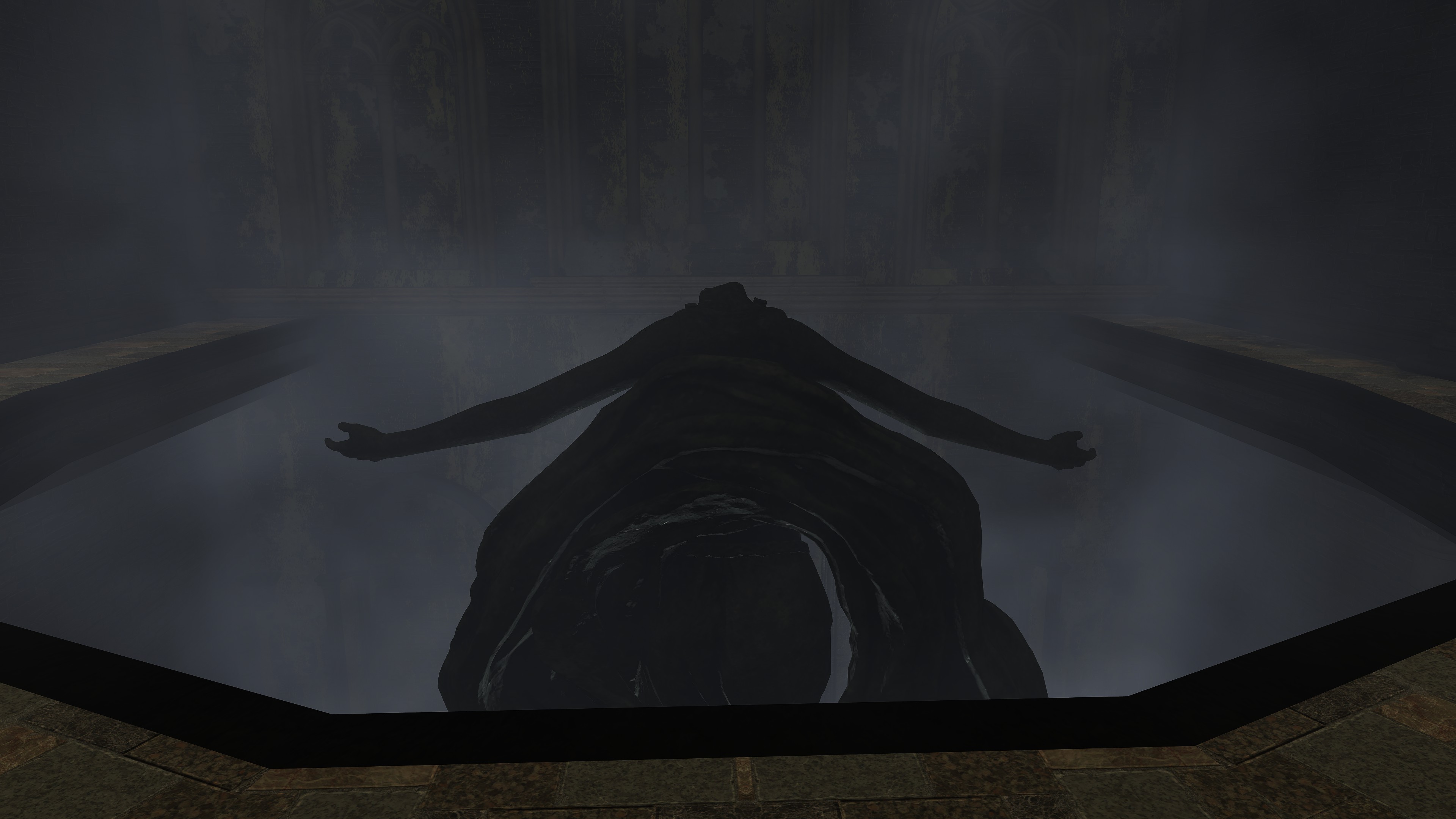
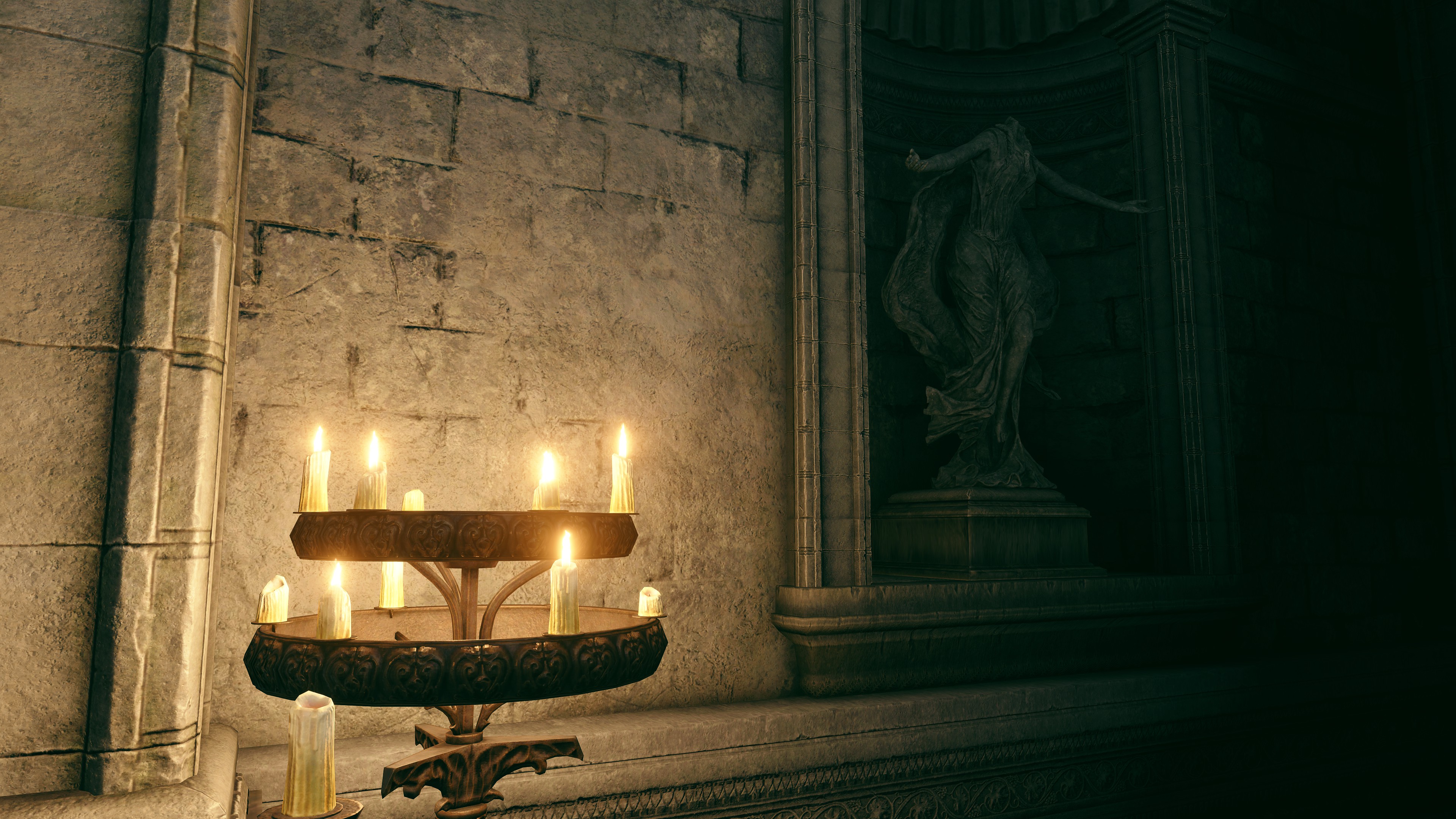
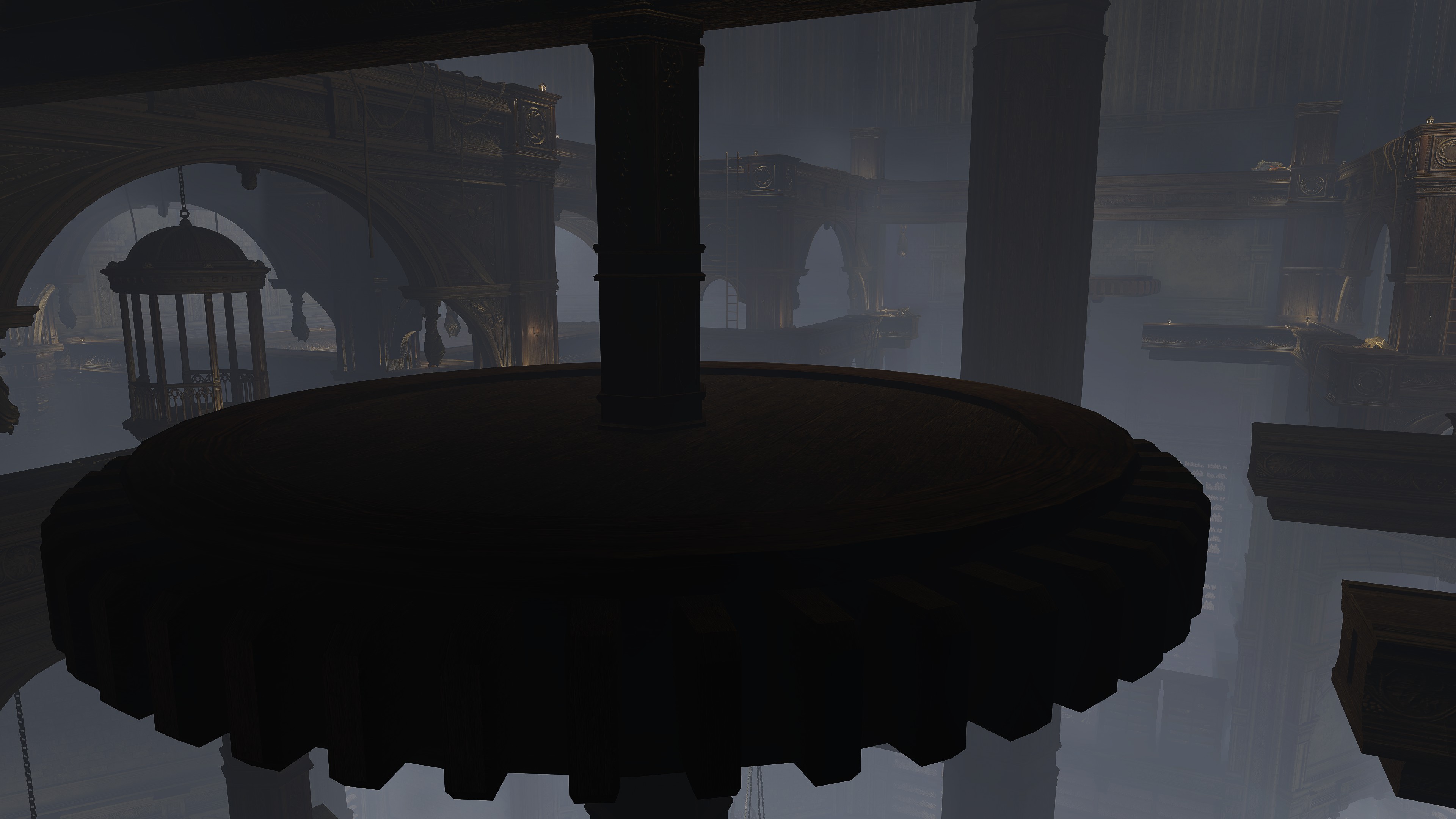
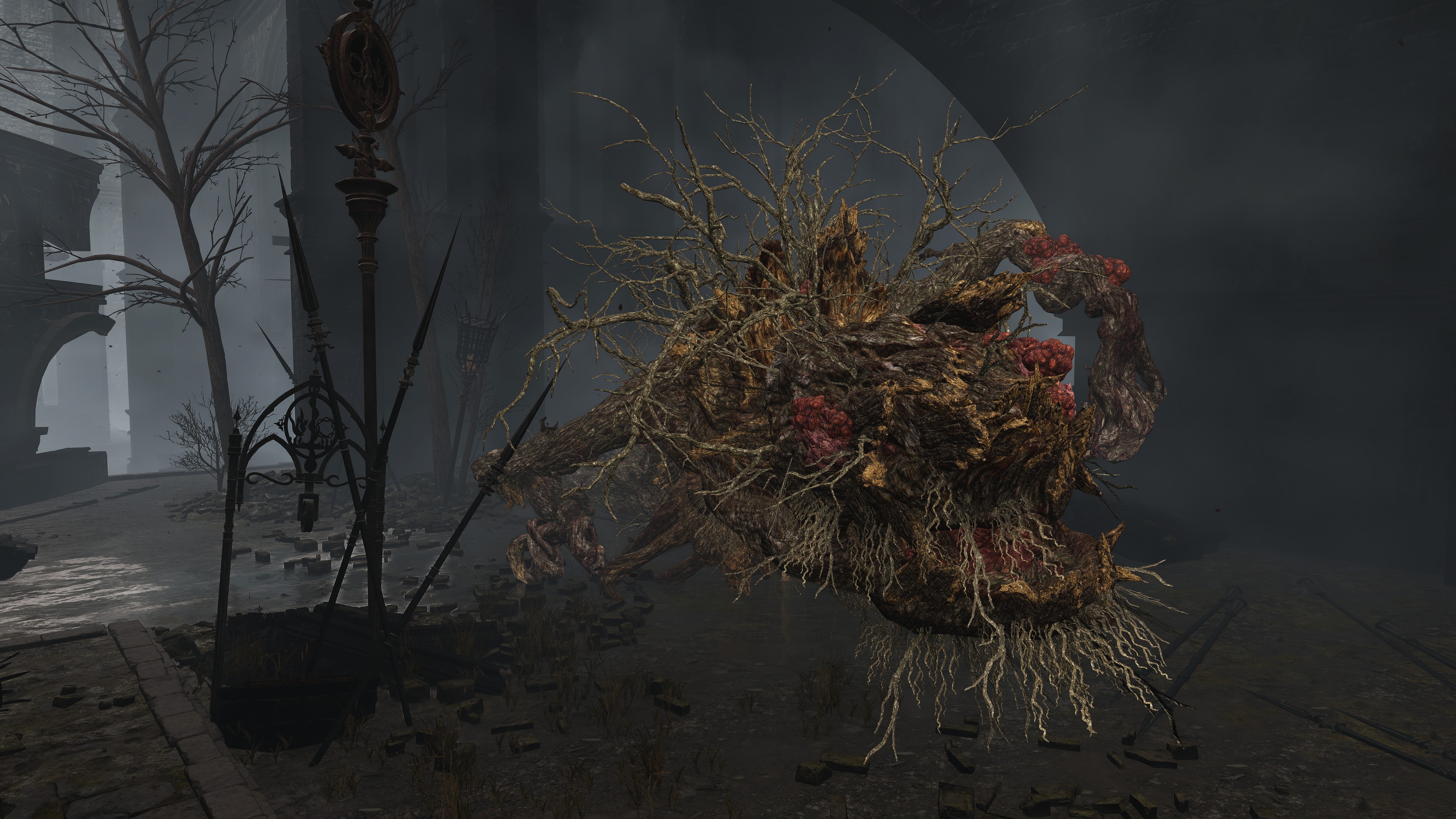
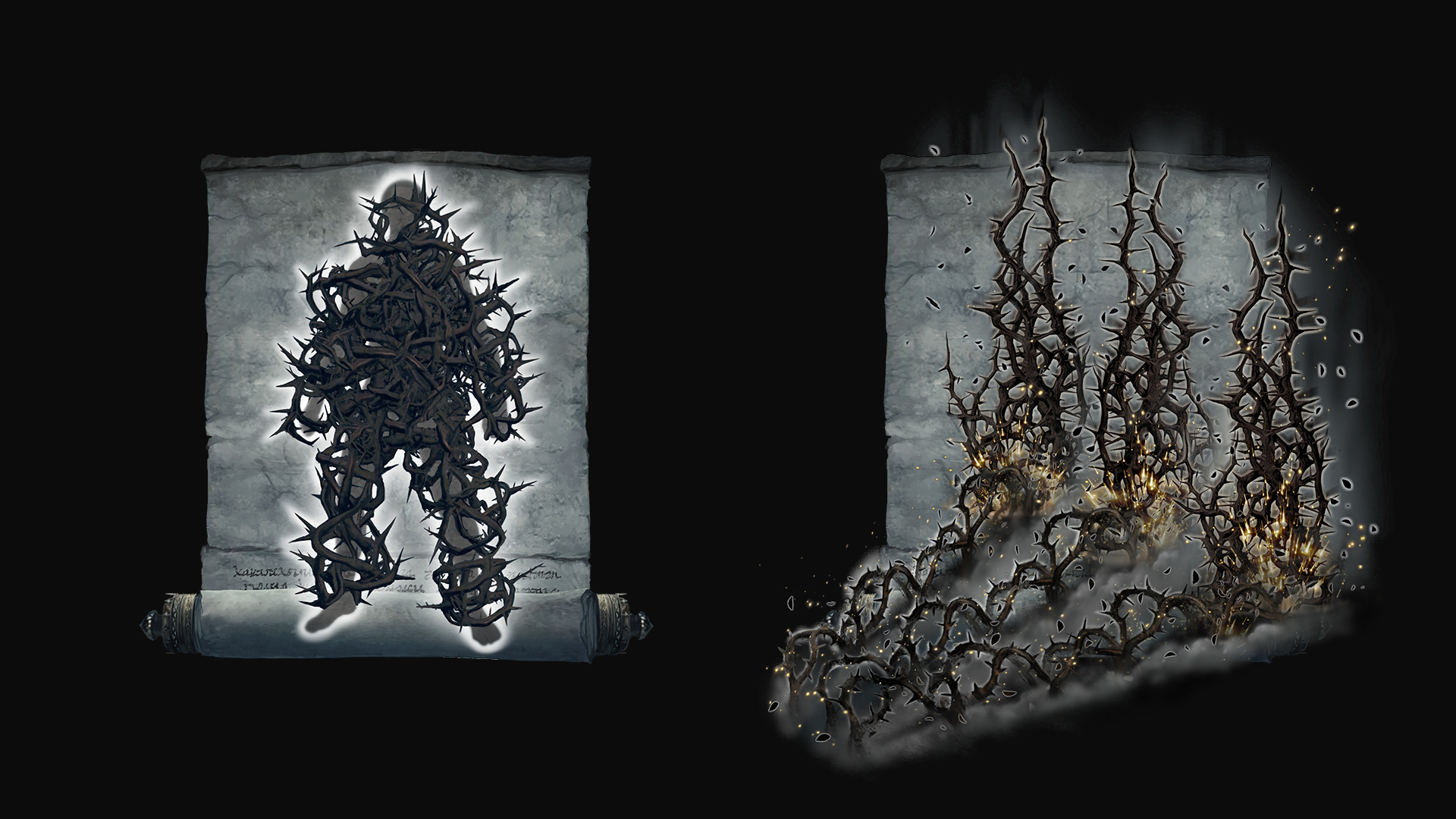
That realization brought even the most devout within the Shadow Keep despair. As a result, a few abandoned prayer in favor of sorcery, devising spells like Mantle of Thorns and Impenetrable Thorns. As the names imply, they take cues from the Scadutree, rejecting everything beyond themselves with prickly harm. While the arts may rely on faith to cast like other thorn sorceries, the writings are decidedly works of observation, not incantation. In their despair, they looked to the tree, forsaken like them, for guidance on how to react. Whether part of an informal collaboration between the clerics and researchers or their independent invention, both parties were involved going by the sorceries’ location in the Church District or Specimen Storehouse. We don’t see anyone cast these sorceries, however, so any sorcerers were likely culled from the ranks as with the other turncoats. Still, that wouldn’t solve the underlying despair, which reaches to the highest levels.
For all the mantra he recites, Queelign seems to feel insecure about their “mother” Marika. When the Fire Knight is defeated during his second invasion at the Church of the Crusade, he begs the goddess not to abandon him, as if fearing her idol there is actually watching his performance; if he wins, he just as proudly proclaims victory to her instead. Queelign has staked his everything on Marika’s favor, which is now in doubt with the Golden Order broken. Visiting the man curled upon the floor of a side chapel in the Shadow Keep’s main church afterward, he can only weakly beseech her not to “rob” him of golden grace’s light after everything he did to ease her worries. Magnifying his fears with an Iris of Oculus, he wonders why she has robbed them of light like the “filth” they crusade against for besmirching her honor. Queelign may claim that those lacking gold can’t escape from Messmer’s flame, but it is ultimately he who can’t escape the fears burning at the back of his mind. All that time following her guidance of grace has proven futile, and there is only much even Fire Knights can lose themselves in denial.
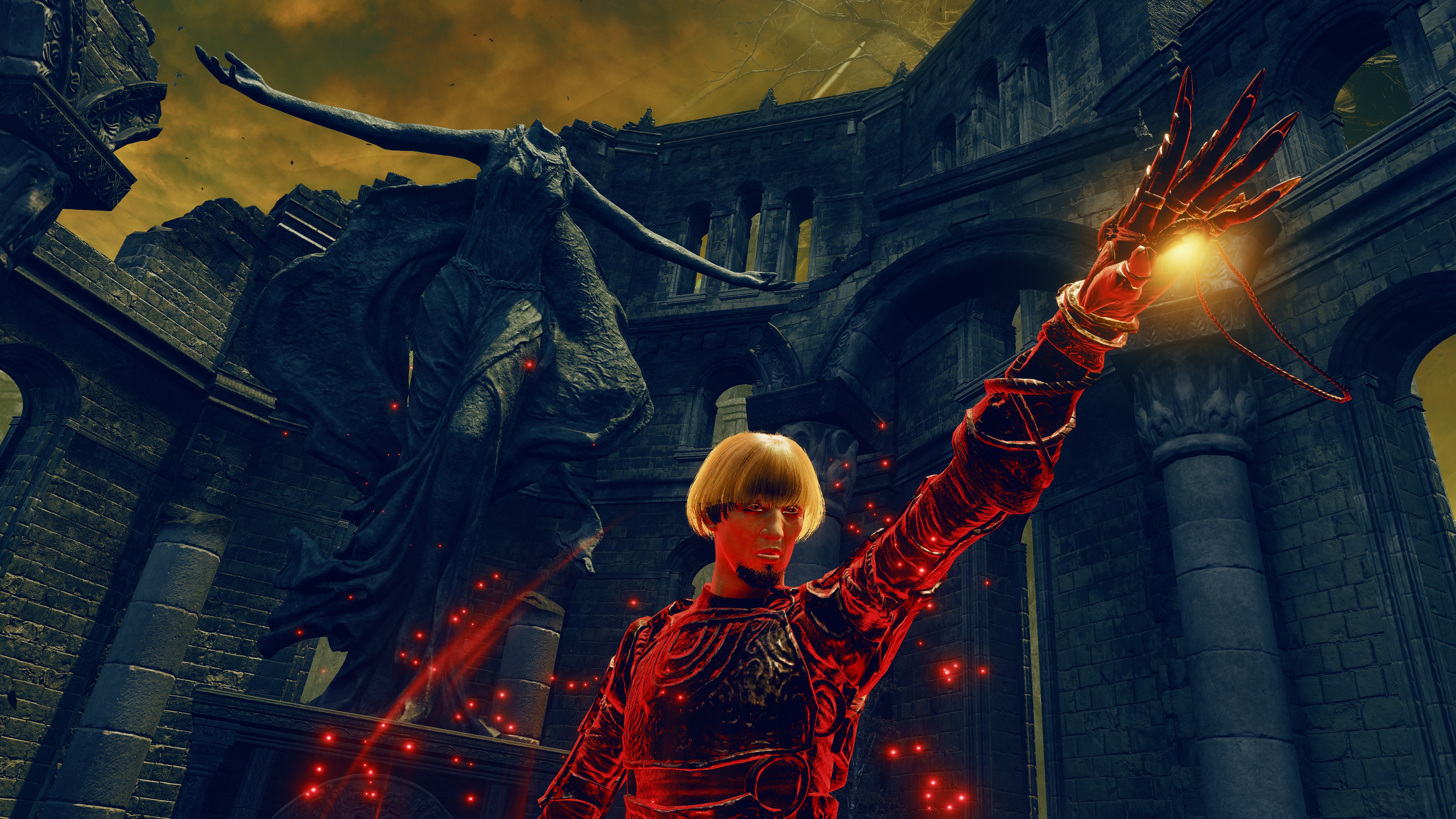
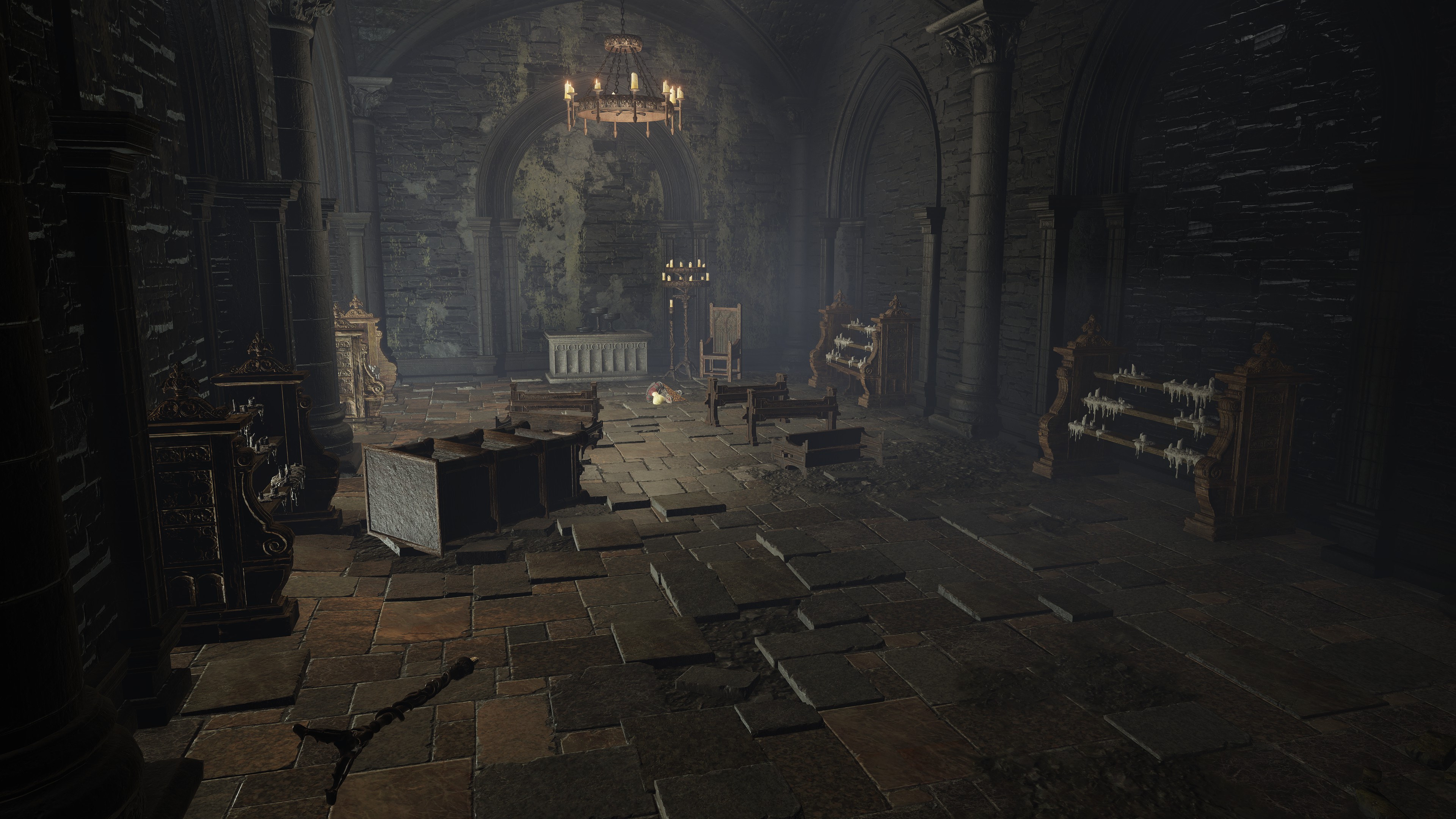
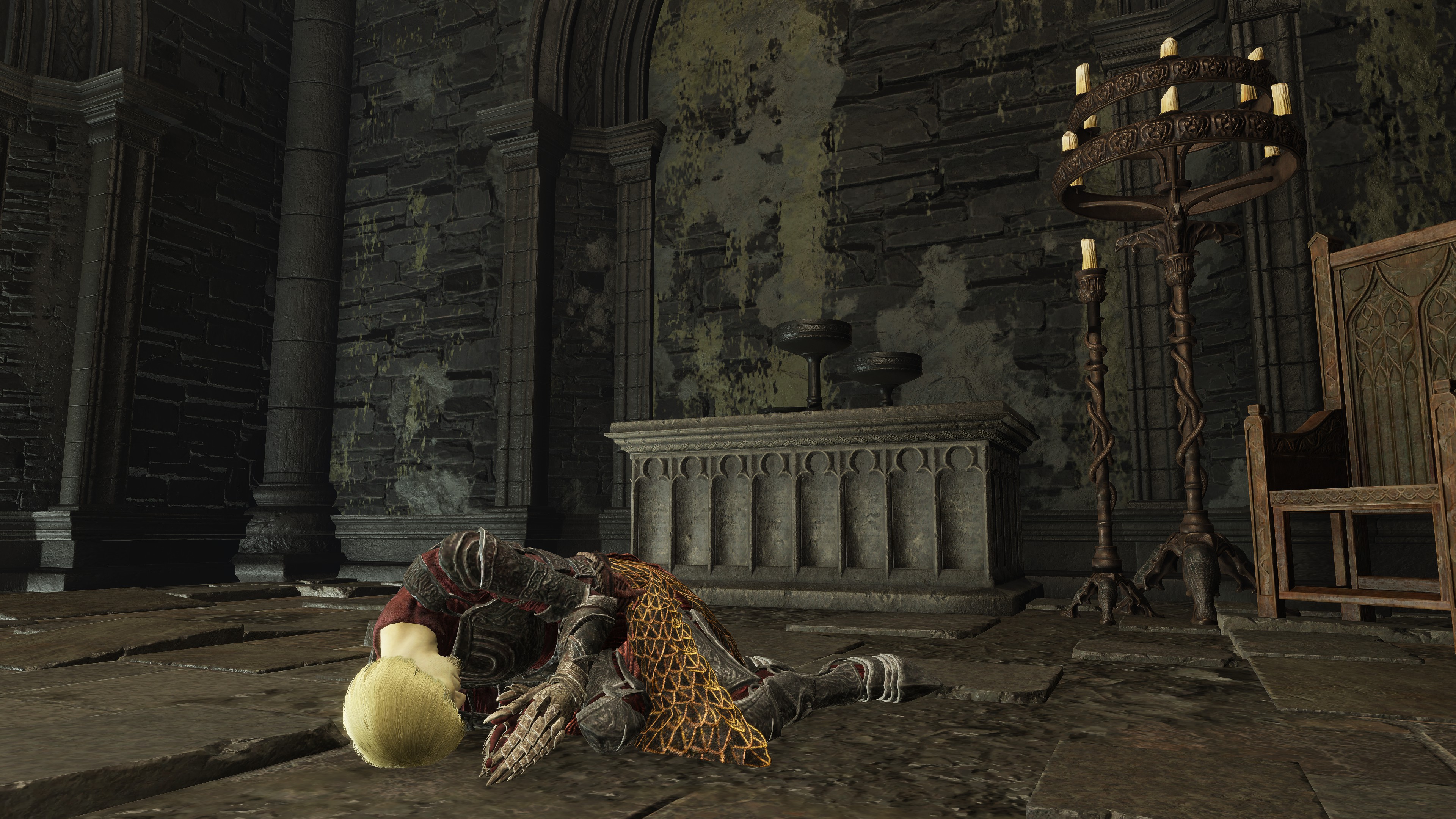
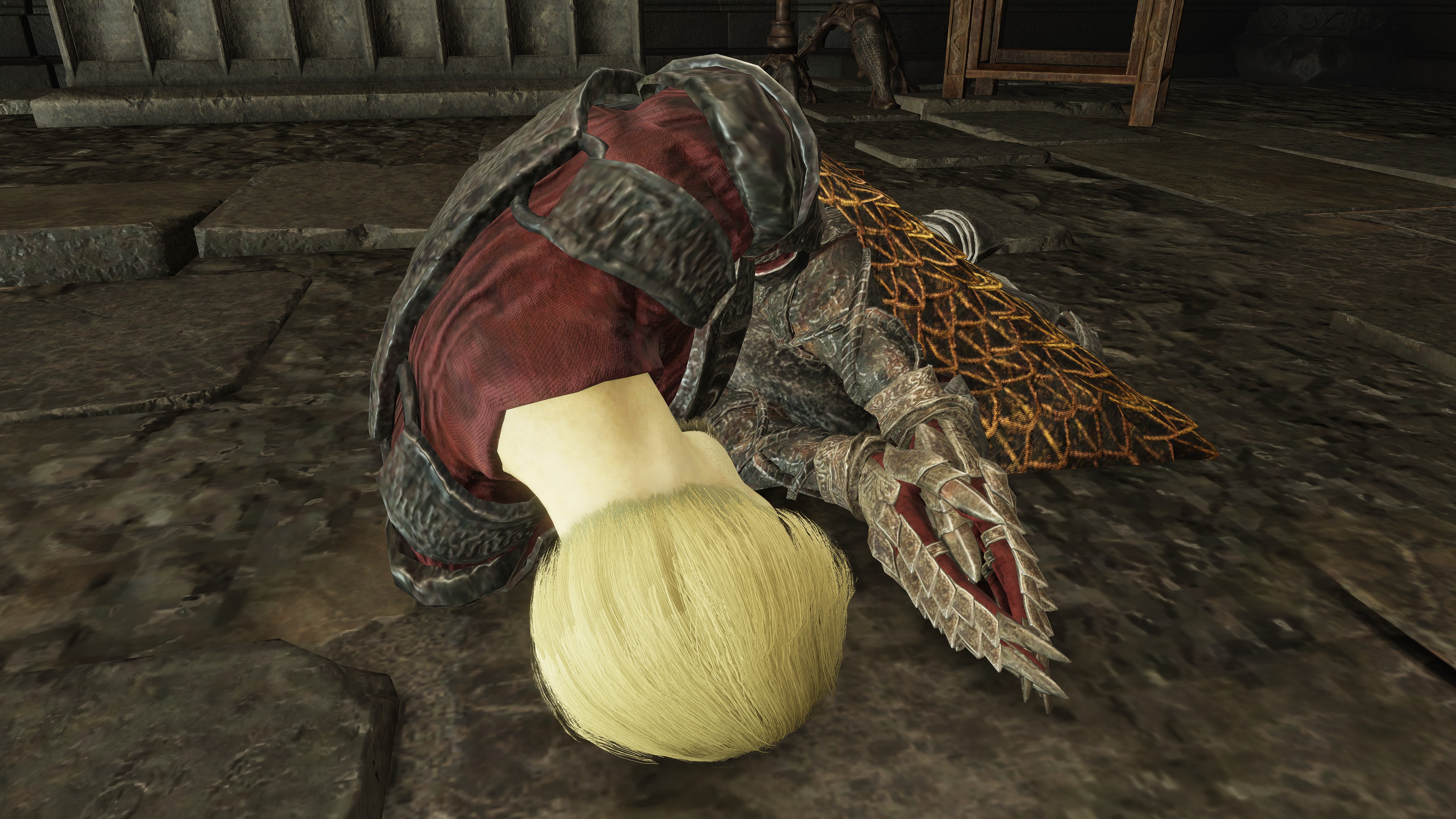
… Ahh, god no! Please, don’t abandon me. Lady Marika…
Lady Marika, please, kindly grace me. Kindly not rob light from me…
… Lady Marika, our mother. Please, kindly grace me. I have thoroughly eliminated your enemies, and worries. I have sworn to do so even into the future. So, please, the grace. Kindly not rob light…
… Ahh, ahh… I am different. I am no filth. I will never besmirch you. And yet, why do you rob it? Have you not seen anything? I have this whole, whole time, for you alone…!
In fairness, their leader has helped the order maintain a level head through this crisis. Messmer, in fact, appears to maintain the crusade out of spite, making it clear before our boss battle that he intends to abide by his duty from her even if it is now opposite her wants. He too has sacrificed everything for devotion to the goddess and her Golden Order, yet she would so easily toss it aside? The cost has sunk far too low for him to accept that. And so, he remains “loyal” to her through everything, protecting her last undefaced statue behind him in his throne room until death. Only when defeated do his true feelings get fully exposed in a single curse toward the woman who brought him into this world. The loving embrace he so desperately wanted to feel again was a hollow wish. After everything that has happened, Marika can no longer muster a care for her children. If their fate was to die anyway, then better they all die together. And whether her blood was truly never meant to live, she will get her wish soon enough.
…O Mother, Marika. I curse. You.
 Lokey Lore