
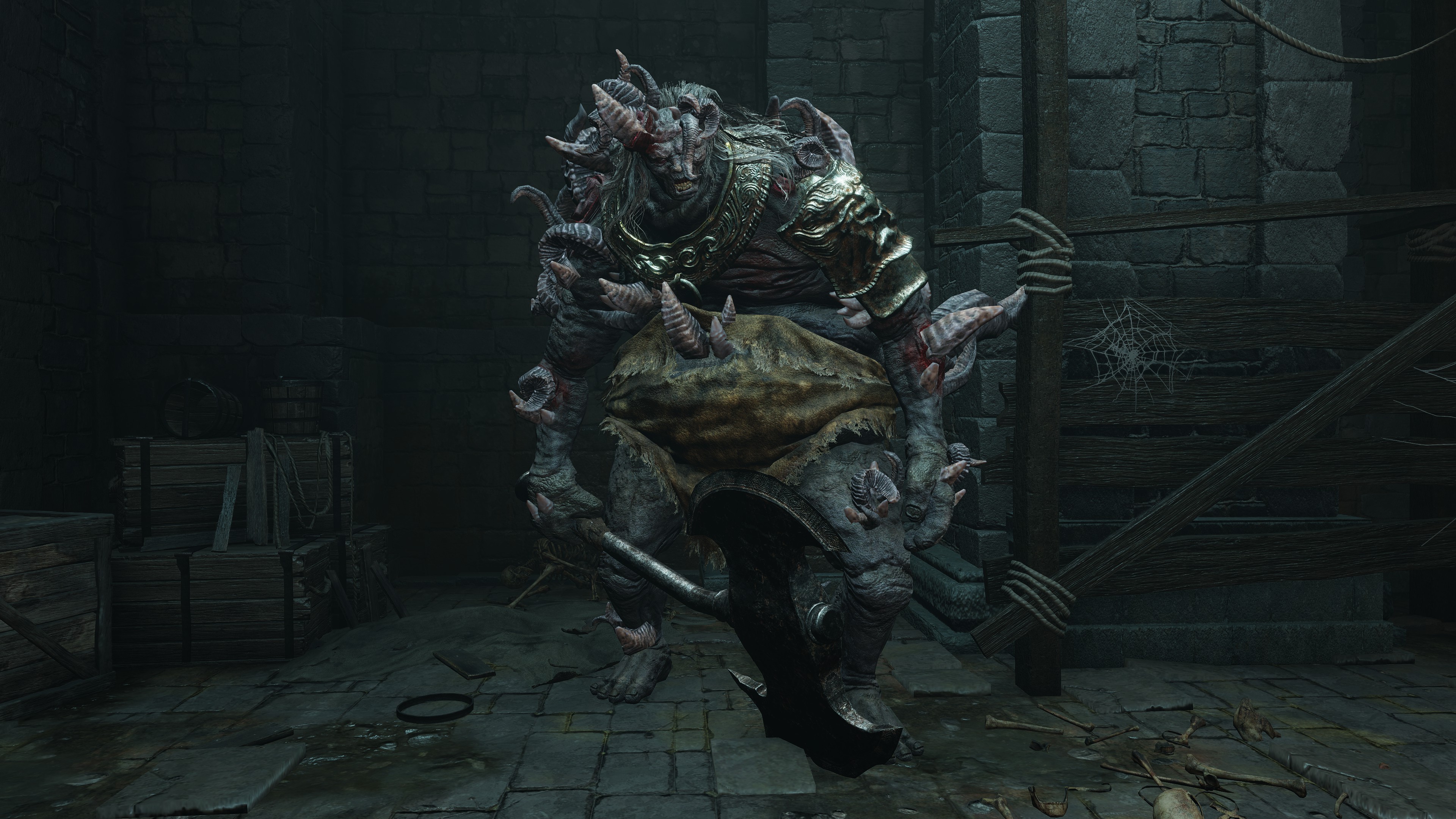
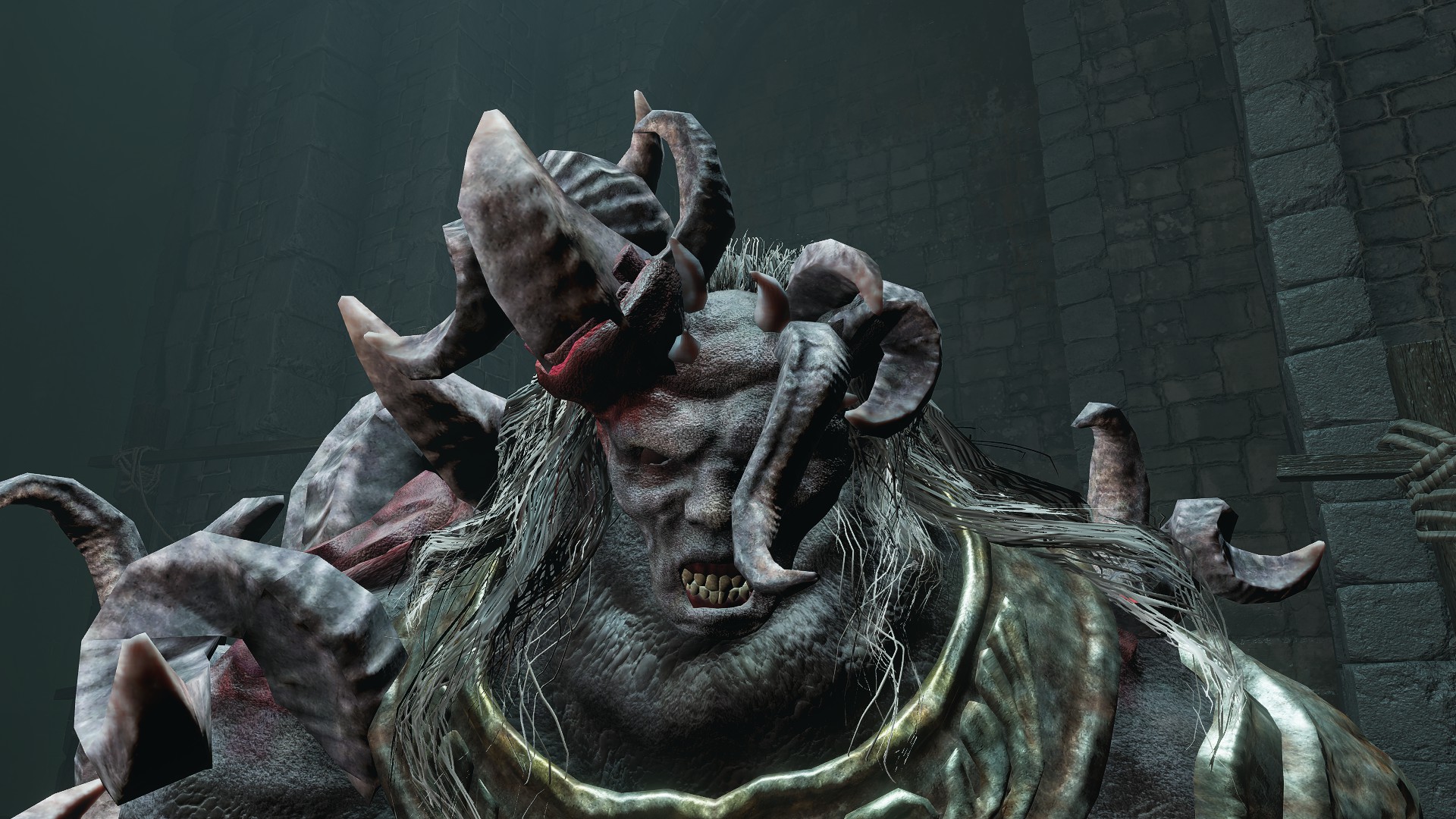
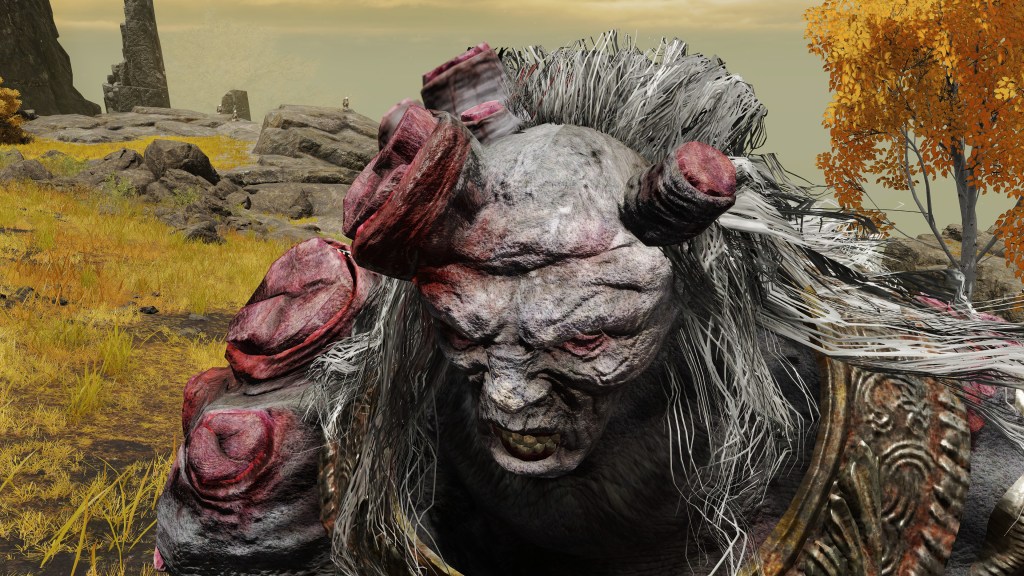
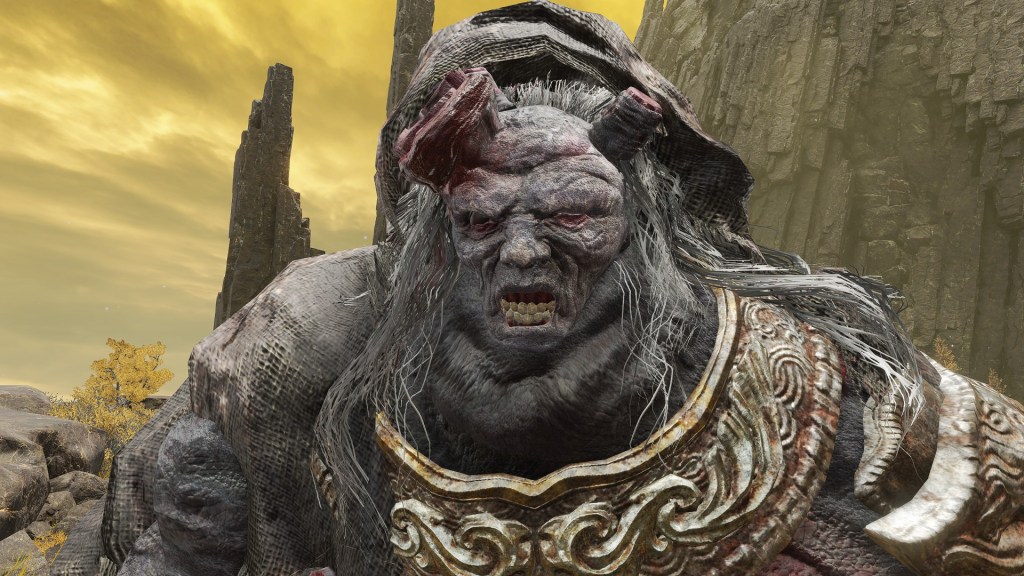
To this day, the Hornsent Grandam beseeches her precious divine beast to unleash its wrath upon Marika’s “children” — the entire tribe she rules — for betraying her people, cursing them even with her dying breath. What she doesn’t realize is that her prayers were already answered long ago. Among those bearing vestiges of the Crucible, the Omen stand out. Like Hornsent, these individuals were born with grey hair and charcoal skin. Unlike Hornsent, however, their horns cover any part of their body, not just the head. They also grow far larger and stronger, adults capable of bending solid iron with the force of their swings. The name “omen child” (忌み子) is also telling. Imigo normally refers to an “unwanted child” loathed and shunned for whatever reason. This “unwanted” is likewise used to denote an ill omen with terms like imibi (忌み日) invoking a death anniversary or similarly “unlucky” day worth mourning. And the kanji is used in words like “abominable”, (忌まわしい) the very term the Grandam used to describes Marika’s “children” and the curse she wishes upon them.
… Damnable children of the vile woman, never forget: one day, it will have retribution on your kind, the divine beast’s wrath will. Until then, you may toy with an old woman as much as you will… Now, best do it. Then boast of your ugly violence. Or else turn tail and leave. Damnable, abominable child of the vile woman!
… A curse upon… all your kind…
… A curse upon… the vile woman’s child, on all of Marika’s children… Let there be an abominable curse… Let there be the divine beast’s wrath…
Altogether, the Grandam’s dialogue appears to be a clear-cut allusion to the cursed Omen, who were born to Marika and implicitly everyone part of her Golden Order at the time. Their curse is defined by the “evil spirits” possessing them. The Omensmirk Mask captures the image of elders with a “disgusting” face of horns haunting their nightmares, which we can witness the Omen experiencing whenever they are caught sleeping. The Cursed-Blood Pot captures Mohg’s memory of being attacked “like mad” by spirits during his childhood for having the cursed blood of an Omen. Certain Omen do breathe vengeful spirit fire, occasionally exploding it from their entire bodies to unleash fully formed wraiths. Every night, the cursed spirits harbored within have tormented the Omen with sadistic glee in their dreams. And these spirits also happen to be responsible for their similarities to Hornsent.


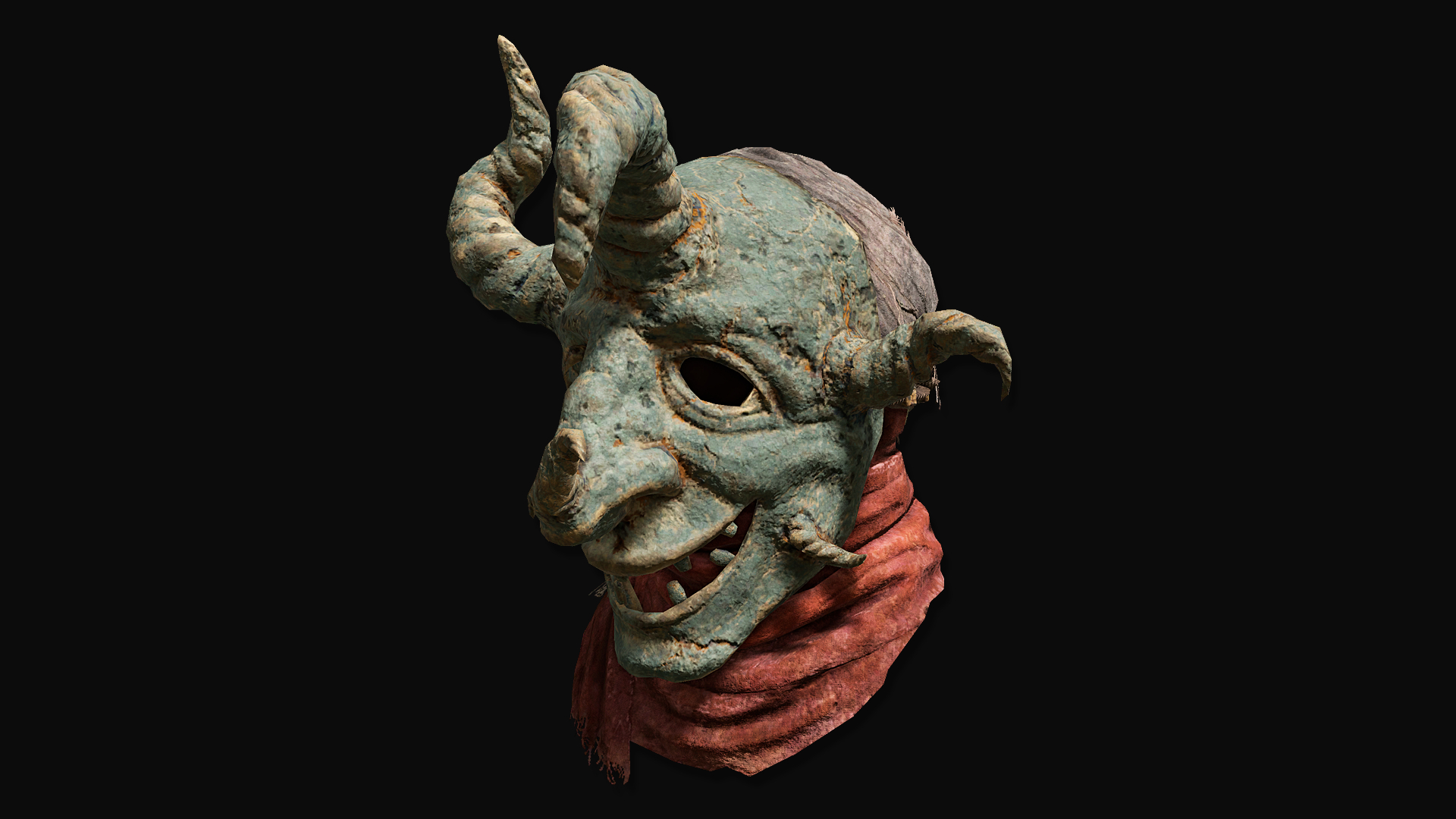
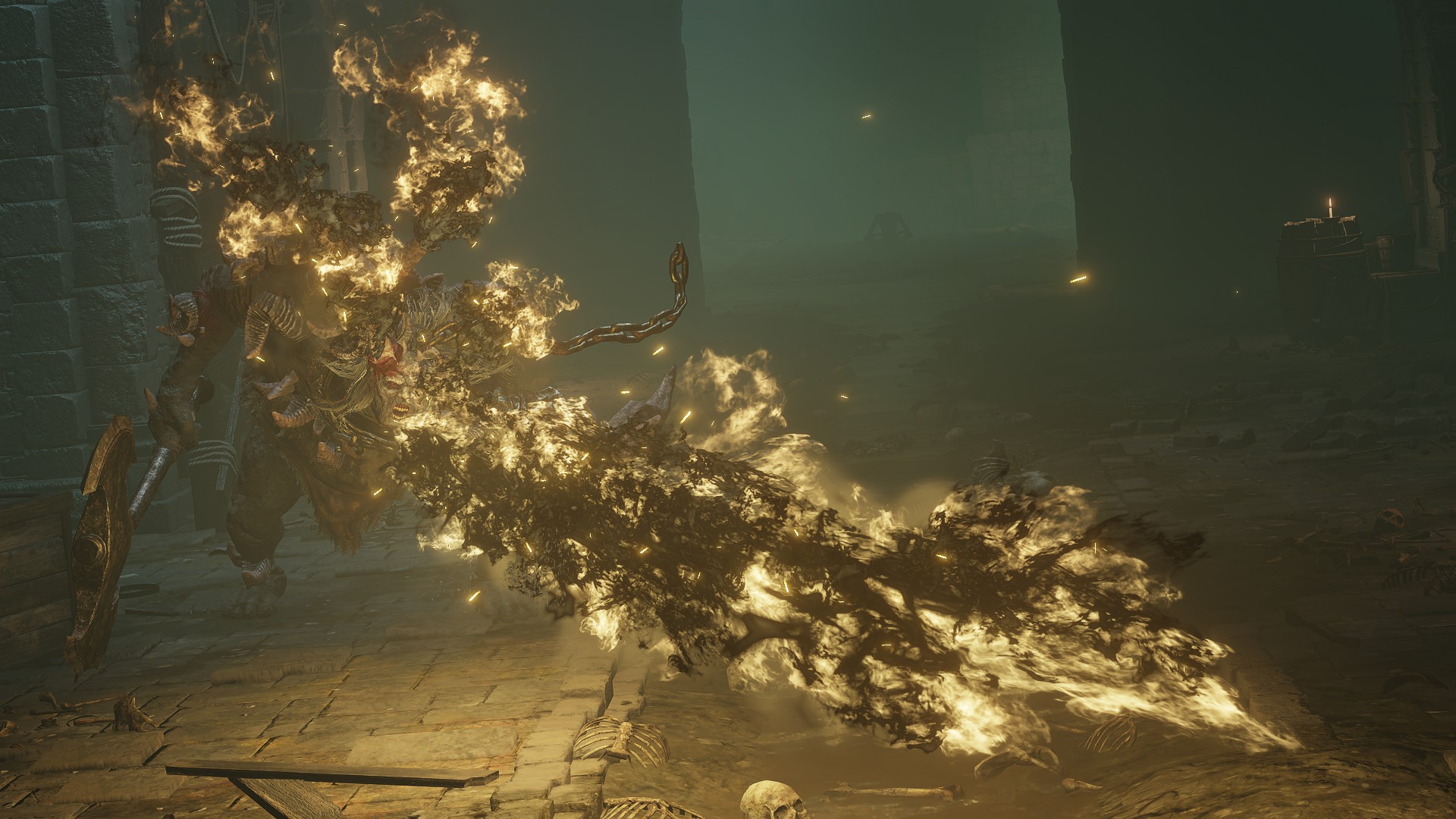
Mask of the Omenkillers sprouting long and ugly curved horns. Boosts strength.
The elder with a disgusting face is making a nasty smile. It is said to be modeled on an evil spirit that appears in the nightmares of omen children.
One of the crafting items using a ritual pot. Pot depicting the Ruler of Blood’s crest.
Throw at enemies to cover with cursed blood. Summoned spirits attack enemies covered in cursed blood like mad.
That is the memory of the Ruler of Blood’s very younger years.
This makes sense in light of how horns reflect spirituality. It wasn’t just the surviving Grandam. The collective grudge of all the old Hornsent — those privileged with the time to cultivate their own horns before Messmer’s crusade — has produced a curse after death, transferring their spirits and all the accompanying spirituality into the developing bodies of every child conceived in the Erdtree kingdom. The density of these Omen’s spirituality from the curse explains the sheer number of horns manifest all over their bodies. That magnitude of spiritual life energy likewise justifies the monstrous physicality of those bodies. In the Erdtree kingdom’s brutal genocide, Marika and her citizens accrued a backlash which was inflicted upon their innocent children. Whether it occurred immediately following the first days of the crusade or many weeks, months, even years later, the curse must have been sudden and all the more horrifying, especially for Marika. Never would they have expected to face karma like this. Wasn’t the dishonorable crusade and its implications supposed to fade from memory?
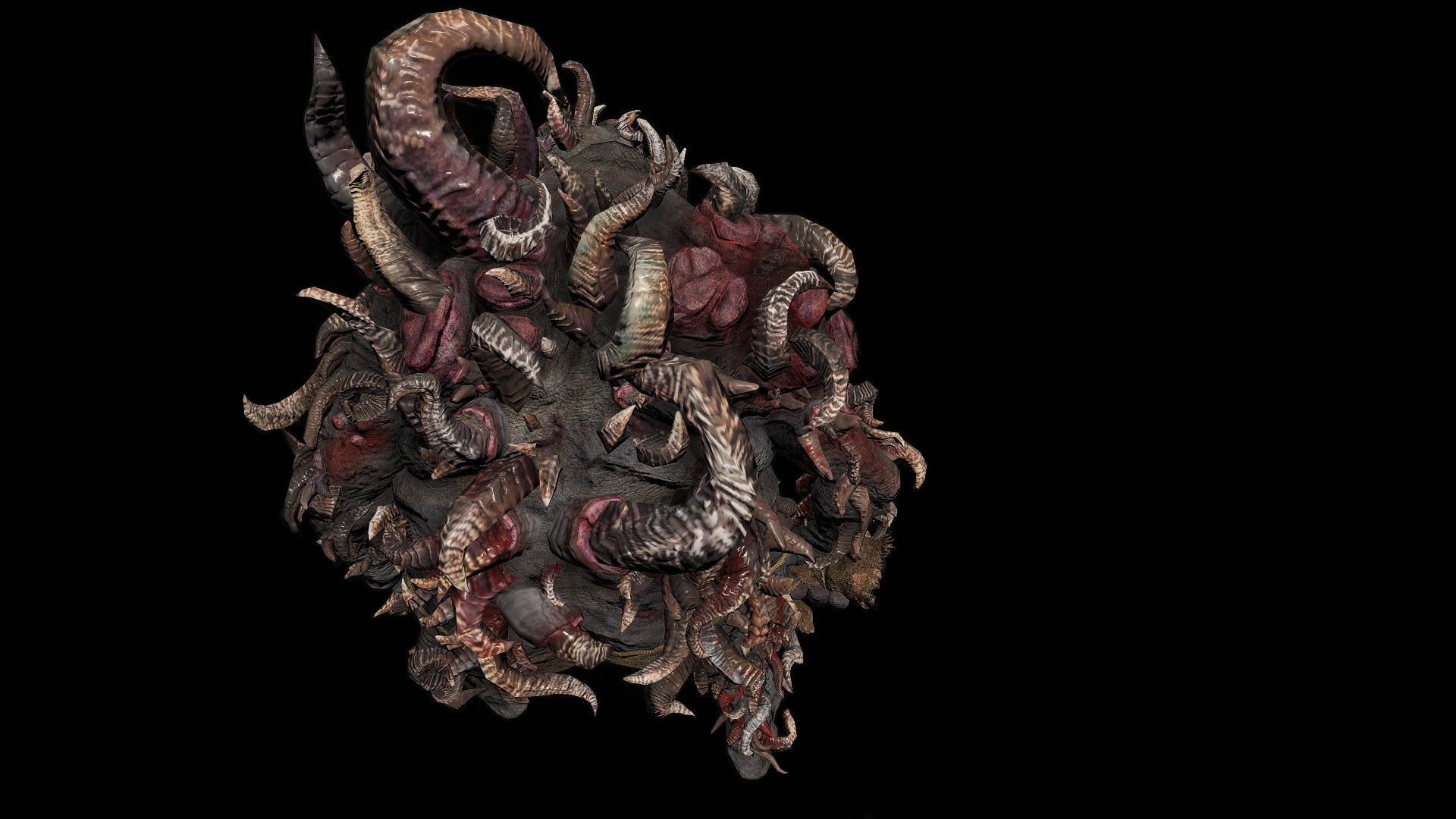
The Eternal Queen responded to this incident swiftly and harshly. “Omen children” have been labeled as another corruption to the Golden Order. The classification seems to have corresponded with a mandate to excise the curse. According to the Omen Bairn’s description, every “unsightly” horn on the newborns was cut off. Since these contain the spirituality, they don’t grow back even into adulthood, with those dehorned Omen unable to unleash cursed spirits in any form. By removing the lot of the curse from its source early, the evil didn’t have time to take root. The result are Omen with only residual curse remaining in the blood, the spirits far too few and weak to do more than haunt dreams. As for the spirits unleashed with the cut horns, they are absorbed by the Omen Bairn, a statue of the dehorned baby fashioned as a sort of amulet. Borrowing from the Hornsent’s example, the idol acts as a surrogate for curses in place of the real child, or parent, hence allowing the owner to weaponize the spirits contained. It was invented to protect parents as they performed the inglorious deed, and in more ways than one.

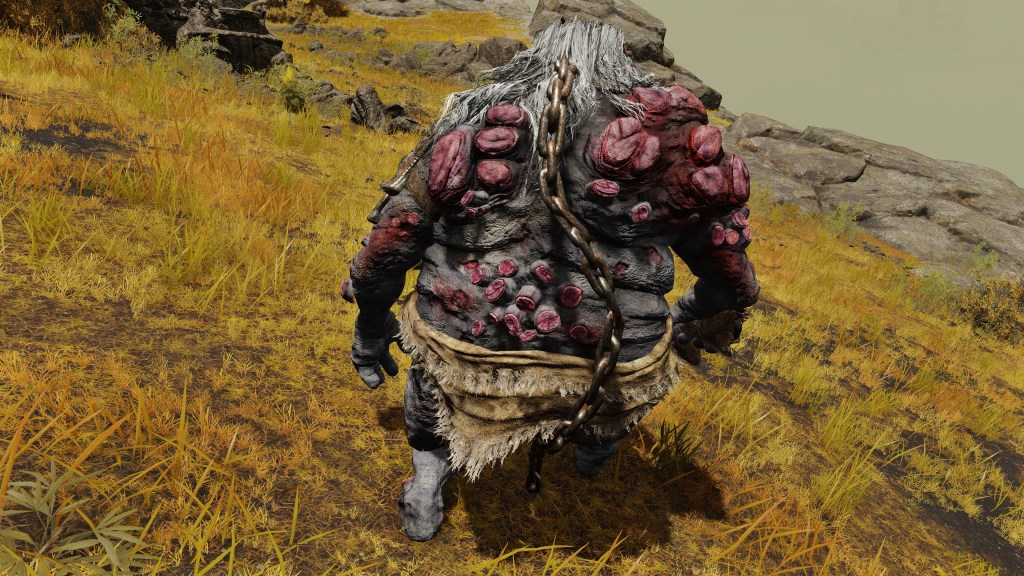
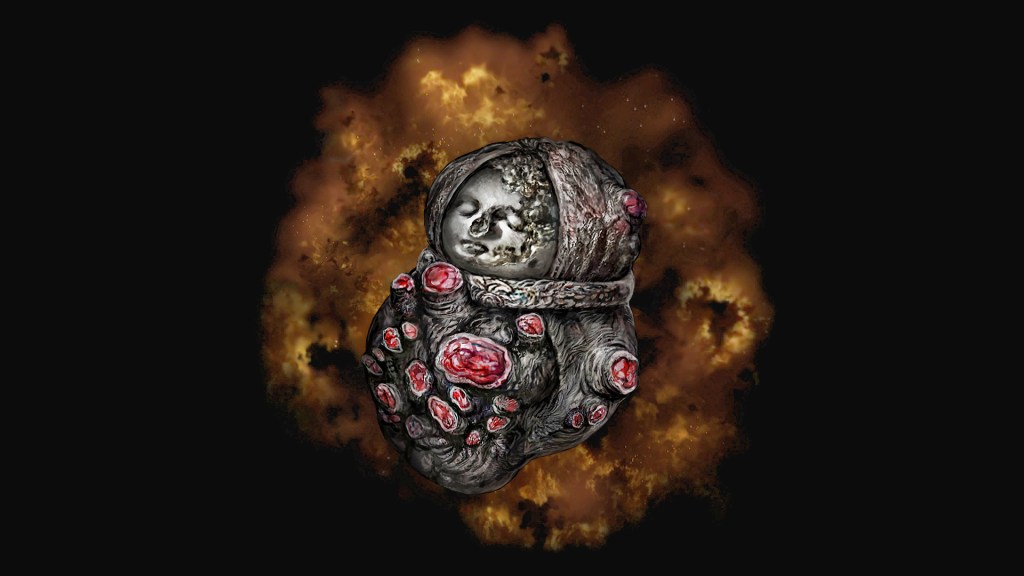
Talisman of bumps blending various aspects said to have generated in the body of man in the Old Age.
Reduces headshot damage and impact.
It is a vestige of the Crucible that is the origin of life. It is partial atavism and was long ago considered a holy visual, but in the wake of civilization, it is treated as corruption.
Statue of a baby who was born cursed.
Consumes FP to fire pursuing cursed spirits.
Omen babies have their unsightly horns all cut off and usually die like that. This is a statue for their memorial.
Please don’t resent and curse me, please.
Most Omen died after their horns were cut off, presumably from the blood loss. Given the number we see covering the average Omen’s body, it would be taxing for an infant to suffer such severe mutilation. However, the death toll wasn’t just an unfortunate side effect of trying to save children from the curse — it was by design. The bairn is more accurately a “water child”, (水子) a term for children born dead which became associated additionally with abortion and infanticide during Japan’s Edo Period. The statue is similarly a reference to the water child memorial service (水子供養) performed in honor of such dead children for, among varying motives, fear of retribution from the baby’s vengeful spirit. While the figure in the Buddhist ceremony is typically Jizo, it is nonetheless an idol used to protect the parent from their sin of murder. This statue is the explicit “memorial service”, (供養) honoring the baby’s passing while redirecting the grudges released in the process. The child’s death was a forgone conclusion.
Unlike the Misbegotten, Marika had no intention to use the Omen as free labor. If the crusade was to exist only in shadow, then so too must its consequences fade from collective memory. Therefore, no annal can record a curse upon the entire population. Every citizen, whether noble or commoner, was expected to sacrifice their child for the good of Order. Excising the spirits was a small mercy afforded to the Omen’s cursed existence, soon to be snuffed out. That painful death may well have been the Erdtree god spiting the former allies she betrayed for their obvious retaliation against her. If the stubborn old coots wanted to ruin her “children”, then they would know what it means to face the golden tree’s rejection. The cursed infants may not know grace, but the kingdom wouldn’t let them be claimed by the Hornsent. Thus, forced to abide a royal decree, everyone under Order participated in what was surely Marika’s improvised ceremony, parents paying their final respects with this brutal mass infanticide.
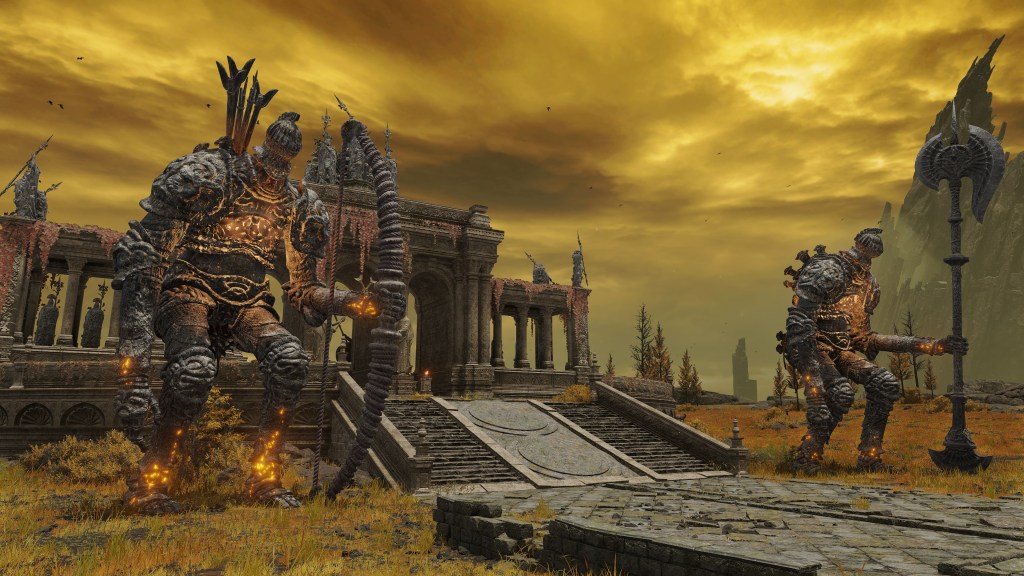
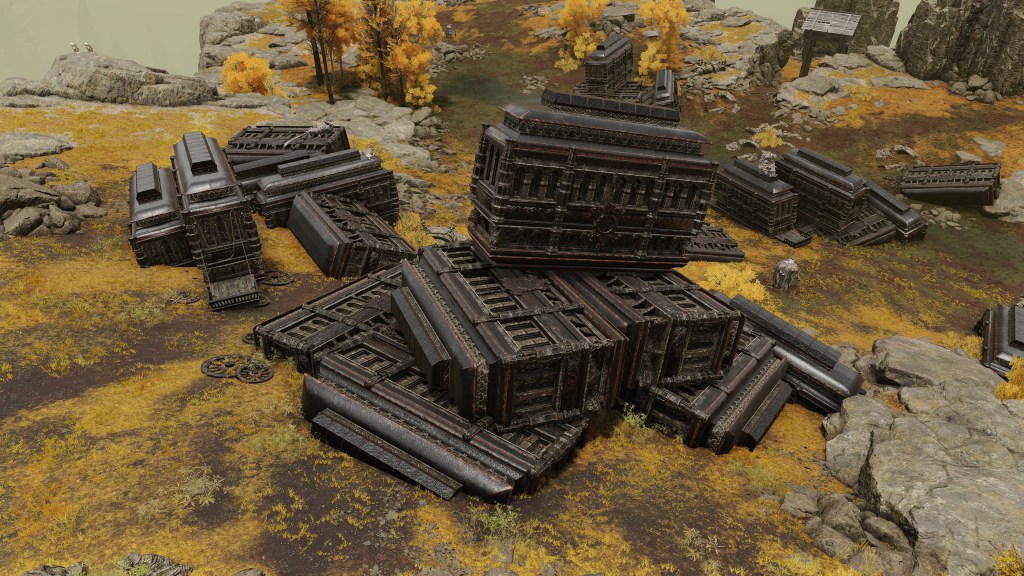
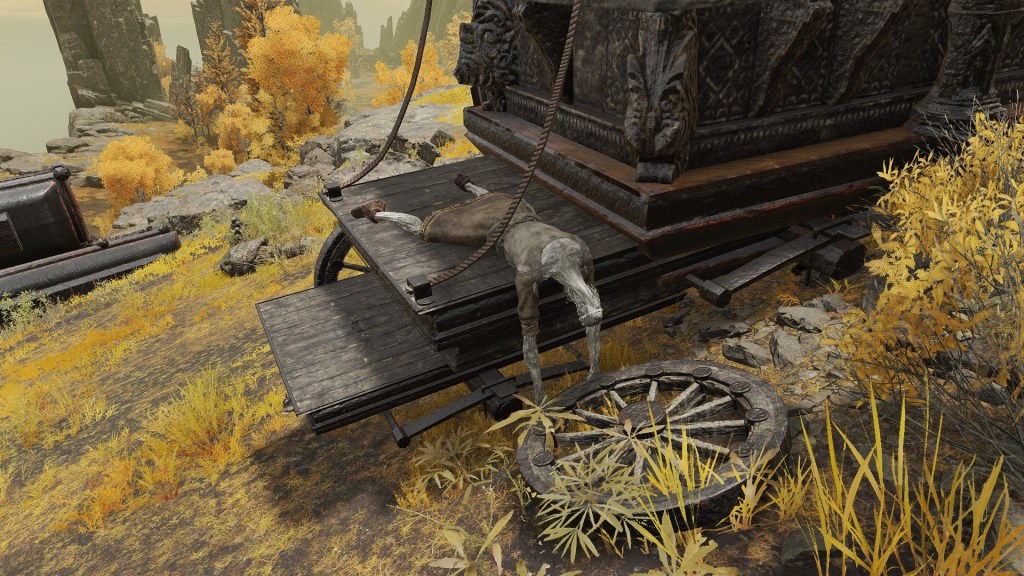
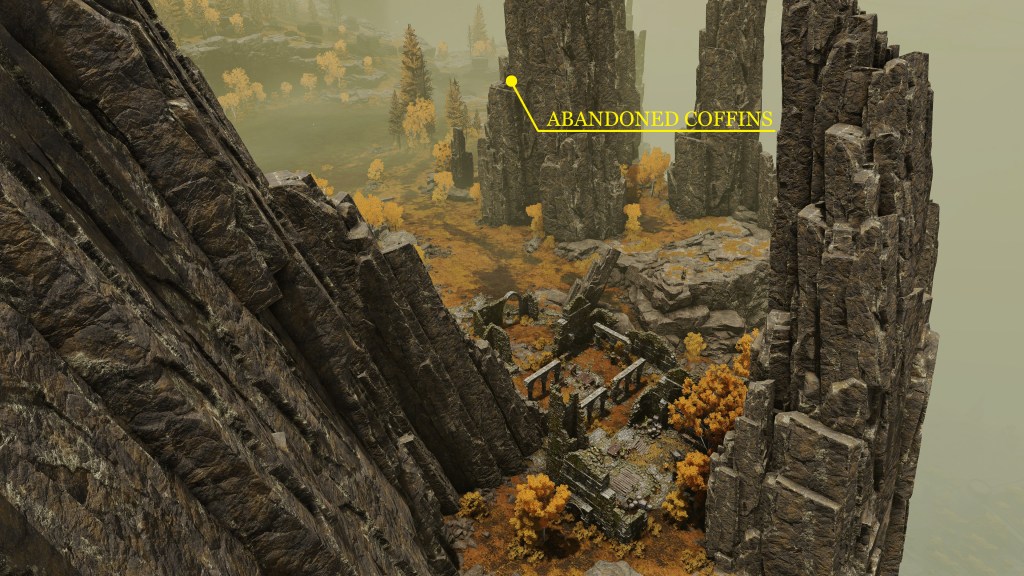
The bodies were just as swiftly disposed of. There is a “graveyard” of coffin carriages abandoned on the fringes of Altus Plateau, hidden behind Mt. Gelmir and the Lux hill. The ancient golems half-buried with them signals that they were responsible for bringing the coffins to that obscure corner. We do see the same golems repurposed by Leyndell to guard the Grand Lift of Dectus as well as the side route for entering the capital. Most likely, these giants of the ancient civilization were used to pull carriages before trolls became the standard for this, so still sometime during Godfrey’s reign; the leftover creations may have even informed the design of the kingdom’s imp golems during the founding. But why send the dead to one remote location on the heartland, with apparently no intention to return the golems or carriages? Because they wanted to keep the cadavers out of sight, out of mind. And who couldn’t citizens of the capital stand to think of any more than their lost children? The tragedy was too much to handle. They simply threw bleeding infants on the body pile and carted them off, to be picked off.
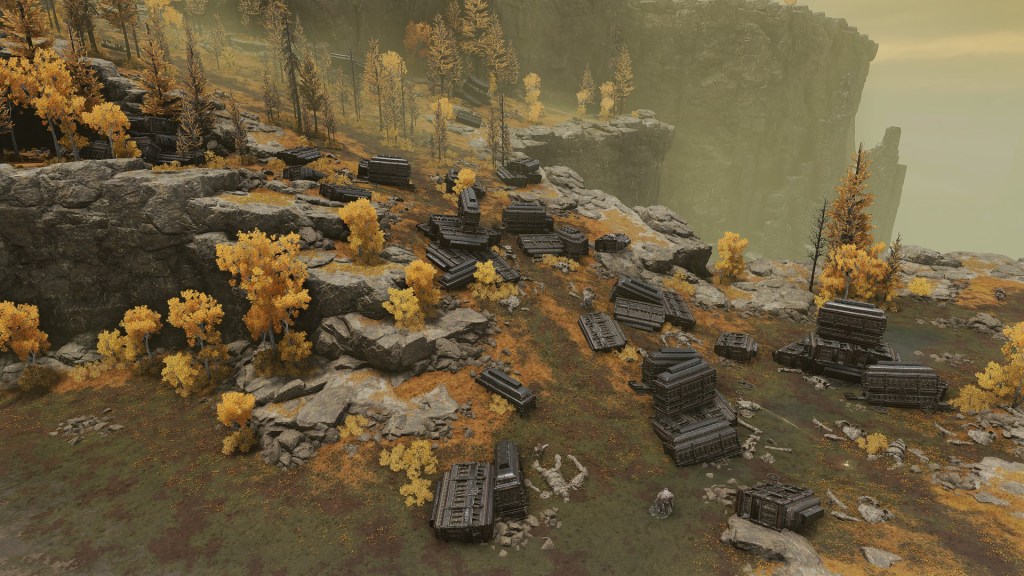
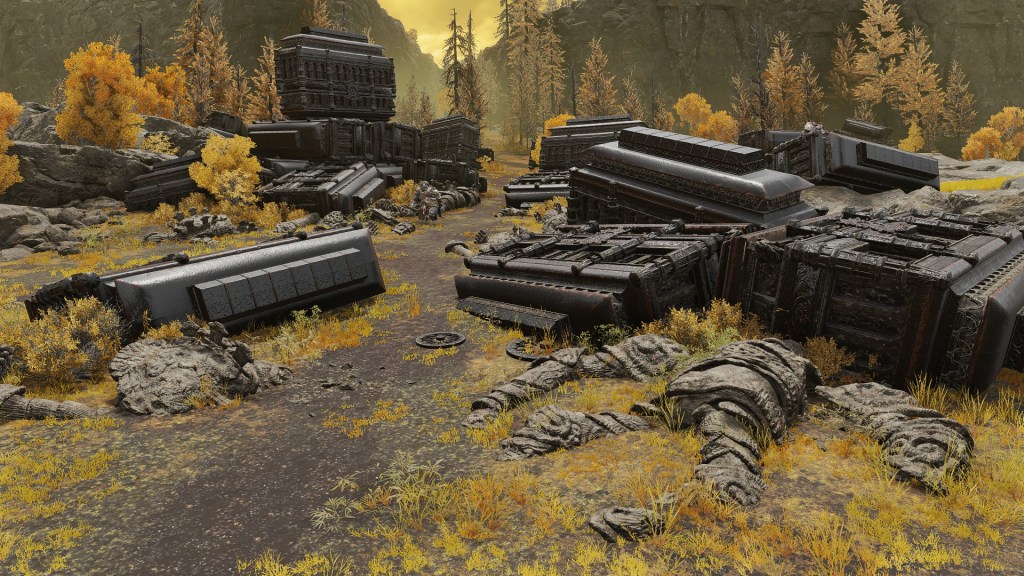
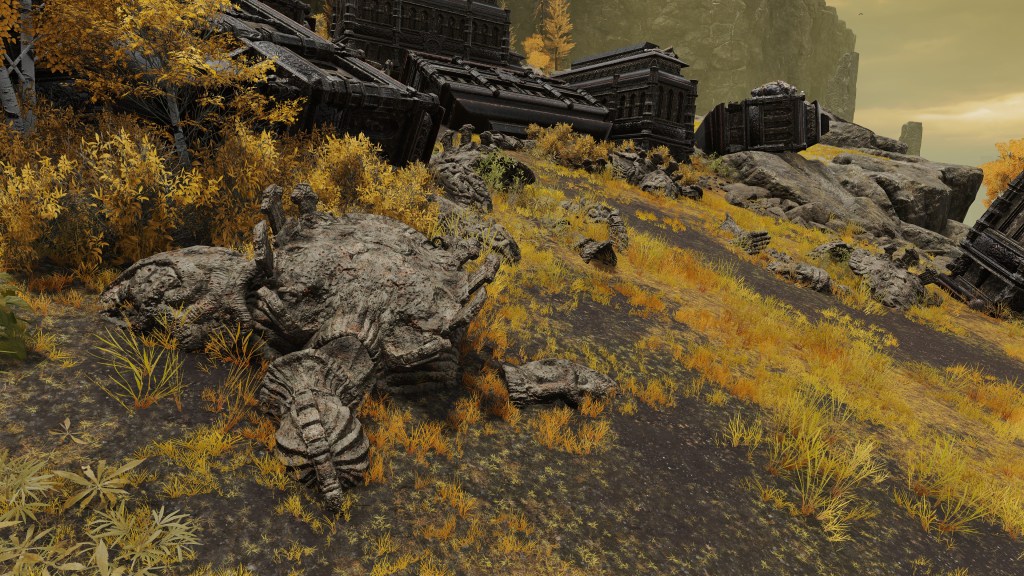
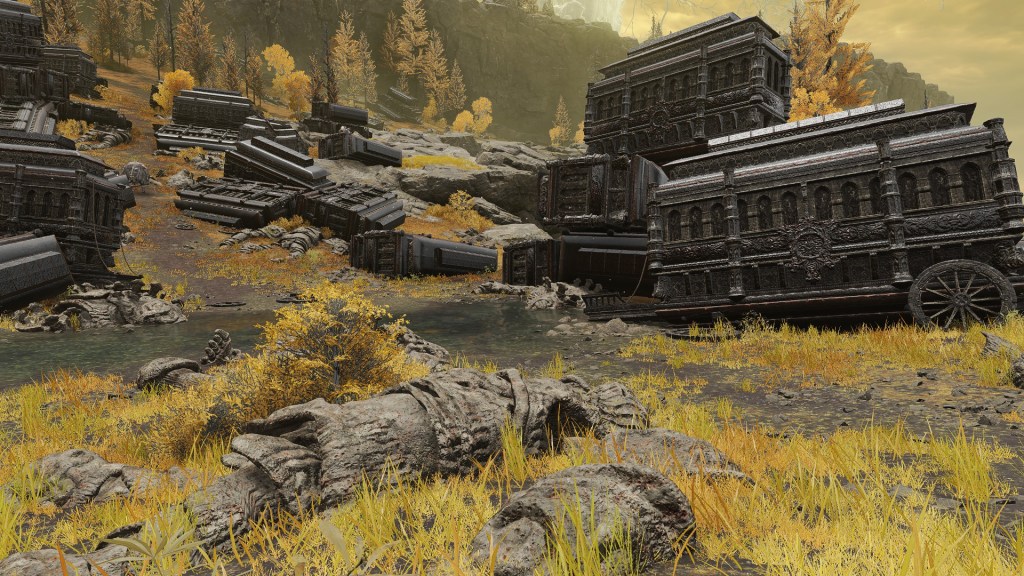

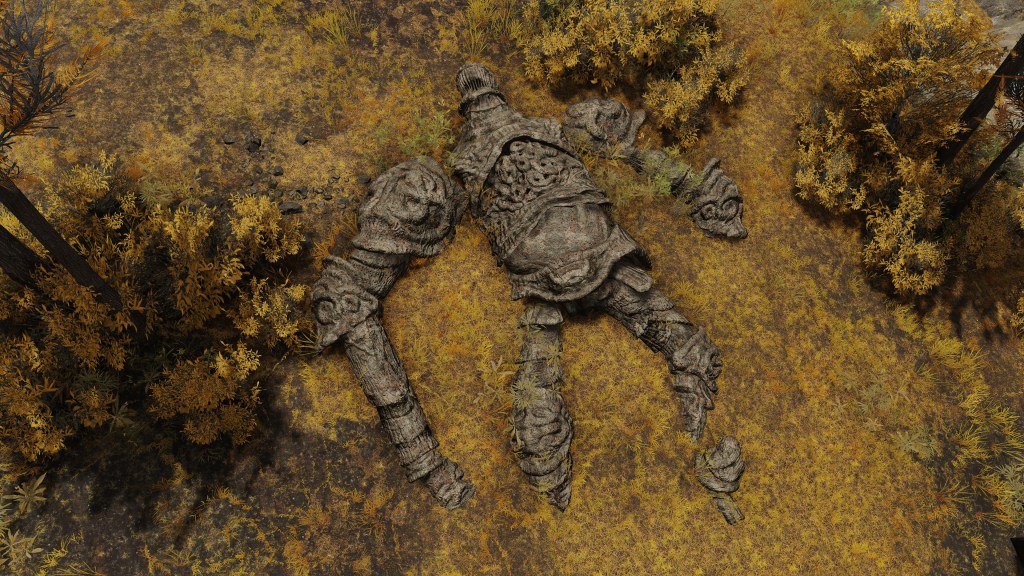
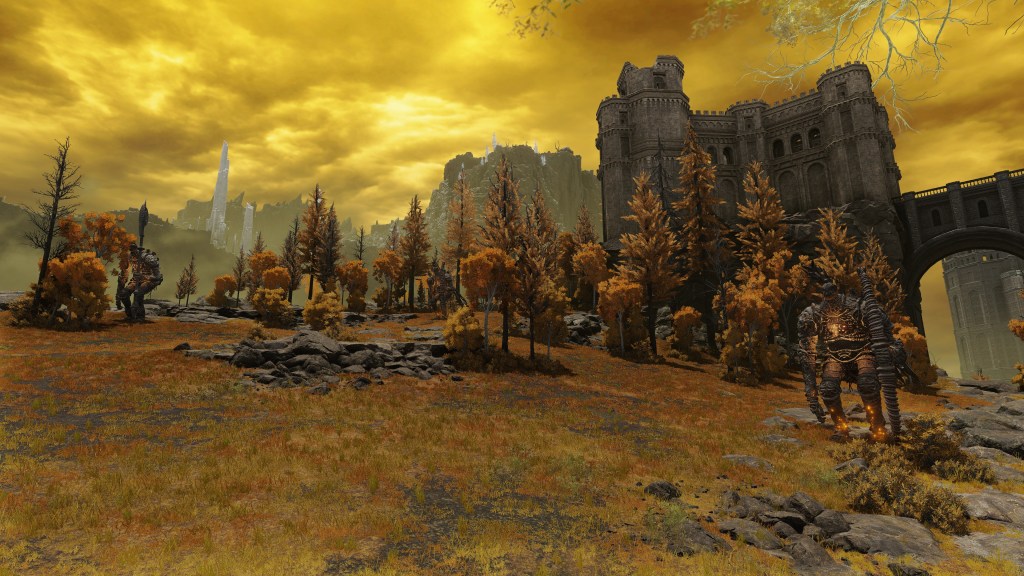
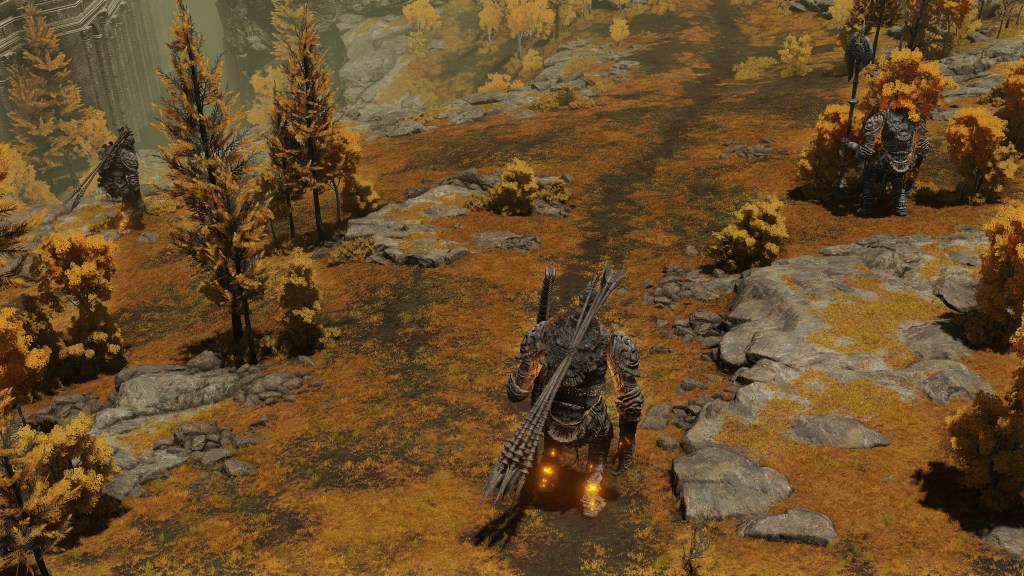
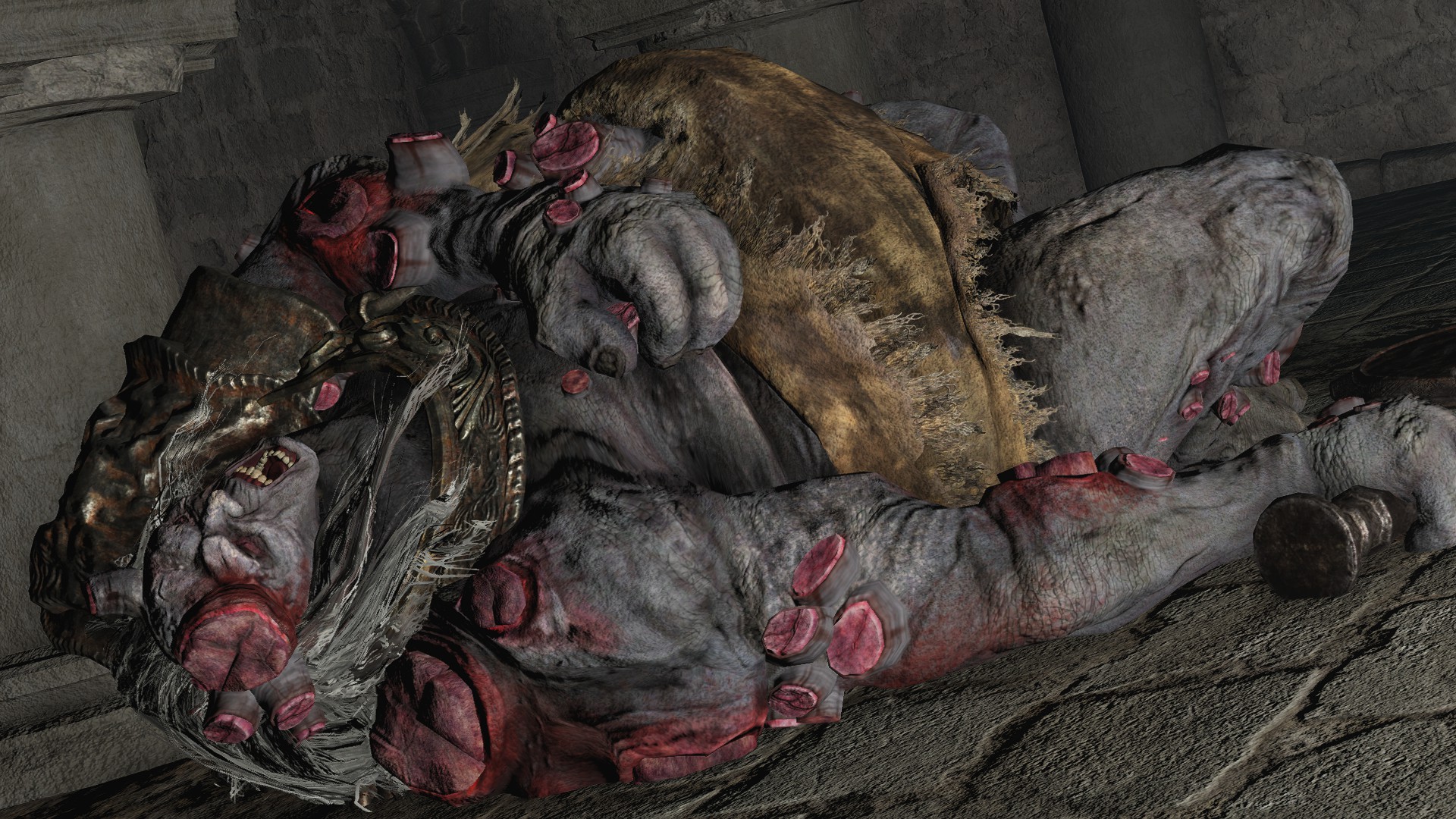
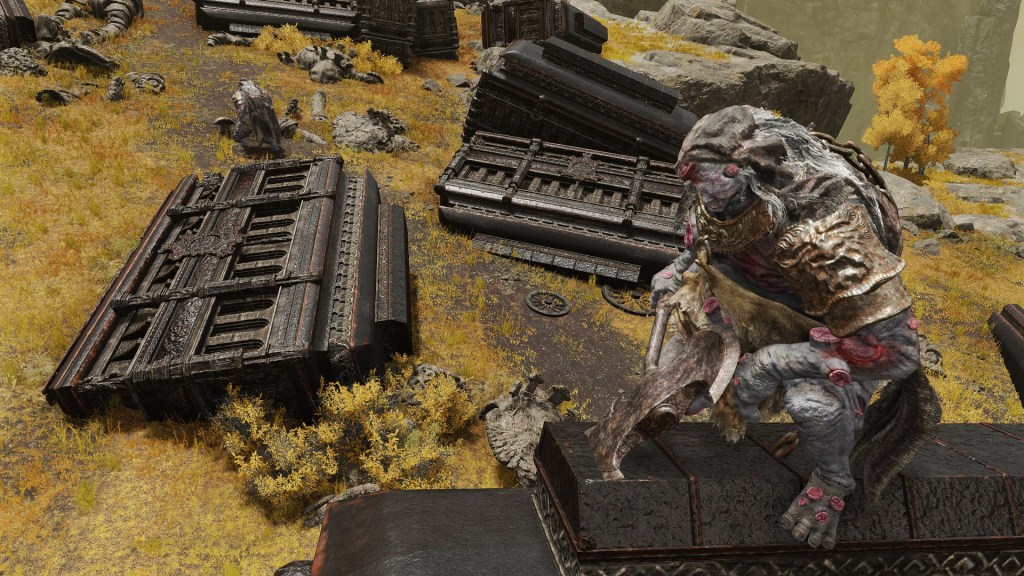
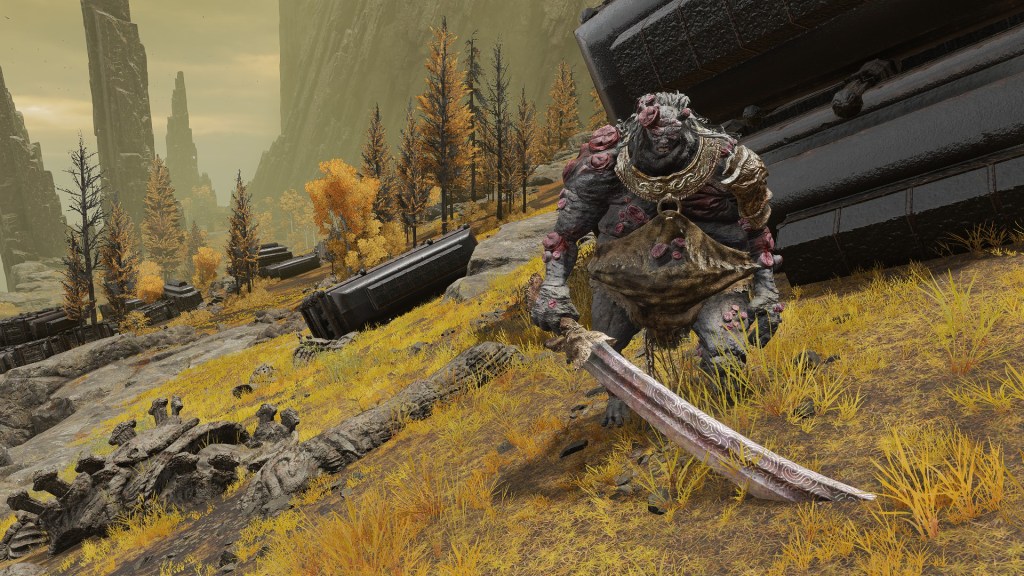
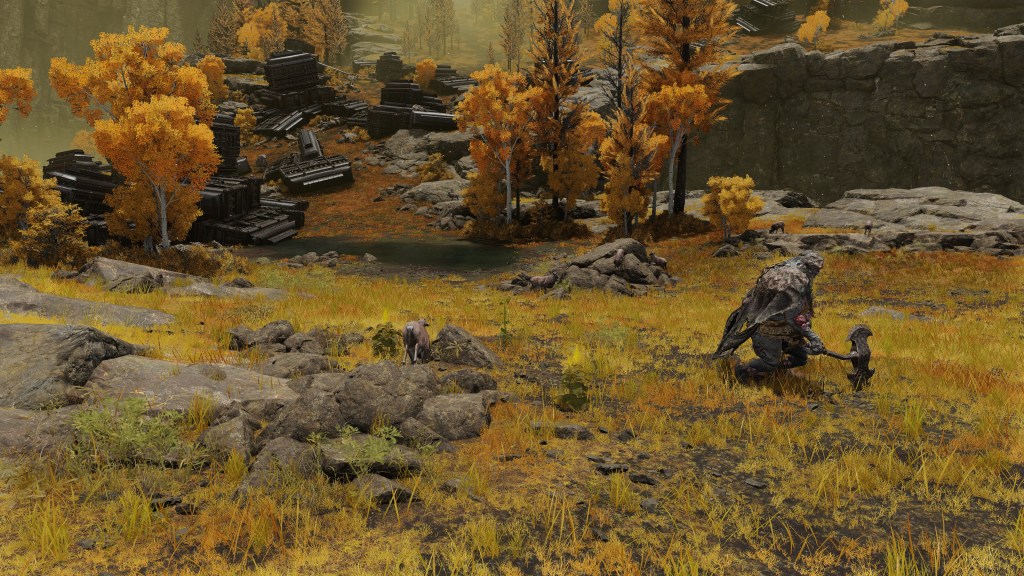
The suggestion about the dead is reinforced by the visible consequences of this halfhearted effort. After all, not all Omen who lost their horns did die, and evidently, these were included among the body pile. A number of dehorned Omen loiter about the abandoned coffins. A few of these have developed a rudimentary sense of civility, putting on ragged cloaks on top of the universal loin cloth. But overall, they are seemingly a community of wild men, residing amongst the carriages where they grew up. This holds ominous implications for how the monstrous babies subsisted long enough to reach adulthood. They surely benefited from the ancient golems protecting their “territory” from other scavengers or similar threats, at least until those golems broke down from lack of maintenance. Cannibalism also befits the “savage” stereotype, though one hooded Omen at the edge of their territory reveals how shepherding has emerged since. At the end of the day, if the primitives were savages, it was civilization which made them such. And yet, the society in question knew not the fate they condemned some of their children to.
Indeed, countless parents surely grieved with heavy hearts, maybe willing to have accepted a deformed baby if not for the government proclaiming it taboo. They just wanted to forget how they betrayed and abandoned their children in such a vicious way, for their own peace of mind if nothing else. But guilt has a way of eating away at someone. Keeling over one of the abandoned coffins is a noble lord. Considering the anomalous location, this person of authority and resources must have been one of those parents racked with remorse over the incident, eventually deciding to track down their child’s grave and secretly go alone. The intent was probably for the aristocrat to find some closure by facing the full severity of the family’s crime, maybe apologize to whatever was left of the offspring and provide a proper burial. What the noble didn’t expect was a possible reunion with their “dead” baby — though if parent and child did meet, the interaction clearly wasn’t amicable. These were the monsters the capital created.
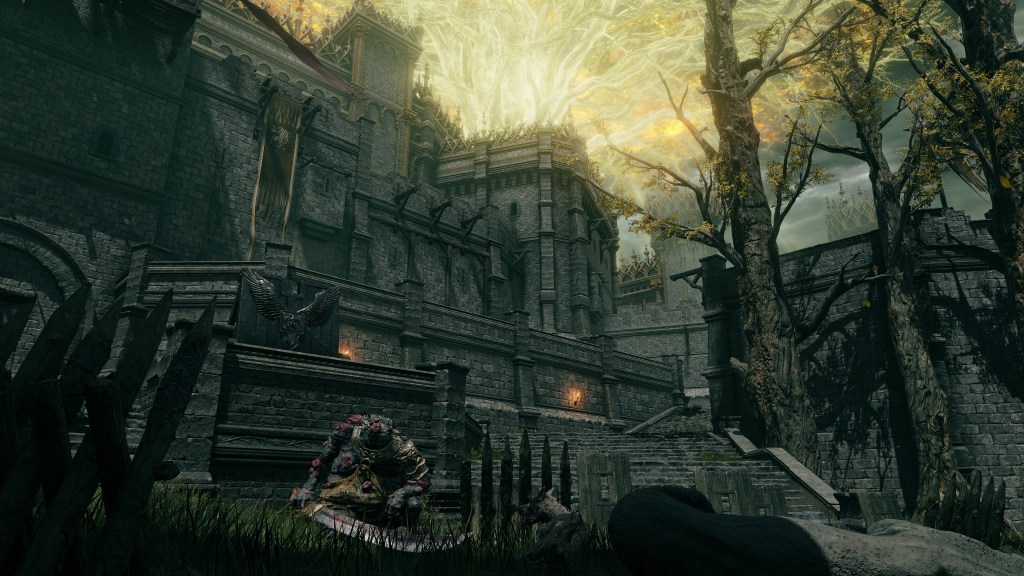
Omen weren’t just limited to Altus Plateau. A dehorned Omen serves Godrick at Stormveil Castle, with plenty more Omen tracing back to the demigod’s army. From this, we can infer that Omen were also being born in the penal colony, descendants of the colony’s overseers from Altus. A curse knows no borders, so even there, on the frontier, those with the grace of gold in their eyes suffered from it. However, there are no signs of a mass grave on Stormhill. When word came to dehorn and dispose of the babies, the overseers abided the first part. However, it would seem that they kept the survivors cared for as slaves, hence the collar with chain around their adult necks. Even with banished humans and Misbegotten working so long, the penal colony hadn’t yet finished construction. Thanks to harsh conditions slowing progress, the castle needed the labor. Why waste perfectly good manpower? And who would stop them? They were far away from the heartland. The children could thus live as their parents’ property. By the time Leyndell found out, the state would just have to accept the circumstance.


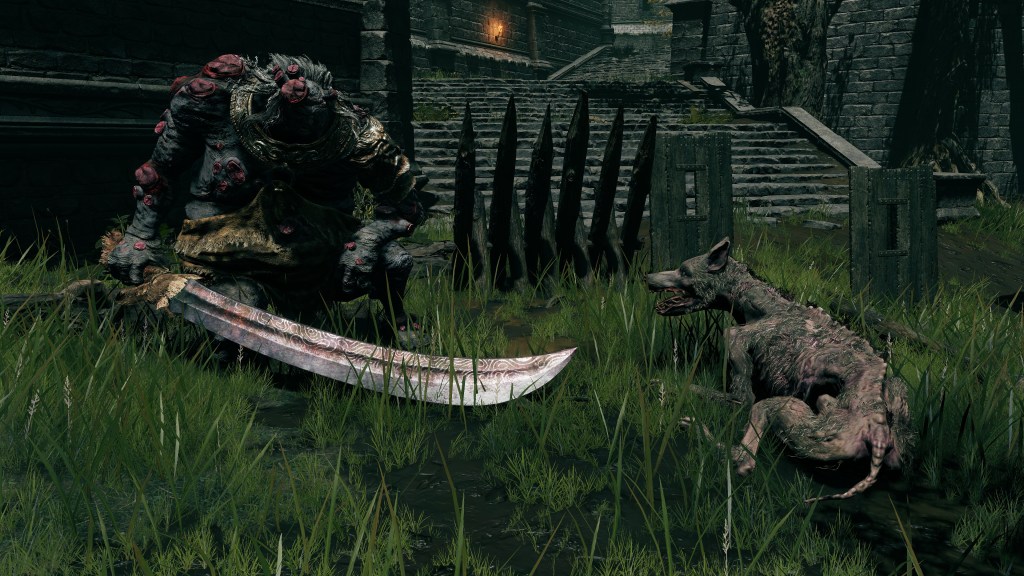
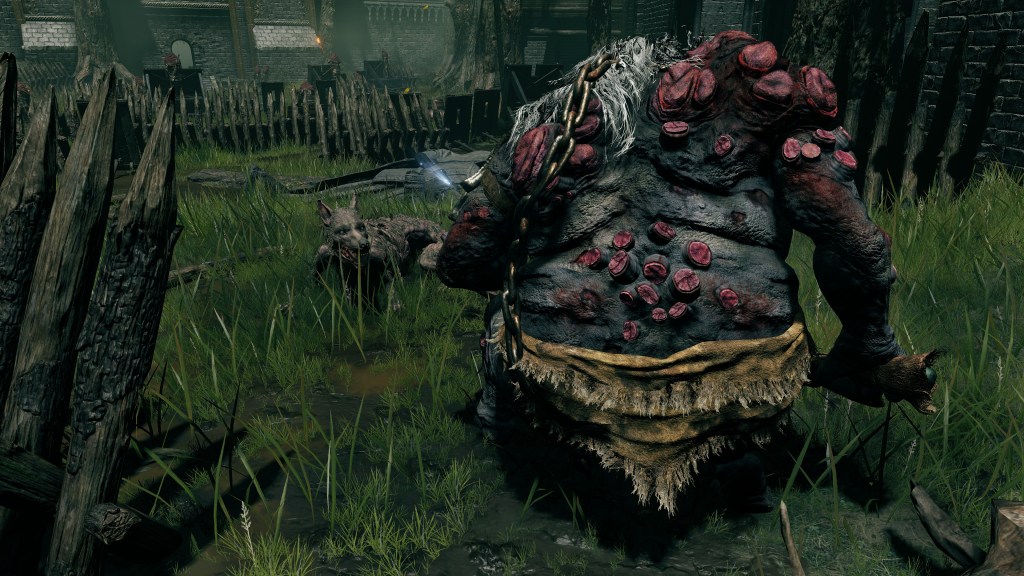
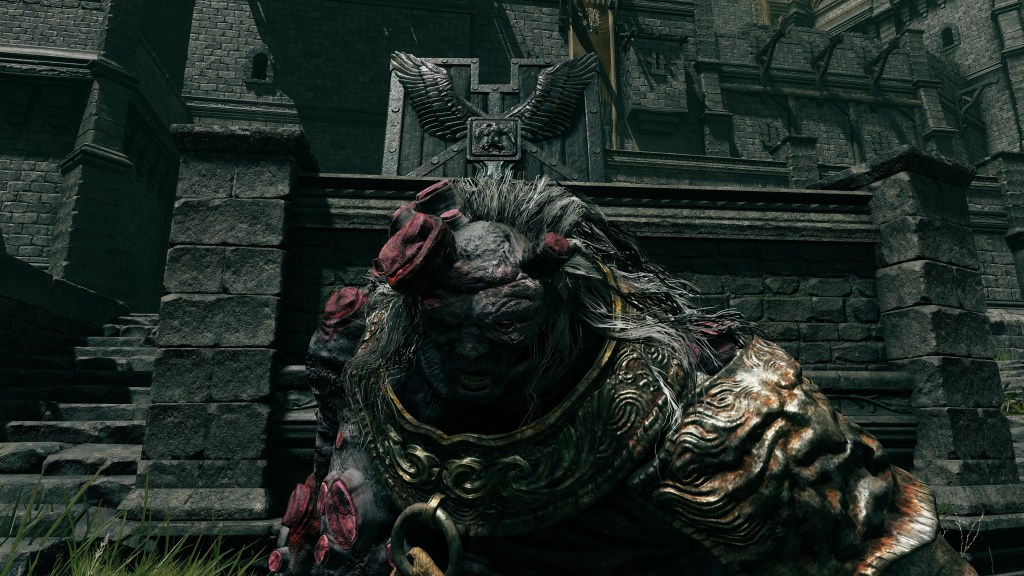
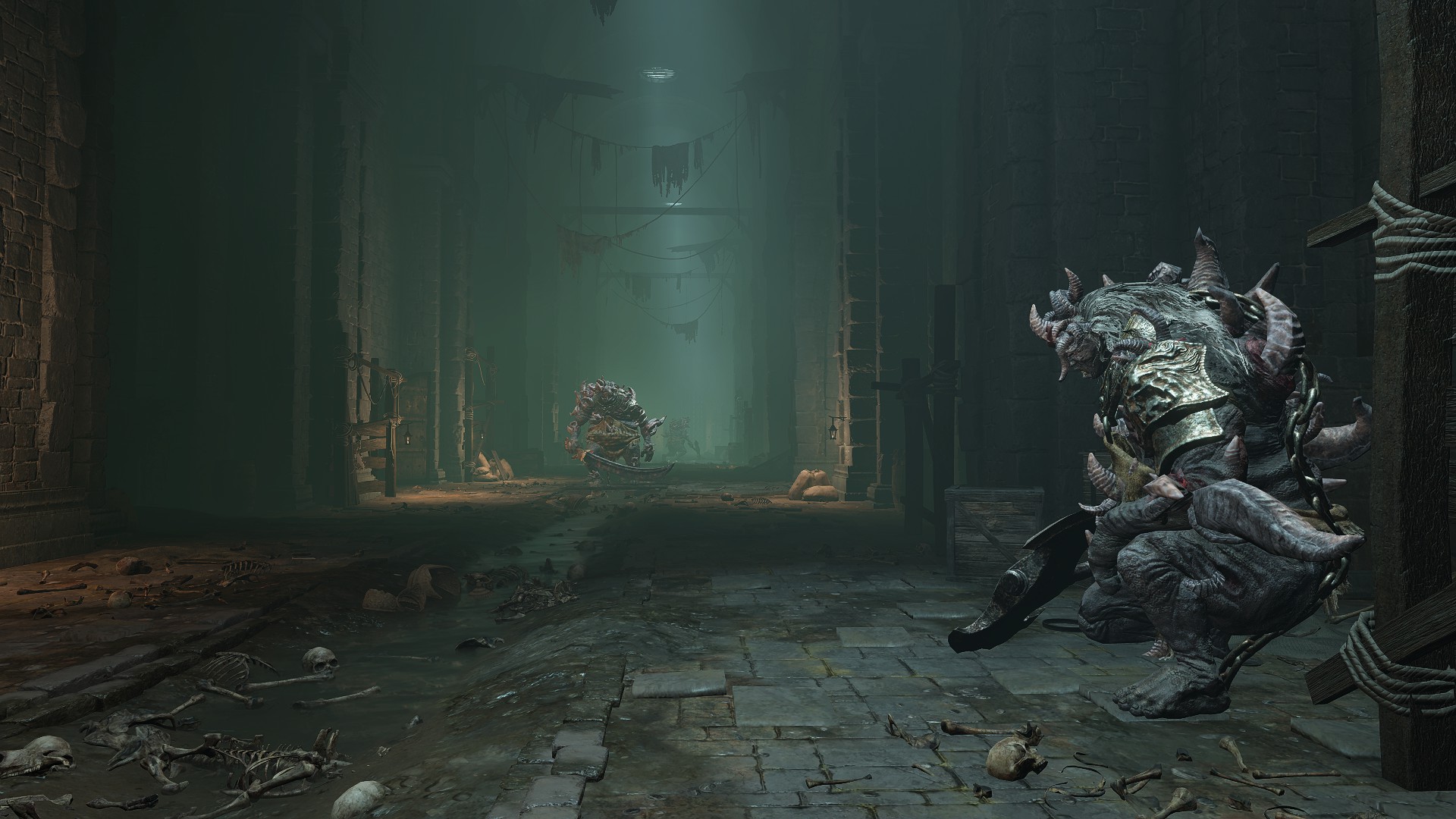
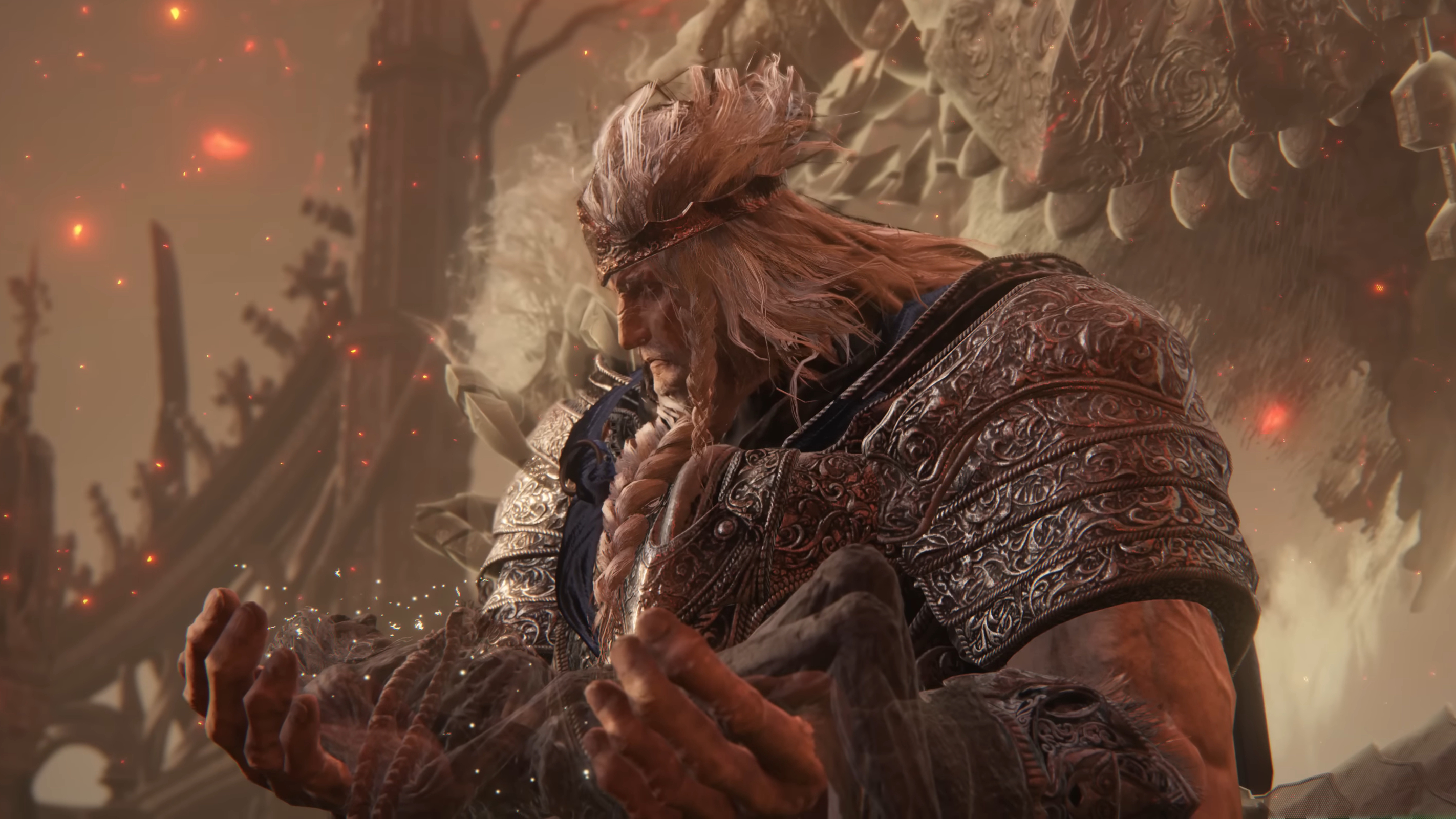
It wasn’t as if the royalty back home didn’t bend the rules themselves. Royal babies never had their horns cut off. Instead, they were banished to the sewers beneath Leyndell, where they live on to this day. This was done without anyone’s knowledge, so the Erdtree royal family were trying to keep this contravention of Marika’s decree under wraps. This includes Marika herself. Morgott and Mohg are both Omen and demigods, twins according to the description to the latter’s Great Rune. The former’s Great Rune likewise affirms Morgott to be a member of the Golden Lineage in its description, leaving no doubt that he and his twin were born to Marika and Godfrey. Not even a god and her Elden Lord were immune from the curse. And despite that, the princes survive.
Taken in total, we can determine that the entire royal family weren’t so keen to give up their children. Even if their gold was corrupt, there was still a loving bond formed when a parent lays eyes on his or her child, no different from the commoners or nobles. And as the ones enforcing the decree on their subjects, the allure to make themselves the exception is always tempting — “rules for thee, not for me.” Most important of all to Marika, those Omen still bore the blood of her tribe. And so, the royalty have gone to whatever lengths to keep their progeny alive if nothing else. In fact, banishing them underground for eternity probably wasn’t their first choice. It would be absurd for the royals to think that helpless newborns would survive in the sewers if the intent was really to save their lives; no one foresaw the situation on the plateau’s fringe, after all. Their plan’s only realistic chance was for the Omen to be at least a few years older and theoretically self-sufficient. Indeed, how could anyone know the faces of the spirits haunting Omen without socialized Omen around to describe their nightmares?
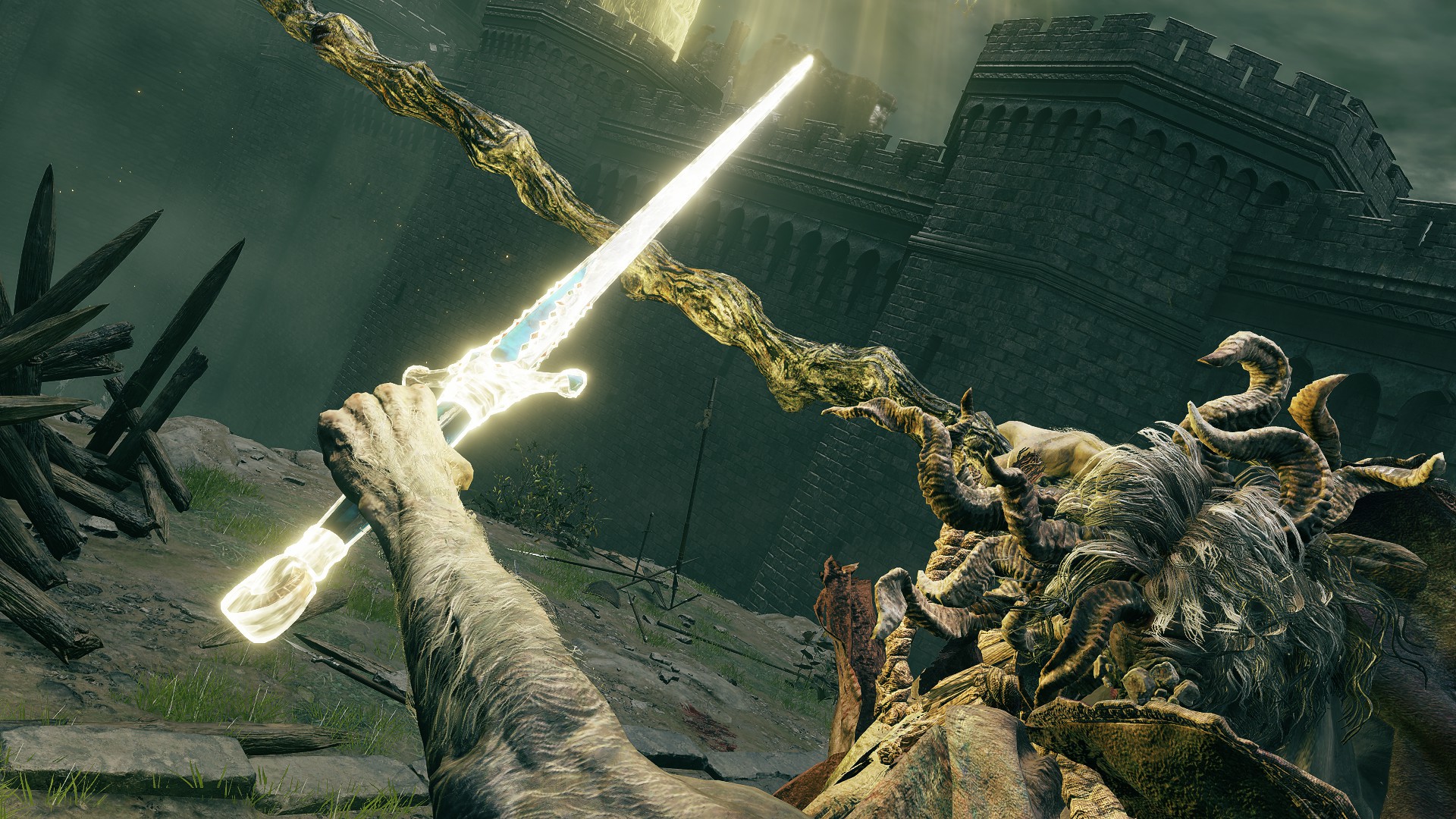
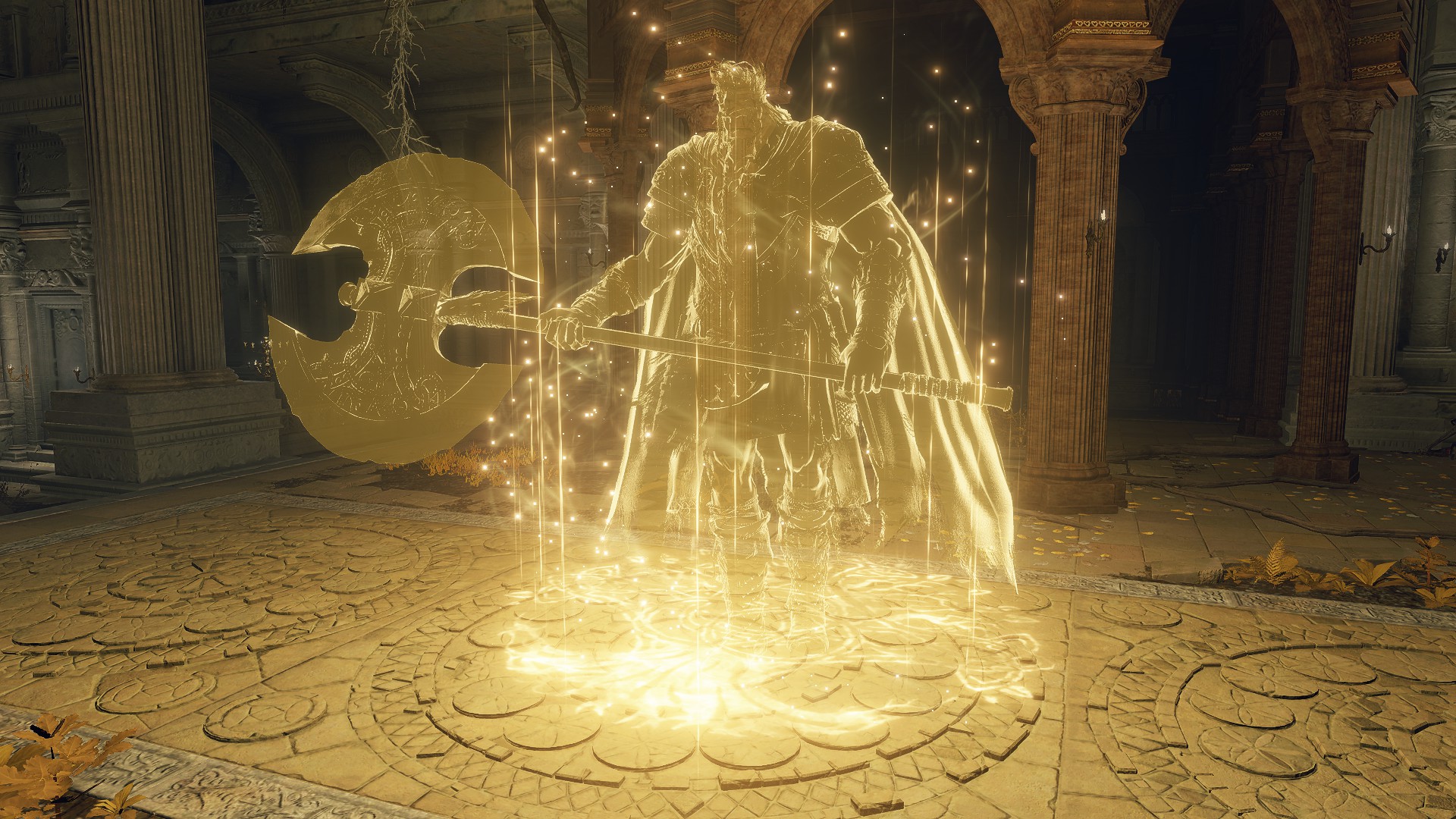
Morgott exemplifies this delay in abandonment. The future Omen King of Leyndell owns a talisman pouch from the Finger Reader who had been his wet nurse. Even if only received upon becoming king, it implies a past relationship which is only possible if he was raised in the royal court. He also utilizes gold to generate phantom weapons which a young prince in the Age of Plenty would have witnessed; an Erdsteel Dagger, Treespear, Giant-Crusher, even a Carian Knight’s Sword from visiting diplomats’ entourage. The man even makes us face a golden facsimile of Godfrey in the Erdtree Sanctuary before confronting him directly at the Elden Throne, familiarity with the first Lord’s fighting style and unbroken axe insinuating firsthand experience. Godfrey himself shows an uncharacteristic tenderness holding his son’s body, calling the boy he hasn’t seen for a while by name. The fact that Morgott and Mohg have names which their father would recognize belies that they were merely dumped in the sewers as infants. The twins are simply too eloquent to be wholly uneducated and unpracticed in decent society.
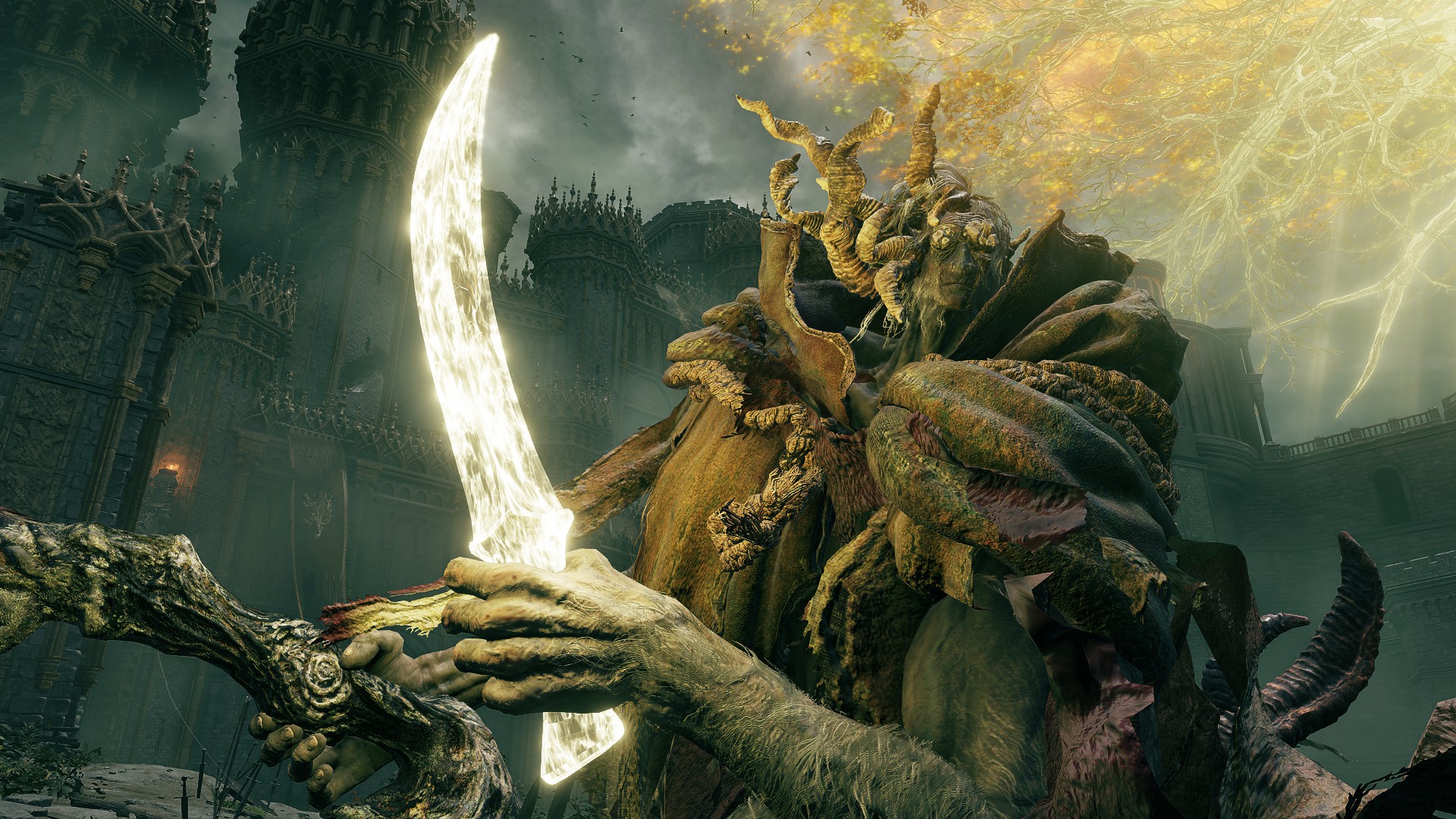
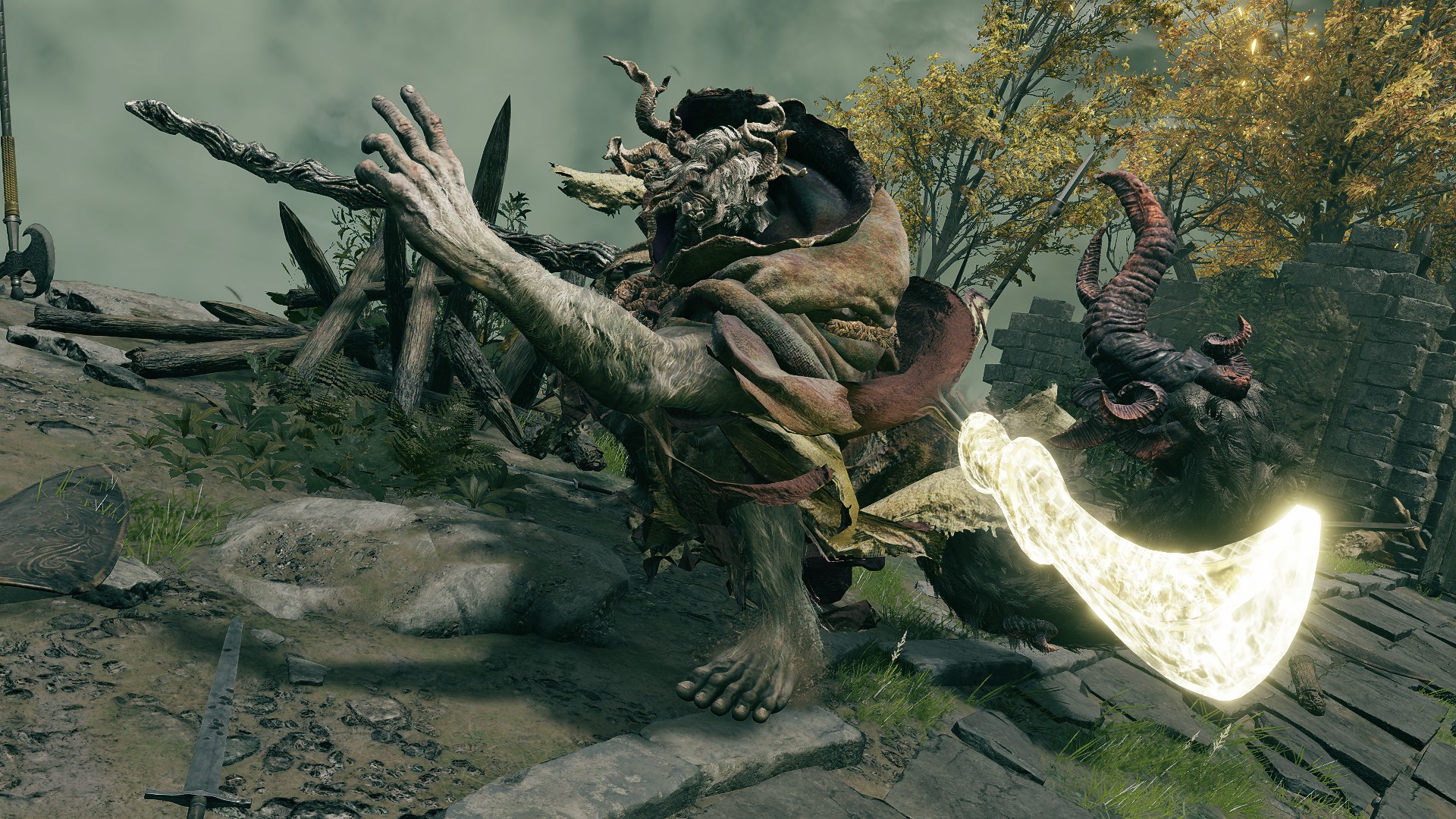
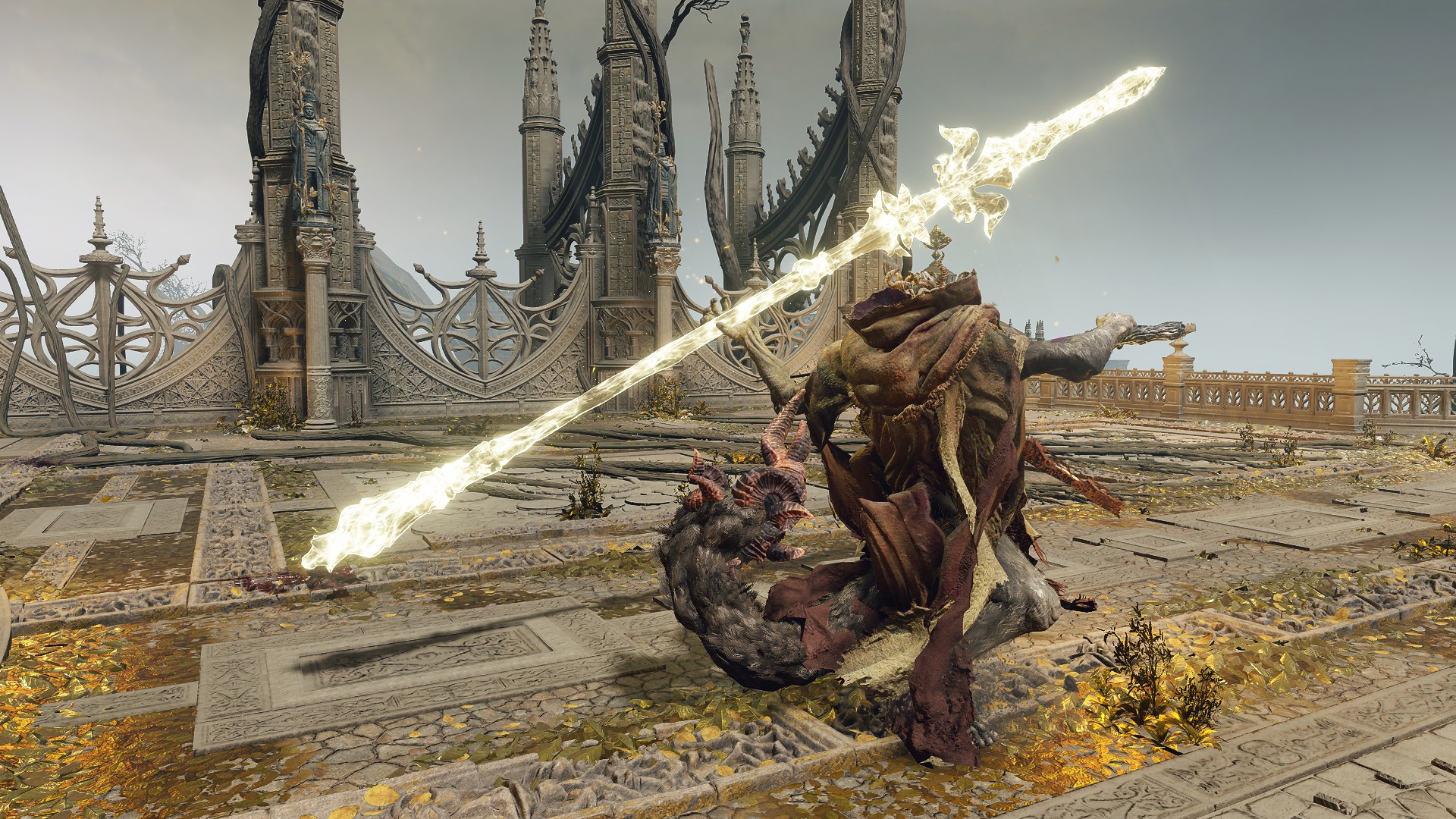
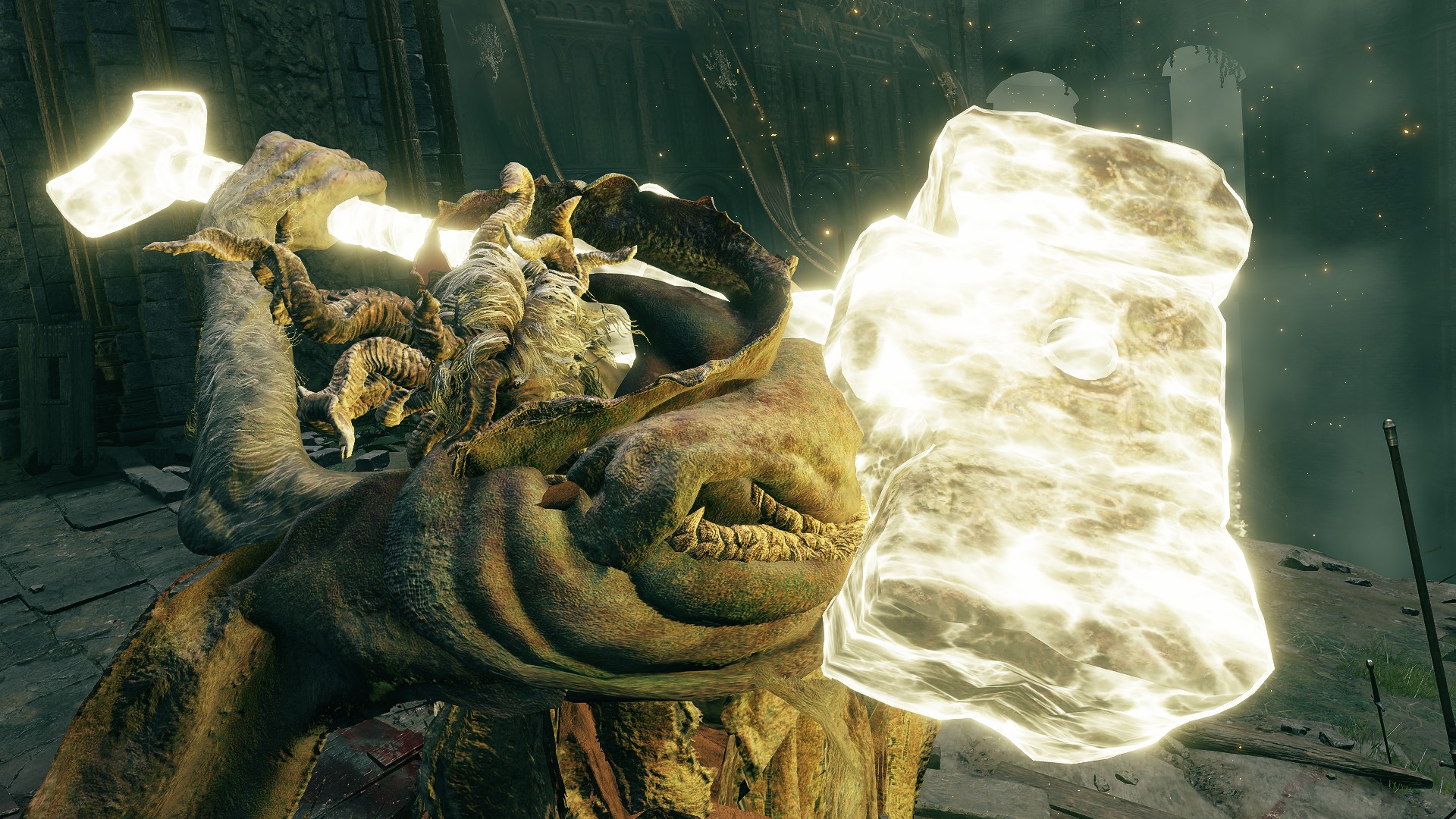


Withered, hand-knit pouch that the Finger Reader old woman gives to the King or one who tries to be King.
Increases the equippable number of talismans.
It is said that the Finger Reader, who lives for eternity as the Two Fingers’ voice, is also the king’s wet nurse.
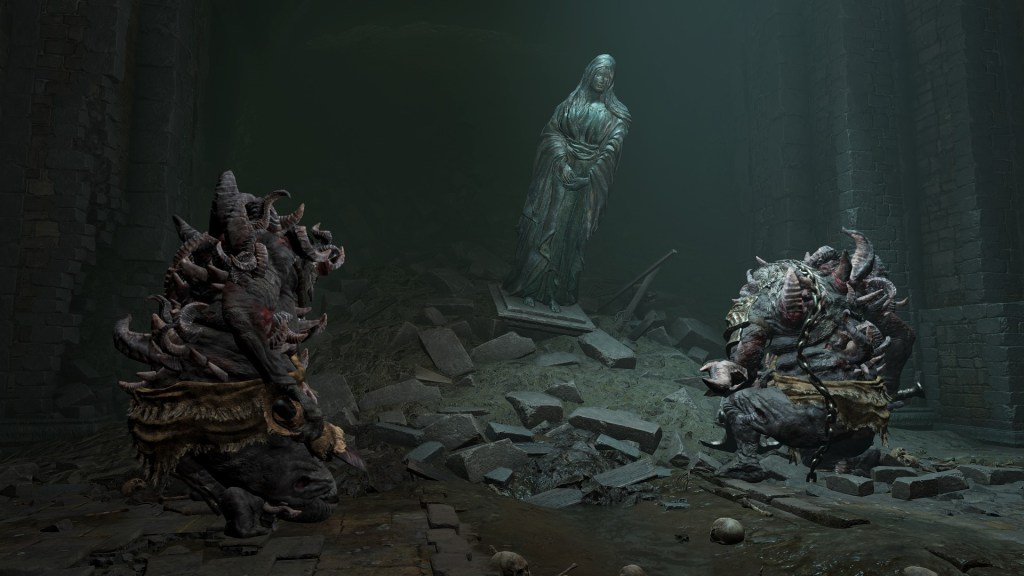
Morgott started with a relatively normal life, childhood memories he cherishes to this day. The same must have been true for Mohg and all the Omen born to royalty. Despite suffering from terrible nightmares, the children spent their early childhood years under the family’s protection. The god and demigods never intended to give up their precious offspring, curse or no. They were most certainly wanted — until they weren’t. The way a few Omen kneel to holy woman statues in the sewers, there is still a strong sense of fealty to Marika. But her godly majesty won’t deliver there from their current fate. Not even the twin princes escaped banishment. Because the toddlers knew a better life and might try desperately to return, they were shackled with gold-powered fetishes that could force them to the ground. This applied both back when the parents first left them behind and in the future, such as when burying Leyndell soldiers in the catacombs. Looking at the menu graphics’ depiction of stone crests with stretching roots, this was accomplished by embedding the fetishes into the body, allowing the Omen to grow with it.
Fetish tinged with golden magic power. Thing that especially severely restrains just one of the cursed ones called omen children.
The magic power of that restraint remains, albeit only a little, so it will temporarily bind Mohg, its former captive, down to the ground.
And grow they did, even absent parents like their kin. When approaching the Divine Tower of East Altus harboring the two’s Great Runes, we are whisked into a shadowy dimension hiding the Fell Twins. The bosses look like generic Omen beyond one’s weapon inflicting hemorrhage. But given the magical nature of this encounter and Mohg’s later identity as the Lord of Blood, these “Omen Twins” (忌み双子) are probably intended to be the demigods in their youth, proxies created to protect the actual twins’ Great Runes in the tower. “Mohg” took up the unique axe presumably after his eventual contact with the Formless Mother, an encounter which the description of Bloodboon affirms had occurred at the “bottom of the land” (地の底) — like the Subterranean Shunning-Grounds the royal Omen roam. The twin princes, dressed in rags like the rest and restrained by magic, undoubtedly reached maturity beneath the capital, without exception from the others.
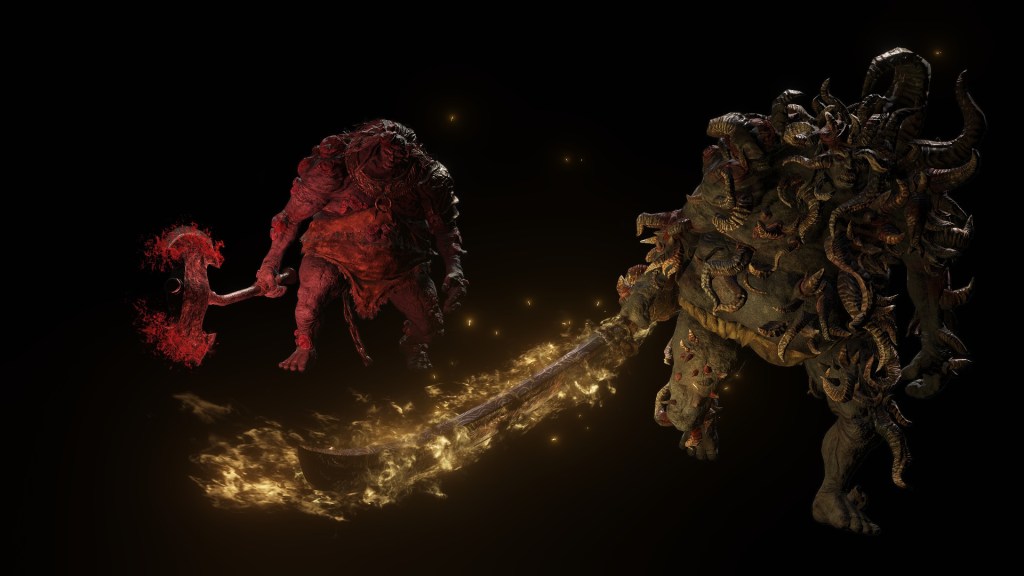
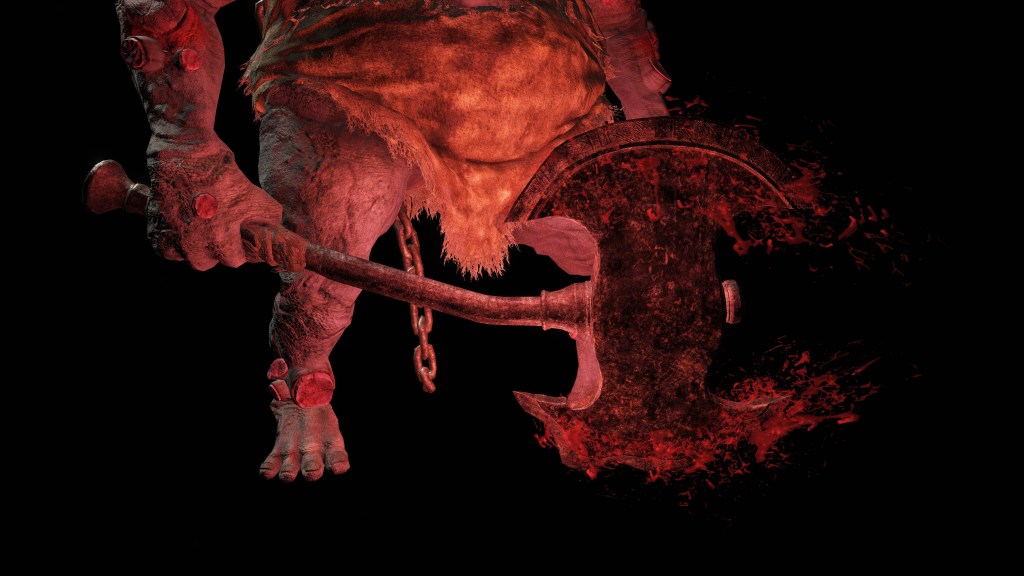
Why the sudden about-face concerning children they, if Godfrey is any indication, deeply loved? In all likelihood, it was a response to political pressure from the masses. A generation of Omen prince and princesses wasn’t going to go unnoticed, even if the royal court never addressed it. Citizens of every social strata played along with the royal decree, much to their own dismay. But when compliance had inevitably been secured with the threat of military force, the people weren’t going to accept a double standard. So, as the years passed and the reality of the situation trickled down the grapevine, there was sure to be growing outrage over the blatant tyranny — if Omen were so shameful, then royalty should also be ashamed. That outrage would turn into loud protests, and tensions would only continue to rise. At some point down the line, the king and queen needed to address this issue.
… Corrupting the thrones with my curse…… A shame I cannot bear…… You I will never forgive…
Some fans might underestimate the concerns of rebellion for a veritable god with a reliable demigod to war on her behalf. But a ruler needs subjects, and the queen couldn’t inspire faith if her legitimacy was called into question. Recall that all of this was part of efforts to stabilize her regime after she did receive a serious challenger. After a controversial military crusade and even more controversial infanticide campaign, an incendiary political scandal was the last thing her government needed. Marika couldn’t maintain her firm position with a rebellious population, but violence would only quiet the discontent, not smother it — leaving it to seethe into a bigger problem long-term. In the worst case scenario, the entire kingdom would be dragged into an ugly and prolonged civil war. If the god had any political sense, she would try to solve matters peacefully before things reached a fever-pitch. Once again, Marika was left to choose between her kin and her hold on power. Was she really going to tear her kingdom apart to protect her family’s cursed progeny? No. And so, concessions had to be made.
The royal Omen were not abandoned all at once. From Morgott’s Remembrance we can derive the Regal Omen Bairn depicting a royal cursed baby with horns. Because the royal infants’ horns were never cut, the cursed spirits have been allowed to fester for years, resulting in magnitudes more power which the adult Omen vomit. We see that even as their horns are cut now, new ones simply grow out of the stump. This failure to pull the spirituality up from the root led to many more spirits for the amulet to absorb after the children were abandoned. That in turn indicates how the spirituality leaking out was directed, in large part, by the ire the children felt from their parents’ betrayal rather than any interference with the curse itself. Unlike those using the normal bairn, the royals did have to fear their children resenting and cursing them. That is all well and good, but the surrogate child is only fashioned after the Omen were confined underground. The fact that one in Morgott’s adult image, per the menu graphic, derives from his memory suggests witnessing one in other family’s possession, prior to his own captivity.

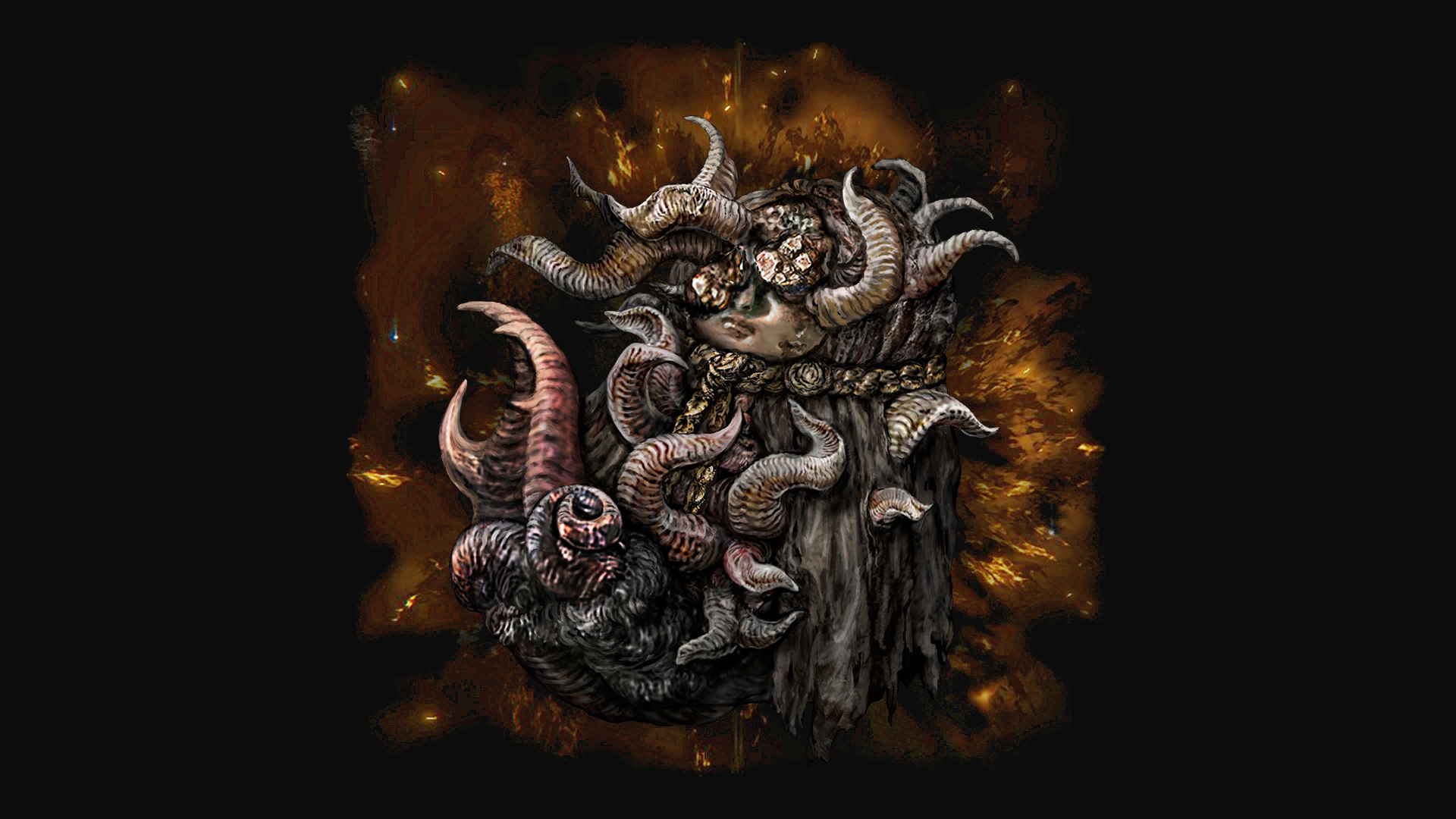
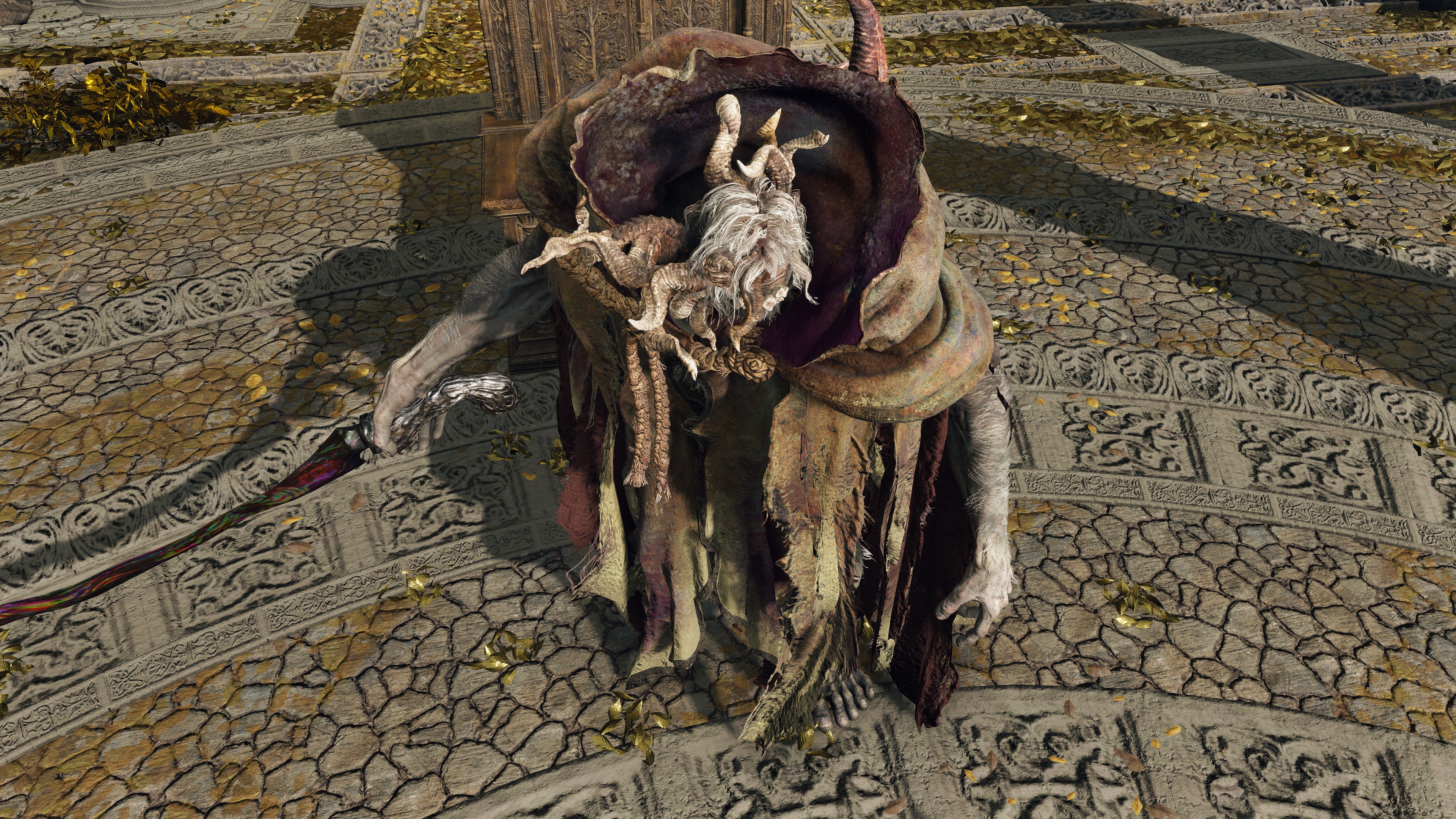
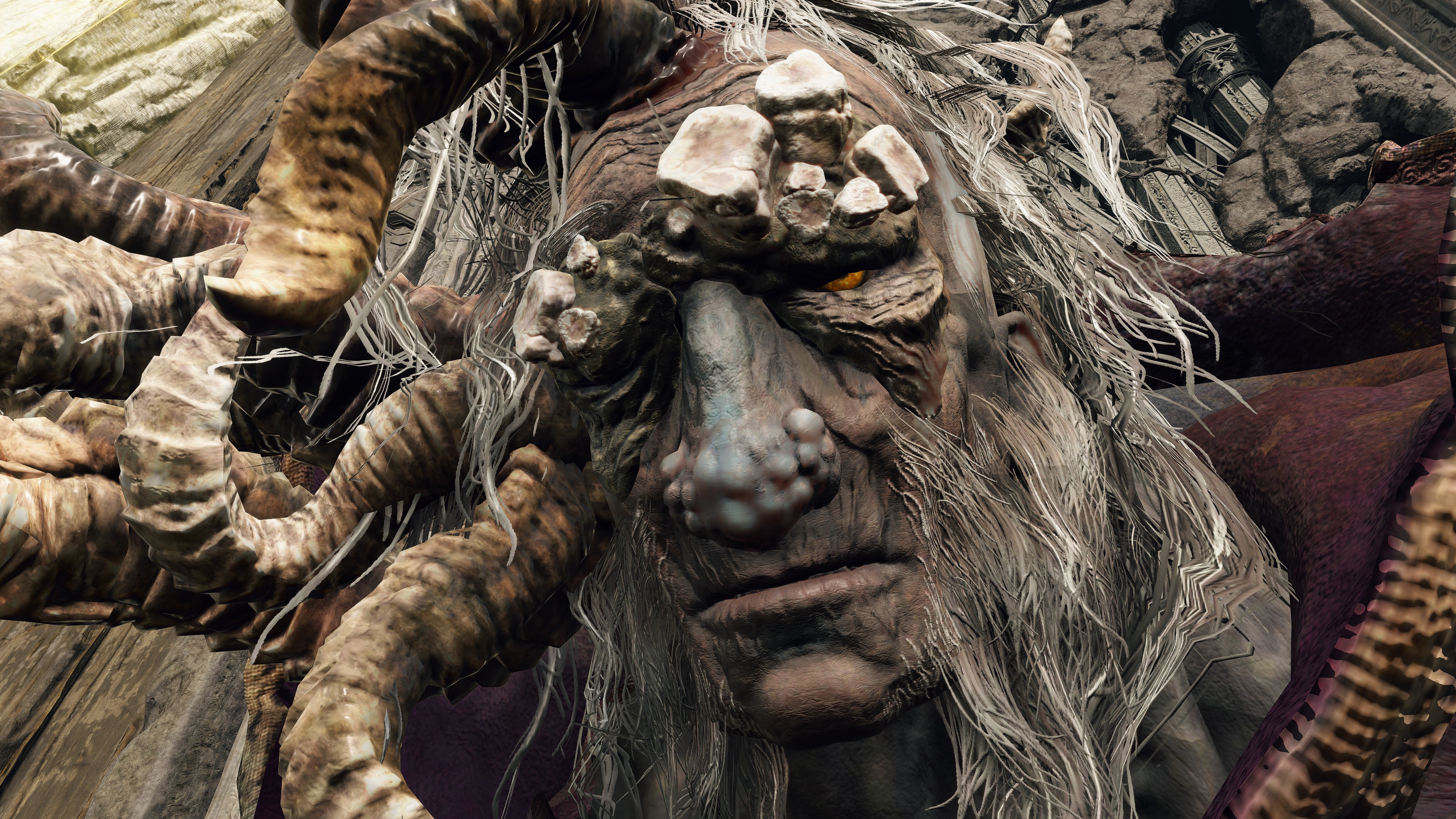
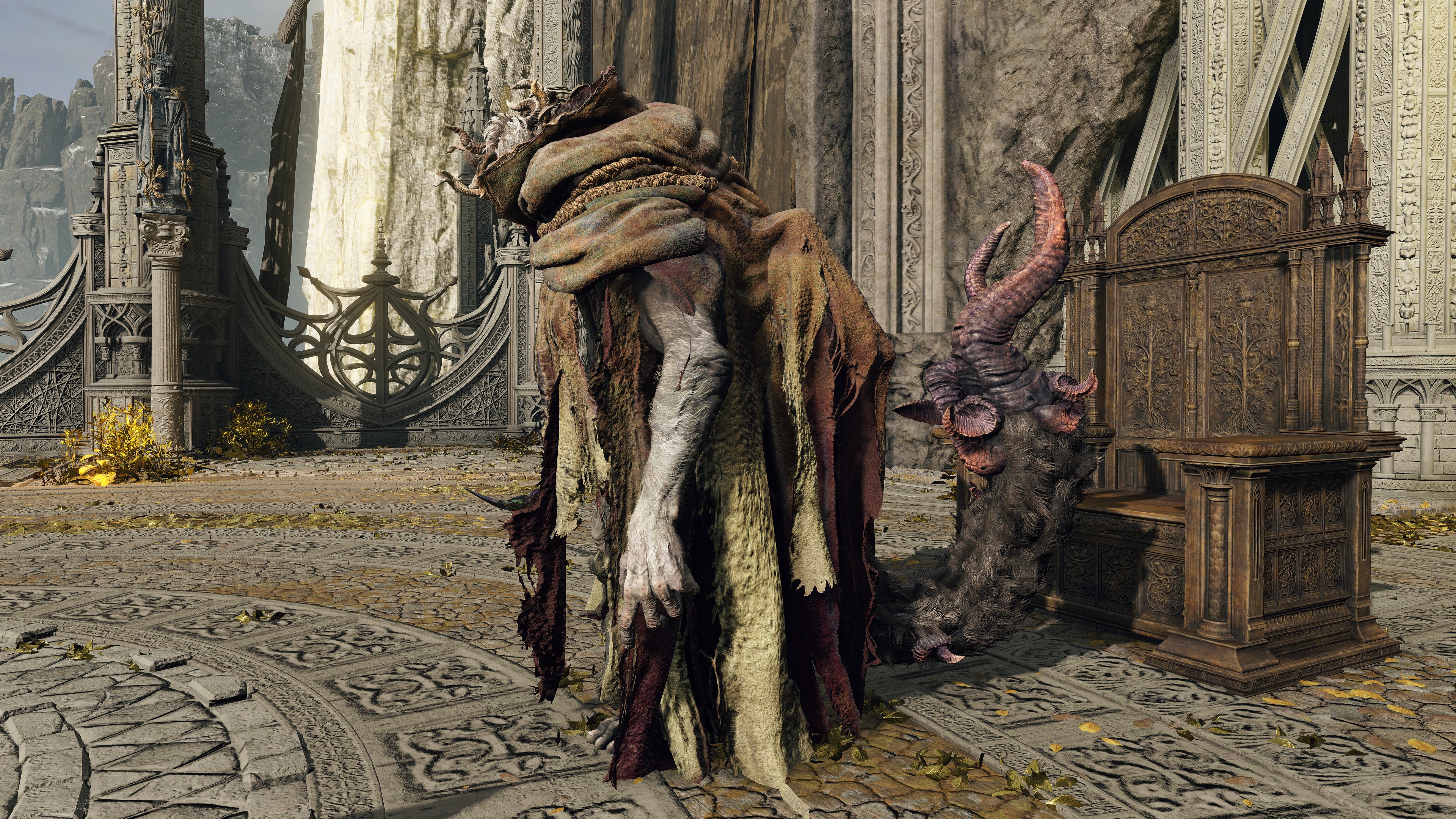
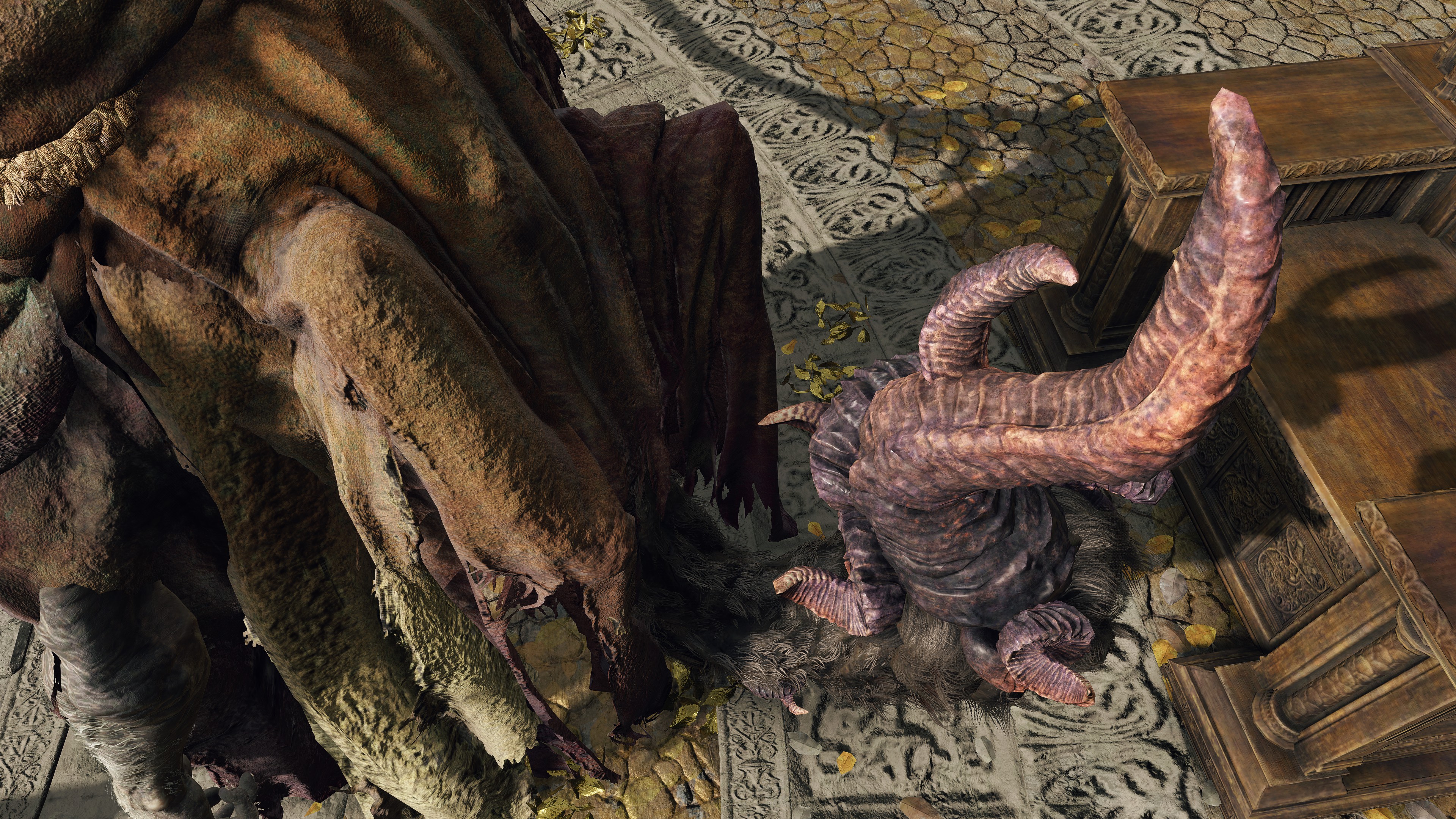
Statue of a baby who was born cursed in the royal family of the Golden Tree.
Consumes FP to fire many pursuing cursed spirits.
The royal family’s omen babies don’t have their horns cut off. In its place, they are cast out underground without anyone’s knowledge and confined for eternity.
And then, a memorial statue is quietly made.
It is easy to surmise the motive. In all likelihood, Marika tried to appease the masses by ordering more tertiary members of the royalty to give up their Omen initially. As a consolation, the cursed were permitted to live in obscurity beneath everyone’s feet, the queen only publicly declaring the corruption killed. It was perhaps her way of showing family sympathy, but this position was untenable. Now, even more felt an injustice at the difference in treatment, sure to join the non-royals in demanding more appeasement. This created an ever-growing new faction of opposition within Marika’s own family, armed with information to drag them all down. What space did she have to maneuver at that point? Was she going to call upon Maliketh to cull her whole family? The threat of Destined Death was not to be brandished all willy-nilly. The political casualties built up until they reached the top. Sooner or later, Marika herself had to comply. Morgott and Mohg were likely the final ones banished. It may have been done with great reluctance, but ultimately, the love of privilege and authority surpassed the love of a child.
Eventually, the curse did end for the kingdom’s newborns. Marika gave birth to ordinary demigods after marrying her second husband, and there are no signs of new Omen born in more recent times. In the end, the Hornsents’ malediction was limited by their own spirits. Even if there were enough slaughtered in the crusade to possess every fetus for the following few years, the accursed trough would one day run dry. Once the last bit of wrath corrupted a child of the Erdtree, the people could rejoice. Granted, this shameful affair has likely become taboo to mention, much like the crusade. Stormveil’s Omen keep it from being completely lost to history, but the only ones who know the full truth are the priesthood. Learning about the royals was unavoidable to those most loyal to their god queen, being in charge of final rites in the sewers. It is also inconceivable that Tricia’s laboratory is randomly situated so near the Omen on the fringe. The perfumers assuredly extended a Soothing Hand to build relations with the savages for their research into corruption. Such secrets were holy men’s common knowledge.
As for the cursed regal scions, life in the sewers was harsh, but manageable. With plenty of criminals already down there, it was a competitive environment for feeding on the capital’s carrion and refuse, but not everyone was so seedy as to take advantage of children. One Omen among a pile of human cadavers carries on him the basic Omen Bairn, presumably collected from a sewer resident who previously lost a child to the curse. Perhaps the two bonded as surrogates for the other’s parent or child before the miserable conditions forever tore them apart. Regardless, it reveals that the “natives” could be friendly, especially when the young Omen had wrathful spirits to stave off the more unscrupulous sort. Still, survival was a winner’s game. To not join the countless dead bodies clogging up the sewer lines, the royals adjusted to their new life of meager offerings, Morgott donning a fur pelt doubtless skinned from some large beast he hunted down there. And because of that determination to survive, no shortage of those little royals have subsisted to the present day through all the ordeals.
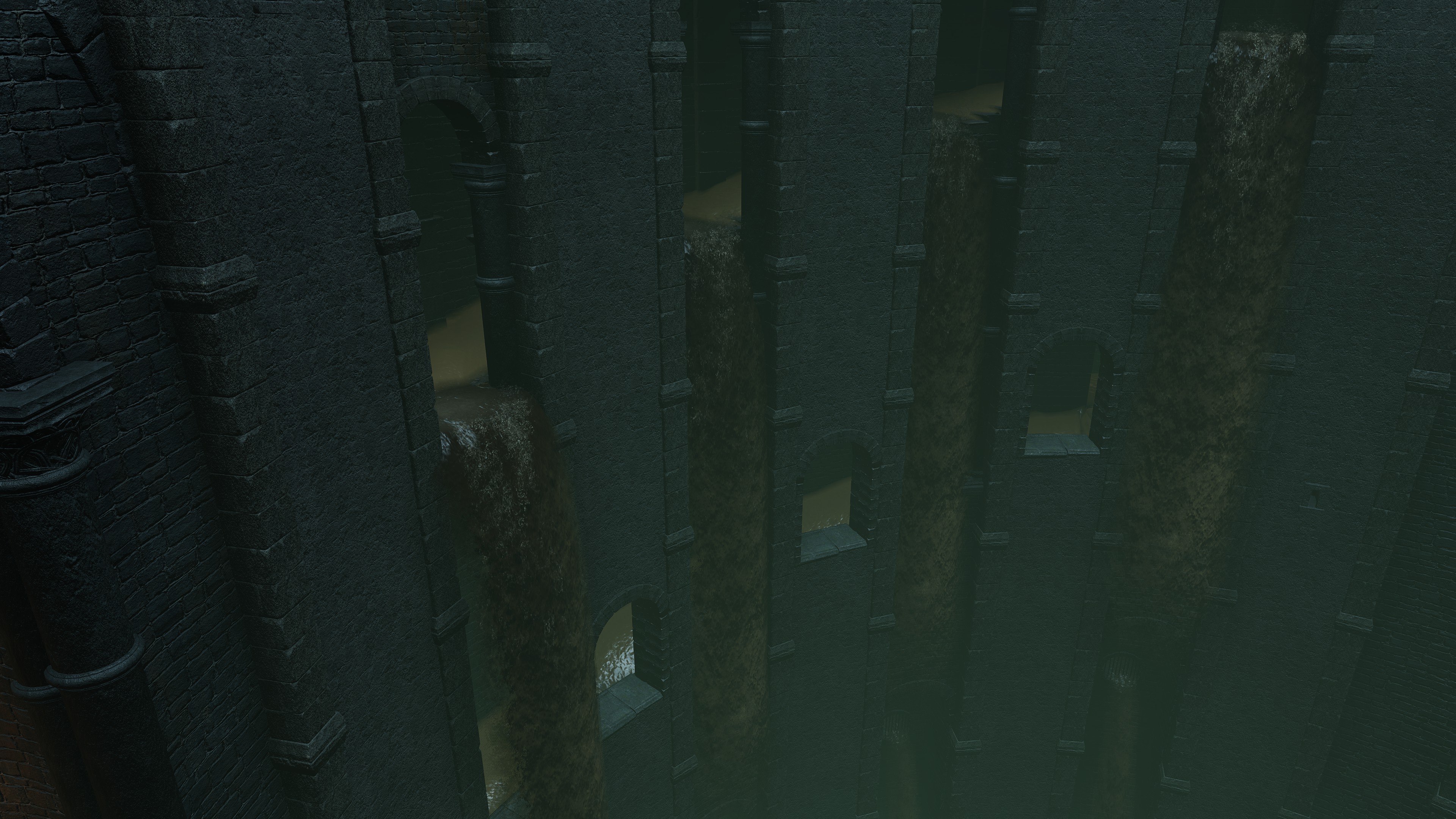
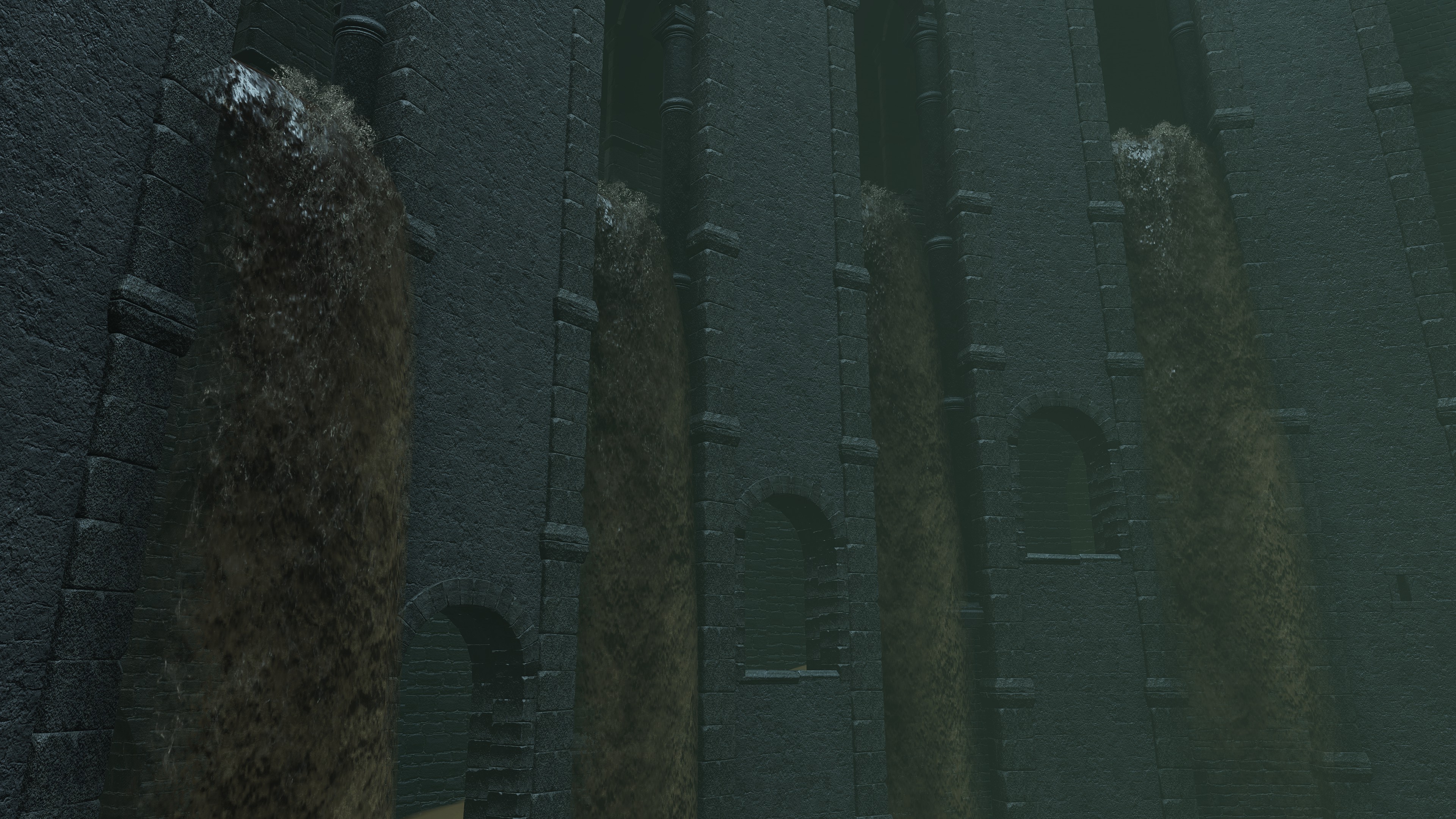
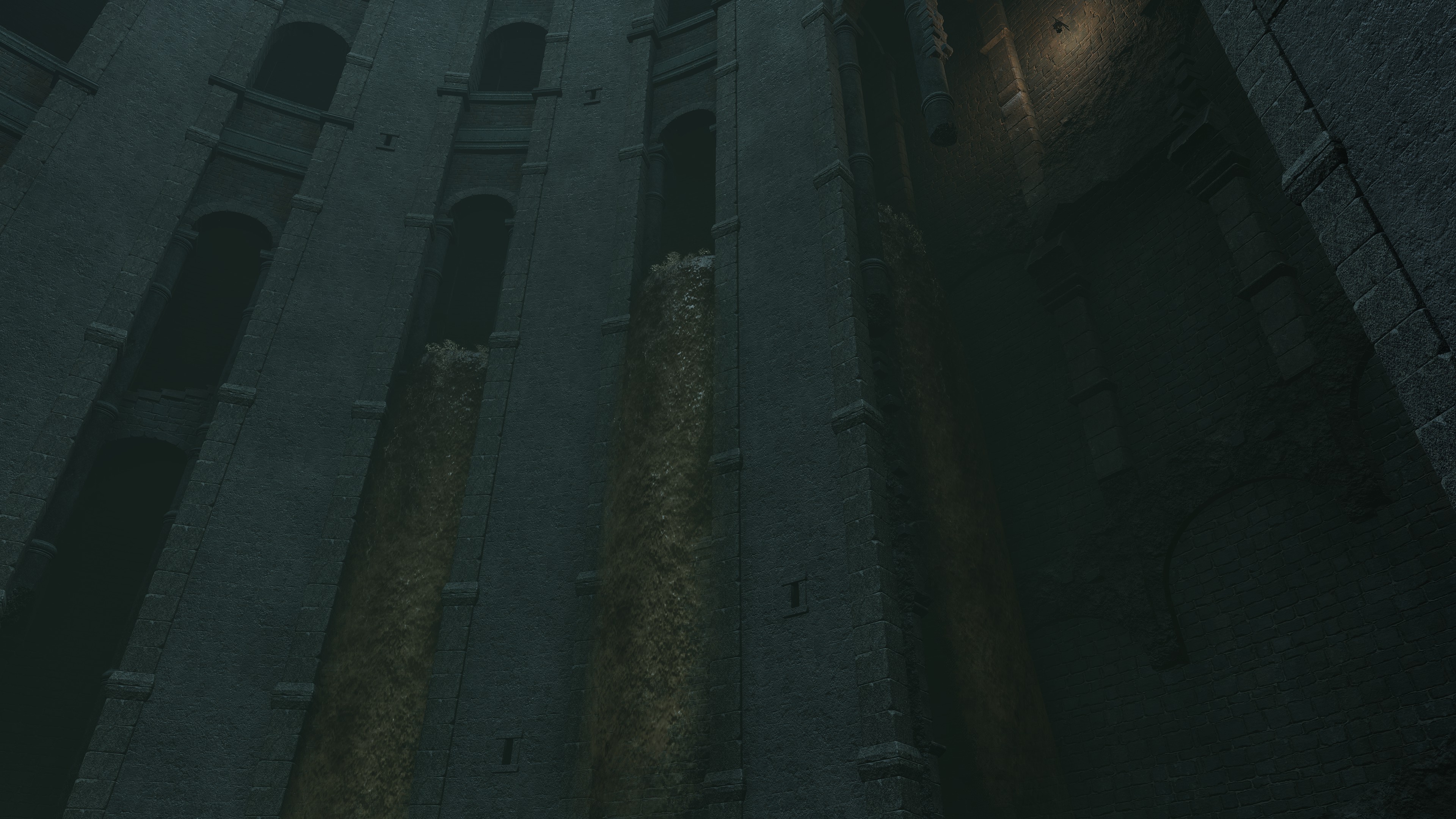
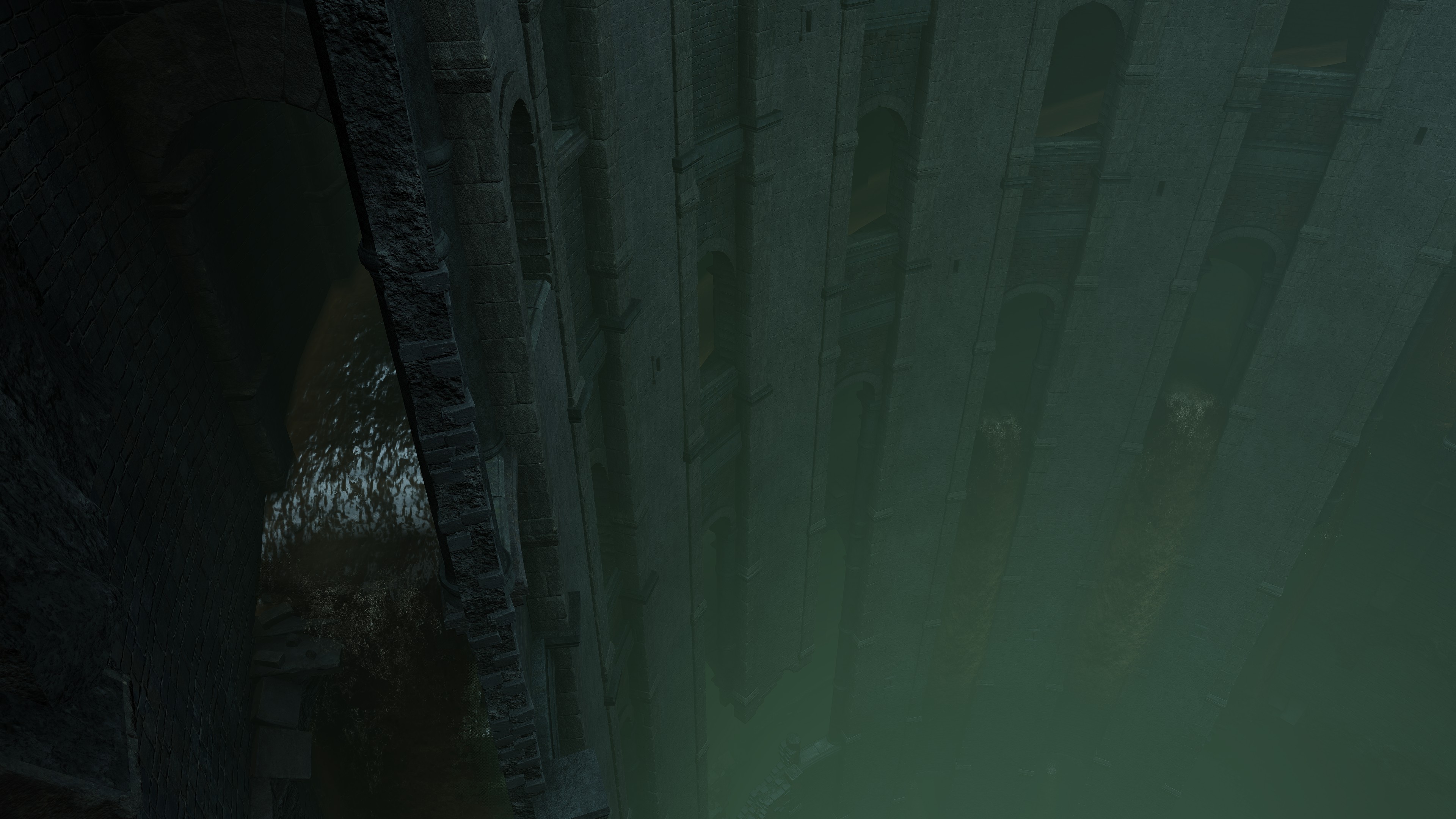
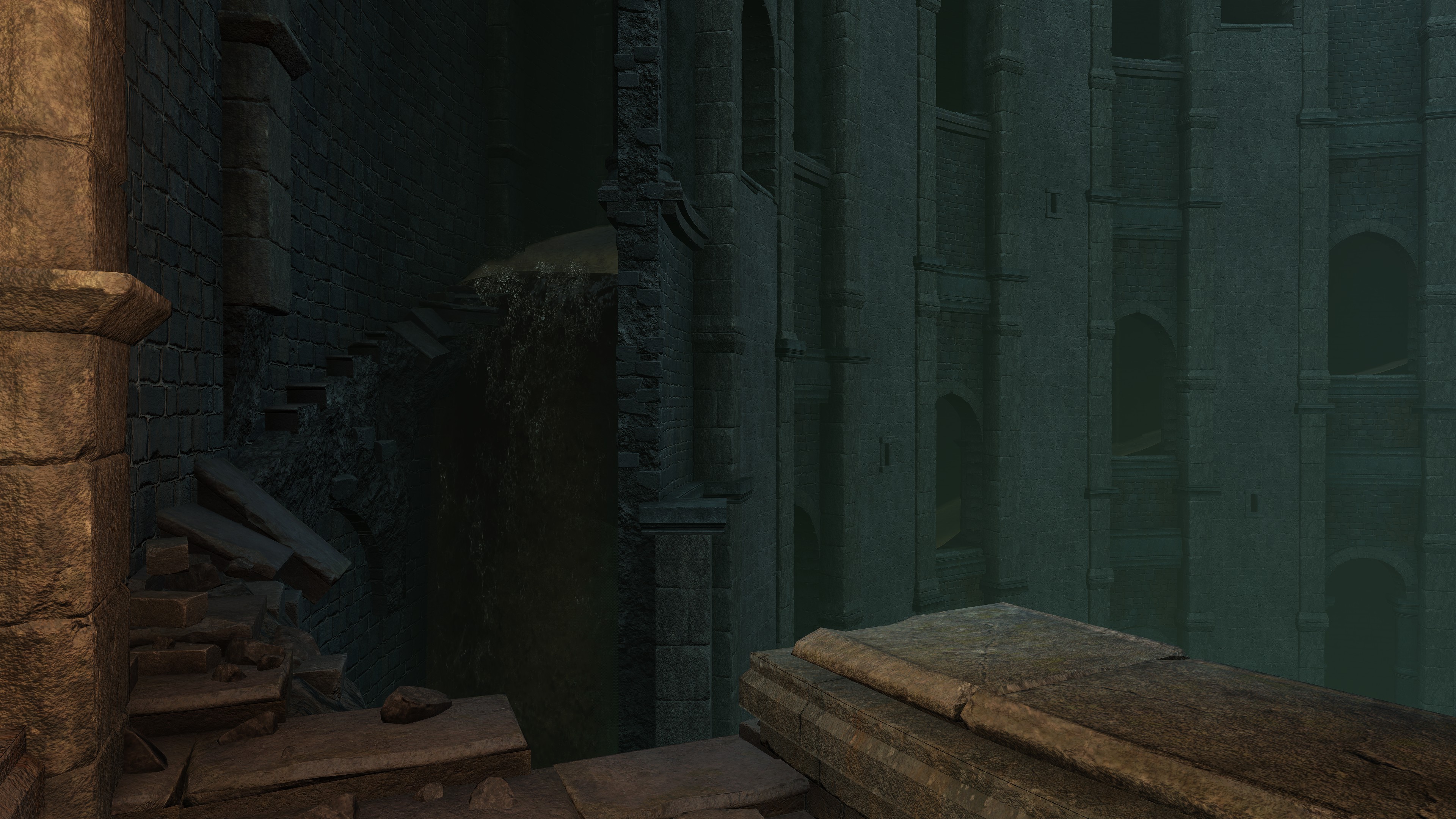
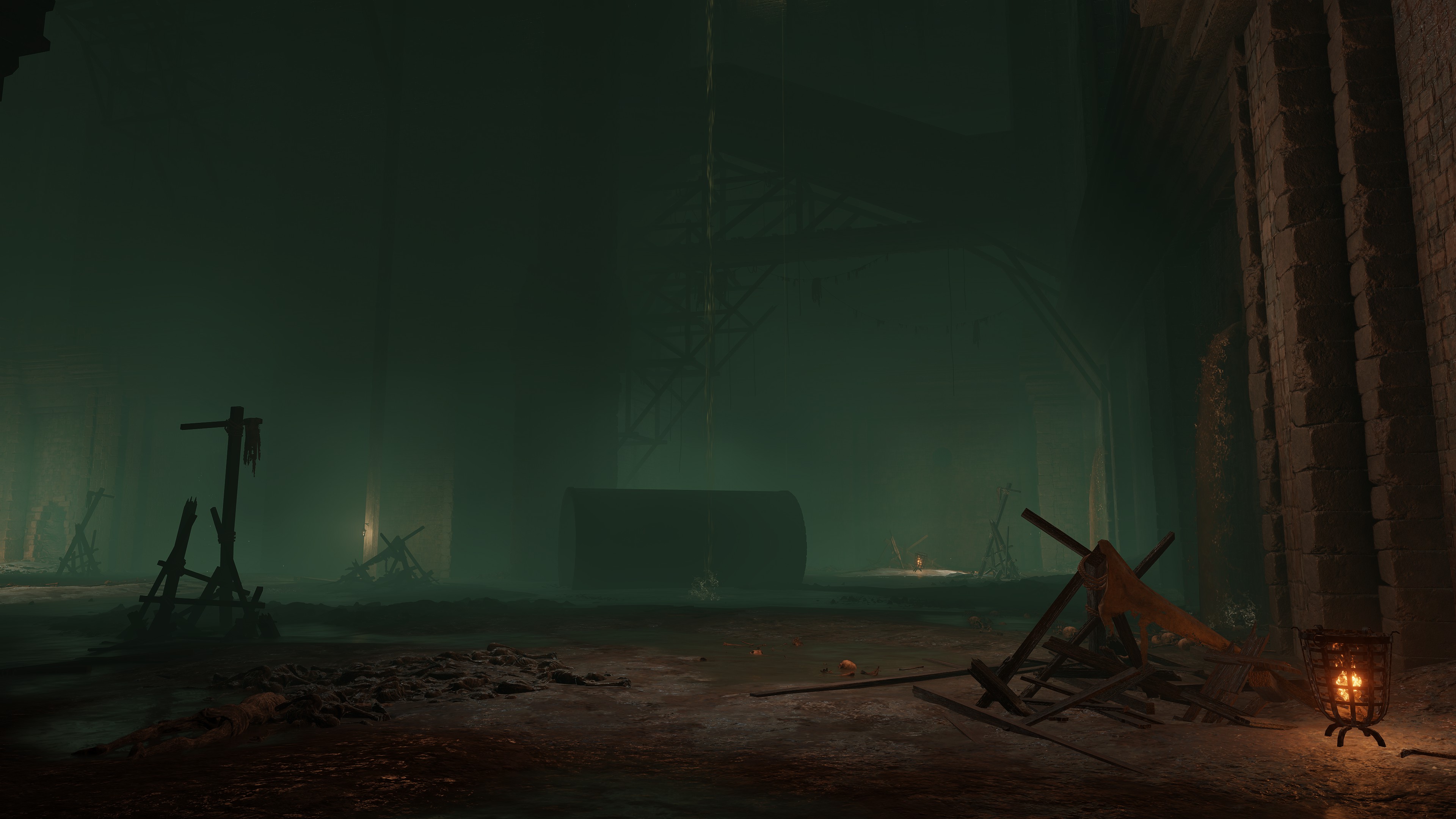
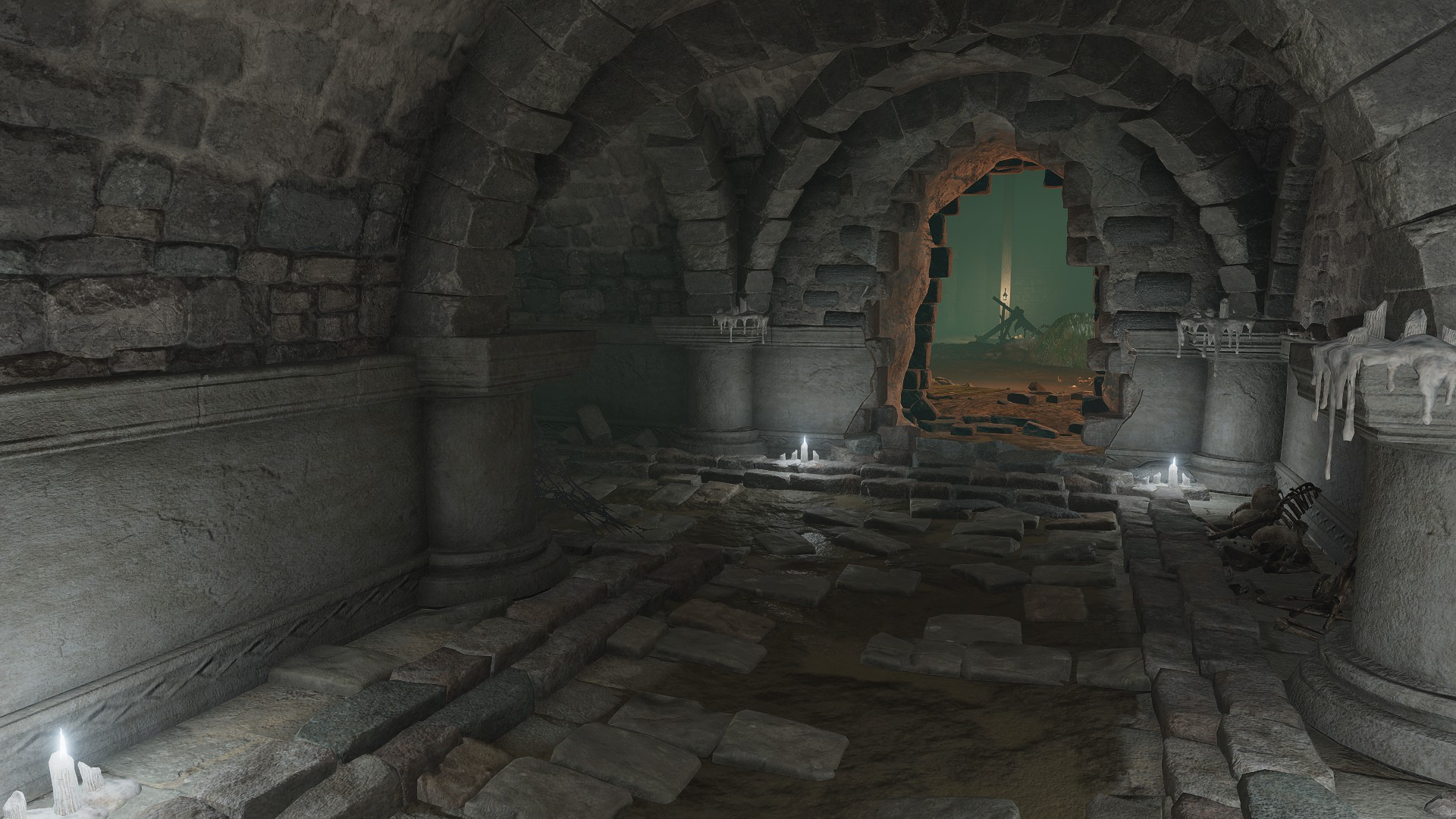
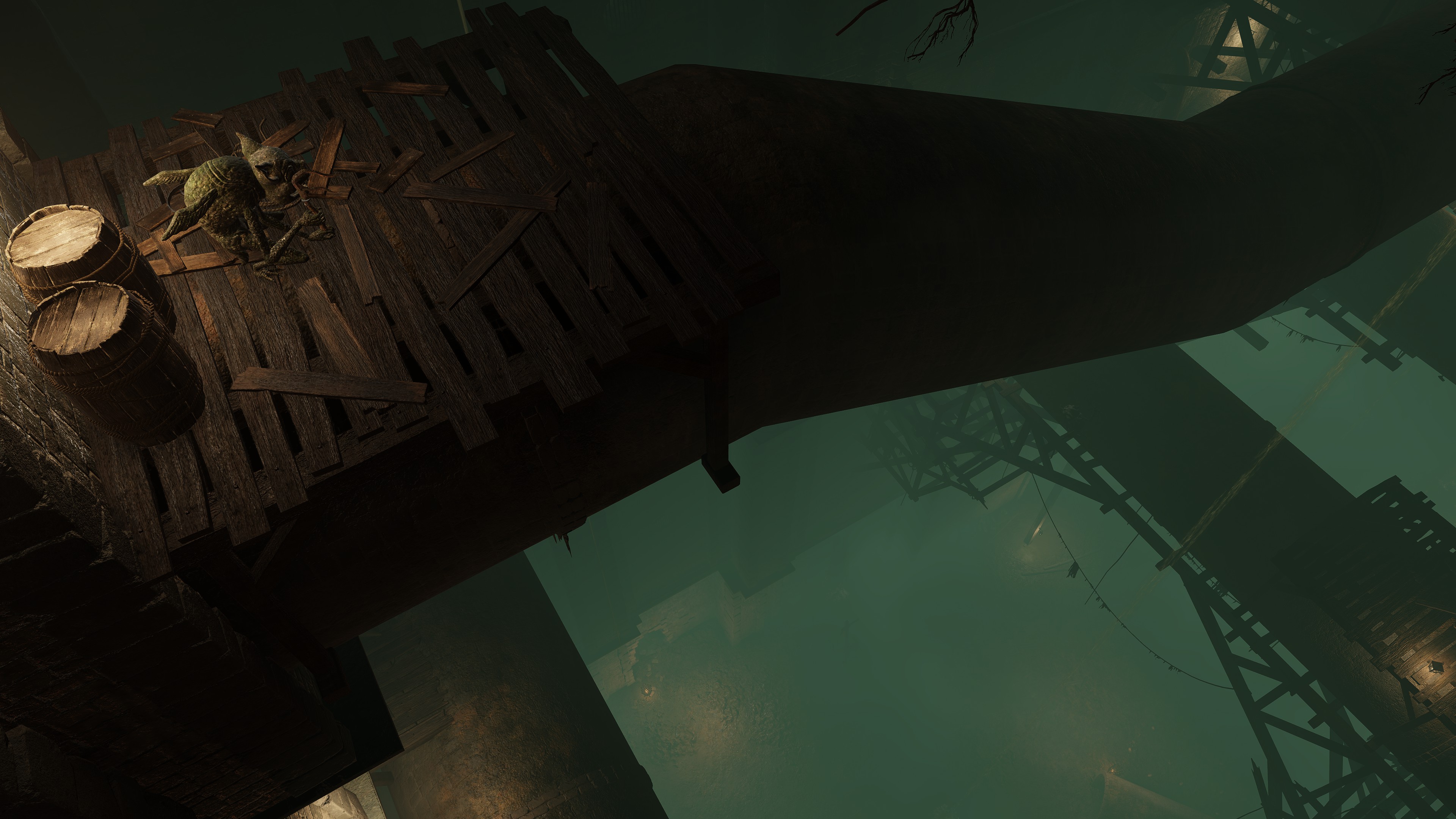
For that reason, the sewer area is named the “Unwanted and Abandoned Underground” (忌み捨ての地下) invoking both Omen and trash thrown away beneath everyone’s feet. The “Forsaken” Depths and Cathedral use the same terminology, (忌み捨ての大聖堂) giving the sense that all the trash languishing in the filth is gathering there. The cursed ones are just another facet of the culture. The biggest hazard for them now is the aging infrastructure. Parts of the corkscrew staircases lining the main drain have collapsed under residents’ feet, broken waterflows flooding the steps until it spills over to the Forsaken “Bottom” (忌み捨ての底) Thanks to a broken wall in the catacomb, many of the imps have mindlessly extended their guard area to the pipes and basins outside, attacking any “intruders” per their programming. Then there is the actual catacomb, sewage flooding chambers and poisoning the rotten bodies interred. Leyndell certainly needs to provide problem areas like this proper repairs. In the meantime, the Omen can adapt, as they have always done in this world which has given them naught.






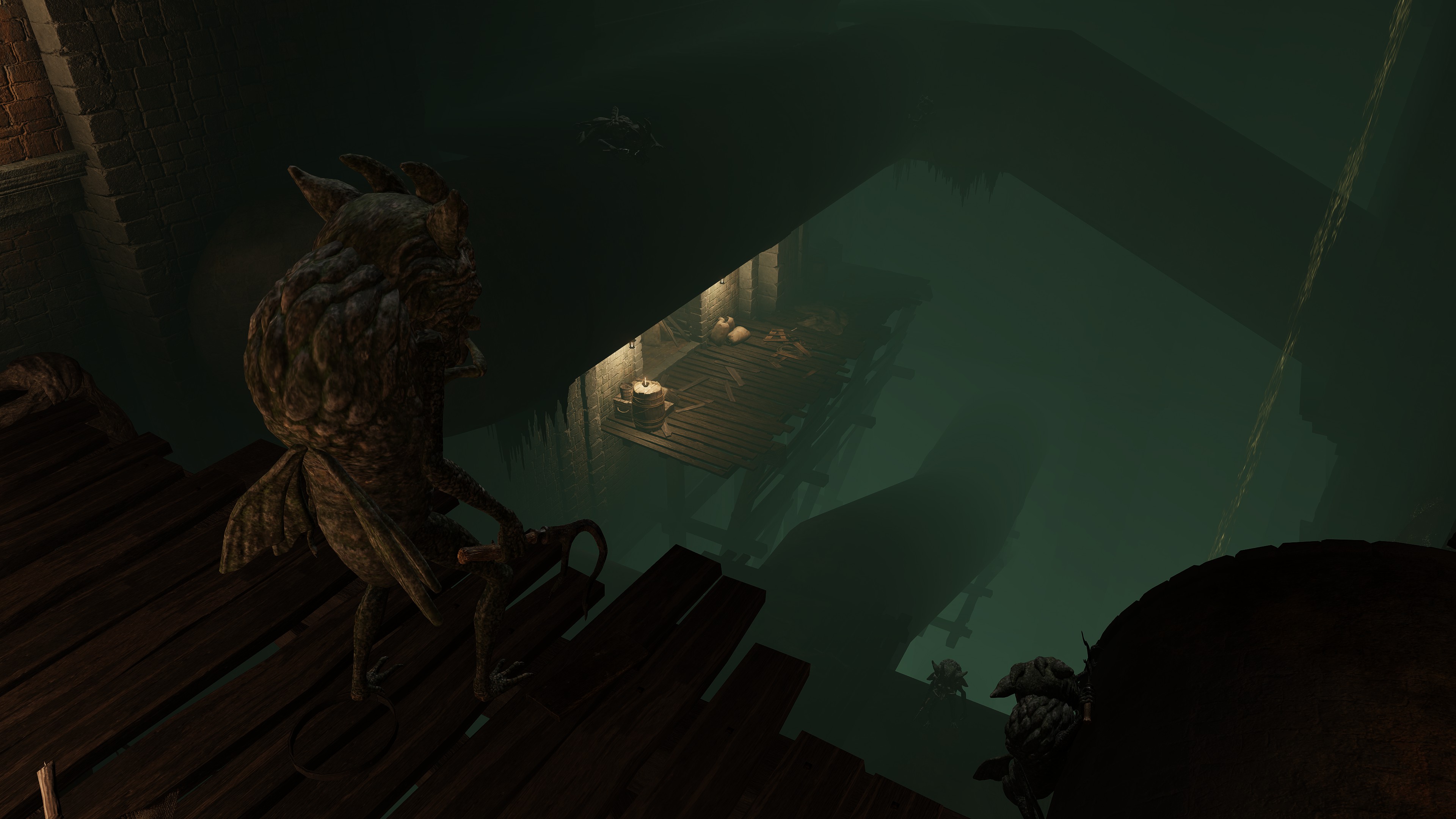
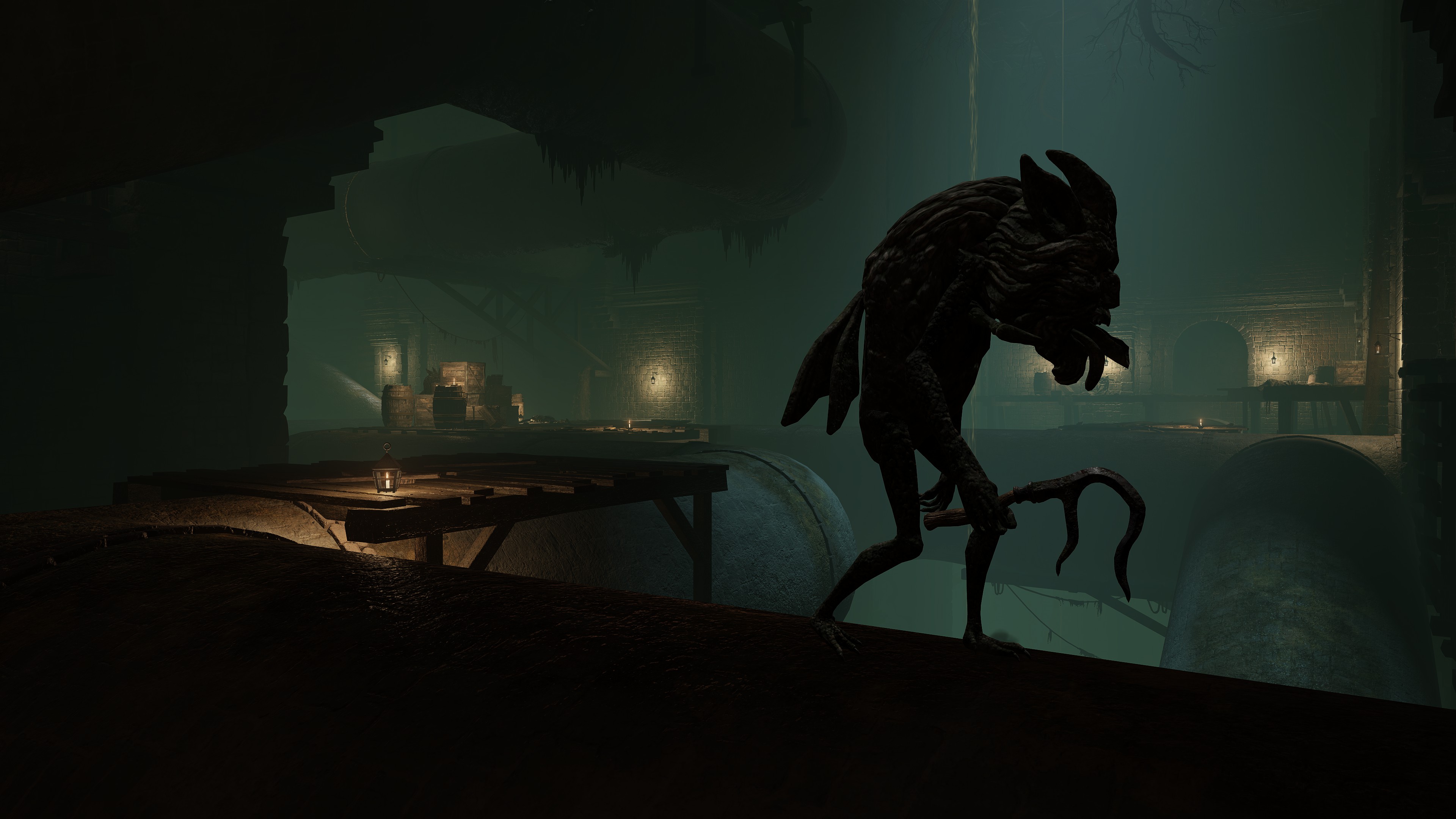
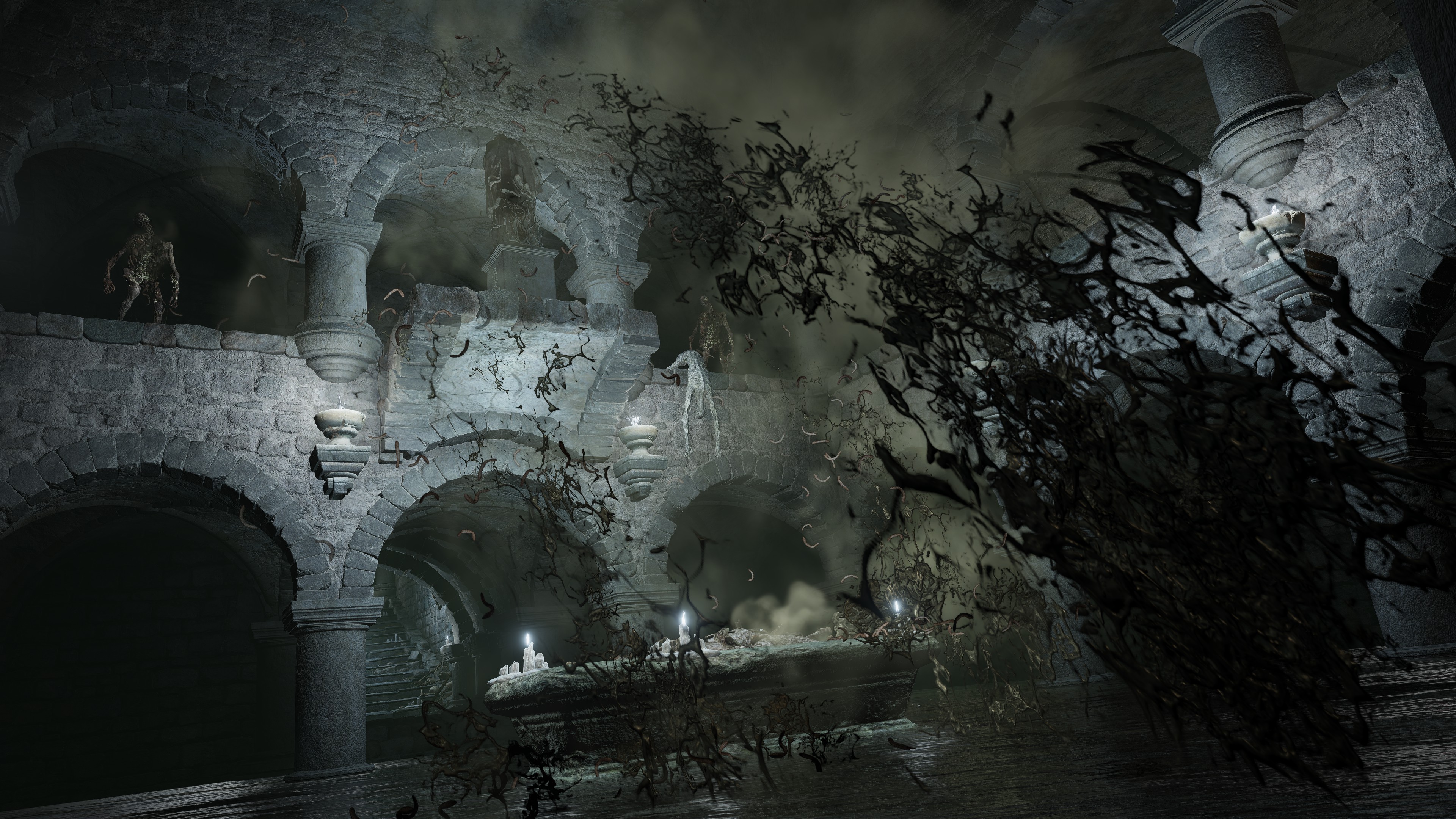
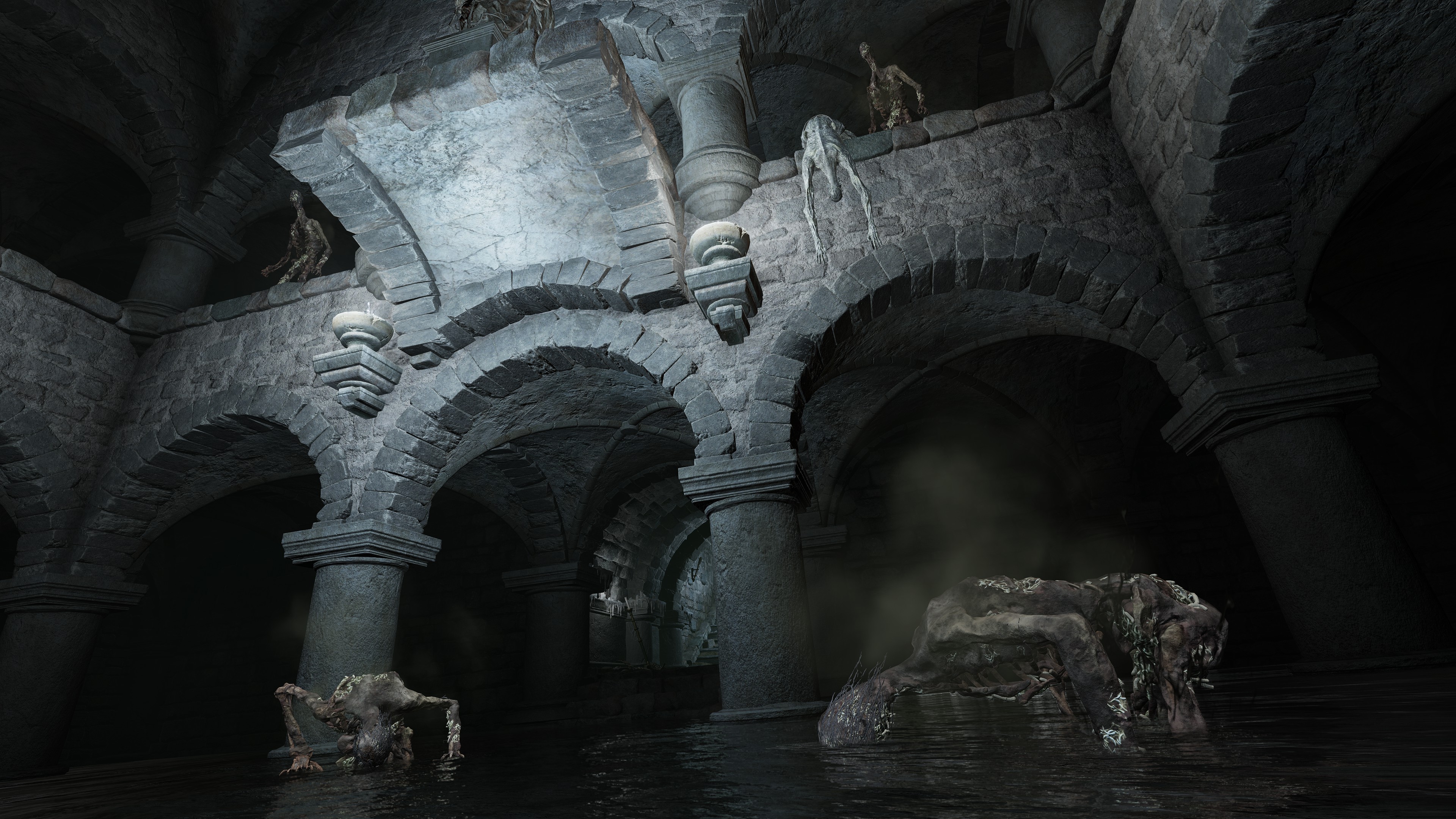
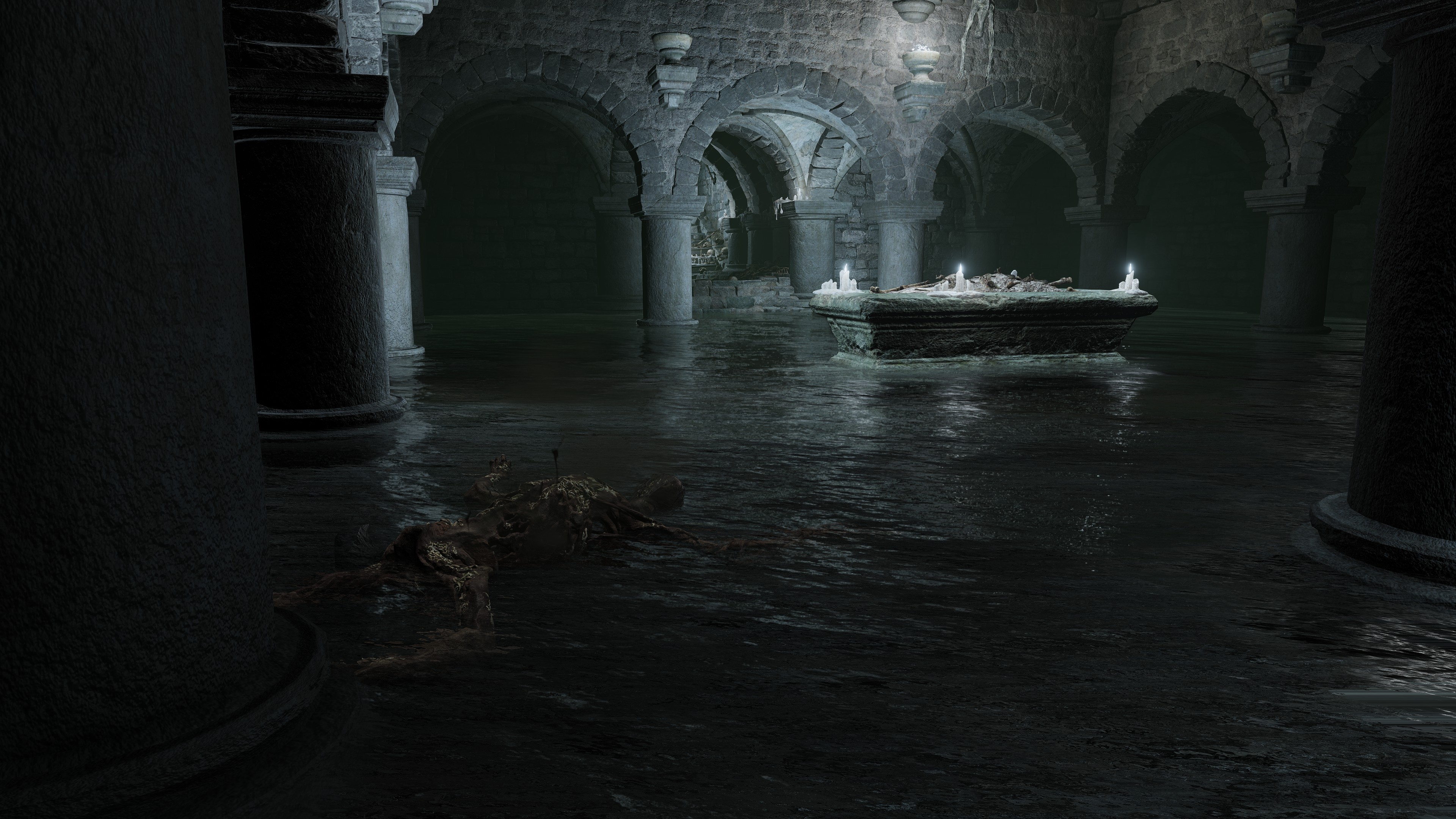
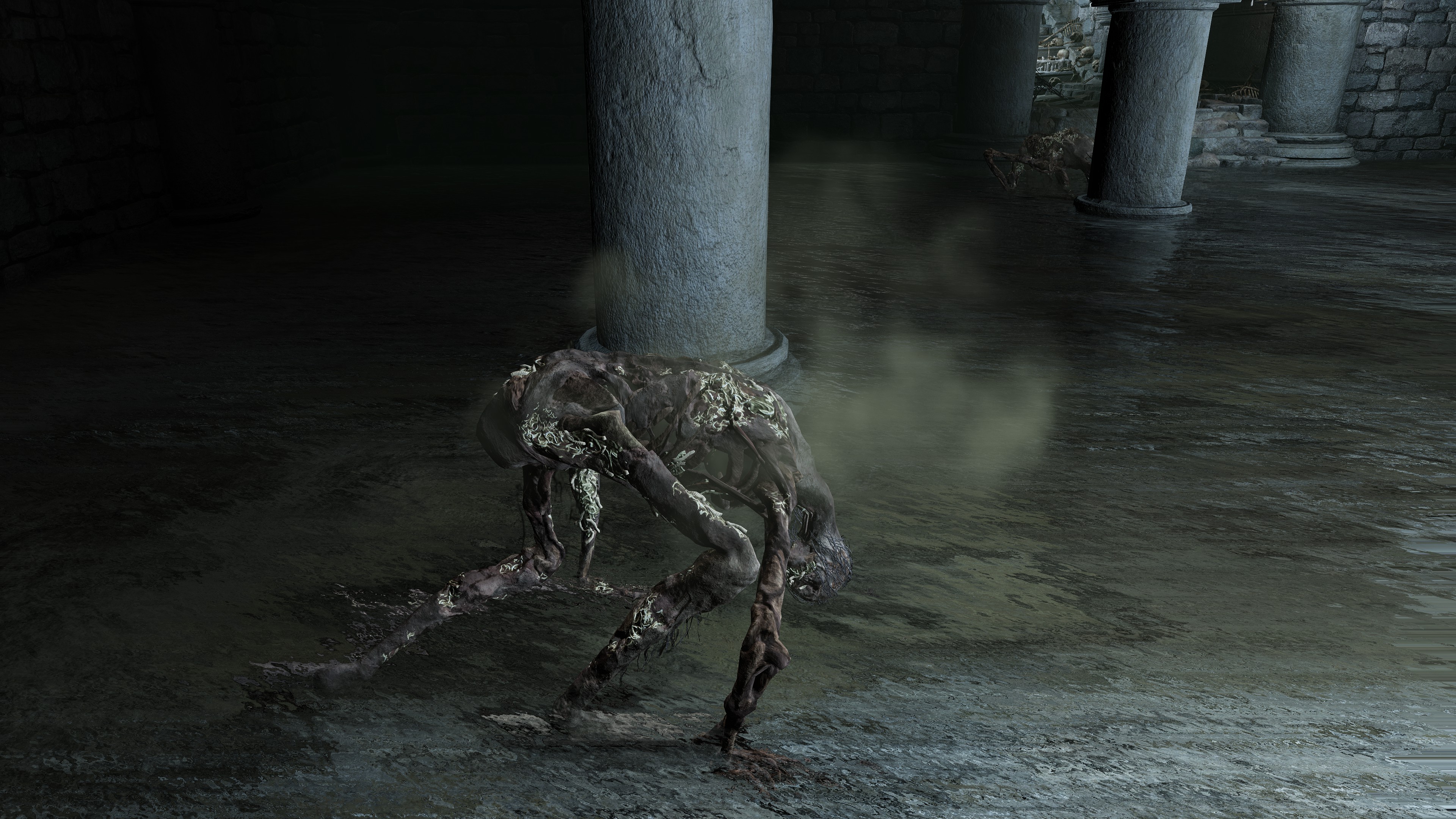
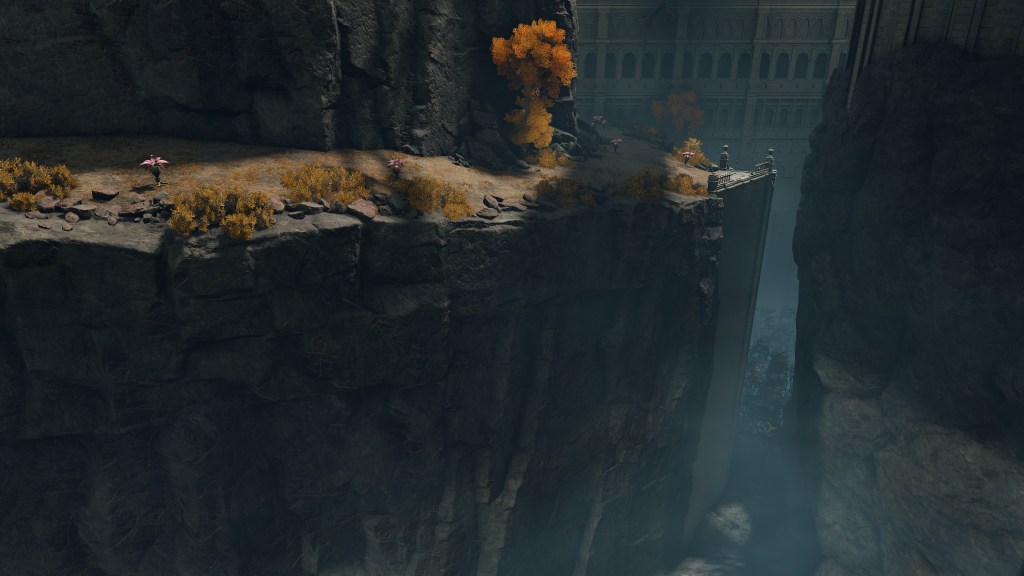
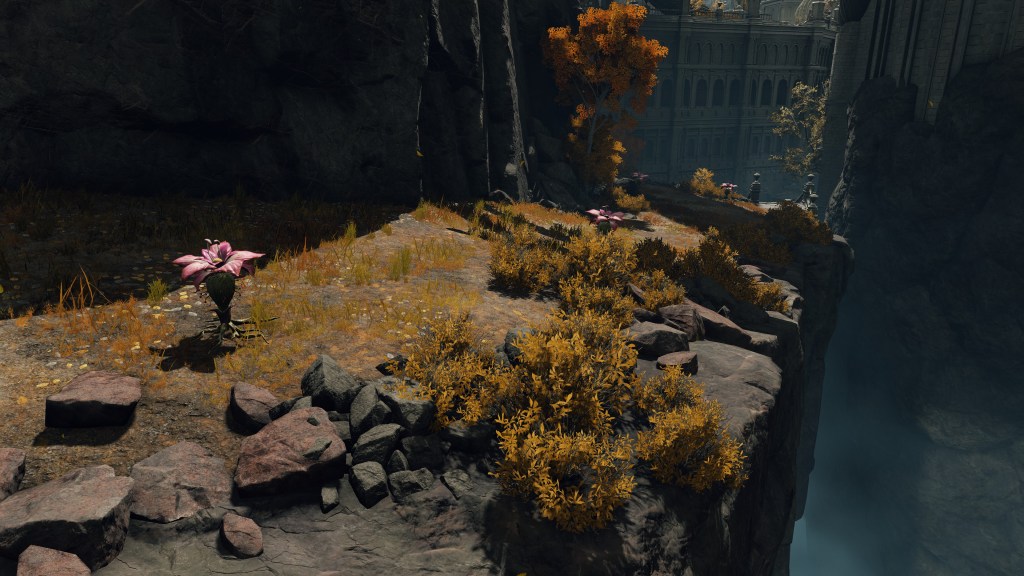
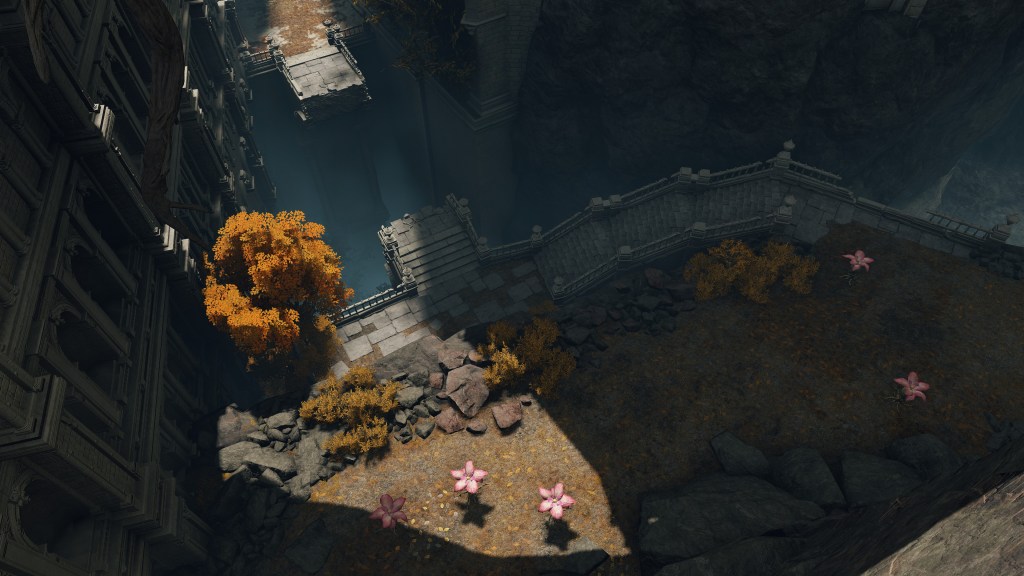
One might wonder why the Omen haven’t tried to escape to the outside world, since they can never return home. We see a few small Miranda flowers atop a ravine at the edge of Leyndell. These stand out since they are pink, not yellow like most growing under the Erdtree’s rays on Altus. This makes them more consistent with the flowers feasting in the sewers, as if the big Mirandas’ offspring just made their way out. Adding to that impression, the pink flowers are replaced by one big yellow flower spawning new buds by the time we defeat Maliketh. The pink ones therefore probably followed a drainage pipe out to the bottom of that ravine, climbing up the side in search for more bodies to eat. While Omen don’t have the roots to dig into the sheer cliff face as they ascend, it is possible that other outlets to the ocean exist. Maybe some already have tried and confirmed those routes fatal, or maybe the lot have grown too accustomed to their lifelong “home”. Either way, they have settled in permanently.


There does seem to be some yearning for acceptance. One Omen exploring the Leyndell Catacombs kneels before the altar offering a Crucible Scale Talisman, clearly resonating with the example of hybrid traits as a holy icon. Although their kind are considered to be without grace, the so-called corruption still possesses gold in their eyes. There is potential in their cursed bodies, which the royal family once recognized. But the time of hybrids is already in the past. The Crucible sigil manifesting with Morgott’s largest incantations pegs his initial training in the midst of reddish gold. But as their shackles showcase, his kind’s later captivity echoed the last gasps of the Crucible. The Omen incident was the final death knell to the Age of Plenty. What lay ahead was a great many unknowns, and Marika was wise to begin educating herself as she embarked on this new path.
 Lokey Lore