
Just Another Path
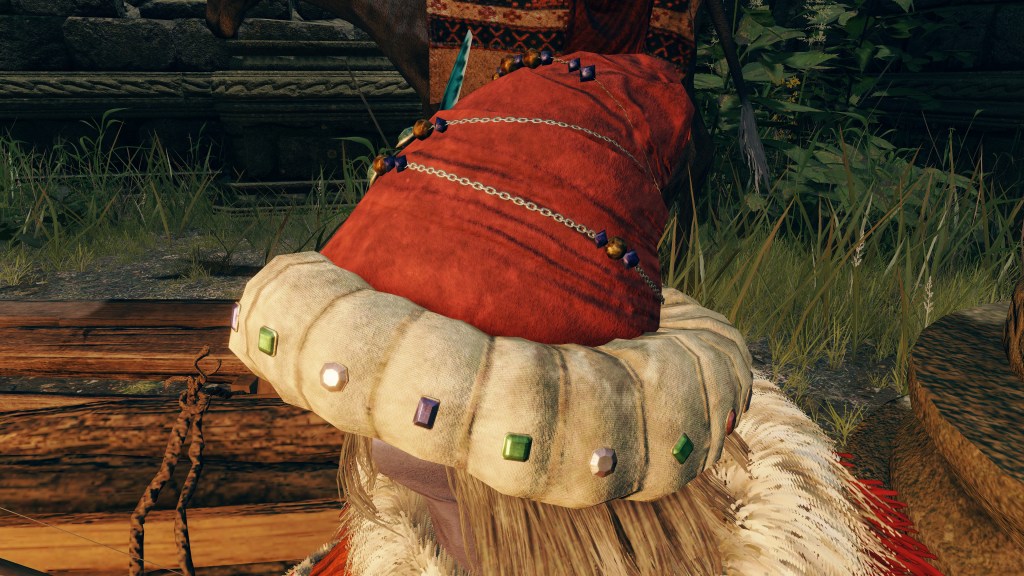
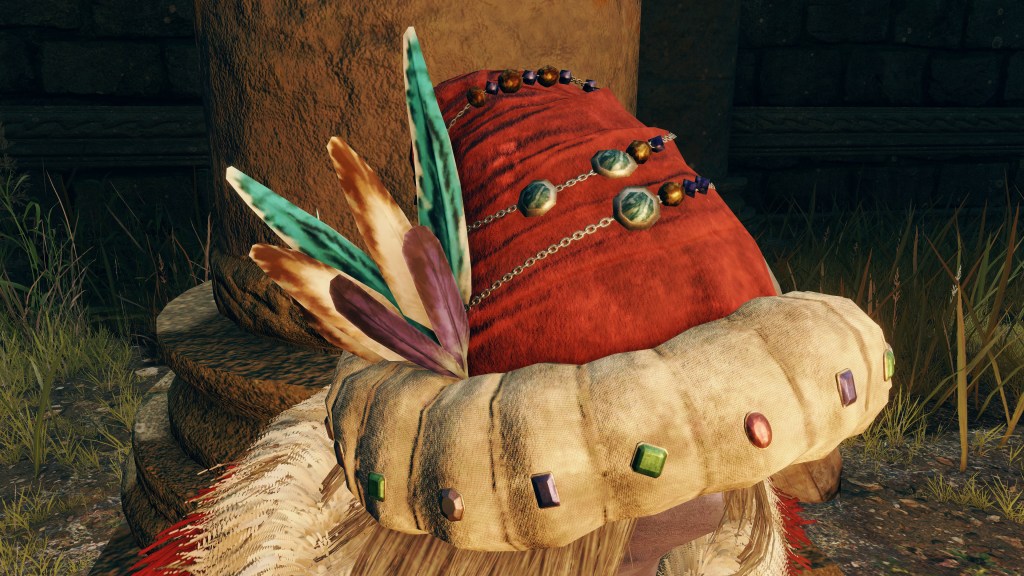
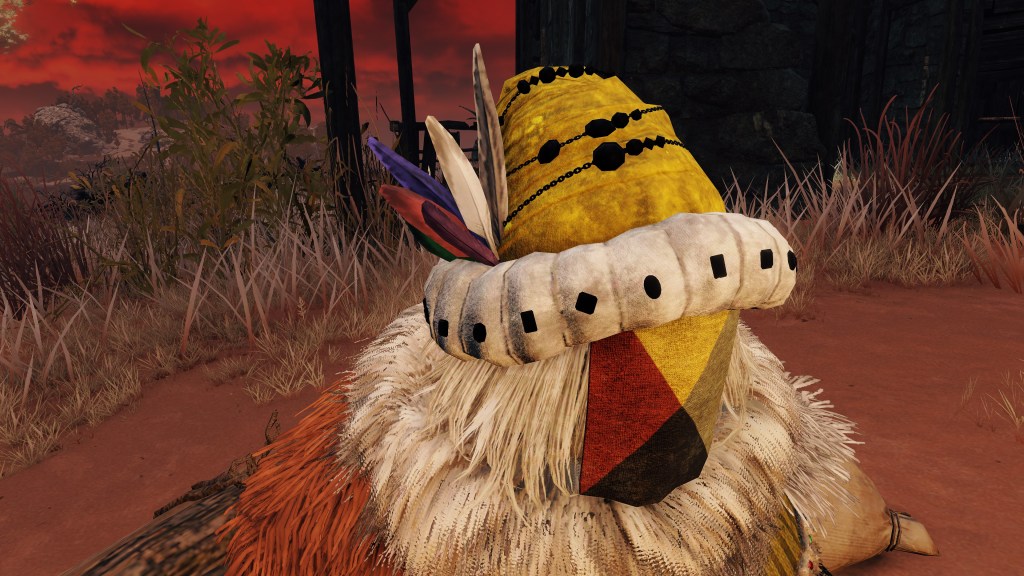
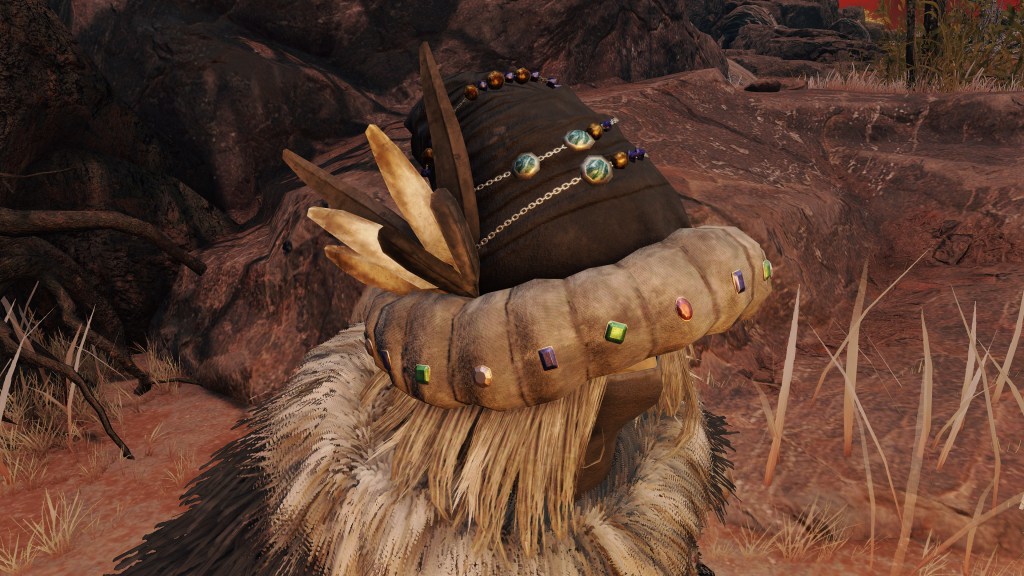
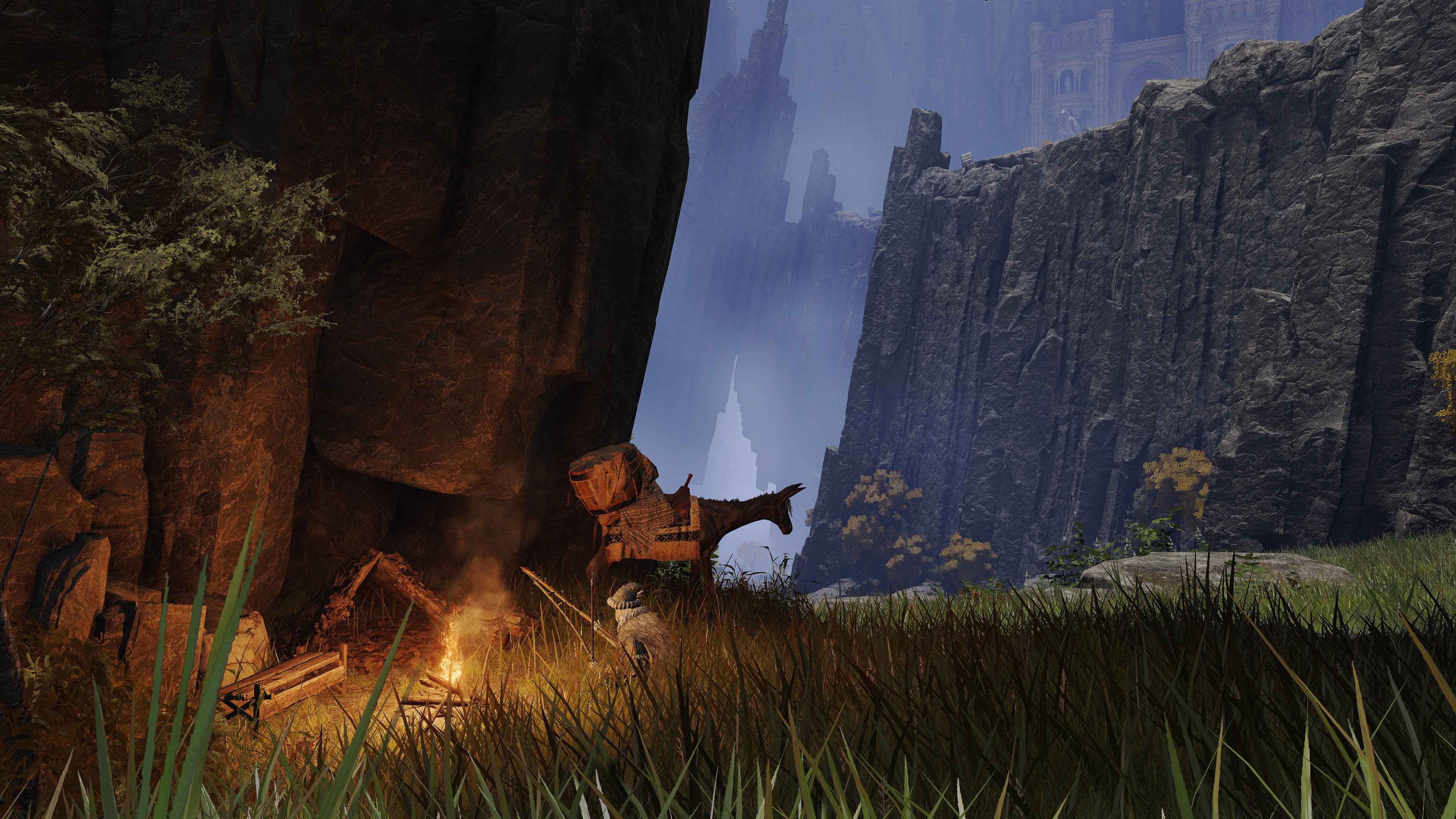
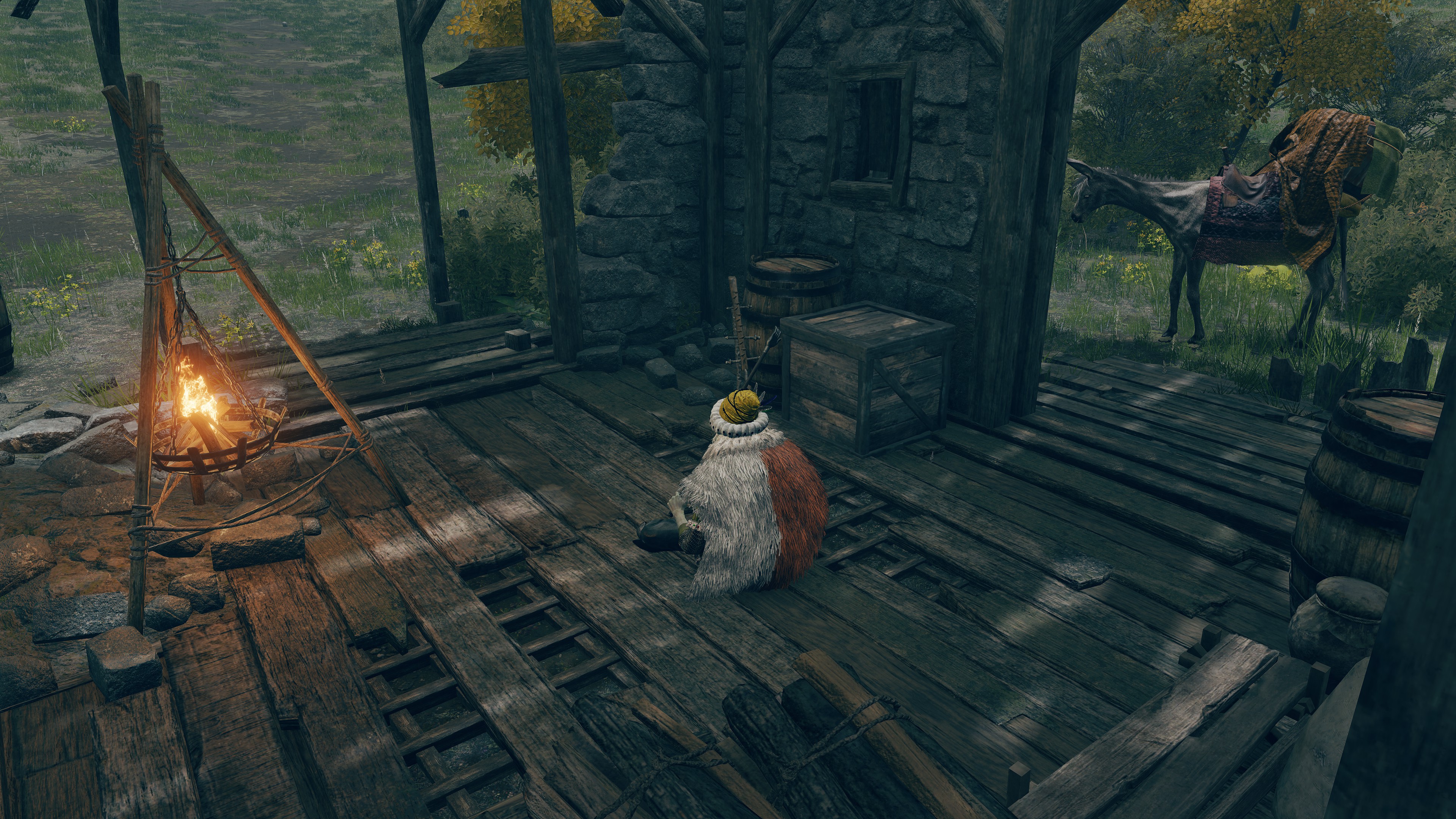
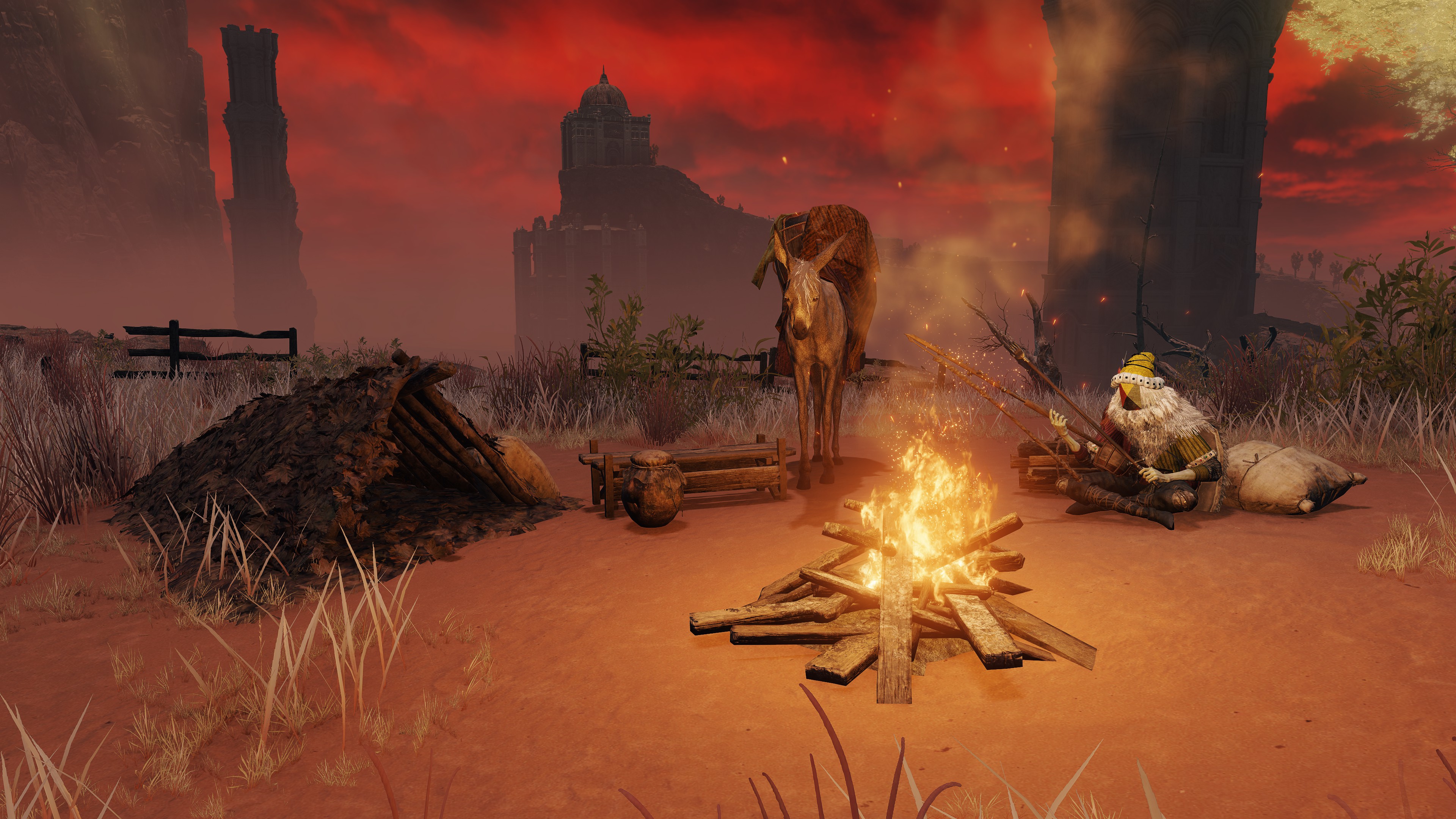
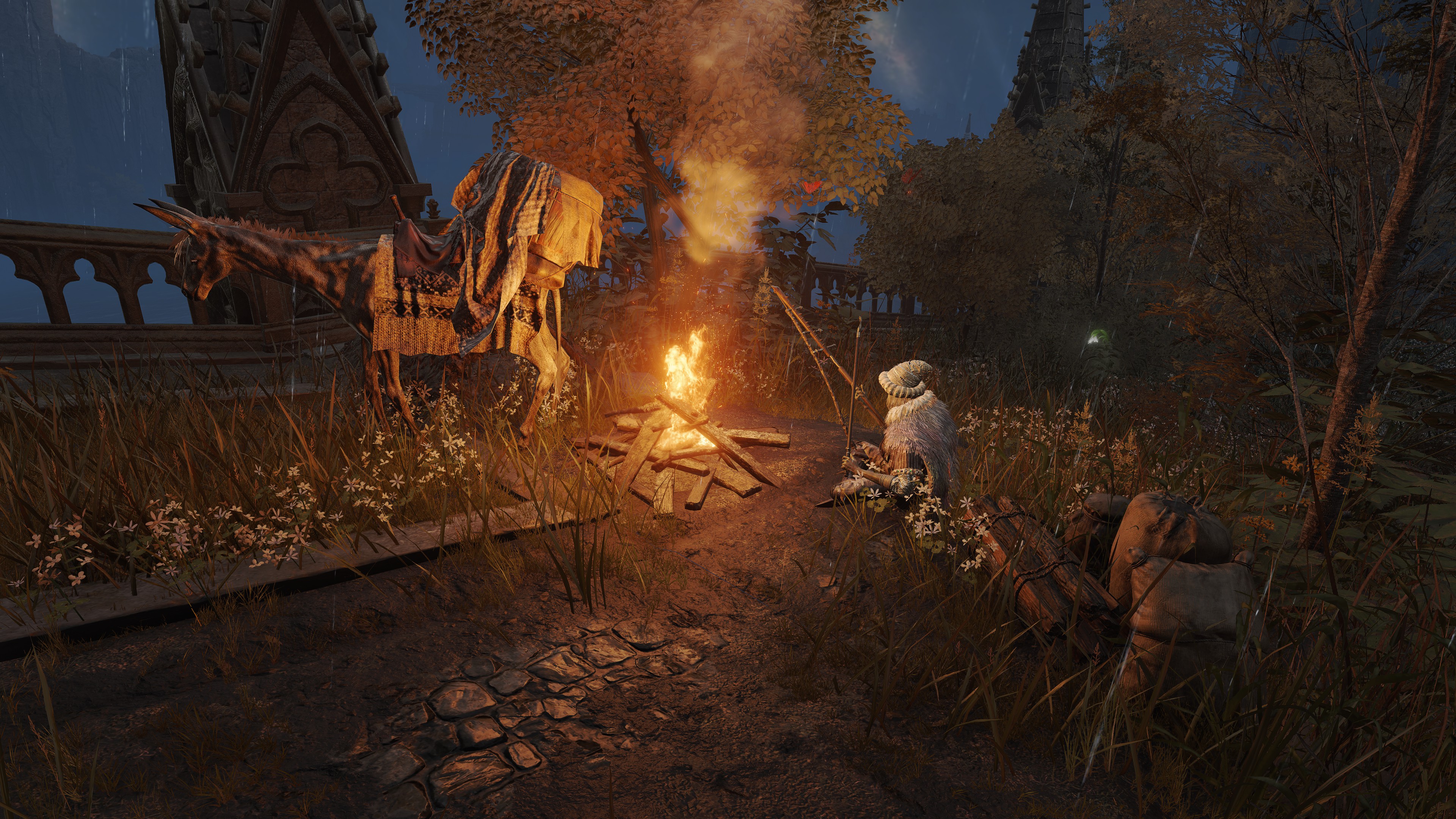
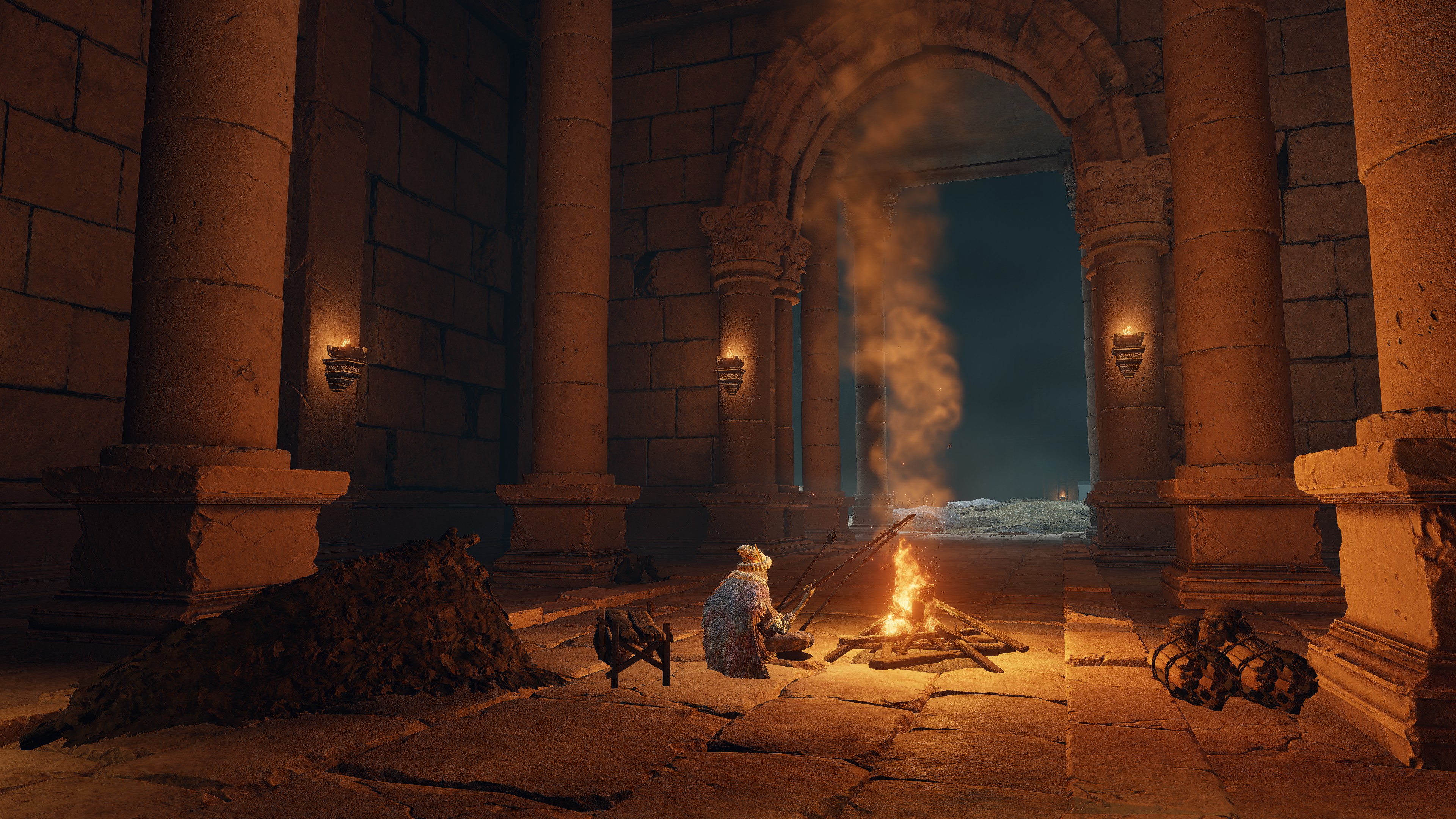
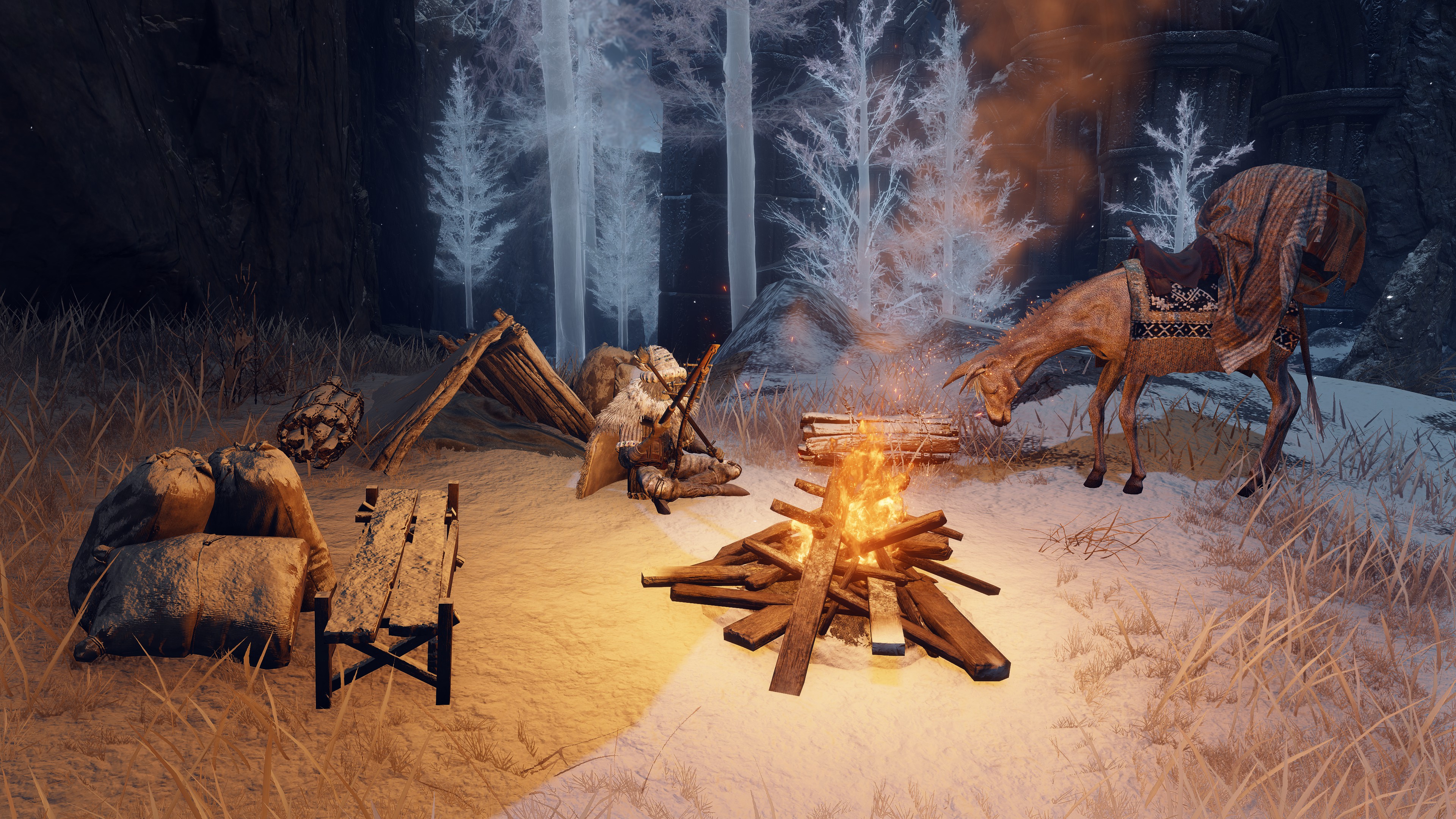
The nomadic merchants were once a great caravan, flourishing as their clan traveled around doing business with others. Taking clear inspiration from cultures of the Eurasian Steppe, they garb themselves in distinctive clothes of varying colors and ride pack mules across the lands. Looking at their different inventories, their wares tend to be items scavenged from their local area or personal notes with succinct information they have collected in their travels. This may cast an air of seediness over their work, as one alludes, but every merchant in the tribe behaves like an honest broker, with no signs of pillaging to acquire their goods. It is all about good business, which is presumably why the merchants have gotten by through every era. The gems adorning their hats show a degree of wealth, but Kalé — whose name references “Welsh Gypsies” — admits that his wandering people live in poverty, always on the move bringing only what they can carry. It is a simple life, and one that they arguably don’t enjoy by choice. Rather, the tribe were forced into it because they weren’t permitted to settle down in any which place.
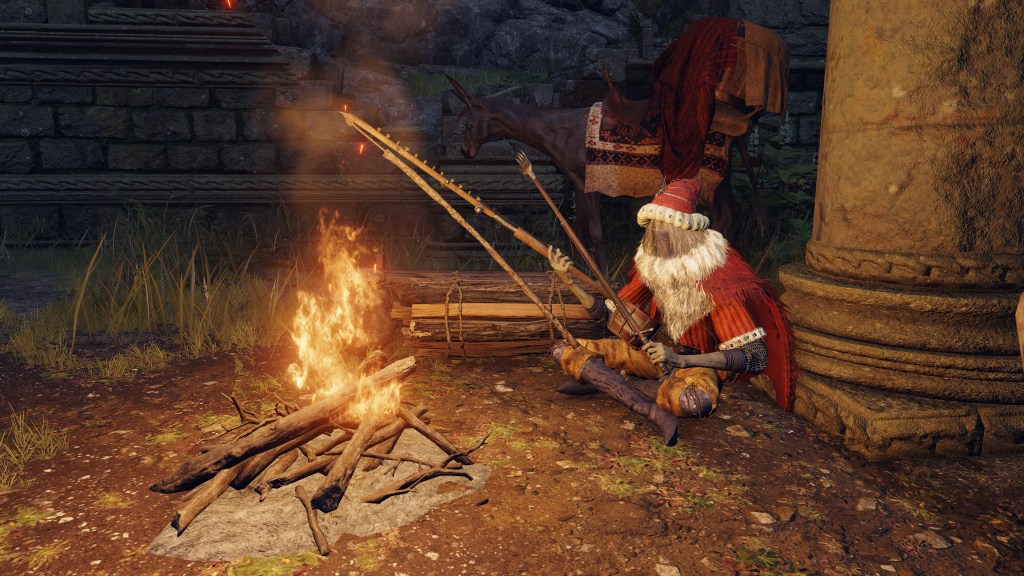
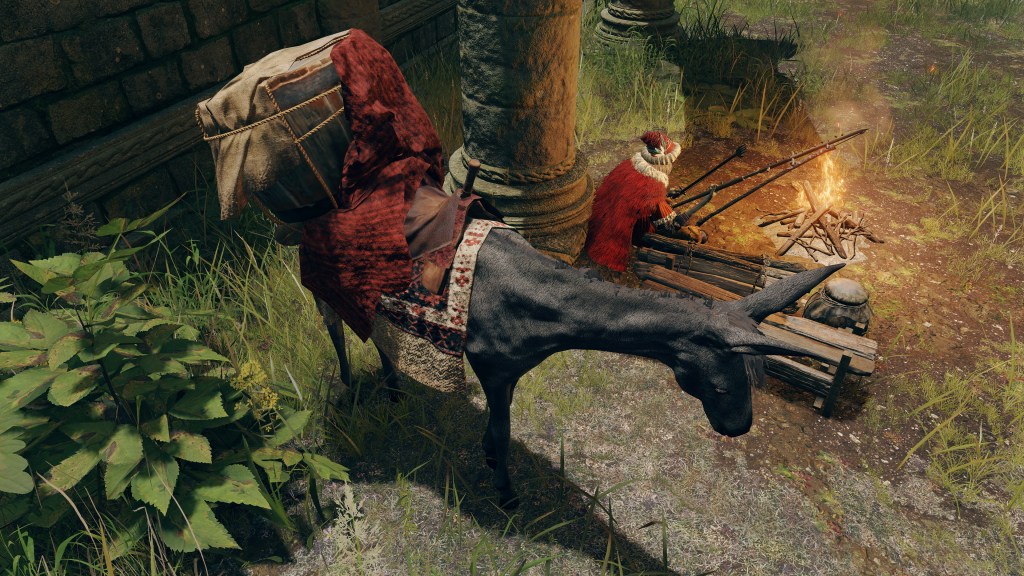
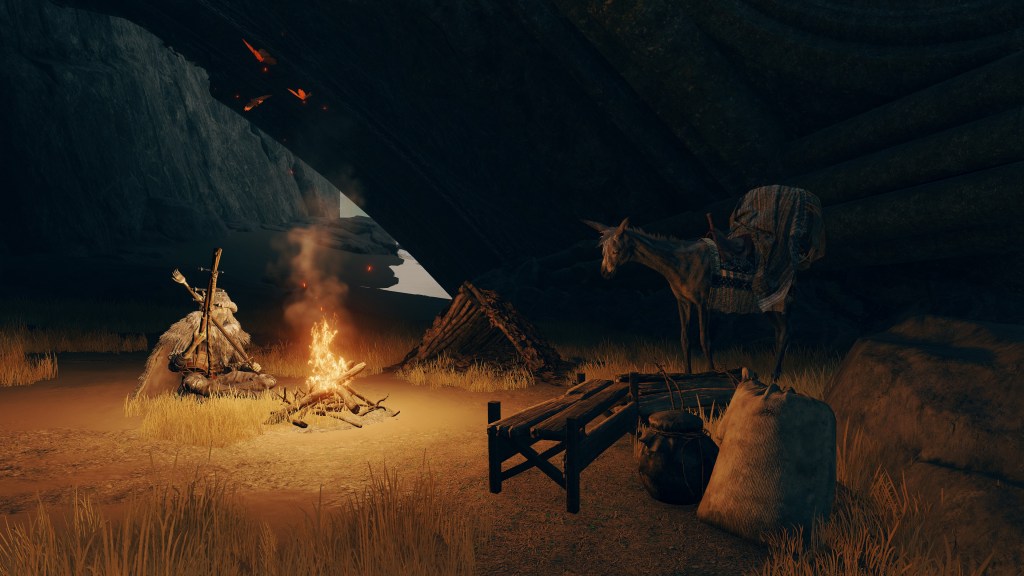
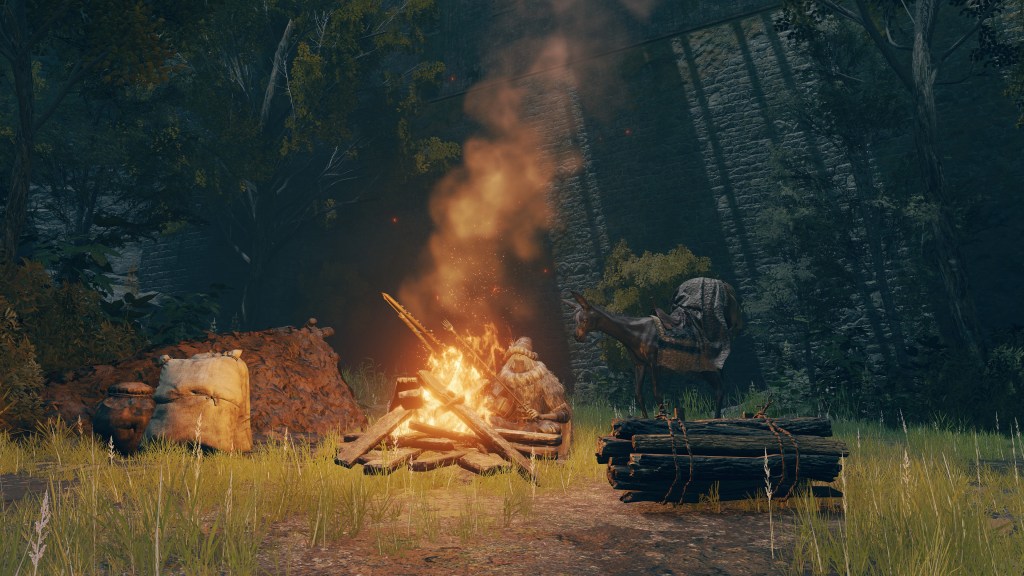
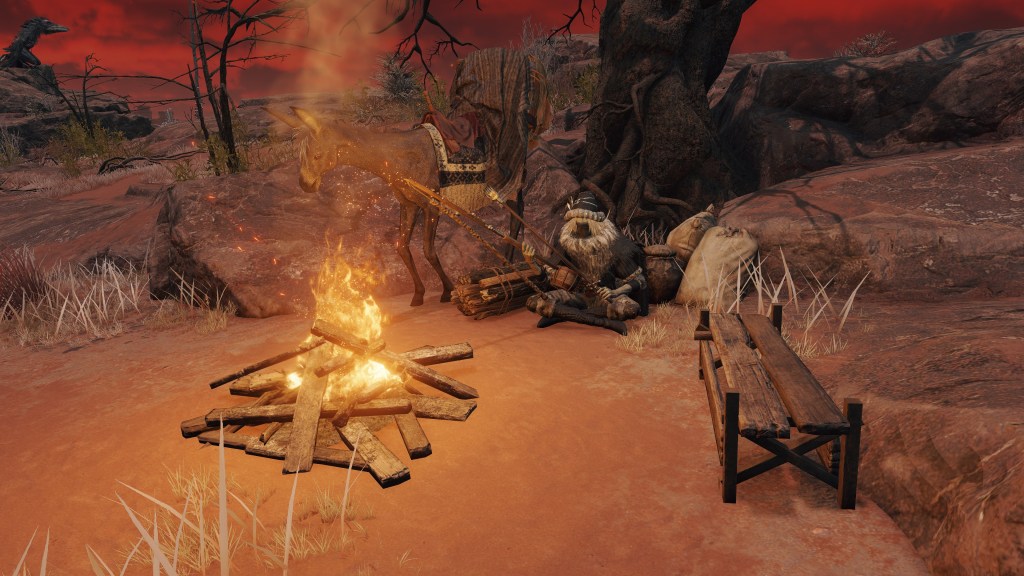
I come from a wandering people. We do business while traveling around. Since the Elden Ring broke, the lot of this land have by and large gone wrong, but thanks to Tarnished like yourself, we have avoided it drying up somehow. Well, I look forward to your good business from now on.
Kalé blames this on the clan refusing the grace of gold — in other words, to assimilate into the Golden Order. He does draw comparison between his people’s code and Marika’s Order, so there is definite tension between them. The merchant is just as quick to champion that dissociation for his kind remaining sane in a world going off the rails after the Elden Ring’s shattering. From his pagan perspective, gold is worthless. Ironic as that may sound for a poor merchant, it highlights how the clan’s ways stem from the Erdtree kingdom’s emergence, going way back according to Kalé. In that case, his people were most likely one of the tribes living on Altus Plateau prior to Godfrey’s conquests. We might even be able to identify their original settlement. The Writheblood Ruins has a hazy history, with nothing but the dead and dogs to identify the culture by before this village was destroyed. And with no strategic offerings to its location, the place’s roots might very well be pagan like with neighboring Dominula. If so, then it could be where the nomads originated before taking up wandering.
There should be survivors of the clan besides myself in this land. If you happen to meet and feel so inclined, do good business with them… Us wandering people have had no relation with the grace of gold since long ago. We weren’t allowed to settle because of that and so were forced to travel impoverished, but that exact reason may be why we have somehow stayed decent even now that the Elden Ring has broken. In that sense, we might be similar. You Tarnished and ourselves.
Ah, this might be useless advice for you… but don’t lay a hand on those of the clan. The wandering people have a code. “Solitude is fine. Even if neglected and abandoned, we seek nothing. But never forgive those who do us harm.” That is our Regulation, so to speak. Honestly, what a vindictive and bothersome clan.
Regardless of where the clan was once seated, they refused to be part of the Erdtree’s new Order. Not everyone at home agreed, however. The tribe’s code accepts solitude from neglect and abandonment, implying that they experienced it when first becoming nomads. Apparently, some were willing to convert in the face of Godfrey’s conquering army, leaving the rest out to dry. In exchange for embracing gold without resisting, their brethren seem to have been allowed to live, but they couldn’t stay; the new Order had no plans to prioritize graceless pagans over its faithful citizens for space. This fits with why they don’t hold grudges over such “betrayal”, only real harm. As Kalé admits, his people are a vindictive bunch who never forgive those kinds of slights, so physical violence was never actually used against them. They agreed to a diplomatic solution that respected all sides’ principles. They don’t need a land to call their own and cultivate; all they ask is to live in peace. As a result, the exiles began to wander the wilderness, remaining on the fringes of Erdtree society.
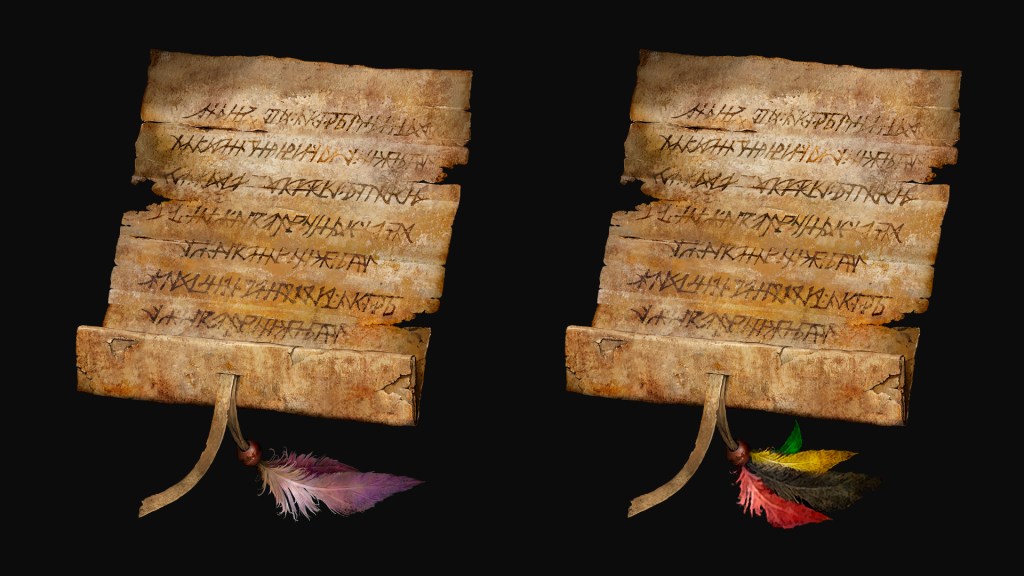
This begs the question of why the new clan was so adamant about denying grace. But if they were pagans from the plateau, then their culture might have been remnants of the death cult on Altus. Indeed, in possible homage to the Deathbirds, the merchants adorn their hats with feathers, using same-colored feathers as a kind of signature to their notes. A culture of death likewise wouldn’t be interested in the life-based religion promoted by Marika. Their willingness to accept poverty also fits with the mentality that all material goods are worthless in death. Even the spite toward harming their own comports with this idea — none value life as much as those who understand death, making arbitrary killing an affront to all that is sacred. Altogether, cultural descent from the Deathbird religion best explains the nomads’ situation, not to mention why they didn’t receive the same tolerance as other pagans. The death cult had nothing to offer and no deep ties to bias Marika or Godfrey. They were the last cinders to be swept away.
A Human Impulse
Certainly, rather than be burned in death, the clan’s fate is to be burned in life. Instead of the grace of gold, their eyes have come to bear the yellow Flame of Frenzy. And terrible a curse it is, the nomads are partly responsible for this. As the description to their colorful garb reveals, they were the ones to call upon the Frenzied Flame after being arrested on “suspicion” of paganism. Considering that they were always pagan, this must relate to worshipping the yellow madness specifically. The clan were buried deep underground beneath Leyndell where we also find the Three Fingers captured. The obvious implication is that followers of the Golden Order believed the great caravan to be in league with the agent of Chaos. Kalé confirms this in cut dialogue, aghast at this notion that his people were the mad Fingers’ adherents. The question then is why the clan came under suspicion. And the answer to that is Shabriri.
Hat of a wandering people merchant. Decorated with small gems of multiple colors.
The entire clan of merchants, who once flourished as a great caravan, were captured on suspicion of paganism and buried alive deep underground.
And then they chanted a curse of despair and called the mad flame.
Did you see it? The state of our ancestors? The entire clan are mere shadows for their former selves buried alive underground, diseased, and driven mad. Did you hear? The deep resentment that is no longer human?… We are adherents of the Three Fingers, you say? We called the mad disease, you say? Oh, by all means then! Let’s actually do it! O graced world, everyone, you should abandon us and not look back. But, if you will meddle with our solitude and trample us underfoot, I will never forgive any one of you.
The man is credited as the origin to the Frenzied Flame disease, his name given to many items and incantations associated with it. His notoriety reaches the level of most hated in history, evident by how Shabriri’s Woe makes us so easily noticed by enemies. Every person living today knows his face and reviles it, which presumably ties into his supposed responsibility for the plague of madness. But since modern history of the Lands Between centers around the Erdtree kingdom’s knowledge, we can assume that this isn’t referring to Midra’s research or a past Lord of Frenzied Flame. The “origin” in question relates to a more contemporary event — such as the incident with the nomads. The description to Shabriri’s Woe does acknowledge the man being punished for slander. Who would he have slandered except the clan imprisoned on false allegations which led to them calling forth that very madness? Put simply, Shabriri was the one to accuse the great caravan of worshiping the Three Fingers, justifying his place in the history books.
Likeness of insanity with eyes gouged out. It is making a flattering smirk.
Becomes easily targeted by enemies.
It is said that that man named Shabriri had his eyes gouged out by everyone as punishment for slander, and eventually harbored the mad flame in there.
Why was this man’s testimony believed? Part of it might have been charisma; the Woe’s flattering grin does suggest a fawning affability, perfect to dispose people to him. But flattery would only get him in the door. How could a madman demonstrate sincerity with his lies, assure his audience that he at least might be telling the truth? Typically, it helps to have an appropriate identity which anyone could verify at a glance. And when the lies slander a whole clan, the easiest credit to a liar’s report is that he was a member of the clan. Contrary to the localization, the Woe’s keepsake description only claims that Shabriri is male, not a noble. Following his punishment, his empty eyes eventually harbored the Flame of Frenzy, meaning that he was among those affected by the curse of madness. Since the curse seems to have been limited to everyone in the great caravan, Shabriri can’t be unrelated. This fact would add credibility to his accusations, being a first-hand witness.
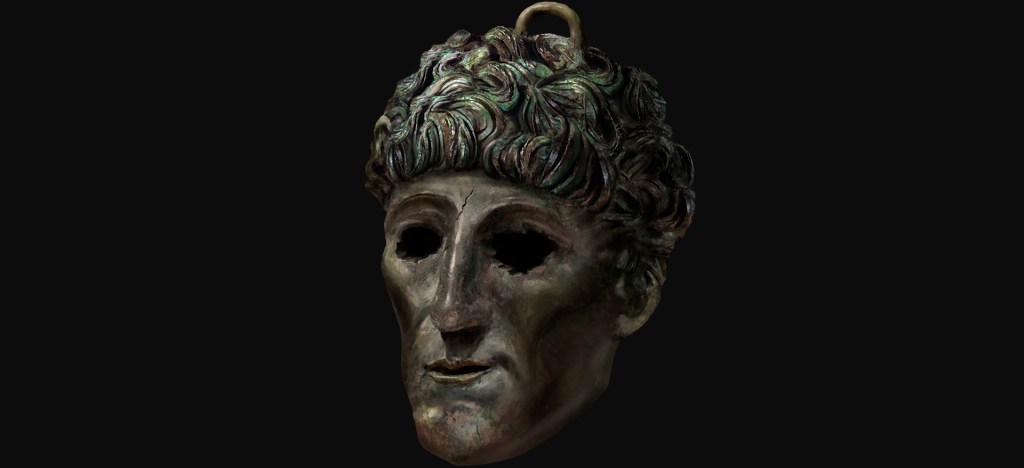
Likeness of insanity of a man who had his eyes gouged out by everyone. Becomes easily targeted by enemies.
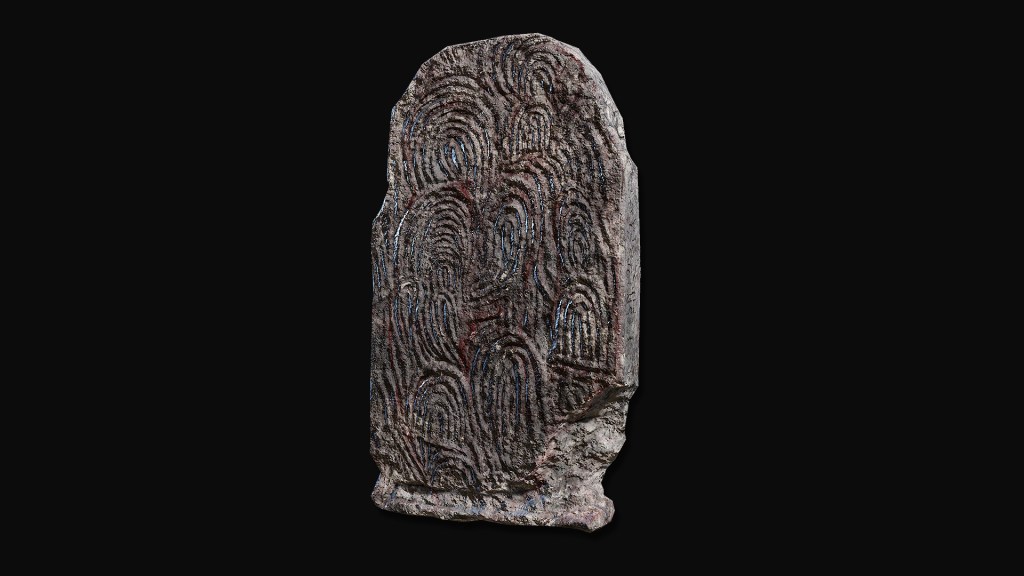
In fairness, there likely was a kernel of truth to his claims. Harbored amongst the imprisoned caravan is the Fingerprint Stone Shield, implying that the nomads came across the old god’s grave defiled by the Three Fingers at some point. The shield’s description further suggests that the Fingers leaving a message on the grave was the start of the madness, so finding it somehow led to Shabriri’s slander. Maybe it was he who first stumbled across it during the caravan’s travels. In attempting to decipher the prints, he became an agent of Three Fingers working to melt the world in Chaos.
Giant stone shield tightly engraved with fingerprints. One of the heaviest greatshields.
It is said to be part of an old god’s grave and the marks which a Fingers without a Finger Reader engraved in its language. Was that the beginning of the madness?
Shabriri’s complicity might go much deeper. We can the meet the madman himself on the Mountaintops of the Giants, possessing the body of Yura. As he puts it, the samurai died and “entrusted” his body to Shabriri. This alone would raise eyebrows, but if we try to kill “Yura”, Shabriri claims to be Chaos and will not die. Why would a nomad aligned with the Three Fingers be blessed with this kind of immortality? If anything, shouldn’t his existence be annihilated in keeping with Chaos’ core principles? But if we take him at his word, he is the Chaos. Therefore, it is possible that “Shabriri” is actually just the outer god of Chaos, the eternal divine spirit using Yura as his mortal avatar on earth much like other outer gods have with various animals. This would make the actual Shabriri the outer god’s previous avatar; the only reason he still uses the human’s name is because it is so widely recognized, making it easier for him to communicate. Shabriri is the demon in Jewish mythology responsible for blinding men, the name meaning “dazzling glare” in Hebrew. It couldn’t be more fitting for this wicked god.

Perhaps you knew the original owner of this body? If so, that is most regrettable. He is already dead. And he entrusted this body to me, Shabriri. I look forward to working with you going forward.
… Shabriri is chaos and will never die.
If Shabriri was killed and possessed by an actual devil, then the Three Fingers’ prints must have revealed the terrible truth of existence, or something equally as horrifying. Whatever the specifics were, it broke the man and turned him into a tool for Chaos. Maybe that is why the old deity’s grave is in pieces, the Fingers’ message establishing a magical connection between one man and the god it represented absent the flame. A ritual of “words” blowing the grave apart with their arcane power could catch the caravan’s attention and lead them to pick up the pieces as potentially valuable. As descendants of Altus, they would know nothing about the Fingers or Frenzy, so it might have looked like a relic they could pawn off to those worshipers of the Two Fingers. But little did the wanderers know, “Shabriri” had changed. While they yet lingered in the territory of the Three Fingers, he traveled to the Erdtree capital and made his “confession” of the clan’s conspiracy to the royal court.
From Marika’s perspective, this clear lunatic’s accusations couldn’t be disregarded. The Eternal Queen may have familiarized herself with the real threat of the Frenzied Flame during her time with the Hornsent. Either way, the precedent with the fire giants demonstrates the extremes the woman would go to when it concerned fire that could threaten her precious Erdtree. What little knowledge she had of Frenzy would only further stoke the whimsical god’s fears, compelling her to act swiftly and decisively. And if the madman was speaking the truth, then the Erdtree army would find it. And found it they did at the location — the Three Fingers, the great caravan, and pieces of rock bearing its gospel. That was enough confirmation. The caravan were rounded up and shuffled into a prison. As to why that prison was decidedly underground, below Leyndell, we can look to Marika’s penchant for mischief.
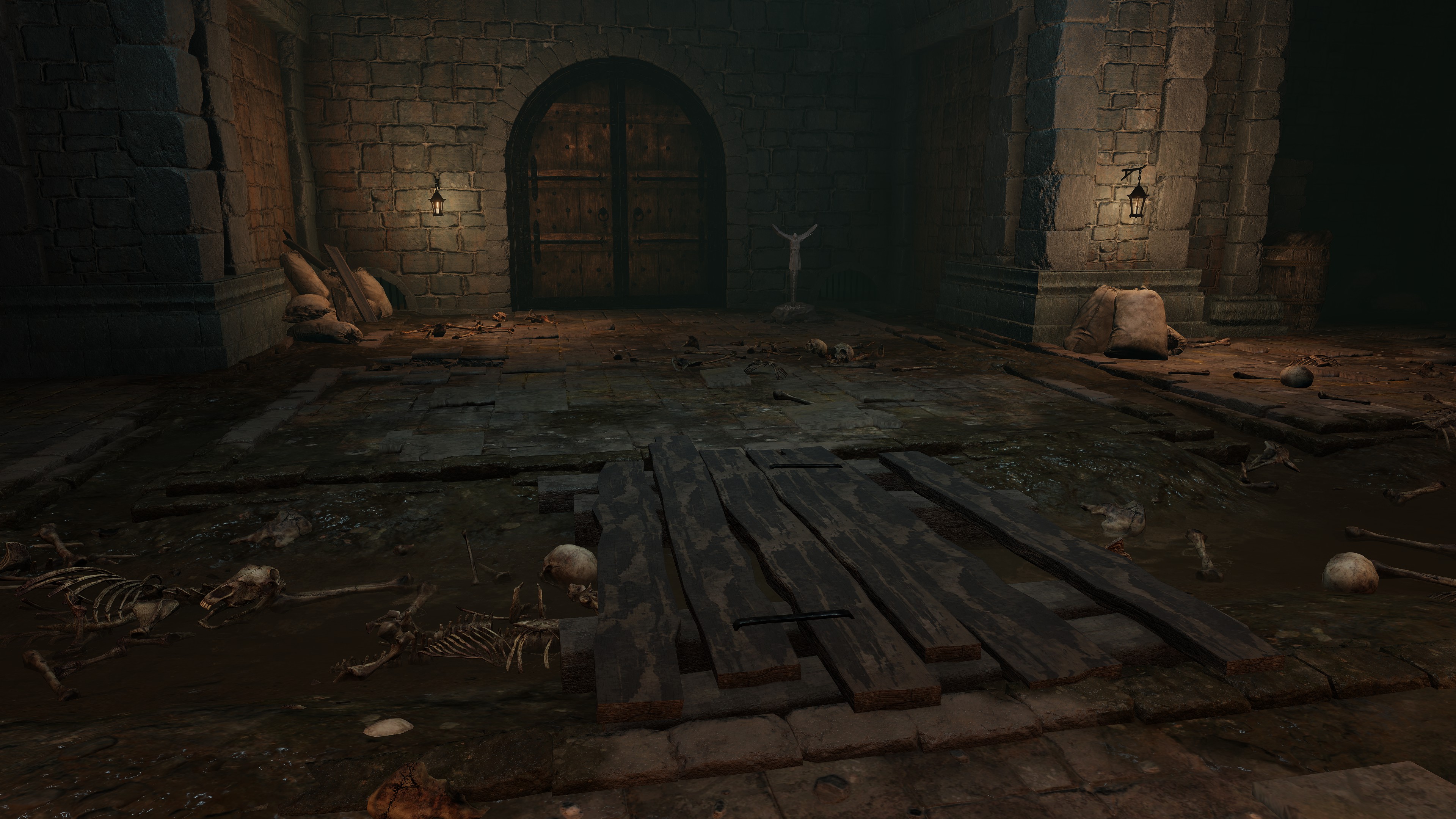
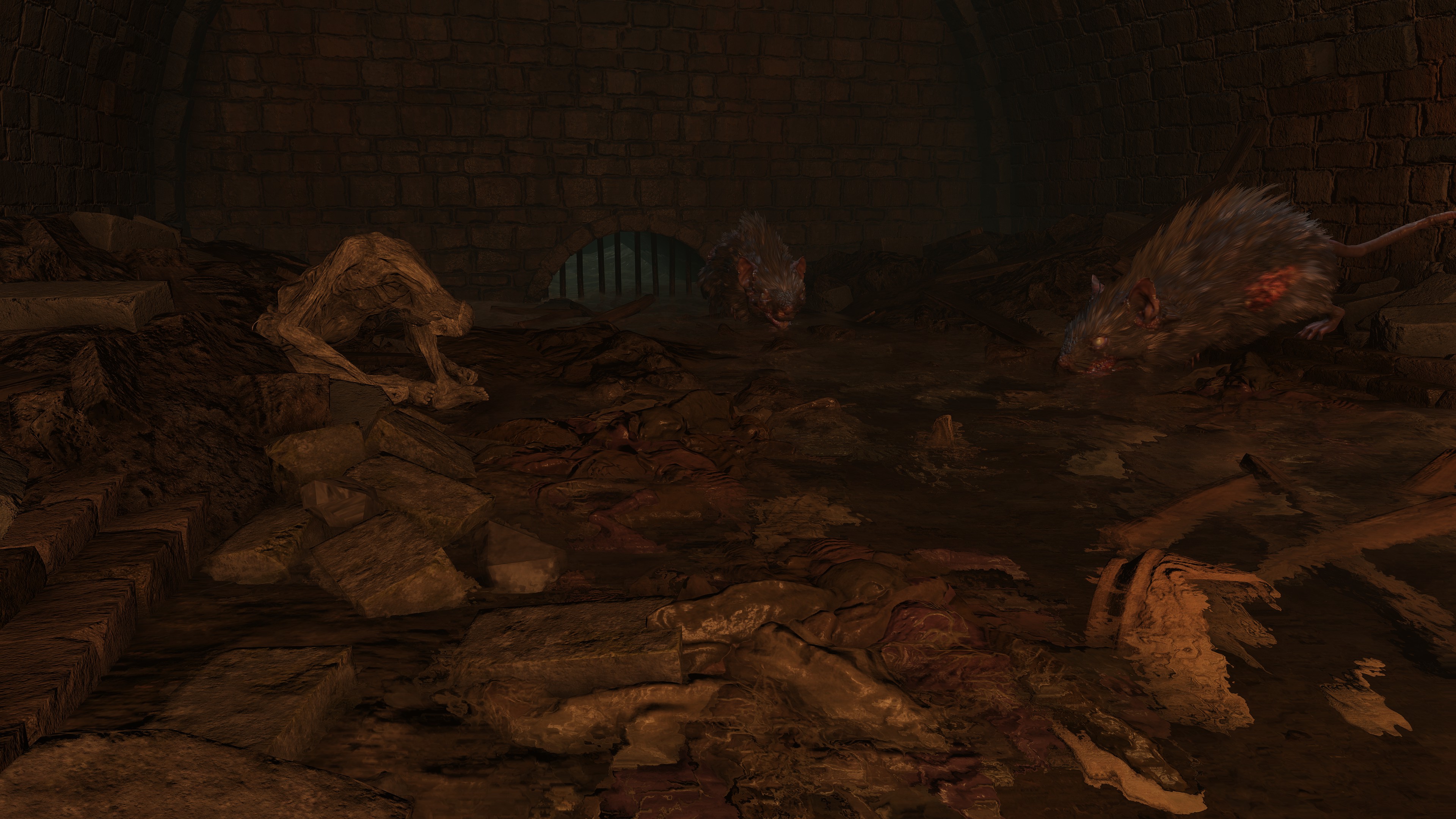
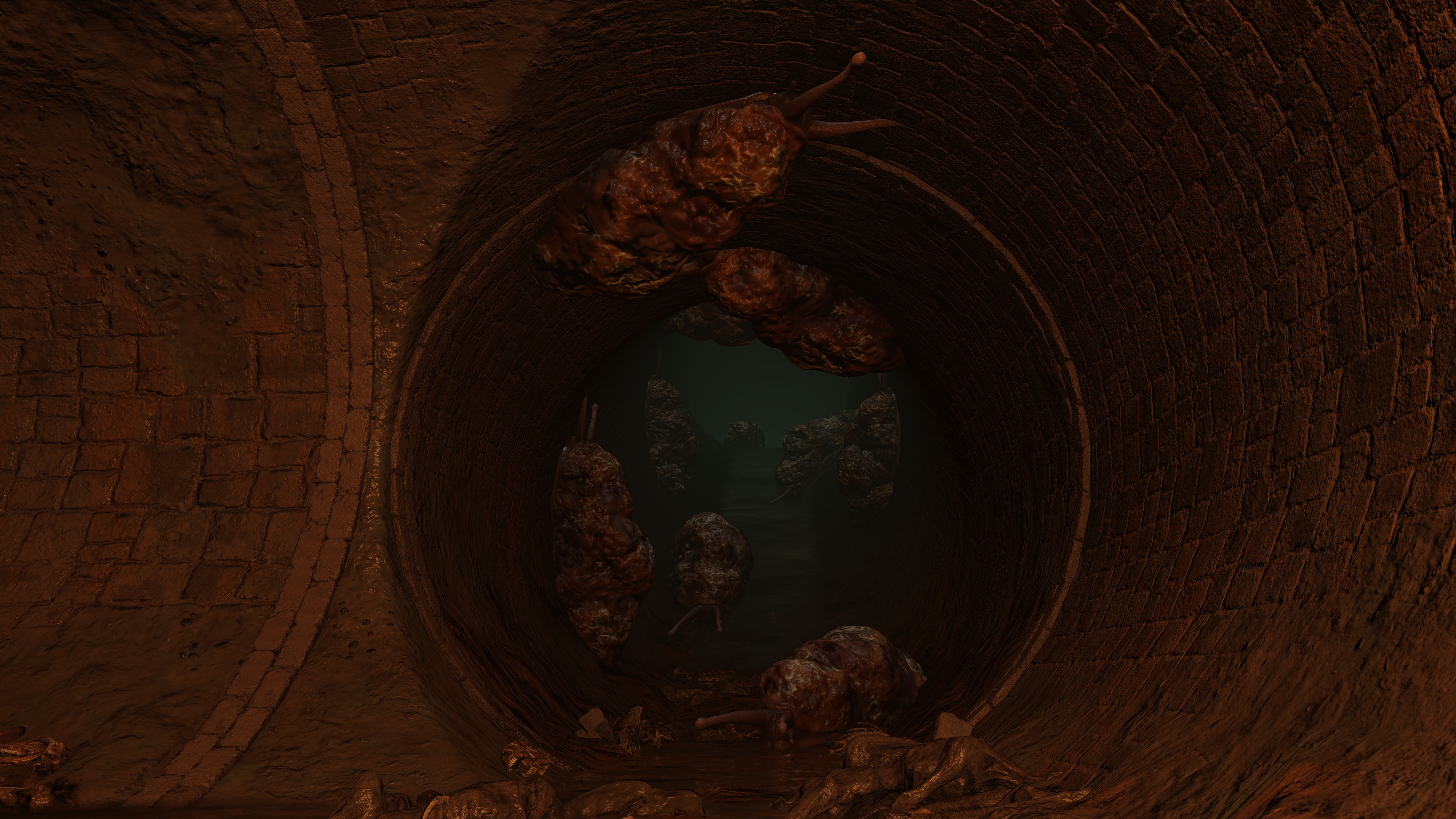
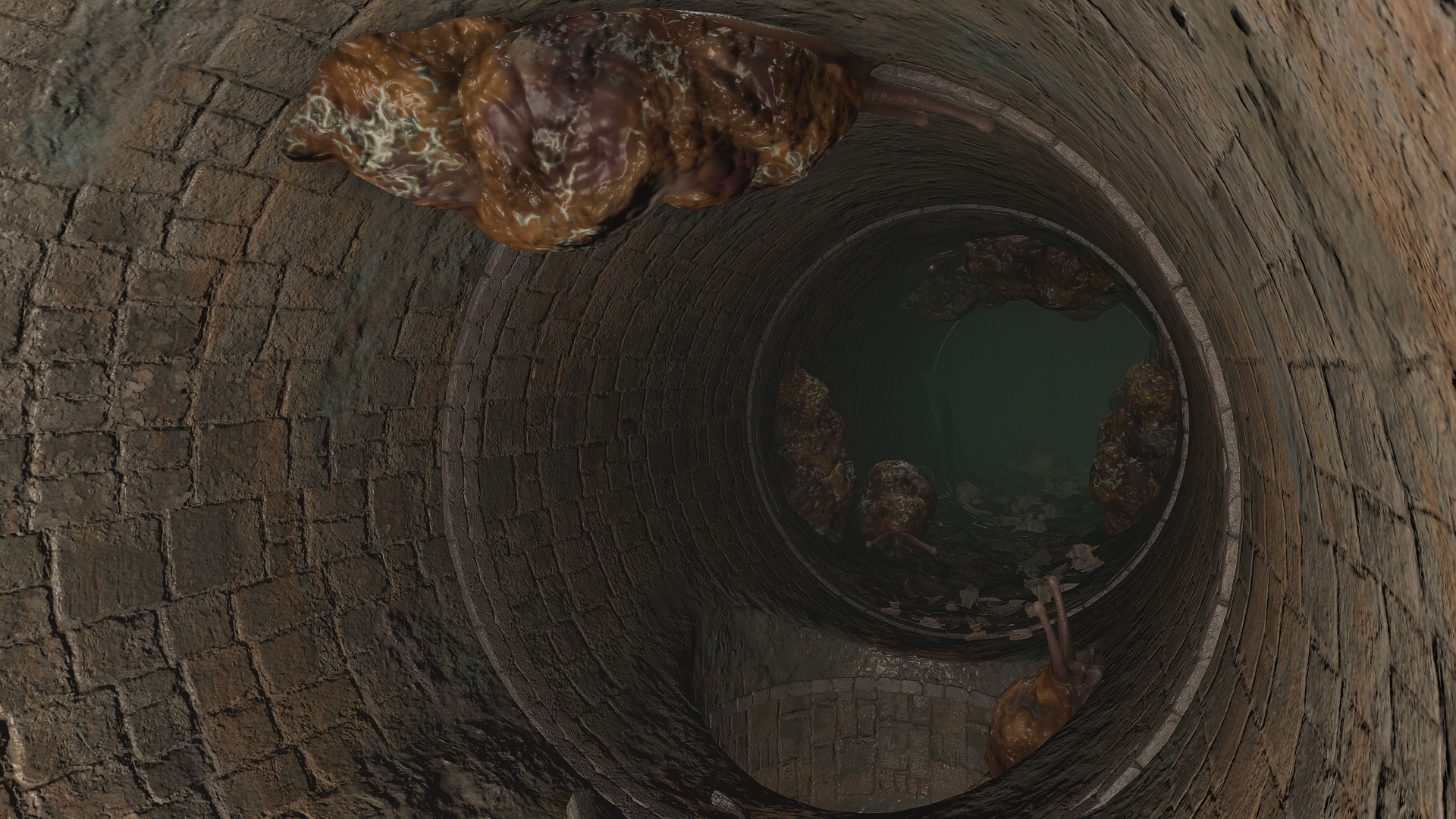
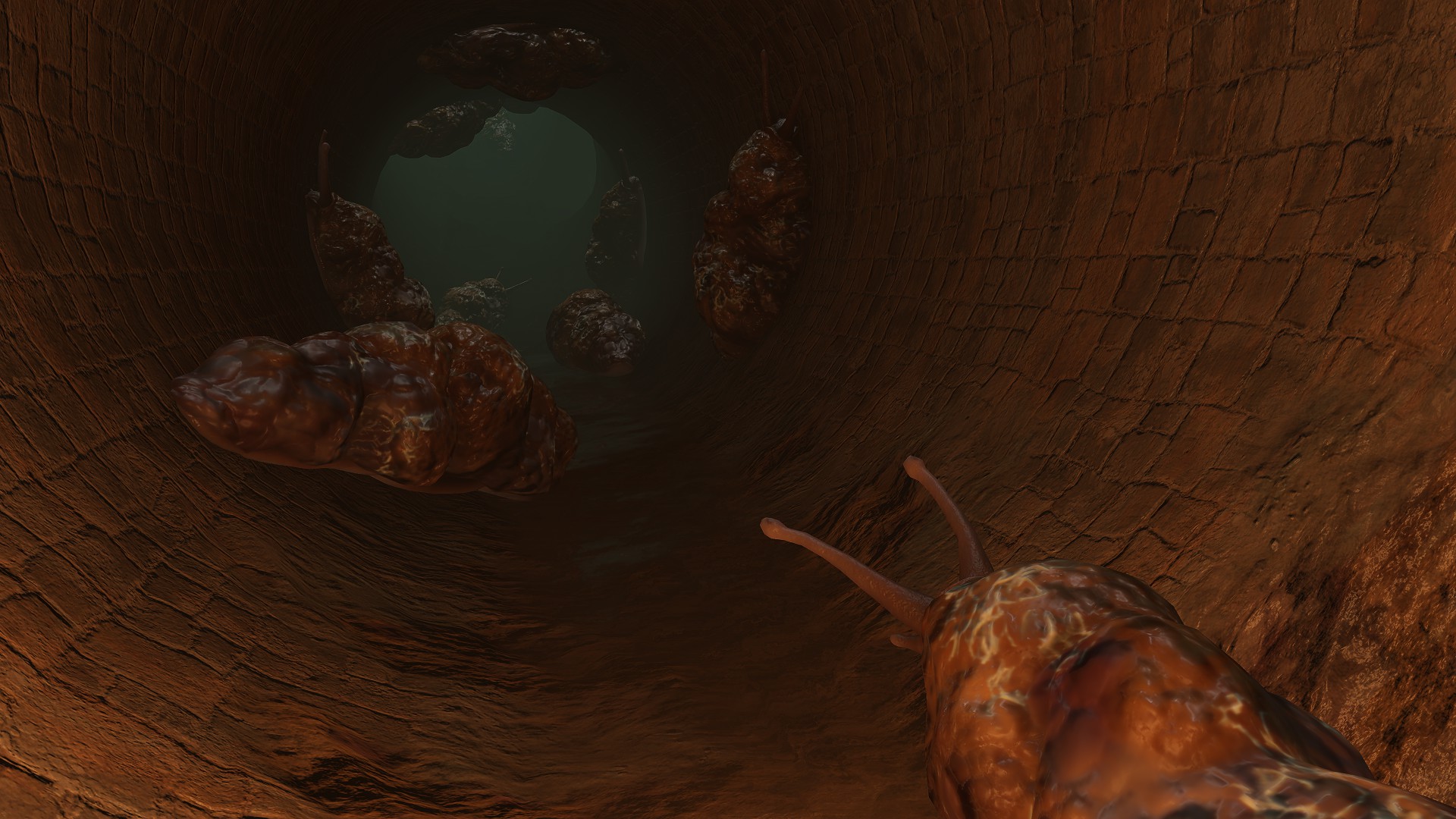
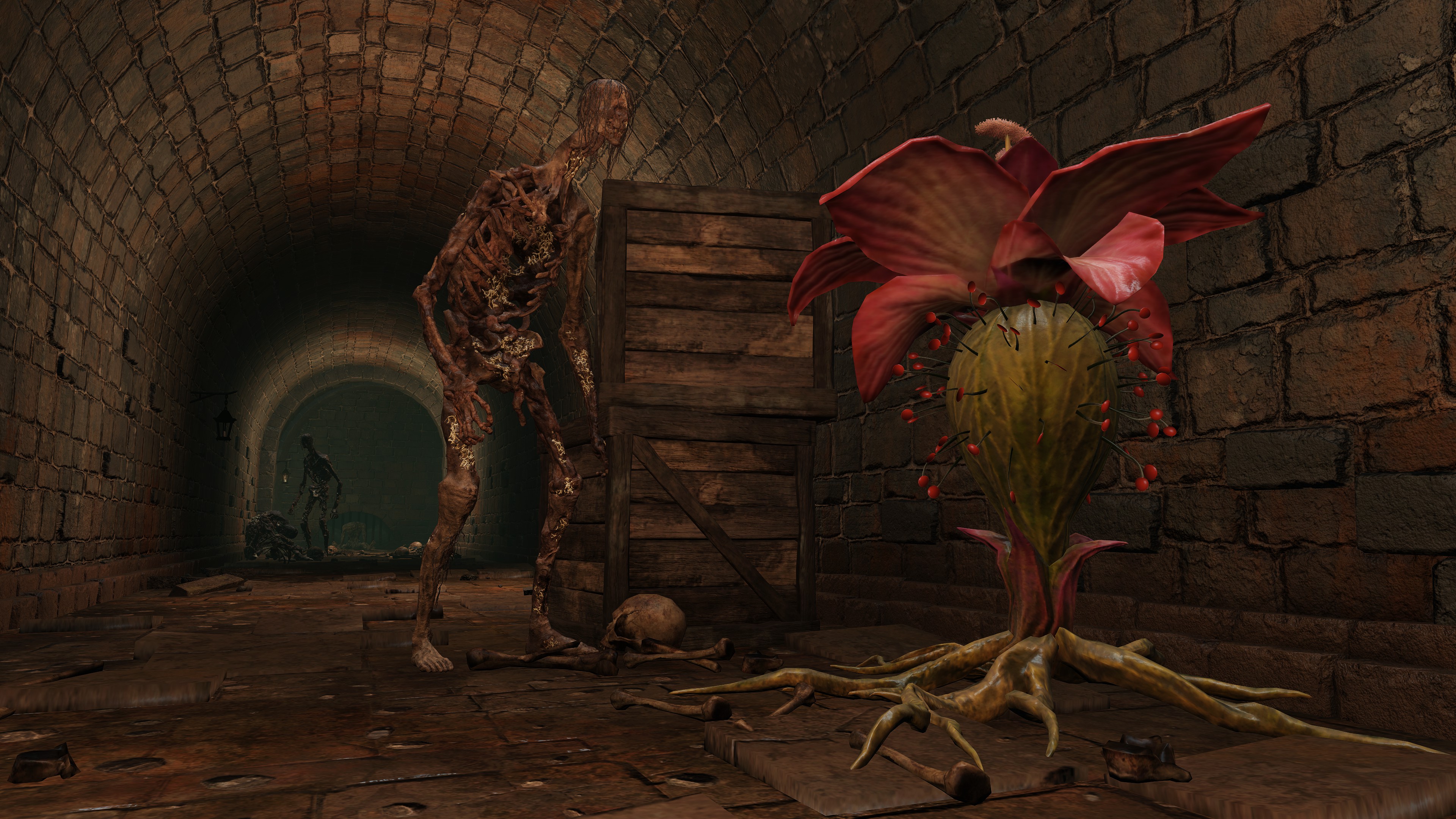
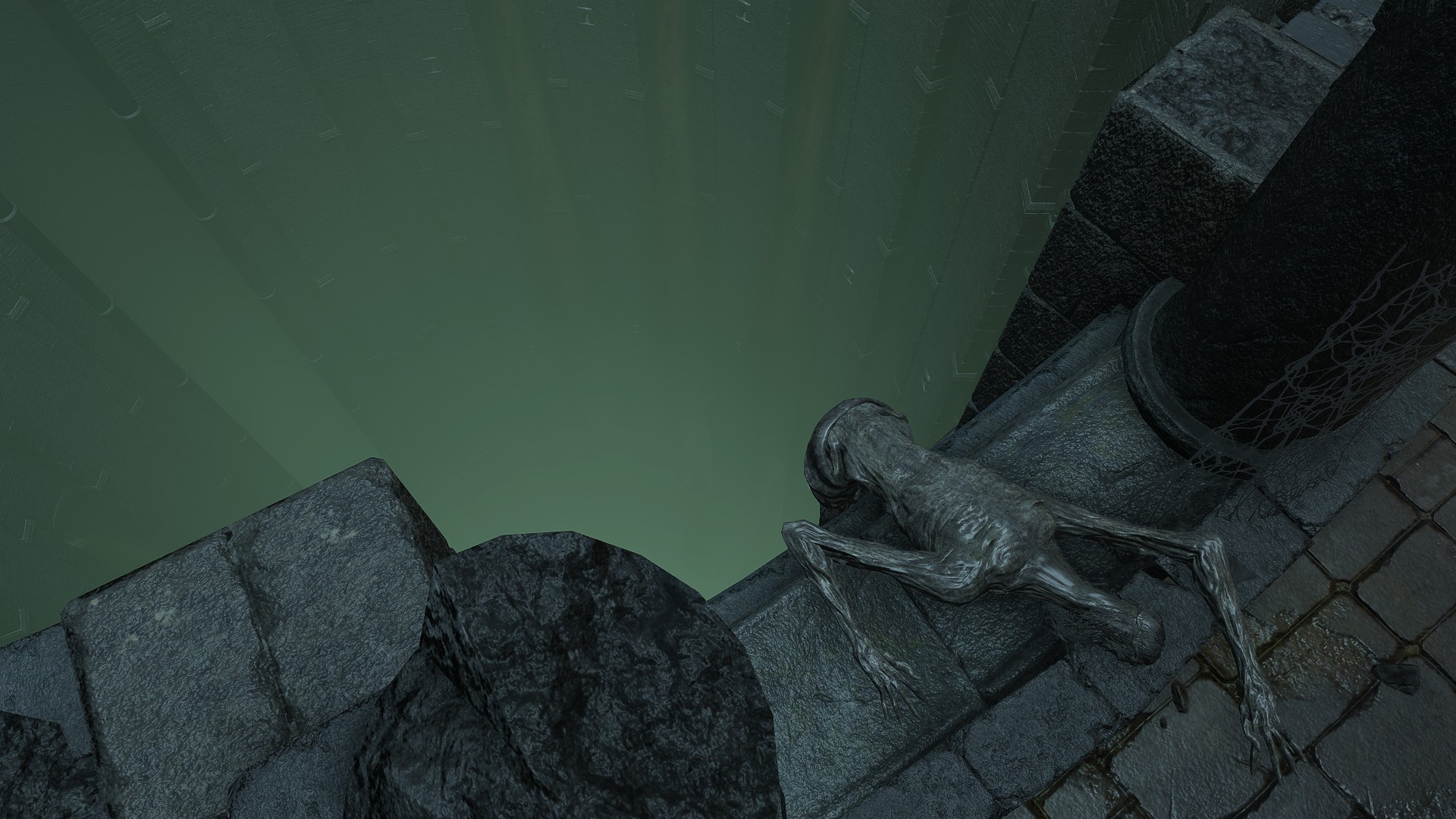
The sewers stretching beneath the royal capital become a gathering point for all manner of garbage. Anything that falls into the open canals or manholes eventually gets carried down with the waterflow into the underground channels and pipe ways — pebbles, string, glass shards. We can see human and animal remains dot the waterlogged ground as we approach the Subterranean Shunning-Grounds, littering everywhere we step upon actually making the descent. Certain pockets deep underground have accumulated mountains of corpses. Some of this might be faulted on the recent war of the Shattering, hence the rotten bodies meandering about lost or in despair. But all impressions suggest that the corpses have been piling up for the capital’s whole history. The rotten flesh clogging up the pipes helps make it a breeding ground for illness, poisoned stones, poisonbone darts, and serpent arrows created from those toxins. Bodies interred in the Leyndell Catacombs are likewise rising up infested where the chambers have flooded with the sewage water. All around, it is a hazardous trash heap.
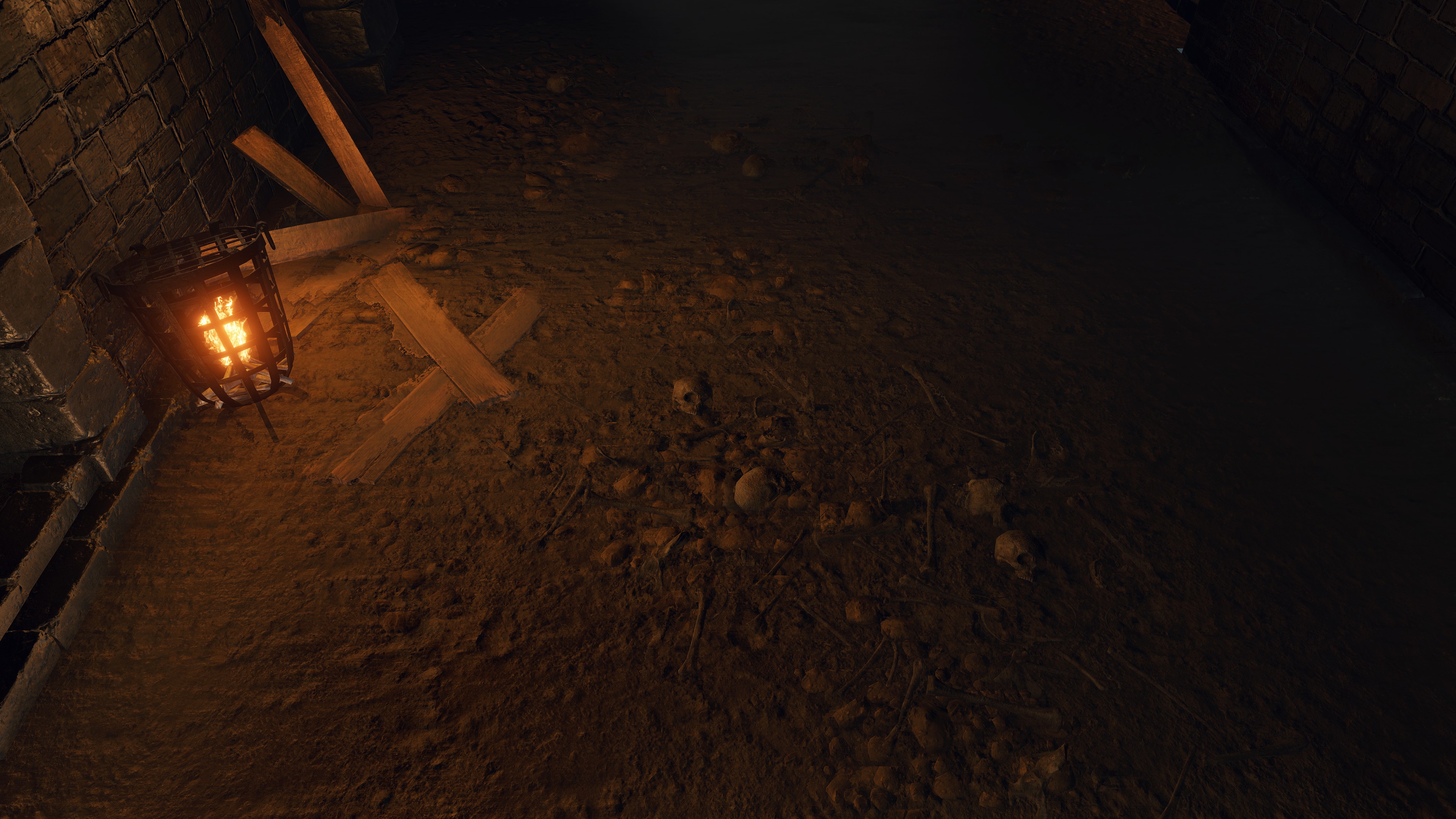


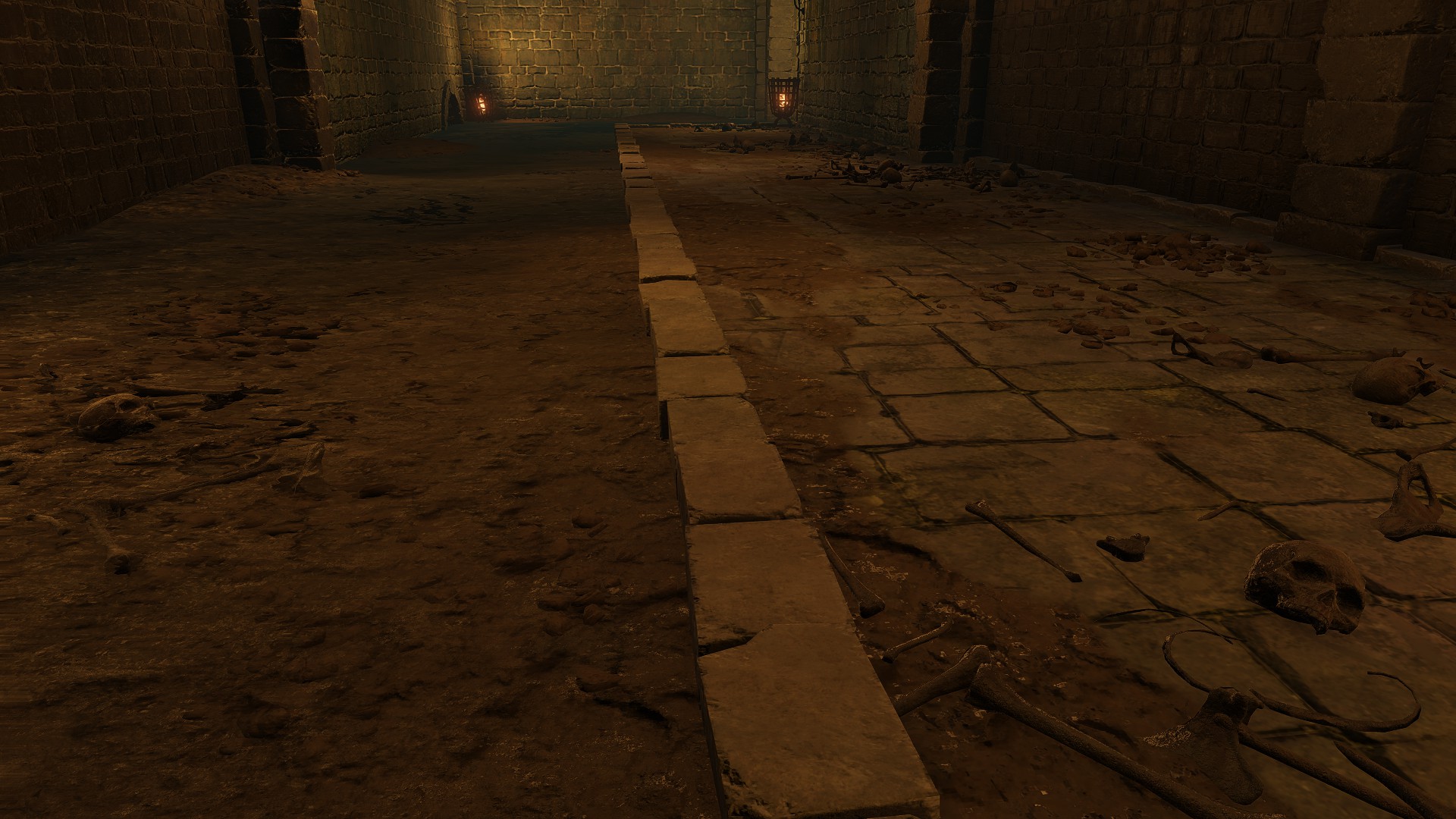
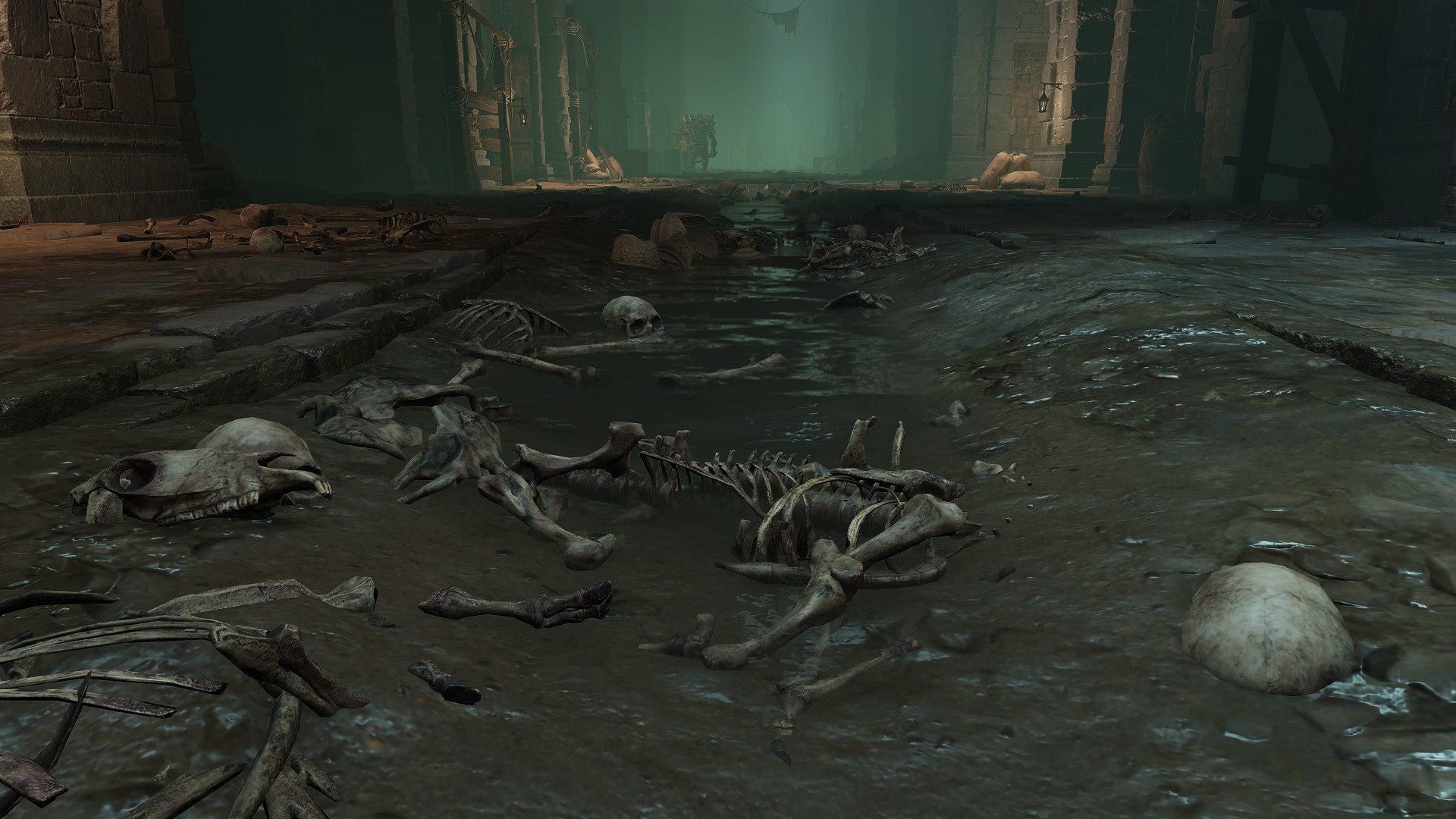
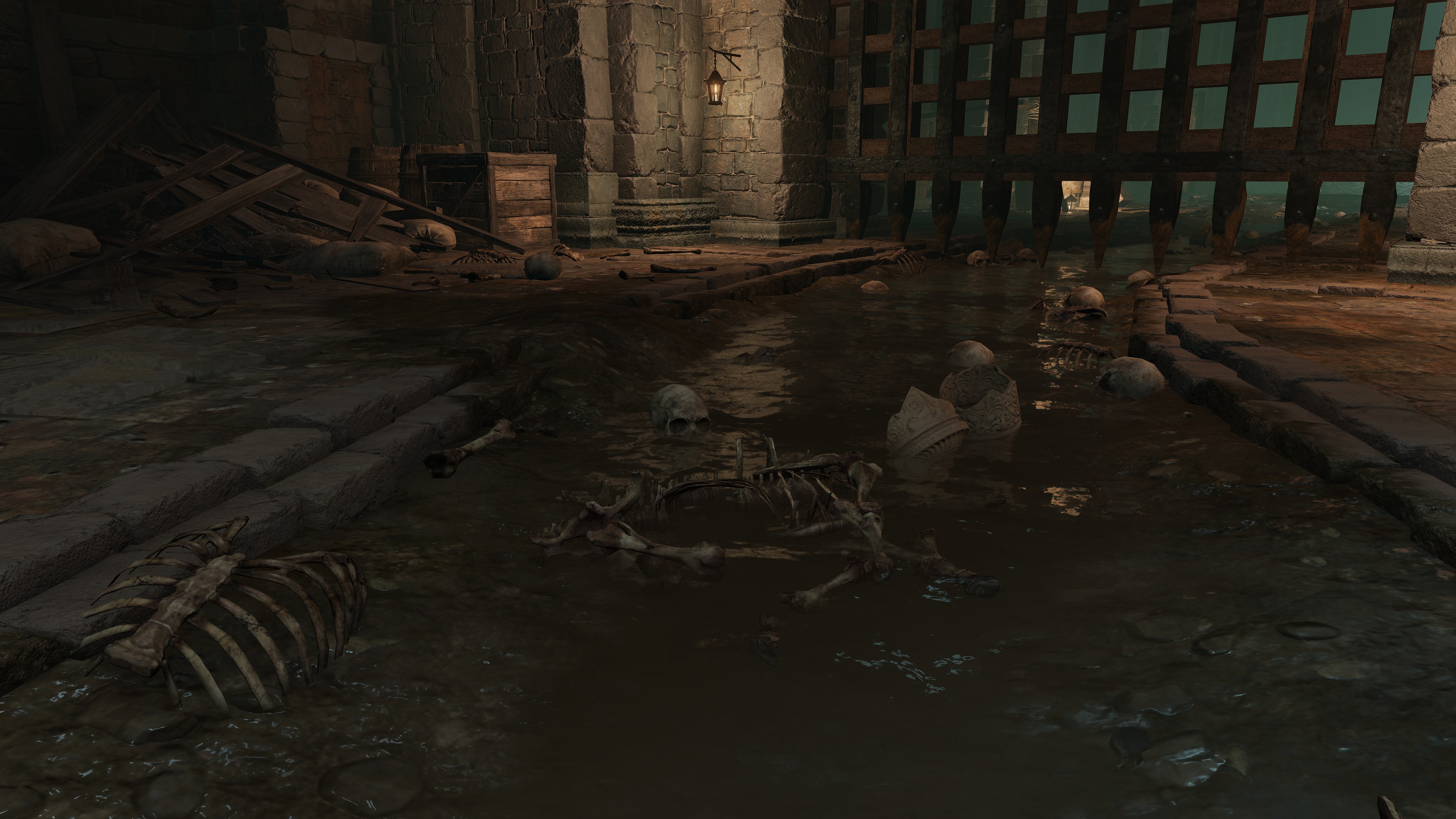
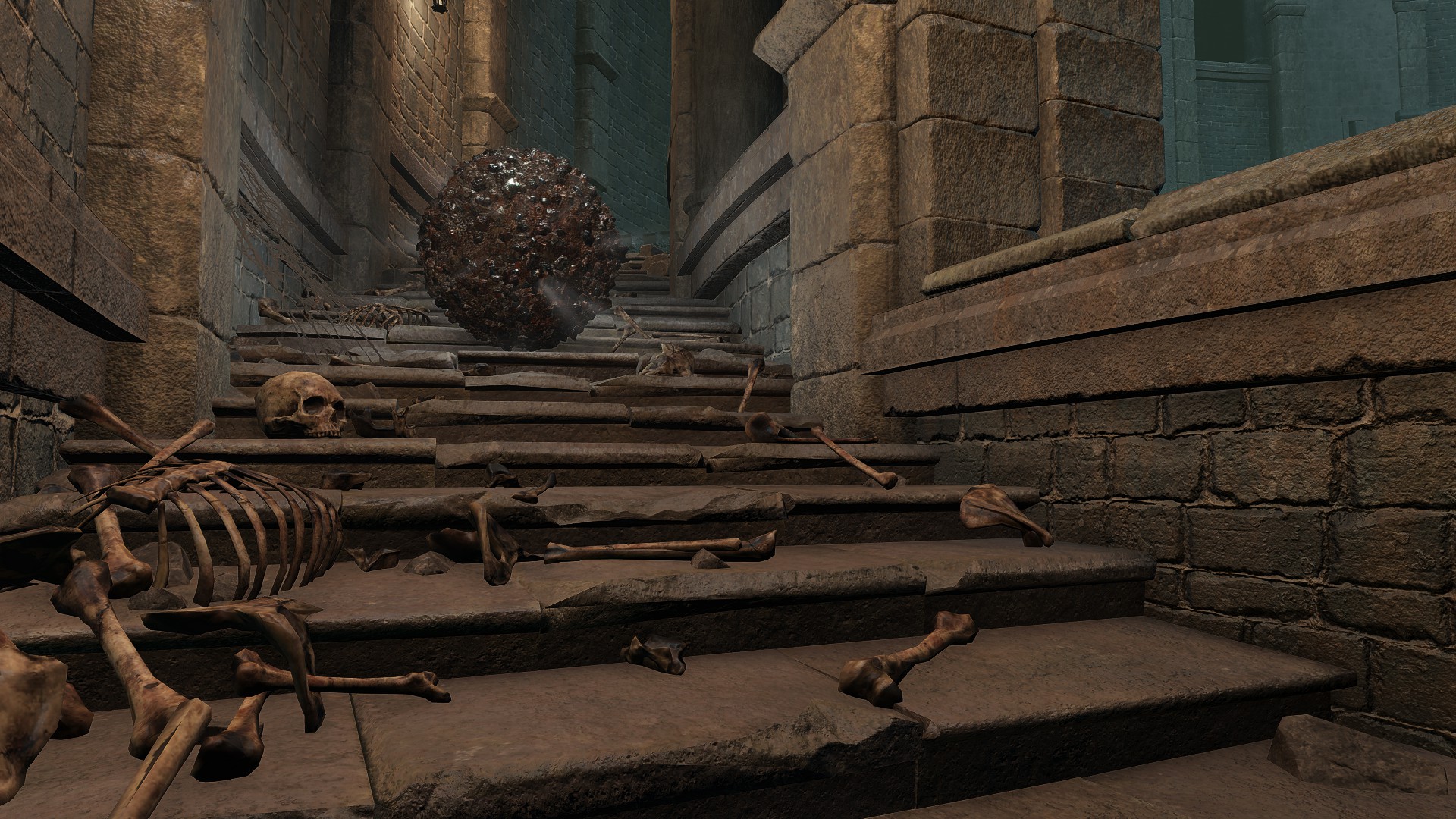
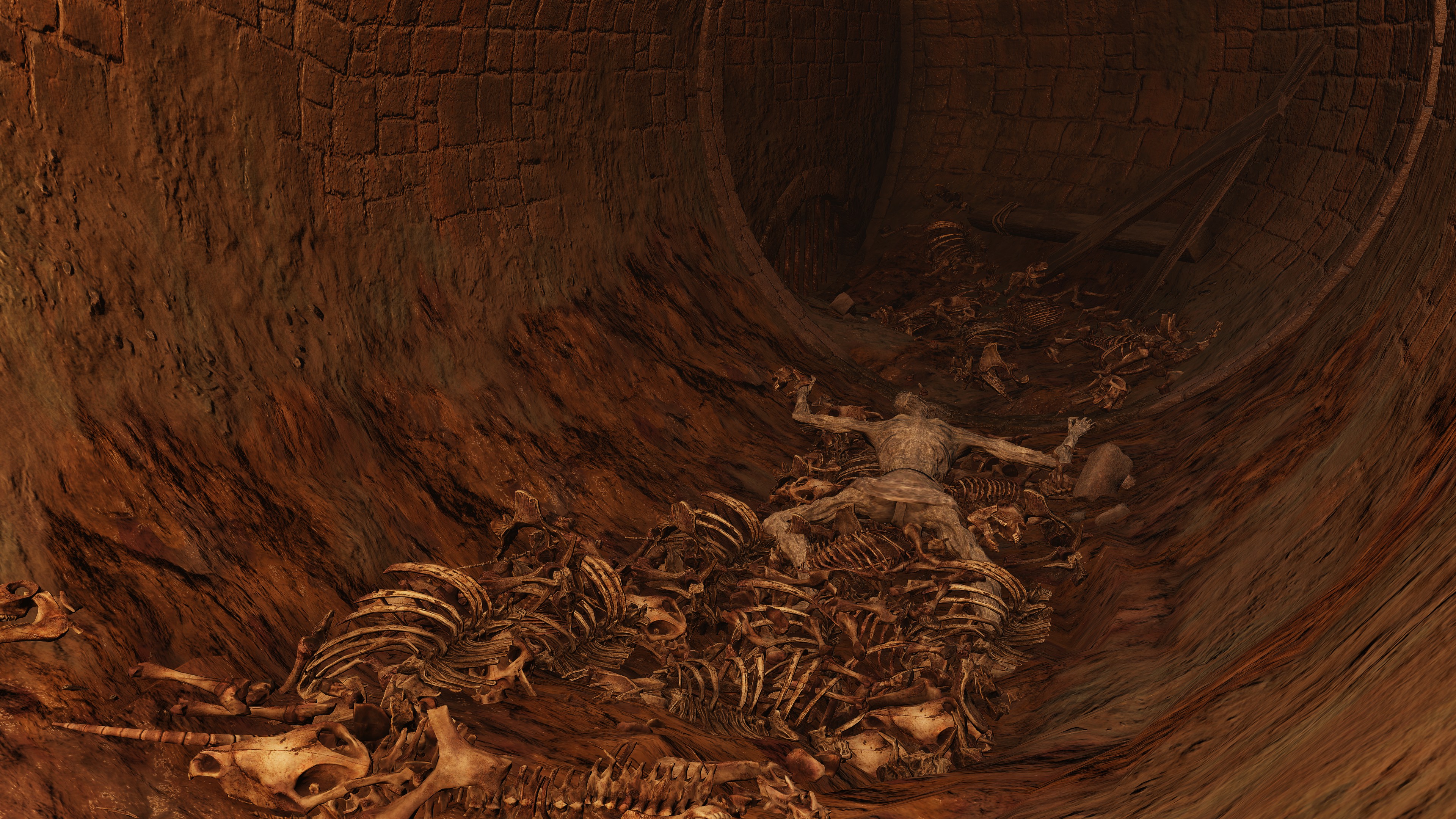
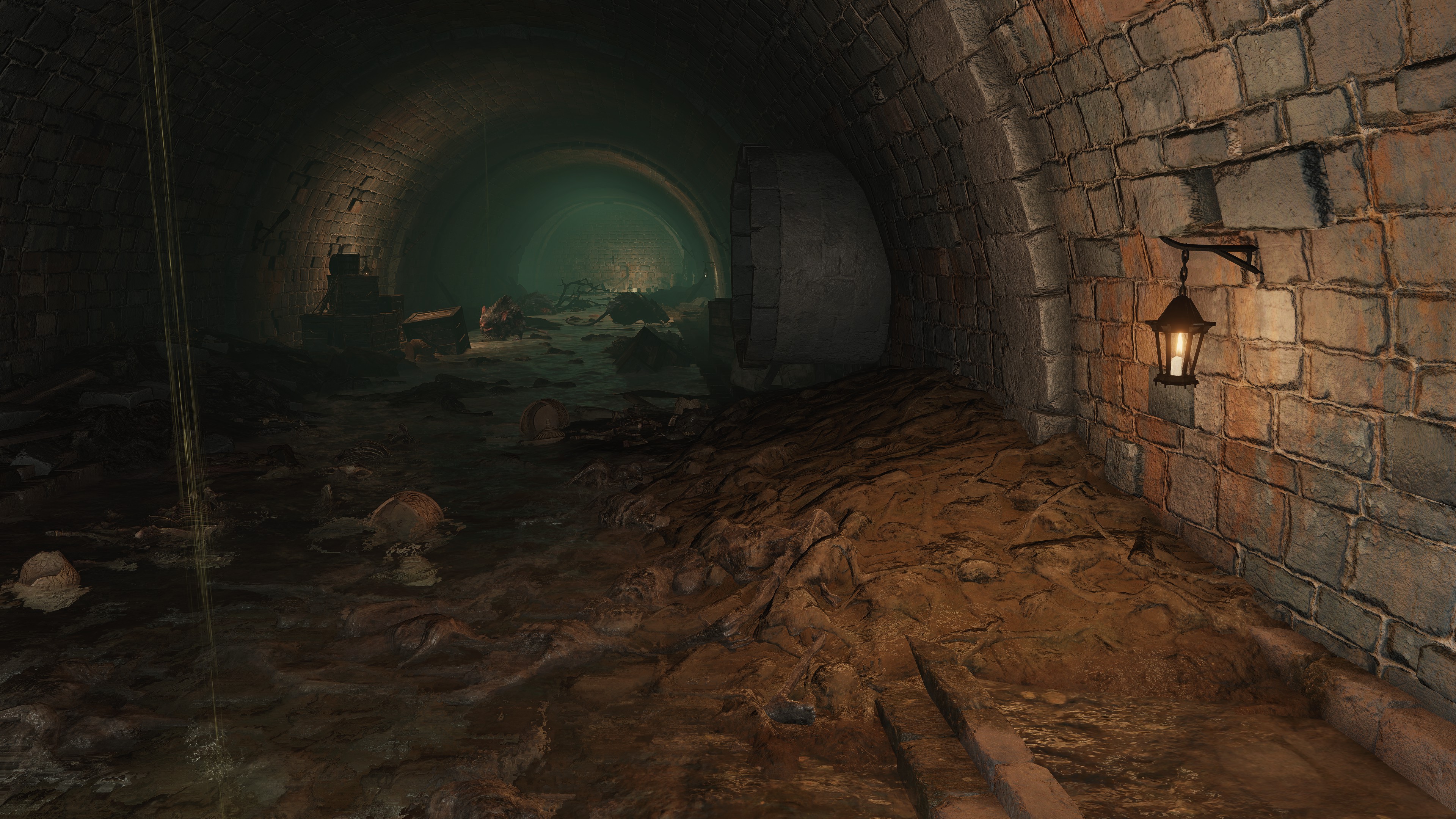
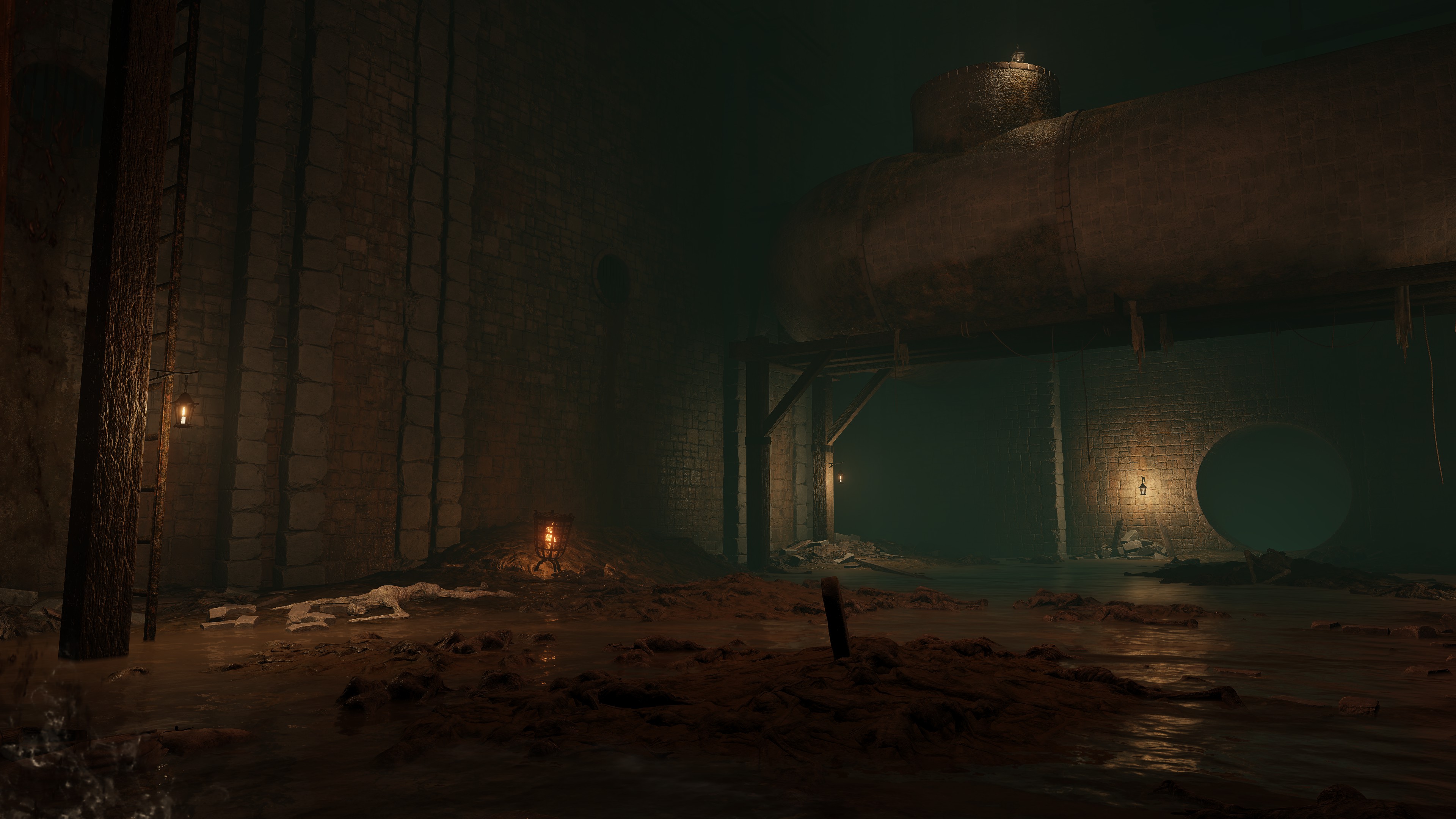
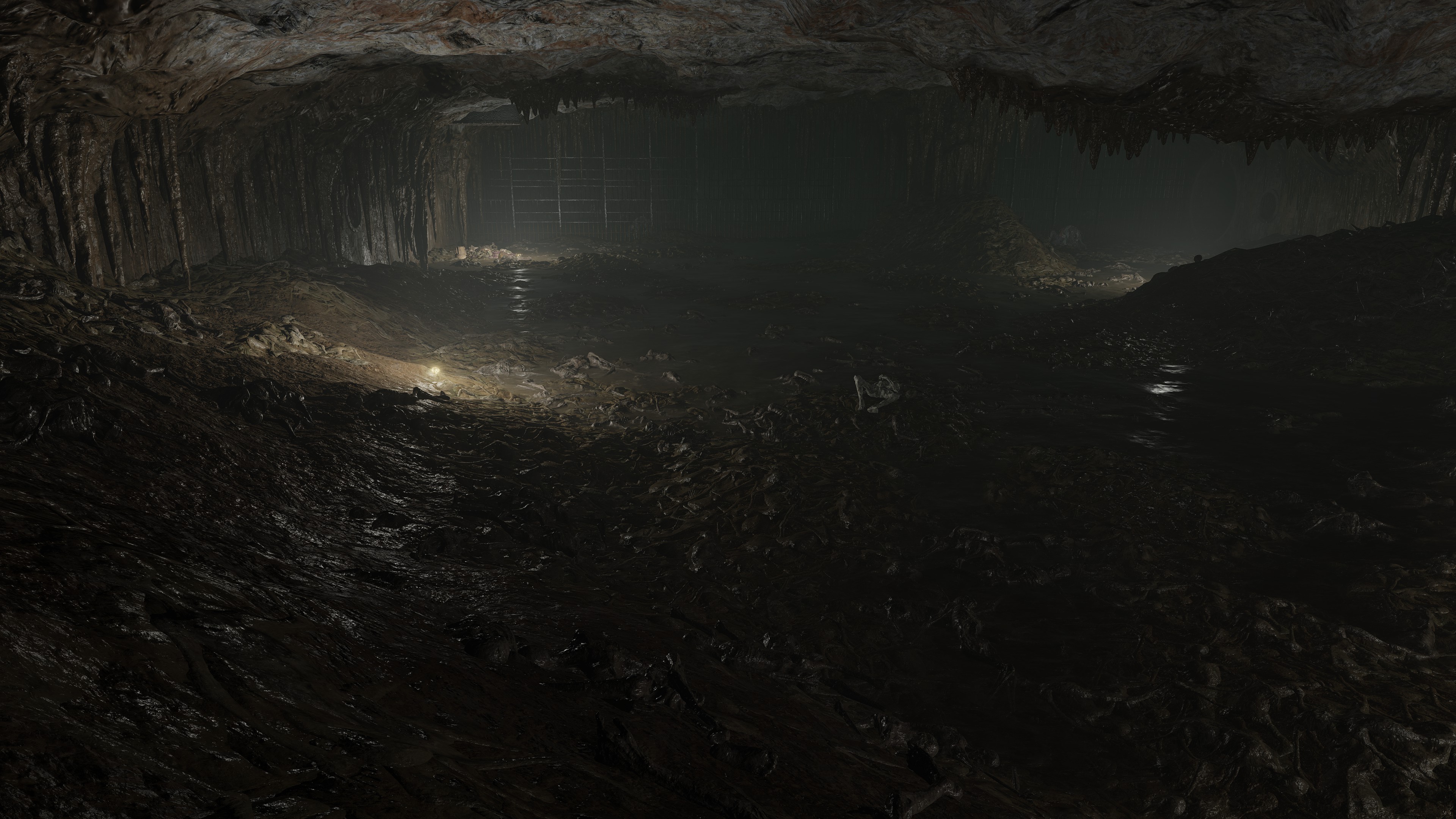
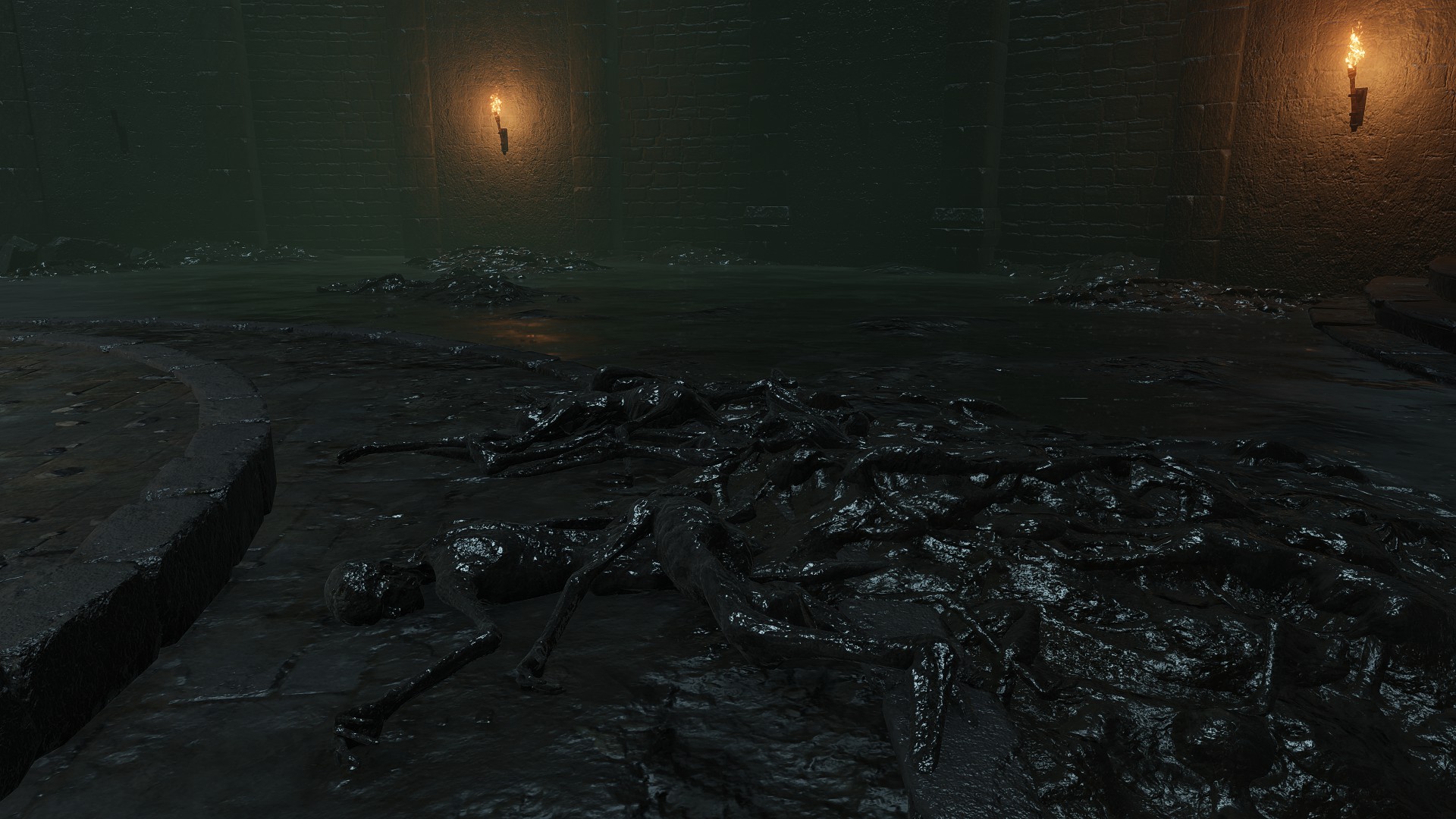

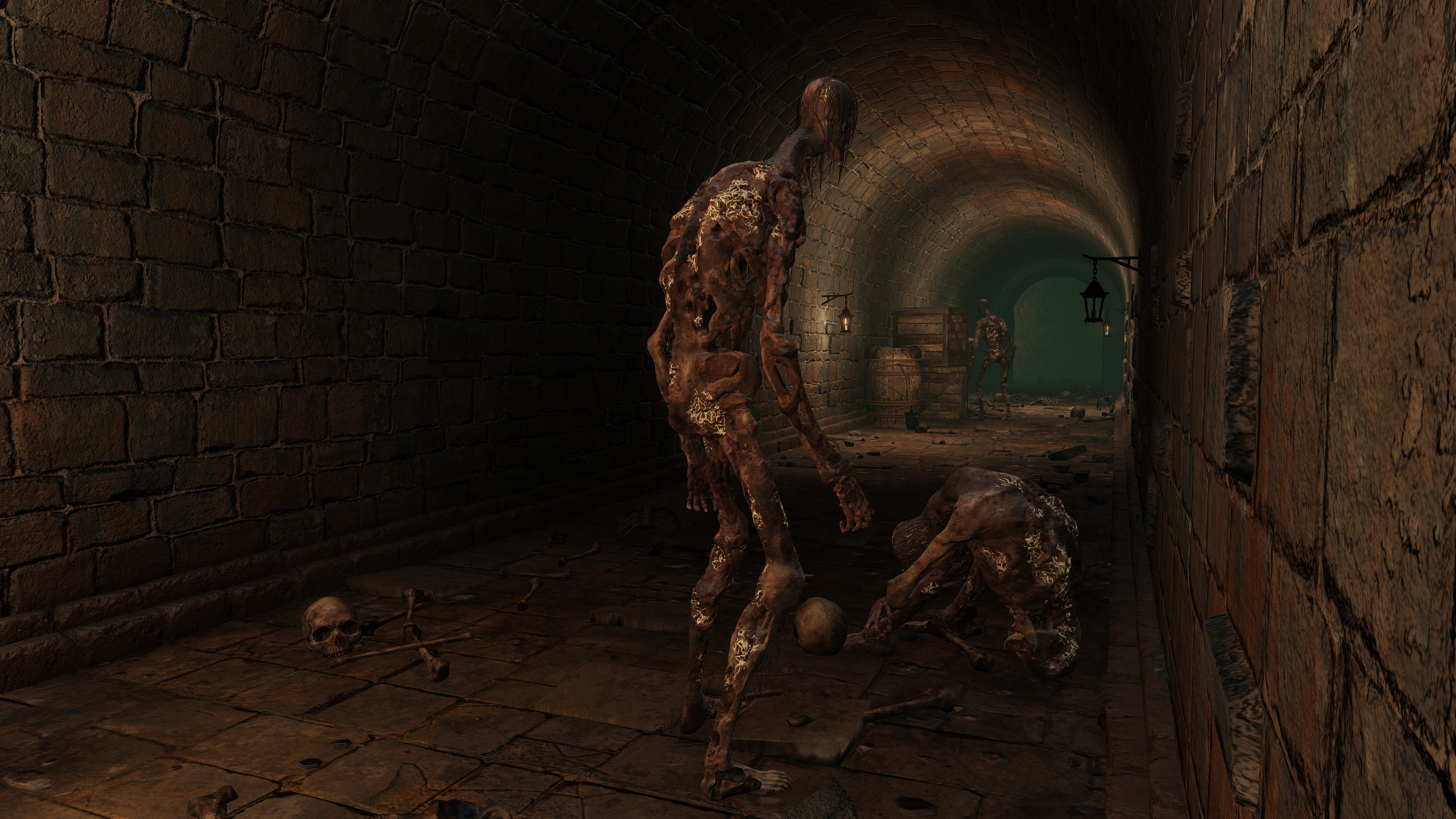
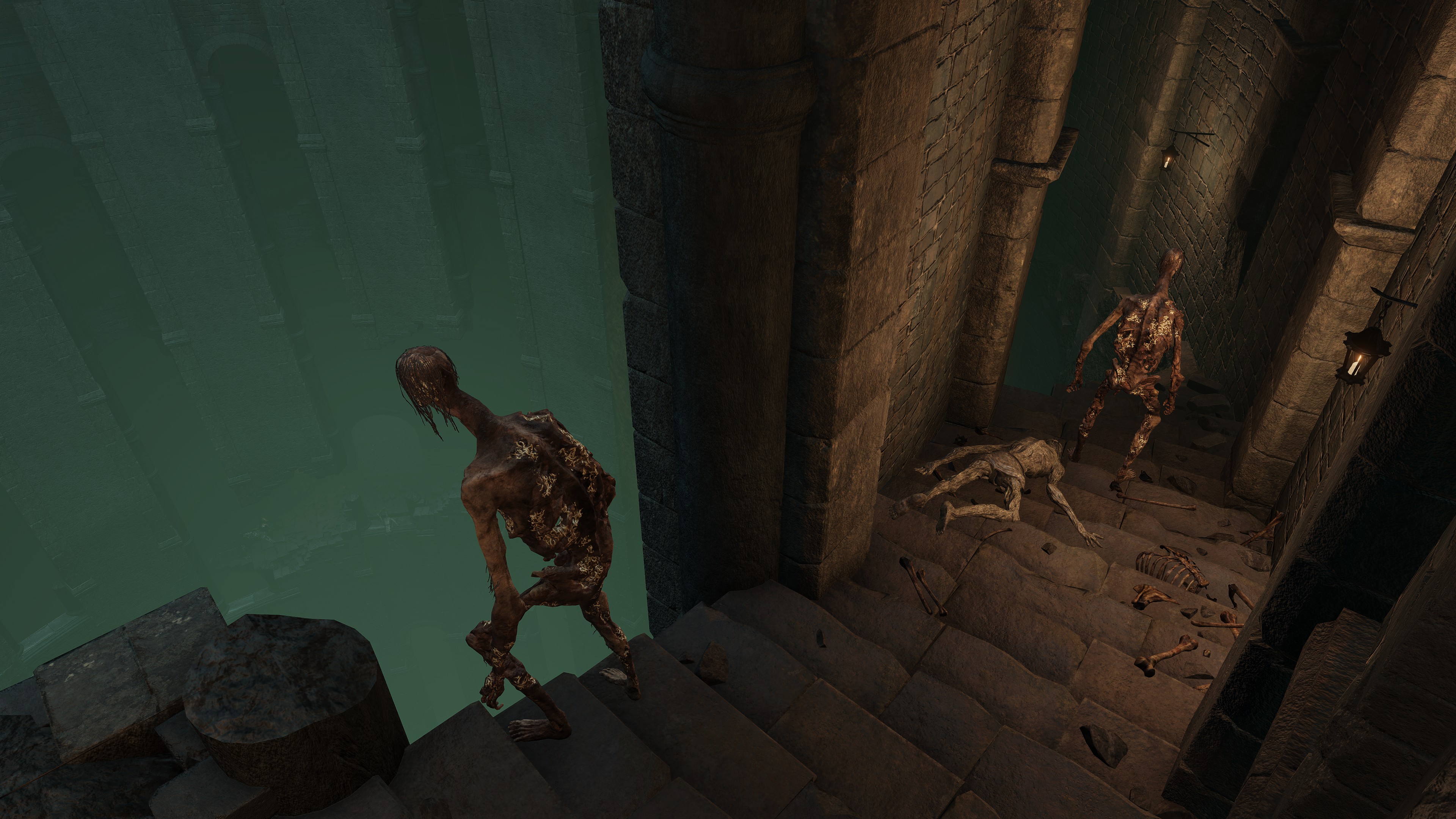
And yet, citizens of Altus choose to live atop the trash, with signs of makeshift construction to cross waterways and meager living space under the Upper Quarter’s main street. Some might be the poor and plague-ridden; bandages worn over the hands and face of someone bleeding from skin sores lay tucked in a corner of that Underground Roadside. Those unable to afford life in the capital or treatment for a sickness surely could find themselves forced off the streets and into the hub of disease below to survive. If they weren’t already ill, this all but guaranteed that they would never be able to return to decent society. But disease may also be a secondary concern. Recall the example of criminals fleeing into the sewer to escape punishment. Those wanting safety from execution or exile would naturally head deeper into the system, past the various gates, to lose their pursuers, leading them to the Subterranean Shunning-Grounds with everyone else. Together, society’s figurative trash seem to have formed something resembling a community down there.
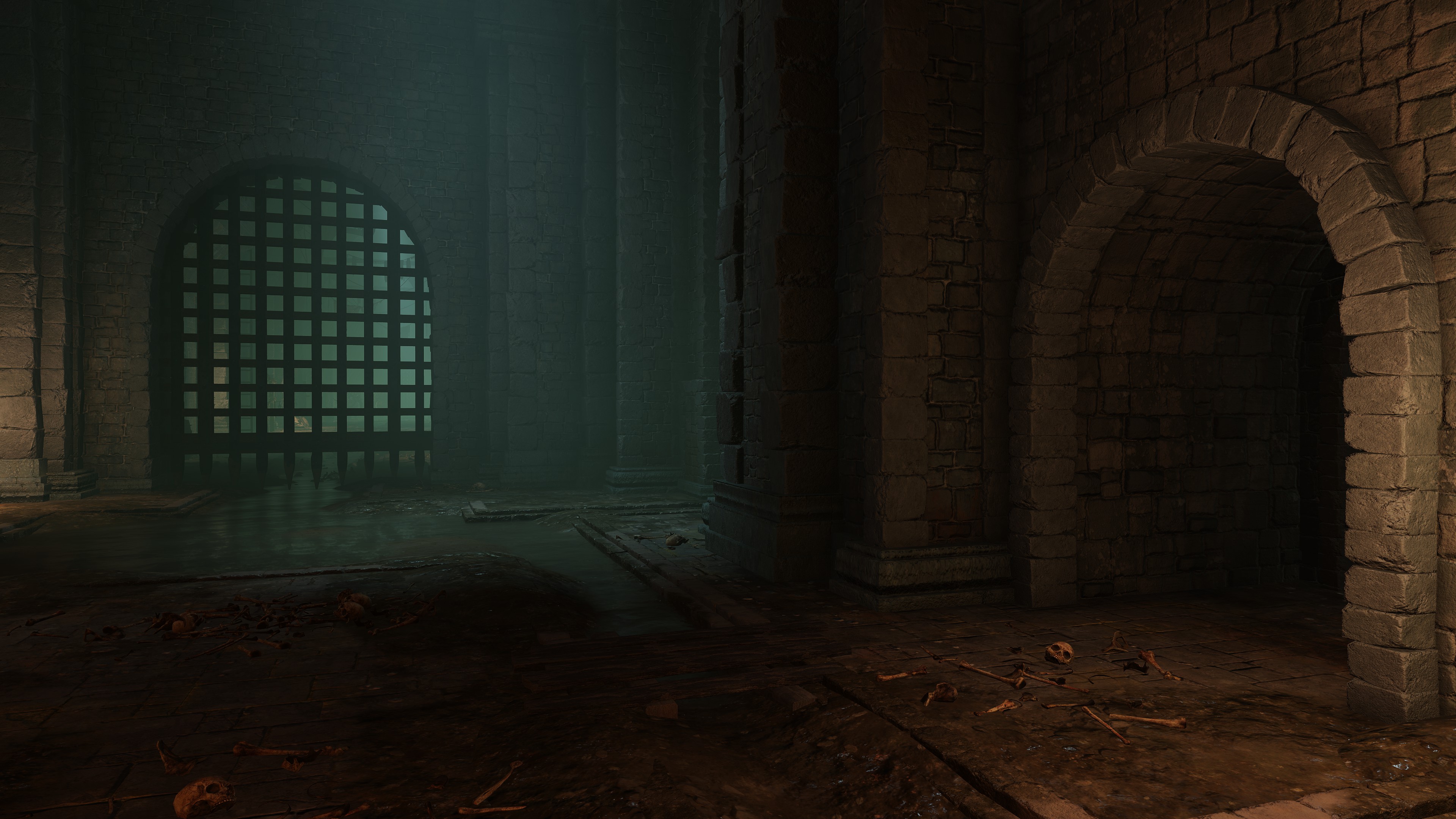
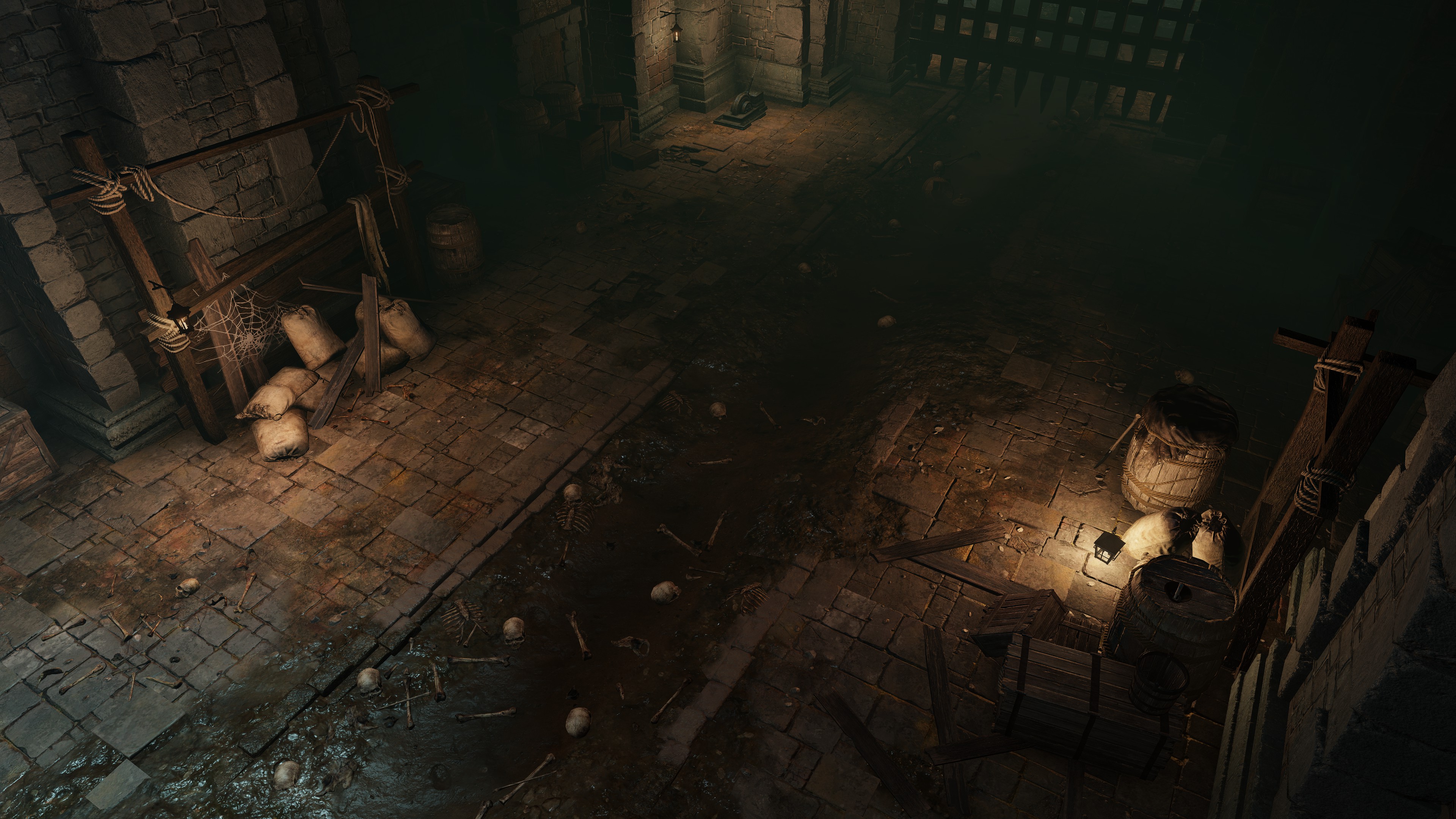
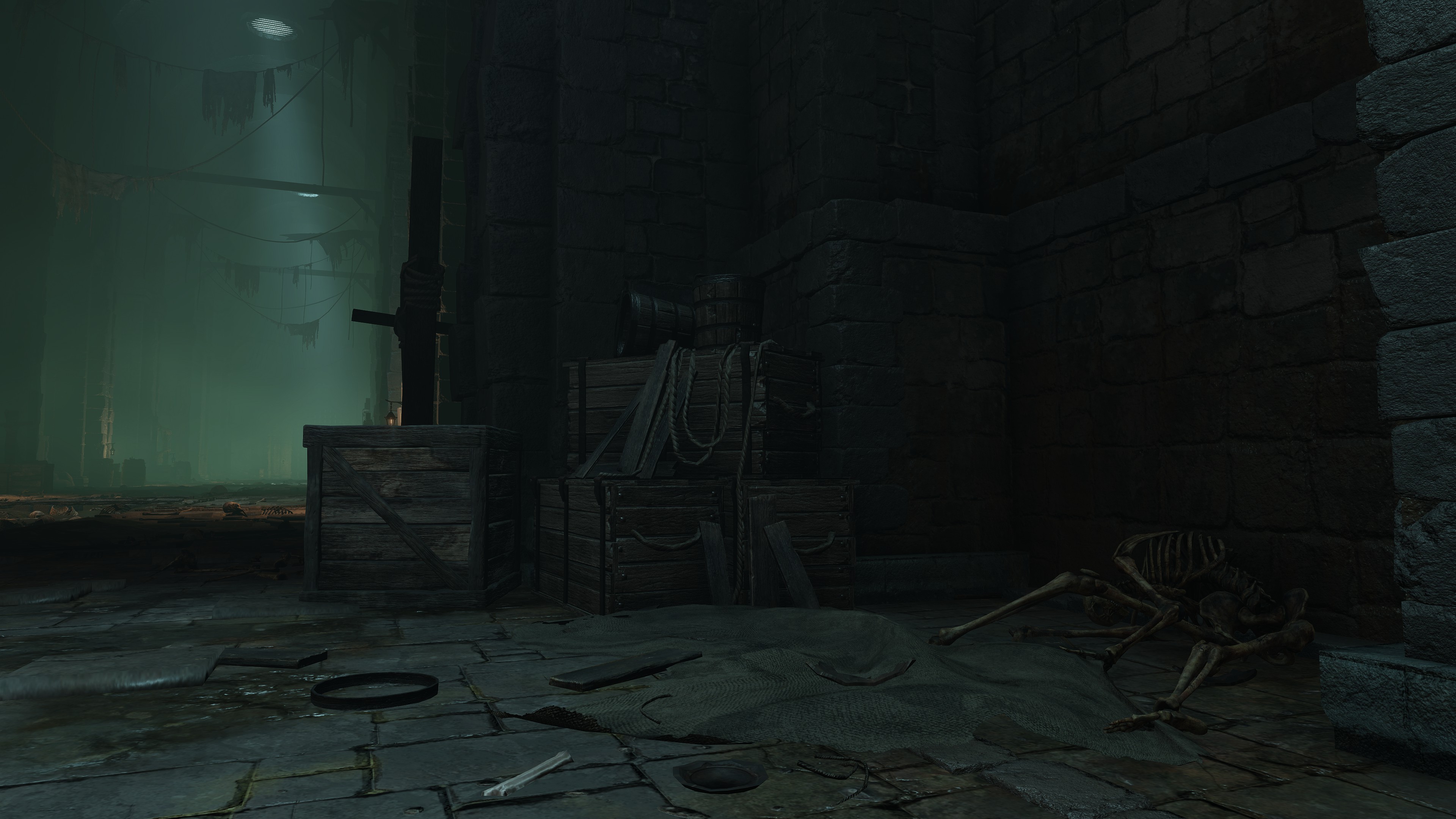
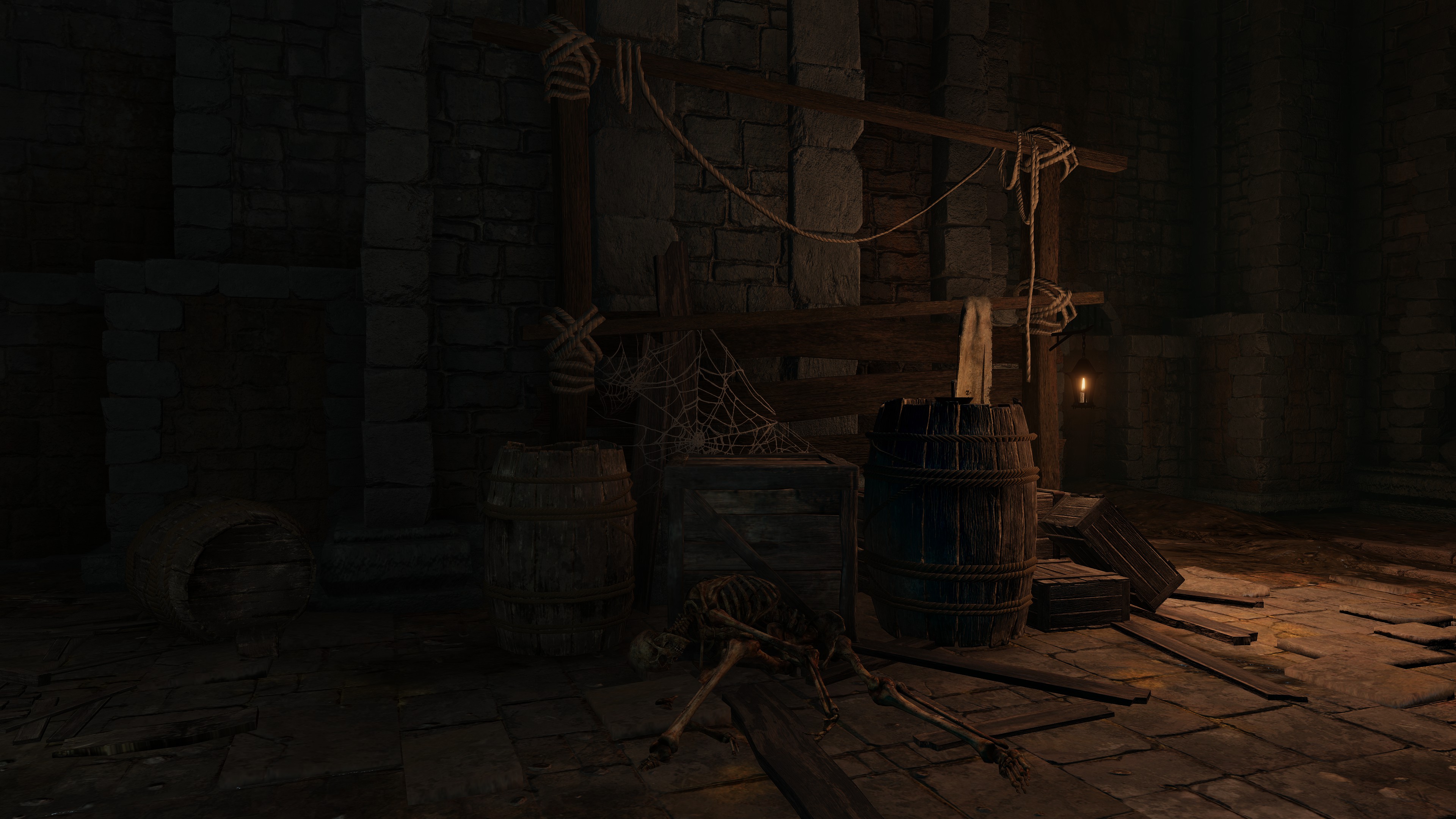

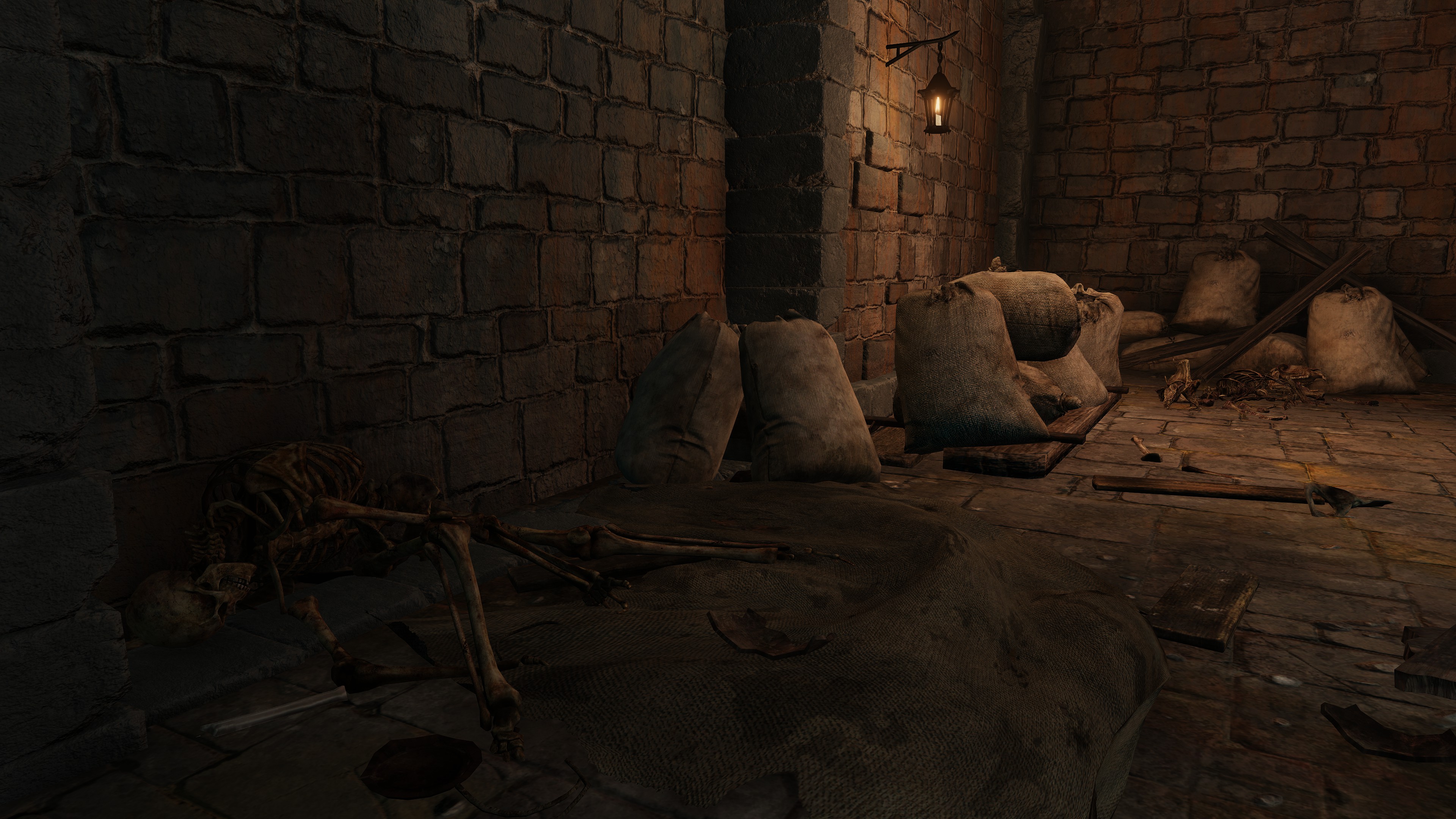
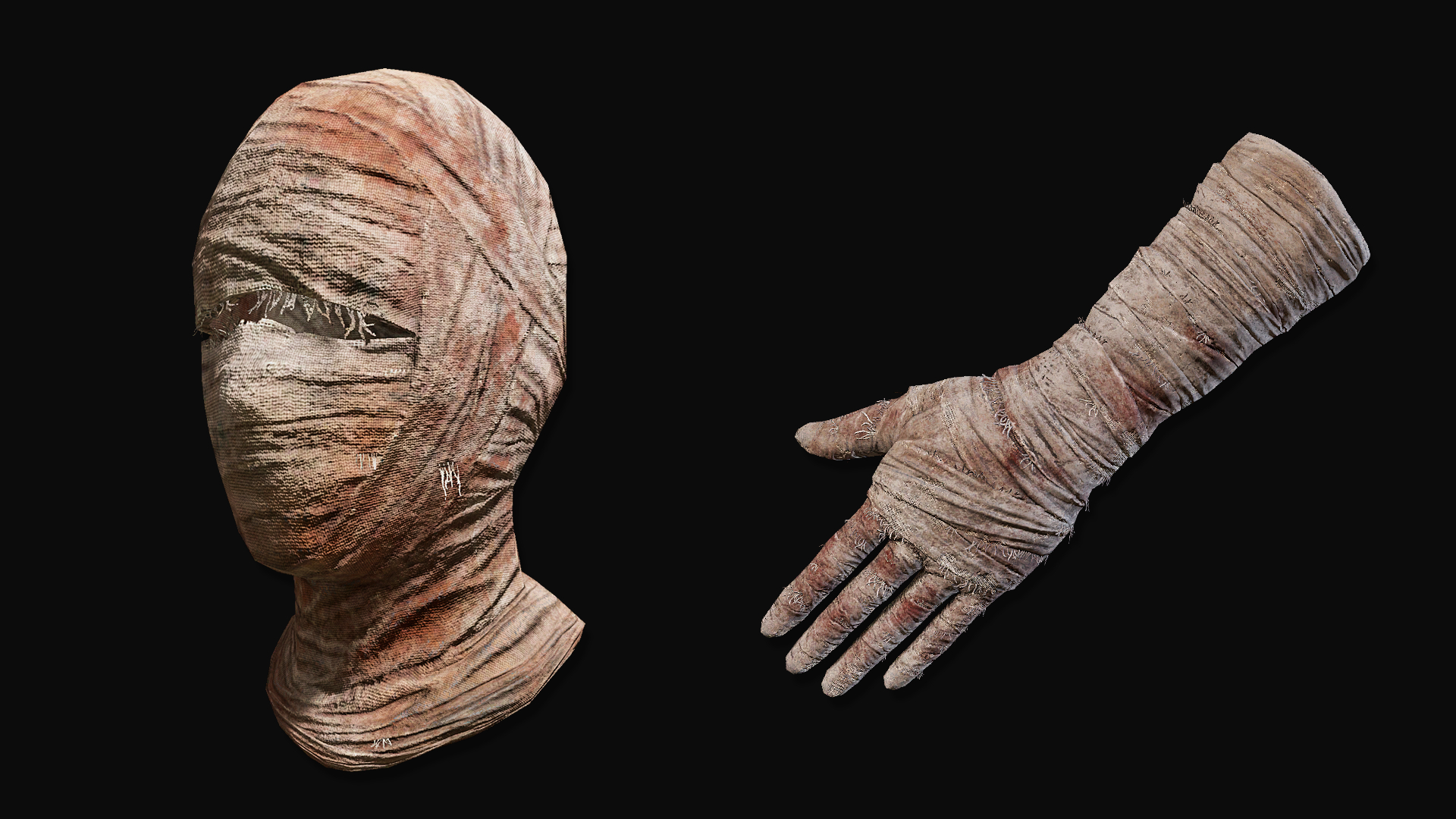
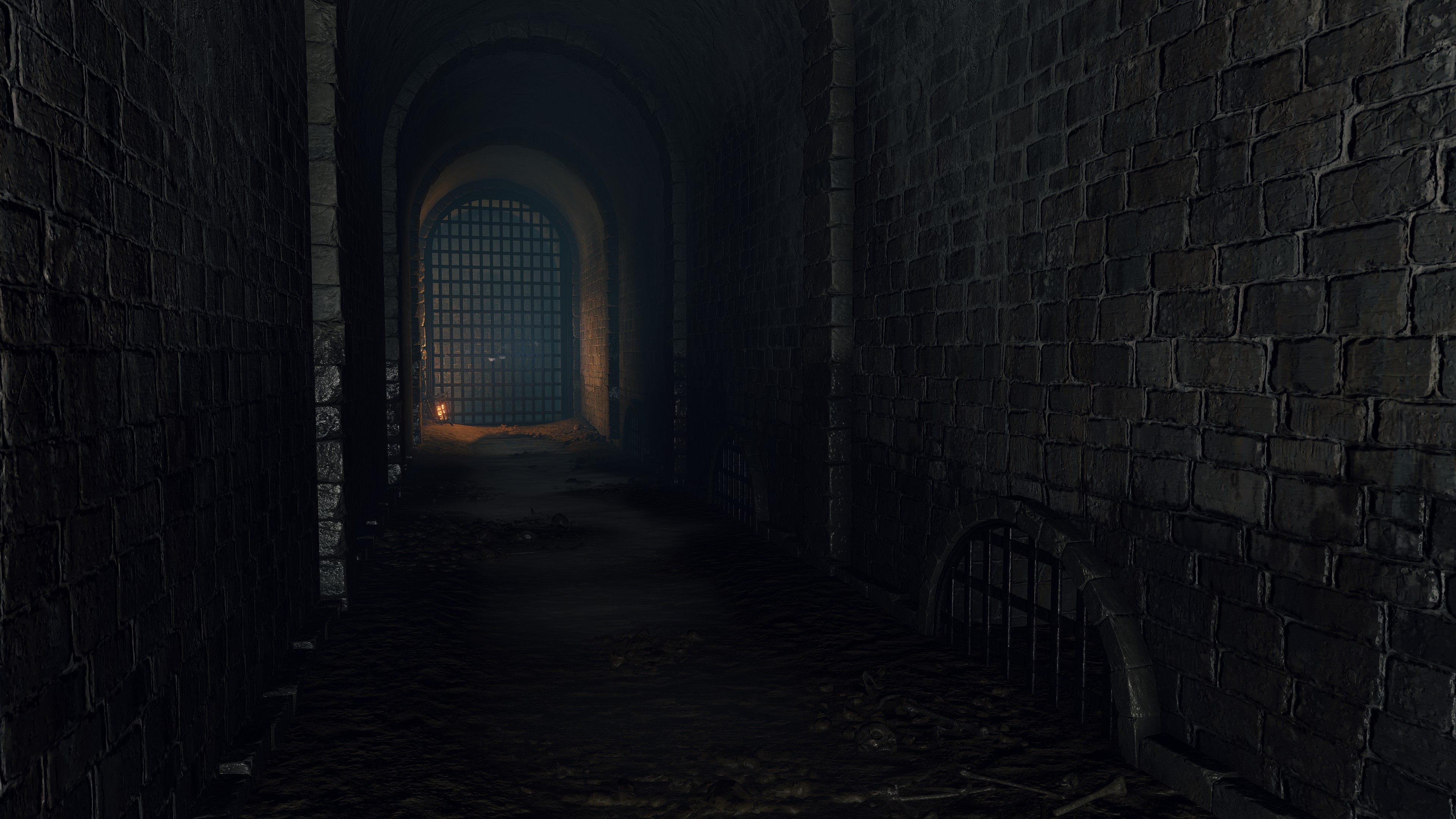
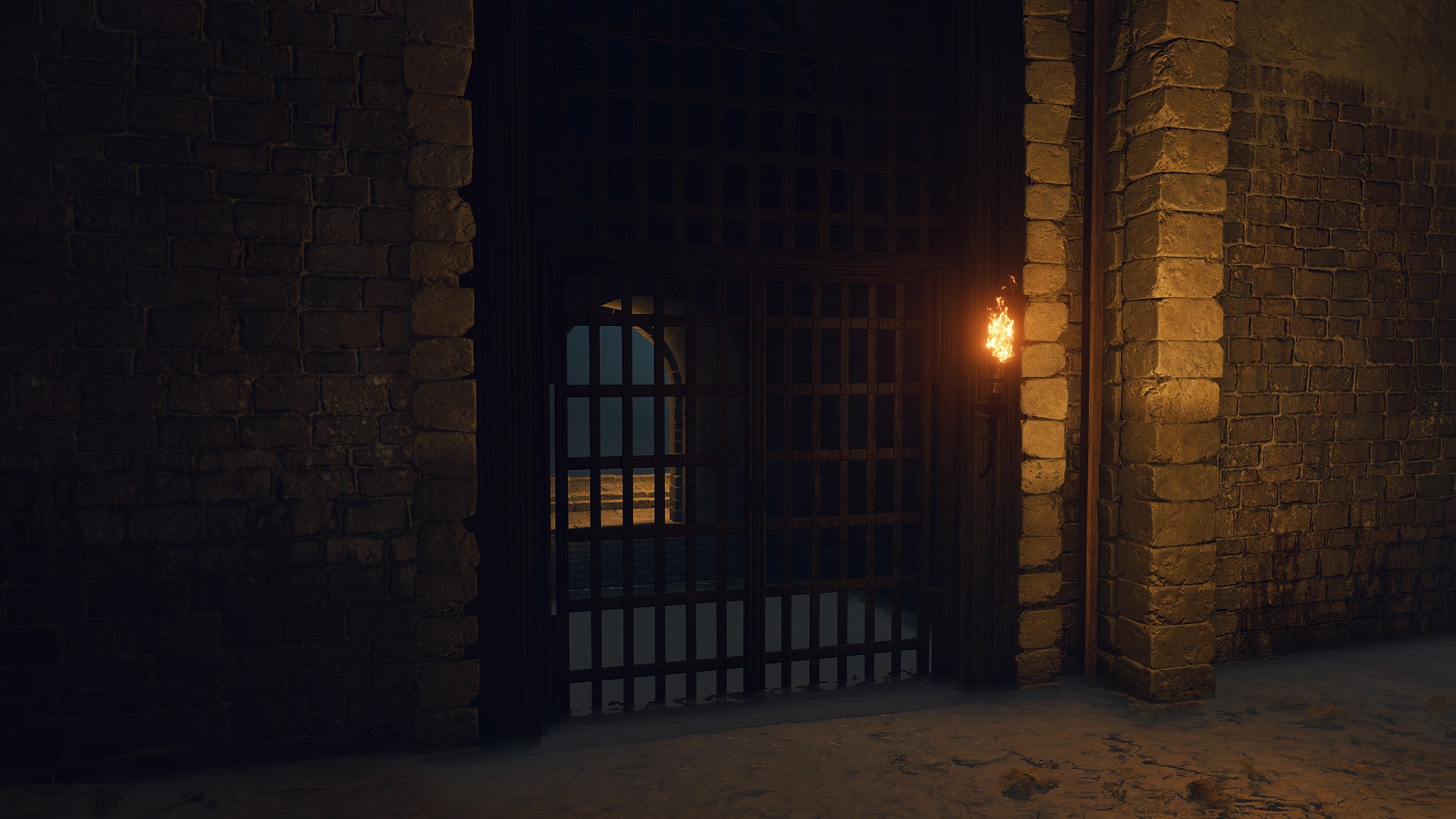
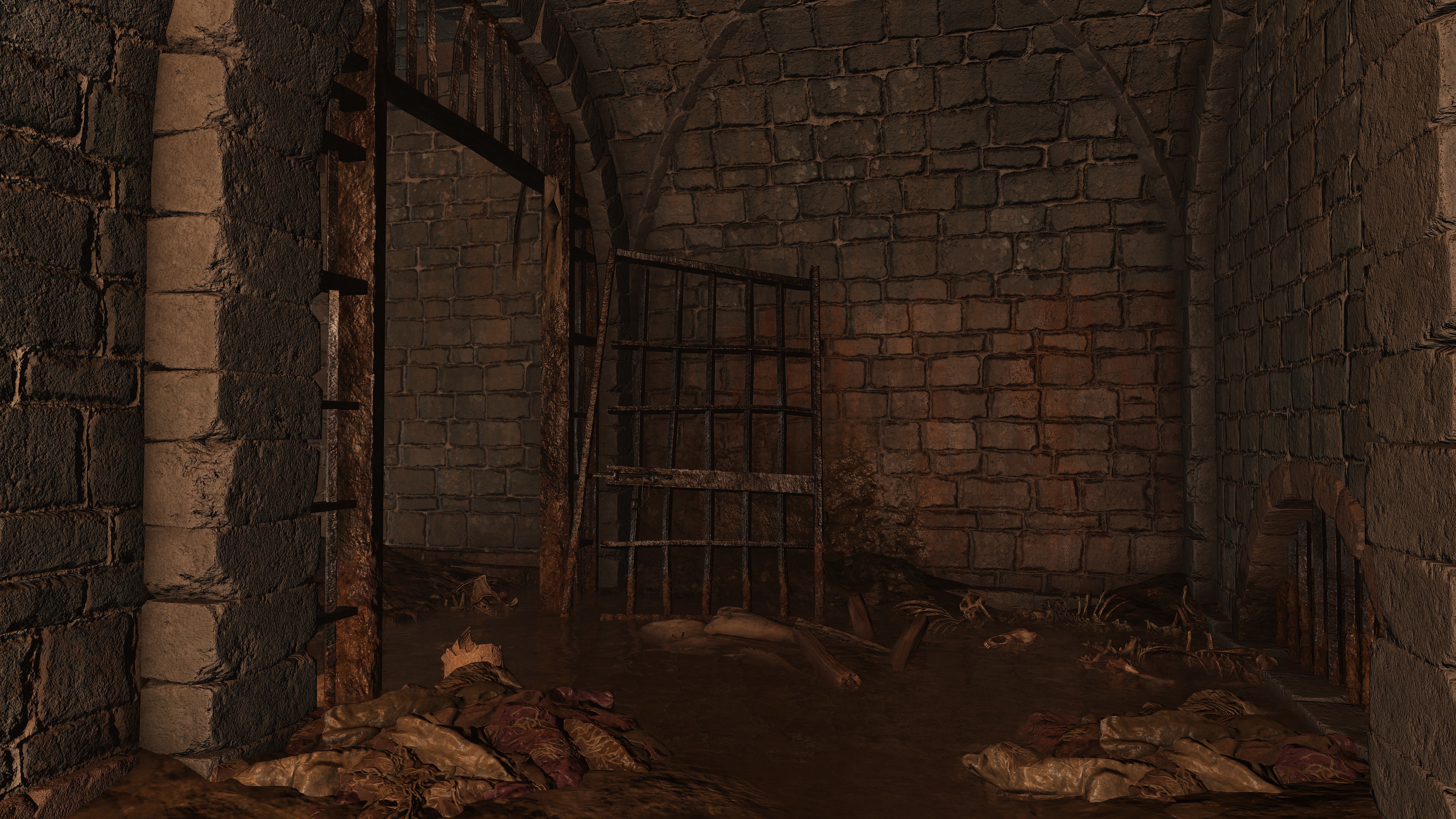
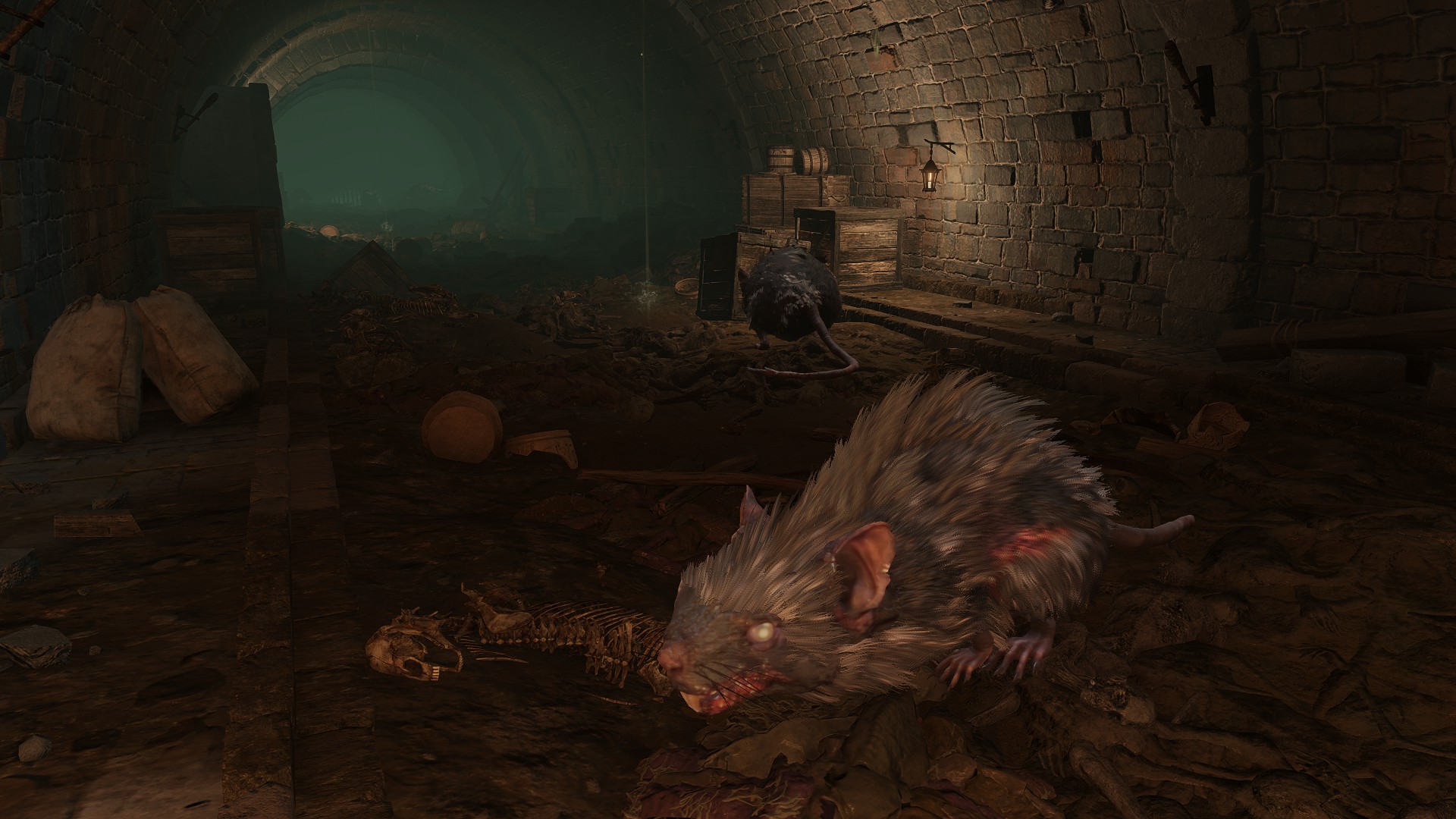
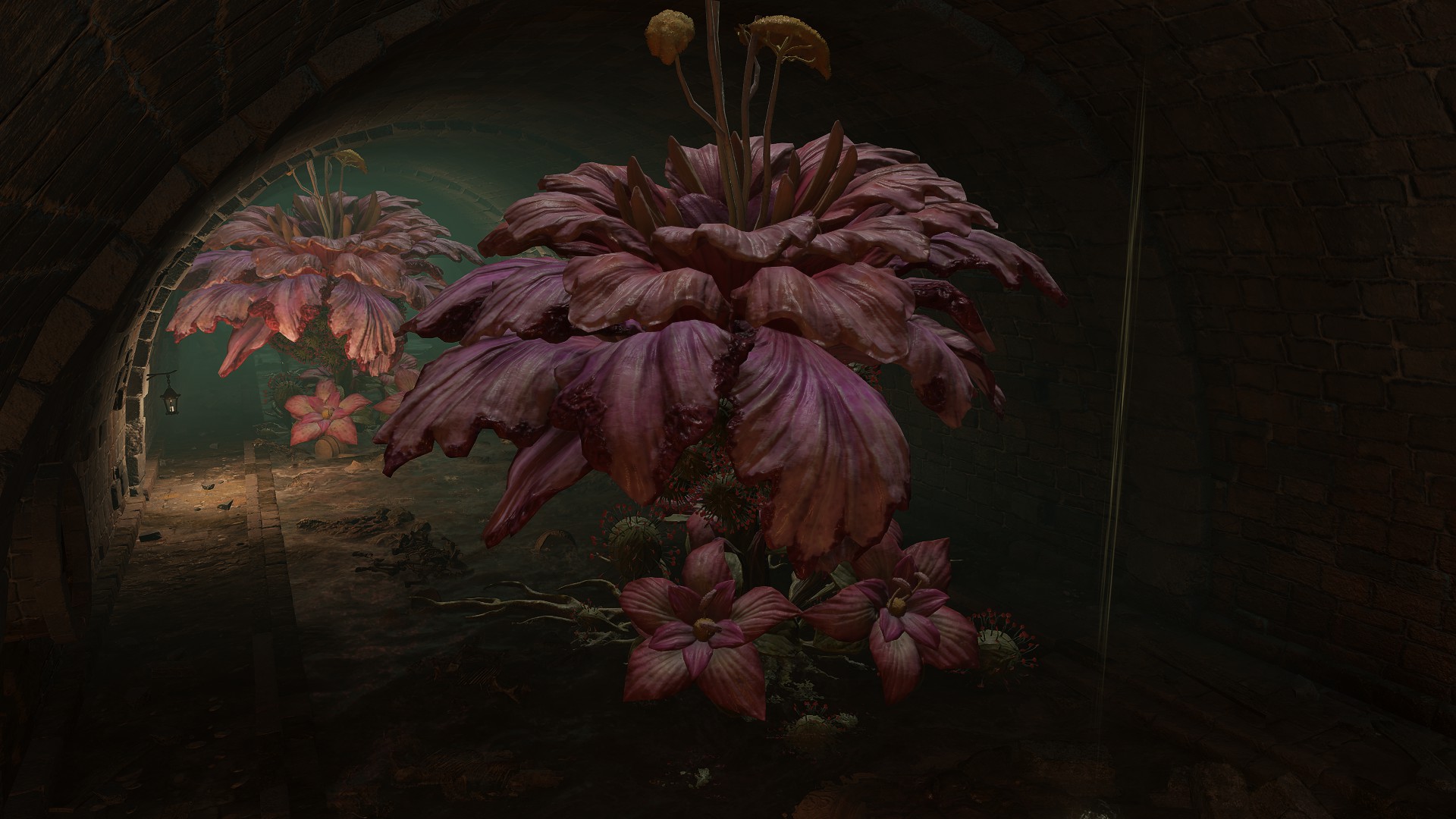
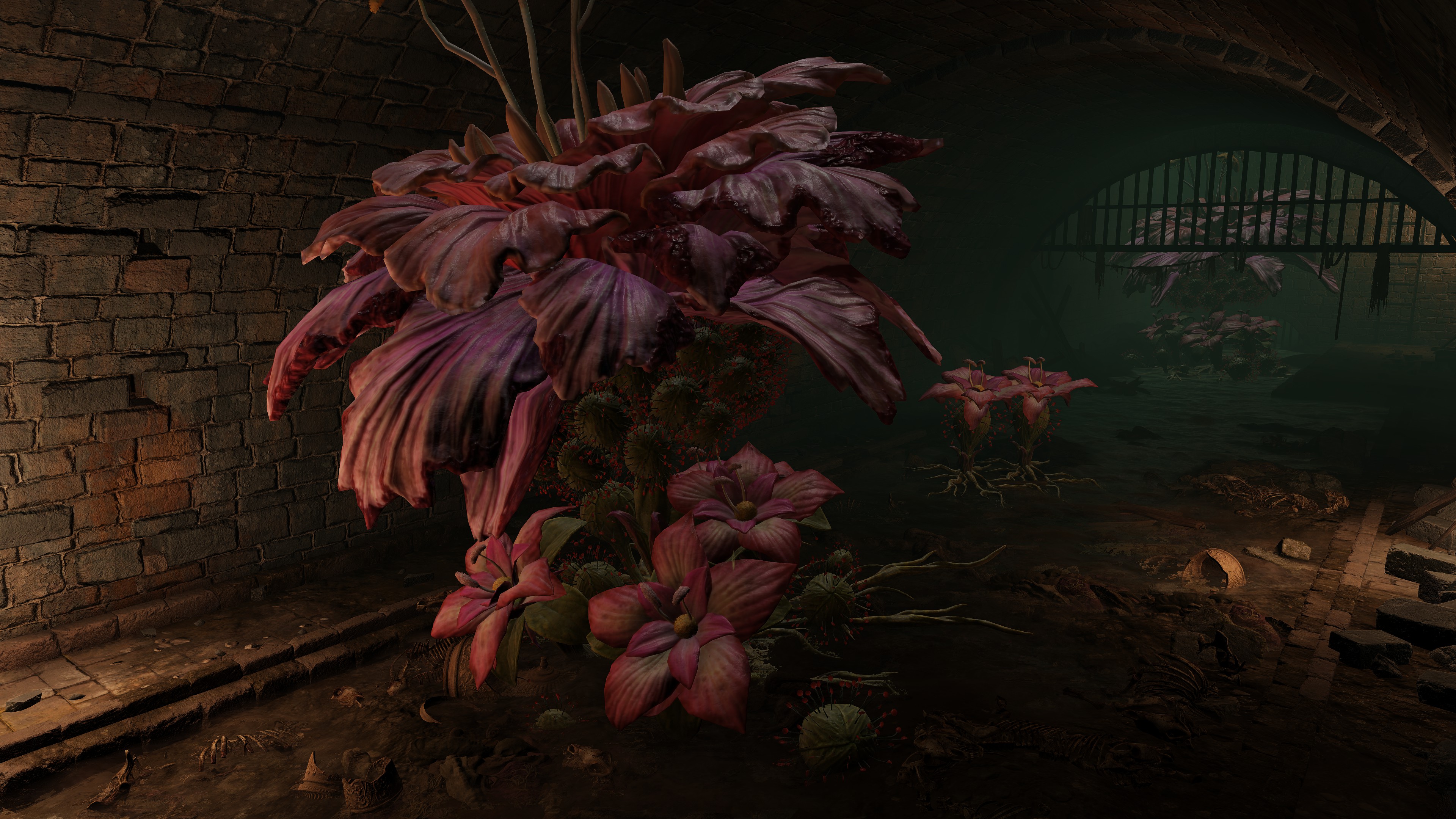
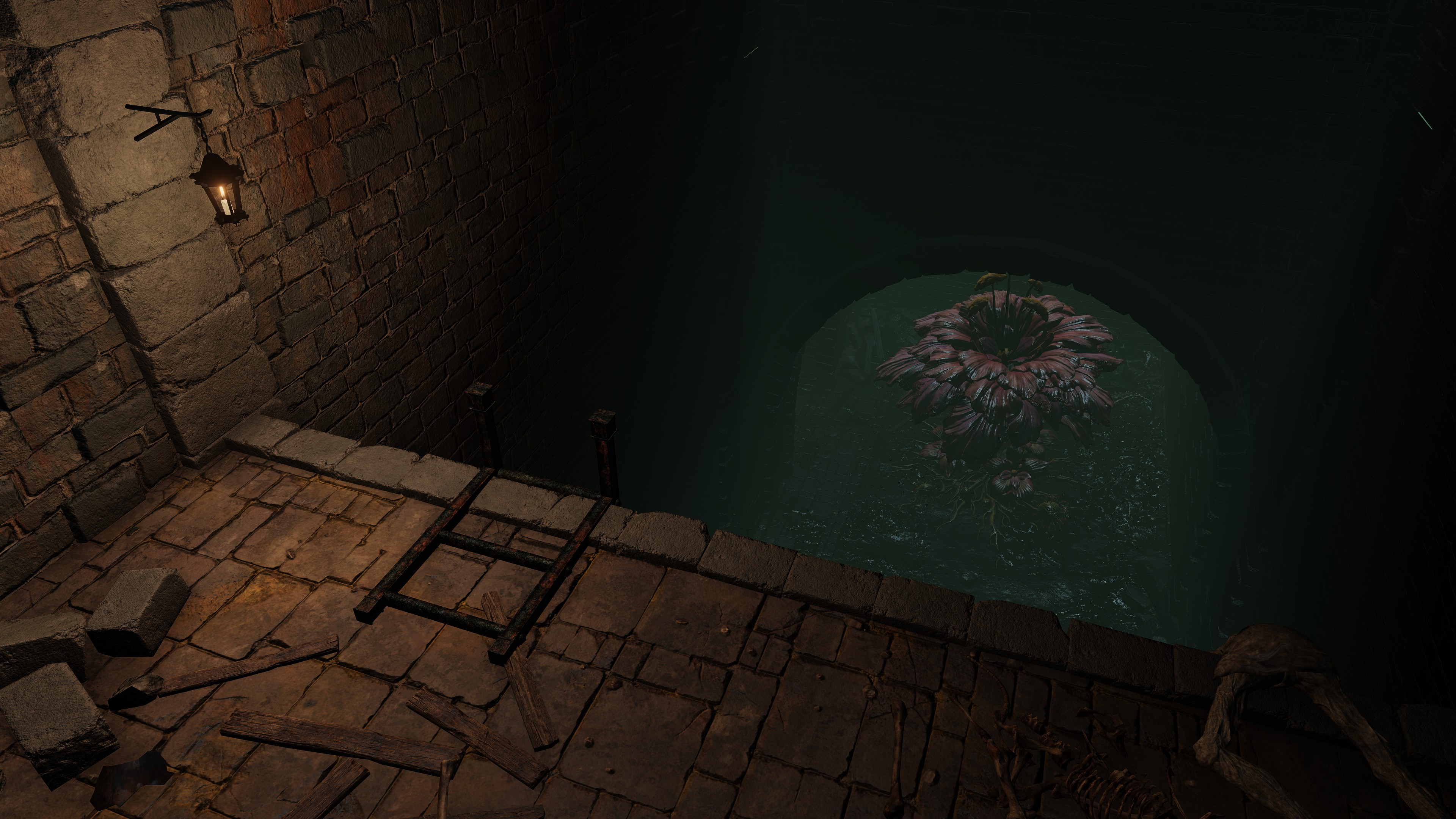
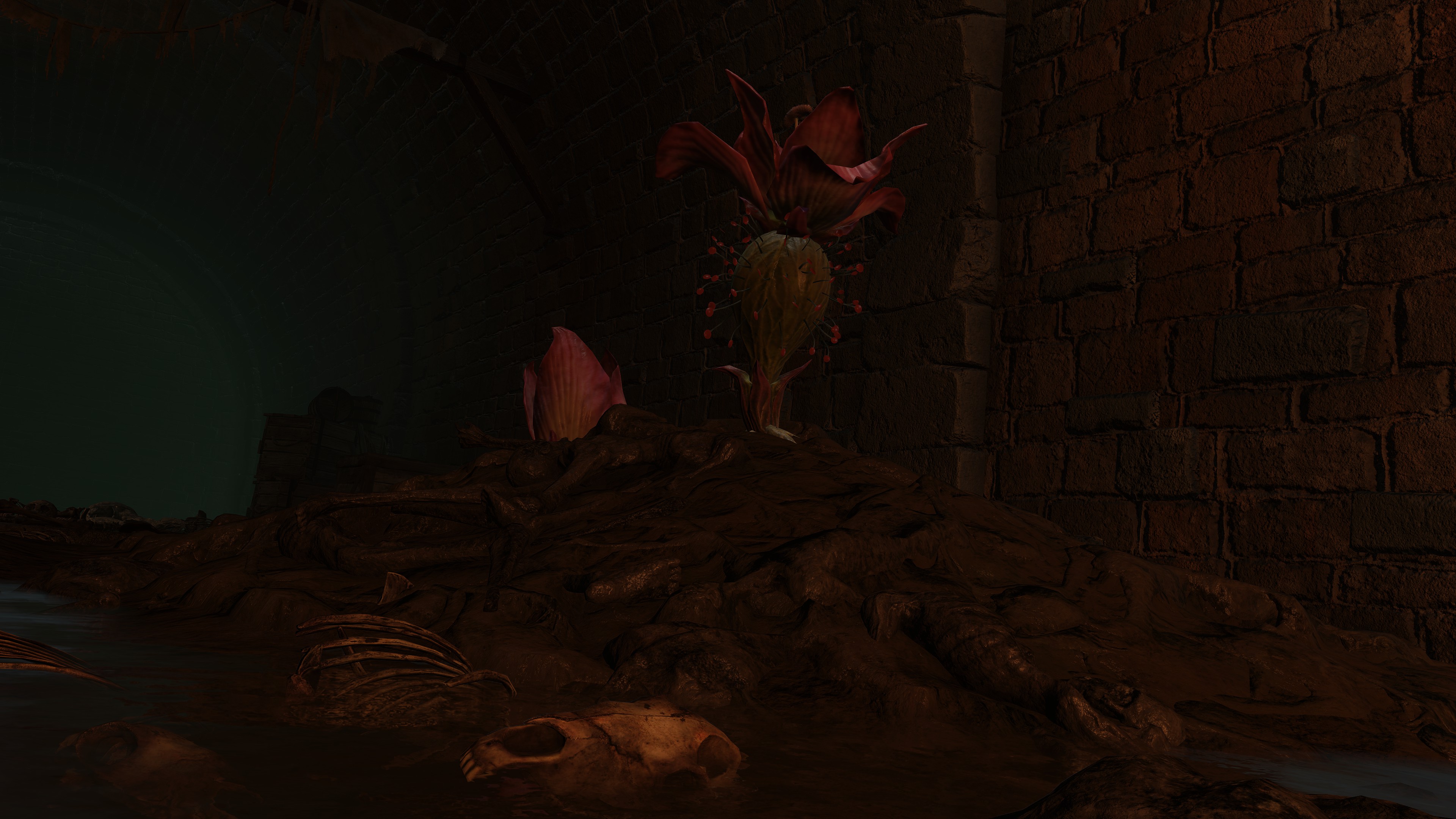
How closely-knit was this community of malcontents is always in doubt, but life in the sewers was hardly pleasant as is. It is easy for residents to get lost in the labyrinthine pipelines without rainbow stone arrows to help map a path. One wrong turn, and they might die of falling, starvation, or worse. Giant rats, slugs, and prawn are the most common vermin to be wary of. The carrion also attracts Miranda flowers, the pink petals showing just how long the big blooms have rooted themselves in the corpses hidden from the Erdtree’s rays. Add in all the poison, and it is no wonder that the bodies just keep piling up. The victims’ deep resentment over this miserable fate has brought bell ringers to draw out their vengeful spirits. No surprise, a few miss life under the Erdtree from the warming stones we can loot from the dead. But overwhelmingly, their kind are still sinners evading the golden rule. As we scavenge the mountains of corpses, the glass shard’s description reminds us of how things which can’t emit their own light are garbage. If radiant holiness can’t find purchase, this is where they belong.


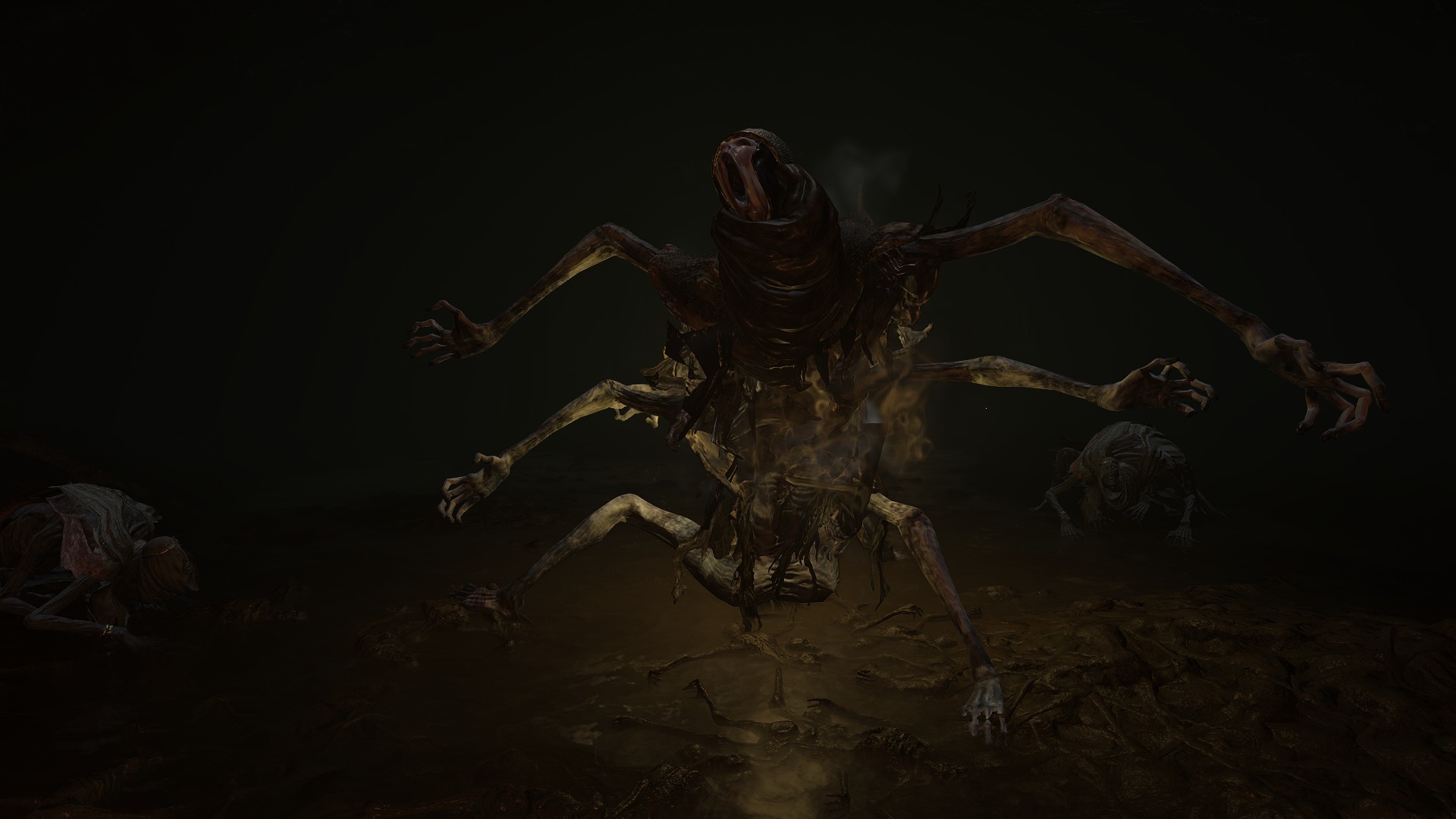
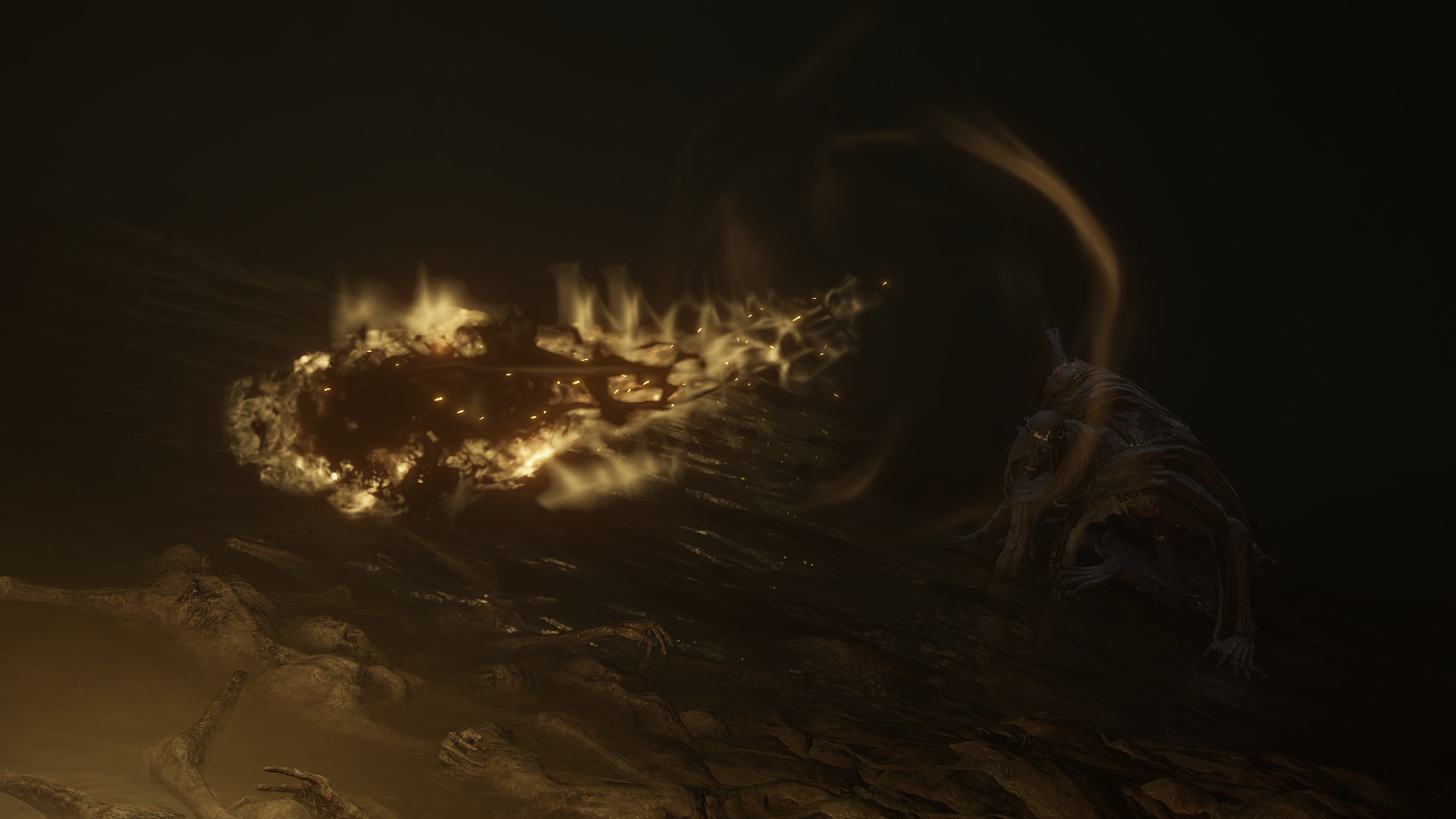
Filthy glass shard. Merely reflects a little light, but can also appear as if it is valuable from a distance.
It will never emit a light its own. In other words, it is garbage.
Marika was obviously aware of this undercity developing where city guard were buried and lawbreakers they pursued were disappearing. She appears to have tolerated the arrangement, since it still cleaned up her city and presented the outlaws with an appropriate punishment. But with all the death, it didn’t hurt for the queen to provide Erdtree Burial to them. Living jars precede a lift down the main drain to the Cathedral of the Forsaken, a catacomb where the root sanctum was made a church setup at the front end. The bodies already offered to the greatroots reaffirm that the jars are being brought down to inter the local dead there, with the Erdtree’s Favor talisman stored before the altar dating this back to sometime in the Age of Plenty. If the trash wishes to be recycled, the priests sure to be handling the final rites for the Leyndell Catacombs leaves open the option to them. And beyond that cathedral altar hides the entrance to the prison of the Three Fingers and its mistaken devotees.
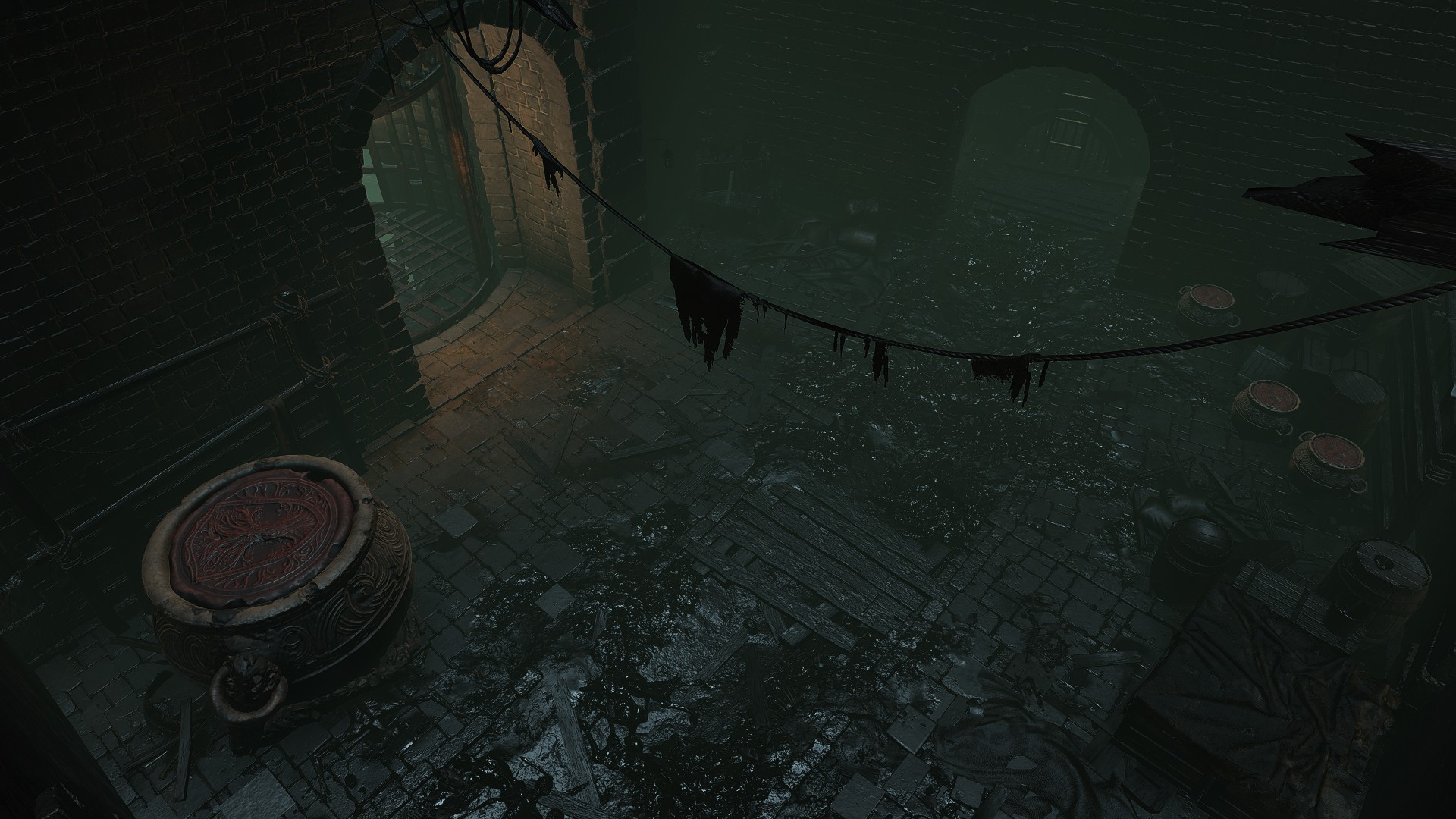
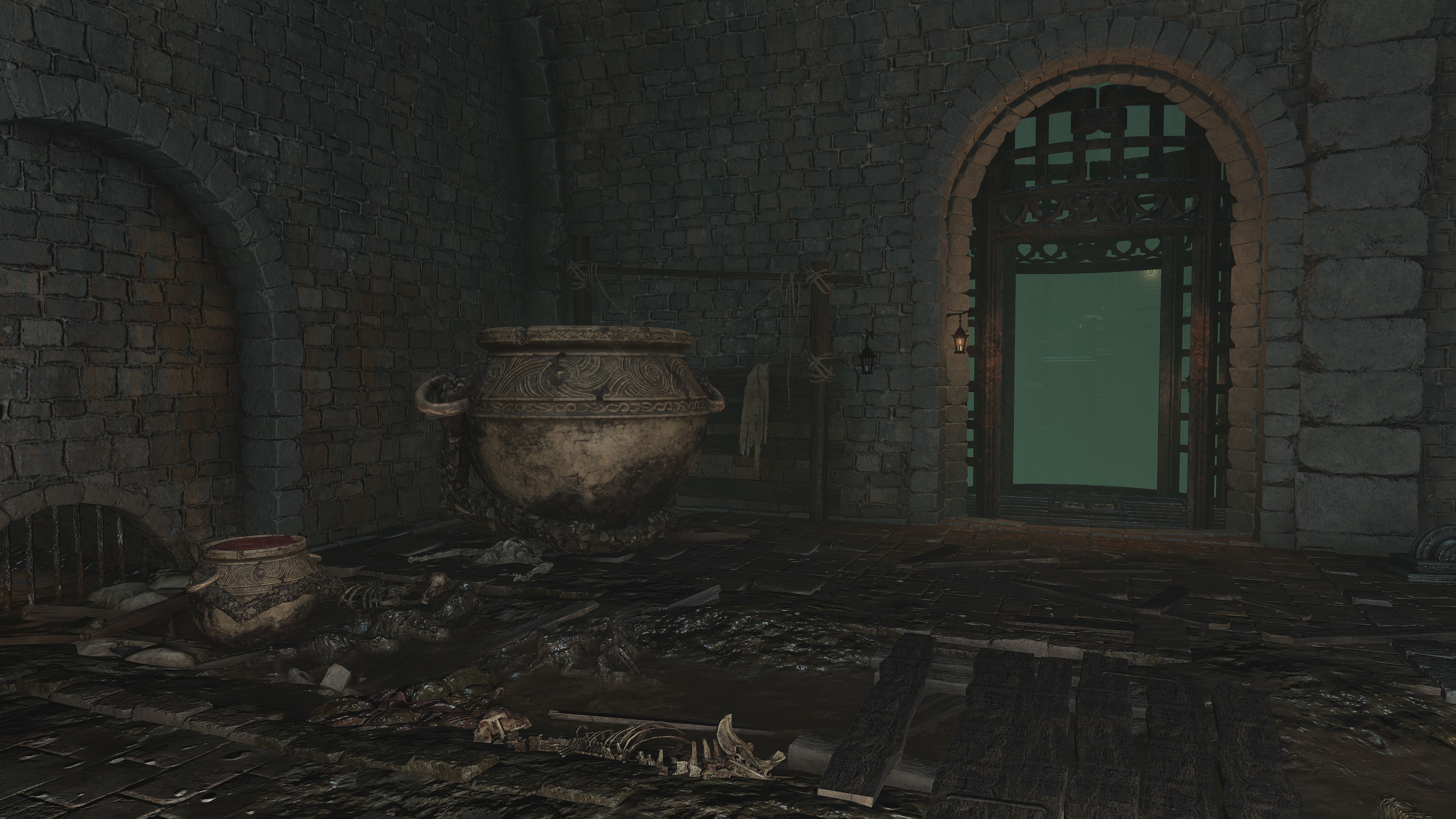
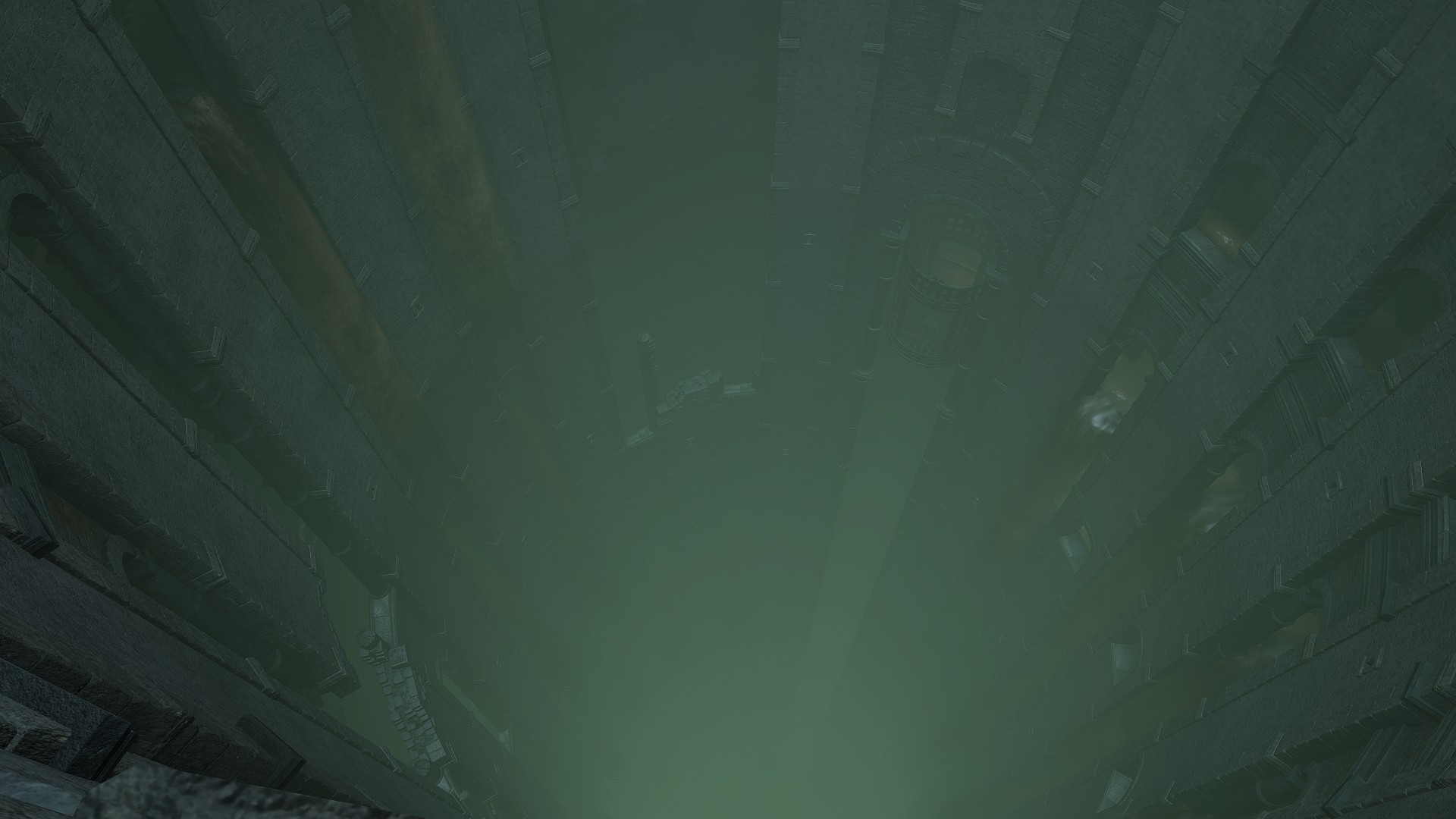
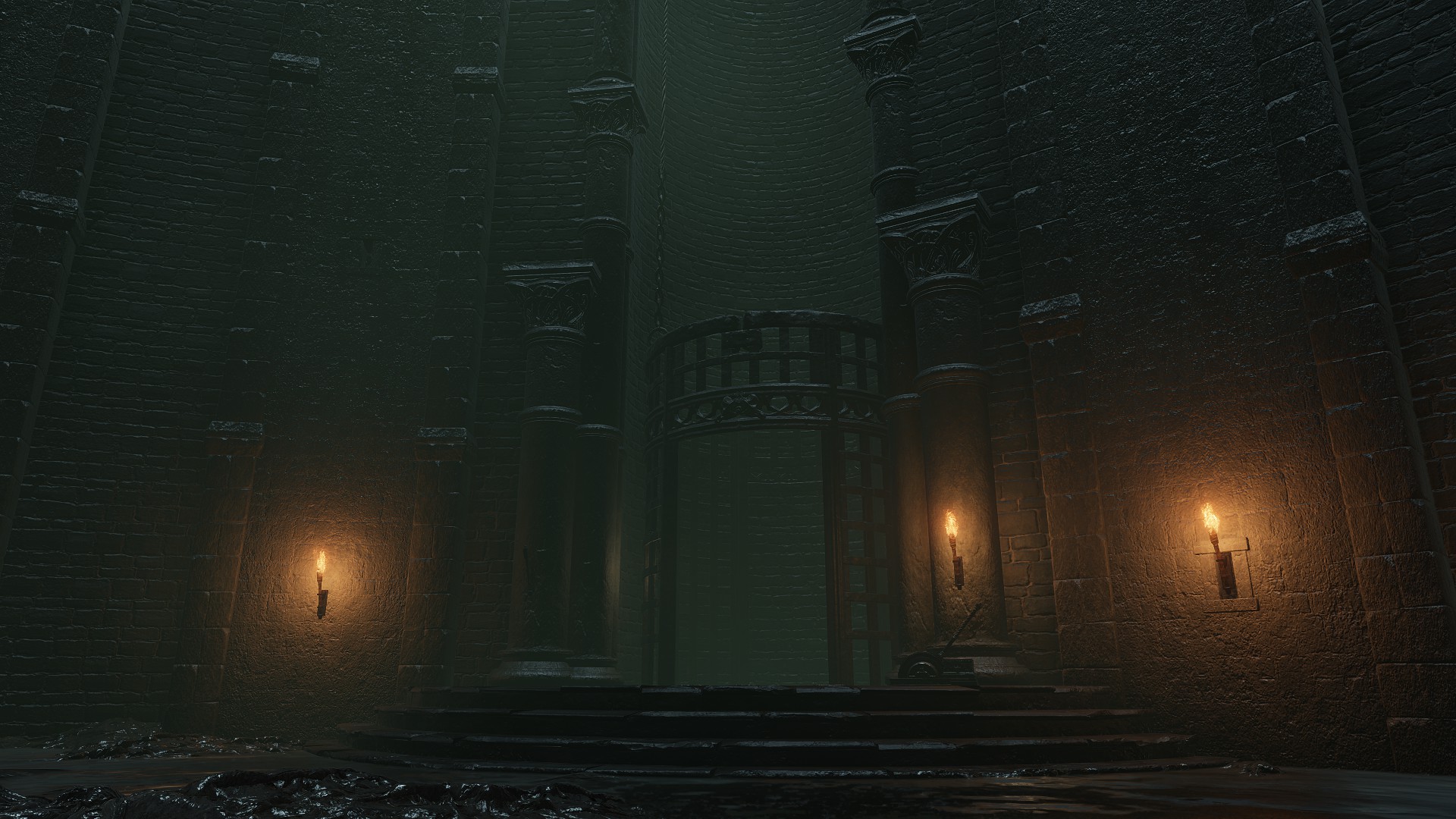
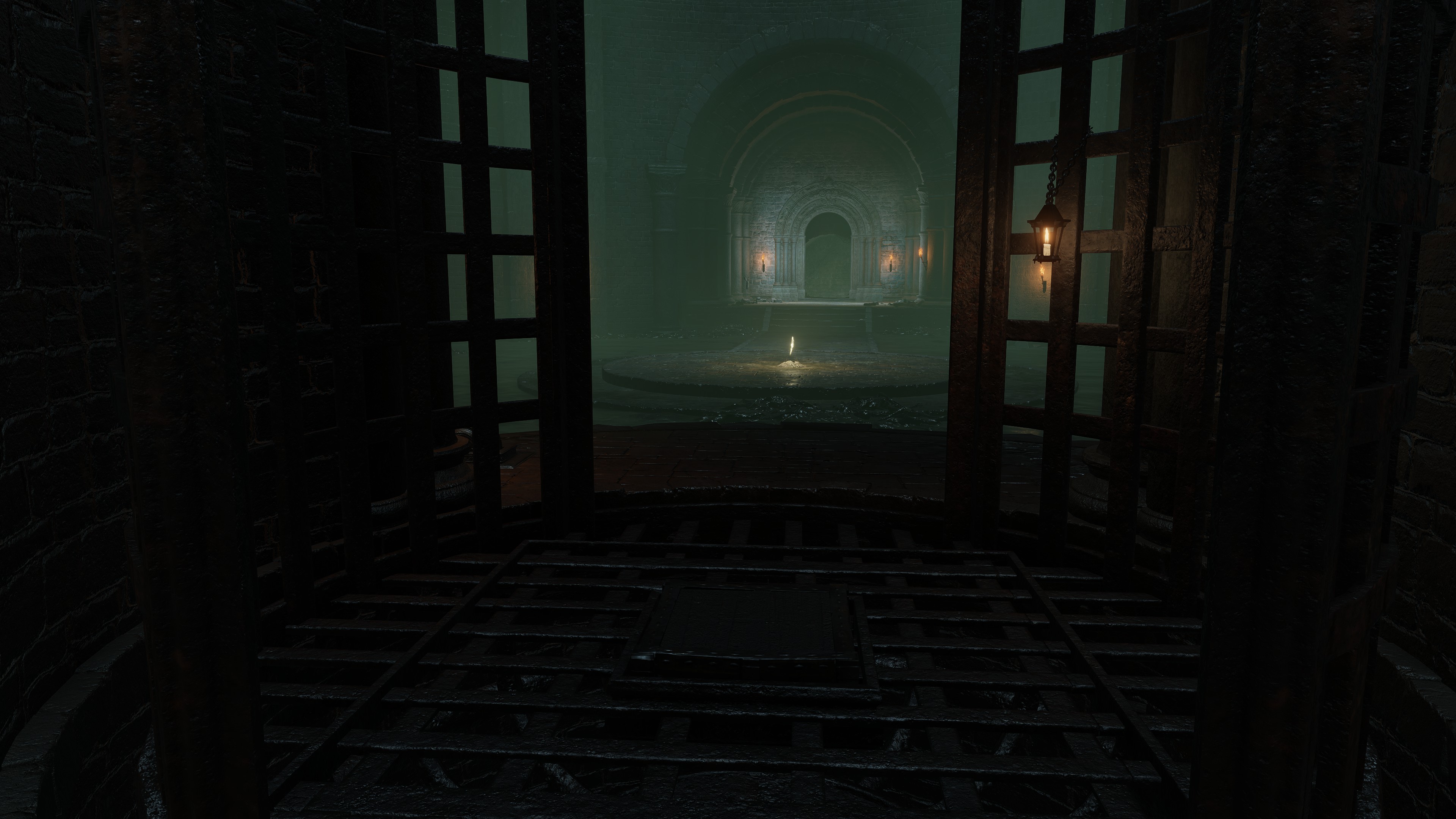

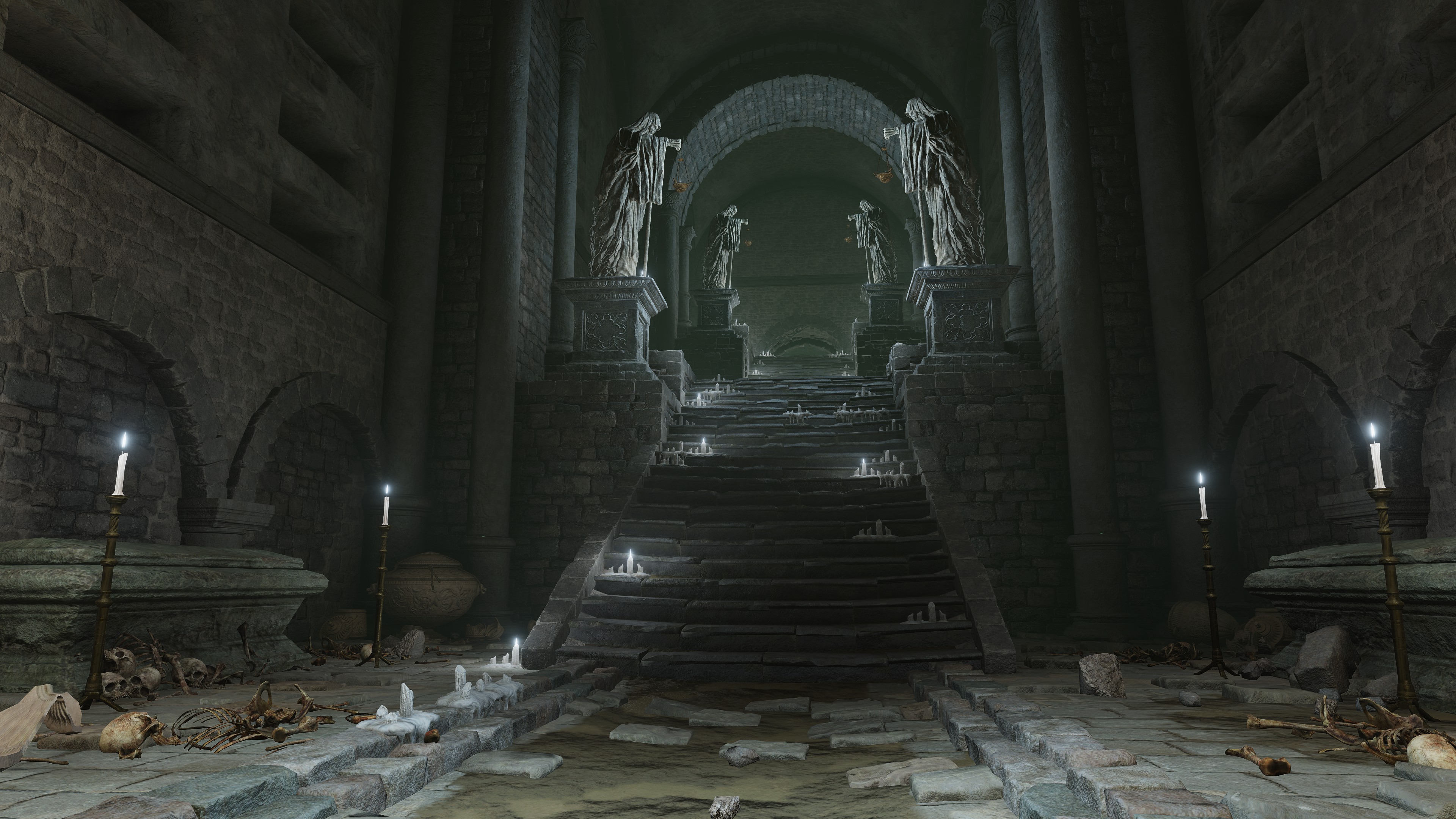
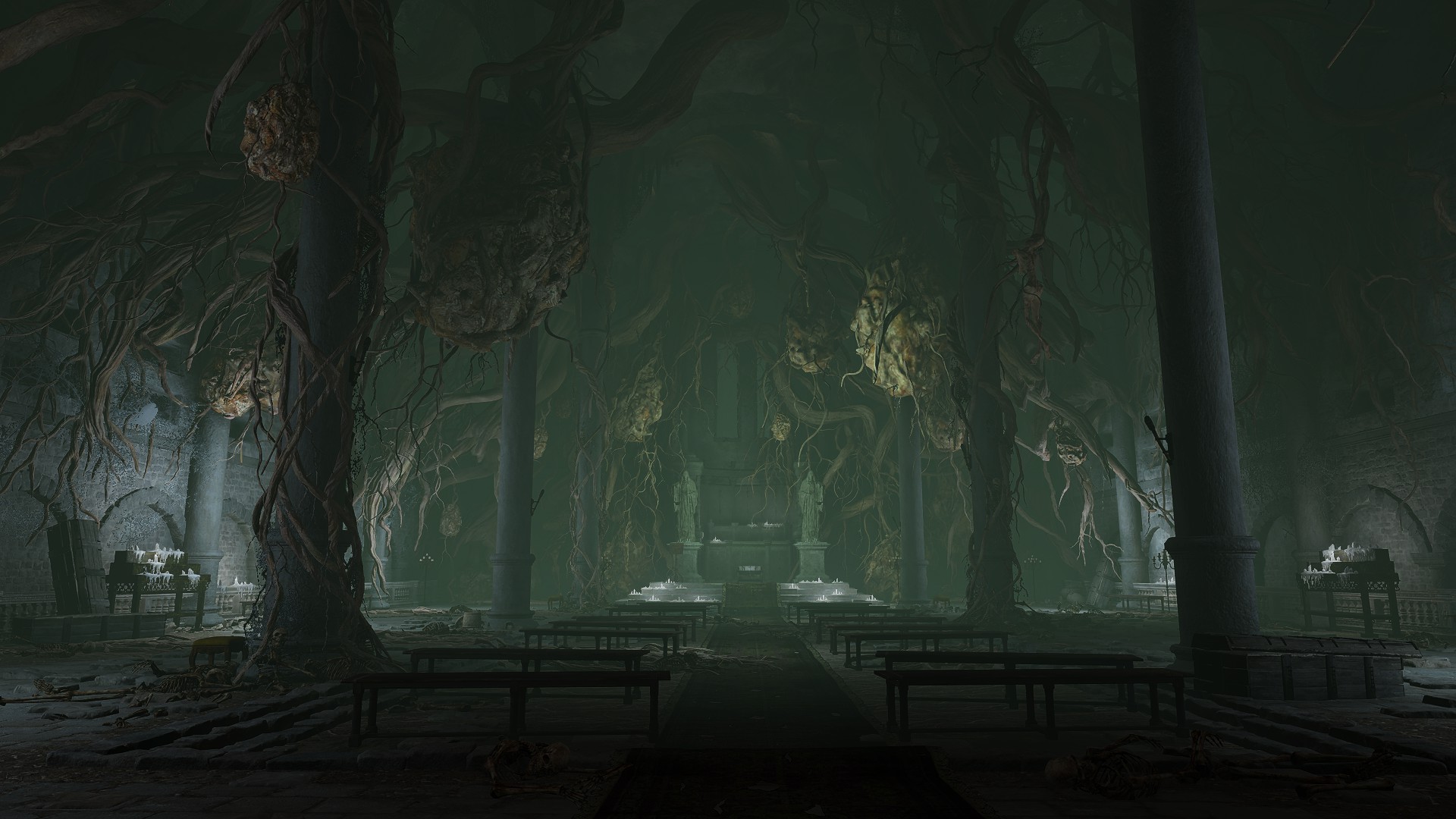

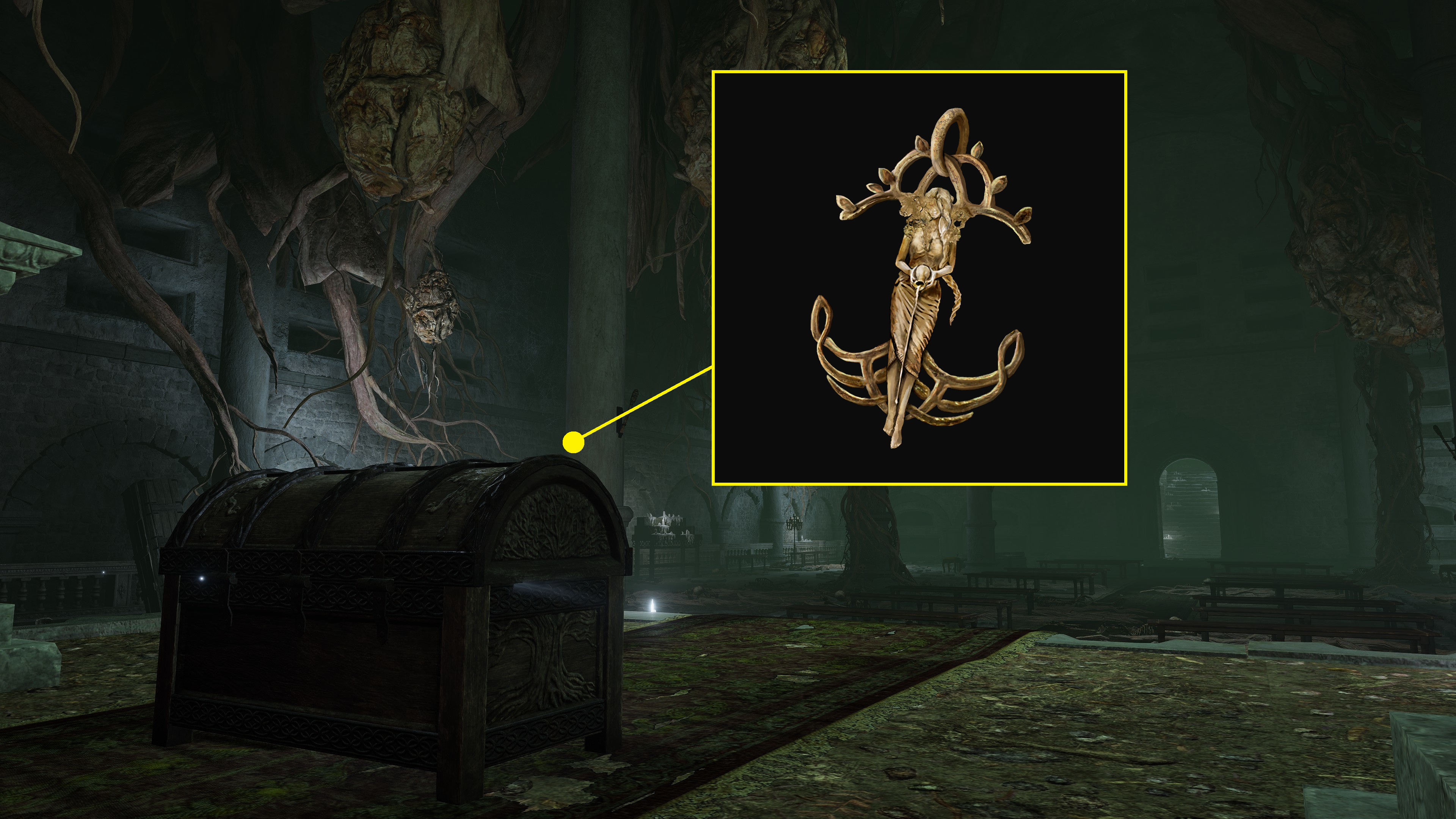

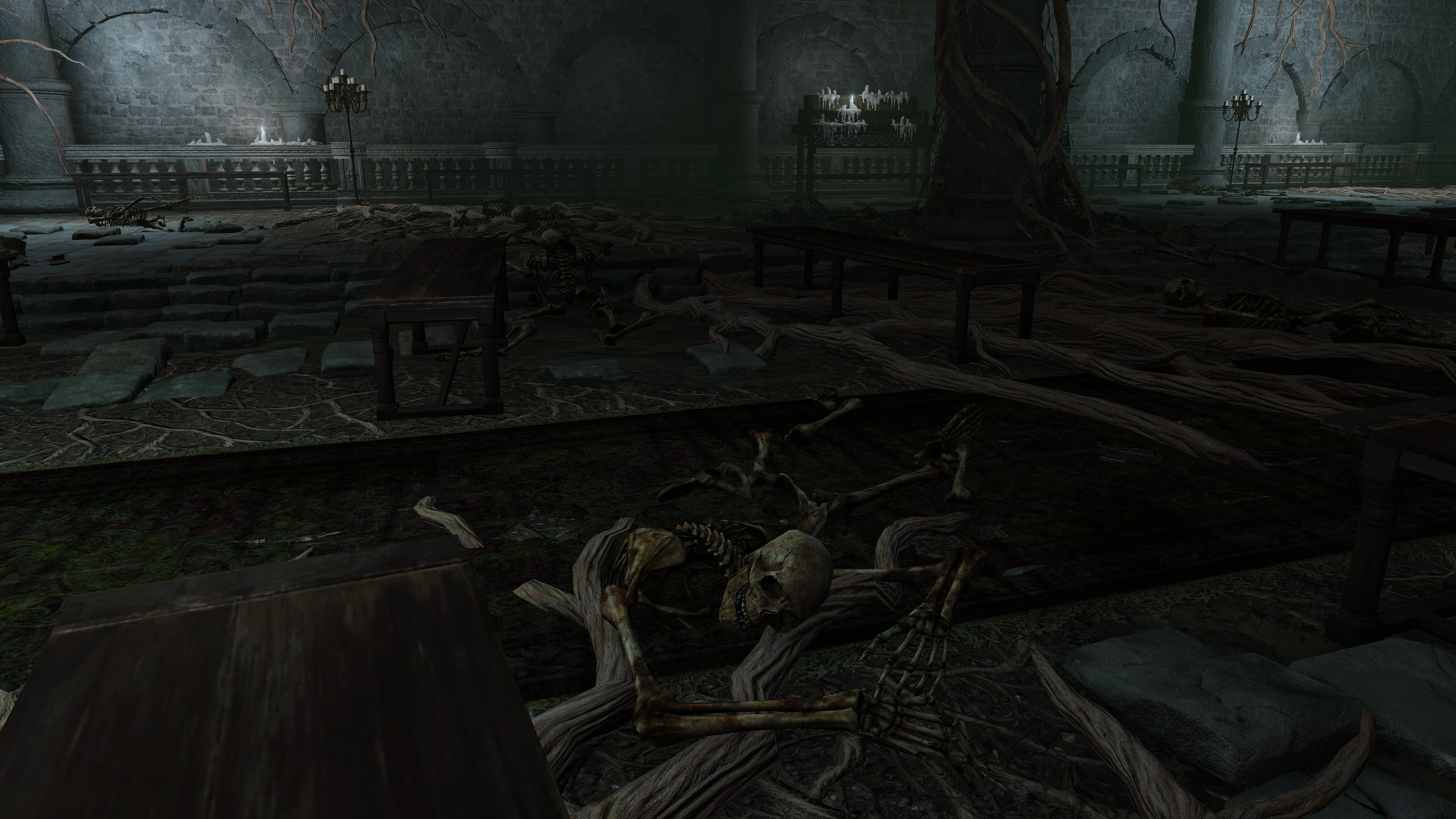
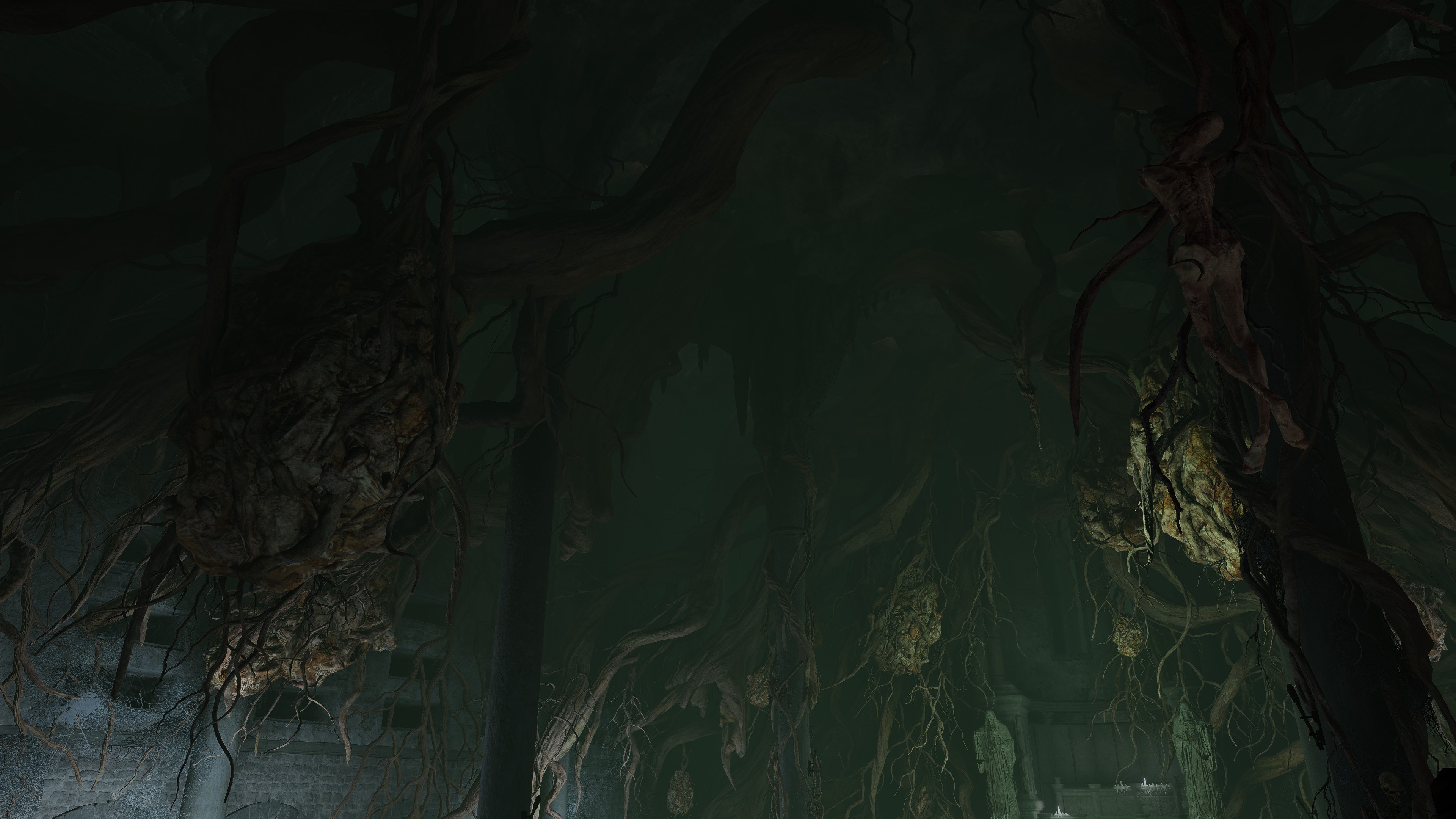

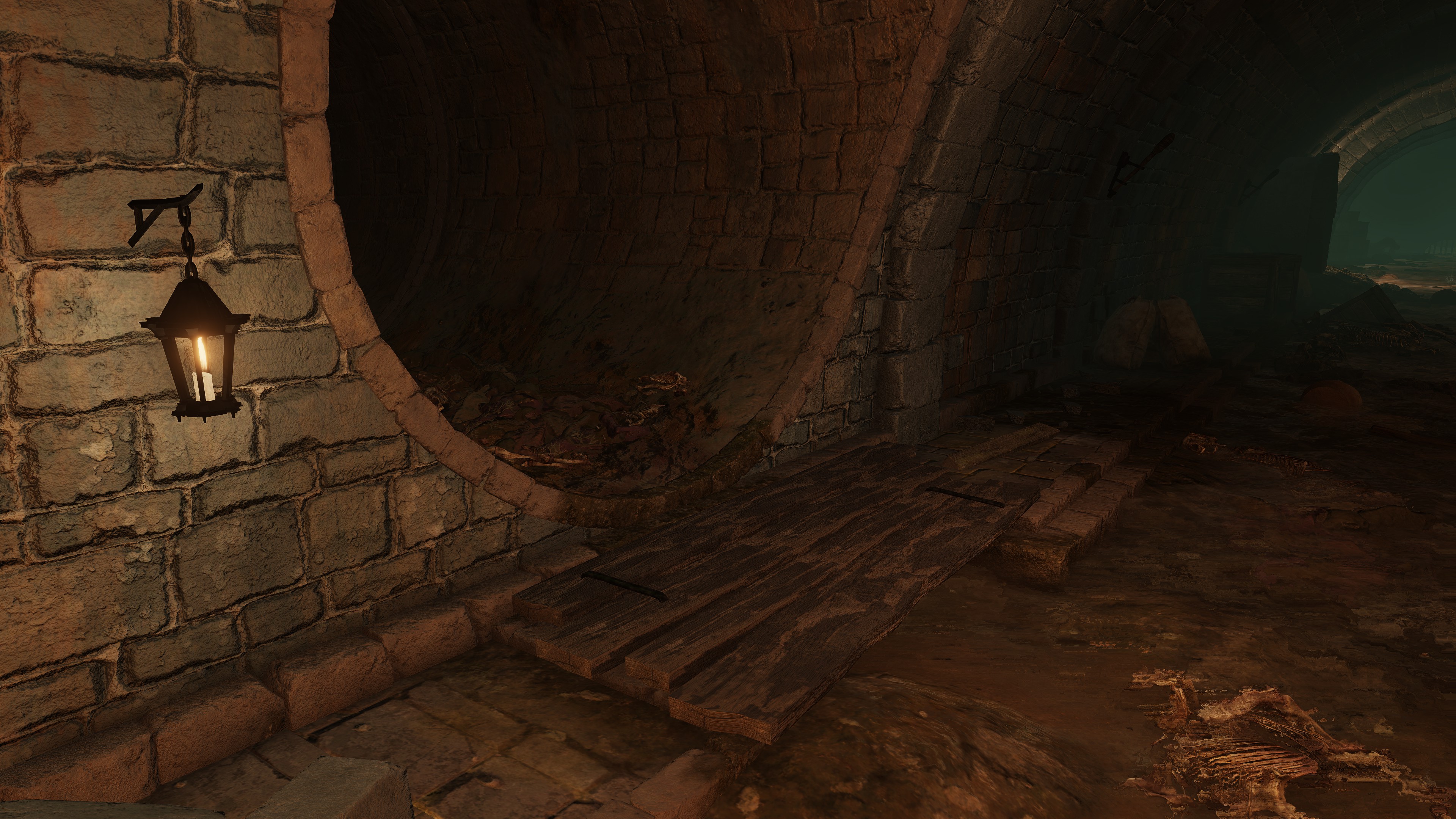
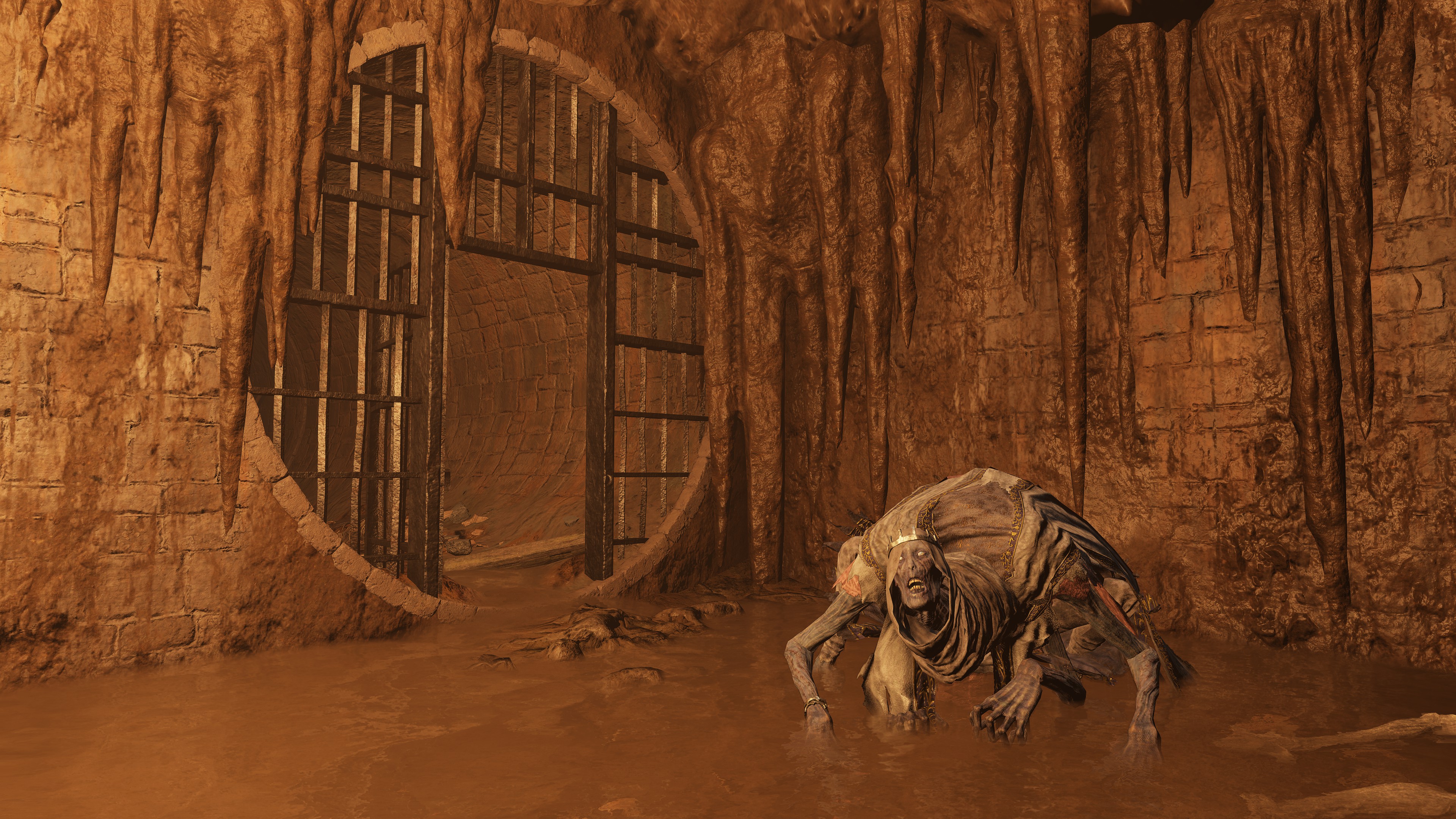
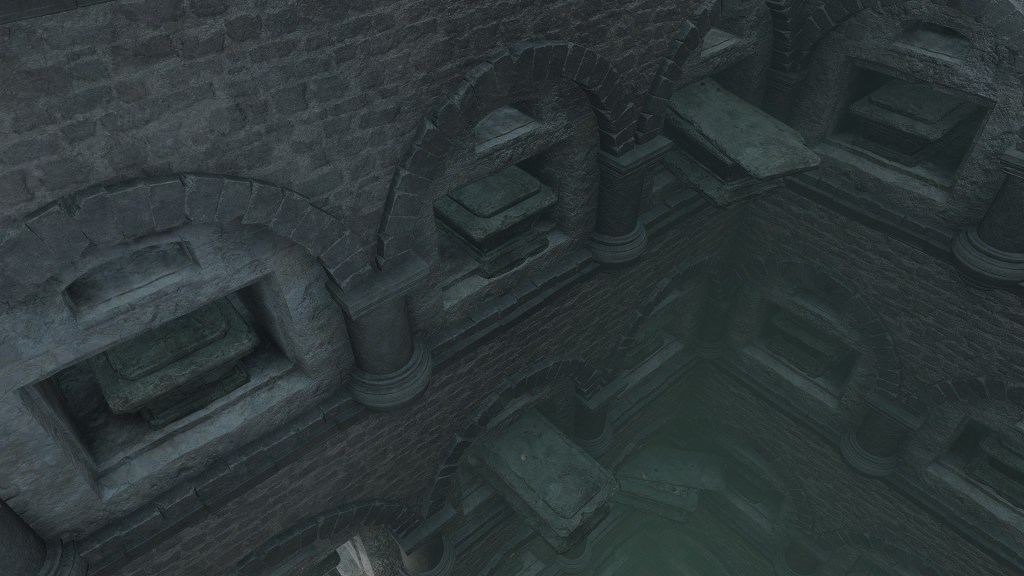
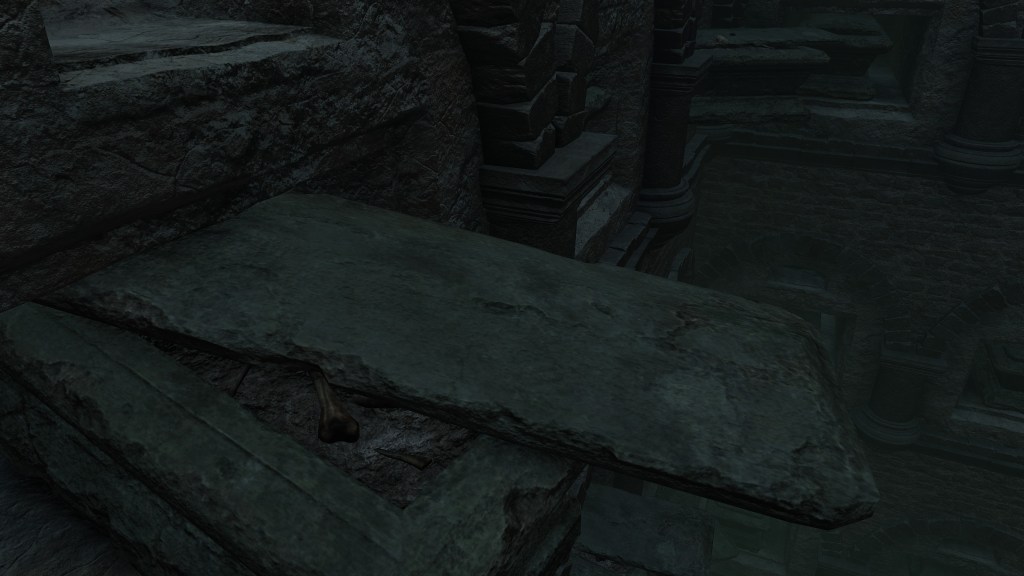
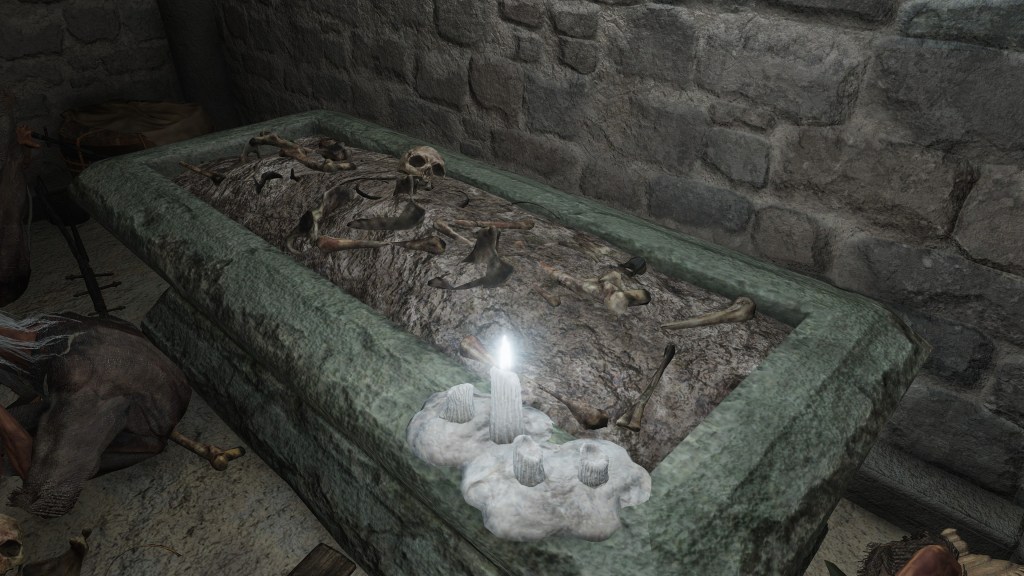
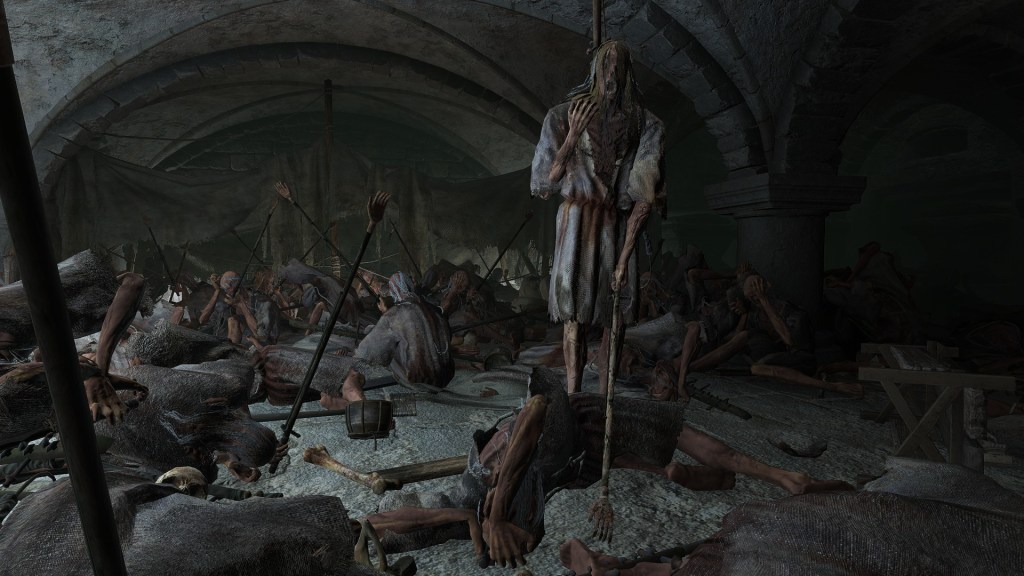
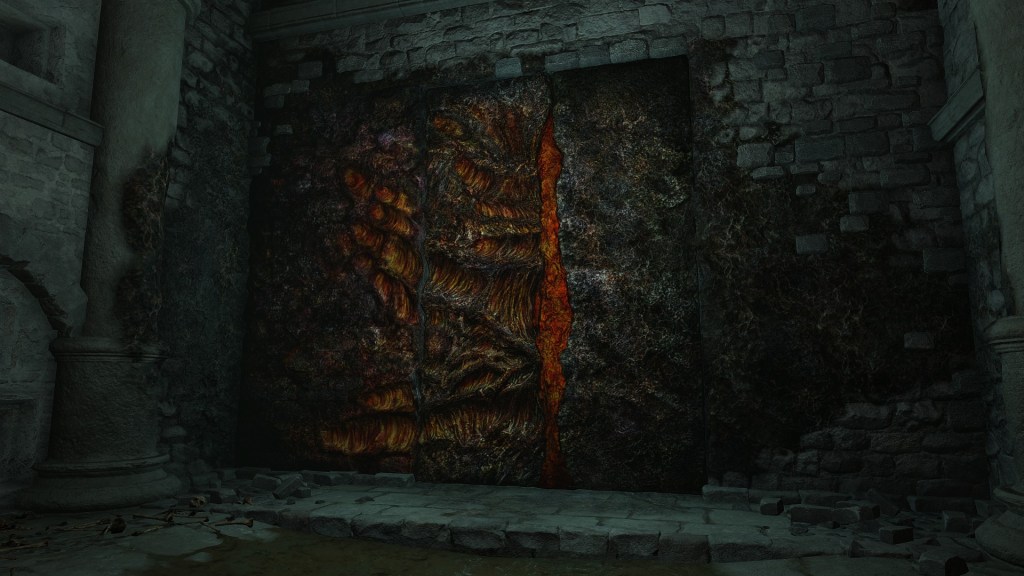
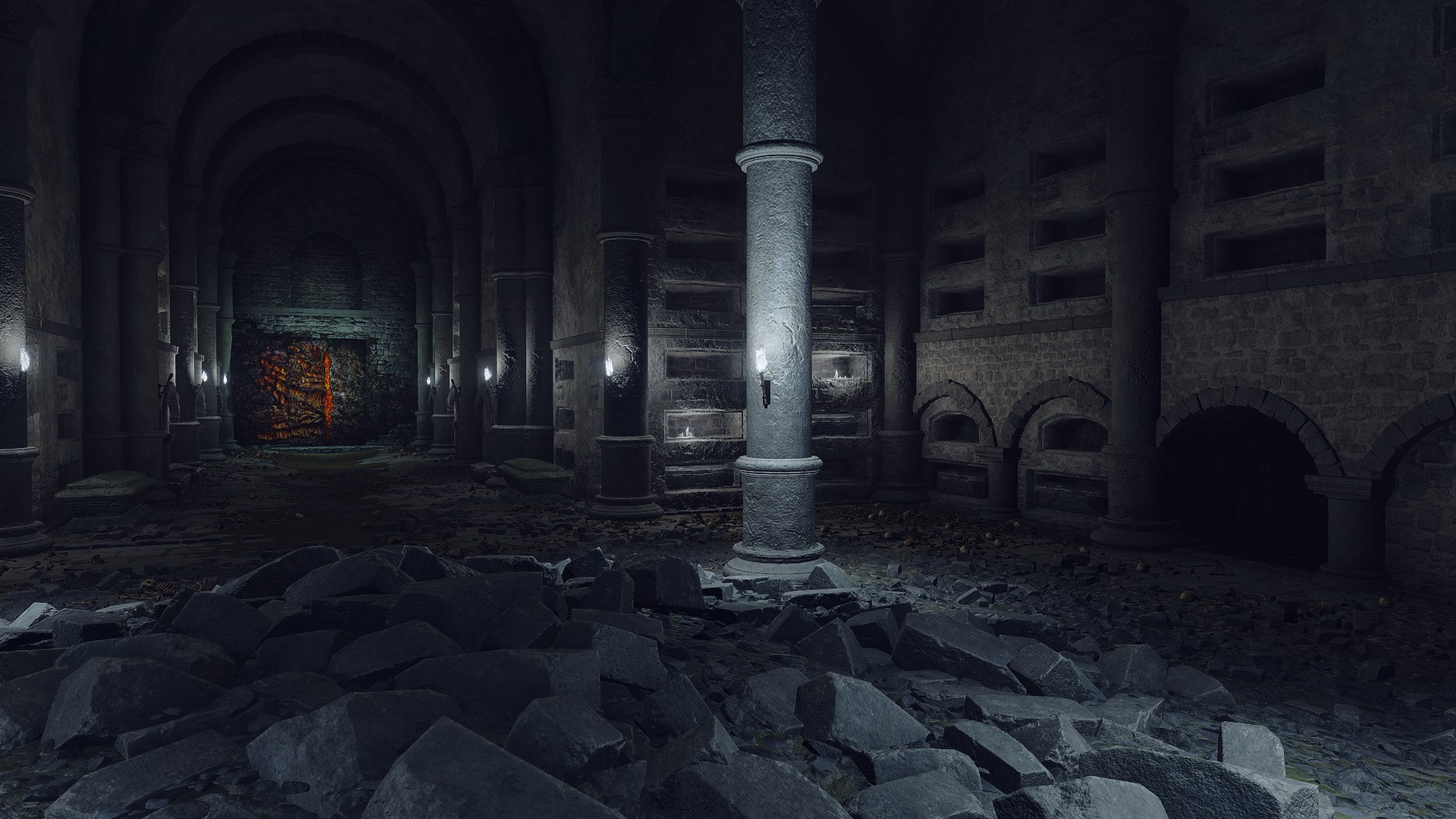
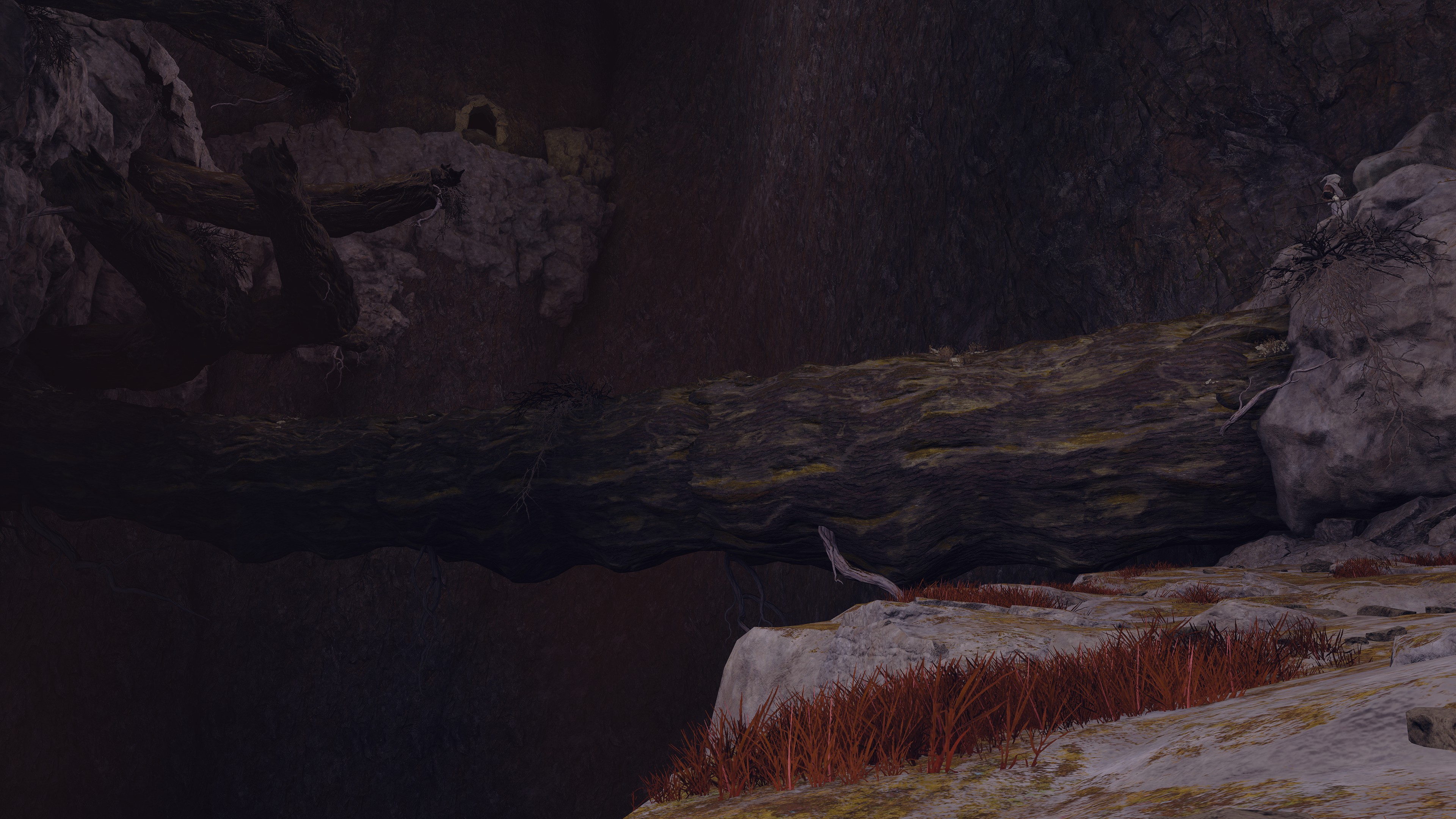
The catacomb reaching down to the Deeproot Depths was originally an extension of the Cathedral, bones covering the floor or inside various coffins insinuating a prior history with the sewer residents. Collapsed passages indicate that more extensive navigation existed, though most precipitous sections would still be impossible to access without using wood leftover from construction for makeshift crossings. At the very bottom now hid the “cell” of the Three Fingers, massive stone doors sealing the unholy thing shut in a confined space. The rest was left for the nomads to wander. Essentially, the decision was made to bury the clan alive, let them slowly starve with their precious Fingers before a proper burial. This brings Marika’s little prank into focus. The Three Fingers were doubtless difficult to kill, much like the Two Fingers, but the nomads assuredly were not. Yet they were all thrown away, garbage with no light of their own like the rest. The god made a mockery of her enemies as death continue to feed her Crucible of life. It was cruel to the extreme, but it sent the message of dominance.
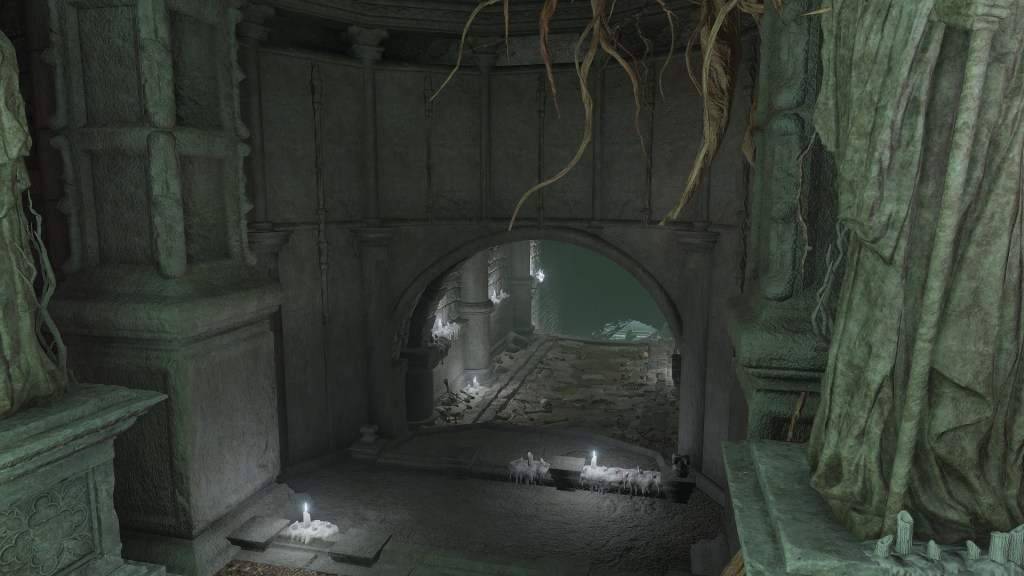

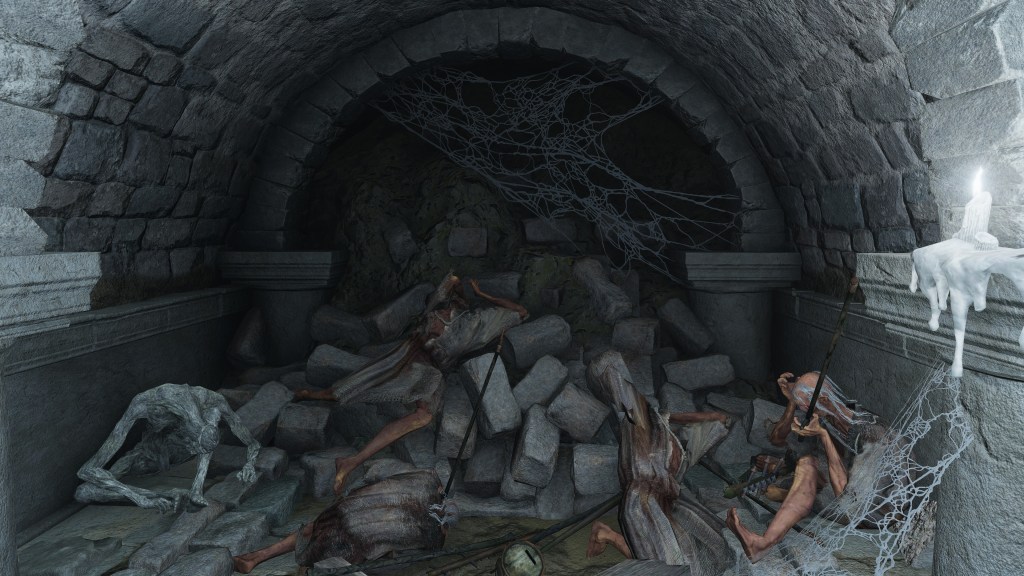
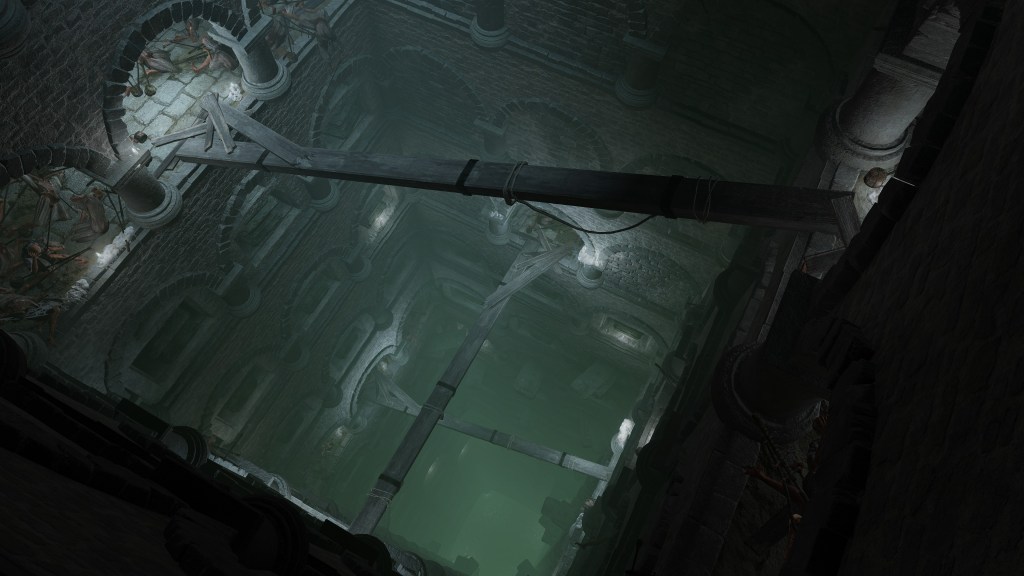
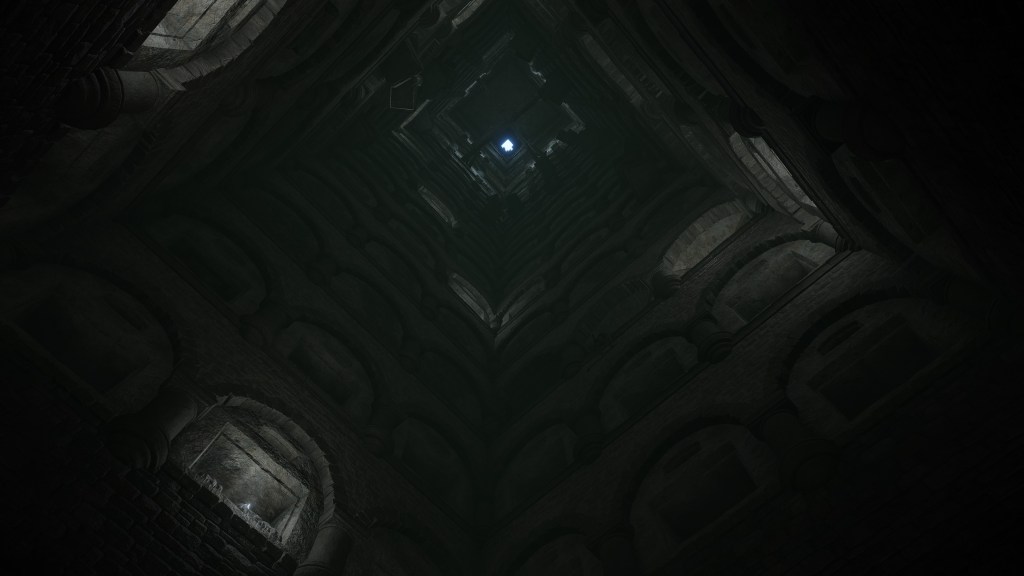

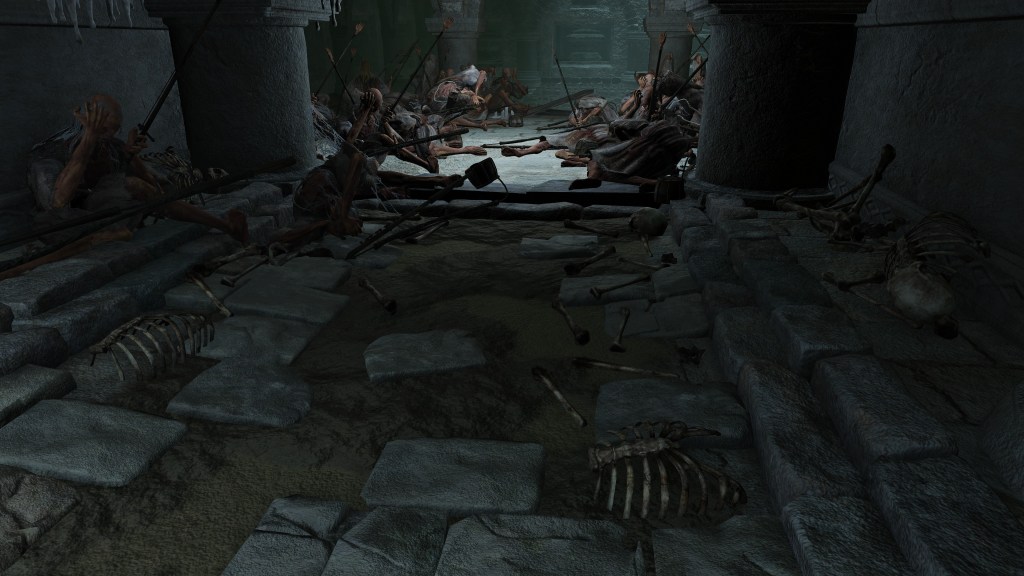

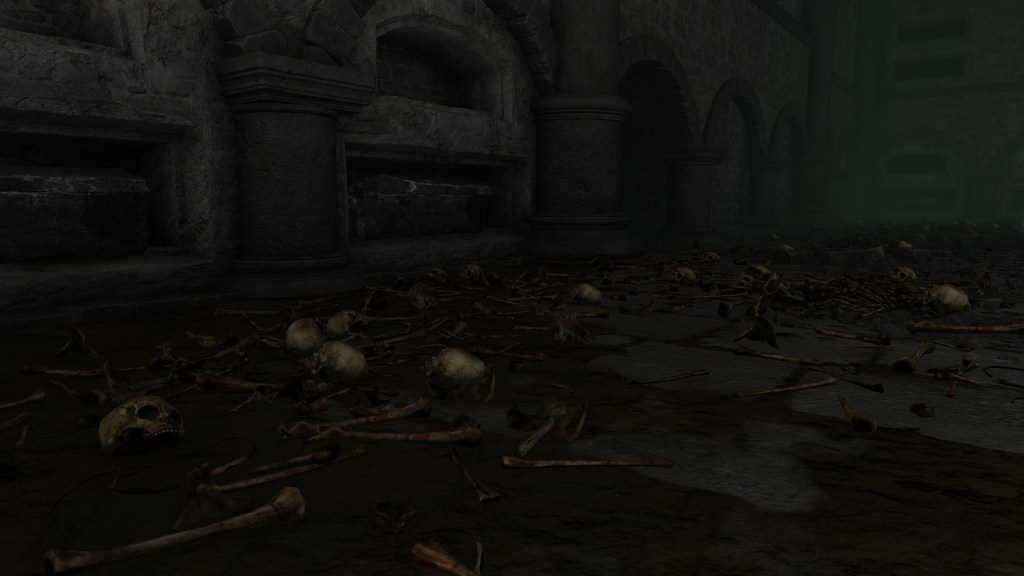
Naturally, Shabriri was imprisoned with the rest of the clan, which is when he was most likely punished for his lies. The only ones who should have known the slander before the Frenzied Flame was called are the ones slandered. The nomads’ code also demanded they exact retribution for the harm he caused; gouging out the eyes is a most appropriate punishment for bearing false witness — doubly ironic in light of his namesake. But whatever satisfaction they enjoyed from the madman’s suffering was fleeting. It didn’t change the reality of their situation. Cramped together in that enclosed space awaiting their deaths, the clan could only stew in resentment, soon turned toward their captors. What had they done wrong except try to make their way in this cruel world? Why couldn’t everyone just leave them alone? The injustice stoked the embers of fury in their hearts, ready to lash out. If spite made them troublesome, this was them at their most difficult. Kalé’s cut dialogue appears to echo their sentiment at the time: if they wanted them to be Three Fingers adherents summoning madness, so be it.
Finally, the great caravan collectively asked for something, and at their beckoning, Chaos answered. The yellow Flame of Frenzy flared within the Three Fingers, and the nomads were all cursed with the same madness in their eyes. Perhaps this caused a disturbance, with tremors that could be felt up above. One can imagine Marika, with creeping dread, heading down with her entourage to investigate — the Cathedral’s altar mechanism then gave way to Shabriri’s playful smirk, the yellow flame emerging in those empty eye sockets. Whatever the exact circumstances, that was the face remembered in the chronicles, from the man who so smugly outwitted god. Shabriri had used the queen’s fear and hubris to illustrate the farce of existence; that needless suffering born of disparity. The Greater Will’s agent of Order had unwittingly proven Chaos’ point — and how delicious the moment must have felt to savor. Perhaps in that moment, Shabriri was cut down, but it was basically a formality. The trickster made his case to the world. The prankster could only lick her wounded pride.
Yellow Blooms
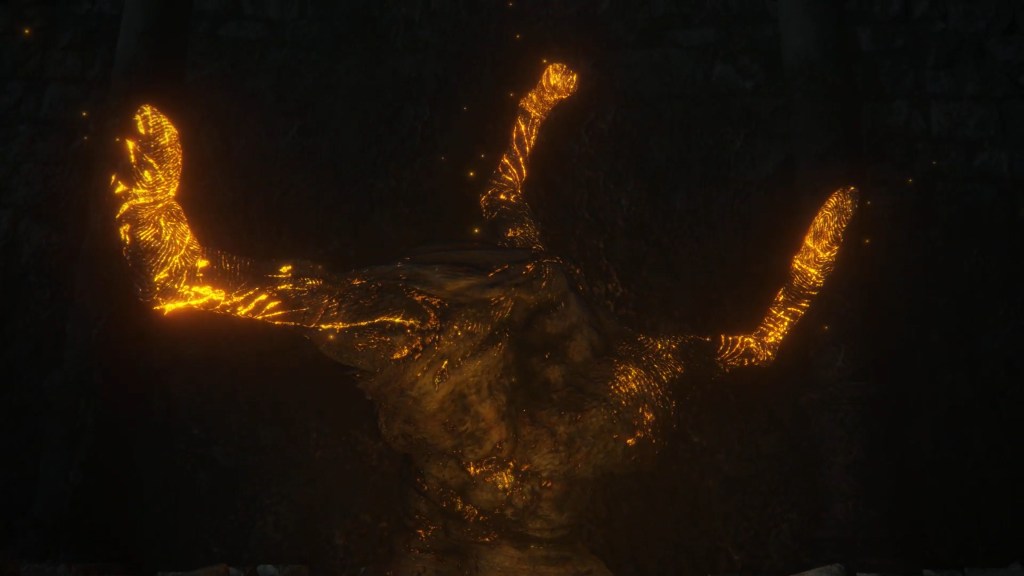
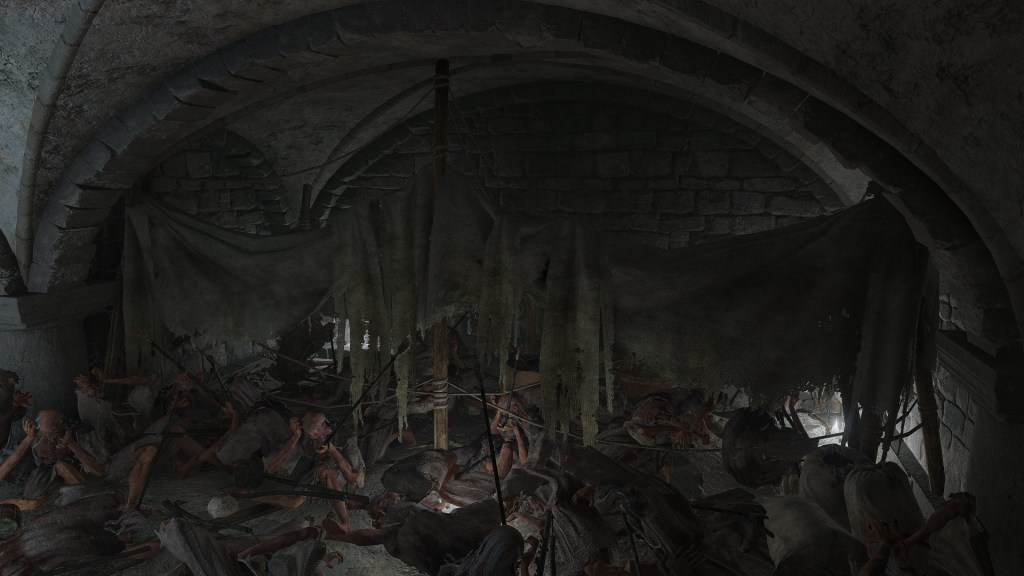
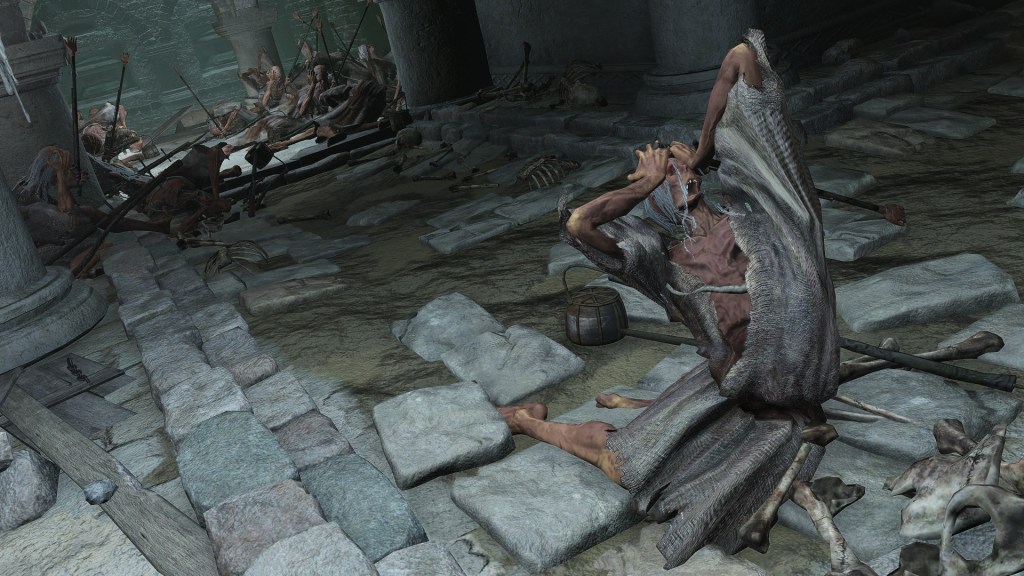
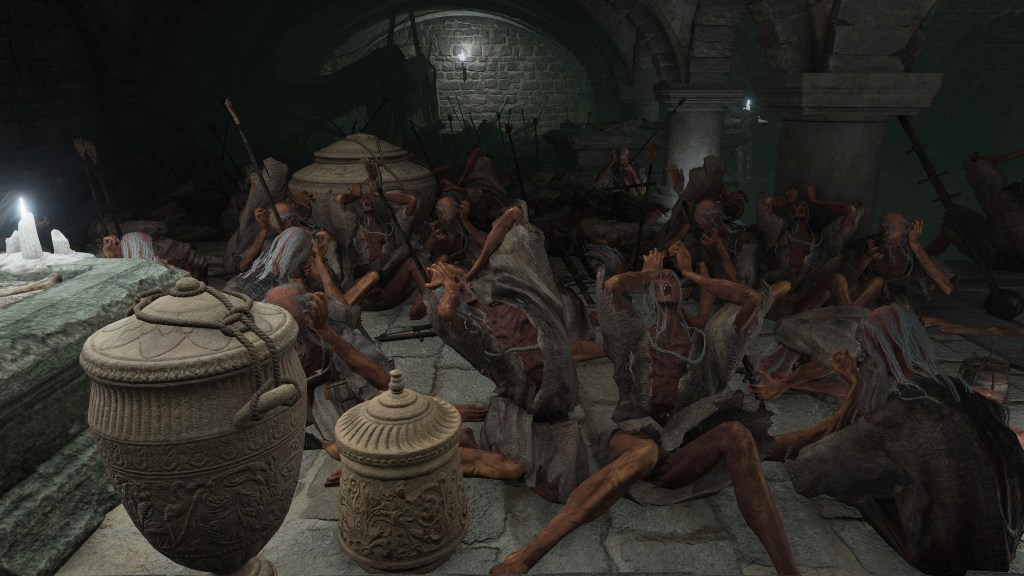
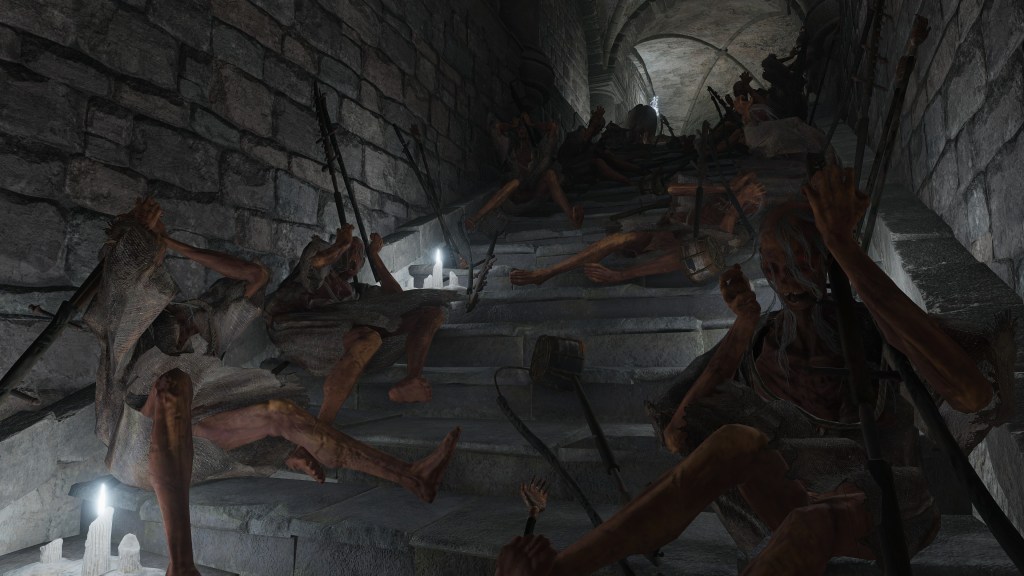
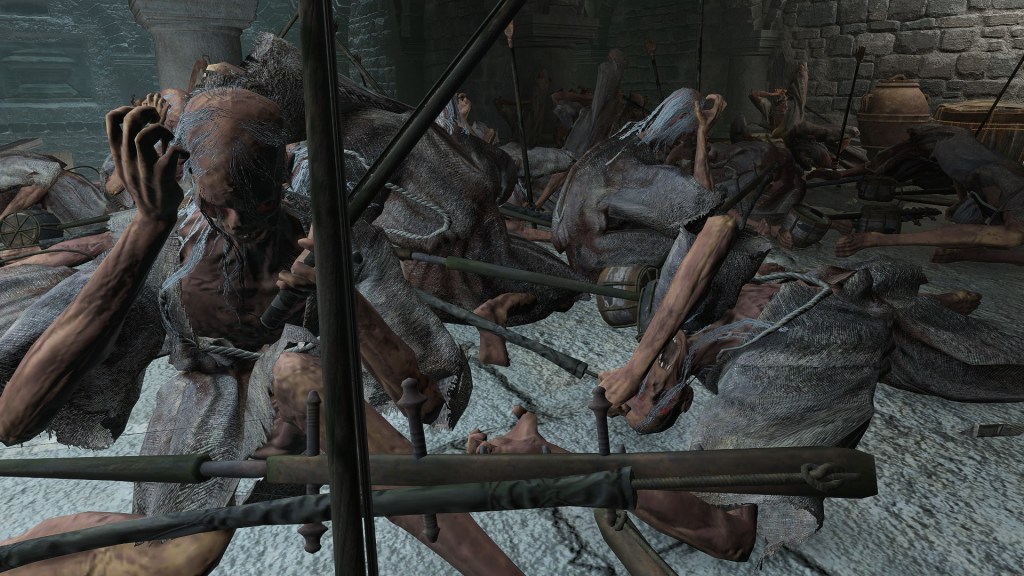
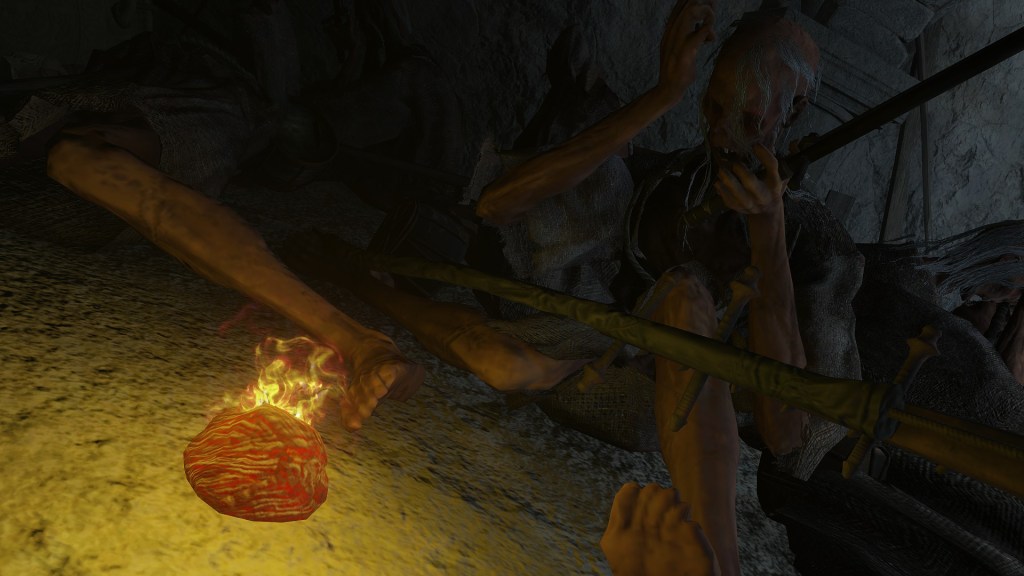
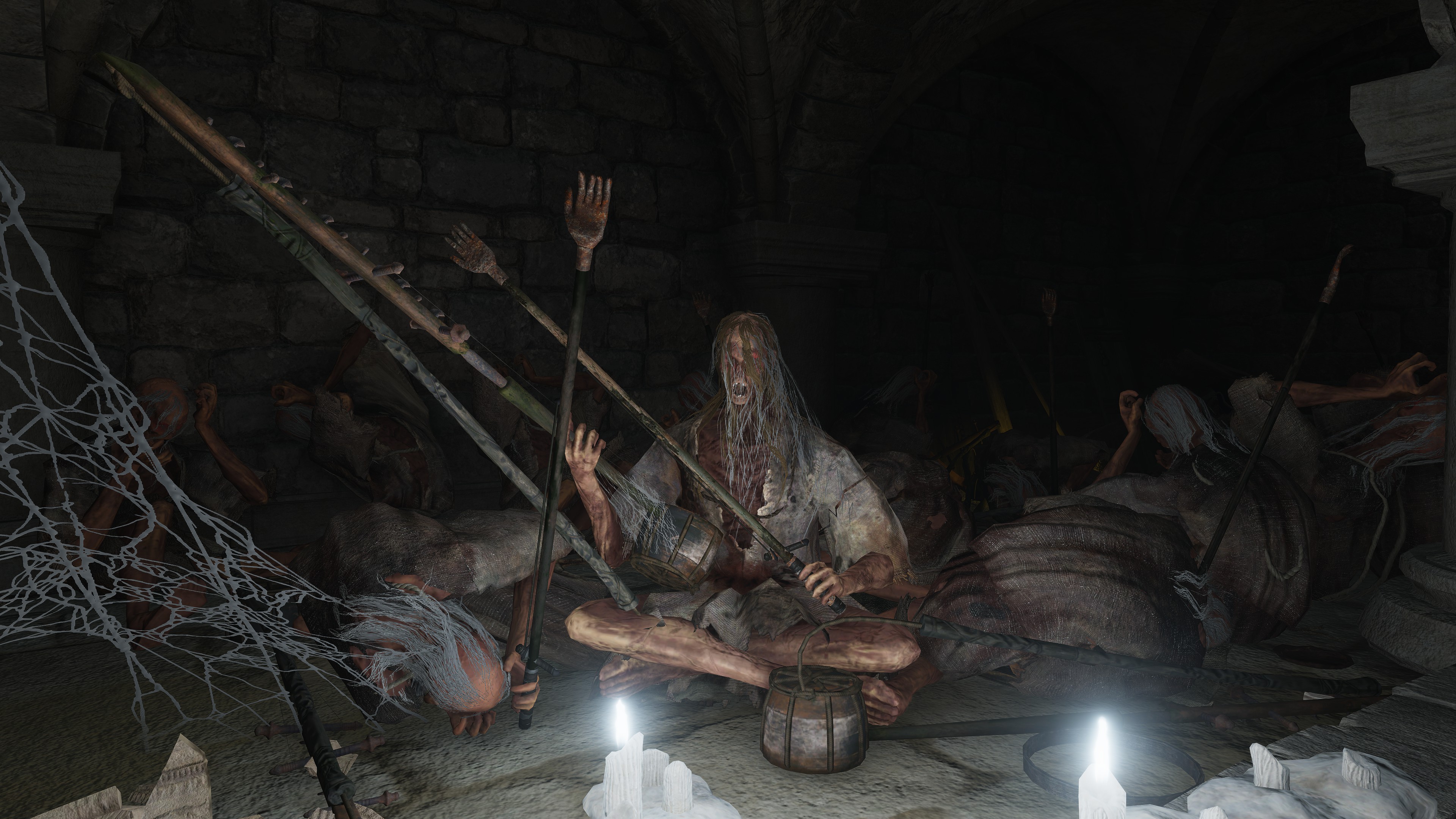
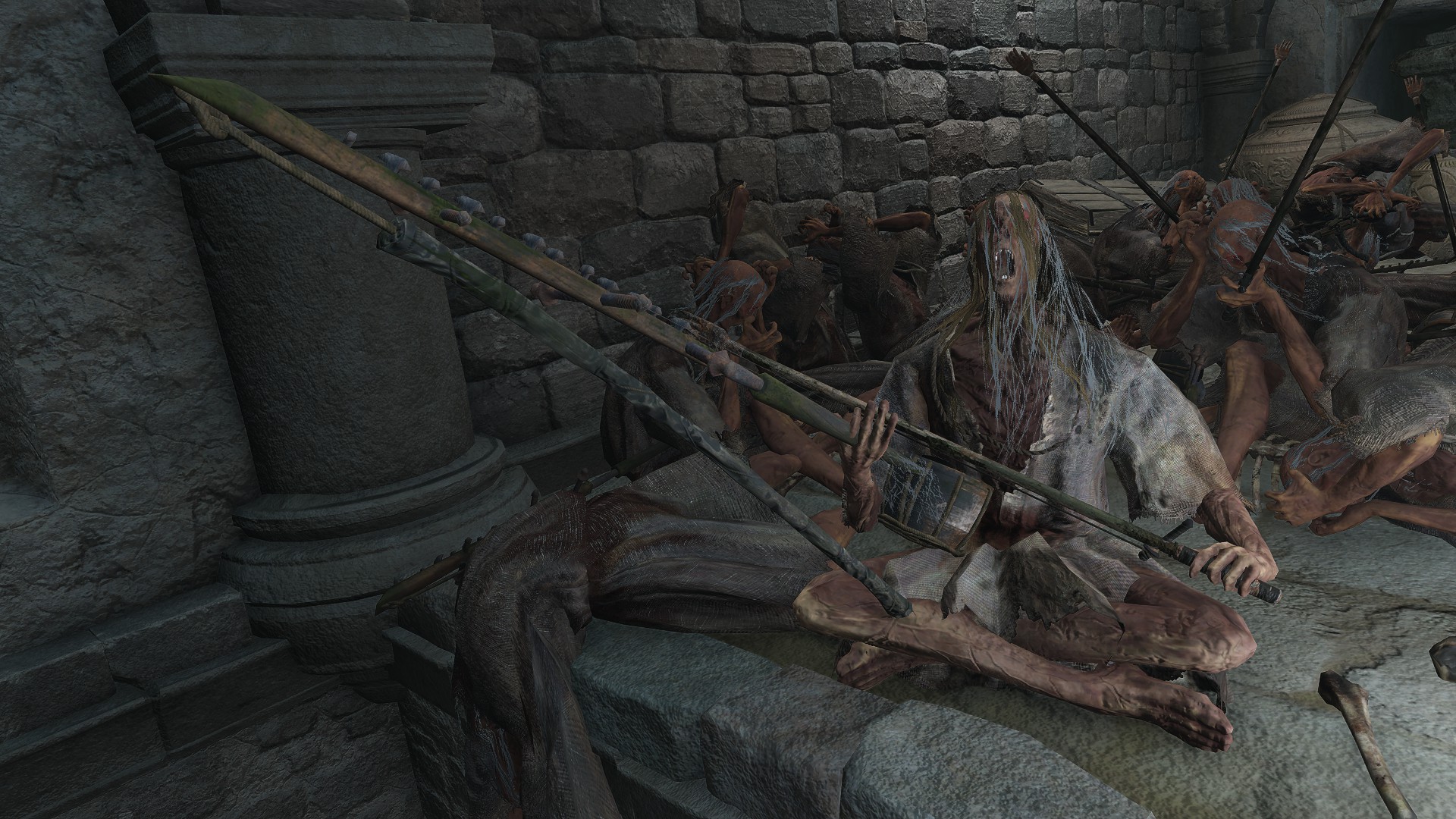
With her plans ruined, Marika left the nomads as a deterrent, fending off anyone who might come to meet the Three Fingers. Now that they suffered the disease, their lives were unnaturally extended if in constant agony. They tried their best to adapt it into a living space with what they brought in. But still trapped in a claustrophobic tomb, the clan had little recourse but to spread their flame to the person next to them, as illustrated by the prayer text for Inescapable Frenzy looted there. This created an endless chain of super-spreaders amongst each other, magnifying the madness. And as acknowledged in the nomad ashes’ description, the disease has made them incredibly feeble over time. Drained of vitality, eyes hollowed out so that they need a music bow and clicking tongues to help lead, they appear like mindless zombies; the enemy, in fact, reuses the base model from mad, soul-starved Undead from Dark Souls III. The only solace for those with still any sense was that the suffering they unleashed upon the world would pay it all back ten-fold before delivering sweet release.
Ashen remains harboring a spirit. Summons a wandering people spirit.
Spirit of a clansman who called the mad disease and had been buried in the earth. The horrifying mad flame gushes from his eyes, but because he is the diseased, his HP is low and weak to strikes.
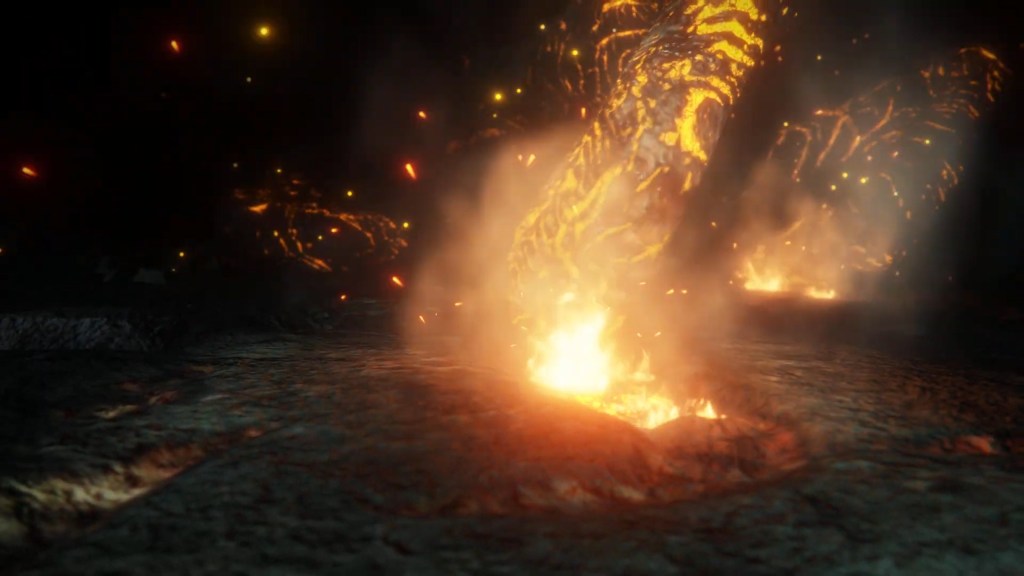
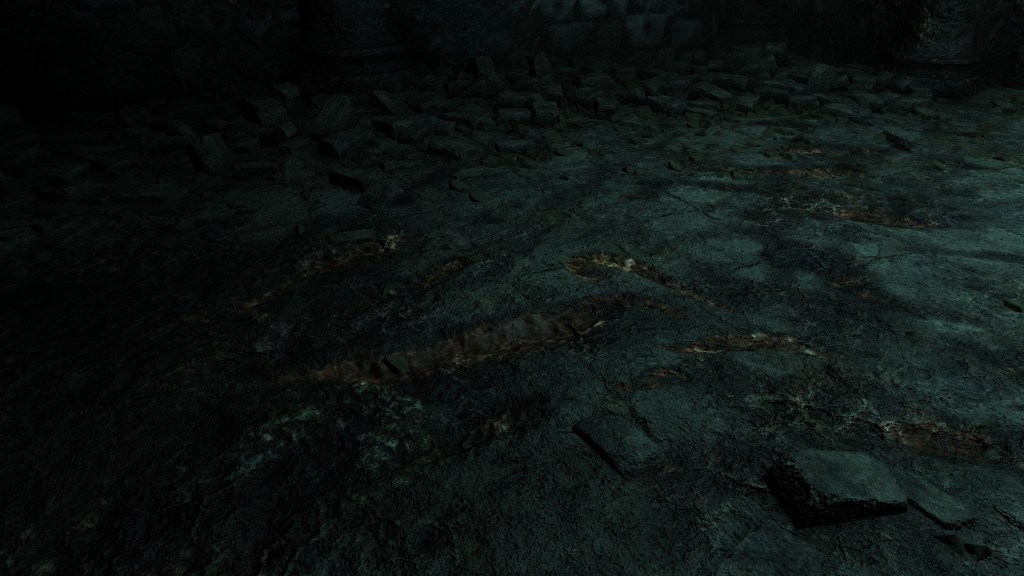
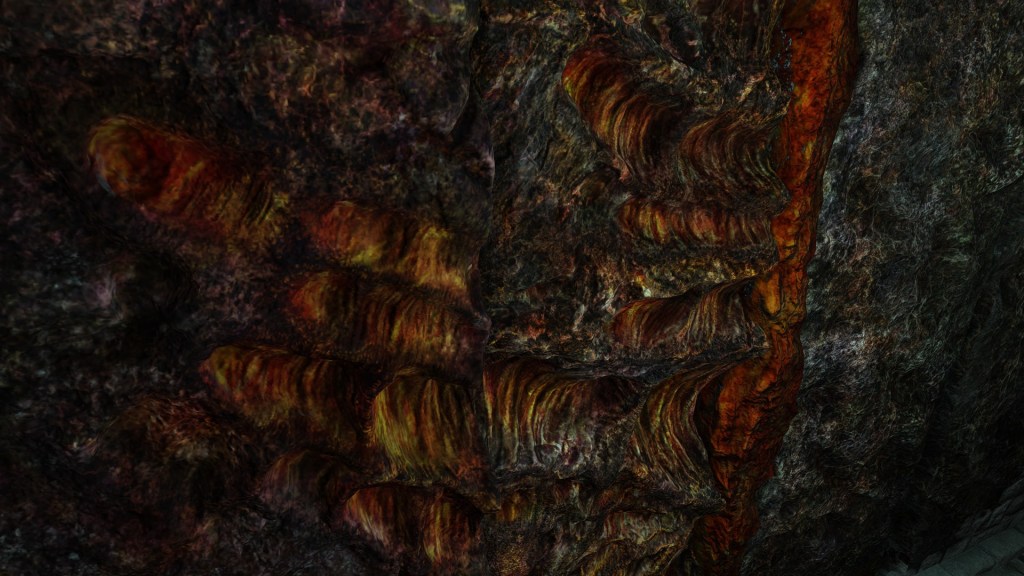
The Fingers, meanwhile, had constantly tried to escape, scorch marks on the outside showing how they often tried to wiggle through the space between the double doors. In the end, they couldn’t melt a large enough gap to pull themself through, no matter how much clawing. Rather, we see that the melted stone would end up filling in the gap, though it quickly melts away when we stoke the embers infused into the doors. As a result, the Three Fingers just drags its yellow-hot tips to mark the ground repeatedly, occasionally scorching the walls. For whatever reason, none of the nomads bothered pushing open the doors as we can, freeing early their “master” as one nomad’s note details. Maybe it is because it was pointless when they were still sealed inside the tomb, or maybe there were additional safeguards we simply never witness. Regardless, Marika could only wait for those Three Fingers to burn out, leaving them all under seal until then.

Note of a wandering people merchant. The information is written succinctly.
We and the Master of Mad Flame have been captured at the bottom of Lowdayl’s underground. The Three Fingers.
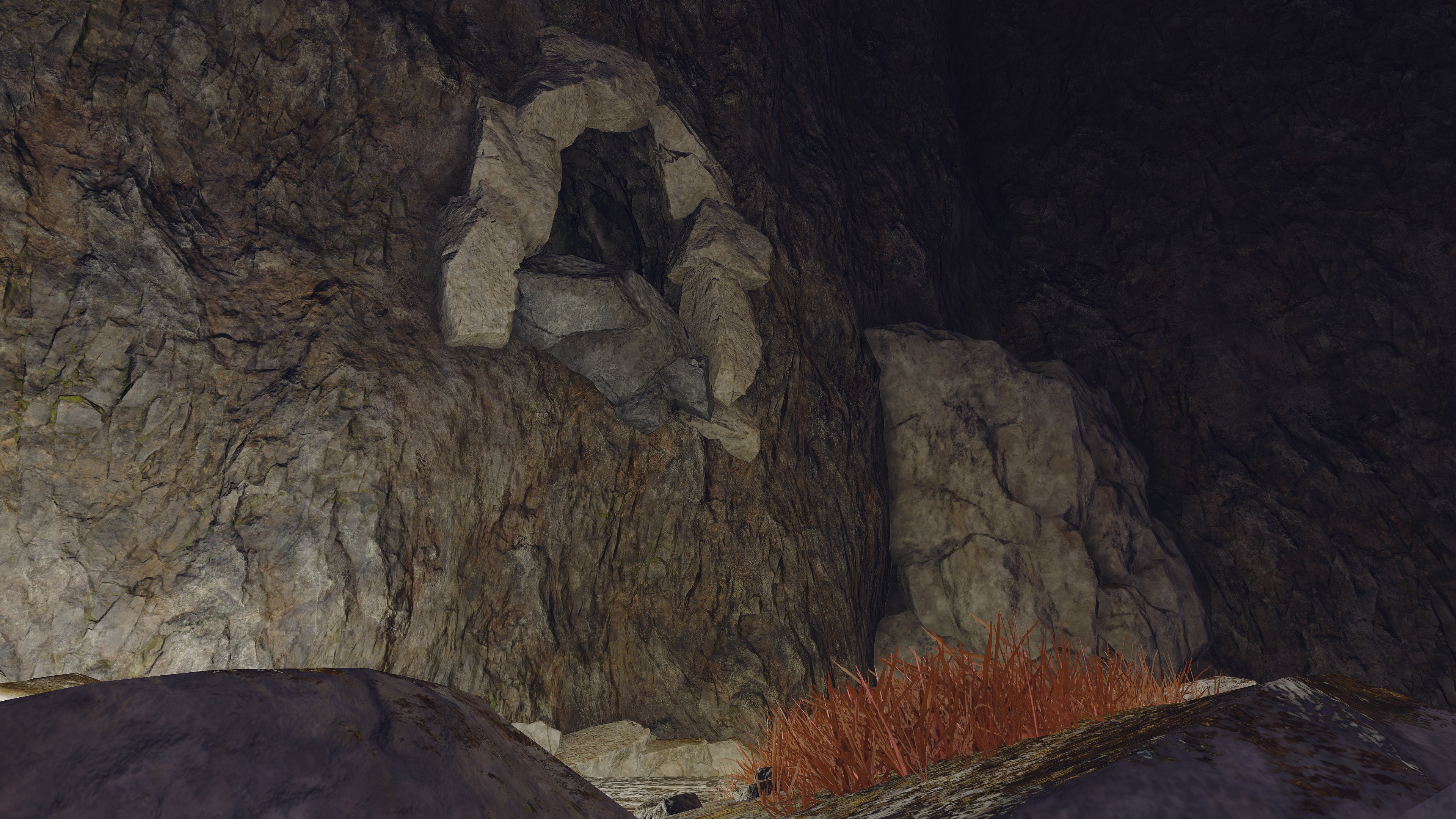
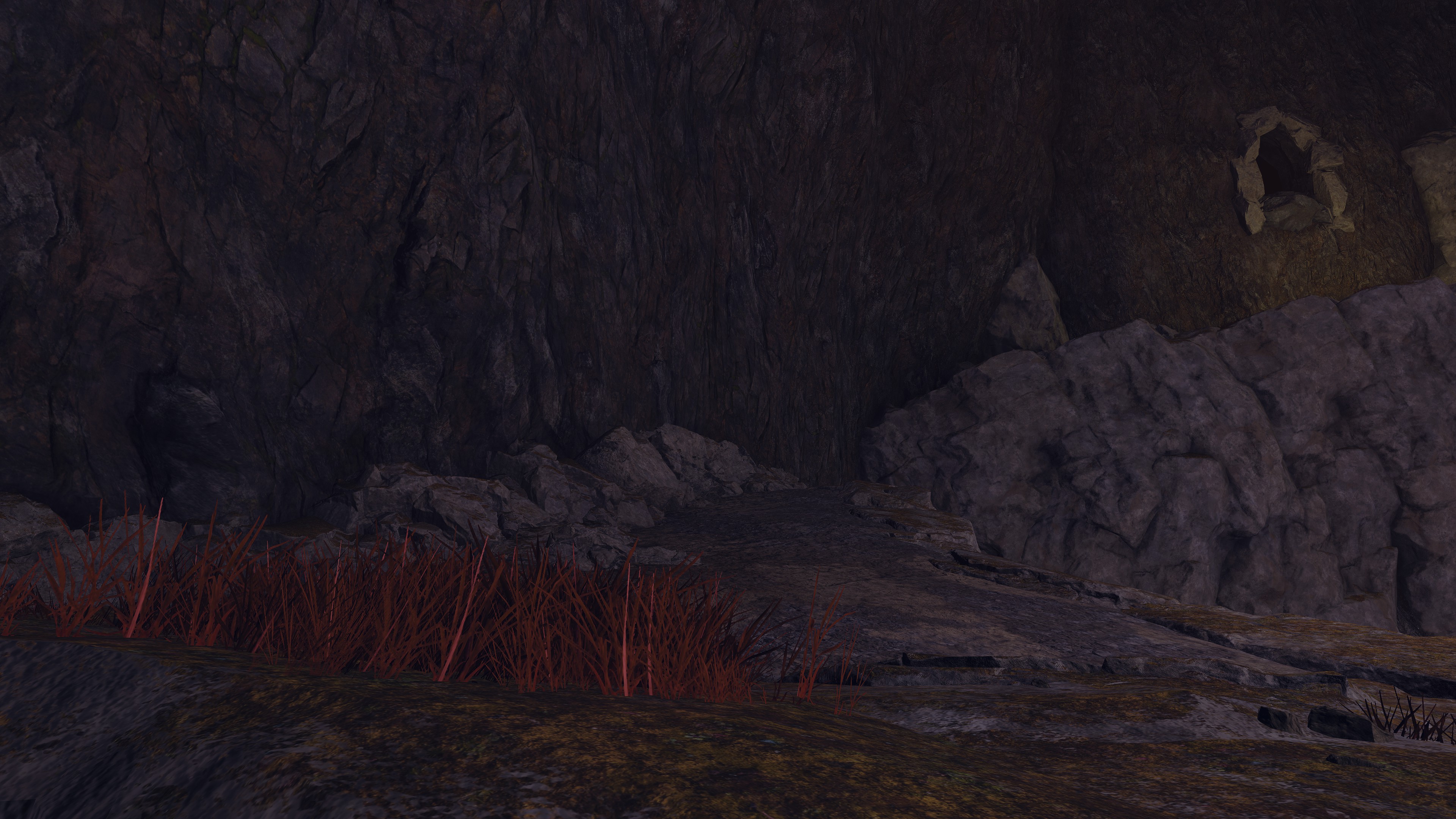
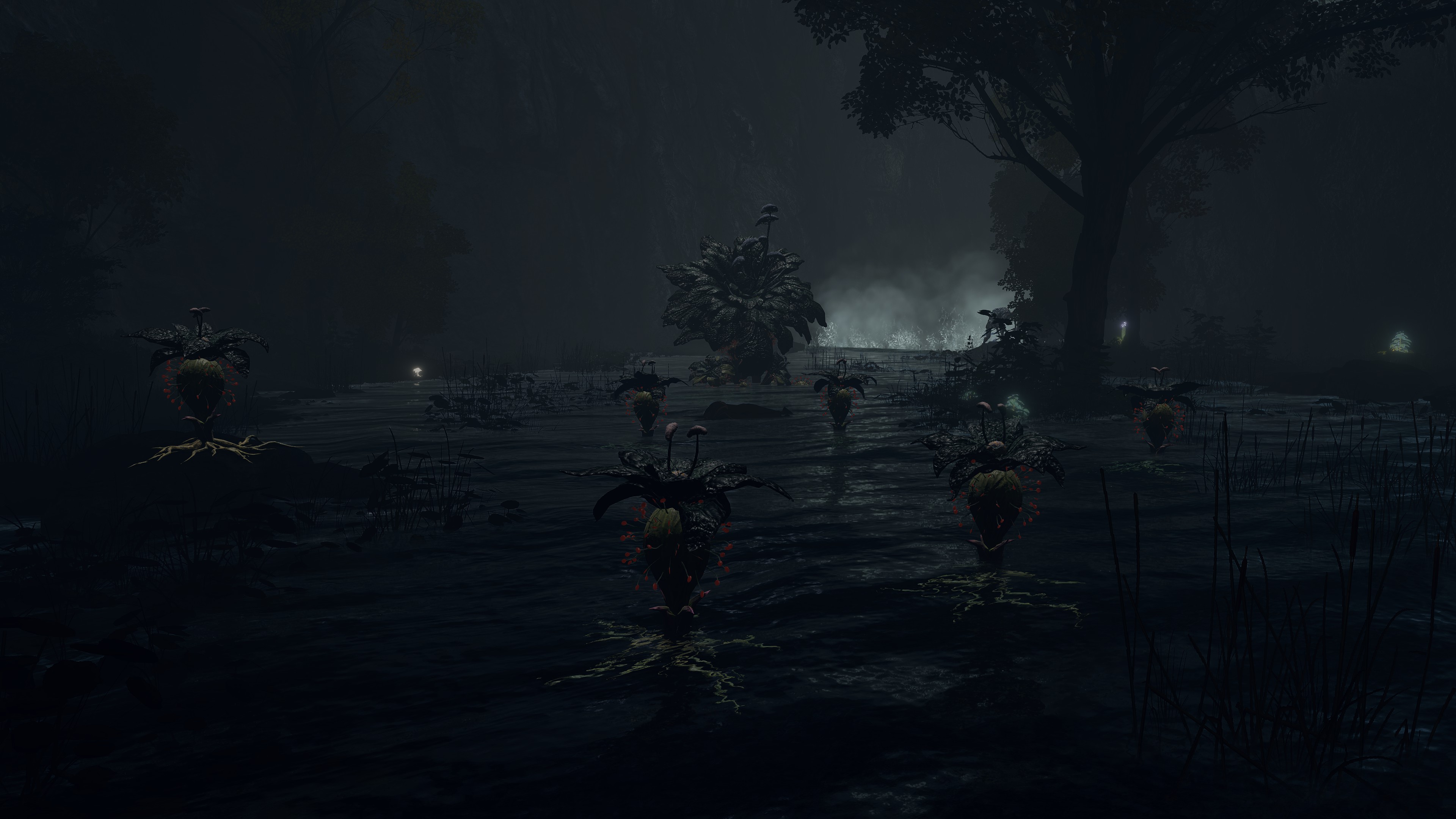
But in the many years since the Age of Plenty, there were bound to be escape attempts. An illusory wall hides an exit to the Deeproot Depths. The orange vegetation in the vicinity may be due to the Three Fingers’ influence, but scaling the roots to the Eternal City, we find clarifying boluses among the locals being buried. Following the corpse flow down the Ainsel River from there, we further witness how a large Miranda flower has been gobbling up the Flame of Frenzy with the bodies. One or more nomads secretly slipped out without telling the others, spreading their disease to the Nox capital. At the other end, we can collect nomad ashes in the Leyndell sewers, and this evidently wasn’t the first time. Elsewhere in the area, a different corpse carries Dappled Cured Meat, which boosts our immunity, robustness, and focus — protecting against the poison, bleed, and frenzy all found down there. Enough were passing through for the disease to be a concern. There is also the Eye of Yelough, fruit of a shrub that grows in lands equally inflamed by the disease. The diseased finally begun to breach containment.
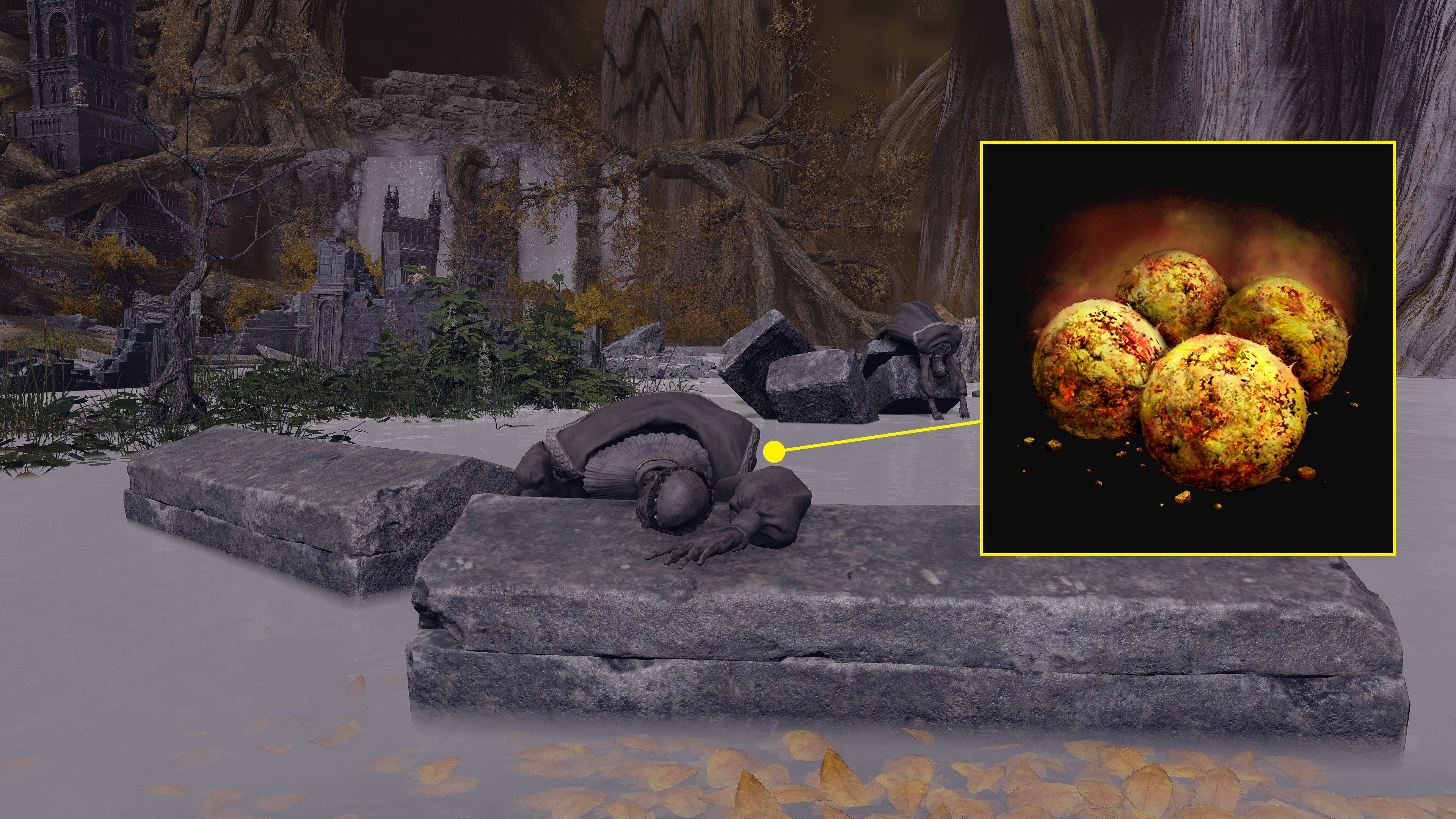
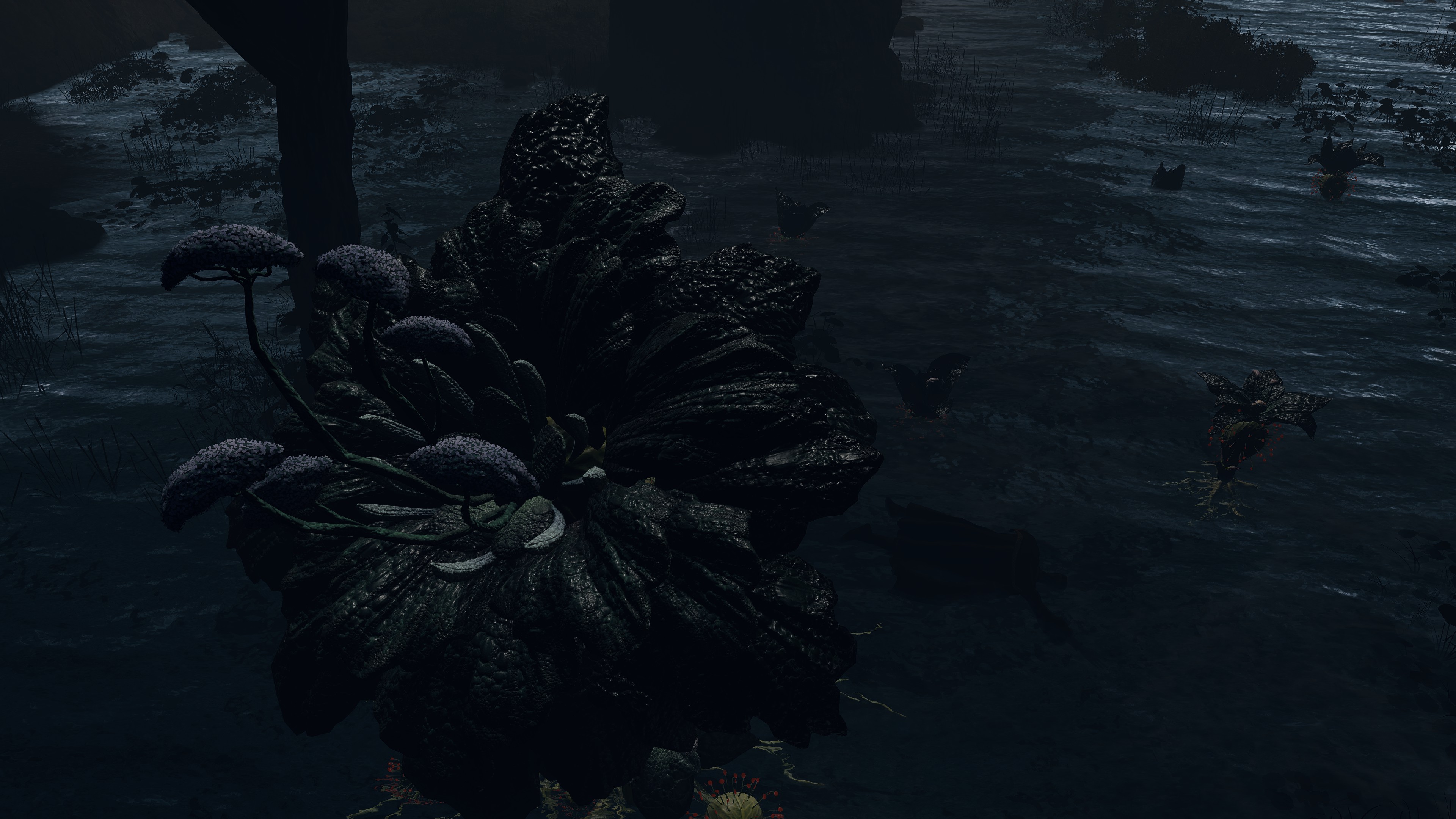
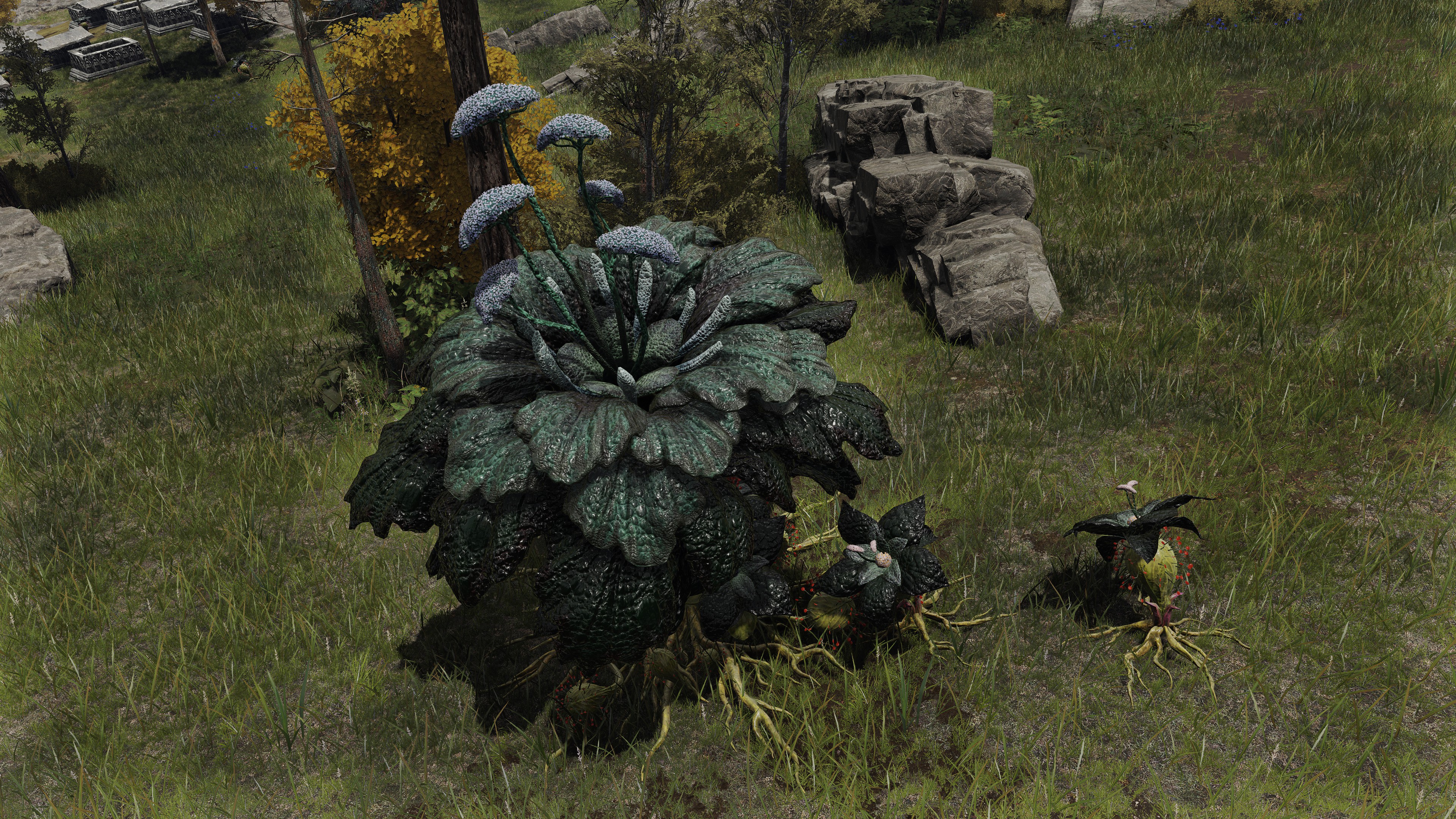
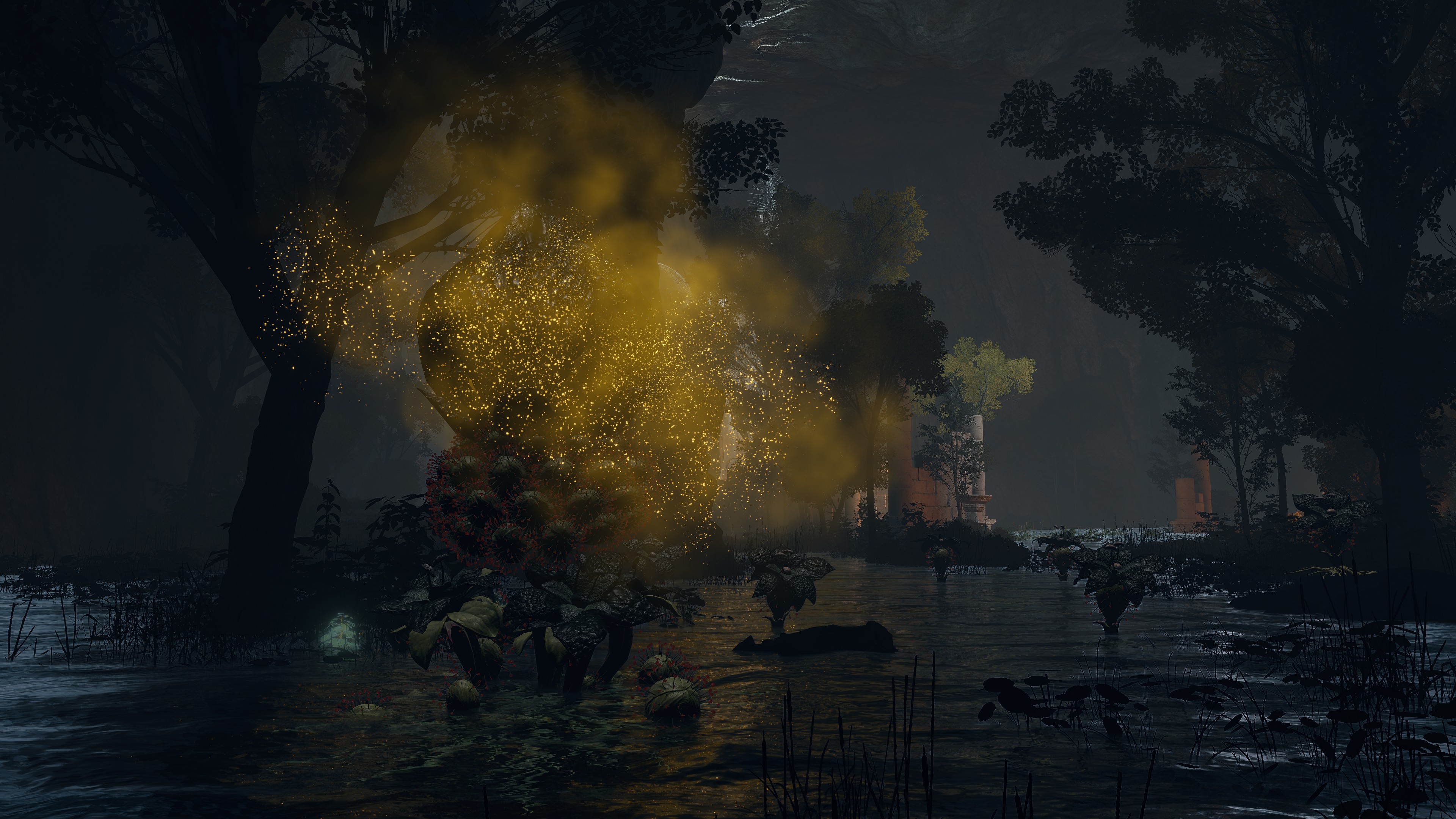
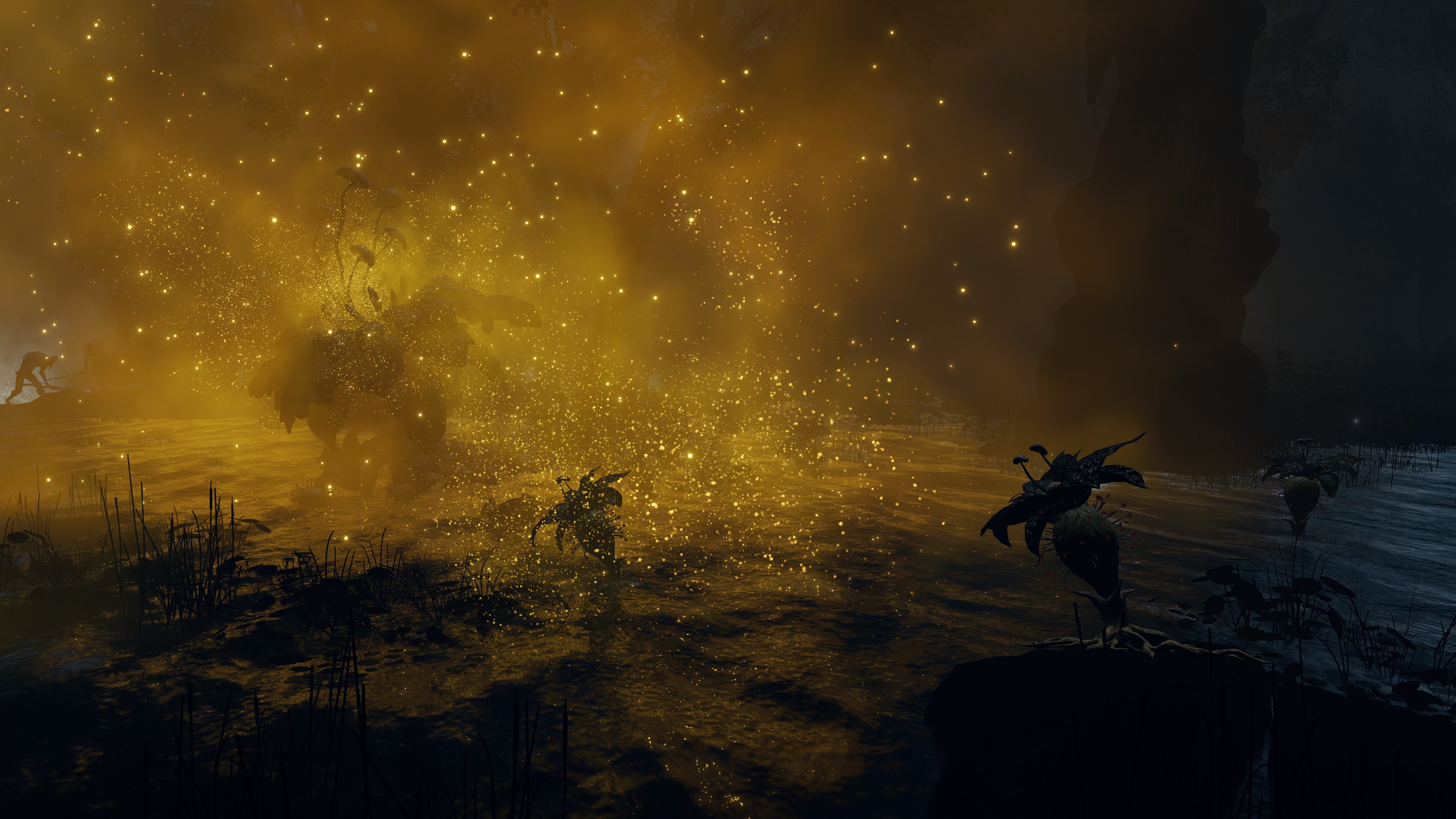
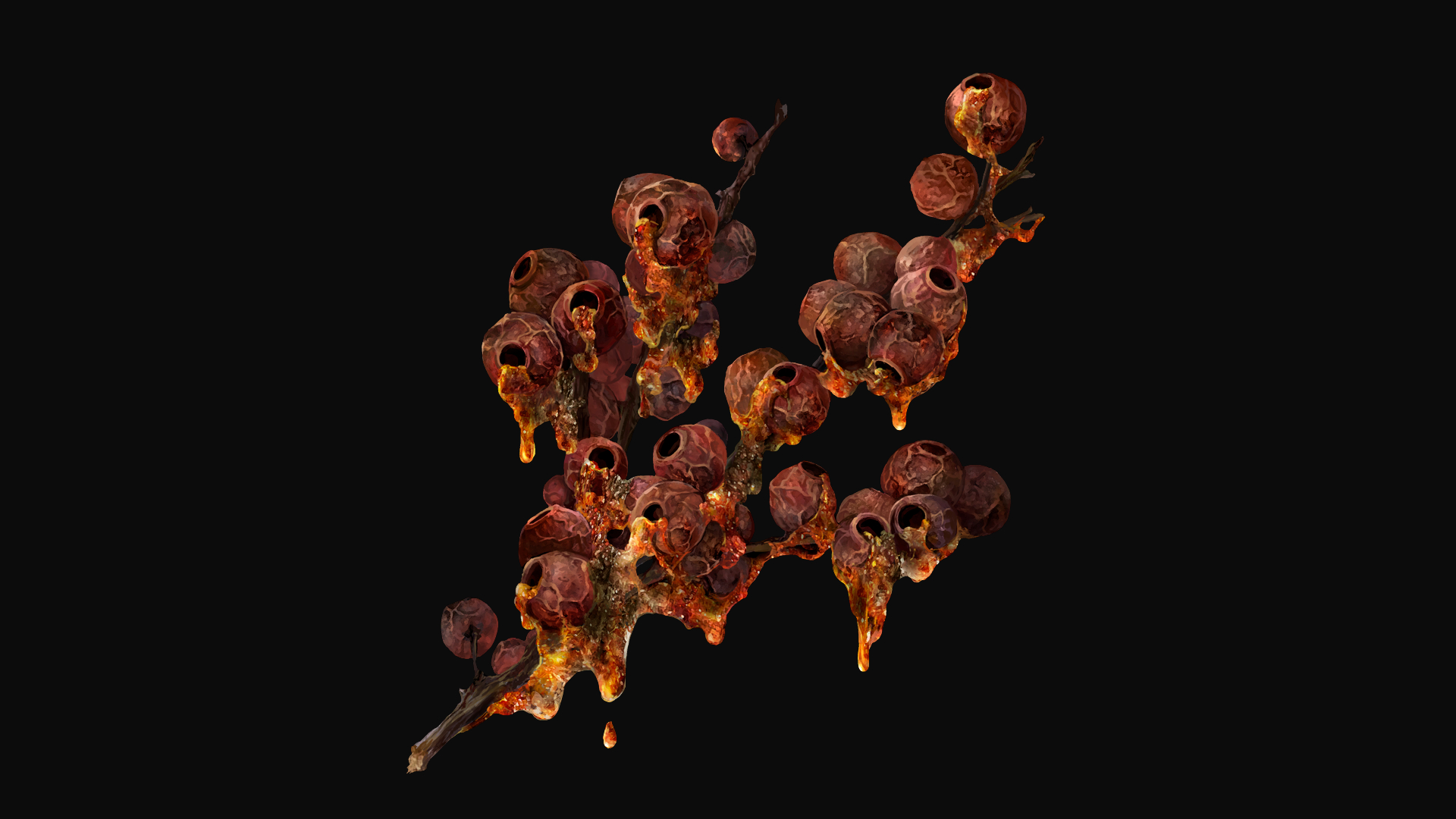
Shrub fruit inflaming out with ripened contents. One of the materials used in item crafting.
It grows in lands of the mad disease and is used in pain-killers. It is also known as a dangerous narcotic.
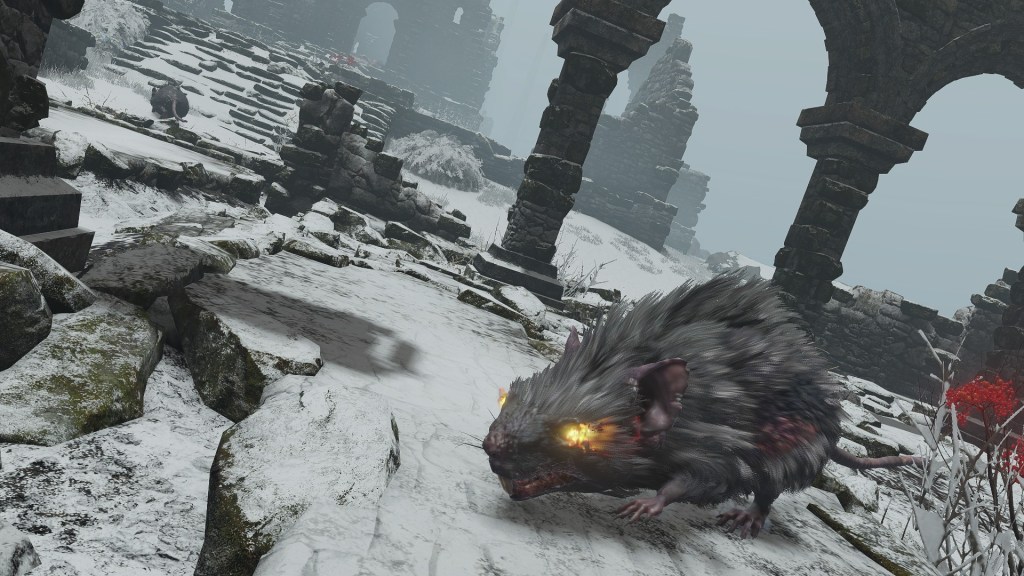
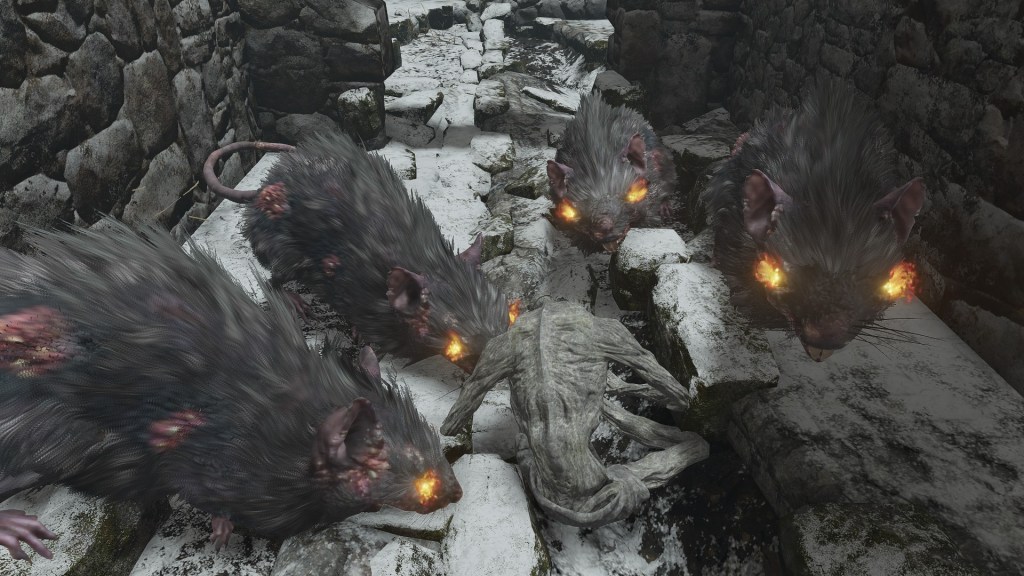
But before any nomads had made their way out, the disease was already seeping through the cracks. We may come across three settlements being consumed by the Flame of Frenzy total: the Ailing Village in Weeping Peninsula, the Frenzied Flame Village (Site F) in Liurnia, and Yelough Anix in Consecrated Snowfield. All three areas have one peculiar factor in common, namely the rats which also bear the Flame of Frenzy in their eyes. Therefore, like with any stereotypical plague, the rodents seem to be the prime vector for disease, the sewer rats squeezing their way into the sealed tomb, picking up the flame, then carrying it back out before passing it onto their fellows or humans. With how far rats can travel through caverns and crevices or on carts and carriages, it is easy to see how these isolated outbreaks have occurred all across the Lands Between from the origin point below Leyndell.
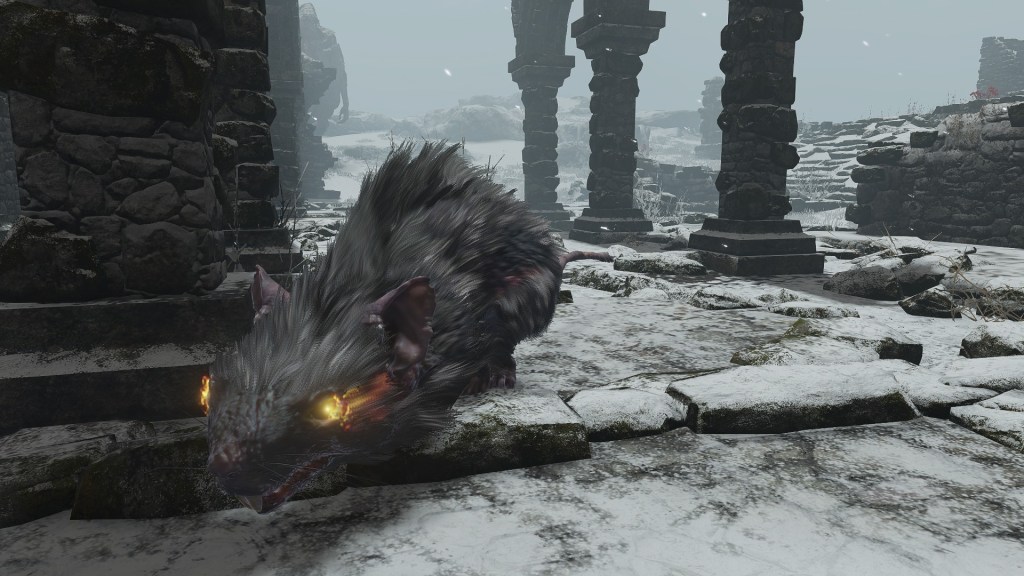
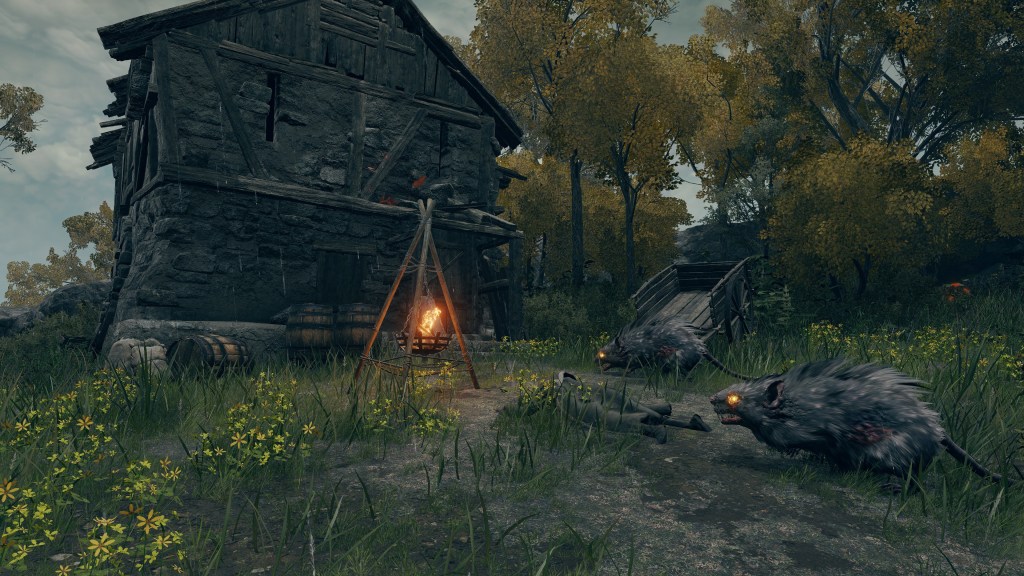
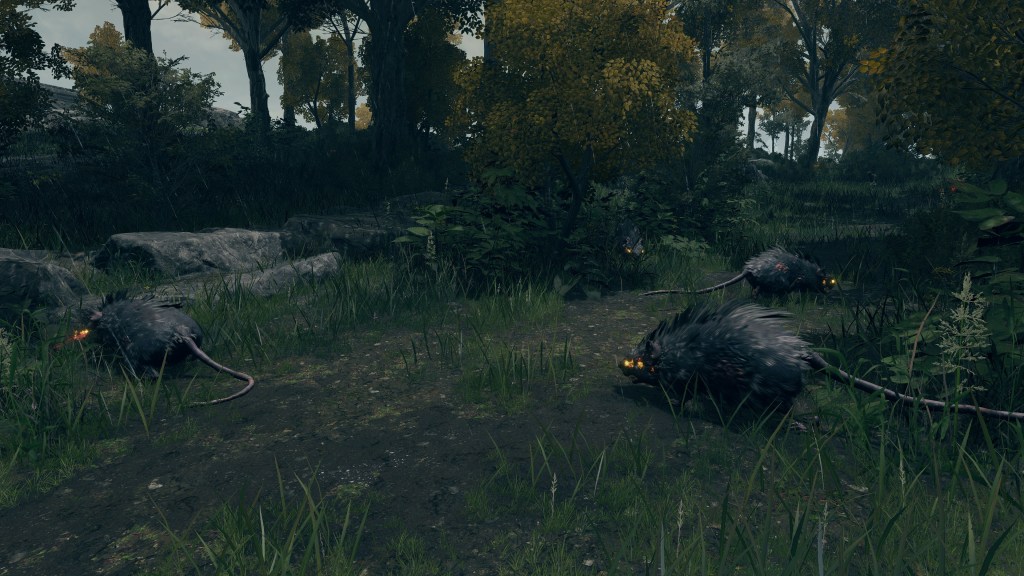
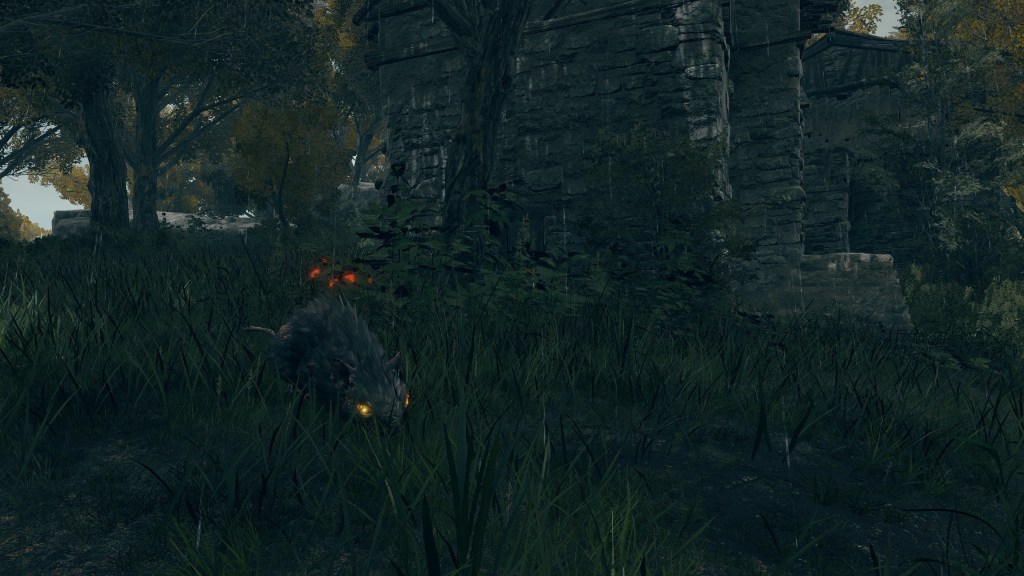
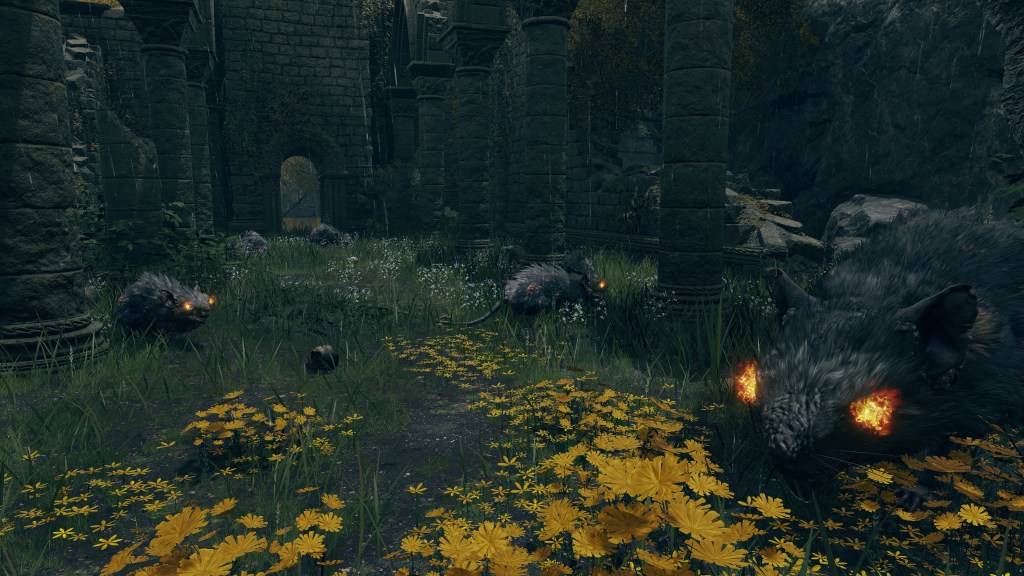
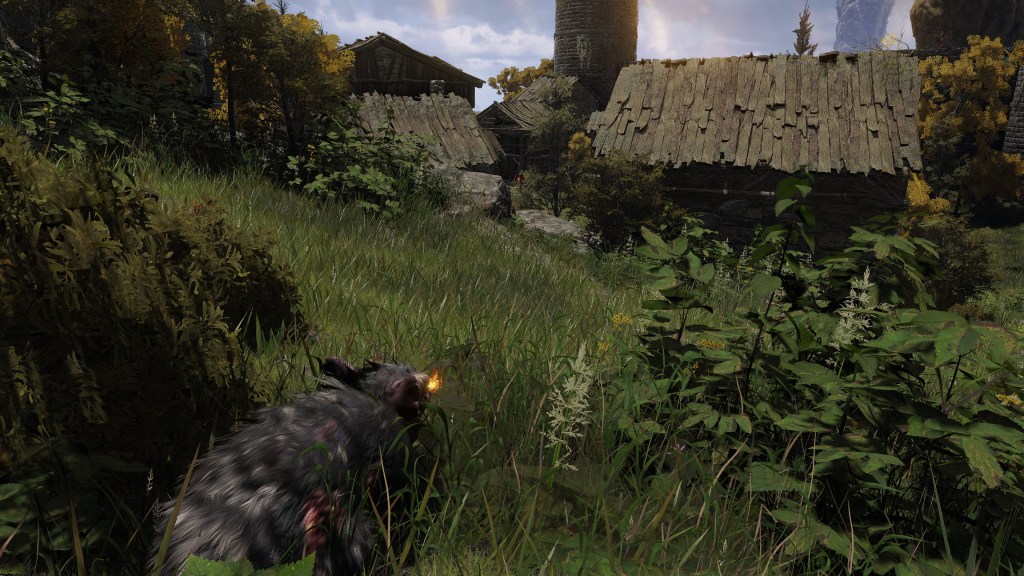
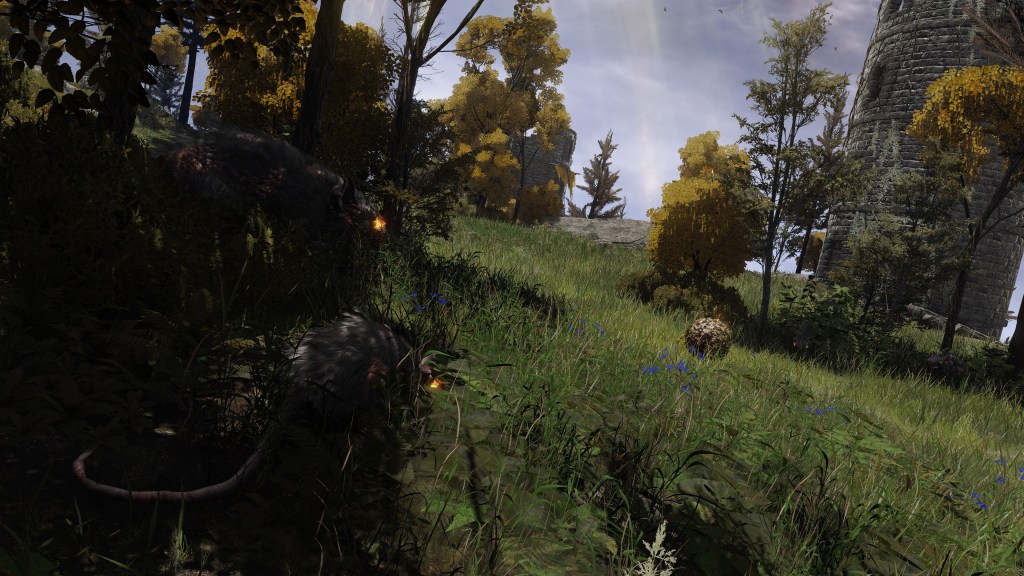
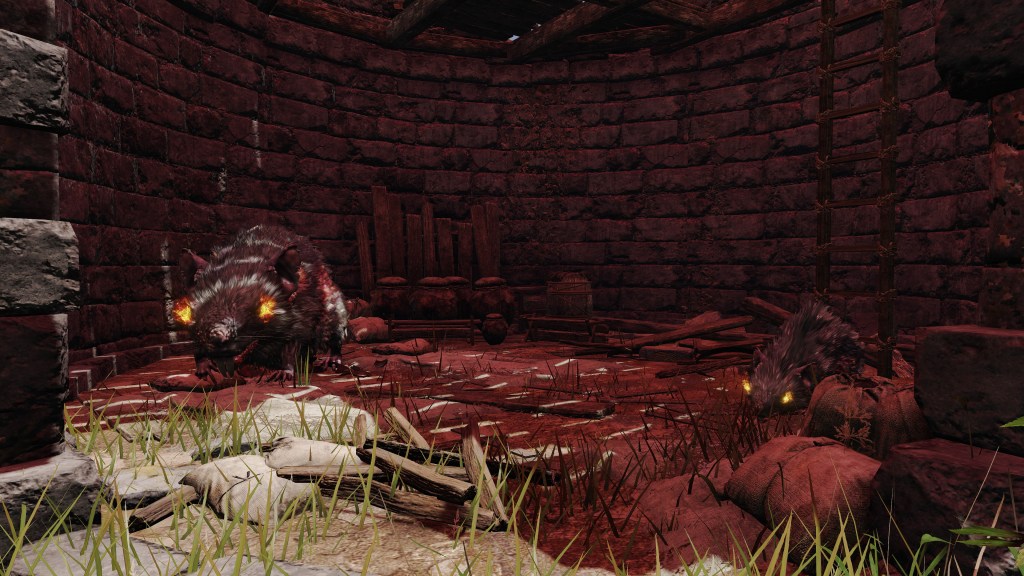
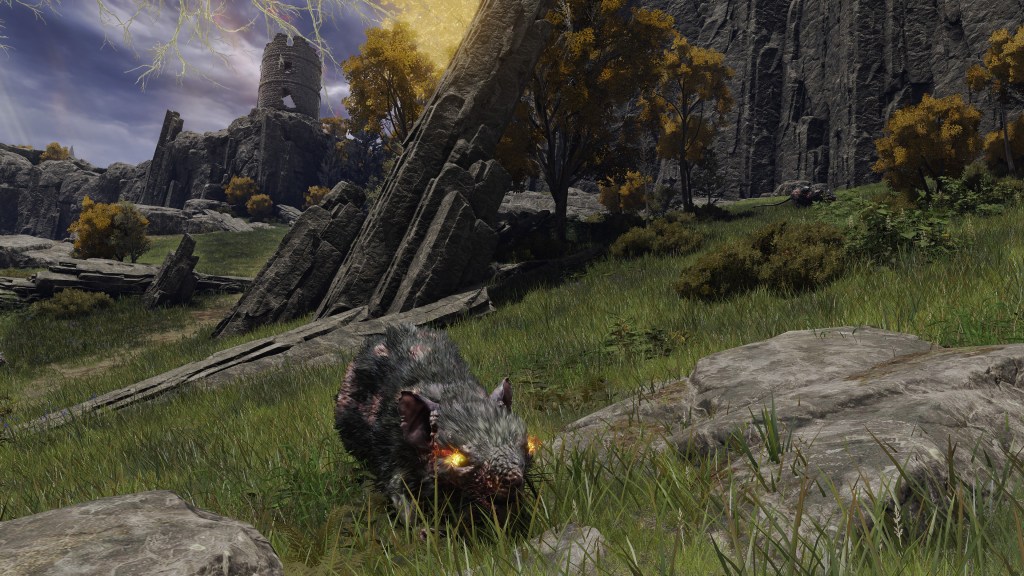
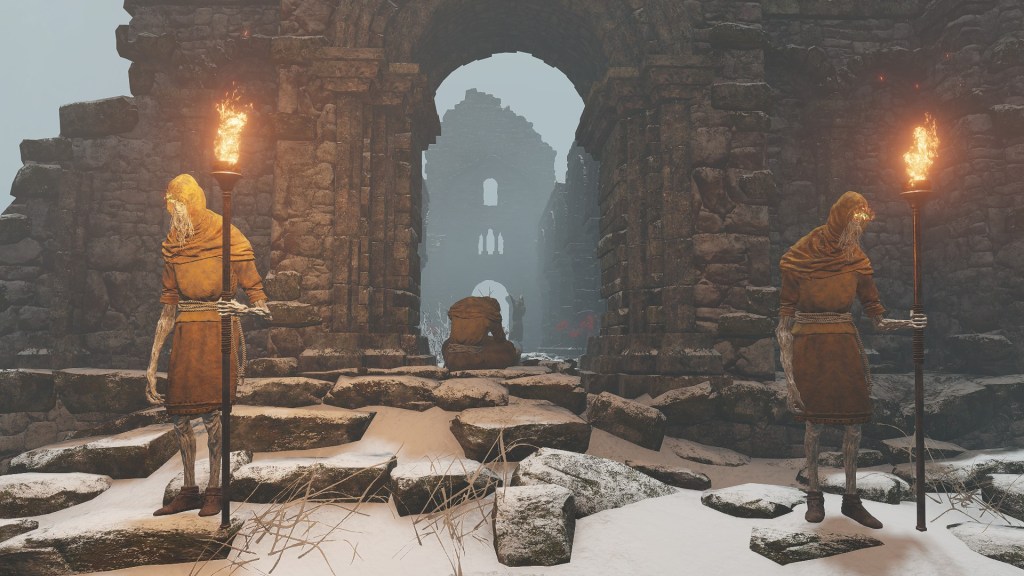
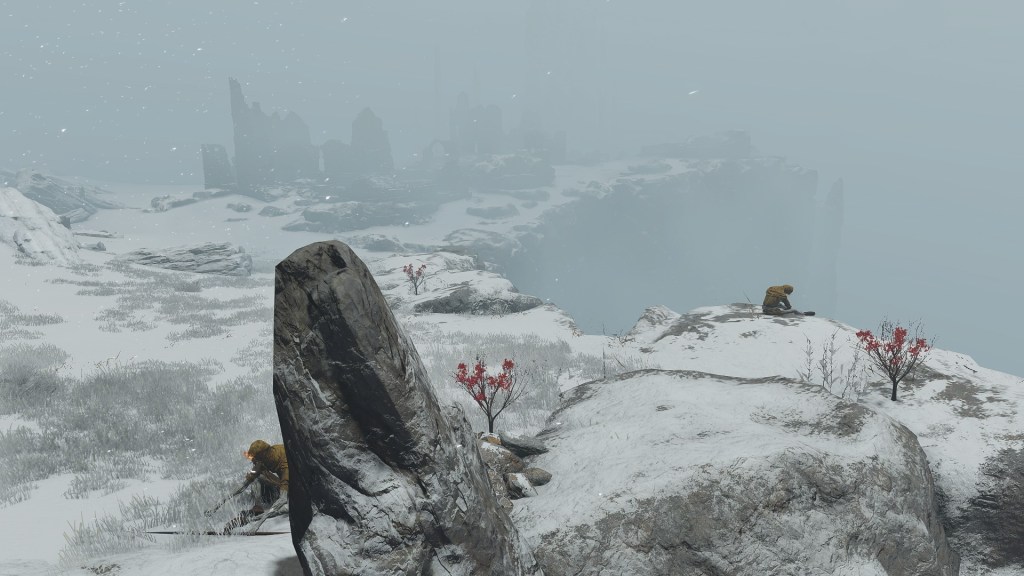
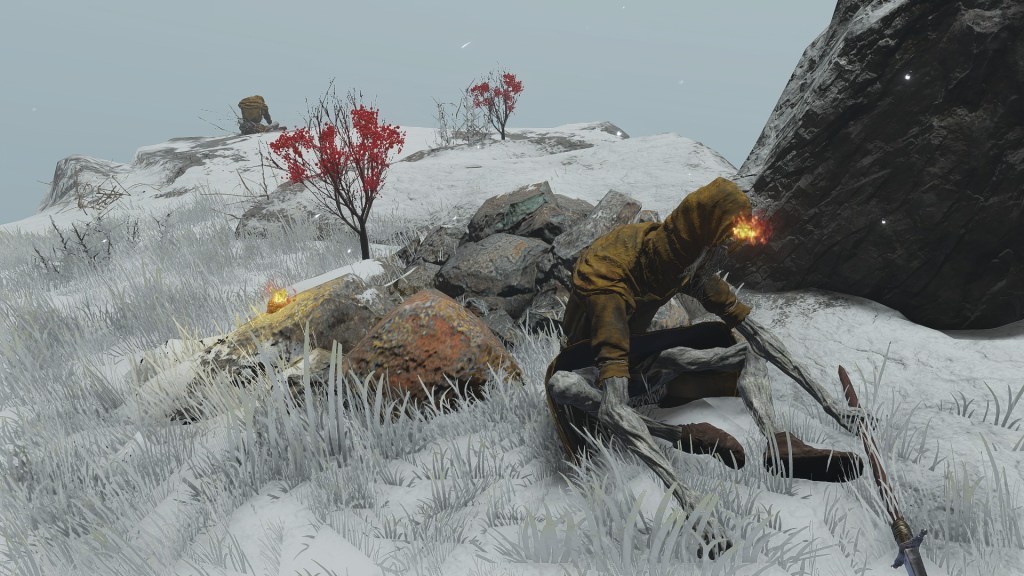
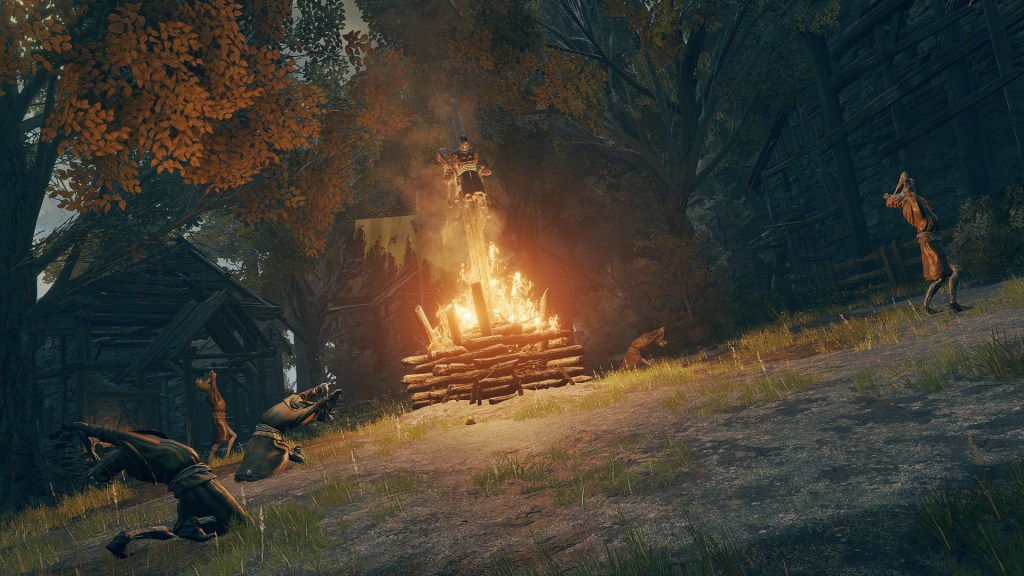
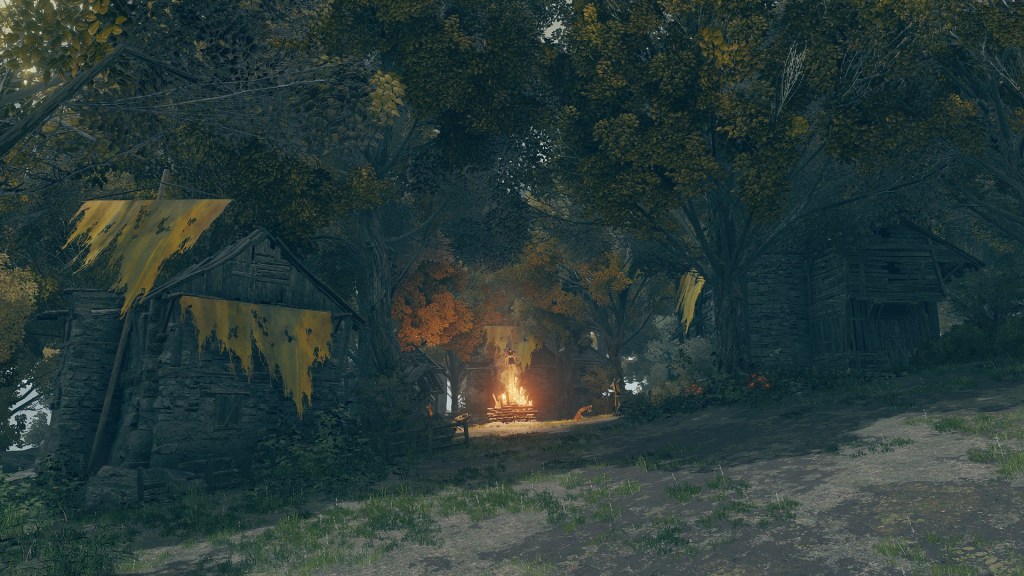
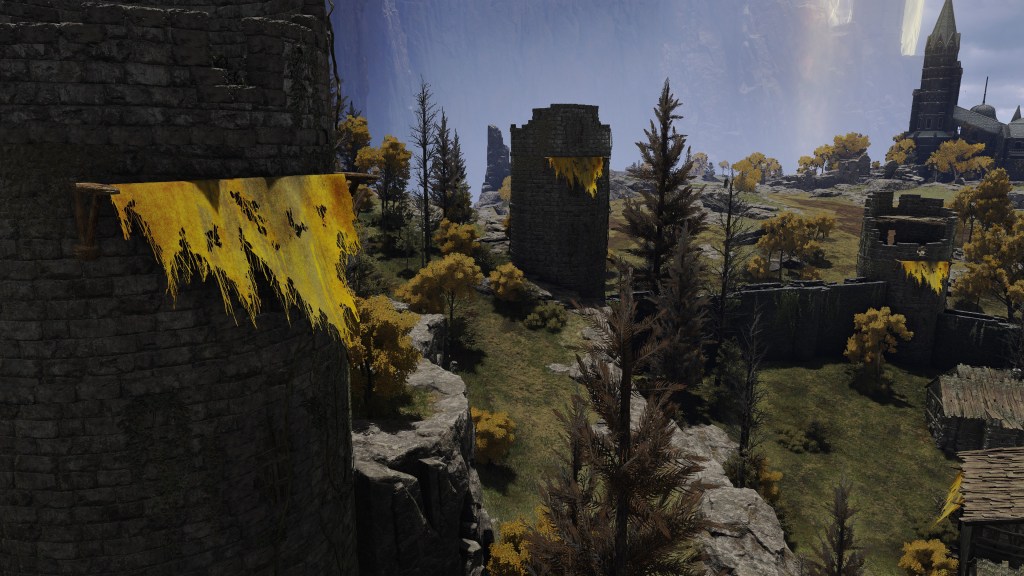
Ground zero was assuredly Yelough Anix, where the Eye of Yelough gets its name. The mining town lies the closest to Leyndell, is the only settlement in ruins, and has the name “yellow anise” (イエロ・アニス) invoking a toxic plant used by Japanese Buddhist in sacred ceremonies. The terrible enlightenment had come for the humans and trolls on the snowy mountaintops first. After reporting the situation to Leyndell, they were probably ordered to quarantine and bear with it. While the isolation in Forbidden Lands was to the world’s benefit, the madness was too much to keep the town itself from falling apart, as the Unendurable Frenzy there implicates. Ailing citizens dress in yellow and are, at least initially, exiled to the wilderness, but this evidently stops once the ailment has spread to everyone. More recent cases have the victims put up yellow banners all over town to warn outsiders about the plague before they carelessly enter. The Flame Crest Wooden Shield in the Ailing Village performs a similar function for soldiers especially, though the fact that disease’s symbol was placed on a shield betrays the fear of visitors exterminating them up-close.
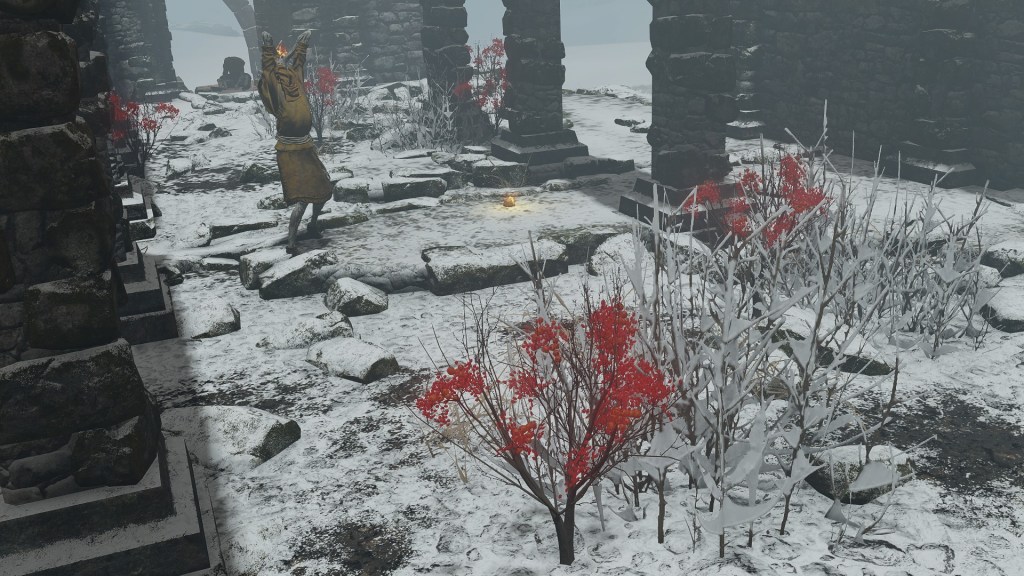
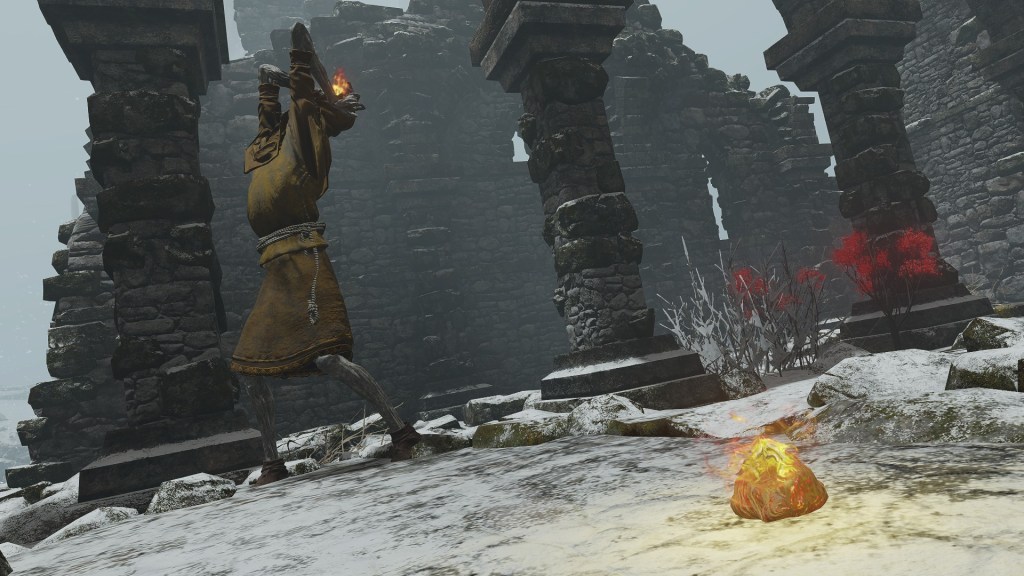
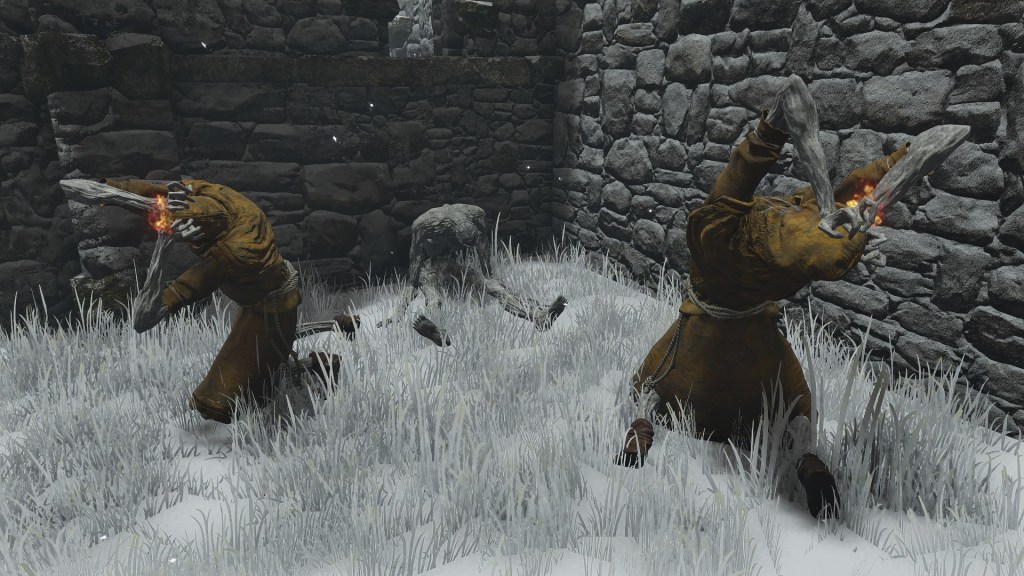

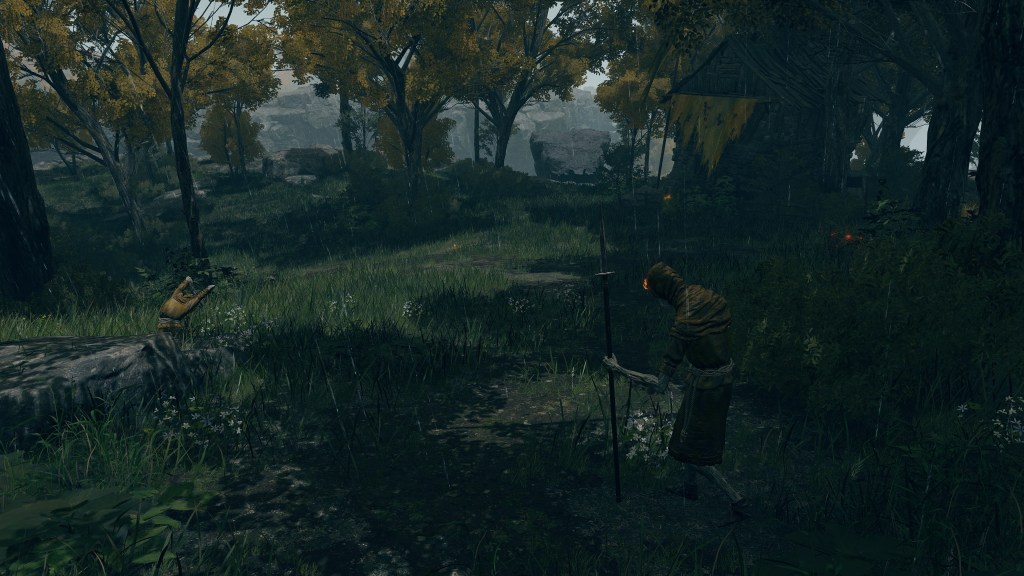
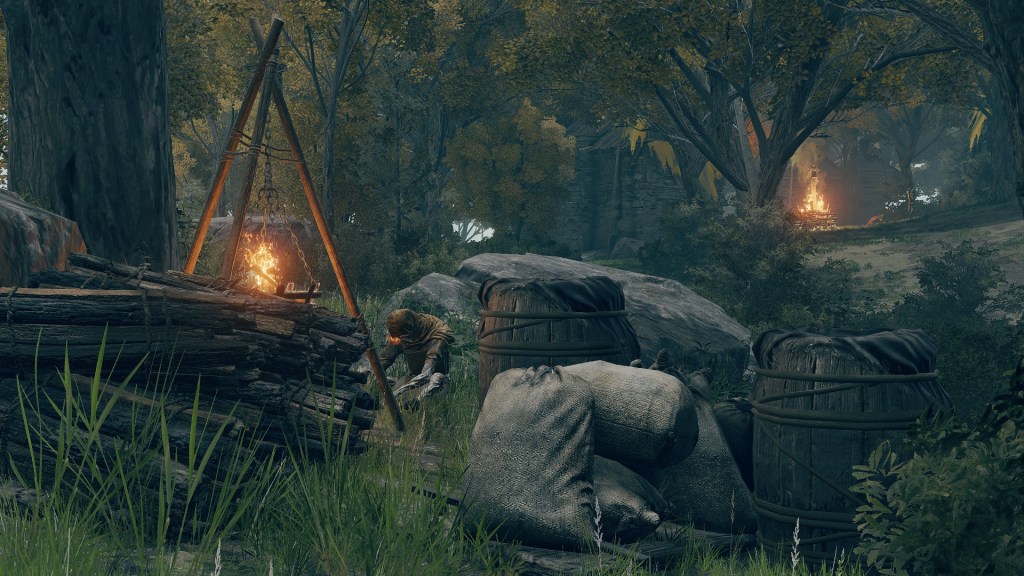
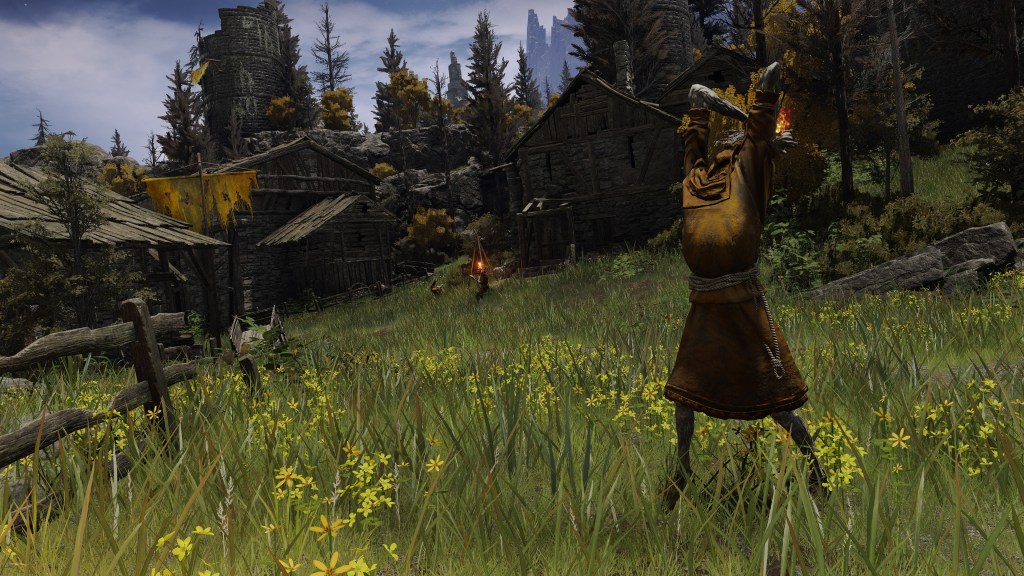
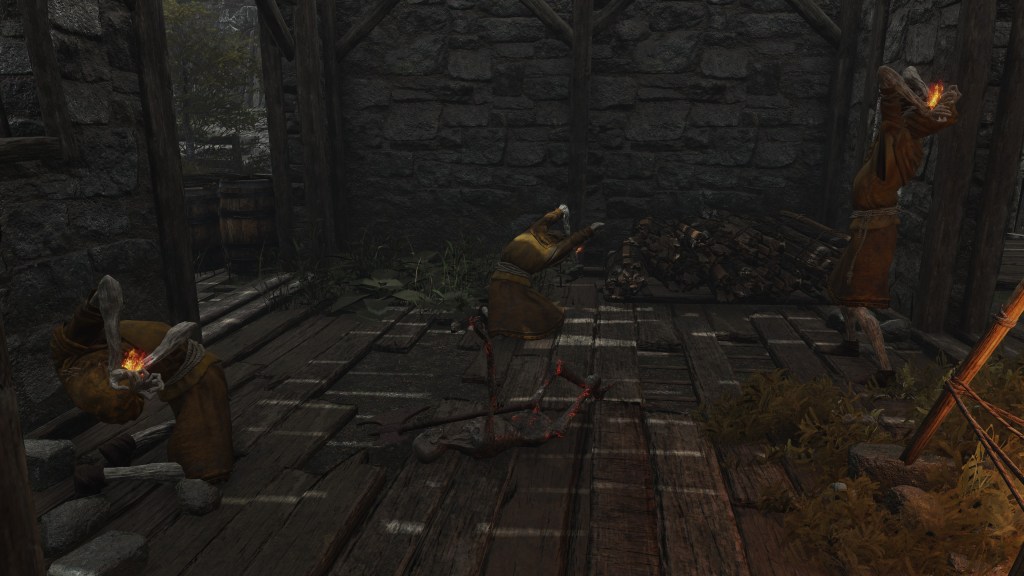
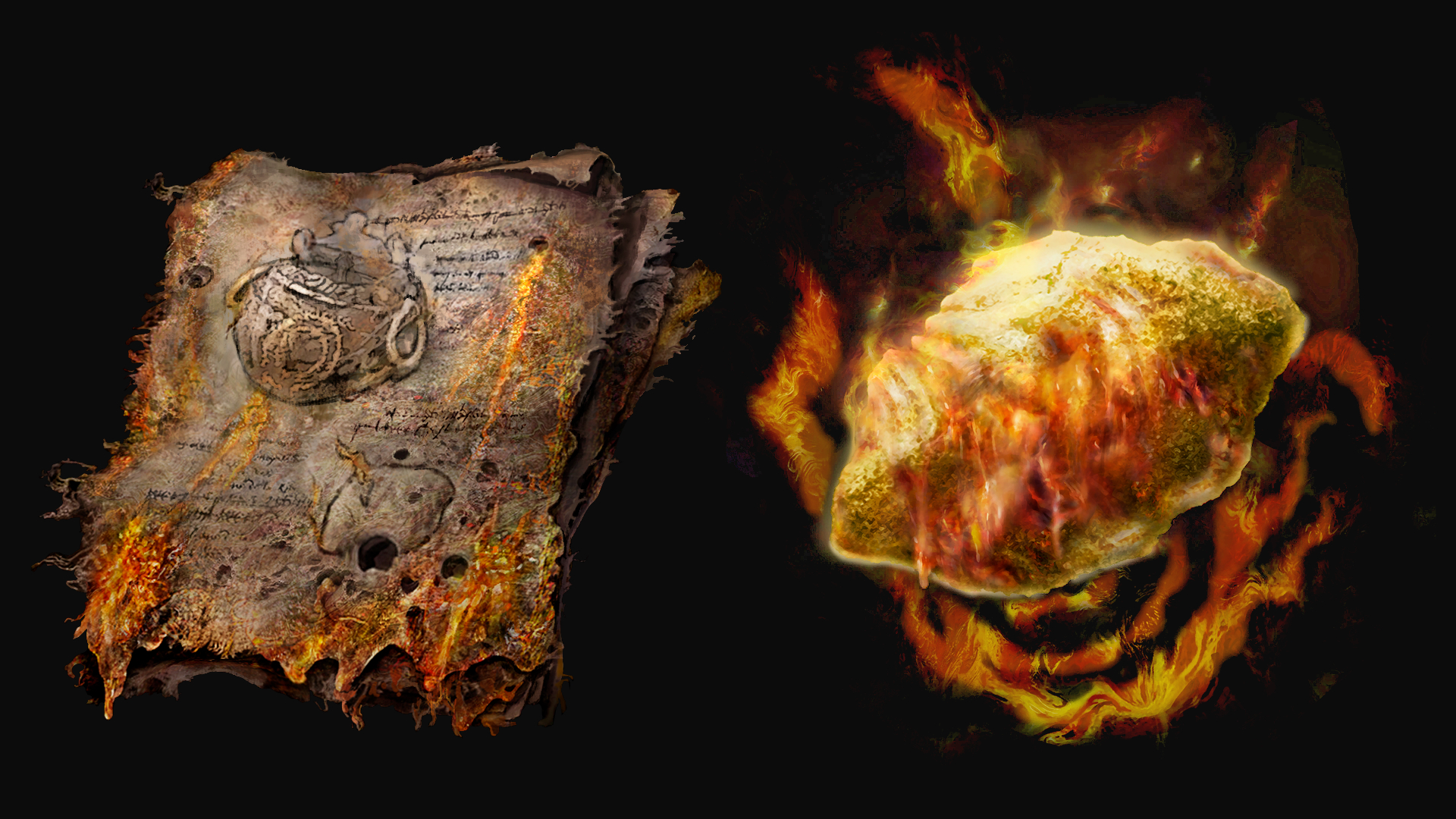
Prayer derived from the mad Three Fingers.
Violently gushes out yellow-colored mad flame from the eyes. That gush continues while holding and can be used without stopping movement.
Those are the unbearable tears shed of the diseased whose eyes were burned with mad flame and is accompanied with maddening pain.
Vertically long, wooden-mad medium shield. Choice weapon of soldiers of the mad disease village.
The yellow-colored flame is the disease’s symbol, so it is a warning to those who approach the village.
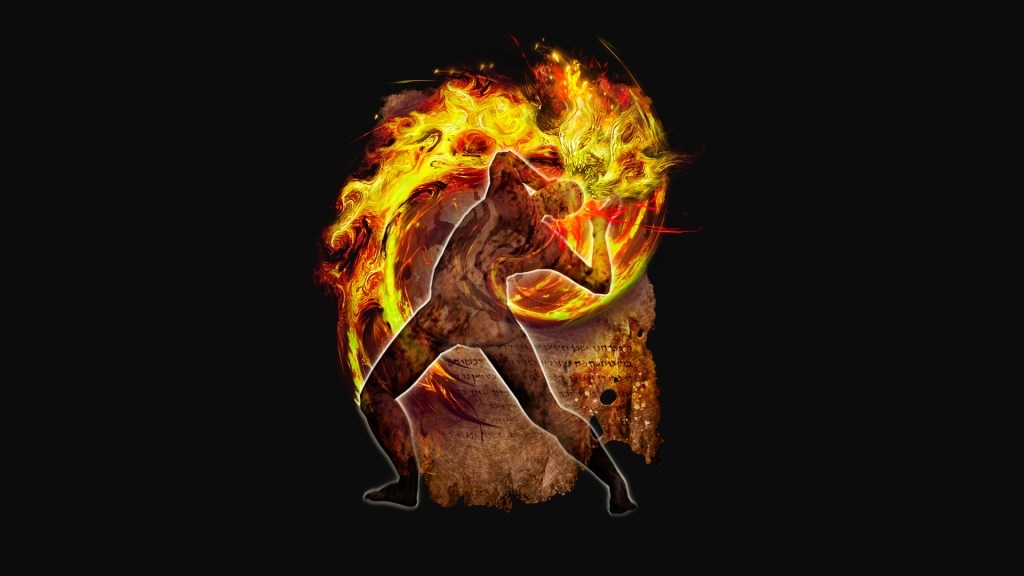
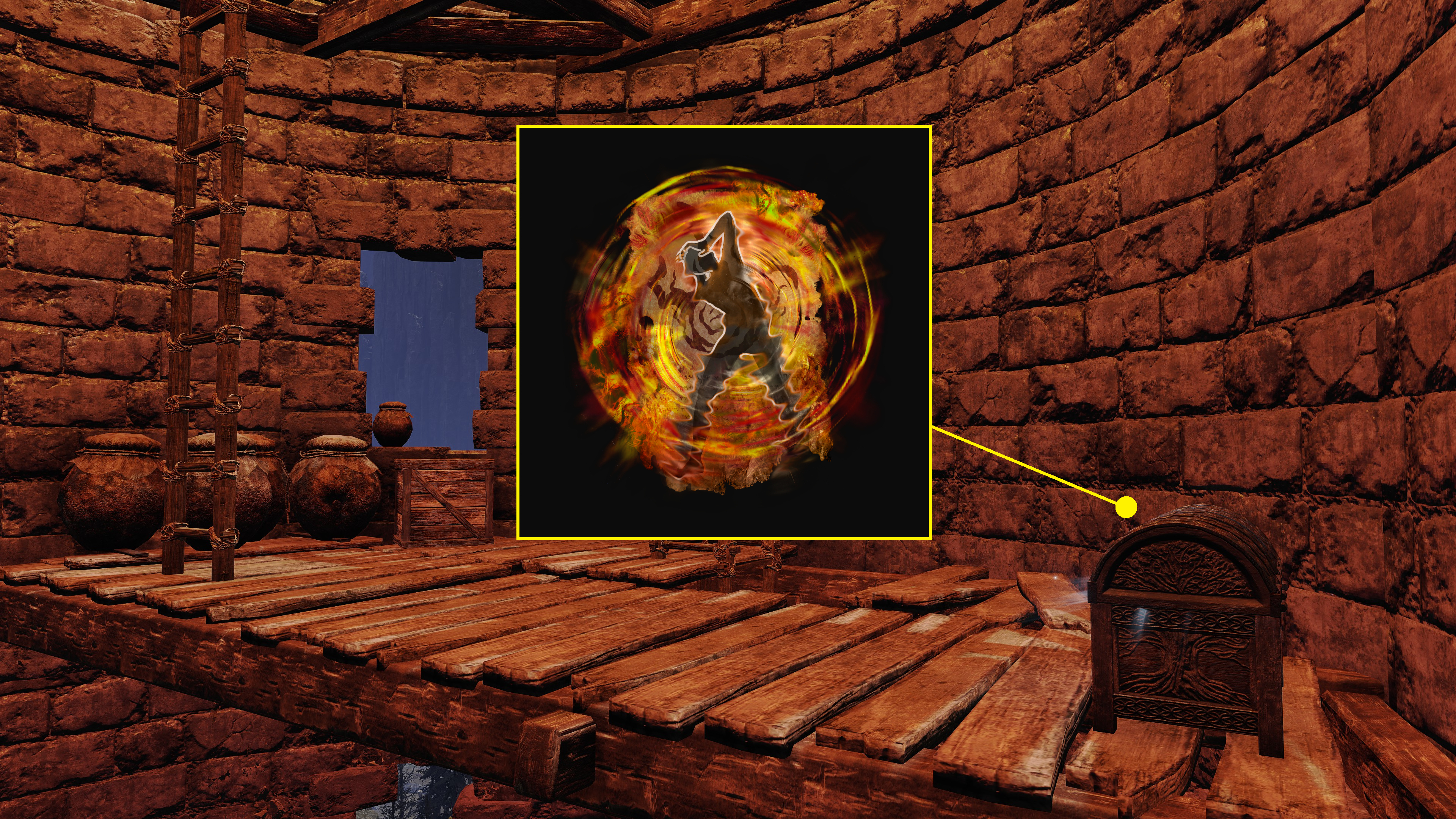
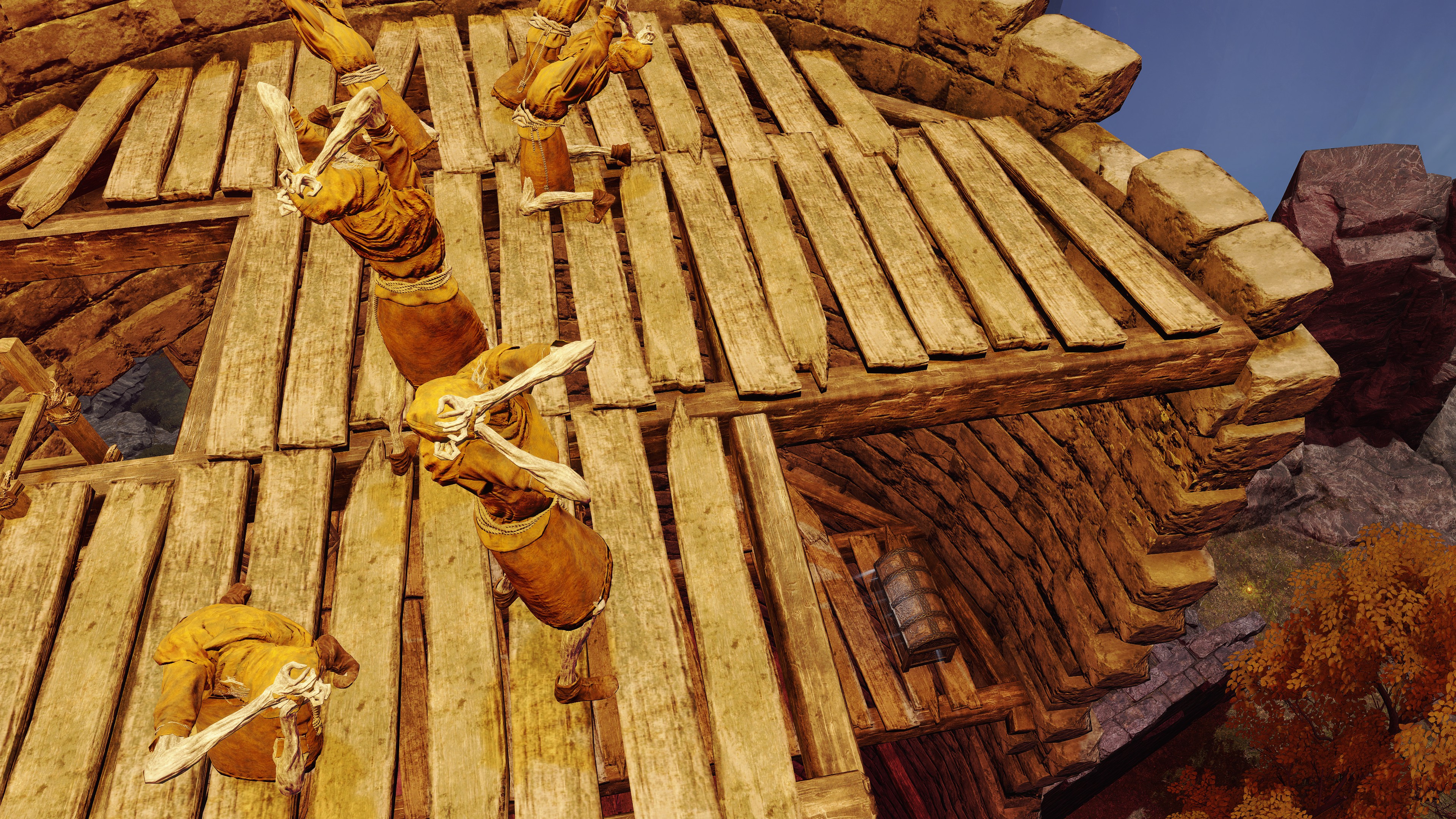
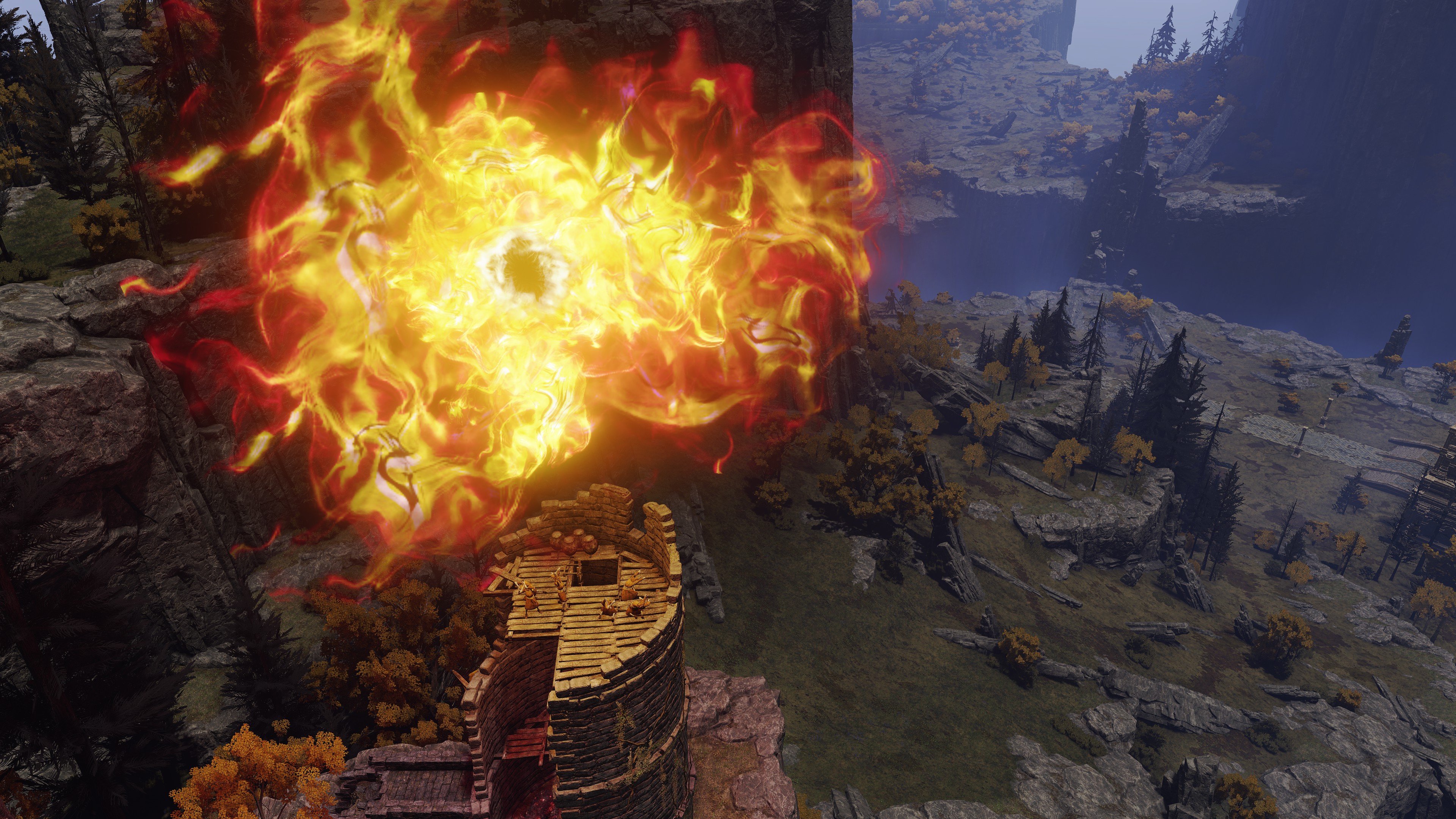
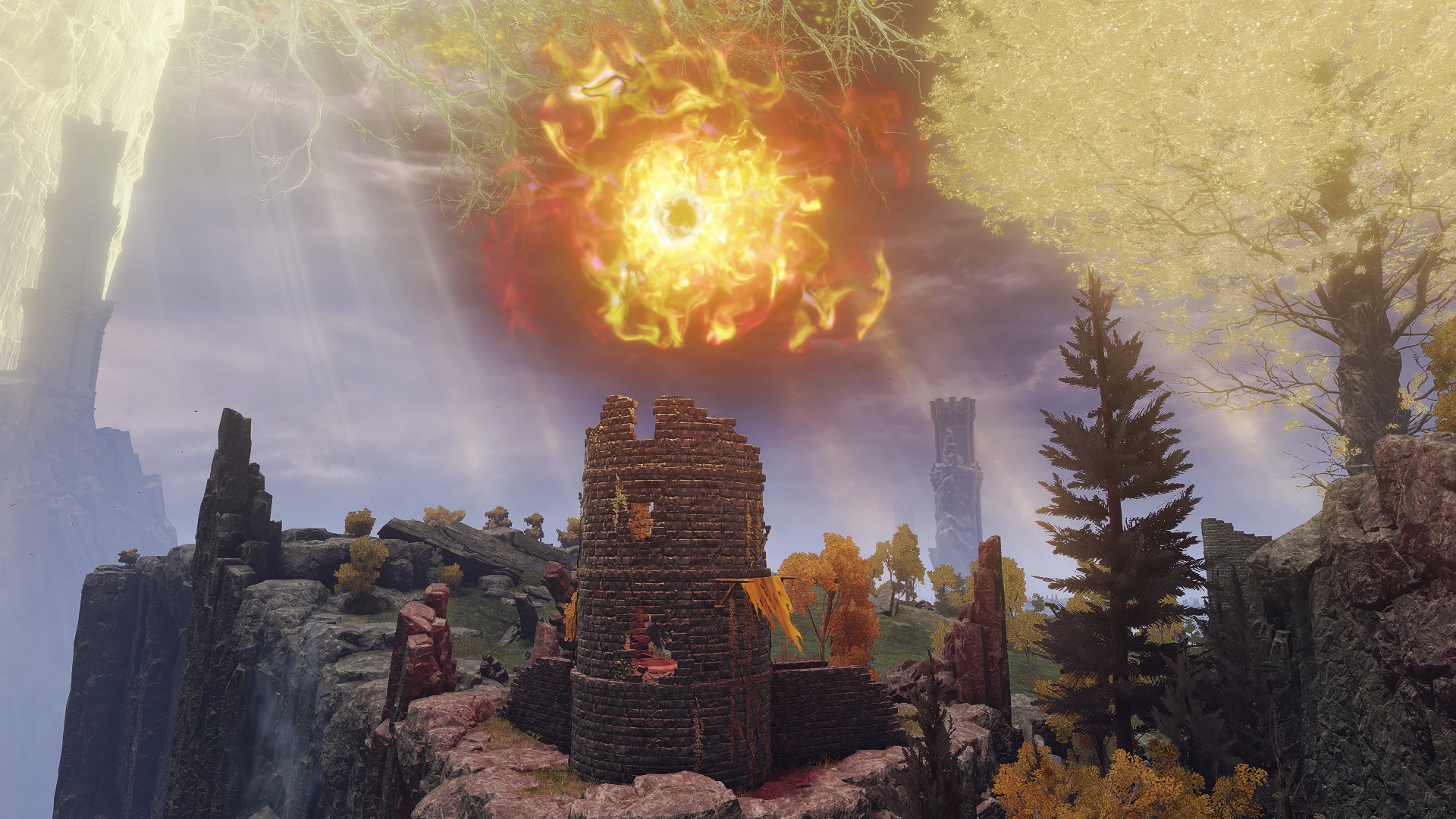
The incantations in every one of these disease clusters, including the nomads’ prison, shows the vain attempts to try and control the madness through faith. The Howl of Shabriri lies in a chest within the Frenzy-Flaming Tower overlooking the road to Site F just below the top, where a group of villagers combine their power to create a giant ball of flame over their heads; its “stare” inflicting madness upon all who approach. This was just another way to scare off travelers, but it has slowed the disease’s spread while wider society figures out how to treat it. Someone at Site F took the time to formulate a recipe for clarifying boluses. There were also those like the madman in the nomads’ tomb, jotting down how to craft Frenzyflame Stones for the afflicted to soothe themselves in place of their Two Fingers counterpart; better than his counterpart, creating mimics of grace far past hope for absolution. Although far from ideal, the quarantine system is effective overall.
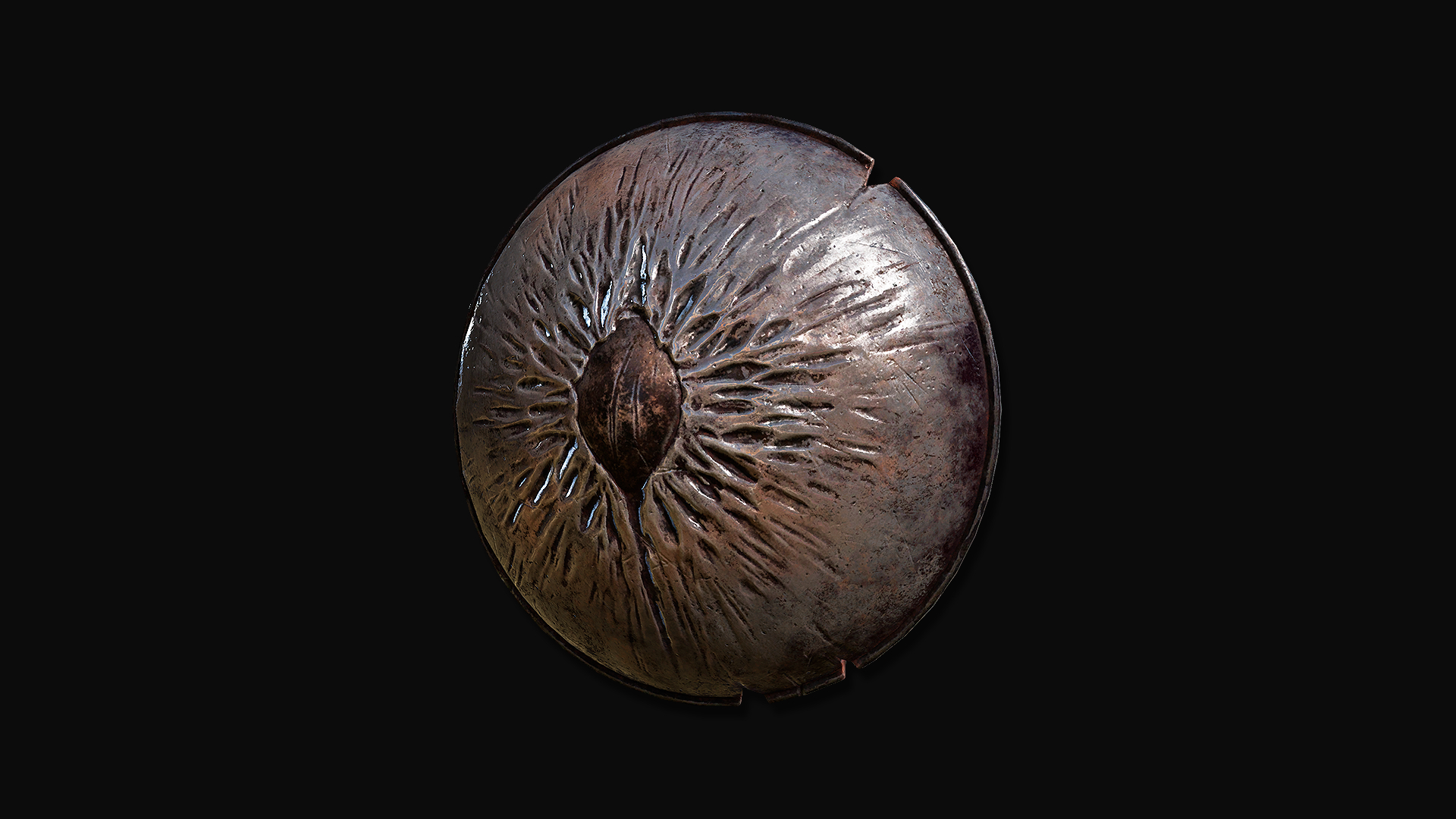
Knowledge of the flame and how to counteract it has even spread abroad. When choosing a prisoner background, we arm ourselves with the Rift Shield. This armament raises our focus due to the “sinister” rift, more literally a “split eye”, (裂け目) on the shield’s face. This is an old magic charm where the eye supposedly “stares back” at the maddening rift like it, so we can assume that this is all a reference to the Frenzied eye disease. To that point, we can also purchase the shield from a nomadic merchant not too far from the Frenzy-Flaming Tower, whose ball of flame “gazing” upon us from the top takes obvious inspiration from the menacing Eye of Sauron of Peter Jackson’s film adaptations to The Lord of the Rings. If that much information is leaking out to help prisoners from going mad in captivity, then the subject of Frenzy has already been explored thoroughly in the Lands Between. Marika’s kingdom has adapted to flare ups of the disease as best they can manage, all the loathing for her missteps falling on Shabriri.

Indeed, it is the liar’s face which has become recognizable even outside the Lands Between, with both incantations and other items bearing his name — most notable being eyes melted by the disease that Frenzy worshipers affectionately call “grapes”. The outer god’s mockery of the Two Fingers earned similar infamy. Because of the fate that befell the nomads at the hands of their so-called master, three fingers are generally considered an ill omen. And because yubi (指) encapsulates both kinds of digits, this fear of threes applies to “toes” as well as fingers. As a result, people carrying on the practice of eating bird feet consider the four-toed fowl to bring amazing fortune nowadays; not as if two-toed birds exist. This is the recipe Erdtree missionaries record as they spread their message to the remotes corners of the Lands Between, imparting to pagans a fear of the Three Fingers with the faith. The Golden Order has its villains, leaving Marika’s reputation untouched for as long as the consequences remain contained.
Foot of a bird that has four toes. One of the materials used in item crafting.
In the Lands Between, three fingers are a symbol of ill omen. That is exactly why the four-toed bird foot is a gift denoting very good fortune.
Even so, the disease continues to lurk under the surface. Despite references to the “entire” clan being captured, it is clear that there were exceptions, over a dozen merchants besides Kalé still roaming the lands to this day; the Forager Brood finding an additional nomad’s note in the Realm of Shadow. Separation from the great caravan have given a new meaning to the solitude of their code, which a handful embrace by wandering into the most remote and isolated areas they can find. Whether that be in the dilapidated shack on the Weeping Peninsula’s coastline, between the sealed gates of Raya Lucaria, at the heart of Ainsel’s ruins underground, or above the forbidden Mountaintops, these nomads go where they don’t expect any customers. In fact, a few imply to be trying to put the merchant life behind them. Certain clansmen do suggest that they too often suffer attacks from highwaymen, so it makes sense to simply become hermits at their age. After all, their lives have been extended by the Frenzy’s curse, too.
So not even solitude is permitted, huh?
It has been extremely long since I had a guest. What in the world do you want in a remote place like this?
It is hard to leave one’s occupation.
To think, robbers even in a place like this. Your kind cropping up every which place.
Has anything in an old merchant’s merchandise got you curious?
Maybe suddenly acquiring yellow madness came as a shock since they weren’t present for the events, but the nomads have carried on seemingly without seeking revenge for their brethren. Attitudes are as varied as their colors. Some are cagey, some are glib, some anxious, others terse, one suspicious, more nostalgic, a surprising few hungry; all willing to do business. The overarching impression is that they don’t hold the clan’s fate against the world like they do to personal attackers. Kalé’s cut dialogue goes so far as to posit total ignorance about the clan’s fate, but this is unlikely. Between the Flame of Frenzy and basic logic, they should all have an inkling. If anything, they might place the fault on Shabriri for slandering them. All conflict with the Golden Order was avoidable; the clan’s mistake was relying on anyone, including the caravan. Setting out each on their own path, they can now peacefully coexist with the world. The only problem is managing the madness.
A customer? Well, that’s very nostalgic.
Didn’t anyone tell you, about the horror of a wandering people?
While they have better access to food and drink so they don’t become hollowed-out shells, the disease still afflicts them. When they feel it creeping in, the merchants play a traditional song on their unique string instruments to improve focus and peace of mind, hence why they are the only ones to exhibit the Frenzied Flame when hostile. But this can only mitigate the disease, and the more determining factor is probably just their mental health. A merchant who apparently joined adventurers on their expedition through Siofra, only to be abandoned at camp, is losing himself to his music, struggling to form sentences without stuttering otherwise. We can see that the captured clan tried doing the same, to no avail. Play all they want, it is only a distraction from the pain. When there is no real hope, despair will eventually kick in. And just like their ancestors, they will raise their hands wishing for death.


 Lokey Lore