
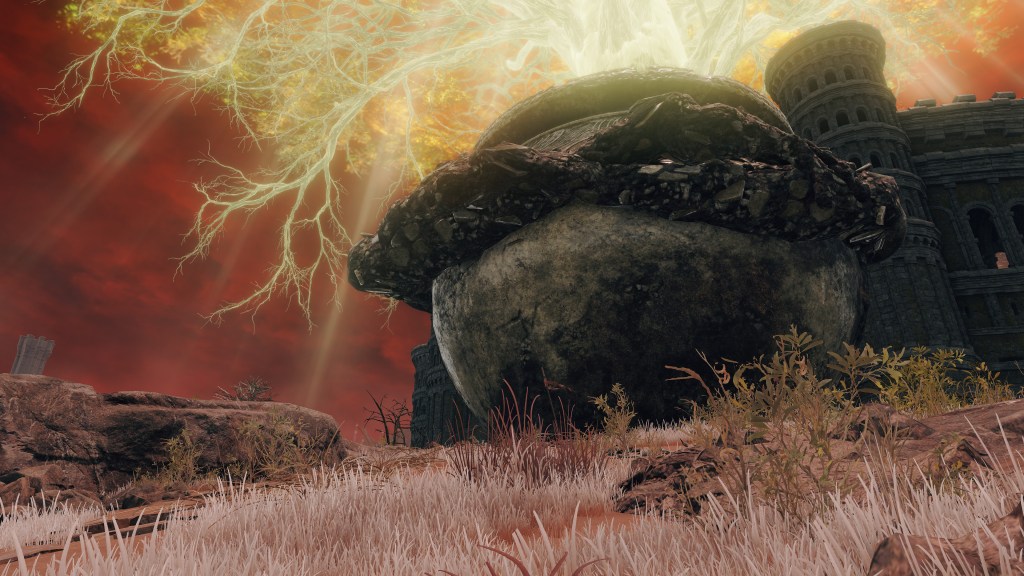
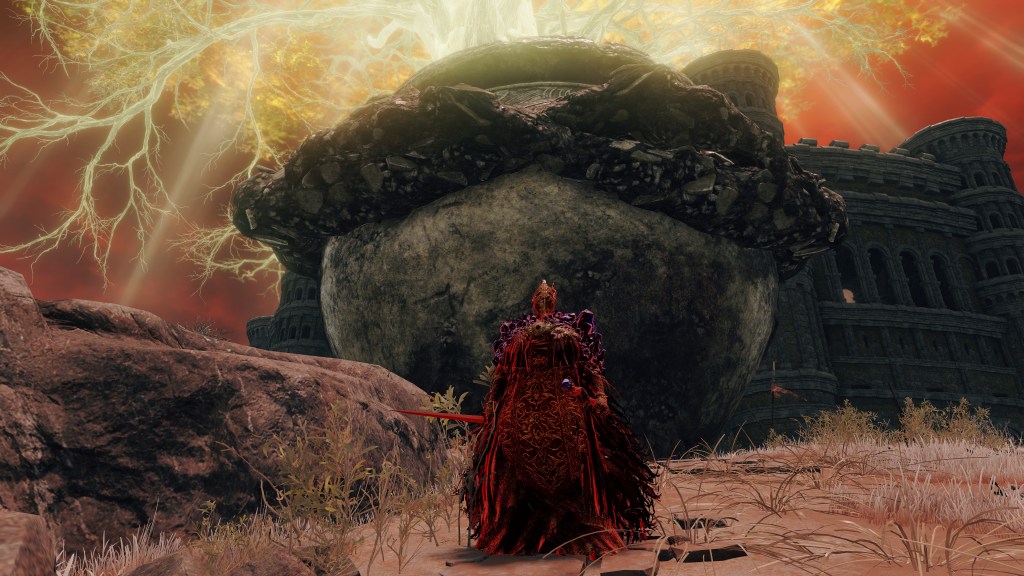
Whenever coming up on the Caelid Colosseum, it is inevitably the giant pot which first catches our eye. The jar practically blocks the whole arena from in front of the entrance, making it impossible to miss. Even accounting for artistic license, it is obvious that this vessel is intended to be far larger than any other living jar we come across. But more important is the implication for the corpse meat stuffed inside. Given the location, the dead must have been sourced from the colosseum, no doubt consisting of countless arena duelists. But that notion strikes as odd when this colosseum should have enjoyed the shortest history of the three. Following its construction during the first Elden Lord’s last campaign, his successor closed them down. How were so many fights occurring during such a relatively short period? The answer is that they were not — the Great Jar wasn’t filled with gladiators from Godfrey’s day, but warriors who came after.


The interior of the arena is decorated the same as Redmane Castle, red lion banners strung up along with penal colonist armaments. This implies that the castle garrison at one point used the facility for a ceremony comparable to the Radahn Festival. Indeed, what better place to conduct a war festival than an actual arena? But this was obviously not for a sendoff to General Radahn. Rather, the good general himself was most likely responsible for organizing these festivities. Freyja was a gladiator when recruited by the demigod — clearly, she was showcasing her courage to him in the arena for that to be at all relevant. Moreover, Radahn had established Caelid as his territory since before becoming a general. Now that he was in a formal position of power, who was to stop the prince from reopening the colosseum, out on the fringes? Despite his father’s desire to bury the kingdom’s bloody past, Radahn still loved Godfrey, so the gladiatorial duels likely helped the young lion feel a closer connection with his idol.
Golden chest armor of the red lion Freyja, royal guard knight of General Radahn. Wears a black wool cloak.
It is said that she, who was originally a gladiator, had her courageousness discovered by the young Radahn and was appointed his personal guard.
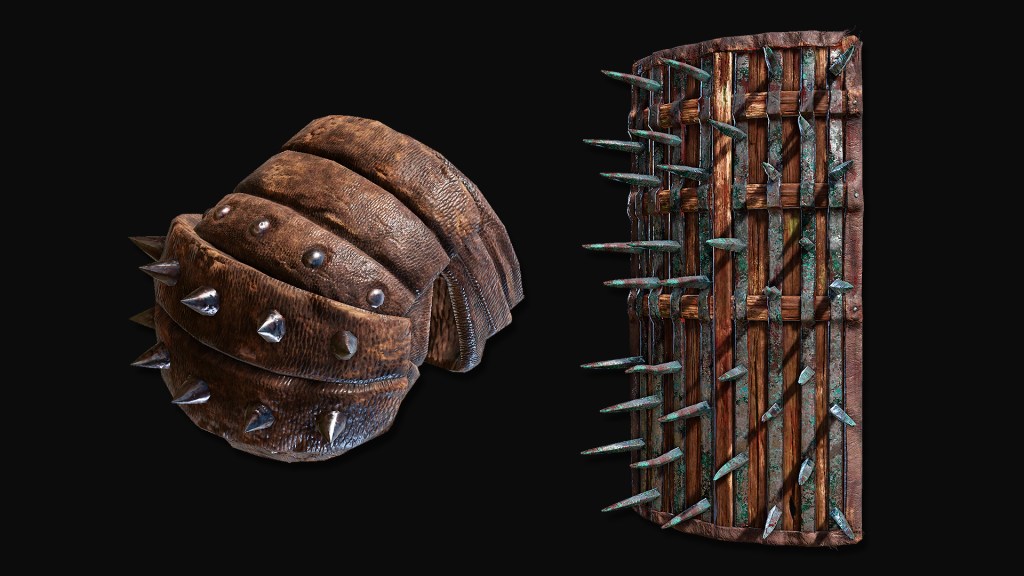
Radahn reviving the arena explains why the local ancient golems have been set up as guards on the path to it. Right up until the Starscourge’s fateful battle with Malenia, the fighting stadium had remained open for, at minimum, the army. The place had likely attracted fighters from all over the frontier, hence the Spiked Caestus we can purchase from the isolated merchant overlooking the colosseum — the Greco-Roman weapon was traditionally used in gladiatorial fist fighting. Forcing criminals into the gladiatorial games as punishment would also be reinstated in the general’s domain; a corpse carrying the “Crucifixion Shield” along the way to the colosseum highlights that aspect. There in the stands, Radahn and his Redmanes would enjoy the bloodsport, recruiting notable talent like Freyja on occasion. Inevitably, many would die in these deadly bouts, the bodies piling up day after day haphazardly dumped in an oversized waste basket. Thus, a giant living jar was born, carrying the wills of countless warriors which we see expressed in its behavior.

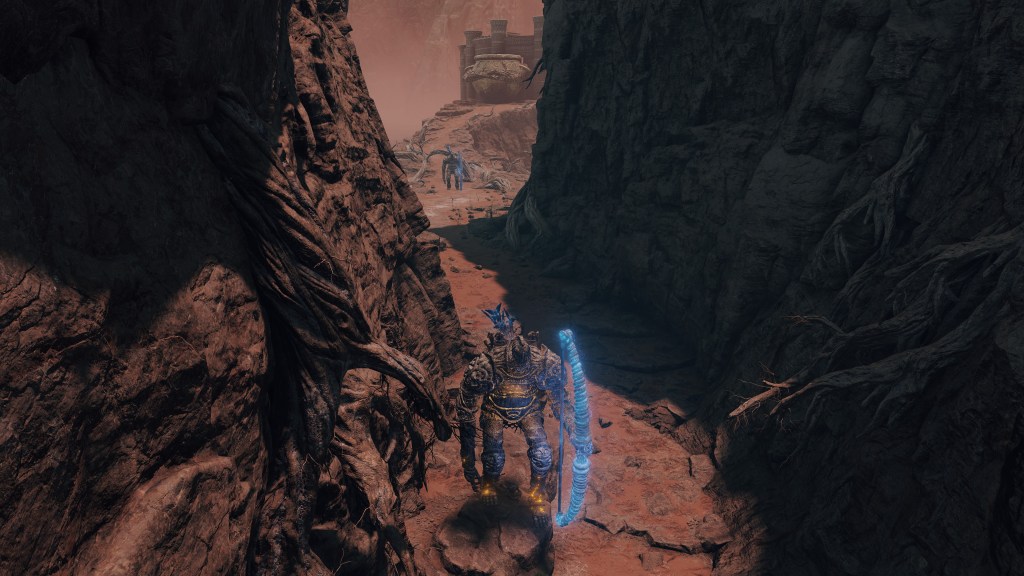
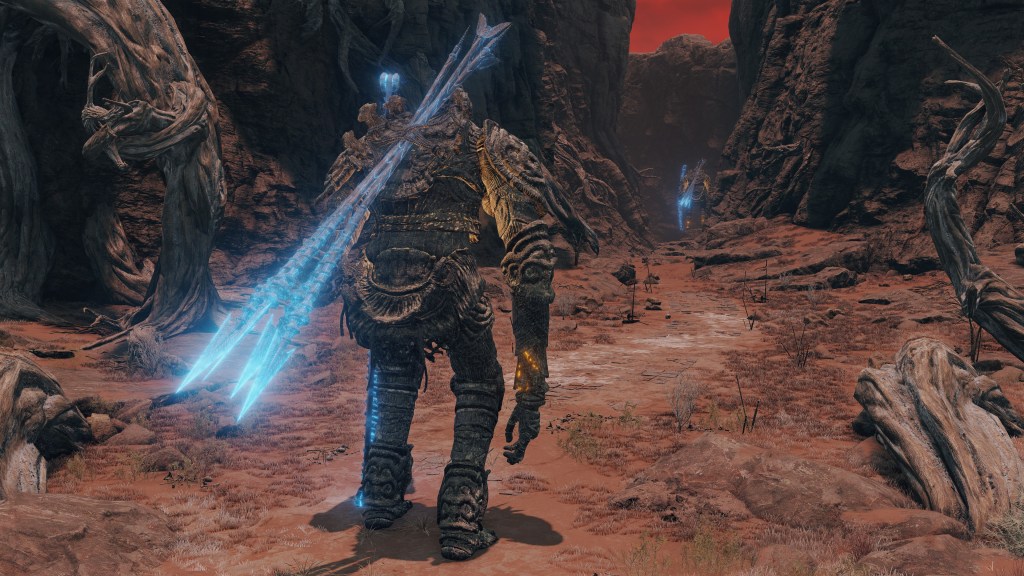


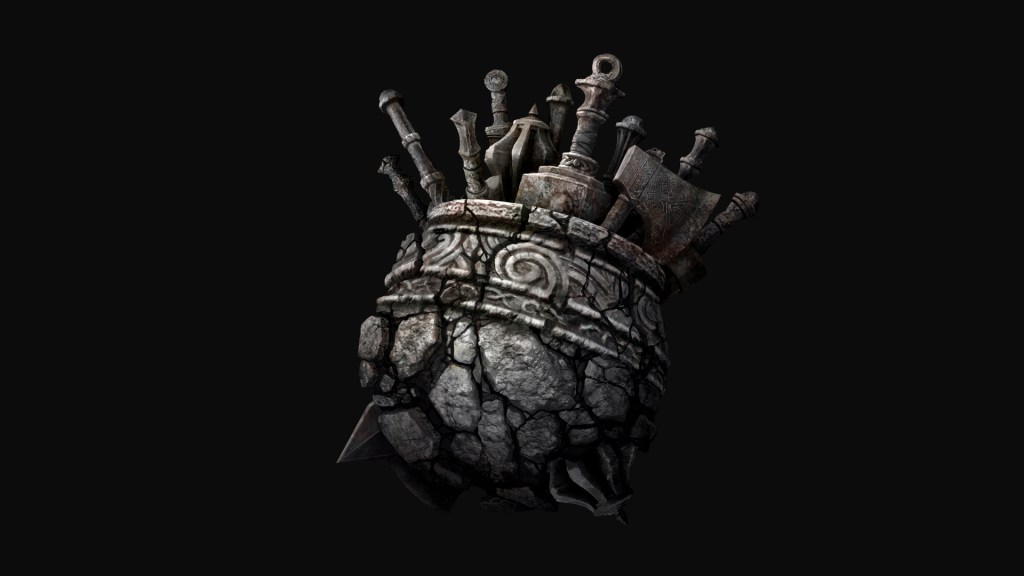
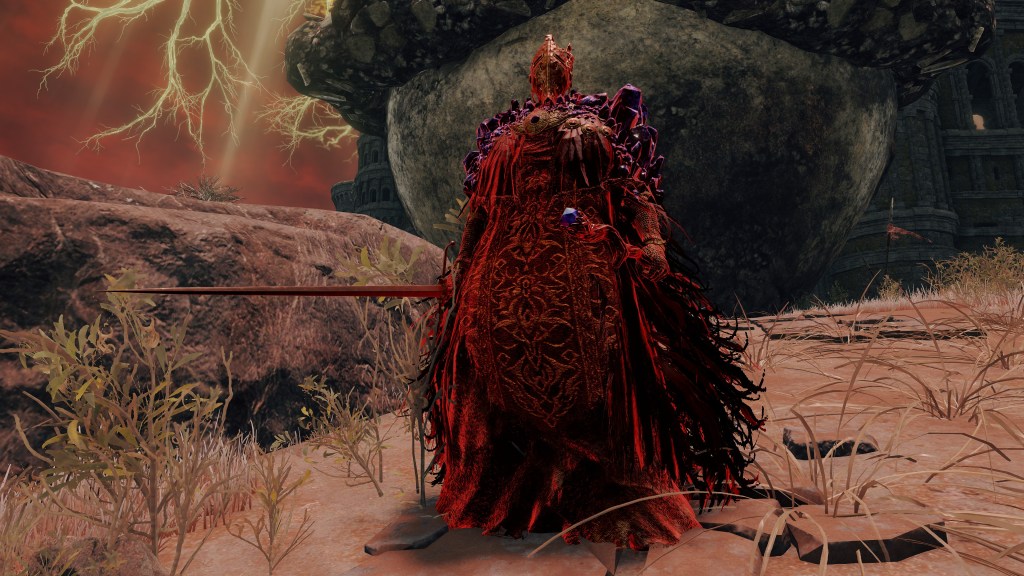
Unlike Alexander, this meat container isn’t interested is personally proving its skills in combat. The pot simply sits there, arms crossed, sitting in judgment of challengers. But whether coming to challenge the arena or the intriguing jar, the competitor is offered to face three trials via summon sign. Upon completion, the towering earthenware quietly awards a talisman as proof of initiation into its roster of warriors. This Great-Jar Arsenal is the strongest of any Arsenal Charm, the image of a large pot overflowing with armaments conveying the real thing’s own sentiments: carry much and become grand. Evidently, the amalgamation of warriors has determined its raison d’être to be amassing strength through size and number. Being unsurpassed in that regard, it seeks to serve as an example; the hope that others might reach further heights through consolidating tools of both literal and proverbial weight. The summon signs are therefore to measure whether the warrior is worthy of receiving this wisdom — a master’s training. And because of its origins, such training means deadly duels.
Protective charm of an overflowing mass of arms in a great pot. Very greatly raises equipment weight upper limit.
The great pot bestows this to its own warriors. Carry much and become grand.
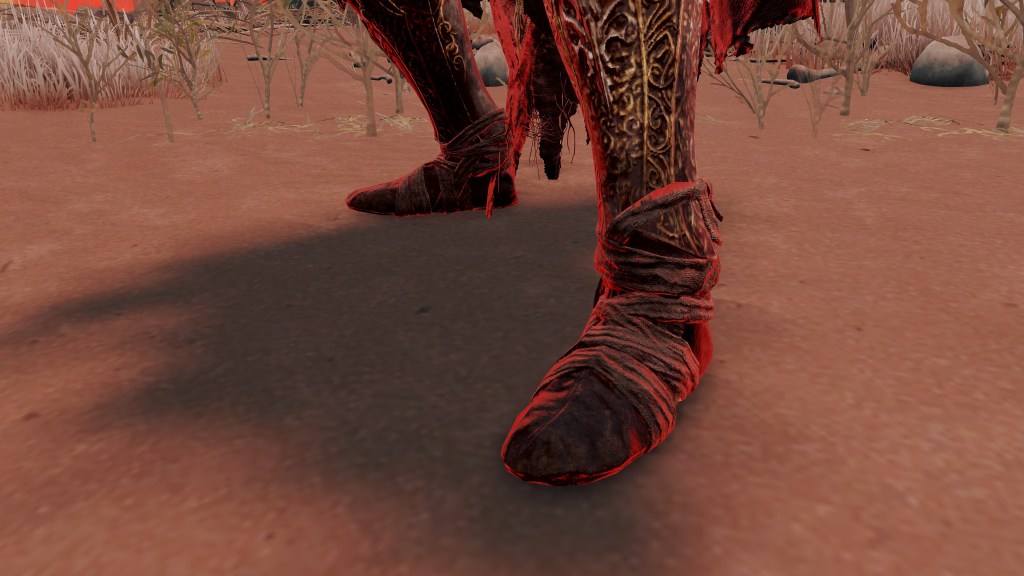
By default, we can summon three warriors. One is a Carian sorcerer, wielding a magic estoc and an Albinauric’s Staff with which to cast Carian Phalanx and Magic Glintblade. The old man wearing a Marionette Soldier Birdhelm and Lusat’s Robe convey his prior stay at Sellia. Contrast to the second summon, a Sellia assassin. Wielding Miséricorde for lethal strikes with a buckler to parry for that decisive opening, the young man dons the Raptor’s Black Feathers to solidify his profession, though the blindfold covering his scars betray that he is still inexperienced. But if the Poison Moth Flight skill is any indication, this blind killer had fast learned from Caelid’s troubles with poison. Then there is the third warrior, a deserter from O’Neil’s unit. The aging man’s Great Mace with Prayerful Strike stresses fealty to the Two Fingers, yet his Banished Knight Helm and Shield plus Exile Gauntlets speak to his pagan roots; just as possible with Stormveil as with Sol. Perhaps he gave his Exile Greaves to the sorcerer, for he equips the Raging Wolf Greaves with shoes bandaged from traveling, where he fittingly picked up a ronin’s armor.



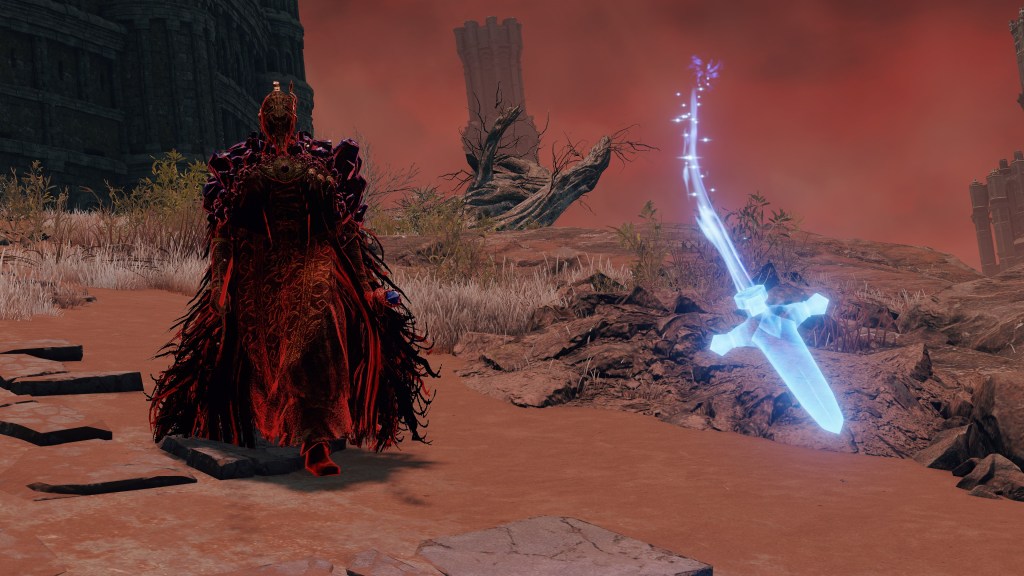

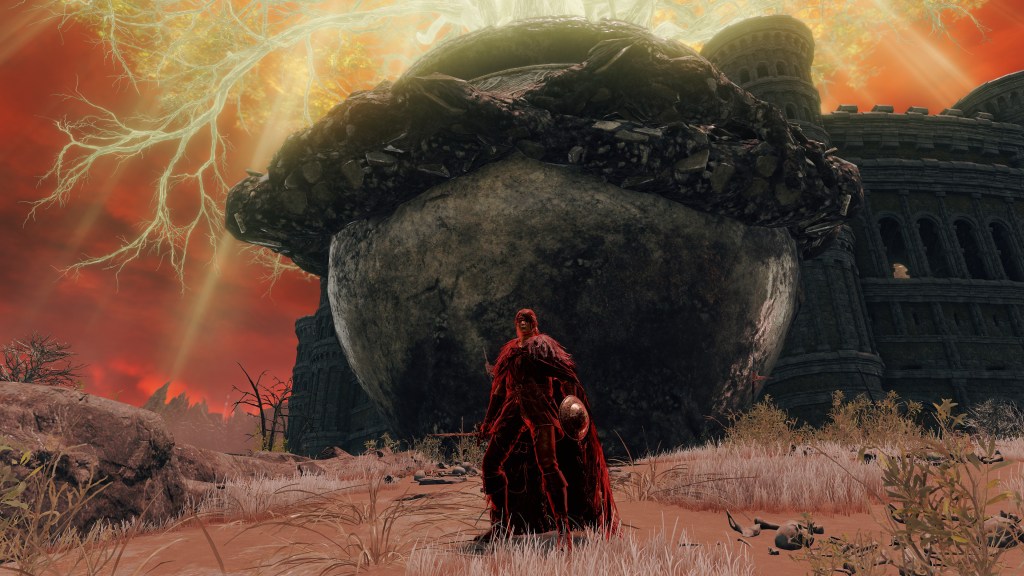

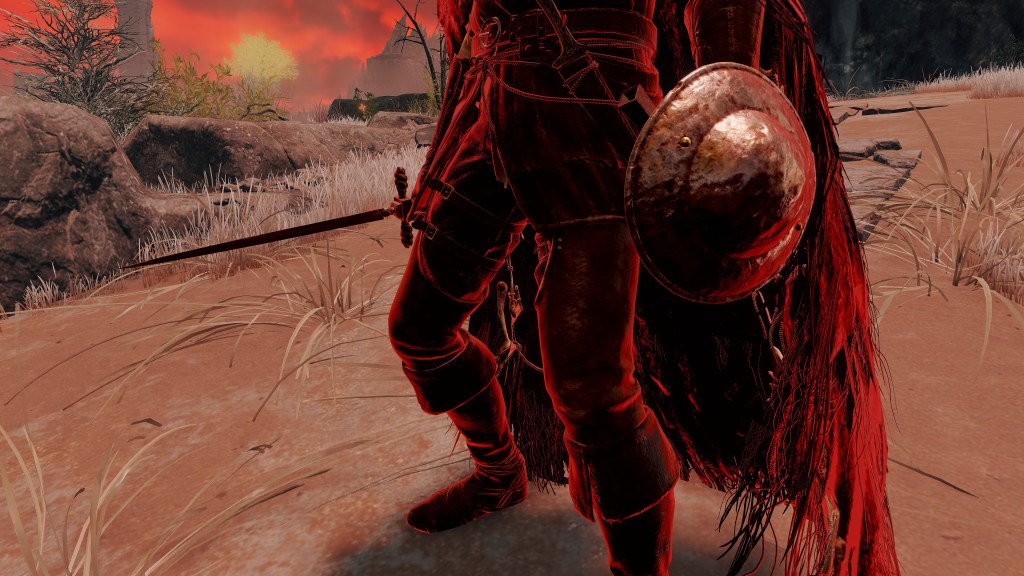
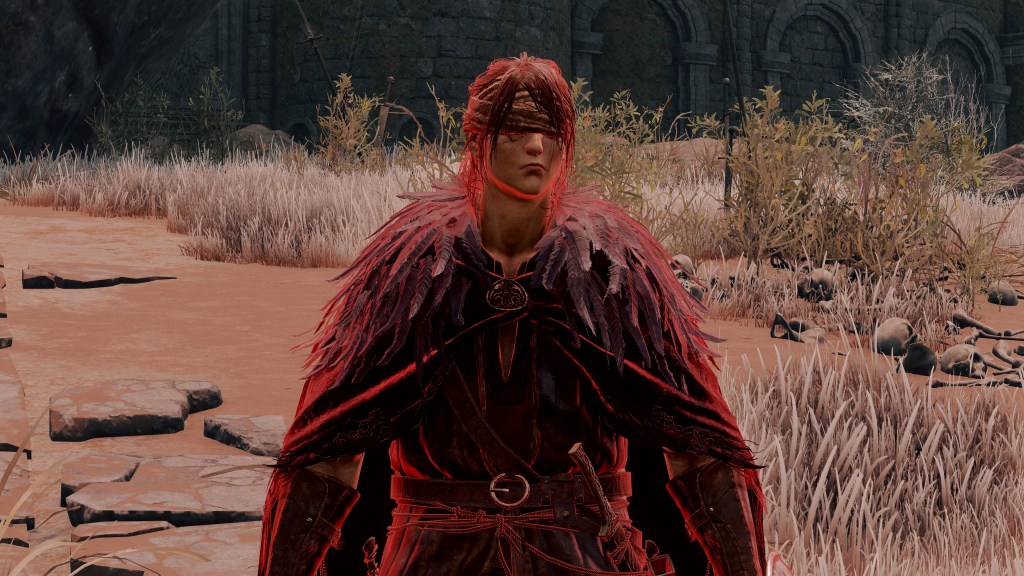

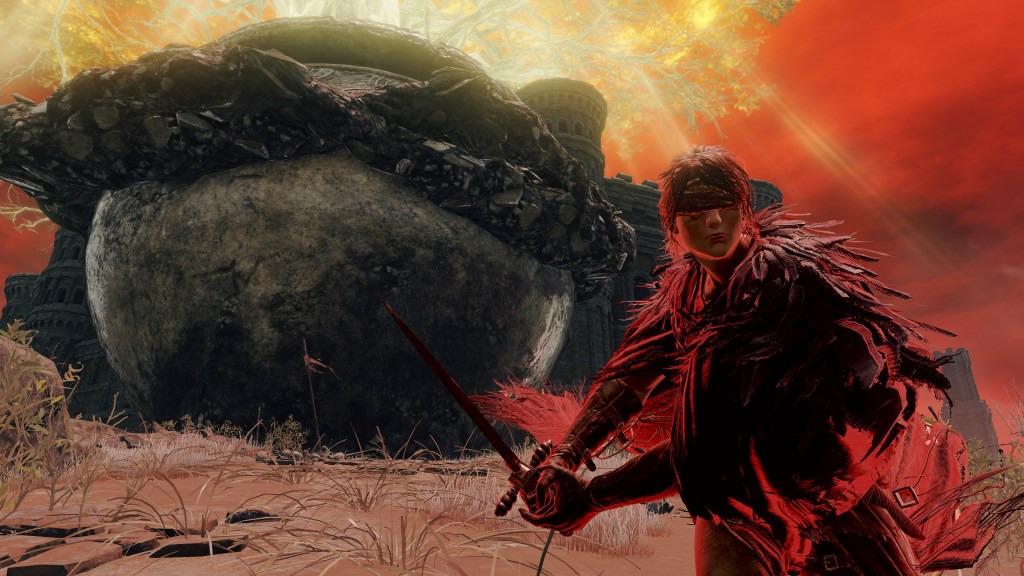
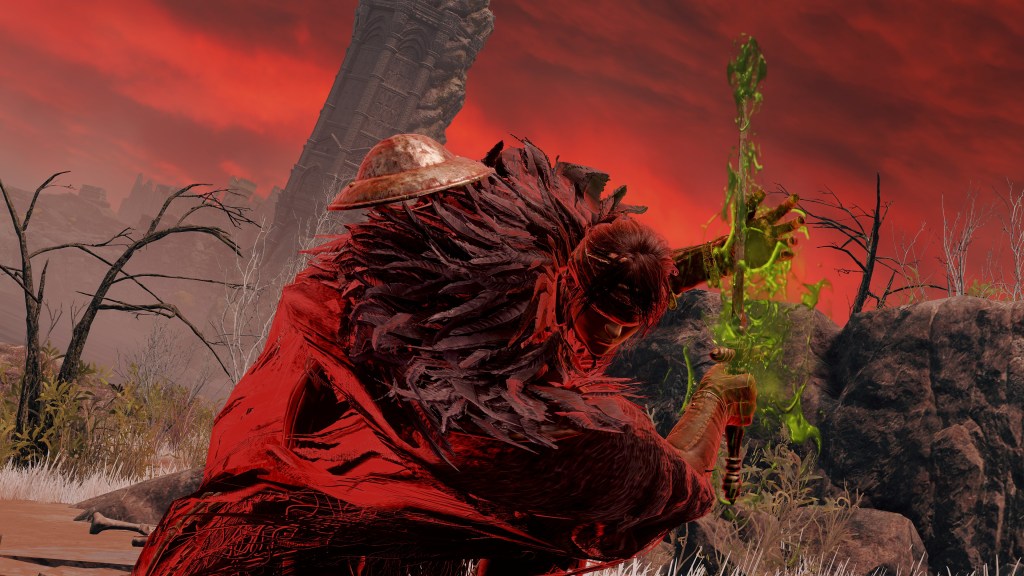
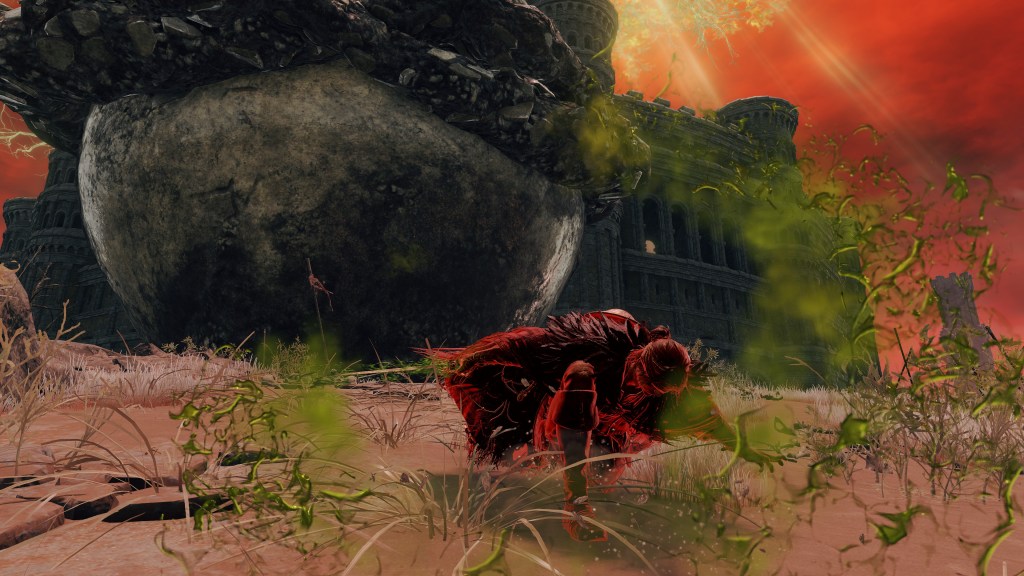



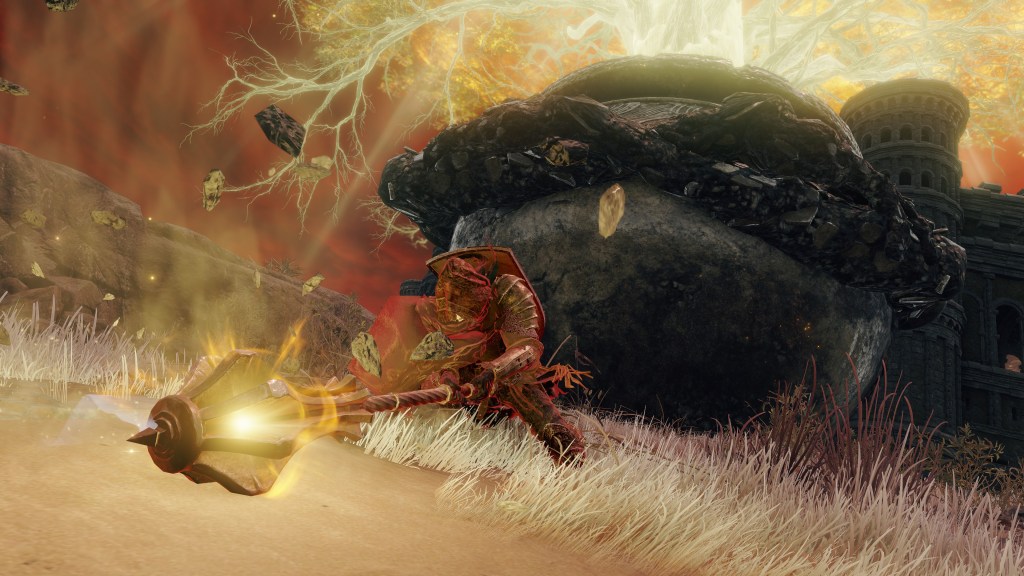
All three individuals are obvious Caelid residents, alive up until well past Malenia and Radahn’s battle. But each ended up crossing paths with the Great Jar for one reason or another. In all likelihood, each shared the desire to test their mettle against a powerful opponent, leading to them becoming trials themselves. Besides those three, we may face other players who have challenged the trials, though not necessarily succeeded. In that case, it is liable for the summons to represent past competitors who failed and ended up joining the contents of the jar. This explains why we must summon them as spirits, the physical individuals existing only as another mass of flesh mixed with the rest inside the pot. Countless have stepped up to meet the Great Jar’s challenge, only to be proven wanting. By assimilating the losers, the vessel adds to its own strength, living by its principle to stuff as much as possible — our weakness is its burden. One may even argue that this is another form of training, the master “rectifying” the weak by making them part of a stronger whole.
Moreover, the three subjects emphasize how recent the Great Jar has been active. With the colosseum abandoned for more pressing matters, bodies were no longer being added to the massive pot. It was at this point that it began to amalgamate a consciousness obsessed with trials. Between Malenia’s invasion and the subsequent Scarlet Rot, it is no surprise that drifters through the chaos have taken up its challenge. Radahn might not have realized the monster he had created, blindly indulging in the barbaric legacy of old heroes the way he did. Nonetheless, it embodies the spirit of the red lion, respecting strength and honor. The mix of both strong and weak, courageous and cowardly all culminated into a massive individual always trying to push the limits to mightiness. In truth, the Great Jar is not that far different from the Morne hero who inspired the first Arsenal Charms. One way or another, power is only increased through a collaborative effort. Your enemy is just as much your training partner.
 Lokey Lore