
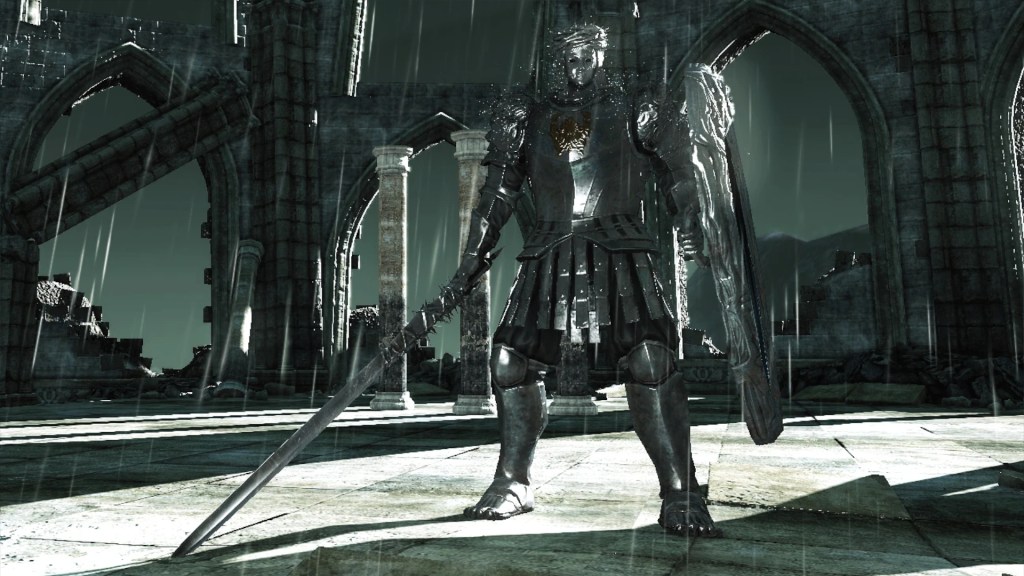
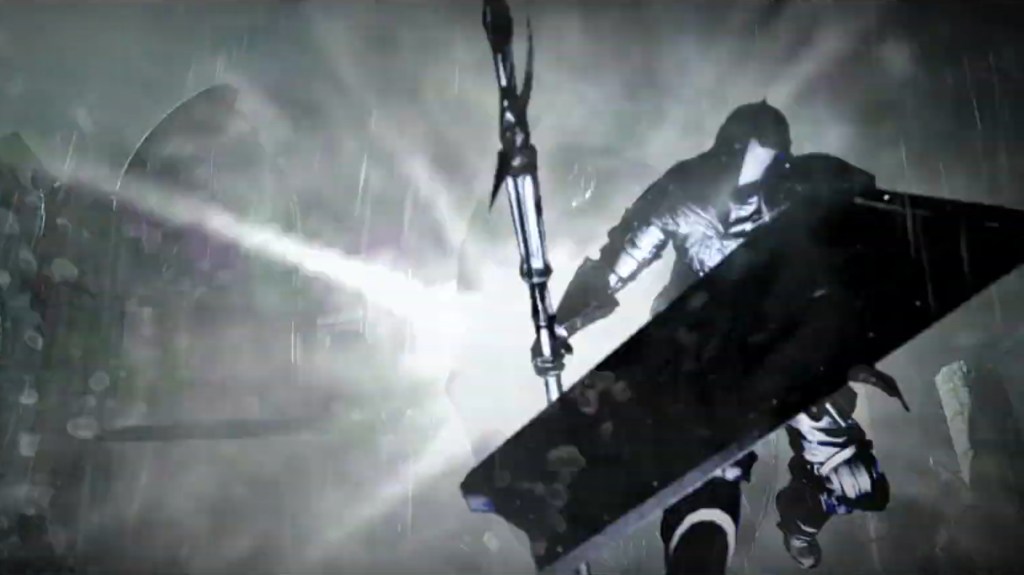
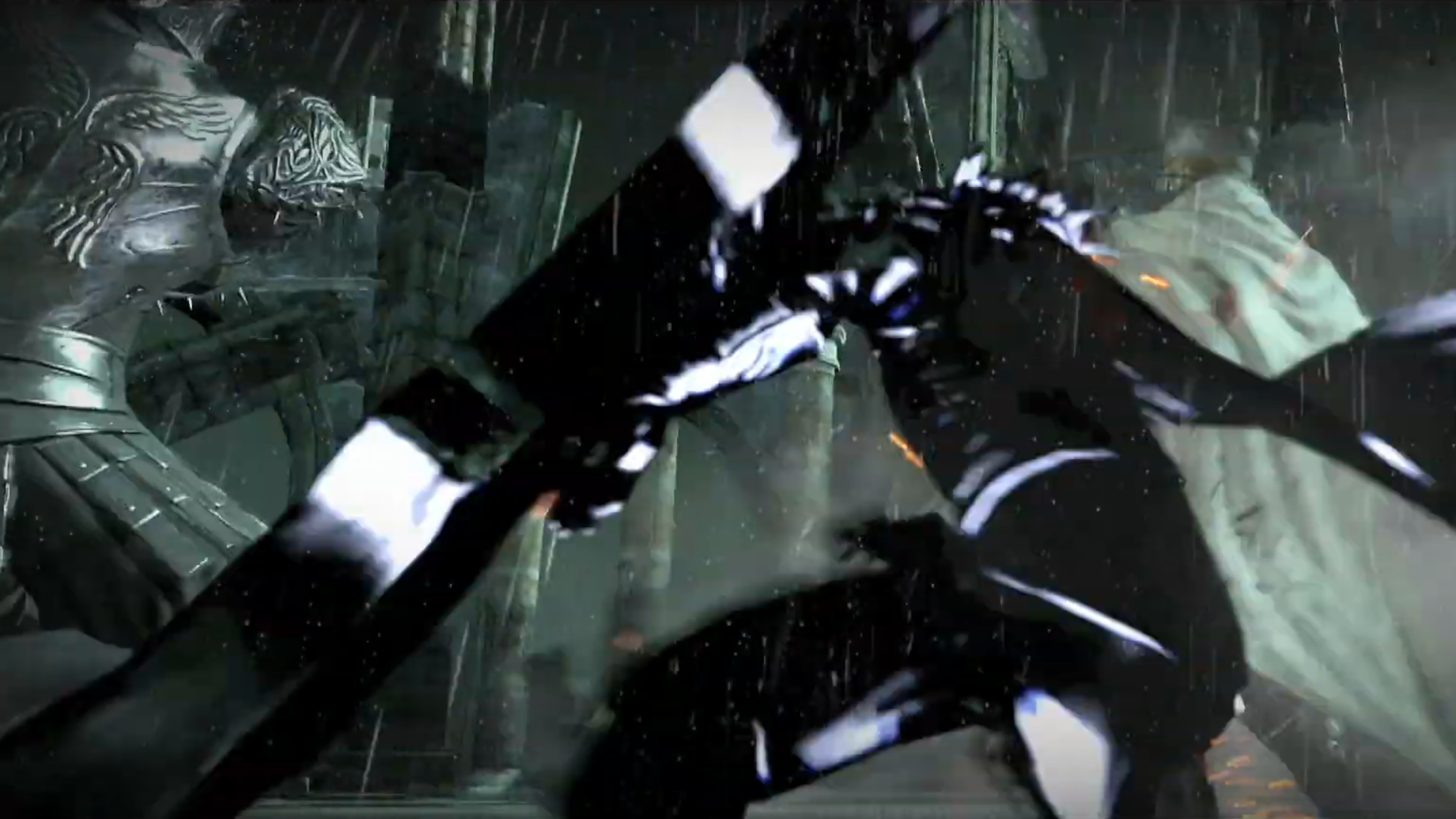
In the back of Drangleic Castle, at the end of the King’s Passage, lies the impressive “brave warrior’s chamber” (勇士の間) for the castle’s mightiest. This hall of heroes is a trial ground, where their valor is tested against the Looking Glass Knight. Fashioned with silvery metal, the boss’ weapons and armor incorporate crowns of thorns, with the added angel wings carved in the back and Drangleic crest emblazoned on the chest in gold. Factor in the multiple faces, the helmet mask weeping, and this imagery conveys the knight as no one person but stand-in for a collective of the kingdom; portrayed like Christ, the Suffering Servant and intermediary between man and the divine. The mirror knight thus seems to represent the ideal for knights of Drangleic — to suffer and lay down their lives if necessary for king and country. To take on the trial is to measure oneself against that ideal, to see if you can live up to it. Only the strongest of warriors, with the courage to use that strength, may overcome this foe and achieve the level of Vendrick’s elite entourage.
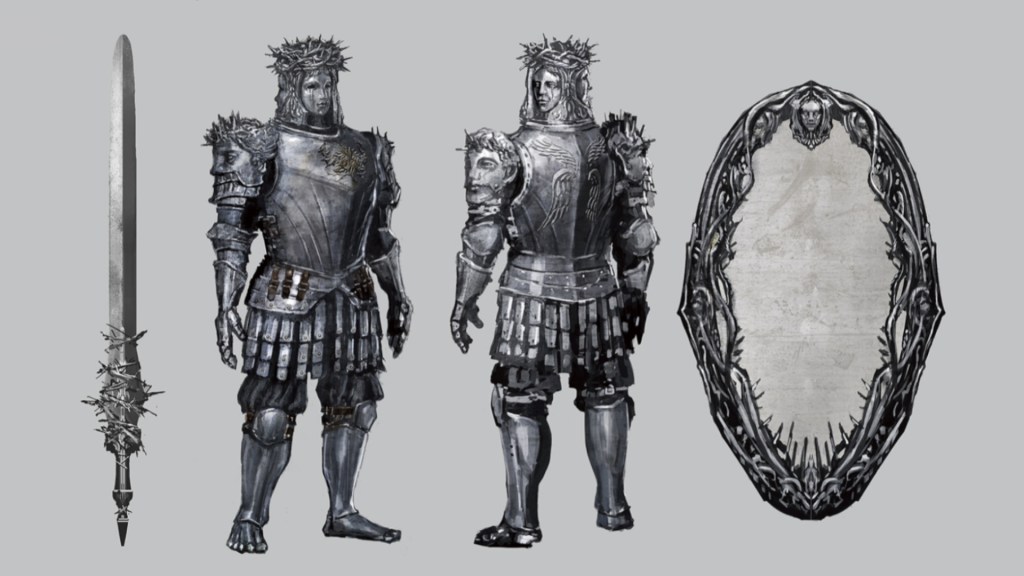
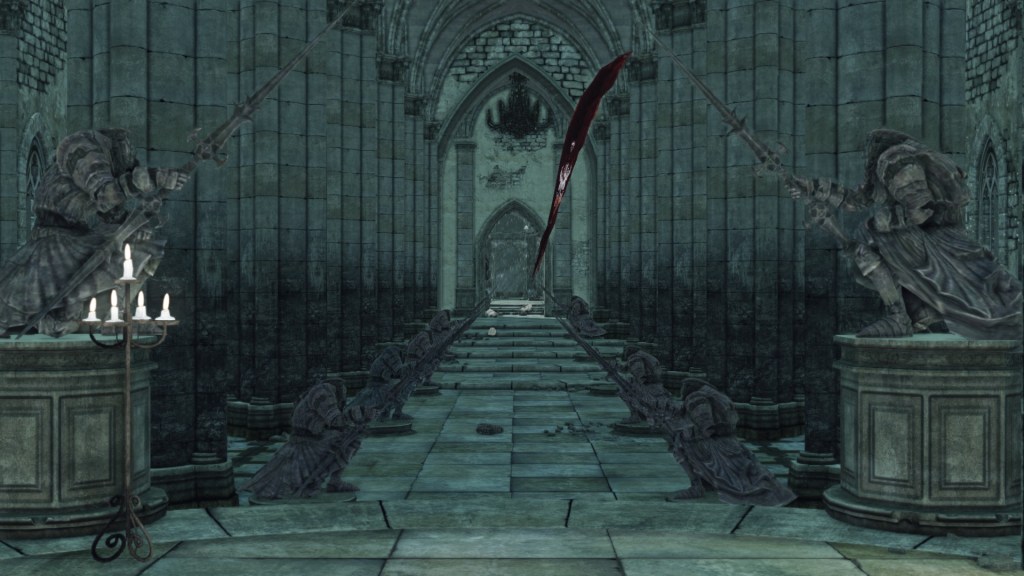
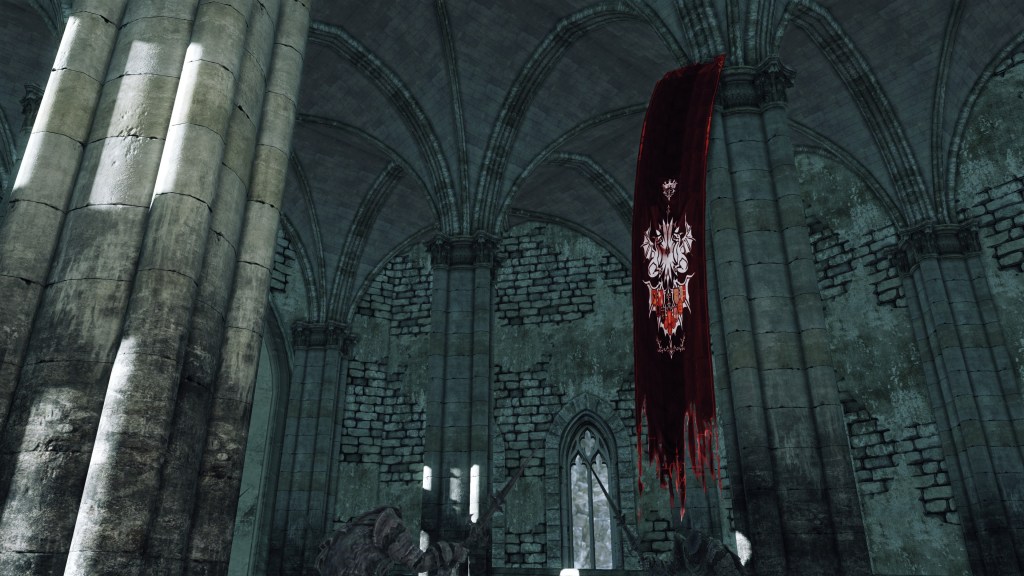
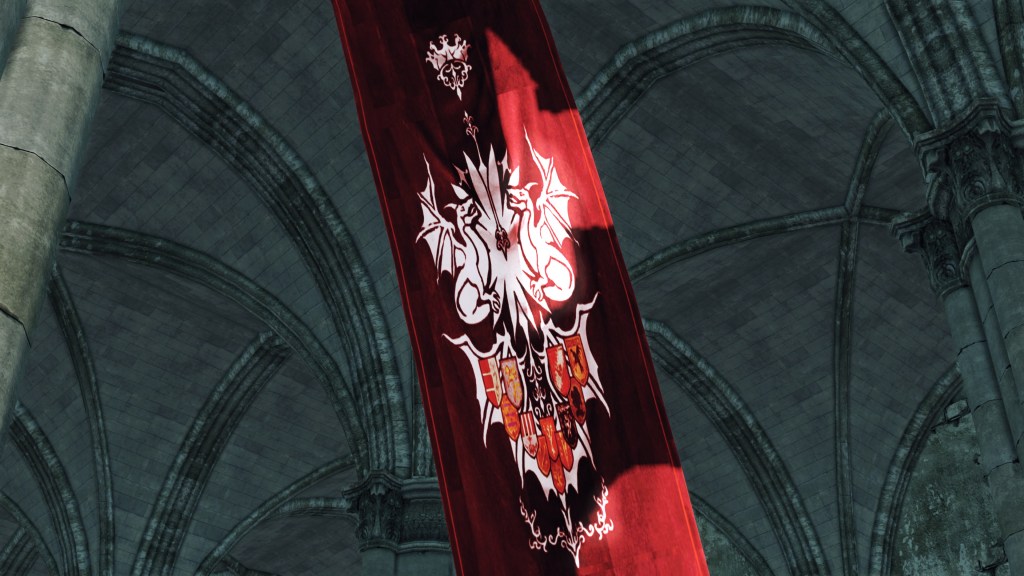
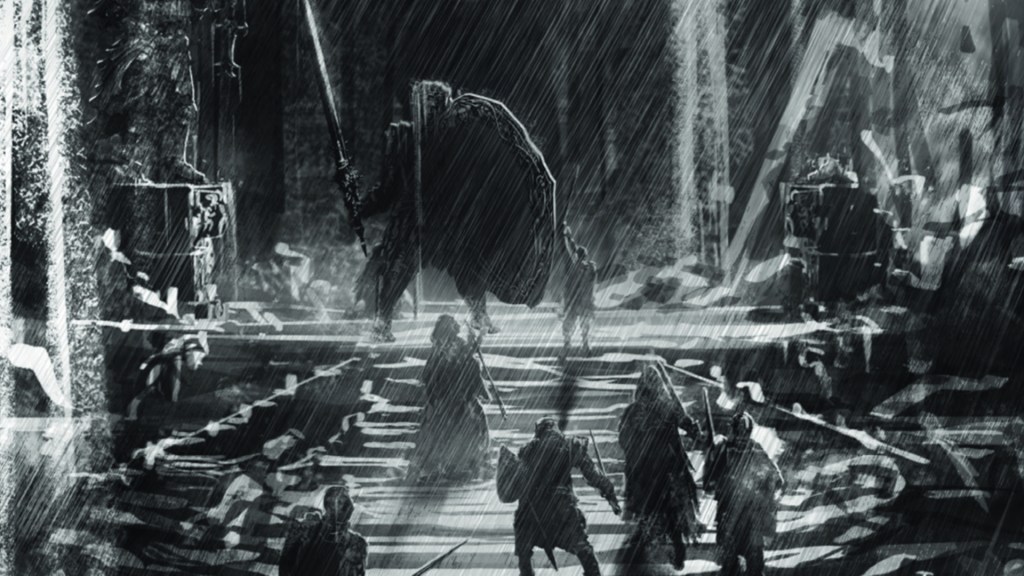
Naturally, this duel was a serious affair. A knight had to first be recognized for his strength and valor before he would be allowed to challenge the Looking Glass Knight. And even before coming face to face with the boss, walking down the corridor to the hall of heroes steeped them in symbolism. You are walking the path of a hero, following the footsteps of many who came before — when you arrive at the destination, will you demonstrate heroism, or hubris? As new trainees anticipated their answer, they passed under red banners fluttering Drangleic’s crest with all its vassal heraldry; a reminder that the newcomers embarked on becoming the safeguard to one king, one kingdom, one nation. Indeed, knights after the Dragonriders were liable to not be the soldiers Vendrick led to the land but the natives they conquered. This propaganda aimed to instill those aiming for a place nearer the king with reality: the country’s bloody founding was in the past. Whatever their individual origin, they were now knights of a unified Drangleic, so must hold no dual loyalties. If they took up a sword, it was in noble service to their rightful leader.
Soul of the Mirror Knight, who imposes a trial at the masterless royal castle.
The King’s Corridor was a place only recognized brave warriors could challenge, but now it simply blocks the path to the king who left.
The special soul this knight possesses is used to acquire a vast amount of souls or create a great power.
Because this was the final test for new entourage, the Looking Glass Knight was provided with only exceptional equipment. His protection alone has incredible lightning defense for metal armor, likely because so many of Vendrick’s best knights employ miracles — the mirror knight himself uses lightning to great effect via his imbued sword. Having the ability to fry flesh inside full suits of armor while being virtually immune to that very tactic, the boss was sure to be a fearsome foe for any knight. As Vendrick no doubt wanted to impress, their faith would not save them. Rather than the gods, they needed to rely on their own strength, display the power of demonic gods their training cultivated. They couldn’t turn to other magic either. The mirror knight bears that name for the giant looking glass employed as a greatshield. That enchanted glass can deflect spells, making it truly a nightmare to face this boss without the physical prowess. That isn’t even the magic mirror’s greatest utility.
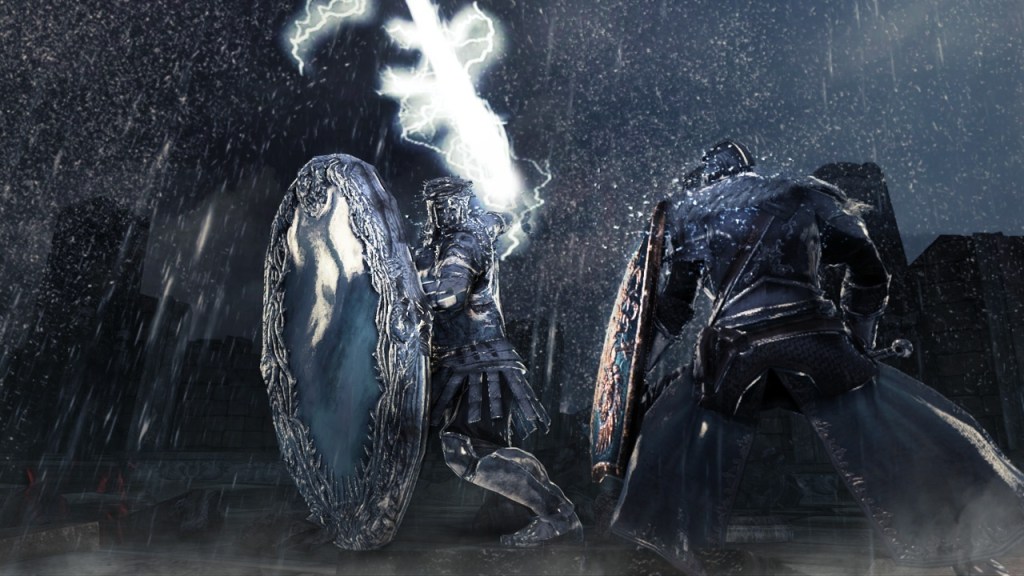
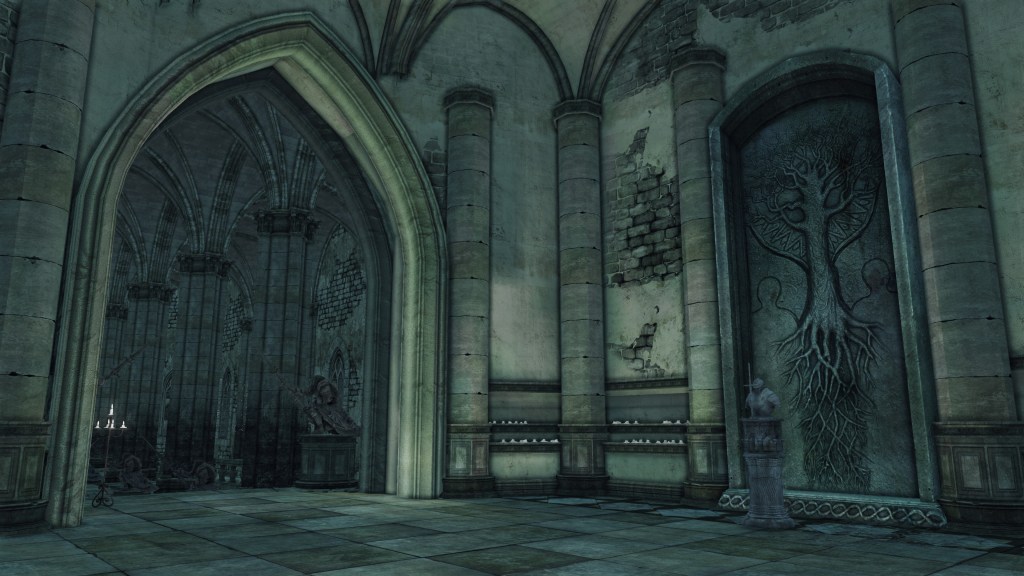
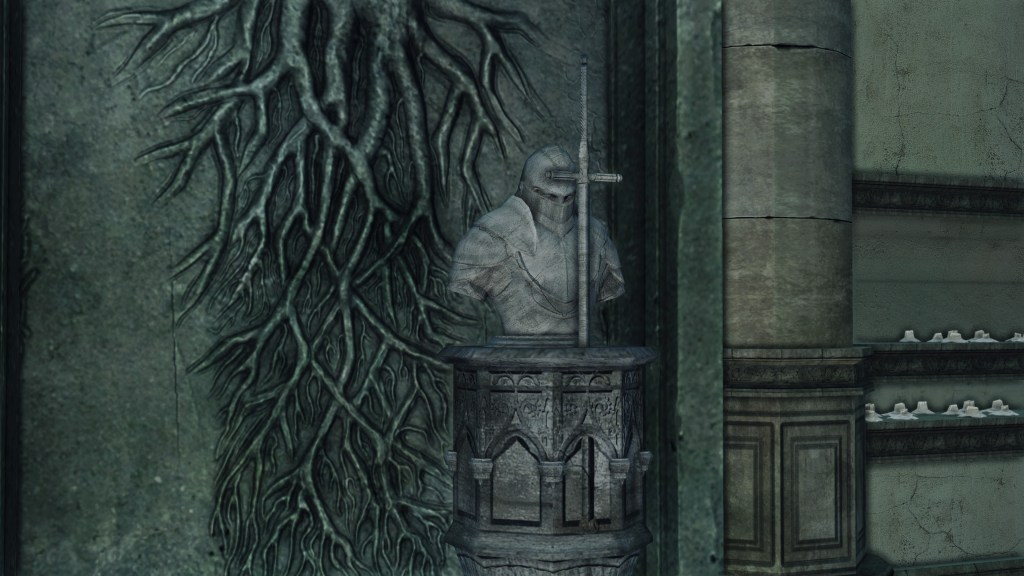
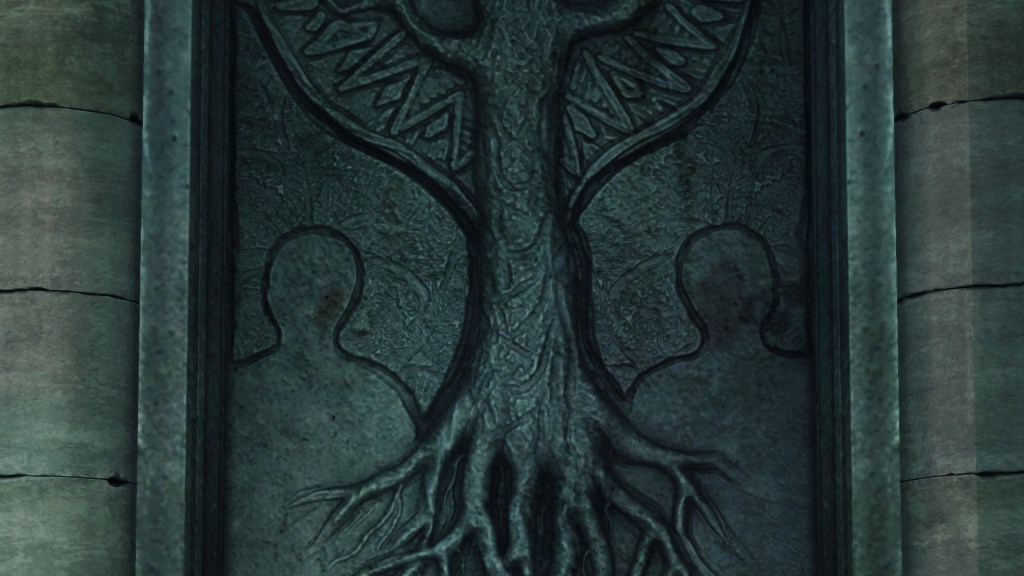
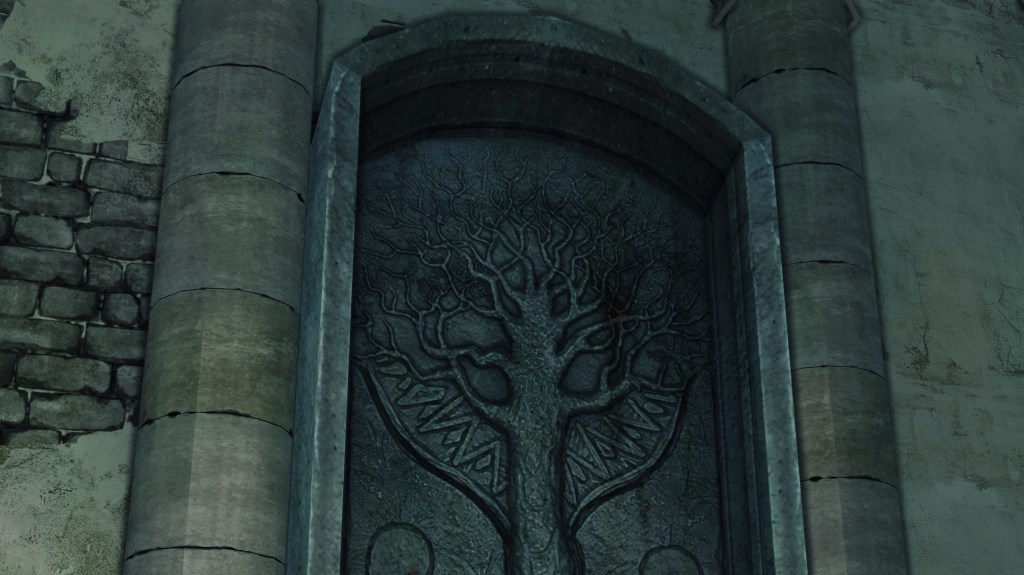
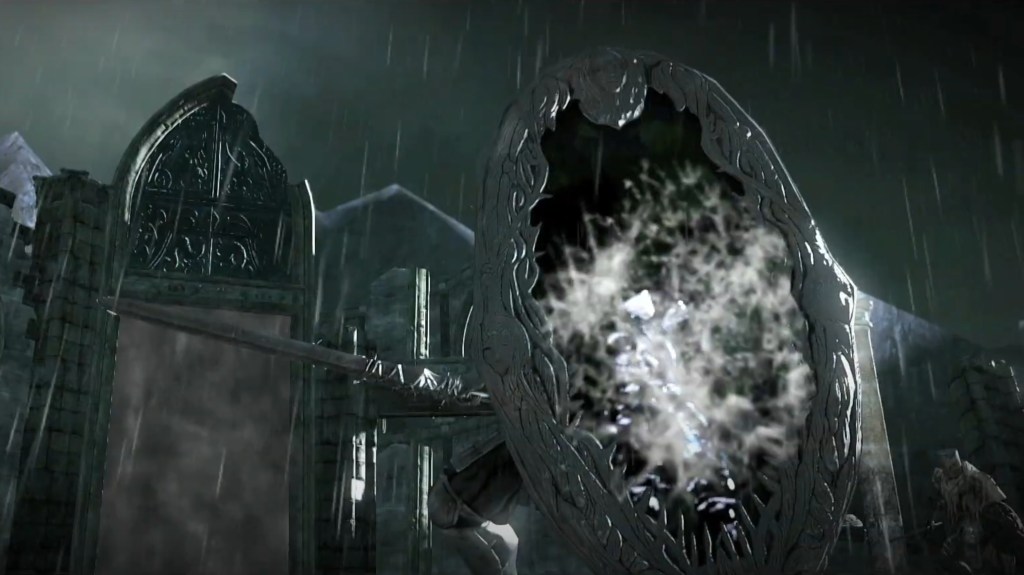
As the description insinuates, the mirror can be used to summon warriors from other worlds. This is illustrated by a shrine at the beginning of the King’s Passage, the warrior’s bust before a wall icon of two vaguely humanoid figures at either side of a large tree growing a tangled mess of branches and roots. This carving not only represents the stagnant flow of time complicating cooperation between two parties, but also the network of connections enabling cooperations across different timespaces. This is evident from writing down a red summon sign in the vicinity, the boss subsequently summoning the person as a spirit to assist in the trial. The person begins sealed inside the mirror, but quickly bursts out of this mirror dimension after banging on the glass “portal” a couple of times — though the cracks and shattering seems to come from the mirror dimension and not affect the shield. While evocative of Through the Looking-Glass by renown author Lewis Carroll, this magic says much about the nature of the trial.
Greatshield born from the soul of the Mirror Knight. Possesses effect to reflect spells.
It is said that the great mirror which was in the royal castle once was a portal linked to another world.
Undeniably, the Looking Glass Knight wasn’t required to defeat challengers by himself. He could call for aid at any time without compromising the assessment of his opponent’s abilities. Part of this may be due to the persons called upon. When unable to summon another player, the mirror knight defaults to summoning knights. One option is a member of Drangleic’s elite knights, wielding Syan’s Halberd and Pate’s Shield. The other dons Llwellyn’s armor with the Drangleic Helm, wielding a simple greatsword and Orma’s Greatshield. The bradden and geisteel equipment prove that they are both rare and distinguished knights. Perhaps victorious warriors returning up the King’s Passage would leave their signs to help the mirror knight in future trials against their juniors. It is easy to imagine, with their pedigree, that they would have defeated the Looking Glass Knight in the past.
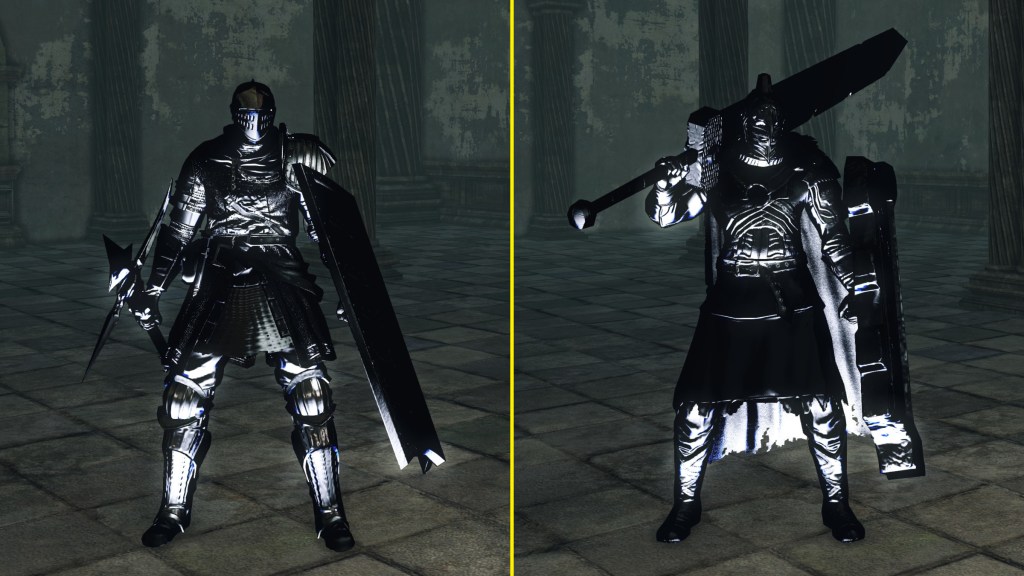
However, the goal was to join the Dragonriders acting as Vendrick’s royal guard, and they are officially named “mirror retainers” (鏡の従僕) in reference to their subordinate status to the boss knight. More likely, these are distinguished knights who nonetheless failed to overcome the trial and thus reach that apex level. Instead of proceeding down the King’s Passage and facing that hardship, they leave a sign at the first step, to help hone their skills against other would-be royal entourage. This certainly befits the use of a mirror, reflecting the challenger’s “weakness” back at them as an actual person they also must overcome before they can surpass the mirror knight embodying that peak heroism. The true enemy to defeat is oneself, both in strength and resolve. In essence, the trial ground doubles as a training ground for Vendrick’s best knights vying for the prestige of defending their lord at his constant side. Granted, this notion isn’t without complications.
The mirror shield is, unsurprisingly, a product of Aldia, a number hanging in his manor. The corpse dangling halfway out of one glass portal highlights the trial and error in developing this summoning system. And yet, when we pass other mirrors by, we find mirror retainers already sealed inside, the spirits breaking free to stop passing intruders like us. Either these retainers were accidentally summoned to the wrong mirror, or they have been imprisoned as spirits the entire time, success cases with the prototypes. Assuming that the knights acquiesced to be the manor’s unconventional guards, this isn’t in itself odd. Summoning people as spirits via magic mirrors naturally begs for people as test subjects. Still, this implies that certain ranking knights were willing to take on this dangerous and solitary task in obscurity, whereas others preserved the ambition to strive for further heights. Stranger still, their absence can’t have gone unnoticed by the king. Yet nevertheless, Aldia had his brother’s approval for this project, even provided a key to the trial ground which he kept atop his tower at the castle.
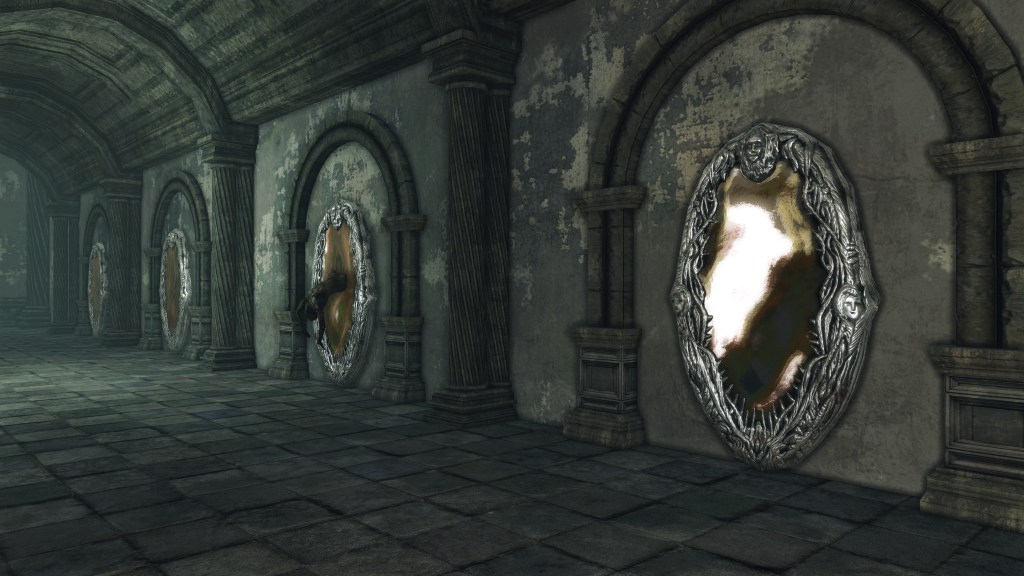
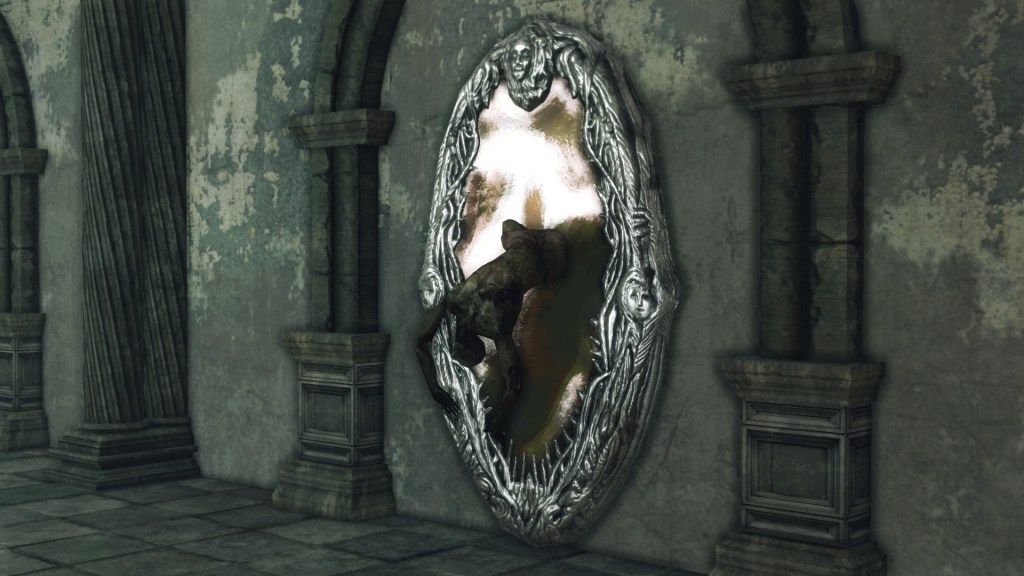
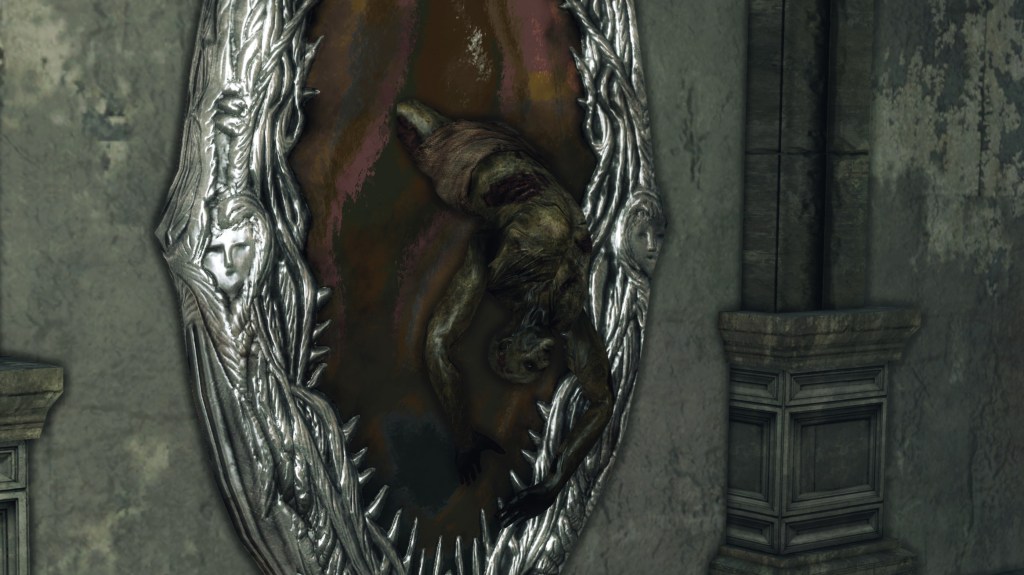
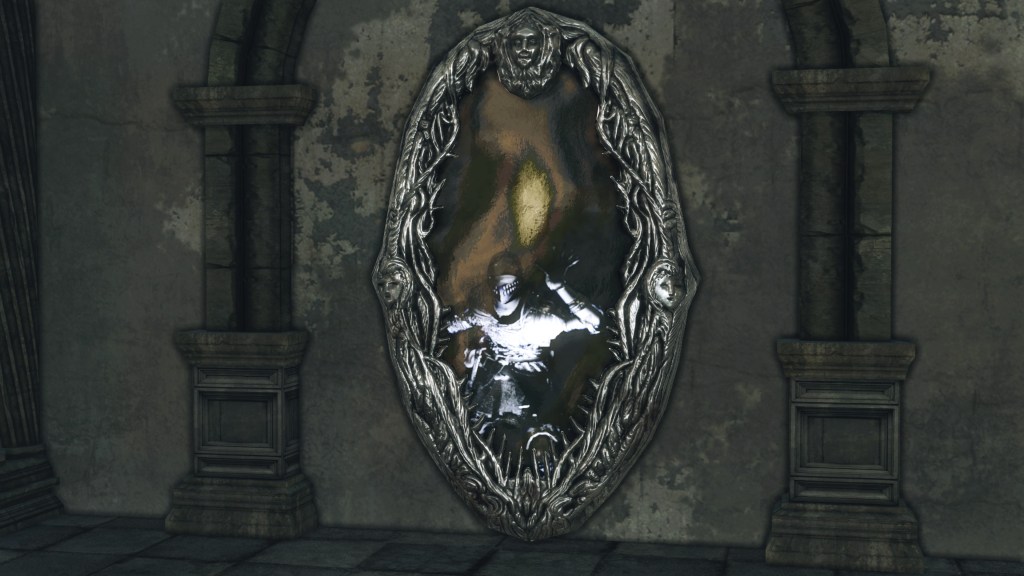
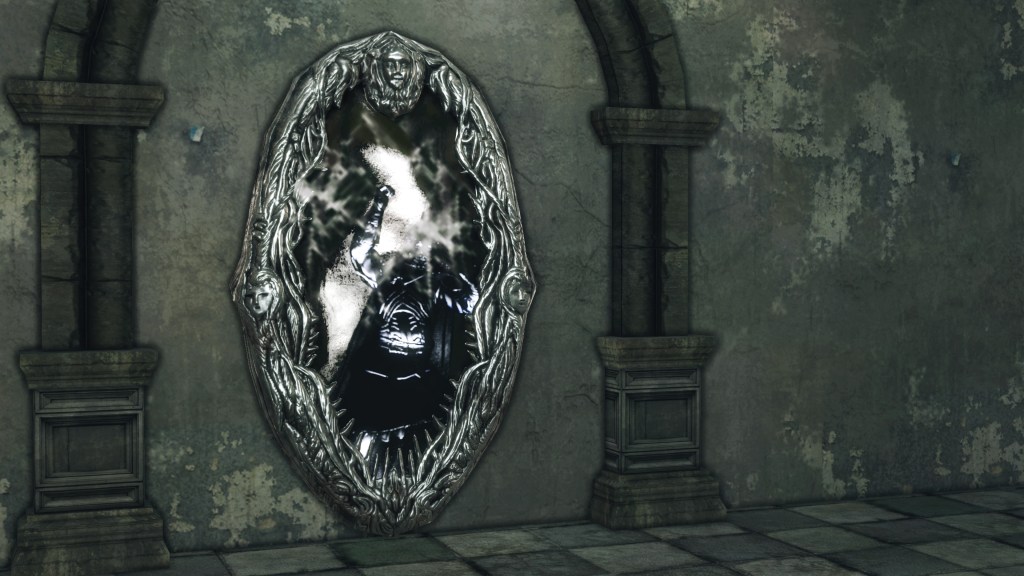
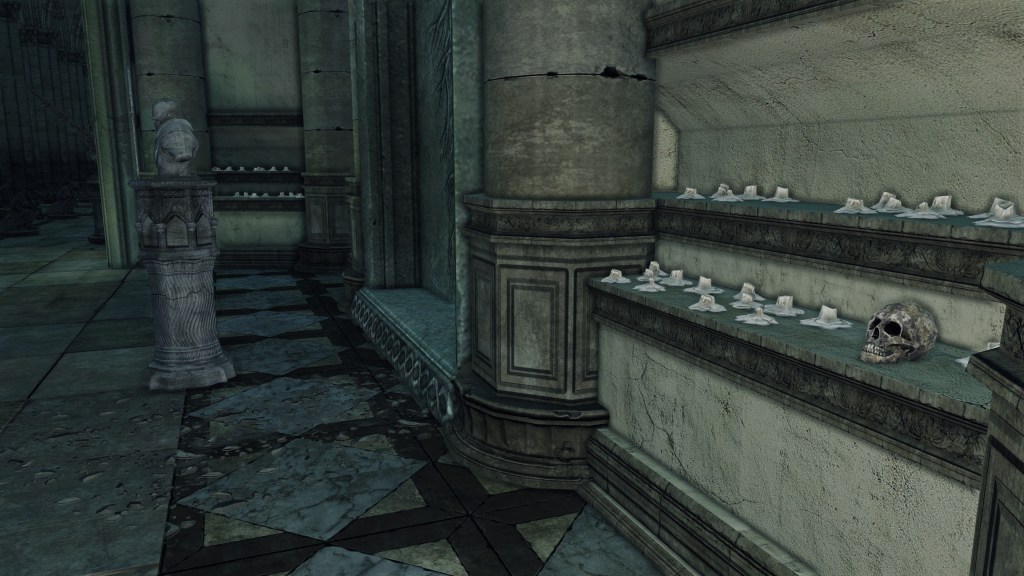
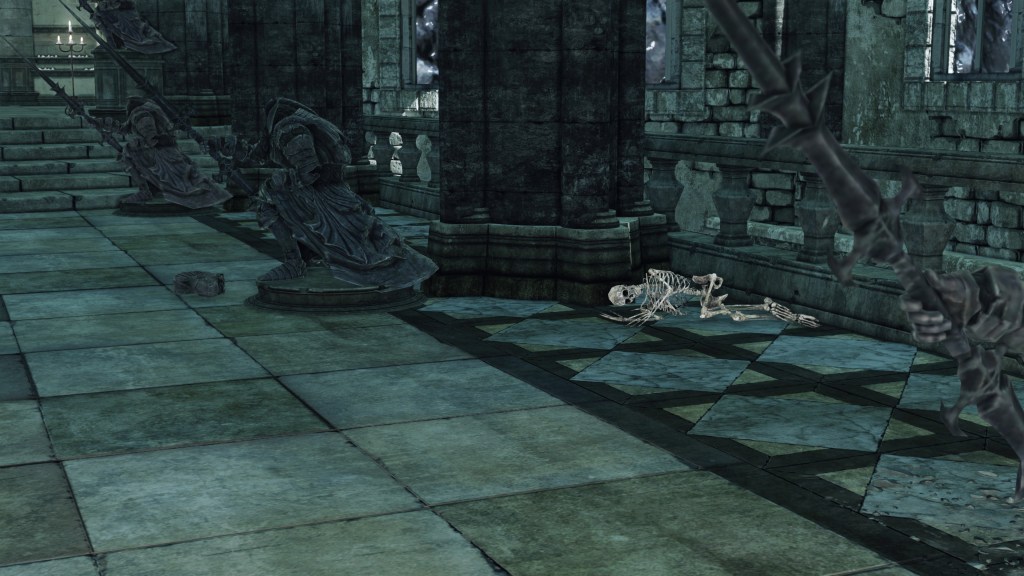
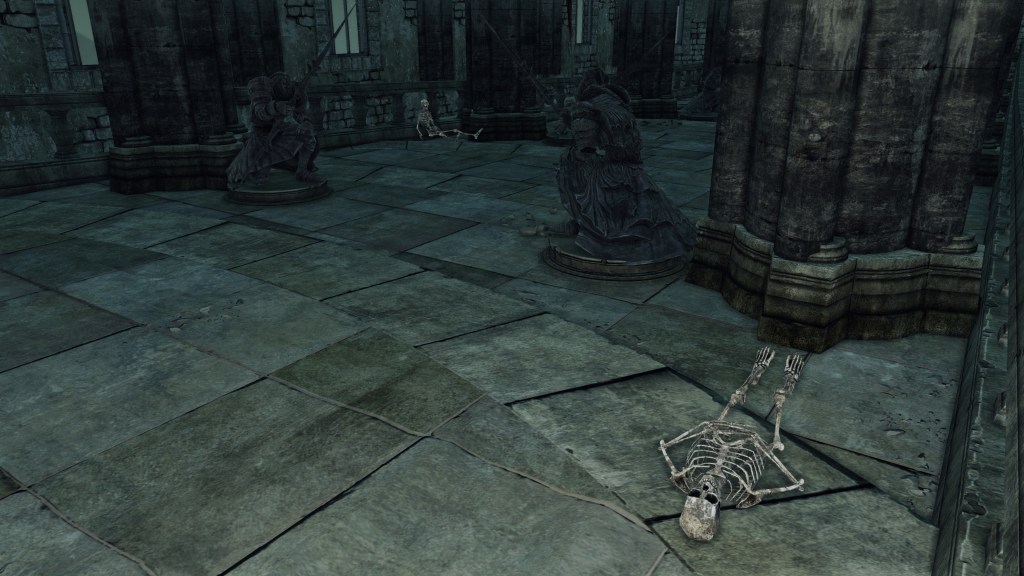
One questions why Vendrick was so aghast at the horrors occurring within Aldia when his brother was so willing to resort to human experimentation from the outset. Regardless, the sorcerer’s deep involvement illustrates the attention given to this trial for Vendrick’s personal bodyguards. The description to the Looking Glass set notes how failures died a “sacrifice” to the knight, the soul-laden bones lying around the King’s Passage showcasing past victims — this duel was a life-or-death affair for the challenger. Any knight wanting to stand alongside a Dragonrider had to surpass such a severe test to be considered Vendrick’s elite. It essentially replaced the old system, where riders-in-training risked being eaten by their mounts. With the wyverns tamed by Aldia’s magic, a new test was required to weed out all but the pinnacle of warriors. This new trial began to be realized by the time of Drangleic Castle’s construction. It is thanks to Nashandra and Aldia that the system has become what it is today.
Mask of the Mirror Knight. Has high lightning defense power despite being metal.
Those who want to become the king’s genuine warrior entourage have a trial to battle the Mirror Knight in the Brave Warrior’s Chamber beyond the King’s Corridor imposed upon them.
If one does not overcome the trial, they only serve as a sacrifice to the Mirror Knight.
What about the key facilitator for this trial? Why was he chosen for this role? According to the Dark Souls II Collector’s Edition Guide, he was Vendrick’s lieutenant. If accurate, then he must have been his second-in-command among the Dragonriders, back when they were still riding wyrms. After a long and successful service under his commander in battle, he assisted the new king by becoming the benchmark for who was equal to the cavalry going forward. The knight’s strength, courage, and loyalty aren’t in doubt, and he evidenced his resolve the day his lord exposed his own cowardice. When Vendrick left for the Shrine of Amana through the King’s Passage, he also left the Looking Glass Knight with a mission to stop anyone from following after him. Ignoring the convenience that the lift to these subterranean ruins is located behind the trial ground and their only easy access point, the decision is logical. Once he and his entourage made their way down the elevator, the mirror knight fulfilled that duty blocking the path from any pursuers, earning the shield its name as the King’s Mirror.
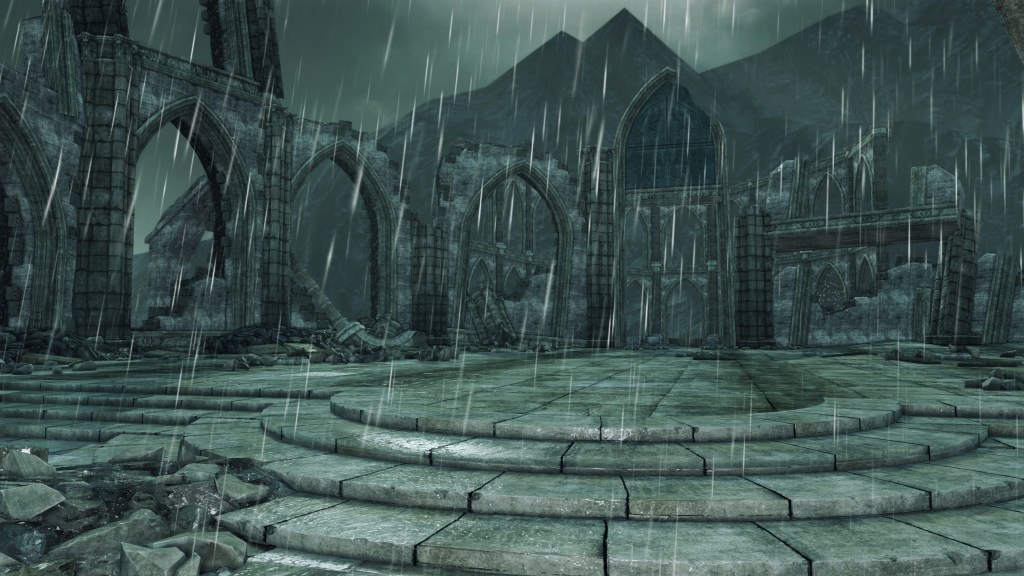
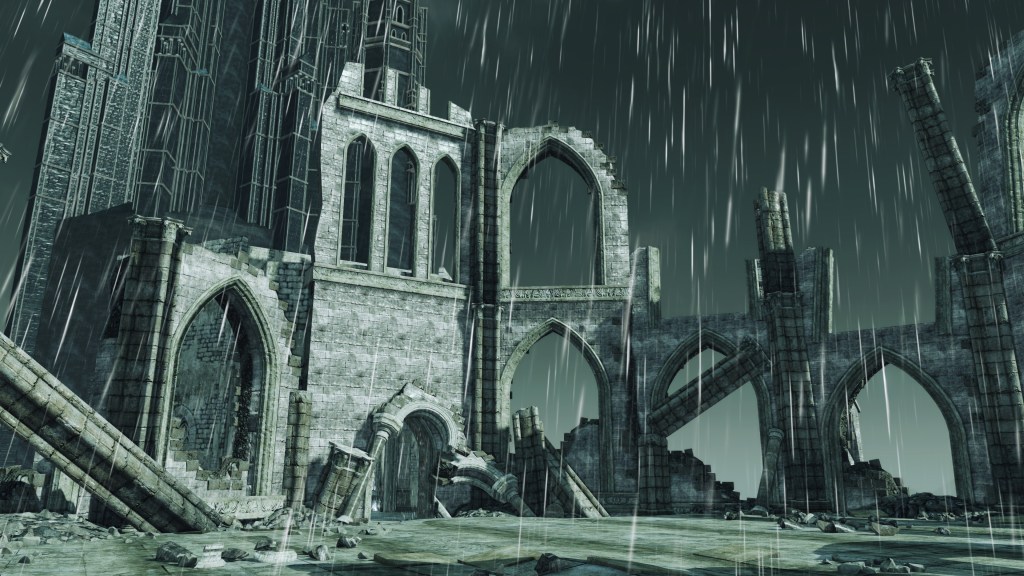
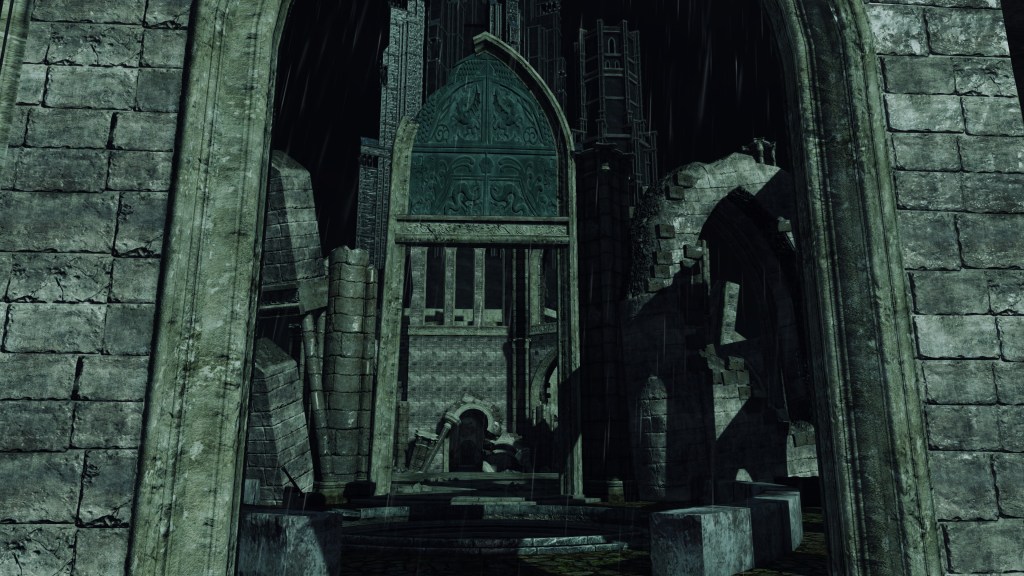
Such fealty has proven undying. At present, the hall of heroes has collapsed, presumably the fallout of the mirror knight stopping countless who had tried to pass him by. As we can see for ourselves, no matter who or how many he faced, he has stood his ground, rain or shine. The fact that the boss has even survived well past the fall of his kingdom suggests that he either, fortuitously, turned Undead or, like Velstadt, is so resolute in his mission that he has persisted long after he should have expired. Sleep or sustenance? That is for the weak — a true hero obeys his king’s command until the duty is fulfilled. The trial against the Looking Glass Knight has evolved a new meaning, now measuring the strength and valor of any who hope to claim the King’s Ring on the path to assuming the real Throne. The failed King’s mission imposed a curse on this loyal soul, and so he must see this perpetual hunt of would-be Lords through to the end. Even in this darkest of nights, he shines a beacon for them to aspire to.
Greatsword born from a soul of the Mirror Knight. Unleashes its hidden power via strong attack.
The king, seemingly afraid of something, left the castle and never returned as is. But the knight continually hunts those who challenge the trial per the mission imposed upon him even now.
 Lokey Lore