
Preface
Although perhaps the most simplistic larger setting since Demon’s Souls, the wider world in Elden Ring is nonetheless coherent. In some respects, its generic quality helps contrast with the more fantastical experience of the Lands Between. And what sets it apart from our familiar earth is the seminal Long March led by Godfrey. Director Hidetaka Miyazaki described in an Edge interview how Godfrey embodies the Tarnished’s history and struggle as onetime heroes fallen from grace. The Long March is perhaps that last gasp of heroism, an epic journey to cement what makes the past in Elden Ring so worth exploring as a character trying to reclaim remnants of it.
Legal Theft
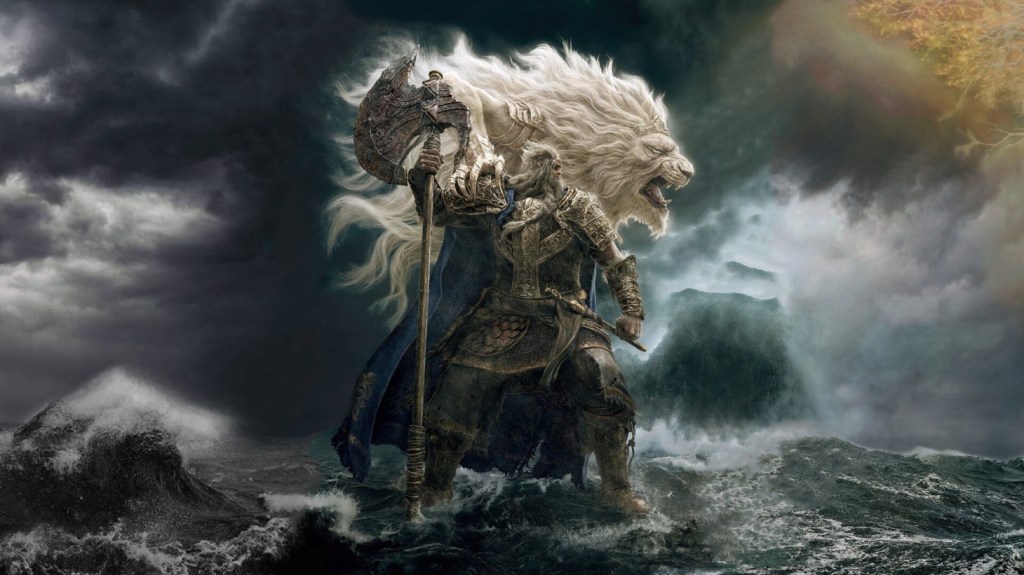
As acknowledged by the Caelid sword monument, the Elden Lord’s final victory against the Erdtree’s foes was followed by him and his “golden” army losing that grace. The color fading from their eyes is why they are known as the first Tarnished, or “faded persons”. (褪せ人) This was not an automatic response. Melina recites the queen’s speech from the Third Church of Marika, where she admits to “robbing” the warriors of their grace. Even assuming that she was speaking on behalf of the Greater Will, the fact remains that it was a deliberate choice to deny them the blessing. This wasn’t because a standing army was no longer useful now that the entire landmass fell under one banner. The kingdom continued to maintain a peacekeeping force, and there would still be the threat of bandits or similar criminals defying their queen. As Godfrey’s armor implies in its description, these were simply not enemies worthy of the Elden Lord and his battle-hardened forces. Their strength was, in other words, unnecessary.
The last land in King Godfrey’s battles. His golden army continually won without stopping, but the grace was lost, its color tarnished.
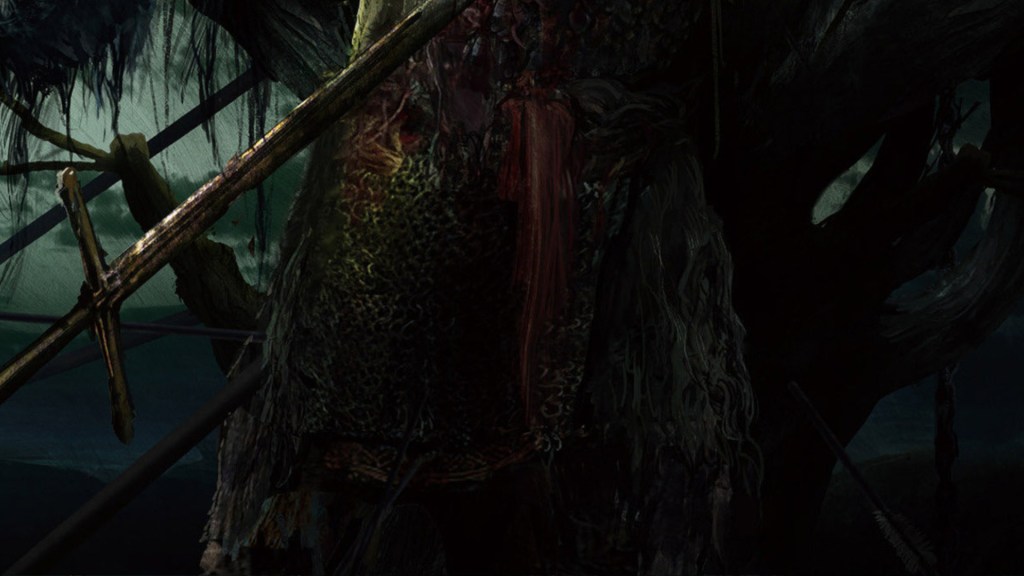
Chest armor of Godfrey, first Elde King.
The beginning of the Golden Tree coincided with battle, and Godfrey was king of the battlefield.
The Giant War, single combat with the Storm King… And when the worthy opponents were no more, it is said that the king’s eyes tarnished in color.
Another consideration is the exact timing of these events. Marika’s speech at the Third Church seems to be only the first half. The continuation Melina recites around the Fourth Church of Marika, specifically sensing it inside the neighboring church of Radagon. This is odd since even the most generous travel speeds still make it impossible for the Eternal Queen and the army to move from eastern Limgrave to southern Weeping Peninsula before finishing her short pronouncement. In that case, the two halves are most likely from separate speeches echoing the same content. The first half comes from Marika’s original declaration in Limgrave; the second half, from a subsequent statement at the Weeping Peninsula. The half left unheard in each case might have small differences to suit the circumstances. After revealing her robbery, the god declared the Tarnished banished from the Lands Between — it would be odd if, in her later speech, Marika reiterated this exact proclamation while they were apparently already in the process of complying. There was thus a gap between the decree and the execution of it.
My King, the King’s warriors. I have robbed grace from you. And when those eyes have tarnished in color, I exile you from the Lands Between. Seek war outside, live, and die.
And someday, after you have died, I shall return what I robbed. Return to the Lands Between, fight, and raise the Elden Ring wherever you go. Be strong with death. The King’s warriors, my King, Godfrey.
This makes one detail exclusive to the queen’s initial speech stand out: the use of “when” regarding becoming Tarnished. Marika insinuates that Godfrey and his soldiers hadn’t necessarily lost the grace of gold in their eyes before she made this monologue. She had performed the deed, but there may have been some delay in its effects; perhaps it was even occurring as she was uttering those words. Whatever the specifics, it suggests a certain recency to the event tied to her location at Mistwood. Considering Marika’s implicit involvement in the war’s aftermath at Sellia, she may well have been traveling with the Erdtree army as it made its way back to Limgrave. They then took a detour, presumably at the queen’s request, to her church lab where she might perform the ritual depriving them of grace before returning to explain her actions and intentions — it gives new meaning to Limgrave’s “tarnished” color under its cloudy skies. Perhaps she discovered this blanket removal of grace from her recent studies. Regardless, it illuminates why the subsequent conversation took place there and not in Caelid.


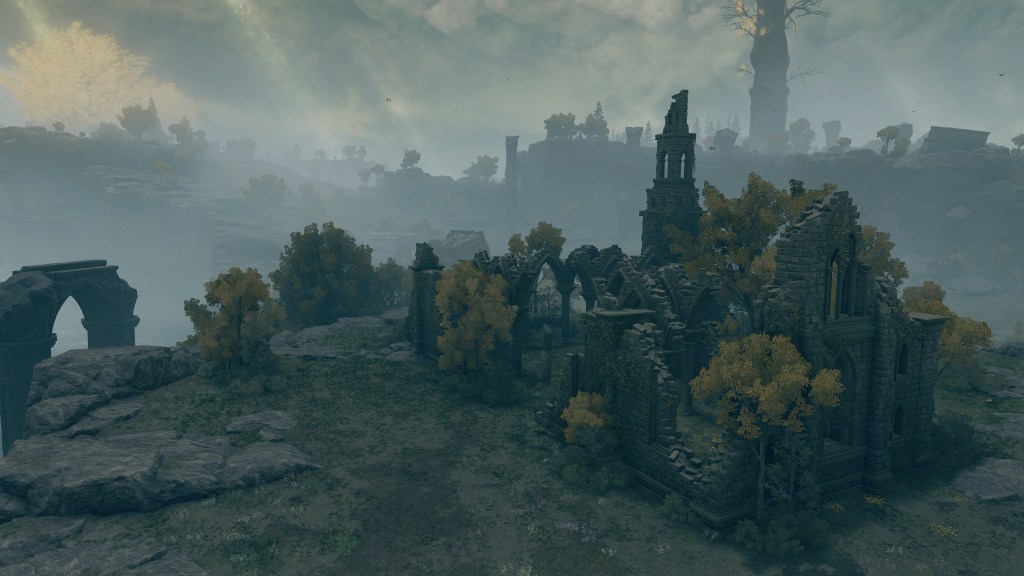
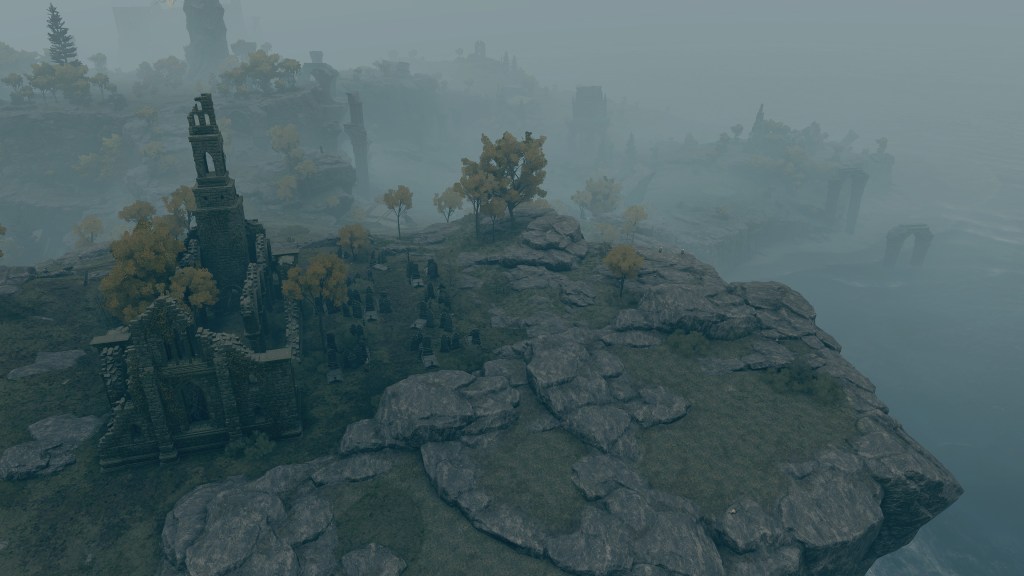

Map fragment of western part of the land of Limbgrave.
Limbgrave, located to the far south of the Golden Tree, is crowned with Stormveil’s precipice to the north, and beneath typically cloudy skies stretches an earth tarnished in color.
The premeditation also explains why certain obvious parties didn’t suffer this treatment, like the Crucible Knights. Even assuming that there were more than sixteen total, would so many of Godfrey’s best warriors not take part in the final battle, thereby remain in the Lands Between having never lost grace? Even Ordovis and Siluria? Unlikely. However, they and other selects officers may have been sent ahead, perhaps to prepare for the royalty’s return to Stormveil and Altus. Soldiers left to secure the newly conquered cities, villages, and forts would also probably be exempt. Marika need only deprive gold’s blessing from the core army of veteran fighters. Curious then that she didn’t exclude Godfrey from this fate. Given that the queen marries Radagon immediately after Godfrey’s departure, replacing him with her other half was in all likelihood part of the plan from the beginning. Whatever her personal feelings for the Warlord, she had no qualms putting their marriage on hold, at least for the time being.
Indeed, it wasn’t as if Marika had found no further use for her formerly golden army. As detailed in her speeches, the god wanted the warriors to continue warring against man in the world outside their island continent, carving their own lives in those places. Then, after they inevitably died, she promised to return grace to those strong Tarnished, making them the immortals we know them as today. Only then would they be permitted to return to the Lands Between, fighting in the name of the Elden Ring as they had done since the dawn of the Erdtree Age. Therefore, Marika seems to have envisioned her wartime troops as a backup plan, a reserve force should the realm ever be wrapped in a full-blown war once again. Godfrey no doubt had many questions for his wife, but he ultimately acceded to her demands. He led the Tarnished with him to leave. Whatever their personal feelings, the army didn’t have much of a choice. Their god had decreed: they no longer had a place in the Golden Order.
Onto New Horizons
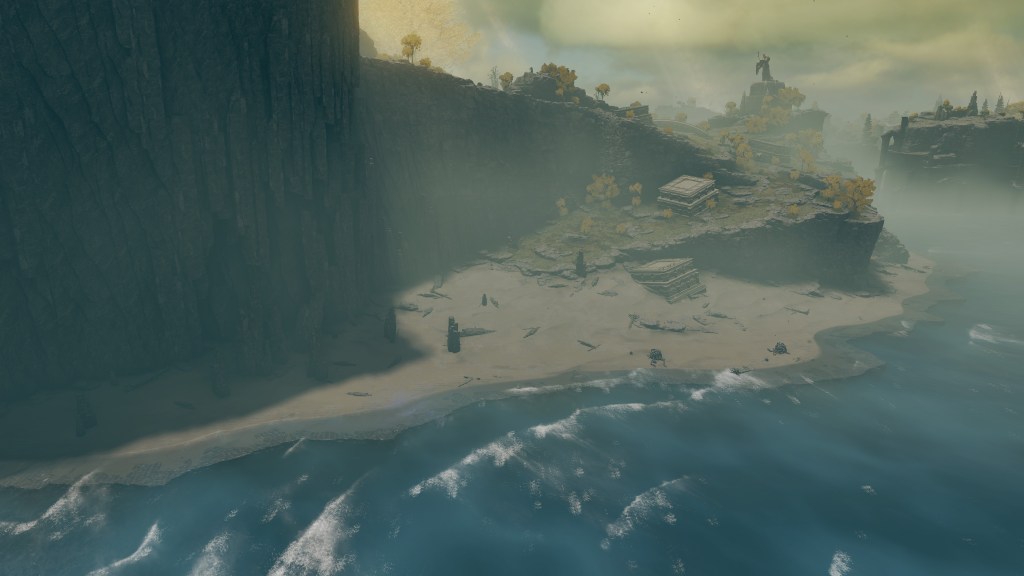
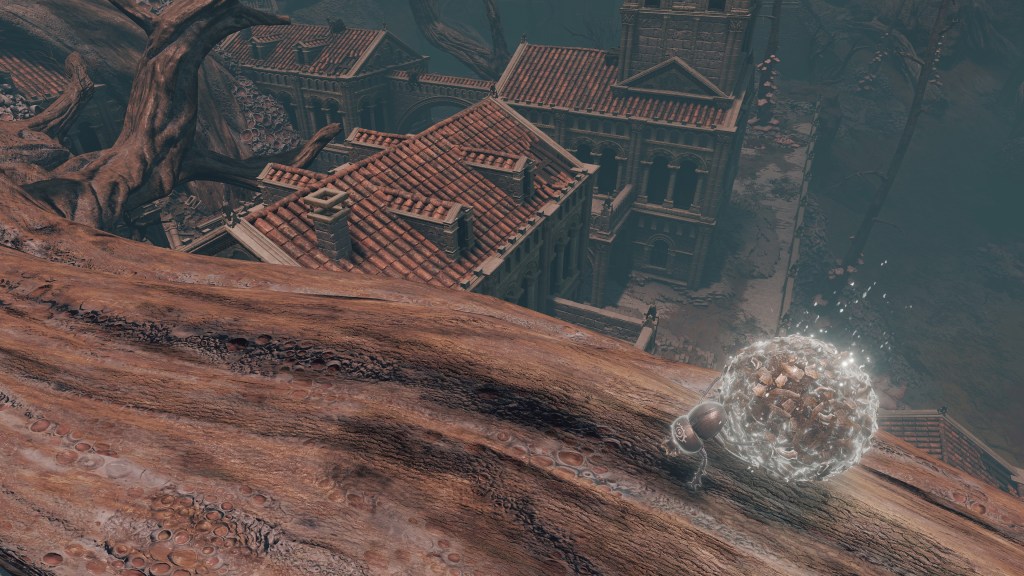
Once boats were prepared, Godfrey and his fellow Tarnished set sail from the northwestern shore of the Weeping Peninsula. We can acquire the Viridian Amber Medallion from the boss of Tombsward Cave beneath the Fourth Church of Marika. This places people of Godfrey’s day at the location when the queen was rehashing her previous monologue. Defeating the Misbegotten boss of Morne Tunnel likewise rewards us with the Rusted Anchor, the description of which ties it to a boat of the Long March. If the hybrids currently rife on the peninsula possess the anchor, then they must have found it in the general area. And a scarab east of the church rolls up Divine Fortification, whose own text highlights how unwelcome Tarnished are in the Lands Between. This leaves no doubt that the Eternal Queen exiled the Elden Lord and his party from that beach in particular. As to why they selected that site, it is easy enough to imagine.
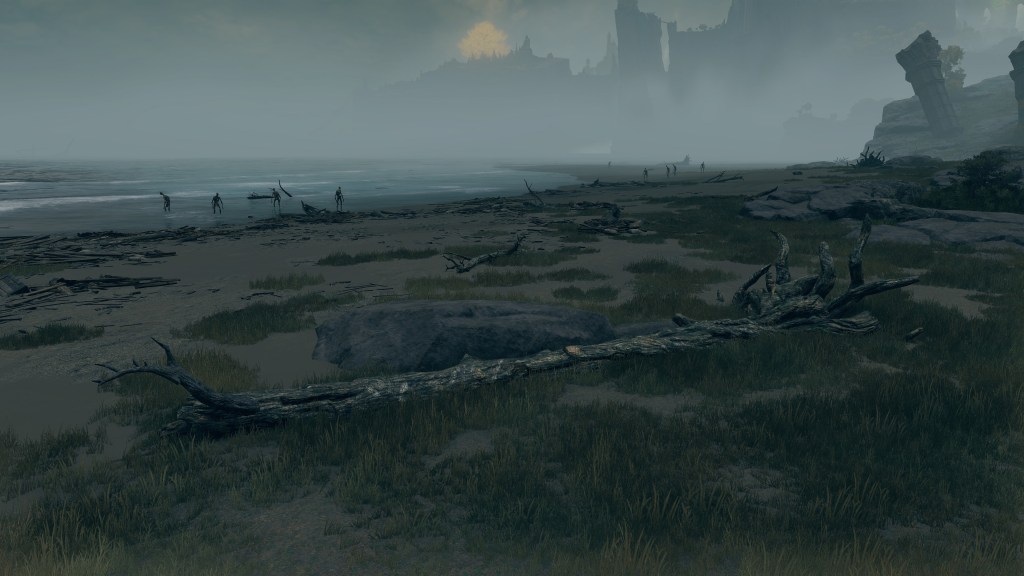
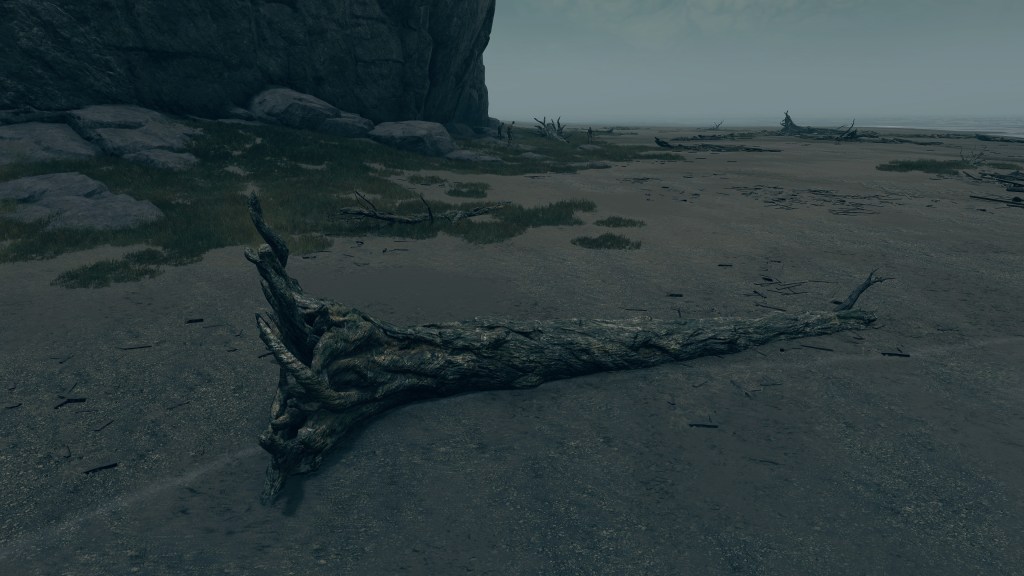
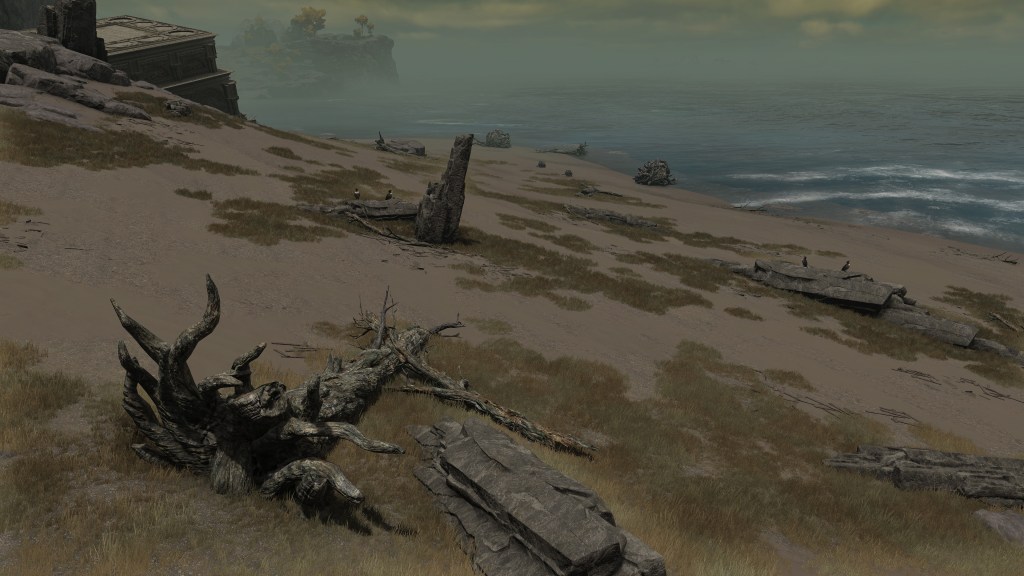
Anyone in the Lands Between can spy the foreign lands across the sea on the horizon stretching north-northwest. Marika wasn’t sending her husband and his cohorts on a blind voyage — they knew exactly where to head for land at all times. That it would be shorter, simpler, safer setting sail from the western sea is the natural assumption, which is supported by driftwood. All the beaches in Limgrave and the Weeping Peninsula, the western side of the Lands Between, have dead trees washing ashore. And yet, over in Caelid, not a single trunk or branch has washed up on its eastern shore. Clearly, foreign detritus had an easier time floating over from the west than east, so why wouldn’t the same be true in reverse? None of this could have been lost on Marika and the others. Choosing the westernmost shore was most logical. It was also possible to depart from the similar shoreline in Limgrave, much closer to Stormveil. However, Marika may have wanted them to stay as far away from the castle or Leyndell as possible, minimizing the chances of homesickness shaking their resolve.


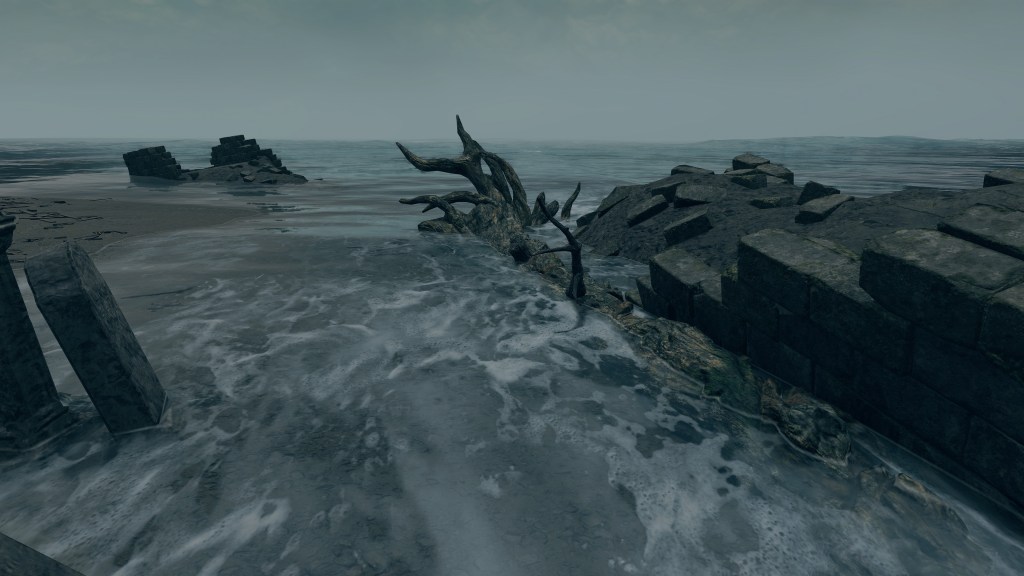




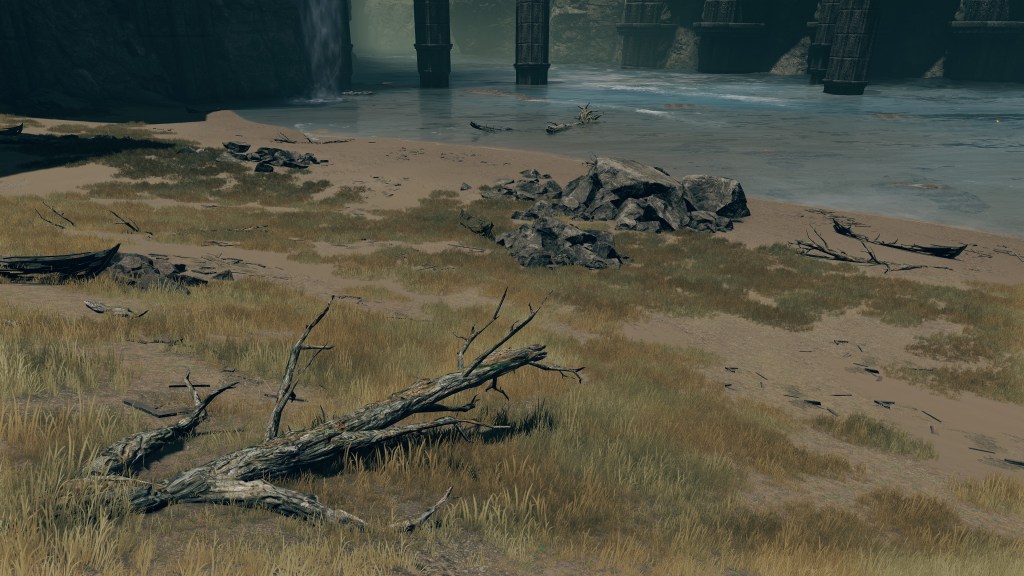


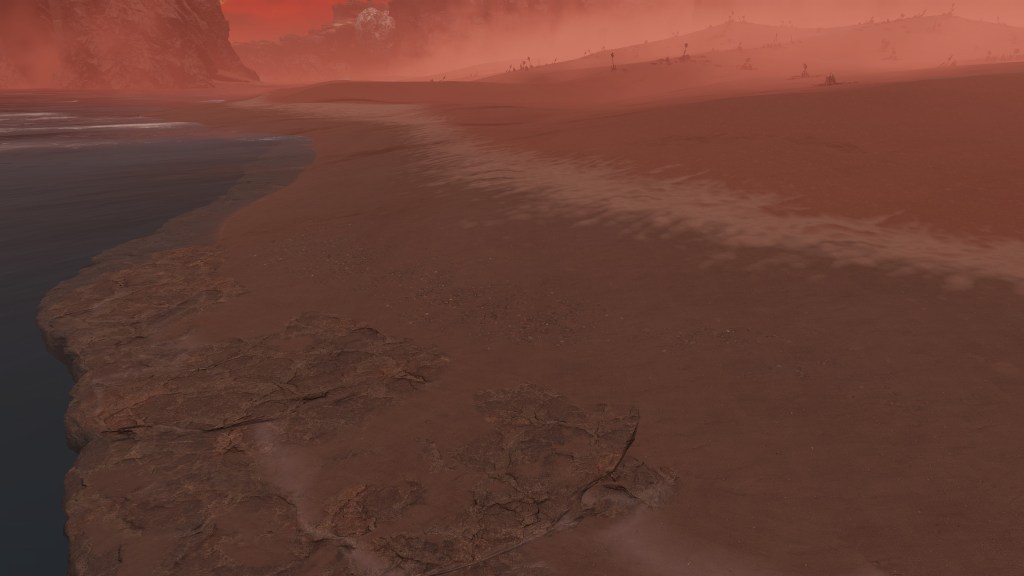
Regardless of her reasons, the queen encouraged them to embark on this long journey with the promise of their eventual return after death. And gradually, boat after boat set off, heading for a whole new world beyond the foggy sea, but not all. The text for the Rusted Anchor indicates that it had rusted when one boat failed to raise anchor as the other Tarnished left. It would be odd for the kingdom to supply just one more than necessary for the event — they managed to be precise but not that precise with their apparent estimate? Rather, it implies that one or more Tarnished decided not to leave, and we may know who. Below the First Church of Marika lies the Weeping Evergaol imprisoning an ancient hero of Zamor. What is a native of the northern Mountaintops doing on the opposite end of the Lands Between? Stranger still, the boss rewards the Radagon’s Scarseal upon defeat. While this complements the church of Radagon across the field from the Evergaol, what is Marika’s other half doing on the peninsula giving a cursed eye to a subsequent prisoner? The obvious answer to both questions is that he is a rebellious Tarnished.


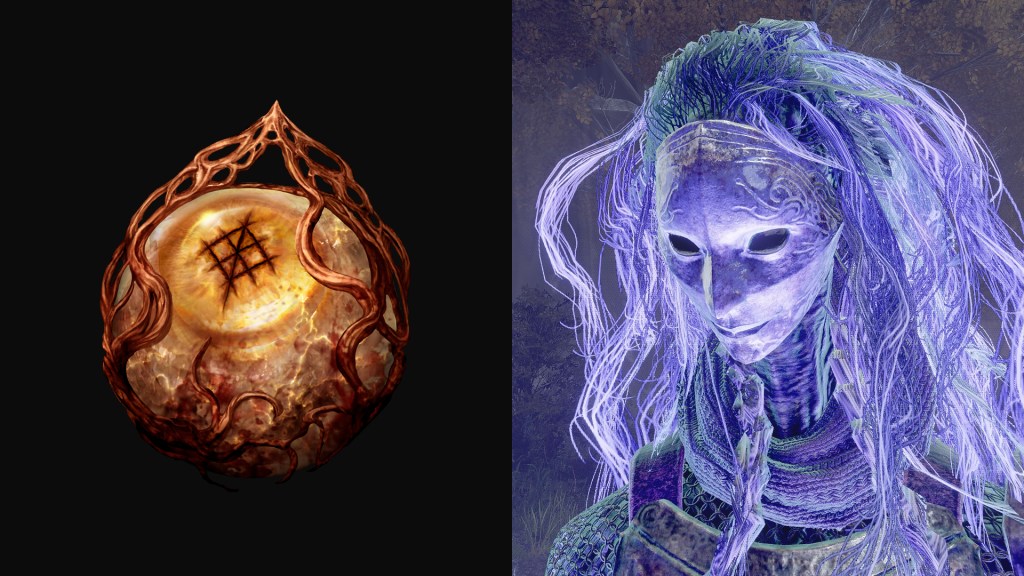

Recall that some warriors of Zamor chose to continue fighting for the Erdtree kingdom after the Giant War, meaning that they were liable to become Tarnished at the end of Godfrey’s battles. Some fans might question if Godfrey would bring the Zamor with him on this journey after becoming Tarnished, citing his remembrance. While the English description refers to kinsmen, the Japanese text only states that Godfrey took those “the same as him” — in other words, Tarnished. Put simply, anyone who fought with his army in the frontier campaign was subject to banishment, including foreign compatriots. And for a hero of Zamor, hearing news of their exile must have felt surreal. Recovered from the high of battle, ready to refresh back on the highland closer to home, maybe pay a visit. Then all that is suddenly flipped on its head. He at first might have simply gone with the crowd, following their Warlord’s lead. But as a short time passed and the hour to set sail drew nigh, that brave warrior might have unease creep in. And if his was the last boat to send off, he had that quiet moment to let it all sink in.
Recollection of Hoarah Loux, warrior, engraved in the Golden Tree.
Can acquire the owner’s power via the Finger Reader. Also, can use to acquire vast runes.
Godfrey, first Elde King, was robbed of his grace at one point, became Tarnished, took the same as him, and left the Lands Between. The Long March of the Tarnished. At the end of it, he abandoned being King and returned to being a mere warrior.
In short, the hero of Zamor probably got cold feet last minute. He was grateful to Godfrey and the Erdtree kingdom for helping his people subjugate their archenemies, returning the favor in battle after battle since. But never get to see his homeland again? Never experience another of those freezing winds and icy snowcaps? Because some pompous queen said so? And for what? Her word that they may someday be welcomed back? It was an absurd proposition; no surprise that the last Tarnished had second thoughts, broken away from the herd. His independent judgment told him that there was no reason to obey. With or without grace, he could simply make his way back home. Perhaps there were soldiers there to help enforce the mass deportation. But what could they do against a hero who had survived through almost all of the Erdtree’s battles? He was more than capable of resisting capture, maybe even bring retaliation straight to Marika for putting them in this situation. Who would stop him? With Godfrey and the others potentially already over the horizon, the straggler had free reign.
But the answer soon came. Before the “helpless” queen was truly threatened, Radagon suddenly appeared and subdued the renegade. Thanks to their bond, it wouldn’t be difficult for Marika to summon her other half at a moment’s notice, presumably even from all the way over in Liurnia. With how Melina senses the queen’s words in his church, he might have already been there for sometime, reiterating the plan for Tarnished for his other half. Cut content supports the indication, an earlier iteration of the map to East Limgrave — with Fort Haight overlooking the coastline — noting how the land far south of the capital would stand vigil in light of Radagon’s warning about their return for the Elden Ring in its description. Regardless, instant teleportation would explain the man’s otherwise absence from events leading up to this incident. And finally, the hero likely possessed the power to force the Tarnished from Zamor into submission, especially when he had the element of surprise.
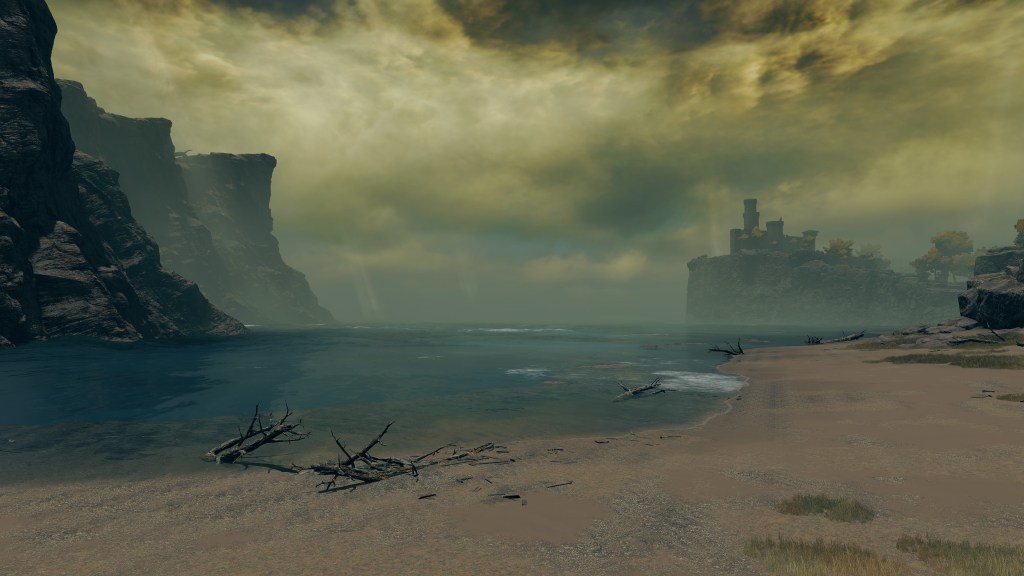
In the end, the ancient hero of Zamor failed to lay a finger on the Eternal Queen. Surviving attempted regicide alone was deserving of a church, doubly so if she used the opportunity to justify marrying her supposed savior. Whether or not that is what the Fourth Church of Marika is commemorating, the incident would leave an impression on onlookers. How could the god not “fall” for her hero? Once subdued, Radagon cursed the sinner on Marika’s behalf, entrusting him to suffer an eternal “mission” locked away in the nearby evergaol — he wanted not to leave, so now he can never escape. It was a cruelly ironic fate for one bearing the green amber for stamina, allowing him to endure the sojourn in foreign lands this long. For the Erdtree faithful, however, the other half’s reaction might look almost romantic. At the very least, the random high treason didn’t hurt Marika’s narrative. This dashing “save” earned Radagon his church on the hill across the field from hers, but for the time being, the matter was finished and they made their return to Leyndell, a single boat left to rot on the coast.
The Way Back
With the Long March underway, Godfrey made landfall with his army and proceeded to carve a path through the world of man, entering battle after battle just as Marika commanded. The fighting became so relentless that his iconic axe broke, never to be repaired — no better symbol for the Elden Lord’s current state. Nonetheless, the Tarnished King pressed on, becoming a menace to who knows how many before his Long March with bloody trail finally came to an end. Godfrey abandoned that name and returned to his simple warrior days as Hoarah Loux, forsaking the title of supremacy he had worked so hard to obtain along with his “regal” conduct. Looking at his tattered appearance in the introductory cutscene, Hoarah Loux fell right back into old habits — he changed into basic scale armor with a chain mail skirt and let down his hair into a rugged mess, with only the small side brides reserving hint to a more genial time. With no longer needing for pretenses, the man allowed himself to finally let loose, though our encounter proves he kept his old armor for his inevitable return to the Elden Throne.
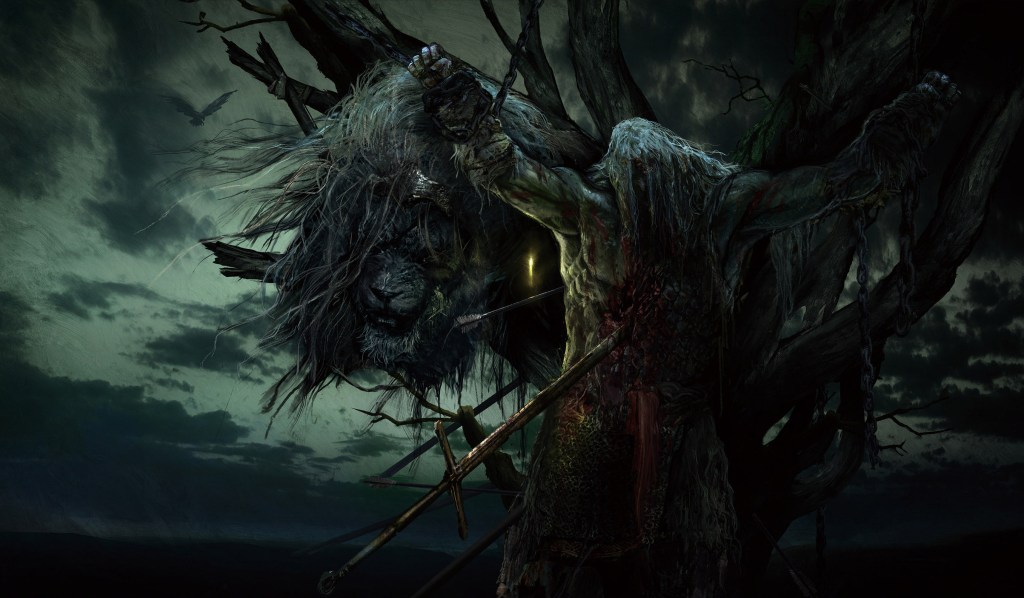
Until then, Hoarah Loux turned the region he settled down in into the Badlands as we know it, this “barbaric land” (蛮地) being a haven for ferocious warriors like himself and no one else. He was King Godfrey no more, though that isn’t to say he was a king no more. Despite the localization rendering him as a chieftain, the Japanese script uses the kanji for “king” (王) the same as when he is Lord. This explains why, after shedding his old armor, he continued to wear his crown from his Elden Lord days. Even as a “mere” warrior, Hoarah was the unambiguous ruler of this new land; giving up “kingship” simply meant relinquishing his greater dominion over the world as the Elden Ring’s protector for a lesser crown. This makes sense considering how he is consistently referred to as the Warlord — literally “War King” (戦王) — in his capacity as Godfrey and Hoarah Loux. As always, the man lived by his credo. So long as the warrior was the strongest on the battlefield, he would be deciding others’ fates even off it.
Hoarah Loux, king of the barbaric lands.
Saying this is to acknowledge that the Badlands hasn’t earned the name of barbarism from Hoarah Loux alone. There are evidently many warriors like the chieftain, deliberately so. A prime example is potentially ourselves. Should we choose a “hero” background, we come dressed in meager Badlands equipment wielding a battle axe, with which we have slaughtered countless. Our vigor and endurance are only surpassed by a vagabond knight and war-hardened samurai respectively, and only slightly in these regards. Our mental alacrity and focus, by contrast, are easily outclassed by any other background option, which is just as true for our physical dexterity. Our one credit to fame is our unrivaled muscular strength. Put simply, a warrior of the Badlands is brutish, thuggish, and doltish, focused on endless victory in straightforward physical combat above all.
More keen insight can be gleaned from cut content. Before the Shadow of the Erdtree DLC, the highland set already existed in the game files as the “brave” set. In descriptions for this scrapped iteration, the equipment belongs to similar highland warriors. In this context, however, that refers to warriors of the Badlands. In fact, while using different nomenclature, both the “brave” and “champion” set names are translations of the same term — yuusha (勇者) referring to a hero or, more literally, brave person. These braves in their war garb are, in other words, interchangeable with the Badland warriors we can originate from. And although the actual equipment was only made available to us in the DLC, the “brave” set is still worn by certain spirits and featured in the Axe Talisman from the game’s launch. Text for the talisman especially describes how awe-inspired warriors mimic their Warlord of the Long March in both his choice of weapon and style of holding back for maximum impact. Our possible hero background affirms this preference for axes, so the connection between the two “heroes” is undeniable.


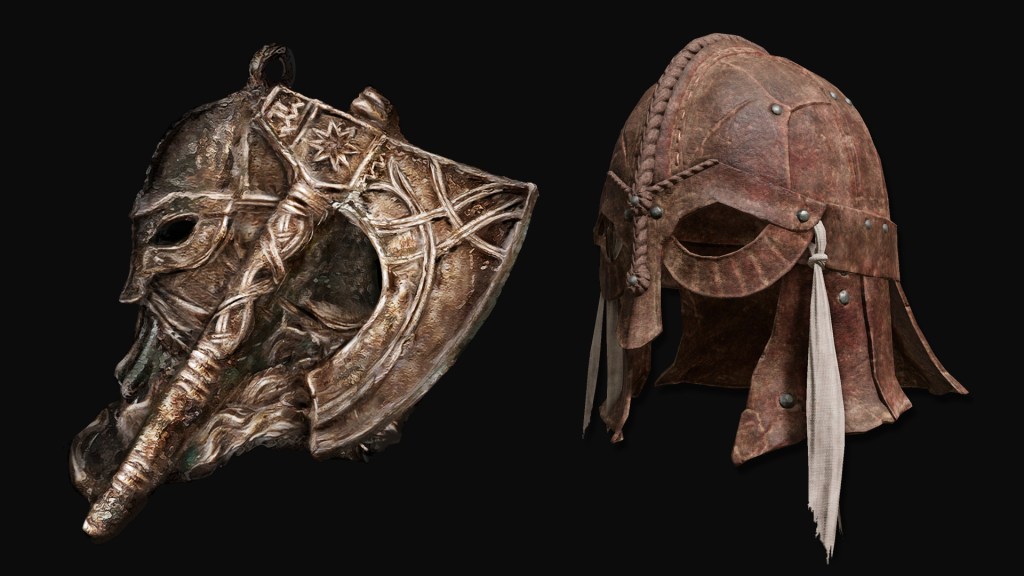
Talisman modeled on a warrior with axe. Enhances charge attacks.
The axe is the weapon of the Warlord of the Long March. The warriors who vaunt their king wield the same weapon and excel at attacks with power put into them.
With this link established, there is much to observe about warriors of the Badlands. Both the brave and champion sets consist of primarily leather armor. The latter covers far less because the daring fighters refuse to wear excess, again, in emulation of Hoarah Loux. Only those who prove their bravery with a headcount in battle are allowed to wear metal, the numerous kills in our case granting us just a headband, chain-link belt, bracers, and a single pauldron — unsurprising that the “modest” king of the battlefield nonetheless had ended up with significantly more protection. In place of traditional coverings, the warriors tie red hairs to their belts, with the Brave’s Battle Wear alternatively overlaying red and blue cloth. Based on the latter’s description, the red in such practices represents the Warlord’s divine protection. We do see the chieftain tie red hair in similar fashion, and the layer of red over blue draws obvious parallel to passionate “Hoarah Loux” overtaking composed “Godfrey” when he discarded that blue cloak. Therefore, this is ceremony to be more like the Warlord, remaining safe in victory in battle.
Pauldron permitted only to braves in the barbaric lands. Proof of having slaughtered many enemies.
And the braves don’t wear excess. Just like their king, Hoarah Loux.
Battle clothes wearing large cloth atop leather armor. Garb of warriors of the cold highlands.
The large red cloth is ceremonial clothing for acquiring the divine protection of the Warlord said to have been part of the Long March long ago.
Certainly, offense is always the defense in mind for braves of the Badlands. We encounter one such heroic spirit off the roadside in Greyoll’s Dragonbarrow. Even laying in the dirt about to perish, the phantom is still crawling in the dragons’ direction, begging they grant him the power of devouring their hearts — dragon communion is too “barbaric” to be compared to incantations simply professing faith according to its seal’s Japanese description. Another barbarian originally lay against the Limgrave Colosseum doors, bemoaning how he couldn’t die fighting because they are shut; the spirit was removed once the arenas were made available in a later update. Even with nutrition, the braves are uniquely treated with Exalted Flesh: the standard lump of flesh wrapped around a hefty beast bone and marinated in spices plus medicinal fluid — for our crafting, we use rowa fruit for the fluid and arteria leaves for the spice. Why is this “brave’s lump of flesh” (勇者の肉塊) afforded only to them? Because it invigorates their physical power. So confident are they in a straight-up fight, the Highland Axe empowers the roars the warriors make to introduce themselves before battle.


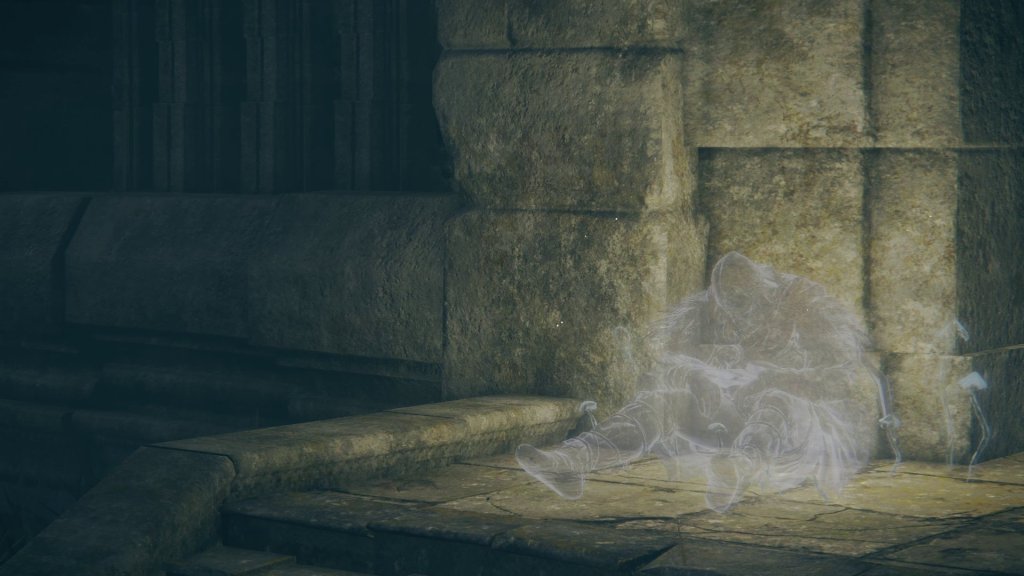
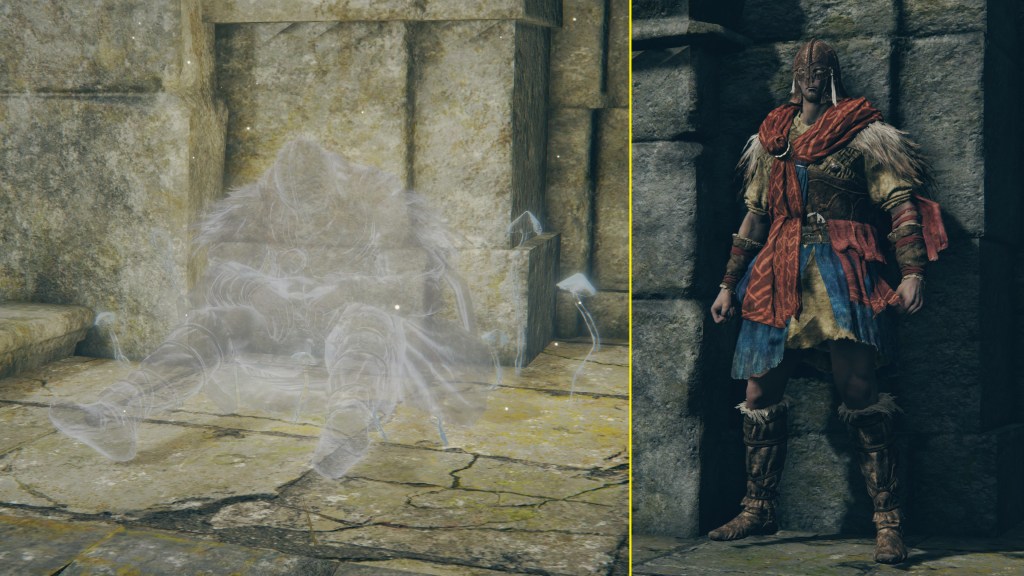




…Dragon, hand over the power of your kind and let me devour your heart.
Phantom seal of dragon blood modeled on the dragon-dine crest. Enhances dragon-dine prayers.
The dragon-dine form, which offers up and devours hearts to acquire power, is too barbaric to call a prayer, so this seal also scales with arcane.
… That I may battle in my final moments. That I may battle as a warrior. O guidance of grace, why, despite that, will these doors not open…?
At every facet, Badlands society revolves around the Warlord and his philosophy. The place must have already had some existing population for the man to war with, and it might have earned its reputation with him leading them to raid neighboring lands in the years since. Whatever the truth, the Badlands cultivated a culture of might makes right thanks to Hoarah Loux’s arrival to stay. This has come to the detriment of the weak in many cases. Nepheli recounts her helplessness as a child while her home was sacked and massacred. Whether her tragedy was due to retaliation from outside neighbors or intertribal warfare, it is obvious that the masses paradoxically need “heroes” to save them. Only by summoning up her courage to become a strong warrior could Nepheli survive in this “nightmare” of a world — and even then, her relative youth in seeing grace is damning. It is a perpetual cycle of violence, where strength alone is valued because there is nothing else to counterbalance it.
But for the strongest like Hoarah Loux, this was paradise. As a demigod, the ferocious warrior enjoyed the thrill of battle for generations before Tarnished like us grew to maturity. When not unleashing his insatiable fighting spirit, he was contributing to our number. Besides Nepheli, we are also an apparent descendant of the Warlord specifically should we choose to be a hero. Clearly, the elder Loux didn’t stay loyal to Marika while they were separated, though the nature of any subsequent relations might be questioned given his otherwise unrestrained behavior. At least in the case of Nepheli, her family passed down the surname, though this connection didn’t protect her home from slaughter. More than likely, the chieftain was simply indulging his passions, not caring much to manage his new clan. They had to fight for their place in this world, just like him. And for him, that was a fair proposition. The only question then is why Godfrey chose this specific land to be his playground.
Brawny brave wielding a battleaxe. Considered a descendant of the barbaric land’s king.
Part of it was because it suited his philosophy as a warrior, no doubt. The brave’s set portrays the place as cold with its multi-layered clothes. Even without a chilly climate, it appears to be a harsh environment. A nomadic merchant in Caelid sells the champion set, its high immunity resistance perfect for enduring the Scarlet Rot — but it implies that a Badlands native trekked through the area. Indeed, one of Radahn’s armorers has recorded the recipe for exalted flesh, possibly learned from just such a passing Tarnished barbarian. This suggests that the braves feel at home in austerity. On that subject, the Brave’s Cord Circlet is a consolatory farewell gift to Tarnished warriors forever leaving their loved ones in the homeland, yet the leather war band is decorated with just plain white cloth, ears of wheat, and dry leaves. And no matter the utility or “rustic beauty”, it is still telling that marinated meat wrapped in bone is considered their highest delicacy. Altogether, the Badlands doesn’t have much to grow, to ranch, to produce, or to enjoy. Only hardy people can eke it out, competing for survival. But that suited the Warlord just fine.

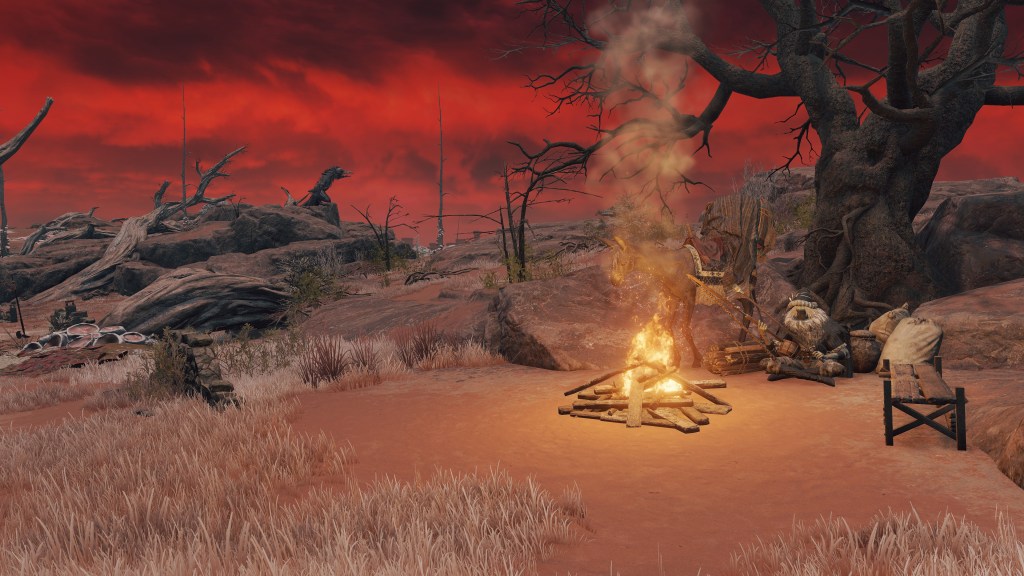

Battle crown woven with leather straps. Apparel of warriors of the cold highlands.
The dangling white cloth, ears of wheat, dry leaves, and the like are a farewell gift of everyone of the homeland’s prayer. Even if it is just a mere consolation for departing on a journey of no return.
Thick lump of beast flesh. One of the materials used in item crafting. Can attain if hunting carnivorous beasts.
Material for a delicacy brimming with rustic beauty.
Lump of beast flesh pickled in spices and medicinal fluid. One of the craftable items.
Temporarily raises physical attack power.
Considered the highest delicacy in the barbaric lands and treated only to braves in particular.
Another draw was probably the more familiar details to the environment. Nepheli is able to sense subtle differences on the winds, including things like “filth” and age. She also once owned some species of stormhawk back home and wields two Stormhawk Axes complete with their Thunderstorm skill. It is easy to imagine the raptors outside the Lands Between, either migrating from Stormhill or resulting from a convergent evolution. Whichever scenario leads to the same implication: they inhabit a similar hill or other kind of height. To that point, the brave’s set description and Highland Axe identify the Badlands as specifically a highland. How convenient that the Elden Lord chose to stay somewhere akin to his familiar residences in Limgrave and Altus. It is only natural that the land which halted this sweep across the uncharted world reminded him of home. Even if he was enjoying life unburdened of limits, the warrior did ultimately miss his old life as Godfrey. Warring in that place was simply a means to keep himself strong and ready for when Marika summoned him back, as she commanded.
Single-edged axe that warriors of the highlands use.
The warriors’ battles begin with a cry of self-introduction, so this weapon enhances roars.
Time Marches On
Although all Tarnished, not everyone followed King Godfrey to the Badlands. Our facial options reveal that we can descend from various peoples, including natives of the North and the secluded Land of Reeds. Our backgrounds can be just as varied, from astrologers to nomads to samurai. And regardless of background or outward appearance, we can own a crimson amber medallion as our keepsake, insinuating an unbroken heritage dating back to a Tarnished in Godfrey’s army. Evidently, not every banished warrior headed along the Elden Lord’s path. In all likelihood, individuals broke off from the group at every juncture in the Long March, either setting out on their own in a new direction or putting down roots in one of the earlier lands they decimated. Considering how far the Tarnished reach from the western side where they set off, perhaps they began bleeding numbers before they had even first made landfall. Whatever the exact migratory patterns, the exiles’ blood has spread to seemingly every corner of the world outside the Lands Between. The Long March has left its mark, however.
Land of Reeds Face
Look of people of Reeds, an isolated foreign country. That land reeks of much blood.
Based on where the Tarnished embarked, Godfrey and his group most likely traveled westward before reaching land. A landing in the West also explains why the Tarnished we encounter, by and large, come from more European-inspired cultures. This stands in stark contrast to places like the Land of Reeds, where samurai with katana embroiled in civil war during a period of isolationism matches Japan during its Sengoku period; even bearing the name of “Reeds” references an old alias for Japan in its mythology. This Reeds nation too seems to originate from a similar eastern Orient. Weapons associated with the place, namely the Wakizashi and Cross-Naginata, are both found in Caelid, with samurai armor sold by the isolated merchant in Greyoll’s Dragonbarrow. A scarab in Sellia likewise rolls up the Double Slash ash of war of outstanding “swordsmen” featuring a samurai’s Uchigatana. Combined with the Katar of Indian invention stored in Fort Gael plus the Lifesteal Fist of Chinese qigong rolled up with ashes nearby, and we can infer that Tarnished from Asian-inspired countries largely arrive to the Lands Between from an eastern direction. In short, there are continents both East and West.

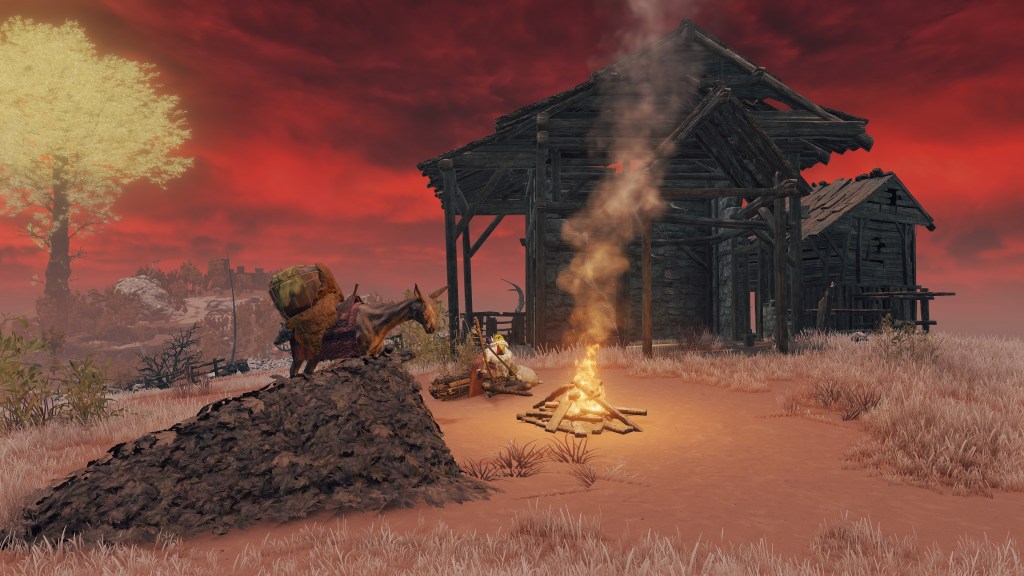




Samurai of the Land of Reeds, which is an isolated foreign country. A fighter who uses a katana and longbow.
Sword of a foreign country with a unique handle. Its blade can be wielded as an extension of the fist.
Battle art of a master who has taken qi to its extreme. Effective only against human sort. Slowly thrust out a fist wrapped in qi, make the one touched fall unconscious, and steal HP.
All of this is to say that the West where the whole of the Tarnished disseminated from, naturally, holds the larger Tarnished population and cultural impact in the world of man. The number from these lands consist of peoples both highborn and lowborn, including royals. Given that the Long March likely devastated if not toppled kingdoms, it was perhaps inevitable that lingering Tarnished fill the gaps in population and government. This would lead to their history and beliefs becoming core to the common culture. Although most Tarnished have the appearance of a warrior inherited from their first Tarnished ancestor, some preserve features of the nobles, which such inheritors love to tout. While it may simply be familial pride, to profess one’s own noble lineage suggests that society at large still respects those historic roots. Certainly, some Tarnished become lifelong sailors just to find their ancestral homeland. As we can see, whether due to the surrounding fog or other factors, such seafarers rarely make it ashore, and only by washing up with the flotsam already half-rotten. Still, it shows that the Lands Between is remembered as a mythical homeland some have tried to rediscover.
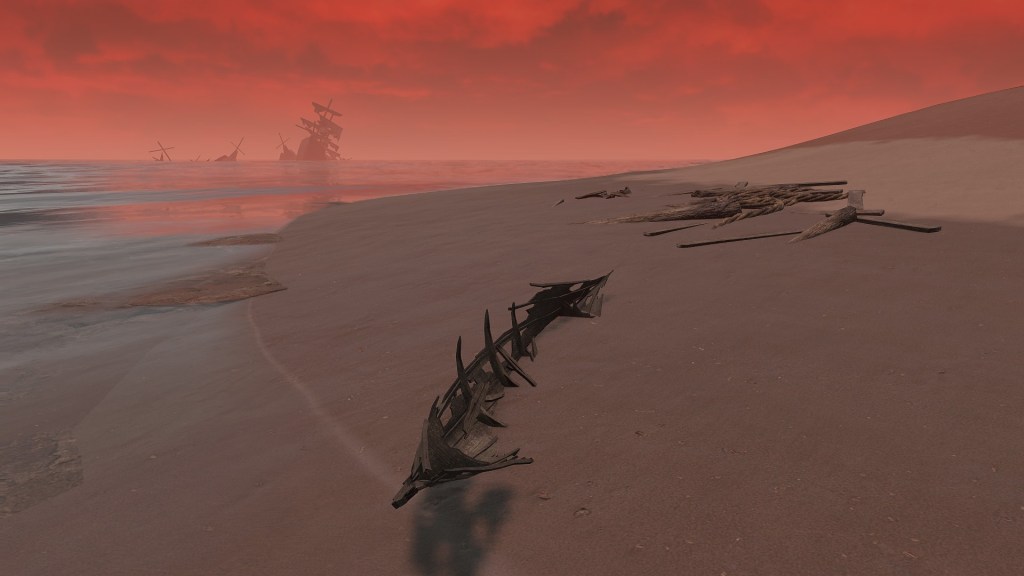
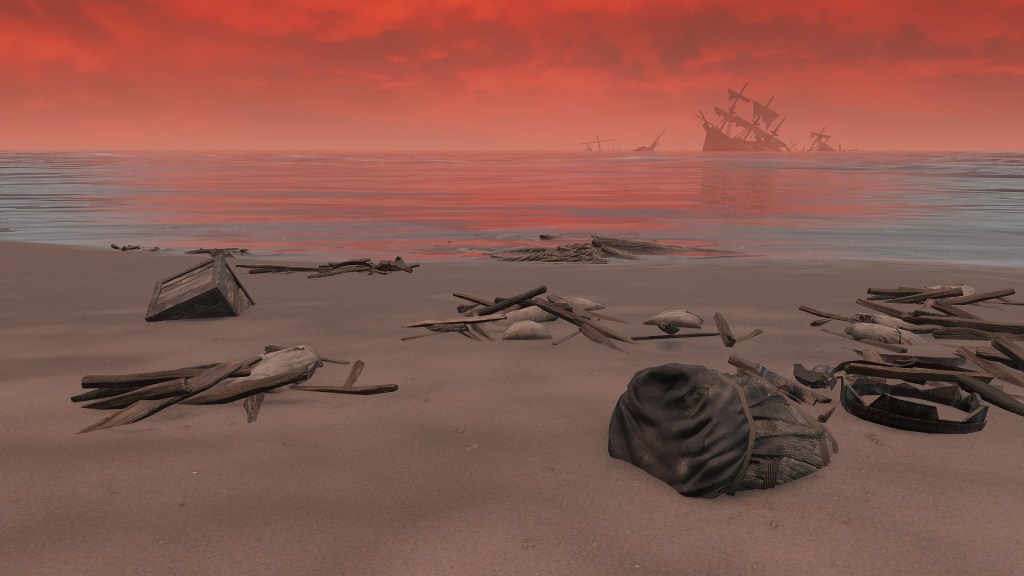

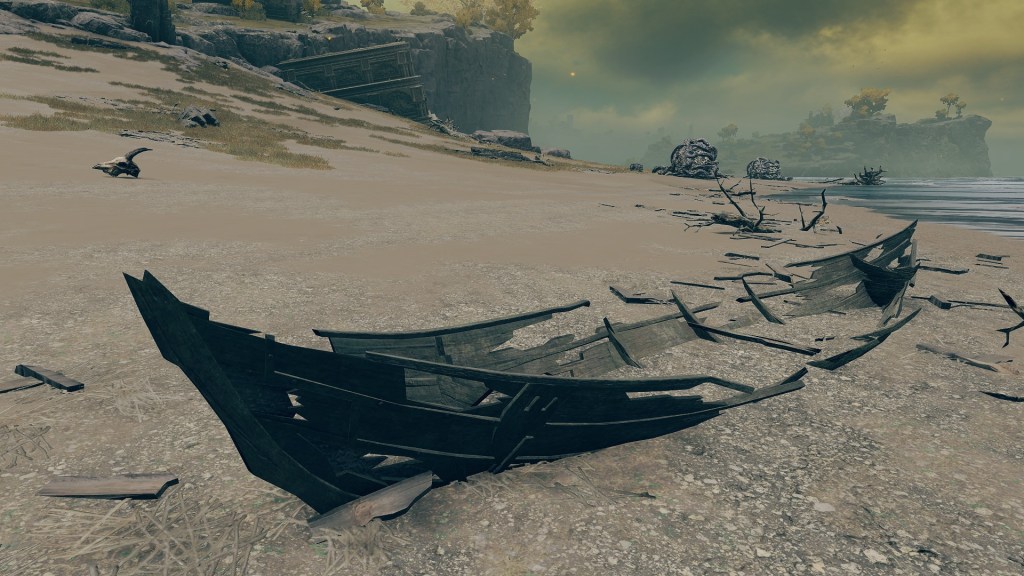


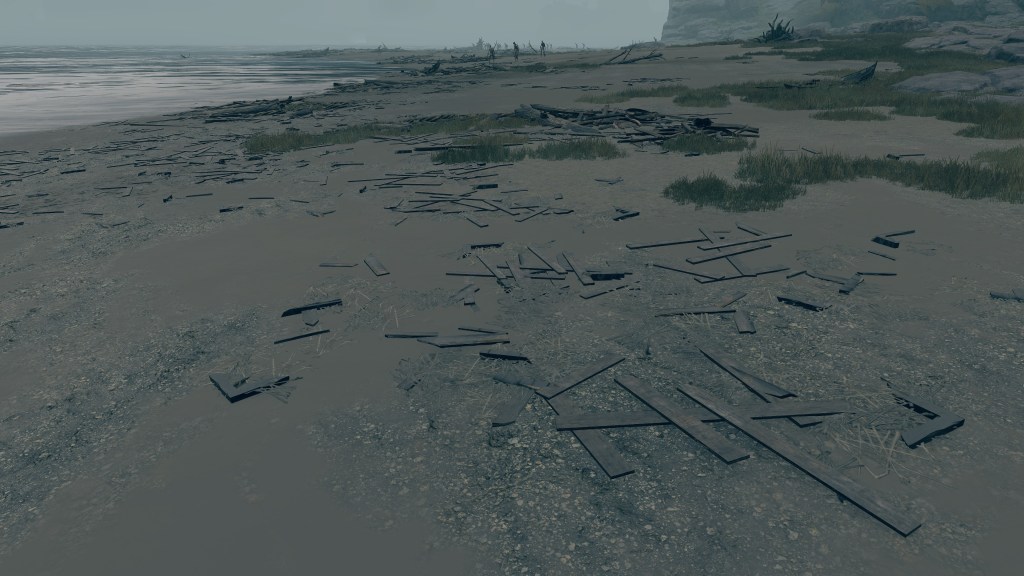
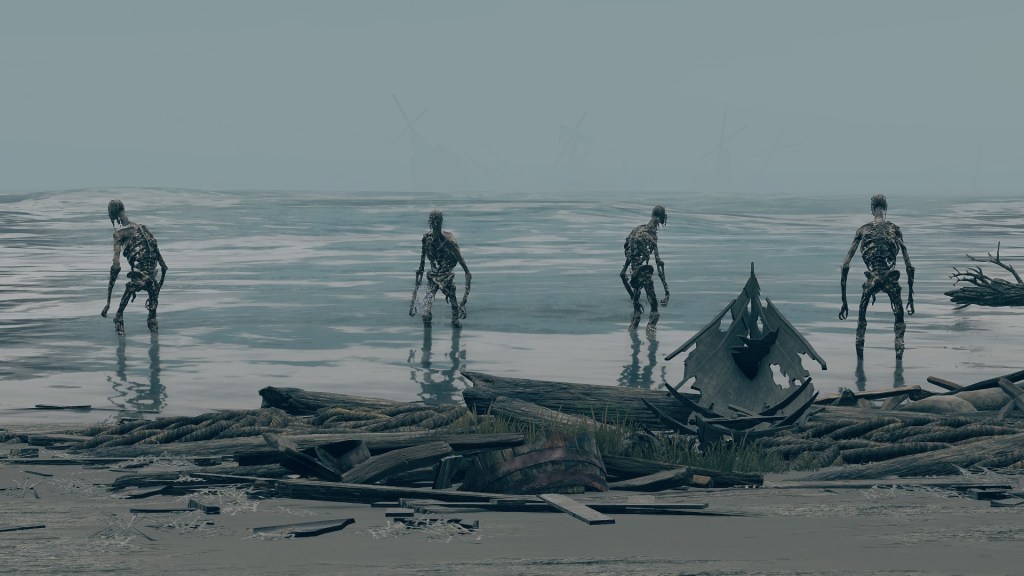
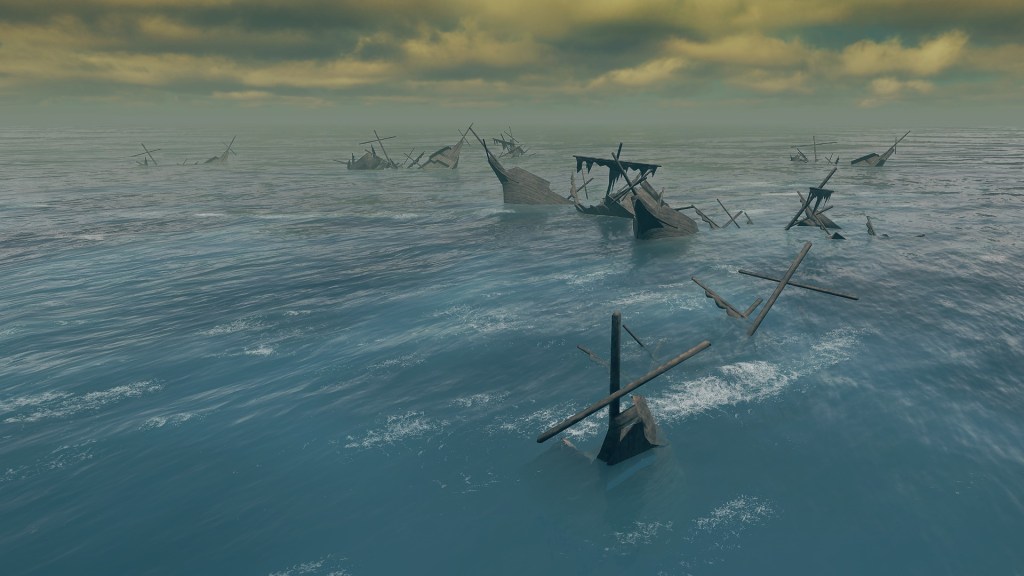

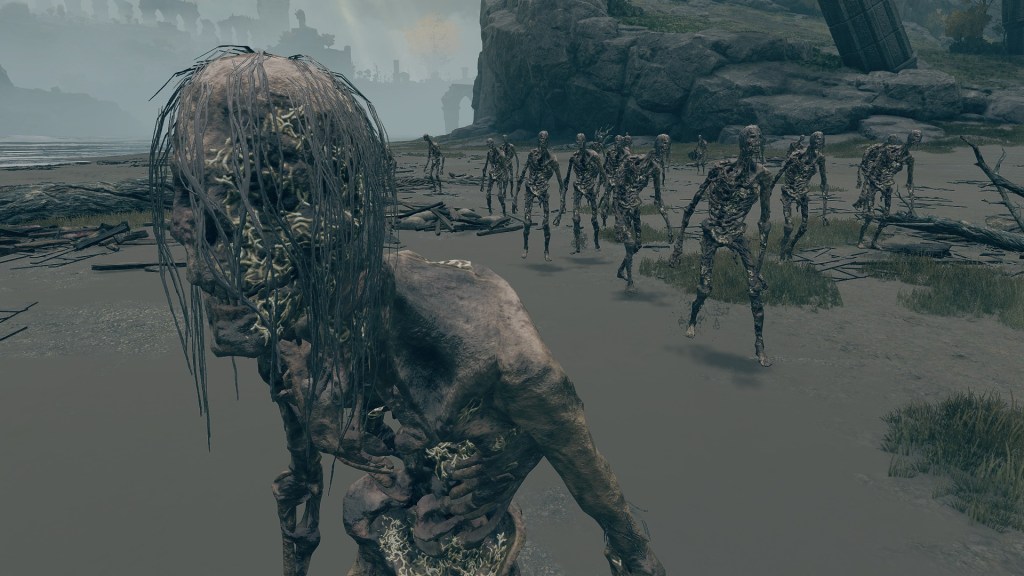
Warrior Face
The most common look among Tarnished. Once, the Tarnished were all warriors.
Noble Face
Look of those who self-profess descent from nobility of the Lands Between.
Sailor Face
Look of sailors wandering the high seas in search of the Lands Between, which is their homeland.
We can see this reflected in religious tradition as well. There exists a church dedicated to the Two Fingers. The institution teaches the expected prayers and helps send Tarnished to the Fingers after they receive the guidance of grace. It is also presumably responsible for persecuting clergy who, despite performing Heal incantations with the Fingers Seal, foresee the Erdtree burning as manifest in incantations like Catch Flame. These prophets are mockingly forced to wear blindfolds before being sent off on the road, exiled from home. This implies that the church also preaches about the Erdtree. We do see that, before coming to the Lands Between as a Tarnished, Goldmask had been practicing Erdtree worship with some sort of scripture in the introductory cutscene. The same cutscene also shows a massive tomb for Tarnished, with the final rites “overseen” by a large statue of Marika imitating her stakes — their bodies preserved in clear preparation for when she summoned them back. From its god to its holy tree to its sacred covenant, the basics of the Golden Order have been carried on in the world of man.
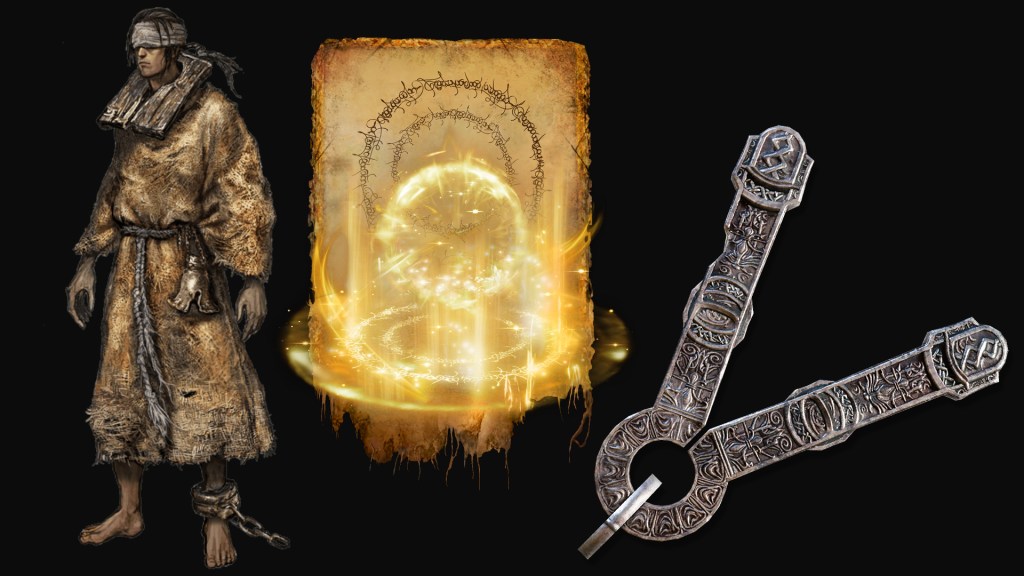

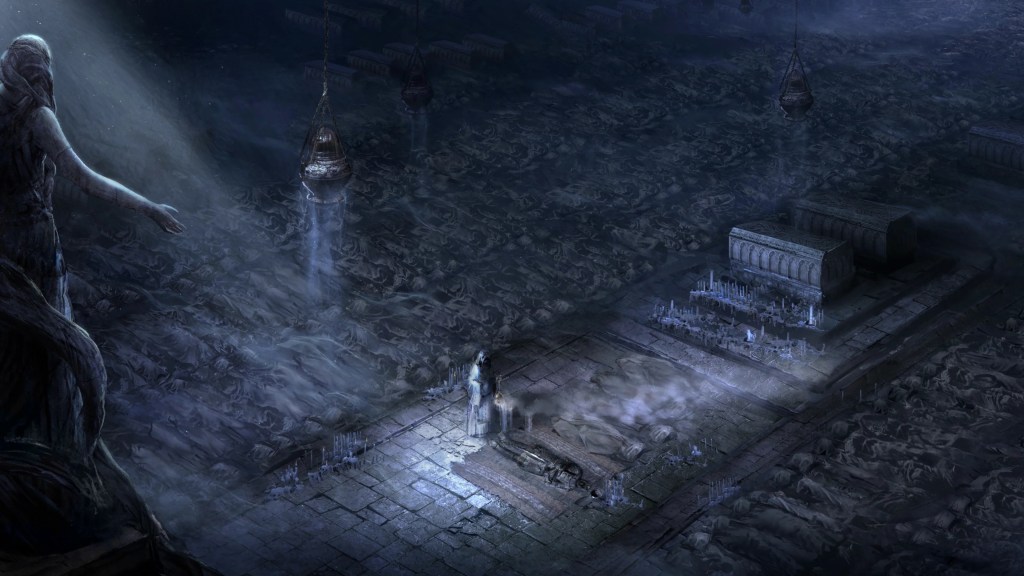


One persecuted due to ominous prophecies. Can use recovery prayer.
This brand of Marika religion is potentially the mainstream faith in the West, as those nations show great deference to the church’s teachings. Wherever the exiles go, society knows that prophets collared with heavy metal pillories are to be ignored as sinners. Conversely, erstwhile prisoners, backstabbing thieves, and serial killers are implicitly freed to leave for the Lands Between despite the obvious risks, while Deathbed Companions are similarly released of their duties. Even nobles and royals are pressed into leaving when the families might use their second life for political gain. This makes sense if the various nations all follow a shared religion which holds Marika’s prophesy for the Tarnished as sacrosanct. Even Tarnished outside the West might receive assistance from this church, just as how the Roman Catholic Church which so dominated western Europe sent missionaries to the northern Nordic states and east Asian states — establishing a presence so far as warring Japan despite being closed off. None would thus be ignorant of grace’s meaning.
Robe of those persecuted and driven out of their homeland due to ominous prophecies.
The heavy metal pillory is a mark. So that no one will bend an ear to their words.
Vivid dark blue cloak with hood. Apparel of wandering royals. Boosts spirit power.
It is gifted for journeys with a mission. To depart on a journey far away from which they will never return. No helping it. Because they have seen the guidance.
Such is to acknowledge that the Tarnished didn’t stay true to their mission through the generations. Only about half of our possible backgrounds would have reasonably died honing strength on the battlefield, and not necessarily for that purpose. Between their immersion in so many different cultures and the passage of time, a church was required to preserve memory of the underlying mission, even as many became wrapped up in separate pursuits concerning their immediate lives. The one example to carry on that mission, solely on principle, were barbarians under Hoarah Loux, and they were clearly viewed as the outliers. Assuming that there were any, only Godfrey’s most fervent comrades followed his Long March all the way to its conclusion. It is perhaps to be expected that the most dedicated followers end up contributing to the rabidly fanatic society around him. For everyone else, life went on as normal, the Lands Between becoming a distant myth; Marika’s promise, a galvanizing tale.
That gradual drift is encapsulated by our possible prisoner background. Although not obvious from our unwashed rags, we were originally noble. Due to committing some serious crime, we were imposed an equally severe punishment, tortured with an iron mask while left to rot in jail like the legendary French convict. The only reason we seem to have not gone insane from the isolation, claustrophobia, lack of hygiene, and overall culture shock is because of the strong will condemning the universe developed through the torment. Still, we retain our aristocratic education, which consists of more than just mastering literature, etiquette, and the dexterous art of dueling with an estoc — we also learned glintstone sorcery, as is apparently a matter of course. Our talent is obvious from our intelligence, surpassed only by a dedicated astrologer. And yet, we also possess the lowest faith of any background. Our conviction in higher powers was likely lost with our tortuous detention, hence owning a shield resistant to both madness and holiness. Still, it betrays what the most privileged consider vital in their most dire hour. It wasn’t faith.
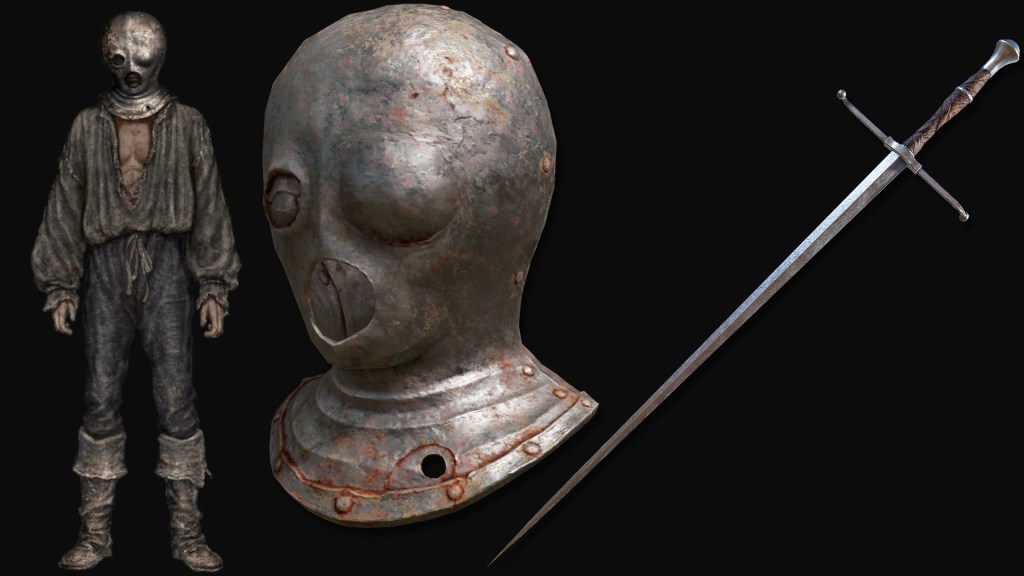
Prisoner in an iron mask sentenced to a severe punishment. Seems to have originally been upper class, so has learned brightstone sorcery.
Iron mask that prisoners who have committed a serious crime wear. Thick, heavy, and cramped.
It is a mass of malice that torments the wearer, slowly brewing something in the heart. Hatred. Or a strong will very similar to that.
In the end, the best schooling had not made the elite more pious, fancying sorcery more than prayer. And why wouldn’t they be distracted by such flashy arts? No matter what the church might teach, the fact remains that their supposed god had not followed through on her agreement for years upon years. Even if later generations of Tarnished believed in her existence, there was every reason to question the veracity of her fabled covenant. Compared to the more tangible promise of astrology, the stories passed down from ancestors just sound like tall tales. Faith was for the uneducated masses, desperate for healing or a meaning to their meager existence. For the upper class in feudal society, it was a luxury to be discarded, as was the case for us as a prisoner facing the worst of the world’s cruelty. This might have changed when god’s grace finally did reveal itself, but before then, it must have simply not felt real regardless.
Even still, that culture the first generation instilled from the Long March would leave a long-enough leash for the divine’s plan. Time and distance may have created fluctuations, but there was no doubt more than just Godfrey and his barbarians anticipating the “Second Coming” of the Tarnished as shared in revelation. The return home to the Lands Between was an inevitability, though we don’t meet any known Tarnished from that generation except Hoarah Loux. Even if there is a time limit on a corpse receiving grace, the legacy left by that rampaging army ensured their blood would fulfill the covenant on their behalf. Between lineages, histories, customs, and institutions, those exiles did their part. And even if not everyone fully trusted it, the Tarnished kept the memory alive, waiting for god to need warrior’s blood once more.
 Lokey Lore